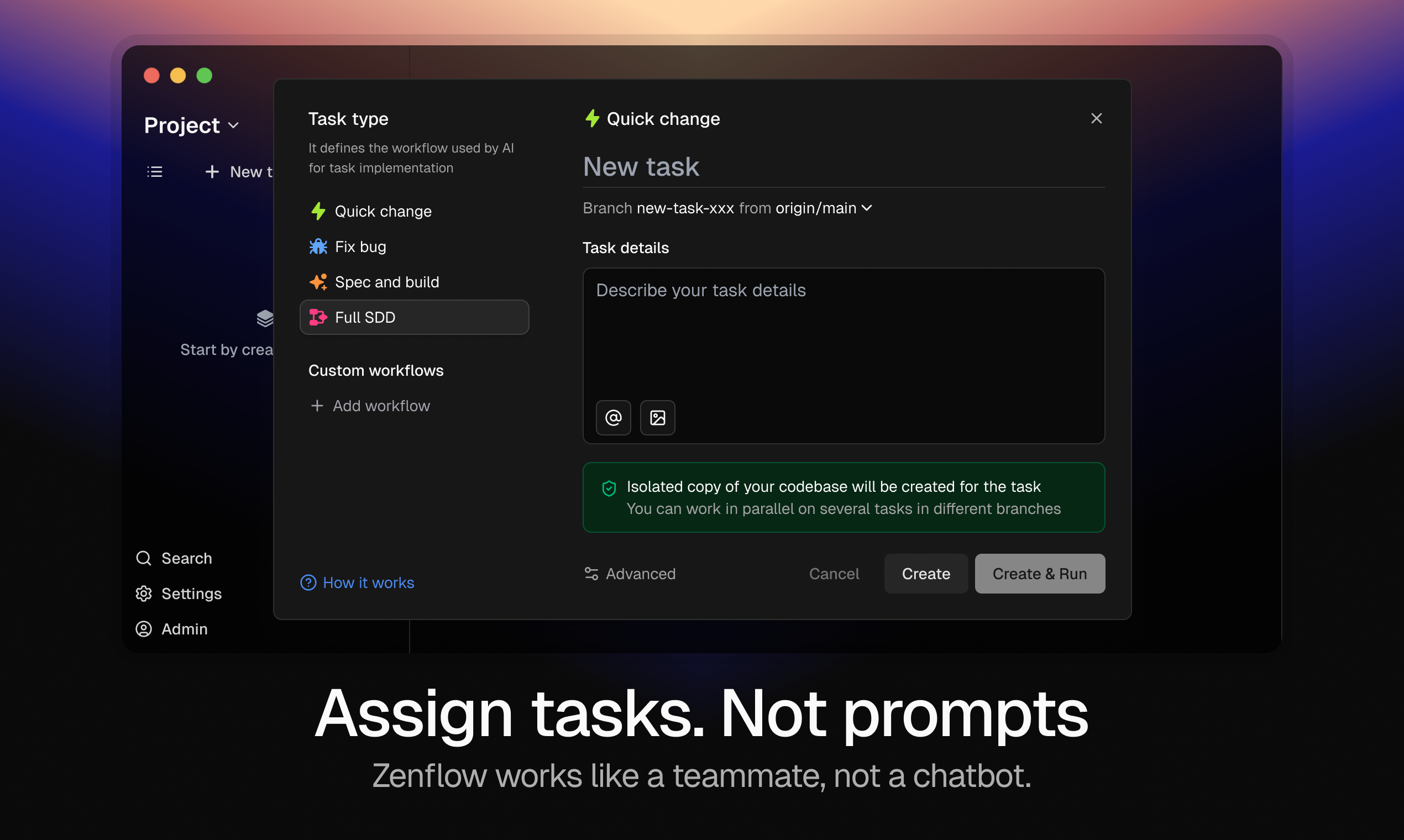
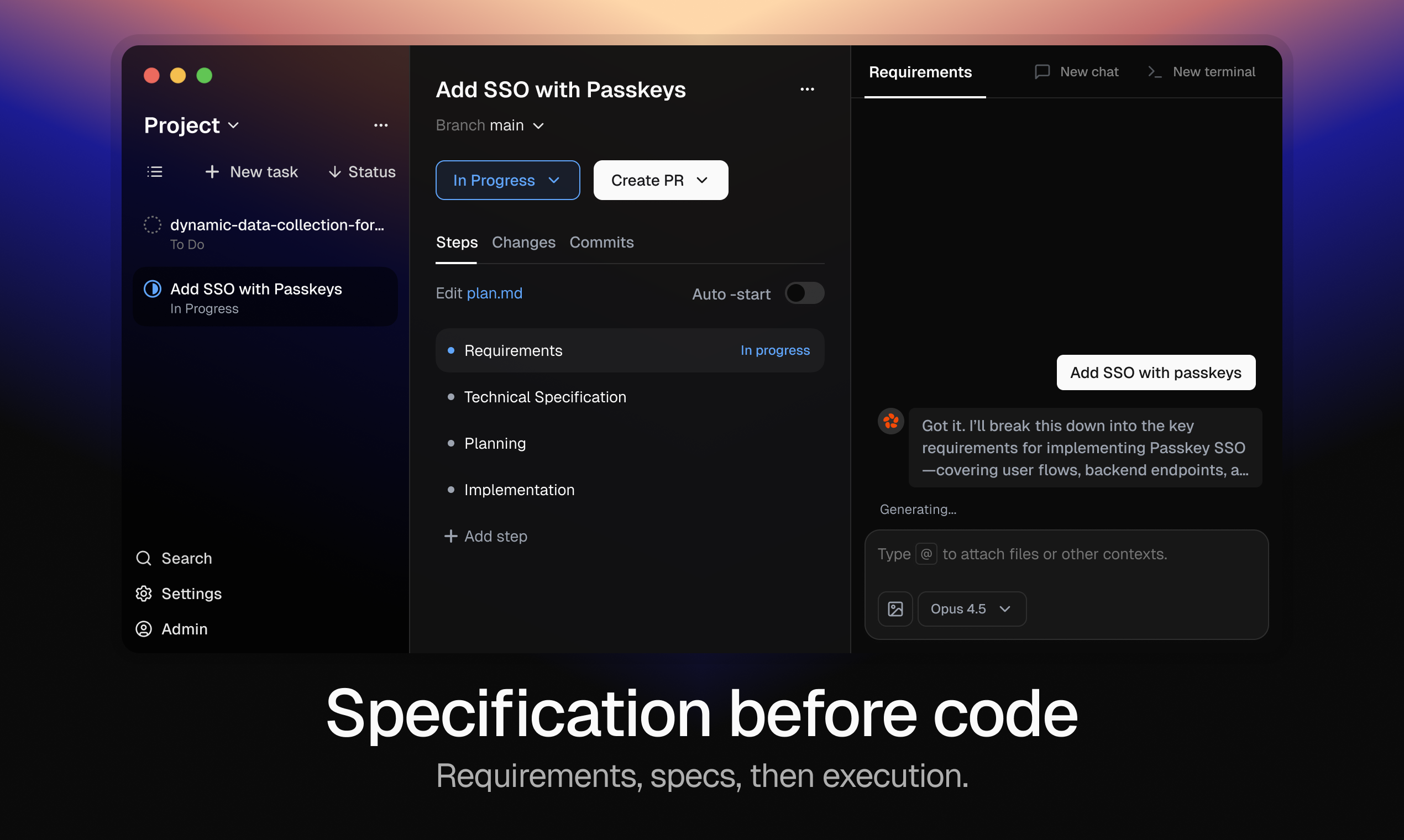
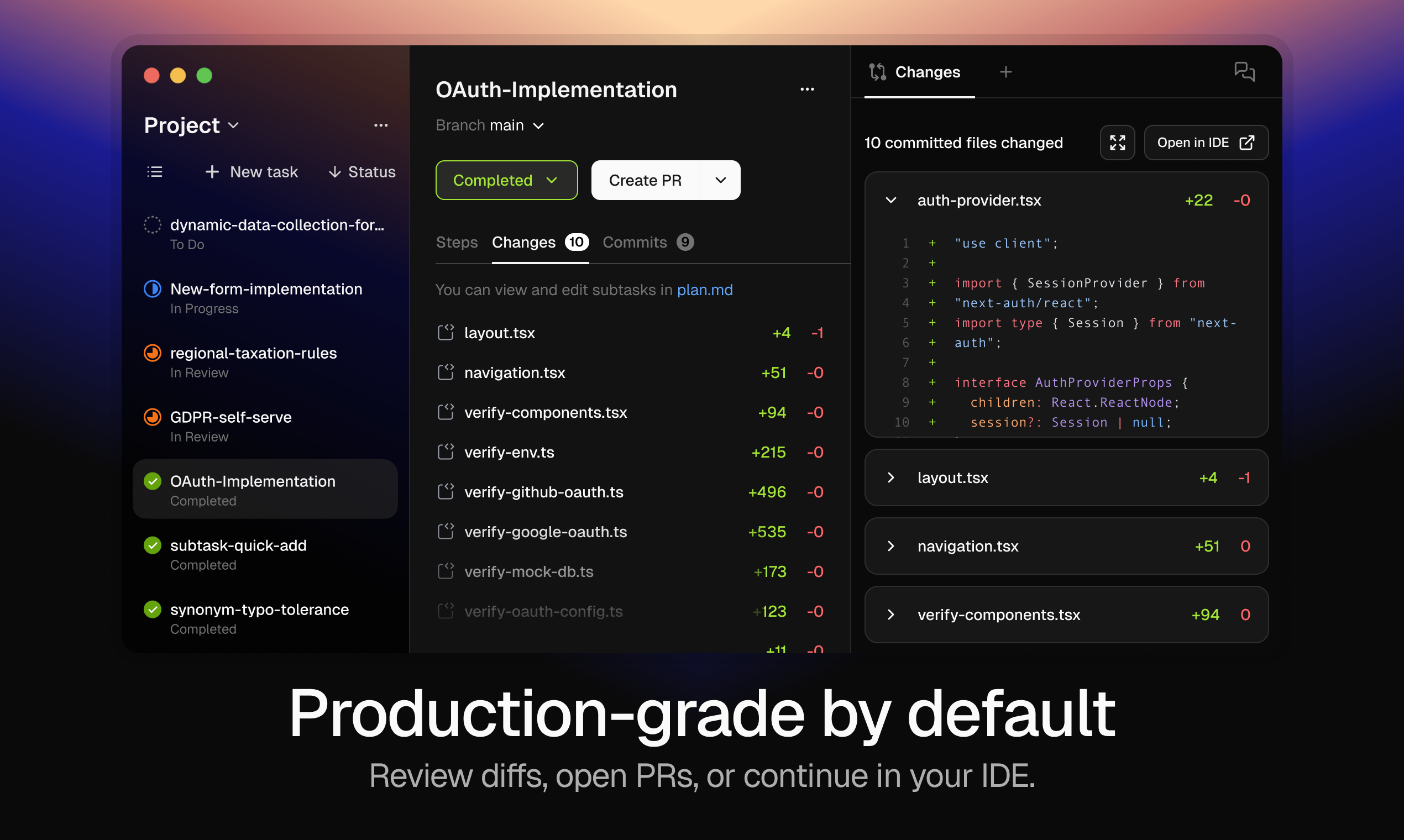
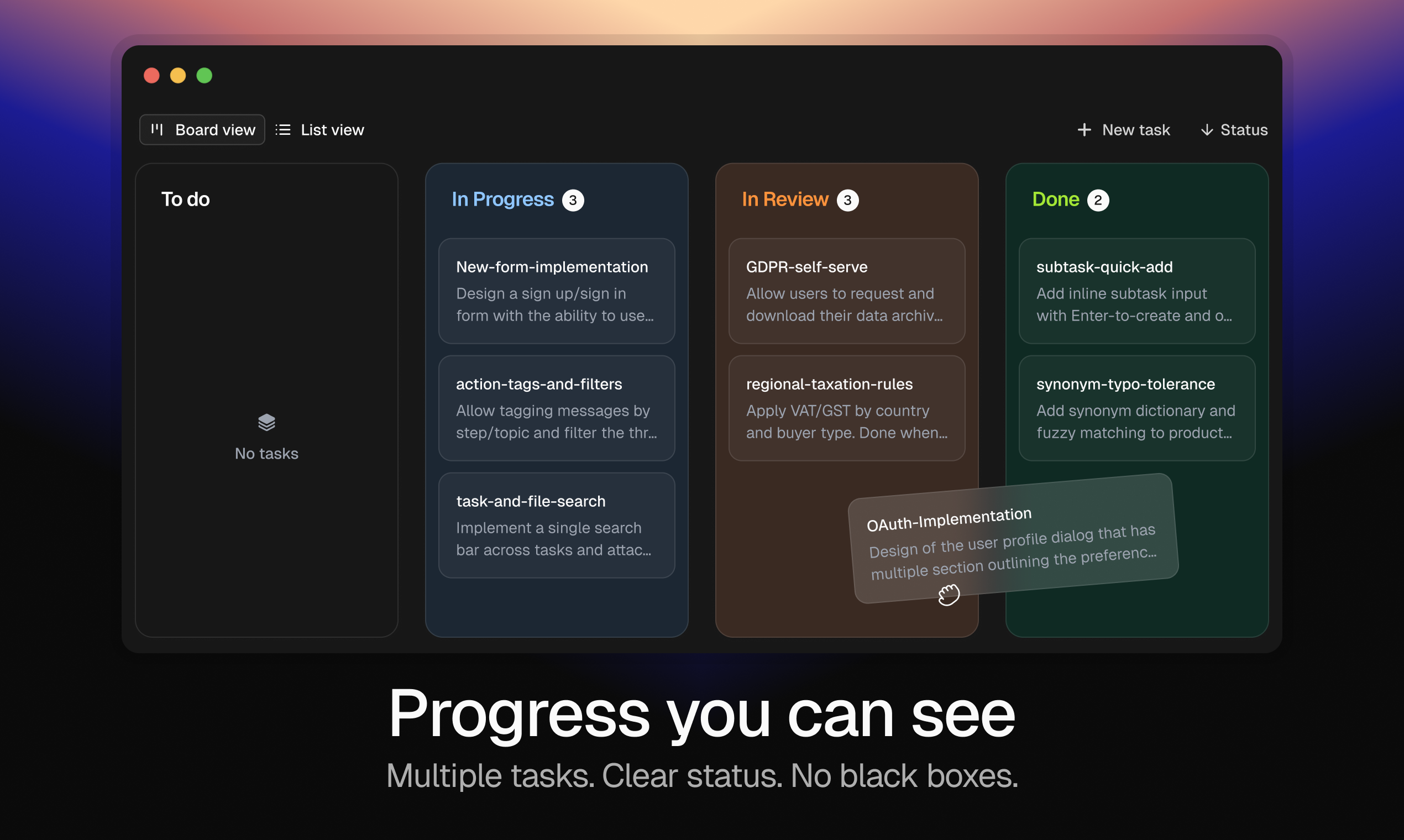
Product Hunt 每日热榜 2026-01-22

PH热榜 | 2026-01-22

#1
ChartGen AI
Turn data into professional charts with insights in seconds
380
一句话介绍:ChartGen AI是一款AI图表生成工具,专为在线营销人员设计,通过连接多平台数据源并快速生成可视化图表与洞察,解决了手动处理多源数据、报告速度慢、难以即时优化广告预算的痛点。
Analytics Artificial Intelligence Data Visualization
AI图表生成 数据可视化 营销分析 多数据源整合 即时洞察 非技术人员友好 广告优化 商业智能 自动化报告
用户评论摘要:用户普遍认可其解决真实痛点、生成速度快、图表美观。主要问题/建议集中在:与现有工具集成方式、数据混合与跨源分析能力、与竞品(如Zoho、Power BI)的差异化、底层数据处理的可靠性与可审计性,以及图表输出格式。
AI 锐评

ChartGen AI精准切入了一个缝隙市场:为不堪重负的非技术营销人员提供“即时满足”的数据可视化。其真正价值并非技术上的颠覆,而是对工作流痛点的精准麻醉。它用LLM的“模糊语义匹配”替代了传统BI工具复杂的建模过程,用对话式交互取代了拖拽配置,本质上是将“探索性数据分析”的门槛和耗时压缩到分钟级。

然而,这种“敏捷”策略是一把双刃剑。产品引以为傲的“无需数据清洗”和智能关联,在资深用户关于“语义层”和“数据质量”的尖锐提问下暴露了软肋。它目前是一个优秀的探索与沟通层,而非可靠的分析与事实层。其定位巧妙地游走在ChatGPT的随意性与Power BI的严谨性之间:比前者更结构化、更美观,比后者更迅捷、更易用。但这也意味着,当分析需求从“快速看看”升级为“准确报告”时,其可靠性可能面临挑战。

产品的成功取决于能否在“易用性魔法”与“可靠性工程”之间找到平衡。若仅停留在营销噱头,终将昙花一现;若能逐步构建可审计的转换逻辑并深化与主流数据平台的原生集成,则有望从一款便捷工具演进为营销数据栈中不可或缺的洞察门户。当前,它是一个高效的“假设生成器”,而非“决策执行器”。

查看原始信息
ChartGen AI
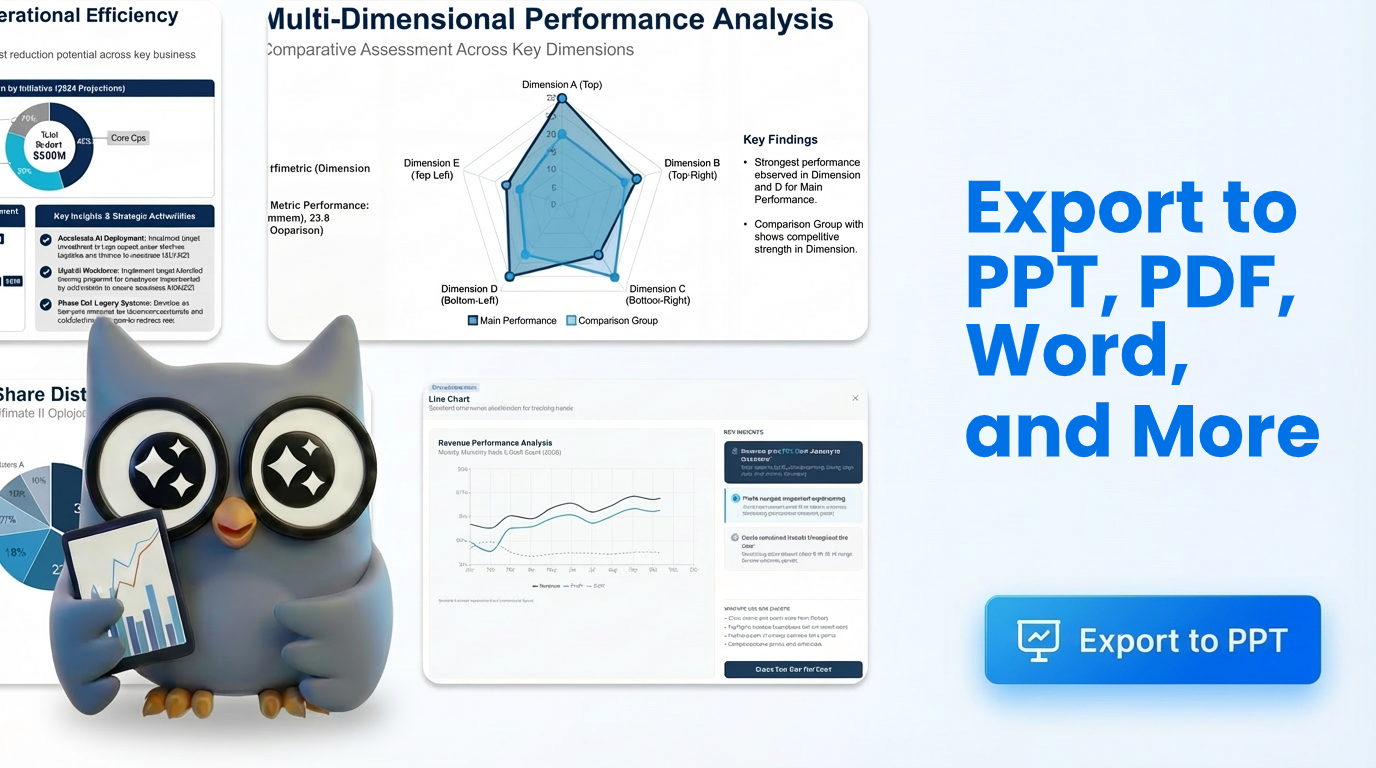
From the makers of Ada.im, ChartGen AI is an AI Chart Generator that transforms raw data into money-saving insights. It specifically empowers online marketers to connect all different data sources—from Facebook to TikTok—to generate instant visual charts. Stop guessing: see exactly where your budget goes so you can stop wasting your money. Whether you're optimizing ad spend or analyzing business trends, use ChartGen AI to convert your data into actionable graphics in seconds.

Hi ProductHunt! 👋

I’m Steven Cen, the maker behind ChartGen AI.

Some of you might remember our previous launch, @Ada.im, which hit #1 Product of the Day and Week last September. While analyzing thousands of real users' feedbacks from that tool, we stumbled upon a fascinating pattern: non-technical users weren't just asking for text answers—they were desperate to see their data visualized.

As marketers, we all know the struggle: juggling CSVs from Facebook Ads, Google Analytics, Shopify, and TikTok, trying to piece together where our money is actually going. By the time we build the dashboard, the trend is already over. 🐢

That’s why we built ChartGen AI. We wanted to turn that "turtle-speed" manual reporting into an "owl-eyed" instant insight engine.

For all the online marketers here, this is specifically for you:

  • Unified Data View: Drag & drop your ad spend data from any channel.

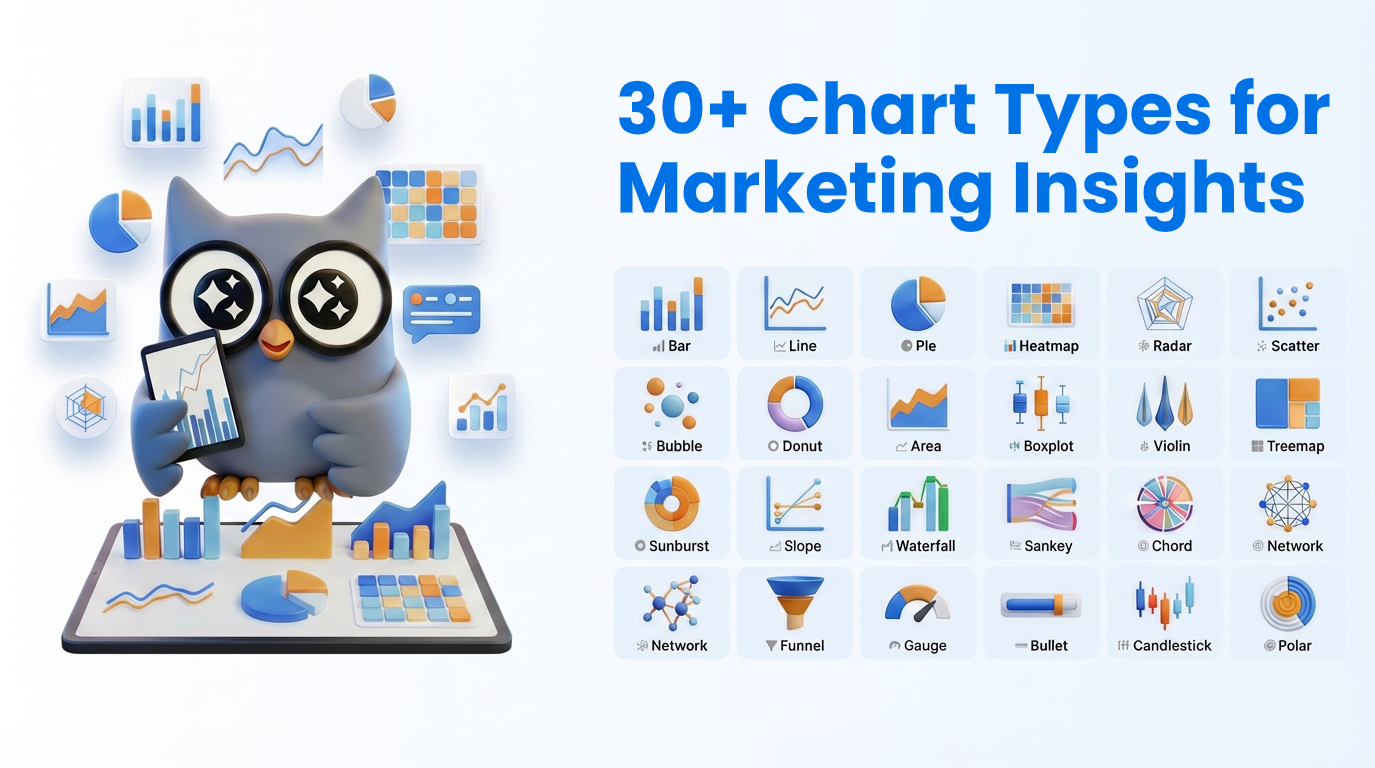
  • Visualize the Journey: See exactly how every ad dollar converts across 30+ chart types tailored for marketing insights.

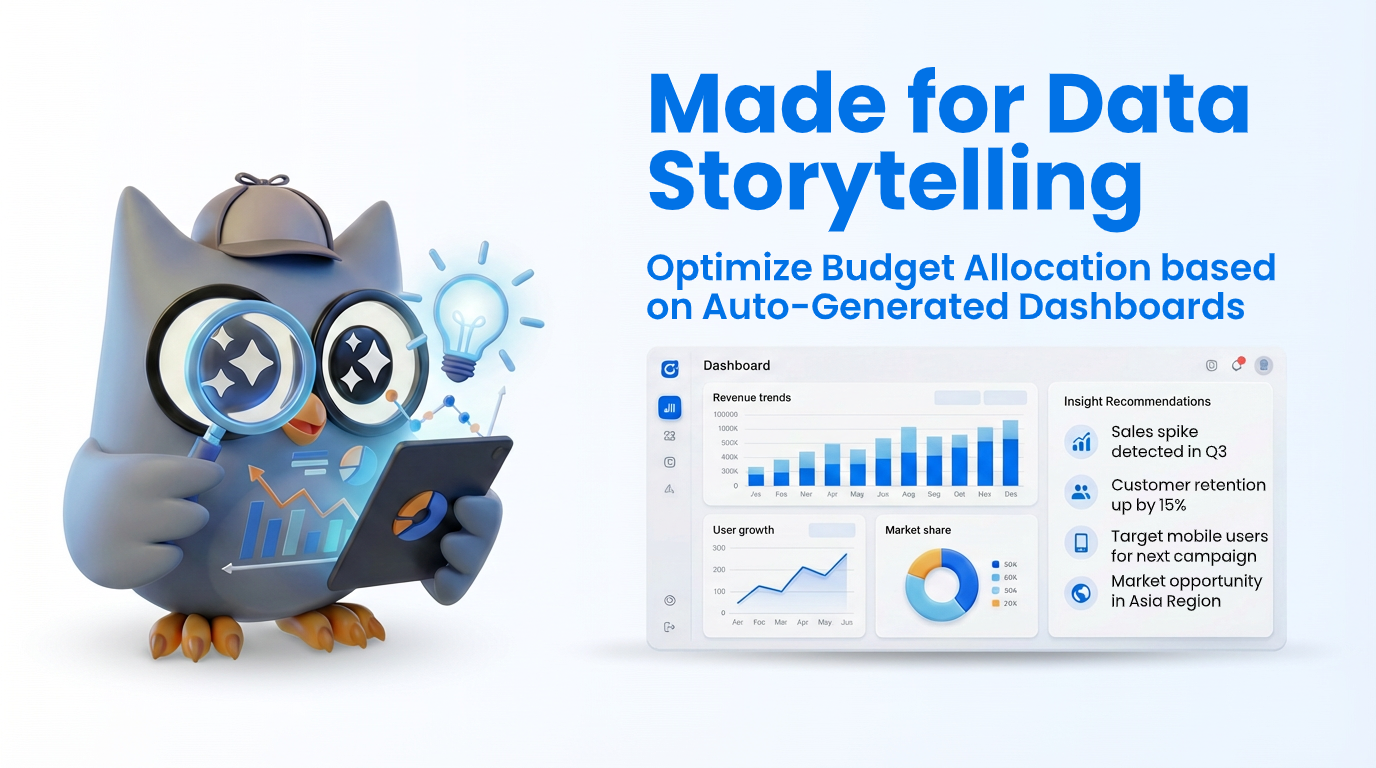
  • Actionable Insights: Don’t just look at numbers; understand which campaign needs more budget and which one to kill—in seconds, not hours.

We believe data should tell a story, not a headache. I’d love to hear your feedback on our visualization templates!


We are live and eager to hear what you think. Drop a comment below with your thoughts or questions! 🚀

60
回复

@s_cen congrats on the launch. Is it specialized for some specific data, like marketing or general analyst?

9
回复

@s_cen Congrats on the launch Steven. How do you guys integrate with existing tools so we can serve data where people are used to engaging?

2
回复

@s_cen Steven! Turning CSV chaos into instant charts is compelling. When marketers use ChartGen in the wild, what’s the first chart that actually changes a decision, the one that makes someone reallocate budget or kill a campaign instead of just nodding at the data?

0
回复

The follow-up questions ChartGen generates after creating a dashboard really surprised me. They helped me dive deeper into the data without having to think about what to ask next. It's almost like having a built-in consultant guiding you through your analysis. Very useful!

21
回复

@yuki1028 That is fantastic feedback, thank you! We designed those follow-up suggestions to act as a springboard for deeper analysis. It’s great to know they are helping you uncover value without the extra legwork. Thanks for sharing!

5
回复

The fact that ChartGen can generate a chart and provide insights in just minutes is incredible. It feels reliable, efficient, and it’s exactly the type of tool I’ve been looking for to streamline my data work.

5
回复

@joeyzhang 'Reliable' is the best compliment we could ask for! 🛡️ Speed is great, but we know it means nothing if the data isn't trustworthy. We worked really hard to ensure the AI doesn't just hallucinate charts, but accurately reflects the numbers you feed it. Thrilled to be the tool that streamlines your workflow. Thanks for trusting us with your data!

2
回复

Congrats on launching your product! Can the platform create one single chart combining different data sources (for example, GA4 + Hubspot + Mixpanel)? What does make you different from established industry players like Zoho Analytics?

4
回复

@alina_petrova3 Thanks for the congrats! 🚀 Great questions.

1. On combining sources: Yes! If you export data from GA4, Hubspot, or Mixpanel (e.g., as CSVs), you can upload them together. ChartGen's AI data semantic layer can analyze multiple files simultaneously and find correlations across them to plot a unified chart.

2. vs. Zoho Analytics: Zoho is a powerful beast, but it often requires a steep learning curve and structured setup. We differentiate by being conversational first. Instead of dragging-and-dropping columns or writing SQL, you just ask, "Compare my GA4 traffic with Hubspot leads." We focus on speed-to-insight for non-technical users who want answers instantly without building complex pipelines.

Would love to hear what you think if you give it a spin!

4
回复

This actually solves a real pain point for marketers. Nice work

4
回复

@flavia_fu Thanks! That is exactly the mission. 🚀 We built ChartGen.ai specifically to turn that marketing headache into instant clarity. Really appreciate you checking us out!

2
回复
When a marketer can already upload a CSV to ChatGPT or build a dashboard in Power BI/Looker, what’s the clearest situation where ChartGen is the better choice—and what’s the switching trigger that consistently gets users to adopt it?
3
回复

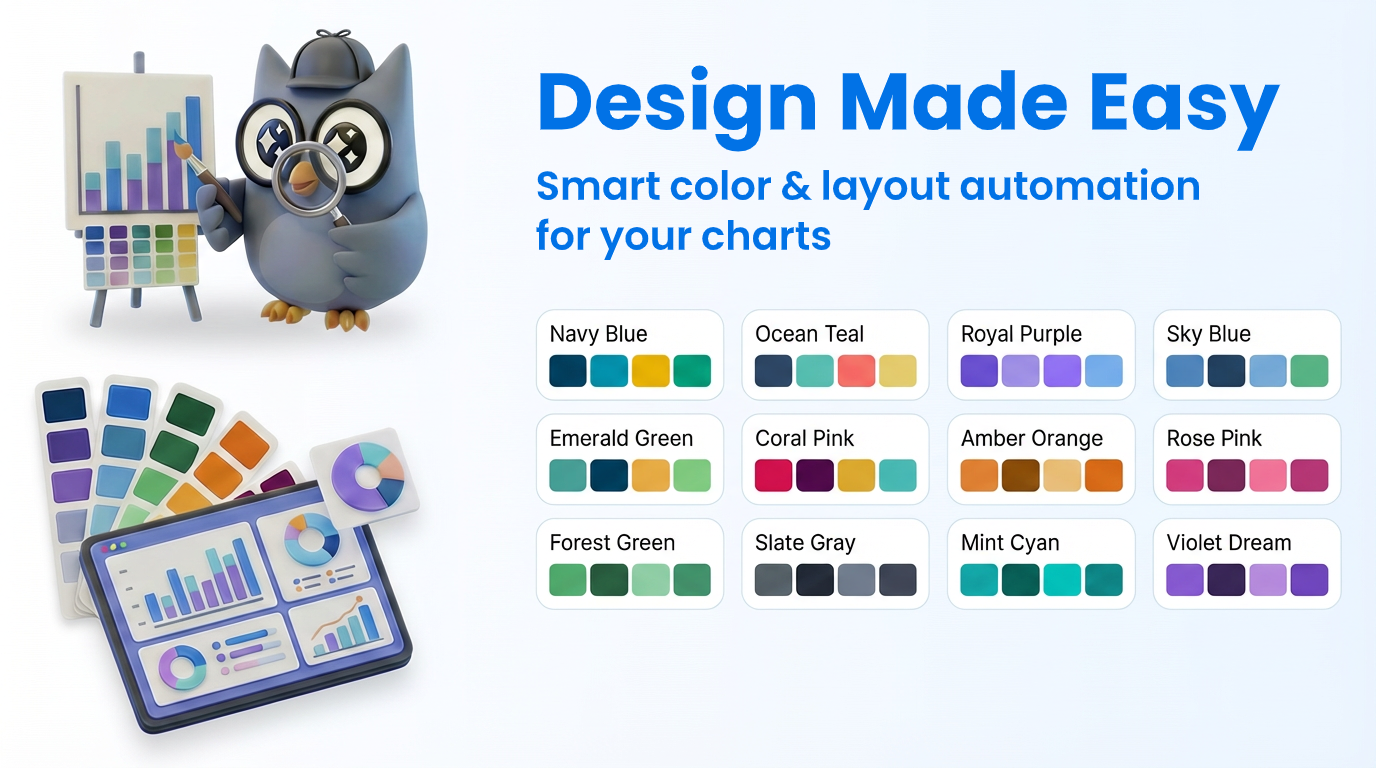
@curiouskitty Love this question. We focus on three things that neither of those extremes nails perfectly together: 1. Aesthetics-First: Unlike standard ChatGPT outputs, our charts are designed to be 'slide-ready' by default, and we have the data canvas functonality where you can interact with your charts for better insights. 2. Iterative Control: Unlike Power BI, you don't need to know DAX or drag-and-drop. You just talk to refine. 3. Speed to Insight: We are faster than building a dashboard, but more structured/reliable than a generic LLM chat. The Trigger: When you have the data file in hand, the clock is ticking, and you don't want to fight with a tool UI. You just want the chart.

2
回复

I’ve been testing it today, and honestly, it’s doing exactly what I needed.

3
回复

@brent_kom3344 Love to hear it! 🙌Sometimes you don't need bells and whistles—you just need the job done. I’m really glad ChartGen delivered for you. Let us know if you need anything else as you keep using it!

2
回复

When you’re merging Facebook, TikTok, Shopify, and GA exports, the scale pain is schema drift plus metric mismatches that quietly produce “pretty but wrong” charts.

Best practice is a typed ingestion layer (canonical schema + unit normalization), fast in-process compute (DuckDB or Polars/Arrow), and automated data-quality checks (Great Expectations) with provenance links from each insight back to the exact rows.

Do you maintain a semantic metrics layer per connector, and can users inspect or override the generated transformation SQL so dashboards stay reproducible over time?

3
回复

@ryan_thill This is an incredibly high-quality comment. You nailed the engineering challenges of multi-channel attribution perfectly. 🫡To be transparent: Right now, ChartGen is designed as an agile exploration layer for business users, rather than a replacement for a hardened ETL pipeline with a strict semantic layer (like dbt/Cube). We use LLMs to perform 'fuzzy semantic matching' for ad-hoc queries, which works wonders for quick insights but, as you noted, requires human verification for mission-critical reporting.

That said, reproducibility is huge for us. We are exploring ways to expose the intermediate transformation logic (conceptually similar to showing the SQL/Python code) so users can audit the metric calculation process.

3
回复

I really like how ChartGen lets you ask follow-up questions after creating a chart. It feels completely natural and allows me to further customize the chart to get deeper insights, rather than just having a static visual. It’s a nice feature that adds a lot of flexibility

3
回复

@djneverland Thanks! That’s exactly what we were aiming for. 🙌 Usually, customizing a chart means fighting with complex settings menus. We wanted to make it as natural as asking a colleague to "change the color" or "filter by last week." Thrilled to hear it feels natural to your workflow!

1
回复

Huge congrats on the launch! 🚀 Ada looks like a powerful way to turn messy data into clear, actionable reports for busy teams.

2
回复

@zeiki_yu Appreciate the kind words! 🙏Turning chaos into clarity is what gets us out of bed in the morning. So glad to see that value resonating with you. Thanks for checking us out!"

1
回复

Congrats! Looks cool - are charts then an image than can be copied? Or pdf download?

2
回复

@daniele_packard Yes! We do support users to download the charts as png and pdf. In addition, you can also arrange these charts on a data canvas in any way you like.

2
回复

For me, the dashboard generation feature is the real standout. It’s incredibly easy to use and helps me compile and visualize data all in one place, making it easier to share insights with colleagues or clients.

2
回复

@cruise_chen So glad you like the Dashboard feature! 🙌 The ability to instantly compile and share insights is crucial for modern teams. We’re happy ChartGen can be that central hub for your data visualization needs. Thanks for the feedback!"

1
回复

I decided to give ChartGen a test run by uploading a basic CSV file, and I was honestly blown away by how clean and accurate the bar chart came out. The output wasn’t just quick, it was really well-organized and visually appealing. Definitely exceeded my expectations for a quick tool!

2
回复

@vega_chan That is awesome to hear! 🤩 We believe that accuracy is just the baseline—charts need to look beautiful and professional enough to drop straight into a slide deck. We spent a lot of time fine-tuning the aesthetics, so I’m thrilled it exceeded your expectations! Thanks for taking the time to test run a CSV!"

2
回复

does the AI handle messy naming conventions automatically, or do I need to prep the data columns first?

1
回复

@samet_sezer Great question! This is exactly where the AI shines. ✨

You definitely do not need to prep perfect column names. Because LLMs understand context, they can figure out that columns like clt_LTV, cust_life_val, or LTV 23 all mean the same thing.

It’s designed to handle that 'messy reality' of exported data so you can skip the cleanup phase and get straight to the chart. Give it a try with a raw file!

1
回复

Congrats on the launch! Is it focus on giving insights for marketing data or for more generic data analysis?

1
回复

@shaniavina Thank you! 🚀 Great question. ChartGen is built as a generic data analysis engine—so it works beautifully with Finance, Sales, Operations, or any structured CSV data. That said, we notice a lot of our early power users are in Marketing, so the AI is particularly well-tuned for metrics like CPC, ROAS, and Attribution right out of the box. But definitely feel free to throw any dataset at it!

1
回复

Congrats on the launch! You’re solving a real pain in the right way.
At Buk, we’re building an in-house analytics module for our HR clients. The UX/UI of ChartGen AI is quite inspiring! I’ll use you as a reference for analytics 🙂

By the way, did you use a SaaS/AI tool to create the promotional video? It looks amazing!

1
回复

@jorgealonsodf Wow, thanks for the high praise! 🎨Making analytics tools 'friendly' rather than 'intimidating' was our biggest design challenge, so hearing that it inspires your work at Buk is the best feedback we could ask for. For the video, we used jitter video It handles the animation, zoom and cursor smoothing automatically—makes the recording process so much faster. Good luck with your HR module!

1
回复

Congrats on the launch! I tried it out, and l like the chart as well as key insights generated.
One suggestion is to ensure that the key insights would be mobile friendly. When I tried using the sample Finance.csv, the key insights were cut off.

1
回复

@rachelz1 Huge thanks for the test run! 🚀We want ChartGen to work just as well on your phone as on your desktop, so this feedback is gold. Sorry about the cut-off text! We are polishing the mobile UI as we speak, and I'll make sure the 'Finance.csv' insights get proper spacing in the next push. Thanks for helping us improve!

1
回复
@s_cen Thanks! I found another improvement area: in the Insights First layout, there were only 2 key insights when analyzing the sample Finance.csv, where as the default mode showed 4 key insights.
0
回复

I tested this on a pretty large marketing dataset and really liked it. The suggested visualization options and follow-up questions were very helpful and made it easier to dig deeper into the data and spot new insights.

1
回复

@kristina__grits Thanks for putting us to the test with a real dataset! It makes our day to hear that the workflow felt natural. We worked hard to make the 'follow-up' experience feel like chatting with a real analyst who guides you to the answer. Appreciate the review!

2
回复

Great product, as most people were addicted to text, which creates a problem in decision-making, while visualization can help people to make decisions fast.

1
回复

@jeetendra_kumar2 An insightful chart is worth a thousand rows of data! 📊 > 📝

That's the core philosophy behind ChartGen AI. We want to help people stop reading numbers and start seeing answers. Really appreciate you highlighting this fundamental shift!"

1
回复

I’ve been using Ada.im for a while, and seeing it evolve into something like ChartGen is genuinely impressive. You can tell the team understands real data workflows, and this feels like a very natural next step!

1
回复

@charlene_he1 Thank you for the support, Charlene! 🙌 It’s amazing to have long-time users like you following our journey. We definitely see this as the natural evolution too—moving from text insights to full visual storytelling. Can’t wait to hear what you think of the new features!"


1
回复

Nice idea. Turning raw data into charts is easy — turning them into insights is the hard part. Curious how much interpretation vs visualization happens under the hood.

0
回复

@gnizdoapp Spot on. Anyone can make a bar chart, but knowing why the bar is low is what matters. 📉 Currently, the AI handles the heavy lifting of calculating trends and summarizing key takeaways automatically. Our goal is to shift the ratio heavily towards interpretation. We want users to spend less time tweaking axis labels and more time acting on the insights the AI highlights. Thanks for the thoughtful comment!

0
回复
This looks like a powerful tool for turning multi-platform marketing data into clear, actionable insights very quickly. Does ChartGen AI support real-time data syncing and custom dashboards for different clients or campaigns?
0
回复

@alirazaengineer Thank you! Handling multi-platform chaos is exactly what we do best. 🌪️

Re: Syncing: Yes, our connectors ensure your data is always up-to-date.
Re: Dashboards: You can definitely create and save custom views for individual clients or specific campaigns.

We want to make it super easy to switch contexts between Client A and Client B without mixing up data.

0
回复
Congrats on the launch! The speed to insight here looks great. From a sales ops perspective, how are you ensuring that these automated insights are hitting the right qualified leads rather than just adding noise to the CRM?"
0
回复

@wajih_atba Great point! From a Sales Ops view, CRM hygiene is everything. 🧹 To be clear: ChartGen acts as your analyst sidekick, not an automation bot. We don't automatically write back to your CRM or message leads. Instead, we visualize your pipeline data so YOU can clearly see which leads are actually qualified vs. which are just noise. We help you find the signal in the data, so your team can focus their energy on the right targets.

0
回复

Do you plan to support auto-detected insights or recommendations (e.g. “this campaign is overspending” or “this channel is trending down”) on top of the charts? Congratulations!!

0
回复

@himani_sah1 Thanks for the support! 🙌 Yes! The AI automatically reads the data patterns to highlight high/low points and trends in the summary text right below the chart. It’s designed to save you from having to hunt for those insights yourself. We are constantly tuning it to be more 'opinionated' and give specific recommendations like budget alerts too!

0
回复

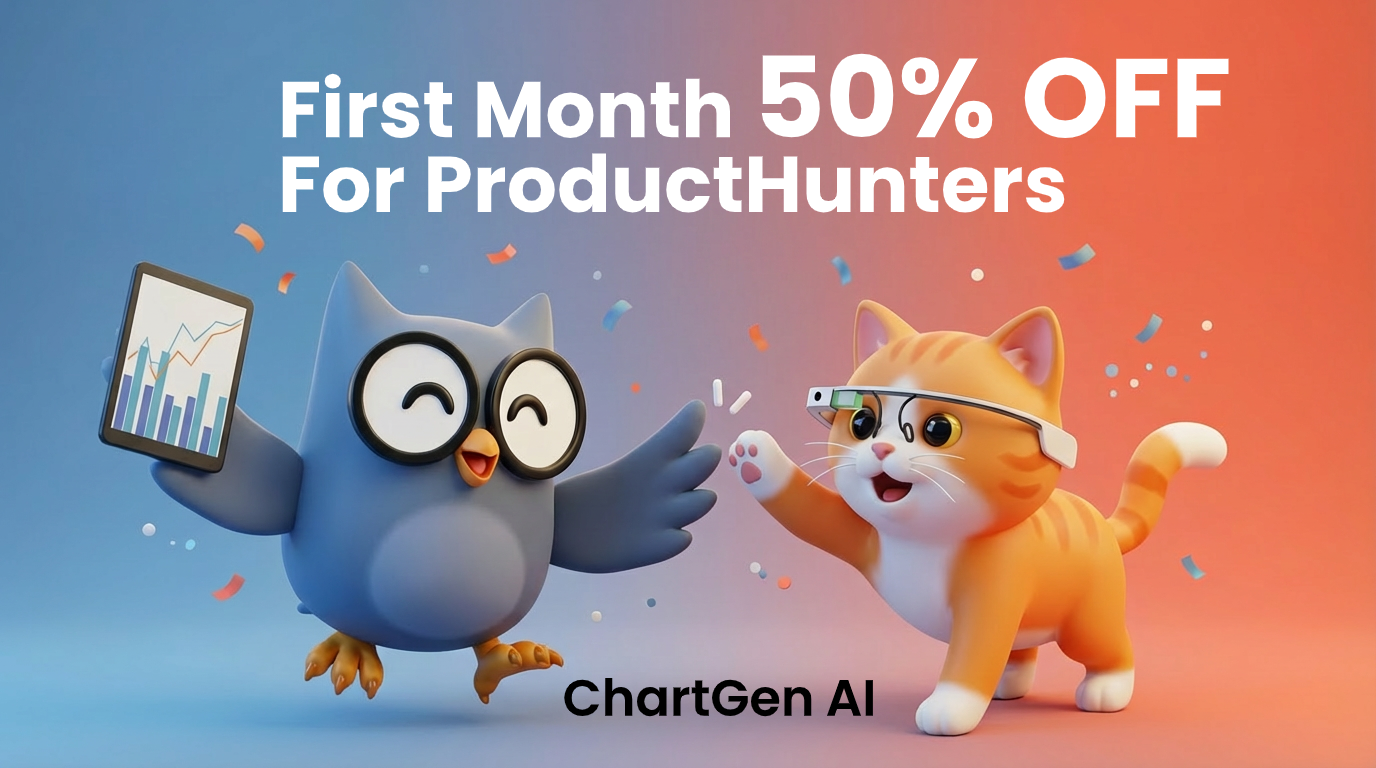
Congrats on the launch. I love the creativity of the last gallery image where the ChartGen mascot meets the Product Hunt mascot. :D

0
回复

@roopreddy Haha, you noticed! 😻 Thanks for the keen eye! We couldn't launch here without paying proper tribute to the legendary Product Hunt Kitty. It felt like the perfect way to mark the occasion—our mascot was very excited for the meetup! 😂

0
回复

Are these exportable to Google Sheets? By the way, congrats on the launch.

0
回复

@zerotox Thanks! 🙌 you can export to CSV/Excel right now.That file is ready to be dropped straight into Google Sheets. We are also looking into a direct 'Send to Sheets' button for a future update to make that flow even smoother. For now, the export button is your best friend!


0
回复

Could you point me to the integration page?

0
回复

@nuseir_yassin1 

Go to "Data Workbench", click "Connect Data", and there you go!

0
回复

Here's the link for everyone like me who got directed straight to ada.im:

https://chartgen.ai

0
回复
#2
Web search API by Crustdata
Accurate and the fastest web search API for AI Agents
310
一句话介绍:Crustdata的Web Search API为AI智能体提供了一个快速、精准的网页搜索接口,解决了AI代理因网页信息非结构化、难以实时获取而导致的幻觉和失效问题,赋能于招聘、销售、市场研究等多种AI驱动场景。
Sales API Developer Tools
网页搜索API AI智能体 实时数据获取 结构化JSON 竞争情报 销售赋能 人才招聘 市场研究 数据提取 Y Combinator
用户评论摘要:用户普遍认可其作为AI智能体“基础层”的价值,认为解决了传统爬虫的脆弱性问题。主要问题集中在:如何保证信息新鲜度与处理冲突/过时源;非技术用户的使用体验;速率限制与成本可预测性;以及实时更新能力(分钟级)。团队回复展示了具体应用场景和实时能力。
AI 锐评

这款产品瞄准了一个精准且正在膨胀的痛点:将人类构建的、非结构化的互联网,转化为AI智能体可高效、可靠“消化”的标准化数据流。其价值不在于简单的搜索聚合,而在于试图成为AI时代的“信息管道”基础设施。

它直击当前AI代理的核心短板——缺乏实时、可信的外部信息源。通过提供带丰富过滤选项、低延迟且结果结构化的API,它将脆弱的爬虫工程问题封装成可靠的服务,让开发者能专注于智能体本身的逻辑。从评论看,其“分钟级索引”和利用AI助手降低使用门槛的思路,是应对信息时效性和易用性质疑的关键策略。

然而,真正的考验在围墙花园之外。产品宣称的“最快最准”需要面对谷歌等巨头的壁垒和无数动态网站的复杂性。其长期价值取决于索引的广度、深度与稳定性,以及在高频调用下的成本控制。它本质上是在售卖“信息可靠性”,一旦出现延迟、遗漏或大规模反爬,客户构建其上的AI应用将瞬间崩塌。此外,将非技术用户引向“用AI调用API”的方式颇具巧思,但最终体验仍取决于大模型的理解与生成能力。

总体而言,这是一个在正确时机出现的“卖水者”故事。它能否从一款优秀的工具成长为AI智能体不可或缺的基础设施,取决于其工程能力能否将看似普通的网页搜索,做成一个坚如磐石、且性价比合理的商业服务。

查看原始信息
Web search API by Crustdata
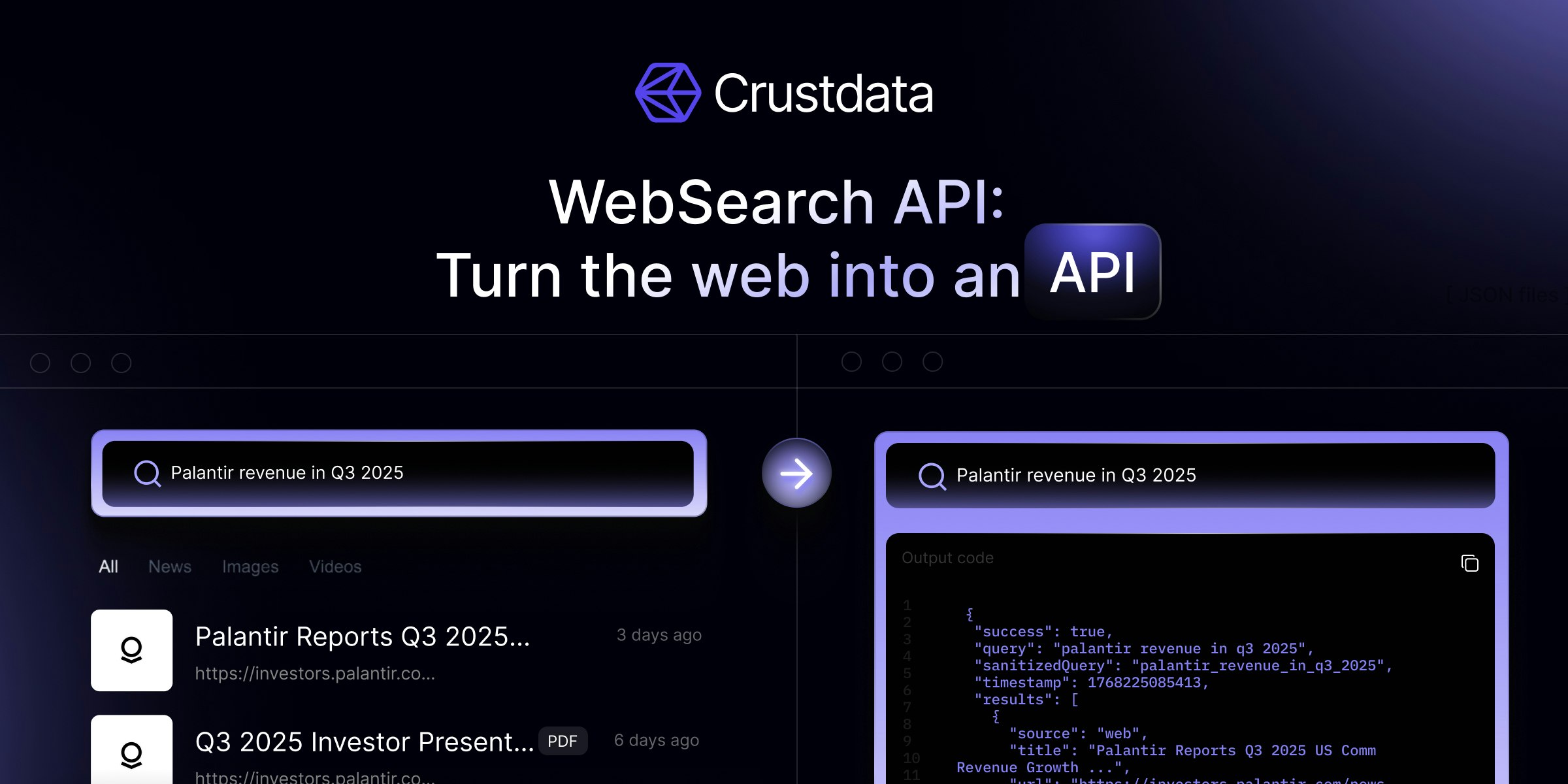
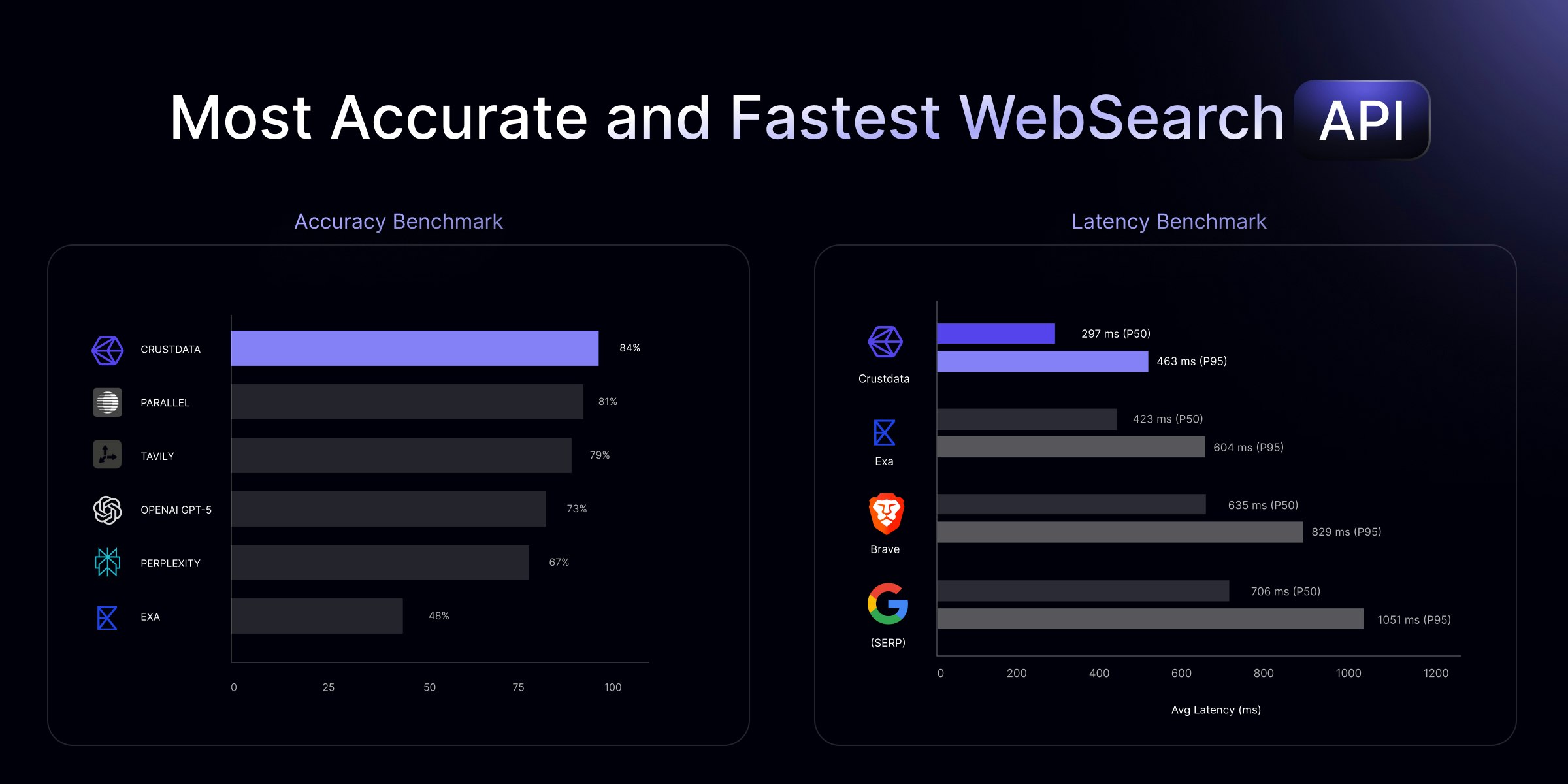
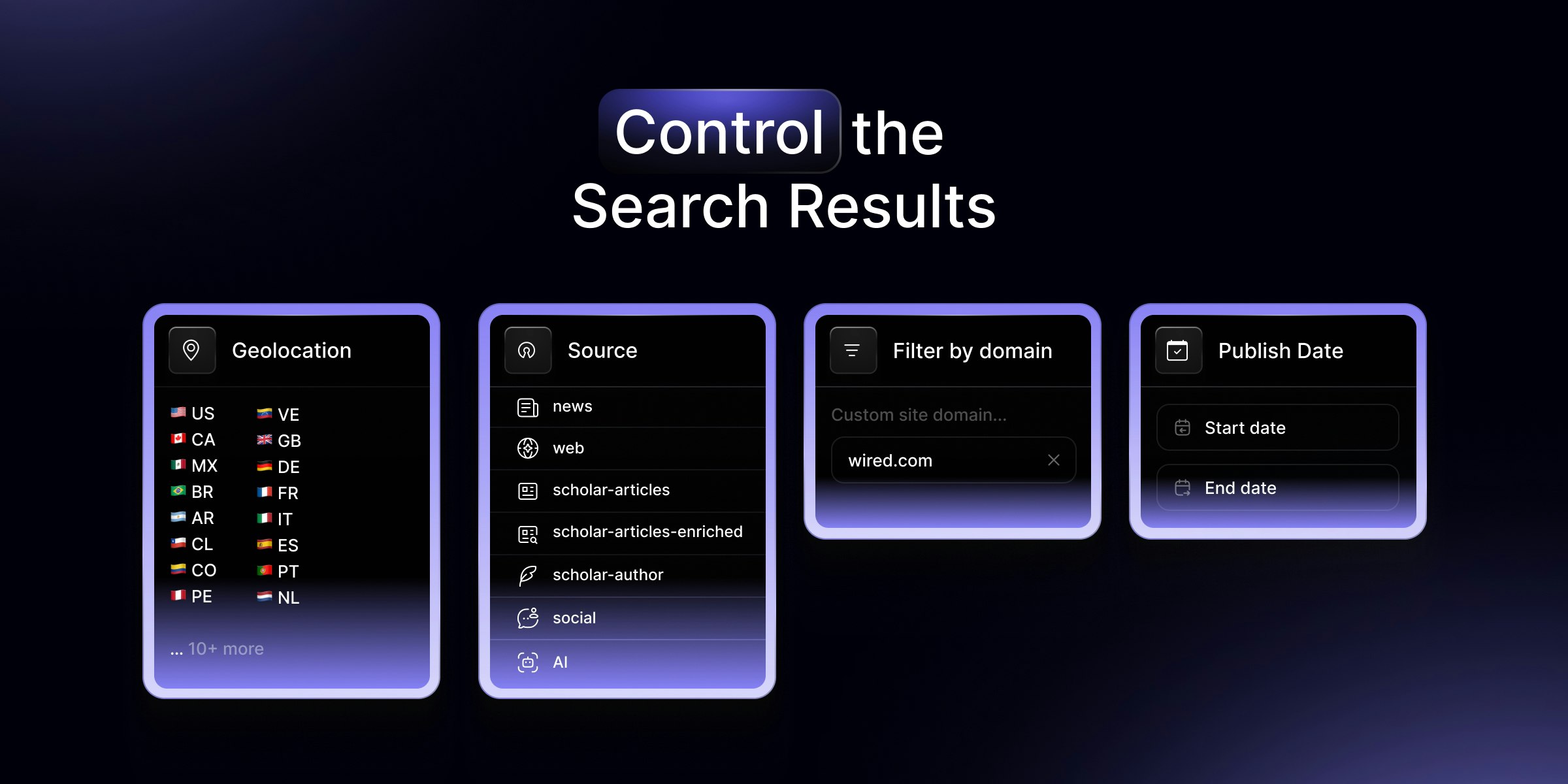
Let your AI agent search across the whole web with the fastest and accurate web search API by Crustdata - Control your search results by filtering on the website domains, date posted, sources and geo location. - Search across the news articles and social posts published just an hour ago. - Search for open source creators and authors of research papers - Get exact answers to your query via deep research mode - Combine with our fetch API to extract all content from a web page

Hi Product Hunt, Garry here. I’m excited to help launch Crustdata (YC F24)'s newest product: The WebSearch API.

It lets you search the whole web via a simple API, making it accessible for AI agents, products and tools. 

Think of this API as the fundamental layer on which you can build any tool that needs public web info (people, companies, posts, pricing pages, research articles, docs, blogs, etc). 

Why it matters:

The web wasn’t built for AI agents. It was built for the human eye. Inconsistent HTML, CAPTCHAs, and brittle scrapers make the web hard to use as input for agents.

As a result, agents lack vital qualitative information and cannot perform even simple tasks without accessing information from the web.  

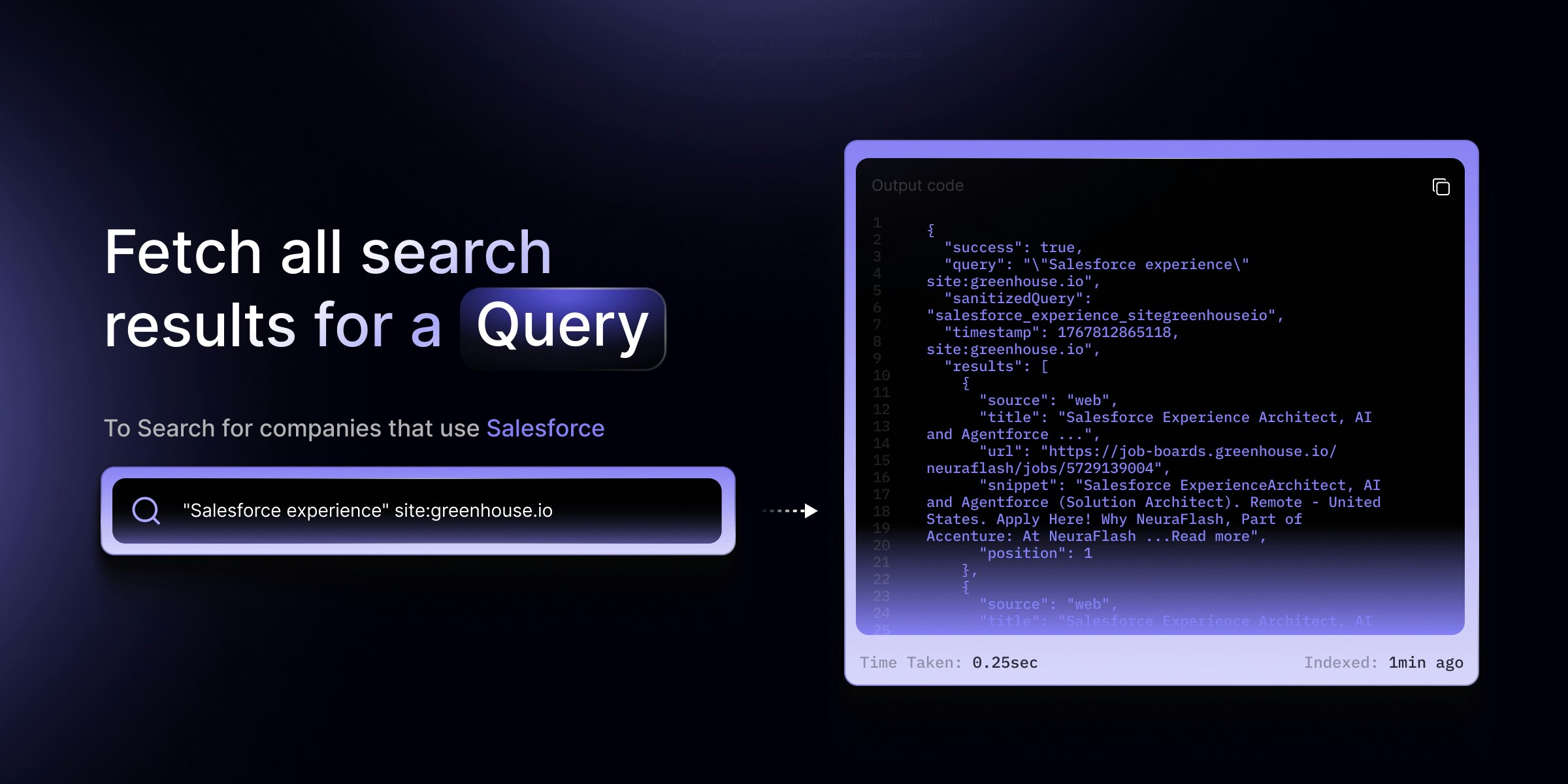
The WebSearch API returns search results and page content as clean, predictable JSON you can use as input for AI agents, workflows, and apps.

What you can build with it:

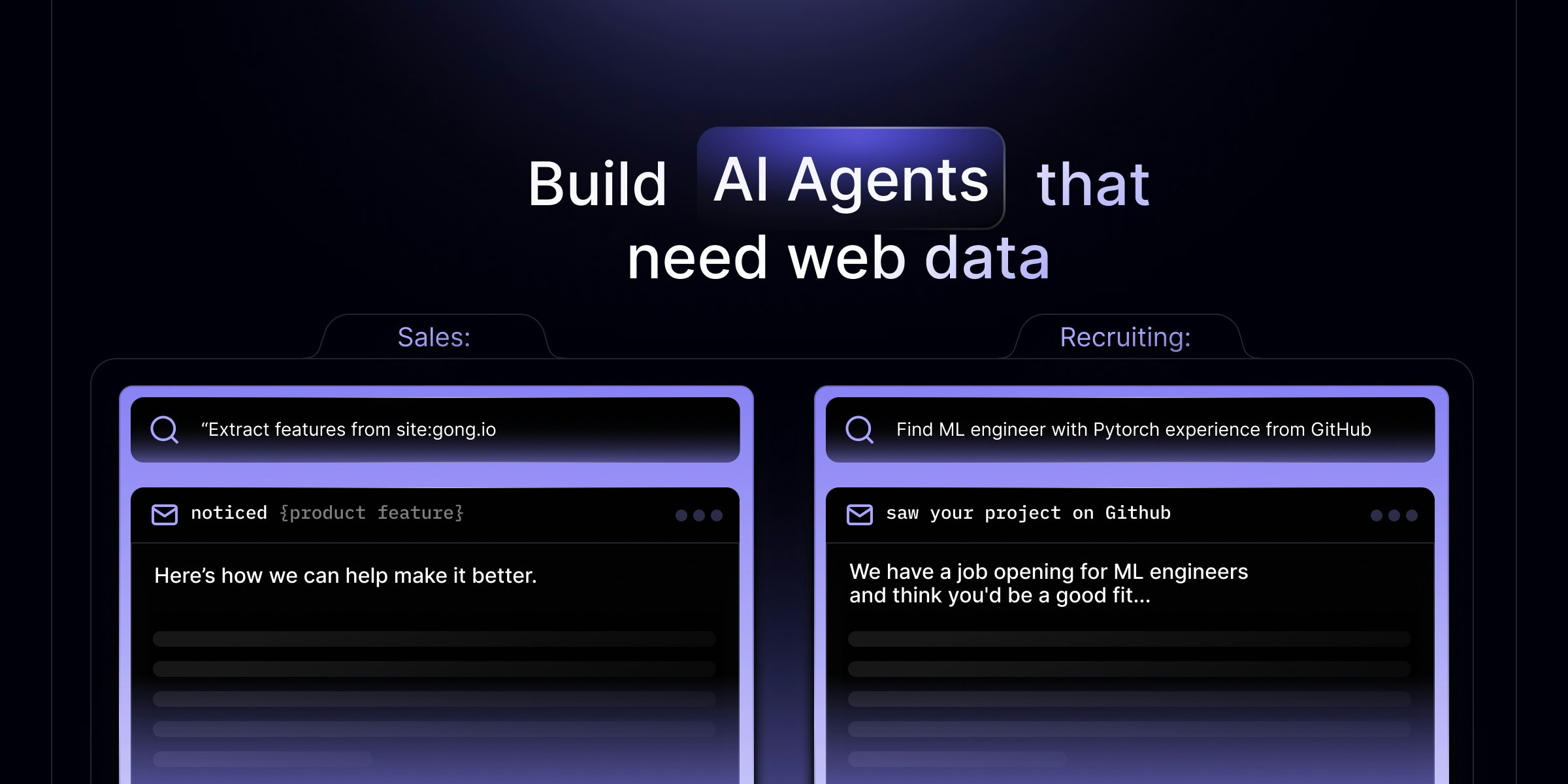
  1. AI recruiting tools: Find candidates such as researchers and engineers from public work (papers, GitHub profiles).

  2. AI SDRs and GTM agents: Find more information about prospects from podcasts, blogs, forums, and feed this into personalized outreach workflows.

  3. Competitive Research Tools: Track competitor pricing, product launches, and market positioning so you can detect opportunities and risks.

  4. SEO Tools: Pull meta data, citations, and ranking data without building fragile scrapers.

  5. Investment agents: Aggregate company information and market sentiment from news, blogs, and product pages to spot investment opportunities and risks.

  6. AI coding agents: Fetch and parse the latest documentations, recent library updates so they can generate accurate code. 

How to integrate into your AI agent or tool:

Get started in under 60 seconds. Add these lines of code with your API key to access the entire web as structured JSON:


curl 'https://api.crustdata.com/screener/web-search?fetch_content=true' \

 --request POST \

 --header 'Content-Type: application/json' \

 --data '{

 "query": "Open AI recent product launches",

 "geolocation": "US"

}'


That’s it. It’s as simple as that. 


For non-technical users:

If you aren’t comfortable with coding, don’t worry. Our documentation is written to work with AI coding assistants like Claude or ChatGPT.

Simply:

  1. Copy our API documentation

  2. Paste it into Claude Code or Cursor

  3. Describe what data you need in plain English (e.g., "Find all TypeScript developers who contributed to Next.js projects")

  4. Let the AI generate the API call for you

  5. Get working code you can use immediately, without writing a single line yourself

Example data you can find with this API:

For Sales: 

  • To find specific pain points or angles to personalize messaging through information from a funding article: 

Search query: {founder name}  site:techcrunch.com

  • To find specific pain points or angles to personalize messaging based on information from blogs or podcasts the prospect appeared on: 

Search query: {founder name} “podcasts” “blogs”


For Recruiting:

  • To find engineers with a specific skillset from Github: 

Search query: "i'm a" "frontend developers" "react" site:github.com

  • Finding researchers by publication topics: 

Search query: "machine learning" "interpretability" site:arxiv.org


For Market Research and Investment:

  • To analyze the recent market sentiment of a company: 

Search query: Salesforce AND (sentiment OR review OR "market perception" OR "analyst sentiment")

Date range: startDate: July 13, 2025 | endDate: Jan 13, 2026

  • To surface product launches or interesting events about a company:

Search query: "lovable AND ("product launch" OR "new feature" OR "beta" OR "partnership" OR "introducing") site:lovable.dev"


For AI coding agents: 

  • To track library updates and changes:

Search query: "React 19" AND ("breaking changes" OR "migration guide" OR "what's new")

Key Features and Differentiators:

  • Fastest WebSearch API with the subsecond latency

  • Most accurate WebSearch API compared to other Web APIs

  • Access the latest web pages indexed within minutes of being updated and available in search results

  • Results from hundreds of sources from the web for one query

  • Filters to control results (language, location, site/source, date ranges)

  • APIs built for production with high throughput

Thanks for your support!

35
回复

@garrytan Congrats!! This is a big unlock for agent builders. In real-world usage, what’s the first thing that causes agents to fail or hallucinate even with clean JSON, missing context, conflicting sources, or stale pages, and how do teams usually guard against that with your API?

0
回复

@garrytan Congrats to Garry and the Crustdata team on the launch. This feels like a genuinely foundational layer for AI agents, especially given how brittle traditional scraping is.

1
回复

@garrytan Garry, just go ahead! This product really looks impressive 🦄

1
回复

Excited for this launch!

5
回复

@daniel_ahmadizadeh1 thanks for the support

0
回复

@daniel_ahmadizadeh1 congrats on the launch! A friend of mine is testing your API and depending on his results I might contact you.

0
回复

Really interesting approach. Curious how teams think about keeping signals fresh as web content changes quickly.

4
回复

@shreya_chaurasia19 Thanks Shreya. This would be helpful for people that are building AI agents and need live signals. For example AI sales agents could monitor new features on prospect websites and use that as a signal or personalization angle for outreach.

0
回复

Congrats on the launch! Crustdata looks perfect for powering serious, real-time GTM AI agents.


2
回复

@zeiki_yu Thanks Zeiki! That's the goal. We aim to be the only place all AI agents go to for people, company and event data. By combining our WebSearch API and our B2B data APIs, you get the most powerful and extensive people and company dataset!

0
回复

@zeiki_yu yes!

0
回复

Great launch! Good luck today 🚀🏅

2
回复

@juliayugo Thanks Julia!

0
回复

This is huge! Congratulations!!!

1
回复

Great product. In an AI era it is must to get the updated info.

1
回复

@jeetendra_kumar2 Yes! AI agents are becoming the new users of the web and we need to give them updated info. Exactly what we aim to do with the WebSearch API.

0
回复
Is it possible to get rate limited? 😁 or its unlimited?
0
回复

Do you have examples of teams using this without writing any code at all?

0
回复

Congrats on the launch. Are these embeddable on the websites as well?

0
回复

How are you thinking about rate limits and cost predictability as agents scale and make frequent web calls in production?

0
回复

Been a user, it works great!

0
回复
0
回复

@shivam_mahajan1 Does Floqer use CrustData?

Congratulations @manmohit and the team on shipping so many cool updates. I’ve been following them on Product Hunt and each release keeps raising the bar. :)

1
回复

Congrats! What has been the most popular use case among your users or customers?

0
回复

@zerotox Thanks! Some of the popular use cases have been across sales and recruiting workflows.

People use it to find information about prospects through blogs, interviews or podcast appearances to personalize outreach using their AI sales agents.

For recruiting they are able to search for better fit candidates and find more detailed information from github profiles, research papers and personal websites candidates might have.

0
回复

Is an hour the buffer time or can it even provide real-time updates? Example, some news broke a minute ago?

0
回复

@nuseir_yassin1 Hey Nuseir, the API can provide real-time updates. It can show you webpages that were published less than 2 minutes ago.

0
回复

ooh this interesting!

0
回复

@radomako Thanks Richie! Let me know if you want to test it out, happy to set you up with access.

0
回复
Search quality is getting worse due to SEO spam and duplicated content across providers. What techniques do you use (or plan to use) to improve trust and usefulness of results for agents—beyond returning a SERP—and how do you measure success (e.g., downstream task success rate vs human relevance labels)?
0
回复

@curiouskitty We have a proprietary method of indexing and ranking the web, ensuring low quality sources are not shown to AI agents. We're constantly working on it to make it better.

0
回复

Love the simplicity here! Building and maintaining internal scrapers to bypass CAPTCHAs is a nightmare for small teams. I’m curious: How do you handle the freshness of the data? Is it crawling in real-time when the API is called, or are you serving results from a pre-indexed cache? For a high-frequency tool like a price tracker or a daily research agent, what’s the typical latency we should expect?

0
回复

@yuanyuan_zhang0104 All our data is fresh. We show results that include webpages published just minutes ago. Our API is built for providing realtime search results, so it will definitely work for integration into high frequency tools such as the ones you've mentioned.

0
回复
#3
LocateStore
Create a map of all your stores using Google Sheets
265
一句话介绍:LocateStore 是一款将Google Sheets表格实时转换为交互式店铺定位地图的无代码工具,为拥有多家线下门店的品牌解决了在官网上快速部署、免维护“查找附近门店”功能的痛点。
Spreadsheets Website Builder Maps
无代码开发 店铺定位器 Google Sheets集成 地图嵌入 多门店管理 数据同步 中小企业工具 效率提升 网站组件 地理位置服务
用户评论摘要:用户普遍赞赏其概念简洁、直击痛点。主要疑问和建议集中在:数据清洗与地址验证能力、大规模地点加载的性能、地图自定义样式深度、SEO与性能的权衡,以及其底层技术(如地理编码和API密钥处理)如何实现“免维护”承诺。
AI 锐评

LocateStore的成功,本质上是对“过度工程化”和“技术债恐惧”的一次精准反击。它没有发明新技术,而是聪明地劫持了已被广泛接受的数据协作中间件——Google Sheets,将其转化为一个轻量级的数据引擎和可视化前端。其宣称的“无API密钥、免维护”是最大的市场钩子,但这恰恰是双刃剑。对于中小型客户,它隐藏了地图服务商选择、配额管理、地理编码成本等复杂后台,提供了确定性的价值。然而,这种抽象在面临大规模、高并发或复杂数据治理需求时,可能成为瓶颈。从评论中的技术性质疑可以看出,其真正的挑战在于如何在不打破“简单”承诺的前提下,优雅地处理现实世界的混乱数据与规模化需求。

产品的真正价值不在于技术先进性,而在于对用户心智和工作流的精准把握。它承认并利用了“电子表格是许多企业运营的终极真相来源”这一现实,将开发一个功能从“项目”降维为“维护一张表格”,极大地降低了决策和启动成本。它的定位清晰:不是为追求极致定制化和SEO深度优化的技术团队服务,而是为那些希望“本周末就上线一个能用的店铺查找功能”的市场或运营人员提供即时解决方案。在AI工具泛滥的当下,这种解决具体、枯燥但广泛存在的“脏活累活”的工具,反而彰显了另一种务实的产品智慧。其长期考验在于,如何在保持核心体验极度简单的同时,构建足够坚固和灵活的中后台来支撑增长,避免从“简单”滑向“简陋”。

查看原始信息
LocateStore
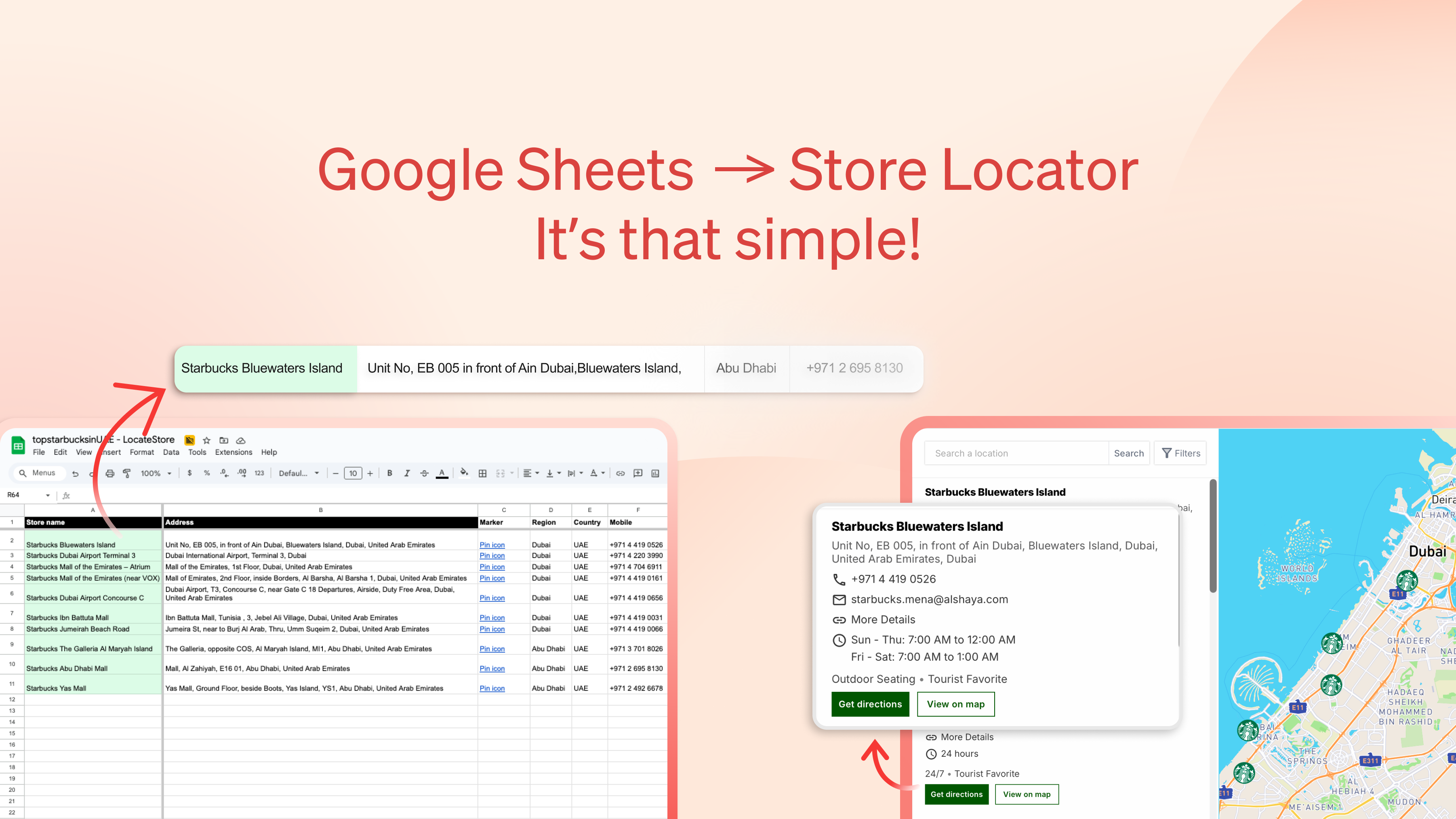
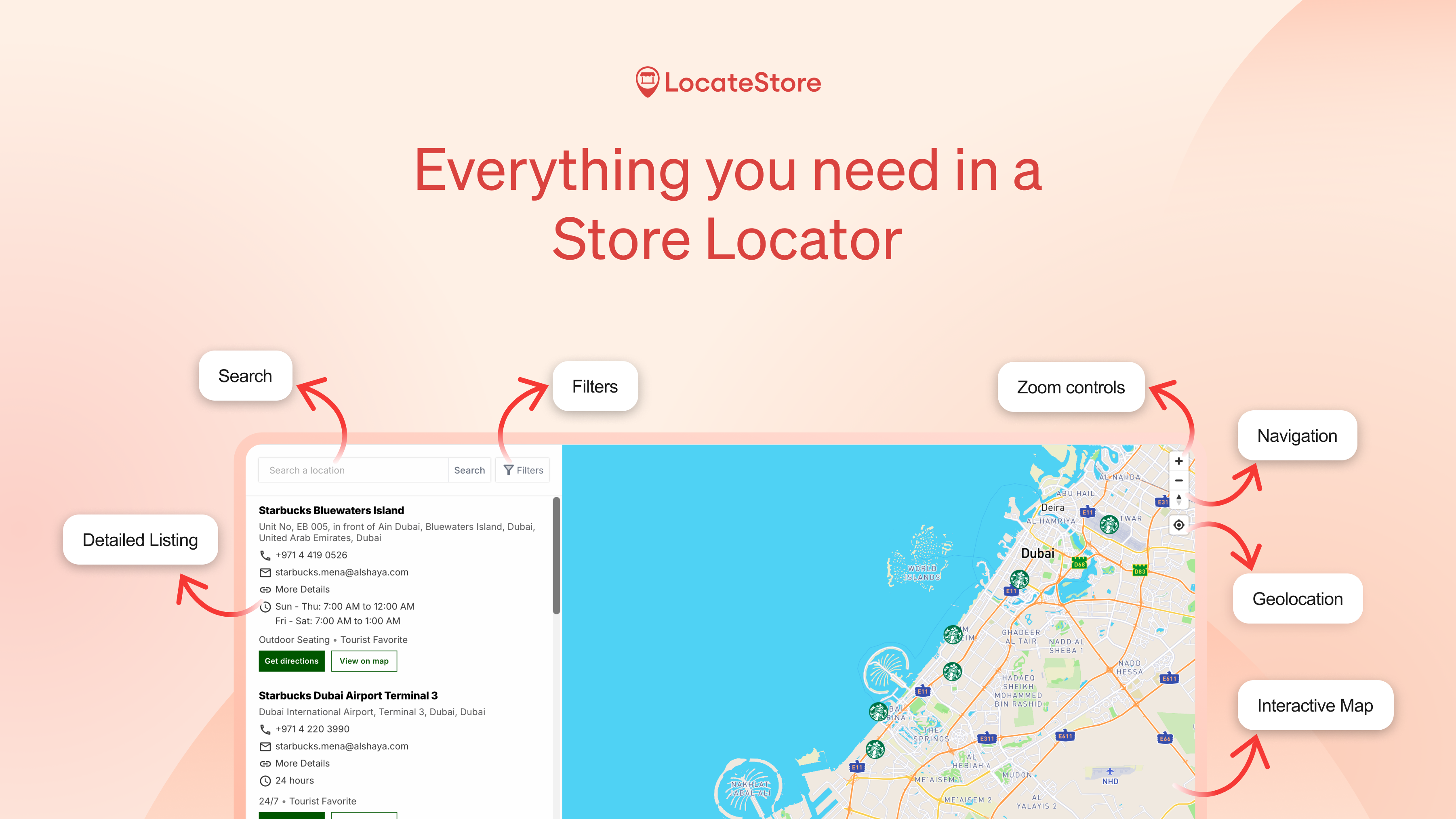
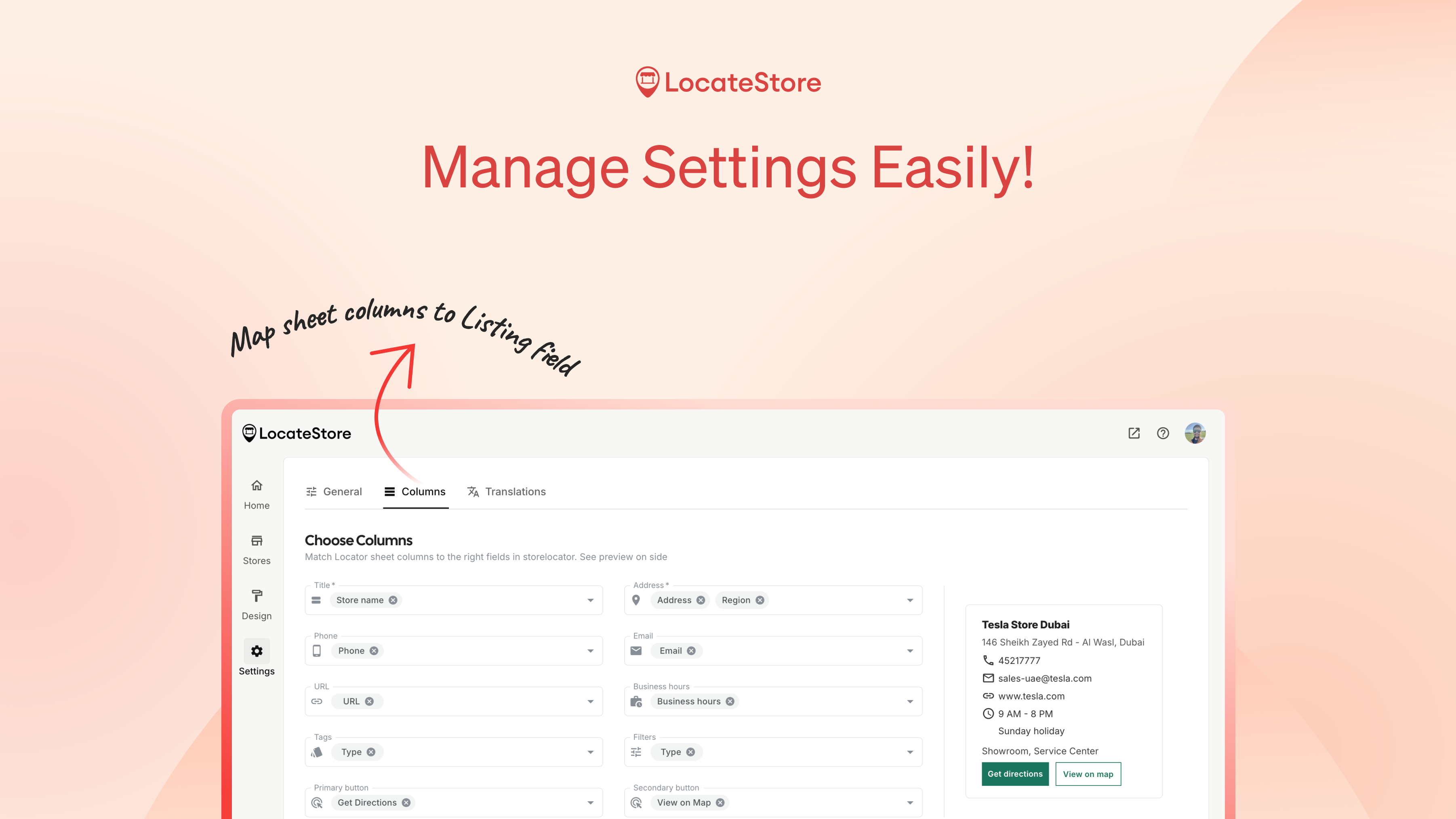
LocateStore turns a Google Sheet into a fast, mobile friendly store locator. Add your store address in a Google Sheet, and get an interactive map with search and filters. Easily embed on any website. No code, no API keys, and edits sync instantly. Built for multi location brands that want a simple “find a store near me” experience.

Hi Product Hunt 👋

Shyjal here from Micro.company, maker of LocateStore.

While working with many businesses, we kept seeing the same issue: Building a store locator is still far more complicated than it should be.

Most teams already manage store locations in a spreadsheet. But to put those locations on a live map, they end up dealing with map API keys, custom development, agencies, long back and forth, and ongoing maintenance. All for something that should be simple. So we built LocateStore.

LocateStore lets you manage all your store locations in a Google Sheet. Store name, address, contact details, website, tags and more. From that single sheet, LocateStore automatically creates a clean, interactive, mobile friendly store locator with search and filters. Any update in the sheet reflects instantly on the live map.

No code. No API keys. No maintenance.

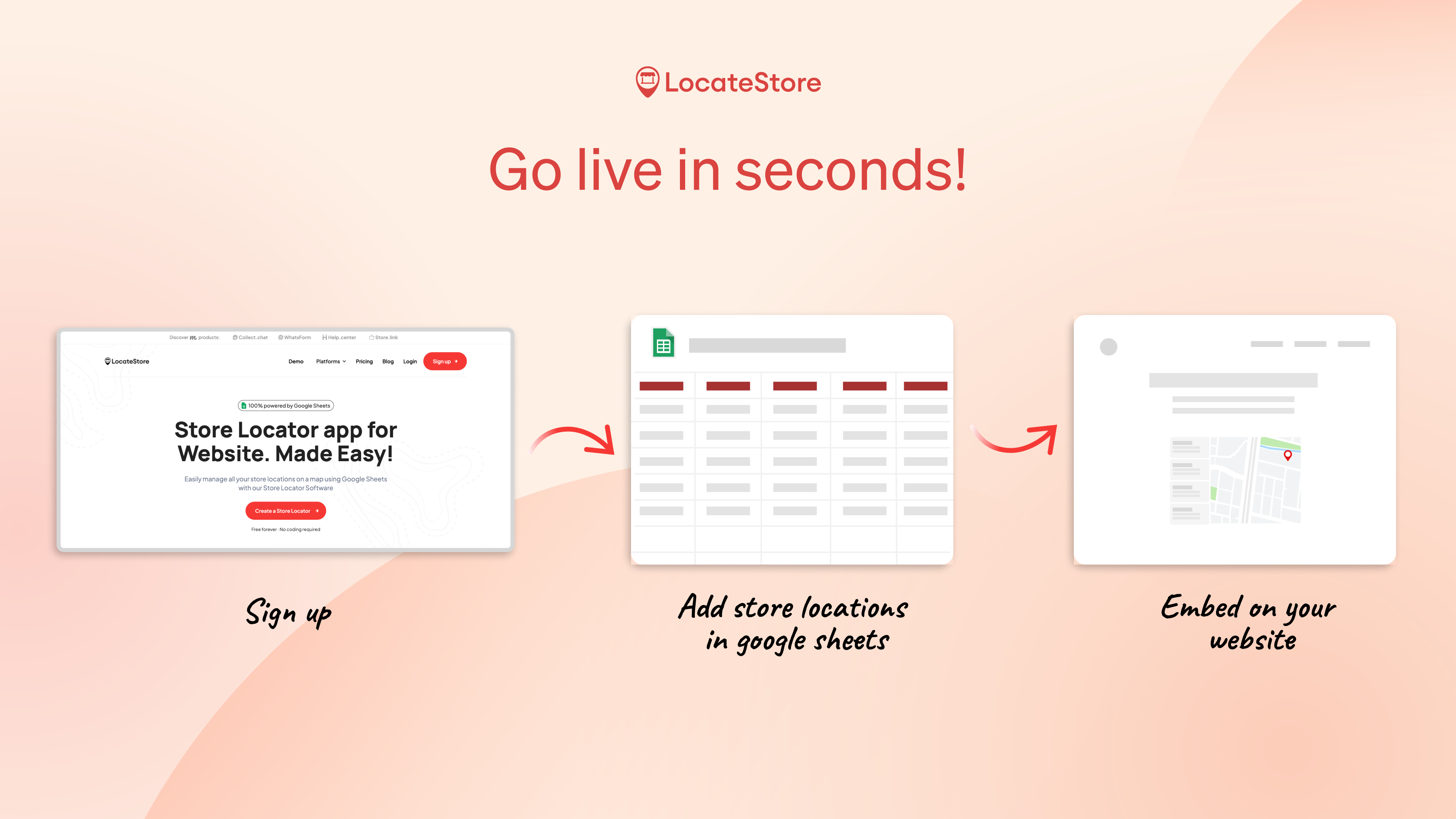
How it works is simple.
- Sign up to locatestore
- Add locations to a Google Sheet
- Copy-paste a small embed snippet into your site

That’s it, your store locator is live.

We built LocateStore to keep store locators simple, easy to understand, and fast to set up. It is designed to deliver a smooth “find a store near me” experience and is already powering 1000+ businesses.

Would love for you to check it out, try it, and share your feedback.

10
回复

@shyjal Will it also show up in google maps?

0
回复

This saves me so much manual effort—a big win for me.

2
回复

Thanks so much for the kind words, Amelia 🙌

0
回复

This is a really satisfying idea - “a Google Sheet becomes a store locator” is exactly how most small teams already work. The no-API-keys, no-maintenance promise is a huge win.

I’m curious how it behaves once it meets real-world data though. Addresses are often messy, duplicated, or half-filled - do you do any validation/cleanup, or is it strictly “whatever’s in the sheet”?

Also, if someone has a larger list (say, a few thousand locations), does the map stay snappy and readable? And can the embedded map be styled enough to feel on-brand, or is it intentionally minimal?

Congrats on the launch - this feels like one of those tools that saves you an entire weekend the first time you need it.

2
回复

On data quality, we try to be forgiving by default. We auto normalize and geocode addresses as best as possible, flag rows that need attention, and safely skip incomplete ones instead of breaking the map. The sheet stays the source of truth, but we help catch obvious issues.

For scale, a few thousand locations is fine. We use clustering and lazy loading so the map stays fast and readable, even on mobile.

Styling is intentionally simple to start, but you can already control colors, map style, markers, and layout so it blends well with your site. We are expanding this without turning it into a design headache.

Really glad it resonated. Saving that weekend was exactly the goal.

1
回复

@dmitry_petrakov That’s exactly the part I was thinking about too. In real life, sheets are rarely clean, so handling messy or partial addresses makes or breaks it. If it stays readable with a few thousand locations and doesn’t turn into a sluggish map, that’s already a big win for this kind of setup

0
回复

Love the simplicity of the concept, going from a simple, accessible datastore to a embeddable web component. I honestly kind of want to use this just personally to create a map of my favorite places around town.

1
回复

@wcrtr Thank you for your honest feedback.Yes, feel free to create any map of your liking.

  • Your favourite cafes in town.

  • Create a travel list for your friend.

  • Places you want to visit in future.

0
回复
A lot of products in this category either focus on SEO (indexable location pages) or on a fast embedded widget. What tradeoffs did you make around SEO vs simplicity/performance, and how should a brand decide if LocateStore is the right fit for their goals?
1
回复

Our primary focus is on a fast, embeddable widget rather than heavy SEO pages. Around 90 percent of our users use LocateStore mainly for embedding.

That said, the locator is still SEO friendly by default. We just chose simplicity, performance, and ease of setup as the core tradeoff, especially for teams that want something live quickly without ongoing maintenance.

0
回复

Nice launch :), this feels very practical. Curious how people handle frequent or seasonal updates with it.

1
回复

Thank you@joosepseitam  for your comment.

A couple of things we have done are:

  • When you modify the address information in the Google Sheet columns, the co-ordinates are re-calculated and the pin on the map is updated.

  • This changes happen almost instantly

  • In the case of bulk update, we do have another sync option for as well, which will do the same process for multiple rows at the same time.

I hope I have answered your question. Actually updates are much easier on the store locator, with this Google Sheet approach.

0
回复

Hi PH community, 👋

Managing store locations shouldn’t require a developer. That’s why we built LocateStore to sync directly with Google Sheets.

Instead of showing customers a long, static list of addresses on your “Contact Us” page, LocateStore helps you add an interactive map that makes it easier to find nearby locations and can increase the chances of visitors actually walking into a store.

You can check out the live demo here:
👉 https://locatestore.com/demo

I’d love to hear your thoughts:

  • Do you prefer maps over lists when searching for a business?

  • Does an interactive locator influence your decision to visit a store?

Cheers,
Aslam from Micro.company

1
回复

Turning a live Google Sheet into a locator gets tricky at scale: Sheets API quotas plus geocoding churn and 1k+ pins can tank TTI on mobile.

Best practice is to precompute and persist canonical lat,lng in the sheet, batch geocode server-side with caching, and ship a CDN cached JSON feed with marker clustering or viewport based loading.

What geocoder and maps stack are you using to keep it truly “no API keys,” and how do you handle address normalization plus rate limits when rows change frequently?

1
回复

Great questions @ryan_thill

We use multiple map providers under the hood to deliver a beautiful store locator with zero technical effort.

Data is synced in batches rather than read in real time from Google Sheets, which makes the system scalable.

We already have thousands of store locators running, each handling a healthy number of daily visitors.

0
回复

I hope I answered your questions. Let me know if you have any other questions.

0
回复

This solves a very real ops problem. Spreadsheets are still the backbone of many multi-location setups, so building on top of Sheets makes a lot of sense.

0
回复

Is this meant for businesses that have offline stores and want to show their locations on their website??

0
回复
@himani_sah1 yes, exactly
0
回复

It's almost refreshing to see such a simple (at least in concept) product doing so well and receiving so much attention. It seems the AI-wrappers steal the show the majority of the time, but something like this is TRULY useful and can be used with certainty. Amazing.

0
回复
@muellertime thank you for your kind words ❤️
0
回复
#4
Demonstrate by Notte
Browser workflows to deployed automation in minutes
253
一句话介绍:一款将浏览器操作记录转化为可部署自动化代码的平台,解决了开发者在构建稳定、可维护的浏览器自动化流程时,在原型探索与生产部署之间切换繁琐、代码脆弱的痛点。
API Developer Tools Artificial Intelligence
浏览器自动化 无代码/低代码 RPA AI智能体 工作流录制 无服务器部署 会话管理 开发工具 YC创业公司 生产就绪
用户评论摘要:用户普遍赞赏其将演示转化为可靠代码的理念及AgentFallback的混合架构,认为其在控制力与适应性间取得了平衡。主要问题集中于对特定场景(如SEO)的适配性、技术原理(是否基于Playwright)以及工作流更新机制,团队均给予了详细解答。
AI 锐评

Notte的Demonstrate并非又一个简单的“录制与回放”工具,其真正的锋芒在于试图用工程化思维缝合当前浏览器自动化领域的两大断层:一端是看似智能实则不可控、成本高昂的纯AI智能体;另一端是稳定但脆弱、维护成本高的硬编码脚本。它提出的“演示生成确定性代码 + AI智能体作为异常回退”的混合范式,是务实的创新。

产品价值不在于单个功能,而在于构建了一个从探索(Agent Mode)、定型(Demonstrate Mode)、调试(实时浏览器IDE)到部署(一键无服务器)的完整闭环环境。它降低了构建自动化的初始门槛,但更关键的野心是提升其整个生命周期的可维护性。通过将不可见的智能体决策转化为可见、可编辑的代码,并将智能体的作用范围严格限定为“安全网”,它试图将开发者从对黑盒的盲目信任或对变化的持续焦虑中解放出来。

然而,其挑战同样清晰:这种混合模式的复杂度是否只是从代码层转移到了架构理解层?平台锁定的风险如何?此外,其宣称的“生产就绪”高度依赖于其底层基础设施(托管会话、代理等)的稳定性和规模,这对小型团队是持续的考验。如果成功,它有望成为自动化工作流的“操作系统”;若失败,则可能仅是又一个试图用抽象层解决所有问题的精美工具。其开源框架是构建生态信任的关键一步,但真正的试金石将是开发者在面对真实、复杂且多变的网站时,是否真的无需“从头再来”。

查看原始信息
Demonstrate by Notte
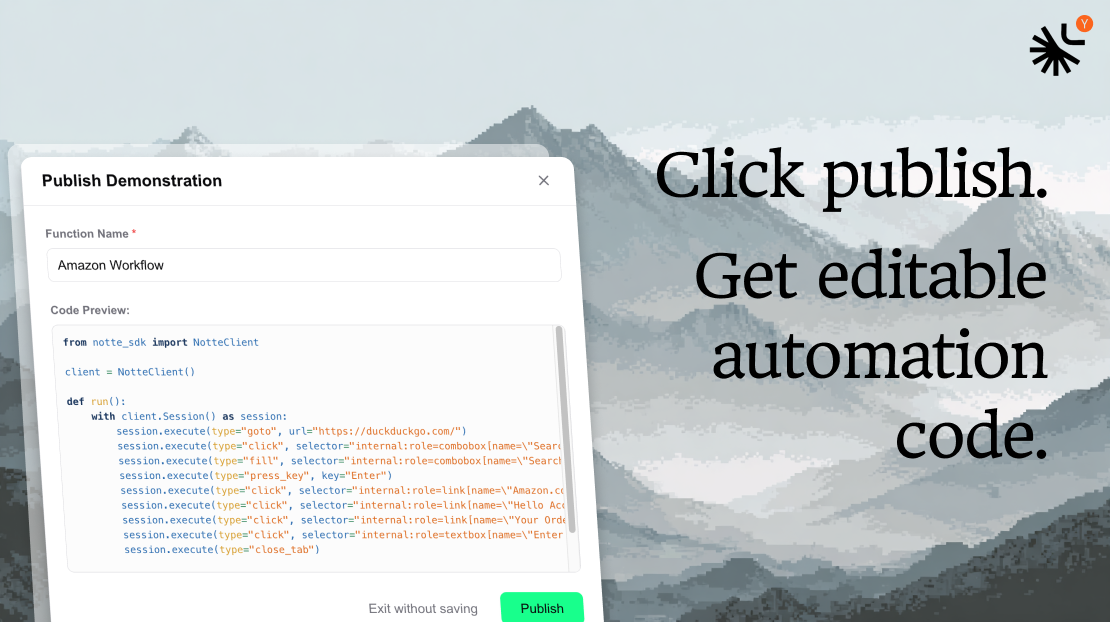
Record any browser task once and get production-ready code instantly with Demonstrate Mode. Edit further your code in our Automation Studio with live browsers, deploy automation code as a serverless function, and schedule it to run autonomously. Managed sessions, proxies, identities, and vaults handle everything behind the scenes. The fastest path from prototype to production in one unified platform.

Hey Product Hunt! 👋 We're Notte (YC S25), and today we're launching the automation tools we wished existed when we started building browser automations.

Why we built this

Most real workflows need both deterministic scripts (for the reliable parts) and agents (for handling variation). Today you're forced to choose between:

  • Black-box agents that look magical until they silently fail

  • Fragmented DIY stacks where you juggle infra, orchestration, and app state across tools

There's a psychological gap too: when tools give you visibility and control, you debug and improve. When they hide the mechanism, you just assume "agents don't work" and abandon them. We wanted one environment where you can go from "I have a task" to "it's running in production" without context switching, and where building agents feels more like craft than simply prompting.

What the Console gives you

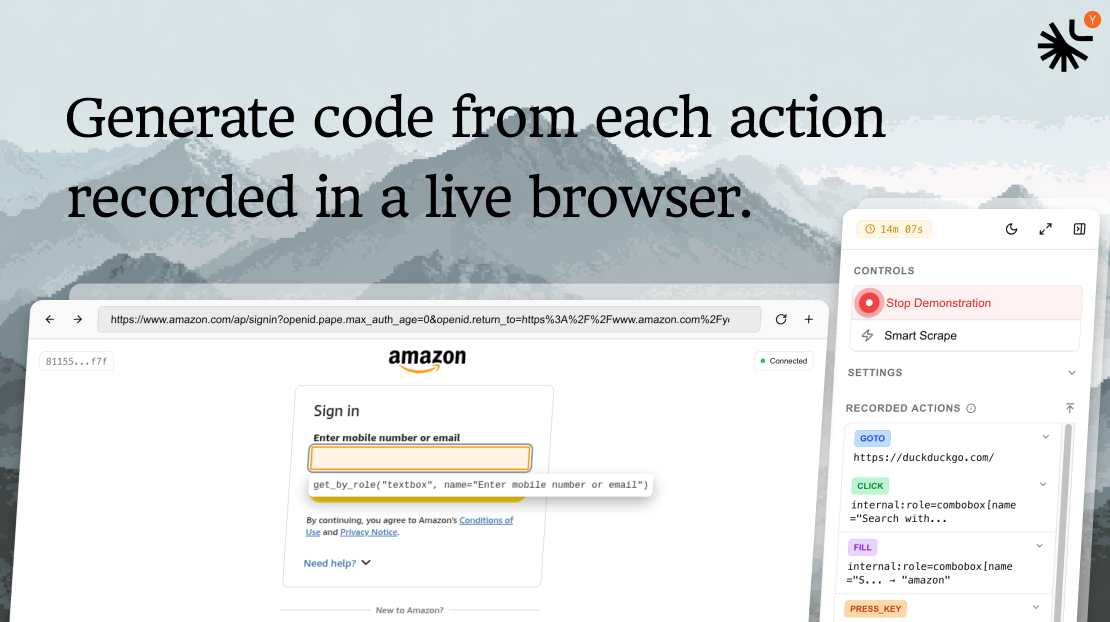
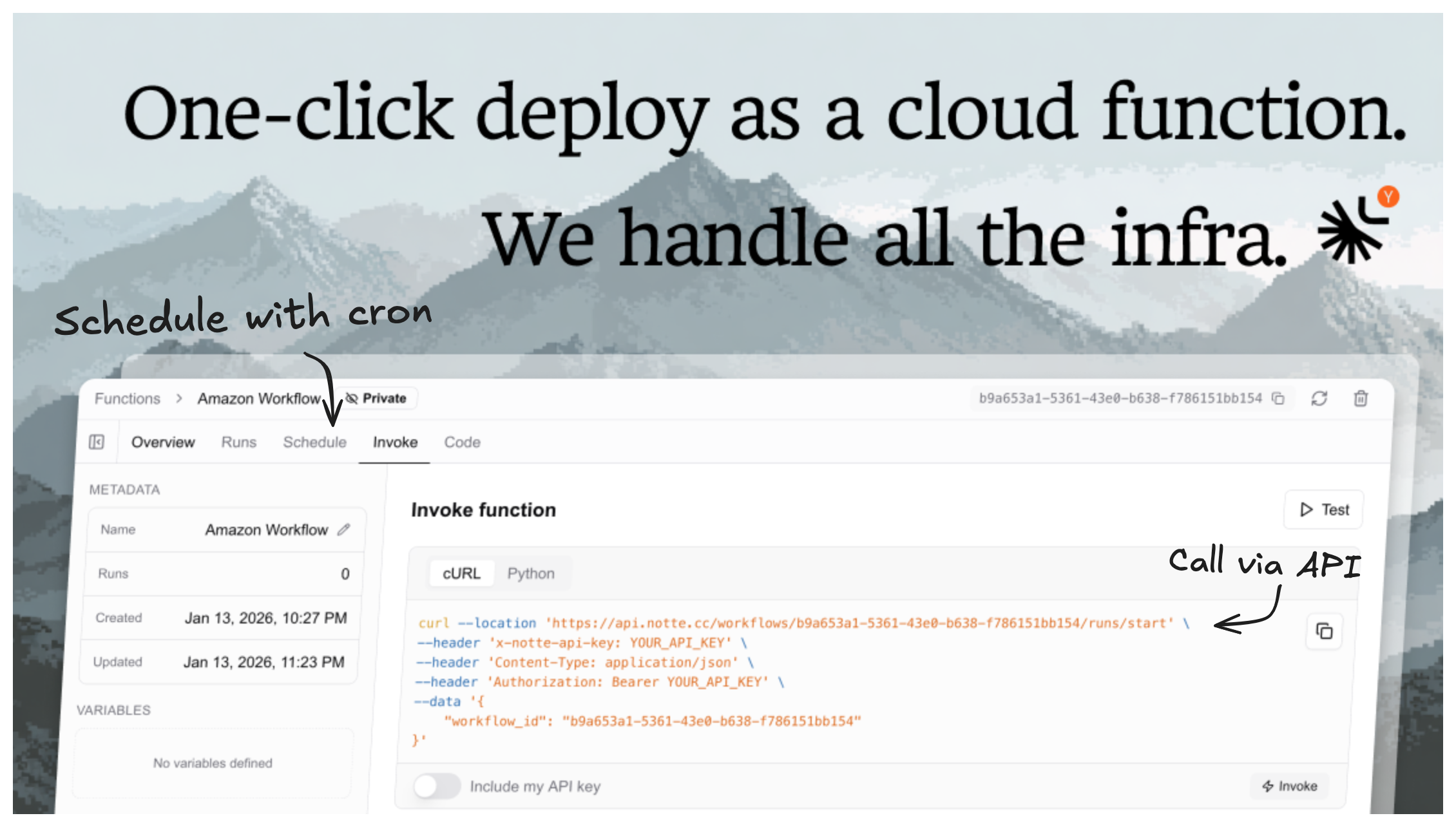
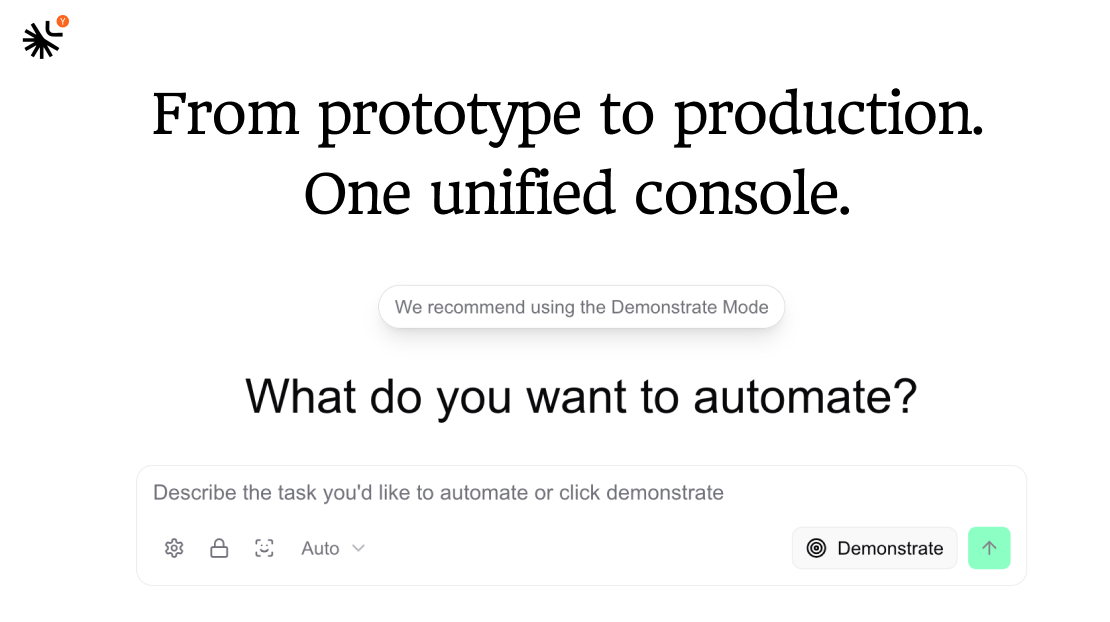
  • 🎬 Demonstrate Mode – Just do the task manually once. Notte records every action and generates production-ready automation code. No prompts, no syntax guessing. Show your workflow, get editable code.

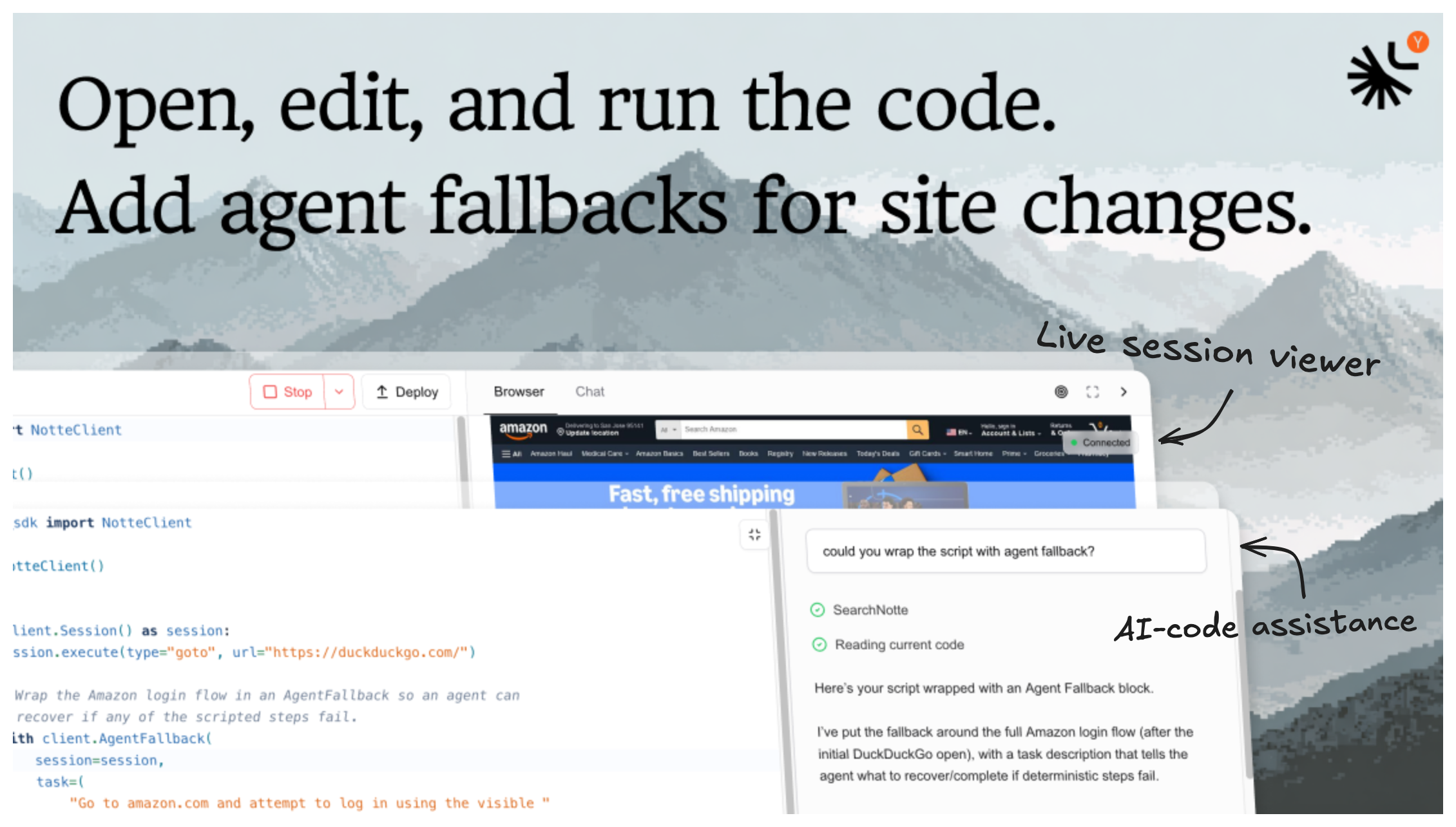
  • 💬 Agent Mode – Describe what you want in natural language. The agent executes it in a live browser session; click "Map to Script" and it becomes editable code you own.

  • 📝 Code Editor – Write automation scripts with a live browser beside your editor, AI code assistance, and rich debugging. See exactly what's happening as your code runs.

  • 🚀 Zero-Config Deployment – One click to deploy your script as an API endpoint, with scheduling and cron. No infra setup.

Built-in agent tooling

  • Managed identities (auth, 2FA, account setup)

  • Secure vaults and proxy rotation

  • Session management and managed infra

  • Live debugging and execution logs

Who this is for

Devs (or vibe-devs) who need browser automations that actually work in production, whether it's data extraction, form filling, testing, or integrating with apps that don't have APIs.

We're a small team obsessed with developer experience and making agent tooling feel empowering instead of opaque. Would love your feedback in the comments!

👉 Try it free: http://console.notte.cc

– nottelabs team:) 🌸

21
回复

@ogandreakiro congrats on the launch. Do you have anything specialized for marketing & SEO?

0
回复

Great product!

4
回复

@preetmishra thanks preet!

1
回复

@preetmishra thanks!! 🏆

1
回复

biased but this has genuinely been super useful + intuitive for me 🔥 can pretty much automate anything I can think of

3
回复
1
回复

When workflows change later like a small UI update or an extra step added by the site how easy is it to update just that part of the recorded flow without redoing everything from scratch or risking downtime?

2
回复

@why_tahir the cool thing is you don't redo anything. Wrap the script with AgentFallback, then if the selector breaks, the agent handles that step dynamically and the rest of the flow continues. Fix it later when you have time or let the agent keep covering it (you get the adaptability of agents without paying for them on every run). You can edit the code in our built in IDE when you get round to it.

1
回复
Super cool! Nice how the agent is used as a fallback. Seems like reliability would be much better than an either/or solution.
2
回复

@rohan_bajpai1 Thanks Rohan!

1
回复

@rohan_bajpai1 glad you see the vision:)

0
回复

congrats on the launch!

2
回复

@dan_meier1 thanks Dan! let us know if you get a chance to try it out

1
回复
How do you help users avoid the two big failure modes: (1) black-box agents that silently do the wrong thing, and (2) brittle scripts that break the moment the UI changes—what’s your philosophy on when to use Demonstrate Mode vs Agent Mode vs hand-written code?
2
回复

@curiouskitty Use agents to discover, deterministic code to execute, and AgentFallback as your safety net.

The longer answer:

Black-box agents fail silently because you can't see what they're doing or why. Brittle scripts fail loudly because they're hardcoded to a specific UI state. Our approach:

  1. Agent Mode — Use it to prototype and discover the flow. Let the agent click around, figure out the selectors, handle the edge cases etc. Great for exploration/prototyping.

  2. Demonstrate Mode — You do the workflow once in a real browser, we record it and generate deterministic code. You get Playwright-style code that runs the same way every time. This is for people who know the workflow but don't want to write code.

  3. AgentFallback — This is the key. Wrap any deterministic block with an agent fallback. If the selector breaks because the site changed, the agent picks it up dynamically instead of failing. You get the reliability of scripts with the adaptability of agents, but only when needed.

TLDR the philosophy is: agents should be scoped and supervised, not autonomous. Bootstrap fast, convert to deterministic, let agents handle the exceptions.

1
回复

We believe web agents are a great way to bootstrap an automation but they should not be used blindly in production settings especially when the stakes are high. That's why we propose to convert a bootstrapped automation (or a demonstration) into deterministic code that you can audit + an agent as a fallback in case the UI changes to make sure the automation does not break. You get the best of both worlds

1
回复

@ogandreakiro congrats on the launch

2
回复

@gdc Thanks Giuseppe!

0
回复

One thing that usually breaks browser automations is not knowing what went wrong when something fails. Being able to see the browser live, step through the actions and edit the code directly makes a big difference. That level of control is what helps turn an automation into something you can actually maintain instead of restarting from scratch every time.

2
回复

@johan_nystrom exactly 🙏 really well put, thanks Johan

0
回复

​Finally, a tool that handles the mess of proxies and session management through one API. It saves me so much time on the infrastructure side

2
回复
0
回复

A lot of browser automation tools fall apart right after the demo. You can record something or prompt an agent but turning that into code you trust in production is the hard part. Demonstrate Mode looks like it’s trying to close that gap by letting you show the task once and then work directly with the generated code. That focus on visibility and control is what usually decides whether an automation actually ships.

2
回复

@elin_sjoberg well put - add AgentFallback to the deterministic script you Demonstrated, and you win on cost, reliability, and speed

0
回复

Great product, need to give it a shot.

2
回复
0
回复

@jeetendra_kumar2 thanks - let us know what you think!

0
回复

my favorite api for browser automation

2
回复
1
回复

@johnrushx appreciate it ❤️

1
回复

Looks nice. BTW, how it works under the hood? does it use some kind of Playwright based automation or headless browser?

2
回复

@atairov Hey Tairov, thanks! Demonstrate Mode runs on a cloud browser we operate as part of our home rolled infrastructure (PS: You could use these sessions as standard browser as a service API if needed). Everything done in Demonstrate sessions is recorded and ported in an automation function expressed with Notte Framework - our 100% Playwright compatible built for browser agents and AI automations.

1
回复

Hey Product Hunt! 👋 I’m Lucas, co-founder at NotteLabs.

With Demonstrate Mode, you show the browser what to do once. Notte converts that demonstration into deterministic, production-ready automation you can iterate on, deploy, and rerun at scale.

Everything is powered by the open-source Notte framework (github.com/nottelabs/notte), which gives agents a structured way to interact with the web. Full docs are at docs.notte.cc. Excited to see what you build 🔥

2
回复
2
回复

Looking forward to seeing what people are gonna build with this 🔥

2
回复

@leonotte same :)

1
回复
1
回复

@ogandreakiro andrea_pinto Love the hybrid “Demonstrate → editable script” + Agent Mode; at scale the hard part is selector/DOM drift + auth/2FA fragility that causes silent flake across thousands of runs.

Best-practice: generate resilient locators (ARIA/role/text + fallback strategies), snapshot+diff the DOM, run canaries, and enforce idempotency/anti-dup guards (especially for form submits) with durable retries.

Open Q: how do you version/replay sessions for debugging (video/trace + DOM snapshots), and can vault + identity access be scoped per workflow/tenant with audit logs? 🔥

2
回复

@ryan_thill hey Ryan! Yes definitely - selector and DOM drift is a major challenge we're trying to address with resilient self-healing functions. We have version control on your deployed functions (every deployment is one version) and replays for any sessions you run through Notte is always available to you. You can scope vaults and agent identities to function tenants as well.

1
回复
Let’s go @ogandreakiro
1
回复

I have used Notte for quickly building web agent automations. Excited to use Demonstrate Mode to iterate faster!

For quite some time, I believe web or UI agents that allow user to demonstrate use and AI auto correct are the ones that have highest reliability while minimizing maintenance cost. Notte's feature set is very close right now.

1
回复

@raimo_tuisku thanks Raimo! and I agree, that balance of deterministic speed and cost with agent adaptability is where we're headed. Demonstrate Mode gets you there fast then add AgentFallback around you script to keep it running when things break.

1
回复

Demonstrate Mode helps bridge the gap between trying something out and actually using it in production. For me, recording a task once and getting real code I can edit solves a problem I keep running into with other automation tools. Creating the automation, testing it in a live browser and deploying it from the same place keeps everything in one flow. That last part is usually what’s missing when I try to move browser automations into production.

1
回复

@henrik_falk that 'last part' was a problem we kept running into, so we built our console and Demonstarte Mode around the idea of going from prototype to production in one environment - glad you like it!

1
回复
#5
Callum
AI calendar assistant for teams – supercharge your calendar
235
一句话介绍:Callum是一款面向团队的AI日历助手,它通过自然语言理解,在多人会议、跨时区协调等复杂场景中,自动处理日程安排,解决了团队间反复沟通、手动协调可用时间的核心痛点。
Productivity Calendar Artificial Intelligence
AI日历助手 团队协作 自然语言处理 日程管理 Google Calendar集成 效率工具 SaaS 智能调度 工作流自动化 CRM集成
用户评论摘要:用户肯定其自然语言交互和多人调度能力,期待Slack/ChatGPT集成。主要问题/建议包括:对Microsoft Teams的支持、处理缓冲时间与优先级冲突等复杂场景的能力、以及相较于现有日程工具(如预订链接)的明确切换优势。
AI 锐评

Callum的野心不在于成为又一个日历视图优化工具,而在于试图成为调度场景的“对话层”。其真正价值并非简单的AI自动填表,而是将团队日程协调这一高频、高摩擦的协作行为,从“UI迷宫”和邮件往复中剥离,抽象为一句自然语言指令。这直击了现有工具(如预订链接)在多人、多约束条件下彻底失效的软肋。

然而,其面临的挑战同样尖锐。首先,它深度绑定Google Calendar生态,在混合办公软件环境中存在天然短板,正如用户所问的Microsoft Teams支持问题。其次,AI调度从“可用”到“可信”存在鸿沟。处理“最后一刻冲突”、“缓冲时间”等现实世界的模糊约束,需要更深度的上下文理解和权责判断,这远非当前“助理而非自动驾驶”的定位所能完全覆盖。产品可能陷入两难:过于保守则价值有限,过于激进则可能引发混乱。

本质上,Callum是在赌一个未来:团队调度将从一个需要主动管理的“任务”,转变为一个由AI无缝支撑的“后台进程”。它的成功与否,不仅取决于技术对复杂约束的理解精度,更取决于其能否在用户心智中,建立起足以替代根深蒂固的邮件协调习惯的、更优的协作范式。当前版本是一个有力的切入点,但真正的考验在于后续对复杂场景的驾驭能力,以及跨平台整合的广度。

查看原始信息
Callum
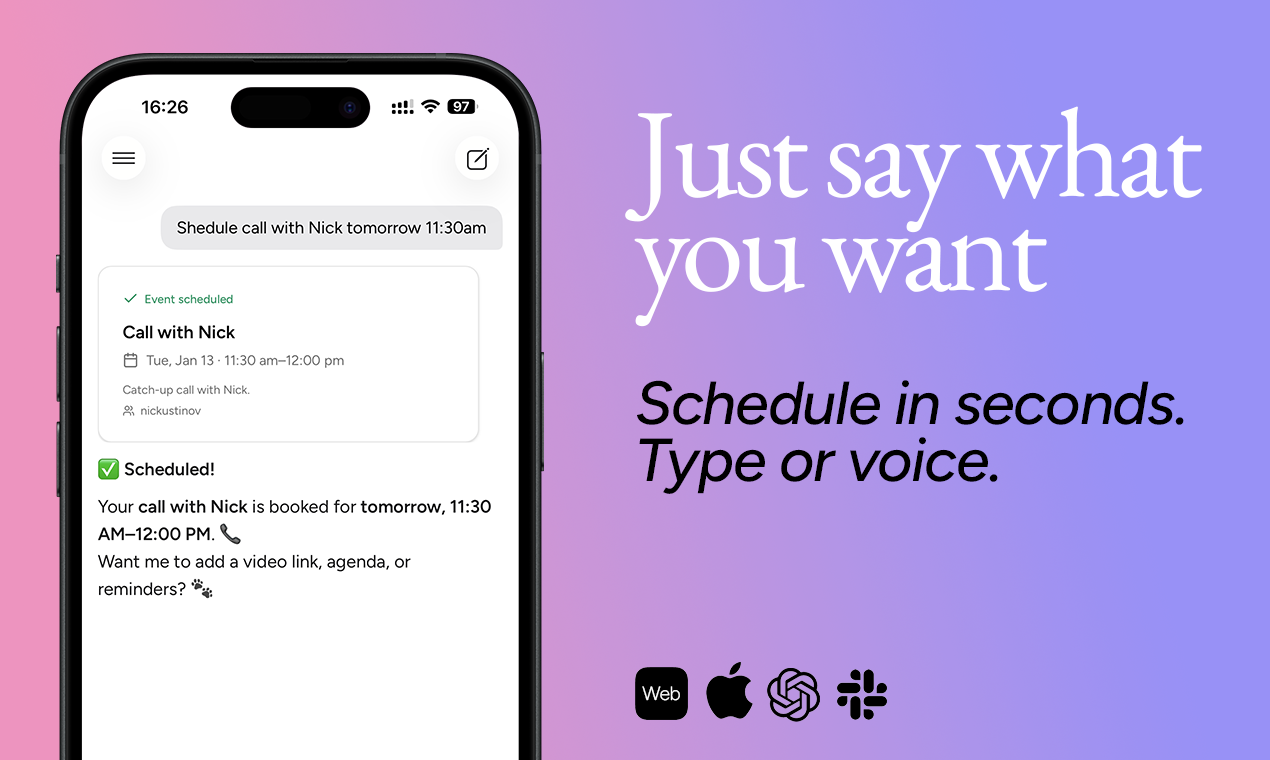
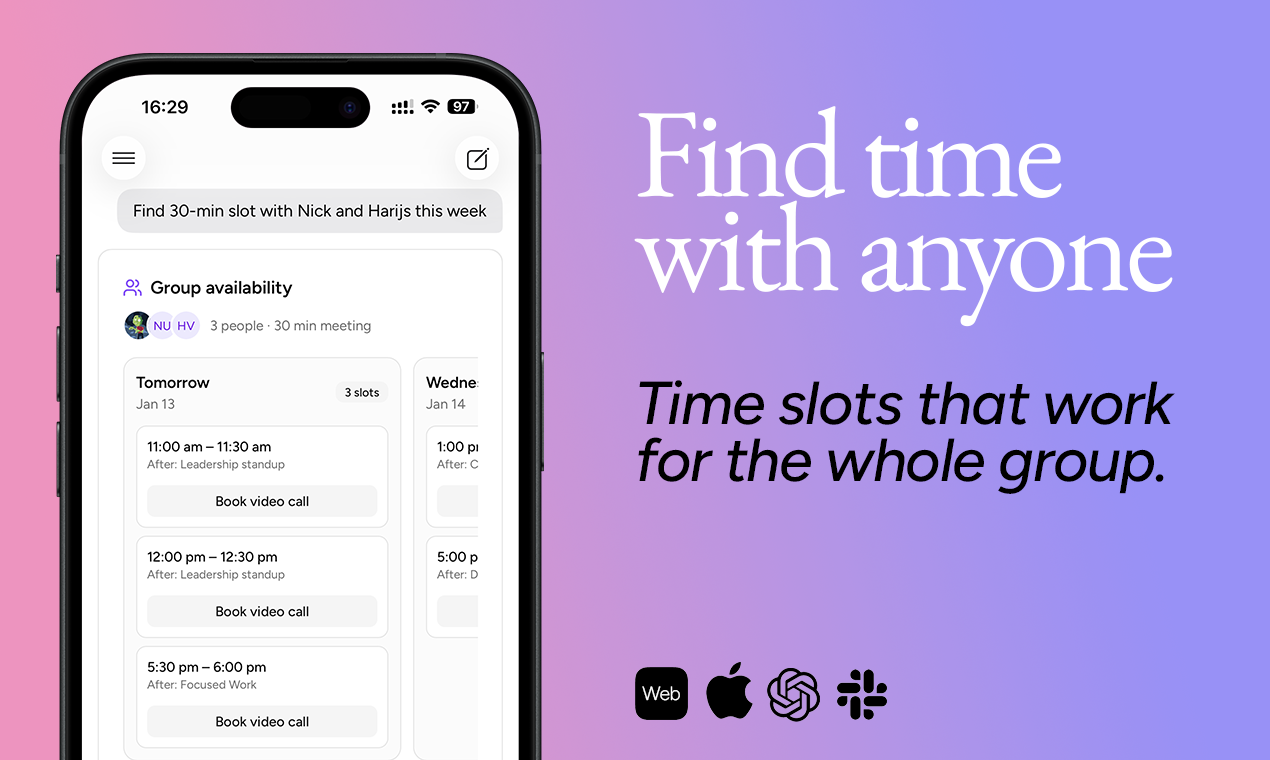
Callum is an AI calendar assistant built for teams using Google Calendar. It understands multi-person meetings, shared availability, and real-world scheduling constraints. Use natural language to schedule, reschedule, and manage meetings without back-and-forth emails or manual calendar admin. Boost Callum knowledge by connecting your CRM, ATS, CSM apps. Available on Web, iOS, Slack and ChatGPT (soon).
Hey Product Hunt 👋 I’m the maker of Callum. Callum adds an AI layer on top of your work calendar to make scheduling simpler and more intuitive. Instead of clicking through calendar UIs or coordinating manually, you can just tell Callum what you want to do and it takes care of the rest. It is built for work schedules and understands multi-person meetings, shared availability, and real scheduling constraints on Google Calendar. We are launching today on web and iOS. Slack and ChatGPT integrations are coming shortly so Callum can fit naturally into your workflow. I would love feedback from anyone who manages a busy calendar or schedules with teams. Happy to answer any questions. Nick
8
回复

@nick_ustinov1 Hi Nick, Congrats on the launch. Cool little tool. Any chance of support for MS teams?

0
回复

@nick_ustinov1 Let's gooooo! Excited to try this.

1
回复

@nick_ustinov1 Niiice 🥳

0
回复

First calendar AI assistant which works properly 🎉🎉🎉 I'll soon stop typing and scrolling and only use voice, such a relief. My favorites are different summaries, searching, adding calls quickly, reminders, and color-coding. I still need to test accessing data via integrations.

6
回复

@petr_antropov1 Thanks Petr! 🙌 Voice-only life is the dream – soon we'll all forget how to type 😅 Let me know how the integrations go – happy to help if anything acts up 🙏

1
回复

Turning scheduling into a conversation instead of a UI maze is a smart move.

Looking forward to the Slack and ChatGPT integrations.

4
回复

@anupamsingh0211 Appreciate it! Slack is coming soon – will keep you posted 🙌

1
回复

Going to try this for my challenge — scheduling across time zones and multiple teams, 15 emails deep, trying to find 30 minutes that works for everyone.

If it handles multi-person availability well, that alone is worth it. Congrats on the launch, Nick.

3
回复

@kristaps_lapins1 That's exactly what it's built for! Let me know how it goes – happy to help if anything trips up 🙏

2
回复

Congrats on the launch! Callum looks like a strong AI layer for real-world, multi-person scheduling across teams.

2
回复

@zeiki_yu Thank you! Multi-person scheduling is where the magic happens 😄

0
回复
When a team is already using tools like booking links, Google’s native scheduling, or calendar-optimization apps, what’s the clearest “switching trigger” where Callum is meaningfully better—and what does Callum intentionally not try to do?
2
回复

@curiouskitty Great question! The switching trigger is usually when scheduling stops being simple - coordinating across multiple people, time zones, or needing context from other tools (CRM, ATS). Booking links work great for 1:1 external meetings, but fall apart with group availability or internal coordination.


What we intentionally don't do: auto-scheduling your entire day or moving things around without asking. Callum is your assistant, not autopilot – you stay in control.

2
回复

Congrats on the launch. It looks very ambitious!

2
回复

@mikhail_fedorinin Thank you! Lots more to come 🚀

3
回复

@nick_ustinov1 Congrats on the launch! One thing I’m curious about: handling corner cases like last-minute conflicts, buffer times and priority trade-offs can be tricky for AI schedulers. Do you have plans or ideas around how Callum will tackle those as the product evolves?

1
回复

@srishti_19 Thanks! Buffer times are on the roadmap – definitely a real need. For conflicts, Callum already helps you reschedule quickly by finding times that work for everyone. Priority trade-offs are trickier – staying assistant-first, so you decide what's more important, Callum just makes it fast to act on it.

0
回复

Happy to see the product here with updated features that users always wanted. Kudos to the whole team on launch

1
回复

@sachin_shajan Thanks! Glad it resonates 🙌"

0
回复

Calendars are already crowded tools. The real value here feels like reducing coordination friction between people, not just scheduling itself.

0
回复
#6
Netlify Capsules
Launch web projects as AR capsules others can find in orbit
187
一句话介绍:Netlify Capsules 是一款基于Web AR的虚拟体验产品,允许开发者将个人项目与纪念内容封装为“胶囊”发射至虚拟地球轨道,并通过手机AR基于真实地理位置进行发现和互动,在庆祝社区里程碑的场景下,为开发者提供了将数字创作实体化、情感化展示的创新方式。
Developer Tools Augmented Reality Web Design
Web AR体验 虚拟纪念 开发者社区 地理位置互动 数字时间胶囊 创意营销 轻量级应用 社区共建 情感化表达 技术庆典
用户评论摘要:用户普遍赞赏其创意、趣味性与人文关怀,认为这是对开发者个体的独特致敬。具体反馈包括:AR体验惊艳,概念新颖;与社区成员共建的模式备受好评;同时,用户也提出了技术性质疑,如Web AR的跨设备兼容性、性能优化、隐私保护及垃圾信息防范等实际挑战。
AI 锐评

Netlify Capsules 表面上是一场庆祝1000万开发者的营销活动,但其内核是一次对开发者工具平台价值本质的犀利探索。在AI代码生成器与同质化模板泛滥的当下,Netlify没有选择堆砌数据或功能,而是反其道行之,用极致的“轻”与“人本”思维,构建了一个数字情感容器。

其真正价值不在于Web AR技术本身(该实现被团队坦承为“基础”),而在于它成功地将抽象的“部署”行为与开发者的个人情感、创作故事进行了空间锚定。通过“选择项目-添加私人记忆(照片、歌曲、笔记)-发射至虚拟轨道”的仪式,它巧妙地将Netlify的平台功能(部署)升华为一种带有归属感和永恒意味的社区仪式。这远不止是一次病毒式营销,更是一次成功的“意义构建”。

然而,其锋芒之下亦有隐忧。作为一次实验性庆典,其长期生命力存疑。当新鲜感褪去,轻量级设计可能暴露为功能单薄,地理位置与AR体验的技术瓶颈(如评论中指出的性能、隐私问题)将更凸显。它更像一个精美的概念艺术,而非可持续产品。但不可否认,此举精准地击中了开发者群体在高度工业化开发环境中对个性表达与情感联结的潜在渴望,为技术品牌如何与社区进行深层、非功利互动,树立了一个值得深思的范本。它证明,在工具效率之外,“共鸣”本身就是一种强大的产品力。

查看原始信息
Netlify Capsules
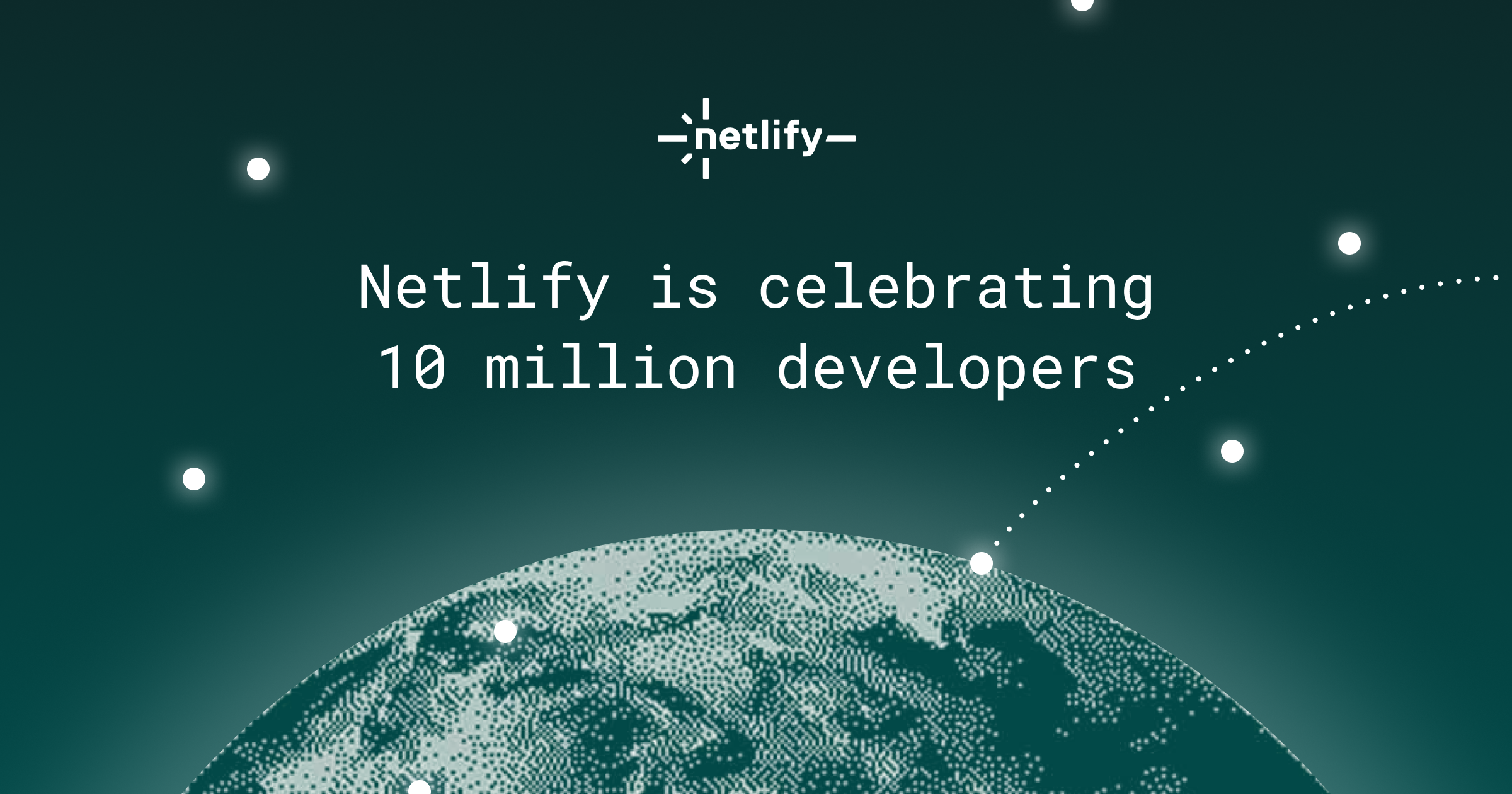
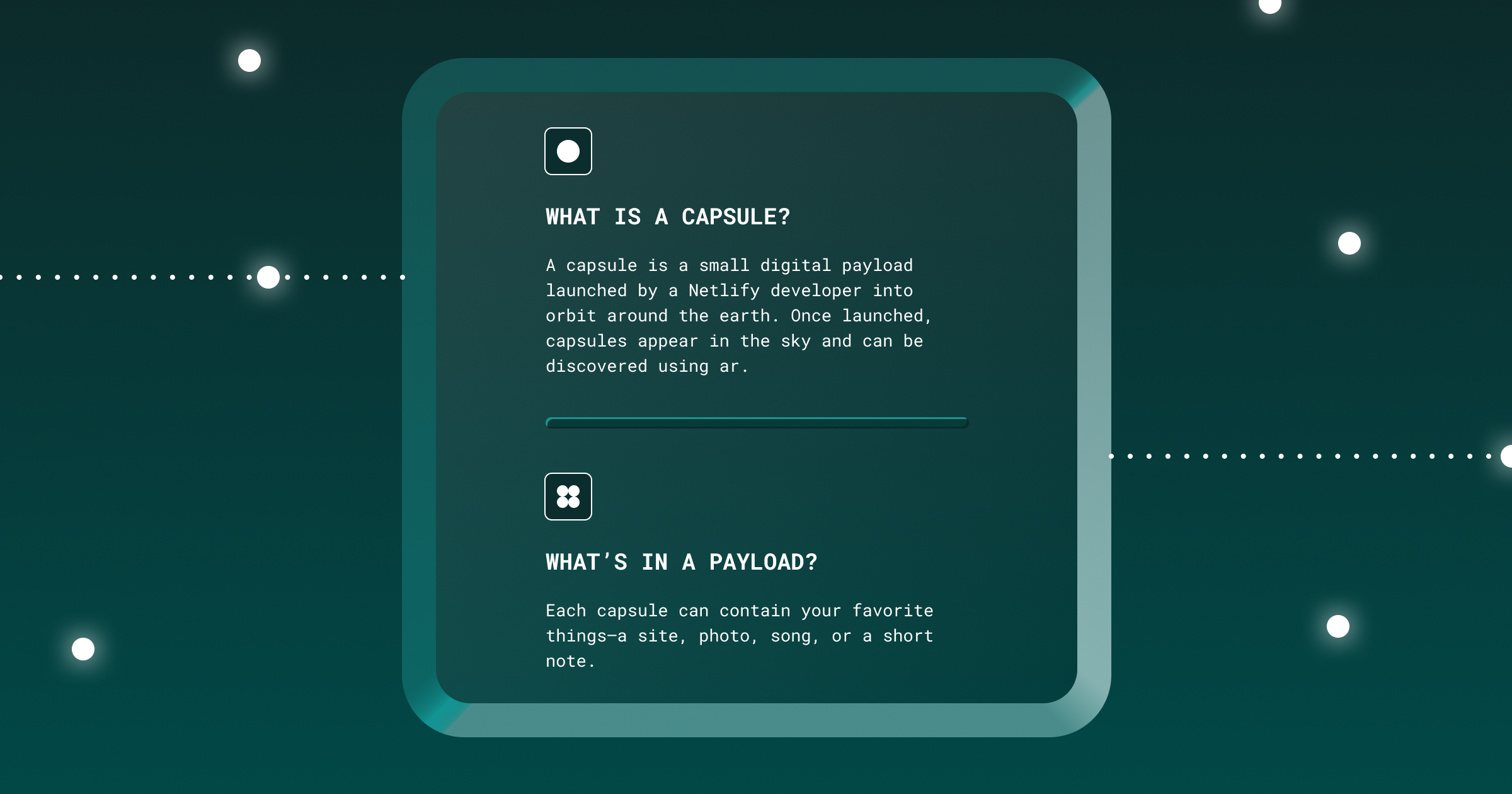
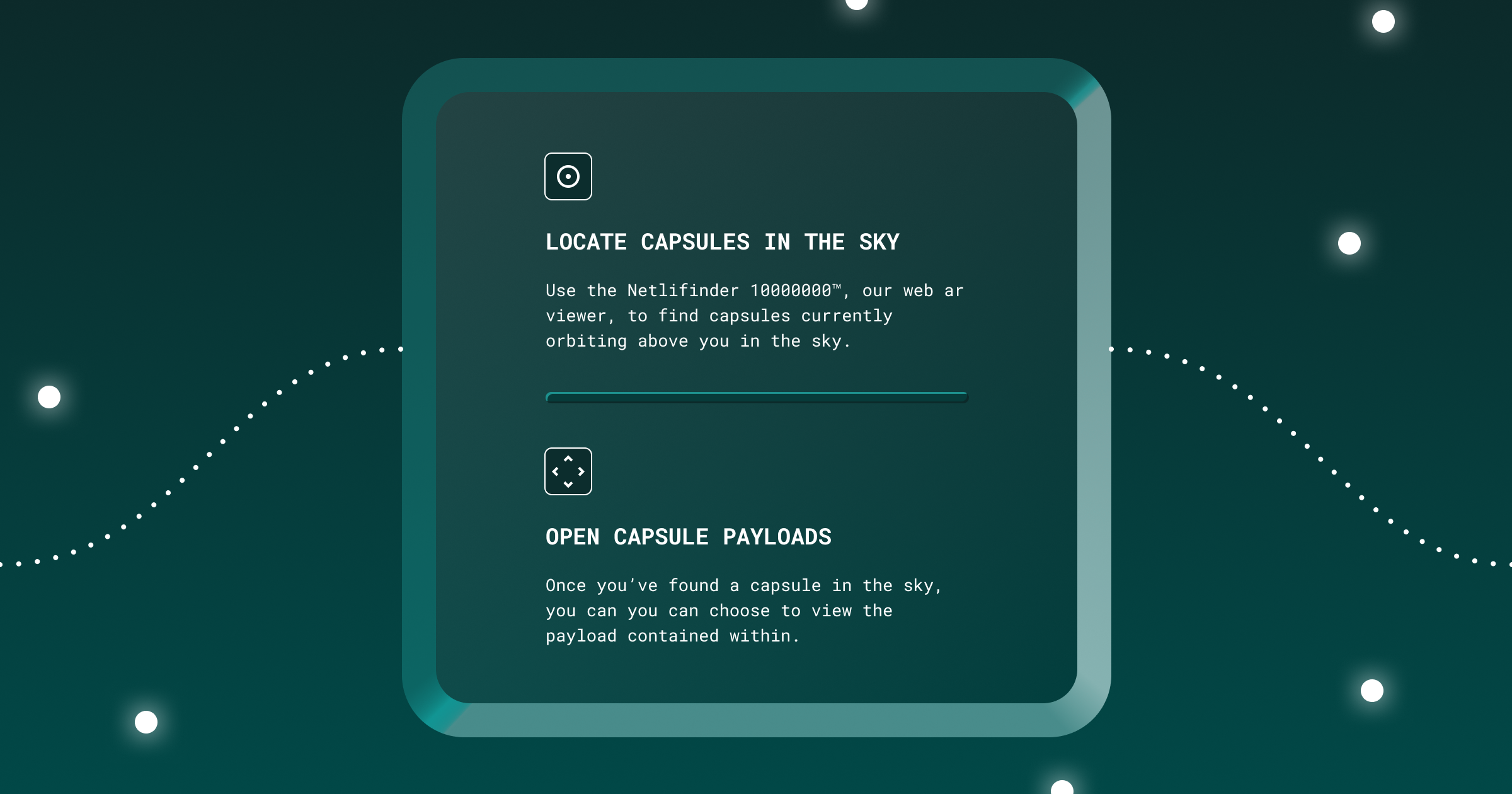
Netlify Capsules is a virtual experience to celebrate 10 million developers on Netlify. Developers choose a Netlify project, add a photo, song, or short note, then deploy their capsule into orbit around the earth. Capsules appear overhead and can be discovered using web-based AR, based on your real-world location. Each capsule is unique, personal, and tied to something you’ve made.

Hey Product Hunt -

We just crossed 10 million developers on Netlify and wanted to mark it by building something people could actually launch.

Capsules lets you send a small digital payload—tied to a real Netlify project—into orbit around the earth, then discover other capsules overhead using your phone's AR.

Built in collaboration with community member, and Netlify power user, @leemartin and meant to be lightweight and fun. Curious what you’d send up.

7
回复

@leemartin  @gehrigkunz congrats on the launch Gehrig and team. I love this concept. Well done with doing the opposite of what most successful platforms do at scale but instead recognizing the individuals behind the projects.

1
回复

@leemartin  @gehrigkunz congrats on the launch!

0
回复

Hey PH fam 👋

This one's personal for a reason I didn't expect.

We just surpassed 10 million developers on Netlify, and instead of writing about it, we asked ourselves: what would actually honor that number?

Not the metric. The people behind it.

This one needed to be for the community. So we built Netlify Capsules.

It's a way for every developer to take one of their projects, add something personal—a photo, a song, a note—and launch it into virtual orbit. Then use AR to find it floating in the sky above you.

What caught me off guard was how much the constraint mattered.

You only get a few words for your note. That forces you to ask: what do I actually want to say about this work? About this moment?

I've watched people spend five minutes on their payload and twenty on that note. (Looking at you Jacob!)

The AR piece shifts how it feels too. You're not scrolling a gallery. You're looking up. Your work is somewhere like a museum in the sky. Other people can discover it. It makes the digital feel physical in a way I wasn't ready for.

We didn't build this in-house. We asked @leemartin, a community member with 250+ deploys, to create it.

He's lived the builder experience we wanted to celebrate. That mattered.

What I love about this approach is it flips the usual dynamic.

We're not telling you what 10 million means. You're showing us. Through the projects you pick. The photos you share. The songs that got you through the build. The notes you write to express yourself.

Hope you'll check out the experience. Curious what you'll put in yours and what that choice says about the work that matters to you.

The Netlify team is here today so we would to hear if you've got questions and comments/reactions👇

6
回复

@leemartin  @thisiskp_ Congrats KP and team for achieving such a significant milestone. Rooting for you! :)

2
回复

Amazingly clever little build. Submitting a capsule was neat enough, but the mobile AR viewer is really next level. Kudos!

4
回复

@clarklab thanks as always for the support Clark! We appreciate you

0
回复

@clarklab you the best Clark!

0
回复

Netlify Capsules is EXACTLY the kind of product people have been saying they want to see more of - unique, playful and in the human spirit of creativity. When the same website template or AI generated copy is just a prompt away the team at Netlify have gone above and beyond partnered with one of their power users, @leemartin, and put love and delight into a fun celebration of reaching 10 million developers!

I'm always an advocate for these kinds of experiences and we should be encouraging more like them to push technology and human creativity further! 🚀

(Now back to exploring all the cool capsules I can find in the sky 🌌)

4
回复

@leemartin  @ashamplifies We talked heavily about how these types of projects help inspire folks with new ways to build stuff. Lee absolutely smashed it here!

3
回复

@leemartin  @ashamplifies Such great feedback, thanks Ash! "human spirit of creativity" this is what we've been aiming for. Thanks for validating that it resonates through this project :)

2
回复

@ashamplifies this comment really hits home for me. Netlify has fostered many revolutions in the tech world. I came in during the Jamstack era and now I'm living through the vibe coding era. The invitation to work on this project is a perfect example of their approach: they are interested in ALL developers. Whether you are an SWE or have joined via vibe coding, they want to build tools which service every range of developer. Trust that this project pushed me as a developer and collaboration with the Netlify team was super exciting. I certainly felt at home working with them.

2
回复

So beautiful and original way to celebrate the community 🎉
I've put my furry teckel into a capsule, she is orbiting out there 🤣

4
回复

@picsoung thanks for the love ❤️

Took me a minute but found your site in your payload too: https://nicolasgrenie.com/

1
回复

@picsoung Thank you! Excited to come across your pup in orbit 💜

1
回复
Web-based AR can be fragile across devices and permissions. What were the biggest platform or UX constraints you had to design around, and what explicit tradeoffs did you make to keep it lightweight and accessible while still delivering an AR ‘wow’ moment?
2
回复

The location-based Web AR discovery is slick, but at scale you hit noisy GPS, WebXR support variance, and performance issues when dozens of capsules are nearby.

Best practice is to bucket capsules into an H3 or S2 grid, stream only viewport-relevant items, and optimize assets with glTF + KTX2/Basis texture compression plus LOD to keep frame times stable.

Are capsules anchored purely by lat,lng or do you also use WebXR hit-test anschoring, and what is the plan for opt-in location privacy plus anti-spam moderation?

2
回复

@ryan_thill Ryan, love this feedback and would love to bend your brain about all of it. This is very much a simple / basic Three JS execution of the concept. Capsules are anchored by coordinates but always on the move due to their orbiting path. We're using Three JS raycasting for targeting. Since we're using the geolocation Web API, privacy is sort of built-in as it is opt-in only to utilize the AR piece. For moderation, we've got Netlify AI Gateway looking through things upon submission but also doing manual moderation. If/when the scale of this grows, we'll definitely look towards more sophisticated tooling. Again, really appreciate the expertise!

1
回复
#7
Zenflow by Zencoder
Specification-driven AI development
176
一句话介绍:Zenflow是一款通过规范驱动的工作流、并行智能体和内置验证,来协调AI编程的桌面工具,解决了在复杂代码库中使用AI编码助手时容易陷入循环、效率低下且难以管理的痛点。
Software Engineering Artificial Intelligence Vibe coding
AI编程助手 智能体编排 规范驱动开发 多模型验证 并行执行 软件开发流程 生产力工具 AI工程化
用户评论摘要:用户普遍认可其多智能体编排与验证的价值。主要问题集中于:如何检测智能体循环、设置耗时、与现有工具(如Cursor)的切换成本、以及在大规模应用时如何确保确定性和解决冲突。开发者回应强调了沙盒隔离、显式状态管理和不自动合并的设计来保障安全。
AI 锐评

Zenflow的野心不在于创造另一个更“聪明”的AI编码助手,而在于试图成为AI软件工程的“操作系统”。它直面当前AI辅助编码的核心矛盾:生成式AI的随机性、非确定性与工程实践所需的可靠性、可管理性之间的冲突。产品提出的“规范驱动”和“内置验证”是关键纠偏,试图将开发从“提示词彩票”和“氛围编码”拉回以架构意图为起点的严谨轨道。

其真正价值可能体现在两个层面:对于个体开发者,“多模型爆破模式”和交叉验证实质上是将模型选择与结果评审工程化,用并行计算成本换取确定性的质量提升。对于团队协作,其项目看板和沙盒隔离机制,则是在为多AI智能体协同工作建立基本的“交通规则”与“安全围栏”,避免智能体间的代码冲突和混乱,这是脚本化方案难以系统解决的治理问题。

然而,其挑战也同样明显。首先,它引入了新的抽象层(工作流定义、规范文件),这本身就有学习与维护成本,可能将复杂性从“管理代码”部分转移到“管理AI工作流”。其次,评论中关于“非确定性”的尖锐提问直指要害:即使有沙盒隔离,智能体行为的不可预测性依然存在,只是将问题从代码合并阶段前置到了结果选择阶段。最终,它能否成功,不取决于编排技术本身,而取决于其预设的“规范驱动”开发范式能否被主流开发者所接纳,并证明其带来的质量增益足以覆盖新增的流程开销。它不是在优化单次AI生成的效率,而是在赌工程团队对开发过程可控性、可审计性的需求,将压倒对“快速试错”的偏好。

查看原始信息
Zenflow by Zencoder
Zenflow streamlines Al-first engineering with specification-driven workflows, parallel agents, and built-in verification - so you can ship production-grade software.

🚀 Hey Product Hunt!

Andrew here. While building our IDE extensions and cloud agents, we kept running into the same problem many of you probably face when using coding agents in complex repositories: agents getting stuck in loops, over-apologizing, and burning time without making real progress.

We tried to paper over this with scripts, but juggling terminals and copy-paste prompting quickly became painful. So we built Zenflow - a free desktop tool for orchestrating AI coding workflows.

It handles the things we kept missing in standard chat interfaces:

  • Dynamic Workflows: Workflows are defined in simple .md files, and agents can dynamically rewire the next steps based on what they discover mid-execution.

  • Spec Driven Development: Use formal specs to guide agents, ensuring the implementation matches your architectural intent before a single line of code is written.

  • Cross-Model Verification: Have Codex review Claude’s output, or run multiple models in parallel to see which one handles a specific codebase or task best.

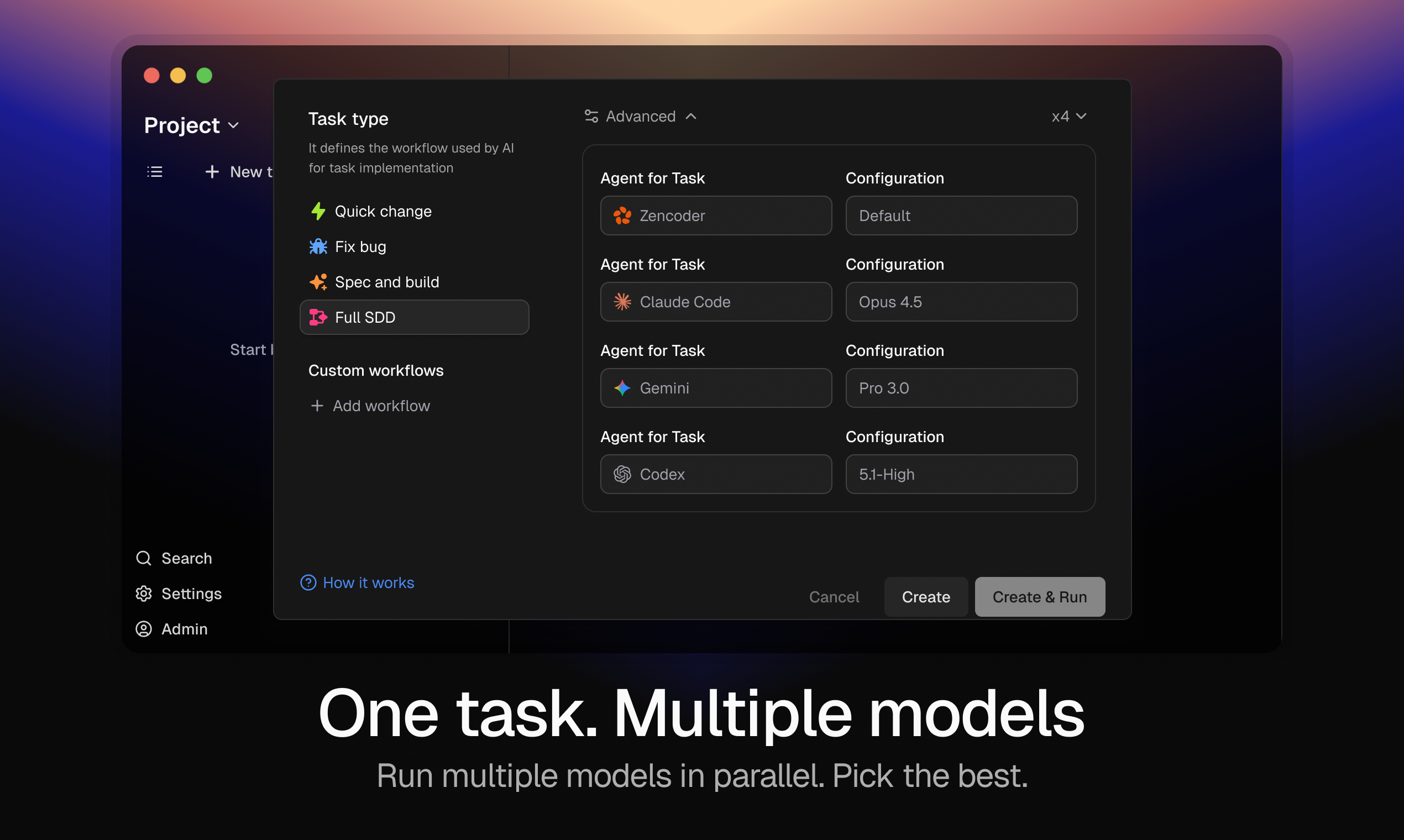
  • Blast Mode (Multi-Model Inference): Run up to four different models (Claude, GPT, Gemini, Codex) on the same task simultaneously. Compare their outputs side-by-side and pick the best result.

  • Parallel Execution: Run multiple approaches on the same backlog item simultaneously mixing human-in-the-loop workflows for hard problems with faster “YOLO” runs for simpler tasks.

  • Project-Level Kanban: Track and manage all agent work through project lists and kanban-style views, not scattered terminal windows.

What we learned building Zenflow

After running 100+ experiments on SWE-Bench and private datasets, we found that models are increasingly overfit to public benchmarks. Real-world success doesn't come from "smarter" models alone; it comes from the "Goldilocks" Workflow just enough structure to prevent loops without over-orchestrating the creativity out of the AI.

We’ve been dogfooding this heavily to build our own IDE extensions, and we’d love to hear how it handles your toughest repos.

Zenflow is free to use and currently supports Claude Code, Codex, Gemini, and Zencoder.


33
回复

@andrewsthoughts How long does it usually take to set up Zenflow for an existing large repo?

0
回复

@andrewsthoughts How do you detect when an agent is looping versus just exploring?

0
回复

@andrewsthoughts Have you noticed certain models perform better for specific types of repos or tasks?

0
回复

Exciting launch, crew!

You guys are really taking spec-driven development to the next level. I'm excited to see how it pans out. Let's gooo!

10
回复

@vibor_cipan Thank you Vibor! Do try the product and share your feedback!

4
回复

Huge congrats! Zenflow’s multi-agent orchestration and built-in verification feels like a game-changer for scalable AI engineering. I'm excited to try real workflows beyond vibe coding. Good luck!

4
回复

@srdan_stojadinovic Thank you Srdjan - do share your feedback

1
回复

I've been using it for a couple of weeks now and am now just babysitting the AI as it builds the product! Code quality is very good!

2
回复

@glen_little Thank you for the kind words, Glen!

0
回复

Congrats!

2
回复

@svpino Thanks Santiago!

1
回复

Multi-agent “blast mode” and dynamic rewiring is powerful, but at scale the pain is non-determinism: agents race, loop, and produce conflicting diffs that are hard to replay or audit.

Best practice is a reproducible execution harness: sandboxed per-agent workspaces/branches, deterministic step graph with idempotent tools, and mandatory verify gates (lint + minimal tests) before merge, with full traces for replay.

How does Zenflow represent and version the workflow state, and can it enforce conflict-free patch application plus automatic rollback when verification fails?

2
回复

@ryan_thill that’s a really good question and honestly, that’s exactly the class of problems Zenflow is designed to avoid. The way we think about it is: we don’t try to make multi-agent work “magically deterministic.” Instead, we make it observable, isolated, and auditable.

Concretely, every agent in Zenflow runs in its own fully sandboxed workspace. It’s a full copy of the repo with its own Git branch. So agents never race on files, they never overwrite each other, and you never get conflicting diffs produced at the same time. That whole class of non-deterministic merge issues just doesn’t happen.

On the workflow side, everything the agent does is driven by an explicit step graph things like requirements, spec, planning, implementation, verification. That state is materialized as real artifacts like spec.md plans, and diffs, and you can see and edit it at any point. If an agent decides to change the plan mid-flight, that change is visible and versioned as well.

For verification, we don’t auto-merge anything. You can add explicit verify steps run tests, lint, compile and you can also have another agent review the output before you move forward. If verification fails, nothing gets applied, because it’s still just a sandboxed branch.

Because of that model, we don’t really need rollback in the traditional sense. If something fails verification, you just discard that branch and move on main is untouched.

So the short version is: Zenflow enforces conflict-free execution by isolation, keeps workflows reproducible by making state explicit, and avoids chaos by never auto-applying changes. You get parallel exploration, but with the same safety properties you’d expect from a disciplined engineering process.

5
回复
If a team is already using Cursor/Claude Code/Codex directly, what’s the clearest reason to add Zenflow rather than just writing internal scripts or stricter prompting guidelines—and what’s the switching cost you had to eliminate to make that decision easy?
1
回复

Great question, this is exactly the right bar

First: with Zenflow, you can run Claude Code, Codex, or Gemini agents directly. If you already pay for those, Zenflow is effectively free to try — no model switch, no new lock-in.

Second: Zenflow is spec-driven by default. You’re not playing prompt roulette. Work starts from an explicit spec that agents plan against, not vibes.

Third: you can cross-verify agents. Claude’s output checked by Codex or Gemini (and vice versa). That alone kills a huge class of silent failures.

Fourth: Zenflow gives you a real execution UI — Kanban views for agents in parallel stages, so you can see planning, execution, review, and failures instead of guessing in a chat window.

Lastly: built-in verification. Not “trust the model,” not manual review — verification is part of the system. That’s the part most tools skip.

0
回复

@curiouskitty Thank you for the question! Now where do I start;

If a team is already productive with Cursor, Claude Code, or Codex, the clearest reason to add Zenflow isn’t “better prompts” it’s orchestration. You can try to recreate this with internal scripts and stricter prompting guidelines, but what teams usually discover is that the real cost isn’t generation, it’s coordination: running multiple agents safely, keeping work isolated, reviewing outcomes, and knowing what’s happening where.

Where it really clicks is blast mode. You can run multiple agents in parallel Claude, Codex, GPT, Gemini on the same task, each in its own sandbox. Then you either compare results side-by-side or have one model review another. That’s very hard to do reliably with scripts.

Workflows are also lightweight. They’re just .md files, and agents can dynamically rewire the next steps based on what they discover mid-execution. Combined with spec-driven development, this means agents align to your architectural intent before they write code, not after.

Zenflow also gives you visibility. Instead of scattered terminal windows, you get a project-level Kanban board showing what agents are running, blocked, in review, or done which matters a lot once you scale beyond one engineer.

And yes, I’d definitely add multi-repo here. Being able to reason across repos, schemas, and services is a big reason teams bring Zenflow in.

On the model side, Zencoder is a strong, first-class citizen. Claude or Codex are great if you prefer direct subscriptions to those vendors. But if you’re an enterprise that prefers APIs like Claude via Bedrock or Vertex, or OpenAI via Azure, Zenflow is a very natural fit.

As for switching cost, that’s what we worked hard to eliminate. You don’t have to rip anything out. No new editor, no new workflow mandate. You just add Zenflow when coordination, verification, and parallelism start becoming the bottleneck.

Hope this helps to ans your question :)

0
回复
#8
Clippy, but on Steroids
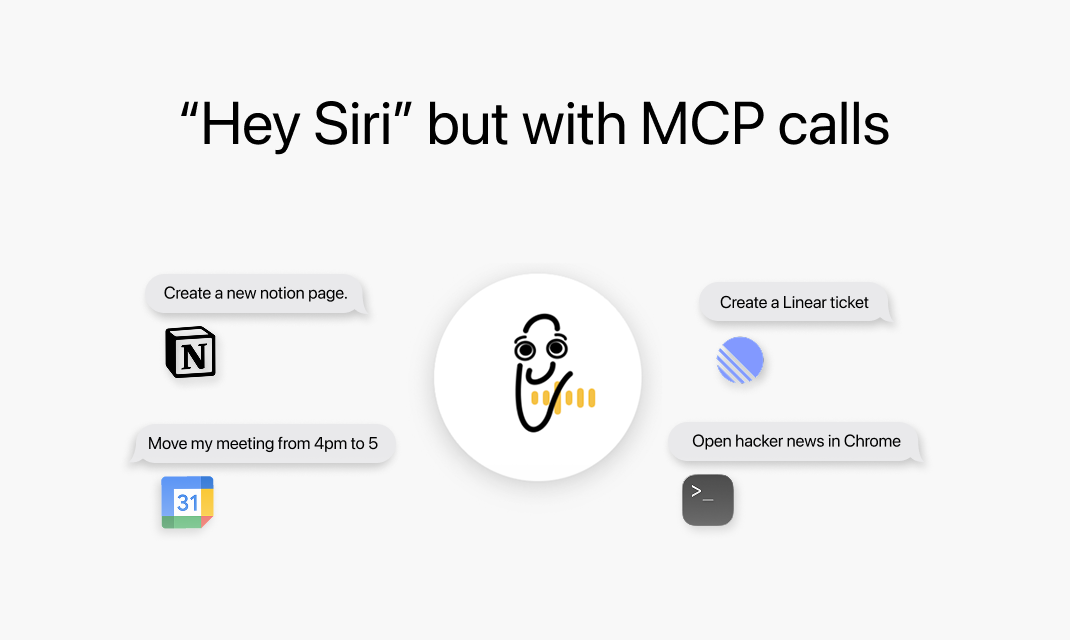
"Hey Siri" with MCP calls and local LLM
174
一句话介绍:一款基于本地大模型的上下文感知AI助手,通过语音或指令直接在当前文本字段生成并粘贴内容,并集成Linear、Google日历等工具操作,旨在消除应用间复制粘贴的繁琐,提升数字工作流的流畅度。
User Experience Artificial Intelligence Bots
本地AI助手 上下文感知 语音输入 无感粘贴 生产力工具 隐私安全 macOS应用 工具集成 复古设计
用户评论摘要:用户赞赏其本地化带来的隐私安全、消除复制粘贴的流畅体验及复古设计。主要问题与建议集中在:安装技术故障、对扩展安全性的担忧、希望支持自定义模型(如Ollama),以及建议为MCP工具调用增加权限确认步骤以防止误操作。
AI 锐评

Clippy的核心价值并非简单的“本地版Copilot”,而在于其试图通过“无感粘贴”和“本地执行”这两大支柱,对AI辅助交互范式进行一次“降维打击”。它敏锐地捕捉到了当前AI工具流的根本摩擦:生成-复制-切换窗口-粘贴的断裂过程。通过将输出直接注入焦点字段,它把多步操作压缩为一步,这在频繁调用AI的场景下,体验提升是显著的。

然而,其“激进”的集成方式(直接写入、操作日历和Linear)也是一把双刃剑,带来了严肃的安全与可靠性隐患。评论中关于误操作和权限的担忧非常专业且致命。产品目前依赖“未发生问题”的乐观假设,而非严谨的权限沙箱和确认机制,这在处理生产数据时是危险的。其真正的挑战在于,如何在保持“无感”流畅度的同时,建立起必要的安全护栏,这需要精细的上下文感知(如区分密码框)和用户意图确认设计。

此外,其“本地模型”标签既是护城河也是天花板。它吸引了隐私敏感用户,但也受限于本地模型的性能与成本平衡。支持自定义模型是必然方向。创始人非技术背景带来的独特审美(液态玻璃设计、复古Clippy情怀)是有效的差异化情感触点,但产品的长期生存取决于能否将这种“有趣的玩具”稳健地升级为“可信的工具”。它展示了一个诱人的未来工作流雏形,但通往“可靠”之路才刚刚开始。

查看原始信息
Clippy, but on Steroids
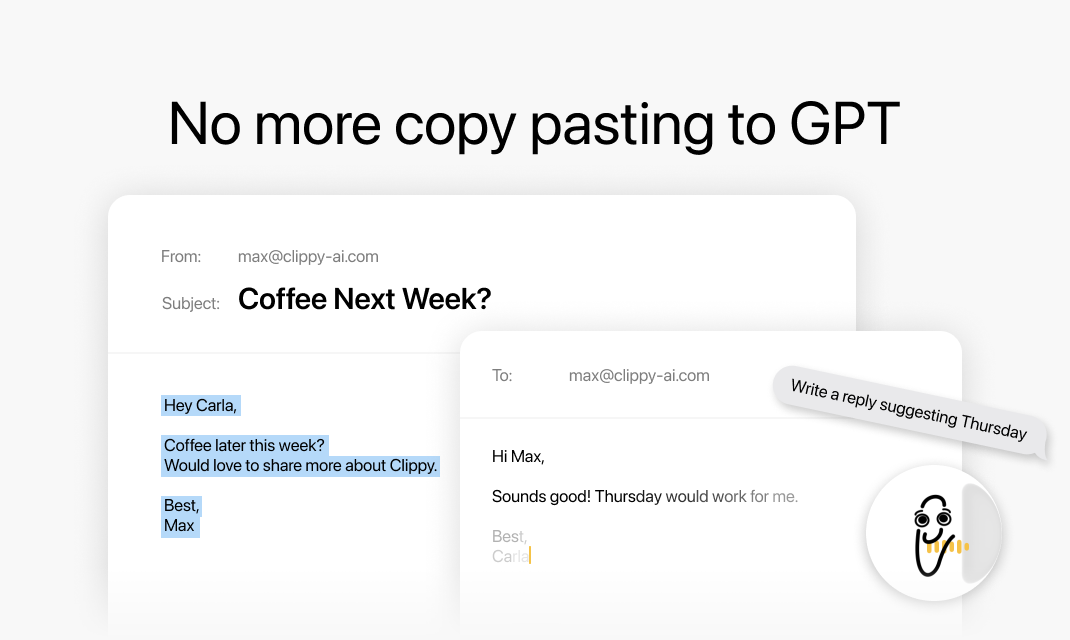
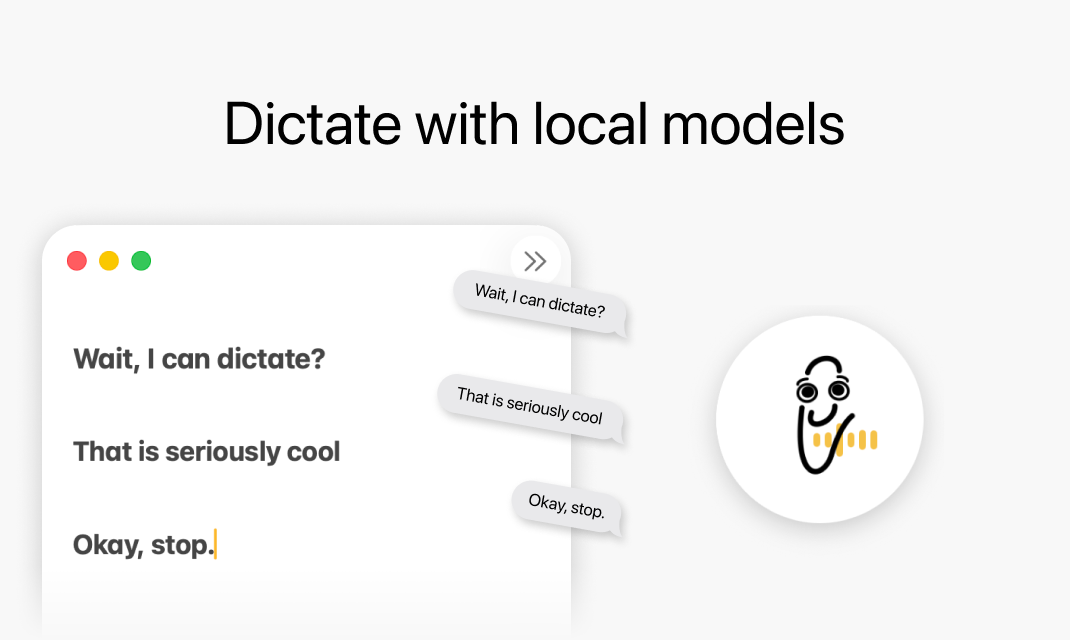
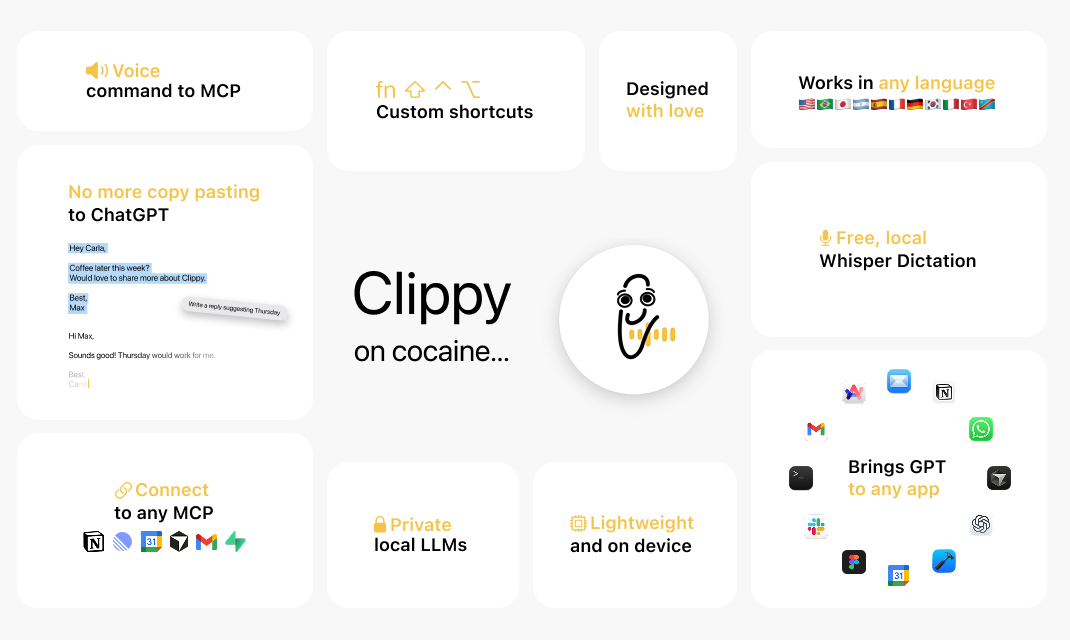
Clippy is a friendly popup GPT using local LLMs that is aware of your current context and pastes responses right in the text field where you are working, eliminating copy pasting. You can use it with voice commands or dictate, all with local models. And it can create Linear tickets or edit your Google Clendar with your voice.

Hi Product Hunters 👋,

I'm Max,

I am coming from a non-technical background, from film production, and a bit more than a year ago I started building things that I like, that are useful for me, and that are fun.

I built Clippy because I wanted to have a cool way to dictate with local models and later I realised the whole GPT context copy and direct pasting possibility. And then ideas started storming with linear and co. I have a newer version with control of apple calendar and reminders, but thats still a work in progress.

And I chose Clippy for a vintage cute touch.

I did all the visuals myself in Figma and experimented a lot with liquid glass and local models.

Ah and as a fun fact - I coded around 90% of the app on airplane wifi, flying from Germany to SF. That was fun.

Hope you like it too.

Best,

Max

3
回复

@maximilian_prokopp Really cool story behind this, Max

I like the idea of keeping everything local, especially for privacy sensitive workflows. The direct pasting into the active text field is a smart touch.

and how are you handling context switching between apps? Does clippy keep separate context per app or a shared one?

0
回复

@maximilian_prokopp Hi Max, Congrats on the launch. You're a brave man using the clippy icon....Looks like a cool tool though.

2
回复

Is the extension safe? :D Lately I was trying more extensions and LinkedIn started accusing me I am using some not good tools so they restricted my account for a while. Because this looks like a cool tool but I do not want to risk anything :D

3
回复

Could you please fix this? I got a confirmation email, but after confirming (clicking the link in the email), I got the Localhost message.

0
回复

@busmark_w_nika my friends didnt have problems installing it :D I did my best to make it the best I can

0
回复

Congrats on the launch! Love the local-first, context-aware Clippy for frictionless in-app assistance.

2
回复

@zeiki_yu happy you like it! :)

0
回复

very nice

1
回复

@karmedge happy you like it!

0
回复

I need clippy to knock on the screen to give me the full member berries

1
回复

@jaredepicpower hahaha, bringin' back the old memories

0
回复
People can already get system-wide dictation and “polished output” from existing tools—what’s the clearest switching trigger you’ve seen for Clippy (e.g., in-place editing, context memory, local-first privacy, tool actions), and what’s your 30‑second proof that it’s meaningfully better in daily use?
1
回复

@curiouskitty Good points Kitty - I think tools should be fun and lively and the vibes of Clippy are a USP for me. But editing in place is actually the most usable feature for me and I rarely copy paste anymore. What would it be for you?

0
回复

This is actually quite useful, could definitely unlock a lot of productivity in my day to day tasks 🚀 Thanks for sharing @maximilian_prokopp 🔥

1
回复

@laurenz_sommerlad love that Laurenz! Hope you like it :)

0
回复

Eliminating the 'copy-paste dance' between the browser and the text field is a huge UX win. It’s one of those friction points we just got used to, but didn't realize how annoying it was until a solution like Clippy arrived! The Linear and Google Calendar integration via voice is a game changer for productivity. My question: Which local model are you currently using for the 'context-aware' part? And is there a way for users to swap in their own models (like through Ollama)? Does Clippy 'see' the context of the specific app I'm in (like a code editor vs. an email client), or is it based on the text I've already typed in the field?

1
回复

@yuanyuan_zhang0104 Swapping in is smart! I was using local apple foundation model and Gemma 4B. It is all about the text you have highlighted which makes the current context usage effortless

0
回复

Coding 90% of the app on airplane Wi-Fi is the ultimate builder flex, thats an incredible story, Max.The liquid glass aesthetic in Figma really paid off and It’s clear that coming from a film background gave you a unique eye for the visuals the app looks beautiful! Only one question, are you planning to keep it strictly for macOS, or is a mobile companion app in the cards?

1
回复

@eugene_chernyak thanks thanks! MacOS was my go to now. No Jarvis ambitions here, just a humble fun project :)

1
回复

Context-aware “paste into active field” plus voice-triggered MCP tool calls can go sideways fast at scale: wrong-window injection, secure fields, and unintended side effects (Calendar, Linear) from misheard intent.

Best practice is capability-based tool permissions with explicit usaer-confirm steps and audit logs, plus OS-level allowlists and secure-field detection; for local dictation, streaming whisper.cpp-style on-device ASR with VAD keeps latency predictable and private

How do you sandbox MCP execution and prevent writes unless the focused app and target field pass an allowlist, especially around password or secure input contexts?

1
回复

@ryan_thill thanks for the thoughts! I was working on a second version which gives you an approval checkbox for the MCP calls. Whisper runs locally, which is hat makes it ultra fast. And I did not have issues of it accidentalyl popping up and pasting wrong stuff :)

0
回复

Great to have Clippy back ;)

0
回复
#9
Coda by Conductor Quantum
Solving problems using quantum computing & natural language
137
一句话介绍:Coda 是一款通过自然语言描述问题,即可在真实量子处理器上运行程序的平台,它让非量子编程专家也能利用量子计算解决化学、材料科学等领域的复杂模拟问题,极大降低了该技术的使用门槛。
Developer Tools Artificial Intelligence Computers
量子计算 自然语言编程 低代码平台 科学计算 药物发现 材料模拟 教育工具 云计算 硬件抽象层 STEM
用户评论摘要:用户普遍赞赏其降低量子计算门槛的愿景。主要问题集中在:1. 与经典计算相比,量子计算的具体优势用例是什么?2. 如何保证自然语言生成量子程序的正确性与可复现性?创始人回应强调了分子模拟等应用,并介绍了支持的多种中间表示和验证流程。
AI 锐评

Coda 瞄准了一个极具前瞻性但当前极其小众的痛点:量子计算的“可用性”鸿沟。其核心价值并非技术突破,而在于扮演“翻译”与“桥梁”角色——将自然语言意图翻译成量子电路,并将抽象硬件差异统一成标准接口。这本质上是为一项尚未成熟的主流应用(量子计算)提前铺设开发者生态和用户习惯的基础设施。

其犀利之处在于两点:一是精准定位了“领域专家”这个关键群体。他们拥有最迫切的量子模拟需求,却最无暇学习底层量子编程。用自然语言作为交互界面,是切入该群体最高效的路径。二是采取了务实的硬件聚合策略,对接 Rigetti、IonQ 等多品牌量子处理器及主流模拟器,在硬件战国时代提供了统一入口,降低了用户的尝试成本和选择困惑。

然而,其面临的挑战同样尖锐。首先,产品价值与底层硬件能力深度绑定。在当前NISQ(含噪声中等规模量子)时代,量子硬件能解决的实用问题极为有限,这可能导致Coda沦为“高级玩具”或教学演示工具,其承诺的“解决实际问题”的能力备受质疑。其次,技术风险显著。正如评论所指,LLM生成量子电路的“正确性”是巨大黑盒,在科学计算领域,不可靠的结果比没有结果更糟糕。尽管团队提及了验证流程,但如何确保物理意义的正确性,而非仅仅是语法可编译,是关乎其专业信誉的生命线。

长远看,Coda 是一场豪赌。它赌的是量子硬件将快速演进至实用阶段,并提前卡位应用层入口。若赌赢,它将成量子时代的“操作系统”雏形;若硬件进展缓慢,它则可能因缺乏真实应用场景而陷入停滞。目前,它更现实的价值可能在于教育和原型探索,为未来的量子时代培养第一批“用户”而非“程序员”。

查看原始信息
Coda by Conductor Quantum
TL;DR Quantum computing won’t scale if every program is a hand-written circuit. Coda lets beginners, domain experts, and engineers describe problems in natural language and run them on real quantum processors, without writing low-level quantum code.

👋 Hi Product Hunters!

I’m Brandon, co-founder of Conductor Quantum. Today we’re launching Coda, a natural language interface for quantum computers.

Coda lets you design, understand, and run quantum programs in natural language, without writing low-level quantum code. We built it because quantum computing is powerful, but still far too hard to actually use.

Quantum computers offer a new computing paradigm for simulating the world at the atomic level. This opens up new possibilities in chemistry, materials science, and drug discovery that push beyond what the largest classical supercomputers can handle.

The problem is most material scientists or biochemists can't use a quantum computer today - the barrier to entry to learn all the new bespoke tools, and the quantum information science is way too high. This is why we are building Coda.

Our long-term goal is simple: access to a quantum computer from every desk.
It’s built for domain experts and technical teams who want to explore real quantum use cases today and prototype faster. Also, it’s built for people new to quantum computing who want a practical, hands-on way to learn.

One of the first quantum computers we’re offering on our platform is Rigetti’s 84-qubit quantum computer, plus IonQ and IQM. We also support qubit simulations via IBM Qiskit and NVIDIA cuQuantum + CUDA-Q.

We’re early and learning fast, and we’d love your feedback.

Happy to answer any questions 👋

6
回复

@brandonseverin congrats on the launch. This looks very interesting!

0
回复

@brandonseverin Hi Brandon, Congrats on the launch. What are you seeing as the most popular/valuable use case right now?

0
回复

Congrats! Looks cool - what are strong use cases for quantum computers that LLM from laptop wouldn't be comparable?

4
回复

@daniele_packard Hey Daniele - thanks for the comment, and great question. One that people love to talk about is breaking encryption e.g. RSA using Shor's algorithm. But the most interesting use cases are the simulation of molecules and how they interact with each other, for example ground state energy simulations. Or in the recent case from Google - looking at molecular structure. Being able to understand how molecules interact with each other, atom by atom, electron by electron has huge implications for future drug design and materials science.

0
回复
This looks insane and like an obvious no brainer, talk about problem/solution fit! Will circulate around my PHD network who are in the space! Bullish on Brandon and Quantum 🙌💎
2
回复

@timcha_cherkasov Thanks Tim

0
回复

Congrats on the launch! Love how Coda turns natural language into real quantum programs and removes low-level circuit pain.

1
回复

@zeiki_yu Thanks - agreed! Let us know if you have any feedback!

0
回复

@zeiki_yu Glad you like it! Let us know if there are any pain points you've experienced with building quantum circuits and if Coda can help with that.

0
回复

Vibe-code quantum programs! Very cool to see this on ProductHunt. I don't pretend to have a deep understanding of quantum computing, but it seems like letting people actually play with it and build with it is the best way to help people learn.

1
回复

@rajiv_ayyangar Thanks and agreed. We want more people to get access to this new paradigm of computation - let us know if you have any feedback!

0
回复

Natural-language to quantum is awesome, but at scale the pain is correctness: LLMs can emit circuits that compile yet violate backend constraints or produce meaningless results under noise.

Best practice is to compile into a stable IR (OpenQASM 3 or QIR), run deterministic validation passes (type checks, qubit mapping, depth/cost bounds) plus simulator cross-checks and optional error mitigation (Mitiq) before hitting hardware.

What IR do you standardize on across Rigetti, IonQ, and IQM, and can users export the exact compiled circuit plus metadata so runs are reproducible across backends?

1
回复

@ryan_thill Hi Ryan thanks for the comment and question. We do a lot of code validation on our end to make sure things run smoothly. Agreed - one of the worst things is to send a circuit off to a QPU and it doesn't work. We offer users a range of frameworks to export including: CUDA-Q, Qiskit, PennyLane, PyQuil and OpenQASM3

0
回复

This looks awesome!!!

0
回复

@saharshagrawal thanks - let me know if you have any feedback!

0
回复
#10
StoryChief AI Canvas
A canvas to create + publish full marketing campaigns w/ AI
136
一句话介绍:一款集市场策略规划、竞品分析、AI内容生成与多渠道发布于一体的可视化工作台,为营销团队解决了工具分散、流程割裂的痛点,实现了从策略到执行的全链路闭环。
Social Media Marketing SEO
营销一体化平台 AI内容生成 可视化工作流 SEO优化 竞品分析 多渠道发布 团队协作 内容营销 B2B营销工具 营销画布
用户评论摘要:用户普遍认可其“一体化”价值,认为能替代多个工具,提升效率。主要建议包括:集成任务管理工具(如Jira)、明确AI如何保持品牌一致性、说明语音输入功能及所集成的AI API。另有用户询问现有SEO数据的整合方式。
AI 锐评

StoryChief AI Canvas 所描绘的“营销单一真相源”愿景,直指现代营销团队的核心痼疾:信息孤岛与工具泛滥。它将战略规划(Miro)、关键词研究(Ahrefs等)、AI内容生成(如ChatGPT)、多渠道发布(Hootsuite等)及性能分析(Google Search Console)强行整合进一个可视化画布,其真正的颠覆性不在于某个功能点的创新,而在于对“营销工作流”本身的重新定义。

产品聪明地采用了“画布”这一低学习成本、高自由度的隐喻,试图成为连接战略思维与碎片化执行的“中枢神经系统”。然而,其面临的挑战同样尖锐。首先,“一体化”往往伴随“平庸化”风险。评论中关于“品牌声音锁定”和“AI API来源”的质疑,正点中了其命门:在追求广度时,其在各垂直领域的深度(如SEO分析的精准度、AI生成内容的品牌个性化)能否抗衡专业工具?其次,它试图同时服务内部团队与外部客户协作,这两类场景的需求和权限管理复杂度截然不同,平台能否在简化流程的同时不牺牲管理的颗粒度?

它的价值并非替代所有专家型工具,而是为大多数营销团队提供了一个效率优先的“最大公约数”解决方案。其成功与否,将取决于其连接器的深度(第三方工具集成与数据互通能力)与AI的“可驯化”程度(让AI产出真正符合品牌策略的内容),而非简单的功能堆砌。如果它能成为营销工作流的“操作系统”,而非又一个功能更花哨的“应用软件”,其潜力才真正可观。目前来看,它是一个极具野心的正确方向,但征途才刚刚开始。

查看原始信息
StoryChief AI Canvas
StoryChief AI Canvas is a visual workspace for your entire marketing strategy. Conduct keyword research, spy on your competitors, generate and optimize content, brainstorm ideas, research your existing content and google search console data all-in-one place. Replace scattered tools with one clear canvas to move from strategy to execution.
Today we’re launching AI Canvas from StoryChief 🎉 AI Canvas introduces vibe coding for marketing, a Miro-like visual canvas where strategy, ideas, AI assets, and execution live together. It researches your audience, keywords, competitors, search intent, and content gaps, then turns that insight into SEO tables, articles, blogs, social posts, images, HTML landing pages, and HTML newsletters, all in one connected canvas. Everything is connected to your website and channels so you can schedule it immediately. You can work in teams, clients, collaborate, leave feedback and check the performance reports. Check it out.
8
回复

@valeripotchekailov, amazing next step for the platform. It caters the needs of both Marketing and Communications teams, no matter their size. The platform is really ramping up to become the single source of truth for your content ambitions.

1
回复

@valeripotchekailov Congrats on the launch, this seems cool

0
回复

@valeripotchekailov Congrats on the launch Valeri. This is ultra cool. How do you integrate existing seo data and tools?

1
回复

Congrats on the launch! StoryChief looks like a powerful hub for B2B content workflows and omnichannel publishing.

2
回复

That's cool! Sometimes ideas emerge exactly when you see the big picture where all the elements are visually in one place. If you aim to target B2B Content teams (which makes total sense, as content is their important Marketing channel), I suggest to add an integration with popular task managers like Clickup/Jira/Trello.

1
回复

Yes! 🙌 Unlimited brainstorming, but still clean and easy to digest!

1
回复

Really proud of our team and looking forward to seeing how the community adopts this and hearing what early users discover!
LFG 🚀

1
回复

Finally, teams and agencies can see the full picture, plan concrete actions and keep their voice consistent when working on their strategy!

1
回复

Been testing AI Canvas for a few weeks and it’s such a life-hack for all marketers. Research → strategy → ideation → creation → improving → publishing all in one place instead of 10 tabs is a huge win.

1
回复

Is voice input taken or does it have to be text-based prompting only?

0
回复
A lot of teams worry AI will produce generic or off-brand content: what mechanisms in AI Canvas keep strategy, intent, and brand voice “locked in” across dozens of derived assets, and where do humans still need to stay in the loop?
0
回复

Nice work, which AI api are you using? Why?

0
回复
Hey Valeri, that idea of strategy, research, and execution all living in one place sounds like it came from real pain. Was there a project where you had research in one tool, drafts in another, assets scattered somewhere else, and you thought why am I stitching this together manually every single time?
0
回复
#11
RenameClick
Rename and auto-sort files with offline AI
123
一句话介绍:一款基于离线AI的桌面端文件重命名与自动整理工具,通过本地分析文件内容,为海量、杂乱的文件生成描述性名称并自动分类,解决了用户手动管理文件耗时耗力的核心痛点。
Mac Productivity Artificial Intelligence
文件管理 AI重命名 自动分类 离线优先 本地处理 批量处理 自定义规则 Mac/Windows工具 生产力工具 隐私安全
用户评论摘要:用户反馈集中在产品深度功能与可靠性上。主要问题包括:自定义提示词与分类预设的协同逻辑、如何保证大批量处理时的确定性与可回滚、是否有iOS版本计划。开发者回应详细,解释了非LLM规则层与AI层的分离设计,并坦承无法保证完全确定性,重点在于预览与可控应用。
AI 锐评

RenameClick 看似解决的是“文件命名”这一表面痛点,实则剑指一个更本质的问题:在信息过载时代,如何为非结构化数据赋予可理解、可行动的语义结构。其“离线优先”策略是双刃剑:一方面,它精准切中了专业用户对隐私、速度与成本的核心关切,构成了产品的护城河;另一方面,它也自我设限,将处理能力框定在本地硬件与轻量化模型之内,对于复杂文档的理解深度可能存在天花板。

产品设计的精妙之处在于其“分层解耦”架构:将确定性的规则层(日期、元数据)与概率性的AI层(内容理解)分离,又将“命名”与“分类”任务隔离。这并非简单的功能堆砌,而是一种面对AI不确定性的工程哲学——通过架构控制幻觉,将不可控的AI输出纳入一个可控的应用流程(预览、分批应用)。这比单纯追求模型精度更为务实。

然而,从资深用户尖锐的提问中,也暴露出其作为生产力工具的关键隐患:非完全确定性。在严肃的自动化工作流中,“可重现”与“可回滚”比“智能”更重要。开发者承认LLM命名本质的非确定性,仅通过低温系数和事后后缀来缓解,这意味它更适用于“辅助整理”场景,而非“系统重构”任务。其真正价值,或许不是替代严谨的文件管理体系,而是作为从混沌到有序的“首次破壁”工具,大幅降低创建有序体系的启动成本。它的成功,不取决于AI有多聪明,而在于其框架能否让用户安心地利用这份“有限的聪明”。

查看原始信息
RenameClick
RenameClick is an offline-first AI file renamer and organizer for Mac/Windows. It analyzes file content locally (no uploads) to generate clean, descriptive names, then auto-sorts files into folders by category using presets. Comes with 2 presets out of the box, but the real power is custom presets with your own categories. Supports batch processing, multilingual output, custom prompts (instructions), and optional cloud/local LLMs (Ollama, LM Studio).

This is a relaunch with a set of updates added since the first release.

Over the past weeks, I focused on expanding flexibility based on early feedback:

  • Added support for cloud AI providers (optional)

  • Integrated LM Studio and Ollama for local LLMs

  • Introduced custom prompts to fully control naming logic

  • Added a multilingual interface

  • Launched automatic file organization into category folders

  • Improved batch processing and overall stability

Happy to answer questions or hear how people are using it.

5
回复
A lot of value here depends on naming conventions and organization logic: how do custom prompts and category presets work together, and what guardrails do you offer so people can enforce consistent patterns (dates/vendors/projects) without spending hours prompt-tuning?
1
回复

@curiouskitty 
Great point. There are actually two separate layers at play here.

First, there is a non-LLM naming layer: practical naming tools and conventions (dates, EXIF, naming rules) that enforce consistency without involving the model. This layer is disabled when custom instructions are applied, because they may conflict with these rules. It is used when the default RenameClick naming prompt is active. Below is a screenshot of the default Filename Format presets, which represent the non-LLM naming convention tools.

Second, there is a custom prompt that is sent to the LLM as-is and focuses solely on generating the filename. It does not handle categories. The app includes a built-in example prompt that demonstrates the recommended structure and serves as a starting template. Here it is:
```
You are an information extraction system.

Input: an image or PDF of an electricity bill.

Task: extract the following fields strictly from the document content:

1. Payable until date

2. Total amount due

3. Payer full name (Name Surname)

Rules:

- Use the date labeled "Payable until" or equivalent.

- Convert the date to ISO format YYYY-MM-DD.

- Amount must be numeric with comma as decimal separator (e.g. 317,03).

- Name must be exactly as written on the bill.

- If any field is missing or unclear, do not guess. Output "UNKNOWN" for that field.

- Do not include currency symbols.

- Do not include extra words or explanations.

Output format (single line, exact):

Electricity Bill__YYYY-MM-DD__Amount__Name Surname

Good example:

Electricity Bill__2025-03-05__317,03__Arthur Sullivan
```

Categories are handled separately, isolated from naming and custom instructions, and works on the actual file content. The model simply evaluates whether the content fits a category based on its description.

Does this fully protect users from spending time tuning prompts? Probably not - there’s no perfect setup. But the goal is to keep the basics simple, make defaults usable out of the box, and let people go deeper only if they want to. Getting to “good” is easy; getting to “perfect” is always an iterative process.

0
回复

Do you plan to launch this for iOS as well?

0
回复

@roopreddy 
Not planning an iOS version right now.
The app is heavily built around desktop workflows and local file access.
But if you have a particular iOS use case you’re thinking about, feel free to share - happy to think it through

1
回复
Congrats on the launch! I like the File Organizer feature in addition to renaming files.
0
回复

@rachelz1 
Thank you so much, Rachel! Glad you like this feature 😊

0
回复

Yeah!!! Renaming files could be the worst task someone has to face, so I'm truly happy to see something like this and wish you all the best here!

0
回复

@german_merlo1 
Haha, so true 😄 Thanks for the kind words!

0
回复

Offline batch renaming hits scale pain fast: 10k+ files means slow content extraction, collisions, and nondeterministic names that make “undo” and dedupe scary.

Best practice is a deterministic pipeline: lightweight local parsers first (EXIF/PDF metadata), content hashes for stable IDs, preview + transactional apply with full rollback, and collision rules (suffixing, folder-level atomic moves).

How do presets encode the decision logic (regex + LLM + heuristics), and can users export a renaming manifest so runs are reproducible across Ollama, LM Studio, and cloud models?

0
回复

@ryan_thill 
Content is extracted from each file sequentially, and the processing time per file is largely constant. It mainly depends on the prompt and varies by file type (DOC, PDF, JPG), as well as by image resolution, which ultimately translates into token count. On average, each file takes roughly the same amount of processing time, regardless of whether you process 100 files or 10,000.

Filenames cannot be fully deterministic by nature of LLMs, but the temperature is set very close to the minimum, so a reasonable level of consistency can be expected. The main goal here is to minimize hallucinations and correctly identify the actual content of the file.

Collisions and deduplication are handled via incremental suffixes. Globally, the flow is: first full processing and preview of all files, then the user explicitly decides which files to rename and how to apply the changes.

EXIF and other metadata are parsed separately and can be used for formatting. The LLM has no awareness of this metadata, and it does not need to.

Regarding presets, I’m not entirely sure which presets you mean. If this refers to category presets, those are separate from the naming logic. There is no exportable renaming manifest at the moment, but the internal pipeline is unified across all providers integrated into RenameClick, so the behavior remains consistent whether using Ollama, LM Studio, or a cloud model.

1
回复
#12
Doclific
Documentation that lives with your code
119
一句话介绍:Doclific是一款将文档内置于代码仓库的工具,通过“文档即代码”理念和AI辅助生成,解决开发中因文档与代码分离导致的文档过时和上下文切换痛点。
Open Source Developer Tools Artificial Intelligence GitHub
开发者工具 文档即代码 代码仓库内文档 文档防漂移 架构图生成 ERD图表 AI文档生成 知识管理 团队协作
用户评论摘要:用户普遍认可“文档即代码”方向,认为能有效对抗文档漂移。核心反馈聚焦于:1. **规模化挑战**:如何检测跨单体仓库重构导致的引用断裂,建议集成CI进行AST级校验。2. **非技术员访问**:如何让产品经理等角色无需接触代码库即可访问文档。3. **功能深化**:询问智能片段的技术实现及是否支持自动创建更新PR。创始人回应相关功能已在规划中。
AI 锐评

Doclific切入了一个真实且顽固的痛点——文档漂移,但其宣称的“革命性”需要冷静审视。其核心价值并非在于将文档放入仓库(这本身就是“文档即代码”的基础实践),而在于试图构建一个**绑定在代码版本生命周期内的自动化文档生态系统**。它的真正野心,是通过CI集成和AST解析,将文档从“被动记录”变为能感知代码变更并主动报警或自动修补的“活体”。

然而,当前版本更像是一个功能增强型的本地文档编辑器(内置图表、白板),其最具卖点的“防漂移”智能尚在蓝图阶段。用户评论一针见血地指出了其商业化与规模化必须跨越的鸿沟:首先,**工程严谨性挑战**。在大型单体仓库中,仅靠文件路径追踪引用远远不够,需要深度集成编译器前端技术才能实现可靠的符号链接,这是一个极高的技术门槛。其次,**用户角色冲突**。服务于开发者的“仓库内文档”与服务于广泛协作的“易访问性”存在天然矛盾,未来推出云端托管版本,实质上将分裂为两个产品,可能重蹈它试图替代的工具(Notion/Confluence)与代码脱节的覆辙。

它的机会在于,如果能够率先以优雅的方式实现**精准的漂移检测与自动化修复**,并成为代码评审流程中不可或缺的一环,它将成为工程效能平台的关键拼图。否则,它可能只是又一个在“文档地狱”中增加了选项的漂亮工具。其AI生成文档的功能是实用的甜点,但绝非主食。产品的成败,取决于其团队能否将评论区那些犀利的建议,转化为比现有手动实践更高效、更严格的自动化约束力。

查看原始信息
Doclific
Most documentation tools live outside your repository. Your code changes. Your docs don’t. Drift is inevitable. Doclific addresses this problem in two ways: 1. Your docs all live in one place: your repo. This is the way it should be, ensuring engineers always have access to the correct version of docs. 2. Doclific features ERDs, architecture diagrams, smart snippets, etc. No more context switching. No more drift. Oh, and if you're lazy, you can just prompt the AI to generate docs for you!

This project originated from a real need. Internal documentation is almost always either outdated or in a poor format (KT sessions, spread out over several Google Docs + Lucid Charts, etc). I aim for Doclific to be a free, all-in-one solution to this problem.

Please, be brutally honest, would you use this? What other challenges do you encounter with documenting currently?

3
回复

It’s not really an all-in-one solution for big projects, but it still makes sense and helps with a lot. I usually keep my docs as markdown inside the project, so being able to visually take docs right there is super useful. I also love the db relation view and the whiteboard features, I normally use random sites for that, take screenshots, and add them to docs. Having it built in is really nice.

1
回复

This could easily become a staple in my toolkit.

3
回复

@brent_kom3344 glad to hear! What are you currently using for documentation?

1
回复

Woah, congrats man. This is awesome. I am so intrigued to play with this. We've been doing lots of work with docs lately

1
回复

@campak thanks, really appreciate it!

0
回复

Docs-in-repo is the right call, but at scale the hard part is drift detection across monorepos where refactors and renames silently break code-linked snippets and diagrams.

Best practice is a CI gate that resolves references via AST/symbol IDs (not just file paths), runs link checks, and posts PR annotations with suggested doc patches plus a fail threshold you can tune per directory.

How are you extracting and versioning “smart snippets” (tree-sitter/TS compiler API, etc.), and can Doclific auto-open a PR with regenerated MDX when referenced symbols change?

1
回复

@ryan_thill Hi Ryan, fantastic insight! I really appreciate it. I’ll be honest, a lot of what you’re referencing are future enhancements, but you definitely brought some interesting concepts to my attention. I have some ideas on creating a TRULY smart snippet, but I’m leaning more towards it behaving identically to git, instead of attempting to make it too smart that it tries references changed or altered snippets where the explanations would also need to be adjusted as well. I plan to relaunch once the CI-based functionality is fully finished. Stay tuned!

0
回复

The 'Docs as Code' approach is the only way to truly fight drift. Keeping docs in the repo ensures they undergo the same PR process as the code, which is a massive win for consistency. You asked for honesty: I’d definitely use this if it replaces the nightmare of syncing Notion/Confluence with GitHub. My question: (1) Since the docs live in the repo, how does Doclific handle non-technical stakeholders (like PMs) who might need to read or edit the docs without diving into the codebase? (2) Are these diagrams stored as code-based definitions so they are version-controlled, or are they handled differently? When code changes significantly, does Doclific have a 'check' or 'alert' system to remind engineers that a specific doc or snippet might now be 'drifting' and needs a re-prompt?

1
回复

@yuanyuan_zhang0104 Thanks for the feedback! I really appreciate it! (1) Fantastic question and something I've been thinking about quite a bit. As Doclific currently stands, it's aimed at developers primarily. However, one of the coming stages for Doclific is the ability to host documents in the cloud as well. This would give access to non-technical stakeholders. (2) Diagrams are stored as MDX inside the repo, so they are absolutely version-controlled. Again, another fantastic question -- this drift detection is exactly where I'm going with Doclific. Imagine a CI stage that checks if any of the documented code has changed since the last run. If the change is a simple addition or subtraction of a non-referenced section, it adjusts automatically. If referenced code changes, it either gives a warning or the stage fails. THIS is the next phase for Doclific and what I'm working on currently. Really appreciate the feedback and questions!

1
回复
Congrats on the launch! I will try this tool in my projects.
1
回复

@rachelz1 Thank you! Let me know what you think!

1
回复
#13
AbleMouse Beyond Switch Edition
Full PC control for the paralyzed via one micro-movement.
108
一句话介绍:一款为全身瘫痪等极端身体受限人群设计的开源辅助技术,通过识别一个微小动作(如微张嘴巴)来实现对电脑的完整控制,在传统辅助手段失效的场景下,为用户重建数字生活的自主权。
Open Source Artificial Intelligence GitHub Social Impact
辅助技术 无障碍科技 开源硬件 瘫痪人士辅助 人机交互 计算机视觉 开关控制 可定制界面 语音控制替代方案 医疗科技
用户评论摘要:用户普遍赞扬其使命与积极影响。主要有效建议集中于技术可靠性:指出基于摄像头的微动作检测可能存在校准漂移和误触发风险,建议增加校准流程、自适应阈值、状态机确认机制,并询问了准确性度量与传感器协议安全性的细节。
AI 锐评

AbleMouse Beyond Switch Edition 的价值核心,在于其将“交互带宽”压缩至极限的哲学。它不追求炫技,而是残酷地直面一个现实:当人类与数字世界的连接通道仅剩一条微米级的缝隙时,如何将这条缝隙拓展为一条可用的高速公路。其真正的创新点并非单一的计算机视觉应用,而是其架构的“传感器不可知论”——通过TCP协议抽象输入信号,这使其从一款具体的“摄像头张嘴控制软件”,升维为一个可适配任何残余神经肌肉信号的“通用指令编码平台”。

然而,其面临的挑战与价值一样尖锐。评论中指出的校准与误触发问题,直指这类技术从“感人原型”迈向“可靠工具”的核心瓶颈。在极端依赖单一开关的场景下,一次误操作可能导致灾难性后果。因此,系统不仅需要“工作”,更需要以可量化的、稳定的置信度“持续工作”。当前介绍中缺乏对误报率、信号衰减处理、以及关键操作(如删除、关机)的二次确认机制的深入阐述,这是其专业性的缺口。

此外,其“绕过操作系统语言壁垒”和“为失语者启用语音控制”的功能,巧妙地进行了技术嫁接,展现了工程思维的取巧之美。但这也引出一个深层问题:它本质上是在为现有操作系统(如Windows)打上最底层的“生理补丁”,其长期发展受制于主流系统的无障碍接口演进。

总而言之,这是一款闪耀着人道主义光辉与极客智慧的解决方案,它在技术可行性边界上进行了有价值的探索。但其从“生命改变者”到“生命可靠依赖者”之间,还隔着严谨的医疗级可靠性验证、鲁棒性工程以及可持续的生态支持。开源是其走向成熟的正确路径,但社区需要吸引的不仅是开发者,更应有康复治疗师和临床工程师的深度参与。

查看原始信息
AbleMouse Beyond Switch Edition
An open-source solution designed for individuals with extreme physical limitations, including total paralysis. When traditional assistive tech fails, this works by interpreting a single micro-movement—like slightly opening the mouth—into full PC control. Features a core system that receives micro-signals from any sensor to navigate a customizable hierarchical menu. The system enables voice commands for non-verbal users and bypasses OS language barriers. Ready to restore digital independence. 🦾
When All Else Fails, This Works. 🦾 Imagine a person who is completely paralyzed (both body and head) and is also unable to speak. In the specific case I am referring to, the individual only had access to a single micro-movement — he could only slightly open his mouth. 🕊️ I have developed a solution that helped a person with such a severe disability return to the digital world and regain full control of his computer. This method is more natural and flexible than traditional "Switch Control" approaches. I am sharing this development because it has the potential to change many lives. ❤️ I would be deeply grateful if you could share this project with those in need or on specialized community forums. ⚙️ Technical Details 🔹 Control Principle: The system is based on a hierarchical menu that cyclically cycles through items. As soon as the user sees the desired command, they provide a signal (that specific micro-movement), and the action is executed. 🔹 Any Sensor: In the current version, computer vision via a standard webcam detects the mouth's micro-movement. However, the architecture allows for the connection of absolutely any input signal or sensor via TCP protocol. 🔹 Breaking Language Barriers: The interface is fully customizable and can be translated into any language. Windows' native language limitations are bypassed automatically — the user sees their native language, while the system correctly interprets the commands. 🔹 Flexibility: The server component allows you to build a menu of any complexity, tailored to the specific tasks and physical capabilities of the individual. ✨ The Core Concept: Essentially, the system creates a computer interaction interface for those with extreme physical limitations. Furthermore, it enables Windows voice control even for individuals who cannot speak. A quick note on the tech: AbleMouse Beyond Switch is fully open-source (MIT), as I want this to help as many people as possible. For the audio magic, it uses the VB-CABLE driver. This driver is 'Donationware' — free to download and fully functional, but the developer welcomes donations if you find it useful. 🦾
4
回复

@alexander_radzhabov Congrats Alexander. This is a fantastic bit of tech.

0
回复

At scale, webcam-based micro-movement detection will face calibration drift (lighting, camera angle, fatigue) and false positives that can make the cyclic menu frustrating or unsafe for critical actions.

Best practice is a per-user calibration workflow with adaptive thresholds, temporal smoothing, and a state machine with dwell + confirm for “destructive” commands, plus a plug-in sensor interface that logs signal quality for tuning.

How are you measuring and exposing accuracy metrics (false-accept vs false-reject) over time, and can the TCP sensor protocol support signed messages or local-only mode to avoid unintended remote inputs?

0
回复

This app may be a life-changer for those who are paralyzed! Upvoted and good luck!

0
回复

What inspired you to build this? :)

0
回复

@nuseir_yassin1 Nuseir, Thank you for asking! The inspiration behind the entire AbleMouse series comes from real people who needed specific help. Each product was created to solve a genuine challenge faced by — both those I know personally and those who reached out to me for help. I decided to share these developments as open-source projects so that others in similar situations could have more accessible and affordable options.

0
回复

One more launch from AbleMouse, yay!!!!!
Man I just love your mission, @alexander_radzhabov

Upvoted!

0
回复

@ashok_nayak Ashok, Thank you! I believe technology should leave no one behind. Launching this on Product Hunt today is just one step toward that goal. Thanks for being part of the journey!

0
回复

This is super cool, excited to see people working on building solutions for the differently abled.

0
回复

@sankshit Sankshit, Thank you! Technology is at its best when it creates bridges where there were walls. I'm just happy to contribute to a more inclusive digital future.

1
回复
#14
New Norm
Visualise your emotions for clarity
74
一句话介绍:New Norm是一款情感清晰度空间应用,通过AI引导对话、智能日记、手写上传和可视化思维图谱,帮助用户在反思与决策场景中整合碎片化思绪,实现自我认知的持续深化。
Health & Fitness Productivity Artificial Intelligence
心理健康科技 AI情感助手 可视化日记 思维图谱 情绪追踪 反思工具 数字疗法辅助 行为科学应用 连续记忆系统 隐私安全设计
用户评论摘要:用户普遍赞赏其“连接一切”的理念和可视化思维图谱,认为其为高负荷工作者提供了清晰度优势。主要问题集中于:与ChatGPT或普通日记应用的本质区别、隐私安全与数据存储机制、与专业治疗的协同关系(非替代性)、以及科学有效性验证。团队回复透露了治疗师集成、数据溯源与可逆合并等开发方向。
AI 锐评

New Norm的野心不在于打造另一个更善聊的AI,而在于构建一个**个人思维的连续体**。其核心价值并非情绪分析本身,而是通过“思维图谱”这一可视化结构,将碎片化的反思(对话、日记、手写)强制关联和存档,对抗人类天然的叙事遗忘与认知偏差。这戳中了一个真实痛点:传统日记是孤岛,AI对话是流水,二者都无法形成可追溯、可演进的个人认知网络。

然而,其面临的挑战与机遇一样尖锐。首先,**“连接”可能创造虚假的洞察**。算法基于嵌入向量和上下文进行的节点合并与关联,本质上是一种假设生成。虽然团队提及“可逆合并”机制,但这将用户体验复杂度推向新高——用户需要具备“元认知”能力来审视AI构建的自身思维模型,这可能带来新的认知负担或误导。其次,**隐私与安全是生存线而非亮点**。用户评论直指要害:最敏感的数据、最易幻觉的模型、最易漂移的图谱节点,三者结合风险极高。团队提出的客户端加密、数据溯源是必要基础,但远非终点。如何让用户真正信任并理解这个“另一个自己”,是比技术更难的心理博弈。

产品定位“牙刷牙膏”而非“牙医”是明智的,但未来与治疗师的集成才是其商业化与合规化的关键路径。它将从个人工具转变为**协作医疗的中介平台**,价值倍增,但数据共享的伦理与合规框架将更为复杂。New Norm的真正测试在于:当这个“思维图谱”日益复杂,它是在赋予用户清晰感,还是在呈现一幅连自己都感到陌生的、由AI参与绘制的内心肖像?其成功将取决于,用户最终是觉得在探索自我,还是在解读一个AI生成的关于自己的故事。

查看原始信息
New Norm
Talk things through in guided conversations, journal your thoughts, upload handwriting, and explore everything in one continuous visual memory you can interact with — helping you understand yourself better and keep track of your reflections.
👋 Hey Product Hunt! We’re the founders of New Nörm. New Nörm is an Emotional Clarity Space — a smart place to think, reflect, and store your thoughts and memories so you can understand yourself better. It brings together psychology, a smart journal, and a visual memory that connects your thoughts, emotions, and experiences over time, so nothing gets lost or disconnected. We’re two co-founders — a behavioral scientist and an AI engineer — and we built New Nörm because we believe the next era of AI needs not just intelligence, but emotional intelligence, meaningful memory, and smart visualisation. With New Nörm, you can reflect with guidance, journal, upload handwriting, explore visual maps of your thoughts, and talk through any point — all in one continuous space. A true space for emotional clarity, where everything you share stays connected. You can try it at www.newnorm.app or download the app on iOS and Android. We’d love your feedback 🙌
9
回复

Hey everyone. I am co-founder of New Norm

We noticed something important: people are already talking to AI to think things through and gain clarity.

But mental clarity doesn’t come from conversation alone.

That’s why, instead of trying to build “the best conversational AI,” we focused on something deeper: keeping everything about a person in one connected place and making sense of it over time.

New Nörm creates a new norm for reflection, built on scientifically grounded AI agents trained on well established therapeutic modalities, developed with input from practicing therapists, and supported by a continuous memory that understands context as it evolves.

This memory doesn’t just store conversations.

It connects what matters, your thoughts, emotions, recurring patterns, and personal history, across AI guided reflection, journaling, and other sources we’ll add over time.

This New Nörm turns it into оur pride Mind Graph, a living, visual representation of your inner world. Visualization helps people gain insight by showing how experiences, beliefs, and emotions shape how life is interpreted.

We bring this approach into a technical, interactive system that can be explored, questioned, and built upon.

You can return to any point, see how things connect, ask New Nörm to explain those connections.

9
回复

@levon_hovhannisyan How is New Nörm different from just talking to ChatGPT or using a journaling app?

0
回复

Been waiting for something like New Nörm for a long time. 🔥

I haven’t tried it yet, but I’m genuinely excited about the idea because this is exactly the problem I’ve been trying to solve in a messy way for years: journaling across random notes apps, paper notebooks, and… my head (which is the worst storage system 😅).

What I love about New Nörm’s direction is that it’s not “just another journaling app.” It sounds like a space for emotional clarity — where your thoughts, emotions, and experiences stay connected over time, instead of getting scattered and forgotten. The combination of psychology + guided reflection + smart journaling + visual memory maps feels like the right approach for how the brain actually works.

This feels especially valuable for founders and high-output knowledge workers: when you’re carrying a million decisions, emotions, conversations, and stressors, clarity becomes a performance advantage. Tools that help you think better and process faster compound over time.

Big congrats to the team on the launch — love the mission, love the concept, and I’m rooting for this to become one of those “quietly essential” tools that serious builders use daily. 🚀🙌

5
回复

@artavazdm Thank you so much, Artavazd — this means a lot 🙏

Really appreciate the support and the thoughtful take. Hope New Nörm earns its place as one of those quietly essential tools for you 🤍

0
回复

L O V E the idea and the product! As someone who is always looking for ways to manage the high mental load of the startup world, New Norm feels like a breath of fresh air.

While many apps try to solve mental clutter with generic AI chats or static lists (duh, boring), New Norm understands that our thoughts aren't linear - they’re connected. And they must be mapped! The Mind Map is a total game-changer for me. Most reflection tools feel like a black hole where you pour in thoughts and never see them again (yup, that's true). Here, the visual mind map actually connects the dots and helps your brain to see the bigger picture. It’s helpful to see how a specific stressor from three weeks ago relates to a win today. It transforms the abstract chaos of a busy day into a clear, visual landscape. Seeing my emotional patterns mapped out in real-time feels less like journaling and more like architecting my own mental state.

If you’re a founder, a high-performer, or just someone trying to make sense of a busy mind, this is a must-try. The visual clarity you get from the mind map alone is worth the download. Huge congrats to @diana_oganesian @levon_hovhannisyan and the team on this launch! 🚀

2
回复

@karapetianarthur Thank you!

0
回复

Great product. Congrats, team!

2
回复
0
回复

Congratulations and best of luck on Product Hunt!

1
回复

@karlen_madoyan Thank you!

0
回复
Used New Norm before an important meeting. I said I needed something fast and no time for prolonged discussions with him (she, it, they 🤔 what’s the right way to call the agent) ? Anyway, the method was a breathing technique in a new way I hadn’t used before, and it worked very well. I do not think ChatGPT could have offered it so precisely. Wishing New Nörm all the best! Let’s make mental health the new norm!
0
回复

Hey New Norm Team. Do you think, one should still talk to a therapist, if they use New Norm intensively?

0
回复

Congrats on the launch 🚀


Just curious — how do you plan to validate effectiveness scientifically?

0
回复

Congrats on the launch! 🚀

Question - Are you planning integrations with therapists or coaches?

0
回复

@arsen_am Thank you! Yes — very soon.
We’re building therapist & coach integrations that allow users to share their Mind Graphs with limited, controlled access.This way, clients and therapists/coaches can review patterns and connections together during sessions, making conversations more focused, while the user stays fully in control of what’s shared.

0
回复

Congratulations and best of luck!

0
回复

@saslanyan Thank you!

0
回复

Hey team, congratulations on the official launch! Are you planning to include some sort of breathing/mindfulness/meditation exercises in the future for times when this subtle action might help regulating the nervous system, or is that not something that you envision for New Norm?

0
回复

Is this suitable for people already in therapy?

0
回复

@hovo_ghevondyan1 Yes! And just to be clear, New Nörm is not a substitute for therapy, in the same way a toothbrush is not a substitute for a dentist.

What it does help with is staying in shape between sessions. It gives you a space to reflect, notice patterns, and keep continuity, so therapy work doesn’t reset every week.

In future releases, we’re working on ways to sync New Nörm’s memory and Mind Graph with therapy, in both directions, if the user chooses. From our perspective, people who are already in therapy are actually one of our core audiences.

0
回复

Wow, I love it! Does it mean that AI can understand human emotions better than we do ourselves? (personally, I don't always have full clarity on what I'm feeling, so I find the product useful 😁)

0
回复

@alina_petrova3 ahaha, good point :)
Of course AI can’t "understand" your emotions. However, New Norm is not a generic AI. It designed to help you understand your emtions by noticing and connecting emotional dots that live in your subconscious and naturally surface in the thoughts you share when you speak or think out loud.

New Nörm reflects those signals back to you and represents them graphically through the Mind Graph (actually it is one of meaning of this feature). This helps move what was implicit into conscious awareness, where real clarity can happen :)

1
回复

A continuously updating “Mind Graph” will hit scale pain around privacy plus safety: sensitive journals, model hallucinations, and graph nodes drifting or merging incorrectly over time.

Best practice is client-side encryption with minimal telemetry, transparent provenance on each node/edge back to the exact entry, and crisis-aware guardrails with tested escalation paths.

How are you storing and versioning the graph (property graph vs embeddings-only), and can users export or audit the exact transformations that created each connection?

0
回复

@ryan_thill Hey Ryan! Yes, during development I had the same concerns.

To minimize these risks, every node and edge in the Mind Graph keeps references to the original conversation or journal entries they were derived from, using hashed identifiers. This means the system always has a “reverse path” back to the source, similar to how provenance is preserved in tree or graph traversal algorithms.

Merging is indeed the trickiest part. Before merging nodes, the system checks for shared edges, paths, and contextual overlap to avoid losing semantic meaning. Merges are not treated as final. The system includes a self-healing mechanism that continuously re-evaluates past merges as new context appears.

For example, if you talk about your child in one conversation and later mention a child again, the system may initially merge those nodes. If later context indicates these are actually two different children, the merge can be undone and the connections split accordingly. Merges are treated as revisable hypotheses, not permanent truth.

We also maintain a time-based history (“time machine,” as I call it), which allows the graph to be viewed as it existed at a specific point in time.

Regarding storage: we use a real graph database as the primary store. Nodes also carry embeddings, which are used for synonym handling, similarity detection, and linking graph structure back to source content. Embeddings support discovery; the graph remains the source of truth.

Crisis detection and escalation paths are also in place and treated as a first-class concern.

From a user audit perspective, today the UI supports (see screenshots below):

  1. Logging and surfacing every change made to the Mind Graph

  2. Clicking any node and asking the system to explain connections using therapeutic reasoning

  3. Continuing reflection directly from that node with full context

Deeper audit and export capabilities are something we’re actively considering for future releases.

Hope this answers your questions.


1
回复

Question to builders: How do you plan to evolve the Mind Graph in future updates - e.g., adding more therapeutic modalities, custom node types, or deeper integrations like importing from other journals/apps?

0
回复

Hi team, are there any features you’re excited to add next?

0
回复

@yeva_gasparyan Hi Yeva! Thanks you question. Yes, there are a few things we’re genuinely excited about, beyond the usual must-have features like notifications and settings.

The closest release will include import from ChatGPT. You’ll be able to upload your ChatGPT conversation history, and the system will extract only New Nörm–specific signals, like emotional patterns and reflective content. We won’t keep raw conversation text. The goal is to respect privacy while letting people bring in meaningful history they’ve already built elsewhere.

If you’ve been talking to ChatGPT for a long time, this will make it possible to bring that emotional and journaling context into New Nörm in just a few clicks and have it structured as if you’d been using the system all along.

We’re also getting consistent requests from our most engaged users for features like “share with my therapist” and importing therapy data, such as session notes, transcripts, or recordings. The idea is to make the Mind Graph and system memory more complete and useful across different reflective sources. This is part of our near-term roadmap.

Overall, we have several improvements coming soon, and we’re actively shaping the product based on how people actually use it and what they ask for.

0
回复

Congrats, team!
I have one question. How does New Nörm remember me differently than other apps?

0
回复

@luiza_avetisyan Hello Luiza! Thanks for question.
Most apps remember you as a timeline: separate notes, separate sessions, separate chats. That memory is flat.

New Nörm builds a connected memory. What you share is stored in a graph-based structure where thoughts, emotions, and experiences are linked and updated over time. This means the system doesn’t just recall past entries, it understands how they relate and evolve, and that context actively shapes future reflection.

0
回复

Looks good, Congrats!.

By the way, what are the main differences between New Norm AI and ChatGPT in terms of features, use cases, and accuracy?

0
回复

How does the guided conversation work – is it scripted or adaptive?

0
回复

@ina_avdalyan1 This is a good one! Guided conversations in New Nörm are built on scientifically proven frameworks developed by our research team and adapted specifically for New Norm. Depending on what you’re discussing, the system can follow a structured, guided flow (scripted) to help you think something through step by step.

At the same time, it’s adaptive. If your direction, emotions, or intent shift during the conversation, New Nörm dynamically adjusts — switching from a scripted path to a more open, responsive dialogue. You’re never “stuck” in a script. The guidance evolves with you, in real time, based on what you share and where the conversation naturally goes.

0
回复

What makes New Norm scientifically grounded rather than just reflective writing?

0
回复

@lusine_abgaryan Thanks for question. The difference is that New Nörm doesn’t rely on free-form reflection alone, or on whatever an LLM happens to generate in the moment.

Our AI agents are guided by scientifically established therapeutic modalities and techniques, developed and reviewed with input from practicing therapists from our own board. These frameworks shape how questions are asked, how reflection is guided, and how responses are structured.

This means the system isn’t just reacting to prompts or trying to please the user with agreeable answers. Reflection is constrained and guided by proven approaches, so the focus stays on awareness, patterns, and understanding rather than quick reassurance or surface-level insights.

In short, New Nörm combines reflective writing with structured, evidence-based guidance, instead of leaving everything to the language model alone.

0
回复

How does New Nörm “remember/know” me differently compared to other apps?

0
回复

@naregab Hi Nare! New Nörm uses memory differently. Instead of flat storage, it uses a graph-based memory system that connects thoughts, emotions, and experiences over time. This lets patterns and relationships form, rather than keeping everything as isolated entries.

So memory isn’t just something the system has about you. It becomes something you can see, explore, and reflect on. That’s what changes the experience from being remembered to being understood over time.
Try it out :)

0
回复

Hi team, considering that everything is stored in a continuous memory, I wonder what privacy or security measures should users know about?

0
回复

@milena_sarukhanyann Hello Milena! Great question. Because New Nörm works with long-term personal memory, privacy and security are core to how the system is built.

In short, all user data belongs to the user. We don’t sell it, and we don’t use personal content to train public models. Memory is private and isolated per user, and you can request a full hard-delete of your data at any time.

From a technical perspective, data is depersonalized internally using hashed identifiers. User accounts and reflective content are stored in separate services, and all data is encrypted both in transit and at rest. Access is tightly controlled and limited to what’s necessary for the system to function.

We’re building New Nörm as a private reflective space, not a data source. It’s designed the same way we’d want our own inner lives to be handled.

0
回复

Is this more like a journal, a therapist, or an AI companion?

0
回复

@angelina26 Hi Angelina, all of them, plus visualised memory.

Everything you talk about or write automatically becomes part of your Mind Graph — a continuously changing visual memory generated as you talk to the system or create journal entries. You don’t need to think about the Mind Graph while reflecting.

The system builds it in the background by creating new nodes, connecting them, and updating or merging existing ones over time. This creates a meaningful representation of your inner world, which you can later explore and continue reflecting on with New Nörm.

0
回复

Hey team! How is the Mind Graph created? Is it automatic or needs manual input?

0
回复

@arsenbabayan Hi Arsen! The Mind Graph is generated automatically as you talk to the system or create journal entries. You don’t need to think about the Mind Graph while reflecting. The system builds it in the background by creating new nodes, connecting them, and updating or merging existing ones over time. This results in a meaningful representation of your inner world, which you can later explore and continue reflecting on with New Nörm.

0
回复

What problem does New Norm solve that existing mental health or journaling tools don’t?

0
回复

@shahane_tandilyan Hi Shahane. Most mental health and journaling tools treat each entry or conversation as a separate thing. You write something, you talk something through, and then you move on. Over time, it’s hard to see how everything connects, and insights get lost.

New Nörm focuses on continuity. Everything you share, conversations, journal entries, and more, stays connected in one place and carries context forward. Instead of just saving text, the system helps you see how your thoughts, emotions, and experiences relate to each other over time.

By visualizing these connections in the Mind Graph, emotions become easier to understand. You’re not just describing how you feel, you can actually see patterns forming, which often brings clarity faster than words alone.

3
回复
#15
Tivazo
The all-in-one platform for productivity and time tracking
73
一句话介绍:Tivazo是一款集项目组织、时间追踪、活动监控与工作流自动化于一体的生产力平台,主要解决远程、混合及自由职业团队在任务、工时与考勤管理中缺乏统一视图和透明度的痛点。
Productivity Task Management Time Tracking
团队生产力 时间追踪 项目管理 远程办公 考勤管理 自动化工作流 SaaS 一体化平台 隐私保护
用户评论摘要:用户普遍认可其“一体化”和“人性化”定位,赞赏可选监控与隐私保护功能。主要问题集中在:与竞品(如Time Doctor)的差异、自由职业者适用性、大规模部署时的信任与成本平衡、以及更细粒度的隐私控制(如项目级策略、强制客户端脱敏)。开发者回复详细,展现了产品在权限控制和隐私路线图上的思考。
AI 锐评

Tivazo切入了一个拥挤但痛点明确的市场:团队生产力与时间追踪。其宣称的“一体化”和“人性化”并非空洞口号,而是精准打击了现有工具的两种极端:要么过于简单缺乏管理维度,要么功能臃肿充满监控压迫感。产品真正的价值不在于功能堆砌,而在于其试图在“透明度”与“信任”之间构建一种可配置的平衡机制。

从评论与回复看,其核心武器是高度灵活的权限架构(RBAC)和将敏感功能(如截图)设为“可选可配”。这并非简单的功能开关,而是一种产品哲学:将监控工具从“管理者意志”转变为团队可协商的“运营规则”。开发者对隐私细节(如客户端脱敏、审计日志)的深入阐述,显示他们深谙规模化后信任成本飙升的挑战,正试图通过技术手段预设防线。

然而,其挑战同样清晰。首先,“一体化”平台往往面临各模块都不如垂直工具精专的质疑,需证明其数据联动产生的洞察(如时间投入与项目瓶颈的关联)足以弥补深度上的不足。其次,其“人性化”定位在向中大型企业渗透时,可能与企业固有的强管控需求产生冲突,如何在保持初心的同时满足复杂合规要求,将是关键考验。最后,评论中频繁出现的与Time Doctor等产品的对比,意味着它必须持续强化差异化叙事——或许不是功能上的,而是体验与文化上的——即证明自己是一个“信任优先”的协作系统,而非又一款“数字监工”。它的成功,将取决于能否将“可选监控”这一特性,从营销亮点转化为真正的团队效率与健康催化剂。

查看原始信息
Tivazo
Everything your team needs in one place to organize work, track projects, monitor activity, and automate workflows, helping your team stay aligned and productive wherever they work.
Hey Product Hunters 👋 We built Tivazo after repeatedly losing track of our team’s hours, not because people weren’t working, but because visibility across tasks, attendance, and availability was messy. Most tools we tried were either too complex or felt like micromanagement. We wanted something simple, transparent, and human-first. Tivazo helps on-site, remote, hybrid, and freelance teams stay productive without disrupting flow: 👉 See who’s working on what in real time. 👉 Get accountability with optional screenshots and clear productivity insights. 👉 Onboard your team in minutes and manage hours, attendance, and time-off in one place. Tivazo is free for up to 10 people, with paid plans as teams grow no ads, no hidden trade-offs. We’d love your feedback: How do you manage productivity today? What works, and what doesn’t? Try Tivazo and boost your teams productivity. 🚀
10
回复

@nikhil_k_c congrats on the launch. Does this work for freelancers/subcontractors as well?

0
回复

@nikhil_k_c Congrats on the launch!

On first glance it seems similar with Time Doctor? What are upsides vs TD?

0
回复

@nikhil_k_c best of luck!

0
回复

What I like about Tivazo is the “all-in-one” approach that doesn’t immediately feel like heavy enterprise software: projects + time tracking + attendance/time-off in one place, with real-time visibility into who’s working on what. For teams that are remote/hybrid (or juggling freelancers), that single source of truth is usually what’s missing — not another standalone tracker. The onboarding-friendly positioning (and free tier for smaller teams) also makes it easier to actually get adoption, which is where most productivity tools fail.

I also appreciate that you’re being explicit about monitoring being optional, and the privacy angle (masking/blurring sensitive info) is the right direction — transparency + user control is the only way screenshot features don’t turn into “micromanagement vibes.” Curious question: do you have team-level privacy controls (e.g., role-based access, per-project rules, or “focus time” periods where screenshots are disabled) to help managers use it responsibly while keeping trust high?

3
回复

@31xira Thanks so much, Angie, nailed our intent. 🙌

On privacy controls, yes:

  • Role-based access: Super Admin/Admin (workspace), Manager (their teams/projects only), Member (self), Viewer (client, read-only to selected projects).

  • Monitoring is optional: workspace can disable screenshots entirely, or mask them (keyword list). Frequency is configurable (up to 1/min) and audit logs record changes.

  • Client sharing: choose exactly which projects a Viewer can see; exports are scoped.

  • “Focus time”: today you have Pause + auto-idle pause.

0
回复

Congratulations! Do you specialize on teams or the tool would work for personal use as well? To track time spent on task for freelancer

2
回复

@natella_nuralieva Thanks, Natella! 🙌 Tivazo works for both teams and solo freelancers. You can create a 1-person workspace, add clients/projects, auto-track time, and export clean timesheets (CSV/PDF). Screenshots are optional (mask or disable). Free plan covers this for a single user.

1
回复

Very nice!

2
回复

@sneas 

  1. Appreciate it, Dimah! 😊 We’ve kept it lightweight: time tracking, shift scheduling, and privacy-safe screenshots. Any feature you’d like to see next?

0
回复

Congratulations

1
回复

@madalina_barbu Thank you so much, Madalina! 🙌 Coming from PROCESIO, that means a lot.

0
回复

Congratulations on the launch 🎉 🎉

1
回复

@shubham_pratap Thank you, Shubham! If you try it, I’d love your feedback.

0
回复

Nice launch! Curious, which kind of teams do you seem to see the most success with so far, remote, hybrid, or in-office teams?

1
回复

@hanzla_linkedin Thank you, Hanzla! We see strong fit across all three, but especially:

  • Hybrid & offshore teams (BPOs, agencies, IT services): shift scheduling (incl. night), adherence, and client-ready reports are big wins.

  • Fully remote teams: role-based client portal + lightweight time/productivity (no bloat) keeps visibility high without micromanagement.

  • In-office/onsite ops: simple time + scheduling and Slack/Google Calendar integrations.

Short version: anywhere leaders need clear time → project/client visibility with privacy controls.

0
回复

This feels quite close to the direction we’re seeing with tools like Work-Break, focusing on productivity without turning it into micromanagement.I like that you’re positioning Tivazo as human-first and keeping monitoring optional. Curious how teams usually balance visibility with trust over time as they grow?

1
回复

@work_break Thank You! We see teams keep trust by treating visibility as ops hygiene, not surveillance:

  • Start with aggregates: time, schedule adherence, bottlenecks, no screenshots.

  • Privacy defaults: screenshots off or masked, conservative sampling, short retention.

  • Tight RBAC: Managers see their teams; clients get Viewer on specific projects only; employees see their own data.

  • Transparency: in-app tracking policy + change logs/audit trail.

  • Purpose-bound changes: if deeper evidence is needed (e.g., an audit), teams raise sampling with a stated purpose and auto-expiry, then revert.

1
回复

All-in-one time tracking plus optional screenshots gets tricky at scale: high-frequency events and images create storage costs, plus trust issues if access is too broad.

Best practice is on-device redaction before upload, strict RBAC with purpose-limited views, short retention defaults, and an append-only audit log so employees can see who viewed what and why.

Do you support per-project policies (sampling rate, focus-time no-capture, retention) and can admins enforce client-side masking to prevent raw screenshots ever leaving the machine?

1
回复

@ryan_thill Thanks, Ryan, totally aligned with those best-practices.

Here’s where Tivazo is today (and what’s next):

  • RBAC & purpose-limited views: Super Admin/Admin (workspace), Manager (their teams/projects), Member (self), Viewer (client, selected projects only).

  • Screenshots optional by policy: can be disabled or masked; sampling rate configurable (up to 1/min).

  • Retention: short by default with auto-delete; admins can set tighter windows per workspace.

  • Audit trail: append-only log for policy/setting changes (who/what/when).

Roadmap / pilots:

  • Per-project policies (sampling, retention) and scheduled “focus-time” no-capture windows.

  • Admin-enforced client-side redaction so raw pixels never leave the device (beta path available).

If you’d like, I can DM a brief privacy spec and enable the redaction beta on a test workspace.

0
回复

Congrats on the launch!

1
回复

@chilarai Thank you, Chilarai! If you try it, I’d love your feedback on the client portal + scheduling (free up to 10 users).

0
回复

Love the all-in-one concept. What advantages does Tivazo have over the conventional time-tracking tools in terms of productivity insights?

1
回复

@kapil_dev_sapkota Thanks, Kapil! Short version: Tivazo ties time to context, so you see why output moves,not just hours.

  • Active vs idle vs focus time trendlines (per person/team), not just totals

  • App/URL usage by project/client → see where time actually goes

  • Schedule vs adherence (incl. night shifts) to spot drift and bottlenecks

  • Client-ready insights: Viewer role shows only their projects, with exports

  • Privacy-first: mask/disable screenshots, role-based access

If you’re curious, I can share a sample weekly productivity report.

0
回复

Interesting. How do you perceive screenrecording of the employees? Isn't it a lack of trust?

1
回复

@busmark_w_nika 
Hey Nika! Thank you for the thoughtful feedback. We understand your concern.

In Tivazo, the screenshot monitoring feature is optional, you can turn the feature off anytime you want.

We have also designed our screenshot monitoring feature with privacy in mind.

In the case the screenshot monitoring feature is turned on, our screenshot masking feature lets you blur or block sensitive information such as personal or confidential data. This helps maintaing privacy while giving managers visibility into workflow.

We’d love to hear more about your thoughts and how we can improve. Your feedback is incredibly valuable to us.

5
回复

Can teams choose what they track and what they don’t?

0
回复

Nice app. Are there plans to add AI-driven productivity insights?

0
回复

What problem were you most focused on solving with Tivazo?

0
回复

Wow, it is very simple and easy to setup productivity tool. Are there any plans to add more integrations in the near future?

0
回复

Founder-to-founder: bringing work, tracking, and automation into one place is hard, but incredibly valuable when done right. Tivazo looks thoughtfully built for teams that want clarity without complexity. Congrats on the launch and wishing you strong early traction.

0
回复

Congratulations on the launch!!
Interested in finding out how the teams react to the real-time insights in the long term.

0
回复

Nice launch! Curious, which kind of teams do you seem to see the most success with so far remote, hybrid, or in-office teams?

0
回复

Congrats on the launch, Nikhil and team. Tivazo feels like it’s built from real team pain, not just feature checklists. The focus on visibility without forcing micromanagement really stands out, especially for mixed setups with remote, hybrid, and freelancers.

I like that monitoring is optional and that you’re being upfront about privacy controls. That kind of transparency usually makes adoption much easier on real teams. The all in one approach for tasks, time, and attendance also feels practical rather than overwhelming.

Happy to support and follow along as you grow. Looking forward to seeing how teams use this in the real world.

0
回复
#16
XR AI Spotlight
The easiest way to stay up to date in 3D, XR, and AI
33
一句话介绍:XR AI Spotlight是一款专注于3D、XR与AI交叉领域的深度内容订阅服务,通过每周精选工具、深度访谈和专项手册,帮助开发者、创作者和从业者高效过滤行业噪音,获取可立即应用的实践洞察,解决了信息过载与价值信息稀缺的核心痛点。
Virtual Reality Artificial Intelligence 3D Modeling
行业资讯订阅 3D/XR/AI交叉领域 深度内容聚合 效率工具 专业社区 知识付费 趋势洞察 开发者资源 创客访谈 高斯溅射手册
用户评论摘要:用户普遍赞赏其内容“去伪存真”的实用价值,认为其解决了行业信息过载的痛点。主要问题聚焦于内容筛选机制、更新可持续性及个性化需求。具体建议包括建立结构化信息管道、提供内容标签过滤或可导出订阅源,以提升长期可扩展性。
AI 锐评

XR AI Spotlight的诞生,精准刺中了当下3D/XR/AI领域最隐秘的痛点:繁荣创新表象下的“信息肥胖症”。当行业被LLM和图像生成的洪流裹挟时,它试图锚定“空间计算”这一本质,其价值不在于信息广度,而在于基于实践(“if I can try it”)的筛选深度。

产品核心是“策展人信用”的货币化。创始人Gabriele凭借长期实践积累的个人品牌,充当了可信过滤器。这既是其初期优势,也构成了根本性风险。评论中尖锐地指出了“规模之墙”:依赖个人洞察的每周“Top 10”模式,在工具快速迭代、信息爆炸的领域,可能面临可持续性与一致性的挑战。提问者建议的自动化管道与人工验证结合,恰恰点明了从“个人博客”升级为“专业情报服务”必须跨越的鸿沟。

其内容组合颇具策略性:“每周精选”满足即时需求,“深度访谈”提供场景化认知,而限时提供的《高斯溅射手册》则作为高价值钩子,直接吸引核心技术受众。这显示产品深谙如何将隐性知识(tacit knowledge)分层打包变现。

然而,其真正的考验在于下一步演化。它需要回答:当创始人的个人网络与时间达到瓶颈后,如何系统化地定义“价值信号”?能否从“一个人的品味”进化为“一套可验证的筛选算法”?以及,在社区规模扩大后,如何平衡“普惠免费内容”与“付费专享深度”之间的关系,避免知识沟壑引发社区分裂?

总体而言,这是一个在正确时机、由正确人物发起的精准服务。但它目前更像一个精心运营的“俱乐部通讯”,而非一个可规模化的“行业基础设施”。其长期成功,取决于能否将创始人独特的“实践性眼光”产品化、系统化,从而在噪音永续增长的环境中,持续充当那枚最锐利的探针。

查看原始信息
XR AI Spotlight
XR AI Spotlight helps you cut through the hype by providing in-depth content around 3D, XR, and AI. By subscribing you get (i) the top 10 tools, apps or product updates of the week hard to find anywhere else (ii) weekly in-depth interviews with Founders and Makers at the intersection of XR and AI (iii) the Handbook on Gaussian Splatting with best practices, tools and plugins to get started on 3DGS or figure out everything you missed.

Staying up to date with 3D, XR & AI should not eat up your evenings or weekends.


I hit that wall myself for months. So I decided to fix it.

Today I’m launching XR AI Spotlight, a weekly edition that cuts through the hype and delivers the tools, updates, demos, and deeper insights that actually help you understand and build in 3D, XR and AI.

You can take advantage of the exclusive Product Hunt discount here 👉 PH Launch Offer

Let me tell you why and what is included.

If you are in this space, you probably know how hard it can be to keep up with the latest news and updates.
You sift through endless newsletters repeating the same announcements, get hype reels with nothing you can actually use, and the news on AI covers only image and video models instead of the 3D and technological breakthroughs that will define the next generation of spatial products and experiences.


I’ve been curating this intersection for years, and more than 45K on LinkedIn and X follow my work because I stay hands-on with the tools and share practical insights they can apply immediately.

In addition to the weekly free interview with founders and creatives, Pro members will receive:

  • A weekly Pro Edition with 10 handpicked tools, demos, research papers, and updates hard to find anywhere else.

  • The Gaussian Splatting Handbook with an overview of cloud-based and local solutions to generate 3DGS, applications in VFX, gaming and real estate and more (available only until the 27th of January)

  • Full access to the growing database of in-depth interviews, so you can borrow workflows, learn from their journey, and study go-to-market playbooks from top founders and makers in this space

11
回复

Finally! As someone building LBE experiences (like YULLBE), I have absolutely zero patience for fluff. Most newsletters out there are just noise and hype reels. I need tools I can actully use in production. Gab, your content is one of the few sources that cuts the BS and delivers pure value to me. If you want to understand where 3D and AI are really heading without wasting your time, this is it. Keep pushing boundaries, Gab! All the best for toadays launch, Cheers, Marcus

2
回复

@marcus_ernst Getting such high praise from someone so deep into deploying VR for millions of visitors every year means a lot. From VR on Roller Coasters to free roaming and even underwater, I cannot believe what your team at Europa Park was able to achieve!

0
回复

I have followed Gab on LinkedIN for years and heard him speak at conferences. He is my absolute go-to expert for all things AR / VR / 3D, etc. I love his enthusiasm for the field and infectious curiosity. Really excited to see him launch this!

2
回复

@clark_parsons1 Thanks for the support. Getting curious, less technical people into the worlds of XR is one of my missions. Too often, people are either scared away or overwhelmed with random buzzwords with close to no meaning. Always happy to answer questions and show real examples to help get a clear understanding so that you can form your own opinion around that.

1
回复

We build 3D scanning and 3D Gaussian Splatting tools at KIRI Engine, and we really appreciate what XR AI Spotlight is doing for this space.

In XR and 3D, the challenge today isn’t a lack of innovation, it’s cutting through the noise. With so many new models, tools, and demos, it’s hard to know what truly matters.

XR AI Spotlight does a great job curating what’s actually useful for builders.

Congrats to Gabriele on the launch. It is a valuable resource for the XR, 3D, and AI community.

2
回复

@kiri_innovation_info thank you very much for the shout-out.
As a hands-on user of Kiri Engine, I can testify that it is one of the best cloud-based solutions for generating Gaussian Splatting. The Blender plugins the team has created offer so many opportunities for manipulating and getting more of 3DGS.

0
回复

Congratulations on the launch! This is an incredibly valuable resource for anyone working in or exploring XR, 3D, and AI. These fields are moving extremely fast. How do you decide which projects or signals are truly worth spotlighting week after week?

1
回复

@guillembruix Very good question. One of the major parameter is if the project, product or update has something that I can try. This makes prioritization much easier. I can focus on examples and content that readers can test and learn from instead of just sharing hype reels.
The other question I ask myself is: Does this has a spatial component to it? A lot of the news especially when it comes to AI are about LLMs and Image generators and I personally don't find that interesting.

I hope this answer your question 😉

1
回复

I love Gabriele's content, so knowledgable and interesting and direct - and XR AI Spotlight looks like an amazing evolution of that ethos!

1
回复

@gordon_midwood It is indeed a step up. I cannot wait to share all the cool products, demos and updates that the founders and makers are pushing out in the open. Exciting times for 3D, XR & AI.

0
回复
We must have met with Gab during the 2017 massive VR hype and since then, Gab has consistently tested and share the most authentic posts and videos of his findings using all the XR software and hardware he was able to put his hands on. Such a good idea to start this curated content membership. Though will you still share some free content for the students?
1
回复

@metapierre Of course! The Pro tier just offers an additional email with the top 10 tools, apps and product updates I find every week. You can still expect the same you were getting from me... just MORE!

0
回复

How do you pick the guests for the interviews? There are a lot of tech oriented podcast and I am struggling to see a differentiator here.

1
回复

@anne_vas I usually don't go for big and/or popular guests... or at least that is not the main parameter. I get mostly attracted by products or what people are building and then try to find out who is behind those. This makes sure guests come on stage for what they have built and not simply for what they have to say 😉

0
回复

I’ve been loving the interviews around Gaussian Splatting. Getting to know the founders who are building these tools has been incredibly valuable.

0
回复

Weekly “top 10” in XR, 3D, and AI hits a scale wall fast: tool churn, duplicate announcements, and link rot can turn curation into noisy, non-reproducible picks.

Best practice is a structured ingestion + diff pipeline (GitHub releases, arXiv, vendor changelogs) with embeddings-based clustering for dedupe, source credibility scoring, and a human verification pass on anything you recommend for production.

How are you detecting meaningful updates versus rebrands, and will Pro members get personalization (tags like 3DGS, WebXR, Vision Pro) or an exportable feed so teams can track only what matters to them?

0
回复

Cool, Gabriele! Looking forward to reading and exploring this amazing XR-AI space together, the future is augmented. 😎

0
回复

@sgb_za You are certainly right. There are so many ways to augment, from digital content to installation to even just audio. The key to the augmentation is to have a new layer overimposed on top of our world.

0
回复

I would really like to see the Gaussian splatting handbook (did a review and an upvote already ;-). Is there a subject on selecting the best workflow/pipeline for after doing the scan with let's say a portalcam?

0
回复

Hi @gabriele_romagnoli excited to be here! Could you please be more specific when it comes to 3D, XR, and AI? What kind of topics are usually covered? I'm completely new to this, so any piece of information helps. Cheers!

0
回复

@sophia_t_ the range feels broad but when we talk about the intersection of these topics we refer to smart glasses like the Meta RayBan, Gen AI for 3D models, Motion generated by AI, Computer vision and more. These are all technologies that go beyond flat screens and are meant to understand the physical world around us, generate digital content and augment our reality. I hope this clarifies a bit.

0
回复

Are the interviews shared on YouTube different from the articles shared in the free newsletter?

0
回复

@rouzbeh_s_ essentially they are the same. The written interviews tend to be more concise and with direct hyperlinks to various additional resources. The video interviews are more "demanding" but a great format for a podcast-like experience.

Some people prefer to read some prefer to listen/watch.

0
回复

I worked with Gab during the first years at ShapesXR, trying to define the product market fit and his knowledge and experience in the field have been expanding enormously.
I also had a chance to join his podcast and talk about XR Design as a journey and career. The discussion felt more like a collaboration than an interview, a genuine exchange about how to break into XR design and how emerging technologies like AI are reshaping the way we think, create, and connect.

0
回复

@mo_sayyar it was a real pleasure to work and collaborate on so many fronts. Hoping for more opportunities at the intersection of XR and AI

0
回复
#17
Pagesmith.ai
AI websites that actually show up on Google
28
一句话介绍:Pagesmith.ai 是一款专注于SEO的AI建站工具,通过生成基于Astro框架的静态HTML与SSR页面,解决传统AI建站工具因输出臃肿JavaScript而导致网站在搜索引擎中难以被爬取和收录的核心痛点。
SEO Artificial Intelligence No-Code
AI建站工具 SEO优化 静态网站生成 Astro框架 搜索引擎可见性 零JavaScript架构 边缘部署 内容型网站 代码所有权 快速加载
用户评论摘要:用户肯定其聚焦SEO和轻量化的技术路线,并询问与竞品的差异、现有网站导入效果、以及路线图中关于身份验证、站点地图、分析集成等功能的完善时间表。
AI 锐评

Pagesmith.ai 切入了一个看似基础却至关重要的市场缝隙:AI生成网站的搜索引擎可发现性。当前多数AI建站工具沉迷于输出视觉效果华丽但技术栈臃肿的React单页应用(SPA),这为交互型应用尚可,但对于以内容和获客为核心的市场营销网站而言,无异于自断经脉——搜索引擎爬虫难以解析,严重影响自然流量获取。

其真正的价值不在于“用AI生成网站”,而在于“用正确的技术架构生成网站”。选择以Astro框架为基础,默认输出静态HTML,并为动态内容保留服务端渲染(SSR)能力,这是一种清醒的技术选择。它本质上是在用AI封装和自动化了一套现代、高性能的Web开发最佳实践:岛屿架构、极少的客户端JavaScript、全球边缘部署。这确保了内容能被搜索引擎和AI爬虫直接、即时读取,同时获得极快的加载速度。

然而,其挑战也显而易见。首先,它将自己定位为一个“正确”的工具,但市场教育成本高昂,许多用户仍被“动态效果”所迷惑,未必能立即理解技术架构对业务流量的长远影响。其次,其功能完整性面临考验。评论中提及的站点地图、身份验证、分析集成等,都是企业级网站的刚需,若不能快速补齐,则会停留在“生成静态页”的玩具阶段。最后,其与Emergent、Lovable等竞品的差异化,需超越“我们SEO更好”的层面,在AI理解业务逻辑、设计美感、内容智能维护等方面构建更深的壁垒。

总体而言,Pagesmith.ai是一次对AI应用泡沫的务实回调。它提醒市场,AI不是魔法,其产出物仍需遵循互联网的基本规则。它的成功与否,将检验市场在“炫技”与“实效”之间,最终会做出何种选择。

查看原始信息
Pagesmith.ai
Most AI website builders output client-rendered JavaScript that search engines struggle to crawl. Pagesmith generates stunning Astro sites with static HTML by default and SSR for dynamic pages, so your site actually shows up on Google. Describe your vision in plain language and watch Pagesmith build SEO-ready pages in seconds. Features include custom domains, blog support, contact forms, databases, dynamic SSR pages, React islands and GitHub export for full code ownership.

We built Pagesmith because most AI builders produce bloated React SPAs—fine for dashboards, but a disaster for SEO and AI discoverability. Our focus is on content focused websites.

Pagesmith is built on Astro. By leveraging an island architecture and shipping zero (or minimal) JavaScript, your content isn't trapped in a "shell." It’s instantly readable for search engines and AI agents alike. Plus, every site is deployed globally at the edge, ensuring lightning-fast TTFB (Time to First Byte) regardless of where your visitors are.

We’d love your thoughts on:

  1. What features would make this your go-to for making websites?

  2. How do you like the sites pagesmith generates?

Try it for free: pagesmith.ai

4
回复

@manupaa  We should connect—I like the idea and would love to understand how this differs from Emergent and Lovable. If the main focus is SEO, it seems like that could be addressed with an additional prompt to optimize the entire website. Not criticizing—just genuinely curious.

1
回复

@manupaa This is a smart angle—most AI site builders ship heavy JS that looks great but crawls poorly. Astro-first + static HTML/SSR feels like the right default for marketing sites. Curious: how good is the “import existing site” flow, and what’s your roadmap for schema/sitemaps + auth (BetterAuth) + analytics integrations?

0
回复

Congrats! Can I use Pagesmith to add / review an existing site or have to use it from the beginning?

1
回复

@daniele_packard There is a import function that you can use to import an existing site. Depending on the site a site can be better looking if made from the scratch but feel free to test it!

0
回复

Nice product. I really like the Astro framework. Do you have any authentication solution for the websites?

1
回复

Thanks Timothy! We will be integrating a BetterAuth based solution to the in the near future. In the mean time you can add it just by prompting.

0
回复
#18
Ideavize AI
AI to generate and build real tech ideas
22
一句话介绍:Ideavize AI是一款AI驱动的产品构建平台,它通过提供经过市场验证的深度科技创意、分步构建计划、代码和资源,在从创意到原型的“混乱中期”阶段,解决了开发者与创业者从构思到执行的落地难题。
Productivity Prototyping Artificial Intelligence
AI产品构建 深度科技创意 市场验证 原型开发 执行工作流 代码生成 创业工具 产品开发平台 AI辅助开发 一站式解决方案
用户评论摘要:用户普遍肯定其从创意到执行的一站式价值,认为超越了普通创意生成器。主要建议与问题集中在:增加融资路演功能;明确其与通用大模型的核心差异;关注区块链等垂直领域的覆盖;要求阐明创意去重、市场信号来源、伦理与知识产权等质量保障机制。
AI 锐评

Ideavize AI的野心,是成为“创意执行层”的基础设施。它切中的痛点是真实的:在ChatGPT等通用大模型已将“创意生成”平民化之后,真正的壁垒转移到了“如何将创意有效落地”。产品将市场信号验证、结构化构建计划、代码资源与AI提示词打包,试图标准化产品从0到0.5的“混乱中期”流程,这是一个颇具洞察力的定位。

然而,其宣称的“真实市场信号”与“高精度微调LLM”构成了产品的价值核心,也是风险与质疑的焦点。评论中关于信号来源、去重机制和伦理问题的追问,直指其作为“可信执行平台”的根基。如果其市场验证仅是聚合公开数据趋势,而非拥有独特或更深度的数据源,则壁垒有限;如果其代码与计划仅是通用方案的组合,则易被模仿或直接被更灵活的通用AI工具链替代。

产品真正的护城河,可能不在于AI生成本身,而在于其能否构建一个“高质量执行反馈循环”:通过用户真实的构建行为和数据,持续优化其计划与资源的精准度与有效性,形成专属的、不断进化的“产品构建知识图谱”。否则,它可能只是一个体验更好的“结构化提示词合集”。其回复中提及的“版本化构建规范”和“可导出制品”是向可信与透明迈出的正确一步,但执行深度与数据独特性,将是决定它能成为下一个Figma,还是另一个昙花一现的“AI包装器”的关键。

查看原始信息
Ideavize AI
Ideavize AI helps you generate deep-tech ideas and turn them into real prototypes—fast. Unlike tools that only brainstorm, we validate ideas with real market signals and give you step-by-step build plans, relevant courses, ready-to-use code, and AI-powered prompts to start building instantly. Less guessing, more building. From idea to prototype—all in one place.
👋 Hey Product Hunt! We built Ideavize AI because most tools stop at ideas — and that’s where the real struggle begins. With Ideavize, you don’t just brainstorm. You get deep-tech ideas, real market validation, step-by-step build plans, relevant courses, ready-to-use code, and AI-powered prompts so you can actually start building. Our goal is simple: Less confusion. Less guessing. More building. We’d genuinely love your feedback — what part of the idea-to-build journey is hardest for you today? Thanks for checking us out 💙
39
回复

@bapuji_kanaparthi This feels very practical clear focus on validation and execution, not just ideation.

16
回复

@bapuji_kanaparthi Hi Bapuji, congrats on the launch. How do you deal with idea validation? what market signals are you meaning in the blurb?

2
回复

🔥 This is not another idea generator. This is a product builder.

Ideavize AI helps you:
💡 Generate real, deep-tech ideas
📊 Validate them with real market signals
🔥 Vibe code (not boring docs)
⚡ Execute fast
👥 Collaborate with your team
🚀 Ship real prototypes

From idea → validation → code → deployment
All in one flow. No chaos. No guesswork.

If you’ve ever had a great idea but didn’t know where to start —
this platform is for you.

Honestly feels like a 10X upgrade to how products should be built.

Try it. Explore it. Tell us what to improve.
We’re building this with the community 💙

6
回复

Pitch-Deck creation is missing for presentation to the investors for funding support.

5
回复
@raghavendra_rao_prerepa I will update . Thank you so much for your guidance
4
回复

This is exactly what the startup ecosystem needs. Too many idea generators stop at the 'what if' stage, but the real challenge has always been the gap between concept and execution. The combination of market validation + actionable build plans + actual code is a game-changer. Would love to see how this handles the messy middle part of prototyping where most projects stall out. Are you focusing on any specific deep-tech verticals first, or keeping it broad?

5
回复

@guilford Ideavize AI is built to support that “messy middle” of prototyping with structured build plans, AI-powered prompts, relevant code, and guided workflows—so users always know what to do next.

We’re starting broad but deep-tech focused, covering domains like AI, Generative AI, Machine Learning, Deep Learning, Edge AI, IoT, Industrial IoT, Industry 4.0, Robotics, Drones, AR/VR, Cybersecurity, Cloud Computing, Data Engineering, Business Intelligence, Embedded Systems, Full-Stack Web, and Quantum Computing.

Our goal is simple: turn ideas into real prototypes, not just concepts.
Would love for you to try it and tell us how we can make the messy middle even smoother 🙌

4
回复

I tested a few domains and technologies, and each time it produced unique project ideas which is a promising sign. I see the generated idea with tech stack, step by step implementation plan, research papers and a market analysis in a single tool, encouraging! I was hoping to see blockchain applied to the banking sector, but that option seems to be missing. I also, expected to see various graphs in market analysis.

2
回复

Tried it for construction in the field of business intelligence, good insights and ideas that can be implemented on site business with key stakeholders.

With AI built in, options here just stay as an idea, but a great potential for a very good product. Look forward to diving into it more.

1
回复
this looks interesting. but curious how does this ensure the quality gates (such as authorship, uniqueness and ethical ) on the ideas which are being generated?
1
回复

At scale, idea generators fail on trust: near-duplicate concepts, shaky “market signals,” and unclear ethics or IP boundaries as prompts get reused across users.

Best practice is a provenance-first pipeline: dedupe ideas via embeddings plus MinHash/SimHash, log every validation signal (trends, search volume, community chatter, repo activity) with timestamps, and generate a versioned build spec users can replay.

What exact signals do you score today for validation, and do you expose the dedupe report plus the step-by-step spec (code, deps, architecture) as an exportable artifact for audit and reuse?

0
回复

Why should l use your app instead of general LLMs such as gemini, gpt or claude?
It appears to me that whatever this product is capable of can be done by those famous LLMs.
what is your product's unique value proposition?

0
回复

@eren_kiratli Great question — and a very fair one. Thanks for raising it.

You’re absolutely right that general LLMs (GPT, Gemini, Claude) are powerful. But they are horizontal tools. Ideavize AI is a vertical, execution-focused platform built specifically for product building, not just prompt-based generation.

What makes Ideavize different:

1️⃣ Fine-tuned, high-precision LLM (not generic prompts)
Ideavize is built on a fine-tuned LLM system trained on curated, industry-grade technical problem statements across deep-tech domains. The focus is on high precision and high specialization, so users don’t start from a blank prompt—they start from structured, build-ready problem contexts that reflect real industry needs and constraints.

2️⃣ Real market validation (beyond text generation)
We combine live market signals via APIs with LLM reasoning to analyze demand, competition, feasibility, and timing. General LLMs can describe markets; Ideavize helps validate them.

3️⃣ A true execution layer
Ideavize doesn’t stop at ideas. For every problem, we provide:

  • Step-by-step build roadmaps

  • Architecture guidance

  • 200+ curated resources (courses, code, frameworks, tools)

  • Market validation

  • AI-generated prompts for coding, dashboards, APIs, and system design

  • collobration, vibe coding as well

4️⃣ Built for the “messy middle”
The hardest part isn’t ideation—it’s execution. Ideavize is designed specifically to help users move from
idea → validation → code → prototype → deployment without getting stuck.

In short:
General LLMs help you think.
Ideavize helps you build and ship.

We see Ideavize as a product-building copilot that uses LLMs under the hood, but adds domain intelligence, real market data, and execution workflows on top.

Would love your feedback on where the execution layer could be even stronger—comments like this directly shape our roadmap 🙌

0
回复
#19
QAI
Plan, run, and maintain web tests from real user flows
19
一句话介绍:QAI通过录制真实用户操作流程自动生成并执行结构化测试,解决了传统网页测试中用例编写与维护耗时、易过时的核心痛点,适用于需要快速迭代和持续交付的Web开发场景。
Web App Chrome Extensions Developer Tools
网页测试自动化 无代码测试 用户流程录制 测试维护 回归测试 QA工具 软件开发 持续集成 质量保障
用户评论摘要:用户反馈积极,肯定其整体流程测试理念及在AI编程时代的重要性。主要问题集中于跨设备/屏幕尺寸的测试兼容性、免费版到付费版价格梯度陡峭,以及产品登录页链接指向不够友好。
AI 锐评

QAI提出的“从真实用户行为开始规划测试”无疑切中了当前敏捷开发和DevOps流程中的一个关键软肋:测试用例的创建与维护成本高昂,且与快速变化的UI/业务流极易脱节。其价值不在于“执行”更快,而在于将测试的“设计”环节从抽象的文档编写,下沉为对实际用户操作的捕获,这本质上是对测试资产来源的一次范式转移。

然而,其宣称的“应用改动时,无需修复损坏的测试,只需重新录制流程”的理想状态,需要打上一个犀利的问号。这或许能解决因UI选择器微小变动导致的测试脚本大面积“脆断”,但对于验证业务逻辑正确性的“断言”部分,如果业务规则本身发生变化,仅仅重新录制操作路径是无法覆盖的。产品真正的挑战在于,如何智能地从用户操作中识别并抽象出关键的验证点,而不仅仅是记录点击坐标和输入序列。否则,它可能退化为一个高效的“冒烟测试”或“流程回放”工具,难以深入复杂的业务验证。

此外,用户关于跨屏幕适配的疑问直指其核心技术瓶颈:它是否具备跨分辨率的智能元素定位能力?这决定了其测试的可靠性和可扩展性。总体而言,QAI在提升测试创建效率和降低维护门槛上迈出了革新性一步,但其能否从“记录仪”进化成真正的“智能测试分析师”,取决于其底层AI对用户意图和业务上下文的理解深度。在AI辅助编程日益普及的当下,自动化测试的智能化不是可选项,而是必选项,QAI看到了方向,但征途才刚刚开始。

查看原始信息
QAI
QAI is a new way to plan, run, and maintain web tests. Instead of writing and maintaining test cases, you record a real user journey directly inside your web app. QAI turns that recording into a structured test flow, executes it, and shows exactly what passed, what failed, and why, with execution video included. When your app changes, you don’t fix broken tests. You re-record the flow and keep your coverage up to date. With QAI you can focus on building features and go live with confidence.
Hey PH I’m Leo, one of the co-founders of QAI. We built QAI because web test planning felt fundamentally broken. Execution was fast, but planning still meant writing and maintaining test cases that aged instantly. With QAI, planning starts from real user behaviour. You record a real user flow, and everything else follows. This release reflects a big shift in how we think about web QA, and we’d love to hear what you think.
4
回复

@iamnotkingkong Hi Leo, Congrats on the launch. This is a great take on holistic process testing. How does this improve speed of resolution?

1
回复

Congrats on the launch!
the tool looks solid. I'll put it under some real stress over the next few days. In a world where more and more code is (and will be) written by AI, automated testing is only going to matter more

3
回复

This application looks interesting, but I have a question: if, say, I record on a big screen, will it be later able to run the same test on a smaller screen successfully or I will need to create separate tests for each size? Thanks!

2 other notes:

  • I think the link should lead to the main website not to the app sign-up page

  • the plan from free to a paid looks a bit too steep ;-0

0
回复
#20
Git AutoReview
AI Code Review Helper for GitHub & Bitbucket
18
一句话介绍:一款集成于VS Code的AI代码审查助手,通过多模型AI分析PR代码差异并提供审阅建议,在开发者面临高强度、重复性代码审查场景时,显著提升审查效率并减少人为疏漏。
Productivity Developer Tools Artificial Intelligence
AI代码审查 开发者工具 GitHub集成 人机协同 多模型AI 编程效率 代码质量 VS Code扩展 免费增值 隐私安全
用户评论摘要:开发者创始人亲述痛点,引发共鸣。用户关注与CodeQL等工具的差异、实际使用体验与隐私处理。有效反馈包括:用户证实其节省大量时间;询问试用方式;核心问题聚焦于技术对比、实际效果与数据安全。
AI 锐评

Git AutoReview 精准切入了一个经典的技术悖论:代码审查至关重要,但重复性劳动使其效率递减且容易出错。产品将自身定位为“辅助者”而非“替代者”,坚持“AI建议,人类决策”的人机回环模式,这是其最明智的战略选择,直接规避了AI盲目自动评论带来的噪音与信任危机。

然而,其宣称的“比同类便宜50%”和免费策略,暴露了其身处红海市场的竞争现实。这个赛道早已拥挤不堪,从巨头的GitHub Copilot到诸多独立产品,核心挑战并非技术实现,而是如何构建真正的差异化壁垒和用户工作流粘性。多模型选择算是一个亮点,给予了用户灵活性,但并未构成颠覆性优势。

真正的考验在于三点:其一,隐私与安全。代码是企业核心资产,如何处理云端AI分析的数据流,需要极其透明和坚固的承诺。其二,场景深度。它能否从识别“空指针”、“N+1查询”等通用模式,深入到理解特定业务逻辑和架构约束?其三,集成体验。与现有CI/CD管道、项目管理工具的无缝融合,将决定其是“玩具”还是“工具”。

创始人“想看看是否有用”的姿态是务实的。初期10次/日的免费额度是聪明的“钩子”,但用户留存将完全取决于其建议的精准度和深度。它可能无法替代资深架构师的深度审查,但作为抵御低级错误和疲劳疏忽的第一道自动化防线,价值明确。其成功与否,在于能否从“又一款AI审查工具”进化为“可信赖的初级审查伙伴”。
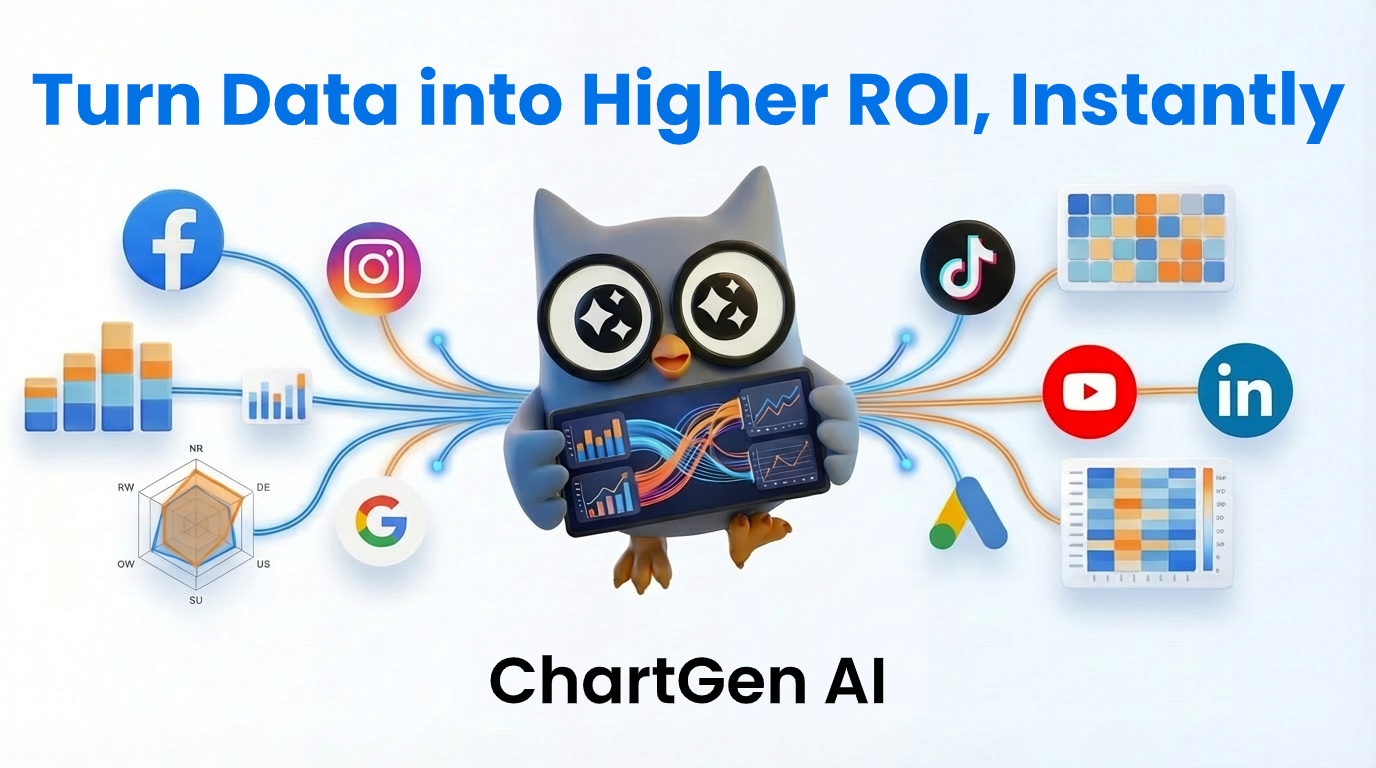
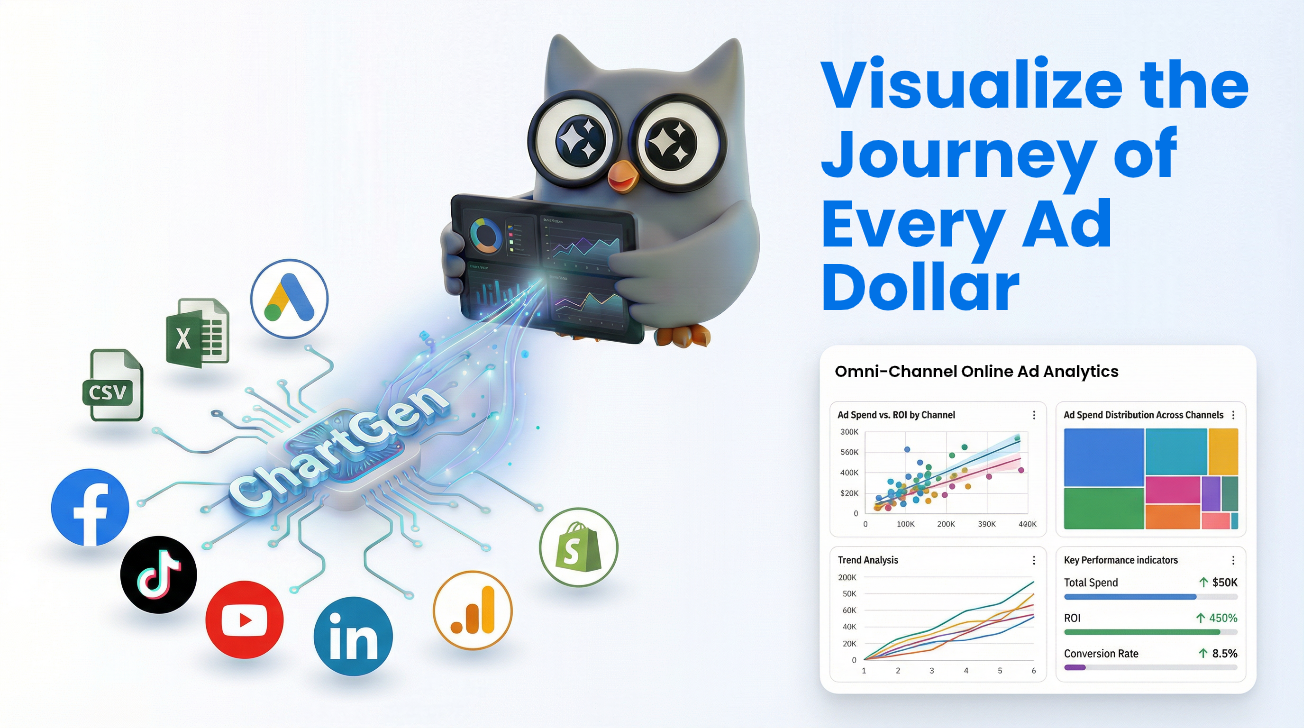
查看原始信息
Git AutoReview
AI-powered code review helper for GitHub, Bitbucket & GitLab (soon). Human-in-the-loop approval. Multi-model AI (Claude, Gemini, GPT). 50% cheaper than others. Included free tier.

Hey PH 👋

I'm Vitalii, 20+ years in dev. Built this thing because code review was eating my life.

The situation: 8-12 PRs land every morning. Same patterns every time - check for null handling, look for N+1 queries, spot hardcoded secrets, verify error handling. Repeat.

By PR #10, I'm a zombie. And I still miss things.

So I built Git AutoReview. It's simple:

1. Open PR in VS Code

2. AI scans the diff (Claude, GPT, or Gemini — your choice)

3. You get suggestions with severity

4. Approve or reject each one

5. Only approved comments get published

The key part: AI suggests, you decide. No auto-commenting garbage in your PRs.

Works with GitHub and Bitbucket. GitLab coming next.

Free tier does 10 reviews/day. Should be enough to see if it helps.

Honestly just want to know - is this useful?

What would make it better?

Thanks for checking it out.

4
回复

@vitalii4reva Hi Vitalii, congrats on the launch. How do you compare to codeql?

1
回复
What's your expirience with this solution? Do you use it for your own purposes? Any downsides?
1
回复

@sasha_buratynskyi I'm using it everyday for month. It saves me week of my life )

0
回复
Awesome! Thank you for sharing Do u have a trial version or it’s free?
1
回复

@orysia_khimiak Thanks!
Yep, It's free up to 10 reviews per day and we have special promocode for PH )

0
回复

Cool! How to you handle the privacy?

0
回复