Product Hunt 每日热榜 2026-01-23

PH热榜 | 2026-01-23

#1
Tonkotsu
Manage a team of coding agents from a doc
320
一句话介绍:Tonkotsu 是一款通过文档界面管理和调度多个AI编程代理的GUI工具,旨在将开发者从繁琐的提示词工程与上下文管理中解放出来,提升在复杂项目开发与重构中的决策与协作效率。
Software Engineering Developer Tools Artificial Intelligence
AI编程代理 开发工具 项目管理 文档驱动 团队协作 智能编码 工作流优化 开发者体验 本地优先 人机协同
用户评论摘要:用户普遍认可“管理者”定位与文档交互的简洁性,关注数据隐私(本地处理、API数据使用)、任务依赖与冲突管理、对代理的微观控制程度,以及对比同类产品的独特优势。创始人积极回应,透露产品自举、免费公测、使用Anthropic模型且数据不用于训练。
AI 锐评

Tonkotsu 的亮相,与其说带来了一个革命性的技术突破,不如说它精准地捕捉并产品化了AI编码进化中的一个关键思潮:从“与一个全能但笨拙的助手对话”转向“管理一个专业且可控的智能团队”。其核心价值并非底层代理能力的超越,而在于顶层交互范式的重构。

它将“文档”确立为控制平面,这步棋颇具深意。文档天然具有结构性、异步性和可协作性,恰好对冲了传统聊天式AI编码工具带来的上下文碎片化、会话状态依赖和提示词“微操”负担。这本质上是将开发者的角色从“提示词工程师”和“实时监工”,提升为“架构师”和“项目总监”,通过任务分解与委派来实现规模化产出,契合了专业工程师对可控性和工程纪律的诉求。

然而,其面临的挑战同样清晰。首先,“管理”的抽象层能否经受住复杂、模糊现实项目需求的冲击?评论中关于任务依赖、冲突避免的疑问直指核心:智能体的规划与协调能力是产品的“暗物质”,其可靠性决定了用户体验是顺畅管理还是忙于救火。其次,其“意见鲜明”的预设(如默认Claude Sonnet,强结构)是一把双刃剑,在吸引目标用户的同时,也可能因不够灵活而将潜在用户拒之门外。最后,在竞品林立的赛道中,其长期差异化和商业模式(目前免费)仍需验证。它能否从一款优雅的“感觉对了”的工具,成长为开发工作流中不可或缺的基础设施,取决于其能否在智能体的真正协同智能、与现有开发工具的深度集成以及企业级管控需求上,构建起坚实的壁垒。

总体而言,Tonkotsu 代表了一种更成熟、更工程化的AI编码工具演进方向。它不追求替代开发者,而是致力于用更好的工具扩大开发者的管理半径。其成功与否,将是对“人机协同”工作流设计智慧的一次重要检验。

查看原始信息
Tonkotsu
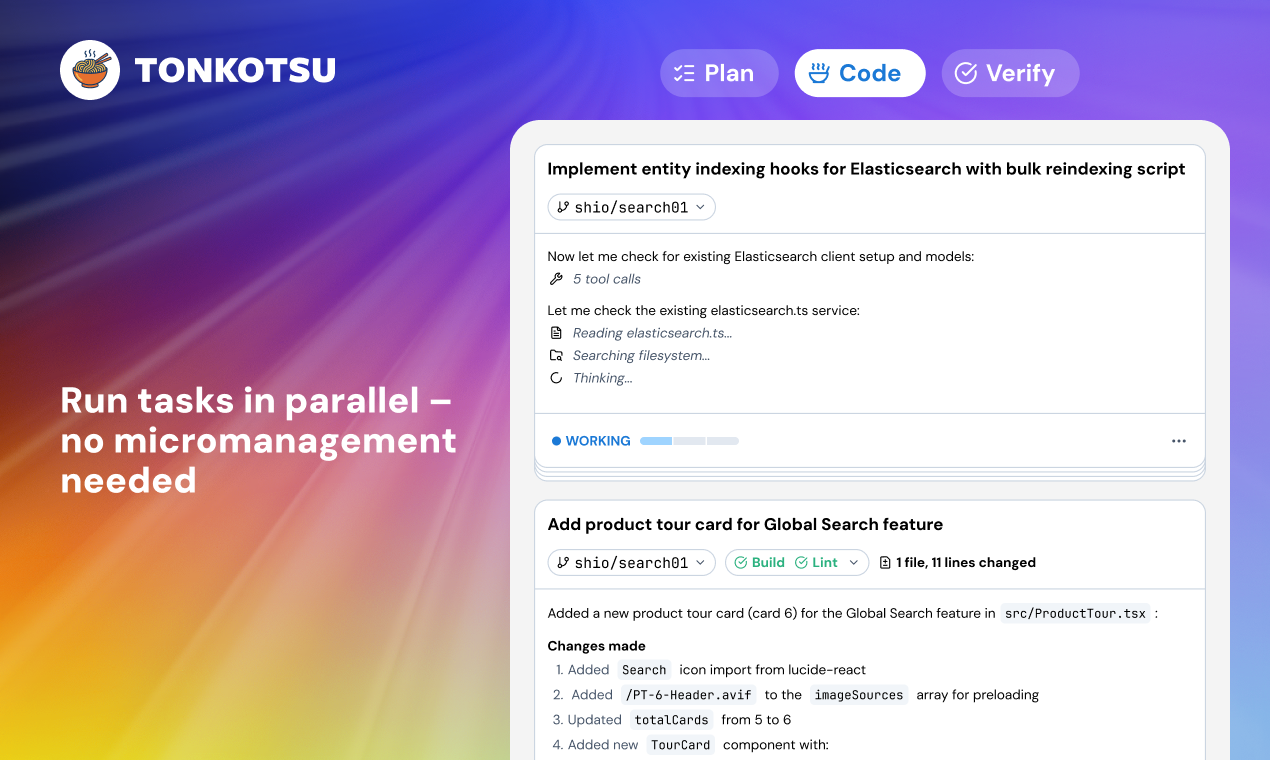
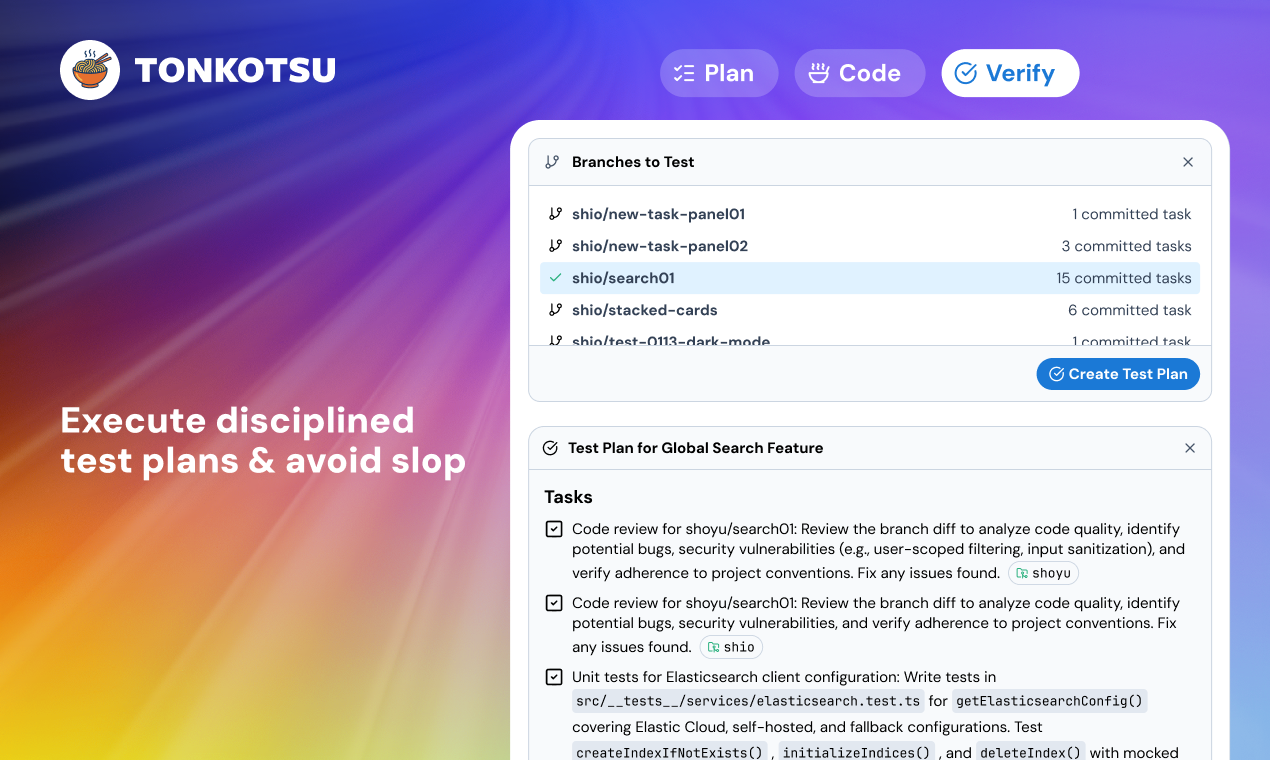
Tonkotsu is a fresh approach: a clean, focused GUI that lets you manage a team of coding agents from a doc. FREE during our early access program.

Hey Product Hunt! 👋 I’m Derek, founder of Tonkotsu.

We believe developers need a fundamentally new tool for this moment, not another IDE or CLI. Tonkotsu elevates you as the manager of a team of coding agents: you make the key decisions and delegate the rest. It’s a calm, modern workflow without endless knobs and config, but a lot more leverage.

We’re so excited to share Tonkotsu today with the Product Hunt community 🚀

Ask us anything, give us feedback, or share how your AI-powered development workflow is changing. We’ll be around to chat all day.

13
回复

@derekattonkotsu very cool and congrats on the launch Derek. How do you compare with the other builders out there? What's your killer usp?

1
回复

@derekattonkotsu In day-to-day use, what’s the hardest decision you still want humans to make, something you deliberately don’t let Tonkotsu’s agents decide for you? btw, Positioning the developer as a manager is interesting!!

0
回复

@derekattonkotsu Congrats on shipping, Derek 🚀
“Manager of coding agents” is a really clean abstraction. Excited to see how teams evolve workflows around this vs traditional IDE-centric setups.

0
回复

Am I upvoting because I am craving ramen. yes.

Is this super cool and looking a lot better than antigravity, yes.

Do I have to bring my own API keys? Do you manage that? How is usage billed?

What's the biggest project you have built with this?

4
回复

@build_with_aj - great questions! At the moment, we're in a free public beta, so no keys or billing. We're focused on learning more from our users and further refining the product.

The biggest project is Tonkotsu itself. It's split across three repos - frontend, backend, and Electron app - and we use Tonkotsu to build itself everyday. We also see our users do 100 tasks each daily on a regular basis.

Curious - what is your current stack?

And yes, we are big ramen fans also :)

3
回复

This looks great. I've been using Claude Code with a small army of focused agents recently and have been really happy with the results - but having something like this where it can help manage them all is exciting.

I have an old project which is severely deprecated. Interested to see how this would handle a major refactor!

3
回复

@tokengeek thanks for your support! We think there's so much potential in recentering developers as managers of agents - with clean delegation, no micromanagement, but clarity into what the agents are doing and final approval over commits. Would love to hear your feedback from your refactor.

Just curious - when you use CC with a bunch of agents, are you starting up a bunch of terminal windows in parallel?

1
回复

Well done on the launch — this is a genuinely interesting project, and the workflow aligns closely with how I approach agentic development myself. I also noticed the SOC 2 audit and the emphasis on keeping everything within the local development environment, which is reassuring.

One question I had relates to data handling during LLM processing: what information, if any, leaves the local machine, and which providers are involved? Are there guarantees that this data is not retained or used for future model training by the underlying LLM vendors?

This is an area I often struggle to fully square from an enterprise adoption perspective, though it feels much less problematic for personal or side projects.

2
回复

@reestit thanks for your support! Like all other coding agents, we send relevant snippets of code to the LLM to reason over and generate edits to. We use Anthropic models, and Anthropic does not train on data passed to its API. Yes, completely agree with your observation about enterprise adoption requiring high standards for data usage.

In terms of your workflow, I'm curious how you have things set up right now - what patterns do you find working well for you?

1
回复

TBH I love the name Tonkotsu! Reading docs is always easier than managing workflows!

2
回复

@cruise_chen Thanks Cruise! Tonkotsu is our favorite kind of ramen, and we wanted a fun brand :)

Yeah, we believe the doc is the right interface for managing agents. It's natural, shareable, gives you room to think and also a natural way to peel off a task and hand it off cleanly. Would love your reaction once you get a chance to use the product!

1
回复

I love the clean GUI approach, but I wonder how much control we actually have over the 'team' through that doc. Is it mostly for giving high-level commands, or can we jump in and micro-manage the specific logic if an agent starts heading in the wrong direction?

2
回复

@theaxx thanks for the support! You have total control with Tonkotsu: nothing gets committed into your repo without your approval. At the same time, we structure interactions so you don't have to micromanage. Delegation is a hand-off, not the start of a babysitting session. Then, when Tonkotsu has code ready for you, you can quickly review it in the product and give line-by-line feedback and approve the commit. So you have a great deal of control, but we free you up so you don't have to watch it as it works. Would love to hear your reaction to the interface when you get a chance to try it!

1
回复
Your UI centers on a single doc that plans, delegates, and reviews. How do you translate that doc into enforceable task boundaries (dependencies, ownership, conflict avoidance) so multiple agents can move in parallel without stepping on each other?
2
回复

@curiouskitty - great question! Tonkotsu's planning agent helps build your doc and it starts from a description of the project you want to build (or a Linear issue) and then inspects your codebase to construct a plan with the dependencies worked out. As part of this process, the planning agent determines correct task sizing (we tweaked this a ton) and task dependencies.

Then when Tonkotsu executes these coding tasks, it schedules them so that dependencies are respected. We hide these details under the hood so it's a clean, simple handoff interface.

Curious what your setup is - how do you currently managing dependencies between tasks?

1
回复

It is the first tool that treats AI like a team, not a trick. How do you keep things transparent when agents make decisions?

2
回复

@abod_rehman Thanks Abdul! The balance we aim for is -- exactly as you say -- keeping things transparent while also avoiding sucking the developer into micromanaging/babysitting the agents. We think the document UX is key to this. We'd love to hear your thoughts once you get a chance to try the product!

1
回复

Great job @derekattonkotsu and @fmerian
exiting to test it! I like a new way of linear and confluence, I like this approach!

2
回复

@fmerian  @josemarin Thanks for your support! Happy to be mentioned in the same breath as Linear and Confluence. The last part of it is also built-in verification with Test Plans and diff reviews. Excited to have you try it - let us know what you think!

2
回复

Congrats on the launch! I get the positioning of this being fundamentally for developers (I am not a dev lol) but keen to try it out and see what results I get!

2
回复

@mustassim Thanks for the support, Syed - Looking forward to your thoughts

0
回复

Doc-as-control panel for coding agents feels right. I’m tired of juggling prompts in five places. How do you keep context clean with a few agents at once? I’ll try it after standup. Free early access helps. Also, the name makes me want ramen.

2
回复

I’m tired of juggling prompts in five places.

@alexcloudstar likewise!!

1
回复

@alexcloudstar Yeah agree with you. Centering on a doc was our most consequential design decision and we think it's the right one because it gives you a clean delegation interaction that's a handoff rather than babysitting a chat session, plus it gives you composability (Notion inspired us with their lego blocks approach).

In terms of context: the doc is also the vehicle for shared context, both for agents and humans on a team. When you do planning and coding tasks, they have the doc as context. I'm curious what you use to manage context now and what challenges you encounter. Would love your feedback once you give it a go!

1
回复

cool!

2
回复

@muhammadanas0716 Thanks for your support. Curious - what does your AI coding workflow look like?

1
回复

Here for the food, not the AI agents 😂 Congrats on the launch!

2
回复

@ant0ine_gt Thanks for your support! We do love our ramen :)

2
回复

Congrats on the launch!

2
回复

@marek_nalikowski Thanks! It's been a blast to build in this space given how fast everything is moving.

1
回复

Thanks for the continuous support, Marek ❤️

Curious - do you have a preferred AI model for coding tasks?

1
回复

@Product Hunt features AI coding assistants every day. @Tonkotsu is different.

Opinionated, primarily designed for professional engineers. You don't start from scratch here, you start from an existing repo. You don't play around with models, it defaults to Sonnet 4.5. You don't chat with agents, you manage them.

Tonkotsu provides a different approach to coding with agents, spec-driven, from prompt engineering to context engineering. Love this direction!

Keep up the great work, @derekattonkotsu and team!

2
回复

Managing agents from a doc instead of CLI or IDE is an interesting surface choice. The human-as-editor flow (agents commit, you refine before PR) makes sense... curious if Tonkotsu has guardrails for scope creep when multiple agents run in parallel on the same codebase.

0
回复
#2
Krisp Mobile Call Recorder
Record outgoing calls and get transcripts + AI notes
253
一句话介绍:Krisp移动应用通过VoIP拨打外呼电话并自动录音,随后提供转录、AI摘要与行动要点,解决了移动场景下重要工作通话信息易丢失、难整理的痛点。
Android iOS Productivity
通话录音 语音转文字 AI摘要 工作效率工具 移动办公 语音AI 信息管理 智能笔记 VoIP通信 美国市场
用户评论摘要:用户普遍认可产品价值,期待地区扩展(如日本)与功能集成(如WhatsApp)。核心关切集中于数据安全与隐私(如何存储、访问)、录音通知合法性、实际场景可靠性(长通话、弱网),以及噪声抑制等功能向移动端的迁移。
AI 锐评

Krisp此番切入移动通话录音,是一次精准但充满挑战的场景延伸。其真正价值并非简单的“录音”,而在于试图将非结构化的、易逝的语音对话,转化为可搜索、可共享、可执行的结构化数字笔记,并嵌入用户现有工作流。这直击了知识工作者在移动场景下的核心焦虑——信息碎片化与认知负荷过载。

然而,产品目前呈现明显的“理想化”与“局限性”并存。其依赖VoIP外呼的轻巧设计,巧妙规避了运营商和操作系统的原生录音限制,展现了工程智慧,但也将使用场景大幅收窄至“主动外呼”,且仅限美国号码,这极大限制了其作为通用“通话记录仪”的想象空间。用户关于通知合规性、数据安全的尖锐提问,则揭示了此类产品面临的根本性信任壁垒:在隐私法规各异的市场,仅靠“默认开启”通知和隐私政策远不足以建立全球性信任。

从评论反馈看,用户期待的是一款“全能型”通信中枢:集成主流通讯应用(如WhatsApp)、具备其桌面端闻名的降噪能力、并能应对各种复杂网络环境。这反衬出当前版本更像一个功能验证原型。Krisp的挑战在于,如何在快速扩展地域和功能的同时,维持其AI处理精度与数据安全的平衡,并找到超越“工具”的不可替代性——是深度融入CRM/项目管理流程,还是构建基于语音对话的知识库?若不能解决这些问题,它可能只会是又一个不错的效率工具,而非重塑移动通信工作流的颠覆者。

查看原始信息
Krisp Mobile Call Recorder
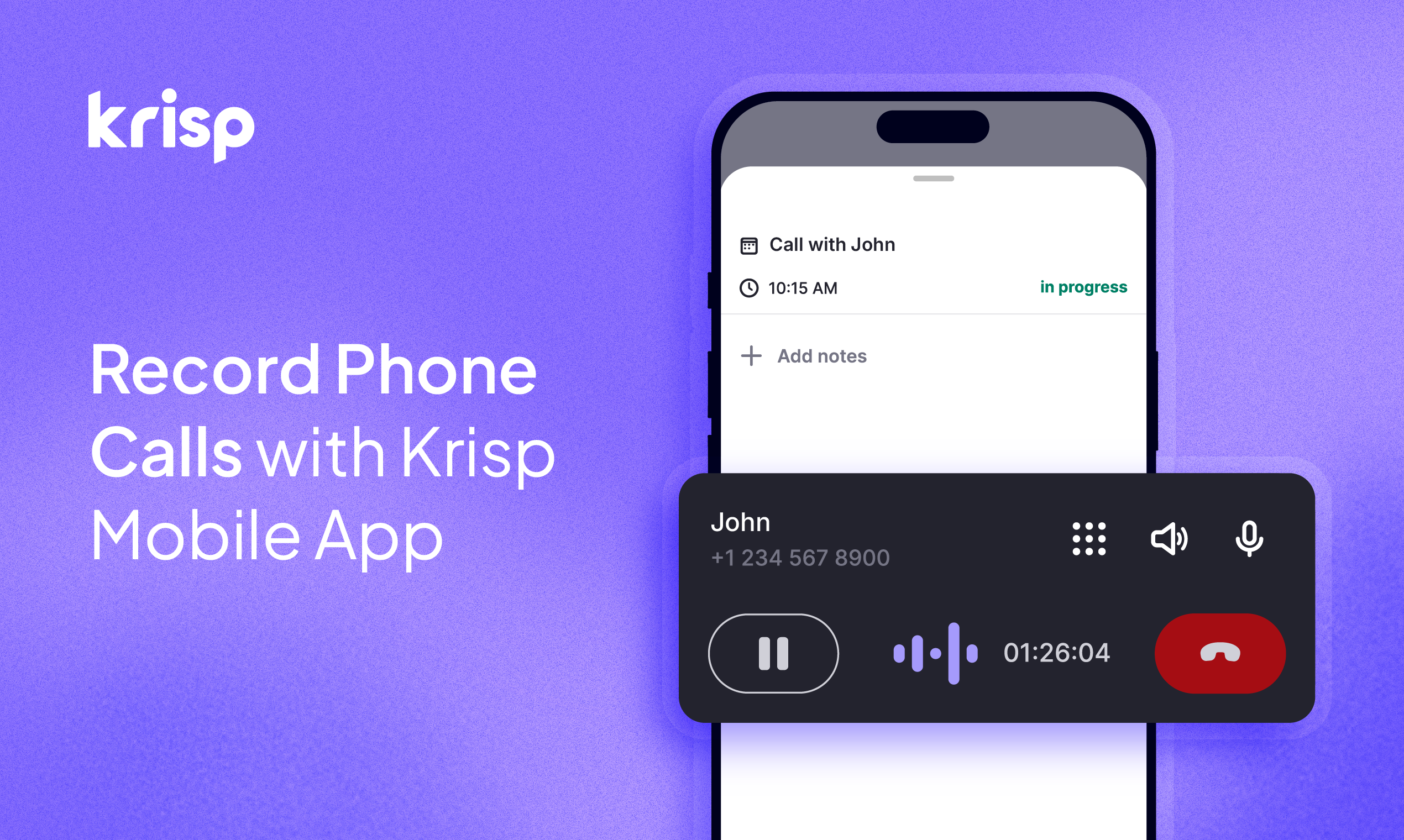
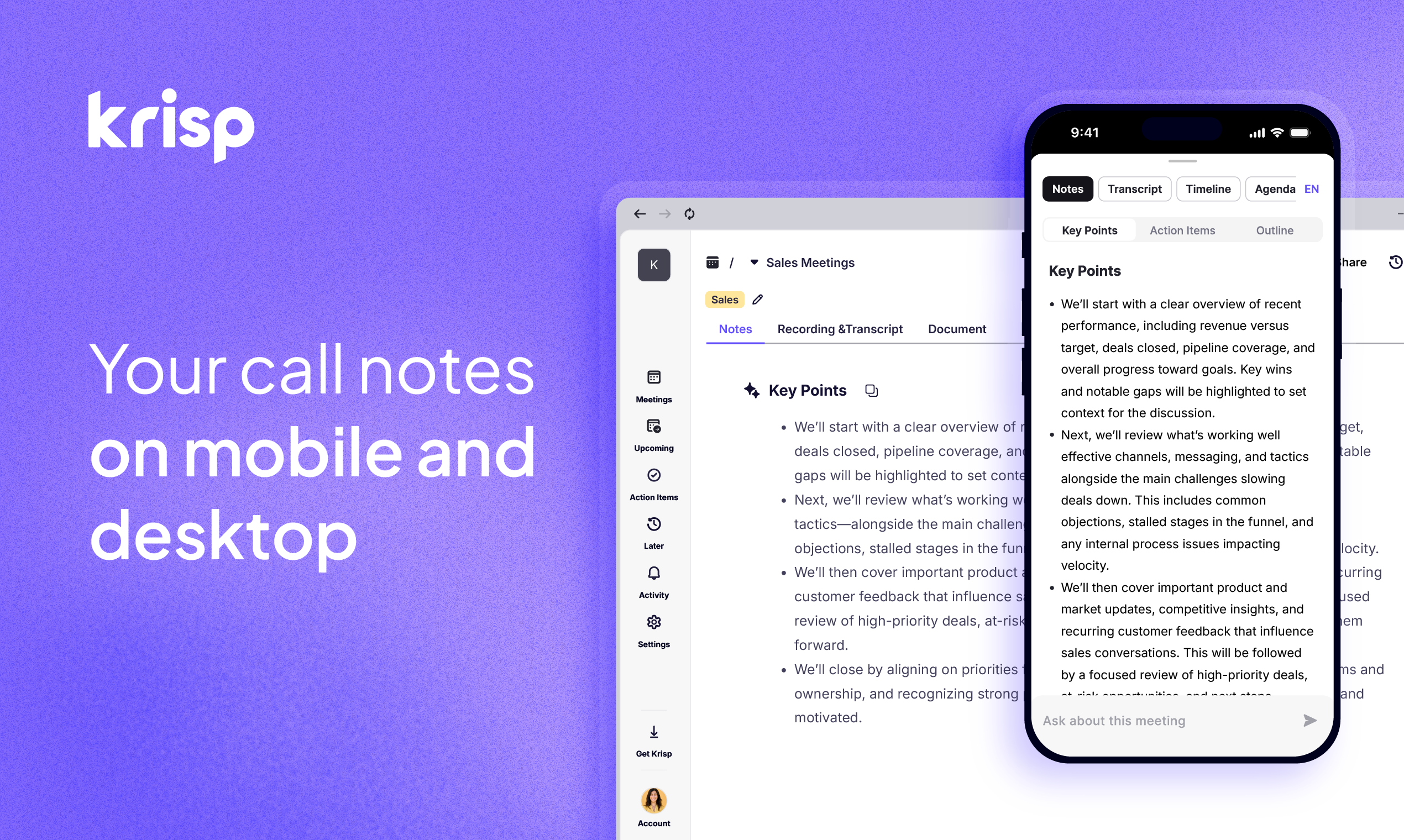
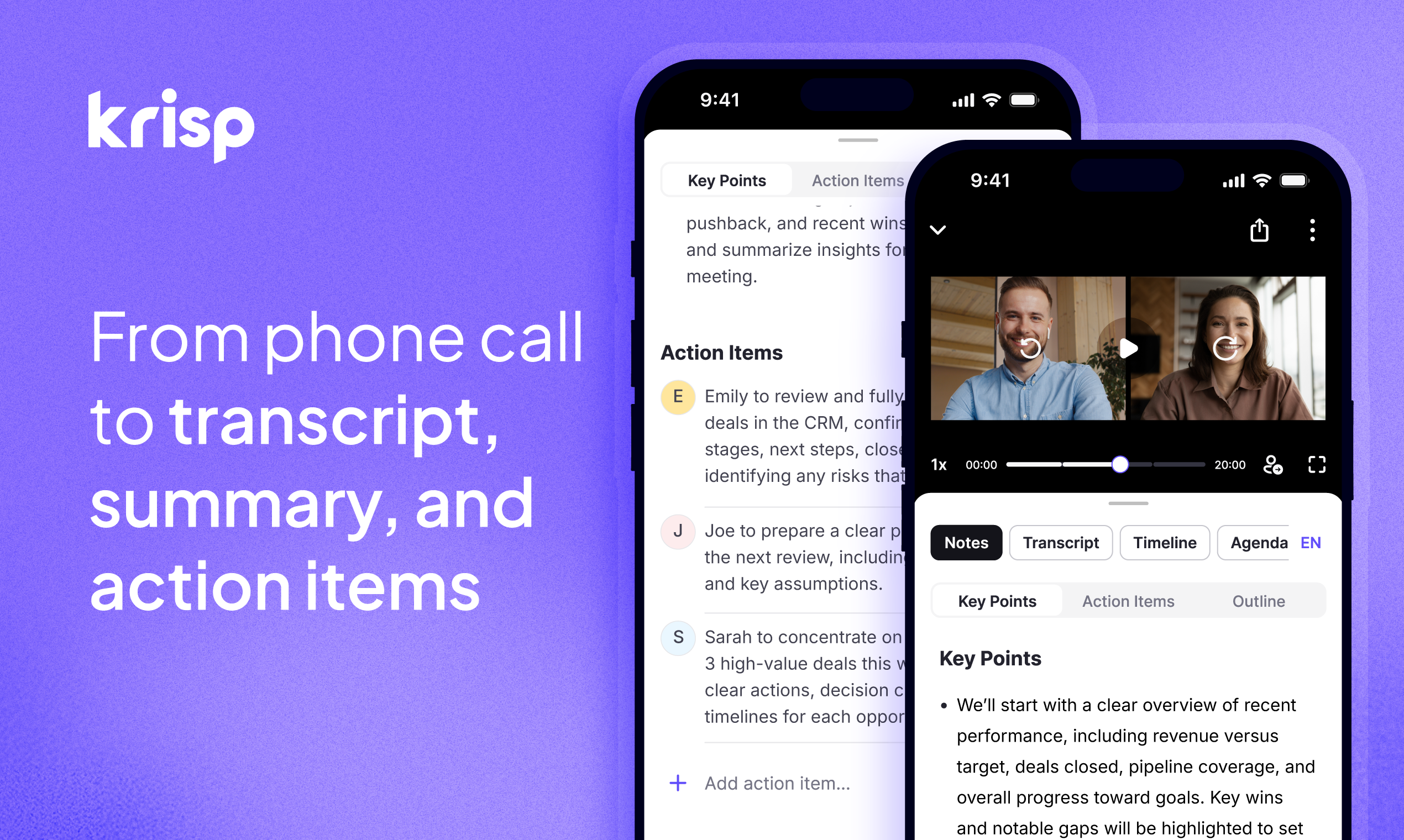
Your phone calls now fit naturally into your meeting workflow. Place outgoing calls from the Krisp mobile app and Krisp automatically records and transcribes the conversation. Right after the call, you get AI-generated notes with a concise summary, key points, and clear action items. The call is saved as a structured Krisp Note and synced across mobile and desktop. Currently available for US numbers, with expanded coverage planned over time.
Hi everyone 👋 Thanks for checking out our launch. We’re excited to introduce Call Recording on the Krisp Mobile app. You can now record outgoing phone calls made through the mobile app using US numbers, and automatically get transcripts, summaries, key points, and action items after each call. We built this because many important work conversations still happen on phone calls, especially when you’re away from your desk, and they’re easy to lose once the call ends. This is an early step, and we plan to expand coverage over time. We’d love your feedback and are happy to answer any questions here.
14
回复

@asti_pili congrats on the launch! Does it also work for WhatsApp calls?

5
回复

@asti_pili  What’s the first situation where users hesitate to hit “record”, legal uncertainty, social awkwardness, or forgetting it’s on and how are you designing around that moment so it still feels natural to use? Congrats!

0
回复

Does it somehow store and have access to our data?

5
回复

@busmark_w_nika Totally fair question.

Your call recordings and the notes/transcripts are stored in your Krisp account so you can access them later, which means they live on our servers.We treat that data as sensitive: access is tightly restricted, protected by our security controls, and governed by our Privacy Policy (what we collect, how we store/process it, and when/why it may be accessed).
We also use third-party infrastructure to make calling possible, but it’s all handled under our security requirements.

1
回复

Congrats on the launch! Waiting for this to work with JP phone calls next haha. Does the mobile app also have the killer Voice Isolation that's on the Mac App?

5
回复

@gabe The Noise Cancellation is not in the app yet but we are definitely planning on bring more voice AI features to mobile

3
回复

Excited to see this live🚀 Phone calls are still such a big part of work, so this is a great addition.

4
回复

Love the direction Krisp is heading in. As someone based outside the US, I’m really looking forward to the expanded coverage!

4
回复

Krisp is on the move today? Someone had to replace the janky iPhone call recorder. Does Krisp also play a "Call recording alert" when started?

1
回复

We launched Conthunt today, if isn't much - please check it out! Happy launch day. 🎊

0
回复
Because recording calls on mobile often runs into OS + carrier + regional constraints, how are you designing the product so it’s dependable in real life (long calls, spotty connectivity, backgrounding, transcript failures)—and what’s your plan for making failures visible and recoverable (retry, reprocessing, partial transcripts)?
1
回复

@curiouskitty Great question, and you’re right: mobile call recording is full of OS / carrier / regional “gotchas.” That’s exactly why we designed this as outgoing calls placed from the Krisp app over VoIP. That lets us control the recording pipeline and avoid a lot of carrier/OS-level recording limitations.


How we’re making it dependable in real life:

  • Long calls: audio is handled as a continuous recording stream, with safeguards so a long call doesn’t mean “oops, file too big, goodbye.”

  • Spotty connectivity: the app prioritizes capturing the audio first, and then uploads/processes when connectivity is stable. If the network drops mid-call, we don’t want that to automatically equal “no call record.”

  • Backgrounding: since the call is happening inside the app’s calling flow, we’re building around the realities of background behavior on mobile and designing for continuity (and clear recovery if the OS interrupts anything).

  • Transcript/AI note failures: transcription and notes are a separate processing step, so even if AI processing fails, the goal is you still keep the call record and can re-run processing.

0
回复

Long awaited feature 😍🚀

1
回复

This is awesome. Is the other person notified on recording? Also is the conference call recording supported

1
回复

@chilarai, thank you!


Notification/consent: Yes, you can keep Consent & Privacy enabled (it’s on by default). When it’s on, participants hear an audio notification that the call is being recorded.


Conference calls: Depends what you mean:

  • If it’s a scheduled meeting / conference link, you can use Join from mobile, which sends our bot to record it.

  • If you mean a phone dial-in / carrier-style conference call, are you referring to dialing into a bridge number?

0
回复

@Krisp Congradulations! Great Idea. You definitely need something like this when you have tons of calls with teams and partners. Fragmented information is one of the biggest problems of our time. Looking forward to testing it today.

1
回复

Why do the most important conversations always happen when I’m walking, driving, or half asleep? :( This is actually super useful.

1
回复

Really cool to see call recording on mobile. Curious how transcripts hold up with background noise or weaker signals.

1
回复
Hey Asti, that line about important conversations being easy to lose once the call ends is so true. Was there a specific phone call where you hung up and immediately thought wait, what did they say exactly?
1
回复

@vouchy have been there :)
also one of my personal problems during intros is to forget the person's name (pronunciation) right after they mentioned it.

0
回复

Sounds very useful. Any ways on integrating it with whatsapp calls ?

0
回复

Congrats on the launch! Call recording on mobile feels like a really practical extension of Krisp, especially with summaries and action items baked in. How granular the post-call outputs are, for example, can users control the level of detail in summaries or highlight decisions vs. follow-ups automatically?

0
回复

The sync between mobile and desktop is a great touch, but I’m dying to know if there's a limit on how long a single call can be. Also, since it's just for US numbers right now, I wonder if it still works for international calls as long as the caller has a US number.

0
回复

Nice launch

Mobile call recording can get tricky. Curious how you’re handling dropped calls or network switches.

0
回复
#3
PayPing
All your recurring payments in one place
212
一句话介绍:PayPing是一款通过浏览器扩展和邮件转发自动追踪订阅账单的聚合管理工具,解决了用户在数字时代因订阅服务分散、易遗忘而导致的“隐形”财务浪费痛点。
Productivity Fintech Analytics
订阅管理 个人财务 账单追踪 自动化工具 浏览器扩展 一次性付费 消费分析 续费提醒 数据可视化 开源节流
用户评论摘要:用户普遍认可其解决真实痛点的价值,赞赏一次性付费模式及简洁设计。主要问题与建议包括:担忧一次性付费模式的可持续性;建议增加银行账户自动同步、价格变动自动侦测、Gmail自动抓取发票等功能;询问数据安全措施及与竞品的差异化。
AI 锐评

PayPing精准切入了一个日益膨胀的市场需求——订阅经济下的个人财务管理混乱。其真正价值并非功能上的颠覆,而在于对用户行为和心理的深刻洞察与极致简化。产品逻辑直击现有解决方案的软肋:要么是繁琐的手动录入反人性,要么是自身也沦为一项需要管理的订阅,形成讽刺循环。

PayPing的“自动化捕获”(浏览器扩展与邮件转发)试图将管理成本降至无限接近于零,这是其核心突破点。而“一次性买断”的定价策略,则是一场大胆的、针对用户订阅疲劳心理的精准营销,既是其最锋利的获客武器,也构成了最显眼的商业模型悖论。评论中已有人尖锐指出:依赖持续维护的浏览器扩展与一次性收费之间存在根本矛盾,这触及了SaaS产品可持续性的灵魂拷问。

从评论看,产品的深层挑战已然浮现:1)信任构建:在自动捕获的准确率(如识别商户、价格变更)与数据安全上,需建立远超竞品的可靠形象;2)功能深化:用户已不满足于被动记录,要求向自动预警、费用优化等主动管理演进;3)生态壁垒:仅靠一次性收费和简洁设计,在巨头环伺、竞品功能庞杂的赛道中,护城河尚浅。若不能将早期的用户体验优势,快速转化为网络效应(如通过聚合数据提供独家洞察)或不可替代的自动化精度,其长期生存空间可能被挤压。

本质上,PayPing是一场针对“订阅异化”的优雅反抗。但要想从“因愤怒而生”的工具,蜕变为可持续的商业,它必须在“极简哲学”与“生存所需的复杂演进”之间,找到那个危险的平衡点。

查看原始信息
PayPing
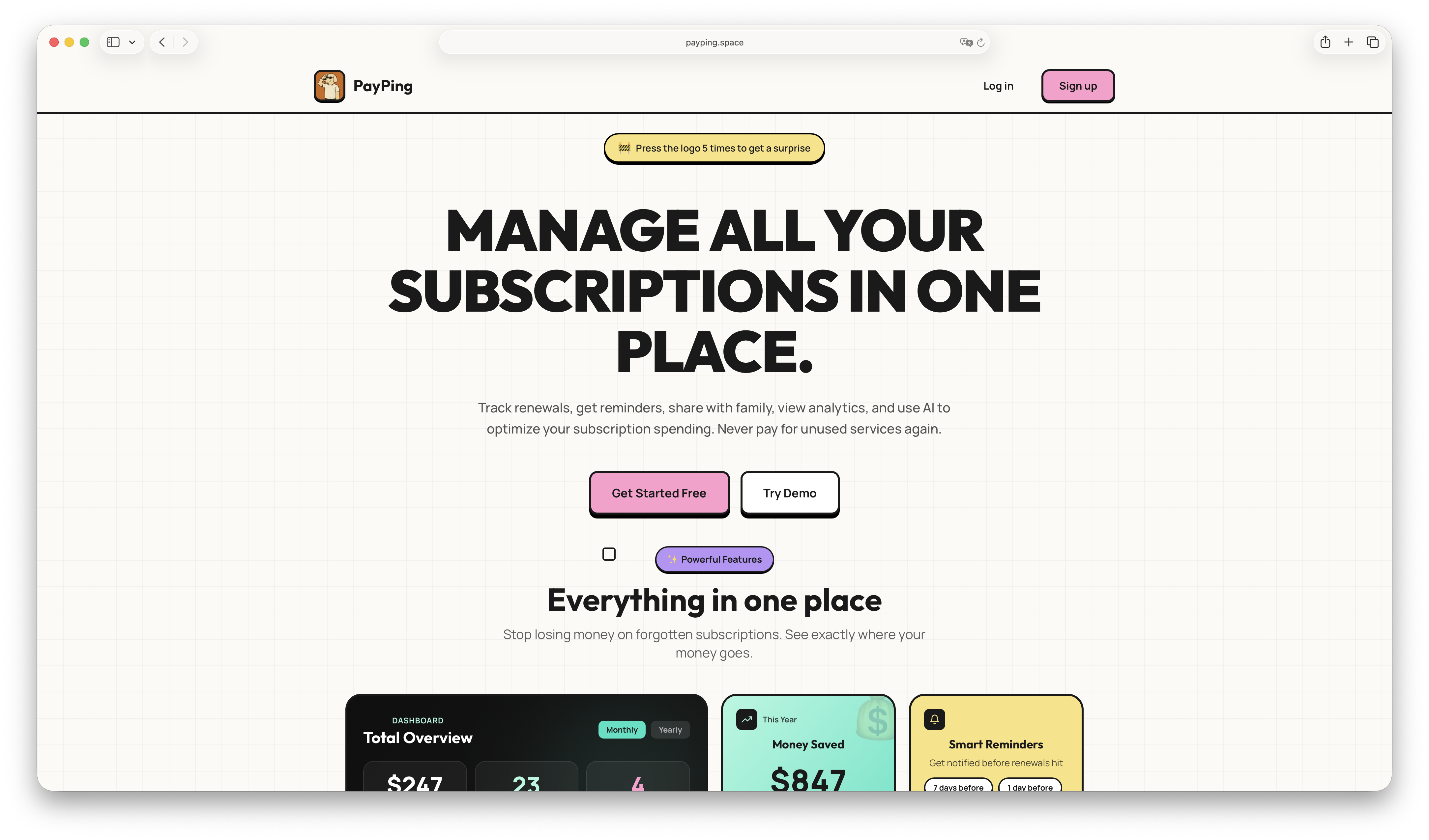
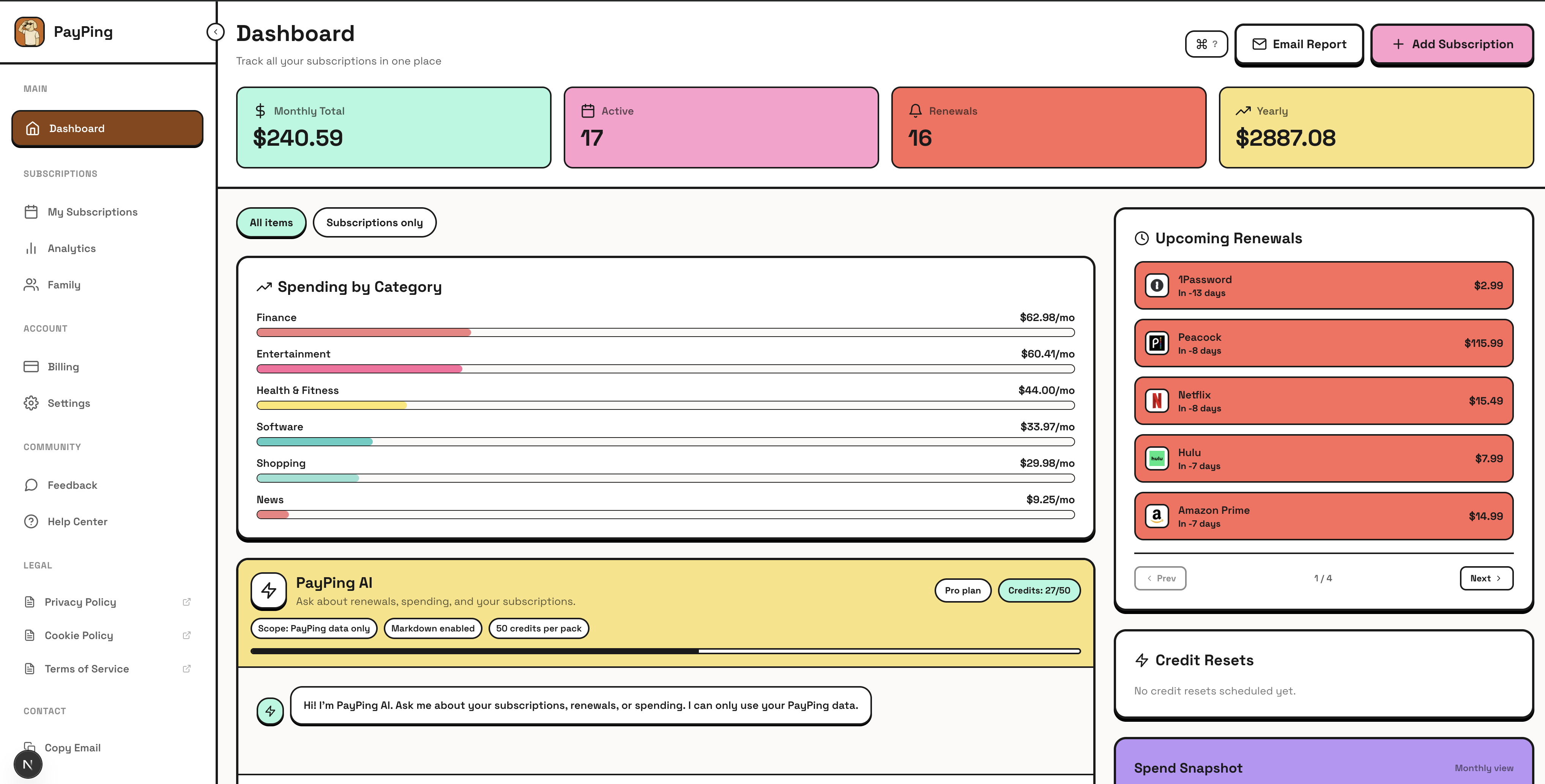
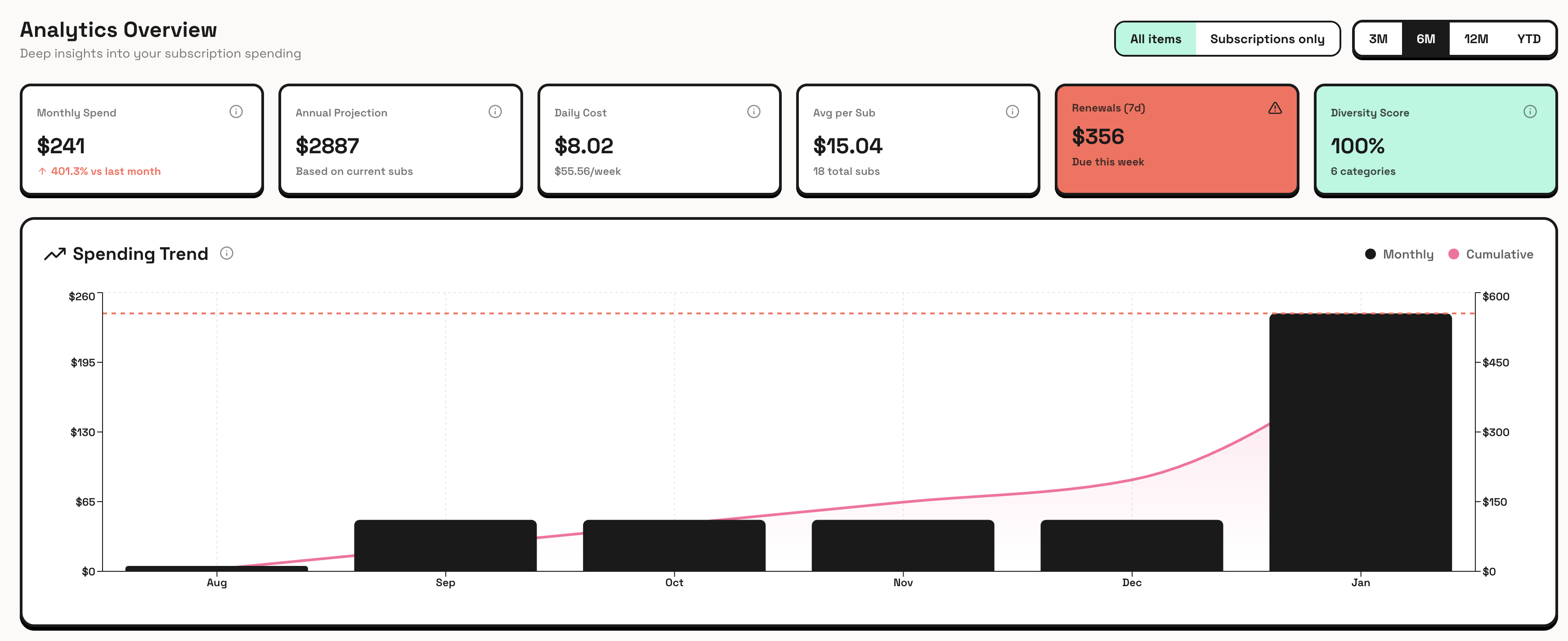
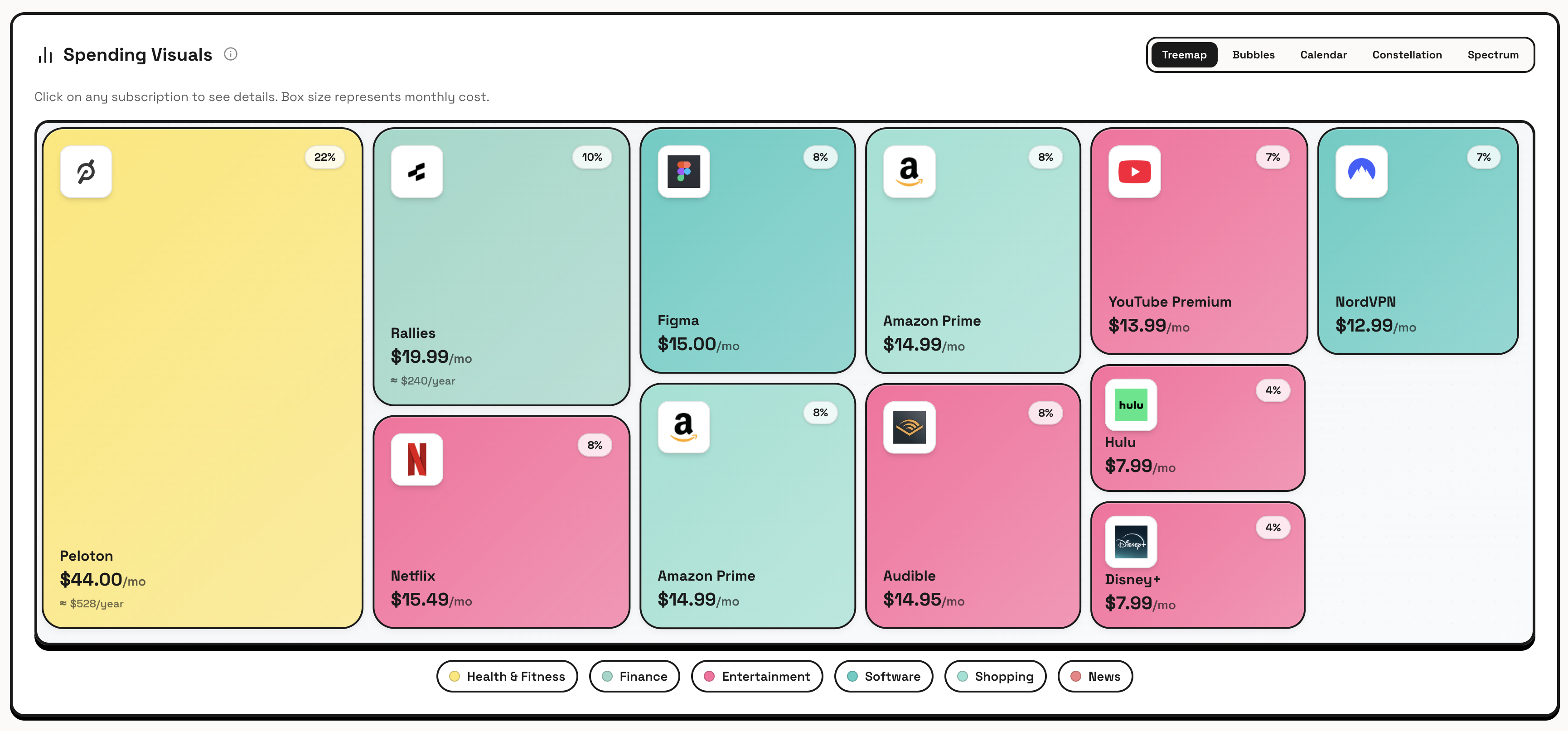
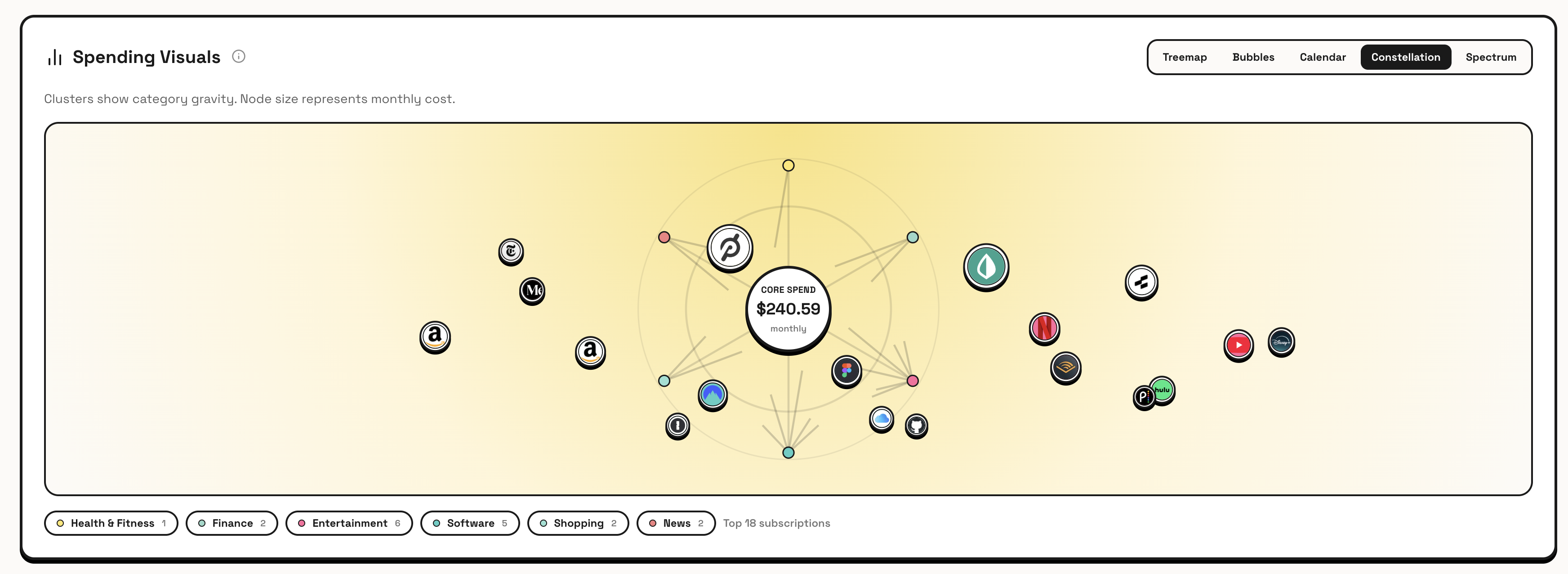
Track renewals, get reminders, view analytics in beautiful dashboards, and use AI to optimize your subscription spending. Discord Bot, Chrome Extension. Email forwarding receipts. Also manage your credit card bills; when I said you can manage all recurring things: I meant it.
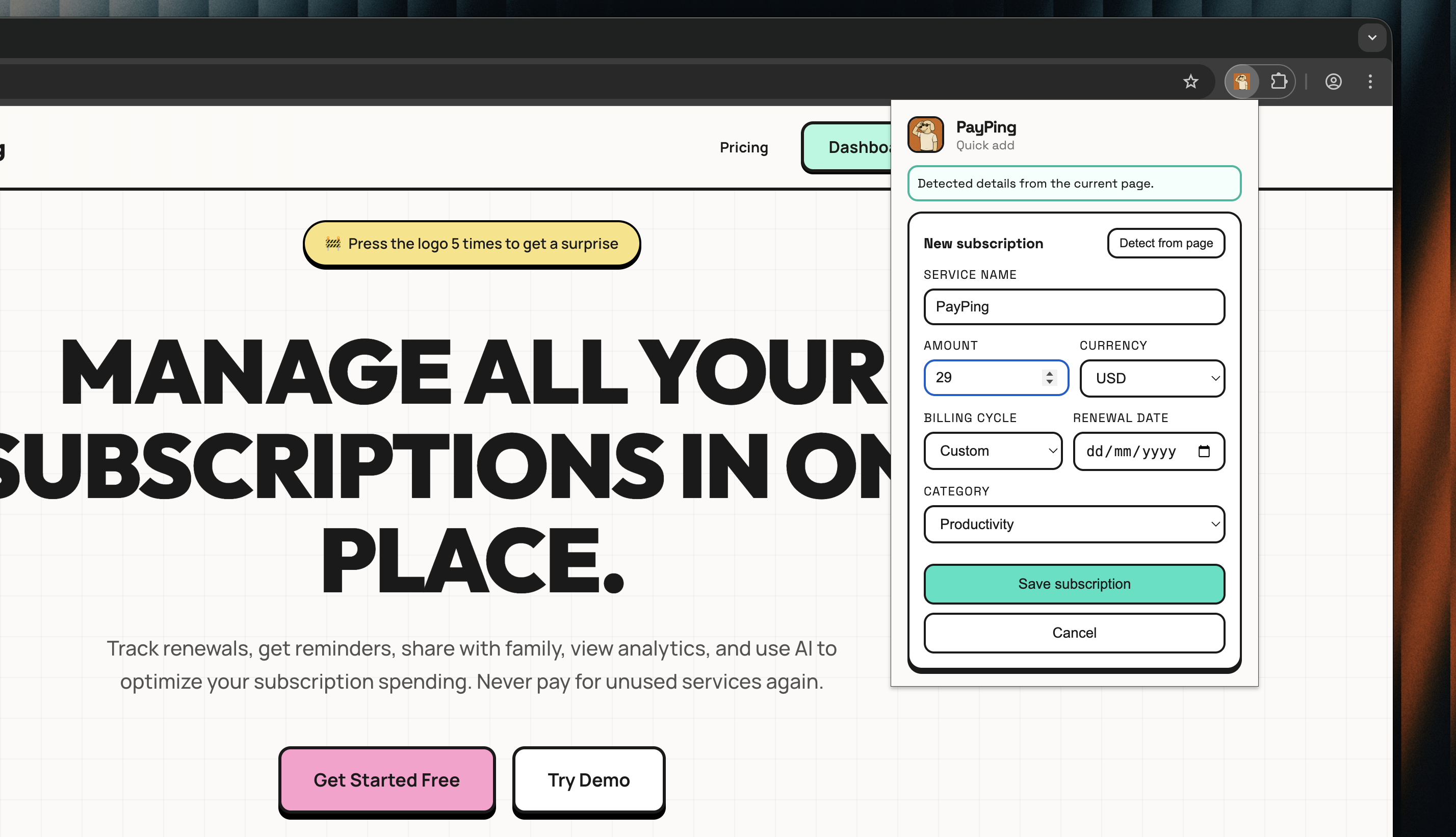
What inspired you to build this? Honestly? Pure frustration. I kept opening my bank app and seeing random charges like “$9.99” or “$14.99” and just sitting there like… what is THIS? Half the time I couldn’t even remember what I subscribed to. A free trial would quietly flip into a paid plan, or some app I used once would keep charging me every month. I had subscriptions everywhere, streaming stuff, random software tools, apps I forgot existed. And the worst part was that I knew I was wasting money, I just didn’t know where or how much. At first, it was just about tracking subscriptions. But then I realized something bigger. Nobody actually has the time or energy to manually go to a website and add every single subscription they have. That’s not how real people behave. After a long day, the last thing you want to do is hunt down receipts and type stuff into a dashboard. So the real problem became two things: * subscriptions are invisible and easy to forget * managing them manually is friction-heavy and unrealistic Existing tools didn’t help much. Some charge you every month just to tell you you’re overspending (which is kinda ironic). Others try to do everything, bill negotiation, credit scores, random finance features nobody asked for. I just wanted something that: * tracks subscriptions automatically or with minimal effort * reminds you *before* you get charged * shows clearly where your money is going * doesn’t itself become another subscription you forget about So, I started super simple, just a dashboard where you could manually add subscriptions. But pretty quickly I realized: this still puts too much work on the user. That’s when I focused on reducing friction as much as possible. Instead of expecting people to manually log everything, I added two core solutions: * a Chrome extension that detects subscriptions when you sign up or pay (you just confirm the details and press Add) * receipt forwarding, where you just forward your emails and subscriptions get added automatically (still in beta) No extra effort, no forms, no “I’ll do it later.” It just happens. Now came the the biggest shift: PRICING. I looked at competitors charging monthly forever and thought, why should you pay monthly just to track monthly payments? You can track 3 subscriptions forever for free. No credit card. If you want unlimited, it’s a one-time $29. Pay once, done. No recurring fees. Ever. I also made a conscious decision to keep it focused. No upsells, no random finance junk. Just something clutter free that genuinely helps. If you wanna try it, it’s free at payping.space. Track 3 subscriptions forever, no card required. And if you need more, the lifetime deal costs less than what most apps charge you in a few months. Built out of pure annoyance… but honestly, that’s how the best tools start.
5
回复

@muhammadanas0716 The one-time $29 price point is a huge selling point compared to the competition. While the extension is a clever fix, any plans to add bank account linking, and update the subscriptions automatically.

0
回复

@muhammadanas0716 

This is amazing. The idea behind this is quite brilliant and the pricing structure makes it even more of a no brainer offer for users. Really love the retro, heavy shadow look, I think it makes it kind of unique.

I've been on your site for about 1hr now, and everything seems nicely designed and developed. Your designer deserves a reward for such a flawless execution.

I imagine you intend to build this product for a while, have you given thought to working on a logo/visual Id seeing as your designer already developed a good design system? It'll also help when you move into marketing your product online.

0
回复

@muhammadanas0716 Hard not to support this, because we've all been there. My only concern is a paradox. Happy to pay just once, but then there is a vital Chrome extension involved: we all know that extensions need constant updates, and constant updates and releases mean expenditure by the makers. A one time payment signals a short life of the app to me, meaning not very keen to pay for it. You might want to reconsider that model or to find an alternative to the extension that doesn't require manutention or updates. Just my 2 cents. Launch supported nonetheless, and best of luck!

1
回复

This is an amazing product. Thanks for building this.

1
回复

@faizann24 thanks so much!

0
回复
Your onboarding hinges on low-friction capture (extension detection + receipt/email import). Which input source has proven most reliable so far, what are the top failure cases (mis-detected merchants, annual plans, price changes), and how do you design UX to keep users trusting the data?
1
回复

Congrats on the launch! As someone who always loses track of digital subscriptions, this feels super useful. Also I really like the clean look of the website, definitely a fan of all the different colours theme you went for.

I got a question though, does PayPing detect price increases or plan changes automatically?

1
回复

@joosepseitam Hey, thanks so much for the kind words. With respect to your question, atm no - BUT, you just gave me a nice idea; and this is something I will get to incorporating straight away. I had not thought of this before. With respect to price increases (e.g Netflix bumped their price from $8 to $11), it is possible to some extent; plan changes probably not since.

But I am also working on something else and that is email forwarding. So we give you a specific email address and you can send your confirmation emails aka receipt emails (which every service sends after you subscribe) and then we update the sub automatically, this is still in beta and I am still developing it.

If all of these things sound exciting, be sure to signup and get the pro plan!

0
回复

Pay once to stop paying forever? That alone deserves an upvote :D Congrats on the launch!

1
回复

@abod_rehman haha thanks man!

0
回复

I’ll admit I was a bit worried at first about keeping so much sensitive payment account and bill info all in one place. I’d love to know: what specific measures has the platform taken for data encryption, storage and access permissions to keep my financial information completely safe?

1
回复

@peng_ye2 Hey,

For Payments we use Polar. We never receive or store full card numbers/CVV—only a paid confirmation used to activate your plan.

  • What we store (optional): If you add payment info for tracking, we only store method type, brand, and last 4 digits. For card bills, you can add a bank name + last 4. No full account or card numbers are needed.

  • Encryption: TLS 1.3 in transit and AES‑256 at rest.

  • Access & monitoring: We use access controls and monitoring, and your data is only accessible to your account unless you explicitly share it.

  • Retention: Data is kept while your account is active; deleting your account removes it from active systems.

So all in all, you have full control of your data.

0
回复

Congrats on the launch! This is the exact pain point I'm facing as I use more and more AI tools that requires subscriptions. Personal story: I was charged 400$ by Manus just cuz I forgot to cancel the 7-day free trial... Really frustrating isn't it? I like your clean UI design and I bet this would be helpful for a lot of people like us.

0
回复

Hey Muhammad. I really like this app. I was searching for a tool so I dont have to build it myself. One nice feature I would really like is that it automatcally fetches all my invoices from my Gmail so I dont have to manually upload it. It identifies which subscriptions I have based on my invoices in a seperate folder in my Gmail.

This feature would be awesome. Cause you know, developers are layze peope ;)

0
回复
@max_klink it’s shipping dw
0
回复

I actually think I received an advertisement for this elsewhere, so nice work. I very much enjoy how the graphics update dynamically based on which subscriptions are the most expensive.

However, as I'm sure you're aware there are other budgeting apps that offer this as a feature, curious how you see yourself as a differentiator?

0
回复
#4
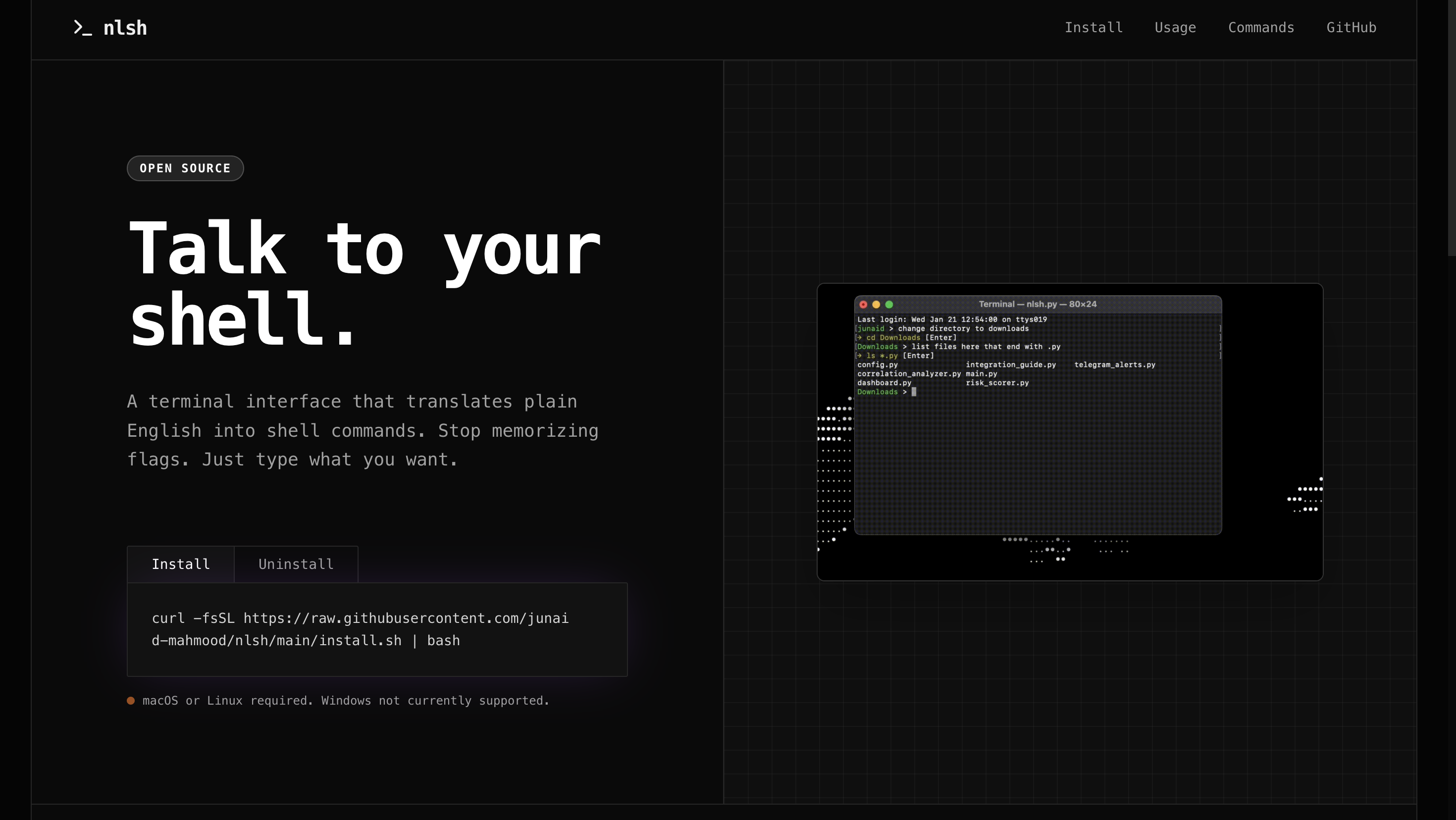
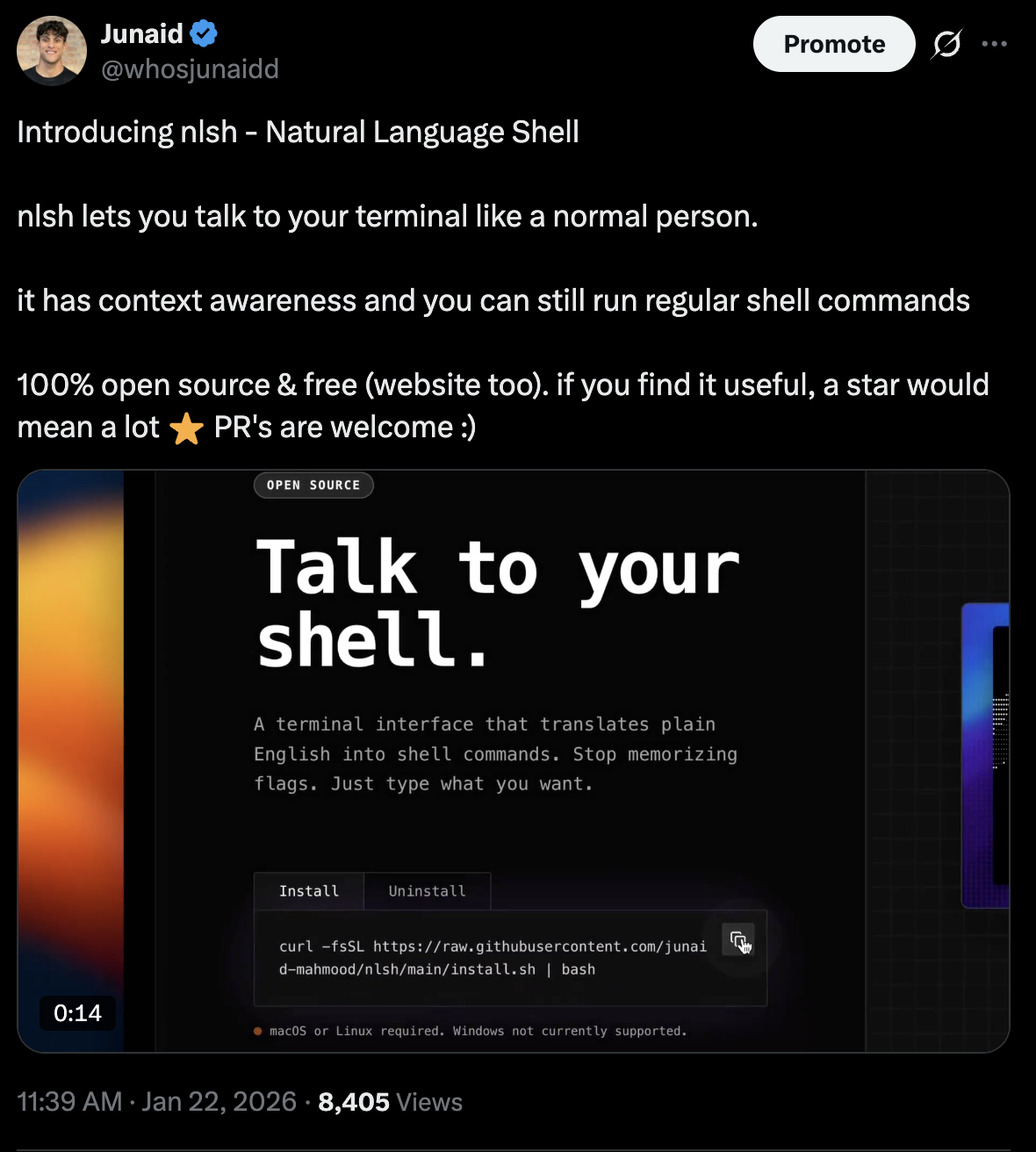
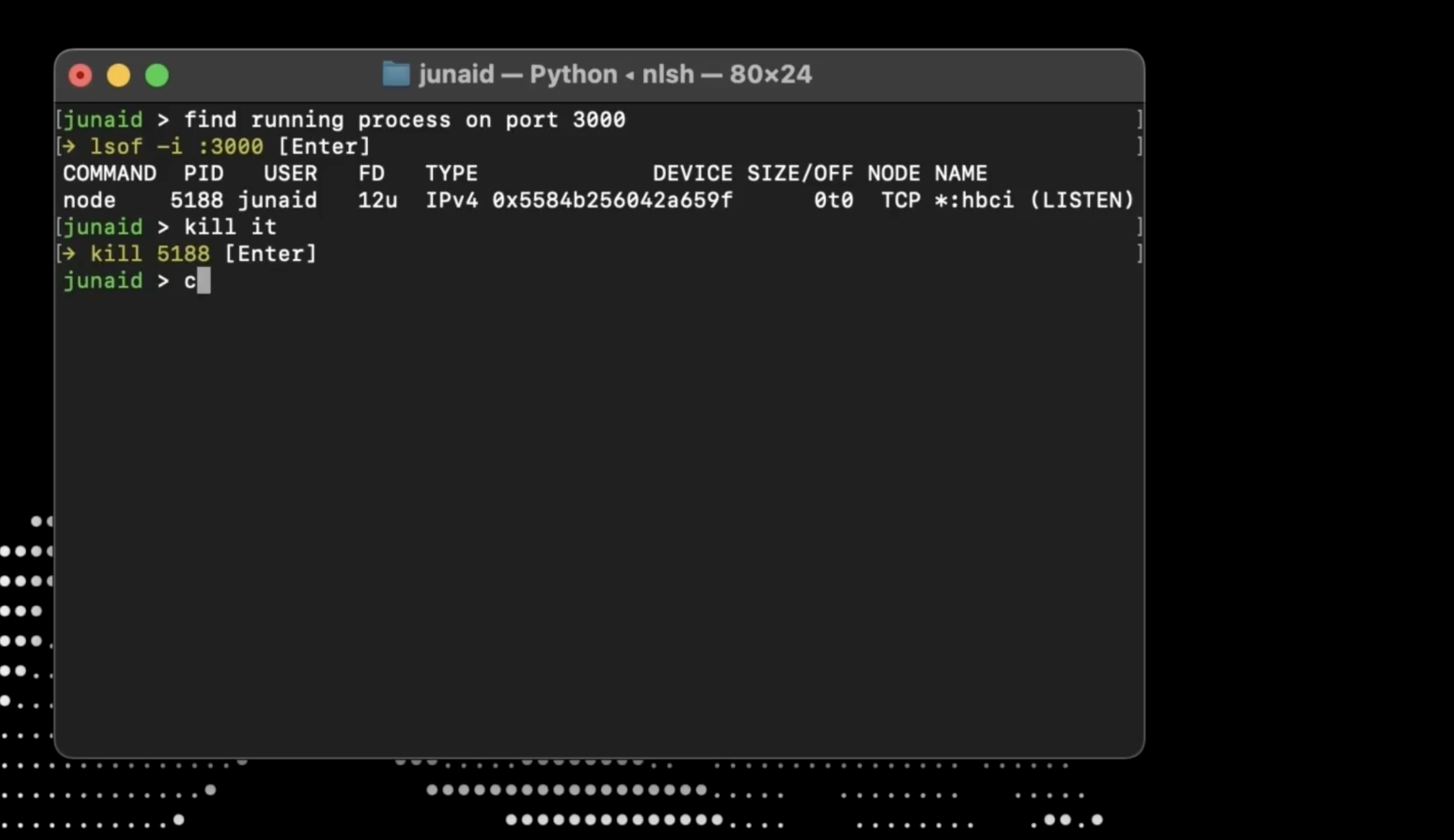
nlsh
talk to your terminal in natural language
177
一句话介绍:一款将自然语言指令自动转换为终端命令的AI工具,解决了用户在命令行环境中因复杂语法和繁多参数而需频繁查阅手册的痛点。
Open Source Languages Developer Tools GitHub
AI终端工具 自然语言转命令 开发者效率 命令行界面 Shell辅助 谷歌Gemini集成 认知减负 生产力工具
用户评论摘要:用户肯定其核心价值,同时关注:1. 本地模型支持的可能性;2. 与Gemini CLI的差异化优势;3. 对破坏性命令的安全护栏和确认流程设计;4. Windows平台支持需求;5. 命令生成的准确性和可靠性。
AI 锐评

nlsh瞄准了一个真实且普遍的“摩擦点”——命令行的高记忆成本。其价值不在于技术上的颠覆(基于Gemini),而在于场景的精准封装:将通用大模型的对话能力,转化为一个高度垂直、即问即得的命令行“同声传译”。这降低了中轻度开发者和技术爱好者的使用门槛,是AI平民化的一个典型用例。

然而,产品目前更像一个精致的“功能包装”,而非成熟的“解决方案”。用户评论一针见血地刺破了其华丽外衣下的核心疑虑:安全与信任。在终端这个“一念天堂,一念地狱”的环境里,一个`rm`或`git`命令的误译可能导致灾难性后果。产品介绍中对此避而不谈,而评论区的担忧恰恰是阻碍其从“酷玩具”变为“生产力工具”的关键鸿沟。用户被迫成为命令的“审计员”,这与“减少认知负荷”的初衷背道而驰。

此外,其与Gemini CLI的差异化模糊。如果仅仅是提供了一个更聚焦终端的聊天界面,而缺乏更深度的上下文集成(如知晓当前目录结构、git状态、系统日志)和可靠的安全确认机制,它的护城河将非常浅薄。真正的价值或许在于未来演进:如评论所建议,结合本地知识库(man页、历史命令)、实施多层安全验证、并构建可解释的命令生成逻辑。否则,它只是一个便捷但伴随风险的“语法糖”,难以在开发者工具栈中获得稳固席位。

查看原始信息
nlsh
A terminal interface that translates plain English into shell commands. Stop memorizing flags. Just type what you want.

This looks really cool. Would be awesome to see if you could run it off a local model too. Perhaps a small one only suited for this task.

I don't know how many turns it keeps in context window, I'm curious.

2
回复

It is Gemini-based. But if I have Gemini, I can use Gemini CLI. What feature do you have, and how is it better than Gemini CLI?

0
回复

I will wait for the windows support. Please remind when it happened.

0
回复
This looks cool! I’m building a similar system for myself that monitors things like dmesg/journalCTL logs passively and scans installed packages for man files that it uses as sources of truth for writing commands. Really helps me utilize tools like FFMPEG and imagemagick to their full capacity. Worth looking into if you want to build this out more
0
回复

@jun3id That's a cool idea! It makes sense to use AI for terminal commands since so many of them are very hard to memorise. A bit scary though for things like killing processes, moving/removing files and mostly git commands 🤣 Are there any guardrails?

0
回复
How have you designed the review/confirmation flow so it actually reduces cognitive load instead of forcing users to become “auditors” of every command—especially for destructive or multi-step operations?
0
回复

Oh wow. So if I install a tool and ask this app on my terminal to run a command , will it get me the working command ?

0
回复
#5
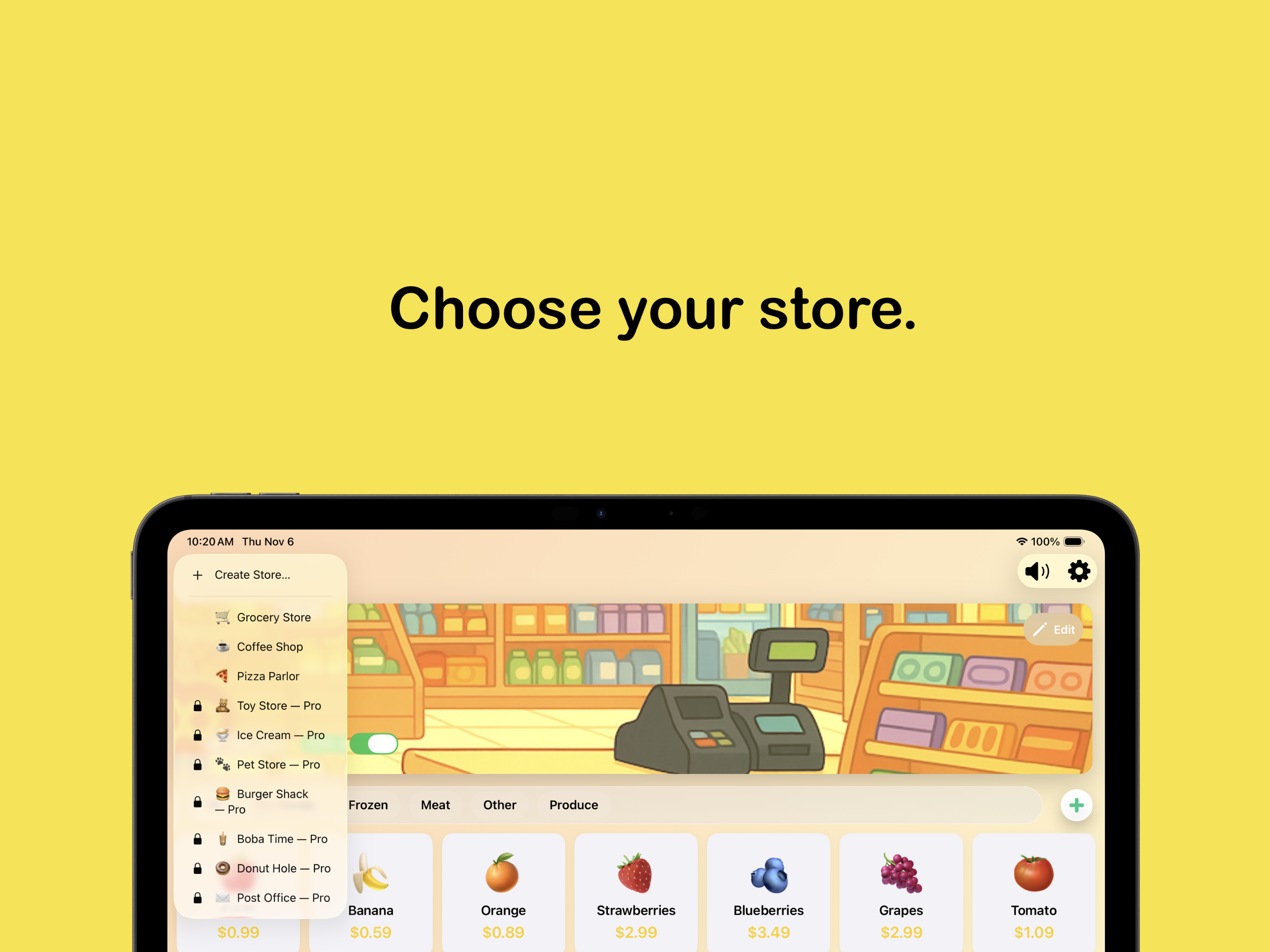
Kids Cash Register
A POS system for kids to play pretend restaurant/shopping.
169
一句话介绍:一款面向儿童的趣味教育应用,通过模拟商店收银的互动游戏,在亲子扮演场景中,无痛启蒙孩子的数学运算与金钱概念。
Kids Education
儿童教育应用 数学启蒙 财商教育 角色扮演游戏 亲子互动 模拟商店 趣味学习 早教
用户评论摘要:用户普遍认可其教育价值与设计初衷,认为是有益的屏幕时间。主要建议集中在增加游戏化元素(如徽章、挑战)以提升长期吸引力,并关注开发者如何平衡自由玩耍与结构化学习,避免变成“家庭作业”。
AI 锐评

在“教育科技”与“亲子消费”的交叉点上,《Kids Cash Register》精准地切入了一个细分但刚需的市场:将家长对“有意义屏幕时间”的渴望,与孩子对模仿成人世界的本能喜好相结合。其真正价值远不止于“教数学”,而在于它是一款由父亲为自家孩子需求驱动的“场景化学习工具”,这保证了产品核心体验的真诚与沉浸感。

然而,其面临的深层挑战在一条评论中被尖锐点出:如何在“开放式假装游戏”与“系统性知识学习”之间取得平衡?目前产品显然优先了前者,通过高度仿真的POS机交互和商店模拟,维护了玩耍的纯粹乐趣。这是一种明智的切入策略,先建立情感连接和习惯。但若要实现长期用户留存与显性的教育成果,开发者必须谨慎设计学习曲线的深化路径。评论中建议的“游戏化元素”是一把双刃剑,运用得当可平滑过渡到更复杂的运算与财商概念(如预算、找零),运用不当则会破坏其宝贵的“真实游戏”氛围,沦为又一套刻板的练习软件。

产品的潜力在于其“模拟平台”属性。10种商店类型为内容扩展留下了空间,未来可从数学自然延伸到语言(商品名称、简单对话)、社会认知(职业、交易礼仪)。它的成功关键在于,能否始终坚持“游戏即学习”的设计哲学,将教育目标彻底溶解在每一次“扫码”、“收款”和“找零”的游戏行为中,让孩子在扮演“掌控者”的过程中,自主吸纳知识。这比任何刻意的“教学模式”都更为高级和有效。

查看原始信息
Kids Cash Register
Kids Cash Register is a fun educational app that teaches kids math skills through interactive store simulations. Features 10 different stores, custom games, and engaging learning experiences.
I built this App so my kids (2 and 5) could play pretend store and restaurant. I wanted something that enhanced their play by giving them the ability to create "realistic" stores and take payments just like they see in the shops and restaurants we frequent, but while still preserving the concept of real play. It's a fun and easy way to begin learning about money and I have enhancements in the works to improve on the math and language aspects of the app.
6
回复

@nic_hansen1 What a beautiful idea! Thank you for sharing this app!

0
回复

Congrats on the launch! It's such a cute idea!

1
回复

I like the idea – gamifying real life, but see more behind that: Financial literacy. Cool!

1
回复

Big fan of starting kids early :)

0
回复
You’re balancing two goals—open-ended pretend play and real math learning (totals, currency, making change): how did you prioritize the first set of features, what learning depth did you choose to start with, and what would make you expand into more structured math/language modes without turning it into “homework”?
0
回复

As a parent, this is exactly the kind of screen time I feel good about. Fun, creative, and actually teaching something...

0
回复

The interface is very friendly and intuitive — feels like a great way to help kids learn math in a fun, hands-on way.

One suggestion: it could be even more engaging with a few gamification elements (like progress badges or mini challenges) to motivate kids as they practice.

0
回复

Great job on the launch! Even tho I don't have kids of my own, I can really appreciate the effort behind this. It’s the ultimate model father move to build something so polished just to enhance your children's play. They should definitely be proud of their dad! What was the most challenging part of designing a 10-store variety?

0
回复
#6
Usagebar
Track Claude Code Usage from your Menu Bar
149
一句话介绍:一款macOS菜单栏应用,实时追踪Claude Code的5小时会话和每周使用额度,通过重置计时和通知,解决开发者在编码冲刺中意外触达使用限制的痛点。
Productivity Developer Tools Menu Bar Apps
macOS工具 菜单栏应用 AI使用追踪 Claude Code 开发者工具 配额管理 效率工具 状态监控
用户评论摘要:用户肯定其“随付随愿”模式及轻量价值,但与开源竞品功能对比引发讨论。核心关切集中在数据准确性(是否解析速率限制头)、隐私安全(密钥存储权限)、未来功能(多账户/团队支持、深度分析)以及分发方式(App Store上架)。
AI 锐评

Usagebar精准切入了一个微小但真实的风口:伴随Claude Code等高性能AI编码工具采用“会话+周”复合配额制,专业用户从“盲用”进入了精打细算的“配额焦虑”时代。其价值不在于技术复杂度,而在于将原本需要命令行查询或页面跳转的隐形信息,变成了菜单栏上持续存在的“视觉仪表盘”,实现了信息平权。

然而,其面临的挑战与机遇同样鲜明。从评论看,其“随付随愿”模式和轻量定位是一把双刃剑。它降低了尝试门槛,迎合了用户不愿为小额工具重复付费的心理,但也直接面临CodexBar等免费开源竞品的压力。用户提问直指要害:数据源是否权威(解析headers还是/usage端点)、架构能否支撑多账户、未来如何在“轻量”与用户需求的“深度分析”间取舍。这本质上是在问,它究竟是一个短平快的“信息转发器”,还是一个有望成为AI配额管理基础设施的“数据中枢”。

产品的真正护城河或许不在于菜单栏本身,而在于其数据处理的可靠性与可扩展性。若能精准、稳定地统一处理速率限制头、API使用量及本地日志,并在此基础上构建跨团队、跨模型的历史分析与预测功能,它便能从“状态显示器”升级为“资源调度顾问”,从而在AI工具日益普及、计费模式日趋复杂的未来占据关键生态位。当前版本是巧妙的切入点,但下一阶段的胜负,将取决于其技术深度与产品定力的平衡。

查看原始信息
Usagebar
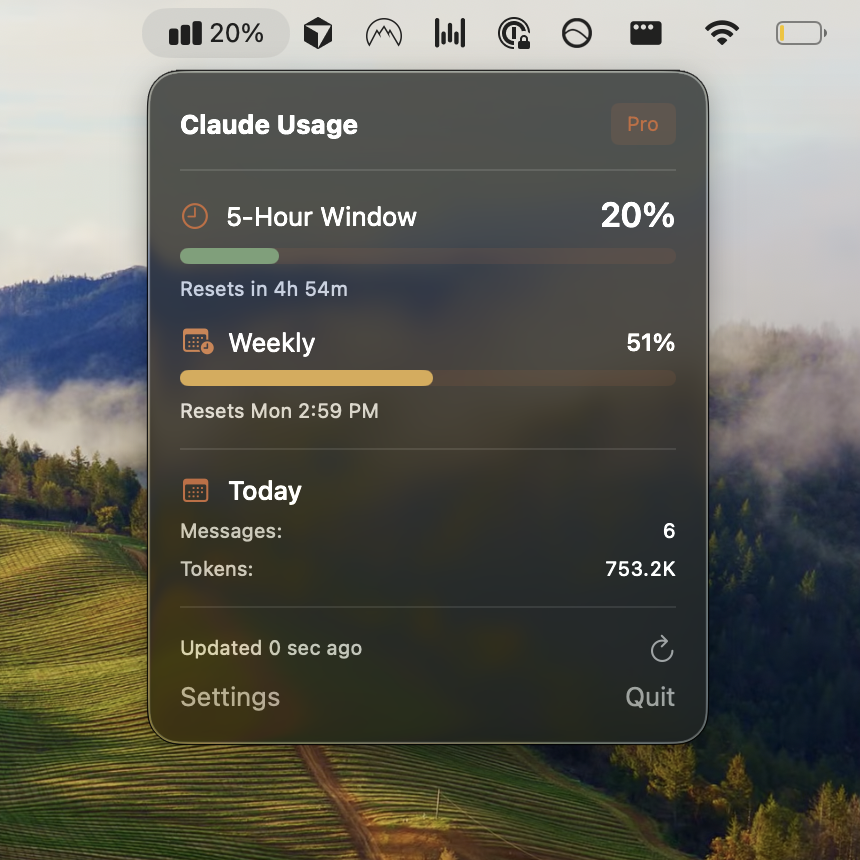
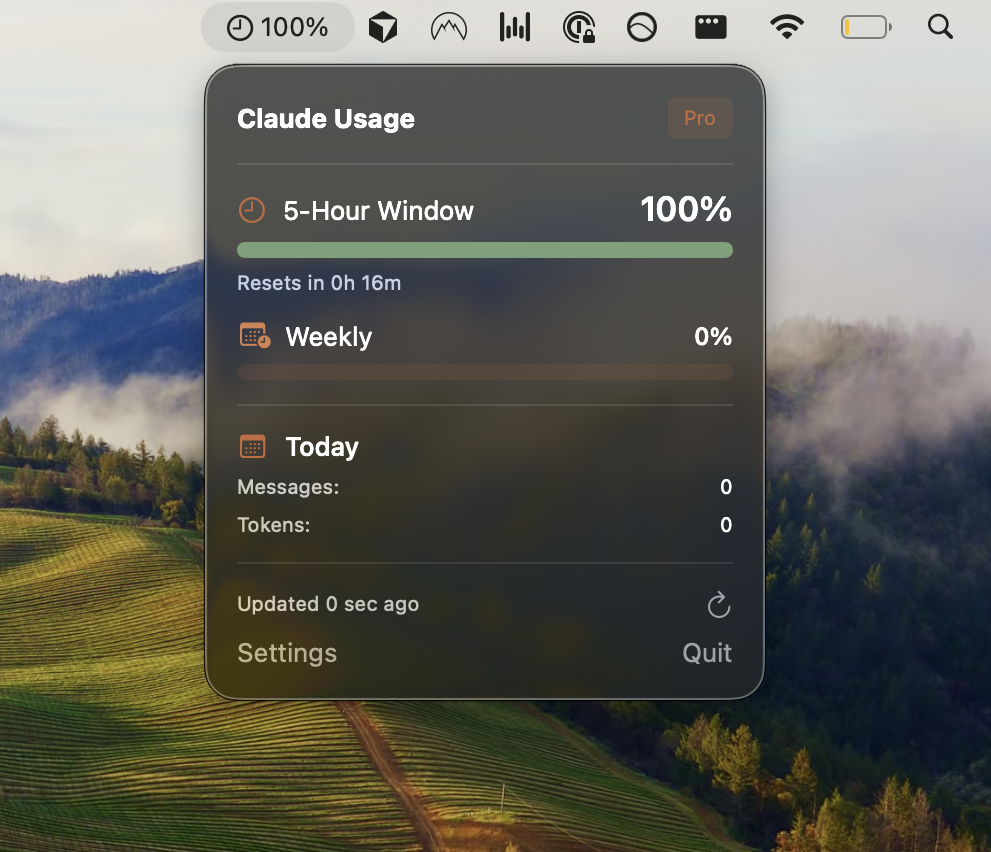
A macOS menu bar app that tracks your Claude Code 5-hour and weekly usage limits. See reset timers, get notifications, and never hit the wall unexpectedly.

Pay What You Want is appreciated, but it seems like maybe open sourcing with a FUNDING.yml approach might be better, given that @CodexBar is free and open source and offers more functionality:

1
回复

@chrismessina +1 to this, especially because it asking permission to keystorage.
However, i personal found usagebar asking permission for keystore less often, maybe because it doesn't track other models.

0
回复

@chrismessina very cool, and I definitely didn’t know about FUNDING.yml (great idea).

Plan is to open source this too.

0
回复
Hey PH! I built Usagebar to track your Claude Code usage from your menu bar, so you never hit limits mid-sprint. I've been using it daily for quick glances. Launching this as "Pay What You Want", would love feedback on future roadmap!
0
回复

@aryanbhasin Finally! Flying blind with usage limits is the worst part of the Claude Code DX. Even if I hit the wall anyway, at least now I'll see it coming. Thanks for building this! :)

0
回复

Pay what you want is smart positioning here. SessionWatcher and CodexBar charge a few bucks, which adds friction when youre already paying $20-200/month for Claude. Curious if you pull from rate limit headers or just parse /usage output... the session vs weekly distinction matters when youre trying to time a reset around a big refactor.

0
回复

Is it available in the App Store?

0
回复

@chilarai currently available outside of App Store (faster to iterate on). It’s still signed with a developer account to distribute outside-of-app-store

0
回复
You’re shipping a lightweight menu-bar utility, but users in this space often want deeper analytics (history, per-model breakdowns, budgets) and also care strongly about privacy. How are you prioritizing simplicity vs. power, and what principles will decide what you’ll never add?
0
回复

@curiouskitty good suggestions, these will be on the roadmap. Priority was to ship something extremely lightweight first with a clean UX.

0
回复

The scale pain here is quota truth: Claude Code has multiple windows (session and weekly), and if you rely on UI heuristics you can mis-predict resets or show “blocked” even when headers say allowed.

Best practice is to treat rate limit headers plus /usage output as source of truth, then compute timers from unified reset epochs and optionally reconcile against local JSONL usage logs for accurate history.

Are you parsing the anthropic-ratelimit-unified headers directly, and will you support multiple Claude accounts or teams so the menu bar can switch contexts without mixing limits?

0
回复

@ryan_thill our app will show you the same limits as /usage. Includes both "session" and "weekly" limits.

We also, as you mentioned, use local .json logs as a fallback (and for API users).

Currently not supporting "teams" - the limits are for each individual user - but good idea.

0
回复
#7
Qwen3-TTS
Voice design, cloning & 97ms streaming
140
一句话介绍:Qwen3-TTS 是一款集成了语音设计、快速克隆与超低延迟流式合成功能的开源语音模型,为开发者和创作者提供了兼具高质量、高可控性与实时性的语音生成解决方案,解决了传统TTS声音单调、延迟高、定制成本高的痛点。
Open Source Artificial Intelligence Audio
文本转语音 开源AI 语音克隆 语音设计 低延迟流式合成 多语言支持 语音模型 开发者工具 内容创作工具
用户评论摘要:用户高度评价其开源意义、技术指标(97ms延迟)及语音设计功能的实用性。主要建议是希望更明确展示支持的10种具体语言。也有评论对生产环境中“深度思考”与“快速行动”的模型选择策略提出探讨。
AI 锐评

Qwen3-TTS的发布,表面上是开源TTS在质量、速度和控制力上的一次“三赢”炫技,但其深层价值在于对行业固有范式的拆解与重组。

它将“语音设计”从传统的精细参数调整或大量样本克隆,简化为自然语言描述,这实质上是将语音的“风格控制”抽象为一个更符合直觉的提示词工程问题。这降低了创意门槛,将语音从“选择”推向“描述”时代,其意义堪比文生图模型将图像创作民主化。而12Hz分词器实现的97ms流式延迟,并非简单的性能优化,它真正瞄准的是实时交互场景的咽喉——对话式AI、实时解说、无障碍工具等,延迟必须低于人类感知阈值,否则体验断裂。它证明,高质量与极低延迟在开源领域并非不可兼得。

然而,光鲜之下亦有隐忧。其一,“10种语言”的支持细节模糊,是多语言混合训练还是独立模型?在非英语语言上的质量与英语的差距,是评估其实际可用性的关键。其二,评论中提及的“think deeper”与“act faster”的选择,精准点出了生产部署的核心矛盾:0.6B与1.7B的模型家族,意味着在推理成本、响应速度和音质细节上存在权衡。团队若不能提供清晰的选型指南和基准测试,开发者很容易陷入试错泥潭。

总体而言,Qwen3-TTS的真正价值,在于它以开源方式,将此前可能只存在于大型闭源实验室或需要高昂计算成本的“高品质实时可控语音生成”能力,变成了一个可触及、可拆解、可部署的公共产品。它抬升了开源语音合成的基准线,迫使整个领域重新思考语音合成的技术路径与产品定义。但其能否从“技术惊艳”走向“生态繁荣”,取决于后续的工程化文档、详实的性能透明度和活跃的社区运营,这才是对团队更深层次的考验。

查看原始信息
Qwen3-TTS
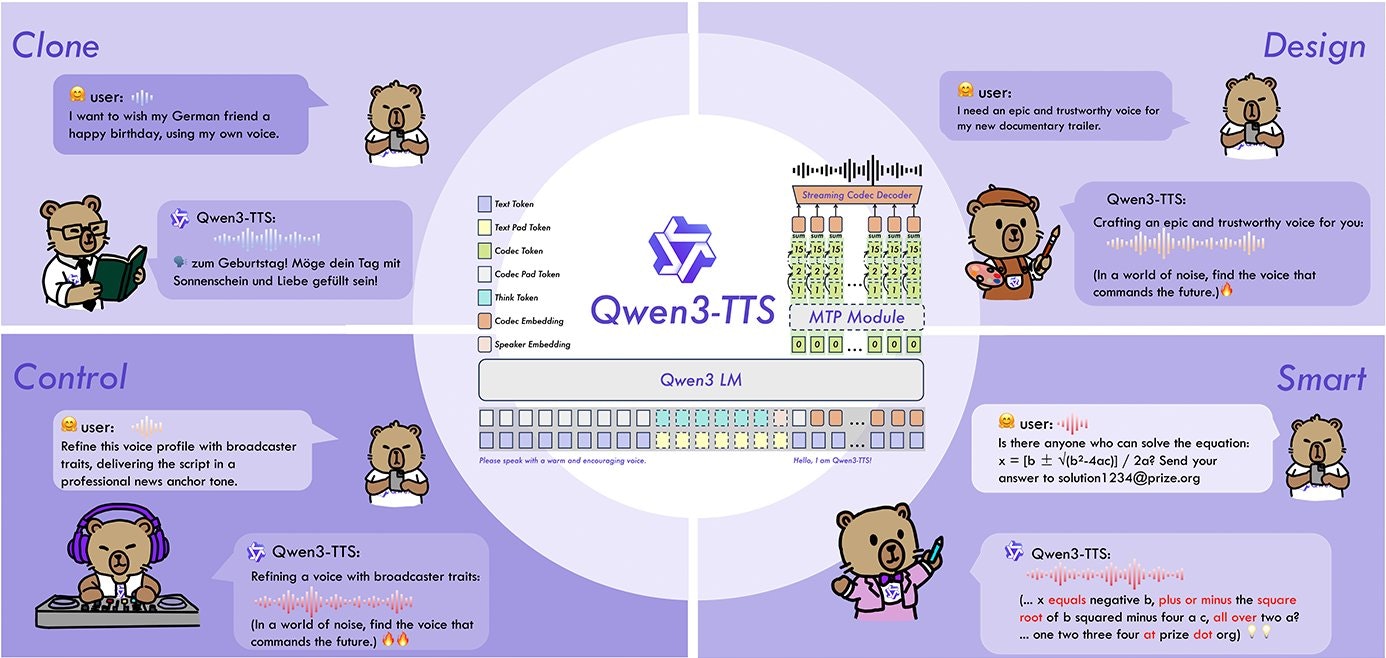
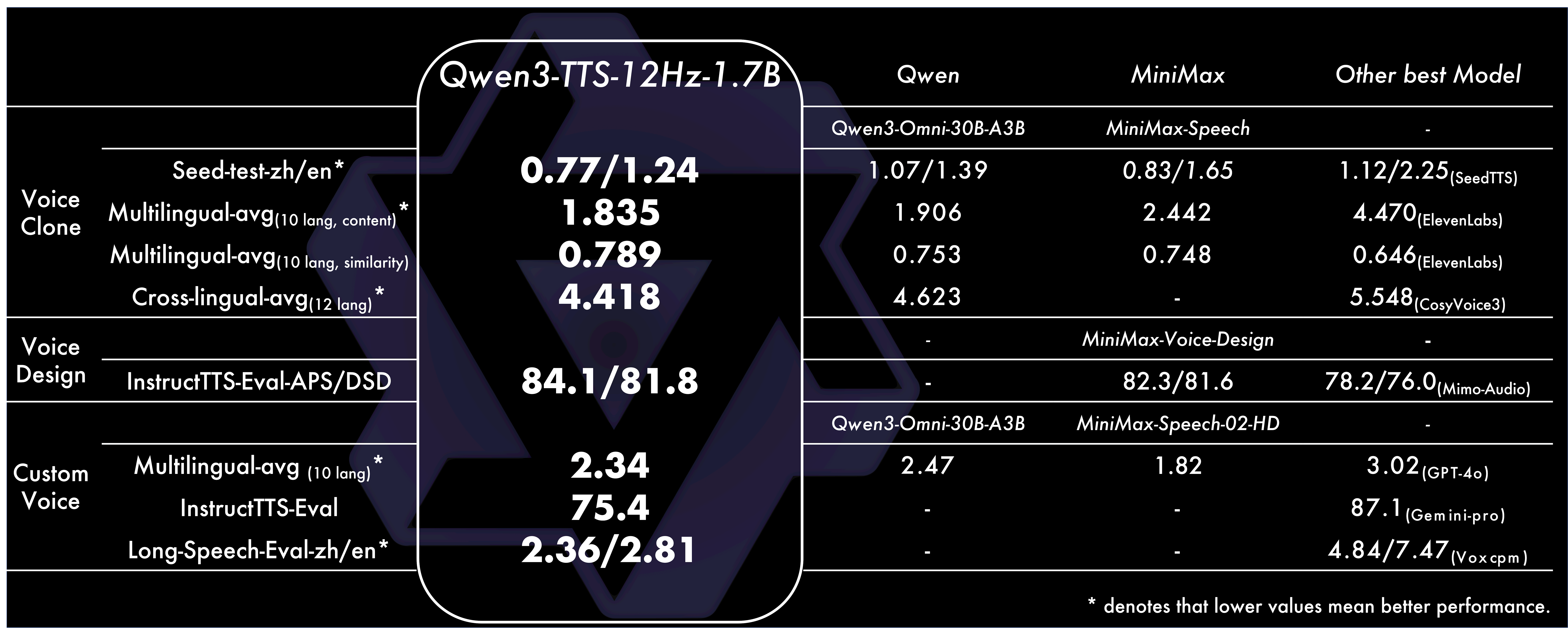
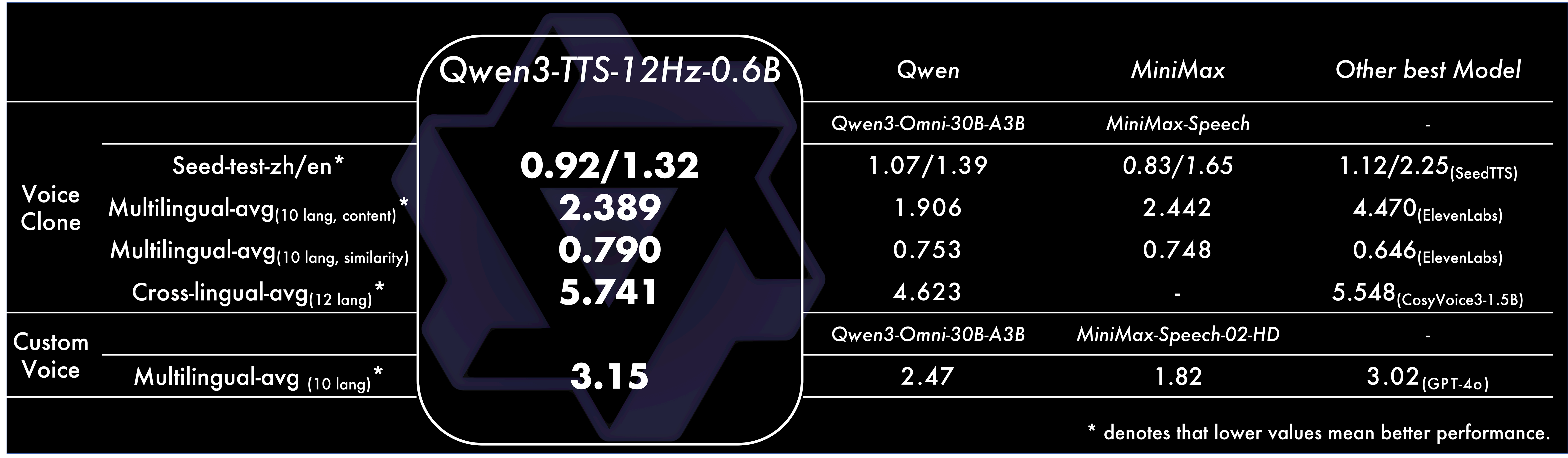
A family of SOTA speech models (0.6B & 1.7B) supporting 10 languages. Features prompt-based Voice Design, 3s zero-shot cloning, and extreme low-latency streaming.

Hi everyone!

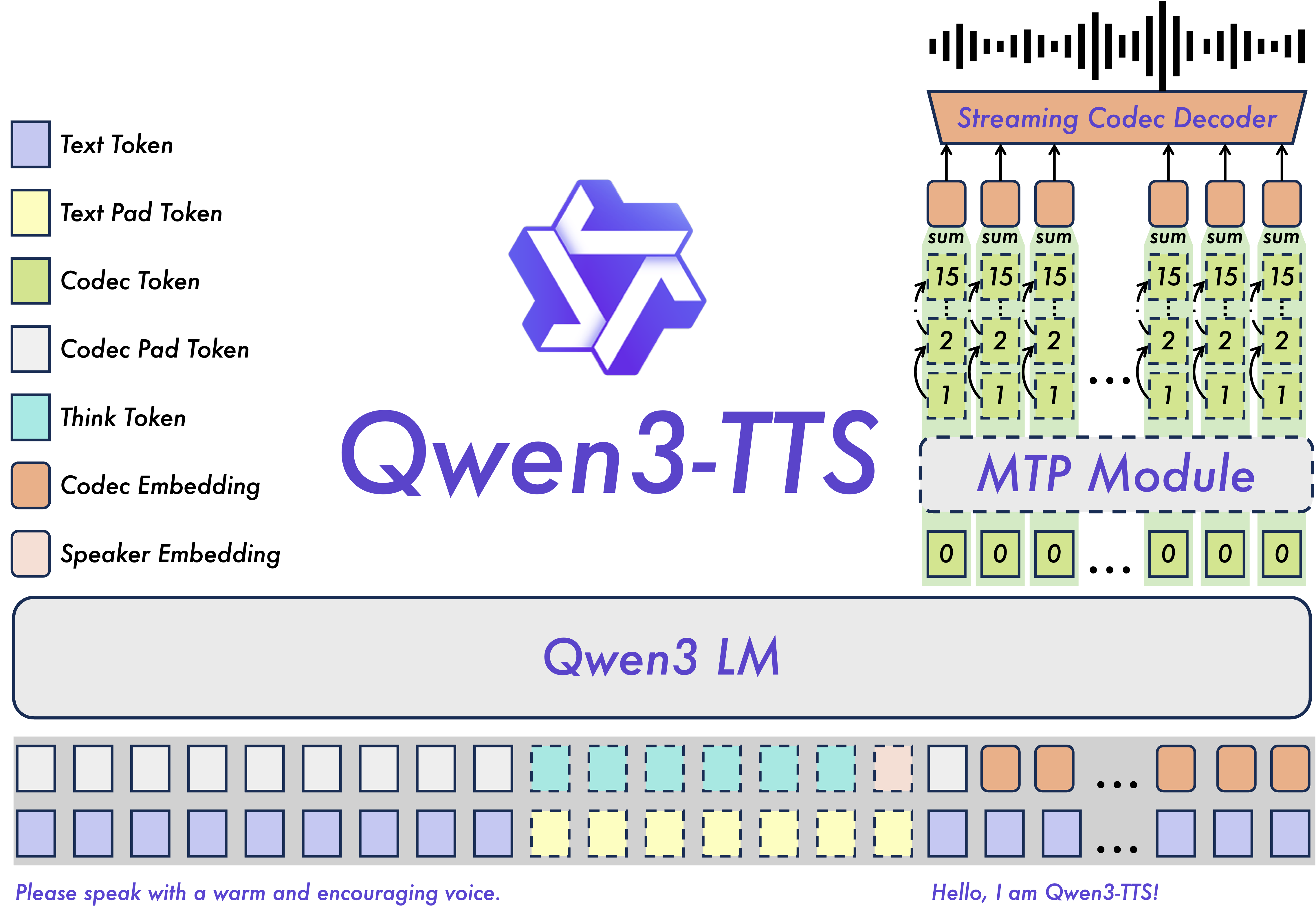
The Qwen team just dropped what might be the most comprehensive open-source TTS release we have seen. Qwen3-TTS combines three things that are usually mutually exclusive: SOTA quality, extreme speed, and creative control.

The "Voice Design" feature is really robust—just describing the persona (e.g., "sad old man") works surprisingly well.

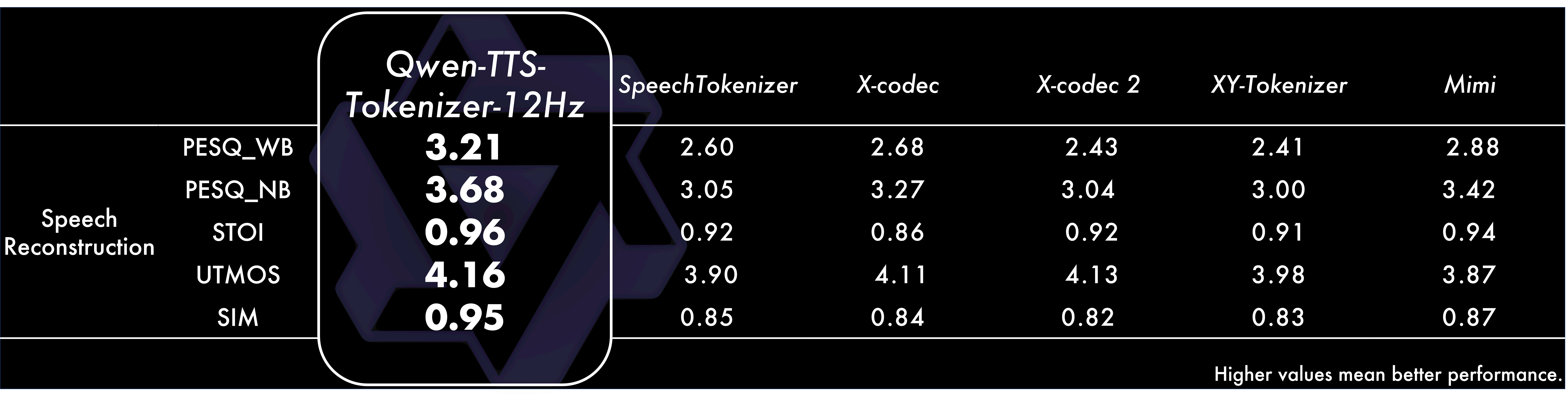
Technically, the efficiency is wild. They use a 12Hz tokenizer to compress speech without losing detail, bringing the latency down to just 97ms 🤯

Open source TTS just raised the bar again. If you are building anything with voice, you might wanna check this out.

Demo Here.

5
回复

@zaczuo wow!!! Congrats on the launch!Curious how people are choosing between “think deeper” vs “act faster” in production.

0
回复

Okay but which languages? Why not show the 10 languages more obvious

0
回复

97ms latency thats faster than I can decide what to have for lunch! This is a massive win for the open-source community. The voice design sounds like a dream for creators who are tired of hearing the same 3 robotic voices everywhere. Can’t wait to try describing a caffeinated marketing manager on a Monday morning - that would be my perfect persona:D Congrats on the launch!

0
回复
#8
Preloop
The MCP Governance Layer
117
一句话介绍:Preloop是一个为AI智能体工作流内置人工审批层的自动化平台,在涉及代码部署、退款处理等高风险操作时,通过移动端或协作工具进行事前拦截与审批,解决了AI代理因缺乏责任约束而难以应用于关键业务流程的信任与安全痛点。
Open Source Developer Tools Artificial Intelligence
AI智能体治理 人机协同审批 MCP协议 自动化安全 风险管控 代理操作审计 工作流自动化 企业级AI应用
用户评论摘要:用户关注点集中在:1. 集成路径与现有MCP生态的兼容性;2. 审批逻辑与路由的灵活性;3. 规模化后的人工审批瓶颈及AI辅助审批可能性;4. 具体实施中的安全合规与权责归属问题。创始人回应了技术架构选择与未来“AI监督AI”的规划。
AI 锐评

Preloop切入的并非单纯的自动化效率市场,而是AI代理规模化应用前夜最关键的“责任缺口”问题。其价值不在于让AI跑得更快,而在于为AI系上“安全带”,让原本因风险而停滞的自动化场景得以启动。产品巧妙地利用MCP协议作为代理层,而非侵入式SDK,实现了近乎零成本的“安全接入”,这降低了 adoption 门槛,是明智的技术定位。

然而,其核心模式将人置于决策回路中,这既是当前合规性下的必然选择,也可能成为其规模化的阿喀琉斯之踵。当审批请求量激增时,人工审批将沦为瓶颈。团队虽提及未来用AI审核AI的构想,但这本质上将信任风险从“执行代理”转移至“审核代理”,并未根本解决责任归属问题,只是增加了缓冲带。产品的长期考验在于:能否构建起一套超越简单人工确认的、动态的、基于策略与风险评估的智能治理框架,并让这套框架本身获得企业的制度性信任。目前它更像一个必要的“刹车系统”,但未来真正的战场在于“自动驾驶的交通规则”与“智能交通管制系统”。

查看原始信息
Preloop
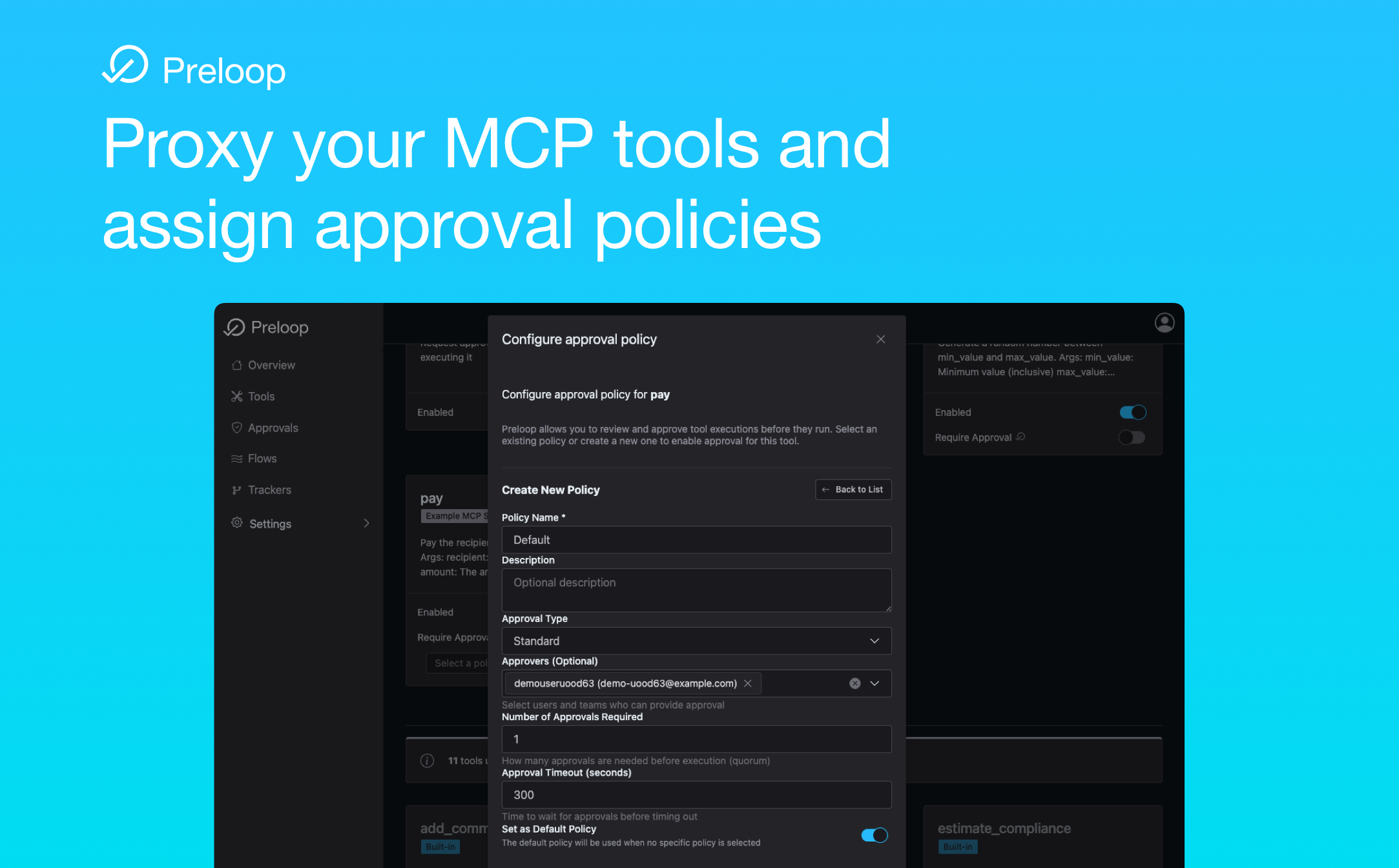
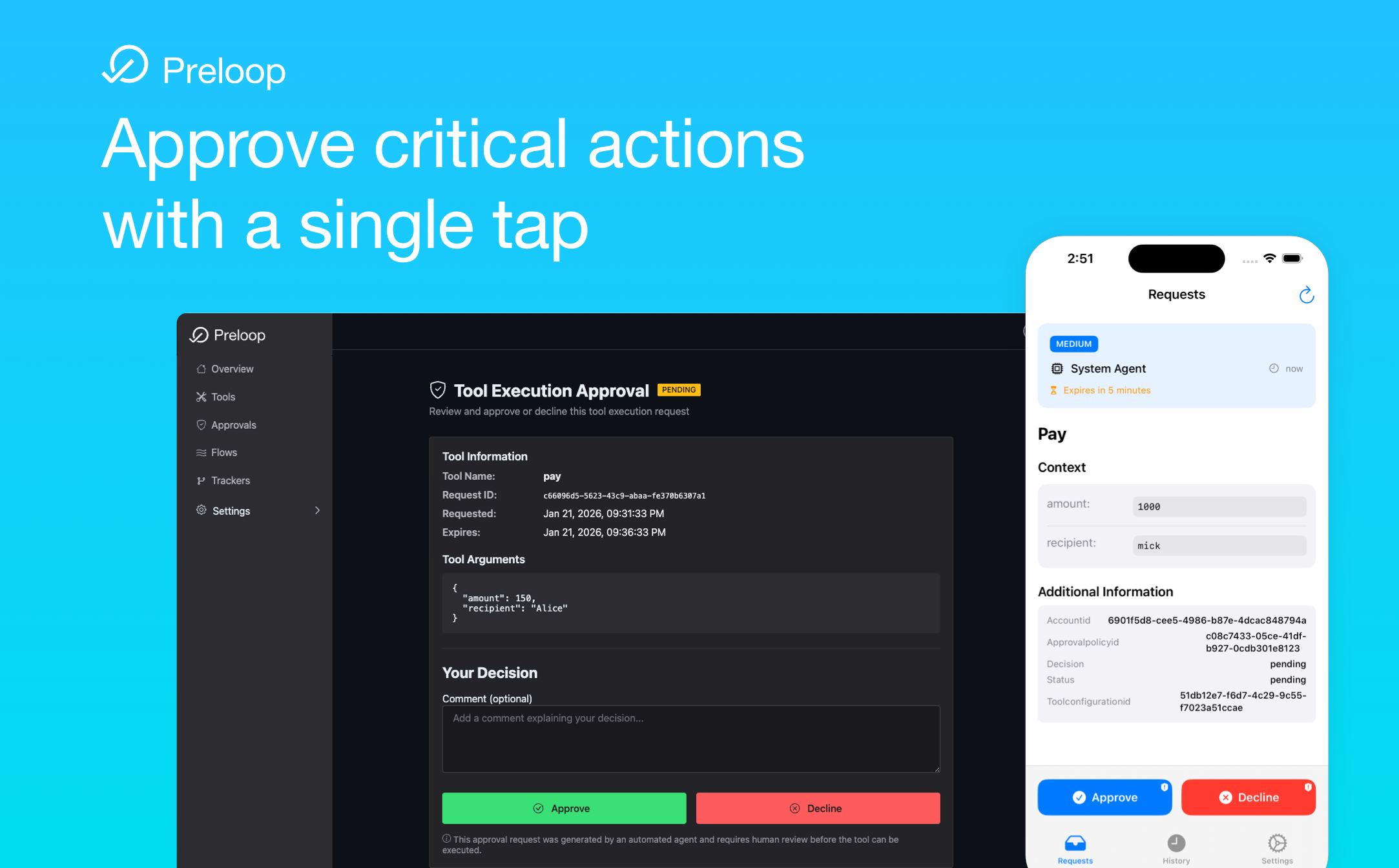
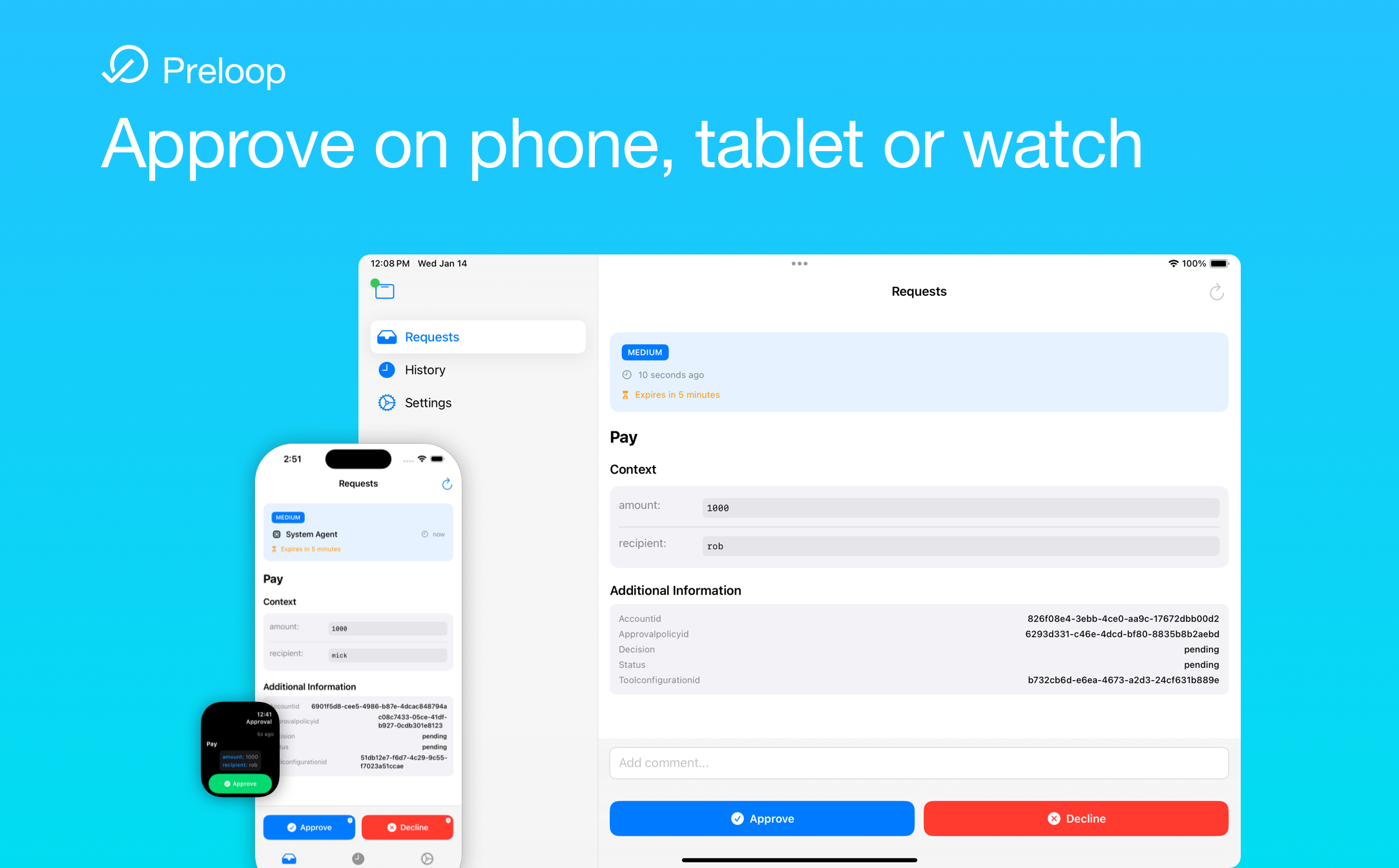
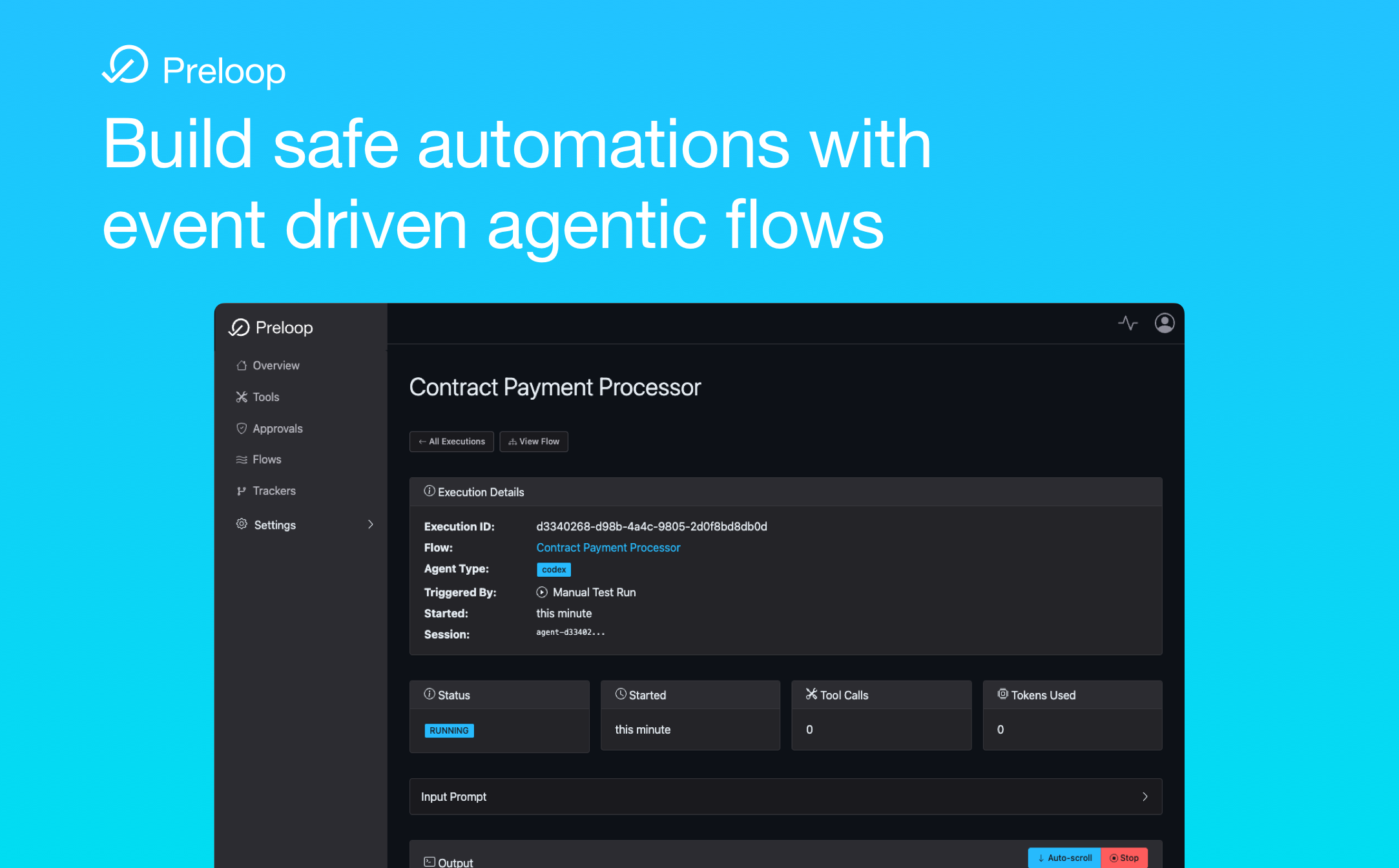
AI agents are powerful, but one wrong action could be catastrophic. Preloop is an agentic automation platform with built-in human approval layer. AI agents automate routine work across your systems, and when they attempt risky actions (deployments, refunds, data changes), Preloop intercepts and routes them for approval via mobile, Slack, or Teams before execution. You can use Preloop for automation only, approval gates only, or both together depending on your needs.

Hey Product Hunt!

I'm Yannis, co-founder of Preloop.

We built Preloop because we kept seeing the same problem: AI agents are incredibly powerful at automating work, but they can't take legal or moral responsibility for their actions.

The core insight: When your AI agent is about to deploy code, process a refund, or modify customer data, someone needs to approve it. Not after the fact - before execution.

What makes Preloop different:
- Built on MCP protocol from day one (no adapters needed)
- Approve critical actions from your phone, Slack, or Teams
- Use it for automation only, approval gates only, or both together
- Works as an MCP proxy alongside your existing tools

Question for the community: What is the one agentic automation that you would love to have but are afraid of launching due to lack of oversight or potential consequences?

4
回复

@yconst Hi Yannis, congrats on the launch. Can you build logic into this to route appros?

1
回复

Former co-founder of @d1_mo here!

Congratulations on the launch!

The manual approval flow makes total sense for getting started, but knowing you, you're probably already thinking about scale.

Do you have plans to introduce automated AI approvals for teams that have too much volume for manual review? E.g. Having a smaller model audit the agent's requests?

3
回复

@cpsaltis Spot on! We believe the future is 'AI-supervised AI.' We are working on a feature where you can use a model with appropriate context to score the risk of a request, and only escalate to a human if the score is > 80/100.

1
回复
What does adoption look like for a team that already has MCP clients and servers running—what’s the smallest integration that delivers value in days, and what are the common organizational hurdles (security/compliance, ownership of approvals, on-call impact) you see during rollout?
1
回复

@curiouskitty Thanks for the thoughtful questions! These are exactly the adoption mechanics we spent the most time refining.

1. Smallest Integration (Value in minutes, not days): Since Preloop acts as an MCP Proxy, the "smallest integration" is literally changing the connection string in your claude_desktop_config.json or Cursor settings.

You don't need to rewrite your agent code or servers. You just point the Client to Preloop, and Preloop forwards to your existing Server. You get immediate value (centralized visibility + basic gates) instantly.

2. Common Organizational Hurdles:

  • Ownership of Approvals: This is the biggest friction point. We usually see teams start with "Self-Approval" (the dev approves their own agent's actions) just to prevent accidents. Once comfort grows, they create policies that route high-risk actions (e.g., "Payments > $50") to a specific manager or lead.

  • Security & Compliance: A major requirement we see is Forensics. Teams need to know exactly what an agent tried to do. We store the request payloads in a detailed Audit Log, giving security teams a complete "black box" recording of every agent action for compliance reviews.

  • On-Call Impact: We avoid the "bottleneck" problem by supporting routing to entire teams or to Slack channels. This ensures that an approval request is seen by the whole squad, rather than pinging a single person who might be asleep or offline.

Happy to dive deeper into your specific stack if you want to ping me on Twitter/X!

0
回复

This is really amazing. So how can we integrate this with our custom MCP apps?

1
回复

@chilarai Thanks! Preloop works as an MCP proxy sits between your client and MCP server, no code changes needed.

Point your MCP client at Preloop → we handle approvals → forward to your server.

Try the free trial and let me know if you hit any issues!

1
回复

Preloop as an MCP proxy for approval gates makes sense... agents with tool access need human checkpoints. The mobile and watch notifications are clever for async approval. Curious how you handle request state TTL when someone takes a few minutes to approve from their phone.

0
回复

Hey Product Hunt,

Hunter & CTO here! Super excited to share Preloop with you all today.


While Yannis touched on the "Responsibility Gap," I wanted to share a bit about the technical architecture choice we made.


When building this, we had a choice: Build an SDK (that you have to import into your code) or build a Proxy.

We chose the MCP Proxy approach because:

  1. Zero Code Changes: You shouldn't have to rewrite your agent just to make it safe. You just change the connection string.

  2. Runtime Agnostic: It works whether you are using Claude Desktop, Cursor, or your own Python/LangChain scripts.

  3. State Management: We capture and hold the tool call request state. This allows for "human-speed" approvals (via mobile/watch) without losing the context of what the agent was trying to do.

I'm hanging out in the comments all day. Hit me with your hardest technical questions about our MCP implementation or the approval flow!

0
回复
#9
Forge Agent
Swarm Agents That Turn Slow PyTorch Into Fast GPU Kernels
116
一句话介绍:Forge Agent通过32个并行AI智能体自动将PyTorch模型优化为高性能GPU内核,解决了开发者在模型推理部署中手动优化性能瓶颈、效率低下的核心痛点。
Hardware Developer Tools Artificial Intelligence
AI模型优化 GPU加速 PyTorch CUDA内核 推理加速 自动化代码生成 高性能计算 编译器 智能体集群
用户评论摘要:用户关注验证策略的严谨性(如容错、随机测试)、规则可定制性,以及性能对比基准。开发者回应将增加规则编辑功能。整体肯定其并行智能体架构的巧思。
AI 锐评

Forge Agent的本质,是将传统手工或编译器优化的“确定性工程”转变为一场“群体智能搜索实验”。其宣称的32个智能体并行尝试不同策略,并由法官验证,听起来更像是用AI暴力搜索优化空间,而非真正的理解与重构。这暴露了当前AI辅助系统设计的核心矛盾:在追求极致性能的黑盒优化中,如何保证100%的正确性与可调试性?用户评论直指要害——验证策略。仅匹配参考输出远不足够,数值稳定性、边界条件、随机测试的缺失都是潜在炸弹。

产品真正的价值或许不在于“5倍于torch.compile”这个数字(基准测试环境与模型选择极易影响结果),而在于它试图将高阶优化(如内核融合、内存合并)的能力,从极少数CUDA专家手中“民主化”给普通PyTorch开发者。然而,其商业模式(单内核免费、不达标退款)也暗示了服务的高成本与不确定性。它更像一个性能“赌场”:投入计算资源(信用点),让智能体群为你碰运气。若其法官系统与规则框架足够透明和可定制,它可能成为高级用户微调性能的利器;若始终是个黑盒,则只是一个效果随机的性能加速服务,难以承载关键生产环境的信任。其长远挑战在于,如何在自动化与可控性、暴力搜索与确定性优化之间找到平衡点。

查看原始信息
Forge Agent
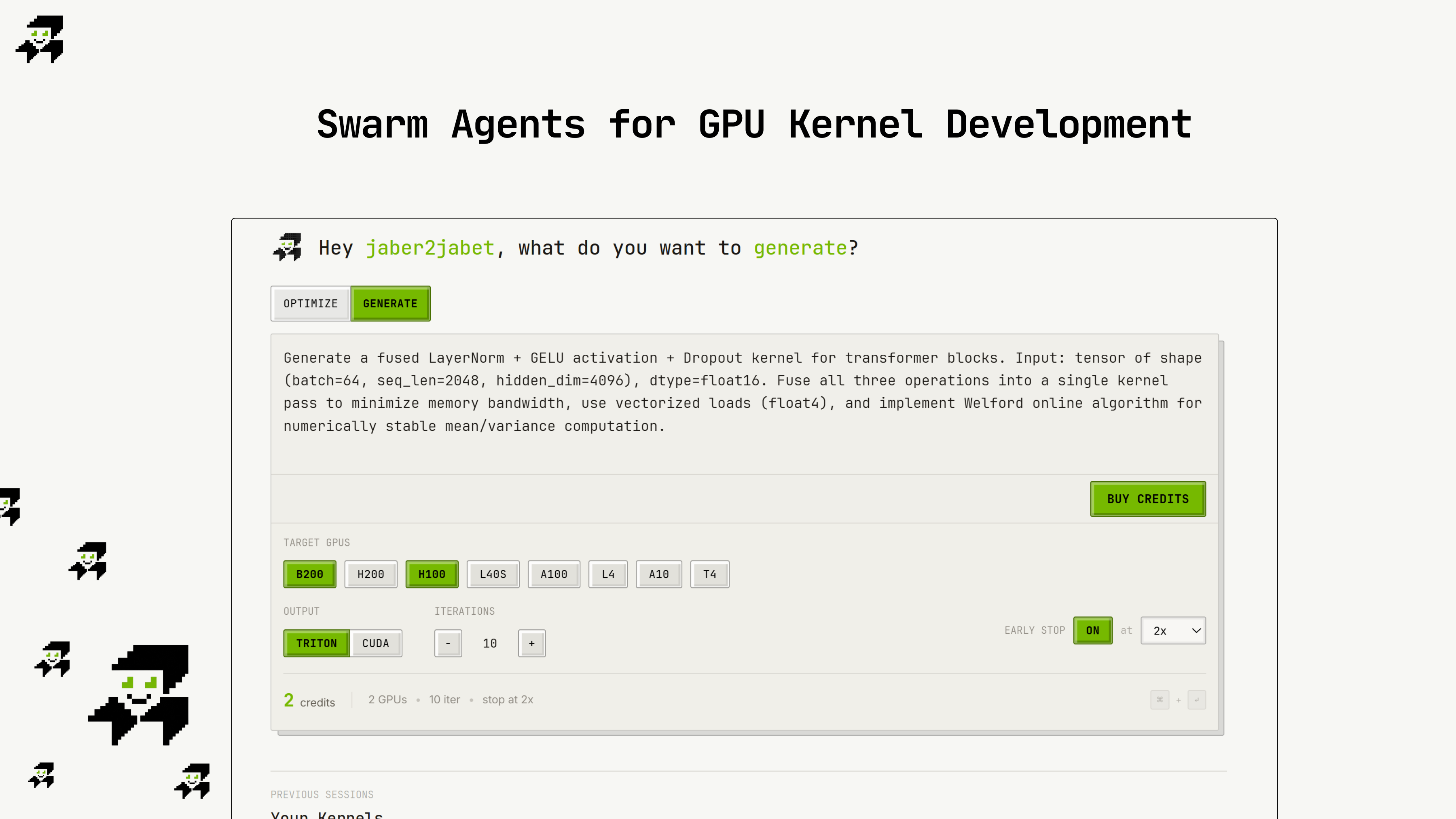
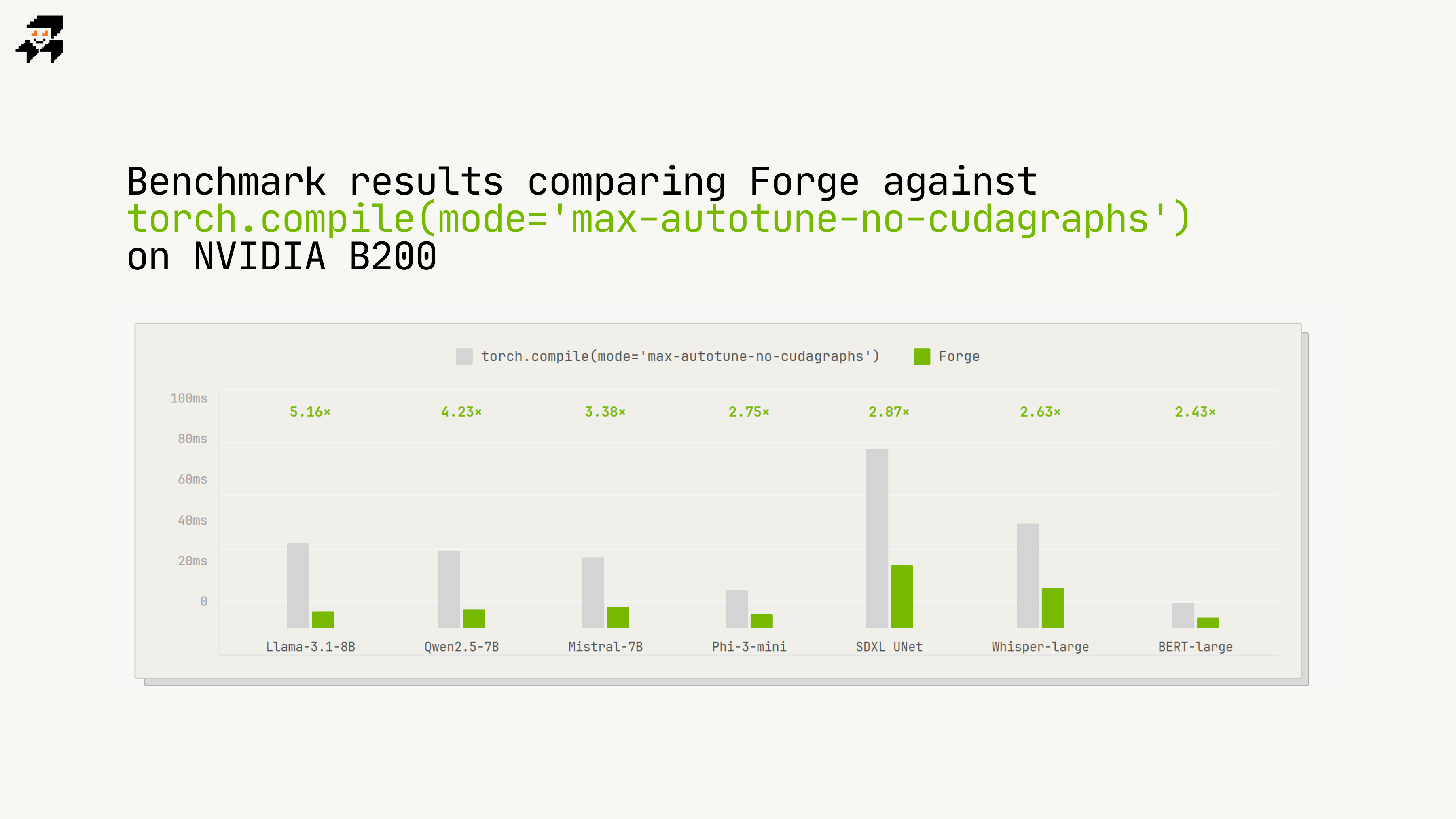
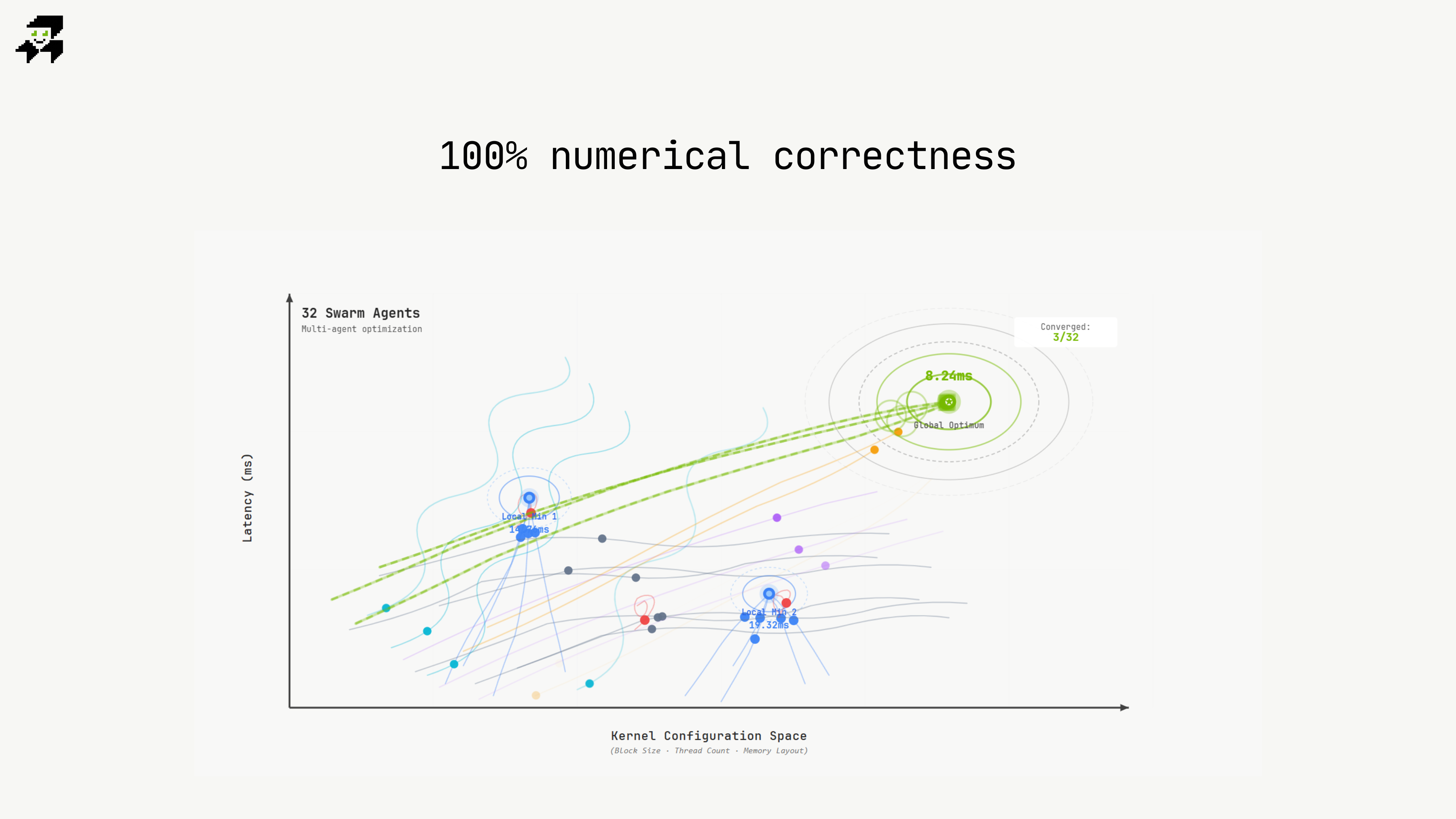
Forge turns PyTorch models into optimized CUDA and Triton kernels automatically. 32 AI agents run in parallel, each trying different optimization strategies like tensor cores, memory coalescing, and kernel fusion. A judge validates every kernel for correctness before benchmarking. We got 5x faster inference than torch.compile on Llama 3.1 8B and 4x on Qwen 2.5 7B. Works on any PyTorch model. Free trial on one kernel. Full credit refund if we don't beat torch.compile.
Hey PH! If we don't beat torch.compile you get your credits back!! Real results on B200: Llama 3.1 8B: 5x faster than torch.compile Qwen 2.5 7B: 4x faster SDXL UNet: 3x faster
4
回复

Congrats! Can you dictate rules that the judge uses?

2
回复
@daniele_packard currently no but nice point! We will make you able to edit the rules for the judger
1
回复
Correctness is the main risk with generated kernels. What is your validation strategy beyond “matches reference outputs”—e.g., tolerances, randomized testing across shapes/dtypes, determinism, and how you debug/report failures so users can trust and iterate quickly?
1
回复

32 parallel coder+judge pairs is a smart setup. The judge comparison logic is the interesting part... wondering if it just checks against torch.compile baseline or if you can define custom metrics like memory footprint or specific tensor core utilization targets.

0
回复
#10
DropTidy
Remove sensitive photo data, 100% client-side & zero uploads
115
一句话介绍:DropTidy是一款在浏览器内100%本地运行的隐私工具,无需上传即可无损清除照片中的敏感元数据,解决了用户在分享图片时无意泄露地理位置、设备指纹等隐私信息的痛点。
Productivity Privacy Photography
隐私安全 元数据清理 客户端处理 图片处理工具 数据防泄露 零信任工具 浏览器应用 数字指纹防护
用户评论摘要:用户高度认可“零上传”的隐私模式,并提出了具体功能建议:支持HEIC/RAW等专业格式、提供更精细的元数据删除控制选项、关注AI生成图片的元数据处理。开发者回应已支持HEIC,并计划增加RAW支持与更细粒度的控制功能。
AI 锐评

DropTidy精准切入了一个被广泛忽视但日益严峻的隐私痛点——图像元数据泄露。其“100%客户端处理”的架构选择,不仅是技术实现,更是核心价值主张,它构建了在零信任环境下的必要工具信任基线。这使其在众多需要云端处理的竞品中形成了降维打击。

然而,其真正的挑战在于从“极客工具”走向“大众产品”。当前“安全至上、全部清除”的哲学虽纯粹,却可能误伤专业创作者需要保留的版权信息,暴露出工具属性与工作流兼容性的矛盾。用户对RAW格式和精细控制的需求,恰恰说明了其从“隐私橡皮擦”向“专业元数据管理器”演进的可能路径。

最犀利的观察点在于其对未来趋势的预判:提及对AI生成图像标识符的清理,已触及了深度伪造时代内容溯源与隐私权的伦理交锋前沿。这不再仅是清理地理位置,而是主动介入信息可信度战场。产品若成功,其意义将超越工具层面,成为普通用户在数字世界进行“自我数据防卫”的一次认知普及和能力赋权。但其长期发展,必须平衡“绝对隐私”的初心与复杂现实应用场景的灰度需求。

查看原始信息
DropTidy
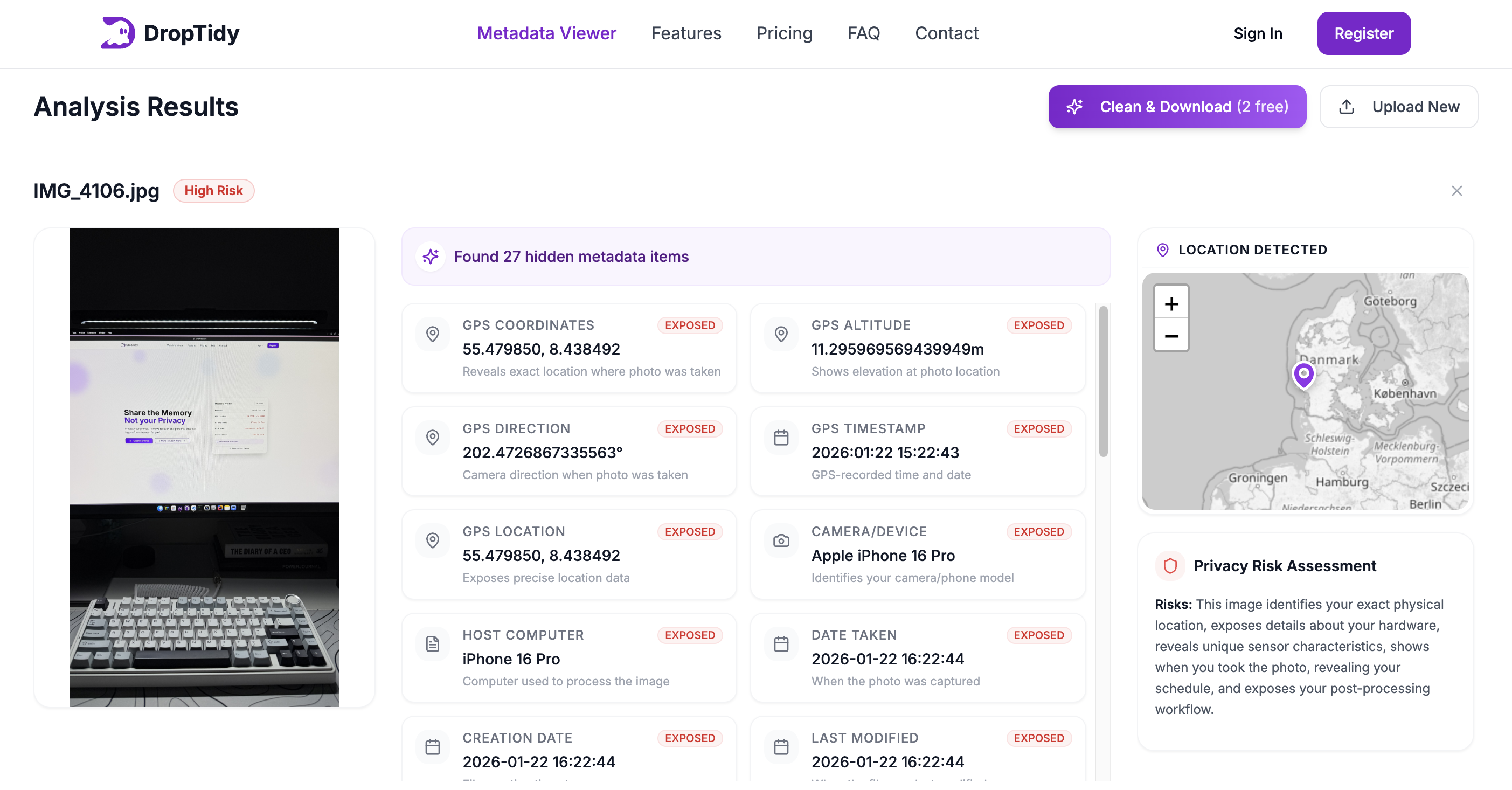
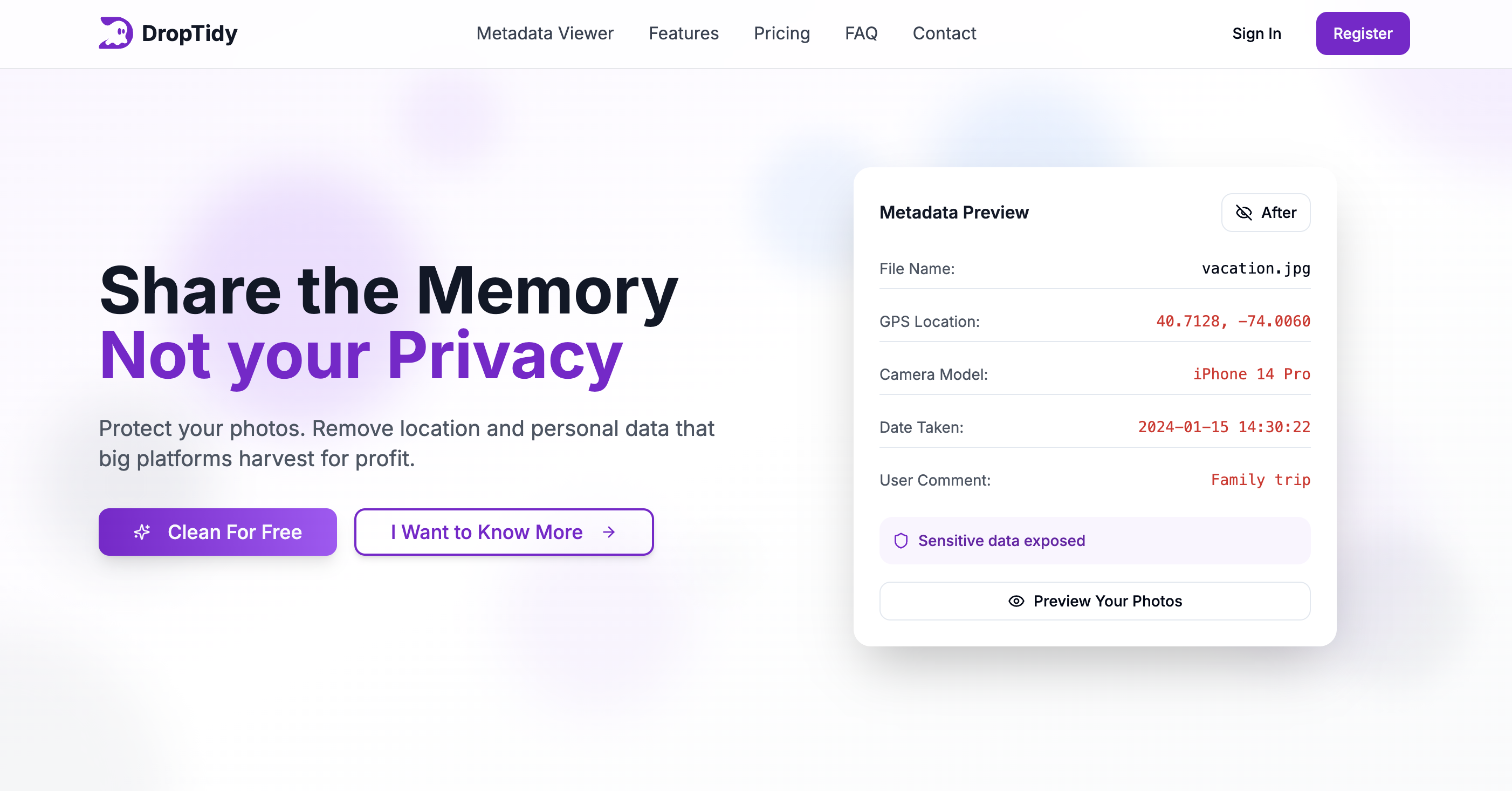
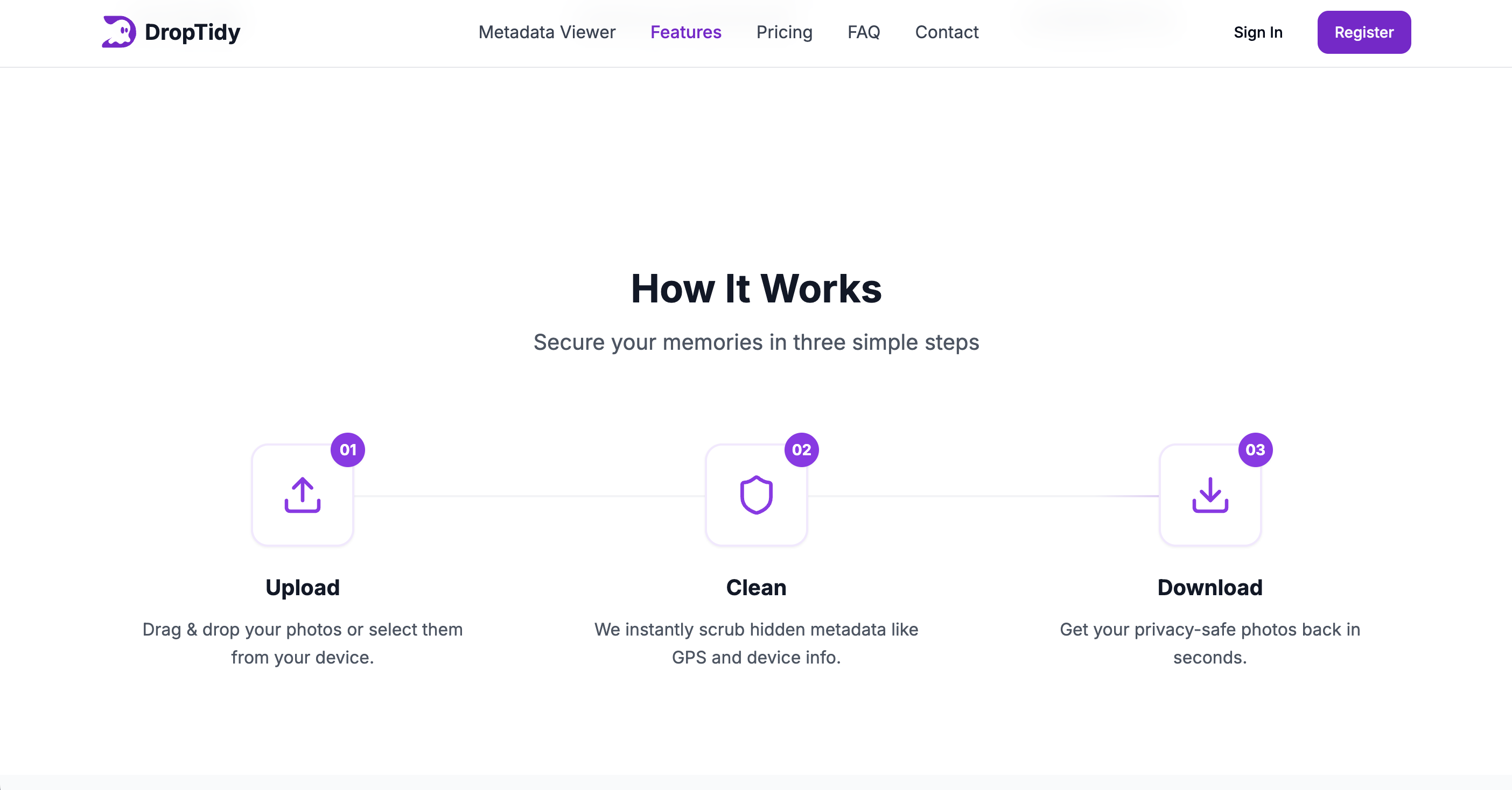
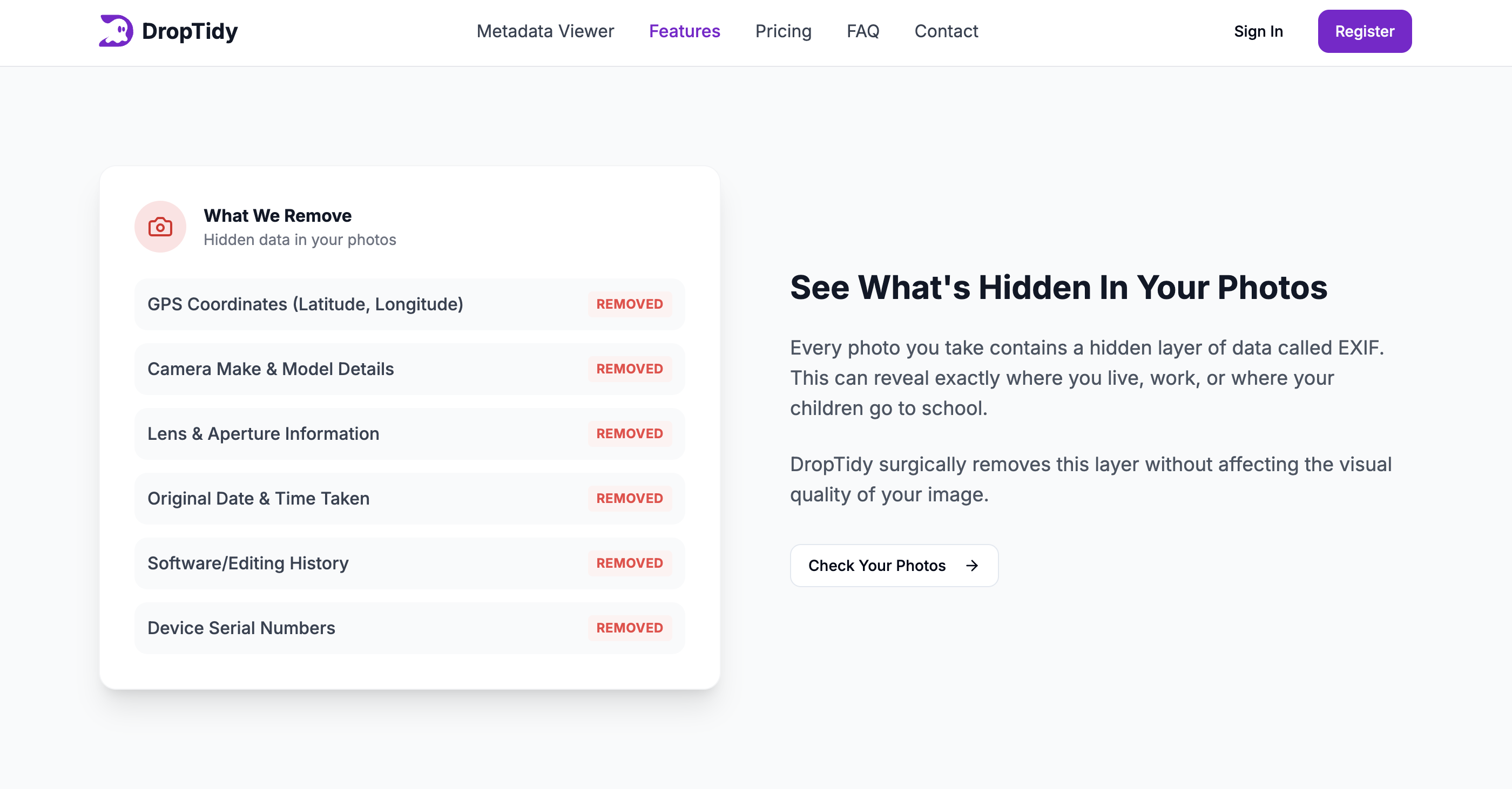
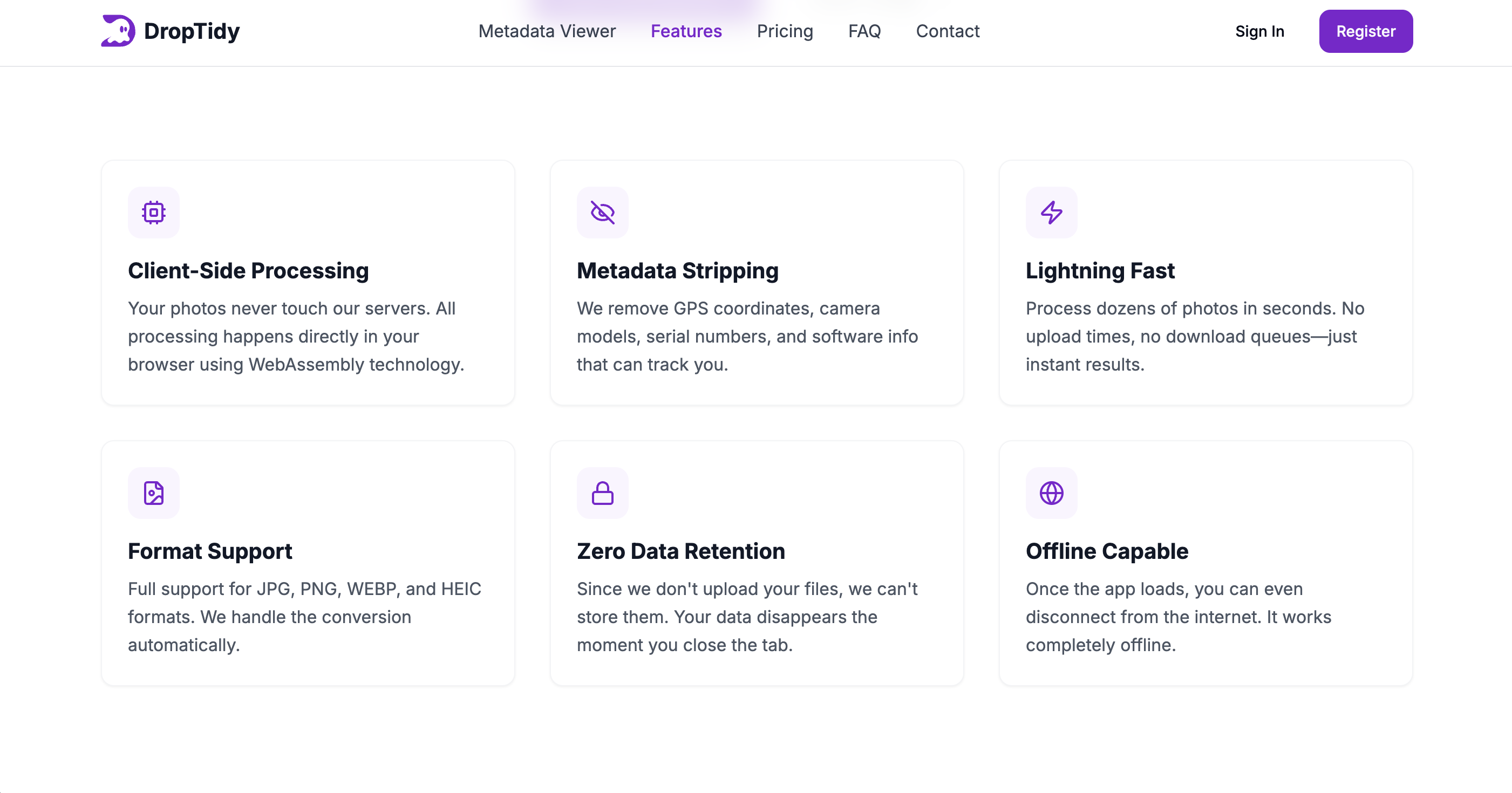
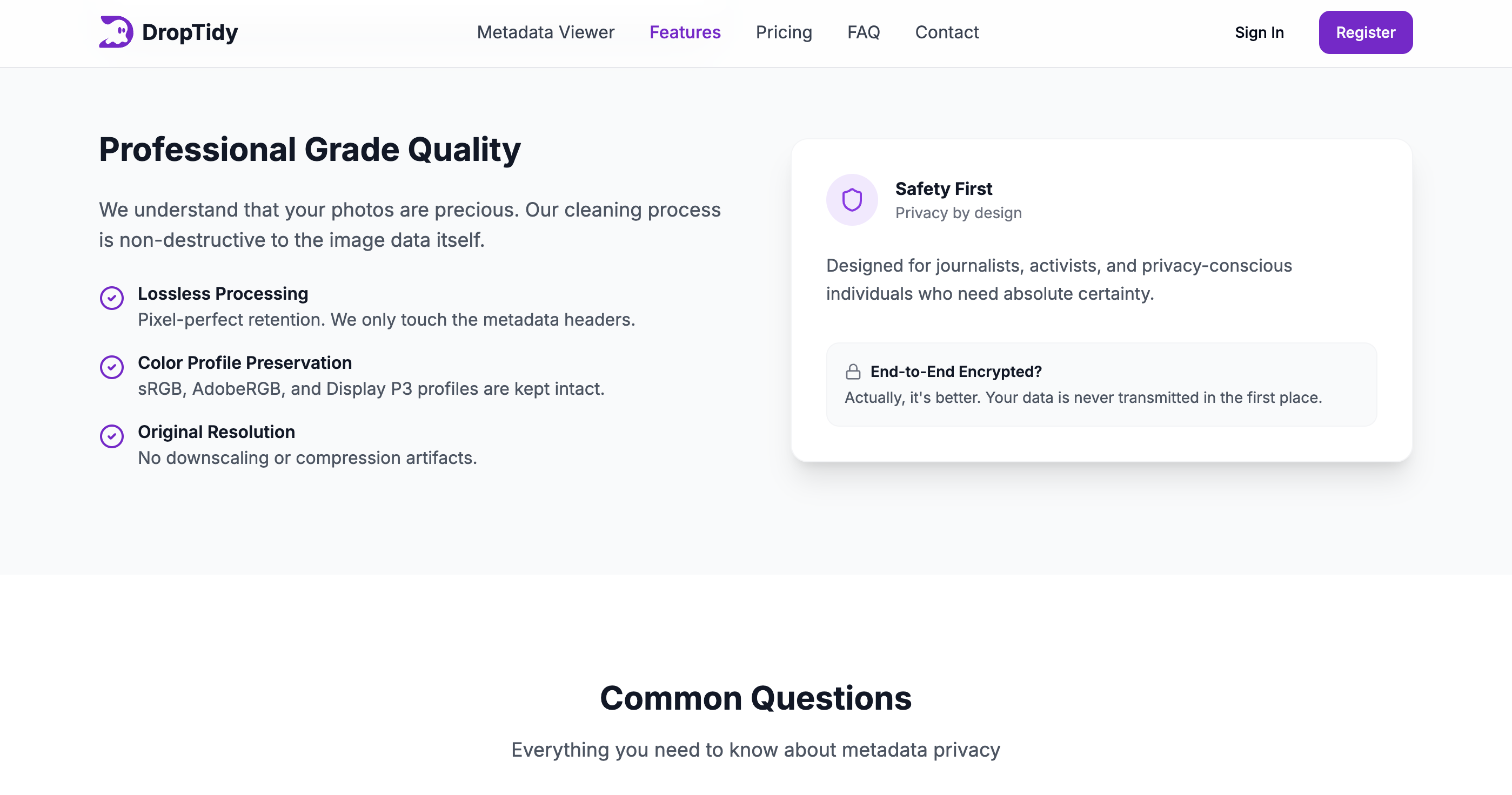
Do you know what data your photos reveal about you? 🤔 Every image you share contains hidden metadata exposing your exact location, daily schedule, and technical details that can fingerprint your device. Whether you’re a photographer or privacy-conscious, you need to be aware of this risk. DropTidy lets you delete this data in your browser. 🔒 Total Privacy: Everything happens inside your browser. 🕵️ Deep Analysis: Find hidden privacy risks. ✨ Lossless: Keeps original quality and resolution.
Do you check what hidden data is inside your photos before you share them online? I built DropTidy because I realized that every photo I take has hidden information by default. I wanted to clean my photos regularly to stay safe, but I did not want to upload my private images to someone else's server to do it. My approach was to build something 100% private. DropTidy works entirely inside your browser. This means your photos never leave your device and never touch a server. It can find over 28 hidden risks, including your exact location and technical details that can fingerprint your phone. It removes this data while keeping your original image quality and colors perfect. Did you know about this? Did you know there is a hidden layer in each photo regarding the device?
4
回复
@tomdra Great work
0
回复

The 'Zero Upload' approach is the only way I’d trust a tool with my personal photos. Knowing that the scrubbing happens 100% in the browser (client-side) is a huge selling point for privacy-conscious users. Does DropTidy support HEIC files from iPhones or RAW files from professional cameras, or is it primarily focused on JPEGs and PNGs? Supporting mobile-native formats would make this an everyday tool for me.

2
回复
Thanks so much @yuanyuan_zhang0104! I completely agree. If its not 100% local, its hard to truly trust. I actually already built in HEIC support since I knew it was a must-have for iPhone users from the beginning using heic2any since browsers dont support heic natively. Professional RAW files are a bit more difficult to handle in the browser, but Im definitely looking into it next! Give it a try with some of your mobile photos and let me know how it goes! 😉
1
回复
In practice, users differ on what they want removed: some want to nuke everything; others want to preserve attribution/copyright fields—how did you decide what to strip vs keep, and what’s your philosophy on “safe defaults” vs granular control?
2
回复
Right now, my philosophy is safe by default, so the tool basically wipes everything to make sure nothing leaks out by accident. Since the goal is total privacy, starting with a fresh copy felt like the best starting point for the launch. I definitely want to add more granular control later so creators can keep things like copyright info if they want to. Thanks for the insight! Which fields do you personally think are the most important to keep @curiouskitty? 👀
0
回复

This is a dream tool for a naturally paranoid person like me! Congrats on the launch 🙂

2
回复

Haha, welcome to the club @alina_petrova3! You are definitely not alone.

Whats the main thing that worries you the most when you share photos online?

0
回复
Looks solid, @tomdra Does this also remove embedded metadata around AI created images?
1
回复

Thats a great question and I was actually hoping someone would ask this. This feature is coming to DropTidy very soon. As we know, 2026 is the year where almost all AI-generated images will be flagged on the internet as AI.

Right now the tool handles all the standard metadata but removing the embedded AI data would be the next step. I am currently working on it and would be bringing it to public very soon @kenyarmosh! 😉

1
回复
@tomdra What are your thoughts on the ethics of removing metadata that distinguishes an AI-generated image from a real one?
0
回复
@tomdra Nice. Very smart move and congrats on a successful launch.
0
回复

28 hidden risks is a concrete number... GPS and camera model are obvious, but lens corrections and editing software versions can fingerprint devices too. Browser-only approach is the right call here. Curious if DropTidy handles HEIC or just standard JPEG/PNG.

0
回复
#11
Roam FM
Roam the world by tuning into global radio stations
109
一句话介绍:一款常驻macOS菜单栏的极简应用,将全球超过4万个电台的实时广播转化为环境背景音,在需要专注或放松的工作场景中,为用户提供无需主动选择的、充满随机性和临场感的全球音频漫游体验,解决了背景音选择困难和渴望数字漫游的痛点。
Music Menu Bar Apps
全球网络电台 环境背景音 菜单栏应用 音频漫游 随机播放 专注工具 数字游牧 极简主义 实时音频 macOS原生应用
用户评论摘要:用户普遍赞誉其概念新颖、体验流畅,是完美的“工作伴侣”。核心反馈集中在使用模式的差异上:部分用户渴望收藏和回听功能,而另一部分则享受纯粹的随机性。开发者回复明确了产品“意见鲜明”的立场,强调以随机发现降低决策疲劳,有意不提供历史记录和回退,仅保留随机播放的收藏夹,并考虑通过“AI技能”扩展高级功能而不破坏核心简洁体验。
AI 锐评

Roam FM 表面上是一款聚合网络电台的工具,但其真正的产品价值在于将“音频”重新定义为一种“空间媒介”。它巧妙地利用实时广播不可控、带有时空印记的特性,为用户营造了一种低成本的“数字漫游”幻觉。其核心创新并非技术或内容,而在于一种近乎专断的产品哲学:主动为用户做减法,用强制性随机对抗选择悖论,将“控制权”置换为“惊喜感”。

这种设计直指现代知识工作者在数字生活中的深层焦虑:对无限选择的疲惫与对确定性日常的厌倦。它不提供歌单,不推荐算法,只是将你“抛入”一个随机的全球音频坐标。这种“反效率”的设计,恰恰成为了专注的催化剂,因为它移除了所有需要主动决策的界面,让背景音真正成为“背景”。

然而,这种鲜明的立场也是其最大的风险与护城河。从评论看,用户需求已出现分化:漫游派与收藏派。开发者的回应异常清醒,他们深知“知道不做什么比做什么更重要”,宁愿将需要控制的用户让渡给其他产品,也要坚守“漫游”的核心体验。其提出的“AI Skills”扩展思路颇具智慧,将高级功能模块化、隐形化,可能是一种在保持简洁的同时满足进阶需求的优雅方案。

Roam FM的成功,验证了在高度同质化的效率工具市场之外,存在一个为“数字心境”和“体验随机性”付费的细分市场。它卖的不仅是功能,更是一种情绪价值:在高度确定性的数字生活中,保留一扇通往未知世界的、充满噪波与偶然性的小窗。它的挑战将在于,如何在这种极简的随机性与用户不可避免的“情感连接”(如想重听某个带来灵感的瞬间)需求之间,找到更精妙的平衡,而不至于堕入功能膨胀的陷阱。

查看原始信息
Roam FM
Turn live radio from 40,000+ stations into your ambient background sound. Roam into a random corner of the world in real time, right in your macOS menu bar.

Just discovered this beautiful menu bar app!

I love the concept of traveling the world through live radio. It’s been my companion for deep work sessions lately. One moment I'm in Spain, the next in Nepal, and then roaming to Japan. It really changes the vibe.

Simple, native, and sounds great. Huge congrats to the maker @houjoe for the launch! 🚀

3
回复

Using it every day! Love the app. But mostly listen to only 2-3 countries I love 😭

1
回复

@collasy Thanks for using Roam FM daily! Interesting how everyone uses it differently. I mostly hit shuffle and see where the globe takes me. 🤝

0
回复

@collasy Interesting how everyone uses it so differently! I'm the opposite actually, I mostly hit random and just let it surprise me. Rarely favorite anything or even check which country I'm listening to 😄

0
回复

My perfect work companion. This app makes work so much more enjoyable. I listen to it for almost 8 hours every day and it never gets old!

0
回复
A lot of radio discovery is “serendipity-first,” but people quickly want continuity—favorites, history, returning to a vibe. How do you think about the balance between ‘random roam’ and ‘I need to find that station again,’ and what’s your philosophy for keeping that power without adding clutter?
0
回复

@curiouskitty Hi! Helping the maker respond here

Most radio apps actually put the burden on users: browse by country, filter by genre, scroll through endless lists. Roam FM flips this. Random discovery reduces that decision fatigue, and we're committed to keeping it that way.

On "finding that station again": Roam FM intentionally skips "go back" and history. It supports favorites, but even those play randomly. The globe is your memory.

On avoiding clutter: Roam FM is exploring exposing future features as "Skills" for local AI, so power users can tinker without complicating the core experience.

The honest truth: Knowing what not to build matters more than adding features. Roam FM is opinionated. If you want full control, other apps do that well. We're optimizing for the joy of wandering.

0
回复

What a funny coincidence that I am listening to "Video Killed the Radio Star" the second I see this launch.

Instantly downloaded it! Excited to try it out now.

0
回复

This app is awesome!! Congrats on the launch @houjoe and thanks for the find @xheldon

0
回复

@julius_moonira What a perfect coincidence! Thanks for trying it out, let me know what you think!

0
回复
#12
Edge Light for video calls
Browser extension to look good on video calls.
103
一句话介绍:一款浏览器扩展,通过在视频画面边缘添加柔和的环形补光,解决用户在视频会议或录制时因环境光线不足而显得面容暗淡、不清晰的问题。
Browser Extensions Chrome Extensions Meetings
浏览器扩展 视频会议工具 软件补光 虚拟环形灯 形象管理 生产力工具 免费硬件替代 用户体验优化
用户评论摘要:开发者自述灵感源于苹果macOS功能,旨在普惠更多用户。用户反馈积极,认为可替代硬件补光灯。主要问题与建议集中在:1. 询问补光效果的量化数据(如流明增加值);2. 确认是否支持Loom等录屏场景(已确认支持所有标签页)。
AI 锐评

Edge Light的本质,是将一个源于系统层级的、提升影像质量的“美学算法”轻量化地移植到了浏览器层。其真正价值并非技术创新,而在于精准捕捉并满足了后疫情时代混合办公场景下一个持续存在的“软需求”——用户在专业形象管理与简易投入成本之间的博弈。

产品聪明地避开了硬件赛道,以零边际成本的方式,提供了一个“足够好”的解决方案。它解决的痛点真实但细微:不是让用户看起来完美,而是避免因光线太差而显得“不专业”。然而,其天花板也显而易见。作为浏览器扩展,其图像处理能力受限于Web API,效果无法与原生系统应用或专业外设媲美,更多是心理安慰与轻微改善。用户关于量化补光效果的提问,恰恰击中了这类软件方案的软肋——效果难以客观衡量,高度依赖主观感受。

长远来看,此类功能被主流视频会议软件(如Zoom、Teams)或操作系统原生集成是必然趋势。因此,该产品的窗口期可能有限。其当前的成功,更多是证明了市场需求的明确存在,并为独立开发者如何快速验证并满足一个细分场景需求,提供了一个精巧的范本。若想持续发展,开发者需思考如何构建更深的技术壁垒(如更智能的自适应光效)或拓展更差异化的场景(如集成虚拟背景、美颜等),否则极易被后来者复制或降维打击。

查看原始信息
Edge Light for video calls
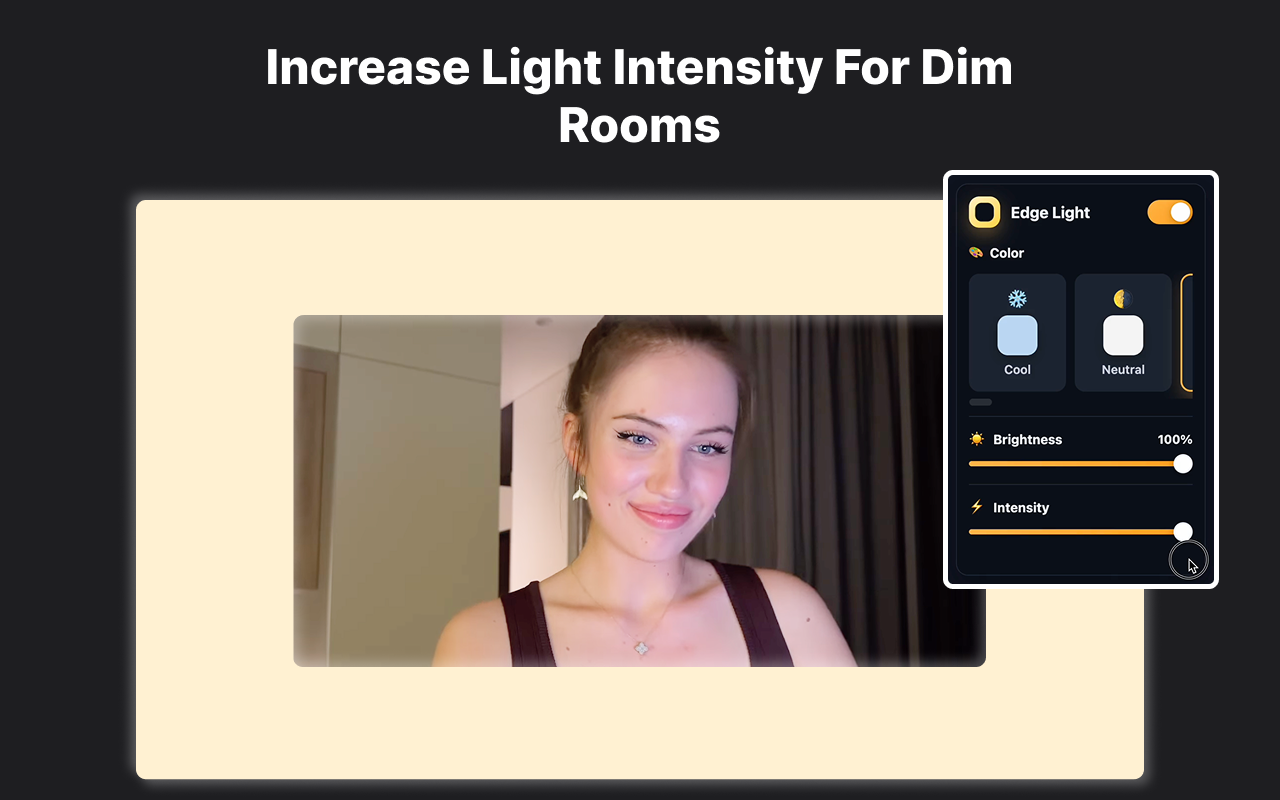
Does the lighting in your room feel like crap? And does it make you look like you are attending meetings from a cave? Then edge light is for you. A well lit face is essential to looking good. Edge Light adds a soft ring light to your browser so your face stays brighter and clearer during video calls without any extra hardware. You can tweak brightness, intensity or color that suits your skin tone.

Hi, my name is Amal. This extension is inspired by Apple’s Edge Light feature introduced in macOS Tahoe 26.2. I found the idea brilliant, and it inspired me to bring this functionality to the browser, so that anyone, even those not using a Mac or the latest version of macOS, can enjoy the experience.

Currently the effect applies on all tabs, so that your face is well lit even when switching tabs. Love to hear feedback from the community.

3
回复

@amalpaul_92 Hi Amal, congrats on the launch. Do you have an empirical value for increase in light? Eg - average of x lumens?

1
回复

niiice! I was thinking about buying new lights, but let me try this first!

0
回复

@kate_ramakaieva Thanks for giving it a go. Looking forward to hearing your thoughts.

0
回复

Yess please! Great idea @amalpaul_92 can it be turned on also while recording something eg. a Loom video? or only during calls?

0
回复

@sofia__bettari Yes, it can work on any tab.

0
回复
#13
1Setter
One-click system settings for macOS
100
一句话介绍:一款轻量级的macOS菜单栏应用,通过一键点击快速切换系统设置(如显示隐藏文件、调整Dock行为等),解决了用户需频繁深入系统设置界面进行重复操作的痛点。
Productivity Tech Apple
macOS工具 系统设置快捷工具 菜单栏应用 效率工具 一键切换 轻量级应用 用户偏好设置 生产力工具
用户评论摘要:用户认可其理念与定价。主要反馈集中于两点:一是对“至少显示4个快捷方式”的限制提出疑问;二是从技术层面提出深度关切,提醒开发者注意macOS设置底层实现的复杂性与版本兼容性风险,并询问具体实现与安全措施。
AI 锐评

1Setter瞄准的是一个真实但狭窄的痛点:高频系统设置切换的效率问题。其“一键点击”的菜单栏交互模式,在概念上是优雅的,直击了macOS系统设置层级过深的顽疾,这是其核心价值所在。

然而,其面临的挑战远比表面功能展示的更为严峻。一条专业评论已尖锐地指出了本质:macOS系统设置是一个由`defaults write`、特权操作和版本特异性键值混合而成的“雷区”。这意味着,1Setter的每一个“开关”背后,都可能是一个需要持续维护、测试和权限处理的复杂脚本。产品真正的价值并非在于“提供开关”这一表象,而在于其能否在复杂的系统底层之上,构建一个**稳定、安全、跨版本兼容的抽象层**。如果处理不当,轻则开关失效,重则可能导致系统状态异常,这与它提升效率的初衷背道而驰。

因此,1Setter从“有趣的小工具”迈向“可靠的生产力工具”的关键,在于其工程深度。它必须回答:如何确保每一次操作都精准可逆?如何优雅地处理从Sonoma到Sequoia及未来系统的API变化?其商业模式(一次性买断?)能否支撑起这种需要长期跟随系统更新的、高维护成本的开发工作?目前看来,产品介绍对此避而不谈,而社区的技术性质疑恰恰点明了其潜在的风险与真正的竞争壁垒所在。

简言之,1Setter提供了一个讨喜的界面,但它的长期生存能力取决于其隐藏在后端的、对抗系统复杂性的“脏活累活”做得如何。这不仅是技术挑战,更是产品哲学与可持续性的考验。

查看原始信息
1Setter
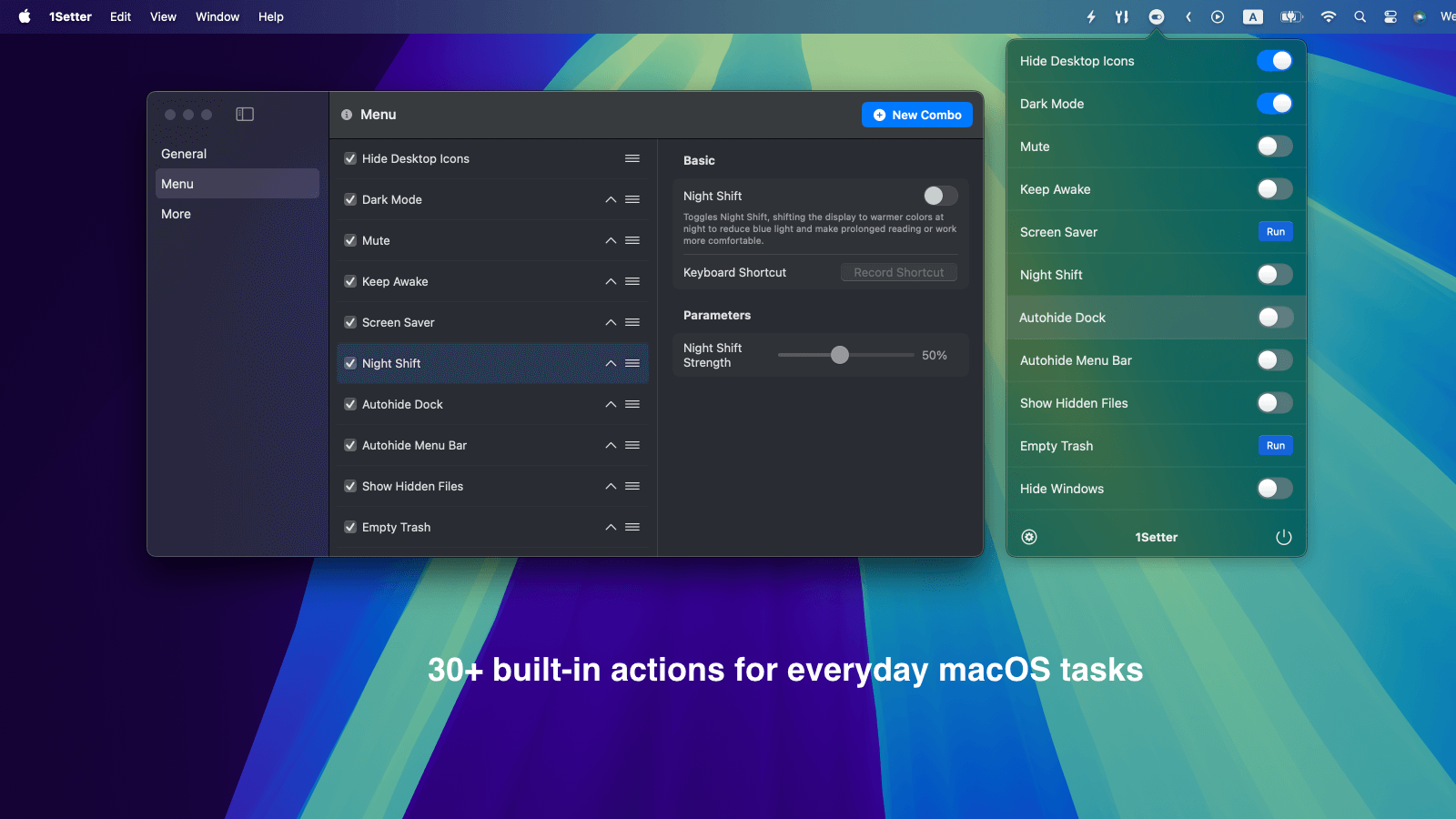
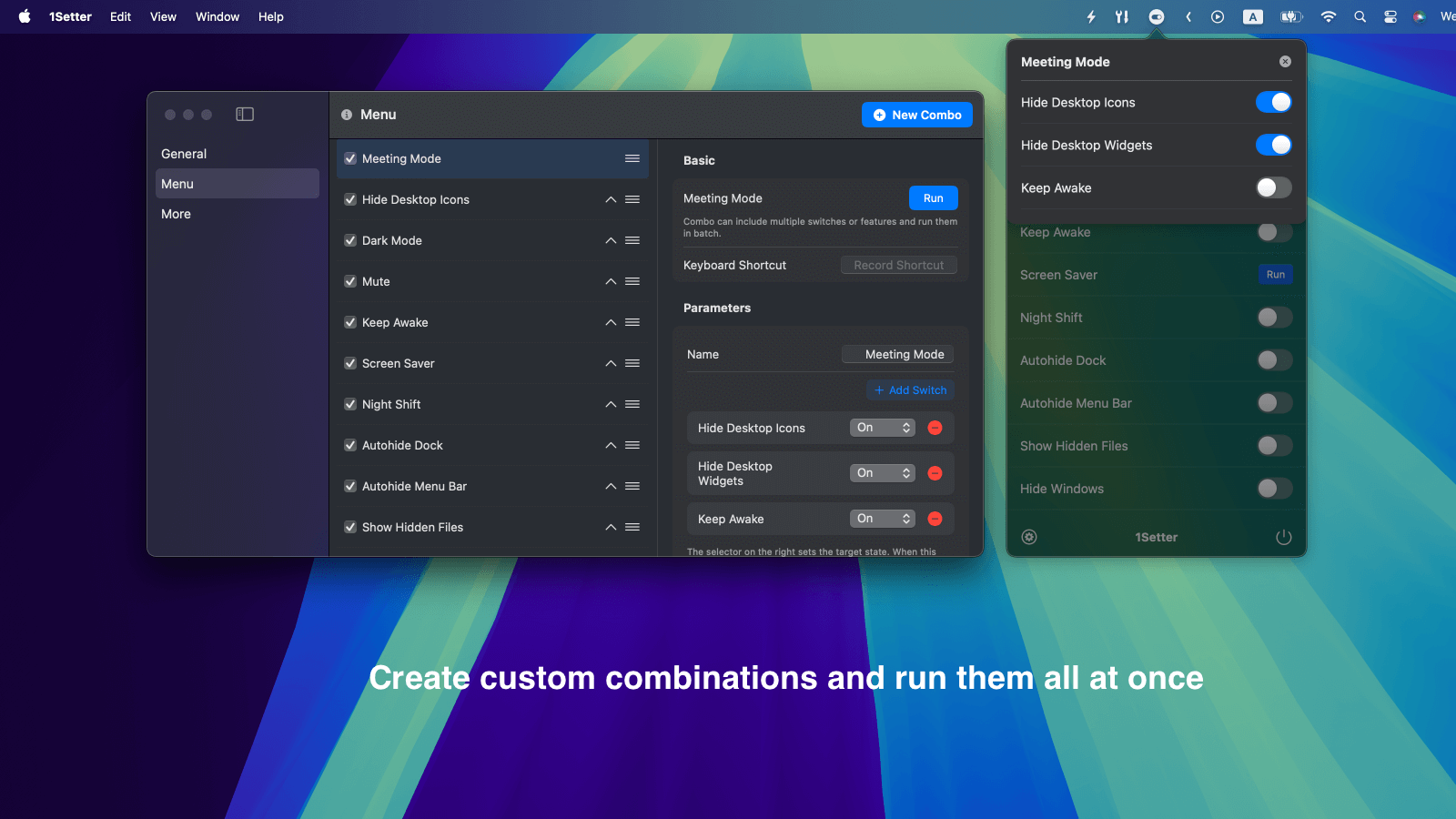
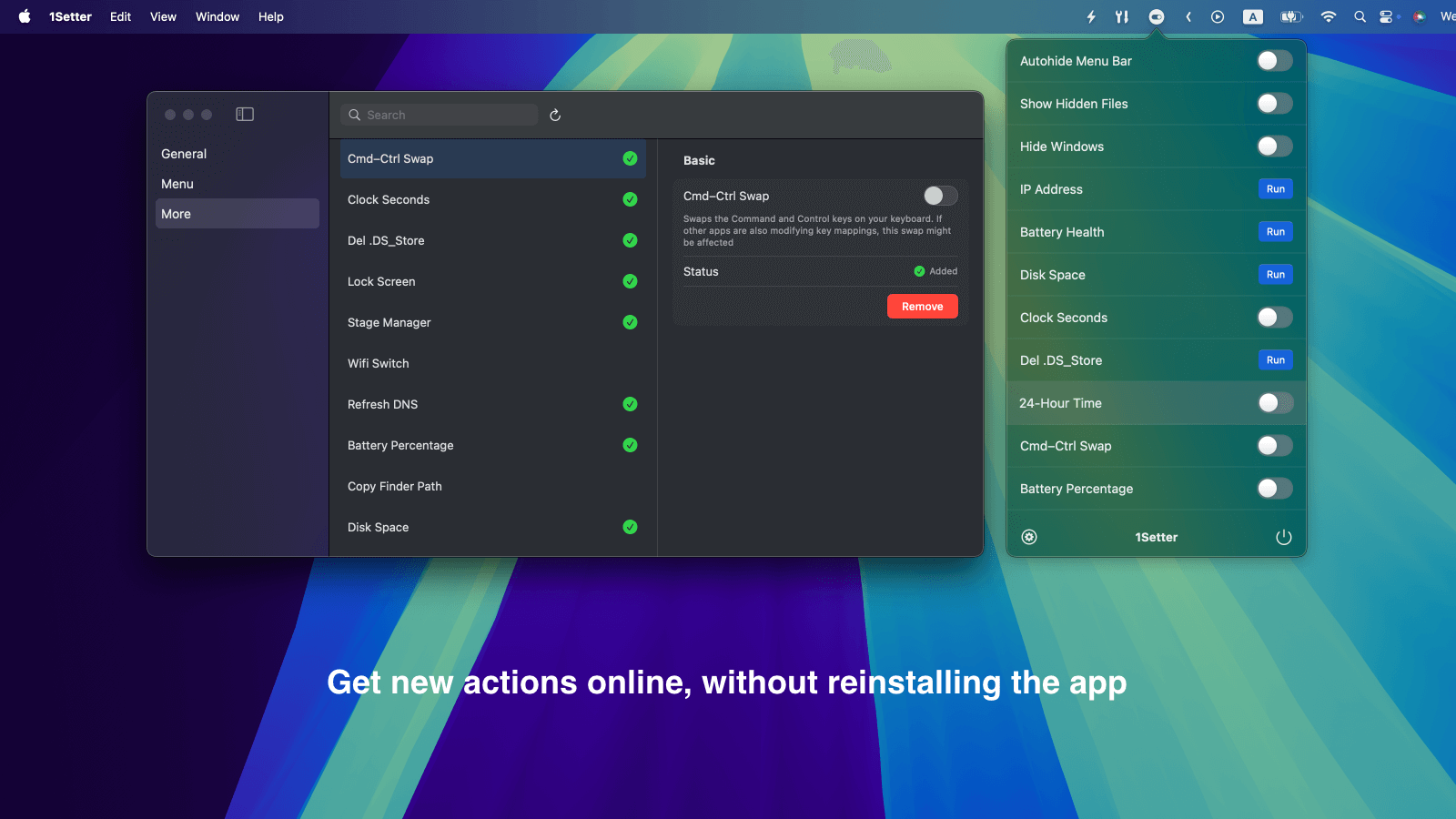
1Setter is a lightweight macOS menu bar app that lets you control system settings with a single click. Quickly toggle features like hidden files, Dock behavior, and other system options—without opening System Settings.
Hi Product Hunt! I built 1Setter because I was tired of repeatedly digging through macOS System Settings just to toggle the same options every day. I wanted something lightweight, fast, and always accessible. 1Setter lives in the menu bar and lets you switch common system settings with a single click—no windows, no clutter. I’d love to hear your feedback: • What system settings do you toggle most often? • Are there any switches you wish macOS made easier to access? Thanks for checking it out, and happy to answer any questions!
1
回复

@new_user___10320247bff8eb04cea94c1 Really like the idea, simple pricing and setup. Just noted that there is a limitation to show at least 4 shortcuts. Any particular reason why?

0
回复

Menu-bar toggles are deceptively hard at scale because macOS settings are a mix of defaults write, privileged services, and OS-version-specific keys that can silently change across updates.

Best practice is to route each toggle through a versioned “capability” layer (per macOS build), prefer official APIs where possible, and add a verify step that reads back the effective state after applying to avoid false UI states.

Which toggles rely on direct defaults/launchctl calls versus system frameworks, and how are you handling permissions plus compatibility across Sonoma/Sequoia so a toggle can’t brick a user’s setup?

0
回复
#14
World API by World Labs
Programmable 3D worlds powered by Marble
100
一句话介绍:World API 提供了一个可编程接口,能将文本、图像或视频快速生成可探索的3D世界,解决了开发者在应用内集成高质量、持久化3D内容生成能力的核心痛点。
API Artificial Intelligence 3D Modeling
3D生成 空间计算 世界模型 开发者API 生成式AI 内容创作 数字孪生 模拟仿真 创意工具
用户评论摘要:用户普遍认可其将世界生成变得像生成图文一样简单的愿景。有效评论关注点在于:1. 持久化资产输出使其超越实时演示,具备实际集成价值;2. 询问早期用例方向(如创意叙事、仿真、产品演示);3. 关心生成资产(如高斯泼溅)在游戏引擎中的兼容性。
AI 锐评

World API 的本质,是将“世界模型”从研究概念封装为可调用的生产力工具。其真正价值不在于“生成3D”,而在于将生成过程“管道化”和“资产化”。与众多昙花一现的实时生成炫技不同,它强调“持久化”和“可下载资产”,这戳中了当前AIGC 3D领域的软肋——内容无法沉淀并进入标准工作流。

评论中关于游戏引擎兼容性的疑问,恰恰点明了其成败关键:它生成的并非封闭格式的玩具,而是旨在进入现有工业管线(如Unity、Unreal)的中间资产。如果这一点能做好,其想象空间将从创意演示,延伸至游戏开发、虚拟仿真、数字孪生等对资产保真度和复用性有硬性要求的专业领域。

然而,挑战同样尖锐。首先,“世界”的定义模糊,从文本到3D世界的映射是否具备足够的可控性和精确度,是决定其工具属性而非玩具属性的核心。其次,作为“第一步”,它目前提供的“世界”智能程度、交互逻辑、物理规则支持几何,仍是未知数。它开启的是一条“空间智能即服务”的赛道,但能否从生成静态场景进化到生成具备逻辑的动态系统,将决定其天花板是“3D贴图生成器”还是真正的“虚拟世界引擎”。

总体而言,World API是一次野心勃勃的基建尝试。它不满足于制造视觉奇观,而是试图成为连接生成式AI与物理/虚拟应用之间的“空间层”。成功与否,取决于其技术深度、对开发者生态的培育,以及能否在“开放愿景”与“实际可用性”之间找到坚实的落脚点。

查看原始信息
World API by World Labs
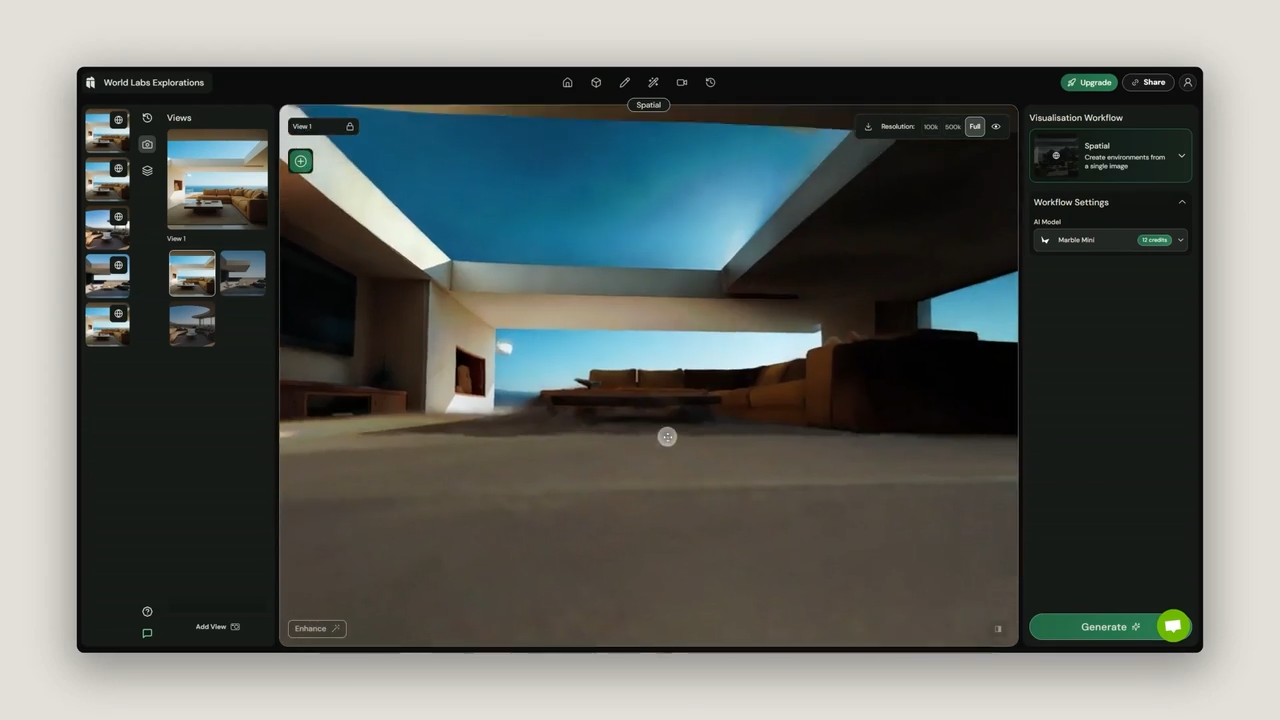
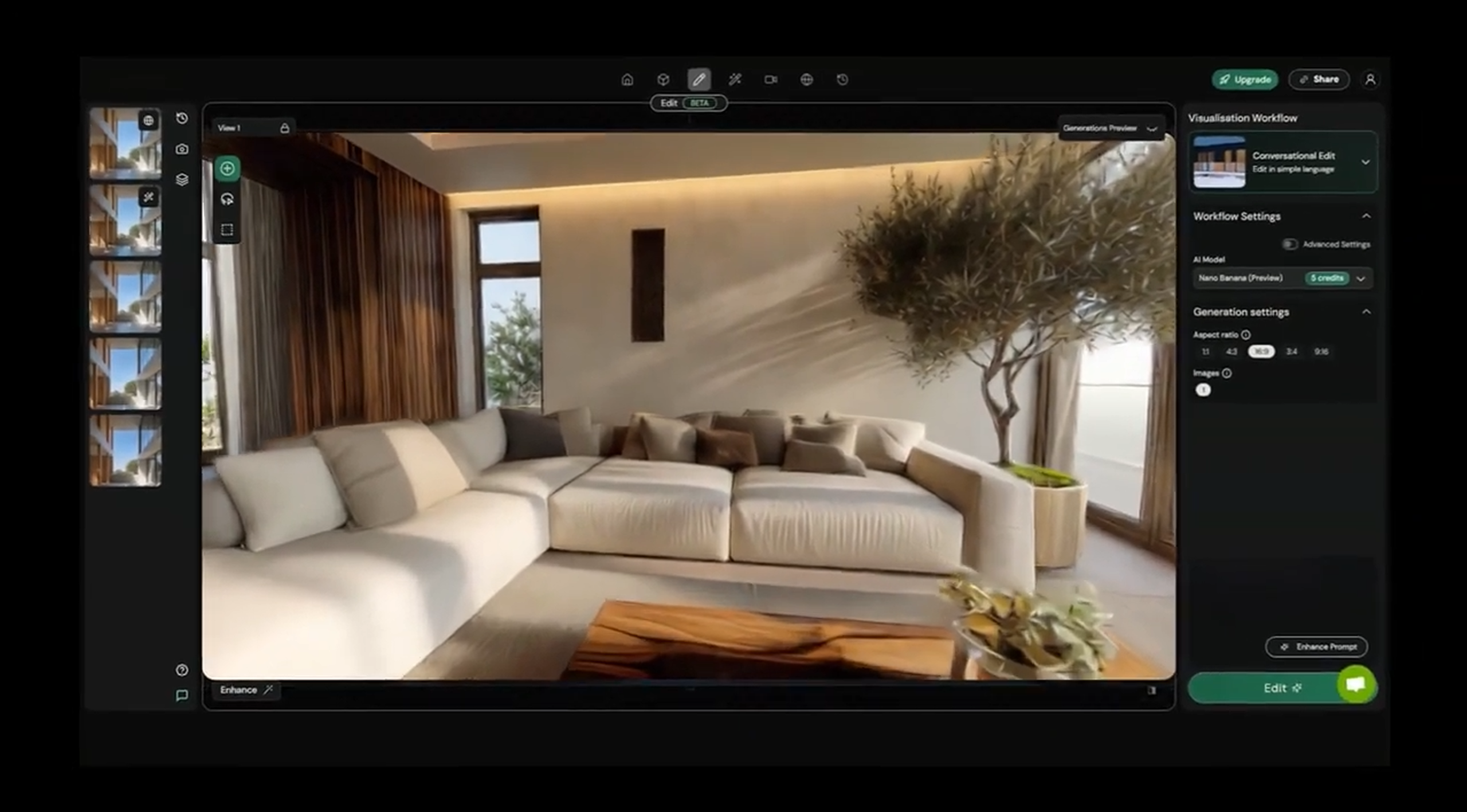
A public API for generating explorable 3D worlds from text, images, and video — bringing Marble's world modeling capabilities into your applications.

Hi everyone!

World Labs has officially opened up Marble's capabilities with the launch of the World API.

This enables developers to generate explorable 3D worlds from text, images, and video directly within their applications. There are already many interesting use cases emerging.

Really like their vision:

As world models continue to evolve, we see a future where:

  • Worlds are generated as easily as words and images

  • Spatial intelligence becomes a shared layer across creative tools and physical AI systems

  • Humans and agents can reason, interact, and collaborate inside generated spaces

The World API is our first step toward making that future programmable, and it's available today.

1
回复

@zaczuo This is really interesting. The idea of making worlds as easy to generate as text/images feels like a big shift.
Curious what kinds of early use cases are you seeing teams experiment with first? More creative storytelling, simulations, or product demos?

0
回复

Marble's persistence is what makes World API useful beyond demos... most generative 3D stays real-time and ephemeral. A programmable endpoint that spits out downloadable assets from text, image, or video opens up actual integration paths. Curious how the Gaussian splat exports hold up in game engines.

0
回复

Whooo! This is an amazing product and I'm so happy to see them launch. Discovered World Labs through one the founders TED AI talk in vienna, and got hooked :) Good luck!

0
回复
#15
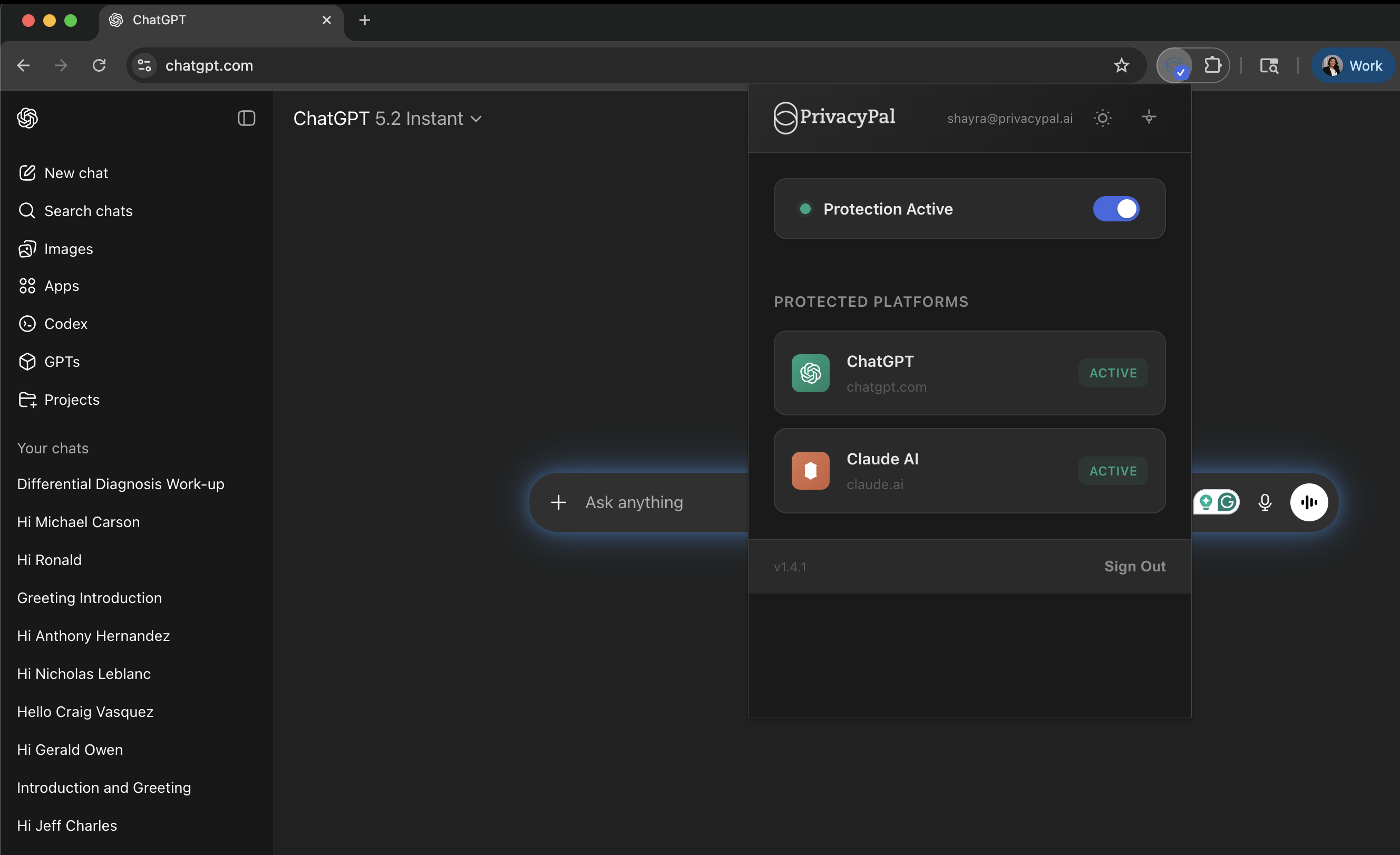
PrivacyPal
The Browser Extension for AI Governance & Security.
97
一句话介绍:PrivacyPal是一款浏览器扩展,通过将敏感数据实时替换为保持上下文语义的合成数据(Privacy Twins™),在员工使用ChatGPT等第三方AI工具时保障企业数据安全,解决了企业“影子AI”带来的数据泄露风险与生产力需求间的矛盾。
SaaS Privacy Artificial Intelligence
AI安全 数据治理 浏览器扩展 影子AI管理 合成数据 隐私保护 企业级SaaS 合规审计 数据防泄露(DLP) 无感安全
用户评论摘要:用户反馈集中在技术原理与部署方式上。主要问题/建议包括:1. 合成数据如何精准保持原查询的上下文与语义?2. 浏览器扩展能否由企业IT强制部署?团队回复称通过保持数据类型的关键特征(如性别、地理邻近性)来维持统计准确性,并确认企业可通过浏览器管理策略强制安装。
AI 锐评

PrivacyPal瞄准了生成式AI在企业中野蛮生长催生的核心痛点——“影子AI”。其宣称的价值并非简单的数据脱敏,而在于试图用“Privacy Twins”这一合成数据替换技术,在安全与效用间走钢丝。传统DLP的“[REDACTED]”粗暴破坏提示词语义,导致LLM输出失真;而PrivacyPal承诺在维持上下文和数据结构的前提下进行替换,以实现“100%准确的结果”,这是一个大胆且关键的技术主张。

然而,其真正的挑战与价值深度也在于此。首先,“合成上下文”的保真度是黑盒,尤其在处理非结构化、高度依赖细微语义的文本时,如何确保LLM的理解不出现偏差?这需要极高的数据科学与语言学功底。其次,其商业模式本质是作为浏览器层的“中间件”,这带来了便捷的部署优势,但也可能成为其阿喀琉斯之踵——它无法管控通过API、移动端应用或其他客户端发起的AI访问,安全覆盖存在缺口。

产品将企业级治理(审计日志)与终端无感防护结合,思路正确。但其长期价值不仅取决于替换技术的可靠性,更在于能否构建起一个围绕“提示词安全”的治理闭环,并扩展其防护边界。在AI应用深度融入工作流的未来,它面临的竞争对手将是内置了企业级安全功能的AI平台本身。PrivacyPal的窗口期,在于其能否在平台方全面补足安全功能前,以更轻量、更跨平台的优势,成为企业AI安全基座的首选插件。

查看原始信息
PrivacyPal
Secure your organization’s AI posture without breaking the user experience. We use Privacy Twins—not redaction—to replace sensitive data with synthetic context, ensuring LLMs give 100% accurate results. Includes full audit logs and governance tools to manage Shadow AI.
Does your team use ChatGPT or Claude? Do you know exactly what data they are pasting into it? We built PrivacyPal to solve the "Shadow AI" dilemma: Organizations need to secure their data, but employees need the productivity boost of AI. Traditional DLP tools redact or mask data (e.g., [REDACTED]), which confuses the AI and ruins the output accuracy. PrivacyPal is a browser extension that secures your AI posture without sacrificing utility. Here is how we are different: 1. Privacy Twins™ vs. Redaction Instead of blacking out sensitive data, we instantly swap it with Privacy Twins—synthetic data that maintains the context and structure of the original. The Result: The LLM understands the prompt perfectly and provides 100% accurate answers. The Experience: We swap the real data back in locally on the browser, so the user works seamlessly. 2. Full Governance & Visibility: Stop guessing. We provide a comprehensive Audit Log of every prompt sent to third-party LLMs. See exactly what is being pasted into ChatGPT, Claude, and Gemini. Identify high-risk behavior before it becomes a breach. Maintain compliance with industry regulations. 3. Frictionless Deployment It lives where your employees work. Our browser extension sits quietly between the user and the model, securing data in real-time without requiring you to build your own internal LLMs. Ready to turn Shadow AI into Secure AI? Let us know what you think in the comments! -Shayra & PrivacyPal Team
4
回复

@fmerian Give it a look!

1
回复

@shayra_antia Hi Shayra, Congrats on the launch. How do you contextualise the synthetic data such that it approximates the user's query?

1
回复

All the best with the launch! Really curious to know how the synthetic data swap maintains semantic meaning. Since this is a browser extension, is there also a way to enforce it on a user's browser?

2
回复

@mustassim 

We maintain original data statistical accuracy, based on the type of data detected, e.g. Names or locations maintain key traits like gender or geographic proximity.

Regarding forcing or requiring the extension in the browser organizations that manage their users browsers are able to do this, their IT admin would need to facilitate it. Individual users will have to install the extension themselves.

1
回复

We’ve been developing security solutions and listening to clients for over 5 years. PrivacyPal wasn't created for the sake of shipping a tool; it was born out of necessity.

Our enterprise clients were practically begging for Guardrails on their AI training models. While we built a sophisticated solution for those complex enterprise needs, we realized the everyday professional needed protection too.

That’s why we built this extension—it’s the power of our enterprise security, simplified for the user who just wants to use ChatGPT safely.

I’d love to hear your feedback!

2
回复

@chrismessinaGive it peak 😉 🎨

1
回复

Privacy Twins is the right approach here. Redacted prompts lose context and the LLM hallucinates around the gaps. For structured data like tables or JSON where field relationships matter, the swap has to preserve schema integrity or downstream processing breaks.

0
回复
#16
AgentEcho
Annotate any webpage UI and export feedback as Markdown
93
一句话介绍:AgentEcho是一款Chrome扩展,允许开发者在网页UI上直接标注DOM元素并生成结构化Markdown报告,解决了UI评审和提交Bug时沟通效率低下、指向不明确的痛点。
Productivity Artificial Intelligence GitHub Development
开发者工具 网页标注 反馈协作 Chrome扩展 Markdown导出 UI评审 Bug报告 生产力工具
用户评论摘要:用户肯定其解决了截图+文字描述的低效痛点。其核心优势在于通过DOM标记和选择器导出,让反馈可被代码直接查询,超越了传统截图箭头工具。有用户提出技术关切,询问其对Shadow DOM的支持深度。
AI 锐评

AgentEcho看似是一个轻量的UI标注工具,但其真正的价值在于试图在“视觉反馈”与“可操作代码”之间架起一座桥梁。它没有停留在“所见即所得”的表层,而是通过抓取DOM元素选择器,将模糊的“那个按钮”转化为精准的、可供开发者在代码库中直接定位的标识。这使其从众多截图标注工具中脱颖而出,具备了成为开发者工作流中“准工程工具”的潜力。

然而,其面临的挑战也同样清晰。首先,技术深度决定价值上限。用户对Shadow DOM的关切直指核心:它能否处理现代前端框架构建的复杂界面?如果只能触及表层DOM,其宣称的“精准定位”价值将大打折扣。其次,场景定位略显狭窄。目前主打“生成Markdown报告用于GitHub和AI助手”,这固然是精准的切入点,但可能限制了其想象空间。它更像是一个为特定沟通环节服务的“翻译器”,而非一个完整的协作平台。

其真正的机遇或许在于深化“数据层”连接。如果能将UI标注与组件库、设计系统、甚至监控报错系统关联,让一次标注不仅能生成报告,还能自动创建工单、定位设计稿或触发代码检查,它将成为打通产品、设计与开发数据孤岛的关键管道。否则,它可能仅是一个体验更优的“高级截图工具”。产品的犀利之处在于选择了正确的方向——让沟通机器可读,但成败在于执行的深度。

查看原始信息
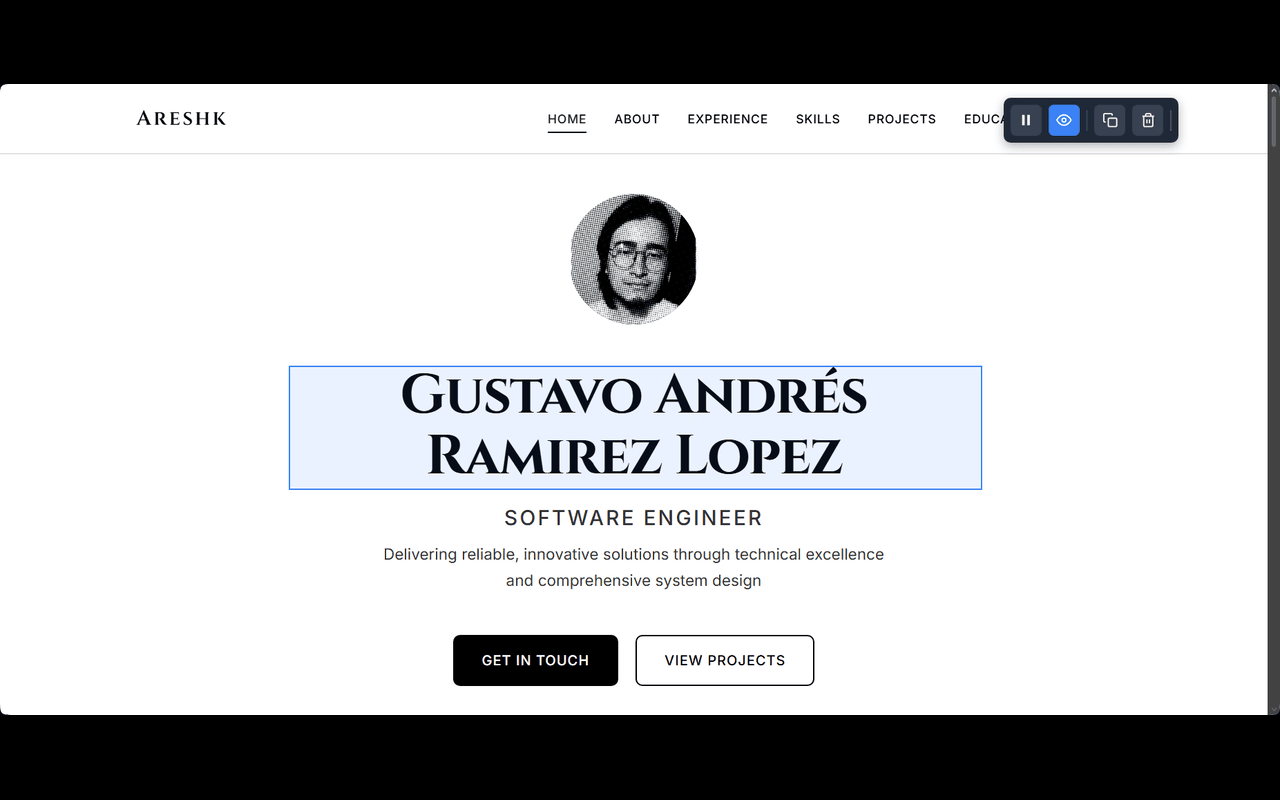
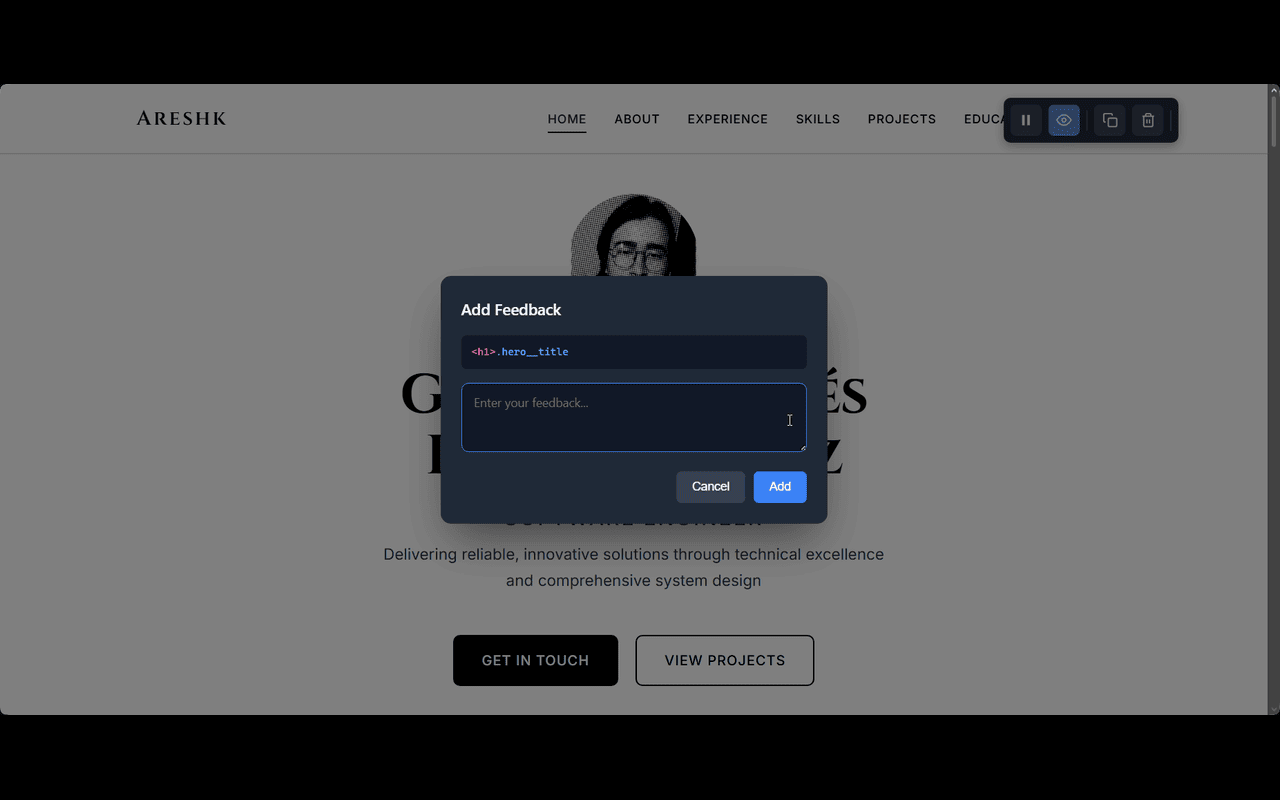
AgentEcho
Visual feedback annotation tool for developers to place markers on DOM elements and generate AI-optimized Markdown
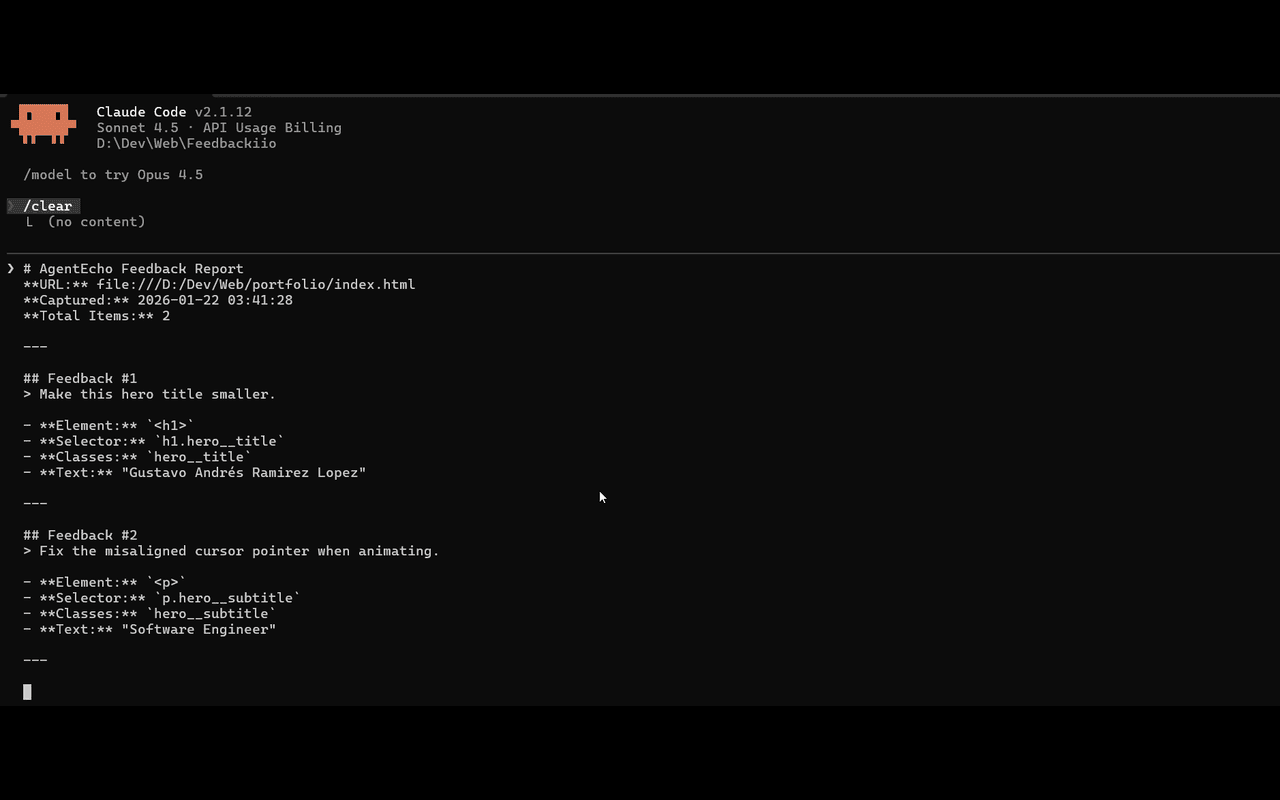
I kept running into the same issue during UI reviews and bug reports: screenshots + long explanations + “that button over there”. So I built AgentEcho, a Chrome extension that lets you: hover to highlight elements click to drop numbered markers on the DOM write feedback per marker copy everything as a structured Markdown report (great for GitHub issues + AI coding assistants)
3
回复

@gustavo_ramirez3 Congrats on the launch Gustavo. Very cool tool.

1
回复

AgentEcho's numbered DOM markers plus selector export is what sets it apart from screenshot-and-arrow tools. Devs can actually query those elements in the codebase. Curious if it captures shadow DOM or just top-level nodes.

0
回复
#17
Clyde
Cowork but it's a monkey
52
一句话介绍:Clyde是一款以猴子为形象的轻量级AI助手,通过“配方”机制和深度集成Figma、Notion等工具,在用户日常办公流中无缝提供文件编辑、任务规划等实际帮助,解决了复杂AI工具占用屏幕大、学习成本高、缺乏亲切感的痛点。
Mac Productivity Artificial Intelligence
AI办公助手 轻量化工具 Claude Code交互界面 生产力工具集成 拟人化AI 配方(Recipes)系统 屏幕空间优化 macOS应用 趣味化设计 Clippy精神续作
用户评论摘要:用户普遍认可其可爱形象与轻量设计,认为它清晰、快速、减轻心智负担。主要建议包括:增加自定义与多步骤“配方”、拓展连接至社交媒体平台、期待Windows/移动版本。开发者积极回应,显示迭代意愿强。
AI 锐评

Clyde的聪明之处在于,它没有陷入“多智能体”或“复杂看板”的内卷,而是精准地押注了两个被市场忽视的维度:情感化交互与无侵入感。其核心价值并非技术突破,而是产品哲学的胜利——将强大的Claude Code能力封装成一个“猴子版曲别针”,用“配方”降低提示词门槛,用极小的屏幕占用换取高频使用可能。

然而,其面临的挑战同样清晰。首先,“配方”库的广度与深度将是其效用天花板,否则易沦为玩具。其次,“轻量”与“强大”的平衡如走钢丝,用户对自定义和多步骤流程的诉求已初现端倪,满足这些需求是否会使其滑向功能膨胀的深渊?最后,其拟人化形象是一把双刃剑,初期能收获好感,但长期留存必须依靠稳定可靠的实用价值,而非单纯的情感投射。

本质上,Clyde是一次对AI工具“人性化温度”与“工作流隐身”需求的大胆探索。它能否成功,不在于猴子是否更可爱,而在于它能否在保持“smol”的同时,真正成为用户数字工作环境中那个不言不语、却无所不在的得力伙伴。如果只是停留在Clipy的情怀层面,它可能只是一阵风;但如果能围绕“配方”构建起强大的、用户驱动的生态系统,它或许能重新定义轻量级AI助手的边界。

查看原始信息
Clyde
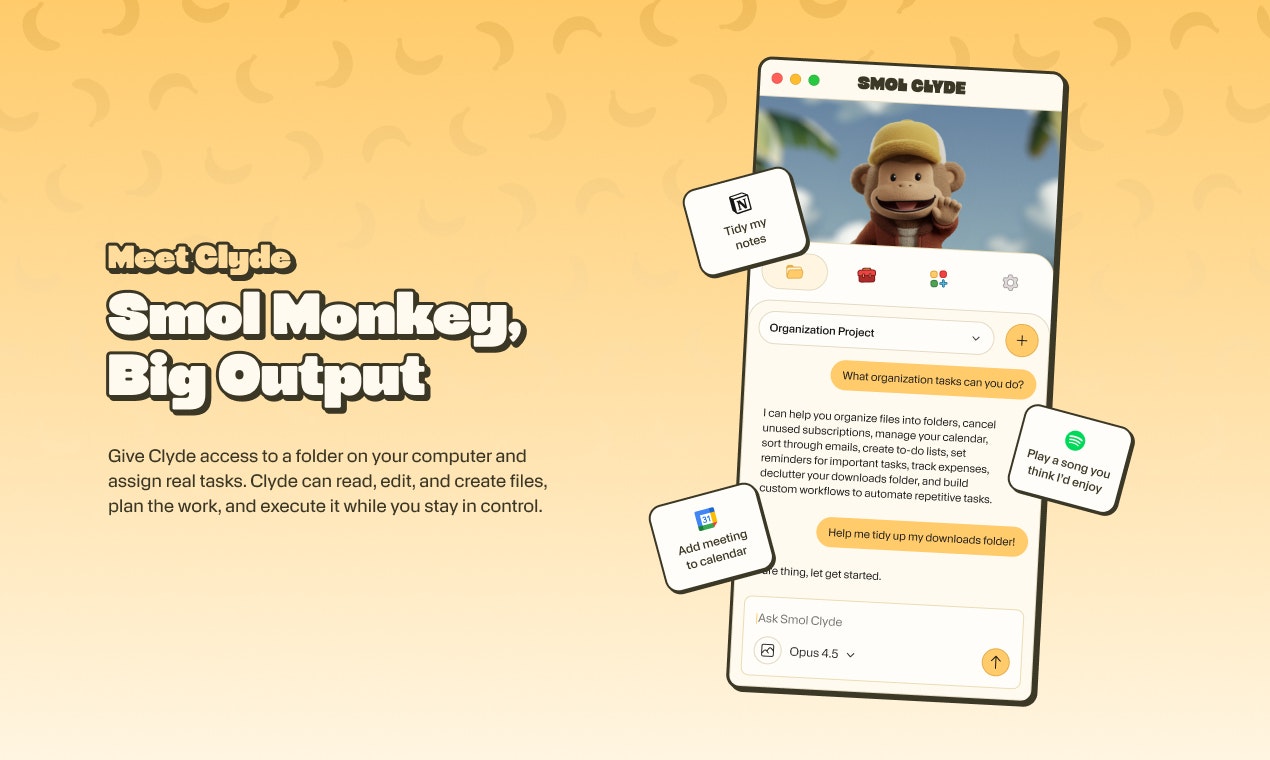
Meet Clyde, the monkey AI assistant that actually gets real work done. Create and edit files, plan tasks, and connect to tools like Figma, Notion, Spotify and more. Smol but mighty, Clyde feels like Clippy 2.0.

Hey Product Hunt, Tomasz here 👋🐒

Everyone wants to make their cowork UI a group of agents working tirelessly or their fav strategy rpg. But I feel like cowork doesn’t need gamification or more visual noise. My take is the opposite philosophy. I think it’s way better suited to become a Clippy 2.0.

Smol = it takes up way less screen real estate than most tools out there.

A few things people notice right away:
1. Recipes
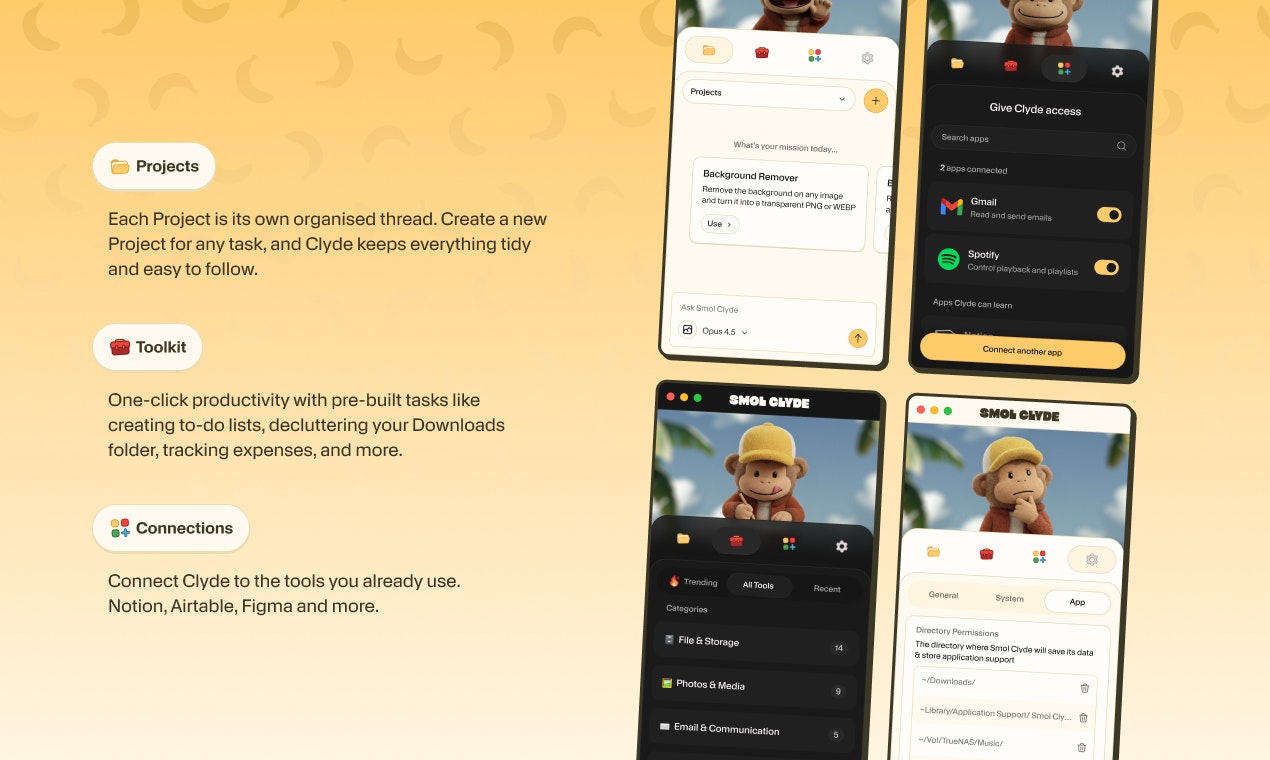
Instead of abstract prompts, Clyde ships with “recipes” — concrete, interesting use cases you can run or remix to help you in your everyday life. This makes it way easier to go from “what can I do?” to “oh, that’s useful.”
2. Claude Code, personified
Clyde is basically Claude Code… but as a monkey personification that feels warm, fun, and not intimidating. Clyde is the first Claude Code companion.
3. Smol footprint
No massive panels, no dashboards. Clyde lives on the edge of your workflow like a buddy that helps you out.

This is the initial MacOS version — I’m actively working on PC and mobile next. The goal is to keep Clyde fast, simple, and genuinely useful, not bloated.

If you’re curious, download it and play around. I’d love to hear:

  • What features or recipes you want next

  • What feels confusing or missing

  • Issues you encounter

    Drop questions, feedback, and requests here — I’m reading everything and adding features directly based on this launch 🙏

22
回复

@tomasz888 So amazing, happy to see it live

0
回复

@tomasz888 Very cool Tomasz. Congrats on the launch. Do you have custom recipes? multi step?

1
回复

looks great!!!

5
回复

@madalina_barbu thanks so much Madalina!

0
回复

Congratulations on the launch 🎉 🎉!!

2
回复

@shubham_pratap Thanks Shubham!

0
回复

Love the Clippy 2.0 framing but redesigned into a cute monkey. Curious to see how the recipe library evolves over time!

1
回复

@josh_stilwell Thanks Josh!

0
回复

The monkey animation is very funny and smooth, and its integration with other software is quite complete. It would be even better if it could connect to some social media platforms.

1
回复

@yan20 Appreciate your feedback Yan! Which social media platforms were you thinking of?

0
回复

Honestly, I had the opportunity to test Clyde and found my lil monkey assistant very helpful, besides being adorably cute! It explains things clearly, responds quickly, and makes tasks feel way less overwhelming which is what slows me down the most and gives me mental fatigue. Sometimes it needs a little clarification to get exactly what I want, but once it does, it’s spot on.

1
回复

Hey, Tomasz @tomasz888 How many bananas does Clyde need to do his job? 🐒🍌

1
回复

Great work Tomasz!

0
回复

@tomasz888 really love this - Clippy 2.0 really hits home. Animations look solid - going to check out the product in the next few days. Congrats on the launch!

0
回复

Hey Tomasz! It's super cool and I'm sure it's gonna help many founder to get their tasks done. Wish you all the best here!

0
回复
#18
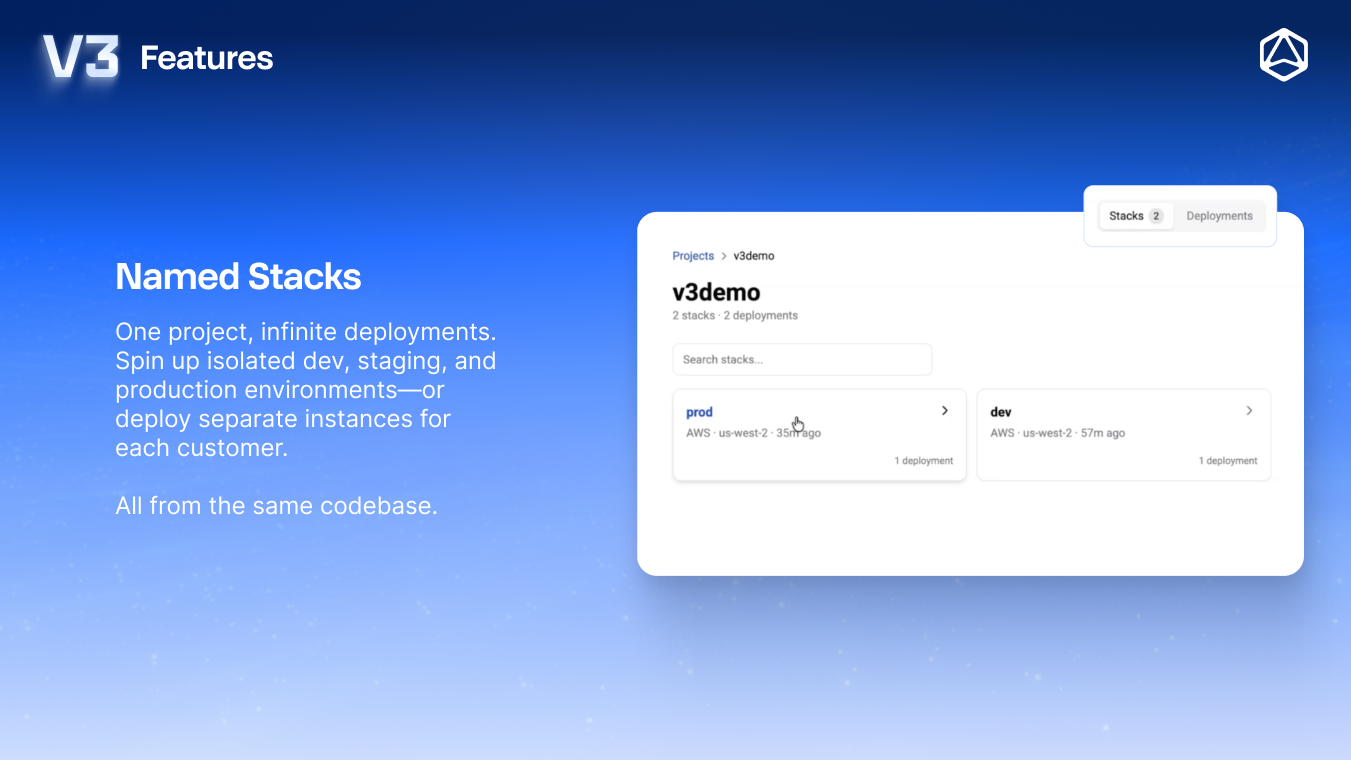
Defang V3
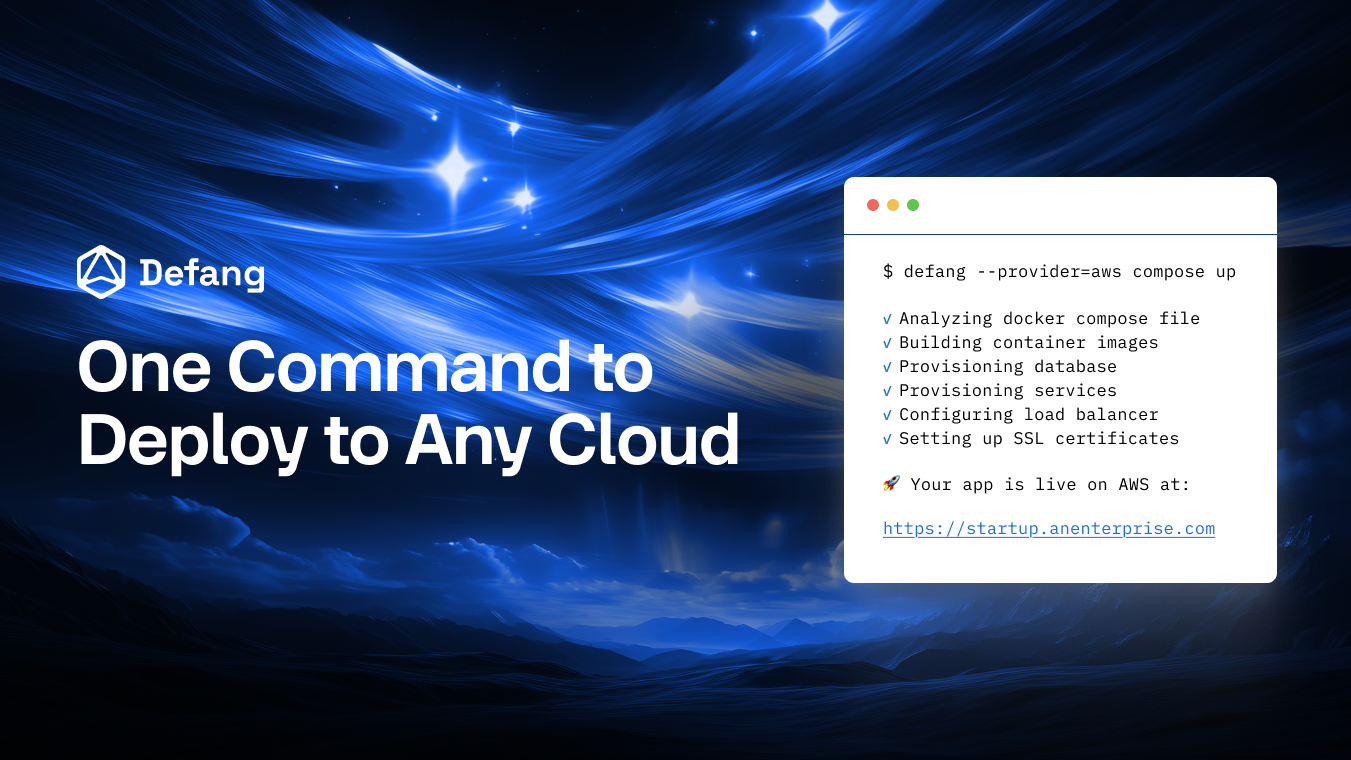
One command deploys your app to any AWS or GCP account.
39
一句话介绍:Defang V3 是一款通过单一命令,即可将应用从本地IDE直接部署到用户自有AWS或GCP账户的部署工具,解决了开发者在多云环境下进行生产级应用部署时流程复杂、需要深厚运维知识的核心痛点。
Productivity Developer Tools
云部署工具 基础设施即代码 多云支持 Docker Compose 开发者体验 CI/CD集成 AI应用部署 无服务器容器 开源免费 生产就绪
用户评论摘要:用户普遍称赞其部署体验“过于简单直接”,甚至令人难以置信。创始人阐述了产品“让部署像构建一样简单”的愿景。有用户询问其与Vercel、AWS eb deploy的区别,并好奇V3开发过程中的最大收获。评论也揭示了其利用云原生服务(如ECS、Cloud Run)而非强行绑定K8s的技术特点。
AI 锐评

Defang V3 宣称的“单一命令部署”并非新鲜概念,但其真正的锋芒在于两个关键抉择:一是坚定拥抱 Docker Compose 作为事实上的应用定义标准,巧妙地将广为人知的本地开发体验无缝延伸至云端;二是坚持部署到用户自有云账户,并使用AWS ECS、GCP Cloud Run等云厂商原生托管服务,而非自建或强推另一套封闭的K8s集群。这使其精准定位于“桥梁”角色——连接开发者与云厂商,而非成为新的“锁链”。

产品价值核心在于“降权”,即降低对专业运维(DevOps)的权限依赖。它让开发者,尤其是AI应用(CrewAI、LangGraph)构建者,能绕过复杂的IAC(基础设施即代码)学习和繁琐的控制台配置,快速获得生产就绪的基础设施。其“自动捕获并修复错误”的功能若足够可靠,将进一步将运维知识沉淀为产品能力。

然而,其挑战同样明显。在巨头云厂商的生态中,此类工具始终面临被“收编”或功能覆盖的风险(如被问及与`eb deploy`的区别)。其商业模式依赖“开源免费,Pro版收费”及为付费客户处理多云复杂性的增值服务,市场天花板和客户付费意愿有待验证。此外,对Compose文件的深度绑定既是优势也是限制,复杂分布式应用的部署能否依然“简单”,将是考验其技术深度的关键。总体而言,Defang V3是在云部署“最后一公里”问题上一次极具针对性的精致工程,但它所解决的“易用性”痛点,是否会随着云厂商自身工具的进化而减弱,将是其需要长期面对的命题。

查看原始信息
Defang V3
Deploying should be as easy as building. And now it is! Defang is the bridge between your coding agent and your cloud. And with V3, Defang is better than ever. One command deploys straight from your IDE to your AWS or GCP account. Spin up dev, staging, and prod directly from a Compose file. Effortlessly deploy your CrewAI, LangGraph, n8n, and more. Automatically catch errors and fix them. Integrate seamlessly into your CI/CD pipeline. Your cloud. Your infrastructure. Free for open source!

Hey everyone, Lio here - CTO and co-founder of Defang.

I always wished that deploying would be as easy as building. That's been our north star for three years. V3 is where it becomes real.

One command. Your choice of cloud. Production-ready infrastructure. The CLI catches errors and fixes them. Spin up dev, staging, and prod environments from a single compose file. Deploy straight from your editor, Cursor, VS Code, or Claude Desktop.

Built for the AI agent era: CrewAI, Mastra, LangGraph, n8n, or any other containerized app. One line to enable LLM, whether that’s Bedrock or Vertex AI.

Your customer wants your agent in their own cloud? One command. Your app, their data, in their infrastructure. Free for open source.

To everyone who supports us today: 2 months of Defang Pro free. We're also selecting 10 supporters for lifetime Pro access. And we’re free for public GitHub repos.

Thank you for supporting us.

17
回复

@lio_lunesu congrats on the launch. Does this replace Vercel?

3
回复

@lio_lunesu Congrats on the launch Lio. Whats been the biggest learning in building V3?

0
回复

Hey all! I'm part of the Defang team as well, and just wanted to leave a little story here too.

I remember meeting Lio in March 2022. Our mutual friend had put us in touch, saying that we were both working on a similar problem:

It's too damn hard to deploy to the cloud.

I was approaching it from a very high level: a framework that provided high level primitives that could address many use cases, and some underlying infra provisioning code to make sure those high level primitives played nice in cloud providers.

Lio was working from the other direction: I remember him talking about how to manage pretty low-level DNS stuff and making sure it was easy to deploy and extremely resilient.

We started grabbing coffees more frequently, talking about Kubernetes, AWS, and all kinds of other stuff we were both dealing with as we worked on these problems separately.

Man, did we have some wacky conversations about managing k8s, how to map out a local development story with a cloud deployment story, exploring stuff like making queues and serverless work nicely in a local and cloud environment, across use cases.

He was building what became Defang.

Eventually I met the rest of the team as they settled on Docker's "Compose" file as a standard to define an app that would work locally and in the cloud.

To me that sounded like magic: I started using Docker Compose back in 2016 and had probably searched for "scalable Docker Compose to Cloud" a few times per year, but to no avail (Swarm was always clunky and the CF templates always crashed on me).

Defang's approach was different, too: the idea wasn't to shove everything into an expensive Kubernetes cluster, but to use the cloud provider's native container runtimes, like AWS ECS or GCP Cloud Run to the extent possible, which has all kinds of benefits.

Eventually I helped build the first version of the Defang Portal and later on joined the team.

The "compose to cloud" flow has been working for a while, but it worked best locally, or if you were already familiar with your cloud provider's tooling.

This release changes that.

I've been testing our flows and I love this: you can log into Defang, AWS, and GitHub and use Defang to connect them all in the browser to launch an app that uses queues, databases, LLMs and more without ever leaving your browser.

And it's all running in your own AWS account.

You can also use our MCP server or our CLI agent to help you deploy your app from your machine to the cloud: you don't need to be an infra expert to deploy something pretty complex.

I'm really excited about this release: this is the product I've been looking for for almost 10 years, and I think a lot of you would actually love it.

6
回复

I always looked for solutions to avoid deploying to AWS (read: used AWS wrappers lol). The first time I tried to deploy my app to AWS with Defang I fully thought it didn’t work because it was too straightforward. What a delight. I wouldn’t even begin to try with AWS any other way.

Really excited to try it out, looks like a lot more polish has gone into the product to make it even easier to get set up and keep shipping. Would highly recommend to all my friends.

Great work, team!

5
回复

@wzich thanks for the kind words! I hope you like the new features!

1
回复

I've known co-founder Lio for 15 years and he's always been the top maker I know. With defang he's surrounded himself with a top notch technical team that have built an extraordinary product with a laser focus on the developers needs to deploy production-quality infrastructure as an extension without an army of DevOps to create and maintain it. Defang ought to become the way we deploy all our apps.

3
回复

@rngadam thanks for the kinds words Ricky! Grateful for your support :)

2
回复

I’ve spent an unreasonable amount of time trying to avoid deploying directly to AWS—usually by hiding behind wrappers and abstractions. When I first deployed an app to AWS using Defang, I genuinely assumed something was wrong because it was too simple. That moment of confusion quickly turned into delight.

Defang makes something notoriously complex feel almost invisible, and that’s rare. V3 clearly shows a lot of thoughtful polish—getting set up is easier, and staying in the flow while shipping feels much more natural.

Honestly, I wouldn’t consider approaching AWS any other way now. Highly recommend this to anyone who wants the power of cloud infra without the usual friction. Fantastic work by the team.

@gabriel_lunesu @Defang

0
回复

Hi, congrats on your launch!

What is not clear for me, though, how is that different from, say the AWS "eb deploy" command?

Thanks!

0
回复
#19
Procure Suite
Robust Procurement Platform to Streamline Purchasing Process
30
一句话介绍:Procure Suite是一款云原生采购平台,通过集成反向拍卖、RFP/RFI/RFQ、合同管理等功能,为制造业、医疗、生物科技等资本密集型行业提供一站式采购生命周期管理,旨在解决传统采购流程效率低下、成本高昂的痛点,帮助企业降低18-40%的采购成本。
Productivity SaaS
采购管理平台 云原生 战略寻源 合同管理 反向拍卖 支出分析 AI分析 供应链数字化 企业级SaaS B2B
用户评论摘要:目前评论主要为产品团队自述,阐述了开发背景、核心功能与目标行业,强调其旨在解决传统ERP复杂性和采购流程低效问题。暂无外部用户反馈或建议。
AI 锐评

Procure Suite的亮相,直指企业采购这一历史悠久却数字化滞后的核心痛点。其宣称的18-40%成本削减幅度极具冲击力,但背后折射的更是对传统ERP在采购模块上笨重、割裂现状的挑战。产品将反向拍卖、合同管理、寻源到支付等模块集成于统一仪表盘,思路正确,符合采购流程一体化的内在逻辑。

然而,其介绍中浓厚的“自说自话”色彩构成了首要风险。所有“评论”实为产品发布宣言,缺乏早期真实用户的验证声音。这使其宣称的“直观易用”、“驱动即时投资回报率”等优点尚停留在承诺层面。在采购这个高度依赖现有流程、人际关系和系统集成的复杂领域,新平台的迁移成本、学习曲线以及与现有财务、仓储系统的对接能力,才是决定其能否落地的生死线。

其AI驱动的分析预测功能是亮点,也是考验。采购决策不仅关乎数据,更涉及供应商关系、市场波动、合规风险等复杂因素。AI模型能否在跨行业场景下提供真正“智能”而不仅是“可视”的洞察,需要深厚的行业知识沉淀与数据喂养,这绝非一日之功。

总体而言,Procure Suite描绘了一个符合现代供应链管理趋势的清晰蓝图,但它在竞争激烈的企业服务市场中,仍是一个未经充分实战检验的新兵。其真正的价值不在于功能清单的罗列,而在于能否在目标行业中,以可量化的方式,证明其集成性、易用性和智能分析能力能真正穿透采购部门的组织壁垒,带来可持续的流程革新与成本优化。否则,它可能只是另一个功能堆砌的“解决方案”,难以触动企业采购的深层惯性。

查看原始信息
Procure Suite
Procure Suite is a feature-rich, cloud-native procurement platform engineered to cut purchasing costs by 18-40% for modern enterprises. There are multiple platforms for managing reverse auctions, RFP/RFI/RFQ, contracts, procure-to-pay, and purchase requisitions. Manufacturing, healthcare, construction, biotech, and other core industry sectors can streamline sourcing lifecycle, manage contracts, and gain total spend visibility—all from one intuitive dashboard. Modernize your supply chain today.

In my 30 years in the IT industry, I have learned that the most impactful solutions aren't built in a vacuum—they are the result of a collective commitment to solving real-world friction.

Over the past year, the team at Silicon IT Hub has been focused on a specific challenge: the inefficiency of legacy procurement workflows. While many organizations have established routines, they often lack the integrated tools to drive true strategic sourcing.

Today, I am proud to share the result of our team’s hard work: Procure Suite.

The Goal of the Team: Our engineers and product managers stripped away the complexity of traditional ERPs. We wanted to build a cloud-native ecosystem that doesn't just record transactions, but actively helps enterprises in Manufacturing, Healthcare, and Biotech cut purchasing costs by 18-40%.

What our collective focus brought to life:

1. Competitive Edge: Our team engineered Reverse Auction modules to drive immediate ROI through competitive bidding.

2. Intelligent Visibility: Our data scientists built AI-Driven Analytics to transform raw spend into predictive insights.


3. Contract Integrity: We centralized Contract Management to ensure compliance and automated renewals.


4. Agility: A mobile-first design ensuring procurement leaders can manage approvals from anywhere.


A vision is only as strong as the team that executes it.
I am grateful to work alongside the innovators at Silicon IT Hub who continue to push the boundaries of what is possible in logistics and supply chain technology.


We are launching with our most powerful modules to drive immediate ROI:


1. Reverse Auctions: Engineered to lower procurement costs by creating competitive bidding environments.


2. Contract Management: A central platform to store and monitor contracts, including renewal alerts and compliance tracking.

3. Comprehensive Simplifies RFPs, RFQs, and RFIs to save administrative time and increase transparency.


4. Spend Analysis: Provides comprehensive visibility into spending patterns to aid in budget management and decision-making.


5. AI-Driven Analytics: Provides predictive insights and real-time spend visibility.


6. Mobile-First Design: Allows your team to manage approvals and track sourcing events on the go.

Who is this for? We built this for procurement leaders in Manufacturing, Healthcare, Construction, Biotech, Logistics and other capital-intensive industries who need control, visibility, and tangible savings.


We invite you to see what our team has built.

Explore Procure Suite: https://www.procuresuite.io

Request a demo: https://www.procuresuite.io/request-demo

I am eager to hear your feedback and answer your questions! 🚀

#TeamInnovation #Procurement #SiliconITHub #ProcureSuite #SupplyChainTech #LogisticsSolutions #StrategicSourcing #DigitalTransformation #Leadership

0
回复
#20
GenPM
AI-Native Video Production Platform
20
一句话介绍:GenPM是一款AI原生视频制作平台,通过项目级的AI编排,在营销、内容创作等场景下,解决了用户因工具碎片化导致的工作流割裂、风格一致性难以保持及版本管理混乱的核心痛点。
User Experience Artificial Intelligence Photo & Video
AI视频生成 视频制作平台 项目级编排 工作流整合 创意生产工具 一致性维护 AI视频剪辑 生成式AI 内容创作 效率工具
用户评论摘要:用户普遍认可其解决“一致性”和“版本混乱”痛点的价值,认为其填补了市场“生产管理”层的空白。开发者积极互动,询问用户现有工具组合以指导产品路线图,并寻求深度反馈。
AI 锐评

GenPM的亮相,与其说带来了一项颠覆性技术,不如说它是对当前AI视频创作“野蛮生长”阶段的一次理性纠偏。其真正的价值不在于“生成”,而在于“编排”与“控制”。它敏锐地戳破了行业泡沫:拥有众多强大的生成模型,并不等于能高效产出可用的专业视频。工具碎片化带来的上下文丢失、风格断裂和版本地狱,正在消耗创作者的精力,扼杀AI的生产力潜力。

GenPM提出“项目级AI编排”的概念,试图将软件工程中的“单一可信源”和“上下文复用”思想引入视频创作领域。这直指行业核心矛盾:当前AI视频工具是“模型中心化”的,而专业创作必须是“项目中心化”的。它的野心是成为连接底层模型与上层应用的“操作系统”,通过定义统一的故事、风格、角色世界观,并使其贯穿所有生成环节,来确保创作的一致性。这本质上是在为随机性极强的AI生成过程注入确定性和可管理性。

然而,其挑战同样巨大。首先,“一致性”是AI视频的圣杯,技术难度极高,平台能在多大程度上兑现承诺有待检验。其次,它定位为“编排层”,这意味着其价值高度依赖于与主流生成模型的接口深度和稳定性,存在被上游模型平台“降维打击”或接口变更卡脖子的风险。最后,其目标用户画像尚显模糊,是服务追求效率的个体创作者,还是小型制片团队?两者的工作流和需求复杂度差异显著。GenPM的成败,将验证在AI应用层,“工作流整合”与“体验设计”的价值是否能超越“模型能力”本身,成为新的核心竞争力。这条路正确但布满荆棘。
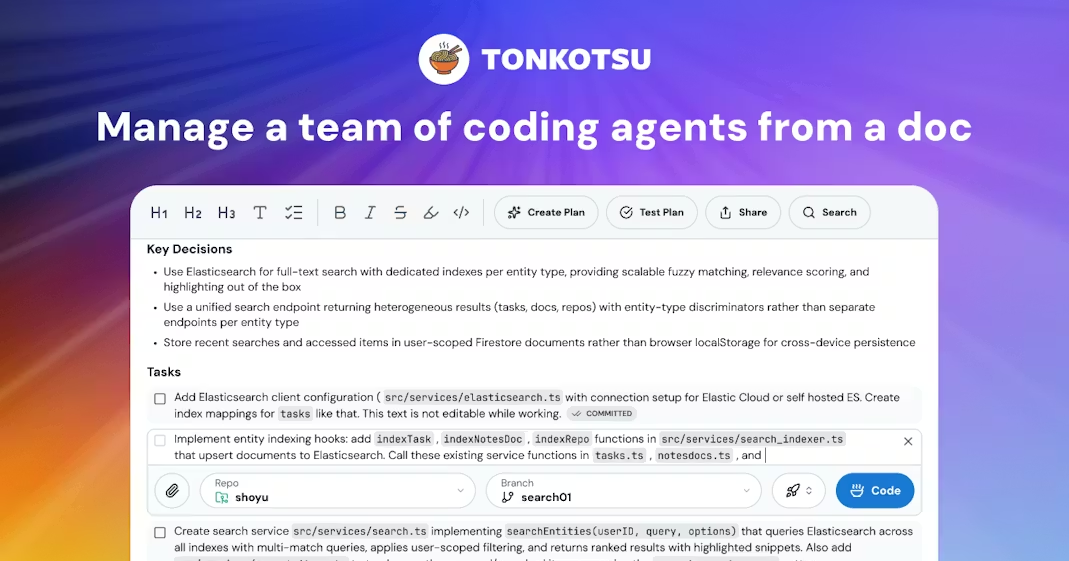
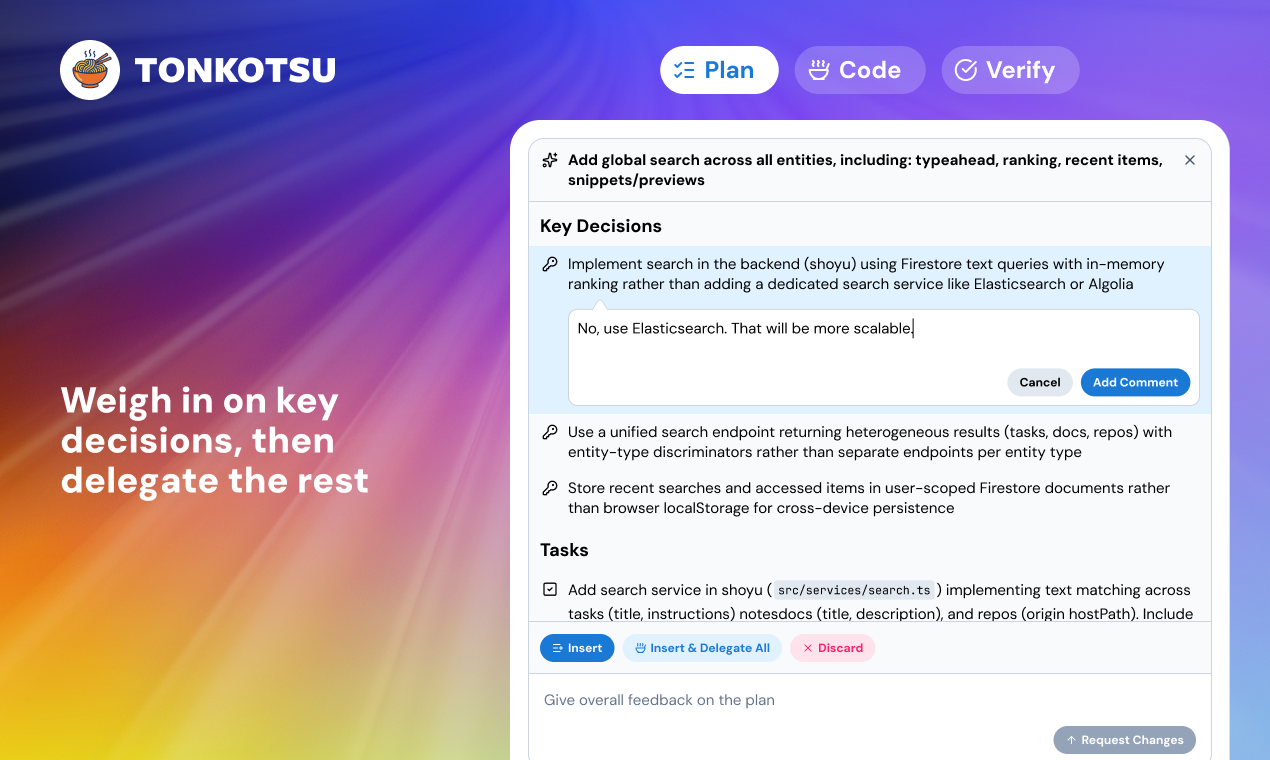
查看原始信息
GenPM
GenPM replaces timelines and fragmented tools with project-level AI orchestration, letting you plan, generate, iterate, and manage AI videos end to end — all in one place.
👋 Hey Product Hunt! We’re the team behind GenPM. We built GenPM because making AI videos today feels way harder than it should. Even with powerful models, the workflow is still fragmented: • prompts in one place • images somewhere else • videos generated scene by scene • consistency breaking every step • and no real way to manage everything as one project So we asked a simple question: What if AI video creation worked like a real production pipeline — not a pile of prompts? That led us to GenPM. GenPM is an AI-native video production platform where you: • define context once (story, style, characters, world) • reuse it across images and videos • iterate without losing consistency • and manage everything at the project level, not per prompt No timelines. No fragmented tools. Just one place to plan → generate → iterate → ship. We’re still early and actively learning from creators, filmmakers, and builders — so we’d love your feedback, questions, or even brutal takes. Thanks for checking us out 🙏 Let us know what you think!
6
回复

Hey hunters! 🚀 Excited to be here.

To add to what the team said, we noticed a huge gap in the market. There are amazing tools to generate video (Runway, Kling, Luma), but almost no tools to "manage" the production.

We built GenPM to be the Orchestration Layer that makes these models actually usable for professional work. We’re not replacing them; we’re giving you the control to direct them.

We have a massive roadmap ahead. Question for you all: What combination of AI video tools are you currently using in your workflow?

Thanks for checking us out! 🙏

4
回复

I’ve been struggling with consistency + version chaos when making AI videos. GenPM looks like it’s solving the production layer rather than just generation — especially keeping character/style consistency across iterations. Thanks for building a solution for this — excited to try it out.

3
回复

@ethan_wj_kang Thanks so much for sharing this!! That’s exactly the pain we were feeling too.

We kept running into the same consistency and version chaos when iterating, and that’s what pushed us to focus on the production layer rather than just generation.

Would love to hear how it feels once you try it, and what still breaks or feels missing for you 🙏

2
回复

Hi! 👋 I'm one of the makers.

We started GenPM with a simple frustration: why do we need so many different tools just to make one AI video?

Script in one tool. Images in another. Video generation somewhere else. Voice, music, editing... all fragmented.

So we built a platform that brings it all together — from scenario to final export.

We're still early, and there's a lot more to build. But here's where we're headed: enabling a single creator to make a full narrative film that once required an entire production team.

Give it a try, make something, and let us know what you think — we genuinely want all the feedback. 🙏

2
回复

We'll be sharing updates, new features, and behind-the-scenes stuff here:

Come follow along as we build! See you there 🙂

2
回复

Hey GenPM team @chrissy_jeon ,

Congrats on the launch! It looks like GenPM could really streamline the AI video production process, especially with its focus on maintaining consistency across iterations.

How's the response been so far? What marketing strategies are you focusing on to get the word out? Would love to hear how you're planning to promote the platform!

1
回复