Product Hunt 每日热榜 2026-03-12

PH热榜 | 2026-03-12

#1
Naoma AI Demo Agent
The video AI demo agent for B2B SaaS for immediate demos
535
一句话介绍:一款为B2B SaaS企业提供的视频AI演示代理,通过24/7在浏览器内提供实时、个性化的产品交互演示,将传统的“预约演示”流程转化为即时体验,解决了销售线索因等待而流失、销售代表无法规模化提供演示的痛点。
Marketing Artificial Intelligence YC Application
AI销售助手 SaaS演示自动化 视频交互代理 销售漏斗优化 潜在客户筛选 多语言支持 数字化销售 B2B营销工具 客户自助服务 虚拟产品演示
用户评论摘要:用户普遍认可其解决了“预约演示”导致销售流失的核心痛点,认为其转化率(10-20%)数据亮眼。主要问题集中于定价模式、对C端产品的适用性、支持语言数量,以及产品UI更新后AI如何同步学习工作流程。团队回复积极,透露目标定价为10美元/次有效演示。
AI 锐评

Naoma的此次“转型”亮相,与其说是一次产品迭代,不如说是一次对市场痛点的精准狙击。它舍弃了泛化的“销售分析”赛道,转而切入销售漏斗中最脆弱且最关键的“演示”环节,这本身就是一次价值定位的升维。

其真正价值并非炫技式的AI视频生成,而在于将“演示”从一个需要人工协调、耗时数日的“销售动作”,重构为一个标准化的、可即时交付的“产品功能”。这直接攻击了B2B销售中两个经典矛盾:买家意图的瞬时性与销售响应的滞后性,以及演示体验的个性化需求与销售人力的有限性。通过AI代理实时操作真实产品界面进行讲解,并集成线索筛选与路由,Naoma试图将高价值的销售代表从重复的初级演示中解放出来,转而聚焦于已筛选、高意向的客户谈判,这本质上是在重构销售团队的人效模型。

然而,其面临的挑战同样尖锐。首先,技术可靠性是信任基石:AI能否在复杂、开放的对话中始终保持演示路径的准确与专业?产品界面的频繁更新是否会成为运维噩梦?其次,商业逻辑有待验证:按演示次数收费的模式,如何与客户的产品价值、演示复杂度挂钩?是否会因追求“次数”而牺牲演示质量?最后,市场教育成本不低:让企业将宝贵的销售第一触点完全交给AI,需要极强的案例证明和数据说服力。

总体而言,Naoma的赛道选择极具洞察力,它不再只是“赋能”销售,而是试图“替代”销售流程中的特定环节。其成败将不取决于AI的拟人程度,而取决于它作为一款“工具”,在提升转化率与销售效率方面,能否交出远超传统方式且稳定可复制的数据答卷。这是一场关于销售工作本质解构的勇敢实验。

查看原始信息
Naoma AI Demo Agent
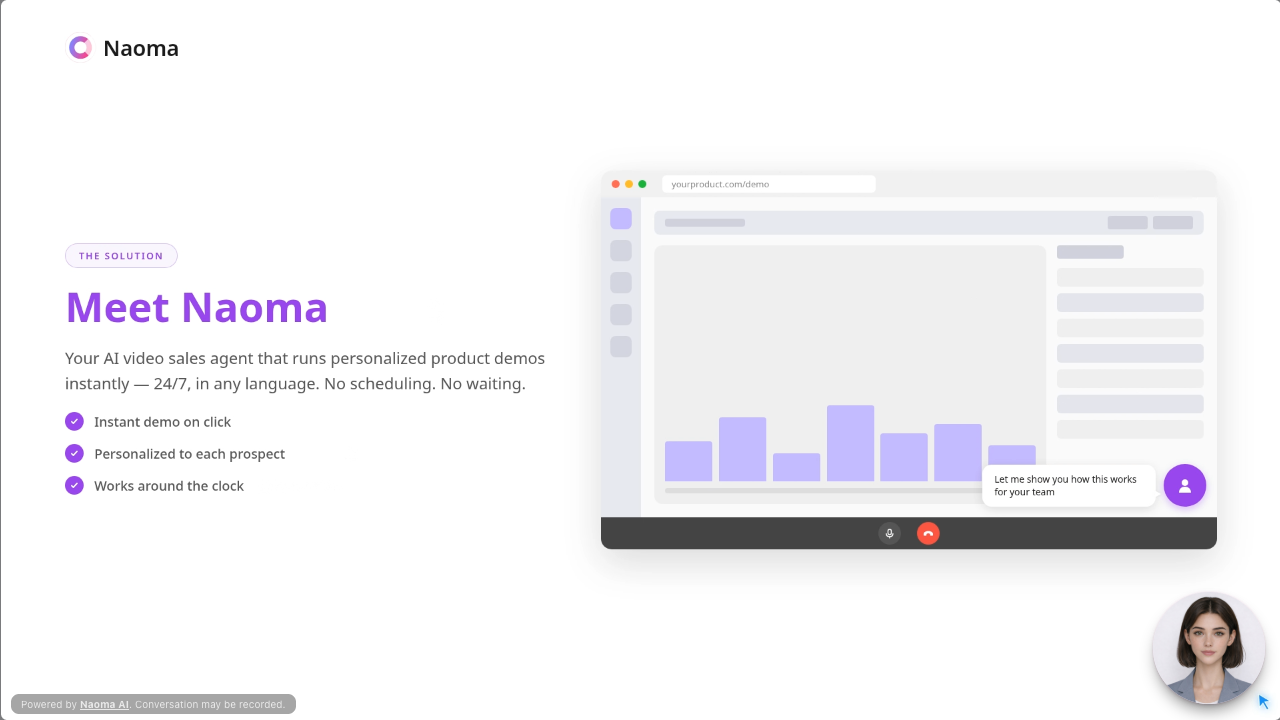
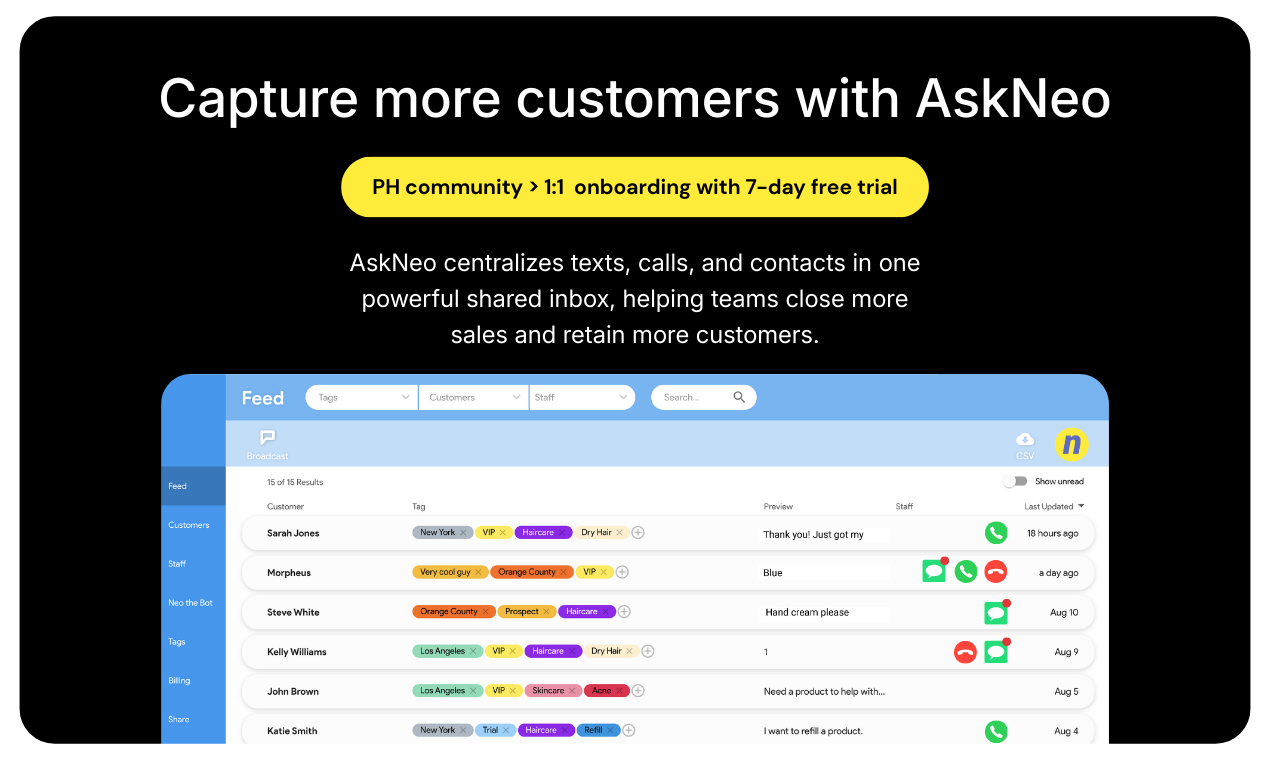
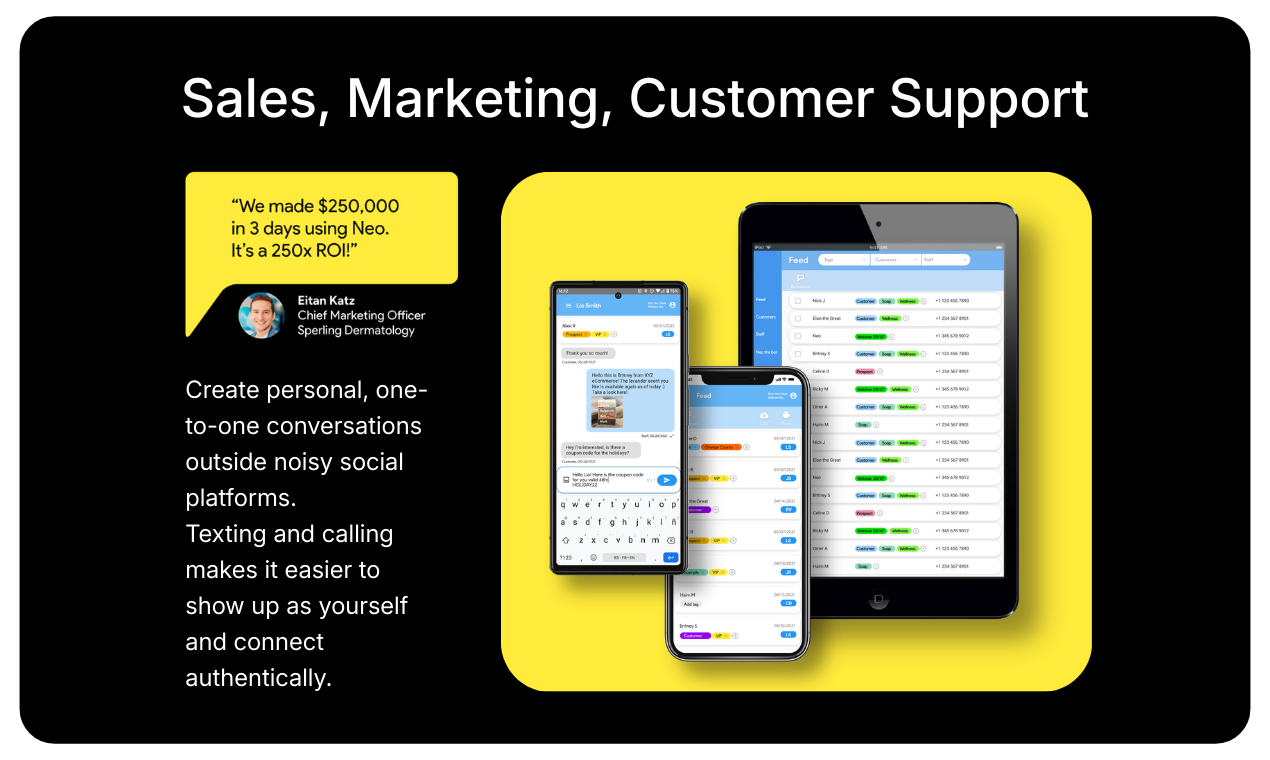
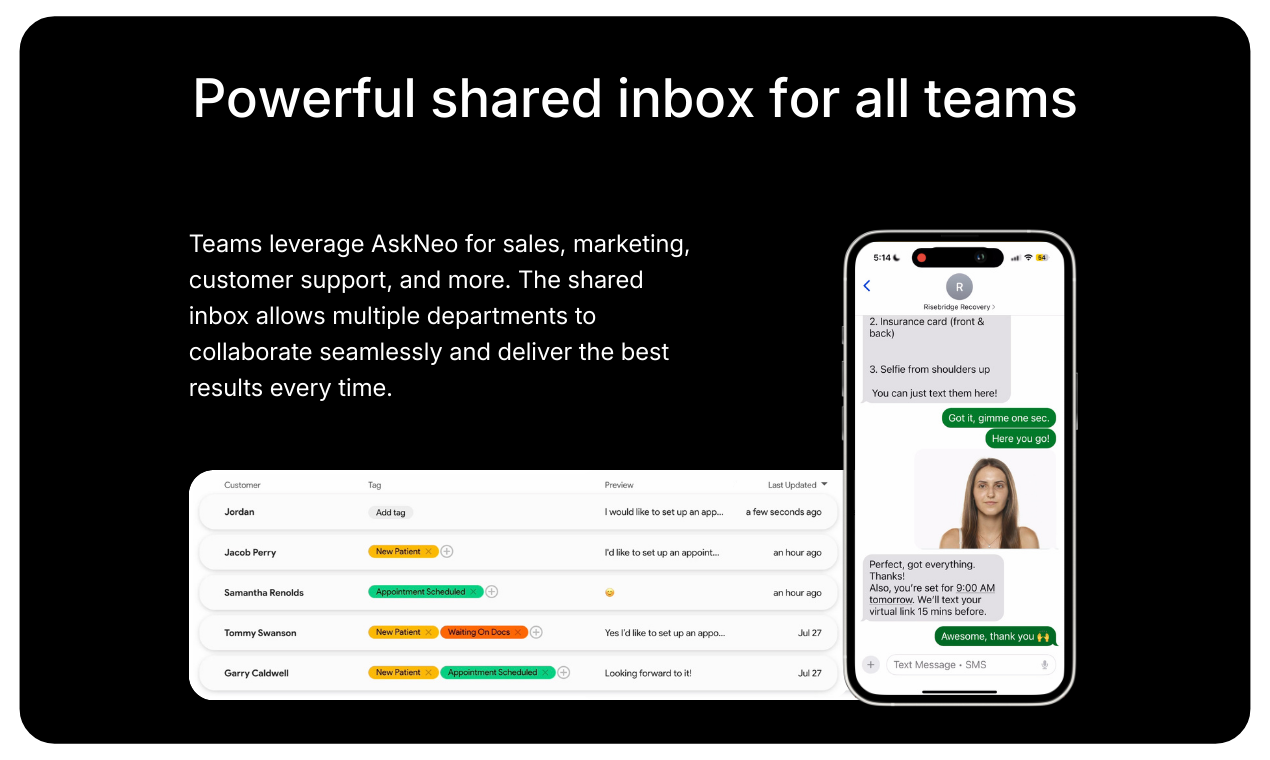
Turn “Book a demo” into “Get an AI demo now.” Naoma is the first video AI demo agent for B2B SaaS that delivers live, personalized demos in-browser 24/7 in any language. It clicks through real product flows, answers questions, qualifies prospects, and routes them to CRM, sales calendar, or checkout. Choose the avatar style: human-like, branded mascot, or a more formal look to engage your prospects.
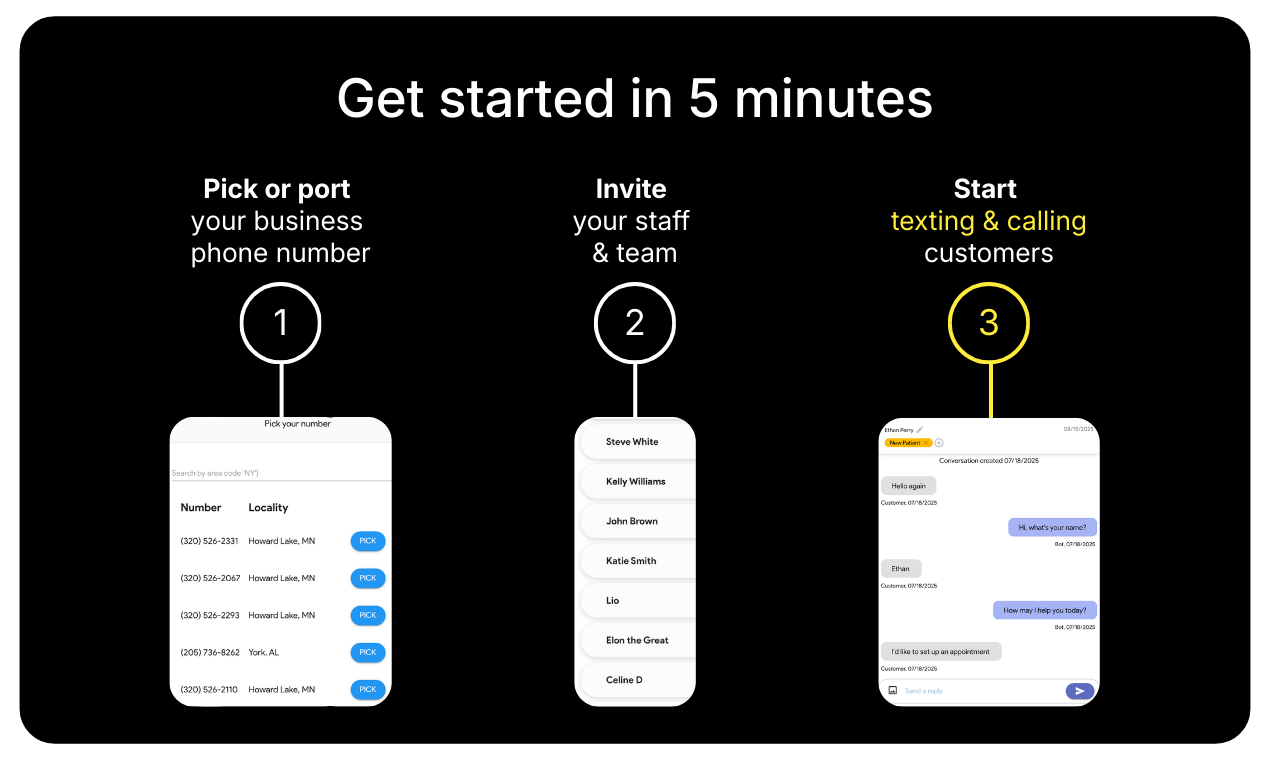
Hey Product Hunters 👋 We’re the team behind Naoma — turning “Book a demo” into “Get an AI demo now.” Last time, we launched a different Naoma — an AI sales analytics platform — and hit #2 Product of the Day. That was our first proof we could build something people actually want. Then something unexpected happened: while talking to SaaS teams about sales analytics, we kept hearing the same pain: “Your demo is the bottleneck. Buyers don’t want to wait. Reps can’t scale. And too many demos are unqualified.” So we pivoted. Today we’re launching Naoma (v2) — the first AI video demo agent. Naoma runs live, personalized demos in-browser, can click through real product flows, answer questions, qualify prospects, and route them to the right next step: CRM, your sales calendar, or self-serve checkout — 24/7 and multilingual. You can also choose the avatar style (human-like, branded mascot, or more formal). We’re early and shipping fast — would love your feedback: • What should an AI demo agent handle first in your funnel? • What would make you trust it enough to deploy on your website? • Any overall feedback on what we’re building? 👉 Try it right now — no "book a demo" needed: naoma.ai
71
回复

@dmitry_zakharov_ai  Finally!

I'm so glad you're back on ProductHunt, and with such a cool project!

I ran a demo myself once and understand how much Naoma will simplify life for many organizations.

Good luck!

2
回复

We applied for the YC S26 batch a while back — and seeing @aaronoleary thread made us even more excited about the opportunity.

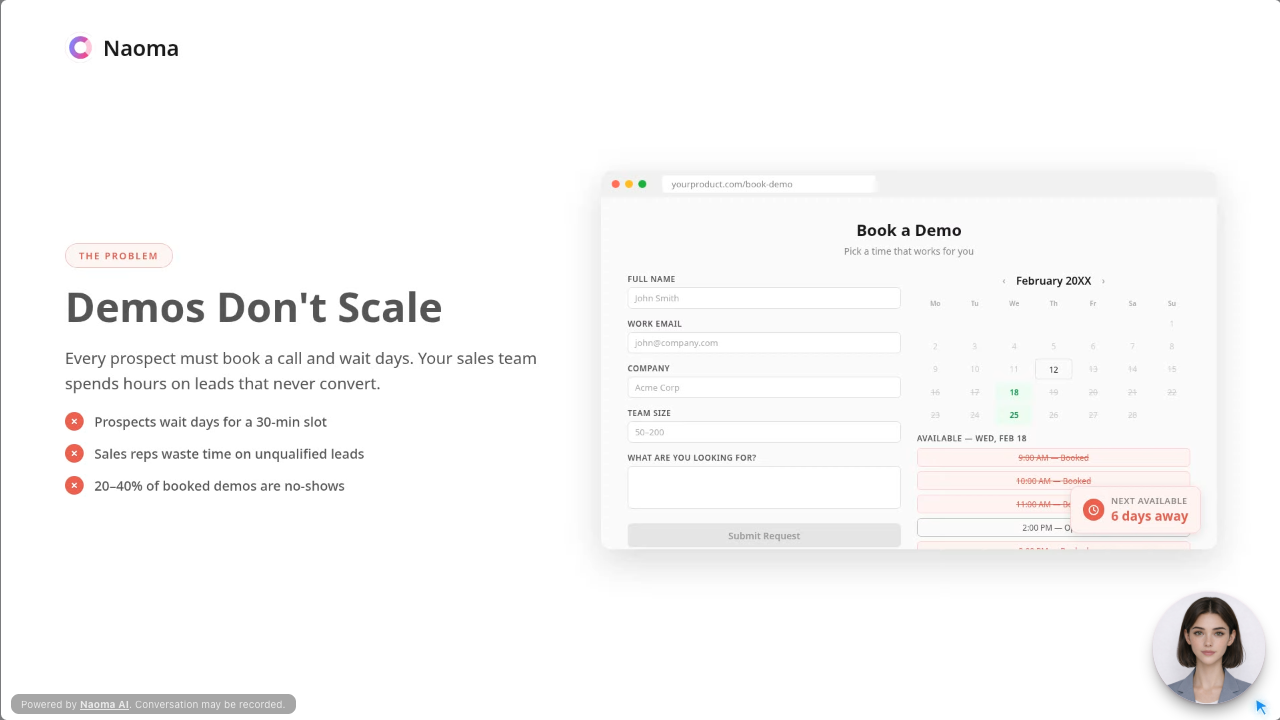
Naoma is an AI video agent that replaces the "Book a Demo" wait with an instant, live product demo on your website. Buyer hits peak intent, gets a real walkthrough on the spot, gets qualified and routed — no scheduling, no rep required.

Pre-seed backed by Ultra VC, Sparkle Ventures and angels. Early pilots with UXPressia, Yesim, Mellow and others. Seeing 10–20% visitor-to-demo conversion, with up to 30% moving to next steps.

Would be an incredible opportunity for us at this stage. Fingers crossed.

🤞 #YCApplication

@aaronoleary could you add us also please?

60
回复

@dmitry_zakharov_ai congrats on a new great launch!

45
回复

Looks very nice. Good luck with the launch! Curious to what average check is that tailored

44
回复

@islam_midov hi Islam and thank you for your question. Get demo now and if U'd like - book a demo with our sales team. We'll show you our pricing.

44
回复

@islam_midov Thank you!

44
回复

@islam_midov thanks for the support - to be honest, we are still trying to figure it out. But the target price is $10 per demo from 3+ minutes

5
回复
Great product. Wondering if it’s applicable for consumer products?
44
回复

@ponikarovskii hi Anton!
And thank you for the great question.
So the answer is probably yes - depends on the product. We can discuss it and share our experience

43
回复

@ponikarovskii Thank you!

44
回复

@ponikarovskii it might be, but we are focusing more on b2b products right now

5
回复

I am following Naoma's journey since their first launch, and implemented their demo-agent on one of my projects. I think that they made a wise pivot from yet another analytics to solution that covers extremely important and time sensitive part of the sales funnel. Congrats on the new launch!

43
回复

@michael_vavilov Many thanks!

45
回复

@michael_vavilov Thank you!

45
回复

@michael_vavilov thank you for your trust and support!

6
回复

Cool product, congratulations on the launch.

What languages does Naoma support?

43
回复

@dzianis_yatsenka Hi, thank you. We support 30+ languages, including English, Spanish, French, German, Portuguese, Hindi, Japanese, Korean, Chinese, Arabic, and more

33
回复

@dzianis_yatsenka Thank you!

17
回复

@dzianis_yatsenka thanks for your great question, Naoma supports 30+ languages.

5
回复

The pivot from analytics to this makes a lot of sense honestly. Every B2B SaaS I've worked on has the same bottleneck where sales can't keep up with demo requests, and by the time someone gets scheduled half of them have already gone with a competitor.

10-20% visitor-to-demo conversion is wild if that holds up at scale. How are you handling product updates? Like when the SaaS pushes a new UI, does Naoma automatically learn the new flows or does someone need to retrain it?

10
回复

@mihir_kanzariya It can handle small changes automatically, big redesigns will require human intervention right now. But we are working on solving this problem automatically with the help of additional exploration agent that can map out the product features.

7
回复

@mihir_kanzariya thank you for your great question, out CTO David will answer it.

6
回复

@mihir_kanzariya thanks for the support! And I see that David has already answered the question

5
回复

Congratulations on the launch 🎉 🎉 !!

8
回复

@shubham_pratap thank you!

7
回复

@shubham_pratap appreciate your support!

7
回复

@shubham_pratap thank you!!!

7
回复

Great product!

7
回复

@alex_chepovoi thank you!

5
回复

@alex_chepovoi thank you for your support!

5
回复

@alex_chepovoi Thank you so much!

5
回复

Testing Naoma right now for our product, and it looks great! Good luck, guys!

7
回复

@alena_korpula Thanks so much for the feedback!

6
回复

@alena_korpula thank you for your trust and support!

6
回复

@alena_korpula thanks a lot for your support

5
回复

wow, impressive!

7
回复

@mauricevv thank you! Wanna try it?

6
回复

@mauricevv Many thanks!

6
回复

@mauricevv thank you

5
回复

Finally someone made it work, would like to try for our product, good luck with the launch!

7
回复
6
回复

@konstantin_netyliov1 thank you! Really appreciate your support

6
回复

@konstantin_netyliov1 Thank you so much!

6
回复

Wow, great demo, guys!

6
回复

@nikvoice Thanks so much for the feedback!

4
回复

@nikvoice thank you!

4
回复

@nikvoice Thanks!

4
回复

From a SaaS founder’s perspective, this is something I’d actually use. “Book a demo” has been a huge drop-off point for us – people are interested, but they don’t want to wait days just to see the product.

What I like about Naoma is that it:

lets visitors get a real, interactive demo instantly

can walk through actual product flows, not just a marketing video

helps qualify visitors and route serious buyers to our sales team or checkout

If this works as promised, it basically turns our demo from a scheduling problem into an on-demand product experience. Curious to see:

how well it handles more complex questions

and whether it can actually increase qualified demos without overwhelming our reps.

Overall, this feels like a very natural upgrade to the traditional “book a demo” funnel.

6
回复

@yu_zhou8

This is exactly the problem we set out to solve — and you've described the value prop better than most of our own copy. 😄

On your two questions:

Complex questions — this is where we've invested heavily. The demo adapts based on role, use case, and what the prospect actually asks mid-session. It won't handle every edge case perfectly today, but the bar is already higher than most teams expect going in. We're transparent with prospects when something needs a human.

Qualified demos without overwhelming reps — the qualification layer is what makes this work. Naoma filters intent before routing, so reps are only seeing prospects who've already seen the product and have specific questions. In early pilots we're seeing up to 30% of demo starters move to next steps — without rep involvement at that stage.

Would love to show you what it looks like on a real funnel. Happy to set something up. 🙏

5
回复

@yu_zhou8 Thanks so much for the feedback!

5
回复

@yu_zhou8 Thank you for your support!

5
回复

Congrats! Nice demo

6
回复

@solodnev Thank you!

4
回复

@solodnev Thank you!

5
回复

@solodnev appreciate!

4
回复

Congrats on the launch!

Very interesting product, does it share a screen and walks client through the platform let’s say?

6
回复

@danshipit Hi, thank you! Yes this is exactly how it works. It launches a browser and streams the screen capture back to the prospect while doing a product walkthrough

4
回复

@danshipit Many thanks!

4
回复

@danshipit Thank you for the brilliant question!
It launches a browser and streams the screen capture back to the prospect while doing a product walkthrough

4
回复

The scheduling step kills momentum at exactly the wrong moment, when a prospect is most curious and most ready to engage.

The 10-20% visitor-to-demo conversion stat is quite impressive - what was your sample? Most SaaS websites convert visitors to signups at 1-5%, so getting someone into an actual product walkthrough at that rate would be a meaningful shift in how the top of funnel works.

The trust question you're asking is the right one. For me it comes down to two things: how well the agent handles the moment it doesn't know the answer, and whether it can detect when a prospect is genuinely evaluating vs. just poking around. A graceful "let me connect you with someone who can answer that" beats a hallucinated response every time.

Curious whether Naoma is designed for established SaaS with complex flows or also works for early stage products where the demo itself is still evolving, and how would it work when new features are added into the workflow. Congrats on the launch!

6
回复

@joao_seabra Thank you, and great questions, these go straight to the core of what we've been working through.

On the sample: the 10-20% is from early pilots across a handful of B2B SaaS companies - small sample, so we're careful not to overgeneralize. But the directional signal is consistent: when you remove the scheduling friction and replace it with an instant conversation, a meaningful share of visitors who would have bounced actually engage.

On handling unknowns I fully agree. A confident hallucination is worse than an honest handoff. Naoma is designed to recognize the boundary and route gracefully to a human when it hits it. That moment, done well, actually builds trust rather than breaking it.

On early-stage products: Naoma works best when there's enough product to show, but it doesn't require a polished, static flow. When features change, you update the agent. It's closer to briefing a new rep than rebuilding a product tour.

7
回复

@joao_seabra Thank you!

7
回复

@joao_seabra Joao, thank you for your support!

4
回复

Awesome project! Curious how Naoma handles demos for products with complex, role-based experiences - where what a sales leader needs to see is completely different from what a developer or finance person would care about. Does the agent dynamically adapt the demo flow based on who's watching, or is it one flow per product?

6
回复

@zigapotoc Hi, thanks! Naoma will ask questions, qualify the prospect and show what she thinks is relevant based on the prospect answers. You can also configure multiple flows tailored for different personas

5
回复

@zigapotoc thanks for the comment, and yes, you are absolutely right about how it works. The agent qualifies the prospect first, and then adapts the demo based on the use case

4
回复

@zigapotoc Thank you!

5
回复

Hey builders, good luck with the launch.

How does Naoma know how to interact with the product which it is selling?

6
回复

@andrew_mende2 thank you! She has access to browser automation tools uses them to do a product walkthrough.

5
回复

@andrew_mende2 Thank you!

4
回复

@andrew_mende2 thank you for the great question!

4
回复

I think you have found a sweet spot when for a company employing humans it may be prohibitively expensive to do a live demo to every qualified lead; you are practically dropping the threshold to mere dollars, not hundreds of dollars per demo.

6
回复

@max_kraynov yes, exactly!

5
回复

@max_kraynov exactly! Thank you!

4
回复

@max_kraynov , yes, thanks for the comment

4
回复

Looks interesting. Just a small question here -- when a cost per demo can be $250-600 do you think it's reasonable to delegate it to an AI bot? I just try to understand the use cases of this tool. Upvoted 👍

6
回复

@evgeny_kotelevskiy Great question, and the math is actually why Naoma makes sense here.

That $250-600 cost per demo includes SDR time, AE time, no-shows, and leads that weren't qualified to begin with. A significant chunk of that cost goes to demos that should never have happened.

Naoma doesn't replace the high-value human demo. It runs the first discovery layer: qualifying the lead, answering basic product questions, showing the product value relevant to that specific visitor, and capturing intent - so when a human rep does step in, they're talking to someone who already understands the product and is ready to move forward.

The result: fewer wasted demos, higher close rates on the ones that happen, and the leads who would have bounced on a 5-day Calendly wait actually convert instead.

So the question isn't "should AI run the $500 demo?" It's "how many of those $500 demos are currently happening with the wrong people or not happening at all?

6
回复

@evgeny_kotelevskiy thank you for your support!

6
回复

@evgeny_kotelevskiy Thank you for your support!

6
回复

this is one of the greatest products i have ever seen today

5
回复

@kshitij_mishra4 thank you!

4
回复

@kshitij_mishra4 thank you!

4
回复

@kshitij_mishra4 Many thanks!

4
回复

this is one of the greatest products i have ever seen

5
回复

@kshitij_mishra4 Thank you!

2
回复

@kshitij_mishra4 wow! Many thanks!

4
回复

@kshitij_mishra4 Thanks so much for the feedback!

3
回复

This is really cool. Product demo are real bottleneck specially for complex system and having a personalised demo is a great thing. Congratulations on the launch 🎉

5
回复

@bhu_1 thank you!

4
回复

@bhu_1 thank you!

4
回复

@bhu_1 Thanks so much for the feedback!

3
回复

Great product! Good luck with launch!

5
回复

@thxgrey Thanks!

4
回复

@thxgrey thank you mate!

4
回复

@thxgrey Many thanks!

3
回复

The demo bottleneck is real. Sales teams wait days for a custom demo while the lead goes cold. If this can generate a personalized video demo on the spot, that's a different conversion game. I'm curious about the AI quality, though. B2B buyers are hard to impress. Does the demo feel scripted, or can it actually respond to what the prospect cares about? What's the average watch-through rate compared to a live sales call?

5
回复

@aitubespark We care a lot about the "human feel" during the demo and constantly working on improvements.

5
回复

@aitubespark The scripted vs. responsive question is exactly the right one to ask — and it's what separates Naoma from recorded demo tools or clickthrough tours.

The demo adapts in real time based on what the prospect actually says. If they mention a specific use case, the flow pivots to it. If they ask a question mid-demo, it answers and continues. It's not a linear script with a play button — it's closer to a conversation that happens to include a product walkthrough.

On watch-through rate — we don't share specific numbers publicly, but what we can say: average session length runs over 6 minutes for engaged prospects, and we only charge for demos over 3 minutes. The bounce rate exists — some people drop off early — but it's consistently lower than the average no-show rate on scheduled calls. A prospect who ghosts your Calendly invite costs just as much as one who clicks away in 20 seconds, except with Naoma you at least got them in the door.

B2B buyers are hard to impress — agreed. The ones we're seeing convert aren't impressed by the AI, they're impressed by getting a relevant answer to a specific question without waiting a week. That's the bar. 🙏

5
回复

@aitubespark thanks for the comment and questions! See that Dmitry answered below

4
回复
Congrats on the launch! Turning “book a demo” into an instant AI demo is a really interesting idea. Curious how prospects are reacting to the avatar-led demos so far?
5
回复

@mithlesh_shah thanks! Surprisingly, many people have no issues interacting with AI and telling the agent about their situation and answering qualification questions.

5
回复
@david_klassen That’s interesting. I guess once the experience feels conversational, people don’t mind whether it’s AI or human. Curious if you’re seeing it work better for certain types of products or demos?
4
回复

@mithlesh_shah Thank you! 🙏

Honestly — better than we expected. The initial assumption was that some prospects would bounce the moment they realized it wasn't a human. What we're seeing in pilots is that most people engage pretty naturally once the demo actually starts. The product is doing the work, and when the walkthrough is relevant and the answers are accurate, the avatar becomes background.

The moments that matter most aren't "does this look human enough" — they're "did it answer my question" and "did it show me something relevant to my use case." When those land, prospects stay and convert.

That said — avatar quality is something we're actively investing in. More realistic, more expressive. Not because users are complaining loudly, but because we know it raises the ceiling on the experience, especially for higher-ACV products where the buying environment needs to feel more premium.

Curious what your instinct is from the buyer side — does the avatar matter to you, or is it purely about the demo quality? 🙏

5
回复
Congratulations! The "instant demo vs. wait 5 days" reframe is spot on. Curious what's the average session length? Do most prospects watch the full demo or drop off at a specific point?
5
回复
5
回复

@mehmet_kerem_mutlu Great question — and one we track closely.

We don't share specific metrics publicly, but here's what we can say:

There is a bounce rate — some prospects drop off in the first 30 seconds. But that number is consistently lower than the average no-show rate for traditional scheduled demos. A prospect who never shows up costs you just as much as one who clicks away in 20 seconds — except with the AI demo you at least got them in the door.

For prospects who engage past that point, average session length runs over 6 minutes depending on the product. That's a real, active conversation — not passive video watching.

And to your point about drop-offs — we actually built our pricing around this. We only charge for demos over 3 minutes. If someone bounces early, it doesn't count. We think that's the only fair way to do it.

5
回复
5
回复

AI agents for demos are a fascinating idea.

A lot of products struggle with showing value quickly, and if an AI agent can guide users through a product in an interactive way, that could significantly improve onboarding and conversions.

Curious, can NAOMA adapt the demo flow based on different user personas or questions in real time?

Congrats on the launch and excited to see how teams use this.

5
回复

@dharmikp1908 Thank you! Yes Naoma can show different flows tailored for different personas

4
回复

@dharmikp1908 Thank you for your question! Naoma can adapt the demo flow based on prospect qualification during the demo.

4
回复

@dharmikp1908 Thank you!

4
回复

Interesting concept — how does it handle objections or off-script questions during the demo?

5
回复

@jozsef_orsos thank you!

6
回复

@jozsef_orsos we connect a client's knowledge base. So Naoma can successfully handle even difficult technical questions.

6
回复

@jozsef_orsos Naoma can use the knowledge base and sales playbooks to handle objections the same way the human sales-rep would

6
回复

I recently joined the Naoma team and have been working on how our AI demo agents actually talk to visitors and walk them through real product flows.

What I like most here is that it’s not another “watch this 10‑minute video” thing – prospects can click around, ask questions, and get a personalized demo in their own language, any time.

If you’re doing product demos for your SaaS and have thoughts, questions or “this would never work for us because…”, I’d genuinely love to hear them. Your feedback today will shape what we build next.

5
回复

@muravyov thanks, happy to work with you!

4
回复

@muravyov Nick, thank you for joining us!

4
回复

@muravyov we are glad to have you onboard!

4
回复
#2
Needle 2.0
Vibe-automate workflows and earn passive income
437
一句话介绍:Needle 2.0是一款通过自然语言对话即可自动构建、测试并部署工作流的AI代理平台,解决了用户在传统自动化工具中面临的构建复杂、维护困难及成果难以货币化的核心痛点。
Artificial Intelligence No-Code YC Application
AI工作流自动化 无代码开发 自然语言编程 被动收入 智能体市场 流程自愈 RAG Agent 生产力工具 创作者经济
用户评论摘要:用户普遍赞赏其“自然语言构建”和“市场盈利”模式,认为其体验远超Zapier等传统工具。核心关注点集中在:盈利模式的具体分成、企业级合规与API限流处理、工作流版本控制、以及AI构建的准确性与上下文理解能力。
AI 锐评

Needle 2.0的野心不在于简单地用AI包装另一个IFTTT,而在于试图重构自动化工作流的整个生命周期和价值链。其宣称的“Vibe-Automation”本质是降低构建门槛,将描述性指令转化为可靠流程,这直击了传统工具节点拖拽式编程的复杂性与维护噩梦。然而,其真正的颠覆性赌注在于“市场”与“自愈”。

“构建代理”是技术亮点,但“盈利市场”是商业模式的核心创新。它巧妙地将用户从消费者转化为生产者,试图建立一个由AI辅助创作、平台提供维护与分发、创作者分享收益的生态系统。这不仅能激励高质量工作流的产生,形成护城河,更指向了一个“自动化即服务”的未来。但成败关键点在于:第一,AI构建的可靠性能否达到“生产就绪”,尤其是处理复杂、长链条逻辑时;第二,市场能否形成供需两端的飞轮,即是否有足够多的买家愿意为“模板”付费,这直接决定了创作者收益的吸引力。

评论中关于企业合规、版本控制和收益分成的疑问,恰恰暴露了其从极客玩具迈向企业工具必须跨越的鸿沟。自愈功能是另一个需要经受现实检验的承诺,若真能实现,将是巨大的运维价值。总体而言,Needle描绘的愿景极具吸引力,但其技术深度、市场运营能力及商业模型的可持续性,将共同决定它最终是成为下一个基础工具,还是又一个高开低走的AI概念泡沫。

查看原始信息
Needle 2.0
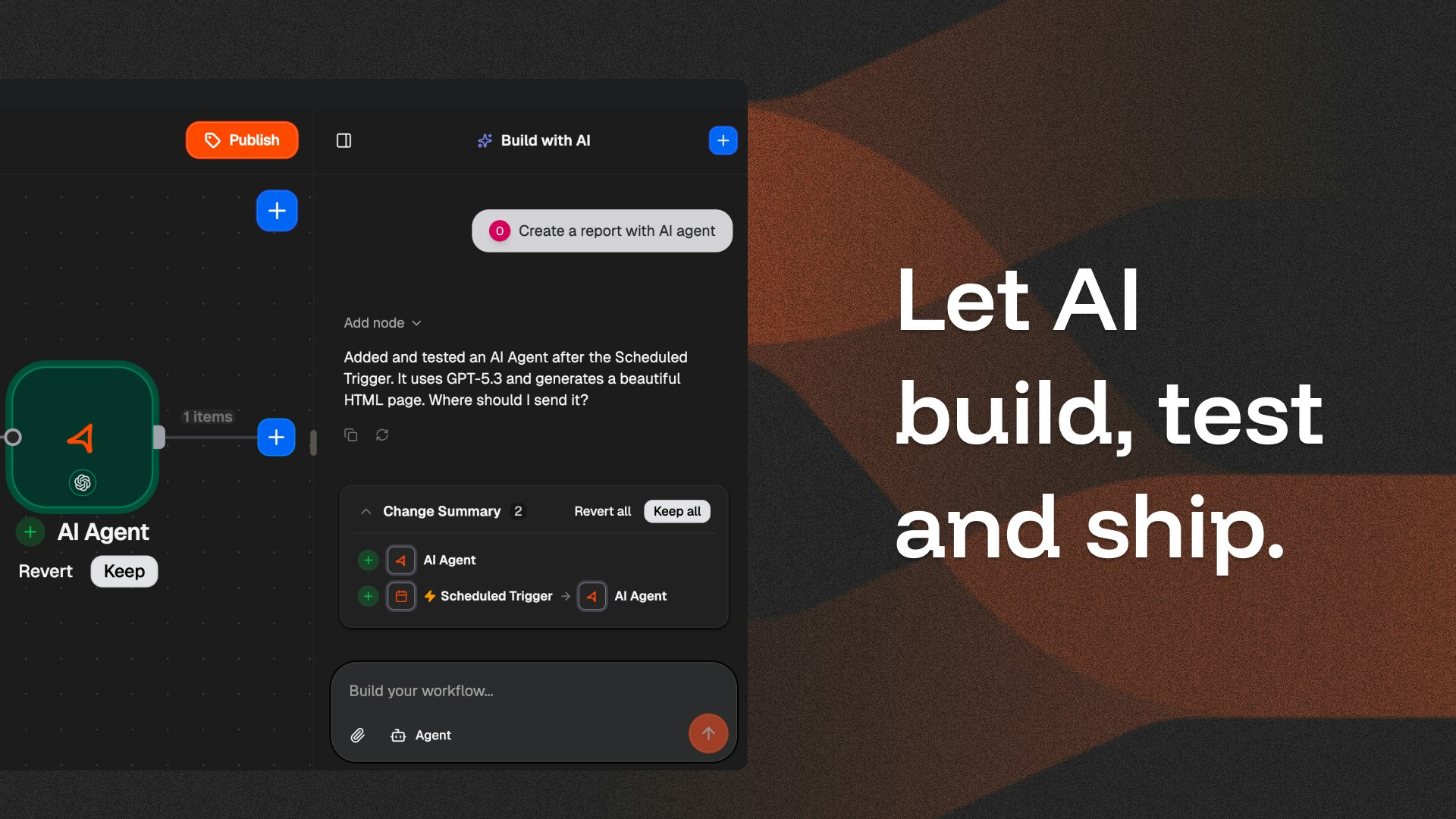
Just tell our builder agent what needs to be automated. Watch it in real-time building, testing and shipping your workflow, hands-free. It’s 2026; just vibe-automate it. On top, we launched a new way to earn as an AI builder. Just submit your workflow and start earning.

Hey Product Hunt! 👋 Jan here, co-founder of Needle.

After months of work, we are really excited to bring this to you, we call it:

> Vibe-Automation


What does that mean?


> Needle makes it simple to create workflows by chatting and monetizing them.

Three problems we kept running into:
- You are building a workflow, but it’s complex and takes time to build.
- You finished a workflow, but it brakes constantly and is hard to maintain.
- You are proud of your workflow, but you have no simple way to share what you built - let alone earn from it.

We've been heads down on the last year to fix this.

Today we're shipping two things:

1. Workflow Builder 2.0
- Describe your workflow in plain English.
- Our agent builds it, tests it end-to-end, self-heals and ships it.

2. Partner Program
- Publish your workflow to our marketplace, with 1-click.
- Other users run it. You earn per run.

---

What we'd love your take on:
1. Does "earn from your workflows" land right away - or does something need to click first?
2. Where did our workflow builder feel slow, unclear or inaccurate?
3. What's the first workflow you'd build and sell?

We'll be here all day.

Jan and the Needle team

16
回复

Hi, @jan_heimes @oeken Loved the idea behind Needle — Curious to know, how does Needle ensure the responses stay accurate and context-aware when pulling information from multiple connected sources?


Priya here, CEO at Techflitter Solutions FZCO, a tech consulting company operating from Dubai and India with 10+ YOE helping startups build from scratch to release to maintenance and scale tech products globally.


Even just recently ElevenLabs accelerated their growth by partnering with a consulting firm. That proves a point taking an offshore tech partner is a strategic growth move.

@jan_heimes @oeken If scaling beyond launch is the focus? We’re ready to support and align with your roadmap and growth goals. Let's have a chat

0
回复

@jan_heimes This looks fantastic!! Have already sign-up and can't wait to built some marketing workflows for myself! Congratulations on the launch

0
回复

@jan_heimes Hey, congratulations on the launch. Just one question; how does Needle handle enterprise compliance (GDPR/SOC2) and API rate limits for high-volume runs in paid marketplace workflows?

4
回复
For teams that currently rely on Make/Zapier/n8n, what’s the most common “breaking point” that causes them to switch—cost at scale, brittleness/debugging, speed of iteration, or something else—and what’s the first workflow you recommend migrating to feel the difference fastest?
11
回复

@curiouskitty Short: speed of iteration.

Long: Building (chatting) on Needle is much faster, so you can save a lot of time. Also if your workflow using RAG then Needle is also the better choice since we have RAG built-in. We call it Needle Collections.

11
回复

@curiouskitty Great question. From my experience, the biggest breaking point with tools like Zapier or Make is usually reliability when workflows get complex. Once you start chaining many steps together, debugging becomes painful.

1
回复

@curiouskitty Train your agent , not your hosting skills” is a great line. If OpenClaw can truly handle the infra, inference, and updates, that removes a big barrier for teams trying to move fast.

1
回复

Hey everyone! 👋

I’m Onur, co-founder at Needle.


I’ve seen people struggle to create the automations they need. Existing automation platforms not only have a steep learning curve, but also require complex setup and configuration.


In the end, people spend hours just to set up a basic workflow that:

  1. is not production-ready

  2. does not cover important cases

  3. is fragile and breaks frequently


It’s 2026, and this kind of effort is obsolete. We made it a pleasant and fun experience that I’m sure you’ll all enjoy: vibe-automation. The cousin of vibe-coding 🤓


The Needle builder agent is your automation expert. It stitches nodes together in real time, tests the workflow, and ships.


Our mission is to empower everyone to create their own smart solutions with AI agents. Give it a spin, Needle has a generous free plan. Curious to hear your thoughts.


Cheers,

Onur and the Needlers

8
回复

@oeken Such an exciting journey together with you!

2
回复

Big fan of the team & the product, you guys are really on to something BIG!!!

Whats the vision for the company 5 years from now?

7
回复

@daniel_karim1 Appreciate your comment! We believe, that everyone becomes a builder. So people who have deep insights into processes and operations do not need to ask their tech team anymore to build it, but can just themselves describe the problem and process and the agent builds it for them.

4
回复

@daniel_karim1 Hey Daniel, I recently joined Needle. I had 2 startups previously and exited one. Completely agree. Needle is onto something BIG. Very exciting to be on this journey and thank you for all the support :)

3
回复

@daniel_karim1 Thank you very much for the support! Our aim is to enable everyone to automate almost anything as easy as possible without requiring technical expertise.

2
回复

I've built automations with what is considered 'classic' - Zapier, Make and others. And Needle is just another league. That is such a quality of life upgrade!

I highly recommend it to everyone out there considering whether or not to try.

7
回复

@dmitrysereda thanks so much for the kind words Dmitry. Love what you are doing at Postproxy and love the Needle integration :)

3
回复

Congrats with Launch, guys! I'm genuinely impressed with your pace and dedication!

6
回复

@dan_ttf Thank you Denis and love your work with Postproxy. Super cool that you can distribute content to all social platforms within Needle using your integration :)

5
回复

Sound amazing! How do you maanage version control?

6
回复

@dennis_stech Good question. So we track every run of your workflow and version. So you can always see how past workflow runs executed or how past versions looked like. You can also roll back to any of these versions. Does that make sense to you, or is there a specific other version control feature that you had in mind?

4
回复

super cool!

6
回复

@pietrozullo Excited you find it cool!

3
回复

@pietrozullo Great to hear Pietro. Appreciate the support

3
回复

product is viiiiiiiiibing 🚀

6
回复

@mauricevv 🚀🚀🚀

4
回复

wow this is one of the greatest products i have ever seen

6
回复

@kshitij_mishra4 We are honored to hear that! Appreciate that you find it useful. What is something you always wanted to automate?

5
回复

@kshitij_mishra4 thanks so much for the support!

4
回复

@kshitij_mishra4 happy to hear that! thank you!

2
回复

Congrats @jan_heimes, shoutout on the launch! 🚀

5
回复

@alexanderfarr 🚀 Thanks! Appreciate the support!

0
回复

The marketplace angle is what makes this interesting imo. Tons of no-code automation tools exist but nobody's really cracked letting builders actually earn from their workflows. That's a clever incentive to get high quality templates in the system.

How does the 'describe in plain English' part work under the hood? Is the AI generating the workflow logic from scratch each time or does it match against existing patterns?

5
回复

@mihir_kanzariya I think so too. We'd like to put the creator in the spotlight and reward. It's 2026 and we're all now creators using AI and consumers of AI-powered solutions and content. Democratizing this exchange is our vision.

Secret sauce? Context, prompt and tool engineering. Needle agent mimics how we humans create workflows, i.e. not in a single shot but rather in iterations.

6
回复

Hi guys. I saw you did AI automation hackathon in Berlin. Congrats on the launch! I'm curious shat is the benefits for using your tool compare to make.com and n8n?

5
回复

@akovalevskyi  Give it a spin and try the agent! Thousands of users have already seen it themselves. You can build workflows way faster and simpler, but still handle really complex automations when you need to.

2
回复

@akovalevskyi Thank you for the comment. One of our main differences is that we try hard to let people build automations without hassle or a technical background and our builder agent is super powerful to make this happen. You tell the builder agent what you want in plain English; it builds the workflow, tests it, and iterates. No dragging nodes or wiring things by hand.

1
回复

Hey @Needle, congrats on your launch. I went through your page and I really like the delivery and messaging on your site. I have a question on the reward mechanics, it didn't landed for me. What's the portion of earnings that a creator should expect per run? does it vary in different cases/flows? Thanks and good luck!

5
回复

@dingleberryjones great question!

In short: It depends.

Ultimately, we calculate the earnings based on the tokens that are consumed per workflow run.

5
回复

The self-healing piece is what catches my attention most. Every automation platform can build workflows. Very few can maintain them when the underlying services change, which they always do. If the agent genuinely detects and fixes breakages without manual intervention, that's a much harder problem than the builder itself.

To answer Jan's questions directly: "earn from your workflows" lands immediately as a concept but I'd want to see one or two concrete examples of what a successful workflow earns per month before I believe it. The marketplace model only works if there's real buyer demand on the other side, and that's the part that needs proof early.

The first workflow I'd build and sell: automated brand audit. Scrape a company's public touchpoints, run them through a structured analysis, output a PDF report. I operate an AI branding platform, so the use case is very close to home, and it's exactly the kind of repeatable task someone would pay per run for rather than building it themselves.

Congrats on the launch, the vibe-automation framing is fun and the partner program is the genuinely interesting bet here.

5
回复

@joao_seabra Thank you! The line between producers and consumers of the workflows is blurry because nearly everyone needs some kind of an automation and we make it easy enough to so anyone can create a workflow. So we all grow together using AI in smart fashion. I can't imagine a future where AI is not playing a key role. And with this model we are rewarding everyone involved in creating value.

5
回复

Very excited about this launch! 🚀 Can’t wait to see what people build with this!

5
回复

@valentin_po Likewise! With this product we aim to unlock so much of creativity since now creating workflows is way much easier.

4
回复

Good one. We have similar feature in our product, text-to-workflow, but on basic level, just to enable small automations. If no secret, how long did it take you to build it? We struggled a lot with hallucinations, and in general, AI playing dumb. The competition in this fields is wild though :)

4
回复

@davitausberlin Competition is what makes it fun :) How long it took to build? I can't answer very well because we've improved iteratively. We've released first version of the workflow in October 2025 in our previous launch. However there're many details to get right until the UX starts shining.

3
回复

Impressive stuff, @jan_heimes ! What is the most popular workflow on your platform? What is the most surprising you found so far?

4
回复

@pavelk2 

Most popular ones are data transfer workflows, like reading Gmail attachments and sorting them into the right Drive folder automatically or similar e.g. Notion, Drive, Sharepoint, Airtable. Scraping LinkedIn or Instagram leads and pushing them to Google Sheets is also huge. Same with scraping competitor data from the web and turning it into reports. I always say it's like Lego, the limit is your imagination.

6
回复

Finally a RAG platform that doesn't make you fight the setup. Connected our Notion and Google Drive in minutes, and the search quality across docs is noticeably better than what I was getting elsewhere. The workflow automation on top is a nice bonus.

4
回复

@janhecker Appreciate the comment! You can also integrate your collections into your workflows, in case haven't discovered that feature yet. What is your top use case for RAG? would be happy to hear more about what you are building.

3
回复

Very curious to check out Needle. Heard good things. Maybe I get the time to try it out on Friday already!

4
回复

@richardpoelderl thanks for the support! would be happy to hear your experience once you've tried it :)

2
回复

Use it for outreach!

How do you manage access control

4
回复

@johnston_chen1 We have workspaces where you can invite and collaborate with others. So a workspace is like a a team.

4
回复

congrats on the launch team! what are some of the most popular workflows, that work best for this platform?

3
回复

@matthiasrossini Thanks! We see that lead generation from different sources (Instagram, Linkedin, other websites etc.) and outreach (Linkedin) are the most popular ones.

4
回复

Love the wedge here. If workflow automation becomes outcome-first, this gets very powerful. Congrats on the launch

3
回复

Hey @ashish_tadose really appreciate that! Indeed, outcome first is the way to go!

2
回复

The earning aspect is intriguing. How does the revenue model work for creators when someone runs their workflow?

3
回复

@sienna_claire Once you publish your workflow, you earn every time someone runs your workflows. You can explore the details at https://needle.app/partners.

0
回复

Error handling is often where automation tools break down. If Needle can automatically debug or adapt workflows, that would be a huge advantage.

2
回复

@anthony_adams_ Correct, Needle workflow agent does handle debugging and error handling. You can give it a spin and see the magic in action.

0
回复

I think speed of iteration is also underrated. Traditional automation tools still require a lot of manual configuration, so being able to describe a workflow and have an agent build it could save a lot of time.

2
回复

@kate_sleeman Indeed and the agent can also auto-repair your workflow. It will iteratively review what it has done the output of the nodes and adjust its actions accordingly. What is a first workflow you would build?

0
回复

The vibe coding piece to automation is interesting. It'll be interesting to see how I could use Needle to help with automating review as I vibe code.

2
回复

@lienchueh That's a great use case! You could set up a workflow that automatically pulls your latest commits, runs them through an AI review step, and flags issues or suggestions before you even look at the code yourself. Pair that with Slack or Telegram notifications and you've got an automated review loop running in the background while you keep vibing. Would love to see what you build!

1
回复

Fantastic tool for automation, especially for beginners who don't know what they are doing as well as hardened pros that can create pure magic. With this I was able to create an automation that scrapes Reddit related news for my interests and scores them for their importance within 30 minutes!

2
回复

@hozbasak Sounds awesome! Glad to hear that since it's exactly our intention with Needle: cut the friction and make everyone a builder.

3
回复

Curious -what's the most popular workflow people are using so far? Always interesting to see what users actually do vs what you built it for.

1
回复

@spunchev Great question. We do talk a lot, though with users and build the product always very much in mind with their desires. But yes, sometimes we see some interesting/surprising ideas. Often users use it very often for content scraping or creation, while we did not think, that this use case would be that popular in the beginning of building Needle. Does that answer your question?

0
回复

Hey guys, congratulation on the launch!

I was wondering, can users inspect and edit the workflows the agent generates, or are they mostly managed by the system?

1
回复

@ignacio_borrell Yes they can! You can either use the agent or build everything manually and configure all the details yourself. You can also check previous runs with their input and output parameters, so data lineage is fully covered.

0
回复
#3
HTML Pub
Turn AI-generated HTML into a live URL via MCP/API
361
一句话介绍:一款通过MCP/API将AI生成的HTML代码即时发布为可访问URL的工具,让非技术用户在AI聊天界面内即可完成从构思到上线全流程,解决了快速原型验证和内容发布的痛点。
Website Builder Artificial Intelligence Marketing automation
AI生成内容发布 无代码部署 MCP集成 即时托管 网页原型工具 营销落地页 AI工作流 免运维 快速建站 HTML发布
用户评论摘要:用户普遍认为产品精准解决了从AI生成到实际发布的“最后一公里”痛点,尤其适合营销人员、创业者和学生快速发布原型或项目。主要肯定其易用性、与AI工作流的无缝结合及对Vercel等传统方案的简化。核心疑问集中在版本管理机制以及与现有平台(如Leadpages)的集成可能性。
AI 锐评

HTML Pub的实质,是将“发布”这一传统开发流程中的关键动作,抽象并封装为一个可由AI直接调用的函数。其真正的颠覆性不在于“托管HTML”,而在于通过MCP协议将发布能力深度嵌入AI智能体(Agent)的工作流,从而实现了“对话即开发,描述即上线”。

产品巧妙地避开了与Vercel、Netlify在开发者市场的正面竞争,转而瞄准了被传统工作流忽视的“AI原生创作者”群体:营销人员、创业者、学生以及大量进行“氛围编码”的爱好者。对他们而言,Git仓库、环境配置和部署管道是难以逾越的认知与操作鸿沟。HTML Pub的价值主张并非“更好的托管”,而是“无需认知的发布”。它把复杂的发布流程压缩成一个AI指令,这极大地降低了功能实现的门槛,但也将用户深度锁定在特定的AI交互范式内。

然而,其商业模式与产品定位存在潜在张力。免费版的7天有效期凸显了其“临时原型测试”的工具属性,但付费版转向的“永久页面”与自定义域名,则意味着要与成熟的网站建设平台和托管服务竞争。此时,其功能深度、性能与生态完整性将面临严峻考验。此外,将内容的生杀大权完全交由AI管理,虽简化了流程,但也带来了版本控制模糊、责任界定困难等新问题。它是否只是AI热潮下的一个“快捷发布中转站”,还是能成长为下一代内容管理的基础设施,取决于其能否在“极简发布”之上,构建出不可替代的、基于AI协作的页面管理与迭代体系。

查看原始信息
HTML Pub
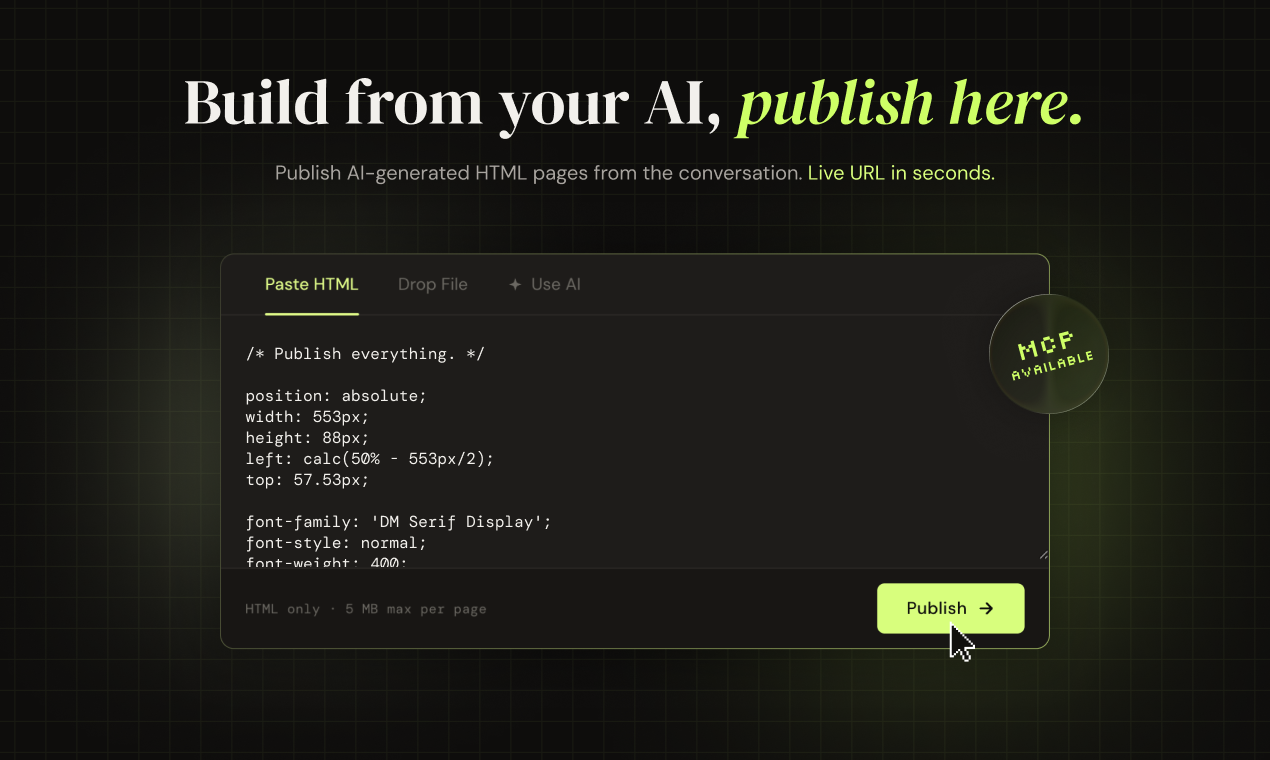
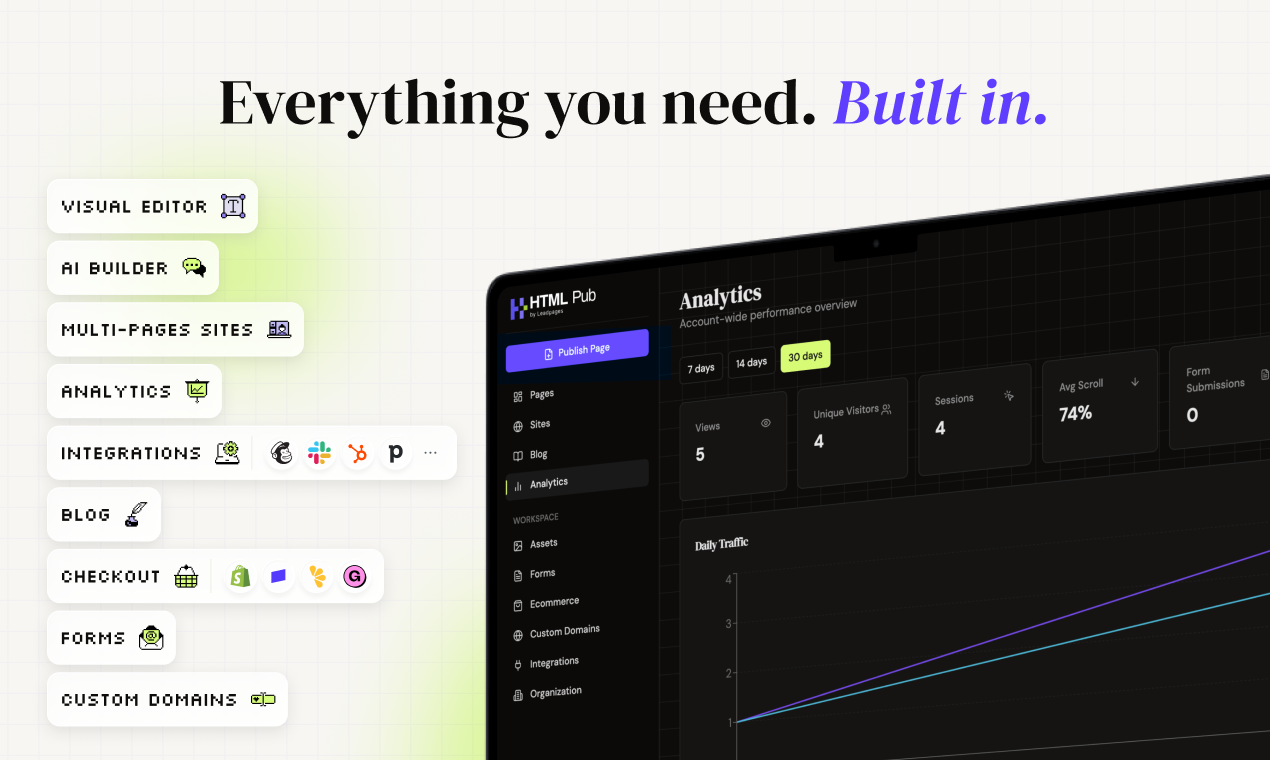
Publish AI-generated HTML instantly via MCP. Claude, ChatGPT, or any AI tool can build and deploy a live URL without leaving the chat. Websites, landing pages, stores with checkout, blogs, portfolios, prototypes — live in seconds. Custom domains. Forms and integrations. Visual editor and AI editing. Analytics, conversions, and heatmaps. No repos. No deploy pipelines. No hosting config. Idea to live site, from your favourite AI.

Hey PH, Michael here, CEO of Leadpages.

I've been building with Claude every day for the last few months. Not just landing pages. Full sites, blogs, e-commerce stores, interactive tools, games. Last week I went from an idea to a live, functioning site in a single conversation. No designer, no developer, no hosting config. Just a description of what I wanted and a URL at the end.

That's what HTMLPub does. Your AI builds it, HTMLPub puts it on the internet, and when you want to change something tomorrow, you pick up the same conversation. The AI manages the whole thing. Pages, content updates, new sections, new pages. It's not a deploy step. It's an ongoing relationship between your AI and your live site.

We built an MCP server that works with Claude, ChatGPT, n8n, Make, and anything that supports MCP. There's also an API for automation workflows and direct upload at htmlpub.com.

What people are building today:
→ Full sites with blogs and content pages
→ E-commerce stores and product catalogs
→ Landing pages and campaign microsites
→ Interactive tools, games, and dashboards
→ Portfolios and project showcases

Every plan includes the MCP connector, AI credits, analytics, form collection with a submissions dashboard, and asset management. Paid plans add custom domains, custom slugs, CSV exports, and pages that stay live permanently. Pro gets you heatmaps, API access, and 5 custom domains.

Free: 5 pages, no credit card, pages expire after 7 days. Starter: $10/mo, 50 pages, 1 custom domain. Pro: $25/mo, 250 pages, 5 domains, heatmaps, API access.

We've been in the landing page business for 12 years. HTMLPub is our bet on what comes next. It's early. I'd rather ship and hear what you need than sit on it for three more months.

What are you building with AI right now? Hit me in the comments.

18
回复

Hi@michaelsacca Loved the idea behind HTML Pub — Curious, how does HTML Pub manage versioning or updates when users regenerate or modify AI-generated pages, so previous versions or live links remain stable?

Priya here, CEO at Techflitter Solutions FZCO, a tech consulting company operating from Dubai and India with 10+ YOE helping startups build from scratch to release to maintenance and scale tech products globally.


Even just recently ElevenLabs accelerated their growth by partnering with a consulting firm. That proves a point taking an offshore tech partner is a strategic growth move.

@michaelsacca If scaling beyond launch is the focus? We’re ready to support and align with your roadmap and growth goals. Let's have a chat....

0
回复

@michaelsacca With only a little knowledge of coding and HTML, I may not be the best person to fully comment on how big and incredible this is. However, from what I do understand, it sounds extremely cool and innovative-something that was truly needed. Hosting without relying on legacy products is no longer a challenge. Kudos to the team for a fantastic job!

0
回复

@michaelsacca I'm a long time leadpages customers. I've been building the sales pages in Claude and then transferring them to my leadpages account. Claude was extremely helpful with the copy/design layout. Can we automatically publish to our leadpages account from HTML?

0
回复

Congratulations to the Leadpages team! This is an incredible product just in time for a great market need.

11
回复

@tobyns thank you for the support and encouragement!

3
回复
@tobyns 👍
0
回复

@tobyns Thanks so much! Timing felt right for us too. Curious what you're working on right now - is there a specific use case you're thinking about?

2
回复

This could be great for quickly building and sharing prototypes with clients or teammates.

8
回复

@angelaaa you’re right! Personally I’ve built internal-only pages with HTML Pub because I wanted something more visual to share with my team. We’ve password-protected those pages just in case!

What did you prototype with our product?

5
回复

@angelaaa 100%! This is actually one of the use cases we see a lot in early testing. Instead of a Figma link or a Loom, you send a live URL that actually works. Client can click around, fill out a form, see the real thing. And if they want changes, you just go back to the conversation and ask for them. No redesign, no redeploy. What kind of prototypes are you typically building for clients?

1
回复

Love the MCP angle on this. Congrats on launching!

8
回复

@petecallaghans Thanks Pete! We figured since people live in their LLM these days, we should empower them without leaving the chat. We're already dogfooding ourselves, take it for a spin and let us know what you think!

5
回复

@petecallaghans Thanks Pete! Let us know how you get on 🙌

4
回复

@petecallaghans MCP was the thing that made this feel inevitable to us. Once AI can own the full loop (build it, publish it, update it) without ever handing off to a human, the whole workflow changes. Promoly looks interesting by the way, would love to know if you see a use case where audio promo + a live landing page could work together here.

3
回复

I showed this to my wife and it instantly resonated with her. This directly solves a problem she had last week, where she needed to share a website/presentation she made for her MBA. It was created with AI (Claude) which is a little frowned upon in this academic circle and she doesn't have the technical skill to publish it herself. Being able to showcase that page from a custom domain she owns would have been HUGE. Instantly worth whatever you are asking for that one page alone.

7
回复

@evanmcneely this made my day. Your wife’s use case is exactly the kind of thing we built this for - she has a finished page, she just needs it live, without needing to learn hosting or bother someone technical. Custom domains are available on our Starter plan ($10/month) so yes - absolutely publish from her domain. Tell her we said good luck with her MBA!

1
回复

@evanmcneely Evan this is such a real story and honestly one of the best use cases we've heard today. The gap between "Claude built me something great" and "I can actually share this professionally" is exactly what HTML Pub closes. A custom domain makes it look like you built it yourself - nobody needs to know the stack. Tell her to sign up and publish that MBA project. Would love to see it.

1
回复

Finally found a way to bring all the side projects I had buried in Claude to life. Thank you guys! 🚀

7
回复

@nicola_vargiu You and us both!

3
回复

@nicola_vargiu The Claude graveyard is real! We've all got conversations in there that never saw the light of day. Really glad this is the thing that changes that for you.

2
回复
@nicola_vargiu Knowing you Nico, you can finally publish prototypes as real frontend UI!
1
回复

Okay, this just solved one of my biggest frustrations as a marketer. I usually know exactly what page I want to build but I’m not a designer or technical enough to bring it to life easily. This could finally close that gap for me. I’m so excited to try it!

6
回复

@staci_gardiner Staci this one hit home. Thank you! Marketers are exactly who we built this for. You shouldn't need to know CSS or beg a developer to get a page live. You know what the page needs to do, you know the message, you know the audience. That's the hard part. HTML Pub just handles the rest. Go try it and tell me what your first page is - would love to see what a marketer builds on day one.

2
回复

@staci_gardiner How fast you all were able to move the dozens of paid landing pages over to HTML Pub was impressive!

3
回复

@staci_gardiner appreciate you Staci - and yes. As a fellow marketer, I am looking forward to the day where we don’t need a comprehensive editor. Just describe and have it built!

When we were building this, I published 15 pages in an hour with distinct messaging and positioning. I can’t imagine doing that 5 years ago.

3
回复

why don't just connect the Vercel MCP ? actually I just watch until the end your video :) amazing product !!!

6
回复

@cristian_prodius love that the video did the talking. Vercel is great if you’re already in a dev workflow, but most people generating pages with AI aren’t deploying to a git repo. We wanted the path from “AI made this” to “it’s live at a URL” to be as short as possible. Glad it clicked!

3
回复

@cristian_prodius Haha! Glad you watched to the end! Fair question though. Vercel MCP still assumes you have a repo, a framework, a build step. It's built for apps. HTML Pub is purpose-built for AI-generated HTML - no repo, no config, just a string of HTML in and a live URL out. Plus forms, analytics, and heatmaps are all baked in so you're not stitching together three other tools on top.

1
回复

@cristian_prodius Glad it resonated! Yes it's far more than just publishing HTML, our fault for calling it just "HTMLPub" - it's a tongue and cheek approach, so we're having fun with it :)

2
回复

HTML Pub is a game changer. As someone who primarily uses Vercel to host my vibe-coded projects, Vercel can definitely get a bit cumbersome or overkill for a landing page.

HTML Pub makes going from Claude Code to live production website incredibly easy. There's no confusing setup, no GitHub repos to deal with. You just copy, paste, hit publish, and your site is live. Really excellent tool!

5
回复

@mattarms27 You just articulated what every marketer wants out of a tool like HTML Pub. Let’s just make things easy and fast!

2
回复

@mattarms27 Matt this is exactly the use case we kept coming back to when building this. Vercel is incredible for full apps but it's genuinely overkill when you just need a landing page live in 5 minutes. No repo, no CI pipeline, no environment variables for a simple HTML page. Glad it clicked for you and the Claude Code to HTML Pub workflow is one of my personal favorites. What kind of projects are you vibe-coding these days?

2
回复

@mattarms27 Vercel who? ;)

3
回复

I am so excited for this! The number of html pages I publish through vercel or netlify to share reports with clients is staggering.

Thank you!

5
回复

@tomstools Tom the client report use case is such a good one. I've used it in similar ways with my team already. Instead of a Vercel deploy per client, per report, per update... you just publish, send the URL, and when the numbers change next week you update it in the same conversation. No new repo, no new deploy, same link. How many of these are you shipping a month? Curious how much time this could actually save you.

2
回复

@tomstools Haha, right there with you. We publish a lot too. That's why we wanted to make it lucrative ;)

Let us know how you get on!

3
回复

@tomstools please try HTML Pub out and let us know your experience!

3
回复
The idea that you can go from concept to functioning presence in a single conversation, then keep evolving it without ever touching code or configs, feels like the natural next chapter of the web. HTMLPub isn’t just publishing — it’s redefining what it means to maintain and grow online projects. Congratulations!
5
回复

@odeth_negapatan1 Exactly! As SaaS becomes more agentically operated, we should be building with that workflow in mind, giving our agents the tools they need.

2
回复

@odeth_negapatan1 This is exactly the framing we kept coming back to internally. Publishing was never really the hard part, maintenance was. The moment you deploy something the traditional way, you've created a gap between the AI that built it and the live thing. HTML Pub keeps that connection alive. Your AI knows your site because it built it. That changes everything about how you grow and update it over time. Really glad that came through. What are you building with Lancepilot?

1
回复

Amazing product, love the prompts and pricing seems reasonable.

5
回复

@raunakhajela thanks Raunak! Let us know what you build with it 🙏🏼

3
回复

@raunakhajela Thanks Raunak! Pricing was something we debated a lot - wanted it to be a no-brainer to try, especially on free. The prompts are just a starting point too, the real magic is when you start describing something specific to your workflow and watching it just... work. Love what you all are doing over at Blitzit!

1
回复

I don't know much specifically about HTML Pub but I do know a lot about one of the makers, Omar Farook and he's a great guy who has made some great products. So I'm here to try this one! (Even if I'm certain this going to be over my head 🤣)

5
回复

@just_s Thanks Justin! Always great to see you!

I'm confident HTML Pub is not as complex as you might think. Just a few steps to integrate with your favourite AI, like Claude or ChatGPT. Once you're connected you can ask your AI to generate a page, tool, prototype or even a game, and then tell it to make it live via HTML Pub. You'll receive a live link that you can share with the world.

And inside of the platform you can manage all of your published pages, add a custom domain, forms, e-com integrations, blogs, and even connect multiple pages into a full site.

You'll be amazed at how fast you'll be able to launch anything now.

2
回复

@just_s I hear you on all counts! Omar is amazing, and HTML Pub is incredibly smooth and easy to use - even for non-technical marketers and users (like myself ;)). Let us know if you run into any issues!

5
回复

@just_s Omar's the real deal. We're all in good hands trusting his track record. And I promise it's not over your head. Seriously, if you can type "build me a landing page for [thing you actually need]" into Claude, you're 90% of the way there. Give it a shot and let us know what you end up making - would love to see your first publish.

2
回复

Looks superb, guys. Congrats on the launch!

4
回复

@matija_golubovic thank you! If you see any bugs or have feedback, please let us know! We’re here all day.

0
回复

@matija_golubovic Thanks Mat! Try it out and let us know your thoughts.

0
回复

This hits the right pain point for so many vibe coders today! Congrats on the launch, your demo video was fantastic, impressive to see a new product with so many features. What does the workflow look like to assign custom url's?

4
回复
@masebuilds thanks 🙏, Totally! In fact many of us in the team are vibe coding projects, so this works perfect for us too. For custom domains, we use a 3rd party that helps you get setup with an existing domain, or a new one that you can buy directly. It’s just a few steps and you can do it all without leaving HTML Pub.
2
回复

@masebuilds Thanks Mason, really appreciate the kind words. And yeah, the vibe coding crowd is exactly who we had in mind.

Custom domains are straightforward: go to your page settings, connect your domain, and we handle DNS configuration + SSL automatically. The whole flow takes about 2 minutes. You can point a domain to a single page, a multi-page site, or a blog - your call. Take it for a spin!

3
回复

I really impressed my in-laws with this redesign of their website. Thank you @HTML Pub for the brownie points! https://komocoffee.com/

3
回复

@ericlkomo And the value of impressing your inlaws?! Priceless

2
回复

Are there ways to easily integrate tracking tools/website analytics as well when I build my website?

2
回复

@lienchueh Great question Lien! Two parts to this:


Built-in analytics - every published page automatically gets page view tracking, unique visitors, conversion rates, click heatmaps, scroll depth, and attention maps. No setup required, it's all in your dashboard out of the box.


Third-party scripts - you can add GTM, Facebook Pixel, Google Analytics, or any custom script directly in your page settings. Just paste the snippet and it gets injected on publish.


We can certainly get some direct connections going. What are you using?

2
回复
Instantly publishing arbitrary HTML/JS to public URLs raises tough trust and abuse questions. What guardrails did you build (rate limits, malware/spam prevention, isolation/sandboxing, takedowns), and how do you balance that with keeping the workflow frictionless?
1
回复

@curiouskitty This was a real problem for us early on. We originally ran on Railway and had to do a full migration to GCP after dealing with crypto miners and phishing pages abusing the platform. So the guardrails came from lived experience, not a checklist.

Here's what's in place:
Structural constraints: Free pages expire after 7 days and cap at 5. Paid tiers cap at 50/250 pages. Scaling abuse requires paying for multiple accounts, which creates both a cost barrier and an identity trail.

Scanning: We have a robust AI scan in place for published pages for known phishing patterns, malware signatures, and spam indicators. We've been training the model for several months with seed data from our 13 years of experience in the field.

Rate limiting: Yes, at both the account and publish level.

Isolation: Published pages are isolated from each other and from HTMLPub's core infrastructure.

Reporting: There's a flag/report mechanism for takedowns.

On the friction balance:  we deliberately lean toward keeping the publish flow fast for legitimate users. The 7-day auto-expiry on free pages does a lot of the heavy lifting since most abuse content has a short useful lifespan. And having run Leadpages, hosting millions of pages over 12+ years, abuse prevention isn't new territory for us - we're applying patterns we've battle-tested at much larger scale.

9
回复

@curiouskittyIf its really work as you explain ,,, then it will be a great product for those specially who faces theses issues ,,, best of luck for your product

1
回复

@curiouskitty Great question. It's a layered system:


Every page is scanned on publish — heuristic pattern matching, Google Safe Browsing for known-bad URLs, IP reputation checks, and an LLM classifier that factors in account age, publishing velocity, and prior violations. High-confidence abuse triggers automatic removal + account suspension. Medium-confidence gets queued for manual review. Pages are periodically re-scanned to catch post-publish changes.


Domain isolation — published pages serve on a separate origin with a strict route allowlist, no access to app APIs. Security headers block eval(), disable device APIs, prevent embedding outside our origins, and serve noindex/nofollow so we can't be used for SEO spam.


Rate limiting across all endpoints, built-in abuse reporting on every page, DMCA workflow, admin review tooling.

All scanning is async — legitimate users publish instantly, never see the machinery. The AI classifier with behavioral signals is what lets us be aggressive on abuse without adding friction for normal use.

5
回复
This is kinda crazy, like pastebin on crack. I can see it bridging a huge gap for the new work paradigm. We wrangle LLM output all day but this really increases the speed and ease of sharing and iterating. Super excited to see where this goes!
0
回复
#4
Huddle01 Cloud
Deploy your AI Agents in 60 seconds
289
一句话介绍:Huddle01 Cloud 是一个高性能云平台,允许开发者和非技术用户在60秒内一键部署AI智能体,解决了在传统云服务上部署复杂、成本高昂且性能受限的痛点。
Developer Tools Artificial Intelligence YC Application
AI智能体部署 云计算 成本优化 一键部署 高性能基础设施 开发者工具 云原生 边缘计算 开源模型托管 企业级安全
用户评论摘要:用户反馈高度认可其“一键部署”带来的易用性,尤其是对非技术人员友好。核心关注点在于:1. 与主流云厂商(AWS等)相比,其宣称的70-80%成本节约的具体构成和可靠性;2. 平台在冷启动、冗余和正常运行时间方面的潜在权衡;3. Docker沙箱的安全性和性能细节。整体情绪积极,认为其直击了云服务定价不透明和部署复杂的行业痛点。
AI 锐评

Huddle01 Cloud 表面上是“一键部署AI智能体”的工具,但其真正的野心和核心价值,是成为新一代“反叛者”云基础设施。它并非单纯简化部署流程,而是以自身被“云账单”压榨的经历为矛,刺向AWS、GCP等巨头建立的“超大规模云服务”定价体系。

其宣称的“裸机性能、云灵活性”及高达8000%的带宽溢价指控,直指行业核心矛盾:大多数公司并不需要数百项臃肿服务,却被迫为整个生态和巨额利润买单。Huddle01通过聚焦核心服务(VM、K8s、GPU)、自建数据中心合作与透明化计费,试图构建一个“精瘦高效”的替代方案。其价值主张是“可持续的规模化”,帮助高增长AI公司避免在“快速发展”与“利润侵蚀”间做选择题。

然而,其挑战同样尖锐。将OpenClaw作为首发用例是聪明的市场切入策略,用具体场景证明价值。但“一键部署”的便利性背后,是平台对底层复杂性的深度封装和管理责任的全盘接收。评论中关于冗余、冷启动的疑问,正是对其能否在简化操作的同时,提供不亚于巨头的企业级可靠性的灵魂拷问。它的成功与否,不取决于部署是否够快,而取决于其基础设施的坚挺程度、生态的构建能力,以及能否真正打破用户对“超大规模云服务”在稳定性和安全性上的路径依赖。这是一场以“性价比”和“开发者体验”为武器的硬核基础设施战争,而不仅仅是又一个AI工具。

查看原始信息
Huddle01 Cloud
Setting up OpenClaw shouldn't take hours. Deploy a fully managed & secure version of Openclaw in 60 seconds! We take care of infrastructure, AI inference & updates so you can focus on building your agents - not keeping them online. Train your agents, not your hosting skills.

Hey Product Hunt 👋
I'm Ayush, co-founder of Huddle01.

Five years ago, my co-founder and I were building a real-time communications platform. As we scaled, we bled our organisation's runway, not to product, not to people, but to cloud bills. We weren't using 200 services they provided with hidden costs; we needed maybe five. But the markups were brutal - 8000% over actual costs for services like bandwidth. We were paying insane markups to hyperscalers for mid-tier performance.

We looked everywhere for an alternative, something with the raw performance of on-prem, the flexibility of the cloud, and pricing that didn't punish you for growing. It didn't exist. So we built it. Huddle01 Cloud delivers bare-metal performance with the flexibility of the cloud and is SOC 2 compliant.

While we were building for teams that needed high-end infra, AI Agents became real workloads. They are compute-heavy, latency-sensitive, and they need to be always active. Moreover, for non-developers and beginners, terminals and CLIs aren’t the most user-friendly option.

With Openclaw launching, many non-devs couldn’t ride the wave due to the complexity of the setup. We realised our infrastructure was exactly what they needed and thus built a 1-click agent deploy on top of it.

Your agent gets running in less than 60 seconds. Just click on deploy, think of a name for your bot and the skills you want to teach it - without the hassle of managing api keys or Mac minis!

Launch week offer: Upto 64% off with Free AI credits.

We would love to get your feedback and suggestions. Help us build Huddle01 Cloud.
Join our Slack: https://huddle01.com/community

We're here all day. Ask us anything.

82
回复

@ranjan3118 Love the honesty here!

Cloud bills really do feel like ordering a simple coffee and getting charged for the whole coffee machine.

Glad someone finally said “enough” and built an alternative. Excited to see where Huddle01 Cloud goes 🚀

8
回复

@ranjan3118 Exactly the markups on Hyperscalers are insane and on bandwidth they charge 8000% markups in some region, and they stack fast in todays Video driven world

I remember Cloudflare did an amazing blog on this https://blog.cloudflare.com/aws-egregious-egress/

13
回复

@ranjan3118 Had so much fun working with the team on this! Excited for people to checkout and give their feedback!

4
回复

Honestly one of the most fun i have had while working on this launch. Can't wait for y'all to deploy your Agents🦞

Do share your feedback & Suggestions :)

14
回复

@otodidakt_20 Trading with Openclaw is indeed fun

5
回复

@otodidakt_20 Going to finish my content studio with Openclaw now!

3
回复

Hey Product Hunt 👋

This is Shalini from the growth team. I am, without question, the least technical person at Huddle01.


Our team builds cloud infrastructure. They talk about bare metal servers, latency optimization, and sandboxed environments the way I used to talk about positioning, user journey and campaign funnels. And this was amplified in orders of magnitude with the advent of AI agents. A teammate had set up a tading agent in the time I went through the docs.


I tried to run my own AI agent three separate times. Same story each time - open the docs, hit a wall of CLI commands and API keys, and quietly close the tab. I genuinely wanted it to work. But every time, the setup process felt like it was written for someone who already knew exactly what they were doing.


That's what Huddle01 Cloud is built to fix. Deploy your OpenClaw agent in 60 seconds. No terminal. No API keys. Just one click, and your AI agent is live on enterprise hardware - sandboxed, secure, and actually running.


But here's the thing nobody tells you about being the only non-technical person among tech wizards: you become the most honest signal they have.


I still don’t understand what happens below the hood. But now I don’t need to. I can focus again on what I do best - putting Huddle01 in front of people, talking to partners, bringing in the scale. I no longer break my head figuring out the set-ups and AI agents are no longer a tech wizard’s dominion.

We're live on Product Hunt today! Would love for you to try out. waiting to hear what you guys think,

12
回复

@shalini_umrao Love the POV

If even the least technical person can deploy an agent without touching the terminal, that’s probably the best kind of product validation!

2
回复

Hey Product Hunt 👋

I’m the person you see in the video, and if you haven’t watched it yet, now’s probably a good time.

Building Huddle01 Cloud has been one of the most exciting things I’ve worked on because it sits right at the intersection of infrastructure and AI. What AI changed for me as an engineer is not just speed, but the time and tools it gives me to understand systems more deeply, how traffic works, how packages work, and how different technologies fit together.

That’s a big reason why OpenClaw mattered to us. At Huddle01 Cloud, we’re building infrastructure like VMs, Kubernetes, and Load Balancers, but agents felt like where the world was clearly heading.

What got me hooked was seeing one of our engineers use OpenClaw for Polymarket trading and turn $1 into $17. I also gave it a shot and managed to turn $10 into $0 in about 30 minutes, so while that was humbling, it did confirm one thing: the tool is powerful, but the person using it still matters 😂

jokes aside, it showed me how powerful agents can be for repetitive, context-heavy work. We also saw how painful setup was, even for engineers, so we focused on making OpenClaw as close to one-click as possible.

Would love for you to try it out, push it hard, and tell us what you want us to improve.

12
回复

@itsomg Turning $1 into $17 is impressive… turning $10 into $0 in 30 minutes is even more impressive in its own way 😂

Jokes aside, love the direction here. Making agents actually easy to deploy instead of another painful setup is a big win. Excited to see what people build with it!

2
回复

Heyloo Product Hunt 👋

I’m Arush, and I lead Cloud Infra here at Huddle01.

Having spent the last six years building and scaling infrastructure, I’ve seen the same story play out over and over: Start on Public Cloud, get traction, scale up, and then hit a wall when you realize your cloud bill has officially eclipsed your payroll. You end up in what r/DevOps calls "hyperscaler jail", locked into proprietory services and predatory vendor mechanisms that make migrating feel impossible.

That’s exactly the predicament we faced when building our global video infrastructure, As we scaled to 250,000+ users on our real-time communication platform, our Cloud bills went through the roof. We weren't just paying for compute; we were paying for insane markups that didn't make sense for a growing company.


So, we decided to build what we actually wanted: the "Dream Cloud Provider."

That's when we discovered the concept of bare metals. Bare metals are real servers you can buy and run your own infrastructure on and realise that the margins these cloud providers are making are insane.
We spent years cracking deals with data centers and negotiating with GPU providers to tie fast, physical infrastructure into a platform that offers the flexibility of the cloud with the transparent billing of on-prem. We battle-tested this internally for two years to power our own RTC services, and today, we’re finally opening it up to the public.

Huddle01 Cloud today delivers the same baremetal performance with the elasticity offered by cloud with SOC 2 Compliance.


For the AI companies building today with "hockey stick" growth, this is a game-changer. You shouldn't have to choose between fast deployment and sustainable margins. We’ve handled the heavy lifting, the physical infra, networking, security & compliance so you can deploy high-performance workloads (like the 1-click OpenClaw agents we're showing off today) in under 60 seconds without touching a terminal.


I’m here to answer any technical questions about our stack, how we’ve optimized for low latency, or how to escape the "cloud tax" while you scale.

Let’s build something that scales on your terms, not the hyperscaler's. 🚀

11
回复
@arcinston dad here
0
回复

I remember I was sitting and deploying Openclaw on my own using the CLI, asking Claude, "Okay, what to do next?" and then I was troubling the tech team to teach me things here and there. And, then they worked on 1-click deploy.

It was so fun to see the product evolve so fast. So excited for everyone to try out Huddle01 Cloud.
Happy to answer any questions you have and listen to all the feedback! 🦞💜

11
回复

@krupali_trivedi Haha I remember the CLI days too!

Asking Claude “what next?” and pinging the tech team every few minutes was basically the deployment workflow back then. Seeing it evolve into a 1-click deploy so fast has been really fun.

Excited for more people to try Huddle01 Cloud 🚀

1
回复

@krupali_trivedi Which model do you use for Openclaw, I have seem Openrouter Minimax works best

2
回复

I LOVED many things about this:

  1. The demo video is a real walkthrough of the app, not just an edited thing.

  2. The UI is really tasteful.

  3. We can easily see how much thought has been put into this with all the work you guys did to make it easier to set up!!!!!

10
回复

@dhravya Thank you Dhravya! Let us know your experience of deploying when you do!

3
回复

@dhravya We kept the walkthrough as real as possible, it directly brings Trust in the product and Trust is the number one requirement for a product like ours

2
回复

Sounds great! Was wondering the 70-80% cost savings compared to the 'Big Three' (AWS/GCP/Azure). Is this primarily due to the decentralized node structure, and what kind of trade-offs (if any) should developers expect regarding uptime or redundancy when moving from a centralized giant to Huddle01?

8
回复

@henk_pretorius1 Great Question!!!

The answer is very complex but we can simply it like this, Hyperscalers ( AWS, GCP ) have just huge costs to operate they are earning major money from the Top 500 companies that do need there scale but almost 90% companies don't need 200+ service these guys have and still pay for them

Huddle01 is in the intersection of Hyperscalers and Cheap VMs, we focus on robust servers, use our colocation and years of experience to push the main services like VMs, K8s, GPUs to there limit

And Hyperscalers have insane margins 8000% for some services, all because a promise of reliability which should be by default in todays world with Data Center popping everywhere

So in-short
1. Huddle01 Focuses of Core services optimises to there max
2. We pass on the benefits which we get like unlimited egress to customers
3. We give you servers with specs like AMD EPYC, DDR4 ECC RAM, NVMe Storage which allows you to run 4x the capacity of services that you would on any other service

You can read more here on how a Drone Company uses our NVMe storage for Analytics https://huddle01.com/blog/how-marut-drones-processes-spatial-data-3x-faster-with-huddle-cloud

And also our benchmark against notable hyperscaler
https://huddle01.com/blog/aws-is-charging-you-3x-more-for-slower-compute

4
回复

The fact that a non-technical person can deploy an agent this quickly is the real win. Congrats on the launch, guys! 🚀

6
回复

@sujeetbr Time to give everyone Agents to Crawl

1
回复

Hey guys congrats on the launch, everything looks very well thought!

6
回复

@shreyas_papinwar Team spent good 2 weeks on this, this is our first PH launch as well

4
回复

@shreyas_papinwar thanks Shreyas!! It was an endless loop of planning, planning and some more planning.

1
回复

This is an amzing product the team has built

5
回复

Thanks @animesh_mishra1

We have been building Huddle01 for 6 years now, and have achieved stability considering the sensitive nature of our product.

Would love if you try out the product and share any other feedbacks - Team is incredibly fast at shipping code with AI Agents 🙌

1
回复

@animesh_mishra1 Thank you Animesh for your kind words! We had such a fun time building this product!

1
回复

The Docker Sandbox approach is really smart. Getting VM-level isolation with container speeds is the kind of tradeoff that actually matters when you're running agents that need to hit external APIs and handle real data.

Curious about one thing though, how does cold start look? Like if an agent hasn't run in a while, does it spin up instantly or is there a warmup period? That's usually where managed platforms trip up.

4
回复

@mihir_kanzariya For Openclaw to work we need to keep docker container running, we don't shut them down

2
回复

@mihir_kanzariya Our VMs run on secure & extremely fast hardware level virtualisation which bring the best performance for the underlying Agents running in sandboxes

Also agents are always warm in our case as they are always running

2
回复

This is amazing, guys. Congrats on the launch!

4
回复

@akhilbvs thanks

team works really hard to get this launch perfect

0
回复

Congrats on the launch boss! Been fantastic to see you build alongside.

4
回复

@saxenasaheb Thank you so much!

0
回复
Lezzzgooo bois 🔥
4
回复

@suhasmotwani Lessgooo Indeed

1
回复

@suhasmotwani yeahhhh

0
回复

Impressive speed to deploy — 60-second setup is a strong pitch. Curious though: how does the managed infrastructure handle custom tool integrations or private data sources that agents might need to access? And is there a way to inspect or audit the AI inference logs for debugging? That visibility would be a big deal for production use cases.

4
回复

@lumm Great Questions!!

A title technical but we use something called as Docker Sanboxes which gives openclaw the power of a Virtual Machine and all the security and speeds of a Docker Container, All the Containers have direct access to the internet using Public IPv4 with unlimited egress

So any skill will always have access to the internet and using NVMe drives will have access to local data as well

As for AI Inference logs yes, you can view everything end to end on the dashboard itself

Let me know your feedback when you try out the product

1
回复

Hi,
I’m Akash, Engineer @Huddle01 Cloud

While our team set out to solve the problem of high cloud costs, my focus has been on the engineering that makes it possible. We built our infrastructure to eliminate the "hyperscaler tax", the high markups for mid-tier performance. My goal was to provide the raw speed of bare metal with the flexibility engineers expect from the cloud.

From managing our compliance to tuning the networking for low latency, we’ve built this for workloads that need high-end performance without the complexity. This foundation is why we can now offer a 1-click deployment for AI agents like OpenClaw. We’ve handled the backend (the VMs, the security, and the networking) so you can get an agent running in under 60 seconds without touching a terminal.

I’m happy to answer any technical questions about our stack or how we’ve optimised the infrastructure for these types of workloads.

4
回复

@akmo3 Hyperscaler Tax is real, and building Huddle01 Cloud was kinda forced because we wanted to minimise our Burn.

1
回复

Watching the lobster ship agents is probably the most fun part of this launch 🦞

Had a great time building this with the team. Can’t wait to see what people deploy with it!

4
回复

@sangeet_banerjee openclaw for the win

0
回复

Congrats on the launch! When adding wallets to agents?

3
回复

@joalavedra Just was seeing Prava team, talking about this, All I can say rn, soon

0
回复

@joalavedra today you can already add credits to the platform via stablecoins !

agentic payments soon!

0
回复

The setup time problem is so real half the people who would actually benefit from open source agent frameworks never get past the infra setup. How does the managed version handle custom model integrations, or is it locked to specific providers?

3
回复

@thyme1 thats the best Part about the setup. When you deploy an agent on Huddle01 Cloud, you get a whole VM with IPv4 attached. You can always SSH to that VM and you can play with any kind of custom model integration, because OpenClaw allows you to do that.

If you don't want to do it, it's one click deploy, choose any of the model providers and it's done for you. So there's never a integration problem and we never force you to use our AI inference. You are free to choose whatever you want to.

1
回复

@thyme1 we provide a framework to get you started very fast on the agent - we use a secure but vanilla version of openclaw , so all openclaw plugins should directly work and have first class support

1
回复

Cooked!
Give them ability to Pay with @Prava :)

3
回复

@kaiserrr yes boss!

1
回复

@kaiserrr Crazy idea

0
回复

Congrats to the@Huddle01 Cloud team on the launch! I've watched @ranjan3118, and the huddle crew build this from the ground up, and the problem they're solving is painfully real. Started as a real-time comms platform, realized the cloud providers were eating their margins alive on bandwidth, and decided to just... build their own cloud. That kind of "fine, I'll do it myself" energy is what makes great infra companies.

Now they've stacked 1-click OpenClaw agent deployment on top of it. No terminal, no API keys, agent running in under a minute. If you're building anything compute-heavy or latency-sensitive, especially out of India, give this a spin.

3
回复

@ranjan3118  @ayushpranav3 Thanks a ton for the kind words!

1
回复
@ayushpranav3 really appreciate the support man
0
回复

Interesting launch.

Reading through the comments and the way Huddle01 handles isolation (KVM layer, private subnets, Docker sandboxes), something stood out.

It feels less like a simple “agent deployment tool” and more like infrastructure designed to run persistent AI agents as production workloads.

Especially since the agents stay warm and continuously running rather than spinning up per request.

Curious how the team thinks about this internally.

Is Huddle01 Cloud evolving more as a deployment layer for OpenClaw agents, or closer to runtime infrastructure where agents themselves become long-running workloads?

2
回复
@cauan_martins yess exactly openclaw was our buy in into the agentic workflow industry, personally really feel openclaw is a really powerful tool hot take : the most complicated of agentic workflows will be run by seemingly simple agents like openclaw what we bring to the table is excellent hardware , networking and api first approach to ensure agent can easily perform heavy workloads within the same compute and also be able to self provision and auto scale!!
1
回复

Big congrats to the @Huddle01 Cloud team on the launch. 🚀

I’ve had the chance to watch @ranjan3118 and the Huddle crew build this from the ground up, and the problem they’re tackling is painfully real. What started as a real-time communications platform quickly ran into the same wall every latency-sensitive product eventually hits: traditional cloud bandwidth costs.

Instead of accepting shrinking margins, they made a bold call — build the infrastructure themselves.

That “fine, we’ll do it ourselves” mindset is exactly how great infra companies are born.

Now they’re stacking developer-first tooling on top of it, including 1-click OpenClaw agent deployment. No terminal. No API keys. Agent running in under a minute.

If you're building anything compute-heavy or latency-sensitive — especially out of India — this is definitely worth experimenting with.

2
回复

Thanks for the kind words @sicksickle

0
回复
You mention “Docker Sandboxes” that combine VM-like isolation with container speed—what are the actual isolation boundaries (kernel/VM layer, filesystem, network), and how do you mitigate risk from untrusted OpenClaw skills/plugins that can execute code or access the internet?
2
回复

@curiouskitty Every tenant lives inside its own private subnet behind a Geneve switch, so that is how we get user-to-user separation. Everything is totally isolated from one another. Then at the kernel level, there is the KVM layer, which again helps protect against untrusted access. Every network is also protected by firewalls.

Huddle01 Cloud is fully SOC 2 compliant, so these are all very standard and robust protection measures.


As for OpenClaw risk mitigation, it depends, though. Everything runs inside Docker sandboxes. We did not want to introduce things from our end that would not align with Peter’s vision as the creator of OpenClaw, and the vision of the product in general. He is doing a great job making OpenClaw great.

On our side, we are working hard to make sure you can run this agent 24/7 with the best specs and unlimited egress.

1
回复
Congrats to the team for the launch!🎉🥂
2
回复

@rbluena Thanks a ton

0
回复
@rbluena thanks Rabii
0
回复

🚀

2
回复

@paul_sangle_ferriere1 shit we missed adding cubic for shoutout, Amazing product

We use it for every PR review here

1
回复

Hey Ayush! It's really impressive. Is it similar to KimiClaw? What's the main differentiation??

Btw, a quick suggestion build a parallel pricing made for founders, not for devs. I could understand it but I know many founders won't. Hope it's helpful

2
回复

@german_merlo1 hiii german

We specialise in running ai infra at scale , so running agents is a breeze
devs can use their own keys or leverage hudl ai inference to power their agents

kimiclaw is specific to the kimi model - marketing gimmick for kimi tbh

at Huddle01 Cloud you can select any model

1
回复

Hey @german_merlo1

Kimiclaw gives you all that OpenClaw Primitives and its amazing for a certain usecase, we think Openclaw is the new Linux and we want to make it super easy for people to deploy it don't have to think about AI Inference and billing and everything stays in one place

For security we use Docker Sandbox which gives you VMs and all the additional security of docker containers.

We right now have super simple Pricing and just show the bare pricing, but I get the point we can give more details around it

Thanks for commenting and do checkout the product

1
回复

Looks interesting! Do you guys have a simple "same workload, same region" benchmark (latency/throughput + total cost incl egress) compared to smth like Hertzner/OVH/Vultr?

2
回复

@anton_alekseev3 I have even better, we are building for intersection between AWS and Cheap VMs

So our competition are Hyperscalers like AWS, GCP, Azure

This is our benchmark comparing with AWS and how are we 3x cheaper and still insanely better
https://huddle01.com/blog/aws-is-charging-you-3x-more-for-slower-compute

Our Specs are:
- AMD EPYC Server
- DDR4 ECC RAM
- NVMe Storage
- Unlimited Egress

Let me know your thoughts on the benchmarks etc

0
回复

Interesting wedge - start with the infrastructure pain (which is real and documented) and layer agent deployment on top as the entry point for non-devs. Makes sense as a GTM. What's the target customer right now - individual builders, startups, enterprise?

2
回复

@kate_ramakaieva Huddle01 is targeting the market between hyperscalers and cheap VMs. That's where the sweet spot is.

1
回复

@kate_ramakaieva hii Kate!
we have two main categories we look at
1. hackers & early stage founders : cater to being able to deploy and iterate fastt without worrying about infra
2. mid & large sized companies : who already know their scale & now are looking to switch to a performant but cost effective option

hyperscalers may make sense for startups who are figuring out their scale but is too expensive for companies who already know their scale and now looking to optimise

1
回复
#5
Runner AI
Build, optimize, and scale your AI-native store
287
一句话介绍:Runner AI是一款AI原生电商建站与优化平台,通过描述愿景即可自动生成并持续优化在线商店,在无需人工干预的情况下,解决传统电商工具链割裂、优化实验繁琐且低效的核心痛点。
Website Builder E-Commerce Vibe coding
AI电商建站 自主优化 自动A/B测试 统一数据平台 无模板设计 转化率优化 智能营销 代理商务 增长引擎 电商SaaS
用户评论摘要:用户普遍认可其“自主优化”理念与AI原生架构。主要问题集中于:低流量站点如何有效实验、AI决策的边界与控制权、与外部平台(如Google Merchant)的集成、产品成熟度验证。创始人回复确认采用多臂老虎机算法应对低流量,并强调用户可设置护栏保持控制。
AI 锐评

Runner AI的野心并非仅是又一个AI建站工具,而是试图成为电商领域的“自动驾驶系统”。其真正价值在于将“观察-决策-执行-学习”的闭环自动化,并基于统一数据层,让优化从离散的手动实验变为持续的系统行为。这直指传统电商SaaS生态的顽疾:堆砌的工具形成数据孤岛,增长洞察无法有效联动执行。

然而,其宣称的“全自动”亦是最大风险点。评论中关于“控制权”与“决策依据”的质疑非常关键。电商优化涉及品牌调性、价格策略等复杂维度,将决策权过度让渡给AI,可能引发品牌稀释或短期主义风险。产品能否成功,取决于其AI在复杂商业目标(如短期转化与长期客户价值)间权衡的“智慧”,以及为用户提供的护栏是否足够精细与可靠。

此外,其“AI原生”架构既是优势也是挑战。优势在于从零设计,避免了遗留系统的技术债,能实现真正的端到端优化。挑战则在于,它需要重新定义用户(商家)的工作流——从亲手操作到设定目标与边界,这需要市场教育和用户信任的积累。早期案例的真实数据将是打破质疑的关键。

总体而言,Runner AI代表了一个更激进的未来:电商运营从“人力密集型”转向“智能代理驱动型”。但它能否跨越早期采用者鸿沟,不仅取决于技术能力,更取决于其能否在“自动化智能”与“人类控制”之间找到那个让商家安心托付的平衡点。

查看原始信息
Runner AI
Don't just prompt a website; prompt revenue. Runner AI builds AND optimizes. It continuously runs experiments in the background, automatically turning visitors into buyers.

Hey Product Hunt!

I'm Weizhi, founder of Runner AI. Excited to share what we've been building over the past 5 months: an AI-native commerce stack that autonomously builds, tests, and optimizes your store.

Before starting Runner AI, I spent five years at Google and DeepMind — building data infra and Gemini. That shaped how I think about products: when data is unified and AI can see the full picture, it doesn't just help — it proposes changes, learns from real user behavior, and gets smarter with every iteration.

But today, traditional e-commerce doesn't work that way. They stitch together 20+ tools that don't talk to each other. Your email tool doesn't know what your checkout learned. Your analytics can't inform your pricing. Because nothing connects, nothing compounds. You're running experiments in silos while customer behavior shifts daily.

We built Runner to bring that self-optimizing logic to commerce, grounded in the belief that the best way to grow is to experiment, learn, and iterate continuously.

Most e-commerce platforms are built for humans to operate, with AI added later as a feature. We designed it differently — a commerce stack built from the ground up for AI to observe, act, and improve your conversion rates automatically.
Runner puts everything under one roof: storefront, analytics, experiments, pricing, promotions, user behavior — all unified, all visible to AI. When checkout improves, recommendations get smarter. When pricing learns, promotions adapt.

How it works:

  • Describe & Build: Describe your vision → AI builds everything (design, copy, functionality).

  • Observe: AI sees everything: drop-offs, abandoned products, winning copy, and pricing friction.

  • Optimize: AI acts on everything: rewrites headlines, adjusts layouts, optimizes flows, and tests pricing.

  • Scale: Winners get scaled. Losers get replaced. 24/7.

What makes us different:

  • No themes, no templates: AI architects a custom store from scratch.

  • No "App Tax": Core tools are built-in, not paid plugins.

  • Full transparency & control: You see every experiment, set boundaries, and adjust anytime.

This is v1. We'd love for you to try it and tell us what you think.

Try Runner AI free

Weizhi Li
Founder & CEO, Runner AI

18
回复

Hi @weizhi Loved the concept behind Runner AI, - Curious to know, when optimizing deep learning ranking models for ads or recommendations, how do you balance real-time inference latency with model complexity, especially when deploying at large scale?

Priya here, CEO at Techflitter Solutions FZCO, a tech consulting company operating from Dubai and India with 10+ YOE helping startups build from scratch to release to maintenance and scale tech products globally.


Even just recently ElevenLabs accelerated their growth by partnering with a consulting firm. That proves a point taking an offshore tech partner is a strategic growth move.

@weizhi If scaling beyond launch is the focus? We’re ready to support and align with your roadmap and growth goals. Let's have a chat...

0
回复
@weizhi Congrats on the launch, Weizhi. The idea of a commerce stack that can actually see the full system instead of operating through disconnected tools makes a lot of sense. Anyone who has worked with modern e-commerce knows how quickly the tool stack turns into analytics in one place, email somewhere else, pricing somewhere else, and nothing really learning from the whole picture. I also like the philosophy of designing for AI first instead of bolting it on later. When experimentation and feedback loops are built into the core system, the improvements can compound over time instead of staying stuck in isolated A/B tests. One thing I’m curious about is how Runner decides when to act versus when to observe longer. If the AI is adjusting layouts, copy, and pricing continuously, what safeguards exist to prevent short-term signals or noisy data from pushing the store in the wrong direction? Really interesting direction for commerce infrastructure. Curious to see how founders end up using it once the system has enough behavioral data to start compounding improvements.
0
回复

@weizhi So incredibly proud to be part of this team and what we've built over the last few months! Watching this vision of autonomous commerce come to life has been amazing. Let's go!

0
回复

The "continuous experiments in the background" angle is really compelling — most A/B testing tools require you to manually set up experiments which nobody actually does consistently.

Curious how it handles low traffic sites where statistical significance takes forever to reach? That's always been the frustration with traditional CRO tools for early-stage products.

Congrats on the launch!

5
回复

@n8nship Great question! For low-traffic sites, we introduce our AI creative studio which generates a range of high-converting product assets while our AI ads system creates a closed-loop. This combination lets us gather statistically significant insights faster, so you can start optimizing your site's performance even in the early stages without waiting for massive traffic volumes.

0
回复

@n8nship You are right. low traffic is where traditional A/B testing breaks down. Our AI uses multi-armed bandit approaches that adapt in real time, so even with lower traffic, the system learns and shifts toward better-performing variants faster instead of waiting for a fixed sample size. On top of that, we also have built-in marketing integrations — ads, social media, and more — to help drive traffic to your store in the first place.

2
回复

Awesome!
Are you helping stores with product feed optimization for agentic commerce?

4
回复

@kaiserrr Absolutely! Runner AI continuously detects friction and autonomously A/B tests to optimize the product feed. Because our entire architecture is AI-native from the ground up, your product data is perfectly structured for agentic commerce and AI shopping bots by default.

1
回复

@kaiserrr Absolutely! Product feed optimization is built right in. We handle formatting across OpenAI ACP and Google UCP — so your store is ready for agentic commerce out of the box.

0
回复

Once I get my store set up using Runner AI, are there ways to sync it up with Google Merchant Center so that my products are also visible via Google too?

2
回复

@lienchueh Yes, we are working on this part along with agentic commerce(will release this soon). the platform handles the product feed formatting automatically — you don't need to worry about the technical setup.

0
回复

@lienchueh Thank you for your support! We will be releasing the AI ads agent very soon who will be running and optimizing your Google, Meta, Reddit Ads autonomously! Stay tuned!

0
回复

The "self-optimizing" framing is what caught my attention here. Most ecommerce AI tools I've seen are basically just suggestions you still have to manually implement. Having the system actually run experiments and adjust on its own is a totally different level.

One question though, how much control do store owners have over what gets tested? Like can you set guardrails so it doesn't experiment with things you'd rather keep fixed (brand elements, pricing floors, etc)?

2
回复

@mihir_kanzariya Great question! You define the boundaries — pricing, visuals, ads, social media, promotions, etc. You also control the traffic split, so you decide how much of your audience sees a test before it rolls out.

1
回复

@mihir_kanzariya You are absolutely still in the driver's seat. While Runner AI analyzes every interaction on your site (clicks, scrolls, bounces) to detect friction and automatically plan A/B tests, you have full control over the boundaries. You can easily set strict guardrails to lock in brand elements, copy, or pricing floors so the AI knows exactly what not to touch. You can also dictate exactly how much of your traffic you want to allocate to these experiments.

0
回复

From an agency perspective, this could accelerate client onboarding significantly. Interested to see the template variety.

2
回复

@sandy_liusy As an agency, you’ll love that we can support multi-store management-you can handle multiple clients’ sites all in one place. As a multi-brand owner, you can easily create tailored strategies for each unique product line, drive growth across your entire product range.

0
回复

@sandy_liusy Absolutely! For agencies, this takes the heavy lifting out of the 'zero to one' phase. The coolest part? There are zero templates. You simply prompt the AI with the specific style, vibe, and branding instructions your client needs, and it custom-codes the site natively. It means you can deliver fully custom-tailored stores in a fraction of the time.

0
回复

Damn, this is cool. The AI suggestions for layouts and product pages are actually useful, not just gimmicky.

2
回复

@candyrorae Thanks for the kind words! What might interest you is that these tweaks are also crafted to drive your store’s sales and fuel business growth.

0
回复

@candyrorae Thank you for your support!!

0
回复

Congratulations on the launch! I see you are focused on shops, will there be a Saas marketing version to look forward to?

1
回复

@masebuilds Thanks for the support! Right now, our AI is trained specifically on ecommerce workflows and shopping behaviors. However, the underlying architecture—autonomous A/B testing, layout optimization, and conversion tracking—could absolutely be applied to SaaS marketing pages and lead generation down the line! We're hyper-focused on stores for V1, but SaaS marketing is definitely on our radar.

0
回复

Looks like a really innovative product. Has a "real" store already been built with it?

1
回复

@konrad_sx Thanks for asking! Yes, we've been working with a handful of design partners who have live stores on the platform with real traffic. Still early days, but the results have been really encouraging.

1
回复

@konrad_sx Thank you so much! And yes, absolutely. We've had some amazing early users spinning up and running live stores. We’ve actually been highlighting several of these real-world use cases and live examples over on X! Feel free to check them out at @try_runner_ai. Let us know what you think of them!

1
回复

How does it decide which experiments to run first — is that AI-driven or do you set the priorities manually?

1
回复

@jozsef_orsos Great question! Yes, it is 100% AI-driven! Runner AI acts like an autonomous growth engineer. It actively analyzes real user behavior—every click, scroll, and bounce on your site. Once it detects friction points or high-impact opportunities, the AI automatically prioritizes and launches the tests for you.

0
回复

Absolutely love how simple this makes ecommerce. Congrats on launching something genuinely useful!

1
回复

@victorzh Thx for your support! Our goal is to empower every merchant and team to easily leverage AI, unlocking new growth opportunities for their e-commerce businesses!

0
回复

@victorzh Thank you! Please reach out if you need anything from the Runner AI team:)

0
回复

This looks amazing! The AI-powered website builder is so clean. Congrats on launching!

1
回复

@carlvert Thanks a lot! We put a lot of care into making it feel intuitive. Plenty more coming soon!

0
回复

@carlvert Thank you for supporting us!

0
回复

The current product is useful, but the future vision is what makes this a must-watch company. Following closely!

1
回复

@luke_pioneero Thanks so much, Luke! That means a lot. We're just getting started with v1, and the roadmap ahead — deeper autonomous optimization, auto experimentation loops, and more AI-driven insights — is what really excites us. Would love for you to give it a spin and let us know what you think!

0
回复

@luke_pioneero Thank you so much for supporting us!

0
回复

Interesting! How customizable are the AI-generated websites? Can you override the suggestions easily?

0
回复

The self-optimizing angle is really interesting — most e-commerce tools are static but this actually adapts. Curious how it handles product catalog updates automatically? Congrats on the launch! 🚀

0
回复

Congrats on the launch, Weizhi! Really interesting to see a commerce stack built for AI from the ground up rather than just bolting it on.
Wishing you a big day!

0
回复

@dschwartz18 Thank you! That's exactly the mindset we started with. Appreciate the support!

0
回复

@dschwartz18 Thank you so much for supporting us!

0
回复

Congratulations! Love how quickly you can spin up an ecommerce site with this. The AI workflow is super impressive.

0
回复

@blink_66 Thanks for the kind words! We built the AI workflow specifically so merchants can focus on their actual products instead of wrestling with tech setups. Let us know if you end up spinning up a store—we'd absolutely love to see what you build!

0
回复

wow awesome product mate

0
回复

@kshitij_mishra4 Thank you!!

0
回复

@kshitij_mishra4 Thank you! Please reach out if you need anything from the Runner AI team:)

0
回复
#6
Prava
Payments stack for AI agents
280
一句话介绍:Prava是一个为AI智能体打造的支付基础设施,通过安全令牌、消费限额和实时审批等机制,在AI助手、购物代理等场景中,解决了智能体无法自主、安全地完成支付交易的痛点。
Fintech Artificial Intelligence YC Application
AI支付基础设施 智能体支付 支付SDK 令牌化支付 PCI合规 消费限额 Visa合作 OpenClaw集成 代理商务 支付安全
用户评论摘要:用户普遍认可其解决了AI代理支付的刚需,Visa合作增强了可信度。主要关注点集中在:与现有支付服务商(如Stripe)的集成兼容性、具体风控与防欺诈措施、消费授权与退款流程的细节,以及未来向人形机器人、UPI等场景的扩展潜力。
AI 锐评

Prava切入了一个精准且即将爆发的缝隙市场——AI智能体的支付“最后一公里”。其价值不在于支付技术本身有多颠覆,而在于它率先将“AI智能体”定义为一个需要被支付网络识别和服务的**新型经济主体**。这绝非简单的API封装。

当前AI代理的支付困境,本质是身份困境:现有支付网络是为真人设计的,依赖验证、重定向等交互。Prava的核心创新是通过“范围化令牌”(scoped token),将一次AI交易在支付底层封装为对特定商户、金额、商品的授权指令,从而让传统卡网络能够理解并处理。这比虚拟卡等“黑客方案”更本质、更安全。与Visa等卡组织的合作并非简单的品牌背书,而是意味着其技术方案已获得底层网络协议级的支持,这是极高的壁垒。

然而,其面临的挑战同样深刻。首先是信任构建的复杂性:用户需要相信Prava的“护栏”绝对可靠,这涉及异常行为检测、意图解析准确性等一系列AI与金融交叉的未知领域。其次是生态依赖性:其繁荣完全取决于自主AI智能体应用的普及速度,若智能体长期停留在“推荐”而非“执行”阶段,其需求将受限。最后是巨头的凝视:当市场规模显现,Stripe等支付巨头完全可能推出竞品,Prava必须凭借其先发技术协议优势与深度场景理解构建护城河。

总之,Prava不是在优化支付流程,而是在为即将到来的“智能体经济”铺设支付轨道。它赌的是AI代理从“助手”变为“执行者”的范式转变。成,则成为未来AI经济的基础设施;败,则可能成为技术浪潮中一个过早出现的精致解决方案。

查看原始信息
Prava
AI agents can browse, recommend, and decide, but they can't pay. Prava fixes that. We're the payments stack built for AI agents. Your AI can securely use a user's card or wallet to complete purchases. We've partnered with global card networks like Visa to power safe, seamless agentic payments. Live in production powering AI assistants, stylist apps, shopping agents, and more. Integrate in 4 lines of code. Today we're launching our Playground- even a non dev can experience the full flow
Hey Product Hunt! I'm Sushant, Co-Founder & CEO of Prava. AI agents are doing everything except the one thing that matters most: payments. The moment money needs to move, your agent hits a wall. Redirects, CAPTCHAs, manual card entry. The magic dies. Shubham(Co-founder & CTO) and I hit this wall ourselves. We wanted a Jarvis. But giving it payment access meant pasting raw card numbers into a prompt. No guardrails, no security, no standard way to let AI spend on your behalf. Nothing existed for AI Agents. So we built it Prava is what we wish existed. One SDK that lets your AI securely use a user's card or wallet to complete purchases. Tokenized. PCI compliant. Passkey approvals. Spending limits & Guardrails. 4 lines of code. We partnered with global card networks like Visa for their Intelligent Commerce program to power agentic payments in the US & SEA. YC startups, AI assistants, stylist apps, shopping agents, and OpenClaw apps are already using Prava and going live in Production. Today we're launching our Playground. Experience a complete agentic payment flow yourself. No setup, just click "Start": https://playground.prava.space/ Building an AI agent that needs payments? Let's chat: https://www.prava.space/join Twitter: https://x.com/PravaPayments https://twitter.com/sushantpandey_ https://twitter.com/shubhamkukreti
14
回复

@kaiserrr wishing you guyz all the best. 

0
回复

@kaiserrr well done Sushant! What's next in the AI payment space? Is Stripe going to go after this space with their rails?

2
回复

this looks super cool guys!

4
回复

@saksham_aggarwal7 Thanks Saksham!

Do try our Playground here: https://playground.prava.space/

3
回复
What were the first 2–3 “agent hits a wall at checkout” moments you saw in the wild that convinced you this wasn’t just a demo problem—and what metrics or user behavior did you use to validate urgency before building the SDK?
3
回复

@curiouskitty we were trying to build a Jarvis like AI Agent for us, this was long back in '24. We tried using our raw card details but it got blocked the moment AI tried making payments with it. It wasn't safe at all.

Built a stablecoin hack at a Singapore hackathon. Went viral on Reddit in January. Hundreds of AI builders reached out.

Then we started talking to founders @shubham_kukreti went to SF and I was in Blr- people loved our demo. Most customers we talked to were AI stylists, AI assistants, B2B ITSM tools. Three things kept coming up:

  1. Consumer AI apps wanted users to buy inside the app, not get redirected out. But they could not enable payments. Best they could do was act as a discovery tool and hope the user came back after checkout.

  2. B2B founders saw a future where one company hires thousands of AI agents across niches. Managing billing and payments for all of them at scale is not something you duct-tape with existing tools.

  3. Every single founder said the same thing. Existing payment infra does not recognize AI as an actor. And the incumbents are not incentivized to fix it. For Stripe to win agentic payments, they would have to support AI paying on competing PSPs and overhaul their own system. No company does that voluntarily.

That was enough for us to go all in, crack card network partnerships and ship really really fast.

1
回复

This is one of those infrastructure problems that's going to become massive as more AI agents go into production. Right now every agent builder is dealing with payments as an afterthought and it shows.

The Visa partnership gives this serious legitimacy. Most startups in this space are still doing hacky workarounds with virtual cards. Having actual card network backing for agent transactions is a different game entirely. What's the integration look like for someone already using Stripe for their main product?

3
回复

@mihir_kanzariya Yeah, exactly. Every customer we talk to has tried hacky ways and don't find it scalable.

Card network partnership helps us build even way more secure guardrails and controls around what AI can spend. We'll expand this to more payment methods soon- wallet, BNPL etc.

If you're an AI Agent/app you can integrate us easily, our solution isn't something any PSP would be able to provide today.

If you're a merchant(seller) and use any other PSP- that's completely fine. As long as you accept Visa/MC- the card used by our AI Agents will be consumable on your PSP. And if you integrate Prava we work as a payment orchestrator above all PSPs, routing payments from AI Agents, no change required in your existing stack.

1
回复

How do you see Prava Payments powering the surge of AI agents with OpenClaw, Moltbook etc?

3
回复

@rishabh_dodo Good Ques.

There are two ways people use OpenClaw. Through AI assistant apps, and through their own personal setups on local machines.

  1. For AI assistant apps built on OpenClaw, we are already working with them to enable card based agentic payments. The app registers as an entity with Prava, onboards its users, and for every approved transaction the OpenClaw agent gets a tokenized card to spend from. The AI app focuses entirely on the user experience. Prava handles all the payments infrastructure and compliance behind it.

  2. For individuals running their own OpenClaw setups on personal machines, we are building a plugin. You save and tokenize your card directly with Prava through the plugin. Your agent can then make payments on your behalf within the rules you set. You do not need to worry about PCI compliance, you do not need a registered business entity, and you do not need to build any complex payment integrations yourself.

In both cases, the core idea is the same. Prava gives every OpenClaw agent the ability to pay, safely, so builders can focus on what the agent does and not how it moves money.

2
回复

Love the idea.

Wondering if it could be extended to humanoids as well? Humanoids paying with UPI in India?

3
回复

@shivang_gupta6 
Yes, it can be. Imagine sending your humanoids out to run errands for you.

With Prava, you can be sure they never buy anything beyond what you have already approved.
do give a try to our playground to get an experience, no setup required: https://playground.prava.space

And we are also launching something with UPI soon as well :)

0
回复

Brilliant! I bet agents will outspend people in the future, with many of them using tech like Prava! Congratulations on the launch!

2
回复

@masebuilds Thanks Mason. No doubt the scale and volume of transaction by AI Agents will out do any number economically possible

1
回复

@masebuilds Thanks, Mason. Agents are already doing a lot of work for humans, and payments will definitely be one of their biggest requirements.

0
回复

I'm happy to see that there are still ways to prevent unexpected spending by ensuring that I still have the final say in the approval of the payment process. Does the team have any plans to set specific rules to help people take advantage of sales? Such as: "Automatically purchase this product for me when the price is X. However, if it is greater than X but less than Y, send me a notification instead."

2
回复

@lienchueh Hi Lien, you've got it right we do support all these features today.

One can pre-approve transactions, approve budgets and AI will trigger the transaction once all requirements are met.

User sets the controls and limits on what AI Agent can do with their money. Few of our customers are infact working on features that include these use-cases particularly

1
回复

Does the user see a breakdown of what the AI is purchasing before the payment goes

through, or does the agent handle the full transaction autonomously?

2
回复

Hey man, congrats on the launch !!!

2
回复

@soham_roy4 Thanks Soham!

1
回复

This solves a real pain point that's only going to get bigger. The trust and safety angle is what stands out to me - Passkey approvals and spending limits are exactly the kind of guardrails that will make consumers comfortable letting AI agents handle transactions. Without that layer, mass adoption of agentic commerce just won't happen.

The Visa partnership is a strong signal too. Curious about the fraud detection side - are you building proprietary models to flag anomalous agent behavior, or relying on the card network's existing infrastructure? As AI agents get more sophisticated, the attack surface for payment fraud changes pretty dramatically.

2
回复

@shawn_upson Hi Shawn that's a valid point

Guardrails and trust layer is core of our product- we use both card networks new infra for AI Agents and our own proprietary models to flag any suspicious activities.

Currently we tie down each transaction to the merchant, price and product that a user has approved for.

More on that here: https://www.producthunt.com/products/prava-2?comment=5203925

1
回复

Payments for AI agents is one of those problems you don't think about until an agent needs to buy something. If agents start making purchasing decisions autonomously, the payment flow has to work differently from regular checkout. How do you handle authorization limits? Can I set a max spend per agent per day so a runaway loop doesn't drain my account? And how does refund handling work when the buyer is a bot?

2
回复

@aitubespark The key is scoped payment tokens instead of giving agents your actual card details.


Each token is scoped to a specific merchant, amount, and product. A $28 pizza token from DoorDash can't be used anywhere else or for different amounts. Tokens expire in 10-15 minutes and are single-use.

For spending limits, you can set monthly mandates where agents spend within approved amounts without asking permission each time. Refunds automatically go back to your original card since tokens are generated from it and both issuer/acquirer are aware that an AI Agent made a transaction.

Hope that clarifies:)

1
回复

Congrats on launch Sushant! Payment is something openclaw agents still dream of and Prava is the closest thing which achieves this so far from what i’ve seen! rooting for the team

2
回复

@saviomartin Thanks Savio, great to hear this coming from you.

Love what you did with Simpleclaw- happy to help with Prava integration:)

1
回复

@saviomartin Thanks Savio, more than excited to power openclaw agents with Prava.

0
回复

Looking forward hearing the stories, how agent spent money on irrelevant stuff :D Just kidding, great product and great timing (but needs lots of guardrails!). I think this niche will grow immensely big next couple of years. Good luck!

2
回复

@davitausberlin Haha we'll make sure those stories never get real:)

True, guardrails is something we started with as the first thing.

That's why we've partnered with global card networks like Visa et al to ensure card level guardrails are baked into the cards AI Agents use.

So today if an AI stylist app has Prava integrated and a user approves AI agent to buy "Black bomber jacket from Zara for $100". Then the tokenized card created for AI Agent can only be spent on Merchant: Zara , Product: "Black ..jacket" and Price: $100.

If any of the parameters aren't matching, card payment won't go through. We are building even deeper guardrails for full control.

Thanks for the support, do try our playground:)

2
回复

This is a really interesting layer in the agent stack. We’re seeing agents become capable of browsing, reasoning, and even negotiating workflows — but the payment execution gap has definitely been a missing primitive. Love the idea of giving agents a safe way to actually complete transactions rather than just recommending them.

2
回复

@sauravtom Exactly Saurav, let me know your experience of our playground:
https://playground.prava.space

Happy to help:)

1
回复
Amazing 👌
2
回复

@suhasmotwani Thanks Suhas!

Do try our playground and share feedbacks:
https://playground.prava.space

0
回复
These guys are on to something great, talk to them before they become super big.
2
回复

@harshactuallyThanks! checkout our playground as well to try a full agentic payment flow. would love to hear feedback.
No setup needed, just click "Start": https://playground.prava.space

0
回复

@harshactually Thanks!!

0
回复

Slick idea—curious how agent payment approvals work. Happy to support! :)

2
回复

@lev_kerzhner Hey Lev, thanks for the support!


Here's how agent approval works:

user saves a card

  1. we tokenize it via Visa/MC

  2. When user confirms. We generate a scoped virtual card with price, merchant, and product guardrails.

    agent pays at any merchant online which accepts Visa/MC

So let's say if you approved a "Black Bomber Jacket from Zara for $100" then AI Agent can only spend it on Merchant-Zara, for the price-$100, and for the product "Black Bomber Jacket".


If any of these parameters aren't met, even if agent tries paying, transaction won't go through.
That's security feature we provide.

Do try out: https://playground.prava.space and let us know if you like the experience.

0
回复

@lev_kerzhner Thanks for the support Lev!

1
回复

interesting concept

2
回复

@rohitsrivastv Thanks, checkout our playground as well to try a full agentic payment flow. No setup needed, just click "Start": https://playground.prava.space

0
回复

Wow) This could be huge for AI assistants!

Does the user see a breakdown of what the AI is purchasing before the payment goes

through, or does the agent handle the full transaction autonomously?

2
回复

@denious All transactions are explicitly approved by the user beforehand. Their execution can be immediate or deferred, depending on the use case.

For example, if you want a product right away, the agent can get your approval now and buy it immediately. If you want to approve a flight booking now but only book when the price drops below 1,000 dollars, you can do that as well.

Every transaction is tightly scoped for AI. The agent can only purchase what the user has already approved for that specific transaction, including merchant, price and product.

It cannot go beyond those parameters.

This means safety is built in from day one and the user remains in control of what is happening at all times.
you can try our playground to experience this, no setup needed: https://playground.prava.space

0
回复

@denious Thanks!

0
回复

So happy to see you folks grow. Heartiest congratulations for the launch 🚀

2
回复

@designerdada Thanks for the support Akash and powering our emails:)

2
回复

@designerdada Thanks Akash- would love for you to try our playground as well
https://playground.prava.space

0
回复

Hey Sushant!!

congrats on the launch & stoked to see the partnership with Visa
ive been playing around with agentic payments on crypto & using my real card in some cases
this should really help me fix that haha!

2
回复

@arcinston That's great to hear, do give a try to our playground: https://playground.prava.space/

Happy to help you with the onboarding, just lmk

1
回复

Really interesting launch — payments is such a missing layer for AI agents. From what I understand, the key difference is that Prava gives agents scoped, tokenized payment access with guardrails instead of exposing a user’s raw card details. Curious: how is this fundamentally different from a normal AI agent that just gets access to my credit card?

0
回复

This is solving a problem most people haven't even thought about yet — AI agents need to transact but have no payment identity. Really forward thinking. How are you handling compliance across different regions? Congrats on the launch!

0
回复
#7
Clawther
Give your OpenClaw agent a real task board
260
一句话介绍:Clawther为OpenClaw智能体提供任务看板界面,在团队协作与多任务管理场景下,解决了通过聊天界面管理执行型AI代理时产生的混乱、进度不透明及协作困难等痛点。
Artificial Intelligence Notion YC Application
AI智能体管理 任务看板 OpenClaw Notion集成 人机协作 工作流自动化 项目协同 智能体操作系统 AI生产力工具 MVP
用户评论摘要:用户普遍认同“聊天界面不适合管理执行型AI”的观点。主要问题与建议包括:询问与竞品(如VidClaw)的差异、任务分配与优先级逻辑、未来是否支持Notion以外的工具、状态变更通知机制,以及期待更强大的多代理协作与任务管理功能。
AI 锐评

Clawther揭示了一个正在浮现的行业共识:当AI从“问答机”演进为“执行者”时,以对话线程为核心的传统交互模式已然崩溃。其价值不在于简单的“Notion集成”,而在于试图为AI智能体的工作流建立一套可视化的“操作系统级”协调层。

产品敏锐地抓住了从“人机对话”到“人机协同”的范式转变痛点。聊天界面是线性的、封闭的、历史记录式的,而真实工作是多线程、状态驱动且需要全局视野的。将任务抽象为看板上的卡片,本质上是为AI代理赋予了可被人类理解和管理的“工作状态”,这极大地提升了复杂任务执行的透明度与可控性。

然而,其当前形态深度绑定Notion,更像是一个巧妙的“集成插件”,而非一个独立的智能体协调平台。评论中关于任务分配逻辑、优先级和依赖关系的提问,直指其核心挑战:如何将人类项目管理的直觉(如看板)转化为AI可可靠执行的、无歧义的操作协议?这需要更精细的状态机设计、权限模型和异常处理机制。

真正的竞争壁垒并非看板视图本身,而是其背后定义“任务”的元数据丰富度、智能体间的通信协议以及异常状况的降级处理逻辑。Clawther的MVP验证了市场对“聊天替代界面”的渴望,但要从“有用工具”进化为“关键基础设施”,它必须超越对现有项目管理工具的依附,定义出真正适配AI智能体群体协作的原生交互范式。否则,它可能只是两个快速演进领域(AI智能体与协同软件)之间一个暂时的过渡方案。

查看原始信息
Clawther
I accidentally connected my OpenClaw agent to Notion and realized something: Chat is the wrong interface for managing an agent. 👎 Agents need a task board, not a conversation. With a task board you can track multiple tasks in parallel and share the power with your team just like you would collaborate with a human teammate. ✅

Hey everyone 👋

This product started almost by accident.

For the past few weeks I’ve been experimenting a lot with OpenClaw agents. Like most people, I was interacting with them through chat.

And it worked… until it didn’t.

Very quickly the conversation became messy: tasks buried in messages, things repeated, no visibility into what had already been done.

One day I accidentally connected the agent to a Notion task board.
Suddenly everything felt different.

Instead of chatting with the agent endlessly, I could just create tasks.
The agent would pick them up and execute them.
And my team could see what was happening.

That’s when it clicked for me.

Chat is the wrong interface for managing agents.

Because of ChatGPT, many of us started thinking that chat is the interface for AI. That made sense when AI was mostly answering questions and giving information.

But now AI can actually do tasks.

And when work happens, conversations become chaos.

I believe we’ll see a shift:
from chat interfaces to task interfaces for agents.

Agents don’t belong in conversations.
They belong in task boards.

So I built Clawther: a task board layer for OpenClaw agents.

With it you can:
• manage multiple tasks in parallel
• track what the agent did
• collaborate with your team
• assign tasks to different agents

It’s still very much an MVP, but it’s already extremely useful for the way we work.

Curious to hear how others are managing their agents today.
Happy to answer any questions and hear feedback 🙏

14
回复

@bengeekly 🚀👏🏻

0
回复

@bengeekly Totally agree that chat works for questions,.... but task boards make way more sense for managing ongoing agent work

0
回复

@bengeekly congratulations on the launch

0
回复
amazingg! I was waiting for this🔥🔥
3
回复

@jaber23 Thank you so much!

1
回复

Thanks a lot @jaber23 , really appreciate it! 🔥
Would love to hear your feedback on @Clawther

0
回复

Congrats on the launch!

What are the clear benefits of giving your agent a taskboard and does it only work with OpenClaw? I'm curious how you see Clawther differ from @VidClaw .

3
回复

@gabe Thank you.
A task board lets you schedule multiple tasks, go to sleep, and wake up with things already done.

If you manage agents through chat, you usually have to stay in front of the conversation to guide every iteration yourself. My own experience with OpenClaw in the early days had me waking up and, with my eyes half open, answering small questions in Telegram just to keep it running.

The difference comes from the structure.

A task board lets you organize and run multiple tasks in parallel. And that opens many opportunities.

With Clawther, an agent doesn’t just execute the task, it also checks the result, suggests improvements, and can iterate up to 6 times while you sleep. Then move it to “To be validated by human.”

Clawther is currently built on Notion, which is a big advantage if your team already uses it. It allows human + AI collaboration around tasks instead of isolated conversations.

Both Clawther and VidClaw are still very early, so what I’m describing today will probably evolve a lot in the coming weeks.

But our hypothesis is simple:

As AI becomes agentic, we’ll need interfaces that go beyond chat.

From what we’re seeing so far, a Kanban-style task board feels much more efficient.

Now the real question is:

What rules and killer features should a Kanban redesign get to have another ChatGPT moments for AI?

2
回复

totally agreeing with this

2
回复

@thisismattsun Glad it resonates!
Once agents start executing real work, visibility becomes more important than the conversation itself. That’s exactly what pushed us toward the task board approach.

0
回复

Appreciate it @thisismattsun ! Thanks for you support 🙏

0
回复
How is Clawther different from other solutions out there?
2
回复

@danagoston Thanks for the question and the support!! In the OpenClaw ecosystem most projects focus on the agent itself or adding new skills/tools to the agent. Usually you interact with it through chat and ask it to do things.

With Clawther we try to focus more on how the work is organized, not only what the agent can do.

Instead of everything happening in chat, we use a task board interface where tasks move across states (to-do → doing → done).
This makes it easier to see what is happening when agents start doing many things. Also we design it for multiple agents working together, not only one agent responding to prompts. Humans and agents can both interact with the same tasks.

So the main difference is that most OpenClaw projects focus on agent capabilities, while Clawther focuses on coordination and visibility of the work agents are doing. 🚀

1
回复

Congrats & good luck for the launch!! 🙏🏼🚀

2
回复

@vynsedev Thank you Vincent!!! We appreciate <3

2
回复

@vynsedev 
Happy to have floors.js on our landing page

1
回复

@vynsedev Thanks a lot !! Great to have floors.js on our landing page!! 🤝

1
回复

Congratulations on the launch 🎉 🎉

1
回复

@shubham_pratap Thank you so much Shubham!!!

0
回复

@shubham_pratap Thank youu!!

0
回复

That’s actually a really good point. Agents doing tasks feel more like teammates than chatbots 🤔

1
回复

@faith_rebecca1 Totally agree. Once agents start doing real work, they feel much more like teammates than chatbots.

0
回复

Now let it run 24/7 on the board with full orchestrator building & scaling an entire company into eternity

1
回复

@markokraemer Haha exactly 😄

The idea is that you can let it run 24/7 on the board, with the orchestrator managing tasks, creating new ones, and evolving the project as it goes.

Kind of like a co-pilot that helps build and scale a company continuously.

0
回复

@markokraemer Hahaha Eventually ;)))

0
回复

@markokraemer That’s the idea, once everything is set up, you just let it run and keep everything organized on the board while it builds and improves over time.

0
回复
There’s a lot of these dashboard coming up now, how does yours separate itself? Also, how does it handle assigning and delegating tasks? Do you manually assign? How does it know the order of things? Thanks and congrats on the launch!
1
回复

@billchirico Great question!! Thank you so much for the support! The main thing we’re trying to rethink is the interface where agents actually operate. Most current tools either keep everything inside chat or build dashboards that are still basically prompt interfaces.

So instead of asking an agent to “do something” in a thread, the system revolves around a task board where agents pick up, update, and complete tasks. The goal is to make execution visible: what exists, what’s running, what’s blocked, and what’s done.

For assignment and delegation, there are a couple approaches. You can manually assign tasks if you want explicit control, but the system can also route tasks automatically depending on the type of task or the agent responsible for that capability. For example, a research agent might pick up research tasks, while another handles writing or automation.

In terms of ordering, the board structure itself helps a lot. Tasks can have dependencies, priorities, or stages (to-do → doing → done), which lets agents understand what should happen next instead of just responding to prompts sequentially.

The big idea is turning agents from something you talk to into something you can actually coordinate work with.

And thanks again for the support on the launch! 🚀

0
回复

very cool idea!! congrats on the launch guys!

btw do i get notified when a task changes it's state ( like going from to-do to done ) ?

1
回复

@itsmasa Thank you, Yes through Notion

0
回复

@itsmasa Thank you for your support!

0
回复

Nice work, congrats on the launch!

1
回复

@lev_kerzhner Thanks a lot, really appreciate the support 🙏

0
回复

100% agree that chat is the wrong interface for agents doing real work. We've been building project management tools and the same thing comes up constantly. When agents are just responding in a thread, nobody knows what's actually getting done vs what's still pending.

The Notion task board angle is clever. Are you planning to support other PM tools eventually or going all-in on Notion as the backbone?

1
回复

@mihir_kanzariya  We are focusing on Notion first, and likely on building our own interface as well to push what’s possible and define what a Kanban board needs to make human–agent collaboration truly powerful. For example, for humans, the core columns are usually just Backlog, To Do, In Progress, and Done. With agents involved, we’ve added two more stages: To be verified by the agent and To be verified by a human.

We’ll add support for other project-management tools only after we clearly identify our killer features. Once we know what truly differentiates us, we can make focused decisions and build the system with a clear direction.

0
回复

Totally agree @mihir_kanzariya ! Once agents start doing real work, a chat quickly becomes messy and it's hard to see what’s actually done.

0
回复

Love the concept, I wonder how effective the task-board flow works for OpenClaw agents how they prioritize etc

1
回复

Thnak you@lev_kerzhner !! You could assign priority levels to your tasks, basically the same way you’d organize them if you were managing everything in your head or on a simple to-do list. Put the most important task at the top, the “should probably do this soon” ones in the middle, and the “I’ll get to it… eventually” tasks at the bottom :)))

1
回复
Congrats on the launch! Are there any features you’re already planning based on early feedback?
1
回复

@basma_el_khamlichi That’s a great question!! One thing we’re already thinking about based on early feedback is better task prioritization and management. Since the goal is to treat agents more like teammates working from a task board, we’re exploring ways to make it easier to organize tasks and track what the agent is working on at any given moment.

3
回复

@basma_el_khamlichi Multi agent: Ability to use different agents per task, I already have it configured and testing.
Collaboration: I sometimes ask Agents to create a task for other agents, but it's basic and linear.
Model per task: Will need to have a proper dashboard and move away from Notion
Do you have any ideas to add ?

0
回复

@basma_el_khamlichi Thank you! We’d love to hear your feedback so we can improve and optimize the next features.

0
回复

The browser-agent space is getting crowded fast. What kinds of tasks does Clawther handle best today?

1
回复

@artem_kosilov We’re building on OpenClaw. I use it for SEO, and I always ask it to review my work and it consistently finds mistakes. It’s also been surprisingly effective for video editing with Remotion, scraping, and coding.

0
回复

Just tried it and it’s really smooth. Great UX and idea. Congrats on the launch

1
回复

@aronsmith Thank you for the comment. Hope you enjoy it

0
回复

Hey everyone 👋


I was using OpenClaw by interacting with it through chat, but very quickly things got messy.
Tasks were lost in the conversation and it became hard to track what was done, what was in progress, or what still needed attention.

That’s exactly the problem @Clawther solves.

By connecting OpenClaw to a Notion task board, you can create tasks, let the agent pick them up and execute them, and keep everything visible for the whole team.

The review system removes a lot of manual checking: the agent reviews its own tasks and iterates on them until the validation criteria are met, so you don’t have to constantly step in to check if the work is well done.

Happy to answer questions or get your feedback 🙏

1
回复

Can't wait for the release.
How is the subscription looking like?

1
回复
@tham_yikfoong our actual version is “Pay once”. And today is Free. We want to understand the best interface for Agent first then challenge the business model. I would love to get your feedback when you use it
2
回复

@tham_yikfoong You can get access to it for free today and start using it !!

0
回复
All the best ✌️
0
回复

Thank you for your support@mustapha_ajermou1 !! 🤝

0
回复

@mustapha_ajermou1 Thank youuu!!

0
回复

That's actually one hell of a product :O

0
回复

@omar_hosny_nover Thanks a lot, really appreciate it! 🙏 Happy you like it. Would love to hear your feedback once you try Clawther.

0
回复

Looks like an awesome product!!

0
回复

@lamitr_dhir Thanks a lot! Really appreciate the support 🙏

0
回复

Have you found that the agent was better at sticking to the details specified within the task board or have there been instances where it still deviated from the tasks you specified for it?

0
回复

@lienchueh Great question :)))

In our experience the agent usually sticks much better to the task when it is defined as a structured task instead of a chat instruction. When everything happens in chat, context can drift and the agent sometimes starts improvising or mixing different instructions.

With the task board, the task becomes a persistent object with a clear scope. This gives the agent a more defined objective to work from.

That said, agents can still deviate sometimes, especially if the task description is ambiguous or requires several steps. That is why we also rely on task states, updates, and visibility so humans can quickly see what happened and step in if needed.

So it is not perfect yet, but we have found that the task based approach reduces a lot of the randomness you see in purely chat based workflows.

0
回复

oh this is so much needed, especially in the context of governance issues across ai agent entreprise use that's been spawning lately.

0
回复

@alexandru_hirsu That’s exactly the problem we’re trying to solve with Clawther. Curious to hear how you’re currently managing agents on your side.

0
回复

Interesting idea. One quick question: How does Clawther synchronize task state with the OpenClaw agent?
For example, when the agent completes or updates a task, does it push updates through a specific API/webhook, or does Clawther poll the agent’s state periodically?

0
回复

@konstantinalikhanov  When a task is completed or there’s progress on it, OpenClaw updates the task status and posts a comment via the API. Then, using cron jobs and the Notion API, it periodically re-checks the task, tests the current result, and continues iterating until it determines the task is truly done

0
回复

I like the focus here. Chat agents are powerful but things easily get lost in the conversation. Can’t wait to use it.

0
回复

@iimedr Exactly. Once the conversation gets long, tasks start getting lost. The goal with Clawther is to make everything visible and structured !!

0
回复
@iimedr it’s free today
0
回复
#8
Raccoon AI
A general purpose collaborative AI agent
233
一句话介绍:Raccoon AI是一款通用型协作AI智能体工作空间,通过为AI配备独立的云端计算机(终端、浏览器、网络),让用户能以实时观察、中途干预的方式,协同AI完成从深度研究、数据分析到创建应用、制作演示文稿等实际工作,解决了用户在复杂、多步骤项目中需要频繁切换工具、缺乏过程透明度和控制力的痛点。
Productivity Artificial Intelligence YC Application
协作AI智能体 AI工作空间 通用型AI助手 云端计算机 多模态工作流 实时可观测性 智能体开发平台 知识工作自动化 无代码应用部署 研究分析工具
用户评论摘要:用户普遍赞赏其实时观察与中途干预的协作模式、强大的集成能力及透明化执行过程。主要问题与建议集中在:企业级安全与权限治理细节(如审计日志、最小权限)、与IDE原生智能体的定位差异、跨会话上下文记忆、以及对关键/不可逆操作(如部署、删除)的防护机制。团队对反馈回应积极,路线图包含团队权限和审计功能。
AI 锐评

Raccoon AI的野心,不在于成为另一个编码副驾,而在于试图定义下一代以“智能体”为基本单元的工作范式。其核心价值并非单纯的“AI能做什么”,而是构建了一个让人类与AI协同、且人类始终握有监督权和决策权的“受控环境”。通过将智能体置于云端沙盒,并赋予其完整的计算环境,产品巧妙地将能力开放与安全边界统一起来,其“实时透明化执行”与“随时可回退”的设计,是对当前AI智能体“黑箱操作”与不可控风险的一次重要回应。

然而,其“通用型”定位既是亮点也是挑战。从评论看,团队实际将重心锚定在知识工作、Web应用和演示文稿等场景,这显示其策略是以高价值、多步骤的复合型任务作为突破口,而非与垂直工具在单点精度上缠斗。真正的考验在于,随着工作流复杂度的提升,用户“中途干预”的认知负荷是否会抵消其自动化的效率增益?此外,尽管其通过ACE框架在GAIA基准上取得了亮眼分数,但基准测试的“封闭任务”与真实世界开放域“实际工作”之间存在巨大鸿沟,其智能体在长链条、多模态任务中的实际鲁棒性与推理能力,仍需大量用户实践验证。

总体而言,Raccoon AI代表了AI应用层一个清晰的发展方向:从“对话式工具”转向“协作式平台”。它的成功与否,将取决于能否在保持通用灵活性的同时,在几个关键工作流中建立起足够深的、可复用的“最佳实践”,并为企业用户构建起坚不可摧的安全与治理护栏。它不是在替代开发者,而是在试图为更广泛的“知识工作者”配备一个可编程、可信任的数字化团队。

查看原始信息
Raccoon AI
Raccoon AI is a collaborative AI agent and workspace for getting real work done. You describe what you need and build it together with an AI agent that has its own computer, terminal, browser, and internet. You see every thought, every file it creates, every decision it makes. You steer when it drifts. You ship when it's right. Deploy web apps. Run deep research. Analyze data. Create pitch decks, videos, images, documents.
Hey Product Hunt, I'm Shubh, Co-Founder of Raccoon AI. Raccoon AI is like having something between Claude Code and Cursor in the web. The agent has its own computer with a terminal, browser, and internet, and you're sitting right next to it watching it work. You can talk to it mid-task, send it more files while it's still running, or just let it go and come back to a finished result. It's the kind of product where you open it to try one thing and end up spending two hours because you keep thinking of more things to throw at it. You start with "research this market" and thirty minutes later you have a report with charts and real citations, and then you're asking it to turn that into a pitch deck, and then you're editing the slides inline, and then you realize you also need a brand identity so you ask for that too. Same session, everything in one workspace, real files you can download or publish. The modalities are practically unlimited. It connects to Gmail, GitHub, Google Drive, Notion, Outlook, and 40+ other tools. You can add your own via custom MCP servers. Raccoon AI is powered by our in-house built agents SDK, ACE, which is currently SOTA on GAIA benchmark with a score of 92.67, we are releasing the technical report on Hacker News today. It's free to start and you can use code PH5X to get one month of Plus 5x for free. Signup here: https://raccoonai.tech/login. I'll be around all day, happy to answer anything and gather a lot of feedback. Find us on X: https://x.com/raccoonaihq https://x.com/shubh_saras https://x.com/avi_agarwal2001 https://x.com/_pratikpakhale https://x.com/VedantUttam
25
回复
You support 40+ integrations plus custom MCP servers—how do you think about security and governance for tool access (least-privilege scopes, audit logs, permission prompts, secrets handling), and what’s your recommended setup for a team that wants to automate real work without risking accidental actions in sensitive systems?
5
回复

@curiouskitty I love this question, here's how we handle it today:

  • Most connectors use OAuth or API keys with scoped permissions, the agent can only access what you've explicitly granted and you can disconnect a connector anytime, and the access is revoked immediately and all related data is deleted from our systems.

  • On top of that you can choose which tools you want to enable or disable for any particular connector, this way you can choose to give less privileged access to the agent even if the connector's scopes are broader.

  • Everything runs in a sandboxed environment, each session gets it's own isolated computer. The agent's terminal, browser, and file system are containerized. It can't touch anything outside that sandbox unless you've connected a specific integration.

  • Custom MCP servers are user-controlled. You bring your own server, you define what tools it exposes, and you control the endpoint. We don't inject anything into that connection.

  • On audit/visibility: Every action the agent takes is visible in real-time in the session. You can see its thinking, the commands it runs, the files it creates, and the API calls it makes. Session history is preserved so you can rewind and inspect any step. Raccoon AI today is arguably the most transparent AI agent you will find on the internet.

  • What we're still building: granular per-tool permission toggles (so you could say "read from GitHub but don't push"), team-level access policies, and exportable audit logs(we store them, but there is no way to access them on the UI currently). These are on the roadmap as we move more toward team/enterprise use cases.

  • For a team getting started today, I'd recommend: connect any of the integrations you want, but only enable those which are actually need for a given workflow, use custom MCP servers for anything touching sensitive internal systems so you control the boundary, keep write tools disabled for sensitive connectors, and let the agent come to you with why does it need that particular tool and how it will use it and use Plan Mode to review the agent's proposed steps before it executes.


Happy to dig deeper and answer more questions.

3
回复

Really impressive launch 🚀
The managed workspace + real-time steering concept makes agent workflows feel much more tangible and production-ready.

How do you see this evolving compared to IDE-native agents — do you expect most execution workflows to move to browser-based agent environments like this?

3
回复

@garvit_jindal Thank you so much :)

Honestly, IDE-native agents are amazing for coding and that experience is hard to match in the browser. We're not trying to replace that. The longer term vision is for Raccoon AI to connect to your remote systems and live where you work, not just in the web.

But we do think the web is where this is all heading. Karpathy said it well yesterday: "humans are moving up and programming at a higher level now. The basic unit of interest isn't one file anymore, it's one agent."

And when the unit of work is an agent doing research, building a site, analyzing data, creating a deck, all in one session, you need something bigger than a code editor. You need a canvas. A higher order execution platform. The web is the natural home for that.

1
回复

Definitely excited to try this out. A collaborative AI workspace like this could change how people approach multi-step projects. 🚀

2
回复

@maklyen_may do let us know your feedback 🙏

0
回复

The ability to talk to the agent mid task and adjust what it's doing is a great feature. Most tools make you restart the process instead of refining it.

2
回复

@melina_cross exactly this, you being able to transparently see every step of the execution and able to steer it is the very basis of collaboration. There are more such features across the platform, the ability to reference files, editing files and assets alongside the agent on the platform and more.

0
回复

Great tooling, congrats on the launch! Are you competing with Claude actually? (Cowork, code, etc) Or how this product is different?

2
回复

@nikitaeverywhere in some sense yes, I would consider them to be competitors, Claude Cowork is evolving on the same principles that we built Raccoon AI on, but there are a few fundamental differences:

Cowork is a desktop agent tied to your local machine and files. Raccoon AI runs in the cloud with its own computer, so you can access it from anywhere, any device, so you can start something from your phone and come back to it on your desktop, spin up as many concurrent sessions as you want.

Raccoon AI is generally more equipped for specialised use cases and does things Cowork can't: one-click web app deployment, native video and image generation, presentations with a full presenter mode, a canvas for you to edit images inline which will be soon extended for videos.

Claude Code is a different product entirely, and though Raccoon AI excels at async coding tasks, we don't place ourselves in that market primarily.

The end goal is to make Raccoon AI an ultimate agentic workspace that lives where your work lives, kind of like a high level IDE you can access from anywhere.

0
回复

Oh this is interesting for content workflows. Can it pull from Google Drive, write a draft, then format it into a doc - all in one go? And does it remember context between sessions or does each session start fresh?

Congrats on the launch btw!!

2
回复

@kate_ramakaieva Thank you so much :). And yes, it can do all of that in one go. Each session starts afresh currently, we have got mixed reviews on cross session context sharing from users, and we are considering launching it as a toggleable feature really soon.

2
回复

Hey guys, cool launch! What tech did you use to create the motion graphics video? Looks awesome!

2
回复

@tim_clifford3 a mix of @Screen Studio , @Jitter and @Raccoon AI itself. Screen Studio for recording raw footage of the running session, Jitter for the motion components and Raccoon AI for compiling all clips in multiple ways with a variety of sounds and transitions.

Thank you so much :)

0
回复

Congratulations on the launch 🎉 🎉 !!!

2
回复

@shubham_pratap Thank you so much, do check us out and leave your feedback 🙏.

0
回复

How does Raccoon AI handle situations where the agent makes a critical or irreversible action, such as deploying code or deleting files, without explicit user confirmation?

2
回复

@mordrag We have a rewind functionality built exactly for this. If the agent makes an error or starts drifting, you can rewind back to any of previous messages and the state of the workspace is restored to what it was at that point including recovering any deleted files.

For things that happen outside the sandbox like you mentioned deploying code, we have implemented guardrails to prevent the agent to do such things without your explicit permissions, and in case that still happens, the agent is smart enough to rollback things safely and cleanly on your request.

0
回复
1
回复

Congrats on the launch 🚀

1
回复

@nafis_amiri thank you so much :)

0
回复

As AI gets more prolific, I find myself moving away from generalized tools to ones that do a specific job very well. Is there a particular workflow that Raccoon AI does especially well?

1
回复

@lienchueh Two things:

  • Any kind of knowledge work. Deep research with real sources and citations, competitive analysis, data analysis with visualizations, writing reports and documents, due diligence, literature reviews, market sizing. If it involves reading, thinking, and producing a deliverable, it handles it really well.

  • End-to-end projects chain multiple skills. It's that you don't have to context-switch. The agent has a full computer and remembers everything in the session. So the output of one task becomes the input to the next naturally.

0
回复
loved it! this is super interesting. the way it uses cloud computer to make things really good
1
回复

@nihal_goyal thank you so much :) super glad you liked it!

0
回复

hi, congrats on your launch!

I see it's general purpose tool, but I wonder are there specific use cases you want to nail during this launch?

I believe it's hard to expect world class output on every possible task

1
回复

@mike_sykulski yes it is, primarily we are looking at knowledge work, web apps and presentations. E2E Image and video generation workflows are close runner ups.

1
回复

Have used it to build a pricing section and it worked perfectly for me honestly.

1
回复

@yashhq_22 thank you for the feedback, hope you do a lot more with it!

0
回复

the web-app deployment is awesome, any chance I can host it on a custom domain?

1
回复

@raghav_gangwar yes you can!!

0
回复

Looks like a powerful solution. Wish you success! Has the name some deeper meaning?

0
回复

Impressive direction, and having shipped production agent workflows, the gap between “demo works” and “this runs reliably at scale” is where most teams quietly struggle.

IDE-native agents are great for the coding loop, but they don’t solve for observability, mid-run intervention, or handing execution off across a team. That’s where browser-based environments have a real structural advantage.

My guess: IDE agents own the inner dev loop, but anything touching orchestration, multi-step tasks, or collaboration migrates toward managed environments like this. The two converge at the edges more than they compete.

0
回复

The collaborative angle is what sets this apart — most AI agents are solo tools. Would love to see how multiple agents coordinate on complex tasks. Congrats on launching! 🎉

0
回复

The managed workspace is really awesome, how can I, in sync with my team, work on a project?

0
回复

@vedantuttam You can share your sessions with your team, and also publish any file or app the agent created on a public link to share with anyone.

We also have a Slack integration which you can connect and collaborate with your team on the same session by simply mentioning Raccoon AI in any thread.

0
回复
#9
Gauge
Your marketing agent for organic, paid, and AI search
195
一句话介绍:Gauge是一款集成了有机搜索、付费搜索和AI搜索数据的营销智能体,通过统一分析GA4、GSC、关键词等多源数据,自动执行关键词研究、流量分析和内容创建等任务,解决了营销团队在数据碎片化时代效率低下、难以把握AI搜索新流量入口的核心痛点。
Marketing SEO Artificial Intelligence
营销自动化 AI搜索优化 SEO工具 数据整合平台 智能营销代理 内容策略 竞品分析 增长黑客 SaaS 数据分析
用户评论摘要:用户反馈积极,肯定其在提升AI搜索可见性和有机流量方面的显著效果(如客户实现17倍AI存在感增长)。核心问题集中在与竞品(Profound、Semrush等)的核心差异、AI追踪技术原理及定价策略。建议包括更突出价值主张(如3-5倍提升数据)和明确技术优势。
AI 锐评

Gauge的野心不在于成为另一个数据看板,而在于扮演“替代整个营销团队”的自动化执行者。其真正价值并非简单聚合GA4、GSC和关键词数据——许多工具都能做到——而在于两点:第一,将“AI搜索可见性”这一新兴且模糊的战场指标化、可操作化,通过每日运行海量提示词并结构化答案来源,为品牌在Claude、Perplexity等AI答案中的“出镜率”提供了罕见的衡量和优化杠杆。第二,其宣称的“智能体”角色试图跨越从分析到执行的鸿沟,直接生成内容策略和草案,这直击了营销人员“数据太多,时间太少”的终极痛点。

然而,其面临的挑战同样尖锐。首先,AI搜索的规则仍处于早期且不透明阶段,其“追踪和优化”的方法论(基于提示词库测试和答案抓取)能否持续适应快速演变的AI模型,存在不确定性。其次,评论中关于与竞品差异的追问,暴露出其功能与现有SEO工具存在重叠区,其高昂定价(有用户称其为“最贵工具但乐意付钱”)必须持续证明其“代理”能带来远超仪表盘的直接业务成果。最后,其核心叙事从“优化AI搜索”悄然扩展为统一营销代理,这扩大了市场但也模糊了焦点,在竞争激烈的营销技术栈中,专注可能是其早期优势所在。

本质上,Gauge是一场对搜索范式迁移的押注。它赌定AI搜索将重塑流量分配,而传统SEO工具反应迟缓。其成败不仅取决于产品执行力,更取决于AI搜索能否真正成为稳定的流量核心。目前来看,它至少为先行者提供了一个宝贵的“探测雷达”和“自动化实验引擎”。

查看原始信息
Gauge
Gauge is your marketing agent for organic, paid, and AI search. With user behavior now spread across traditional and AI search, it’s never been more important to ensure that your brand is the answer. There's a wealth of data hidden across GA4, GSC, keywords, prompts, and more. This data is incredibly rich, but fragmented and complicated to understand. Gauge unifies all of these data sources into a single agent that can do the work of an entire marketing team for you.

Hi folks! I'm Caelean, the co-founder/CEO of Gauge.

Gauge does the job of an entire marketing team for you - keyword research,traffic analysis, data-driven content creation, and more.

Without Gauge, each of these processes required hours of manual work, fragmented across a multitude of systems. With Gauge, you can connect all of those systems and enable our agent to handle it for you.

Gauge is already a core part of the marketing stack at some of the best companies - Supabase, Posthog, Amp, Mux, and more. One of our customers, LedgerUp, saw over a 17x increase in their AI presence and a 4x increase in their overall organic traffic.

You can try Gauge now for free here!

8
回复

@caeleanb But their is so many tools in market.. what comparatively you providing the best?

0
回复

We use and absolutely love Gauge at Product Hunt. Gauge has helped us significantly boost the visibility of Product Hunt product pages, alternatives, and categories in LLMs. Now makers get way more LLM visibility. Check out this study for a quick look at how we’ve used Gauge.

When we evaluated competing tools, they were 10x more expensive. And they did not have the level of craft and iteration speed of the Gauge team.

7
回复

@mikekerzhner absolutely love working with you and the Product Hunt team! It's been incredible to actually measure just how large the impact of producthunt.com is in this new world of LLM discovery 🚀

3
回复

@mikekerzhner Been amazing working with the product hunt team!

The post that @andrew_g_stewart wrote overviewing how you were able to optimize producthunt for AI visibility was pretty sweet.

0
回复

Went through the product and the pricing page the core idea is solid and the use case is clearly real. One thing I noticed: the 3-5x visibility uplift stat you mention is buried in the FAQ but it is probably the strongest reason someone would upgrade. That framing feels like it belongs much closer to where the pricing decision happens. Just honest feedback from someone going through it fresh

4
回复

@atthajohn great call out - we should highlight that more!

Would love for you to give it a try and let me know your thoughts - it's completely free to give it a go.

2
回复
When teams compare Gauge to Profound, Peec, Otterly, or Semrush’s AI visibility features, what’s the most important capability difference that actually changes outcomes (not just dashboards), and where do you think those alternatives are still the right choice?
3
回复

@curiouskitty great question - the 2 main differentiators for us are:

  1. Integrating more than just prompt and answer data - GA4, GSC, Semrush, Ads, and more

  2. Our agent (highlighted here) that can actually do the work for you. This has been a huge point of market fit for us.

3
回复

Been using Gauge since the early days and what the team has built is really special. AEO has been a big internal initiative for us at Helius. Our target market is engineers building on Solana, and because the majority of those builders are using Claude, Codex, and similar tools, we need to show up where they're coding. As someone who's been practicing SEO for almost 10 years, Gauges' AI visibility, competitor insights, and content tools are super valuable in finding — and filling — the gaps where we need to show up in AI Search. Congrats Caelean and team!

2
回复

@brady_at_helius y'all are absolutely crushing 🚀

0
回复

I've been playing around with Gauge's new agent and feel like I've only scratched the surface. I'm already thinking of all the ways it can help me turn the massive amounts of data in Gauge into more actionable insights. It also seems promising as an actual workflow tool - helping outline, draft, strategize, etc. based on insights and analysis within Gauge. Really excited to see what I can accomplish with this, nice job team!

2
回复

Thanks @brita_ulf ! Can't wait to see what you accomplish with Gauge

1
回复

We use Gauge at Compt and are obsessed. It's most expensive tool we have but we happily pay them every month.

2
回复

@sarahbedrick y'all are true power users of Gauge 🔥

1
回复

Y'all are killing it. Gauge is the best!

2
回复

The GEO angle is what makes this timely — most SEO tools still optimize purely for Google rankings, but AI search (ChatGPT, Perplexity, Claude) is eating a real share of the top-of-funnel. Running SEO consulting for clients and the question "how do we get cited in AI answers" comes up every week now with zero good tooling to answer it. Curious: how does Gauge specifically track and improve AI search citations vs traditional keyword rankings? Is the benchmark based on prompt testing, or scraping AI answer appearances?

2
回复

@ilya_lee fantastic question -

  1. We run a large library of prompts (typically several hundred) every day through every model

  2. We structure which products come back, as well as which sources are most often cited

  3. This informs our agent (and the user) on what to target - which sources, what types of content, etc.

For example, here are the top ten sources for questions related to cars:

1
回复

How do you guys track the citations & how accurate are they?

2
回复

@mountroot we run millions of prompts and answers every day through the real model UIs, and structure the citations that the models reference into our dataset. We subsequently scrape the individual cited URLs to gain a better understanding of what content impacts the answer.

We actually did a great study correlating the citation data back to the answer - take a look here! https://www.growth-memo.com/p/the-science-of-how-ai-pays-attention

1
回复

Love the unified marketing agent. Best of luck

2
回复

@lev_kerzhner thanks! Would love for you to give it a try and let me know your thoughts :)

2
回复

Sounds interesting, will check it out, good luck with the launch!

2
回复

@joseph_hammad thanks! Would love any feedback you have after giving it a go!

1
回复

On what does it base its recommendations?

2
回复

@viktorgems a number of inputs:

  1. running prompts and structuring the answers to understand where your brand does and does not show up in LLMs

  2. Google Analytics traffic data

  3. Google Search Console data

  4. Semrush keyword data

  5. Google Ads data

Gauge has access to all of these, and can weave them together to find gaps to address!

4
回复

This is so cool! Congrats on the launch.

1
回复

I've used every AI tracking tool there is, Gauge is the best!

1
回复

@steveb 🙌

0
回复

How does Gauge ensure its unified data analysis translates into actionable marketing decisions rather than just surfacing insights that still require significant human interpretation?

1
回复

@mordrag great question - our agent will provide detailed explanations alongside recommendations, based on data from a number of sources:

  1. running prompts and structuring the answers to understand where your brand does and does not show up in LLMs

  2. Google Analytics traffic data

  3. Google Search Console data

  4. Semrush keyword data

  5. Google Ads data

Would love for you to give it a try and really push it - curious for your thoughts!

2
回复

Interesting concept. Bringing keyword research, traffic analysis, and content creation into one system sounds like a big time saver for teams. The idea of an agent coordinating all those marketing tasks is compelling. How does Gauge measure and track a company’s AI presence across different platforms?

0
回复
#10
OrangeLabs
Analyze, interpret, and create interactive visuals from data
181
一句话介绍:OrangeLabs是一款AI驱动的无代码数据分析平台,让团队通过自然语言提问,即可对复杂数据进行清理、分析并生成交互式图表,解决了非技术用户在无需学习SQL或编程的情况下快速获取数据洞察的痛点。
Data & Analytics Data Visualization YC Application
无代码数据分析 AI数据智能 交互式数据可视化 数据清洗 自然语言处理 商业智能 团队协作 数据洞察平台
用户评论摘要:用户普遍认可“无代码”定位与交互图表价值,核心关切在于AI处理混乱、多源数据的准确性与可靠性,以及数据导出(如至Figma)、处理大型数据集的能力。开发者回应强调了自动数据剖析、分步推理及实时预览机制。
AI 锐评

OrangeLabs瞄准了一个真实且广阔的市场缝隙:介于笨重专业的BI工具与过度简化的表格软件之间。其宣称的“Just Ask”体验,本质是将数据工作的交互范式从“操作界面”转变为“对话界面”,这符合AI赋能工具的主流演进方向。产品真正的护城河并非基础的图表生成,而在于其应对“脏数据”的承诺——从评论区的问答可见,团队将宝押在了自动数据剖析与基于自然语言的清洗指令上。这是明智的,因为“垃圾进,垃圾出”是此类工具最大的信任杀手。

然而,其面临的挑战同样尖锐。首先,“无需公式或代码”在降低门槛的同时,也可能将分析深度禁锢在AI当前的理解能力之内,对于复杂、非标准化的业务逻辑,对话式交互可能效率反而低下。其次,评论中关于“审计追踪”和“幻觉”的担忧直击要害:在商业决策场景,可解释性比便捷性更重要。平台若不能清晰展示分析路径与数据血缘,将很难赢得严肃企业用户的信任。最后,其定位同时服务“创始人”和“分析师”,这两类用户的需求与数据素养差异巨大,产品可能陷入既要简单到极致、又要功能强大的两难境地。

总体而言,OrangeLabs的价值在于它试图用AI封装数据工程与科学中繁琐的“脏活累活”,让用户更专注于问题本身。但其能否从“有趣的工具”成长为“可靠的基础设施”,取决于它在数据准确性、可解释性及处理复杂性这三个维度上的技术纵深,而非仅仅是对话的流畅度。

查看原始信息
OrangeLabs
OrangeLabs helps teams to analyze, interpret, and communicate complex data using AI. Upload/connect data, ask questions, and instantly get tables, charts, and insights. No formulas or code needed. Founders, analysts, and data teams use OrangeLabs AI agent to turn raw spreadsheets into clear decisions in seconds. Get started for free at: orangelabs.im

Hey Product Hunters! ✌️✌️✌️

I’m Manish, founder at Orangelabs.im, with my co-founder @neelanchal_gogna.

We’re beyond excited to share the OrangeLabs with the world.


💡 What is OrangeLabs?

OrangeLabs is the only no-code platform that empowers anyone to communicate with complex data.
From complex data - to analysis, visual creation, and insights using AI - without writing a single line of code (unless you want to 😉)

Ask:
💬 “Handle missing values or duplicates in the spreadsheet.”
💬 “Build a bar graph stating - which sectors had a sudden drop in user engagement?"
💬 “Highlight the data summary from the attached PDF.”
…and get accurate visual insights with interactive charts and previews.

- no dashboards to learn, no manual reports to build.

🎯 Who is it for?

• Entrepreneurs & Business Owners - Make data-driven decisions without a data team.

• Analysts - Turn complex datasets into interactive visuals and insights without SQL and Python scripts.

• Researchers - no-code trend analysis.

• Anyone with Data - create compelling, easy-to-understand infographics for public consumption.

The only thing that they need to do is "Just Ask."


💡 Why did we build OrangeLabs?

We started as data professionals, but every month, switching between spreadsheets, tools, and dashboards, just to answer simple questions:
“What’s the trend?”
"How did revenue change after we increased rates?"

"How to audit spreadsheets for anomalies?"
That pain was bigger than anything we’d felt before.

So we built Orangelabs for our fellow founders and teams who want a PhD-level data expert (OrangeLabs) constantly working at their side 24*7*365.

Key Highlights
Build interactive data visuals
Process messy data into clean and structured data
check progress with real-time preview

Conversational AI interface - just ask in plain English


Curious about interactive data visuals?
😀 Try it out for free: orangelabs.im
Follow us on X: https://x.com/Neelanchalgogna

https://x.com/orangelabsim

https://x.com/mk_bharat07

Follow us on LinkedIn:

https://www.linkedin.com/in/-mk-/

https://www.linkedin.com/in/neelanchalgogna/

https://www.linkedin.com/company/orangelabsim


💬 We’d love your feedback! And if you need any help, reach out anytime - hi@orangelabs.im

We’ll be around all day to answer any questions.

6
回复

@neelanchal_gogna  @mk_orangelabs  Wonderful concept, well done! i will keep following this space.

0
回复
The ‘no formulas or code needed’ angle is huge, most data tools still assume you know what you’re doing before you start. Curious how it handles messy real-world data like inconsistent column naming or mixed formats.
3
回复

@edgeghost 
Exactly, that assumption is the whole problem we're solving.

Real-world data is never clean.
We built @OrangeLabs specifically for that reality, not the perfect CSVs that exist in tutorials.

Inconsistent column naming?
Just tell it: "These three columns are all referring to the same thing- merge them."

Mixed formats in the same column?
Just tell it: "Standardise all date formats in this column to DD/MM/YYYY"

It reads the actual structure of your file first, understands the inconsistencies in context, and then acts on your instruction, with a live preview before anything is finalised.

The goal was simple: if one can describe the problem, @OrangeLabs should be able to fix it. No prior data knowledge or technical expertise needed.

1
回复

Congrats on the launch, @mk_orangelabs and @neelanchal_gogna!

I loved the vision of making data analysis as simple as “just ask” , especially for founders and teams who don’t want to jump between dashboards, SQL, and spreadsheets.

Curious: how does OrangeLabs ensure accuracy and reliability of insights when users ask open-ended questions on messy or multi-source datasets? Would love to learn more about how you handle that. 👀

3
回复

@harkirat_singh3777 Thanks for your support. And great question, one that most of our users might want to know the answer to.
The answer to this is, before any analysis even begins, OrangeLabs runs an automatic data profiling step (we have a separate layer for it), it detects missing values, duplicates, inconsistent formats, and schema mismatches across sources. So the data is cleaned and structured before insights are generated, not after.
For open-ended questions, our AI agent breaks the query into smaller, verifiable steps rather than attempting one large inference leap.

That said, we're not going to pretend it's perfect. Messy, multi-source data is genuinely hard, and we're continuously improving how we handle edge cases. Feedback from users is exactly how we'll get better.

2
回复

Tried with a marketing sheet and asked it to clean up rows with no email IDs. Worked for me. Can be useful. Good Work

3
回复

@aryan_rajput8 That can also be a way of using it.

2
回复

Can be data exported to Figma where the user can polish the design a bit?

3
回复

@busmark_w_nika Great question! Figma export is actually on our roadmap, the ability to push your charts and visuals directly into Figma, so you can polish the design to your liking.

We haven't shipped it yet, but it's something our team is actively working on. Stay tuned for our next launch, we'd love for you to be one of the first users to try it when it's live!

3
回复

Nice launch, can't wait to try it! also shared with the team, best of luck!

3
回复

@lev_kerzhner Thanks for your support. It means a lot to us.

2
回复

@lev_kerzhner Thanks Lev. Waiting for you to try it out.

1
回复

Thank you @rohanrecommends for hunting @OrangeLabs . Feels great to have you as our supporter.

3
回复

Hey guys, congratulations on the launch!

How well does it handle really large datasets or multiple connected data sources?

2
回复

@ignacio_borrell @OrangeLabs Syncs directly with existing data sources. We don't plan on hoarding user data. Rather act as an analytic layer between the data layer and the end user.

You can connect multiple data sources at one go. You won't face any issues with it.

1
回复

The "no formulas, no code" positioning is smart because honestly that's the part that kills momentum for most teams. You have the data, you know what question you want answered, but then you spend an hour fighting pivot tables or writing SQL queries.

Interactive charts is the key feature imo. Static screenshots of graphs that get stale in a day is what most people are dealing with. How does the AI handle messy data though? Like CSVs with inconsistent formatting or missing columns?

2
回复

@mihir_kanzariya 
OrangeLabs handles messy CSVs really well. You just upload the file and tell it what's wrong, or even let it detect issues on its own.

For example, you can say:
"Find and fix missing values in this file."
"Standardise inconsistent date formats across columns"
"Flag rows with empty or null entries"

It understands the structure of your data, identifies the inconsistencies, and cleans it, with a real-time preview so you can see exactly what changed before committing.

Missing columns, duplicate rows, formatting mismatches- it handles it.

Would love for you to try it and break it with your messiest file 😄, that's genuinely how we get better.

1
回复

Thank you @rohanrecommends for hunting us on Product Hunt! 🚀

Your support means a lot to our team and us.
Getting featured through your hunt is helping us reach builders, creators, and data enthusiasts who can truly benefit from what we’re building at @OrangeLabs

We really appreciate you believing in @OrangeLabs and taking the time to share it with the community.

Grateful for the support 💛

2
回复

We built @OrangeLabs because we kept running into the same problem: Data analysis and visualization complexity. Existing tools were either too complex or didn’t really solve the core issue.

So we decided to build something simpler, no-code and more focused.

With @OrangeLabs you can perform:

* AI data analysis & visuals: No code. No SQL. No Python

* Fast visual generations: Charts, Graphs, and Tables

* Work with PDFs, CSV, and Excel using AI

* Team-friendly workflow

* Easy to understand and interact: Plain English interface

We’d genuinely love your feedback.
What features would you want next?

Thanks for checking it out!❤️

2
回复

As someone that had to do a lot of variance analysis as part of my accounting job, being able to just communicate with data would definitely help save a lot of time. Though I always have the fear of hallucinations. Is Orangelabs able to produce an audit trail of how they arrived at a conclusion and also link where they got the data from?

1
回复

Making complex data analysis accessible through simple questions could be really useful for teams without strong technical backgrounds. How does OrangeLabs handle very large datasets or files without slowing down the analysis?

0
回复

Nice one, tried it out myself. Quite meaningful.

Suggestion: When pressing on without giving any prompt, just with any file it shows: "I apologize, but I encountered an error processing your request. Please try again."

It should have separate handling.
Minor suggestion.

0
回复
#11
AskNeo
End-to-end Voice & SMS shared inbox for Teams
141
一句话介绍:AskNeo是一款集成了语音通话和短信的端到端共享收件箱平台,为销售、营销、客服等团队解决了多渠道客户沟通分散、协作断裂的痛点,通过为每个客户创建单一对话线程,实现无缝的跨部门异步协作。
Messaging Customer Communication Marketing
团队协作工具 共享收件箱 客户沟通平台 统一通信 SaaS 销售赋能 客户支持 自动化工作流 一体化CRM 语音短信集成
用户评论摘要:用户普遍赞赏其将短信与通话整合进单一客户视图的设计。主要问题与建议集中在:团队间工作流分配的具体机制、如何集成第三方工具、定价页中“无限”套餐存在运营商限制的透明度问题,以及对数据隐私和合规性的关切。开发者积极回复,透露自动化AI客服是未来方向。
AI 锐评

AskNeo此次重磅更新,祭出“端到端语音系统”,其野心远不止于做一个功能增强版的共享收件箱。它本质上是在挑战一个陈旧但稳固的范式:企业为何需要为电话(PBX/呼叫中心)、短信(各类SMS营销工具)、客户管理(轻量级CRM)分别采购和集成不同的SaaS?这种割裂直接导致了客户体验断层与内部协作成本高企。

产品的真正价值,在于其“基础设施”式的整合逻辑。它不满足于充当又一个API聚合层(如Zapier模式),而是选择自建通信栈,仅以Twilio为管道,直接为企业提供号码与通信能力。这使得AskNeo能够从底层统一数据与交互流,实现真正的“单一线程视图”。这不仅是UI/UX的改进,更是数据模型的根本重构——所有客户触点被强制归一,为后续的自动化分析与AI介入打下了坚实基础。

然而,其面临的挑战同样尖锐。首先,是“全能”与“专精”的经典悖论。在电话系统上,它需对抗RingCentral、Aircall;在客服收件箱上,对标Intercom、Zendesk;在销售协同上,触及Salesforce的领地。其价值主张虽清晰,但在每个细分领域,都需要说服用户放弃可能更专业的独立工具。其次,从评论中关于“无限套餐”限制的反馈可以看出,作为通信“基础设施”,不得不直面电信运营商层级的复杂规则与合规风险(如A2P 10DLC),这会将平台拖入非技术性的、繁琐的运营商关系管理与用户教育中,消耗大量精力。

展望未来,评论中透露的“具备目标的类人AI客服”方向,才是其构建长期壁垒的关键。当通信与交互数据被完美结构化于统一线程中,训练专属于企业工作流的AI智能体便有了优质燃料。AskNeo的终局或许不是一个更漂亮的收件箱,而是一个由通信数据驱动的、自动协调销售与支持资源的AI中枢。当前版本是夯实数据地基的必要一步,但距离那个智能协同的愿景,仍有长路要走。

查看原始信息
AskNeo
We are launching an entire new version of the shared inbox with an all-new end-to-end voice system on top of the text messaging suite! AskNeo now centralizes texts, calls, and contacts all in one place. The simple dashboard helps you track every interaction in a single thread per customer. Sales, marketing, customer support, and any department maintain perfect continuity and collaborate asynchronously across teams. One single thread to deliver the best results every time!

Five years ago, we hit #1 on Product Hunt with our text-first shared inbox... 💬


Today, we are adding a complete voice system to AskNeo! ☎️

We’ve built an end-to-end phone system featuring call transfers, forwarding, simulring (the first to pick up handles the call), and more! 📞


While we’ve added massive new functionalities over the past few years, the soul of AskNeo hasn't changed: the Gmail-inspired feed and Single-Thread view still keep every interaction unified in one consolidated view per customer 🍿

On top of the all-new voice capabilities, we've added many other tools from your feedback, including: merge tags, uploading contact lists instantly, longer text messages, text delivery receipts, SMS Keywords & SMS bot scripts, simplified workflows, Zapier integrations, and more ✅

Thank you to the Product Hunt community for your continuous feedback over the years: you made AskNeo what it is today! 🥹


We’d be super grateful to have you adopt AskNeo, and we are always open to feedback to make it even better! 🤙

3
回复

Do you plan to automate end-to-end support with an agent that has a goal and talks humanlike? Congrats on the re-launch!

2
回复

@mcarmonas thanks, brother! You're spot on, this is naturally the next step. We have the infrastructure for it. We usually build new features based on user feedback, and we offer beta testing to our power users 💪🏼♥️

1
回复

Congrats on the launch, Lio! The single-thread approach where texts and calls live together in one view per customer is sooooo much needed!

1
回复

@weizhi thanks! Enjoy the free trial 👍🏻👍🏻🙏🏼

0
回复

Congrats on the launch Lio! The single-thread view across texts AND calls is lit.
Quick question: how does the team assignment workflow work? Can a sales rep pick up a thread, handle it, and then pass it back to support with full context, or does it need to be manually reassigned?

0
回复

@shuqing_ke thanks! Yes, conversations can be re-assigned as many times as needed!

0
回复

@shuqing_ke and re: workflow, there is a button "Assign" you can use by hovering on a convo in the Feed, or also inside a convo thread (top menu bar)

0
回复

How does it work, do you connect various APIs/tools into one inbox? f. e. lets say, Instantly, Justcall, Heyreach etc. all connected to one interface and all responses gathered in one place, available for the whole team?

0
回复

@davitausberlin Great question! It’s actually simpler than connecting a bunch of different third-party APIs.

We built our entire dashboard, CRM, and automation engine from scratch. The only API we use is Twilio as a gateway for certain SMS and voice functions. This means AskNeo acts as your primary communication infrastructure. We provide your business phone numbers (or port your existing ones) directly into our platform.

Here is how it works for your team:

  • Unified Shared Inbox: Every text (SMS/MMS) and call for a business number flows into one centralized thread. There are no siloed tools, everything is in one place.

  • Built-in CRM & Tags: You can upload contacts via CSV, organize them with unlimited tags, and immediately start two-way conversations..

  • Team Collaboration: The dashboard is a shared workspace. You can assign threads to specific team members, ensuring clear accountability and an audit trail of who said what.

  • Native Automations: We have a built-in chatbot and keyword triggers (like "VIP" or "OFFER") that allow you to automate responses without needing external integration tools.

  • Simultaneous Ringing: You can forward inbound calls to multiple staff members at once so the first available person can pick up, ensuring no lead falls through the cracks.

Essentially, instead of trying to glue different tools together, you get one "Command Center" that replaces them all.

For a deep dive into how it looks in action, check out our full demo here: https://youtu.be/TvX9c3up8OM

1
回复

Went through the pricing page properly the product looks genuinely useful for teams.

One thing I noticed: the unlimited texting and calling has caps buried in the footnotes at the bottom.

That gap between the headline promise and the actual limits is the kind of thing that can catch new users off guard after signup.

Might be worth surfacing that more clearly. Just honest feedback from someone reading it fresh.

0
回复

@atthajohn Thanks for your feedback! That is very useful.

To clarify, we communicate possible limits because mobile carriers themselves limit the daily volume of SMS messages, depending on the specific business.

Every business phone number must be certified according to federal regulations known as A2P 10DLC. We manage this entire certification process for you. Based on this process, carriers assign a "trust score" to each company number, which can determine the daily message limit.

To avoid confusion, we mention "limits" even though they aren't "hard" caps set by us; rather, they are calculated on a case-by-case basis during the certification process (which is independent of our platform).

The good news is that most businesses using AskNeo never hit these thresholds and are never even aware that these carrier limitations exist :)

0
回复

How does AskNeo handle customer privacy and data compliance when multiple team members across different departments have access to the same communication threads?

0
回复

@mordrag Great question!
Multi-Staff Attribution: Every response in a shared thread is tagged with the specific team member's name. This ensures a clear audit trail of all customer interactions.

Role-Based Access: The "Owner" role manages workspace entry via the Staff tab and maintains exclusive control over billing and high-level administrative settings.

Centralized Compliance: By keeping all communication within a single thread rather than siloed on personal phones, the company maintains a "Single Source of Truth." This streamlines data retention and simplifies compliance with privacy requests or audits.

Data Ownership: Per our TOS, the business retains full rights to its data. AskNeo acts as the data processor, implementing robust security measures while the business manages internal "need-to-know" permissions.

(Note: We are not lawyers and this does not constitute legal advice; this is simply an overview of how our platform is organized.)

Thanks!

0
回复
#12
Coresignal Data Search
Build custom B2B lead lists in seconds with natural language
133
一句话介绍:一款通过自然语言指令快速构建定制化B2B销售线索列表的AI工具,解决了非技术用户在获取、筛选和丰富企业数据时面临的操作复杂、耗时长的痛点。
Sales API YC Application
B2B数据查询 销售线索生成 自然语言处理 AI智能搜索 企业数据平台 数据丰富化 非技术用户友好 商业智能 潜在客户开发 SaaS工具
用户评论摘要:用户普遍赞赏其自然语言构建列表的核心功能。有效提问集中在数据应用场景的深化,如人才寻源中如何识别“被动求职者”,以及数据字段(如电话号码)的丰富能力。官方回复强调了在易用性与查询透明度之间的平衡。
AI 锐评

Coresignal Data Search 的本质,是将一个传统上属于数据分析师或开发者的复杂数据工程能力——多源数据查询、清洗、合并与导出——封装成了一个近乎对话式的自然语言界面。其宣称的“革命性”并非在于底层数据,而在于交互层的“降维打击”。

产品聪明地瞄准了“非技术用户”这个增长点,将布尔逻辑、API调用等门槛隐藏于后,用“提示词”取而代之。这确实能显著降低“时间到价值”的周期,但其真正的考验在于两个层面:一是AI对自然语言理解的精准度与深度,能否在复杂的商业逻辑描述中,持续生成高相关性的列表,而非停留在简单条件的堆砌;二是其引以为傲的“500个数据点”和“多源数据”的质量与新鲜度,这决定了工具产出的是“线索”还是“垃圾”。

从评论中的提问可以看出,早期尝鲜者已不满足于基础功能,开始追问更精细的应用场景(如被动人才挖掘)。这提示产品若仅停留在“列表生成器”层面,壁垒有限。其长期价值在于能否以当前交互为入口,构建一个围绕B2B数据的、具备深度分析与洞察能力的智能工作流,而不仅仅是一个更友好的查询前端。当前版本像一把锋利的“数据瑞士军刀”,但能否成为不可或缺的“专业装备”,取决于其AI引擎在专业领域的持续学习与数据生态的牢固程度。

查看原始信息
Coresignal Data Search
Coresignal's Data Search Lists lets you build B2B data lists using natural language and easily query multi-source company, employee, and jobs data. Just describe what you need, and our AI agent will generate a structured lead list you can preview, refine, and download instantly.

Hey Product Hunt! 👋

I'm Karolis, Product Director at Coresignal.

We are excited to introduce you to our newest product: the Data Search tool with its new Lists feature. We built Lists because we want to simplify B2B data access:

❌ Getting started often means navigating complex filters, Boolean logic, or studying API docs before you can test anything

❌ It's hard to sample the data without technical skills

❌ Enrichment is a separate, time-consuming step

❌ After all that your list may still lack detail, so you need to enrich it with data from other providers

So we asked: How can we reduce time-to-value and create easier data flow for non-technical users? 

With Data Search Lists, you write a prompt like "Find SaaS companies that raised funding in the last year and currently have at least one active job posting" and get a quality list of the best matched records in our newly created interface.

What makes us different:

AI-ranked results. Top matches based on your prompt, no alphabetical or random dumps

See the query. Full transparency into how your list is built 

Flexible enrichment. Pick the data fields you need, enrich all or selected profiles 

Multi-source data with up to 500 data points per record

Preview 100 records free. Refine your search before committing 

Bulk download up to 10K records. Scale from quick research to full campaigns

🎁 We're celebrating our Product Hunt launch and want you to test Coresignal Data Search yourself! Use code DATASEARCH at our self-service checkout and get $49 off any Starter plan - for first-time purchases only.

4
回复

Nice launch! love the NL list builder. Best of luck

2
回复

@lev_kerzhner Thank you! Balance is something we think about a lot - making it effortless for non-technical users with NL while still giving technical ones full query transparency they can take to the API

2
回复

Talent sourcing is very interesting. Are there ways that coresignal could help filter between those that are actively searching for a job versus ones that aren't but could still be a strong candidate for a role that I'm trying to fill?

0
回复

Do you enrich phone numbers also? Congrats on the launch!

0
回复
#13
Donna AI
AI agents that find the right people to hire automatically
130
一句话介绍:Donna AI通过为求职者和招聘方创建专属的AI数字分身,让双方代理自主交流匹配,旨在解决传统依赖简历和申请、效率低下且无法识别真实潜力的招聘痛点。
Hiring Artificial Intelligence YC Application
AI招聘 智能匹配 数字分身 人才发现 自动化招聘 招聘科技 代理人网络 简历验证 招聘流程优化
用户评论摘要:用户肯定其解决招聘市场低效和人才错配的潜力,关注点集中在:AI代理是否可信、如何防止算法偏见、双方信息如何验证、技术架构的可扩展性,以及代理是否会夸大候选人能力。创始人回应强调了严格的履历验证流程和人类最终决策权。
AI 锐评

Donna AI描绘的“数字分身自主社交”愿景颇具颠覆性,但其真正的价值与风险都藏于细节之中。产品试图用AI代理对话取代简历投递与初步筛选,其核心创新点并非简单的匹配算法升级,而是构建了一个去中心化的、持续学习的“代理人市场”。这直击了传统招聘中信息高度结构化(简历JD)而人性维度(性格、思维模式、潜力)严重缺失的根本矛盾。

然而,其宣称的“解决偏见”与“严格验证”构成了一个微妙的悖论。要求候选人提供链接、证书来验证每一项声称,固然能提升信息可信度,但这本质上是在构建一个更复杂、更数字化的“超级简历”,可能无意中加剧精英主义倾向——那些在网络上留有大量公开痕迹(如开源贡献、技术博客)的候选人将占尽优势,而另一些同样优秀但数字足迹较少或处于非英语环境的求职者可能被边缘化。这并非算法偏见,而是“验证设计”带来的新偏见。

创始人将招聘视为切入“数字分身网络”平台的楔子,这一愿景极具野心,也揭示了真正的挑战:当前阶段,Donna很可能仍是一个基于结构化数据与预设规则的高级匹配工具,离具备深度理解与谈判能力的“数字分身”尚有距离。用户关于基础设施瓶颈(成本、延迟、规模化智能体协调)的提问切中要害。产品的长期成功,不取决于匹配逻辑是否精巧,而取决于能否以可持续的成本,运营一个由数百万个持续学习、互动的智能体组成的动态网络。这已超出应用层范畴,触及了下一代AI基础设施的挑战。

总之,Donna AI的价值在于它大胆地重构了招聘的交互范式,将过程从“文档投递”转向“代理交流”。但其面临的考验同样严峻:如何在提升效率的同时,不制造新的不公;如何在迈向宏大愿景时,扎实解决验证可信度、系统可扩展性等现实工程与伦理问题。它可能不是招聘的终极答案,但无疑是推动行业思考“后简历时代”人才评估方式的重要推手。

查看原始信息
Donna AI
Hiring today runs on resumes and applications, which miss who people really are. Donna changes that. Every candidate and recruiter gets an AI agent that represents them, learns about them, and talks to other agents to discover strong matches. Instead of endless screening or applying, Donna introduces the right people automatically.

Hey everyone! Dawar here, one of the builders of Donna .

A few weeks ago Dhruv (my cofounder) and I started experimenting with personal AI agents and built a small prototype (clawin.xyz : a LinkedIn for agents ) where people could create agents that represent them. When we launched it, about 1,000 people signed up on the first day, which led us to start talking to a lot of users and companies.

Very quickly we noticed something strange about hiring.

Companies receive thousands of applications, yet great candidates still struggle to get noticed. At the same time recruiters spend hours screening resumes, and even then many strong candidates never get discovered.

The deeper issue is that resumes and job descriptions capture very little about what actually matters in hiring , things like ambition, judgment, personality, and how someone actually thinks about their work.

So we started building Donna.

Donna gives both candidates and recruiters their own AI agent that represents them. These agents learn about the people they represent, become a digital twin of them and and talk to other agents to discover strong matches automatically.

Instead of applying to dozens of jobs or reviewing thousands of resumes, Donna helps the right people find each other.

We’re still very early and would genuinely love feedback from the PH community.

A few things we’re especially curious about:

1. Would you trust an AI agent to represent you in hiring?
2. What parts of hiring feel most broken to you today?
3. What would make something like Donna actually useful for you?

Looking forward to hearing your thoughts !! : )

17
回复

@dawar_deka I remember how hectic it used to be during my placement days, where I had to constantly keep searching for new job openings across multiple different platforms and then keep applying. Everybody knows that nothing happens with those applications. many recruiters don't even see those applications. The only way to actually get jobs is to know people or cold outreach to recruiters. That's why we built Donna so that you don't have to do all those things, by yourself.

7
回复

@dawar_deka Very interesting and critical problems to tackle.

This could really help solve the messy hiring problems!

0
回复

Hey everyone! Dhruv here. I am one of the builders of Donna.

It was very fun working with Dawar. Our eventual goal with Donna is to create a platform where your digital twin can network for you.
Networking is one of the few places where there is infinite upside but the time and energy cost to actually do that is prohibitive today.

With Donna we aim to change that and bring opportunities to everyone. Recruitment is just the start

5
回复

How does Donna prevent AI agents from introducing bias during candidate-recruiter matching, especially when learning from historical hiring patterns?

5
回复

@mordrag hello Dennis, Thanks for checking out Donna.
We have a strict verification process during the onboarding of the candidate. We don't just take the candidate's resume at their word. We have a verification process where every claim the candidate makes on his resume needs to be verified. The candidate needs to provide supporting proof, such as links, posts, or certificates, for every claim he makes so that we can ensure that the recruiters can actually trust the candidates on the platform, and it also ensures that the AI agent can actually advocate for the candidate only based on the verified achievements or skills and not according to some hallucinated bullshit.

3
回复

@mordrag Hey so we’re careful not to blindly learn from historical hiring outcomes because those often encode bias. Donna focuses on modeling explicit constraints and alignment signals say skills, goals, role expectations, and practical preferences rather than replicating past decisions. We also keep the reasoning transparent and auditable, so recruiters can see why a match was suggested and override it if needed. The goal isn’t just to automate judgment, but to surface high-alignment candidates while keeping humans in control of the final decision.

0
回复

The verification process you describe in the comments — candidates proving every resume claim with links, posts, certificates — that is an interesting angle. From a hiring manager perspective, does it work the other way too? Does the candidate see any verification of the company, like real info about the team or culture? Trust in hiring needs to go both ways.

4
回复

@klara_minarikova yeah we make a persona about the company from all the information available on the internet basically and also through your every interaction Your agent keeps learning more about you. If there is some specific HR who is always kind of dealing in suspicious ways, the agent will learn that about them and we will be able to blacklist them from the platform.

4
回复

@klara_minarikova Hey thats a real Gd question, so we build the digital twins either ways, the company has its own business context, and the hiring manager has his /her own philosophies, most of the time these are subconscious traits that they would otherwise never get captured and we believe that would take him/her to a better hiring decision

0
回复

Really interesting concept. If agents start representing candidates and recruiters, hiring basically becomes agent-to-agent negotiation before humans even enter the loop, which is a fascinating shift.

One thing I’m curious about is the infrastructure behind these agents. If every candidate and company eventually has an agent constantly learning, reasoning, and interacting with other agents, the real bottleneck may not be matching logic but how these agents run at scale model orchestration, latency, cost, and continuous inference.

It almost feels like hiring platforms like this could evolve into entire ecosystems of interacting AI agents, which will require a completely new layer of infrastructure to support them efficiently.

Curious if you’re already thinking about that future as the network grows. This could get very interesting.

2
回复

@rapata_pavankumar this is actually such an insightful comment. Our vision with Donna is to eventually become a platform where digital twins can network for all types of purposes. Recruitment is just a wedge we are targeting to break in

2
回复

@rapata_pavankumar Hey that’s a great question , and we’ve been thinking about that quite a bit.

Right now we’re deliberately keeping the system much simpler than the long-term “agents negotiating everything” vision. In practice, what we have today is closer to structured reasoning and alignment discovery rather than fully autonomous agents running continuous inference.

Most of the heavy work happens in three stages:

  1. Persona modeling building structured representations of candidate goals, constraints, and trajectory.

  2. Retrieval & ranking identifying high-alignment opportunities.

  3. Targeted conversations to resolve the remaining uncertainties.

So the system only runs deeper reasoning when there’s already a strong signal, which keeps latency and cost manageable.

Long term, though, I do think your point becomes very real. If every participant in the network has a persistent agent learning their preferences over time, the challenge shifts from “matching” to coordinating many stateful agents efficiently. That likely requires a new infrastructure layer around memory, orchestration, and agent interaction for sure

0
回复

this is actually a very real problem... a lot of great candidates never get noticed even after sending tons of applications

the idea of ai agents representing candidates and recruiters and helping discover good matches is really interesting... it feels like a much more dynamic approach to hiring instead of relying only on resumes

liked the verification part where claims need proof like links or certificates... that makes the representation much more trustworthy

curious to see how this evolves... congrats on the launch dawar, dhruv and the team !!

1
回复

How would one prevent the AI agent from over-exaggerating my abilities as a candidate?

1
回复

@lienchueh We have a strict verification process during the onboarding of the candidate. We don't just take the candidate's resume at their word. We have a verification process where every claim the candidate makes on his resume needs to be verified. The candidate needs to provide supporting proof, such as links, posts, or certificates, for every claim he makes so that we can ensure that the recruiters can actually trust the candidates on the platform, and it also ensures that the AI agent can actually advocate for the candidate only based on the verified achievements or skills and not according to some hallucinated bullshit.

0
回复

I genuinly think this will be the future of recruitment. So over the long term, big capital-strong recruitment agencies could simply implement this themselves?

0
回复
#14
Agent Browser
Browser Agents that communicate using ASCII wireframes
127
一句话介绍:Agent Browser 通过将网页渲染为ASCII线框图供AI智能体解析,在自动化浏览和多步骤任务场景中,大幅降低了API调用成本与操作延迟。
GitHub YC Application
AI智能体 网页自动化 降本增效 令牌优化 开源工具 浏览器代理 ASCII艺术 可访问性快照替代方案 多步工作流 RPA
用户评论摘要:用户肯定其大幅节省令牌(70-90%)和降低成本的核心价值,特别适用于规模化多步任务。建议增加视觉预览选项。开发者澄清仍可调用截图,且具备点击、填表等交互能力。
AI 锐评

Agent Browser 的聪明之处在于,它没有在“截图+视觉模型”或“全量DOM可访问性快照”这两个现有范式里卷优化,而是开辟了一个“语义化抽象层”。它用极简的ASCII线框和编号元素(如[12]Sign Up)来表征页面结构,这本质上是在为AI智能体创造一种专为程序理解而生的“中间语言”。此举直击当前AI智能体操作浏览器的核心成本痛点:视觉模型令牌昂贵,而可访问性快照信息冗余。

其真正价值并非简单的“更省令牌”,而在于它可能重新定义了AI与Web交互的“协议”。它将视觉和结构信息压缩为高度符号化、离散的文本,使得大型语言模型无需消耗巨量算力去“看懂”像素,就能精准定位和操作元素。这为大规模、长序列的自动化工作流(如复杂的数据抓取、跨站操作)提供了经济可行的基础设施。评论中提及的“规模是转折点”一针见血——当任务从单次演示变为日常批处理时,成本指数级差异将迫使技术选型转向。

然而,其“犀利”的抽象也隐含局限:它高度依赖页面结构的规则性,对于高度依赖视觉上下文(如验证码、复杂图表、创意布局)的判断任务可能失效。尽管它保留了调用原始截图的“后门”,但这意味着在混合场景中,系统需要在两种模式间切换,增加了复杂性。它更像一个为“流程”而生的工匠,而非为“感知”而生的艺术家。它的成功,将取决于其抽象层在多大程度上能覆盖主流Web交互的语义,以及开发者社区是否愿意接受这种略带“黑客美学”的范式,来换取实实在在的成本效益。这是一场在效率与普适性之间的精准赌博。

查看原始信息
Agent Browser
Stop wasting tokens on screenshots. Agent Browser helps AI agents browse the web using wireframe snapshots rather than screenshots or DOM dumps.
Currently AI browser agents send screenshots to the model. Each screenshot costs thousands of tokens. Over a multi-step task, that means high latency and high API cost. This package takes a different approach: it renders pages as ASCII wireframes with numbered elements. The agent sees [12]Sign Up instead of a 1280x720 image. Same information, far fewer tokens. It started as a way to make my own agents cheaper to run. Then I build a package around it. Fully open source and open to feedbacks!
1
回复

Ascii wireframes are a cool idea maybe a small visual preview option could help too.

1
回复

@reid_anderson3 The library still exposes screenshot tooling, so agent can take a screenshot if needed.

0
回复

Where do you see the biggest savings in token usage? Is it for when something is predominantly image heavy?

0
回复

@lienchueh When you are building a browser agent, you have two options. Either you need to use screenshots at every step or to use accessibility snapshots. To be able to use screenshots, you need to use a vision model with computer use capabilities (which is costly). So most people started using accessibility snapshots. But accessibility snapshots dumps much more data then needed for agent to work on the page. Agent Browser takes a different path and builds a wireframe from the visible elements in page which saves 70-90% tokens depending on the page. So the savings apply to each page that the agent uses.

0
回复
If someone is already using a Playwright-based MCP server (or a screenshot/vision-based computer-use setup), what’s the specific breaking point that typically makes them switch to Agent Browser, and what do they usually have to give up—if anything—in return for the token savings?
0
回复

@curiouskitty The real breaking point is scale. With existing approaches, a single page can cost around 10k tokens, while Agent Browser typically uses only 1k–3k. And browser agents rarely perform just one action. They usually run multi-step workflows. This means Agent Browser can reduce browser operation costs by up to 70–90%. If a full screenshot is ever needed, the agent can still take one, so switching methods doesn’t mean giving anything up.

0
回复

Great idea, best of luck with the launch :) looks very 1984 hacker vibe :) I love it and the practical applications seem very real especially for scraping etc

0
回复

@lev_kerzhner Thanks! It is also capable of filling inputs, clicking buttons etc. with refs.

0
回复
#15
Flywheel.cx
AI churn prediction & prevention for SaaS
116
一句话介绍:Flywheel.cx是一款通过AI预测SaaS用户流失风险并在7-14天前自动通过邮件、Slack等渠道进行干预,帮助SaaS公司主动防止客户流失并提升收入的工具。
YC Application
SaaS客户留存 AI流失预测 自动干预 收入增长 早期预警系统 用户行为分析 客户成功工具 订阅制业务
用户评论摘要:用户普遍表示祝贺与认可。主要反馈包括:创始人以分手比喻滞后干预很形象;有用户询问是否支持AI聊天创建流程,团队回应目前为手动拖拽但正在开发;一条重要建议指出,自动干预需避免因沟通不当(如发送社交邀请)反而加速流失,应更精准地解决用户遇到的具体产品障碍。
AI 锐评

Flywheel.cx切入了一个经典且高价值的SaaS痛点——客户流失。其宣称的核心价值在于将“事后挽回”转变为“事前预防”,这确实比大多数在取消请求后才行动的留存工具更具前瞻性。然而,其真正的挑战与价值深度并存于两点。

首先,预测模型的准确性是生命线。宣称“7-14天”的预警窗口颇具吸引力,但若无极高的精确度,误报将导致用户被无效信息骚扰,而漏报则使产品形同虚设。其价值完全建立在数据科学与对用户行为深刻洞察的融合之上,这需要持续迭代与验证。

其次,评论中提到的“干预摩擦”点中了要害。这揭示了此类产品最微妙的陷阱:自动化干预是一把双刃剑。粗暴或不合时宜的自动消息(如Slack邀请),很可能被本就不满的用户视为骚扰,从而“自我实现”了流失预言。产品的真正壁垒或许不在于预测算法本身,而在于基于预测结果所设计的、高度个性化、情境感知且充满共情的干预逻辑。这要求产品不仅懂数据,更要懂人性与客户成功的艺术。

因此,Flywheel.cx若想从“又一个预测工具”蜕变为不可或缺的留存基础设施,其发展路径必须双线并进:在底层不断夯实AI预测的可靠性;在上层构建一个足够智能、灵活且能传递真正价值的干预动作库。否则,它可能只是将“盲飞”的状态,从对流失毫无察觉,提前到了对如何正确干预毫无头绪。其市场前景广阔,但考验也刚刚开始。

查看原始信息
Flywheel.cx
Flywheel.cx helps SaaS companies automatically prevent churn & upsell users. After running our previous startup for almost 3 years, we discovered that sticky revenue is what makes software valuable. We were adding $20k in new MRR each month, but losing just as much to churn. That's when retention became our focus, and Flywheel was born!

Hey Product Hunt! We’re Alex & Jaen, co-founders of Flywheel.


While running our previous startup we hit a wall every SaaS founder faces: we were adding $20k MRR monthly but losing the same to churn. That's when we realized the real problem wasn't acquisition, but rather that we were flying blind on retention.


Flywheel is the early warning system for SaaS churn. It predicts who will leave 7-14 days before it happens and automatically intervenes across email and Slack (sms and imessage coming soon).


Most retention tools come in after a user’s requested cancellation, which is always way too late. It’s like waiting for your girlfriend to break up with you to actually treat her right hahaha makes no sense but that’s how most founders run churn right now.


To get started, head to flywheel.cx and sign up for free or book a demo!


Let us know you came from Product Hunt and we’ll give you a special bonus👀


If you have any questions, feel free to drop them below!


We're excited to share this with the Product Hunt community and can't wait to see what you build. Thanks for checking us out!!

2
回复

Great product! Good luck guys!

2
回复

@dmitry_zakharov_ai Appreciate you!!

0
回复

We’ve been getting help from Flywheel a lot!! Congrats @alexpenu

2
回复

@snowlee You're the best, thank you!!

0
回复

pretty cool. Is it all drag and drop building done manually or can i describe what i want via a chat and AI?

1
回复

Hey@kirolus_ghattas, appreciate you! It's all manual drag and drop for now, but a chat interface is in the works!

0
回复

Congrats on the launch, @alexpenu and @jaen_carrodine!

The breakup analogy is spot on. I spent a few minutes on the homepage and like the focus on the 7-14 day window. However, I noticed a potential Intervention Friction point on the page. You’re predicting the churn risk perfectly, but the Automated Action (like Slack invites) assumes the user wants more communication.

In many churn cases, the user is quietly frustrated with a specific product roadblock. If the automation hits them with a social invite instead of a value-bridge fix, it can actually trigger the cancellation faster.

I’ve mapped out a specific logic reframe for your intervention flows that ensures the automation feels like a Save rather than a Nudge. Mind if I share the fix?

0
回复
#16
Email API benchmarks
A real-time dashboard of email provider performance
114
一句话介绍:一款基于数十亿次API请求数据的实时仪表板,帮助开发者在选择邮件服务提供商时,摆脱营销宣传,依据真实的响应时间和错误率等性能数据做出决策。
Customer Communication Email Marketing Developer Tools
电子邮件服务 API性能监控 数据仪表板 开发者工具 供应商对比 实时数据 基础设施 性能基准测试
用户评论摘要:用户普遍认为该产品是给开发者社区的“一份大礼”,解决了长期存在的供应商比较难题。主要建议包括:增加更多性能指标、预览功能、应对复杂工作流的性能说明,以及集成AI解释数据。也有人指出其对高价定制仪表板服务的潜在冲击。
AI 锐评

Email API Benchmarks 看似是一个简单的数据仪表板,但其真正价值在于它试图将电子邮件服务这个“黑盒”市场透明化。它不生产数据,而是作为数据的“搬运工”和“解读者”,利用自身作为中间件平台所积累的数十亿次请求,将供应商的承诺转化为可量化的性能指标。

其犀利之处在于两点:一是**价值杠杆**,将自身基础设施的副产品(监控数据)转化为极具吸引力的独立产品,低成本高价值,同时为母品牌Knock建立了技术权威和信任。二是**精准打击**,它切中了企业级服务采购中的一个核心痛点——决策缺乏客观的性能依据。评论中提到的“机构收取每月4-5千美元制作类似仪表板”恰恰证明了市场存在信息不对称的暴利空间,而该产品正试图用免费、公开的数据打破这种不对称。

然而,其挑战与价值并存。首先,数据的**中立性**存疑。数据完全来源于Knock自身的流量,其架构、网络环境、使用模式是否具有普遍代表性?这可能导致数据偏差。其次,指标的**单一性**可能掩盖了全貌。电子邮件服务的成功不仅关乎API响应速度,更涉及送达率、收件箱表现、合规支持、客服质量等复杂因素,仅凭技术性能排名可能引导用户做出片面决策。最后,它可能激化与下游供应商的关系,从合作伙伴变为“裁判员”,这种角色冲突需要谨慎平衡。

总体而言,这是一次出色的产品思维实践。它未必是最终答案,但它成功地向市场抛出了一个关键问题:在基础设施选择上,我们是否应该从相信营销话术,转向相信可验证的实时数据?这或许才是其最深远的行业影响。

查看原始信息
Email API benchmarks
Today we're releasing email API benchmarks, a real-time dashboard of email provider performance to help you compare and choose. The dashboard is powered by the billions of API requests Knock sends to downstream providers like SendGrid, Resend, Postmark, and more. We've aggregated this data to highlight important metrics (like response time and error rate) to help you compare email providers, not based on hype, but on their real-world performance data.
At Knock, we get asked "which email provider should I use?" all the time. Until now, comparing email provider performance has always been harder than it should be. So we turned to our own data. Every year, Knock sends billions of API requests to downstream email providers. With email API benchmarks, we've aggregated this data to highlight important metrics across different email providers to help you decide which service to use for your product. Check it out, and tell us what you think. What other metrics do you want to see?
3
回复

great stuff. I know an agency, charging 4-5k/m for building and maintaining these kind of dashboards. They won't be happy to hear about your product :)

3
回复

@davitausberlin Thanks for the kinds words! Glad we could get some free info out there for everyone.

1
回复

We're excited to get this product out into the community. Hopefully this data adds another dimension to how you're evaluating your email tools. Let us know what other metrics you'd like to see included here in the next version!

2
回复

At this point we have a lot of data about how each email provider operates at a very high scale. We're thrilled to make this available to all so folks can make informed choices about the provider they should pick. All powered by our Clickhouse cluster.

2
回复

Excited to share our email API benchmarks with the Producthunt community! Great work @scottjstrand, @jeff_everhart1 , and @connor_lindsey !

2
回复

Congrats on the launch! The API benchmarks are a massive gift to the dev community.


I’m interested in the AI Agent workflow on the homepage. It’s a bold vision. However, I’m curious about the transition from the Agent qualification to the Hard-Coded branching logic.


It feels like there's a huge opportunity to make that messaging logic as dynamic as the Agent itself. I’ve mapped out a specific way to bridge that logic gap for Enterprise-tier users. Mind if I share that insight with you?

2
回复

Looks cool, but curious if it slows down with super complex workflows?

1
回复

Would love a way to preview messages exactly how users see them before sending.

1
回复

This would have saved me so many headaches trying to sync product messages across teams.

1
回复

Wow, How does Knock handle really high volume messaging?
Seems super powerful.

1
回复

Will you add a chatbox so I can ask an AI how to read these benchmarks? Sometimes there is a key parameter that is not obvious that matters more than many others. Congrats on the launch!

0
回复

Will try it out for our org!

0
回复

@abhinavramesh Thanks for your support!

0
回复

I also wanted to share some of the insights we pulled from this data set. It updates everyday, so will be different tomorrow, but here are some high level stats about the performance of these APIs:

API response time
Most email APIs had a median response time of less than 500 ms.

But the three fastest providers on average were: SendGrid at 22 ms

Postmark at 33 ms

Resend at 79 ms

At p99, the long tail of requests, SendGrid still wins with an average of 157 ms.

⚠️ Error rate

Most email APIs have an average daily error rate close to 0.00%.

But peak daily error rates were grouped between 0.02% and 3.41%.

AWS SES had the most days with error rates below 0.01%, covering the entire 90 day window.

👏🏼 Adoption

We looked at both sending volume on Knock and channel growth.

Users sent over 500M+ messages with SendGrid over the last 90 days.

But Resend had the most new channels created, continuing it’s upward trend.

0
回复
#17
Clawcard
Give your agent a card, email and phone in one command
112
一句话介绍:Clawcard为AI智能体提供集成的信用卡、邮箱和电话号码凭证系统,在自动化营销、采购等场景下,解决了人工频繁介入验证与支付流程的痛点,实现了端到端的自主操作。
API Developer Tools YC Application
智能体凭证管理 自动化支付 邮箱集成 虚拟电话号码 AI运维 金融科技 预算控制 合规审计 开发者工具 Stripe集成
用户评论摘要:用户主要关注消费控制的具体机制(如单次限额、商户锁定)、多用户场景下的审批权限设计、隐私与合规追溯能力。开发者回应了网络级硬限额、卡片类型、详细日志与追溯功能,并提及将集成开源治理工具以实现更精细的策略控制。
AI 锐评

Clawcard瞄准了一个精准且正在形成的痛点:AI智能体在涉及真实世界交互(尤其是支付和验证)时的“最后一公里”断裂。其真正价值并非简单堆砌“卡、邮箱、电话”三大件,而是试图将它们构建成一个**权限与审计闭环的系统**。这直指智能体商业应用的核心矛盾——赋予自主权的同时,如何不丧失控制力。

产品思路值得肯定,尤其是将消费限额提升至卡组织网络层强制执行,这比应用层控制更为可靠。然而,当前阶段它更像一个“受控的沙箱”,而非“智能体的金融大脑”。评论中暴露的挑战才是关键:第一,**权责归属模糊**。当智能体基于团队多渠道输入做出消费决策时,现有“账户持有人审批”模式过于粗糙,需更灵活的预算与审批流体系。第二,**合规先于自治**。其设计逻辑明确将完全可追溯和人类终裁置于首位,这虽符合监管安全,但也可能成为复杂工作流自动化的瓶颈。

本质上,Clawcard是当前AI代理能力边界下的务实方案。它通过牺牲部分“全自动”幻想来换取“可安全落地”,为智能体从信息处理迈向实际行动提供了关键基础设施。其长远成败,将取决于能否在控制粒度与自动化流畅度之间找到最佳平衡点,并演化成智能体行动层的通用协议,而非仅仅是另一个支付管理工具。

查看原始信息
Clawcard
Clawcard is the first unified credential system for agents - one key provisions and manages credit cards, email, and a phone number. No cobbling together multiple services. No babysitting your agent through verification steps. When your agent needs to make a purchase, then verify via email or SMS, then manage an account, it can handle the entire flow without you intervening.
Can you walk through how your spend controls work in practice for autonomous agents (per-transaction caps, total budgets, merchant locking, kill switch), and how you prevent common failure modes like runaway retries or unexpected recurring charges?
1
回复

@curiouskitty  For sure - with clawcard you allocate funds from your account balance to each agent key. The agent can only spend what you give it. When it creates a card, that card has a hard spend limit enforced at the Mastercard network level (not just in our code).

We also offer two card types for different jobs:

  • Single-use: auto-closes after one transaction. No retries, no surprise recurring charges.

  • Merchant-locked: locks to the first merchant. Great for subscriptions, useless if the number leaks.

    We're working on getting flexible cards added soon with Stripe!

For runaway prevention, each agent has daily limits, platform-wide daily/monthly caps, all checked before a card is even created. If your agent loops, the card just declines. We've also got a kill switch - one toggle in the dashboard disables all card creation for a key. You can also pause or close individual cards instantly. Also when you delete a key and all its cards close automatically, unspent budget refunds to your balance.

0
回复

Hey Christian! I'm wondering how do you think about agents exposed to multiple users, even in a single team. My agents are connected to our slack and whatsapp. Agent can end up making purchasing decision based on input from my teammates, not me personally. I wonder what are your thougths on this

1
回复

@mateusz_jacniacki yea this is a big one - we have a basic implementation now where approvals are required by the Clawcard account holder - but what's really needed are fine grained controls (ie anyone can spend anything within X budget, only account holder can approve, etc.)

what/how would you want to be able to set it up?

0
回复
Hey PH! Christian here, maker of clawcard.sh. I built this because I was running autonomous agents for sales outreach and constantly hitting the same wall of needing to babysit them through payments, check email or phone for verification codes, etc. Manually handling these steps defeats the whole purpose of agent autonomy. So I created a system where one key generates all three things an agent needs: card + email + phone. The real magic is in how these work together as a unified system. Happy to answer any questions about our approach or hear about your agent automation challenges!
0
回复

@christian_brCongrats on the launch, Christian! Even with automation, I know managing user questions, demos, and edge-case issues can get overwhelming. How are you currently handling all the admin tasks that come up while running clawcard.sh

0
回复
Giving an agent a programmable card, inbox, and phone number all in one place makes a ton of sense and removes a lot of the messy orchestration.
0
回复

With regards to privacy, are these transactions traceable back to the actual human who created the agents? Going even further, what are your thoughts on handling regulatory compliance and auditability vs. the actual autonomy of the agents themselves?

0
回复

@daniel_sellergren thanks for the questions - Yes, everything traces back to the account holder. Every card transaction, email, text, and credential access is logged with the agent key, user id, and timestamp. You sign up with a real email, pay with a real card via Stripe, and your agents operate under your account. There's no anonymity layer whatsoever - a regulator can always trace it back to you.

On the compliance vs. autonomy tension I look at it like we should give the agent freedom to operate, but never freedom to hide. The agent can send emails, create cards, and make purchases autonomously. But the

human always has full visibility (activity logs, transaction history), hard spending limits enforced at the card network level, and a kill switch to shut things down instantly. Again, you should always be able to prove exactly what it did and why.

You should actually take a look at https://runlatch.sh - it's an open source governance and observability tool we're baking into clawcard. It'll let us/you create policies on which actions auto-approve and which ones require human sign-off.

1
回复
#18
Outhop
The Vibe Selling Platform
110
一句话介绍:Outhop是一个AI驱动的销售线索平台,通过实时抓取网络上的购买意向信号并自动发送个性化邮件,帮助SaaS和科技公司快速获取高意向客户,解决了产品易建但销售难拓的痛点。
Sales Artificial Intelligence YC Application
AI销售 销售自动化 潜在客户挖掘 购买意向信号 B2B营销 个性化邮件 获客平台 初创企业工具 市场拓展
用户评论摘要:用户主要关注信号来源的有效性与精准度,询问如何避免骚扰低意向客户及处理拒绝反馈。创始人回应强调结合多重信号过滤噪音,并提供可编程跟进序列。有用户已试用并获得积极早期反馈。
AI 锐评

Outhop提出的“Vibe Selling”概念,本质是将销售开发(SDR)流程进行AI驱动的信号化与自动化包装。其核心价值并非技术颠覆,而在于对“即时购买意向”这一模糊概念的激进定义与数据抓取。产品将社交媒体抱怨、招聘信息等公开数据重新定义为强购买信号,这是一种聪明的市场定位,但存在两大潜在风险:一是信号有效性未经大规模验证,将招聘信息等同于采购意图可能产生大量误判;二是伦理边界模糊,从公开渠道抓取个人信息进行自动化营销,极易触碰用户隐私红线,引发“ creepy ”的负面感知。

从评论区的创始人回复可以看出,其策略是通过信号叠加(如抱怨+社交动态)来提升精准度,但这依赖于算法对复杂语境的理解能力,当前AI能否可靠实现存疑。产品避开网站访客等“弱信号”,转而挖掘非传统数据源,虽形成了差异化,但也意味着进入了更难以量化和归因的灰色地带。

在AI大幅降低产品构建门槛的当下,Outhop切中了“销售效率”这一真实痛点,市场定位清晰。然而,其长期成功不取决于信号数量,而取决于能否建立行业公认的信号有效性标准,并构建合法合规的数据处理流程。否则,它很可能只是为市场增加了一个更智能但也更激进的“ spam 工具”,而非真正的游戏规则改变者。

查看原始信息
Outhop
Outhop finds you customers that want to buy your product RIGHT NOW, then sells your product to them. We gather signals from various online sources (social media, job boards, etc) to find customers who have IMMEDIATE INTENT TO BUY your product. Then we send them personalized emails to book you meetings.
Hello Product Hunt Community!!! I’m Zuri, Co-Founder @ Outhop! Today, we're excited to launch Outhop, the AI Vibe Selling Platform that lets you sell your product with one prompt. Outhop finds you customers that want to buy your product RIGHT NOW. We use online buying signals including social media posts, job board postings, complaints about your competitors product, and more! After Outhop identifies these customers that have buying intent, Outhop sends personalized emails to them to book you meetings. We have been live for 1 week and have already onboarded multiple venture-backed startups onto our platform. Why did we build Outhop? My co-founder Elvin Atwine and I faced this problem in our previous ventures: building the product is so easy now - why can't selling it be just as easy? Special Launch Offer ✅ As part of our Product Hunt launch, we give you the first month free! Use the discount code in this launch - it's only valid until Saturday! Get started now: https://outhop.ai Book a Demo Call: https://cal.com/zuriobozuwa/outh... Let me know what you think in the comments - we’d love your feedback!
2
回复

@zuri_obozuwa What's one key buying signal source you've seen drive the highest meeting booking rates so far, and how does Outhop prioritize/filter signals to avoid spamming low-intent leads? Super excited about vibe selling; game-changer for bootstrapped founders scaling outreach.

0
回复

Hi@zuri_obozuwa and @elvniv Loved the concept behind Outhop — Curious to know, how does Outhop ensure the AI trainer adapts its roleplay scenarios and feedback dynamically based on a learner’s past performance or skill gaps, rather than following predefined training flows?

Priya here, CEO at Techflitter Solutions FZCO, a tech consulting company operating from Dubai and India with 10+ YOE helping startups build from scratch to release to maintenance and scale tech products globally.


Even just recently ElevenLabs accelerated their growth by partnering with a consulting firm. That proves a point taking an offshore tech partner is a strategic growth move.

@zuri_obozuwa and @elvniv If scaling beyond launch is the focus? We’re ready to support and align with your roadmap and growth goals. Let's have a chat....


0
回复

Hi guys, congrats on the launch!
One stupid question: how do you handle cases when a responder ghosts you, or when they say they’re not interested in buying?

0
回复
@mike_sykulski There is programmable sequences for follow ups after a few days.
0
回复

Congrats on the launch Elvin and Zuri!

After trying the product out for a few days now I can already tell this is going to be something big. Has already helped me scout some great prospects (users and marketplace founders) for BIND!

Thanks for the early access.

0
回复

@brendan_normile Let's go! Thanks Brendan for being an early customer 🙂

0
回复

Congrats on the launch!

0
回复

@pederzh Luigi thanks a lot bro!

0
回复

The example with hiring signals as buying intent makes sense — a company staffing up a BDR team clearly wants to grow. But what about signals that are less obvious? Someone complaining about a competitor in a Reddit comment, for instance — how do you filter noise from real intent so the outreach does not come across as creepy?

0
回复

@klara_minarikova Hi Klara - less obvious signals can often be very strong signals of buying intent when combined with other signals.

For example, someone complains about a competitor in the reddit comments; and you combine that with a social media post from someone at that same company that supports their view - that can often mean that the company wants to buy something new, provided this new product provides so much more value that it's worth whatever switching costs may be involved.

0
回复

Looks promising. What signals do you have? Job posts, social media signals... What else? Website visitors? So it's similar to trigify I guess? Anyway, good luck!

0
回复

@davitausberlin Hi Davit - We have over 50 signals which include but are not limited to: regulation changes, job posts, social media posts, M&A activity, and many more.

We don't use 'weak signals' such as website visitors, since that is mostly smoke and mirrors. I did not like using sales products like Apollo and Zoominfo because their 'intent' signals were literally based on weak signals like website visitors, etc.

Hope that helps! Feel free to reach out if any more questions :)

1
回复

I actually tried to vibe code a version of this myself... way more scope and complication than you'd expect. If you want to focus on building product and not sourcing leads, this is the way to go. Can't wait to integrate this into our GTM process to capture leads across Reddit, Bluesky, Twitter/X, and TruthSocial. We are more B2C but I'm curious to see how it works for us as we also have B2B deals we'd like to add pipeline for.

0
回复

@josh_dong_temi Josh thank you for the kind words bro! Yes, looking forward to you guys using Outhop at Temi!

Will be great to see you guys using it to instantly get more B2B pipeline 🙂

0
回复

After building so many different products quickly using AI, the one thing I felt was missing was the ability to sell them just as quickly and easily. We created the vibe selling platform.

Outhop is the GTM platform for the AI era, and we're super excited to keep working on this.

0
回复

@elvniv Agreed - we are going to change the way that software is sold! Exciting times ahead

0
回复
#19
Airpoint
Touchless computing with hand tracking and AI agents
106
一句话介绍:Airpoint是一款通过普通摄像头实现手势追踪、无需额外硬件即可隔空操控任何计算机的软件,解决了手部被占用或追求无接触交互的用户(如手工创作者、玩家、开发者)在特定场景下进行计算机操作的痛点。
Productivity Artificial Intelligence YC Application
手势控制 无接触交互 AI智能体 计算机控制 生产力工具 VR/AR输入 SDK 人机交互 创新输入法 免硬件
用户评论摘要:用户普遍惊叹其概念与演示,认可其潜力。主要问题集中于实际场景下的手势识别准确性(如强光、长时间使用疲劳)、误触与光标漂移的防止、多显示器及AR集成路线图。开发者回应通过多层意图控制、算法优化及持续模型训练来平衡速度、稳定性与误报。
AI 锐评

Airpoint的野心不在于成为另一个手势识别玩具,而旨在成为下一代普适性人机交互的底层输入层。其真正价值体现在两个维度:一是将“隔空操控”从科幻和高端头显中解放出来,降维至普通摄像头即可实现,极大地拓展了应用场景的想象空间;二是前瞻性地将自身定位为“AI智能体(如OpenClaw)的物理之手”,这揭示了其更深层的战略意图——成为AI代理与现实数字世界交互的操作通道。

然而,其面临的挑战同样尖锐。从评论中的核心质疑可见,在30Hz摄像头的物理限制下,如何在精度、延迟、稳定性与抗干扰性之间取得完美平衡,是决定其从“炫酷演示”走向“可靠工具”的关键。当前方案通过多层意图识别和算法平滑做出的妥协,是否能在高精度生产场景中被接受,仍需观察。此外,教育用户建立一套新的、高效的隔空交互心智模型与手势习惯,是比技术更艰巨的市场挑战。

总体而言,Airpoint是一款极具前瞻性的产品,它赌的是交互范式从物理接触向空间感知迁移的未来。其成败不仅取决于自身算法的持续迭代,更取决于能否吸引开发者利用其SDK构建杀手级应用,以及能否在AI智能体自主操作电脑这个新兴赛道中确立标准。它可能不是鼠标的即刻替代品,但无疑是向“环境计算”时代迈出的重要一步。

查看原始信息
Airpoint
Airpoint lets you control any computer with your hands without any extra hardware. Hand motion and gestures are translated in real time into cursor control, shortcuts, and app/games interactions. Built for anyone whose hands are busy or unavailable: crafters, gamers, builders, devs and more. Take advantage of VR/AR without headsets or extra hardware. The input layer also makes it possible for AI agents (OpenClaw) to autonomously control computers. SDK available to include in apps and games.
Have you seen movies and shows like Minority Report, Iron Man, Black Mirror? Have you ever wanted to control devices in a similar fashion to Apple Vision Pro? It is within our human nature to want to interact with computers naturally and touchlessly. Airpoint lets you control any computer with gestures without any extra hardware. Increase productivity by handling real world tasks while computing, or just have fun with gaming and entertainment. Try it for free at airpoint.app
4
回复

@marioandf Love the Minority Report vibes; gesture control without hardware sounds game-changing. Just a simple q; how does Airpoint handle gesture accuracy in real world scenarios like bright lighting or finger fatigue during long sessions, and what's your roadmap for multi-monitor or AR integration?

1
回复
A lot of touchless cursor tools fail because of unintended motion (cursor drift, accidental clicks/drag). How does Airpoint decide when the user is “in control mode” vs. just moving naturally, and what tradeoffs did you make between speed, stability, and false positives?
1
回复

@curiouskitty Great question and exactly the main challenge of the project.

  • First or all we decided to go with index finger tracking for cursor to reduce the need to move the whole hand to move the cursor. Even a resting hand moving index finger is tracked and translated to the cursor.

  • We decided to add many control layers to for user intent: Fingers pointing at the screen, Voice commands to Resume/Pause/Stop tracking and hand gestures or shortcuts to quickly toggle between them too.

  • Exactly hitting the right balance between speed, stability and false positives was hard and required a lot of testing and training of AI models. Most webcams are fixed at 30Hz so we do need smoothening, stabilizing and prediction algorithms for a good user experience. Of course that meant sacrificing small portions of precision and responsiveness but the key was to keep the tradeoffs under the human perceptible thresholds to keep the advantages. We kept most of this algorithms accessible in settings though for different user preferences.

However we keep using the latest data and feedback for continuous training of the AI/ML models in order to keep improving with each iteration.

0
回复

cc @kwindla who founded the company that Minority Report was based on! This is wild.

1
回复

@kwindla  @rajiv_ayyangar 🤯 I had no idea! That is wild. Just researched @kwindla and he is a genius! For sure an inspiration on the project.

1
回复

I personally think this is insane and very promising. I've already started relying more on dictation, if I pair that with hand controls I don't really think we need to be sitting close to screens anymore.

Awesome job, Andrew! How did you get it so responsive?

1
回复

@gabe Thanks for the comments Gabe! It was a real challenge considering most computers have single decent camera at 30Hz. Took a LOT of iterations through different detection methods and testing for real world responsiveness, but I think we got there and can keep improving with more data and feedback 😊.

2
回复

this is super sick! I think your UI for controls are super cool.

1
回复

@hem_juvvaladinne1 Thanks! Took a lot of time to polish designing the gestures 😅

0
回复

It's been a long time since I was blown away by a demo on a website.

1
回复

@philip_alm_at_incredible Really? Thanks a lot!

1
回复

This is incredible! So so good. Love the idea of mapping the hand movements to not just the mouse but to also have shortcuts such as voice.

1
回复

@imbhargav5 Thanks! That is the idea! Made them customizable to suit everyone´s needs!

0
回复

Give your OpenClaw agents "hands" by connecting Airpoint to your OpenClaw setup 🦞 and let your agents control your computer (not just the browser!) 😉

0
回复
#20
Clayzo
Prototype, design, and collaborate on your existing products
104
一句话介绍:Clayzo 让产品和设计团队能在现有真实产品上快速创建沙盒环境、直接制作原型、录制演示并留下与代码库关联的反馈,解决了从创意到开发任务流转中依赖部署、沟通工具分散且反馈脱离上下文的痛点。
Productivity Prototyping YC Application
产品设计协作 原型设计工具 开发者沙盒 设计反馈管理 设计到开发工作流 代码关联反馈 产品团队协作 SaaS工具
用户评论摘要:用户普遍对“快速原型”和“集成现有工作流”表示兴趣与认可。主要问题集中在:能否立即使用;与竞品相比的集成优势;以及平台是否具备根据任务复杂度(前端小改 vs. 后端大任务)进行智能分类或路由的机制。
AI 锐评

Clayzo 瞄准的是一个看似细分却极其关键的缝隙:设计反馈与工程实施的“最后一公里”脱节问题。它没有选择再造一个Figma或Figma插件,而是聪明地扮演了“连接层”和“翻译官”的角色。其核心价值并非简单的“在真实产品上涂鸦”,而是通过沙盒环境将设计意图锚定在真实的代码上下文,试图将模糊、感性的“这里感觉不对”转化为技术栈中可追踪、可执行的任务。

产品介绍中反复强调“actionable tasks”和“real codebase”,直指传统工作流中最大的损耗点:设计师在Figma或截图上做的标注,工程师需要在完全不同的界面(IDE、GitHub)中费力解读和重现。Clayzo试图用技术手段固化这一转换过程,其野心在于成为设计意图的“编译器”。然而,其真正的挑战与价值深度也在于此:它能否足够智能地理解反馈的语义?评论中用户关于“AI如何区分任务类型”的提问恰恰点中了命门。如果仅仅是机械地关联代码行数,而无法对修改建议的复杂性、关联性和可行性进行初步判断,那么它很可能只是从一个“静态截图反馈工具”升级为一个“动态截图反馈工具”,并未从根本上降低沟通的认知负荷。

此外,其“为每次会话启动完整环境”的做法,在提供高度保真体验的同时,也带来了显著的复杂性和成本疑问。这更像是一个面向中大型、工程流程成熟公司的解决方案,对于追求极致轻量的早期初创团队可能略显笨重。总体而言,Clayzo的构想具有前瞻性,它试图在AI编码代理崛起的前夜,提前卡位“人机协作”的接口。但其成功与否,不取决于沙盒技术本身,而取决于其“翻译”的精准度与智能化水平,这将是其从“有用工具”跃升为“工作流必需品”的关键分水岭。
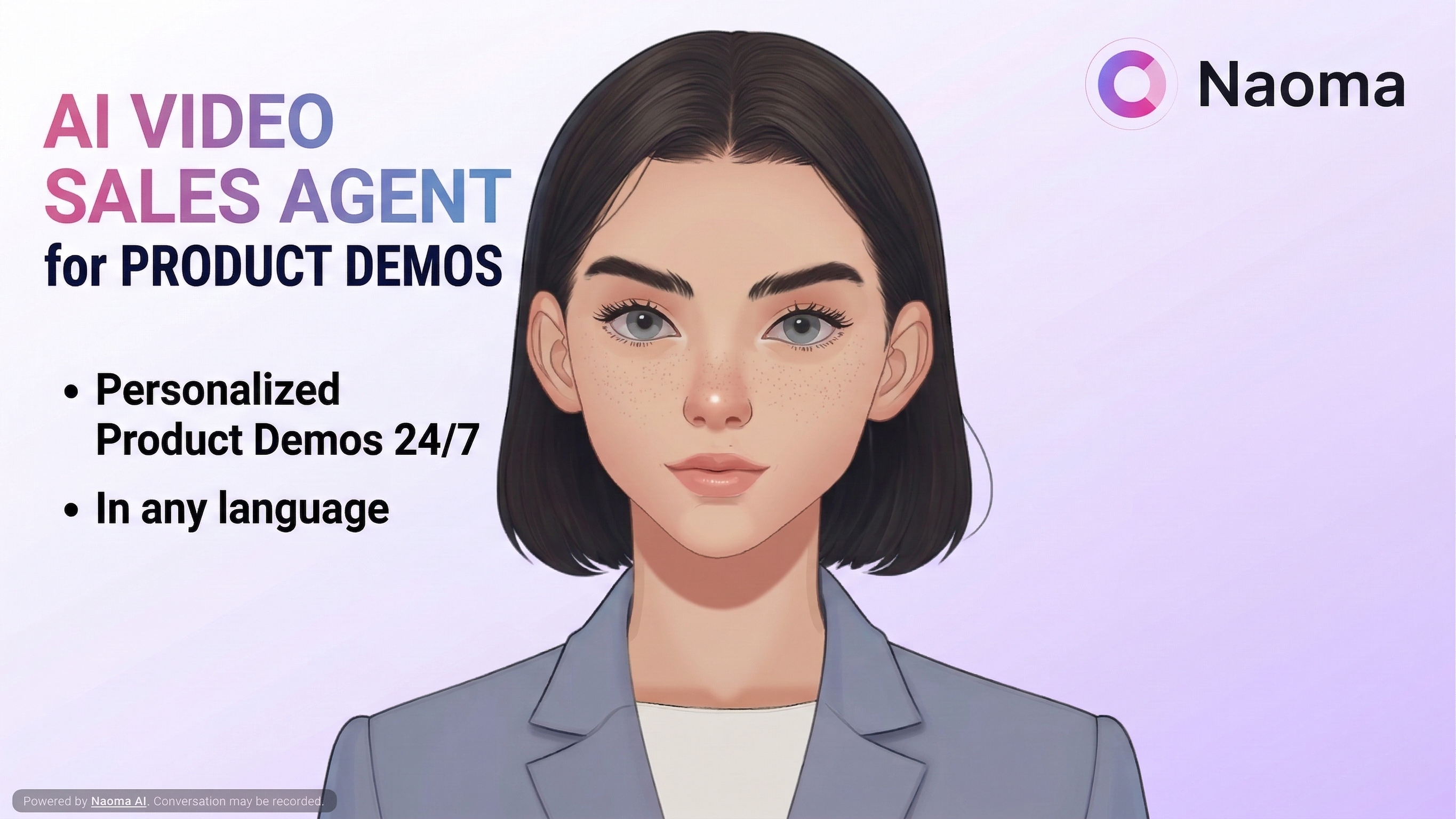
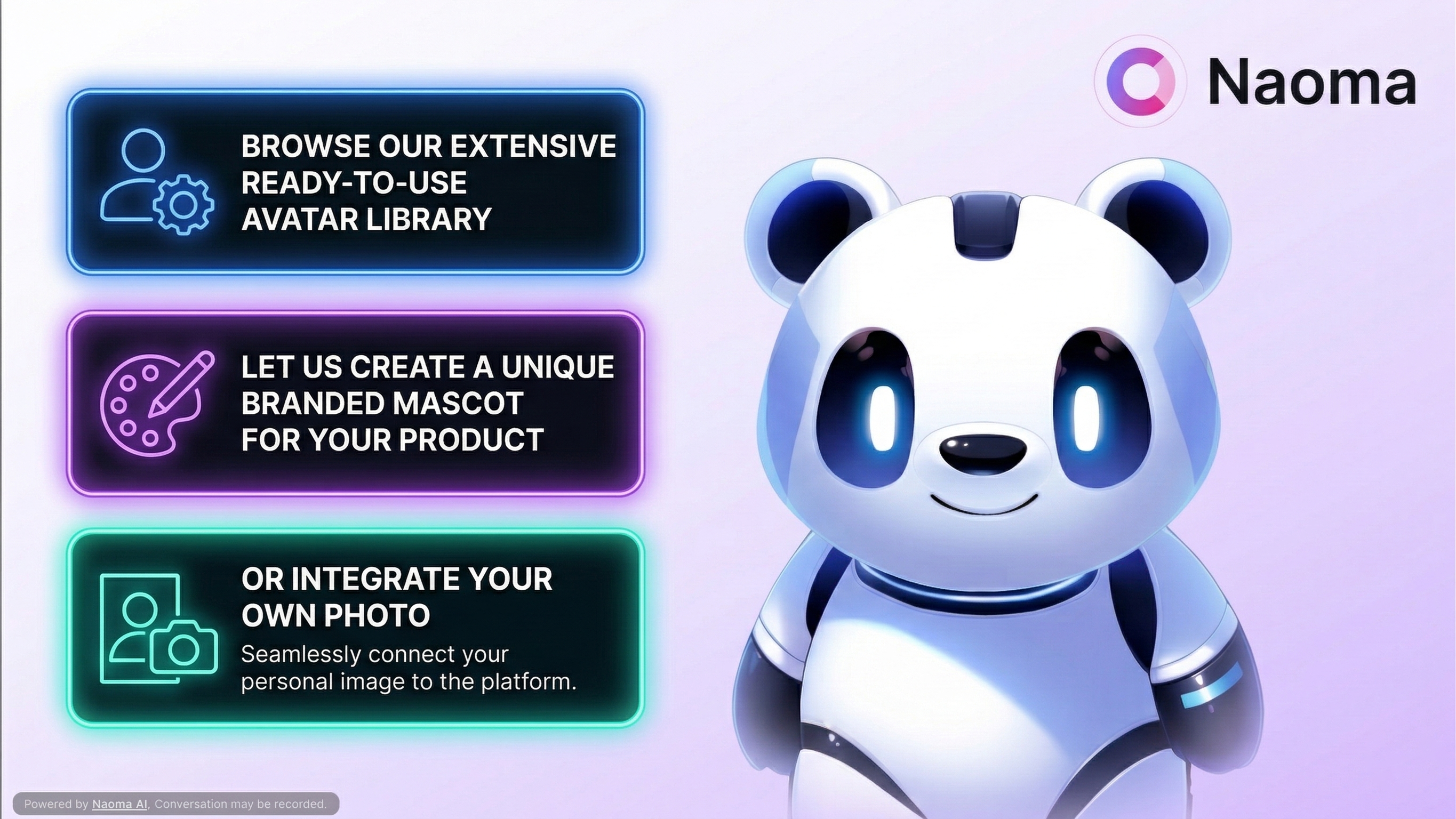
查看原始信息
Clayzo
Clayzo lets product and design teams spin up their existing product, prototype directly on it, record walkthroughs, and leave contextual feedback tied to the real codebase. What used to live across screenshots, Looms, and Slack now becomes actionable tasks that engineers and coding agents can build from.
Hi Product Hunt! We found 2 things in common across product and design teams at Google, Amazon, and early-stage startups. Trying a simple idea on a product usually requires waiting on engineering to send a deployment link. And even after that, most tools only let you view the product, or give feedback on screenshots/wireframes. Ideas usually end up being struck on Figma, docs, or long Loom videos. That's why we built Clayzo! Here’s how it works: ⚡ Spin up instantly: launch a sandboxed version of your product from a branch, without waiting for deployment links or wrestling with local environments. ✏️ Prototype on the product itself: test ideas directly on the real interface instead of static mocks. 🎥 Record walkthroughs: show flows, explain decisions, and share product context visually. 💬 Leave feedback in context: tie comments to the actual product and codebase, not side conversations and disconnected artifacts. 🛠️ Actionable handoff and integrate with existing stack: translate product and design feedback into technical, execution-ready context for engineers and coding agents. Push tasks to Linear, Jira, and Github Issues, with end-to-end task tracking on our platform. Would love to chat! - Janani, Purav, & Armaan
6
回复

Love this, congrats!

3
回复
@lev_kerzhner thank you!!
0
回复

Can I use this right now?

2
回复
@polaritylabs yes!
0
回复

I’m intrigued by the idea of building prototypes much faster!

2
回复

@varadhjain with the advent of AI and coding agents in particular, they are only going to become more embedded within traditional product and design workflows and delivering a faster and more powerful experience is indeed our end goal!

1
回复

Looks great. I’ve used chatprd before for this but it felt disconnected to where I was working l, GitHub and Linear. Look forward to trying to this and seeing a demo next week.

1
回复
@bdougieyo thank you! excited to show you a demo 😁
0
回复

This looks sick, congrats on the launch team!

1
回复
@adishj thank you!!
0
回复

So cool that you have a full environment for every session.

1
回复

Excited to use Clayzo instead of taking a million screenshots & jumping in a bunch of flow-breaking huddles throughout the day. Being able to ship fixes fast without risking breaking prod is nice too 😅

Curious if Clayzo has different triage flows for small edits (e.g. copy or UI changes) vs. higher eng lift tasks (involving backend, database, APIs, etc.)? And does AI route the different proposed changes (e.g. "this needs human oversight") or is it based on some preset rules?

Congrats & keep up the awesome work!

0
回复