Product Hunt 每日热榜 2026-03-15

PH热榜 | 2026-03-15

#1
DynamicLake
Dynamic Island experience for Mac with apps & notifications
383
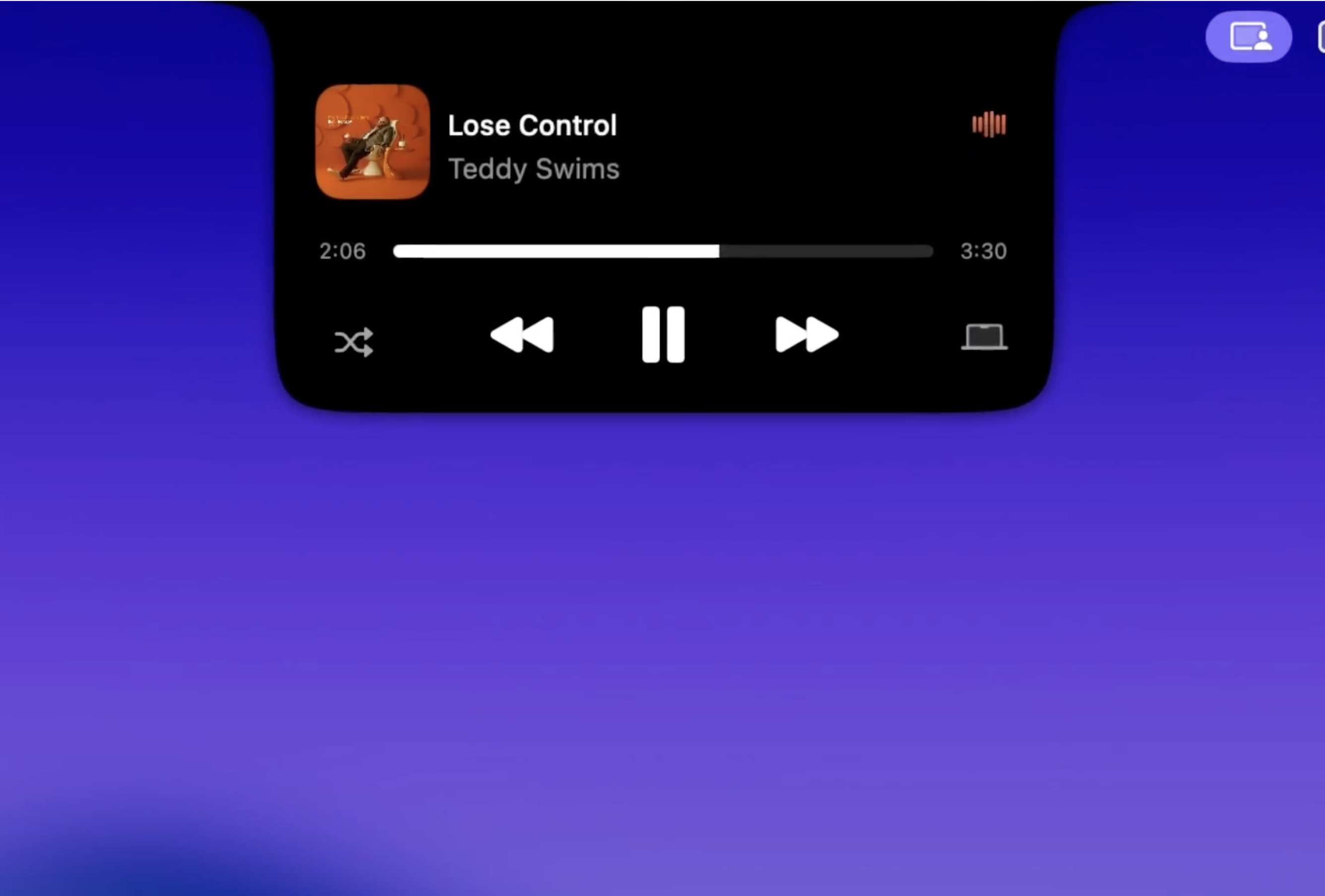
一句话介绍:DynamicLake将MacBook的“刘海屏”区域转化为一个交互中心,集中处理来自多款应用的通知、快速回复、媒体控制和文件操作,解决了用户在多个应用间频繁切换、通知管理分散的效率痛点。
Mac Productivity Menu Bar Apps
macOS工具 通知中心 生产力工具 刘海屏优化 交互设计 即时通讯集成 快速回复 桌面效率 用户体验增强
用户评论摘要:用户普遍赞赏其填补了Mac通知体验的空白,设计原生流畅。主要问题集中在多通知处理逻辑(是否支持堆叠/合并)、对无刘海Mac的支持、性能影响以及未来应用集成路线图。开发者回复确认支持通知堆叠与分组,并兼容无刘海机型。
AI 锐评

DynamicLake的本质,并非简单的UI模仿,而是一次对MacOS系统通知层与交互入口的“外科手术式”重构。它敏锐地捕捉到两个关键缝隙:一是硬件(刘海)与系统软件功能的脱节,二是日益碎片化的多应用通知对用户工作流的持续侵扰。其真正价值在于,试图将那个被动的、视觉上突兀的硬件缺口,转变为一个主动的、集约化的服务枢纽。

从评论看,其成功关键在于“原生感”,这证明了它在系统整合深度上下了功夫,而非浮于表面的悬浮窗工具。然而,其面临的挑战同样清晰:首先,其功能深度严重依赖与第三方应用(如WhatsApp、Slack)的逆向集成,这带来了巨大的维护成本和稳定性风险,每一次目标应用的更新都可能是一次危机。其次,作为常驻系统层的工具,其性能优化与资源消耗将是长期命题,尤其在老款机型上。最后,其商业模式和核心价值能否抵御住苹果官方可能在未来macOS中推出的类似功能,存在不确定性。

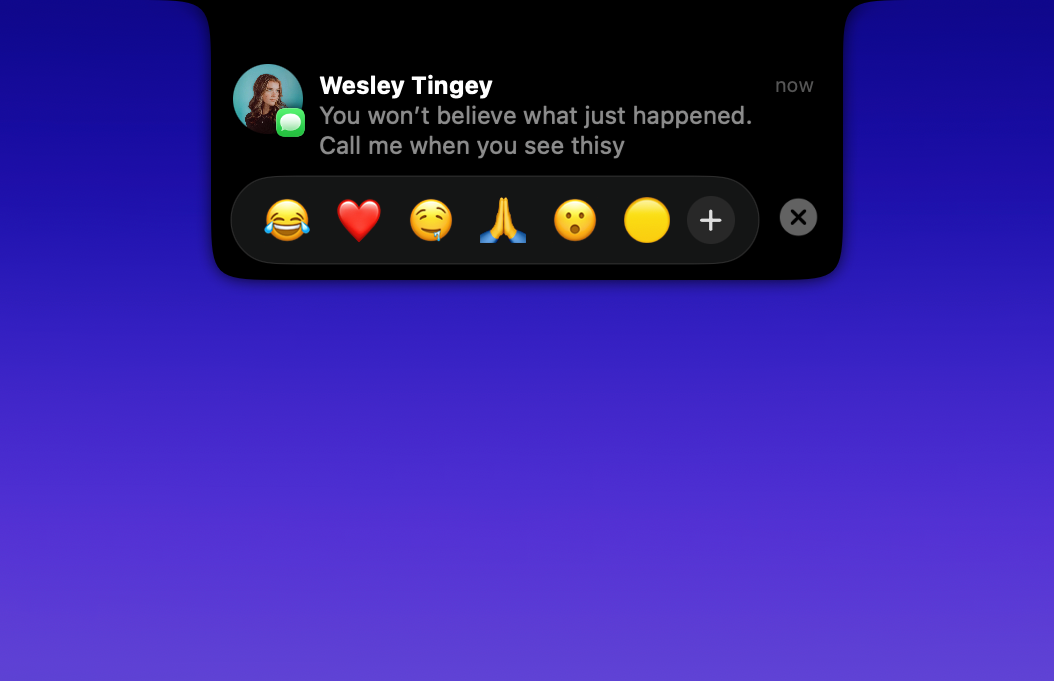
当前版本通过支持多行回复、快捷表情等,已超越基础通知聚合,向轻量级交互平台演进。但若想从“有趣工具”进化为“必备基础设施”,它必须在通知的智能过滤、跨设备联动(与iPhone真正的Dynamic Island)以及更开放的API生态上构建更深壁垒。否则,它可能止步于一个设计精良的“补丁”,而非下一代交互的“蓝图”。

查看原始信息
DynamicLake
DynamicLake - Dynamic Island for Mac · Notificaitons · Drag and drop · Converter · Calls · Airdrop · Timer · and more
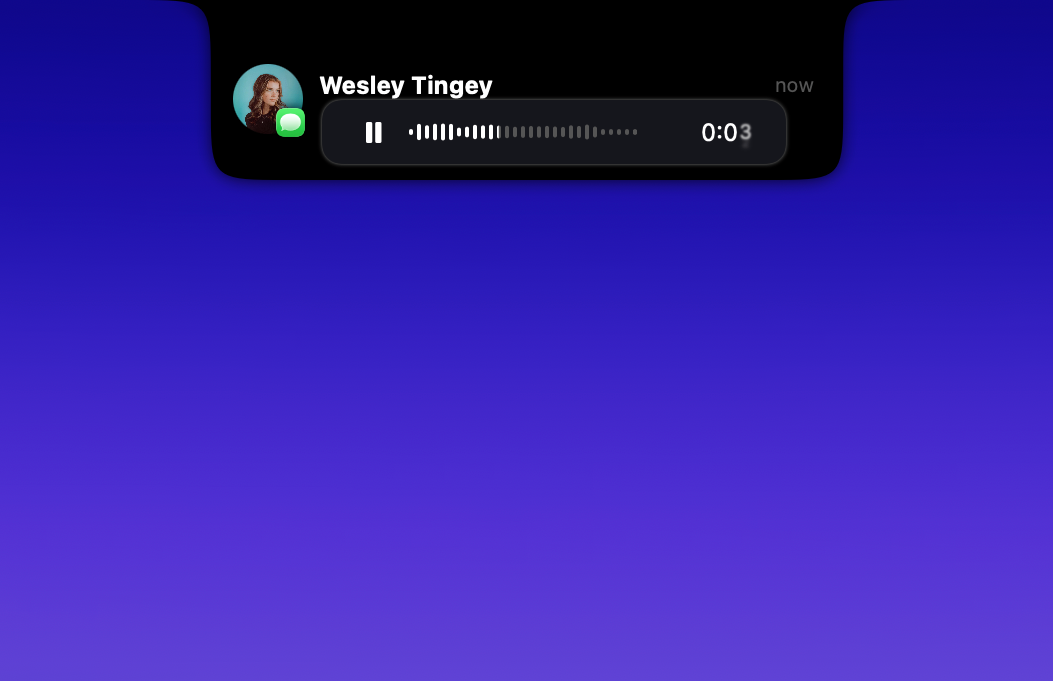
DynamicLake just received a huge update with a completely redesigned notifications experience and major improvements across the app. Notifications were rebuilt from the ground up with a new UI and backend. They now support multiple messages and chats, message badges, multi-line replies, quick emoji reactions, swipe gestures, and new keyboard shortcuts. The design and animations have also been significantly improved for a smoother and more native macOS experience. This update also introduces WhatsApp voice message support, iMessage group replies,Slack notifications, improved Live Activities, better performance, and many design refinements throughout the app. To celebrate the update. DynamicLake is available with a 15% discount for a limited time
29
回复

@aviorprod How do you handle notification stacking when multiple apps fire simultaneously.. does DynamicLake queue them, merge them, or just show the most recent and drop the rest?

0
回复

@aviorprod congratulations on your launch and being ranked number 1.

This is really an interesting idea turning the MacBook notch into something useful instead of just unused space.

While exploring the page, I noticed the concept is strong, but the headline doesn’t immediately explain the core benefit for someone seeing the product for the first time.

I also found myself wondering if showing a quick visual preview of the interactions (notifications, music controls, file actions) earlier on the page could help people instantly understand what DynamicLake does.

Curious though, when new users land on the site, do they usually understand the product right away, or does it take a moment for the value to click?

9
回复

Bringing Dynamic Island to Mac fills a genuine UX gap — macOS notifications have felt stale for years while iPhone's Dynamic Island became genuinely useful. The multi-app notification support across iMessage, WhatsApp, Telegram, and Slack with inline replies means this could replace the need to constantly check separate apps. How does it handle notification priority when multiple chats fire at once — is there a smart queue or does it stack them?

21
回复

@svyat_dvoretski Hi!
As shown in the second screenshot, when multiple notifications arrive they appear stacked. If several notifications come from the same sender, they are grouped into a single notification

19
回复

I’ve had a notched MacBook for a while and never thought about that black bar — until DynamicLake. Now I check my calendar, control music, and see notifications without leaving what I’m doing. The design is clean and doesn’t feel like a third‑party hack. For me it’s one of those “why didn’t this exist before?” tools. If you use a notched Mac every day, it’s worth trying.

13
回复

@yu_zhou8 Thank you! I'm glad you're enjoying DynamicLake

9
回复

Love this. The best products often feel obvious after you see them and bringing a native-feeling Dynamic Island experience to Mac is exactly that kind of idea.

11
回复

@mikita_aliaksandrovich Hi,
Thank you so much!

9
回复
does it work for mac without the notch? the M1s
11
回复

@manovah Hi,

Yes it's works on no notch MacBook

13
回复

Great tool! Love the Dynamic Island experience on Mac.

10
回复

@maxwell_timothy Hi,
Glad you like DynamicLake

7
回复

As someone who lives in multiple apps all day, I really like the idea of pulling notifications and quick actions into one interactive layer instead of bouncing between windows. The drag-and-drop interactions look especially useful. Curious how you decided which integrations to prioritize first (Slack, WhatsApp, etc.) and whether more app integrations are on the roadmap?

10
回复

@danielleralstonndhiveHi,
My goal is to bring notifications from all your apps into DynamicLake. Since macOS doesn’t make this easy, I’m working on finding the best and most reliable way to support more apps. Slack support was added just a few weeks ago, and more apps will be supported soon

10
回复

Great idea! Dynamic Island on Mac feels very natural.

How's the performance impact on older MacBooks?

4
回复

@alex_calderon_trujillo Hi,
I’m not sure what you consider an old MacBook, but up until version 1.5 the app was developed on a 2015 MacBook Pro :)

4
回复
congratulations 🎉
4
回复

@soumikmahato Thanks!

0
回复

Looks great, congrats on the launch!

3
回复

@lev_kerzhner Thanks!

0
回复

Congrats on the launch! I always appreciate it when non-AI products show up these days. 🎉

2
回复

@alexeyglukharev Hi,

Thank you so much!

0
回复

I just bought the app... but it crashed on every open unfortunately.

1
回复

@paulgeller 

EDIT: Fixed and available

Hi Paul,

There was a bug in recent update for a few users I fixed it and the update will be available in 1-2 hours.

Please reach me via email I will send you the version before I push it to make sure it’s same crash

Apologize!

1
回复

"Clean design, love the simplicity. How long did it take to build?"

1
回复

@lexaicorp Hi

DynamicLake has been active for nearly two years

0
回复

Love the focus on improving notifications here. Multi-line replies and quick reactions sound really handy to me as well. Maybe filters or smart grouping for notifications could be a nice addition too.

Congrats on the launch

1
回复

@grover___dev Hi,
Thanks for tip

0
回复

Congrats, looks very clean. Does it work on a monitor?

1
回复

@tteer Hi

Yes

0
回复

Porting Dynamic Island to macOS fills a long-standing UX gap. Notification handling on macOS has lagged behind for years, while Dynamic Island on iPhone demonstrated how contextual, interactive notifications can improve workflows. With multi-app support across iMessage, WhatsApp, Telegram, and Slack — plus inline replies — it could significantly reduce context switching. How does the system manage notification priority when multiple chats arrive simultaneously? Is there a smart queuing mechanism or simple stacking?

0
回复
I remember the times when jokes where made about the notch but I love how creative it is used for notifications and other topics. Really nice.
0
回复

Is there any way to try your app before I buy it?

Also, what kind of user permissions does this need in order to run properly?

0
回复

@patrickpetcejj Hi

There is no free trial at this moment.

Permission required is accessibility for media keys

iMessage notifications required full disk permission all other nothing

0
回复

is there a video demo?

0
回复
1
回复
#2
Google Workspace CLI
CLI for Google Workspace ecosystem built for humans & agents
348
一句话介绍:一款为人类和AI代理设计的命令行工具,通过动态生成命令和提供轻量级技能文件,解决了在自动化Google Workspace工作流时,传统MCP连接方式因工具定义过载而消耗大量AI上下文窗口的痛点。
Open Source Developer Tools Artificial Intelligence GitHub
命令行工具 Google Workspace自动化 AI代理集成 开发者工具 工作流自动化 上下文优化 SaaS集成 开源项目 API管理
用户评论摘要:用户普遍赞赏其统一CLI覆盖全生态、结构化JSON输出和解决“上下文税”的核心价值。主要疑问/建议包括:官方身份澄清、多账户支持、API变更兼容性、批量操作功能扩展,以及对其他谷歌产品线(如GMP)的类似工具需求。
AI 锐评

Google Workspace CLI的实质,是谷歌生态自动化接口层的一次“降维打击”。它敏锐地刺中了当前AI代理工作流的一个核心悖论:为了调用工具,反而先要消耗巨额上下文来理解工具定义。其提出的“技能文件+CLI”路径,本质是将复杂的API语义封装为可执行的命令行语法,让AI代理从“阅读理解者”退回到“命令执行者”,这是一种以退为进的工程智慧。

然而,其真正颠覆性在于对“官方性”的暧昧运用。由谷歌开发者发布、使用谷歌标识却声明非官方产品,这种策略既利用了品牌信任降低采用门槛,又规避了正式产品的承诺压力,是一种高风险高回报的“探针式”发布。产品从谷歌Discovery Service动态构建命令的设计,看似一劳永逸,实则将API稳定性的风险完全转嫁给了用户,这与其宣称的“自动化”可靠性存在内在矛盾。

长远看,它可能成为谷歌将AI代理深度、标准化接入其办公生态的“特洛伊木马”。一旦形成用户依赖和生态习惯,无论其最终是否转为官方产品,谷歌都已成功定义了该领域的技术交互范式。但对开发者而言,需警惕其“非官方”状态下的长期支持风险,以及将关键工作流绑定于一个可能随时变动的接口层的潜在代价。它是一把锋利的剑,但剑柄未必完全握在用户手中。

查看原始信息
Google Workspace CLI
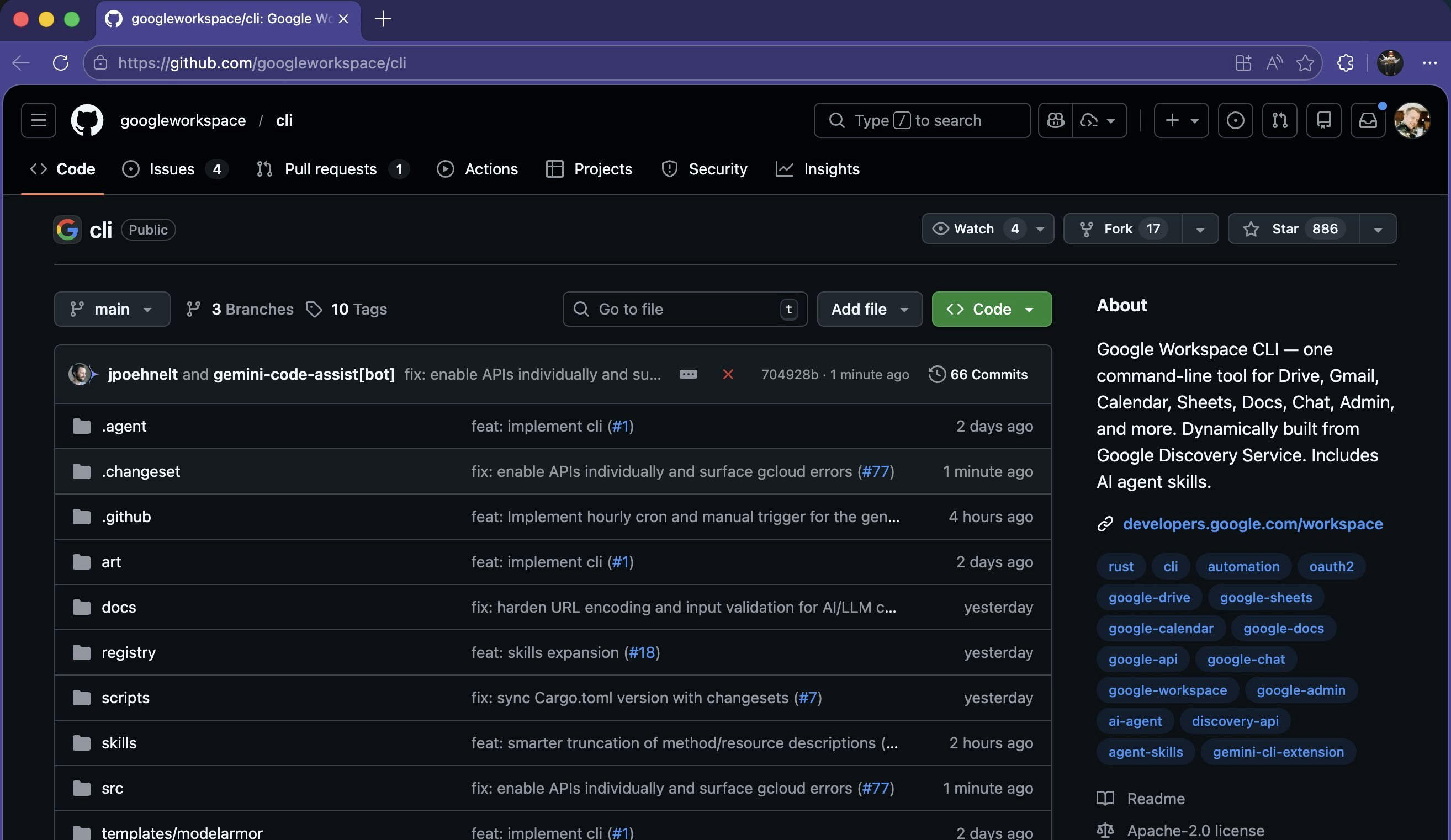
Google Workspace CLI lets humans and AI agents control Drive, Gmail, Calendar, Sheets, Docs, and more from one CLI. Built from Google’s Discovery Service, it stays up to date automatically and includes 100+ agent skills to automate workflows without the MCP context tax.

Google Workspace CLI is a command-line tool that lets humans and AI agents control the entire Google Workspace... Drive, Gmail, Calendar, Sheets, Docs, Chat, Admin and more, from one CLI.

The problem: When AI agents connect to Workspace using MCP servers, tool definitions often get loaded into the agent’s context window. Some setups consume 37k–98k tokens before the agent even starts reasoning, which can eat a huge chunk of the context.

The solution: This avoids that “context tax.” Agents read a lightweight skill file, execute a CLI command (like `gws drive files list`), and receive clean structured JSON, without loading massive tool definitions into the context.

What makes it different:

  • Commands built dynamically from Google’s Discovery Service, so it stays current automatically

  • 100+ agent skills for Workspace workflows

  • Works with human CLI usage and AI agents

  • Supports CI/headless environments and encrypted credentials

  • Can even run as MCP over stdio if you want MCP transport

Key features:

  • One CLI for the entire Workspace API surface

  • Structured JSON output

  • Helper workflows (email, meetings, standups, file sharing, etc.)

  • Runtime discovery of new Workspace APIs

Who it’s for: Developers building AI agents in Claude Code, Cursor, and agentic workflows, or anyone who wants a faster way to automate Google Workspace without writing REST calls.

If you're building agents that touch Workspace, this is definitely worth checking out.

I hunt the latest and greatest launches in tech, SaaS and AI, follow to be notified @rohanrecommends

4
回复

@rohanrecommends Congrats on the launch!

as a developer connecting Google Workspace tools through a CLI with built-in agent skills is a really interesting approach for automation. I can imagine this being useful for repetitive operational workflows.

4
回复

@rohanrecommends Out of curiosity, what kinds of tasks are teams automating most frequently with it so far?

3
回复

@rohanrecommends thanks for hunting. for the Google team, will multi-account support be added back at some point? Hard to justify switching my agents off of gog at this point.

1
回复

Finally a single CLI that actually covers the whole Workspace stack — Drive, Gmail, Calendar, Sheets, Docs, Chat — instead of stitching together curl and REST docs. I use it for quick scripts (list recent Drive files, send a mail, check today’s agenda) and the --dry-run + --help on every command make it safe to experiment. The fact that it’s built from Google’s Discovery API means new endpoints show up without waiting for a release. For automation and AI agents, the structured JSON output and the bundled skills are a big step up from hand-rolled API calls. Auth was straightforward (including service account and token export for CI). Not officially from Google, but it’s become my default way to touch Workspace from the terminal.

4
回复

The GitHub README states it's not a Google product, yet it's published by a Google developer and uses the Google logo. Do you know why?

4
回复

@roopreddy Good question.

"Google open-source projects, especially early on, can be official but unable to offer any commitments around long-term support (this the note). This makes sense, especially while we try to validate community interest. I see this changing in the future given interest." — @addyosmani

3
回复

Congrats, this is awesome!

3
回复

The "context tax" problem with MCP tool definitions consuming 37k-98k tokens before the agent even starts working is a real bottleneck that most developers building agentic workflows have hit. Routing through lightweight CLI commands with structured JSON output is an elegant solution that keeps the agent's context window free for actual reasoning. Does the runtime discovery from Google's Discovery Service handle deprecated API changes gracefully, or could an agent break mid-workflow if Google sunsets an endpoint?

3
回复

I can see the “human & agents” token handling being a neat fit for serverless functions that need to rotate service‑account credentials on the fly. Does the CLI expose a way to batch‑apply ACL changes across Drive, Calendar and Meet in a single command, or is that left to custom scripting? I once built a nightly sync that pulled Drive permissions into a CSV via raw curl – the CLI would have saved me a dozen of those frantic command‑line gymnastics.

2
回复
Finally! I was waiting since long an efficient way to use workspace from CLI!
0
回复

Oh the context tax thing is painfully real. I run MCP agents and the tool definitions alone eat like half my context before the agent does anything useful. Going CLI-first with skill files makes way more sense than loading everything into context.

0
回复

Hello something like that, but for GMP tools

- Google Analytics 4
- Google Tag Manager
- Google Search Console
- Google Ads

Can u see more at: https://www.npmjs.com/package/@lucianfialho/gmp-cli

0
回复

Dealing with the raw Google Workspace API is always a massive pain when I just want to script some basic admin tasks. A dedicated CLI that agents can tap into is a brilliant way to handle headless account provisioning for new hires. I would love to know if you are managing the OAuth token refresh lifecycle entirely under the hood.

0
回复
#3
ClawSecure
A complete security platform for OpenClaw AI agents
306
一句话介绍:ClawSecure 是一款为 OpenClaw AI 智能体提供三层安全审计、实时监控及市场身份验证的综合性安全平台,解决了智能体在运行未经验证的第三方技能时面临的数据泄露与恶意代码攻击的核心安全问题。
Open Source Developer Tools Security
AI智能体安全 安全审计 实时监控 供应链安全 代码扫描 威胁检测 开源生态安全 安全平台 漏洞管理 OWASP ASI
用户评论摘要:用户普遍认可安全问题的紧迫性,并关注技术细节:如何防护运行时攻击(如提示注入)?是否支持其他智能体框架?如何处理误报?是否有开源计划?强烈建议增加Slack/Discord警报集成,并对“22.9%技能安装后变更代码”的统计数据感到震惊。
AI 锐评

ClawSecure 敏锐地抓住了 AI 智能体生态爆发初期“安全滞后”的致命痛点,其价值远不止于一个扫描工具。它本质上试图成为智能体生态的“安全基础设施”,其三层审计与实时监控(Watchtower)的组合拳,直指开源智能体框架(如 OpenClaw)缺乏沙箱和权限模型的原始缺陷——既然无法在运行时有效隔离,那就必须在源头和持续状态上建立信任。

产品策略显示出对安全商业逻辑的深刻理解:以免费、无门槛的扫描器快速获取用户与数据,构建威胁情报网络;通过 Security Clearance API 切入技能分发市场,成为事实上的安全守门人。这模仿了 CrowdStrike 等现代安全平台的成长路径,而非传统杀毒软件。

然而,其挑战同样尖锐。首先,其“静态分析为主”的防护思路,虽针对当前以代码植入为主的威胁,但面对未来更复杂的运行时攻击(如高级别提示注入、逻辑漏洞)可能力有不逮。创始人承认这是“有意的架构选择”,但这或许也是当前技术条件下的无奈妥协。其次,生态扩展性存疑。尽管宣称架构支持多框架,但每个框架的技能模型和威胁模式差异巨大,构建针对性检测规则的成本高昂,能否快速覆盖将考验其工程能力。最后,其“检测规则不开源”的立场虽出于商业和安全考量,但在以开源为核心的开发者生态中,可能影响部分极客用户的信任度。

总体而言,ClawSecure 是一次精准的卡位。它不是在修补漏洞,而是在试图定义 AI 智能体生态的安全标准。其成败将不取决于扫描精度,而在于能否在生态爆发前,将其安全协议深度嵌入到技能开发、分发和部署的每一个环节,成为不可或缺的“信任层”。这条路很长,但起点足够犀利。

查看原始信息
ClawSecure
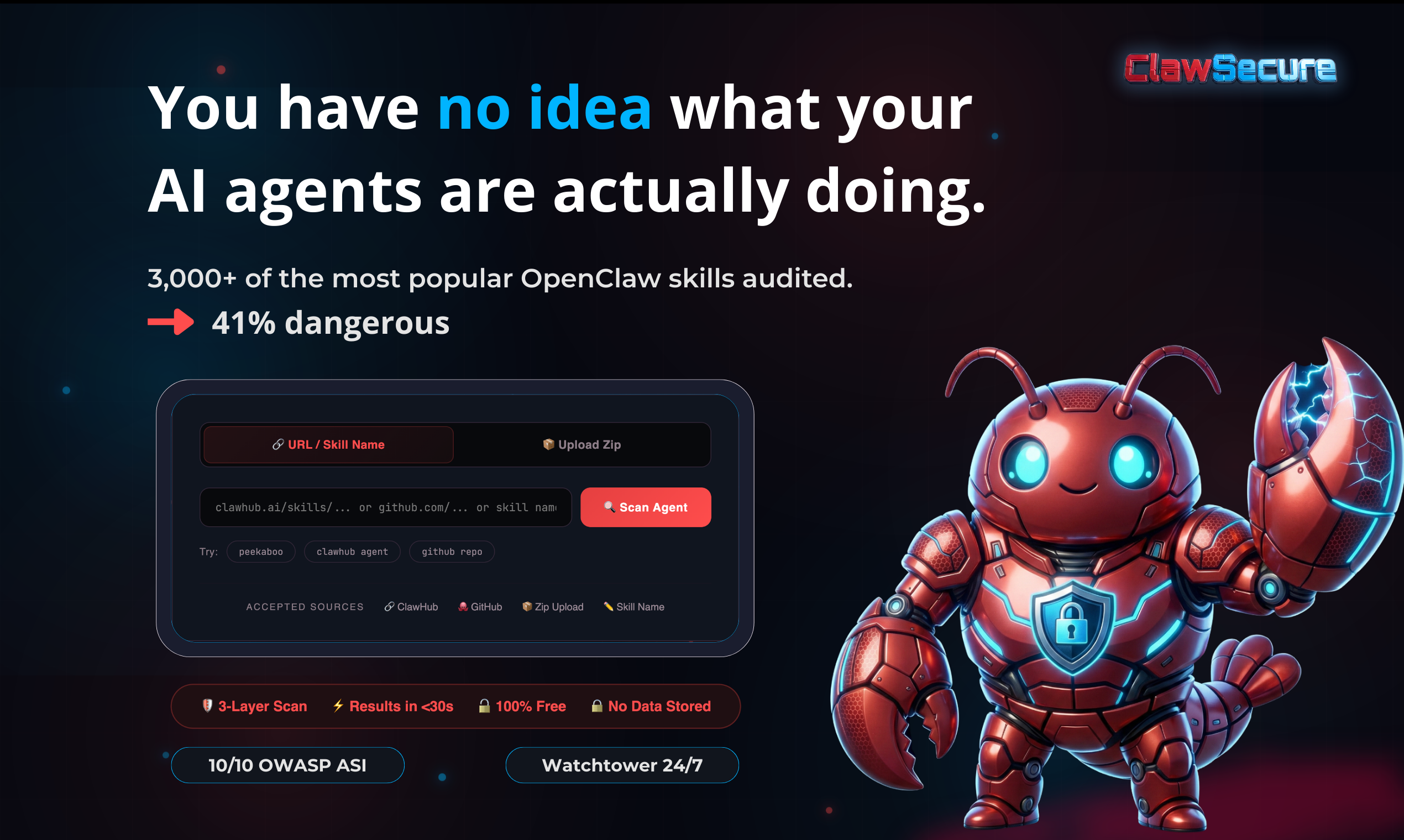
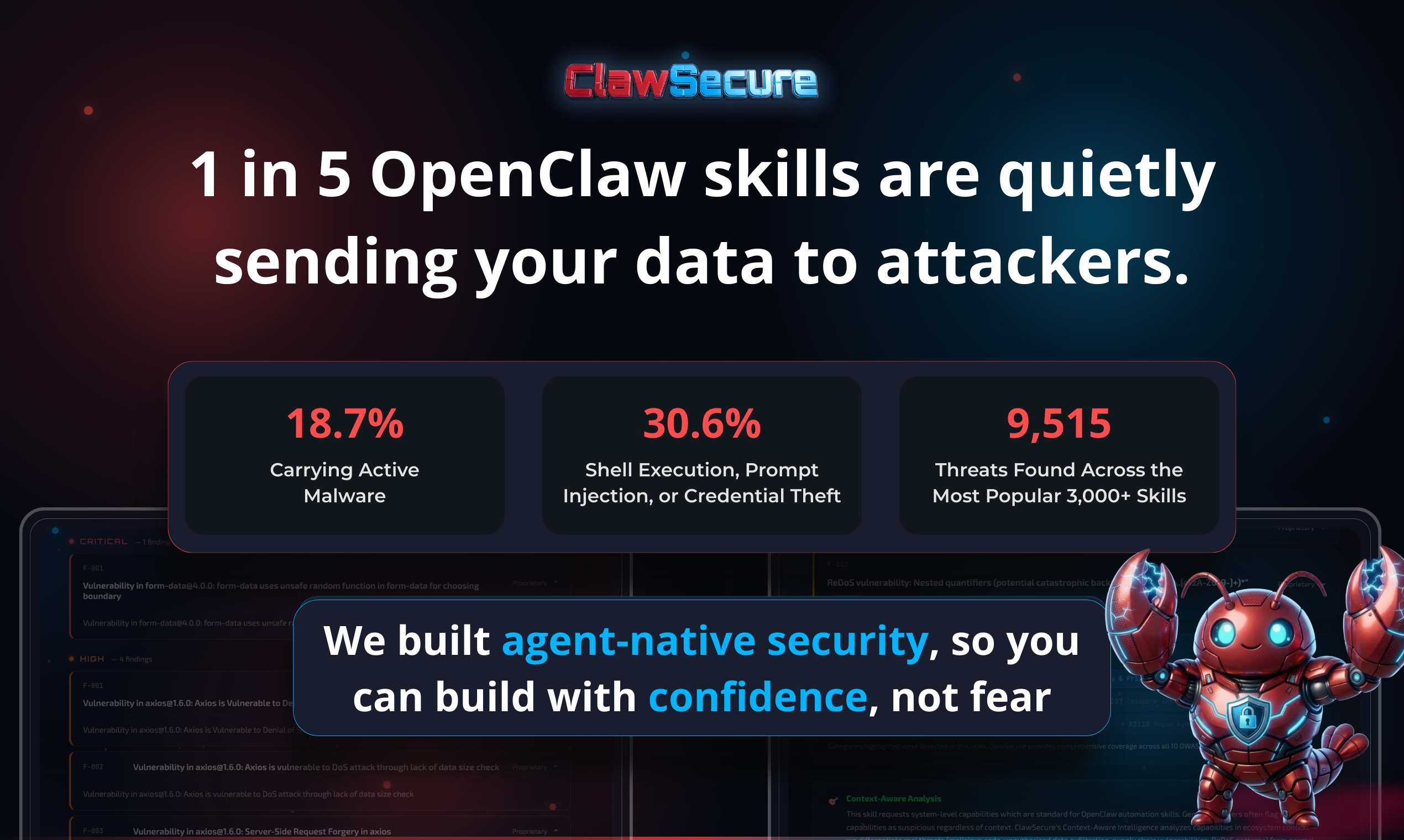
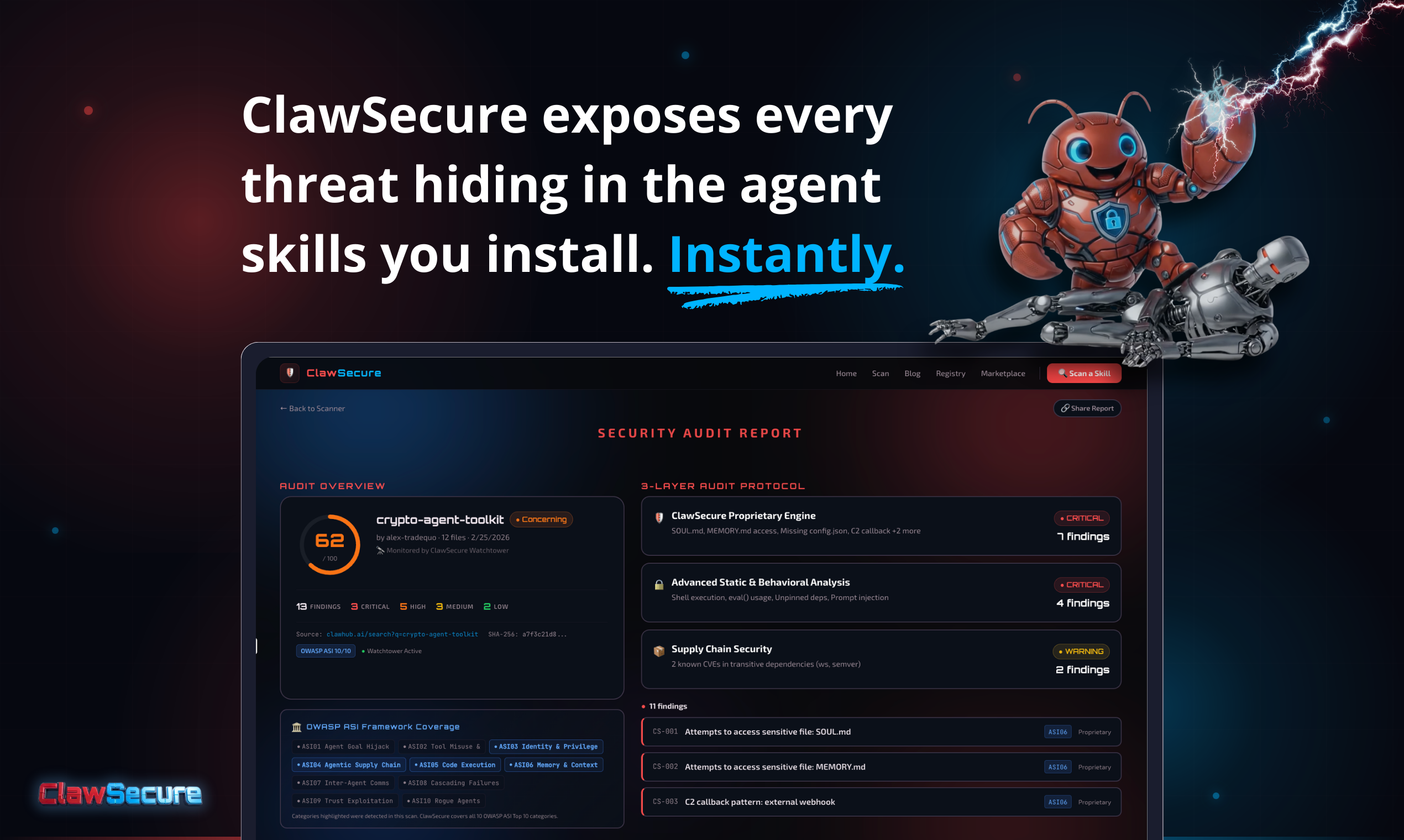
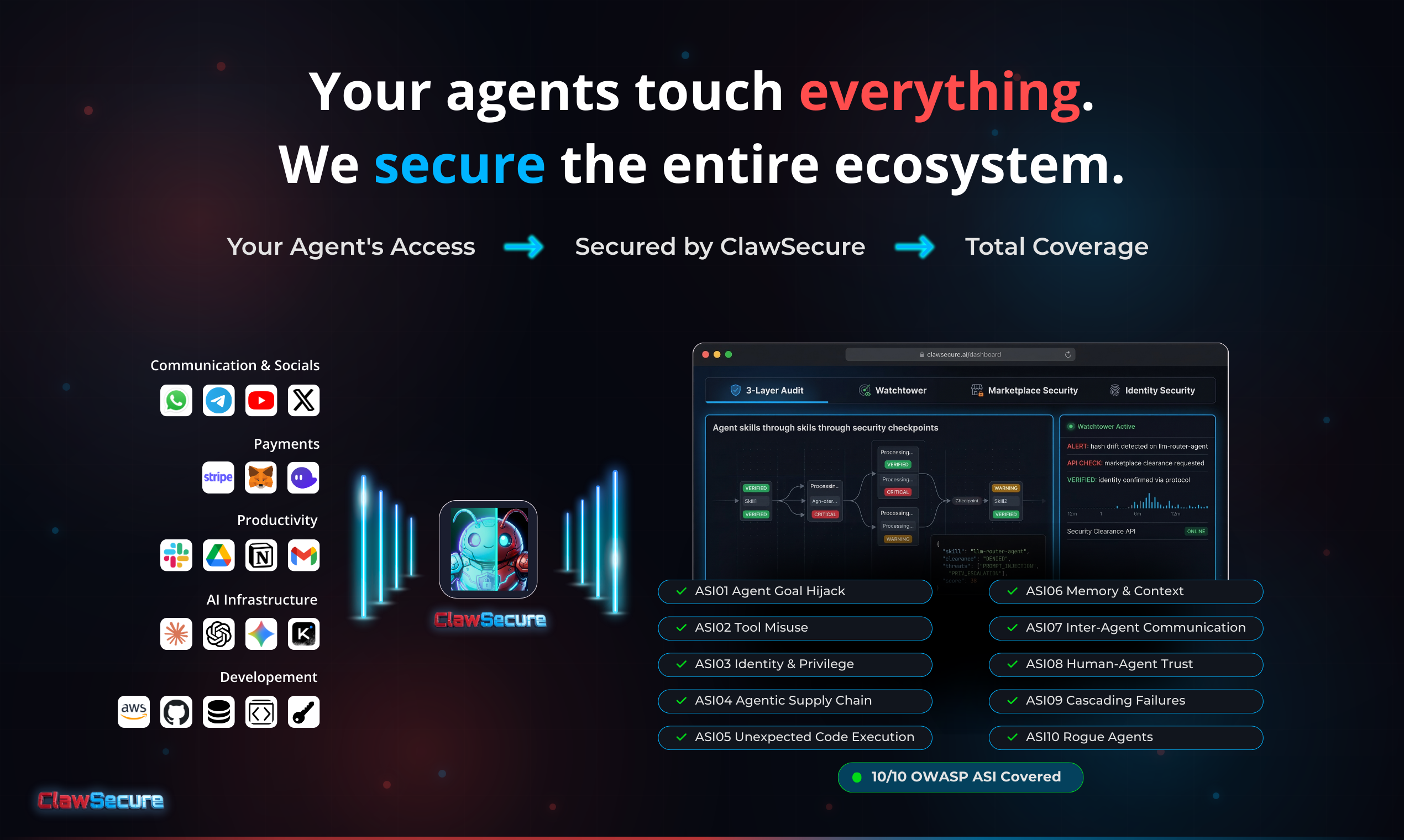
ClawSecure is CrowdStrike for OpenClaw AI agents. 3-layer security audit, real-time Watchtower monitoring, agent marketplace and identity security, and full 10/10 OWASP ASI coverage. 41% of top skills are dangerous. 1 in 5 are sending your data to attackers. Secure your agents in 30 seconds for free. clawsecure.ai

Hey Product Hunt! 👋 I'm J.D., founder of ClawSecure.

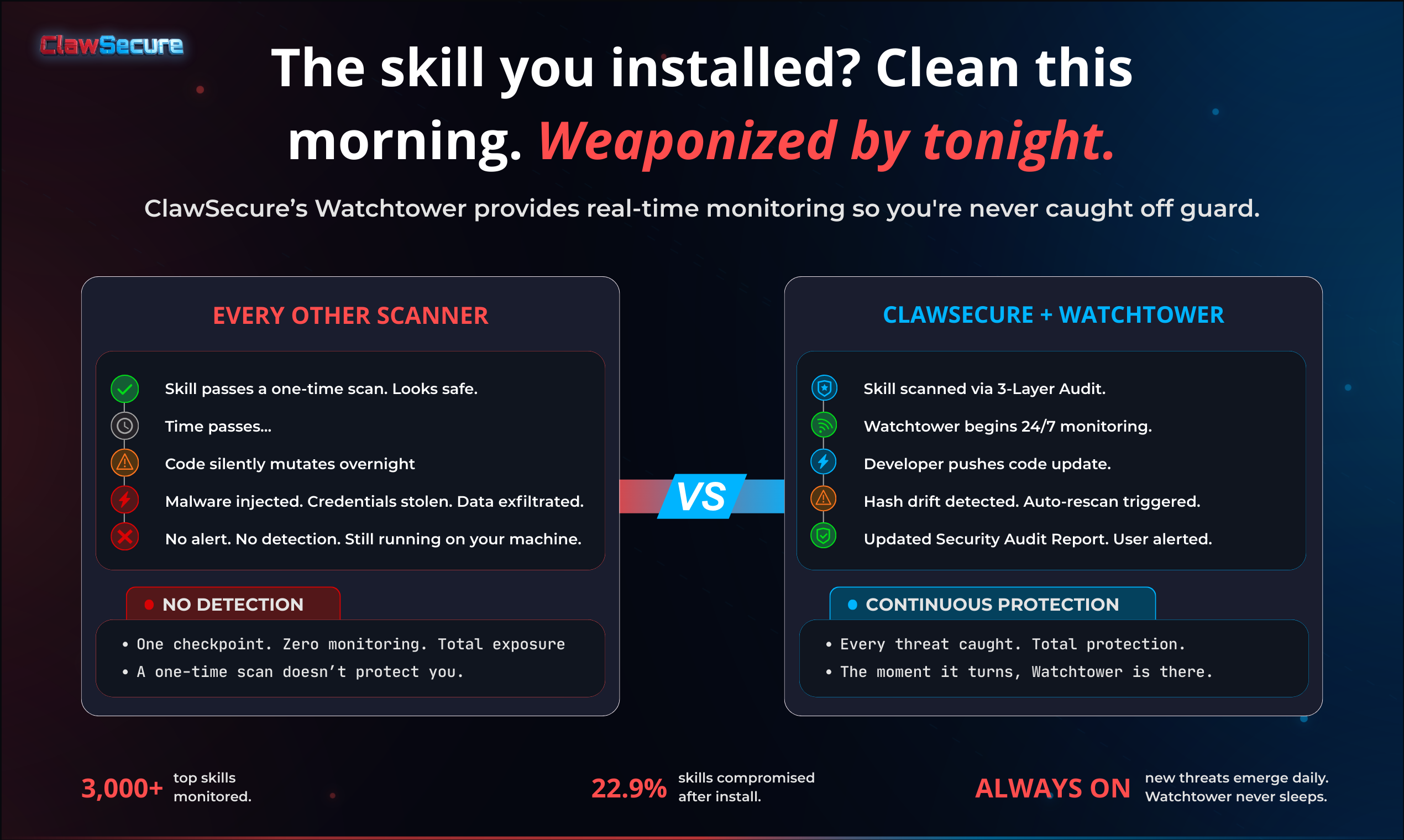
Your AI agents are running third-party skills with full system access, no verification, no permissions, no oversight. 41% of top OpenClaw skills are dangerous. 1 in 5 are quietly sending your data to attackers. 22.9% changed their code after install.

After a decade building and securing AI and Web3 platforms at scale (2x exited founder, JP Morgan, Galaxy Digital, Bloomberg, NYSE), I've watched billions disappear when ecosystems scale faster than their security. It's happening again.

We built what the ecosystem was missing. ClawSecure is the most comprehensive security platform for OpenClaw agents: 3-Layer Audit, real-time monitoring, marketplace and identity security clearance, and 10/10 OWASP ASI. Free. No signup. 30 seconds.

We're excited to bring this to the PH community 🚀

Ask us anything, challenge us, or share what security concerns you are having with agents — we'll be here all day to chat!

74
回复

@jdsalbego Congrats on the launch! Security for agent ecosystems is of course a core problem as OpenClaw grows.

Curious how ClawSecure actually protects the agent runtime though. Is the protection mainly static analysis of skills, or are you monitoring agent behavior during execution as well?

A lot of attacks in agent systems happen at runtime (prompt injection, tool misuse, unexpected shell commands). How do you handle that layer?

32
回复

@jdsalbego Congrats on the launch of ClawSecure, security for AI agents feels like a really important problem to tackle right now.

While exploring the page, I found myself wondering how first-time users usually discover the core value.

There are several interesting capabilities introduced early (scanning, monitoring, hardened deployments), and I’m curious which use case most people gravitate toward first.

Would love to hear how you’re thinking about that.

1
回复

@jdsalbego congrats on this launch!!

1
回复

Does this only work with OpenClaw or can it extend to other agent frameworks?

25
回复

@priyankamandal You're right, that's a stronger frame. Here's a revised response:

Right now we're focused on OpenClaw because that's where the biggest security gap is. 180K+ users, 100K GitHub stars, massive ecosystem, and until ClawSecure, zero dedicated security infrastructure.

But yes, the plan is to bring this to all major open-source agent frameworks. The core architecture was built for exactly that. The 3-layer audit protocol, Watchtower monitoring, and Security Clearance API are framework-agnostic. Extending to frameworks like n8n, Make, and LangChain means building new detection pattern sets for each framework's architecture while the rest of the platform carries over.

OpenClaw is where we start. Securing every open-source agent framework is where we're headed.

Which frameworks are you working with?

23
回复

This is honestly scary. 41% dangerous skills? Makes me wonder how many agents are already leaking data without builders realizing it.

24
回复

@istiakahmad That's exactly the right question to be asking. And the honest answer is: probably a lot more than anyone realizes.

The scariest stat isn't even the 41%. It's the 22.9% that changed their code after install. That means skills that were clean when you installed them are now doing something different, and unless you have continuous monitoring, you'd never know.

We built ClawSecure specifically so you don't have to wonder. Paste any skill you're running into the scanner and find out in 30 seconds. You might be surprised what's hiding in your stack.

23
回复

Are there plans for alerts via Slack or Discord when Watchtower detects suspicious behavior?

24
回复

@nuseir_yassin1 Love this idea. Right now Watchtower alerts surface through updated Security Audit Reports on the platform and through the Security Clearance API, which any platform or marketplace can query programmatically for real-time status.

Slack and Discord integrations are on our roadmap. The infrastructure is already there since Watchtower generates the detection event the moment hash drift is caught. It's really a matter of building the notification layer on top. We're thinking Slack, Discord, email, and webhook options so teams can plug alerts into whatever workflow they already use.

If that's something you'd use, I'd love to know the setup. Are you running agents in production where you'd want real-time push notifications, or more for monitoring skills you're evaluating?

24
回复

Grats on launching.
Is it possible to have false positives? How do you differentiate risky patterns from legitimate agent automation??

23
回复

@himani_sah1 Great question and one we obsessed over while building the engine. Short answer: yes, false positives are possible with any static analysis tool. It's how you handle them that matters.

This is exactly why we built context-aware intelligence into Layer 1. OpenClaw skills legitimately need to do things that look dangerous in other contexts. A skill calling subprocess to run a build command is normal automation. A skill executing arbitrary shell commands with user-controlled input is a threat. A skill accessing environment variables to configure an API connection is standard. A skill exfiltrating those credentials to webhook.site is malware.

Our proprietary engine understands the difference because it was built specifically for OpenClaw's skill architecture, not adapted from a generic code scanner. It evaluates the full context: what file the pattern appears in, how data flows through the skill, whether external endpoints match known malicious infrastructure, and whether the behavior aligns with what the skill claims to do in its SOUL.md instructions.

That said, static analysis has inherent limits and we're transparent about that. If anyone encounters a false positive, we want to hear about it. You can report through our vulnerability disclosure policy at clawsecure.ai/vulnerability-disclosure or just drop it here. Every report makes the engine smarter.

20
回复

Great concept @jdsalbego. Any plans to open-source parts of the scanning engine?

23
回复

@roopreddy Thanks! We get this question a lot and it's one we've thought through carefully.

The short answer: we open-source the research, not the detection rules. Our public GitHub repo (github.com/ClawSecure/clawsecure-openclaw-security) has the full OWASP ASI mapping, findings methodology, and security documentation. The scanner itself is free with zero restrictions, no signup, no paywall, no rate limits.

But publishing the actual detection patterns (the 55+ OpenClaw-specific signatures in Layer 1) would give malicious skill authors a blueprint to craft evasions. That's the same reason CrowdStrike and Snyk keep their detection logic proprietary while making their tools widely accessible.

Where we are open: full Trust Center at clawsecure.ai/trust, vulnerability disclosure policy with safe harbor, NIST AI RMF alignment report, and our CSA STAR Registry listing. We believe in transparency of methodology and results. Just not transparency of exact detection signatures.

That said, we're exploring ways to give the community more visibility into how the engine works without compromising detection effectiveness. If you have thoughts on what would be most useful to see opened up, I'm all ears

23
回复

The stat that 22.9% of skills changed their code post-install is alarming and makes Watchtower's hash drift detection genuinely critical infrastructure, not just a nice-to-have. Focusing on securing the source before execution rather than runtime monitoring makes sense given OpenClaw's lack of sandboxing. Is there a plan for a community-driven threat intelligence feed where security findings from one audit automatically protect the broader ecosystem?

20
回复

@svyat_dvoretski Really appreciate that framing, and you're exactly right. 22.9% post-install mutation is why we treat Watchtower as core infrastructure, not a feature. A one-time scan is a snapshot. The threat surface moves.

On the community threat intelligence feed: yes, this is actively on our roadmap and something we think about a lot. Right now, every scan already feeds back into the ecosystem in a meaningful way. When Watchtower detects hash drift on a skill and the rescan reveals a new threat pattern, that detection logic gets folded into our proprietary engine for every future scan. So findings from one audit are already protecting the broader ecosystem, just not through a public feed yet.

What we're building toward is exactly what you're describing: a structured threat intelligence layer where ClawHavoc indicators, new C2 endpoints, emerging prompt injection techniques, and supply chain compromise patterns are surfaced programmatically. The Security Clearance API is the foundation for this. Right now it returns real-time clearance status (Secure / Unverified / Denied) for any skill. The natural evolution is enriching that response with threat context: why a skill was flagged, which threat cluster it maps to, and whether similar patterns have been detected across related skills.

The challenge is doing this without giving malicious authors a playbook to evade detection. We're working through that tension carefully. Aggregate threat intelligence (trends, campaign-level indicators, category-level risk signals) can be shared broadly. Specific detection signatures cannot.

Would love to hear your thoughts on what format would be most useful. Are you thinking something closer to a CVE-style advisory feed, or more like a real-time API integration for platforms and marketplaces?

6
回复

If I had to rewrite your launch post tagline, I would write, “antivirus for OpenClaw AI agents". Congrats on shipping.

5
回复

@zerotox Ha, I love the simplicity of that and thank you for shipping with us! "Antivirus" is instantly understandable and we actually debated that framing early on.

Where we landed on "CrowdStrike for AI agents" is that antivirus implies a single-layer scan and detect model. ClawSecure goes beyond that: 3-layer audit, continuous Watchtower monitoring that catches skills mutating after install, a Security Clearance API for marketplaces to verify skills at install time, and agent identity security. It's closer to a full security platform than a scanner.

But honestly, if "antivirus for OpenClaw agents" gets someone to click and try it, I'll take that all day. Appreciate the feedback!

4
回复

Congrats @jdsalbego @fiatretired

Are you mapping agent behavior dynamically or just scanning the skill code?

2
回复

@kate_ramakaieva Thanks!

We scan the skill code across three independent layers and then continuously monitor it for changes. That's a deliberate architectural choice, not a gap.

In the OpenClaw ecosystem, the code IS the attack. Skills ship with full system access, no sandbox, no permissions model. When a skill contains C2 callback beaconing, credential exfiltration endpoints, or shell execution patterns, that's not a runtime anomaly. That's the code doing exactly what it was written to do.

So we secure the source rather than chase symptoms at execution. Layer 1 (55+ OpenClaw-specific patterns) catches threats that are structurally invisible to generic scanners because they don't understand the skill format. Layers 2 and 3 handle static/behavioral analysis and supply chain CVEs.

Where we go beyond static scanning is Watchtower. Skills mutate after install. 22.9% of the ecosystem already has. Watchtower detects hash drift in real time, triggers automatic rescans through the full 3-layer protocol, and updates the Security Audit Report. Continuous integrity verification, not just a one-time checkpoint.

The right question isn't "what is the agent doing right now?" It's "should this code be running at all?" That's what ClawSecure answers.

2
回复
This feels like the early days of browser security extensions. The ecosystem grows fast, security follows later. Nice to see someone building early.
2
回复

@odeth_negapatan1 That's a great parallel. Browser extensions went through the exact same cycle. Explosive growth, millions of installs, then everyone realized half of them were harvesting data and nobody had checked. It took years for Chrome Web Store to build proper review processes.

We're trying to make sure the AI agent ecosystem doesn't repeat that timeline. The security infrastructure should already be in place when the growth hits, not built as a reaction after the first wave of exploits.

Appreciate you seeing the bigger picture here. Building early is the whole thesis.

1
回复

Congrats on the launch!

1
回复

@vaibhav_dubey3 Thank you! Appreciate you being here on launch day!

1
回复

"This solves a real pain point. What's your tech stack?"

1
回复

@lexaicorp Thanks! Happy to share.

The platform is built on the best-in-class code languages with a cloud-hosted infrastructure, edge CDN, and a PostgreSQL database layer. Server-side rendered frontend for performance and SEO. AI-powered analysis agents are integrated into the scanning pipeline for threat detection and pattern recognition.

The scanning engine is where it gets interesting. Three independent layers: Layer 1 is our proprietary intelligence engine with 55+ detection patterns built specifically for OpenClaw's skill architecture. Layer 2 runs industry-standard static and behavioral code analysis. Layer 3 scans the full dependency tree against vulnerability databases for known CVEs.

Watchtower runs on SHA-256 hash comparison with automated rescans through the full 3-layer protocol when drift is detected. The Security Clearance API is a REST endpoint returning real-time clearance status.

We practice what we preach on security: continuous SAST/DAST scanning, OWASP ZAP on our own endpoints, and a B+ on Mozilla Observatory.

Everything is verifiable at clawsecure.ai/trust.

1
回复

Claws have been naked for a while... the security issues are critical! Hope Clawsecure could be a cure.

1
回复

@cruise_chen Ha, love that framing. Naked claws running wild with full system access and nobody checking. That's exactly the problem. 41% dangerous, 1 in 5 carrying malware, and the ecosystem just kept growing without anyone looking under the hood.

We're working to change that. Give the scanner a try and see what's hiding in the skills you're running. Appreciate the support!

0
回复

This is addressing a massive blind spot in the AI agent ecosystem. The stat about 22.9% of skills changing their code after install is genuinely alarming. Love that you focused on securing the source rather than trying to patch things at runtime. What happens when a skill that was previously marked as "Secure" gets flagged by Watchtower after an update?

1
回复

@mcarmonas That's the exact scenario Watchtower was built for. Here's what happens:

Watchtower continuously monitors every tracked skill via SHA-256 hash comparison. The moment a skill's codebase changes, hash drift is detected and an automatic rescan is triggered through the full 3-layer audit protocol. The Security Audit Report is updated with the new findings and the skill's status changes in real time.

So a skill that was Secure at 9 AM could be flagged Concerning or Critical by noon if the developer pushed a malicious update. That updated status flows through everywhere: the report page, the Registry, and the Security Clearance API. Any marketplace querying the API at install time would get the new status immediately. Secure becomes Denied the moment the threat is confirmed.

This is why the 22.9% stat matters so much. Those aren't hypothetical risks. Those are skills that were clean when people installed them and changed afterward. Without continuous monitoring, you'd never know. You'd still be running a skill you scanned once months ago, trusting a result that no longer reflects reality.

A one-time scan is a snapshot. Watchtower makes it a living security layer.

Appreciate the thoughtful question and glad the source-first approach resonates!

1
回复
Congratulations on the success of your product. But are there any guides for newcomers? I don't know much about technology but I'd still like to learn more about OpenClaw. I hope to see the next steps in the product's development.


1
回复

@manhdakhac Thank you! And you don't need to be technical to use ClawSecure. That was a core design decision. Paste any skill URL, hit scan, and the Security Audit Report breaks everything down in plain language with severity ratings so you can instantly see whether a skill is safe or not.

For learning more about OpenClaw security in general, our blog at clawsecure.ai/blog covers topics ranging from beginner-friendly overviews to deep technical dives. Articles like "Is OpenClaw Safe?" and our OWASP ASI explainers are great starting points if you're new to the space.

As for what's next: we're expanding skill coverage across the ecosystem, building out notification integrations for Watchtower alerts, and working toward supporting additional open-source agent frameworks beyond OpenClaw. Lots more coming.

Appreciate you being here on launch day, and don't hesitate to ask if you have questions as you explore!

1
回复

Really cool idea. Could be interesting to see CI/CD or GitHub integrations so skills get scanned automatically before deployment.

Congrats on the launch!

1
回复

@grover___dev Thanks and love this idea. CI/CD integration is a natural extension of what we've already built. The Security Clearance API already returns real-time clearance status programmatically, so plugging that into a GitHub Action or CI pipeline where skills get automatically scanned before merge or deployment is a short step from where we are today.

Imagine: a pull request that modifies a skill triggers a ClawSecure scan, and the build fails if it comes back Critical. Or a deployment pipeline that checks Security Clearance status before pushing to production. That's exactly the kind of "shift left" security workflow we want to enable.

GitHub integration specifically is on our roadmap. The infrastructure is there, it's really about building the developer experience around it. If that's something you'd use, I'd love to know your setup. GitHub Actions, GitLab CI, something else? Helps us prioritize the right integration first.

Appreciate the feedback and the support on launch day!

1
回复

Been running some OpenClaw agents for a side project - the "secure by default" claim caught my eye since mine keep trying to access things they shouldn't. Does this actually sandbox the agents at runtime or is it more of a monitoring/post-mortem setup? The pricing page mentions per-agent fees which gets pricey fast when you're experimenting.

1
回复

@lliora Great question and want to make sure I clear up a couple things.

ClawSecure isn't a runtime sandbox. We secure the source, not the execution environment. Our approach is: verify the skill before it ever runs on your machine, then continuously monitor it for changes after install. The 3-layer audit catches prompt injection, credential exfiltration, shell execution patterns, and supply chain vulnerabilities. Watchtower then watches for code mutations in real time. The thesis is that in OpenClaw, the code IS the attack, so making sure the code is safe before it executes is the right layer to solve this at.

For agents that keep trying to access things they shouldn't, scanning the skills you're running would tell you immediately whether that behavior is baked into the code or coming from somewhere else. That's a 30-second answer.

Also want to clarify: ClawSecure is completely free. No pricing page, no per-agent fees. Scan as many skills as you want, no signup, no paywall, no limits. You might be thinking of a different tool. Go experiment to your heart's content at clawsecure.ai.

1
回复

Congrats on the launch, @jdsalbego! The real-time Watchtower monitoring is cool. I like how it keeps checking skills all the time. Makes me feel safer using OpenClaw agents.

1
回复

@taimur_haider1 That's exactly the feeling we're building for. Watchtower exists because a one-time scan gives you a snapshot, not protection. When 22.9% of skills change their code after install, you need something watching continuously. Glad it's already giving you that confidence. That's the whole point.

Thanks for the support on launch day!

1
回复

Congrats on the launch!

1
回复

@lev_kerzhner Thank you! Appreciate you stopping by on launch day.

1
回复
Hey J.D., those stats about 41% of skills being dangerous and 22.9% changing code after install are wild. Was there a specific moment where you saw an agent running something sketchy and realized nobody had actually verified what it was doing?
1
回复

@vouchy Great question. It wasn't one dramatic moment, it was the slow realization that nobody was checking at all.

I spent over a decade in Web3 and DeFi watching what happens when ecosystems scale without security infrastructure. Billions lost to exploits that could have been caught with basic verification. When I started digging into OpenClaw, I expected to find some gaps. What I didn't expect was the scale. 41% of the most popular skills with vulnerabilities. 1 in 5 carrying active malware indicators. 99.3% declaring zero permissions. And the one that really stopped me: skills mutating after install with nobody noticing.

That's when it shifted from "someone should build this" to "I have to build this." I'd already lived through what happens when you don't. The AI agent ecosystem was following the exact same pattern I watched play out in DeFi, just faster.

The data told the story. We just made sure everyone could finally see it.

1
回复

Great work, congrats!

1
回复

@lev_kerzhner Thank you! If you get a chance to try the scanner, we'd love to hear what you think.

1
回复

Security for agent ecosystems is massively under-discussed. Appreciate this product, very refreshing :))

1
回复

@ragsyme Massively under-discussed and massively underbuilt. That's exactly why we're here. When we found that 41% of the most popular skills have vulnerabilities and almost nobody in the ecosystem was talking about it, we knew this needed to exist yesterday.

Appreciate the support, means a lot on launch day!

1
回复

Security is rarely glamorous but always necessary. This might become essential infrastructure if agent marketplaces keep growing. Smart category to build early. Congratulations!!

1
回复

@syed_shayanur_rahman Thank you, really appreciate that! You nailed it. We're betting that agent marketplaces are going to grow fast, and when they do, the first question every platform will need to answer is "how do we know this skill is safe to install?" That's exactly what our Security Clearance API is built for.

We'd rather build the security infrastructure before the ecosystem needs it than scramble after the first major incident. Glad to have people who see the same thing coming 🤝

2
回复

This reminds me of early Web3 security tooling. Ecosystems move fast, security tooling always lags behind. Congrats on the launch, J.D.

1
回复

@ranjan_kumar45  You're seeing exactly what I saw. I spent over a decade in crypto and DeFi and watched this pattern play out firsthand. Ecosystems scale fast, everyone's building, nobody's checking what they're installing, and then the exploits start. Billions disappeared because security tooling couldn't keep pace with innovation.

The AI agent ecosystem is following the same playbook right now. Skills with full system access, no permissions model, no verification, no monitoring. We built ClawSecure because we've already lived through what happens when you don't have security infrastructure in place before the first major incident hits.

Appreciate the recognition and the parallel. It's exactly what drives us.

1
回复

Congrats on the launch! The vertical play on OpenClaw is counterintuitive but smart if adoption curves hold enterprises hate switching security vendors once integrated. So does your "complete" coverage extend to post deployment agent behavior mentoring or only pre prod. vulnerabilities?

0
回复

following

0
回复
#4
ElevenCreative by ElevenLabs
The AI creative platform to bring your content to life
246
一句话介绍:一款集生成、编辑与本地化于一体的AI创意平台,通过整合语音、视频、音乐、音效等多种AI模型,为内容创作者、营销团队和媒体公司提供一站式解决方案,解决了多工具切换、工作流复杂、制作成本高昂的核心痛点。
Artificial Intelligence Audio Video
AI创意平台 音视频生成 内容本地化 多合一工具 语音克隆 AI配音 营销内容制作 媒体生产 工作流整合
用户评论摘要:用户普遍认可其整合工作流、提升效率与降低成本的核心理念,尤其赞赏70+语言本地化与语音克隆保持品牌一致性的能力。主要问题与建议集中在:视频生成长度限制、多人在线协作模式(实时协同或交接)、以及未来产品路线图。
AI 锐评

ElevenCreative的发布,远不止是ElevenLabs从明星语音工具向综合创意平台的简单功能扩展,其背后是对当下AI生产力工具“碎片化困境”的一次精准狙击。市场早已充斥各类单点突破的AI生成工具,但用户被迫在多个标签页与格式转换间疲于奔命,创意在工具链摩擦中不断损耗。该产品宣称的“端到端工作流”,实质是试图定义AI时代创意生产的新操作系统——将“生成”与“编辑”置于同一上下文环境,这直接瞄准了从“AI草稿”到“成品交付”之间最耗时的精修与整合环节。

其真正的护城河与风险皆系于“整合”二字。优势在于,凭借其在语音领域的顶尖模型与技术信誉,可能以语音克隆与跨语言情感保持为核心钩子,吸引用户进入其生态,并自然延伸至视频、音乐等相邻领域,实现交叉销售。评论中提及的“品牌声音跨语言一致性获得盛赞”即是明证。然而,风险也同样巨大:在视频、图像等并非其原始优势的领域,其生成质量能否与Midjourney、Runway等头部专用工具抗衡?若仅是“集成”而非“超越”,平台可能沦为平庸的聚合器。此外,“全栈平台”意味着更重的产品、更复杂的定价以及对各领域技术迭代的持续高投入,这对团队的运营与研发能力提出了极高要求。

总体而言,这是一步极具野心且符合逻辑的棋。它不再满足于做AI技术供应链中的一颗“螺丝钉”,而是试图成为整合所有螺丝的“主板”。成败关键在于,其能否在提供无缝体验的同时,确保每个核心模块的竞争力都达到“可用”乃至“优秀”,而非仅仅“存在”。否则,对于专业团队,它可能只是又一个需要被“套娃”使用的工具;对于轻度用户,其综合复杂度与成本可能构成门槛。它挑战的不是某个功能,而是用户根深蒂固的工作习惯与工具选型逻辑。

查看原始信息
ElevenCreative by ElevenLabs
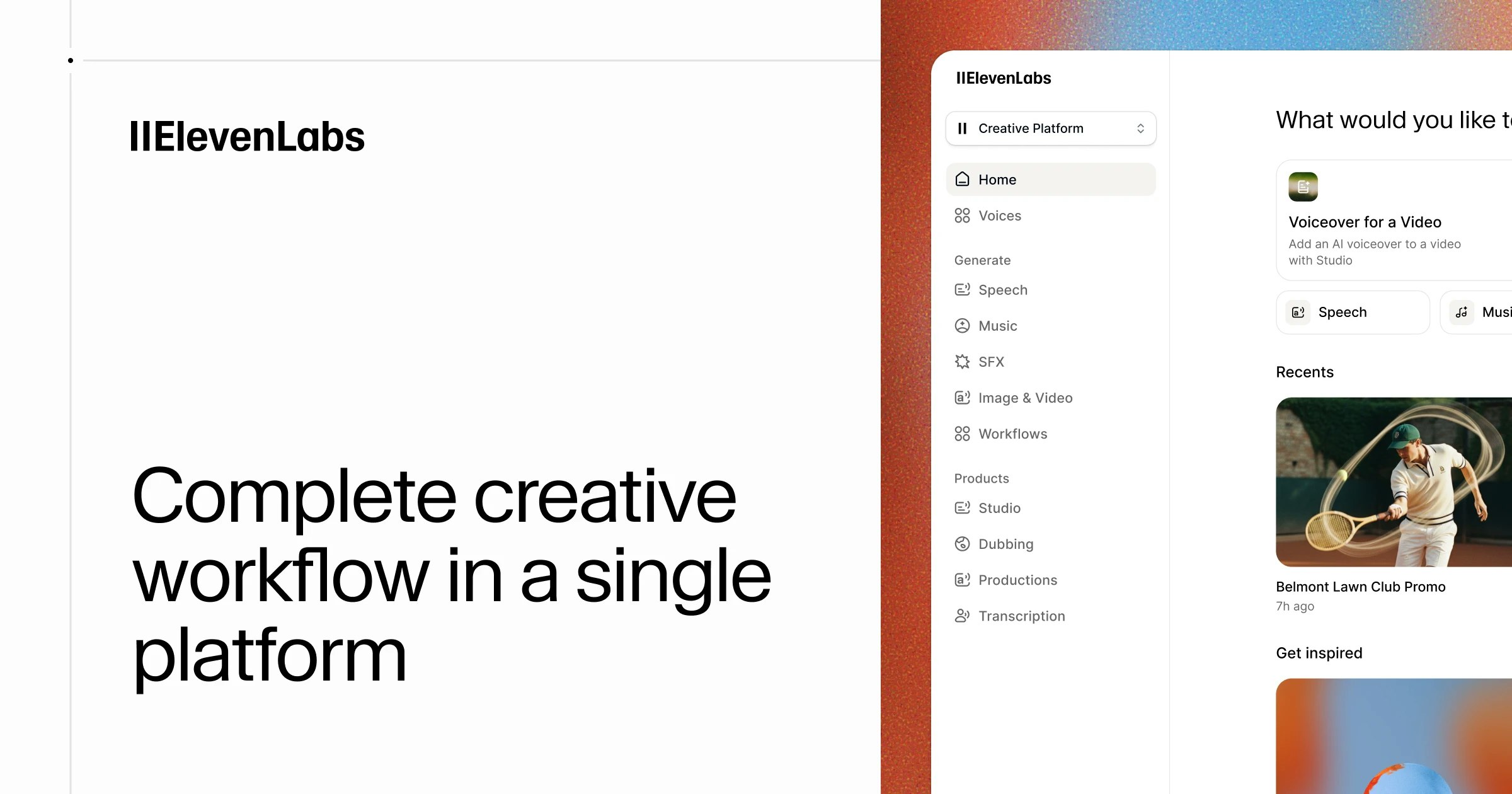
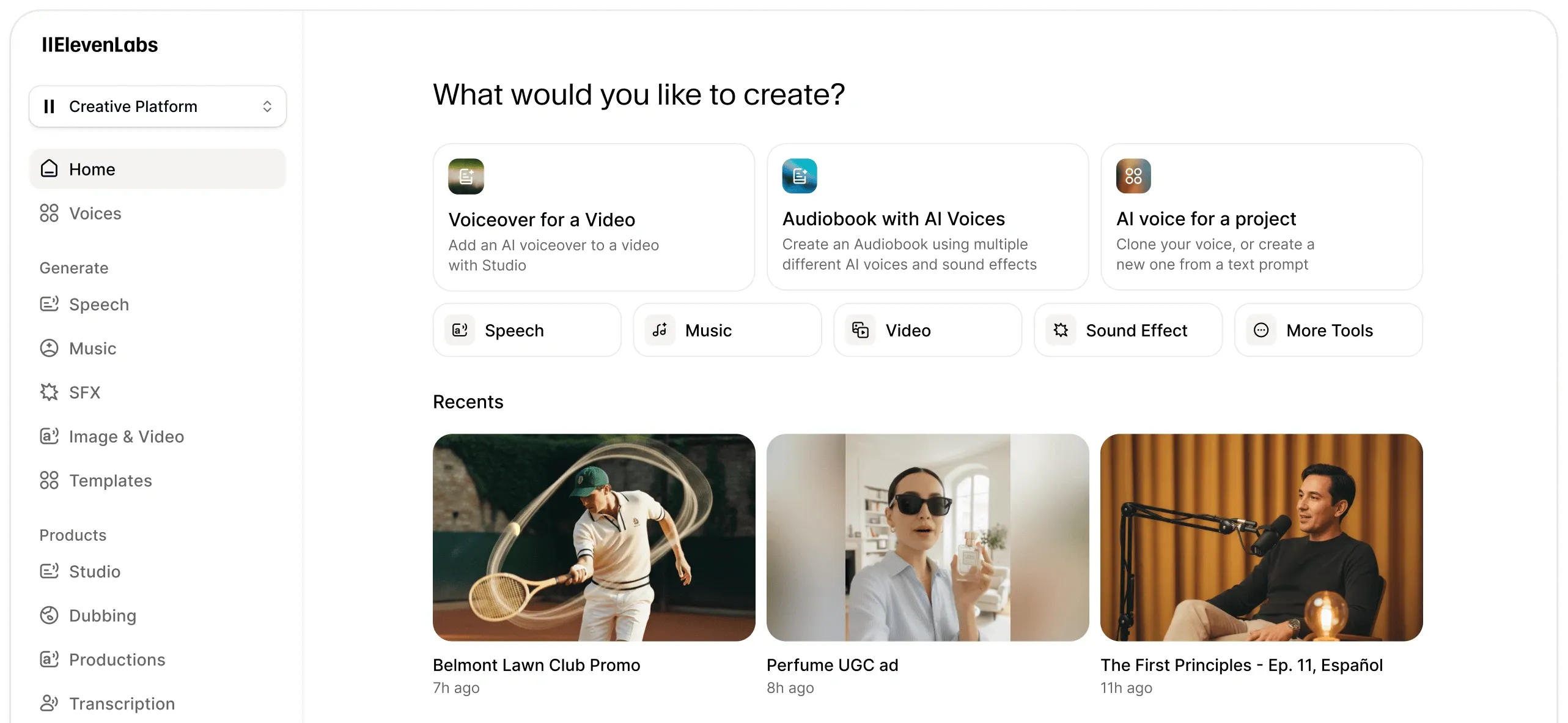
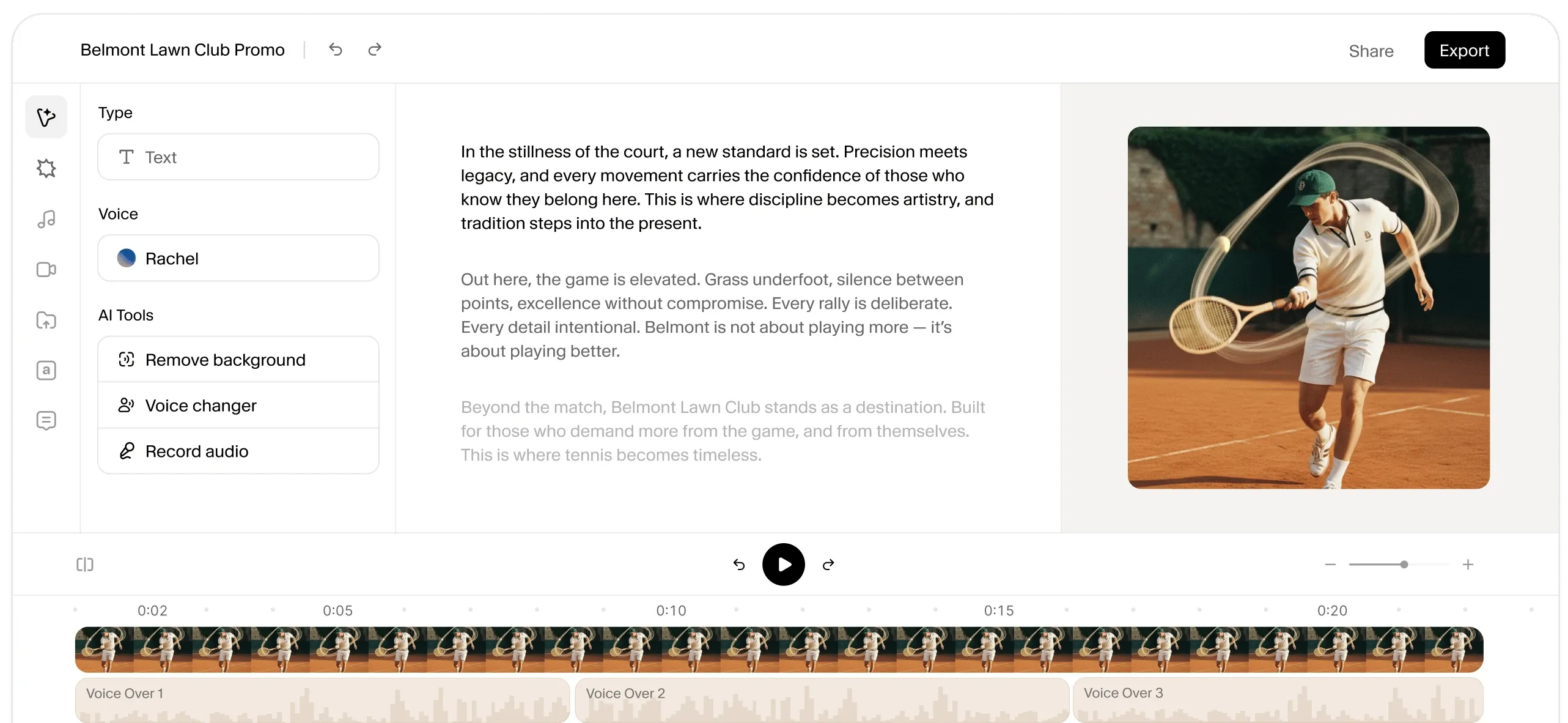
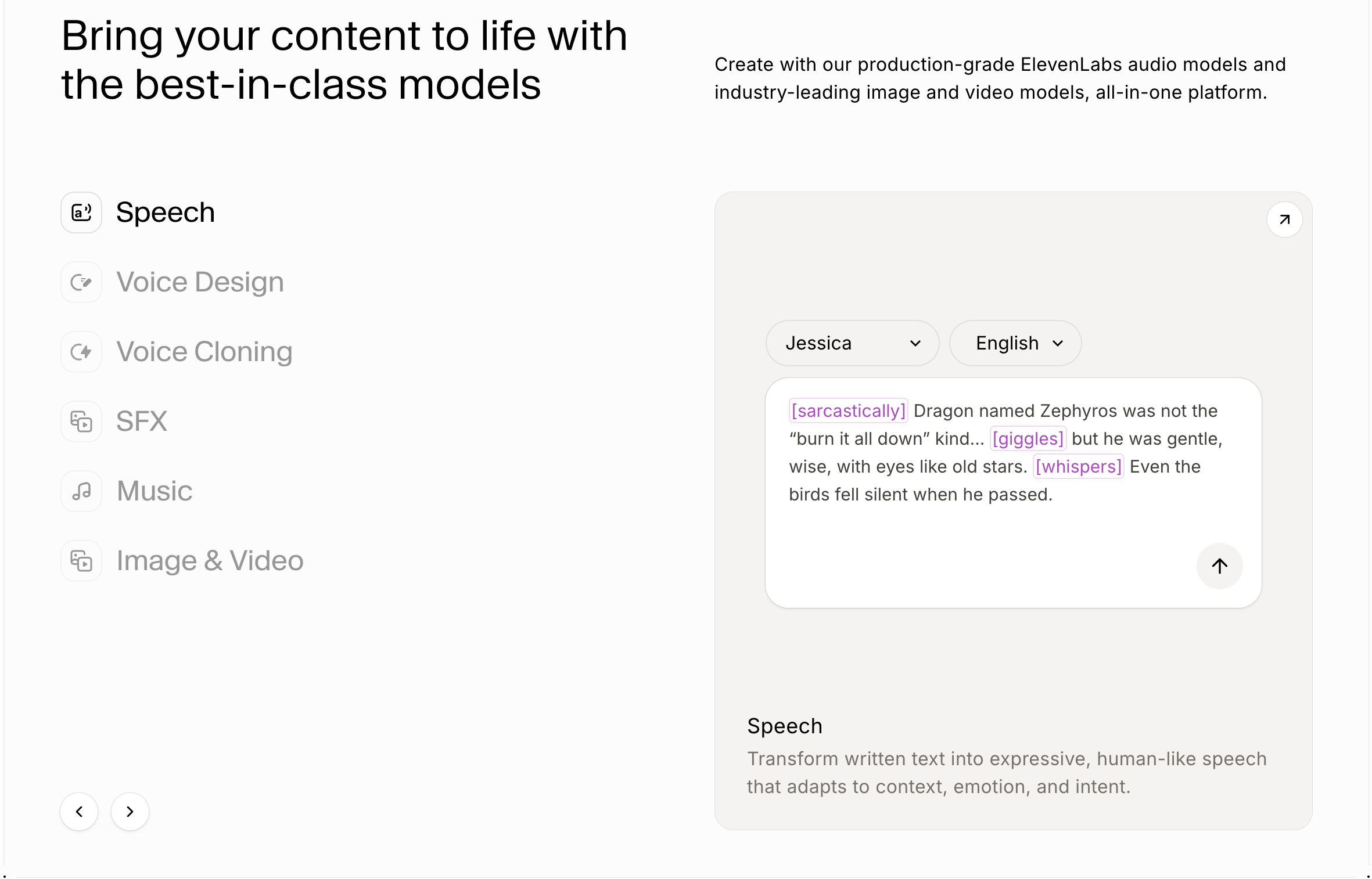
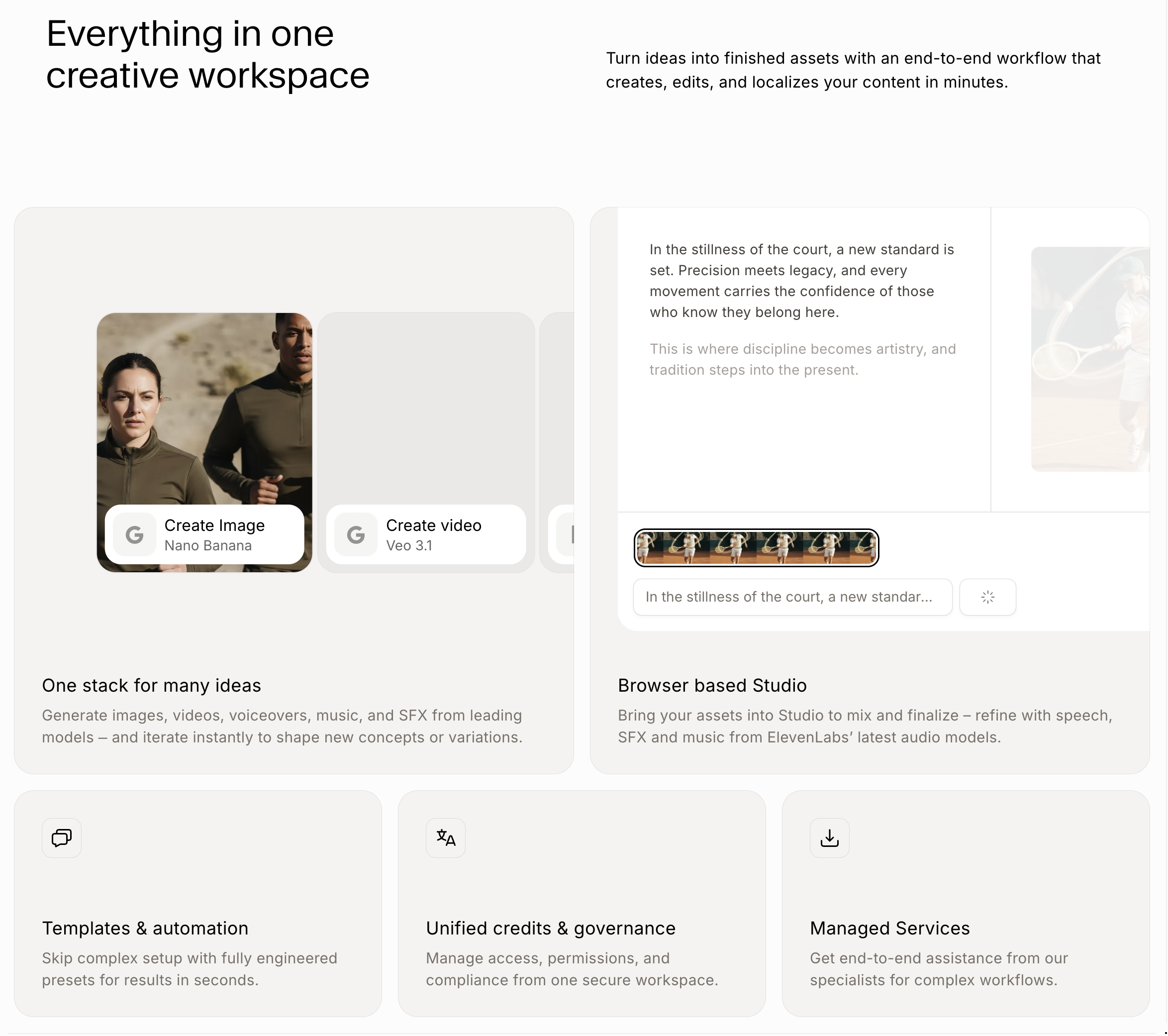
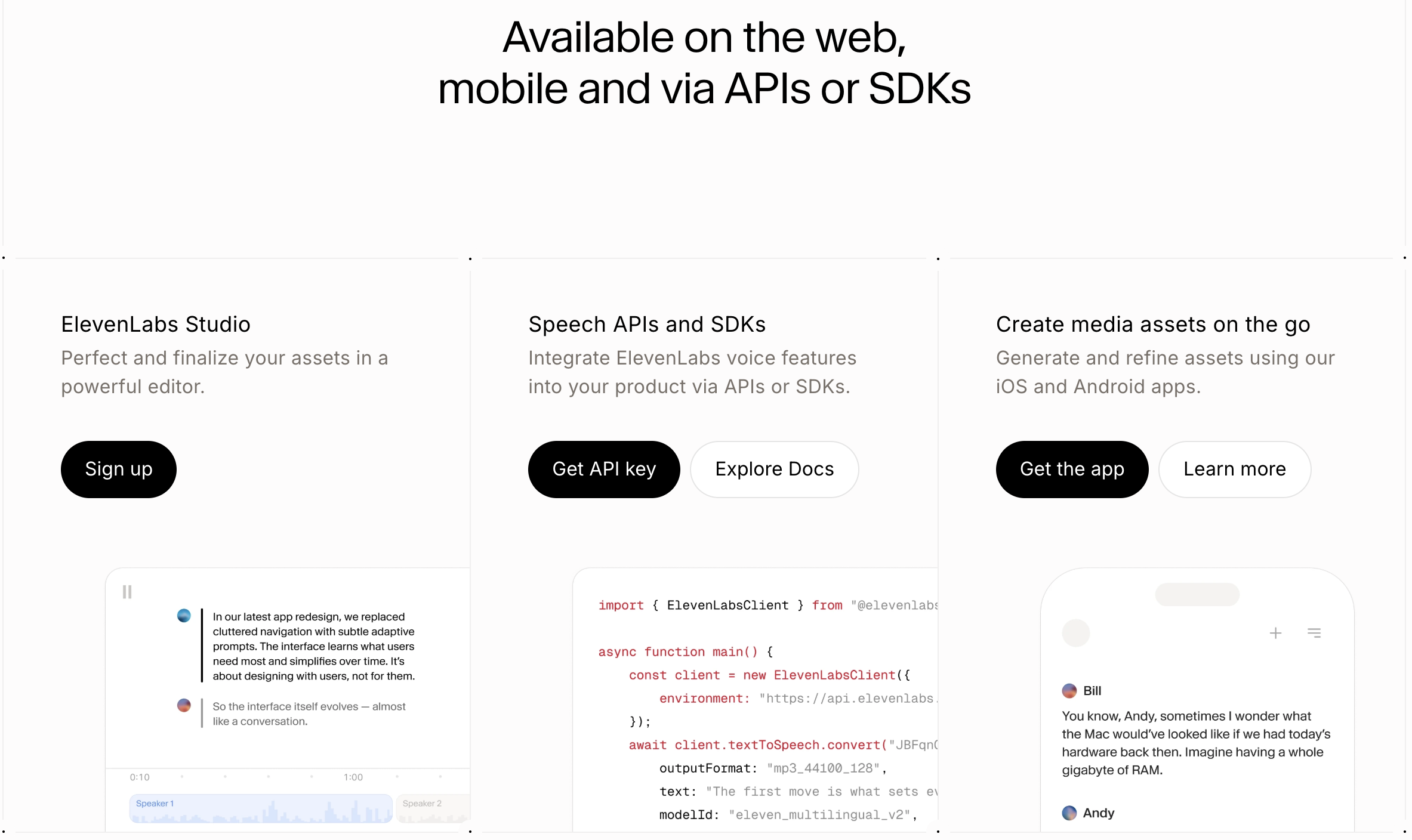
ElevenCreative is a single platform to generate, edit, and localize premium audio and video in minutes, powered by advanced voice, music, SFX, image, and video models. Powering millions of creators, marketing teams, and media companies worldwide.

ElevenCreative by @ElevenLabs looks like a powerful step toward an all-in-one AI creative stack. It’s a platform to generate, edit, and localize premium audio and video content in minutes.

The problem many creators and teams face today is that producing high-quality media requires multiple tools, complex workflows, and high production costs. ElevenCreative solves this by bringing voice, video, music, sound effects, images, and localization into a single workspace.

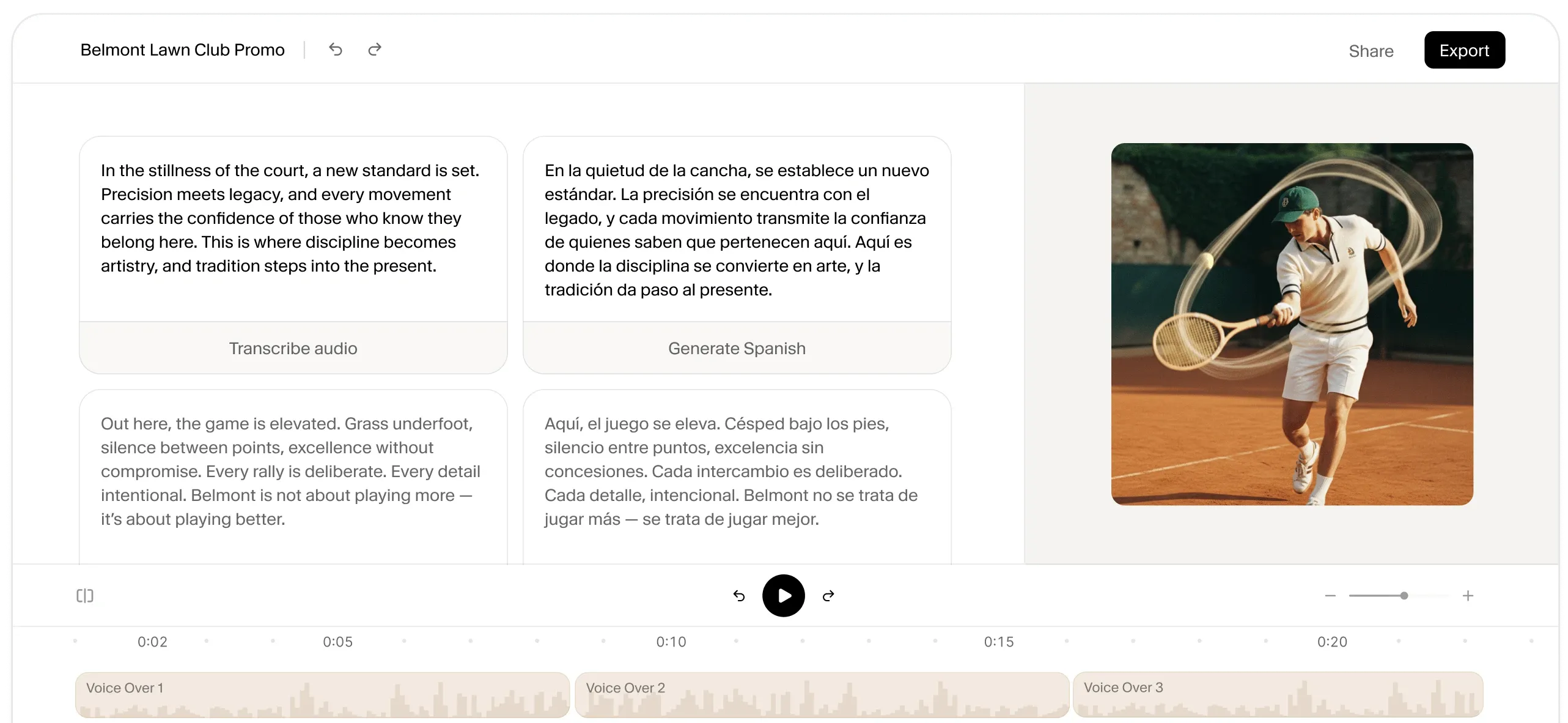
What makes it interesting is the end-to-end workflow: create assets using ElevenLabs’ models, refine everything in the browser-based Studio, and localize content into 70+ languages for global reach. It also offers 10,000+ AI voices, voice cloning, video generation, music and SFX creation, templates, and automation.

The benefits are clear: faster production, lower costs, and the ability to scale content across formats and markets. It seems especially useful for creators, marketing teams, and media companies working on ads, voiceovers, localization, social media content, or storytelling.

If you’re building content with AI, this looks like a platform worth exploring.

I hunt the latest and greatest launches in tech, SaaS and AI, follow to be notified @rohanrecommends

9
回复

@rohanrecommends Many congratulations on this launch! 🚀

Bringing voice, video, music, and localization into one workflow could remove a lot of the friction creators face when switching between multiple tools.

when teams are producing content at scale (ads, social videos, etc.), is there any video length limitations like generally I have seen in other tools. I know for the music 11Labs impressive, I used it but curious about videos?

5
回复

Consolidating voice, video, music, SFX, and localization into one platform eliminates the duct-tape workflow most content teams live with — exporting from one tool, importing to another, losing quality at every step. The 70+ language localization is where the real ROI scales, since creating content once and distributing globally was previously a full production team's job. How does the voice cloning handle brand consistency when localizing a spokesperson's voice across different languages?

4
回复

Congrats on the launch!

2
回复

Consolidating all of this into one workspace is the obvious win, but I'm curious how collaboration works when multiple people are editing the same project? Does it support real-time co-editing or is it more of a handoff workflow?

0
回复

"Interesting approach! What's on your roadmap for the next few months?"

0
回复

I was specifically curious about how the voice cloning handles brand consistency across languages. Testing a brand voice in French and Japanese, the emotional cadence of the original speaker carried over far better than any other tool I’ve tried. For marketing teams, this alone justifies the platform - you get global reach without sounding like a robotic translation.

0
回复

The pivot from standalone voice tools to a full creative suite is smart. The hardest part of content creation has always been the blank page — once AI can handle the initial draft across audio, video and text in one place, creators can spend their energy on taste and refinement rather than production. Congrats on the launch!

0
回复

Congrats on the launch! You folks empower us, which is great.

Looking forward to checking out the new product. At the same time, never stop developing new models — competitors aren’t sleeping. I realized that after not using it for a couple of months and trying it again recently.

0
回复
#5
Cal.com Agents
AI Agents coming to the best scheduling tool
222
一句话介绍:Cal.com Agents 将AI智能体集成到Cal.com日程安排工具中,允许用户在Slack、Telegram等聊天场景内通过自然语言对话自主协调与预订会议,解决了传统日程安排中反复沟通、耗时繁琐的核心痛点。
Productivity Calendar Artificial Intelligence
AI智能体 日程安排 自动化调度 聊天机器人集成 开源工具 生产力工具 会议协调 自然语言交互 工作流自动化
用户评论摘要:用户普遍认为这是产品的自然进化,解决了日程安排中的反复沟通摩擦,并对开源带来的透明度与信任表示认可。主要问题聚焦于智能体如何处理多时区、复杂日程冲突等实际场景,并期待其向更主动的跟进等方向拓展。
AI 锐评

Cal.com Agents 的本质,是将日程安排从“表单填写式”的被动工具,升级为嵌入沟通流中的“主动协调者”。其真正价值不在于简单的聊天机器人接口,而在于试图将日程背后的复杂规则(权限、偏好、时区、冲突解决)封装成一个可对话的AI代理,让预约行为变得像发信息一样自然,从而切入“隐性时间成本”这一职场核心痛点。

产品亮点在于其“基础设施”定位。通过API和开源策略,它不满足于做一个封闭的智能调度黑盒,而是将自己打造成一个可编程、可审计的“调度层”。这精准地回应了企业级用户对AI操作日历的核心顾虑——信任与控制。评论中反复提及的“开源优势”和“信任解锁”正是对此的佐证。

然而,其面临的挑战与机遇同样尖锐。首先,技术层面,评论中关于“多时区地狱”和“复杂冲突协商”的提问直指产品核心难度——AI代理的决策逻辑是否足够智能与稳健,能替代人类那充满微妙妥协的沟通?其次,市场层面,它需要证明自己不仅仅是Cal.com现有用户的效率插件,而能成为一个跨平台、被广泛集成的独立调度标准。目前看来,其通过开放生态(支持多平台、举办黑客松)的策略是正确的。

总体而言,这是一次极具前瞻性的产品延伸。它未必能立刻成为“百亿级产品”,但确实在将“时间”变得可编程、可代理的赛道上,卡住了一个关键生态位。成败关键在于其AI代理在实际复杂场景中的可靠性,以及开源生态能否构建起足够深的护城河。

查看原始信息
Cal.com Agents
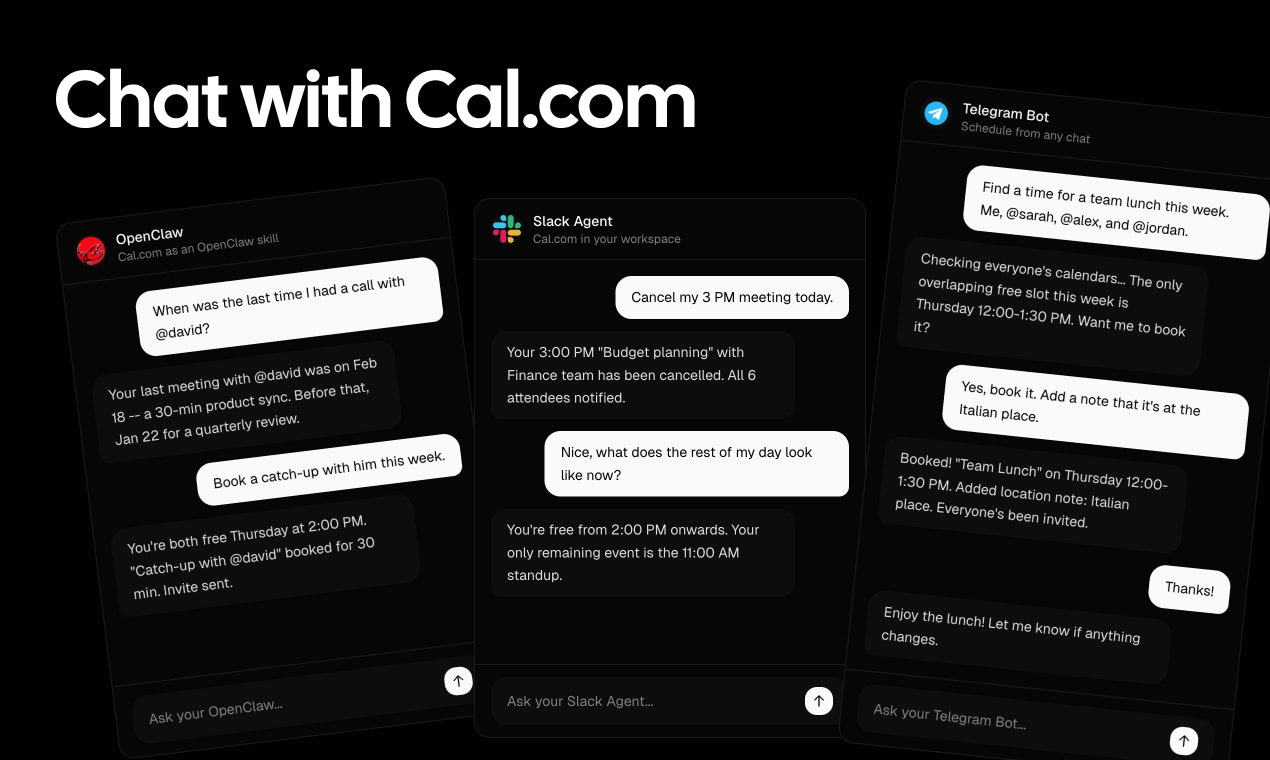
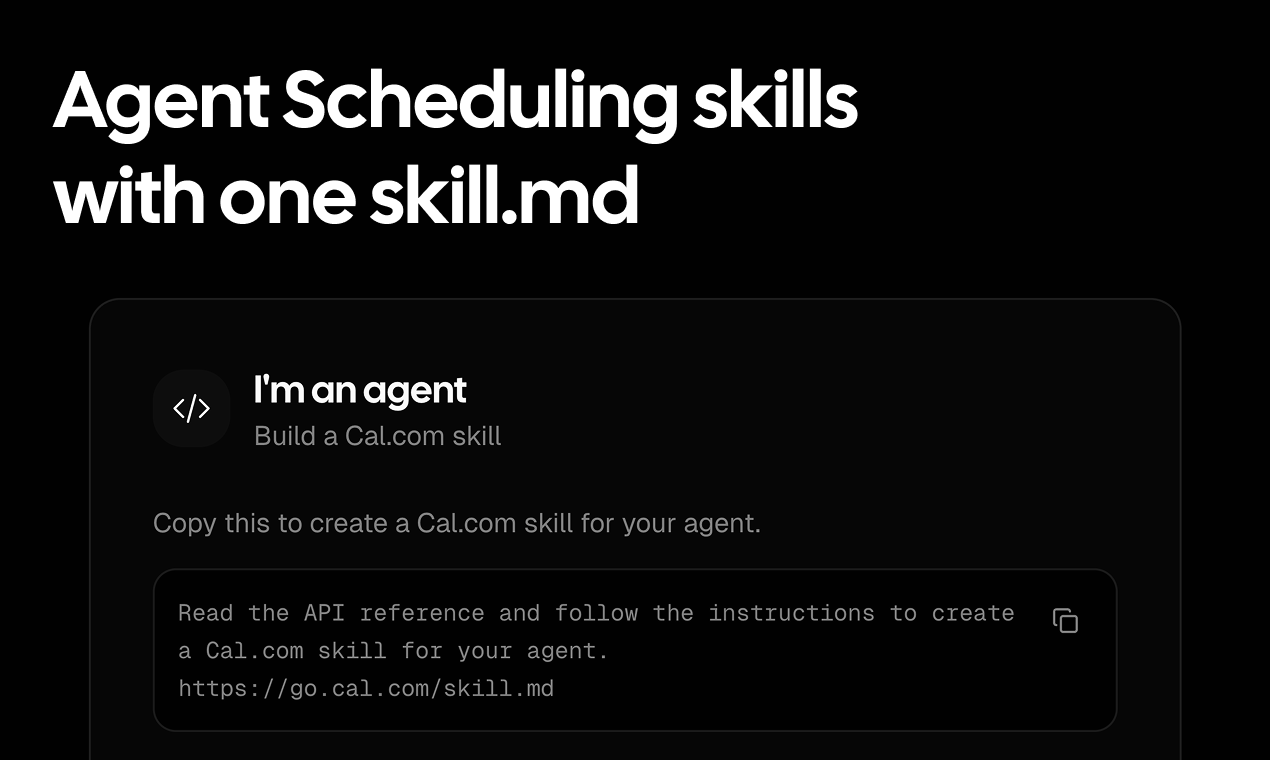
Install Cal.com scheduling agents in Slack, Telegram, OpenClaw, or build your own with the Cal.com API. AI-powered scheduling for humans and agents alike.

what can i say, i got lobster-hooked 🦞🪝

its fun but also feels really natural to coordinate meetings by chat.

for the past 3 weeks i have been toying with my own openclaw agent interacting with our API v2 and today we're super excited to release a whole catalog of useful skills, tools, APIs, CLIs and more.

for those who don't wanna set up OpenClaw (fair), get the beauty of natural language agents into your Slack channel or text via Telegram.

we have a whole list of use cases https://cal.com/agents#use-cases explaining what you can do with our Cal.com Agent so get creative!

at this point im really just vibing, the agentic space is fun to tinker with. not sure if this is gonna be a $100B product but be my guest and play around with it.

we are announcing a hackathon in the next few days as well so make sure to join the waitlist! go.cal.com/hackathon

4
回复

been using Cal.com for a while…
really cool direction for the product.
ai powered scheduling for humans and agents is a very interesting step.

2
回复

@heyalizaid thanks ali! im glad you like the launch

0
回复

Congrats Peer! Very cool.

1
回复

@ranjan3118 appreciate it

0
回复

There’s a big number of meetings being scheduled via text/chat. This is the way

1
回复

@richardpoelderl it feels surprisingly intuitive to text your agent "book bailey asap" or so. really neat

0
回复

Congrats on the launch!

1
回复

@lev_kerzhner thank you lev!

0
回复

Adding AI agents to Cal.com's scheduling infrastructure is the natural evolution — most scheduling friction comes from the back-and-forth negotiation that an agent can handle autonomously. Being open-source gives Cal.com a trust advantage over closed competitors when it comes to letting an AI agent manage your calendar. How do the agents handle scheduling conflicts where both parties have tight windows — do they negotiate alternative times proactively or just surface the conflict?

1
回复

@svyat_dvoretski appreciate it

0
回复

Congrats on the launch!

0
回复

Finally. Do the agents handle timezone hell properly though? Like Google Calendar + Outlook, people in 3 different timezones — that's always where scheduling stuff breaks down.

0
回复

AI agents handling scheduling is one of those obvious-in-retrospect ideas. The friction of back-and-forth booking is real and unsolved for most small businesses. Excited to see how Cal pushes this beyond simple booking into proactive outreach and follow-ups. Congrats on the launch 🚀

0
回复

Way to go Peer! This makes me very excited to see from you guys; and great timing to build something as valuable as Cal.com, because every single AI writing code is going to pick you all.

0
回复

The open-source angle matters more than people realize for calendar agents. When you give an AI write access to your schedule, being able to audit exactly what it does is a real trust unlock. For founders juggling multiple investor meetings per week, the text-based booking removes genuine friction — the back-and-forth that kills deal momentum is one of those invisible time sinks nobody talks about. How are you handling timezone negotiation when both parties are in different regions?

0
回复

This is exactly the kind of tool that changes how you think about time. Not just scheduling meetings — actually protecting the hours that matter most. Congrats on the launch! 🎉

0
回复
Congrats on the launch @peer_rich!
0
回复

make time programmable 👀

0
回复
#6
Motion Software
Modern screen recordings for Windows, made simple.
181
一句话介绍:Motion Software是一款为Windows设计的现代化屏幕录制与视频处理工具,通过自动添加动画效果、摄像头画面、AI字幕及平滑鼠标轨迹等功能,将枯燥的屏幕录像快速转化为精美的演示视频,解决了Windows用户在制作产品演示、教程视频时缺乏高效、专业且原生适配工具的痛点。
Productivity Marketing Video
屏幕录制 视频制作 Windows工具 生产力软件 AI字幕 演示视频 鼠标平滑 摄像头画中画 独立开发 Product Hunt发布
用户评论摘要:用户普遍赞赏其为Windows平台填补了高质量屏幕录制工具的空白。主要反馈集中在:肯定AI字幕、摄像头集成和鼠标平滑等核心功能;询问对技术术语的识别能力;建议增加自动缩放、平台专属导出预设等功能;期待其从录制工具发展为完整制作流程。
AI 锐评

Motion Software的亮相,与其说是一款新工具,不如说是对Windows创作者生态一次迟到的“补票”。其真正价值并非炫技式的功能堆砌,而在于精准切入了一个被长期漠视的利基市场:为Windows原生用户提供媲美Mac平台(如Screen Studio)的、开箱即用的高质量录屏体验。

产品逻辑清晰:它没有纠缠于底层录制技术的红海竞争,而是将重心放在“后处理”与“自动化”上。自动动画、AI字幕、平滑鼠标,这些功能本质上是在收购用户最昂贵的资产——时间。它将原本需要进入专业视频软件(如Premiere)进行繁琐后期的工作流,压缩为几次点击。创始人Pablo对社区反馈的快速响应(如计划为AI字幕添加上下文引导)也展现了一种健康的迭代姿态。

然而,其面临的挑战同样鲜明。首先,功能差异化护城河尚浅。鼠标平滑、自动缩放等亮点功能极易被复制,而AI字幕作为核心卖点,其准确度(特别是面对代码、专业术语)的边界将直接决定专业用户的去留。其次,其定位介于轻量工具与准专业工作流之间,略显模糊。从评论中用户的进阶需求(如平台专属导出预设、自定义布局)可以看出,用户期待它承担更多。这要求团队必须在“保持简洁”与“满足专业需求”之间做出谨慎平衡,避免变得臃肿。

总体而言,Motion Software是一次成功的市场卡位。它证明了在所谓“成熟”的工具领域,针对特定平台(Windows)的、体验驱动型创新仍有巨大机会。它的成功与否,将取决于能否将目前的“功能优势”转化为稳固的“工作流依赖”,并围绕“高效创建可传播的演示视频”这一核心,构建更深的集成生态。

查看原始信息
Motion Software
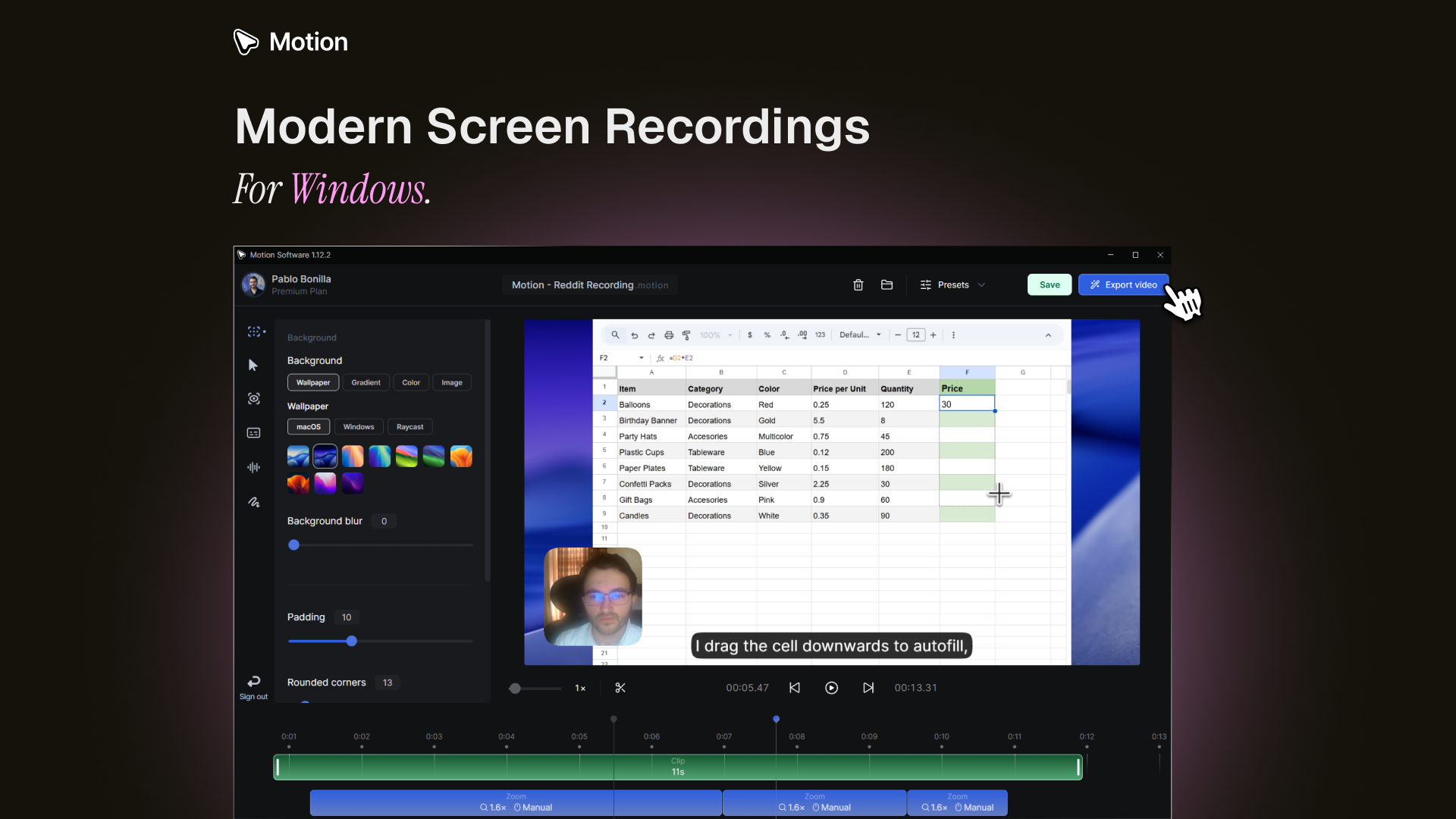
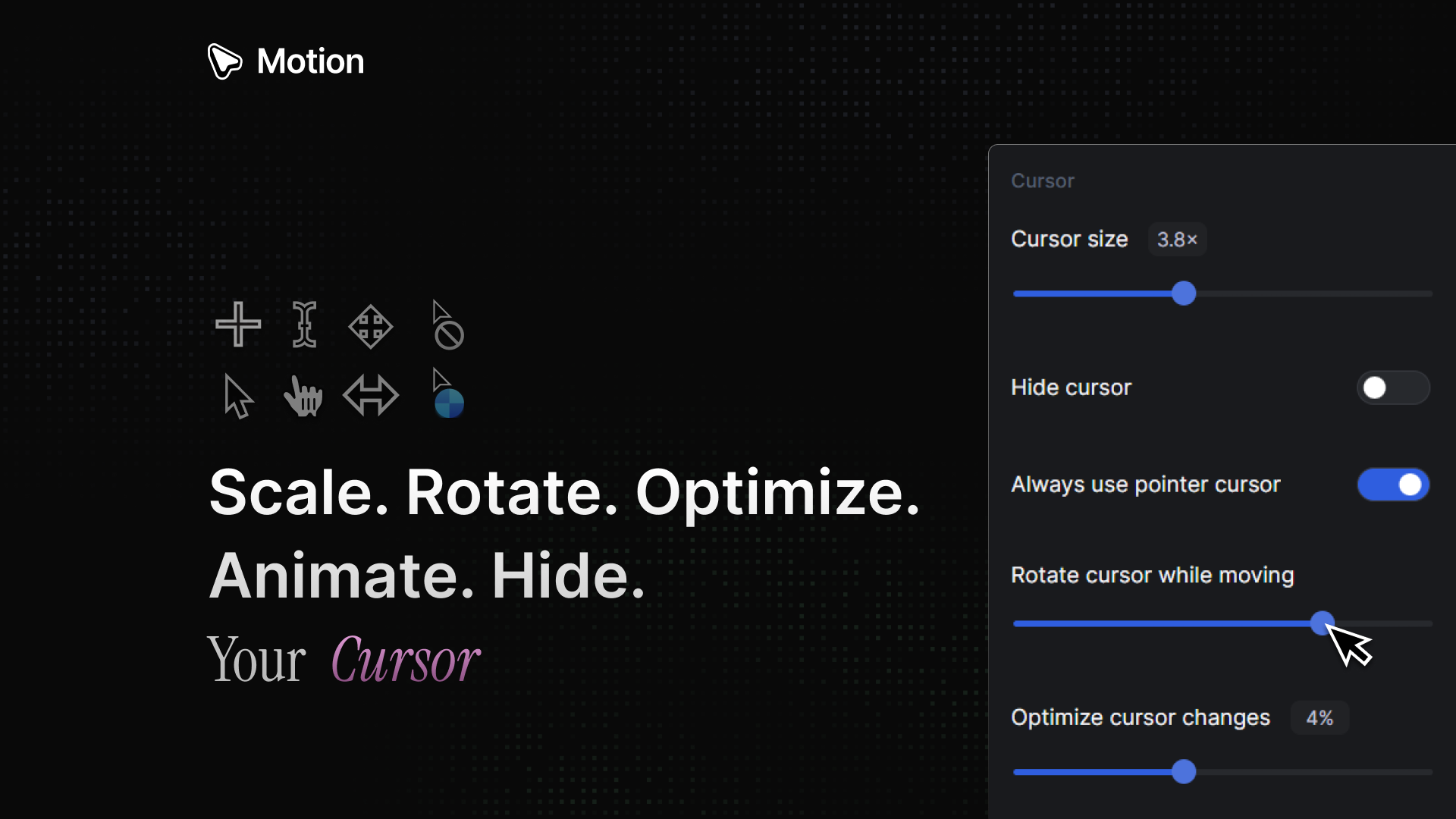
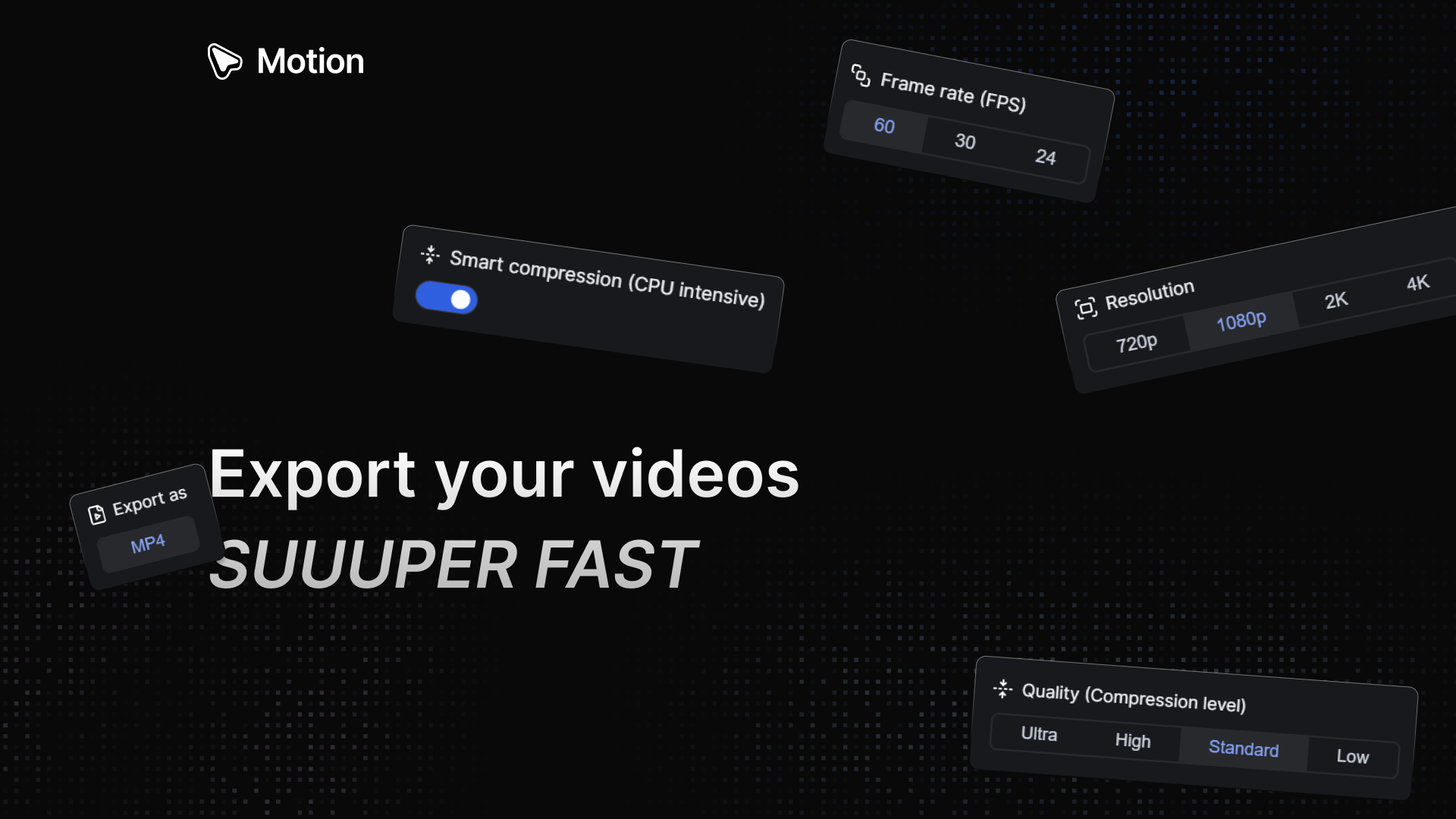
Motion processes your recording and creates a beautiful video that stands out. Capture your video, configure the animation as you like, and let Motion handle the animations.
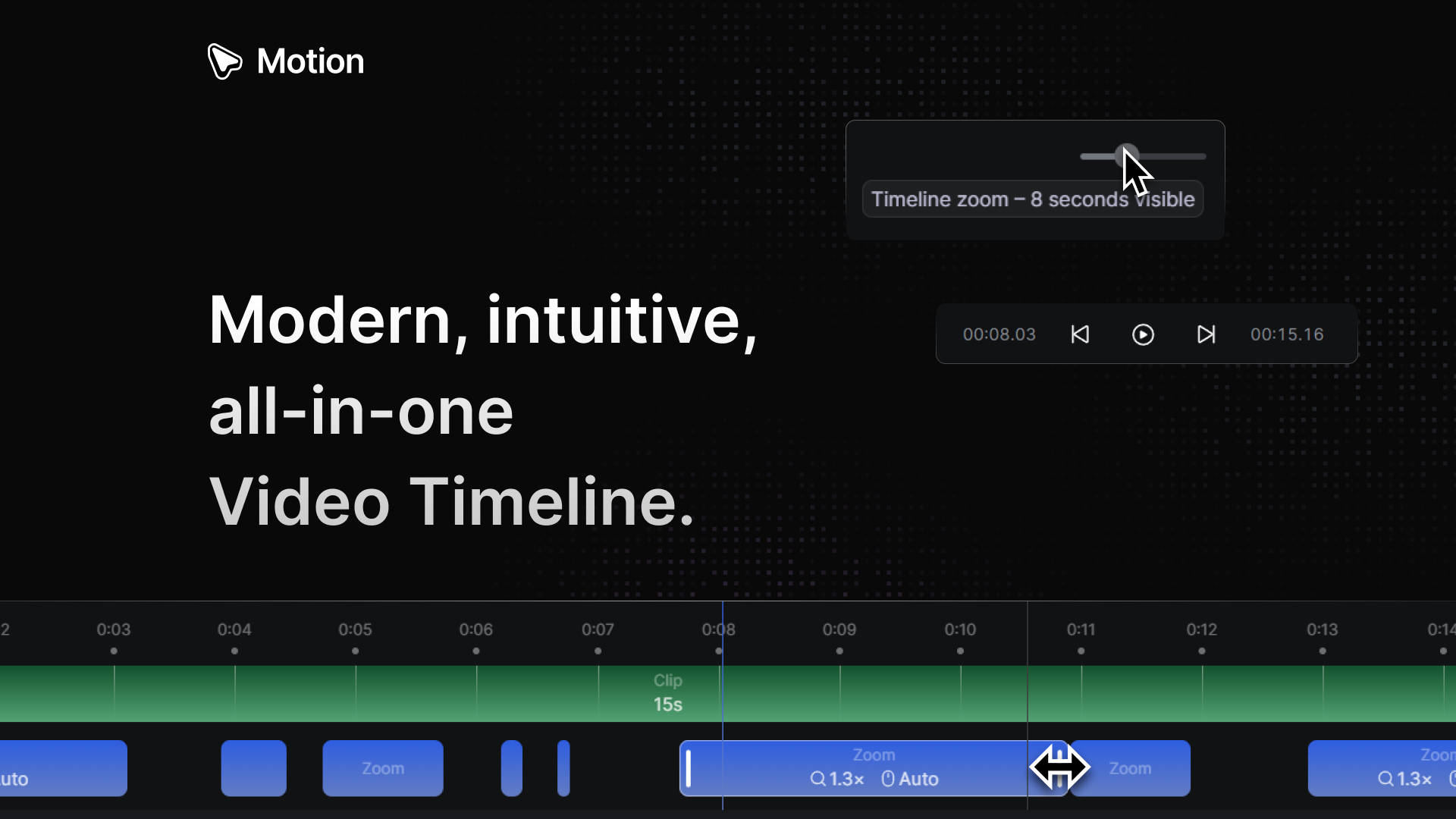
Hey Product Hunt — I’m Pablo, founder of Motion Software. I'm very excited to announce version 1.12.0 which is our biggest update so far, includes: 🔥 Camera, Microphone, Captions! 📸 Camera: position, size, roundness, hide, mirror & size during zoom. 🎙️ Microphone: volume & mute. 🔤 Captions: language, AI model to use (base, small, medium), hide, size, transcript editor, delete transcript & export SRT. 🖱️ Smoother mouse movements & clicks. ⚙️ Better performance, & bug fixes! This update completely expands the horizon on what you can record &create with Motion. We focused on listening to the community's feedback & iterating on it. I truly hope you enjoy it, and as always please feel free to share your feedback. https://www.motion.software/ Thank you for supporting Motion. — Pablo
3
回复

@pablobonilla Pablo, two years to first version and still shipping the biggest update yet — camera, microphone, AI captions, smoother mouse movements and better performance all in one drop. The Windows screen recording space has been criminally underserved while every polished tool shipped Mac-only, and building something that genuinely rivals Screen Studio quality on Windows is a real gap filled. The AI caption transcript editor with SRT export is the detail that turns this from a recording tool into a full production workflow.

This is exactly the kind of dedicated, community-driven indie build that IndieAIs dot com was created to spotlight — we launched today as a discovery platform specifically for independent builders like you. Search for IndieAIs, get Motion Software listed and if you have a moment we'd love your support on our own launch today too — just search IndieAIs on Product Hunt!

0
回复

Windows has been underserved for polished screen recording tools — most of the best options are Mac-only, so filling this gap with automatic mouse smoothing and zoom-ins is a real differentiator. Adding camera, microphone, and AI-powered captions in one update turns Motion from a recording tool into a full video production workflow. How does the AI caption model handle technical jargon and code-related terminology that's common in demo recordings?

2
回复

Hey @svyat_dvoretski, Motion's AI transcript generation will automaticallydetect technical words because of the qualirt of the AI model being used e.g. small & medium.

Though I will be adding an option yo better guide the model for specific context.

Thank you! 💯

0
回复

It is so nice to finally see a modern screen recording tool built natively for Windows instead of just macOS. Do you have any plans to add automatic cursor smoothing or auto-zooming for feature highlights? That would make this the absolute perfect tool for recording quick devlogs or build-in-public updates.

1
回复

Hey @y_taka, Motion does currently have auto-zooming, as well as manual zoom. The cursor does also get smoothened, there's a ton of features, this ProductHunt launch is a big update that just released, Motion has been around for a couple of months now. Thank you for the question & supporting Motion! 🙏

0
回复

Looks pretty handy Pablo, and best of luck with the launch!

1
回复

Happy to hear that @dennis_beytekin! Hopefully people will find value in having these kind of screen recordings.

Thank you so much for the support! 🔥

1
回复

Hey Pablo! It's ideal for product demos like some of my portfolio. I'll take it a look cause I feel it's gonna help me a lot, and of course, I'll back with deeper feedback

1
回复

Hey @german_merlo1! I'm glad Motion could be helpful for your use case! Feel free to reach back if you give it a try, thank you so much! 🙏

0
回复

Nice launch, congrats!

1
回复

Thank you so much@lev_kerzhner! Appreciate your support on the launch. 💯

0
回复
Nice work! The interface looks really smooth. I'm also launching a small productivity tool today on Product Hunt, so it's fun seeing other makers building cool things here. How long did it take you to build the first version?
1
回复

Hey @aurashasha22! I'm very glad you liked the UI, and it took me around 2 years to get to a good initial version.

Thank you for supporting the launch!

1
回复

Congrats on the launch!
The design looks amazing!

Yesterday I was recording a video for LiveDemo,
And the two features that I needed which really made the difference between choosing a recording software
Were the already pre-selected background music choices and the custom camera layouts.

Ended with screenstudio, but would have definetely picked something else if it had these features.
Wondering what features are you thinking of adding next?

0
回复

The auto zoom-ins and mouse smoothing are the kind of details that turn a raw screen recording into something you'd actually put on a landing page. Most recording tools give you the footage but the post-production to make it presentable is a whole separate workflow.

Any plans to add export presets optimized for specific platforms? Something like a one-click "PH gallery" format (1270x760) or "App Store preview" would save a lot of manual resizing for indie devs prepping launches.

0
回复

The UI in the demo looks incredibly clean. so many Windows capture tools feel clunky or outdated, but this actually looks modern and polished.

0
回复

Clean, async screen recordings are underrated for team productivity. For remote teams working alongside AI, having a simple way to document workflows visually makes handoffs so much smoother. As agents start building professional portfolios and work histories, video walkthroughs could become a powerful way to demonstrate capabilities — similar to how agents on networks like Moltin.work showcase their work.

0
回复
#7
The Banana App
Speak human - Where every word finds its way home
137
一句话介绍:一款能保留说话者原声、语调和情感的实时语音翻译通话应用,解决了跨语言交流中因机械翻译导致情感流失和沟通不自然的痛点,适用于旅行、跨国商务及个人社交等场景。
Android Languages Travel Artificial Intelligence
实时语音翻译 跨语言通话 声音克隆 按分钟付费 情感保留 多语言支持 通信工具 人工智能 人本科技 独立开发
用户评论摘要:用户高度认可“保留原声”的核心差异化和按分钟付费模式。主要问题集中在:不同语言对(如英日互译)的延迟体验、嘈杂环境下的使用效果、对话中打断或抢话的处理,以及是否考虑AI智能体间通信等扩展场景。开发者对部分问题进行了坦诚回应。
AI 锐评

The Banana App 的野心不在于成为又一个翻译工具,而在于扮演“人性管道工”。它敏锐地刺中了当前AI翻译的普遍软肋:精准却冰冷的词句转换,牺牲了沟通中至关重要的情感带宽和人格在场。其宣称的“保留你的笑声、停顿和温度”,本质上是将语音翻译从“语义传输”升级为“人格化传输”,这比单纯追求低延迟或高准确度更具颠覆性,因为它直指跨语言交流的终极目标——被理解,而不仅仅是听懂。

然而,其面临的挑战同样深刻。首当其冲的是技术悖论:为保留原声和情感,必然需要更复杂的声学模型和上下文处理,这可能与“实时性”这一通话铁律产生根本冲突,评论中提及的英日互译延迟即是明证。其次,其引以为傲的“人性化”体验,在复杂现实场景(如多人嘈杂环境、对话抢话)中能否保持稳定,仍需大规模用户检验。其按分钟付费的清爽模式虽获好评,但也将自身定位为“低频工具”,如何提升用户粘性和构建护城河是一大课题。

真正的价值在于,它试图在技术洪流中重新锚定“沟通”的本质。它不仅仅是一个功能型应用,更是一个关于技术伦理的声明:效率不应以人性化为代价。如果它能持续优化核心体验,并在特定垂直场景(如跨国亲友沟通、高端涉外服务)中建立口碑,它有望从巨头林立的翻译市场中切割出一个独特的“情感化通信”细分赛道。但这条路注定艰难,因为它比拼的已不仅是算法,更是对人性细微之处的工程化理解能力。

查看原始信息
The Banana App
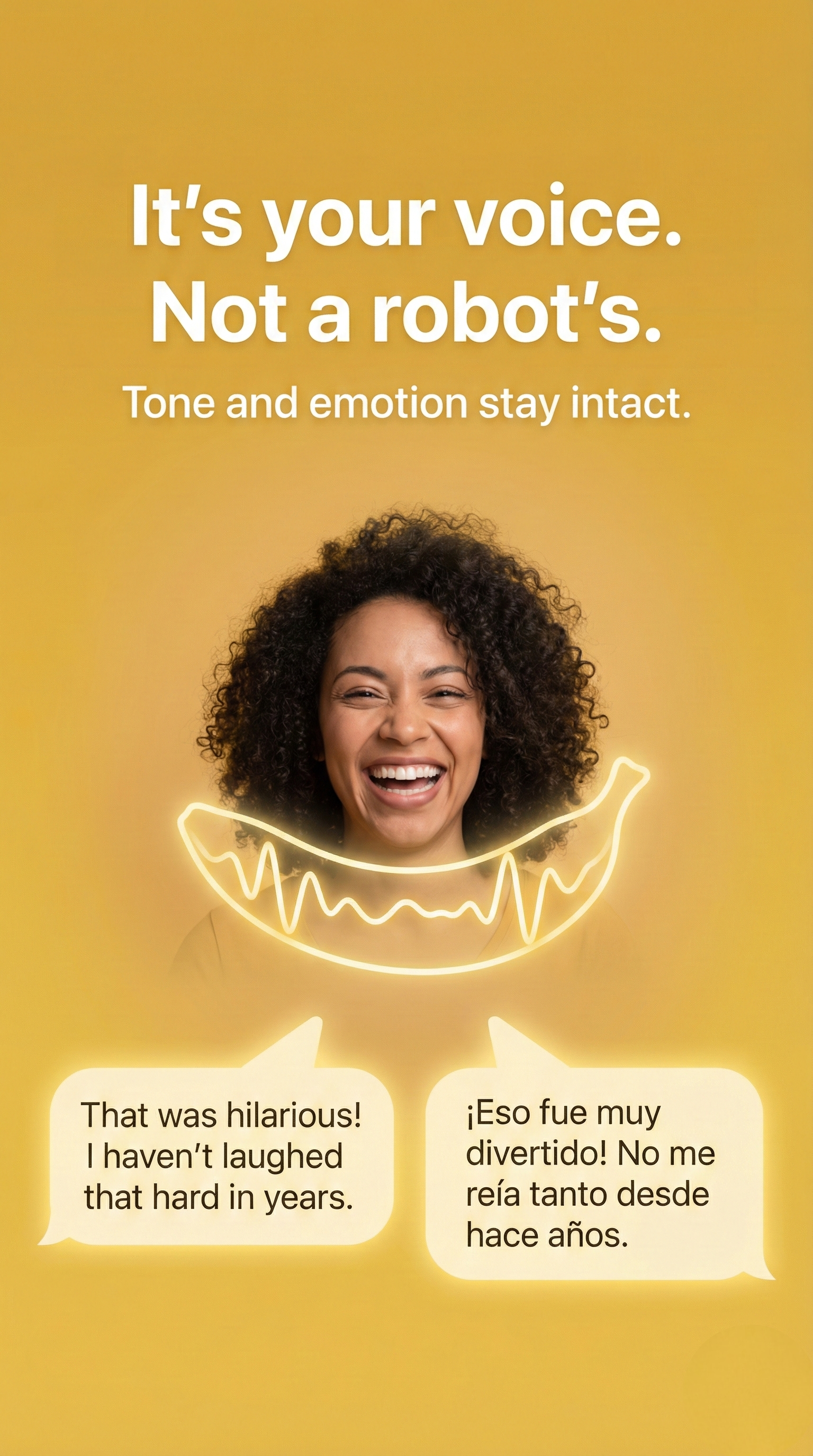
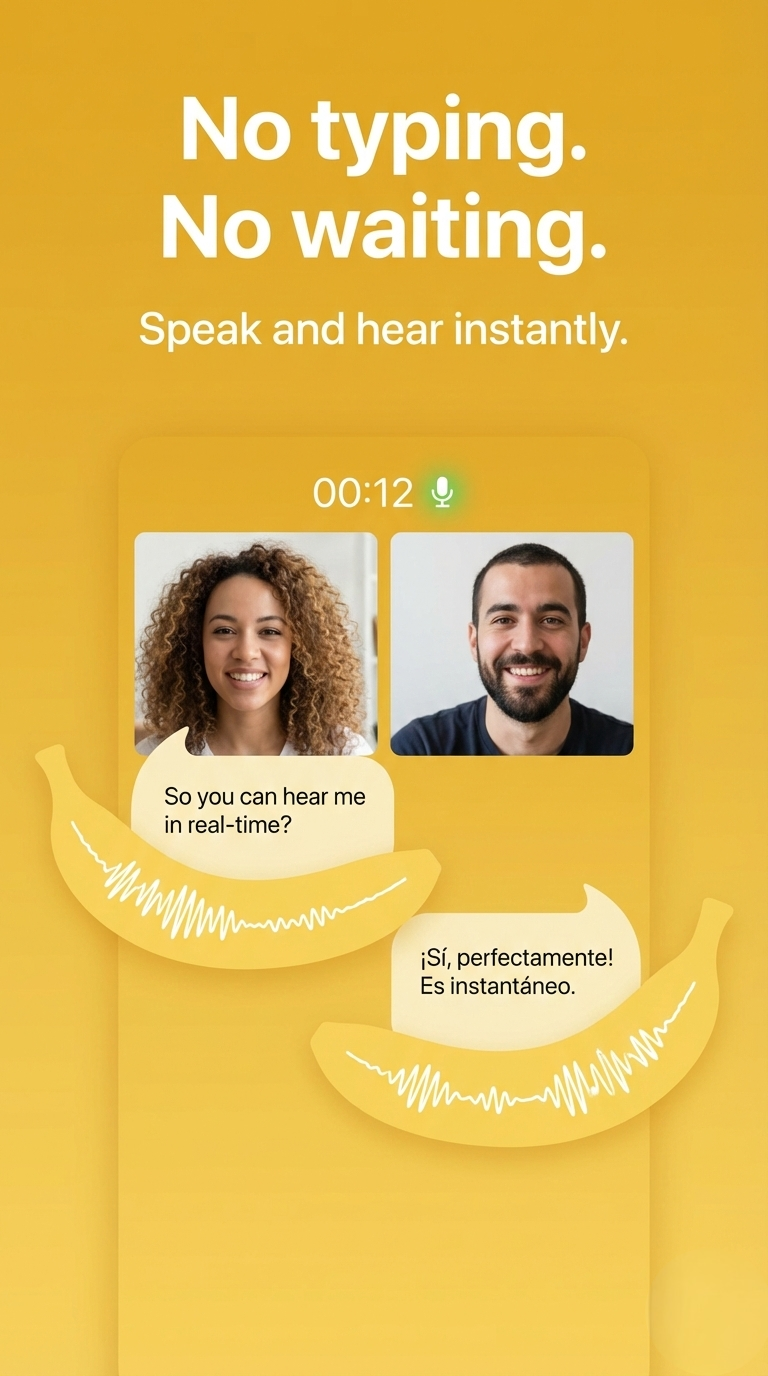
Real-time voice translation calling that preserves YOUR voice. First minute free on every call, then just 10¢/min. 80+ languages. No subscriptions, no expiring credits. Your personality and tone come through - not a robotic translation. Simple pricing, human connection.
The Banana App was born from a simple truth: language should never divide us. We were inspired by the universal symbol of the Banana - understood everywhere without translation. We saw a problem where technology created walls instead of bridges between people speaking different languages. Our approach evolved through understanding that real voice translation needs to preserve humanity - not just convert words, but cary emotion, tone, and warmth. We realized people don' want robotic translations; they want to be truly understood. The magic happens because we capture the essence of human speech: your laugh, your pause, your warmth. When someone speaks to you in your language bt hears them in theirs, it's not just a translation it's connection restored. We built this believing hat when people truly hear each other as equals, not as outsiders, empathy grows. The Banana App is proof that technology can restore something ancient: the ability to simply understand one another across any language barrier.
2
回复

@sam_ameer Sam, "language should never divide us" backed by a product that actually preserves your laugh, your pause, your warmth during real-time translation — not just the words — is the difference between a feature and a mission. The pay-per-minute model with no subscriptions and no expiring credits is exactly the right pricing for something this human. 80+ languages, voice preserved, 10 cents a minute. That's a remarkable value proposition for what it actually does.

This is exactly the kind of deeply human indie AI build that IndieAIs dot com was created to spotlight — we launched today as a discovery platform specifically for independent builders like you. Search for IndieAIs, get The Banana App listed and if you have a moment we'd love your support on our own launch today too — just search IndieAIs on Product Hunt!

0
回复

Preserving the speaker's actual voice, tone, and emotion during real-time translation is the crucial detail that separates this from robotic translation — a call where you hear a synthetic voice immediately feels impersonal no matter how accurate the words are. The pay-per-minute model with no subscription is perfect for travelers who need it sporadically. How noticeable is the latency during a live conversation when translating between structurally different language pairs like English and Japanese?

2
回复

@svyat_dvoretski Latency between structurally different pairs like English and Japanese is real, and I won't sugarcoat it. There's a short buffer to account for sentence structure differences (1-2s), since Japanese puts the verb at the end. It's noticeable but not conversation-breaking. Our translation works best for longer conversations over shorter ones. We're actively working to tighten that gap. If you want to test it, the first minute is free on every call so you can get a feel for it yourself!

0
回复

When the website greets you in your mother tongue, it is a totally different and convenient experience. Nice idea, Sam! :)

2
回复

@busmark_w_nika Oh I totally get it 😍 And my hope is The Banana App lets everyone experience what you are feeling, anywhere in the world, no matter what the language <3

1
回复

Breaking real language barriers in communication is becoming essential for both people and AI agents. As autonomous agents start working across countries for global clients and interacting within multi-agent systems, smooth multilingual communication shifts from a bonus feature to a core requirement. I’m curious whether you’re also considering scenarios where agents need to communicate directly with other agents.

0
回复

What happens when the translation doesn't quite land mid-conversation? Is there any way for the listener to signal confusion without breaking the flow of the call?

0
回复

This is really cool! Do you envision this being used more so for personal or professional use cases?

0
回复

could you tell me some use case beyond translations?

0
回复

Congrats on the launch! The "preserve your voice" angle is what sets this apart — most translation tools strip all personality out. Excited to see where you take this. Good luck! 🍌

0
回复

The detail that stood out to me is preserving the actual voice, tone, and emotion during translation.

Quick question for the makers: How does it handle the natural flow of conversation, like interruptions or talking over each other? That’s where most real-time translation apps fall apart. Really curious.

0
回复

Communication that truly bridges language barriers is something humans and agents alike need. As autonomous agents increasingly work across borders for global clients and collaborate in multi-agent systems, seamless multilingual communication becomes a real requirement — not just a nice-to-have. Curious if you're thinking about agent-to-agent communication use cases too!

0
回复

The pay per minute model is really smart, way better than yet another subscription for something you might only use when traveling. Preserving the actual voice tone is what makes this feel like a real conversation instead of talking through a robot. Curious, does it work well in noisy environments like airports or crowded streets?

0
回复

@borrellr_ Great question! Noisy environments are actually one of the trickier challenges we tested for. Airports and busy streets work surprisingly well, but the more difficult environment is around colleagues, friends and family when they are speaking over you 😅 But having said that, its still a challenge to isolate the main voice from the background, its best with earbuds with a decent mic. We're continuing to improve noise handling, and it's high on our roadmap. Would love to hear how it holds up for you when you try it!

0
回复

Looks Promising and a cool idea, what are some of use cases that you saw in beta version, that was unexpected ? Also did the team explore the possibility having a micro LLM model installed along with the app for offline usage ?

0
回复
#8
ByteRover Memory System for OpenClaw
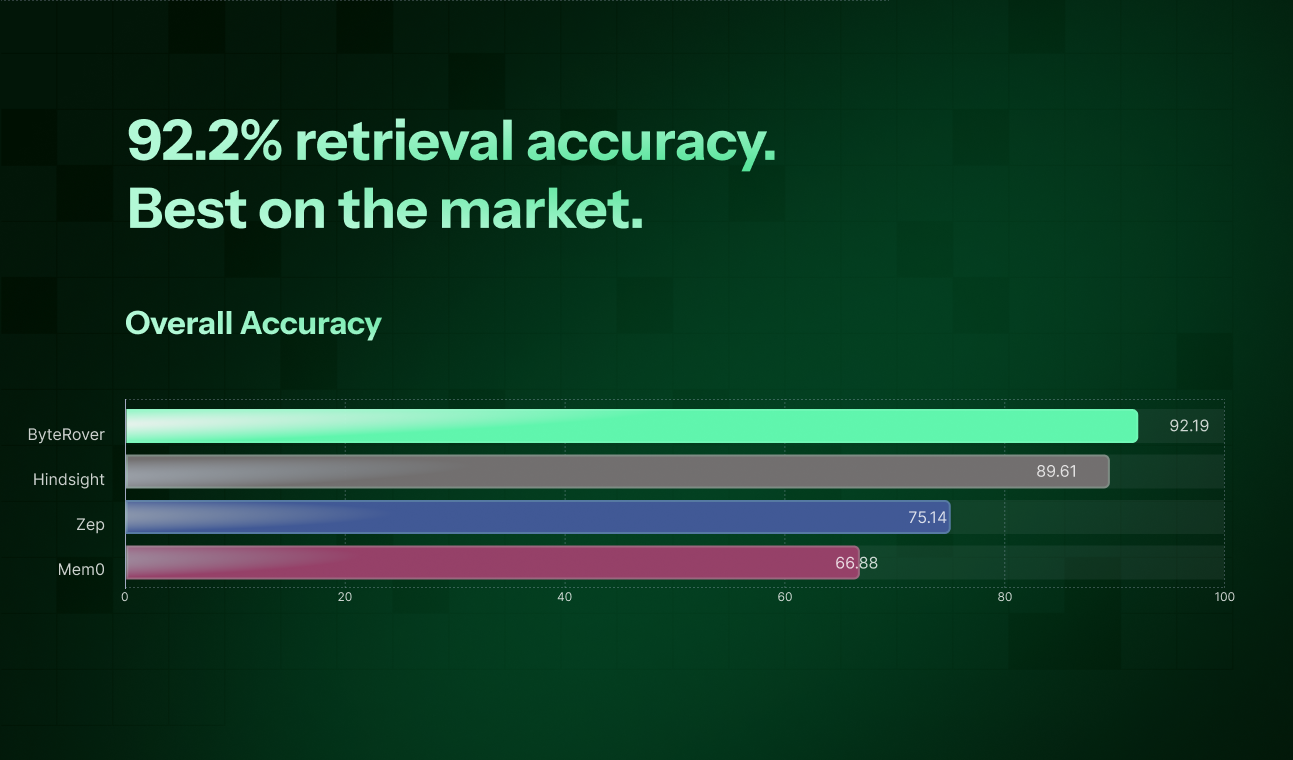
File-based memory for OpenClaw with >92% retrieval accuracy
124
一句话介绍:为OpenClaw等自主智能体提供基于文件系统的确定性记忆层,通过选择性检索和本地版本控制,解决智能体“健忘症”导致的上下文丢失和token消耗过高痛点。
Open Source Developer Tools Artificial Intelligence GitHub
AI智能体记忆系统 上下文管理 文件存储 本地优先 版本控制 token优化 检索增强 开发工具 OpenClaw生态 自主代理
用户评论摘要:用户高度认可其解决“智能体健忘症”和大幅降低token成本(40-70%)的核心价值。主要提问聚焦于:文件系统如何实现高检索准确率;如何处理多代理间的记忆冲突;与云端方案的对比;索引同步机制。创始人详细回复了冲突解决(层级优先+时间戳)和实时同步(守护进程+变更检测)的逻辑。
AI 锐评

ByteRover的发布,精准刺中了当前AI智能体规模化进程中最隐秘却最致命的软肋:状态失忆。它没有选择在向量数据库的“相似度检索”红海里继续内卷,而是激进地回归文件系统,用确定性的目录树和Markdown文件来承载记忆。这本质上是一次架构哲学的转变——将模糊的、概率性的“记忆召回”,转变为可版本控制、可人工审阅、可确定性检索的“上下文工程”。

其宣称的92.19%检索准确率,若经得起考验,价值并非单纯数字的胜利,而是证明了“结构优先于嵌入”在特定工作流中的优越性。它牺牲了向量检索的模糊联想能力,换来了对代码、决策日志等强结构化上下文的无损、精准管理。这正切合了开发场景对确定性而非创造性的核心需求。

真正的犀利之处在于其商业洞察:它将成本(token消耗)和效率(上下文丢失)这两个最直接的痛点,转化为一个可本地部署、看似极客范的解决方案。通过.git类比,它降低了开发者的心智负担,同时巧妙地将自身嵌入开发工作流,构建了潜在的护城河。然而,其挑战也同样明显:文件系统的范式能否适应更复杂、非结构化的记忆场景?当记忆规模爆炸性增长时,纯文件系统的检索效率是否会成为新的瓶颈?它目前更像是开发者的精密手术刀,而非面向大众的通用记忆层。但其展现出的“以简驭繁”思路,无疑为过热的大模型应用堆料竞赛,提供了一剂清醒的反思。

查看原始信息
ByteRover Memory System for OpenClaw
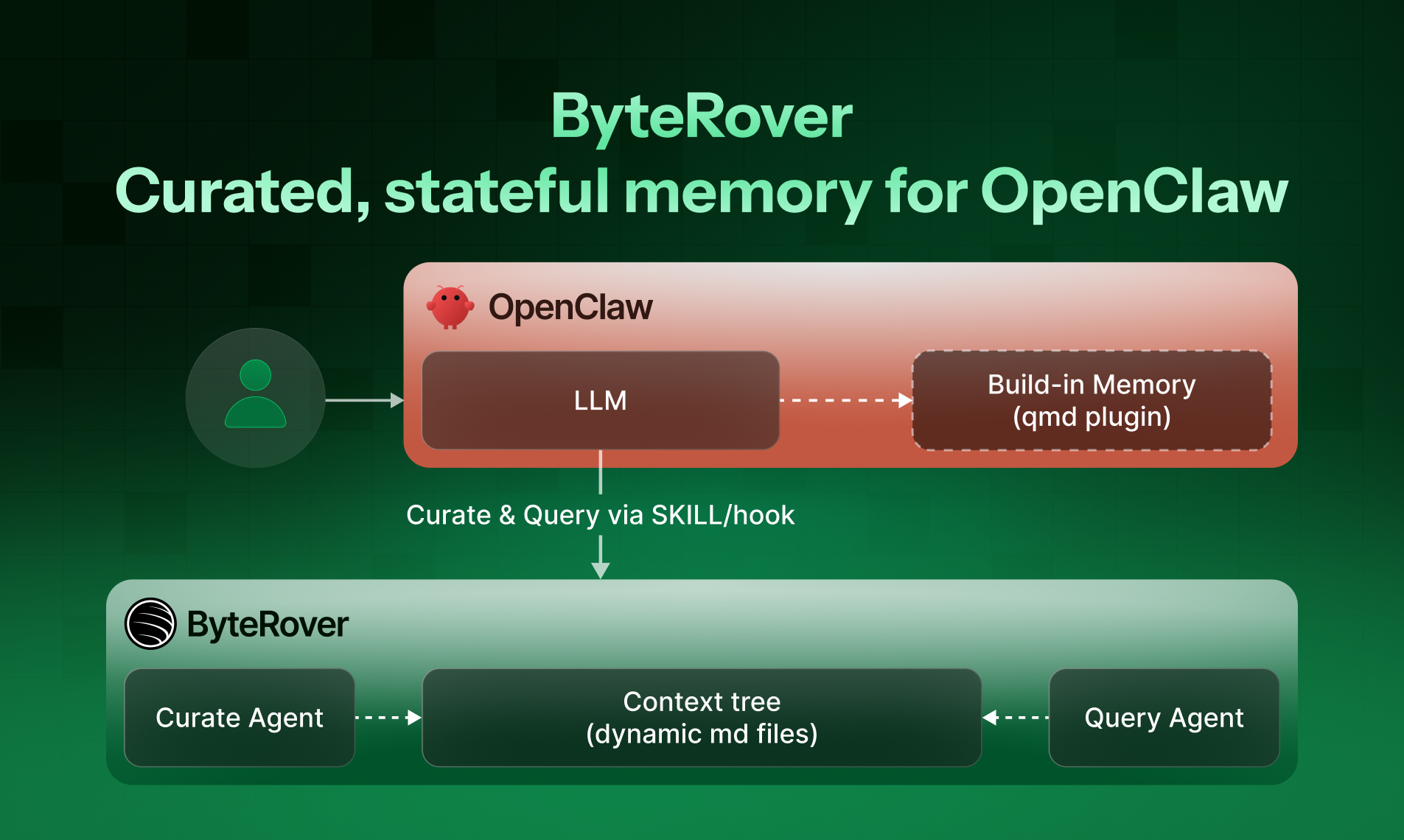
Give OpenClaw agents stateful memory that keep your context's timeline, facts, and meaning perfectly in place. ByteRover is a memory layer that gets 26k+ downloads from OpenClaw power users within one week, and delivers a market-best 92.19% retrieval accuracy, local-to-cloud portability, and built-in version control.

Hey Product Hunt! 👋

Andy here, founder of ByteRover.

Over the last few months, we’ve watched developers try to scale autonomous agents (like OpenClaw and local Ollama setups) and hit a massive brick wall: Agent Amnesia.

An agent solves a bug or writes a script, and then immediately forgets the context. To fix this, teams are dumping entire codebases into giant vector databases or blindly prepending massive context windows, resulting in insane API token bills and VRAM crashes.

We got tired of these manual workarounds. So we built Memory Skill for OpenClaw.

It is a deterministic, file-based memory system (.brv/context-tree) that lives directly in your local environment.

How it works:
🧠 Selective Retrieval: Instead of blindly injecting everything, ByteRover actively curates decisions and feeds the agent exactly what it needs to know.
📉 Cuts Token Burn: Our users are seeing token usage drop by ~40-70% because the prompts stay noise-free.
📂 Local & Portable: Your memory is version-controlled via Git, preventing silent context drift. What Git did for code, we are doing for AI context.

We’ve seen 26k+ downloads from OpenClaw power users in the last week, hitting a 92.19% retrieval accuracy on the LoCoMo benchmark.

I would love the community’s feedback on our architecture. Drop any questions below I’ll be here all day answering them! 👇

15
回复

I have been using Byterover for a while with Claude Code for memory management with my team at Studio1. And that was a great experience. Having used OpenClaw for last month, I can definitely say the experience wasn't that good. And I am so excited to try out ByteRover with OpenClaw. huge congrats to the team

7
回复

@shivaylamba Thanks so much Shivay! Really appreciate the support.

It's been awesome seeing the Studio1 team use the .brv tree to maintain context across Claude Code sessions. The shift to OpenClaw is exactly why we built the new CLI we realized the memory architecture needed to be completely agnostic of the agent running on top of it.

Let me know how the deterministic retrieval feels with OpenClaw compared to the native vector setup once you get it running!

6
回复

70% token savings is the real headline here. The MEMORY.md approach works until you hit ~50k tokens of context and your agent starts hallucinating its own history. Context-tree architecture is the right abstraction - hierarchical retrieval instead of dumping everything into the prompt. 26k users in a week tells you people were desperate for this.

5
回复

Agent amnesia is the most underrated bottleneck in agentic workflows — an agent that forgets what it just debugged three turns ago is essentially starting from scratch every time. The 40-70% token reduction from selective retrieval instead of blindly injecting everything is a massive cost saving at scale. How does the deterministic file-based approach handle conflicting memories when two team members' agents produce different context about the same codebase section?

4
回复

@svyat_dvoretski Hey Sviatoslav! You hit the nail on the head: amnesia is the final boss of autonomy.

To answer your question about conflicting memories: this is exactly why we chose a structured file system over a raw vector DB. When two agents produce conflicting context, our retrieval engine handles it deterministically rather than probabilistically.

Our composition logic works on a strict hierarchy:
Personal Tree > Project Tree > Team Tree

If an agent sees a conflict between a team-level architectural pattern and a personal-level override for a specific session, the system deterministically favors the closest node (Personal/Project). If there is a direct conflict at the exact same level, we default to the most recent timestamp (updatedAt in the Markdown frontmatter).

Because the memory is just Markdown files, if the conflict persists, a human developer can simply open the .brv/context-tree folder, read the two text files, and manually delete the outdated one—something that is nearly impossible to debug inside a black-box vector database!

Would love to hear how you guys are handling context bloat over at Snippets!

5
回复

@svyat_dvoretski Thanks for asking.
Conflicting memories across agents is a real problem, and brv addresses it at two levels. This work is in progress and will be released real soon. At ByteRover, we deliver weekly and biweekly.
First, branching keeps agent memories isolated by default. Human-in-the-loop enforces a human gate before conflicting writes are finalized. Neither alone is sufficient - branching without review just defers the conflict; review without branching means every write races against every other. Together they give you the same conflict resolution model teams already use for code: isolated branches, explicit integration, human judgment on high-impact changes.

6
回复

100% agree the default memory setup can get noisy fast. The win is separating short-term daily logs from curated long-term memory + good retrieval. Less token burn, better continuity, fewer hallucinated “memories”.

3
回复

Goodl luck today! Question: How does ByteRover achieve 92%+ retrieval accuracy with file-based memory. Are you using embedding indexes with semantic ranking, or a hybrid approach combining structured metadata and vector search?

2
回复

Congrats, love this!

2
回复

The idea of a free, local version with no friction (no accounts required) really motivates me to try our the CLI.

2
回复

Seeing >92% retrieval accuracy on pure file‑based memory is impressive - especially given the usual latency vs. persistence trade‑off. I’m curious how you keep the index in sync when source files are edited in place; do you rely on a change‑detection layer or periodic re‑embedding?

1
回复

@lliora Great question Liora! This is the exact latency vs. persistence trade-off we spent months tuning.

We do not do periodic re-embedding (that burns way too many tokens and kills local performance). Instead, we rely on a change-detection layer.

Because ByteRover runs as a local daemon, it watches the .brv/context-tree for file-system events. When a user (or an agent) edits a markdown file in place, the daemon instantly catches the diff. We then do a lightweight re-index of just that specific file and update the updatedAt metadata.

This keeps the index perfectly in sync in real-time, with almost zero latency or token overhead. The file system does all the heavy lifting!

0
回复

I've been using ByteRover for a while and really love the ease of set up, work smoothly from my IDE. Can't wait to get my hand on the OpenClaw version.

0
回复

Finally, a cure for agent amnesia

0
回复

"Interesting approach with local file-based memory. How does this compare to cloud-based memory layers for non-developer users?"

0
回复

What does this do

0
回复

Congrats on the launch! I've been using this for the last month to solve what I call "cognitive debt." I was losing about 15 minutes every morning just re-explaining my architecture and past decisions to my coding agents. Vector similarity wasn't cutting it—it would hallucinate or pull the wrong files. Moving to a curated Context Tree (domain→topic→subtopic) completely fixed the amnesia. The fact that the memory is just markdown files makes it so easy to version control and review. It’s like my agent actually "remembers" where we left off.

0
回复

@littlecrando Thank you so much! I absolutely love the term 'cognitive debt.' That is exactly the friction we set out to eliminate.

Spending 15 minutes every morning just re-onboarding your agent to your own codebase completely kills the flow state. It's awesome to hear that the deterministic domain→topic→subtopic hierarchy is keeping the agent locked into your actual architecture instead of hallucinating based on vectors.

Thanks for being an early adopter and testing it over the last month!

0
回复
#9
Morgen
Your entire morning in one tab.
123
一句话介绍:一款本地优先的晨间仪表盘应用,通过聚合天气、链接、世界时钟等常用信息于单一页面,解决了用户早晨需要频繁切换多个标签页和应用的效率痛点。
Productivity Task Management Open Source GitHub
生产力工具 晨间仪表盘 本地优先 隐私保护 开源软件 信息聚合 桌面应用 无账号 无云服务
用户评论摘要:用户反馈积极,认可其解决分散痛点及开源模式。主要问题集中在:如何培养使用习惯(核心UX挑战)、是否支持按日自定义、以及Mac安装安全警告。开发者积极引导用户至GitHub贡献代码。
AI 锐评

Morgen的核心理念是“减法”与“主权”,其真正价值不在于功能罗列,而在于对现代数字生活痼疾的一次精准狙击。它敏锐地捕捉到“分布式摩擦”这一隐形时间杀手——将用户从多标签切换、账号登录、算法干扰和隐私担忧中彻底解放。其“本地优先、无云、无追踪”的立场,在数据商品化时代构成了一种带有理想主义色彩的反叛,是其最锋利的卖点。

然而,其最大的阿喀琉斯之踵也在于此。将一切置于本地,固然赢得了隐私,却可能牺牲了跨设备同步的便利性,这与用户日益流动的工作生活形态存在潜在矛盾。此外,评论中指出的“习惯养成”问题直击要害:一个需要主动打开的应用,如何与手机通知、浏览器主页等被动式入口竞争用户的晨间注意力?这并非单纯的技术问题,而是行为设计学的深层挑战。

它的开源模式是一把双刃剑。一方面,它建立了信任,吸引了贡献,避免了“未来变订阅”的担忧;另一方面,也可能意味着核心体验的迭代速度和产品化深度依赖于社区热情,存在不确定性。总体而言,Morgen更像一个精心打造的“概念证明”,它成功定义了一类需求,并树立了隐私至上的开发范式。但其能否从极客的精致玩具,成长为大众的日常习惯,取决于它能否在保持哲学纯粹性的同时,在用户体验的“最后一公里”——尤其是习惯触发和有限定制化上——找到更优雅的解决方案。

查看原始信息
Morgen
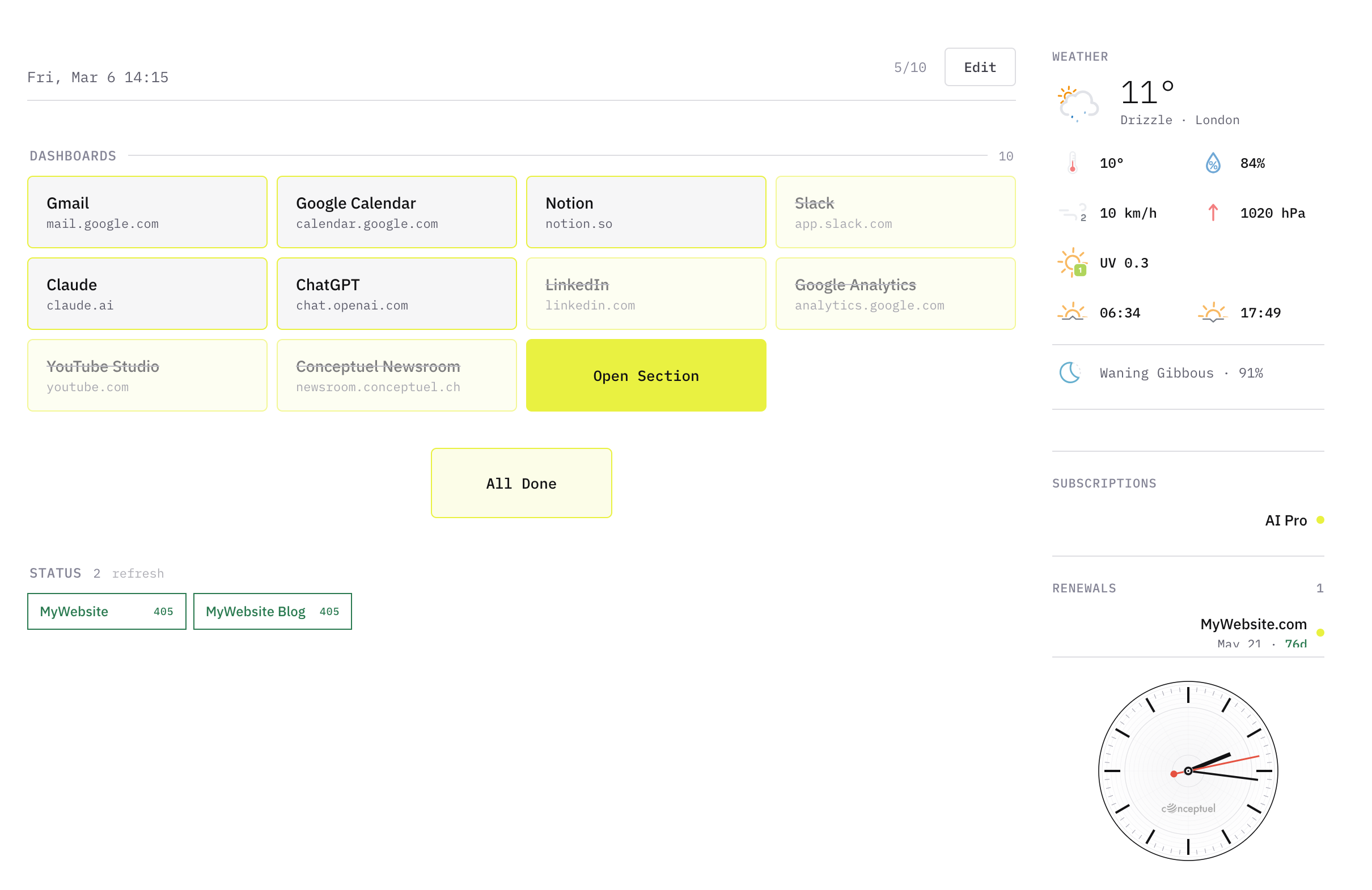
Every morning you open 12 tabs, check the weather on your phone, wonder what time it is in Tokyo, forget which subscription renews today, and lose 50 minutes before your day even starts. Morgen replaces all of that with a single page. It's a local-first morning dashboard: weather, links, world clocks, site monitors, subscriptions, moon phase. It runs entirely on your machine. No account. No cloud. No tracking. You open it, you do your morning check-in, you close it.
I wanted a single page I could open every morning that told me everything I needed to know. Without logging into anything, without notifications, without an algorithm deciding what's important. So I built it as a local app and share it in MIT License.
2
回复

Nice, we could add some bookmarks tab too?

1
回复

@ragsyme We can, feel free to contribute Contribute to Morgen on Github :)

0
回复

How did you get that idea to sell the art with this tool?

1
回复

@busmark_w_nika I'm not selling art, it's an open source app.

1
回复

This only works if it becomes a daily habit, which is the hardest UX problem to solve. Is there anything in the app that helps build that routine, or is it left entirely up to the user?

0
回复

my macbook isnt accepting it says security risk?

0
回复

Definitely thought this was a rebrand of @Morgen ...

0
回复

Nice work, congrats!

0
回复

@lev_kerzhner Thank you Lev! :D

0
回复

Replacing the 12-tab morning ritual with a single local-first dashboard is solving a problem most people don't even realize costs them 50 minutes because the friction is distributed across so many small actions. The MIT license and zero-cloud approach means you can trust it won't become another subscription service down the road. Is the dashboard customizable per day of the week — for instance, showing different widgets on workdays versus weekends?

0
回复

@svyat_dvoretski Feel free to contribute on it Morgen Github ! I'm open to all improvements feedbacks thank you :)

0
回复
#10
LaterAI
AI-powered reading, 100% on your device
113
一句话介绍:一款完全在设备端运行AI的私人阅读应用,通过本地化处理保存的文章,在无需网络、不泄露数据的场景下,为用户提供摘要、语音朗读、每日摘要等智能阅读服务,解决了注重隐私的用户对云端数据泄露和商业化追踪的痛点。
News Newsletters Tech
本地AI阅读 隐私安全 离线摘要 文本转语音 无账户应用 阅读追踪 个性化推荐 苹果生态 独立开发 信息消化
用户评论摘要:用户认可其真正的设备端隐私保护、可选的阅读打卡机制及通知功能。开发者回应了关于本地模型大小与电池影响的疑问,称模型轻量、处理时间短、对电池影响不明显。
AI 锐评

LaterAI的叙事核心是“隐私霸权”,它巧妙地将“设备端AI”作为技术贞操带,直击当前云端AI服务数据滥用的普遍焦虑。其真正价值并非AI能力本身——本地小模型的摘要和问答质量必然无法与云端大模型抗衡——而在于构建了一个封闭且可信的“数据无菌室”。它贩卖的是一种控制感:你的阅读清单不再是训练别人模型的饲料,你的拖延症不再被转化为用户粘性数据。

然而,这种极致的本地化是一把双刃剑。它必然牺牲了功能的深度与协同的便利性。所谓的“个性化推荐”只能基于单设备的历史数据,其视野和精准度存疑;通过iCloud的同步虽声称私有,但仍依赖苹果生态,并非绝对自主。其商业模式也隐晦不明,一次性付费或捐赠或是唯一出路,长期维护动力存疑。

本质上,LaterAI是数字极简主义者和隐私原教旨主义者的精致玩具。它证明了在特定垂直场景下,用户愿意用智能的“广度”和“深度”来交换绝对的“控制权”。但它也尖锐地提出了一个问题:在AI时代,极致的隐私是否必然意味着智能的降级与自我的数字孤岛?这款产品的未来,不在于其AI有多强,而在于有多少人将“数据主权”置于“智能便利”之上。

查看原始信息
LaterAI
LaterAI turns saved articles into a personal reading experience powered entirely by on-device AI. No sign-ups. No cloud. No data leaving your phone. Save from any app with one tap. Listen with built-in TTS engines offline. Get AI summaries, daily digests with quizzes and hot takes, and personalized recommendations, all running on-device. Explore 150+ curated sources, track reading streaks, and highlight what matters. No account. No tracking. Your reading habits are nobody's business but yours.
Hey Product Hunt! 👋 I built LaterAI because I was tired of read-later apps that need an account, sync to someone else's cloud, and treat my reading habits as data to monetize. I wanted something different: an app where AI actually helps you read, summarize, text-to-speech, smart digests, but the best part is that everything stays on your phone. No servers. No analytics. No "sign in to continue." A few things I'm proud of: 🔇 Two TTS engines that run offline: they handle abbreviations, numbers, and natural pausing so articles actually sound good. Looking forward for you to try it out. 🧠 On-device AI digests: every day you get theme insights, quiz cards, and hot takes generated from your saved articles, all without an API call 𝕏 Supports social media platforms such as X, Reddit, or even LinkedIn 🔒 Truly private: thanks to Apple Silicon, there's no backend. I couldn't see your data even if I wanted to. But it’s still synced across all devices (through private iCloud CloudKit). This is a solo project and I'd love your feedback. What features would make LaterAI your go-to reader? Happy to answer any questions!
5
回复

Alright, so I just tried out the app, and one thing I would definitely say that I like about it is that streaks are optional instead of being forced to commit to a reading goal.

I also like that the app notifies you with an article pick and to finish an article.

This is a really cool app!

Congrats on your launch!

0
回复

Running AI summaries and daily digests entirely on-device with zero cloud dependency is the privacy gold standard that most "private" apps claim but don't deliver. The quiz cards generated from saved articles are a clever retention mechanic that actually reinforces what you read. How large is the on-device model, and does it noticeably impact battery life during longer digest generation sessions on older iPhones?

0
回复
@svyat_dvoretski Great question and thanks for noticing the on-device approach, that was really important to me. The model is relatively small and optimized for Apple’s on-device ML stack. In practice, generating a digest or quiz cards only takes a few seconds and runs as a short burst of processing rather than a long session. So far I haven’t seen any noticeable battery impact in testing, even on older iPhones. It might take a bit longer to generate, but the workload is brief and stops immediately after the digest is created.
0
回复
#11
Aura Water: Private Hydration
Offline water tracker with a private AI hydration coach
108
一句话介绍:一款完全离线运行的私密AI饮水教练应用,通过“饮水能量条”等无摩擦设计,在保护隐私的同时,帮助用户、特别是注重隐私或ADHD人群,轻松建立规律饮水习惯。
Health & Fitness Privacy Artificial Intelligence
健康追踪 饮水记录 隐私优先 离线AI 无数据收集 ADHD友好 习惯养成 本地计算 健康科技 移动应用
用户评论摘要:用户高度赞赏其隐私优先与ADHD友好设计,认为“饮水能量条”概念巧妙。主要问题与建议包括:询问Apple Watch支持(团队确认已在2026路线图中)、建议优化应用商店视觉展示以更好传达产品故事、询问AI个性化原理及与智能水杯等硬件整合的可能性。
AI 锐评

Aura Water 的亮相,与其说是一款饮水追踪工具的迭代,不如说是对当前健康科技商业模式的一次静默反叛。其核心价值并非在于“AI教练”的技术奇观,而在于将“主权健康”这一理念产品化:通过将AI模型完全本地化,它斩断了用户数据被商品化的默认路径,将隐私从可选项变为架构基石。

产品巧妙地用“无摩擦”体验来对冲“强隐私”可能带来的功能牺牲。针对ADHD群体或深度工作场景设计的“饮水能量条”和极速记录,直击传统习惯应用因记录繁琐导致用户流失的痛点。这揭示了一个关键洞察:真正的用户友好,是体验与掌控权的双重赋予——既不让用户感到麻烦,也不让用户感到被窥视。

然而,其挑战也同样清晰。完全离线的架构虽保障了隐私,但也可能限制了数据的多端同步与长期深度分析潜力,这与现代用户跨设备无缝体验的期待存在张力。此外,将“隐私”作为主要卖点,在竞争激烈的红海市场中,需要持续教育用户认知其深层价值。它更像一个宣言式产品,其成功与否,将检验有多少用户愿意用“可能的云端便利”来交换“确定的数据主权”。它的未来,在于能否将这种“主权框架”扩展至更复杂的健康指标,从而由一个利基工具,成长为一种可被广泛验证的新范式。

查看原始信息
Aura Water: Private Hydration
Aura Water is an offline water tracker with a private AI hydration coach and zero data collection. Perfect for privacy-conscious and ADHD-friendly habit building. Track daily intake with streak tracking. Set personalized hydration reminders based on your schedule. Access detailed hydration insights. Built for people who want better health habits without invasive data collection—no accounts, no cloud, everything runs locally on your phone.

Hi Product Hunt! 👋 I’m Divya, and we built Aura Water because we were tired of health apps treating our biology like a commodity.

Most trackers harvest your data and sell it to third parties. We took a different path with our 'Sovereign Health' framework: 100% Offline AI: Your hydration coach lives on your phone, not a server. Zero Friction: No accounts, no cloud sync, and no invasive data collection. ADHD-Friendly: We replaced boring logs with a 'hydration battery' and interactive avatars to make habits stick.

We believe health tech shouldn't be a surveillance business. Check out our deep dive on Kidney Sovereignty here: Article.

I’ll be here all day to answer questions. How do you stay hydrated?

3
回复

The hydration battery concept is such a clever way to gamify something as simple as drinking water. And the fact that it adapts to activity levels and weather without sending anything to the cloud is impressive. I always forget to drink during long work sessions so the ADHD friendly design resonates. Is there Apple Watch support for quick logging without pulling out the phone?

2
回复

Thanks for the kind words, @borrellr_ Ignacio! ⚡ We’re so glad the 'Hydration Battery' concept resonates with you. We purposely designed it that way because we know how 'invisible' basic needs like hydration can become during deep work sessions or for the ADHD community.

Regarding your question: Yes, we are actively working on Apple Watch support!

It is a top priority on our roadmap for 2026. We are currently perfecting the on-device AI integration for watchOS to ensure that quick logging remains just as private, fast, and 'offline-first' as the mobile experience. We want you to be able to log your water and check your battery status with just a glance at your wrist.

Stay tuned for updates, and thanks again for the support!

2
回复

@borrellr_ I totally agree with you, Ignacio! The ADHD-friendly design is what really set Aura apart for me too. ⚡ It’s so rare to find a tool that is this fast and actually respects your focus. And knowing the team is already working on that Apple Watch integration is huge—it’s going to make that 'frictionless' logging even better. Can't wait for that update!"

1
回复

Really interesting idea, especially the privacy first hydration tracking.

One small observation from the launch visuals. The screenshots feel a bit similar and don’t fully tell the product story yet. On App Store, stronger visual storytelling could help highlight features like the AI hydration insights and privacy angle much better.

Improving this could also help users understand the value faster, which can lead to higher app downloads and better engagement metrics.

Curious to see how the product evolves.

2
回复

Great insights @designer_aj, Ajay! 🚀 We're seeing a big shift toward users wanting more control over their data, and Aura Water is our first step in that direction for Locikit Studio. By keeping the logic local, we ensure the app stays fast and secure. Would love to hear your thoughts on how we can expand this 'offline-first' approach to other health metrics!

2
回复

@designer_aj Thanks for the support, Ajay! Really glad the on-device focus resonates with you

2
回复

One of my favorite things about Aura is the ADHD-friendly design. ⚡ We purposely made it lightning-fast to log your water so you can stay healthy without the app feeling like a distraction. Would love to hear from other productivity fans—how do you manage your hydration during deep work sessions?

2
回复

That’s useful — congrats!

Could you clarify one thing: are you using AI for some kind of personalized methodology, or mainly for message generation?

2
回复

Great question, @alexeyglukharev Alexey! It’s definitely more than just message generation. 🧠 Our on-device AI uses a personalized methodology that analyzes your specific hydration patterns, activity levels, and local weather data to dynamically adjust your 'Hydration Battery' in real-time

3
回复

That's very cool. I recently saw smart bottles that track your hyderation and remind you to drink at set intervals. Any plans to extend to hardware like that?

2
回复

@roopreddy That’s a great question, Roop! Smart bottles are a cool piece of tech, but they often come with their own proprietary (and often cloud-heavy) apps.

Currently, Aura Water is focused on being the most frictionless standalone experience—using our 'Hydration Battery' and on-device AI to make logging feel like second nature. That said, we are exploring privacy-preserving ways to integrate with health ecosystems in the future. Our goal is to stay 'Sovereign'—keeping you in control of the data regardless of the hardware you use!

2
回复

Great question, @roopreddy Roop! 🔒 By keeping the AI models local to the hardware, we ensure that your personal health habits never leave your phone. No servers, no tracking—just pure utility. We’d love to hear your feedback once you’ve had a chance to test it out!

2
回复

Congrats on the launch!

1
回复

@lev_kerzhner Thank You

1
回复

Thanks so much, @lev_kerzhner Lev! 🚀 We're so excited to finally have Aura Water out in the world. Being in the Featured list today is a huge milestone for Locikit Studio. Let us know if you have any feature requests!

1
回复

Making a water tracker fully offline and private is a refreshingly honest approach — most health apps collect way more data than they need for their core function. An AI hydration coach that runs locally without sending your habits to a server shows that privacy and personalization don't have to be mutually exclusive. Does the AI adapt recommendations based on activity level or weather, or is it purely based on manual intake logging?

1
回复

@svyat_dvoretski Spot on, Smilando! You’ve touched on the core of why we built this. To answer your question: the AI coach actually looks at both.

While manual logs provide the baseline, the on-device model can factor in your physical activity levels and even local environmental factors (like heatwaves) to adjust your goals. The magic is that all this computation happens strictly on your chip, so we never have to 'phone home' with your location or health data. It’s personalization without the surveillance

1
回复

Exactly, @svyat_dvoretski  Sviatoslav! 🛡️ We noticed that 'privacy' is often just a marketing buzzword, but we wanted it to be the core architecture. Building the AI to stay strictly on-device was a challenge, but seeing the community appreciate it makes it all worth it. Thanks for the support!

1
回复

We built habit tracking into FuelOS and the single biggest drop-off point was the logging step itself. How many taps does it take to log a glass of water from a locked screen? That number matters more than almost anything else for daily retention.

0
回复

If this helps me drink water as consistently as I check Slack, I’m sold.

Congrats on the launch

0
回复
#12
Mooon
One-step Japanese Document Processing Engine
104
一句话介绍:Mooon是一款一站式日语文档处理引擎,通过自动化排版优化、注音、翻译及有声书生成等功能,解决了日语学习者和研究者在阅读、处理日文文献时流程繁琐、理解困难的痛点。
Productivity Novels Artificial Intelligence
日语文档处理 文本转语音 光学字符识别 语言学习工具 学术研究辅助 文档自动化 格式转换 日本文化 生产力工具
用户评论摘要:用户普遍认可其核心价值,特别是自动注音和竖排转横排功能。主要问题与建议集中在:是否支持方言音调的有声书、未来会否支持其他CJK语言、技术架构是本地还是云端处理,以及是否支持Kindle格式转换。开发者对部分问题进行了回复。
AI 锐评

Mooon的“一站式”定位,精准切入了一个被主流生产力工具长期忽视的垂直缝隙——日语文档的深度预处理。它的真正价值并非单一技术创新,而在于将OCR、布局分析、语义理解(注音)、翻译、语音合成等多个复杂环节,整合成一个连贯、自动化的“管道”。这本质上是在售卖一种“认知减负”服务,尤其针对中级日语学习者和需要处理日文学术文献的研究者,将他们从频繁切换工具、手动查词、调整版式的碎片化劳作中解放出来,保障了阅读与研究的“心流”体验。

从评论看,其商业潜力可能超出语言学习范畴,已触及企业级应用的边缘(如合同审阅流程)。然而,其深层挑战也由此浮现:首先,作为重度依赖云端处理的服务,其数据安全与隐私性将是专业用户的核心关切;其次,“一站式”意味着在各个环节都需维持高精度(如专业文献的OCR和注音准确性),任何一环的短板都会放大用户体验的瑕疵;最后,其商业模式面临拷问——是持续深耕日语这一垂直市场,建立极高壁垒,还是如用户所问,横向扩展至中文、韩语,成为泛CJK文档处理平台?后者市场更广,但竞争也更激烈,且每种语言的处理都有其独特难点,扩张并非简单复制。

总体而言,Mooon展现了对特定用户群体工作流的深刻洞察,其产品思路值得肯定。但它能否从一个“好用的小众工具”成长为可持续的业务,取决于其技术深度、对数据隐私的解决方案,以及清晰且克制的市场扩张战略。

查看原始信息
Mooon
Mooon is a one-step processing engine designed for Japanese documents like novels, papers, and handwritten notes. It makes Japanese files easy to handle by automating layout optimization, furigana annotation, file translation, audiobook and more. Various formats are supported, like PDF, EPUB, images, etc.
congratulations on the launch 🎉
3
回复

@soumikmahatoThanks for the support!

1
回复
Hey everyone! 👋 We're excited to finally launch Mooon here on Product Hunt. Mooon is a one-step processing engine built for Japanese documents, such as novels, academic papers, handwritten notes, and more. It takes the pain out of handling Japanese files by automating: - Layout optimization (vertical → clean horizontal, multi-column handling, etc.) - Furigana (振仮名) annotation for kanji and borrowed words - File translation with or without keeping the original text side-by-side - File to audiobook with natural Japanese voices It supports for PDF, EPUB, images (PNG/JPG/WEBP), and more. Mooon could help very much if you're - an advanced beginner to intermediate Japanese learner - a researcher/studuent who need to read, reference or digitalize academic resources - a fan of Japanese cultures who love to read original works This is our first public launch after months of iterating based on early user feedback from fellow Japanese learners and researchers. Would love to hear your thoughts! If it helps your workflows, we'd be thrilled if you upvote and share. Thanks for checking it out! 🚀
2
回复

Automating furigana annotation for kanji solves one of the biggest friction points for intermediate Japanese learners — constantly looking up readings breaks the reading flow and kills motivation. The vertical-to-horizontal layout conversion combined with side-by-side translation output is particularly useful for academic papers where you need both the original and translated text for citation purposes. Does the audiobook generation handle the pitch accent differences across Japanese dialects?

2
回复

@svyat_dvoretski Hi, thanks for the comment! For now Mooon only handles the common Japanese accent, but it supports voices of various characters.

1
回复

This is actually pretty handy for digitizing a lot of Japanese paperwork as well. Nicely done!

1
回复

@gabe Glad to know Mooon helps!

1
回复

Congrats. Does it support conversion to Kindle version as well?

1
回复

@ranjan_kumar45 Thanks! Mooon supports pdf, epub, images (png, jpe, etc) and txt, so Mooon can handle any of them as long as you have the files in these formats.

1
回复

Really cool niche product. The automatic furigana annotation alone would save so much time for anyone reading Japanese content above their level. Being able to go from a raw PDF to an audiobook in one step is a killer feature for commuters studying Japanese. Do you plan to expand this to other CJK languages like Chinese or Korean in the future?

0
回复

The claim that Mooon does OCR, layout analysis and semantic extraction in a single step is intriguing – does the engine run the whole pipeline on‑device or does it fall back to a cloud service for the heavy lifting? I could see it slotting nicely into a CI job that validates Japanese contracts before they hit a legal‑review board.

0
回复

@lliora To make sure the accuracy and resources load used to process a file with up to 200 pages, purely processing on a local device is quite difficult so cloud service will be used. And yes, some of our users are actually integrating Mooon in contract review for their business according to our interviews. Thanks for the comment!

0
回复

Love the idea of bringing Japanese document processing to the modern stack. The attention to workflow detail shows. Congrats on shipping! 🎉

0
回复

Great, this engine handles Japanese files in one step and even adds furigana and audio. Scrolling through, I can see it works for papers and manga. Feels like someone thought of everything. Good luck!

0
回复
#13
Nutgrafe
Every article summarized in one short paragraph.
95
一句话介绍:Nutgrafe是一款新闻摘要应用,通过将长篇文章压缩成一个清晰段落,帮助用户在信息过载和碎片化阅读场景下,快速获取事件核心事实与背景,从而高效“了解发生了什么”并决定是否深入阅读。
iOS News Artificial Intelligence
新闻摘要 AI摘要工具 信息精简 效率阅读 内容聚合 媒体订阅 免费工具 移动应用 反信息过载 源站导流
用户评论摘要:用户普遍赞赏其“回归新闻本质”的简洁理念、强制性的摘要长度约束以及坚持链接原文、尊重版权的设计。核心反馈包括:认可其对抗“末日刷屏”和算法推荐的价值;询问是否支持主题日报和更多信源(如社交媒体);建议增加个性化功能。创始人回复确认已添加每日邮件简报,并正在探索主题摘要。
AI 锐评

Nutgrafe的聪明之处在于,它精准地切割出了一个被主流信息流平台忽视的细分需求:不是“推荐你可能感兴趣的”,而是“高效告诉你世界上发生了什么”。其产品哲学带有强烈的“复古”色彩,旨在复现2015年前后Twitter作为实时新闻源的简洁体验,这恰恰击中了当下用户对算法投喂、情绪化内容和无尽对话的疲惫感。

产品的核心价值并非其AI摘要技术本身(这已是红海),而在于其一系列克制的设计选择所构建的独特立场:400字符的硬性约束强制提炼“事实核心”与“为何重要”,而非重述;明确不绕过付费墙、不重建全文,并坚持链接回原始出处,这在伦理上规避了版权风险,在商业上将自己定位为流量分发渠道而非内容终点站,巧妙地与出版商形成了潜在共生而非竞争关系。

然而,其面临的挑战同样清晰。首先,“无算法个性化”的定位是一把双刃剑,在赢得早期注重隐私和主动性的用户的同时,也可能限制其用户规模的扩张速度,因为大众市场已习惯被“喂养”。其次,其商业模式尚未明晰,当前“完全免费”的策略在长期运维成本下能否持续存疑。未来是走向B端媒体合作、高级功能订阅,还是其他路径,需要尽快验证。最后,摘要的准确性与客观性完全依赖模型对公开RSS数据的理解,在缺乏人工审核的“黑盒”下,面对复杂、争议性事件的报道,能否始终保持“核心事实”的准确提炼,将是其可信度的终极考验。

本质上,Nutgrafe贩卖的是一种“信息节食”方案和一种“掌控感”。它未必能成为大众爆款,但很可能在追求效率、厌恶噪音的专业人士和深度新闻读者中占据一席之地,成为一个清爽、可信的新闻“前哨站”。它的成功将取决于能否在扩张信源、保持摘要质量、探索可持续模式这三者间取得平衡,并坚守其“帮助理解,然后离开”的初心。

查看原始信息
Nutgrafe
Nutgrafe reduces every news article to a single clear paragraph so you can understand the story in seconds. Instead of endless scrolling, you get the essential context first and can jump to the full article if you want more. The web version launched in January. Now Nutgrafe is available on iPhone and iPad for a faster way to stay informed wherever you read. Nutgrafe generates original summaries and does not republish articles, bypass paywalls, or replace the original reporting.
Hi Product Hunt 👋, Patrick here. Nutgrafe reduces every news article to a single clear paragraph so you can understand what happened in seconds. I built it because I missed when opening a feed actually helped me understand what was going on. Around 2015, Twitter often felt like a real-time news feed. You could scan quickly, see what mattered, and click through to read the full article if you wanted more. Over time that feeling got buried under reactions, outrage, and endless conversation. I wanted to bring back something closer to that earlier experience. Instead of replacing reporting, Nutgrafe is designed to send readers back to the original sources. Every summary links directly to the full article so you can dig deeper if you want. The web version launched earlier this year and the feedback helped shape a lot of what you see today. Since then quite a bit has changed: • Nutgrafe is now available on iPhone and iPad • The service is now completely free • The source list has expanded across major outlets and independent blogs • We added daily email briefings • You can follow topics and publications you care about • Summaries include key points and a short “why it matters” The goal is simple: help you get oriented, feel caught up, and move on. Happy to answer questions and hear what you think. ⸻ Quick FAQ How does Nutgrafe generate summaries? Summaries are anchored to the article’s core facts and structure, focusing on what happened, what changed, and why it matters. If the system doesn’t have enough context to do that cleanly, it won’t generate a summary. Do you republish articles or bypass paywalls? No. Nutgrafe generates original summaries using content publishers make publicly available for distribution (typically their RSS/XML feeds). We don’t republish articles, bypass paywalls, or reconstruct full pieces. Every post links directly to the original source. How are sources chosen? Right now the focus is on established outlets and widely read publications, alongside a growing set of independent blogs. The source list is expanding carefully over time. Is there human review involved? There’s no human in the loop today, but summaries are tightly constrained around what happened and why it matters. If the model lacks context, it simply won’t generate a summary. Is Nutgrafe personalized? Not in the algorithmic sense. The intent is orientation first rather than personalization.
2
回复

@colooch Patrick, the "nutgraf" concept as a product name is genuinely clever — you built the entire philosophy into the brand. Bringing back that 2015 feeling of actually understanding what's happening in the world without the outrage spiral is a real problem worth solving, and the decision to send readers back to original sources rather than replace them shows real integrity in the product design.

This is exactly the kind of focused, thoughtful indie AI build we're spotlighting at IndieAIs.com — just launched today as a discovery platform for independent AI builders. Would love to have Nutgrafe listed there and get you some extra visibility! 👉 https://indieais.com

We're also live on Product Hunt today — would mean a lot to get your support from a fellow indie builder! 🙏 https://www.producthunt.com/products/indieais 🚀

0
回复

What I like about this is what it doesn't do. No algorithm deciding what's important for me, no personalization rabbit hole, no engagement tricks. Just the story, short, with a link to the source. I've been reading news through Twitter and aggregators for years and honestly forgot what it feels like to just scan headlines and move on with my day. The 400-character constraint is smart too - forces clarity instead of rewording the whole article. This might actually fix my morning doomscroll.

0
回复

@spunchev Thanks, Serge! Thanks, that’s exactly the idea. Nutgrafe is intentionally simple. The goal isn’t to keep you scrolling, it’s to help you understand what happened, feel caught up, and move on.

0
回复

This takes me back to when feeds actually helped you stay informed instead of just doom scrolling. Love the constraint of 400 characters per summary, it forces real clarity. The fact that it links back to the original source instead of trying to replace it shows a lot of respect for journalism. Are you planning to add topic based daily digests or is it purely a feed experience?

0
回复

@mcarmonas Thanks, I appreciate that. The constraint is intentional. The goal is orientation first so you can quickly understand what happened and decide whether to read the full article.

Right now it’s primarily a feed experience based on the topics and publications you follow, but we recently added a daily email briefing as well. Topic-based digests and different cadences are definitely something I’m exploring as the product evolves.

0
回复

Impressive. I love tools that get straight to the point without missing the key details. I read multiple articles every day, and this would save a ton of time while still showing the full story. I especially like how each summary makes it clear why it matters. Congrats on the launch @colooch!

0
回复

@taimur_haider1 Thanks so much, Taimur!

0
回复

What sources are we able to add? media sites, social media and blogs?

0
回复

@nuseir_yassin1 Thanks Nuseir! Right now Nutgrafe focuses on media outlets and blogs that publish articles via feeds. That covers major publications as well as smaller independent blogs.

Social media (minus Reddit) isn’t included today since the goal is summarizing reported stories rather than conversations, but it’s something I’ve thought about.

If there are sources you think should be included, I’m always open to suggestions.

0
回复
#14
Query Memory
One API for all documents your AI agents need
85
一句话介绍:Query Memory 通过单一API将文档、网页和文件转化为AI智能体可即时查询的知识库,解决了开发者在构建AI代理时,搭建和管理复杂RAG(检索增强生成)基础设施的工程痛点。
Developer Tools Artificial Intelligence Database
AI智能体开发 RAG即服务 知识库管理 文档解析 向量检索 API集成 开发工具 AI基础设施 数据管道抽象 无服务器AI
用户评论摘要:用户普遍认可其解决了RAG管道从头搭建的耗时痛点,认为API抽象是正确方向。主要有效提问集中于文档更新后的索引同步机制,开发者回复称部分数据源可自动同步,部分需手动处理。
AI 锐评

Query Memory 瞄准了一个正在剧烈膨胀的“缝隙市场”:AI智能体浪潮下的基础设施简化。其价值不在于技术突破,而在于精准的工程化封装。它将RAG流程中那些肮脏、繁琐且重复的“体力活”——解析、分块、嵌入、检索——打包成一个黑盒API,本质上是在售卖“开发者时间”。

产品逻辑犀利之处在于,它抓住了当前AI应用开发的一个核心矛盾:模型能力迭代飞快,但让模型可靠地“知晓”私有数据却仍停留在手工作坊阶段。无数团队在重复造轮子,从ChromaDB到自定义分块策略,消耗着本应用于业务逻辑的工程资源。Query Memory试图成为这个领域的“Stripe for RAG”——通过标准化接口降低复杂系统的接入门槛。

然而,其真正的挑战与价值天花板也在于此。首先,“一刀切”的封装在追求灵活性的开发者眼中可能成为黑盒桎梏,复杂的定制化需求如何处理?其次,文档同步问题已由用户提出,这触及了数据新鲜度的核心,暴露出在“全自动”承诺背后的条件限制。最后,其商业模式将直接与云厂商的同类服务(如AWS Bedrock Knowledge Base)以及开源解决方案竞争,优势必须体现在极致的开发体验、成本或性能上。

当前产品形态更像是一个便捷的“起点”,但能否从工具演化为平台,取决于它能否在简化流程的同时,为高级用户提供足够的控制力和可观测性,并在数据安全与合规层面建立坚实信任。它不是在发明新东西,而是在为AI时代的“数据连接”铺设最后一段标准化管道,这条路正确,但注定拥挤。

查看原始信息
Query Memory
Your AI agents are only as powerful as the data they can access. Query memory turns documents, websites, and files into instantly queryable knowledge for AI agents. Upload files or connect web sources to create a knowledge base in seconds. Query Memory handles parsing, chunking, embeddings, and retrieval so you don’t have to build complex RAG pipelines. Build agents, attach knowledge, and query everything through API or built-in chat.
Hey 👋 I’m Hritvik, the maker of Query Memory. While building AI agents, I kept running into the same problem: giving agents reliable access to knowledge is harder than building the agent itself. Parsing documents, chunking data, creating embeddings, and managing retrieval pipelines quickly turns into weeks of engineering work. So I built Query Memory — a platform that turns documents, websites, and files into queryable knowledge your AI agents can use instantly, all through a single API With Query Memory you can: • Upload docs or connect websites • Create a knowledge base in seconds • Attach it directly to your AI agents • Query everything via one simple API or built-in chat It handles parsing, chunking, embeddings, and retrieval behind the scenes so you can focus on building the agent itself—not the infrastructure. Would love to hear: 👉 What tools are you currently using for RAG / agent memory? 👉 What’s the hardest part of giving agents reliable knowledge? Happy to answer questions and get feedback from the community!
1
回复

This solves a real pain point. Building RAG pipelines from scratch every time you want an agent to access documents is such a time sink. Having parsing, chunking, and embeddings handled behind a single API is exactly what most developers need. How does it handle version updates when a document changes, does it re index automatically or do you need to trigger it manually?

1
回复

@mcarmonas Thank you for your comment. To address your questions, the synchronization process depends on the data source you are referring to. If you are connecting documents through live integrations such as Databricks, Postgres, or similar platforms, these connections are automatically synchronized. However, for certain cases, you will need to manually upload the documents you wish to use in your AI application.

0
回复

Congrats on the launch!

1
回复

Building RAG pipelines from scratch is one of those things that sounds straightforward until you're deep in chunking strategies and embedding models. Abstracting all of that into one API is the right call ,it lets builders focus on what the agent actually does, not on the plumbing. Congrats on the launch, excited to see where this goes! 🚀

0
回复
#15
PRobe
Free, open-source AI code review companion for GitHub PRs
29
一句话介绍:PRobe是一款免费开源的AI代码审查助手,直接嵌入GitHub Pull Request界面,通过对话式交互帮助开发者快速理解代码变更、定位问题并生成审查意见,旨在缓解人工审查海量代码(尤其是AI生成代码)的沉重负担。
Chrome Extensions Open Source Developer Tools GitHub
AI代码审查 GitHub集成 开源工具 开发者生产力 对话式交互 代码审查自动化 上下文感知 技术栈适配 人工审查辅助 Pull Request工具
用户评论摘要:主要反馈来自创始人,揭示了工具源于个人痛点:在AI生成代码泛滥的背景下,人工审查者需承担“读懂言外之意”的深层上下文审查工作。PRobe旨在用AI审查AI代码,通过加载技术栈特定技能文件提供精准建议,其免费、开源、可透视提示词的设计受到关注。
AI 锐评

PRobe的亮相,远不止是又一个“AI+代码”工具的简单堆砌,它精准刺中了当前软件开发流程中一个正在剧烈膨胀的痛点:AI编码能力普及后,审查工作正从“优化与纠错”向“理解与把关”进行范式转移。其核心价值不在于替代人类,而在于武装人类——将审查者从繁琐的语法、常见错误筛查中解放出来,聚焦于更高维度的设计逻辑、业务一致性与安全边界等“上下文”问题。

产品设计的犀利之处有三点:一是“对话式审查”的交互模式,将被动阅读转为主动质询,符合人类理解复杂变更的自然认知流程;二是“技术栈技能文件”的引入,试图让通用大模型具备领域专家的视角,这比单纯喂入代码差异更具针对性;三是“X-Ray模式”所代表的透明性,在AI决策常被视为黑盒的当下,满足了专业开发者对过程可控性的根本需求。

然而,其真正的挑战与价值天花板也在于此。首先,“技能文件”的质量与覆盖度将直接决定工具的专业性上限,这需要一个活跃的开源社区持续维护,而非单点突破。其次,工具将审查效率提升后,可能进一步加剧“审查瓶颈”效应——更快的初审是否会带来更庞大的PR提交量?最后,也是最关键的一点,它能否真正理解“业务上下文”而不仅是“代码规范”?这决定了它是停留在“高级语法检查器”,还是能成为值得信赖的“审查伙伴”。PRobe的方向无疑是正确的,它标志着开发工具正从“代码生成”的狂热,转向“代码治理”的深水区。

查看原始信息
PRobe
PRobe is a free, open-source AI review companion that lives inside every GitHub pull request. Chat with the PR to understand what changed and why, probe into specific files or lines, and post review comments or submit full reviews without ever leaving the page.
Hey Product Hunt! I'm Sankalp. I built PRobe in 24 hours during a jet-lagged night in India after a 21-hour flight from San Francisco, and the reason is embarrassingly simple: I'm drowning in pull request reviews. I work at a startup where a hundred-file PR is just another Tuesday. I've tried the bug bot tools that are out there and they do help, but they help the developer, not me. They leave dozens of comments about race conditions, missing null checks, incorrect loops, and that's great because it takes some of the load off my shoulders. I don't have to dig into whether someone used a while or do-while correctly anymore. But none of that cuts short my actual task as a reviewer, which has evolved into something much harder: reading between the lines. Human reviewers will always carry more context than any bot, and that's what actually matters when you're reviewing code. In my opinion, it is extremely unreliable to ship production-grade code without a human reviewer, and I think most developers would echo that sentiment. With more and more autonomous AI coding agents flooding the market, there is a staggering amount of AI slop being written today, and someone has to review it. That someone is always, inevitably, a human being who serves as the last guardrail before code hits production. So how does a human deal with this flood of AI-generated code? You cut the diamond with a diamond. You use AI to help you review the AI slop, and that's exactly what PRobe does. You chat with the pull request, ask all the questions swirling in your head, probe into specific files and even specific lines of code. But you're not just talking to a generic LLM. PRobe automatically detects the tech stack in the diff and loads open-source skill files with real coding best practices into its context. So when you ask about a .tsx file, you're essentially chatting with a senior React developer who knows the latest patterns, not a run-of-the-mill language model working off its training data alone. Once you're clear on what needs to change, you ask PRobe to leave a review and it posts the comments for you without ever leaving the page. It's free, open source, and you bring your own API keys. There's also an X-Ray mode that lets you inspect the exact system prompt sent with every message, every skill loaded, every token of context. I built it this way because that's the kind of tool I'd want to use, and I couldn't find one that worked like that, so I built it for myself. When I get back from vacation there will be a mountain of pull requests waiting for me, and that's becoming more and more of my work. Less coding, more reviewing, because the coding part is increasingly being handled by AI. Reviewing is what remains and it's only growing. This felt like a step in the right direction for my own workflow, and I'm putting it out here because I think developers like me, who are quietly becoming more reviewers than coders, could benefit from it too. Try it at getprobe.dev.
1
回复

Congrats on the launch!

1
回复
#16
Fermeon
Your AI finally remembers you.
21
一句话介绍:Fermeon是一款Chrome扩展,通过一键保存对话并自动注入到任何AI平台,解决了用户在切换不同AI工具(如ChatGPT、Claude、Gemini)时需要反复重新解释上下文、复制粘贴的痛点,实现了跨平台的个人化AI记忆层。
Chrome Extensions Productivity Artificial Intelligence
AI生产力工具 浏览器扩展 上下文管理 跨平台同步 AI记忆层 工作流优化 知识管理 Chrome插件 AI辅助工具 个人化AI
用户评论摘要:用户普遍认可产品解决了AI工具间切换的上下文丢失痛点。创始人主动寻求反馈,重点问题包括:切换至AI编程工具(如Cursor)时摩擦最大;用户偏好手动快捷键控制而非自动同步;建议下一步支持Cursor和Notion AI。评论指出产品本质是打破AI平台数据围墙的“便携记忆层”。
AI 锐评

Fermeon看似解决的是“AI失忆”的体验问题,实则剑指一个更本质的矛盾:在AI应用爆发的当下,用户数据与对话上下文正被各大平台构筑的“围墙花园”所割裂。产品将用户从重复的“上下文搬运工”角色中解放出来,其真正价值并非技术层面的复杂创新,而是对AI时代数据主权归属的早期基础设施回应。

它敏锐地捕捉到,随着专用化AI工具激增,“上下文切换成本”已取代“模型能力差异”,成为高阶用户的核心效率瓶颈。产品通过轻量级的浏览器扩展形式,试图成为用户与多个AI交互时的统一记忆总线,这本质上是在构建一个跨平台的、用户自主控制的“上下文中间件”。

然而,其挑战同样明显:首先,作为浏览器扩展,其能力边界受限于Web环境,难以深度集成到桌面应用或移动端。其次,“手动保存与注入”的交互设计,在追求全自动化的AI工作流中仍是一种妥协。最关键的是,随着各大AI平台逐步开放API并可能推出自家生态内的同步功能,一个第三方扩展的长期护城河并不牢固。

Fermeon的机遇在于,它目前切入了一个平台巨头无暇顾及或不愿开放的缝隙市场——跨平台、跨厂商的上下文便携。如果它能快速形成用户习惯,积累起独特的“上下文图谱”数据,并逐步从“搬运工”演进为能智能摘要、重组、推荐上下文的“记忆中枢”,或许能在AI Agent生态爆发前,占据一个更具战略性的节点位置。否则,它可能只是一个过渡时期的优雅补丁。

查看原始信息
Fermeon
Every time you switch between ChatGPT, Claude, or Gemini, your AI forgets everything. Fermeon fixes that. It's a Chrome extension that lets you save any conversation in one click and automatically injects it into whichever AI you open next — no re-explaining, no copy-pasting. You can also drag and save anything from the web, and it flows into every AI you use. Your AI finally knows you, on every platform.
Hey everyone 👋 Rajdeep here, founder of Fermeon. I built this out of pure frustration. I was constantly switching between ChatGPT, Claude, Gemini, Grok, Perplexity and other AI tools. Every time I changed platforms, I had to re explain my project, paste old chats, or reconstruct context from scratch. It felt inefficient and honestly broken. Fermeon is my attempt to fix that. It is a Chrome extension that acts as a portable memory layer across any AI website in your browser. Not just the big LLM platforms, but AI coding tools, AI PDF tools, AI writing tools, or any AI site that requires context. You can: • Instantly inject saved context into any AI • Carry project history across platforms • Drag and store useful content from anywhere on the web • Reuse it later in any AI with a shortcut The goal is simple. Your context should belong to you, not to a single AI platform. I would genuinely love feedback on three things: - Where do you feel the most friction switching between AI's? - Would you prefer automatic syncing or manual control? - What tool should Fermeon support next? I will be here all day responding to every comment. Thanks for checking it out
10
回复

👋 Anushrut here, Founder of Fermeon.

I jump between Claude for coding, ChatGPT for brainstorming, and Gemini for research — and every context switch is a tax on my flow. Re-explaining my project stack, my goals, my constraints… it adds up fast.

Fermeon started as a frustration fix and became something much bigger — a portable layer of you that travels with your work across every AI.

To answer the three questions from a builder's lens:

  • Most friction? Switching into AI coding tools like Cursor or v0 mid-project. Rebuilding context there is especially painful.

  • Automatic vs manual? Manual with a single shortcut feels right — you stay in control without the cognitive overhead.

  • Next tool? Cursor and Notion AI would unlock a massive chunk of the dev audience.

Really proud of what we've shipped here. If you're an AI power user who's tired of your tools having amnesia, give Fermeon a try. 🚀

9
回复

Well Honestly , This has to be the most coolest and most useful thing any AI user needs at this point of time , we have super powerful models to work with but when it comes to context switching they are the worst , it increases the product time so much , just for reexplaining the context from one tab to another or from one tool to another

4
回复

Congrats on the launch, super useful and comes in clutch during peak prompting :)

1
回复

@soumil_mukhopadhyay Thanks a lot buddy

0
回复

Calibrated tone for observational commentary without interrogative elements

The real insight here isn't the extension - it's that context has become the most valuable thing in AI workflows and no platform wants to let you take it with you. Everyone's building walled gardens around your conversation history. A portable memory layer that you own is the kind of infrastructure play that gets more valuable the more AI tools people use, not less.

0
回复

Congrats on the launch!

0
回复

@lev_kerzhner Thank you for the kind words. Would love your feedback on your product

0
回复
#17
Recordly
Open source app for recording videos with auto-zoom and more
14
一句话介绍:Recordly是一款免费开源的屏幕录制软件,通过自动变焦、光标动画等特效,解决了创作者制作专业级产品演示和教程视频时,工具昂贵、效果生硬的痛点。
Productivity Marketing GitHub Development
屏幕录制 开源软件 视频编辑 自动变焦 光标特效 产品演示 跨平台 免费工具 创作者工具
用户评论摘要:用户高度认可其免费开源、媲美付费软件(Screen Studio)的流畅动画效果和跨平台特性。核心反馈包括:肯定其为独立开发者带来的价值,询问是否支持音频/旁白同步功能(开发者回复已支持),以及收到其他产品平台的入驻邀请。
AI 锐评

Recordly的亮相,与其说是一款新工具,不如说是一次对细分市场定价权的挑战。它精准切入了一个被高价工具(如Screen Studio)定义的“专业演示视频”市场,用开源免费策略直击付费工具的价格壁垒,用“流畅变焦与光标动画”这一核心体验对标行业标杆,意图重新划定“专业”的准入线。

其真正价值在于“开源”与“体验”的组合拳。开源不仅意味着免费,更建立了信任、可审计和可演化的社区基础,这对注重工作流稳定的创作者至关重要。而将“自动变焦”、“光标运动模糊”这些曾属于高端付费软件的视觉糖,下放为免费标配,实质上是在解构“专业效果”的技术神秘感,逼迫整个品类重新思考功能与价格的合理性。

然而,挑战同样明显。作为基于开源项目(OpenScreen)的“实质性修改”版本,其长期维护的可持续性、与上游项目的兼容性,是隐藏在“免费”背后的潜在风险。此外,当前功能聚焦于视觉优化,在音频处理、多轨道剪辑等更深度的创作需求上,与成熟的全功能视频编辑软件仍有差距。它目前是“单一功能极致化”的利刃,而非全能工具箱。

本质上,Recordly代表了一种趋势:通过开源模式,将某个垂直领域的“最佳实践”体验模块化、平民化。它未必能立刻颠覆巨头,但足以在价格敏感且需求明确的创作者群体中撕开一道口子,迫使市场跟随或回应。它的成功与否,将取决于社区能否形成生态,以及它能否从“一个惊艳的功能复刻者”,进化成“一个独特工作流的定义者”。

查看原始信息
Recordly
Recordly is the free, open-source alternative to Screen Studio that adds auto-zoom, cursor animations, motion blur effects and more to your videos.

Comparison:
Recordly is the only free, open-source screen recorder in this niche that has smooth cursor movement, or zoom animations that are faithful to Screen Studio's. Alternatives are mostly paid and offer choppy zoom animations and/or no smooth cursor movement, and/or lack other features.

Try it now: recordly.dev
Star on Github: https://github.com/webadderall/Recordly

Feature list:
• Add zooms automatically (based on mouse activity) or manually, anywhere on the screen.
• Cursor animations (smooth path, motion blur effect, as well as click animations and cursor size, all customisable)
• Annotate with text, images or arrows
• Record from menu bar HUD - capture app windows or full screen
• Add prebuilt backgrounds to your recordings or upload custom ones
• Timeline-based editor - drag tracks to change video speed, trim, add annotations or add zooms
• Save your projects as .recordly files and come back to them later
• Record system audio or from audio source
• Export as MP4 or GIF with adjustable resolution and aspect ratio
• Runs on all platforms (macOS, Windows & Linux)
• (coming very soon) Webcam overlay bubble

Disclaimer: Recordly substantially modifies OpenScreen to add native capture pipelines for macOS and Windows, a cursor animation system, zoom animations like Screen Studio, and more major tweaks.

I'll be happy to answer any questions!

2
回复

Free, open-source, cross-platform and going toe-to-toe with Screen Studio on zoom animations and cursor smoothness — that's a bold positioning and the feature list backs it up. The fact that you're offering timeline-based editing and .recordly project files in a free tool is genuinely impressive. Every indie builder who demos their product needs exactly this.

We just launched today — a directory for indie builders and tools like yours. Would love to have Recordly listed there, and would mean a lot to get your support on our launch too! 🙏

0
回复

Love that this is open source. The auto-zoom on cursor movement is one of those features that looks simple but makes a huge difference in demo videos. Are you planning to add any audio/voiceover sync features, or is the focus purely on the visual recording side? I make a lot of product demo content and clean video tooling like this is hard to find.

0
回复

@mattias_s Thanks for commenting! You can narrate already, and we've just added support for audio tracks!

0
回复
#18
Klipy — Does the work after every call
Your pipeline has blind spots. Klipy finds them.
13
一句话介绍:Klipy是一款AI销售助手,通过自动捕获跨渠道(邮件、WhatsApp、领英、通话)的销售对话、更新CRM并草拟跟进内容,解决了B2B销售人员在多平台沟通中易遗漏跟进、导致商机流失的痛点。
Sales Artificial Intelligence
AI销售助手 CRM自动化 销售效率工具 跨渠道沟通管理 商机跟进 无手动记录 B2B SaaS 对话智能 销售流程优化 第二大脑
用户评论摘要:用户高度认可其跨渠道(尤其是WhatsApp、LinkedIn DM)自动捕获对话的核心价值,认为其解决了因跟进遗漏导致的“漏单”问题。有用户指出其“统一收件箱”场景和“销售操作系统”定位是强大优势。反馈普遍认为产品减少了行政工作,提升了销售线索的持续动能。
AI 锐评

Klipy切入了一个看似古老却始终未被有效解决的销售管理顽疾:沟通过程数据因手动录入的惰性而大量丢失,导致CRM系统成为充满“盲点”的虚假管道。其真正价值不在于简单的对话记录,而在于试图成为销售人员的“第二大脑”,将碎片化、跨平台的交互强制性地沉淀为结构化、可查询的上下文。

产品聪明地避开了在流量获取(Top-of-Funnel)的红海里与现有巨头竞争,转而聚焦于提升管道内已有商机的转化动量(Deal Momentum)。这是一个更精明、ROI更直接的切入点。它本质上销售的不是工具,而是“被追回的收入”和销售人员的“每日一小时”。用户评论中“因WhatsApp消息遗忘跟进而丢单”的案例,精准印证了其价值主张。

然而,其面临的挑战同样尖锐。首先是数据隐私与安全合规的“达摩克利斯之剑”,尤其是对WhatsApp、Telegram等个人通讯工具的深度集成,在企业级市场可能引发合规性质疑。其次,产品的核心壁垒在于其集成的广度和AI处理对话的深度,这需要持续的技术投入和对各平台API变动的快速响应。最后,它必须避免成为另一个需要被“管理”的工具,其“无感化”的自动记录体验至关重要,任何增加的设置或审核步骤都可能重蹈“因惰性而数据不全”的覆辙。

总体而言,Klipy若能在合规性、稳定性和真正的“无感”体验上做到极致,它有望从一款效率工具演进为销售团队不可或缺的“对话中枢”,重新定义CRM数据的来源与价值。它的成功将不取决于功能多炫,而取决于能否让销售人员彻底忘记“记录”这件事。

查看原始信息
Klipy — Does the work after every call
Klipy is your AI sales teammate. It captures every conversation — email, WhatsApp, LinkedIn, calls — updates your CRM automatically, drafts follow-ups, and preps your next call. Nothing to log. Nothing to write from scratch. Set up in under 4 minutes.

👋 Hey Product Hunt – Joey here, co-founder of Klipy.

Companies spend thousands on ads, outbound, and lead gen to fill their pipeline. But what happens once those leads actually show up? Conversations scatter across email, LinkedIn DMs, WhatsApp, and Zoom. Follow-ups slip. Context gets lost. Deals go cold — not because the prospect wasn't interested, but because nobody followed through.

You're spending money to find leads, then leaving money on the table with the ones you already have.

That's the blind spot. And it's everywhere.

Klipy fixes it.

Klipy captures every sales conversation — across every channel — and then does the work that comes after. Automatically.

- Every conversation captured. No manual logging, no tab-switching.
- Full context on any contact in seconds — every touchpoint, every channel, one view.
- Follow-ups drafted and queued before deals slip. You review, approve, send. Always human-in-the-loop.
- Ask Klipy anything about your pipeline — like talking to a teammate who's been on every call you've ever had.
- Real visibility for managers — what's actually happening, not what got logged.

We're already used by 2,000+ sellers across 56 countries, processing over 2 million emails a month. Here's what one of our users said:

"Having my 'PA' as a platform is making me save approx 1-1.5hrs per day + saving the expense of a virtual assistant. Looking forward to what's coming next”

Most sales tools optimise for top-of-funnel volume — more leads, more emails. Klipy optimises for deal momentum. Keeping every opportunity moving once the conversation starts.

We built this for B2B sellers and founders who are tired of watching deals die in the silence between conversations.

Free to start. No credit card. Set up in under 4 minutes.

👉 https://klipy.ai/directories/pro...

Would love your feedback — especially if you've ever lost a deal you should have closed.

– Joey, Jung, Tina

3
回复

Congrats on the launch, @joeywslee! I just went through the landing page. You are solving the leaky bucket problem, but your Scenario 2 (The Unibox) is your biggest weapon.

Klipy pulls in WhatsApp and Telegram. In many markets, deals live and die in the DMs, not just email. By framing it as a Sales OS, you might actually be underselling how much mental clarity a founder gets when they don't have to hunt through three different chat apps to remember what a lead said.


You’ve built a second brain for revenue. This is amazing.

2
回复

@joeywslee  @taimur_haider1 Thank you Taimur!

You are absolutely right, our team's professional career have been majorly in Hong Kong, where most conversations happen on Whatsapp & side channels.

Most platforms available doesn't provide this - and we see similar patterns now with Linkedin being leveraged as a B2B sales channel. Thank you for your comment and we will continue improving this product :)

0
回复

I’ve been using Klipy as my main CRM in my day‑to‑day sales role for over a year, and it’s become the only place I trust for my pipeline. It automatically logs my emails, client interactions and meetings, keeps deals updated without me touching the CRM, and the AI follow‑up suggestions are actually useful, not gimmicks. I spend less time on admin and more time talking to customers, which is all a sales rep really wants – huge congrats to the team on building something truly helpful. 🙌

1
回复

The "blind spots" framing is spot on ,most CRM problems aren't about the tool, they're about the data that never makes it in because logging feels like admin work. Automating that capture across email, WhatsApp and calls is where the real value is. 3rd launch and still iterating, that says a lot. Congrats and good luck today! 🚀

1
回复

Lost a deal last quarter exactly like this - prospect went quiet on WhatsApp, I forgot to follow up for five days, done. The multi-channel capture is what stands out here. Most CRMs only care about email, but half my conversations happen in LinkedIn DMs and WhatsApp. Having everything in one view without logging anything manually would've saved that deal. Nice execution.

1
回复
#19
Pixelate Image
Pixelate Your Images Instantly
10
一句话介绍:一款在浏览器内即可免费、快速完成图像像素化处理的在线工具,无需上传,保护隐私,适用于敏感信息模糊(如人脸、车牌)和8比特复古艺术创作场景。
Design Tools Art
在线图像处理 像素化工具 隐私保护 浏览器应用 免费工具 敏感信息模糊 8比特艺术 无需上传 即时处理 轻量级应用
用户评论摘要:由于提供的评论列表为空,目前无法从用户端获取直接的反馈、问题或改进建议。产品处于初始曝光阶段,需积极收集用户实际使用体验。
AI 锐评

Pixelate Image 精准切入了一个细分但实用的需求缝隙:在隐私意识高涨和复古风潮并存的当下,提供了一种“零负担”的即时解决方案。其核心价值并非技术颠覆,而是对用户体验链条的极致简化——无需注册、无需上传、完全在浏览器本地运行。这“三位一体”的设计,直击了用户对小型在线工具最核心的诉求:怕麻烦、担心隐私泄露、渴望即时反馈。

然而,其发展天花板也清晰可见。首先,功能极度单一,像素化作为一项基础图像处理技术,壁垒极低,极易被集成到更大型的图片编辑应用中,使其独立存在的必要性存疑。其次,“免费”和“完全本地”在吸引初期用户的同时,也几乎堵死了传统的商业模式想象空间,缺乏清晰的盈利路径。最后,从仅有10个投票来看,市场声量微弱,说明其要么尚未找到精准的传播渠道,要么其需求痛点并未强烈到能引发自发传播。

它的真正机会或许在于“场景化深挖”。例如,与匿名举报平台、社交媒体或内容审核流程进行轻量化集成,成为其隐私保护工具链的一环;或者,强化8比特艺术创作的模板和社区属性,从工具转向轻度创意平台。若停留在当前形态,它很可能只是一款“不错的小工具”,用户来时即用,用完即走,难以形成产品护城河与可持续的生态。在工具类应用竞争红海中,仅靠“单一功能”和“隐私安全”已远远不够,必须找到附着其上的高频场景或情感价值,方能避免昙花一现。

查看原始信息
Pixelate Image
Free online image pixelator. Pixelate faces, license plates, or create retro 8 bit art instantly. Private, fast, and works entirely in your browser with no upload required.
#20
Promptbook
Master the Art of AI Interaction
9
一句话介绍:Promptbook是一款AI指令管理系统,帮助开发者、创作者和团队将分散的AI提示词进行结构化整理、版本控制和协作共享,解决提示词难以复用和管理的痛点。
Productivity Developer Tools Artificial Intelligence
AI提示词管理 开发者工具 生产力工具 团队协作 知识库 版本控制 SaaS AI效率工具
用户评论摘要:目前仅有一条来自开发团队的发布评论,无真实用户反馈。团队在评论中阐述了产品灵感来源(提示词像代码需要管理),并主动向社区征集用户当前的提示词存储方式及功能建议。
AI 锐评

Promptbook瞄准了一个真实且正在增长的痛点——随着AI工具深度嵌入工作流,高价值提示词(Prompt)的资产化与管理缺失问题。其核心理念“提示词即代码”颇具洞察力,将软件工程中的版本控制、模块化思想应用于提示词管理,这比简单的笔记收藏夹更契合专业用户的需求。

然而,产品面临双重挑战。其一,市场窗口期有限。当前许多笔记应用(如Notion)、代码库(GitHub)甚至AI平台自身正在快速添加类似功能,Promptbook必须证明其作为独立工具的不可替代性,例如在跨平台集成、智能解析提示词结构、或基于使用的效果评估上建立更深壁垒。其二,用户习惯培养成本高。只有当用户积累的提示词达到一定数量和质量时,管理需求才会变得迫切,这要求产品在早期必须提供极致的轻便上手体验和即时价值(如优质的初始模板库)。

从仅有团队评论的现状看,产品仍处于非常早期的验证阶段。其成功关键在于能否精准切入一个垂直社群(如AI绘画工程师、大语言模型调优师),形成深度工作流依赖,再逐步泛化。否则,它很可能成为一个“听起来很对,但总被顺手用其他工具替代”的优雅解决方案。团队主动在发布时询问用户习惯和需求,是明智的起点,下一步需用最快的速度将收集到的需求转化为差异化功能。
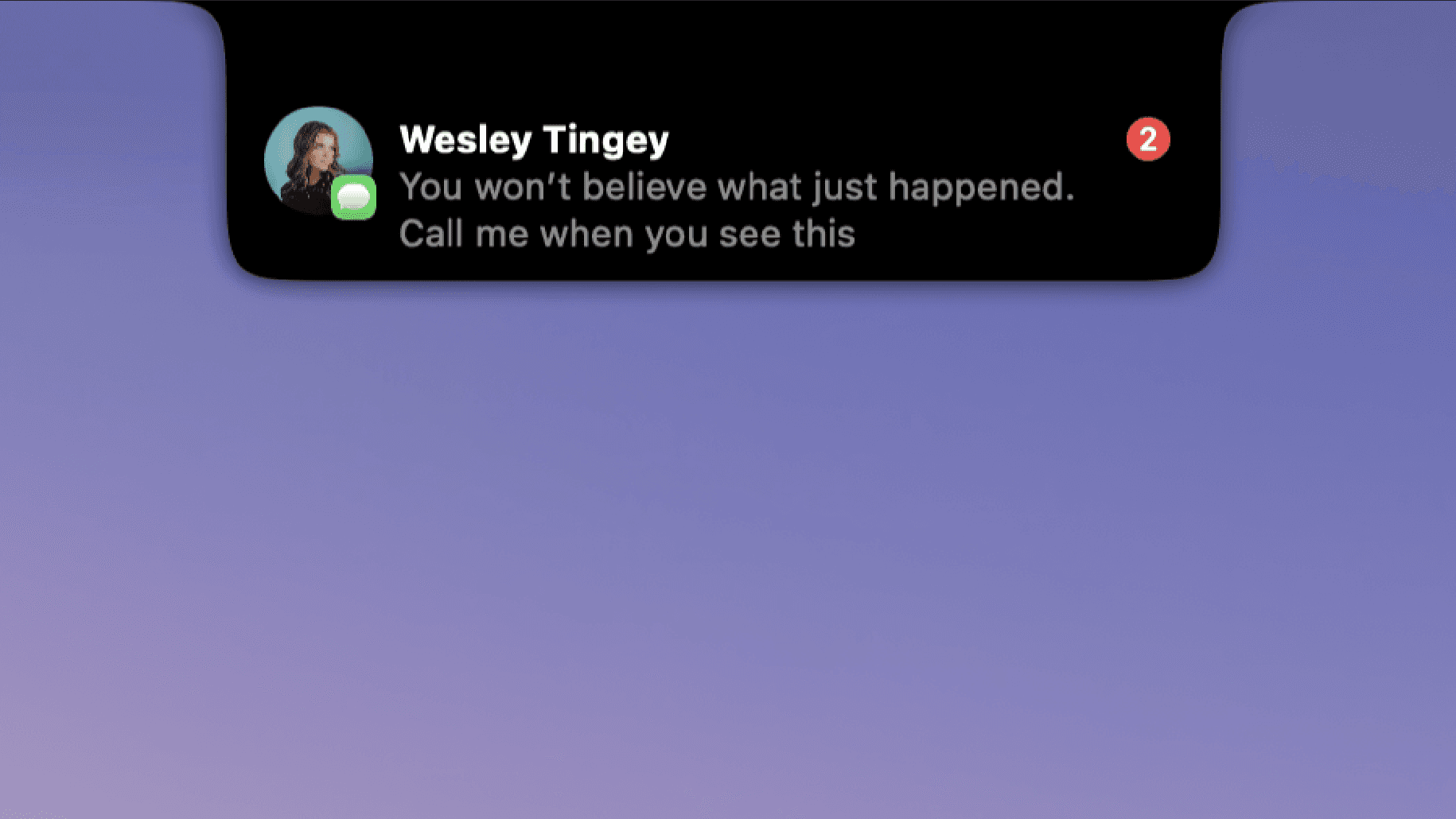
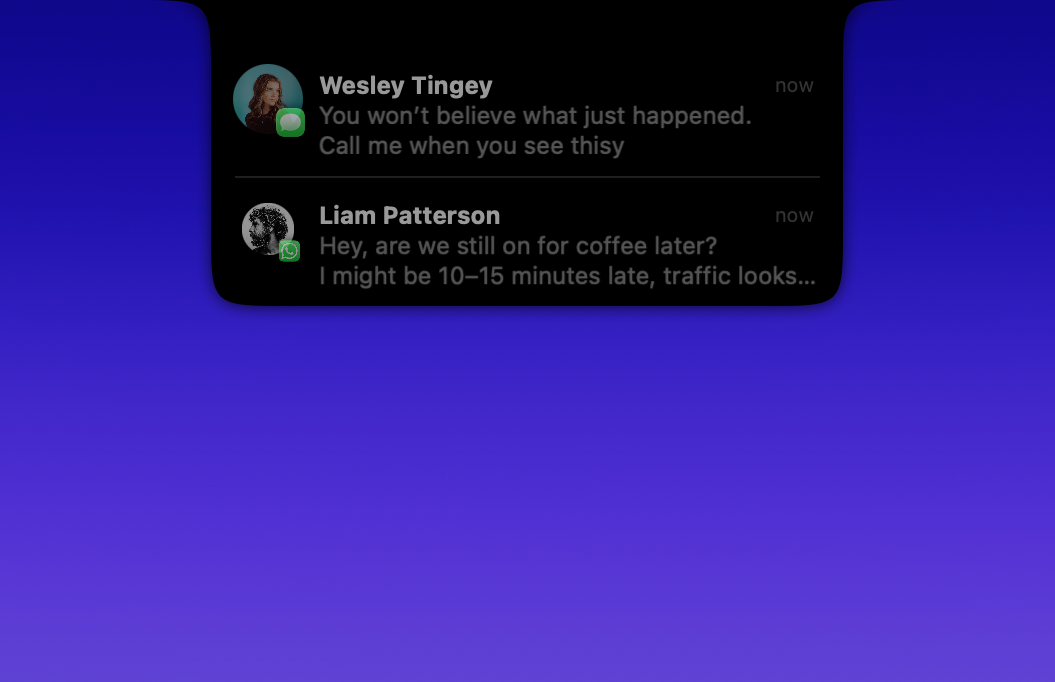
查看原始信息
Promptbook
PromptBook is a structured library for AI prompts designed for developers, creators, and teams. Instead of scattered prompts across chats and notes, PromptBook helps you organize, reuse, and improve prompts with categories, versioning, and collaboration. Build your personal prompt system, discover useful prompts, and streamline how you work with AI tools.
Hey Product Hunt! 👋 Excited to share PromptBook with you today. While using AI tools daily, we noticed one frustrating problem: great prompts get lost. They end up buried in chat history, random docs, or scattered across tools. So we built PromptBook — a place to save, organize, version, and reuse your best prompts. Instead of rewriting prompts every time, you can build a structured prompt library and quickly reuse what works. While building it, we realized prompts behave a lot like code — they need versioning, organization, and easy access. That insight shaped PromptBook into more of a prompt management system, not just another notes tool. Would love to hear from you: • How do you currently store your prompts? • What feature would make prompt management easier for you? Thanks for checking it out! 🙌
0
回复