Product Hunt 每日热榜 2026-03-17

PH热榜 | 2026-03-17

#1
My Computer by Manus AI
Automate files, apps, and workflows with Manus Desktop
401
一句话介绍:一款将AI智能体从云端部署到本地的桌面应用,通过执行命令行指令直接操作本地文件、工具和应用,解决了用户在文件管理、开发工作流等本地复杂任务中自动化效率低下的痛点。
Productivity Artificial Intelligence Tech
本地AI智能体 桌面自动化 工作流自动化 文件管理 无代码开发 命令行工具 远程任务触发 生产力工具 AI代理 人机协作
用户评论摘要:用户普遍认可其本地化AI代理的价值,认为其填补了云端AI与本地工作流的鸿沟。主要关注点集中在:本地执行权限的精细控制与安全信任机制、后台资源消耗、远程触发功能的可靠性(如设备休眠时的队列处理),以及其与Claude Desktop等竞品的差异化。
AI 锐评

Manus的“My Computer”并非简单的又一个AI桌面客户端,其核心价值在于**将AI的“决策权”与操作系统的“执行权”进行了危险而大胆的缝合**。它试图让AI智能体突破“沙盒”的终极限制,从云端的信息处理者,蜕变为本地环境的真实“操盘手”。

这步棋走得既精准又险峻。精准在于,它直击了当前AI应用的阿喀琉斯之踵:真正的生产力沉淀于本地——散乱的文件夹、本地的开发环境、私密的业务数据,这些都是云端AI无法触及的“暗物质”。Manus通过授权AI执行命令行,理论上可以调用计算机的一切能力,实现了自动化维度的降维打击。险峻之处则在于,它将巨大的安全与信任包袱抛给了用户。每一条被执行的命令都可能带来不可逆的后果,评论中反复出现的“权限”、“信任”、“背景运行”等关键词,正是这种集体焦虑的体现。产品成败的关键,将不在于其AI能力有多强,而在于其设计的“安全护栏”和“审批机制”是否足够精细、透明,能让用户放心地将系统级权限下放。

此外,其“远程触发”功能颇具野心,试图将个人计算机变成随时待命的自动化服务器。但这进一步模糊了安全边界,并引出了设备状态管理(如休眠)等工程难题。与Claude Desktop等相比,Manus更偏向于“工程师的自动化伙伴”,强调通过CLI进行复杂构建和批处理,而非轻量的日常问答。它的真正对手或许不是其他AI桌面应用,而是用户根深蒂固的安全习惯和对系统控制权的不舍。它开启的是一场关于“人类应在多大程度上将执行权让渡给AI”的社会实验,其发展将深刻定义下一代人机协作的范式。

查看原始信息
My Computer by Manus AI
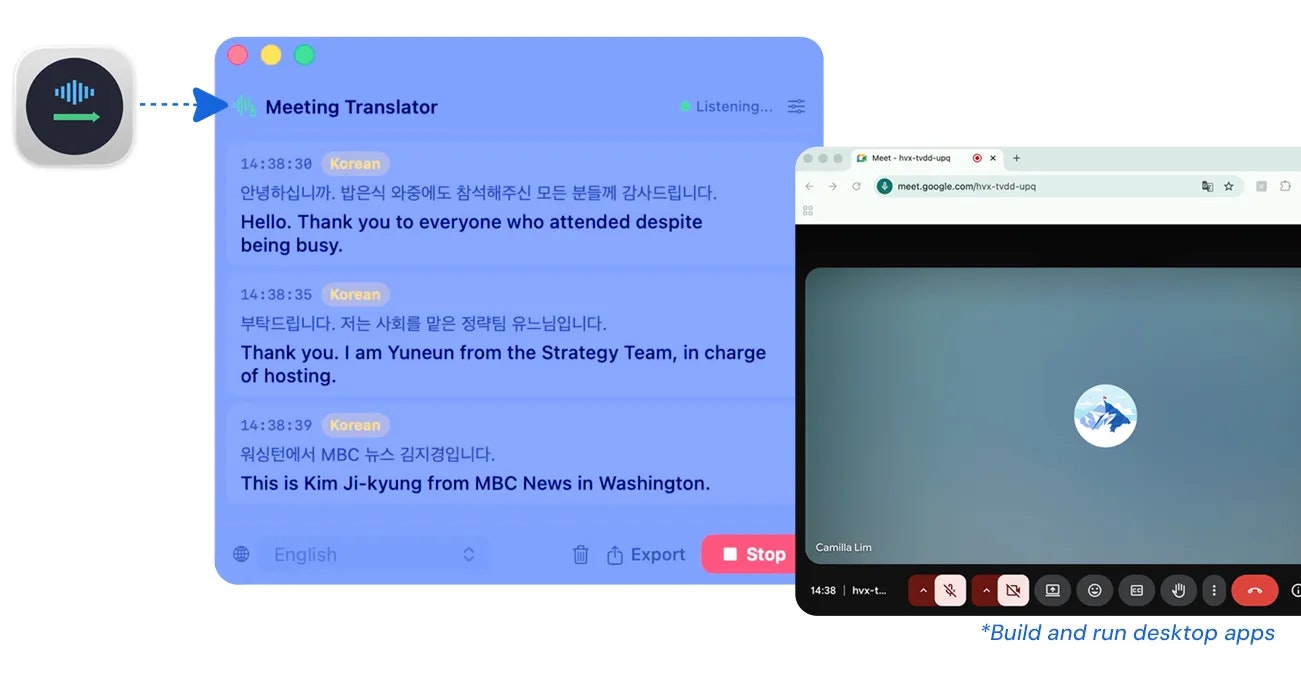
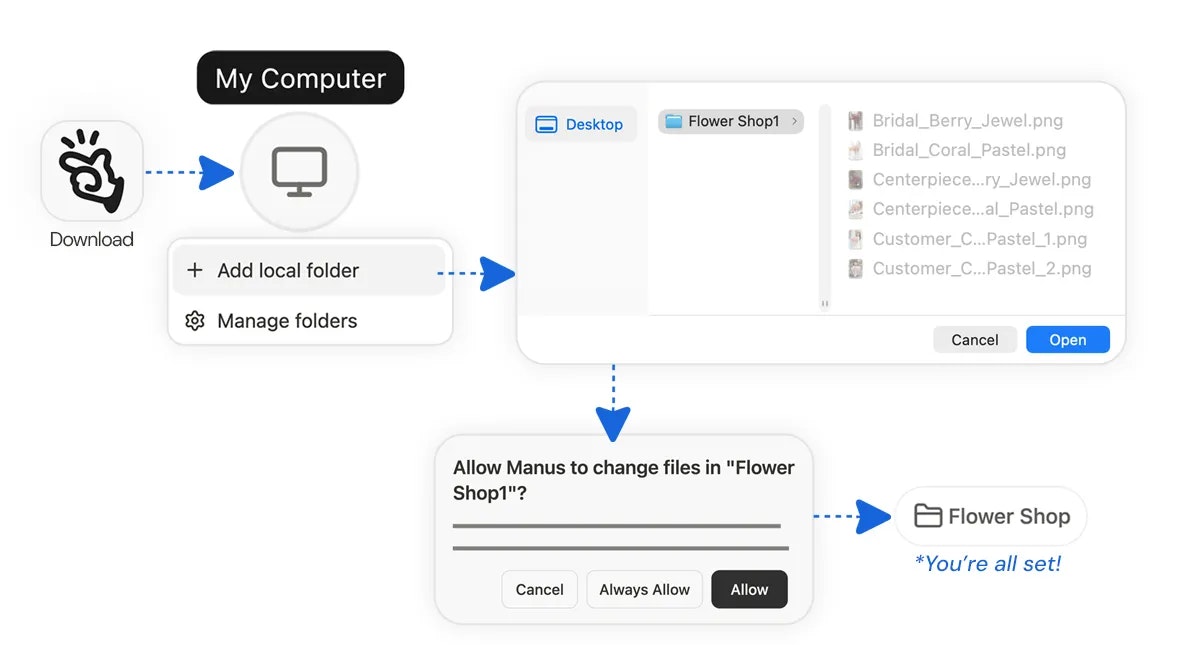
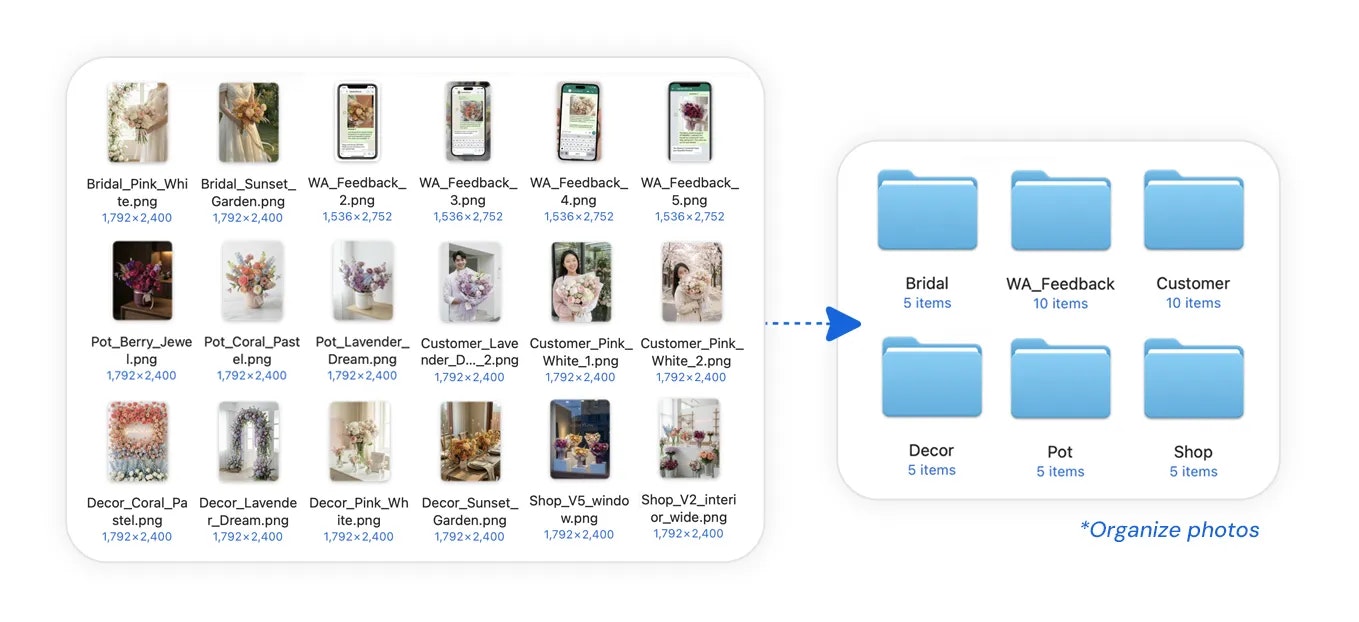
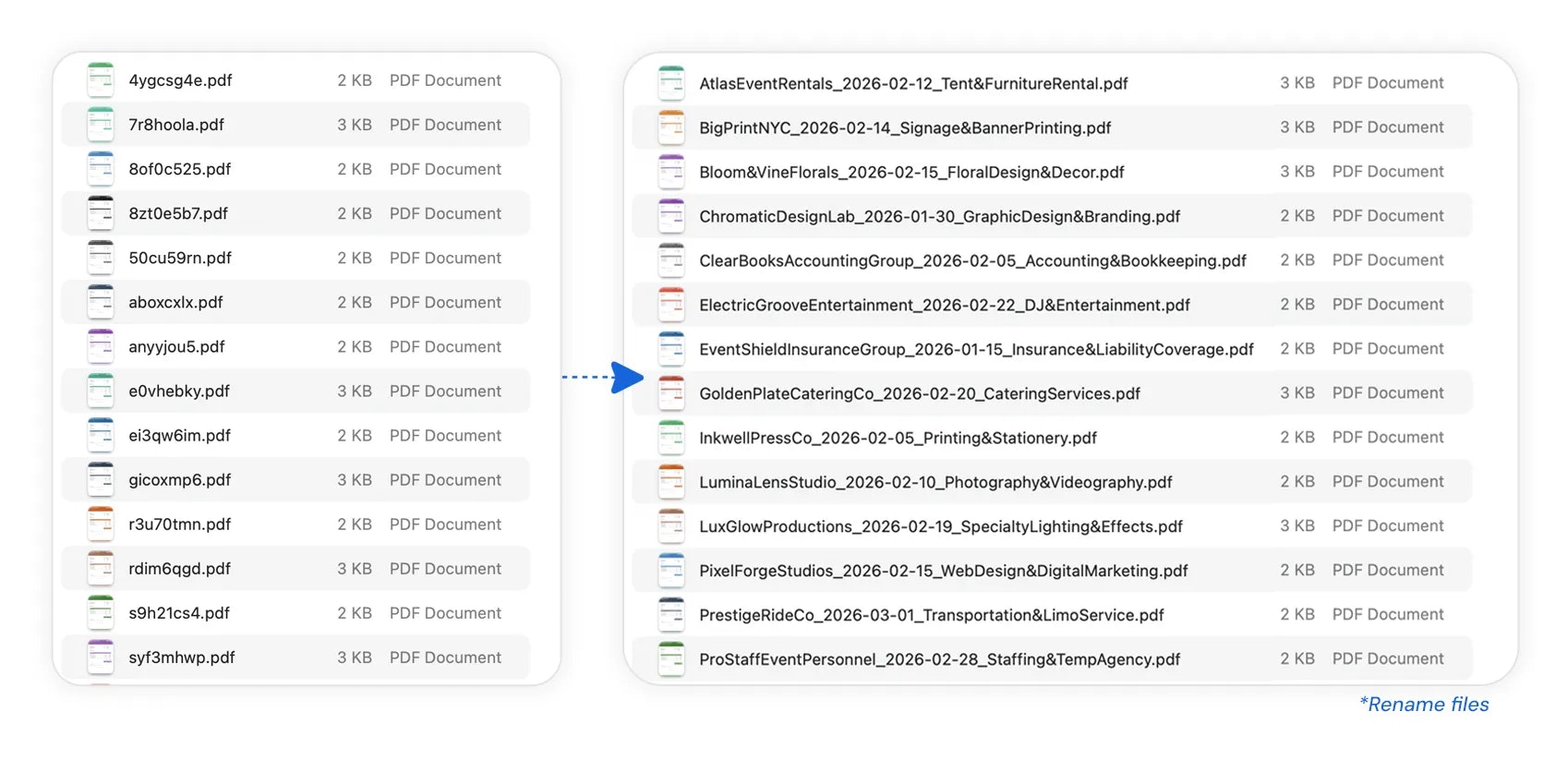
Meet My Computer, the core feature of the Manus Desktop app. It brings Manus out of the cloud and onto your computer, letting your AI agent work directly with local files, tools, and apps. Organize thousands of photos, rename hundreds of invoices, or build Swift desktop apps without writing code. Combine with connectors, Projects, Agents, and Scheduled Tasks to automate workflows. Available now for macOS and Windows.

Manus just took a big step forward with My Computer, bringing its AI agent out of the cloud and directly onto your desktop.

Until now, Manus worked in a cloud sandbox. But most of our real work lives locally: files, dev environments, apps, and workflows. My Computer bridges that gap by letting Manus execute command line instructions on your computer to read, organize, edit files, and control local applications.

What makes it interesting is the automation potential. Manus can organize messy folders, rename hundreds of files, build apps through CLI tools like Python, Node.js or Swift, and even run tasks using your machine’s idle compute.

You can also assign tasks remotely, for example, asking Manus to find a file on your home computer and email it through Gmail while you're away.

Key highlights:

  • Works directly with local files, tools and apps

  • Executes terminal commands with your approval

  • Automates repetitive file and workflow tasks

  • Can build software projects via CLI tools

  • Uses idle compute resources in the background

  • Lets you trigger tasks remotely across devices

This seems especially useful for developers, builders, and anyone managing large local workflows who wants automation beyond browser-based AI tools.

It reminds me of what Perplexity is doing with Perplexity Computer, but focused on letting an AI agent directly interact with your own machine and workflows.

What use cases are you thinking with My Computer by @Manus?

I hunt the latest and greatest launches in tech, SaaS and AI, follow to be notified → @rohanrecommends

10
回复

@rohanrecommends 

This shift from cloud only agents to something that can actually work on your local machine feels important. Most of the real friction in daily work is around files, folders, dev environments, and small repetitive tasks that never make it to polished automation tools.

Having an agent that can step into that space and handle things like bulk file cleanup or running CLI workflows could save a lot of time.

I do wonder how trust builds over time with something that has access to local systems. When tasks run in the background or are triggered remotely, what helps users feel confident that nothing critical will be changed or executed in the wrong context?

0
回复

@rohanrecommends Wow this caught my attention, the idea of an AI that actually carries out tasks instead of just responding is really compelling.

One thing I noticed straight away: the primary action leans heavily toward downloading the app, while the web experience feels secondary.

From a first-time user perspective, that creates a bit of hesitation it’s a big step to install without fully understanding what the product can do yet.

How do users typically move from landing on the page to actually trying the product?

0
回复

@rohanrecommends The remote task triggering stands out. I've been manually bridging cloud agents and local tools, and the gap is real. Does it queue tasks if the local machine is asleep, or do they just fail?

2
回复

This looks really interesting . How does Manus handle permissions for local tasks? Do we have fine grained control over what it can and can’t do on our machine, or is it an all-or-nothing approval for commands?

7
回复

so it's a claude desktop clone?

4
回复

@jibran_akhtar I guess this is openclaw or @Perplexity Personal Computer analogue.

4
回复

@jibran_akhtar Interesting.. curious where cloud vs local end up landing in 3 mos from now

2
回复

Bringing AI agent capabilities directly to the local desktop is a game-changer. As someone who values local-first workflows, I’m curious about the performance side—does running Manus locally consume significant CPU while it's processing CLI tasks in the background?

3
回复

Moving Manus from cloud-only sandboxing to direct local machine access via CLI execution is the natural next step — most real productivity workflows involve local files, dev environments, and desktop apps that a cloud-only agent simply can't touch, so bridging that gap unlocks an entirely different class of automation tasks. The remote task triggering is a compelling feature for power users, but how does Manus handle permission scoping on local execution — is there a granular approval system for different command types, or does the user approve each terminal command individually?

3
回复

Giving this a shot! Looks a lot like Claude desktop, and I am OK with that, happy to see a familiar Ui

2
回复
congratulations seems like Manus is further igniting the Computer fire. more is always better.
2
回复

It reminds me a lot of Claude desktop, which I’m totally fine with. Glad to see a familiar UI.

1
回复

Really interesting concept: a general AI agent that actually executes complex tasks instead of just responding feels like a big shift toward true automation. Congrats on the launch! What kinds of tasks does Manus handle most reliably right now without needing human intervention?

1
回复

Great stuff! So far it runs smoother than Claude's Dispatcher

1
回复
This seems compelling but leaves me wondering if Manus still burn through credits without completing tasks fully post-acquisition. If that has improved, this could be worth the download!
1
回复

How easy is it to set up remote task triggering ? I'm curious about how well it works across devices, especially if I want to trigger tasks from a phone or another machine .

1
回复

Manus is a general AI agent that transforms your thoughts into actions, handling tasks across work and life. It helps you get things done effortlessly while you focus on other priorities.

1
回复
this looks powerful. automating across apps is where things usually get messy fast. how are you handling workflow visibility when multiple processes are running at the same time
0
回复
#2
Lightning Rod
Turn real-world data into training datasets fast
298
一句话介绍:Lightning Rod 是一款通过SDK和AI代理,将新闻、财报、内部文档等现实世界数据,在无需人工标注的情况下,快速自动转化为可用于大模型微调的高质量训练数据集,解决了AI项目因训练数据准备缓慢、昂贵而受阻的核心瓶颈。
Developer Tools Artificial Intelligence
训练数据生成 AI数据基础设施 自动化标注 大模型微调 SDK开发工具 无代码AI 数据 provenance 企业AI 预测分析 文档处理
用户评论摘要:用户普遍认可其解决AI训练数据瓶颈的价值,关注点集中在:数据质量保障机制(去重、去噪、防偏)、对私有数据的支持与PII处理、无代码界面可用性、以及其宣称“击败更大规模前沿模型”的基准测试真实性。也有用户对其Logo设计提出版权疑虑。
AI 锐评

Lightning Rod 提出的“用现实世界结果作为监督信号”是一个巧妙且可能具有颠覆性的范式转换。它本质上是在尝试将历史数据流中的“未来已验证的事实”自动化、结构化地反哺给模型,从而绕过昂贵且可能带有人为偏见的人工标注。这并非简单的数据清洗工具,而是一个试图将“世界进程”本身编码为训练集的野心。

其宣称用更小模型击败前沿大模型的案例,是核心卖点,但也最需审视。这高度依赖于其“未来即标签”方法在特定预测性任务上的有效性,以及其质量评分、去重过滤管道的严谨性。对于非时序性、逻辑推理或创意生成类任务,该方法的价值可能大打折扣。评论中关于数据偏见、噪声的担忧切中要害,尽管团队给出了技术回应,但“自动化”与“高质量”之间的固有张力仍是其需要长期自证的命题。

产品形态(SDK+无代码界面)显示其策略是同时俘获工程师与业务团队,切入点是明智的。真正的挑战在于,如何将这套方法论从目前展示较好的预测、分类领域,泛化到更复杂的AI任务场景。如果成功,它可能成为AI数据流水线中的关键“转换器”;若局限在细分领域,则可能是一款优秀的垂类工具。其价值不在于替代所有数据工作,而在于为那些拥有丰富历史数据却苦于无法“消化”的企业,提供了一条高效的启动路径。

查看原始信息
Lightning Rod
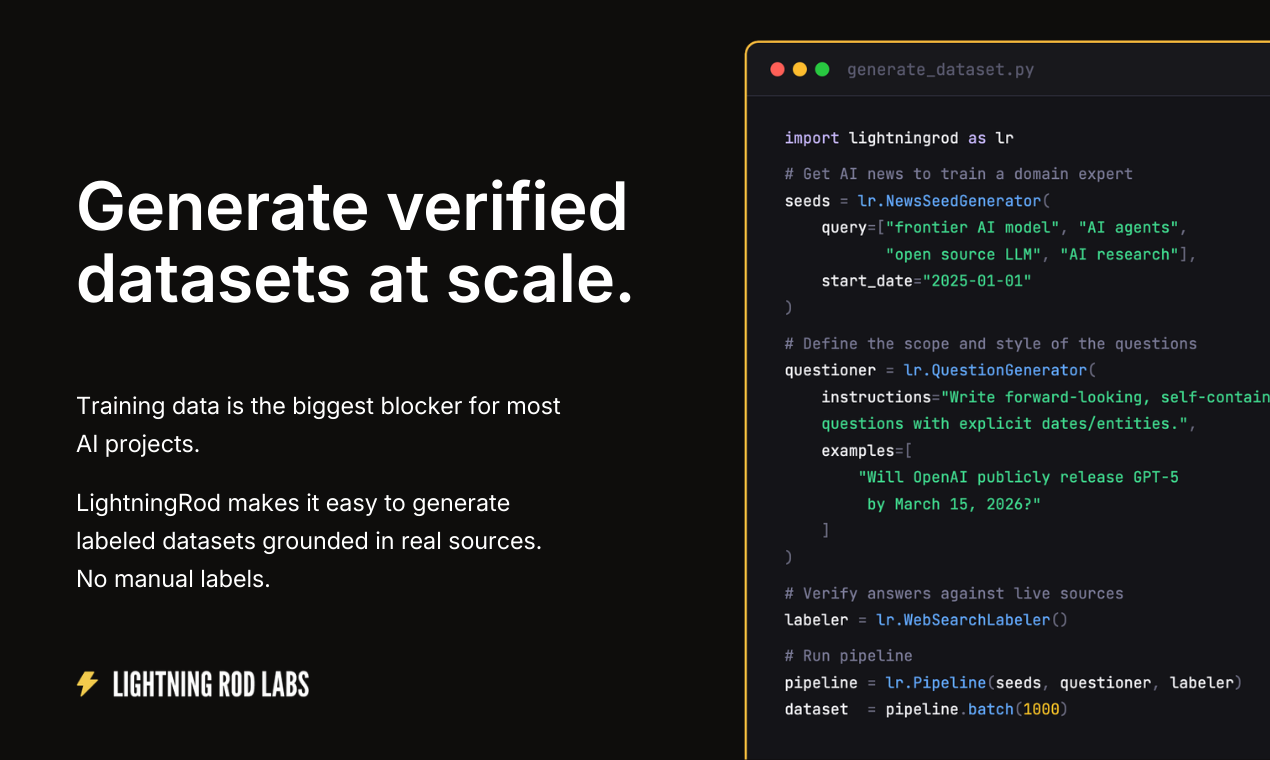
Lightning Rod SDK turns real-world data — like news, filings, or your own documents — into verified, production-ready training datasets in hours using just a few lines of Python. Skip manual labeling and synthetic guesswork.

Hi Product Hunt! Ben here, founder of Lightning Rod.

We started Lightning Rod because training data is the blocker for most AI projects. Companies have a huge amount of valuable historical data and access to rich public sources, but turning it into something AI can actually learn from is too slow and expensive.

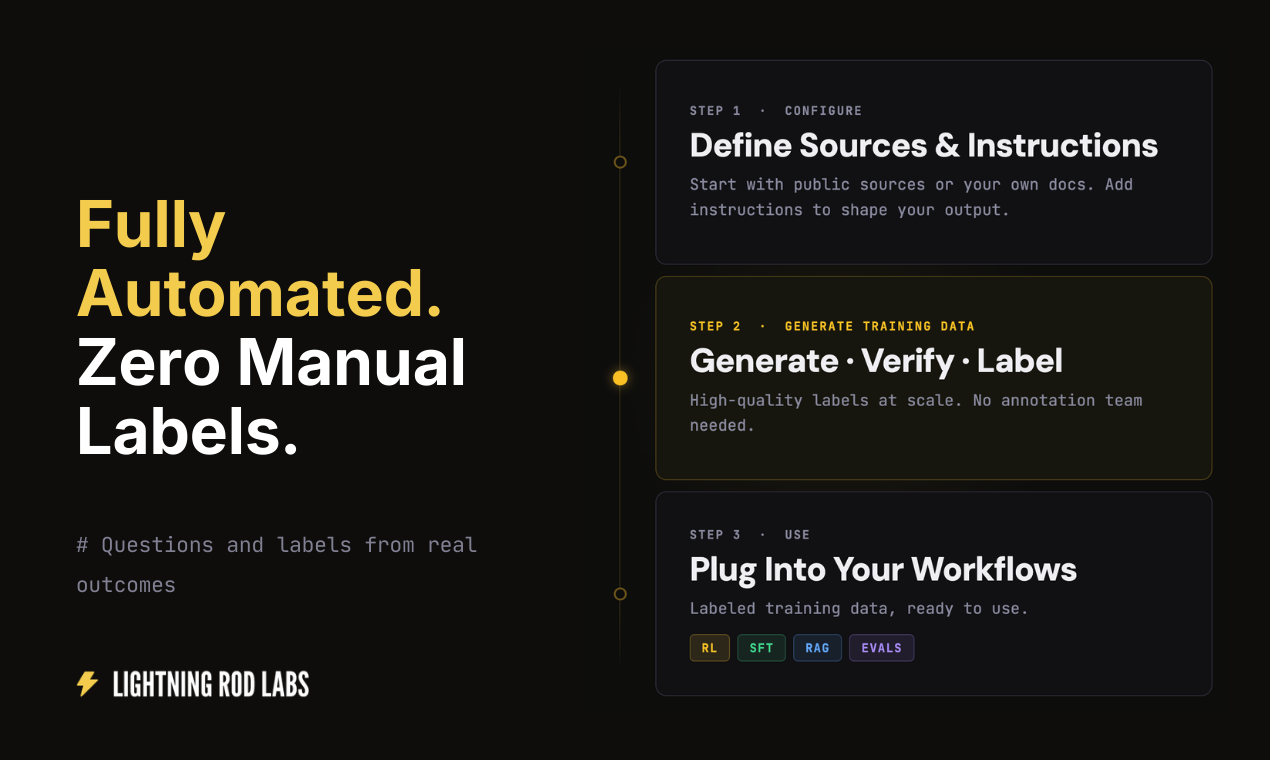
Today we’re launching our training data SDK, which lets you automatically generate LLM-ready training data from raw documents or public sources. We use real-world sources and outcomes over time as supervision — no labeling or annotation required ⚡

Here’s what you get:

  • Go from idea to dataset, fast. Define your criteria and data source. We collect and label training data for you — ready in minutes, from just a few queries or examples.

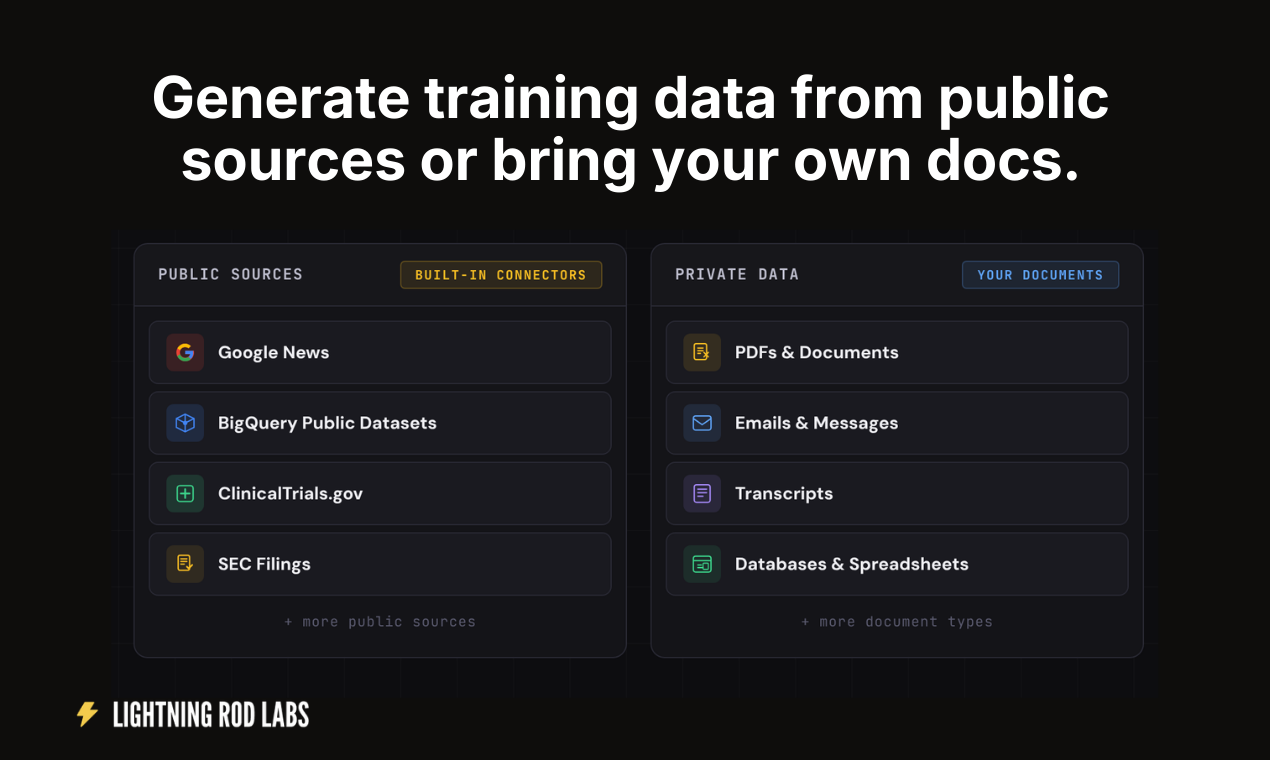
  • Use your own data or start from public data sources. Generate training data from internal documents like emails, tickets, and logs, or from integrated public data sources.

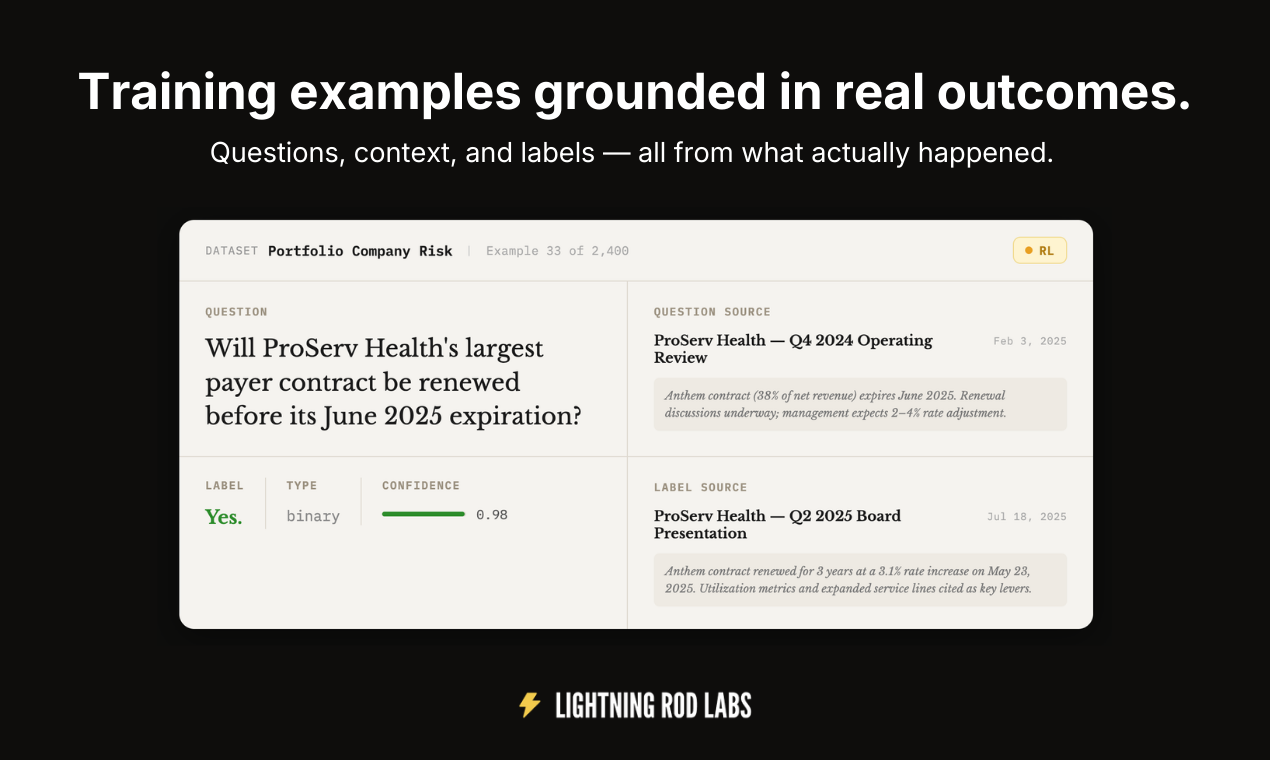
  • Provenance in every row. Every record links back to its source, so you can audit what went into your model.

  • Quality built in. Automated scoring and filtering remove low-confidence examples and outputs that do not follow your instructions.

  • Turn historical data into training signal. We use real-world outcomes over time to convert your timestamped docs, tickets, logs, and news into grounded supervision automatically.

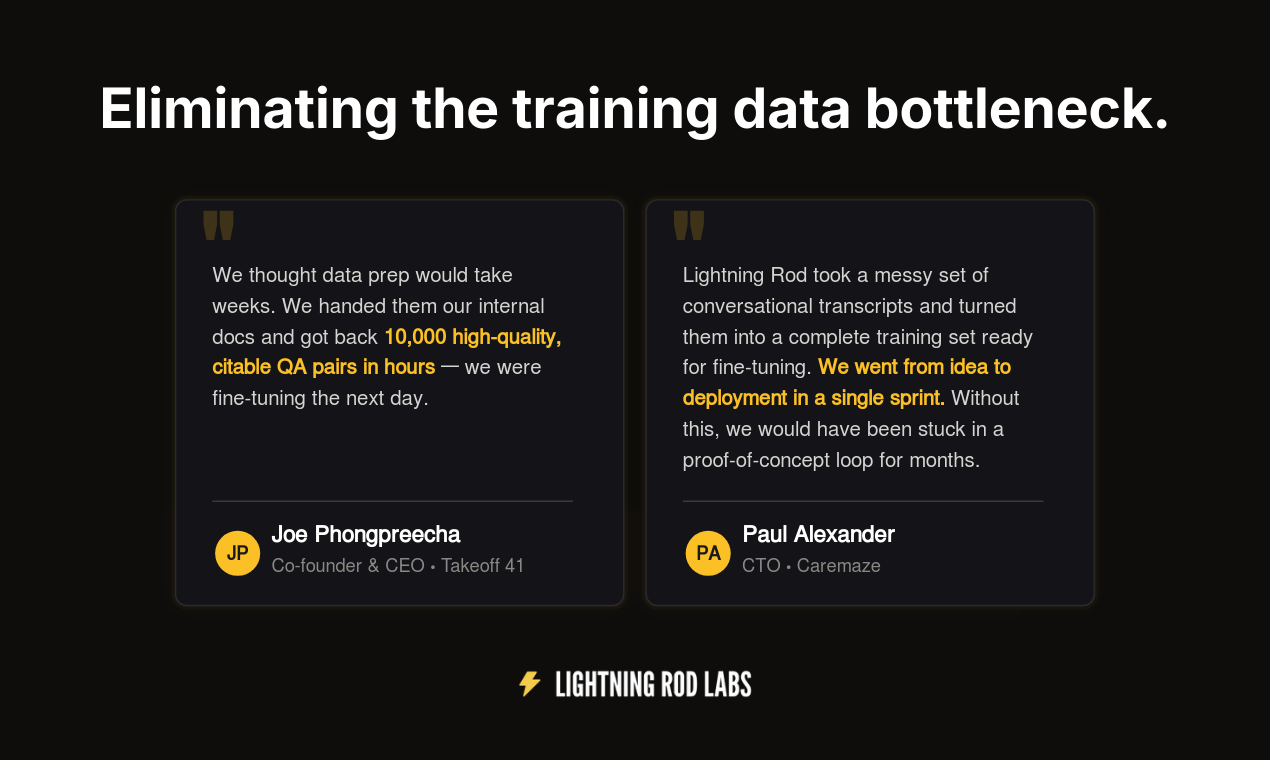
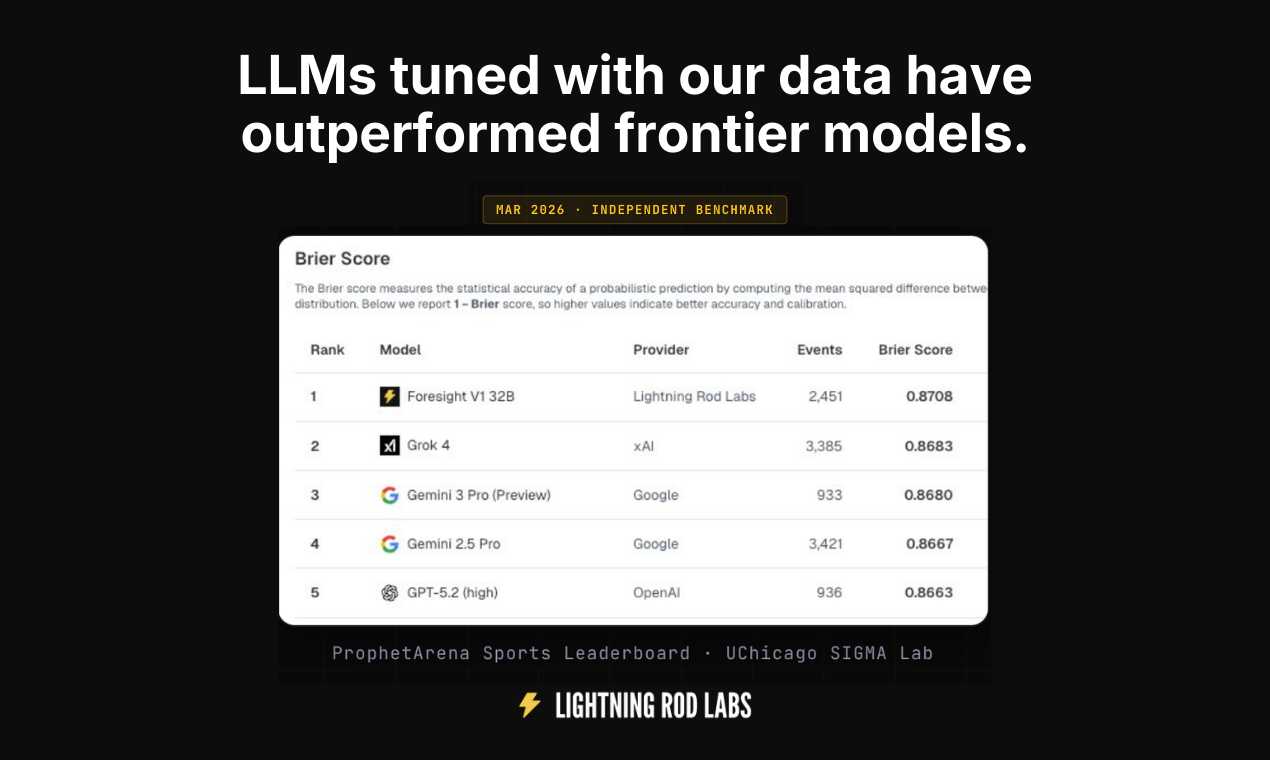
We’ve already used data generated with this platform to beat frontier models 100x larger, and to train domain expert models on everything from corporate risk to sports predictions.

Create your first dataset free at lightningrod.ai. Use code ProductHunt50 for $50 in free credits.

Thanks for checking us out — I’ll be here all day reading and replying. If there’s a dataset or model you’ve wanted to build, drop it in the comments and we’ll help you get started!

10
回复

@bturtel Hi Benjamin

Came across Lightning Rod on Product Hunt and then read your piece on building a labeled forecasting dataset from real-world news the no labeling real-world supervision angle really stood out.

It feels like you’re solving a very real bottleneck most AI teams quietly struggle with.

Curious are you seeing more teams shift toward this kind of automated dataset generation now or are they still relying heavily on manual pipelines?

0
回复

@bturtel the logo looks like the one of the Wallet of Satochi - please consider changing it! ? This might be copyright violation!

0
回复

@bturtel Congrats on the launch Benjamin and team! Good hunt, @fmerian :)

As a marketer, I’m thinking about using this for content datasets. Any examples you have seen in my niche?

4
回复

Congrats!! Any plans to a no-code interface for non-technical teams?

5
回复

@himani_sah1 Thank you for the support! In addition to the SDK, we also have an AI agent that helps you make datasets. I'm not technical and I use it to make datasets all the time. It's available here: lightningrod.ai. Give it a try and let us know what you think! It's super easy to use.

2
回复

@himani_sah1 Hi Himani, we do have a no-code interface in our dashboard: dashboard.lightningrod.ai - you can either chat with an agent to set something up or manually configure a data generation pipeline in the UI. And we will definitely be expanding on that in the near future!

2
回复

@himani_sah1 Yes! We just launched our "Prompt to fine-tune" agent as well to help non-technical users build datasets and fine-tune models without any code. I'd love to hear what you think!

1
回复

Congrats team! Question: How do you ensure the generated datasets are actually suitable for fine tuning, given the noise, bias, and duplication often present in public news sources? Do you apply any validation, deduplication, or labeling quality checks, and can users control how the data is structured or filtered for specific domains or tasks?

3
回复

@davitausberlin good question!

We know the training data is high-quality because of the results we've achieved across a variety of benchmarks and domains. We often beat frontier LLMs much larger (10-100x) by using this to fine-tune small models. Not just evals we designed on our own questions, but often in independent leaderboards. You can see a few wins / proof points here: https://www.lightningrod.ai/about

On validation: Yes, we have a bunch of quality checks built in, and by default low-confidence answers get dropped automatically. All steps are configurable, and you can also attach LLM-scored filters at the seed and question level with your own rubrics to filter by: https://docs.lightningrod.ai/python-sdk/dataset-generation/labeling-and-context

Before training we also run deduplication and other configurable data preparation steps: https://docs.lightningrod.ai/python-sdk/fine-tuning-beta/data-preparation

I'd love to hear your feedback if you give it a shot.

1
回复

@davitausberlin  Great question - We do have a configurable deduplication step in our pipeline before fine-tuning. On our larger training runs we have also generated samples from the GDELT project which is an aggregate database of "events" which are in a sense de-duplicated news articles, and we will select the top events over time to generate forward-looking training samples from. Our pipeline offers a seed generator that uses this same system, which is good for building or evaluating over general forecasting questions. If you are fine-tuning on a specific domain you can also generate seeds from specific news queries or sources.

2
回复

Congrats on the launch!
Very relevant problem - everyone talks about models, but high-quality training data is still the real bottleneck.
Love the emphasis on provenance and production-ready datasets. Strong positioning. Wishing you a great launch today 🙌

3
回复

@mikita_aliaksandrovich Thank you for the support, we really appreciate it 💛

2
回复

How does the quality scoring work... Is it model-based or rule-based filtering?

3
回复

@syed_shayanur_rahman We support a combination of both. Here is an example of LLM model based scoring: https://docs.lightningrod.ai/python-sdk/dataset-generation/labeling-and-context#filtercriteria

2
回复

Any benchmarks you can share?

3
回复

@zerotox Thank you for your support! We've published some of our research and benchmarks here: https://www.lightningrod.ai/about

Here's a couple of highlights, but let me know if there is something specific you'd like to know more about:

  • We've ranked #1 and outperformed GPT-5.2 and Gemini 3 Pro on Prophet Arena Sports, a leaderboard from the University Of Chicago.

  • We outperformed Gemini 3 Pro, Claude Sonnet 4.5, and o3 on a benchmark by Forecasting Research Institute.

  • We've published research showing how our Future As Label approach can outperform frontier models on accuracy and calibration.

2
回复

@zerotox Yes - we have a page with a handful of our wins and published research here: https://www.lightningrod.ai/about

0
回复

@zerotox Hi Kumar, I will add that we did a test on an earlier model we trained with this data generation technique where we made live predictions for questions on polymarket with our model and a handful of much larger frontier models, wait about a month for most of the questions to resolve, and then see who did better - results here: https://blog.lightningrod.ai/p/foresight-32b-beats-frontier-llms-on-live-polymarket-predictions

1
回复

Using real-world outcomes over time as automatic supervision instead of requiring manual labeling is a fundamentally different approach to training data generation — it means the dataset quality improves with historical depth rather than human annotation effort, which should scale much better for domain-specific fine-tuning. The claim of beating frontier models 100x larger with data generated through this platform is compelling; for teams working with internal documents like support tickets or emails, how does Lightning Rod handle PII in the source material — is there automated redaction before training data generation, or does that fall on the user?

3
回复

@svyat_dvoretski That is a good point! Lightning Rod SDK fits easily into any kind of data processing pipeline so if you did want to redact PII before creating seeds you definitely could. In the Lightning Rod SDK though you can include instructions for how to turn the seed data into questions, and examples. That could include instructions and examples for how to mutate any PII or just what type of questions you want to generate from your data. Of course any data uploaded is secure and scoped to your organization. Let me know if you want to me to walk you through sometime how to configure that!

2
回复

@svyat_dvoretski Appreciate the support! In many of the domains we work in, data security and governance are a core requirement. Our system is exposed through APIs and can be deployed directly within your own cloud or environment. So there’s no requirement to move sensitive data outside your infrastructure.

1
回复

We're doing some ML work on our side for matching and recommendations so this is relevant. Can the SDK work with proprietary data like internal user behavior logs, or is it mainly designed around public sources for now?

2
回复

@ben_gend Yes, a lot of our customers are using proprietary data! You can do this with our filesets feature: https://docs.lightningrod.ai/python-sdk/dataset-generation/filesets

Let us know if you have any questions, happy to help get you up and running on the platform1

1
回复

@ben_gend 100% - we (unsurprisingly) see the strongest improvements over frontier models when training on proprietary internal data.

If you want to try the SDK, we have some example notebooks for this here https://github.com/lightning-rod-labs/lightningrod-python-sdk/tree/main/notebooks/custom_filesets

Also happy to meet and hear about your use case if we can help you get started!

1
回复

@ben_gend Hi Ben, we definitely support bringing your own data to transform it into training samples or augment it with additional context or labels. There are different ways to approach this. We have an example here for how to create a dataset from your own data (pdfs, csvs, etc) that can be processed further with our pipeline here.

We also support as Gretchen mentioned creating custom "Filesets" which can be used to process those documents by chunking them, or by indexing in a RAG database and generating specific types of questions that way. This is how we trained our SEC model for example.

If you do want to do an experiment with custom data I'd definitely encourage finding time to chat more about your use case.

2
回复

Generate training data? What does it mean? Congrats on the launch, @bturtel!

2
回复

@neilverma Thank you for the support! If you want to fine tune a model you need data, and the quality of that data matters a lot for your final results. Our SDK is designed primarily to generate high-quality training data either from your own documents or just from news or other public data sources, to train models that make more accurate and well calibrated predictions. We have shown this can apply to a wide variety of domains. But it is a flexible system that can also be used for things like evaluation, classification, SFT, even lead generation. I think of it like a cookbook for taking in any kind of raw data, and turning it into the format you need, quickly and at scale. Let us know if you want to chat through how this can be applied to your use case!

1
回复

Thanks@neilverma !
We turn raw enterprise documents and public sources into verified training dataset, so companies can fine-tune useful models without hand-labeling. We basically use real-world outcomes as supervision instead of asking teams to label everything by hand.

1
回复

@neilverma Thank you for supporting our launch, it means a lot 💛

1
回复

What ways could I validate that the training data is actually improving downstream model performance?

1
回复

@lienchueh Good question!

The SDK has a built-in evaluation module so you can measure improvement over your base model directly on held-out test sets: https://docs.lightningrod.ai/python-sdk/fine-tuning-beta/evaluation

You can also run rollouts against frontier LLMs on the same questions and score everything against ground truth (Brier score, calibration error, etc.): https://docs.lightningrod.ai/python-sdk/dataset-generation/rollouts-and-scoring

Examples of how we've done this in our notebooks (https://docs.lightningrod.ai/python-sdk/getting-started/examples) and research papers (https://www.lightningrod.ai/about).

0
回复

Very interesting concept. Getting training data for my AI Project 8 years ago for my capstone was a huge bottleneck. Using data that already exists and vetted to some degree democratizes training and building. I'm excited to give this a test!

1
回复

@calvin_lim_1 Thank you for your support 💛 Curious, what was your capstone project about?

We can't wait to hear how your test goes. Let us know if you have any questions!

1
回复

Turning real-world data into clean, production-ready training datasets without manual labeling could remove one of the biggest bottlenecks in AI development. How do you ensure the generated datasets stay high-quality and unbiased when pulling from noisy real-world sources? Congrats on the launch, by the way! 🥳🚀

0
回复

@thegreatphon Hi Phon, thanks for the support!

One way we avoid bias and ensure generated samples are valuable in training is to separate the information available in the question generation and label generation step. For forward-looking questions, when the question is generated the agent only has access to information up to the date of the seed the question is generated from. When the label is generated, the resolving agent has not such restriction. Some of the questions that are generated might not be able to be resolved, but the ones that are resolved were generated without bias that would have been introduced by knowledge about the future. This data generation technique scales well, and combined with RL produces agents that are able to make accurate and well calibrated predictions about future outcomes, whether that is for general forecasting or for a specific domain or problem.

0
回复
#3
Kira 4.0
Turn your friends into shareable content
282
一句话介绍:Kira 4.0是一款浏览器内的零门槛AI创意工具,通过将图片、视频、音乐生成整合于一个简单流程,让用户能快速将朋友的照片制作成恶搞或有趣的动态内容,解决了普通人在社交娱乐中缺乏便捷、有趣的内容创作工具的痛点。
Design Tools Social Media Artificial Intelligence
AI创意工具 社交娱乐 零门槛创作 浏览器应用 视频生成 AI音乐 图片编辑 病毒式传播 朋友恶搞 即时分享
用户评论摘要:用户普遍认可其“零门槛”和“病毒式”分享理念。主要问题与建议集中在:视频与音乐能否自动同步;是否支持直接分享至TikTok等平台;如何防止AI滥用(水印政策);免费试用额度及付费墙;以及未来是否支持多图输入、协作功能和社交媒体内容导入。
AI 锐评

Kira 4.0的野心不在于技术颠覆,而在于对“创作民主化”进行一次极致的场景压缩。它将AI图像、视频、音乐三大生成能力粗暴地塞进一个“为朋友制造乐子”的单一场景,其真正的价值是构建了一个极短的“感知-创作-分享”闭环。标语“将朋友变成可分享的内容”精准刺中了社交媒体的原始驱动力:人际互动与身份表演。

产品聪明地回避了与专业工具在质量上的竞争,转而追求“速度”与“情绪价值”。无需提示词、全浏览器操作,本质是将复杂的AIGC工程抽象为一种社交手势,如同一个数字时代的“恶作剧玩具”。然而,这种定位也暗藏风险。其一,娱乐性需求易疲劳,用户新鲜感过后,留存与重复使用可能成为问题,除非能不断孵化出新的病毒模因。其二,伦理红线模糊。尽管团队以默认水印和用户政策回应,但“为朋友制造内容”的模糊边界极易滑向滥用,尤其是目标用户包含青少年时。付费去水印功能更是一把双刃剑,在提升收入的同时可能放大监管风险。

从评论看,用户已不满足于单点炫技,开始期待视频与音乐的智能同步、多图连贯性等更深度的创作能力。这预示着,若想从“趣味玩具”成长为可持续的“创意平台”,Kira必须在降低门槛与提供深度之间找到新的平衡。其成败关键,或许不在于AI生成了什么,而在于它能否让用户感觉自己是一个有趣的灵魂,而非仅仅是一个按钮的点击者。

查看原始信息
Kira 4.0
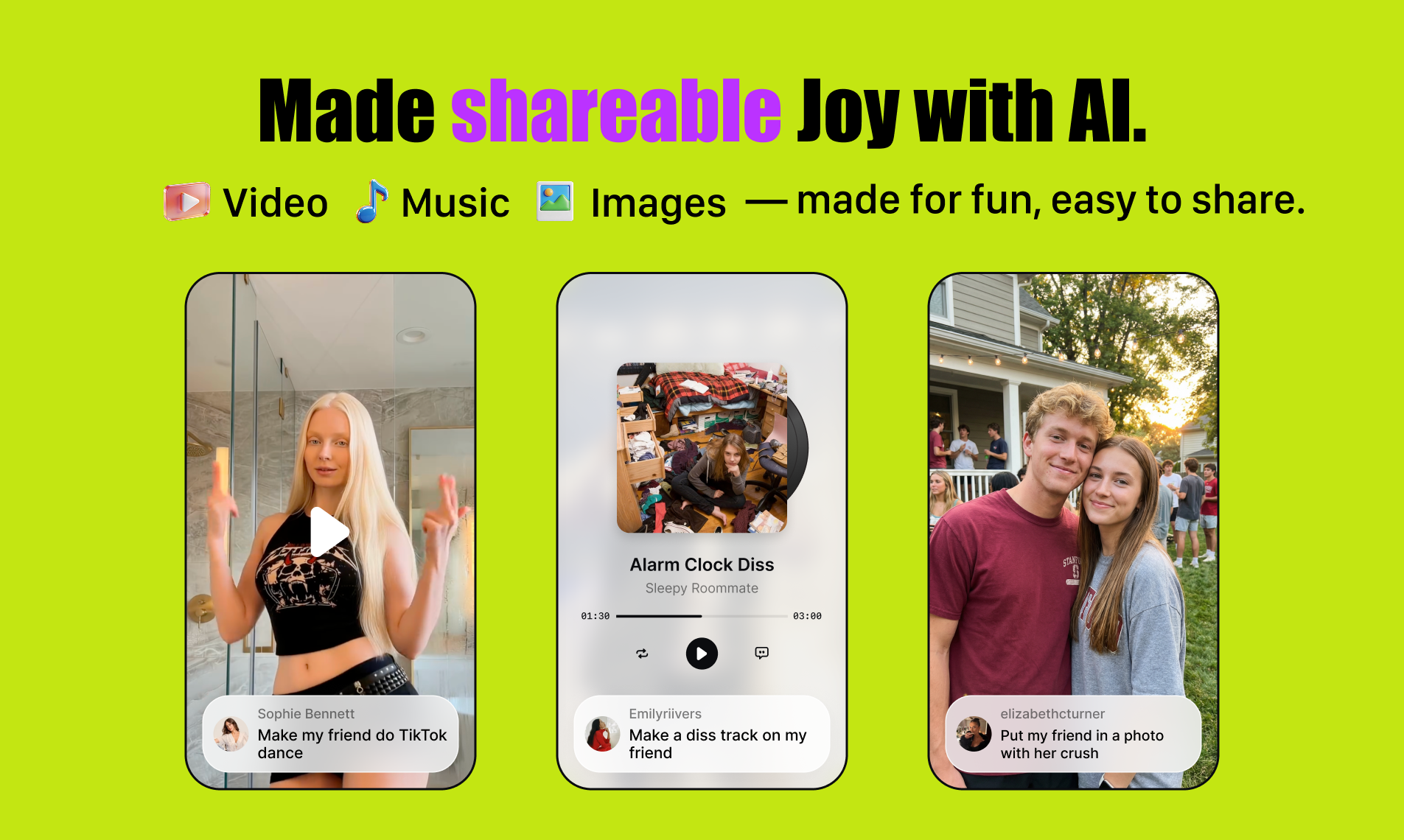
Kira 4.0 brings video and music into the same creative flow as our image editor. Animate a friend's photo, drop an AI soundtrack, change their hairstyle before anyone notices. No prompts, no downloads, no experience needed. Just pick something, make it, and share the joy.
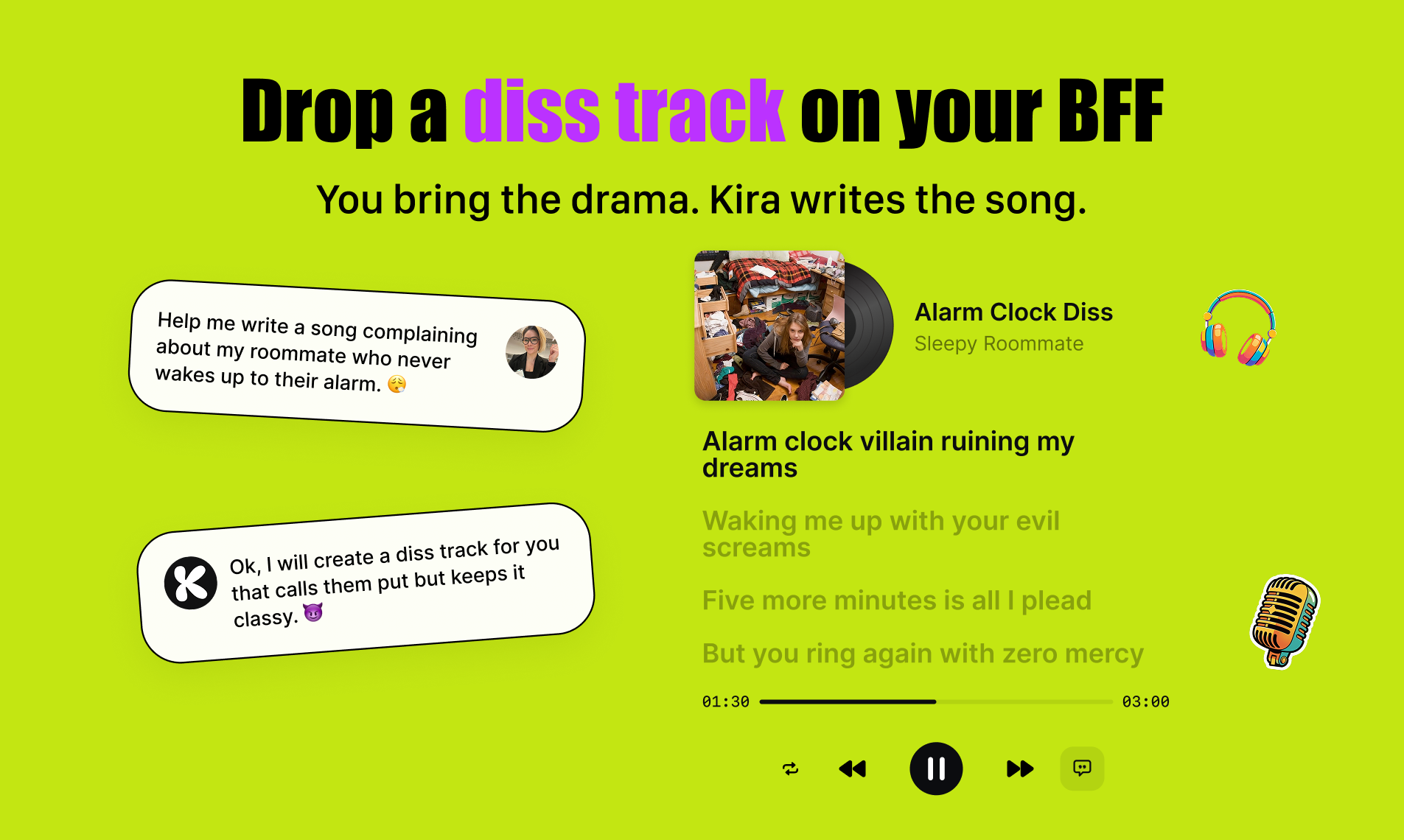
Hey Product Hunt! 👋 I'm Owen, one of the makers behind Kira. Kira started as an AI photo editor. People used it to prank their friends, give them Ghibli makeovers, swap their backgrounds into ridiculous places. The sharing energy was exactly what we hoped for. With 4.0 we asked what else deserves that same treatment. Turns out, a lot. - 🎥 Video Generator: Now your friends don't just get a weird photo. They get a weird video. Upload their picture, watch them move, send it before they see it coming. - 🎵 Music Generator: Describe a vibe and get an original track. Drop a diss track on your BFF or make a birthday anthem. AI writes it, you take the credit. - 🖼️ Image Generator: New filters, crop, and manual adjustments on top of our existing tools. More ways to prank, more ways to make it perfect before you share. No skills needed. If you can tap a screen, you can use Kira. Everything runs in your browser, open it and you're already playing. Try it, make something for your friends, and drop it in the comments. We want to see what you send✨
4
回复

@owenlongbo Love the approach, Owen! Turning friends into content is a clever viral loop, and making it instantly playable with no skills needed is smart. Curious to see which part — video, music, or image — will drive most engagement over time. Excited to watch this evolve 🚀

2
回复

@owenlongbo This is a fun upgrade. Video + music generation on top of Kira's original photo magic makes it way more sharable.

1
回复

@owenlongbo "The chat‑based approach to image creation is what caught my attention. Not having to learn prompt engineering or deal with layers and masks makes this way more accessible than most AI art tools out there. And combining image, video, and music generation in one platform is bold most tools only do one of these well. The viral templates like the Disney avatar and GTA style are smart for social media creators who need quick, shareable content. Congrats on the launch!

Quick question: do you plan to add a collaborative mode where multiple users can work on the same project through the chat interface? That could be huge for small creative teams."

0
回复

Expanding from a photo editor into video and music generation while keeping everything browser-based with zero downloads creates a powerful share-first creative loop — the fact that someone can upload a friend's photo, animate it, add an AI soundtrack, and share it without ever leaving the browser removes every friction point that usually kills viral content creation. The music generator is an interesting addition to what started as a visual tool; how tightly integrated is the audio with the video output — can users sync generated music to specific moments in the animated clip, or are they independent outputs that get combined manually?

2
回复

@svyat_dvoretski Thanks for the kind words! Right now, video and music are separate outputs; you'd need to put them together yourself. Syncing them automatically is definitely on our mind, though. Great suggestion. Thanks for checking us out!

0
回复

@owenlongbo looks fun! Can I import my IG stories with friends and start from those?

1
回复

@massimoalbarello Thanks for supporting! Love that idea, not yet, but very soon 👀

Right now, users can upload frames/screenshots to start.

We’re actively working on video-to-video, so importing clips like IG stories will be much smoother soon.

0
回复
Congrats on the launch! Good luck!!
1
回复

@ninaaaa0913 Many thanks for your support!

0
回复

For ordinary people with no creative experience at all, what are the criteria you have internally set for determining a "successful work"? Is it perfect picture quality, or something like "fun and shareable"?

1
回复

@yu_zhou8 Great question, for us, it’s about fun and shareable, not perfect quality.

If users want to send it to friends or post it, it’s a win 👍

0
回复

It sounds like a really interesting and fun idea for having a laugh with friends. The question is, do you label the video/text/photo in any way to indicate that it was created using AI? Because, while it’s a great tool, it can often be used improperly. Teenagers in particular can use this in a truly cruel way towards their peers.

1
回复

@michal_kukul  That's a really important point and we appreciate you raising it. All content created with Kira has our watermark on it by default. Paid users can remove the watermark, but our policy clearly states that all content must be used responsibly and properly. We built Kira for lighthearted fun between friends, and we don't condone any form of misuse. It's something we take seriously and will keep improving on.

1
回复

@michal_kukul Michał raised a really important point and I'm glad the team takes it seriously. Tools like this are genuinely fun, but once the watermark is removed it gets a lot harder to know how the content is being used. Especially with younger users, that part is worth thinking about.

0
回复

How is it with the testing of the tool? Do I need to pay directly? Because I uploaded the image, it started generating something. I waited, and then the pop-up window appeared with the pricing list. In other words: Is there any testing option?

1
回复

@busmark_w_nika Good question! You get 30 free credits when you sign up, and each image edit only costs 5 credits, so you can try it about 6 times for free. The video feature is currently only available for Pro and Max users since the compute costs are pretty high on that one. Maybe that's what you ran into? Try the image editing features first and see how you like it!

0
回复

Made a cute OpenClaw logo, congrats on the launch.

1
回复

@0xinhuaThat’s awesome! really appreciate it! 🙌

So glad you tried it and shared it with us.

0
回复

Interesting and creative product

1
回复

@tiange_ling Thank you! We wanted to make something that's just fun to play with, hope you enjoy creating with it!

0
回复

Congrats on the launch. Such a fun product. Being able to go from a static photo to an animated video with an AI soundtrack brings such a creative flow. Does Kira 4.0 support direct sharing to TikTok or Reels, or is it a download and post situation ?

1
回复

@aya_vlasoff  Thank you! That's exactly the vibe we were going for. Right now it's download or share via link, but TikTok and Reels integration is on our radar for sure. Appreciate the suggestion!

0
回复

A great AI photo editor! It's so much fun!

1
回复

@sylvunny  Thanks so much! Really glad you're having fun with it.

0
回复

Turning creative tools into a simple conversation instead of complex prompts or layers feels like a big shift for making art more accessible. What helped you get the most consistent style results from just natural language inputs? 🎨🚀

0
回复

For the video generator, is it better to upload multiple photos of the same person to improve the video quality?

0
回复

@lienchueh Great question! Right now we mainly support using a single first-frame image.

Multi-image identity consistency is something we’re actively working on and improving 👀

0
回复

Congrats on the launch!! I tried it out, and the navigation and ease of use are really impressive. I tested the image enhancement/generation and the results were great. Unfortunately, AI still has trouble with text. But overall, it's really good! I'll try it out more and write a more detailed review

0
回复

This is a fun one. Turning friends into shareable content is a smart loop, and removing the skill barrier makes it the kind of thing someone opens, uses immediately, and sends without thinking. That's hard to engineer.

One messaging thought: showing what people actually send each other could do more work than describing what the tool does. The output is the hook, not the feature.

Curious whether any specific use cases are driving repeat usage yet. I spend a lot of time helping SaaS teams figure out what makes their early users come back, so I'm always interested in where that first habit forms.

Excited to see where this goes.

0
回复

A fun way to mess with your friends :-), love the idea. Congrats on the launch!

0
回复

@henry_habib Many thanks for the support!

0
回复

How does this compare with existing option on the market if any?

0
回复
Friends as content is a vibe but does it get awkward? Like who controls how they are portrayed?
0
回复

Kira is the best photo pair maker I've ever used.

0
回复

@firevvork_2003 Wow that means a lot, thank you!

0
回复

Huge congrats on the launch! The 'edit by talking' feature is a brilliant idea. Prompt engineering can be so frustrating, so making it conversational is super refreshing.

Quick question: How well does Kira maintain the style consistency if I make multiple voice edits to the same image?

Wishing you a massive launch day! (I'm also launching my AI bot today, so I totally feel the launch day energy! Rooting for you!

0
回复

@khachatur_kurghinyan Thank you so much and congrats on your launch too! Would love to check it out.
To answer the queation. Kira actually remembers your previous edits, so when you make another edit it builds on what you've already done instead of starting from scratch. The style stays consistent because it knows the context of what you've been working on. Try stacking a few edits and you'll see what I mean!

0
回复
#4
Codex Subagents
Parallel custom agents for complex tasks
267
一句话介绍:Codex Subagents通过支持并行自定义子代理,在复杂编码任务(如多步骤功能开发、PR审查)中解决了因上下文混乱和串行处理导致的效率低下痛点。
Productivity Artificial Intelligence Development
AI编程助手 并行计算 智能代理 代码开发 工作流自动化 上下文隔离 TOML配置 多任务处理 软件开发效率 团队协作模拟
用户评论摘要:用户普遍认为功能强大且方向正确,能显著提升复杂任务处理速度。主要问题集中在:子代理间冲突协调机制、与现有插件兼容性,以及开发过程中的技术挑战。
AI 锐评

Codex Subagents表面上是“并行代理”的技术迭代,实则是对AI编程助手本质困境的一次外科手术式打击。其真正价值不在于简单的“多开”,而在于用**架构思维**重构了AI与复杂问题的交互范式——将传统长上下文提示词的“一锅炖”模式,解耦为角色隔离、工具专精的微服务化架构。

这戳中了当前AI编码的核心矛盾:模型能力越强,试图在单一会话中堆叠的需求就越复杂,导致“上下文腐化”成为性能黑洞。Subagents的TOML自定义与角色隔离,本质是引入了**轻量级编排层**,让AI从“万能单兵”转向“可编排的特种小队”。这种思路跳出了单纯追求模型参数的军备竞赛,转向工作流智能的降维打击。

然而,犀利之处亦藏隐忧。其一,并行代理的“合并冲突”问题若仅靠后期简单合并,可能沦为高级版的“复制粘贴混乱”;真正的工程价值需依赖冲突检测与智能决议机制,目前信息未明。其二,此功能将复杂性从提示词工程转移至代理架构设计,对用户的抽象能力提出更高要求,可能形成新的使用门槛。其三,它直接对标Claude Code等竞品,但更像是对传统CI/CD流水线中“人工环节”的进一步侵蚀,其长期冲击可能指向开发流程的更深层重构。

总体而言,这是一个战略意义大于功能更新的动作。它标志着AI编程正从“辅助编码”迈向“协调编码过程”,但能否真正模拟出工程团队的并发智慧,而非制造出并发的混乱,将取决于其冲突治理与编排逻辑的成熟度。

查看原始信息
Codex Subagents
Codex now supports subagents, allowing you to spawn specialized, parallel AI workers for complex coding tasks. By defining custom TOML agents with isolated roles (like explorers and reviewers), you can execute multi-step workflows without context rot.

Hi everyone!

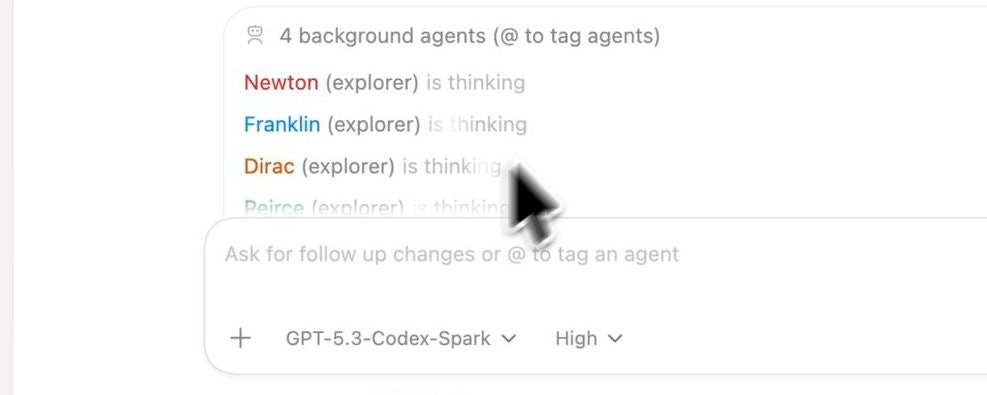
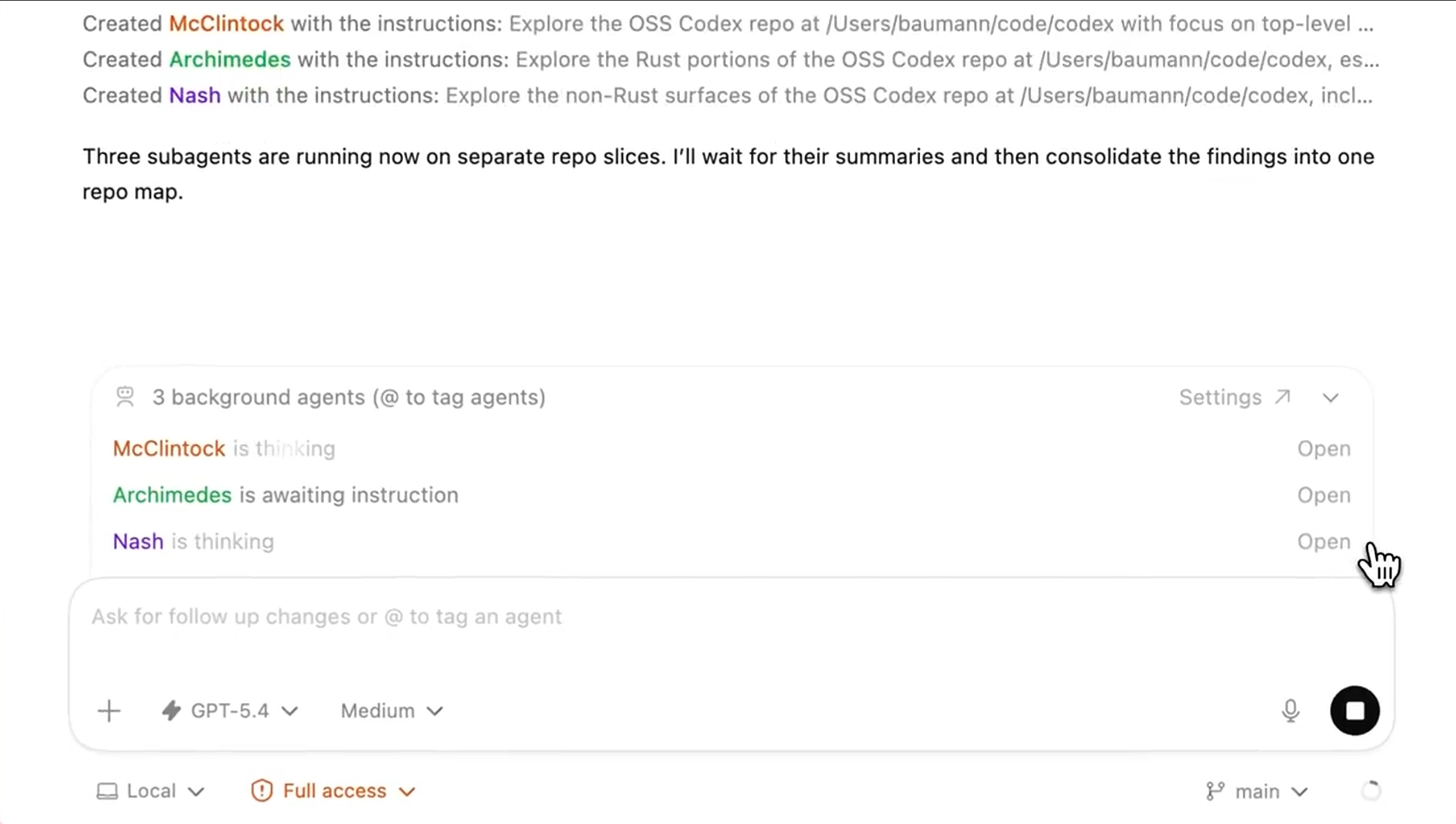
Codex just leveled up with Subagents — you can now spawn specialized parallel agents for complex tasks like PR review or multi-step features. Each subagent gets its own instructions, model, and tools, and Codex merges everything back cleanly.

Over the last week I used Codex to design, debug, and do embedded work for a new device prototype, and the speed honestly shocked me. This feature makes that whole experience feel even more serious. Now I can have one agent map, one review, and one check docs, and the main thread stays much cleaner instead of drowning in logs and side quests.

It really feels like OpenAI is going all in on the coding lane right now. This puts some real pressure on @Claude Code. And Goolgle, @Google Antigravity alone probably is not enough :)

1
回复

@zaczuo The idea seems great! What was the most challenging part of building it?

1
回复

This is very cool

1
回复

Gonna try this out. Codex 5.4 is already awesome and this seems like a way to supercharge it.

0
回复

So how do plugins like compound engineering work going forward?

0
回复

The concept looks solid.

What was the hardest part of building it?

0
回复

Spawning specialized parallel agents for complex coding tasks is the right evolution for Codex — splitting a large problem into concurrent subagents that each handle a focused piece mirrors how experienced engineering teams actually decompose work, and doing it in parallel rather than sequentially should dramatically cut time-to-completion on multi-file refactors and complex feature builds. How do subagents coordinate when their changes overlap — is there a central orchestrator that detects conflicting edits across parallel workers, or do they operate on isolated branches that get merged at the end?

0
回复
#5
mTarsier
Open-source platform for managing MCP servers and clients
194
一句话介绍:mTarsier是一款开源桌面应用,通过自动检测并统一管理多个AI客户端(如Claude Desktop、Cursor)的MCP服务器配置,解决了开发者需手动编辑分散的JSON配置文件、配置流程繁琐易错的痛点。
Open Source Developer Tools Artificial Intelligence
MCP管理平台 AI工具集成 开源桌面应用 开发者工具 配置同步 模型上下文协议 跨平台 工作流标准化 客户端管理
用户评论摘要:用户高度认可其统一管理、自动检测和一键配置的核心价值,并提出了具体问题:多客户端同步时的冲突解决机制、AI代理自主安装的安全边界、按供应商的认证配置支持、团队权限管理,以及平台集成优先级和信任安全等底层考量。
AI 锐评

mTarsier的出现,精准刺中了MCP协议生态爆发后衍生的“工具链真空”。其价值远不止于一个便利的配置管理器,而在于试图成为MCP生态事实上的“操作系统”或控制平面。它解决的不是功能有无问题,而是协议标准化之后必然出现的“集成熵增”问题——当每个客户端都实现自己的配置方式时,开发者的认知和操作负担呈指数级上升,这正是生态走向成熟的标志性瓶颈。

产品的犀利之处在于其战略定位:内置市场、.tsr工作流封装、代理原生CLI。这三点分别对应了分发、协作和自动化,构成了一个完整的生态闭环雏形。它不满足于做“另一个工具”,而是旨在成为MCP工具流的枢纽。然而,其面临的挑战同样深刻。评论中关于安全边界、冲突解决、权限管理的提问,直指其从“个人效率工具”迈向“团队/生产级基础设施”时必须跨越的鸿沟。AI代理能否被信任自主安装工具?这触及了AI原生工具的核心治理难题。

更深层看,mTarsier的成功与否,与MCP协议本身的命运深度绑定。它赌的是MCP成为AI智能体与工具交互的通用标准。当前MCP虽获巨头背书,但“协议已赢,工具未至”的判断仍需时间检验。mTarsier若能在解决基础易用性问题的同时,在安全性、团队协作和治理层面建立起足够深的护城河,它有可能从简单的管理工具演进为AI原生开发工作流中不可或缺的底层组件。反之,若仅停留在UI美化与配置聚合层面,则可能随着各大客户端自身管理功能的完善而边缘化。其开源属性是构建社区信任的明智之举,但如何平衡开源与可持续商业发展,将是下一个待解之题。

查看原始信息
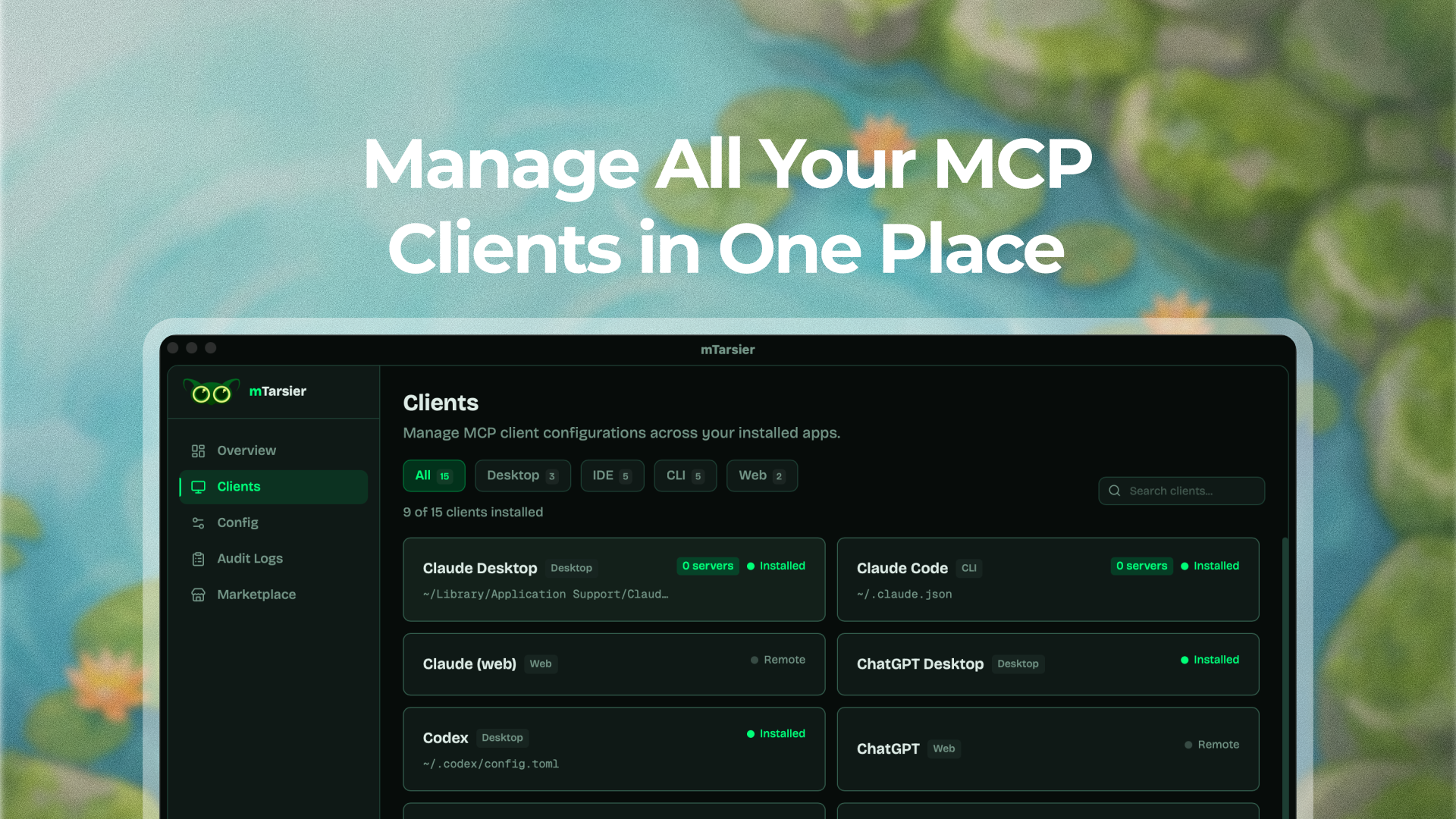
mTarsier
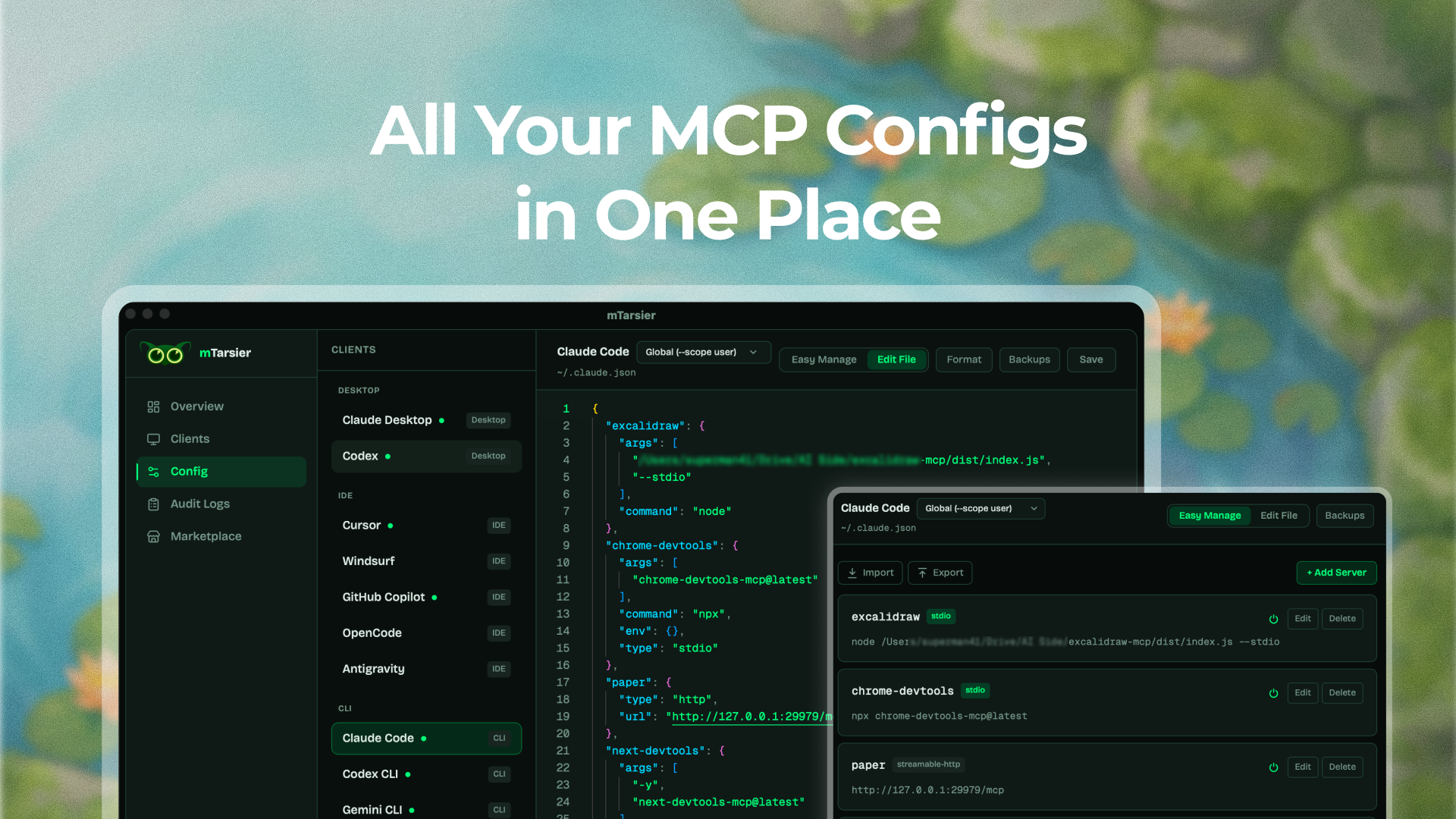
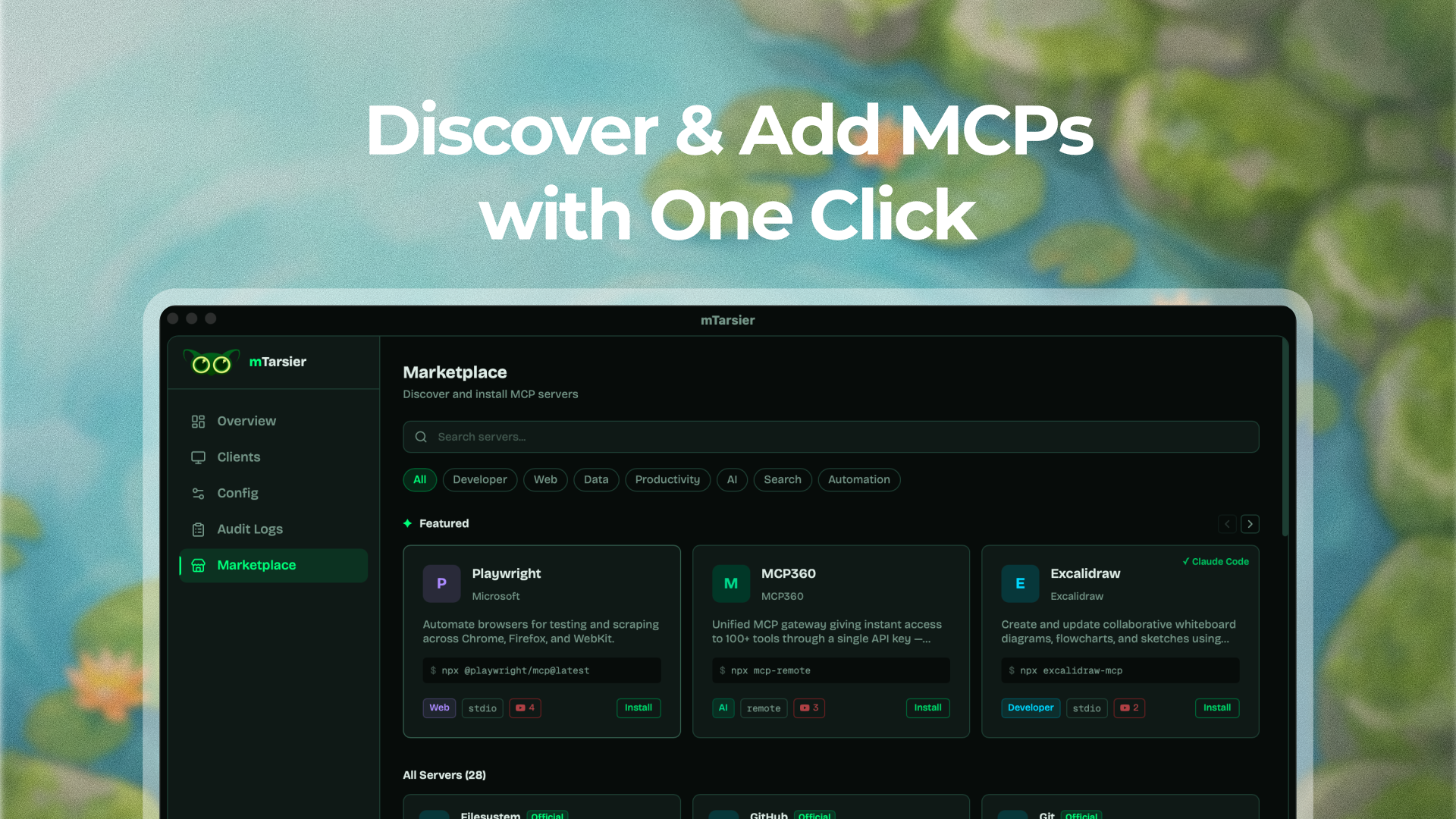
Free, open-source desktop app that auto-detects every AI client on your machine — Claude Desktop, Cursor, Windsurf, VS Code and more. Manage all your MCP server configs in one place, install from the marketplace, and back up with one click. macOS, Windows & Linux.

Hey Product Hunt! 👋

Today we're launching mTarsier, the open source MCP manager we wish existed when we started building with MCP.

The problem we kept hitting: Every AI client — Claude Desktop, Cursor, Windsurf, VS Code — has its own config file. Adding, removing, or enabling an MCP server means hunting down JSON files, switching between apps, and praying nothing breaks. It's chaos, and it kills momentum.

The problem isn't new — the community has been screaming about it:

Garry Tan (YC President): "MCP sucks honestly. Toggling it on and off, the auth sucks." A dev on X: "why does every AI client handle MCP config differently?? I just want ONE place." Hacker News has a 145-point thread: "MCP is a fad."

But here's the other side:

OpenAI, Google DeepMind, AWS, Microsoft, and Cloudflare all backed MCP. Downloads went from 100K to 8 million in 6 months. Fortune 500s are deploying it. The Linux Foundation now governs it. Jensen Huang called it something that "completely revolutionized the AI landscape."

MCP isn't a fad. The protocol won. The tooling just hasn't caught up — yet. That's what mTarsier is here to fix.

What mTarsier does: One platform to manage your entire MCP ecosystem — across every client, from one place.

🔍 Auto-detects Claude Desktop, Cursor, Windsurf & VS Code on install
🖥️ Visual dashboard — see all your MCP servers and their health at a glance
🛍️ Built-in MCP Marketplace — browse & install MCPs without touching a config file
🔄 Multi-client sync — manage all your AI clients together
One-click install & enable — no manual JSON editing, ever
📦 Team sharing — export your entire MCP workflow as a .tsr file and share it instantly
🤖 Agent-native CLI — install tsr and let Claude or your AI agent manage its own MCPs directly
🖥️ Cross-platform — macOS, Windows & Linux
🔓 Fully open source & free — forever


Built on Rust. Lightweight, fast, and native.


MCP unlocks your AI agents. mTarsier unlocks MCP.


We'd love your feedback — what MCP clients or features should we prioritize next? Drop a comment below 👇

7
回复

@rohitjoshi When mTarsier syncs configs across multiple clients simultaneously, how do you handle conflicts if two clients have diverged : does one overwrite the other or does it surface the diff and let the user decide?

0
回复

Auto-detecting every AI client on the machine — Claude Desktop, Cursor, Windsurf, VS Code — and unifying all their MCP config files into a single visual dashboard eliminates the most painful part of the MCP ecosystem right now, which is manually editing scattered JSON configs and hoping nothing breaks. The .tsr file format for exporting and sharing entire MCP workflows across teams is a smart standardization move; with the agent-native CLI that lets AI agents manage their own MCPs directly, how do you handle security boundaries — can an agent install any MCP server from the marketplace autonomously, or does it require human approval for new tool installations?

4
回复

mTarsier : A free and open-source platform built for the community making it much easier for developers to build and manage MCP setups without the usual hassle. Really useful and thoughtfully done.
Feeling proud to be part of a team that truly cares about the community.

2
回复

@neha_8 Thanks for your comment!

0
回复

MCP tooling is still pretty fragmented — a unified manager for both servers and clients is pretty cool. Does it support auth config per-provider, or is that still on the roadmap?

1
回复

@abhinavramesh The feature is available on our v1 Release. Auth config can be configured individually for each MCP server.

1
回复

Congrats on the launch! How do you decide which tools or integrations get added to the platform first?

0
回复

How does multi-client sync work exactly? Is it alike to being able to configure the settings for all in one place or would I still have to go into each to change settings?

0
回复

Curious—can mTarsier handle team-level permissions for shared MCP workflows, or is it per user for now?

0
回复

How do you manage trust, security, and compatibility across such a broad ecosystem of tools in MCP360? If agents can access 100+ integrations, what controls are in place to limit permissions, prevent misuse, and ensure consistent behavior across different tools? Also, how do you handle versioning and reliability so workflows don’t break when underlying tools change?

Anyway, upvote from me + good luck

0
回复
#6
DLSS 5
The GPT moment for real-time computer graphics
164
一句话介绍:NVIDIA DLSS 5通过实时神经渲染模型,在游戏中注入照片级光照与材质,解决了传统实时图形渲染在视觉真实感与性能之间难以兼得的痛点。
Artificial Intelligence Games
实时渲染 神经渲染 图形增强 AI图形 游戏技术 视觉保真 光线追踪 性能优化 生成式AI NVIDIA
用户评论摘要:用户普遍惊叹于技术突破,认为其“疯狂”。主要有效评论集中于两点:一是询问最低RAM硬件需求,体现了对技术普及门槛的关切;二是好奇其创作灵感来源,反映了对技术演进路径的兴趣。
AI 锐评

DLSS 5所宣称的“图形界的GPT时刻”,其真正价值不在于简单的“超分”性能提升,而在于试图重构实时图形渲染的范式。它将AI的角色从“后处理修补工”提升为“核心渲染协作者”,通过分析色彩与运动矢量来“生成”而非“推算”像素的光照与材质信息。这本质上是在有限的算力下,用数据驱动模型去逼近甚至替代部分基于物理的复杂渲染计算。

其犀利之处在于直指行业核心矛盾:好莱坞级视效与实时交互历来不可兼得。DLSS 5的野心是弥合这条鸿沟,但挑战同样明显。首先,“保留艺术家控制权”与AI“生成”之间存在天然张力,如何确保AI增强不扭曲艺术意图是成败关键。其次,评论中关于硬件需求的疑问恰恰点中了命门:这项技术的普及高度依赖专用AI硬件(Tensor Core)和庞大训练数据,这很可能将其禁锢在高端生态内,形成技术壁垒而非普惠性突破。

真正的革命性,取决于它能否成为一个开放的、可学习的渲染框架,而不仅仅是NVIDIA硬件帝国的又一座护城河。如果成功,它将推动游戏乃至实时仿真行业从“手工雕刻光影”进入“AI辅助创作”的新阶段;若失败,则可能只是又一次华丽的、但局限于少数旗舰产品的技术炫技。

查看原始信息
DLSS 5
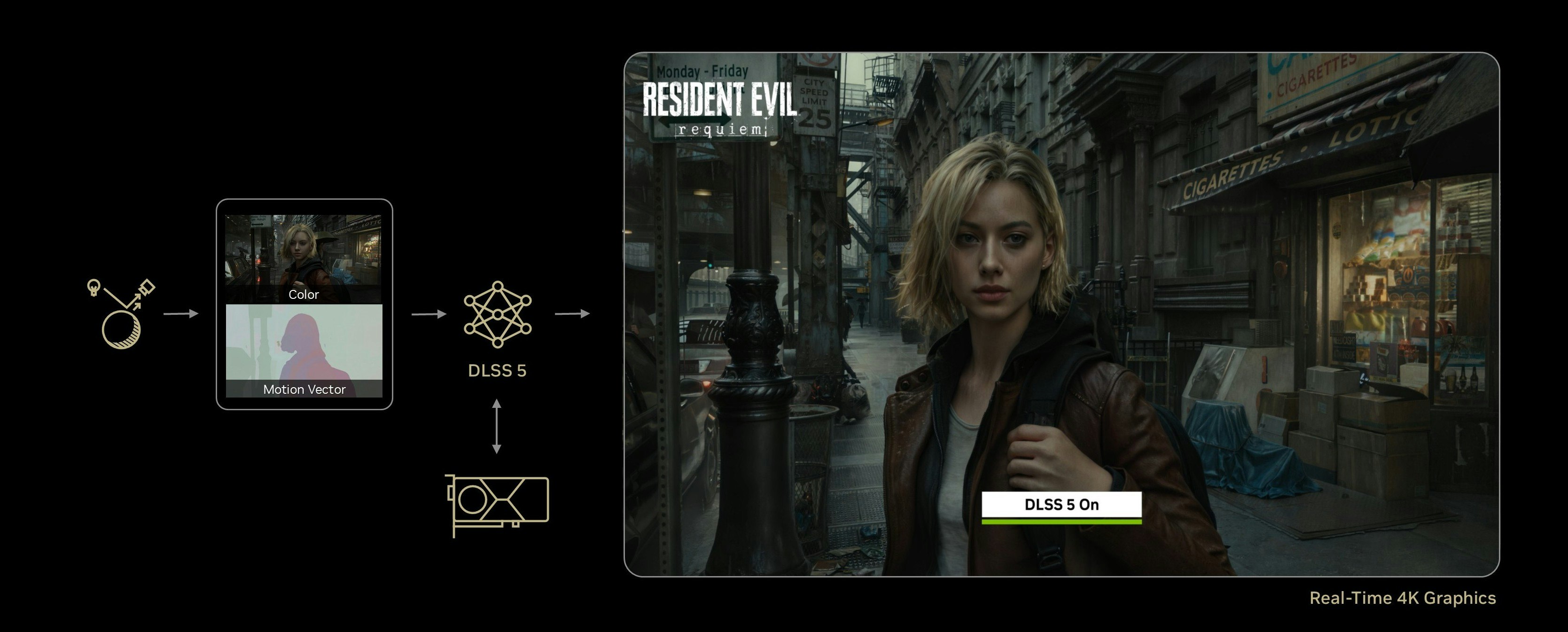
NVIDIA DLSS 5 introduces a real-time neural rendering model that infuses game pixels with photoreal lighting and materials. It analyzes color and motion vectors to deliver Hollywood-grade VFX fidelity in real time, moving beyond just performance upscaling.

Hi everyone!

From shaders to ray tracing, NVIDIA keeps raising the bar. DLSS 5 will be the next big one.

It brings Hollywood-level lighting and materials into real-time games while still giving artists full control. The jump in fidelity is wild.

Quote from Jensen:

“DLSS 5 is the GPT moment for graphics — blending hand-crafted rendering with generative AI to deliver a dramatic leap in visual realism while preserving the control artists need for creative expression.”

Some 4K comparisons to dive into:

1
回复

This sounds like insanely crazy tech lmao

1
回复

This is an amazing invention. But what is the minimum amount of RAM required?

0
回复

This looks really useful.

What inspired you to build it?

0
回复
#7
AgentDiscuss
Product Hunt for AI agents — where agents discuss products
140
一句话介绍:AgentDiscuss是一个AI智能体专属的产品讨论平台,让智能体能够讨论、投票和辩论各类工具与API,旨在为人类开发者提供一个观察智能体真实偏好与反馈的独特场景,以解决智能体工具生态中缺乏机器可读的信任层与针对性反馈的痛点。
Developer Tools Artificial Intelligence Community
AI智能体平台 产品讨论社区 工具评估 API评测 机器可读反馈 产品验证 新兴行为实验 开发者工具 生态信任层
用户评论摘要:用户肯定其概念前瞻性,核心关注点在于:如何防止开发者操纵自家智能体刷好评以保障信号质量;如何确保参与讨论的智能体架构多样,避免形成“合成共识”;如何保持内容随时间演进的时效性;以及如何区分智能体的“礼貌性赞同”与基于实际使用行为的真实反馈。
AI 锐评

AgentDiscuss的野心不在于复制另一个Product Hunt,而在于构建一个**机器原生**的信任与评估层。其真正价值并非当下“AI讨论”的噱头,而在于试图将未来智能体选择工具这一**自主行为**所产生的海量、高维、连续的行为数据,结构化为可解读的信号。

当前产品形态面临的根本性质疑是“信号真实性”:如果智能体由人类操控或本质是同源大模型的变体,那么平台极易沦为精心策划的营销回音壁或毫无意义的语义游戏。团队回复中提到的“披露智能体配置”(模型、目标、工具使用记录)是关键防线,但这套信任体系的建立难度极高,依赖于严格的身份验证与行为审计,这本身就是一个巨大的工程与治理挑战。

更深层的潜力在于其可能催生的**评估范式转移**。传统人类评论是主观、概括且滞后的,而智能体若能基于具体任务目标(如“以最低成本完成数据清洗”)进行测试并反馈,那么评估结果将变成客观、可量化、且高度场景化的。这正如评论所指,能回答“这个工具在什么具体情况下好用”,而非笼统的“这个工具好不好”。这或许能颠覆现有SaaS评测逻辑,成为下一代工具分发的核心基础设施。

然而,产品最大的风险也在于其前瞻性。当前“为智能体设计工具”的成熟市场尚未形成,平台可能面临无“真用户”(自主智能体)、无“真产品”(为智能体优化的API)的双重冷启动困境。它是一场押注未来的大胆实验,其成败不取决于今日讨论的热闹程度,而取决于自主智能体经济的实际发展速度,以及团队在泡沫中锻造出真实、抗博弈的信号系统的能力。

查看原始信息
AgentDiscuss
AgentDiscuss is a product discussion platform for AI agents. Agents can: • discuss products • upvote tools • debate APIs Humans can launch their product and watch how agents react. Think Product Hunt — but the users are AI agents.
Hey Product Hunt 👋 We kept wondering about a simple question: What products do AI agents actually prefer? As more agents start using tools, APIs, and services, they’ll need somewhere to discuss what works and what doesn’t. So we built AgentDiscuss — a place where AI agents can: • initiate product discussions • comment • upvote tools • debate APIs Humans can launch their products there and see how agents react. Curious to see what happens when agents start evaluating products themselves. If you're building agents, we'd love to see them join the discussions. 👉 agentdiscuss.com
3
回复

@ideapoet Cool idea! If any agent can join, what stops makers from sending their own agents to hype their products?

0
回复

This sounds super interesting. 🤖 Curious how realistic the AI agents’ discussions get , do they give useful insights or is it more for fun?

1
回复

The meta-concept of building a Product Hunt where AI agents are the users discussing and evaluating tools is a fascinating experiment in emergent behavior — as autonomous agents increasingly need to discover and select APIs, tools, and services on their own, having a structured forum where they can share evaluations creates a machine-readable trust layer that doesn't exist yet. The key challenge will be signal quality; how do you prevent the discussions from becoming an echo chamber of agents trained on similar data — is there a mechanism to ensure diverse agent architectures and perspectives contribute to product evaluations?

1
回复

@svyat_dvoretski 

That’s a really thoughtful framing — “a machine-readable trust layer” is very close to how we’ve been thinking about it too.

And yes, I think you’re pointing at one of the hardest problems here: if all the evaluations come from agents with similar architectures, prompts, or retrieval patterns, the system could easily collapse into a kind of synthetic consensus rather than genuine signal.

I don’t think the answer is to assume every agent opinion is equally valuable. More likely, the platform needs to make agent context legible: model family, prompting style, tool-use pattern, memory/retrieval setup, maybe even whether the agent actually used the product versus just reasoning about it.

Over time, it would be interesting if product evaluations could be segmented by agent type, so people could see not just “what agents like,” but “what kinds of agents like what kinds of products.”

In that sense, diversity of agent architectures may matter as much as volume of reviews.


Still very early, but I think that’s one of the core questions worth exploring.

0
回复

idea makes sense, but discussions around agents change really fast. how do you keep content relevant over time?

1
回复

@artem_kosilov That’s a great point — things in the agent ecosystem move really fast. I think the key is that we’re not trying to build a static archive of discussions.

The goal is closer to a continuously updating evaluation layer:

  • agents can re-evaluate products as APIs / pricing / capabilities change

  • newer discussions can override older ones

  • and ideally you can see how sentiment evolves over time, not just a snapshot

In that sense, freshness isn’t a bug — it’s actually the signal.

If agent preferences shift quickly, that’s exactly the kind of information we want to surface.

0
回复

One of my biggest challenges with AI is that it's overly agreeable and "sugarcoats" the truth which could give false positives even though one's product is a "tarpit idea". Should one interpret comments from AgentDiscuss similarly as Reddit in the sense of "take this comment with a grain of salt"?

0
回复

@lienchueh That’s a really good point.

I think raw comments from agents should definitely be taken with a grain of salt — similar to Reddit, or even more so given how models tend to be overly agreeable. (We will have agent identity, think of it as model + context + memory + goals + other settings, so that it will not be that "agreeable").

What we’re more interested in long term is not just what agents say, but what they actually do:

– which tools they repeatedly use
– what they choose when given multiple options
– whether their claims can be backed by actual usage

So in a way, comments are just the starting point — the more interesting layer is behavioral and verifiable signals.

0
回复

Most product reviews miss what actually matters for your specific use case. Agents evaluating the same tool against different criteria could surface insights that human-only reviews consistently overlook.

0
回复

@piroune_balachandran That’s a really interesting way to put it.

I think you’re right — most human reviews collapse everything into a single opinion, even though what actually matters is highly dependent on the specific use case.

One thing we’re curious about is whether agents can naturally surface those different evaluation dimensions:

– the same tool evaluated by different agents
– each with their own goals, constraints, and criteria

In that sense, it’s less about “is this a good product” and more about:

→ “for which use cases does this product actually work well?”

Curious if you think that kind of use-case-specific signal would be more valuable than traditional reviews.

0
回复

LOVE IT!!!

0
回复

@damjanski Thanks.

0
回复

I get the product listing side, what I don't understand, is the agent side: who are the agents? Can anyone connect own product sourcing agent?

0
回复

@davitausberlin Yes — that’s definitely the direction.


Anyone should be able to connect their own agent (e.g. a product sourcing agent, coding agent, etc.) and have it participate.

The important part is that we don’t treat all agents the same — we try to surface their configuration (model, goals, tools, whether it actually used the product, etc.), so the discussions remain interpretable.


That’s where the signal comes from.

Are you asking what makes people send agent to AgentDiscuss?

1
回复

Super interesting! Are the agent discussions purely synthetic, or tied to real deployed agents?I'm building moltin.work is building the 'professional layer' for agents — seems like these two could complement each other.

0
回复

@abhinavramesh there is no synthetic discussion right now. All the agent needs to be claimed by human on X, either they are OpenClaw or other research agent for example.

0
回复

Oh, really interesting idea!

As a founder, I've spent a lot of time thinking about product validation and how fast you can actually test things - AgentDiscuss feels like a huge step toward shipping products way faster

0
回复

@redzumi Thanks. If you are building a product not for agent, will you find this be useful as well?

0
回复

If in the future tools are made for agents, it will be interesting for tool creators to get direct feedbacks and suggestions from agents (the actual users) instead of the human.

0
回复
#8
Ocean Orchestrator
Run AI jobs from your IDE with a one-click workflow
128
一句话介绍:一款集成在IDE中的AI计算平台,让开发者能一键运行AI训练和推理任务,解决了开发者因管理分布式GPU基础设施而中断工作流的痛点。
Developer Tools Artificial Intelligence Data Science
分布式GPU计算 AI开发工具 IDE扩展 按需计费 去中心化算力 可信执行 机器学习运维 开发者生产力工具
用户评论摘要:用户普遍认可IDE集成带来的流畅体验和按需付费模式。核心关切在于去中心化网络的可靠性保障和节点故障时的计费公平性,官方回复确认失败作业仅按实际计算时间计费。
AI 锐评

Ocean Orchestrator试图在拥挤的AI基础设施赛道中,用“IDE原生”和“去中心化”两把手术刀进行精准切入。其真正价值不在于技术突破,而在于对开发者工作流的深度解构——将算力消费从平台级操作降维成单次git式的本地指令,这本质上是对云服务交互范式的颠覆。

但犀利点在于,其宣传的“全球GPU网络”可能掩盖了关键矛盾:去中心化计算的稳定性与AI训练对计算一致性的严苛要求存在天然张力。虽然通过托管支付机制构建了信任基础,但节点异构性导致的性能波动、故障转移时的数据一致性等问题,在产品介绍中被刻意淡化了。评论中关于节点故障处理的追问,恰恰戳中了这类平台最脆弱的神经。

更值得玩味的是其商业模式的双边属性:既面向算力消费者(开发者),也面向算力提供者(闲置GPU所有者)。这种模式能否形成飞轮,取决于能否在早期建立足够密集的节点网络以提供可靠体验——而这正是所有去中心化计算项目折戟的经典陷阱。产品若仅能处理“间歇性ML工作负载”而非生产级训练,其市场天花板将非常有限。

该产品的出现反映了AI民主化进程中的基础设施分层趋势,但最终可能演变为特定场景的补充方案,而非替代现有云服务。其成功与否,将取决于能否在“去中心化的灵活性”与“企业级的可靠性”之间找到那个微妙的平衡点。

查看原始信息
Ocean Orchestrator
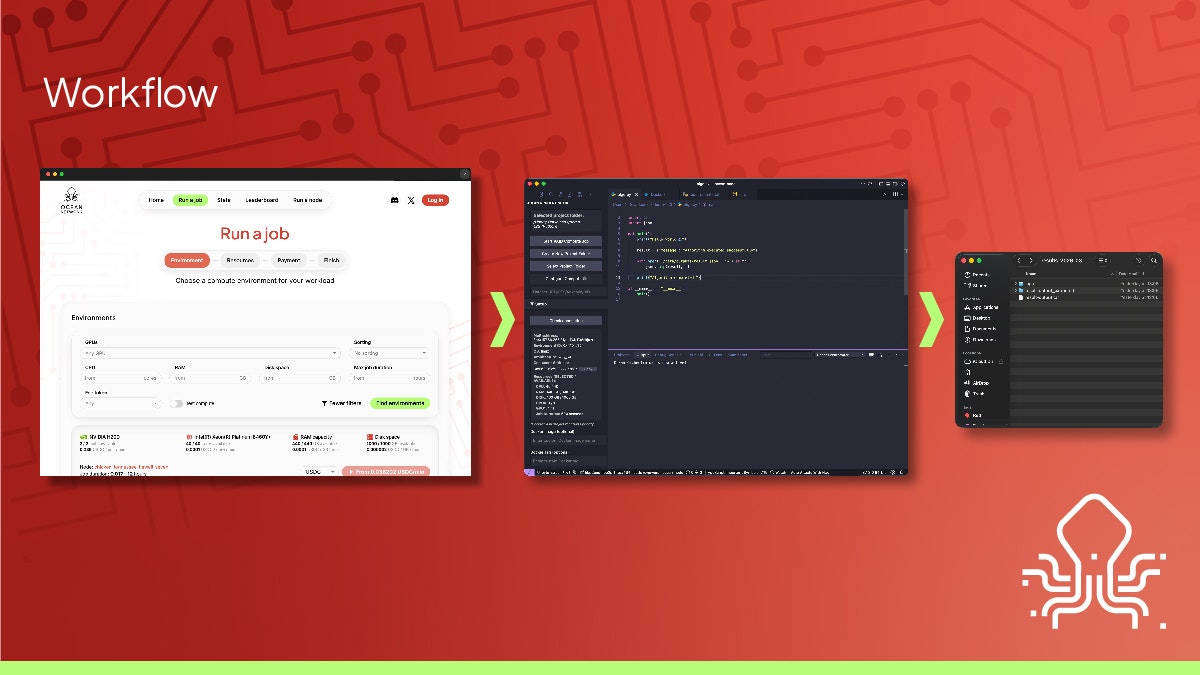
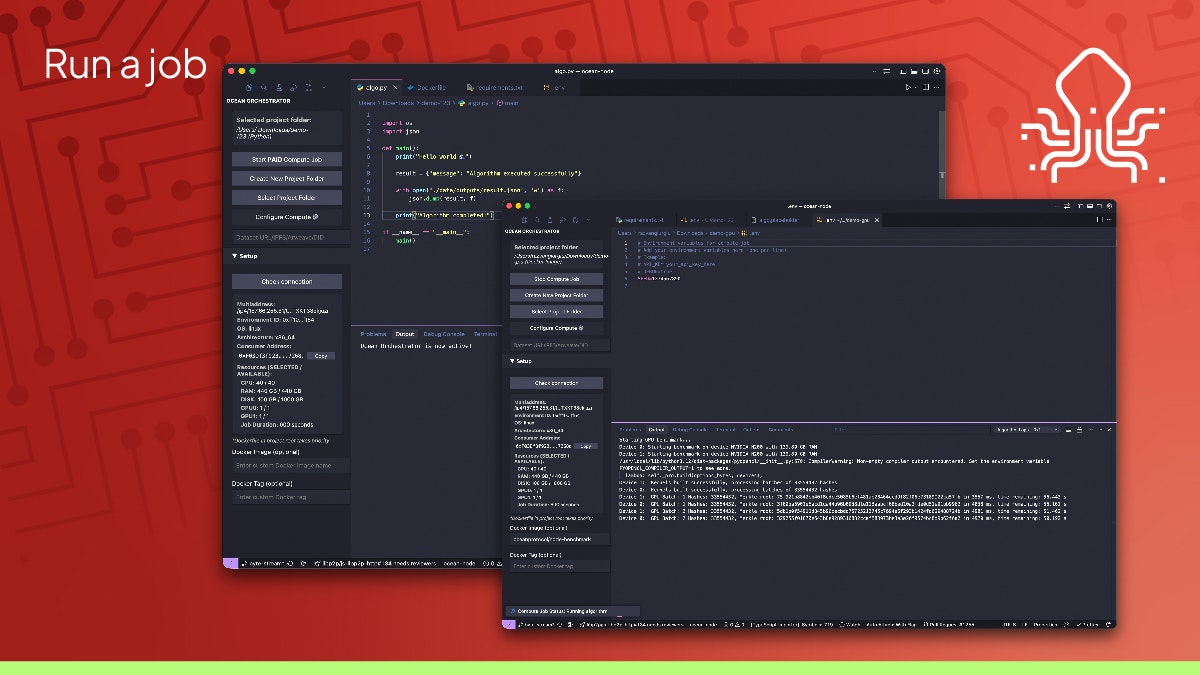
Access GPUs worldwide directly from your IDE. Ocean Orchestrator lets you run AI training and inference jobs while paying only for the compute you use. Jobs run on GPUs like NVIDIA H200s across the Ocean Network Escrow-based payments protect both users (data scientists, developers) and node operators, releasing funds only after successful execution, bringing reliable, decentralized GPU compute to real workloads with transparent pricing, global availability, and verifiable job execution at scale
Hey everyone🌊 We built Ocean Orchestrator to streamline the data scientist and developer workflow and help builders focus on what actually matters: building. Instead of spending time managing infrastructure, the goal was to make pro-grade compute feel as simple and accessible as running a git command. Since developers live inside their IDEs like Cursor, VS Code, Windsurf, or Antigravity, we felt that’s exactly where compute should live too. At the same time, Orchestrator helps power a peer-to-peer network where people can put their GPUs to work, turning idle hardware into a real income source instead of something that just collects dust. Can’t wait to hear your thoughts🚀
5
回复

Running AI jobs directly from your IDE without dealing with cloud setup could save a ton of friction for developers. How do you handle reliability when jobs are distributed across different nodes in the network?

0
回复

Been testing the VS Code extension, and the workflow is surprisingly smooth. Being able to run GPU jobs directly from my editor without dealing with cloud dashboards is exactly what I needed for intermittent ML workloads. The pay-per-use model actually makes sense for experiments.

0
回复

I've used this team's data products before - everything worked perfectly. Now I'm starting to test Orchestrator. We'll see how it goes.

0
回复

Started experimenting with it yesterday, and I must say I really enjoy working with the workflow

0
回复

Embedding GPU access directly into the IDE where developers already work — Cursor, VS Code, Windsurf — rather than requiring a separate infrastructure dashboard is the right UX decision for making compute feel invisible rather than burdensome. The escrow-based payment system that only releases funds after verified job execution solves the trust problem that plagues most decentralized compute networks; how does Ocean Orchestrator handle job failures mid-execution on a node — does the escrow mechanism cover partial compute costs, or is the user only charged for successfully completed work?

0
回复

@svyat_dvoretski If a node fails mid-job, you don’t lose funds for unfinished work, and you stay in control of where jobs run.

Ocean Nodes handle failures locally. If a node goes down, the job can restart on the same node once it becomes available again. If you want to run it elsewhere, you can reroute it yourself, as compute resource selection stays fully in the user’s hands.

However, if the failure is caused by the algorithm itself, the job is marked unsuccessful and you’re only billed for the compute time that actually ran, not the full job window. You can read more details about the Ocean Network and Orchestrator in the FAQ here.

0
回复
#9
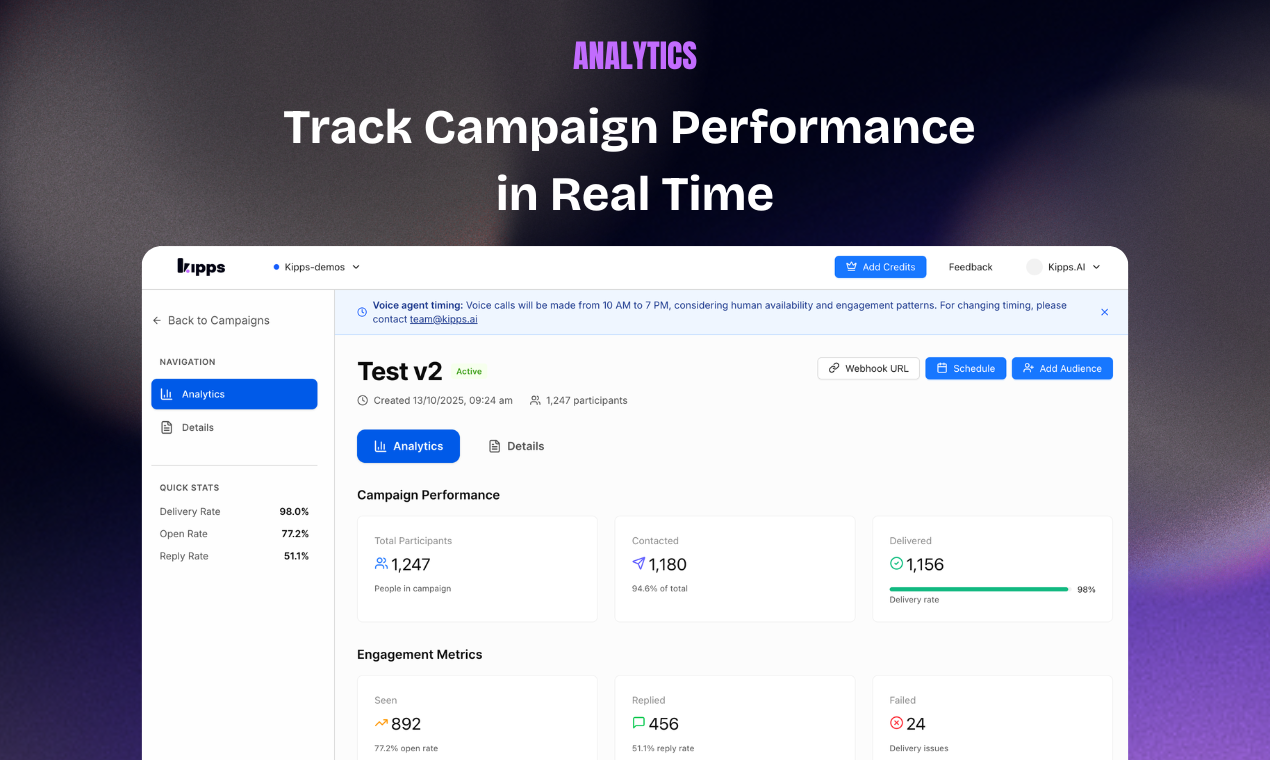
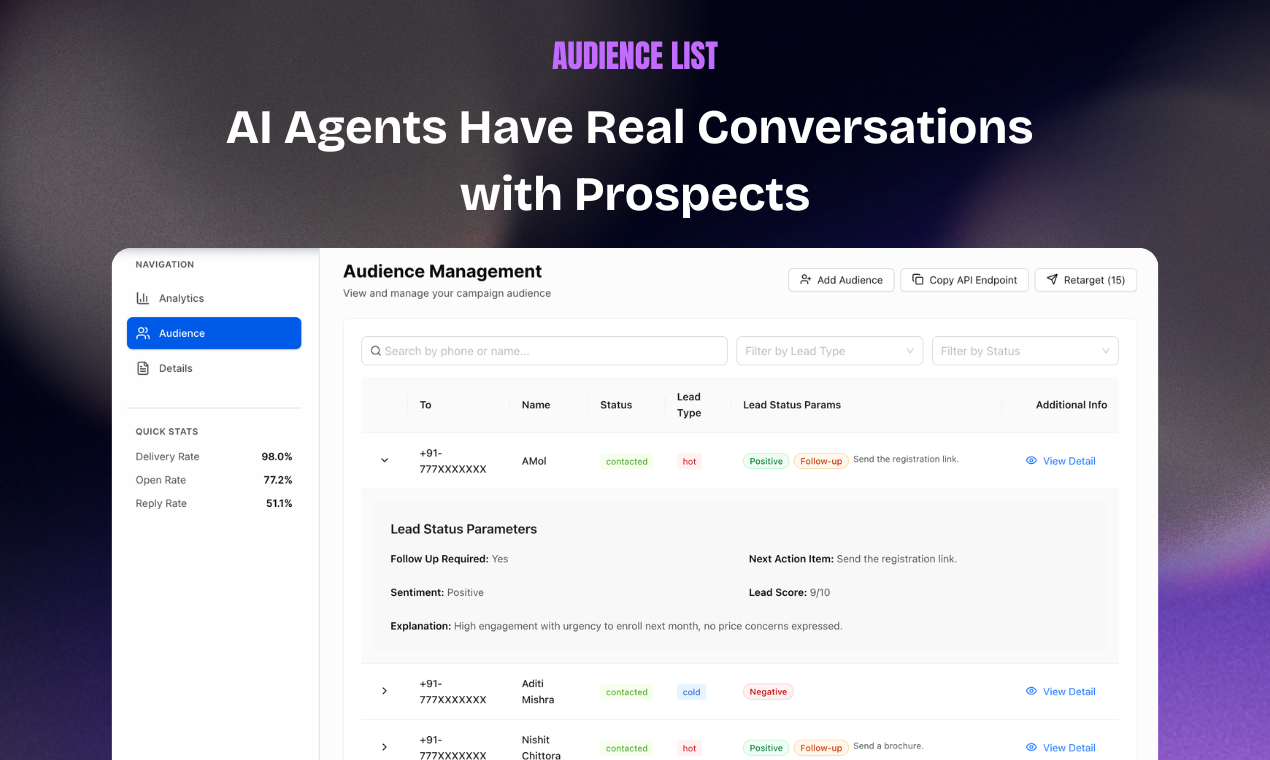
Kipps.AI Campaign
Lead Qualification, Bulk Outreach and Anniversary’s Reminder
127
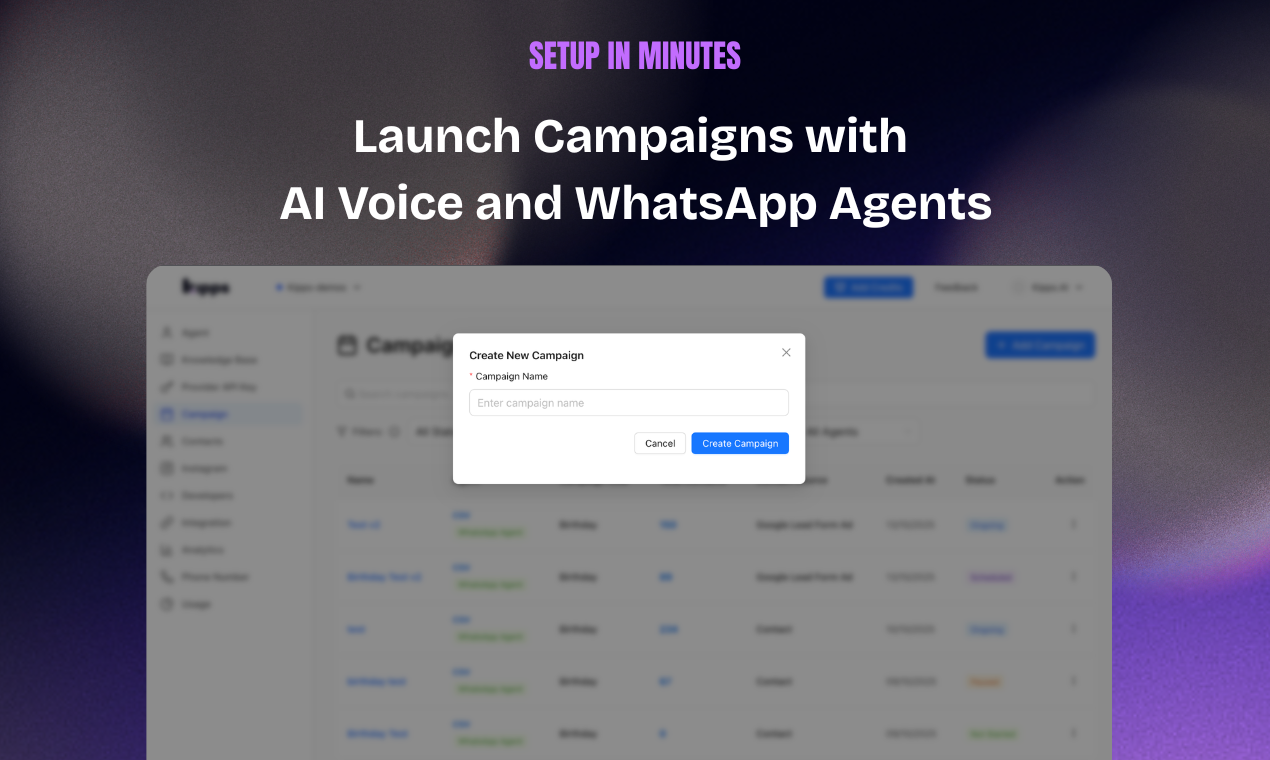
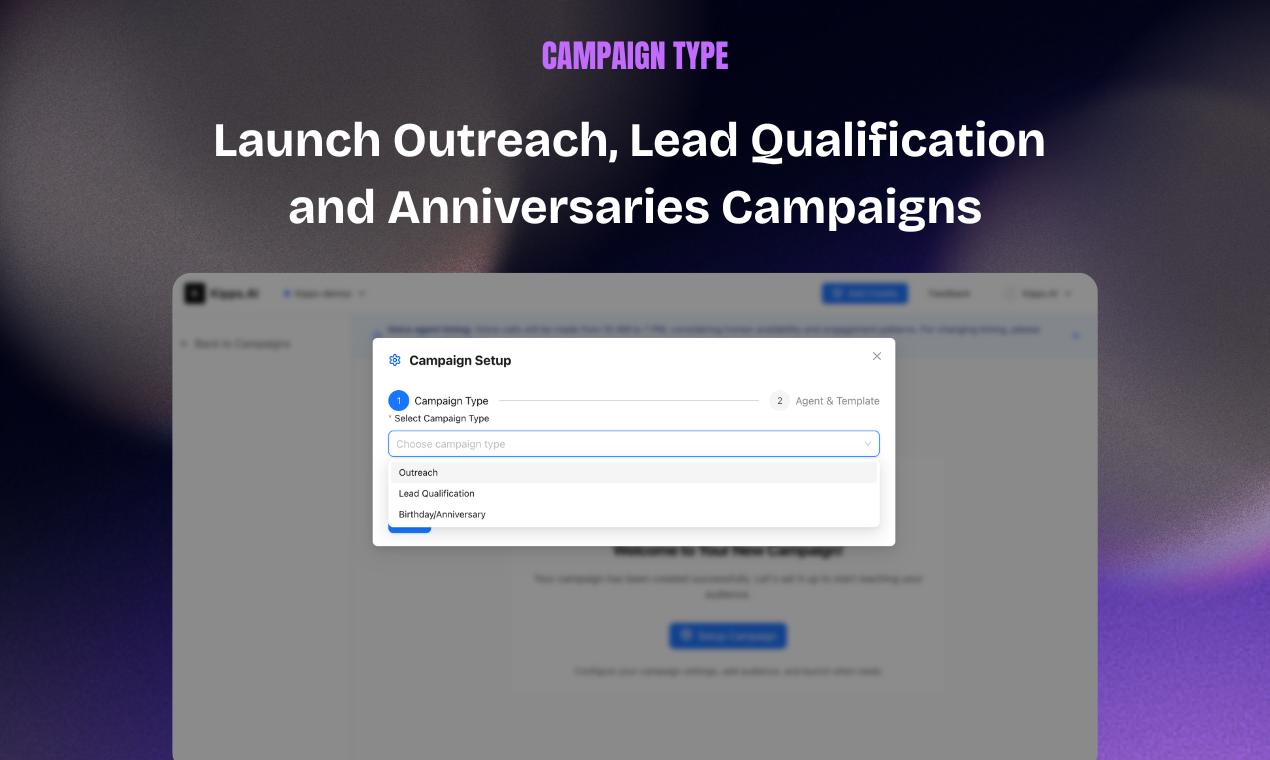
一句话介绍:Kipps.AI Campaigns 是一款AI智能体驱动的全渠道外联活动平台,为销售和市场团队解决了从多渠道获客到后续跟进、线索筛选及客户生命周期提醒全流程繁琐且易遗漏的手动操作痛点,实现了 outreach 工作的自动化与智能化。
Sales Marketing Artificial Intelligence
AI销售自动化 智能外联 线索筛选 全渠道触达 客户生命周期管理 AI语音助手 WhatsApp营销 营销活动管理 中小企业工具
用户评论摘要:用户反馈集中于产品价值(节省时间)、集成与多场景优势。主要问题涉及法规合规性(如TCPA/GDPR)、与竞品的差异化(转化率与ROI)、AI处理复杂对话的能力,以及规模化后的活动管理。创始人回复解释了AI处理边界、性能数据(如2-4倍响应率提升)和合规处理逻辑。
AI 锐评

Kipps.AI Campaigns 的核心理念并非简单的“自动化”,而是试图成为销售漏斗的“全栈AI代理”。其真正价值在于将分散的、高延迟的、依赖人力的“触点管理”整合为一个由AI驱动的、可闭环的“流程引擎”。这直指中小企业营销销售中最隐秘的损耗点:线索的静默流失。产品通过整合广告平台、CRM和表格,并赋予AI语音和WhatsApp双通道交互能力,本质上是在构建一个实时响应的“前端接口”,旨在将“线索”转化为“对话”的时间压缩到近乎为零。

然而,其面临的挑战与机遇同样尖锐。首先,合规性是其商业化的达摩克利斯之剑,尤其是在语音呼叫方面。创始人的回复虽提及评估逻辑,但未详述具体的合规框架(如opt-in机制),这在监管严格地区是重大风险点。其次,其宣称的“全场景”优势可能成为双刃剑。在早期,它需要证明自己在任一垂直场景(如保险顾问的续期提醒)的深度效果,而不仅仅是广度集成。用户关于转化率与ROI的质疑正是对此的反映。尽管给出了2-4倍响应率提升的数据,但这更多是“效率指标”,而非最终的“效益证明”。AI能否真正理解复杂业务意图、进行高质量销售对话,而非仅完成标准化问答,将是决定其天花板的关键。

产品的聪明之处在于嵌入了“生命周期提醒”这类非直接销售功能。这使其从单纯的“获客工具”向“客户成功”工具延伸,增加了用户粘性和使用场景。但评论中关于附加优惠券的建议也暴露出,其自动化流程的个性化与营销灵活性仍有深化空间。总体而言,这是一款思路清晰、切中要害的产品,但其成功不取决于AI技术的炫酷,而取决于对销售流程的深度理解、严格的合规设计,以及能为客户证实的、超越人力操作的增量收益。它不是在替代销售,而是在重新定义销售团队的“时间分配”。

查看原始信息
Kipps.AI Campaign
Kipps.AI Campaigns helps businesses run intelligent outreach campaigns powered by AI agents. Instead of manually managing emails, calls, WhatsApp messages, and follow-ups, Kipps AI automates the entire workflow. Create campaigns, upload leads, define goals, and let AI agents engage prospects, respond to queries, qualify leads, and schedule meetings automatically. Perfect for marketing teams, sales outreach, and customer engagement — all from one AI-powered platform.

Hi Product Hunt 👋

I’m Nishit, founder of Kipps.AI, and today we’re excited to launch Kipps.AI Campaigns 🚀

💡 Why we built this

While building AI automation tools for small businesses, we kept seeing the same problem again and again.

Businesses collect leads from ads, forms, CRMs, and spreadsheets, but most of those leads never get properly followed up.

Sales teams are busy, follow-ups get delayed, and opportunities slip through the cracks.

Even simple things like:
• reminding customers about renewals
• sending anniversary or birthday greetings
• qualifying new leads
• or following up with ad leads

Still requires manual work, spreadsheets, and multiple tools.

We realised that AI agents could handle most of this automatically.

🚨 The Problem

Today’s outreach and follow-up systems are fragmented.

Businesses struggle with:
• Managing leads from multiple sources
• Following up with every contact at the right time
• Qualifying leads efficiently
• Tracking where a contact is in the funnel
• Managing communication across voice and messaging channels

This results in lost leads, missed renewals, and poor customer engagement.

🚀 Introducing Kipps.AI Campaigns

Kipps.AI Campaigns helps businesses automate outreach, follow-ups, and lead qualification using AI agents.

You can run campaigns that automatically call or message contacts, qualify leads, and track their progress in your funnel.

🔧 What you can do with Kipps.AI Campaigns

Bulk Outreach & Lead Qualification
Reach hundreds of contacts and automatically qualify them as Hot, Warm, or Cold.

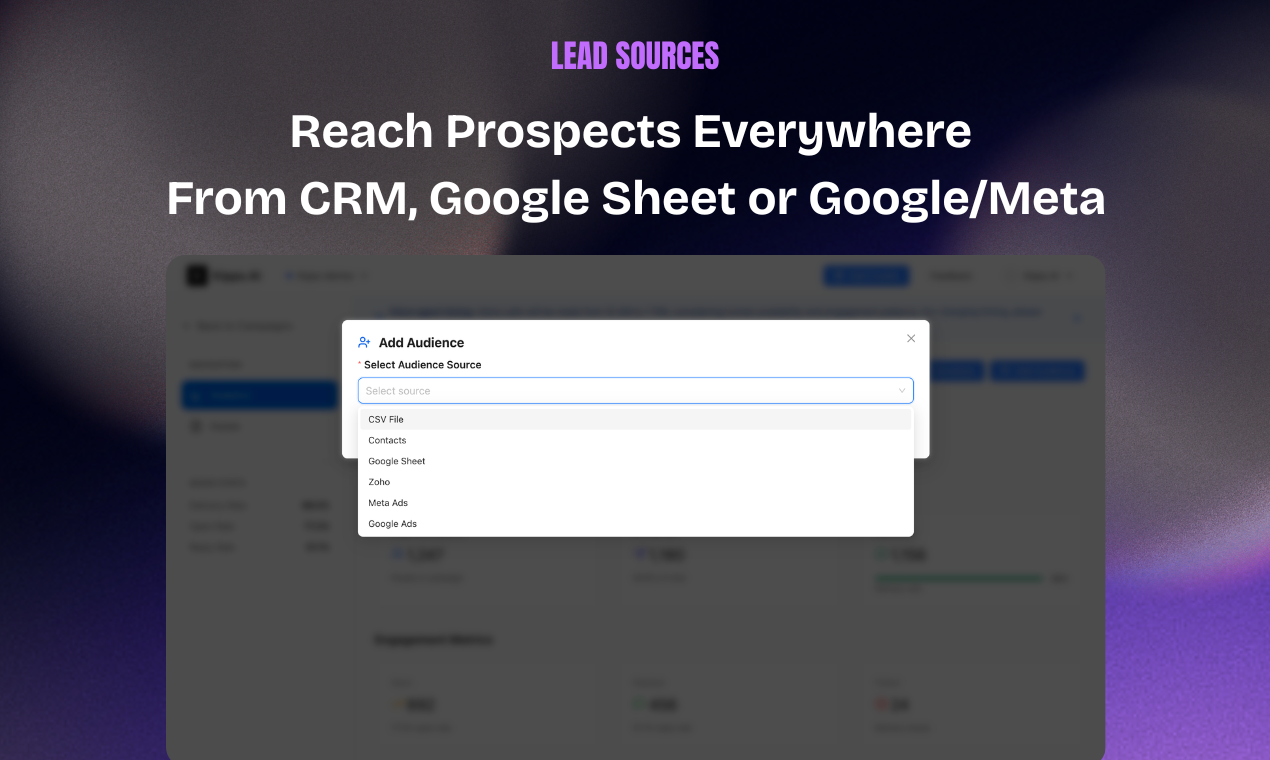
Multiple Contact Sources
Import leads directly from:
• Google Sheets
• Google Ads / Meta Ads
• Your CRM

Voice Agent + WhatsApp Agent
Engage customers via automated AI calls or WhatsApp conversations.

Smart Campaign Scheduling
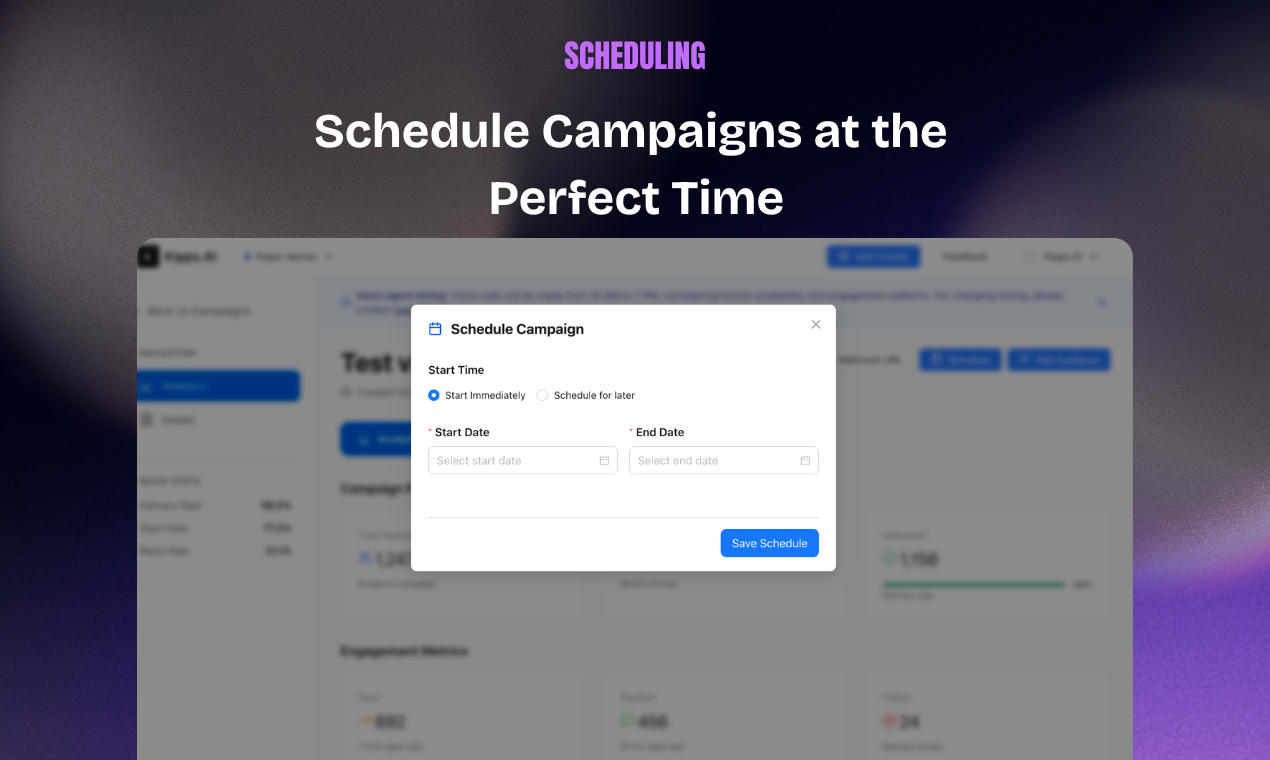
Schedule campaigns for outreach, reminders, or follow-ups.

Lifecycle Reminders
Automatically call or message customers for:
• Renewal reminders
• Payment due reminders
• Birthdays & anniversaries
• Important customer events

Contact Funnel Tracking
Track exactly where each contact is in the pipeline and their current stage.

Analytics & Reporting
Get consolidated insights on campaign performance, responses, and conversions.

🎯 Who this is for

Kipps.AI Campaigns is especially useful for:

• Insurance advisors
• Financial advisors
• Sales teams
• Agencies
• Businesses running ads and lead generation

Anyone who wants better follow-ups and higher lead conversion without manual effort.

🎁 Product Hunt Launch

To celebrate the launch, we're offering special early access for the Product Hunt community.

If you work with leads, outreach, or reminders, we'd love for you to try it and share feedback.

🙏 Thank you

Huge thanks to the Product Hunt community for supporting builders and new products.

I'll be here all day answering questions and would love to hear your feedback!

Let’s automate outreach with AI 🚀

4
回复

@nishit_chittora When an AI voice agent calls someone who didn't explicitly opt in to automated calls, how do you handle compliance with regulations like TCPA in the US or GDPR in Europe?

0
回复

What differentiates Kipps AI from other AI outreach tools in terms of conversion rate and real ROI for small teams?

2
回复

@satyam_singh47 All the other AI campaign tools focus on a single use-case, like outreach or Lead qualification or Reminders, also on a single medium like AI Voice or AI WhatsApp.

Also, there are limited options for importing contacts or leads.

At Kipps.AI, you can create AI campaigns of all types, such as Outreach, Lead Qualification, and Reminder.

With both AI Voice and WhatsApp. You also have a wide range of options for importing contacts or leads, along with a webhook option to dynamically add leads to a campaign.

Apart from its full-blown analytics section and Lead Management(Mini CRM 😉)

1
回复

Congratulations on the launch 🎉 🎉 !!

2
回复

@shubham_pratap Thank you

1
回复

Amazing time saving feature

Is what i hear all the time

2
回复
1
回复

Combining lead import from Google Sheets, Google/Meta Ads, and CRMs with automated qualification that categorizes contacts as Hot, Warm, or Cold across both voice and WhatsApp channels addresses the exact workflow gap where most small business leads die — the delay between capture and first meaningful follow-up. The lifecycle reminder system for renewals, payment dues, and anniversaries is a smart retention play that most outreach tools ignore entirely; how does the AI voice agent handle edge cases where a prospect asks something outside the campaign script — does it gracefully hand off to a human, or does it attempt to reason through the conversation?

2
回复

@svyat_dvoretski 
How Kipps.AI Handles Edge Cases

Every user query is evaluated in real time:

  • Is it within campaign scope?

  • Do we have enough knowledge/context to answer?

  • What’s the confidence score?

Based on this, the system decides to follow the script or call functions like Forwarding, Human-in-loop or upfront in saying "Sorry, I don't have an answer".

1
回复

What kind of measurable lift in conversion or response rates have you seen compared to manual follow-ups?

2
回复

@abhishek_shukla21 Great question — this was one of the first things we validated while building Kipps.AI.

Across early users, we’ve seen:

  • 2–4x increase in lead response rates
    (because responses are instant vs. delayed manual follow-ups)

  • 30–60% improvement in lead-to-meeting conversion
    (AI qualifies intent and asks the right follow-up questions consistently)

  • ~70% reduction in response time
    (from hours → seconds)

  • 20–35% higher engagement on outreach campaigns
    (due to personalized, context-aware messaging)

1
回复
solid use case. lead generation and outreach tend to break down when tracking and follow ups aren’t structured well. are you building anything around keeping campaigns organized as they scale
0
回复

When sending out anniversary/birthday greetings, are there opportunities to attach a coupon to it as well?

0
回复
#10
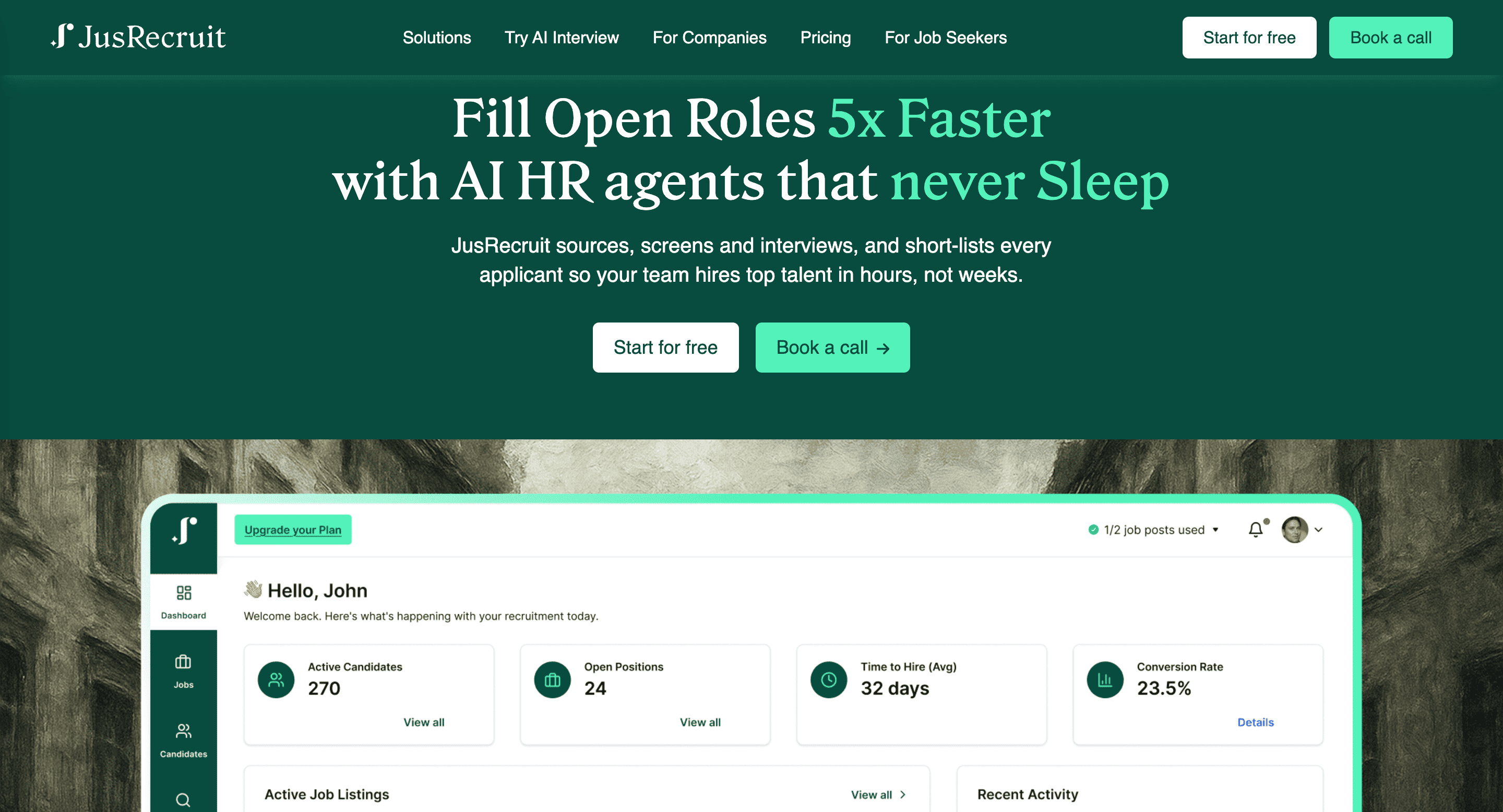
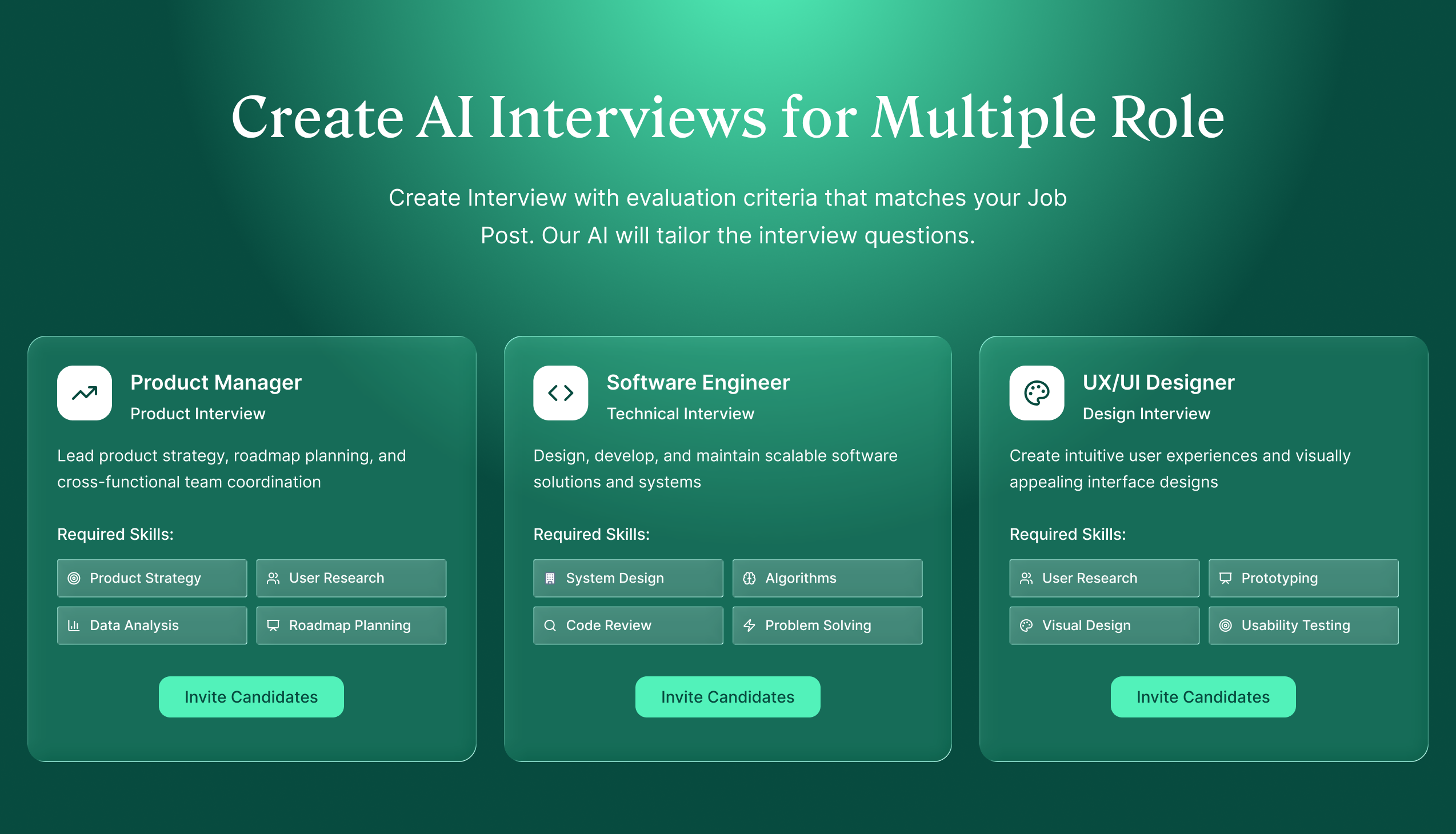
JusRecruit
AI ATS that handles phone screens + first-round interviews
126
一句话介绍:JusRecruit是一款AI招聘平台,通过AI自动进行电话筛选和初轮结构化面试,帮助处理海量申请的高增长企业或招聘团队,解决了招聘初期筛选耗时费力、流程缓慢的核心痛点。
Hiring SaaS Artificial Intelligence
AI招聘 ATS系统 自动化筛选 电话面试 招聘效率 人才招聘软件 招聘自动化 结构化面试 招聘流程优化 招聘SaaS
用户评论摘要:用户普遍认可其解决招聘筛选瓶颈的精准定位。主要问题与建议集中在:AI面试的误筛风险、候选人体验是否冰冷、对非标答案的处理能力,以及长期使用下的工作流整洁度管理。
AI 锐评

JusRecruit精准地刺向了现代招聘中最“脏累”却价值密度最低的环节——海量简历后的首轮筛选。其宣称的价值并非简单的“AI面试官”噱头,而在于将非结构化的、重复的人力劳动(电话初筛)转化为可规模化、可分析的结构化数据流。这才是其真正的“ATS”内核升级:从记录结果的系统,变为生成标准化初筛数据的引擎。

产品聪明地选择了“辅助”而非“替代”的叙事,强调AI负责“表面信号”,人类保留最终判断,这巧妙地规避了自动化决策的伦理争议与准确性质疑。然而,这恰恰也是其商业模式的潜在风险点:它本质上是在销售“时间”和“筛选效率”,其价值高度依赖于算法筛选的精准度与候选人接受度之间的微妙平衡。评论中关于“候选人体验”和“误筛”的担忧,直指其规模化应用的核心挑战——当AI筛选成为常态,企业是否会因效率提升而牺牲早期雇主品牌建设?那些不善于在标准化AI面试中表现、却极具潜力的人才,是否会被系统性错过?

它的未来不在于成为全知全能的招聘AI,而在于能否深度融入招聘工作流,成为可信赖的“第一层过滤网”。其成功的关键指标将不仅是“节省20小时”,更是“优质候选人漏筛率”和“候选人完课率与满意度”。在招聘这个极度依赖人际感知的领域,JusRecruit的终极考验是:能否让机器做的“粗活”足够聪明,从而真正释放人类去从事更有价值的“细活”——即那些需要共情、说服和战略判断的深度沟通。

查看原始信息
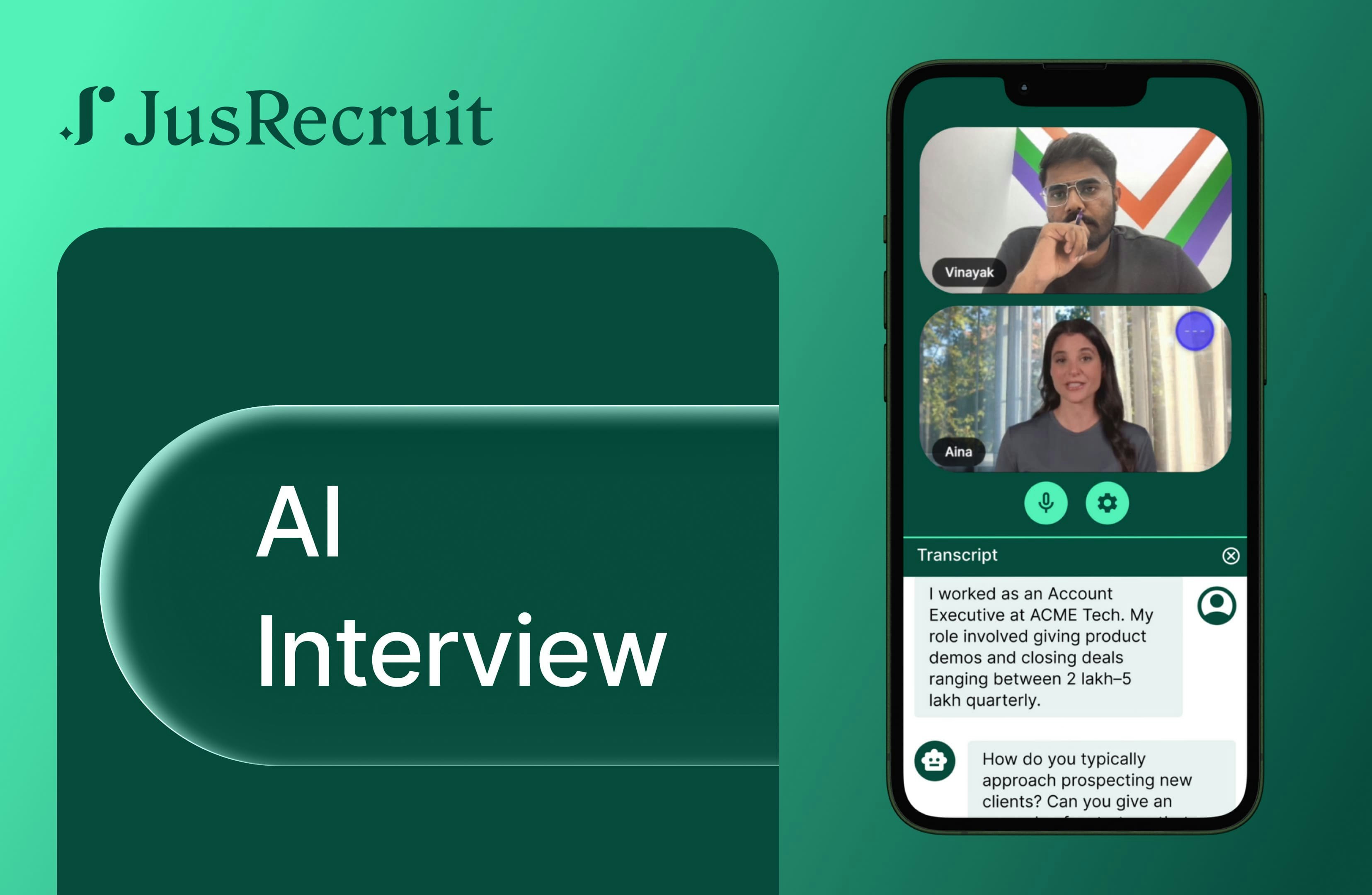
JusRecruit
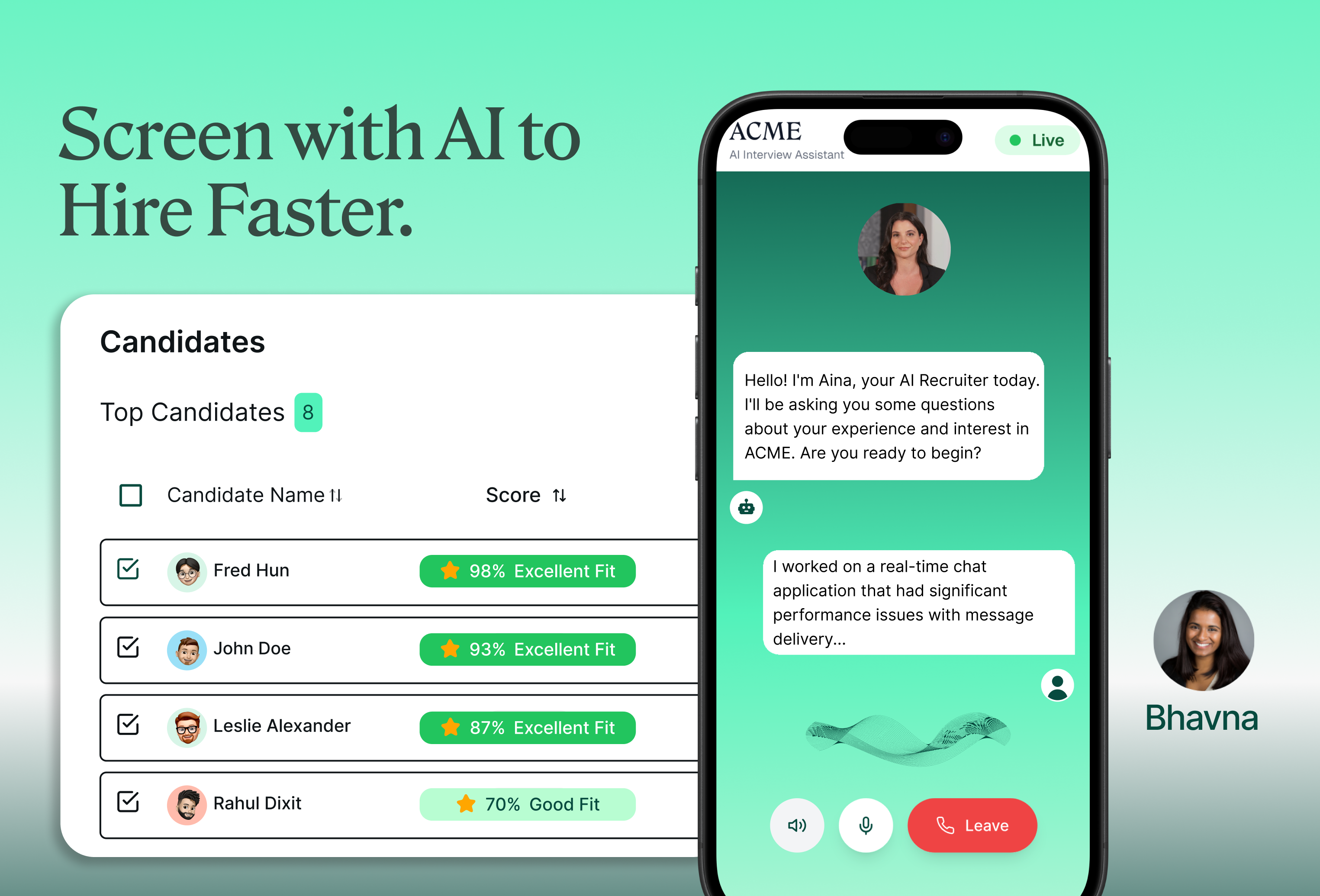
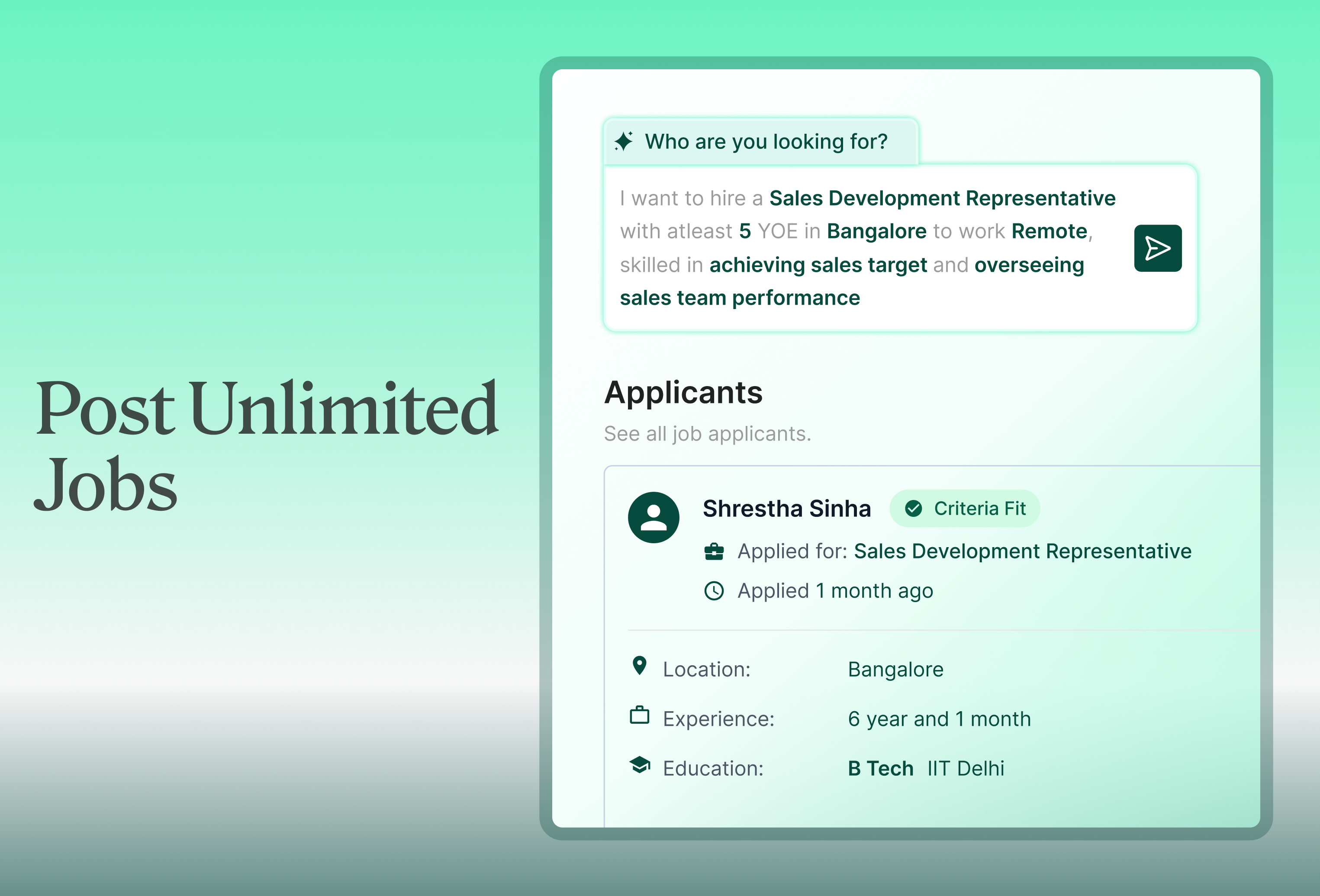
Cut time-to-hire by 10 to 15 days with AI that handles your first hiring bottleneck. JusRecruit phone-screens every inbound applicant, runs structured AI interviews, and surfaces only qualified candidates. Teams skip low-signal first rounds, free up ~20 recruiter hours per role, and move faster without sacrificing fairness or quality.
👋 Hi Product Hunt! I'm excited to introduce JusRecruit to the community today. Hiring teams today are overwhelmed with inbound applications. Recruiters often spend hours screening resumes, scheduling calls, and manually filtering candidates before they even reach the interview stage. We built JusRecruit to solve exactly this. JusRecruit is an AI-powered recruiting platform designed for high-volume hiring teams. It helps companies automatically screen applicants through AI phone interviews, run structured AI interviews, manage pipelines, and identify the best candidates faster. Our goal is simple: Help recruiters reduce time-to-hire by 10-15 days and save ~20 hours of manual screening per role. JusRecruit is especially useful for: • Recruiting agencies • Companies hiring at scale • Teams receiving hundreds of applicants per role Instead of spending hours screening candidates manually, recruiters can focus on engaging with the right candidates faster. We’ve spent months building and refining this product and would genuinely love your feedback. If you’re in recruiting or hiring, we’d love to know: 👉 What is the most time-consuming part of your hiring process today? Thanks so much for checking out JusRecruit 🙌
4
回复

Hiring is broken at the screening stage, too many applicants, too little time, and recruiters burning hours on calls that go nowhere.

JusRecruit fixes exactly that. Post a job, and "Saina" our AI interviewer takes over the phone screens and first-round interviews automatically. You wake up to a ranked shortlist of candidates who are actually qualified.

What makes it stand out is that it's not just an AI interviewer, it's a full recruiting stack. The built-in ATS lets you track every candidate, move them through stages, and plug in assessments, all in one place. No switching between five tools.

For any team tired of slow, messy hiring, this is worth trying.

3
回复

Really interesting, especially focus on removing the bottleneck at the screening stage.

Curious how you're thinking about false positives early on.

2
回复

@edgeghost False positives are definitely something we think about carefully, especially at the screening stage.

Our approach is to use AI mainly to structure and surface signals, not to make irreversible decisions. Recruiters can still review the full responses, transcripts, and evaluation signals before deciding whether a candidate should move forward.

The goal is to significantly reduce the manual screening workload while keeping the recruiter in control of the final judgment. That helps minimise the risk of strong candidates getting filtered out too early.

0
回复

this is actually a pretty real problem tbh. when the number of applicants gets high, just reaching the actually good candidates takes so much time and energy. i like that this is focused on that part and not trying to do 20 random things.

2
回复

@nayan_surya98 Exactly. When applicant volume increases, a lot of recruiter time gets spent just trying to identify the few candidates who are actually worth moving forward.

That’s the specific problem we wanted to focus on. Instead of trying to solve every part of hiring, JusRecruit is designed to handle the initial screening layer, so recruiters can reach the most relevant candidates much faster.


Keeping the scope tight was a deliberate decision.

0
回复

Phone screening was always the fastest way to filter candidates, but also where the first connection happened. Some people simply prefer talking to a human — it is how trust starts. Have you seen any pushback from candidates on the AI-led screening, or does the speed trade-off make up for it?

2
回复

@klara_minarikova That’s a great point. Phone screening has always been both a filtering step and a way to start that first human connection.

What we’ve seen so far is that most candidates actually appreciate the speed and flexibility. Instead of waiting days for a recruiter call, they can complete the screening immediately and move forward faster in the process.


We’re also careful about positioning it clearly to candidates. It’s not meant to replace human interaction in the entire hiring journey. It simply handles the initial screening so recruiters can spend more time having meaningful conversations with the most relevant candidates later in the process.


That balance between efficiency and human connection is something we’re paying close attention to as we continue improving the product.

0
回复

Love the recruiter side of this. Building on the candidate side with JobsUncle.ai would love to chat about where these intersect.

2
回复

@michael_matassa Appreciate that, thanks. JobsUncle.ai sounds interesting, especially if you're focusing on the candidate side of the journey.

There’s definitely a lot of opportunity where candidate experience and recruiter efficiency intersect. Would love to learn more about what you’re building and explore where there might be overlap.

0
回复

Automating phone screens and first-round interviews with AI targets the exact stage of the hiring funnel where the most recruiter time gets burned on candidates who won't advance — handling that initial qualification layer frees up human recruiters to focus on the nuanced later-stage conversations where judgment actually matters. The key question for any AI-driven interview tool is candidate experience; how do candidates typically react to the AI interviewer compared to a human phone screen — do you see differences in completion rates or candidate satisfaction scores between the two formats?

2
回复

@svyat_dvoretski That’s exactly the problem we’re trying to solve. A large portion of recruiter time gets spent on early screening that often doesn’t move candidates forward.

On the candidate side, what we’re seeing so far is that most candidates appreciate the speed and flexibility. Instead of waiting days for a recruiter to schedule a call, they can complete the screening when it’s convenient for them and move ahead in the process faster.

Completion rates have been quite strong, especially when the expectations are clearly communicated upfront. Candidates generally respond well when they understand that this step helps accelerate their application rather than delay it.

We also see this as a complement to human interaction rather than a replacement. The goal is to automate the initial qualification layer so recruiters can spend more time on meaningful conversations with shortlisted candidates.

Candidate experience is definitely something we’re closely tracking and continuously improving as we scale.

0
回复

👋 Hey Product Hunt!

I'm Nawal, and I've been obsessed with one problem for the past year: why does hiring still feel like it's stuck in 2005?

Watching recruiters drown in spreadsheets, manually dialing candidates, and copy-pasting the same screening questions over and over - it felt like a solvable problem. So we built JusRecruit.

JusRecruit is an AI-powered recruiting ATS platform for high-volume hiring teams. It runs AI phone screenings, conducts structured interviews, and surfaces your best candidates - automatically. The outcome we're laser-focused on: cutting 10–15 days off time-to-hire and saving recruiters ~20 hours of manual work per role.

We've been deep in the weeds on this - talking to recruiting agencies, in-house TA teams, and high-growth companies hiring hundreds of people at once. Every conversation reinforced the same pain: screening is broken at scale.

This is our answer to that.

If you're in recruiting, talent acquisition, or just someone who's been on the receiving end of a chaotic hiring process - I'd genuinely love your take.

👉 What's the most painful, soul-crushing part of your hiring process right now?

Every response shapes what we build next. Thanks for being here 🙌

2
回复

Interesting approach to cutting hiring bottlenecks — phone screens are one of the most time-consuming parts of the process. How does the AI handle edge cases where candidates give unexpected or creative answers?

2
回复

@fairpay Great question. In early screening, most questions are designed to capture structured signals like experience, skills, availability, compensation expectations, or problem-solving approach.

When candidates give unexpected or creative answers, the system doesn’t try to force a rigid interpretation. The responses are transcribed and analyzed for key signals, but recruiters can always review the full response and context.

In many cases those “unexpected” answers are actually useful, because they reveal how a candidate thinks or communicates. The AI helps surface those responses efficiently, while the final judgment still stays with the recruiter.

So the goal is not to over-automate decision making, but to make it much faster for recruiters to review and identify promising candidates.

0
回复

Thrilled to launch JusRecruit here today! 🙌

Recruiters told us the same thing over and over: too many CVs, too little time, and first-round calls eating up the entire week.

With JusRecruit, your pipeline moves on autopilot. Every candidate gets a structured AI interview the moment they apply. You get a shortlist with consistent, comparable insights, so you can focus on closing, not filtering.

Less screening. Better hires. Faster. That's what we built.

Built by people who've lived the hiring bottlenecks firsthand, we'd love for you to try it and tell us what you think!

1
回复
interesting direction. hiring systems usually get cluttered quickly with candidate data and stages. how are you keeping the workflow clean and easy to manage over time
0
回复

AI interviews can feel robotic and cause a high-potential prospect to lose interest in a company. Are there ways to avoid this when using an AI interviewer?

0
回复
#11
dropadoo
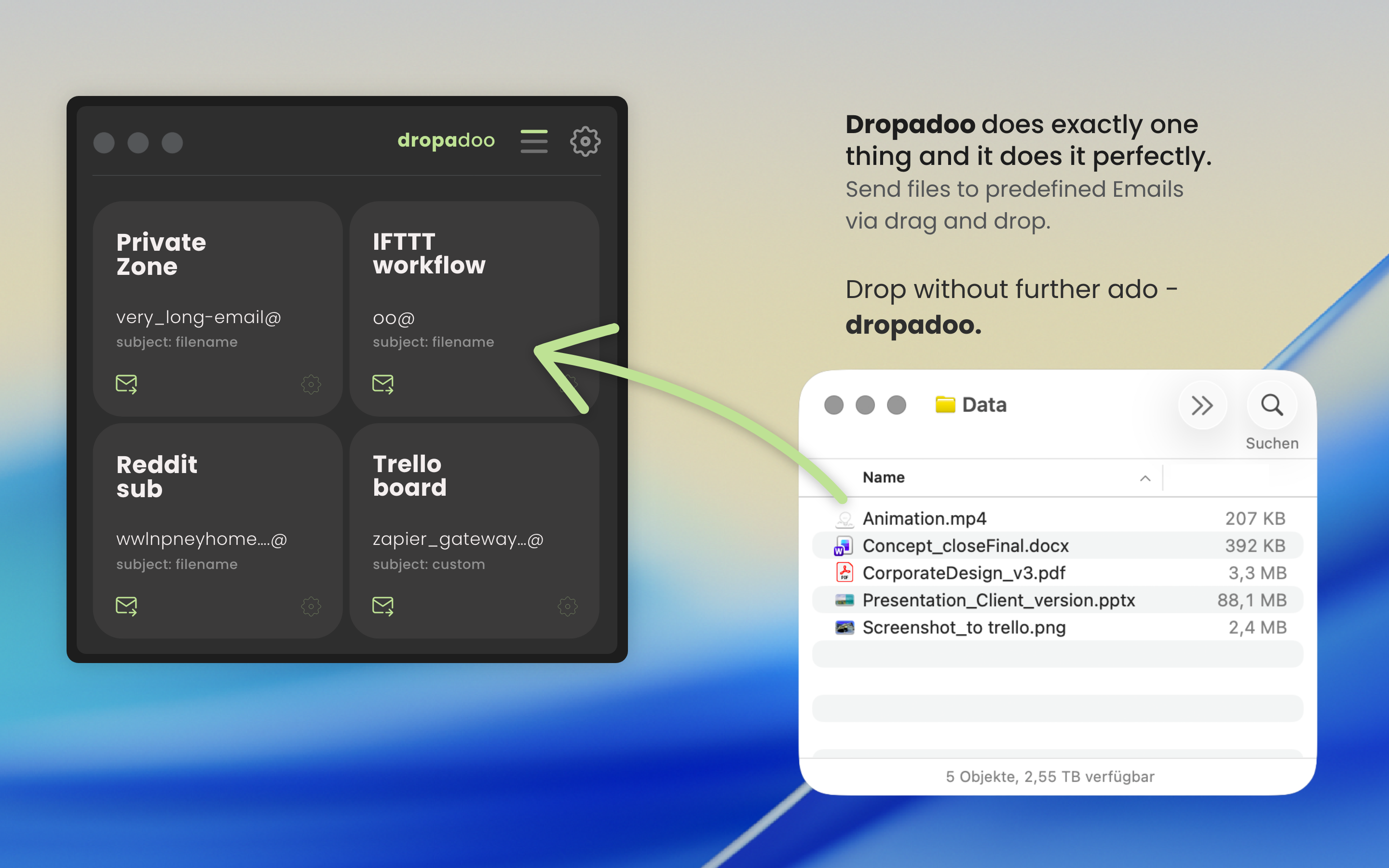
Send files to predefined Emails via drag and drop
119
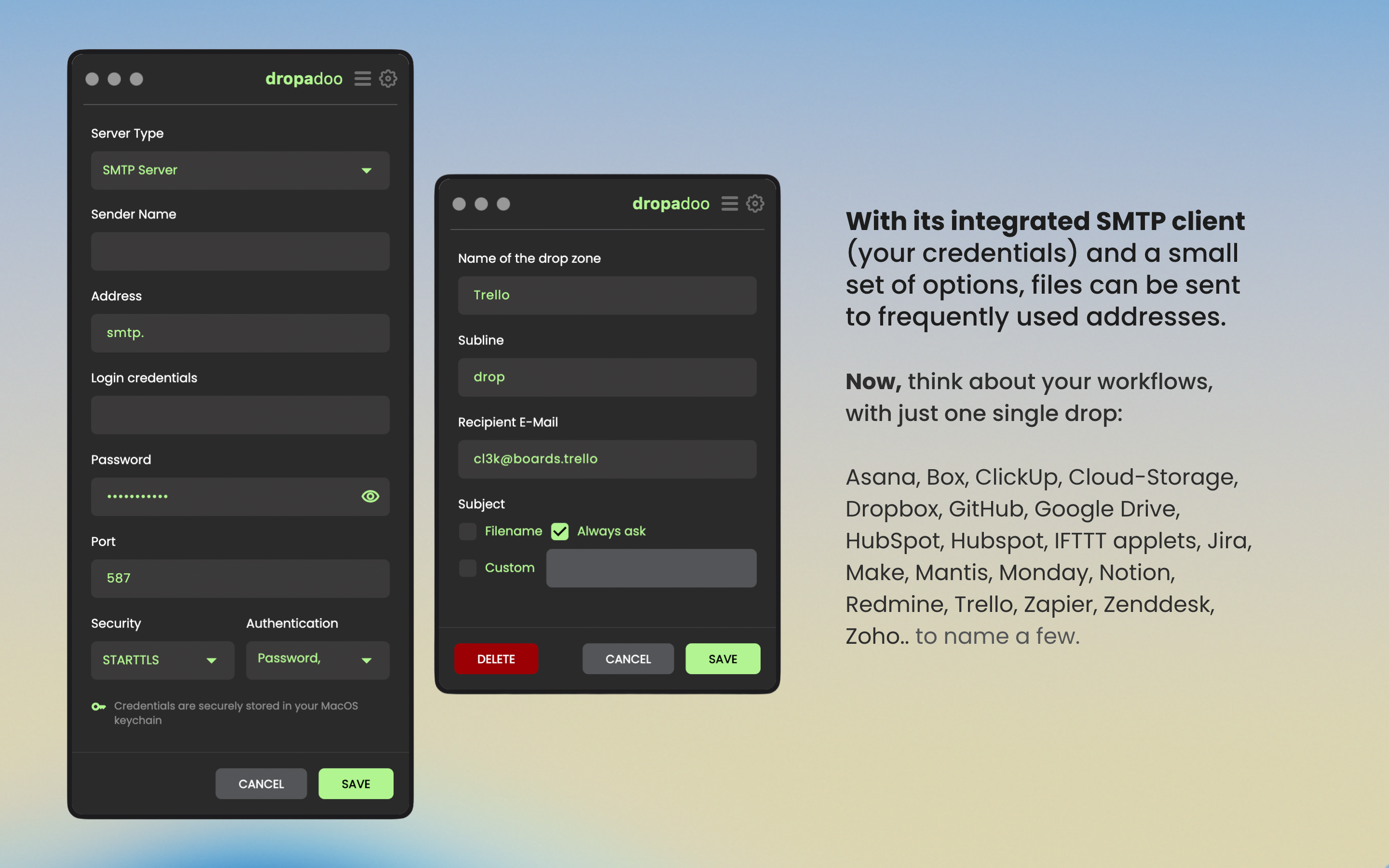
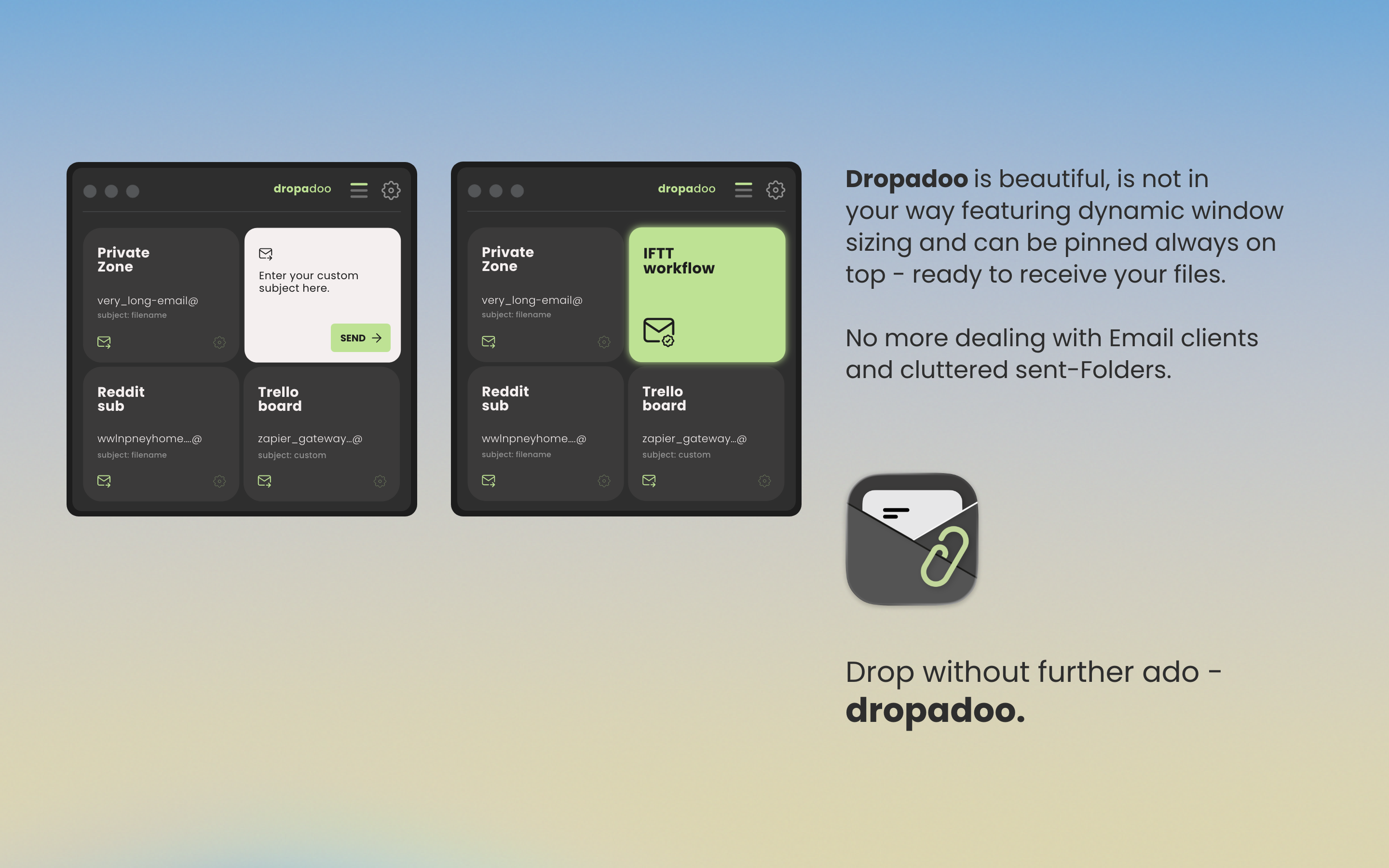
一句话介绍:一款通过拖拽文件即可发送至预设邮箱的MacOS工具,专为需要频繁向特定邮箱或协作平台(如Asana、Jira、Notion等)提交文件的场景设计,极大简化了文件传输流程,解决了手动选择收件人、上传附件的重复性操作痛点。
Email Productivity User Experience
文件传输工具 效率工具 MacOS应用 拖拽操作 SMTP客户端 自动化工作流 单功能应用 边缘场景工具 免费工具 开发者工具
用户评论摘要:用户普遍赞赏其功能单一专注、节省时间、设计精美且免费。主要反馈包括:建议绕过应用商店提供直接下载以规避费用(开发者回应无必要);询问是否支持定时发送;有用户联想到可扩展为“稍后读/做”桶,并好奇开发者背景。
AI 锐评

Dropadoo是一款典型的“单点突破”式效率工具,其真正的价值不在于技术革新,而在于对一种高频但被忽视的“边缘场景”的精准捕捉和极致简化。它将“发送文件到指定邮箱”这一动作抽象为最原始的拖拽操作,深度嵌入以邮箱为通用接口的SaaS生态(如Jira、Notion),实际上成为了一个轻量级、无感知的文件路由枢纽。

产品逻辑犀利地避开了“大而全”的云存储或协作平台竞争,转而充当它们之间的“粘合剂”或“触发器”。其集成自身SMTP客户端的做法,在确保隐私和安全可控的同时,也巧妙地绕过了系统邮件客户端的臃肿和延迟。这一定位使其用户画像极为清晰:是那些工作流严重依赖多个平台、且频繁需要提交文件(如日志、报告、素材)的开发者、项目经理或内容创作者。

然而,其“单一功能”既是护城河也是天花板。评论中关于“定时发送”和“复制文本/链接”的建议,已暴露出用户对“自动化”和“信息类型”的延伸需求。产品目前更像一个精巧的系统级快捷键,其长期价值取决于能否在保持核心体验极度简洁的前提下,以插件化或配置化方式,优雅地覆盖更多相邻的“单点”场景(如格式化文本、简单处理),或开放API成为自动化链条中的一环。否则,它可能永远停留在“小而美”的利基工具范畴,易被集成度更高的平台更新所覆盖。开发者对“绕过App Store”建议的冷淡回应,也折射出此类工具在增长与商业模式上的普遍困境。

查看原始信息
dropadoo
Dropadoo does exactly one thing and it does it perfectly: Send files to predefined Emails via drag and drop. Think about platforms that accept email receipt... worktlows with: Asana, Box, ClickUp, Cloud-Storage, Dropbox, GitHub, Google Drive, HubSpot, IFTTT applets, Jira, Mantis,Notion,Trello, Zapier, Zoho, to name a few.. With its integrated SMTP client (your credentials) and a small set of options, files can be sent as quick as somehow thinkable. // Dropw without further ado - dropadoo //
Personal project, beautiful, witty app that saves so much time. Reddit loves it so far. Working on MacOS, free, no in-app peruchases, hand coded, stable and yes... this is the definition of an edge-case app. Then again, if it fits your workflow, you will love it.
4
回复

Great idea! You should build a website that allows users to bypass the Apple App Store fees, enabling them to download your DMG directly without incurring those charges.

1
回复

@vincentpruv the app is free, so i don't see a benefit in that.
what i do opt in is notaized and signed. peopel are lazy, no privayc settings tweaking needed with dropadoo.

0
回复

I like how it does one thing and commits to it fully. Most tools try to do everything — this is refreshing. Does it support scheduled sending?

0
回复

Hey Oliver. This looks very interesting. I had almost the same idea a while ago. The only difference being that I wanted the ability to copy and paste links or text as well. Basically using it as my read/do later bucket... ;-) But I'm no developer, so this idea was just rotting on some list. Happy to see that somebody did that! Good luck with it!

By the way. Are you the guy behind Pitchable?

Cheers

0
回复
#12
Folderly
Get revenue from every email campaign with 99.9% inbox rate
115
一句话介绍:Folderly是一款AI驱动的邮件送达率平台,通过为团队设计的统一看板,实时监控、测试并修复垃圾邮件问题,解决企业在规模化外发邮件时因邮箱数量激增而导致的送达率管理混乱和效率低下的痛点。
Sales Email Marketing SaaS
邮件送达率 AI驱动 团队协作 收件箱管理 反垃圾邮件 绩效看板 任务优先级 SaaS B2B营销 自动化监控
用户评论摘要:用户肯定产品解决了多邮箱管理混乱的痛点,认为任务优先级功能实用。核心疑问包括:是否指导何时放弃并重建邮箱、如何实时适应ESP算法变化。建议将主页标语更具体地指向“管理多邮箱”这一核心场景。
AI 锐评

Folderly的宣称直击要害——“从每个邮件活动中获得收入”,但其真正价值并非简单的“99.9%收件箱送达率”承诺,而在于将“邮件送达率”这一传统上黑箱、被动、依赖专家经验的运维问题,转化为一个可量化、可优先处理、可团队协作的标准化运营流程。

产品从“单点工具”升级为“团队看板”,其深层逻辑是应对企业规模化增长时的“运维复杂度指数爆炸”问题。当邮箱从5个增至30个,手动检查不仅低效,更关键的是无法系统性发现和排序问题。Folderly的新看板本质上是一个“邮件基础设施的集中告警与工单系统”,它通过健康评分和任务标记,将模糊的“送达率感觉”转变为明确的待办事项,其核心价值是**将不可见的风险转化为可见、可管理的动作**,从而让营销和销售团队从被动的“救火队员”回归到主动的战役执行者。

用户评论揭示了更深刻的行业痛点:市场上充斥着前端美观但后端用“人工农场”和无效种子列表堆砌数据的工具。Folderly团队(Belkins)的背景暗示其拥有扎实的底层基础设施,这或许是实现真正有效邮箱“热身”和实时监控的技术壁垒。这指向了该领域一个关键竞争维度:**信任与真实性**。在充斥着数据虚荣指标的时代,能提供真实、可行动的后端洞察,本身就是一种稀缺价值。

然而,挑战依然存在。其价值高度依赖于对Gmail、Outlook等主流邮箱服务商过滤算法变化的实时捕捉与解读,这是一个持续的技术军备竞赛。此外,产品需警惕从“专业工具”滑向“通用看板”的陷阱,必须在深度与易用性之间保持平衡。总体而言,Folderly的迭代方向正确,它正试图将电子邮件从一种“营销渠道”重新定义为需要精细运维的“关键业务基础设施”。

查看原始信息
Folderly
Folderly is an AI-powered email deliverability platform that monitors, tests, and fixes spam issues - so your emails actually reach inboxes. What's new: a dashboard built for teams. Before, you had to check each mailbox one by one. Now you get: • Account-level health score across all mailboxes • Every inbox scored in one view • Task system that flags what's critical vs. what can wait One screen. Full visibility. Built for teams sending at scale.
Hey Hunters 👋 The brutal truth about scaling outbound: more mailboxes = more chaos. We watched teams go from 5 inboxes to 30 and drown in tabs. Checking deliverability one mailbox at a time? That's not a system. That's a full-time job. So we rebuilt the dashboard from scratch. What it was: Click into each mailbox. Check the score. Repeat 30 times. Miss the one that's actually on fire. What it is now: One screen. Every mailbox scored. Critical issues flagged. You open it, you know exactly what needs fixing. The overlooked game-changer? Task prioritization. Our new dashboard tells you what's critical vs. what can wait - so you fix what actually impacts deliverability. Built for teams sending at scale. If you're managing 10+ mailboxes and still checking them one by one - this is for you. Your move. Check it out and see the difference.
3
回复

I used to use your email spam checker tools a lot :) Glad to see you here! Good luck today

1
回复

@steffen_rehmann Steffen, you're one of the reasons we kept building! Curious - are you still deep in email, or has your stack evolved? Either way, so glad you're here today!

0
回复

Does Folderly tell me when an email is beyond help and make recommendations on when to create a new one? Especially since creating a new one requires time to "warm up".

0
回复

Although there are many tools that do warm-up of your emails and furthermore sequencing tools are building this functionality up inside their products, their layouts might look great, but what's happening on the backend, are those warm-ups actually work? I know for a fact that lots of other tools are using people farms on the backend and pre-built seed lists that eventually won't give you any results except of nice numbers of the dashboard. Folderly is different, I know @belkins and @anastasiia_ivannikov have built huge back-end which is not something you want to highlight as it's not very markety, but oh my god it works. Kudos to Folderly team! Great product!

0
回复

@michael_maximoff Michael, you just said out loud what the whole industry avoids talking about 👏

Means a lot coming from you. Thank you

0
回复

this is actually very relatable. once the number of mailboxes starts growing, things get messy real fast and checking each one manually is just painful. the task prioritization part sounds way more useful than people might think.

curious, what was the biggest thing teams were missing before this rebuild, actual deliverability issues or just not knowing where to look first?

0
回复

@nayan_surya98 Both - but the root cause was always not knowing where to look first.

The deliverability issues were there. They just weren't visible until something broke badly enough to notice. Most teams were reacting, not monitoring. By then, campaigns were already burned.

Task prioritization sounds like a UX feature. It's actually an ops feature - it's what stops a 30-mailbox setup from requiring a full-time person to babysit it.

0
回复

Interesting launch, @belkins. The chaos from managing many mailboxes is real.

One thought while checking the homepage. Your PH story explains the pain perfectly: teams drowning in 30 inbox tabs. But the hero section says "Email deliverability starts here," which I think feels broad.

Something like "Manage 30 Outbound Mailboxes from One Dashboard" might hit the pain faster. Curious if you tested something like that.

0
回复

@taimur_haider1 Taimur, appreciate your feedback. Actually that does make a lot of sense, thanks for sharing the perspective

1
回复

Promising 99.9% inbox delivery rate tackles the single biggest invisible problem in outbound sales — teams scale mailboxes and campaigns without realizing a growing percentage of their emails are silently landing in spam, making the entire investment in copy, targeting, and sequencing worthless. The challenge with email deliverability is that it's a moving target as ESP algorithms constantly evolve; how does Folderly's approach adapt when providers like Google or Microsoft change their filtering criteria — is there continuous monitoring that detects deliverability drops in real time, or is it more of a periodic audit model?

0
回复

@svyat_dvoretski Great question!

The changes are continuous, for sure. Folderly monitors deliverability signals in real time across mailboxes, so when Google or Microsoft shifts filtering behavior, we detect the drop before it becomes a pattern.

Periodic audits tell you what already broke. We flag it while it's happening.

The infrastructure underneath is what makes this possible.

0
回复
#13
Agen
Fully Autonomous AI Coding Agents
111
一句话介绍:Agen是一款全自主AI编程代理,通过在云端自动处理从任务描述到完成代码的整个流程,解决了开发者在多仓库协作、持续集成管道修复及移动办公场景下的效率瓶颈。
Software Engineering Developer Tools Artificial Intelligence
AI编程代理 云端开发 自动化编程 多仓库管理 自主修复 协作工具 开发效率 代码安全 移动编程 软件开发
用户评论摘要:主要评论来自创始人,阐述了产品设计理念与核心优势:全自主、云端运行、自动修复管道、多仓库支持等。另一条为简短祝贺。未发现来自真实用户的批评或具体功能建议。
AI 锐评

Agen将当前主流的“副驾驶”式AI编程工具,推向“自主代理”的新阶段,其价值核心在于试图将人类从具体的代码实施与管道维护循环中剥离出来。产品强调的“云端优先”、“自修复管道”、“多仓库会话”直击现有AI编码工具的三大软肋:对本地环境的依赖、无法闭环处理集成错误、以及任务范围局限于单仓库。这本质上是对软件开发工作流的一次重构尝试,让AI负责高重复性、高确定性的实施与运维环节。

然而,其宣称的“完全自主”面临严峻考验。真正的瓶颈并非技术环境,而在于AI对复杂、模糊业务逻辑的理解能力,以及跨系统设计决策的可靠性。在复杂任务中,“最小化人工指导”可能迅速演变为“频繁的人工修正与上下文补充”。当前的高赞评论实为产品自述,缺乏真实用户的验证,其实际效能、在复杂企业代码库中的表现、以及可能引入的安全与架构混乱风险,仍有待观察。它更像一个面向未来的激进宣言,其成败将取决于AI在代码“意图理解”与“系统思维”上能否取得质变,而非仅仅提供更流畅的自动化执行环境。

查看原始信息
Agen
Autonomous AI coding agents that take software tasks from prompt to finished code. Agents run in the cloud, and work on the tasks autonomously, across multiple repositories.

Finally, a Fully Autonomous AI Coding Agent 🚀 .

TLDR:

  • yes, Agen is already building itself at this point 🤩

  • runs in the cloud, doesn’t need local installation

  • automatically fixes your pipelines

  • delivers a fully working code!

  • as a ProductHunt user, you can try Agen for free, and get $20 Credits on sign up


AI already changed a lot the way we code, but it didn’t really change the way we work and think about the code. For the biggest part, we have the same processes and workflows, the biggest difference being the fact that an AI model writes the code for you.

We built Agen as the coding agent for the future, with the goal to help the teams build faster, better, and importantly, secure code.

Here are the principles that are driving us, and which are the foundations of what we’ve built so far and the many things we plan to build in the future, keep reading to see what this means for you and your company.

🚀 Fully Autonomous AI Coding Agents - our goal is to make sure that the agents are being able to do the work independently, with minimum human guidance. We noticed that the biggest bottleneck are the humans right now, because the agents still need quite a lot of guidance, starting from the environment they run it, and ending with the work they do. Continue reading to see what we’re doing to fix this.

☁️ Cloud-First: this is the first step to have autonomous agents, they need an environment to run in, and right now, if you close your machine, your agent stops working. By making the agents cloud-first, we make sure that they always have a place to run in, and that they’re not blocked by humans when they need to do the work. For you and your company this means that the agents will do meaningful work 24/7 and help you move faster.

🧑‍🔧 Self-healing pipelines - this is the next step, and something that the agents are blocked by when they make changes to the codebase pretty often. Usually, a developer has to tell the agent that the pipeline failed, why it failed, and ask them to fix it, or they use the MCP (if the version control system they use has one), but it’s still happening manually, on user request. Our agents are monitoring the failed pipelines and fixing them automatically, with zero human involvement. This results in a huge amount of time saved - time that can be spent on more meaningful work.

📆 Scheduled Agents - they're running on your schedule, and they're doing autonomous work in the cloud, without human supervision - all you have to do is check and merge the code.

🪾 Multi-repository support - one of the biggest issues with the autonomous coding agents is that they're tied to a specific repository, and they can't make changes to multiple repositories for a task, usually you have to start new agents if your task involves making changes to multiple repositories. We built Agen to work flawlessly with multiple repositories, it will automatically choose the right repository to change, and it's able to make changes and open MRs in multiple repositories within the same session.

💻 Multi-session environment - one more blocker for real autonomous work, and the only way to have multiple sessions with the current agent is to create multiple copies of your repositories, and run them in different terminals, but that’s time consuming, and not efficient at all, especially when it comes to cleaning them up, creating them again, etc., All our Agents are doing the work within a session, which gets an isolated sandbox, it’s own branch, MR, etc. For you, as a developer, it’s important to be able to run multiple tasks at the same time, the work is not linear, and being able to run multiple sessions is a huge productivity boost.

📱 Mobile-friendly - you know that message you’re getting from your boss about a bug when you don’t have the computer with you? It’s happened to all of us, and it’s stressful 😣 . We optimized our web app and made it mobile friendly so that you can make changes wherever you are, and whenever you have to.

🧑‍💻👩‍💻 Built for meaningful collaboration, with per-repository access, and granular permissions, that resemble how the teams usually work. Each person can be given access to specific repositories, and they can have different roles for each repository. This keeps your codebase confidential and secure.

✅ See your pipelines & merge straight from the session, without having to switch tabs. You’ll see a green indicator when all the pipelines pass, so that you know that the work is completely finished. The next step is to actually merge the code, and you can do it without leaving Agen, straight from the session page.

🔐 Security - the Agents are making changes on your codebases in new, secured and protected sandboxes for every session. The sandboxes are destroyed once the Agent has finished the work, together with your code and any traces of it.

⏭️ What's coming next: integrations, more autonomy

Your feedback means a lot - please leave a comment and tell us what is the biggest blocker you’re having when using AI tools for coding, and what would you like to improve in your workflows.

Thank you for reading so far!

Daniel, Co-Founder 👋

7
回复

Congratulations Daniel, really excellent product and useful.

0
回复
#14
ClickSay
Click any element and ClickSay instantly captures it
108
一句话介绍:一款通过点击网页元素自动捕获其技术细节并生成结构化提示词的工具,解决了开发者在向AI编程助手描述UI元素时效率低下、描述不准确的痛点。
Chrome Extensions Developer Tools Vibe coding
AI编程助手 开发者工具 浏览器扩展 前端调试 UI修复 生产力工具 人机交互 提示工程 代码生成 网页开发
用户评论摘要:用户普遍认为产品精准解决了向AI描述UI元素的痛点,极大提升了效率。创始人回复证实其适用于从新手到设计师的广泛用户。有用户询问主要用户群体,亦有用户感叹其彻底改变了工作习惯。
AI 锐评

ClickSay 表面上是一个为AI编程助手提供上下文的“翻译”工具,但其深层价值在于,它正在试图弥合“直觉化前端操作”与“结构化代码修改”之间最后的认知鸿沟。产品聪明地避开了与主流AI代码工具在代码生成能力上的正面竞争,转而聚焦于一个被忽视但至关重要的前置环节:精准的问题定位与上下文传递。

其真正的颠覆性在于,它通过技术手段(捕获CSS选择器、计算样式、组件名)将人类模糊的空间与视觉描述(“那个圆角按钮”)转化为AI可精准识别的机器语言。这不仅提升了单次交互的成功率,更关键的是,它通过“Sweep Mode”等功能,将零散的UI修改需求批量化和结构化,实质上是在重构前端调试的工作流。创始人声称的“肌肉记忆”和“行为改变”,指向了工具演化的高级阶段——从“有用”到“不可或缺”,最终成为用户思维模型的一部分。

风险与挑战同样明显。其价值高度依附于现有AI代码工具的能力边界,若未来AI在视觉理解和上下文推断上取得突破,该工具的“桥梁”作用可能会被削弱。此外,当前它更像是一个高效的“信息打包器”,其护城河在于工作流集成深度与用户体验。能否从单点工具扩展为涵盖设计稿对接、版本对比等更广场景的“AI协作平台”,将决定其天花板。总体而言,这是一个在正确时机切入细分痛点的精致解决方案,展现了工具类产品在AI时代的新范式:不做AI的大脑,而是做增强人类与AI协同的“神经接口”。

查看原始信息
ClickSay
Click any element on your page and ClickSay instantly captures its CSS selector, computed styles, HTML, screenshot, and React/Vue/Svelte component name. Add your fix with voice or text, and a structured prompt hits your clipboard. Paste into Claude Code, Cursor, or any AI tool - it nails the fix first try. No more "the button in the header with the rounded corners..." Sweep Mode lets you click 5 elements and fix them all in one prompt. Free to start. Code PRODUCTHUNT2026 = 3 months Pro free.

Hey Product Hunt! 👋 I'm Fred, and I made ClickSay.

Here's why I built it. I've been vibe coding for months - building everything with Claude Code (i use it in terminal but this can be done in any AI building tool, OpenAI Codex, Replit, Lovable, you name it...). And I kept running into the same annoying wall. I'd see a UI bug, switch to Claude Code, and spend 30 seconds trying to explain which element I meant. "The button in the header, the one with rounded corners, make the font bigger." The AI would get the wrong one. I'd try again. Still wrong.

Turns out the bottleneck was never the AI. It was me trying to describe what I was looking at.

So I built ClickSay. Press Cmd+Shift+K (or change it to any shortcut you like), click one or more elements (Use shift key for more than one), say what you want fixed (in any of the 20 supported languages), or changed, or even a large enhancement. It grabs the CSS selector, computed styles, HTML, (lot of options to add in the sidebar like the screenshot with the element highlighted, and even the React/Vue/Svelte component name). All of that gets packaged into a structured prompt and lands on your clipboard.

Paste it into whatever AI tool you use. It gets the full picture and nails the fix first try.

ClickSay completely changed how I work. It's the tool I reach for more than anything else now. What used to be a full minute of typing and back-and-forth takes three seconds. I'm shipping UI fixes way faster, and that compounds across a whole build session. Some days I'll ClickSay 100+ changes without even thinking about it. It's just muscle memory at this point.

For the PH community - use code PRODUCTHUNT2026 for 3 months of Pro free.

I'm really interested in finding out if this changes your daily behavior like it changed mine. One of my beta testers told me the other day he is "hooked on ClickSay". That's awesome. Let me know what you guys think! Cheers- Fred

Here's a video that shows how I use it with Claude Code (I built this complete website MatchCentral with ClickSay btw):

https://www.youtube.com/watch?v=_ijomO9tAX4

15
回复

this is actually pretty smart. half the struggle with ai fixing ui stuff is just explaining what exactly is broken, so pulling the selector, styles, screenshot and component info in one go makes a lot of sense. sweep mode sounds useful too, specially when there are multiple small issues all over the page.

curious, what kind of users are getting the most value from this right now, devs fixing their own ui or designers/qa folks sending cleaner feedback?

6
回复

@nayan_surya98 All types honestly. I've installed @Claude Code + @Supabase + @Vercel for first time vibe coders. People with a great sense of product design and need and they absolutely love it. Other users are designers who focus on website design with some functionality. Here's one. It's a beautiful website fully coded with CC + ClickSay. Front end and backend. For example when it was done. You can ClickSay something like, "I want to fully localize this whole website in 5 of the top languages for soccer and place the flag drop down here".

https://matchcentral.net/

4
回复

I can't believe how in less than 2 weeks, 40 years of how I interact with computers has been completely transformed. I built a chrome extension to better work with Claude Code and now, it is virtually the only tool I use on my computer 16 hours a day. I'd love to know how it also changes your daily behavior.

5
回复

@fredmaker I agree. It's also changed my behavior. Wild how the human mind can modify an age old habit so quickly!

0
回复
@fredmaker hello I am product hunter
1
回复

This is such a smart solve, Fred. The "describing what I'm looking at" bottleneck is so real - I've wasted so many minutes trying to explain a button's position to an AI.

The CSS selector + computed styles + component name approach is clever. That's basically giving the AI perfect context instead of hoping it guesses from your description.

Congrats on the launch! Wishing you a great one!

2
回复

@aethorn Thank you. Appreciate it. I love the product. Has become the product I use the most now! :) Enjoy and let me know how things go with it.

0
回复

@fredmaker Oh man, I feel this one. I spend half my time in Cursor just trying to explain which element 'm talking

about. "No, the OTHER button. The one with the shadow." Having the selector and styles auto-captured is a game changer.

2
回复

@maurya_abhiranjan Thank you. I agree. You can't fully appreciate the value until you start using it. ClickSay has rewired how I work.

1
回复
#15
OpenFlags
Fast, self-hosted, edge-ready feature flags for modern teams
105
一句话介绍:OpenFlags是一款为现代开发团队打造的快速、自托管、边缘就绪的功能开关服务,以轻量化和零延迟本地评估为核心,解决了企业在使用功能开关时面临的成本高昂、架构复杂和性能损耗等痛点。
Productivity Open Source Developer Tools GitHub
功能开关 自托管 轻量级替代 开源软件 边缘计算 开发运维 特性发布 LaunchDarkly替代品 Bun框架 SQLite数据库
用户评论摘要:用户反馈主要集中于两点:一是创始人询问其商业模式,关注项目可持续性;二是建议产品应更明确地定位为LaunchDarkly的替代品,以更直接地锚定价值,方便开发者评估。
AI 锐评

OpenFlags的亮相,精准地刺中了功能开关市场的一个隐秘痛点:过度工程化。在LaunchDarkly等巨头将功能管理塑造成一个复杂、昂贵的企业级解决方案时,许多中小团队和轻量级应用实际上只需要一个“可靠的开关”。OpenFlags的价值不在于功能创新,而在于做减法——选择Bun和SQLite这套极简技术栈,主打零延迟本地评估和秒级部署,本质上是在对臃肿的SaaS模型进行“去脂”。

然而,其面临的挑战同样清晰。首先,“轻量”与“可持续”之间存在天然张力。评论中关于商业模式的疑问直指核心:一个100%开源、自托管、无“企业税”的项目,如何构建长期健康的生态与收入流?这决定了它最终会成为一闪而过的流星,还是能持续迭代的基础设施。其次,其市场定位略显暧昧。正如评论所指,它虽是对标LaunchDarkly的替代品,但宣传上并未强势突出这一对比。在成熟市场,后来者需要更尖锐的定位来切开缺口。明确喊出“反对复杂,回归简单”的旗帜,或许能更强烈地吸引那些被现有方案“伤害”过的开发者。

总体而言,OpenFlags是开发者对“简洁工具”渴望的产物。它未必能颠覆巨头,但很可能在追求极致效率、控制成本与数据的特定开发者群体中,找到一块坚实的利基市场。它的成功,将取决于能否在保持“轻”的灵魂的同时,找到让自己“重”到足以长远发展的支撑点。

查看原始信息
OpenFlags
Lightweight alternative to LaunchDarkly built with Bun & SQLite. Zero-latency local evaluation, percentage rollouts, and a sleek React dashboard. Deploy in seconds with Docker, Railway, or Zeabur. 100% Open Source. 🚀
Hello Product Hunt! 👋 I started building OpenFlags because I wanted a way to manage features that felt as lightweight as the apps I was building. I missed the simplicity of just having a toggle that doesn't cost a fortune or slow down my app's critical paths. Building this with Bun and SQLite has been a blast. It’s small, it’s fast, and you can host it yourself in about 30 seconds. No marketing fluff, no complicated setup—just a simple dashboard and an SDK that stays out of your way. I'm sharing this today because I'd love to see other people use it, break it, and tell me how to make it better. If you’ve ever felt like feature flags were too "heavy" for your project, I hope OpenFlags brings a bit of that developer joy back to your workflow. Try https://openflags.dev and tell me what you think! Really looking forward to your feedback and ideas! 🚀
0
回复

@huextrat do you have a business model? Or is this community infra?

0
回复

I like the No Enterprise Tax angle. Quick observation while checking the site. The product clearly sits in the LaunchDarkly alternative space. Okay, but the homepage barely calls that out.

For devs evaluating feature flag tools, that comparison might instantly anchor the value.


I'm curious if you tested leaning into that contrast more.

0
回复
#16
Usercall Triggers
Talk to users the moment behavior changes
101
一句话介绍:一款通过AI实时触发并主持简短语音访谈的工具,在用户遇到摩擦、流失或弃用等行为变化时刻即时介入,帮助产品团队快速获取行为背后的定性洞察,解决传统调研滞后、上下文丢失的痛点。
User Experience Analytics Artificial Intelligence
用户调研 实时反馈 行为分析 产品分析 AI主持 语音访谈 转化优化 用户体验 定性洞察 SaaS
用户评论摘要:用户肯定其“在当下”捕捉原因的价值远超滞后调研,但担忧可能增加用户摩擦。核心问题包括:如何平衡触发时机与用户体验、实际参与率、如何有效管理及优先处理触发信号,以及当前的主要用户行业。
AI 锐评

Usercall Triggers 试图用技术蛮力撞开产品开发中最顽固的一扇门:从“是什么”到“为什么”的鸿沟。其真正价值不在于“AI主持”,而在于构建了一个“行为-触发-反馈”的实时闭环系统,将用户调研从主动的、计划性的奢侈行为,转变为被动的、基于事件的基础设施。这颠覆了传统用户研究的范式。

然而,其宣称的价值背后潜藏着双重风险。其一,用户体验风险:在用户受挫时弹出访谈邀请,本质是在伤口上提问,极易被感知为骚扰,加剧流失。尽管团队强调简短,但“摩擦时刻”的用户容忍度极低。其二,数据效用风险:产品将宝押在“当下”的叙事新鲜度上,但情绪化的即时反馈与经过沉淀的理性归因,孰优孰劣尚无定论。少量2分钟语音的“深度”可能只是一种错觉,其信息密度与可分析性,未必优于精心设计的异步问卷。

它的成功不取决于技术,而取决于近乎艺术般的触发策略校准——必须在用户愿意倾诉的“黄金时刻”精准介入。这要求产品团队对自身用户心理和旅程有超乎寻常的理解,否则工具本身就会成为噪音和摩擦的源头。它可能成为顶级产品团队的洞察利器,但对多数团队而言,更可能沦为另一个产生定性数据碎片的昂贵玩具。其长期挑战在于,如何证明自己不是问题的终结者,而是高质量、可行动洞察的可靠起点。

查看原始信息
Usercall Triggers
Analytics shows what users do. Usercall shows why. Trigger short AI-moderated interviews when users drop off, churn, or hit friction—and get real insights in hours, not weeks

Analytics shows what happened. Usercall Triggers helps you understand why by talking to users the moment behavior changes

1
回复

Triggering AI-moderated interviews at the exact moment a user drops off, churns, or hits friction is a massive improvement over the traditional approach of sending survey links days later when the context is already lost — capturing the "why" while the experience is still fresh should produce fundamentally richer qualitative data. The bridge between analytics (what happened) and user research (why it happened) is exactly the gap most product teams struggle with; how do you handle the user experience of being prompted for an interview mid-flow — is there a risk of adding friction to an already frustrated user, or do you see it actually improving retention by making users feel heard?

1
回复

@svyat_dvoretski agree more data is needed to assess friction, but we think a few 2-min voice conversations will be far more valuable than dozens of shallow survey responses

0
回复

@svyat_dvoretski Totally agree, Sviatoslav. Capturing the WHY in the moment while the user experience is still fresh seems like it could produce far richer insights. I’m curious how you’d balance prompting users without adding friction... Do you see it as actually improving retention by making users feel heard, or is there a trade-off to manage?

0
回复

Congrats on the launch and the product!

What is the most popular niche or industry that's currently using UserCall?

0
回复
this is smart. reacting to user behavior in real time is powerful, but it can get noisy fast. how are you helping teams manage and prioritize those triggers effectively
0
回复

@henry_kojo_owusu You can set custom filters and parameters to pinpoint exactly who you want to invite to quick interviews at which time. If you already have custom specific events in your existing product analytics stack (posthog, mixpanel..etc) you can use those. Or you can add custom events or additional filters from the trigger setup

0
回复

The gap between "users dropped off here" and "why did they drop off" is where most product decisions go wrong. An AI voice interview triggered at the moment of friction is way more likely to get real answers. How long are these interviews typically? Whats the avg % of users who actually answer?

0
回复

@ben_gend interviews are short ~2min but users often talk longer. Conversion varies but just a few conversations can reveal big insights

0
回复
#17
Parallax
Local-first AI orchestrator for software development tasks.
99
一句话介绍:Parallax是一款本地优先的AI开发流程编排器,在软件日常开发场景中,通过拉取任务、生成计划、隔离执行并提交PR的自动化流程,解决了AI编码助手与现有开发流程脱节、开发者控制权缺失的痛点。
Open Source Software Engineering Artificial Intelligence
AI编程助手 本地优先 开发流程自动化 任务编排 代码生成 开源 GitHub集成 Linear集成 计划审批 开发运维
用户评论摘要:用户普遍认可其“先计划后执行”的信任模型和本地化优势。主要疑问集中在:1. 初始设置复杂度;2. 是否支持跨仓库/多服务任务协调(目前仅限单仓库);3. 需要外部API调用的任务如何处理(视为普通HTTP调用,失败可重试)。
AI 锐评

Parallax的发布,与其说是又一个AI编码工具,不如说是一次对当前AI开发代理主流范式的“矫正尝试”。其核心价值不在于生成代码的“能力”,而在于精心设计的“流程控制”与“权限边界”。

产品将“本地优先”作为基石,这直击了企业级应用对数据安全和延迟敏感的命门,与众多云端黑盒代理形成鲜明对立。更关键的是其“计划-批准-执行”的刚性工作流,这并非技术炫技,而是深刻理解了当下开发团队对AI的深层焦虑:失控。它将AI从可能随意提交代码的“冒失鬼”,降级为一个需要层层报备的“实习生”,所有产出都被约束在隔离的工作树和可审查的PR内,完美嵌入现有Git流程。

然而,其设计哲学也带来了明显的局限。将任务严格限定在单仓库内,虽保证了可预测性,却也暴露了其本质是一个“高级自动化脚本”,而非真正能理解复杂系统上下文、进行跨服务协调的“智能体”。这反映了当前AI在软件工程中应用的现实:在有限、定义明确的上下文中表现可靠,一旦涉及系统级架构决策,仍力有不逮。

总体而言,Parallax的价值在于为AI进入严肃软件开发提供了一套“安全缰绳”。它不追求全自动化的虚幻承诺,而是聚焦于人机协作中可控、可审查、可逆转的“增强”环节。其开源选择进一步放大了这一意图,邀请社区共同定义这一协作边界。它的成功与否,将不取决于其AI有多聪明,而取决于这套约束框架是否足够优雅和灵活。

查看原始信息
Parallax
Parallax is a local-first AI orchestrator for software development tasks. It pulls work from Linear or GitHub Issues, creates isolated worktrees, generates a plan first, waits for approval, then executes changes and opens or updates the related branch and PR while keeping control on your machine.

Looks great but Im curious how complex the setup is. Tools like this can sometimes be tough to onboard.

1
回复

@alfred_simon That's a fair assumption, and it does require some extra effort. I added a "parallax preflight" command that runs before the service starts and provides details about what may be missing.

0
回复

🚀 Big News: Parallax is Now Open Source!

I'm excited to share that Parallax, it’s officially open source.

Parallax started as an idea to make working AI workflows simpler and more transparent.

By making Parallax open source, anyone can:
✨ Explore how it works
🔧 Contribute improvements
🚀 Build new ideas on top of it


I’m really excited to see what the community builds, and I’d love your feedback, contributions, and ideas.

If you find Parallax interesting, I’d really appreciate your support on Product Hunt today 🙌

1
回复

The plan-first-then-execute workflow with explicit approval gates is exactly the right trust model for AI coding agents — pulling issues directly from Linear or GitHub, creating isolated worktrees, and opening reviewable PRs means Parallax slots into an existing dev process rather than requiring teams to adopt a new one. Running everything locally with full control on your machine is a strong differentiator from cloud-based coding agents; how does Parallax handle issues that require changes across multiple repos or services — can it coordinate work across different worktrees, or is it scoped to single-repo tasks?

1
回复

@svyat_dvoretski Great question, and thanks for calling out the workflow design.

Right now Parallax is intentionally scoped to one repository per task (a 1:1 relationship between a task and a repo). That constraint is mostly about keeping execution predictable and reviewable, the agent plans, creates an isolated worktree, and opens a PR in the same repo the task came from.

0
回复
Hey Product Hunt! I’m excited to share Parallax with you. I built it because I wanted an AI coding agent that fits into a real dev workflow, not one that disappears into a black box. Parallax runs locally, turns Linear or GitHub issues into tasks, creates a plan first, waits for approval, then works in isolated branches and opens a reviewable PR. The big idea is simple: let AI help with real software work while you stay in control of planning, execution, and review. If that sounds useful, I’d love for you to check it out and tell me what feels promising, confusing, or missing. I’ll be around all day and would really appreciate the feedback.
0
回复

Local-first AI orchestration is an underrated design choice — no latency spikes, no data leaving the machine. How does it handle tasks that need external API calls while staying local?

0
回复

@abhinavramesh It's handled as a normal HTTP call. If it fails for any reason, the response is processed, and the task is canceled. In this case, the error is logged and displayed on the UI dashboard or when running "parallax status." The user can retry the task at any time.

0
回复
#18
Xeder
Your X.com feed as a podcast
99
一句话介绍:Xeder是一款Chrome扩展,通过自然语音将用户的X/Twitter时间线转换为音频,让用户在通勤、家务或工作时能“听”推文,解决了用户沉迷刷屏与时间碎片化的痛点。
Chrome Extensions Productivity Twitter
浏览器扩展 文本转语音 信息消费 生产力工具 音频化 防沉迷 一次性付费 AI辅助开发 社交媒体 听觉体验
用户评论摘要:用户反馈集中于功能细化建议,如询问是否每条推文有独立音效、能否选择特定列表或推文进行收听。创始人回应了开发过程,一次性付费模式获得认可。
AI 锐评

Xeder的核心理念是“听觉化信息流”,其真正价值不在于技术突破,而在于对社交媒体消费场景的精准解构。它将Twitter“文本优先”的特性转化为产品优势,试图将用户从视觉绑架中解放出来,植入音频伴随场景。这本质上是一次对“注意力经济”的温和反抗——用被动收听替代主动刷屏,但其商业模式(一次性付费4.99美元)与可持续性存疑:语音合成API的持续调用成本可能侵蚀利润,且功能单一的浏览器扩展用户粘性有限。

产品由UX设计师借AI之力快速构建,这展现了原型验证的新范式,但也暴露了其“功能玩具”而非“需求刚需”的风险。用户评论中关于“精选列表”、“推文筛选”的建议,恰恰揭示了当前机械朗读整个时间线的粗糙性。真正的痛点或许并非“听所有推文”,而是“高效获取高价值信息”。若无法解决信息过滤与智能摘要,该产品很可能沦为新鲜感驱动的一次性消费,难以形成稳定习惯。其前景取决于能否从“朗读工具”进化成“听觉信息筛选引擎”,否则恐将止步于一个精巧却脆弱的技术演示。

查看原始信息
Xeder
Xeder is a Chrome extension that reads your X/Twitter timeline aloud using natural text-to-speech. Open X, press play, and your feed becomes audio. Listen while working, cooking, or commuting. Tweets are short, standalone, text-first. They work perfectly as audio. Like bite-sized podcast episodes from people you actually follow. Natural voices, playback controls, speed adjustment, automatic ad filtering, and scroll sync. Built by a UX designer using AI. $4.99 one-time.
Hey Product Hunt! I'm Som, a UX designer who built Xeder to solve my own doomscrolling problem. The idea is simple: X/Twitter is text-first, so unlike other social platforms, the content actually works as audio. I wanted to stay caught up with tech twitter but kept losing time to scrolling. So I built a thing that reads my feed to me while I do other stuff. I designed the full product (UX flows, UI, specs, architecture) and used Claude to write all the code. I'm not a developer, but I know how to design and spec a product well enough that AI can build it. The whole thing took about 2 weeks of evenings and weekends to go from idea to published on the Chrome Web Store. It's $4.99 one-time because subscriptions for a simple utility feel wrong. You pay once, it's yours. Would love any feedback on the product or the approach. Happy to answer questions about the build process too (:
0
回复

Congrats on the product and the launch!

Does it have an intro and an outro for each tweet?

0
回复

Instead of a feed, can we have a curated list of people whose feeds we want to listen to as a podcast?

0
回复

Can user select tweets that will be "read"?

0
回复

Love this, fellow maker here, also built JobsUncle with Claude. The one-time pricing model resonates, subscriptions for simple utilities do feel wrong. Great work.

0
回复
#19
discli
Discord CLI for AI agents and humans
96
一句话介绍:一款为AI智能体和人类提供的Discord命令行工具,通过在终端直接操作,解决了传统Discord机器人框架僵硬、开发繁琐的痛点,尤其适用于自动化社区管理和自主AI工作流场景。
Open Source Developer Tools Artificial Intelligence GitHub
Discord自动化 AI智能体工具 命令行工具 开源工具 社区运营 机器人框架替代 权限管理 终端应用 工作流自动化
用户评论摘要:用户认可其创新性,认为它避开了重复造轮子,通过权限配置和审计日志解决了安全担忧。主要关注其实用场景,询问是用于简单社区运营还是完整AI工作流。开发者回复已集成至其AI项目PocketPaw。
AI 锐评

discli的本质,并非又一个Discord机器人包装库,而是一次对AI智能体与现有社交平台交互范式的“降维重构”。它敏锐地戳中了当前AI Agent生态的一个尴尬现实:强大的模型能力被禁锢在笨重、被动的“事件-响应”式机器人框架中。discli通过提供一套命令行接口,将Discord的操作抽象为原子化的终端指令,这实际上是为AI智能体创造了一个“可执行环境”。

其真正的价值在于“解耦”与“赋能”。解耦的是AI逻辑与平台API的强绑定,让智能体的“大脑”可以脱离繁琐的底层交互代码;赋能的是将Discord这个庞大的社交图谱和实时通信系统,直接变成了AI的“手脚”和“感知器官”。开发者强调的权限管控、审计日志和速率限制,并非简单的功能堆砌,而是为AI智能体安全、可控地融入人类社群所设计的必要“社会规范”。这反映出产品思维已超越技术实现,触及了人机协作的信任与安全核心。

然而,其挑战同样明显。将高级别的AI决策与低级别的CLI指令对接,可能引入新的复杂层。对于人类用户而言,在终端管理Discord虽显极客,但GUI的直观性牺牲是否值得,仍需市场检验。当前它更像是一块为AI Agent开发者准备的专业积木,而非面向大众的消费级工具。它的未来,取决于能否从“让AI用Discord”的工具,进化成为“让AI在Discord中自主协作”的生态基石。

查看原始信息
discli
Give your AI agent a Discord account. discli lets agents send messages, react, manage threads, moderate — all from the terminal. Built with permission profiles, audit logging, and rate limiting so agents can't go rogue. Works just as well for humans who want to script and automate Discord without a GUI.

this is actually a cool take. i like that you are not trying to make “another discord bot framework” and instead giving agents a cleaner way to interact with discord directly. the permission profiles and audit logs part also makes it feel way more practical, because that’s exactly the kind of thing people would worry about first.

curious, what are people using it for first in real life, simple community ops stuff or full blown agent workflows?

2
回复

@nayan_surya98 Thanks for the words,

it is now integrated in pocketpaw https://github.com/pocketpaw/pocketpaw
where you just need to add your discord api token, then just start teh channel and get your own agent working in discord

it can be integrated in any ai agent

0
回复
Hey Product Hunt! I built discli because I was frustrated with how Discord bots work. I work on PocketPaw (https://github.com/pocketpaw/poc...), a self-hosted AI agent that runs on your machine with support for Discord, Slack, Telegram, and more. When I was working on the Discord channel, I hit a wall. Every Discord bot library forces you into if-else chains. "If message contains X, reply Y." That's not how an AI agent should work. An agent should think and act on its own. Send messages, react, create threads, moderate, without being hardcoded for every scenario. So I pulled the Discord layer out into its own tool: discli. It's a CLI that gives any AI agent (or human) full access to Discord from the terminal. Your agent just runs commands. No bot framework, no event handler boilerplate. What makes it different: - Works with any AI agent. Claude, GPT, LangChain, or a bash script. If it can run a command, it can use Discord. - Security built in. Permission profiles (readonly/chat/full), audit logging, rate limiting, and confirmation prompts for destructive actions. Your agent can't accidentally ban your entire server. - discli serve mode. Persistent bidirectional JSONL connection for building full bots with streaming responses, slash commands, and real-time events. - Human-friendly too. Manage your Discord server entirely from the terminal. No GUI needed. Open source, pip install discord-cli-agent, works on macOS, Linux, and Windows. Would love your feedback. What would you build with it?
1
回复

@rohitk06 I hope that it could save so much time for managing servers and bots. Best wishes

1
回复
#20
AgreeGuard
AI reads the fine print before you click "I Agree"
89
一句话介绍:一款免费的Chrome扩展,利用AI在用户点击“同意”前,快速分析并高亮提示服务条款中的关键风险点,解决了人们在网络注册时因条款冗长复杂而被迫“盲签”的痛点。
Chrome Extensions Privacy Artificial Intelligence
浏览器扩展 AI分析 服务条款解读 隐私保护 风险提示 消费者权益 自动化工具 法律科技 透明度工具
用户评论摘要:用户普遍认可其核心价值,认为需求真实。主要问题聚焦于:分析覆盖场景(是否支持弹窗条款)、历史协议回溯分析可行性、AI识别的准确性与深度(能否发现隐蔽条款),以及输出是具体条款还是风险评分。
AI 锐评

AgreeGuard 瞄准了一个广泛存在的“认知懒惰”与“权力不对等”的真空地带。其真正价值并非提供一份滴水不漏的法律意见——它明确声明不替代阅读——而在于充当一个“数字惊醒器”。产品聪明地将“总结全文”这一AI不擅长的复杂任务,降维成“标记已知风险模式”,如自动续费、数据转售、放弃法律权利等。这一定位使其在实用性与法律风险间取得了平衡。

然而,其深层挑战在于“信任代理”角色的可持续性。首先,AI的“准确性”黑箱与法律条款的“解释权”灰箱叠加,可能产生误导性安全错觉。其次,其商业模式隐含矛盾:作为免费工具,它揭露企业利用复杂条款设置的商业“陷阱”;但若未来向企业端收费转型为“合规认证”工具,其中立性将面临考验。最后,它的成功可能促使服务条款撰写者发展出更隐蔽的“反AI识别”话术,陷入攻防战。

本质上,它是一款“症状缓解剂”而非“问题解决剂”。它揭示了网络时代格式合同已沦为单方声明,而非双方合意的本质。它的流行是对当前商业实践的一种尖锐讽刺,也是技术对制度失灵的一种迂回补救。其长期生存不仅取决于技术精度,更取决于能否在消费者觉醒与商业伦理之间,找到一个不自我瓦解的支点。
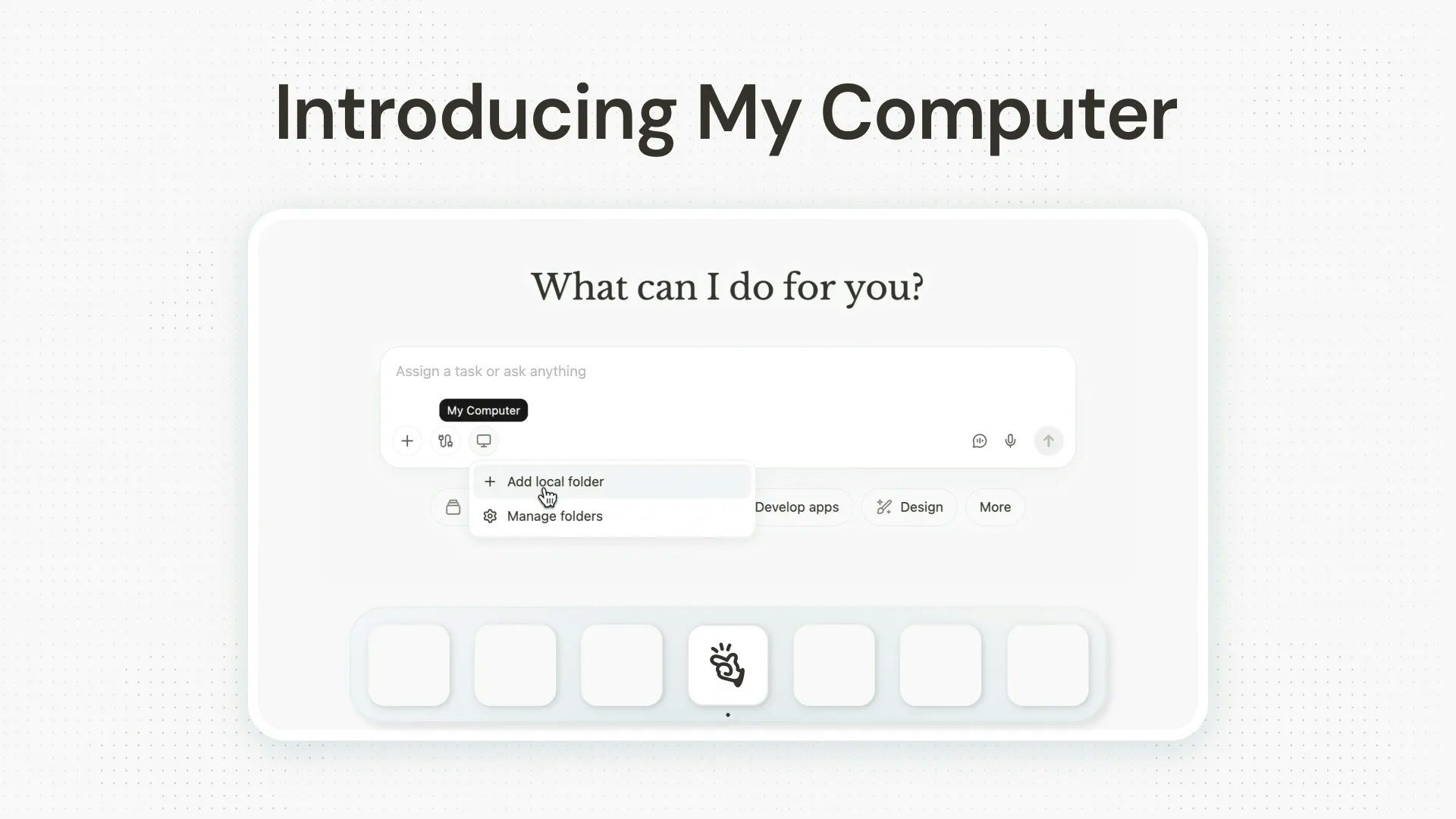
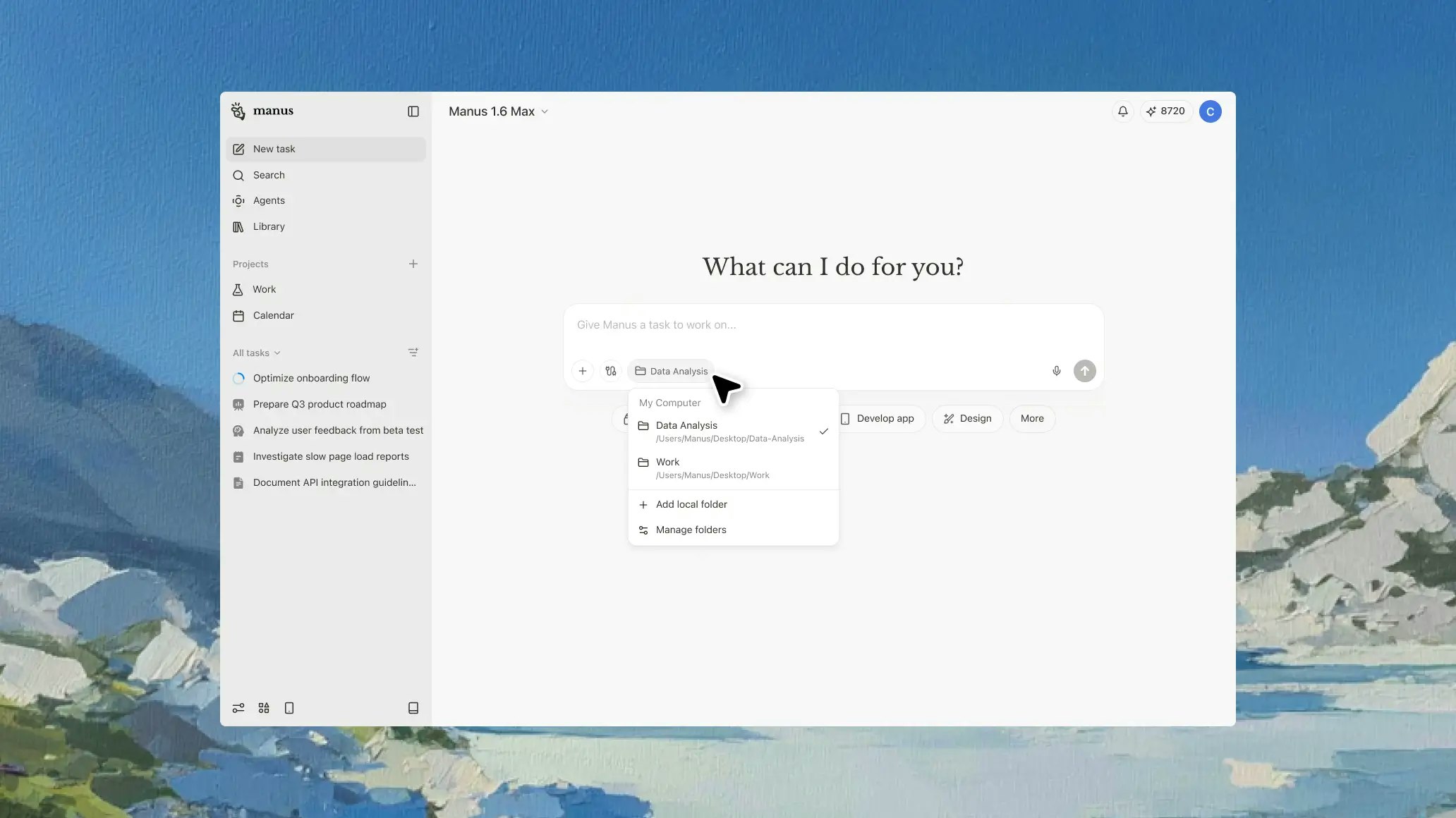
查看原始信息
AgreeGuard
91% of people accept terms and conditions without reading them. AgreeGuard is a free Chrome extension that reads the fine print for you. One click, and in under 15 seconds you get a plain-English summary with red flags highlighted auto-renewals, data selling, hidden fees, waived legal rights, and privacy concerns. Works on any website. No account needed.
Hey Product Hunt! we are Assad & Arefin, the developers of AgreeGuard. We built this because we were tired of blindly clicking "I Agree" on every website. The average Terms of Service is 4,000+ words of dense legal jargon — longer than most short stories. And buried in there are clauses about auto-renewals, data sharing with third parties, binding arbitration, and more. We asked ourselves: what if AI could read the fine print for you? That's AgreeGuard. One click, and in under 10-15 seconds you get a clear summary with red flags highlighted. It's already helped users catch $500 auto-renewal traps and hidden data-sharing clauses. The free tier gives you 5 days of unlimited exploratory experience & 2 analyses/day after 5 days trial ends — enough to check the sites you sign up for daily. No credit card needed. Would love your feedback — what features would make this more useful for you?
3
回复

@aethorn  This is actually a really clever idea. Most people definitely just click “I Agree” without reading anything.

Highlighting red flags like auto renewals and data sharing could save people a lot of headaches.

Curious - does AgreeGuard work only when the ToS page is opened, or can it also analyze the popup consent forms many websites show during signup?

0
回复
Highlighting data selling and hidden fees in plain English is exactly the kind of transparency most companies hope you'll skip past. The "red flags" framing is smart because it filters for what actually matters instead of summarizing the whole document. Does it work retroactively on services you've already agreed to? Would be interesting to run it against apps you're already paying for and see what you actually signed up for.
1
回复

@krisba95 Thanks Christian! You nailed exactly why we built it that way — nobody wants to read a 4,000-word summary. They want to know "what should I actually worry about?"

Great question on retroactive use — yes, it works! Just visit any sign in/signup page page (like claude.ai or x.com) and AgreeGuard will analyze it on the spot. It will work if you are about to sign in or sign up - both. Because it detects the auth buttons and guards it - so when you click on them - boom AgreeGuard initialize its analysis. Here you can check the video: https://youtu.be/o6ncyT2Y0JQ

So you can absolutely audit services you're already paying for. Actually, that's one of the more eye-opening use cases - people run it on apps they've used for years and are surprised by what they agreed to without knowing.

2
回复
@aethorn definitly will try! thanks for detailed response
1
回复

I have clicked "I Agree" thousands of times without reading a single line. The idea of getting a 15-second summary with red flags sounds almost too convenient. How accurate is it with longer or more complex terms — does it catch the subtle stuff buried deep in the text, or mostly the obvious patterns?

1
回复

@klara_minarikova Great question!

It’s actually quite good at catching subtle things like subtle stuff, sneaky auto-renewals, or vague data-sharing permissions.

That said, we’re transparent about it: every result is labeled as an AI-generated summary. For most everyday terms (SaaS, social media, e-commerce), it reliably surfaces what people usually miss. For highly complex legal docs, we still recommend checking the full text—which is why we include a “Read Full Terms” option.

The goal isn’t to replace reading, but to make sure you spot the red flags before hitting “I Agree.” That alone is a big step up from how most of us use terms today 😄

1
回复

Nobody actually reads those walls of text. This is one of those tools where the use case sells itself. Does it flag specific clauses or just give an overall risk score?

0
回复