Product Hunt 每日热榜 2026-03-19

PH热榜 | 2026-03-19

#1
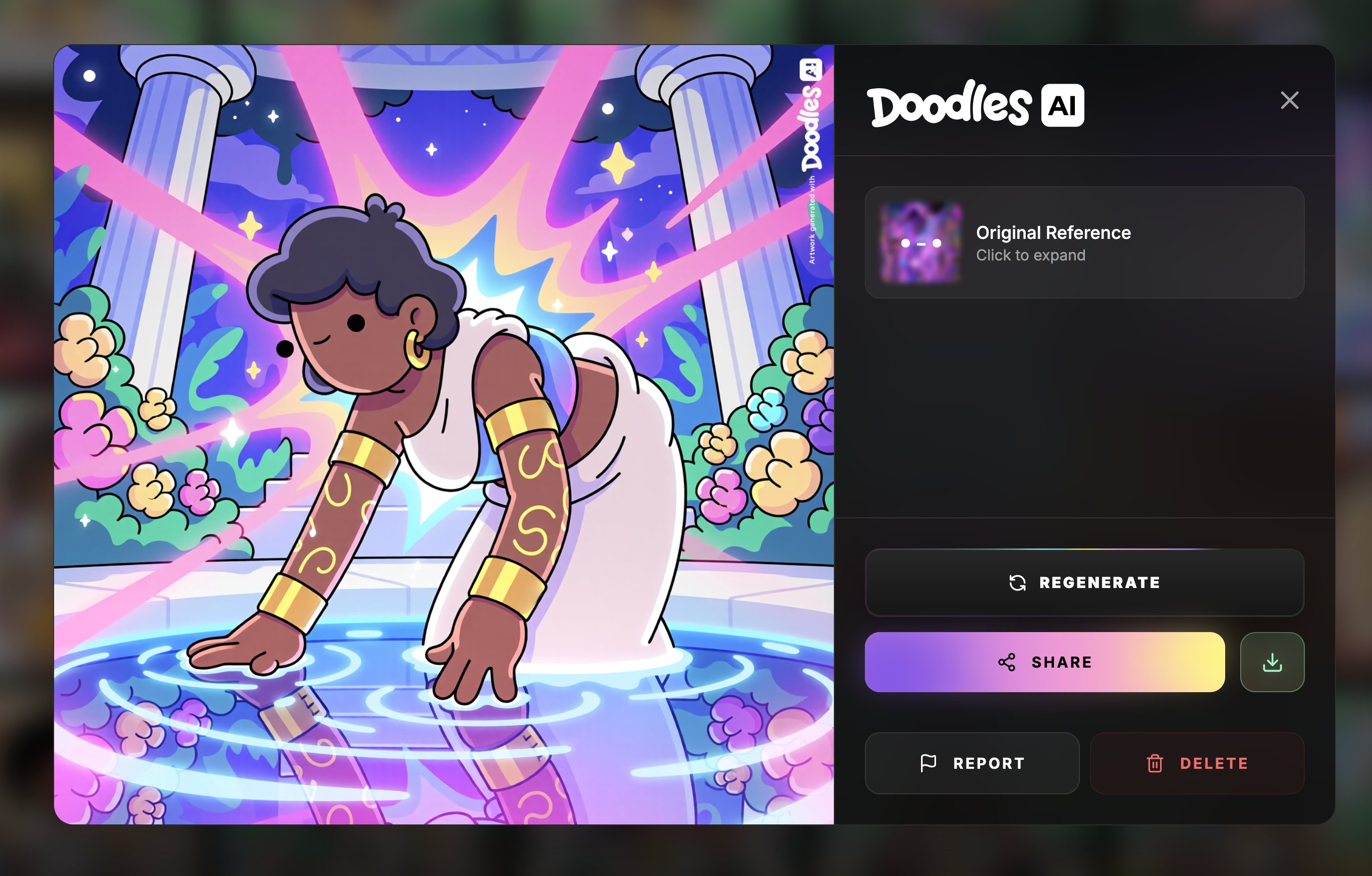
Stitch 2.0 by Google
Vibe design beautiful production-ready UI in seconds
556
一句话介绍:Stitch 2.0是一款由Google推出的AI原生设计工具,允许用户通过自然语言、语音和智能体协作,在统一画布上快速生成高保真UI和交互原型,旨在将创意想法在数秒内转化为可交付的界面设计,极大提升了设计探索和产品原型的构建效率。
Design Tools Prototyping Artificial Intelligence
AI设计工具 UI生成 原型设计 智能体协作 自然语言交互 设计系统 谷歌产品 设计开发一体化 语音设计 画布协作
用户评论摘要:用户普遍惊叹其生成效果与速度,但核心关切点集中于生成UI与现有生产代码/设计系统的整合难题,如设计令牌不匹配、组件库不兼容。同时,对工具在迭代中的设计一致性、操作透明度(缺乏状态反馈与确认机制)以及平台政策风险(如苹果对“氛围编码”应用的审查)提出了疑问和建议。
AI 锐评

Stitch 2.0所代表的,是谷歌将AI从“设计辅助”推向“设计主体”的一次激进尝试。其核心价值并非简单的“更快出图”,而在于构建一个能够同时理解图像、代码和文本语义的“多模态设计画布”,试图将产品构思、视觉设计和原型逻辑压缩进一个由自然语言驱动的统一上下文环境中。这预示着一种“对话即设计”的新范式,对快速验证想法的产品经理和独立开发者极具吸引力。

然而,Product Hunt社区的反馈精准地刺穿了当前所有AI设计工具共有的华丽泡沫:生产就绪性。用户欢呼其生成效果,但旋即追问与现有设计系统(Design Tokens、组件库)的兼容性。这揭示了AI设计从“玩具”到“工具”的关键壁垒:真正的生产力工具必须融入现有工作流和规范体系,而非每次都创造一座孤岛。尽管Stitch引入了DESIGN.md和内置设计系统来维护内部一致性,但对外部系统的“理解与适应”能力,才是其能否被团队采纳的生死线。

更深层的挑战在于,Stitch的“智能”本身可能成为协作的障碍。有评论指出其缺乏操作透明度和确认机制,像一个沉默而武断的合作伙伴。当AI拥有过高的自主裁量权却无法清晰沟通其“推理过程”时,会损害设计师的掌控感和信任感,这在专业工作流程中是致命的。

此外,Figma股价因之波动、苹果政策收紧等外部评论,点明了更宏大的产业叙事:以谷歌为代表的科技巨头,正通过将尖端AI模型垂直整合进基础生产力工具,系统性重塑甚至颠覆传统专业软件市场。Stitch不仅是设计工具,更是谷歌争夺下一代人机交互入口和开发生态的战略棋子。它的最终对手可能不是Figma,而是所有固守传统图形界面创作模式的思维定式。其成败将不取决于生成了多少惊艳的demo,而在于能否跨越“原型”与“产品”之间那道由复杂性、协作性和规范性构成的鸿沟。

查看原始信息
Stitch 2.0 by Google
Meet Stitch, your AI-native vibe design partner. Create, iterate, and collaborate on high-fidelity UI using natural language, voice, and context-aware agents. Design across images, code, and text in one canvas, generate instant prototypes, and maintain consistency with built-in design systems and DESIGN.md. From idea to interface in seconds — faster, smarter, and more intuitive than ever.

I had hunted Stitch by Google almost a month ago. The Stitch team is back with some major updates to Stitch, thereby making it your AI-native vibe design partner! :)

Here is a quick walkthrough of everything new in Stitch:

🎨 The AI-native canvas can hold and reason across images, code, and text simultaneously. The new agent manager helps you design in parallel. (PS … light mode!)

🧠 A smarter design agent now understands your entire canvas context. You can swap images, generate product briefs, or mix mobile and desktop screens on the same canvas.

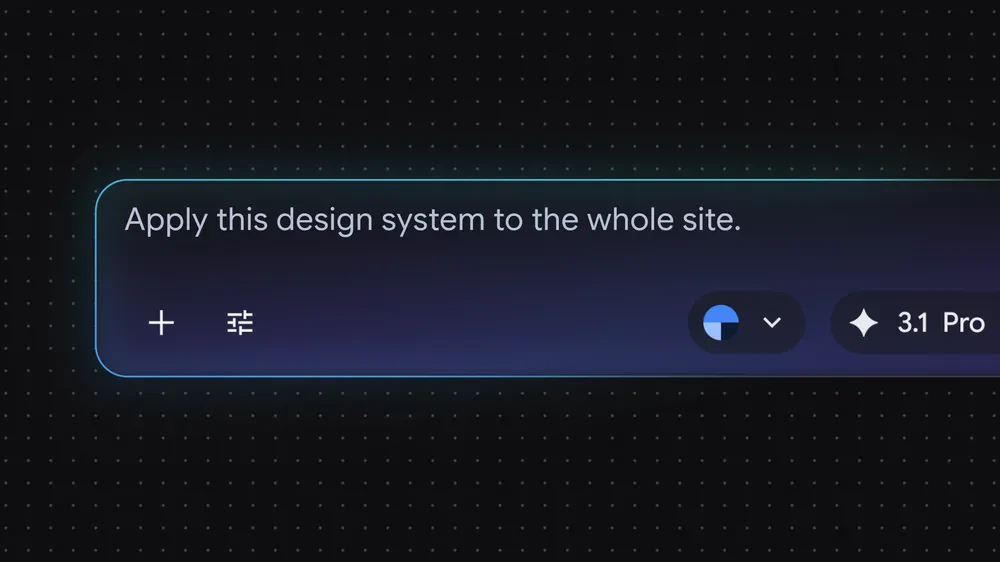
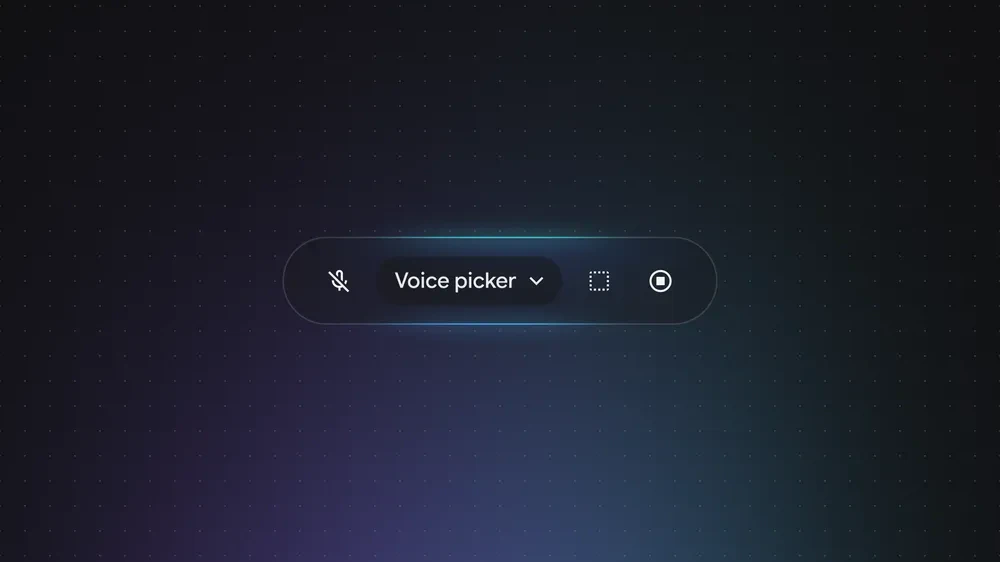
🎙️ You can vibe design with your voice (in Preview). Stitch can ‘see’ your canvas and your selected screens. You can ask for design critiques, variations, or navigate your canvas.

⚡️ Instant prototypes. Just hit the play button to see a prototype or preview your app in seconds. Stitch can imagine the next screen based on your mouse click.

📐 DESIGN .md and consistency. Every new design automatically starts with a cohesive design system which vastly improves consistency. The new DESIGN .md file can be used to export or import your design rules.


Read more about the updates here. Stitch is perfect for designers exploring variations or founders shaping new products. If you’re into the future of AI + design, this is worth checking out!

I hunt the latest and greatest launches in tech, SaaS and AI, follow to be notified @rohanrecommends

18
回复

@mykola_kondratiuk Google's latest AI announcement triggered a 10% plunge in Figma's stock price, erasing roughly $2 billion in market value in a single day.

Anthropic and OpenAI have similarly hammered cybersecurity companies (down 30%), legal firms (down 35%), financial analysts, and software engineers through rapid feature rollouts.

A handful of tech giants, often just 2-4 players are systematically consuming entire professions at breakneck speed.

7
回复

Curious how Stitch handles the gap between generated UI and production code. With most vibe design tools I"ve tried, the output looks great in isolation but falls apart once you drop it into an existing design system - wrong tokens, hardcoded values, etc. Does Stitch have any awareness of existing component libraries or is it starting fresh each time? Also wondering about responsive behavior - generated from a single viewport or does it reason about breakpoints at generation time?

12
回复

@mykola_kondratiuk Responsiveness is reasoned at generation time. It creates mobile-first code with fluid grids and implied breakpoints for multiple viewports, not just one.

10
回复

That mobile-first with fluid grids approach makes sense - better than the tools that just output fixed px values. The component library question is really the harder one for us. We have a design system and every new tool we try generates code that looks right but ignores our token names. Curious if there is any import/config mechanism coming for that.

10
回复

Looks pretty cool. Tho today I read that Apple started rejecting solutions that are vibecoded. 🫣

11
回复

@busmark_w_nika yes, they aren't fully rejecting, they aren't allowing apps that build AI-generated apps that run and evolve inside another app. Maybe you're referring to this update: https://www.producthunt.com/p/vibecoding/apple-cracks-down-on-vibe-coding-apps

8
回复

@busmark_w_nika Yeah I saw that too. It seems more about apps that generate apps inside them rather than tools like this, but still interesting to see platforms react to this trend.

7
回复

@busmark_w_nika oh what? how come?

0
回复

I’ve tried a few similar tools, and they look great at first but get messy when you try to integrate them into an existing system. Curious how well this handles that in practice.

7
回复

I am often trying to marketing assets with product UI. Is this something that can help me with that?

7
回复

Tested it without giving any UI hints, just described the core functionality, and Stitch inferred a layout I would have probably landed on myself after a few iterations. Impressive how it picks up context implicitly.

Curious: how does it handle design consistency when you iterate heavily and go back and forth with prompts? Does DESIGN.md help keep things stable or does it drift?

6
回复

The token mismatch Mykola called out is the production blocker. Every vibe design tool I've tried generates clean code that ignores your design tokens and component API. If Stitch can ingest a token file and respect those constraints at generation time, that closes the prototype-to-production gap.

6
回复

Thanks! I really enjoyed using Stitch — it helped me improve what I already felt was a promising UI.

That said, one thing I (and other iOS engineers I’ve spoken to) found frustrating is the lack of visibility into what Stitch is doing. For example, when I point out issues or explain what I don’t like in a design, Stitch starts making changes without confirming whether it actually understood my concerns. It would be really valuable to have more communication and feedback — especially asking clarifying questions before jumping straight into a solution.

Another issue is that it sometimes seems to hang indefinitely. The only way to recover is to refresh the page or rerun the prompt, but there’s no indication of whether it’s still working or stuck. Some kind of status feedback would make a big difference here.

Lastly, I often find it confusing to choose between Gemini 3.1 (Pro) and NanoBanana. When I’m making small refinements to an existing UI, it’s not clear which option is more appropriate. It can feel like Gemini 3.1 would give better results, but at the same time, NanoBanana seems more suited to iterative tweaks — making the choice unclear.

Congratulations!

6
回复

Sounds like a lot of "inspirations" from https://www.wenderapp.com/ 🫣

3
回复

This is crazy. I tried it and got amazing results.

2
回复

@faux16 I know, right?! I prompted and couldn't believe the incredible precision, spot-on context and stunning aesthetics it delivered. Beyond amazing!

2
回复

Great Product honestly

1
回复
Amazing. I tried it, the results were impressive.
1
回复
Stitch 2.0 is looking promising. Congratulations to all involved. Hope this integrated environment becomes helpful to designers and developers
1
回复
#2
MiniMax-M2.7
Self-evolving AI model powering autonomous agents
324
一句话介绍:一款具备自我进化能力的AI智能体模型,通过创建智能体工具链、组建多智能体团队协作,在软件开发、调试研究等复杂任务场景中,减少了人工干预需求,实现了从静态工具到动态执行系统的跨越。
API Open Source Artificial Intelligence
自主智能体 自我进化AI 多智能体协作 AI原生工作流 代码生成 软件开发 AI模型API 自动化执行 持续学习 智能体框架
用户评论摘要:用户普遍认可自我进化是AI发展的必然方向,惊叹其迭代速度和代码能力。核心关切集中在“可控性”与“可预测性”:如何确保进化系统的生产环境稳定性、如何平衡探索与利用、如何审查和管理其长期记忆、以及“自我进化”的具体技术内涵与边界。
AI 锐评

MiniMax M2.7所标榜的“自我进化”,与其说是一次模型能力的质变,不如说是一场精明的叙事升级。它将AI行业内部持续进行的模型迭代、提示工程优化、智能体工作流设计等专业过程,包装成一个看似自主的“黑箱”系统。其真正价值不在于玄乎的“进化”,而在于将一系列复杂能力——多智能体协作、长上下文记忆、代码与调试——整合为一个声称能闭环改进的“智能体工厂”。

评论区的兴奋与忧虑精准地揭示了产品的双重性:开发者看到的是自动化复杂任务、提升效率的“超级助手”;而严肃的从业者则警惕“自我进化”叙事下潜藏的控制权让渡与系统不可预测风险。产品试图解决的“减少人工干预”痛点确实存在,但它用“进化”一词巧妙地回避了关键问题:系统改进的决策权究竟在谁手中?是依据用户反馈的定向优化,还是不受控的自我突变?

因此,M2.7的核心突破或许不在技术,而在产品定位。它不再满足于充当被动工具,而是试图成为可托管复杂项目的“初级合伙人”。这一定位转变极具吸引力,也极其危险。它预示着AI应用正从“功能交付”迈向“责任交付”,但当前的技术是否足以支撑其承诺的“自主性”而不引发混乱,仍需打上巨大问号。市场的追捧反映了对自动化极致的渴望,而冷静的质疑则是防止我们过早踏入一个自己也无法理解的系统迷宫的必需之声。

查看原始信息
MiniMax-M2.7
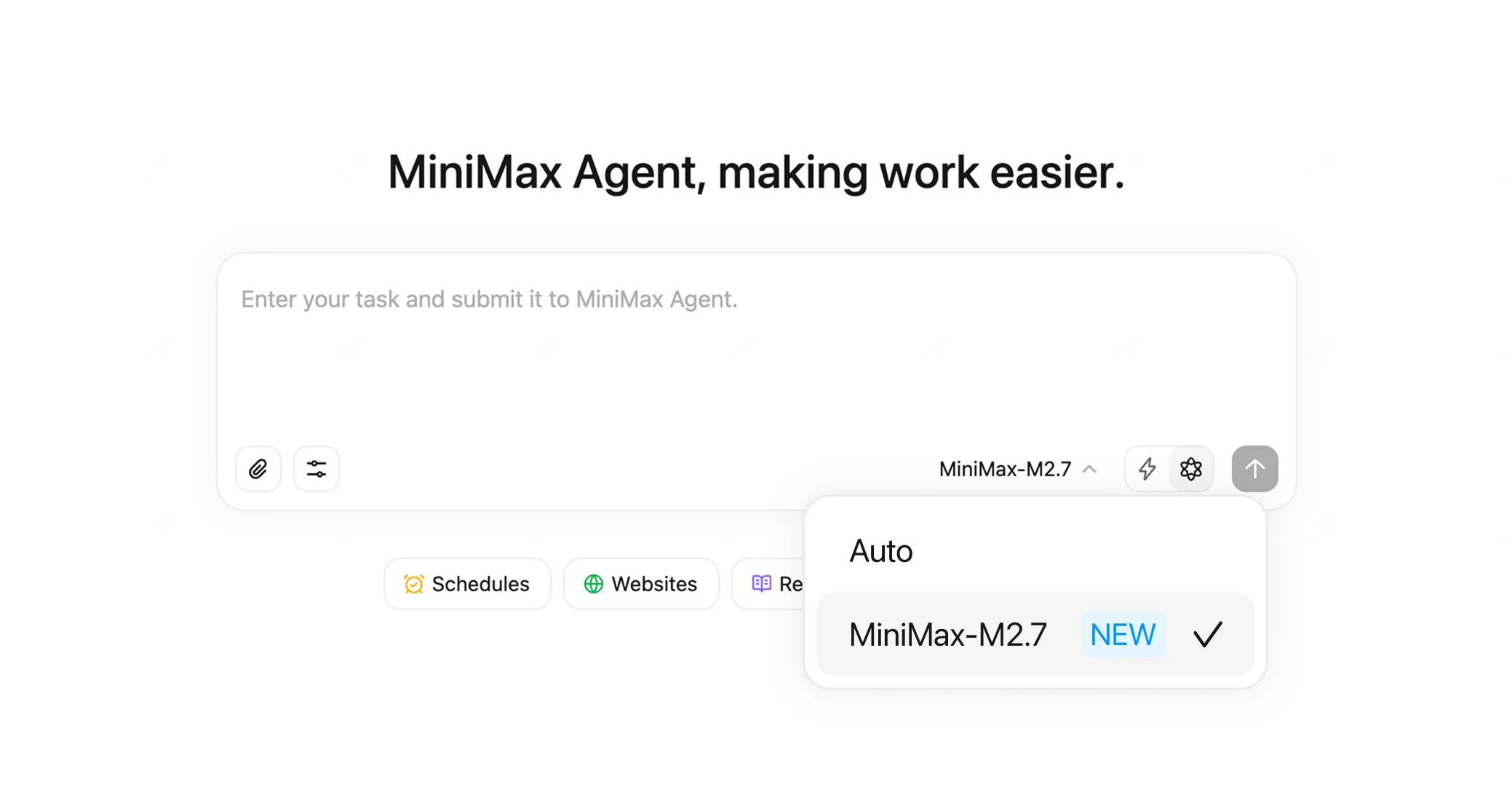
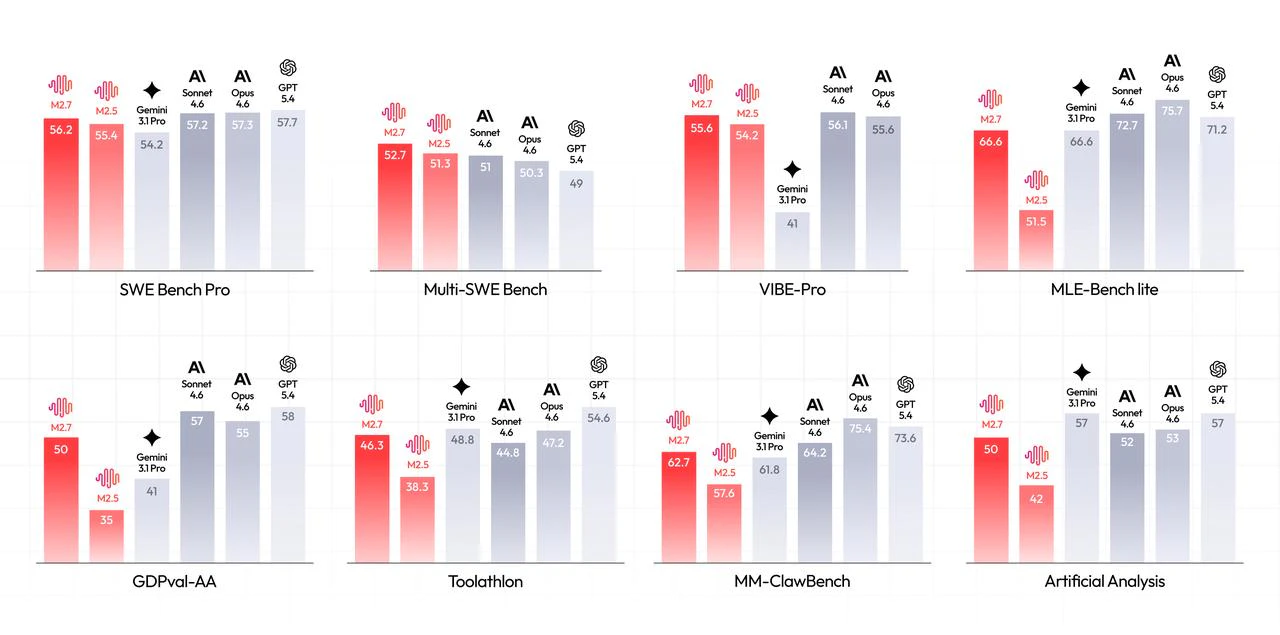
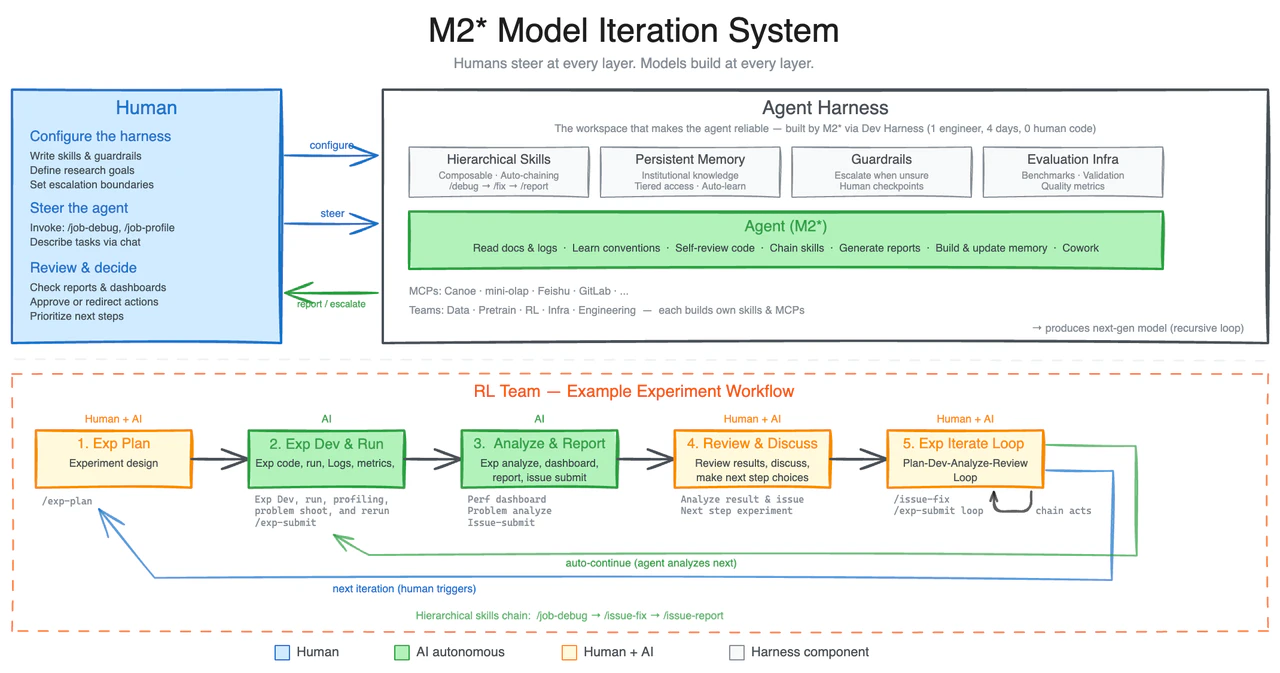
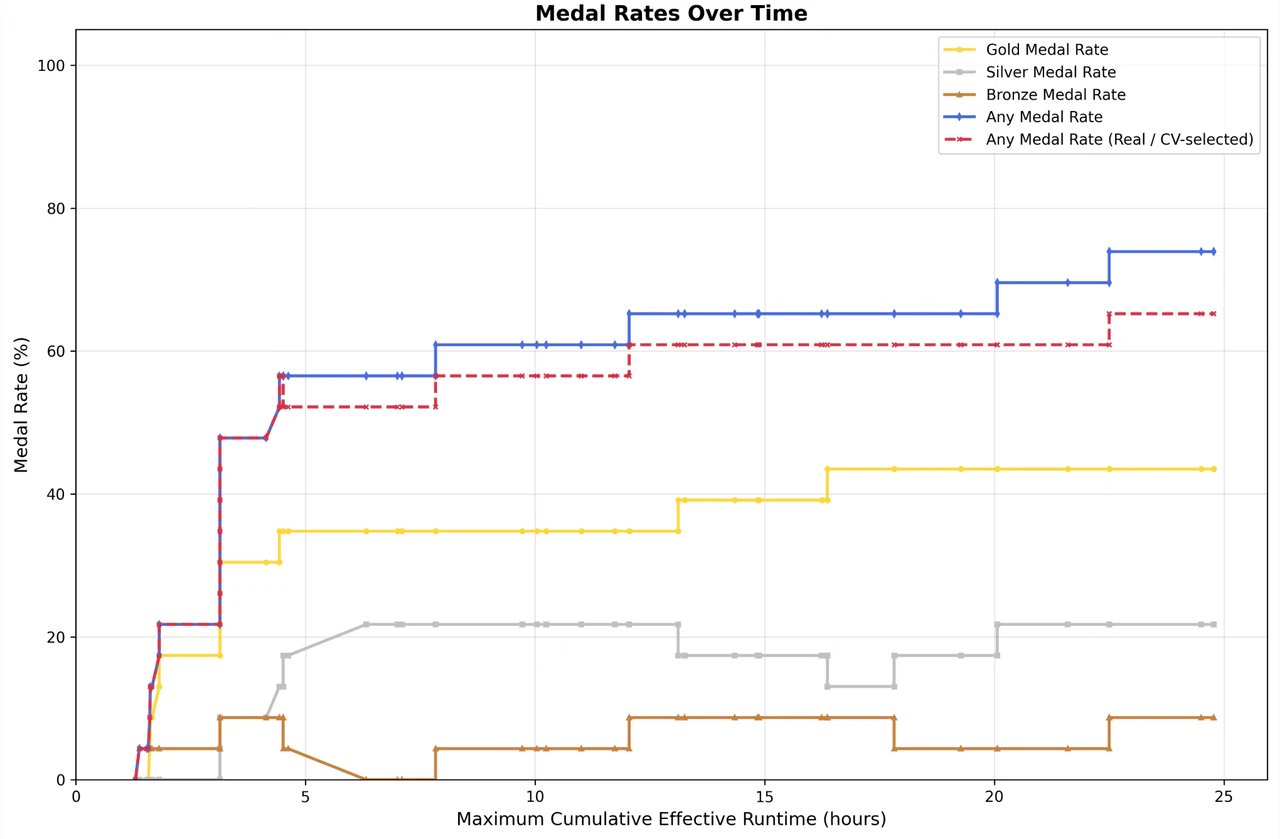
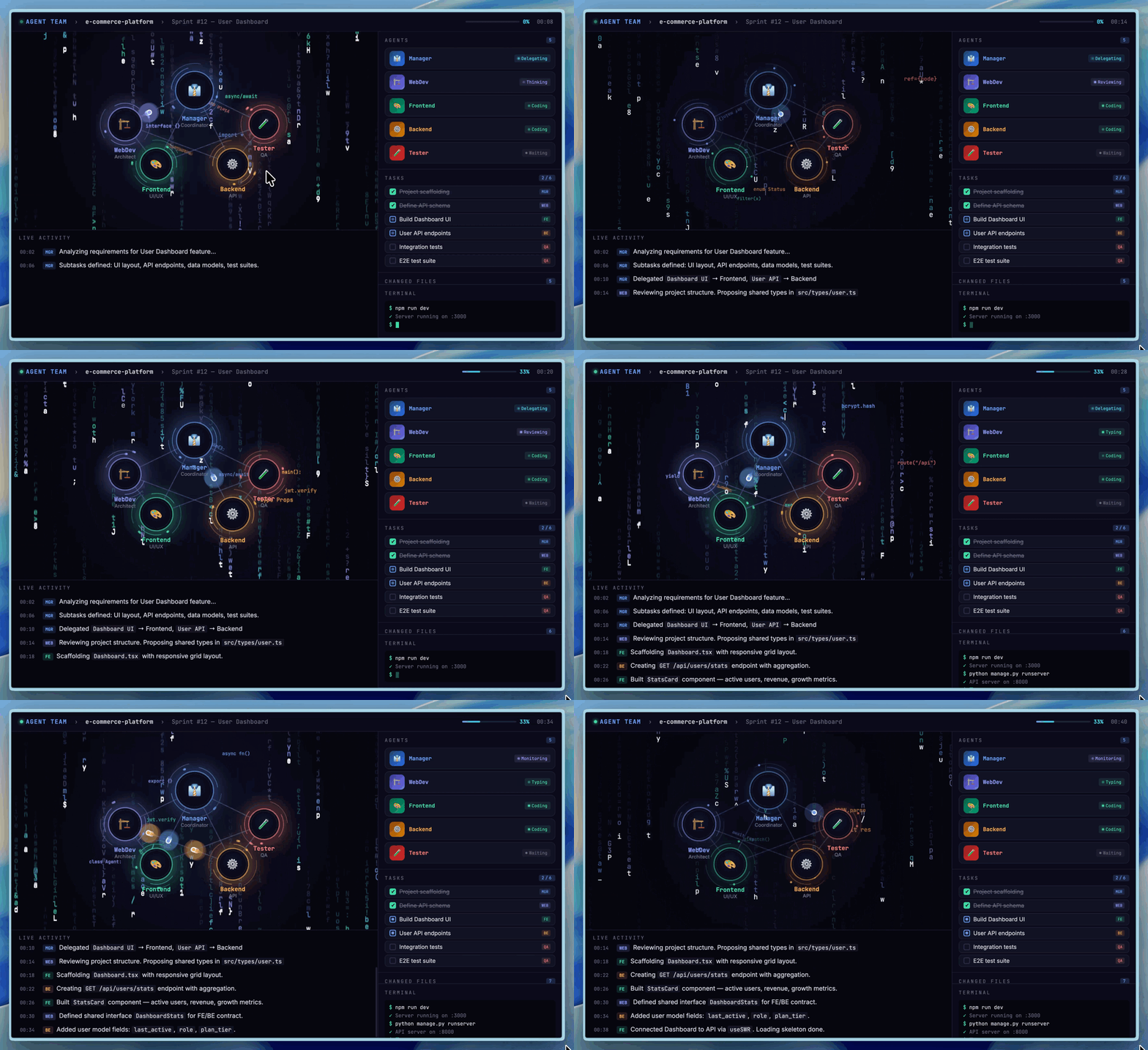
MiniMax M2.7 is a self-evolving AI model that helped build its own capabilities. It can create agent harnesses, collaborate via Agent Teams, and handle complex tasks like coding, debugging, and research. With strong SWE-Pro performance and reduced intervention time, it moves beyond static AI into systems that continuously learn, adapt, and execute complex work with minimal human input. Available via API and MiniMax Agent for builders pushing AI-native workflows.

MiniMax M2.7 is an AI agent model pushing toward self-evolving systems, not just assisting work, but actively improving how it works.

Current AI still needs heavy human orchestration across research, engineering, and workflows. M2.7 builds and optimizes its own agent harness, using memory, self-feedback, and iterative loops to improve performance over time.


What’s different is the self-evolution loop — it can analyze failures, modify its own setup, and re-run experiments autonomously. That’s a big shift from static models.

Key features:

  • Agent Teams for multi-agent collaboration

  • Complex skill execution with high adherence

  • Strong performance across software engineering + office workflows

  • End-to-end project delivery + real-world debugging

Benefits: Faster experimentation, reduced manual effort, and AI that acts more like a junior researcher/operator than just a tool.

Great for developers, researchers, and teams building AI-native workflows or automating complex tasks.


How far do you think self-evolving agents can go before humans are only setting goals and everything else runs autonomously?

I hunt the latest and greatest launches in tech, SaaS and AI, follow to be notified @rohanrecommends

5
回复

until they do the wrong thing at scale.

How do you control that?

3
回复

This direction feels inevitable.
Once agents start improving their own workflows, it stops being just a tool and becomes more like a system you’re managing.

The part I keep thinking about is control.
If the system keeps evolving its own setup, how do you keep things predictable in production?

Especially for real workflows, stability often matters more than raw capability.

3
回复

Self-evolving AI is the right direction for any prediction system where the underlying distribution changes continuously. Our football analytics model faces exactly this — features that predicted match outcomes well last season (possession stats, pressing intensity) need reweighting as teams adapt tactically. A static model doesn't flag when its feature importance has drifted, so you only discover the problem in retrospect.

The 'analyze failures, modify setup, re-run' loop you describe is essentially formalizing what good data scientists do manually between seasons. The self-feedback mechanism is what's interesting — the system needs to know not just that it failed, but why it failed in a way that suggests a structural fix vs a data quality issue.

The hard tradeoff in real-time prediction contexts: how does M2.7 balance exploration (trying new configurations) vs exploitation (keeping outputs stable while a process is live)? In a sports context, you can't be A/B testing model architectures mid-match. Curious if the self-evolution loop has a 'freeze' mode for production stability.

3
回复

The long-term memory feature is what makes this interesting to me. Most AI agents today are essentially stateless – you start fresh every session and lose all the context you've built up. An agent that actually remembers your preferences and past tasks over weeks could be a real productivity unlock.

How does the memory work in practice? Is there a way to review or edit what the agent has stored about you, or is it a black box? Being able to curate that memory layer would make a big difference for trust, especially when connecting it to workplace tools.

3
回复

@MiniMax is cooking. They launched M2.5 last month, with SOTA performance at coding (SWE-Bench Verified 80.2%), and they're pushing it forward (again) with M2.7, with an 88% win-rate vs M2.5.

Mind-blowing.

Oh and pro tip: you can give it a spin for free in @Kilo Code and @KiloClaw ✌️

2
回复

One concern is predictability. If the system keeps evolving its own setup, it might become harder to track why certain decisions are being made.

1
回复

Big believer in this direction, the real shift is not better models, it’s systems that can execute and improve over time.

What’s interesting here is the move toward agent teams and real task execution. That’s where most things still break today.

Curious how you’re thinking about consistency, memory, and control as the system evolves, especially for enterprise use.

If this works as described, this is not just another AI product, it’s a step toward autonomous execution. @mazula95 @rohanrecommends

1
回复

@rohanrecommends @ebruollang I definitely agree! I’ll be testing it soon with real use cases using the OpenCode agent.

0
回复

I've been using MiniMax 2.5 in my product and the bar is really high already - can't wait to try 2.7

1
回复

Congratulations on the launch 🎉, we've seen great results with 2.5, and we added 2.7 to agenhq.com already 🚀

1
回复

Ok this is awesome...just gave it a try on a specific use case and totally worked as intended. Well done. I'm going to keep using this.

0
回复

"Self-evolving" is doing a lot of work in the tagline - curious what that actually means in practice. Is M2.7 updating weights from deployment feedback, or is it more like improved fine-tuning pipelines between releases? The autonomous agents use case is where I keep hitting model limitations - mostly around tool use consistency across long sessions. Does this address that specifically or is it more general capability improvement?

0
回复
#3
Netlify.new
Start a project with just a prompt on Netlify
261
一句话介绍:一款允许用户仅通过自然语言描述,即可由AI代理直接生成并部署出拥有生产环境URL的完整应用,无需代码仓库或本地设置,旨在消除从AI生成代码到实际可运行产品之间的巨大鸿沟。
Developer Tools Artificial Intelligence No-Code
AI代码生成 无代码/低代码 应用部署 快速原型 云开发平台 迭代开发 生产就绪 开发者工具 提示工程 基础设施自动化
用户评论摘要:用户普遍赞赏其“从提示到产品”的一站式流程和原地迭代能力,认为这解决了AI工具生成代码后的部署断层痛点。主要疑问集中在:对复杂应用(如含数据库、鉴权)的支持深度、与Vercel等平台的迁移路径、配置(如环境变量)的自动化程度,以及项目上下文继承能力。
AI 锐评

Netlify.new并非又一个AI代码生成器,而是一次对“开发完成定义”的激进重构。它的真正野心,是成为AI原生时代的应用“操作系统层”,将提示(prompt)直接编译为可运行的服务。

当前多数AI编码工具止步于代码输出,将最棘手的部署、配置、基础设施集成等“脏活累活”抛回给开发者,这正是创新动量熄灭的“死亡之谷”。Netlify.new的犀利之处在于,它用自身成熟的云基础设施(全球边缘网络、无服务器函数、表单等)作为“运行时”,将AI生成的代码直接注入这个已就绪的、生产级的环境。这相当于为AI创造力提供了即时的、可规模化的现实载体。

其宣称的“原地迭代”是另一个关键价值点,它试图解决AI生成代码的“一次性”和“碎片化”顽疾。用户不是不断重启项目,而是在同一个持续存在的应用实体上叠加修改,这向“可进化”的AI协作开发迈出了一步。然而,这也暴露了其当前的边界:从评论中的尖锐提问可见,对于需要复杂状态管理、数据迁移和团队协作的成熟项目,它能否胜任仍是巨大问号。官方回复也暗示,这更多是针对绿地项目、原型和内部工具的“快速启动器”。

因此,Netlify.new的价值定位非常清晰:它不是来取代传统专业开发流程,而是旨在吞噬从“想法”到“第一个可分享URL”之间的一切摩擦。它降低了对“基础设施认知”的门槛,允许产品经理、设计师等非核心开发者快速验证想法,同时也为开发者提供了一个前所未有的高速沙盒。其成败关键在于,能否在保持“简单魔法”的同时,优雅地处理复杂性问题,否则可能被局限于玩具项目,难以触及真正的生产力核心。

查看原始信息
Netlify.new
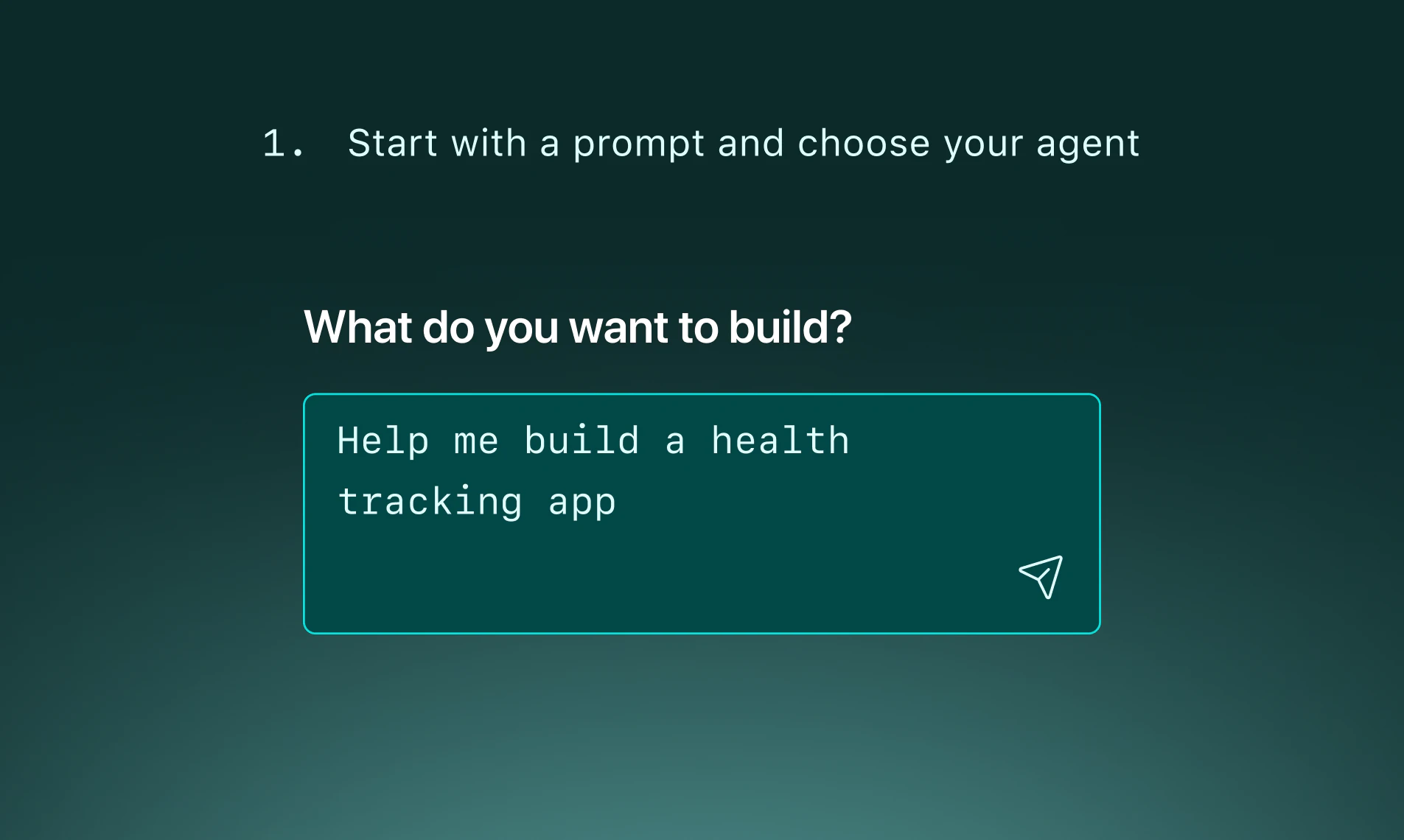
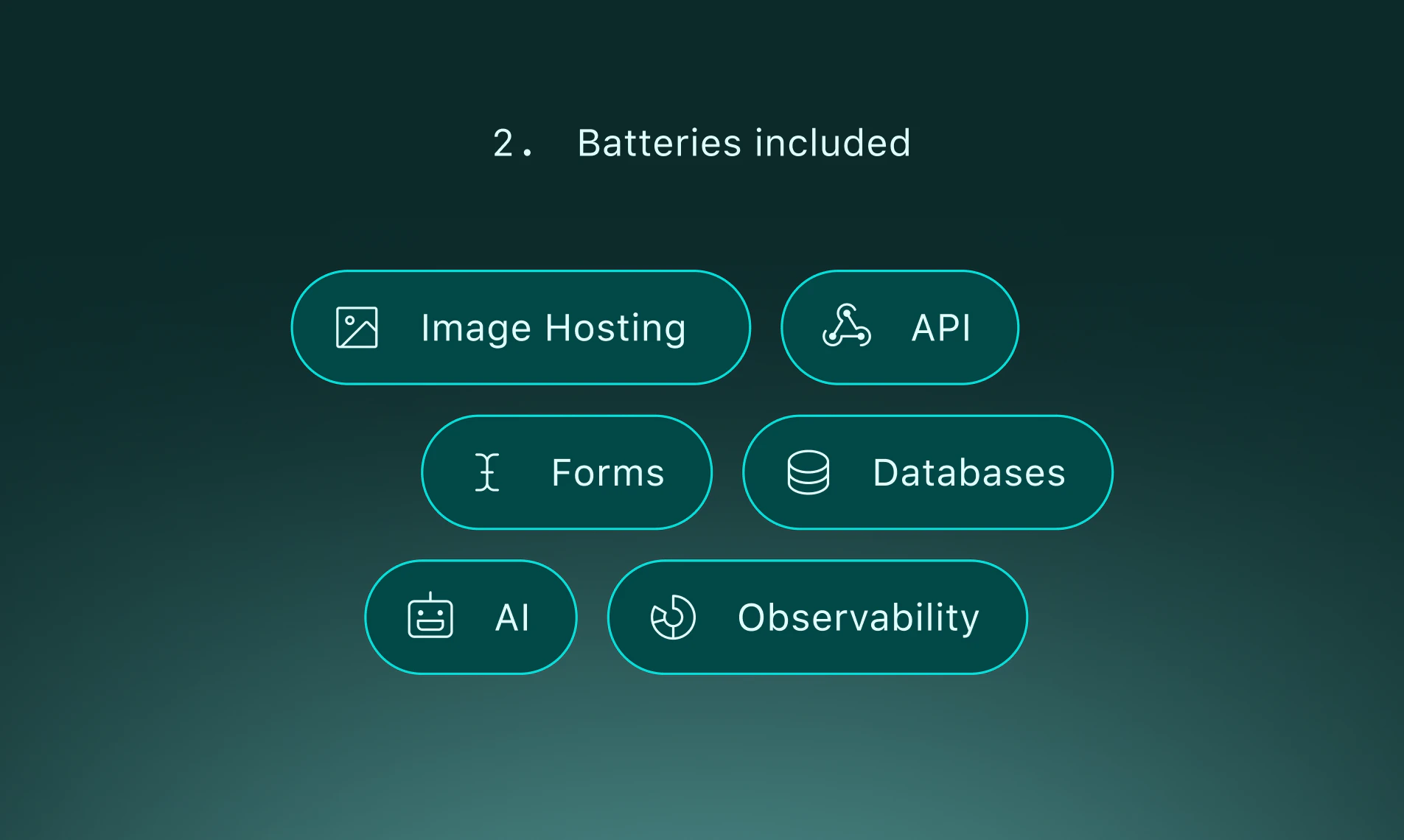
Start a project on Netlify with just a prompt—no repo or local setup needed! Describe your app, pick an AI agent (Claude, Gemini, or Codex), and get a working, live production URL immediately. Iterate in place on real Netlify infrastructure with built-in forms and serverless functions. Traditional methods still work, but now you can go from prompt to real product instantly, without migrating later. Git is there when you're ready. Fastest way to try it: netlify.new

Hey Product Hunt! 👋

I'm KP from the team at Netlify.

We kept seeing the same gap: AI tools are incredible at generating code, but there's still a wall between "here's your code" and "here's your live product."

You generate something, then you're on your own to host it, wire up auth, configure builds, and figure out deployment. That's where momentum dies.

So we built netlify.new.

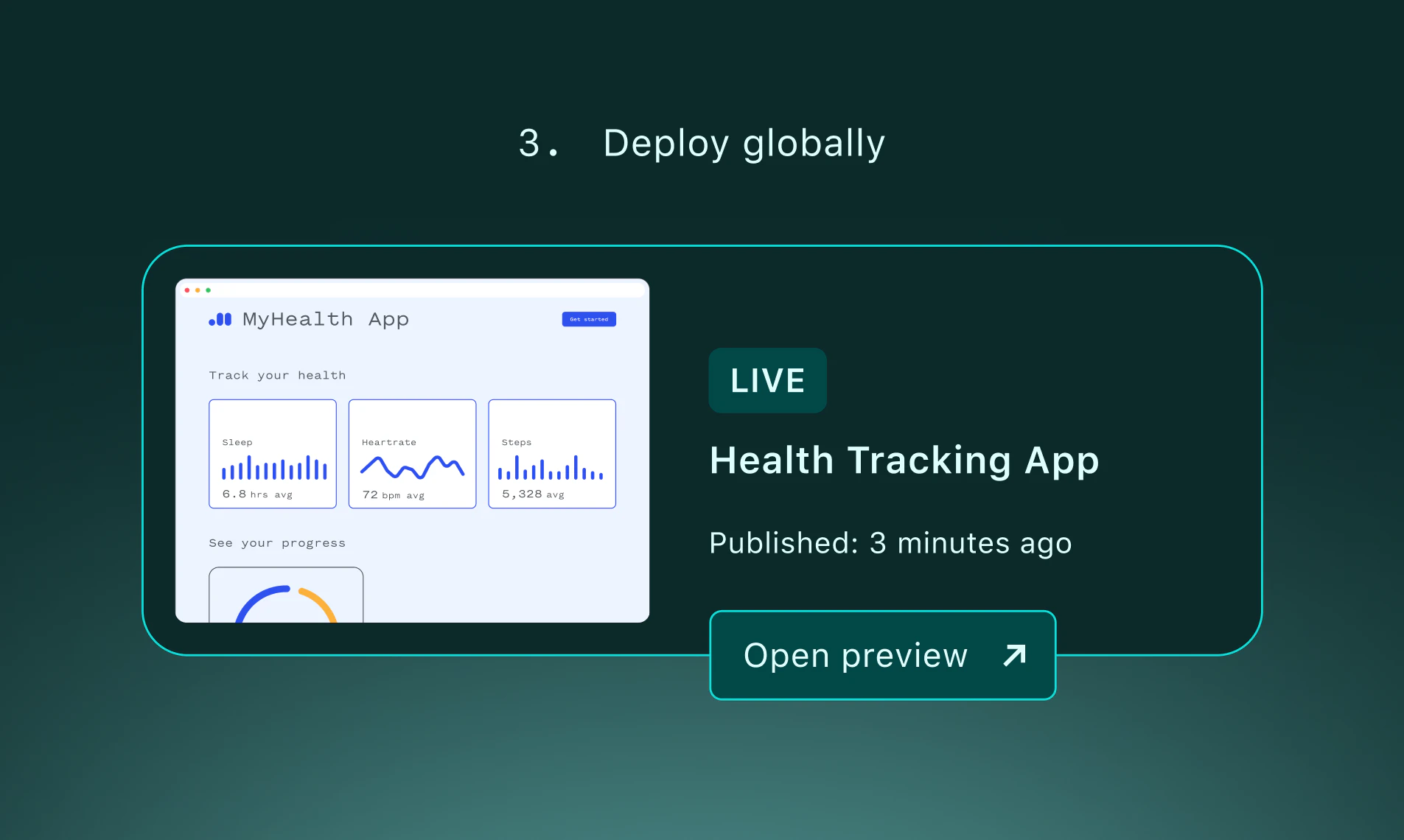
Go there, describe what you want, pick your AI agent (Claude, Gemini, or Codex), and you get a working app deployed to a live URL — not a preview, not a sandbox, a real production site on Netlify.

The part we're most excited about is what happens next.

You don't start over when you want to change something. You run the agent again and iterate on the same app.

Add a contact form, swap the layout, wire up authentication — it all happens in place. No regenerating, no migrating, no re-platforming.

We designed this for the prompt-first builders who want to ship real things fast — but also for the developers who want to invite their designer or PM to spin up an internal tool without handing them a CLI.

Try it at netlify.new and let us know what you build.

We're especially curious: what's the first thing you'd prompt?

41
回复

@thisiskp_ Many congratulations on the launch, KP and team. :)

Is this suitable for complex applications too? Example, an app already has a database, authentication, or existing users, what happens when the agent modifies schemas, logic, or integrations? Is there versioning, migration handling or rollback built into the workflow?

9
回复

@thisiskp_ having been a Netlify customer who loves how simple and easy the hosting has been this is a huge unlock to now being able to start all my projects on Netlify - plus being able to choose from the most powerful AI models all in one place.

Going to be building on the Netlify platform even more now and it's for sure in my vibe coding stack.

Watched the Community Drop yesterday and it's so cool to see how it came together! Congrats to the entire team for all the efforts in building and launching this new feature! 🚀

0
回复

@thisiskp_ Really like the framing here. The "wall between code and live product" is exactly where most AI coding tools drop the ball.

Curious how you'd position this vs Google AI Studio or v0 for someone evaluating all three. The way I see it: AI Studio is more of a model playground, v0 is great for component-level UI generation but you still need to wire everything up yourself. netlify.new seems to be going after the full deployment loop, which is a different bet entirely.

Is that the right read? And for teams already on Vercel or on a custom CI/CD setup, is there a migration path or is this more of a greenfield tool for now?

0
回复

How many AI-generated apps have you had to rebuild once they needed real infrastructure? Netlify now lets you start from a prompt and deploy directly to production - so the thing you prototype is the thing you scale.

The curated prompt templates for common Netlify workflows - like accessibility audits and A/B testing with Edge Functions - are super useful. Pick a template, hand it to your agent in Netlify, and keep iterating. Couldn't be more excited about this launch! 🎉

3
回复

@hughbeme getting to build from 0 on production-grade deployment environment is just epic.

Also, it would be impossible at the rate at which we build our internal apps without this feature. Thanks for all that you do in leading from the front in building :)

1
回复

What I really liked is that you can run the agent again on the same app. Most tools make you start from scratch every time. You let people keep building. That feels real.


Anyway, just wanted to say this is cool. Hope it goes well, @thisiskp_!

3
回复

@taimur_haider1 Well said, thanks man!

0
回复

Finally! Watching the team work on it and using the early versions I couldn't wait anymore for the final one. Such an awesome addition to the platform

2
回复

@youvalv Thanks to you and the team for all the hard work on bringing this to life! We know it's only going to get better from here :)

0
回复

This idea of going straight from prompt to a live URL is interesting to me. I usually spend more time setting up than building, so I can see myself using this just to test ideas quickly without overthinking the setup part.

1
回复

The prompt-to-deploy flow is something I keep wanting to work seamlessly. Been building a few small tools recently where the bottleneck is actually the setup - getting env vars, build config, and domain wired up correctly takes longer than writing the code. Does netlify.new handle that config layer from the prompt, or is the prompt mostly for the app code and you still do infra setup manually after?

1
回复

@mykola_kondratiuk It's pretty compatible with being able to handle most config changes from prompts. We will be added a special flow for env vars to keep them isolated and there are things we are going to do to ensure the permissions work well. We also support things working as config in code in addition to in the UI, lots of options and lots of improvements coming!

2
回复

Netlify has always been the place you bring your project after you've built it and you were ready to host it on the best infra with the best DX. Now you can also create new projects on Netlify and it's already set up on the best infra, ready for iteration. Prototypes, internal tools, and iterating on real world sites, this is amazing!!

Also don't forget you can have your full team on Netlify with roles that allow granular access to only the areas that your team agrees on. True full team empowerment and governance.

1
回复

@developsean thanks Sean! all I want to say is I’m specifically grateful you led the team to bring this to life so thousands (millions?) of vibe coders and internal builders can go 0-1 on their ideas easily.

0
回复

I like the simplicity here. I can imagine opening it, typing an idea, and just seeing something real instead of a mock. That alone makes it feel more usable compared to tools that stop at code generation.

0
回复

Is the goal to start with Netlify and then export to the IDE for further complex work or is the goal that I should be able to stay within Netlify throughout my whole development process?

0
回复

@lienchueh we give you the full set of options.

Internally we've built complex projects entirely with Agent Runners, but our main app is a 10 year old React app linked to GitHub with an existing workflow around it. There we still use Agent Runners to build some features while other work is done outside of Netlify and pushed via GitHub.

When you've started a project from Agent Runners you can always push it to a new git repo and start using any other toolchain in addition to Agent Runners.

0
回复

Can you bring your own context or instructions to the agent, or does it start fresh each time? For anything beyond a landing page the agent needs project context to make good decisions, and that's where most of these tools break down. Building Ritemark app - context and instructions are piling up as fast as code.

0
回复

@jarmo_tuisk2 Right now we have per project context that you can save after the project is created, but it is an interesting idea to think about it for every new project the whole team. For now, you'll want to make sure to include it in the initial prompt.

0
回复
#4
InfrOS
Predict and validate cloud architectures before launch
253
一句话介绍:一款通过仿真验证,在部署前为团队主动设计和优化云架构的AI驱动平台,解决了云基础设施因被动响应式优化而导致的成本超支和性能不稳定的行业痛点。
Software Engineering Developer Tools Artificial Intelligence
云架构设计 基础设施即代码 AI优化 仿真验证 成本优化 DevOps Shift-Left 云迁移 性能预测 云管理
用户评论摘要:用户普遍认可“部署前验证”的理念,认为其解决了行业顽疾。核心关注点集中在:仿真技术的真实性与深度(如何模拟流量与故障)、如何处理频繁的需求变更、成本节约的具体来源(是资源规格调整还是架构级优化),以及产品对个人开发者或小团队的适用性。
AI 锐评

InfrOS的核心理念“Shift-Left Optimization”并非全新概念,但其通过“设计-仿真-验证”的闭环,试图将这一理念从口号变为可执行的工程实践。其真正价值不在于“预测”,而在于“证明”——通过在其云端沙箱中实际运行Top 3架构方案并基准测试,用数据替代猜测,将架构决策从一门艺术向一门科学推进。

然而,其宣称的“真实环境仿真”面临根本性质疑:在没有真实业务流量和不可预测的分布式系统交互下,仿真的保真度天花板有多高?它或许能完美验证一个静态架构的资源配比和基础性能,但能否捕捉到生产环境中那些诡异的偶发故障和链式反应?这决定了它是“高级计算器”还是“数字孪生”。

产品更深层的野心在于成为“基础设施的动态大脑”。它不仅做一次性设计,更承诺随代码、需求、云服务商报价的变化而持续“受控重设计”。这触及了云管理的终极痛点:架构漂移。如果它能可靠实现,其价值将从“部署加速器”升级为“全生命周期治理平台”。但这也使其复杂度陡增,其AI推荐引擎的“正确性”将承受巨大压力,早期在GPU架构推荐上的挫败已预示了这条路的艰难。

总体而言,InfrOS瞄准了一个高价值且疼痛感强烈的市场。其成功不取决于理念的先进性,而取决于仿真技术的深度、AI推荐的可靠性以及能否将复杂的重设计过程简化为可信赖的“一键优化”。它不是在优化云资源,而是在试图优化和标准化云架构师的决策过程本身。这条路若能走通,将是范式的转变;若走不通,则可能沦为又一个精美的辅助设计工具。

查看原始信息
InfrOS
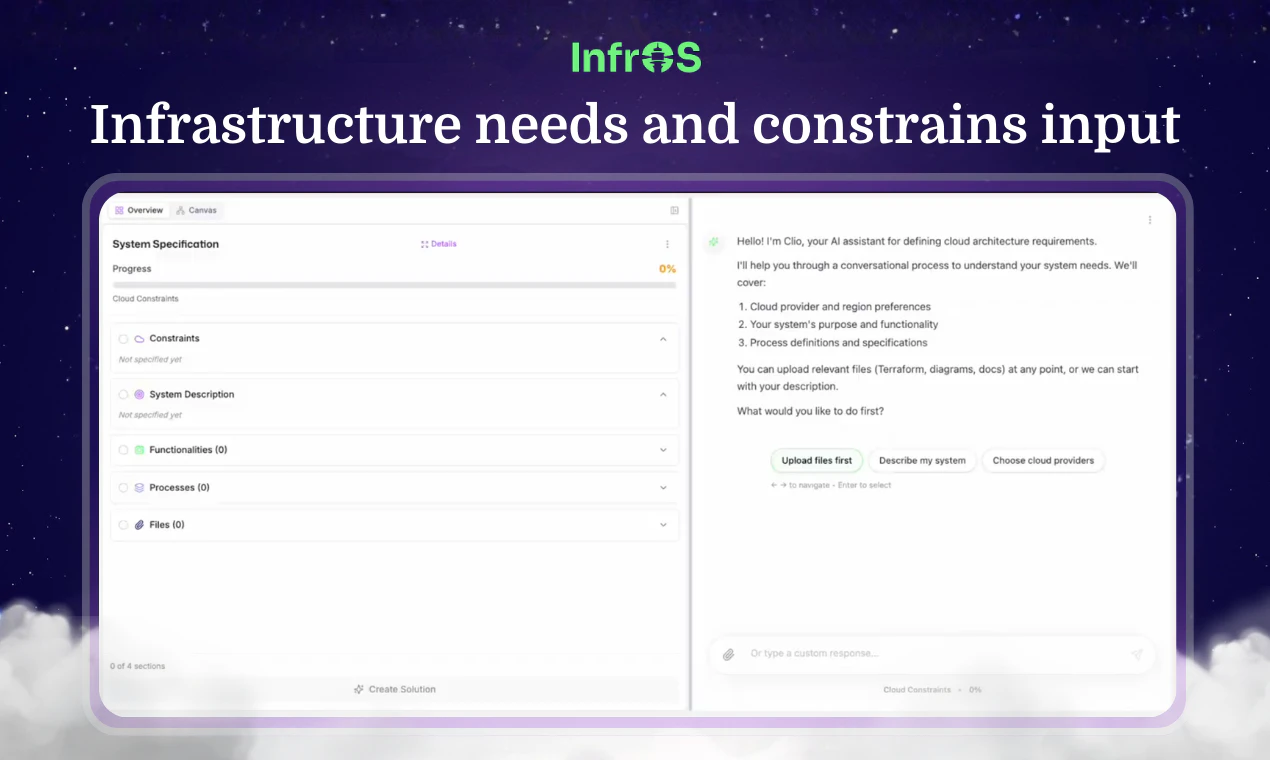
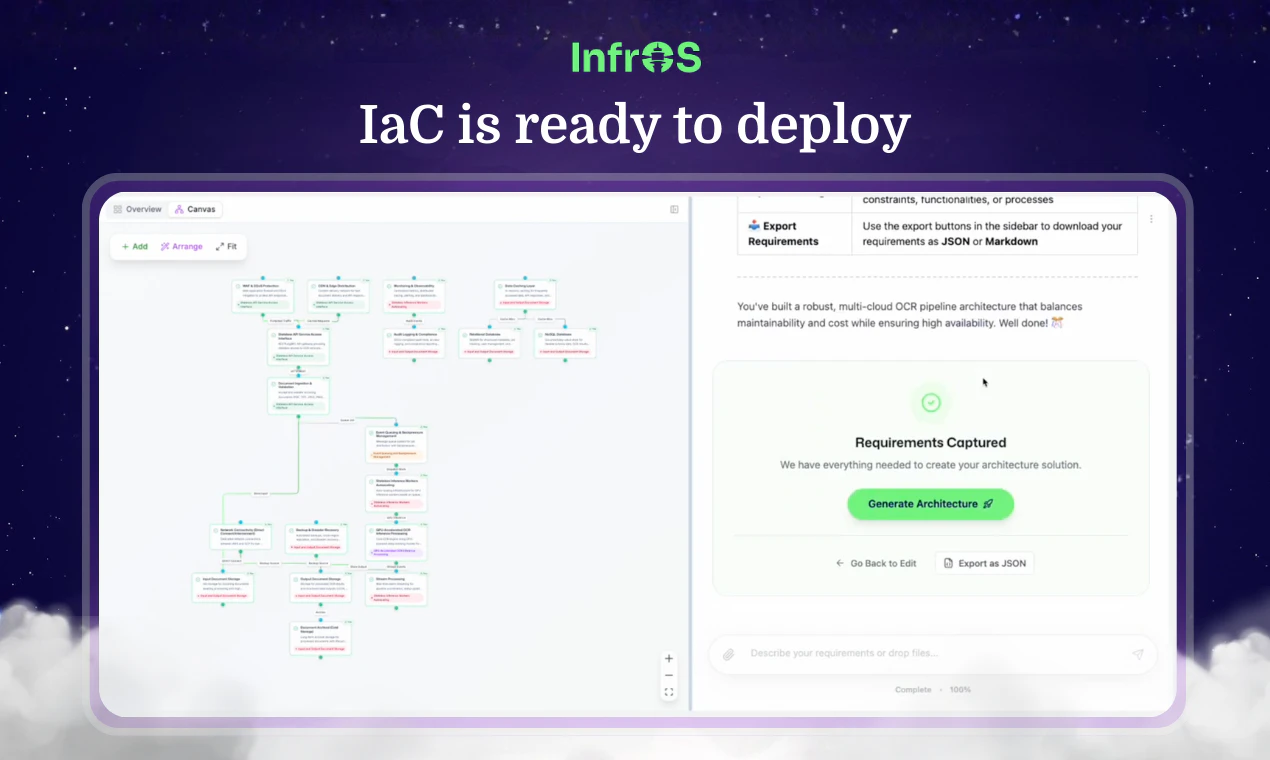
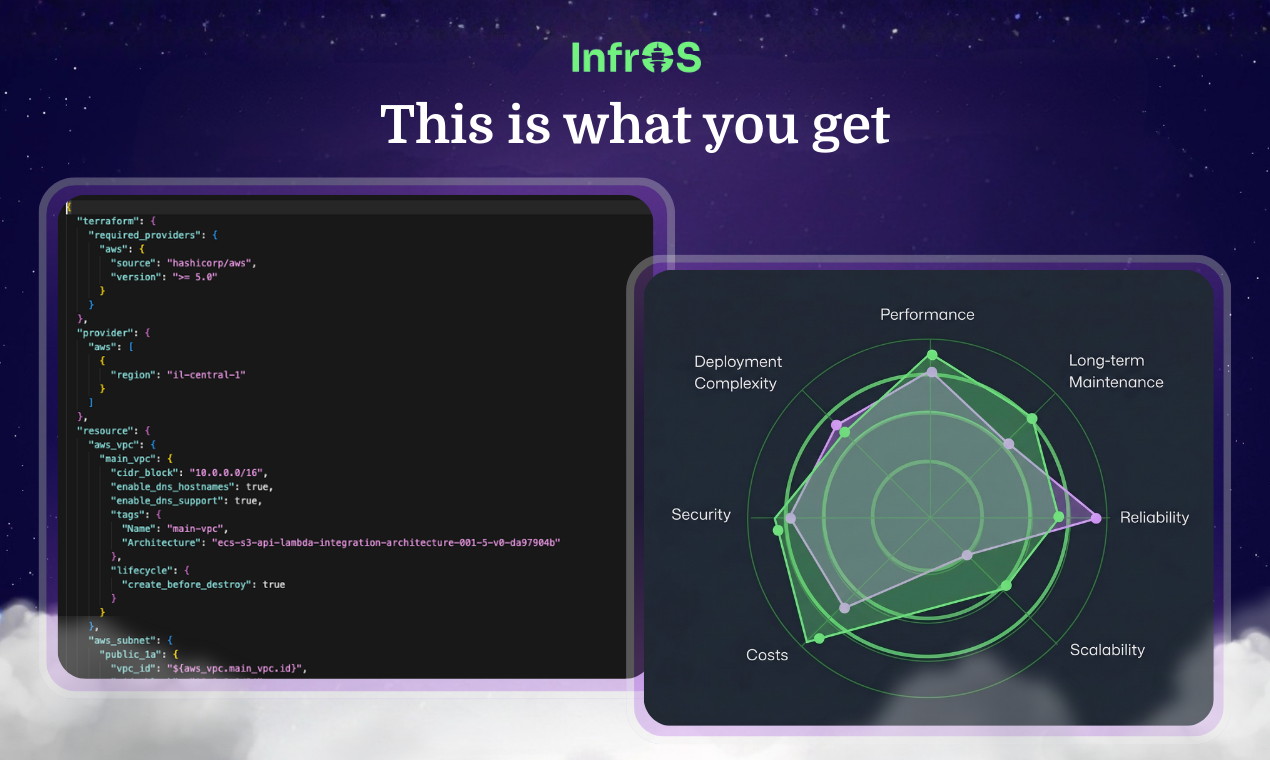
For teams building cloud systems, InfrOS designs and validates inherently optimized architectures that align to your priorities. It doesn’t just predict outcomes, it proves them through emulation before deployment - and helps you evolve infrastructure with control over time.

Hey Product Hunt 👋

I'm Naor, co-founder and CEO of InfrOS.

The standard cloud workflow is broken — and everyone's normalized it:

Deploy → watch things break → optimize reactively. Repeat forever.

We flipped it.

InfrOS takes your requirements upfront — business, technical, compliance — and proactively designs the right architecture before anything gets built. We then emulate it in a real environment to validate performance before a single resource is provisioned. What you deploy is already optimized. Real optimized.

And when your codebase, requirements, cloud provider offering, environment or price changes? InfrOS reoptimizes at the design level. Not a patch. A controlled redesign.

We call it shift-left optimization. We don't predict how your cloud will perform — we prove it.

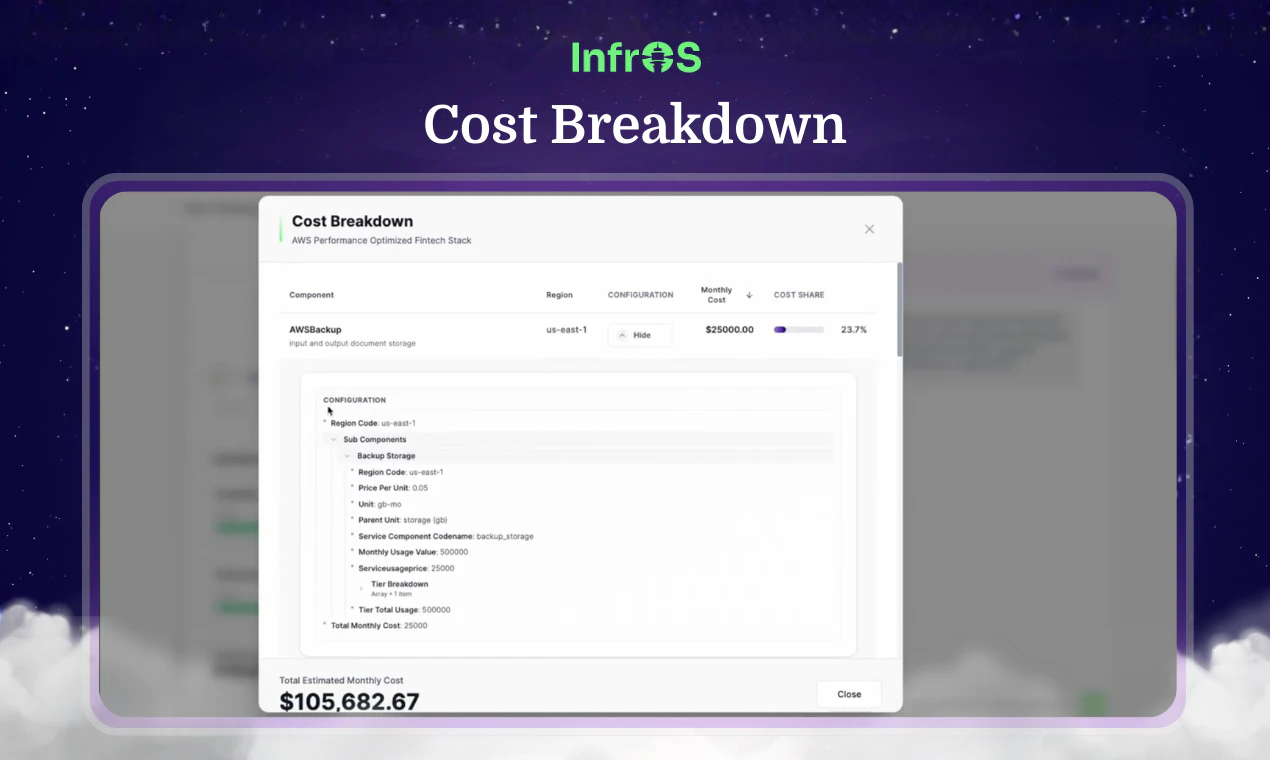
Early customers are seeing 43% infrastructure cost reductions and 63% faster deployments. We just closed our first Fortune 500 deals through the Ignite DeepTech accelerator, and we're opening InfrOS to the broader community today.

🎁 Product Hunt exclusive: Use code PHLAUNCH for 20% off our paid plans— valid 7 days.

Two things I'd love your feedback on:

Does the shift-left framing resonate with how your team thinks about infrastructure?

What's the hardest part of your current architecture workflow?

We'll be here all day — ask us anything.

🙏

— Naor

20
回复

@yangoj Awesome stuff, congrats on the launch! For the 43% cost reduction — is that coming mostly from right-sizing, or more about actually catching architectural mistakes (wrong service choices, bad topology) that humans miss?

4
回复

Hey Product Hunt:)
A lot of thought went into making this practical, not just theoretical. Really excited to launch it!!

9
回复

This is a strong take on a problem many teams have simply accepted as normal. The idea of validating and optimizing infrastructure before deployment feels far more practical than constantly reacting after things break. I am especially curious about the emulation layer you mentioned. How closely does it match real-world production behavior across different cloud environments?

8
回复

@akshay_kumar_hireid Thanks! that’s exactly why emulation is such a core part of what we do.

It’s not just an abstract validation layer. We actually run the proposed architectures in our own cloud environment (in a very focused and non-costly way), based on the system requirements and, when relevant, what our agent learns from the existing environment.

That allows us to identify the strongest architecture options for the system’s requirements and gives teams visibility into likely outcomes before deployment. So instead of relying on generic best practices or assumptions, we can evaluate how each architecture is expected to behave in the real world.

That’s what gets us much closer to real-world production behavior across different cloud environments: not just recommending an architecture, but proving expected results before it goes live.

5
回复

really interesting angle on cloud optimization this feels like solving the problem at the right stage instead of waiting for infra issues to show up later. the “prove it before deploy” part especially stood out. how are you handling cases where requirements change very frequently across teams?

8
回复

@nayan_surya98 Appreciate it!
About requirements that change frequently, That's one of our strongest points. Our mission is to make infrastructure dynamic and evolve over time - without having to spend entire teams' sprints on non-necessary Rearchitecting.

That's why we connect to the actual environment, emulate and PROVE the results of Rearchitecting in terms of performance, cost, reliability etc. and can prove exactly when the ROI for that is positive - and when you shouldn't spend any time on that.
So, the more changes your teams make - the more value you can get from knowing when you really should rearchitect, instead of guessing

Hope that answers your question:)

6
回复

@nayan_surya98 Thank you for your interest and support. We're here all day if you have any more questions

4
回复

Really excited to finally share this and grateful to everyone taking a look today! I truly believe this product will reshape the way teams design their infrastructure. We’re here all day, come say hi!

8
回复

Thrilled to be launching InfrOS today.
We built it around a belief that feels obvious in hindsight: infrastructure decisions should be validated before anything gets provisioned, not after issues show up in production. That shift from reactive fixes to proactive design is what excited us most, and we’re happy to finally share it.

6
回复
Hey Product Hunt! 👋 I’m Elia, data & AI lead at InfrOS (and employee #1). When I joined, this was a vision. Today we’re a team of 12. Watching what got built over countless late nights finally reach real customers with no touch is something I genuinely can’t put into words. My job was to build the AI side from the ground up, specifically the GenAI recommendation engine, which turned out to be one of the most demanding and rewarding things I’ve worked on. You can’t recommend what you don’t understand, so I went deep on system design, cloud computing, AWS, Azure, and GCP in ways I hadn’t anticipated. Every architectural pattern, every trade-off between cost, performance, security, and reliability, I had to truly internalize it all to make the system credible. Early on, a potential design partner came in pushing hard on GPU infrastructure and AI training. At the time, we thought companies in the data center world might become a core customer segment for us, so we went deep in that direction. We spent a week pushing hard to make it work and understand what that world really needed. When Itay joined the team, his very first day immediately turned into diving straight into this project with us, delivering code and debugging code at the spot. I still laugh about that with him. We didn’t get there in time, and the partnership didn’t happen. It stung. But months later, an enterprise customer came knocking on the door. And we delivered without breaking a sweat. That week ended up being a real turning point for the product. It forced us to understand the hard edges of infrastructure recommendations in ways we never would have otherwise. It also helped clarify that our long-term path was different from what we had initially imagined. The AI I was building couldn’t just be fluent; it had to be right, under pressure, for real workloads. GPUs taught us that. That’s the gap InfrOS is built for: teams know their goals, but rarely have the bandwidth to reason carefully through every infrastructure decision under deadline pressure. We wanted to bring that structured, battle-tested thinking to every team, not just the ones with a seasoned cloud architect in the room. We’re proud of where we are - and we’re genuinely listening. Would love to hear what you think and what would help us deliver an even better product.
5
回复

The idea of proving architectures through emulation before deployment is really compelling. How detailed is the emulation — does it simulate real traffic patterns and failure scenarios?

5
回复

@alielastal thanks for your interest.

Yes, absolutely, and performance. We expand it regularly. Architectures are all about bottlenecks so this capability should end guesswork.

6
回复

Really exciting day for us!
This has been a long journey from idea to something people can actually use. We built this to solve problems we kept running into ourselves, so it means a lot to finally share it here and see how others experience it.

4
回复

Good Morning America!
Let's see how good Product Hunt's autoscalers are - we know ours are optimal :)
Looking forward to seeing everyone on our website and giving our platform a try.
It's FREE, and you have 20% off the first month

4
回复

Excited to launch InfrOS today. We built it to help teams make better infrastructure decisions before anything is deployed, not after problems appear in production. We believe planning and validation should come first, and we’re proud to share a product built around that idea.

4
回复

Congrats on the launch! I like the concept of optimizing your cloud infra. Was this designed more as a configuration optimization or migration/setup of your entire cloud infra? I'm also interested in how the "emulation" works since this is a very proactive approach. Without deploying and observing traffic patterns, how are you are able to determine the optimal cloud configs?

3
回复

@tteer Thanks, Tod!
Yes, we configure whole workloads and systems, including very large ones. You can give it a shot with a free trial account and let us know what you think.
About the emulation part - we deploy the top 3 architectures we design in a sandbox and benchmark them according to your specifications, what you get is a validated comparison between the three candidates, not an estimation

2
回复

@tteer Thank you, Tod!

Emulation is one of the core parts of what we do. And yes, migration is also a big part of the story, since InfrOS is vendor-agnostic and can support teams whether they’re planning new environments or evolving existing ones.

A big part of the shift-left value is preventing drift between production and what’s defined in Git (an issue we all know too well...), while validating decisions before deployment.

1
回复

Using it now to define my HIPAA complaint infrastructure! Great step by step discovery of my needs and easy generation of useable code! Very thoughtful and thorough!

2
回复

@danieltet Thank you for your support! I'm sure you will love what's coming next!

0
回复

This feels extremely relevant for solo devs or small teams that are price sensitive and are actively thinking of ways to keep costs down. Are there ways to be able to isolate for what's driving cloud cost after getting set up?

1
回复

@lienchueh Yes! We support both green and brown field projects. The platform will help you design an optimal architecture on day 1, and then keep it optimized as you keep deploying code (and the cloud vendor adds/reducts features)

0
回复

I’ve seen how much time goes into fixing infrastructure issues after deployment. Catching those decisions earlier could save a lot of effort.

1
回复

How accurate does the emulation get compared to real production behavior, especially under unpredictable traffic patterns?

1
回复
If you're a network or systems architect dealing with the complexity of cloud network design, this one's for you. We built this tool to truly understand your requirements and translate them into solid, tailored cloud network solutions — no more guesswork or endless back-and-forth. I genuinely believe architects who try it will love it. Would mean the world to us if you gave it a shot today and let us know what you think
1
回复

To answer your question, the shift-left framing resonates immediately, especially for anyone who's lived through a painful post-launch infrastructure fire. For most teams I've spoken to, the most challenging aspect of the current workflow is the discrepancy between the design and the actual deployment. Congrats on the launch!

0
回复
#5
OctoClaw
Hire AI specialists for marketing, sales, support, and more
231
一句话介绍:OctoClaw 是一款让企业能“雇佣”专注于营销、销售、客服等领域的AI专家来实际执行业务任务(如撰写内容、筛选线索、回复客户、协调工作流)的平台,为初创及精干团队提供了在不增加早期人力成本的情况下,获得业务杠杆的解决方案。
Productivity Marketing Artificial Intelligence
AI智能体 自动化工作流 营销自动化 销售赋能 客户支持 多智能体协同 SaaS 生产力工具 初创企业工具 无代码AI
用户评论摘要:用户肯定其“专家”定位与多智能体协同价值,询问与通用AI工具的本质差异、训练方式、价格模型及人工接管机制。主要建议包括:提供无需信用卡的试用、增加“监督模式”确保内容安全、明确各领域专家的成熟度对比。
AI 锐评

OctoClaw 的核心叙事巧妙地将“使用AI工具”升维为“雇佣AI专家”,这不仅是营销话术的胜利,更是对当前AI应用范式的一次精准批判。它直指通用聊天机器人(如ChatGPT)在企业场景中的核心短板:需要反复提示、缺乏持续执行与跨工具协调能力。产品试图将“智能体”从执行单一指令的“手”进化为拥有领域知识、能持续运营并与其他“同事”协作的“虚拟员工”。

其真正价值潜力在于两个层面:一是作为“职能即服务”的早期形态,通过预训练和深度集成,降低企业部署专用AI的门槛;二是构建一个跨工具的工作流协调层,这比创建又一个独立的SaaS平台更具战略眼光。正如资深用户所指出的,智能体间的“编排”才是难点与价值倍增点。

然而,其面临的挑战同样尖锐。首先,“专家”与“精心调校的提示词+工具访问”之间的性能壁垒必须足够高,才能支撑其溢价,目前官方证据尚属早期自用数据。其次,企业级应用至关重要的“护栏”与“人工接管”机制在评论中被反复提及,凸显了用户对完全自主AI的信任顾虑。最后,从固定费用到用量计费的定价过渡,将直接考验其价值与成本的平衡能力。

总体而言,OctoClaw 展现了一个更贴合企业运营逻辑的AI应用方向,但其从“有亮点的自动化”走向“可信赖的虚拟团队”,仍需在效果可验证性、安全可控性与商业模型上接受市场严苛的淬炼。

查看原始信息
OctoClaw
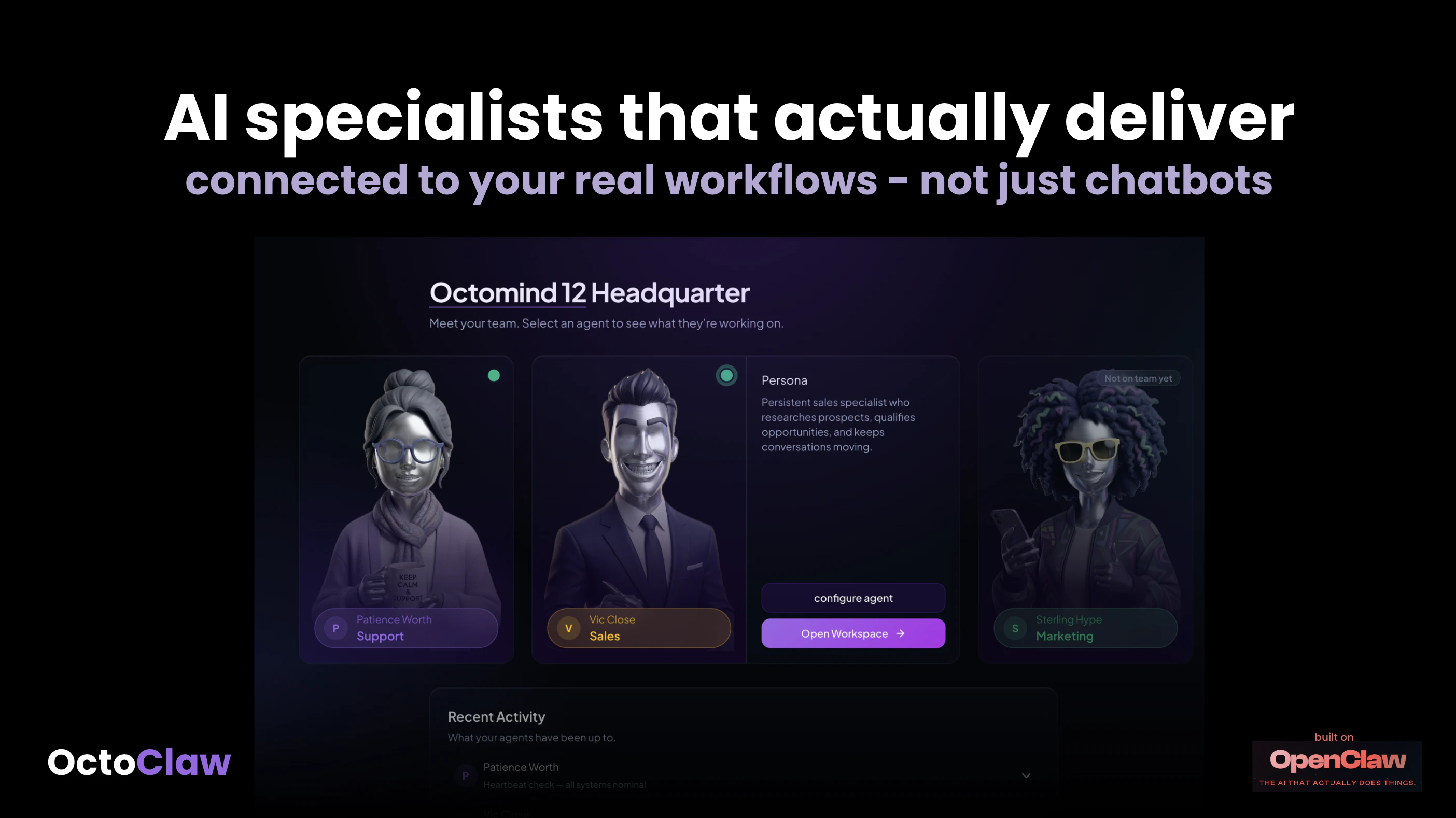
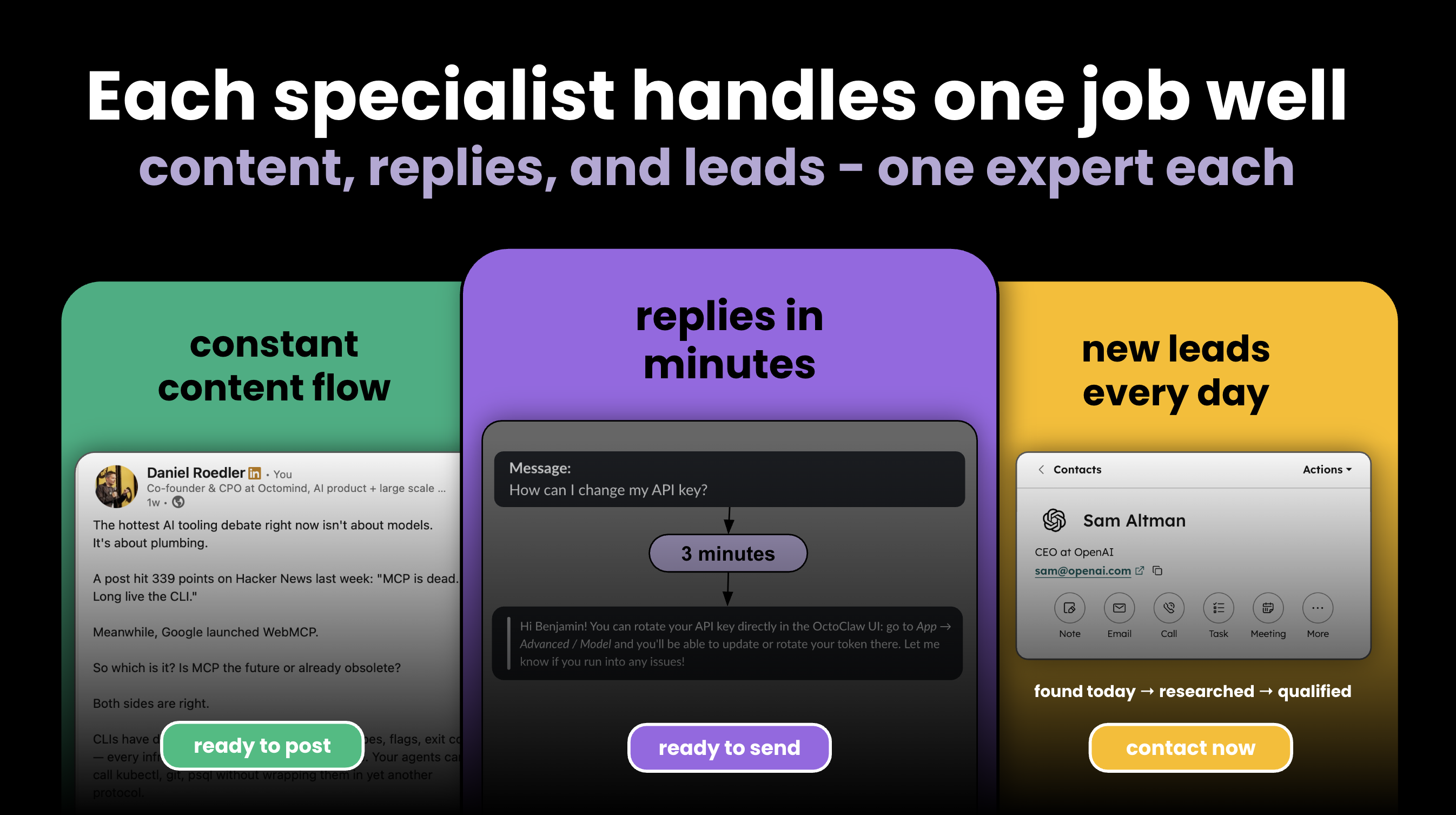
OctoClaw gives you AI specialists that actually execute business tasks - writing content, qualifying leads, replying to customers, and coordinating workflows across your tools.

Hey Product Hunt 👋

We built OctoClaw because we kept running into the same problem: there were too many repetitive tasks across marketing, sales, and support, but hiring for every role early was unrealistic.

Generic AI tools helped a bit, but they still required constant prompting, supervision, and context every single time.

So we asked ourselves: what if AI felt less like a chatbot, and more like hiring a specialist?

That became OctoClaw - a system where you hire domain-trained AI specialists, each focused on one area of work.

Today that means specialists for:
• marketing
• sales
• support

The goal is simple: give founders and lean teams leverage without adding headcount too early.

We’re launching early because we want honest feedback from people who actually build and ship.

Very curious:
Which specialist would you hire first?

11
回复

S/O for this new launch, ?makers - How do you use @OctoClaw? What are your best use cases?

5
回复

@daniel_rodler The "AI specialists" framing over "AI assistants" is an important distinction. Most AI tools give you a generalist that can do a little of everything. Specialists that are purpose-built for specific business functions like lead qualification, customer replies, and content writing will always outperform a one-size-fits-all approach because the context and quality bar is different for each task.

We run a multi-agent system internally at my company where different AI agents handle different functions: content production, security analysis, code deployment, and community engagement. The biggest lesson we've learned is that specialization is everything. An agent optimized for one job with deep context outperforms a general-purpose agent trying to do five things at once. So the specialist approach here resonates with how we actually operate day to day.

The cross-tool coordination is where the real value compounds too. Getting multiple agents to work together across your existing stack instead of requiring you to rebuild workflows around a new platform is a much better architecture for teams that are already operational. That orchestration layer between specialists is the hard part, and if OctoClaw nails that, it's a serious workflow unlock.

Congrats on the launch!

4
回复

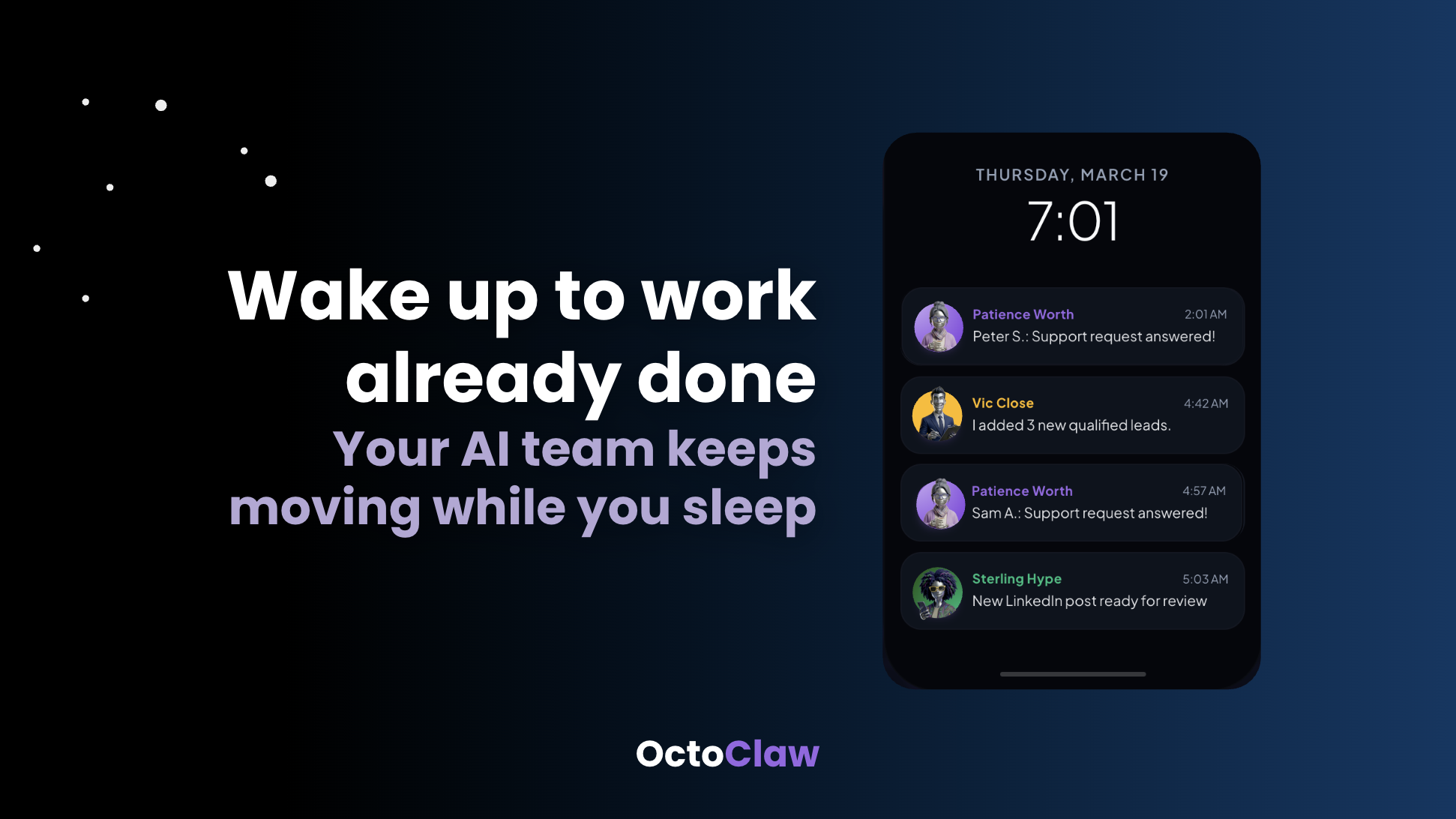
By the makers behind award-winning @Octomind (#3 Product of the Day in Feb 2024, #1 in Oct 2024), @OctoClaw helps you get AI specialists in marketing, sales, and support, that run 24/7 in the cloud.

No coding. No terminal. No Docker. Just tell them what to do and they get the job done.

Give it a spin: octoclaw.ai

7
回复

@fmerian It is a game changer for any task that requires consistent execution. Social media presence is a perfect example: you need to publish content every day across multiple platforms, and the most time-consuming part is often the research - figuring out where to post and how to craft the right message.

Now our marketing agent handles that for us. We have it running three times a day, continuously researching opportunities and generating comment drafts. Once approved, those drafts go live automatically. In practical terms, this is saving us hours every single day.

But it goes far beyond automation. The agent is also shaping our content strategy: it works toward defined goals, monitors performance, and updates the plan week by week based on results. This is not just AI executing tasks—it is AI that continuously improves its own approach.

If your goal is to generate reach, this is the tool. It is genuinely transformational.

4
回复
When you say “specialists,” what did you do to make them materially different from a well-written prompt + tool access—what training, playbooks, or evaluation process proved a marketing/sales/support Octo performs better than a general agent?
6
回复

@curiouskitty Hey, great question!

  • Our Agents have a curated set of skills - some we have written ourselves (e.g. a linkedin, X cli for the marketing agent, a hubspot and apollo CLI for the sales agent), some curated and audited from clawhub.

  • We also have invested heavily in making integrations with the most common tools for each persona as frictionless as possible, we registered official oauth apps on all the common platforms, so no API keys necessary, just login/consent normally triggered from our chat.

  • By ensuring each specific agent only has the skills/context it needs, we ensure a focussed context which allows better results than a general-purpose agent that might be overloaded.


    Re: proofpoints:

  • Marketing: our own marketing accounts are run completely by the marketing agent - this works well for us. Here's some graphs of our ai-managed content improving our linkedIn visibiliy, let me know if you can tell when we started using it ;)

  • Support: we use it ourselves, and brought down our response time from a few hours to <2 minutes. (only limiting factor being the polling frequency and token cost of that).

  • Sales: the most recent of our personas, and the least amount of proof so far: We have a full lead pipeline now, so hopefully that counts for something ;)

4
回复

Interesting concept! Having AI agents connected to real workflows instead of just chatbots is a solid approach. How does the handoff work when an agent can't handle a task — does it escalate to a human?

4
回复

@alielastal Absolutely, if you connect a channel he will contact you proactively, otherwise you can also see the status directly in your AI company headquarters :)

2
回复

Very cool! congrats on the launch!

4
回复

@dan_meier1 Thank you so much! Feel free to give it a try :) It might transform the way you work.

3
回复

This is a smart and relatable way to position AI for growing teams. Framing it as hiring a specialist rather than using a generic assistant makes the value much easier to understand. I can see this being especially useful for founders trying to scale without expanding headcount too quickly. Which specialist are users finding most valuable so far?

3
回复

@akshay_kumar_hireid It is clearly the marketing agent which is most interesting for our audience!

1
回复

Love the concept @daniel_rodler @marc_mengler 👏

Quick question on pricing: it looks like fixed per agent/month, but for heavier agents (e.g. PR review with high token usage), how does pricing adapt?


Also, big congrats on the launch 🚀

3
回复

@mazula95 Thanks a lot!

The pricing is still early-stage. To make getting started as smooth as possible, we include an initial usage budget for all agents. This also covers third-party API costs required for data scraping.

Once that initial budget is used up, you will need to either provide your own API key or token, or purchase tokens through us to keep the agent running.

We are intentionally keeping pricing simple at this stage. Our focus right now is on rapidly evolving the agents and continuously expanding their capabilities so they can cover their respective areas better and better. Over time, that will likely be reflected in the pricing as well.

2
回复

Curious to hear and witness some success stories by other hunters who have used Octoclaw.

3
回复

@kevin_mcdonagh1 Definitely let us know what you come up with, super interested in hearing everyone's stories!

2
回复

@kevin_mcdonagh1 Consistency is what makes the difference. With a chat interface, you have to prompt it every time you want new content. With a true 24/7 agent, the content keeps coming automatically—you simply review and approve.

It also takes care of the research and adapts content for different platforms. Set it up once, then let it work. That is where the real magic begins. Over time, the results become visible.

2
回复

Congrats on the launch! Looking forward to what's possible with it.

3
回复

S/O to ?makers - they previously launched @Octomind and keep cooking with @OctoClaw. Spread the word on LinkedIn

2
回复

@dominik_doerner Thank you! You are invited to try it out. Looking forward to your feedback.

1
回复

Hi @daniel_rodler , congrats on getting OctoClaw out there!


Well, this line got me: hire specialists, not chatbots. I visited the homepage and like its dashboard.

Also gotta say, the persona names made me smile. Patience Worth for support. Sterling Hype for marketing. Small thing but it shows you guys actually thought about the human side.


Anyway, excited to see where this goes. Hope it takes off.

3
回复

no detail is too small - spread the word on X, repost this

2
回复

love this positioning making ai feel like a specialist instead of just another chatbot is a much clearer way to think about it. this feels especially useful for small teams trying to do more without hiring too early. which part is the most mature right now marketing, sales, or support?

2
回复

@nayan_surya98 We've definitely had the most success with the marketing one. You can take a guess to when we started using it from the chart ;)


But support is also working exceptionally well for us, our response time went down to <2 mins from a couple of hourse.

1
回复

Looks pretty interesting. I keep wondering about specific agents vs. the general agents. I didn't try it as trial requires a credit card. Might consider a no credit card trial at this early stage just as some feedback. Congrats on the launch!

2
回复

@clippi good point. it IS a completely free trial and you can cancel right at the beginning, but will discuss if we should remove that requirement.

2
回复

Are there ways to set guardrails for each specialist? For instance, when it comes to marketing, are there ways to focus in on specific topics, avoid certain words, or adopt a certain writing style?

1
回复
Very cool, it’s based on OpenClaw right?
1
回复

@matt_knee Yeah absolutely. It has a lot of issues, but it's just where most of the development happens currently so it makes sense for us to use the momentum and get the feature development for free.

1
回复

Watched the demo and the multi-agent coordination looks genuinely promising. One thing that gave me pause though: the LinkedIn auto-posting flow. Is there a human approval step before anything goes live, or does the agent publish directly? For content that touches a personal or company brand, I'd want at least a one-click confirmation before it goes out.

Would love to see a "supervised mode" as an option for those of us who aren't ready to go fully autonomous yet.

0
回复

The framing of "specialists that execute" rather than "automation" is doing a lot of work here, and it's the right call. The mental model of hiring rather than configuring lowers the activation energy significantly. Curious how you handle cases where the AI specialist makes a wrong call. Is there a review layer before it takes action, or does it execute autonomously by default?

0
回复
#6
Comet for iOS
Agentic AI browser and assistant for mobile by Perplexity
180
一句话介绍:Comet是一款由Perplexity推出的移动端智能体化AI浏览器,通过跨标签页总结、语音交互和AI代理执行任务,解决了用户在移动场景下信息碎片化、操作繁琐、多任务处理效率低下的痛点。
iOS Artificial Intelligence Search
AI浏览器 移动智能助理 信息聚合 语音控制 代理智能体 生产力工具 广告拦截 Perplexity 移动办公 跨标签页管理
用户评论摘要:用户普遍对移动端发布感到兴奋,认为其设计出色,可能取代Safari。核心反馈包括:产品体验流畅,解决了以往AI浏览器的笨重感;AI代理功能强大,能深度集成个人工作流;期待其在内容创作等场景的应用。无明显负面问题。
AI 锐评

Comet for iOS的发布,远不止是将一个桌面AI浏览器“搬运”到移动端。其宣称的“智能体化”核心,试图在移动浏览这个已被巨头标准化、用户行为固化的红海市场中,撕开一道“主动服务”而非“被动响应”的口子。传统移动浏览器的进化止步于性能与界面,而Comet则押注于“浏览后”场景:信息过载后的即时整合、跨页面信息的主动关联、以及基于用户意图的代理执行。这本质上是对“浏览器”定义的颠覆——从查看信息的窗口,转向处理信息的智能工作台。

然而,其真正的挑战与价值也在于此。首先,“代理执行”在移动端敏感权限与隐私顾虑的背景下,能否取得用户深度信任并开放足够权限,是规模化前提。其次,评论中用户提及“训练我的Perplexity代理”,这揭示了其潜在壁垒与天花板:产品价值深度依赖用户投入时间进行个性化配置,这可能吸引效率极客,却为大众用户设置了使用门槛。最后,在移动设备小屏幕、碎片化使用场景下,复杂的智能体交互逻辑是否会造成新的认知负担,而非其所宣称的“解放双手”,仍需观察。

Perplexity借此产品,正从“问答式AI搜索引擎”向“操作系统级AI代理”跃迁。Comet for iOS不仅是功能发布,更是其生态野心的移动端触手。它不再满足于回答用户问题,而是试图成为用户在数字世界中行动的代理。成败关键在于,能否在“炫技般的自动化”与“稳定可靠的基础设施”之间找到平衡,让AI代理从令人惊叹的演示,转化为用户每日不可或缺的、平静而强大的数字延伸。

查看原始信息
Comet for iOS
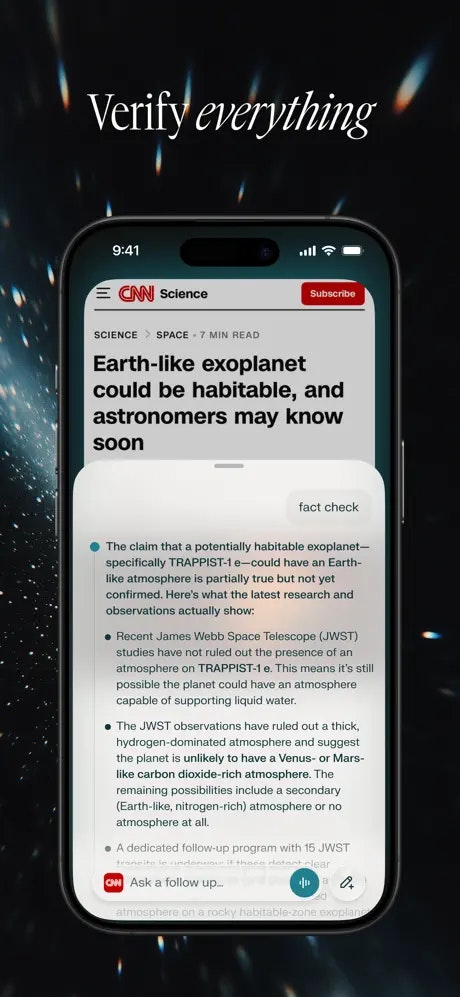
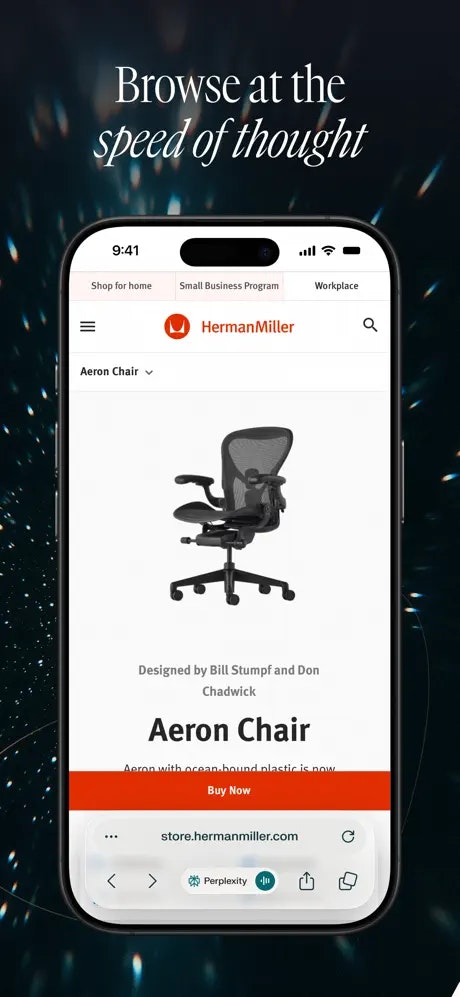
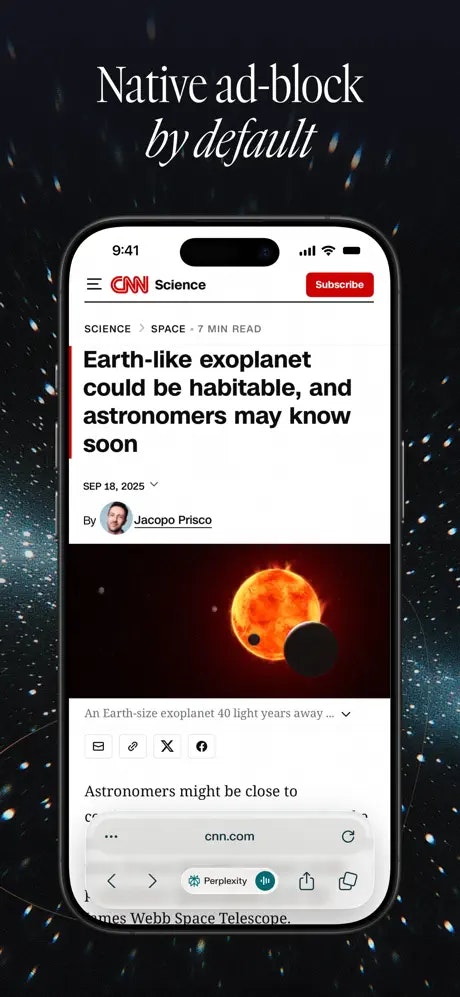
Comet is the first agentic AI browser built for mobile — summarize across tabs, chat with voice, organize your browsing, block distractions and let your AI assistant take action while you stay in control. The smartest way to browse on the go. Comet on iOS is now live in the Apple App Store.

Thrilled to hunt Comet for iOS... the first agentic AI browser built for mobile!

Comet is an AI-native browser from Perplexity that brings a full agentic assistant into your pocket. It doesn’t just answer questions, it takes actions across your tabs, apps and searches while keeping you fully in control.

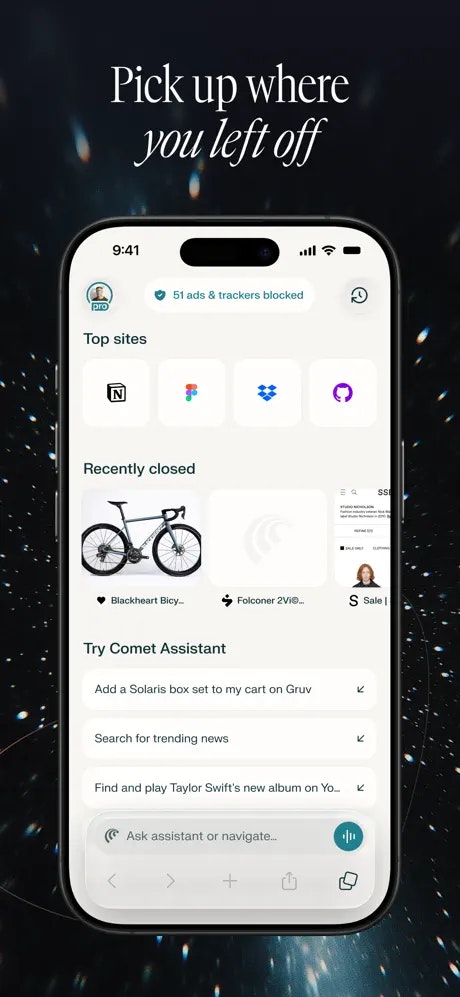
Comet for iOS turns your browser into an actionable workspace.

Key features → benefits:

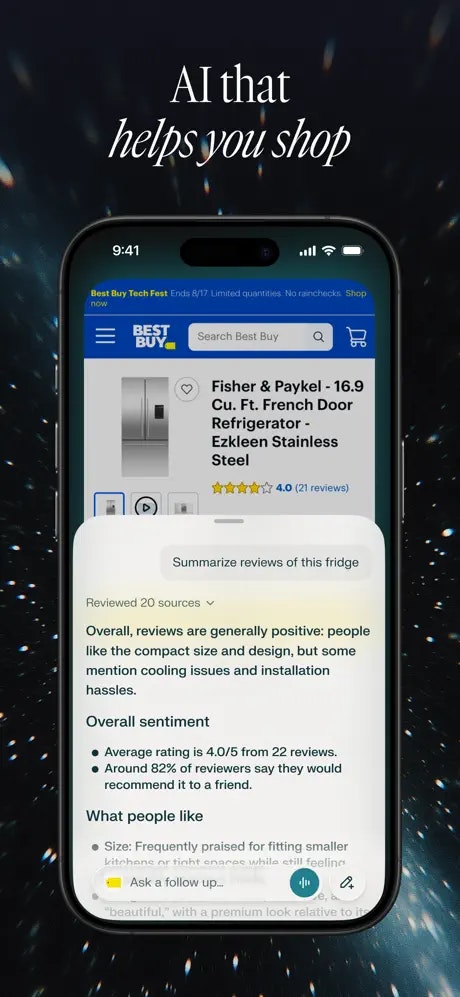
  • Chat with your tabs → No more jumping screens; get answers from everything you already have open.

  • Cross-tab summaries → Synthesized insights instantly, not page-by-page.

  • Actionable AI assistant → Research, plan, write, shop and follow up hands-free.

  • Ad blocker → Cleaner, faster browsing.

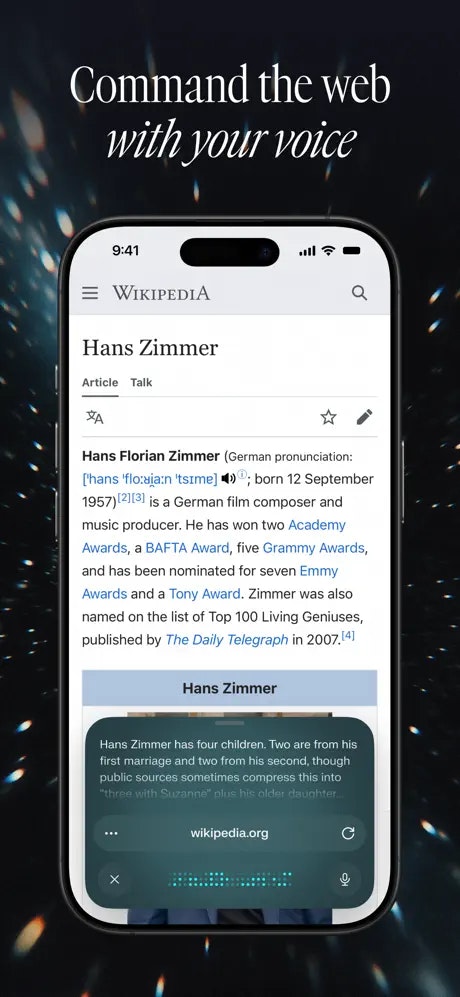
  • Voice control → Truly hands-free mobile research.

  • Agentic workflows → Ask it to handle tasks as you would on Comet for desktop. See exactly what actions the assistant is taking while you remain in full control.

Download on Apple App Store and experience agentic browsing on mobile: https://apps.apple.com/us/app/comet-ai-personal-assistant/id6748622471

I hunt the latest and greatest launches in tech, SaaS and AI, follow to be notified @rohanrecommends

3
回复

The people have spoken! Comet tops the charts! #1 iOS browser today.

1
回复

It's ABSURD that this isn't in first place on PH for the day, lol. Comet is one of those "how did I live without this?" tools, in so many ways, especially now that Perplexity Computer is off the ground. The fact the team has been able to refactor the Comet experience to a mobile format is nothing short of amazing.

Great work, team! I've spent so much time training up my Perplexity agent with personality paramaters, skills, a portable identity manifest, deep connections to all of my tools and messaging, and so much more. I don't know what I'd do without her, honestly!

2
回复

finally. excited to use!

2
回复

@shubham_kukreti The experience and design are absolutely stellar. I'm probably deleting Safari.

1
回复

Tried a few AI browser tools before, but they always felt a bit clunky , This looks more polished and actually useful for everyday workflows.

1
回复

Comet’s AI browser could totally transform the way content creators research and storyboard ideas. I’d love to explore how short, AI-powered videos could showcase these workflows in action.

1
回复

@onitedesigns Do you use Comet mostly for content research?

2
回复
I’ve been waiting for this!!
0
回复
#7
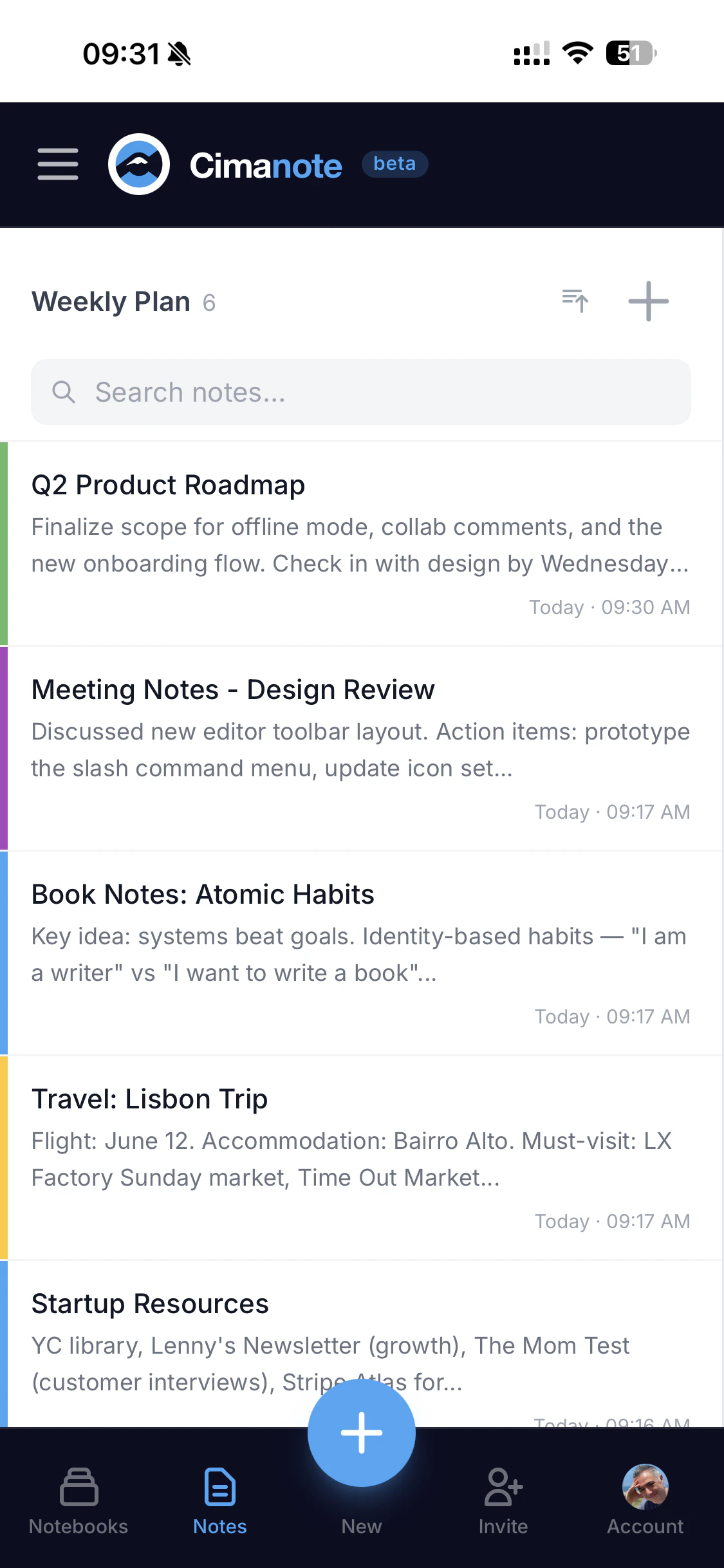
Cimanote
The fast, clean note app Evernote used to be
147
一句话介绍:一款快速、简洁、无臃肿功能的笔记应用,通过提供无损的Evernote数据导入、全平台无设备限制和实时协作,解决了老牌笔记软件涨价、降级、变慢后用户寻求可靠替代品的核心痛点。
Productivity Notes SaaS
笔记应用 Evernote替代品 生产力工具 数据迁移 跨平台 实时协作 渐进式网页应用 简洁设计 订阅制 用户数据主权
用户评论摘要:用户普遍赞赏其简洁、快速的体验及完美的Evernote数据(含附件)导入功能,认为这消除了迁移的最大障碍。主要问题与建议集中在搜索功能(PDF/OCR)、表格支持、听写/语音输入等缺失功能上。创始人积极回应,明确了产品路线图与“速度、定价诚信、数据可导出”三大不妥协原则。
AI 锐评

Cimanote的亮相,与其说是一款新产品的发布,不如说是一场针对Evernote“背叛”其核心用户的精准复仇。它敏锐地捕捉到了一个关键的市场情绪:用户对工具“异化”的深度厌倦——当一款旨在延伸大脑的工具,自身却变成了需要费力管理的对象时,背叛感便油然而生。

产品的真正价值,远不止于“快速、简洁”的功能复刻,而在于其构建的“零摩擦迁移”信任体系。无损导入(包括附件)并非单纯的技术展示,而是一个强烈的心理信号:它尊重用户的历史沉淀与迁移成本,直接攻击了SaaS时代用户被“数据锁链”捆绑的核心恐惧。这使其从众多“另一个笔记应用”中脱颖而出,直击Evernote难民最脆弱的软肋。

然而,其挑战同样鲜明。定位上,它试图在Apple Notes的极简与Notion的万能之间寻找“专业笔记”的甜蜜点,这是一个存在但可能狭窄的赛道。其当前依赖PWA的形式虽实现了跨平台敏捷部署,但在追求极致原生体验与系统集成度的用户面前,可能仍是短板。用户评论中关于高级搜索、表格等功能的追问,也预示了“简洁”与“功能完备性”之间的永恒张力。

创始人承诺的“速度、定价诚信、数据主权”三大不妥协原则,是产品最犀利的宣言,也是其未来最大的试金石。这本质上是在与SaaS行业“增长-垄断-榨取”的默认剧本唱反调。能否在资本与扩张压力下坚守这些原则,将决定Cimanote是成为一个值得尊敬的利基品牌,还是又一个被其誓言所反对的模式的追随者。它的出现,是用户用脚投票的产物,其持续成功,则将是对产品伦理与用户信任能否成为核心竞争力的一次公开检验。

查看原始信息
Cimanote
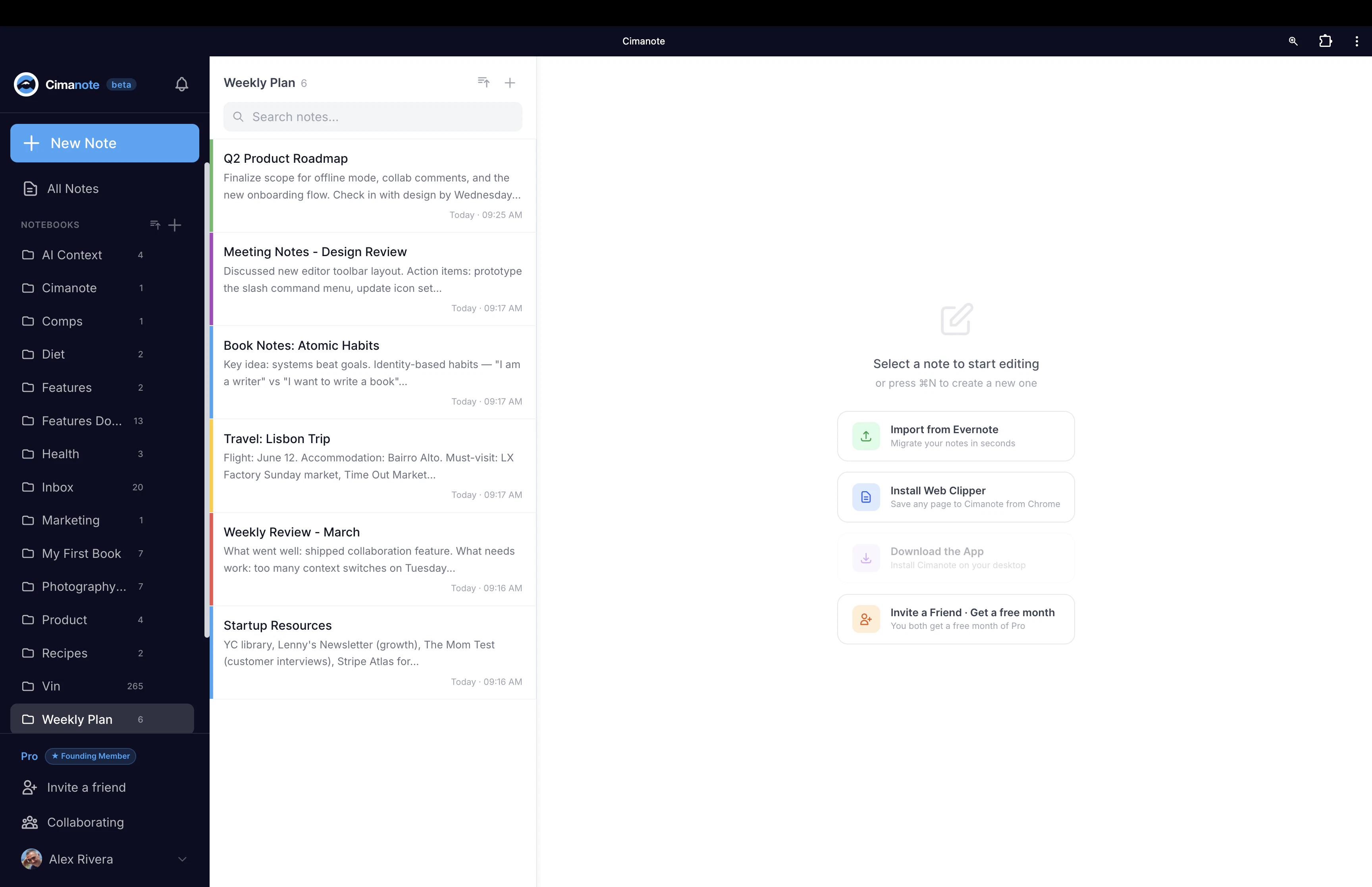
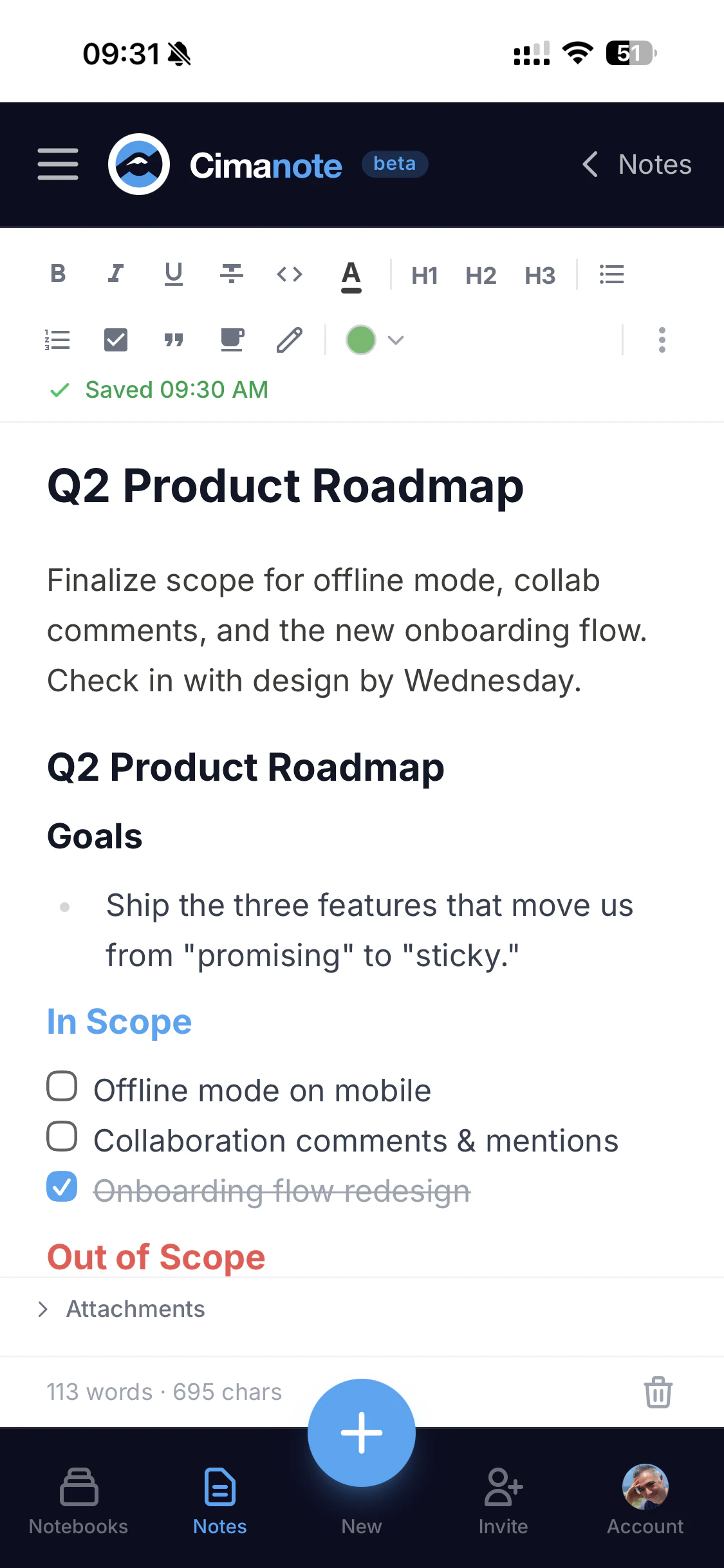
Evernote tripled prices, gutted the free tier to 1 device, and got slower every update. Enough was enough. Cimanote is the note app Evernote used to be: fast, clean, no bloat. Instant load · All devices · Rich editor · Evernote import (notes, notebooks, tags, attachments, all intact) · Real-time collaboration · Your data, always exportable. First year is completely free for our first 500 users. No card required. Then $6/mo, no surprises, ever. — Blagoja, founder
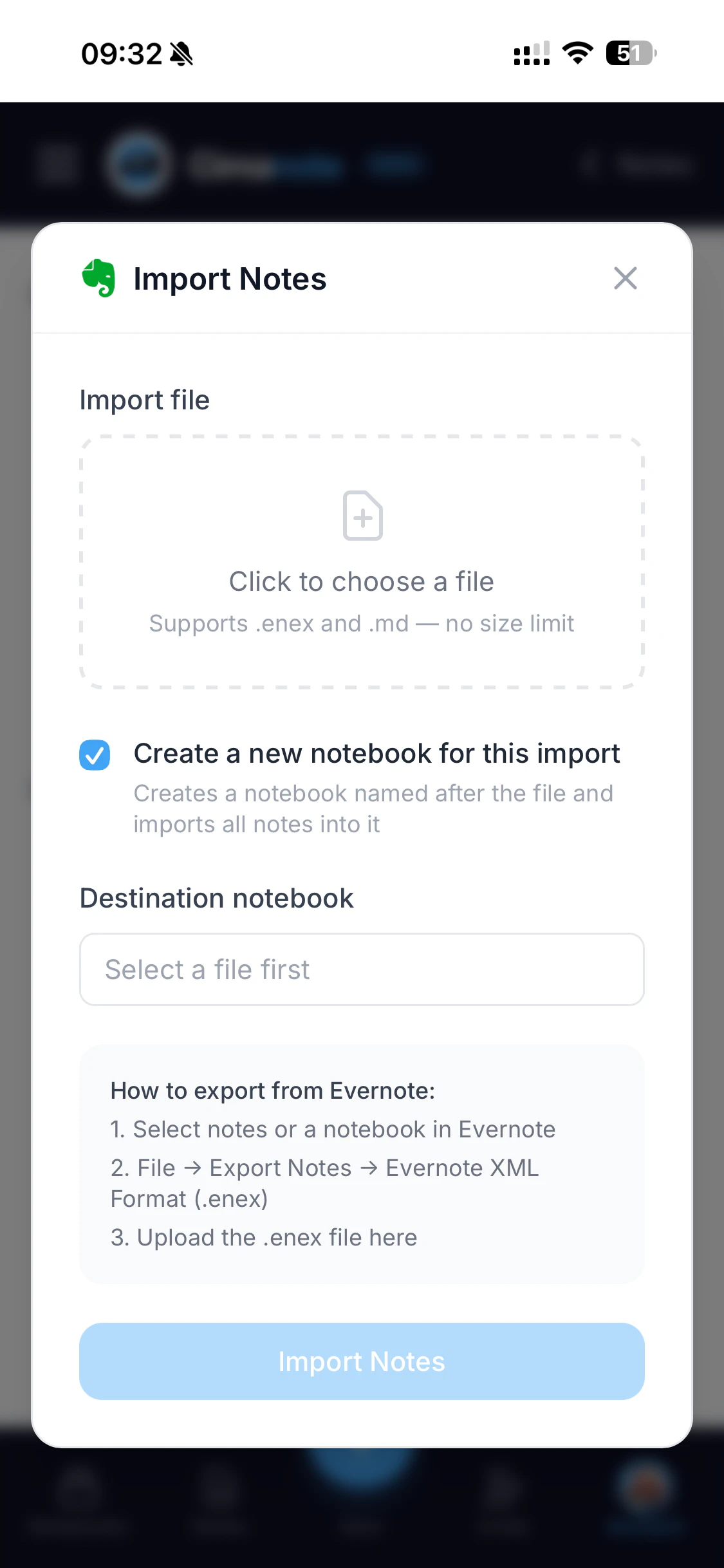
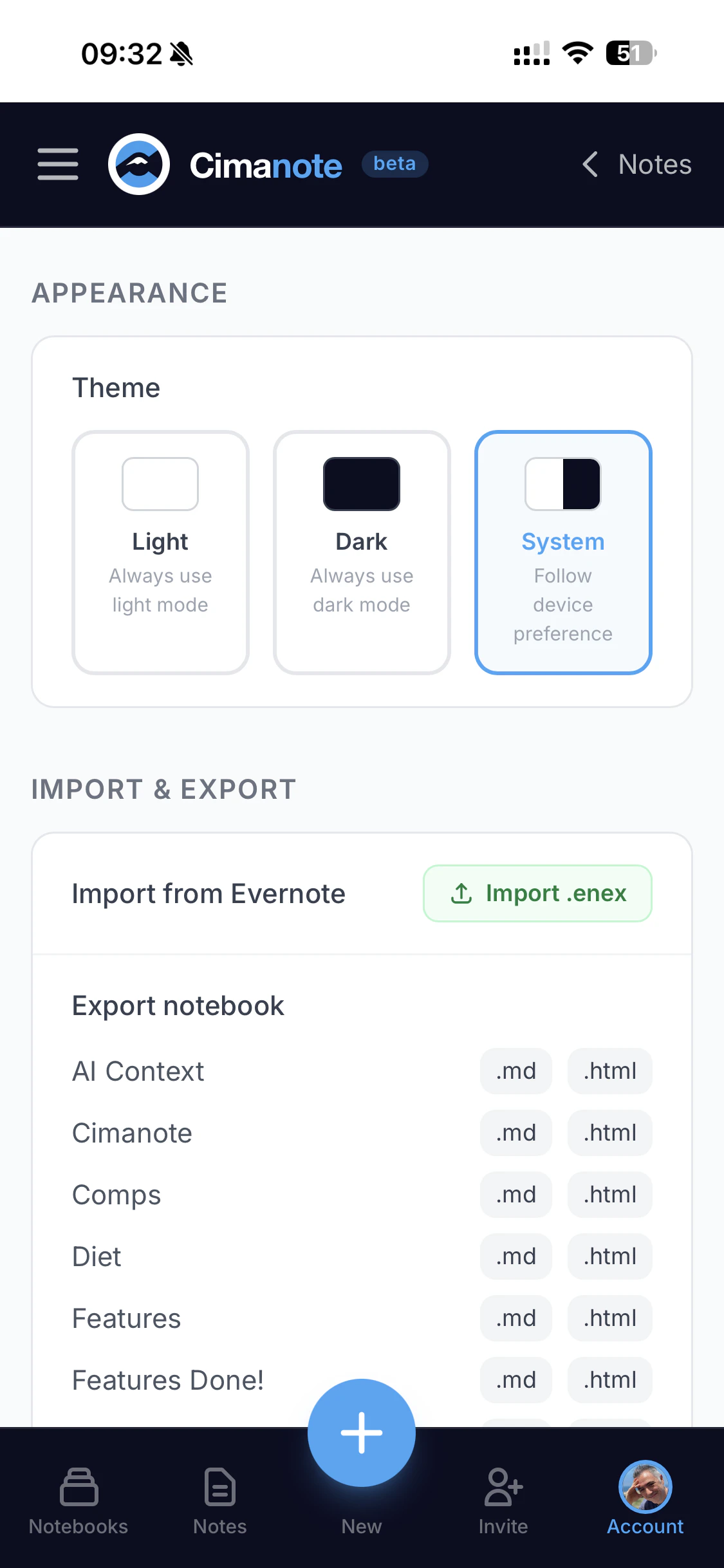
Hey Product Hunt 👋 Blagoja here, founder of Cimanote. I'll be honest about why I built this. I was an Evernote user for years. Then they tripled prices, locked the free tier to one device, and shipped three CEOs in two years while the app got slower. I complained about it long enough that I finally just built something better. Cimanote is fast, clean, and does what note-taking software should do: get out of your way. A few things I'm particularly proud of: — The Evernote import. Your notes, notebooks, tags, attachments, and formatting come across intact. No cleanup weekend required. — No device limits. Ever. Desktop, mobile, tablet, all included. — It installs like a native app on any device directly from the browser. No app store. This is a soft launch. I won't pretend everything is built. But the core is solid, and I shipped it because real feedback from real users beats another month of building in private. We're giving the first year free to our first 500 users, no credit card, no catch. After that $6/mo and I'm committing to no surprise price hikes. I'll be here all day answering everything, the good, the bad, and the brutal. Ask me anything. — Blagoja
9
回复

@blagoja Moved off Evernote recently and Cimanote has been a breath of fresh air. Everything is fast, simple, and my notes transferred without a hitch

0
回复
Search is often the deal-breaker in this category: what’s your approach to “find anything” (full-text, PDFs, images/OCR, attachments), and what tradeoffs did you make to keep it fast and reliable?
3
回复

@curiouskitty Really good question and one that cuts straight to the core of what makes or breaks a note app long term.


Right now, full-text search across all your notes is fast and reliable. That was non-negotiable from day one. You can find anything you've written instantly.


The honest tradeoffs: PDF content search and image OCR are on the roadmap but not in the current version. I made the deliberate call to ship a search experience that works perfectly for the core use case rather than ship a broader search that works inconsistently. Slow or unreliable search is worse than no search, it loses trust fast.

Attachment search is the next milestone on that front. The architecture is designed to support it without compromising speed as we layer it in.


If full PDF and image OCR search is a dealbreaker for your workflow right now, I'd rather be upfront about that than have you find out after migrating. But if you primarily search your written notes, you'll find it fast and solid.

0
回复

the evernote migration being painless is huge honestly. that's the biggest barrier for most people switching note apps, you've got years of stuff in there and nobody wants to spend a weekend cleaning up broken formatting. the no device limits thing is also a great move, locking free users to one device felt like such a cash grab by evernote. how does the rich editor handle things like tables and code blocks?

2
回复

@mihir_kanzariya You nailed it. Migration anxiety is the silent killer of every note app that tries to take on Evernote. People don't talk about it enough. It's not that they love Evernote, it's that leaving feels expensive. We wanted to make that cost zero.


On the rich editor, code blocks are in, fully supported with syntax highlighting. Tables are on the roadmap and honestly moving up the priority list fast based on how often it comes up. If tables are a dealbreaker for you right now I'd rather be upfront about that than have you find out after migrating.

What's your primary use case, personal notes, technical docs, or something else? Helps me understand how hard to push tables up the list.

1
回复

@mihir_kanzariya Totally agree. Migration is probably the biggest friction point. If that’s solved well, it removes most of the hesitation people have about switching.

0
回复

I’ve stayed with older tools longer than I should just because switching felt painful. A clean Evernote import alone removes a huge barrier.

1
回复

Wow, and you import Evernote attachments too. I don't think anyone else does that. Finally, something that I can actually switch to. I attach PDFs, sometimes audio files to my Evernote, and that's what's kept me stuck in it forever. Will you be launching desktop/iOS apps?

1
回复

@paulgeller I love your comment, you just made my day. You just described exactly why we built the import the way we did. Attachments are the invisible chain that keeps people stuck. PDFs, audio files, images, all of it comes across. We refused to ship an import that left anything behind because a partial migration isn't a migration, it's just more stress.

The fact that you've been stuck because of attachments specifically, and this unlocks it for you, that's the whole reason we built this. Welcome on board.

On desktop and iOS apps, Cimanote is a PWA right now, which means it installs directly from your browser and behaves like a native app on Mac, Windows, iOS, and Android. No app store needed. Try it, most people are genuinely surprised by how native it feels. Native apps are on the roadmap, but the PWA experience is solid enough that I don't want you to wait for them before switching.

0
回复

As a former big fan of Evernote, Cimanote is a welcome sigh of relief. It has a great UX and just works. It feels like it picks up the torch of being my extended brain. I love using it now and am excited to see how it grows.

1
回复

@seandcoleman "Picks up the torch of being my extended brain", I'm keeping that line forever. That's exactly what I set out to build, and hearing it from someone who's been in my corner from the start makes it hit differently. Thank you for being here from the beginning and for showing up today. The best is yet to come. 🏔️

0
回复

I've trialled a number of notes apps over the years and was a long time Evernote user but eventually went back to my default mac app and Google Keep.

Been using Cimanote and I've been loving the UX. It's simple, clean and efficient.

Dictation would be a key feature for me.

What you've built so far is fantastic and I'm looking forward to how the app evolves!

1
回复

@keelan_naidoo1 
This means a lot. Thank you. Going from Evernote to Apple Notes and Keep is such a common story, and honestly, both are fine tools for what they are. The fact that Cimanote pulled you back into something more intentional is exactly what we're building toward.

Really glad the UX is landing the way it's supposed to. Simple and clean is harder to ship than complex, so hearing that it feels that way is the best feedback I could get today.

Dictation is on the roadmap, and you're far from the first person to ask for it today, which tells me everything I need to know about where it should sit in the queue. Mobile-first voice notes feels like the right place to start. Would that cover your main use case, or are you thinking something broader, like meeting transcription?

0
回复

There's something quietly powerful about "get out of your way." The best tools don't demand attention — they just hold the space. The frustration with Evernote wasn't just price, it was the grief of watching something you trusted turn into something that needed managing. What are the two or three things you're absolutely refusing to compromise on as you grow this?

1
回复

@julian_francis This might be the most articulate description of the Evernote grief I've read. "Watching something you trusted turn into something that needed managing." That's exactly it, and it's a kind of betrayal that's hard to name but immediately recognizable.

Three things I'm refusing to compromise on as we grow:

Speed. Not just load time, the entire experience. The moment you open Cimanote and have to think about it, we've failed. Speed is a promise, not a feature, and it's the first thing that dies when products get ambitious. We're not letting that happen.


Pricing integrity. No surprise hikes. No features quietly moved behind a higher tier. No Evernote. If the price ever changes, it will be announced clearly, early, and with a genuine reason. Early users will always be protected.


Your data is yours. Export everything, anytime, in open formats. No lock-in, ever. The moment we make it hard to leave, we've become the thing we set out to replace.
Everything else is negotiable. Those three aren't.

0
回复

This one hit me. I was an Evernote user too. Felt that same frustration when they jacked up prices and locked everything down. You built the thing I just complained about.


As a homepage positioning expert, I spent some time on the site. The import feature got me. Most tools make you start from scratch. You let people bring everything with them. This strategy makes someone trust you right away.

Anyway, just wanted to say I'm rooting for you, @blagoja. Hope this takes off.

1
回复

@taimur_haider1 This means a lot, genuinely. Thank you for taking the time to look at the site with a professional eye and sharing what you found.

You put into words something I felt intuitively but hadn't articulated that cleanly: the import isn't just a feature, it's a trust signal. It says, "We're not asking you to start over, we're meeting you where you are." That reframe is going straight into how I talk about Cimanote going forward.

"You built the thing I just complained about." I might have to put that on the wall. That's exactly the energy this was built from.

Would genuinely love your eye on the positioning if you ever want to dig deeper. The homepage has gone through a few iterations, but I'm sure there's more to unlock. Either way, thank you for rooting for us.

Comments like this are what make a brutal launch day worth it.

0
回复

Congrats @blagoja. Excited to give this a shot. Similar to others I have abandoned Evernote as it wasn't living up to my expectations and reverted back to my old Notes app on my macbook. With these big name products you always find lack of support, lack of new feature etc. I have done a similar thing with a fitness/food tracker app, just tired of all the ones that showed promise but never lived up to expectations.

1
回复

@brent_kendall Thank you, Brent. And welcome, you're going to feel right at home here.

What you described is exactly the pattern that kills great products. They start with a clear purpose, gain traction, and then the pressure to grow revenue at all costs slowly hollows out everything that made them good in the first place. Support gets worse, features get paywalled, the app gets heavier. You stop being a user and start being a revenue line.

The fact that you built your own fitness tracker tells me you get it at a deeper level than most. Sometimes, the only way to get what you actually want is to build it yourself. That's exactly how Cimanote started.

Would love to hear what you think after you try it. And if anything feels off or missing, my inbox is open. That feedback is genuinely how we get better.

0
回复

I used the early beta and found it useful. It was so easy to share my note with others.

1
回复

@jesse_anderson Really glad to hear that and thank you for being an early beta user. Your feedback shaped what you see today more than you know.


The public share link was one of those features that felt small on paper but turned out to be one of the most used things in beta. Sometimes the simplest things land the hardest.

What's your main use case? Would love to know how you're using it. 🏔️

0
回复

Interesting space — how do you see Cimanote positioned vs Notion (flexibility) and Apple Notes (simplicity)? Where do you want to win long-term?

1
回复

@saurabh80 Great question and one I think about a lot.


Notion is a powerful tool but it's become a platform, not a note app. It's incredible for teams building wikis and databases but it's overkill for someone who just wants to capture and find their thoughts fast. The flexibility is also the tax, you spend time configuring Notion instead of using it.

Apple Notes is the opposite. Dead simple, which is why hundreds of millions of people use it. But it's an Apple-only story, and the moment you want to collaborate, share, or do anything beyond basic formatting, you hit a ceiling fast.

Cimanote wants to win the middle. People who outgrew Apple Notes but don't want to become a Notion architect just to take notes. Fast and clean like Apple Notes, capable and cross-platform like Notion, without being either one.

Long term, the win condition is simple: when someone asks "what do you use for notes?" the answer is Cimanote without hesitation. Not because it does everything, but because it does the right things exceptionally well.


That's the mountain worth climbing. 🏔️

0
回复

OMG finally, someone fixed all the reasons why I ditched evernote.
This looks so good.
Does it work on Android, IOS, Windows and MacOS?

1
回复

@ricardo_luiz Ha. That's exactly the reaction we built this for. Welcome home. 🏔️

Yes to all four. Android, iOS, Windows, and macOS. No device limits, ever. It installs directly from the browser as a PWA, so no app store is needed, but it behaves like a native app on all of them. One account, everything in sync.

Would love to hear what your biggest Evernote breaking point was once you tried it.

0
回复

It’s really refreshing to see user experience as a top priority for Cimanote.

Evernote lost its focus years ago when it decided to optimize for value extraction instead of utility.

I’ve been using (and enjoying) early versions of this app. I’m excited to see what comes next. Keep up the great work!

1
回复

@dzacarias This comment means more than you know, especially on launch day. Thank you!

You nailed it with "value extraction instead of utility." That's exactly what happened. The moment a product stops asking "how do we make this more useful?" and starts asking "how do we monetize this harder?" you can feel it in every interaction. We're committed to never going down that road.

Having you as an early user has been invaluable, and your feedback has shaped more of what you see today than you probably realize. Excited for what's coming next and grateful you're along for the climb. 🏔️

0
回复

I wish this had launched four years ago, when I decided to abandon Evernote. It will be interesting to fire up Evernote again and see how the export goes!

1
回复

@trixolina Ha, you and about a million others. Evernote 2021 was already a different product from the one people fell in love with.

Would love to hear how the export goes, genuinely. If anything comes across broken or missing, tell me directly. That import flow is one of the things I'm most proud of, but real migration data from real users is the only way to know it holds up.


Welcome back to clean note-taking.

1
回复

Simple and effective. The essential element done well at a fair price.

Any plans to support dictation / transcription integration?

1
回复

@d_r8 
Thank you. That's exactly what we're going for. Simple done well beats complex done poorly every time.

Dictation and transcription are on the roadmap. No hard date yet. I'd rather be honest about that than overpromise. But the fact that you're asking tells me it's worth prioritizing. Are you thinking voice notes on mobile specifically, or meeting transcription as well?

0
回复

@d_r8 Hey Diogo, great question. And Blagoja, like the honest answer. Diogo, you hit on something I've been thinking too. Voice notes on mobile would be huge for quick ideas when typing feels like a hassle.

Blagoja, the fact that you're asking voice notes or meeting transcription tells me you care about how people use the product.


Curious what others think. For me, voice notes first. Meetings I can type. Ideas hit me when I'm walking the dog.

0
回复

Really appreciate the honesty and transparency here, @blagoja Blagoja. It’s rare to see a founder lay out the pain points that motivated the build so clearly. The Evernote import and device-unlimited approach are subtle but huge quality-of-life wins that often get overlooked in note taking apps.

Curious how did you balance speed and feature completeness during the soft launch? So often a fast, clean experience gets compromised by trying to do too much too soon.

1
回复

@onitedesigns  Thanks so much, really appreciate that. And great question, it gets to the heart of every early product decision.

Honestly, the answer is ruthless prioritization. The most important question is/was: Does it make notes faster or slower to create and find? If a feature didn't have a clear answer to that, it didn't make the cut for launch.

The Evernote import was non-negotiable from day one. If people can't bring their history with them, nothing else matters. Devices support, same thing. Those aren't features. They're table stakes for anyone switching.
I did add some cool stuff like public note sharing and real-time collaboration, but that came towards the end, once the basics were in.

Everything else, integrations, AI features, is on the roadmap but deliberately not here yet. A fast, clean core experience that works reliably beats a bloated feature set that occasionally impresses you.

The risk I accepted is that some people will try it and say "where's X?" That's fine. I'd rather hear that than ship X and watch the app slow down because of it.

Speed is a feature. It's actually the hardest one to maintain as you grow, which is probably why Evernote lost it.

1
回复
This is cool, congrats on the launch. Any ETA on a native iOS app? (vs the current PWA)
1
回复

@grey_seymour  Thank you! Really appreciate the support.

Honest answer, no hard ETA on a native iOS app right now. The PWA was a deliberate first call: faster to ship, works across every device, and for most use cases, the experience is genuinely comparable to native.

It's on the roadmap, and how loud the demand gets from early users like you will directly influence how fast it moves up the list.

If you try the PWA and hit something that feels un-native and frustrating, tell me. That list is exactly how I'll build the case for prioritizing it.

0
回复

Evernote lost the plot years ago. Curious how you handle sync conflicts when editing the same note on two devices — that's where most note apps fall apart.

0
回复

@kaito_builds You're right. Sync conflicts are where note apps quietly fall apart, and most just paper over it with "last write wins" which means you lose work and don't even know it.

Cimanote uses real-time sync where changes propagate instantly across devices, so in normal use, you rarely hit a true conflict state. The architecture is closer to how Google Docs handles it than how Evernote did.

I'll be straight with you, though. Extreme edge cases like going offline on two devices simultaneously and making conflicting edits to the same note is something we're continuing to harden. It's on the roadmap, and I'd rather tell you that than oversell it.

If you want to stress test it and tell me what you find, I'd genuinely welcome it. That kind of real-world feedback is exactly how we make the product better.

0
回复
Very nice. I had to cancel Evernote due to their outrageous price gouging.
0
回复

@matt_knee Price gouging, that's exactly what it was. No sugarcoating it. Welcome to the other side. Hope you enjoy Cimanote.

0
回复
#8
PixelClaw
A tiny pixel crab that lives on your Dock
145
一句话介绍:PixelClaw是一款栖息于Mac Dock栏的像素风动画小螃蟹,在用户等待AI编码或程序构建的间隙,提供了一种轻松、有趣的互动陪伴,缓解了等待过程中的枯燥感。
Productivity Developer Tools Lifestyle
桌面宠物 Mac应用 Dock栏工具 互动伴侣 像素风 轻量娱乐 等待优化 生产力玩具 情感化设计 开源项目?
用户评论摘要:用户普遍认为产品“可爱”、“酷”,有效缓解了等待焦虑。核心建议包括:增加交互(如抚摸)、引入成长系统(类似电子宠物)。开发者积极回应,社区氛围良好。部分用户联想到经典菜单栏彩蛋,怀旧情感凸显。
AI 锐评

PixelClaw表面上是一个“愚蠢的副业项目”,实则精准刺中了现代开发者工作流中一个隐秘的痛点:被动等待的碎片时间。它并非提升效率的工具,而是试图为冰冷的、异步的生产力进程(如AI编码)注入一丝拟人化的温暖和即时反馈的乐趣。

其真正价值不在于螃蟹本身的行为多么复杂,而在于它成功地将用户的注意力从“进度条焦虑”转化为一种低负担的、治愈性的观察与微互动。这本质上是一种“情感化UI”的极端轻量化实践,将Dock栏这个系统交互的“交通枢纽”,变成了一个数字生物的生态缸。用户评论中“抚育它成长”的呼声,恰恰暴露了用户对工具软件的情感连接渴望——我们不仅需要软件完成任务,更希望与我们的数字工作环境建立关系。

然而,其风险与潜力同样明显。作为新奇玩具,其热度极易消退,必须通过持续的行为更新和深度互动(如评论提到的Tamagotchi式养成)来维持用户长期兴趣,否则难免沦为一次性消遣。此外,它巧妙地依附于“Claude Code”这一具体场景进行传播,既是聪明的增长黑客,也可能限制了其受众想象。它能否从特定AI工具的“等待伴侣”,进化为一种普适的、可自定义的桌面情感化组件,将决定其是小众玩物,还是能开启一个“桌面生命体征”的微妙品类。在一切皆可智能化的时代,这种“无用的、有趣的”数字存在,或许是对抗工具理性异化的一剂小巧解药。

查看原始信息
PixelClaw
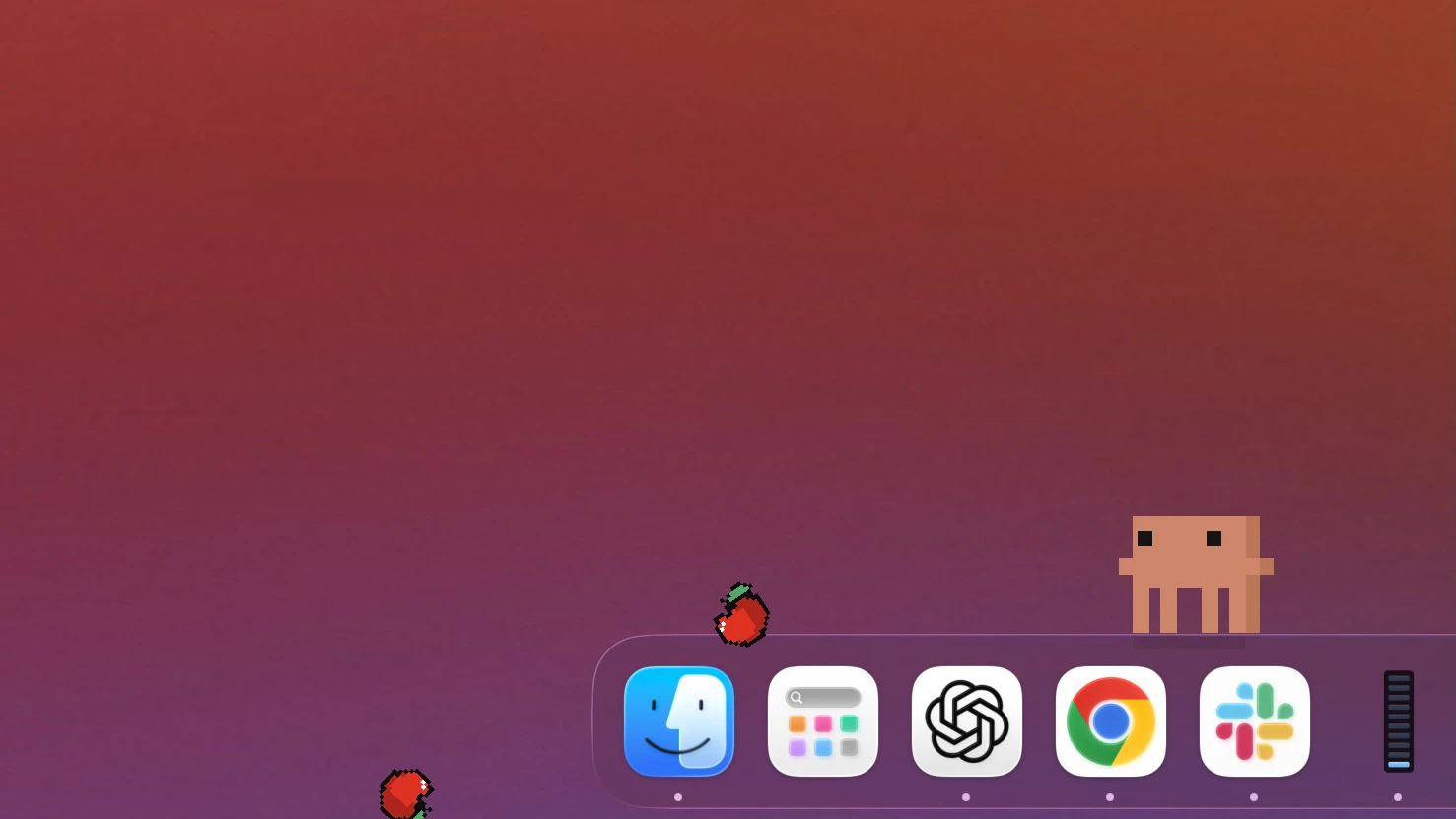
PixelClaw is a tiny animated crab that lives on your Mac Dock, giving you something charming to watch and play with while Claude Code works in the background. It naps, hops, and chases apples you drop for it.

Built PixelClaw because I got bored waiting for Claude Code.

Modeled after the Claude Code mascot, it’s a tiny pixel crab that lives on your Dock, sleeps, wakes on click, and chases apples you drop.

Started as a dumb side project between prompts, and turned into a surprisingly fun little companion.

Would love to hear what features or behaviors you’d want in a tiny Dock companion.

2
回复

This is so cool!! Make it pettable

2
回复

@idanmasas on it!

0
回复

Waiting for builds or AI responses can feel surprisingly long. Having something small and interactive like this actually makes that timer nice.

1
回复

A new friend for Dinoki!

1
回复

ok this is adorable. would be cool if you could feed it and watch it grow like a tamagotchi 🦀

1
回复
@ray_artlas great idea!
0
回复

I love little computer people, thank you

1
回复

@kevin_mcdonagh1 Thank you for trying it out!

0
回复

@kevin_mcdonagh1  Same here. There’s something oddly comforting about having a tiny animated companion while working.

0
回复

This is awesome, a full little background minigame, might have to adjust my screens to make room for this little guy between runs

0
回复

This brings back memories! The first time I saw a Mac as a kid, it had those eyes in the menubar that followed the mouse pointer.

0
回复
#9
Lucent
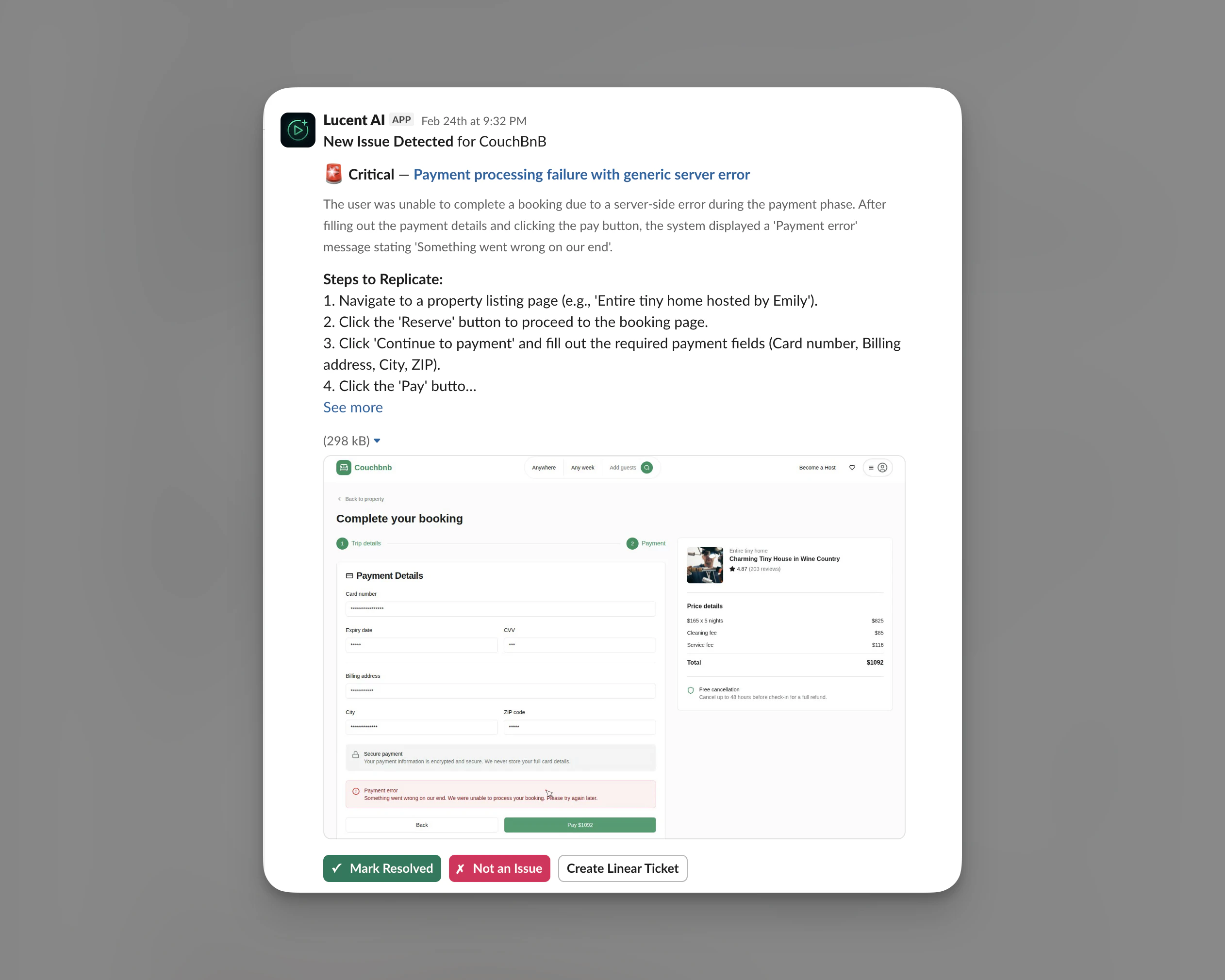
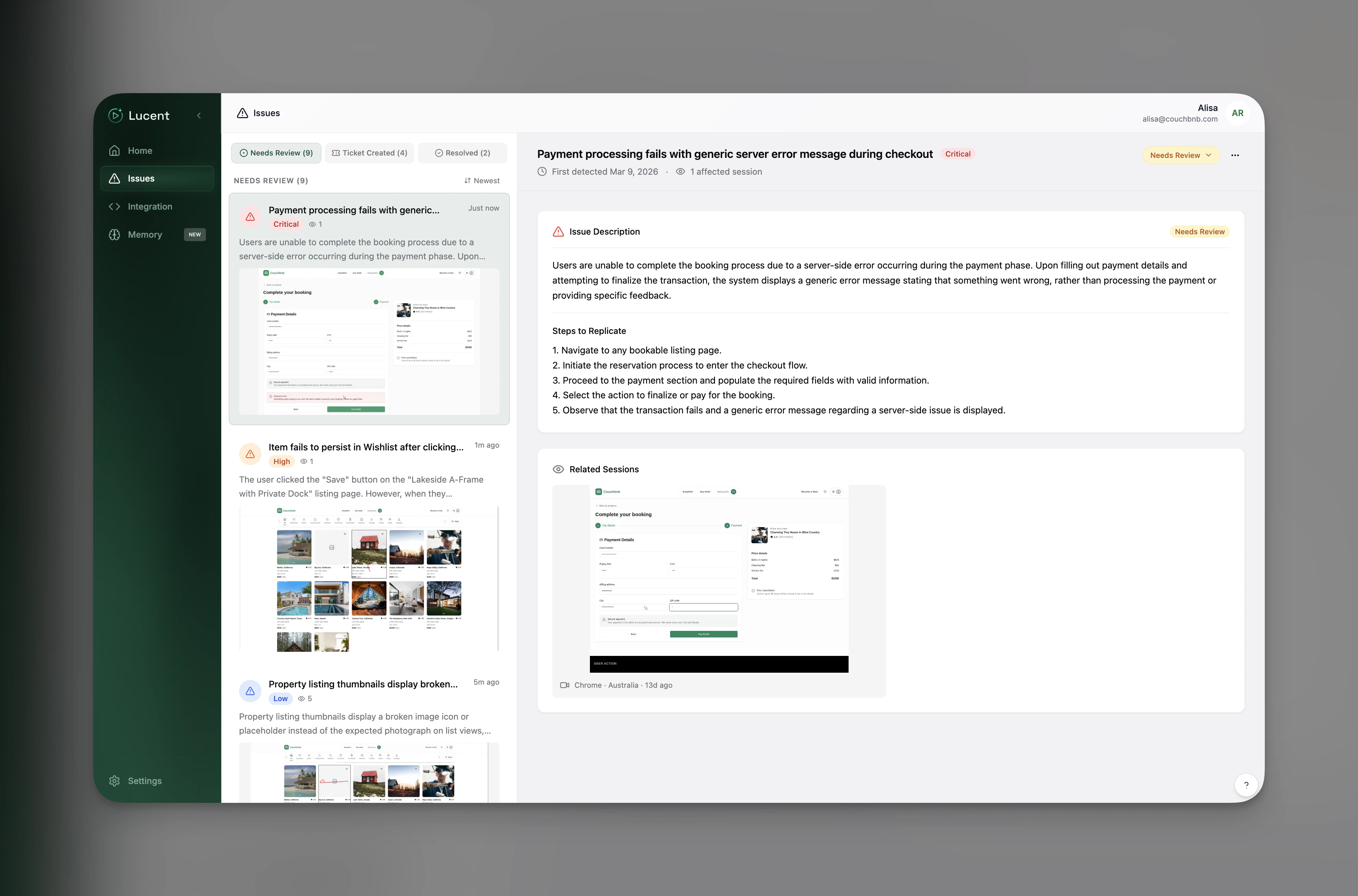
AI that watches your session replays and detects issues
126
一句话介绍:Lucent是一款通过AI实时观看用户会话回放,自动检测产品Bug和UX问题的工具,解决了开发团队无暇人工筛查海量回放数据、导致生产环境问题漏检的痛点。
User Experience Developer Tools Artificial Intelligence
AI缺陷检测 会话回放分析 用户体验监控 实时告警 产品质量保障 Slack集成 PostHog生态 YC孵化 工程效率工具
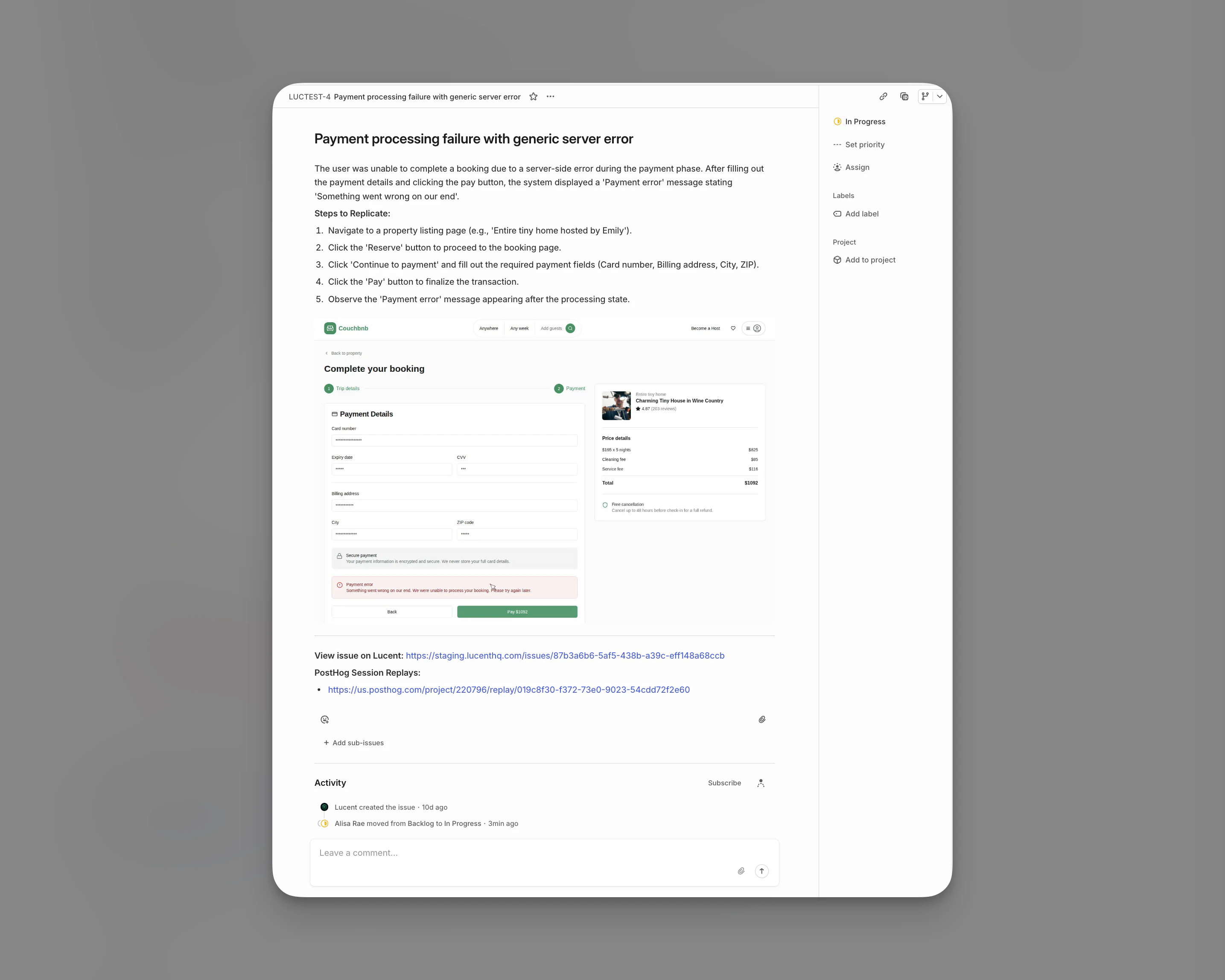
用户评论摘要:用户普遍认可其解决“回放数据有价值但无人观看”的核心痛点,赞赏Slack/Linear集成使告警可操作。主要问题集中于:是否支持移动端(已支持移动Web)、是否支持其他回放工具(目前仅PostHog)、能否区分技术Bug与UX问题(两者皆可,后者以周报呈现)。建议突出强力客户证言。
AI 锐评

Lucent切入了一个典型的“数据富矿,洞察荒原”场景。其真正价值不在于“看回放”这个动作,而在于将非结构化的、高信息熵的用户行为视频流,转化为可归因、可分发、可行动的结构化事件。这本质上是一个“信号降噪”与“优先级排序”的工程。

产品聪明地选择了从PostHog切入,而非自建回放SDK,这降低了早期用户的接入成本,快速验证了AI检测模型的有效性。其“实时Bug+周期UX报告”的双轨制输出,反映了团队对“严重性”与“重要性”的区分有现实认知:崩溃需要即时响应,而体验摩擦则适合批量复盘。

然而,其长期挑战同样尖锐。首先,是“解释力”的边界。AI可以高亮“用户在这里连续点击了五次”,但它能否真正理解这是“按钮反馈缺失”的设计缺陷,还是“用户决策犹豫”的心理状态?其次,是误报与警报疲劳的经典难题。尽管声称有严重性评分,但在复杂业务流中定义“异常”本身就需要深厚的领域知识。最后,其商业模式高度依赖上游数据源(PostHog),生态位存在一定脆弱性。

总体而言,Lucent不是又一个“监控仪表盘”,它试图成为开发流程中的“第一响应者”。它的成功不取决于AI是否比人“看”得更准,而取决于它能否以足够低的噪音,将正确的问题在正确的时间,推送给正确的人。这条路走通了,便是工程效率的实质性跃迁;若陷入“狼来了”的困境,则不过是另一个需要被监控的噪音源。

查看原始信息
Lucent
Lucent is an AI that watches your session replays 24/7, and automatically detects issues your users are running into in real time. Trusted by leading engineering teams like Reducto, Browser Use, and Productlane.

Hey Product Hunt! I'm Alisa, founder of Lucent (backed by YC and Ryan Hoover :)

We built Lucent because we kept seeing the same problem at every company we worked at - bugs and UX issues slipping into production and nobody catching them until users complained. The data to find these issues was already there in session replays, but nobody has time to actually watch thousands of sessions.

So we built an AI that does it for you. Lucent watches your session replays automatically and surfaces bugs and UX issues in real time, with full reproduction context sent straight to Slack and Linear.

How it works:

1. Connect your PostHog account

2. AI watches session replays 24/7

3. Bugs get sent to your Slack or Linear as users encounter them

To get started, you can get 400 sessions processed for free and see what issues your users are coming across - most teams find issues in the first hour they didn't know existed. Sign up here: lucenthq.com

Trusted by teams obsessed with product quality, like Reducto, Browser Use, Productlane, Julius, Finta, Happenstance, and Evidence.

Would love for you to try it out and let us know what you think - happy to answer any questions!

Find us on socials:
- https://x.com/lucent_ai
- https://www.linkedin.com/company/lucenthq

3
回复

@alisarae Congrats on the launch, Alisa! 🎉 This is solving a real pain — session replays are gold but nobody actually watches them. The direct Slack/Linear integration is the key insight here, it makes the signal actually actionable rather than just another dashboard to check. About to launch OceanMind, an AI-powered breathwork iOS app, and the idea of having an AI catch UX issues in the first hours post-launch instead of waiting for 1-star reviews is genuinely compelling.

Q:Does it work with mobile web sessions too?

1
回复
@alexeyglukharev it works with mobile web apps! for native mobile apps we will have something in the next few days :)
0
回复

Good job team. The pain of watching dozens of replays is real. If AI can do it and summarise the findings, that's huge. Do you work with tools like clarity etc. or you have own session replay tool?

I wish you good luck today!

2
回复
@davitausberlin we only work with posthog currently, but we’ll roll out our own session replay SDK soon 🫶
2
回复

Does Lucent only detect bugs or also UX issues

2
回复
@rahul_sonwalkar both! :)
1
回复

Early user here, Lucent is so powerful and simple to use. 10/10 would recommend!

1
回复
@nars 🫡🫡
0
回复

All I have to say is unbelievable. This will be so useful for people to find bugs and inefficiencies inside their product. I am one-shotted

1
回复
@finnlay_morcombe that’s right 😼
0
回复

Congrats on the launch, @alisarae. I spent almost five minutes on the site. The quote that hit me hardest was from Justin Lee: "We installed Lucent on a Friday, by Monday morning it had filed 7 bugs we'd never seen."

That one line does more selling than any feature list. It captures the speed and the value.

One small observation while poking around. That quote is mixed in with a wall of other testimonials. It deserves its own space, maybe right under the hero. Let it breathe.

Anyway, it was just something I noticed. Hope the launch goes well.

1
回复
@taimur_haider1 thank you for the feedback ☺️
0
回复

Super interesting—does Lucent only detect technical bugs, or can it also flag UX friction (like rage clicks, dead ends, confusing flows)?
The latter would be insanely powerful for product teams.

1
回复
@saurabh80 it detects both - bugs are detected in real time and UX issues are delivered via a weekly report :)
0
回复

The session replay angle for issue detection is interesting - we"ve had Datadog and LogRocket running for a while and the gap I keep running into is that replays tell you what happened but not why it matters. Is Lucent doing its own severity scoring, or is it more like "here are the unusual patterns, you decide"? Wondering how it handles the noise problem - low-signal rage clicks vs. something that actually broke the flow.

1
回复
@mykola_kondratiuk yes, every issue detected is scored on severity. lucent also finds unusual patterns - these are delivered in a weekly report!
0
回复

Looks amazing! Have always hated hunting through PostHog for bugs, absolute game changer!

1
回复
@jack_wakem 🫡
0
回复

great product that keeps us from shipping bugs

0
回复

Congrats on the launch!!

0
回复

Can it also go through logs and detect potential issues for apps where interactivity is not necessarily in the UI on a web based dashboard?

0
回复

The weekly report with unusual patterns is a nice touch - beats getting pinged on every minor anomaly. Severity scoring + batched unusual patterns is actually the right balance.

0
回复
#10
Scouts for iOS
Your always-on AI agents to monitor the web, now on iOS
118
一句话介绍:Scouts是一款iOS端的常驻AI智能体应用,通过主动监测网络信息并推送高价值通知,解决了用户在移动场景下被动、低效获取关键信息(如竞品动态、价格波动、新闻资讯)的痛点。
Productivity Artificial Intelligence Search
AI智能体 网络监测 信息推送 竞品追踪 市场情报 移动效率工具 个性化提醒 降噪过滤 自动化研究 iOS应用
用户评论摘要:用户普遍认可其解决“信息过载”和“提醒疲劳”的核心痛点,期待其AI能有效过滤噪音。主要疑问集中于AI如何平衡信号与噪音(是预设规则还是自主学习),并提出了集成邮箱/日历等扩展功能的建议。开发者回复强调其基于LLM的智能体可通过自然语言反馈进行调优。
AI 锐评

Scouts for iOS的发布,本质上是对“信息推送”范式的一次AI化重构。它瞄准的并非信息缺失,而是信息过载时代下的“有效注意力的缺失”。传统警报工具(如Google Alerts)的失败在于其机械的匹配逻辑,导致海量低相关推送,最终被用户弃用。Scouts宣称的“高信号”和“降噪”能力,是其核心价值主张,但这恰恰是最大的挑战和待验证点。

其真正的创新不在于“监测”,而在于“理解与判断”。通过LLM驱动的智能体,它试图理解用户设定的模糊意图(如“监控竞品动态”),并自主判断网络中哪些新信息具备足够的相关性和重要性来触发推送。这从“关键词匹配”升级到了“语义与意图匹配”。评论中用户关于“信号/噪音权衡”的疑问直指要害:产品成功与否,完全取决于其AI智能体在具体场景下的判断精准度。开发者的回复揭示了其调优机制——通过用户对推送报告的邮件反馈进行强化学习,这是一个务实且关键的闭环设计。

然而,潜在风险同样明显。首先,“高信号”是高度主观的,对一位创始人有价值的竞品融资新闻,对另一位可能是噪音。过度依赖用户反馈调优,可能导致智能体视野窄化,错过潜在重要的关联信息。其次,从网页端扩展到iOS,将推送场景从“可处理的仪表盘”转移到“不容打扰的锁屏”,这对推送的精准性和紧迫性提出了近乎苛刻的要求。一次误判的推送就可能导致用户卸载。

总体而言,Scouts代表了一个正确的进化方向:将被动、泛化的信息拉取,转变为主动、智能的信息推送。但它能否从“一个有趣的AI应用”成长为“一款可靠的基础设施型工具”,取决于其智能体在无数细分场景下的稳定表现,以及能否建立起用户对“手机推送”的绝对信任。这远非一个iOS客户端所能解决,而是对其底层AI agent系统长期、残酷的效能考验。

查看原始信息
Scouts for iOS
Scouts for iOS is the best way to have AI agents research and monitor anything that matters to you, on the go.

I’ve set up alerts before and eventually stopped checking them entirely. If this actually reduces noise, it solves a real problem.

1
回复

Always-on web monitoring is something I keep wanting but the noise problem kills every tool I try. Most of them alert on everything and you tune it out within a week. Curious how Scouts handles the signal/noise tradeoff - is it user-defined triggers, or does it learn what you actually care about over time? The iOS angle makes sense for this use case, monitoring notifications feel more natural on mobile than a dashboard you have to remember to check.

1
回复

@mykola_kondratiuk we've worked hard on optimizing the underlying agentic system to be high-signal, and avoid duplicate and stale information. And it's all promptable with plain language. E.g. once you set up a Scout and get your first report over email, you can just reply to it to give it feedback on what it should do less / more of. Worth trying! If you do, would love to hear feedback.

0
回复

I have Google Alerts running for a handful of competitor terms and I stopped checking them months ago. If Scouts pushes only when something matters instead of every tangential mention, the iOS app turns passive web monitoring into something you'd rely on daily.

1
回复

@piroune_balachandran Scouts is powered by an agentic system built around LLMs, so you can prompt and give it feedback to cast as narrow or broad of a net as you want. Many of our users already use it to monitor for mentions of competing (or their own) products / brands. Consider giving it a shot!

0
回复

Power user here- congrats!

If Yutori could connect with my email, calendar and task apps that'd be amazing- any plans for that yet?

1
回复

@kaiserrr yes, we should have something for you very soon :)

1
回复

Congrats on launch! I have been using Yutori recently. Now, a dedicated app on phone would be cool with alerts.

1
回复
1
回复

Filtering what actually matters is the hard part.

1
回复

this is one of the best products i have ever seen today

1
回复

@kshitij_mishra4 thank you!

0
回复

Hey all, @abhshkdz here from Yutori! 👋

Super excited to share that Scouts is now on iOS! Download it here.

Scouts is the most powerful way to research and monitor anything that matters to you — a flight deal, whether your brand is being talked about, a job listing you've been waiting on, a sold-out item back in stock, news from around the world, how a market is moving, etc.

The kind of things you'd otherwise have to check manually, set up clunky alerts for, or just... miss.

Scouts handles it all. Quietly in the background. So you're always up to date.

A phone app has been one of the top requests since we launched Scouts. Now it's here.

Monitor the web for anything, and get push notifications when something changes.

Would love to hear how you use it! Please do reply here and let us know.

0
回复

@abhshkdz Congrats on the iOS launch! 🎉 This is exactly the kind of tool indie founders need — monitoring investor activity, competitor mentions, press coverage without having to check 10 tabs every morning. Building OceanMind, an AI-powered breathwork app, and I can already think of a dozen scouts I’d set up: app store review changes, breathwork-related press, fundraising news in the wellness space. The push notification angle on mobile makes it genuinely actionable rather than just another dashboard you forget to check. Well done!

1
回复
#11
talat
Realtime meeting notes that don’t leave your Mac
115
一句话介绍:talat是一款在Mac上实时转录会议音频并生成可搜索笔记的本地AI工具,通过完全在设备端运行解决用户对隐私泄露和云端订阅费用的核心痛点。
Notes Privacy Meetings
本地AI 实时转录 会议笔记 隐私安全 macOS应用 离线处理 神经引擎 知识管理 一次付费 开发者工具
用户评论摘要:用户高度认可其隐私保护(数据不离设备)和一次付费模式。积极反馈包括转录准确度、自定义LLM提示和Obsidian导出等高级功能。主要问题与建议集中在:多语言支持体验待优化、与Granola等竞品的具体迁移路径、以及本地处理是否会影响会议发言心理。
AI 锐评

talat的宣言“Realtime meeting notes that don’t leave your Mac”是一记精准打击,它贩卖的不是更优的AI,而是对云端AI商业模式的不信任。其真正价值并非技术突破——利用Mac Neural Engine进行本地转录已是已知路径——而在于敏锐地捕捉并产品化了当前科技消费中的一个核心矛盾:用户对AI助手的渴望与对数据主权丧失的恐惧。

产品定位极具策略性:不与Granola等云端工具正面比拼功能完整性,而是以“隐私守护者”和“订阅制叛军”的姿态,开辟一个差异化的利基市场。它允许并行运行,降低了用户尝试门槛,这种“补充而非替代”的柔和姿态,实则是针对高意识用户群体的高效转化漏斗。其提供的自定义LLM接口、Webhook和MCP服务器支持,则将产品从“笔记工具”升维为一个可编程的本地语音数据处理节点,迎合了开发者及高端用户的需求。

然而,其面临的挑战同样尖锐。本地化的代价是性能天花板受限于终端硬件,评论中提及的说话人分离粗糙、多语言体验打折便是明证。这引出一个根本问题:在会议笔记这个场景中,用户对“绝对隐私”的执着,能否持续压倒对“更佳体验”的追求?尤其是在团队协作场景中,纯本地化可能成为分享与协同的障碍。此外,一次付费模式对长期研发的可持续性构成考验。

本质上,talat是“本地优先”运动在AI消费级应用的一次重要实践。它未必能取代主流云端工具,但它成功地为市场提供了一个选择,并迫使整个行业重新审视数据处理的边界与成本。它的成败,将是观测用户隐私支付意愿与AI便利性天平如何倾斜的关键风向标。

查看原始信息
talat
talat captures your microphone and system audio, transcribes both sides of every conversation in real time, and turns meetings into searchable, editable notes. It's powered entirely by your Mac's Neural Engine: your audio never leaves your machine. Choose custom LLM providers, write custom summarisation prompts, auto-export to Obsidian, push meeting data via webhooks, or query your history through an MCP server. It runs alongside Granola and other tools, so you can try it without switching.
Hey Product Hunt! I'm Nick, and I built talat because I wanted Granola's magic without my audio living on someone else's servers. I've been obsessed with this space for about a year. It started when I discovered that macOS could tap system audio without recording video: something I'd never seen an app do before Granola. That led me down a rabbit hole into Apple's Core Audio taps API, and I ended up building an open source Swift library to make it more accessible. Over the past year I've been piecing together the puzzle: system audio capture, mic recording, acoustic echo cancellation, automatic meeting detection, custom notification windows. Recently discovering FluidAudio, which runs real-time transcription on the Apple Neural Engine, was the piece that brought it all together. It's early days and plenty of stuff needs work; speaker diarisation is rough, local LLM summaries can be hit and miss. Personally, the more I use talat, the less I care about perfect summaries and the more I care about the transcript just being there, ready to search and refer back to whenever I happen to need it. talat is a one-time purchase, and if you buy during pre-release you get app updates forever. I'd love your feedback: what works, what doesn't, what you'd want next. And if you already use Granola or another meeting tool, talat runs happily alongside it. You don't have to choose.
3
回复

This is the way. When the job can be done on local hardware you already own, it feels wasteful to rent offsite tokens.

1
回复

I've used it for a few client calls and standups: transcription accuracy is solid (better than expected for local), custom LLM prompts let you tweak summaries exactly how you want, and the Obsidian export plus webhooks feel genuinely useful for power users.

1
回复

This is a very thoughtful take on AI meeting notes. The fact that everything stays on the Mac makes the product immediately stand out, especially for users who care about privacy and control. I also like that you are positioning it as something that can work alongside existing tools instead of forcing people to switch. Do you see talat becoming more transcript-first over time, or is improving summary quality still a major focus?

1
回复

The privacy angle here is underrated. Most notetakers treat "your data" like a byproduct. You're treating it like it belongs to you — because it does. What I'm curious about: do you think local-first transcription changes how people actually speak in meetings? Like, does knowing nothing leaves your machine shift the quality of what gets said?

1
回复

@julian_francis thanks Julian!

I'm not sure if it changes how people speak. I think it's enough of a shift that we won't really know for a while. But I'm excited to find out!

0
回复

really like the privacy-first direction here. having realtime meeting notes that stay fully on-device feels like a big win, especially for people who are not comfortable sending sensitive conversations to external servers. the obsidian export and custom prompts are a nice touch too. how has the response been so far from people already using granola or similar tools?

0
回复
When someone is already using Granola (or a bot-based tool like Otter/Fireflies), what’s the exact “breaking point” that makes them switch to talat—and what does the migration look like in practice (history, exports, habits)?
0
回复

@curiouskitty I would expect the breaking point to be one or more of:

  • deciding that they don't want their voice, notes, transcripts or summaries routed through and hosted on someone else's servers

  • deciding that they've had enough of paying for another monthly subscription

  • deciding that they don't want to put up with the artificial limits imposed by the current 'plan' they're on (e.g. restricted access to meeting history)

  • deciding that they want to fully own their experience, not just their data

0
回复

I run meetings in two languages — some fully in Czech, some in English. Does the transcription handle both well, or is it optimized mainly for English?

0
回复

@klara_minarikova Hi Klara!

In truth, as a team of two who are native English speakers, we haven't yet done much multilingual testing. Here's what I can tell you:

  • By default, the transcription model is English-only, but:

  • You can change it to a model which supports 25 European languages (here's a link: https://huggingface.co/nvidia/parakeet-tdt-0.6b-v3)

  • I know that the realtime 'preview' transcripts we show, which appear as people speak, won't work unless the language is English, but those preview transcripts get corrected when the speaker stops speaking. So the non-English experience at the moment will work if you select the multilingual model, just without words being transcribed as they are being spoken.

  • Earlier today, Michael (a few comments up) asked about this very same thing, so I immediately added a task to our backlog to improve the user experience and journey here for multilingual or non-English meetings. I expect it to ship in a release or two's time, so if not tomorrow, probably Monday.

But the TL;DR: yes, it will work, but not quite as polished an experience as English-only.

0
回复

@klara_minarikova That’s an important use case. Multilingual meetings are pretty common now, so improving that experience could make a big difference for adoption.

0
回复

Does it support English only?

0
回复

@michael_vavilov the default model is English-only for faster transcription and slightly higher accuracy, but you can switch to a model which is almost as good and works across 25 European languages (https://huggingface.co/nvidia/parakeet-tdt-0.6b-v3). The only thing you lose is the realtime previews as people are speaking, but once they stop, what they said will be transcribed properly.

1
回复
#12
Budibase AI Agents
AI agents that run your operations (Open source)
112
一句话介绍:Budibase AI Agents 是一款开源AI智能体平台,为运营团队自动处理来自Slack等渠道的审批、请求与工作流,连接内部数据与工具,旨在减少为每个流程重复构建应用的需求,提升运营自动化水平。
Productivity Artificial Intelligence No-Code
AI智能体 运营自动化 开源 内部工具 工作流管理 审批流程 低代码/无代码 企业级应用 数据集成 自主代理
用户评论摘要:用户反馈积极,认可其从“构建工作流”到“定义意图”的范式转变价值。主要关注点与建议集中在:对处理边界案例能力的质疑、开源许可能否确认、生产环境中的控制力、潜在的“智能体泛滥”风险以及面向敏感数据的权限管控模型。
AI 锐评

Budibase AI Agents 所标榜的“让智能体运营你的业务”,其真正的颠覆性不在于引入了另一个AI噱头,而在于它试图对企业内部工具的开发范式进行一次“釜底抽薪”。传统低代码平台解决的是“如何更易构建应用”,而Budibase此次转向,直指一个更本质的问题:**许多内部流程真的需要一个完整的“应用”吗?**

它的价值内核是“去应用化”。将运营工作中大量琐碎、非结构化、但规则相对明确的请求与审批,从需要预先定义每一步的刚性工作流中解放出来,交由能理解意图、主动获取上下文、并调用确定性子流程(其原有的Automations功能)的智能体处理。这精准击中了运营团队在“工具蔓延”与“灵活需求”之间的痛点——用定义“做什么”替代构建“怎么做”。

然而,产品面临的质疑同样尖锐且专业。评论中关于“边界案例”和“控制力”的讨论,正是当前AI代理落地企业的核心矛盾。智能体的“灵活”与生产环境所需的“确定”之间存在天然张力。Budibase提出的“混合架构”(智能体处理模糊前端,自动化确保确定后端)是务实的工程思路,但其成败关键在于:智能体决策的透明性、错误的可追溯与可干预性、以及精细至数据字段级别的权限管控。这些才是企业客户,尤其是考虑开源自托管版本的客户,真正为之付费的“安全阀”。

总体而言,这是一次极具洞察力的产品演进。它不再满足于做“更好的锤子”,而是试图重新定义“钉子”。其成功与否,不取决于AI代理本身有多“智能”,而取决于它能否在赋予业务灵活性的同时,构筑起堪比传统IT系统的可靠性与管理护栏。这条路走通了,便是内部工具领域的一次升维打击;若在控制与治理上失分,则可能止步于一个美好的概念。

查看原始信息
Budibase AI Agents
Budibase introduces AI agents for operations teams. Handle requests, approvals, and workflows automatically - connected to your data and tools. Trigger from Slack/Teams/Discord, build apps when needed, and let agents do the work.
We’ve spent years helping teams build internal tools. But we kept seeing the same thing: Most operations work isn’t about apps. It’s about handling requests. Access requests. Approvals. Repetitive workflows. The stuff that keeps teams busy. So we started asking: What if you didn’t build the workflow at all? What if it just… ran? That’s what led us to AI agents. With Budibase, you can now: • Handle requests automatically (from Slack, forms, etc.) • Run approvals and workflows end-to-end • Connect directly to your data and systems • Build apps only when you actually need them Instead of building tools, you define what should happen. The agent handles the rest. This feels like a new chapter for us. Would love to hear what you think 🙌
4
回复

@joe_johnston1 Congrats on the launch! 🚀

This feels like a meaningful shift in how internal tools are evolving. Instead of building workflows step by step, moving toward defining intent and letting agents handle execution makes a lot of sense for operations-heavy teams.

Reducing the need to build apps for every process could remove a lot of friction in day-to-day work.

0
回复

Excited you guys are going to get this 🔥

3
回复

@tarasshyn Thanks Taras!

1
回复

Is this open source?

3
回复

@andrew_correa Yes. You can find the repo here:
https://github.com/Budibase/budibase

2
回复

“AI agents that run operations” sounds great.
In reality, most workflows break on edge cases.

1
回复

Cheers for the comment@ion_simion_bajinaru - it's a fair point and something i've been thinking a lot about recently.

Traditional workflows do break on edge cases because they’re rigid and predefined. Our approach with agents is a bit different - instead of encoding every path upfront, the agent can interpret requests, gather missing context, and adapt when things don’t fit a strict flow.

It’s definitely something we’re still improving (especially in beta), but we’ve found this handles variability much better than static workflows.

Curious, what edge cases have you seen cause the most issues?

2
回复

@ion_simion_bajinaru 100% agree, and here's what were doing to cover the edge cases:

  • We'll be adding evals asap to help you get the accuracy locked in

  • Our Automations all you to build deterministic workflows. This allows you to allow the agent to what is does best - deal with unstructured data and and fuzzy business rule. The agent can the use your automation as a tool - ensuring 100% determinism in the parts of the process that are already well defined.

Appreciate the comment!

3
回复

The real gap in production isn’t interpretation, but control.

0
回复

Similar to how there could be internal tool sprawl, could there be an issue with AI agent sprawl? For instance, AI agents spun up that do very similar tasks being used within the same team when there should really only be one?

0
回复

Open source AI agents for ops is an interesting wedge - the self-hosted angle matters a lot for anything touching customer data or internal workflows. Most teams I know are cautious about letting a SaaS agent touch their CRM or support queue. How does Budibase handle the agent permissions model - is it role-based on what the agent can read/write, or more of a "here is the whole app, go" setup?

0
回复
#13
NVIDIA NemoClaw
Run autonomous agents more safely
109
一句话介绍:NVIDIA NemoClaw是一个开源技术栈,通过在安全的NVIDIA OpenShell运行时环境中运行AI智能体,并经由NVIDIA云端进行推理,旨在更安全地部署和运行OpenClaw常驻助手,解决了开发者在构建自主智能体时面临的安全管控核心痛点。
Open Source Developer Tools Artificial Intelligence GitHub
自主智能体 AI安全 开源技术栈 运行时环境 智能体工具包 云端推理 安全护栏 常驻助手 开发者工具
用户评论摘要:用户普遍认可其“安全优先”的方向,认为解决了行业核心关切。主要疑问集中于安全边界的处理机制:是静态规则还是动态监控?如何平衡安全限制与智能体实用性?以及处理冲突时的降级或警报策略。另有用户询问可用时间。
AI 锐评

NVIDIA NemoClaw的发布,看似是提供了一个运行自主智能体的“安全容器”,实则是一次对AI Agent生态基础设施的精准卡位。其真正价值不在于某个炫酷的功能,而在于将“安全”从一个事后附加的补丁,前置为整个运行时的底层预设。这直接回应了当前AI Agent从演示走向生产环境时最尖锐的矛盾:失控风险。

产品介绍中“secure environment”与“inference routed through NVIDIA cloud”的组合拳意味深长。它意味着NVIDIA正试图将智能体的安全与计算管道一同打包,形成从硬件、运行时到云服务的闭环控制。这不仅是技术方案,更是生态策略。开源其栈,能吸引开发者建立标准;而将推理路由至自家云端,则牢牢掌握了价值核心和监管入口。

用户评论中关于“静态约束”与“动态监控”的疑问,恰恰点中了当前所有AI安全方案的命门。NemoClaw若仅提供一套死板的政策规则,势必陷入“一管就死”的窘境,扼杀智能体的创造性。其成败关键,在于能否实现智能化的风险实时评估与分级干预,这需要深厚的底层AI能力与对复杂场景的理解,这正是NVIDIA可以发挥其全栈优势的地方。然而,这也带来了新的问题:这种深度集成与云端路由,是否会将开发者锁定在NVIDIA的生态内?安全性与自主性、开放性的边界又该如何划定?

总体而言,NemoClaw是NVIDIA从计算硬件巨头向AI操作系统与安全服务商转型的关键落子。它不满足于只提供“发动机”(GPU),更要提供整条“高速公路”的交通规则与安保系统。其面临的挑战并非技术可行性,而在于如何在推动安全标准的同时,维持生态的开放与活力,避免将安全的“护栏”变成封闭的“围墙”。

查看原始信息
NVIDIA NemoClaw
NVIDIA NemoClaw is an open source stack that simplifies running OpenClaw always-on assistants safely. It installs the NVIDIA OpenShell runtime, part of NVIDIA Agent Toolkit, a secure environment for running autonomous agents, with inference routed through NVIDIA cloud.

Congrats on the launch! 🎉 The safety-first angle on autonomous agents is the right call — I’ve seen several threads here on Product Hunt lately where AI safety keeps coming up as the #1 concern for builders. Most teams are still cobbling guardrails together from scratch, so having this baked into the stack is a real unlock. Curious how NemoClaw handles edge cases where agent decisions conflict with safety boundaries — graceful degradation or developer-facing alerts? Building OceanMind, an AI-powered breathwork app, and exploring this kind of infrastructure for personalized agent flows.

2
回复

@alexeyglukharev cool, can't wait to build NeuroAgent AI's core platform with NemoClaw! I am happy NVIDIA and @steipete made this possible!

1
回复

Agent safety is one of those things that sounds obvious until you try to implement it without crippling the agent usefulness. I keep running into the same tension when building with AI: the guardrails that prevent bad outputs also kill the edge cases that make agents actually useful. Does NemoClaw approach this as policy rules (static constraints) or is there something more dynamic going on - like runtime monitoring that can distinguish "risky but intended" from "risky and wrong"?

1
回复
when will this be available?
0
回复
#14
Doodles Ai
An artist platform using a self-contained Doodles IP LLM
108
一句话介绍:Doodles AI是一个基于自有IP训练的封闭式AI图像生成平台,允许用户快速生成具有Doodles品牌标志性风格的“工作室级”图像,解决了品牌方和用户在创作中面临的风格抄袭与第三方IP侵权痛点。
Marketing Artificial Intelligence Graphics & Design
AI图像生成 品牌IP 封闭模型 用户生成内容 艺术平台 风格一致性 版权保护 品牌合作 Web3 NFT
用户评论摘要:用户反馈集中在三方面:一是肯定由艺术家主导开发AI工具的价值;二是看好其作为“常开UGC引擎”的品牌营销潜力;三是质疑其对现有NFT持有者的实际效用,并对项目从NFT到媒体再到AI的演变轨迹表示关注。
AI 锐评

Doodles AI的核心叙事,是试图用“封闭循环”的技术逻辑,解决当前AIGC领域最尖锐的版权与风格归属问题。其推出的Prism 1.0模型,仅使用Doodles自有IP训练,本质上是在打造一个“风格防火墙”。这与其说是一项面向大众的普适性工具,不如说是一个精密的品牌资产管理与授权引擎。

产品的真正价值,在于其商业定位的精准性。它瞄准了品牌方在AIGC时代的两大焦虑:一是生成内容风格不可控、品牌调性被稀释;二是潜藏的版权法律风险。通过将生成能力限定在自身IP库内,Doodles AI将AI从“开源掠夺”的工具,转变为“版权合规”的解决方案。其宣称的“常开UGC引擎”,揭示了终极目标:将用户从消费者转化为品牌内容的合规生产者,实现低成本、大规模、风格统一的营销内容供给。

然而,其局限性同样鲜明。首先,模型的创造力和多样性天花板,完全受限于Doodles已有的IP库,这可能导致输出内容的高度同质化。其次,评论中关于“对NFT持有者有何效用”的质问直击要害。作为发迹于NFT的社区驱动型项目,如何将AI工具的利益与早期支持者绑定,是其必须回答的社区治理考题。若无法为持有者提供独占权益或经济激励,此工具可能只是一次品牌方的单边技术升级,而非生态共赢。

总体而言,Doodles AI是一次有价值的商业实验,它验证了“专用型、合规化AIGC”的市场需求。但其长期成功,不仅取决于技术可靠性,更取决于能否在艺术家主导的愿景、品牌商业扩张与社区历史承诺之间,找到可持续的平衡点。

查看原始信息
Doodles Ai
Doodles AI is a first-of-its-kind, artist-led AI platform under which sits Prism 1.0, a closed-loop model trained exclusively on Doodles IP. The model allows anyone to generate studio-grade images interpreted through Doodles iconic lens in seconds, without style theft or third-party IP infringement. For Doodles and their brand partners, it's an always-on UGC engine. Every generation is empowering your audience to create beautiful co-branded visuals at scale.
"The best creative tools were built by people who make things. I think about this a lot when I look at what's happening with AI and art right now. If the tools that shape creative work in the next decade are built by people who've never had to sit with a blank canvas.. that's going to show in the tools." - Burnt Toast CEO and lead artist @doodles
6
回复
  • The always on UGC is super interesting . Brands could turn their audience into creators instead of just consumers .

4
回复
0
回复

Hey, congrats on the launch. Is there meaningful utility for Doodle holders?

0
回复

I remember that this started as NFTs, then formed into a Media, now is it AI?

0
回复

@busmark_w_nika All of the above actually! Thanks for asking 🙏

2
回复
#15
Scheduled
Open source AI calendar scheduler that lives in Gmail
104
一句话介绍:一款开源、内嵌于Gmail的AI日程安排助手,通过读取邮件线程和日历,自动草拟符合用户风格与偏好的会议回复,在邮件沟通场景中彻底消除了反复协调时间的繁琐。
Email Calendar Artificial Intelligence
AI日程安排 开源工具 Gmail集成 邮件自动化 智能助理 会议调度 数据隐私 自托管 生产力工具 Calendly替代品
用户评论摘要:用户关注点集中在多日历支持、时区处理能力及复杂场景(如多方协调、模糊时间)的解决效果上。创始人回应多日历功能即将推出。用户普遍期待AI能真正理解个人风格并避免日程冲突。
AI 锐评

Scheduled瞄准了一个被Calendly等工具“结构化”方案所忽视的真实痛点:自然邮件对话中的日程协调。其核心价值并非简单的自动化,而是通过深度集成Gmail,在用户原有工作流中实现“无感调度”。

产品聪明地避开了与巨头在独立应用层面的竞争,转而以“邮件插件+开源”的轻量姿态切入。其宣称的“学习用户风格与偏好”是关键技术壁垒,若真能通过历史邮件无监督学习,而非手动规则设置,则实现了真正的个性化。这比粗暴地共享日历链接更符合高频率、非标准化商务沟通的本质。

然而,其“内嵌于Gmail”的定位既是优势也是枷锁。这固然降低了用户使用门槛,但也将自身命运与谷歌生态深度绑定,并可能面临Gmail自身功能迭代或API政策变化的风险。此外,其解决的是“确定时间”这一环节,但对于更前端的“需求澄清”(例如会议目的、时长协商)和更后端的“变更管理”(如会议取消、改期)的闭环能力尚未验证。

开源策略是一步高棋,既吸引了开发者社区,又为重视数据隐私的企业用户提供了自托管选项,这在当前数据敏感时代是显著的信任优势。但商业化路径也因此变得模糊:托管服务能否支撑起可持续的商业模式?

总体而言,Scheduled不是又一个日程工具,而是对“以用户为中心的工作流自动化”的一次精准实践。它能否成功,不取决于AI是否更智能,而取决于其“理解上下文”的深度能否真正匹配复杂人际协调的模糊性,从而让用户放心地交出“回复”这一最终控制权。

查看原始信息
Scheduled
AI-powered scheduling agent that reads your emails, checks your calendar, and drafts perfect replies. Stop the back-and-forth: let AI handle your scheduling.
Hey Product Hunt — I'm Sam, co-founder of Fergana Labs that built Scheduled. Scheduling emails are the laundry of knowledge work. Each one is trivial on its own, but they pile up, they nag at you, and clearing them takes mental energy wildly out of proportion to how simple the actual task is. One principle we abide by at Fergana Labs is to spend 15% of your time trying to automate your existing work. Scheduling meetings is such a big part of being a founder from sales to recruiting to fundraising to customer calls. After trying a bunch of solutions, we were shocked that none of them quite hit our needs. Tools like Cal.com or Calendly try to solve this problem, but they are incomplete. They work great if you run structured sales calls or want to broadcast a booking link. They don't work if you just want to reply naturally to someone who emailed you asking to meet. So we built Scheduled, an open-source AI scheduling agent that lives inside Gmail. When someone emails you to set up a meeting, Scheduled reads the thread, checks your calendar, and drafts a reply with proposed times. You review and hit send. That's the whole flow. No new app to learn. No link to paste. No availability blocks to configure. It just works inside the tool you're already in. A few things we're proud of: - **It learns your style** — reads your past emails so drafts sound like you, not a bot - **It knows your preferences** — mornings only, no Fridays, 30-min buffers, without you ever setting rules - **Draft-only by default** — you stay in control; nothing sends without you - **Autopilot mode** — for the bold: let it send replies autonomously and scheduling disappears entirely - **Fully open source and self-hostable** — your data stays yours We store no emails or calendar events on our servers. Everything lives where it already does: Google. You can self-host it today from the repo, or try our hosted version at https://tryscheduled.com Drop a comment and we'll help you get set up.
3
回复

@samuel_liu5 I know there's a sydney based startup working on a similar tool. Does this tool cooperate just in gmail or also between desktop?

0
回复

I’d love to see how it manages my crazy week. I’m always juggling different time zones and back-to-back meetings. If the AI can draft responses that sound like me and actually get people to agree on times, that’s a huge win.

2
回复

@sukumar_sukumar1  Curious to see how to find it! Have def made my share of timezone mistakes scheduling in the past (especially couple of weeks ago when daylight savings was different from US and Europe)

0
回复

I think I could finally stop stressing about double-booking. The idea of an AI reading my emails and figuring out the best time for meetings is so appealing. I want something that feels like it’s really looking out for me, not just blindly scheduling.

2
回复
In your early testing, what specific “back-and-forth” patterns (reschedules, vague availability, multi-party threads, timezone ambiguity) created the highest time drain—and which of those did you use as your success metrics to validate this wasn’t just a “nice-to-have” automation?
1
回复

I juggle two calendars — personal and work — and the overlap is where scheduling gets messy. Does it check both when suggesting times, or do I need to pick one?

0
回复

@klara_minarikova We don't have support for multiple calendars at the moment but that's coming up in the new few days!

0
回复
#16
Machine Payments Protocol
The internet-native payment standard for AI agents
100
一句话介绍:Machine Payments Protocol是一个开放支付协议,让AI智能体能够以编程方式自动完成服务支付,解决了AI代理在需要消费时被人类优化的支付界面(如验证码、2FA)所阻断的核心痛点。
Fintech Payments Artificial Intelligence
开放支付协议 AI代理支付 机器经济 微交易自动化 区块链支付 API货币化 Stripe集成 互联网原生标准 智能体经济 协议层解决方案
用户评论摘要:评论有效信息集中。用户指出该协议将HTTP 402状态码从“梗”变为现实,解决了AI代理在支付环节的最大路障(如验证码、2FA),并强调了其协议层解决方案的价值及与Stripe现有生态集成的便利性。
AI 锐评

Machine Payments Protocol的野心,远不止于为AI代理提供一个支付工具。它试图在协议层重塑机器经济的交易基础设施,其真正的价值在于“标准化”和“桥接”。

首先,它精准地刺中了AI Agent商业化落地的核心矛盾:强大的推理与决策能力,最终会卡在人类设计的、反自动化的支付验证环节。MPP将支付抽象为机器可读的协议响应(HTTP 402),让交易像API调用一样自然,这为真正的自主智能体经济扫清了首个结构性障碍。

其次,其“开放标准”的定位与Stripe商业实践的绑定,是一步高明的棋。开放确保了协议的潜在广泛采用性,避免了生态锁死;而深度集成Stripe,则瞬间为开发者提供了成熟的法币结算通道和商户网络。这解决了“鸡生蛋还是蛋生鸡”的启动难题:开发者可以立刻用现有工具获利,而不必等待一个全新的支付生态成熟。

然而,其挑战同样尖锐。协议的成功极度依赖双边网络效应:需要足够多的服务提供商支持MPP,同时需要有足够多具备支付能力的AI代理来消费。在初期,这可能沦为少数高端API服务的实验场。此外,将金融交易完全程序化,必然伴随欺诈风险、责任界定(例如代理未经授权消费)和监管合规等复杂问题,这些都不是单纯的技术协议能解决的。

总体而言,MPP是迈向“功能完备的AI代理”不可或缺的一块拼图。它未必会立刻引爆市场,但它为未来那个由机器与机器高频、微额、自动协商交易的世界,铺设了第一条可信的支付轨道。其价值不在于今天的交易额,而在于定义了明天的交易规则。

查看原始信息
Machine Payments Protocol
Machine Payments Protocol (MPP) is the open standard that lets AI agents pay for services programmatically.

Hi everyone!

For decades, the HTTP 402 Payment Required status code has essentially been a web developer meme. Today, @Stripe and Tempo actually made it the foundation of the agent economy.

If you're building autonomous agents, you already know the biggest roadblock isn't reasoning but purchasing. Agents get stuck on human-optimized checkout forms, 2FA, and visual captchas. MPP solves this at the protocol level.

When an agent hits a gated API or requests a resource, the server kicks back a 402 with payment details. The agent fulfills it programmatically (either via on-chain stablecoins or fiat Shared Payment Tokens), retries the request with a credential in the header, and gets the data.

Because it's Stripe, developers can monetize an API per-call or let an agent order a physical sandwich, and the funds just settle into their existing Stripe fiat balance.

We are officially moving from humans clicking "Buy Now" to agents negotiating microtransactions in milliseconds.

0
回复
#17
GB1: The AI from the UK
Your private, planet-friendly AI assistant from the UK.
96
一句话介绍:一款默认保护隐私、使用英国可再生能源运行的AI助手,通过本地化数据处理和社区驱动路线图,为用户提供了安全、可持续且非美国中心化的AI工具选择。
Productivity Artificial Intelligence Tech
AI助手 数据隐私 可持续计算 英国本土AI 数据主权 可再生能源 社区驱动 基础模型 伦理AI 本地化服务
用户评论摘要:用户认可其隐私承诺、可持续理念及打破美国中心化的价值。CEO详细阐述了技术架构与价值观。具体反馈包括:对“Spaces”功能表示赞赏,询问API可用性,并探讨“隐私默认”作为价值观而非功能的意义。开发者积极回复,并引导用户参与社区规划。
AI 锐评

GB1的发布,本质上是一场精心策划的价值观营销。它精准地狙击了当前AI行业的三大焦虑:对美国科技巨头的数据垄断不满、对隐私被用作付费筹码的厌倦,以及对AI碳足迹的隐忧。产品将“隐私默认”、“100%英国可再生能源”和“数据不出境”捆绑为核心卖点,这与其说是一次技术突破,不如说是一次伦理定位的胜利。

然而,其真正挑战在于将价值观转化为可持续的竞争力。首先,“英国本土化”是一把双刃剑,在保障数据主权和降低传输延迟的同时,也可能意味着更高的运营成本和相对封闭的模型训练数据池,这可能最终影响其模型性能的迭代速度与广度。其次,其商业模式存在隐忧。承诺免费用户数据也不用于训练,且依赖昂贵的绿色能源,在缺乏明确盈利路径(如API商业化、企业方案)的情况下,其长期运营的财务可持续性存疑。最后,“社区驱动路线图”在早期是高效的获客与反馈机制,但随着用户规模扩大,也可能导致产品方向分散,陷入迎合众口难调的困境。

总体而言,GB1在拥挤的AI助手赛道中,成功开辟了一个差异化的伦理细分市场。它的初步成功证明了市场对“负责任AI”存在真实需求。但其能否从一款“令人尊敬的产品”成长为一家“可持续的企业”,取决于它能否在坚守原则的同时,找到技术性能与商业现实的平衡点,将道德高地转化为坚实的竞争壁垒。

查看原始信息
GB1: The AI from the UK
Meet GB1 — the private, planet‑friendly AI assistant from the UK. Built as an alternative to big tech AI, GB1 runs on 100% renewable UK energy, never trains on your chats, and keeps your data in the UK. Powered by Locai L1 Large, the first British foundational AI model, GB1 delivers frontier performance without trading privacy, principles or the planet. Create Spaces for projects, chat across web and mobile, and help shape the roadmap by voting on features. Available now on web & mobile
Hey everyone, I’m James, CEO & co‑founder of Locai Labs, a new foundational AI company from the UK and the team behind GB1. We love AI, but we hated how it was being built. Today it’s controlled by a handful of companies, trained on data without consent, and powered by infrastructure that isn’t sustainable. So we decided to build the AI we believe in - private, sustainable and independent. We’re a small startup out of London trying to be the polar opposite of big tech. GB1 is private by default, we never train on your chats (even for free users), and your data never leaves the UK. GB1 runs entirely on GPUs in the UK powered by 100% renewable energy, so every message you send is processed on renewables. We’re also building in the open, with a community‑driven roadmap where you can suggest ideas and upvote what we build next. Under the hood is our model, Locai L1 Large, the first British foundational AI model. We post‑trained it on Qwen‑3 using our Forget‑Me‑Not framework that allows the model to improve itself. We focused on stronger reasoning and instruction following, reduced censorship for more neutral alignment, and expanded support for under‑represented languages like Welsh, Irish and Scottish. Key highlights: • Private by default, we never train on your chats (even for free users) • Your data never leaves the UK • Runs on 100% renewable energy • Powered by Locai L1 Large, the first British foundational AI model • Stronger reasoning, more neutral alignment, and support for under‑represented languages • Community‑driven roadmap with feature voting This launch is just the start with lots of new updates, features and models on the way! Would love to hear your thoughts, feedback, and questions, and if you like what we’re building, an upvote means a lot! Cheers, James
12
回复

Following with interest. So far it is working well and communication from the devs is timely and useful. It also shifts the tech focus from US centrism - which seems to be the flavour of the day lately, all for it.

3
回复

Thanks for the support@par4 !! We’re really excited to bring to life some of the ideas coming from the GB1 community, stay tuned, we’ve got some more exciting things cooking!

0
回复

Have been using it since the web app. Glad to see the app release. The Spaces feature is definitely cool and unique. The customisation helps to make it feel my own, esp for my phone.

2
回复

Thanks@kasiel_chiodo ! We have some cool ideas to make spaces even better! Def check out our discord and suggest what more features you would like to see :)

0
回复

The framing matters here. "Private by default" isn't a feature — it's a value statement. Most AI tools make privacy a premium. You've made it the foundation. The planet angle is quietly bold too. Curious how users respond to that — do people actually feel the difference, or does it stay invisible until the moment they need it most?

2
回复

Appreciate the support@julian_francis ! Privacy is something rly important to us which we won't compromise on. If AI really is going to be the future, we should not repeat the same mistakes as social media

0
回复

Congratulations on the launch, going to be keeping an eye on this. It's great to see a UK business taking on this and giving options in the market.

Is it just a Chat interface or do you have platform API?

2
回复

@dr_simon_wallace Thanks so much for the support! Our API is in early access and are sending out invites on a rolling basis! If you add your details to our alpha tester programme here we can get you setup: Locai alpha tester programme

1
回复
#18
Fundable API
Startup data via API
92
一句话介绍:Fundable API 为初创公司、开发者和独立黑客提供按需付费的初创企业及投资数据API服务,以极低的门槛和灵活的信用点模式,解决了传统行业数据平台(如PitchBook、Crunchbase)价格高昂、合约封闭的核心痛点。
Sales API Venture Capital
初创公司数据API 投资数据 按需付费 开发者工具 数据赋能 线索挖掘 投资人发现 信用点模式 开放数据 替代方案
用户评论摘要:用户普遍赞赏其“按需付费”模式,认为这对独立开发者和初创团队是游戏规则改变者,能有效避免与传统数据平台的高价合约纠缠。核心反馈是数据价值高、使用门槛低,激发了用户的尝试和构建意愿。
AI 锐评

Fundable API 看似是又一个数据API产品,但其真正的锋芒在于对陈旧商业模式的精准狙击。它没有创造新数据,而是重构了数据访问的规则:将“企业销售”主导的、动辄数千美元的门槛,拆解为“开发者友好”的、近乎零门槛的信用点消费。这并非简单的降价,而是一次渠道和心智的颠覆。

其价值核心在于“润滑”而非“创造”。它服务于那些需要偶尔查询融资轮次、丰富销售线索或寻找投资人的中小团队、独立黑客和早期产品,这些需求是真实且高频的,但传统巨头因其销售成本结构,无法也不愿服务这类碎片化、低客单价的需求。Fundable API 用技术自动化填补了这一市场缝隙,本质上是一个高效的“数据零售商”。

然而,其挑战也同样清晰。首先,数据质量、覆盖面和实时性能否与巨头媲美,是生存的根基。其次,“信用点”模式虽灵活,但重度用户的总成本可能迅速攀升,如何设计梯度定价以留住高价值用户是关键。最后,它必须警惕成为“廉价替代品”的陷阱。真正的护城河应在于利用其API的易用性,构建出PitchBook和Crunchbase因其笨重身躯而无法快速响应的应用生态和独特数据应用场景(如“whatever else you‘re cooking up”所暗示的)。如果只是数据的管道,其长期价值有限;若能成为创新数据应用的孵化平台,则可能从颠覆者演变为新生态的定义者。

查看原始信息
Fundable API
PitchBook and Crunchbase will charge you thousands to even touch their APIs. Fundable gives you an API key on signup, no credit card need, and you can buy credits as you go (first 200 credits are on us). Use it to track funding rounds, enrich leads, find investors, or whatever else you're cooking up.

Definitely going to have to play about with this when I get a moment, data like this is really valuable for multiple reasons with the work I do - if it means I don't have to fight with Crunchbase I will definitely be an avid user!

1
回复

Love the 'pay as you go' credit model. It's a game-changer for indie hackers who don't have venture backing yet. Definitely going to test this out for my next project. Great work, team

1
回复
Startup and investor data APIs have been gated behind enterprise contracts forever. We just opened them up — what are you gonna build?
0
回复
#19
Smooth Capture
3D device frame screen recording for macOS
91
一句话介绍:一款为开发者打造的macOS原生屏幕录制工具,通过3D设备边框、USB直连录制和简洁编辑功能,解决了制作高质量应用演示视频耗时且繁琐的痛点。
Design Tools Marketing Apple
屏幕录制 应用演示 开发者工具 macOS应用 3D设备模型 视频编辑 原生应用 买断制 效率工具 独立开发
用户评论摘要:用户普遍赞赏其原生轻量(Swift+Metal)与买断制模式。核心关注点在于Metal渲染管线在复杂UI录制时的性能表现,以及对2026年路线图中AI编辑功能(如转录编辑、填充词删除)的极高期待。
AI 锐评

Smooth Capture的“真正价值”不在于功能堆砌,而在于其精准的定位与清醒的取舍。它并非挑战Final Cut Pro或ScreenFlow的全能选手,而是直击一个垂直但刚需的痛点:独立开发者和中小团队如何高效、低成本地产出“看起来贵”的应用演示视频。

其价值核心首先体现在技术路径的选择上。采用Swift+Metal构建约50MB的轻量原生应用,是对当前“Electron肥宅”和订阅制泛滥的明确反抗。这精准迎合了技术敏感型开发者群体对效率、性能和所有权(买断制)的深层需求。“风扇不转”的承诺,是一个极具说服力的性能营销。

其次,其功能设计体现了强烈的场景化聚焦。3D设备边框、USB直连iOS设备录制,这些并非通用功能,而是专门为“应用展示”这一场景服务的“捷径”。它将原本需要在3D建模软件和视频编辑软件间来回切换的复杂流程,简化为一步操作,直接产出可用于应用商店、产品官网的成品素材。这本质上是将专业设计能力产品化、模板化,降低了高质量演示视频的制作门槛。

然而,其面临的挑战与机遇同样明显。短期看,其轻量级编辑功能在应对复杂叙事性视频时可能力有不逮。长期看,其公布的2026年AI路线图(如转录编辑、填充词删除)才是决定其天花板的关键。若能将这些AI功能深度整合进其专注的“演示制作”场景,而非做成通用工具,它将从“效率工具”升级为“智能制作助理”,真正构建起护城河。目前,它成功地在细分市场撕开了一道口子,但能否从小而美走向可持续的生态,取决于其后续迭代是坚守场景,还是被迫泛化。

查看原始信息
Smooth Capture
Create stunning app demo videos with 3D device frames, iOS/iPad USB recording, cinematic cursor effects, and auto zoom. One-time purchase, no subscription. Built for developers.
Hey Product Hunt! 👋 I'm Vu — web dev for 10+ years, went indie early last year. My first app Chronoid taught me that self-doubt before launch is just part of the process. Smooth Capture started as a learning project after falling in love with polished screen recording tools. I wanted to understand how video rendering pipelines actually work. Somewhere along the way it became the tool I reach for every day. What makes it different: - Truly native — Swift + Metal. ~50MB total, your fans won't spin up - 3D device frames — connect your iPhone/iPad or record from Simulator, get gorgeous perspective renders with keyframe control - Multi-clip recording — add intros, outros, retake specific sections - Record → Edit → Export in under 5 minutes — focused editor, no bloat - Fun stuff — magnifying glass, lens distortion, dynamic clouds, smooth cursor animations What's coming in 2026: - Q1: Annotation tools, text slides, voice-over recording - Q2: AI editing — filler word removal, edit-by-transcript, audio enhancement - Q3: Enter/exit animations, transitions, blur camera backgrounds - Q4: Freeze frame, multiple mask layers, advanced compositing Would love your feedback 🙏
1
回复

Vu, a 50MB native app built with Swift + Metal is music to my ears. 🎶 As a solo builder developing a 'Local-first' studio for writers, I’m obsessed with keeping things lightweight and efficient—'no fans spinning up' is the ultimate flex. How does the Metal rendering pipeline handle recording complex, interactive UI graphs without dropping frames?

1
回复

Congrats on the launch, Vu! 🎉 This is exactly the tool I’ve been looking for — building OceanMind, a premium iOS breathwork app, and the demo video phase is always the most painful part. The 3D device frames with iPhone/iPad USB recording is a killer combo. Loved that it’s native Swift + Metal too, that matters. The AI editing roadmap for Q2 is what really caught my eye — filler word removal and edit-by-transcript would be a game changer for solo indie devs doing everything themselves. Rooting for this one!

1
回复

@alexeyglukharev Thank yo so much, OceanMind looking so good, Thanks for sharing

0
回复
#20
Link AI
The Agentic Business Suite that replaces your entire stack
89
一句话介绍:Link AI是一款智能体化商业套件,通过整合语音、WhatsApp等多渠道AI代理与自动化工作流,解决企业因使用多个割裂工具而导致的运营效率低下和成本高昂问题。
Social Media SaaS Artificial Intelligence
AI商业套件 智能体(Agent) 工作流自动化 多渠道沟通 WhatsApp办公 企业运营 工具整合 SaaS 流程自动化 AI代理
用户评论摘要:用户反馈集中在:1. 肯定产品整合价值,但担忧AI代理(Ally)可能削弱人际沟通中的“人情味”与意图理解;2. 认为官网功能罗列过多,可能让新用户不知所措,建议优化引导和用户体验;3. 创始人积极回应,阐释Ally的设计哲学是减少用户对仪表盘的依赖,通过自然语言指令进行管理。
AI 锐评

Link AI的野心在于成为“一站式AI商业操作系统”,其核心价值并非单个功能创新,而在于对“工具碎片化”这一企业痼疾的激进整合。它直指一个关键痛点:中小企业为构建基础运营栈,被迫在多个SaaS工具间疲于奔命,导致数据孤岛和效率损耗。

然而,其宣称的“取代整个技术栈”面临双重考验。一是产品深度与专业性的平衡。将日历、订单、电话、表单等众多模块集于一身,极易陷入“样样通、样样松”的陷阱,在特定垂直场景的深度上,难以匹敌专注的独立工具。二是其灵魂功能“Ally”所代表的“无仪表盘”愿景。这看似是终极解放,实则对AI的上下文理解、任务拆解和权限管理提出了极高要求。用户评论中关于“保留沟通中人情味”的质疑,正是对此的隐忧——当AI成为所有客户交互的统一界面,如何确保其不沦为冰冷、机械的流程处理器,而是能传递企业独特温度与意图的代理?这需要远超当前RAG和简单工作流的技术底蕴。

当前版本更像是一个功能聚合的“连接器”,其真正的护城河在于后续能否通过“Ally”实现智能、无缝的跨模块调度,让数据与流程真正流动起来,而非简单堆砌。创始人承认官网信息过载,这恰恰反映了产品在“集成复杂性”与“用户体验简洁性”之间的挣扎。若不能通过AI代理有效降低认知和操作负荷,其整合价值将大打折扣。在AI Agent概念泛滥的当下,Link AI需要证明自己是真正理解商业逻辑的“大脑”,而非另一个需要被“胶合”的复杂工具。
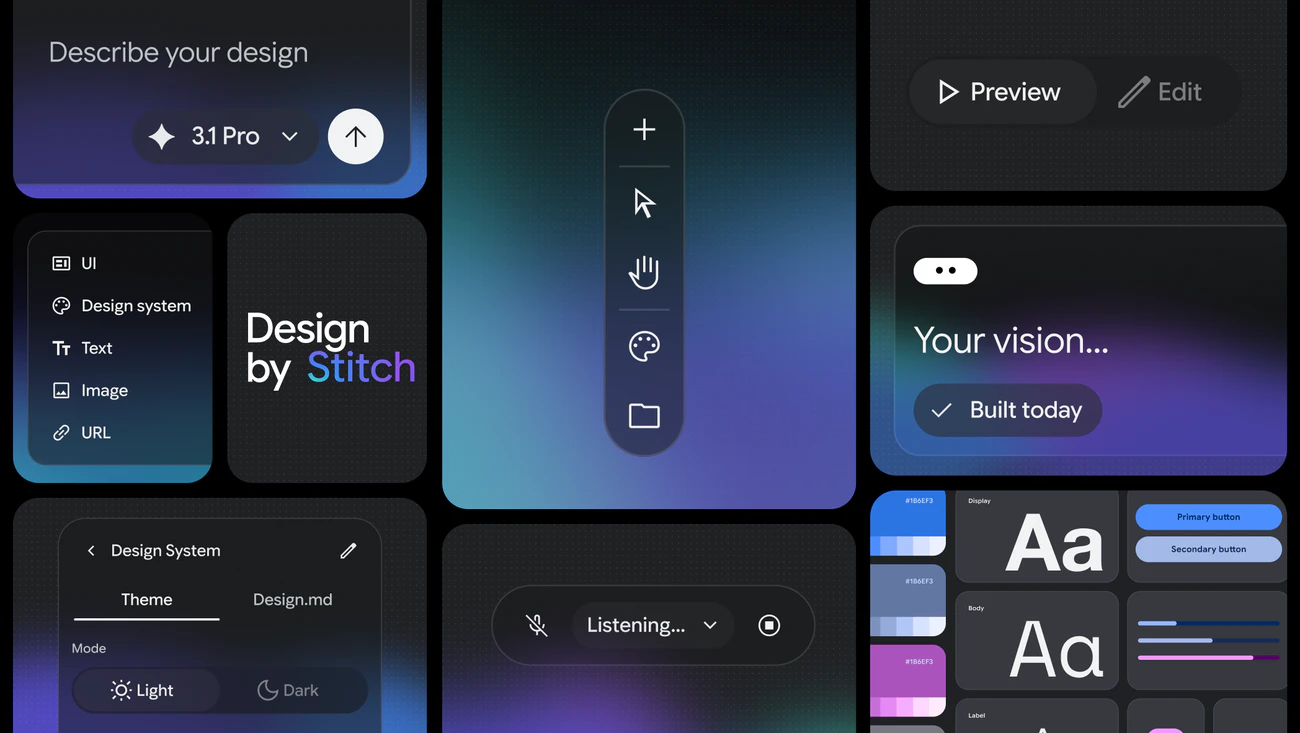
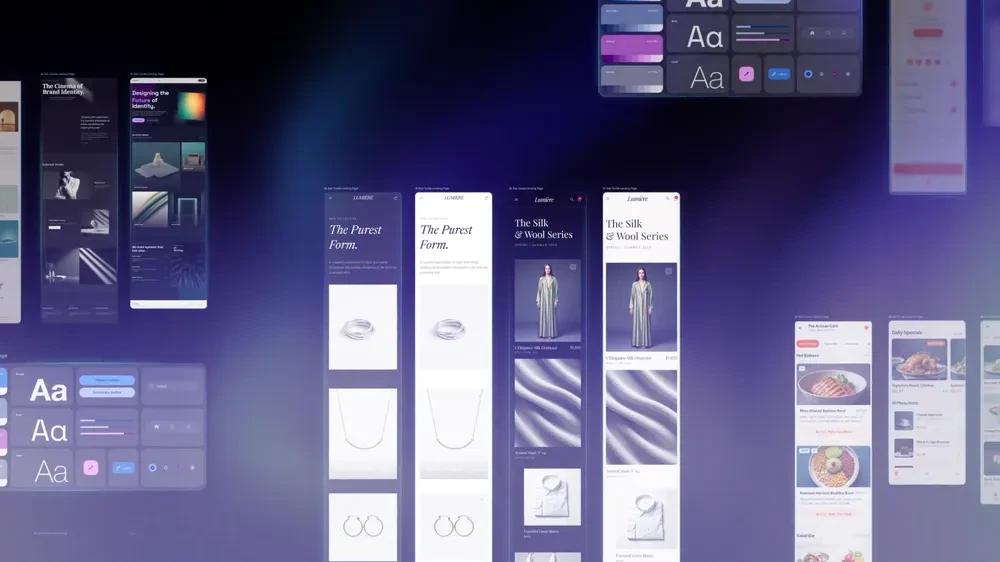
查看原始信息
Link AI
We built the Agentic Business Suite so you can stop duct-taping your tools together. Link AI gives you AI agents on voice, WhatsApp, Instagram, and chat. Workflows to automate your internal processes. And Ally, your personal AI agent included in every plan, so you can run your whole business from WhatsApp without ever opening a dashboard. This is our first public launch. We are just getting started.
Hey Product Hunt! I'm Kevin, founder of Link AI. 👋 Today is a double launch. We went public AND shipped Workflows in the same day. Here's why I built this: I kept watching businesses juggle five or six disconnected tools just to talk to customers and run their operations. A chatbot here, a voice system there, a spreadsheet for workflows. It was exhausting and expensive. Link AI is the Agentic Business Suite that brings it all together. You get AI agents across voice, WhatsApp, SMS, and web chat, plus workflow automation to run your internal processes, plus Ally, your personal AI agent that manages the whole thing from WhatsApp or Slack. We're already live with enterprise clients including government accounts and the Puerto Rico Convention Center. This is our first public launch. Honest question for you: if you could hand ONE business process over to an AI agent today, what would it be? I'm reading and responding to every comment.
6
回复

@hikevindiaz 
Own our competitive edge.
Know what others are doing.
Know what we’re missing.
Show us what to do next.

0
回复

The insight that people are exhausted from duct-taping tools together is real. But I'm curious about the human side of it — when "Ally" manages everything from WhatsApp, what happens to the intention behind the message? The person sending it still needs to feel heard, not just processed. How do you think about preserving that layer?

1
回复

@julian_francis Thank you for your comment! I appreciate you taking the time.

So the way we view Ally is not a "Jarvis" style assistant. It's inspired in the OpenClaw approach but for business. The reality is that we see hundreds of startups launching everyday because UI is getting easier to code. This means its value goes down and ultimately as we've seen in the past few years, people prefer to explain what they want instead of configuring it themselves.

With Ally, our goal is for users to visit the dashboard as little as possible because Ally can basically manage the dashboard for you. For example, enhancing an agent's knowledge periodically with updates can be redundant task, so users might just tell Ally "hey, add these weekly specials to the knowledge base of X agent" and Ally would simply add a text insert.

When it comes to other areas like reaching out to people, it always requires user authorization and it learns from the user's tone and personality for future reach outs.

I hope this answers your questions and give you an inside to what the future of Link AI.

0
回复

Hello @hikevindiaz, happy launch day. Two products at once is impressive.

I like The Puerto Rico Convention Center case study. A government client using RAG to give event planners real info. That's real work.


However, one thing I kept thinking while reading. You have a lot of products. Calendar. Orders. Phone. Forms. Tickets. Workflows. That's a full stack. But on the homepage, it feels like a list. Isn't that so? A person landing there might not know where to start. Just shared what I noticed.

Hope people like it.

1
回复

@taimur_haider1 thank you! We've been actually privately live since about 6 months ago with some enterprise clients. We just wanted to make sure everything was great before launching publicly. Specially the security aspect.

I have to say, I 100% agree with you. We tested about 3 different layouts of presenting the platform and ended up with this one. Still, although the design looks amazing, I feel we have a lot of information that might scare some users away.

I do think we nailed here in Product Hunt with the images showcase. Maybe this general way of presenting (non-feature-specific) might be a better way to present the business. What do you think?

We also thought about adding a simple text-to-agent feature directly inside the landing page so users might go directly to use the platform. This might be a better UX.

Loved your feedback, thank you for your time.

1
回复