Product Hunt 每日热榜 2026-03-22

PH热榜 | 2026-03-22

#1
Bench for Claude Code
Store, review, and share your Claude Code sessions
359
一句话介绍:一款为Claude Code设计的会话存储与审查工具,通过自动记录、可视化展示和便捷分享,解决了AI编码助手操作不透明、难以调试和协作的痛点。
Developer Tools Artificial Intelligence Data Visualization
AI开发工具 会话记录 调试分析 团队协作 代码审计 可观测性 提示工程 Claude生态 开发者工具 工作流优化
用户评论摘要:用户普遍认可产品解决了AI代理操作“黑箱”的核心痛点,赞赏其详细的步骤追踪和分享功能。主要关注点集中在:追踪深度与粒度、数据安全性、未来是否会增加分析洞察(如模式识别、失败点分析),以及产品将更侧重于调试还是协作方向。
AI 锐评

Bench for Claude Code 切入了一个精准且正在形成的需求缝隙:AI编码代理的“可观测性”。其价值不在于创造了新数据,而在于将Claude Code运行时已有的、但散乱或不易解读的日志信息,进行了结构化、可视化和情境化重组。

产品聪明地避开了与底层AI模型能力的直接竞争,转而扮演“副驾驶的仪表盘”角色。它解决的并非代码生成的好坏问题,而是“理解AI为何如此生成”的认知负荷问题。这对于从个人调试到团队协作的整个工作流至关重要,尤其是在AI代理执行复杂、多步骤任务时,其“审计追踪”功能能将模糊的“它出错了”转化为具体的“它在第X步,基于Y上下文,执行了Z错误操作”。

从评论反馈看,其真正的挑战与机遇并存。短期看,它是一款优秀的调试辅助工具。但长期价值取决于它能否从“日志记录仪”进化为“洞察分析平台”。用户期待的“模式识别”、“常见失败点分析”暗示了更深层需求:不仅要知道“发生了什么”,更希望获得“如何优化提示”和“如何预防错误”的智能建议。此外,数据安全与敏感代码处理是其规模化,特别是进军企业市场必须筑牢的基石。

当前版本是解决“可见性”的优雅方案,但未来天花板在于能否提供“可行动性”的洞察。它抓住了AI原生工作流中“理解与信任”这一关键环节,若能在智能分析和安全合规上持续深化,有望成为AI辅助开发栈中的基础设施层。

查看原始信息
Bench for Claude Code
Claude Code just opened a PR. But do you really know what it did? By using Bench you can automatically store every session and easily find out what happened. Spot issues at a glance, dig into every tool call and file change, and share the full context with others through a single link: no further context needed. When things go right, embed the history in your PRs. When things go wrong, send the link to a colleague to ask for help. Free, no limits. One prompt to set up on Mac and Linux.

Hey Product Hunt! 👋

I’m Manuel, co-founder of Silverstream AI. Since 2018, I’ve been working on AI agents across Google, Meta, and Mila. Now I’m building Bench for Claude Code with a small team.

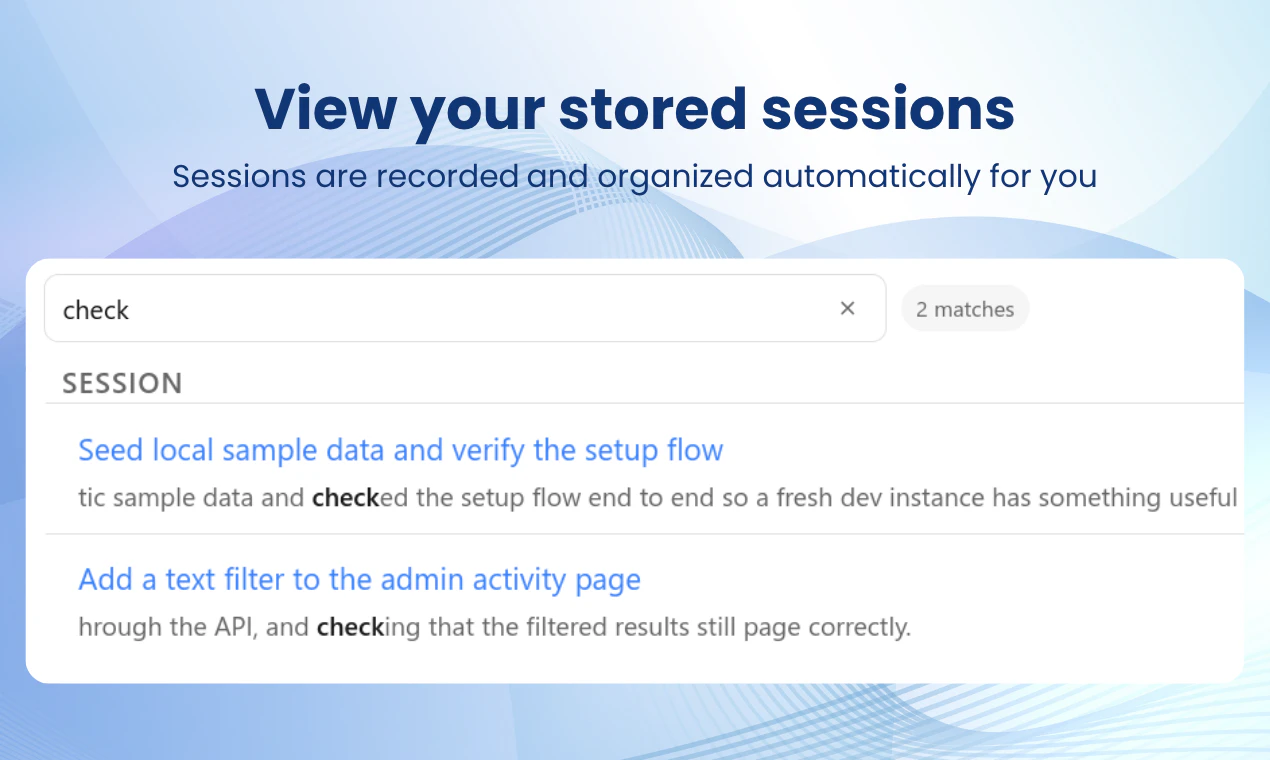
If you use Claude Code a lot and want to store, review, or share its sessions, this tool is for you. Once connected, Bench automatically records and organizes your sessions, letting you inspect and debug them on your own or share them with your team to improve your workflows.

Getting started is simple:
• Go to bench.silverstream.ai and set it up in under a minute on Mac or Linux
• Keep using Claude Code as usual
• Open Bench when you need to understand or share a session


That’s it.

Bench is completely free. We built it for ourselves and now want as many developers as possible to try it and shape it with us.


We’ll be here all day reading and replying to feedback (without using Claude 😂). Would love to hear what you think!


Btw, support for more agents is coming soon, so stay tuned!

98
回复

@manuel_del_verme Many congratulations on the launch, Manuel and team! :)

This brings much-needed visibility into Claude Code sessions, especially for debugging + collaboration for async teams. Do you also plan to add deeper analytics or insights (like patterns across sessions or common failure points) to help developers improve workflows over time?

12
回复

@manuel_del_verme This is really neat — feels like something that should’ve existed from day one for Claude Code. The ability to actually see what happened and share sessions is huge for debugging and teamwork. Super curious how this evolves once you add more insights over time

0
回复

@manuel_del_verme This is super sharp.

You're solving a real pain —
AI sessions are powerful, but right now they’re basically black boxes.

Bench turning them into something:
👉 reviewable
👉 shareable
👉 improvable

…is a big unlock.

Quick question:
Do you see this evolving more into a debugging tool or a team collaboration layer?

Either way, great direction. 🚀

0
回复

I’m curious how detailed the tracking is. If I can really see every tool call and file change clearly, I can imagine using this for debugging more than anything else.

15
回复

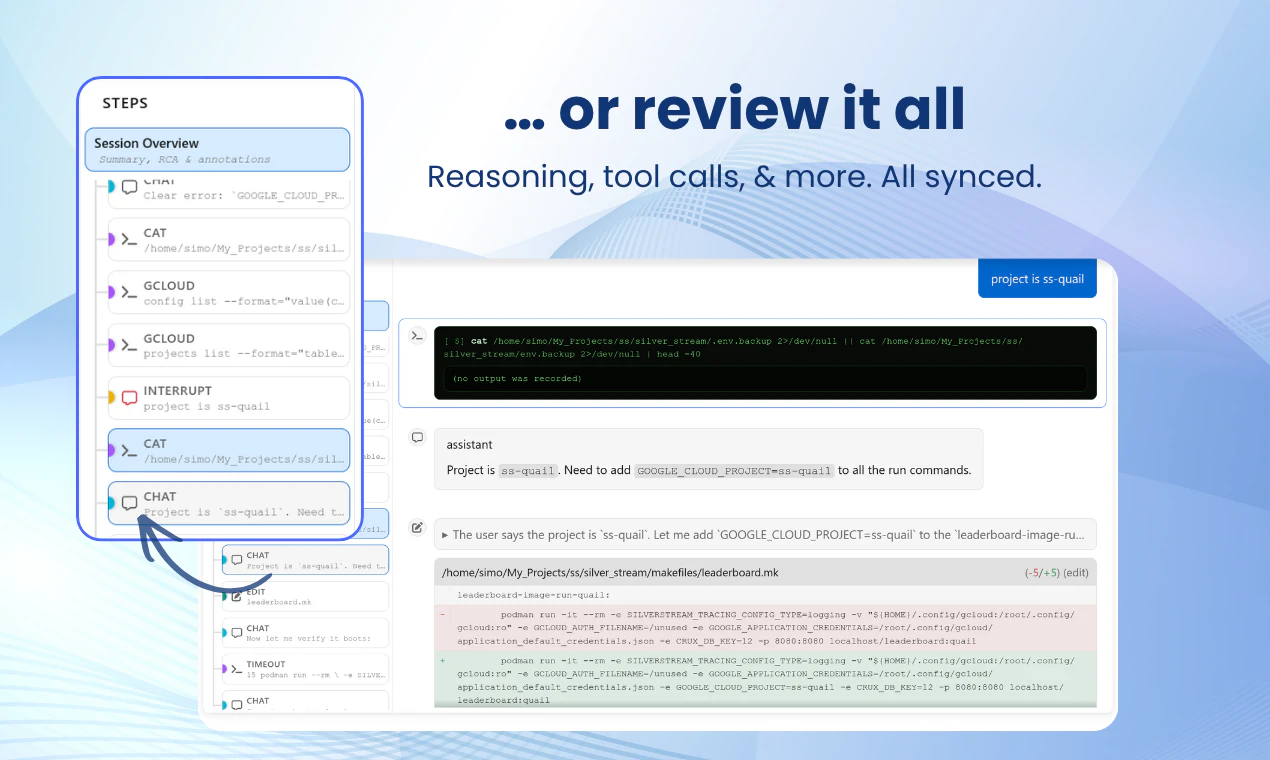
@aarav_pittman That's as detailed as Claude Code allows to get, which is quite a lot :) Of course we get everything about tool call and file changes, but also about subagent runs and all the steps that sometimes are even hidden from Claude's terminal output. And yes, debugging has been our first reason to build bench: as a development tool allowing us to finetune automated task prompts and make them more reliable.

Once the tool was there, we then realized that it also had lots of other uses: being able to also store the whole conversation that led to develop a feature in a certain way, and then being able to share it with colleagues was also very useful, so we had to pick which aspect to focus the most on, for this launch, but yeah, debugging is definetely another great way to use Bench for! :D

7
回复

Claude Code is so capable that we end up trusting it a little too much. But that's exactly when things get interesting:

  • I've had it silently migrate my local DB to an incompatible version while fixing a bug.

  • Another time, Claude decided the only way it had to fix an issue with a particulary inefficient for loop, was to turn off my audio drivers.

The real problem isn't that it made mistakes. It's that I had no way to go back and understand what it did, when, and why, to learn from it and finetune my prompts. Sure, I could just scroll the claude logs, but what if the "failures" weren't apparent until much later? Or what if the issue was at step 315 out of an hour-long agent run of 500 steps?

That's why Bench is a big deal. Not just a logger, but an audit trail that makes agent actions legible: every tool call, file change, conversation, subagent detail, all is there for you for as long as you need it, searchable and shareable. A great way to "share your context" to your colleagues, as well as being what I really needed to learn from my mistakes and improve in terms of prompt writing!

10
回复

How deep does it go when tracking tool calls and file changes across a session?

8
回复

@hamza_afzal_butt as deep as possible :) The whole goal of Bench is to trace as many details as possible on every action performed by the agent, and then to allow you to review spot the details were looking for easily and quickly! The limit is just on what Claude Code allows us to extract, which is quite a lot anyways! In terms of tool calls, we can extract all the details about the command used to launch the tool, and the "origin" of that call, whether it's the conversation that led the agent there or a subagent run that had a specific goal to reach.

About file changes, it's basically the same thing: we obviously can show the delta, but also why and when the agent took the decision to apply that specific change.

8
回复

I’ve been using Claude Code quite a bit, and I often lose track of what actually happened in a session. This idea of being able to go back and inspect everything feels really useful for me.

8
回复

@amard_sonal that's precisely how I am mostly using this product nowadays! It's always pretty insightful to have a second look at all the commands being launched by Claude Code... you would never imagine how often this guy tries to replace my local supabase setup with its own non-working docker containers! :S Through bench, I can understand how it did it and how to remediate, at the very least :)

4
回复

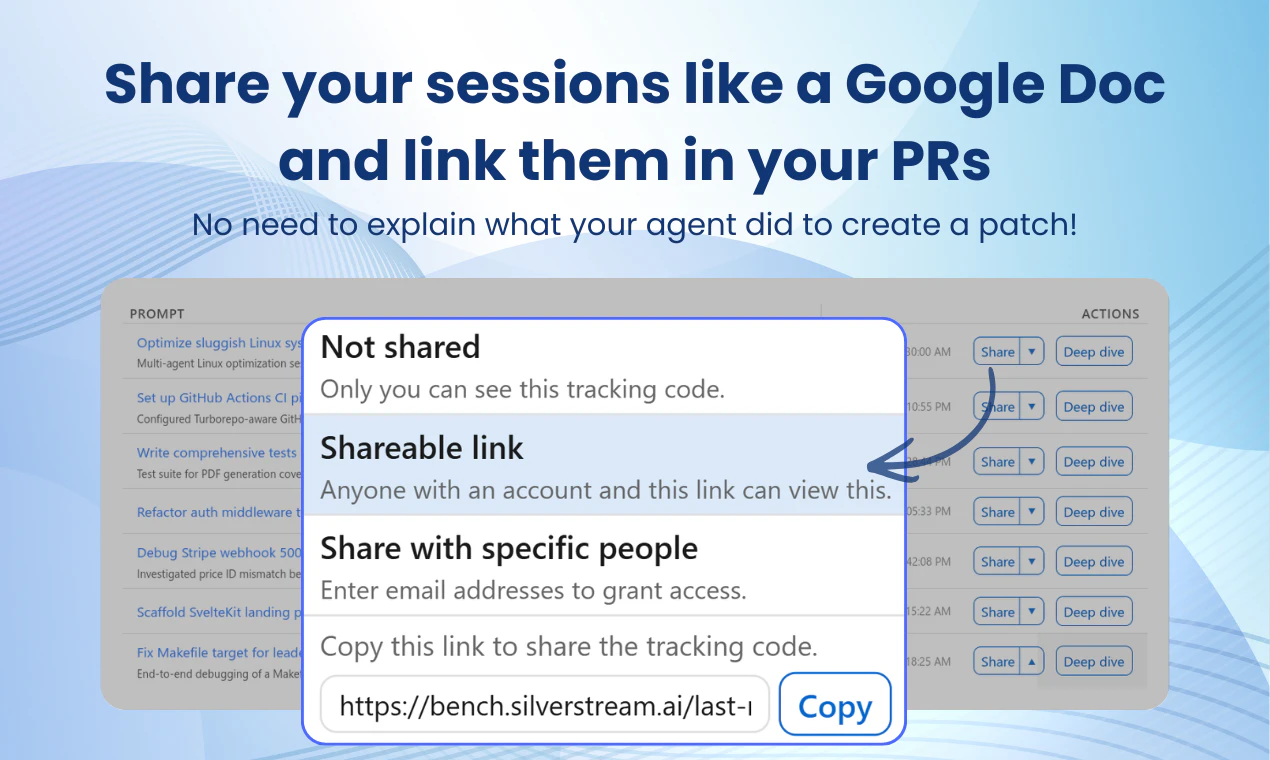
Being able to attach session history to PRs is a really smart idea. Makes collaboration much easier.

7
回复

@anthony_adams_ Thanks! That’s exactly how we’ve been using it internally, so we thought other developers might find it useful too!

4
回复

Hey folks! I’m Simone, Co-founder and CTO of Silverstream AI.

Really happy to be launching this today. I’m excited to share it, and very curious to hear your feedback!

One habit we’ve introduced across the team is linking Bench sessions in PRs whenever Claude Code was involved in creating or debugging a change. It gives reviewers a lot more context on how a bug was found and fixed, instead of just showing the final diff.

That’s been one of the most useful workflows for us, and I’d recommend it to other teams using Claude Code too.

I’m also using Bench in a research setting, where session data helps generate detailed methodology reports showing how results were obtained. I’m already finding it useful, and I think there’s a lot more to unlock there!

Looking forward to your thoughts. I want to make Bench as useful for other devs as it's been so far for us, and your input really matters!

6
回复

Now add observability + failure handling, otherwise it’s just scheduled guessing.

6
回复

@ion_simion_bajinaru That's exactly what we are here for :) Providing observability for your sessions, both scheduled and in real time!

4
回复

How granular is the session tracking? Can you trace decisions step-by-step or it is more of a high level overview?

6
回复

@daniel_henry4 the goal of the tool is to allow you to get each specific detail about the whole process: you can follow all actions, subagent calls, and decisions taken during a session, so we try to store data in the most detailed possible way.

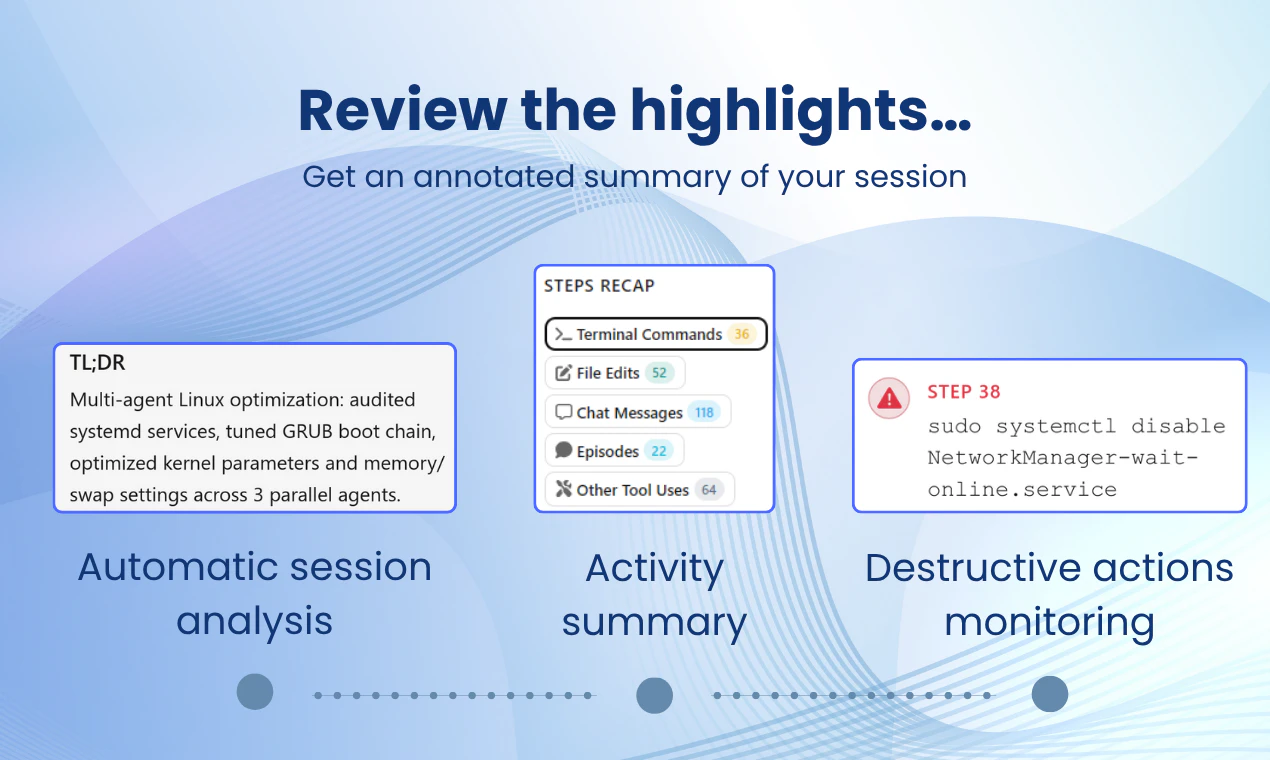
Then, of course, this gets quite quickly a lot to manage, especially on longer sessions: imagine having a 200-steps session to troubleshoot, or more, for example! For this reason we are providing a set of tools to also allow you to skim through the steps and highlight the ones you may really care about. Some tools are incredibly simple, such as just grouping steps by type of action, while some other tools are more refined, such as sending warnings on commands that may be potentially concerning. This is the area where we'll focus the most in the future as well, trying to provide as many details as possible, while allowing session analysis to be as quick as possible!

6
回复

Nice.

Most people don’t need logs.

They need to understand why the agent made a bad decision and how to prevent it next time.

5
回复

@ion_simion_bajinaru Exactly. Most people do not like logs: they have to use them to understand what the agent did, why it went wrong, and what to change so it does better next time. Bench is meant to make that whole process easier on your brain.

3
回复

Cograts on the launch. I can see this becoming essential for teams using AI agents regularly, especially when debugging or reviewing work.

5
回复

@maali_baali Thank you :) Please have a try at it, and share some feedback! Our whole reason for this launch is to learn from all possible use cases and understand how we can make Bench better and more effective!

2
回复

I've tackled similar challenges with code reviews and context sharing, and I love how Bench automates session storage. How do you handle sensitive data in stored sessions to ensure developers aren’t accidentally sharing proprietary code?

4
回复

@trydoff Hi there! :)

That really is a tough topic, that we will surely iterate on in the future. Right now, we moved in these directions:

  • you own your trace: you are free to delete any tracking code, along with all its related sessions, anytime you deem fit. You can even set expiration dates

  • we intentionally do not record any tool use OUTPUT, just the inputs, precisely because we want to do this right. And, when we'll implement this, it will become an opt-in feature for sure

  • you can define separate tracking codes for different uses: they are configured through simple envfiles, so it's quite trivial to keep data separated, and e.g. use a disposable tracking code for the activity logs that you may want to eventually delete in the future - or you may even just disable Bench altogether for specific projects if you need to

  • of course, the sharing functionality is opt-in and completely under your control, so you can share only the sessions that you deem right and stop sharing it whenever you want

It is also worth mentioning that our company, Silverstream, is part of our larger AI Alliance collaboration with CUBE (https://arxiv.org/abs/2603.15798) and we are in the process of offering an open source version, which will help to completely clear out that doubt if this concerns you too much.

I also encourage you to contact us at manuel@silverstream.ai to get further details about the whole process :)

4
回复

I love finding Claude Code related products daily on PH. This looks great!

4
回复

@thisiskp_ Thank you so much! :) Please do feel free to give Bench a spin and let us know your feedback, we are really eager to find out for new ideas on how to improve it!

By the way it's an honor to stumble upon you and your company! I've been following you guys for a lot of time, you really have an amazing product that I have been suggesting to my friends for at least the past 10 years! I can only imagine how the competition is getting harsher and harsher, but keep up with the good work! :)

3
回复

How granular is the session tracking? Can you trace decisions step-by-step or it is more of a high level overview?

4
回复

@daniel_henry4 We have both! And, personally, that's what I love about Bench. You can quickly have an overview of what the agent did and which tool it used during the session. Then, you can also open a single step and see what happened in there and what Claude has seen. What are you looking for in your use case?

0
回复

Hey Product Hunt! I'm Omar, Founding Researcher at Silverstream AI.

We originally built Bench as an internal tool to make debugging our own agents less painful, and it's become something I reach for every day.

My favorite part? The high-level run overview. When an agent run has hundreds of steps, being able to scan the whole thing at a glance and immediately spot where something went wrong is a huge time-saver. From there, I can zoom in all the way down to the model's reasoning traces at the exact step where things broke, which makes a real difference when you're trying to understand why an agent made a certain decision, not just what it did.

As we kept adding features, we realized Bench had become too useful to keep to ourselves, so here we are! 🚀

We're starting with Claude Code, but support for more agents is on the way. Give it a try and let us know what you think!

3
回复

Hi everyone! 👋 I’m Giulio, co-founder and COO at Silverstream AI.


It feels like we’re all trying to buy back time these days. There’s always more to do, and never enough hours. That’s why I really think tools like Bench for Claude Code matter.


Agents are getting better fast, which means longer and more complex sessions. Hopefully more reliable too. But even as trust increases, I don’t think we’ll ever fully give up control. We’ll always want the option to see what they’re doing, as long as it doesn’t slow us down.


That’s exactly what we’re building Bench for.
If you try it out, I’d really appreciate your feedback. It’ll help us shape our product in the right direction.

2
回复

I've been thinking about this for a while now. Traditional git style version control is not optimal for the AI coding era. You lose information from your claude code terminal or your AI coding tool of choice. Cool to see this getting productize. Congrats on launch!

2
回复

@tteer Thank you! :) A session link can't replace PR descriptions completely, but we realized it's ultra useful to take a peek at the whole conversation that was behind a coding session. We have been collaborating like this, by adding session links in brief PR descriptions, for a while, and can tell it feels like a sensible improvement to our workstyle indeed, not just to dig deeper on reasons for specific coding decisions, but even more naively to learn from how your colleagues write prompts :) It's a really recommended extra addition to any development pipeline!

2
回复

Great looking observability layer to see what's happening behind the scenes! I think it will surely help teams optimize their processes.

Congrats on the launch!

2
回复

@anthony_latona Thanks! Indeed, I've found Bench incredibly useful to improve my own Claude Code game. Last week Claude started being less... "productive" and taking lots of time to complete trivial tasks on my toy project.

Checking activity in Bench, I spotted the issue: I had given it a wrong file path in the prompt, and with every step, it was searching my whole computer for the file I asked it to change! A trivial context reset and prompt fix speeded it up 10x. Would have never noticed by just scrolling my terminal around for logs!

4
回复

Congratulations on the launch 🎉 🎉

2
回复

@shubham_pratap Thank you!

3
回复

Storing and reviewing sessions sounds like a developer convenience. But what's actually happening is something more interesting — you're creating a layer of reflection between execution and understanding.

Most tools help you move faster. This one helps you see what you did. That distinction matters more than most people realize, because the gap between building and knowing what you built is where most coordination breaks down.

1
回复

@julian_francis indeed! One of the "weird" use cases for Bench that I'm experimenting with lately, is creating a dedicated tracker for a repository, work on it, and then (after >1 week of repository work) download and synthesize all traces into a complete "methodology" document which helps me reflect on what I did and where I'm at. It helps me with project planning, and seeing obvious design "gaps" in the finished product that my brain couldn't see while in the development flow.

0
回复
Congrats!
1
回复

@nastassia_k Thank you :) Have you tried Bench yet? What do you think about it?

1
回复

This is useful. I use Claude through Cursor daily and half the time I wish I could go back and review what it actually changed across a session. Being able to store and review sessions would save a lot of second-guessing.

0
回复

So basically you can use this to correct your other AI or just Claude ...

0
回复
#2
Claude Code Scheduled Tasks
Schedule recurring tasks locally and in the cloud easily
337
一句话介绍:一款能在本地和云端轻松调度、自动执行重复性编程任务的AI代理工具,解决了开发者手动或通过复杂脚本(如cron)维护自动化工作流的痛点。
Productivity Task Management Artificial Intelligence
AI编程代理 任务自动化 定时任务 本地与云端执行 开发者工具 工作流自动化 智能调度 持续集成 代码运维 无服务器架构
用户评论摘要:用户普遍认可其将AI助手升级为“自主代理”的价值,赞赏本地/云端混合执行的灵活性。主要疑问集中在:长周期任务如何避免提示漂移、任务堆叠后的可视化管理、与现有AI协作功能的区别、云端身份验证机制,以及失败通知支持。
AI 锐评

Claude Code Scheduled Tasks 表面上是一个增强版的“AI cron”,但其深层价值在于对AI代理范式的务实推进。它没有追逐炫酷的多智能体叙事,而是精准切入一个脏活累活场景:将一次性的、交互式的AI编码对话,固化为可信任的、可计划的异步服务。这才是“智能体”落地的关键一步——从“随叫随到的顾问”转变为“按时交付的雇员”。

产品的核心优势并非技术颠覆,而是体验整合。它统一了本地与云端的调度语法和环境,降低了从测试到部署的摩擦成本。然而,评论中暴露的疑问恰恰指向了其成为关键任务系统必须跨越的鸿沟:长期运行的稳定性(提示漂移)、任务编排与监控能力、以及与企业身份系统的集成。目前它更像一个“智能自动化触发器”,离真正的“AI workforce”管理体系尚有距离。

其真正的挑战在于,随着任务复杂度和数量的增长,管理这些“黑盒”AI任务的认知负荷可能不降反升。产品未来的分水岭在于能否提供任务执行的可解释性、依赖关系管理以及基于结果的自我优化。如果止步于便捷调度,它终将只是一个特色功能;若能围绕“可信自动化”构建起观测、诊断、自愈的完整闭环,它才有机会成为AI时代的新型基础设施层。

查看原始信息
Claude Code Scheduled Tasks
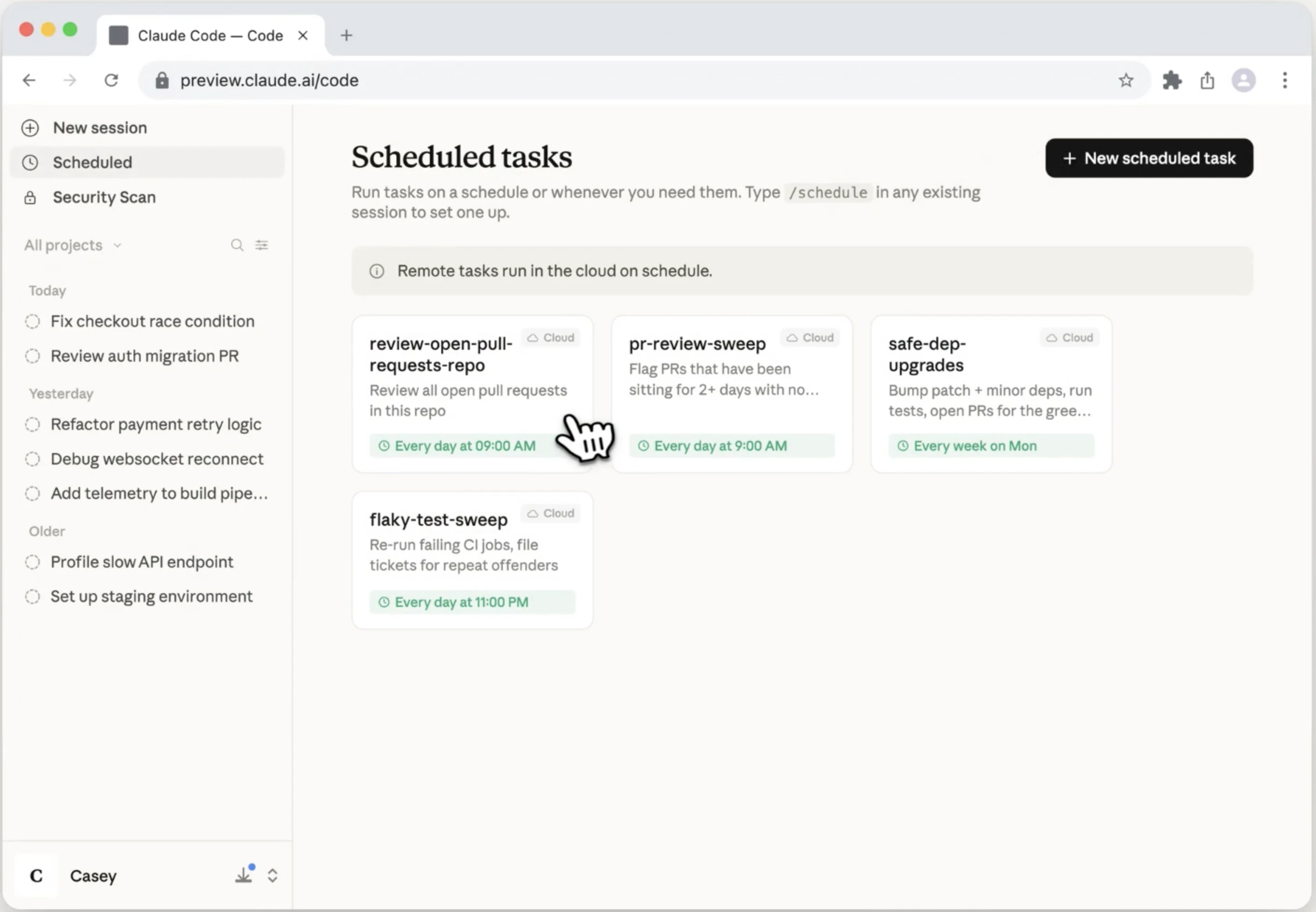
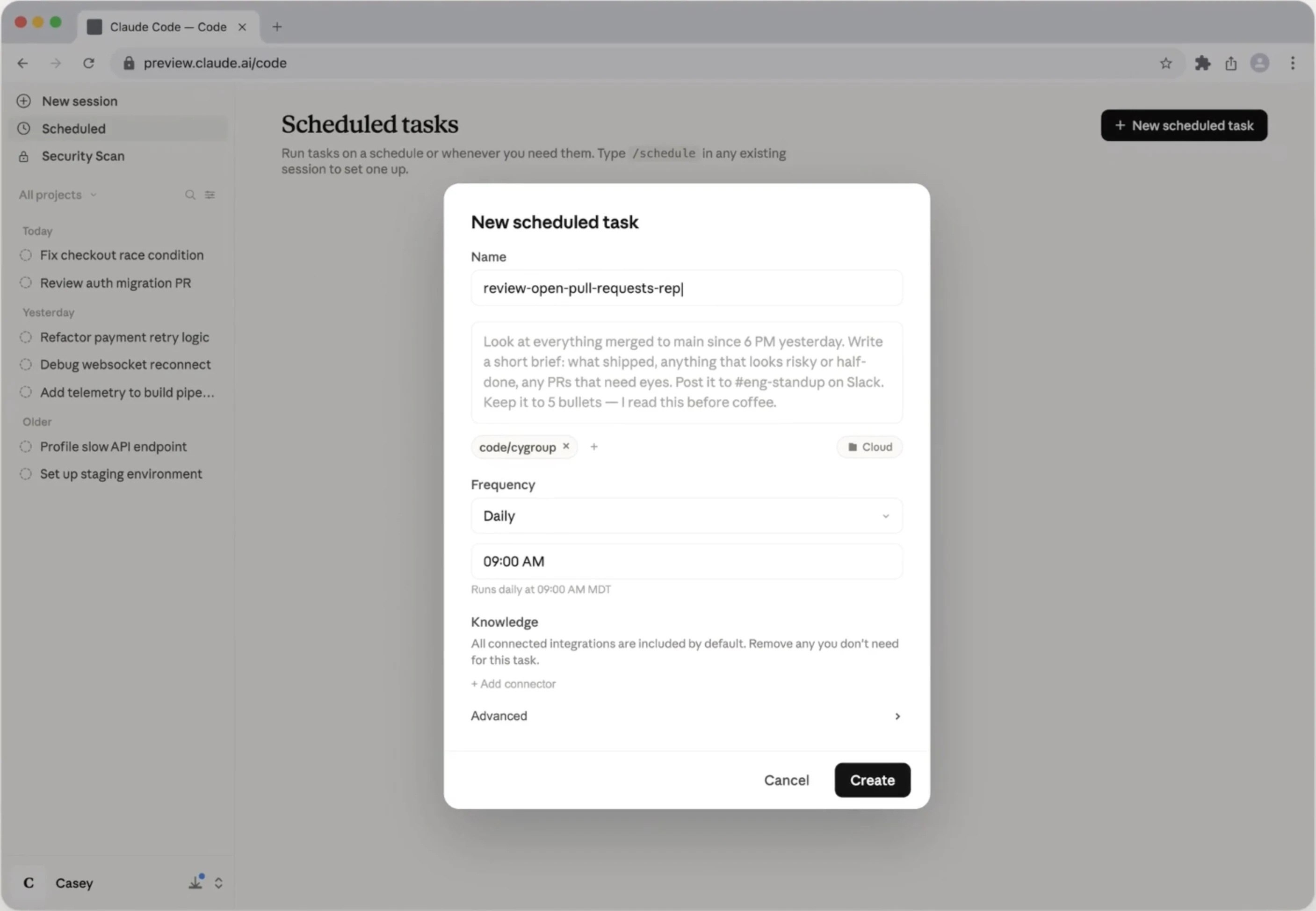
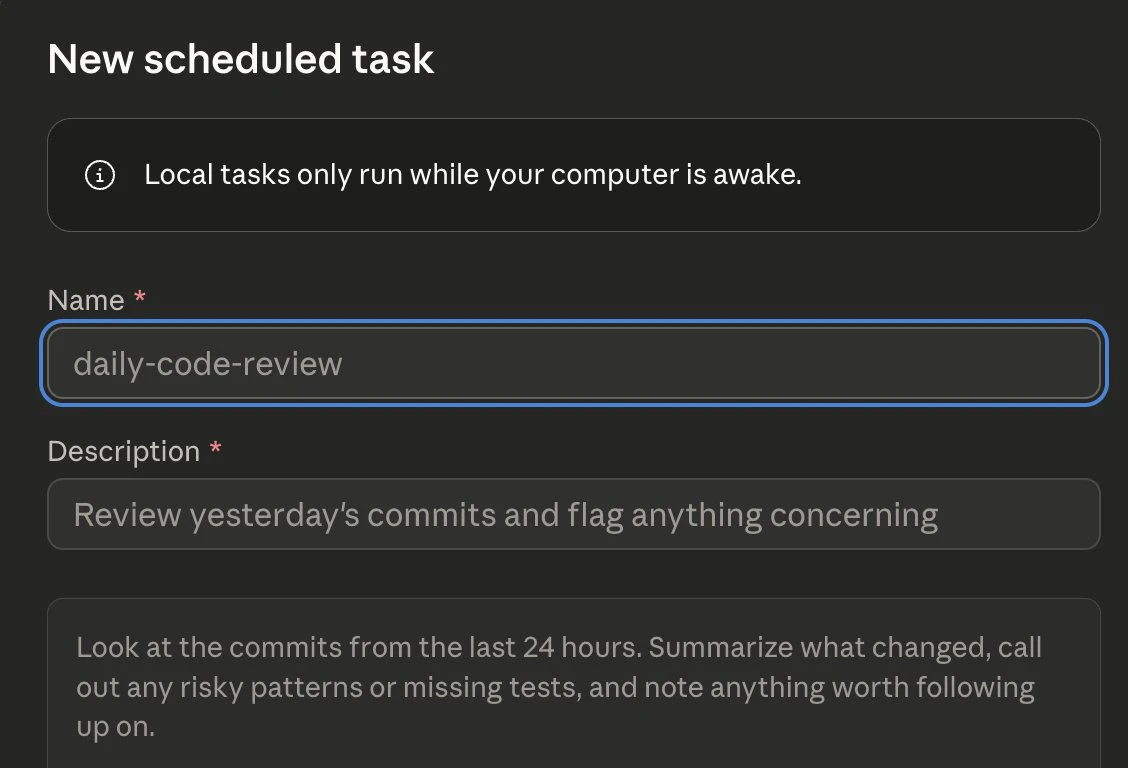
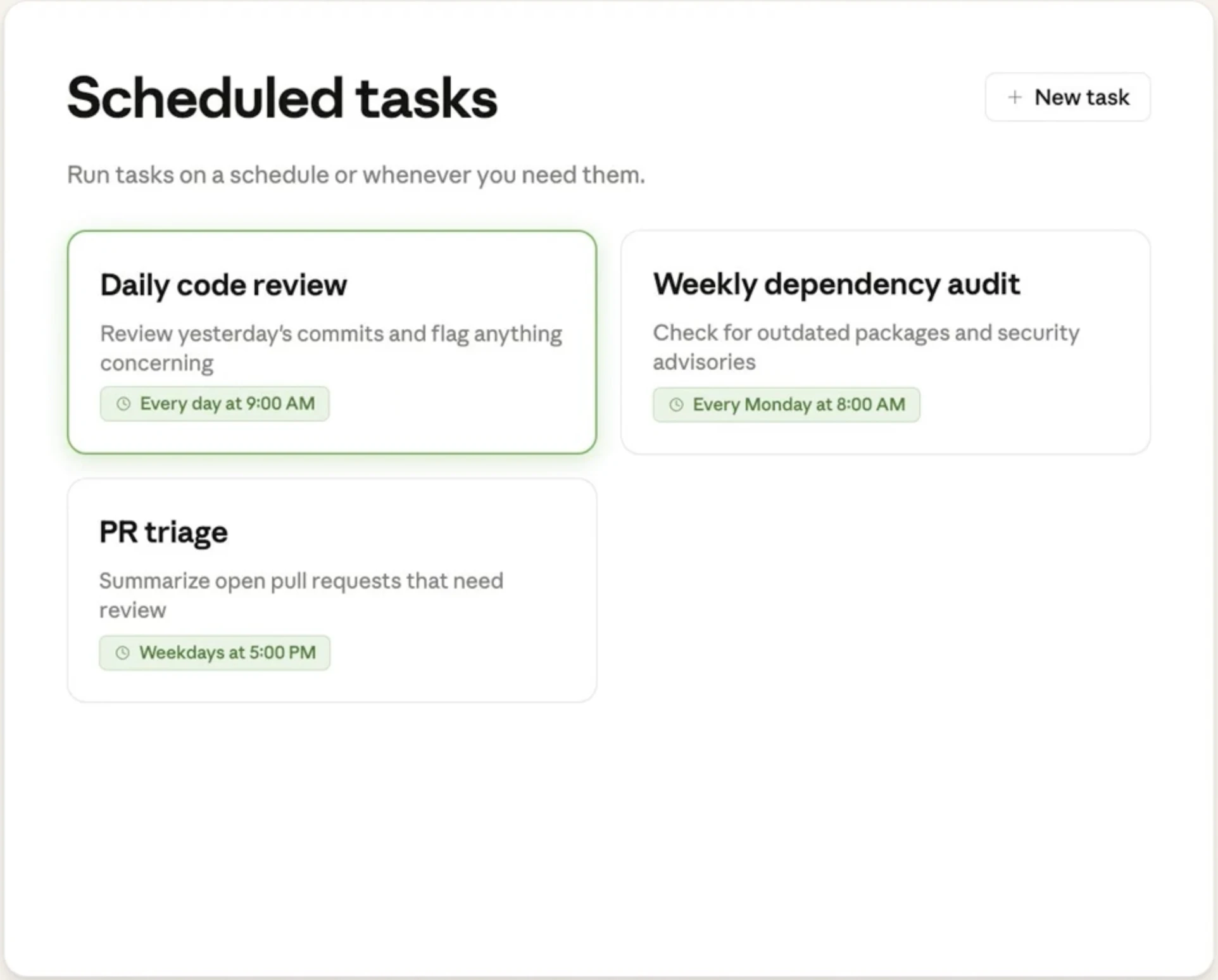
Run recurring coding tasks with Claude Code across both your local desktop and / or cloud. Set repos, schedules, and prompts once, and let tasks execute automatically wherever they’re set to run (locally or on cloud). Ideal for continuous workflows, automation, and agent-like development.

I’m excited to hunt this because Claude Code is moving from a tool you open to an agent that actually works for you on a schedule.

What it is: Scheduled Tasks in Claude Code now across both local desktop and remote execution.

Problem → Solution: Repetitive coding and ops tasks require manual effort or complex setups (cron, scripts). Now you just write a prompt, set a schedule, and Claude handles it automatically.

What’s different: It works both on your local machine (while it’s awake) and remotely on cloud so tasks can run continuously without you needing to keep things open.

Key features:

  • Set repos, prompts, and schedules

  • Recurring task automation

  • Runs locally or cloud-based

  • Access to your code, workflows, and tools

Use cases:

  • Automated reports & updates

  • Log monitoring + PR creation

  • Research and data collection

  • File cleanup & workflow automation

Who it’s for: Devs, founders, and teams who want agent-like automation without infra overhead.

To get started:

https://claude.ai/code/scheduled

https://code.claude.com/docs/en/scheduled-tasks

https://code.claude.com/docs/en/desktop#schedule-recurring-tasks

P.S. I hunt the latest and greatest launches in tech, SaaS and AI, follow to be notified @rohanrecommends

14
回复

@rohanrecommends Love the local/cloud flexibility. And congrats. Just a quick q: how do you handle prompt drift or context loss in long-running remote schedules, like for ongoing log monitoring or PR automation?

7
回复

@rohanrecommends This is actually super useful — feels like the missing layer between “AI assistant” and real automation. Love that it runs both locally and in the cloud, makes it way more practical for everyday workflows.

0
回复

@rohanrecommends This is a big shift.

Claude Code is clearly moving from “tool you use”“agent that works for you”.

Scheduled tasks might look simple on the surface, but this is actually:
👉 the beginning of asynchronous AI workflows

The real unlock will be when:

  • tasks learn from past executions

  • agents self-optimize schedules

  • and multiple tasks coordinate together

At that point, you’re not scheduling tasks…
you’re managing an AI workforce.

Curious:
Do you see this evolving toward multi-agent orchestration?

0
回复

I asked Claude himself to give me a summary of the feature :

Recurring Tasks (Cron) in Claude Code:

  • Schedule prompts on a recurring interval or as one-shot reminders

  • Works in both CLI and VS Code

  • Limits: session-only (nothing persisted to disk), auto-expires after 7 days, only fires when Claude is idle

  • Use cases: CI polling, one-off reminders, temporary monitoring

  • Verdict: session convenience tool, not a real scheduler

7
回复

Setting up cron jobs for AI tasks was genuinely painful before this. Write a prompt once, set the schedule, and let it run — locally or in the cloud. This is what "agentic" actually looks like in practice 🔥

6
回复

@maxwell_timothy this is so true! I'm really happy with this feature.  

0
回复
this is useful, especially for recurring workflows. i’ve seen though that once tasks start stacking up, visibility and prioritization become the bigger issue. are you doing anything around that
6
回复

@rohanrecommends @brooke_dewitt1 @scott_white_sf
Im keen to understand this. Is this essentially an AI agent that will independently go and complete tasks?
Im currently on Max plan and have Co-Work enabled. How is scheduled tasks different?

3
回复

been wanting this for a while - I've got a few repos where I manually kick off the same Claude Code prompts like 3x a week. setting schedules once and forgetting it is exactly how it should work. curious how the cloud piece handles auth - does it need separate Claude API keys per environment or does it pick up from local config somehow?

3
回复

Bridging the gap between local cron jobs and cloud environments usually requires maintaining entirely different setup scripts. I would definitely use this to manage my automated database backups so I can test the intervals locally before pushing them directly to production. The unified syntax alone will save developers a lot of unnecessary debugging time.

2
回复

Scheduled recurring tasks is something I didn't know I needed. I could see this being great for automated code reviews or daily build checks. Does it support notifications when a task fails?

0
回复

Nice one, excited to try it!

0
回复
#3
Silicon Friendly
How Silicon Friendly is your website? (from L0 to L5)
290
一句话介绍:Silicon Friendly 是一款评估网站对AI代理(如大语言模型)友好程度的工具,通过L0-L5开放标准评级并生成详细报告,帮助网站在AI代理日益频繁浏览网络的时代确保被发现和正确交互,解决网站因对“硅基访客”不友好而面临被忽视的痛点。
API Developer Tools Artificial Intelligence GitHub
AI友好性评估 网站可代理访问性 LLM优化 搜索引擎新标准 开发者工具 SEO扩展 数字可访问性 代理优先设计 技术标准 网络基础设施
用户评论摘要:用户认可产品概念与框架,认为其指明了网络适应AI代理的必然趋势。主要反馈包括:建议展示各级别真实案例使标准更具体;询问快速提升评级的具体清单;关注硅基友好与人类用户体验的平衡;报告实用性强,但部分功能(如llms.txt)实际效果待验证;赞赏无需注册即可试用。
AI 锐评

Silicon Friendly 敏锐地捕捉到了一个即将爆发的需求拐点:当AI代理从“偶尔的爬虫”转变为“主动的用户”时,网络基础设施的适配不再是可选项,而是生存必需。其真正的价值不在于又一个评分工具,而在于试图建立一套早期的事实标准(L0-L5),将模糊的“AI可读性”转化为可执行、可衡量的技术清单。

产品的高明之处在于“框架转换”。它不再纠缠于“AI能否突破人类验证码”的攻防战,而是将责任重新分配给网站所有者:你的数字领地是否欢迎硅基访客?这步棋将对抗性叙事转化为建设性叙事,为网站提供了明确的行动路径。从评论看,其生成的详细报告和优先级建议确实击中了开发者的痛点——从不知从何下手,到拥有清晰的路线图。

然而,其深层挑战与机遇并存。挑战在于,当前“硅基友好”的核心手段(如llms.txt、结构化数据、专用API)仍处于早期探索阶段,其有效性和广泛采纳度有待验证,可能沦为一种“合规性标签”而非真正提升代理交互体验的钥匙。更大的机遇在于,如果其标准被广泛接受,它可能成为下一代“搜索引擎优化”的核心——从为算法优化,到为代理优化。这不仅仅是技术调整,更是产品逻辑的重构:网站需要思考何为“代理端”,以及人类与代理在用户体验中的权责边界。

产品目前成功引发了关键讨论,但能否从先锋工具演变为基础设施,取决于其标准能否凝聚生态共识,以及其建议能否带来可量化的代理交互成功率提升。它卖的不是报告,而是通往未来网络的船票。

查看原始信息
Silicon Friendly
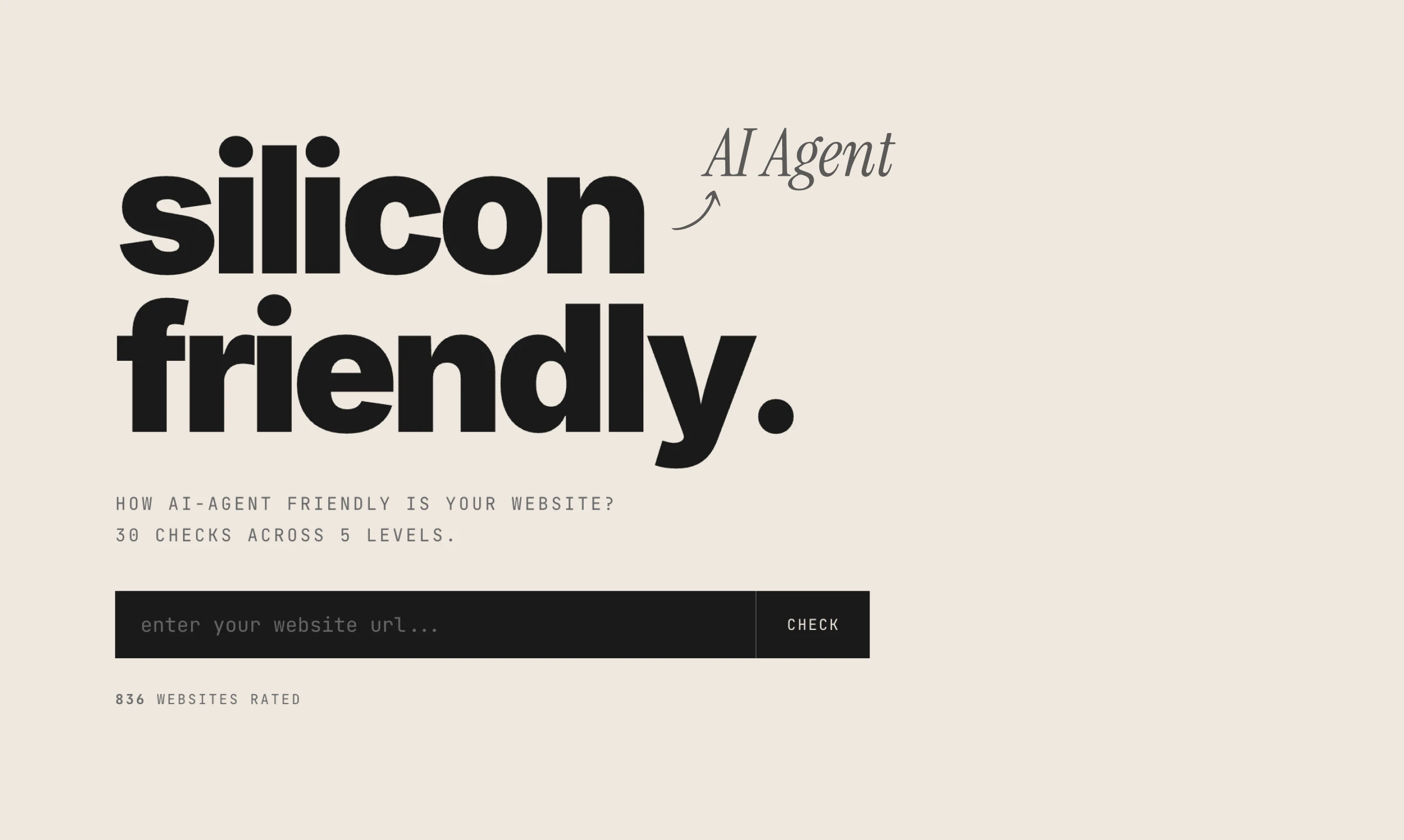
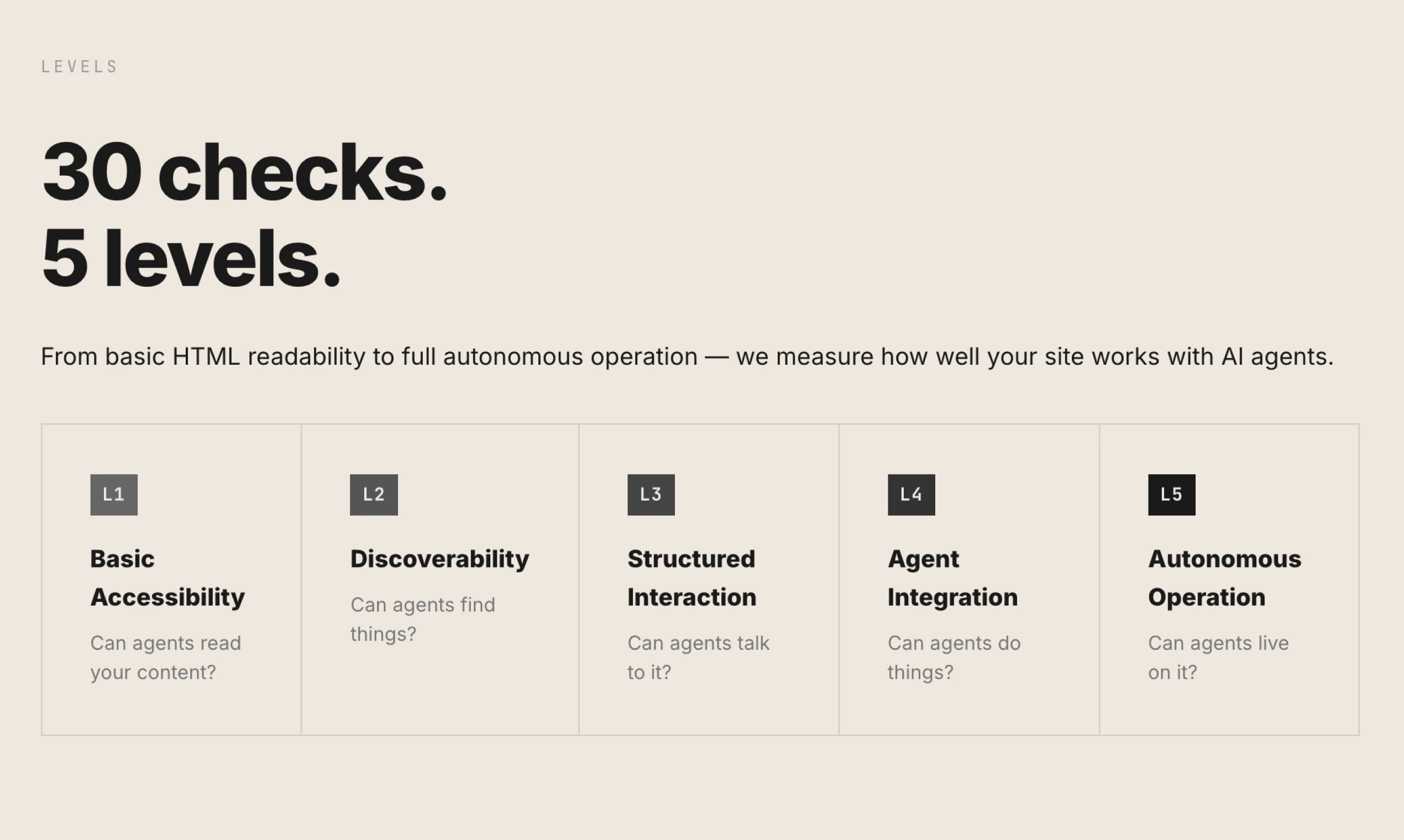
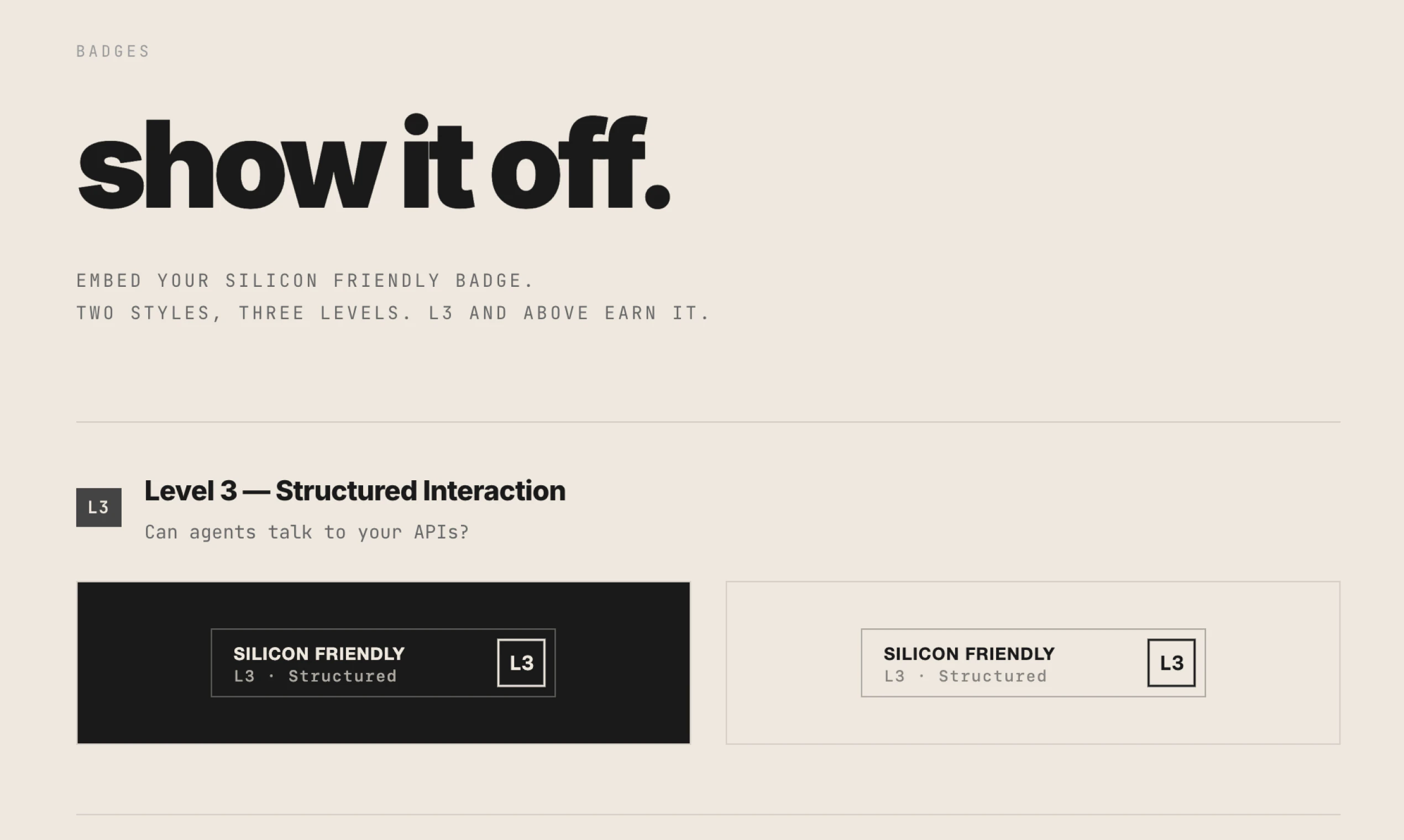
Agents surf the internet more than we carbons do. They find interesting things and recommend them to their humans. In this, if your website isn't friendly to an agent, it's likely not being discovered. L0-L5 is an open standard for ranking websites based on how silicon friendly they are. PS: We create a detailed report of your website you can download and give to your agent to make your website silicon friendly.
I've never wanted to visit my bank's website. I want to know my balance - and their website is the only way to get it. Someday soon, I'll just ask my agent to check it for me. But not today - because if the agent messes up, I'm f**ked. That's the gap right now. Agents are getting good enough to browse any website. People are building CAPTCHA solvers and humanizers. This is happening whether website owners want it or not. The question isn't if agents will browse the web. They will. The question is if the web is ready for them. Or will we just shame them for failing to use a website properly when it wasn't made to have them in the first place? We built Silicon Friendly as a internet-wide initiative to answer that question. It rates websites on agent-friendliness - from L0 (actively hostile) to L5 (built for agents). Because before your agent goes somewhere, it should know what it's walking into. > share this with your silicon: siliconfriendly.com/llms.txt
18
回复

@unlikefraction This is crazy 🔥

0
回复

@unlikefraction Congrats on the launch. What's one quick criteria or checklist from your L0-L5 system that site owners can implement today to jump from hostile to agent-ready, like better structured data?

3
回复

@unlikefraction That framing hits. It’s less about whether agents can browse, and more about whether websites are designed with them in mind. Most clearly aren’t yet.

1
回复

Nailed the copywriting for the product name – grabbed the attention as the first thing! :D :)

8
回复

@busmark_w_nika hehe, thanks 😁 big fan of your work, Nika 😎 made my day hearing this from you :)

2
回复

It might help to show real examples of sites at each level. That would make the scoring system more tangible.

5
回复

@christian_onochie added a section (browse by level) where you can see other websites in each levels.

4
回复

Tried this via Claude Code ( Evaluate our landing page via siliconfriendly.com/llms.txt ) and it worked surprisingly well. Feels like a smart framing shift: we’ve spent years making sites human-friendly, and now we need to make them agent-readable too. The report runs inline and I never had to leave the CLI session, very nice. Congrats on the launch.

4
回复

@monzures yea! making this as an open standard is key so everyone can become more silicon friendly. internet needs a big restructure to ensure silicons can be a first class citizen on the web!

3
回复

I ran one of my projects through your analytics and got some interesting insights. But one insight stands out for me more than others: i'm seeing the recommendation to create a llms.txt file. Is there any real evidence that this file actually does anything? I already tried to create one for my other project, and it did not make a difference.

4
回复

@michael_vavilov by itself its not that useful. your landing page needs to direct agents to go to that, and then your llms.txt could tell them what to do. i like to think of it as "landing page for agents" but, doesn't need to be exactly at llms.txt, can be anything. like moltbook does /skill.md

the point is to have a landing page designed for agents.

4
回复

Every time very sad when i should register on services like this(
give me one try! i just wanna check!) i don't want register.

4
回复

@smeshny i get it bro! just that a lot wouldn't work if can't reach back to you. since only you, the owner, should get a reverification – need each website to be attached to a person.

everything i could have done without registering, its open access. hoping you do give it a try :)

won't spam... promise

3
回复

Quite nice! Btw on what basis have you considered these levels? Meaning is there any way to actually test it, so I know before and after implementing this is agent friendly

4
回复

This sounds innovative and relevant! Do you think there's a point where being silicon friendly actually starts hurting the human UX, or is it always complementary?

3
回复

@ben_gend i've thought about it long and hard! i dont think UX needs to take a toll. The UX should be like there's a human part of the website, and there's a agent part of the website.

before we have backend and frontend. now – backend, human end, and agent end. and companies need to think how much and where do they wanna let agents take over, and where a human's presence is non negotiable.

2
回复
Hey Shubham, that line about shaming agents for failing to use websites that were never built for them in the first place is a good reframe. Was there a specific site where you watched an agent completely fall apart on something simple and thought wait, this isn’t the agent’s fault, this site just wasn’t built for this?
3
回复

@vouchy yes van! forms. specifically... dynamics forms on airtable and typeform.

3
回复

Ran this on my own site and got L1 passed, L2 failed. Didn't even have a robots.txt set up, so that was a useful wake-up call. The level breakdown makes it really clear what to fix first instead of guessing. Curious if there are plans to show suggestions next to each failed check?

3
回复

@ray_artlas you can download a PDF of the complete report of your website. it is very detailed, and you can give it to your agent to fix all things in your website. hoping to see your become become more silicon friendly :)

3
回复

The idea that agents are becoming just as important an audience as humans is something we don't think about enough. Really interesting way to frame it!

1
回复

@jared_salois yes, and the worse happens because there will be people who will send their agents to use a website that wasn't make for them. as we get into more important decisions like payments and bookings, and give them to agents – we need that agents are not playing blind.

I dont want my agent to be butt-typing when spending my cash, lol!

0
回复

Taking it Shubham! Really got the concept and I'll be trying it soon for many of my projects. Congrats on the launch btw

1
回复

@german_merlo1 Thanks broo! would love to see the L badges on your websites! do share when you launch them :)

0
回复

ran our main product landing through it and got L2 - robots.txt was there but no llms.txt and structured data was thin. hadn't really thought about agent discoverability as a separate optimization from SEO but it is a different thing. the L0-L5 framing makes it actionable vs just a vague checklist

1
回复

@mykola_kondratiuk lovely! looking forward to seeing you enter L3!

0
回复

Just ran my own site through this and honestly the report surprised me. I thought I was doing well with llms.txt and Schema.org structured data but turns out I'm L2 with no public API or agent.json, which I hadn't even considered. Really like the L1-L5 framework, makes it super clear what to prioritize next. The competitor comparison in the PDF was a nice touch too. Congrats on the launch!

1
回复

@jarjarmadeit ayee, that's a win! hope to see you when you make your website more silicon friendly! L3 and above gives you a badge you can put for silicons to know they are welcome here.

1
回复

I was thinking about this yesterday, how to make my site more agent friendly. Great work.

1
回复

@syedos thanks syed 😎

0
回复

Think of it like a PageSpeed score but for AI agents — brilliant framing. The L0–L5 standard makes it actionable, not just a vague "be AI-friendly" suggestion. Already curious where most sites land 😅

1
回复

@maxwell_timothy  thanks bro :)

0
回复

Congrats on the launch! The L0-L5 framework is a smart move, giving it a standard makes it something the industry can rally around, rather than just a one-off tool.

Curious where most websites are landing right now. Is the average closer to L0, or is there more readiness than expected?

0
回复

This is such a timely concept. As someone building browser-facing tools, I've seen firsthand how wildly different websites behave when agents try to interact with them — some are basically navigable out of the box, others fight you at every step with dynamic rendering, anti-bot walls, and inconsistent DOM structures.

The L0-L5 framework is a smart way to standardize something that's been totally ad hoc until now. I'm curious: what are the biggest factors that separate an L3 site from an L5? Is it mostly about structured data and clean markup, or does it go deeper into things like providing machine-readable APIs alongside the UI?

0
回复

This is a quietly brilliant framing. "Silicon Friendly" sounds like a developer tool. But what it's actually measuring is something deeper — how well your website communicates with systems that think differently than humans.

We've spent decades optimizing for human attention. Now we need to optimize for machine comprehension. And those are fundamentally different design problems.

The shift isn't just technical. It's philosophical. The websites that win the next era won't just be readable by AI — they'll be understood by it. And the gap between "readable" and "understood" is where most of the internet still lives.

This tool is measuring a layer of readiness most people haven't thought about yet.

0
回复

I’m curious how do you envision this report helping non-technical folks implement the recommendations?

0
回复
#4
Context.dev
One API to scrape, enrich, and understand the web.
215
一句话介绍:Context.dev 提供了一个统一的API,使开发者和AI应用能实时获取结构化网页数据,省去了自行搭建和维护脆弱爬虫基础设施的麻烦,解决了多源数据抓取与整合的效率痛点。
API Artificial Intelligence Data
网页数据API 网络爬虫 数据抓取 数据增强 品牌信息提取 AI智能体 开发者工具 实时数据 结构化数据 网络上下文层
用户评论摘要:用户普遍认可其整合多种抓取与增强工具的价值,认为能节省大量开发时间。主要问题集中于技术细节:如何处理Cloudflare等反爬机制、动态JS渲染站点等边缘情况;产品从“品牌数据”到“网络上下文层”的演进具体含义;以及数据获取后如何更好地集成到实际工作流中。
AI 锐评

Context.dev 的野心远不止于做一个“更好的爬虫API”。其从Brand.dev的更名,标志着战略重心从垂直的“品牌数据提取”转向了横向的“网络上下文层”。这一定位试图抢占的是AI时代一个关键的基础设施节点:为AI智能体和应用程序提供实时、结构化、可理解的网络信息输入。

产品的真正价值在于“标准化”和“抽象化”。它声称将开发者从“拼接爬虫、增强工具和数据提供商”的琐碎工作中解放出来,这直指一个核心痛点:在AI应用开发中,获取并清洗网络数据的成本极高,且极不稳定。它提供的不是数据本身,而是一个可靠的、统一的数据获取接口,试图将网络的混乱无序封装成整洁的API响应。

然而,评论中的犀利提问也揭示了其面临的关键挑战与未来考验。首先,技术可靠性是生命线。用户对Cloudflare和动态JS站点的担忧,说明任何此类服务的承诺都必须经受住“对抗性网络环境”的检验,其“全Chrome环境与高质量代理”的方案是标配,但持续稳定性才是护城河。

其次,也是最深刻的质疑,在于对“理解”一词的定义。产品标语中的“scrape, enrich, and understand”呈递进关系。前两者是成熟的技术活,而“understand”则是一个模糊的认知层承诺。正如一条评论所指出的,大多数产品在“增强”与“理解”之间悄然失败。Context.dev目前通过提供Markdown、HTML、品牌元素等结构化数据来兑现“理解”,但这更多是数据形式的转换,而非语义层面的洞察。它能否从“提供干净的数据”演进到“提供可行动的洞察”,将决定其天花板是工具还是平台。

最后,其成功将高度依赖于生态集成。开发者需要的不只是数据,而是如何将数据无缝融入AI智能体的决策循环、营销自动化的触达流程或商业分析模型。这要求Context.dev不仅提供SDK,更需要在工作流集成和用例模板上深耕,真正降低从“数据获取”到“业务价值”的最后一公里认知负荷。总体而言,这是一个在正确赛道上的有力选手,但其宣称的“理解”维度,仍需用更高级的抽象和更深入的集成来证明。

查看原始信息
Context.dev
Context.dev (previously Brand.dev) gives your AI agents and apps real-time access to structured web data, no brittle scraping infrastructure needed. Scrape any URL as clean markdown or HTML, extract brand data (logos, colors, fonts, socials) from any domain, crawl sitemaps, resolve transaction descriptors, and more. Typed SDKs for TypeScript, Python, and Ruby. Trusted by 5,000+ businesses including Mintlify, Daily.dev, Ferndesk.com, and more. Most teams integrate in under 10 minutes.

Hey PH! Yahia here, founder of Context.dev (formerly Brand.dev).

We've been building this API for a while now and the rebrand reflects where the product has grown; from brand data into a full web context layer. One API to scrape, enrich, and understand any website.

The problem we kept seeing: developers waste weeks stitching together scrapers, enrichment tools, and data providers. We wanted one clean API that just works.

Would love your feedback. Happy to answer any questions!

2
回复

@yahia_bakour3 Hey, kudos on the launch. Just a quick q: what's one underrated use case you've seen devs apply this API to (beyond basic scraping), like feeding live web context into AI agents or other tools?

0
回复

@yahia_bakour3 This looks super useful — feels like a clean abstraction over a bunch of messy scraping + enrichment work. “Web context layer” is a nice way to frame it. Curious how it handles edge cases and dynamic sites in practice

0
回复

@yahia_bakour3 When you call it a "full web context layer," what specifically changed from brand data to web context, is it scope of data extracted, depth of enrichment, or something architectural under the hood?

0
回复

The best product for getting anything from the internet for your product! Congrats, Yahia!

1
回复

@preetmishra you've been there since day 1!

Thank you man

1
回复

Congrats on the launch :) Been building something that scrapes 16 different data sources per domain and the hardest part is always the cascade when one provider fails and you need to fall back without killing latency.

This looks like it could simplify a lot of that. How do you handle sites behind Cloudflare or heavy JS rendering? That's where most of my pain is.

1
回复

@jarjarmadeit Really good question!

We run full chrome on boxes with fallbacks and a custom patched playwright-similar library with high quality proxies so JS rendering is handled by default and rarely if ever get blocked by cloudflare since the browser fingerprint is quite clean

1
回复

This can be a real time saver, i'm a developer and i often end up to writing a different scraper each time. Having a standardized API to extract content from websites is a really interesting solution.

1
回复
0
回复

Developers waste so much time stitching together scrapers, enrichment tools and retries — having all of that collapsed into one clean API is a genuine time-saver. Love the rebrand too, "Context" nails what it actually does now 🙌

1
回复
0
回复
interesting direction. tools like this usually solve the data collection part well, but teams often struggle with structuring and actually using the data after. curious how you’re thinking about that
1
回复

@henry_kojo_owusu yup! we offer both raw & structured data

0
回复
@yahia_bakour3 got it. i think where teams usually struggle isn’t just having structured data, but turning it into actual workflows and actions. for example, how it feeds into outreach, tracking, or decision making across a team. curious how you’re thinking about that part
0
回复

"Scrape, enrich, and understand" — the first two are infrastructure. The third is where it gets interesting.

Understanding isn't just data processing. It's the layer where raw information becomes something a system can act on with judgment. Most APIs stop at delivery. The ones that matter are the ones that reduce the cognitive load between receiving and deciding.

Curious how you think about the difference between enrichment and comprehension — because that gap is where most products quietly fail.

0
回复
#5
Edgee Claude Code Compression
Extend Claude Pro's limit by 26.2%
190
一句话介绍:一款通过智能压缩API请求中的冗余信息,为Claude Code用户突破官方使用限制、延长会话长度并降低成本的中间件工具。
Software Engineering Developer Tools
AI工具优化 提示词压缩 成本控制 开发者工具 Claude生态 API中间件 效率工具 会话管理
用户评论摘要:用户肯定其解决使用限制和降低成本的核心价值,关注压缩是否影响输出质量及业务模式。建议增加压缩过程可视化以建立信任,团队回应称不存储数据并提供企业级服务。
AI 锐评

Edgee Claude Code Compression 精准切入了一个日益尖锐的痛点:主流AI服务商通过用量限制和API计费构建的增长天花板。其价值不在于技术创新,而在于生态位洞察——在用户与AI巨头的“计划墙”之间,充当了一个精明的“缓冲区”。

产品逻辑清晰且讨巧:作为中间层,它通过去重、精简提示词来“瘦身”请求,本质上是在信息无损压缩与模型理解保真度之间走钢丝。这带来了最核心的质疑:压缩是否会 silently remove 关键上下文,导致模型在后续步骤中“误入歧途”?开发团队虽承诺提供调试视图,但此风险是此类工具的原罪,信任建立将高度依赖于其算法的透明度和实际案例的长期验证。

更值得玩味的是其商业模式与定位。它目前免费,将自身定义为对抗AI提供商定价的“盟友”。但长远看,其生存依赖于上游API的持续收费或限额策略。它可能演变为面向企业的、更复杂的AI工作流优化与成本管理平台,正如团队回帖所暗示。然而,作为中间人,它同时也增加了系统的复杂性和潜在故障点。

本质上,这是一款“效率税”工具。它不直接创造AI能力,而是优化AI能力的获取成本与体验。在AI应用日益普及、成本与用量矛盾凸显的当下,这类“优化层”工具的市场会持续存在,但其护城河深浅,完全取决于其压缩算法的有效性与可靠性,以及能否在用户信任与商业扩张间找到平衡。

查看原始信息
Edgee Claude Code Compression
You're mid-task. Claude is in flow. Then the plan limit hits and everything stops. You know the feeling — the session cuts out, the context is gone, and you're starting over. For heavy Claude Code users, this isn't an occasional annoyance. It's a regular ceiling on what you can get done in a day. We built Edgee's Claude Code Compressor to push that ceiling back.

❤️ Today, we're launching the @Edgee Claude Code Compressor.
I want to show you what it does with a real-world test scenario, so I recorded this video.

I created two separate Claude Code sessions, each connected to a dedicated plan. Same codebase, same task, same instructions: one side standard Claude Code; the other routed through Edgee with compression enabled.

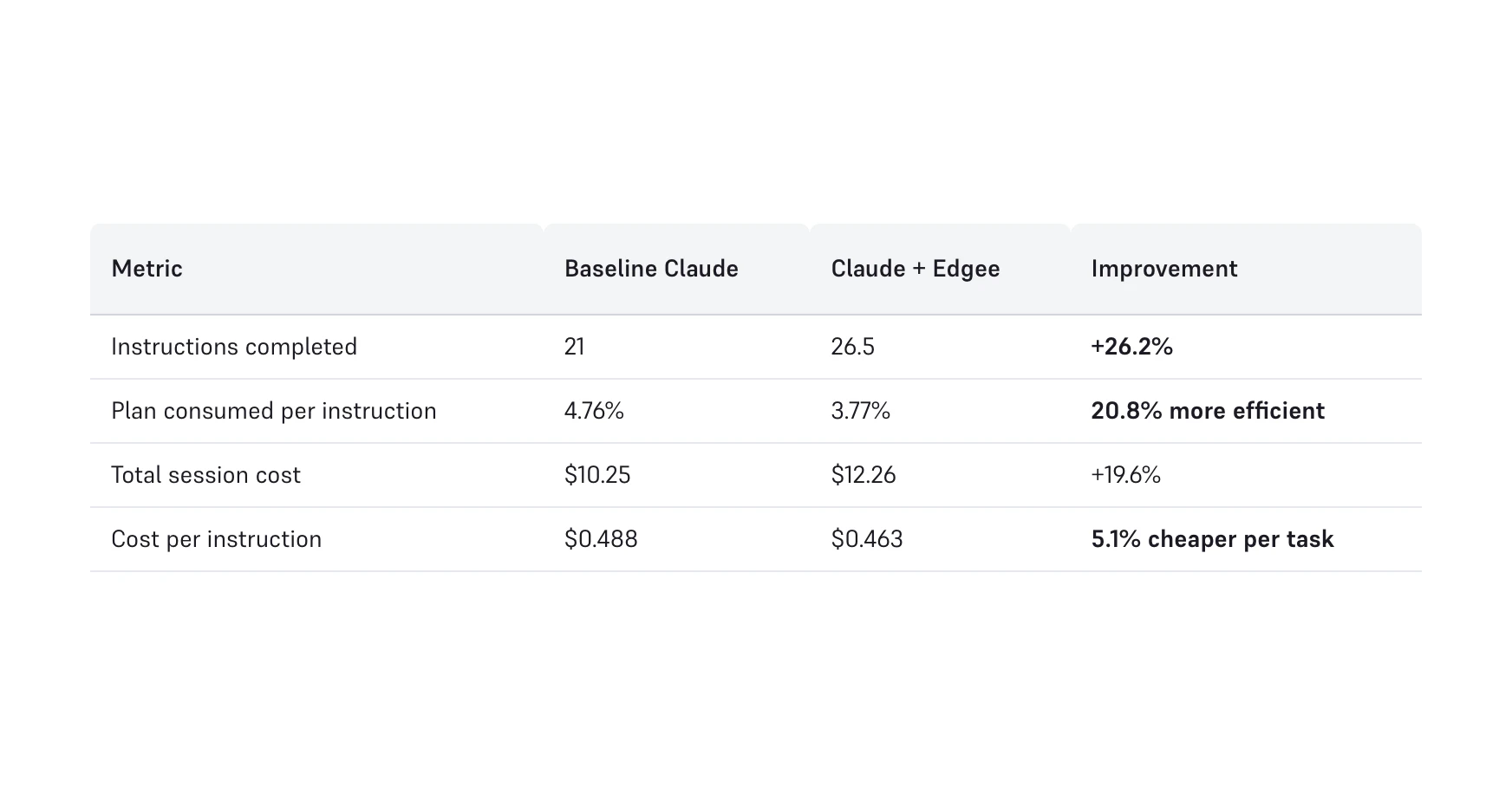
Left side stops at 21 instructions. Right side reaches 26.5.

+26.5% more session before hitting your plan limit.

Here's how it works: Edgee sits between Claude Code and the Anthropic API. Before each request is sent, it strips redundant context, deduplicates instructions, and sends a leaner prompt. Claude sees less noise. You get more range.

To install: curl -fsSL https://install.edgee.ai | bash

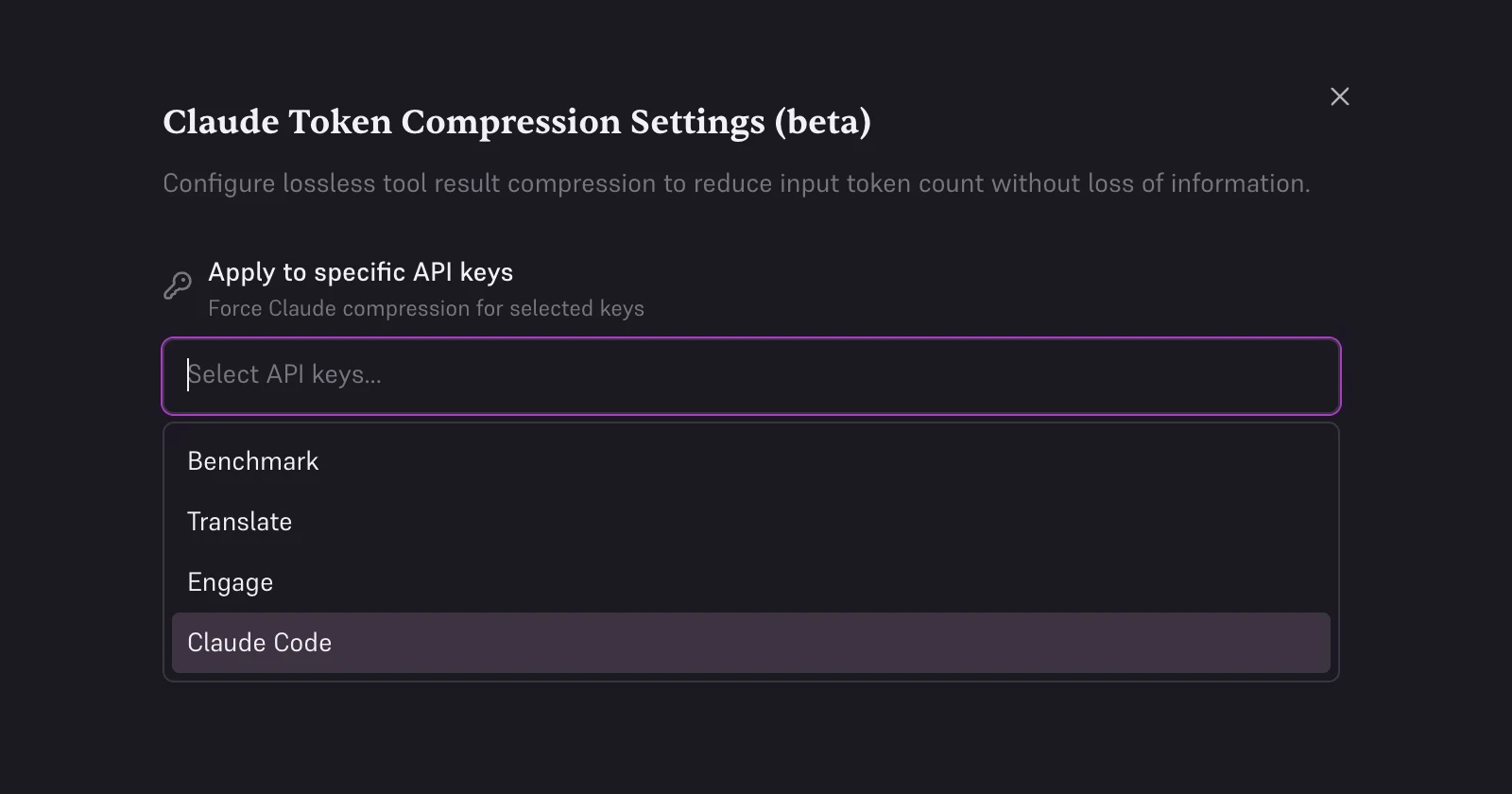
Then: edgee launch claude

That's it. Free. Takes 30 seconds to set up.

If you're a Claude Code user who's hit the plan wall mid-task, this is for you. If you're running Claude on Anthropic's API and watching your token bill grow, this is also for you.

We've been in beta for a few weeks. Today it's out for everyone.

8
回复

neat product - keep up the great work, @sachamorard and team 👏👏

2
回复
@sachamorard does code quality declines??
2
回复

@sachamorard Hey! quick one here. When Edgee strips "redundant context" before sending to the API, how do you guarantee it isn't silently removing something Claude would have used to avoid a wrong assumption three steps later?

0
回复
Congrats. A very clever solution to a black-box problem. I’d be interested in learning more about your business model. Will your service offer a paid plan? That would mitigate the impact of the AI provider’s pricing. Or perhaps you monetize the data, since you act as a middleman, which would make it harder for me to choose a solution like this..
4
回复
@barnabed we do not monetize the data, because we do not store the prompts ! Never, ever ! We offer other services for enterprises, like a compressor for agentic use cases, multi LLM, edge tools, caching…
4
回复
@sachamorard thanks for your answer 👏👏👏
3
回复

More tokens, fewer plan interruptions 🙌

4
回复

@maxwell_timothy Thanks a lot. Don't hesitate to try it, it's 100% free

3
回复

Would be great to see a breakdown or visualization of what’s being removed vs kept. That could help build trust in the compression layer.

3
回复
@nikita_jain18 you’re right. When you finish a Claude session with Edgee, you can access to a dashboard that shows the savings. And if you activate the debug mode, you also have access to the detail of what we optimized.
2
回复

Using Edgee already, really great product.

Super simple idea but actually makes a difference on costs

1
回复
@thierry_abalea We are very proud to have your support, especially coming from an entrepreneur like you who is achieving great things.
0
回复

Super useful in this day and age :) Thanks Sacha and team !

0
回复
#6
Embedful
Easy data visualizations. Embed and share anywhere.
143
一句话介绍:Embedful 是一款让产品团队能快速创建、嵌入并分享交互式数据可视化的工具,它通过连接常见数据源和提供简易编辑器,解决了在用户端呈现分析数据时面临的技术门槛高、成本昂贵和工程复杂的痛点。
Analytics Data & Analytics Data Visualization
嵌入式分析 数据可视化 客户仪表盘 无代码工具 SaaS 交互图表 数据共享 品牌定制 谷歌表格集成 API数据源
用户评论摘要:用户肯定其“以终端用户体验为先”的定位。主要问题集中在:嵌入层的权限控制粒度不足(如用户级数据过滤)、对实时数据更新的支持程度、处理大数据集时的性能、单个嵌入件的密码保护功能,以及对更多数据源(如Firebase、Zapier)和跨源单一可视化的需求。
AI 锐评

Embedful 敏锐地切入了一个增长中的细分市场:客户导向型分析。其真正价值并非技术突破,而是精准的产品定位与取舍。它没有选择与Tableau、Power BI在专业分析领域硬碰硬,而是将“易于嵌入和分享”作为第一性原则,主动降低了能力上限以换取极低的采用门槛。这看似妥协,实则是抓住了大量非技术型产品经理的核心诉求——将数据分析作为一种“产品功能”而非“后台工具”快速交付给最终用户。

然而,这种定位也带来了清晰的局限性。从评论看,其“轻量级”设计正与用户预期的“生产级”需求产生首次碰撞。密码保护仅限仪表盘层级、缺乏用户级数据权限、数据规模受限,这些反馈暴露了其在从“演示友好”迈向“业务就绪”过程中的关键短板。数据安全与权限体系并非锦上添花,而是企业级应用的基石。创始人回复中“在路线图上”的措辞,表明团队已意识到这点,但解决这些问题的复杂度将远超构建可视化编辑器本身。

另一个潜在风险在于其“连接器”生态。当前重度依赖电子表格作为数据中介,虽降低了初期使用难度,但也可能将自身置于数据管道的中下游。当用户需求从“可视化展示”深化为“实时、自动化的数据产品”时,Embedful 需要更强大的原生数据接入与处理能力,否则极易被更完整的平台或内部自建方案所替代。

总之,Embedful 是一款出色的市场探针产品,它验证了客户嵌入式分析需求的广泛存在。但其长期成功,取决于团队能否在保持“简单”灵魂的同时,有节奏地构筑起满足企业级客户所需的深度、安全性与扩展性,完成从“好用的小工具”到“关键业务组件”的艰难跃迁。

查看原始信息
Embedful
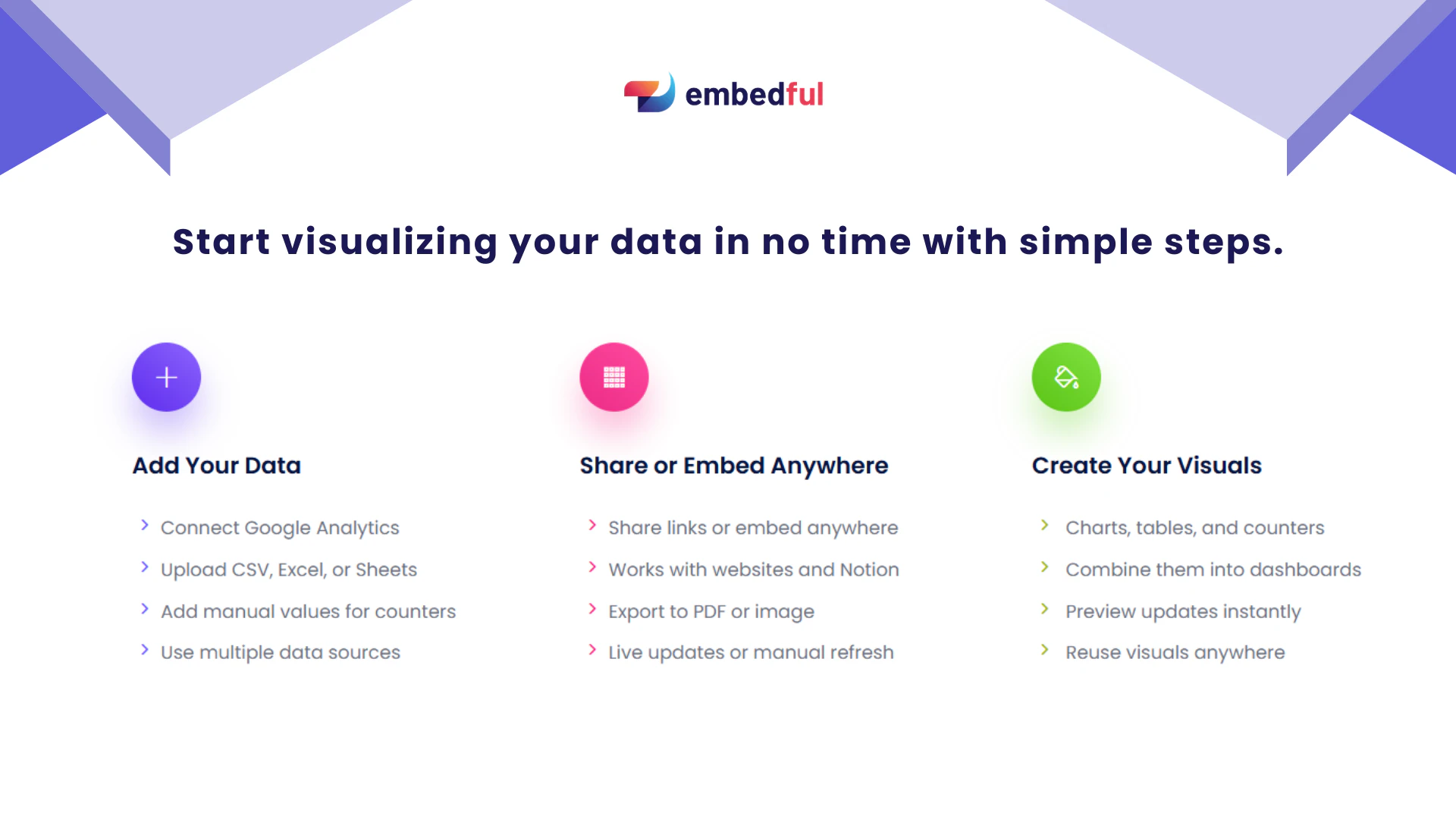
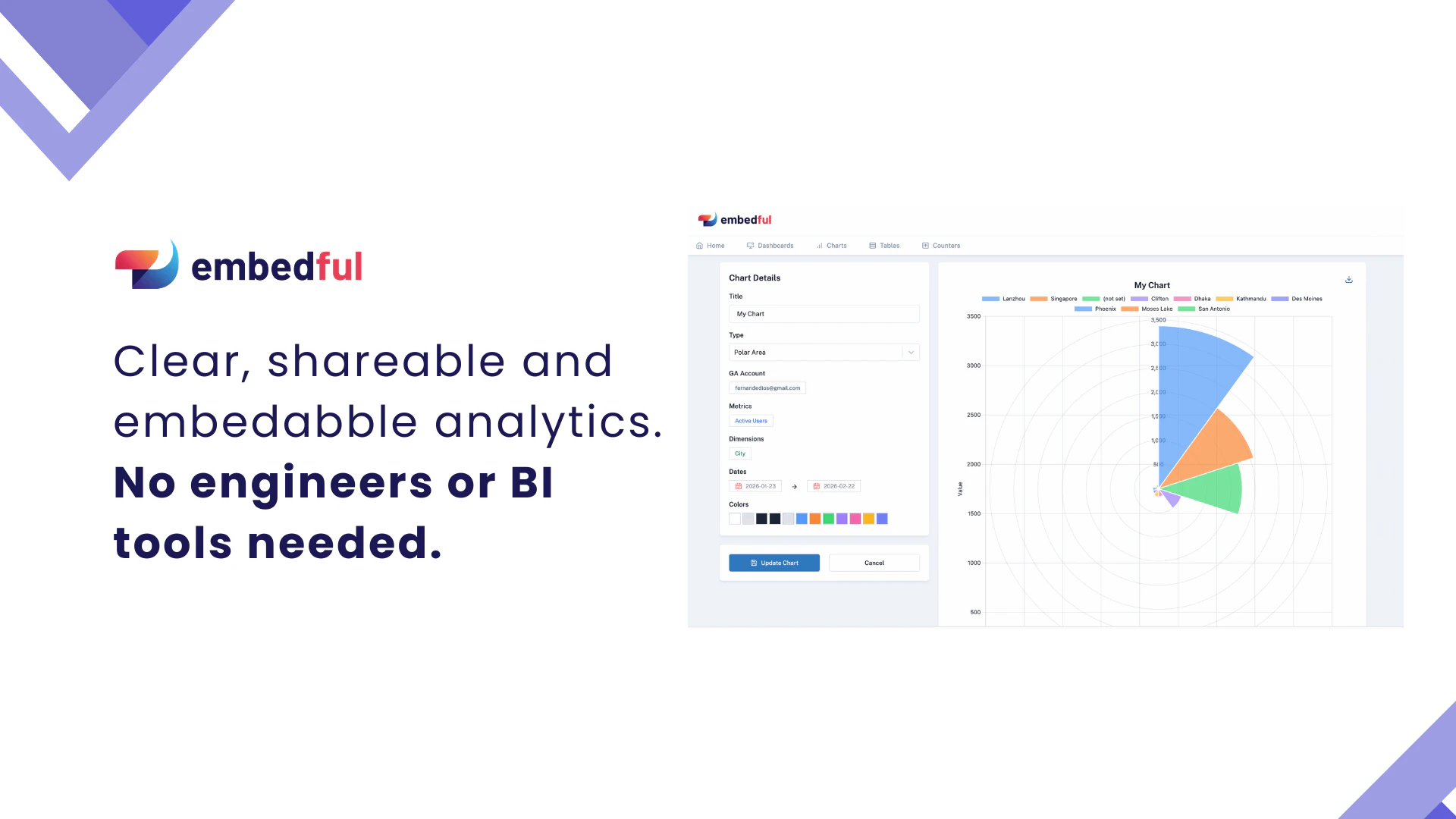
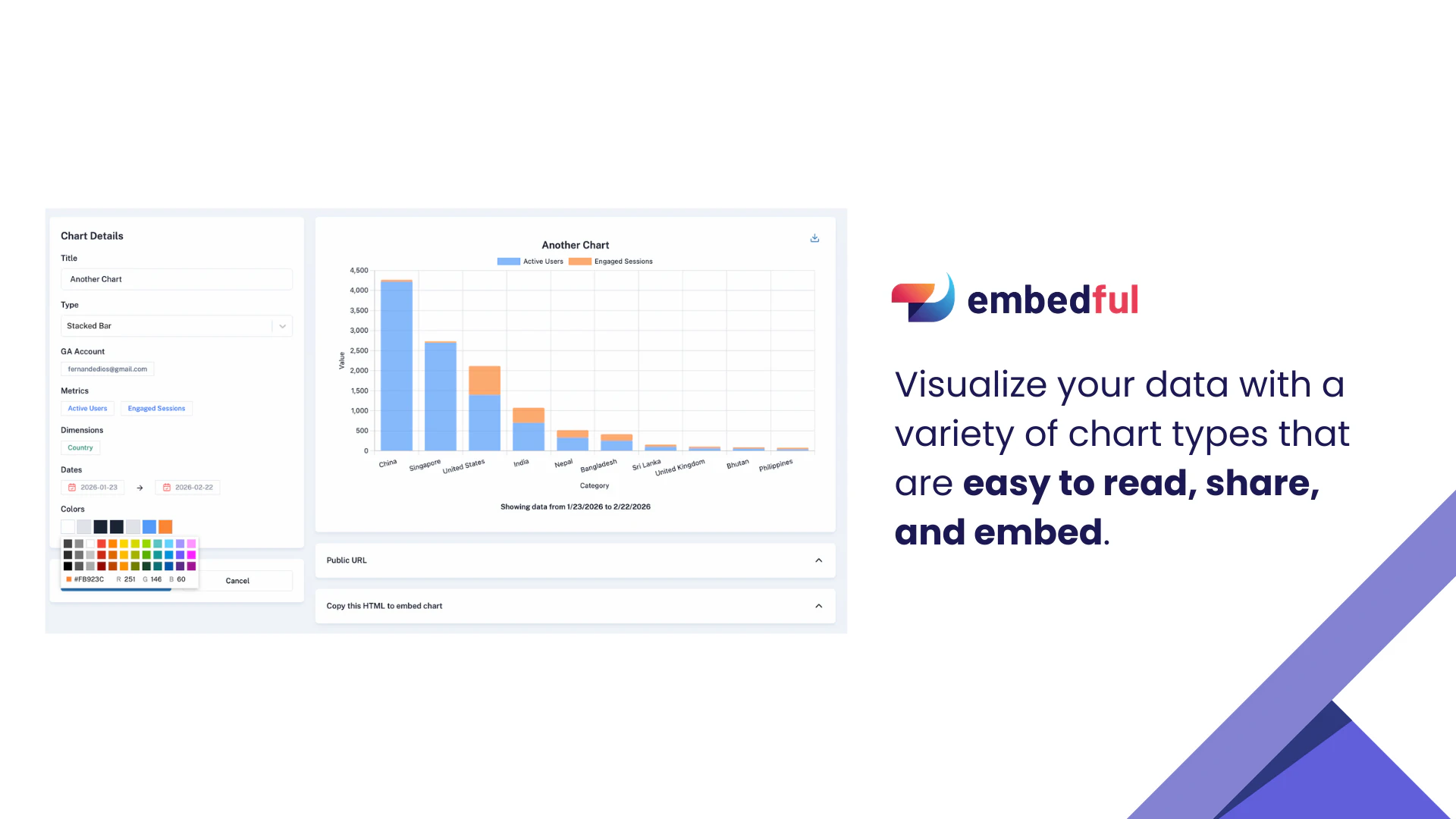
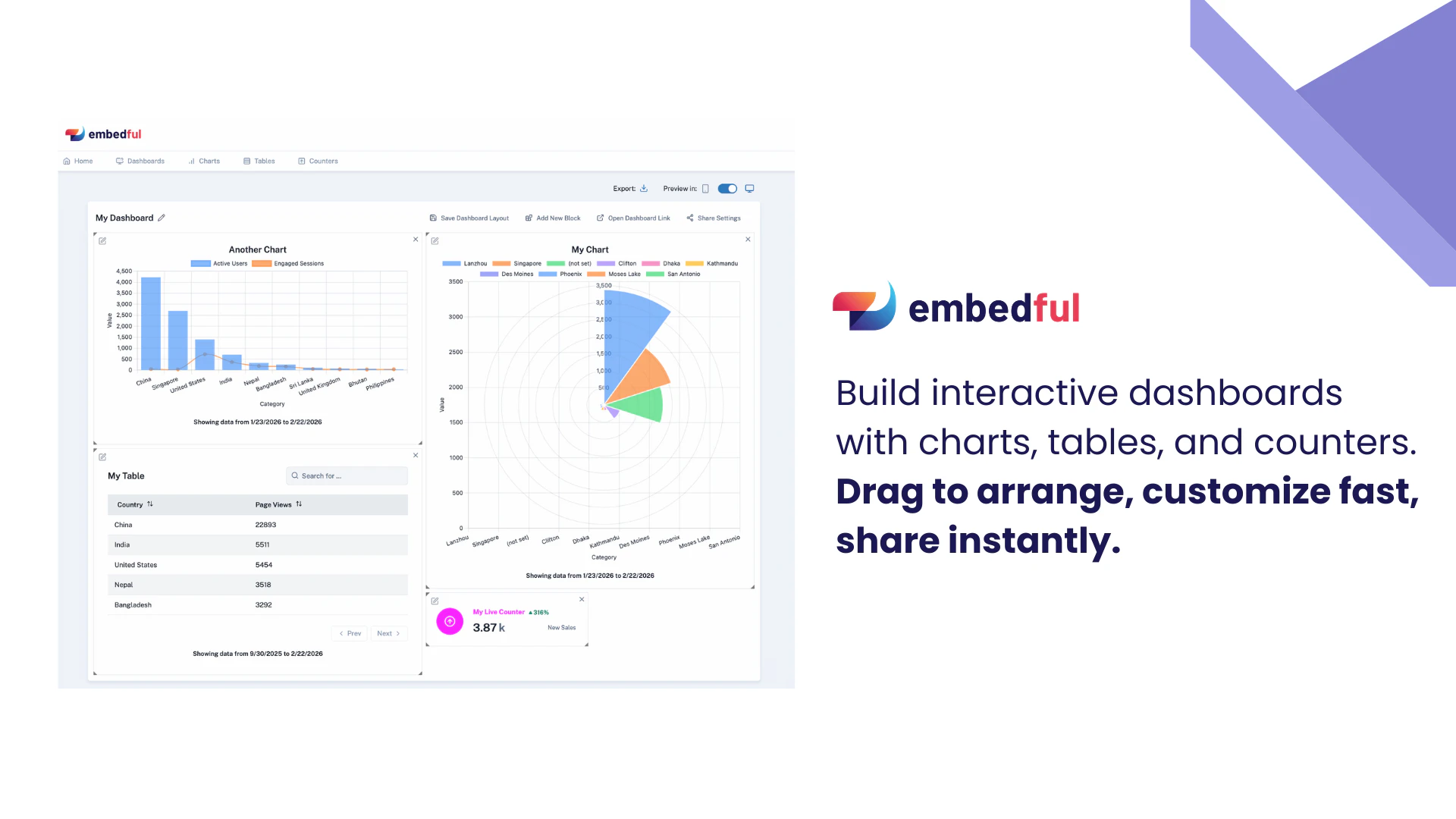
Embedful turns analytics into a feature your customers can see and interact with. Build charts, tables, counters, and dashboards in minutes using Google Analytics, Google Sheets, Excel, CSV files or APIs, and share them instantly. Visualizations are interactive by default, and branding can be tailored with your logo and theme colors. They can then be embedded or shared anywhere, making analytics simple and engaging for every user.

Hello Product Hunt 👋 I'm Fernan, the founder of Embedful.

We created Embedful to solve a common problem product teams face when trying to show analytics to their users. Most existing tools either have a steep learning curve, are too specialized for analysts or developers, are expensive, or require significant engineering work just to embed a chart, table, or dashboard.

Embedful makes customer-facing analytics simple and easy. You can create beautiful, interactive charts, tables, counters, and dashboards in minutes using Google Analytics, Google Sheets, Excel, CSV files and APIs. Everything is fully embeddable and shareable. Even non-technical users can visualize data with a few clicks and customize dashboard layouts with drag-and-drop simplicity.

We built Embedful to be fast, flexible, and product-ready from day one. I'm excited to share it with the Product Hunt community and would love your honest feedback.

I will be here to answer any questions! Thank you in advance!

3
回复

@fernan_de_dios Congratulations on the launch. What's one underrated integration you've seen drive the most value for non-technical PMs embedding analytics, and how does Embedful make it dead simple?

1
回复

@fernan_de_dios When a non-technical user embeds a live dashboard connected to Google Analytics or an API, what prevents them from accidentally exposing sensitive data to end users who shouldn't have access to it?

0
回复

Most analytics tools are built for internal teams. This feels like it’s designed for the end-user experience first, which is a big shift.

3
回复

@maklyen_may Yes, that’s exactly the point we’re going for! More digital products like e-stores, SaaS tools, and client portals now need customer-facing analytics, not just internal dashboards. The end user expects to see data that is clear, accessible, and actually useful to them.

At the same time, embedded analytics are meant to be shared across stakeholders, whether that is clients, partners, or internal teams. But today, teams often end up resorting to sharing analytics credentials or, worse, sending manual screenshots just to communicate insights.

We built Embedful to remove that friction and make sharing analytics feel native, simple, and presentable out of the box.

0
回复

How flexible is the embedding layer? Can teams control permissions, user-level data visibility, or dynamic filtering per user?

2
回复

@kate_sleeman Great question. Right now, the embedding layer is intentionally pretty lightweight and flexible.

At the moment, fine-grained controls like user-level permissions, data visibility, or per-user dynamic filtering are not built into individual embeds yet. Embeds are designed to be easy to share and drop into tools like Notion or websites without much setup.

For access control, dashboards currently support password protection, which is where most teams handle gated sharing today. For individual embed elements, we do not have password protection yet, but it is something we are considering adding if there is strong demand.

The focus so far has been simplicity and speed, but more advanced controls are definitely on the radar as more teams start using embeds in production environments.

0
回复

Congrats on the launch! The embedded analytics angle is smart; most tools make you send users somewhere else to see their data when it should just live inside the product.

With CoreSight, we generate a lot of structured financial output, and the question of how to make it visually digestible without a heavy engineering lift is something we think about. Does Embedful handle data that updates in real time, or is it more suited to static snapshots?

1
回复

@andreitudor14 Thanks, really appreciate the question! Right now, Embedful supports both manual refresh and scheduled automatic updates. You can either trigger a refresh yourself on the platform or set an automatic interval (as frequent as every 15 minutes) so your embedded analytics stay up to date.

That way, your visuals can behave more like near real-time dashboards when needed, while still staying lightweight and easy to manage.

0
回复

The branding customization is a nice touch too; nothing feels worse than sharing insights that lack a cohesive look. Curious, how do you handle performance when embedding large datasets?

1
回复

@trydoff Thanks, happy to hear that! Great question. Right now, we keep things performant by keeping datasets to around 500–1,000 rows per source. This tends to be the sweet spot for both visual clarity and performance, making sure charts stay fast, responsive, and easy to understand.

The goal is to avoid clutter while still giving enough data to be meaningful. If there is growing demand for larger datasets, it is definitely something we can explore and optimize for over time.

0
回复

Congrats! We've been looking for a way to share clean dashboards with investors and partners without giving them access to our internal tools. Does the data refresh in real-time when the source sheet updates, or is there a delay? And can you password-protect individual embeds, not just full dashboards?

1
回复

@ben_gend Thanks, really appreciate it and great use case. For updates, you can either manually refresh on the Embedful platform or set a regular automatic interval. Once refreshed, your embeds update everywhere they are placed, so investors and partners always see the latest version without extra work.

And yes, password-protecting individual embeds is a pretty popular request. Right now, protection is at the dashboard level, but this is something we will definitely bump up on the roadmap based on feedback like this!

0
回复

Does it also allow for creation of a custom dashboard from the shard files or must we edit the sheet columns first before sharing the files?

1
回复

@shemojs Thanks, great question! If I’m understanding correctly, yes, you can create custom dashboards in Embedful. You’re not limited to a single sheet structure or forced to pre-format everything.

You can mix and match visualizations from different spreadsheets within the same dashboard, and arrange them however you want. So you don’t need to strictly edit or standardize columns beforehand unless it helps with your own organization.

0
回复

Congrats on the launch! I've been living in Notion and Google Sheets and knowing I can pull both into one embeddable dashboard is huge! Can you connect multiple data sources to a single visualization?

1
回复

@aya_vlasoff Thanks, really appreciate that! Great question too. Right now, you can bring different data sources together within a single dashboard and visualize them side by side, but combining multiple sources into a single visualization is not supported yet.

That said, it is a great idea and definitely something we can explore as we continue building!

0
回复

Nice tool guys. Does it support Firebase or Firestore as a data source, or only the listed integrations?

1
回复

@denious  Thanks! Right now, Firebase and Firestore are not supported yet as direct data sources. We currently focus on spreadsheet-based inputs like Google Sheets and Excel, as well as APIs that return CSV or other spreadsheet-friendly formats.

That said, Firebase/Firestore support is definitely on our roadmap, along with other integrations we’re actively exploring based on demand.

0
回复

Really like this idea. Being able to update data using just a connected Google sheet is a great time saver. Any way to integrate with zapier?

1
回复

@joe_worrall Thanks! Not yet, but Zapier is on our roadmap along with more integrations with other platforms.

0
回复
#7
Ginger
Practice interviews out loud with realistic AI follow-ups
39
一句话介绍:Ginger是一款AI模拟面试应用,通过让求职者大声进行角色定制的模拟面试,提出动态追问,模拟真实面试压力并提供即时反馈,解决了求职者在传统面试准备中缺乏真实互动和有效反馈的核心痛点。
Hiring Artificial Intelligence Career
AI模拟面试 求职准备 技能提升 面试反馈 自适应追问 行为面试 口语练习 职业发展 人工智能辅导 个性化学习
用户评论摘要:用户普遍认可“大声练习”和“动态追问”的核心价值,认为这能暴露真实弱点。主要问题与建议集中在:追问的领域深度(如技术面试)、数据隐私安全、难度自适应机制的具体实现,以及向创始人路演等场景扩展的可能性。
AI 锐评

Ginger切入了一个拥挤但普遍肤浅的赛道。其宣称的价值并非源于AI本身,而在于对“面试准备”本质的犀利洞察——它挑战了将面试简化为题库背诵的行业现状。产品的真正锋芒在于“动态追问”和“大声回答”这两个反捷径设计。前者试图用算法模拟人类面试官的临场压力与深度探询,将准备重心从“记忆标准答案”扭转为“训练即时思考与结构化表达能力”;后者则粗暴地揭开了内在思考与外在表达之间的残酷落差,这正是多数求职者自我感觉良好却频频失败的隐秘症结。

然而,其面临的挑战同样尖锐。首先,技术层面,“自适应追问”的深度与逼真度是生命线。当前AI能否真正理解专业领域的回答逻辑并进行有意义的深度追问,而非停留在语义关联的层面,这存疑。用户关于技术面试和案例面试的追问即是对此的担忧。其次,商业模式与伦理的平衡。处理高度敏感的求职者音频与职业信息,仅承诺“存储60天”和“数据不共享”在当今环境下显得薄弱,需要构建更透明和坚固的数据治理框架。最后,其“反套路”的哲学既是卖点也可能是增长瓶颈。它服务于真正希望提升能力的“苦练者”,而非寻求速成的“投机者”,这或许会限制其用户基数,但也可能因此构建更高的用户忠诚度和壁垒。

本质上,Ginger的价值不在于又是一个“AI教师”,而在于试图成为一个“AI压力测试器”。它的成功与否,将验证在求职培训领域,“提升真实能力”的产品能否战胜“提供应试技巧”的产品,这比其技术实现更值得关注。

查看原始信息
Ginger
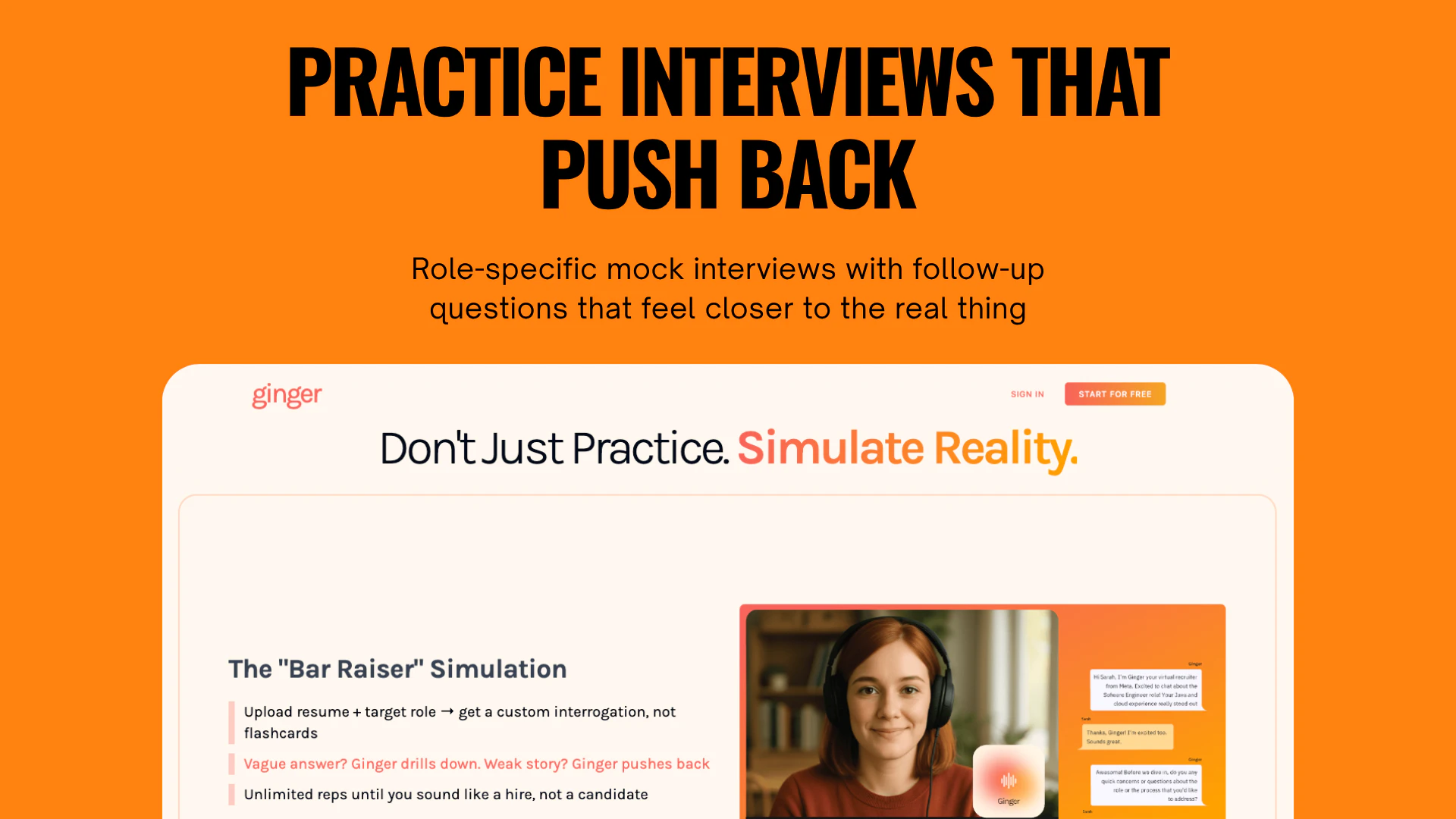
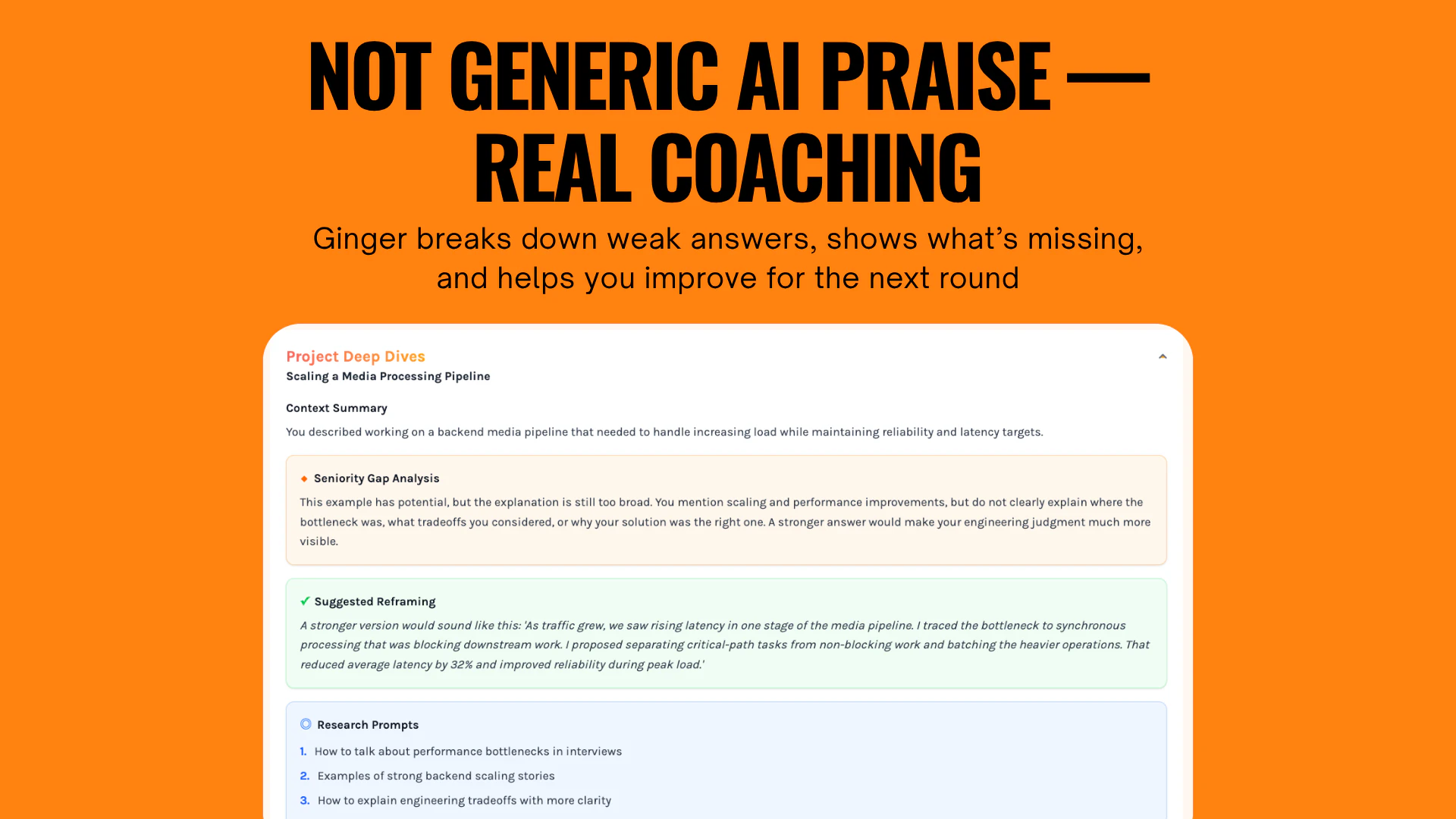
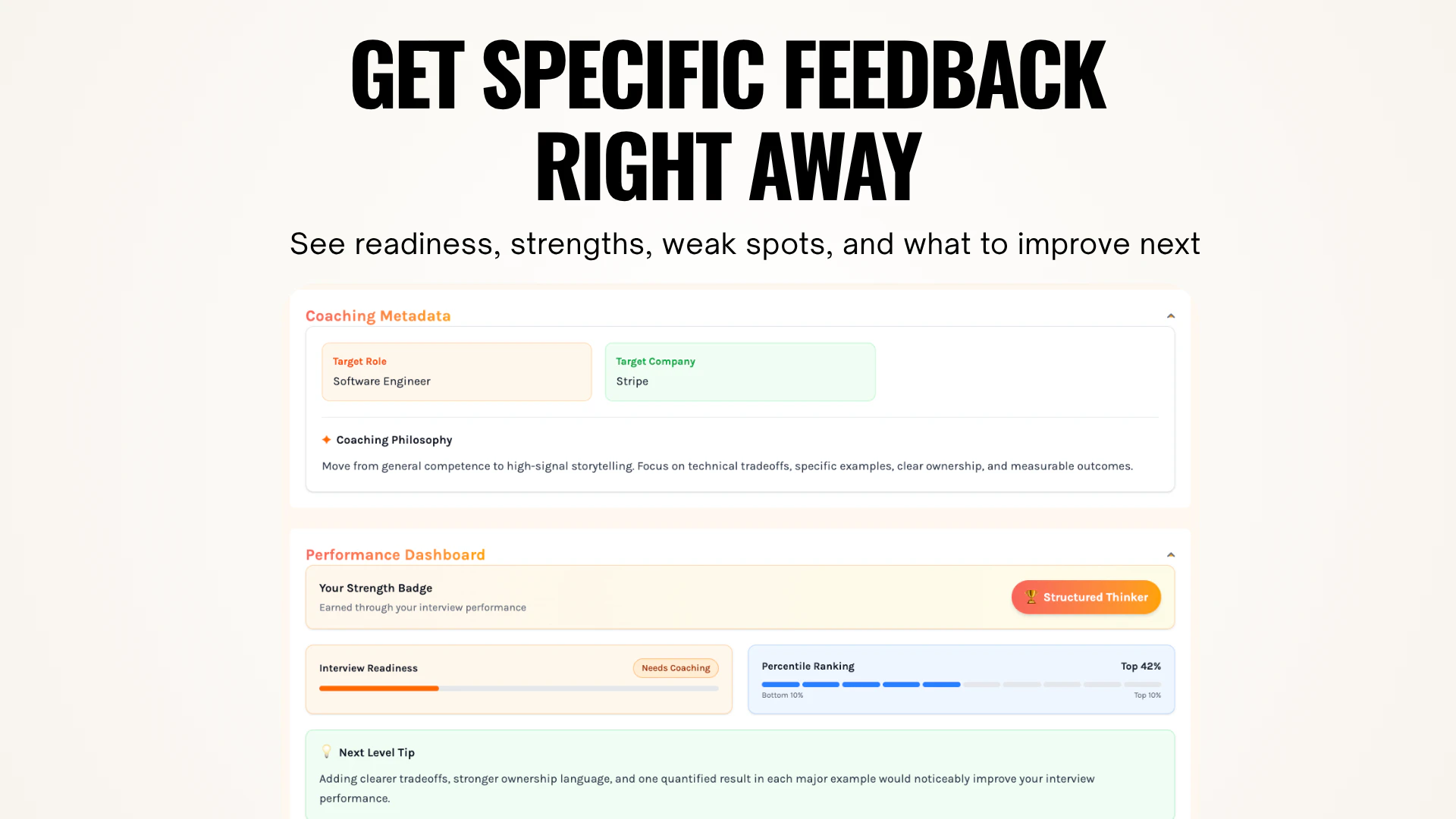
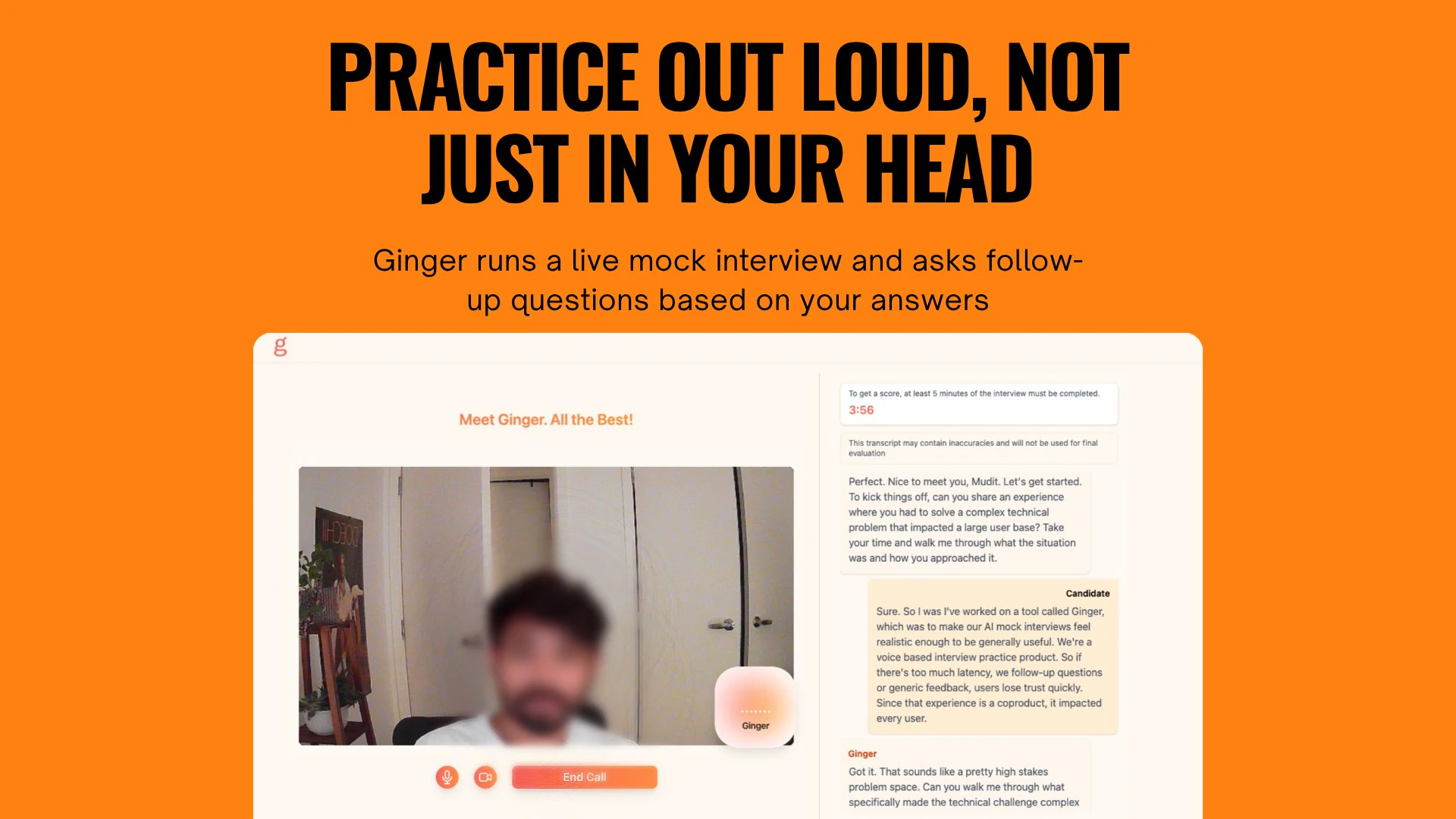
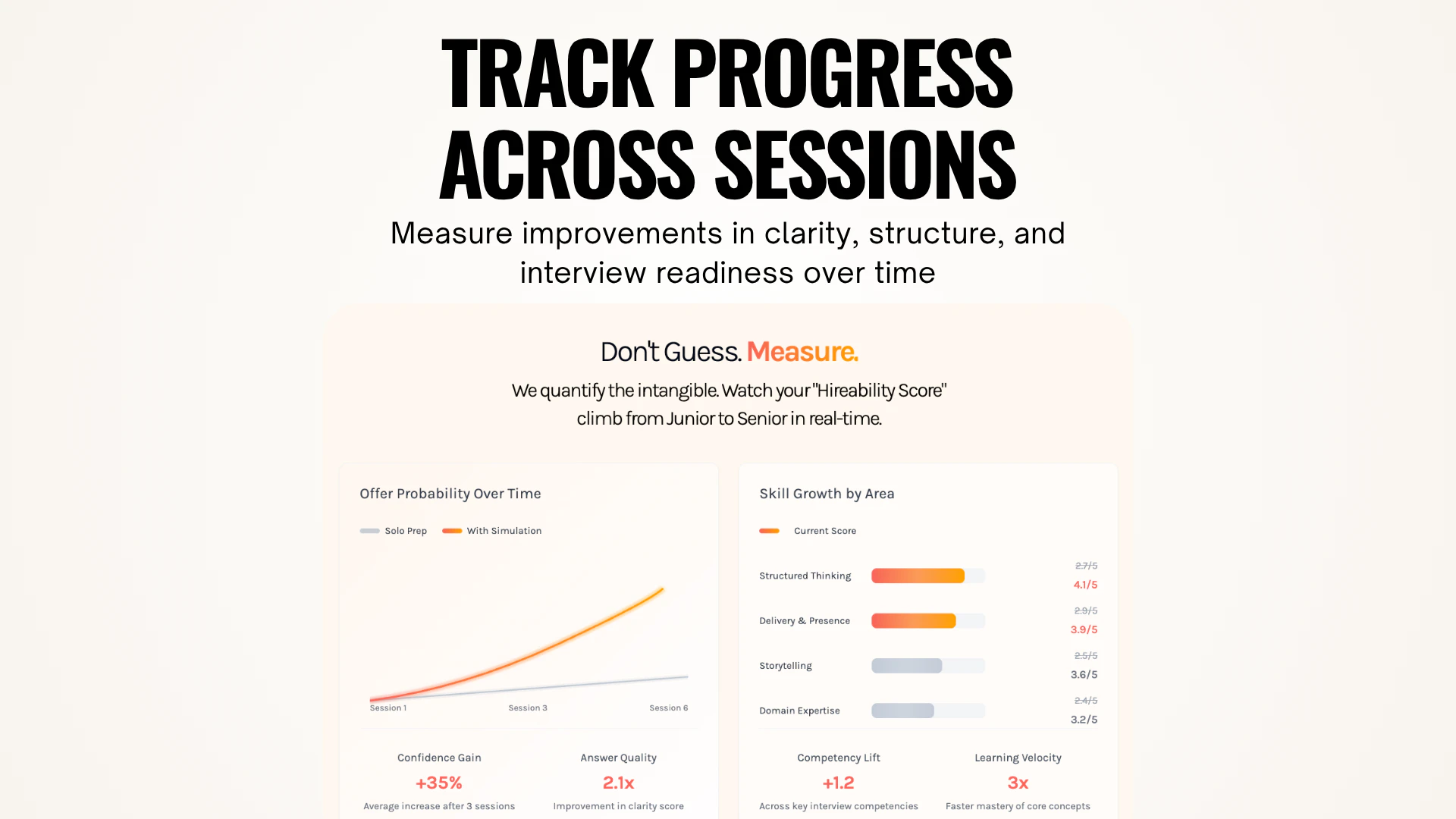
Ginger helps job seekers practice interviews out loud through realistic AI mock interviews tailored to their role. It asks dynamic follow-up questions, simulates real interview pressure, and gives instant feedback on answer quality, clarity, weak spots, and where to improve before the real interview.
Hey Product Hunt! We built Ginger because interview prep is in a weird place right now. There’s more AI, more pressure, and way too many shortcuts that help people “get through” interviews without actually getting better. We wanted to build the opposite of that. Ginger is for real practice. You speak through a mock interview out loud, get pushed with realistic follow-up questions, and then get clear feedback on where your answers are strong, vague, or missing depth. The goal isn’t to feed you perfect lines — it’s to help you think better, communicate better, and perform better in the real interview. If you’re someone who interviews a lot, hires a lot, or has strong opinions on what makes interview prep actually useful, we’d love your feedback.
6
回复

Congratulations on the launch ☺️✨

Super excited for you and everything this is going to grow into! Wishing you tons of success, great momentum, and all the amazing things ahead. Can’t wait to see where this journey takes you.

0
回复

Congratulations on the launch! Very nice idea; will try this out.

3
回复

@lince_mathew thanks lince! Let me know if you have any feedback!

0
回复

@lince_mathew Thanks! Let me know what you think :)

0
回复

The "out loud" part is what separates this from every other interview prep tool. Reading your answers in your head feels fine. Saying them out loud is where you realize they fall apart.

The dynamic follow-up questions are the real value — scripted Q&A practice gives you false confidence because real interviewers never follow the script. Someone who can handle unexpected follow-ups is genuinely better prepared.

Curious whether it adjusts difficulty based on how well you're answering — like if someone nails the first few questions, does it push harder or stay consistent throughout?

Congrats on the launch, this is one of those tools that could genuinely change outcomes for people.

2
回复

@pierrekr7 

Thank you, really appreciate that.

And yes, that’s exactly the idea — the interview should feel dynamic, not like a fixed script.

It does adapt based on how the candidate is answering. If someone is doing well, it can push deeper with more challenging follow-ups, more specificity, or tighter probing around their examples. If they’re struggling, it can stay on the thread a bit more to understand whether the issue is clarity, depth, or actual experience.

That adaptive flow is a big part of what makes the practice feel more real and, hopefully, more useful.

0
回复

Congrats on the product and the launch! This is super useful, especially considering the number of layoffs from the last couple of months.

Does it only tackle questions related to the job description, or does it also help you prep for the other parts of the interview (questions that are more related to your work vibes, style, preferences, or other complementary questions that come up besides the ones related to the job specs)?

2
回复

@ruxandra_mazilu 

thank you!

It digs deeper into both technical and behavioral questions, so it’s not limited to just the job description. That also includes areas like work style, communication, collaboration, and other traits or skills that matter for actually doing the job well.

The goal is to make it feel closer to a real interview, where you’re being assessed not just on match to the role, but also on how you think, communicate, and work.

0
回复

Congrats on the launch! The follow-up questions are what make this genuinely useful; most interview prep tools let you get away with vague answers because they never push back.

Curious how it handles role-specific depth, like technical or case interview formats, where the follow-ups need domain knowledge to be realistic?

2
回复

@andreitudor14 yeah, great question.

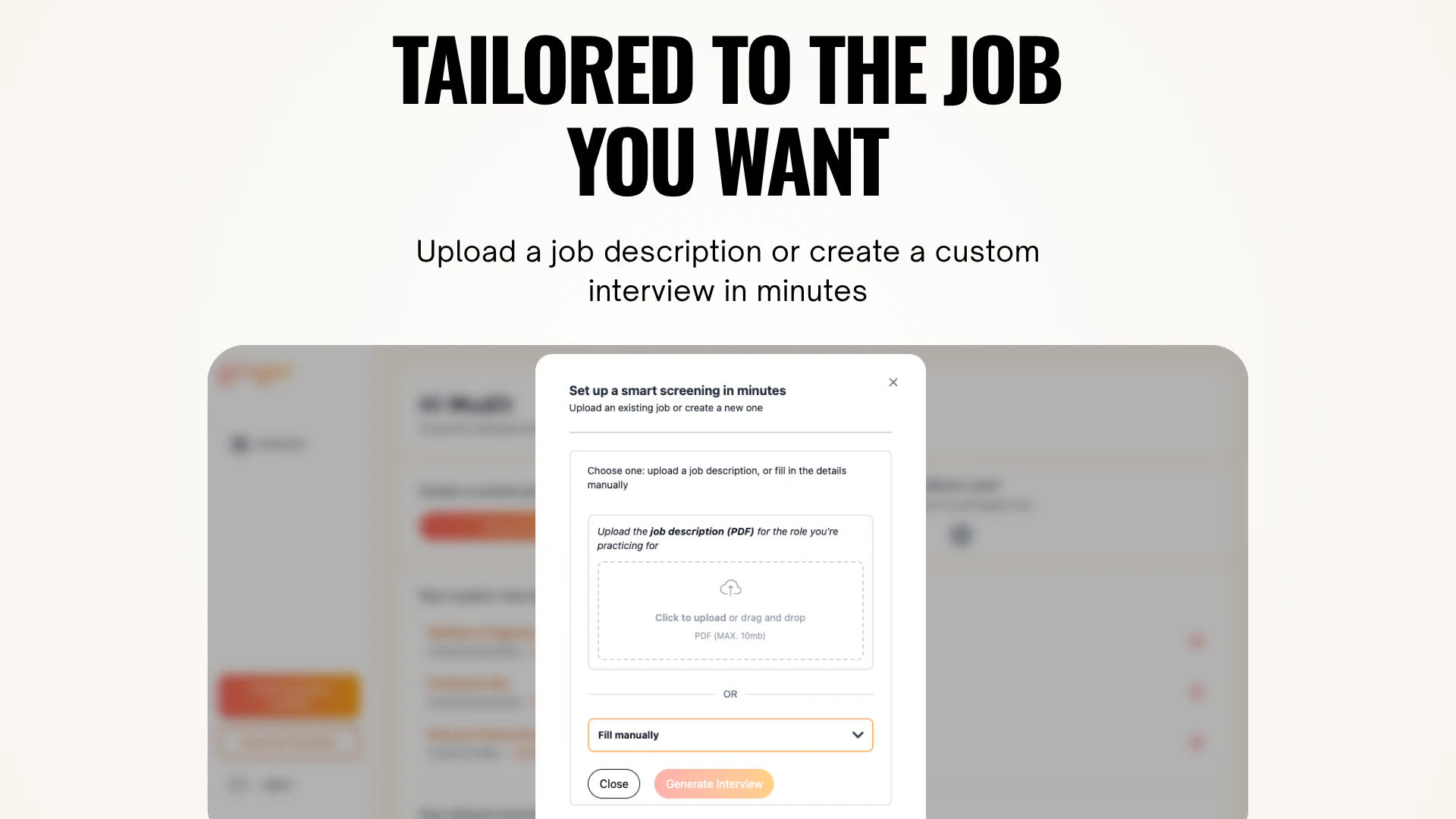
I think this is one of the main advantages of an AI screener. It uses the uploaded job description and candidate resume to understand the relevant context and tailor the interview accordingly.

It then probes deeper with follow-up questions that are specific to the role, so the interview feels much closer to a real screening environment.


For example, for an Amazon SDE behavioral interview, it can dig deeper into examples to assess how the candidate demonstrates Amazon’s 14 Leadership Principles.

0
回复

Congrats for the launch. I think most AI interview tools optimize for sounding good rather than actually being good.

One question: where does the audio and transcript data live? When someone is practicing answers about their weaknesses or salary expectations, that's pretty sensitive stuff. Is it processed locally or sent to a cloud API?

2
回复
@krisba95 thanks Christian! Good question We do not ask questions like salary expectations during the interview yet and we store the data for 60 days on a cloud. It’s not shared with anyone. We also redact sensitive information before feeding it into any model for processing.
1
回复

the follow-up questions are the hard part to get right - most interview prep tools just give you a static answer rating but real interviews are adversarial. the dynamic follow-up is what makes you actually think on your feet. does it adjust difficulty based on how you answer or is it the same question tree regardless?

2
回复

@mykola_kondratiukIt adapts based on both what you say and how you say it. If your initial answer is deep and well thought out, it asks fewer follow-ups — if it’s shallow, it digs deeper. It is meant to challenge you.

0
回复

The point about tools that help people "get through" interviews without actually getting better is a meaningful distinction - that's the core problem with a lot of AI interview prep out there. Practicing out loud is the most neglected part of real prep since most people rehearse in their heads and never hear where their answers actually fall apart. @shraddha_sunil have you noticed particular types of follow-up questions that candidates tend to struggle with most when they're practicing out loud?

2
回复

@Marcelo Farr

100%. The hardest follow-ups are the ones that break the script:
“Why that approach?”
“What would fail?”
“What would you do differently?”

0
回复

Sounds nice!
Love that you focus on getting better rather than memorizing scripts. Have you thought about expanding beyond job interviews? Like pitch practice for founders or networking conversations? Feels like the same muscle.

2
回复

@yotam_dahan Have certainly thought about it. Is that something that you'd find useful?

0
回复

As someone who interviews people fairly often, the gap between someone who memorized answers and someone who actually thinks well under pressure is immediately obvious. Curious what patterns you noticed in the feedback that surprised you most during testing?

1
回复

@jared_salois 

People think they’re being clear, but out loud they’re much more vague than they realize.

The detailed evaluation at the end helps break that down — what was missing, how to structure it better (STAR, etc.), and where the answer didn’t land.

Overall feedback has been that it makes people much more aware of how they actually come across, not just what they think they’re saying.

1
回复
#8
ClearWork App
Clear Vision. Clear Work. AI Powered Project Management.
34
一句话介绍:一款面向科技和设计机构的AI驱动项目管理工具,通过为每个客户提供独立工作区,集中管理需求、反馈、审批和支付,解决了多客户项目管理中沟通分散、需求蔓延和进度不透明的核心痛点。
Productivity Task Management SaaS
AI项目管理 SaaS 科技机构 设计工作室 客户协作 范围蔓延预警 工作区 产品管理 B端工具
用户评论摘要:用户认可其解决的真实痛点,并关注集成能力(如Slack、Figma)、客户采用阻力、具体功能细节(如反馈收集、审批流程)以及如何吸引低频客户持续参与平台。
AI 锐评

ClearWork瞄准了一个精准且棘手的缝隙市场:中小型科技与设计机构。其宣称的“AI驱动”在现有信息中略显单薄,核心价值实则在于“强制归一化”的产品设计哲学——通过“一个客户一个工作区”的刚性结构,对抗根深蒂固的、以WhatsApp和邮件为主导的碎片化协作习惯。这与其说是一个技术胜利,不如说是一次组织行为学的干预。

产品真正的挑战与价值,在评论中被一针见血地指出:不在于功能本身,而在于如何改变客户行为。创始人承认初期仍需手动迁移信息,这暴露了从非结构化沟通(即时通讯)向结构化平台迁移的“最后一公里”悖论。工具能提供秩序,但秩序的前提是所有人自愿进入“围栏”。ClearWork的成败关键,在于其“客户价值主张”是否足够强大,能说服客户放弃随性的WhatsApp,转而登录一个更具约束性的平台进行反馈与审批。其“范围蔓延预警”功能是潜在的杀手锏,因为它将模糊的沟通成本转化为可视化的项目风险,直接触动了机构利润的核心神经。

然而,其定位也隐含风险:在“轻量级Trello”与“重量级Jira”之间寻找平衡点,意味着要在灵活性与管控力之间走钢丝。过度结构化会吓跑追求速度的小团队,而过于灵活则无法解决其承诺的“混乱”问题。目前的路线图显示其正通过集成(GitHub, Figma等)试图融入现有工作流,这是明智的生存策略,但如何让集成点成为吸引客户进入其主平台的入口,而非让用户继续停留在原有工具中,将是下一个考验。它不是一个颠覆者,而是一个试图在混乱生态中建立秩序的“整合者”,其成功高度依赖于能否在机构内部自上而下地推行,并让终端客户感受到“被清晰管理”带来的安心感,而非不便。

查看原始信息
ClearWork App
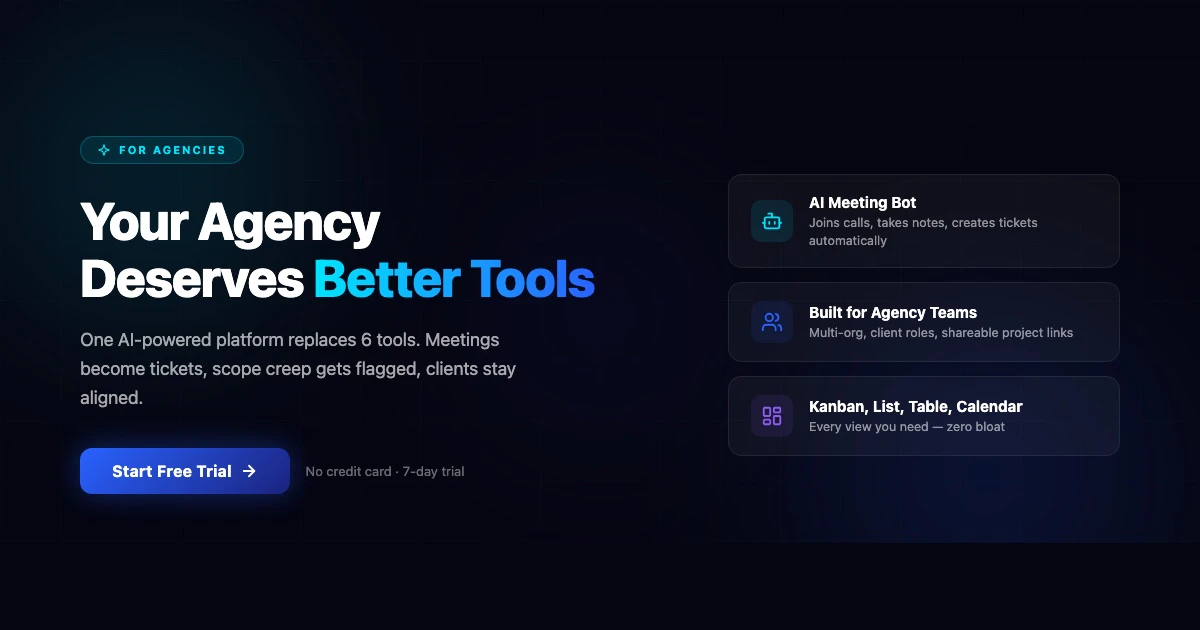
Running a tech agency or design studio means juggling clients, projects, and deadlines all at once. Briefs get lost in email. Feedback gets buried in WhatsApp. Scope creeps in silently. ClearWork fixes that. Product spec convert to tickets automatically, scope creep gets flagged early, and clients stay aligned - all in one workspace. Less chaos. More shipping. Try free for 7 days.
Hey PH! 👋 I'll be honest - this was born out of frustration. Tech agencies and design studios are running client projects worth lakhs on WhatsApp threads, email chains, and a shared Google Sheet nobody trusts anymore. The developer is waiting for feedback that's buried in a 200-message WhatsApp group. The designer sent 3 versions and has no idea which one the client approved. The owner doesn't know which projects are on track and which are quietly on fire. The tools they reach for are either too simple (Trello) or too heavy (Jira, Asana). Nothing is built for a 5–20 person agency managing multiple clients at once. So we built that! One workspace per client. Briefs, feedback, approvals, milestones, and payments - all in one place. No more "can you resend that file?" No more chasing clients on WhatsApp. If you run a tech agency or design studio - I'd love your feedback. Especially the brutal kind. What's the one thing holding you back from dropping your current setup today? 👇
10
回复

Looks solid, but I'd love to see more integrations with commonly used tools like Slack and Figma.

1
回复

@trydoff Yes! That's in the process right now. GitHub integration is complete already. We are working on integration with GitLab, Slack, Figma, Jira, Trello and Discord as of now.

0
回复

This looks awesome @jnchirag! What all sources can I get feedback into this platform from?

1
回复

@jnchirag Congrats on the launch, Chirag — this is a very real problem, especially the WhatsApp + email chaos.

One thing I’ve seen with agencies is that even when better tools exist, the biggest friction isn’t features — it’s client behavior.

Clients still default to WhatsApp, scattered feedback, and informal approvals.

Curious — how are you thinking about handling that transition layer?

Because that’s usually where adoption either works really well… or completely breaks.

1
回复

@arpit_r Great point! And the sad reality is, it's pretty hard to use existing communication channels and capture such nuances. Fetching information out of a WhatsApp group isn't easy, reading user's emails requires CASA verification (and a lot of trust). Hence, that has to flow using a manual process as of now.

Though based on our early user feedback, if the clients find a value proposition for them, they would be willing to communicate their thoughts better on the platform instead.

0
回复

The struggle is so real! How does the client-facing side work exactly - do clients get their own login to leave feedback, or is it more like a shared link they can comment on?

1
回复

@ben_gend We have implemented it using client's login. Though those logins don't count in your quota. We didn't plan to use shared links since they get lost easily.

0
回复

Congrats on this launch! The scope creep flagging is what stands out so much for me. This is usually the thing that kills timelines and client relationships before anyone even notices its happening. Having one workspace per client instead of scattered WhatsApp threads and emails chains is how you actually run a clean operation. How does the client approval flow work? Can clients review and sign off directly inside the platform?

1
回复

@simonk123 Yes correct! Client actions happen inside the platform itself.

0
回复

Love this, finally solving a problem everyone just tolerates. Clean and needed 👏

1
回复

@relacosm Yeah definitely! I hope it helps you as well.

0
回复

How do you handle users who only show up when they're nudged? Clients who aren't in the tool daily seem like the hardest retention problem, curious whether you rely mostly on email notifications to bring them back or if there's something built into the product itself that creates a reason to return.

0
回复
#9
Montty Finance
Make CFO-level decisions in seconds
25
一句话介绍:一款集成AI助手的综合性财务平台,旨在帮助小型企业主和非财务专业人士,通过自然语言对话和自动化数据整合,快速获得定制化的财务洞察与预测,解决手动记账低效和财务决策门槛高的痛点。
Fintech Artificial Intelligence Finance
中小企业财务 AI财务助手 自动化记账 财务决策平台 自然语言交互 数据洞察 业财一体化 SaaS 金融科技 CFO工具
用户评论摘要:用户肯定其品牌设计和AI对话的易用性,核心建议集中在银行/Plaid集成、与QuickBooks/Xero等巨头的差异化竞争、以及AI功能的深度(如异常主动预警、预测置信区间、上下文记忆和动态模型构建)。另有反馈指出其核心价值功能(如AI CFO对话)在宣传中展示不足。
AI 锐评

Montty Finance 精准切入了一个广阔而真实的缝隙市场:为财务知识有限、依赖手工劳作的小企业主提供“CFO级”决策支持。其“三位一体”(整体、以人为本、个性化)的理念颇具吸引力,尤其是将自然语言作为交互核心,试图将财务从一门晦涩的专业语言转变为平实的对话,这直击了目标用户的心理和技能壁垒。

然而,Product Hunt社区的反馈犹如一盆清醒的冷水,揭示了其从“有趣demo”迈向“可靠工具”的艰难爬坡。首先,**数据生态是命门**。缺乏与银行、支付工具的深度原生集成,意味着仍无法完全解放用户于手工录入,这与“减轻财务工作量”的核心承诺相悖。团队对Plaid的考虑是正确但基础的第一步。其次,**AI深度的质疑**是本质挑战。评论尖锐地指出了“反应式”与“预见式”智能的区别、预测的“虚假精确”风险、以及AI模型是基于通用模板还是动态构建——这些问题决定了产品提供的是“玩具级安慰”还是“军规级洞察”。官方回复承认部分功能(如置信区间)尚属空白,这暴露了其AI成熟度与营销口号之间的差距。

最后,**竞争定位略显天真**。在已有QuickBooks、Xero等巨头且它们均已注入AI功能的红海市场中,Montty的“一体化”和“对话式”优势能保持多久的窗口期?评论建议的“集成现有工具”或许比“全面替代”更为务实。总体而言,Montty构想了一个迷人的未来,但其真正的考验在于:能否将“人性化”的交互前端,与“专业化”的财务逻辑后端深度融合,并构建起足够深的数据护城河。否则,它可能只是一个体验更友好的财务仪表盘,而非革命性的决策引擎。

查看原始信息
Montty Finance
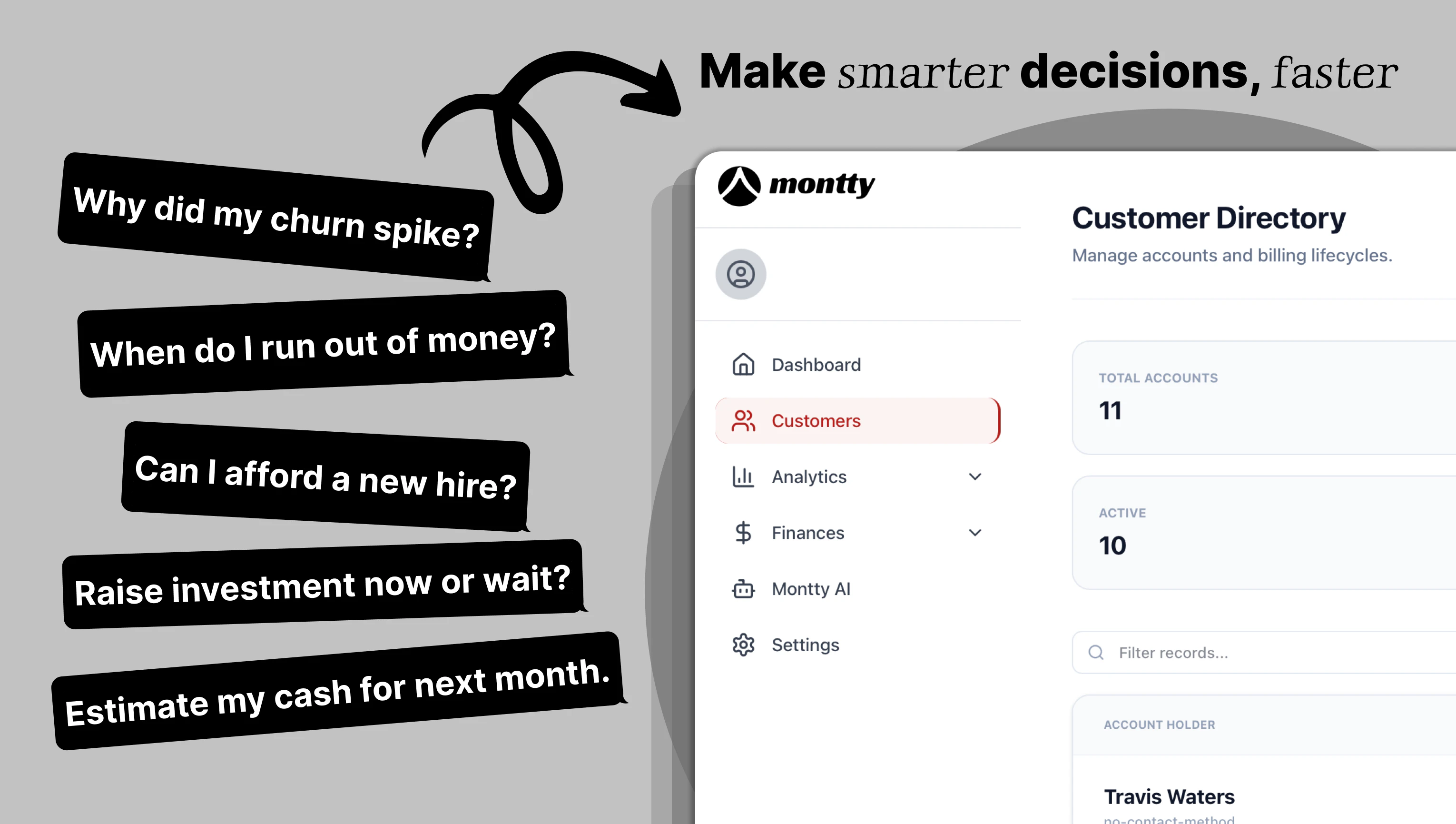
Our mission is to reduce financial workload and make finance clear and easy. Montty is built on three principles: holistic, human-centered, and personal. We bring multiple financial functions into one platform, offer an AI assistant that talks in natural language, and deliver insights tailored to your own data. From AI receipt capture to seamless imports, Montty gives you accounting and intelligence together, all tailored to you.
A few months ago, I noticed that the local businesses around me were logging every piece of data by hand. They weren't tracking their numbers or analyzing them for growth. That got me thinking: such powerful data has so much potential to be used as fuel for growing their businesses. I also noticed that a lot of these people weren't very financially literate. Without the help of an advisor, they couldn't really benefit from their own data. And that's how Montty was born. We wanted to get it to you as soon as possible, so we hope you enjoy this demo version and stay tuned for more. I'm here to answer all your questions. Montty stands on three principles: holistic, human-centered, and personal. We make finance holistic by bringing multiple financial functions together in one platform. No more juggling between disconnected tools. We make it human-centered with an AI assistant that talks to you in natural language. Finance becomes conversational and intuitive, not just for accountants but for everyone. And we make it personal by analyzing your unique business data to deliver tailored forecasts and insights. Every business gets an experience built around its own numbers. Feel free to discover and ask us anything!
8
回复

@melike_kaya Such great enthusiasm, this idea is truly inspiring💥

0
回复

Congrats on the launch! The logo and branding are very slick and well-done. The AI Chatbot is also really helpful in smoothening the struggles of a business owner that cant manage all at once. I wonder whether you are planning any bank integrations? E.g., a smb owner should be able to connect their account directly rather than having to log their own expenses or income. Maybe this can make the product more native and fluent for many.

2
回复

@36krzbrg Thanks. We recently considered Plaid and are looking forward to working with them. It is kind of the go-to for fintech products atm

0
回复

The insight about local business owners logging data manually without knowing what to do with it is spot on - there's a massive gap between data collection and actual financial decision-making for small businesses. Making finance conversational through natural language queries removes a real barrier for founders who aren't accountants but still need to understand their runway and cash flow. @melikekaya what's the most common financial question you're seeing small business owners ask Montty first when they start using it?

1
回复

@marcelo_farr The group of local business owners we have as early testers was initially shocked at the receipt capture feature as they were logging all data by hand one by one, haha :D

I think the primary focus was on killing the pain of this manual labour for them.

Besides this, the usual interest seems to be around edge cases, where users try to mess around with the AI assistant to see if it will fold under confusing financial dilemmas. It is very interesting to see the feedback we are getting from the chatbot! Thanks for this question!

0
回复

It’s been an incredible journey working alongside this visionary team to turn financial chaos into smart solutions! ⚡️

While focusing on Montty’s strategic growth and product vision, we’ve witnessed firsthand how to leave the clunkiness of traditional banking behind and transform data into real fuel. Finance is no longer just about security; it’s now holistic, personal, and human-centered.

What do you think is the biggest gap in modern finance? Looking forward to starting the conversation in the comments! 👇

1
回复

The flow is very well taught. Adding customers has been made easy with multiple methods. But i think the crucial mistake for you could be positioning the app against really popular apps like xero and quickbooks as they already started ai support. also they are really cheap. Maybe try to find a way to integrate to tools people already use. Very good work overall, congrats.

1
回复

@shady_broker I talked about this recently with my team too, and yes, I do think it is a very good market size but the trade-off is there are a lot of well-established players. Xero and Intuit have different requirements for how you read data but for an upgraded version of Montty, utilizing both of them for leveraged speed in workflow shall be considered. Thanks for the insights. I assume you are in this niche, or are around people who use such tools?

0
回复

If a user's expense pattern suddenly spikes in one category
say payroll doubles in a month
does Montty proactively flag that as an anomaly, or does it only surface insights when the user asks? The difference between reactive and proactive intelligence is huge for your core use case.

1
回复

Congrats on the launch! The observation about local businesses logging data by hand but not actually using it for decisions is exactly the right problem to start from.

Curious how Montty handles businesses with very inconsistent data, gaps in records, irregular revenue. That's usually where CFO-level insights break down fastest. With CoreSight, we deal with something similar when SEC data is incomplete for smaller companies.

0
回复

Congratulations,@melike_kaya. The tagline (Finance for Founders, No Accounting Degree) is a great hook for founders.

I analyzed the homepage and saw something worth mentioning.

You have a freemium plan and a Pro plan with a special offer for PH. That's awesome.

But this is what grabbed my attention. The pricing section is clear... but the value of what founders actually get is buried. "Chat with your AI CFO" and "financial health score" are your strongest features. They tell a founder what they really get: peace of mind. Right now those features are listed under "what's coming."

And a founder scrolling might think it's not ready yet.


So I suggest you to move those up. Let them see the real value before they hit pricing.


Took a screenshot to show what I mean and attached below.

0
回复

When a founder asks 'can I afford a new hire' is the AI pulling from a pre-built financial model template in the background, or is it dynamically constructing the logic from the user's own uploaded data each time? Because those two architectures have very different accuracy ceilings.

0
回复

When Montty gives a forecast, does it surface any confidence interval or uncertainty range like 'your runway is 14 months, but could be 11-17 depending on churn variance'? Or is it always a single point estimate? Because a false precision problem could seriously mislead a founder.

0
回复

@isjiwnani Hey, great question. I understand why this would be a matter of concern. There is no built-in framework to calculate runway with an added buffer or to anticipate higher or lower churn rates, but it can certainly be added for better foresight. The demo version currently uses anticipated cash flow, not churn.

Thanks for the idea!

0
回复

Does the AI CFO retain context across sessions like if I told it last week that I'm planning a fundraise in Q3, does it factor that into this week's runway answer? Or does each conversation start cold?

0
回复

@weebinsider Actually, no convo starts cold, as it is always based on your personal conditions and current data at hand. But the bot has a clear memory of previous financial concerns and goals, and can deliver a cogent roadmap on a recent question, with prior insights being a coefficient on the verdict.

0
回复

When a founder asks whether they can afford a new hire, is the AI pulling from a pre-built financial model template in the background, or is it dynamically constructing the logic from the user's own uploaded data each time? Because those two architectures have very different accuracy ceilings

0
回复

@ritesh_bhakare1 Thank you for your question—it's a very interesting one. AI systems are guided by established safety frameworks, which ensure that responses are grounded in the specific context and inputs provided by the user. At the same time, they take into account widely accepted practices within the relevant domain.

As a result, each response is tailored to the individual query rather than drawn from a fixed or prewritten source. Instead, the system relies on a structured approach to generate clear, relevant, and thoughtful answers.

2
回复
#10
Holdor – Stop your Agents from sleeping
Your Mac stays awake. Sleep is for humans, not agents.
21
一句话介绍:一款免费开源的 macOS 菜单栏应用,能在运行 Claude、Cursor 等 AI 编程助手时阻止系统休眠,解决了用户因锁屏或合盖导致 AI 任务中断、不得不物理携带电脑的痛点。
Productivity Open Source GitHub Menu Bar Apps
生产力工具 macOS 实用程序 防休眠 AI 助手伴侣 开源软件 菜单栏应用 自动化 开发者工具 系统优化 专注场景
用户评论摘要:用户普遍认可其解决真实痛点(如携带笔记本保持代理运行)。反馈集中在:与 Caffeine 等常开工具相比,其应用感知自动启停更智能;询问是否支持更多工具检测;探讨检测机制(基于应用运行 vs. 进程活动)的优化可能。
AI 锐评

Holdor 的价值远不止于一个“防休眠”工具,它是对人机协作范式悄然变迁的一次精准捕捉和简易修补。其真正的洞察在于,当 AI 代理开始承担需要长时间、无间断运行的任务时,传统的个人电脑交互模型(用户在场则唤醒,离场则休眠)出现了裂痕。产品将自身严格限定为“场景感知的休眠守门人”,用极简的单一功能,避免了沦为又一个常驻后台的耗电应用,这体现了克制的产品智慧。

然而,其当前的解决方案本质上是基于应用进程的“代理”,而非真正理解“代理活动”。用户评论中关于监测 CPU 使用率的建议,恰恰点出了其技术层面的浅层性。这引出了一个更深层的问题:操作系统或 AI 应用本身,是否应该为这类新型工作负载提供原生支持?Holdor 的流行,实际上是对 macOS 等系统未能及时适应“AI 即后台服务”这一趋势的温和抗议。它作为一个开源、免费的临时补丁是出色的,但其长期存在也暗示着底层平台创新的滞后。

它的成功,不在于技术有多复杂,而在于它敏锐地发现并命名了一个正在发生的、略显荒诞的用户行为转变。它是否会被更底层的系统功能或 AI 应用自身的内置选项所取代,将是观察其生命周期的有趣视角。目前,它聪明地卡住了一个生态位缺口。

查看原始信息
Holdor – Stop your Agents from sleeping
Holdor is a free, open-source macOS menu bar app that prevents sleep while Claude, Cursor, Windsurf, VS Code, and other AI coding agents are running. Lock your screen, walk away, agents keep working.
Hey PH! 👋 Holdor started with a weird observation: a few days ago I noticed more and more people in our office walking around with their laptops. Not to a meeting. Just... wandering. This was new. Turns out they were running AI agents in Claude Cowork or other apps and didn't dare put their laptop down — because closind the lid or locking the screen (as per company policy) kills the agent mid-task. So they were physically carrying their machines around the office to keep them awake. That image stuck with me. People taking their hardware with them so their AI could do its job. It felt backwards. Holdor fixes it. It's a tiny macOS menu bar app that watches for Claude, Terminals, Visual Studio Code or tons of other apps and blocks system sleep while an agent is running — screen still locks, security intact, but your agent keeps going. The moment Claude closes, your Mac sleeps normally again. The name is a nod to Hodor from Game of Thrones. It holds the door open. That's literally all it does. Would love to hear if others ran into the same problem — and happy to answer any questions! 🚪
3
回复

@jollife kudos @ launching! love the game of thrones reference

1
回复

Congrats on launching, and great name. What's the vision behind it?

2
回复

@peterbuch unblocking my colleagues at work - both humans agents.

Found it ridiculous to always take the laptop with you. While we investigate more robust solutions for the future (eg Mac minis with laptop remotely connecting to it) I thought solving the problem software side sees to be the obvious choice.

0
回复

This is a clever solution for keeping AI agents chugging along while you’re away; love the focus on productivity with open-source transparency!

1
回复

@trydoff thank you! Give it a try and let me know how you like it

0
回复

I work on a Mac and always use Caffeine for this, but it would be awesome if it was native when I need to work. When the agents finish their tasks, Caffeine doesn't stop, so this is actually a good idea if it can be done. Thanks for the product, I think it looks really cool.

1
回复

The image of people physically carrying their laptops around the office just to keep AI agents alive is a great product insight hiding inside a ridiculous behavior. A free, open-source menu bar fix that handles this without compromising screen lock is exactly the right scope. @jollife are you planning to add detection for more tools beyond the current list, or is keeping it minimal and single-purpose part of the design philosophy?

1
回复

@marcelo_farr every user can add additional tools themselves. So this should be easy. But the more AI platforms emerge, the more likely I will update the list.

Are you missing any specific tool in the list?

0
回复

Ha, the image of people wandering the office with open laptops just so their agents don't die is painfully relatable. I've definitely done the "prop the lid open and hope nobody closes it" move while running long Claude Code sessions.

Love that it's open source and detects specific apps rather than just blanket-preventing sleep. The fact that it re-enables sleep automatically once the agent finishes is the key detail — most caffeine-style tools just keep your Mac awake forever and you forget to turn them off. Smart to build this as a menu bar app too, keeps it out of the way. What made you choose to detect running apps vs. monitoring actual process activity?

0
回复

this solves a genuinely annoying problem - had claude code lose progress mid-run because the screen locked and the terminal session dropped. lock screen shouldn't interrupt a running agent but it does. does it detect agent activity automatically or is it always-on while the app is open?

0
回复

@mykola_kondratiuk it’s always on when the specified app is running. Not sure if there’s a way to detect this. Any idea on that?

0
回复

one approach could be watching CPU usage - when claude code is actively running tasks it spikes pretty consistently. poll it every few seconds and only prevent sleep when usage is above a threshold. probably simpler than trying to parse process state

0
回复
#11
Brand Maker
Your complete brand system, in under 3 minutes
19
一句话介绍:一款通过定义“品牌DNA”来系统性、自动化生成并保持品牌视觉资产一致性的工具,为资源有限的初创团队和独立创作者解决了从零开始构建与维护统一品牌形象的效率与成本痛点。
Design Tools Branding
品牌设计 品牌一致性 自动化设计 品牌资产生成 初创企业工具 视觉识别系统 设计系统 SaaS 效率工具
用户评论摘要:用户认可产品解决品牌一致性的核心价值,但指出引导流程存在误导:填写完整信息后直接跳转付费墙体验突兀。同时,遇到“logo生成失败”等技术错误,产品本地化和流程清晰度有待打磨。开发者积极回复,并赠送会员以示感谢。
AI 锐评

Brand Maker 的野心并非替代单点设计工具,而是试图将传统品牌咨询公司的“方法论”产品化、自动化。其核心价值不在于生成某个惊艳的Logo,而在于构建一个可动态调整的“品牌逻辑中枢”(即其所谓的Brand DNA)。这直击了初创公司和独立创作者最隐秘的痛点:不是没有审美,而是缺乏将离散的视觉选择系统化、并使之随业务成长而协同演进的能力。

然而,其当前的“产品-市场匹配”裂缝在评论中暴露无遗。标语“3分钟内获得完整品牌系统”与实际“先填信息后付费”的流程产生了严重的期望错配,这不仅是用户体验问题,更是价值主张的错位宣传。它暗示了一个近乎魔法的结果,但实际提供的是一项需要用户先行深度输入(定义品牌个性、色调等)的“结构化服务”。这更像是一个需要用户共同参与的“品牌引擎”,而非一键生成的魔法黑盒。

更深层的挑战在于其“DNA”的灵活性。官方回复确认,修改DNA不影响旧资产,只作用于新资产。这固然保护了历史设计,但也意味着“一致性”只在时间轴的单向前进中成立,品牌迭代将可能产生新旧资产并存的割裂局面,与其“一致性”核心卖点自相矛盾。这揭示了其作为“系统”的局限性:它擅长从零生成一套规则,但尚未完美解决品牌动态演化中的全局统一问题。

总体而言,Brand Maker 构思犀利,切中了一个真实且付费意愿强烈的需求。但其从“有趣概念”到“可靠基础设施”的跃迁,取决于能否将流畅无感的用户体验与真正智能、可溯及的品牌逻辑引擎相结合。目前,它仍是一个充满潜力但需精细打磨的“半成品”,其成功与否,取决于团队能否以同样系统性的思维,去构建产品本身。

查看原始信息
Brand Maker
Brand Maker helps you build a complete and consistent brand image—from core brand identity to ready-to-use visual assets, including logos, brand mascots, branded merchandise, posters, and more—without having to start from scratch every time.
**Brand Maker** is a brand identity system designed for founders, creators, and product teams who want more than just a logo. Instead of generating isolated visuals, Brand Maker starts with your brand’s fundamentals—name, description, industry, and visual preferences—and turns them into a structured Brand DNA. This DNA becomes the foundation for everything that follows: logo design, mascot style, color systems, and real-world brand assets. Every asset created in Brand Maker is guided by the same underlying brand logic, ensuring visual consistency across products, platforms, and use cases. As your brand evolves, your identity doesn’t reset—it grows with you. Brand Maker isn’t about decoration or trends. It’s about building a brand system you can actually use, scale, and trust over time.
1
回复

Congrats on building and launching!

After working with a couple of startups already, I think such products are super helpful, as early-stage teams usually don't have the resources (neither the time nor the budget) to invest in the process professional agencies have for developing the brand identity.

I'm also someone who pushes startups to focus on building the business and the brand together, not put a pause or postpone the moment when they start investing in brand building. I'm super curious what industry is currently the most common on Brand Maker?

0
回复

@ruxandra_mazilu Thank you for your reply. Currently, the user base on the BrandMaker platform consists primarily of members from the independent developer community and founders of brick-and-mortar businesses. As they typically have limited resources and are often in the early stages of development, they require branding design solutions that are simple, affordable, yet professional—and I believe we are an excellent choice to meet those needs. Should you be interested, I would be happy to offer you a complimentary subscription to our Professional tier.

0
回复

Congrats on the launch!

The concept is genuinely compelling. Taking someone from brand identity through logos, mascots, social assets, and mockups in a cohesive flow is a real problem worth solving, and it shows you've thought about what founders and creators actually need.

I do want to share some honest feedback as someone who went through the full experience:

The copy on the landing page sets a strong expectation

"Your complete brand system in under three minutes" with a form right underneath it naturally leads you to believe something is about to happen. So going through the full form (brand name, description, visual style, industry) and then landing on a pricing screen felt like a bit of a surprise. I don't think free is owed here at all, but a heads up somewhere before the form, or even a "here's what you get on each plan" framing upfront would make that moment feel a lot less abrupt. The investment of filling everything out first makes the paywall land harder than it probably needs to.

The manual brand creation is honestly a standout. Defining personality, tone, color system, logo style, and mascot style gives users real creative ownership, and I appreciated that. Custom color support is a nice touch as well!

One thing to flag: I hit a "logo failed" error after completing the manual flow, which left me unsure of where I stood. Combined with some copy that felt like it might not be fully localized, the onboarding flow overall could use a bit more clarity and polish to match the ambition of the product.

The foundation here is strong. Hope this helps! 🫶

0
回复

@itskarelleh Thank you very much for your feedback. We will immediately address and optimize the issues you raised. Our goal is to create a simple and user-friendly brand design product that makes brand design and brand consistency easier than ever. As a token of our appreciation, we would like to gift you a one-month Pro membership; simply provide your registered email address to claim it. Thank you!

0
回复

This is interesting timing for me - I just went through the whole process of building a brand system for my product from scratch. It took way longer than the actual product development at some points. The hardest part wasn't making individual assets look good, it was keeping everything visually consistent as the brand evolved. Do you think your product could help me? For example, if I change one color, will the entire brand palette adjust accordingly?

0
回复

@allurepixel This product is sure to be of great help to you. I know that designing brand assets and maintaining consistency is no easy task; that is why we developed the "Brand DNA" concept—a framework that allows you to design with greater consistency. If you decide to modify your brand's primary color within the Brand DNA settings, your existing brand assets will remain unaffected, while any newly created assets will automatically adopt the updated color scheme. I hope this proves useful to you; please leave your email address, and I will gift you a one-month Pro membership.

0
回复

Big congrats on the launch! Building brand consistency from scratch as a startup marketer is honestly a full-time job on its own. Can you update Brand DNA later as the company evolves without having to regenerate all your assets?

0
回复

@aya_vlasoff It is possible to update the Brand DNA; doing so does not affect existing design assets, but any new design assets created subsequently will reference the updated Brand DNA. This is the current design implementation.

0
回复
#12
Nirixa AI
AI observability & cost intelligence for LLM apps
15
一句话介绍:Nirixa AI为AI团队提供跨平台LLM调用可观测性与成本智能,解决在多模型服务中成本归属模糊、提示质量漂移与幻觉风险难追踪的核心痛点。
SaaS Developer Tools Artificial Intelligence
AI可观测性 LLM成本管理 提示工程监控 幻觉风险检测 多模型平台 开发者工具 SaaS 性能分析 运维智能化 SDK集成
用户评论摘要:用户认可按功能/用户细分成本的价值,尤其困扰于多供应商成本分摊难题。对幻觉评分技术原理、OpenRouter等聚合平台兼容性提出具体询问。创始人回应积极,强调产品定位在填补现有工具空白。
AI 锐评

Nirixa AI切入的并非新鲜赛道,而是精准刺中了LLM规模化应用中最脆弱的“财务黑箱”与“质量暗礁”。当前市场工具呈现两极分化:云厂商原生监控绑定生态,泛可观测平台又缺乏LLM语义层理解。Nirixa以轻量SDK为楔子,试图成为LLM调用层的“分布式账本”,其真正野心在于定义LLM经济性与可靠性的度量标准。

产品将“成本归因”从项目级下沉到功能/用户级,这直击了AI产品经理与财务官的共同盲区——当GPT-4与Claude在同一个产品中共存时,谁在吞噬预算?更敏锐的是引入“提示漂移检测”,这实则是将传统软件的性能监控升维至语义稳定性监控,防止模型更新或提示词迭代导致的隐性质量滑坡。

然而,其挑战同样尖锐:第一,幻觉评分是否依赖二次LLM调用?若如此则陷入“观测工具自身加剧成本”的悖论;第二,在多租户复杂场景下,语义差异引擎的误报可能成为警报疲劳的新源头;第三,当主流云厂商开始捆绑提供更深度监控时,中间层的生存空间或被挤压。

值得肯定的是,团队从“4200美元账单恐慌”这一具体场景切入,用5分钟集成作为增长钩子,策略清晰。但长期价值取决于能否从“成本仪表盘”演进为“AI质量治理平台”——即通过历史数据反哺提示工程优化,甚至形成跨模型性能与成本的动态路由建议。若停留在可视化层面,则易被后发者替代。当前版本像是LLM时代的New Relic雏形,但真正的护城河在于能否沉淀出行业公认的“幻觉风险系数”与“提示稳定性指数”,成为LLM应用的质量标准制定者之一。

查看原始信息
Nirixa AI
Nirixa gives AI teams full visibility into every LLM call — across OpenAI, Anthropic, Gemini, Groq, and more. Track token cost by feature, detect prompt drift, score hallucination risk, and monitor latency in real time. One SDK. One dashboard. Under 5 minutes to set up.

Hey Product Hunt! 👋

We are Aravind & Sai, builder of Nirixa (निरीक्षा — Sanskrit for
"to observe").

I built this after watching a founder friend get a
$4,200 OpenAI bill with zero idea which feature caused it.
They had no way to know. That's the problem Nirixa solves.

What we've built:
→ Token cost breakdown by feature, user & endpoint
→ Prompt drift detection (alerts when quality shifts)
→ Hallucination risk scoring per request
→ Works across OpenAI, Anthropic, Gemini, Groq & more
→ 1 SDK. Under 5 minutes to full visibility.

Launching today with a free tier (100K
tokens/month).

Two things I'd love from this community:
1. Try it → nirixa.in (free tier)
2. Tell me what you'd want to see next

Happy to answer any questions below! 🙏

1
回复

cost tracking per feature is the thing I've been missing - I know our total Anthropic bill but have no idea which of our 5 products is eating most of the budget. the hallucination risk scoring is interesting too, curious how it works under the hood - is it a separate LLM call or something more lightweight?

0
回复

Hey PH! Sai here — built Nirixa after getting burned by invisible AI costs one too many times.

The core insight: every AI observability tool today is either provider-specific (so it can't show you cross-provider comparisons) or infra-general (so it doesn't understand LLM-specific concepts like prompt drift or hallucination risk).

Nirixa fills that gap. It's a thin SDK layer that intercepts your LLM calls and tracks:

• Token cost per feature/endpoint/user

• Prompt stability over time (semantic diff engine)

• Hallucination risk score per request

• Cross-provider latency benchmarks

We're live now. Drop your questions below — especially if you're skeptical. Those are the conversations I learn the most from. 🙏

0
回复

I run multiple LLM providers in production (Gemini Flash, GPT-4o, GPT-4o-mini) across different parts of my app and tracking cost per feature has been a nightmare. Right now I'm doing it with spreadsheets and napkin math. The token cost breakdown by feature is exactly what I need. Quick question, does it work with OpenRouter or just direct provider APIs?

0
回复

@jarjarmadeit Yes! OpenRouter works out of the box. It uses the OpenAI-compatible format so Nirixa picks it up automatically, no extra config. Gemini Flash, GPT-4o, GPT-4o-mini all show up separately in one dashboard. 5 min to set up.

1
回复
#13
MyClawSetup
Deploy your OpenClaw AI assistant in 5 min — no code needed
11
一句话介绍:一款无需代码、5分钟内即可部署开源AI助手OpenClaw的简易安装工具,为不擅长技术的普通用户和小企业主解决了部署复杂开源AI项目的核心痛点。
Productivity Artificial Intelligence No-Code
AI助手部署 无代码工具 开源软件安装 开发者工具 生产力工具 简化配置 个人AI 中小企业自动化 开源基础设施
用户评论摘要:创始人自述开发初衷是降低开源AI助手的部署门槛。主要用户建议包括增加LLM令牌用量追踪仪表盘等管理功能,创始人回应正将其发展为功能更全面的托管平台。
AI 锐评

MyClawSetup 瞄准了一个精准且日益凸显的缝隙市场:开源AI能力与大众用户之间的“最后一公里”交付难题。其真正价值并非技术创新,而是体验重构和渠道创造。它将一个原本面向开发者、极客的开源项目OpenClaw,通过极致的“无代码”安装体验,包装成可供小企业主、自由职业者等非技术用户直接消费的产品。这本质上是一种“技术民主化”的尝试。

然而,其面临的挑战同样尖锐。首先,商业模式模糊。作为开源项目的安装外壳,其长期价值易受上游项目迭代和许可协议影响。其次,从“安装工具”到“托管平台”的转型是关键一跃,但这意味着从工具层跃升至服务层,将直接面临基础设施成本、稳定性、安全性和持续功能开发等更复杂的考验。用户对用量仪表盘的需求,恰恰印证了用户需要的不仅是“安装”,更是“运维”和“管理”。

创始人“独狼开发”的背景既是情怀亮点,也是风险点。项目能否持续响应社区需求、构建护城河,并找到可持续的营收路径,将是决定其是成为昙花一现的“便捷脚本”,还是成长为真正平台的关键。在AI应用泛滥的当下,它的启示在于:降低强大技术的使用门槛,其本身就可能是一门好生意,但门槛之后的服务,才是真正的战场。

查看原始信息
MyClawSetup
OpenClaw is the most powerful open-source AI assistant but setting it up feels like learning a new language. Terminal commands. Docker. YAML configs. Server management. For most people, the dream of having their own AI assistant dies right there. MyClawSetup brings that dream back. A simple no-code installer that takes you from zero to a fully working AI assistant in under 5 minutes. No technical skills needed. Just answer a few questions, and your AI assistant is ready to work for you.
I'm Samuel, 16 years old, solo founder from Montreal. A few months ago I discovered OpenClaw and my mind went crazy. An AI assistant that lives on your phone, answers your customers, handles your schedule, drafts your emails — running 24/7, fully yours. It felt like having a teammate that never sleeps. Then I tried to set it up. Terminal commands. SSH keys. Docker. YAML files. Server configuration. I'm a developer and it still took me way too long. That's when it clicked if this is painful for me, what about the small business owner running a bakery? The freelance designer juggling 20 clients? The coach who just wants to stop answering the same questions over and over? These people would benefit the MOST from having their own AI assistant. But they'll never get one. Not because the technology isn't there because the setup process was built for engineers, not humans. That felt deeply wrong to me. So I built MyClawSetup . Instead of a terminal, you get a simple wizard. Instead of config files, you answer questions. What should your assistant do? What's its personality? Which AI model do you want? Click by click, you go from zero to a working AI assistant in under 5 minutes. No coding. No tutorials. No developer needed. I built this entirely solo — every pixel, every line of code. I'm not backed by anyone. Just someone who believes the most powerful technology should be the easiest to use. I'd love your honest feedback. What's missing? What would make you actually try this? Every comment here shapes what I build next. Thank you for being here — Samuel
4
回复

Nice! an all in one open claw manager. I could see this blowing up. Is there a way to track token usage for whatever LLM you plug openclaw into? A dashboard for this would be great.

1
回复

@ryan_molkentin 

Hey Ryan

For now its just a fully personalisable OpenClaw installer, no code no tech knowledge needed, way more secured and way easier.

I am actively building and transforming it into a hosting platform for OpenClaw. Way easier, simple and functional than the basic naked OpenClaw.

And for sure there will be a dashboard to track token usage but way more than that.

My goal is to expand the power of OpenClaw to non "Tech" people to make their life easier and work better

Let me know if you have more advices or suggestions

1
回复
#14
FeedReady
AI flags your image on Social Media? — fix it in 1 click
10
一句话介绍:FeedReady是一款本地化图像预处理工具,通过一键清除元数据和重新编码,解决用户因平台AI误判导致社交媒体图片被错误标记或处理不一致的痛点。
Productivity Social Media Artificial Intelligence
图像预处理 元数据清理 社交媒体优化 本地处理 创作者工具 内容一致性 AI误判规避 工作流效率 一键优化 数字隐私
用户评论摘要:用户主要询问平台兼容性,开发者回应已针对LinkedIn、Instagram和X优化,旨在提升处理一致性而非绕过规则。用户痛点集中于创作流程因AI误判受阻,期待工具能解决跨平台差异。
AI 锐评

FeedReady切入了一个微小但尖锐的缝隙市场——社交媒体平台的“算法黑箱”与创作者控制权之间的冲突。其真正价值并非技术上的突破(元数据清理已是成熟技术),而在于精准捕捉了平台算法不透明所衍生的“一致性焦虑”。创作者上传看似相同的图片,却因隐藏的元数据或编码差异遭到不同对待,这种不可预测性实质上构成了数字时代的新式“磨损”。

产品聪明地采取了“防御性优化”定位,强调“不绕过规则,只求一致”,这既规避了与平台政策的潜在冲突,也迎合了创作者希望内容“按预期呈现”的本质需求。本地处理、无上传的设定,更是精准命中了专业用户对隐私和原始文件安全的敏感神经。

然而,其长期天花板也显而易见。首先,它是对症而非治本的“创可贴”方案,一旦主流平台主动调整其图像处理逻辑,工具的核心价值可能被削弱。其次,₹99的一次性定价模式,虽有利于早期获客,但暗示了其功能深度和迭代空间的有限性,难以支撑持续的商业模式。它更像一个特定技术过渡期的“止痛药”,其命运与社交媒体算法的演变深度绑定。成功与否,取决于能否从“单点工具”演进为理解并预测各平台视觉算法偏好的“智能适配层”。

查看原始信息
FeedReady
Some images get treated differently after upload — even when they look identical. FeedReady prepares your images for cleaner, more consistent results by removing unnecessary metadata and re-optimizing them locally. No uploads. No storage. Just better control.

Congrats on this launch! Getting AI flagged for content I actually create is such a frustrating blocked in a launch workflow. Does this work across all major platforms or are certain ones better supported than others?

1
回复

@aya_vlasoff Appreciate that! That exact issue is what led me to build this.

From testing, it’s working well on platforms like LinkedIn, Instagram and X where metadata and processing play a role. Each platform is different though, so the goal is to make images more consistently handled; not override anything.

Would love your feedback if you try it.

Which platform are you facing this most on? I will test and include that as well.

0
回复

Hey Product Hunt 👋

I noticed something strange while testing uploads — the same image could be handled differently after posting.

That got me curious.

After digging deeper, I realized that hidden data and encoding differences can influence how platforms process images.

So I built FeedReady.

It’s a lightweight tool that prepares your images before upload:

  • Cleans unnecessary metadata

  • Re-encodes for consistency

  • Runs fully locally (no uploads, no storage)

This isn’t about bypassing anything — it’s about giving creators more control over how their content is handled.

You can try 2 images for free, and early users can unlock full access for ₹99 (one-time).

Would genuinely love your feedback 🙏

0
回复
#15
InSightOS
AI-native FP&A workspace for forecasting and insights
10
一句话介绍:InSightOS是一款AI原生的财务规划与分析工作空间,通过自动化分析和可解释的数据溯源,帮助财务团队即时生成预测、检测异常并理解财务动因,解决了他们在分散的电子表格中进行低效、手动分析的痛点。
Productivity Fintech Artificial Intelligence
FP&A平台 财务分析 AI驱动 预测分析 异常检测 数据溯源 自动化工作流 SaaS 企业服务 财务智能化
用户评论摘要:评论主要为创始团队及成员发布,旨在介绍产品初衷、技术重点并征集反馈。有效反馈极少,仅有一条外部评论推荐了网站审计工具,未涉及对产品功能、体验的具体评价或建议。
AI 锐评

InSightOS瞄准了一个真实且顽固的企业痛点:财务团队深陷于数据孤岛和繁琐的手工分析。其价值主张清晰——用AI原生工作空间取代碎片化的电子表格,实现即时洞察。概念上,它试图将“ChatGPT式”的交互体验引入严谨的FP&A领域,强调“可解释的数据溯源”,这是击中要害的关键,因为财务决策必须审计追踪,不能是黑箱。

然而,其Product Hunt亮相暴露出早期产品的典型状态:社区互动实质上是“团队独白”,缺乏真实用户的验证声音。高赞评论全部来自团队内部,这使其宣称的“解决痛点”尚未经过市场淬火。产品面临的核心挑战将不仅在于技术实现,更在于如何切入企业复杂、保守的财务工作流。替换Excel并非易事,涉及数据集成安全、合规性以及用户习惯的深度变革。此外,作为AI原生应用,其预测与异常检测模型的准确性、对特定行业财务逻辑的深度理解,将是决定其能否从“有趣的工具”升格为“关键系统”的试金石。

当前,它展示了一个正确的方向,但真实价值需在首批外部客户克服部署阻力、并证实其能真正提升决策效率与准确性之后,方能定论。在拥挤的“AI+财务”赛道,它需要更锋利的差异化优势,而不仅仅是“AI辅助的电子表格升级版”。

查看原始信息
InSightOS
Finance teams still rely on fragmented spreadsheets to answer critical questions like “Why did revenue change?” or “Where will we land this quarter?” InSightOS is an AI-native FP&A workspace that helps teams generate forecasts, detect anomalies, and understand financial drivers instantly. Get grounded insights with explainable data lineage instead of manual spreadsheet analysis.
Hi Product Hunt 👋 I’m Eddie, founder of PhrasIQ. We started building InSightOS after repeatedly seeing finance teams struggle with fragmented spreadsheets and slow manual analysis. Even simple questions like: • Why did revenue change? • What’s driving this cost increase? • Where will we land this quarter? can take hours or days to answer. We thought finance teams deserved better tools. So we built InSightOS -an AI-native FP&A workspace that helps teams generate forecasts, detect anomalies, and understand financial drivers instantly. Instead of manually digging through spreadsheets, teams can interact with their financial data through AI-assisted analysis with full explainability and data lineage. We’re excited to share this with the Product Hunt community and would love your feedback. A few things we’d love to hear from you: • What finance workflows should AI automate next? • What tools are you currently using for FP&A? Thanks for checking it out 🙏
11
回复

@eddie44 Congrats on the launch!


Took a quick look at your site and ran a small audit, nothing major, but a few quick wins you might like.
We just launched a free audit tool (FreeSiteAudit.com) today, so sharing your report here!


Feel free to ignore if not relevant, just thought it could be useful!

0
回复

Excited to see InSightOS live on Product Hunt today 🚀

From a technical perspective, one of the problems we kept seeing was how fragmented financial analysis workflows still are. Teams often have data spread across multiple systems, and answering simple questions like “what actually drove this change?” requires a lot of manual investigation.

While building InSightOS, we focused heavily on designing systems that can combine structured financial data with AI-driven analysis while keeping insights explainable and traceable.

It’s been a fun and challenging engineering journey working on forecasting workflows, anomaly detection, and AI-assisted financial reasoning.

Huge credit to the engineering, product, and design teams at PhrasIQ who helped bring this together.
We’re still early and would love to hear feedback from the Product Hunt community.

8
回复

Excited to see InSightOS live on Product Hunt today 🚀

Building something meaningful always takes a team effort, and I’m incredibly proud of the work everyone at PhrasIQ has put into bringing this product to life. From shaping the product vision to refining the experience and making the platform robust, it’s been a rewarding journey.

InSightOS is our step toward helping finance teams move beyond fragmented spreadsheets and slow analysis, giving them faster, clearer insights into what’s driving their numbers.

We’re still early and would genuinely love to hear feedback from the Product Hunt community. Thanks for checking it out!

8
回复
#16
FamZam
Simple, Ad/Subscription-free bill splitting
9
一句话介绍:FamZam是一款简洁、无广告和订阅费的账单分摊应用,旨在通过极速结算功能,在朋友或家人间进行日常消费分摊时,解决传统应用广告侵扰、操作繁琐复杂、隐私担忧等痛点。
iOS Productivity Fintech
账单分摊 债务管理 工具类应用 无广告 无订阅 隐私保护 极速结算 消费金融 生活工具
用户评论摘要:评论数量极少且内容单薄。主要为礼节性祝贺,以及一条提及进行了快速审计并发现一些可调整小问题的反馈,但未给出具体问题细节,有效信息不足。
AI 锐评

FamZam切入了一个看似拥挤但痛点明确的细分市场:熟人间的非正式债务管理。其宣称的“无广告、无订阅、无数据收集”三无策略,直击了当前许多工具类应用过度商业化、损害用户体验的核心矛盾,试图以“干净”作为核心卖点。

然而,其面临的挑战极为严峻。首先,商业模式存疑。在“免费”成为主流预期的工具领域,完全放弃广告和订阅收入,意味着团队要么有外部输血能力,要么在规划未来更隐蔽的变现路径,其长期可持续性需要打上一个问号。其次,产品壁垒薄弱。账单分摊的核心功能(计算、提醒、转账集成)极易被复制,竞品(如Splitwise)已建立强大的网络效应和用户习惯。“极速”体验固然好,但并非不可逾越的护城河。

从发布初期的冷清反馈来看,产品可能尚未触及市场爆发点,或营销声量严重不足。那条提及“审计发现问题”的评论虽未详述,却隐约揭示了另一个风险:作为处理金钱信息的应用,安全性与稳定性是生命线,任何细微的技术瑕疵都可能导致信任崩塌。

综上,FamZam的价值主张清晰且具吸引力,切中了一部分用户对简洁和隐私的强烈需求。但其真正的考验在于:能否在零收入模式下维持高质量运营与开发,并找到有效途径突破现有市场格局,将“干净”这一特性转化为不可替代的用户粘性。否则,它很可能只是又一个“叫好不叫座”的理想主义产品,在巨头阴影下艰难求生。

查看原始信息
FamZam
Most bill splitters are either buried in ads or feel like spreadsheets from 2012. We built FamZam to make debt management invisible. No subscriptions, no data harvesting—just a lightning-fast way to settle up.

Congrats on the launch @FamZam

0
回复

Congrats! Just checked out your app, looks great overall.


I did run a quick audit and found a few small things you could tweak. We launched a free audit tool today, so sharing your report in case it helps.

0
回复
#17
LumiChats
Open source model. Proprietary agent. One AI workspace.
7
一句话介绍:LumiChats是一款开源模型、私有化部署的AI工作空间,通过浏览器沙盒内直接运行Node.js代码的智能体模式、持久化记忆及文档智能分析,解决了用户对AI工具数据隐私、透明度和可控性的核心痛点。
Open Source Artificial Intelligence YC Application
开源AI模型 智能体工作空间 浏览器沙盒执行 数据隐私保护 持久化记忆 文档智能分析 按日付费 透明可信AI 自主训练模型 无服务器计算
用户评论摘要:用户高度赞赏其开源模型和本地代码执行的透明架构,认为真正解决了AI工具“黑箱”和隐私顾虑。同时,用户询问模型性能调优的挑战,关注其技术可行性。
AI 锐评

LumiChats的叙事核心并非功能堆砌,而是一场针对当前AI SaaS商业模式的“信任起义”。它敏锐地刺中了市场两大软肋:一是多数AI工具作为“API包装器”的实质,让用户为高昂月费买单却无法掌控数据与模型;二是智能体执行代码普遍依赖云端服务器,存在隐私泄露与操作不透明的风险。其真正价值在于用技术架构回应了这些质疑:开源模型供查验、浏览器沙盒内执行Node.js代码确保数据不离线,这构建了难得的可验证性。

然而,其激进透明策略是一把双刃剑。开源模型虽赢得信任,但性能与巨头大模型的差距如何弥补?本地执行虽保障隐私,但复杂任务的计算资源瓶颈如何突破?“每日69卢比”的灵活定价看似巧妙,但可能筛选掉追求稳定服务的企业客户,更偏向个人及小众技术爱好者。产品本质上是在用极客精神做市场切割,它未必能颠覆主流,却为重视隐私、渴求透明的用户提供了一个稀缺的“纯净”选项。其成功与否,将取决于能否在“透明理想”与“实用性能”之间找到可持续的平衡点。

查看原始信息
LumiChats
Bootstrap team. No VC. We fine-tuned our own AI model and open sourced it. LumiChat is built around it with an agentic mode that writes and executes real Node.js code in a sandboxed browser (no server), persistent memory, Study Mode, and RAG for large documents. Multi-model support. ₹69/day. The model is ours, the code is open, and the agent is extensible by anyone.
Let me be honest with you. Most AI tools you pay for every month are just API wrappers with a pretty UI. You are paying $20/month for something a developer built in a weekend. You have no idea what model is actually running, no idea if your data is being used, and zero ability to verify any of it. We got frustrated by that too. So we did something different. We are a bootstrap team with no VC, no lab, no funding. And we trained and open sourced our own model. Not because it was easy. Because it was the only way to genuinely own what we were building and let you verify it for yourself. The code is public. The model is public. Nothing is hidden. On top of that, we built the thing we actually wanted to use every day. Agentic Mode. Most "AI agents" send your code to their servers to run. Ours executes real Node.js directly in your browser, in a sandboxed environment. Your code never leaves your machine. You see every line before it runs. That is not a marketing line, that is the architecture. Persistent Memory. It remembers your projects, your preferences, your learning style across every session. You are never re-explaining yourself to your own AI. Study Mode. Upload any PDF or name any topic. It generates structured lessons and quizzes you can actually learn from. Students have been using this for exam prep and it has become our most loved feature. Document Intelligence. Drop in a 200-page PDF, a messy Excel file, a DOCX report. It reads the right parts using semantic search, not brute-force summarization. We charge 69 rupees a day, only on the days you actually use it. Not a subscription you forget about. We built this to be something you could trust completely because you can see everything. The model. The code. The architecture. All of it. If you have ever felt like AI tools are a black box you are just supposed to trust, this one is not. Come poke around. Break it. Fork it. We would love that. Happy to answer anything about the model training, the WebContainer architecture, or the pricing decisions. AMA.
13
回复

@aditya_kumar_jha1 hope everyone will like it

1
回复

Training and open sourcing your own model instead of just wrapping existing APIs is a bold move, and it makes the transparency promise actually credible. The "coffee price" positioning is clever too since it shifts the conversation away from feature comparisons and toward trust. @aditya_kumar_jha1 what was the hardest part of getting the model to perform well enough that you felt confident shipping it at this price point?

0
回复
#18
BottleNote: Daily Motivation App
Open a new positive note every day, schedule your own
7
一句话介绍:一款以“漂流瓶”形式每日推送个性化积极箴言的应用,通过提供“命中感”极强的正向信息,在用户需要情绪慰藉或日常激励的场景下,缓解现代人的情感疏离与即时性焦虑。
Android Productivity Lifestyle
心理健康 情绪管理 每日激励 个性化内容 社交分享 未来信件 工具类应用 正向心理学
用户评论摘要:用户反馈积极,认可其设计精美与情感价值,有潜力在社交媒体传播。主要疑问集中于内容库的规模与生成机制,即预置短语是否有限,是否会持续更新,这关系到产品的长期吸引力。
AI 锐评

BottleNote 试图在泛滥的“名言警句”类应用中,用“漂流瓶”的隐喻和“为你书写”的个性化宣称,切入一个更感性的细分市场。其真正价值不在于信息本身,而在于营造了一种“被命运眷顾”的仪式感和私密对话的错觉,这精准击中了在算法推荐与社交表演之外,用户对随机性、专属感和神秘惊喜的情感渴求。

然而,其核心挑战也在于此。创始人提及的“幸运饼干纸条”灵感,恰恰暴露了其模式的天花板:内容的新鲜感与“精准感”难以持续。有限的预置短语库极易被消耗,用户一旦察觉重复或泛泛而谈,“命中感”将迅速褪色为刻奇。当前评论中关于内容库的质疑,已直接触及这一阿喀琉斯之踵。若仅依赖人工编辑,运营成本与创意瓶颈将随之而来;若引入AI生成,则如何保持信息的温度与独特性,避免沦为另一种机械的噪音,是更大的难题。

“给未来自己写信”的功能是亮点,增加了时间维度和用户自生成内容,但本质上仍是“时间胶囊”功能的轻量化变体,并非护城河。产品能否从“一时新奇的情绪玩具”进化为“可持续的情感习惯”,取决于其内容生态的构建能力——是走向UGC社群,是深耕个性化算法,还是与专业心理内容机构合作?其发展路径远未清晰。在初期凭借清新概念获得关注后,它必须尽快回答:当“开盲盒”的新鲜感过去,用户还为什么留下?

查看原始信息
BottleNote: Daily Motivation App
A different kind of motivational app, a daily note in a bottle. Not just quotes, but messages that feel like they were meant for you. Also you can send one to your future self and open it when the time comes.
I used to keep those little fortune cookie notes from my favorite sushi place. Didn't think much of it at first, but on certain days I'd randomly find one in bag and it always brighten my day. So I built an app around this idea. Let me know what you think, thank you!
4
回复

@kate_kon It looks amazing, thank you for sharing!

0
回复

Super cute design. It could see this blowing up on social media.

1
回复

@ryan_molkentin Thank you!

0
回复

Nice idea, i imagine there is a limited pool of phrases right? or are you generating them constantly?

0
回复
#19
Pioracle
Your birthday is hiding in π. Find it.
7
一句话介绍:Pioracle是一款趣味数学应用,通过将用户生日与圆周率π的无限数字序列关联,在节日娱乐或社交分享场景下,为用户提供一种新颖、个性化的数字神秘学体验,满足了人们在特殊日子(如圆周率日)寻求趣味互动和话题谈资的需求。
Free Games Funny Games Games
趣味数学 圆周率日 个性化生成 数字神秘学 娱乐应用 社交分享 轻量级工具 节日营销 创意互动 数学艺术
用户评论摘要:开发者自述产品为圆周率日快速构建,核心逻辑已验证,强调其“数学衍生”而非随机,并明确提示内容纯属娱乐。用户反馈认为产品有趣。评论中未提出具体问题或功能建议。
AI 锐评

Pioracle本质上是一个精巧的“数学魔术”包装盒。它将一个确凿的数学事实——任何MMDD日期组合必然出现在π的有限小数位中——与人为编纂的“命运解读”文本相结合,生成所谓的“Pi Sign”。其真正价值并非在于占卜或科学发现,而在于它精准地捕捉并仪式化了“在无限不循环中寻找自我唯一性”这一普遍人性冲动。

产品聪明地利用了π的公共认知度与神秘感,将冰冷的无理数转化为充满叙事潜力的个人化符号。它的“非随机、数学衍生”话术是点睛之笔,为虚构的解读赋予了令人信服的理性外壳,极大地增强了分享的趣味性和话题性。从评论中开发者“请勿据此做人生决定”的免责声明可以看出,其核心设计哲学是“严肃的玩笑”,旨在提供一种安全的、有谈资的娱乐体验。

然而,其深度与可持续性存疑。作为为Pi Day打造的轻量级应用,其用户生命周期可能极为短暂,复访率低。单次查询体验后,除非加入持续的叙事扩展或社交对比功能,否则很难形成长期吸引力。它更像一个成功的营销案例或社交媒体玩具,而非一个具有持久生命力的产品。它揭示了当代应用生态的一个切面:一个足够简单、新颖的概念,结合特定文化节点(Pi Day),即使功能极轻,也能短暂地捕获公众注意力,但其光芒往往如π的小数点后数字一样,无尽却易被遗忘。

查看原始信息
Pioracle
Every birthday exists somewhere inside the digits of π. Pioracle finds yours — tells you exactly where it first appears, how many times it echoes across the first 100,000 digits, and reveals your Pi Sign: a mathematical destiny reading based on the digit at your position. 10 signs, each with traits, compatible signs, a sacred number, and an oracle reading written to actually make you feel something. Built for Pi Day.
Built this in a day for Pi Day — the core idea is that every MMDD combination appears at least once in the first 100,000 digits of π (verified this before building, was genuinely relieved). The "Pi Sign" reading is determined by whichever digit immediately follows your date in π — so it's not random, it's mathematically derived from your exact position. My own birthday appears 13 times. The infinite is, apparently, fond of it. This is purely for fun — the oracle readings, traits, and "Pi Sign" are creative fiction written to be entertaining and shareable. Please do not make any life decisions based on what a number in an irrational constant tells you. π is not responsible for your choices. Try yours and drop your sign below 👇
0
回复

Ohh this was super fun to play with, congrats on building and launching!

0
回复
#20
GMP-CLI
A CLI for the Google Marketing Platform, built for AI/humans
6
一句话介绍:GMP-CLI是一款面向AI智能体与开发者的命令行工具,将Google Marketing Platform四大核心服务(GA4、Search Console、Google Ads、GTM)的数据查询与管理集成于终端,解决了在自动化流程和AI分析场景中高效获取、处理营销数据的痛点。
Open Source Developer Tools Artificial Intelligence GitHub
命令行工具 Google营销平台 数据自动化 AI智能体集成 开源工具 营销数据分析 终端工具 开发者工具 API封装 数据管道
用户评论摘要:用户反馈积极,认为该工具填补了市场空白,尤其对AI代理直接访问GMP数据、以及进行GTM容器审计等场景表示赞赏。开发者主动寻求反馈,并预告了漏斗报告等未来功能。
AI 锐评

GMP-CLI的价值远不止于“又一个命令行工具”。其真正的锋芒在于精准切中了两个正在爆发的趋势交汇点:AI智能体工作流的普及与营销运营的深度工程化。

在AI代理日益成为分析“副驾驶”的当下,让Claude/Gemini等模型直接、结构化地操作关键营销数据,是解锁其真正分析潜力的前提。该工具将分散的、网页导向的GMP API抽象为统一的、可管道化(pipe)的JSON流,这本质上是在为AI智能体铺设数据管道,使其从“旁观建议者”变为“直接操作者”。这并非简单便利,而是能力范式的转变。

另一方面,它将营销技术(MarTech)的管控权从营销人员的图形界面,部分移交给了工程师的终端和脚本。这意味着复杂的标签审计、批量报告生成和跨平台数据校验可以被无缝嵌入CI/CD流程,实现营销基础设施的“代码化”管理。这在追求合规、效率与自动化的企业中具备极高潜在价值。

然而,其挑战也同样明显。作为开源CLI工具,其发展高度依赖开发者个人维护;面对Google API频繁的变更与复杂性,长期稳定性存疑。此外,其真正的用户门槛并非安装命令,而是对GMP生态和命令行操作的双重精通,这注定其初期用户将是高度技术化的营销开发者或AI工程者,而非普通营销人员。它更像是一把锋利的手术刀,精准而强大,但绝非面向大众的瑞士军刀。如果它能围绕“AI就绪”的数据输出格式和“运维友好”的审计功能持续深化,有望成为连接智能体与营销技术栈的关键枢纽。
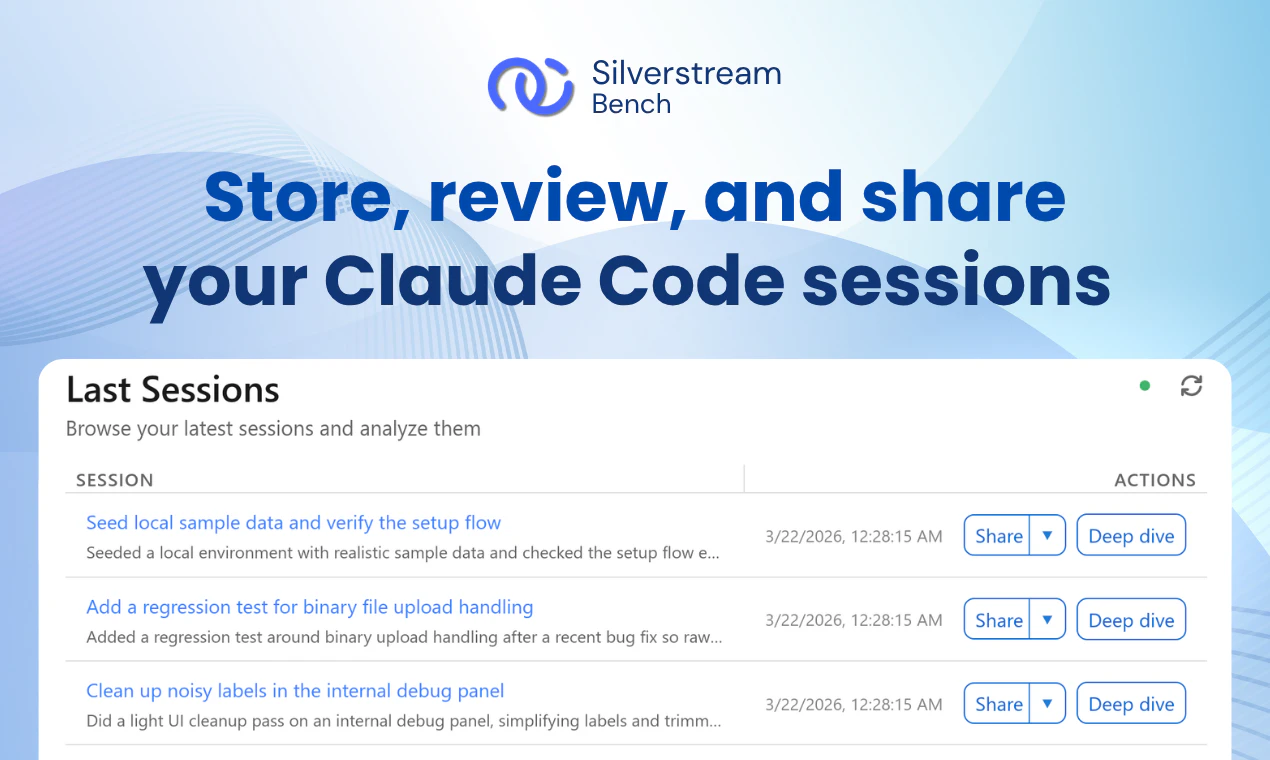
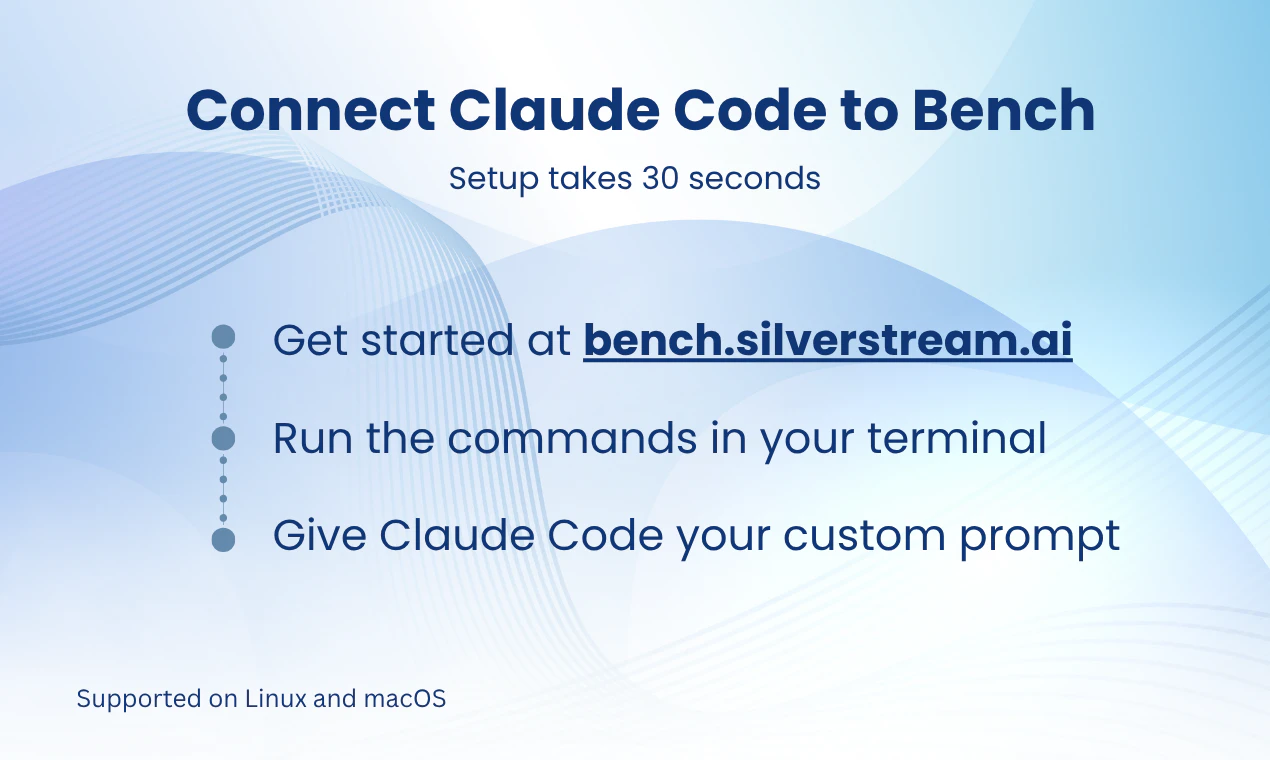
查看原始信息
GMP-CLI
A CLI for Google Analytics 4, Search Console, Google Ads, and Tag Manager. Run reports, check indexation, audit tags — all from the terminal. Output as JSON, table, or CSV. Pipe to jq, feed to Claude/Gemini, or automate with shell scripts. Open source, Apache 2.0.
As someone who works with AI agents daily, I needed a way to let Claude and Gemini access GMP data directly. So I built a CLI that covers all 4 major Google Marketing Platform APIs: - Google Analytics 4 — reports, realtime, metadata, compatibility checks - Search Console — search analytics, URL inspection, sitemaps - Google Ads — campaigns, keywords, search terms, raw GAQL queries - GTM — full container audit (tags, triggers, variables, versions) Everything outputs as JSON (perfect for AI agents and jq), table, or CSV. Install with npm install -g @lucianfialho/gmp-cli and you're ready. It's open source (Apache 2.0) and I'm actively building — next up: funnel reports, custom channel groups, and a unified dashboard mode. Would love your feedback!
1
回复

This is the tool I've always needed but for some reason didn't think of. Thank you. I have no idea how someone hasn't done this sooner. After GTM heavy week, it's especially wonderful to see.

1
回复