Product Hunt 每日热榜 2026-04-06

PH热榜 | 2026-04-06

#1
Moonshot
Track the Artemis II mission from your Mac
370
一句话介绍:一款轻量级的 macOS 菜单栏应用,通过实时追踪 NASA 阿尔忒弥斯 II 号任务的关键节点与数据,为太空爱好者和普通用户提供了无需切换网页、随时可查的沉浸式任务追踪体验,解决了在复杂任务中获取即时、清晰进展信息的痛点。
Space GitHub Menu Bar Apps
太空任务追踪 macOS应用 菜单栏工具 SwiftUI 实时数据 NASA 阿尔忒弥斯计划 科技爱好者 信息可视化 轻量级应用
用户评论摘要:用户普遍赞赏其创意与轻量级设计。主要反馈包括:希望增加任务阶段说明以降低理解门槛;询问数据源、更新频率及实时性;期待扩展至其他太空任务;建议增加实时图像、轨迹可视化等深度功能;少数用户遇到数据加载问题。
AI 锐评

Moonshot 的精妙之处在于其“降维”与“升维”的巧妙平衡。它将一个国家级、高复杂度的太空探索工程,压缩进一个安静的菜单栏图标里,这是一种极致的“降维”——将宏大叙事轻量化、日常化。其核心价值并非提供NASA级别的原始数据,而是充当了一个智能的“信息翻译官”与“注意力管理器”。它通过处理公开数据,提炼出普通人关心的关键节点(倒计时、任务阶段、宇航员信息),并以优雅的时空线呈现,本质上是在对抗信息过载与认知负担,让用户以最低成本获得“参与感”与“掌控感”。

然而,其轻盈也是其天花板。评论中暴露的“深度信息渴求”(如实时影像、详细轨迹)与“广度扩展期待”(其他任务)正是其作为“周末项目”的边界。它精准服务了“关注但非钻研”的中间态用户,但难以满足硬核爱好者或科研需求。产品若想突破工具属性,向“太空文化门户”演进,则需在数据深度、互动可视化及社区构建上重投入。当前版本是“单点极致”的典范,但能否从“阿尔忒弥斯II的精致伴侣”进化为“太空探索的常驻仪表盘”,将决定其是昙花一现的创意火花,还是能持续迭代的独立产品。其SwiftUI菜单栏的形式,本身也暗示了其“伴随式”的产品哲学——不打扰,但总在场,这或许是未来系统级信息服务的一个有趣雏形。

查看原始信息
Moonshot
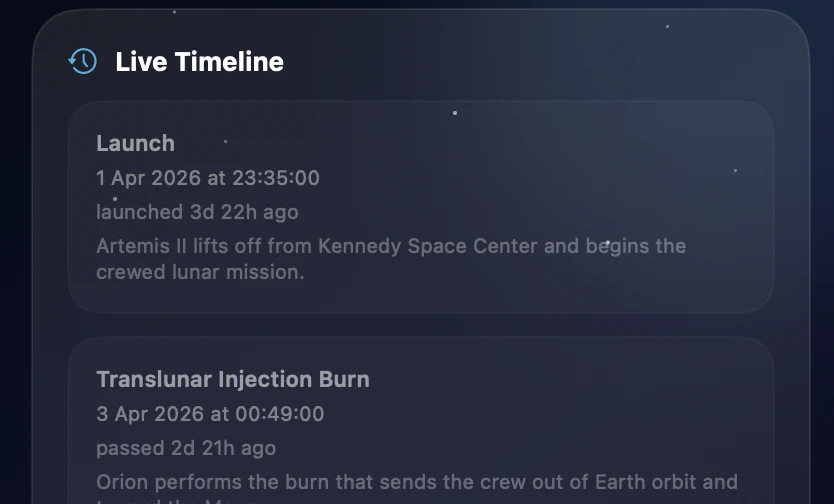
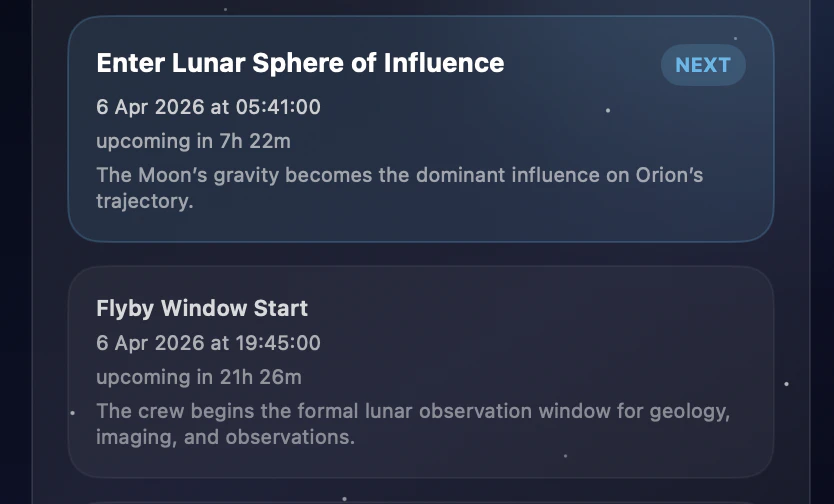
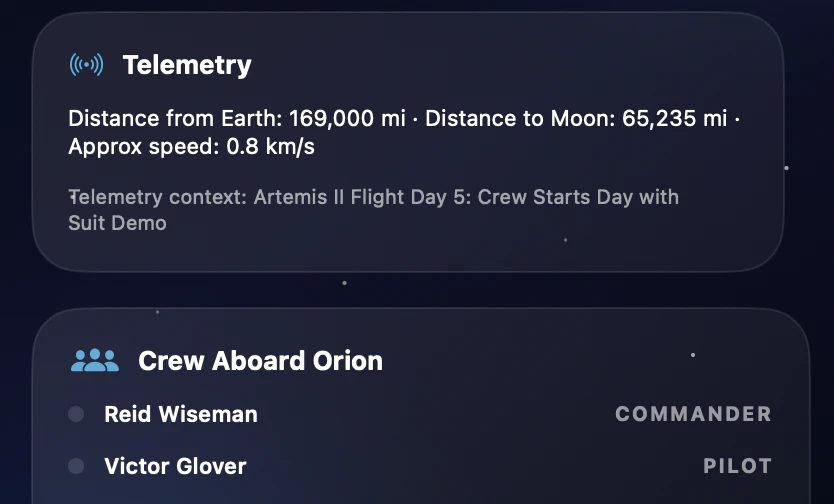
A macOS menu bar app built with SwiftUI that tracks NASA’s Artemis II mission in real time, showing mission phases, countdowns to key lunar flyby and return events, mission elapsed time, crew, live telemetry context, and a space-themed Earth-Moon-Orion timeline. Uses publicly available NASA mission data and timeline updates.

Hey everyone!

I've always been fascinated with everything space and NASA and while I was consuming absolutely everything I could about Artemis II, I started to think I'd love an app to track all of the phases for me. So I built it over the weekend.

Features:

Live countdowns to key Artemis II events
Mission phases including outbound, lunar flyby, return leg, re-entry, and splashdown
Mission elapsed time (MET)
Artemis II crew roster
NASA-sourced timeline and public mission update data
Menu bar-only macOS app built with SwiftUI

It should take you all the way to splashdown.

Hope you all enjoy, and if you have any feedback, drop it in the comments! :)

14
回复

@aaronoleary This is a really thoughtful execution, turning a complex mission into something lightweight and always visible . The timeline piece stands out. It might be even more useful if you add short context for each phase so non-space folks can follow along easily.

1
回复

@aaronoleary Congrats, quick question: beyond Artemis II, any plans to expand to future Artemis missions or other NASA programs like Gateway?

5
回复

@aaronoleary Congrats on the launch Moonshot! This is such a cool project turning the Artemis II lunar mission into a live countdown with real NASA data is genuinely brilliant and inspiring. The creativity behind it is really impressive.

As I went through the page, I missed seeing the final countdown interface in action right away. The concept is beautifully explained, but I didn’t get that instant “wow” feeling from actually experiencing it.

I’m genuinely curious how you thought about the user experience for something as special as a lunar mission countdown would love to hear your approach.

0
回复

@aaronoleary This is pretty cool, didn’t realize there was this much structured data available for Artemis missions.

Are you pulling this straight from NASA APIs or doing some processing in between? how real-time this actually is?

3
回复

@moh_codokiai

There's no real clean API to pull this from.

I’m using NASA’s public Artemis mission pages and AROW tracking resources for the mission schedule and trajectory data, and then I do some processing to turn that into the countdowns, phases, event states, and visual mission path in the app. For some orbital context, I also derive values from structured trajectory/vector data rather than just showing raw page text.

It’s more “near-real-time from public mission data” than direct raw flight telemetry. It's got a high level of accuracy but it isn't designed to replace say NASA's own tracker. My thinking with this is: an app that I can check on the fly with a high-enough level of accuracy rather than browse to a new tab and risk context-switching.

4
回复

That is so good, like reading scientific journals!

What are your feature plans?

I see in the comments that you think about something like Flighty for space missions, what about something like space history & launches timeline with visualizations and historical facts?

1
回复

@rustam_khasanov mission elapsed time is such a cool detail. I can quickly see how far the mission has progressed.

2
回复

this is sick,timeline visualisation is clean. I like space and artemis, how are you handling the live telemetry updates? polling or websockets? if you dont mind me asking , i sort of have an idea but yeah. I'm new to product Hunt , been seeing people's stuff in here , and some are actually tickling my brain

0
回复
really cool idea. i find myself wanting more information/to learn more. even seeing photos live as they’re released. just something to make it truly the singular source of info for me to follow. otherwise im still pulling up separate feeds to track it
0
回复

Love this. SwiftUI menu bar apps are such an underrated format — lightweight, always accessible, no context-switching. I'm building a Mac-native video editor with SwiftUI + Rust and the menu bar philosophy resonates: do one thing well, stay out of the way. The 'Flighty for space missions' direction sounds incredible. Congrats on the launch and good luck with splashdown!

0
回复

this is actually pretty sick, didn’t expect a menu bar app to go this deep
how often does the data update btw? @aaronoleary

0
回复

Looks fantastic. Congrats on the launch.

Is this just limited to accessing from the US? I’m in the UK and data never loads.

0
回复

@craigcpaterson Should load! I'm in Ireland and it's working. Lemme check to see if I spot anything

2
回复
@aaronoleary just tried again while using a Dublin VPN and still nothing.
0
回复

Very cool, thanks for this! Mission updates right in the menu bar instead of constantly checking NASA's site is way better. Nice project.

0
回复

This is such a cool niche execution : love how you turned a complex mission like Artemis II into something so accessible right from the menu bar. The real-time aspect + mission timeline is a great touch.

Also feels very aligned with the current wave of making complex systems more observable and understandable.

We actually launched on Product Hunt today as well — working on Ogoron, an AI system that automatically generates and maintains test coverage as products evolve. Different space, same love for making complexity manageable

Good luck with the launch!

0
回复

Very cool idea, perfect for space enthusiast people. Do you get it directly from their website?

0
回复

sick! i love that there is a launch tag for `Space`. Is this artisanal code or did you sling with an agent?

0
回复

@catt_marroll the coolest launch tag. Artisanal lmao with one pass for an issue!

1
回复
We are genuinely going back to the moon and there’s a Mac app for it. What time to be alive.
0
回复

@anusuya_bhuyan this is my favourite comment

0
回复

Love that you built this over a weekend, the attention to detail with the mission phases and telemetry context is really impressive. Having it live in the menu bar is perfect for staying updated without constantly tab-switching during the mission. @aaronoleary are you planning to support future NASA missions beyond Artemis II?

0
回复

@marcelo_farr Hey Marcelo!

Thanks for the kind words. Yeah, potentially. I'm half thinking of expanding into a mobile app, kind of like a flighty but for space missions. There's a ton of big things in space every year that aren't as publicised that I think people would be interested in.

1
回复

I'd actually love to see a mission view. A trajectory of the path taken by the Rocket. The whole slingshot around the moon in real-time. That would be incredibleeeeee!!!! Awesome work 🚀

0
回复

@richard_andrews4 I was thinking this too! Gonna see if I can get it done!

1
回复

@richard_andrews4 That would be epic , seeing the full trajectory in real time would totally bring the mission to life , can't wait to see it if it happens

2
回复

Wait the details on this are actually insane, telemetry is 🤌. Awesome job, @aaronoleary!!

0
回复

@gabe It started as a simple tracker for the moon flyby phase but the nerd in me wouldn't sleep until I gathered every useful piece of data I could and presented it lol

1
回复

Hey, this looks very cool! Going to try :)

0
回复

@antoninkus Thanks! Hope you like it!

0
回复
#2
AgentPulse by Rectify
Everything in OpenClaw's terminal, you can now do visually
228
一句话介绍:AgentPulse 是一款为 OpenClaw AI 代理操作平台设计的可视化指挥中心,它通过图形界面替代了繁琐的终端命令和 JSON 配置,在团队协作与多客户管理场景下,解决了开发者运维效率低下、团队权限混乱及客户缺乏透明度的核心痛点。
SaaS Developer Tools Artificial Intelligence
AI代理运维 可视化监控 团队协作平台 客户门户 权限管理 操作可视化 SaaS运营 开发运维 智能运维助手 多租户管理
用户评论摘要:用户高度认可其可视化、团队权限管理和客户视图功能。主要问题集中在:3D视图是噱头还是真有用、如何调试代理失败的根本原因、新用户上手难度,以及希望看到更多实际案例。创始人积极回复,详细解释了功能价值并收集反馈。
AI 锐评

AgentPulse 的亮相,远不止是为 OpenClaw 披上了一层图形化外衣。它精准地刺中了当前 AI 代理运维从“玩具”走向“工具”过程中的核心矛盾:个体黑客式操作与规模化、商业化交付之间的巨大鸿沟。

其真正价值在于构建了一套“操作-协作-解释”三位一体的系统。首先,它将终端操作可视化,降低的是单个开发者的认知负荷,提升的是基础运维效率。但这只是入场券。更深层的价值是其引入的基于角色的访问控制(RBAC)与多客户隔离工作区。这直接将产品定位从“开发者工具”拉升到了“团队及商业运营平台”,解决了代理规模化后必然面临的权限、安全与客户沟通成本问题。这才是其区别于其他单纯监控工具的壁垒。

最值得玩味的是其内置的 AI 助手 Quanta。它被设计为“界面本身”,而非点缀。这不仅为客户提供了一个零门槛的查询窗口,更重要的是,它试图将运维动作(如生成报告、检查状态)从“手动操作”转化为“自然语言指令”,这可能是人机交互范式的一次隐性升级。然而,挑战也同样明显:在复杂调试场景下,AI解释的准确性与深度能否真正替代开发者阅读日志?华丽的3D办公室视图,在信息密度和问题定位效率上,是否优于经过优化的列表与仪表盘?这需要实践检验。

创始人回复中透露的“无正式案例研究”和“与早期用户共同塑造产品”的状态,既显示了其敏捷性,也暴露了产品在极端复杂场景下的成熟度有待验证。总体而言,AgentPulse 展现了一个极具前瞻性的蓝图——它不只是在管理AI代理,更是在试图定义AI时代团队如何协作管理自动化系统的“操作系统”。其成功与否,将取决于在炫酷概念之下,那些“枯燥但重要”的细节可靠性能否经受住企业级应用的严苛考验。

查看原始信息
AgentPulse by Rectify
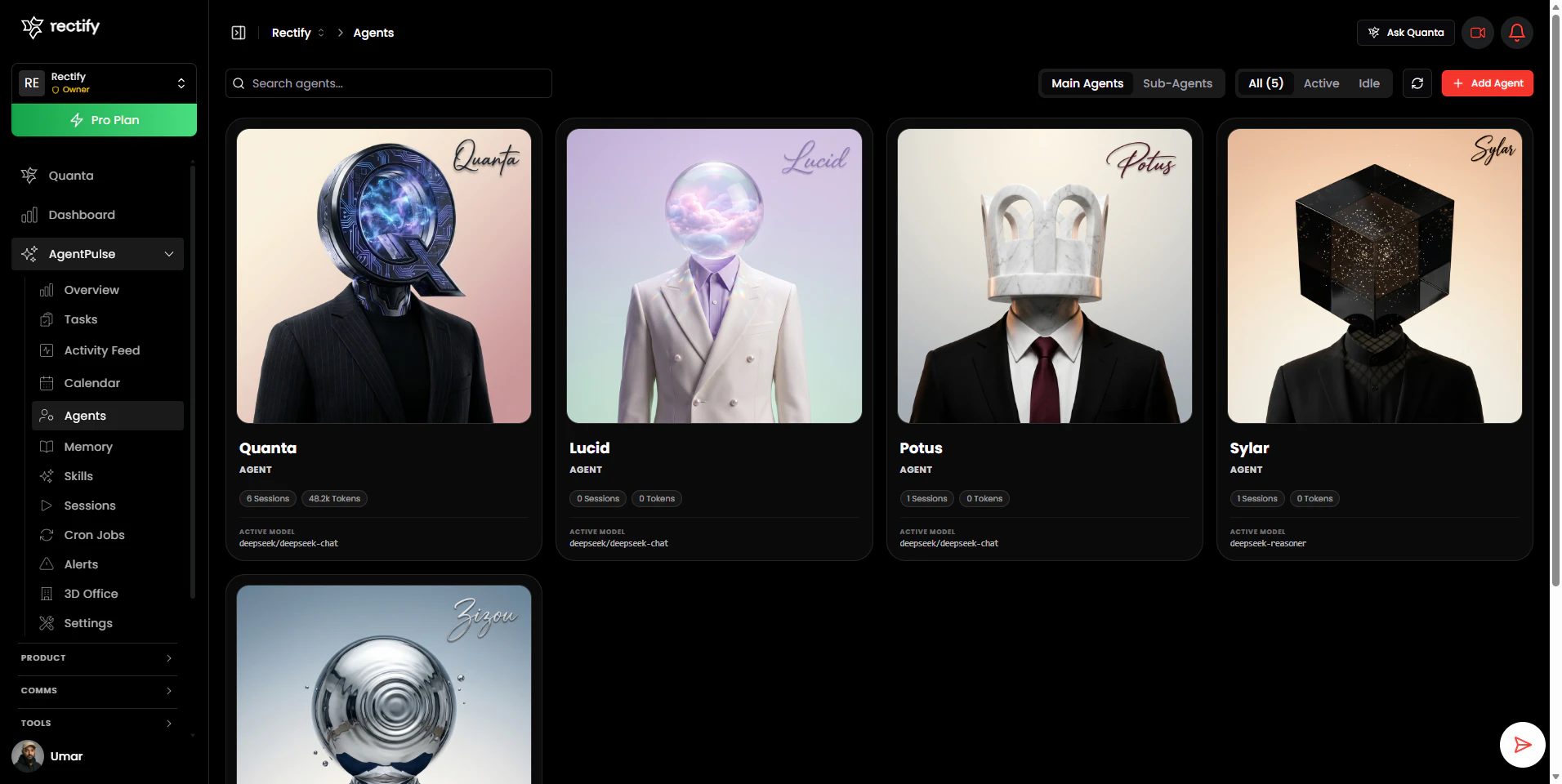
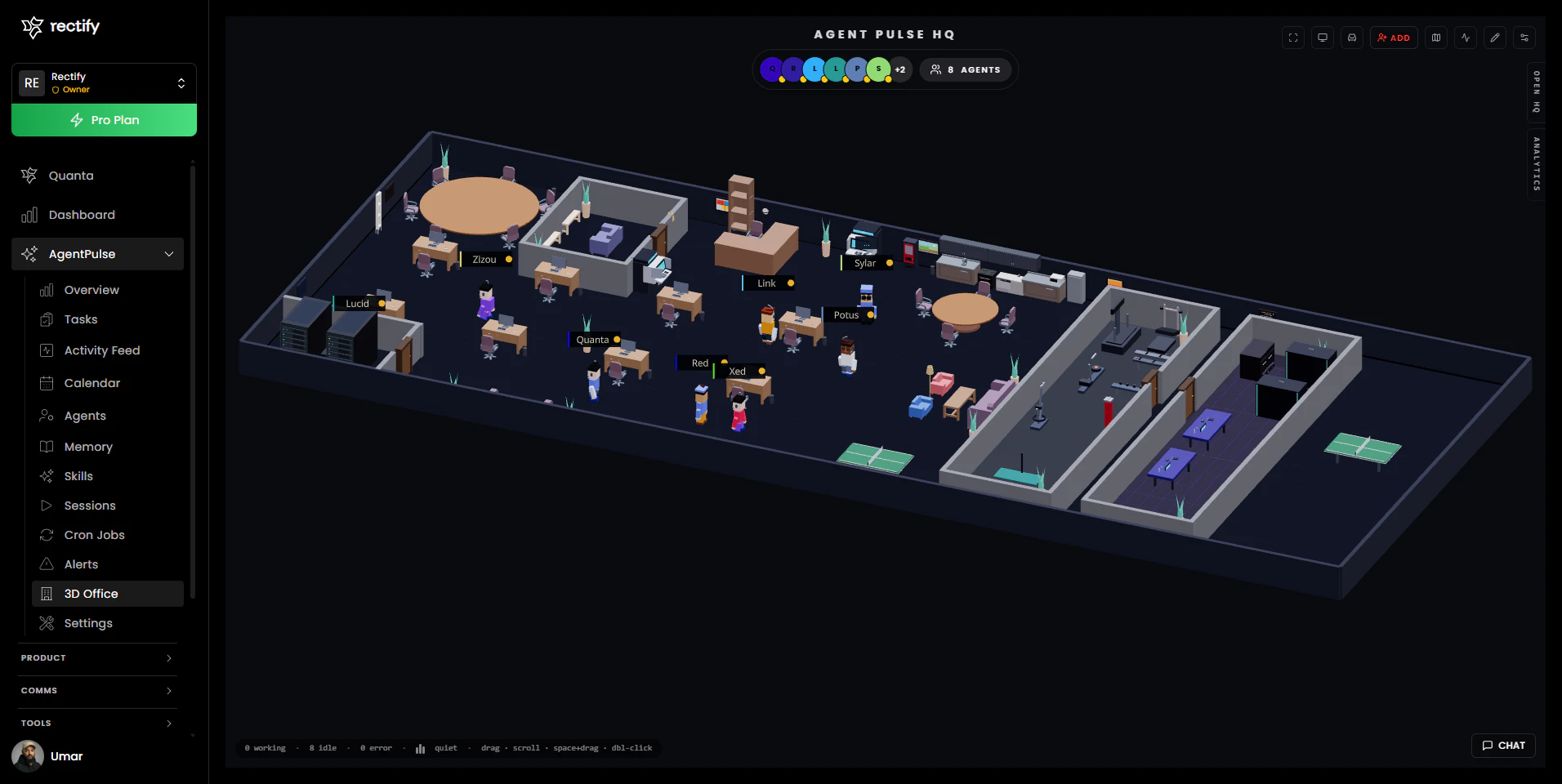
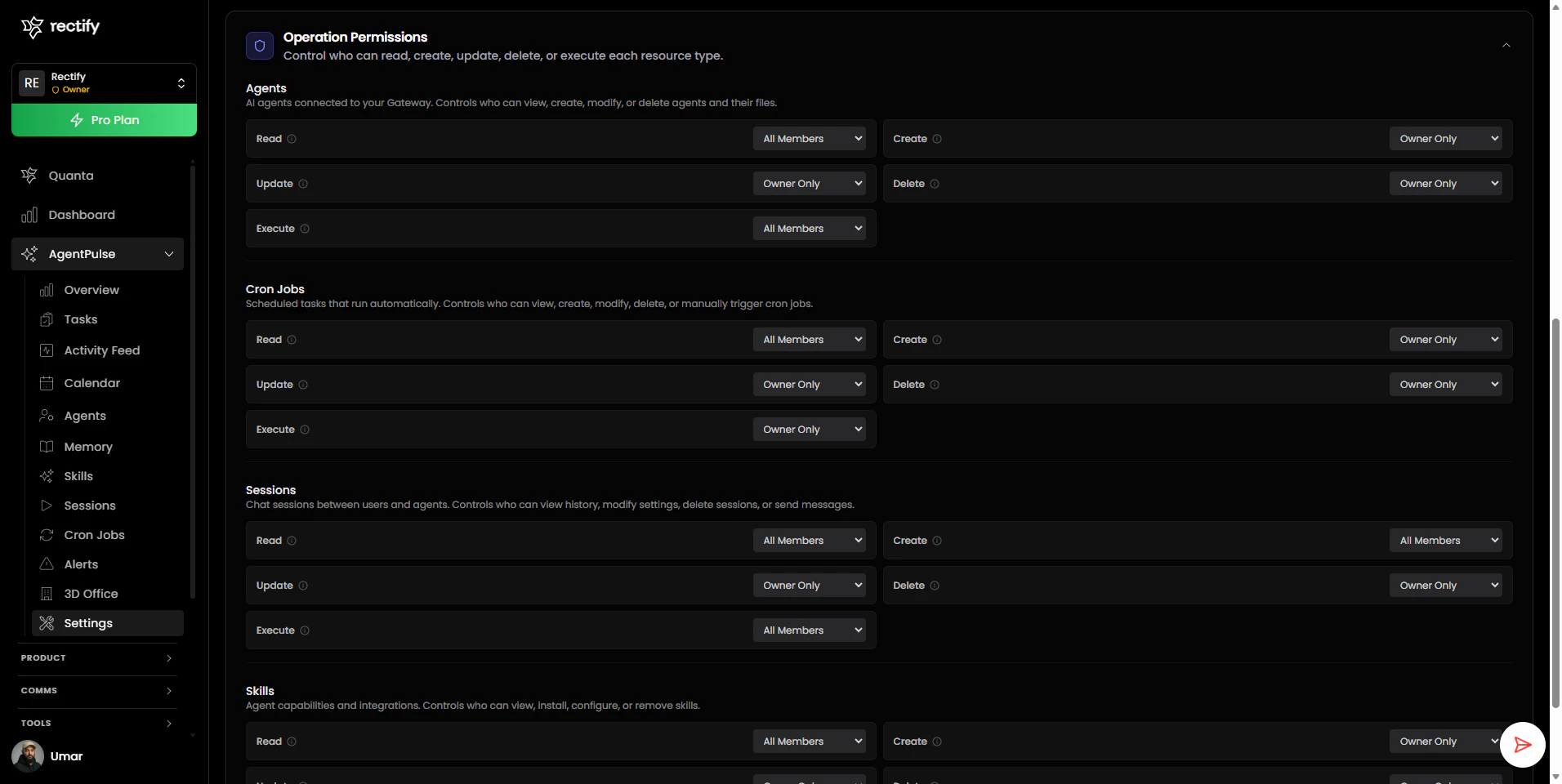
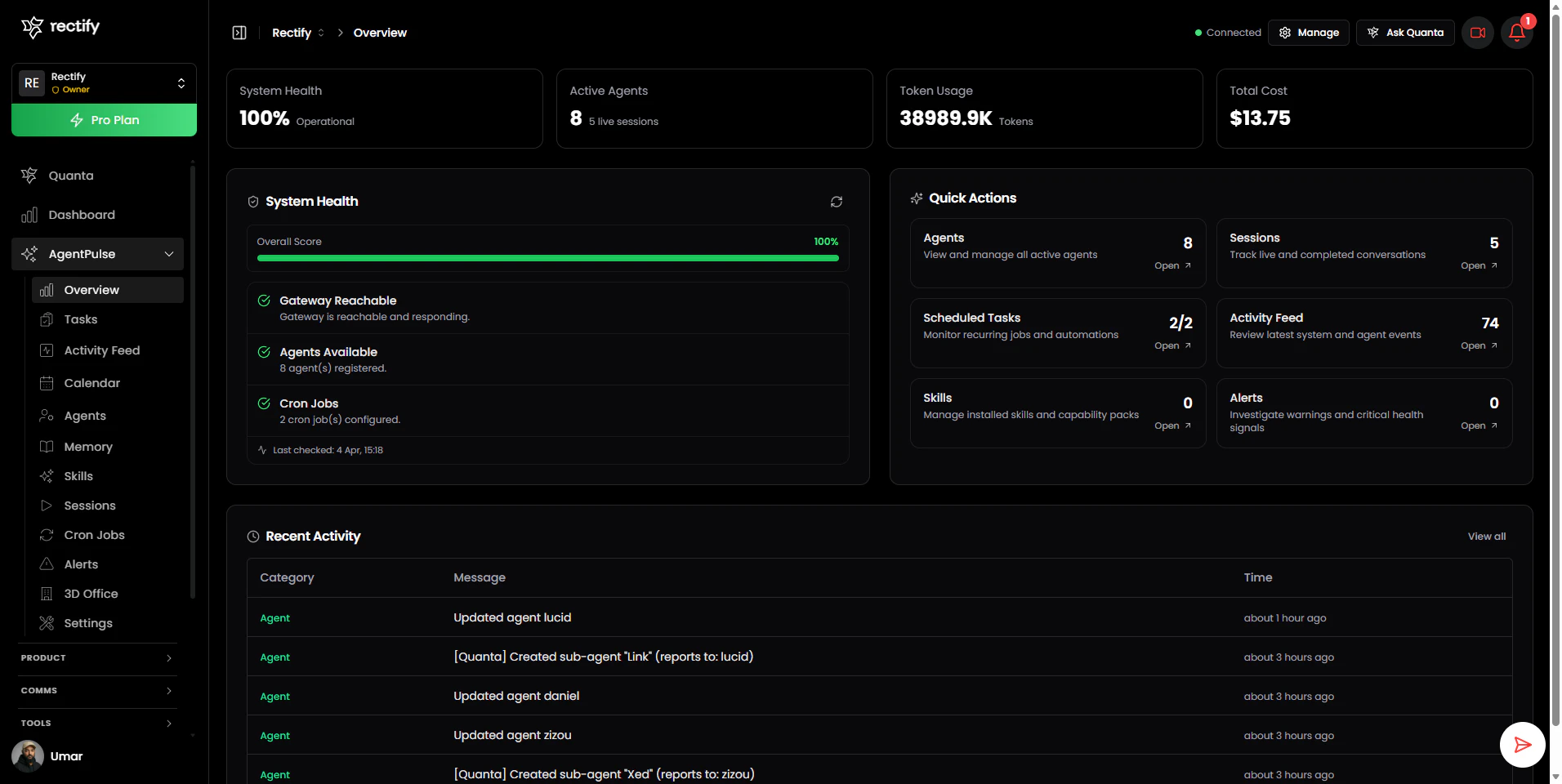
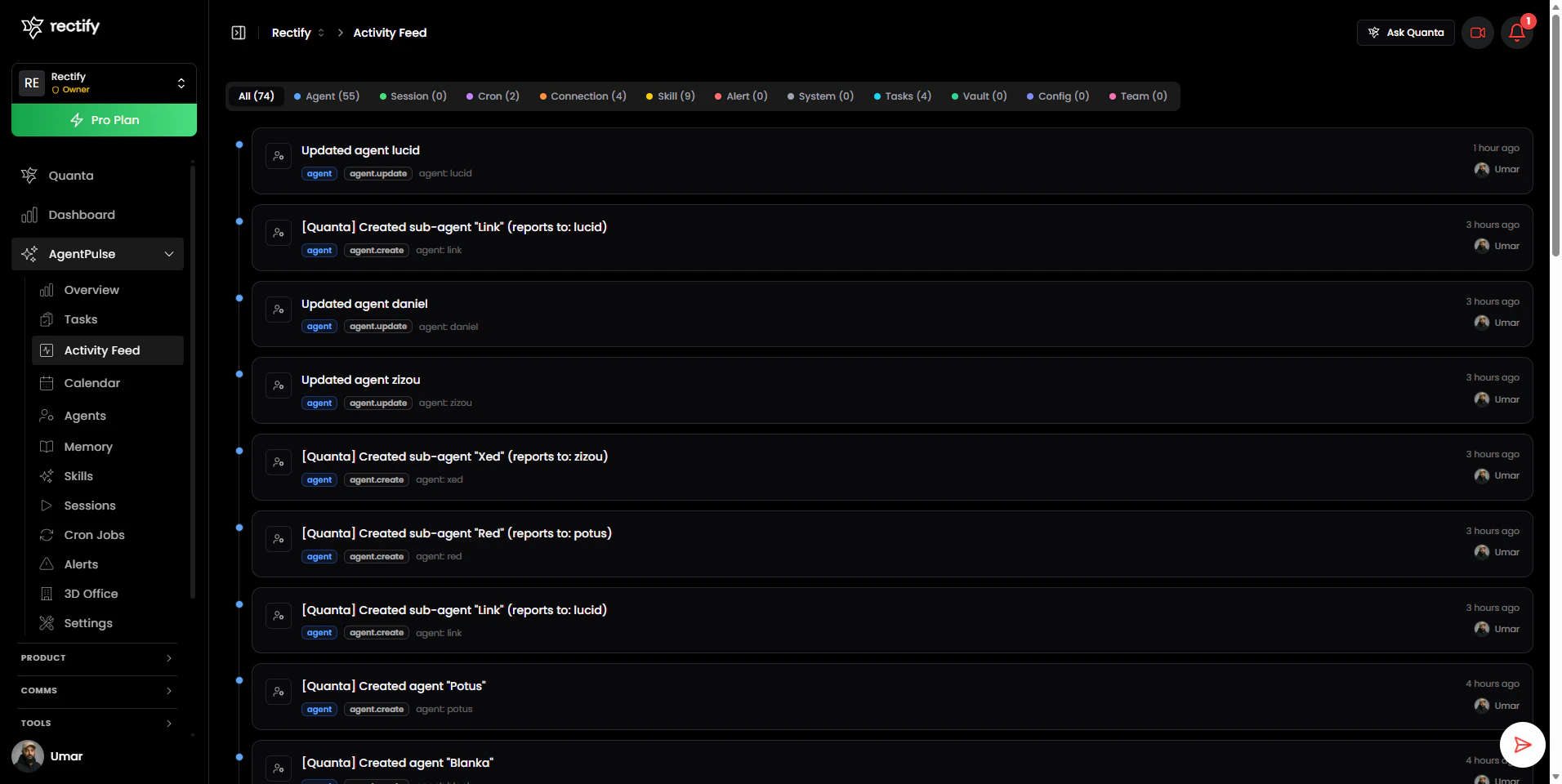
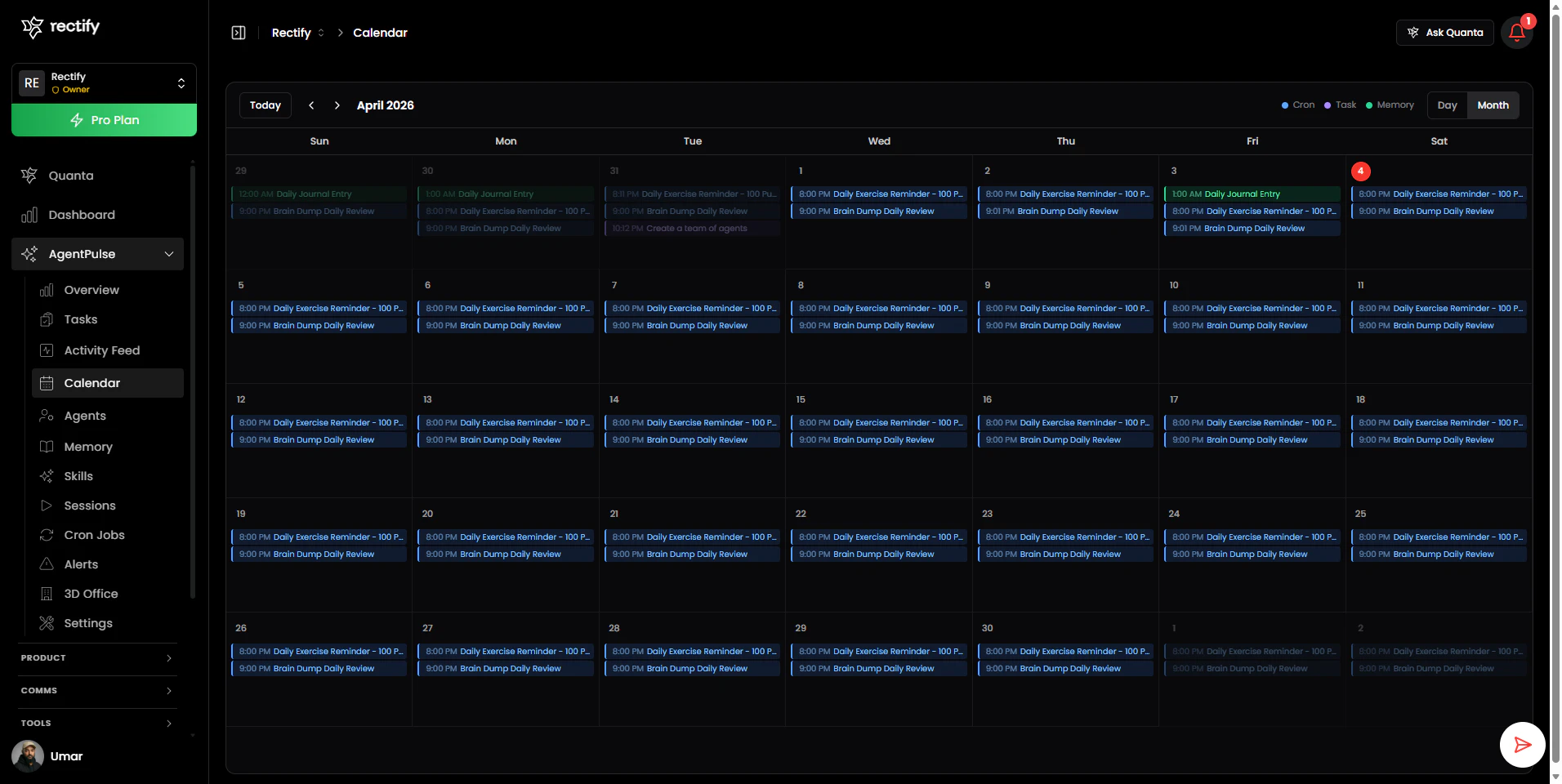
AgentPulse is the visual command center for OpenClaw. Everything you do in the terminal, you can do here: monitor agents, manage sessions, run cron jobs, track spend, assign tasks, review memory logs, and manage skills. No SSH. No JSON configs. And it's built for teams: set role-based access so your developers get full control while clients get a view-only seat where they can still talk to Quanta, your AI operations agent, to understand what's happening.
Hey Product Hunt! I'm Umar, founder of Rectify. If you're running OpenClaw agents, you know the drill: SSH into your server, edit JSON configs, tail logs in the terminal, hope your cron jobs didn't silently fail overnight. It works when it's just you. It breaks down the moment you add a team, or manage agents for a client. That's why we built AgentPulse inside Rectify. Everything you do in OpenClaw's terminal, you can now do visually: monitor every agent's status in real time, manage sessions, track cron jobs, review alerts, assign tasks on a Kanban board with a live activity feed, browse full conversation memory, manage skills, set spend limits, and watch your agents work in a 3D virtual office. But here's what no other OpenClaw tool gives you: role-based access control. Your developers get full admin access. A junior team member gets limited permissions. And your client? They get a view-only seat, but they can still talk to Quanta, our AI operations agent, and ask "what did my agents do this week?" or "why did this task fail?" Quanta explains everything in plain language. No terminal skills required. For agencies managing agents across multiple clients, each client gets an isolated workspace. IP whitelisting and SSH tunneling keep everything locked down. And AgentPulse is just one layer of Rectify. Underneath, you get a full SaaS operations platform: session replay, uptime monitoring, public status pages, an AI-powered support inbox, code scanning, product analytics, public roadmap with voting, auto-generated changelogs, workflow automation, a Chrome extension, and MCP server integration for your IDE. Quanta ties it all together. It's not a chatbot sitting inside a dashboard. It IS the interface. Ask it to pull a code scan report, draft a support reply, create a changelog, check your uptime, or explain what your agents did overnight. It executes the work, not just suggests it. Every major AI provider supported through BYOK with zero markup on API costs. 1000+ businesses already use Rectify. Would love to hear what you think. What would you want from an saas/agent management platform?
12
回复

@umar_lateef ip whitelisting and ssh tunneling included? it’s clear you guys actually thought about the security side for agencies. most tools just focus on the 'cool' ai stuff and forget the boring (but important) infra.

4
回复

@umar_lateef Congrats on the launch Rectify! The concept of an AI-powered visual debugging tool that turns user complaints and session replays into actual code fixes feels like a real game-changer for dev teams.

While browsing the homepage, I found myself wanting to see more of the actual AI in action, it explains the vision and benefits well, but I couldn’t easily get a sense of what the output or debugging experience actually looks like before signing up.

I’m really curious how you’re thinking about helping new users quickly experience the quality of the AI debugging early on, would love to hear your approach

0
回复

@umar_lateef Some of my clients get bogged down with technical stuff. What's the learning curve like for Rectify?

0
回复

This is a seriously interesting take on agent ops: turning it into a visual command center (and even a 3D office) makes something quite abstract feel much more tangible and manageable.

Also love how you’re combining monitoring, workflows, and client management into one system — feels like the direction many teams will need as agent-based systems scale.

We also launched on Product Hunt today — building Ogoron, an AI system that automatically generates and maintains test coverage as products evolve. Different layer of the stack, but very similar goal: bringing structure and reliability to increasingly complex systems :)

Good luck with the launch!

2
回复

@yanakazantseva1 Really appreciate you taking the time to write this, especially on your own launch day.

That says a lot about the kind of team you are. You nailed it, as agent systems scale, teams need visibility and structure or it all falls apart. That's exactly what we're building for. Love what you're doing with Ogoron too, automated test coverage that evolves with the product is something every team needs. Different layer, same mission. Good luck today, rooting for you

0
回复

The 3D office for monitoring agents is something I've never seen before. Is it just a visual gimmick or does it actually make it easier to spot which agent is stuck or failing at a glance?

2
回复

@abhra_das1 Great question! It's definitely not a gimmick. The 3D office gives you an instant visual overview of every agent's status so you can spot issues at a glance without digging through logs or lists. And you can actually chat with any agent directly from the 3D view, so if something looks off you can jump straight in and interact with it right there. Think of it as a live control room for your agents.

0
回复

Happy launch day! Finally, a proper GUI for OpenClaw. The number of hours I've lost digging through terminal logs is painful. Being able to visually manage skills and cron jobs instead of editing JSON files is the big win here.

1
回复

@krutytskyi We felt that pain too, way too many hours lost in terminal logs. Glad those days are behind you now. Thanks for the support today 🧡

1
回复

Been a long time fan of Rectify and Umar's work and this update is incredible. Linked my Openclaw with it and the results are already incredible. Thank you Umar!!

1
回复

@mirano_designs Thank you so much, this means a lot. Love hearing that you're already seeing results after connecting your OpenClaw. That's exactly what we built it for. If there's anything you'd want us to add or improve, don't hesitate to reach out. Your support hasn't gone unnoticed

0
回复

In the 3D view is there a way to visually see agent failures?

The memory log review feature is the one I'm most curious about. When an agent does something unexpected, how do you surface whether it was a skill failure vs. a bad memory entry vs. just a weird model call? That distinction seems like it'd be really hard to debug visually without knowing where in the chain things went sideways.

1
回复

@kavin_jeya Great questions. Yes, in the 3D office view you can visually see agent failures in real time. Agents that are stuck or failing are flagged so you can spot issues at a glance without digging through anything.

On the memory log side, you're right that debugging the "why" behind unexpected behavior is the hard part. We break it down so you can trace through the chain and see where things went wrong, whether it was a skill failure, a bad memory entry, or a model call that went sideways. You're not just looking at the outcome, you're seeing the steps that led to it. That clarity is what makes the difference between guessing and actually fixing the problem.

Appreciate the thoughtful questions, this is exactly the kind of feedback that helps us make the debugging experience even better

1
回复

Looks super cool. I love that you can collaborate on managing your agents in one place! Will dig into it.

1
回复

@buildwithomar Thank you! That's exactly the idea, agents shouldn't be a solo experience when you're working as a team. Would love to hear what you think once you dig in, your feedback means everything to us 🧡

1
回复

This looks super promising.

Especially for agencies. RBAC + client visibility + AI explanations is a killer combo.

Would love to try this on a real multi-client setup.

Do you have any case studies or examples of teams already using it at scale?

1
回复

@parth_solanki Really appreciate that, and you nailed it, RBAC plus client visibility plus Quanta's AI explanations is exactly the combo we built AgentPulse around. No formal case studies yet, we're still early. But honestly that's what makes right now the best time to get in. You'd be shaping the product alongside us, not just using it. We're actively onboarding teams and agencies running multi-client setups and building based on exactly that kind of real world feedback. If you're up for it, let's get you in and see how it fits your workflow. Shoot us a message, we move fast 🧡

1
回复

The client view-only seat with Quanta access is a smart call, we're building something similar at TalkBuildr where agencies manage AI chatbots for clients and the biggest ask is always 'how do I let my client see what's happening without breaking things.' How are you handling the handoff when a client wants to go from view-only to actually tweaking agent behavior?

1
回复

@cuygun Great question. Right now we handle it through permission levels, so you can control exactly what each user can see, trigger, or configure. If a client needs more access, you just adjust their role. Plus everything is logged so you can see exactly who did what and when, no blame game, just clarity. And in the next iteration we're introducing rollback, so even if someone does make a change that breaks something, you can instantly revert to the previous working version. That safety net makes it a lot easier to give clients more control without the anxiety. And the best part is clients can interact with Quanta directly to understand what their agents are doing without needing to touch any configuration. Appreciate the kind words and love what you're building at TalkBuildr 🙏

1
回复

Been using Rectify for months on a SaaS I've been developing, helping my testers better capture feedback, bugs, etc. Umar and his whole team have been phenomenal in their support & dedication to what they build. That commitment shines through in their work on AgentPulse. From the very outset, they took every comment and bit of feedback to heart - and to development. From minor bugs / visual enhancements to tinfoil-hat level security requests, they took it all seriously and engaged in open - and constructive - conversation about it.

AgentPulse took OpenClaw (for me) from "neat tool" to an organized orchestration platform. It opened up a world of possibilities I honestly didn't know existed, and made it dead easy to implement. The fact it's deeply integrated with a tool I use every day is just the icing on the cake.

1
回复

@allen_pooley1 This genuinely made our day. Thank you for taking the time to write this.

You've been with us through the rough edges, the late night fixes, the back and forth on features that most people wouldn't even think to ask for. And honestly, users like you are the reason we build the way we do. Every bug report, every security request, every "have you thought about this" message pushed us to make Rectify better.

SSH Tunnel came from your feedback and for that we are ever grateful

Hearing that AgentPulse turned OpenClaw from a neat tool into something you're actually building with means more than any upvote ever could. That's exactly what we set out to do.

We're not done. Not even close. And your feedback will keep shaping what comes next 🧡

1
回复

Umar is an outstanding founder, and I’m wishing you great success with the Rectify launch.

1
回复

@malithmcrdev Really appreciate that, thank you so much 🙏 Means a lot to have your support. We're just getting started 🚀

0
回复

team-level visibility is the gap most agent platforms skip. solo works fine - the moment you add multiple clients, the ops chaos multiplies.

1
回复

@mykola_kondratiuk Exactly this. Solo is easy, everyone figures that out. The real challenge starts when you've got multiple clients, different team members, different permission levels and zero visibility into who's running what. That's exactly why we built role-based access and spend caps from day one. Glad it resonates 🙏

0
回复
Been using Rectify since the early days and the progress has been insane. AgentPulse takes it to another level, the 3D office view and being able to create agents just by talking to Quanta is something I haven't seen anywhere else. Well deserved launch, congrats team 🚀
1
回复

@sam_jesani thanks bro, the Earlybird.so launch helped a lot with growth and scale, we had some amazing feedback from the Bird Gang community and they are some of our most active users

0
回复
#3
KREV
AI creative agents for ecommerce brands
219
一句话介绍:KREV是一款为电商品牌服务的AI创意代理工具,通过单张产品图片即可自动生成高质量的产品照片、视频广告及上市级营销素材,解决了电商品牌在多平台营销中创意内容生产耗时耗力且与转化效果脱节的痛点。
Marketing Artificial Intelligence E-Commerce
AI创意生成 电商营销自动化 广告素材生成 产品视觉优化 性能导向设计 品牌一致性 广告信号分析 创意工作流 AI代理 SaaS工具
用户评论摘要:用户肯定其基于真实广告信号生成性能导向素材的核心价值,并提出了关键建议:需提供输出预览以降低体验门槛;急需开放生成完整广告(含文案版式)的API接口以支持自动化工作流;建议按行业提供最佳实践洞察;关注其性能数据来源与反馈闭环的构建。
AI 锐评

KREV的野心不在于成为又一个“精美图片生成器”,而试图成为连接广告性能数据与创意生产的“转化率引擎”。其宣称的“由真实广告信号驱动”是核心差异化概念,但这恰恰是最大风险点与考验所在。

产品逻辑直击行业软肋:当前大量AI工具产出的是美学上合格但商业上无感的素材,与转化漏斗脱节。KREV试图将历史成功广告的解构模式、实时投放信号乃至品牌资产数据作为生成约束条件,本质是将隐性的创意经验代码化。这比单纯追求像素级逼真更有商业深度。

然而,其“信号”的具体构成、数据广度与新鲜度存疑。创始人回应提及“从精选品牌获取实时数据”,这暗示其初期可能严重依赖有限合作伙伴的数据飞轮,模型泛化能力有待验证。更尖锐的问题是:广告创意成功归因本就复杂,平台算法、受众定位、出价策略等因素交织,KREV如何剥离出纯粹“创意元素”与性能的因果关系?这需要极强的数据分析与抽象能力,否则易流于表面样式模仿。

用户反馈暴露了其现阶段的产品断层:最受好评的“完整广告生成”能力竟被锁死在聊天界面,而API仅提供“纯净”产品图。这反映了团队在定位上的犹豫——是优先服务需要“黑盒式”完整解决方案的市场部人员,还是优先成为赋能开发者与自动化工作流的“引擎”?早期用户的API呼声强烈,表明其真实价值可能在于成为电商营销技术栈中的嵌入式智能模块,而非又一个独立应用。

长期愿景“让广告数据直接驱动创意生成”描绘了一个诱人的闭环,但实现路径荆棘密布。它需要深度打通各广告平台数据API、构建动态创意优化模型,并说服品牌将核心性能数据交出。若成功,它将重塑从创意简报到投放优化的价值链;若受阻,则可能停留为一个拥有更佳提示词的图像生成工具。

总之,KREV切入了一个真实且付费意愿强的痛点,方向正确。但其技术护城河的深度、数据生态的广度以及产品形态的聚焦度,将决定它能否从“有用的工具”进化为“不可或缺的基础设施”。

查看原始信息
KREV
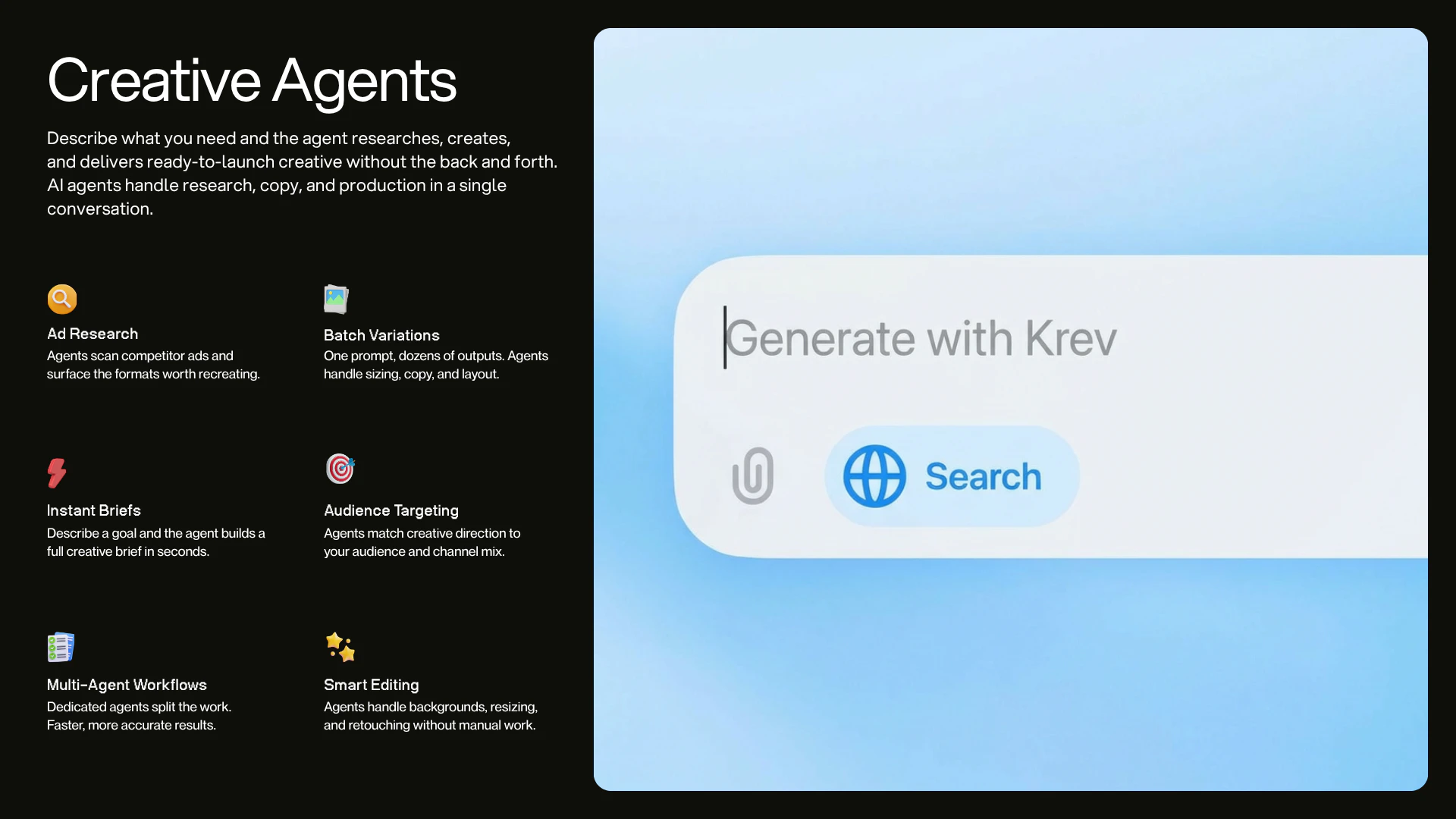
KREV helps ecommerce brands turn a single product image into product photos, video ads, and launch-ready creative. Unlike generic AI tools, KREV is guided by real ad signals, proven creative patterns, and tracked brand data to generate assets that feel more intentional, on-brand, and performance-ready.

Hey Product Hunt 👋, I’m Modi, founder of KREV. Excited to be launching on my birthday 🎉

I built KREV because ecommerce brands are forced to grow across too many disconnected tools, and with KREV 1.0 we’re starting by solving the creative bottleneck.

There are plenty of AI tools that can generate images, but most of them create without enough direction. The result often feels generic, over-styled, or disconnected from what a real brand would actually run.

KREV takes a different approach.

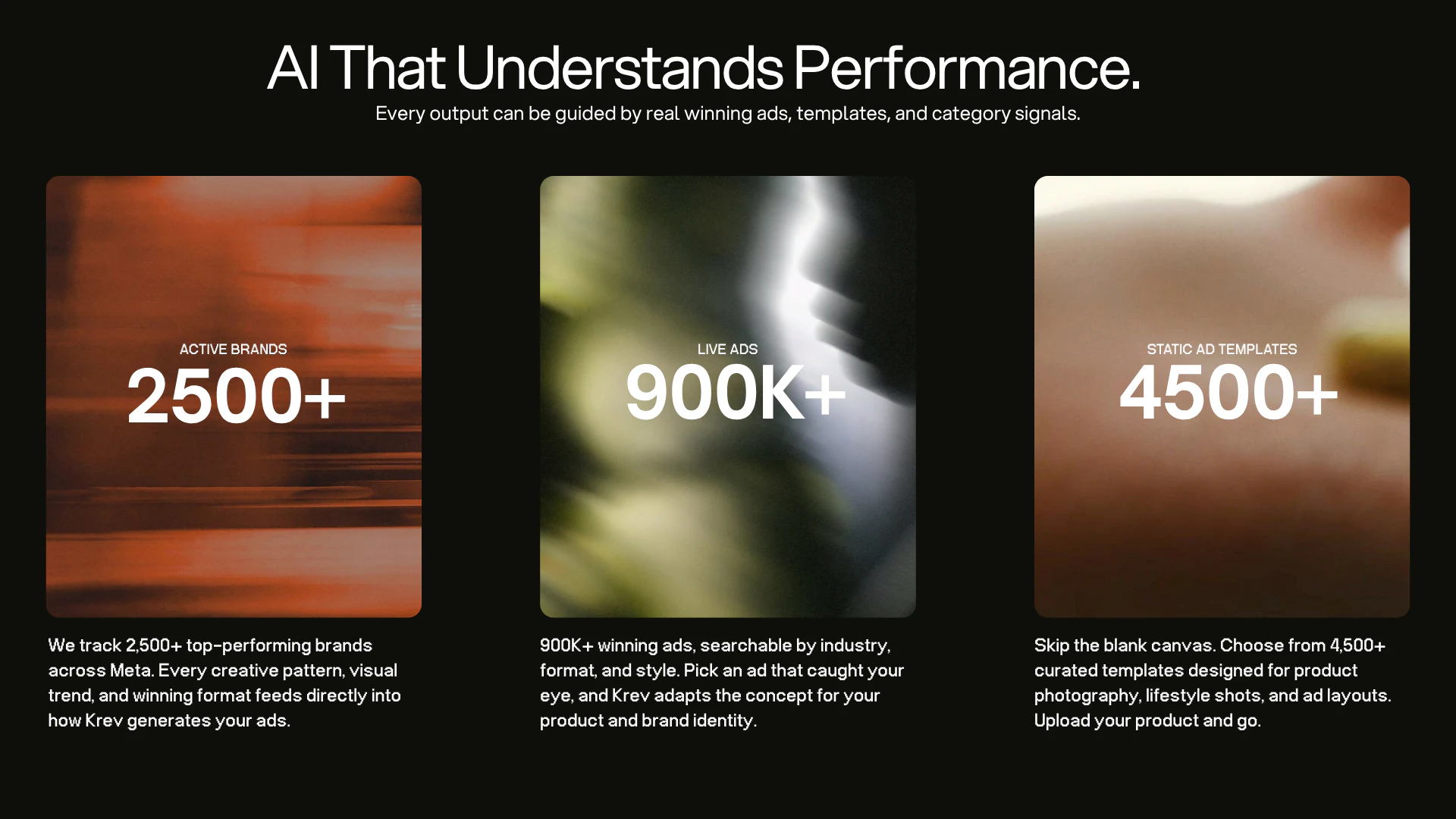
Instead of generating from a blank canvas, KREV is guided by real ad signals, winning creative patterns, and tracked brand data. That gives the system a much stronger starting point and helps it produce creative that feels far more intentional.

💡 Why that matters:

• Static ads work when the structure works. Hook, hierarchy, layout, product framing, and offer presentation all matter. KREV uses real creative patterns to generate statics that feel much closer to actual performance ads.

• Video ads give brands more room to show the product, use case, and emotion behind it. KREV helps generate video creatives that feel more like campaign assets, not just motion for the sake of motion.

• Product photos are not just about making something look nice. Under the hood, KREV breaks down the product itself, studies placement, lighting, and composition, and generates imagery that feels more directed and premium.

🔮 Where we’re headed:

The long-term vision is a single workspace where ad performance data across Meta, TikTok, Google, and more feeds directly into creative generation and more. Your campaigns inform your creatives, and your creatives improve your campaigns. One loop, one place.

🙏 We’re still early, but the product is live and improving fast. I’d love your honest feedback on what stands out, what feels missing, and where you think we should take it next

8
回复

@modii Ah , Finally an AI that doesn't just spit out random visuals😓 . Love how it's guided by what actually performs . Maybe adding some insights on which patterns work best by industry could make it even more actionable .

1
回复

@modii Congrats on the launch Krev! The idea of turning a single product image into high-performing creatives like studio photos, video ads, and full campaigns using AI agents sounds incredibly useful for ecommerce brands.

What stood out to me is that the homepage focuses heavily on the vision and benefits, but it’s not immediately clear how the actual AI creatives look or feel in practice before signing up.

I’m really curious how you’re thinking about letting new users quickly preview or experience the quality of the output early on. Would love to hear your approach.

0
回复

@modii Hi Modi!Great launching!This looks genuinely useful, especially for teams like us that need to create a lot of product creatives fast. One thing I’m curious about from a user experience side: after Krev generates the assets, how flexible is the editing step if you only want to tweak a few details instead of regenerating everything?

0
回复

The static ads from the Creative Agent are the best thing about KREV. Proper hierarchy, copy placement, layout structure — that's what separates you from every other AI image tool.

The problem I have with it is that: none of that is accessible via API.

POST /images gives me product photos. Great quality, but no headlines, no CTAs, no copy, no layout. The finished ads with text baked in only exist through the chat UI.

I'm building an automated creative pipeline for my e-commerce brand — agents generate briefs, produce ads, route approvals, push to Meta/Google/TikTok. KREV is the perfect rendering engine, but I can't have my agents chat through a UI.

What's missing:

POST /api/v1/ads

{

"product_id": "...",

"headline": "Headline here.",

"cta": "Shop Now",

"platform": "meta_feed",

"style": "minimal_dark"

}

→ Returns a finished static ad, same quality as the Creative Agent output.

That endpoint is the unlock. Every brand automating creative at volume needs this, not just the ones clicking through the UI.

5
回复

@appelton Thanks for the feedback and it's a really good point. I'll surface the /ads endpoint into the API as well.

1
回复

Launching on your birthday is a bold move, congrats Modi. One thing I'm curious about — when you say it's guided by real ad signals, does that mean it pulls from actual Meta/TikTok performance data or is it more like trained patterns baked into the model?

4
回复

@abhra_das1 Thank you, indeed it is a bit nerve wrecking.

It’s a mix of both. We pull live data from a curated set of brands on Meta to understand what’s actually running right now, and then layer that with structured creative patterns we’ve built from high-performing ads.

So instead of generating from scratch, KREV starts from signals and proven frameworks which is why the output tends to feel much closer to actual ads.

1
回复

I've seen too many ecommerce brands use AI to create product photos that look cool but completely bomb in ads because they weren't designed with performance in mind. Starting from a single product image and getting launch-ready creative that's actually informed by what converts is way more useful than pretty pictures. We're not ecommerce specifically but we need a lot of ad creative for our launch. Does KREV work for app products too, or is it mainly built around physical product photography?

3
回复

@ben_gend Great point, that’s exactly the gap we’re focused on.

And yes, this works for app products too.

The way I'd approach this is the “product” becomes your UI. You can feed in key screens or flows, and KREV treats those as the core asset.

From there, you can generate ad creatives using software/tech patterns or even UGC-style formats built around your UI.

Brand DNA still applies as well, so everything stays consistent with your product’s look and feel.

Would actually love to see this used for a launch like yours and I'd love to get feedback!

2
回复

ad signal guidance is the thing that'll make or break this. AI product photos that look AI-generated are everywhere now - performance-based differentiation is the actual moat.

2
回复

@mykola_kondratiuk Definitely agree. I’d add one more layer to that as well: performance-based "on-brand" creatives.

0
回复

@mykola_kondratiuk But how to prove the good performance? Connecting with the social media ad system?

0
回复

yeah this is the real gap, a lot of AI stuff looks nice but feels disconnected from actual ads. are you feeding performance data back into the system or is it more pattern based for now? @KREV @modii

1
回复

@aadhitya_muralidharan Right now it’s a mix. We pull real-world signals from a curated set of brands and combine that with structured creative patterns.

The goal is to move beyond just pattern-based generation into something that continuously learns from what’s actually converting.

0
回复

Really like the direction here! moving from generic AI generation to something that actually understands performance signals and brand context feels like the right evolution for ecommerce creative.

Turning a single product image into full launch-ready assets is incredibly powerful, especially when it’s grounded in what actually converts.

We also launched today on Product Hunt — building Ogoron, an AI system that automatically generates and maintains test coverage as products evolve. Different space, but very similar idea of making complex, manual workflows effortless with AI :)

Good luck with the launch

1
回复

@yanakazantseva1 Appreciate that, you captured it really well. That shift from “looks good” to “actually converts” is what we’re betting on.

Also love what you’re building with Ogoron. Feels like a very similar mindset applied to a different layer of the stack. Will check it out and good luck with your launch as well 🙌

1
回复
#4
Walkie
Free local speech-to-text tool
188
一句话介绍:Walkie是一款提供云端快速转录和本地完全设备端听写双模式的桌面语音转文字工具,在兼顾隐私与效率的场景下,为用户提供了Wispr Flow等产品的免费替代方案,解决了用户对基础转录服务付费及隐私数据上传的痛点。
Productivity SaaS Tech
语音转文字 桌面应用 隐私优先 离线转录 云端转录 免费工具 macOS Windows Wispr Flow替代品 双模式
用户评论摘要:用户肯定其免费策略、双模式设计及英语准确性,但指出免费版处理速度慢(30-40秒/100词),非英语语言(如孟加拉语、日语)识别准确率低,并询问技术实现与商业模式。开发者回应了部分问题并邀请测试。
AI 锐评

Walkie的核心叙事是“免费”与“隐私”,直击Wispr Flow等产品对基础服务收费的痛点,并通过“本地模式”构建差异化护城河。然而,产品呈现出一个典型的“理想丰满,现实骨感”的早期阶段。其真正的价值并非技术突破,而在于对市场定价策略的挑战和对隐私需求的明确回应,这足以吸引首批尝鲜用户。

但评论暴露了其根本矛盾:试图用“免费”颠覆市场,却可能受限于成本与体验的平衡。免费版的极慢速度几乎将其实用性归零,这更像是为付费模式导流的“诱饵”。而多语言支持,尤其是非拉丁语系的准确率问题,揭示了其底层模型(很可能基于Whisper)的通用局限,也反映了团队在数据训练和优化上的资源不足。开发者对长音频、技术细节的模糊回应,进一步印证了产品在复杂场景下的不成熟。

它的机会在于精准切入对隐私极度敏感或预算严格的垂直场景(如法律、医疗笔记草稿),并依靠社区反馈迭代。然而,若不能解决免费版的可用性问题,或明确可持续的商业模式(如何在“免费一切”与“为创新付费”间划清界限),它可能仅是一个叫好不叫座的概念品,难以从“有趣的替代品”进化为“可靠的生产力工具”。其成功与否,取决于团队能否将用户反馈迅速转化为核心语言准确性和速度的实质性提升,而非停留在营销话术层面。

查看原始信息
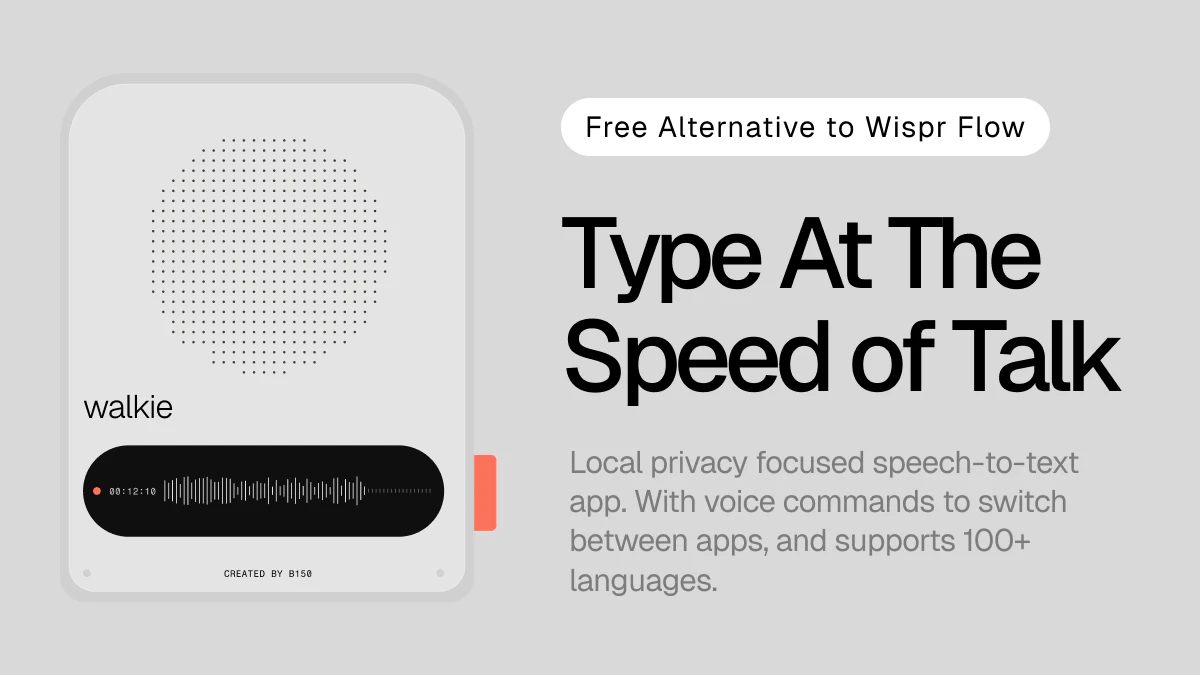
Walkie
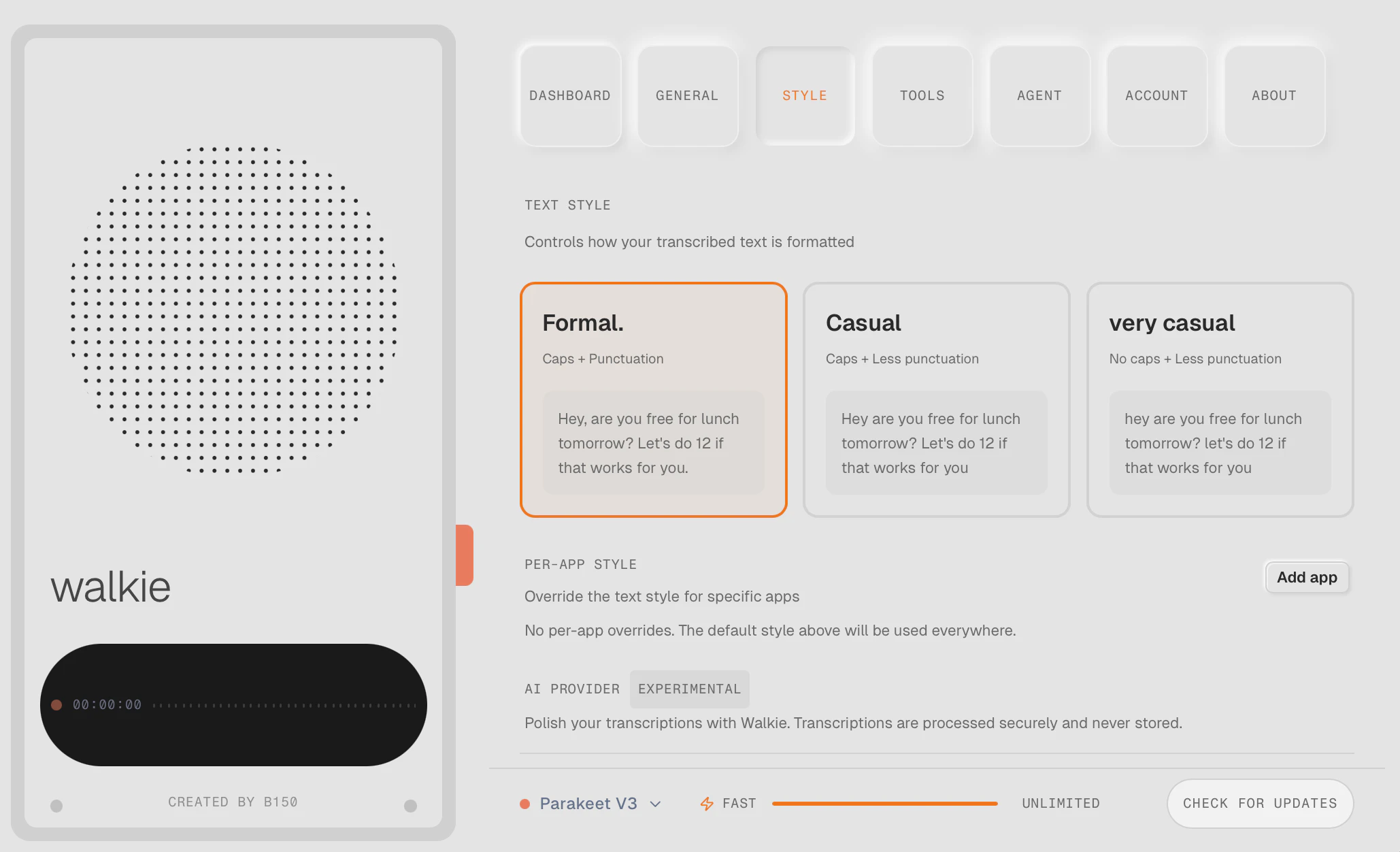
Desktop speech-to-text with two modes: Fast Mode for cloud transcription and formatting, and Local Mode for fully on-device dictation. Available for macOS and Windows.
I got fed up with Wispr Flow charging for some basic services and decided to build a better version I could offer for free. Now we offer everything Wispr Flow does for free and just charge for the parts where we are truly innovating or cost us money.
5
回复

@adam_perlis I'm sorry to say, your app doesn't support Bangla language at all. Bengal is my mother tongue and it has almost 300,000,000 speakers or one of the top 5-6 languages on earth. I have tried the free version and then I could not type a single sentence.

 What I did next? I changed the language and worked with English language. Well, I have to say that your level of accuracy is great. I don't have any complaint about it. As you can see, I have typed by using your app Waki and presenting here. But the main problem is that in the free version, it takes 30 to 40 seconds to transcribe only 100 words.

 This is frustrating and there are plenty other options available. So I suggest that you take care of this matter if you really want to get a decent number of users.

My OS: Windows 11 and 16GB RAM

1
回复

@adam_perlis Then I tried the paid or fast version and at first I typed some words in English language. The speed is fair enough, I have no complaint about it and I think that the paid version works quite well as far as speed is concerned. However, in your description you have pointed out that you wanted to offer a free alternative but I think that you need some catching up to do.

And in the fast or paid version, the accuracy level is quite good, great.

Then I tried with my mother tongue or Bengali language. The level of accuracy is not good. It made too many errors. The speed for the Bengali language is fine, but as I stated earlier, it is unworkable because of the errors.

Overall as a new product, it is good and I wish you all the success. Thanks a lot for coming up with a good app for speech-to-text or speech-to-recognition. I am hopeful that in coming months we will see a lot of developments from you.

0
回复

@adam_perlis What's the biggest frustration you had with Wispr Flow's paid basics that inspired this free alternative, and how did fixing it change your own workflow?

0
回复

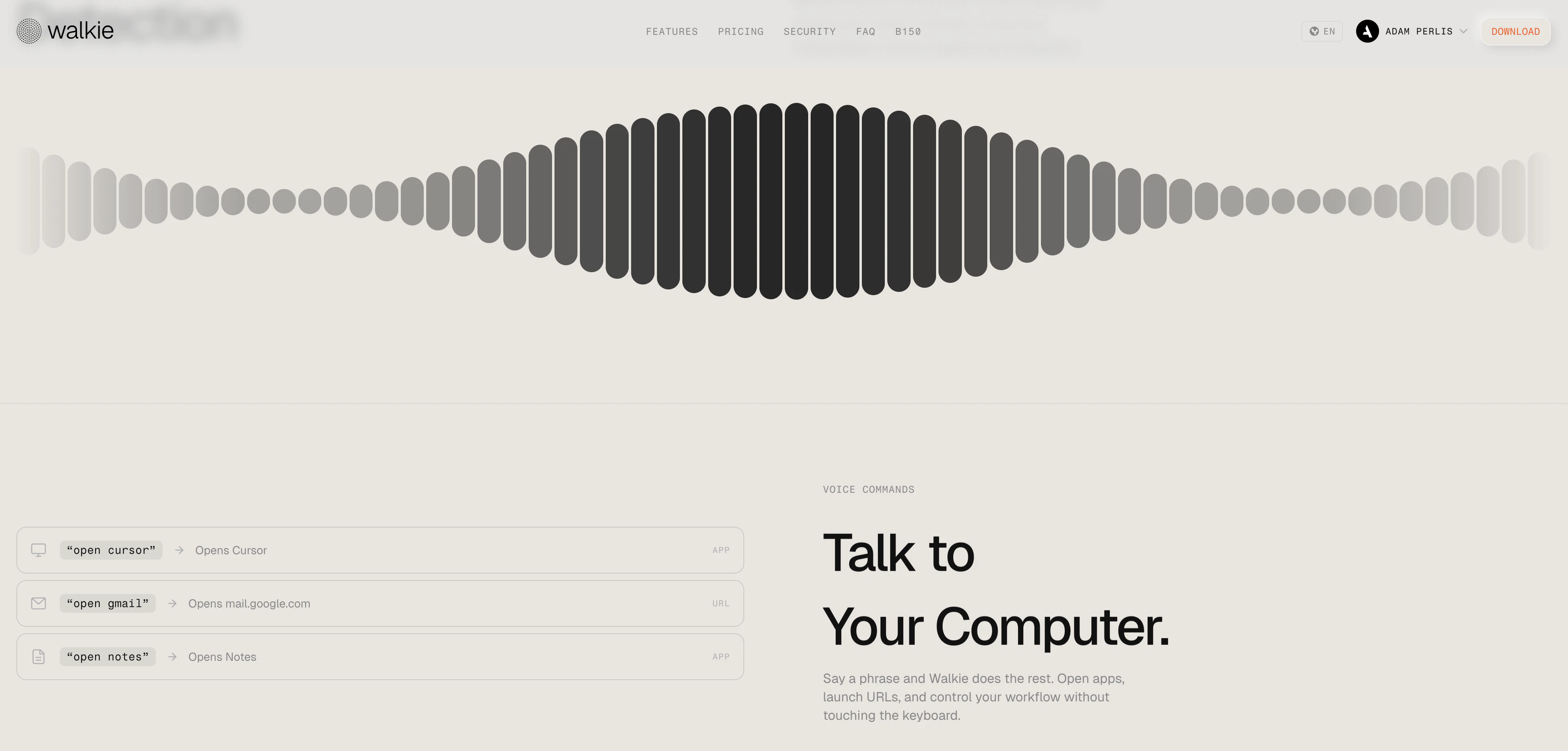
Much needed Wispr flow alternative, I like the idea of trigger phrases as it prevents dictating the same thing over and over.

Hopefully it will be able to handle accent diversity.

2
回复

@prateek_kumar28 I have found that if you try it a few times with the same word and just keep correcting it or adding the correction manually in the Walkie setting its usually nails it.

2
回复

it has multi language support such as hindi ?

1
回复

@pal_gai Yes any language support here: https://whisper-api.com/docs/languages/

2
回复

Hi Adam, congrats on your launch!

Wispr is charging for first-class STT quality, good UX and transcription speed. These things cost money, could you please share your plans on how to offer this for free?

I'm facing the same tasks in my product and I am open to discuss this!


1
回复

@rustam_khasanov while I am not able to share our trade secrets with a competitor haha I will say that we did lots of research to figure this out.

4
回复

Really love the idea of keeping speech-to-text fully local — privacy-first tools like this are underrated. Does it handle accented English well?

0
回复

Local processing is a big deal for anyone working with sensitive content. Nice to see STT tools that don't require sending everything to the cloud. What model are you running under the hood?

0
回复

Nice one, team. It's great to see a solid, free alternative in this space. Good luck with the launch!

0
回复

The dual-mode approach is smart. I'm building a Mac-native video editor that uses cloud transcription for accuracy, but I'd love to offer a local option for users who don't want to send audio off-device. How does Local Mode handle longer recordings — say 60+ minutes of a lecture with technical terminology? And how's the Japanese accuracy in Local Mode?

0
回复

@cyberseeds I have not tried anything that long but if you want to test is and send me the results I would love that! TBH its likely a better idea to use a different tool for that purpose that would record first and transcribe later. Seems like an edge case but if there are more people who want this we could probably figure it out.

0
回复

Any recommends for keeping my voice clean? All these talking is making it scrangly 😅 Maybe adjacent business opertunity? :D

0
回复

@conduit_design what do you mean by clean?

0
回复

the dual-mode approach is genuinely smart. most speech-to-text tools make you pick a lane: either cloud quality or local privacy. having both in one place covers different use cases without switching apps. i've used a few Whisper-based tools and local accuracy is better than people expect now.

curious what the "formatting" in Fast Mode actually does in practice. is it punctuation and paragraph cleanup, or does it restructure the content more meaningfully? that feels like the bit that separates quick voice notes from something you could actually send without editing.

0
回复

@fraser_svg both modes have some level of formatting. So on the local side you get basic formality stuff. But in the fast mode you get a bit more thoughtfulness. For example, lets say you said "Let's meet for dinner at 7pm or actually 8pm." it would auto correct to "Let's meet for dinner at 8pm." There are many scenarios where its just more intelligent about how it formats. Its also context aware so it knows the app your in and adjusts the context, for example in an email or a Slack.

0
回复

Love this! feels like Gen AI builders really need a space that’s more focused than traditional networks. The “build together” angle and emphasis on actually shipping things is especially strong.

Excited to see communities forming around people who are not just exploring AI, but actively creating with it.

We also launched today on Product Hunt — building Ogoron, an AI system that automatically generates and maintains test coverage as products evolve. Different layer, but same mindset of helping builders move faster and with more confidence :)

Good luck with the launch!

0
回复
#5
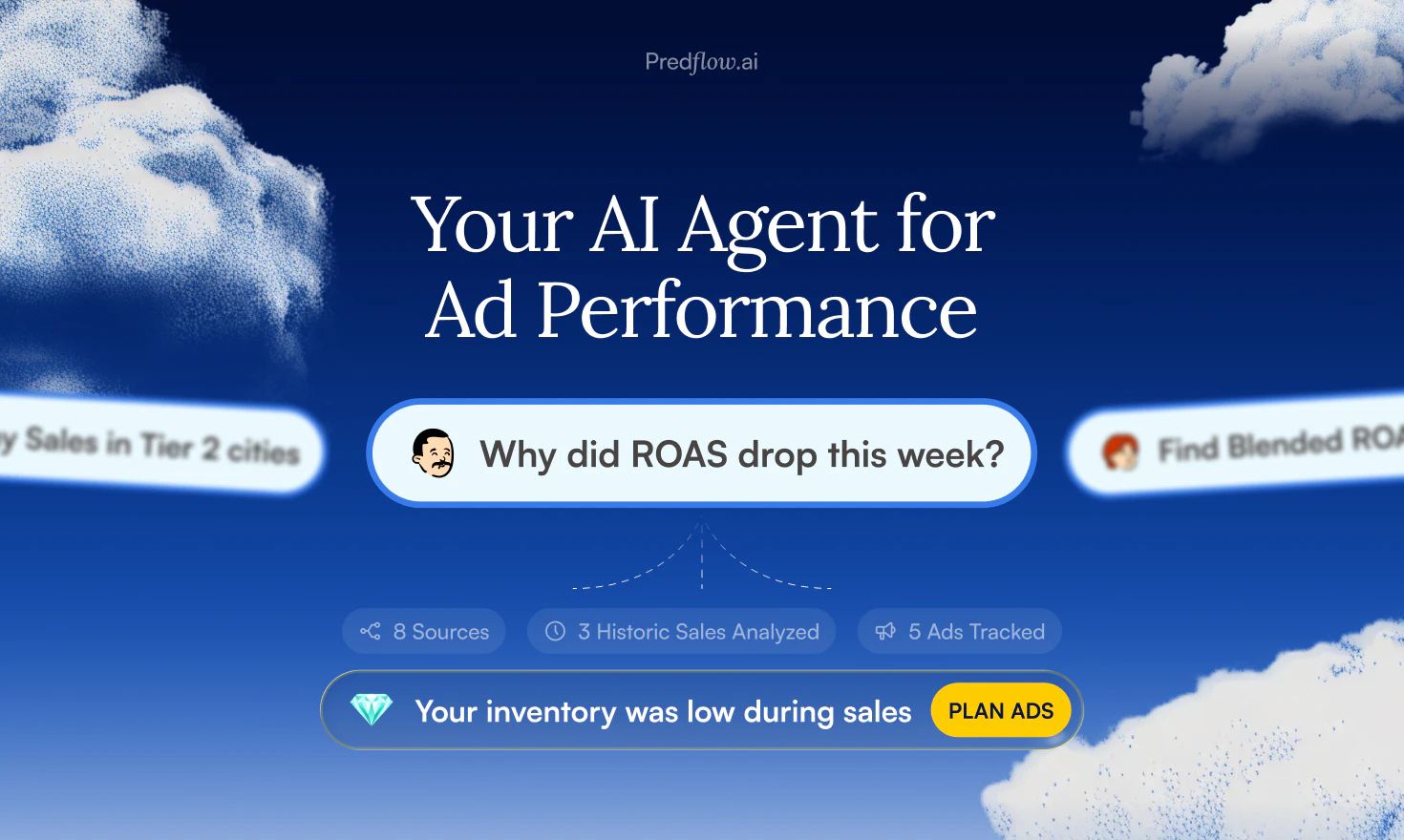
Predflow AI
Your AI agent for ad performance
166
一句话介绍:一款面向效果营销人员的AI代理,通过整合并清洗跨平台的混乱广告数据,直接回答业绩波动原因并提供可操作的优化建议,解决了营销者面对多个数据面板却无法获得可信、统一洞察的核心痛点。
Analytics Marketing Advertising
效果营销AI 广告数据分析 跨平台数据整合 语义数据层 归因分析 创意智能 营销自动化 D2C品牌 SaaS
用户评论摘要:用户普遍认可其解决数据混乱和提供行动建议的价值。主要问题集中在:AI能否发现新受众(目前仅优化现有);快速验证语义层价值的方法;小预算初期的可靠性(创意评分即时可用,预算建议需数周数据)。另有用户深入探讨了冲突标签处理的逻辑。
AI 锐评

Predflow AI的野心不在于成为又一个美观的仪表盘,而在于成为营销决策的“事实层”。其真正的颠覆性价值,在于产品介绍中轻描淡写的那句“数据本身在工具触碰之前就是混乱的”。它首先是一个激进的数据治理工具,其次才是AI分析应用。

绝大多数营销分析工具都建立在“输入数据是干净、标准”的幻想之上,但现实是,手动输入的UTM参数、内部黑话、多团队协作的随意性,早已让数据根基腐烂。Predflow构建的“语义层”,本质上是将深藏于不同成员头脑中的业务知识(如“NSD”代表某联盟伙伴)系统化、结构化的过程。这一步看似笨重,却是将数据转化为可信资产的前提。没有这个根基,上层的任何AI分析都只是“垃圾进,垃圾出”的精致演绎。

在此之上,其产品设计体现了明确的“去仪表盘”倾向,转向问答式AI代理。这符合高阶需求:资深营销者不需要更多图表,他们需要的是一个能理解业务语境、能直接回答“为什么”和“怎么办”的副驾驶。将创意评分、归因调和、预算建议整合进一个闭环,旨在缩短从洞察到行动的路径。

然而,其挑战同样明显。首先,“语义层”的初始设置需要客户投入时间进行知识迁移,这构成了不小的使用门槛和教育成本。其次,当前能力聚焦于现有活动的诊断与优化,在“发现新机会”(如新受众拓展)层面尚未深入,而这往往是营销者更渴求的增量价值。其三,在归因这个永恒的泥潭中,即便通过自有像素和调和逻辑提供了“更可信”的数字,但在隐私保护与数据碎片化加剧的大背景下,其“真实答案”的权威性能否持续,仍需观察。

总体而言,Predflow AI选择了一条最艰难但可能最正确的路:先当“数据清道夫”,再当“AI军师”。它能否成功,不取决于AI模型有多先进,而取决于多少客户愿意忍受前期梳理数据的阵痛,以换取后续长期的数据清明与决策效率。这是对市场成熟度的一次测试。

查看原始信息
Predflow AI
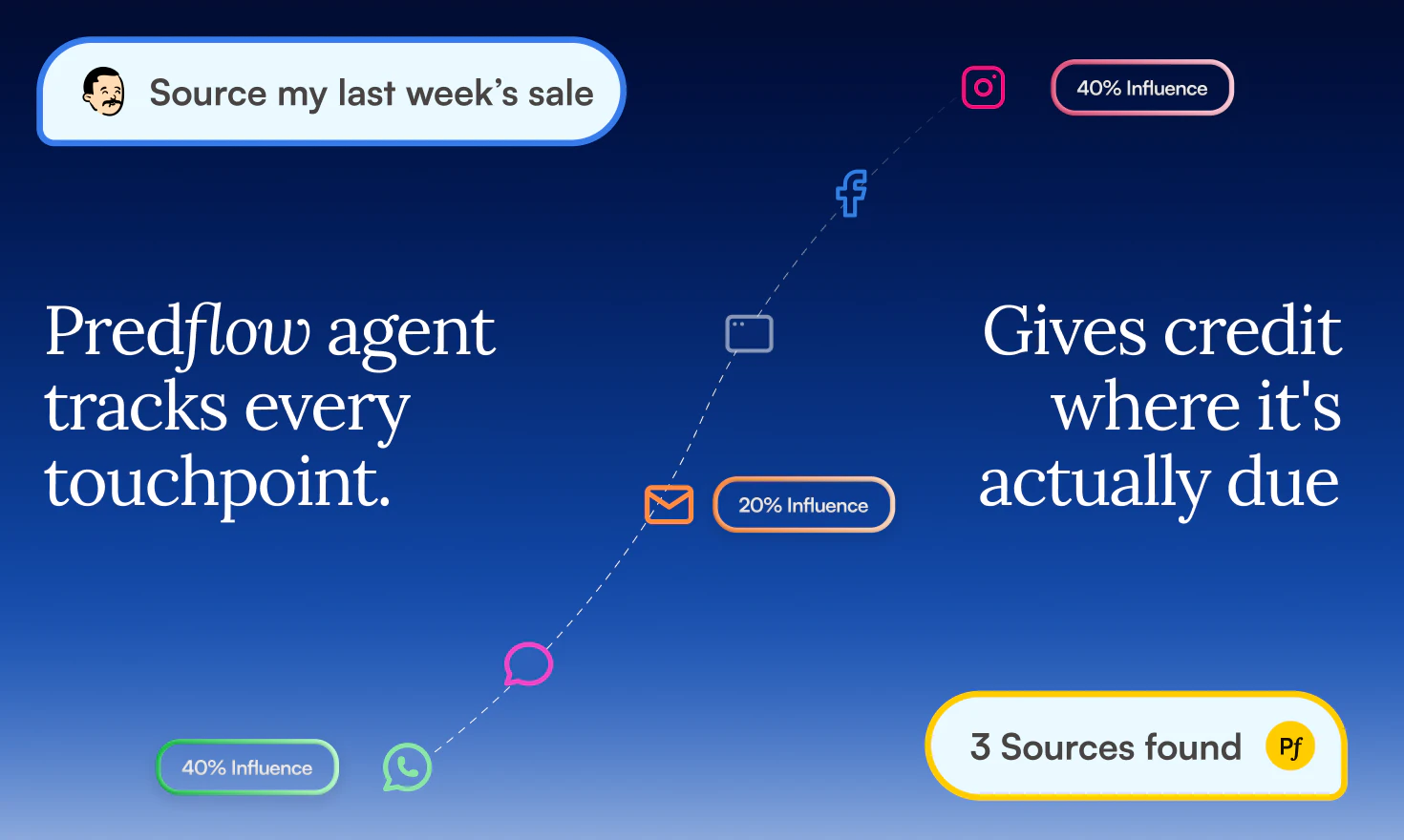
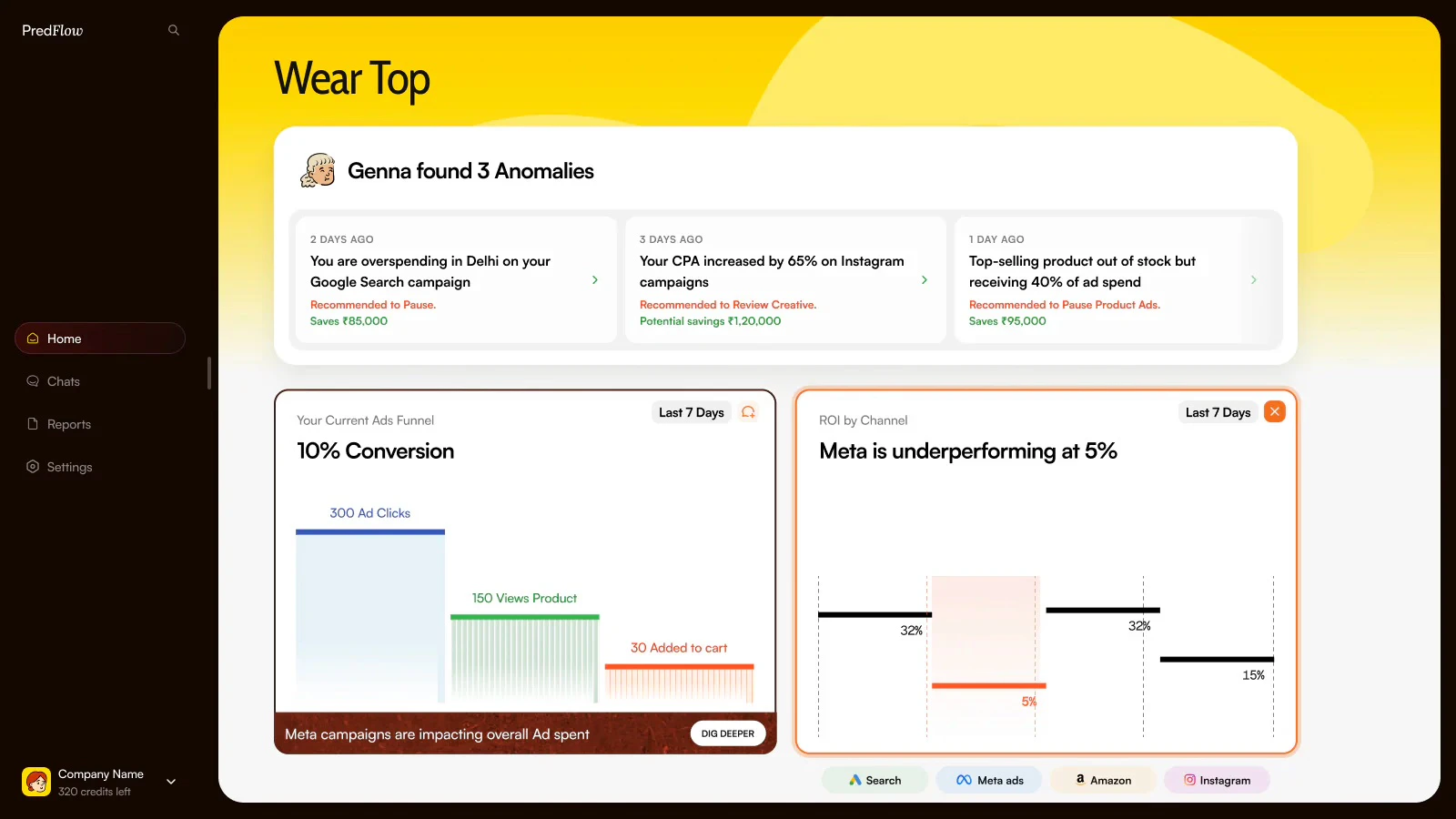
Predflow is an AI agent for performance marketers. It tells you what's happening with your ads, why it's happening, and what to do next. Connect your Meta, Google, and Shopify accounts and get actionable recommendations on creatives, budget, and attribution in minutes.

Hi, I'm Gautam, co-founder of Predflow. This is our third pivot.

Before this, we built a customer intelligence platform for D2C brands. Segmentation, retention, predictive audiences. It didn't work. But every single brand we talked to had the same problem, and it had nothing to do with segmentation.

Their ads data was broken.

A brand would show me their Meta dashboard claiming 4.2x ROAS. Then they'd open Shopify and revenue was flat. Google was claiming credit for the same conversions. Three dashboards, three stories, but there was zero clarity.

I watched performance marketers spend hours every week trying to figure out why ROAS dropped, with no real answer. I watched founders ask "where did the money go?" and nobody could point to a number they trusted. I watched teams kill their best prospecting campaigns because last-click attribution made branded search look like the hero.

That's the problem we set out to solve. But once we started digging, we found a deeper issue nobody talks about.

The data itself is messy before any tool even touches it.

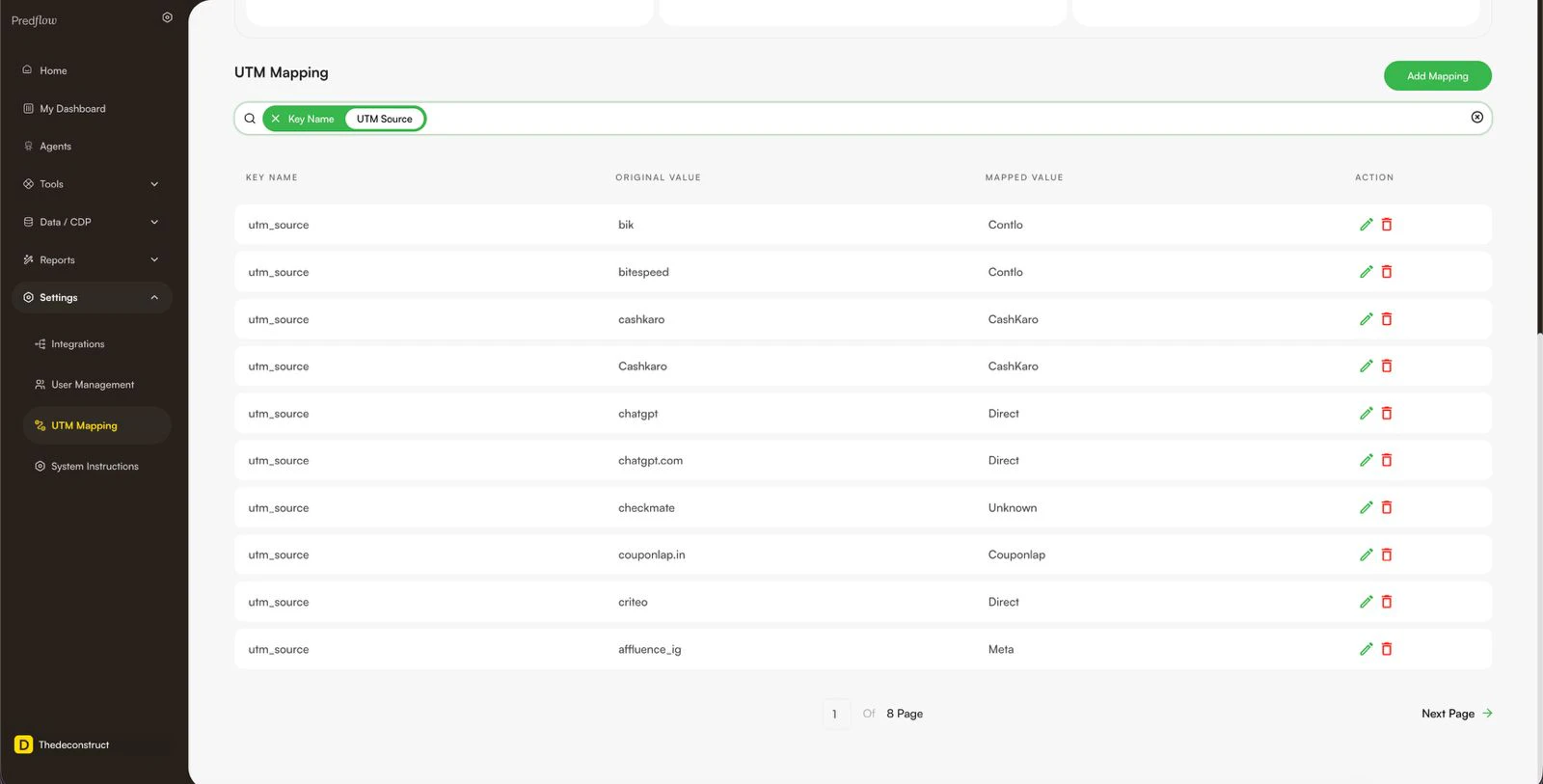
Here's what I mean. Every time someone clicks an ad and lands on your store, a little tag travels with them saying where they came from. These tags are typed in manually by whoever set up the campaign. Your marketing team types "Instagram." Your agency types "IG." Your affiliate partner types "NSD" because that's their internal shorthand. Six months later, you have dozens of tags that mean the same thing but look completely different to any software reading them.

Now when you ask "how much revenue came from affiliates?", every analytics tool gives you the wrong answer. Not because the tool is bad. Because it doesn't know that "NSD" is your affiliate partner. That knowledge only exists in someone's head.

We built a layer that fixes this. We call it a semantic layer. Think of it as a translation dictionary between what your raw data says and what it actually means in your business. You tell the system once: "NSD" means "Non-Stop Deals" and that's an affiliate. "bik" and "bitespeed" are both the same retention tool. From that point on, every report, every AI answer, every dashboard uses the clean version. You set it up once, it applies everywhere.

On top of that clean data layer, we built three things:

  1. Attribution that actually reconciles. We connect to your ad accounts, your store through our own web pixel, and your analytics. Your attributed revenue can never exceed your actual revenue. When Meta says 25 orders and Shopify says 15, we show you the real number and why.

  2. An AI agent that understands your business. Not a dashboard you stare at. An agent you ask questions. "Why did ROAS drop yesterday?" "How did innerwear CAC move month over month?" "Which campaigns should I kill?" It answers with real numbers because the data underneath is clean. A brand's head of marketing asked ours for CAC broken down by innerwear vs outerwear over 12 months. The agent returned the answer instantly because the semantic layer already knew which of their 200+ SKUs belonged to each category.

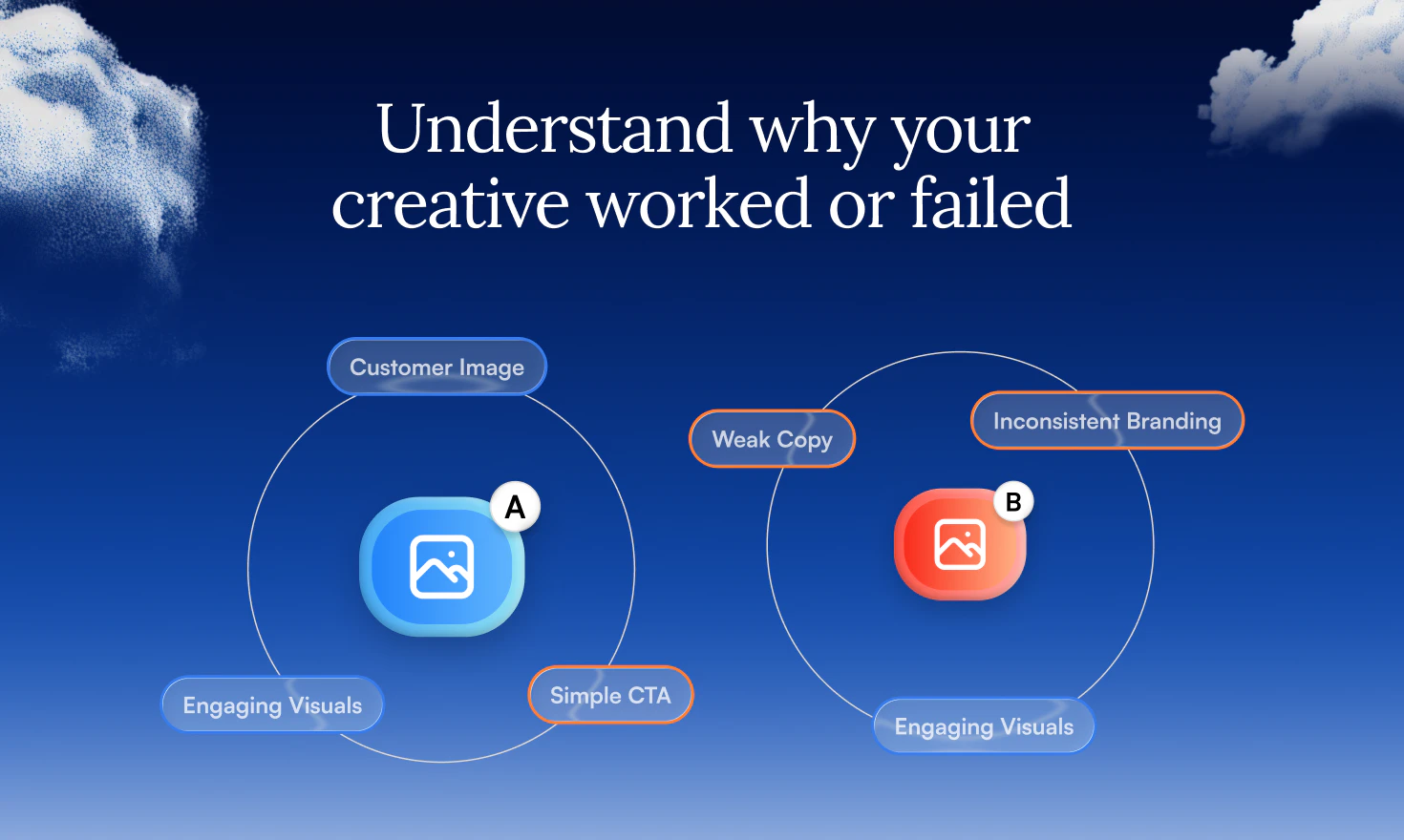
  3. Creative intelligence. It scores your ads, catches fatigue before it tanks your ROAS, and tells you which hooks are working and which aren't. You can try this part for free right now at https://app.predflow.ai/ad_comparator_app, no signup needed.

We built this for performance marketers, D2C brand operators, and agencies managing ad spend across Meta and Google. We have 8 paying customers onboarded, from brands spending $5K/month to ones managing over $75K/month. The feedback that keeps coming back: "This is the first time my numbers actually made sense."

You can try it free at predflow.ai or install directly on Shopify at apps.shopify.com/predflow.

Would genuinely love your feedback. All of it helps.

20
回复

@gautam_borad1 Excited to see this live .

But I am curious bout if the AI agent can identify entirely new audience segments or is it focused solely on optimizing the ones already running ?

1
回复

@gautam_borad1 Congrats, quick question: for someone juggling Meta/Google/Shopify now, what's the fastest semantic layer win to test before full setup?

2
回复

Looks promising guys, congrats on the launch

3
回复

Thank you @alara_akcasiz !!

2
回复

Most dashboards just show you numbers and leave you guessing. We're about to start running Meta and Google ads for our launch and the idea of getting actionable recommendations on creative and budget allocation from day one instead of burning through budget while we figure it out is really appealing. How much ad spend data does Predflow need before the recommendations become reliable? Like does it work for early campaigns with small budgets or does it need a certain volume first?

3
回复

Hi @ben_gend well it depends on which part you're asking about.


AI Creative scoring works from Day 1. Upload your creatives before you spend a dollar and Predflow will tell you what's wrong with the hook, the CTA, the awareness stage fit, etc. That's actually where most launch budgets get burned, and they are just fixable creative problems nobody caught.

For budget allocation and other recommendations, you need a few weeks of data.

The other thing that helps early-stage brands specifically: because your UTM data is clean from the start, you avoid the mess that most brands spend months trying to untangle later. And believe me its quite a task! Setting up the semantic layer before you launch means your Month 1 data is actually usable. Most brands come to us after the data is already broken.

2
回复

tagging inconsistency is such an underrated data quality problem. curious how you handle conflicting definitions when multiple teams set tags differently?

2
回复

@mykola_kondratiuk  great question! This is a hard problem to solve. First we surface every unique value alongside its count, then we let the brand define which mapping to take preference.
The harder edge case is when two teams have been using the same tag to mean different things. This one we genuinely can not resolve without a conversation with the brand.
For such problems we give the humans how hold the knowledge a clean interface to encode it once, so the Semantic Layer is consistent and clean.

2
回复

Really like this shift from dashboards to actual decision-making support– understanding why something is happening and what to do next is where AI can bring the most value for marketers.

Connecting creatives, budget, and attribution into one feedback loop sounds especially powerful.

We also launched on Product Hunt today — building Ogoron, an AI system that automatically generates and maintains test coverage as products evolve. Different domain, but very similar idea of turning complex signals into clear, actionable outcomes :)

Good luck with the launch

2
回复

Congrats on shipping! Does the AI agent also suggest new audience segments or just optimize existing campaigns?

1
回复

Hi @ermakovich_sergey ! Currently our agents optimize whats already running (existing campaigns). Budget allocation, creative fatigue, channel-level ROAS, root cause when something drops.
Audience segment suggestions are on the roadmap but we haven't shipped that yet.


What we do have is cohort-level analysis: new vs repeat customers by source, channel, product type, etc.

This ends up surfacing a lot of the same insights indirectly. "Your Meta campaigns are acquiring first-time buyers at 3x the CAC of Google" is a budget insight but it's also telling you something about who each channel is reaching.

0
回复
#6
Metoro
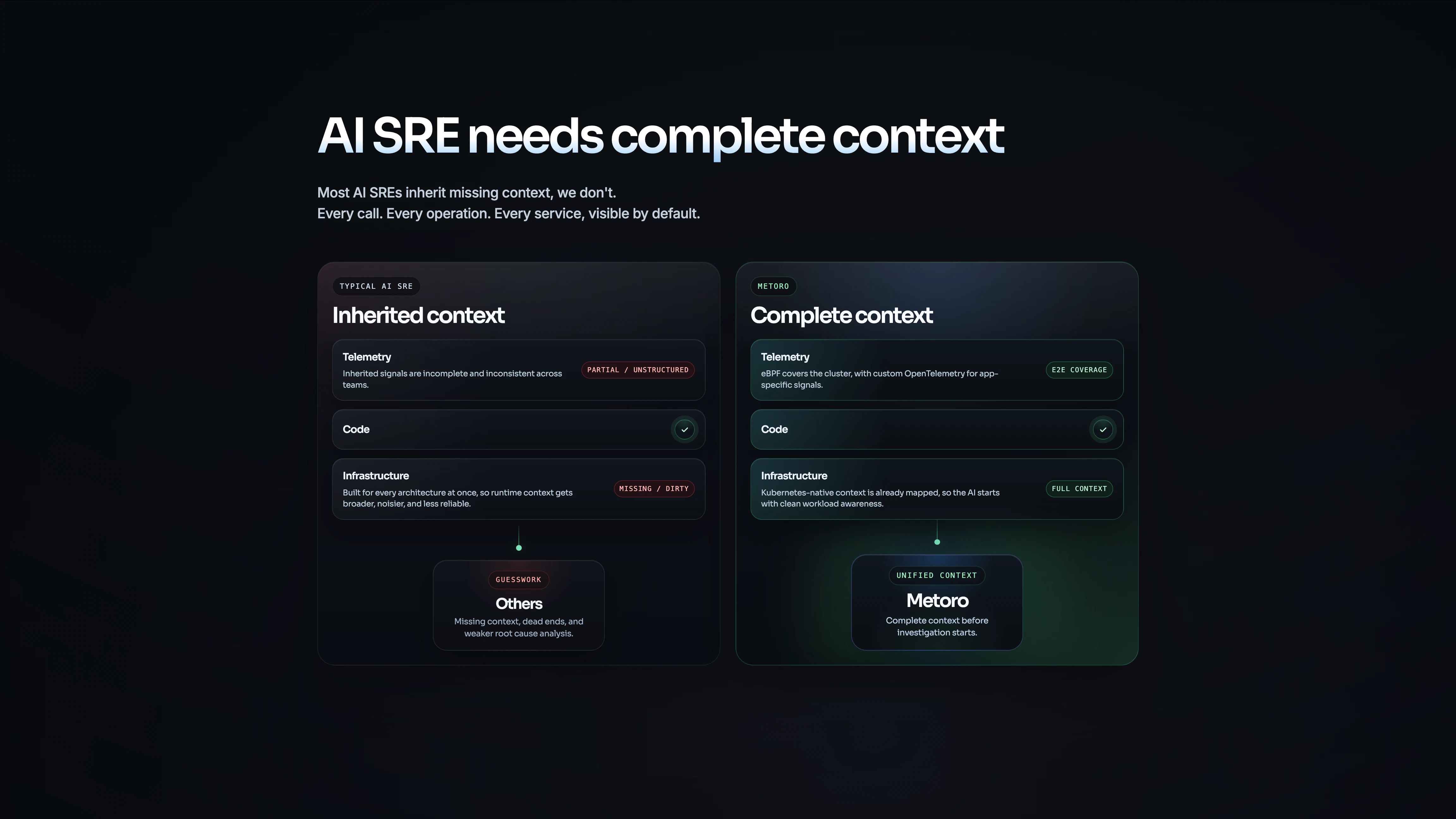
AI SRE that detects, root causes & auto-fixes K8s incidents
150
一句话介绍:Metoro是一款AI SRE工具,专为Kubernetes环境设计,通过eBPF技术无侵入采集遥测数据,实现从实时故障检测、根因分析到自动生成修复PR的全流程自动化,解决了运维人员手动排查生产事故效率低下、系统遥测数据不一致的痛点。
SaaS Artificial Intelligence
AI运维 Kubernetes SRE 故障自愈 eBPF 可观测性 自动化修复 云原生 根因分析 零代码侵入
用户评论摘要:用户普遍赞赏其基于eBPF提供一致遥测数据的技术路径,认为这解决了AI运维的底层数据可靠性问题。主要关切点集中在:自动生成修复PR的安全性验证与回归风险;对复杂、跨服务故障的处理能力;数据隐私与敏感信息过滤;以及如何降低误报和体验产品实际效果。
AI 锐评

Metoro的野心不在于成为又一个华丽的“AI告警”仪表盘,而试图直击运维自动化的终极痛点:闭环修复。其真正的颠覆性价值,并非AI诊断本身,而在于通过eBPF在操作系统内核层统一“制造”标准化、高质量的遥测数据。这本质上是对当前混乱、割裂的可观测性现状的一次“底层革命”,为上层AI分析提供了稳定、可信的“燃料”,使其“开箱即用”的承诺具备技术根基。

然而,其最受争议也最具风险的环节,正是其价值主张的顶峰——“自动修复”。从评论看,团队对此有清醒认知,采用了“人在环中”的审慎策略,仅生成PR建议而非盲目自动合并。这暴露了当前AI在复杂系统运维中的核心局限:它擅长基于模式的分析与建议,但极度缺乏对系统“隐性知识”、业务上下文和长期技术债的深度理解。一个“技术上正确”的修复,可能引发意想不到的级联反应。因此,Metoro现阶段更像一个“超级副驾驶”,将工程师从繁琐的数据收集和初步诊断中解放出来,聚焦于最终决策与风险评估。

其成功的关键,将取决于两点:一是在复杂故障场景下(如跨服务、部分信号缺失),其根因分析的准确率能否持续高于资深工程师;二是其“修复验证”闭环的成熟度,即能否在部署后快速、准确地评估修复效果并执行回滚。它描绘了一个诱人的未来,但通往“自主运维”的道路上,信任的建立远比技术的展示更为漫长和艰难。

查看原始信息
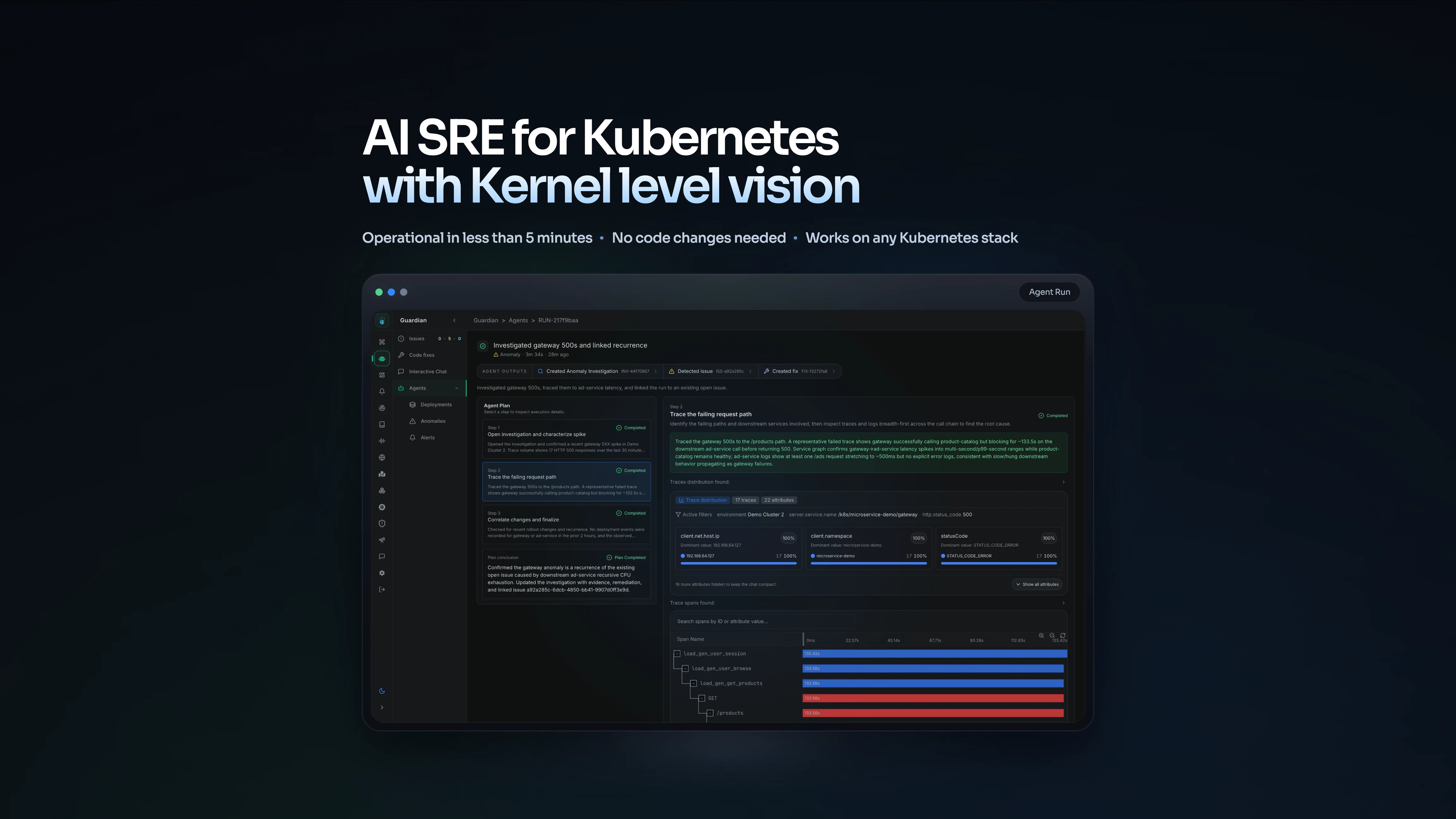
Metoro
Metoro is an AI SRE for systems running in Kubernetes. Metoro autonomously monitors your environment, detecting incidents in real time. After it detects an incident it root causes the issue and opens a pull request to fix it. You just get pinged with the fix. Metoro brings its own telemetry with eBPF at the kernel level, that means no code changes or configuration required. Just a single helm install and you're up and running in less than 5 minutes.

Hey PH! We're Chris & @ece_kayan , the founders of Metoro.

We built Metoro because dealing with production issues is still far too manual.

Teams are shipping faster than ever with AI, but when something breaks, engineers still end up jumping between dashboards, logs, traces, infra state, and code changes just to figure out what happened and how to fix it.

We started working on this back in 2023 during YC’s S23 batch, and learned a hard lesson from customers early on: generalized AI SRE doesn't work reliably for two reasons.

  1. Every system is different. The architecture is different. Some teams run on VMs, some on Lambdas, some on managed services, some on Kubernetes, others on mixtures of all of them.

  2. On top of that, telemetry is usually inconsistent. Some services have traces, some don’t. Some have structured logs, some barely log at all. Metrics are named differently everywhere.

This means that teams need to spend weeks or even months generating system docs, adding runbooks, producing documentation and instrumenting services before the AI SRE can be useful. That wasn't workable.

So we took a different approach.

With Metoro, we generate telemetry ourselves at the kernel level using eBPF. That gives us consistent telemetry out of the box with zero code changes required. No waiting around for teams to instrument services. No huge observability blind spots.

And because Metoro is built specifically for Kubernetes, the agent already understands the environment it’s operating in. It doesn’t need to learn a brand new architecture every time.

The result is an AI SRE that works out of the box in under 5 minutes.

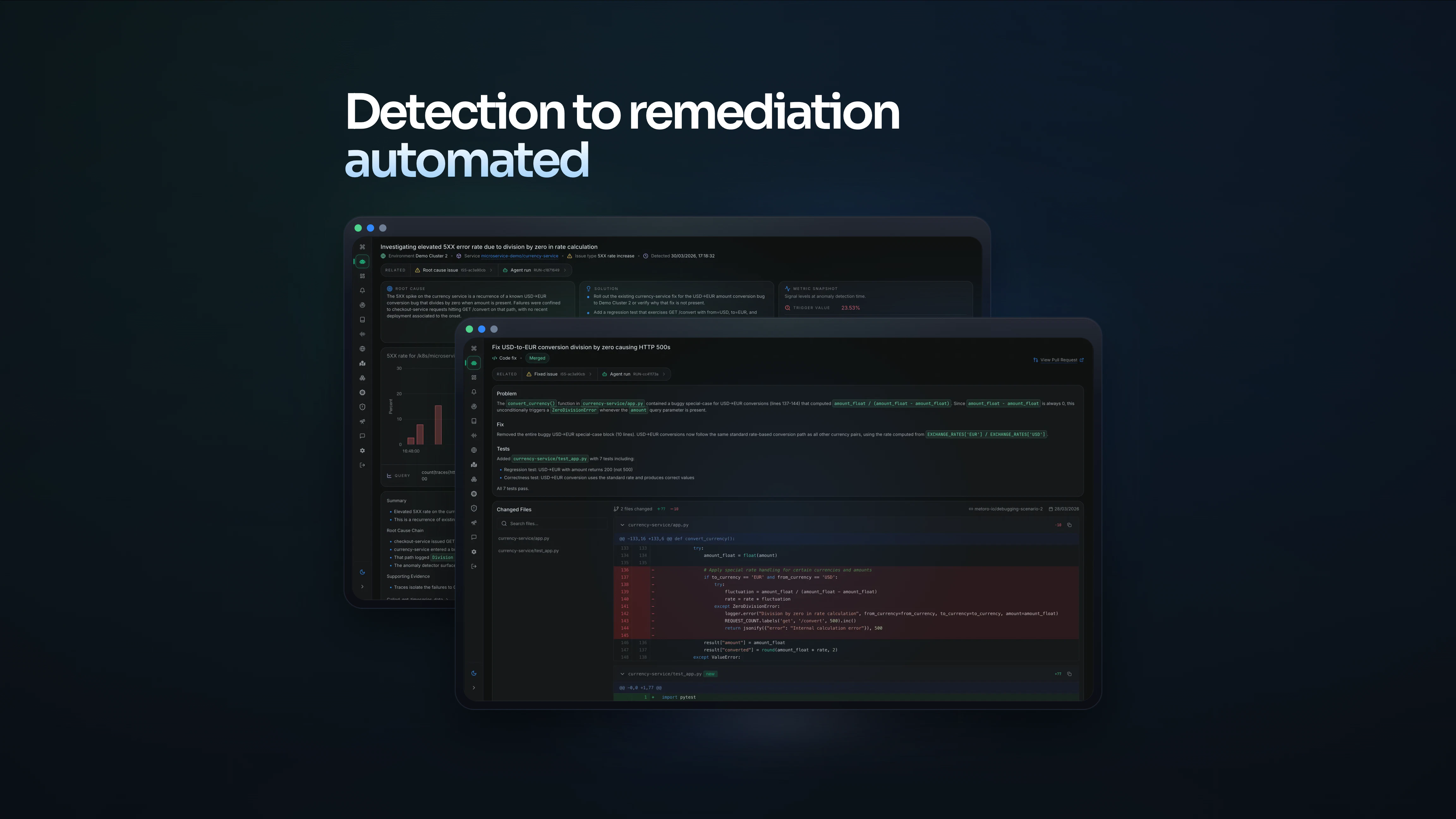
We automatically monitor your infrastucture and applications, when we detect an issue we investigate and root cause it. When we have the root cause, we automatically generate a pull request to fix it, whether that's application code or infrastructure configuration. Detect, root cause, fix.

We’re really excited to be launching on Product Hunt today 🚀

We’d love for you to check it out, try it, and ask us anything. Whether that’s about Metoro, Kubernetes observability, or AI in the SRE space.

18
回复

@ece_kayan  @chrisbattarbee 
I’ve been burned by 'AI SRE' promises before, but your approach to the data problem (eBPF) makes this actually feel technically grounded.. Really great to see

6
回复

@ece_kayan  @chrisbattarbee eBPF is the part that made me stop here. Most tools in this space sound great until the data gets patchy. Starting with your own telemetry makes the whole thing feel a lot more believable.

How often are teams merging the PR as is?

2
回复

@ece_kayan  @chrisbattarbee Congrats on the launch Metoro! Really impressed by the ambition here, an AI SRE that can spot, diagnose, and even fix Kubernetes incidents on its own feels like a big leap for platform and SRE teams.

I spent some time on the homepage and honestly found myself wanting to see the AI in action a bit more. The vision is clearly laid out, but I didn’t get a strong sense of what the actual fixes look like or how smooth the whole process feels before signing up.

I’m genuinely curious how are you planning to let new users experience the real power and speed of the AI early on? Would love to hear your thoughts.

0
回复

Where is telemetry data stored when using Metoro (cloud vs self-hosted)?
Do you support running on Azure Kubernetes Service (AKS), and are there any limitations?

3
回复

@anil_yucel1 

Hey Anil :)

So we offer three distinct hosting options:

  1. Metoro Cloud - Fully managed by Metoro, Metoro manages the infrastructure in our environment. Telemtry data is stored in our cloud environment

  2. BYOC (Bring Your Own Cloud) - Managed by Metoro, hosted in your cloud - in your case in your Azure account. Telemetry data is stored in your cloud environment in buckets that you own but Metoro operates (Azure Blob Storage in your case)

  3. On Prem - Fully managed by you, we just provide support. Telemetry data is stored wherever you choose to host Metoro, we support cloud based storage options like s3 and Azure blob storage or disk based solutions too (SSDs are recommended)

Yep we fully support AKS, no limitations!

2
回复

Does it work well with many scheduled jobs/tasks for which the code is in a large monorepo?

3
回复

@alexander_zakon Yes!

So each k8s cronjob gets mapped to a service internally in Metoro. Then each service is assigned a codepath which is a combination of repository and source path. It looks something like:

sourceRepo: https://github.com/org/repo
sourcePath: /src/cmd/... 

Metoro discovers those automatically by itself by comparing emitted logs, profiling information etc but you can also set it manually by setting an annotation on the pod or the CronJob itself https://metoro.io/docs/integrations/github#option-1-using-kubernetes-annotations-recommended

1
回复

Nice! I think we could use this at Asteroid. I'm interested to know how you've thought about keeping it secure when things go wrong

2
回复

@joe_hewett1 Thanks Joe!

Yep there's a couple levels

In cluster components

All of our monitoring is done out of process via eBPF which lives effectively isolated in the linux kernel. So lets say we have a bug, it isn't possible for us to affect your services, worst case we wouldn't be collecting telemetry.

Data Security For The Agent

All agents run without internet access and have tight RBACs so they can only see specific subsets of data. This way it's not possible for the agent to accidentally exfiltrate data

1
回复
Hey Chris, that lesson about generalized AI SRE not working because every system is different and telemetry is inconsistent sounds like it came from real pain. Was there a specific customer or incident where you watched the AI completely miss the problem because the data just wasn’t there or didn’t line up?
2
回复

@vouchy Yeah there were a bunch of times to be honest. The shape is a bit different each time but the cause is the same.

Super common example that it ran into was not knowing the "lore" behind a metric. One concrete example is this: The agent would work its way down through an investigation and would be arriving at the conclusion that there was a resource bottleneck for particular service. It would see that there is a metric: "cpu_utilization_serviceX" so it would query that. However that metric would have a "mode" attribute that has a bunch of different values.

Looked like this:

So in order to get actual utilization it needed to do a sum across all modes where the mode is not equal to idle.

The agent just wouldn't know this (as you likely wouldn't as an engineer without context) so it wouldn't be able to nail down the root cause.

This is the sort of thing that consistent telemetry solves.

These instances add up and it's a "death by 1000 papercuts" situation.

1
回复

The way you approached this with setting up consistent telemetry as a first step makes this very promising.

I wonder if I can also use it to monitor some longer term trends in the metrics?

2
回复

@alibi_yeslambek For sure.

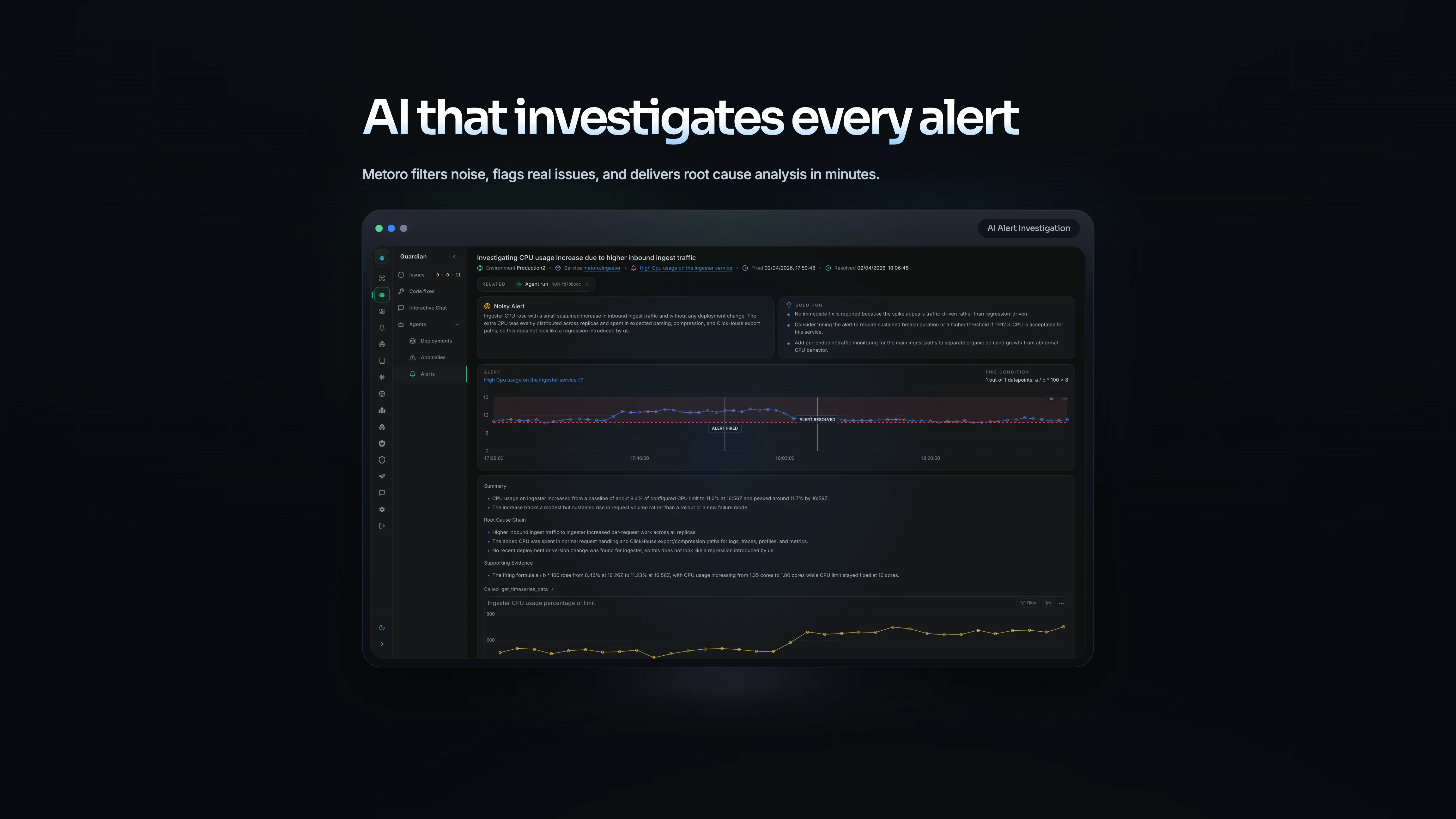
So by default the AI SRE sets up anomaly monitors on things we classify as golden metrics (think RED metrics and some infrastructure level signals). The anomaly monitors there run at different timescales, we have O(minutes), O(days) and O(weeks) right now. If anything breaches those thresholds then the agent will investigate, determine whether or not its noise and ping you if it actually is a problem.

You can also specify metrics that you want to have monitored manually if that's more your style too

1
回复

@chrisbattarbee Interesting direction. Most tools stop at alerts and dashboards, going into auto-fix is a big step. How do you handle edge cases where the issue isn’t clearly defined or spans multiple services?

1
回复

@chrisbattarbee  @josh_bennett1 

Great question! If the issue spans multiple services, multiple investigation agents are spawned across the affected paths instead of assuming one service is the problem.

They follow the dependency graph from eBPF-generated traces and investigate each branch using traces, logs, metrics, k8s state, deploy/config diffs, and memory (what it already knows about that services behaviour). That lets us separate the first real failure from the downstream.

If there is a clear initiating fault, we identify it. If there isn’t, we surface the causal chain and candidate failure points with evidence instead of pretending there is one neat root cause.

0
回复

@chrisbattarbee Generating telemetry at the kernel level with eBPF to remove the instrumentation overhead is a strong approach. That part makes a lot of sense, especially given how inconsistent telemetry can be across services and teams.

The part that feels much harder is the auto-fix layer. In real systems, issues are rarely isolated. You often have partial signals, cascading failures, or symptoms that look like root causes. In those cases, even getting the diagnosis right is non-trivial, let alone generating a fix that is safe to apply.

How do you validate that a generated PR is actually safe in production and not just technically correct in isolation? For example, avoiding cases where the fix resolves one symptom but introduces regressions elsewhere or conflicts with existing infra assumptions.

I’ve been working in a similar space on the code side with Codoki.ai (AI code review and automated fixes), and even at that level, ensuring suggestions are reliable and not contextually wrong is a constant challenge, especially as systems get larger and more complex. So pushing this into infra-level auto-remediation is a big step.

Would be interesting to understand how you’re handling validation, rollback strategies, or confidence scoring before applying fixes.


Congrats on the launch.

1
回复

@chrisbattarbee  @moh_codokiai Thanks Muhammad!

Really good question and I agree, code fixes are one of the hardest parts. To be clear, we don’t do blind auto-remediation.
Metoro is human-in-the-loop: it investigates the issue, identifies the likely initiating failure, and then suggests a code fix (which you can open a PR) for an engineer to review or for a coding agent to work on it further. We do this very intentionally to make sure that the fixes go through the same safety mechanisms that a normal release would go through.

To reduce the risk, the suggestion is grounded in eBPF telemetry, topology, infra context, recent deploys/config changes, and the actual code path, so we are not just reacting to one noisy symptom. Its crossed checked against telemetry, infra and code.
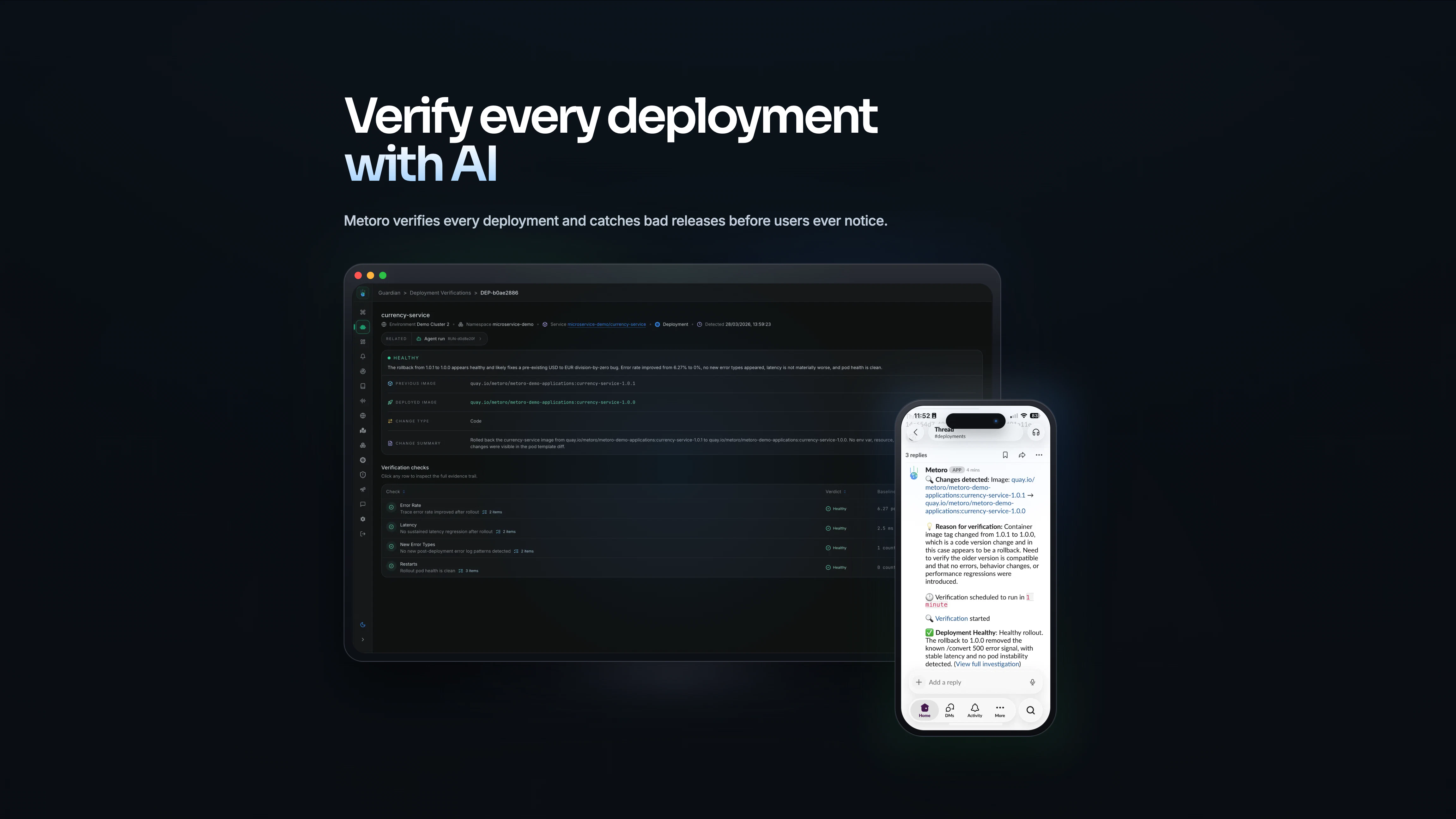
Then once the change is deployed, we verify the rollout against production telemetry to see whether it actually resolved the issue or caused regressions (the ai deployment verification feature).

It’s not a fully autonomous remediation system yet, but it is designed to get teams 80%+ of the way to resolution.

0
回复

@chrisbattarbee and @ece_kayan Good stuff! In my experience, you’re spot on about how heterogeneous and inconsistent observability is in practice. I’m going to try it out and might ping you for a chat.

1
回复

@ece_kayan  @shrir Amazing, thanks Shrirang!

0
回复

Congrats, looking forward to trying it.

Is it just kubernetes or does it also work on apps too?

1
回复

@saturnin_pugnet So if those apps are running in Kubernetes then we work on those too. We hook into the source code via a github integration so we can debug application level issues too.

The classic use case is that a bad deploy ships, we can see exactly which parts of the code change and deeply investigate the endpoints that have been changed to understand if there's an actual regression based on our telemetry

1
回复

love the s23 batch background. it’s clear you guys learned a lot from the 'generalized ai' failure. how does the agent handle 'false positives' in a noisy environment where some services are naturally spikey?

1
回复

@vikramp7470 Thanks Vikram!

So we've had to address this problem a lot right now with quite a few of our customers.

Essentially we apply anomaly detection to remove a lot of the baseline of 20% of the requests to this service generally result in a 5XX response.

Then after that, the agent will run an investigation to see why a spike happened. When we find the root cause we create an 'issue'. Now next time we run an investigation we check to see if the root cause of that issue was a recurrence of any other issue. If it is then we just add it as a recurrence of that issue. We dont ping teams for issues that recur frequently so we reduce the noise that way.

This keeps the list of actual issues small and concise so you can see what issues you need to address. You can quickly see "this issue recurred 20 times in the last 3 days" so we should probably address it

2
回复

This is a very compelling direction, moving from observability to actual autonomous remediation is a huge step for SRE workflows.

Love the idea of going from detection → root cause → PR with a fix, especially without requiring code changes. The eBPF + zero-config setup makes it even more impressive.

We also launched on Product Hunt today — building Ogoron, an AI system that automatically generates and maintains test coverage as products evolve. Different part of the lifecycle, but very aligned in spirit: reducing the manual overhead of keeping complex systems reliable :)

Good luck with the launch!

1
回复

@yanakazantseva1 Thanks Yana, best of luck with your launch too! Ogoron seems pretty cool :)

0
回复

AI SRE using eBPF to collect telemetry definitely seems like the way to go - I was dreaming of such a solution, could you onboard me @chrisbattarbee ? Looks amazing would love to have a chat and test it !

1
回复

@paul_vidal Thanks Paul!

For sure, onboarding is however you like! Either just install it yourself (after logging in you'll be given the single helm command) or if you book a meeting here https://cal.com/team/metoro/engineer I'll be sure to pick it up and run you through it :)

1
回复

Looks promising!! Can't wait to try this out. Quick question: If eBPF can see all requests in the cluster, how do you avoid accidentally collecting or shipping sensitive data from them? That’d be one of my first concerns in prod.

1
回复

@abin_paul1 Hey Abin, good question. So for each protocol we only pull out known non-sensitive parts of the request.

As an example, think http.

We dont export all headers for example or the body, but we do export URL parameters, path, url etc

Effective each protocol has a default allow list which you can augment yourself.

2
回复

the autonomy angle is appealing. my concern is auto-PRs that fix one incident and quietly regress something else - without a human gate somewhere, that's a hard failure category to catch.

1
回复

@mykola_kondratiuk For sure we definitely agree with you. That's one of the main reasons behind using PRs in the first place, before the PR is merged you should definitely be reviewing or using tooling to help verify the PR (like all the other PRs!)

1
回复
#7
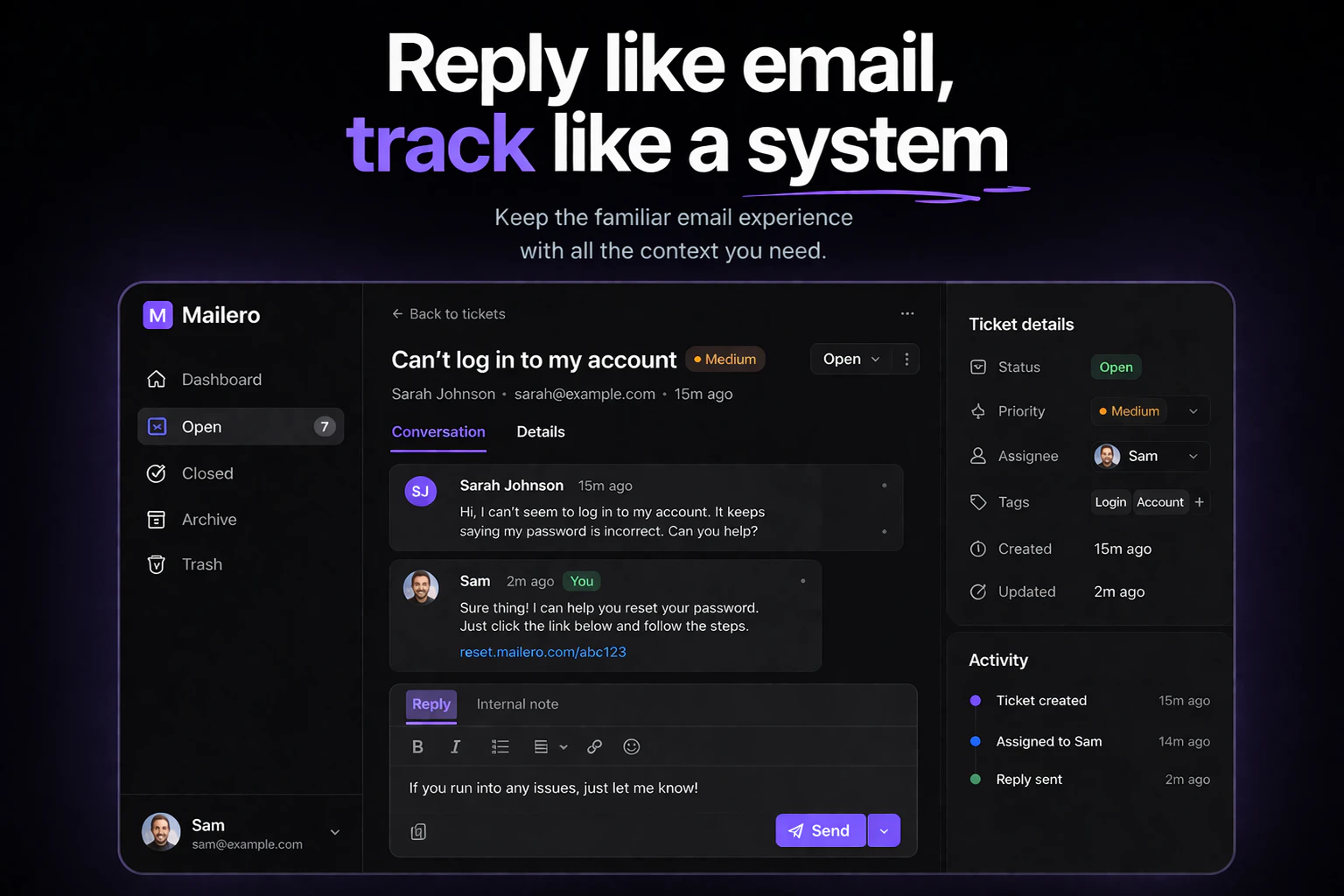
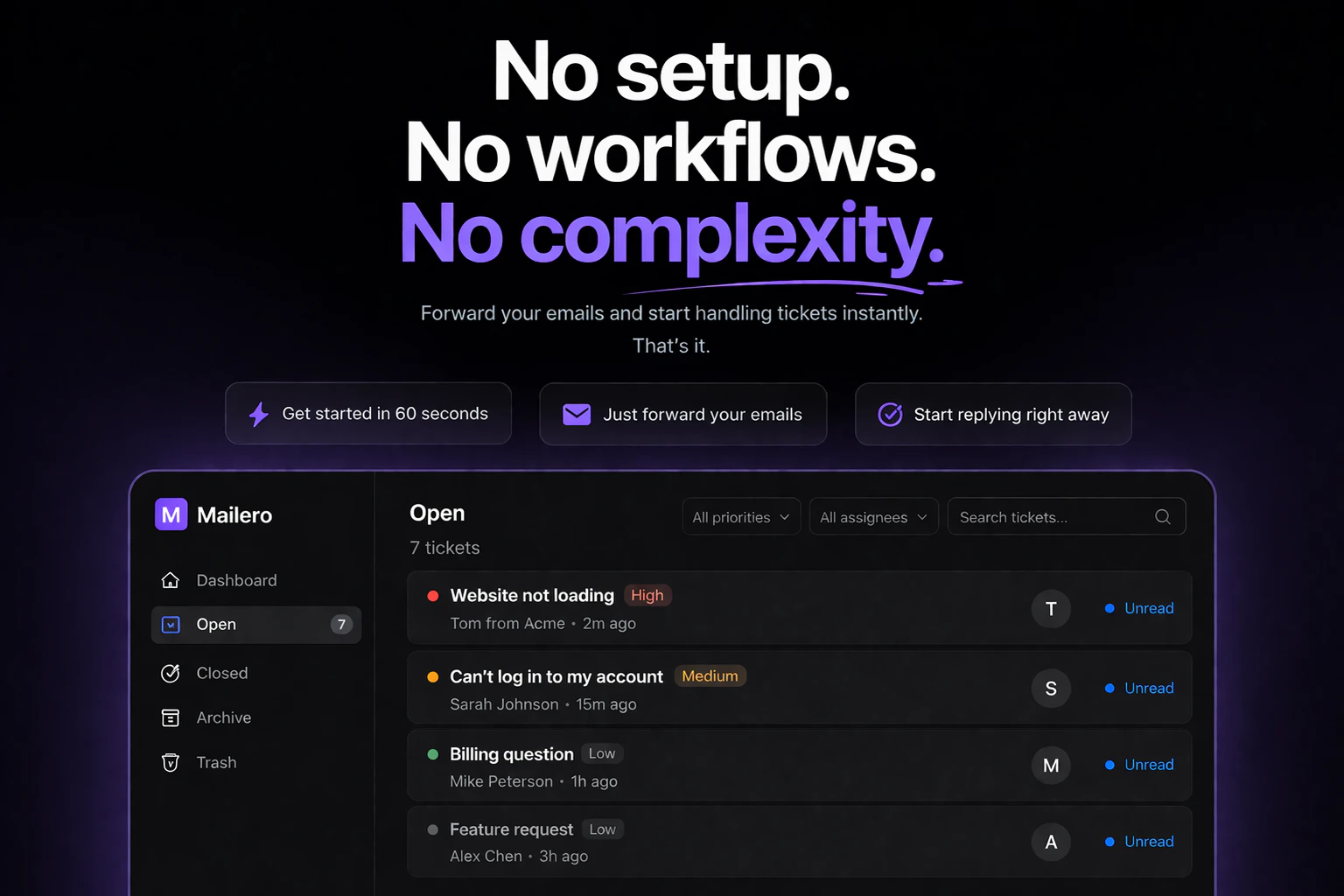
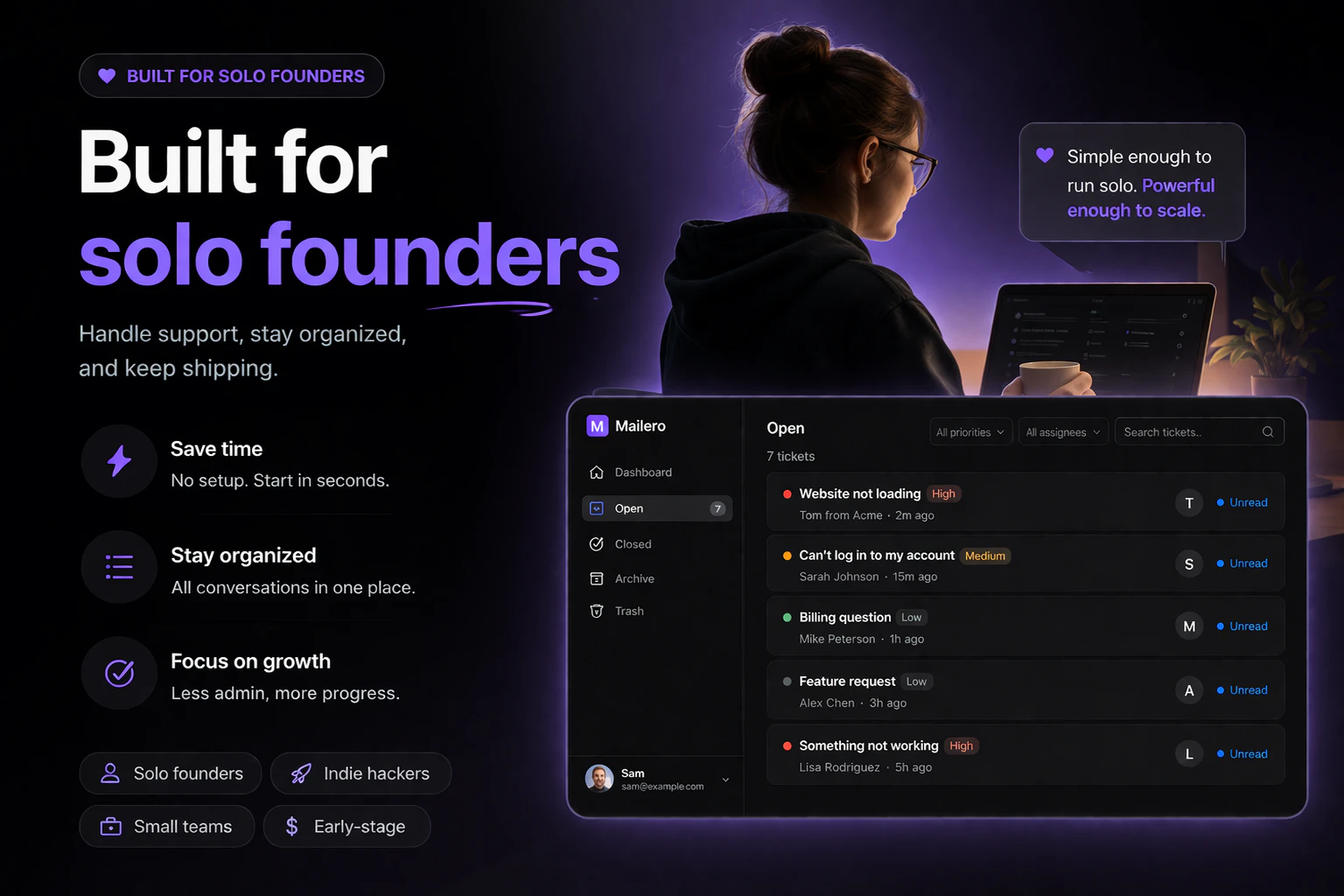
Mailero
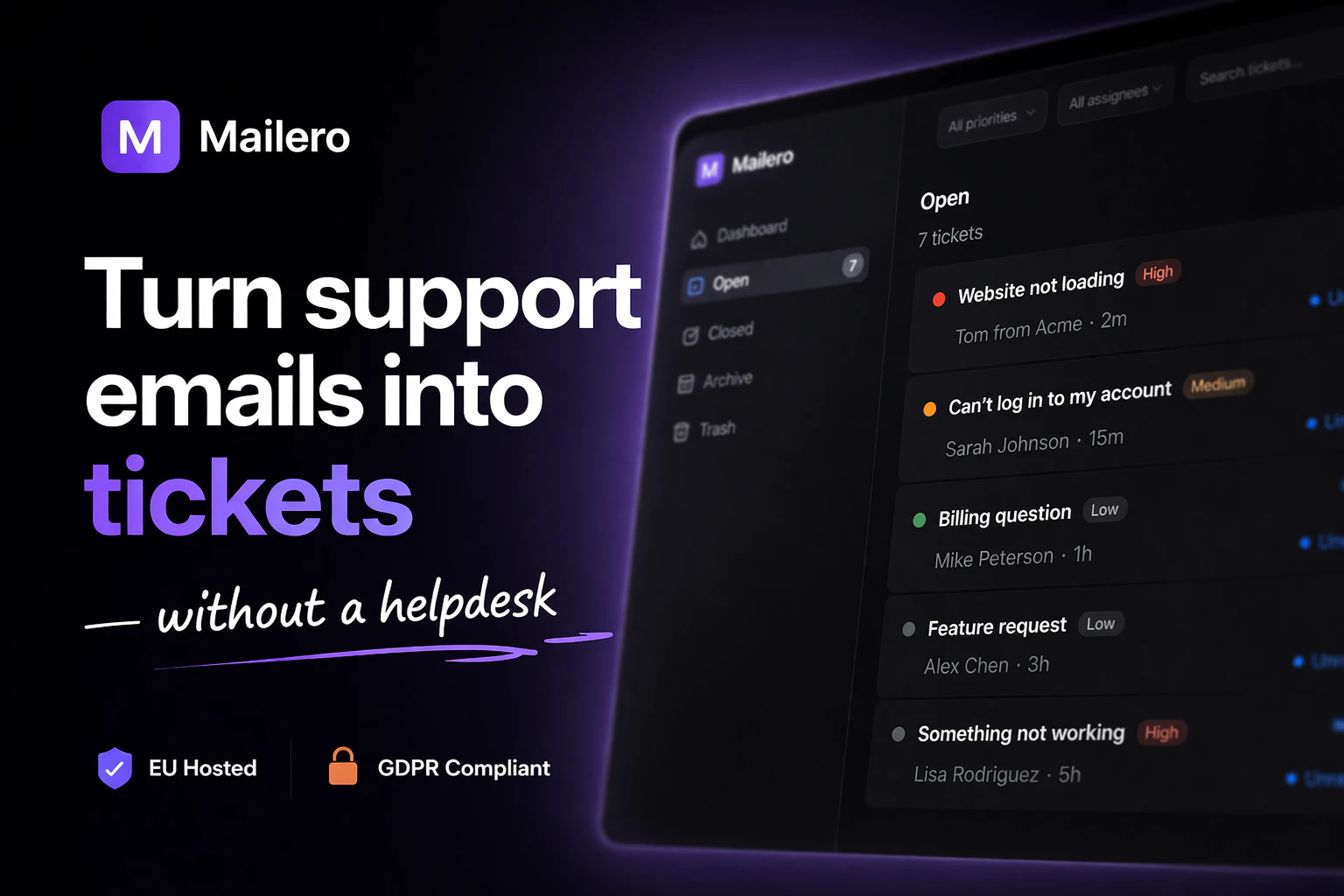
Turn support emails into tickets
138
一句话介绍:Mailero是一款极简的邮件优先工单系统,让独立创始人等用户无需复杂设置,仅通过转发收件箱邮件即可快速管理客户支持,解决了传统帮助台软件功能臃肿、上手门槛高的痛点。
Email Productivity SaaS
客户支持工单 邮件管理 SaaS 极简主义 独立创始人 欧盟托管 GDPR合规 轻量级帮助台 生产力工具
用户评论摘要:用户普遍赞赏其“转发即创建”的极简理念。主要疑问与建议集中在:如何过滤垃圾邮件、是否支持与JIRA/Notion等工具集成、回复邮件时的发件人显示问题、是否具备基础自动化标签功能,以及对其内部优先级和跟踪机制的探讨。
AI 锐评

Mailero精准地切中了一个细分但真实的市场缝隙:厌恶重型帮助台、追求绝对简洁的微型团队(尤其是独立创始人)。其“邮件优先”的核心逻辑并非技术创新,而是一次出色的产品哲学实践——它不做加法,而是做减法,将工单系统强行拉回最原始的通信媒介(邮件)上操作,以此兑现“零设置”的承诺。这本质上是用一种“退化”来实现体验的“进化”,巧妙地将用户已有的邮件习惯转化为产品优势。

然而,这种极简主义既是其利刃,也是其阿喀琉斯之踵。从评论看,用户一旦开始认可其基础价值,需求便会自然生长:垃圾邮件过滤、外部工具集成、自动化标签……这些恰恰是它试图摒弃的“复杂功能”。这揭示了产品的核心矛盾:它服务于“厌恶复杂”的用户,但用户业务一旦稍有发展,复杂性需求便不可避免。产品目前的定位更像一个“支持入口中转站”,而非完整的支持解决方案。

其真正的价值或许不在于功能本身,而在于它作为一面镜子,映照出主流SaaS工具普遍存在的“功能蔓延症”。Mailero的成功(从PH热度看)证明了市场存在对“少即是多”的强烈渴望。但它未来的挑战也同样清晰:如何在保持极简灵魂的同时,优雅地应对用户增长必然带来的功能需求?是坚守利基,成为特定人群的挚爱工具,还是逐步扩展,滑向它曾经反对的“复杂”?

目前来看,它是一款优秀的“起点”产品,完美适配从0到1的初创状态。但用户和创始人都需要思考:当业务从1走向10,是Mailero应该改变,还是用户到了该“毕业”的时候?

查看原始信息
Mailero
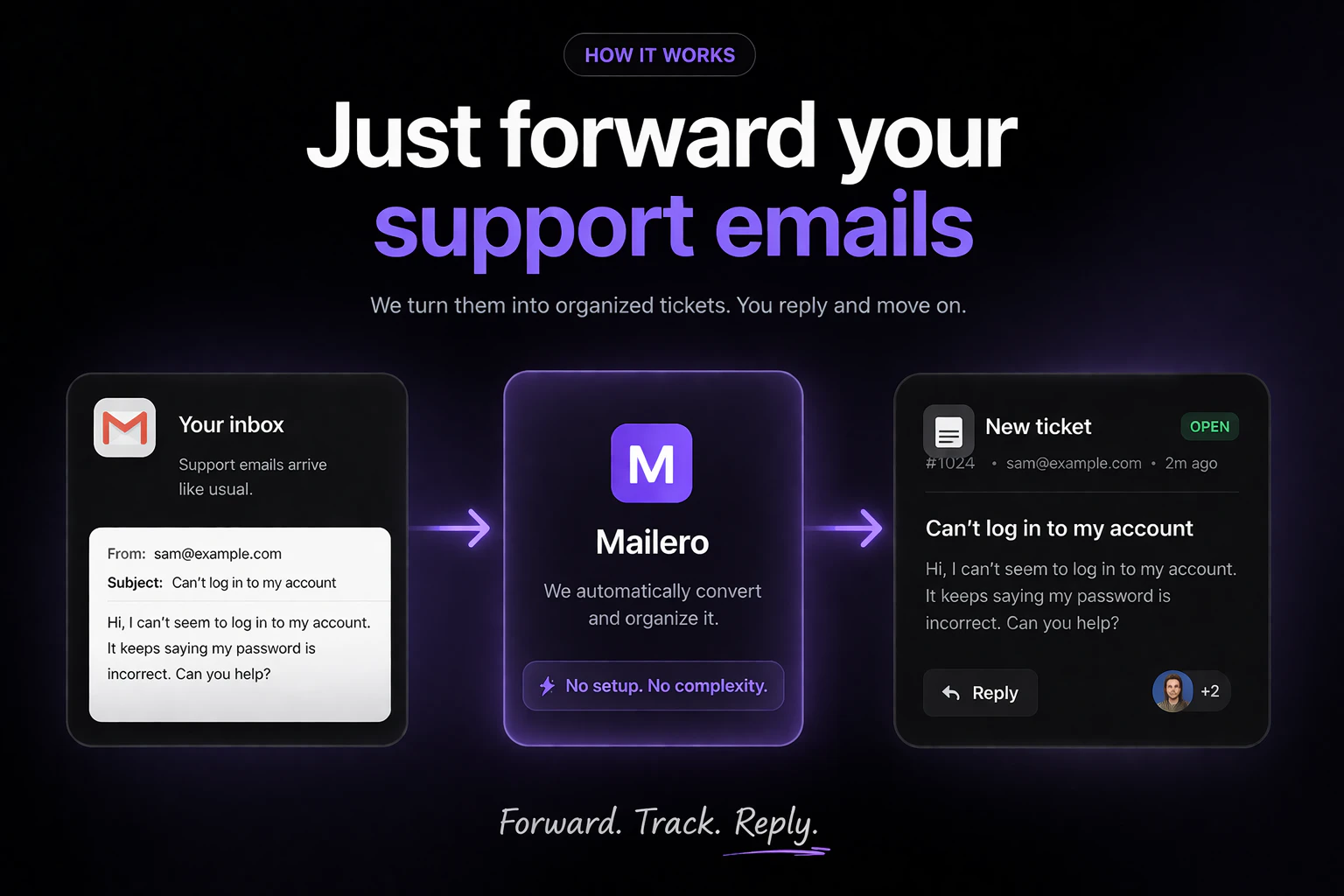
Most helpdesks are overkill. Mailero lets you manage customer support directly from email — just forward your inbox and start replying to tickets instantly. No setup, no complex workflows, no bloated features. Built for solo founders who want fast, simple support. EU hosted and GDPR compliant.
Hey everyone 👋 I built Mailero because every time I needed a helpdesk, it felt like overkill. Tools like Zendesk or Intercom are powerful, but as a solo founder I just wanted something simple: → forward support emails → reply → stay organized No setup, no workflows, no dashboards I don’t need. So I built Mailero — a minimal email-first ticketing system. You just forward your inbox and start replying to tickets instantly. It’s designed specifically for solo founders who want to handle support without adding complexity. I’d really love your feedback — especially: 👉 What feels unnecessary? 👉 What’s missing for your workflow? Thanks for checking it out 🙌
2
回复

@mazirar I’m curious how you handle spam emails.  

The biggest headache for me with my helpdesk is all the marketing emails I get every day. I never signed up for them, and no matter what I do, they keep coming. Deleting them takes up so much of my time.

0
回复

@mazirar Congrats on the launch! As a solo founder juggling multiple inboxes, do you see easy ways to tag/route tickets from different domains without workflows? Super curious on that front.

0
回复

Superrrr!!! Is there an integration with JIRA and Notion? Our Tech uses JIRA while the product team uses Notion. It'd help if we could reroute engineering tickets on JIRA and product/UX issues on a basic task manager.
Best of luck! Rooting for you guys!

2
回复

@richard_andrews4 Woah, an integration with Notion could be a game changer.

0
回复

@richard_andrews4 this. Or linear!

0
回复

How are you handling things like prioritisation or tracking ongoing issues without the typical helpdesk workflows?

1
回复

@becky_gaskell Great question 👋

The goal with Mailero isn’t to remove structure — it’s to remove unnecessary complexity.

Instead of workflows, we keep things simple but effective:

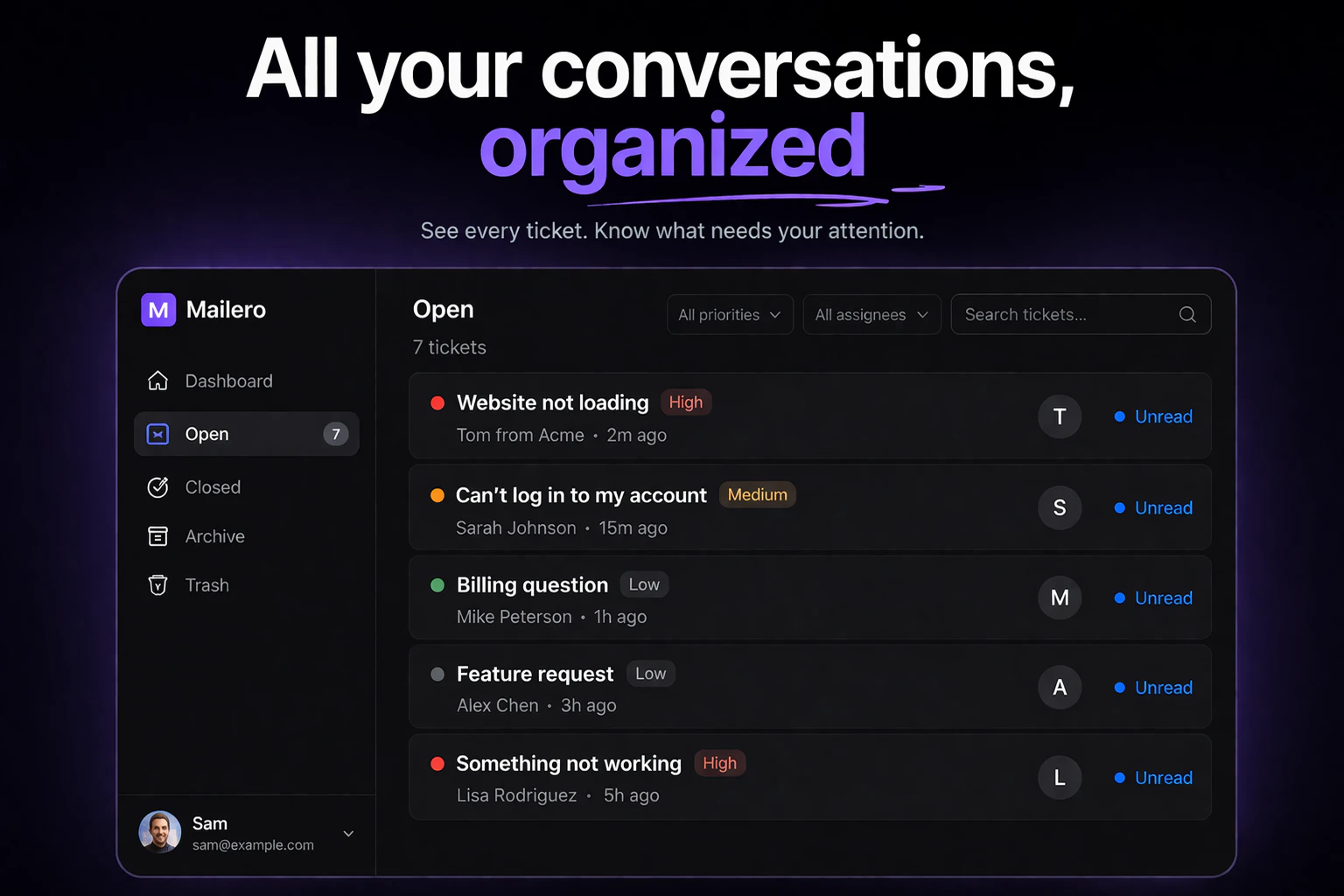
• Each email becomes a ticket with a clear status (open, closed, etc.)
• You can set priorities and categories to organize what matters
• Conversations are threaded, so you always have full context
• There’s a clear “awaiting reply” vs “needs action” view to track ongoing issues

So you still get visibility and control, just without automation rules or workflow builders.

Curious — what kind of tracking or prioritization do you rely on today?

0
回复

I love the idea... too often in the past I've thought can't I just email this to create a support ticket why do I need to goto a web form to re-submit my issue again

0
回复

Sweet... The "just forward your inbox" mechanic is genuinely clever... most helpdesk tools make you rebuild your whole email setup before you can reply to a single customer... this is the opposite of that.

Curious how the reply side actually works though... when you respond to a ticket inside mailero, does the customer see it coming from your original email address or from a mailero one? that'd matter a lot to me. keeping it feeling like a direct reply rather than a ticketing system autoresponse is half the reason to avoid the big tools in the first place.

0
回复

Will this bloat the inbox? What do you think?

0
回复

Love the philosophy behind Mailero — «no setup, no complex workflows» is music to my ears! Congrats on the launch!

Quick question: Does Mailero offer any basic automation or tagging features? Could I auto‑tag all emails coming from a specific campaign or UTM source to track support volume by channel?

0
回复

Get started button is not working? https://mailero.com/pricing

0
回复

@saaswarrior It works for me.

0
回复
#8
Ogoron
Your best QA team — 9x faster, 20х cheaper
136
一句话介绍:Ogoron是一款端到端AI驱动的QA自动化平台,通过理解产品代码、自动生成和维护测试,在软件快速迭代的规模化场景下,解决了团队在发布速度、稳定性和QA人力成本之间难以权衡的核心痛点。
Software Engineering Developer Tools Artificial Intelligence
AI测试生成 自动化QA 端到端测试 回归测试 测试维护 持续验证 研发效能 SaaS DevOps 质量控制
用户评论摘要:用户反馈积极,认可其价值。主要问题集中于:测试稳定性(如何处理UI变更导致的测试失效)、数据安全(代码是否外传)、部署模式(是否支持混合/本地部署)、实际边界(能否真正替代QA工程师)。团队回复坦诚,承认当前架构依赖外部LLM,并解释了模糊场景的处理逻辑。
AI 锐评

Ogoron的野心不在于成为又一个测试生成工具,而在于重塑QA流程的“生产关系”。它宣称替代系统分析师、测试分析师和QA工程师三种角色,本质是将QA从高度依赖人工经验判断的“手艺活”,转变为由AI驱动、基于代码和制品进行持续推理的“标准化流程”。其真正的价值壁垒可能并非当下展示的测试生成能力,而是其声称的“理解产品”和“维护测试”的闭环系统——即面对产品变更时,能自动区分是缺陷还是测试过期,并尝试自我修复。这直击了自动化测试领域最大的成本陷阱:维护成本高于创建成本。

然而,其宣称的“9倍速、20倍便宜”的乐观承诺面临严峻挑战。评论中关于“模糊地带处理”、“数据不出境”和“混合部署”的质疑,恰恰揭示了其作为SaaS+LLM依赖型产品的现实软肋:在高度定制化、强监管或逻辑极其复杂的场景下,AI的“置信度”会急剧下降,最终仍需人工裁决。它更像一个不知疲倦、水平在线的“初级QA军团”,能极大提升基线测试覆盖率和回归效率,将人类专家从重复劳动中解放,去处理更复杂的逻辑与模糊边界。但“替代”整个团队为时尚早,其成功与否,将取决于其“自我修复”算法在真实复杂场景下的有效比例,以及能否构建起让用户放心交出代码核心资产的信任体系。

查看原始信息
Ogoron
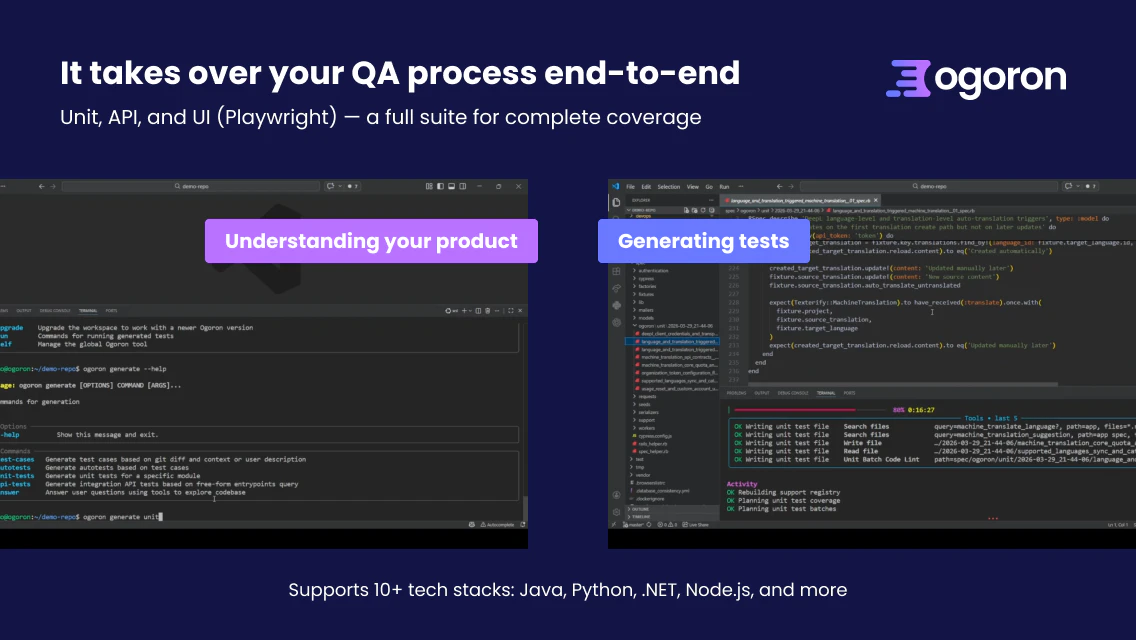
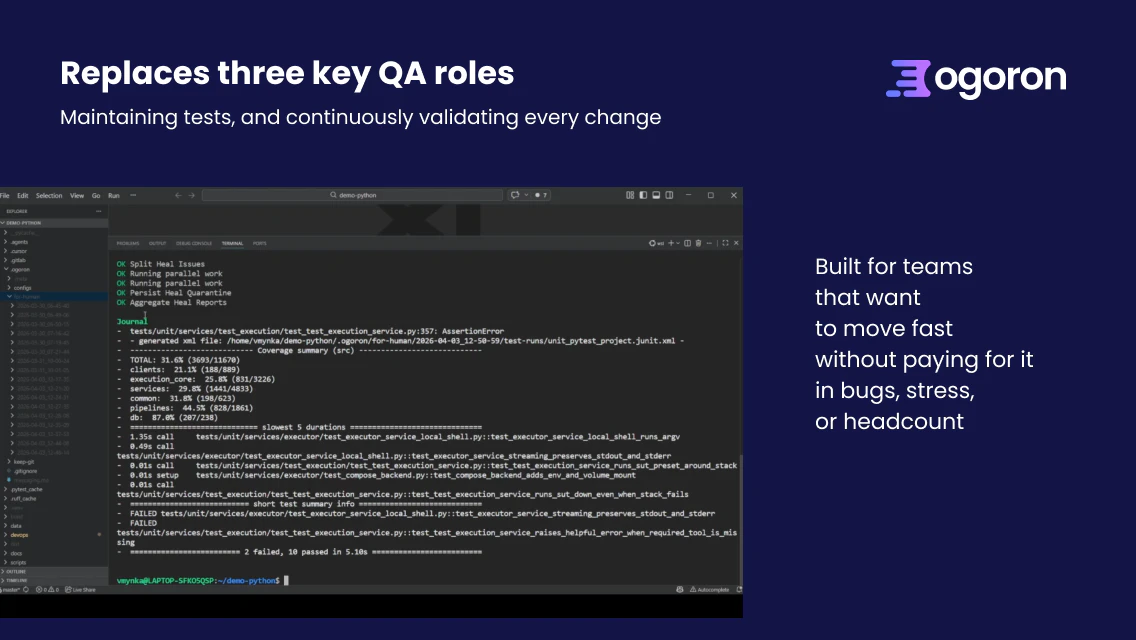
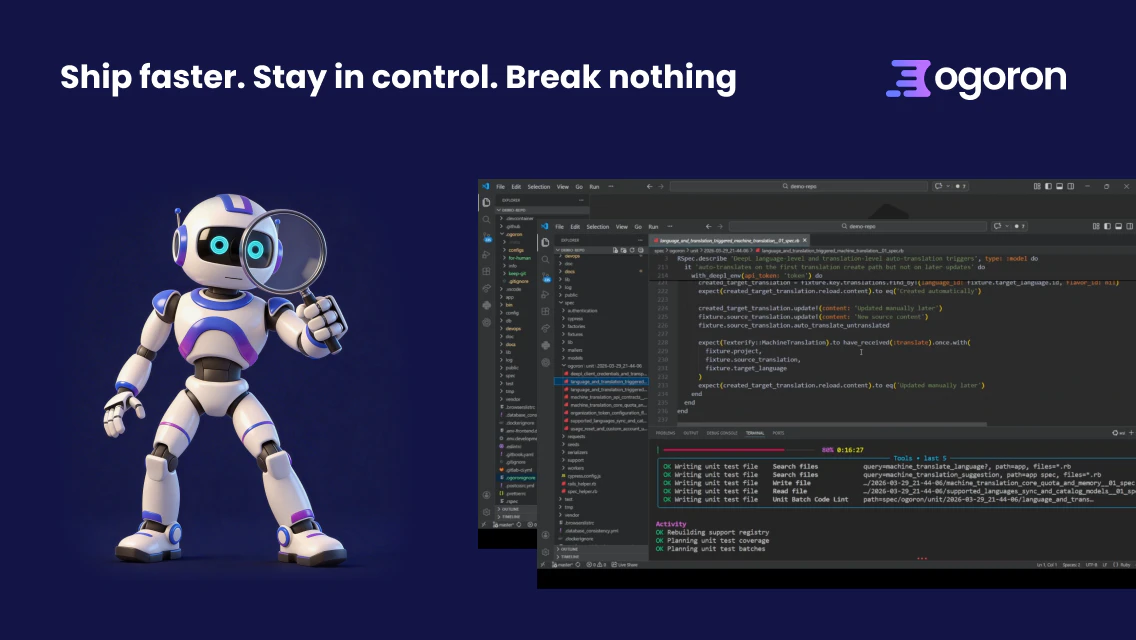
Releasing fast shouldn’t mean breaking things. As your product grows, Ogoron takes over your QA process end‑to‑end. It understands your product, generates and maintains tests, and continuously validates every change - replacing a systems analyst, test analyst, and QA engineer. Get predictable releases, fewer bugs in production, and full coverage without manual effort. Ship faster. Stay in control. Break nothing
Greetings, Product Hunt! I’m Elena, Marketing Lead at Ogoron. Let’s talk about a universal pain point: as your product scales, every deploy becomes riskier. Regressions creep in, testing slows you down, and scaling QA gets expensive. It feels like you’re choosing between speed and stability. We built Ogoron to break that trade‑off. It acts as your full QA team: understanding your product, generating and maintaining tests, and validating every change. With Ogoron, you get: • Predictable, fast releases • Fewer bugs in production • Great test coverage (no manual work) • No need to hire more QA staff Ship faster. Stay in control. Break nothing. We’d love your feedback!
18
回复

@elena_nimchenko Kudos on the launch. How does Ogoron handle flaky tests or UI changes that break coverage over time?

1
回复

We had a rather vivid discussion in the team on how to best run Ogoron trials on Product Hunt. The result is that we provide two modes:

- Bring Your Own Key. Use your own OpenAI API key during the trial, without limitations.
- Use an Ogoron-managed OpenAI API key during the trial. This has somewhat limited functionality but hopefully lets understant the product utility.

I am eager to hear the pros and cons of these approaches from the Product Hunt community

7
回复

@nick_mikhailovsky1 BYOK makes sense for power users, but I’d optimize for a frictionless first experience with a managed key and move people to BYOK after they see value.

2
回复

Hi everyone! I’m the Chief Marketing Officer at Ogoron 

We built this product to change how we ship. As a team with a strong development background, we were tired of slow releases, constant regression risks, and heavy QA cycles.

So over the last few months, we created a tool that reads your code, generates test cases, and keeps regression coverage up to date. Now we ship features to production faster, with close to zero bugs, and no longer think about scaling our QA team.

Would love to hear your thoughts and really appreciate your support.

5
回复

bold claim. curious where this breaks - QA automation typically hits hard exceptions fast when scope expands. what's the failure recovery model?

5
回复

@mykola_kondratiuk That is a very fair question. Hard exceptions are a real limit for QA automation, especially as scope expands.


Our view is fairly pragmatic: the boundary is reached when the correct behavior cannot be reliably reconstructed from the available artifacts – code, tests, specs, documentation, and the behavior of the product itself.


So our recovery model is to recover automatically where the system can establish a high-confidence truth, and surface ambiguity when it cannot. In practice, that means Ogoron can adapt a lot of standard cases on its own, but in genuinely disputed or under-specified situations it asks the user to resolve them explicitly rather than pretending certainty.


A big part of the product is expanding that high-confidence zone over time – from general web patterns to increasingly domain-specific behaviors

4
回复

Congrats!

Can I opt out of any data sharing for product improvement? We can't allow any data to leave our network

Tnx!

5
回复

@konstantinkz Thanks – in the standard managed setup, some data does pass through our infrastructure, and requests currently also go to OpenAI as the external LLM provider.

So if your requirement is that absolutely no data leaves your network, we should be transparent: we do not fully support that today. We can discuss deployment on your own infrastructure, but external LLM calls still remain part of the current architecture

0
回复

Cool! the bit that caught my attention is the test maintenance claim. most AI testing tools i've tried are decent at generating tests, but they go stale fast. and then you're spending more time fixing the tests than fixing the product. curious how Ogoron handles it when the UI changes significantly, like a nav restructure or a renamed flow? does it detect drift automatically, or does someone still need to nudge it? that's genuinely the hardest part of QA automation in my experience, so would love to know how you've tackled it.

4
回复

@fraser_svg Thank you for the great question!

When some tests fail you run

ogoron heal

It puts every failed test into one of three classes:

  • code bug

  • test bug

  • unsure

Test bugs are then fixed by Ogoron

The bugs in "unsure" state need human review. Our experience with pilot customers show 10% to 50% tests fall into this category, depending on a project. Our experience also show that about 15% of the failures are incorrectly classified.

Once a human have put the failed tests into test bug category, they can be fixed by Ogoron.

1
回复

@yanakazantseva1 Congrats on the launch!

Yana from Ogoron came and left a genuinely thoughtful comment on our AgentPulse launch today, on their own launch day. That kind of generosity says everything about the people building this. The product speaks for itself too, automated test coverage that keeps up as your product evolves is one of those things you don't realize you desperately need until you have it. Wishing you all the best today

4
回复

@umar_lateef Thank you so much – that really means a lot to our team.

We really appreciate your kind words. Wishing AgentPulse a great launch as well

0
回复

@umar_lateef Thank you so much, Umar — this truly means a lot to me 💛

I really believe that supporting each other, especially on important days like launches, is what makes this community so special.

0
回复

Just finished the Ogoron trial - very impressed! Setup took just a couple of hours with your template. It caught two long‑standing bugs we’d missed. The dashboard is clear and JUnit XML export worked perfectly. Moving to the paid plan - thanks for a great tool!

4
回复

 Looks amazing! Watching the video now

4
回复

 Looks amazing! Watching the video

4
回复

Hi! Can this actually replace QA engineers or just assist them?

3
回复

@lida_vengerskaya Great question! The pattern we observed the most is that with Ogoron, manual testers get into automated testing, but further QA hiring at our customers stales.

0
回复

Does it learn from past bugs to improve future test generation? We had a recurring issue with timezone handling - would it catch that next time?

3
回复

@artem_galeev Thank you for the great question! You correctly noted that Ogoron generates tests but don't run the tests by itself. And in a strong ML sense it does not learn from the bugs. But all the tests and their results eventually get into the context Ogoron uses, so in a sense it does learn

0
回复

Can it handle repos with a history of 10 000+ commits? We’ve been building our app for 5 years.

3
回复

@alibekovand Good question. A long commit history by itself is usually not a serious issue.

Most codebases can be read progressively, layer by layer, so what matters more than the raw number of commits is the current architecture of the project and how much useful signal exists in the code, tests, and docs.

We have already tested Ogoron on many large repositories, including products that have been developed for more than 10 years. So a repo with 10,000+ commits is well within the kind of scale we expect to handle.

1
回复

Can Ogoron be used in a hybrid cloud setup where some services are on‑prem and others in the cloud? We have sensitive data that can’t leave our servers

3
回复

@alexey_kochetkov Both the hybrid and pure on-prem are in our backlog

0
回复

Is any part of our source code, configuration, or test results transmitted outside our infrastructure?

3
回复

@comrade_komissar Yes, Ogoron is a SaaS (SaaS inn't dead:) ) so the code sanippets are transferred to our LLM providers (mostly OpenAI). We are happy to discuss on-premise deployment with qualified customers

0
回复

Curious how it handles edge cases and unexpected flows .That’s usually where automated QA tools start to break down.

2
回复

@francis_dalton Very fair point – edge cases and unexpected flows are exactly where automated QA usually starts to get real.

Our view is that the goal is not to pretend everything is expected. It is to recognize when the system is operating inside a high-confidence pattern, and when it is not. When Ogoron can reliably interpret the situation, it handles it automatically; when it cannot, it surfaces the ambiguity instead of forcing a false answer.

A big part of the product is continuously expanding that high-confidence zone. In practice, many "unexpected" cases are not unique at all – they are recurring patterns that different teams have already run into in one form or another. A lot of the work is turning more and more of that real-world experience into something the agent can recognize and handle safely

1
回复

How quickly can I get help if the integration fails? Our release is time‑sensitive

2
回复

@daniil_kadeev Thanks – very important question.

A big part of the value here is that Ogoron generates tests which can then be used independently of Ogoron itself. We also do not restrict running those tests through Ogoron, and test execution remains free, so this part of the workflow is not something we want teams to feel locked into or blocked on.

For early users, we are also quite hands-on with integration support. If something blocks setup or rollout, we usually help directly and quickly rather than leaving the team to handle it alone

0
回复

How „smart“ is the analysis? Does it really understand business logic? We have complex financial rules - would love to know how deep it goes.

2
回复

@sevryukov_vs Good question. The analysis can go fairly deep when the business logic is actually expressed in the artifacts available to the system — code, product behavior, specs, and provided documentation.

If the rules are complex but still fairly standard for the domain, modern models are often much better at reconstructing them than people expect. We were honestly surprised ourselves by how much sensible structure they can extract directly from code.

That said, we try to stay realistic: if critical business logic is not recoverable from the available sources, Ogoron should not pretend to understand it perfectly. In those cases, trustworthy grounding and user clarification still matter

1
回复

Does it work with Cypress instead of Playwright for UI tests? Our team has invested heavily in Cypress and would prefer not to rewrite everything.

2
回复

@lordice222_james James, please drop me a email at nickm@ogoron.com. We had Cypress in our product map, but not immediately. If you are ready to start immediately using ogoron if we suppurt Cypress, we can move Cypress up in the backlog

0
回复

That's great! Does it require any special permissions or firewall rules?

2
回复

@anna_drobysheva Good follow-up question.

No special firewall rules are required beyond normal outbound access for the CI job. The main thing is that the runner can reach our services and the OpenAI API.

On the permissions side, it is also fairly standard: repository access, and if you want automated change flows, permission to commit or create changes back into the repo.

We also support file-level allowlisting, so if there are parts of the repository or configuration you want to keep outside the agent’s scope, that can be restricted

0
回复

If a product replaces a system analyst and a QA engineer, can it handle complex business cases that are not visible in the code or UI?

2
回复

Thank you for the great question!

@iosfixed A lot of business cases can actually be derived from the website copy and public documentation. All the business cases that Ogoron have derived are available for the human review in the for humans tree. You can also put the documentation into the repo and Ogoron will use it.

We do have the integrations with Jira, Confluence and Notion in the product backlog. Drop me an email and I will let you know when the integrations arer available

0
回复

Hi! How does it integrate with version control systems like Git? Can it create pull requests with suggested fixes?

2
回复

Hi Karina! Yes – for GitHub, we already support this via a GitHub Action, including workflows that can open pull requests with generated changes.

For other Git-based systems, the integration is not yet fully packaged, but we do provide a CLI, so setting up an automated PR flow is usually quite simple – basically a couple of extra shell steps beyond calling Ogoron itself.

The main thing that is still GitHub-first for now is self-serve billing. For other systems, we can support early access directly – feel free to email me at vmynka@ogoron.com

0
回复

Is there an official GitLab CI template or example .gitlab-ci.yml snippet?

2
回复

@astepanov Thank you for your question – yes, we already have example snippets for several common GitLab CI setups in our docs at docs.ogoron.ai.

If your pipeline is a bit more specific, we can usually help adapt a template for it fairly quickly.

The main caveat today is that GitLab is not yet fully supported through the self-serve dashboard: repository connection there is still GitHub-first. But if you want to test Ogoron with GitLab, feel free to reach out to me or Nick for early access

0
回复

I honestly don’t really get it, but no matter how much I look at TDD, I can’t seem to understand it. Should it be done before the code review stage, or after code review, just before the final product check?

2
回复

@adamspong Thanks for the question. To clarify, Ogoron is not about strict TDD in the classic sense. It is an automated QA system that generates, maintains, and runs tests as the product evolves.

In most workflows, that fits before code review: when a branch is ready, tests are refreshed, smoke checks run on pushes, and the broader suite can run before review or merge

3
回复

Are educational discounts/demo available? I teach a software engineering course at HSE and some advanced students might be interested in demo!

1
回复

@teimy Please drop me a message at nickm@ogoron.com and we will figure out something

0
回复

Does it support Dockerized applications and container orchestration tools like Kubernetes or AWS ECS? Most of our stack runs in containers.

1
回复

@aleh_suprunovich Thanks for the question! Yes – containerized applications are very much in scope for us, and Docker is currently the primary path we support.

Deeper support for orchestration layers like Kubernetes and AWS ECS is still on our roadmap, but in practice containerized environments are usually a natural fit for Ogoron rather than a problem. The container boundary gives us a fairly clean and unified system-under-test, which is often helpful for automation

0
回复

How does Ogoron authenticate with our private repos and runners?

1
回复

@toki_tango Great question!

In practice, Ogoron is a CLI-first tool, so authentication is usually handled by the environment it runs in. For GitHub, we already support private repositories through our main integration and billing flow.

For other Git systems, the setup is still more manual today, but it is straightforward to support via the CLI as well. If that is relevant for your setup, feel free to reach out to me at vmynka@ogoron.com for early access.

As for private runners, there are no special restrictions on our side. The main requirement is that the runner must have network access to our services and to the external LLM provider endpoints we use, which currently means OpenAI

0
回复

Hey Product Hunt!

I'm Nick, co-founder of Ogoron.

Ogoron is a QA team of autonomous agents. The idea came from our own experience: AI can generate code, but software development is much more than writing code. So Ogoron agents understand code structure, UI behavior, and API contracts. They analyze Git diffs, application architecture, and runtime behavior using LLM reasoning, so that the tests are generated and updated automatically as your product evolves.

At its core, Ogoron is a process harness for agents. We believe development is becoming agentic - and agents will need structure, context, and feedback to be genuinely useful.


We built this because we needed it ourselves. Happy to hear your feedback.

1
回复
#9
Adapted
AI Physical Therapy for Athletes
115
一句话介绍:一款为运动员设计的AI物理治疗应用,通过分析个人伤病史、运动项目和目标,在运动康复和日常训练场景中,提供动态个性化的训练方案,解决传统方案通用化、忽视身体薄弱环节导致反复受伤的痛点。
iOS Health & Fitness Sports
AI健康 运动康复 物理治疗 个性化训练 损伤预防 运动员科技 移动医疗 健身应用 Prehab 体态纠正
用户评论摘要:用户反馈积极,认可其利用手机摄像头进行动作纠正的独特性。主要疑问集中于程序是否真正动态调整、个性化考量因素(如年龄、性别权重)以及商业模式上(如向团队、学校推广的建议)。开发者回复确认程序会依据反馈和进度进行个性化调整。
AI 锐评

Adapted切入了一个精准且痛感强烈的细分市场:追求表现但饱受伤病困扰的严肃运动者。其宣称的价值并非简单的“AI生成计划”,而在于将物理治疗和运动康复原则产品化、动态化,试图填补“高性能训练”与“身体耐久性维护”之间的鸿沟。

产品逻辑犀利之处在于两点:一是将“Prehab”(损伤预防)而非“Rehab”(损伤康复)作为核心,这更契合运动员“防患于未然”的主动需求;二是通过摄像头实现动作形态纠正,试图解决居家康复最大的痛点——动作质量监控缺失,这使其区别于仅提供视频库的竞品。

然而,其面临的深层挑战同样尖锐。首先,“AI”的成色有待检验。从回复看,其个性化逻辑仍高度依赖用户自行输入的伤病史、运动目标等结构化数据,AI在实时评估运动表现、预测损伤风险方面的深度应用未见详述。其次,医疗合规红线。作为涉及损伤管理的应用,其推荐方案的可靠性与安全性如何保障?一旦用户因跟随训练受伤,责任如何界定?这需要深厚的医学专业背景背书,而非单纯的技术迭代。最后,从“运动员”破圈到更广泛运动人群的必然性与适配性问题。普通健身者的需求与运动员存在差异,产品定位的摇摆可能稀释其专业性。

总体而言,Adapted展现了一个正确的方向:用技术将专业化、个性化的身体维护能力民主化。但其真正的护城河,不在于“AI”标签,而在于其运动康复知识图谱的深度、算法反馈闭环的有效性,以及能否建立起严谨的安全与信任体系。否则,它极易沦为又一个拥有智能噱头的视频库。

查看原始信息
Adapted
Adapted is an AI physical therapist for athletes. Tell it your injury history, your sport, and your goals - it builds a personalized program to rehab and prevent injuries, bulletproof your body, and improve mobility and flexibility. No generic exercises. Just training and prehab that actually adapts to you.

Hey PH, I built Adapted because I’ve spent years training seriously and kept running into the same problem: most training programs focus on performance, but very few focus on keeping your body durable enough to train consistently. Mobility, stability, and prehab are usually treated as an afterthought.

Adapted takes inspiration from physical therapy and sports rehab principles to generate personalized sessions that strengthen the weak links in your body - helping athletes stay healthy, move better, and keep competing without setbacks.

I’d genuinely love feedback from anyone who trains regularly. What works, what feels off, and what you’d want to see improved.

Check out Adapted app on iOS and join our subreddit, r/adapted!

6
回复

@albertjo  The form correction through the camera is really well thought out. Most PT apps just show you a video and hope you're doing it right. Using the phone's camera to actually check your movement is where native iOS hardware access pays off.

0
回复

This would be worth offering to sports clubs and teams + universities that are focused on PE. :)

4
回复

@busmark_w_nika Definitely!

1
回复

Been dealing with a recurring shoulder issue for months and every program I try gives me the same generic rotator cuff exercises. Does Adapted actually change the program if something feels off or causes pain, or do you set it once and it stays fixed?

4
回复

Hey @abhra_das1! Yes, based on your feedback and progress, Adapted tailors and updates your sessions accordingly (scaling up/down the difficulty/intensity). The programs are not static.

1
回复

This is a really great usecase, I wanna know one thing, which factors are considered while determining the exercise? I mean, age, weight, gender do this make a significant difference?

2
回复

@nayan_surya98 Great question! The primary factors are the specific joints/regions you want to focus on, your sport, your training schedule, and injury history (if applicable). Age and gender are collected but play a secondary role - the program is more built around your sport context and goals.

2
回复
#10
Deploy Hermes
Private Telegram AI agents, live in under a minute
107
一句话介绍:一款让用户无需运维基础设施,即可在一分钟内为Telegram部署具有持久记忆功能的私有AI智能体的服务,解决了非技术用户难以自托管复杂AI应用的核心痛点。
Productivity Developer Tools Artificial Intelligence
AI智能体部署 Telegram机器人 无服务器运维 持久化记忆 私有化AI 低代码平台 模型即服务 工作流自动化
用户评论摘要:用户普遍认可其消除运维复杂度的核心价值,对“持久记忆”功能反响热烈,并询问具体实现细节(如跨聊天记忆、长期上下文处理、PDF处理能力)。主要建议/问题聚焦于记忆功能的实际表现、长期稳定性以及未来功能扩展。
AI 锐评

Deploy Hermes的实质,是将开源模型(Hermes)的“部署”与“运维”能力产品化,其真正的创新不在于AI模型本身,而在于对“最后一公里”工程难题的封装。它精准切入了一个细分但关键的市场缝隙:那些有能力构思AI应用场景、却无能力或意愿应对Docker、Fly.io、环境变量等基础设施复杂性的“准技术”或“非技术”用户。

产品标语“No Docker, servers, or Fly.io”直击命门,揭示了当前AI平民化进程中的核心矛盾:模型获取日益容易,但使其成为稳定、可用的服务依然门槛高耸。它将用户从“兼职运维工程师”的角色中解放出来,回归到“使用者”和“调教者”的本质角色。其宣称的“持久记忆”功能,正是为了满足用户对AI助理“连续性”和“个性化”的最基本期待,以此对抗当前大多数聊天机器人“金鱼记忆”的糟糕体验。

然而,其商业模式和长期价值面临拷问。首先,作为“带钥匙的停车场”(Bring your own keys),其价值高度依赖于上游模型(如OpenAI)的API成本与稳定性,自身溢价空间可能受限。其次,“持久记忆”这一核心技术卖点,在长上下文窗口模型日益普及的当下,其技术护城河能维持多久?最后,从Telegram单点切入虽明智,但若要扩张至Discord等其他平台或提供更复杂的工作流集成,其面临的工程复杂度是否会使其重回它试图避免的“运维泥潭”?

简言之,这是一款出色的“卸负”型产品,成功地将技术负债转化为商业价值。但它未来的成败,将取决于其能否在“极致简化”与“功能深度”、“平台依赖”与“自主可控”之间找到可持续的平衡点。它证明了AI应用的下一个爆发点,或许不在于更强大的模型,而在于更优雅的交付。

查看原始信息
Deploy Hermes
DeployHermes lets you launch your own private, always-on Hermes agent for Telegram without touching Docker, servers, or Fly.io. Bring your own model keys, connect your bot, and get a live agent with persistent memory in under a minute.

Hey Product Hunt! 👋

DeployHermes lets you spin up your own private, always-on Hermes agent for Telegram/Discord in under a minute.
We built it because getting Hermes live today still means dealing with servers, Docker, Fly.io, environment variables, and a lot of setup friction before you ever get to the fun part: actually using your agent. That works for technical users, but it blocks a much bigger group of people who just want their own agent running reliably.

With DeployHermes, you bring your own model keys, connect your Telegram bot, and launch a dedicated Hermes runtime with persistent memory and encrypted secrets. The goal is simple: your agent should feel personal and always available, without you needing to operate infrastructure.

We’re starting with Telegram as the launch wedge, and we’re offering a 3-day free trial with 25% off so people can try it with real workflows before committing. Use code PHLAUNCH25 during checkout.

We have planned several new features and you can check them out here - https://deploy-hermes.com/roadmap

Would love feedback on two things in particular:
1. What would you want your personal Telegram agent to help with first?
2. What made self-hosting feel too annoying or too fragile for you?

3
回复

@codenameakshay For non-tech users dipping into workflows like daily research or team updates, how does the persistent memory hold up over a week of real Telegram chats, and what's top on the roadmap to make it even smoother?

0
回复

@codenameakshay love the focus on persistent memory. most telegram bots have goldfish memory and you have to re-explain everything daily. if this keeps the context intact without fly.io headaches, i’m in.

1
回复

the ops barrier is the real thing killing personal agent adoption. most people can write a system prompt but not debug a Fly.io deployment. this makes sense as a product.

1
回复

The persistent memory feature is a big win because my previous bots always forgot the context of our conversations after a few hours

1
回复

@deangelo_hinkle yeah it is awesome

0
回复

Finally, an AI with persistent memory, cuz i clearly dont have one myself, haha. Can it process PDFs?

1
回复
@eugene_chernyak yeah it can read them via telegram and handover whatever you want
1
回复

The setup friction point is real. I tried self-hosting once and gave up after 2 hours of env variable issues. Quick question — does the persistent memory work across different chats or just within one conversation?

1
回复
@abhra_das1 yeah it works across chats, this is the cool thing about hermes.
1
回复

@codenameakshay The "No Docker/Fly.io" pitch is going to save so many people from a weekend of terminal errors. Self-hosting Hermes is usually a nightmare for anyone who just wants to use the model's personality without becoming a part-time sysadmin. I'm curious—since it's persistent memory, how does it handle long-term context? Does it start "forgetting" the early days of the chat as the history grows, or is the indexing handled server-side to keep it snappy?

0
回复
#11
DebtMeltPro
Compare debt payoff strategies and become debt-free faster
98
一句话介绍:一款无需注册、即时对比雪球法、雪崩法及混合策略的免费在线债务偿还计算器,在个人债务管理场景中,解决了用户难以直观比较不同还款策略效果、无法精准制定最优还款计划的痛点。
Productivity Fintech
债务计算器 个人理财 债务管理 财务规划 还款策略对比 免费工具 免注册 雪球法 雪崩法 混合策略
用户评论摘要:用户普遍赞赏其策略对比清晰、操作简单。主要建议包括:增加进度追踪功能以提升参与感;优化小屏幕设备上的图表响应式布局;考虑支持可变利率、大额长期贷款(如房贷)的年化时间线显示,以及增加APR转换器。
AI 锐评

DebtMeltPro 的核心价值并非在于创造了新的债务还款方法论,而在于将经典的“雪球法”与“雪崩法”从抽象的财务概念,转化为可即时感知、量化对比的用户体验。它精准切入了一个被许多专业金融工具忽视的缝隙:决策前的模拟与比较。大多数工具或预设单一路径,或过于复杂,而 DebtMeltPro 通过“混合策略”的引入和实时可视化,实际上是在为用户提供一次低成本的“财务决策沙盘推演”。

然而,其当前的“轻量级”既是优势也是天花板。从评论反馈看,用户的需求正迅速从“策略比较”向“策略执行与追踪”延伸。工具若止步于计算器,则易沦为一次性使用产品;用户暗示的“进度跟踪”需求,恰恰是构建用户粘性、从“决策工具”转向“管理伙伴”的关键。此外,对可变利率、非标债务(如无明确APR的贷款)支持的缺失,暴露了其模型与现实世界复杂性的脱节,这限制了其在更严肃、多元债务场景下的可信度。

本质上,这是一款出色的“启蒙工具”和“决策催化剂”,它通过降低理解与比较门槛来创造价值。但其长期成功取决于能否沿着用户反馈指出的道路,深化其工具属性,融入债务管理的全流程,并处理更真实的金融数据复杂性。否则,它可能只是用户财务旅程中一个短暂而明亮的“顿悟点”,而非不可或缺的长期伴侣。

查看原始信息
DebtMeltPro
DebtMeltPro is a free online debt payoff calculator that helps you compare Snowball, Avalanche, and Hybrid strategies in real time. Add your debts to see your exact payoff timeline, total interest saved, and the best repayment plan. No signup required—simple, fast, and built for real-life debt management.
Hey everyone I built DebtMeltPro to solve a problem I kept seeing — people struggle to decide the best way to pay off debt. There are two popular strategies (Snowball and Avalanche), but most tools don’t make it easy to compare them properly. People either rely on spreadsheets or guess what works best. So I created a simple tool where you can add your debts and instantly see: - Your exact debt-free date - Total interest saved - The best repayment strategy for your situation No signup, no complexity — just clear answers. Would really appreciate your feedback and suggestions
6
回复

@dubeypt Ahan , this feels more real than most finance tools . People don't just need info , they need clarity, and this sort of comparison really helps. Maybe adding small progress tracking could make it even more engaging.

1
回复

@dubeypt This is going to make my monthly planning a lot smoother—being able to clearly see what an extra $50 does to a payment is super helpful.

1
回复

The hybrid strategy is something I haven't seen in other debt calculators. How does it decide which debts to prioritize, is it based on a mix of balance and interest rate together?

2
回复

@abhra_das1 

Great question, Abhra

Our hybrid strategy combines both interest rate (like Avalanche) and balance size (like Snowball) to optimise payoff.

  1. It prioritises higher-interest debts to reduce overall interest

  2. While also factoring in smaller balances to create quick wins and keep momentum

So it’s essentially a balance between cost efficiency and motivation.

You can see how the payoff order updates in real time when you enter your debts — would love to hear your thoughts after trying it!

1
回复

my monthly planning is going to be so much easier now that I can see the impact of adding an extra fifty dollars to a payment.

1
回复

@mathew_chang 

That’s awesome to hear, Mathew.

Glad the extra payment impact feature is helpful. Small changes can make a big difference over time.

Appreciate you trying it out!

0
回复

i noticed that the charts don't always scale perfectly on my smaller tablet screen, so you might want to look at that resonsive layout.

1
回复

@shania_jennings

Thanks for pointing that out, Shania

Really appreciate the feedback, I’ll look into improving the chart scaling for smaller screens.

Let me know if you notice anything else! 

0
回复

​Thanks for sharing this tool. I find the hybrid strategy option over intresting since most other calculators only let you pick one fixed path.

1
回复

@judith_wang

Thanks, Judith!

Really glad you found the hybrid strategy interesting — that’s exactly what I wanted to explore beyond the usual fixed approaches.

Would love to hear your thoughts if you try it out! 

0
回复

One point when the amounts are larger such as a homeloan then the payoff timeline might make more sense to do in years? Also different types of debt such personal loans etc don't always have a APR so maybe have a APR convertor calculator?

0
回复

Very cool idea, I did have some issues accessing the app as it was crashing and showing "Application error: a client-side exception has occurred (see the browser console for more information)." in Chrome but after a few refreshes it worked

0
回复

Really appreciate all the feedback so far 🙌

Already working on improving mobile/tablet experience and exploring support for more flexible interest rate scenarios based on your suggestions.

Keep the feedback coming — this is super helpful!

0
回复

Hey everyone,

Thanks a lot for the amazing support and thoughtful feedback so far — really appreciate it! 🙌

Curious to know — which strategy do you usually follow: Snowball, Avalanche, or something else?

Would love to hear your experiences!

0
回复

This is great. Being able to actually compare strategies side by side is useful. Most people just pick snowball or avalanche without seeing how much the difference really is for their situation. Does it factor in variable interest rates or just fixed?

0
回复

@keith_hiyamojo 

Great point, Keith 🙌

Right now, the calculator assumes fixed interest rates for simplicity, but factoring in variable rates is something I’m definitely considering for future updates.

Appreciate you bringing that up!

0
回复
#12
Epismo Context Pack
Portable memory for agent workflows
97
一句话介绍:Epismo Context Pack 是一款为AI智能体工作流设计的“便携式记忆”工具,它通过将提示、计划、决策等上下文打包成可复用的知识包,解决了跨智能体、跨会话的上下文重复创建与信息孤岛痛点。
Productivity Developer Tools Artificial Intelligence
AI智能体工具 上下文管理 可复用知识库 团队协作 提示工程 工作流优化 MCP集成 开发者工具 知识共享
用户评论摘要:用户认可产品解决“信息孤岛”的核心价值,并对社区共享功能感兴趣。主要问题聚焦于:跨模型使用时如何保证语义一致性(上下文漂移);共享包如何结构化以即插即用;以及多智能体写入同一记忆包时的冲突处理。
AI 锐评

Epismo Context Pack 瞄准的并非表面上的“记忆存储”,而是AI原生工作流中日益尖锐的“知识债务”问题。当前,AI应用越是深入,沉淀在单次对话、特定工具或私人笔记中的隐性知识就越多,形成新的数据烟囱。该产品试图将这类非结构化、高价值的“工作上下文”首次对象化、标准化,使其成为可在智能体间流通的“一级资产”。

其真正的前瞻性在于两点:一是试图建立跨平台、跨模型的上下文交换协议(通过MCP/CLI),这比单一平台的记忆功能更具野心和开放性;二是引入了“社区发布”机制,这隐约指向了一个未来图景:AI工作流的最佳实践(如复杂的提示链、决策逻辑)可能像今天的代码库一样,可通过“导入上下文包”来快速复用,极大降低高级AI应用的使用门槛。

然而,其面临的挑战同样严峻。首当其冲的是“上下文保真度”问题。当打包的“决策与推理”脱离原生的模型环境和会话状态,被注入另一个智能体时,其效果能否如预期?这本质上是一个知识表征与迁移的难题,产品目前似乎依赖社区投票的“优胜劣汰”和用户自行清理,技术保障略显单薄。其次,从“私人记忆”到“团队知识库”再到“社区共享”,每一层跨越都伴随着更复杂的权限、版本和质量控制需求,这对其产品架构是巨大考验。

总体而言,这是一个在正确方向上迈出的关键一步。它不再将AI智能体视为孤立的任务执行者,而是将其置于一个可持续积累、协作进化的知识网络之中。若能攻克上下文保真与规模化协作的难题,它有望成为AI时代知识管理的底层基础设施之一。

查看原始信息
Epismo Context Pack
Context Pack is portable memory for agent workflows. Turn prompts, plans, decisions, project context, and hard-won know-how into reusable packs you can fetch across agents and threads. Keep them private, share them with your team, or publish them for the community, so others can reuse proven context instead of starting from scratch. Works across MCP and CLI, with support for cloud agents, local setups, Slack, and Discord.
We built Context Pack because valuable context keeps getting trapped inside one chat, one tool, or one moment. That leads to a lot of manual work: moving context between agents, re-explaining the same project in new threads, pasting old prompts again, or rewriting good discussions into docs just to share them. Context Pack makes that reusable. A pack is a title + content set. You can use it for prompts, plans, decisions, project context, or hard-won know-how. You can fetch titles first, load full content only when needed, and use your context window more efficiently. One of the most exciting parts is that packs are not limited to private use. You can keep them private, share them with your team, or publish them for the community. That means Context Pack is not just about saving your own memory. It is also a way to reuse proven context from others. AI power users can publish the memory behind their workflows, prompts, research habits, and playbooks, and others can build on that instead of starting from scratch. To get started, you can simply tell your agent: `Set up Epismo access and load the Skills from https://github.com/epismoai/skills` The Skills are designed for both MCP and CLI, so you can use Context Pack with cloud-based agents like ChatGPT or Claude, local setups like Claude Code or Codex, and even Epismo agent on Slack or Discord. For a first example of how to share a Context Pack: `/context-pack @hirokiyn/context-pack` Would love to hear how you’d use it.
2
回复

@hirokiyn Congrats. How would you recommend structuring a shared pack for a team's 'personal branding playbook' to make it plug-and-play for Claude or ChatGPT agents?

0
回复

@hirokiyn Congrats on the launch, Hiroki! The idea of 'portable memory' is a massive unlock for team-based AI workflows. We often see valuable context getting 'trapped' in individual chat silos, so making it reusable across mcp and cli is a brilliant move.

As someone hunting for AI agents that actually work in production, I'm curious about the 'context drift' problem: When a Context Pack is fetched across different models (say, from Claude 3.5 to a local Llama 3 setup), how do you ensure the semantic integrity remains consistent? Different models interpret 'know-how' differently—do you have a standard schama to ensure the agent doesn't misinterpret the 'decisions and reasoning' within the pack ?

Looking forward to exploring the community packs~

0
回复

The part about reusing context from other people's workflows is interesting. If I load someone's published context pack, does it just give me their prompts or does it actually carry over the decisions and reasoning behind why they built it that way?

1
回复

@abhra_das1 Not just prompts.

A Context Pack can carry the surrounding context too, like decisions, rationale, project background, conventions, and other working knowledge behind the workflow.

The goal is to reuse understanding, not only reuse prompt text.

0
回复

how do you handle context conflicts when multiple agents write to the same memory pack?

0
回复

@mykola_kondratiuk Good question!

We keep track of how often a pack is used and favorited, so higher-value context naturally stands out over time while lower-value entries get pruned. A good pattern on top of that is to have agents periodically run an organize workflow to clean up, merge, and reconcile overlapping context.

0
回复
#13
Glassbrain
Visual trace replay for AI apps to fix bugs in one click
96
一句话介绍:Glassbrain通过可视化AI应用执行轨迹树和无需重新部署的即时回放功能,解决了开发者在调试复杂AI应用时面临的效率低下、难以定位问题根源的痛点。
SaaS Developer Tools Artificial Intelligence
AI应用调试 可视化追踪 即时回放 开发运维 LLM可观测性 Agent调试 Prompt工程 开发者工具 AI工程化
用户评论摘要:用户高度认可无需重新部署的即时回放和可视化树状图功能,认为这是对传统文本日志的巨大升级。主要问题集中在:与自定义/非主流框架的兼容性、回放对状态依赖的处理深度、免费层计费方式(按管道而非节点),以及对未来回归测试和监控功能的期待。
AI 锐评

Glassbrain切入的并非一个空白市场,LangSmith、Langfuse等早已盘踞LLM可观测性赛道。其真正的锋利之处在于,将“调试”这个高频且痛苦的动作,从“静态日志审查”升级为“动态交互式回放”。这不仅仅是UI从文本到图形的转变,更是将调试流程从“观察-假设-修改代码-重新部署验证”的漫长循环,压缩为“点击-修改-即时验证”的闭环。它试图接管的是调试中最耗时的“上下文重建”环节。

然而,其价值深度面临拷问。当前方案的核心是捕获并重放LLM调用参数,这对于“无状态”的API调用调试是有效的。但面对日益复杂的AI Agent,其“状态”可能存在于内存对象、数据库或外部工具中。评论中关于“状态回放”的质疑直指核心:若无法完整重建执行环境,回放的“确定性”将大打折扣,可能沦为更花哨的日志查看器。

产品将“两行代码集成”作为卖点,是明智的降低门槛策略,但也暗示其侵入性和依赖特定SDK的局限。其长远竞争力可能不在于更漂亮的图谱,而在于能否将“回放”基础设施化,并延伸至团队协作、回归测试与监控预警,从而从“调试工具”演进为保障AI应用开发生命周期稳定性的“质量平台”。它现在提供了一把锋利的手术刀,但未来需要证明自己能管理整个手术室。

查看原始信息
Glassbrain
Glassbrain captures every step of your AI app as an interactive visual trace tree. Click any node, swap the input, replay instantly without redeploying. Snapshot mode stores deterministic replays. Live mode hits your actual stack. Auto-generated fix suggestions reference exact trace data with one-click copy. Diff view shows exactly what changed. Shareable replay links let your team debug together. Works with OpenAI and Anthropic. Two lines of code to integrate. Free tier: 1K traces/month.

The replay without redeploying part is what got me. Does it work with any LLM framework or do you need to set up a specific SDK? Asking because I'm on a custom Claude API setup and always dread the debug process.

2
回复

@abhra_das1 Hey Abhra! So you do need the SDK, but honestly it's two lines. Just wrap your Anthropic client with wrapAnthropic and you're good to go. No framework, no setup headache.

The replay thing works because Glassbrain snapshots your exact call (prompt, params, model version, all of it) so when something breaks you just go into the dashboard, tweak the input, and fire a real call right there. Never touch your codebase. For someone who dreads the debug process this is kind of the whole point. Give the free tier a shot, would love to hear how it goes with your setup!

0
回复
I built Glassbrain because debugging AI apps with text logs is brutal. You're staring at walls of JSON trying to figure out which step broke and why. Glassbrain gives you a visual trace tree of your entire AI pipeline. Click any node, change the input, and replay it right there without redeploying. If something's wrong, it auto-suggests fixes referencing the exact trace data, and you can copy the fix with location comments baked in. No direct competitor does visual replay. LangSmith, Langfuse, Helicone all stop at text-based tracing. Free tier is 1K traces/month. Would love your feedback.
1
回复

@sai_ram_muthineni The replay part is the hook for me. Finding a bad run is one thing. Getting back to it cleanly is usually where time disappears. Does replay end up replacing manual log digging for most teams?

1
回复

@sai_ram_muthineni Congrats on the launch, Sai!

Debugging multi-step agent pipelines through json walls is a nightmare, so the 'visual trace tree' approach is a massive UX upgrade for developers. The ability to replay from a specific node without redeploying is the real hook here.

As someone deep-diving into AI orchestration, I'm curious about how you handle 'Stateful replay': If a node three steps deep relie on a specific local state or a previous tool output that isn' t part of the LLM prompt, can Glassbrain still reconstruct that environment for a deterministic replay. Or is the replay primarily focused on the stateless LLM call parameters?

Two lines of code for integration is the right move. Can't wait to try this on our next agent trace.

0
回复

The prompt drift thread is the interesting part. Knowing when outputs shift is often more useful than logging what each call returned. Are you planning regression-style monitoring where replay runs automatically on a schedule and flags drift before users notice?

1
回复

@avi_pilcer1 Yeah Avi, that's exactly the direction. The replay infrastructure already stores everything we need - exact prompts, params, model versions, original outputs - so wiring up scheduled regression runs is more of a scheduling problem than a hard one. The plan is: pick a set of "golden" traces per project (your critical paths), run them on a cadence, diff against the stored baseline, and alert when outputs drift beyond a threshold.

The interesting part is what counts as "drift worth alerting on." Exact string match is too noisy because LLMs vary even at temperature 0. Semantic similarity is better but expensive at scale. Probably something like: structural diff (did the JSON shape change, did a citation disappear, did the tool call sequence change) for fast checks, with semantic embedding diff as a fallback for free-form text. Still figuring out the right thresholds.

If you've thought about regression testing for AI before I'd love to compare notes - this is the kind of feedback that actually shapes the feature.

0
回复

the deterministic replay mode is the part I'd actually use most. debugging AI agents by re-running against fixed inputs without live calls is a pain point that keeps coming up.

1
回复

@mykola_kondratiuk Hey Mykola, yeah this comes up constantly with agents. The snapshot side of it stores everything deterministically (full prompt, params, model version, tool outputs) so you always have the exact state of a run to go back to.

Worth being upfront though: replay does make real LLM calls via your API key, it's not a fully offline re-run. What it removes is the "reproduce this in your codebase and redeploy" part, which is usually where the time actually goes.

0
回复

Two lines of code to integrate is the right move. Half the reason I avoid adding observability to my projects is the setup overhead. The visual trace tree vs. walls of JSON logs is a real upgrade. Quick question - does it handle multi-step chains where one node calls another model mid-pipeline, or is it mainly single-call tracing?

1
回复

@thenomadcode Hey Christophe, yeah it handles multi-step chains. The SDK wraps your Anthropic/OpenAI client, so every call from every step gets captured automatically. Whether it's a single completion or a 10-step agent pipeline with retrieval, tool calls, and nested LLM calls, each node shows up in the tree with its own inputs, outputs, latency, and tokens.

You get the full execution graph, so when something breaks three steps deep you can see exactly which model call produced the bad output and replay from that specific node. It also picks up LangChain and LlamaIndex pipelines since those wrap the same underlying clients.

0
回复

Huge congrats on the launch! The ability to replay a failed run from a specific node without having to redeploy the whole codebase is a massive time-saver. Does the 1K free tier count every individual node click as a trace, or just the full pipeline run?

0
回复

@natanel_alaev Thanks Natanel, appreciate it. Great question - just the full pipeline run counts as a trace, not individual nodes. So one end to end call to your AI app, whether it's a single LLM completion or a 15 node agent pipeline with retrieval and tool calls, is one trace against your 1K free tier.

Clicking around inside a trace to inspect nodes is free, and replays don't count against the trace quota either (they hit your own API key on the LLM side). The 1K is really about how many real runs your app does per month, which keeps it predictable. Most devs on the free tier are building something new and using it for a few weeks of dev/testing before deciding to upgrade.

0
回复
#14
HyperCap
Remap Caps Lock to a hyperkey, just hold it + any key
85
一句话介绍:HyperCap将键盘上的Caps Lock键重映射为一个“超级键”,通过组合其他按键实现快速自定义操作,解决了用户在频繁切换应用、查找菜单和记忆复杂快捷键时中断工作流的核心痛点。
Productivity Custom Keyboards Menu Bar Apps
键盘效率工具 快捷键增强 生产力软件 自定义宏 无干扰捕获 研究笔记 macOS工具 一键操作 工作流优化
用户评论摘要:用户普遍赞赏“研究笔记本”功能,认为其自动捕获文本、来源应用和URL的能力能极大提升效率。主要问题集中在与Raycast/Alfred等复杂工作流工具的对比、悬浮窗在全屏应用下的兼容性,以及未来功能的演进方向。
AI 锐评

HyperCap的聪明之处在于,它没有创造一个新需求,而是敏锐地“回收”了一个已被边缘化的物理键——Caps Lock,并将其重塑为效率入口。这比单纯开发一套新的快捷键系统更轻巧,也更容易降低用户的学习和适应成本。其宣称的“保持心流”哲学,本质上是对现代软件“功能膨胀”和“交互过载”的一种优雅反击。

然而,其真正的挑战与价值并非在技术层面。作为独立开发者的作品,它精准切入了一个细分市场:那些对效率有极致追求,又不愿或无力在Raycast、Alfred等平台上搭建复杂脚本的中高阶用户。“研究笔记本”功能是这一定位的绝佳体现——它并非一个全能的笔记应用,而是一个高度场景化、无干扰的“灵感暂存器”,这比大而全的解决方案更具杀伤力。

但犀利点看,HyperCap的核心功能护城河并不深。键盘重映射并非新技术,其与Apple Shortcuts的集成也是一种“借力”。产品的长期价值将取决于其能否围绕“无干扰捕获”和“上下文保存”这一核心洞察,构建起一套独特且连贯的微功能生态,并形成良好的用户习惯绑定。否则,它很容易被更强大的平台工具更新一个类似功能所覆盖。目前看来,它是一款定位精准、体验优雅的“锋利的刀”,但能否成长为平台级工具,仍需观察其生态演化能力。

查看原始信息
HyperCap
Every new app claims another shortcut, forces another awkward combo. Your best keys are taken. You're left remembering things instead of doing them. HyperCap reclaims your keyboard. Caps Lock + any key is yours, conflict-free. Fully customisable, with Apple Shortcuts for unlimited actions — including AI workflows. Forgot what you mapped? Double-tap Caps Lock for a live overlay. Never lose a thought — the research notebook saves selected text with source app and URL, without switching apps.
Hey Product Hunt! Jacob here — solo founder of Nexius Lab and the developer behind HyperCap. I built this around one obsession: staying in the flow. Every time you open a menu, switch apps, or retype something you've typed a hundred times — you break it. HyperCap fixes that. Remap Caps Lock to a hyperkey, hold it + any key, and the action fires instantly — right where you are. The feature I'm most proud of is the research notebook. See something worth saving? One keypress captures the text, the app you were in, and the browser URL — without ever leaving what you're doing. That's the whole philosophy. Act on a thought now. Don't go anywhere. As your workflow evolves, let HyperCap evolve with you — fully customisable shortcuts, Apple Shortcuts integration, and as many actions as your day demands. And take back your time — every phrase you retype, every menu you dig through, every awkward combo you half-remember can become a single keypress. Map it once. Stay in the flow. As a thank-you to the Product Hunt community — use code PHHYPER for 30% off on launch day. That's $13, one-time, forever. 14-day free trial, no credit card. What would YOU put on your hyperkey?
1
回复

@jabohabo that research notebook feature sounds like a lifesaver for anyone doing heavy documentation. capturing the url and the app automatically without switching tabs is a massive win. definitely checking out the trial today. Great

0
回复

@jabohabo Really like the 'stay in flow 'angle her , That's a real pain point most tools ignore . The research notebook feature sounds especially practical .

How does HyperCap compare in speed and flexibility to tools like Raycast or Alfred when workflows get more complex?

7
回复

The research notebook is the killer feature here. Capturing text + source app + URL without switching context is exactly the kind of thing that sounds small but saves you 20 minutes a day. I built a focus timer and the hardest part was figuring out how to keep people in the zone. You nailed the philosophy. Does the overlay work well with full-screen apps?

1
回复
@thenomadcode thank you for the comment! Very appreciated. And good synergy with your focus app. Will try it. Happy that you like the notebook. It's the feature that I'm adding the most features to in the next releases. A notebook widget is almost there among other features..
0
回复
#15
Lito
Free professional link analytics & team-ready QR codes
18
一句话介绍:Lito是一款为营销人员和创作者提供的免费专业链接分析与团队协作QR码生成工具,解决了中小团队在预算有限下无法使用昂贵且界面陈旧的链接追踪工具的痛点。
Design Tools Analytics Marketing
链接追踪 链接分析 短链接 QR码生成 营销工具 团队协作 免费增值 数据分析 产品营销 出海工具
用户评论摘要:用户认可其简洁界面和核心分析功能。主要反馈两点:一是输入URL需完整协议(如https://)否则跳转失败,开发者已确认将优化;二是询问是否原生支持UTM参数,开发者回复目前需手动添加,但自动附加UTM功能已在开发路线图中。
AI 锐评

Lito切入了一个经典的市场缝隙:在动辄每月数百美元的专业营销分析工具与功能简陋或设计过时的免费工具之间,提供“够用、好看且免费”的替代方案。其宣称的“永久免费”是最大噱头,旨在通过零门槛策略快速获取用户,但其商业模式可持续性存疑,未来很可能通过团队高级功能、增值服务或用量限制来实现变现。

产品价值核心在于将“链接追踪”、“团队共享”和“高质量QR码”三个营销刚需功能打包,并赋予现代化的用户体验。这精准击中了小型团队、独立创作者和初创公司的预算与协作痛点。然而,从评论暴露的问题看,其产品成熟度仍有欠缺。URL协议依赖和UTM参数处理等细节,恰恰是专业营销工具的基础能力,这些“小问题”反映了其与成熟竞品在底层逻辑和场景化思考上存在差距。

开发者对反馈的响应迅速且路线图清晰,这是积极信号。但真正的挑战在于,当用户量增长、数据复杂度提升后,能否在维持免费的同时,保障数据处理的准确性与系统性能。此外,其“团队协作”功能是其从个人工具迈向团队服务的关键,这可能是未来付费转化的核心抓手。总体而言,Lito是一个定位清晰、有市场需求的MVP,但其长期生存能力取决于能否在用户体验、功能深度与商业可持续性之间找到平衡点,而不仅仅是作为又一个“为爱发电”的免费工具。

查看原始信息
Lito
Stop paying $199/mo for basic link tracking. Lito is a powerful, free-forever tool for marketers and creators to track clicks, generate high-quality QR codes, and collaborate with teams. No hidden fees, just pure data.
Hi Product Hunt! 🚀 I’m Vlad, the creator of Lito. As a developer and designer, I’ve always found it frustrating that professional link tracking tools are either too expensive for small teams or have UI from the 90s. I wanted something clean, fast, and, most importantly, accessible to everyone. Why Lito? - Pro Analytics for $0: Track clicks and unique visits without limits. - Team First: I built a Shared Access system so you can collaborate with clients or teammates effortlessly. - High-Quality QR: Generate ready-to-print QR codes for your marketing campaigns in seconds. Lito is currently 100% free because I believe great tools shouldn't have a barrier to entry. I’d love to hear your feedback and answer any questions! Let’s build better connections together.
2
回复

First of all, congratulations on the launch! 🚀

I gave Lito a try and really liked the interface and analytics, the way you present key insights that seems simple like unique views, is genuinely useful. 👏

One small thing I noticed: when I used a URL without the full protocol (like plai.matheusdsantosr.com), it didn’t redirect properly. I had to include the full URL (https://plai.matheusdsantosr.com/) for it to work. Not a big issue, but smoothing that out could make the experience even more seamless.

I’ll keep testing Lito and will definitely share more feedback as I go. Excited to see how it evolves!

0
回复

@matheusdsantosr_dev Hey Matheus, thank you so much for the kind words and for actually taking Lito for a spin!

You're absolutely right about the protocol prefix (http/https). That's a great catch! We currently expect the full URL to ensure the most accurate redirection, but making it smarter to auto-fill the protocol is definitely on our immediate roadmap to make the experience seamless.

Glad you liked the analytics interface - we spent a lot of time making 'unique views' as clear as possible. Looking forward to more of your feedback as you test it further! What kind of projects are you planning to track with Lito?

1
回复

The pricing frustration is real, I've been looking for a simple way to track clicks on my app's landing page before launch without committing to a $200/mo tool I might not need yet.

Does Lito handle UTM parameters natively, or do you need to build those manually before shortening the link?

0
回复

@misbah_abdel Great question! Because Lito uses a Campaign structure (where ONE target link has MULTIPLE short links for different channels), currently you insert the exact URL you want as the target for the whole campaign.

But you are absolutely right about the need for native handling! My plan for the next update is to allow attaching UTM parameters directly to the individual short links within a campaign. This way, your QR code remains perfectly short and scannable, but Lito will automatically append the correct UTMs (like ?utm_source=qr_menu) during the redirect.

For now, it redirects exactly to the target URL you provide. Thanks for the feedback, this validates my roadmap perfectly!

1
回复
#16
MedullaAI
Branding that captures Attention!
12
一句话介绍:MedullaAI 是一款基于AI与认知科学的神经分析平台,在品牌营销创意投放前,通过模拟人类注意力与情绪反应,快速验证创意效果,解决了传统广告投放依赖主观判断、试错成本高昂的核心痛点。
Marketing Advertising Artificial Intelligence
AI营销 创意验证 神经科学 注意力分析 预发布分析 广告科技 认知计算 营销科技 效果预测 品牌洞察
用户评论摘要:用户主要关注产品适用场景(如移动广告格式支持)、技术原理(认知科学模型如何工作)及价值主张(从“诊断”而非仅“生产”切入的独特性)。创始人回应确认支持移动端,并解释了模型针对移动注意力的专门校准。
AI 锐评

MedullaAI 切入了一个看似饱和却存在关键空白的市场:创意的事前科学验证。其宣称的价值并非替代创意生成,而是充当“创意CT扫描仪”,在预算燃烧前诊断认知层面的失效风险。这直指行业痼疾——高达8000亿美元的广告支出中,近一半的成效取决于创意质量,而决策却长期依赖会议室里的“直觉”。

产品逻辑犀利之处在于“逆向操作”:在AIGC疯狂提速创意生产的浪潮下,它反而提倡“慢一步”,用科学诊断来规避无效生产。其技术核心(AI驱动的眼动追踪与认知模型)是否真能达到MIT验证的90%以上准确率,是信任关键。评论中用户的质疑很精准:这究竟是基于现有注意力研究模式的匹配,还是真正的神经模拟?这决定了产品是高级模式识别工具,还是认知科学的突破性应用。

真正的挑战在于市场教育。让习惯于结果导向、快速迭代的营销团队接受一套“预防性”的诊断系统,并为之付费,需要扭转其决策心智。此外,产品将复杂的神经科学封装为简易的“信心分数”,是一把双刃剑:它降低了使用门槛,但也可能让专业用户对黑箱产生疑虑。

如果其模型精度经得起大规模实战检验,MedullaAI 的价值将远超工具层面——它可能成为连接创意感性表达与科学理性验证的桥梁,让广告从一门艺术,逐渐进化为一门可预测、可优化的应用科学。其成败,在于能否在“科学严谨性”与“商业易用性”之间找到那个精妙的平衡点。

查看原始信息
MedullaAI
MedullaAI combines AI and cognitive science to help brands design marketing that truly captures human attention and stays in memory. We help brands and agencies understand why their marketing won’t perform, improve it, and ship a better version with scientific confidence.

Congrats on your launch! Building creative for a mobile app launch with zero budget for guesswork, and knowing where attention actually lands before we spend anything is huge. Does it work on mobile ad formats specifically, or is it mostly built around desktop/static creatives.

1
回复

@aya_vlasoff 
Thank you Aya!
Mobile format is fully in scope - Stories, Reels, the works.

Mobile actually changes the attention math a lot. On desktop you have a few seconds. On mobile you have one, maybe two, before the thumb moves. Our models are calibrated for that window specifically, so you're not getting desktop predictions dressed up for mobile.

For a zero-budget launch, running validation before spend makes a lot more sense than A/B testing after. If you want, share a format you're working with and I'll be happy to show you what the attention map looks like on something real.

0
回复
Hey PH! 👋 I'm thrilled to finally share MedullaAI with you today. Brands spend $800B+ annually on advertising, and creative quality determines 49% of whether that spend actually works. Yet, creative selection is the last remaining competitive lever driven entirely by gut feel. Teams sit in a conference room, pick a creative, and only find out if it worked after the budget is completely gone. The Insight: We realized that ads don’t usually fail because the visuals are objectively "bad." They fail because of invisible cognitive failure. People don't make decisions through logic alone - the brain filters information through attention, encodes it into memory, and only then influences behaviour. If an ad loses attention in the first two seconds, the rest of the funnel collapses. The Solution: We built MedullaAI to close this pre-launch intelligence gap. It is a neural analytics platform that validates creative performance before you launch. Instead of waiting 8 weeks and spending $80K on traditional neuromarketing labs, our AI-powered eye-tracking and cognitive science models tell you: 👀 Exactly where human attention goes 🧠 How viewers respond emotionally ⚡ Which creative will actually drive action It takes minutes, not months, and is MIT-validated with 90%+ accuracy against hardware-based lab studies. Whether you are a CMO at a scaling D2C brand or an agency leader defending a strategy, we want to help you ship with confidence before a single dollar of media spend goes live. I’d love to know what you think! Drop your questions below about our cognitive models, rapid prototyping, or how you currently validate your ad creatives. I'll be hanging out in the comments all day! 🚀
0
回复

the "understand why it won't perform" framing caught me. most tools help you produce more stuff faster. this feels like it's trying to slow brands down first and diagnose before shipping. harder sell, probably the more useful one.

curious how the cognitive science piece actually works in practice. is it pattern-matching against existing attention research, or something closer to simulating how a brain processes a new visual? not sure if that distinction matters to most users but i'd want to know what's actually under the hood before trusting a "scientific confidence" score.

congrats on shipping this.

0
回复
#17
Replymer
Get recommended on Reddit & X on autopilot
10
一句话介绍:Replymer 是一款通过全天候自动监控Reddit和X(原Twitter)上的相关讨论,并发布定制化回复,从而为产品引流获客的营销自动化工具,解决了企业主手动寻找推广机会耗时费力且难以持续的痛点。
Social Network Marketing
营销自动化 Reddit营销 X/Twitter营销 流量获取 社交媒体监控 自动回复 SEO优化 潜在客户挖掘 增长工具
用户评论摘要:创始人介绍了产品迭代与用户规模。有效评论集中于对“真实性”和合规性的担忧:如何避免回复显得生硬或被判为垃圾信息?如何确保符合平台条款?以及用户询问账户使用策略和回复语调定制功能。
AI 锐评

Replymer 瞄准了一个真实且普遍的痛点——在社交媒体海量对话中手动寻找营销机会效率极低。其宣称的“全自动”与“真实性”构成了核心张力,也是其面临的最大质疑与风险。

产品的真正价值并非其宣称的“真实性”,而在于将“大海捞针”式的监测工作流程化、规模化,本质是一个高效的潜在客户线索挖掘与初步接触工具。它通过算法过滤和内容生成,将人力从枯燥的搜寻中解放出来,实现更广的触达面。然而,其“发布”功能恰恰是双刃剑。Reddit等社区对营销内容极度敏感,其“社区雷达”和版主管理是强大壁垒。完全自动化的、缺乏人性温度和情境细微理解的回复,极易被识别为垃圾信息,导致账户被封、品牌声誉受损。评论中的担忧一针见血。

当前,其更可持续的价值路径或许应侧重于“半自动化”:即作为顶尖的“监听与警报”系统,为营销人员提供高价值对话线索和回复草稿,而由人工进行最终的审核、润色和发布。这将平衡效率与安全。直接定位为“零人工”的全自动发布,虽然营销话术诱人,但可能低估了社区管理的复杂性和平台算法的演进速度,长期运营风险高企。它的成功与否,不取决于技术能否生成看似通顺的回复,而取决于其运营策略能否在平台规则与社区文化的钢丝上找到平衡点。

查看原始信息
Replymer
We monitor Reddit and X 24/7, find conversations where people ask for solutions like yours, and publish authentic replies that drive traffic to your product.
Hey everyone! I'm Alex, founder of Replymer. I built Replymer because I was spending 3-4 hours daily scanning Reddit and Twitter for conversations where I could mention my product. It worked great for getting customers, but it was impossible to keep up manually. Replymer automates the entire process: it monitors Reddit and X 24/7 for conversations where people ask for solutions like yours, generates contextual replies, and publishes them from real accounts. Everything runs on autopilot. What's new since our first launch: - SEO Replies: we now find Reddit threads that rank on Google and place your product recommendations there for long-term organic traffic - 20 free marketing tools (subreddit finder, ROI calculator, Reddit strategy generator, and more) - Full automation: from keyword monitoring to reply publishing, zero manual work needed We're already helping 900+ companies grow through authentic Reddit and Twitter conversations. Would love to hear your feedback and answer any questions!
0
回复

Interesting problem to solve, finding relevant conversations manually is genuinely painful. Curious how you handle authenticity and platform ToS compliance at scale, that seems like the hard part.

0
回复

the "authentic replies" framing is doing a lot of work here, and i mean that genuinely. reddit especially has a sixth sense for anything that feels planted, and their community mods are pretty aggressive about it. so curious how you're handling that tension. is there a human review step before anything goes live, or is it fully automated end to end? and how does the system decide which conversations are actually worth jumping into vs ones where a reply would feel forced or off-topic?

0
回复

Useful as reddit/X do take alot of time searching and trying to find conversation to mention our product.

A question though, all these replies which are automated are posted by single account or are there various accounts from which one is randomly chosen to post? Asking because getting flagged as spam can be an issue.

0
回复

Congrats on launching! As a marketer at a pre-launch startup,, Reddit and X are exactly where our potential users are hanging out. Monitoring them manually is very time consuming and not something I can spend all my time doing. Does Replymer let you customize the tone of the replies so they don't sound too salesy or off-brand?

0
回复
#18
BackLinks
free backlink listing
10
一句话介绍:一款聚合了300多个初创公司目录及直接提交链接的工具,帮助创业者、独立开发者和营销人员高效构建反向链接,节省手动寻找和提交时间,从而提升项目的自然流量和线上可见性。
Marketing SEO GitHub
SEO工具 反向链接建设 初创公司营销 目录提交 自然流量增长 效率工具 独立开发者 项目推广 免费工具 自动化提交
用户评论摘要:用户普遍赞赏其解决了“知道该做但拖延”的痛点,尤其对移动应用兼容性表示肯定。核心关注点在于能否利用AI(如Claude Desktop)实现自动化批量提交,以替代昂贵付费服务,同时寻求更具体的操作指引。
AI 锐评

BackLinks 本质上是一个“清单聚合器”,其真正价值并非技术创新,而是对分散、低效的SEO基础工作流进行了一次极简整合。它精准命中了小微创业者和独立开发者的核心矛盾:明知目录提交对SEO至关重要,却因过程枯燥、资源分散而无限拖延。

产品聪明地避开了与成熟SEO套件的正面竞争,转而充当一个“启动踏板”。然而,其长期价值存疑。首先,其核心资源(300+目录列表)极易被复制或超越,壁垒极低。其次,用户评论已揭示出更高级的需求:与AI智能体(如Claude)集成以实现全自动化操作。这恰恰暴露了产品的软肋——它仅提供了“名单”,而非“解决方案”。用户最终渴望的是一键提交,而非手动访问300个网站。

更尖锐的问题是,大量免费目录的SEO权重正在持续衰减,其引流效果可能远低于预期。产品若停留在静态列表阶段,将很快沦为鸡肋。它的未来,要么深度集成自动化提交引擎,转型为真正的效率工具;要么融入更广泛的SEO工作流,成为其中一个功能模块。否则,仅凭一个可被复制粘贴的清单,其热度将如流星般短暂。当前版本,是一个出色的“最小可行产品”,但绝非终点。

查看原始信息
BackLinks
Access 300+ startup directories with direct submit links. Save time and grow organic traffic.
Simply trying to help people who struggle with getting visibility on their projects !
3
回复

@guillim 

Nice job

0
回复

This is amazing! I've been wanting to build backlinks but didn't know exactly where to start. Now I do, I'll be spending some time on here submitting my product.

1
回复

@devrabb that’s the way to go. My biggest advice would be to use Claude desktop to do all the work for you !!! Or use OpenClaw

0
回复

Directory submissions are one of those things every indie maker knows they should do but never gets around to.

As someone about to launch my first iOS app, is this list curated for mobile apps too, or is it primarily focused on web-based products?

1
回复

@misbah_abdel it’s 100% compatible with mobile apps. You should definitely use it when releasing an IOS app. I did it myself for a macOS app a few weeks ago. And I had feedbacks from fellow makers that did it for mobile apps , exactly like you

1
回复
@guillim this sounds great I will definitely use it
1
回复

Can I tell Claude to fill all the links from your website? Like to automatically submit my product?

1
回复

@hubert_de_renoterre yes using Claude desktop, or perplexity computer use, or any other solution that let you control your laptop like OpenClaw you can, ask your machine to list your product on all the websites listed. Pretty easy TBH, and much cheaper the the traditional paid solutions like ListingBott

0
回复
#19
Nostria
Your Social Network - Built for human connections
9
一句话介绍:Nostria是一款主打纯净社交的去中心化社交网络,通过屏蔽噪音、聚焦真实好友动态,在信息过载的社交媒体环境中帮助用户重拾有意义的熟人社交连接。
Android Music Messaging Social Media
去中心化社交网络 熟人社交 隐私保护 无噪音设计 Nostr协议 身份自主 数据主权 社交聚合应用
用户评论摘要:主要评论来自创始人,阐述了产品源于对Nostr协议“索引中继”功能的构想与发展历程,从MVP到功能丰富的演进,以及推动去中心化社交普及、让用户掌控身份与数据的核心目标。评论附有介绍文章与快速入门视频。
AI 锐评

Nostria的叙事呈现了一个经典的“理想主义构建者”形象,但其产品价值面临严峻的现实拷问。其核心宣称是“无噪音的社交”和“基于Nostr协议的去中心化”,这直指当前中心化社交平台的流量焦虑、算法绑架与数据垄断痛点,理论价值明确。

然而,其现实路径充满悖论。首先,“无噪音”与“去中心化”存在内在张力。去中心化网络(如Nostr)的默认状态是信息洪流,实现“纯净”恰恰需要强大的中心化或协议层索引工具(如其提到的“索引中继”)进行筛选,这本质上是在用中心化或准中心化的解决方案来优化去中心化体验,其长期治理与公平性存疑。其次,产品定位“看见朋友”的熟人社交,这与Nostr协议原生更偏向公开广播、弱社交关系的属性并不完全契合,相当于在协议层之上强行构建一个强关系场景,其用户迁移成本和网络效应构建难度极高。

从评论看,生态反馈几乎完全由项目方主导,缺乏真实第三方用户的声音,9个投票数也暴露了其初期冷启动的艰难。创始人强调的“替代多个应用、合而为一”的聚合愿景,在去中心化场景中更易沦为功能杂烩,丧失体验焦点。

综上,Nostria更像一个基于Nostr协议的“概念验证”产品,其真正价值不在于短期内取代任何主流应用,而在于作为一块探路石,探索在协议层之上,能否通过产品设计赋予去中心化网络以普通用户可接受的、体验优良的社交形态。它的成败,不仅关乎自身功能,更关乎Nostr生态的基础设施成熟度与大众对“数据主权”的实际支付意愿。前路漫漫,其教育市场的意义可能大于其作为社交产品的即时吸引力。

查看原始信息
Nostria
Nostria is a social network built for human connection. Nostria is social without the noise, where you can see your friends again.
About a year ago I saw that for Nostr as a social network to be able to scale globally, it needed to start using what I called: Discovery Relays. This is known as Indexer Relays now, in the protocol of Nostr. I wrote about my ideas on Medium and then started formulating my thoughts into a new social network app. I raised a little bit of money to build and launch the MVP, which was ready in August 2025. While this delivered on what was promised, I felt it needed more features, more quality and improved user experience. Since then, it has grown a lot in features and the feedback from users have been amazing. Second gold of building Nostria, was to increase the adoption of decentralized social networks, empowering people to own their own identities and their own data. A great deal of care and love has gone into building this social network and it's growing to become a replacement for many existing apps - all combined into one single app.
4
回复

Wrote this on Medium, where it all started one year ago: https://medium.com/@sondreb/one-year-ago-db75c482121e

0
回复
0
回复
#20
Cre8Virals
Turn trending YouTube patterns into content that performs
8
一句话介绍:Cre8Virals 通过分析YouTube细分领域内的热门视频模式,为内容创作者自动生成标题、脚本、缩略图等素材,并诊断视频表现,在创作者盲目试错、增长乏力的场景下,提供数据驱动的创作决策支持,解决“凭猜测创作”的核心痛点。
Social Media Artificial Intelligence YouTube
YouTube内容创作 AI视频分析 内容生成工具 频道增长 SEO优化 竞品分析 数据驱动创作 创作者经济 SaaS工具
用户评论摘要:开发者自述产品旨在解决创作者“盲目猜测”而非努力不足的问题。目前有一条用户评论表示期待产品能帮助其YouTube运营,但暂无具体使用反馈或尖锐批评。整体评论样本过少,有效反馈有限。
AI 锐评

Cre8Virals 瞄准了一个真实且日益拥挤的赛道:用AI赋能内容创作。其宣称的价值核心——“No guessing. Just patterns that work.”——直指广大中小创作者的生存焦虑:在高度不确定的算法平台上,如何将有限的精力精准押注。

产品逻辑清晰,将“分析”与“生成”捆绑,试图形成从洞察到执行的闭环。这比单纯的关键词工具或脚本生成器更进一步。其“增长分析”功能,即诊断视频为何失败,是差异化亮点,因为它触及了创作者更深层的需求:不仅要知道“做什么”,更想知道“为什么”。

然而,其面临的挑战同样尖锐。首先,**“模式”的双刃剑**:过度依赖对热门模式的逆向工程,可能导致内容同质化加剧,形成“分析-模仿”的内卷循环,最终削弱创作者的独特性和平台的生态健康。其次,**数据深度与洞察的真实性**:YouTube的成功是多重变量的混沌结果(算法、时机、观众心理、文化语境等)。仅从可量化的表面模式(标题结构、标签、上传时间)进行分析,得出的结论可能流于肤浅,甚至具有误导性。最后,**市场竞争与工具疲劳**:市面上已有大量从某一切入点(如标题优化、缩略图A/B测试)出发的工具。Cre8Virals 虽试图整合,但能否提供足够深、足够准的洞察,以说服创作者支付又一笔订阅费用,仍是未知数。

开发者坦言“仍在早期”,这8个投票数也反映了其冷启动的现状。产品的真正考验在于,其分析的“模式”能否经得起推敲,转化为用户可感知的增长。否则,它可能只是为创作者的焦虑提供了又一个精美的仪表盘,而非真正解决问题的导航仪。它的未来,取决于其AI模型对“成功”背后复杂因果关系的解读能力,这远非简单的模式匹配所能涵盖。
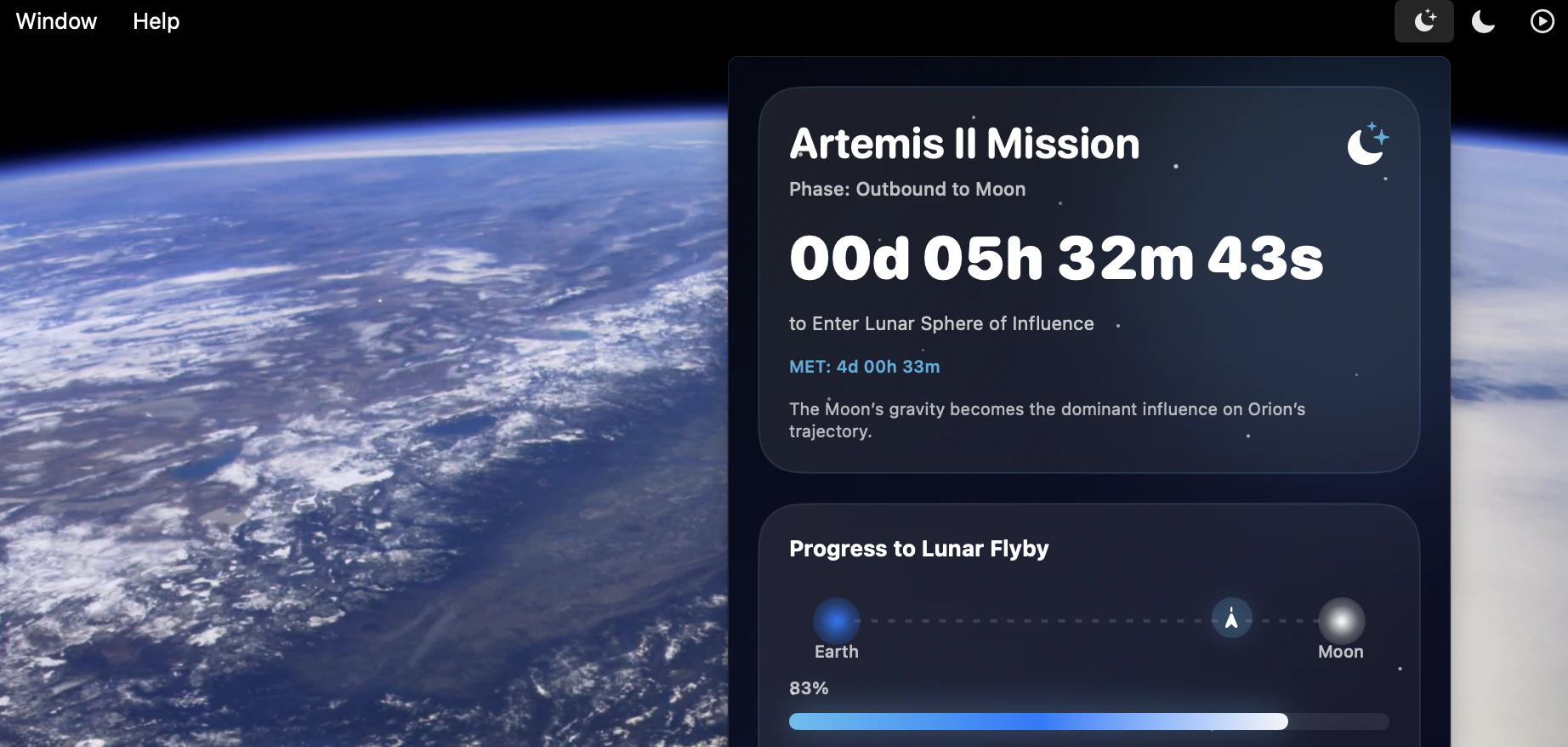
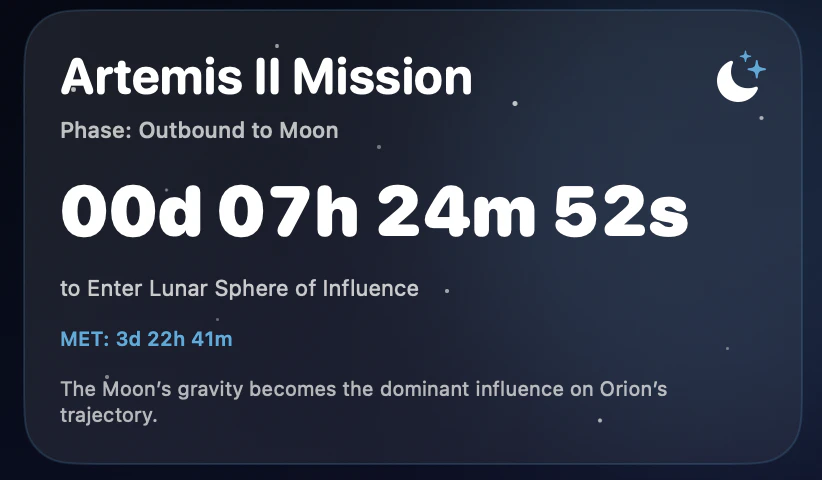
查看原始信息
Cre8Virals
Explode your YouTube growth with Cre8Virals. Analyze trending videos in your niche and instantly generate: titles, descriptions, tags, scripts, thumbnails, and upload timing. Also get growth analysis — understand why videos don’t perform and what to create next. No guessing. Just patterns that work. Start your free trial.

Yeah Ritesh! Youtube is a channel I'm currently focusing on and feel Cre8Virals gonna help me a lot on it. Wish you all the best here!

1
回复

Hey everyone 👋

I built Cre8Virals because I kept seeing the same problem with YouTube creators.

Creators aren’t failing because they’re not working hard enough — they’re failing because they’re guessing what will work.

Most tools just spit out generic titles or scripts, but they don’t actually show you what’s really working right now in your niche.

So I built Cre8Virals to fix that.

It analyzes trending videos in your niche, finds the actual patterns behind the successful ones, and then turns those insights into:

  • SEO titles, description, tags

  • Scripts

  • Thumbnail ideas

  • Tags

  • Smart upload timing

You can also just paste any video URL and it’ll tell you why it probably didn’t perform and what you should try next.

It’s still very early days, but I’m already getting some real users and feedback.

Would love to hear your honest thoughts — good, bad, or brutal 😂

What do you think?

0
回复