Product Hunt 每日热榜 2026-04-14

PH热榜 | 2026-04-14

#1
Figma for Agents
Design with AI agents, connected to your design system
449
一句话介绍:一款让AI智能体在Figma设计环境中直接操作真实组件和变量的MCP工具,解决了AI生成设计脱离品牌设计系统、无法直接投入生产的核心痛点。
Design Tools Developer Tools Artificial Intelligence
AI设计工具 设计系统连接 多智能体协作 设计到代码 UI生成 设计令牌同步 无障碍辅助 产品设计团队 人机协作 设计工程
用户评论摘要:用户普遍认为该工具解决了AI设计缺乏上下文的关键问题。有效评论聚焦于:1.如何同步及处理设计系统迭代后的历史设计;2.能否支持读取现有设计系统并导出代码;3.对多LLM平台的支持;4.其设计令牌同步和自动生成无障碍标注的实用价值。
AI 锐评

“Figma for Agents”并非又一个“AI生成漂亮图片”的工具,它的野心在于成为AI智能体融入产品设计工作流的“合规层”与“翻译器”。其核心价值不在于生成,而在于“约束”与“对齐”。

当前AI设计工具的致命伤是产出物游离于团队的“单一事实来源”(Single Source of Truth)之外,导致设计师必须推倒重来。该产品通过MCP协议,将智能体的操作权限直接锚定在真实的Figma组件、变量和自动布局上,这本质上是为“自由散漫”的AI套上了设计系统的缰绳。它让智能体从“天马行空的画家”变成了“懂得使用公司标准零件库的工程师”。

从评论中透露的更深层信号是,它试图重塑设计-开发协作的管道。无论是设计令牌的同步与漂移检测,还是基于真实组件自动生成无障碍(a11y)标注,都表明其目标是将那些繁琐、易出错、总被滞后处理的工程化规范(设计令牌、无障碍)提前并自动化地嵌入设计阶段。这不再是简单的“提速”,而是对工作流质地的改变——让一致性检查和规范落实从人工审查变为持续同步的底层协议。

然而,其成功的关键挑战也已从评论中浮现:如何优雅地处理设计系统本身的版本演进?智能体依据“技能文件”(Skills)这一静态快照进行创作,当系统更新后,旧设计是否会被标记为“漂移”?这触及了动态团队协作的核心矛盾。工具若不能妥善解决此问题,可能会在效率提升的同时,制造出新的技术债务与混乱。

总而言之,这是一次极具针对性的“填坑”式创新。它不追求炫技,而是务实地面向已深度使用Figma和AI编码助手的产研团队,解决AI落地“最后一公里”的融合问题。其真正颠覆性在于,它可能让“AI生成的设计”第一次具备了被直接“Ship”出去的资格。

查看原始信息
Figma for Agents
AI-generated designs break brand standards because agents can't see your design system. Figma's use_figma MCP tool changes that. For product teams bridging design and code with AI agents.

Figma opened the canvas to agents.

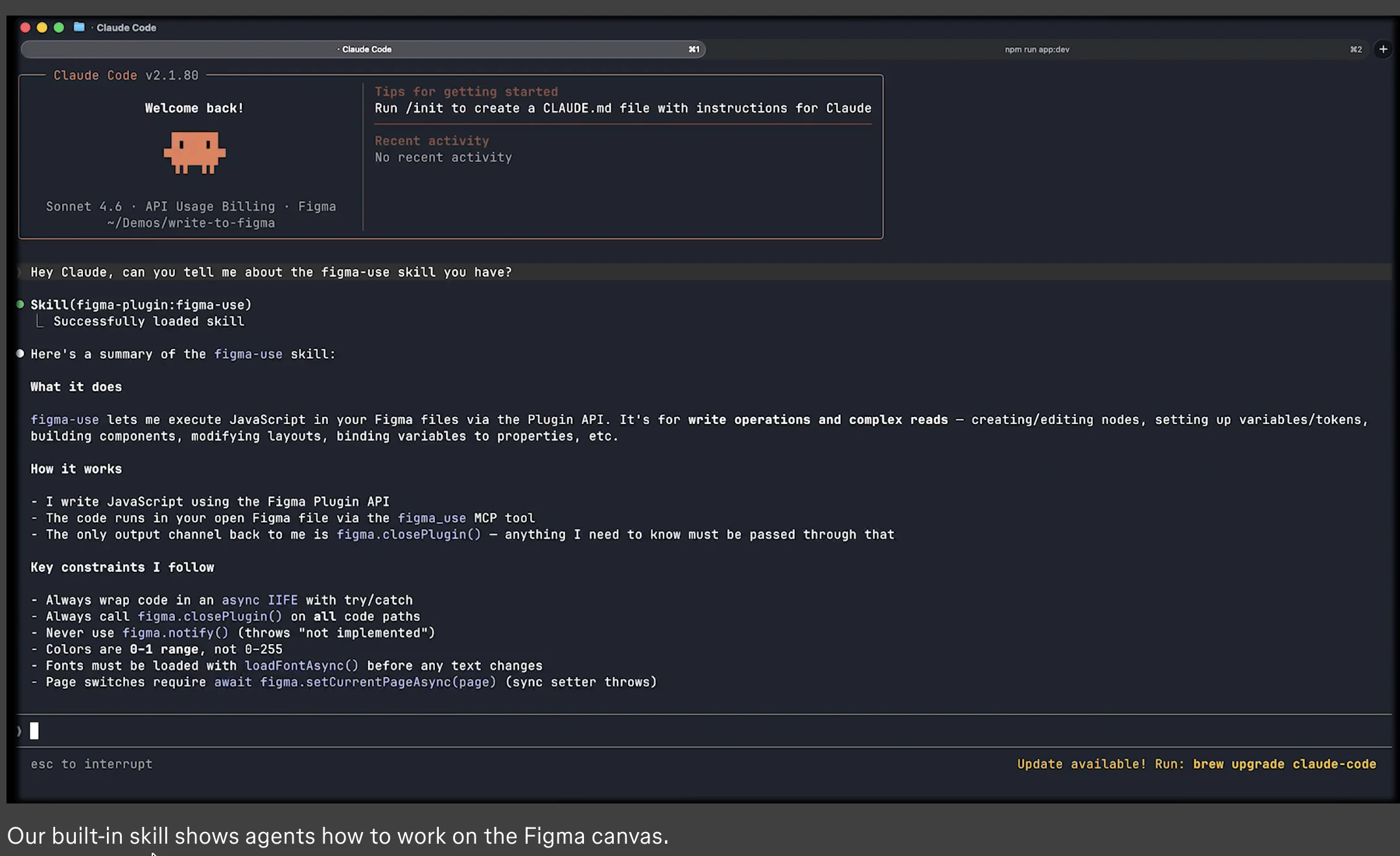
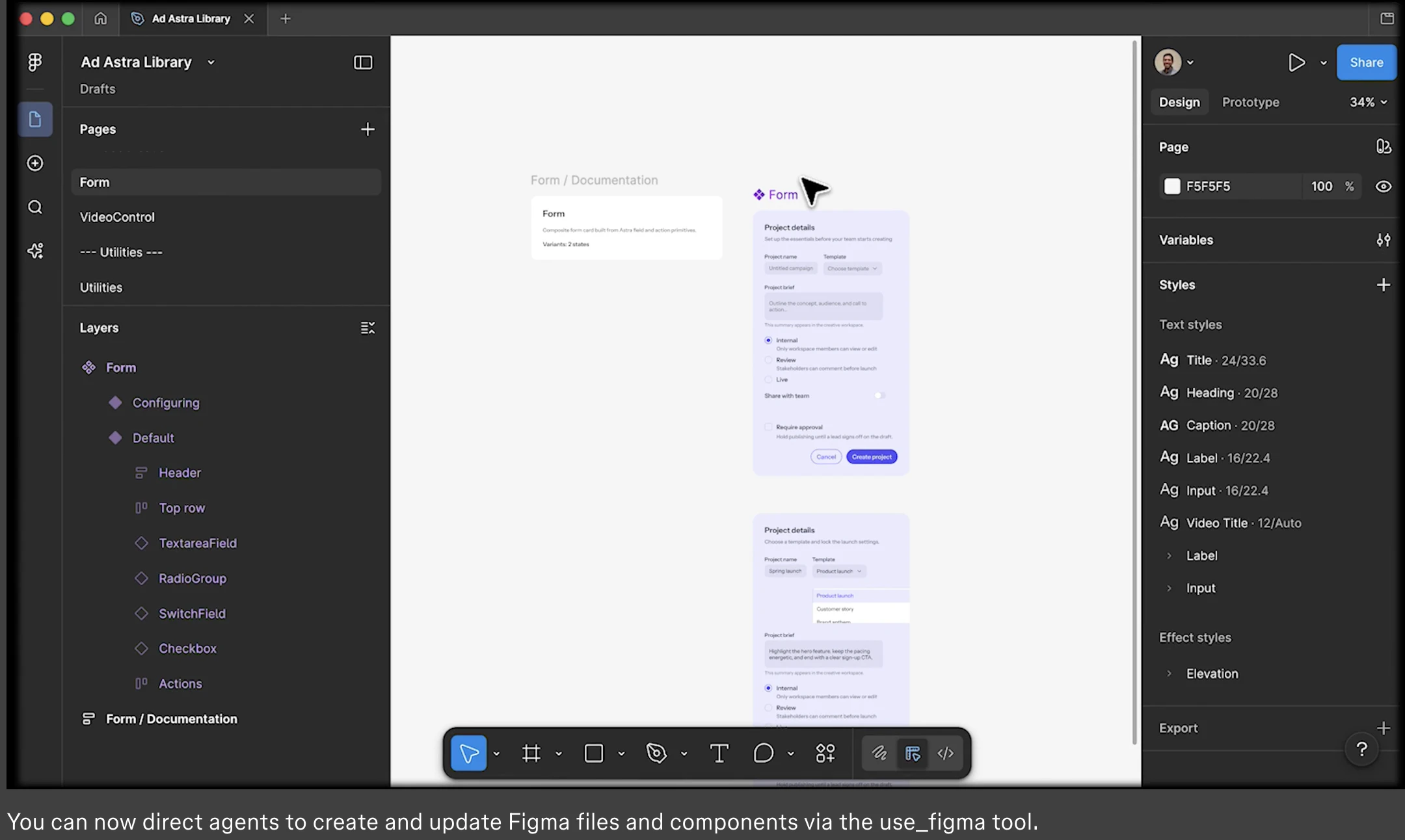
What is it: Figma's use_figma MCP tool lets AI agents create and edit designs directly in Figma, working with your actual components, variables, and auto layout not against them.

The problem: Every AI-generated design has the same tell: it doesn't look like your product. Components are invented. Spacing is arbitrary. The output is technically a UI, but it's nobody's design system. So designers throw it out and start over.

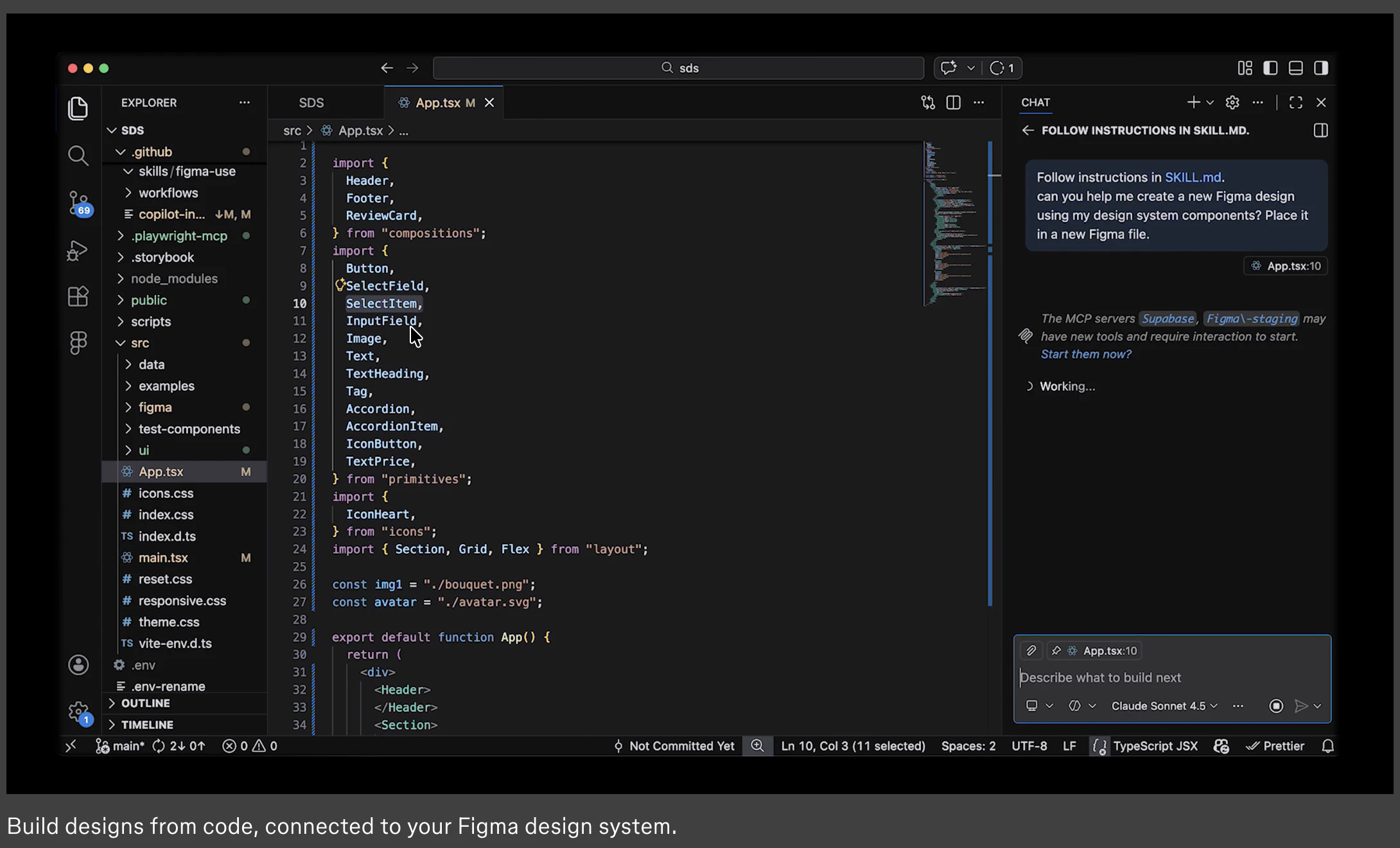
The solution: Skills are markdown files that encode your team's design conventions. Agents read them before touching the canvas. Combined with use_figma, agents now have both access and context they know how to work in Figma and they know how to work in your Figma.

What you can do with it:

  • 🏗️ Generate component libraries from a codebase

  • 🔗 Sync design tokens between code and Figma variables, with drift detection

  • ♿ Auto-generate screen reader specs from UI designs

  • 🔄 Run parallel workflows across multiple agents

Who it's for: Product and design-engineering teams that use Figma as the shared source of truth and want their AI agent workflows to stay connected to it. Heavy users of Claude Code, Codex, Cursor, and Copilot will feel this immediately.

P.S. I hunt the latest and greatest launches in tech, SaaS and AI, follow to be notified @rohanrecommends

5
回复

@rohanrecommends When the design system evolves and skills get updated, how do you handle designs that were generated under old conventions, do they get flagged as drifted or does the agent silently treat them as correct because it only knows the current skill version?

0
回复

@rohanrecommends The problem with AI design wasn’t quality.
It was context.

Working inside real Figma components is the difference between “looks cool” and “ship it.”

1
回复

This is exactly what multi-agent platforms need. We're building Kepion — an AI company builder with 31 specialized agents, including Maya (Designer) and Kai (Frontend Dev). Right now Maya outputs design tokens and Kai codes them into React components. But there's a gap: Maya can't "see" or "touch" actual design files.

Figma for Agents closes that gap. If Maya could create and edit directly in Figma using this MCP tool, then hand off real Figma components to Kai for implementation — the design-to-code pipeline becomes seamless. No more translating between "design spec as text" and "actual visual design."

Two questions: does use_figma support reading existing design systems (variables, component libraries) so an agent can stay on-brand? And is there a way to export generated designs directly to code (React/Tailwind)?

Following this closely. The future of AI-generated products isn't just code — it's code that looks good.

3
回复

@pavel_build don't know if this helps or about use_figma, but Figma's MCP exposes several other tools also - here are a couple & there are more:

- get_variable_defs - returns design tokens (colors, spacing, typography) from your selection.

- get_code_connect_map - retrieves the mapping between Figma node IDs and your actual codebase components. Enables Claude to use your real Button, Modal, etc. instead of generating new ones.

also, re react, we're using the Storybook MCP in combination with Figma MCP too

2
回复

Good to note that Figma is also innovating forward to stay competitive in the AI landscape. Congrats on the launch! Looking forward to trying it.

1
回复

@syed_shayanur_rahman For sure, the bar in AI is moving fast, and Figma is innovating on the go.

0
回复

How does it handle the conflict when the code variables in Figma and the code base diverge? Congrats on the launch.

1
回复

@roopreddy Great question, I think the idea is to use agents to continuously compare tokens and mappings between Figma and the codebase, flag drift early, and help you reconcile rather than silently diverge.

0
回复

the screen reader spec generation is the most underrated part. a11y annotations are always manual, always late, and quietly ignored in code review anyway. 

agents generating aria specs from actual design system components — if that's real, it's the first time accessibility sits upstream of the handoff, not downstream.

1
回复

@webappski Totally agree, a11y usually shows up at the very end, so letting agents generate screen reader and aria specs directly from real components is about moving accessibility to the starting line.

0
回复

AI that doesn't treat Auto -Layout like a suggestion! Look forward to it!

1
回复

@kelly_lee_zeeman Haha yes, appreciate you looking forward to it!

0
回复

Crazy. Would be happier if it works out great for multiple LLMs

1
回复

@riya_jawandhiya I'm thinking their goal is absolutely to make it work well across the tools teams already use. Thanks for stopping by!

0
回复

This feels like a missing layer finally getting solved.

Most AI design tools create “usable UI”, but not your UI, which kills real adoption in teams. Connecting agents directly to the design system is the right direction.

If this actually maintains consistency at scale, it's not just a design tool upgrade; it changes how design and engineering collaborate.

0
回复
someone test this and the accuracy of the implementation?
0
回复
#2
CatDoes v4
An AI agent with its own computer builds your apps
339
一句话介绍:CatDoes v4是一个云端AI智能体驱动的无代码应用构建平台,其核心AI代理“Compose”拥有独立的云端计算机,可自主完成从编码、安装依赖、测试到错误修复的全流程,让创业者、设计师和工程师能快速将想法转化为可部署的移动应用和网站,解决了从构思到落地执行效率低下的痛点。
Artificial Intelligence No-Code Vibe coding
AI智能体开发 无代码平台 云端应用构建 自主编程 全栈后端即服务 移动应用生成 网站转应用 自动化部署 创业工具 效率提升
用户评论摘要:用户普遍对AI代理的自主性和“闭标签工作”能力表示惊叹,认为其实现了真正的自动化开发。有效评论集中于:非技术人员能否用于正式部署(官方肯定回复);对“全家桶”式后端服务的灵活性及数据安全的询问(官方解释了代码导出、开源技术栈、加密管理和隔离机制);有用户分享了成功构建习惯跟踪器、作品集应用的经验。
AI 锐评

CatDoes v4所标榜的,并非又一个在旁建议的AI编程助手,而是一个旨在接管整个开发循环的“数字员工”。其真正的颠覆性在于将AI从“代码生成器”升级为“执行环境”,通过赋予AI独立的云端计算机权限,使其能自主进行试错、调试和迭代。这直接击中了当前AI编程工具的核心短板:生成代码后,将编译、依赖、部署等繁琐且易错的“脏活”扔回给人。

然而,这种高度自主性是一把双刃剑。产品最大的价值在于为明确、边界清晰的轻量级应用需求提供了“一键交付”的可能性,尤其适合原型验证、MVP构建或简单业务数字化。但其面临的深层挑战也同样尖锐:首先,复杂业务逻辑的可靠实现能力存疑,AI在模糊需求和无界问题中的决策质量是黑箱;其次,“全家桶”式服务虽简化了起步,但也可能形成供应商锁定,尽管官方承诺代码可导出;最后,将完整的开发、部署权限授予AI代理,其安全边界、成本控制(无限重试循环)和权责界定,对严肃的企业级应用而言仍是需要审视的风险点。

本质上,CatDoes v4是“AI即服务”理念在应用开发领域的激进实践。它并非要取代专业工程师,而是试图将应用开发的准入门槛降至近乎为零,让“想法”与“可运行软件”之间的路径极度缩短。它的成功与否,将不取决于其技术炫酷程度,而取决于其在实际生产环境中,在可靠性、安全性与成本之间取得的平衡能否经受住超出血气方刚的早期采用者之外的更广泛市场的检验。

查看原始信息
CatDoes v4
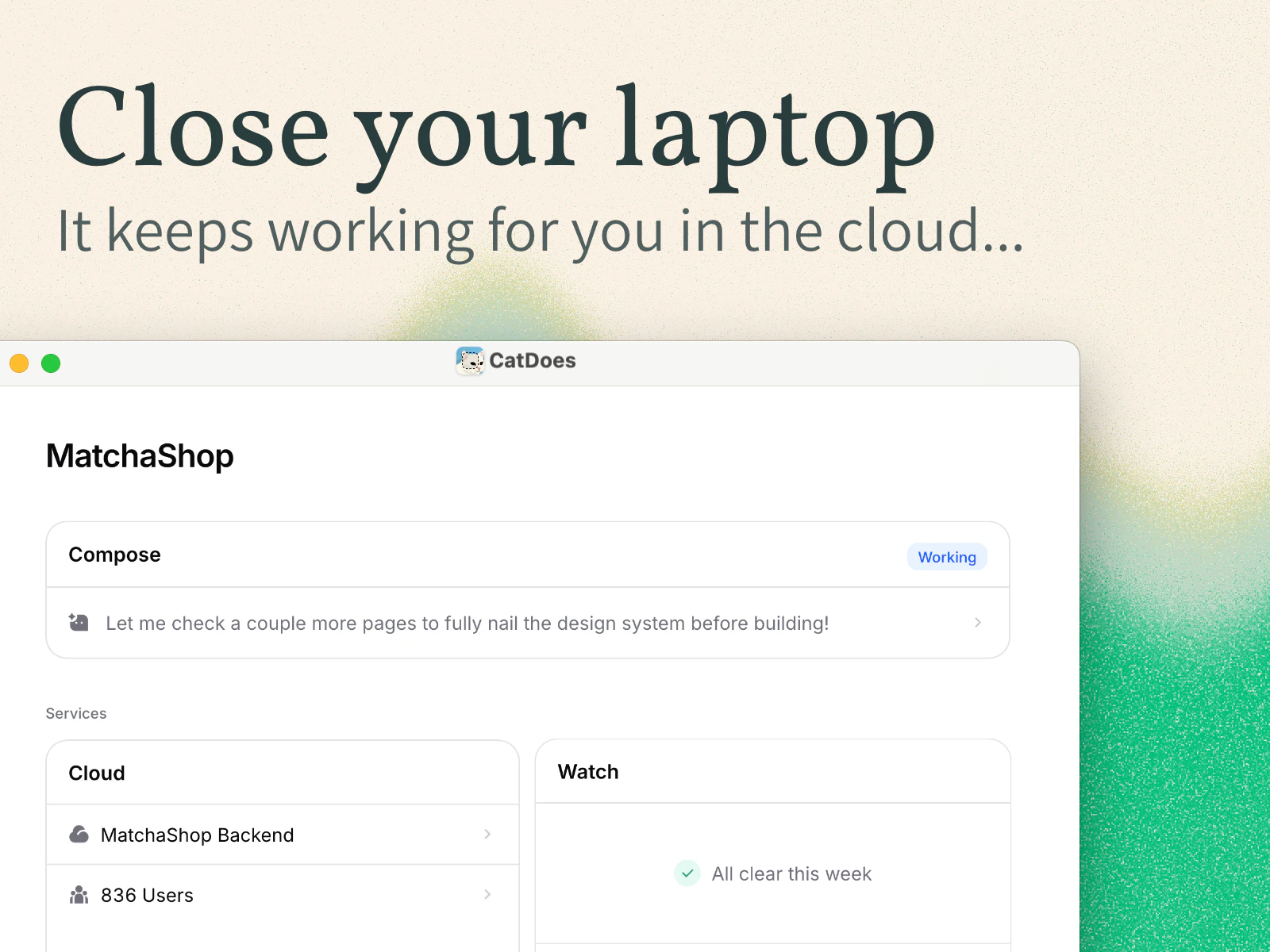
CatDoes is a no-code app builder. Its AI agent, Compose, runs in the cloud and has its own computer, so you can close the tab and it keeps working. Compose writes the code, installs the packages, runs the tests, and fixes its own errors. It builds mobile apps and websites. Every plan comes with a backend included, database and auth and storage and edge functions and real-time events. For founders, SMBs, designers, and engineers who want to move faster.

👋 Hey Product Hunt,

I'm Mahdi, co-founder of CatDoes. Building this with Nafis. Big thanks to @thisiskp_ for hunting us today.

This is our third time here. v3 was "a team of AI agents that builds your mobile app." v4 is where that idea grew up.

The core of v4 is Compose, our new AI agent. It replaces the old specialist-team setup with a single autonomous agent that works more like an engineer you can hand things off to than a copilot that sits next to you while you code.

A few things that are actually different about Compose:

- It runs in the cloud. You describe what you want, close the tab, go to sleep, come back. Compose has been working the whole time.

- It has its own computer. So it can install packages, run scripts, try a build, read the output, and try again if something fails. It doesn't suggest code changes, it writes them, runs them, and fixes them when they break.

- It spawns subagents. If your request has three independent parts, Compose runs them in parallel instead of serially.

- It decides what to do next. Plans the work, writes the code, runs the tests, ships the build, reads the errors, fixes them.

What Compose builds

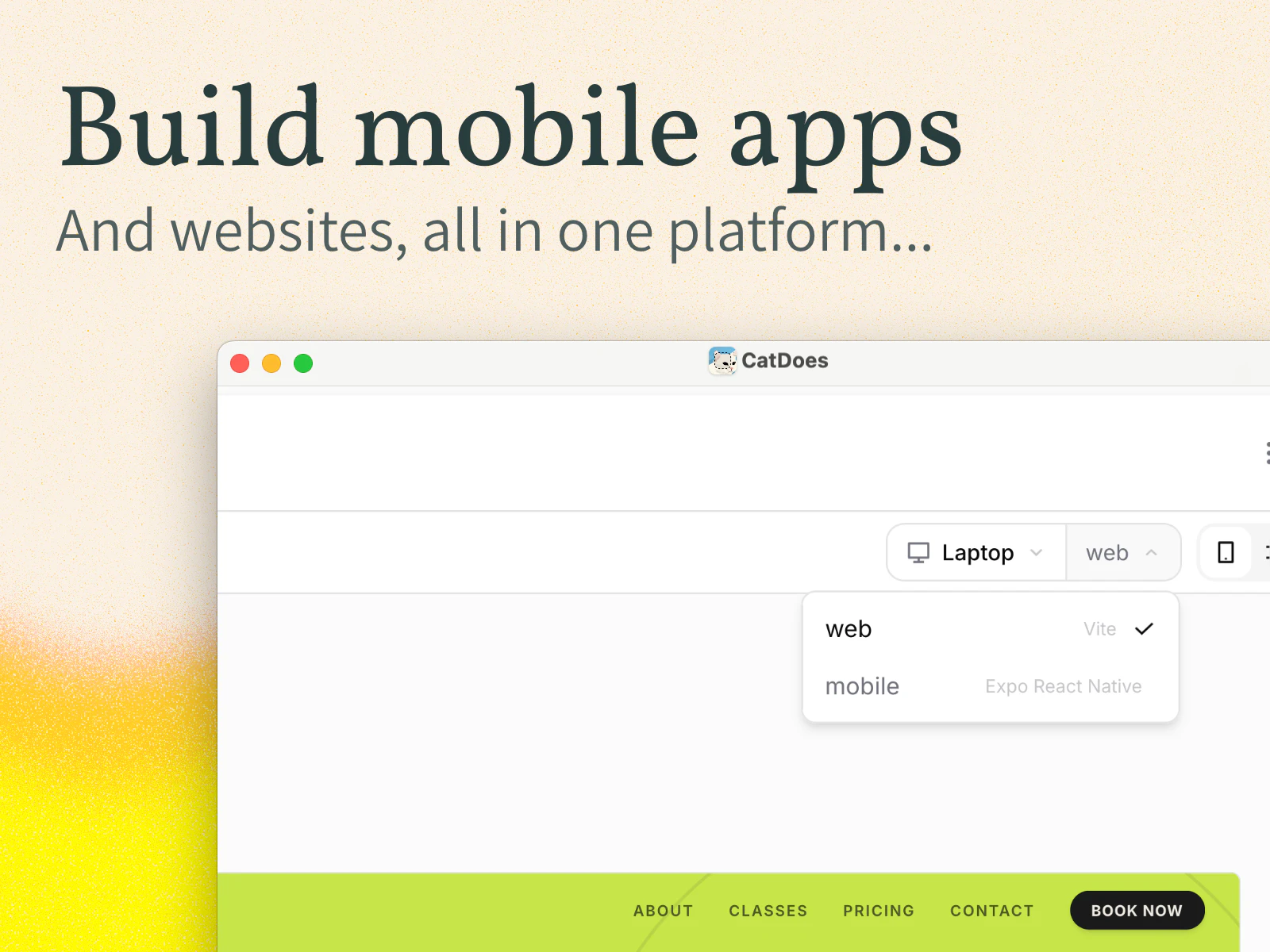
Mobile apps and websites. You can start from scratch or import a GitHub repo. Paste a URL (Lovable, WordPress, Shopify, whatever) and Compose will turn that website into a mobile app. Fork any of your projects to ship the same product under a different brand. It also monitors your app's errors via CatDoes Watch (Built-in error monitoring) and will fix them when you ask.

Every plan ships with a full backend: CatDoes Cloud. Database, auth, storage, real-time, edge functions. US and EU regions. No separate setup, no extra vendor.

What's new since v3

- Compose Agent: autonomous, cloud-native, has its own computer

- CatDoes Cloud: backend included on every plan

- Websites + custom domains

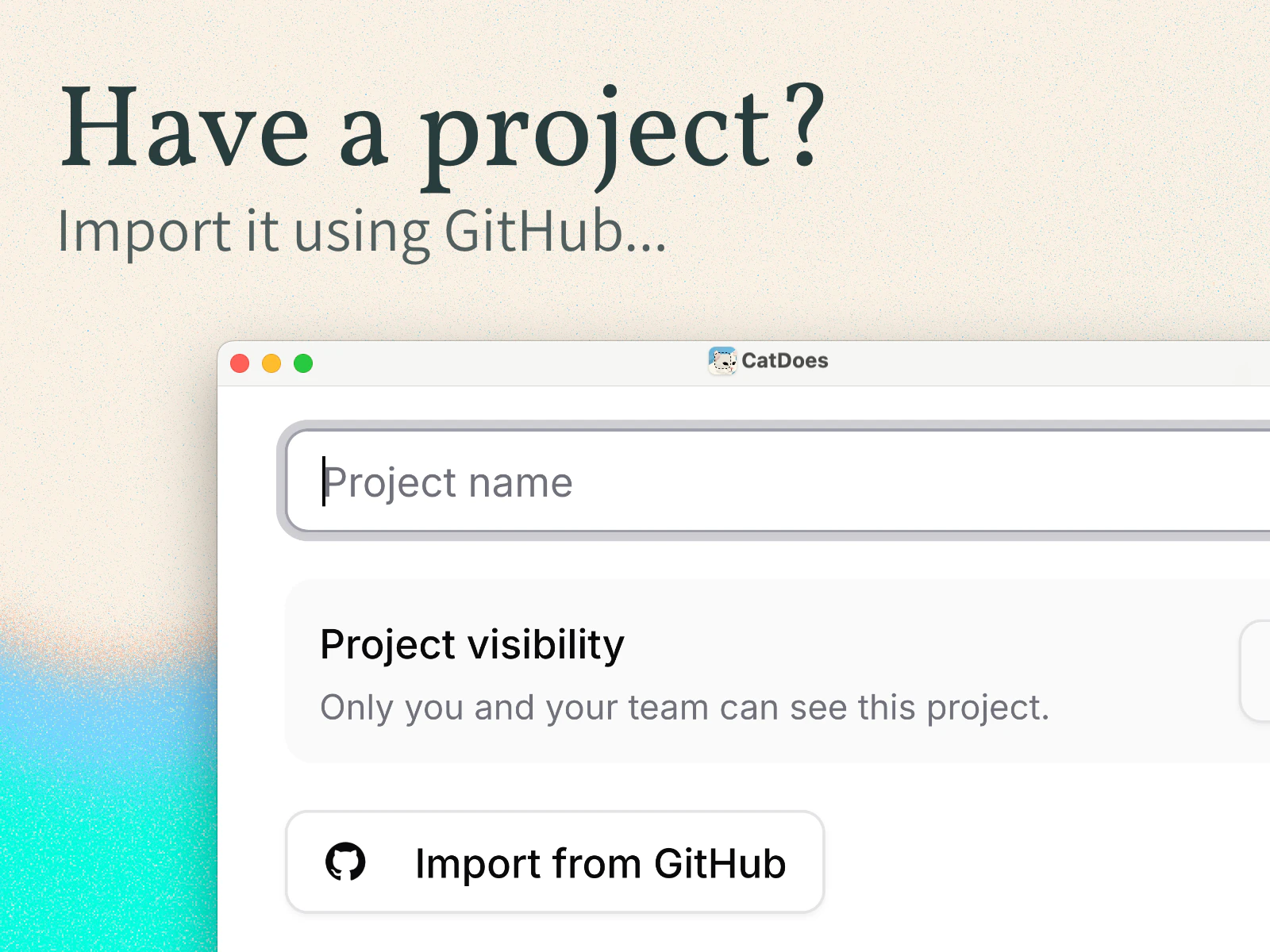
- Import from GitHub

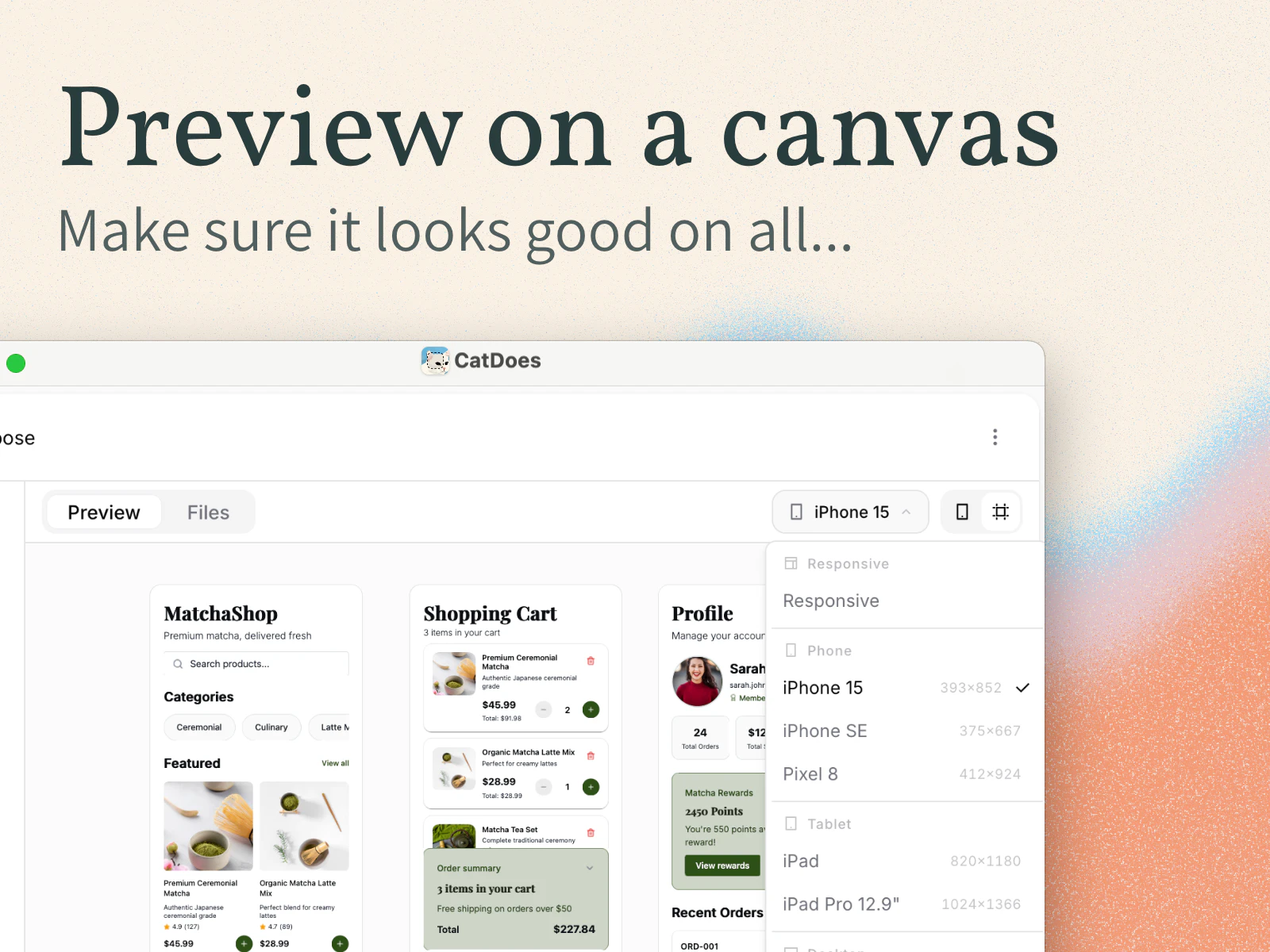
- Monorepos with a preview size switcher (mobile, desktop, iPad, phone sizes)

- Website to Mobile App convertor

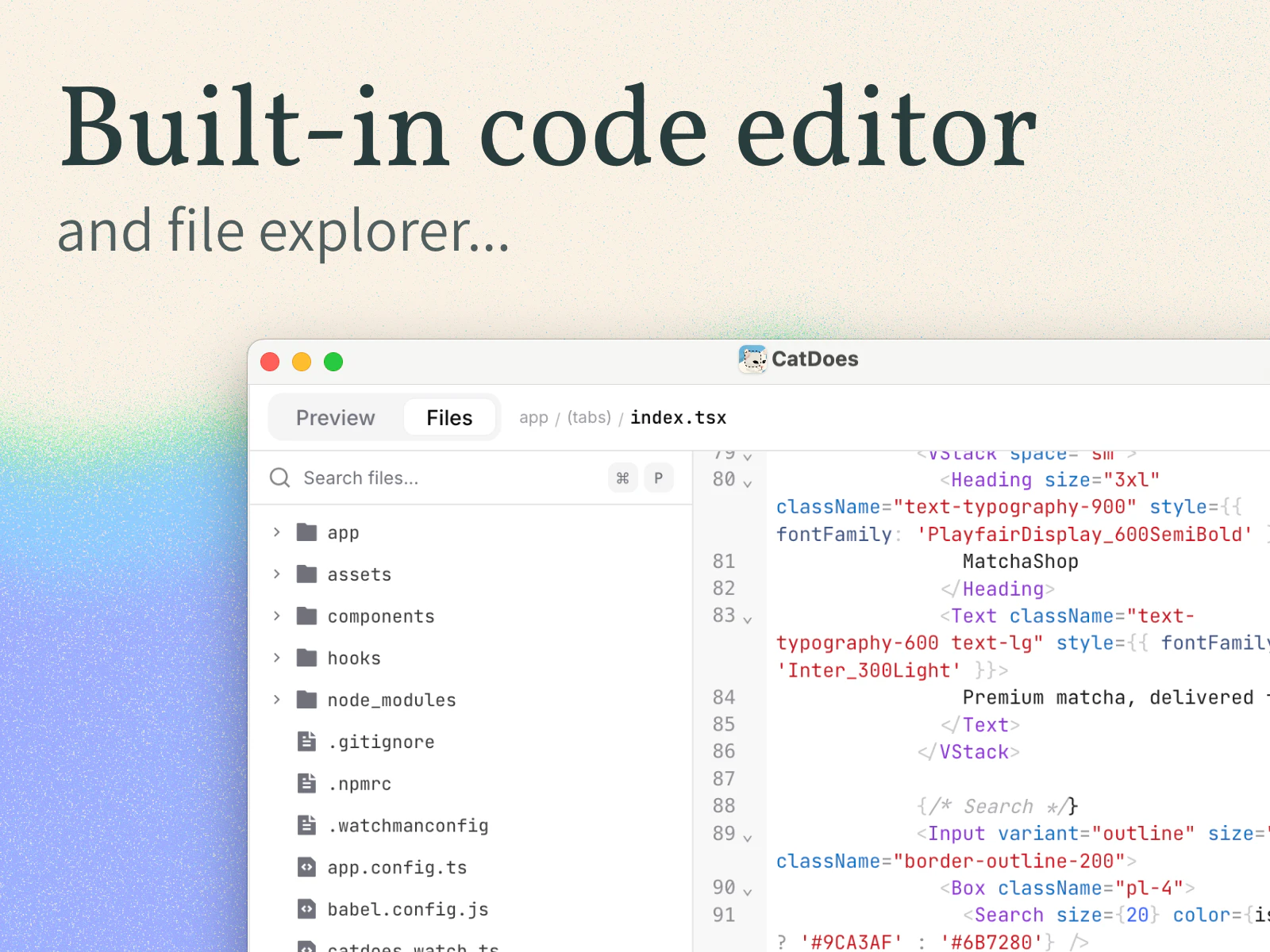
- File Browser (edit your code from the dashboard)

- Multi-page Canvas (see every screen at once)

- CatDoes Watch (built-in error monitoring, dev and prod)

- Env Manager (store secrets the AI can request but never read)

- Fork Projects

- Principal Agent tier, our smartest agent yet

Who it's for

- Founders going from idea to a real app in days

- Designers whose prototypes should actually run

- Small businesses that finally need a mobile and web presence

- Engineers who want to ship 10x faster

- Anyone who's been waiting for tech to catch up with their idea

Product Hunt perks

- 20% off your first paid month with code V4_PH_20, valid this week

- Drop your idea in the comments and I'll reply with how Compose would tackle it. If it's interesting, we'll spin it up and share what Compose built.

Thanks for taking a look. Feedback from people who showed up for v2 and v3 is a big reason this version exists. 🙌

Mahdi and Nafis

Co-founders, CatDoes

15
回复

@thisiskp_  @mahdi_nouri  great stuff! congratulations on the launch of CatDoes V4!

0
回复

I created my habit tracker app with catdoes, and I love it! Congrats Guys.

3
回复

@ayda_golahmadi Glad you loved it, Thank you Ayda 🚀🫶🏻

1
回复

Let's gooo @ayda_golahmadi 🚀

0
回复
Congrats, I'm so excited for this! I prototyped 2 apps for my portfolio with CatDoes v3 and now I just tried this and I can't believe it one-shotted my app. Good job team✨👌🏼
3
回复

Thank you for your comment @sana_doushabchi , glad that you found CatDoes useful, would love to know what you have built! 🫡

1
回复

@sana_doushabchi This is so cool, Thank youu🚀🫶🏻

1
回复
Comment Deleted
0
回复

Hey PH fam 👋

Super excited to hunt CatDoes v4 today — and this one is a meaningful step forward for AI-assisted development.

I know Mehdi well. He and his co-founder (Nafis) have been heads down building for a long time. Third PH launch. Best one yet.

Here’s what’s always frustrated me about AI coding tools: They write the code. Then they stop.

The moment something breaks — a failed build, a missing dependency, a cryptic error log — it’s back on you. You’re still the debugger. You’re still the one closing the loop.

CatDoes v4 changes that dynamic.

The new agent runs on its own cloud machine. It doesn’t just generate — it:

→ Installs dependencies on its own

→ Runs the build

→ Reads the error logs

→ Fixes what broke. In a loop.

You tell it what to build, close the tab, and come back when it’s done.

That’s not a code generator. That’s agent autonomy.

And it’s the closest thing I’ve seen to a tireless dev running in the background while you focus on what actually matters.

Big congrats to Mehdi and Nafis and and the CatDoes team 🙌 Three launches in and they keep raising the bar.

Check it out and drop your questions and feedback below 👇

3
回复

@thisiskp_ 

Interesting to see agents moving all the way to building and shipping apps.

As these systems start actually executing things on their own,

it feels like the bigger challenge becomes defining what should be allowed to run — not just generating or building it.

0
回复

Is it good enough to deploy to public for non software engineer? Or is it only for vibe coding?

2
回复

it is @linkun_dong !

please give it a try and let me know how it goes!

0
回复

@linkun_dong It's made for non-technical people. We have business owners, product managers, and designers who use CatDoes to build apps and websites. Give it a try and let me know if you need any help.

0
回复

Congrats — really excited about this release! I built a couple of portfolio apps with CatDoes v3, and even without diving deep yet, this already looks super impressive.

2
回复

Thank you @sinan_ugurdag , this is what we like to hear! 🙌

0
回复

@sinan_ugurdag Thank you Sinan🚀

0
回复
You’re bundling a full backend (DB/auth/storage/realtime/edge). How do you think about the tradeoff between “batteries included” and flexibility: what’s the escape hatch when teams need custom infra, strict compliance, or want to bring their own services—and how do secrets and production safety work with an autonomous agent?
2
回复

Thank you for the comment @curiouskitty 😻

Batteries-included by default, and exits are there when you want them. CatDoes Cloud (db, auth, storage, realtime, edge functions) ships on every plan and most builders want to ship, not shop for infra. Under the hood we use open-source tech, nothing proprietary. Code export is there whenever you want to own the code and leave, and because the stack is open-source the exported code actually runs elsewhere.

GitHub import works the other way where you can bring any repo in and the agent will work on it. The agent isn't locked to Cloud either; it can wire up Stripe, Clerk, your own Postgres, whatever, by writing against it.

Cloud's EU region is live at data centers in Europe for data residency, and teams and enterprises can run private Cloud deployments.

On secrets and safety: our Env Manager encrypts everything, the agent only ever sees which keys exist, never the values. For sensitive inputs, there's a secure input field where values are encrypted on entry and the agent just knows a value is provided and proceeds. Each project runs on its own isolated cloud machine, so no cross-contamination between builds.

Also, CatDoes Watch monitors prod and hands errors back to the agent when you want them fixed.

0
回复

This product is really amazing, and I've been watching their progress. I really like the quality of the product.

2
回复

@khashayar_mansourizadeh1 Thank you Khashayar, It means a lot.

0
回复

Thank you for the comment @khashayar_mansourizadeh1 

We're a big fan of Starnus here! 🙌

0
回复

I am seriously impressed.

I had a few design ideas for my business and they were laying down in my Figma untested. I used Catdoes v4 and tada 🪄. Kudos team!!!

2
回复

@eemis Love to hear this! let's goooo

0
回复

Thank you for your comment @eemis glad you found CatDoes useful! 🙌

0
回复

does it support like all Apple platforms?

1
回复

yes @zabbar , it supports both iPhone and iPad apps.

And the best part is, you don't even need a mac or Xcode to publish your app on the app store.

0
回复
#3
Softr AI Co-Builder
Build business apps with AI - that actually work
328
一句话介绍:一款通过自然语言描述即可快速生成包含数据库、业务逻辑和安全权限的完整商业应用(如客户门户、内部系统)的AI协同构建平台,解决了非技术用户在定制企业级软件时面临的开发周期长、成本高、原型工具不实用等核心痛点。
Artificial Intelligence No-Code Vibe coding
AI应用构建 无代码开发 企业级软件 商业门户 内部工具 数据库生成 业务流程自动化 可视化编辑 协同开发 低代码平台
用户评论摘要:用户普遍认可其能快速生成“真正可用”的软件,解决了其他AI工具只能做原型的问题。核心关注点在于:1. 数据模型复杂性与业务逻辑演进的兼容性;2. AI生成与可视化编辑的权限边界与控制力;3. 处理复杂业务逻辑的实际能力。建议包括增加AI设计的创意自由度。
AI 锐评

Softr AI Co-Builder 的发布,与其说是一次功能升级,不如说是对当前“氛围编码”市场的一次精准切割。它敏锐地抓住了“从演示到交付”这一关键断层,将口号锚定在“actually work”上,直击了当前AI生成应用普遍沦为玩具或半成品的行业痼疾。

其真正价值不在于“用AI生成应用”这一表象,而在于将AI深度嵌入到一个成熟、闭环的无代码产品框架中。这带来了几个关键优势:首先,它用AI加速了“构建”这一初始环节,但将核心的可靠性押注在Softr自身经过验证的、预置了用户认证、角色权限和数据安全的基础架构上。这本质上是用AI降低使用门槛,而非用AI承担全部责任,规避了生成式AI在逻辑严谨性上的固有风险。其次,它提供了“提示生成”与“可视化编辑”的双模控制,这并非简单的功能堆砌,而是对用户(尤其是非技术用户)心智模型的深刻理解——AI负责灵感与草稿,人类负责最终的确认与微调,控制权从未旁落。

然而,其面临的挑战同样清晰。来自评论的质疑点明了核心:当真实的、混乱的业务数据涌入AI基于理想化描述生成的数据库架构时,系统能否优雅地演进?这考验的是其底层数据模型的灵活性以及“协同构建”中“协同”二字的真功夫——AI能否理解并协助用户进行复杂的业务逻辑迭代,而非仅仅完成一次性生成。此外,在高度定制化与复杂集成场景下,它能否在“开箱即用的便捷性”与“企业级的灵活性”之间保持平衡,将是其能否从“有用工具”跃升为“关键平台”的试金石。

总体而言,Softr此举是务实的AI产品化典范。它没有追逐“完全自主AI编码”的幻影,而是用AI强化自身护城河,解决真实商业场景中的效率与信任问题。它的成功与否,将验证一个命题:在商业软件领域,**“AI增强”** 或许比 **“AI取代”** 是一条更稳健、更可持续的路径。

查看原始信息
Softr AI Co-Builder
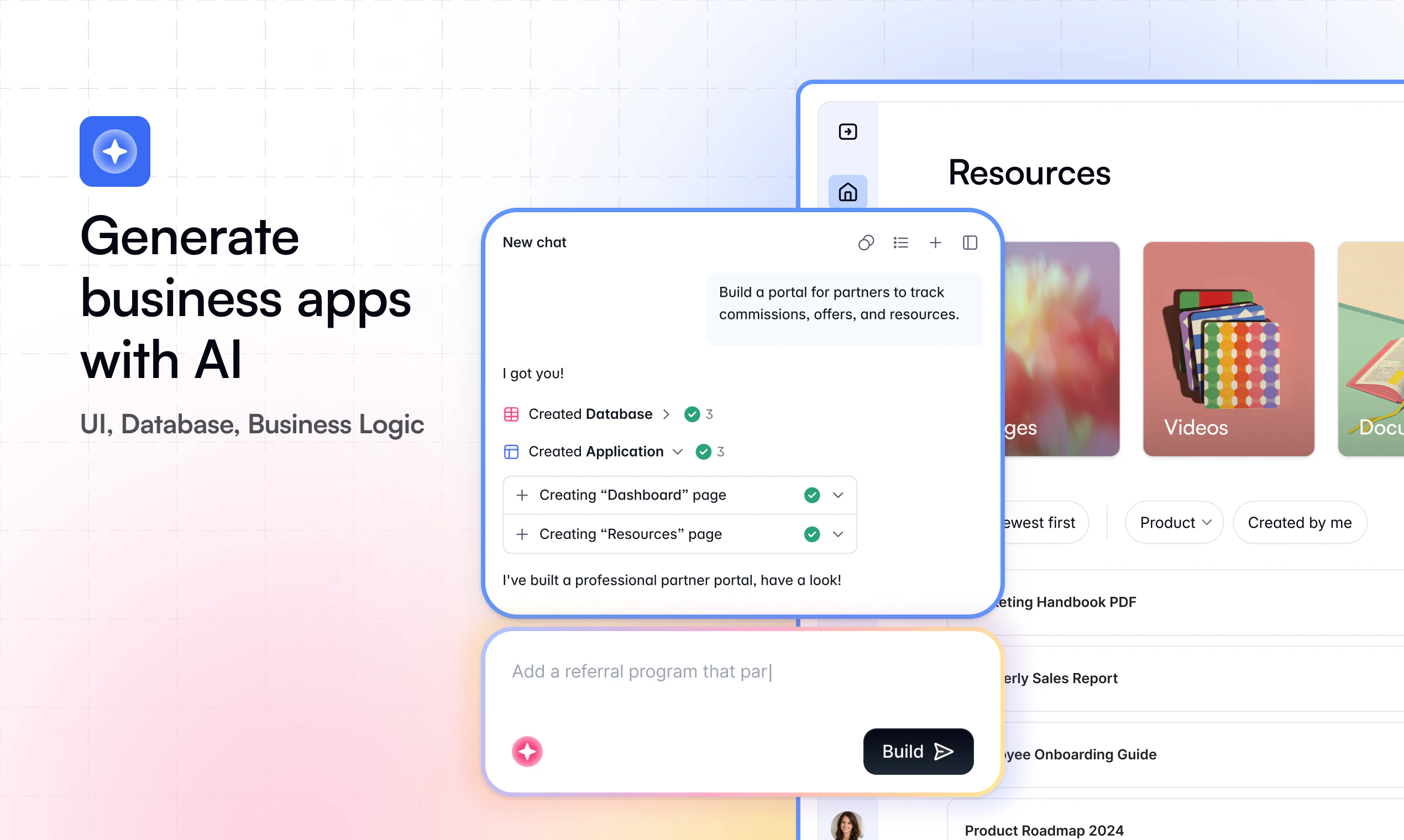
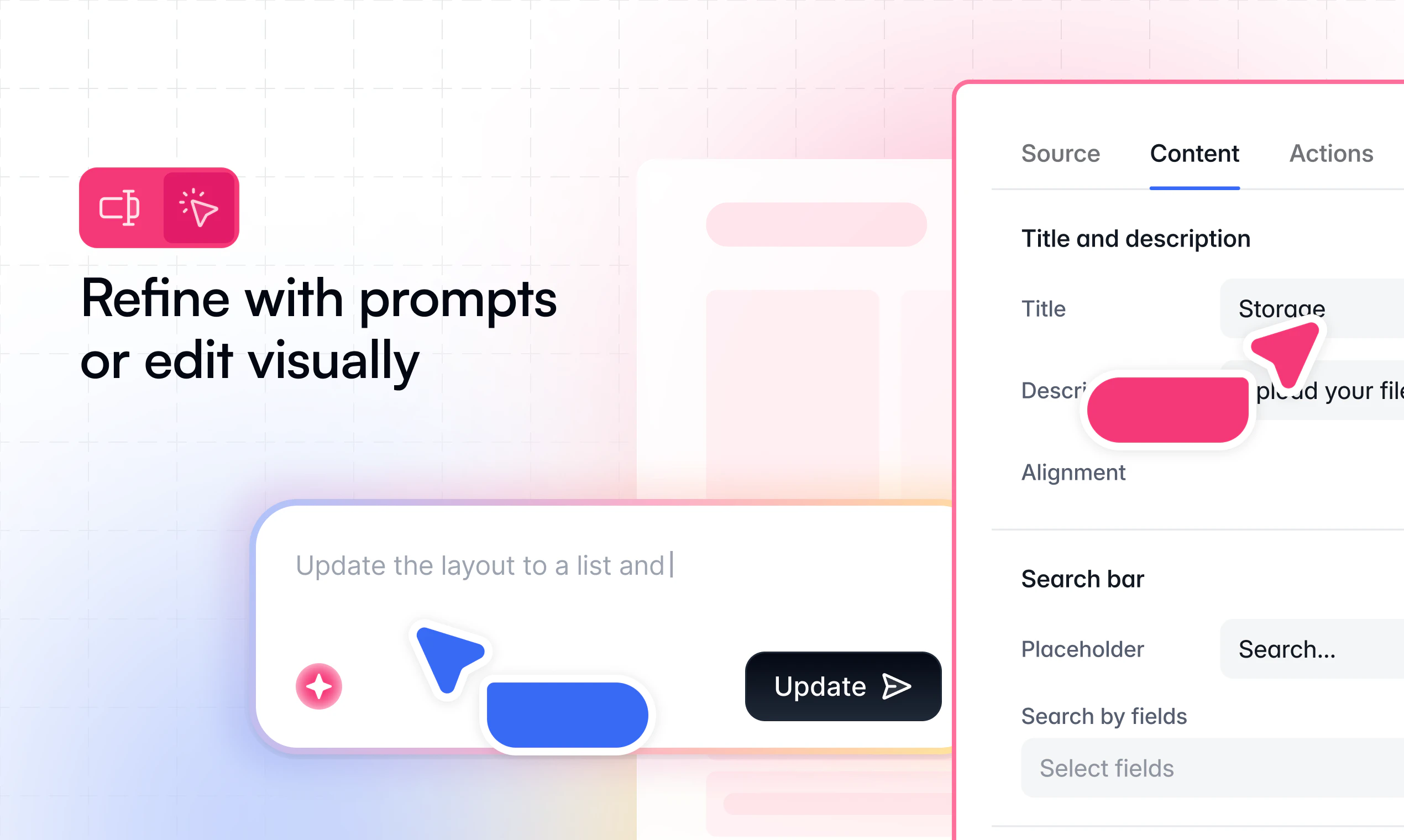
Build custom portals, internal tools, and ops systems with AI in minutes. Describe what you need, and the AI Co-Builder generates the app, database, and business logic, secure and ready for real users. Refine with prompts or edit visually - you're in control.

👋 Hey Product Hunt community,

2025 was the era of shiny demos. 2026 is the era of useful business software your business runs on.

If you've ever tried to build a custom business tool - a client portal, a vendor management system, an internal CRM - you know the options aren't great. Off-the-shelf software almost fits, but not quite. Hiring a developer takes months and costs more than expected. And AI or vibe coding tools? Great for prototypes, but the moment real users and real data get involved, things fall apart fast.

Today, we're bringing Softr’s AI Co-Builder to the Product Hunt community: the first AI platform for building real business software. Not prototypes. Not demos. Software that works, every single time.

Here's what makes it different:

🏗️ Generate real business software from a prompt: Describe what you need, and Softr’s new AI Co-Builder instantly creates the database, application, and business logic - already connected, secure, and ready for real users.

🔁 Refine with AI or edit visually: Switch between AI prompting and visual editing at any time. You build it, own it, and iterate on it - no black box, no developer required.
Need something custom? Use the vibe coding block to build your own design and logic exactly the way you want.

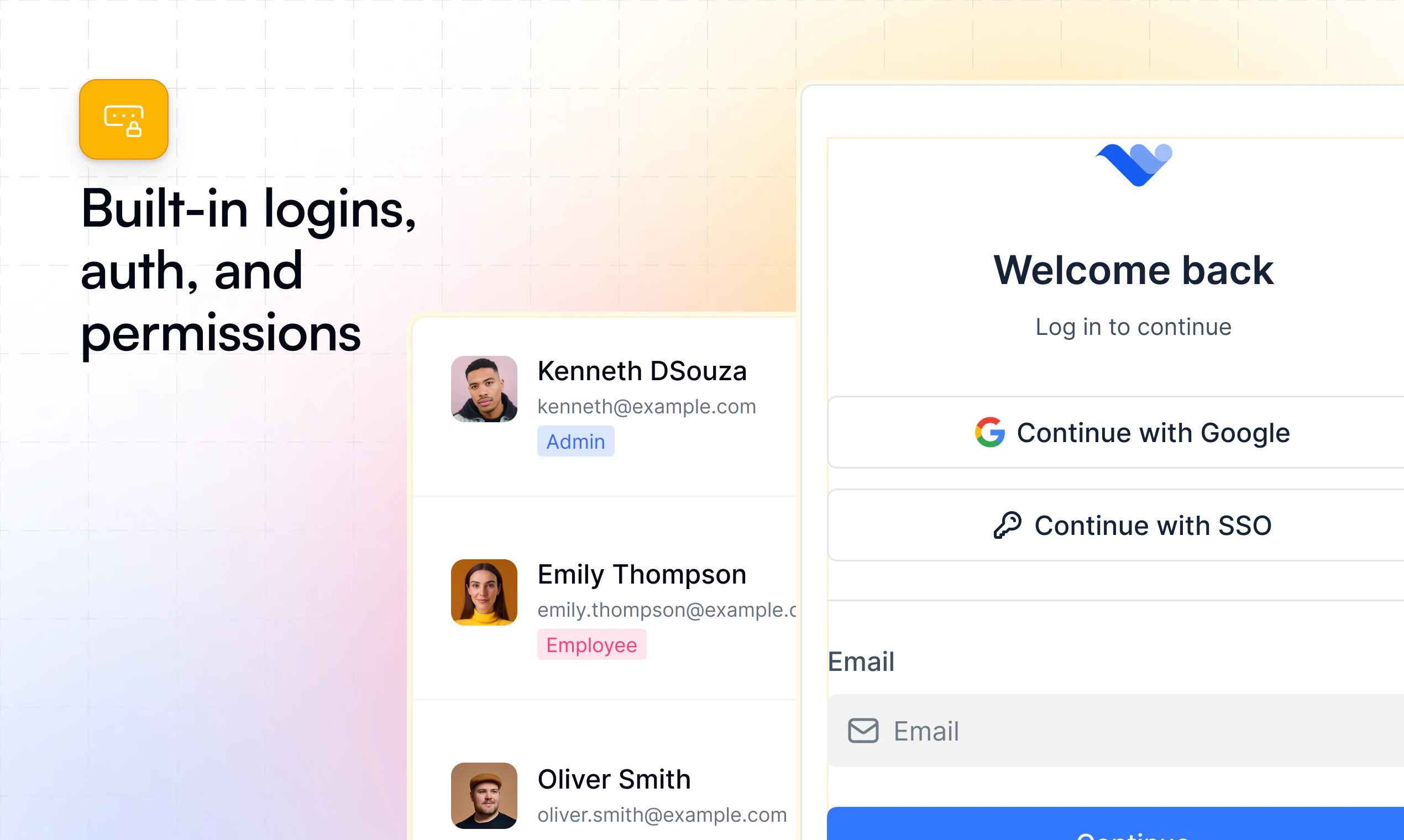
🔒 Secure and fully-functional by default: Logins, roles, permissions, and security are built in from day one, so you can actually launch it to your team or clients without it falling apart.

🧩 Connect your data and tools: Your data, your apps, and your workflows all live in Softr. Connect your existing tools, automate processes, and manage your complete business operations without switching context.

👉 Try it free at https://softr.io/

Over 1 million builders worldwide already use Softr. We can't wait to see what the next million builds!

Let us know what you think - we'll be in the comments all day to answer questions.

– Mariam and the Softr Team

24
回复

@mariam_hakobyan5 a friend is building an online school, and I'm helping her finding the right LMS (learning management system).

There's one specific requirement that is only available in the custom pricing tier. My solution was to use a lower tier + zapier until she is able to afford the higher tier. I was never comfortable recommending a vibe-coding platform. But now, Softr AI Co-Builder may be the solution!

3
回复

@mariam_hakobyan5 When the AI Co-Builder generates the database schema and business logic together from a prompt, what happens when a user's real data turns out to be messier or more complex than the prompt implied, can the schema evolve without breaking the app logic built on top of it?

0
回复

I'm very happy to see app building became even faster and easier in Softr. Shout out to the team!

8
回复

Really proud of what the team has shipped here! Excited for what people will build with it 💪🏻

7
回复

So proud of this one!

Real software building for non technical people, where they can reason visually versus getting stuck in code editing

6
回复

Really game changer. Now the only thing which limits you in Softr is your imagination.

6
回复

This looks seriously powerful <3

5
回复

Building with AI app builders, you bump into the same issues: you start from scratch. I've tried the AI app building capabilities of Softr and it actually delivers what it promises: within a ridiculous short amount of time, you have an app you can actually use for your team, business or a client. The crazy part is that this is only the beginning!

Big congrats to the @Softr team--you've built something people love.

4
回复

@leo_selie 100%, exactly why Softr's new AI platform for building business apps exists!

0
回复

I've been building apps with Softr for 4 years and I must say that this AI cobuilder is actually useful, and actually works.

It implemented very nice layouts that I never thought about and it's super nice to get this extra inspiration and support as I'm building.

Manually configuring 12 blocks in an app was a bit repetitive and long (couple hours, nothing dramatic when building full stack business apps) so I'm now skipping some parts thanks to the co-builder.

I recommend anyone to test this prompt "Add a new page to my app to show 5 analytics charts you think are relevant".

1 prompt away from adding a nice analytics page to any app.

4
回复

@guillaume_duvernay thanks for being part of this, and all the amazing things you are building! 💛

1
回复

I’ve tried quite a few tools that promise to generate complete apps, and most of them tend to produce very similar, static, and somewhat monotonous results. With Softr, though, the experience felt different from the start, even the building process itself is genuinely delightful.

The output was surprisingly good and stood out compared to other tools I’ve tested. I especially liked how easy it is to preview the project across different devices, the responsive view is very handy.

If I could suggest one improvement, it would be adding an option like “be creative” (or something similar) when choosing a theme. That could give the AI more freedom and bring a fresh, unexpected touch to the generated designs.

That said, congratulations on the launch! 🚀

3
回复

@matheusdsantosr_dev Thank you for checking Softr out and your feedback!

We have designed Softr specifically for non-technical teams, who don't want to be left with generated code, APIs, but want to build solutions, fast!

Thanks for the improvement suggestion, will take this back to the team!

1
回复
On the “AI vs visual editor” spectrum, where do you draw the line on what AI is allowed to change automatically (schema, permissions, workflows), and what product tradeoffs did you make to keep generated apps maintainable and debuggable versus fully code-first tools like Retool/Replit?
2
回复

@curiouskitty few things we prioritise - Security layer should not be hidden in the code e.g. if you have a button to add new task and delete task builder should be able to click and configure.

Re changes around schema - we ask the builder to confirm before it does perform destructive actions

And generally we mix Softr's no-code building blocks and constraints with code generated alternatives when applicable and aagain add no-code touch above the code.

0
回复

Back in 2023, not long after chatGPT came out, Softr was probably the first company to have launched an AI app builder (you can see it in our past launches 😄)

It felt like the most cutting-edge thing at the time.

...and our new AI co-builder just made that old version look like a toy.

I know the first thing on your mind is probably "How is Softr different from {another vibe coding tool}"?

Here is a TL;DR:

1. User auth, database, and automation out-of-box with their own UI. There's no need to wrangle multiple systems together or pay for multiple subscriptions.

2. You can build by both prompting AND visual editing. From our learnings over the past 5 years, combining both modes is truly the best UX. Many vibe coding tools get non-technical 80% there, and stay there. We let you actually finish the job with confidence.

3. Business apps require reliability – permissions, security, and custom logic...things that most people don't realize how complex it is (because most SaaS took care of it). We provide all the tools for any non-technical users to configure them without having to verify whether LLM-generated code does what they want.

4. We have highly flexible blocks, fields, actions, integrations, and features that are constantly being improved and maintained by our team. And if you need something more unique, you have the option to vibe code your own and connect to any API with secure auth. So you get the best of both worlds!

I know these claims are probably not enough to convince you, so you just have to try it out :)

2
回复

@iamaustinyang good memories of the old AI app builder :) But truly, it looks like a toy now, with this powerful AI platform that's so much smarter, faster, and fully functional!

It wouldn't have been here without your and the team's efforts! ❤️

0
回复

The real test will be how well it handles complex business logic not just simple portals.

2
回复

@brandon_elliott1 absolutely! that's exactly why we think Softr stands out in the market - as a poster child of the no-code world, we have exactly been abstracting that complexity of software building - all of that is handled for the users - roles, granular permissions who can use the app in what ways, custom automations on button clicks, and so much more!

Please check out and share your feedback!

0
回复

The quality of this launch, and especially the video, reminds me of how AI has improved because your outputs are on a very professional level. Nice job.

2
回复

@busmark_w_nika thanks so much for the kind feedback!

0
回复

Hey @Softr and team, just wanted to say it's a great option out of all the other presents in the market, I have built some custom projects for my project-specific requirements and they are working fine with daily task....

all the best!!

2
回复

@pulkit_singh7 thanks a lot! more exciting features will come soon

0
回复

@pulkit_singh7 thank you Pulkit! great to hear that :)

0
回复

This is a complete package now. Everything handled very well. Even the Auth, which I used to struggle a lot with. I now make apps while in between my meals.

2
回复

I'm also very fond of this one, and I think it's actually a pretty new view into the software development using AI agents. This doesn't do bare code development, but rather reuses components that are battle-hard and sure that they work. It's much better than just writing code that you cannot look into its details because you're lacking expertise or anything similar.

1
回复

Love this team! Excited to try this out on a meaty business case.

1
回复

@startupstella wohooo! can't wait to see what you build! 🤍

0
回复

I had used Softr when the widget-based building was the norm. Any particular capability that differentiates Softr from the Replits and Emergents of the world @arturmkrtchyan

1
回复

@sayanta_ghosh Thanks for chiming in - see Austin's comment above - https://www.producthunt.com/products/softr?comment=5293457 that explains it all. Softr is the combination of the speed of AI and the reliability of no-code: it helps generate fully functional, secure business software, ready to be deployed to your employees or clients - and the same non-tech business users own it, maintain it and iterate on it - without handing it over to developers.

0
回复

Our new AI co-builder is absolutely amazing for building business apps at scale and with speed! I've literally seen customers now build secure, scalable, and powerful apps in hours instead of weeks and months like with other vibe-coding tools.

1
回复

I loved seeing the whole Softr team bring this one to life! And amazing that we can finally share it with everyone. :)

1
回复

Great fresh energy in the vibe coding space, giving users control over all aspects of their full-stack app!

1
回复

@hdkstr business apps can't rely on vibes alone :) Security and control are at the core of any business software!

1
回复

This one is really a game changer! I really like how it reduces the barrier to entry — you can just use chat and ask for new things instead of building everything from scratch.

1
回复

Excited for this one to be out there. Real business software, generated by AI, that you can actually put in front of users!

1
回复

The "2026 is the era of useful business software" framing is right. No-code tools that fail when real users and real data get involved have been the consistent gap.

I built StoryRoute (https://storyroute.netlify.app/) as a side project — an interactive travel app where users explore cities through curated story-driven routes. It's a niche use case, but shipping something with real interactivity without a full dev team is what made it viable. The tooling is finally at a point where the idea-to-working-app gap is genuinely closable for solo builders. Softr's focus on apps that run real operations rather than just demo well is the right priority. Curious how the AI Co-Builder handles complex relational data (the point where most no-code platforms start breaking down).

0
回复

The gap between "working prototype" and "software your business actually runs on" is where most no-code tools quietly give up. That's the right problem to go after. Netflix and Google as reference customers is a bold flex though — would love to see some small business examples too. 👀

0
回复

Congrats on the launch! Excited to see the evolution of Softr over the years.

0
回复

Really interesting direction. The idea of generating not just UI but also database and logic in one go feels like a big step forward. How are teams typically iterating on apps after the initial AI build?

0
回复

congrats on the launch!!!

0
回复

Excited to see Softr pushing in this direction. Congrats on the launch!

0
回复

@mariam_hakobyan5 the product speaks for itself. Softr is the only AI platform in the space that can take you from painful workflow to complete end-to-end REAL app that solves that workflow, in a few minutes. AI + No code is the future. True autonomy in the workplace as a non-technical team is the best way to go faster, and the hundreds of thousands of users building portals and internal tooling have already proven this is a reality.

0
回复
#4
Ovren
Your AI engineering department that ships your backlog
284
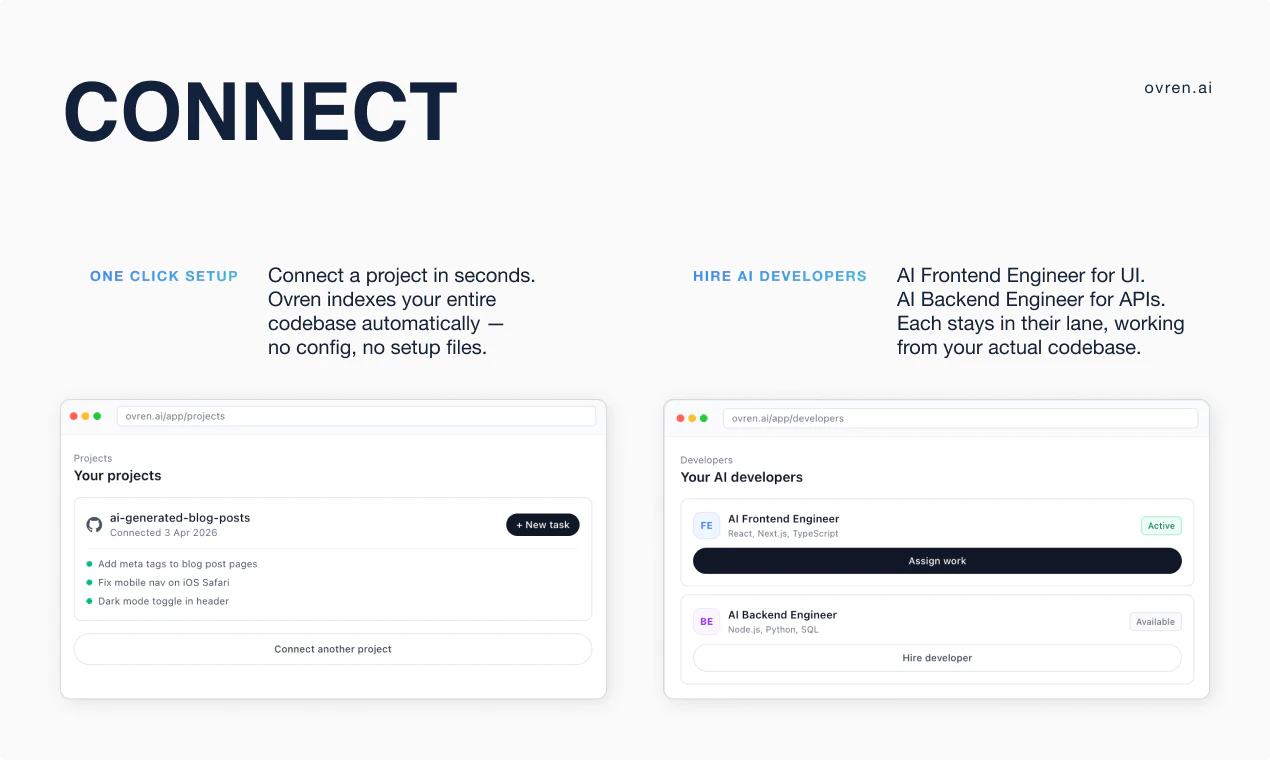
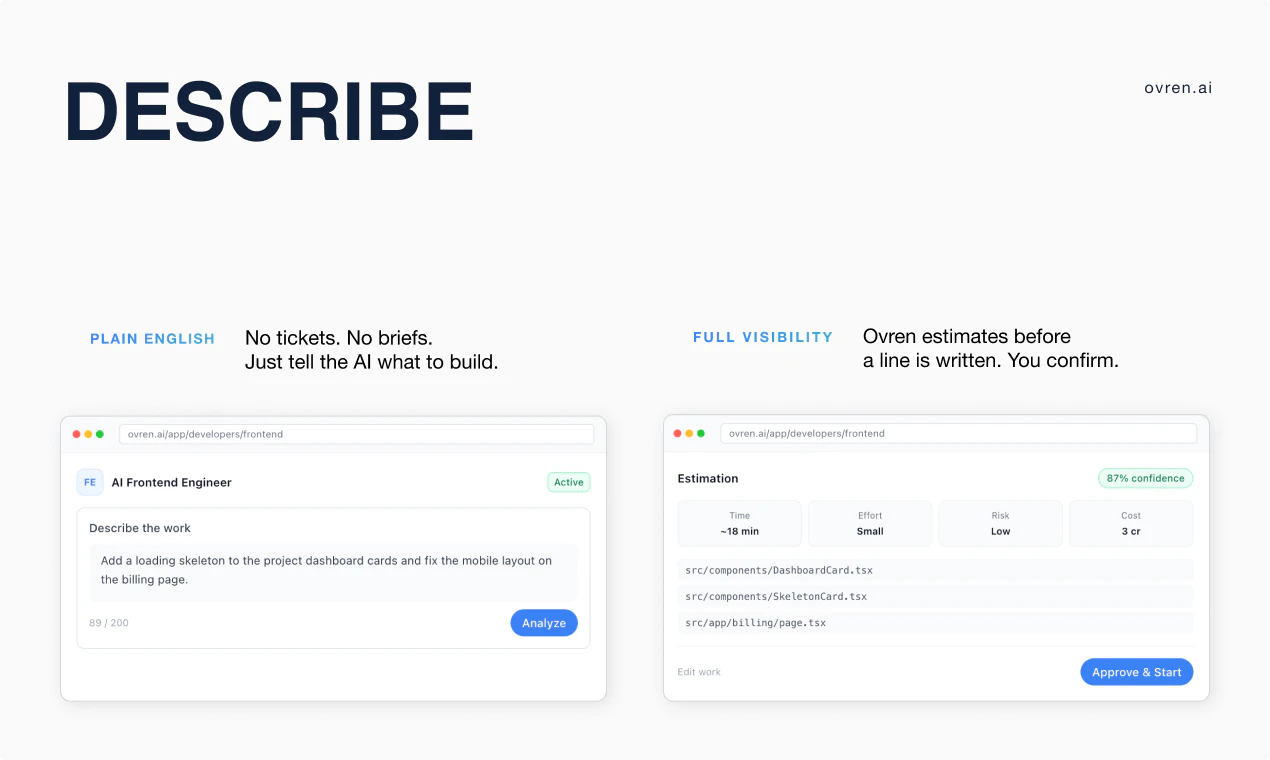
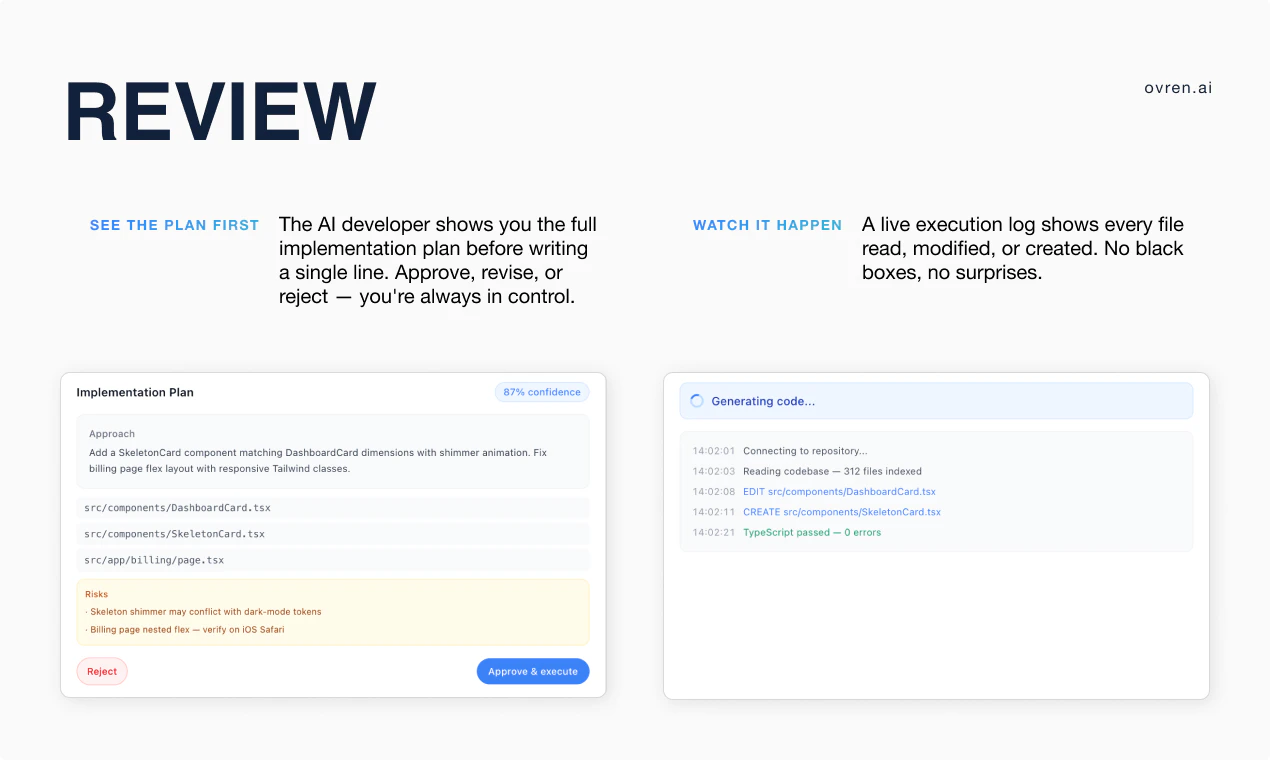
一句话介绍:Ovren是一个AI工程部门解决方案,通过部署前端和后端AI工程师在真实代码库中执行范围明确的积压任务(如Bug修复、重构、UI调整),帮助团队自动化处理那些重要但总被排期忽略的开发工作,让团队能专注于核心迭代。
Productivity Developer Tools Artificial Intelligence
AI编程助手 代码自动化 积压任务管理 开发运维 工程效率 AI工程师 代码审查 技术债务 软件开发 团队协作
用户评论摘要:用户肯定其解决技术债务和明确范围任务的定位,认为其产品化角色分工(前端/后端AI)是亮点。主要关切点在于AI对特定代码库架构和复杂上下文的理解能力、与现有工作流(如Claude、CLI)的集成、定价对初创团队的友好度,以及如何处理模糊、复杂的积压任务。
AI 锐评

Ovren的叙事巧妙地避开了与GitHub Copilot等“编码助手”的直接竞争,转而切入一个更痛、更显性的市场空白:工程积压。其宣称的价值并非“生成代码”,而是“执行任务”,这标志着AI编程工具从“副驾驶”向“自动驾驶”迈出了试探性但关键的一步。产品将AI角色产品化为“前端/后端工程师”,并强调输出“可审查的代码更新”,旨在构建一种可控、可信的自动化流程,而非黑箱魔法。

然而,其面临的真实挑战与评论中的疑虑高度一致:**上下文理解的深度决定其价值上限**。积压任务之所以积压,往往因其涉及历史决策、模糊的业务逻辑和复杂的依赖关系。Ovren从“范围明确”的任务入手是务实的起点,但这恰恰是价值洼地;真正的“工程债务”往往模糊且相互纠缠。若其AI无法深入理解项目特有的设计模式、约定和“代码背后的意图”,则极易沦为另一个花哨的代码生成器,仅能处理模板化问题。

其真正的护城河可能在于对代码库的持续学习和建模能力,构建一个超越表面语法的“项目知识图谱”。此外,如何无缝融入现有开发流程(如Git、项目管理工具),并建立让工程师愿意信任的审查与回滚机制,将是其能否从“有趣工具”变为“核心基础设施”的关键。当前,它更像一个高效的“初级工程师”,但工程团队的终极需求,是一个能理解所有历史包袱和未来愿景的“资深架构师”。Ovren的路径正确,但最艰难的部分——深度理解与复杂决策——才刚刚开始。

查看原始信息
Ovren
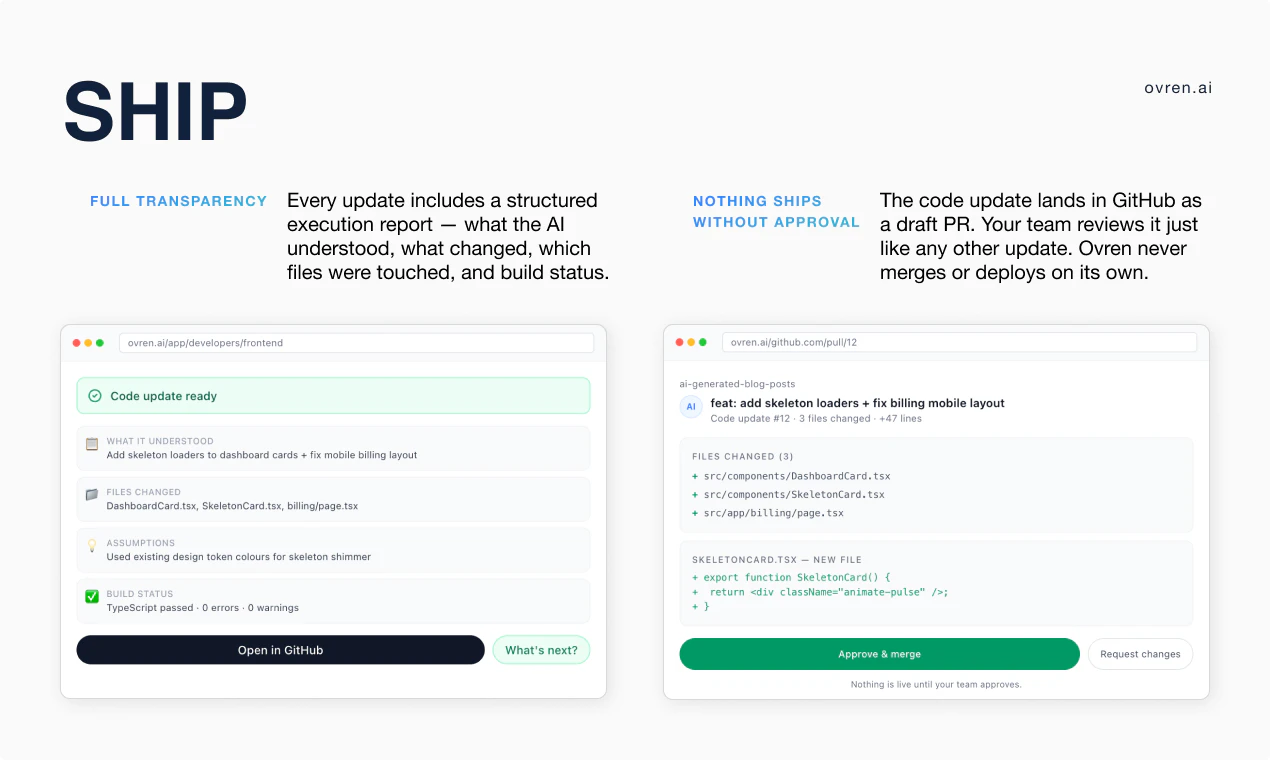
Every team has a backlog full of tasks that never make it into a sprint. Ovren puts AI frontend and backend engineers on it - they work inside your real codebase, execute scoped tasks, and deliver reviewable code updates. You stay in control. Nothing ships without your approval.

Hey Product Hunt 👋 Mikita here, founder of Ovren.

We built Ovren because most AI coding tools still optimize for assistance.
We think the bigger opportunity is backlog execution.

Every team has engineering work that never makes it into a sprint:
bug fixes, refactors, UI changes, integrations, tests, cleanup, and all the repetitive tasks that pile up.

Ovren helps teams move through that backlog faster.

Today, teams can assign scoped tasks to AI frontend and backend engineers that work inside a real codebase and return reviewable code updates, not just suggestions.

We’re focused on well-scoped backlog automation first, then expanding toward deeper repo understanding, stronger multi-task execution, more autonomous task pickup, and AI QA automation as one of the next major layers.

What backlog tasks would you already trust AI to fully execute today inside a real repo?

Would love your honest take 🙌

11
回复

@mikita_aliaksandrovich Love this direction, very relevant problem and a strong take on AI for real engineering workflows. Congrats on the launch! 🚀

4
回复

@mikita_aliaksandrovich bug fixes and cleanup are the 'death by a thousand cuts' for most dev teams. i usually have to beg my engineers to prioritize tech debt over new features. having an ai engineer specifically for the backlog is a brilliant angle. awesome

3
回复

We also added a small launch-day perk: 50% off the first month with code PRODUCTHUNT for early Product Hunt supporters 🚀

3
回复

A lot of products in this space are still one general coding agent, and then you prompt it to “act like a frontend engineer”.

@Ovren is taking a more concrete route by turning the roles, responsibilities, and input/output boundaries into actual product structure: FE handles UI features, component refactors, and visual bugs; BE handles APIs, services, migrations, and tests; QA is coming next.

That makes the whole “AI engineering department” idea much easier to understand inside a real backlog workflow.

5
回复

@zaczuo Thank you, that's axect our direction! We wanted to make this much more concrete around real backlog workflows - clearer ownership, clearer boundaries, and reviewable outputs.

Appreciate you calling that out.

4
回复

The real challenge will be ensuring AI understands repo specific architecture and conventions deeply.

3
回复

@colin_barrett  Exactly, that's the real change. No generating code, but understanding repo-specific constructs well enough to produce changes teams can actually trust and review.

1
回复

@colin_barrett  Exactly, that's an important challenge which Ovren trying to solve. All repository import analyzed for architecture and conversions. Then that's used for solving the tasks.

1
回复

Biggest value here is not writing new code but cleaning up the engineering debt that teams ignore.

3
回复

@bruce_warren  Exactly. A lot of real value is hidden in the work teams keep postponing. That's the backlog we want to help clear.

2
回复

@bruce_warren  Hundred percent true.

1
回复

The scoped task approach is smart it reduce risk compared to fully autonomous coding agents.

3
回复

@brian_douglas5  Exactly, that's the path we believe in.

2
回复

Interesting! Congrats on a launch. How does Ovren integrate with other tools and existing workflows like Claude? Is it a web platform? Does it has CLI/skills to plug in?

3
回复

@nikitaeverywhere  Thanks a lot, Nikita, appreciate it. Right now, it's a web platform focused on assigning scope tasks and returning reliable code updates. Over time, we definitely see deeper workflow integrations becoming a big part of the product, according to a more flexible way to fit into existing engineering setups.

2
回复

This is a really interesting direction.

The idea of “AI working through the backlog” sounds great, but in practice that’s usually where all the messy, ambiguous tasks live 😅

In our experience, the hard part isn’t writing the code, it’s understanding context, edge cases, and intent behind old tickets.

Curious. What kind of tasks are actually working well for you right now?

More clearly scoped things (bugs, small features), or are you seeing success with more ambiguous work too?

3
回复

@judit10  Very fair point, and we agree. Right now, the strongest feat is clearly Scoped Backlog work: bug fixes, refactors, UI changes, integration, and similar implementation tasks. The messy context and old ticket ambiguity are exactly the hard part, so we are building toward that step by step.

3
回复

@judit10 At the moment, the biggest value comes from resolving clearly scoped things, and we gradually move into solving more complex issues using clever context management and fine-tuned workflows

1
回复

Guys, congrats on your launch day, and I love the positioning.

Backlog is one of those problems - painful, but somehow still unsolved. What about your target audience right now? Whether there are solo founders, small teams, or larger engineer teams?

3
回复

@kate_ramakaieva Thanks a lot, Kate, really appreciate it.

Right now we’re most focused on startups and small teams where backlog pressure is high and engineering bandwidth is limited. But we also see strong value for solo founders and, over time, larger engineering teams as the workflows get deeper.

Curious where you feel this pain is strongest today?

2
回复

@kate_ramakaieva important to high that's not a replacement of the developers. That's enforcement of the existing team.

1
回复

Kirill here — I’m focused on the data and intelligence side of Ovren.

For me, backlog automation gets interesting when it moves beyond code generation and into real context understanding.

To be genuinely useful, the system has to make sensible decisions inside messy repos and return changes a team can actually trust.

We’re starting with well-scoped tasks first, then pushing toward deeper automation layers like QA.

Would love to hear where people think AI becomes truly useful first in the software delivery workflow.

3
回复

@kirill_lepchenkov Well said, context understanding is where this gets truly useful, especially inside real repos and delivery workflows.

2
回复

Maxim here, CTO at Ovren

What I like most about this space is that the real challenge isn’t code generation — it’s making AI reliable inside real codebases, where architecture, conventions, and reviewability matter.

That’s why we’re focused on well-scoped backlog work first: practical trust, strong repo context, and clear outputs instead of black-box automation.

Really curious what engineering tasks people here would actually automate first.

3
回复

@maxim_agapov Exactly, practical trust inside real codebases is the hard part. That’s a huge part of what we’re building.

2
回复

There are so many different solutions of this kind on the market, but what sets this one apart, I would say, is the sensible and meaningful usage of AI and the nice UI that orchestrates it all together.

I wish the team all the luck and best success in this. This Product Hunt launch is just the first step in their journey, and I'm excited to see where this leads them.

2
回复

@vibor_cipan  Thank you so much! I really appreciate that. That's exactly the kind of balance we care about: making AI useful in a practical way and dropping up in a workflow people can actually trust and use.

2
回复

Good luck!

2
回复

@dzianis_yatsenka  Thank you so much.

2
回复
1
回复

Is the pricing model affordable for small startups ?

2
回复

@zabbar  Yes, that's exactly who we are optimizing for early on. We want it to be accessible for startups and small teams, no, just larger engineering orgs.

2
回复

Hello Mikita, congrats on the launch, i like the demo, one question though, do you consider letting user assigns those tasks on the phone using app or messenger? I would personally have value from that

2
回复

@dan_pak Thanks a lot, Daniil, really appreciate that. Yes, definitely something we’re thinking about. Long term, assigning and managing tasks from mobile or messaging feels very natural for this kind of workflow. Curious which format you’d use most - app, Slack, Telegram, or something else?

3
回复

My team and I use Orwin, and it was a fantastic product. We had a UI glitch. We made it visible, but it wasn't linked to the backend code, so there was a backlog in that. We had to fix that, and Orwin was there to speed things up, so it was a great help.

2
回复

@aditya_singhal12 Thanks a lot, Aditya, really appreciate it 🙌
That’s exactly the kind of backlog work Ovren is built to help teams move through faster.

2
回复

@aditya_singhal12 Great to hear!

2
回复

Congratulations guys! Such a cool product

2
回复

@dmitry_zakharov_ai Thanks a lot, Dmitry, really appreciate it. Glad it resonates 🙌

2
回复

@dmitry_zakharov_ai  Thank you for the support!

1
回复

I built a similar system for personal use — Velo, an agentic engineering team built on Claude Code. It comprises a full squad of specialised agents: Product Manager, Tech Lead, domain engineers, and reviewers across security and observability. The workflow is approval-gated at every stage — PRD before design, design before build, review before commit. Nothing reaches the codebase without explicit sign-off.

1
回复

@rajasekarm  Thanks for sharing! I really like it! The approval-gated flow is exactly the right direction in our view. Structured execution, clear checkpoints, and humans. I know where it matters.

2
回复

@rajasekarm agree that successful agent approach nowadays. We are using similar approach in the Ovren. Just let the user to validate/comment/approve critical steps.

1
回复

Really like this direction. Focusing on actual backlog execution instead of just suggestions feels like a meaningful shift. What kinds of tasks are teams trusting it with first?

1
回复

@uxpinjack  Mostly well-scaled backlog workflows, bug fixes, cleanup, small refactors, UI changes, tests, and small feature executions. That's where trust builds fastest.

1
回复

@uxpinjack Well-scaled backlog workflows for now, but we are working on more ambitious workflows with ambiguity resolution for tackling more complex tasks

1
回复

Congrats on the launch @mikita_aliaksandrovich

1
回复

@lakshya_singh  Thanks a lot, we really appreciate it.

1
回复
On the security/governance side, what’s your recommended setup for a production team (GitHub permissions, branch protections, environment isolation, secrets handling), and what tradeoffs did you make between autonomy and least-privilege access to make ‘nothing ships without approval’ actually hold in practice?
1
回复

@curiouskitty  Great question. We believe the right default for production teams is least privilege. Protected branches, isolated execution, careful secrets handling, and no direct production authority. Overend can do the work, but final shipping stays with the team.

1
回复
#5
FuseAI
The Agentic Sales Platform
240
一句话介绍:FuseAI是一个AI驱动的销售一体化平台,通过整合实时信号、数据清洗、多渠道自动化与AI工作流,在单一平台内解决了中小企业因使用多款割裂工具而导致的外销售效率低下、成本高昂和运营复杂的核心痛点。
Sales SaaS Artificial Intelligence
AI销售平台 销售自动化 一体化SaaS 潜在客户开发 销售流程管理 中小企业工具 数据清洗 多渠道触达 工具整合 YC孵化
用户评论摘要:用户普遍认可其解决“工具泛滥”的痛点,并对“10分钟设置”表示好奇与测试意愿。核心关切点在于:1. 各模块功能深度是否媲美单一专业工具;2. 邮件送达率等底层基础设施的可靠性;3. AI工作流处理复杂销售情景(如异议处理)的适应性;4. 自定义信号搜索的能力。创始人回应积极,强调AI加速了开发以实现功能平价,并承诺快速迭代。
AI 锐评

FuseAI的叙事精准击中了当前销售技术栈的“阿喀琉斯之踵”——工具泛滥。它宣称的并非简单的功能堆砌,而是试图以AI为“粘合剂”和“驱动核心”,重构从线索发现到触达的完整外销售链路。其真正的价值主张在于“系统性平价”:通过一体化平台,让中小企业能以可承受的成本,获得接近大型企业由昂贵团队和工具矩阵构建的销售基础设施能力。

然而,其面临的质疑也直指核心:一体化平台常面临的“广度与深度”悖论。评论中将其与Clay、Heyreach等垂直领域强者对比,正是对此的检验。FuseAI的赌注在于,AI不仅能作为产品功能,更能作为开发过程的“杠杆”,使其团队能以更快速度实现各垂直领域90%的核心用例,并依靠平台内数据流无缝衔接的优势弥补剩余10%的差距。这是一个颇具雄心的“用速度对抗深度”的策略。

另一个关键洞察是其对“基础设施”的重视。它试图将邮件域名管理、验证、预热等幕后工程产品化、自动化,这恰恰是许多自动化工具失败的关键。这显示其团队对销售实战中“送达率”这一生死线有深刻理解,而非仅停留在前端交互的自动化炫技。

风险与机遇并存。机遇在于,若其“AI加速开发”与“一体化体验”能形成闭环,确实可能成为资源有限公司的“销售操作系统”。风险则在于,在追求功能平价的过程中可能陷入持续追赶的泥潭,且大型客户复杂的定制化需求可能超出其标准化平台的边界。最终,它的成功不仅取决于技术,更取决于其能否在“足够好”的功能、极具吸引力的价格与可持续的商业模式之间找到那个精妙的平衡点。它不是在销售另一个工具,而是在销售一种“降本增效的确定性”,这才是其最锋利的价值所在。

查看原始信息
FuseAI
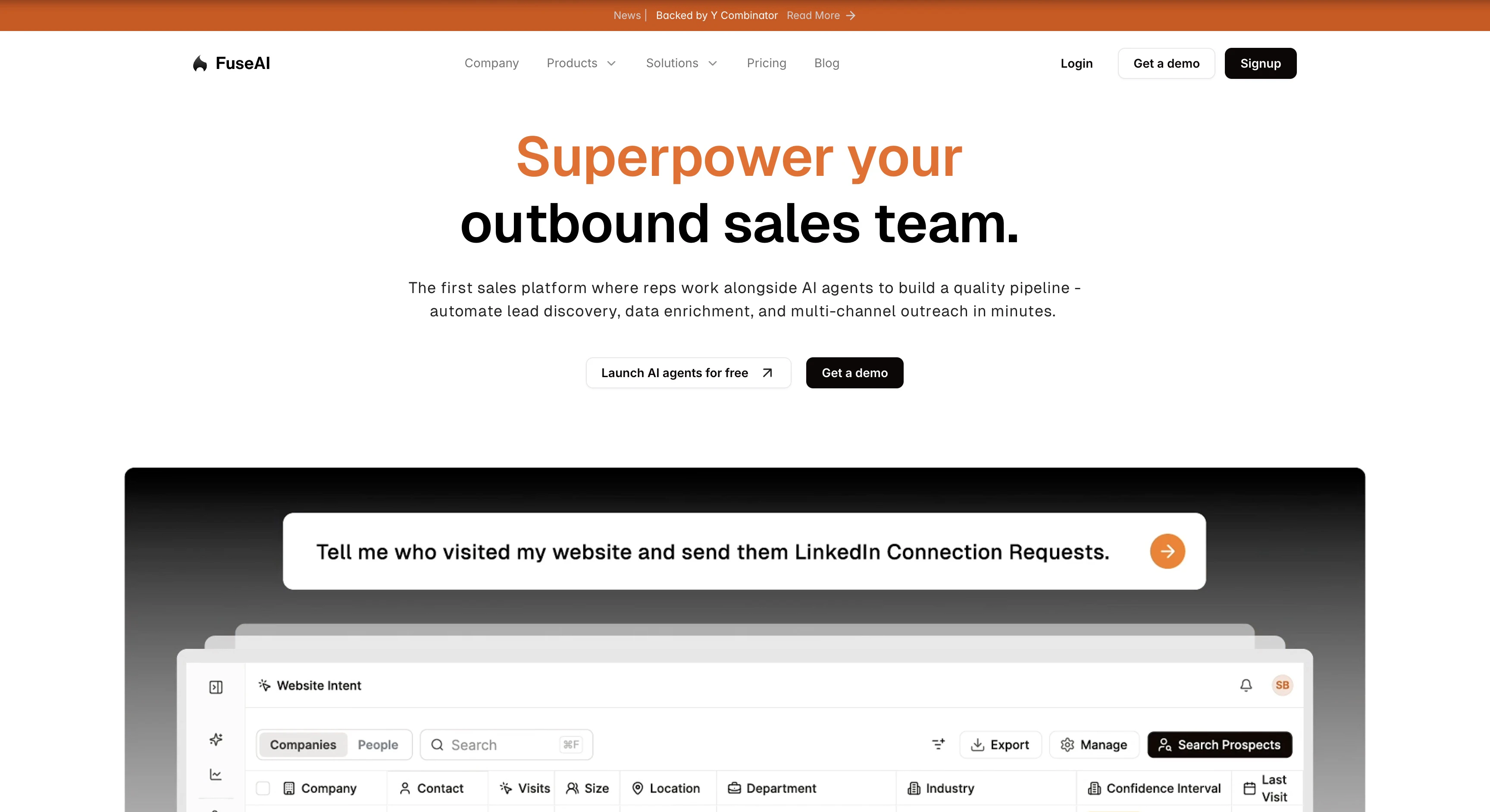
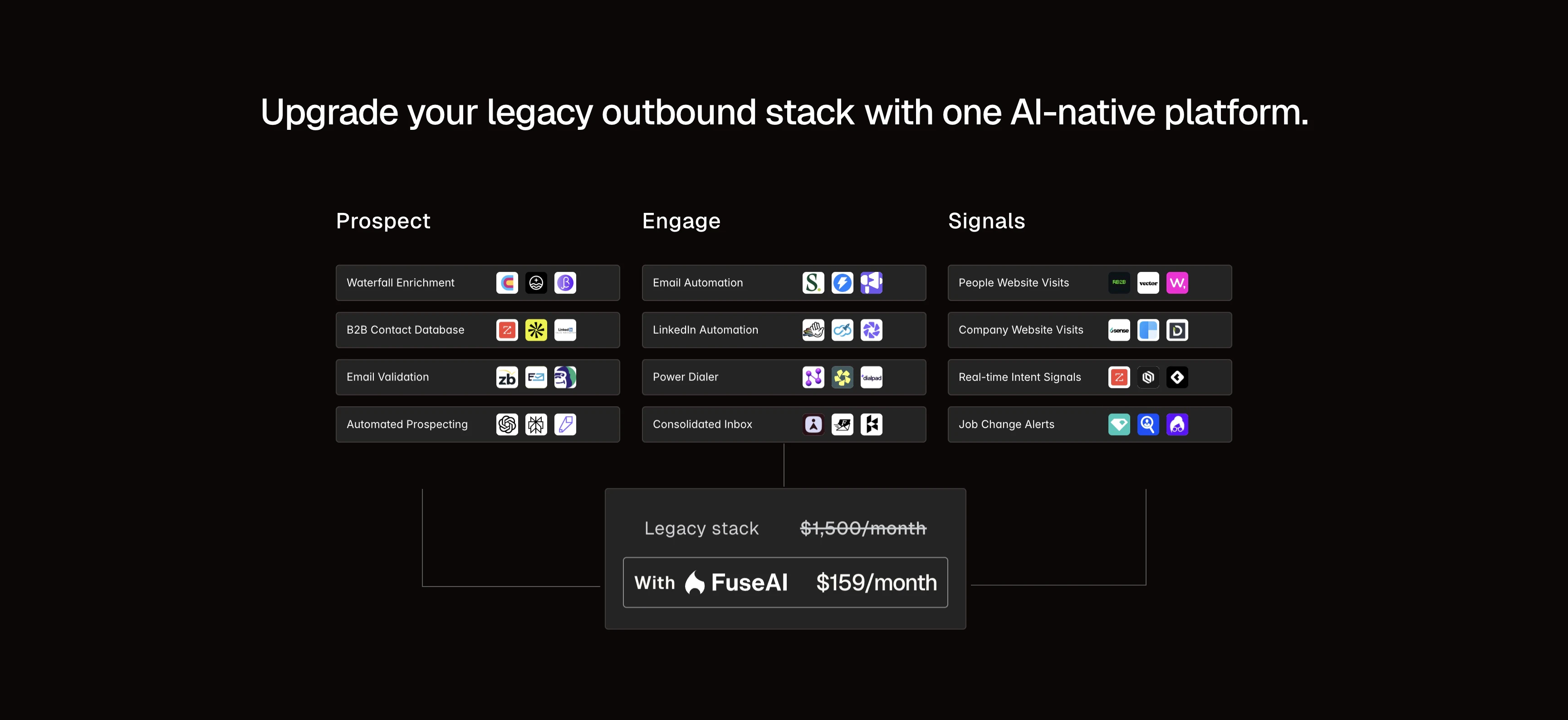
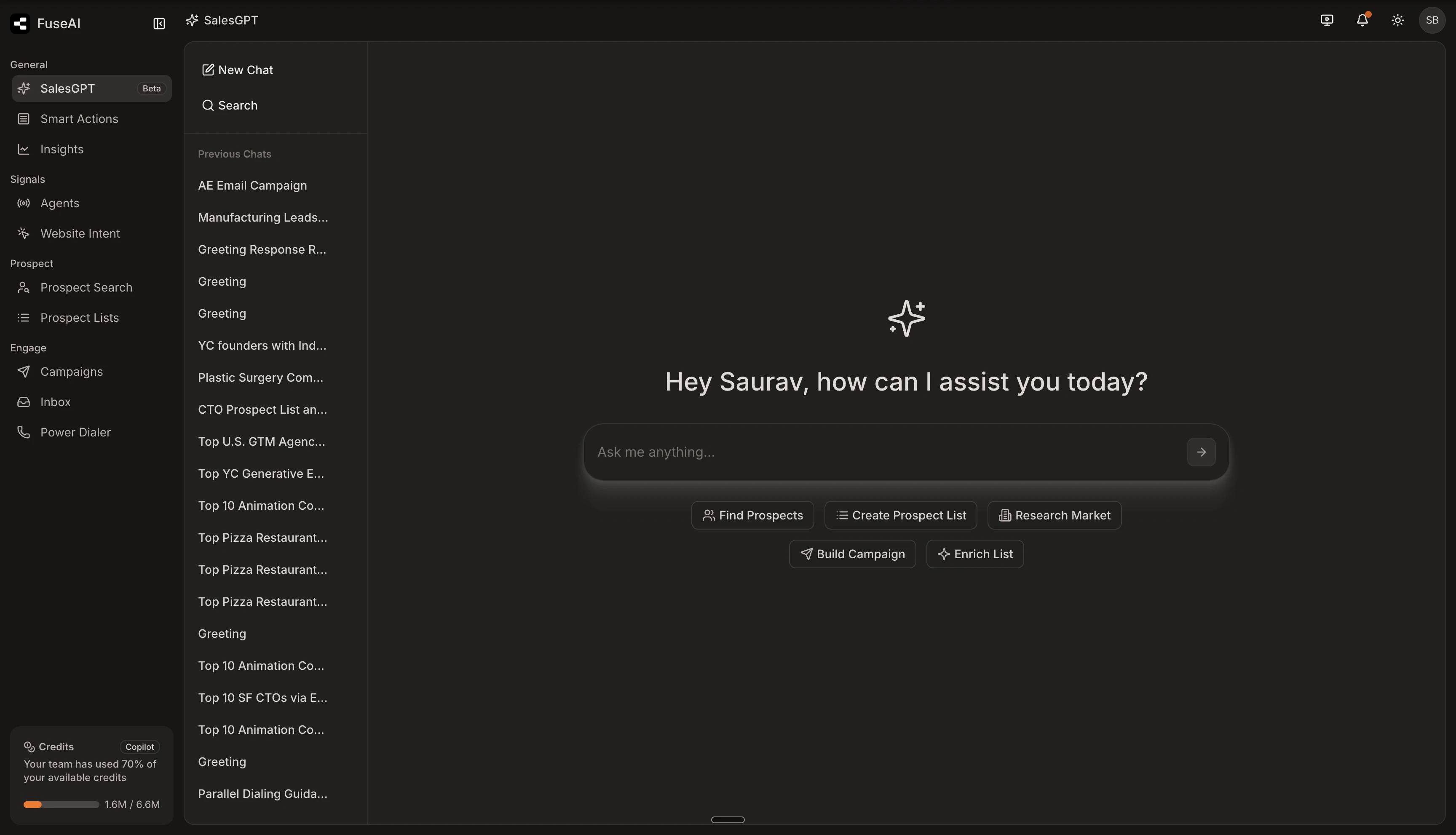
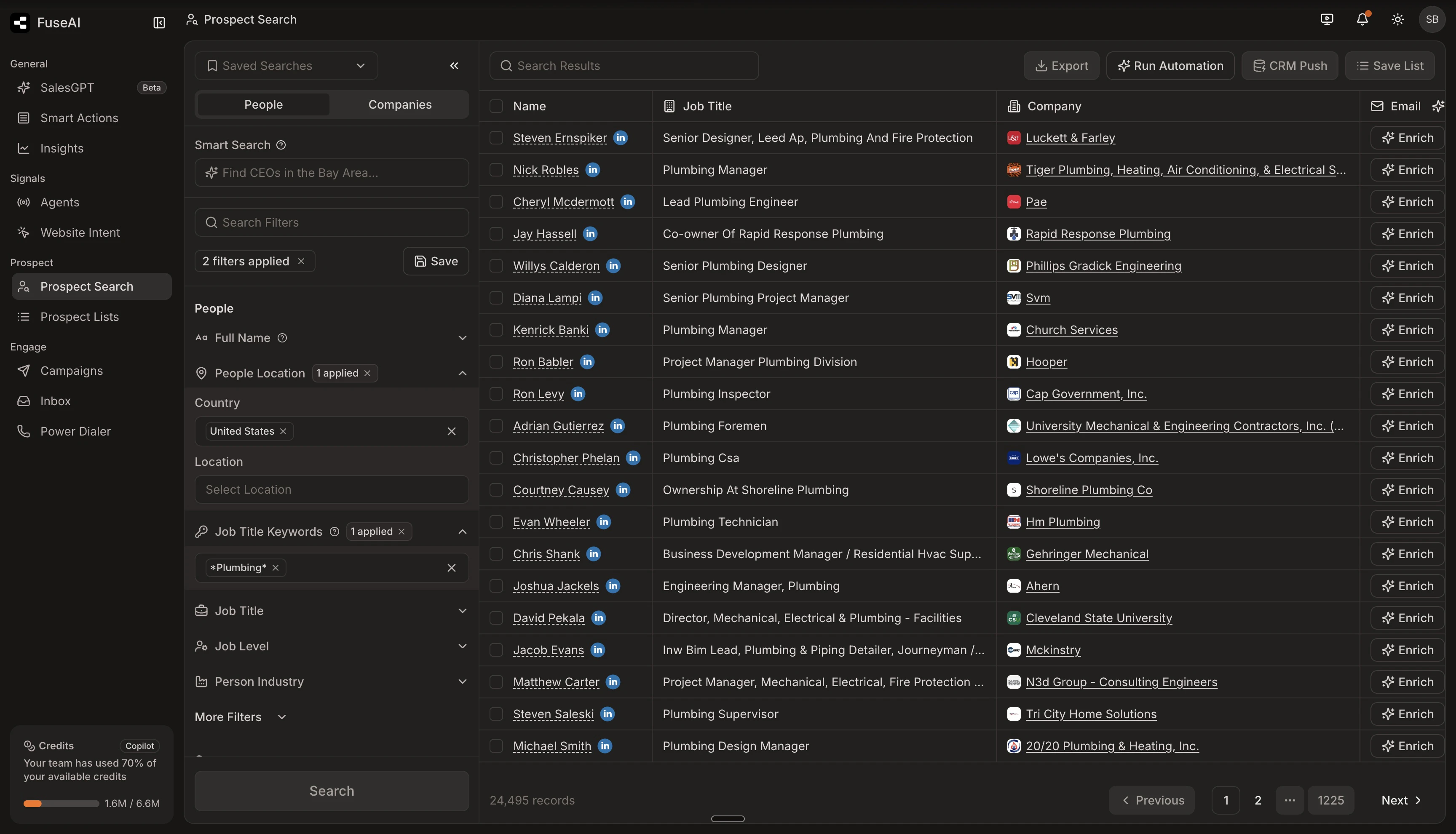
Sales was broken. We fixed it. The average team currently uses 5-10 tools to run outbound. Fuse is the AI-native platform where teams can truly run outbound end-to-end with every product you will ever need to close deals. Get access to real-time signals, verified contact data, waterfall enrichment, LinkedIn automation, Email automation, deliverability infrastructure, parallel dialing, and AI-powered workflows - all in one platform designed to replace tool sprawl and simplify pipeline generation.

Hey Product Hunt Community! I’m Saurav, Co-Founder & CEO of FuseAI.

Before this, I worked at Deel on GTM Strategy & Ops, where I saw how much effort actually goes into making outbound work at scale. It’s not just hiring great reps, it’s stitching together tools, data, workflows, and constantly maintaining everything behind the scenes.

Big companies have an enormous advantage on distribution. They can spend $1,500–$2,000/month per person on tooling and have an entire revenue operations team building outbound systems.


Meanwhile, startups and SMBs are stuck duct-taping together low quality tools, starting behind the eight-ball, and often failing on distribution before they ever get a real shot.


We built FuseAI to change that.


Our goal is simple: give every company in the world access to world-class sales infrastructure without the maintenance, overhead, or costs to empower the best product builders to win.

With Fuse, you don’t need 5 tools to run outbound or an internal team dedicated towards managing integrations.


It takes 10 minutes to setup instead of 10 weeks.

Your dialer, email, and LinkedIn workflows are all connected.
You can waterfall enrich data across several vendors.
You know exactly who is showing intent.
You get access to the same quality of data as companies with GTM engineers and multiple data providers.
AI agents will help execute an end-to-end outbound motion, in one place.


All for $159/month.


No surprises. No gatekeeping. No $20,000 entry level contracts. Just the system modern companies deserve.


We been working non-stop over the past year since YC to make this happen, so would love your feedback !!! 🙏🙏🙏

34
回复

@saurav_bubber2 no more duct-taping tools together10 minutes to setup is a crazy claim i'm definitely going to test that out today. supported, saurav

12
回复

@saurav_bubber2 This sounds like a really smart shift in how sales teams can work. Instead of reps doing everything manually, they can partner with AI to quickly find leads, enrich data, and reach out across multiple channels—all in a fraction of the time. Feels like a big step toward building stronger, more efficient pipelines without the usual stress.

0
回复

@saurav_bubber2  you're basically saying we can even do more and compete the big multinational companies with just less than $200 per month.

This is crazy 😧

0
回复

Super excited for what the team has build here! Finally feels like the beginning of the end of fragmented outbound tooling 🙌

3
回复

Congrats! Sounds like very helpful tool, but how do you make sure, each part of your software doesn't just scrap the surface but provides data and feature depth? f. e. If you waterfall enrichment on par with clay and LinkedIn outreach on same level, as let's say, heyreach?

3
回复

@davitausberlin That is an extremely valid concern & I would fully agree with that sentiment 24 months ago. Even in past orgs, I was at we had to use 10+ tools because that was the only option to get access to deep features.

The reason conventional wisdom is now wrong, is because AI has not only been useful within products, but made it possible to also build materially faster and with higher quality. This is the only reason we’ve been able to ship complex workflows across many different products and pretty much have feature parity on the 90%+ of the most used cases. If there is an extremely specific workflow you love on a certain product that we don’t have, we’re also happy to add that to our roadmap & ship it quickly.

In the examples you provided - feel free to try it out & you’ll see parity if not better data & workflows compared to Clay and Heyreach

1
回复
A lot of outbound success hinges on deliverability rather than just automation—what does Fuse do at the infrastructure and sending-policy level (domains/mailboxes, throttling, suppression, validation) to protect reputation, and how do you help customers prove it’s working beyond vanity metrics like opens?
1
回复

@curiouskitty Extremely valid question & that’s exactly why 90% of outbound campaigns fail - poor infrastructure.

Everything you mentioned is autonomously managed in the platform. We even allow you to purchase domains / google verified email inboxes directly, and handle everything else across throttling, sending through randomized time intervals, email validations, inbox rotations, auto-spintax, email health monitoring, warm-up, and much more.

Generally speaking, open rates are the best metric to prove out email infrastructure quality.

Response rates are a function of Your Product + ICP List Building Quality + Signals Timing + Email Copy. We’ve optimized for the latter 3, so will definitely give you the absolute best chance to prove out your outbound motion with enterprise-like infra, but it isn’t a magic wand, however when paired with product, can be one of the most if not most effective channel to scale.

2
回复

Hi Saurav,

I'm wondering if I can use Fuse.ai to create custom signals, such as:

  • companies that were founded six months ago

  • companies that are product-led growth mode

  • companies listed on AppSumo

Is it possible to create such custom signals with Fuse.ai as well?

1
回复

Hey@philip_kubinski , we have 20+ predefined agents you can use to create custom signals - these are forward looking so will find data in the future (e.g., job changes)

We do however a semantic web-search agent that can help you find leads based on custom criterion you define, so yes we would have data on the above 3 searches you mentioned, it’s just a bit less deterministic.

1
回复

the "tool sprawl" problem is so real. we've been dealing with this in healthcare sales where teams juggle CRMs, enrichment tools, sequencing platforms, and more. curious how the AI workflows handle edge cases - like when prospects respond with objections or reschedule requests? does it adapt the sequence automatically or hand off to humans?

1
回复

Hey@piotreksedzik, great question! We’ve been hyper focused on going deep on all product verticals, so we do handle most edge cases, and anyone we don’t, we’d take customer feedback & ship within a week.

In the example you mentioned, we have an auto-replies feature, where we use the context of your company, past conversation history, and your tone of voice to generate & personalize any responses to campaign messages, it can be demo requests, objection handling, pretty much anything.

1
回复

Hey Saurav! Fuse sounds awesome!

Does it work for every business size? I mean, can an early stage startup take the most of this?

Btw, wish you all the best here!

1
回复

Hey @german_merlo1 , yes definitely! We work with business of all sizes and especially help early start-ups looking to scale & build a repeatable outbound motion!

1
回复
#6
Caveman
Why use so many token when few do trick?
211
一句话介绍:Caveman是一款通过精简Claude AI助手的输出内容,在不损失技术准确性的前提下大幅减少约75%的令牌使用,从而为开发者节省成本并提升交互效率的工具,主要解决开发者在日常编码、代码审查等场景中因AI冗余表达导致的令牌消耗过快、响应速度慢的痛点。
Open Source Developer Tools Artificial Intelligence GitHub
AI优化工具 开发者工具 令牌节省 Claude优化 代码助手 响应加速 开源免费 提示词工程 效率工具
用户评论摘要:用户普遍认可其节省令牌、提升速度的核心价值,并积极分享集成使用经验。主要疑问集中于:超高压缩强度是否丢失关键上下文;输入令牌增加与缓存机制的实际影响;75%数据来源及压缩算法的安全性,如何防止语义漂移。
AI 锐评

Caveman的爆火,与其说是一项技术突破,不如说是对当前大模型“官僚主义文风”的一次成功反叛。它精准切中了LLM服务商业化进程中用户最敏感的神经:成本。当按Token计费成为常态,模型每一句“很高兴为您服务”都成了用户钱包的无声损耗。Caveman的价值核心并非简单的文本压缩,而是通过一套预设的“简洁范式”,强行剥离AI输出中的仪式性语言和元话语,迫使AI进行“电报式”表达。

然而,其真正的挑战在于“度”的把握。评论中关于“Ultra强度是否牺牲关键警告”的质疑,直指工具的核心矛盾:在代码场景中,何为“冗余”,何为“必要的严谨”?将commit信息压缩至50字符、PR评论简化为一行,固然高效,但也可能剥离了决策上下文和细微的推理链条,这可能将风险从“令牌成本”转移至“代码质量”。其引用的“简洁提升准确性”的研究,很可能只在特定、结构化的任务中成立。

本质上,Caveman代表了一种用户与AI关系的新期待:从寻求拟人化的、解释性的陪伴,转向将其视为一个高效、静默的实用引擎。它是否成功,取决于其规则集能否持续精准地区分“废话”与“不可或缺的严谨”。长远看,它更像是一个过渡性方案,最终压力应给到模型提供商本身:是时候提供一种原生的、可配置的“简洁模式”了。在此之前,Caveman这类“第三方优化器”将始终在“极致效率”与“信息保全”的钢丝上行走。

查看原始信息
Caveman
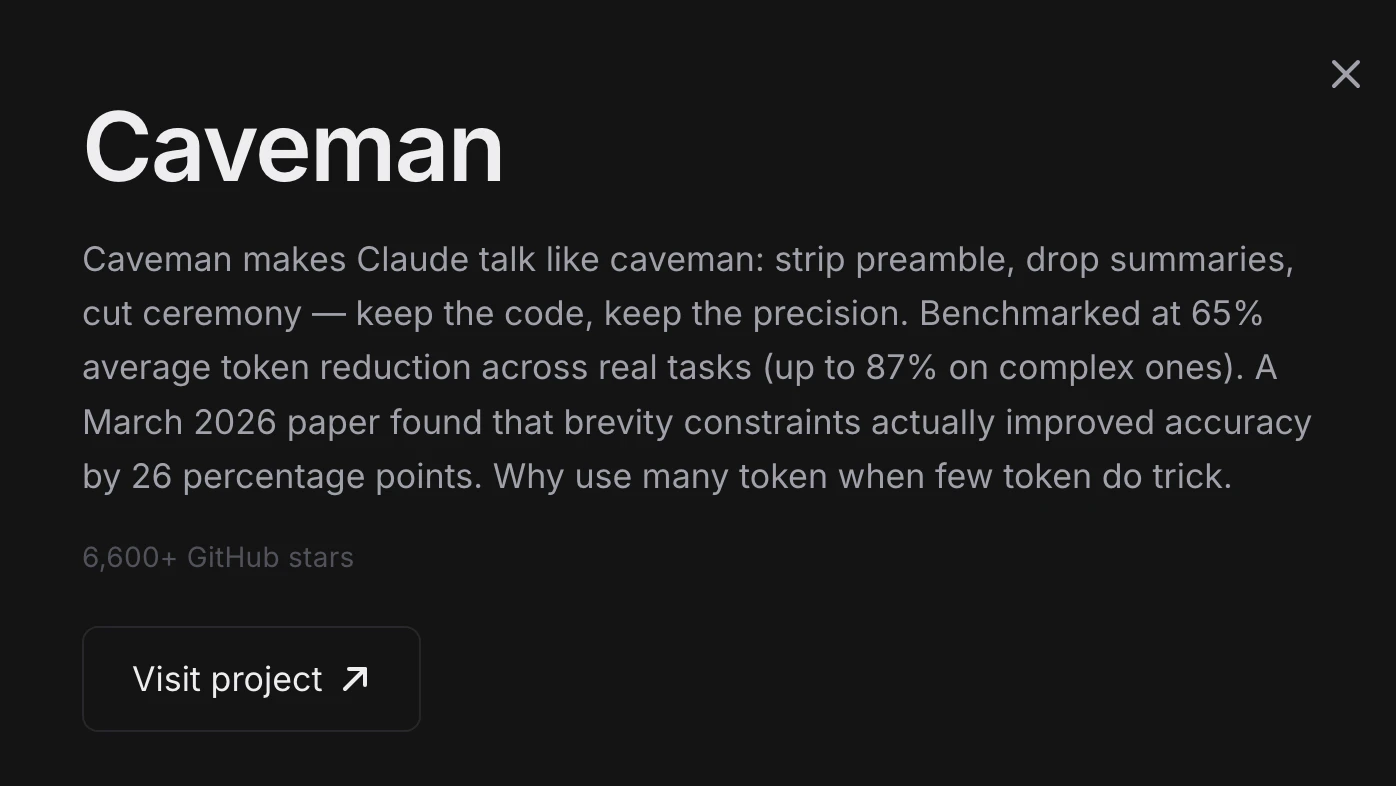
Caveman cuts ~75% of Claude's output tokens without losing technical accuracy. One-line install for Claude Code, Cursor, Windsurf, Copilot, and more. Four grunt levels, terse commits, one-line PR reviews, and input compression built in. 24.9K stars.

Julius taught Claude to talk like a caveman. 24.9K stars later, it's the most useful meme in developer tooling.

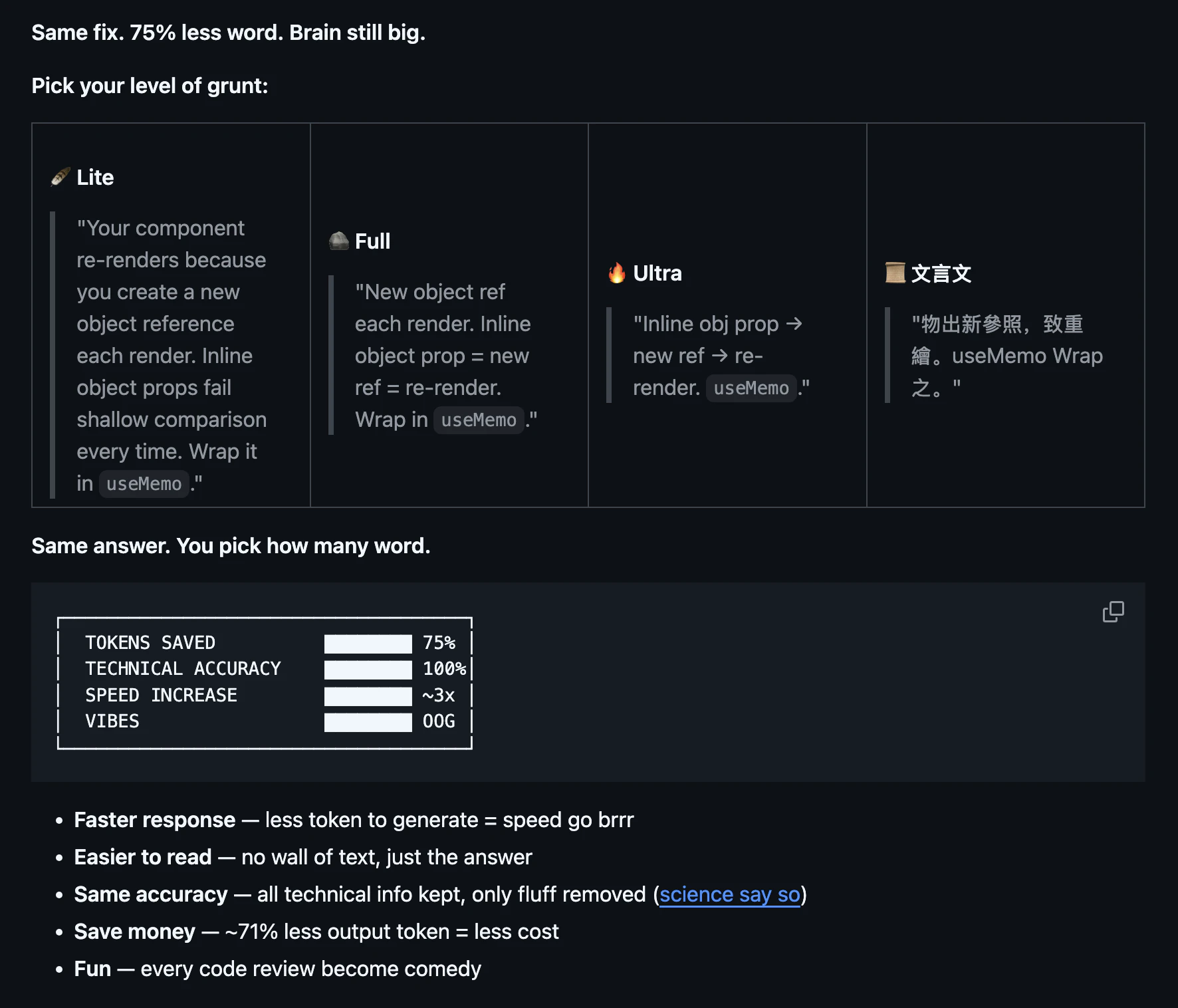
LLMs are verbose by default. Phrases like "I'd be happy to help you with that" and "Let me summarize what I just did" contribute nothing — but burn tokens, slow responses, and push you into usage limits faster. Caveman makes Claude skip the throat-clearing and go straight to the answer. Same fix. 75% less word. Brain still big.

What stands out:
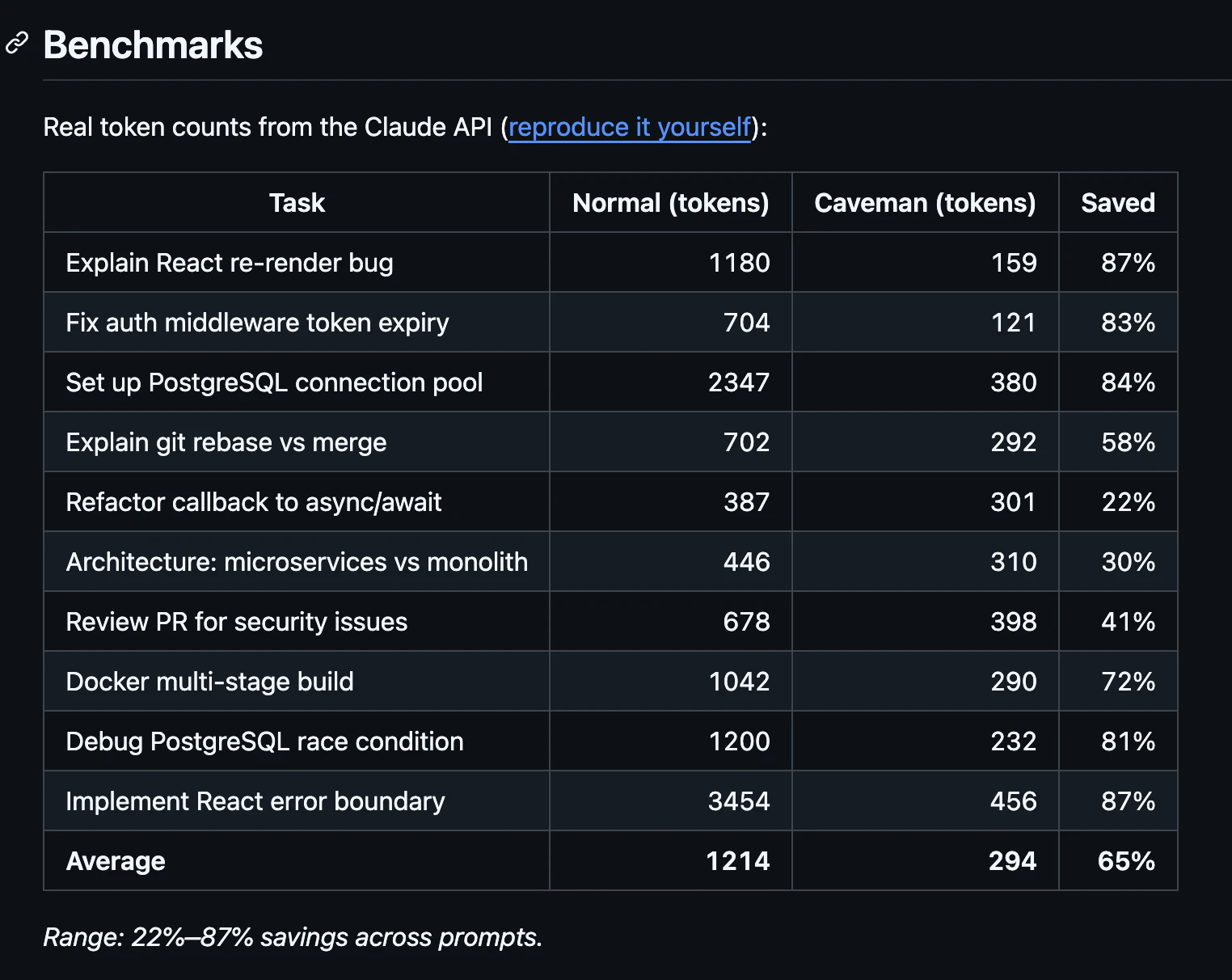
🪨 ~75% output token reduction: Benchmark average 65%, range 22–87% across real coding tasks
⚡ ~3x faster responses: Less token to generate = speed go brrr
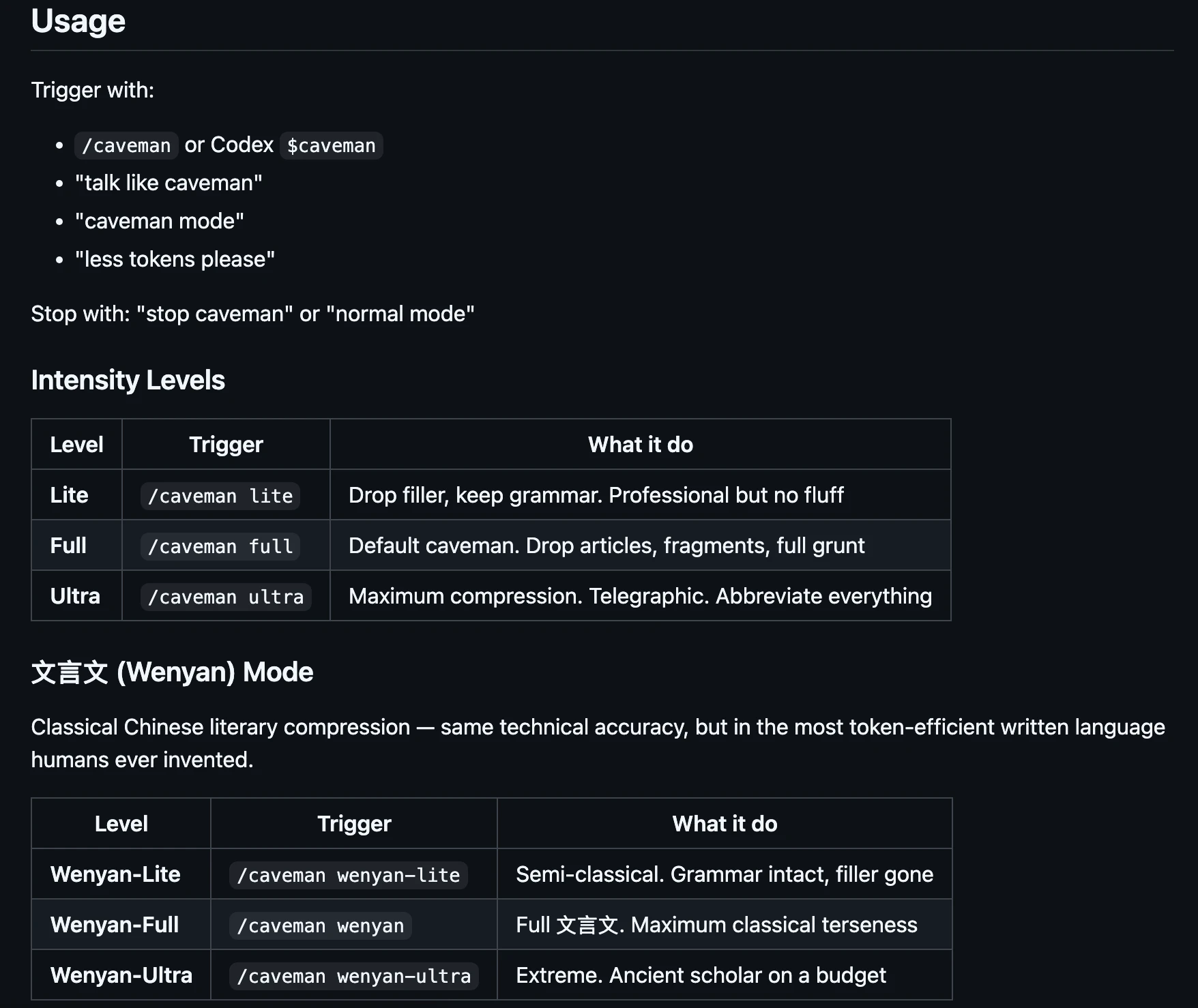
🎚️ Four intensity levels: Lite, Full, Ultra, and 文言文 (Classical Chinese) mode
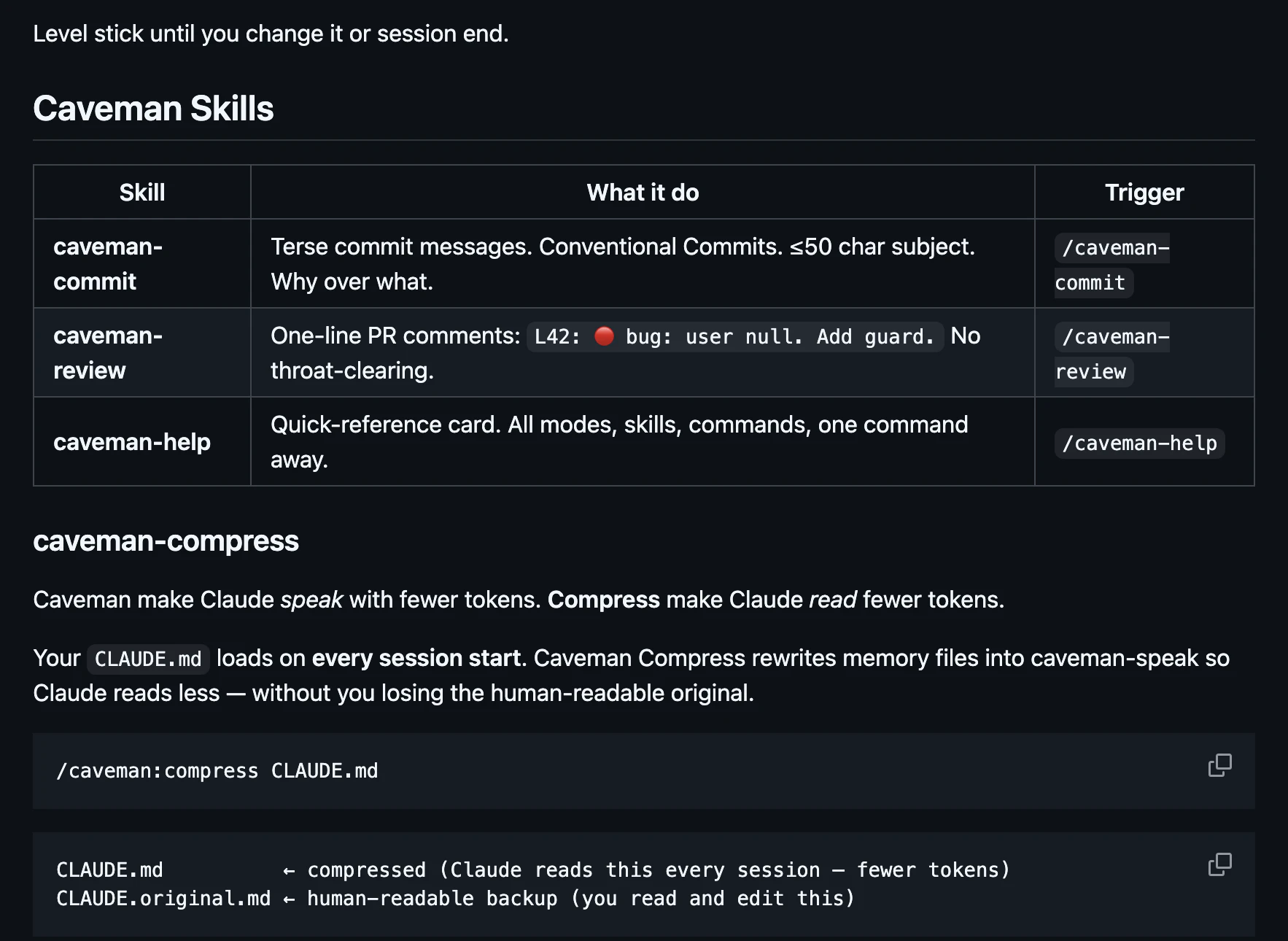
📝 Caveman-commit: Terse commit messages, ≤50 char subject, why over what
🔍 Caveman-review: One-line PR comments: L42: 🔴 bug: user null. Add guard.
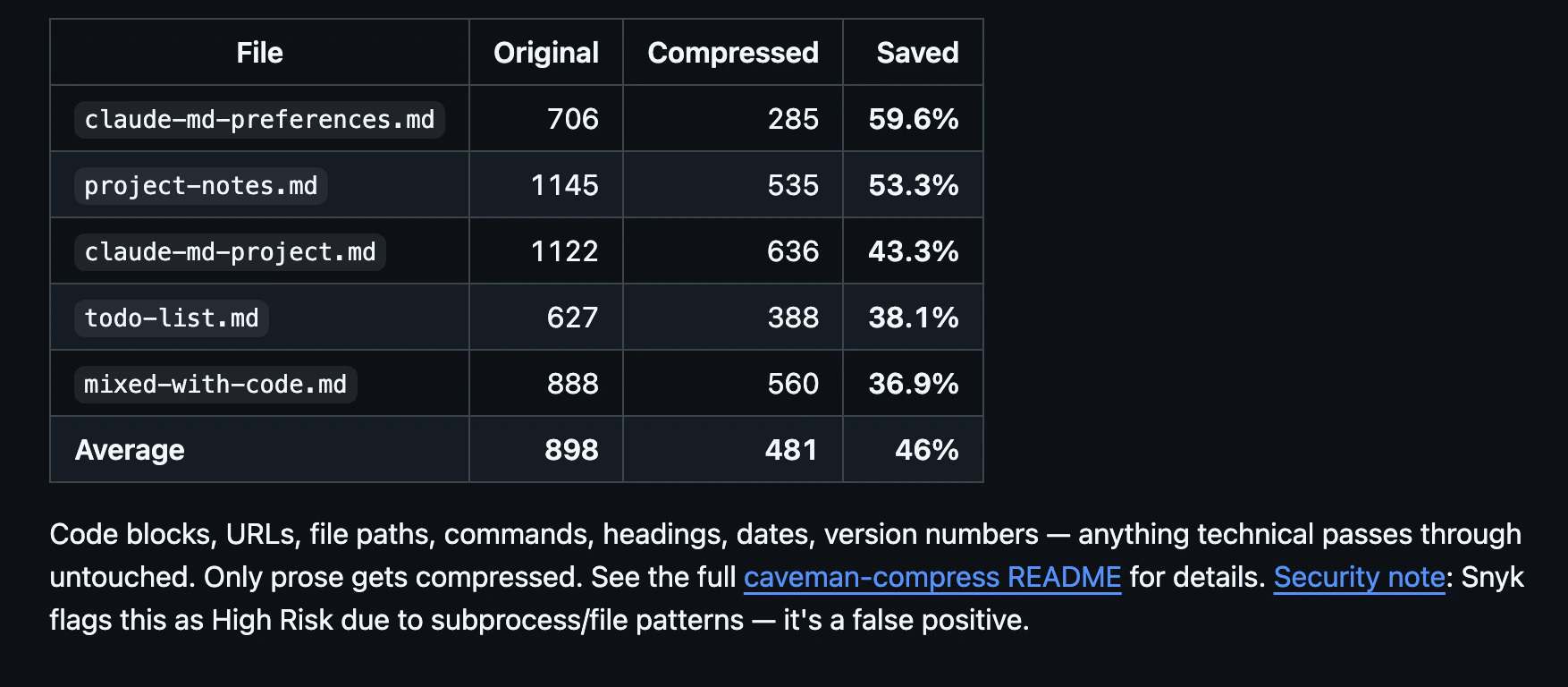
🗜️ Caveman-compress: Rewrites your CLAUDE.md into caveman-speak, cutting ~46% of input tokens every session
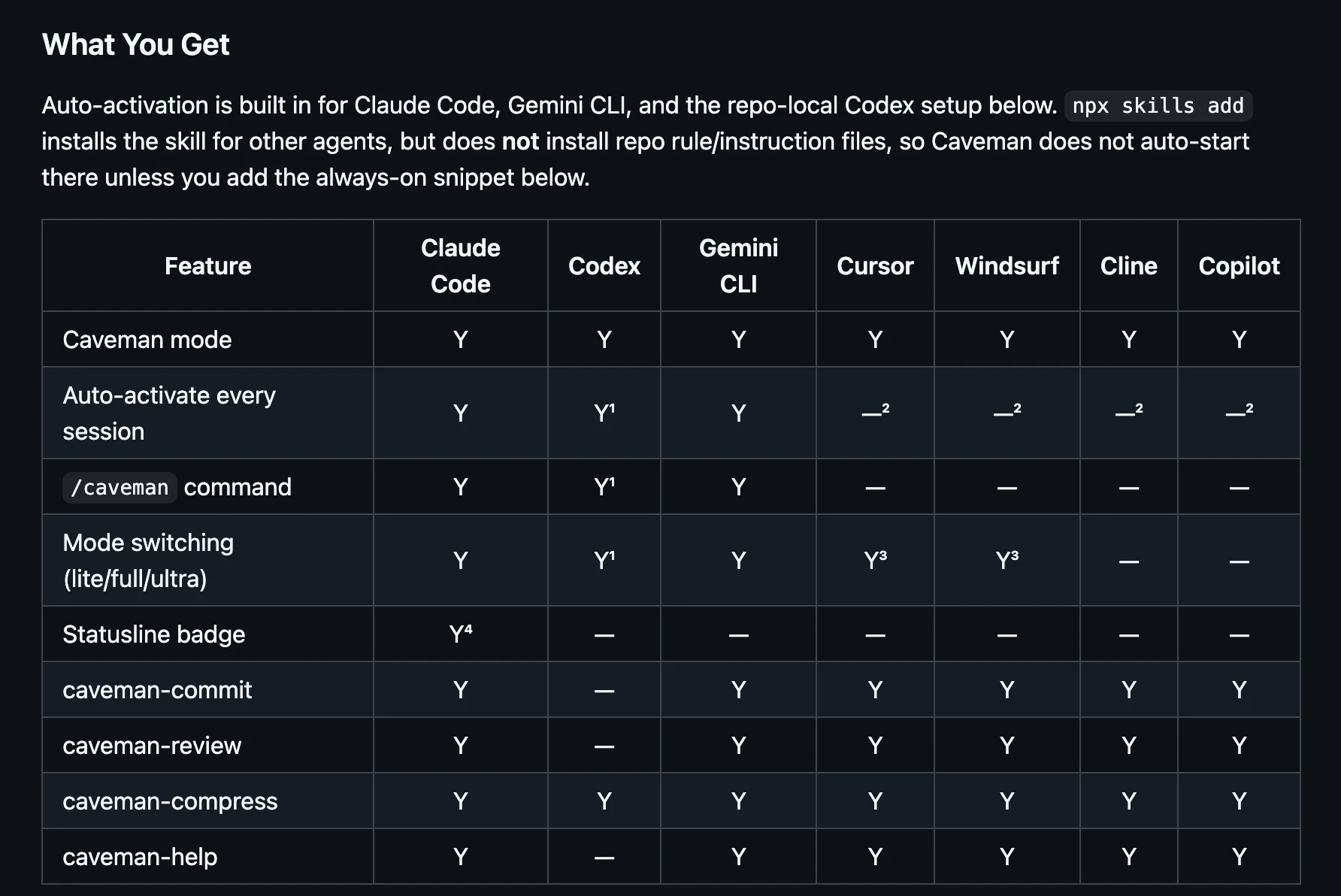
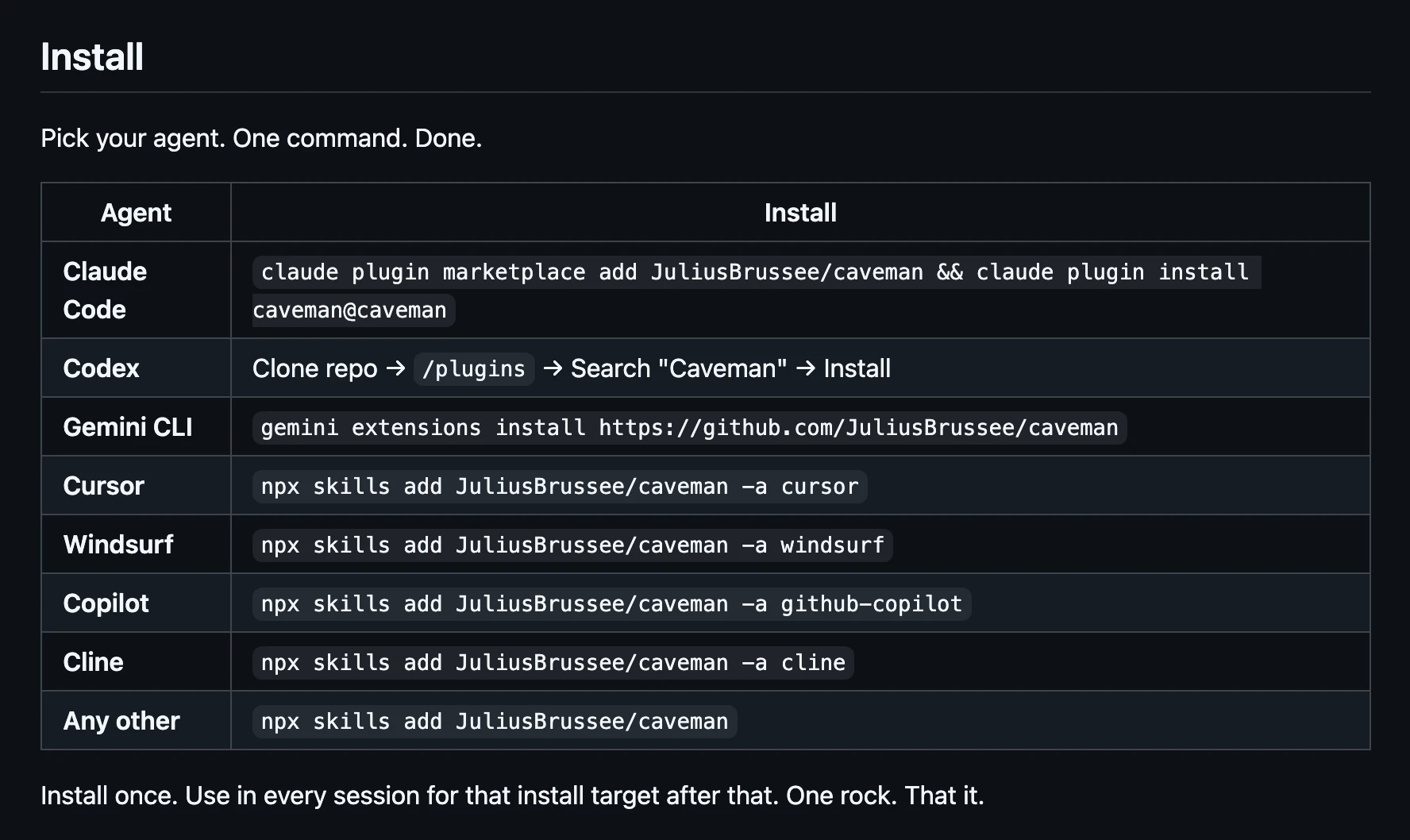
🔌 Works everywhere: Claude Code, Codex, Gemini CLI, Cursor, Windsurf, Cline, Copilot, and 40+ more
🆓 Free, MIT, one-line install

Before and after:
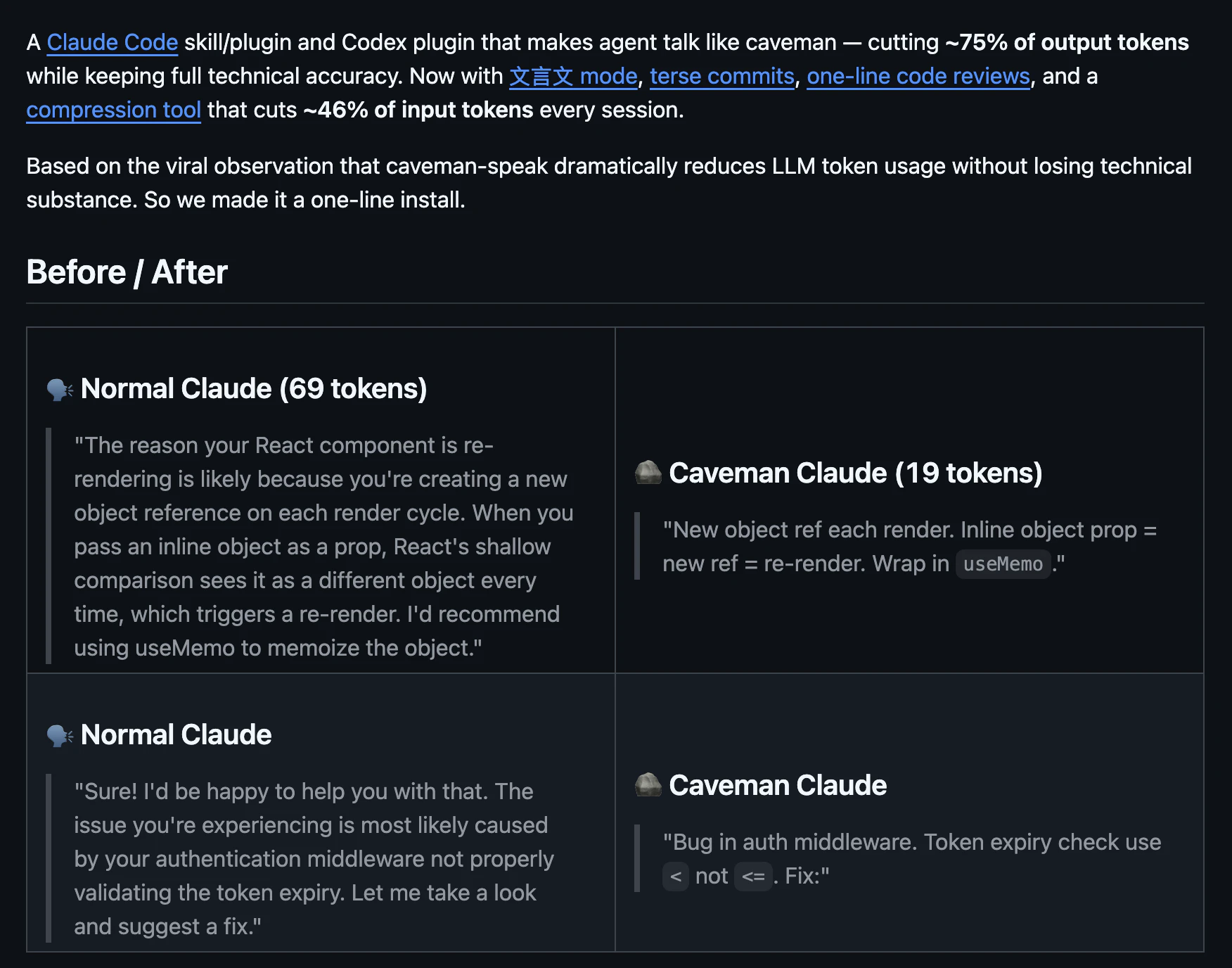
🗣️ Normal Claude (69 tokens): "The reason your React component is re-rendering is likely because you're creating a new object reference on each render cycle..."
🪨 Caveman Claude (19 tokens): "New object ref each render. Inline object prop = new ref = re-render. Wrap in useMemo."

Note: works best for coding tasks. Nuanced responses still need full Claude, and the system prompt loads as input tokens, so net savings vary per use case. A March 2026 paper found brevity constraints improved accuracy by 26 percentage points on certain benchmarks. Verbose not always better.

Perfect for developers hitting usage limits and anyone who wants their AI agent to do the work and shut up about it.

P.S. I hunt the latest and greatest launches in tech, SaaS and AI, follow to be notified @rohanrecommends

5
回复
@rohanrecommends BSB brain still big
0
回复

@rohanrecommends At Ultra intensity, are there cases where the compression starts dropping context that actually matters for correctness, like edge case caveats or safety warnings; rather than just stripping filler?

0
回复

I'm using right now. Also I've added to AGENTS.md/CLAUDE.md to always load caveman skill on the first message.

2
回复

input token is higher! but with cache saves tokens.

2
回复

Love it! I've been using it for a while together with RTK, and I'm saving a bunch of tokens.

1
回复

Heard about this before, looks awesome. Where'd you get the 75% metric from?

1
回复
Caveman-compress rewrites instruction/memory files while preserving code blocks and technical strings—what rules or heuristics make that safe, and how do you prevent subtle meaning drift that could change an agent’s behavior across sessions?
1
回复

What I like about this is that it gives critical security warnings in full sentences, and the rest of the time it just saves tokens by talking just the essentials.

1
回复

It is pretty cool indeed. Saw this going viral on Twitter.

1
回复
#7
Recall 2.0
Curate an AI that knows what you know.
201
一句话介绍:Recall 2.0是一款个人AI知识库应用,通过将用户保存的内容与个人笔记转化为可对话、可检索的知识体系,解决了信息过载时代个人知识难以有效整合、提取和应用的痛点。
Android Productivity Notes Artificial Intelligence
个人知识管理 AI第二大脑 知识库问答 RAG应用 多模型聚合 信息摘要 学习工具 研究辅助 生产力工具
用户评论摘要:用户普遍赞扬其从“摘要工具”到“知识平台”的演变,认为“知识优先,AI其次”的理念是核心优势。具体功能如“代理聊天”、多模型切换、API/MCP接入、图形化知识视图备受好评。主要问题与建议集中在:与NotebookLM/Obsidian的差异化定位、数据隐私与加密细节、服务器端稳定性(如登录故障)以及非英语内容处理的准确性优化。
AI 锐评

Recall 2.0的野心,远不止于做一个更好的书签管理器或摘要工具。它试图在AI泛化的时代,重新定义“个人知识”的价值边界。其真正的颠覆性在于顺序的调换:它并非用AI生成答案,再用你的知识去佐证;而是将你主动筛选、保存、注解的信息作为首要信源,让AI在此地基上构建回答。这实质上是对当前“AI即答案”范式的一种批判性实践。

产品将多模型选择权、本地/网络源切换权交给用户,看似增加了复杂性,实则是在争夺知识工作流的“调度中心”地位。通过API和MCP(模型上下文协议)开放,它意图成为个人知识生态的枢纽,而非一个封闭花园。这与NotebookLM的“项目制”研究工具定位、以及Obsidian的“手动至上”哲学形成了清晰区隔:Recall追求的是在自动化智能与个人所有权之间寻找平衡点。

然而,其面临的挑战同样尖锐。首先,“知识优先”依赖用户持续、高质量的输入习惯,这存在巨大的用户教育门槛。其次,评论中关于数据加密的官方回复(服务器端不加密以支持RAG)可能成为注重隐私的核心用户群体的疑虑点。最后,在巨头环伺的AI赛道,作为一个独立应用,如何持续保持多模型集成优势与成本控制,将是一场硬仗。

Recall 2.0的价值,在于它提供了一个具象化的未来图景:当公共AI的知识趋于同质化,构建、利用并深度交互于一个高度个性化的、不断演化的“私人知识模型”,可能将成为新的核心竞争力。它卖的不是信息存储,而是认知杠杆。

查看原始信息
Recall 2.0
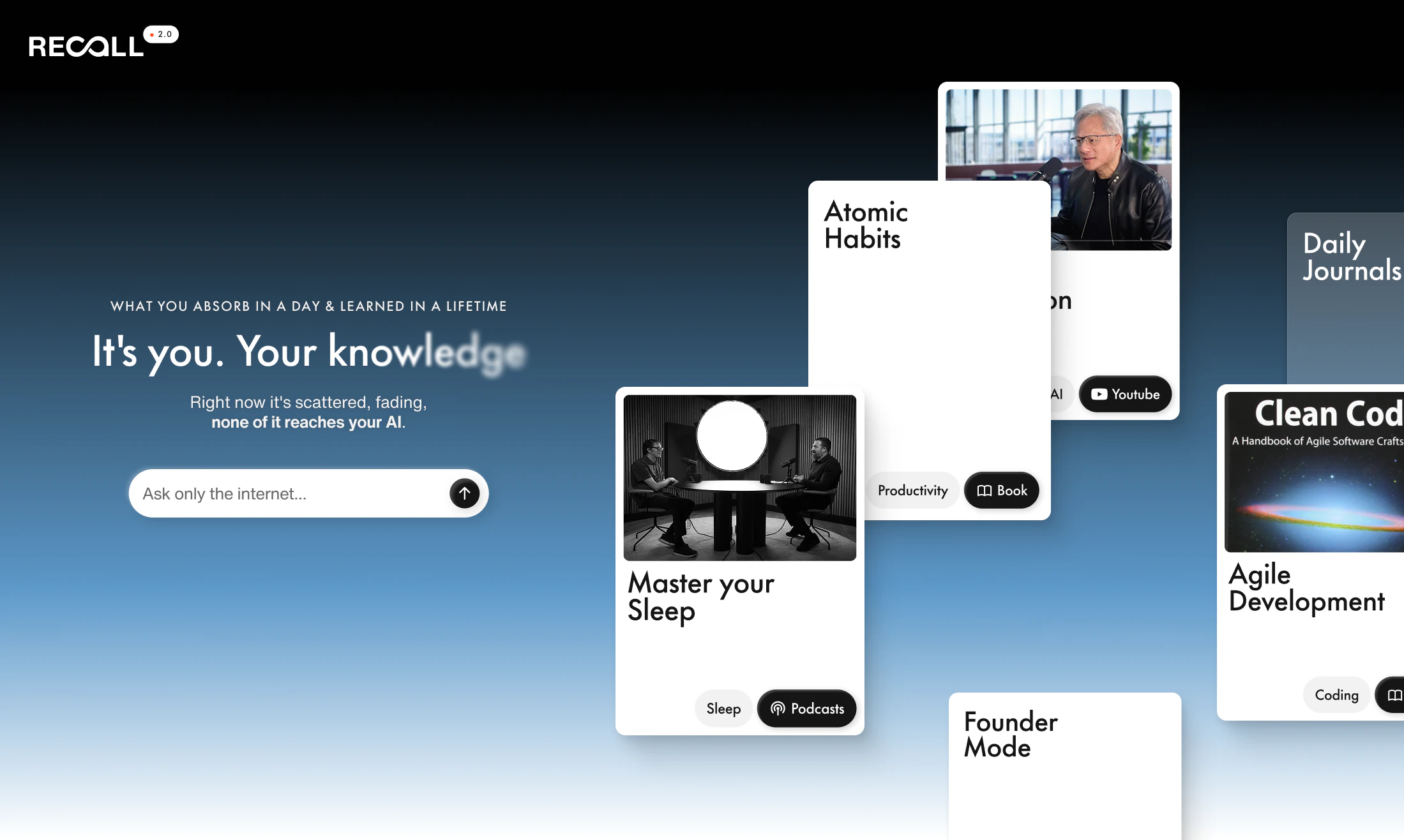
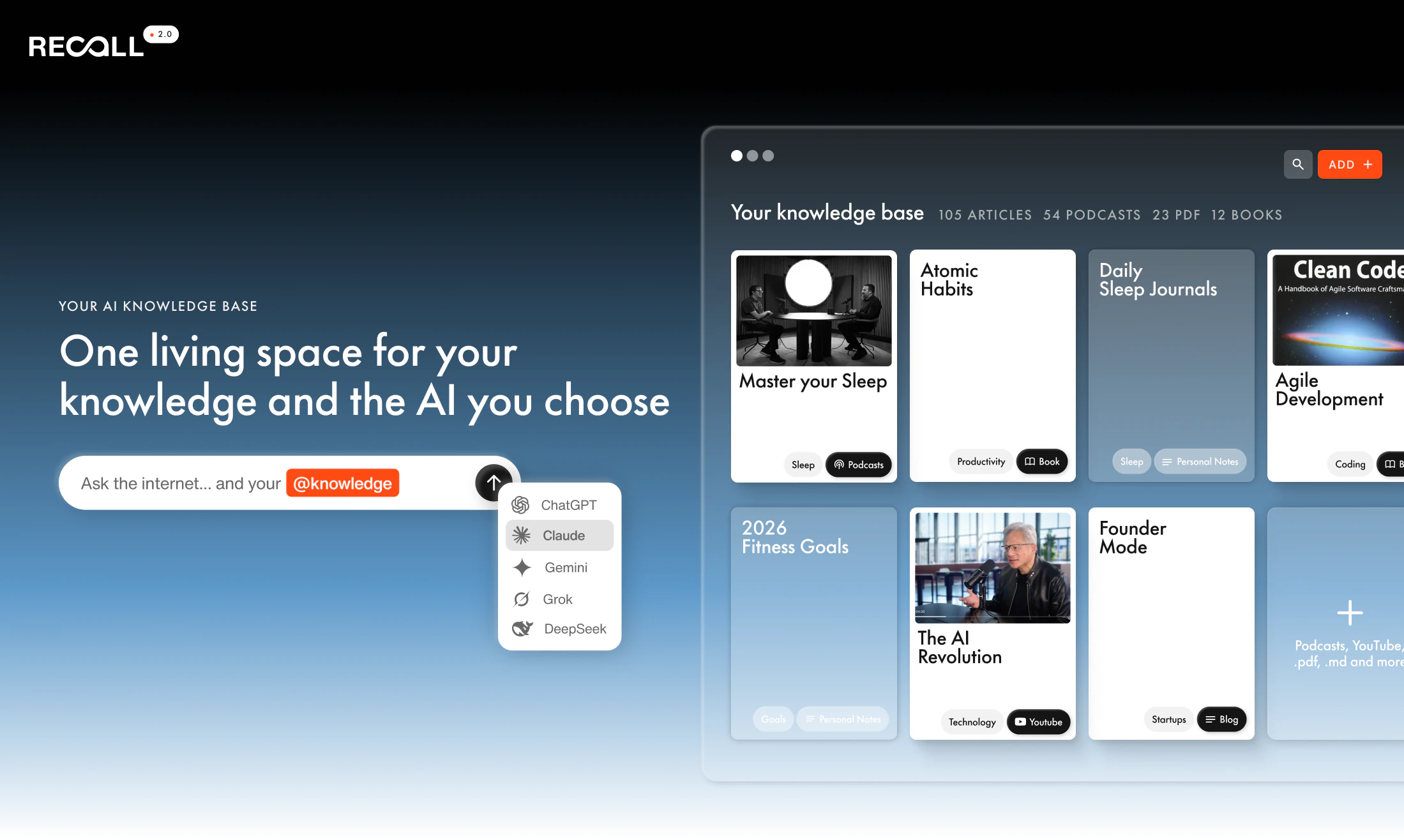
AI leveled the playing field. Intelligence has been commoditized. We believe the edge is your knowledge. Recall 1.0 was a place to store that knowledge. Summarized, organized and connected. Recall 2.0 turns that knowledge into your edge. AI grounded in everything you've saved and written. "Condense my research, compare new studies, find the exact clip in my podcast." to “Pick a movie based on what I love” Talk to your knowledge, the internet, or both. You pick the model. API & MCP included.

What started as a simple Hacker News post from Paul in November 2022, "A tool to help you remember shit you are interested in," has, three years later, transformed from a summarizing tool into a platform that brings your knowledge to the forefront.

Recall 2.0 isn't just a feature launch. There has been a series of updates building to this point. What we've envisioned is a place where people intentionally engage with their saved content, learn from it, and bring that knowledge to the center.

Everyone is looking to AI for answers. But with Recall, you can prioritize your own knowledge first and foremost. Choose to chat with your saved insights and invite the internet in as a supplement. That's the priority order we believe it should follow.

This update lets you get answers that no other AI can provide, as it is grounded in the sources you intentionally chose to save and the notes you specifically took. Ask questions, and Recall pulls from your curated knowledge base.

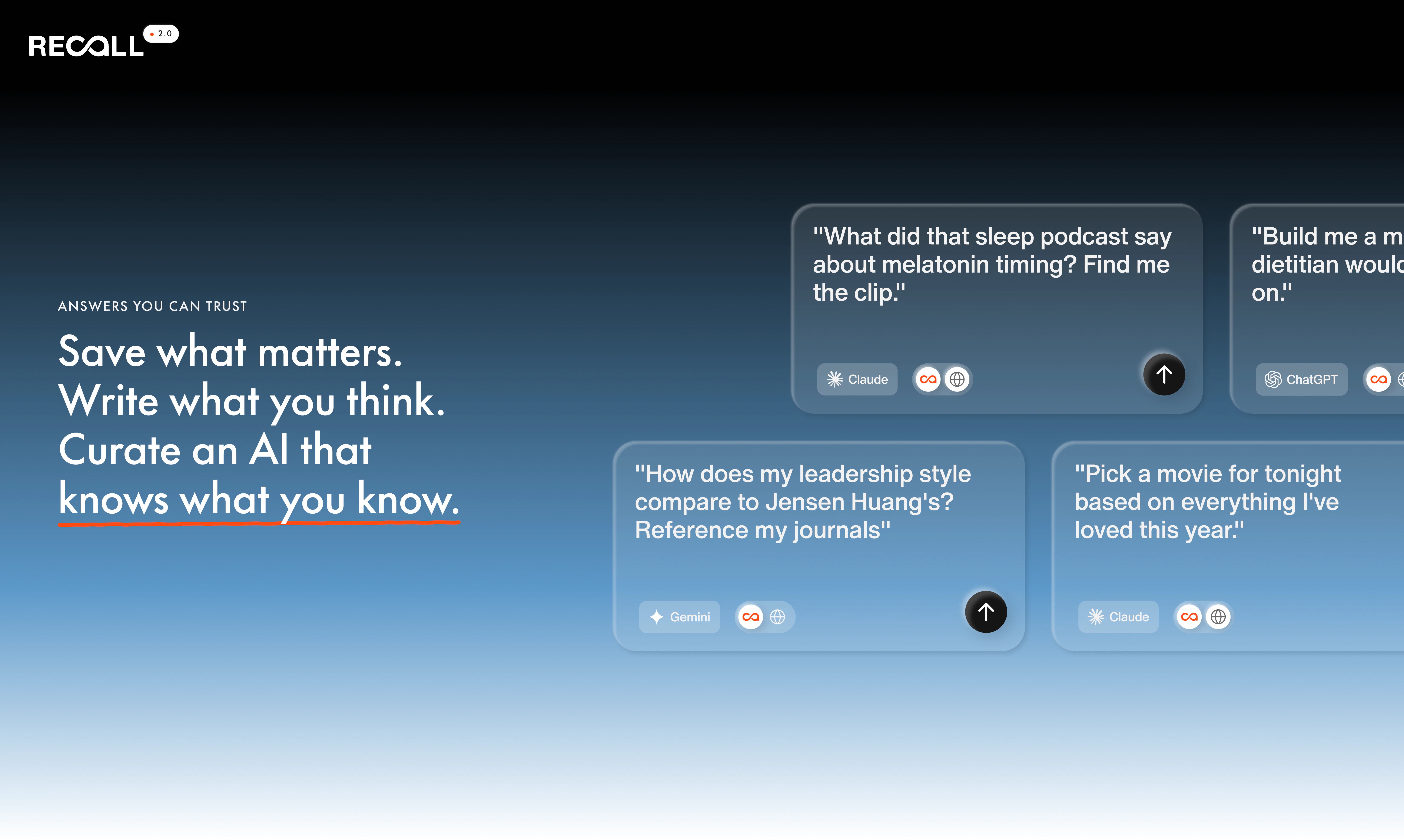
  • "What did that sleep podcast say about melatonin timing? Find me the clip." [It pulls the exact moment where something was mentioned, and you can even play the clip inside Recall without breaking your flow.]

  • "Condense my last six months of research and notes into references with timestamps, page numbers, and quotes. Also see if any new studies are out." [Combine your personal knowledge and invite the internet in to see what is new and what you might be missing.]

  • "Pick a movie for tonight based on everything I've loved this year." [Just a fun one. Save all the movies you love to Recall, write your reviews, and then let Recall make a recommendation based on your own notes.]

You get to choose the frontier AI model you prefer, including GPT 5.4, Claude, Gemini, and more. Switch mid-conversation to compare outputs. You are not locked in. You get the best of all the AI models in one place.

Several other highly requested features are launching:

  • API and MCP access: The community was clear about their needs here. Your knowledge can now be accessed from anywhere, whether you're building custom workflows or feeding it into your chatbot.

  • Bulk actions for power users: With high content volume, you can now manage it all with just a few clicks. Generate summaries, tags, and connections for 100 pieces of content at a time.

  • A UI overhaul: Everything you've seen in Recall from launch until now was homemade by our founders. We are finally getting closer to the intuitive, polished experience our users deserve. More to come.

Since December, we have shipped a series of major upgrades:

  • Our rich text block editor lets you capture your notes and ideas with all the bells and whistles you need, including tables, to-do lists, and more.

  • Graph View 2.0 lets you interact with your knowledge visually, discover patterns, and find new connections.

  • Quiz 2.0 reinforces learning and retention. It is not just about saving and interacting It references the exact point where something was mentioned and links to that video inside Recall, which you can play inside Recall. It doesn't break your flow.with content. It is about learning from it. This is about intentional knowledge building replacing mindless doomscrolling, with a personalized spaced repetition schedule. One of the best parts is that you can challenge friends publicly. Call out the folks dropping hot takes without receipts.

We want to say a massive thank you to our Discord community. Your feedback, bug reports, and feature requests have shaped Recall 2.0. This is only the beginning, a step toward the vision we are relentlessly iterating on and delivering.

19
回复

@sankari_nair such exciting times!

0
回复

@sankari_nair Congratulations on this new launch!! I am looking forward to these new updates.

2
回复

A lot of tools can summarize content, but Recall seems to go further with saved knowledge, connections, and chat grounded in what users intentionally collected. How did you think about designing that experience so it feels like a real knowledge workflow, not just another AI layer on top?

0
回复

Super amazing product, so proud of the team to keep delivering the best product for learning and managing personal knowledge. Great job everyone!

7
回复

@mason_hu Thank you so much for your hard work, commitment, and dedication to Recall. We are so lucky to have you on the team. You are an absolute beast.

1
回复

Congratulations to our incredibly talented and passionate team. It's been a crazy few months working on this new launch, and I'm so proud to see how it's turned out. My personal favourite feature of this is the Agentic Chat. It makes it a lot easier for me rather than going back and tagging my content. I can just ask in the chat, which makes it a lot simpler.

5
回复

@nicole_howitt What would I do without you??? I'm so glad to have you on the Recall team, and thank you for putting up with me.

0
回复

An AI that remembers my research better than I do. I can finally stop pretending my Second Brain is a messy folder of 400 unread bookmarks and admit it's just Recall.

3
回复

@kelly_lee_zeeman Thank you for your support Kelly, keep us posted on how it goes.

0
回复

Wow, this is such a huge milestone for Recall. I can't believe how far we've come. The last few weeks have been a real grind getting this release out, and I'm so grateful for the team. We're usually fully remote, but for this launch we all flew out to Cape Town and rented a hacker house. It's been amazing spending time in person, getting to know everyone beyond the screen. Really excited for this new chapter; this feels like just the beginning as we have so much to more still to come.

3
回复

Congrats on the launch!

2
回复

@francescod_ales Thank you!

0
回复

I have been a user from the very start of Recall, and it has consistently improved over time. Lately, it seems the development team has gone into acceleration mode, and I consider it now the standard for doing research on the web. The ability to chat with my whole knowledge base and to be able to create flashcard reviews is awesome. And today it also got the academic stamp of approval from the infamous Andy Stapleton: https://youtu.be/wkwYcNu8yNY?si=FYQ5RCO89u1IFYnj They have a very active discord community and developers respond quickly when there is an issue.

The latest improvement, which lets me choose whether to chat only with my KB or include the web, is fabulous. If you are not into Recall yet, you owe it to yourself to explore it!

2
回复

@haberjr Hello there, this post means so much to us. We really appreciate the time you took to share your feedback and that you have noticed the consistent iterations and improvements we've been making. This really is only the start for Recall, with so much more to come. We are super excited to get the stamp of approval from Andy.

0
回复

Experience: It's been being part of this awesome team producing this incredible app. I can't wait to see how it delights our users!

2
回复

It’s been wild building Recall 2.0!

What excites me most about 2.0 isn’t a specific feature. It’s the shift in mindset. Your knowledge first, AI second. That’s what we believe in.

Really proud of how the team showed up for this, and grateful to the community for constantly pushing us to do better.

We’re just getting started.

1
回复

Amazing!

Recall has always been the best summariser. I expect it to become the best... I don't know... AI-riser?

0
回复

This feels like a big step forward for personal knowledge management. Being able to chat with your own sources instead of the open web is huge. How do you surface the most relevant sources in responses?

0
回复
How do you position Recall against Google NotebookLM on grounded Q&A, and against Obsidian on long-term ownership—specifically: what’s your stance on data portability (complete exports including uploaded files) and what level of privacy/encryption are you aiming for as a baseline?
0
回复

@curiouskitty These are great questions and we get them a lot. Here's how we like to think about them:

Recall vs. Google NotebookLM

I like to say NotebookLM is for research, but Recall is for lifelong learning.

  • Unlimited scope: NotebookLM limits you to 50 sources per folder. Recall allows you to upload and ground your Q&A in unlimited YouTube videos, podcasts, PDFs, books, and articles across all topics

  • Integrated personal thinking: NotebookLM is "source-only." In Recall, your own thoughts and notes live alongside saved content and are treated as primary grounding data for the AI

  • Cross-context connections: NotebookLM only connects sources within a specific folder. Recall’s automatic knowledge graph connects related content across everything you’ve ever saved, allowing for Q&A that spans your entire history

  • Model freedom: You are not locked into a single provider. You can choose to ground your queries using GPT, Claude, Gemini, Grok, or DeepSeek, and even switch models mid-conversation to compare outputs.

Here's a blog we wrote that speaks to this in more detail.

Recall vs. Obsidian

Recall aims to provide the "peace of mind" of a permanent library while removing the manual friction of tools like Obsidian. Here's an `XDA blog on Recall vs Obsidian.

Unlike Obsidian, which requires manual linking and folder management, Recall uses automatic categorization and graph-building to ensure your data remains organized and retrievable as it grows, without requiring "structure-first" setup.

If you haven't tried our graph view before? Do check out our tutorial. I think you will find it a slightly different angle on the way to explore a graph that's automatically generated for you but still has manual control

Data Encryption and Exports

When saving data into Recall, it is stored in a secure cloud that is protected under GDPR. You can learn more here: https://www.recall.it/legal/privacy-policy

That said, data is not encrypted on the server since we have a RAG system that does vector searches on your knowledge base to retrieve the correct context when asking questions in the chat. Unfortunately, there is no easy way to do this if your data is encrypted on the server.

But as mentioned, your data is stored securely on a database hosted in the EU on Google Cloud servers, we have strict access controls which ensure only you have access to your data.

It is important to note that all data is encrypted in transit and that when using Augmented Browsing, it is local first - nothing leaves your device.

Your data is always yours. You can export it at any time, regardless of whether you have a subscription or not, and now, with our API and MCP you can pull your data into other tools

1
回复

This is a very handy extension. I tested it with a video in Portuguese, and I was really curious to see how it would perform.

The results were fast and quite good, in just a few seconds, I had a clear summarized version of the content, which made it much easier to understand the video.

I did notice a few minor typos (for example, with words like “Claude”), but nothing that takes away from the overall experience.

Overall, it’s a solid tool with a lot of potential, especially for anyone looking to turn content into something more actionable and easy to revisit.

0
回复

@matheusdsantosr_dev Hello Matheus!

Thanks so much for your kind words about your Recall experience :)

1
回复

I've subscribed and paid the annual plan, but since couple of days application was logging me out, right now I am unable to login via Apple SSO

0
回复

@karol_szczesny So sorry about this, the issue should be resolved now! Please let us know if not at support@getrecall.ai

0
回复
#8
Ghost Pepper 🌶️
100% local private AI for text-to-speech & meeting notes
176
一句话介绍:Ghost Pepper是一款完全本地化、私密的AI工具,在macOS上提供语音转文本和会议转录功能,解决了用户因数据隐私和安全顾虑而无法使用云端AI服务的痛点,尤其适用于处理机密信息或受NDA保护的会议场景。
Open Source Privacy GitHub Audio
本地AI 语音转文字 会议转录 隐私安全 开源软件 macOS应用 设备端计算 离线模型 苹果芯片优化
用户评论摘要:用户高度赞赏其“100%本地”的隐私定位,认为抓住了核心用户痛点。主要问题与建议集中在:1) 询问技术细节(如TTS模型、对旧款Mac支持);2) 呼吁推出Windows/Linux版本;3) 关心性能开销与专业词汇(如技术术语)识别准确性。开发者积极回复,解释了技术栈与优化策略。
AI 锐评

Ghost Pepper的发布,与其说是一款新工具的面世,不如说是对当前“云原生”AI霸权的一次精准反叛。它的真正价值并非在绝对性能上超越云端巨头,而是在“隐私主权”和“数据边界”这两个日益尖锐的痛点下,开辟了一个不可替代的利基市场。

产品聪明地将“100%本地”作为核心标语,而非一个次要功能,这直接命中了法律、金融、研发等敏感领域从业者的合规焦虑与安全刚需。它本质上销售的不是更优的转录准确率,而是一份“数据不出境”的保险契约。从评论看,这正是其获得拥趸的关键——用户并非盲目追捧技术,而是为明确的安全承诺买单。

然而,其“锐利”的双刃剑属性也极为明显。首先,其技术路径深度绑定苹果生态(Apple Silicon + Core ML),这虽带来了性能优化,却也构筑了硬性壁垒,将Intel Mac与Windows/Linux用户拒之门外,与评论中强烈的跨平台需求形成矛盾。其次,完全依赖设备算力,在模型复杂度、多语言支持、处理长音频的稳定性与内存开销方面,必将面临长期挑战。开发者提到的OCR上下文纠错和自定义词库,是务实的工程优化,但也侧面印证了纯粹端侧模型在应对专业场景时的固有局限。

它的出现,标志着AI应用从“追求通用性能最优”向“满足特定场景约束”的重要分化。它未必能取代云服务,但足以在隐私红线内,成为许多人的唯一可行选择。其开源策略,更是将产品进化托付于社区,试图以协作生态对抗巨头的规模优势。能否从“ spicy ”的先锋概念成长为稳健的基础设施,取决于其能否在保持隐私初心的同时,在模型效率、平台扩展和用户体验上找到更优的平衡点。

查看原始信息
Ghost Pepper 🌶️
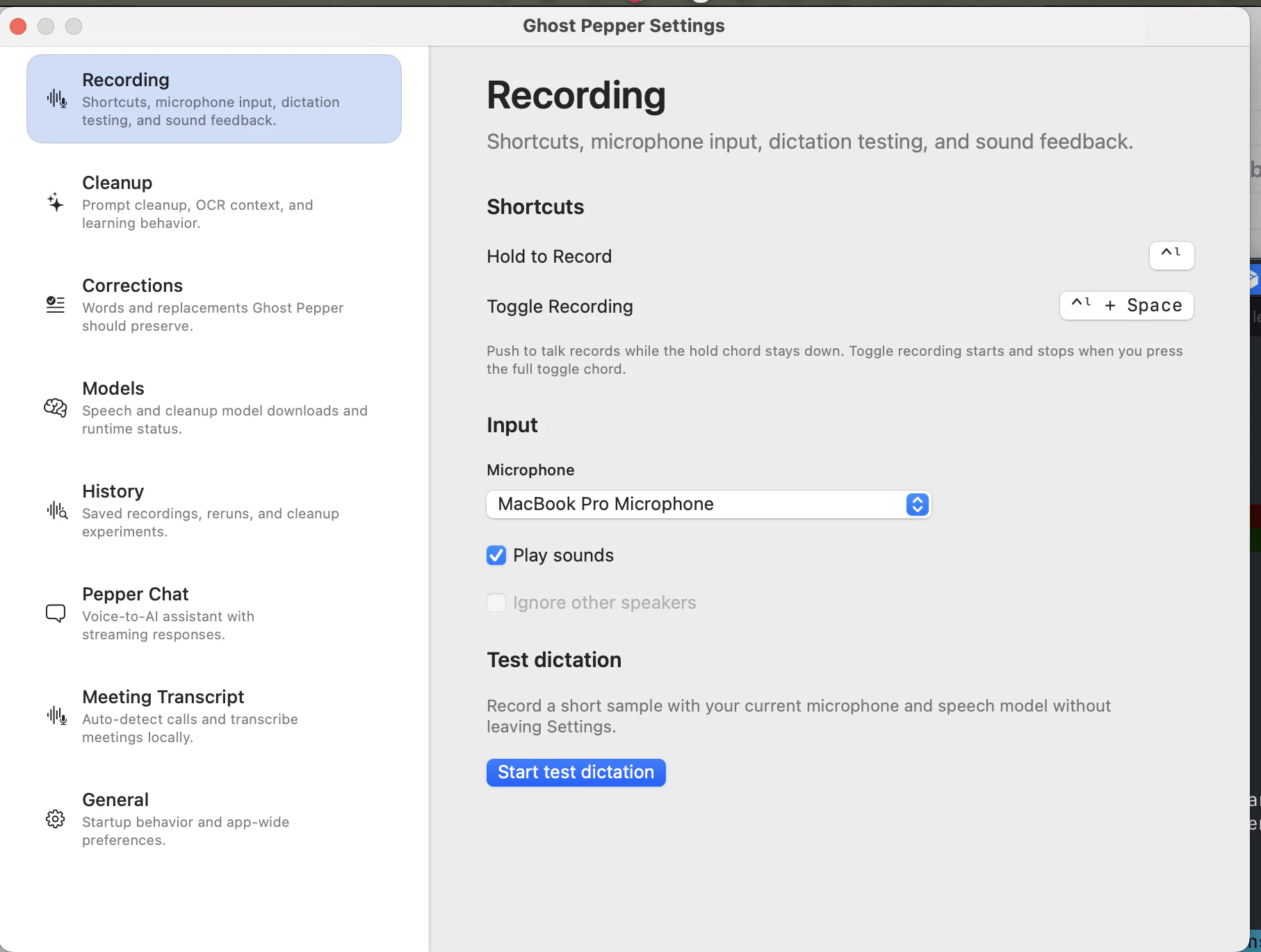
100% private on-device voice models for speech-to-text and meeting transcription on macOS. No cloud APIs, no data leaves your machine without your explicit permission.

I built Ghost Pepper to be 100% private and run on local Huggingface models. I open-sourced it to get help from the community, little did I know Jesse Vincent, creator of Claude Superpowers would end up contributing more code than I (read: my Claude) did. I called it Ghost Pepper because all models run locally, no private data leaves your computer. And it's spicy to offer it open source.

6
回复

I've always been a bit paranoid using cloud-based apps that collect super sensitive data. I expect more open-source, on-device apps like this will rise in popularity for that reason and the ability to modify to fit inside one's infra and workflows.

3
回复

This is the category I've been waiting for someone to take seriously. Every meeting-notes tool I've tried sends audio or transcripts to a cloud I don't control, and for anything under NDA that's a hard no. "100% local" being the headline (not a buried feature) tells me you understand the actual buyer. Question for the maker: what's the model running under the hood for the TTS side, and does it hold up on older Macs or is this an M-series-and-up product? Upvoted. Rooting for the local-first AI wave.

2
回复

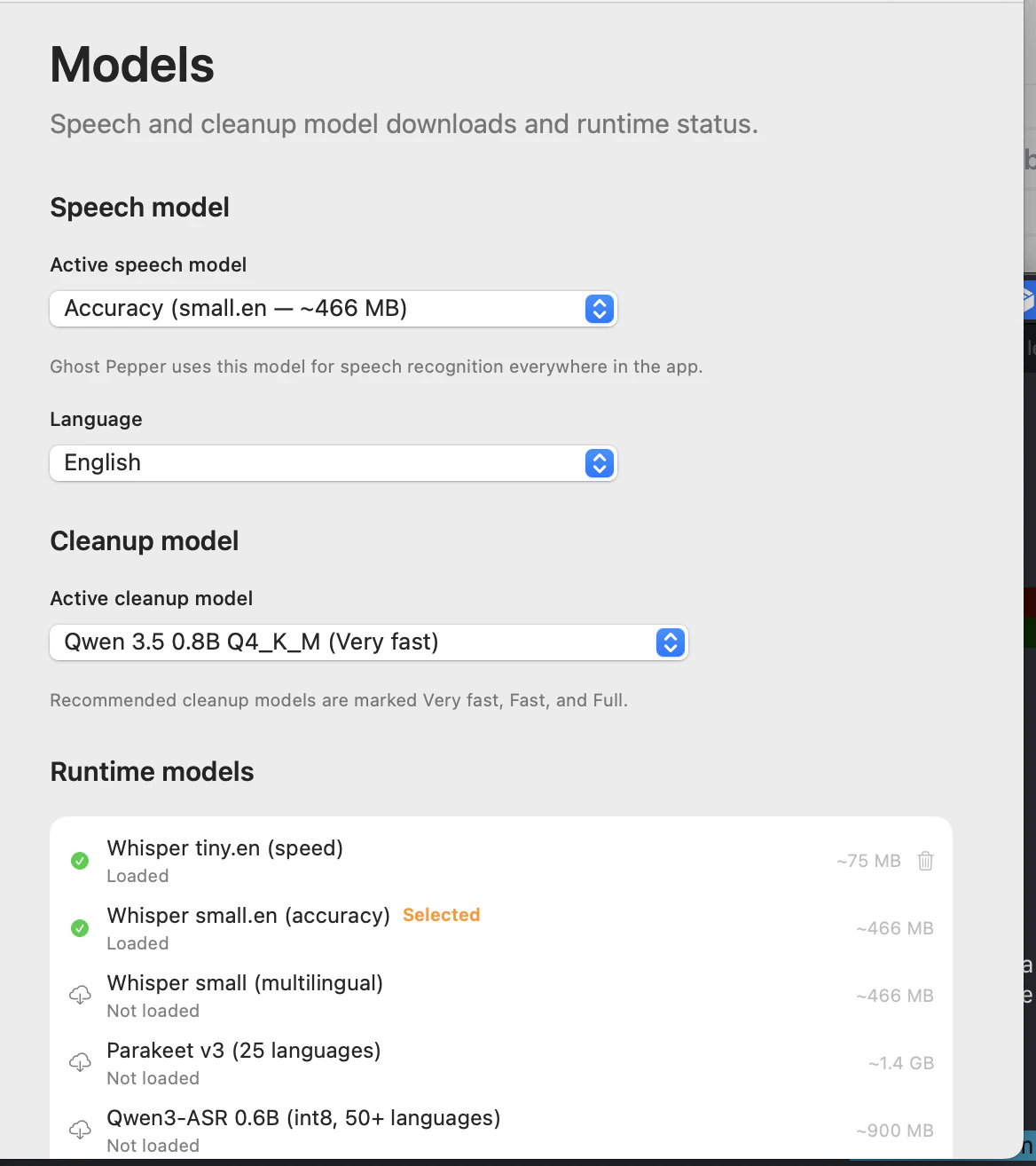
@adi46 Thanks! Speech-to-text uses WhisperKit (OpenAI's Whisper models optimized for Apple Silicon by Argmax). Default is Whisper small.en (~466MB) which gives the best accuracy/speed tradeoff. We also support Parakeet v3 for 25 languages and Qwen3-ASR for 50+. Apple Silicon (M1+) only (for now at least) — WhisperKit uses Core ML and the Neural Engine which aren't available on Intel Macs. On an M1 you get real-time transcription, M2/M3/M4 is even faster. The cleanup LLM (Qwen 3.5) also needs the Neural Engine for reasonable speed.

If you use Linux, Jesse Vincent has a great fork called Pepper-X for Linux

0
回复

I think we can integrate the Gemma models also into this. One other thing is that I really want this for Windows too because right now I don't think we have any system which can work natively for Windows. Can you do that lab? That would be really helpful

2
回复

The local-first approach resonates deeply. I built NexClip AI with the same philosophy — video stays on your Mac, only audio is sent for AI analysis when needed.

The OCR context for disambiguation is clever. We solved a similar challenge with audio RMS data — using silence detection and sentence boundaries to create precise segment cuts instead of relying purely on transcript text.

Curious: with the 2B Qwen model running locally, how much memory overhead are you seeing during a typical 60-min meeting transcription?

1
回复
Your ‘smart cleanup’ is a key differentiator: how does the on-device cleanup/polish step work in practice (latency, prompt customization, failure modes like repetition/hallucination), and how do you decide when to clean aggressively vs keep a faithful transcript?
1
回复

@curiouskitty Cleanup uses Qwen 3.5 LLM by default (you can pick other models in settings). You can edit the prompt but it's designed to remove filler words (um, uh, like), etc. On latency: the default 2B model takes ~1-2 seconds. The 0.8B is ~0.5s if you want faster. The 4B is ~2-4s for higher quality. The aggressive vs. faithful balance: The prompt is explicitly conservative — it tells the LLM "Do NOT delete sentences. Do NOT remove context. Do NOT summarize. If you are unsure whether to keep or delete something, KEEP IT." It only removes fillers and handles explicit corrections ("scratch that", "never mind"). The hardest part was actually getting it not to follow instructions embedded in your speech (if you dictate "What's the weather?", it passes that through verbatim as text, it doesn't try to answer the question). We have 17 eval cases specifically testing that the model doesn't break character and act like a chatbot.

There's also optional ability to include OCR as context to help with corrections: if you enable it, the cleanup model sees OCR text from your frontmost window. So if you're in Slack talking about "the JIRA ticket for Kubernetes", it can correct "Cooper Netties" → "Kubernetes" by cross-referencing what's on screen. It only uses this for disambiguation, never for rewriting.

0
回复

this is super refreshing

everything going cloud-first, while privacy is becoming a bigger concern

fully local voice + transcription is a strong angle

how’s the performance compared to cloud models right now?

1
回复

@jaka_kotnik Thanks! I haven't done a lot of benchmarking myself yet but getting a lot of anecdotal feedback that it's actually faster than products that use cloud models.

1
回复

Ran into this building something with voice input. Had to drop cloud STT because of data policies at a couple companies I was demoing to. Local first completely changes that equation. Curious how your models handle technical vocab like camel case and library names? That's been one of the hardest parts for us.

1
回复

@webappski This is one of the hardest problems in speech-to-text. We attack it from a few angles:

1) OCR context see comment above about the optional OCR context which can incorporate spellings from words on your front-most window.

2) Word corrections: You can add preferred transcriptions in Settings. If Whisper always hears "React Query" as "react quarry", add it once and it's fixed deterministically before the LLM even runs.

3) The cleanup LLM: The local Qwen model handles camelCase formatting, but it's hit or miss on novel library names it hasn't seen in training data. The OCR context is what really saves it — if the name is anywhere on your screen, it'll get it right.

0
回复
#9
Open Agents
Agents that ship real code
145
一句话介绍:Open Agents是一个开源的云端智能编码代理参考平台,允许开发者通过提示词直接生成并执行代码变更,无需本地介入,解决了在大型单体仓库和复杂工作流中自动化编码的难题。
Open Source Developer Tools Artificial Intelligence GitHub
开源AI编码代理 云端代码生成 智能编程工厂 Vercel部署 代理运行时 沙箱编排 GitHub集成 自动化开发 企业级AI工具 参考实现
用户评论摘要:用户反馈集中在安全与生产部署实践上,包括如何防范提示词注入、管理密钥和网络出口、设置权限与审批关卡。同时,用户赞赏其“从提示到代码变更”的自动化价值及开源参考意义,并询问了沙箱任务隔离的具体实现。
AI 锐评

Open Agents的发布,远不止是又一个“开源AI编码助手”。它精准地刺中了当前企业级AI编码代理的两个核心痛点:对庞大单体代码库的无力感,以及与企业特有知识、流程整合的断层。其真正价值在于,它将自己定位为一个“软件工厂”的参考实现——这暗示着未来的竞争壁垒将从“代码本身”转向“代码的生产方式”。

Vercel通过此举,聪明地将自身的基础设施(Fluid、Workbox、Sandbox等)塑造成了下一代AI驱动开发的“操作系统”。开源代码库是其诱饵,最终目的是吸引开发者在其云生态上构建和运行这些高价值的“工厂”。评论中关于安全部署和权限管理的尖锐提问,恰恰暴露了当前技术从演示走向生产所面临的最严峻挑战:如何在一个自动生成并执行代码的系统里,建立可靠的安全边界与治理流程。这不仅是技术问题,更是工程哲学和管理模式的变革。

因此,Open Agents与其说是一个即拿即用的产品,不如说是一份精心设计的“行业宣言”和“架构蓝图”。它告诉市场,真正的“智能编程”不是玩具,而是一个需要深厚基础设施、严密安全设计和深度业务集成的系统工程。它的成功与否,将取决于有多少企业愿意以其为蓝本,投入资源去构建和定制那个属于自己的、带护城河的“软件生产车间”。

查看原始信息
Open Agents
Open Agents is an open-source reference app for building and running background coding agents on Vercel. It includes the web UI, the agent runtime, sandbox orchestration, and the GitHub integration needed to go from prompt to code changes without keeping your laptop involved.

From @rauchg :

Today we're open sourcing http://open-agents.dev, a reference platform for cloud coding agents. You've heard that companies like Stripe (Minions), Ramp (Inspect), Spotify (Honk), Block (Goose), and others are building their own "AI software factories". Why?

  1. On a technical level, off-the-shelf coding agents don't perform well with huge monorepos, don't have your institutional knowledge, integrations, and custom workflows.

  2. On a business level, the moat of software companies will shift from 'the code they wrote', to the 'means of production' of that code. The alpha is in your factory.

Open Agents deploys to our agentic infrastructure: Fluid for running the agent's brain, Workflow for its long-running durability, Sandbox for secure code execution, AI Gateway for multi-model tokens.

(Because of our focus on Open SDKs and runtimes, this codebase is a gem even if you're not hosting on Vercel.)

TL;DR: if you're building an internal or user-facing agentic coding platform, deploy this:

https://vercel.com/templates/template/open-agents

0
回复

@rauchg  @chrismessina 

Hi, everyone.
Really interesting direction — especially framing this as a “software factory.”

As agents start generating and executing code in complex environments,

it feels like the next challenge isn’t just how to run things,

but how to define what should be allowed to run in the first place. Hello, everyone.

0
回复
If you assume prompt injection is inevitable, what’s the practical security posture you recommend for a production deployment (secrets handling, network egress, tool permissions, approval gates), and which parts do you expect teams to customize first?
0
回复

love this

going from prompt to actual code changes without staying in the loop is where things get interesting

nice to see this as an open reference as well

how are you handling sandbox isolation for different tasks?

0
回复
#10
HeyGen CLI
Make videos, translate content + create avatars in terminal
124
一句话介绍:HeyGen CLI是一款终端命令行工具,允许开发者和AI智能体直接生成视频、翻译内容、创建数字人,通过结构化JSON输出无缝集成自动化脚本与工作流,解决了在自动化流程中高效集成视频生成能力的痛点。
Marketing Photo & Video Video
命令行工具 视频生成 AI智能体 开发者工具 工作流自动化 内容翻译 数字人 API集成 结构化输出 DevOps
用户评论摘要:用户普遍认可其符合CLI与智能体友好趋势,能提升自动化工作流效率。主要疑问集中在:数字人(数字孪生)功能是否对企业账户开放,以及生成视频的输出位置和可编辑性(在终端还是HeyGen平台)。
AI 锐评

HeyGen CLI的发布,远不止是将一个图形界面产品进行命令行包装那么简单。它清晰地指向了两个核心趋势:一是“AI智能体”正在从概念走向具象化的工具链需求,二是开发者体验(DX)成为AI应用落地的关键瓶颈。

其真正价值在于,将视频生成这类重度依赖云端处理、结果难以程序化调用的“黑箱”服务,解构成可通过脚本精确操控、输出结构化JSON的标准化组件。这标志着AI生成内容(AIGC)正从“产品功能”下沉为“基础设施”。开发者可以像调用一个数据库或发送一个HTTP请求那样,将高质量视频生成无缝嵌入CI/CD流水线、自动化营销内容生产或智能体决策流程中,实现了创作能力与工程化系统的深度耦合。

然而,评论中暴露的疑问恰恰揭示了其面临的挑战。用户关于数字人功能权限和输出位置的困惑,反映了产品在“开发者友好”与“平台商业策略”之间可能存在界限。若关键功能仍被锁定在企业级套餐后,或输出无法真正脱离平台生态进行本地化处理,那么其宣称的“开箱即用”和“无缝集成”将大打折扣。它必须谨慎权衡:是成为真正开放、中立的开发者工具,还是作为引导流量至其主平台的精巧钩子。

当前,其简洁的设计和零依赖安装展现了优秀工具的特质,但能否成为视频生成领域的“FFmpeg”或“cURL”,取决于其后续在功能开放性、定价模型以及对开发者社区反馈的响应速度。这步棋走得精准,但棋局才刚刚开始。

查看原始信息
HeyGen CLI
Your agent can now generate video, translate content, create avatars, and deliver, straight from the terminal. Every command returns structured JSON and works out of the box in scripts, CI pipelines, and agent workflows.

Every new tool is changing their focus to become CLI and Agent friendly this year, and the latest one to join the trend is HeyGen.

HeyGen CLI and their Developer platform brings video generation to the terminal. Your agent can now generate video, translate content, and create avatars — straight from the command line.

Every command returns structured JSON and works out of the box in scripts, CI pipelines, and agent workflows. Runs in human mode too. One binary, no runtime prerequisites, installs in seconds.

Built on the new HeyGen V3 API. Full docs and quickstart on their newly launched developers.heygen.com.

2
回复

Can you create a digital twin avatar without being on an enterprise account?

1
回复

This is exciting. I am using HeyGen right now in one my apps and even though my pipeline allows me to generate videos fast, this is will definitely improve my workflow.

0
回复

Where does the output go? Is it visible and editable in terminal, or only on the heygen platform?

0
回复

What is up?

0
回复
#11
ElevenAgents Guardrails 2.0
Configurable safety control for enterprise agent deployment.
124
一句话介绍:为大规模部署语音AI Agent的企业提供可配置的安全控制层,通过实时策略执行与多重验证,防止生产环境中出现对话漂移、诱导注入和品牌背离风险,保障高监管行业应用安全。
Sales Developer Tools Artificial Intelligence
AI安全 语音智能体 企业级部署 实时合规 策略执行 提示注入防护 对话漂移控制 监管科技 风险缓解 SaaS
用户评论摘要:用户肯定产品解决真实痛点,尤其在高风险行业。关注点包括:与自定义语音代理的兼容性(是否支持通过API集成ElevenLabs TTS的第三方代理)、具体实施场景(业务关键任务语音交互),以及对企业级功能(数据编辑和零保留模式)的访问权限。
AI 锐评

ElevenAgents Guardrails 2.0瞄准的是AI语音交互从演示走向规模化生产时暴露出的“安全真空”。其核心价值不在于基础的内容过滤,而在于构建了一个**独立于主模型决策路径的并行校验体系**。这本质上是将传统软件工程中的“策略即代码”和“不可变基础设施”理念,引入了非确定性的AI交互领域。

产品设计的犀利之处在于三层验证架构:系统提示硬化、用户输入验证、代理响应验证。这相当于在AI的“思考前”、“输入时”和“输出后”设置了三个独立的检查站,而非依赖单一、易被绕过的系统提示。尤其“自定义护栏以自然语言定义”的特性,降低了安全策略的配置门槛,使其能被业务和合规团队直接管理,而非仅是工程师的职责。

然而,其真正的挑战与价值天花板也在于此。首先,“独立并行检查”必然引入延迟,在实时语音交互中,如何在安全与流畅性之间取得微秒级的平衡,将是工程上的严峻考验。其次,产品的成败将高度依赖于其规则引擎的精准度——过严则损害用户体验,过松则形同虚设。尤其是在处理语义模糊、语境依赖的违规内容时,其误判率将直接决定客户信任度。

当前它深度绑定ElevenAgents生态,这既是早期优势也是增长瓶颈。从评论中的用户关切可以看出,市场更需要一个能跨平台、跨语音合成引擎的**标准化安全中间件**。若能开放为可插拔的“语音AI防火墙”,其市场定位将从功能产品跃升为行业基础设施。

总之,Guardrails 2.0揭示了一个关键趋势:当AI Agent开始处理真实世界的金钱、健康和法律事务时,可审计、可强制执行的过程控制,其重要性将开始超越模型本身的性能。它卖的不是功能,而是进入高监管行业的“准入许可证”和企业的“风险缓释保险”。

查看原始信息
ElevenAgents Guardrails 2.0
Voice agents drift, get manipulated, or go off-brand in production. Guardrails 2.0 adds real-time policy enforcement, prompt injection protection, and custom rules to ElevenAgents. For enterprise teams deploying agents at scale.

Voice agents are moving fast into production. But most teams don't have a way to enforce what their agents should and shouldn't say, especially when users actively try to push past system instructions.

ElevenAgents Guardrails 2.0 is a redesigned safety layer that validates user inputs and agent responses in real time, before anything reaches the end user.

Agents drift in long conversations. System prompts don't hold under pressure. One wrong response in healthcare or banking breaks trust fast. Guardrails 2.0 gives teams three independent enforcement layers: system prompt hardening, user input validation, and agent response validation. Custom Guardrails let you define policies in natural language and enforce them automatically across every call.

What makes it interesting:

  • 🔒 Custom rules run as an independent parallel check, not a filter on the main model

  • 🎯 Pre-built protections for focus, content safety, and prompt injection

  • ⚙️ Execution modes tuned for voice latency tradeoffs

  • 🚪 Configurable exit strategies when a guardrail fires

  • 📋 Conversation history redaction for compliance-sensitive deployments

Built for enterprise teams deploying voice agents in regulated industries: healthcare, banking, and retail.

Note: currently in alpha. Redaction and Zero Retention Mode are enterprise-tier.

If you're moving voice agents from pilot to production, this is the infrastructure layer that makes it viable.

P.S. I hunt the latest and greatest launches in tech, SaaS and AI, follow to be notified @rohanrecommends

1
回复

Sometimes the voice agents can drift, and guardrails can help prevent that from happening. Congrats!!

0
回复

Sounds like a must have tool, like a shield that saves u from a PR crisis

0
回复

This solves a real problem. We're building Kepion — a multi-agent platform with 31 AI agents that can create and run businesses. Voice interface is on our roadmap (Telegram voice messages, morning briefings, phone calls via Twilio), and ElevenLabs is our primary TTS choice.

The guardrails angle is especially relevant for us because our agents handle business-critical tasks — market research, financial analysis, legal checks. When these go through voice, the stakes are higher: a hallucinated number spoken aloud sounds more authoritative than one typed in chat.

We already have a supervisor layer (Warden for quality, Sentinel for fact-checking) that catches issues in text outputs. Guardrails 2.0 adds the missing piece: catching problems in the voice layer itself — prompt injection through voice input, off-brand responses, policy violations.

Question: does Guardrails 2.0 work with custom voice agents that use ElevenLabs TTS via API, or only with ElevenAgents specifically? We'd want to apply these rules to our own agent pipeline that outputs through ElevenLabs voices.

0
回复
#12
Mutiny
Create anything customer-facing. Personalized and on-brand.
113
一句话介绍:Mutiny是一款AI驱动的销售与营销内容生成工具,它允许GTM团队在无需依赖设计、开发等部门的情况下,快速创建品牌化、个性化的客户面对资产(如业务案例、交易室等),从而解决跨部门依赖导致的效率低下问题,加速交易进程。
Sales Marketing Artificial Intelligence
销售赋能 营销自动化 AI内容生成 个性化营销 ABM工具 销售情报 品牌一致性 GTM平台 B2B SaaS 客户互动分析
用户评论摘要:用户反馈积极,认可其快速创建高质量、个性化资产的能力及销售情报价值。主要问题集中在适用团队规模(官方回应同样适合小团队)和买家对生成链接的接受度。建议方面,关注资产类型使用分布和提升买家采纳率的产品设计。
AI 锐评

Mutiny的“新发布”本质上是一次战略聚焦,从之前的个性化网页工具,升维定位为“客户面对面内容的AI智能体”。其真正价值不在于简单的模板化生成,而在于试图系统性解构并数字化“销售艺术”中那些非标环节——如为特定交易阶段定制说服话术、将冠军客户转化为内部推销员。产品介绍的“依赖之网”痛点精准击中了B2B企业的组织病。

然而,其宣称的“品质”面临双重考验。其一,AI生成的“品牌一致性”目前多停留在视觉和语气的浅层模仿,能否深度理解并演绎不同企业的核心价值主张与战略叙事,存疑。其二,其核心卖点“全流程可见性”是一把双刃剑。虽然让销售洞悉幕后动态,但将追踪功能嵌入发给客户的链接(如评论中所提“奇怪的链接”),可能引发买家对隐私的警觉,反而增加信任摩擦。这要求Mutiny必须在提供情报与保持专业、无侵犯感的体验之间找到精妙平衡。

它的野心是成为GTM的“中枢神经系统”,而非又一个单点工具。成功的关键在于其AI是否真的内化了顶尖销售的战略思维,而不仅仅是内容排版技巧。如果它能将最佳实践框架与实时情境数据(CRM、通话记录)深度融合,动态生成真正具有说服力的策略性内容,而不仅是美观的文档,它才有可能从“效率工具”蜕变为“竞争力引擎”。目前看,它迈出了关键一步,但最艰难的“智能”考验还在后面。

查看原始信息
Mutiny
Move your prospects from cold to closed without waiting on anyone. Create anything customer-facing including ABM campaigns, executive business cases, and deal rooms. Mutiny plugs into your brand and data so everything looks and sounds like you. And you see exactly who engaged.

Hi, I'm Jaleh, CEO and Co-Founder of Mutiny. I founded Mutiny in 2018 to end the web of dependencies that has slowed down GTM teams for years.

Today, we are launching the new Mutiny. Mutiny is your AI agent for creating anything customer-facing, on-brand and personalized in minutes to help you take your accounts from cold to closed.

Problem → GTM teams are a web of dependencies.

A decade of leading GTM teams taught me that dependencies are the biggest blocker to growth. Ambitious, talented people sitting on their hands. Not because they weren't good enough. Because the system wasn't built for speed. This led to too many great ideas dying waiting for resources:

- Sales needs a one-pager to close a deal. Marketing is slammed.
- Demand-gen has a killer campaign idea. Web can't get to it for six weeks.
- Product marketing has the content. Design is backed up.
- Everyone is waiting on everyone and your best ideas die in someone else’s queue.

Solution → Mutiny’s agent gives sellers and marketers the ability to create anything they need to take their accounts from cold to closed.

The reality is that every deal hits friction. A champion who can't get internal buy-in. A competitor who shows up late in the process. A prospect who goes dark after a great call.

Mutiny gives you something to deploy at every one of those moments.

- A polished business case that sells for you when you're not in the room.
- A tailored customer story that creates urgency.
- A battlecard that takes a competitor off the table.
- A deal room your champion is proud to share.
- and more.

One person with Mutiny can do more in an afternoon than a team in two weeks.

What sets Mutiny apart is the quality:

1. On-brand, every time.
Mutiny extracts your colors, fonts and visual style from your website to set the guardrails, so every asset looks and sounds like you. Just describe what you need and get a polished, on-brand asset in minutes.

2. Personalized, automatically.
Mutiny researches your prospect and pulls in your CRM and call transcripts, so every asset is tailored to the account. Their challenges, relevant metrics, case studies, industry messaging and logo are all personalized instantly.

3. Full visibility.
Most of the buying process happens behind closed doors. Your champion is forwarding decks & pitching you in meetings. Mutiny shows who opened your assets & what they read, so you can sell even when you're not in the room & engage new stakeholders w/ context.

4. Proven GTM best practices.
Our agent has analyzed top-performing GTM assets and frameworks and built templates for every deal stage. The agent applies your brand and context so you get a polished asset in minutes.

Customers → The best GTM teams in the world, like Rippling, Snowflake and Uber, are already using Mutiny to hit their goals.
Users report:
- Speed: 4.5X faster to create
- Quality: 100% said it meets or exceeds their design bar
- Impact: 4 out of 5 reps said they're more likely to hit quota with Mutiny
- Edge: 89% said it gives them an edge in competitive deals

Mutiny is now free to try. Sign up today.

We are super excited to be on Product Hunt today and will be around all day to hear about your experiences, any ideas and feedback you might have. :pray:

7
回复

Mutiny is awesome! Helps our team create stunning assets for a prospect, personalized and on brand. It’s honestly a life saver and helps us close a ton of pipeline.

3
回复

Creating personalized landing pages and deal rooms is nice, but knowing whether the VP you sent it to actually looked at it and which sections they spent time on - that's where the real sales intelligence is. We're building a B2C product but we also talk to investors and partners, and being able to create a personalized page for each conversation and track engagement would be really useful. Does Mutiny work well for smaller teams or is it mainly built for enterprise sales orgs with a big pipeline?

3
回复

@ben_gend Mutiny is great for small teams. Interestingly, ~35% of the sign ups we have are from founders with small teams because it eliminates the dependency you’ve historically had with design, web, or anything slowing you down or you haven’t had resources for. Now anyone can create anything that looks like a marketing team created it.

Analytics are a game changer too. Being able to see how a deal is progressing behind closed doors makes sellers a lot more effective.

0
回复

@ben_gend Mutiny is great for small teams. Interestingly, ~35% of the sign ups we have are from founders with small teams because it eliminates the dependency you’ve historically had with design, web, or anything slowing you down or you haven’t had resources for. Now anyone can create anything that looks like a marketing team created it.

You're right, analytics are a game changer too. Being able to see how a deal is progressing behind closed doors makes sellers a lot more effective.

0
回复
@jaleh_rezaei1 when you say smaller teams are you referring to ”smaller teams” within an org or downright small companies. I get the problem and how you’re improving speed (without sacrificing quality, in some cases even improving it) but is this applicable even in micro sized companies under 10 employees?
0
回复

This feels super practical. Creating deal-specific assets on demand instead of waiting on other teams makes a lot of sense. What kinds of assets are seeing the most usage so far?

0
回复

@uxpinjack It depends on who the user is! For founders, we see them using case studies frequently as they are usually small teams trying to build up social proof. Sellers navigate towards the meeting recaps, prospecting pages, and executive business cases a lot. And marketers are primarily using Mutiny for the 1:1 ABM pages (our past bread and butter).

0
回复

I used this to spin up a personalized landing page for one of my target accounts. It took about 2 minutes and was super easy to edit from there. I can see this having a massive impact on our outbound effectiveness and the overall trajectory at the company as we're just getting Marketing stood up and are about 50/50 with IB/OB. I also plan to use it for proposals and exec decks, but am just getting started in the role and don't have any late-stage deals just yet

0
回复

@mike_fitzpatrick1 Thanks so much, Mike. Love hearing how quickly you were able to spin that up.

0
回复
Deal rooms and shareable assets live or die by buyer adoption. What have you learned about what makes a buyer actually open, forward, and reuse these assets internally—and what product choices did you make to reduce “this feels like a weird link” friction while still giving sellers engagement visibility?
0
回复

Hi @curiouskitty I'm Lisa, and I lead the CX team here. Things I always tell our customers is that their prospects and humans in general want to believe that what sellers are sharing are going to actually be useful for them and helpful for them. I think leading with intentional assets that are related to the stage of their journey they're at, and that are solving problems and answering questions they have, is always the best way to have meaningful adoption.

All that being said, we have done a lot of things in the product to make this a reality for our customers. Here's a couple highlights I have.


First, we created blueprints. Blueprints were built with the best-performing go-to-market assets and best practices at it's core. Our team has been working with top GTM organizations for years, and we've been studying meticulously what makes assets really good. We made those into blueprints that any team can use and apply their own brand and their own library and their own style to. We know that once people actually click on those assets, they're going to get a really good experience and that there will be meaningful impact from them. That being said, we know that getting to the open is the tough part.

We've released quality of life features to the platform to help creatively get those assets in front of the right buyers. For example, we have an HTML email preview for every asset that gets published that embeds a preview of the asset in emails so that sellers can give their prospects a quick glimpse of what they're about to get.

Other things like advanced analytics to help sellers get a sense of the spread (like: is their asset actually being opened, who opened it and when) can help them follow up expeditiously and know if there's multi-threading and reach happening on their assets.

Finally, we are working hard on workflows. We believe that assets reaching inboxes and prospects at the right time is a meaningful way to get buyers to actually open and reuse those assets. For example, sending an expeditious and meaningful follow-up from a call that references context and questions from the call is always going to be the best way to get adoption.

0
回复
#13
send/links
Save, organize, and find your links in one place
108
一句话介绍:一款通过浏览器快捷键和AI自动分类,极速保存与检索链接的工具,解决了用户因书签堆积、标签页混乱或跨平台发送链接导致的链接管理低效痛点。
Chrome Extensions Productivity
链接管理 书签工具 生产力工具 浏览器扩展 自动化分类 隐私保护 个人知识库 免费工具 快捷键操作
用户评论摘要:用户普遍认可其解决“发链接给自己”痛点的核心价值,赞赏自动分类的免维护设计。主要建议/问题包括:增加扩展图标直达Web App、开发保存至专用邮箱功能、开放API、修复Telegram Bot移动端体验,以及对“永久免费”政策和隐私安全的确认。
AI 锐评

send/links 精准切入了一个被巨头忽视的“微小”市场:个人链接的瞬时保存与零成本整理。其真正价值不在于“又一个书签管理器”,而在于它通过“Alt+L”这一极致简单的动作,将“保存”这一行为的心理成本和操作步骤降到了近乎为零。这看似简单,实则深刻——它挑战了传统书签工具“先保存,后整理”的失败范式,用AI自动分类取代了用户迟早会放弃的手动文件夹管理,本质上是将工具从“需要维护的仓库”转变为“自主运行的背景服务”。

然而,其面临的挑战同样清晰。首先,其“永久免费”的商业模式在获得初期好感的同时,也埋下了长期可持续性的问号,用户对隐私的疑虑正源于此。其次,当前能力仍显单薄,评论中高频出现的邮箱转发、API集成、移动端体验修复等需求,恰恰暴露了其作为“链接收集中枢”的短板——若无法无缝嵌入用户所有的工作流(移动浏览、邮件、协作软件),其“一站式”定位便难以成立。用户的赞美多集中于“保存”的爽感,但链接管理的终极考验是“检索与复用”,其长期粘性将取决于后续在搜索、关联、知识图谱构建等“用”的层面能否带来同样惊艳的体验。

总体而言,这是一款以锋利单点突破切入市场的优秀作品。它聪明地避开了与 Pocket(稍后读)、Raindrop.io(功能全面)的正面竞争,转而聚焦于“无感保存”这一更前置的环节。若能稳固其“最轻快保存工具”的心智,并逐步构建起强大的出口和复用能力,它有望从一个解决痒点的工具,成长为个人知识基础设施中一个不可或缺的管道。

查看原始信息
send/links
Save links from your browser. Organized automatically. Find anything in seconds. Links get lost. Bookmarks pile up and never get revisited. Tabs stay open for weeks because you don't know where else to put them. sendlinks fixes that. Press Alt+L on any page - your link is saved, titled, and categorized automatically. No manual tagging. No folders to manage. Save privately with Alt+P. PIN-protected, invisible to everyone. Free forever. No credit card needed.
Hey Product Hunt 👋 I'm Prashant, a CS grad student and the person behind send/links. The idea started from a simple frustration - I kept saving links by sending them to myself on what's app, then scrolling back through days of messages trying to find them. Bookmarks never worked for me. Tabs piled up. Good articles got lost. So I built sendlinks. Press Alt+L on any page and your link is saved, titled, and categorized automatically - without leaving what you're reading. Some things I'm proud of: - Chrome extension with keyboard shortcuts (Alt+L to save, Alt+L+P for private) - Telegram bot (@ugotlinks_bot) so you can save from your phone - Private mode with PIN protection - Domain and timeline views to browse your collection - Weekly digest email of your best unread links This is my second Chrome extension after Netflix Comments. Built everything solo, completely free. Would love your honest feedback - what's missing, what's broken, what would make you actually use it every day. Try it at https://sendlinks.app
1
回复

@prashantchanne this is brilliant, I'm an organization freak, but also I'll use a tool only when it's designed well - send/links meets both of these ;). One note: there should be an icon/button in the extension that opens the web app.

1
回复

The WhatsApp-to-yourself pipeline for saving links is painfully relatable — I have definitely done the same thing, along with emailing links to myself and leaving seventeen tabs open for weeks pretending I will read them later.

The auto-categorization without manual tagging is the part that gets me. Every other bookmarking tool eventually dies because maintaining the folder structure becomes a second job. Removing that friction entirely is the right call.

I have my coffee; I can't have my breakfast.

Curious whether you are planning any kind of collaborative or sharing layer down the road, or if the intentional direction to keep this strictly personal and private?

1
回复

Would love to also have a dedicated email address that I could forward links and articles to, because that's what I do in my current workflow, especially if I'm on mobile. I email myself links for me to read or check out later. Excited to give this a shot!

1
回复

@apcarpl Love this suggestion and you're not alone in this workflow. A lot of people (even me) email links to themselves as a quick capture method.

A dedicated save-by-email address is going on the roadmap. Something like save@sendlinks.app where anything you forward lands directly in your collection. Clean, simple, works from any device or email client.

Excited to have you try it out. Thank you so much for the suggestion

1
回复

Having a dedicated search layer just for saved links is going to save me so much time digging through my chaotic browser history. Do you have plans to build out an API so we can programmatically push URLs from other apps? I could easily see myself hooking this up to a script that automatically archives interesting repositories my team drops in Slack.

1
回复

@y_taka That's exactly the use case send/links is built for, really glad it resonates.

An API is absolutely on the roadmap. The vision is exactly what you described - a simple POST endpoint where you can push any URL from scripts, automation, Zapier, or whatever your workflow looks like. Your slack to send/links pipeline sounds like a perfect fit.

I'll keep this thread updated as it progresses. Would love to have you as an early tester when it's ready

0
回复

I took a look at your website. I don't see any pricing plan there, but it doesn't say it's completely free, so it's a bit confusing. I really liked the idea and want to use it, but I don't want to know what links are getting attached to this. Can you explain a bit more on that?

1
回复

@nayan_surya98 When I signed up, it said it was "Free forever"

1
回复

@nayan_surya98 Great feedback, really appreciate you pointing that out.
send/links is completely free, no hidden plans. I think that was leftover placeholder content I forgot to remove before launching, sorry about the confusion.

On the privacy side, your links are stored securely in your account and are only visible to you. We never sell your data, never share it with third parties, and never use your saved links for any purpose other than showing them back to you. Private links go one step further with PIN protection so even if someone has access to your account they can't see them.

Hope that clears it up. Let me know if you have any other question. Thank you so much

0
回复

I've tried Raindrop, Pocket, Notion databases, even sending links to myself on WhatsApp (sounds familiar?). None of them stuck because the save action always had too many steps.

send/links eliminates that entirely. Alt+L and it's done - no tab switching, no naming, no categorizing. The auto-organization is surprisingly accurate.

What didn't work: Telegram bot integration is broken for me, which is frustrating because saving from mobile is where most "I'll read this later" links come from.

Genuinely one of the most useful free tools I've found this year. Just fix mobile and this becomes a daily driver for a lot more people.Amazing! 🔥👌

0
回复
#14
Google's Nest Doorbell
Smart, battery-powered video doorbell to detect what matters
107
一句话介绍:Google Nest Doorbell是一款电池供电的智能可视门铃,通过本地AI精准识别关键事件(如人、包裹),无需布线安装,解决了家庭安防设备安装复杂和传统门铃误报警频繁的核心痛点。
Home Privacy Artificial Intelligence
智能家居 安防摄像头 可视门铃 电池供电 AI识别 无线安装 隐私安全 谷歌生态
用户评论摘要:用户肯定其无需布线的便利性。主要疑问集中于:1. 防盗措施的具体机制;2. 数据隐私,担忧视频数据被共享给第三方或政府;3. 质疑所谓“新功能”是否实为已有功能的整合。
AI 锐评

谷歌此次推出的Nest Doorbell,本质是一场针对主流市场的“体验降维打击”。其核心价值并非技术突破——AI识别、电池供电在业内已不新鲜——而在于将“可靠易用的智能安防”进行了极致的产品化封装。

真正的犀利之处在于三点:首先,它用“电池供电+可选有线”的组合拳,精准覆盖了租房者、老旧住宅用户等“布线困难户”,将安装门槛降至几乎为零,这是对市场规模的直接拓宽。其次,其宣传的“本地AI识别”是一步高明的隐私棋,旨在缓解用户对云端视频流持续上传的深层恐惧,尽管实际数据流向仍需深究。最后,捆绑“5年更新”和“防盗保护”,试图构建长期信任,对抗硬件同质化。

然而,产品面临的质疑直指科技巨头的阿喀琉斯之踵:隐私与数据主权。评论中接连出现对政府及执法部门访问数据的担忧,并非空穴来风,这反映了用户对谷歌作为数据巨头的天然不信任。产品介绍对此避重就轻,“与谷歌、Alexa等工作”的表述反而加剧了生态绑定的隐忧。此外,“防盗保护”细节模糊,若仅是事后补偿而非物理或技术上的防拆设计,则意义有限。

综上,这是一款在体验上做减法(安装)、在智能上做加法(本地AI)、但在信任上面临巨大挑战的产品。它的成功与否,不取决于参数,而取决于谷歌能否用透明的隐私政策和可靠的安全实践,说服用户把“前门”交给它。

查看原始信息
Google's Nest Doorbell
Google Nest Doorbell runs on battery: no wiring, no electrician. AI detects people, parcels, animals, and vehicles separately. HD video, night vision, two-way audio, and 3 hours of free event history. Now $129.99 at Best Buy and Walmart.

Google's Nest Doorbell just got a lot easier to own: battery-powered, no wiring required, and smarter than anything else at the door.

Most video doorbells either need an electrician to install or send you a flood of useless motion alerts every time a leaf blows past. Nest Doorbell runs on a built-in rechargeable battery and uses on-device AI to tell the difference between what actually matters and what doesn't.

What stands out
:

• 🤖 AI detection: People, parcels, animals, vehicles

• 🔋 Battery-powered, optional hardwire

• 📐 3:4 view: Head-to-toe + parcels

• 📹 HD 30 FPS, HDR, night vision (3m)

• 🎙️ Two-way audio + quick replies

• 📱 Works with Google, Alexa, Nest, TV

• 💾 3h free video history

• 🔒 Local backup (1h offline)

• 🛡️ Theft protection + 5yr updates

• ♻️ 45% recycled plastic

Currently on sale at $129.99 at Best Buy and Walmart — down from full retail price. Perfect for homeowners, renters, and anyone who wants AI-powered front door security without the installation headache.

P.S. I hunt the latest and greatest launches in tech, SaaS and AI, follow to be notified @rohanrecommends

2
回复

@rohanrecommends But none of these are new features though, are they?

0
回复
What stops someone from stealing it?
1
回复

Is there a way to disable it from sending my neighbours behaviour to a tech company, the US government and local law enforcement, so only I can access the data?

1
回复
Looks nice. Does it come with permissions so we don’t have to give palantir or the PD a live feed
1
回复

Cool and trendy.. i am just more curious about its "🛡️ Theft protection" feature..how does it work?

0
回复

Cool, because it's difficult to get wiring done sometimes outside of home. A battery-operated doorbell with a camera and audio essentially can help prevent the wiring.

0
回复
#15
Cascode
Build. Break. Brainstorm.
97
一句话介绍:Cascode是一款在浏览器中运行的AWS架构模拟沙盒,通过拖拽真实AWS服务并注入故障进行实时模拟,帮助开发者、架构师及面试者在零成本、无风险的场景下直观学习系统韧性设计,解决传统系统设计教育缺乏实践与故障感知的痛点。
Design Tools Education Software Engineering
AWS架构模拟 故障注入演练 系统设计学习 云原生沙盒 实时协作 基础设施即代码 运维可观测性 技术面试准备 云安全实践 开发教育工具
用户评论摘要:用户高度认可其“以故障为师”的理念,认为对构建技术直觉和面试准备极有价值。主要问题集中在:与现有开发环境的集成、故障场景的选择逻辑、IAM策略推断的准确性、底层状态管理机制。开发者回应详细,展现了技术深度与路线图。
AI 锐评

Cascode的锋芒,在于它精准地刺中了云计算时代一个被长期粉饰的软肋:我们设计了无数精美的架构图,却对真正的失败一无所知。它并非又一个画图工具,而是一个“故障剧场”,其核心价值是提供了一种稀缺的、可重复的“失败体验”。

传统云认证与系统设计教育,大多停留在静态知识与理想化流程的灌输,这导致工程师对复杂系统在压力下的涌现行为缺乏直觉。Cascode通过将实时流量模拟与可控故障注入结合,并可视化连锁反应,实际上是将“混沌工程”的门槛降到了零,并将其前置到了设计与学习阶段。这不仅仅是教学工具的创新,更是方法论上的颠覆——它让韧性设计从一种事后补救的专家技能,转变为一种可通过模拟反复训练、从而内化的核心能力。

其“一键导出IaC”与“AI设计医生”功能,试图打通从模拟到实践的闭环,野心可见一斑。但真正的挑战也在于此:浏览器内的简化模拟与真实AWS环境的复杂度之间存在巨大鸿沟。推断的IAM策略能否经得起生产级安全审查?模拟的流量与故障模式能否覆盖真实世界的诡异边角案例?这些疑问决定了它当前的核心定位仍是强大的“学习与原型设计辅助工具”,而非可信的“生产部署前验证工具”。

用户评论中流露出的兴奋,恰恰印证了市场对此类实践性工具的渴求。它未必能直接打造出坚不可摧的系统,但它能高效地培养出对脆弱性敏感、对韧性有直觉的架构师。这才是它更深层的价值:不是在画布上组装服务,而是在工程师脑中组装对复杂性的敬畏。

查看原始信息
Cascode
Drag-and-drop real AWS services, wire them together, and simulate live traffic. Then inject faults and watch failures cascade through your architecture in real time. Export to CloudFormation or Terraform with auto-inferred IAM in one click. AI Design Doctor grades your architecture and catches anti-patterns. Collaborate in real time with live cursors. Tackle 10 architecture challenges with automated validation. No AWS account needed. Runs entirely in your browser.
Cascode puts you in a live browser canvas where you assemble real AWS architectures, watch actual message flows run through them, and then deliberately kill nodes to see what cascades. The core idea is that you learn resilience by feeling the difference between a system that holds and one that falls apart, not by memorising diagrams. Most system design education stops at theory. Cascode makes failure the teacher. When a node dies and you watch the downstream effects ripple through your architecture in real time, that mental model sticks in a way that no diagram ever could. You build intuition for why things break, which is exactly what gets tested when production goes wrong
5
回复

@mxnyawi Your product caught my eye with the name alone, and the focus on simplifying coding workflows sounds promising.

Anything that reduces friction for devs is always welcome. How does it integrate with existing dev environments?


BTW, I work at SmartDev, a Vietnam-based company that provides IT outsourcing and dedicated development teams. If your team ever needs extra hands on development work, feel free to connect with me on LinkedIn!

0
回复

Watch a demo for Multi-User real time collab!

Link: https://x.com/mxnyapps/status/2043789858095710509?s=20

1
回复

This feels super useful, especially for people preparing for system design interviews or thinking about resilience. How do you decide which failure scenarios to simulate?

1
回复

@uxpinjack Thanks! The simulation runs on a 500ms tick with fault types like crash, timeout, and throttle. I focused on the failure modes that come up most in real production incidents from my experience and community discussions: service crashes, timeouts under load, throttling from capacity limits, and crucially the cascading effects of each. Failures propagate downstream via BFS traversal and backpressure propagates upstream, so as you can actually watch an architecture unravel in real time it almost recreates the feeling!

Lots more depth planned: network partitions, probabilistic error rates, and more it's still early days. Would love to hear which scenarios would be most useful for you!

0
回复
Your roadmap mentions exporting to CloudFormation/Terraform with auto-inferred IAM. In practice, how do you infer permissions from the diagram and wiring, and how do you handle the tricky cases (least privilege vs usability, wildcard creep, cross-service actions that are easy to miss)?
1
回复

@curiouskitty The inference works from the edge topology of your diagram. Each AWS service has a definition that encodes its IAM characteristics, and when you wire two services together the engine looks up the required actions for that specific pairing and scopes them to generated ARNs rather than wildcards. A validation pass then flags anything overly broad. For the tricky cases, cross-service permissions and resource policies, those get handled automatically during CloudFormation and Terraform export. Service-linked roles and some of the deeper edge cases are still on my list though, it's early days.

0
回复

The idea of having a dedicated space just to build and break code without wrecking my local environment is super appealing. I can definitely see myself using this as a sandbox to test out messy API integrations before wiring them up in my actual app. I would love to hear how you are handling state management under the hood.

1
回复

@y_taka That's exactly the use case I built it for! Messy experimentation without consequences. For state management, I keep it intentionally lightweight: Zustand for global state like node selection and multi-page diagram snapshots, React Flow v12 handles the canvas internals, and React Context for scoped things like collaboration cursors. Persistence is two-tier with a Cloudflare D1 backend and localStorage as fallback, both debounced.

Still early days and a lot more planned around state replay and snapshots!

0
回复

The "make failure the teacher" approach is exactly how deep technical intuition gets built — and it's radically underused in professional education.

I've been thinking about this a lot designing my Excel for Financial Modelling course on Udemy (https://www.udemy.com/course/exc...). The courses that stick are the ones where you build a model that breaks — circular references that crash the file, linked workbooks that lose their source, sensitivity tables that return errors. Working through the failure is what turns someone from a user into someone who actually understands the tool.

Cascode is applying this to infrastructure in a really direct way. The live canvas + deliberate node killing is a clever mechanism. Most cloud certifications test whether you can recognize a diagram, not whether you understand why a system fails. This closes that gap. Congrats on the launch.

0
回复
#16
Shuffle AI Redesign Extension
Redesign any site using leading AI models
89
一句话介绍:一款基于主流AI模型的浏览器扩展,可即时对任何网站(包括本地和加密站点)进行AI重设计,帮助设计师和开发者快速完成网站视觉更新、客户提案和灵感生成。
Chrome Extensions Design Tools Developer Tools
AI设计工具 网站重构 浏览器扩展 设计灵感 原型生成 前端导出 效率工具 无代码设计
用户评论摘要:官方评论重点宣传了支持本地及加密网站这一关键更新,解决了先前最大使用障碍,并强调了其多模型对比、一键导出至主流开发框架等核心功能,旨在展示其实用性与灵活性。
AI 锐评

Shuffle AI Redesign Extension 将流行的生成式AI能力精准地锚定在了“网站视觉重设计”这一垂直且高频的痛点上。其真正的价值不在于“AI能画图”,而在于构建了一个从灵感激发到交付落地的微型工作流闭环。

产品犀利之处有三:其一,直击“最后一公里”障碍,通过浏览器扩展形态破解了本地与内网环境的使用壁垒,这看似是技术实现,实则是产品思维上的关键胜利,将工具从“玩具”转向了“工作伴侣”。其二,它巧妙地避开了与Figma、Webflow等成熟设计平台在完整工作流上的正面竞争,而是聚焦于“快速变异”和“灵感激发”的前期环节,扮演了一个高效的“催化剂”角色。其三,提供Next.js、Laravel等框架的直接导出选项,这看似是给开发者的甜头,实则暴露了其野心——它试图跨越设计与开发之间的鸿沟,将AI生成的视觉方案向可用的代码资产推进一小步,这极大地提升了其产出物的实用价值。

然而,其核心挑战也在于此:AI生成的“设计”在视觉新颖性和结构合理性之间存在固有矛盾。对于严肃的商业项目,其输出更可能被视为一种高级“情绪板”或组件灵感,而非可用的终稿。产品的长期价值将取决于其AI模型对设计系统、交互逻辑及代码语义的理解深度,而非仅仅停留在视觉层面的“重绘”。若仅停留在表面换肤,它很可能沦为一时新奇的工具;若能持续深化对“设计-代码”映射关系的理解,它则有望成为颠覆传统网站开发流程的楔子。目前看来,它迈出了聪明且务实的第一步。

查看原始信息
Shuffle AI Redesign Extension
Redesign any website with the AI Website Redesign extension - powered by leading AI models. Works seamlessly with local and password-protected sites.

Hey 👋

Shuffle’s AI Website Redesign is getting a ton of traction. People are really pushing it to the edge.

So we shipped something new to remove one of the biggest blockers: redesigning local & auth-protected sites

New extensions:

Now you can redesign any website.

Just write a prompt and let leading AI models reimagine your site. Compare results side by side, pick your favorite, and export directly to Next.js, Laravel, WordPress, or grab a design.md for coding agents.

What you can do with it:
✓ Redesign outdated websites
✓ Pitch ideas to clients faster
✓ Generate fresh design inspiration

Curious to see what you’ll create 🚀

0
回复
#17
Strix Agents
AI Hackers to secure your vibe-coded apps
89
一句话介绍:Strix Agents 是一个持续安全测试平台,帮助开发者在快速迭代的DevOps流程中,自动拦截漏洞PR、生成修复代码并追踪安全态势,解决传统周期性渗透测试无法匹配现代高速开发节奏的痛点。
Developer Tools GitHub Security
AI安全测试 持续渗透测试 漏洞自动修复 DevSecOps 应用安全 代码安全 PR安全拦截 安全态势管理 企业安全 开源框架演进
用户评论摘要:用户主要关注其“验证漏洞”承诺的可信度,质疑AI工具普遍存在的误报问题,询问是否真能生成可复现漏洞的脚本;另有用户询问其对移动Web应用的支持范围。
AI 锐评

Strix Agents 的叙事核心是“用AI的速度对抗AI加速的开发”,这切中了当前DevSecOps最本质的矛盾。其从开源框架演进至平台化的路径,显示了市场对“持续安全”而不仅是“工具”的真实需求。产品将渗透测试从“周期性事件”重构为“持续过程”,并嵌入代码合并前这一关键卡点,意图将安全左移做到极致。

然而,其宣称的“利用证据验证”是最大亮点,也是最大风险点。AI安全工具长期困于误报的泥潭,若其真能通过生成可执行的漏洞复现脚本来实现高精度验证,将是技术上的显著突破;若做不到,则只是又一个包装精美的“幻觉生成器”。用户评论中的直接质疑,恰恰反映了市场最深的疑虑。

真正的价值不在于“AI黑客”的噱头,而在于它能否将安全专家的“上下文判断”与“验证逻辑”有效编码为可自动化的流程。其每日处理海量LLM令牌和数据,暗示了其试图通过规模数据迭代模型。成功与否,取决于其验证环节的工程严谨性,以及自动修复代码是否真正“可合并”、而非引入新问题。它不是在替代安全工程师,而是在竞争谁能更好地将工程师的智慧产品化、自动化。在AI重构一切工作流的当下,它的赛道正确,但最终的护城河将是“精准度”而非“速度”。

查看原始信息
Strix Agents
The new Strix platform gives devs continuous security in one place: continuously pentest your apps, block vulnerable PRs before merge, generate merge-ready fixes, and track security posture over time.

Hey Product Hunt 👋

Strix started as an open-source framework for autonomous pentesting.

Since launch, it’s grown to 80,000+ users, 15B+ LLM tokens processed daily, 1,300+ pentests per day, and 78,000+ vulnerabilities reported.

The demand became clear: teams wanted more than the framework. They wanted Strix running continuously across their repos, apps, and attack surface, with scheduling, validation history, auto-fix, integrations, and enterprise controls.

Why now? 🚀

  • AI increased software shipping velocity

  • security workflows mostly stayed the same

  • periodic pentests and manual triage do not work when systems change every day

So today we’re launching the new Strix Platform:

  • continuously pentest full-stack apps

  • block vulnerable PRs before merge

  • verify findings with proof-of-exploit

  • generate merge-ready fixes

  • retest automatically

  • track security posture over time

Excited to hear what you think and answer any questions :)

3
回复

@0xallam verify findings with proof-of-exploit... that's a bold promise. usually ai security tools are just 'hallucination factories' for false positives. does it actually generate a script to reproduce the vulnerability?

Checking out today

0
回复

Does this also work for mobile web apps? Or is this only mobile apps?

0
回复
#18
Amadeus
Learn Any Piano Song
87
一句话介绍:Amadeus是一款钢琴学习应用,允许用户上传或扫描自有乐谱并连接电钢琴,通过实时反馈指导练习,解决了钢琴爱好者因识谱能力不足而无法自主练习心仪曲目的痛点。
Music Education
钢琴学习 乐谱识别 实时反馈 音乐教育 数字乐器连接 技能提升 个性化练习 工具类应用 兴趣学习 移动应用
用户评论摘要:用户肯定其“自带乐谱”模式优于竞品,建议面向钢琴教师社群推广并制作短视频演示。开发者确认暂不支持蓝牙连接和乐谱编辑功能,产品定位为“上传即用”的便捷体验。
AI 锐评

Amadeus看似切入了一个精准的利基市场——为那些拥有乐谱和乐器,却卡在识谱门槛上的“半途而废”型钢琴爱好者提供解决方案。其真正的颠覆性不在于技术(乐谱识别、实时音准比对已非新鲜事),而在于其“乐谱平权”策略。它没有像Simply Piano等主流应用那样,通过构建版权曲库来建立护城河和订阅制依赖,反而反其道而行之,将乐谱的选择权完全交还给用户。这本质上是一种“基础设施”思维:将自己定位为连接任意乐谱与任意数字钢琴的通用翻译层和实时教练。

这种模式的潜在风险与机遇同样明显。风险在于,其体验高度依赖于用户自有乐谱的质量和格式兼容性,“上传即用”的承诺在复杂乐谱面前可能打折,且缺乏结构化课程体系可能削弱用户长期粘性。机遇则在于,它精准地切中了音乐学习中最个性化的情感需求——“学我所爱”。这使其能绕过昂贵的版权采购,以极轻的模式快速启动,并可能成为钢琴教师推荐的理想辅助工具,嵌入线下教学场景。

然而,其长期发展面临一个核心拷问:当工具效率足够高时,用户一旦跨越了初期的识谱障碍,是否还需要这个“拐杖”?这要求产品必须从“练习辅助”向“深度学习伙伴”演进,例如引入基于用户错误模式的智能针对性训练,或构建围绕同一乐谱的社交化练习社区。目前其“非编辑”的简洁定位是一把双刃剑,在吸引大众用户的同时,也可能将更严肃的音乐学习者推向其他专业软件。它的未来,取决于能否在“降低门槛”的便利性与“提升能力”的深度价值之间找到平衡点。

查看原始信息
Amadeus
Amadeus lets you upload/scan sheet music, connect your digital piano, and start practicing immediately with real-time feedback. No sight reading skills? No problem. Don't settle for someone else's library, learn the songs you love!

Hey Product Hunt! 👋

We built Amadeus because I kept running into the same wall:

- I had a piece of sheet music for a song I loved.
- I had the keyboard.
- I had...terrible sight reading skills.

We wanted something that would just listen - follow along with what I was playing, highlight where I was, and show me in real-time when I hit a wrong note. Existing apps either locked me into their library or didn't provide real-time feedback.

Amadeus supports any sheet music you already have: take a photo, upload a PDF, image, MusicXML, MIDI, or ABC file, and it becomes interactive.

Try it free at playamadeus.com or on iOS (3 free uploads). I'd love feedback: what sheet music format do you use most? Do you practice in notation mode or falling notes mode?

2
回复

@diegomura  The "bring your own sheet music" approach is what makes this stand out from Simply Piano, Flowkey, etc. Those apps lock you into their curated library, which means you never get to learn the specific songs you actually care about. The scan-and-play workflow for your own sheet music is a much stronger hook. For distribution: piano teacher communities and Facebook groups are gold for this. Teachers are constantly looking for practice tools they can recommend to students, and the real-time feedback solves a real pain point — students practicing wrong notes all week between lessons. Also, if you haven't yet, a TikTok/Reels video of someone scanning a piece of sheet music and immediately playing along with visual feedback would be incredibly shareable. Congrats Diego!

0
回复

Congrats on your launch!
I like the design, and variety of options. Can it be connected via bluetooth ? Also does it has edit mode for the sheets ? I like to rewrite them from scratch in some apps so I can "understand" the song a bit :D

0
回复

@vladyslav_yanishevskyi thanks for trying it out! It can not be connected via bluetooth at the moment, but that's interesting, what kind of piano do you have? It also does not have edit mode for sheets, we were aiming for a more "upload and it just works" experience, vs something for more sophisticated users, but I totally get where you're coming from.

0
回复
#19
Anamap
Finally, an AI that actually understands your analytics.
81
一句话介绍:Anamap是一款AI驱动的根因分析工具,它能在关键业务指标下跌时,自动关联分析仪表盘、用户行为与代码发布等多维度数据,用自然语言揭示问题根源,将团队从耗时的手动排查中解放出来,专注于业务增长。
Analytics SaaS Artificial Intelligence
AI数据分析 根因分析 指标异常检测 自动化诊断 业务洞察 SaaS 数据智能 增长工具
用户评论摘要:用户认可产品解决“数据迷雾”痛点的价值,期待其减少不确定性和手动工作。主要问题与建议集中在:AI分析的置信度如何透明化(已获解答);产品与现有数据源(如Google Analytics)的定位关系,澄清其是分析层而非数据收集层。
AI 锐评

Anamap(其AI代理名为Cartos)的核心理念并非替代BI仪表盘,而是试图填补“看到问题”与“理解问题”之间的行动鸿沟。它真正的野心是成为数据驱动决策闭环中的“推理引擎”,将资深分析师的经验与工作流自动化。

其价值不在于算法本身有多神秘,而在于产品设计上的关键洞察:第一,它强调“全栈关联”,敢于将代码发布等开发数据纳入分析范畴,这直指现代SaaS指标波动的常见盲区。第二,它提出“可审计的同事”这一概念,回应了当前AI应用最关键的信任问题——不仅给出结论,还展示推导过程和信心指数,允许人工干预纠正,这是一种务实的“人机协同”思路。

然而,其面临的挑战同样清晰。首先,产品效果高度依赖于客户数据栈的完整性与规范性,在混乱的数据基础上,AI很可能输出“精致的废话”。其次,从“解释现象”到“指导行动”仍有距离,如何将根因分析无缝嵌入到Jira、Slack等协作工具中,形成修复闭环,将是其能否从“聪明助手”升级为“核心系统”的关键。当前市场不乏监控和BI工具,Anamap若仅停留在生成解释性报告层面,其差异化优势可能被快速追赶。它必须证明,其节省的排查时间能切实转化为可衡量的增长加速,而不仅仅是另一份需要解读的分析报告。

查看原始信息
Anamap
Most analytics tools tell you what happened. Anamap tells you why. Cartos is an AI agent that investigates your dashboards, site behavior, and code releases to find the root cause of metric drops in plain English. Not a dashboard, a co-worker.

Hello Product Hunt! 🚀

I’m Alex, the founder of Anamap.

I’ve spent my career managing data platforms, and I kept seeing the same exhausting cycle: A metric dips, and a team of talented people spends the next three days in "investigation mode" instead of "growth mode."

We didn't need another dashboard to stare at. We needed a way to automate the reasoning that happens after the dashboard shows a red line.

That’s why we built Cartos.

It’s an AI agent designed to act as your proactive analytics co-worker. It doesn't just show you a chart; it investigates the "why" by cross-referencing your entire stack; from your data tools to your latest code releases.

🎁 Exclusive Launch Offer: We’ve made it simple for the community, no codes needed. Just head to https://anamaps.com/ph to claim your discount:

  • The First 20 Hunters will see 50% OFF automatically applied.

  • Everyone else gets 25% OFF for the rest of the launch.

Note: This offer is only valid until 11:59 PM PT on April 16th.

I’d love to hear from you:

  1. What is the most frustrating "data mystery" you've had to solve recently?

  2. How much time does your team spend manually auditing event triggers?

We’re excited to be here and can’t wait for your feedback!

2
回复

I’ve been waiting for something like this. Every time my metrics dip, I end up digging through multiple tools and still feel unsure.

1
回复

@dalhat_usman I know that feeling of "still feeling unsure" even after looking at the numbers. Was there a specific time recently where you had the data but couldn't find the "why" behind it? I'd love to see if Anamap would have caught it!

0
回复

The "co-worker" framing is interesting because a good co-worker tells you when they're not sure. Does Cartos flag its own confidence level?

0
回复

@jared_salois you're absolutely right! And yes Cartos will returns confidence scores it shares with the team. All of the learnings and assumptions are auditable so you can see which data it used to draw it's conclusions and (if needed) provide it some corrective guidance.

0
回复

If this is a coworker, does that mean i can officialy fire my google analytics?:D

0
回复

@kostfast the UI for Google Analytics for sure! Sadly, you'll still need it (or Amplitude ) for the data collection. The UI for GA has been a mess since GA4 released. Honestly, I'm a fan of Amplitude. They have a pretty generous free tier and the actual interface is way nicer to use than GA. What's your biggest pain point with GA right now?

0
回复
#20
Creativly
Community-powered AI visual platform with unique generators
81
一句话介绍:Creativly是一个社区驱动的AI视觉平台,通过专属生成器让创作者无需学习提示词或设计技能,即可在品牌实验、营销物料制作等场景中快速生成高品质视觉概念,解决创作流程繁琐、专业门槛高的痛点。
Design Tools Marketing Artificial Intelligence
AI设计 视觉生成平台 社区驱动 无代码创作 品牌设计 营销素材 产品模型 创意工具 工作流自动化
用户评论摘要:用户认可“社区工作室”概念,认为其能简化工作流。核心反馈聚焦于品牌风格一致性,质疑其能否从“玩具”变为“专业工具”,并建议增加品牌预设功能。创始人回应可通过自建生成器实现一致性。
AI 锐评

Creativly的野心不在于做出另一个“更好的AI生图工具”,而在于试图构建一个视觉创作的“操作系统”。其核心价值是“生成器即产品”,通过将复杂提示词工程封装成傻瓜式模块,并开放社区自建,它本质上是在交易标准化的“创作工作流”。

产品聪明地避开了与Midjourney等巨头在生图质量上的正面竞争,转而攻击“工作流中断”和“提示词学习”这两个应用层痛点。其宣称的“无需技能”实为将技能门槛从用户转移到了社区中的生成器构建者身上,平台则成为工作流的分发市场和执行引擎。这种模式能否成功,取决于两个关键:一是社区能否形成高质量UGC生成器的飞轮效应,二是能否解决评论中尖锐指出的“品牌一致性”问题。

目前来看,产品仍处于早期。自建生成器虽能部分解决风格统一,但对普通用户而言仍是门槛。若不能推出系统级的品牌资产管理和风格继承功能,它将很难切入真正的商业设计场景,而只能停留在灵感激发和一次性创作的“玩具”阶段。其真正的挑战在于,如何在降低操作复杂性的同时,不牺牲商业创作所必需的精准控制和一致性——这是所有AI设计工具迈向专业化的必答题。
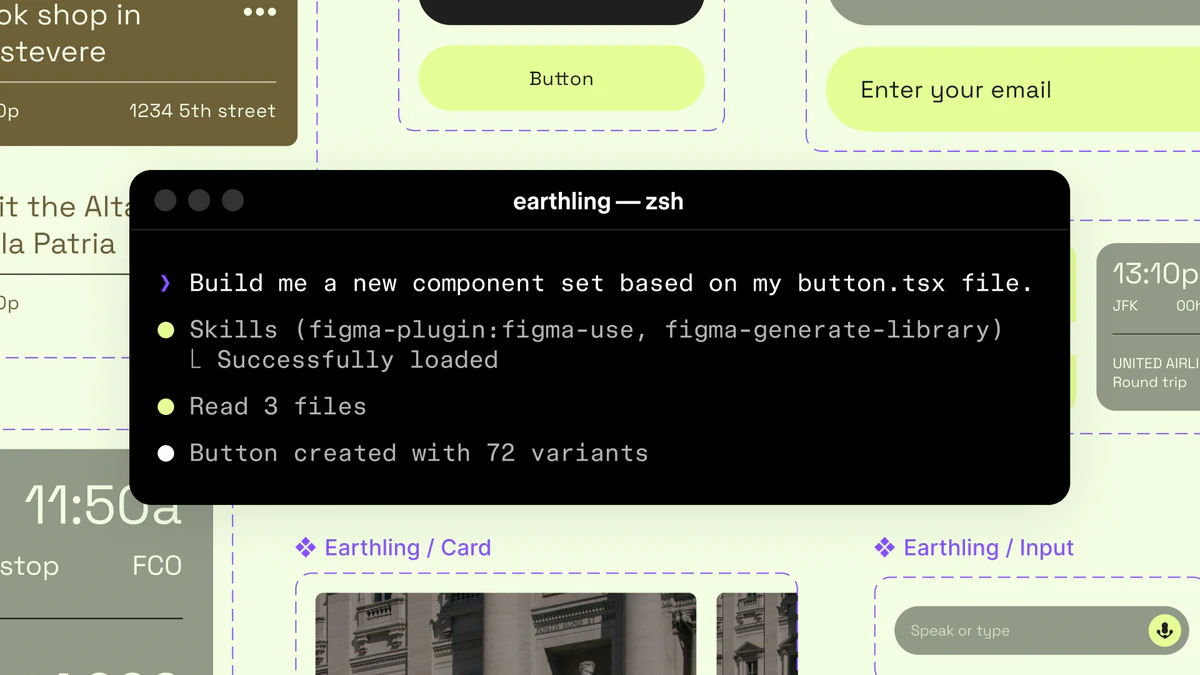
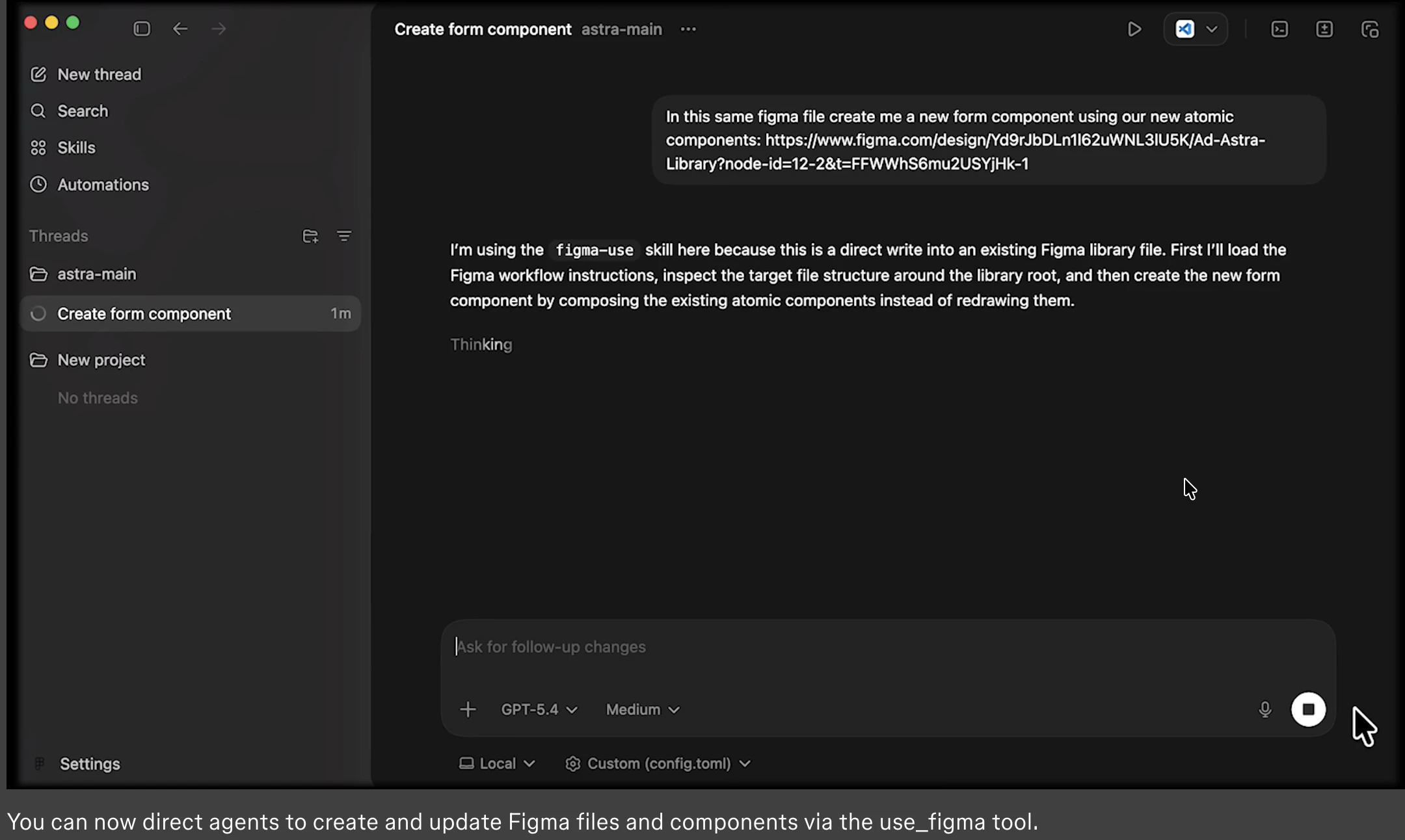
查看原始信息
Creativly
An AI design exploration studio for creatives to instantly generate high-end visual concepts and brand experiments. Creativly is a community-powered AI visual platform with specialized generators. Pick a generator, fill one field, get studio-quality output in seconds. No prompt engineering. No design skills required. From product mockups to merch, posters to brand assets, fashion to art. And if the generator you need doesn't exist yet? Build it. The community keeps making it richer.
Hey Product Hunt 👋 I've built Creativly because creating with AI today is still harder than it should be. (People still looking for prompts online) You have to: - Learn prompting - Jump between tools - Repeat the same workflows again and again So I'm asking a simple question: What if you didn’t need to learn prompts at all? With Creativly, you just describe what you want: “A luxury skincare product mockup” “A Swiss-style poster” “A streetwear campaign” …and you get studio-quality visuals instantly. But the real magic is this: 👉 You can create your own Studios (Generators). Just say what you need --> and Creativly builds a reusable AI Studio for you. No setup. No prompt engineering. No complexity. It’s like turning every idea into its own creative tool. We’re just getting started, and I’d love your feedback 🙏 What would you create first? Gil
1
回复

Love the concept of community-built “studios” for different creative needs. How do you see this evolving as more people start building their own workflows?

1
回复

@uxpinjack Something like that, yes. I think it is more convenient when you have your own set of tools that is tailered made by you and for you. And you don't need to know how to prompt and what tool to use.

0
回复

Congrats on your launch! As a marketer at a pre-launch startup, I'm constantly needing visuals but have little budget for a designer right now. The idea of getting studio-quality output without knowing how to prompt is honestly what I've been looking for. Can you keep a consistent brand style across multiple generators, or does each output start fresh every time?

1
回复

@aya_vlasoff  That's a great question and probably the most important one for startup marketers. The brand consistency piece is genuinely the gap between "fun toy" and "real workflow tool" — would love to see Gil chime in on this. If Creativly lets you save brand presets (colors, tone, style direction) and apply them across generators, that's a huge leap forward for early-stage teams who can't afford a designer but still need consistent visual identity. Tagging @gil_finkelstein2 — this seems like a key feature to highlight in your messaging!

0
回复

@aya_vlasoff if you using just random generators, it will not keep consistent as every generator is work on different meta prompt.

But you can build your own generators, so you can make sure your generators can keep consistent with your own style.

0
回复