Product Hunt 每日热榜 2026-04-21

PH热榜 | 2026-04-21

#1
RankAI
RankAI autonomously gets you buyers from Google & AI Search
398
一句话介绍:RankAI是一款全自动SEO/GEO智能体,通过持续迭代的内容创建与优化,为企业在谷歌和AI搜索中精准获取高意向客户,解决了传统SEO服务价格高昂、效果不确定且依赖人工的痛点。
Marketing SEO Search
搜索引擎优化 AI搜索优化 自动营销 内容生成 智能代理 获客工具 SaaS B2B营销 数字营销 增长黑客
用户评论摘要:用户反馈积极,认可其“迭代而非公式”的理念。核心问题集中在:如何发现长尾查询、避免谷歌惩罚、在竞争激烈领域突围、多语言支持及与现有工具对比。创始人详细解答,强调了信息增益、意图匹配和持续迭代的核心优势。
AI 锐评

RankAI的宣称直击当前SEO/GEO市场的两大痼疾:故弄玄虚的“秘籍”叙事与低质批量的AI内容工厂。其真正价值不在于“用AI做SEO”,而在于构建了一个“感知-决策-执行-优化”的自动化闭环,试图将搜索优化的不确定性工程化。

产品逻辑犀利地否定了静态的“发布即结束”模式,代之以动态的、基于数据的持续迭代系统。这不仅是效率提升,更是方法论的根本转变。它把SEO从一次性的内容采购,变成了一个需要持续喂养数据和反馈的“生长系统”。创始人强调从LinkedIn、代码库等非公开数据源提取“信息增益”,是试图规避AI内容同质化、构建真正竞争壁垒的关键点,但这高度依赖于客户自身的数据质量与独特性。

然而,其挑战同样明显。首先,“全自动”在高度复杂的SEO战场是一把双刃剑,策略的微妙调整仍需人类智慧。其次,当工具普及,所有竞争者都采用相似迭代逻辑时,竞争将回归到商业本质:产品差异性与品牌真实性。正如团队所言,工具只能放大现有优势,而非创造优势。最后,谷歌与AI搜索的规则本身是移动靶,算法的突然变动可能瞬间瓦解其迭代基础。RankAI开启的“透明自动化增长”浪潮值得期待,但它最终检验的是企业能否将这种高速迭代能力,内化为真正的市场洞察与内容护城河。

查看原始信息
RankAI
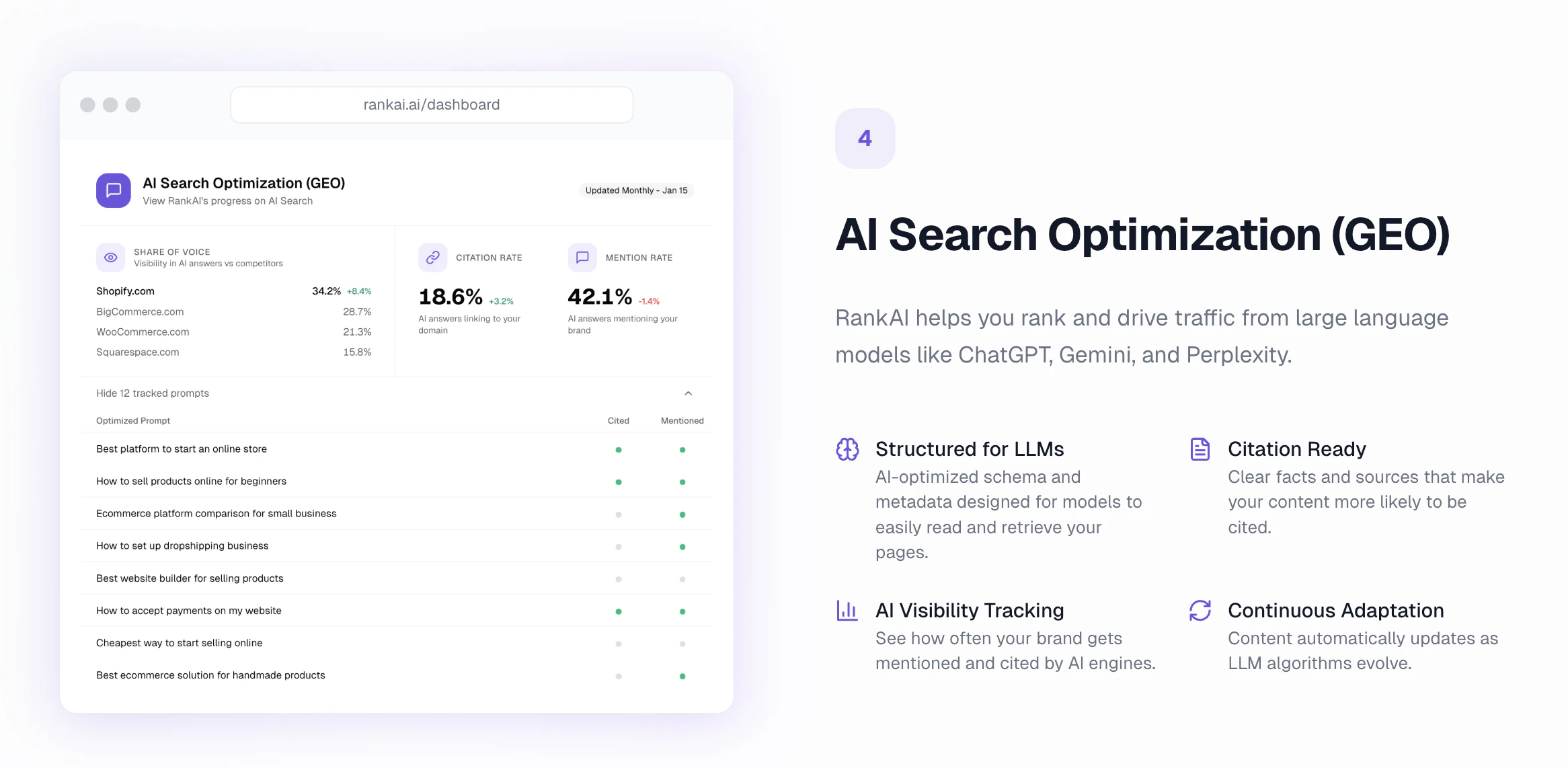
RankAI is the first SEO/GEO agent that truly works. It handles everything autonomously to drive you millions of visitors from Google & AI Search like ChatGPT. Drop in your website, and RankAI handles the rest: it finds high-intent queries your customers search on Google and ChatGPT, publishes optimized pages, tracks performance, and recreate pages iteratively until they get you visitors.

Boyuan here, founder of RankAI.

My team and I have been heads down building in search for years. What's happening now is that SEO and AI search are wildly overpriced by people claiming they have some proprietary playbook or that they have “cracked” search, and half the time they deliver meaningless results.

What people do not tell you is that search is not deterministic. There is no formula where you do X, Y, and Z and magically rank on Google & ChatGPT. That is just not how it works. After working with 200+ businesses and going through YC, what we learned is that the real way to win is iteration: find the right opportunities, publish, monitor reuslt, double-down on what works, and keep retrying for what didn't work.

So we built RankAI to do exactly that. And it's fully autonomous!

Check us out: https://rankai.ai/

You put in your website, and RankAI will:
- find the queries your customers already search on Google and AI search,
- conduct deep research into each sub-topic related to the query
- create optimized pages to target the query,
- track how each page performs,
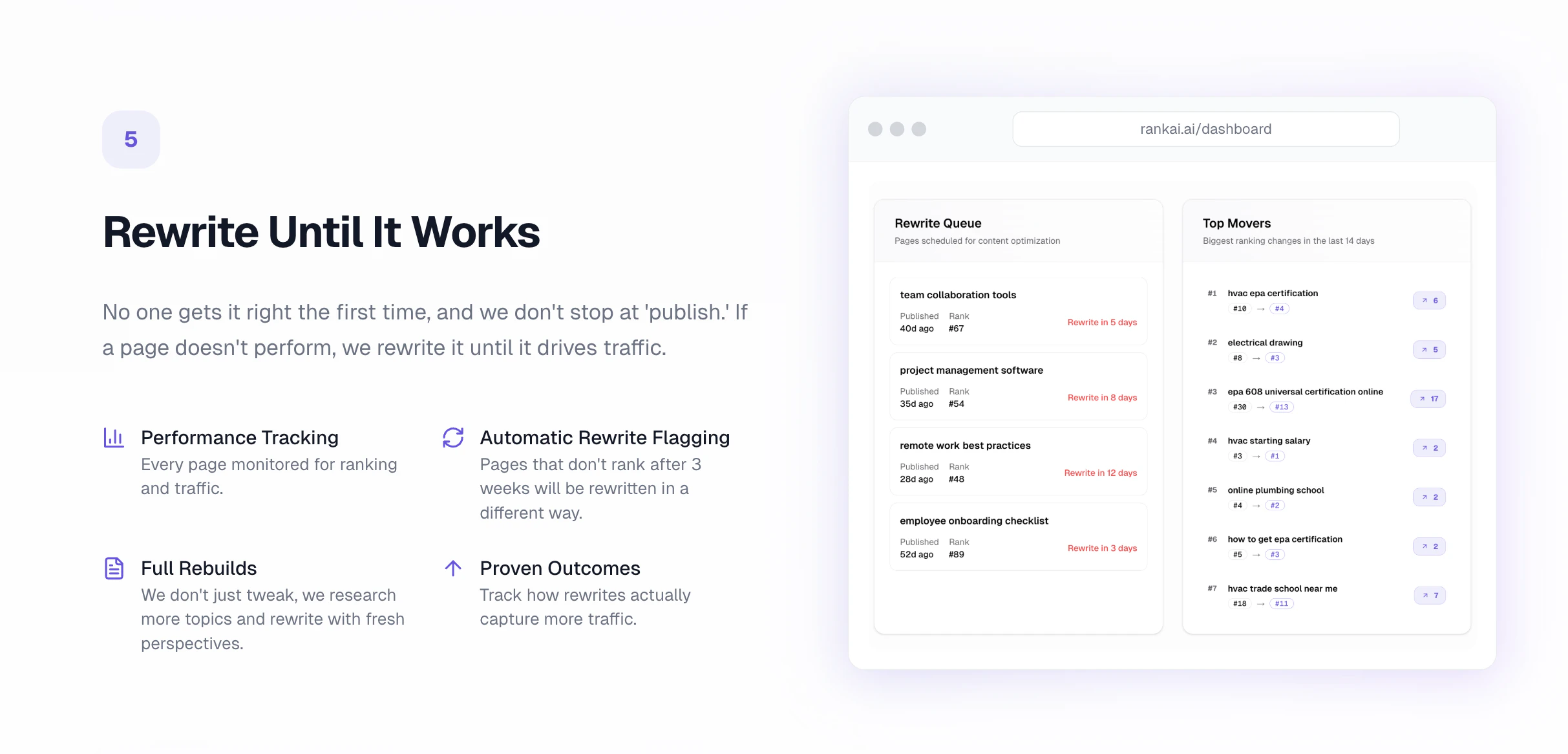
- and rewrite them until they start working.

So instead of paying for a slow manual agency, or AI generate SEO slop, you get an engine that does everything iteratively to get you result.

A few outcomes:
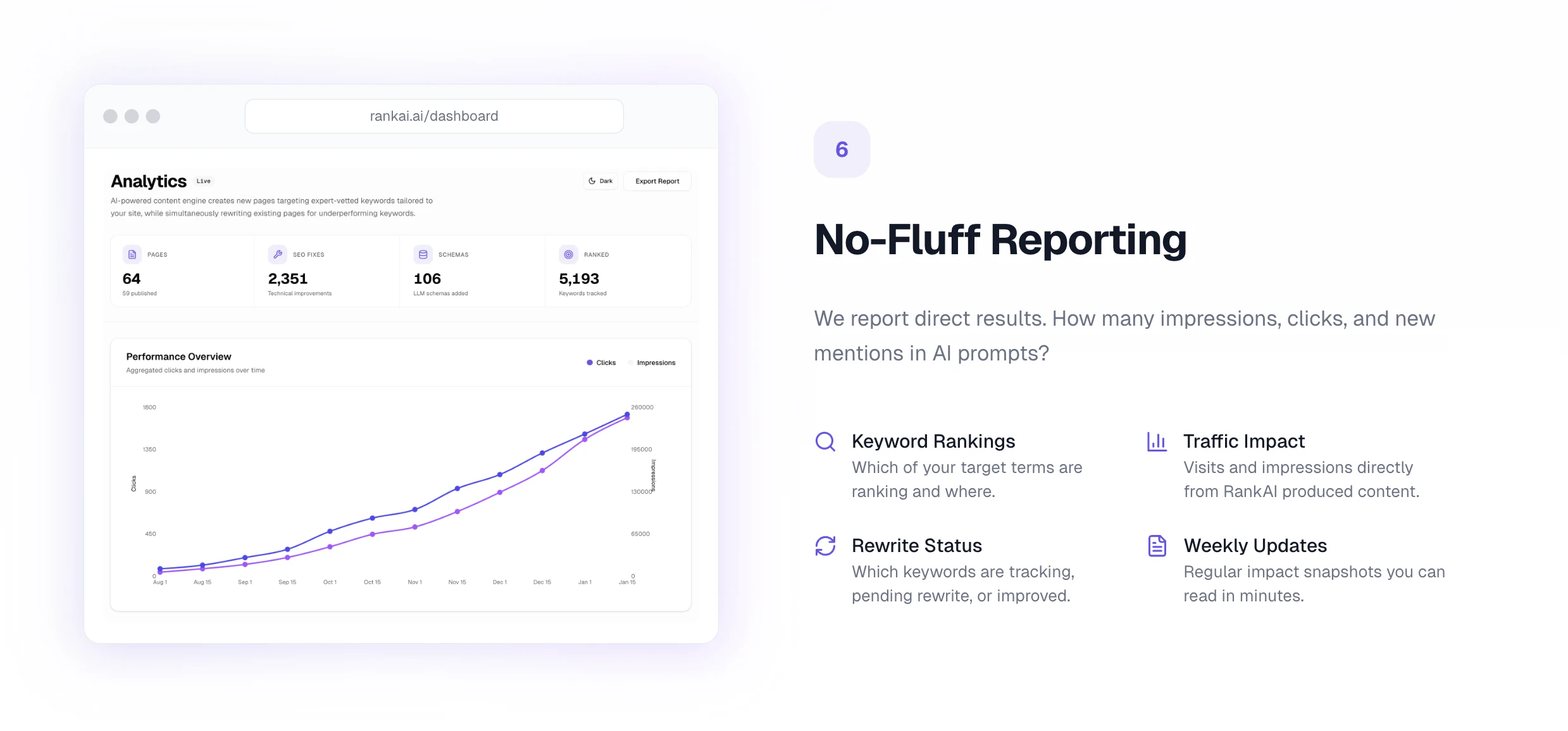
An ecommerce skincare brand reached 1.2M search visibility in 3 months.
A consumer tech company grew search visibility 13x in just 2 months.
A B2B equipment company doubled organic traffic in 3 months after years of flatlined growth.

The future of organic growth is transparent and autonomous. RankAI is starting this wave.

Would love blunt feedback — what would make this more useful for you?

18
回复

@boyuan_deng1 For niche service businesses like "personal branding strategist" or "telecom AI consultant", how does RankAI discover those long-tail queries people actually search? Does it blend Google Suggest + competitor gaps + your site's existing traffic patterns?

1
回复

@boyuan_deng1 Finally someone saying it out loud: search isn’t deterministic. Iteration > fake playbooks. RankAI’s approach makes a ton of sense—excited to see how teams use this at scale.

1
回复

@boyuan_deng1 Congrats on the launch, Boyuan! The iteration-first framing is refreshing — most GEO tools still sell the "one magic formula" narrative. Curious how RankAI handles agent-driven discovery specifically. With more buyers delegating search to their own AI agents (vs typing into ChatGPT themselves), the optimization target is shifting again. Are you already seeing traffic from agent traffic, or is it still mostly human queries through AI interfaces?

0
回复

What's your stance on AI-generated content and Google's spam policies? How do you avoid getting penalized???

3
回复

@haixin_qu 
Super important question, and one more people in this space should answer directly.


Google doesn't penalize AI content. It penalizes unhelpful content at scale — which is what most AI SEO tools crank out by templating pages from a keyword list and hitting publish.

RankAI is built around three things that actually matter:


1. Information gain, not rehashing. Most AI content loses because it just recycles what's already on page one of Google. We pull from content silos Google doesn't easily access — LinkedIn, X, code repos, your CRM, internal docs — and surface insights that aren't already in the SERP. If your page doesn't add something new, it doesn't deserve to rank.


2. Intent matching — way more important than people realize. Google wants users to get a direct answer, not a 2000-word detour. A huge amount of "SEO advice" online still optimizes for keyword density and word count, when the real game is: does this page answer the exact question the user typed? We're ruthless about this.


3. Iteration, then more iteration. No first draft is ever good enough. The edge of our agent isn't "publishing content at scale" — every AI tool does that now. The edge is iterating on non-performing content at scale, which no agency and almost no tool actually does. Pages that don't work get rewritten, repositioned, or killed.


Our clients came through past 3 google core update fine while a lot of pure-AI-content sites got wiped. The difference wasn't who typed the words, it was the quality of output.

1
回复

@haixin_qu 

Good answer above, I’d add one thing:

Google doesn’t care if content is AI or not. It cares if users are satisfied.

Most AI content fails because:

  • it looks good but doesn’t actually answer the question fast

  • it’s generic, so users bounce

What works:
Give the answer immediately, then expand. Don’t make users dig.

1
回复

@haixin_qu <p>My Website on Product Hunt now is the second version of Neo. I hope you'll take a look and share your opinion.</p>

0
回复

Really impressive autonomous approach, quick question for the team: how does RankAI handle highly competitive niches where even iterative content struggles to break through?
Congrats on the launch! 🚀

2
回复

@abod_rehman Good one 👀

Short answer: don't fight head terms head-on, start from long-tail.


RankAI automatically breaks a competitive keyword into dozens of precise-intent sub-queries, attacks the less saturated ones first to build topical authority, then climbs up. Pages that don't perform get rewritten iteratively, unlike agencies that write once and forget.


The more competitive the niche, the more the iteration advantage compounds 🚀

1
回复

@abod_rehman My Website on Product Hunt now is the second version of Neo. I hope you'll take a look and share your opinion.

0
回复

Congrats on the launch! Looks like we're in the same niche... or I mean we're direct competitors 😁

Just dropped in to say hi and good luck with your launch 🚀

1
回复

@danshipit Thanks and good luck with all!

0
回复

Feels like this could replace a big chunk of what agencies charge for if the quality holds up over time.

1
回复

@damian_cole That’s definitely the goal.

Agencies are great at strategy, but the actual execution and iteration is where things slow down or get inconsistent. Since we can automate that loop reliably, it covers a big chunk of what people are paying for in agency-style search optimization services.

0
回复

@damian_coleman My Website on Product Hunt now is the second version of Neo. I hope you'll take a look and share your opinion.

0
回复

Very interesting. Excited to try it out!

1
回复

@th_calafatidis Thank you, Feel free to checkout our product or book a demo.

0
回复

@th_calafatidis Thanks Theodore! Let me know if you have any further questions, feel free to book a demo with us for to discuss custom strategy!

0
回复

@th_calafatidis My Website on Product Hunt now is the second version of Neo. I hope you'll take a look and share your opinion.

0
回复

geo has been chaotic ever since, and fianlly some poduct that can actually work. grats on the launch and would love to see updated support for claude and openclaw

1
回复

@stainlu Hahaha, I have seen too much fight between SEO folks and GEO folks arguing over is GEO just SEO but a better marketing term.

My stance upon that is SEO is still highly relevant and are 70% overlapping with GEO but the 30% is enough (Reddit, TLDR section on blog post, schema, long-tail query ...) are enough to make a difference and win on AI search space. SEO is very very very crowded as it is a more traditional industry.

0
回复

@stainlu @boyuan_deng1 Yeah this is how I think about it too...


Big overlap but GEO is not just about just keywords and backlinks, more about being easy to extract, quote, and trust. Stuff like clear answers, structured content, and showing up across sources AI pulls from.

0
回复

@stainlu My Website on Product Hunt now is the second version of Neo. I hope you'll take a look and share your opinion.

0
回复

Does this mean that RankAI continuously monitors the performance of generated content and automatically optimizes content that is underperforming or dropping in rankings?

0
回复

interesting.. we use SEOBot currently. Why should I switch?

0
回复

Signed up with my own startup project which was just launched a few days ago, and I read your reply to @sandra_jirongo about new websites, which makes total sense. I loved the fact that prior to signing up the site audit gives actual important information which I didn't know that I needed, so wel ldone on this
The Technical SEO analysis sold me to be honest :-)

Question - how does the app solves the problem of a website being multiple languages? For example, one of my older sites that launched 3 years ago is transalated (using a plugin) in 12 languages.

0
回复

@sandra_jirongo  @sal_georgiou1 Thanks for the feedback Sal. And to be direct, we currently do not natively support non-English languages. But for folks that have a plugin that translates their entire site, that plugin would also work along with RankAI. Meaning that all the changes RankAI has implemented and all the new pages RankAI has published will also be translated using your plugin.

1
回复

Cool product! How much time does it give content pages before deciding they are performing poorly?

0
回复

@yamanbicer 
Thanks Yaman! We evaluate in stages rather than a single cutoff:

1. Indexed: we check within the first 1-2 weeks. If Google hasn't indexed it by then, it's a technical issue we fix before judging performance.


2. Ranked (showing up somewhere): usually visible by week 2-4. If a page isn't ranking for any of its target terms by then, we look at intent match and on-page fixes.


3. Ranked well (top 10-20 or pulling LLM citations): this is the 12-24 week window. If a page still isn't moving by then, we either rewrite it, merge it with a stronger piece, or kill it and redirect.


We run these checks every 2-4 weeks so nothing sits untouched. The goal is to catch underperformers early without pulling the plug before content has had a fair shot.

0
回复

@yamanbicer Great question, It depends on how poorly it is. Usually it waits two to four weeks to make a decision.

0
回复

Si la empresa en la que trabajo (productora de eventos) usara RankIA para pósicionarse y 10 empresas lo hicieran igualmente con la app, cómo resolverían la ia para diferenciar , o cual posicionaría "primero"?

0
回复

@celeste19 
Muy buena pregunta. La realidad es que Rankai no es quien decide el ranking, eso lo hacen Google y los motores de IA. Nosotros optimizamos la ejecución, pero el resultado final depende de qué tan diferenciado sea tu negocio en la vida real.

Si 10 productoras de eventos usaran la misma herramienta, las que ganarían son las que tienen algo genuino que ofrecer: un nicho específico (bodas de destino vs corporativos vs festivales), casos reales fuertes, ubicación, testimonios. Rankai amplifica lo que ya existe, no inventa diferenciación donde no la hay.

Por eso en la fase de onboarding dedicamos tiempo a entender dónde está tu ventaja real y construimos la estrategia alrededor de eso, no de keywords genéricas que todos pelean.

0
回复

How does this compare to running Ahrefs plus manually testing prompts in Perplexity and ChatGPT? Curious where the "autonomous" part actually saves time vs being a wrapper around those workflows.

0
回复

@sweepbase 
Ahrefs tells you what to target. Prompt testing tells you where you currently show up. Neither does the actual work, which is where 90% of the time goes: writing content that's good enough to rank, building the internal linking, getting it indexed, tracking which pages actually pull citations in ChatGPT and Perplexity, and iterating.


The "autonomous" part isn't replacing those tools. It's replacing the 15-25 hours a week a founder or in-house marketer spends operating the pipeline. We plug into your stack (including Ahrefs if you already have it), run the loop, and report on what's moving.


If you want, I can show you a recent client's before/after so you can judge whether the time saved is worth it for your situation.

1
回复

what's the suggested budget to start trying it out?

0
回复

@paul_from_dentro Really case by case. depending on site size, competition, and how aggressive they want to go on content and GEO.

Happy to take a quick look at your site and send back a more accurate quote. Do you have a URL I can audit? Or we can hop on a 15-min call if that's easier.

We are def very budget friendly when you compare to traditional 3k - 5k seo agency.

1
回复

@paul_from_dentro If your company makes $200k annual revenue or more, we can help you evaluate, let's chat: https://calendly.com/rankai/demo

If otherwise, I recommend starting with the growth plan to properly try it.

0
回复

Are you guys the reason why I see more SEO/GEO related content on Reddit right now? Who says SEO is dead, they just changed.

0
回复

@andy_qin1 
Some of it, probably. Reddit has become one of the highest-signal surfaces for GEO because LLMs pull from it heavily, so a lot of what we do for clients now includes Reddit presence as part of the mix.

You're reading it right. SEO isn't dead, the surface just expanded. Google is one channel, ChatGPT and Perplexity are another, and Reddit sits weirdly in the middle as both a community and a training source. Most people haven't caught up to that yet.

1
回复

This is huge! Question on GEO - LLMs like chatgpt like to cite reddit threads in particular, does RankAI help with visibility there?

0
回复

@david_kang4 Good question! Our self-serve plan currently focuses on other aspects to help you rank in AI search, like:

- Creating content pages targeting long-tail queries

- Adding schemas for AI to digest

- Adding alt tags (since AI is not going to run vision model on every page)

- Structuring content so it's very digestible by LLMs (FAQ, reasonings...)

For our high-touch plan, our team actually comes in and handles your search optimization end-to-end. We also include Reddit as a part of GEO effort.

1
回复

So @boyuan_deng1 @dyllan_liu2 this effectively reviews my website identifies onsite optimisation/content holes and then generates the optimised content for Google/LLMs?

0
回复

@boyuan_deng1  @razzelito 
That's a good summary for 50% of it. Most of our time in the past two years, working with 200+ businesses, have helped us iterate on the rewrite engine. Which is after knowing that we should target a specific topic for Google NLLM. We create a page, and if it doesn't rank well, we need to recreate the page in a different angle and iterate based on existing feedback from Google and AI engines.

Ultimately, most of the work is on the iteration side. If you look at top search agencies, historically, the most premium ones always focus on iteration, because no one knows a deterministic way of ranking for a certain topic. Everyone is shooting darts. We just figured out how to shoot more darts and how to make each dart more independent of each other.

0
回复

How long does it typically take to see the first real results for a brand new site with no existing authority or traffic?

0
回复

@alina_anitei My Website on Product Hunt now is the second version of Neo. I hope you'll take a look and share your opinion.

0
回复

@alina_anitei Frankly if it's like truly near 0 traffic and authority, like a brand new sites. The first wave of signal (new rankings, indexations, etc.) will come in ~1 month. For "real results" like very meaningful amount traffic and conversion, that will take 2 - 3 months.

1
回复

Very cool product! Is this optimized for newly launched websites with a clean slate to work with or more established sites already ranking pretty high in SEO search and just need refinement and a GEO boost?

0
回复

@sandra_jirongo My Website on Product Hunt now is the second version of Neo. I hope you'll take a look and share your opinion.

0
回复

@sandra_jirongo Thanks Sandra. To answer you directly, it's both. But there's trade offs:
1. New sites: the results take longer to show. Unfortunately it just takes time for search engines to know you "exist".
2. Well-established sites: RankAI will optimize the technical aspects of existing pages to optimize for AI searches, and identify new topic opportunities to create pages for both SEO & GEO. Upside is great but not as high as a brand new site that has never been optimized for search.

1
回复

Congratulations with the great product and bombastic release. I can imagine how excited you feel today.

Could you give us some of the websites you've optimized so we analyze it with Ahrefs?

0
回复

@visualpharm Thanks for the support! Check out our case studies on https://rankai.ai/#case-studies

0
回复

@visualpharm My Website on Product Hunt now is the second version of Neo. I hope you'll take a look and share your opinion.

0
回复

Are you using something like SerpApi for the rankings?

0
回复

@strzibnyj We use a mix of sources, including direct integrations like GSC for actual performance, plus our own tracking for AI query coverage.

0
回复

@strzibnyj My Website on Product Hunt now is the second version of Neo. I hope you'll take a look and share your opinion.

0
回复

congrats!!

0
回复

@madalina_barbu Thanks Madalina! Feel free to try our product or book a meeting for a quick demo, always good to learn from user feedback!

0
回复

@madalina_barbu Thanks for your support.

0
回复

@madalina_barbu My Website on Product Hunt now is the second version of Neo. I hope you'll take a look and share your opinion.

0
回复

Congrats on the launch ! Is it based on the number of pages published, traffic generated, or a flat monthly fee?

0
回复

@kate_ramakaieva Appreciate it!

Right now it’s a flat monthly fee, with tiers based on how much you want the system to do.

If you want something more customized, feel free to book a demo with us and we can walk through what makes sense for your setup!

0
回复

@kate_ramakaieva 

We’re currently on a monthly subscription model, with different tiers depending on how much you want RankAI to handle for you. However, If you’re looking for something more tailored, happy to walk you through it.

0
回复

@kate_ramakaieva My Website on Product Hunt now is the second version of Neo. I hope you'll take a look and share your opinion.

0
回复

Congrats with the launch!

0
回复

@ekulianova Thanks Ekaterina! Feel free to checkout our product or book a demo, let us know if there's any feedback!

0
回复

@ekulianova Thank you, really appreciate the support!

0
回复

@ekulianova My Website on Product Hunt now is the second version of Neo. I hope you'll take a look and share your opinion.

0
回复

This makes sense from a growth POV. SEO has always been about iteration, but most teams don’t have the bandwidth to do it consistently. If this can actually automate that loop well, it could unlock a lot of overlooked growth.

0
回复

@alexia_li Exactly, that's the gap we are solving. Our teams know iteration matters however, it rarely happens consistently. We are just making that loop automatic so the upside actually gets captured.

0
回复

@alexia_li @boyuan_deng1 Even for teams that do iterate, they iterate on long cycles, like monthly audits or random updates. By the time they react, the opportunity is gone.

If this runs continuously, you compress that loop from months to days, which is where the real advantage comes from.

0
回复

@alexia_li My Website on Product Hunt now is the second version of Neo. I hope you'll take a look and share your opinion.

0
回复

Interesting. How are you measuring real buyer intent vs just driving traffic that doesn’t convert?

0
回复

@becky_gaskell 
This is where most SEO tools stop short.


We don't stop at driving impressions to your key pages. RankAI plugs into your GA4, GSC, and your actual business systems (CRM, revenue data, whatever you use) to close the loop on real conversion, not just traffic.


That means the agent isn't optimizing for impressions or rankings, it's optimizing for pages that actually drive revenue. A page that ranks #1 but brings in tire-kickers gets deprioritized. A page at #8 that converts 10% of its traffic into paying customers gets doubled down on.


Traffic is the vanity metric. Revenue is the one we actually care about.

0
回复

@becky_gaskell We look at what the user is trying to do based on the query, not just the keyword.

High buyer intent usually shows up as:

  • “pricing”, “cost”, “quote”

  • “best”, “top”, “compare”, “vs”

  • “software”, “tool”, “service”, “agency”

  • branded searches or “alternatives to X”

These signal someone is close to making a decision.

Lower intent tends to be:

  • “what is”, “how to”, “guide”

  • broad informational queries

Those are useful, but usually earlier in the funnel.

So instead of just chasing volume, we prioritize queries where:

  • the intent is commercial

  • and the page can naturally lead to a next step (demo, signup, etc.)

0
回复

@becky_gaskell My Website on Product Hunt now is the second version of Neo. I hope you'll take a look and share your opinion.

0
回复

Does RankAI work for brand new websites with zero domain authority, or is it better suited for sites that already have some traction?

0
回复

@sai_tharun_kakirala 
Great question, and the honest answer is: yes, RankAI works for brand new sites. We've actually helped a lot of 0-DA sites go from 0 → 1K → 10K → 1M in search visibility.

But there's a catch worth being upfront about: it takes longer on a new domain, and SEO shouldn't be your only channel in the early days. Google needs time to trust a new site regardless of how good your content is, so while RankAI is compounding in the background, you still want paid, social, or community driving traffic in parallel.


Once the flywheel kicks in though, it kicks in hard. That's when the iteration engine really pays off

2
回复

@sai_tharun_kakirala 
For 0-authority sites, we don’t try to compete head-on for big keywords.


1. We start with:

  • long-tail, specific, lower competition

  • often tied to real use cases or niche problems

This is how you get your first traction instead of waiting months for a single big keyword.

2. Instead of random posts, we build tight clusters around one area so Google can quickly understand what your site is about.

3. Once a few pages start getting impressions and clicks, we expand into higher-intent and more competitive queries.

0
回复

@sai_tharun_kakirala My Website on Product Hunt now is the second version of Neo. I hope you'll take a look and share your opinion.

0
回复
#2
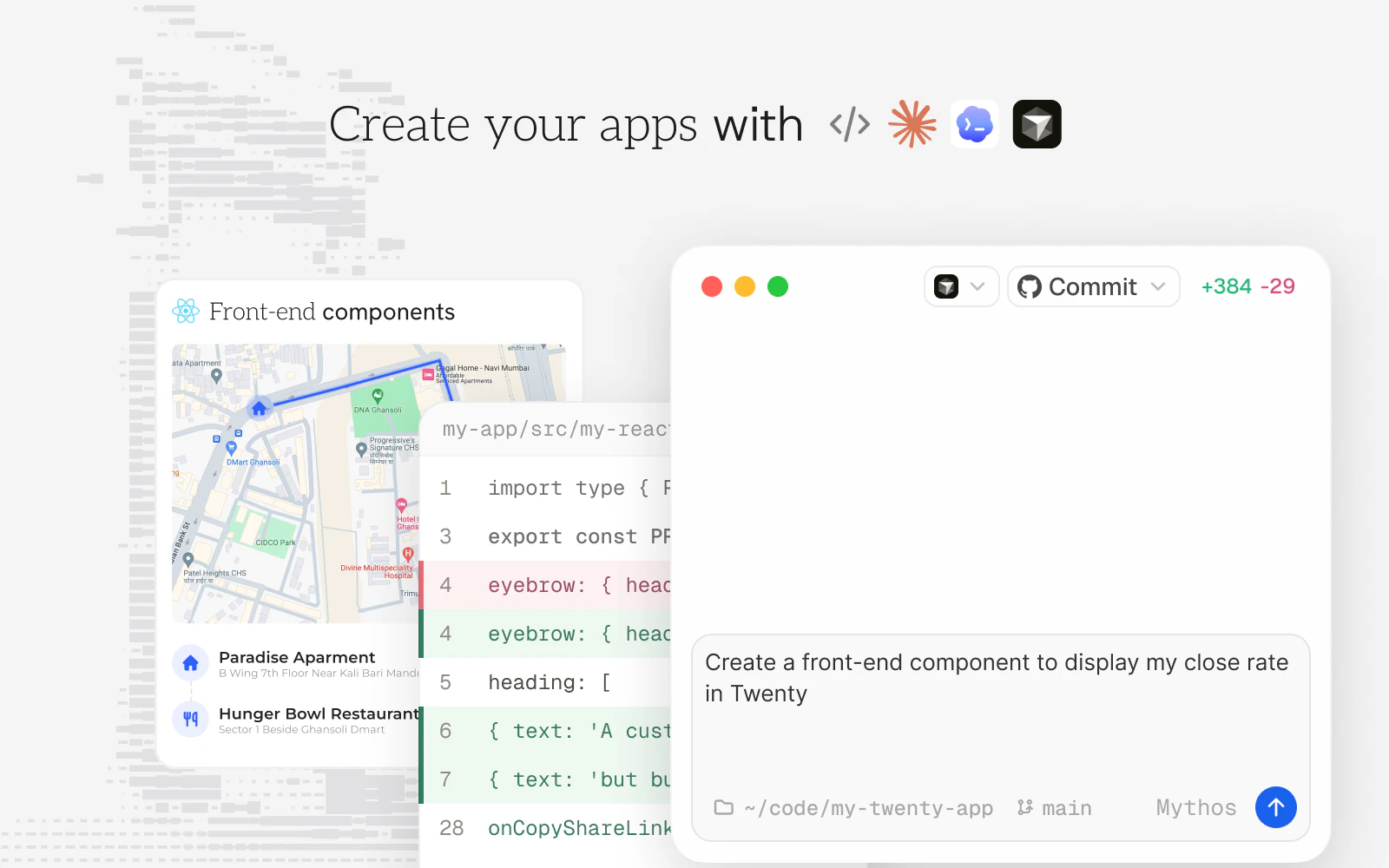
Twenty 2.0
Build your Enterprise CRM with an AI-friendly SDK
288
一句话介绍:一款可通过代码和AI工具深度定制、支持私有化部署的开源CRM平台,为需要高度定制化客户关系管理、希望摆脱供应商锁定并整合AI能力的企业开发团队提供了解决方案。
Developer Tools CRM SDK
开源CRM 企业级平台 AI友好SDK 代码驱动定制 私有化部署 自定义工作流 无服务器函数 自定义数据模型 开发者工具
用户评论摘要:用户高度认可其开源、可深度构建的愿景及团队执行力。主要问题集中于:从现有CRM(如HubSpot、Pipedrive)迁移的复杂性与成本、非技术团队如何上手、SDK的端到端类型支持、集成生态(如Zapier)的成熟度,以及自托管部署的注意事项。
AI 锐评

Twenty 2.0的野心远不止做一个“更好的开源CRM”。它试图将CRM从一个“应用”降维成一个“平台”或“基座”,其核心价值在于“CRM as Code”的理念。通过将数据模型、工作流、布局等一切定义为代码并纳入开发流程,它精准地切中了两个时代痛点:一是企业对关键业务数据与流程“所有权”和透明度的渴求,以对抗SaaS时代的供应商锁定;二是试图将AI浪潮(尤其是AI编程助手)从简单的聊天交互,转化为可深度集成、可编程的业务智能体开发平台。

然而,其路径选择也带来了清晰的挑战与风险。首先,它本质上将目标用户从“销售经理”转向了“开发者”,这虽然提升了定制上限,但也设立了极高的使用门槛。评论中关于非技术团队上手的担忧正是此点的体现。其次,“平台化”的成功极度依赖生态。目前其“构建者”生态尚在萌芽,与成熟SaaS CRM海量即插即用的集成生态相比,短期内仍是劣势。最后,其“AI友好”的叙事仍需具体用例支撑。虽然提供了自定义智能体和无服务器函数的钩子,但如何让企业高效地构建出稳定、可靠的AI工作流,而非又一个需要重度维护的“玩具”,是证明其价值的关键。

总体而言,Twenty 2.0是一次极具前瞻性的赌注。它赌的是未来企业的核心业务系统将更接近“可编程基础设施”,并由AI辅助的开发者主导构建。如果成功,它将重新定义CRM的边界;如果失败,则可能困在“极客玩具”与“企业级产品”之间的鸿沟里。其真正的对手或许不是Salesforce或HubSpot,而是Retool、Appsmith这类低代码平台,以及企业自行从头开发的惯性。

查看原始信息
Twenty 2.0
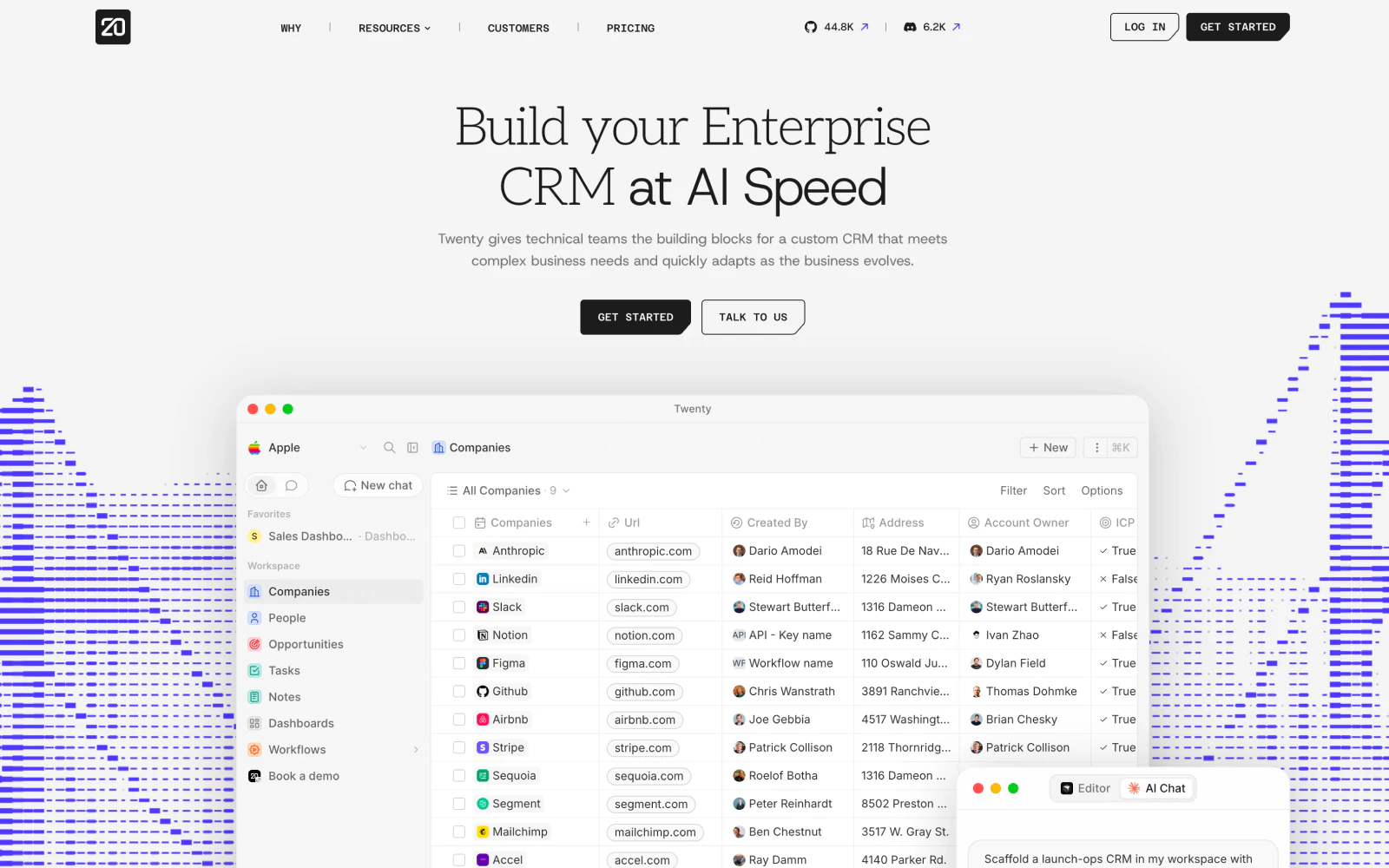
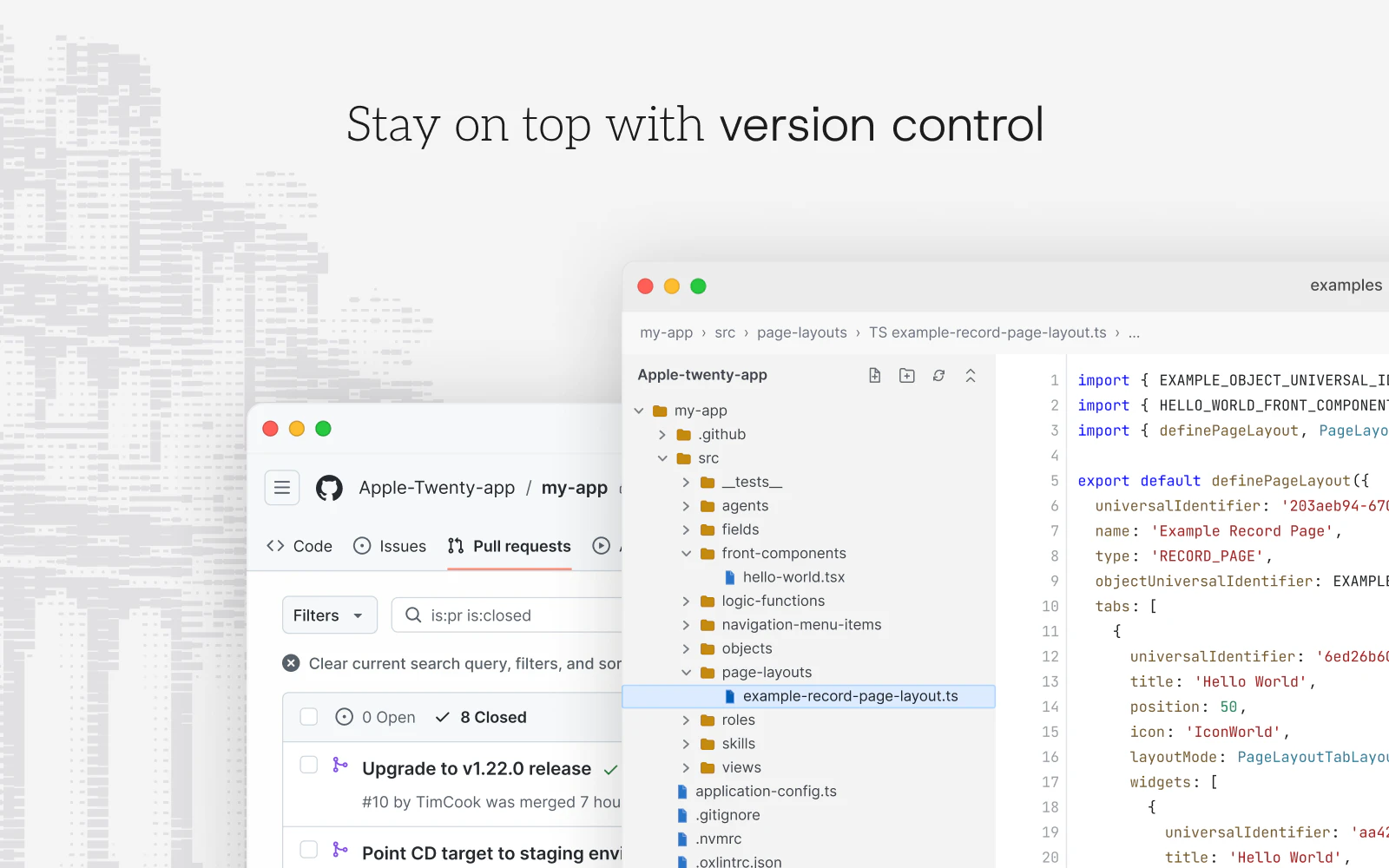
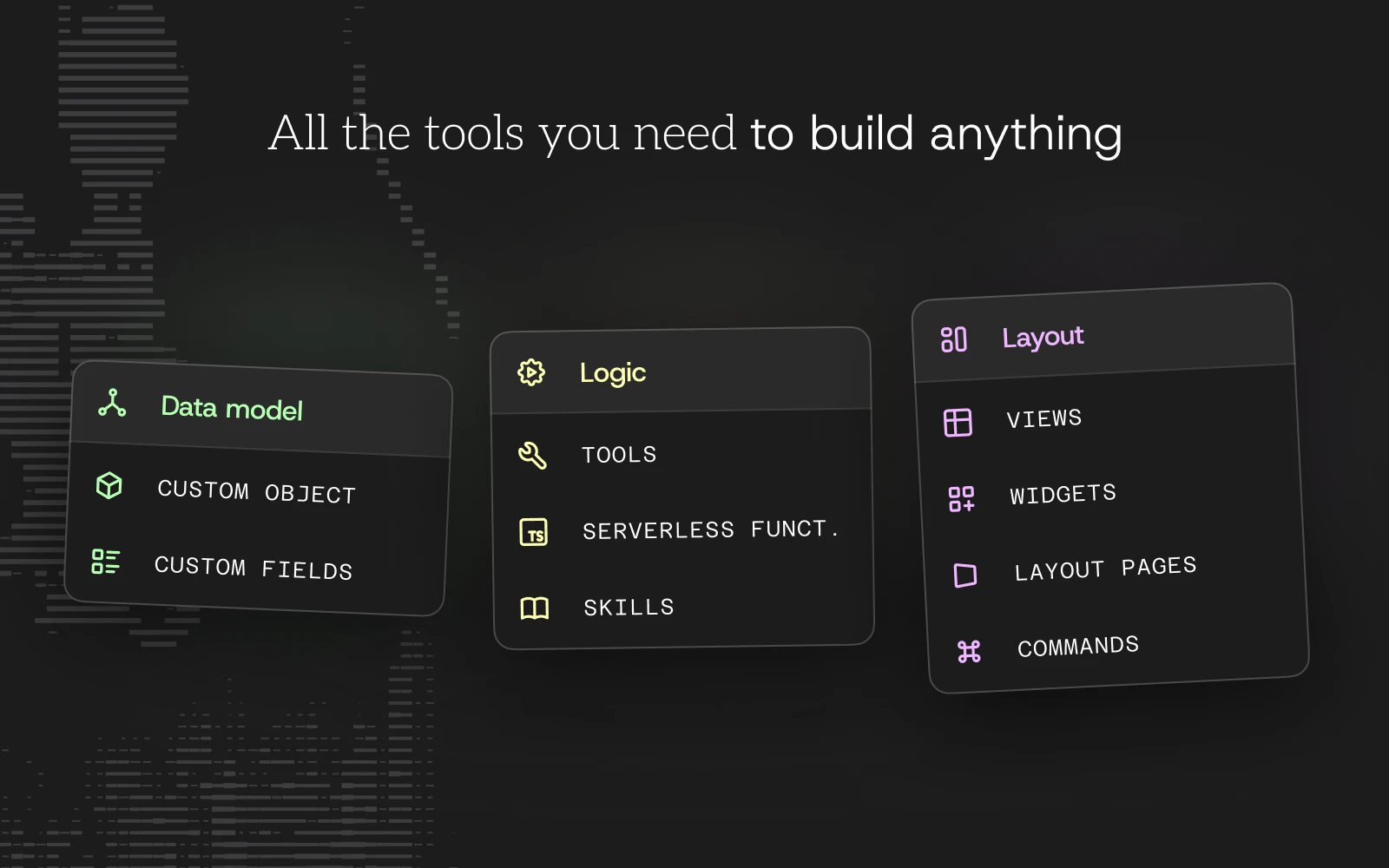
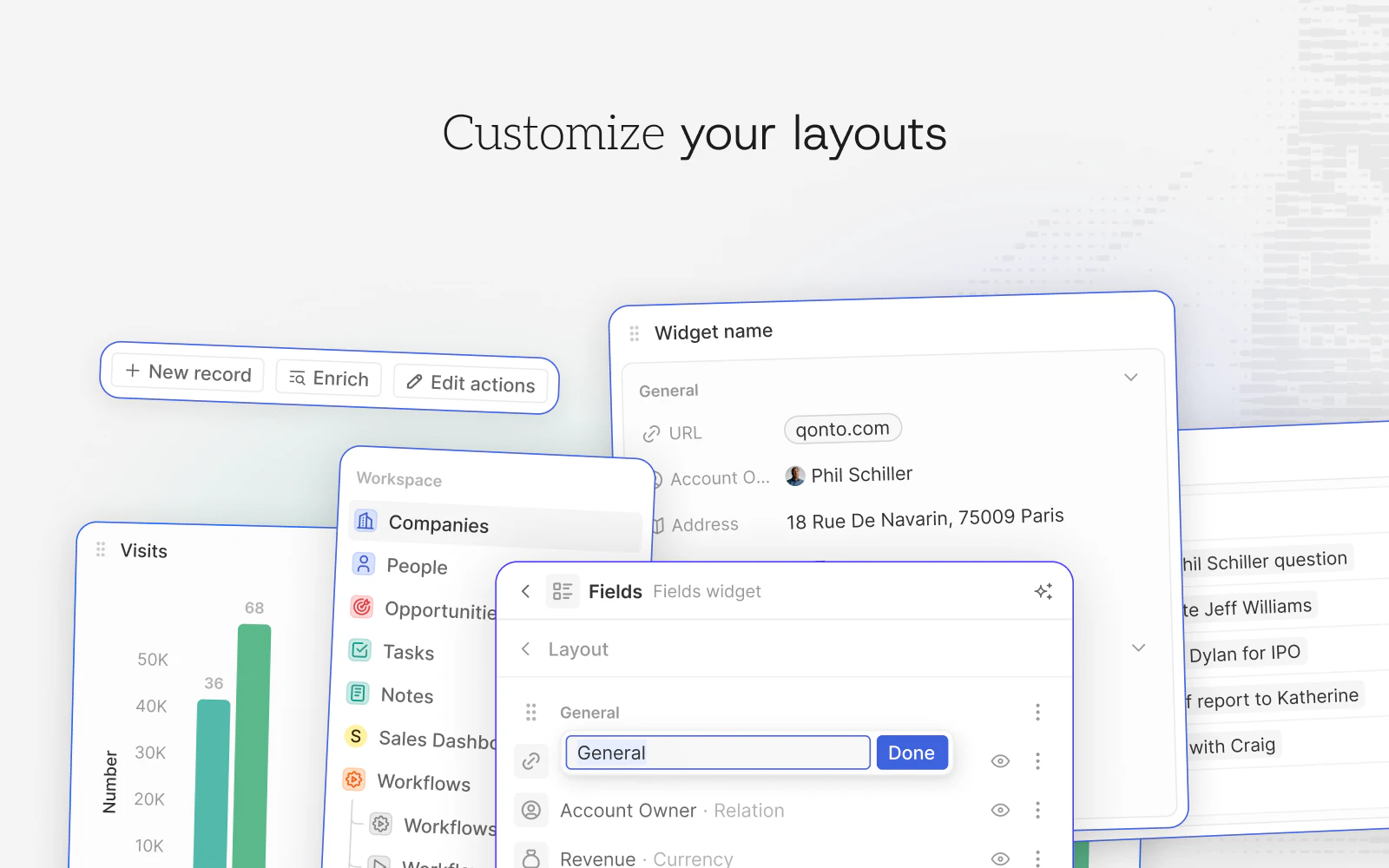
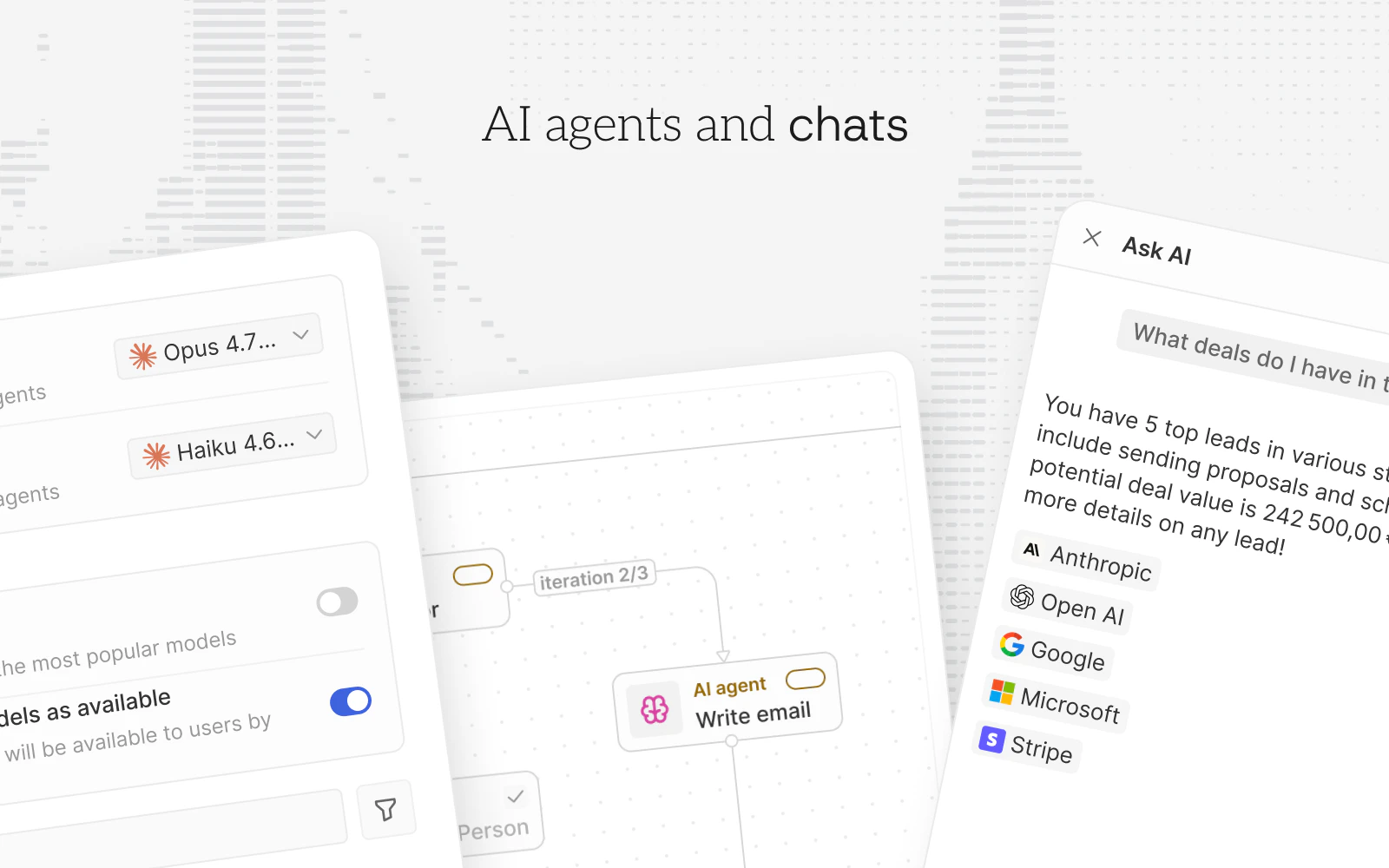
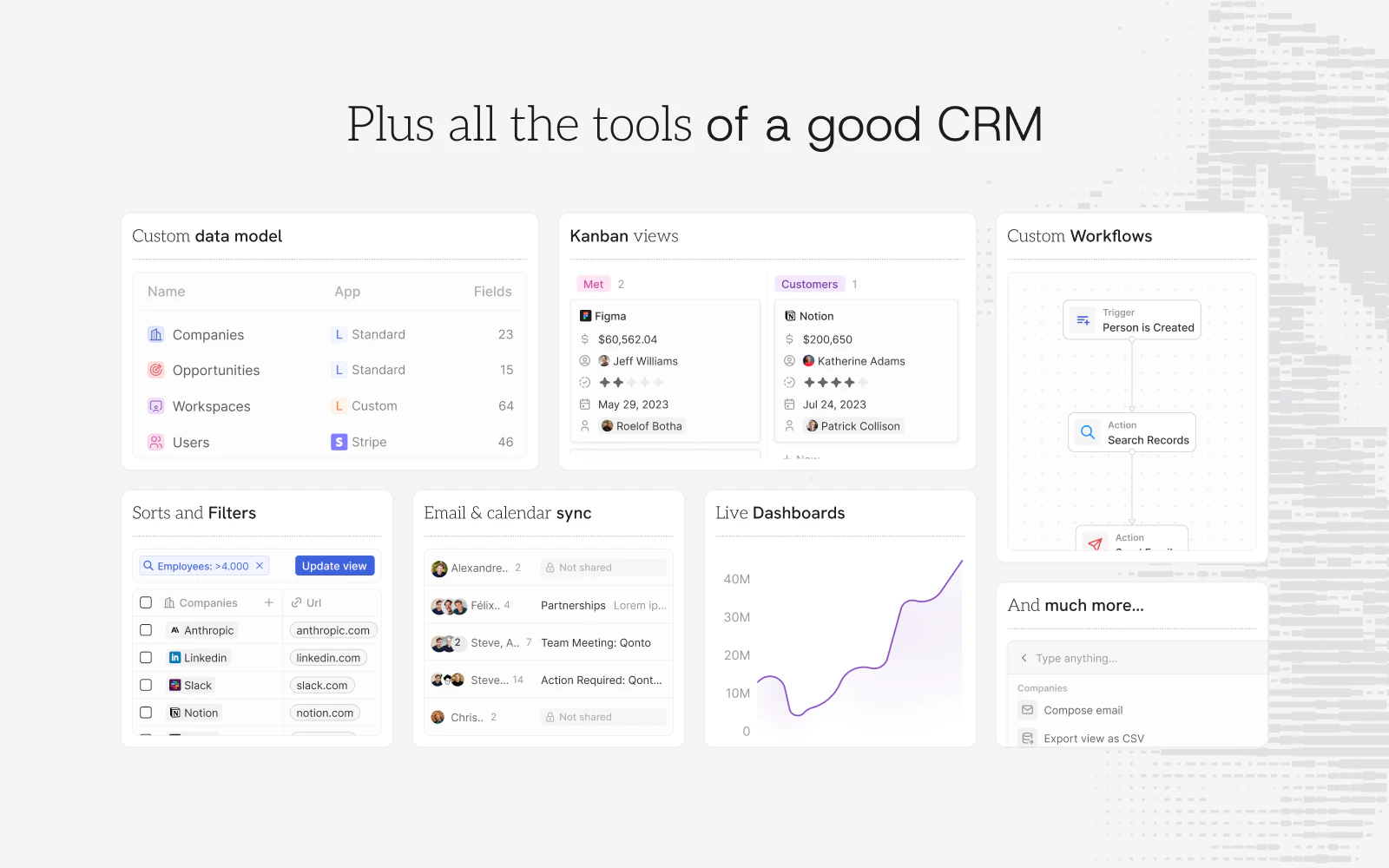
Twenty 2.0 turns our open-source CRM into a platform you can build on. Define your data model, custom objects, workflows, layouts, and widgets in code with our new SDK, shipped through your normal dev flow with the AI tools you already use. AI built in, custom agents, serverless functions, and full layout and navigation customization. Self-hostable. Fully yours.

Hey everyone 👋

Thomas here, co-founder of Twenty, back with 2.0

v1 launched with one pitch: an open-source CRM you actually own. No vendor lock-in, no black boxes.

The feedback we kept getting: "I don't just want to tweak my CRM, I want to build on top of it."

So that's what 2.0 is.

The core addition is our new SDK (npx create-twenty-app my-app). Data models, custom objects, workflow actions, layouts, widgets, the command menu, all defined in code, living in your repo, shipping through your normal dev flow with whatever AI coding tools you're already using.

We also shipped:
- AI built in: chat with your data, plus custom agents and serverless functions
- Custom layouts & navigation: record pages, widgets, command menu, navbar
- The full toolkit: custom objects, fields, permissions, views, dashboards, workflows.

Twenty is open-source, self-hostable, and now fully yours to extend.

- 📦 Start building today → https://www.npmjs.com/package/twenty-sdk

Felix, Charles, and I are here all day. Questions and feedback welcome. 🙏

20
回复

@thomas_df What's one workflow you've seen teams customize most with the new tools, and any gotchas for self-hosting setups?

0
回复

@thomas_df For someone running PH launch playbooks + client workshop trackers across teams, how does the SDK handle syncing custom workflows like "Hunter DM replies → auto-LI post" with Twenty's core data models? Does it play nice with external APIs/Zapier, or is everything pure code-driven?


2
回复

@thomas_df Really curious how the AI-friendly SDK handles schema migrations — is it opinionated about the data model or fully customizable?

0
回复

Was deciding between making my own light CRM or building on Twenty 6 months ago, for a new thing I'm working on. Honestly, Twenty didn't have what I needed.

Oh child, how have I changed my mind since then! The speed you've built at the past 6 months has blown my pants off, and I can't wait to see what's more to come - really happy I didn't waste time slopping something together, when you've achieved so much!!

4
回复

@jonathan_bredo Thanks so much Jonathan for your comment! Things are shaping up!

0
回复

Believed in this vision since day 0, so good to see it ship esp knowing the ton of work behind it!

Most "CRM + AI" offerings are just a chat panel bolted onto closed software. Twenty is the opposite: a primitive you can actually build agents against - in your repo, your stack, your premises, or all of the above.

Go @Twenty team + @thomas_df @_felx @cbo_twenty 🖤🔥

4
回复

@thomas_df  @_felx  @mxcrbn Merci Max! Never-fading support <3 I believe this v2 marks the end of three years of full build-focus mode, hope it lives up to the expectations and make OSS a true alternative :)

1
回复

Merci beaucoup Max ❤️

0
回复

@thomas_df  @_felx  @cbo_twenty  @mxcrbn My Website on Product Hunt now is the second version of Neo. I hope you'll take a look and share your opinion.

0
回复

Been working with Twenty for 1.5 years, before v1 came out. This is love from the first sight.
I have not seen another team in the CRM domain who ships this much real value while staying this small. Neither I seen a CRM that is as easy to configure, or build on top of it, as Twenty.

If you ever wanted something from your CRM - Twenty is capable. If not right now, then it's on the roadmap soon.

3
回复

Thank you Mike! We're glad to have you as a partner (now on a more accessible page!)

0
回复

@mike_babiy My Website on Product Hunt now is the second version of Neo. I hope you'll take a look and share your opinion.

0
回复

The twenty team has been shipping like crazy for the last 3 years at least. Love the team and the vision 🇫🇷🥖.

2
回复

@stan_girard My Website on Product Hunt now is the second version of Neo. I hope you'll take a look and share your opinion.

0
回复

@stan_girard 🧀🍷🙏

0
回复

It's so nice to finally have an Opensource CRM! Is there a marketplace of integrations ?

1
回复

@bengeekly Coming later this year for sure! First we need developers to start building

0
回复

In 2026, I'm a bit ashamed we're still running Pipedrive and not something custom-built with AI. It's time to move out of the saas era.

In your experience, what's the level of effort (in days, story points, whatever) to move a typical setup from Pipedrive to Twenty versus building something from scratch?

By a typical setup, I mean incoming leads from Typeform, enrichment, automated and manual responses, deals, a tracker, and targeted mass mailings, as well as Gmail and Intercom integrations.

1
回复

@visualpharm My Website on Product Hunt now is the second version of Neo. I hope you'll take a look and share your opinion..

0
回复

@visualpharm If I had to put a number on it, I'd think in days, not months, to move a setup like that from Pipedrive to Twenty. Building the same thing cleanly from scratch is a very different project.

quick anwser: hours for the data migration, a few days for the workflow customizations. so would say it's doable within a week


Eather way, the reason I'd still choose Twenty over building from zero is simple: you don't spend time rebuilding auth, permissions, objects, views, workflows, email sync, APIs, and all the edge cases around them...

2
回复

One of the best launch today! Do you think the future CRM is something users configure or something they program?

1
回复

@lak7 Thank you Lakshay!
As a software engineer, I'm a bit biased. Building with code is more robust if you're looking for a production-grade application. You get CI/CD, version control, typing, testing, extensibility, and less vendor lock-in.
Combined with AI's ability to write software when properly guided, I'd bet on programming.

In Twenty, you can actually do both: customizations are stored as metadata, and code is converted to metadata too ; except for React components (frontend code) and Logic Functions (backend code), which are stored as code directly.

2
回复

@lak7 My Website on Product Hunt now is the second version of Neo. I hope you'll take a look and share your opinion.

0
回复

an open-source CRM with an AI-friendly SDK is the kind of thing I didn't know I wanted until reading this. is the SDK typed end-to-end or do you generate types from the data model on the fly?

0
回复

I wonder how sales manager with custom built CRMs. Many sales teams in certain industries have trouble adapting to newer technologies. How would this work for onboarding less technical teams?

0
回复

@calvin_lim_1 We think you will always need someone that really understands how the system works (at least for now)... Even if it might be without code.

1
回复


The homepage looks great but it crashes when scrolling down:

0
回复

@julien_rioux 😮 Will investigate, thanks

0
回复

Great idea!

0
回复

@damien_henry1 My Website on Product Hunt now is the second version of Neo. I hope you'll take a look and share your opinion.

0
回复

@damien_henry1 thank you!!

0
回复

Been watching Twenty on GitHub for a while. The self-hosted option is what keeps pulling me back. Quick question: how's the HubSpot import story these days? Last time I tried, custom field mapping was painful.

0
回复

@sweepbase Hi Mihail,
You can now create apps on top of twenty declaring logic function (code). I've been working on connectors to sync Github data and Discord data, with a bit of help of Claude Code and I believe this is quite an easy task nowadays if you have technical background (or a LLM subscription).


It's real code so you can use any JS sdk you want (https://github.com/HubSpot/hubspot-api-nodejs for instance).

If you are looking for a no-code approach, it heavily depends on how much data you have. We now support relations in CSV import feature and bulk upsert too.

0
回复

@sweepbase My Website on Product Hunt now is the second version of Neo. I hope you'll take a look and share your opinion.

0
回复

@sweepbase Yes it's really easy with claude/codex now!

0
回复

Hey guys!

You’ve been a total lifesaver. I just started a small software house, and your help with organization has been a game-changer. Everything is running so much smoother now.

Much appreciated! <3

0
回复

@pcampina Thank you Pablo, very happy to hear that, the core team has been focusing on stability over the last months!

1
回复

@pcampina My Website on Product Hunt now is the second version of Neo. I hope you'll take a look and share your opinion.

0
回复

@pcampina thanks so much, means a lot!

0
回复
#3
Kimi K2.6
Open-source SOTA for long-horizon coding and agent swarms
282
一句话介绍:Kimi K2.6是一款开源大模型,专注于解决复杂、长周期的编程任务和智能体集群协同问题,为开发者和企业提供了处理数千次工具调用、持续运行数小时的高难度编码与自动化场景的SOTA级解决方案。
Open Source Artificial Intelligence Development
开源大语言模型 长周期编码 智能体集群 代码生成 自动化编程 多语言编程 持续执行 工具调用 SOTA性能 AI智能体框架
用户评论摘要:用户肯定其在长周期编码、多语言任务泛化及300智能体集群方面的突破性表现,认为其以开源形式提供了前沿能力。主要疑问集中在:与Claude Opus等闭源模型的性能对比;长周期执行的实践可靠性;多步骤工具链的错误恢复机制;以及内容过滤政策的严格程度。
AI 锐评

Kimi K2.6的发布,与其说是一次简单的版本迭代,不如说是Moonshot在“AI作为生产力引擎”这一赛道投下的一颗战略深水炸弹。其核心价值并非参数量的堆砌,而是精准切入了当前AI编程的“最后一公里”痛点——**持久化、复杂状态的维持与协同**。

模型标榜的“数千次工具调用”、“12小时连续执行”,直指现有AI编码助手在短上下文、单任务片段生成之外的空白。这并非炫技,而是试图将AI从“代码建议者”升级为“系统级执行者”的关键一步,尤其适配于DevOps流水线、大型重构、跨系统集成等需要长期规划和状态跟踪的真实工程场景。而“300智能体集群”的编排能力,则是对当前“单智能体”范式的野心拓展,试图用去中心化、专业化的智能体网络来攻克更宏大的项目,其想象空间在于自动化团队协作的雏形。

然而,光环之下,尖锐的问题同样存在。评论区的疑虑揭示了其商业化落地的核心挑战:**可靠性与信任度**。长周期执行中,错误如何累积与恢复?智能体集群的通信开销与决策冲突如何解决?在涉及敏感信息或边缘用例时,其开源属性带来的“宽松”政策是优势还是合规风险?这些问题的答案,远比基准测试分数更重要。

本质上,Kimi K2.6的价值在于它正试图定义下一代AI编程工具的形态:一个不知疲倦、深度介入开发生命周期全流程的“超级协作者”。它的成功与否,不取决于是否在单项评测中超越Claude或GPT-4,而在于能否在真实的、混乱的、充满不确定性的软件工程环境中,建立起稳定、可信、可预测的“数字劳动力”工作流。这是一条更难但更具颠覆性的道路,其开源策略既是吸引生态共建的利器,也将使其每一步实践与缺陷都暴露在社区审视之下,这本身就是一场豪赌。

查看原始信息
Kimi K2.6
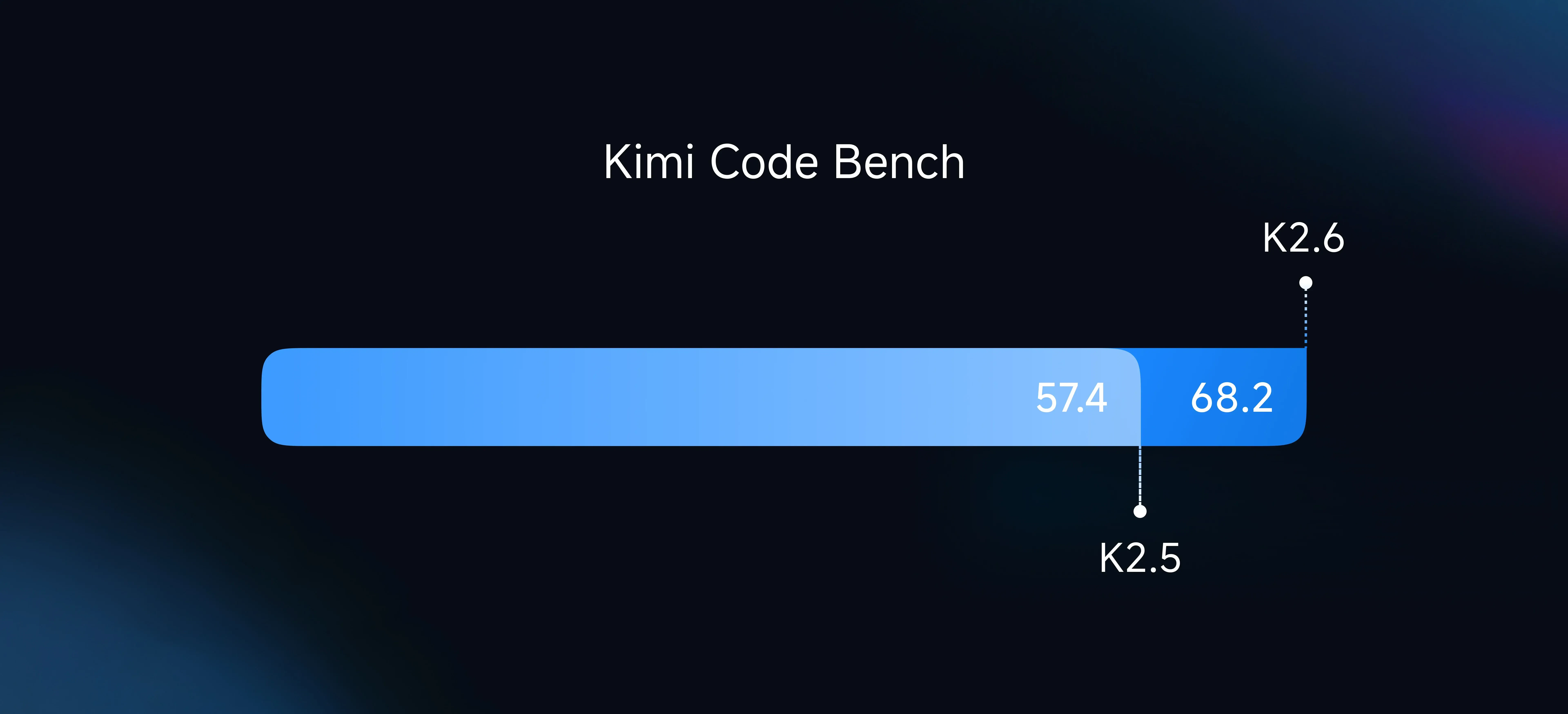
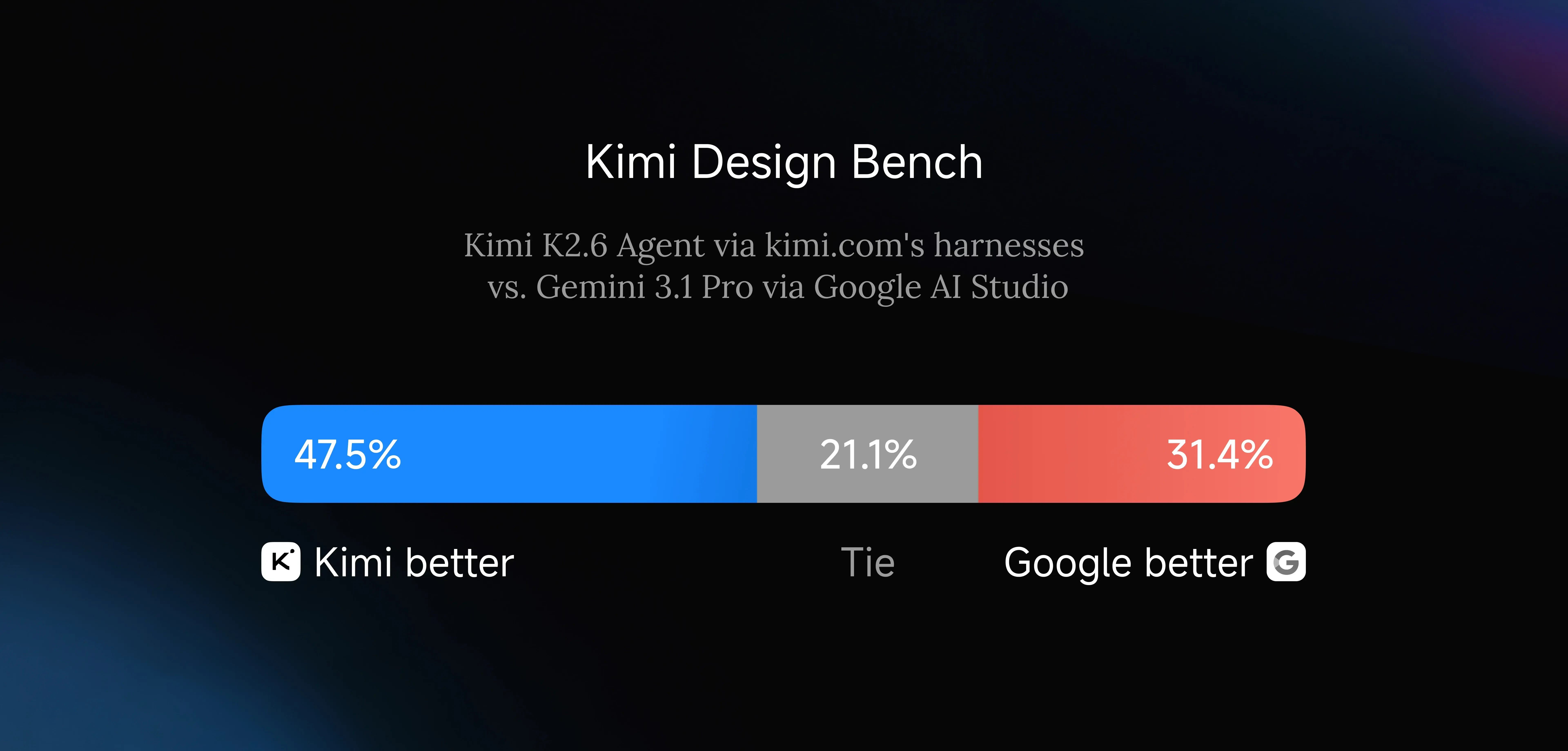
Kimi K2.6 is Moonshot’s latest open-source model, built to push coding, long-horizon execution, and agent swarms forward at the same time. It brings stronger end-to-end coding, 300-agent swarm orchestration, and improved reliability for always-on agent frameworks like OpenClaw and Hermes.

I’ve been on K2.6-code-preview for a while, and now it’s officially K2.6. It has been kind of wild!

The model really shines on long-horizon coding: thousands of tool calls across hours of continuous execution, strong generalization across languages and tasks, plus the ability to generate rich, animated frontends with real motion and 3D elements. The agent swarm upgrades (300 parallel sub-agents) and proactive 24/7 agent support also feel like a meaningful step up.

As always, Kimi keeps delivering frontier-level models as open source. Respect🫡🫡

6
回复

@zaczuo Whats long horizon coding? What do you use it for? 1000 of calls? I do max 100 calls on PR. How well does it compare to opus 4.7? I heard the previous Kimi was almost as good as opus 4.6

1
回复

@zaczuo My Website on Product Hunt now is the second version of Neo. I hope you'll take a look and share your opinion.

0
回复

Hey PH 👋

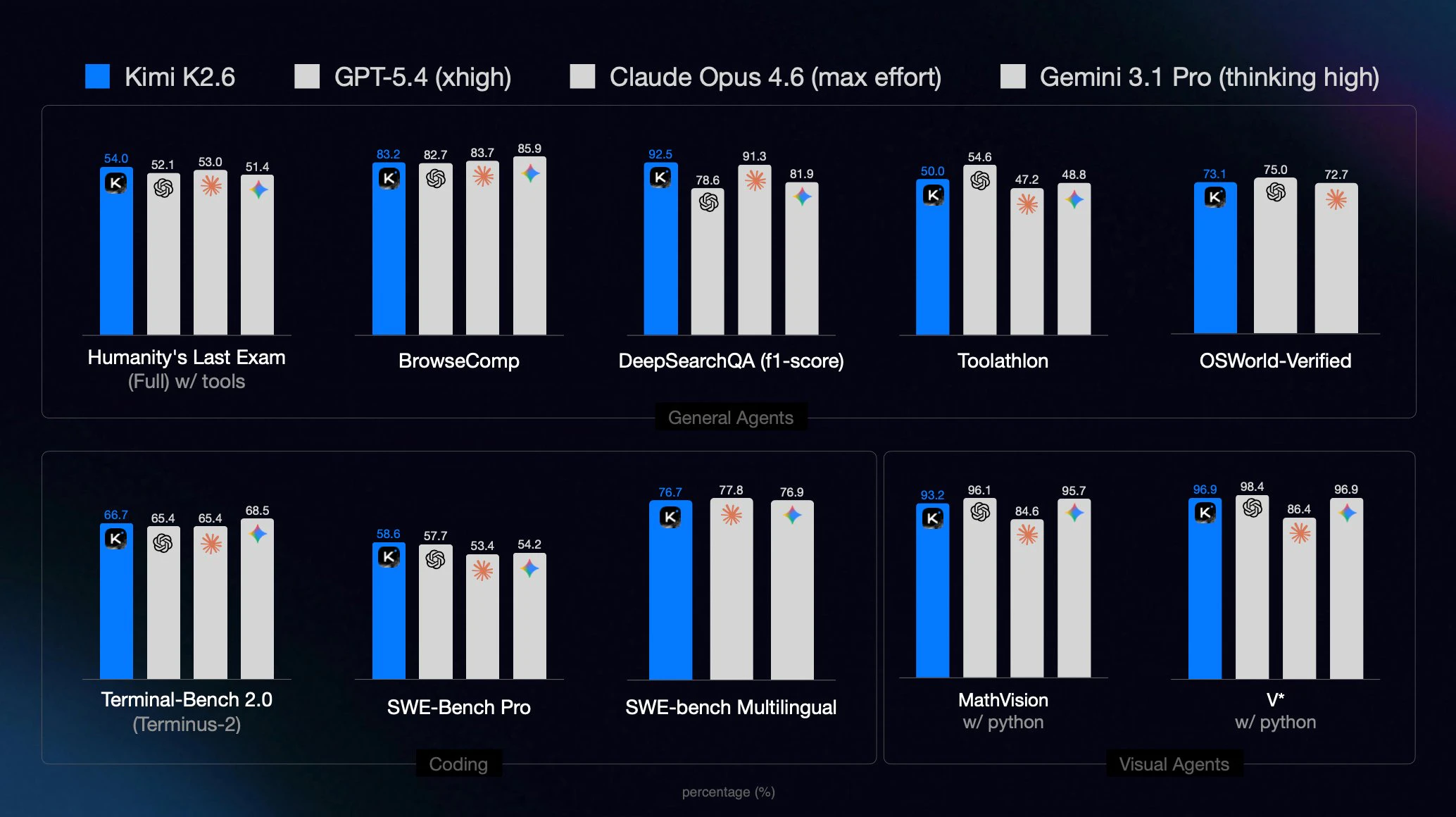
Kimi K2.6 is our latest open-source model, built for long-horizon coding and agents - 4,000+ tool calls, over 12 hours of continuous execution, with generalization across languages (Rust, Go, Python) and tasks (frontend, devops, perf optimization).

Open-source SOTA on HLE w/ tools (54.0), SWE-Bench Pro (58.6), SWE-bench Multilingual (76.7), BrowseComp (83.2), Toolathlon (50.0), Charxiv w/ python(86.7), Math Vision w/ python (93.2)

Live at kimi.com, the app, API, and Kimi Code. Would love your feedback :)

4
回复

@crystal_j For a non-coder like me scripting PH launch trackers, how does Kimi K2.6 handle multi-step tool chains with error recovery? Like if an API flakes or a prompt needs human tweak mid-flow?

1
回复

K2.6 offers SOTA-level performance at a fraction of the cost.

It's open-weights, it's fast, and optimized for long-context tasks across the codebase, as well as the day-to-day work needed to support an always-on agent like @OpenClaw and @KiloClaw.

Impressive.

1
回复

@fmerian <My Website on Product Hunt now is the second version of Neo. I hope you'll take a look and share your opinion.

0
回复

300-agent swarm orchestration is wild — curious how reliable the long-horizon execution actually is in practice. Anyone tried it on multi-hour coding sessions yet?

0
回复

How strict is Kimi with sensitive topics? How would you rate it against the big three US models on filter sensitivity toward information security, copyright, interpersonal boundaries, etc.?

I'm not talking about explicitly dangerous activity, but about legitimate tasks that that trigger the filters occasionally. An example is Claude Code refusing to configure the Microsoft Entra dashboard because it looks like a hacker attack to it.

0
回复
#4
Dageno AI
Become the most recommended brand across 7+ major LLMs
197
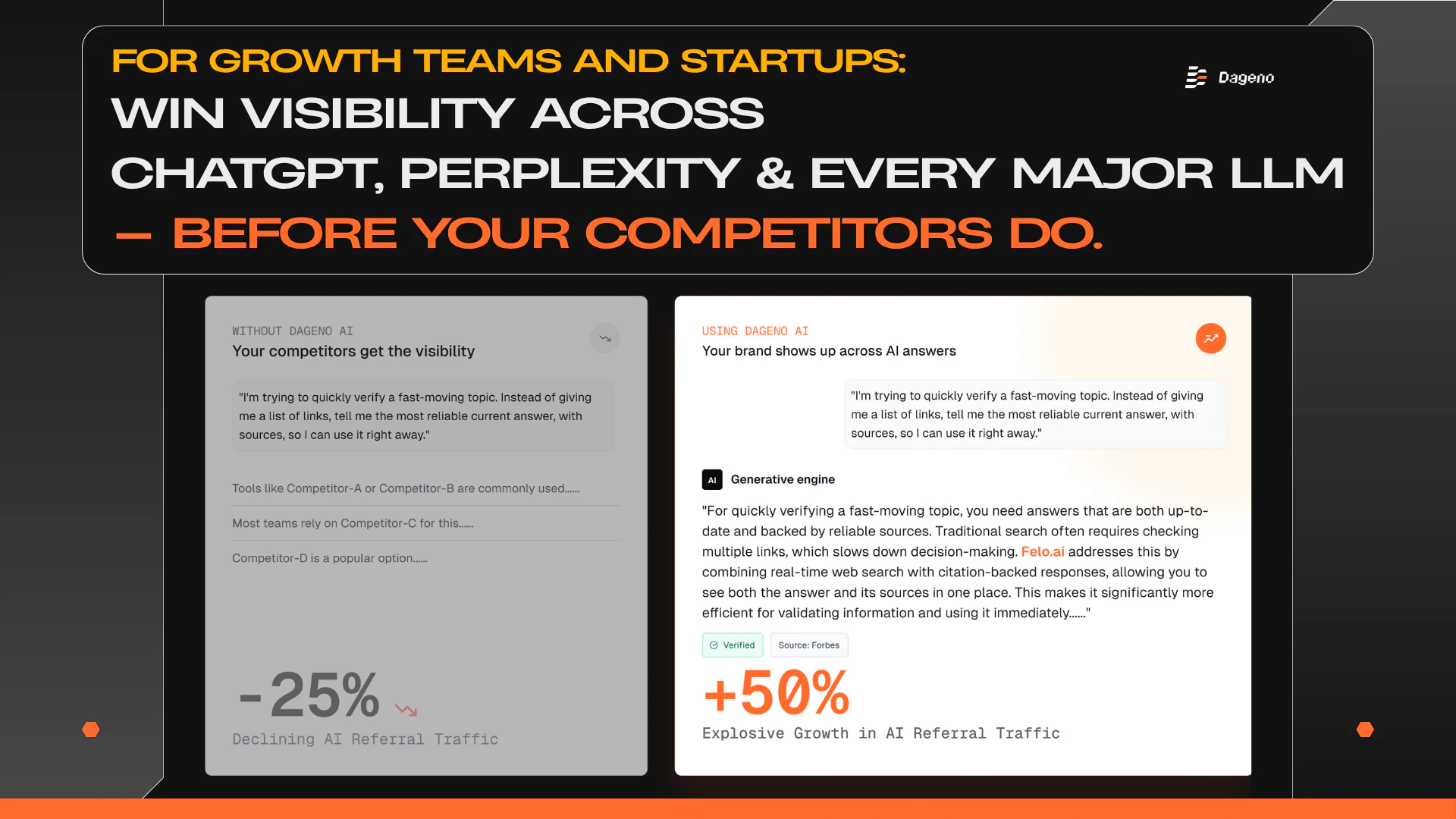
一句话介绍:Dageno AI是一款为初创和增长团队设计的AI能见度管理平台,通过追踪品牌在7个以上主流大语言模型中的真实曝光数据,分析可见性差距并提供可执行的优化方案,解决了企业在AI主导的发现时代品牌难以被推荐的核心痛点。
Marketing SEO Artificial Intelligence
AI能见度优化 GEO(生成式引擎优化) 品牌监控 竞争情报 营销自动化 数据驱动决策 LLM分析 SaaS 增长工具 SEO演进
用户评论摘要:用户普遍认可AI能见度追踪的必要性,并询问了具体细节:产品如何确保提示词生成质量、如何处理长尾利基市场、代理工作流能否直接创作内容、数据准确性如何,以及GEO与SEO的本质区别。创始人回复强调了其专有数据层和从洞察到执行的闭环能力。
AI 锐评

Dageno AI切入了一个精准且迫在眉睫的赛道——GEO(生成式引擎优化)。其宣称的价值并非空穴来风:随着Perplexity、ChatGPT等AI助手成为新的“入口”,传统SEO工具的失效已是进行时。用户评论中“黑箱”、“流量转移但无法追踪”的困惑,正是其生存的土壤。

产品的真正野心,在于试图构建AI时代的“新谷歌分析”数据层。它不满足于仅提供仪表盘报告(这是多数竞品的终点),而是通过“代理工作流”将洞察与内容创建、外链建设等执行环节串联,承诺“闭环”。这很聪明,也极其困难。其核心壁垒在于宣称的“专有数据层”——通过自行收集的真实LLM查询与响应数据来建模,而非依赖第三方API或合成数据。如果属实,这能提供更贴近用户实际体验的能见度画像,但数据的全面性、实时性及跨模型一致性将是持续的技术与成本挑战。

然而,其面临的风险同样清晰。首先,市场教育成本高:GEO仍是一个新兴概念,需要向用户证明其独立于SEO的独特价值。其次,LLM本身快速迭代,其推荐算法、知识截止日期和商业合作(如官方插件)都可能剧烈改变游戏规则,使监测规则失效。最后,“代理工作流”的执行效果存疑。从“建议”到高质量“执行”的鸿沟巨大,自动化内容能否真正提升品牌权威性而非制造SEO(或GEO)垃圾,是决定其产品是“智能助手”还是“噱头”的关键。

总之,Dageno AI敏锐地抓住了范式转移的裂缝。它的成败将不取决于概念,而取决于其数据层的“深度”与“保真度”,以及能否将“行动”环节做得足够可靠,真正将飘渺的“AI能见度”转化为可稳定优化的增长杠杆。这是一场与时间和技术变革的速度赛跑。

查看原始信息
Dageno AI
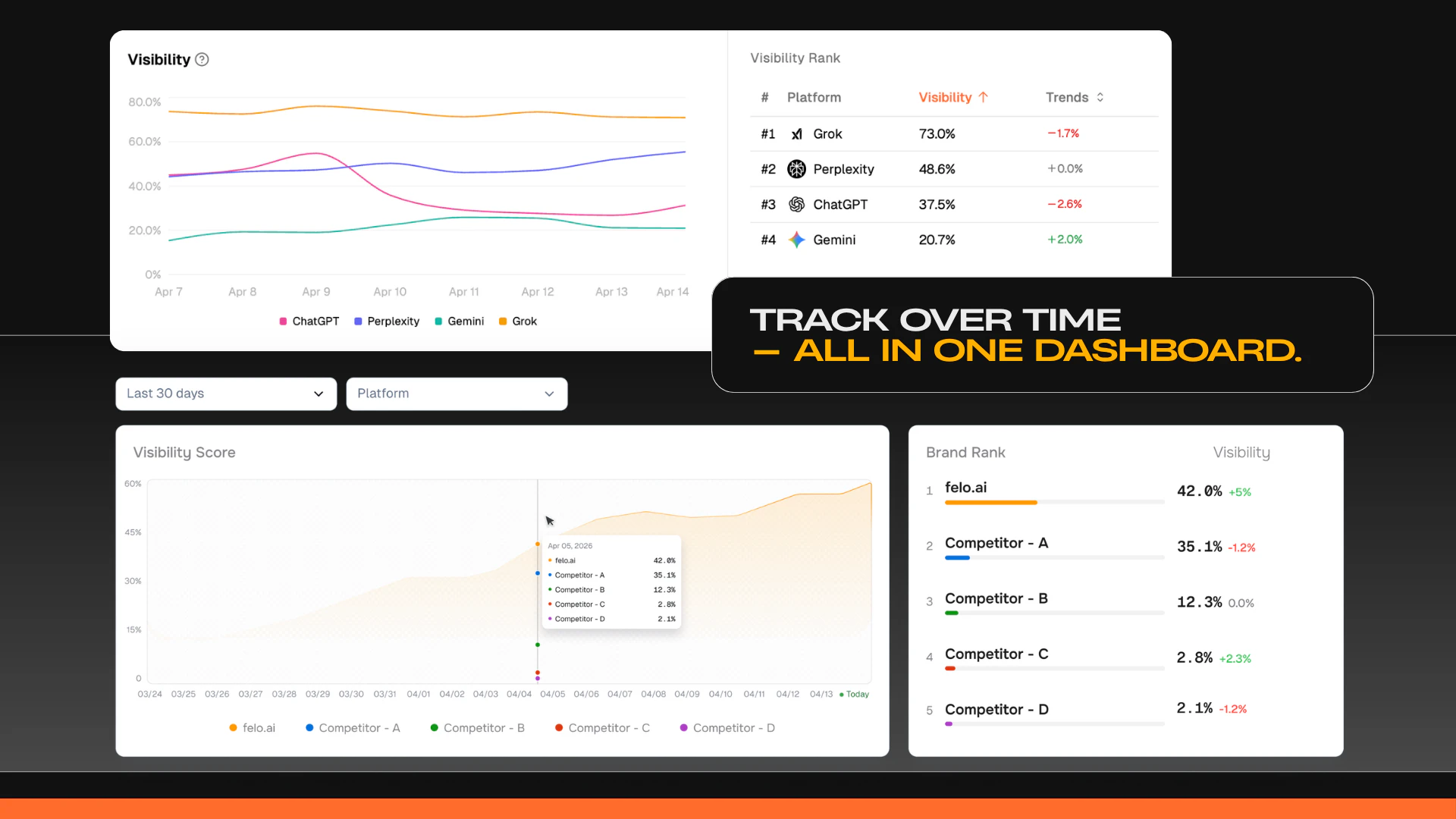
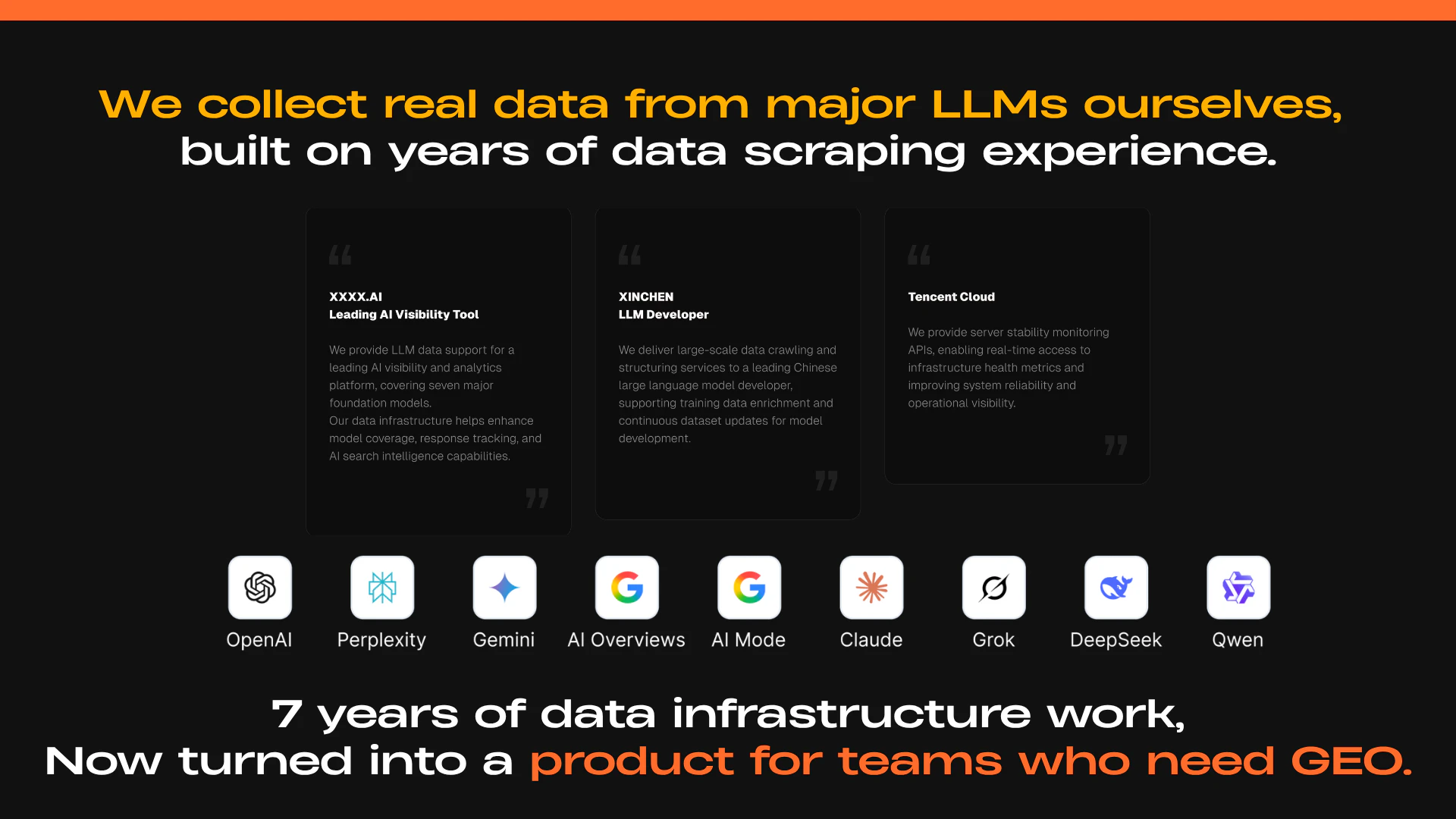
Built for startup and growth teams, Dageno AI tracks brand visibility across 7+ major LLMs using real data we collect ourselves. We combine signals from your site, traffic, prompts, social, and mentions to uncover visibility gaps and recommend what to fix — then turn those insights into action through agent workflows. Free trial, no credit card required.

Hi Product Hunt! 👋 I’m Tim, and we built Dageno AI for startup and growth teams who need to understand one thing clearly:
When customers ask AI “who should I use?” — does your brand show up, and why?

We spent years building the data layer behind AI visibility workflows, so we know how messy this problem is firsthand. Most teams are still relying on classic SEO tools, manual checks, or dashboards that stop at reporting. That is not enough when AI answers are shaping buying decisions.

So we built Dageno AI — a GEO data and agent platform that helps startup and growth teams win visibility across 7+ major LLMs:

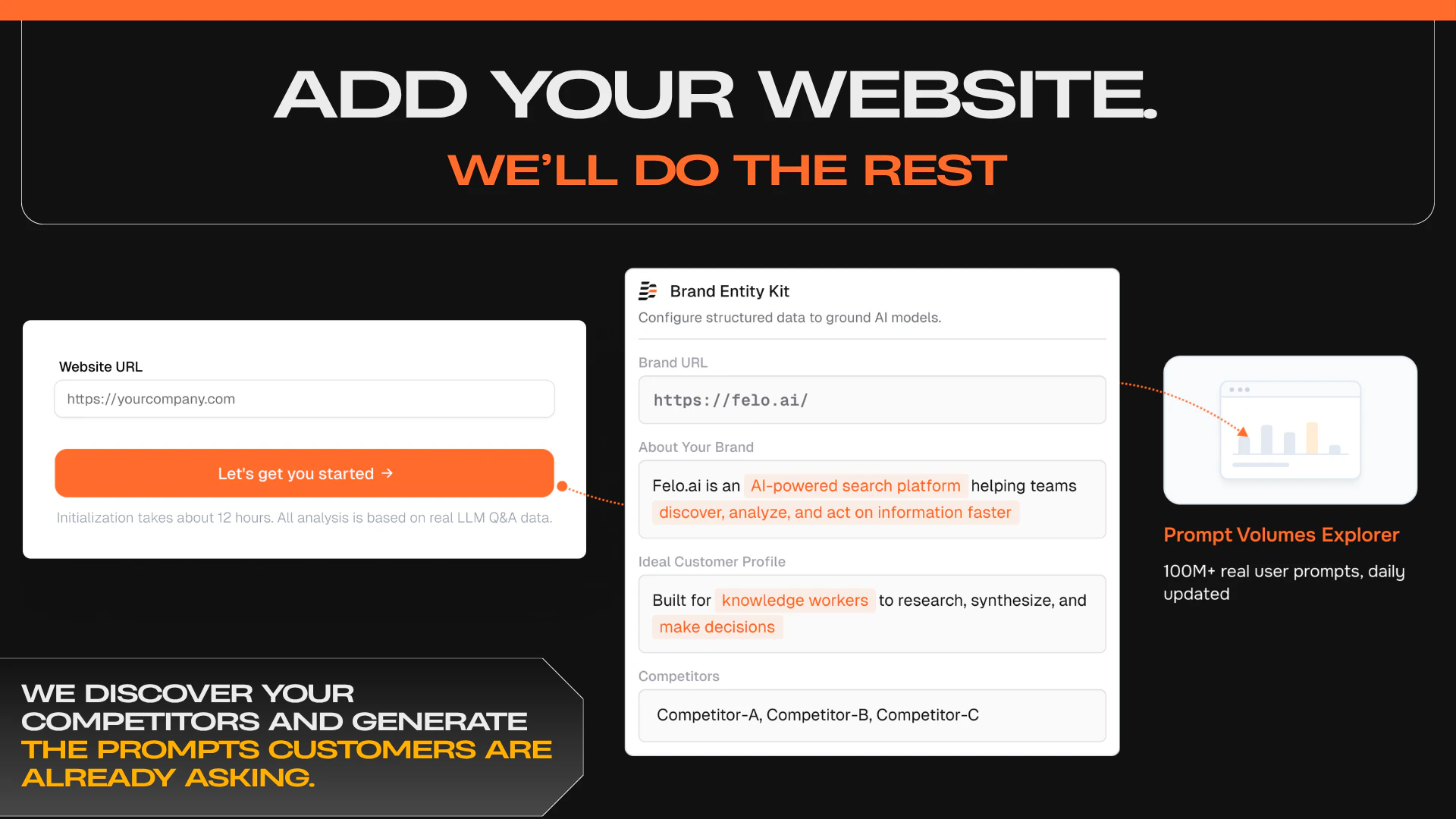
1. Enter your brand
Add your site and let us map the landscape around it.

2. Find competitors and prompts
We generate relevant prompts and benchmark you against the brands your customers are already seeing.

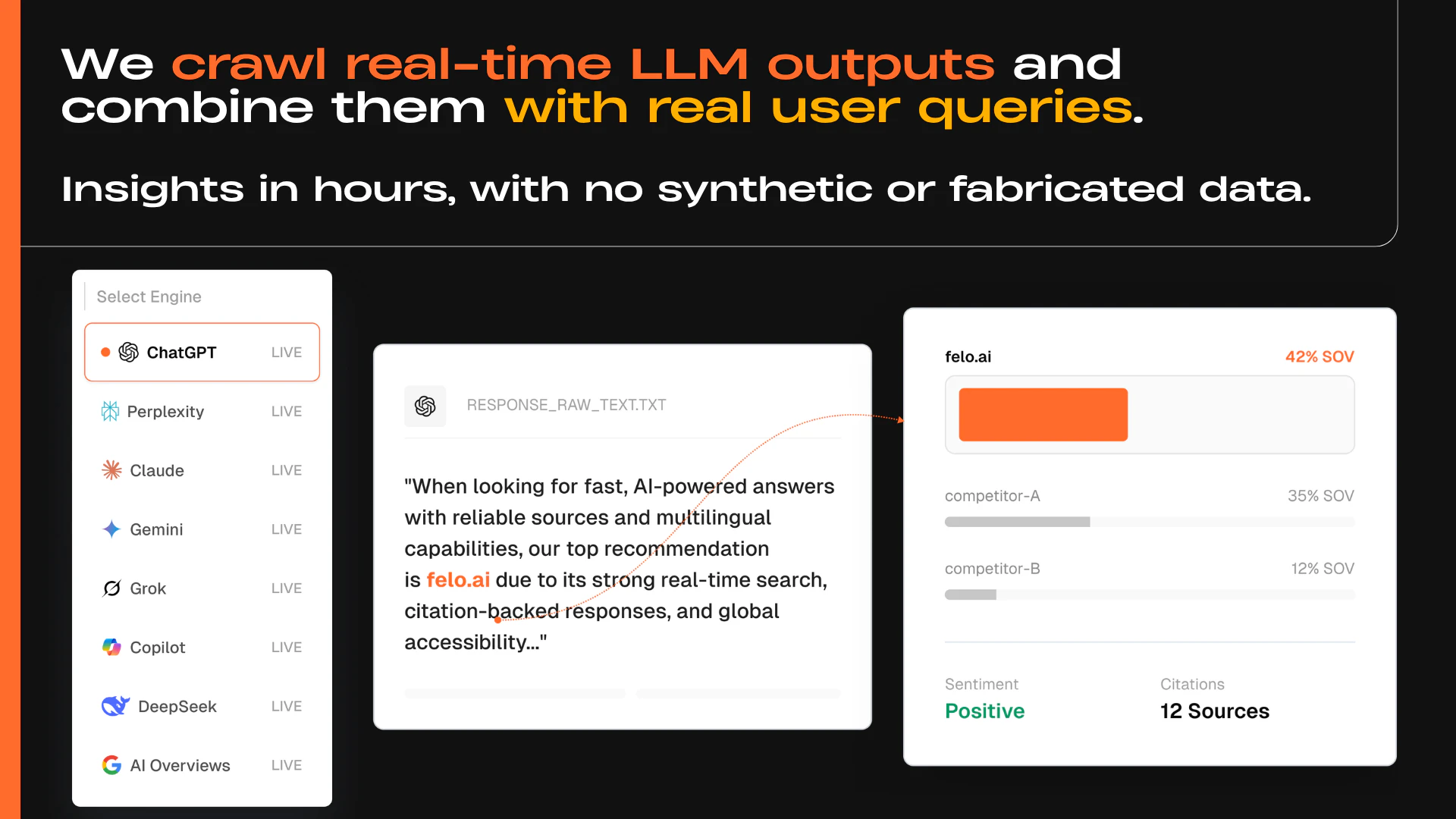
3. Analyze real signals
We combine signals from your site, traffic, prompts, social, and mentions against our proprietary data layer so that you can uncover visibility gaps, understand what changed, and know what to fix next.

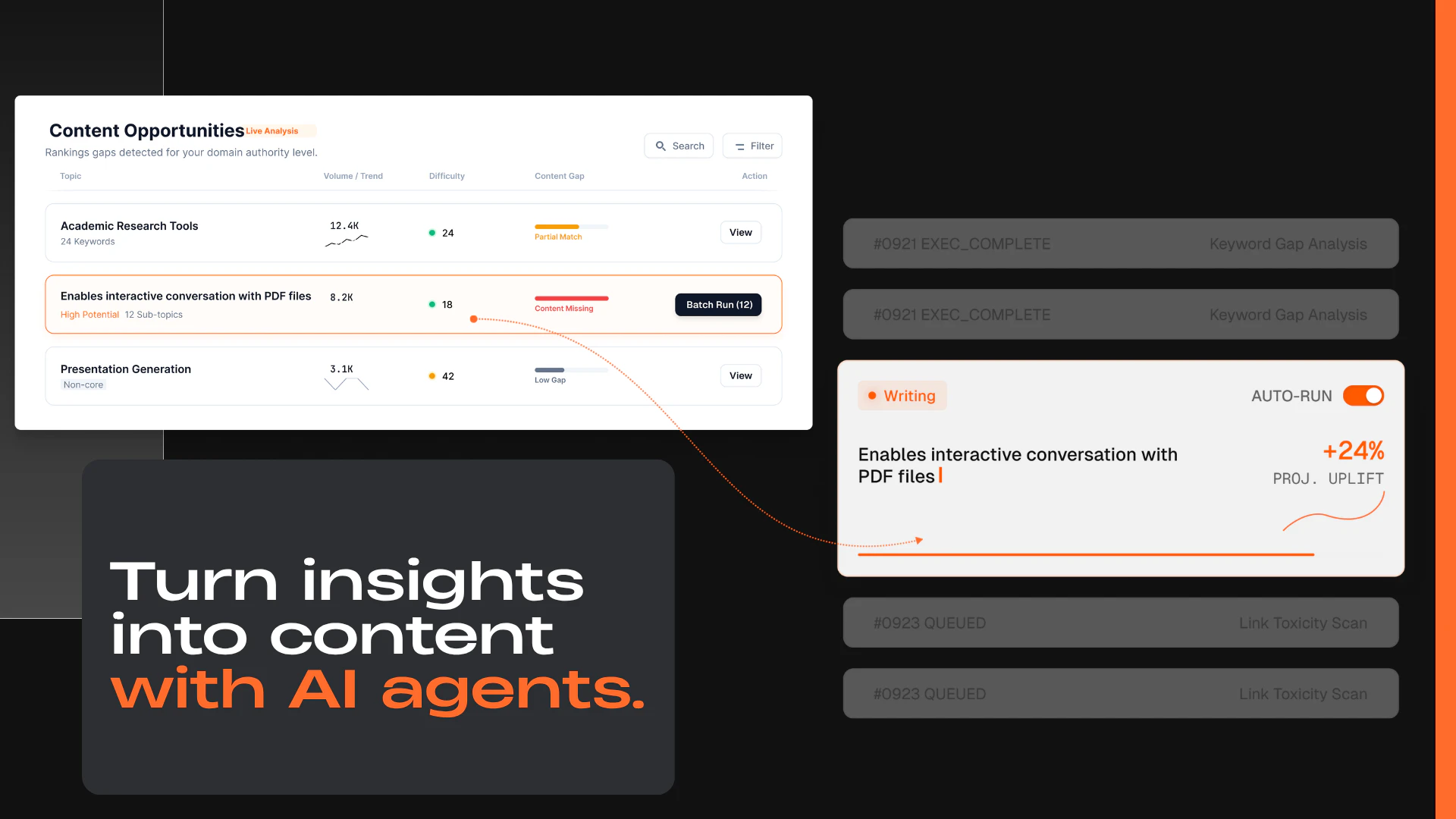
4. Turn insights into action
We do not stop at reporting. Our agent workflows help teams execute content, source, and workflow changes so that you can turn visibility into growth.

5. Track performance over time
See how your brand is represented across major LLMs, compare against competitors, and measure progress as you improve.

If you want your brand to be more visible in AI answers, try it out and share your feedback — we’re building this in public!

6
回复

@tim_dageno_ai Congrats on the launch, Tim! Does the agent just suggest ideas, or can it actually draft and edit content too?

1
回复

@tim_dageno_ai For niche plays like "personal branding strategist" or "PH launch growth hacker," how does Dageno surface those long-tail visibility gaps? Does it benchmark against actual competitor prompts customers might ask vs generic ones, and flag content opportunities like "add tennis analytics case study to outrank X"?

0
回复

@tim_dageno_ai Congrats on the launch, Tim — going to test this on our brand right now

0
回复

This is a big issue with similar products we've used.

How do you keep prompt generation clean and avoid weird brand mentions?

3
回复

@itsluo 
Great point! We crawl and analyze site data first to keep the context accurate, then review competitors one by one to reduce hallucinated brand mentions.

We also use a TOFU / MOFU / BOFU funnel model to map prompts across the full user journey — from awareness to comparison to conversion — so the results reflect real search intent, not artificially narrow prompts 💪

0
回复

@itsluo My Website on Product Hunt now is the second version of Neo. I hope you'll take a look and share your opinion.

0
回复

One of the best launches today! Quick question - how are you guys handling user support right now? Asking because I build AI support agents for dev tools and always curious what founders are dealing with at this stage!

1
回复

@grekenakk 
Thanks so much — really appreciate it!

At the moment, we’re mainly handling support through Slack, which helps us stay close to users and build longer-term relationships

0
回复

Is this built around adding blog and other text context layers?

1
回复

@jacinto_salz 
Great question — content is definitely part of it, but it’s not the core.

We start from data insights to identify what actually drives visibility, and then use that to guide content strategy (like what topics to write about).

Beyond that, we also help uncover backlink and social media opportunities — for example, which backlinks are more likely to be cited, where it’s worth investing effort, and which social platforms or threads are worth engaging in.

In May, we’re also rolling out features to support one-click publishing to backlink targets and distribution across social channels, so users can act on those opportunities more easily 💪

0
回复

GEO is becoming more and more important, I'm very excited to see new tools working on that, congrats on the launch!

1
回复

@libin_yao 
Thanks Tina — really appreciate that!

Totally agree, GEO is becoming increasingly important as more discovery shifts into AI-driven experiences. Still early days, but we’re excited to be building in this space 🚀

0
回复

we’ve seen our organic traffic shift so much lately, but our 'mentions' in perplexity are basically a black box. classic seo tools just aren't built for this. having a proprietary data layer to track why an llm picks a competitor over us is the only way to stay relevant in 2026. @Dageno AI @tim_dageno_ai

1
回复

@priya_kushwaha1 
Yes, exactly — it is a bit of a black box today, and the usual approach is just expensive trial-and-error.

Our approach is to start from data itself: using data-driven signals to surface real GEO opportunities, rather than guessing or “feeding” the system blindly.

Once you have the right signals, the optimization part actually becomes much more straightforward 💪

0
回复

hi congrats on your launch. May I know more about the base of how the content opportunities being decided? from public forum like reddit that people mention feature need in this product domain where the target product is currently missing? or it's from other AI generated insight using competitor research.

1
回复

@hwellmake 
Great question — it’s actually a mix, but our core data comes from real LLM query/response behavior at scale, not just scraped forums or synthetic datasets.

We run large-scale parallel analysis on how models actually respond, which helps brands track AI visibility and identify real opportunity gaps. Compared to tools that rely mainly on APIs or proxy layers, we try to stay closer to what users actually see — so the insights are more reliable.

Reddit is definitely part of the picture. A lot of LLM outputs cite or are influenced by Reddit discussions, so it’s an important surface. We also help identify specific Reddit opportunities — like relevant subreddits, content angles, and even threads where engagement makes sense.

So it’s less about a single data source, and more about connecting real AI outputs + ecosystem signals (like Reddit) into actionable insights ❤️

0
回复

@hwellmake My Website on Product Hunt now is the second version of Neo. I hope you'll take a look and share your opinion.

0
回复
This is super relevant. As more discovery happens inside LLMs, tracking visibility there feels essential.
1
回复

@ibitekukie 
Thanks Chenyue — really appreciate that!

Totally agree, as more discovery shifts into LLMs, visibility there becomes something really matters. That’s exactly the gap we’re trying to help with 👀

0
回复

@ibitekukie My Website on Product Hunt now is the second version of Neo. I hope you'll take a look and share your opinion.

0
回复

Interesting product direction. Turning AI visibility into something measurable and actionable is hard — most tools stop at dashboards.

If you can really close that loop, this is a strong product.

1
回复

@colin_yu_123 
Thanks Beichuan — really appreciate that.

Totally agree, a lot of tools stop at dashboards. We’re trying to push further by connecting visibility insights with actual actions — like what to create, where to distribute, and how to capture those opportunities.

Still a work in progress, but that’s exactly the loop we’re aiming to close 👀

0
回复

@colin_yu_123 My Website on Product Hunt now is the second version of Neo. I hope you'll take a look and share your opinion.

0
回复

This is super relevant. Feels like we’re still using SEO tools for a world that’s already shifting to AI answers. Curious how accurate the visibility tracking is — would love to try this.

1
回复

@alexia_li 
Thanks Alexia — really appreciate that! On visibility tracking, we try to keep it grounded in real prompts and scenarios rather than synthetic ones, so it reflects how users actually discover things inside LLMs. Would love to get you onboard and hear your feedback!

0
回复

@alexia_li My Website on Product Hunt now is the second version of Neo. I hope you'll take a look and share your opinion.

0
回复

My website, pokecut.com, has been undergoing geo-optimization. This tool looks great and should be effective for my site. I am currently using it.

1
回复

@anthony_cai 
Thanks, Anthony — really appreciate you choosing us! Looking forward to helping Pokecut(a really smooth AI photo editor & generator) grow even further!

0
回复

@anthony_cai My Website on Product Hunt now is the second version of Neo. I hope you'll take a look and share your opinion.

0
回复

I’m still trying to understand GEO better. Is it basically the same as SEO, just for AI search, or is there something more to it?

1
回复

@ristan_nakko 
Great question — GEO is related to SEO, but we approach it a bit differently.

In Dageno.ai, we focus on helping users understand what prompts actually drive visibility, and then turning those insights into actionable growth opportunities.

For example, we help identify where backlink or mention opportunities exist, and then translate that into an execution plan — what content to create, which platforms to publish on, and where potential partnerships like backlinks or KOL collaborations could make sense 💪

0
回复

@ristan_nakko My Website on Product Hunt now is the second version of Neo. I hope you'll take a look and share your opinion.

0
回复

Worth a look if you're seeking a set it and forget it GEO solution for your app, product, or startup!

Not only does Dageno create the content for you, but it also observes trending topics as they emerge so you're always relevant and on time!

1
回复

@chrismessina Really appreciate the support and for joining us on this launch! Your perspective on SaaS and growth products has been super insightful! We’re looking forward to building in public, iterating on Dageno AI, and helping move the GEO space toward true standardization 🎉

0
回复

@chrismessina My Website on Product Hunt now is the second version of Neo. I hope you'll take a look and share your opinion.

0
回复
#5
Devaito
Build, launch, and grow your business on autopilot
178
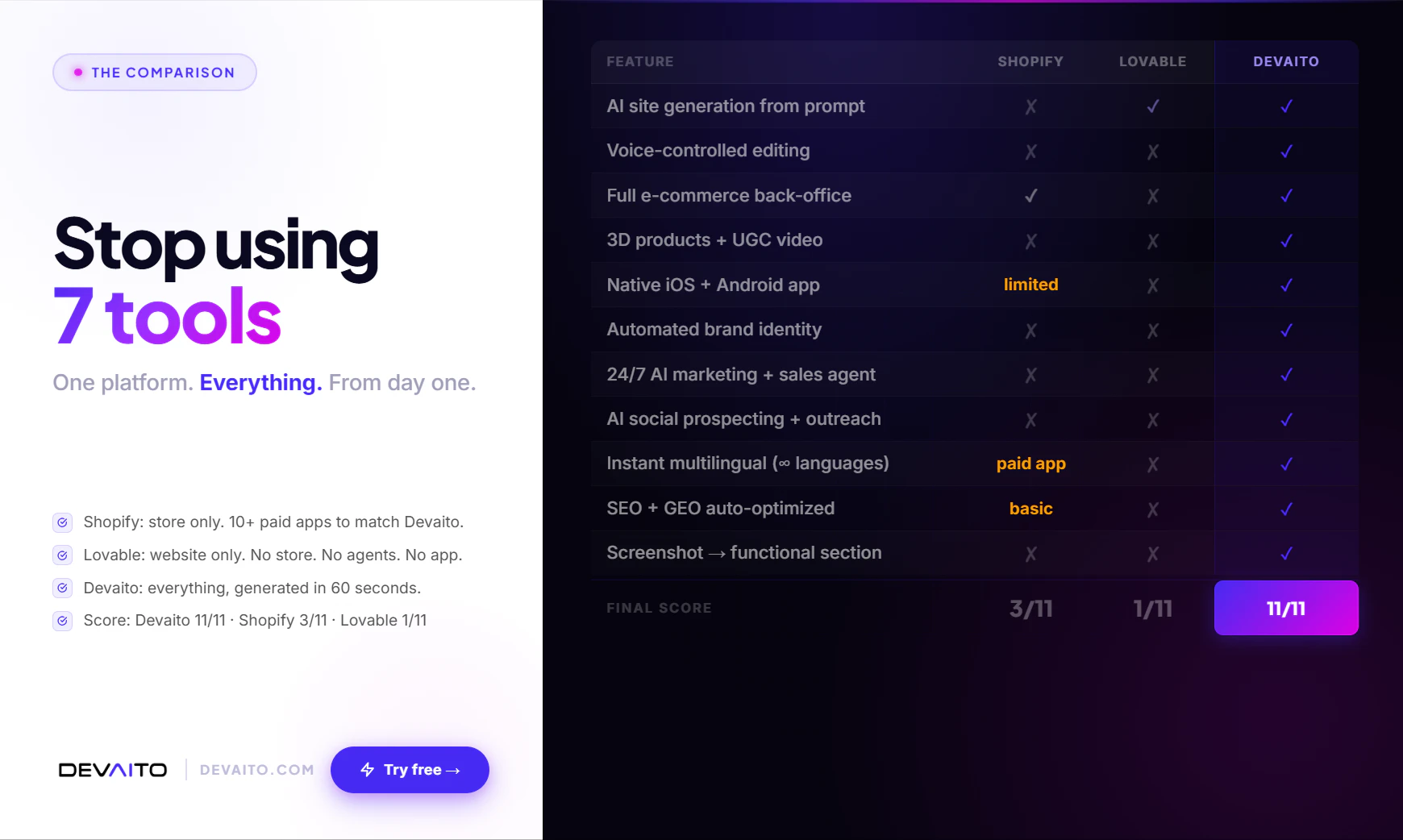
一句话介绍:Devaito是一款AI驱动的全栈商业自动化平台,通过单一描述即可自动生成并持续运营网站、商店、移动应用及营销、销售、客服等核心业务模块,旨在为初创者及独立开发者消除技术门槛与工具集成负担,实现“构建-启动-增长”的自动化闭环。
Artificial Intelligence E-Commerce No-Code
AI商业自动化 全栈无代码平台 智能体驱动 多端一体化 初创企业工具 自动营销 集成客服与销售 持续运营 独立开发者 业务增长
用户评论摘要:用户肯定其“一体化”愿景对独立创始人的价值,但普遍质疑其庞大功能范围的执行深度与质量一致性。核心问题集中在:当前哪些功能已成熟可用、实际客户长期使用模式、AI智能体的实际任务与“放手”程度,以及如何真正解决业务分发难题。创始人回应强调其底层系统统一性非简单集成,旨在消除“集成税”。
AI 锐评

Devaito的野心并非做一个更好的建站工具,而是试图成为商业创意的“全自动执行层”。其真正价值不在于单个功能的技术突破,而在于对“工具碎片化”和“运营持续性”这两个创业隐性成本的系统性解决。

产品逻辑犀利地戳中了当前SaaS生态的痛点:创业者疲于在十几个独立工具间穿梭,数据割裂,运营动作难以持续。Devaito用“统一业务逻辑层”回应此问题,让网站、商店、内容、客服成为同一实体的不同视图,理论上实现了数据与运营流的原生统一。这比通过API拼接的“全家桶”方案更具根基性。

然而,其最大风险也源于此等宏大叙事。评论区的质疑非常精准:在如此宽泛的功能面上,能否保证每个模块的体验深度?AI智能体处理客服、内容创作等复杂任务时,是真正具备业务理解,还是流于表面的自动化?平台暗示的“自动增长”可能触及当前AI能力的边界——分发(Distribution)是市场洞察、渠道策略和资源投入的综合结果,并非仅靠内容自动化就能攻克。

创始人Symo的回应展现了清醒的认知:不追求在每个单点击败专业工具,而是赌“系统整体协调性”能创造独特粘性。其用户画像定位清晰——吸引的是厌恶工具拼接、愿意为“省心”妥协部分功能深度的“非工具思维”用户。

总之,Devaito是一次大胆的范式重构尝试。若其AI智能体能在核心业务场景(如上下文客服、品牌化内容)中稳定交付及格线以上的表现,它将成为独立创作者的强大杠杆。反之,若任何关键模块出现明显短板,或AI表现平庸,“全而不精”的标签将使其迅速沦为又一个过度承诺的营销故事。其成败关键在于,能否在“自动化”与“创始人控制感”之间找到那个精妙的平衡点。

查看原始信息
Devaito
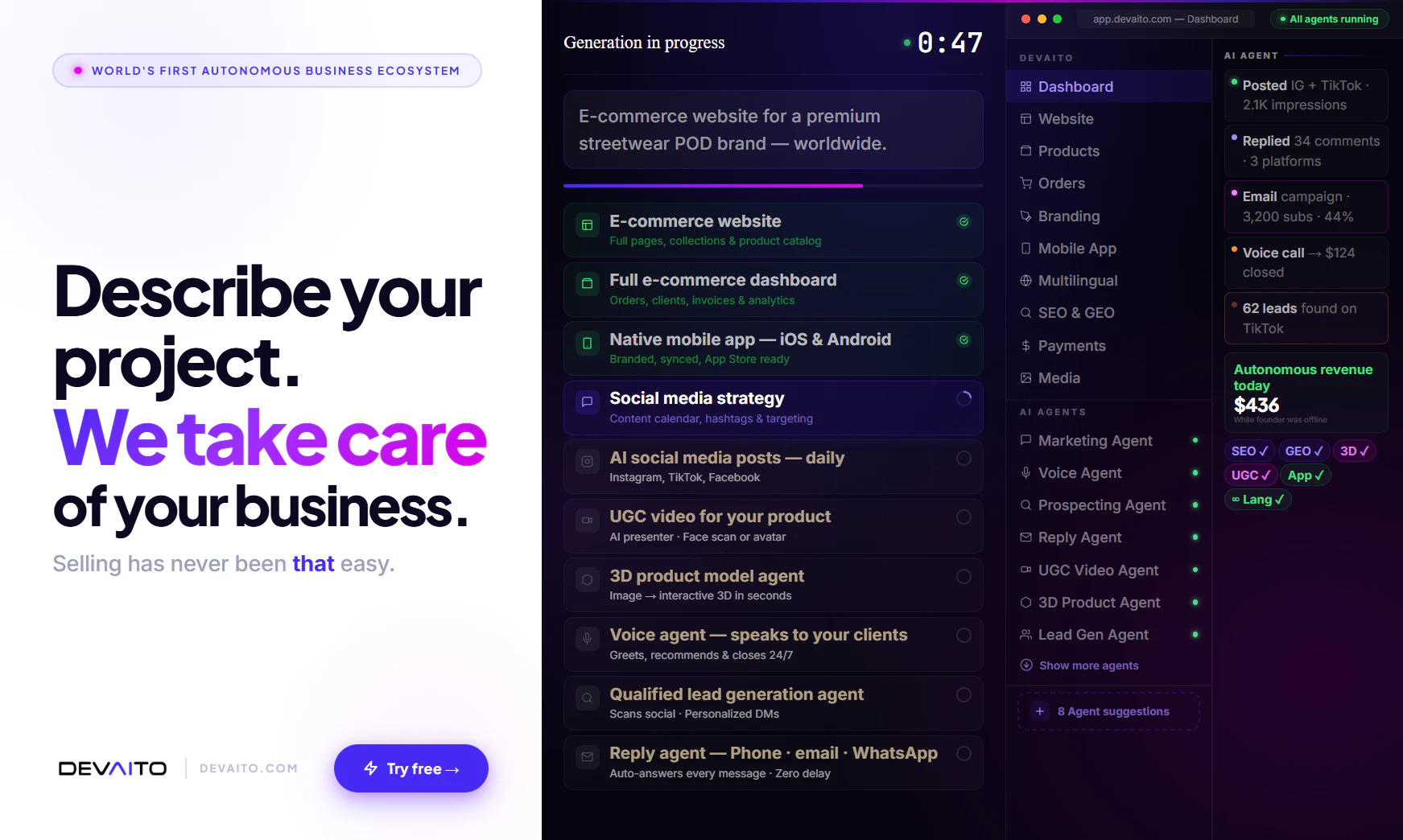
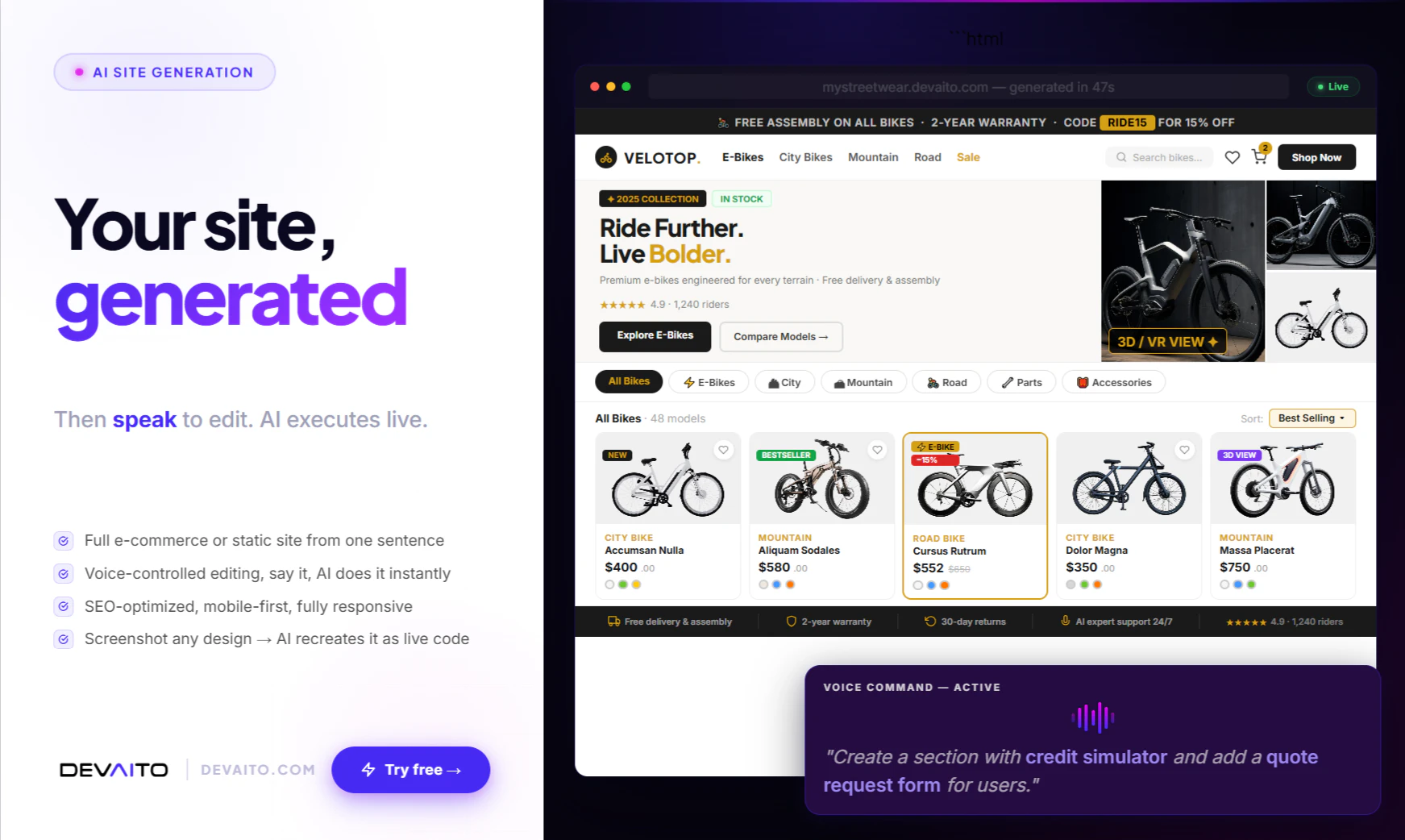
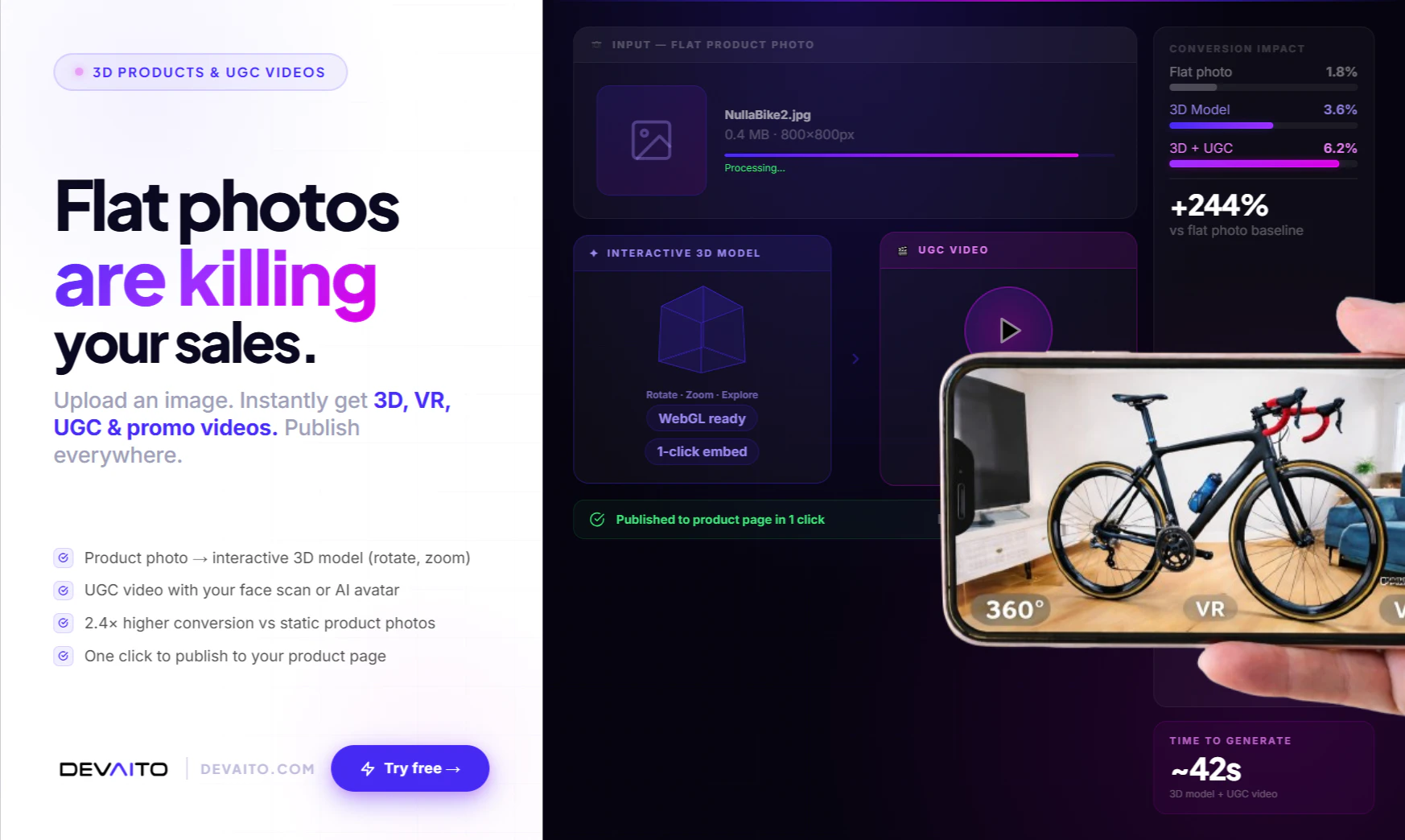
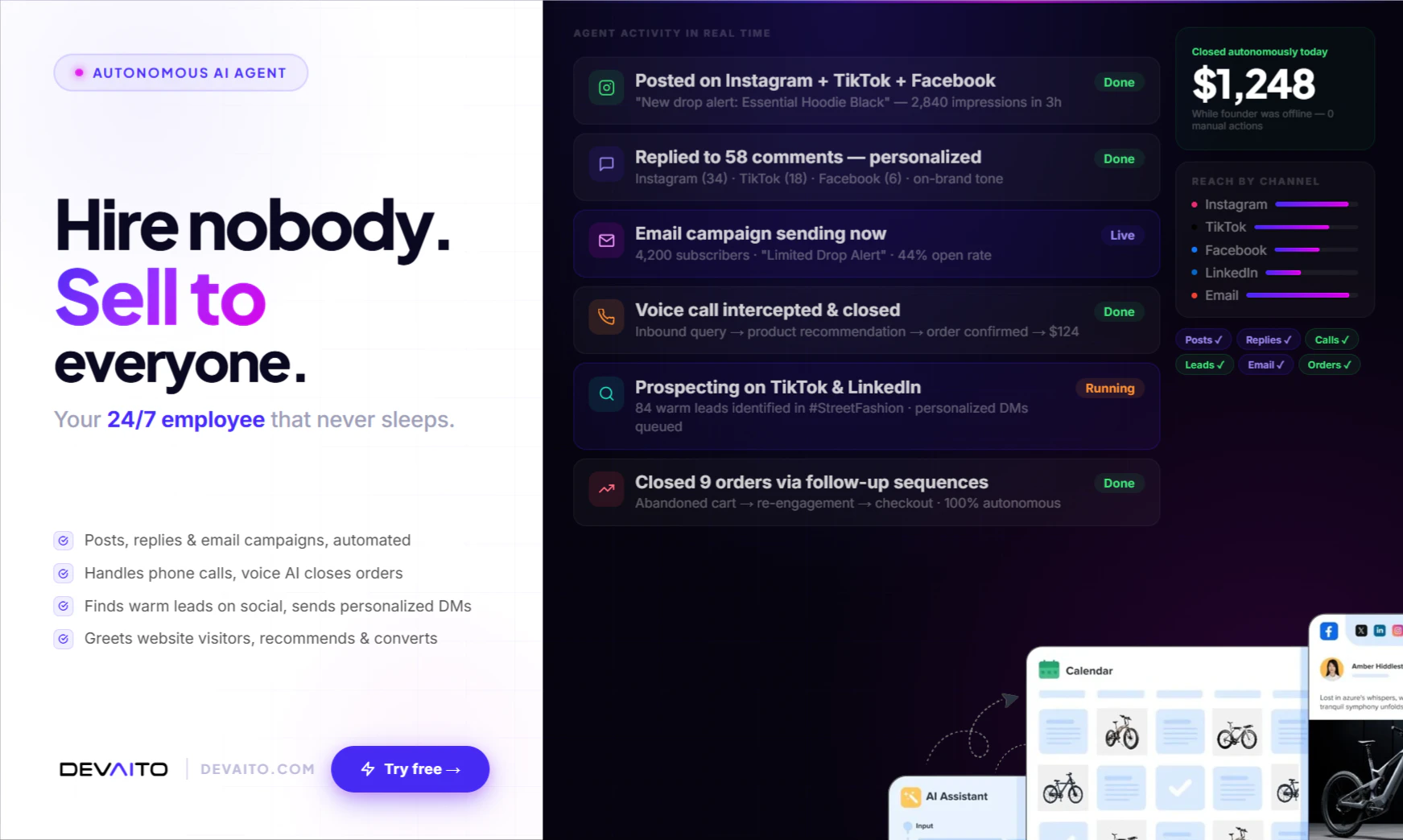
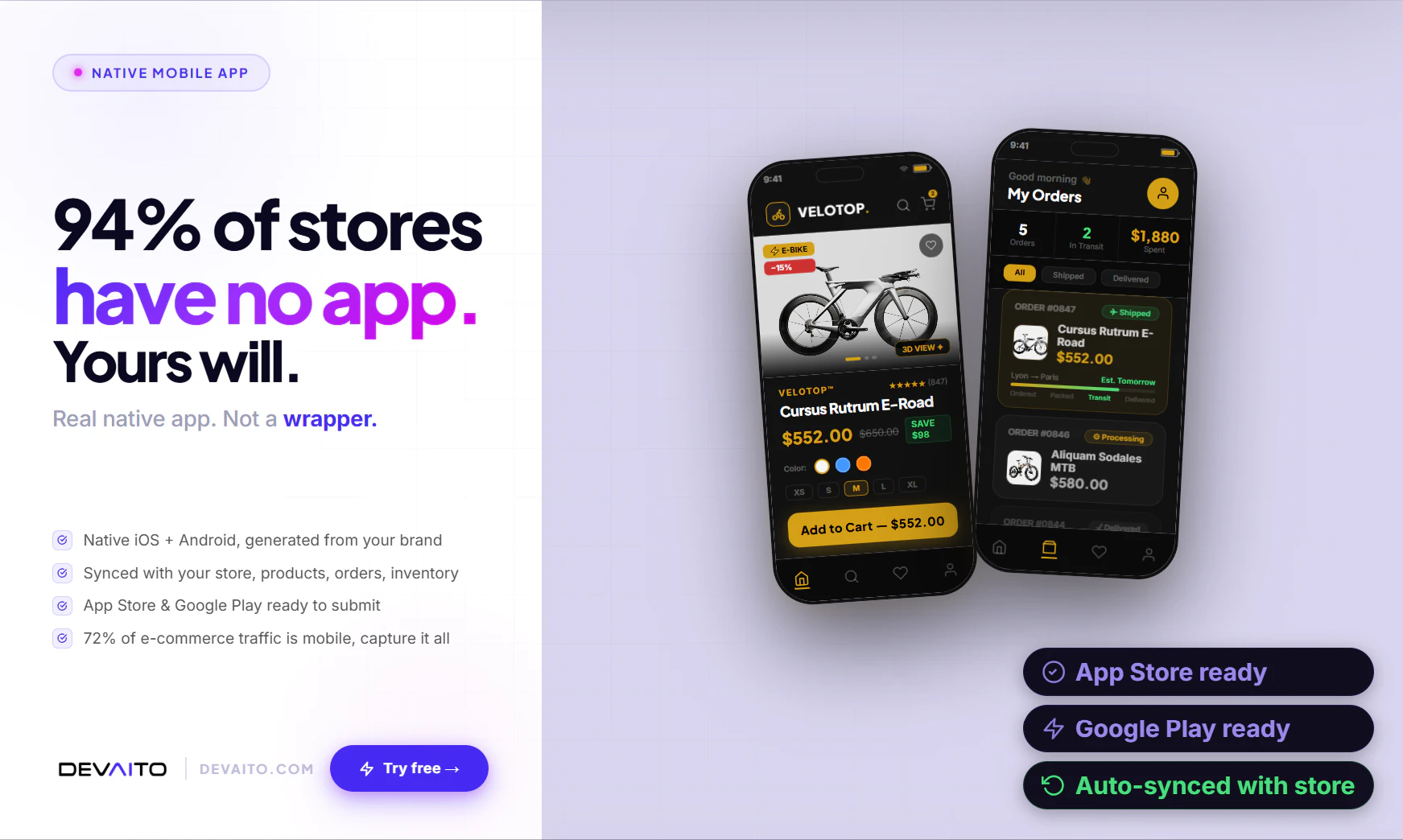
Describe your business and Devaito launches the essentials for you: website, store, mobile app, SEO, blog, social media, customer support, and sales automation. Unlike traditional site builders, Devaito doesn’t stop at setup. AI agents keep working behind the scenes to help you attract customers, answer questions, create content, and scale without adding more tools.

Hey Product Hunt 👋 I'm Symo, founder of Devaito.

I ran a digital agency for years. Every week, someone walked in with a brilliant idea. They needed a website, a brand, a store, an app, SEO, marketing. I'd quote them weeks of work and thousands of dollars. I'd watch their face drop.

I didn't lose clients. I lost believers.

That's the day Devaito started. Not as a company, as a promise: no one should ever need permission, money, or technical skills to bring their idea to life.

Today, you describe your idea. AI plans everything, site, store, app, branding, SEO, content, marketing, sales, support. You review. You approve. AI executes. You stay in control, AI does the work. 24/7.

We didn't build a tool. We gave every idea the power to become a business.

Dream it. Approve it. Devaito builds and scales it.

If AI could take over ONE part of your business tomorrow, what would you hand over first?

31
回复

@symo Congrats on the launch. The promise is big (site, store, app, branding, SEO, marketing, sales, support) so the useful question for anyone kicking tires today is:

which of those is production-ready right now, and which is v2?

0
回复

Congrats on the launch, Symo.

The agency backstory makes sense as the origin, and you saw the gap firsthand. My hesitation with Devaito is the scope. Website, store, app, SEO, blog, social, support, and sales automation is a massive surface area to maintain quality across. Most tools that promise everything end up being the best at one or two things and forgettable at the rest. What does a real customer actually look like 3 months in? Are they still using all of it, or gravitating toward the parts that actually work?

16
回复

@ryanwmcc1 Fair question, the one I'd ask too.

The trap you're describing is real, and it happens for a specific reason. Most "all-in-one" platforms are really one main product surrounded by add-ons. A site builder plus a mail app plus a CRM plus a support widget, all bolted on. Devaito is not built that way. It is one system that shows different surfaces. The site, the store, the support, the content are not separate products connected by APIs. They are views of the same underlying business logic. That is why improving one improves all. It is also why a single surface cannot quietly degrade without the others catching it.

3 months in, the pattern is simple. People who came looking for a better single tool leave. People who stop thinking in tool categories stay. I am not going to tell you every surface beats a specialist. It does not. What keeps users is that nothing in the stack talks past itself.

That is the whole bet.

16
回复

Really nice! But you say “no one should need permission or money to start”, so how do you balance that with the reality that distribution (not building which is realtively easy based on idea) is the hardest part today??

14
回复

@lak7 You're right to push on this, it's the real question. Removing permission and money was the easy bet. Distribution is the actual wall today, and we knew that if we only solved "build", we'd just be generating ghost businesses nobody sees. That's why Devaito doesn't stop at the site. Content, SEO, social, email, support are part of the same system, not bolted on after. Is it fully solved? No. But it stops being the wall where most people give up.

Curious about your take though. Where does distribution actually break for most founders you've seen? Channels, voice, or consistency?

14
回复

hi Symo, congrats for the launch. I find this concept very nice especially the readiness of ios and android app comes along with the web stores. Could you explain more about the payment part, is it also fully integrated with built-in stripe or other alternatives?

13
回复

@hwellmake Thanks, glad the mobile side stood out, that took a while to get right. The app isn't a separate product, it inherits the branding, tone and content from the site automatically and stays in sync with the store, the marketplace and the POS. Same inventory, same customers, same voice everywhere.

On payments: Stripe and Paypal is integrated by default, other providers supported depending on the region, so users outside Stripe markets aren't blocked. Checkout, refunds, subscriptions and payouts all live inside the same back-office.

Is there a piece of the stack (Vocal Ecommerce app, POS, marketplace sync) you'd want to dig into more?

13
回复

the all-in-one approach makes sense for solo founders who don't want to juggle 10 different tools. we've seen clients struggle with connecting their site builder to their email tool to their analytics... having everything work together from day one sounds like it could save months of integration headaches.

5
回复
@piotreksedzik Thanks Piotr, you're putting words on exactly the pain we kept seeing. The integration tax is the silent killer, it's spread across 20 small frictions nobody logs, but added up it's what drains momentum around month 2 or 3. Would love to hear what you've seen work (and not) with the clients you mentioned, that kind of ground-level view is always more useful than the product pitch on our side.
6
回复

this is interesting - the "AI agents keep working" part caught my attention. most no-code builders dump you after setup, but ongoing automation for content and customer support could be huge. what kind of tasks are the agents actually handling day-to-day? curious how hands-off it really gets after launch.

4
回复

@piotr_pasierbek Good catch, that layer took the longest to get right. Day-to-day, the agents answer customer questions with real context (orders, inventory, returns), write and schedule social posts, publish blog articles in the brand voice, run outbound on leads, and handle follow-ups that usually fall through the cracks. Not background automations, they operate with the business logic in front of them.

Hands-off works for repetitive tasks. For positioning, pricing or strategic calls, agents propose, the founder decides. "Autonomous everything" was tempting but the moment a founder feels out of the loop, trust collapses.

8
回复

The real value isn’t launching—it’s continuous execution. If the agents actually perform, this is powerful.

3
回复

@shota_h Launching is overrated. The interesting problem starts at day 90, when you're still shipping content, chasing leads, replying to customers, and the founder has 1/3 the energy they had at launch. Most tools are built for day 1. We built Devaito for the 89 days after.

2
回复

Website, store, app, SEO, blog, social, support, and sales automation from one description — ambitious scope. The question is whether "AI agents keep working behind the scenes" holds up in practice or just sounds good on a landing page. 🤔

1
回复
@t9p Fair point, it does sound like a lot. In practice, it’s not one system doing everything perfectly. It’s multiple small agents handling specific, repeatable tasks and keeping things moving in the background. You stay in control they just save you from doing the same work over and over.
0
回复
#6
Spectrum
Bring agents to all the interfaces people already use
149
一句话介绍:Spectrum是一个开源框架,通过统一API将AI智能体接入iMessage、Telegram、WhatsApp等日常通讯界面,解决了开发者需为不同平台重复构建适配层、确保消息可靠送达与原生渲染的痛点。
Messaging Open Source GitHub iMessage Apps
智能体部署框架 消息平台集成 开源 统一API 跨平台渲染 人机交互层 聊天机器人 开发者工具 实时通讯 代理基础设施
用户评论摘要:用户高度认可“在现有界面嵌入智能体”的理念,认为这是实现AI大规模采用的关键。主要问题集中于:跨平台上下文/会话管理、官方API使用情况、通道故障时的后备逻辑与人工介入机制,以及是否支持SMS。开发者赞赏其易用性与稳定性。
AI 锐评

Spectrum的野心不在于制造又一个更强大的AI模型,而在于成为智能体与真实世界交互的“最后一公里”基础设施。其核心价值是抽象并标准化了各通讯平台繁杂的差异性(如渲染逻辑、速率限制、交付可靠性),将开发者从重复的“管道工程”中解放出来,让他们能专注于智能体本身的逻辑。

产品切中了一个关键趋势:AI智能体的竞争正从后台能力转向前端交互层。未来的智能体必须“生活”在用户已有的数字习惯中(如群聊、私信),而非孤立的仪表盘或应用中。Spectrum试图成为连接智能体能力与用户日常通讯表面的标准桥梁,这本质上是试图定义下一代人机交互的协议层。

然而,其面临的挑战同样清晰。首先,深度依赖各大平台的官方API或逆向工程,政策风险与可持续性存疑。其次,评论中暴露的跨平台上下文管理、故障降级等具体问题,是决定企业级应用可靠性的关键,框架需要给出更成熟的解决方案。最后,当智能体通过Spectrum大规模渗入社交与通讯场景时,将不可避免地引发关于隐私、信息过载与社交礼仪的新一轮伦理讨论。Spectrum在技术上是“赋能者”,但在社会层面,它可能正在悄然重塑人类沟通的边界与规则。

总体而言,Spectrum是一个在正确时机提出的、极具洞察力的基础设施方案。它能否成功,不仅取决于其技术稳健性,更取决于其能否在平台政策、用户体验与社会接受度之间,找到一个精妙的平衡点。

查看原始信息
Spectrum
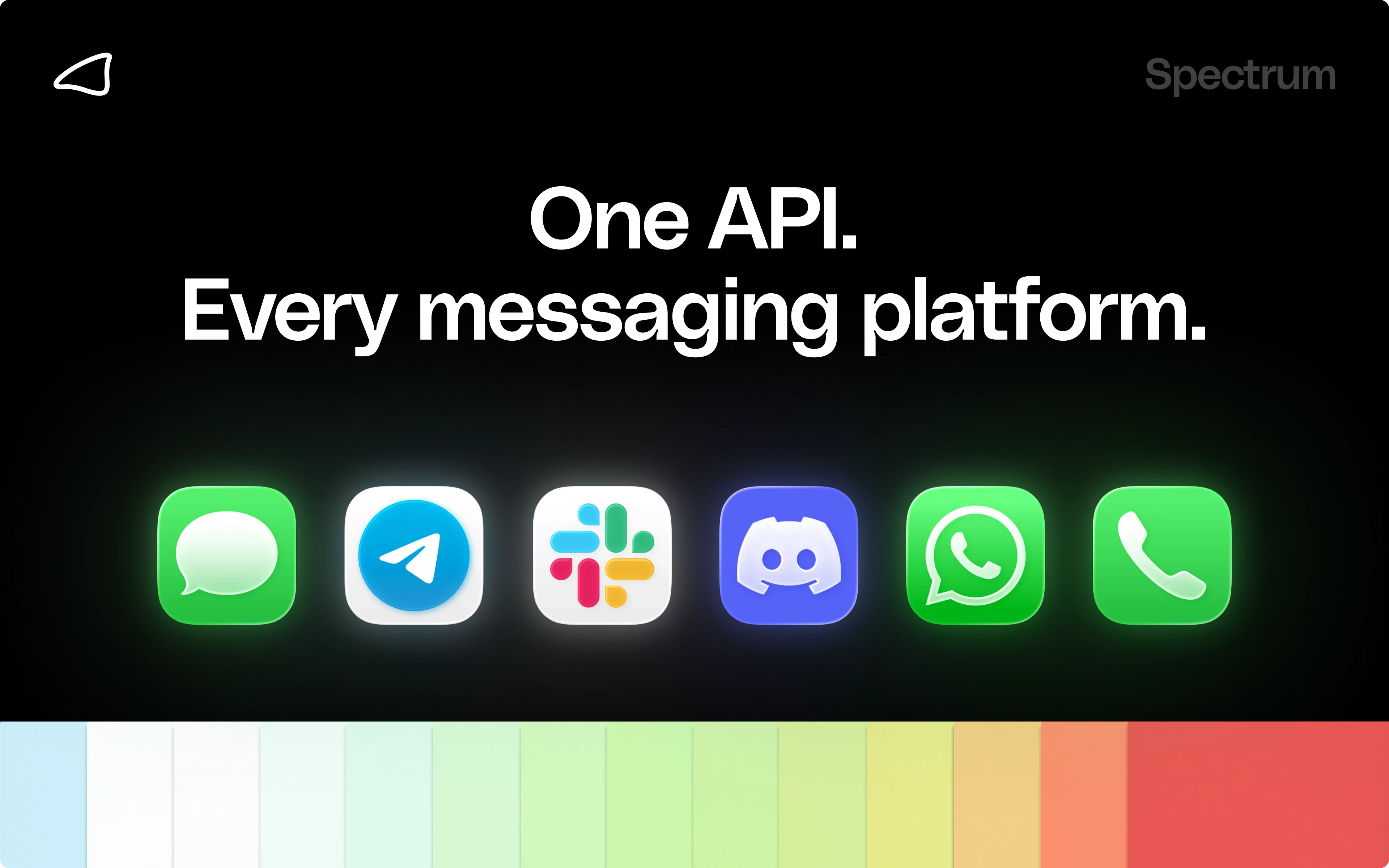
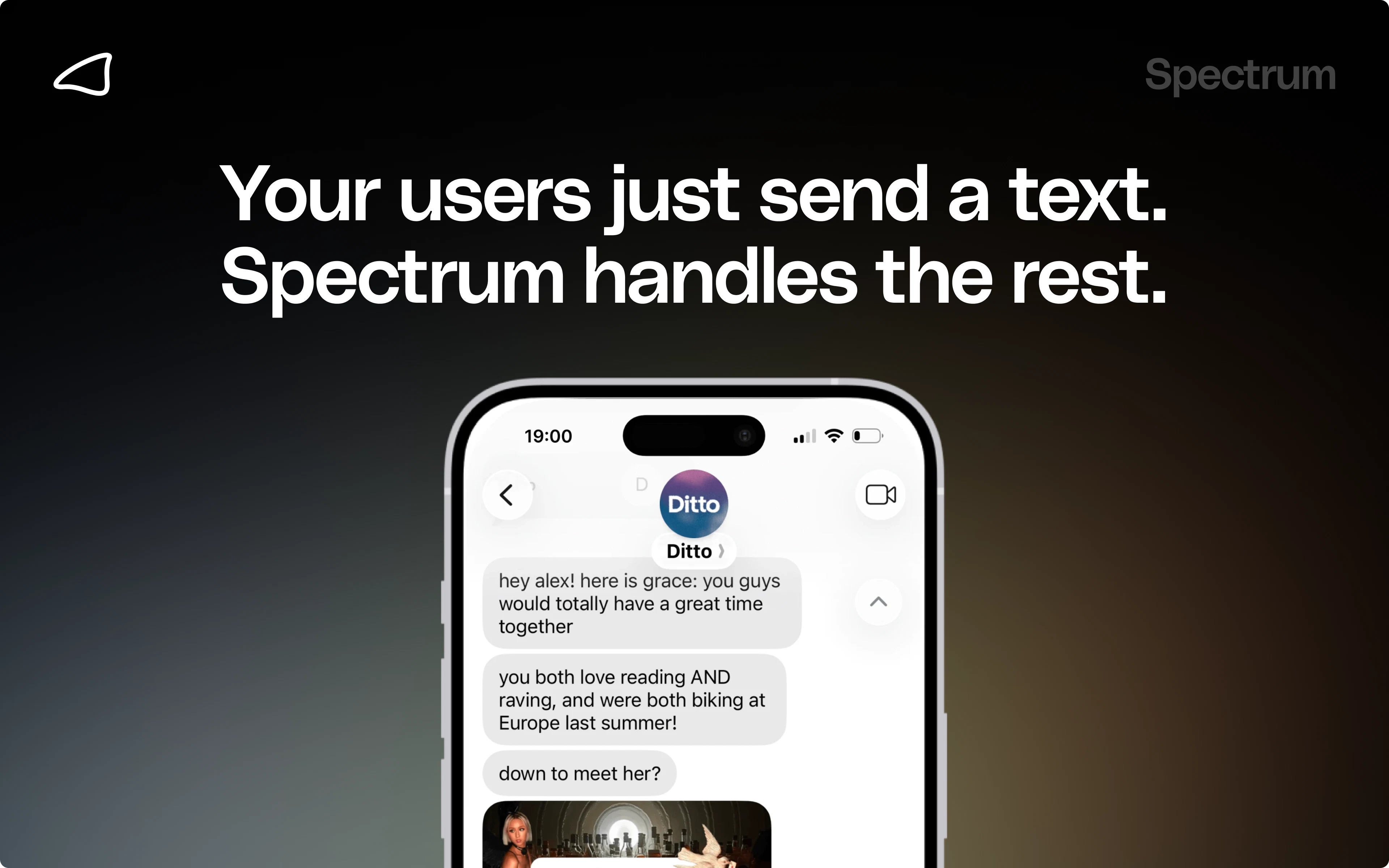
Nobody is going to download an app or visit a website to use your agent. Spectrum is an open-source framework that connects your agents to iMessage, Telegram, WhatsApp, and other interfaces people use every day, using one unified API. Your agent sends one message, Spectrum handles the formatting, delivery, and platform-specific logic natively, in under 1 second. Spectrum is free to start. Scale to Pro or Enterprise when you're ready.
Hi everyone, Julie here from the Photon team, the team behind Spectrum. Spectrum started as our own pain. Building agents on iMessage, WhatsApp, and other messaging apps, we kept running into the same thing: the agent part is mostly solved, but the plumbing around it isn't. Delivery reliability, platform quirks, rate limits, content that renders beautifully on one channel and looks broken on another - that's where the days go. We figured anyone putting an agent into a messaging app will hit the same wall, so we pulled that layer out, hardened it, and are open-sourcing it as Spectrum: sub-second latency, adaptive rendering across iMessage, WhatsApp, Telegram, Slack, Discord, Instagram and more, with monitoring and human-in-the-loop built in. We think the next wave of agents lives in messaging, not dashboards. Would love to hear what you think, especially if you're building in this space!
10
回复

@julie_chen5 For B2B teams building workshop bots or PH launch responders, how does Spectrum handle fallback logic when one channel flakes? Does human-in-the-loop kick in automatically, or do you get alerted to jump in?

0
回复

NO ONE is downloading another app. It's time to bring your AI agents to the channel that people actually use. Spectrum makes this super easy, allowing you to bring in your agent in less than 30 seconds. Fully open source so that you can run everything on your local machine. We also provide a free cloud-hosted plan for people to get started without any friction

7
回复

@daniel_tian3 Really interesting approach — bringing agents into existing interfaces rather than forcing users into a new one is the right UX call. Curious how it handles context switching when the same user is across multiple interfaces simultaneously?

0
回复

@daniel_tian3 congrats on shipping 🥂 2026 is the year AI stops being a 'destination' and starts being a 'participant.' If I can skip building the plumbing for Instagram and Discord and just use Spectrum, my dev time just got cut by 70%.

0
回复

The Photon team is cooking.

Earlier this year, @Flux already hinted at something important: people want agents to show up inside the interfaces they already use. Spectrum takes that idea and turns it into infrastructure.

What makes it interesting is not just the channel coverage, but the native rendering layer across iMessage, Telegram, WhatsApp, Slack, Discord, Instagram, and more. One API, but the interaction still looks and behaves like it belongs on each platform. That is a much harder and more important problem than it sounds.

Agent backends are getting crowded fast. The more interesting question now is: who becomes the interaction layer users actually like? Who builds the bridge between frontier agent capability and the communication surfaces people already live on?

@Spectrum has a real shot at becoming that infrastructure.

6
回复

@zaczuo Nailed the core idea! The interaction layer is where everything compounds. That’s exactly the layer we’re focused on building. Still early, but we’re going all in on making agents feel native everywhere

2
回复

@zaczuo I think you are right and nailed the core pain points for almost all users: that they are having multiple channels for communication.

@Spectrum by the way, just upvoted.

0
回复

I often find myself wondering what the world of the future will look like. AI and agents have existed for barely three years, yet their impact on every facet of our society has been extraordinary. They have reshaped how we search, how we code, and even how we understand ourselves as humans. So what will the next five years bring? Will they truly become, as science fiction once imagined, an integral part of our society? Will we work alongside them as real colleagues, relate to them as friends, or even form deeper bonds? And when future generations look at them, will it feel no different from how we look at one another today?

With this belief, we created Spectrum.

Our mission is to make AI a living part of society - to bring its extraordinary capabilities within reach of every individual. Spectrum enables developers to connect agents to the platforms people already know and use every day: iMessage, WhatsApp, phone calls, Telegram, even hardware devices. We believe this is the first real step toward integrating agents into human society - they must appear where human life already happens.

And there is something undeniably powerful about this moment. For the first time, we feel agents not as distant tools, but as participants - joining group conversations, exchanging messages like friends. This shift opens the door to widespread adoption. My mother, for example, used an agent through iMessage for the very first time - and she’s someone who has never used any other app on her phone.

Agents aren’t built for ordinary people - yet.
But we believe that together, you and we have the chance to change that.

5
回复

@ryanzhuuuu Great job! Let's democritize agents

0
回复

We’ve been using Photon for 3 months. After a brief conversation, Daniel and Ryan got our API key set up in under five minutes. The service is extremely stable.

It’s a young team full of energy, passion, and talent, I'm excited to see see more interesting progress you guys build next!

3
回复

@miltonheyan Really appreciate this - means a lot!

Glad the setup was smooth and it’s been stable for you. That’s exactly the experience we’re aiming for. We’re just getting started, a lot more coming soon. Excited to keep building with you

3
回复

Supported and this will be a tool that developers love to get.

2
回复

@charlenechen_123 we love developers and builders. they are creating the future

2
回复

love this framing — meeting users where they already chat instead of forcing another app install. how do you handle context/memory across the different platforms? does each interface get its own session or is it unified?

0
回复

What a launch video!

0
回复

This is a interesting offering, and your thesis aligns with one of mine, which is that users don't want more apps or logins and would prefer to use the tools they already have. Are you able to do SMS messages to and from a phone number?

0
回复

The interface war is already over—agents need to live inside existing user habits, not new apps.

0
回复

Cool Julie! Does it use official APIs in every messaging app? Cause if so it's super useful for many founders here. Wish you all the best on this impressive launch!

0
回复

The "omni-channel" approach for AI agents! 🔥 Bringing intelligence to where people already hang out is the most logical path to mass adoption. Can't wait to see more frameworks like Spectrum making agents truly "ambient".

0
回复

@candyrorae “ambient” is the right word! Agents shouldn’t feel like tools you open, but something that’s just there when you need it. That’s the direction we’re pushing toward with Spectrum. Appreicate the support

0
回复
#7
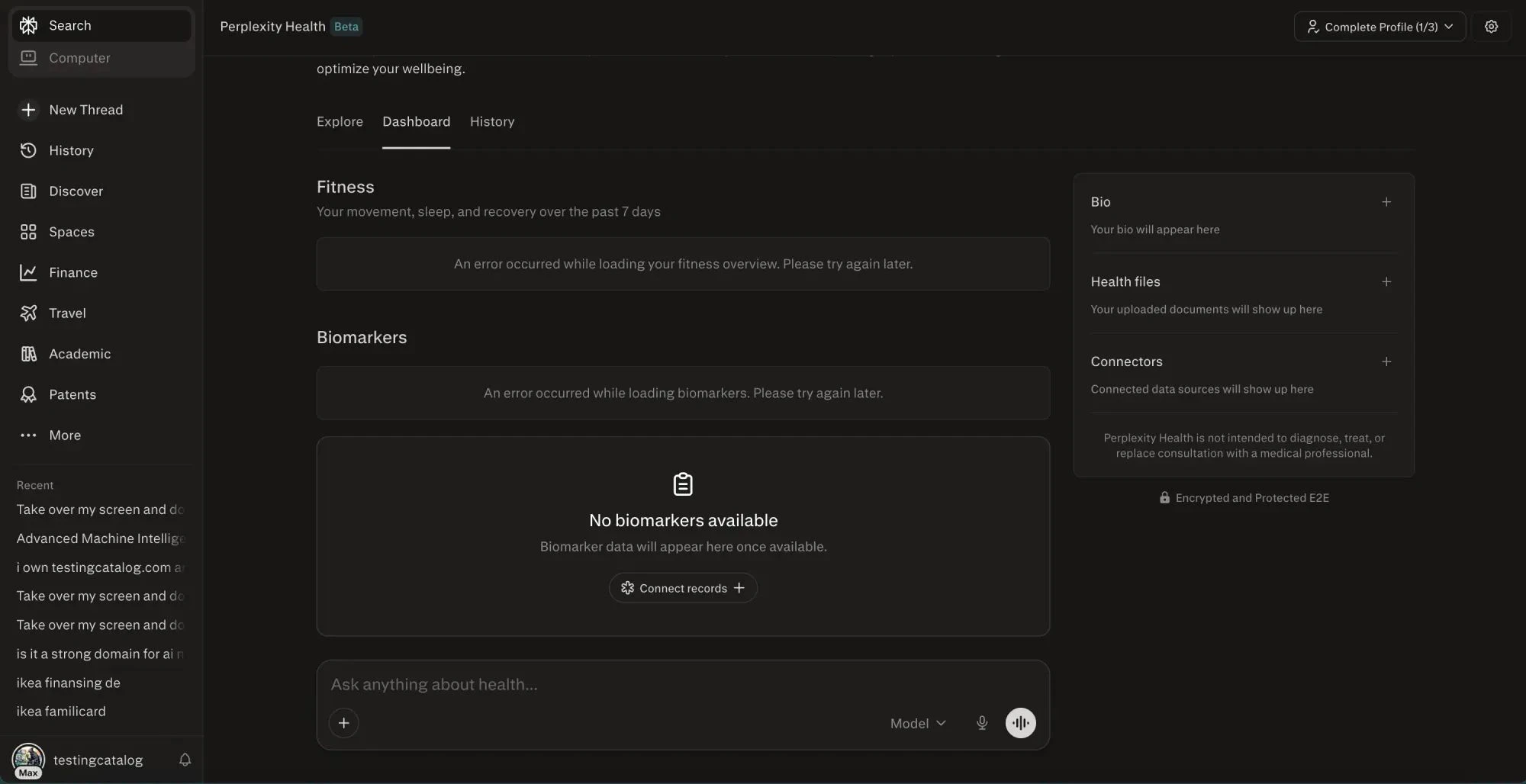
Perplexity Health
Ask health questions across your records, labs, wearables
144
一句话介绍:Perplexity Health通过连接用户的医疗记录、实验室结果和可穿戴设备数据,让AI能基于个人真实健康历史(而非通用网络信息)回答健康问题,为有复杂健康管理需求的用户提供了个性化、数据融合的洞察工具。
Health & Fitness Wearables Medical
个人健康助手 AI健康咨询 医疗数据聚合 可穿戴设备集成 个性化健康分析 医疗记录管理 健康数据可视化 美国市场 订阅制服务 精准医疗
用户评论摘要:用户关注其多源数据(如Apple Health、Fitbit)的整合能力,认为连接一切才能产生真正洞察。有用户证实其对复杂病史的分析有效且准确性高,但也提醒需保持AI怀疑态度。西班牙语用户称赞其快速分析医疗结果的能力。
AI 锐评

Perplexity Health的野心,远不止于又一个“AI健康聊天机器人”。其真正的价值内核,在于试图破解数字健康领域长期存在的“数据孤岛”难题。产品将割裂的电子病历、实验室报告和动态可穿戴数据强行打通,让AI的推理首次建立在个体连续、多维的健康时间线上,这标志着健康AI从提供通用信息迈向提供“个人上下文”的关键一步。

然而,其光环与枷锁并存。核心优势——基于真实个人历史——恰恰是其最大风险源。医疗数据的解读极度依赖质量与完整性,任何缺失或错误都可能导致AI生成看似合理实则危险的“幻觉”建议。评论中“最准确”的感受与“保持AI怀疑”的提醒,精准揭示了用户处于“依赖”与“不安”的典型矛盾心态。产品将自己定位为“辅助”工具,但人性对确定性的渴望极易导致过度依赖。

目前,其服务仅限美国付费用户,这既是受制于医疗数据合规的复杂性地缘壁垒,也暴露出其作为商业产品的本质:它优先服务于有支付能力、数字素养高的群体,而非普惠医疗。可穿戴设备数据的整合是亮点,但如何从“步数、心率”等泛化指标,深度关联到具有临床意义的诊断与预警,仍是待验证的工程与医学难题。

总而言之,Perplexity Health描绘了一个诱人的未来图景:一个真正理解“你”的AI健康伙伴。但它目前更像一个精密的数据聚合与呈现引擎,其医学诊断的可靠性与责任边界依然模糊。它的成功,不取决于AI模型本身有多强大,而取决于其数据管道有多可靠、临床验证有多严谨,以及能否在激发用户健康自主意识的同时,牢牢守住“不替代医生”的底线。

查看原始信息
Perplexity Health
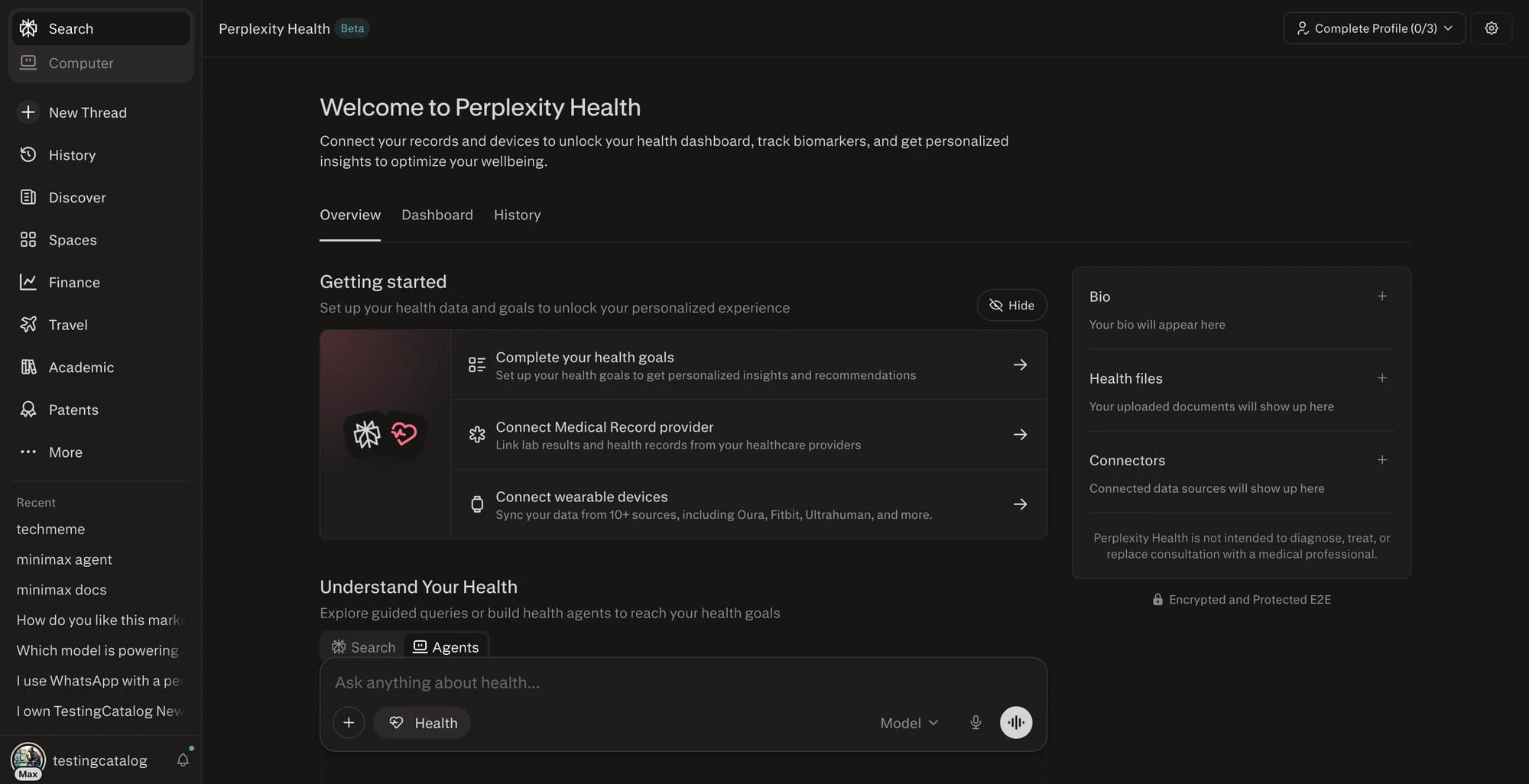
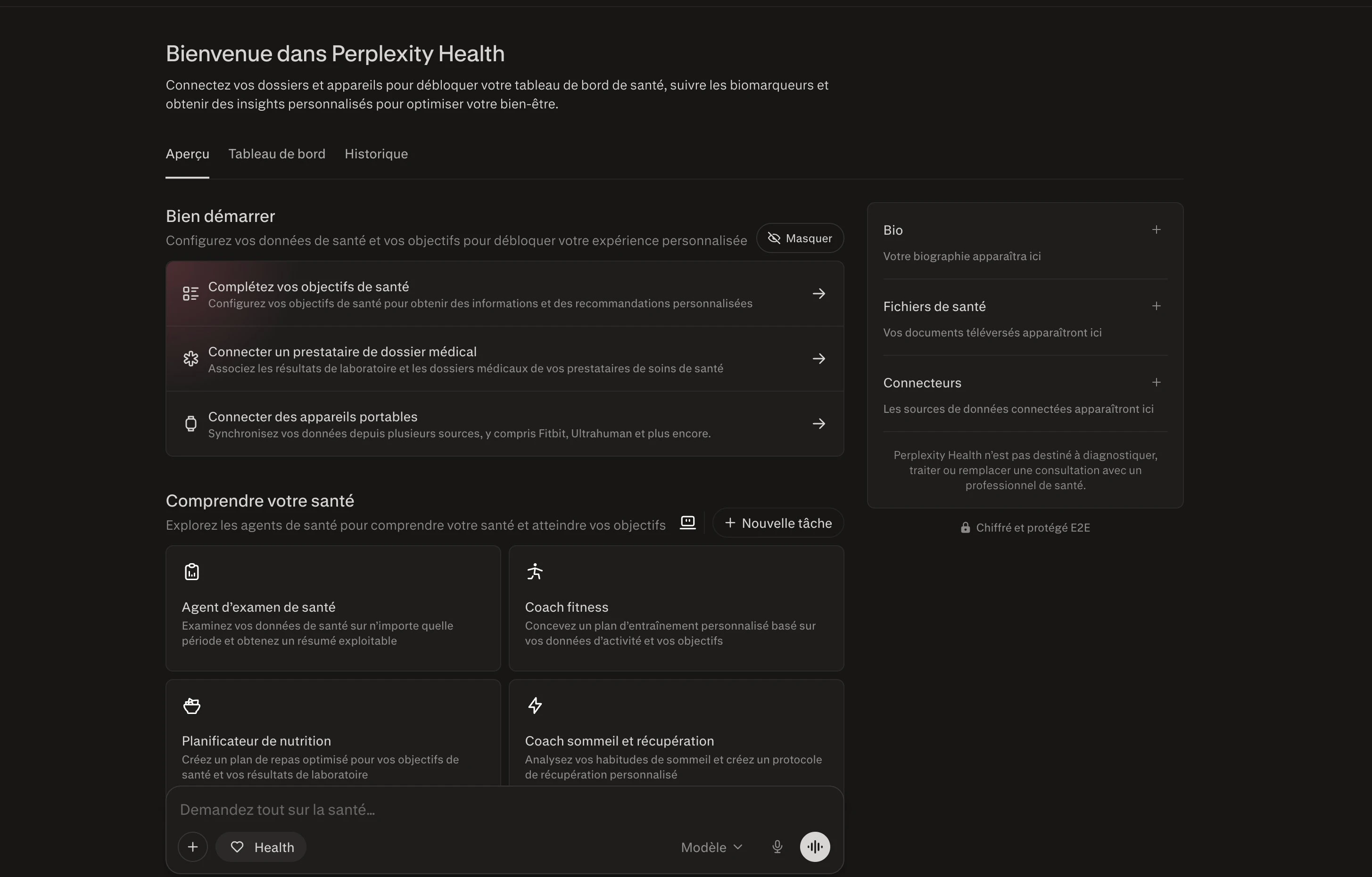
Perplexity Health connects your medical records, lab results, and wearable data so that AI can answer health questions using your actual history, not generic content written to rank. For Perplexity Pro and Max users in the US.

the wearables integration piece caught my attention - are you pulling from Apple Health, Fitbit, or going broader? we've seen so many health apps that only look at one data source when the real insights come from connecting everything together.

5
回复

Es excelente para poder analizar de manera rapida nuestros resultados medicos

0
回复

My father who has a pretty complicated health history has been using this and swears by it. He has tried others and finds Perplexity to be the most accurate. I still caution him to have a bit of AI-skepticism but he feels Perplexity is highly effective.

0
回复

Me parece genial tener una alternativa de IA de Salud, especialmente a quienes hemos tenido un historial clínico de cirugías nos ayuda mucho.

0
回复
#8
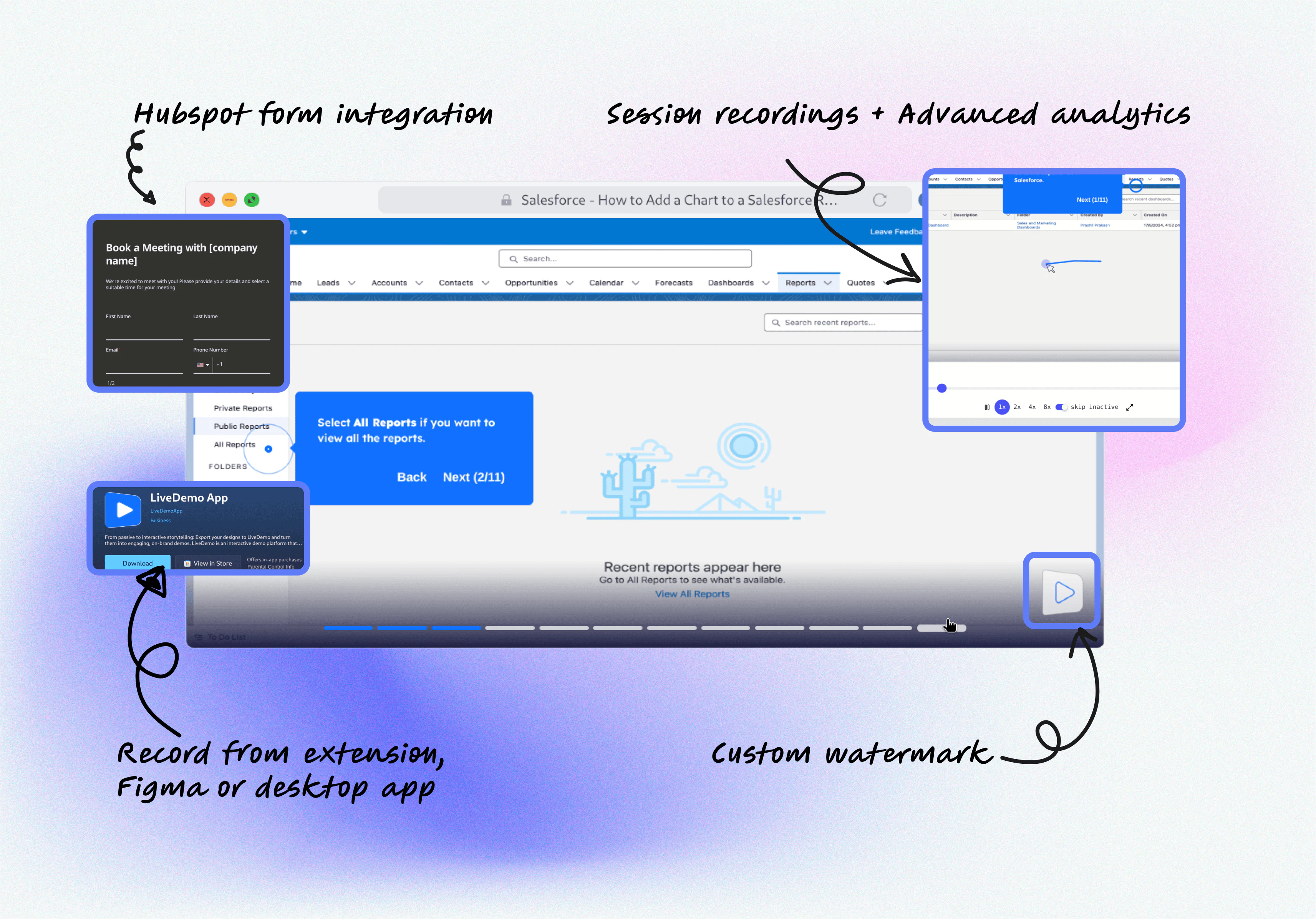
LiveDemo
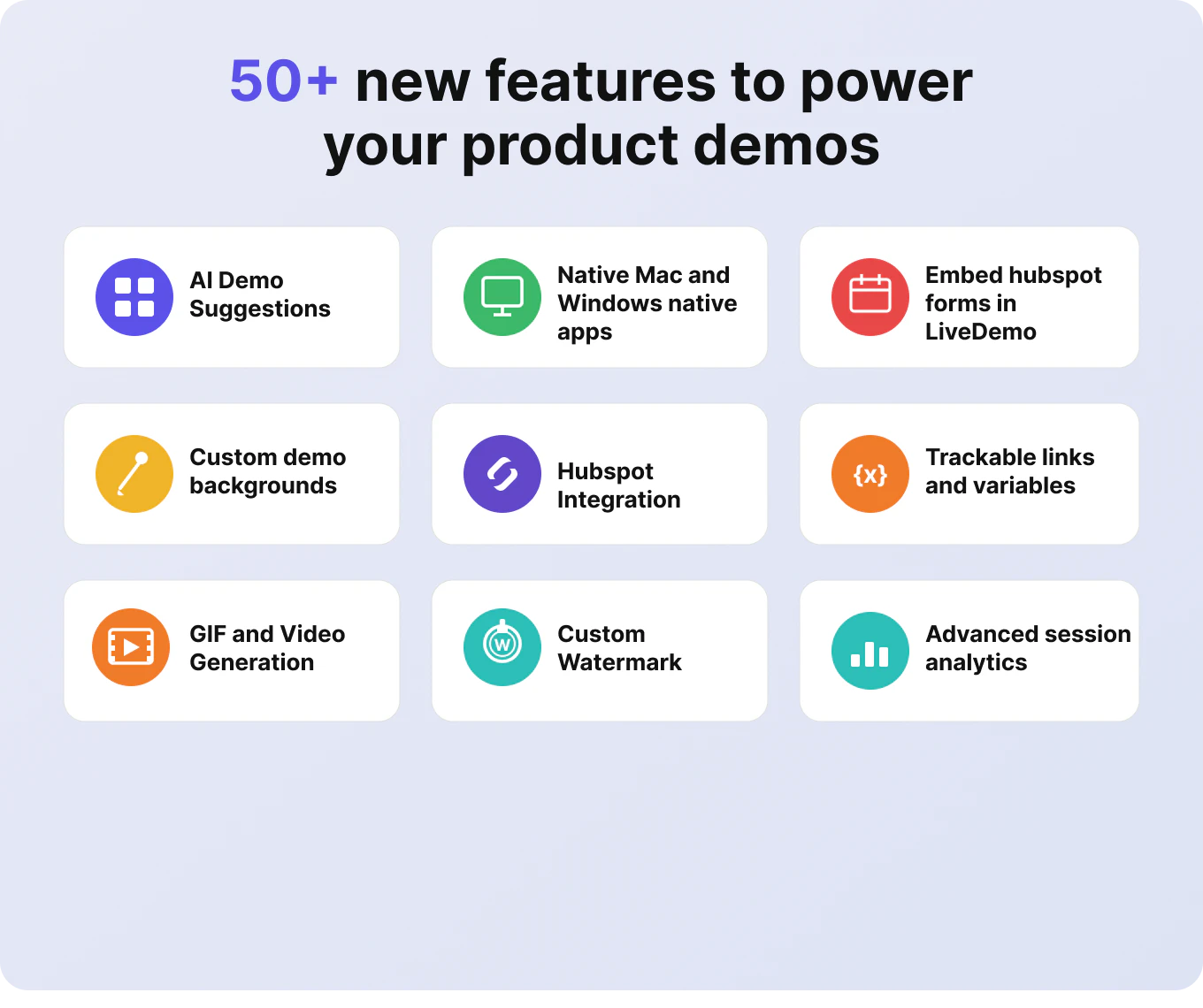
Open-source Interactive product demos
134
一句话介绍:LiveDemo是一款开源交互式产品演示工具,帮助创始人和开发者无需营销或设计团队即可创建高转化率的产品演示,解决“会做不会秀”的核心痛点。
Sales SaaS Developer Tools GitHub
产品演示工具 开源软件 产品体验平台 产品驱动增长 交互式演示 开发者工具 营销自动化 转化率优化 创业工具
用户评论摘要:用户肯定其解决了非设计背景创作者的演示痛点,并询问了具体应用场景(如身份验证后流程、嵌入播客页面)。开发者积极回复,展现了产品在公开演示、嵌入支持(Twitter/Medium)等方面的灵活性,并愿意根据反馈增加功能。
AI 锐评

LiveDemo切入了一个精准且被长期忽视的缝隙市场:技术型创造者的“演示负债”。其真正价值并非简单地提供了一个录制工具,而是试图将“产品叙事”能力产品化、民主化。它敏锐地捕捉到,在“产品驱动增长”范式下,演示不再是售后的锦上添花,而是获客与转化的核心前线。然而,其开源策略是一把双刃剑。一方面,它迅速赢得了追求透明、可控和低成本的技术型创始人的好感,建立了初始信任;另一方面,这将其商业模式悬置起来,未来在托管服务、高级功能与企业支持上的变现路径将面临严峻考验。

从评论看,用户需求已从“能否做演示”深入到“如何在复杂、私有化场景中应用”,这揭示了工具化产品必然面临的挑战:从解决“有无”问题,到适应客户千变万化的业务流程,其间有巨大的工程与生态鸿沟。与Arcade等成熟产品的对比问题,也预示了其在功能深度与用户体验上面临的激烈竞争。它的机会在于,牢牢绑定“开源”与“极简”的初始定位,服务于早期创业者和独立开发者这一核心基本盘,将他们从笨重、昂贵或封闭的解决方案中解放出来,先成为细分领域的“标配”。但若想真正实现“产品体验平台”的愿景,它必须在开放性与商业化、易用性与功能性之间,找到那个精妙的平衡点。

查看原始信息
LiveDemo
Product experience platform for product-led growth
Hey Product Hunt 👋 I’m George, the maker of LiveDemo AI. Over the years I've shipped a lot of code and watched a lot of great products needlessly fail. Not because the tech wasn't good, but because the demo was an afterthought and the sales story never landed. Talking to fellow founders and developers, the same frustration kept coming up "I can build it, but I have no idea how to show it." That is exactly why I built LiveDemo.ai A tool that helps founders and developers create demos that actually convert, without needing a marketing team or a professional designer. You focus on the product. LiveDemo handles the story.
5
回复

@gapostolov as someone who has zero design skills, the promise of not needing a marketing team is the real hook. usually, making a demo look 'polished' takes more time than building the actual feature. awesome

2
回复

@gapostolov Good project!

0
回复

Interactive demos are one of those things I keep meaning to set up properly but never get around to. Static screenshots lose context fast. Does this work for flows behind auth, or is it mostly for public marketing pages?

2
回复

@sweepbase 

It could be used for sharing public demo links with prospects,
But if you have the need for Authenticated demos, behind passwords
That could be easily included as a feature.

Just let me know what you mean by flows behind auth

2
回复

Definitely worth trying if you’re building software products. Just recorded a few demos of my own projects and shared them on socials, curious to see where this goes next.

2
回复

Absolutely nailed one of the issues founders and specially tech founders have and it is to create storytelling demos I have tried in a couple of my projects and it makes a difference compared to how I was doing it before.

2
回复

interactive demos as a category feels overdue for an open-source option. how does it compare to something like Arcade or Storylane in terms of capture flow — is it browser extension based?

1
回复

@tijogaucher 
Yes, it is similar
Browser extension, Mac and Windows Apps and a Figma plugin

1
回复

Interactive demos are a criminally underused format for technical content creators. I record a finance/financial modeling podcast (ModeLoop Podcast: https://open.spotify.com/show/0m...) and every time I interview a practitioner, the hardest part isn't the conversation — it's letting listeners "see" the model they're describing after the fact. An interactive demo layered alongside an episode could fix that. Does LiveDemo support embedding into longform content like a podcast episode page, or is it mostly SaaS landing-page oriented?

1
回复

@samir_asadov 
We currently support embedding inside Twitter(X) and Medium posts
Also embedding with https://embed.ly/ platform

I am not aware how Spotify podcasts episode page's work
But if they support Iframe for example, yes it would work

0
回复
#9
Chronicle
Build Codex memories from recent screen context.
132
一句话介绍:Chronicle是一款通过实时捕获屏幕内容为AI助手Codex提供持续上下文的macOS工具,解决了用户在复杂工作流中因频繁切换任务而导致AI失去上下文、需要重复解释的痛点。
Productivity Developer Tools Artificial Intelligence
生产力工具 AI助手增强 上下文记忆 屏幕内容分析 本地优先 隐私保护 自动化 调试辅助 macOS专属 工作流优化
用户评论摘要:用户普遍认可“屏幕上下文即记忆”的方向,认为能有效解决工具因丢失上下文而失效的核心问题。主要关注点集中在隐私边界(数据是否仅本地处理)和实际效果上。也有用户对Codex近期的改进表示赞赏。
AI 锐评

Chronicle看似是一个简单的屏幕捕获插件,实则触及了当前AI助手应用最深的“阿喀琉斯之踵”——健忘症。它将Codex从一个需要不断被“提醒”的间歇性聪明伙伴,试图升级为一个拥有“视觉工作记忆”的持续协作者。其宣称的“本地优先”是产品设计的明智之举,甚至是生存前提,因为这直接回应了用户对屏幕隐私的终极焦虑。然而,其真正的挑战在于技术实现层面:如何从纷繁复杂的屏幕像素中,精准、结构化地提取出与当前任务相关的“上下文”,而非制造一堆无意义的“数据噪音”。如果它仅能粗糙地截屏和OCR,那么其价值将大打折扣;如果它能理解不同IDE、设计工具、文档的界面语义,自动聚焦于代码块、错误信息或设计图层,那才是革命性的。目前来看,它迈出了正确但充满不确定性的一步。它的成功不取决于“是否记录”,而取决于“如何理解与关联”。在AI能力从单次对话转向持久化智能体的进化浪潮中,Chronicle是一次关键的前哨实验,但其最终是成为核心基础设施,还是只是一个隐私友好的小众玩具,取决于其背后对“上下文”的解析深度与智能程度。

查看原始信息
Chronicle
Build Codex memories from recent screen context.
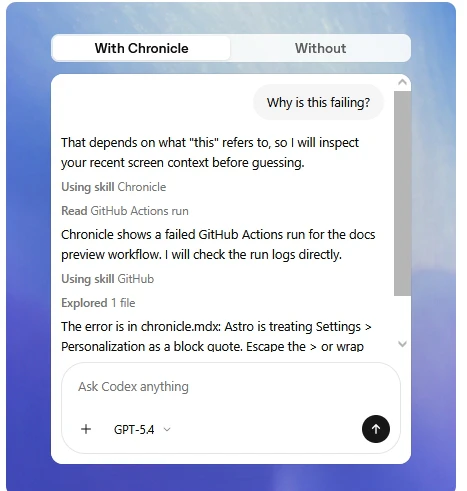
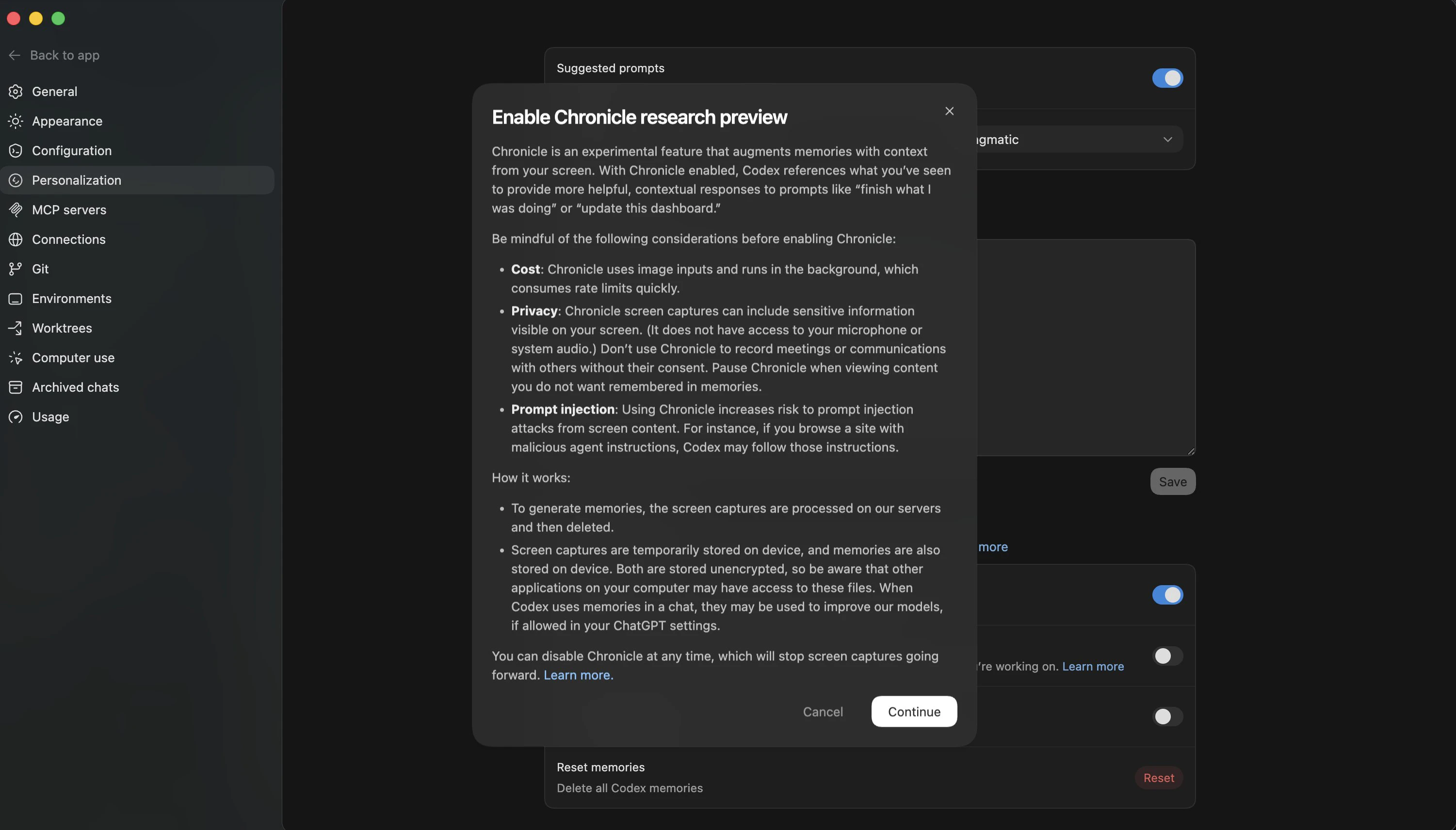
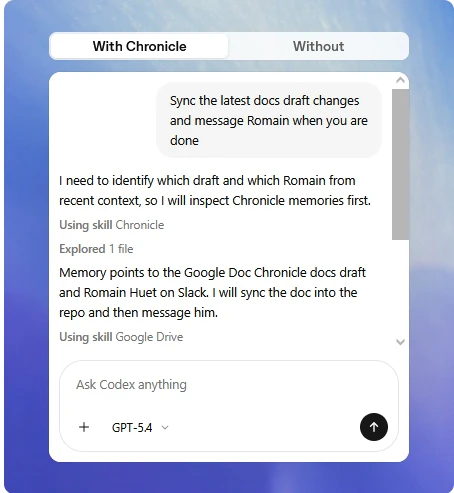
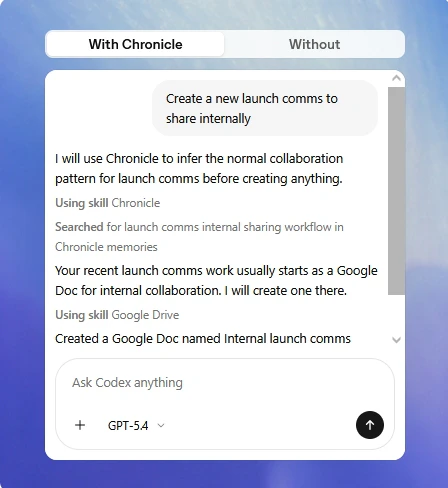
Chronicle adds real-time screen context to Codex, so it remembers what you’re working on. No need to repeat yourself. It understands your tools, workflows, and files to debug faster, automate tasks, and continue work seamlessly. Opt-in, local-first, macOS only.
1
回复

@byalexai  congrats, love the idea.

had to double check my wifi for a second, screenshots got that early 2000s vibe :)

been using Codex daily and honestly really impressed with how much it has improved lately

0
回复

@byalexai this is a reply

0
回复

screen context as memory is such an underrated direction. curious what the privacy boundaries look like — does it stay local or sync somewhere? feels like the kind of feature that lives or dies on that answer.

0
回复

Been thinking a lot about this problem, most tools don’t fail because of capability, they fail because they lose context too quickly.

This feels like a big step in the right direction.

0
回复
#10
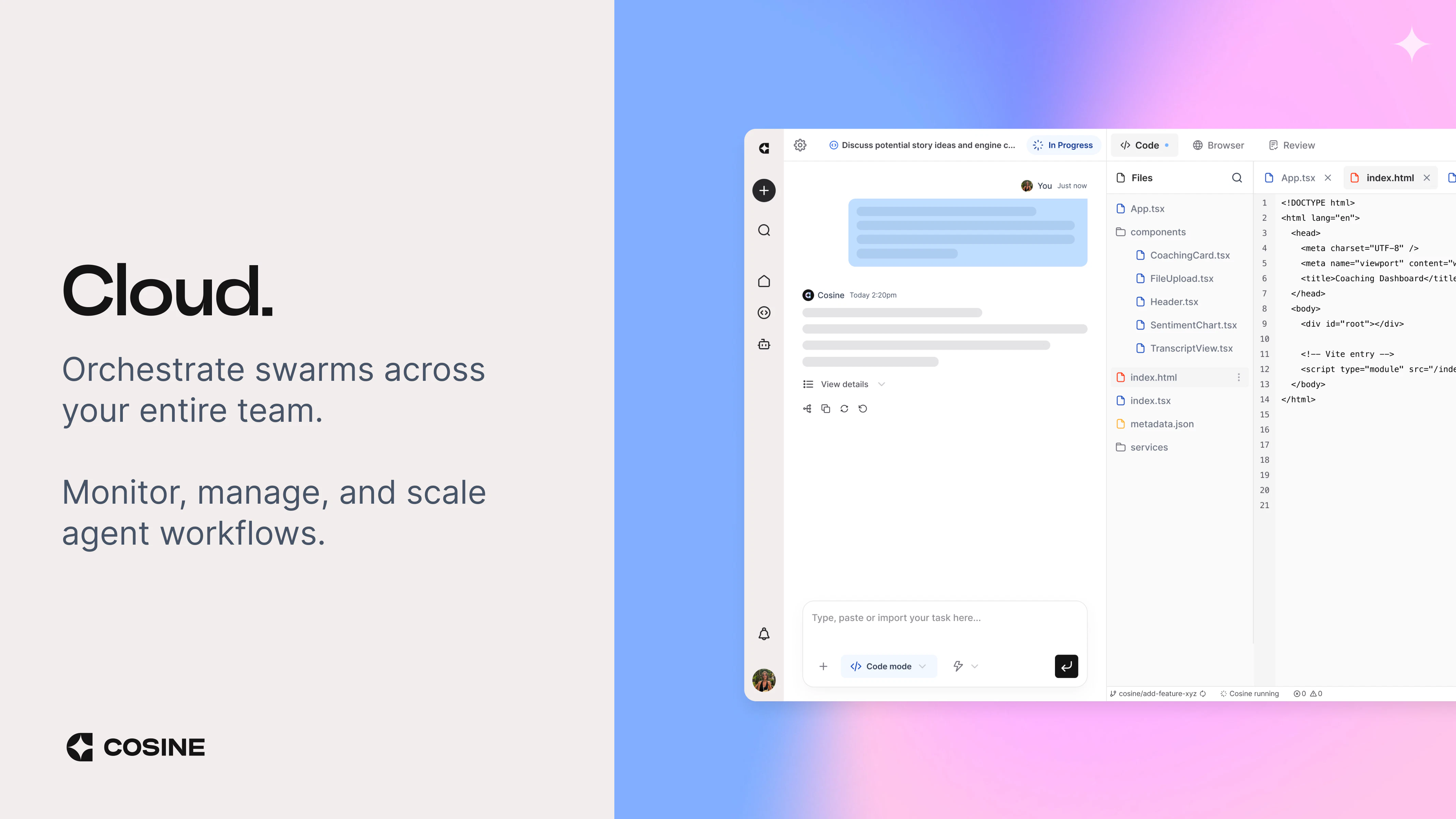
Cosine Swarm
Parallel AI agents for long-horizon, complex software tasks
118
一句话介绍:Cosine Swarm是一款通过并行AI智能体(协调者、任务所有者、工作者)分层协作,在单一运行时中处理长期、复杂软件工程任务(如大规模重构、系统迁移)的AI开发工具,解决了开发者面对庞杂任务时效率低下、上下文管理困难的核心痛点。
Developer Tools Artificial Intelligence Vibe coding
AI软件工程 多智能体协作 并行任务执行 代码重构 开发效率工具 CLI/桌面/云端一体化 长期任务处理 自动化开发 智能代码助手
用户评论摘要:用户普遍盛赞其“改变游戏规则”,能显著提升吞吐量,实现“晚上分配任务,早上审查PR”。核心关注点在于多智能体并行时的冲突处理机制(通过文件锁、工作区隔离预防),以及任务失败或过于复杂时的回退逻辑(协调者拒绝并行,转为串行)。部分用户对协调开销和故障排查表示担忧。
AI 锐评

Cosine Swarm的野心不在于成为另一个代码补全工具,而旨在构建一个“AI原生”的软件工程系统。其真正价值并非简单的“多线程”AI,而是将人类团队的管理范式——分层、分工、隔离、审查——编码进了AI协作流程。这直击当前AI编程代理的核心短板:面对长期、复杂任务时,单一智能体极易陷入“上下文腐烂”,胡言乱语或失去焦点。

产品通过“协调者-任务所有者-工作者”的三层架构,尝试将软件工程中的“规划”与“执行”解耦,让AI自己管理复杂性。这比单纯堆砌智能体数量更为深刻。从评论看,其通过前置规划(划分任务边界)、资源锁(文件级隔离)来彻底避免合并冲突的设计,是获得早期用户肯定的关键。这避免了用户从“调试代码”沦为更痛苦的“调试AI代理行为”。

然而,其宣称的“晚间任务,晨间PR”是一种理想状态下的线性叙事。产品的长期考验在于其“协调者”的智能上限:它能否真正理解“真正混乱、现实世界的代码库”中任务间的隐性依赖?当任务无法清晰分区时,系统回退到串行执行,这固然稳妥,但也可能让并行优势荡然无存。本质上,它把复杂性从编码层面转移到了AI系统设计的层面——协调逻辑的可靠性,将成为新的“技术债”。

总体而言,Cosine Swarm代表了AI编程工具向“系统化”和“工程化”演进的重要一步。它不再满足于做一名“超级实习生”,而是试图组建并管理一支“AI团队”。成功与否,取决于其团队“管理能力”(协调算法)能否匹配真实世界软件混沌、交织的本质。这不再仅仅是AI问题,更是复杂的软件工程问题。

查看原始信息
Cosine Swarm
Cosine Swarm is AI software engineering at scale, built for long-horizon work and engineers with taste. By transforming objectives into an organized team of specialized agents – Orchestrators, Task Owners, and Workers – it handles complex refactors and system-wide migrations without losing focus. Cosine operates as one runtime across CLI, Desktop, and Cloud. Use Swarm mode for parallel execution for research, implementation, and QA. Return to isolated, human-reviewable PRs.

Hey Product Hunt! 👋


I’m Yang, co-founder of Cosine (cosine.sh), along with @alistair_pullen. We’re excited to introduce Cosine Swarm!

For the past year, we’ve seen AI coding move from simple autocomplete to bounded task agents. At Cosine, we believe that the system surrounding the model intelligence has become increasingly important.

💡What is Cosine?


Cosine is an AI software engineering agent that works across every surface developers use. Instead of stitching together separate AI tools for the terminal, editor, desktop, and remote execution, Cosine gives you one shared runtime across all of them.

You can start in the CLI, coordinate through the desktop app, and scale tasks in the cloud without changing products or workflows.

👾 Unleash the Swarm


Cosine Swarm lets a single prompt launch parallel subagents for research, exploration, implementation, QA, and coordination. Each subagent works in its own isolated context, with its own tools and trajectory, so complex work can branch safely, stay reviewable, and move faster without turning into chaos.

Instead of a single-agent thread straining under the weight of multiple tasks, Swarm mode creates a coordinated hierarchy. An Orchestrator breaks down goals, Task Owners manage workstreams, and Workers execute tactical changes in parallel.

Assign complex tasks in the evening and find them completed, tested, and ready for review by the morning.

🖥️ Available now across our entire ecosystem


I’m incredibly proud of our team for this release. We built Cosine to feel less like a collection of disconnected agent experiences and more like a real system for AI-native software engineering.

Swarm mode is available now across CLI, Desktop, and the Cloud.

We’re looking for feedback from developers and teams working across large codebases, multiple tools, and complex workflows – especially anyone who wants more control, better collaboration, and a coding agent that scales beyond a single interface.

🎁 Grab 1 month of FREE access to our Hobby tier using the code above. 20M tokens to swarm with.

→ Get started with Cosine: cosine.sh

→ Read the docs: cosine.sh/docs

I'll be in the thread all day answering questions!

11
回复

@alistair_pullen  @yang_cosine How does it handle token limits or costs when 5+ subagents run overnight on a big codebase refactor?

0
回复

I cant tell you how nuts this feature is.

Here was my workflow previously:

  • get on the train

  • start 5 tasks

  • get to work and debug the code for each and iterate back and forth, taking up most of my time for the day

  • get the 5 tasks in by EOD

Here's my workflow now:

  • get on the train

  • start 5 swarms

  • get to work, start 5 more

  • come back to each, find that everything already works (because all the code has already been thoroughly reviewed, QA'ed and iterated on)

  • keep merging them and starting more throughout the day

  • get praised for how much work im getting done

  • profit

  • EOD ive merged 10-15 features

Its genuinely changing the game, this is what AI coding has been promising to be for so long and it finally is

6
回复

Swarm has been pretty fantastic so far. It's been quite a nice workflow to just hand over a large task, let it work through it, come back later and review what it did.

I can finally feel my backlog of tasks and experiments start to clear... Well, it's got a higher throughput at least. Theres always another idea to experiment with

5
回复

Such an exciting release. I’ve been loving using Swarm mode. As someone working in ops, it’s been a game changer for my workflow - helping with research, project planning, spreadsheet analysis, reporting, and turning messy information into clear outputs I can actually use. It’s also been great for hobby projects too. I even used it to build an interactive intro-to-coding app! Really excited for more people to try it 😊

4
回复

Swarm has expanded my workflow so much. I can start up multiple swarms to tackle seriously big new features, additions or tackle tough bugs. I just have to check out the branch afterwards, give it a quick once over, and it's done.

If ever a mono-agent is failing you just kick it into swarm mode, trust me

4
回复

Swarm is such a game changer. We were able to generate a fully-functional, design system-aligned mobile version of our website with a single swarm and prompt. It even included tests!

3
回复

This is huge. Biggest problem I have with AI coding is context rot. Problem is too big to digest and AI just starts making sh*t up.

Cosine has give the AI the ability to go from coder to Tech Team HR, spinning up a whole org chart to make big problems easy to digest.

Congrats!

3
回复

Congrats on the relaunch, Yang.

The orchestrator/task owner/worker hierarchy makes sense on paper.

It mirrors how real engineering teams divide work. The hard question is whether the coordination overhead between agents stays manageable on genuinely messy, real-world codebases, or whether complex tasks still quietly derail in ways that only surface at review time.

"Assign tasks in the evening, find PRs ready by morning" is a bold promise.

What's the failure mode when it goes wrong? Does Cosine surface a clean explanation of where it got stuck, or do you end up debugging the agent's decisions as much as the code itself?

3
回复

@ryanwmcc1 Because each agent runs in an independent git worktree, a failed task can be discarded or rolled back without affecting the rest of the codebase.

Crucially, the orchestrator prevents conflicts at the planning stage. If a task is too messy to partition safely, it rejects parallelization and falls back to sequential execution. This ensures you aren't stuck debugging the agent's coordination logic at review time.

0
回复

congrats on the launch!

1
回复

@albattran Thanks, Samir! Glad that we're finally able to talk about Swarm. It genuinely changes the entire flow of my work. I'm getting so much more done by the end of the day.

0
回复

The orchestrator/task owner/worker hierarchy is a smart decomposition for parallel agent work. Most multi-agent coding setups I have tried fall apart when two subagents touch the same files. Curious how Cosine handles merge conflicts between parallel workers. Does the orchestrator prevent overlapping file edits upfront, or is there a resolution layer that reconciles after the fact?

1
回复

@najmuzzaman Swarm avoids merge conflicts by preventing overlapping edits in the first place rather than fixing them later. It does this by:

  • Locking files so only one agent can modify them at a time

  • Partitioning work so agents edit separate files or are sequenced if overlap is needed

  • Isolating workspaces using separate git worktrees

Because no two agents ever edit the same file simultaneously, conflicts never arise.

0
回复

Honestly the parallel angle is what scares me. Every time I've tried coordinating two agents on the same repo they end up stepping on each other's files and I spend the saved time resolving merges. Does Swarm coordinate which files each agent can touch, or is it more of a post-hoc merge thing?

0
回复

The Orchestrator and Task Owner split is a cleaner hierarchy than I usually see in swarm setups. I am curious how the Orchestrator decides when to fan out versus keep something in a single thread. Is that driven by the task graph it builds up front, or is there a heuristic about codebase scope that triggers parallel branching?

0
回复
#11
PageOn.AI 3.0
A smarter visual agent for slides, posters & infographics
105
一句话介绍:PageOn.AI 3.0是一款多格式视觉智能体,通过更智能的上下文理解和点选聊天编辑,为销售、小企业主、教育者等用户,在需要快速产出高质量幻灯片、海报及信息图等视觉材料的场景下,解决了“想法出色但视觉呈现耗时费力”的核心痛点。
Design Tools Productivity Artificial Intelligence
AI演示文稿生成 多格式视觉设计 智能设计代理 无代码设计 内容创作工具 幻灯片制作 营销素材生成 信息图设计 生产力工具 AI办公
用户评论摘要:用户反馈积极,认可其使命与迭代诚意。主要问题与建议集中在:1. 询问API集成可能性,以用于内部工具自动生成报告;2. 关心其对复杂、抽象布局指令的理解能力;3. 探讨其对金融并购等专业领域(如复杂表格、脚注)的支持深度。团队回应积极,透露API已在规划中。
AI 锐评

PageOn.AI 3.0的迭代,标志着其从单一的“幻灯片制作工具”向“多格式视觉智能体”的战略转型。其宣称的“重新设计整个大脑”,核心在于从规则驱动转向意图驱动,这直指当前AIGC设计工具的核心矛盾:生成易,精准控制难。新推出的“点选聊天编辑”功能,正是试图在“全自动生成”与“全手动调整”之间,开辟一条“人机协同”的中间路径,让AI承担“像素搬运”的重体力活,这比单纯比拼出图速度更具实用价值。

然而,其真正的挑战与价值考验在于“场景化深度”。从评论看,用户已不满足于营销海报的生成,而是追问其在金融、咨询等对数据严谨性与格式规范性要求极高的专业场景下的能力边界。创始人坦诚其在复杂脚注等方面并非最强项,这揭示了当前视觉AI的普遍短板:善于处理风格与叙事,弱于理解严格、复杂的领域特定规则与结构。这也恰恰是其“更智能的上下文感知”能否落地的试金石——理解“Gen-Z受众”的语境或许相对容易,但理解“投委会挑剔的CEO”背后的专业与合规要求,则需要完全不同维度的“智能”。

因此,PageOn.AI 3.0的价值不在于替代专业设计师,而在于成为知识工作者(如销售、分析师、教授)的“视觉副驾”。它的成功与否,将取决于其智能体在垂直工作流中的“可靠性”与“可预测性”,能否将用户从美工劳动中解放,从而真正聚焦于“影响”本身。其提供的API前景,则暗示了更深层的价值:将视觉生成能力作为模块嵌入企业流程,这可能才是其规模化与构建壁垒的关键。

查看原始信息
PageOn.AI 3.0
A total visual leap. Smarter agent delivers stunning slides, posters and graphics instantly. No skills needed. Refine what you want, ship what impresses.

Hi Product Hunt! 👋 I’m Yunfei, the founder of PageOn.

It’s a bit emotional to be back here with our 3.0. We built PageOn on a simple belief: Ideas are everywhere; impact is rare. Our mission is to bridge that final, painful mile of information delivery. We’ve seen brilliant professionals, growth-drivers, and students struggle—not with their ideas, but with the 'pixel-pushing' required to make them shine.

In the earlier versions, let’s be real, our AI had its growing pains. So, we spent the last year listening to your frustrations and re-engineered the whole brain.

We’ve evolved from a "Slide Maker" into a Multi-format Visual Agent.
🎯 Smarter Context Awareness: The Agent now truly "gets" you. Whether you’re pitching to a picky CEO or launching a campaign to a Gen-Z audience, the tone, layout, and narrative will shift accordingly.
🎨 One Prompt, Any Canvas: It’s no longer just about slides. Our Agent now generates a cohesive set of visuals—from social posters to infographics—instantly, ensuring your message looks stunning across all platforms.
Point-and-Chat Editing: We’ve minimized manual labor. Just select a specific element, chat with the Agent to modify it, and let the AI handle the "heavy lifting" of redesigning.

Whether you’re a Sales lead needing a last-minute deck, a Small Biz owner creating a week’s worth of social assets, or a Professor visualizing complex data—PageOn 3.0 was built to take the visual burden off your shoulders.

We are here to see if our Agent’s brain is finally “smart enough” for your real-world workflows. We desperately want your brutal feedback.

What’s the most frustrating visual task on your plate right now? Tell us, and let’s see if our Agent can solve it.

⚡ Special Launch Perk: We want you to really push PageOn 3.0 to its limits. Use the code [M2L-W6D-N5F] to unlock a free month of Pro access. Heads up: This is limited to the first 1,000 redemptions and must be activated within 1 month. Jump in and see what our AI can do for you!

Let’s bridge that last mile together. 🚀

3
回复

Will there be an API available soon? I'd love to integrate this agent into our internal tools to auto-generate reports.

2
回复

@eexlkuang_se  sure , thanks for suggestion, API is on the way !

0
回复

@eexlkuang_se Hi Samuel, great question! API access is definitely on our roadmap — we know how valuable it'd be for teams wanting to auto-generate reports at scale. I'll make sure to keep you posted when it's ready. Would love to hear more about your use case! 🚀

1
回复

How well does it understand complex layout requests like "make the visual hierarchy more aggressive"?

1
回复

@feiyou_guo1  Thanks for asking! Since the currrent architechture is base on xml coding , and it partly depends on the context you have , so the layout understanding and tweaking won't be that hard.

0
回复

@feiyou_guo1 Hi Feiyou! We've specifically improved how the agent interprets abstract layout instructions in 3.0 . Best way to see it in action: try it with your free credits and use the chat to refine from there. Curious to hear if it hits the mark! 🎯

1
回复

It's refreshing to hear a maker admit their AI had growing pains. Re-engineering the whole brain sounds like a massive undertaking. Can you elaborate on what specifically changed in the backend logic?

1
回复

@janicelewis00 Hi Janice! Great question. We mainly re-architected the agent to be far more AI-native — less rule-driven, more intent-driven. It now understands context and makes decisions dynamically rather than following a rigid workflow. Covers much more ground and handles edge cases way better. Still a lot to improve, but the output quality jump was immediate! 🙌

2
回复

@janicelewis00 Great follow-up, Janice! It was definitely a "re-engineering the plane while flying it" kind of situation. But the results speak for themselves now. If you're curious about any specific edge cases we solved, feel free to ask! Always happy to nerd out on the backend logic.

1
回复

"Ideas are everywhere; impact is rare." — Love this mission statement. The tool definitely bridges that gap. Congrats on the 3.0 launch!

1
回复

@candyrorae Exactly! That mission drives everything we do. We’ve optimized PageOn 3.0 to handle the heavy lifting so you can focus on making that impact happen. Thanks for the 3.0 love!

1
回复

@candyrorae Hi Candy, thanks for your love! That mission statement really captures what we're building — glad it resonates.

1
回复

The slide-first AI output is interesting to me from an M&A perspective — the bottleneck on most deals isn't the raw analysis, it's how fast you can turn it into an IC deck or one-pager without losing structural integrity. I've felt the same pain on the modeling side: reusable templates with the right shape beat starting from scratch every time, which is why I put my project finance and valuation templates on Eloquens (https://www.eloquens.com/channel...). Does PageOn handle dense financial tables and footnote structures well, or is it more optimized for narrative/marketing decks?

0
回复

@samir_asadov Hi Samir! Totally feel the M&A pain — turning raw analysis into a clean IC deck fast is exactly the gap we're trying to close. Honest answer: PageOn is currently stronger on narrative/pitch decks, but we do have a dedicated data visualization agent that handles charts and tables well, and supports a wide range of file formats so you can bring your data straight in. Dense footnote structures aren't our strongest suit yet, but worth a try with your free credits — genuinely curious how it holds up against your use case!

1
回复
#12
Magic Layers by Canva
Turn any flat image into a fully editable design
104
一句话介绍:Magic Layers能将PNG/JPG等平面图像在Canva内转换为可分层编辑的设计,解决了AI生成图像难以直接修改细节、需反复重制的痛点,特别适用于营销、创作者团队对AI视觉稿进行快速迭代的场景。
Design Tools Productivity Marketing
图像编辑 AI工具集成 设计自动化 格式转换 图层分离 文字识别 营销素材 内容创作 生产力工具 SaaS
用户评论摘要:用户肯定其将AI图像转为可编辑层的核心价值,认为能节省大量时间。但尖锐批评指出,其对扁平物体的处理生成低分辨率位图而非矢量,导致成品质量差,实用性受限。另有用户关心其付费模式。
AI 锐评

Magic Layers瞄准了一个真实且日益增长的痛点:AI图像生成器输出的“死文件”与商业应用中需要“灵活编辑”之间的巨大断层。它试图扮演“解码者”角色,其真正价值不在于简单的图像切割,而在于语义理解——将像素块识别为“标题文本”并恢复为可编辑文本框,这标志着从图形处理向设计意图理解的范式转变。

然而,产品目前陷入一个典型的“技术演示”与“生产就绪”之间的尴尬地带。从核心赞誉看,它解决了“从0到1”的问题:让修改成为可能。但从最犀利的批评看,它未能解决“从1到100”的问题:输出质量无法满足专业生产要求。将复杂按钮转换为低清位图,暴露了其底层技术(可能是分割与重建)在矢量还原、材质与复杂形状处理上的孱弱。这导致其目标用户(高产出的内容团队)恰恰最无法接受质量妥协。

本质上,Canva推出此功能,是一次防御性创新与生态卡位。它将用户锁定在自身平台内进行AI图像后期编辑,并将使用量计入“月度AI额度”,巧妙地将外部AI工具转化为自身算力消耗的引流入口。产品前景取决于其图像解释与重建质量的迭代速度。若长期停留在“可用但粗糙”的阶段,它只能成为一个偶尔使用的便捷工具,而非其所宣称的、能改变工作流的革命性产品。它揭示了当前AIGC工作流中的一个深层矛盾:生成效率飙升与后期编辑瓶颈之间的失衡,而Magic Layers给出了一个尚不完美但方向正确的参考答案。

查看原始信息
Magic Layers by Canva
Magic Layers converts any flat PNG or JPG into editable layers inside Canva, live text, movable objects, and intact layout. For marketers, creators, and teams who iterate on AI-generated visuals.

Magic Layers is Canva's answer to a problem AI tools created for themselves.

It takes any flat image and converts it into a fully editable, layered design inside Canva, separating text, objects, and layout into components you can actually change.

The core problem: every AI image generator produces locked files. A JPEG has no layers, no live text, no movable parts. One typo or a slightly off background means starting over.

What's different here is the shift from tracing to interpreting. Conventional tools outline pixel regions. Magic Layers identifies that a block of pixels is a headline, not a decorative shape and restores it as a live text box you can type into.

Key features:

  • Flat PNG or JPG in, fully layered Canva file out

  • Text restored as editable text boxes — fix typos, swap fonts, translate copy

  • Objects separated as independent movable elements

  • Compatible with any AI image generator output

  • Premium feature — usage counts against your monthly AI allowance

Built for content teams producing visuals at volume, creators iterating across formats, and marketers who can't afford a rebuild every time a detail changes.

How much time does your team lose today going back to reprompt or redesign when an AI visual lands at 80%?

P.S. I hunt the latest and greatest launches in tech, SaaS and AI, follow to be notified @rohanrecommends

3
回复

This is pretty much unusable for anything other than some obscure prototyping. I gave it a simple task: First scroll of slack homepage. While it does really well interpreting where the fonts are and doing OCR, any flat objects it buchers hard and creates a low-res version bitmap of it (instead of sharp vector - (look at GET STARTED button background)). Meaning in the end, you can't use it at all as the final quality is just so bad that you'd have to reposition/draw everything by hand.

ORIGINAL:

MAGIC LAYERS:

ORIGINAL:

MAGIC LAYERS (note how it buchers the REQUEST A DEMO button cutting out it's bottom border):

1
回复

@yodalr Immediate follow, trying the products and posting screenshots is badass.

0
回复

This is amazing! Something I've really been missing while using Canva for my job as well as my personal life! Will this add on eventually be part of the free or the paid version? Congrats on the launch!

1
回复

I have been using this today within Chat GPT/Canva and it is a game changer for converting great AI images into fully editable templates/projects!

0
回复
I’m pretty new to all this, but editing AI-generated images always felt like a pain. Magic Layers looks like it could make things much easier.
0
回复

Pretty good detection and masking. Inpainting of textured backgrounds is blurry, you'll need to touch those up.

0
回复
#13
Harker 2.0
Private speech-to-text on your Mac
101
一句话介绍:一款在Mac上完全本地运行的私密语音转文本工具,为注重隐私的用户在客户沟通、医疗记录等敏感场景下,提供了无需云端传输音频的安全转录解决方案。
Mac Productivity Artificial Intelligence
语音转文本 隐私安全 完全本地 Mac应用 离线转录 人工智能 文本处理 生产力工具 数据合规 生物识别保护
用户评论摘要:用户高度认可其完全本地运行带来的隐私保护,尤其适用于法律、医疗等合规敏感场景。主要问题集中于对“完全本地”技术实现的确认,并获得开发者明确答复。核心建议包括:开发Windows和iOS版本、增加更多文本后处理功能。开发者互动积极,明确了免费核心与付费AI服务的商业模式。
AI 锐评

Harker 2.0的发布,与其说是一次功能迭代,不如说是一次精准的隐私价值观宣言。在AI应用普遍“云化”、数据主权模糊的当下,它旗帜鲜明地将“完全本地运行”作为免费核心功能,这本质上是在重新定义隐私类工具的信任门槛——通过将最敏感的生物识别数据(语音)牢牢锁死在用户设备内,它试图成为数字时代的“隐私保险箱”。

其真正的商业智慧在于商业模式的分层设计:用免费的、零成本的本地转录建立绝对信任和流量入口,而将需要消耗算力的AI改写、总结等增值服务作为付费点。这不仅规避了本地AI模型高昂的持续计算成本,更巧妙地完成了用户教育:隐私是基础权利(免费),而生产力增强是高级服务(付费)。它精准切中了律师、医生、记者等处理敏感信息群体的刚需,将合规成本从繁琐的数据协议转化为一次性的软件采购。

然而,其挑战同样清晰。首先,技术层面,完全本地的语音模型在准确率、多语言支持和响应速度上能否长期对抗云端巨头的迭代,存有疑问。其次,市场层面,其“隐私优先”的定位既是护城河,也可能成为增长天花板,普通用户对隐私的支付意愿远低于对便捷性的追求。最后,生态拓展至Windows和移动端的压力巨大,这不仅是开发问题,更是如何在多平台保持同样无缝、安全的体验挑战。

总而言之,Harker的价值远不止于一个“离线版语音输入法”。它是在数据泄露频发的时代,一个针对高价值敏感场景的“合规解决方案”。它的成功与否,将检验市场对“隐私即产品”这一命题的买单程度。

查看原始信息
Harker 2.0
Harker turns your voice into text without sending a byte of your voice to the cloud. The core is free and runs 100% on your Mac. Upgrade to Premium when you want AI to rewrite, summarize, or translate what you just said.

Private STT in 2026 needs a clear answer to one question: does Harker run the model fully on-device, or is it local recording with cloud transcription? Those are very different privacy stories. Where do you land on this, especially for anyone handling client calls or medical notes. and also, congrats and good luck on the launch :)

2
回复

@keith_hiyamojo Thanks, and great question! Harker runs the transcription fully on-device. The model is downloaded to your Mac and inference happens locally. Your audio never leaves the machine. No cloud transcription, no network request, nothing. Works in airplane mode :)


The only time anything touches a server is if you explicitly use a Premium transformation (like rewrite or translate), and even then it's only the transcribed text that gets sent, not the audio. Your voice, the biometric part, stays on your device no matter what.

For client calls or medical notes, that's exactly one of the use case I had in mind. Fully local transcription layer, no third-party processor in the chain.

And thank you!

2
回复

Hey Product Hunt 👋

I'm Manuele, the maker of Harker. I shipped v1 last June because I was tired of speech-to-text apps that streamed my voice to someone else's server.
Harker transcribes 100% locally on your Mac. Nothing leaves your machine unless you explicitly ask for it. Your voice never does.

With v2, I'm doing something that scared me for months: I'm making the entire local transcription engine free. Forever. No trial, no nag, no feature gates on the private core.

Here's the logic. Local transcription is the thing people need to trust. Trust is built by giving it away. What I charge for is Premium ($5.75/month): cloud-based AI that takes your transcript and rewrites it, summarizes it, translates it, turns it into an email, a bug report, a Linear issue. That part genuinely costs money to run, and it's opt-in every single time. Your default stays private. Your voice, your biometric data, never leaves your machine.

A few things I'd love feedback on:

1. Which text transformations would you want in Premium next? I have a shortlist but I'd rather hear yours.
2. If you're a v1 user: the migration path. Tell me where it hurts.

Launch-day offer for the PH community: 40% off Premium annual with code PHLAUNCH40, valid 72 hour.

I'll be here answering every comment today. Ask me anything 🎙️

1
回复

Harker has been a great app to use especially with long form typing! I find it to be very accurate and a better deal than others out there.

1
回复

@bigbreakmusic Thank you Scott

0
回复

I've been using Harker for nearly one year now and have had a great experience so far! I love how easy it is to just talk when prompting AI, instead of writing everything down. Also very happy with how responsive Manuele has been, I've shared feedback multiple times and got back great responses!

1
回复

@milhoornaert Hey Mil! Great to see you here, thank you!

1
回复

You had me at “works in airplane mode”. I’d love to see something like this on iOS.

1
回复

@anthony_sanna1 working on it ;)

0
回复

@mnlcpc Congratulations. And happy product launch.

1
回复

@huisong_li Thank you Huisong

0
回复

ran into this building with voice input — the moment you route audio through a cloud stt service, you're adding a data processor to your privacy policy whether you want to or not.                                                           

local changes the equation: no dpa, no "what are they doing with this audio," no explaining to users why their voice ends up on someone else's server.                                                                               

the only missing piece for teams is windows — the compliance problem is platform-agnostic.

1
回复

@webappski really well put, that's exactly why I built it this way. Once audio touches a cloud service, you've got a whole new layer of compliance to deal with.

With Harker, your voice never leaves your Mac. That's the part that matters most . Voice is biometric data, and it stays on your device no matter what. The free version works fully offline, and of course, no account needed. For Premium features, only the transcribed text gets sent for AI transformation, and nothing is stored.

Windows is in the works, should be available relatively soon.

1
回复

What I love is Harker is constantly improving and the accuracy gets better with every iteration.
Also I am thinking faster and able to complete work at a much higher speed than before.
I'm so grateful this tool exists and if you don't have it GET IT NOW!

I want the mobile app version please

0
回复

Congratulations on the launch Manuele! This looks great - I hope you are also looking to build a companion mobile app shortly.

0
回复
#14
Gauge Sentiment
How is your brand perceived by AI?
101
一句话介绍:Gauge Sentiment 是一款通过分析主流AI模型生成内容中对特定品牌的提及,量化并溯源品牌在AI叙事中的情感倾向,帮助品牌方在AI成为信息新入口的时代,管理自身数字声誉并洞察竞争态势的工具。
Marketing Artificial Intelligence
AI品牌监控 情感分析 竞争情报 数字声誉管理 大语言模型分析 舆情溯源 B2B SaaS 营销科技
用户评论摘要:用户反馈主要集中于三点:创始人阐述了产品源于用户需求,核心是解决“被如何谈论”的问题;有用户询问发现负面信息后的修复优先级策略;另有评论延伸讨论了AI作为信息接口下品牌叙事的重要性,并关联至金融风险监测领域的潜在应用。
AI 锐评

Gauge Sentiment 切入了一个敏锐且正在形成的市场缝隙——AI叙事层品牌监控。其真正价值不在于传统舆情监测的“是否被提及”,而在于解构AI模型作为“次级信源”乃至“事实出口”时,所构建的品牌叙事逻辑。这标志着品牌战场的迁移:当用户越来越依赖AI摘要和问答,模型训练数据中的偏见、竞争对手的植入性信息、乃至过时的负面报道,都可能被AI合成并权威化,成为用户心智中的“事实”。

产品将品牌安全防线前置到了AI的生成环节,而非传统的社交媒体或新闻渠道。其“溯源”功能尤为关键,试图将AI生成的负面论断与原始数据(竞品网站、社交帖子等)链接,这不仅是为品牌提供反驳依据,更是在试图绘制一幅“污染源”地图,揭示竞争对手或负面信息如何通过AI的语料库渗透并影响最终输出。

然而,其挑战与价值一样突出。首先,技术层面,AI模型的黑箱特性使得“情感分析”本身可能不稳定,不同模型、不同提示词会导致截然不同的输出,监测的准确性与代表性存疑。其次,商业逻辑上,当前需求可能集中于焦虑的营销和公关部门,但产品评论中提及的金融风险团队应用场景,暗示了其向更广义的“AI信源风险监控”拓展的可能性,这或是更大的市场。最后,也是最根本的:如果AI生成的品牌叙事本身是流动且千人千面的,那么定义一个稳定的“品牌情感”指标是否还有意义?这款产品或许最终衡量的不是品牌本身,而是其训练数据在主流AI语料库中的“污染度”与“话语权”。它卖的不是报告,是AI时代的话语权诊断。

查看原始信息
Gauge Sentiment
Gauge now can tell you exactly how AI models talk about your brand. When put in a head-to-head against your competitors, who wins? In what ways are AI models bad-mouthing your brand? Talking up your competitors? Gauge analyzes the results of these questions to tell you the exact positives and negatives surfaced. Beyond that, Gauge can actually trace the source of negativity back to its original destination - whether it be a competitor website, a social post, or something else.
Hi product hunt! This was truly borne out of the needs from our users. It's one thing to know whether or not you're mentioned in an AI answer. Once you have that, the more important question becomes "how am I talked about?" We built sentiment to solve this. Gauge runs an analysis across all tracked prompts and answers to find exactly what positives and negatives are being surfaced about you and your brand. We hope you give it a try and let us know your thoughts!!
4
回复

@caeleanb How do you recommend founders prioritize fixes when negatives pop up in high-volume prompts, like quick content tweaks vs deeper PR plays?

0
回复

Measuring how a brand is perceived by LLMs is basically a new form of sentiment intelligence — and I'd argue the financial world needs an equivalent for prediction markets. Polymarket trader behavior is leaking macro signal all the time, and most finance teams still aren't watching it. That's actually the problem we're tackling with PolyMind (https://polyminds.netlify.app/) — AI-powered alerts on large Polymarket trades as a real-time signal layer. Curious if you're seeing Gauge Sentiment used by finance or risk teams, or if it's still mostly marketing today?

0
回复
  1. If AI becomes the interface, then brand narrative inside models is the real battleground.

0
回复
#15
Flow AI
Turn Linkedin into unlimited leads on auto-pilot
98
一句话介绍:Flow AI是一款LinkedIn自动化销售拓展工具,通过AI助手“Agent Maya”自动寻找海量潜在客户、规模化发送个性化消息并管理后续跟进,旨在解决销售团队在LinkedIn上手动拓客效率低下、回复率低及流程繁琐的痛点。
Sales Artificial Intelligence Marketing automation
LinkedIn自动化营销 销售拓客工具 AI销售助手 潜在客户挖掘 多账号管理 统一收件箱 销售流程自动化 B2B销售 营销自动化 客户关系管理
用户评论摘要:用户主要关注两大问题:一是使用此类工具可能导致LinkedIn账号被封禁的风险,团队对此询问了保障措施;二是对AI生成消息的抵触和识别问题,担心影响沟通效果。同时,用户也肯定了统一收件箱等团队协作功能的价值。
AI 锐评

Flow AI代表了当前SaaS领域一个清晰但拥挤的赛道:将AI“套”在成熟社交平台(此处是LinkedIn)上,试图将复杂的、关系驱动的销售流程自动化。其宣称的价值——整合潜在客户数据库、多账号自动触达、AI辅助撰写、统一收件箱——本质上是将数个独立工具(如ZoomInfo、Outreach.io、部分CRM功能)的功能打包,并捆绑在一个“AI Agent”的叙事下。这确实击中了销售团队“工具散乱、操作繁琐”的痛点,提供了操作层面的便利。

然而,其面临的核心挑战远非技术整合所能解决。首先,**平台风险是达摩克利斯之剑**。LinkedIn对自动化工具尤其是“不受控”批量消息的打击日益严厉。尽管产品强调“人工审核后发送”(Co-pilot模式)和“安全轮换”,但这更像是一种风险转移和责任规避,将合规压力实则转嫁给了用户。一旦平台政策收紧或检测算法升级,其核心的“自动拓客”功能可能瞬间瘫痪。

其次,**价值主张存在内在矛盾**。它试图用自动化解决“个性化”和“建立关系”这一销售本质问题。评论中用户对“AI消息”的反感和警惕,正是这种矛盾的市场体现。当所有销售都用类似的AI工具生成“完美”开场白时,信息的同质化将导致回复率进一步下降,陷入新一轮的军备竞赛。产品提供的“经过验证的剧本”可能迅速失效,变成它最初试图解决的“过时剧本”。

真正的价值或许不在于“自动寻找无限客户”,而在于其作为**销售团队的“效率中枢”**,将分散的数据和动作聚合,并通过AI提供**决策辅助**(如提示跟进、高亮重点线索)。它的长期生存能力,将取决于能否在LinkedIn的规则红线内,从“粗暴的流量轰炸工具”真正演进为“智能的销售流程管理与赋能平台”,并深度解决AI沟通的信任危机。否则,它可能只是另一个在“封号”与“效果衰减”双刃剑下挣扎的短期效率工具。

查看原始信息
Flow AI
75% OFF with Promo Code (see comments)! Flow AI is the #1 tool to find UNLIMITED ideal buyers, scale multi-sender outreach, and book more meetings on LinkedIn. Search a database of 300M+ contacts and let Agent Maya run outreach across multiple LinkedIn accounts on auto-pilot, co-write your DMs so every reply moves leads to book calls. Plus, you can manage all follow-ups automatically from one inbox. Stop juggling expensive lead databases and separate outreach tools. One tool. More pipeline.

GET 75% OFF with Promo Code: PRODUCTHUNT26

1. Only available for first 100 signups
2. Offer ends in 4 days! (April 24th)

----

Hey everyone 👋

So prospecting has gotten pretty tricky in 2026, right?

→ We've got tons of tools
→ All this automation
→ AI is literally everywhere

But somehow we still find ourselves stuck trying to find ideal customers, figuring out what to say to them, how to get them to reply, and how to actually fill up our calendar with sales calls.

And to make matters worse:

→ Old outreach playbooks are burned out and no longer work
→ Founders and teams have zero time to do it manually
→ Crap reply rates mean no sales calls, which means zero growth

We've all been there.

So we built Flow AI - and since our first Product Hunt launch, we've been heads-down making it into the one and only platform you NEED to book meetings on LinkedIn.

Here's how it works:

1. Find your ideal buyers
Search 300M+ contacts to build targeted lead lists - no Sales Navigator or expensive third-party databases needed.

2. Reach them at scale
Connect multiple LinkedIn accounts and let Agent Maya manage your outreach on auto-pilot—using a proven campaign. She warms prospects up naturally and builds your network while you sleep.

3. Generate, schedule and send DMs—instantly!
Maya jumps into co-pilot mode - reads your profile, understands your offer, checks out the prospect, and suggests the perfect reply to move it toward a call. You stay in control and can tweak outputs before sending.

4. Never miss a lead or opportunity
Every conversation, follow-up, and lead status lives in one inbox and smart CRM. We'll nudge you on follow-ups, highlight the leads worth focusing on, and make sure nothing slips through the cracks.

All of it follows a proven outreach playbook we've refined across hundreds of campaigns.

What's NEW since our first launch:

→ Lead Finder — 300M+ contact database built in

→ Auto-pilot — lets Agent Maya run proven campaigns (without any guesswork)

→ Co-pilot — generate, schedule and send LinkedIn DMs—instantly!
→ Multi-sender — run outreach across multiple LinkedIn accounts with safe rotation
→ Unified Inbox — teams can manage all conversations from one place
→ Integrations — connect your existing GTM stack (HubSpot, Zapier, and more)

And we've given a few clients the keys:

"I've had over 100 sales calls." — Simon Leich, CEO, CS Partners
"We landed our first 50k enterprise deal within 30 days" - Ashutosh Saitwal, Founder & CEO, KlearStack

We'd love for you to check it out.

Takes 60 seconds to set up.

Welcome to Flow AI.

We're here to help you build more pipeline.

Can't wait to hear what you think :)

3
回复

@iamtomgray hey Tom, your product seems quite interesting but I have one question. LinkedIn is quite notorious for getting the account banned or blocked. If we are using something like your tool, how do we guarantee that it won't get blocked or flagged as, you know, what activities? What I can believe from my experience is that LinkedIn really hates these bot kinds of applications. Is there any contingency plan for that or any way to avoid getting banned? Let me know. Otherwise this sounds really great and useful.

1
回复

@iamtomgray the unified inbox for teams is a game-changer. managing 5+ linkedin accounts for clients across different browser tabs is a nightmare. can we assign specific leads to different team members within the crm?

2
回复
@priya_kushwaha1 great question! Yes, you absolutely can assign different leads to team members :)
2
回复

Watched the video, looks very cool. However, every time someone on Linkedin reaches out to me and it feels AI, I challenge the sender and they subsequent message always falters. Also, I'm not happy when people send me AI generated messages. How is flow handling this?

1
回复

@paul_from_dentro It's a great comment. I actually feel the same. I think we're all a bit fatigued with the AI slop. That's why we don't have messages auto-send. AI acts as a co-pilot, so you can always shape the replies before sending (meaning you're always in control). It also means you can move 10x the speed. Personally, I found it really useful for ideating on ways to start the conversation and manage replies more meaningfully. I also have a few templates I use that have helped win the reply / win the call - we've got a playbook on it https://chooseflow.ai/outreach-playbook :)

0
回复
#16
Pioneer
Fine-tune any LLM in minutes, with one prompt
97
一句话介绍:Pioneer通过自然语言描述任务,全自动完成数据生成、训练、评估和部署,让非专业用户在几分钟内即可微调专用小语言模型,解决传统模型微调流程复杂、耗时数周的痛点。
API Developer Tools Artificial Intelligence
AI模型微调平台 小语言模型 自动化机器学习 无代码AI 模型部署 持续学习 合成数据生成 生产级AI 智能体 B2B工具
用户评论摘要:用户肯定产品价值,同时聚焦于关键问题:1. 是否支持本地或自托管部署;2. 合成数据生成可能继承基础模型缺陷,如何确保数据多样性与质量;3. 在B2B内容工作流中,哪些基础模型和提示词效果最佳。
AI 锐评

Pioneer的核心理念——“一句提示,微调模型”——看似是自动化工具的效率提升,实则是试图对AI生产范式进行一次降维打击。它真正的野心并非简化流程,而是重新定义“构建者”的边界:将模型定制能力从ML工程师手中,下放给任何能写提示词的产品经理、运营或开发者。

其宣称的价值支柱有三:全自动流水线、小模型专业化、模型持续自进化。最值得深究的是后两点。它押注的是“小模型时代”的细分场景爆发,用大量廉价、快速、专用的SLM替代调用通用大模型的昂贵与迟钝,这契合了AI应用从“通才”走向“专才”的产业趋势。而“持续自进化”概念虽亮眼,却也是最大的技术黑箱与风险点:自动监控推理轨迹并重训练,本质上是在生产环境进行闭环强化学习,若无严谨的偏差检测与纠正机制,极易导致模型在未知数据分布上“跑偏”或固化偏见。

评论区的尖锐提问直指命门:合成数据的质量是“垃圾进,垃圾出”的现代版;封闭的云托管模式可能劝退注重数据隐私与成本控制的企业用户。这意味着Pioneer目前更像是一个高效的“原型验证平台”,而非企业级解决方案。它能否成功,不在于自动化程度多高,而在于能否在易用性与可控性、快速迭代与生产稳定性之间找到平衡,并真正证明其自动优化的模型,长期效果优于精心设计的人工干预流程。如果它能攻克这些,才真正配得上“Pioneer”(先驱)之名。

查看原始信息
Pioneer
Fine-tune SLMs in minutes. Describe your task in plain English and our agent handles everything: data generation, training, evals, and deployment. Models deployed on Pioneer also keep improving automatically from live inference data. With Pioneer, anyone who can write a prompt can now build production-grade AI that gets smarter over time.
Hey Product Hunt! Ash here, CEO & co-founder of Pioneer. Fine-tuning a language model has always been a genuinely hard problem. Collecting data, labeling it, choosing hyperparameters, evaluating your model. It's a loop that typically takes ML engineers weeks or months of iteration. Pioneer collapses that entire loop into a single prompt. Here's what actually excites me about what we've built: Pioneer handles the full pipeline. Describe your task in plain English and Pioneer generates synthetic training data, selects hyperparameters, fine-tunes the model on cloud GPUs, evaluates it against frontier models, and deploys it. All in under 10 minutes. Small models are genuinely powerful when specialized. Our benchmarks show fine-tuned SLMs matching or beating GPT-family models on specific tasks, at a fraction of the cost and latency. This matters for agentic systems that need many fast, cheap, specialized models running in parallel. Deployed models keep improving automatically. This is the part I'm most proud of. Pioneer's agent continuously monitors inference traces, identifies failure patterns, and retrains, so your model gets better over time without any human intervention. We built Pioneer because we believe the next era of AI will be built on specialized small models, and we wanted anyone who can write a prompt to be able to build with them. Watch our launch video: https://www.youtube.com/watch?v=gf8kGJ3KToQ
18
回复

hi @ash_lewis_codes , love the concept of Pioneer and can resonate with the high threshold of SLM fine tuning. Do I understand correctly that the prompt-based fine tuning and continuous fine-tuning refinement through inference can only be supported via cloud hosted models via Pioneer? Is there solution for self-hosted or local inference? thanks and congrats!

6
回复

@ash_lewis_codes For a B2B content workflow, what SLM base model and prompt style have you seen crush GPT benchmarks in early tests?

0
回复

@ash_lewis_codes hi!
the synthetic data step is where I'd expect most failure modes to hide.
if the model generating training data shares the same blind spots as the base model you are fine-tuning, you are reinforcing existing weaknesses instead of patching them.
how does Pioneer handle that? is there a diversity check on the generated dataset? or some way to detect when synthetic coverage is too narrow before trainning starts?

5
回复
#17
X Island
Dynamic Island for AI Coding Agents
95
一句话介绍:X Island 是一款将Mac刘海屏变为AI编程助手任务控制中心的工具,解决了开发者同时运行多个AI编码代理时,因权限提示被忽略或会话状态丢失而导致的效率中断痛点。
Developer Tools Vibe coding
AI编程助手 开发效率工具 Mac专属应用 本地优先 动态岛交互 终端管理 权限提示管理 多任务监控
用户评论摘要:用户反馈两极。核心用户高度认可其解决“权限提示被忽略”的核心痛点,并询问技术细节。但多名用户在通过Homebrew安装时遇到严重的校验和错误,导致安装失败,暴露了产品在分发和版本管理上的明显缺陷。
AI 锐评

X Island 精准地捕捉到了一个新兴且具体的生产力痛点:随着Claude Code、Gemini CLI等AI编码代理的普及,开发者从“单线程”使用转向“多代理并行”,传统的终端窗口管理方式彻底失效。其核心价值并非简单的“动态岛”UI噱头,而在于构建了一个**本地、统一的代理会话监控与管理层**。它本质上是一个轻量级的“AI代理操作系统”,将散落在各终端、各窗口的异步进程状态可视化、可交互化,将人找信息的模式逆转为人被信息主动、无感地提示。

然而,其“本地优先、无账户”的极客式理想,在现实分发中遭遇了滑铁卢。Homebrew安装的校验和错误是致命伤,直接阻断了目标用户(精通技术的开发者)的体验路径,暴露出早期产品在工程严谨性上的短板。这不仅是技术故障,更是产品信任的崩塌。开发者社区可以容忍早期功能简陋,但无法容忍安装失败。

长远看,其构想具备前瞻性。若解决稳定性问题,它可能成为AI原生开发工作流的关键基础设施。但其护城河尚浅,功能易被模仿,且严重依赖上游AI代理的CLI设计。它必须快速迭代,从“监控”走向更深度的“调度”与“编排”,才能真正构筑壁垒,而非仅作为一个优雅的“提示通知器”。当前版本是一个充满洞见但交付粗糙的“半成品”,其成败将取决于团队能否以极客标准解决极客遇到的问题。

查看原始信息
X Island
xIsland turns the notch into mission control for Claude Code, Codex, and Gemini CLI, etc. Never miss a permission prompt, see every session at a glance, answer questions, approve requests, and jump back to the right terminal panel in one click. Local-first, no cloud, no account.
If you run Claude Code, Codex, or Gemini CLI, you know the pattern: you spin up ten agent sessions across a handful of terminal windows, context-switch into something else, and forget. One of them hits a permission prompt. Twenty minutes later you come back and it's still sitting there — blocked, waiting on a keystroke you never saw. XIsland is the Dynamic Island for your AI Coding Agents, lives in your Mac's notch and watches every agent session running on your machine. — Question and Permission prompts surface the moment they happen. Approve or deny in one keystroke. — One-click jump to the exact terminal tab or pane, across Terminal.app, Ghostty, iTerm, Warp, WezTerm, and Kaku. — Live view of what every agent is doing: prompting, thinking, running tools, blocked, done. — Local-first. No server, no account, no telemetry. Everything runs over a Unix socket on your Mac. — One-click hook install for Claude Code, Codex, Gemini CLI, and OpenCode. Built because I got tired of Cmd+Tab roulette at 2am waiting on a permission prompt I didn't know existed. Would love your feedback — especially from folks running multiple agents in parallel.
5
回复

@bluedusk How did you handle edge cases like nested agents or custom tools that might throw unexpected prompts?

0
回复

Warning:
Checksum of brew install doesn't match.

Cask reports different checksum:
5f7a22bb3abf3986e49d84efc2143af937c34efe835a906e29d7e4ffcda069db

SHA-256 checksum of downloaded file: 9fe67225facf50d83c283db495851f1abba076dbfe01c6c53672cbbcee20c092

1
回复

I want to install but also hit the same error reported by @digisome


First I tried this brew install as shown here: https://xisland.app/docs/

brew install --cask xisland
✔︎ JSON API cask.jws.json                                                                                                                                                   Downloaded   15.5MB/ 15.5MB
✔︎ JSON API formula.jws.json                                                                                                                                                Downloaded   32.0MB/ 32.0MB
Warning: Cask 'xisland' is unavailable: No Cask with this name exists.
==> Searching for similarly named casks...
Error: No casks found for xisland.

Then tried the brew install path shown on the landing page:

brew install --cask bluedusk/xisland/x-island
==> Auto-updating Homebrew...
Adjust how often this is run with `$HOMEBREW_AUTO_UPDATE_SECS` or disable with
`$HOMEBREW_NO_AUTO_UPDATE=1`. Hide these hints with `$HOMEBREW_NO_ENV_HINTS=1` (see `man brew`).
==> Tapping bluedusk/xisland
Cloning into '/opt/homebrew/Library/Taps/bluedusk/homebrew-xisland'...
remote: Enumerating objects: 40, done.
remote: Counting objects: 100% (40/40), done.
remote: Compressing objects: 100% (20/20), done.
remote: Total 40 (delta 9), reused 0 (delta 0), pack-reused 0 (from 0)
Receiving objects: 100% (40/40), done.
Resolving deltas: 100% (9/9), done.
Tapped 1 cask (13 files, 10KB).
==> Fetching downloads for: bluedusk/xisland/x-island
✘ Cask x-island (0.12.0)                                                                                                                                                   Verifying     7.7MB/  7.7MB
Error: Cask reports different checksum:     5f7a22bb3abf3986e49d84efc2143af937c34efe835a906e29d7e4ffcda069db
       SHA-256 checksum of downloaded file: 9fe67225facf50d83c283db495851f1abba076dbfe01c6c53672cbbcee20c092

0
回复
#18
illumi
AI visual workspace that takes you from thinking to delivery
92
一句话介绍:一款AI视觉工作空间,旨在帮助营销、咨询等团队在复杂的项目协作中,将零散的构思、笔记等混乱输入,结构化地梳理并直接转化为可发布的成果,解决从构思到交付过程中思维断层、工具切换繁琐的核心痛点。
Productivity Artificial Intelligence Remote Work
AI视觉协作 思维整理 知识结构化 智能画布 团队工作流 项目交付 头脑风暴 AI工作空间 生产力工具
用户评论摘要:用户反馈积极,肯定其视觉化AI协作价值。有效建议包括:便签功能需优化(如调整大小、颜色选择器更醒目)。创始人积极回复,探讨设计取舍。用户询问API/Webhook集成计划,团队确认已有API并预告将支持。
AI 锐评

illumi的野心不在于成为另一个AI聊天机器人或简单的白板工具,而试图成为连接“混乱思考”与“结构化输出”的中间层操作系统。其真正的价值洞察是:当前AI工具并未减轻知识工作者的核心认知负荷——即在信息碎片化、多方输入的场景下,梳理脉络、构建上下文本身仍是重脑力劳动。产品通过一个可共享的视觉画布,将多种AI模型作为“处理单元”嵌入思考流程,让思维过程得以持续沉淀和演进,最终指向交付物。

然而,其面临的挑战同样尖锐。首先,它切入的是一个高度依赖现有工作流(如Miro + Docs + ChatGPT组合)的专业领域,迁移成本高,需证明其“一体化”价值远超工具切换带来的摩擦。其次,“保持上下文”这一核心卖点,在复杂项目中的技术实现难度极高,如何智能地关联、提炼画布上的非结构化信息,而非沦为高级粘贴板,是对其AI能力的真正考验。从评论看,早期用户虽认可方向,但反馈仍集中于基础交互(如便签颜色),这提示其当前体验与“无缝”愿景仍有距离。

长远看,其“可移植的思考层”构想颇具想象力,旨在成为团队的知识中枢。但成功与否取决于能否构建起真正的网络效应:不仅连接人与AI,更连接不同角色、项目与外部工具,形成生态。否则,它可能只是另一个服务于特定场景的精致垂直工具。

查看原始信息
illumi
illumi is an AI visual workspace for turning complex thinking into publish-ready work. Capture ideas, structure your context, and go from messy input to finished output without losing the thread or juggling tools.

Hello Product Hunt!

Andrey here, co-founder of illumi. Ling and I have been building toward today for a while, and we're excited to finally share it.

The idea came from watching the same patterns repeat across consultants, marketers and founders. After any ideation sessions, someone still had to turn scattered notes and half-finished thinking into a more polished result, and that transition consistently takes the most brainpower. When AI tools arrived, we started asking everyone we talked to the same question: do you actually feel less exhausted, or just differently exhausted? (like brain fry?)

Before you can generate anything with good quality by AI, you have to structure the chaos: half-formed ideas, sticky notes, workshop recordings, competing frameworks. Most AI tools hand you an answer once you've assembled everything yourself; we want to give your thinking somewhere to live while it's still messy, then carries it through to a finished output.

illumi is a visual workspace that connects multiple AI models on a shareable canvas, built for those accountable for turning messy group input into clear outcomes. You start with the raw input, explore and structure it on the canvas, keep your context intact as the thinking evolves, and end with a publish-ready deliverable in a single workspace.

We built it for teams that carry heavy, evolving knowledge across client projects, such as marketers, consultants, PMs. The longer goal is to make that thinking layer portable: a shared memory layer where business and technical teammates draw from the same knowledge base, feeding both their own thinking and their AI tools, and easily share across.

If you've ever lost your train of thought between messy ideation and the final deliverable, try illumi.

Andrey

15
回复

@andrey_leskov Awesome! Been following you folks from day 1 and seen the growth. Let’s hope everyone would love what you have done as I have.

0
回复

Pretty landing page (illustrations) :)

Suggestion:
– when adding a sticky note, I would welcome the "form" it (resize)
– also I didn't notice where to change its colours (maybe some inspiration from the Figma Jam toolbar could make it more visible)

2
回复
@busmark_w_nika If you are looking for an expert Email Marketer who can guide through.. mind if I recommend one?
0
回复

@busmark_w_nika Thank you for trying illumi!

Do you mean you want to resize the sticky notes? We intentionally kept it very simple to hold minimal amount of text. And Notes are designed to hold the real information. They are resizable and support rich text.

Sticky note colour picker is in the right bottom, collapsed by default:

We always have internal debates where to put what toolbar elements, can you share what do you find nice in Figma Jam toolbar?

2
回复

Have been using it since beta and a big fan of it 🙌 It’s great for teams that want to collaborate in a visual way with AI help!

1
回复

@stephen_tung2 Thanks a lot for your warm words! We worked hard to implement some of the feedback you provided to us, and we're happy to be the tool of your choice!

0
回复

love it! been using it for over a year for my brainstorming process in writing

1
回复

@daniel_chepenko Thanks a lot Dany! When you joined our PoC it was so crappy! I'm proud we could still help you with brainstorming!

0
回复

This looks promising! I can see this being useful for product strategy sessions. Our workflow today is usually Miro -> docs -> ChatGPT / Claude → slides or our PM tool, so there’s a fair bit of back-and-forth.

Do you have plans to support more AI models or open up APIs/webhooks for integrations?

1
回复

@shuk_huay_koh Thanks the the interest!

We support most of the latest models at the moment and are updating them regularly. APIs are already there so integrations can be done. However, we have not optimised it yet for integration purposes, and webhooks are coming soon.

Product strategy sessions require multi-angle analysis, and I saw people just squeezing it into ChatGPT. I like your workflow of giving space for brainstorming in Miro, and then moving to AI for detailed analysis. I think we can be useful in such scenario. Do you produce something else besides slides during this workflow?

0
回复
#19
RapidNative
The AI app builder that actually builds the whole app
88
一句话介绍:RapidNative v2是一款全栈AI应用构建工具,可将草图、描述或设计文件直接转化为包含数据库、认证、文件存储和实时更新的完整可运行应用,解决了从创意到可部署应用过程中需要独立开发前后端的核心痛点。
Artificial Intelligence No-Code Vibe coding
AI应用开发 无代码/低代码 全栈生成 快速原型 产品设计工具 后端即服务 实时数据库 浏览器IDE 从设计到代码 应用现代化
用户评论摘要:用户关注点集中在产品的核心突破(全栈生成)及其实用性细节。有效问题包括:设计模式中的模拟数据如何帮助非开发者迭代真实用户流程;以及生成后如何处理数据库模式变更(全量重建还是增量迁移)。
AI 锐评

RapidNative v2所标榜的“全栈生成”确实切中了当前AI辅助开发工具的普遍软肋——前端界面与后端逻辑的割裂。其真正价值并非在于“生成”本身,而在于试图通过预设的、一体化的架构(数据库、认证、存储、实时),将应用开发从“组装分布式服务”的复杂工程,简化为“定义业务逻辑”的单一任务。这本质上是将最佳实践和架构决策产品化,用约束性换取速度和一致性。

然而,其面临的深层挑战同样尖锐。首先,“一体化生成”在初期带来便利的同时,可能成为后期定制化和复杂业务逻辑的枷锁,评论中关于“模式变更”的提问直接命中了这一阿喀琉斯之踵。其次,它试图服务从“草图创意者”到“需要发布应用的产品团队”这一过于宽泛的客群,但这两类用户的核心诉求(快速可视化验证 vs. 稳定、可扩展、可维护的部署)存在根本矛盾。最后,其“完全在浏览器中运行”的卖点,在彰显便捷性的同时,也让人对其处理复杂项目时的性能边界、数据安全及与成熟本地开发工具链的整合能力产生疑问。

总体而言,RapidNative v2是一次有价值的激进尝试,它试图将应用开发进一步“压缩”。其成功与否,不取决于它能否生成一个“Hello World”全栈应用,而取决于它能否在保持“全栈一体”优势的前提下,优雅地解决应用生命周期中必然出现的“变化”与“复杂”问题,从而跨越从“惊艳原型”到“可靠产品”的鸿沟。

查看原始信息
RapidNative
RapidNative v2 turns your idea into a complete, working app. Not just screens. Fullstack. Database, authentication, file storage, and real-time updates, all generated together as one coherent app. Describe it in plain English. Sketch it on a napkin. Upload a Figma file. Paste a PRD. However your idea exists, RapidNative builds the real thing.

Hey Product Hunt! 👋

Sanket here — some of you might remember when we launched RapidNative last year.

200,000+ screens generated. Hundreds of real apps shipped. But I knew we could do better. So we spent the past year rebuilding everything from scratch.

Why we rebuilt it

I've been building dev tools for a decade — GeekyAnts, NativeBase, gluestack, BuilderX. Same frustration every time: why is it still so hard to go from idea to working app?

Every app builder gave you pretty screens. But no real backend. No database. No auth. You still needed a developer to make it actually work.

RapidNative v2 fixes that

You get a full-stack app — database, auth, file storage, real-time updates — all generated together.

My favourite part? Built entirely in the browser. No downloads. No Xcode. No setup. I've been shipping apps from a caravan while travelling. 😄

💬 Would love your feedback

Full mock data in design mode — as useful as we think it is?

PWA / Add to Homescreen — does skipping the App Store matter to you?

What integrations are next? RevenueCat, Google Maps, and AI SDK are on our list.

Try it free — no credit card, no demo calls.

I read every single comment.

4
回复

@sanketsahu How does the full mock data in design mode help non-devs iterate faster on real user flows before going live?

0
回复

The fullstack angle is the interesting bit. Most AI app builders stop at the UI and leave you wiring auth, db, and realtime yourself, which is usually where things actually break. How do you handle schema changes after the first generation, regenerate or incremental migrations?

0
回复
#20
YourMemory
Cut token waste by 84% with self pruning MCP memory
88
一句话介绍:YourMemory是一款为AI智能体设计的本地化记忆管理工具,通过模拟人类遗忘曲线的“自我修剪”机制与图引擎技术,在AI编程、内容生成等持续交互场景中,智能清理过时上下文,解决智能体因记忆混乱导致的“健忘”或“信息淤塞”推理能力下降问题。
Open Source Storage Artificial Intelligence GitHub
AI智能体记忆管理 上下文优化 本地AI工具 遗忘曲线应用 图计算 Token节省 推理增强 MCP协议 开发者工具 效率提升
用户评论摘要:用户普遍认可产品解决“陈旧上下文污染”的核心痛点。主要问题聚焦于:如何确保低频但关键的记忆(如旧架构决策)不被误删。开发者回复解释了图引擎通过“链式保护”和重要性评分双重机制来保留关键记忆,并强调了在MCP层解决此问题的优势。
AI 锐评

YourMemory切入了一个日益尖锐的痛点:随着AI智能体工作流延长,其上下文窗口正从“宝贵资源”沦为“垃圾堆积场”。产品将“遗忘”从一个需要克服的缺陷,重新定义为一种必需的系统功能,这一视角转换颇具启发性。

其宣称的84% Token节省和52%的召回率,亮点在于“图引擎”的引入。这实质上是将记忆从传统的“向量快照”升级为“语义网络”,让记忆项之间的逻辑与依赖关系成为是否保留的判断依据之一。这比单纯依赖访问频率或新鲜度的算法更接近人类记忆的“意义优先”特性,也是其声称能保护低频高价值记忆的理论基础。

然而,产品的真正挑战在于“重要性”的量化。评论中反复提及的“架构决策”难题,暴露了其核心矛盾:如何自动化地判定一项记忆的“长期重要性”?目前依赖用户手动标记重要性或依靠图关联,在复杂项目中仍可能失效。这本质上是一个元认知问题——让AI判断自身哪些知识未来可能有用,其难度不亚于让AI进行原创性思考。

此外,“100%本地”是双刃剑。它确保了隐私与可控性,但也将记忆管理的计算成本完全转移至用户终端,且可能面临与不同本地模型、复杂项目结构的适配挑战。产品能否从“聪明的修剪算法”进化为“可靠的内存操作系统”,取决于其图引擎在实际生产环境中的泛化能力与稳定性。

总体而言,YourMemory是一次有价值的范式探索。它没有在“扩大上下文窗口”的军备竞赛中跟跑,而是转向“优化上下文质量”,这或许是更具可持续性的方向。但其长期价值不在于节省了多少Token,而在于它能否成为智能体工作流中可信赖的“记忆中枢”,真正理解任务的生命周期与知识的意义链。这仍是一条漫漫长路。
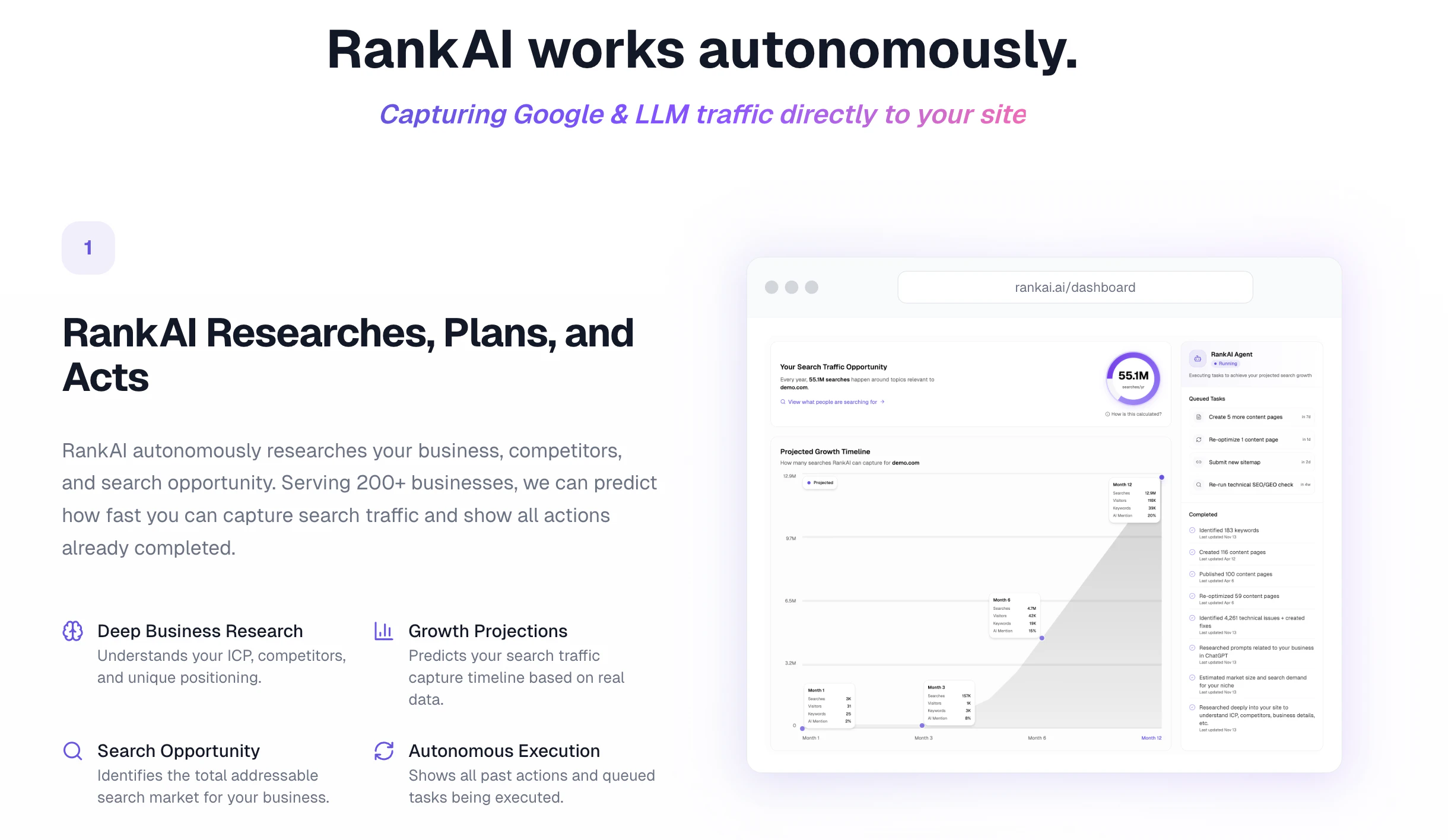
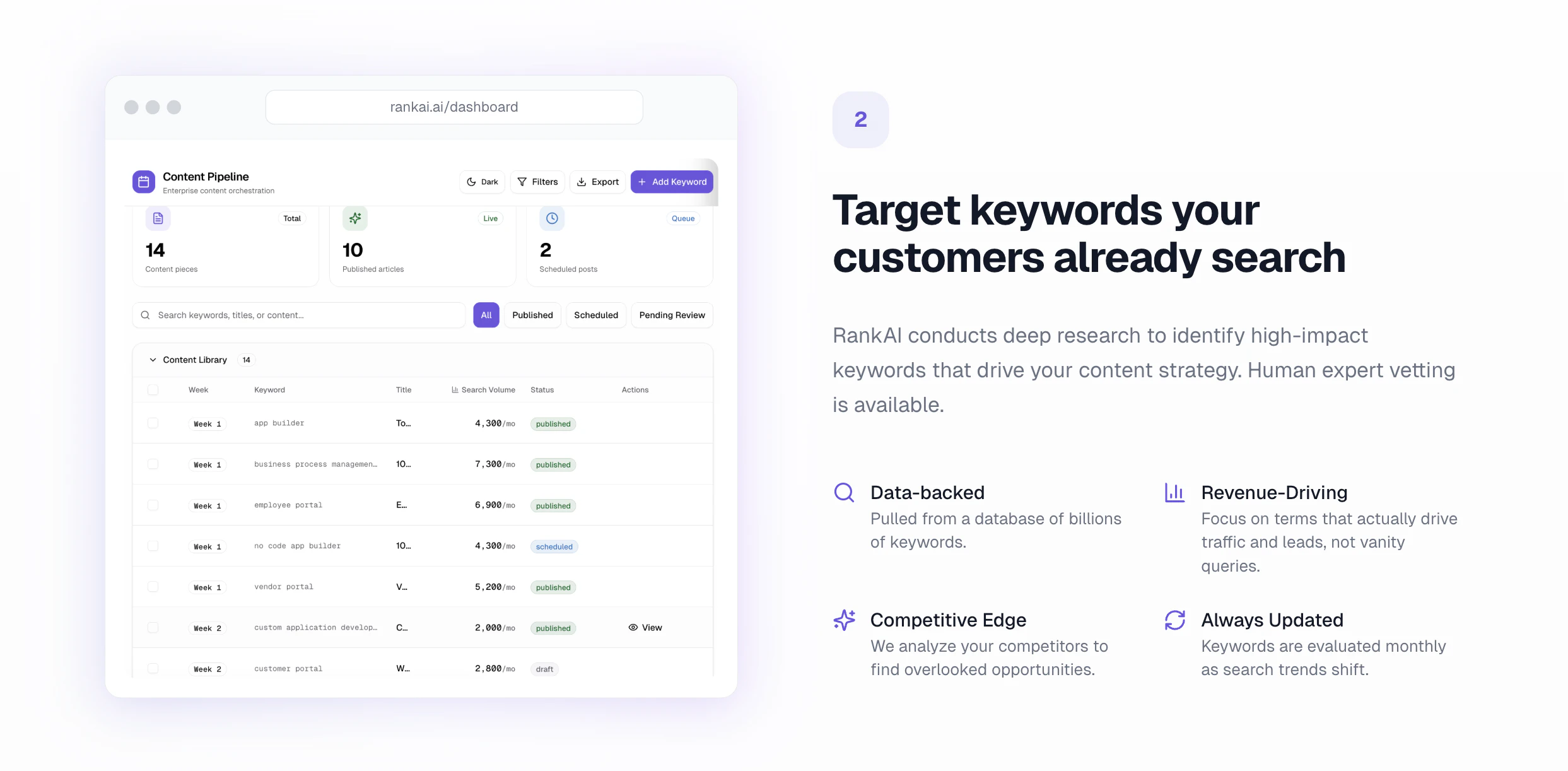
查看原始信息
YourMemory
Most agents are either amnesiacs or "hoarders" that choke on stale context and break their own reasoning. YourMemory brings biological logic to the workflow. Using the Ebbinghaus curve, it prunes the junk so only the important stuff sticks. -84% Token Waste: Leaner context, sharper reasoning. 52% Recall: (LoCoMo benchmarked). v1.3.0 Graph Engine: Finds what you forgot to ask for. 100% Local.

Hey everyone, I’m Sachit.
I built YourMemory because I hit a wall with my own coding workflow. My agents were brilliant, but their memory was a mess. They either forgot my architectural 'gotchas' by lunch, or they got so bogged down in stale bug fixes from last week that they started hallucinating.

I realized we don't need a digital filing cabinet for our agents, we need a filter.
YourMemory treats context as a living thing. It uses 'biological decay' to let transient noise fade away while reinforcing the patterns and facts you actually use.

For the skeptics:
I’ve provided the full benchmarking scripts and the LoCoMo dataset on GitHub. We’re hitting 52% Recall@5, which nearly doubles the industry average. Why? Because our v1.3.0 Graph Engine doesn't just do keyword matching, it pulls in related architectural 'neighbors' that standard vector search completely misses.

It’s 100% local first (DuckDB), zero infra, and it’s finally stopped me from repeating myself to my terminal.

I’d love to hear how you’re all handling context amnesia right now. Tell me what your agent keeps forgetting that drives you the most crazy!"

3
回复
@sachit_mishra1 really love the concept
0
回复

Self-pruning memory is the right instinct — stale context is what makes most "personalized" AI apps lose their edge over time. I ran into this when building DishRoll (https://dishroll.netlify.app/), a weekly AI meal planner — old preferences (the chicken recipe you loved three months ago that's now boring) kept contaminating suggestions until we added explicit decay and recency weighting. MCP-level memory hygiene is a much cleaner place to solve this than at the app layer. What signals do you use to decide what gets pruned vs. kept?

1
回复

Great insight, @samir_asadov DishRoll is the perfect example, app layer "clean up" is a nightmare to maintain manually. Solving this at the MCP level is exactly why I built this.

To answer your question, we use a formula that balances retrieval frequency with an importance score to set the decay rate. The more a memory is used, the "stickier" it stays.

The real safety net is the Graph Engine. If a specific memory starts to fade but is part of a strong "chain" of other important memories, we don't prune it. It’s about keeping the whole story intact, not just isolated facts.

Hope that answers it!
Cheers for the support.

0
回复

Using the Ebbinghaus curve for context decay is a genuinely clever framing. The biggest failure mode I have seen with agent memory is not forgetting too much but forgetting the wrong things. Architectural decisions that were made months ago and rarely referenced can still be load-bearing. Does the graph engine help protect those kinds of low-frequency but high-importance memories from decay?

1
回复

@najmuzzaman Great question! The short answer is yes, the graph engine protects those critical links. Basically, a memory is only as strong as its chain, if it’s connected to high-signal info that’s above the threshold, it won't get pruned. For those 'lone wolf' memories, we use an importance score to set a custom decay rate. So, the high-stakes stuff stays sticky, while the noise fades away.

0
回复

Ebbinghaus decay plus a graph engine is a clever combination, but the edge case I keep running into is old

architectural decisions that are still load bearing. A design choice made six months ago that constrains current code

is rarely in active use, so the forgetting curve would drop it, but the graph edges to it are exactly what new code

needs. How does the engine decide when decay wins versus when the graph pulls something back into scope?

1
回复

@myultidev Great observation. Two things protect load bearing decisions:

First, chain-aware pruning, a memory is only deleted if all its graph neighbours are also below the prune threshold. If your old architectural decision is linked to anything still active, the whole chain stays alive. A memory is as strong as the strongest node it's connected to.

Second, for decisions stored in isolation (no graph edges), importance score controls the decay rate directly. High importance = slower effective λ = survives much longer without being accessed. Setting importance=0.9 on an architectural decision gives it a half-life of months, not weeks.

So the short answer: link your critical decisions to related memories (graph protects them), and mark them high importance (decay protects them). Both layers working together !

0
回复