Product Hunt 每日热榜 2026-04-25

PH热榜 | 2026-04-25

#1
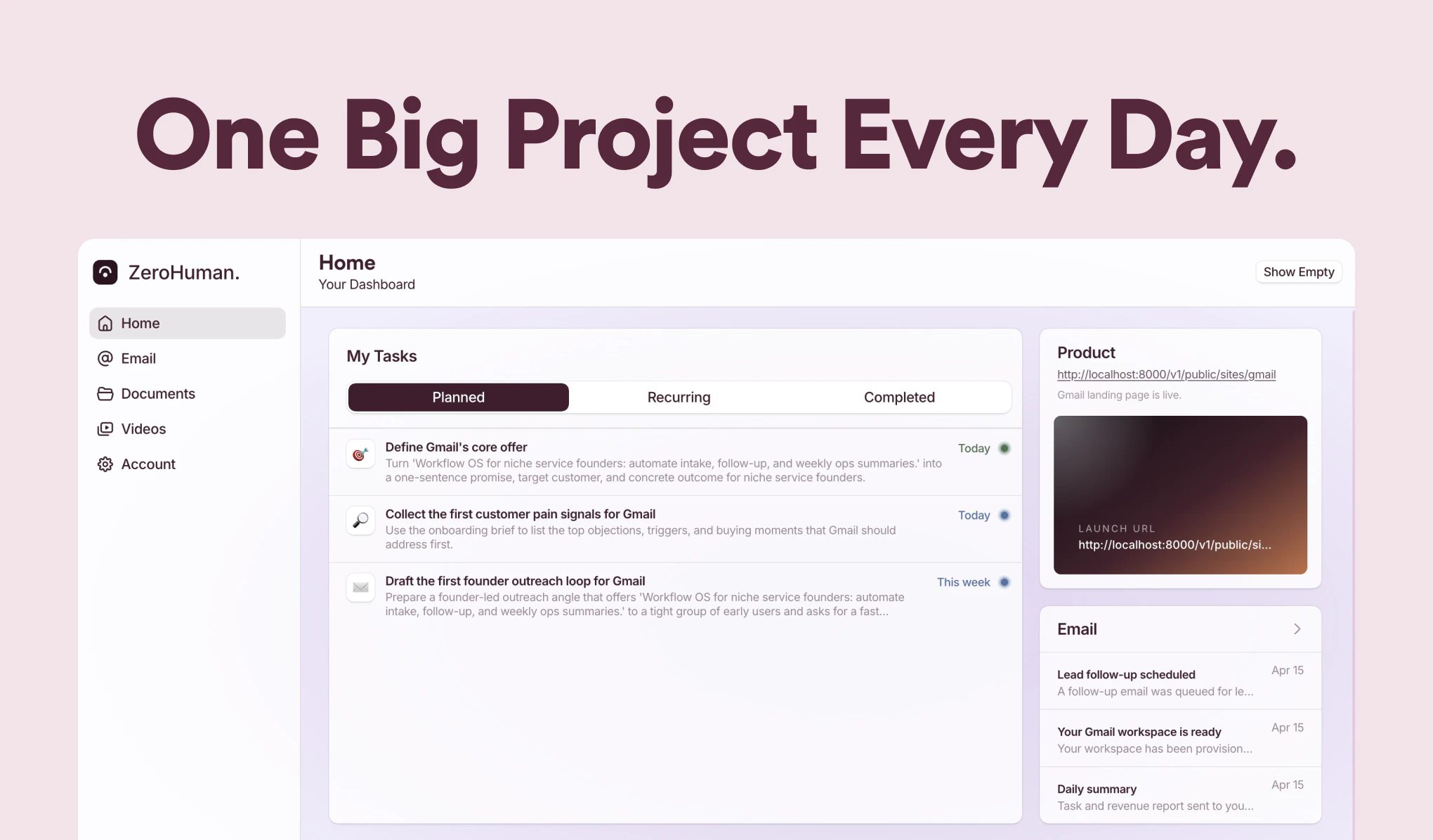
ZeroHuman.
Your AI Co-Founder: OpenClaw x Paperclip x Spud
322
一句话介绍:ZeroHuman是集合AI聊天、任务管理、代码生成与自动化营销四大工具的AI创业副驾驶,让创业者像拥有全天候虚拟联合创始人一样,在睡眠中完成产品验证、构建与增长。
Artificial Intelligence Marketing automation Vibe coding
AI联合创始人 自动化创业 全栈创业工具 AI内容营销 无代码开发 智能任务管理 视频自动生成 单人创业公司 AI工作流 ProductHunt
用户评论摘要:用户普遍关注产品能否真正推回错误想法而非盲目附和;建议增加LinkedIn和X平台自动发帖功能;部分用户遭遇后端扩展瓶颈,已修复;对自动化视频营销的真实效果和是否模板化存疑;评论区高度认可其“远程协作+文档自动生成”带来的清晰度。
AI 锐评

ZeroHuman的野心不在于做一个更好的“AI助手”,而在于重新定义创业公司的底层操作系统。它将OpenClaw的对话层、Paperclip的编排层、Spud的编码层和Cracked的营销层整合为一个闭环,表面上是在填单人创始人的“带宽”缺口,实际上是在测试一个激进命题:当执行层完全由AI接管,创始人的核心职能是否仅剩“判断”与“品味”?

但这把双刃剑的锋利面在于:产品目前更像四件独立工具的功能拼接,而非真正意义上的“联合创始人”。真正的AI Co-Founder需要具备跨会话的持久记忆、对业务目标的主动推理,以及最关键的——敢于在战略层面说“不”。评论区对“否判定”的焦虑恰恰是行业痛点:目前绝大多数AI产品为了迎合用户,本质上仍是高级“应声虫”。ZeroHuman如果不能在“对抗性验证”和“长期上下文”上实现突破,就只是在用一个更酷的UI来包装已有的自动化工具体系。

另一个隐含风险在于用户自主权的消失。当“每天醒来收到简报”成为常态,创始人可能会逐渐丧失对业务细节的感知力,沦为AI决策的“橡皮图章”。短期看是效率提升,长期看却是能力坍缩。

但承认其价值:对于已有一技之长的独立开发者,ZeroHuman确实能将项目从想法推进到MVP的周期缩短一个数量级。它触达的不仅是工具层面,而是“单人公司成为常态”这个时代的核心矛盾——少数天才可以凭品味胜出,但多数人需要的是结构化的执行框架。而ZeroHuman,正是这个框架的早期雏形。

查看原始信息
ZeroHuman.
Start or grow your business while you sleep. Use AI to run tasks, validate ideas, build products, and grow your business — all on autopilot.

Hello PH fam!

To be honest, I originally built ZeroHuman as a tool for myself, but I wanted to share it with you all as well.

It's every founders dream to have a "lab" where you can spin out tons of products, but this was never really possible before because it's just too hard to even run one company. However, AI is now advanced enough to make this dream make this a reality.

So we built ZeroHuman to combines 4 tools to let you create your own "zero human" companies:

1) OpenClaw: Chat with your AI Co-Founder
2) Paperclip: Manage tasks for your company
3) GPT 5.5 Spud: Code with the frontier model
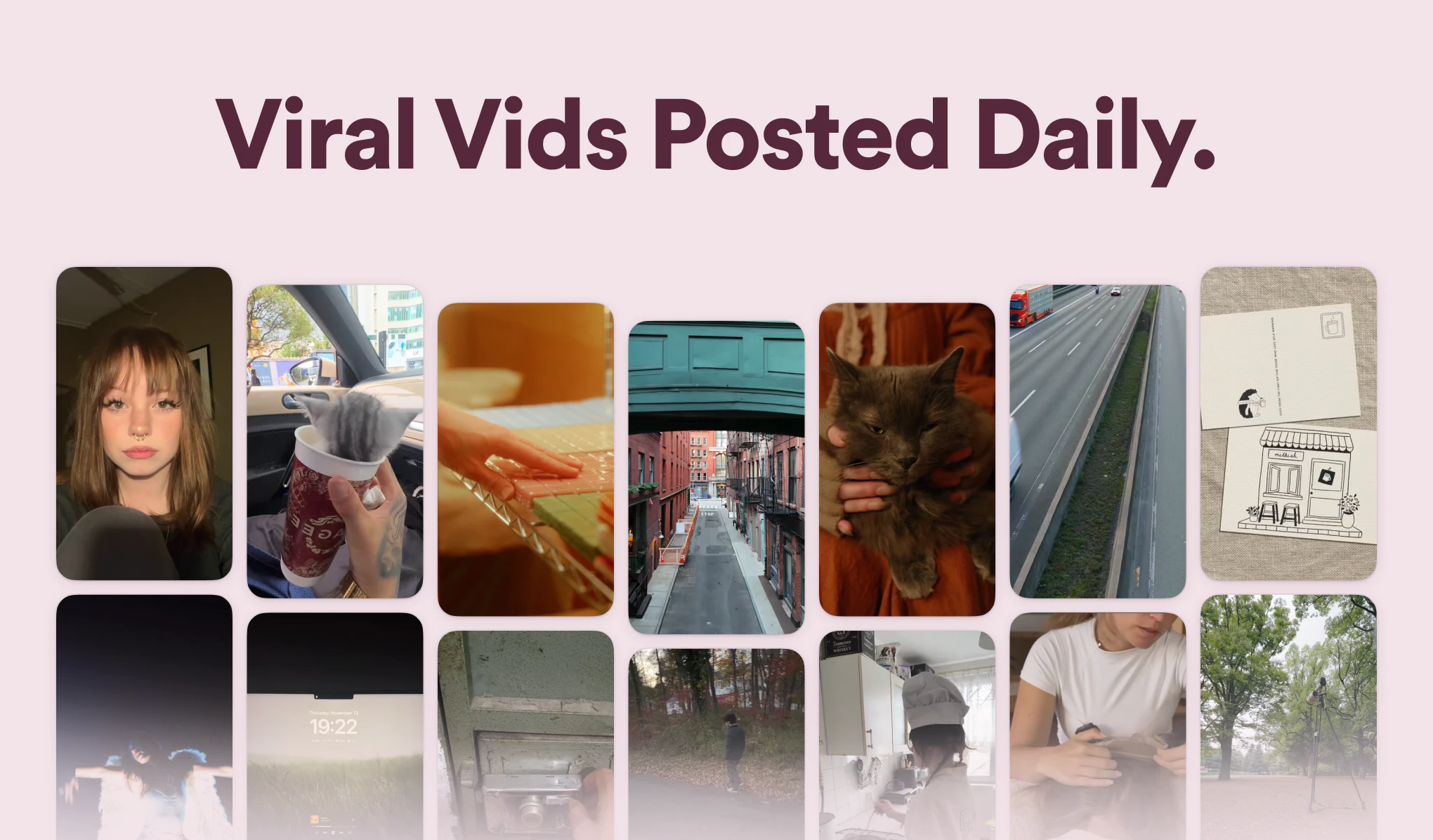
4) Cracked.ai: Market with automated viral reels

AI is potentially coming for everyone's job.
Our mission is to make AI work for you instead.

Hope you enjoy, let us know what you think!
Dan


18
回复

@dansutera Ambitious vision turning AI from a threat into leverage is the right framing. If ZeroHuman can truly help founders ship, manage, and market faster, it won’t just be a toolset it’ll be a new operating model for startups.

0
回复

@dansutera Big vision turning AI into a full startup stack instead of just tools is a compelling shift.
The real question is whether it reduces founder decision fatigue or just adds another layer of complexity.

0
回复

@dansutera the 10% rev share on partner tier is bold. may be add linkedin auto-posting to target specific B2B ICPs?

3
回复

Congratulations the launch. @dansutera

5
回复

Two years ago, Sam Altman predicted we'd see the first one-person billion-dollar company. At the time it sounded like Silicon Valley hyperbole. Today it sounds like a roadmap. Pieter Levels is running a $3M+ ARR portfolio as a solo founder with zero employees. Midjourney hit $200M ARR with ~11 people. The bottleneck isn't ambition or capital anymore, it's bandwidth.

That's the gap Zero Human is filling:

– OpenClaw (361k+ GitHub stars) for the always-on, mobile-first chat layer – your co-founder lives on your phone

– Paperclip (57k+ stars) for orchestration – the structure that makes it feel like a real co-founder, not just a chatbot

– Cracked for the daily content engine – short-form video on TikTok, Instagram, YouTube

Tried it myself a few days ago. What stood out is the clarity. It actually generates documentation as you go (mission, PRD, daily reports), so you have a real reference point for where you've been and where you're heading. Zero Human gives you a map for the journey.

One meaningful project per day, runs at night, you wake up to a briefing. This is one of the first products that actually feels like having a co-founder, not operating a tool.

3
回复

@byalexai Interesting vision but the real unlock isn’t zero human, it’s high-leverage humans using AI as force multiplication. Tools can expand bandwidth; judgment, taste, and accountability still compound where companies are actually built.

0
回复

Honestly as a solo founder, dad of 3, full time job, the bit I'd care most about is whether this thing actually pushes back when I'm wrong or just hypes everything I throw at it. Last thing I need is a yes man. Does it ever properly disagree with you, call out a bad idea before you've burnt a weekend on it ?

2
回复
Congratulations on the launch!
2
回复

congrats! would be awesome if ZeroHuman did LinkedIn and X posts, as well :)

1
回复
@marcin_uchacz1 Hey bro, I want to text you—how can I do that?
0
回复

I am giving up on creating a product. :D AI surpassed me in everything.

1
回复
@busmark_w_nika this is for you! No better time to collab with AI to make stuff
0
回复

@busmark_w_nika Nika, you should definitely try it! It performs amazingly well in the very early stage when you’re creating a product. It builds a landing page for you, creates a PRD (product requirement document), and even does market research. Just from that alone, you’re already much further ahead in the company-building process. You basically have a co-founder who handles everything on the technical side. You just need to check in regularly and review what it’s done. xD

0
回复

Congrats on the launch! How does the short form video thing work, didn't find much info on your website

1
回复

@vicky_dodeva Thanks! Each Co-Founder has access to cracked.ai API to create and post automatically. We'll add a link on our homepage.

1
回复

@benln @ZeroHuman. Getting an error trying to start. Its a cors error from your backend api : 1/onboarding/sessions

1
回复

@benln  @praney_behl We hit a Railway scaling limit (too many signups!) but its fixed now. Cheers

1
回复

The "AI co-founder" framing is interesting and I think it reflects a genuine shift in how solo builders operate. The real leverage isn't just automating tasks — it's having something that holds context across the different functions of running a product (marketing, user research, ops) so you don't have to context-switch constantly.

I've experienced this firsthand building a few side projects alongside my day job in M&A. One is DishRoll (https://dishroll.netlify.app/) — an AI-powered weekly meal planning PWA that generates personalised plans and shopping lists. The only way it got built was by treating AI as a genuine collaborator on product decisions, not just a code assistant.

Curious whether ZeroHuman maintains persistent context across sessions or whether each task is relatively standalone? That continuity piece feels like the hard problem for AI co-founder products.

0
回复

Given how eager LLMs are to generate placeholder testimonials when creating landing pages, I have to ask: are the testimonials on the home page genuine?

0
回复

The Cracked.ai viral reels piece is the one I'd love to understand better. Automated marketing is easy to build badly and hard to build well. How does it avoid the AI-generated look on TikTok and Reels? Does it pull from your actual product, or is it more template-driven?

0
回复
#2
Gemini Personal Intelligence
Gemini answers with context from your Google apps
238
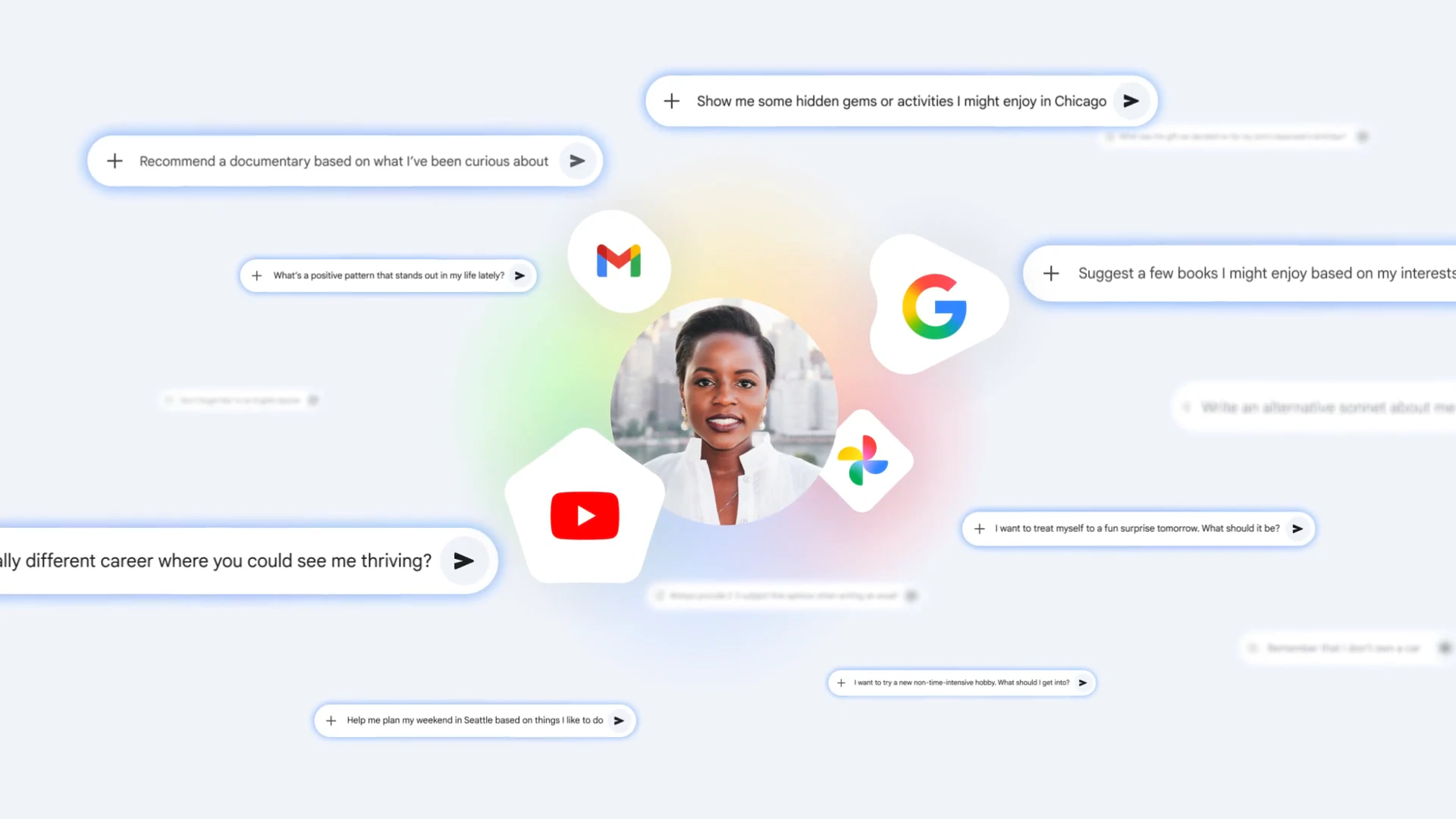
一句话介绍:Gemini接入用户Gmail、相册、YouTube等谷歌应用数据,在对话中自动提供个性化上下文,解决AI助手每次“冷启动”需重复说明自身情况的痛点。
Artificial Intelligence Search Photo editing
AI个性化助手 谷歌生态集成 上下文感知 数据隐私 会话连续性 智能推荐 个人记忆 智能搜索 生活助手 AI代理
用户评论摘要:用户赞扬该功能填补了通用AI缺乏个人记忆的空白。核心疑问是YouTube历史提取深度,能否触及小众兴趣而非仅表层观看模式。期待更精准的基于个人偏好的推荐。
AI 锐评

Gemini Personal Intelligence本质上是在用个人数据锁构建护城河。它把AI助手从“万能但无知”的聊天机器人升级为“熟悉你一切的私人秘书”,切中当下通用大模型最被诟病的“塑料感”。价值在于将谷歌分散的生态(邮箱、相册、搜索历史)整合成一个可被AI调用的记忆库,逻辑上比苹果的端侧语义索引更激进——直接赋予AI读取你数字生活档案的权限。

但问题同样尖锐:其一,这种“理解你”的能力建立在用户对隐私的全面让渡上。当AI能把你去年的分手邮件、旅行照片和深夜搜索记录串联成回答时,用户体验的跃升与数据暴露的风险成正比,谷歌在Gmail阅读事件上的黑历史让很多人难以轻信。其二,依赖谷歌全家桶意味着非重度用户或使用第三方服务的用户几乎无法获得差异化体验,锁定的不仅是数据,更是用户对AI助手的迁移成本。其三,“基于真实历史”可能导致信息茧房——AI只会推荐你过去喜欢的东西,无法提供认知外的、打破偏见的建议,这恰恰是真正有价值的“智能”应该做的。

因此,这个产品对谷歌生态重度用户是实用的效率工具,但对追求隐私、独立判断或工具自主性的用户而言,更像甜蜜的陷阱。真正的AI个人助理,不应是数字看门狗,而该是能帮你跳出舒适圈的策展人。目前来看,它只完成了前一半。

查看原始信息
Gemini Personal Intelligence
A personalisation layer for Gemini that reads your Google apps and past chats. Built for personal Google account holders who want context-aware responses without re-explaining themselves.

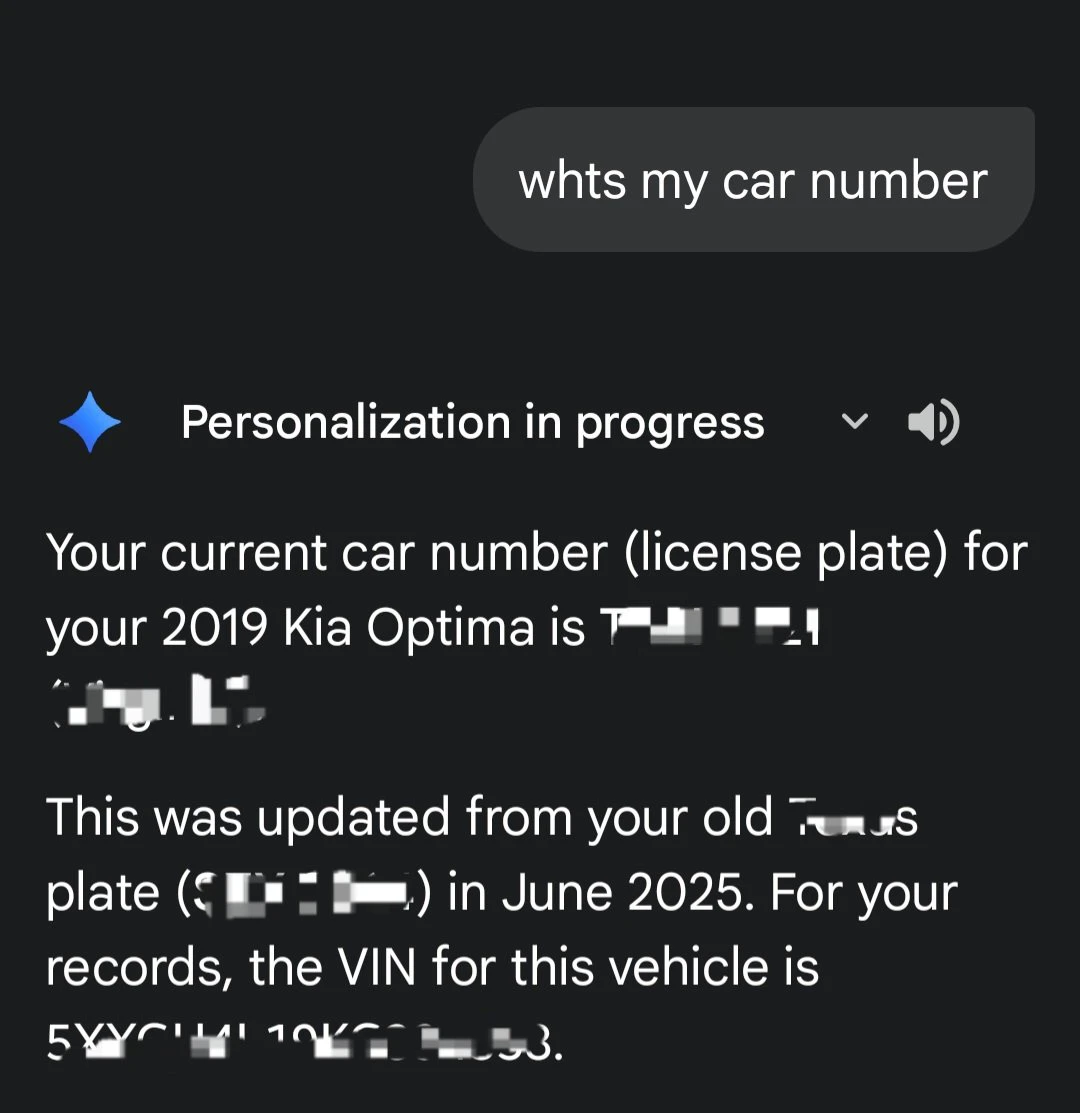
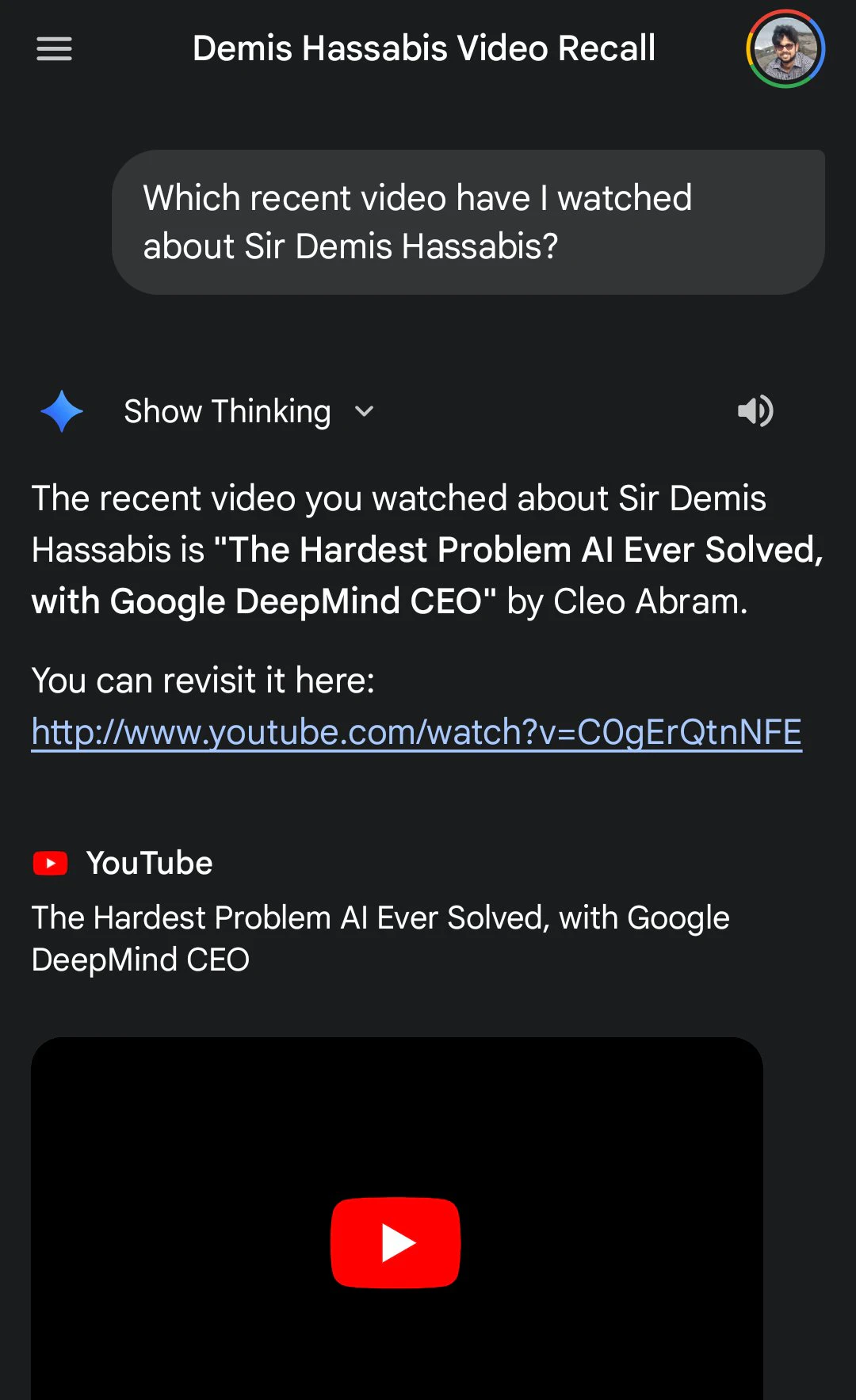
Gemini now reads your Gmail, Photos, and YouTube before answering.

What it is: Personal Intelligence is a personalization feature inside Gemini that connects to your Google apps to generate responses grounded in your actual history.

The problem it solves: AI assistants are generic by default. They know everything about the world and nothing about you. Every session starts cold. Personal Intelligence changes that by making your Google activity available as context for every response.

Key features:

  • Connects to Gmail, Photos, Search, YouTube

  • Uses past Gemini chats for continuity across sessions

  • Custom standing instructions for goals and preferences

  • Per-app controls you can adjust or revoke at any time

Benefits:

  • Ask for recommendations and get answers filtered by your real preferences

  • Reference your own emails or photos without pasting them in manually

  • Pick up previous conversations without summarizing them yourself

P.S. I hunt the latest and greatest launches in tech, SaaS and AI, follow to be notified @rohanrecommends

6
回复

@rohanrecommends This is the missing piece honestly. Generic AI responses are fine until you actually need something useful like a restaurant rec that accounts for the fact that you hate loud places or a gift idea based on what you've actually bought before. The Gmail and Photos integration is smart. I am just curious how deep the YouTube history goes does it pick up on niche interests or mostly surface-level watch patterns?

0
回复

Awesome

1
回复
#3
Inrō AI
Your AI Agent for Instagram Marketing
198
一句话介绍:Inrō AI是一个基于AI Agent的Instagram营销自动化平台,通过训练品牌知识库实现社媒私信与评论的端到端智能处理,解决创作者和品牌在Instagram上获客、线索筛选和自动跟进的效率痛点。
Instagram Artificial Intelligence Marketing automation
AI Agent Instagram营销 私信自动化 线索筛选 知识库RAG 无代码自动化 CRM集成 社交媒体风控 企业级AI应用 多渠道连接
用户评论摘要:用户关心RAG无法回答时是否自动转交人工(防幻觉);担心Instagram自动化违反政策导致封号;询问是否支持自带API密钥(确认支持);关注转交与回收逻辑(AI自主判断);需要验证与Meta官方AI的差异化竞争力。
AI 锐评

Inrō AI的价值不在于“又一个Instagram自动化工具”,而在于它实现了社会化营销中“智能体”的落地。从产品设计看,它解决了两大核心痛点:一是从关键词匹配的机械互动升级为意图驱动的智能对话,二是将RAG、意图检测、条件分支、人工转交等环节串联成完整闭环。这比市面上多数仅支持模板回复或简单交互的SaaS工具高出至少一个代际。

但风险也不容忽视。评论中有人直指账号风控问题——在Instagram对自动化交易持续收紧的背景下,Meta官方API权限波动和“反自动化”检测逻辑是悬在所有第三方工具头上的达摩克利斯之剑。Inrō标榜“Meta-approved”,但这更多是当前合规状态,而非永久免死金牌。

更深层的问题是护城河。如用户所言,Meta正在自家产品中嵌入类似AI能力,未来一旦官方放开定制代理,Inrō的差异化将被大幅压缩。当前它的竞争壁垒在于高度可定制的知识库和复杂流程编排能力,以及连接8000+工具的生态——但这些都是功能层面的积累,而非数据或网络效应构成的壁垒。

真正值得关注的,是其MCP服务端接入Claude、ChatGPT的方案——让外部AI代理调用Inrō的40+工具,这意味着它在尝试成为“社交媒体AI Agent的操作系统”,而非只是Instagram上的插件。如果这条路走通,它可以从Instagram外溢到更广泛的营销自动化场景,形成生态粘性。

目前198票的初日表现中等偏上,但10,000用户、包括L’Oréal在内的企业级客户背书,比投票数更有说服力。50%折扣拉新诚意足够,但后续需要明确应对Meta政策变化和保持AI推理质量之间如何平衡。节奏、风控、生态——三者缺一不可。

查看原始信息
Inrō AI
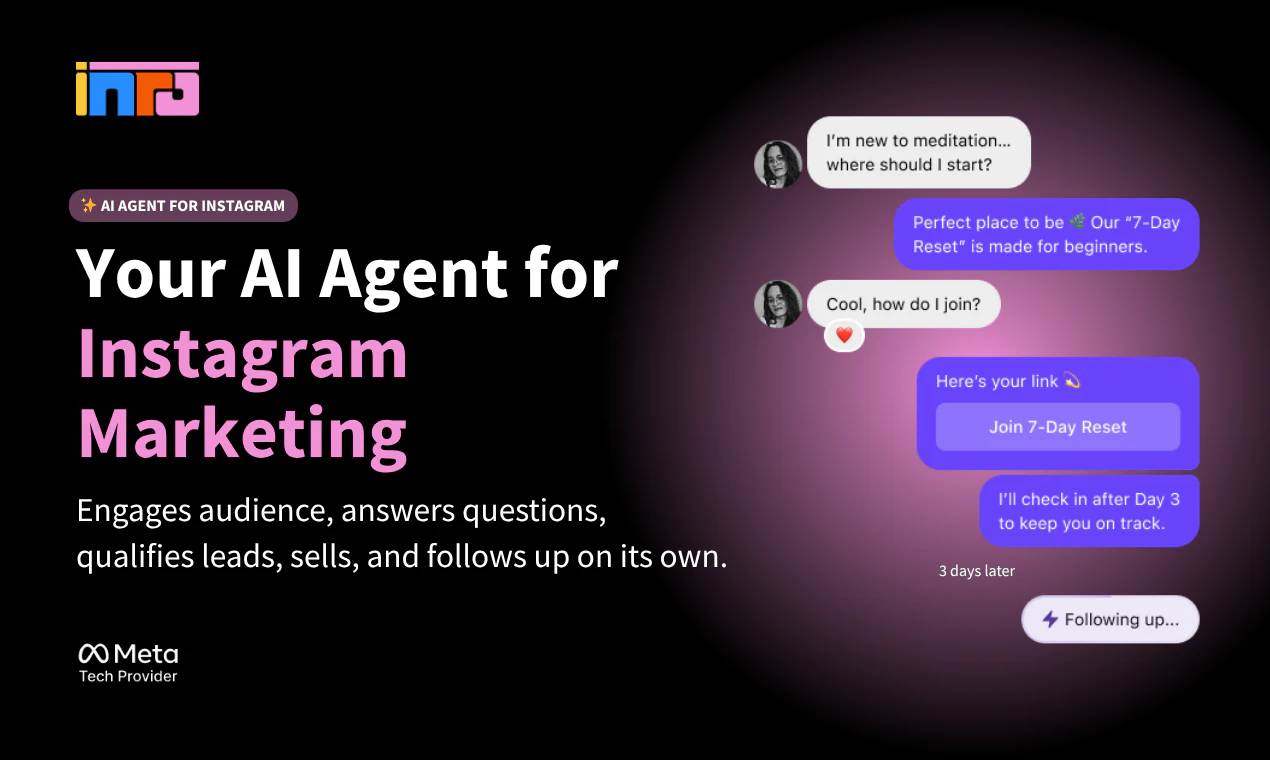
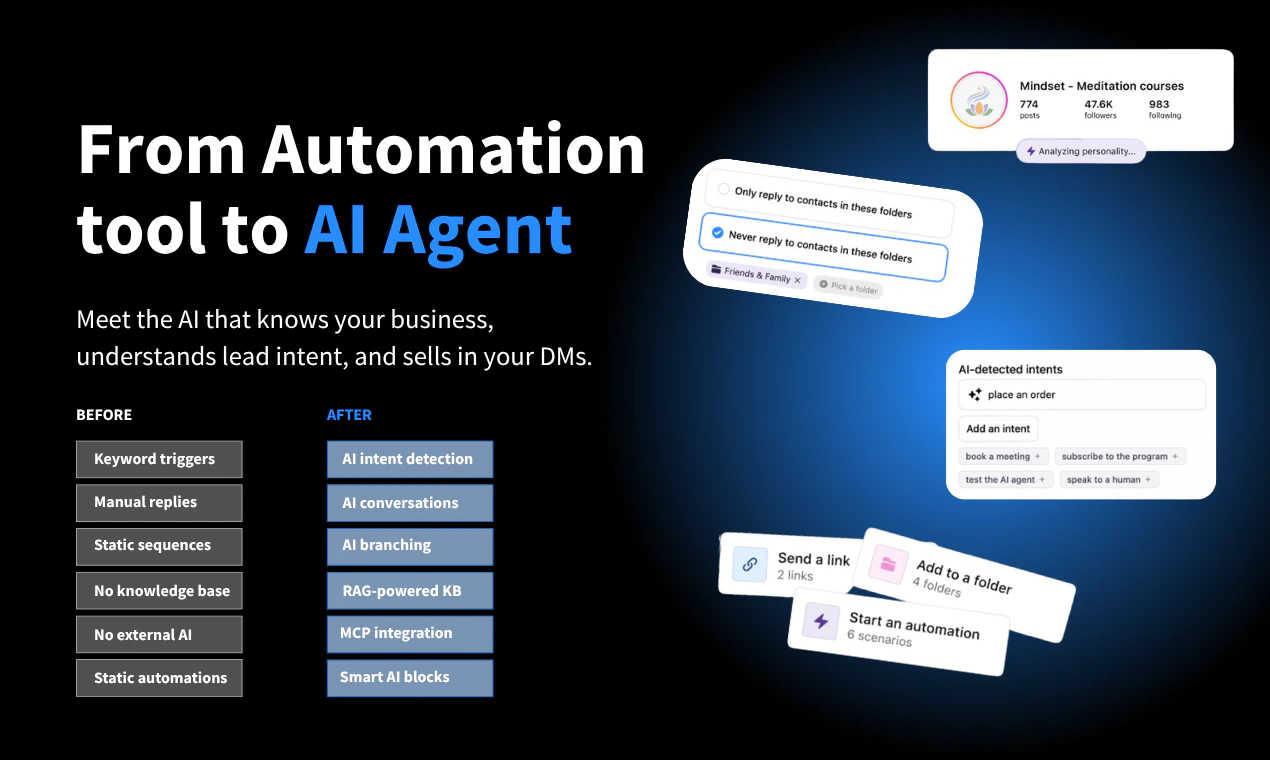
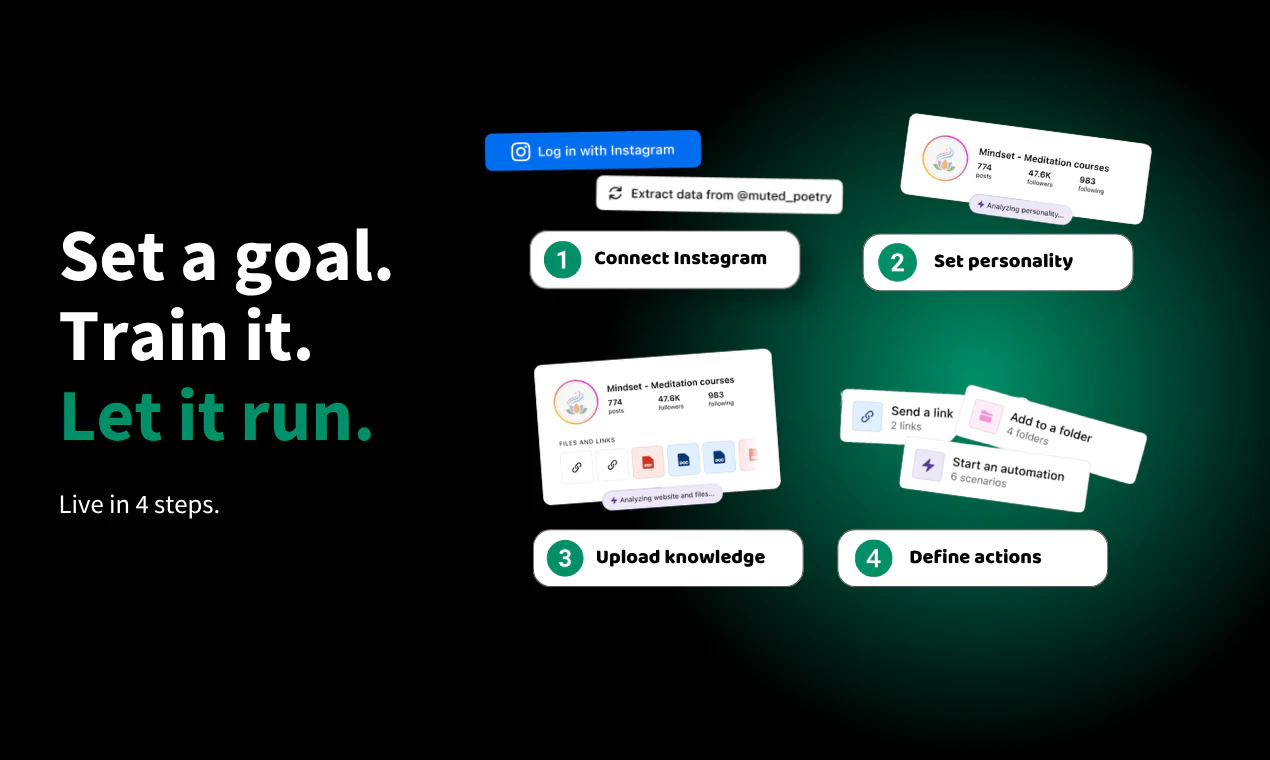
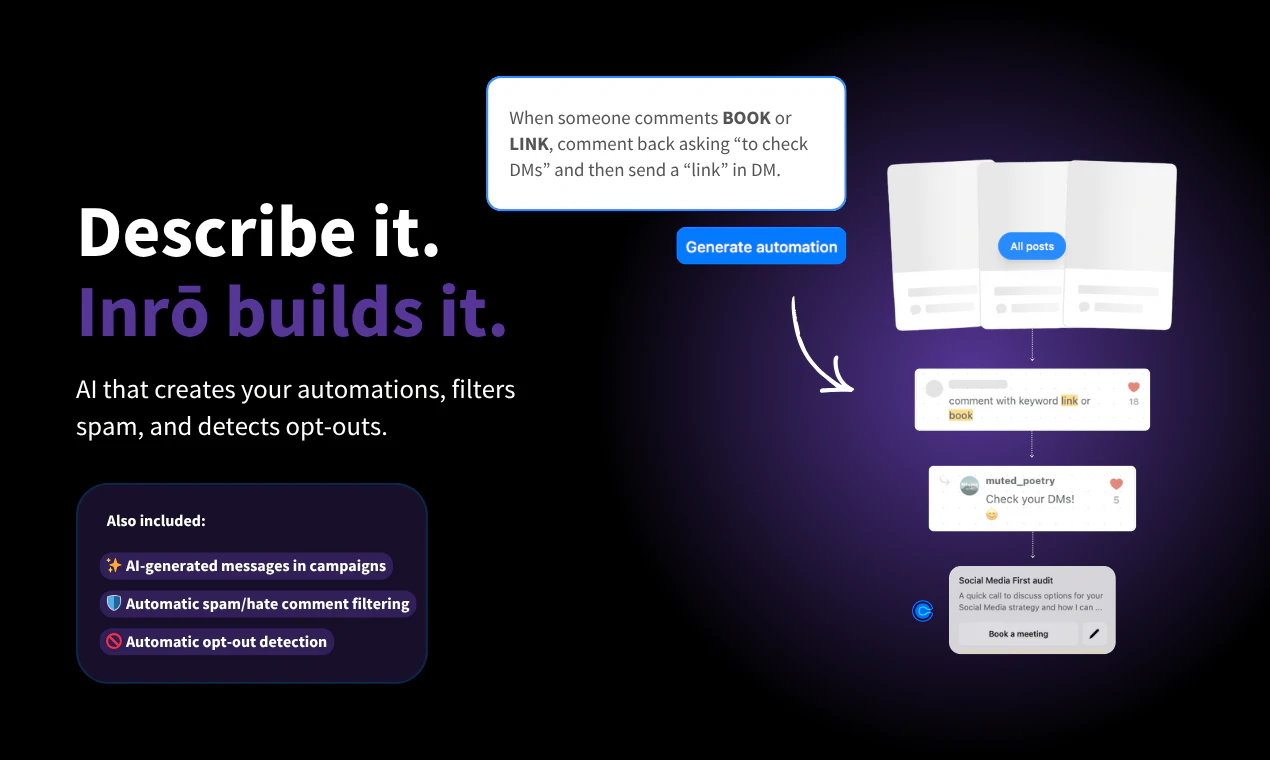
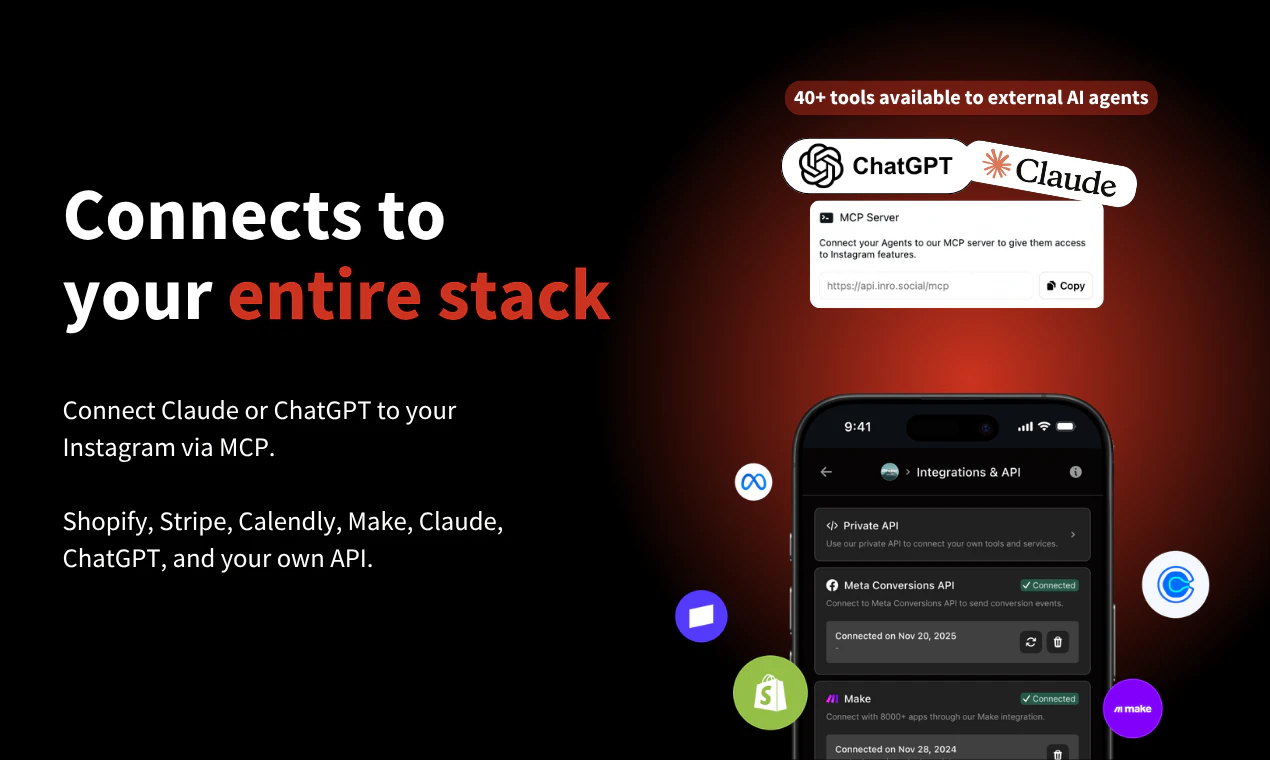
Inrō's AI Agent handles your Instagram DMs end-to-end. Set a goal, train it on your knowledge, and let it engage your audience, qualify leads, book calls and follow up on its own. AI is also built into every automation step, detecting intent, branching on conditions, and handing off to the agent mid-flow. Describe what you want and Inrō builds the automation for you. Connects to Claude, ChatGPT, Shopify, Stripe and 8,000+ tools. Meta-approved, join 10000+ brands and creators today!
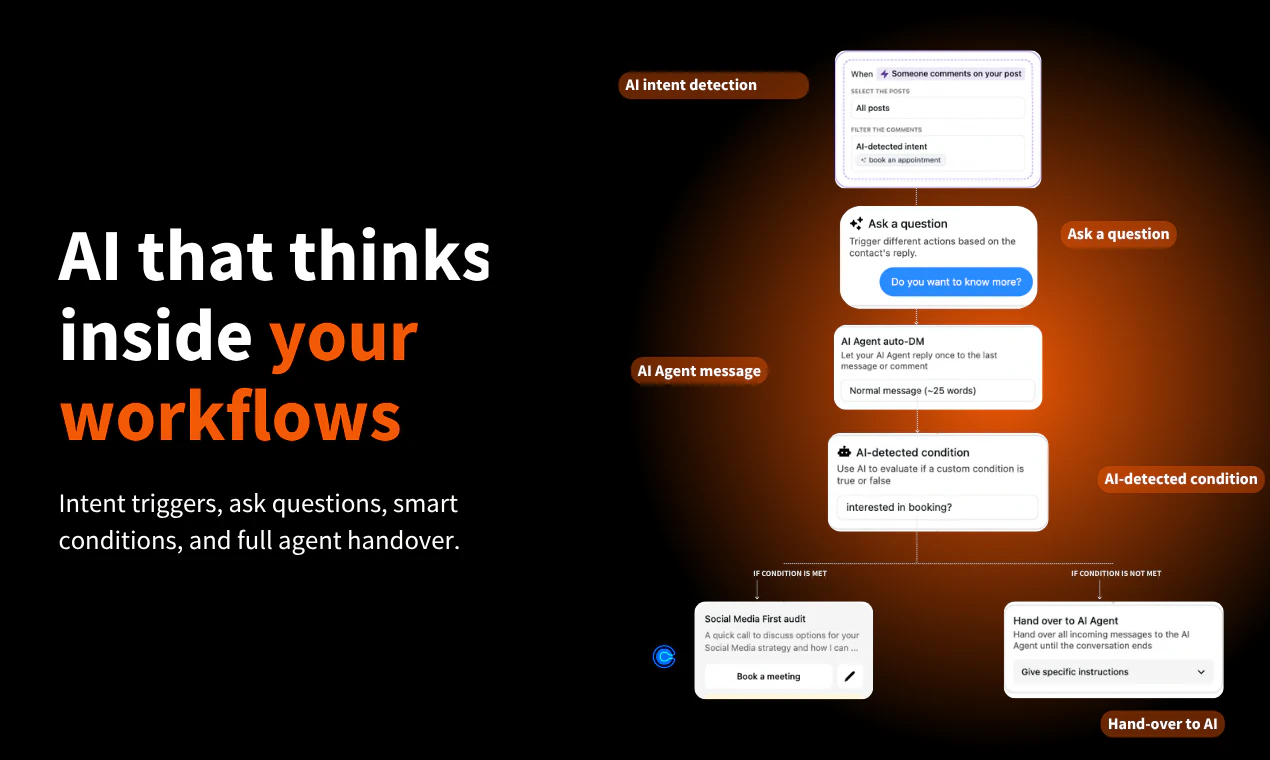
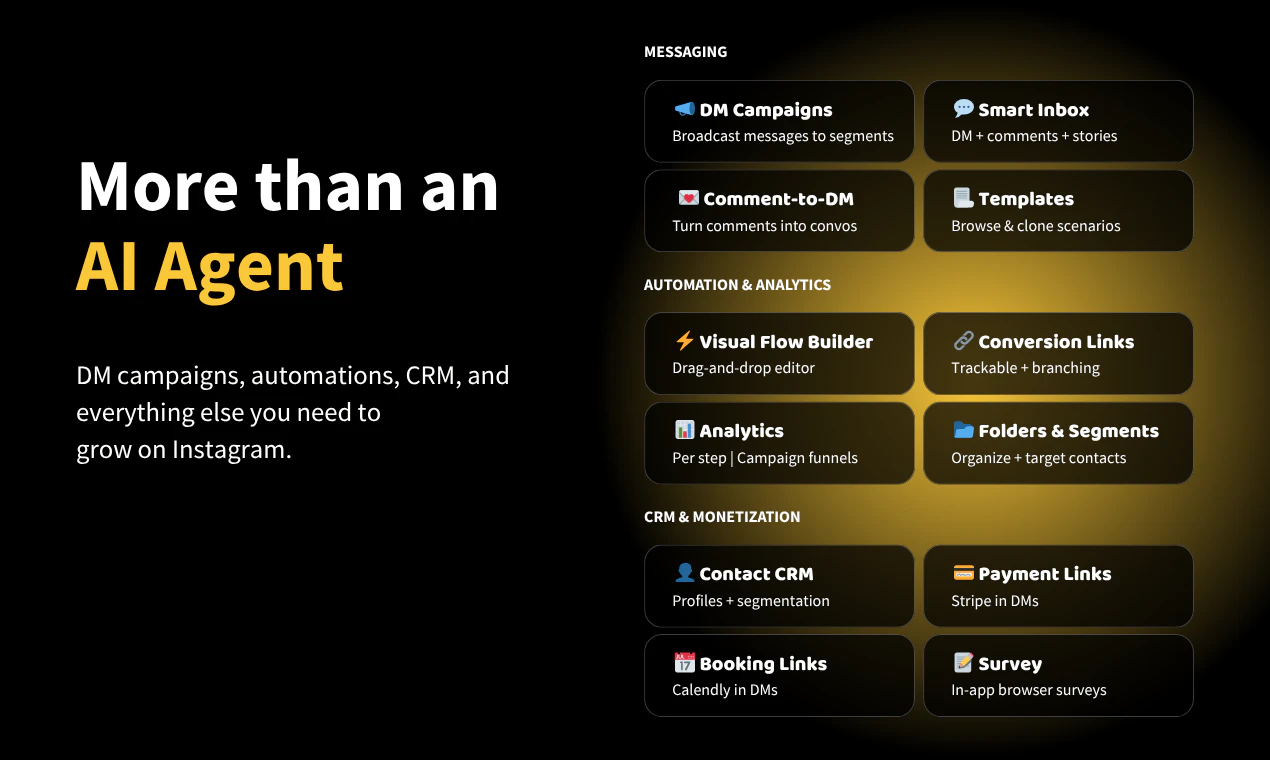
hey PH 👋 kshitij here from Inrō :) so today is the day i've been talking about for a while now, and i'm genuinely excited to finally share this with you all. for those who've been following along in the forums, you've seen me tease this over the last couple of weeks. today is where it all comes together. 🎉 Introducing the Inrō AI Agent ✨ this marks our evolution from a solid DM automation tool to a full platform that handles your Instagram DMs, comments, and marketing end-to-end. not a chatbot. an actual agent that thinks, acts, and follows up on its own. here's what it does: the AI agent 🤖 understands your tone, knows your goals, reads your knowledge base, collects info mid-conversation, takes action, and hands off to a human when needed. the full conversation, handled. AI inside every automation ⚡ 👉 questions that understand intent and route correctly, no keywords needed 👉 extracts names, emails, budgets, dates and saves them to the contact automatically 👉 condition branches based on what someone actually said 👉 full agent handover mid-flow, it handles the back and forth, then returns control 👉 just describe what you want, Inrō builds the flow the quiet stuff that makes it actually work 🔧 intent-based triggers, folder exclusions, spam and hate detection, automatic opt-out handling. none of it needs setup. it just runs. and all of this sits on top of everything we've already built 🔌 20+ triggers, 40+ actions, full CRM, DM campaigns with branching and scheduling, Shopify, Stripe, Calendly, ElevenLabs, 8,000+ tools via Make, full API, and an MCP server so you can run Inrō from Claude or ChatGPT in plain language. 🎁 PH exclusive: 50% off Pro for 2 months. link auto-applies the code, just click through. so try it today and ask away your questions! our entire team is here to answer everything and take suggestions on where we should evolve next. really looking forward to engaging with the community today 🙌
8
回复

@kshitij11 interesting. what happens when the rag doesn't have the answer? does it auto handoff to human or just guess?

1
回复

@kshitij11 Meta is definitely moving in this direction with their own AI in WhatsApp and Instagram, but the gap right now is control and customization. Meta's native AI is a generic assistant, it does not know your brand, your offers, your qualification criteria, or your specific sales flow.

What Inrō seems to be doing is letting you train it on your own knowledge and define your own goal, which means the agent actually sounds like you and works toward your specific outcome rather than just answering generic questions. That is a meaningful difference for anyone running a real sales or lead gen operation.

The risk is obviously that Meta closes that gap over time. Curious how Inrō is thinking about that moat long term.

0
回复

Hey everyone, Etienne here, I'm the CEO.

I want to add some context on the commercial side because it tells part of the story Kshitij didn't cover.

When we were last on Product Hunt, we had a handful of early customers and, honestly, more conviction than proof.

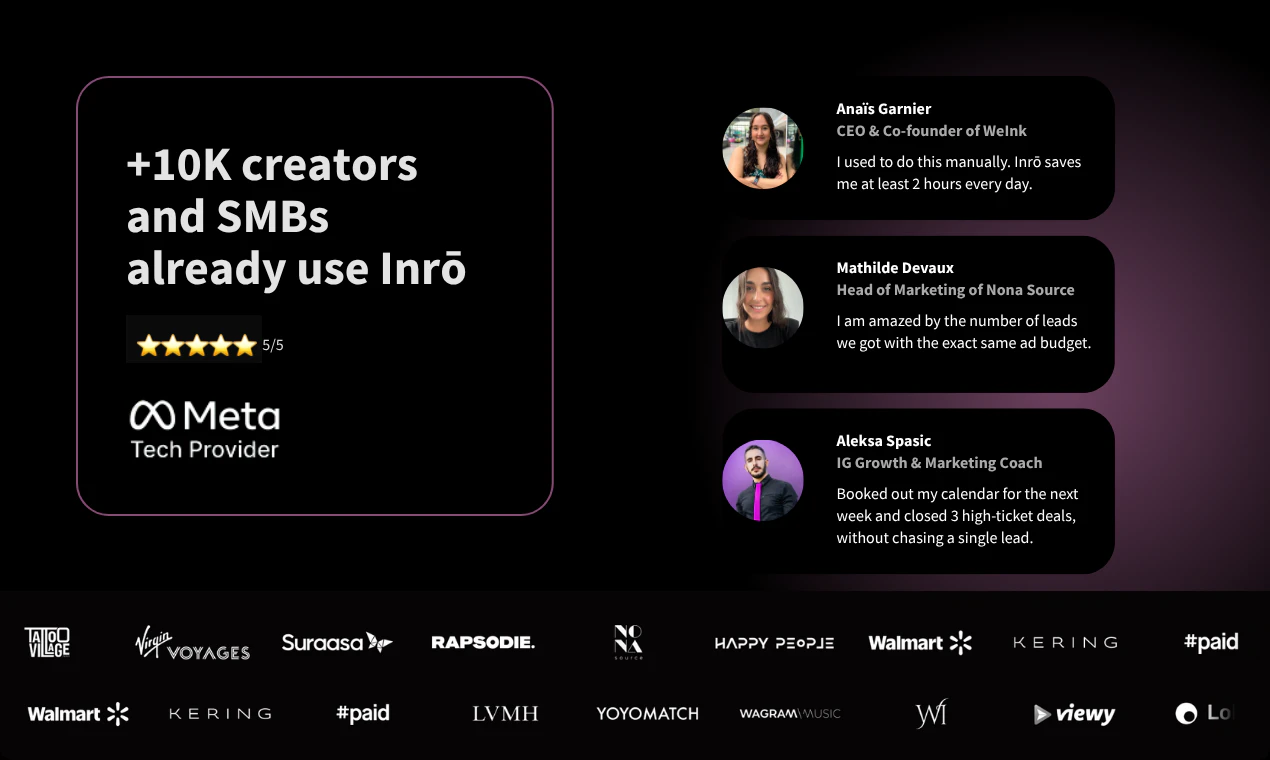
Today, we're at 10,000+ active users with accounts at Loréal, Walmart, Kering, Publicis, and Virgin Voyages, among others. Seeing it work for both a solo creator and an enterprise brand in the same week still surprises me a little.

The question I get most often is about pricing, specifically how we handle AI given its central role in the product now. The answer is straightforward.

The AI Agent is fully included in Pro. No add-on, no separate usage fee.

Many tools charge extra for AI features. We made a deliberate decision not to do that.

And if you're discovering Inrō for the first time today, we're running 50% off for the first 2 months as part of this launch.
Worth trying now if you've been curious.


If you have questions about pricing, how the plans work, or how Inrō fits into a broader marketing setup, drop them here, and I'll answer directly.

5
回复

Hey, Pierre here, CTO.

Kshitij covered the what. I'll give you a bit of the how and why, since I know this community tends to care about that.

The hardest part of building the AI Agent wasn't the AI. It was making it behave predictably inside a platform with thousands of active automations already running.

Getting intent detection, mid-flow CRM writes, and agent handovers to work reliably without touching existing flows took most of the last year.

A few things worth knowing under the hood:

1️⃣ AI models tend to be very chatty and quite slow. That does not work for DMs and comments. It took a lot of engineering and optimisation for the AI Agent to reply in a few seconds, including emojis, likes, etc. and still stick to the knowledge provided.

2️⃣ The knowledge base runs on RAG, so the agent retrieves relevant context before responding rather than making things up.

3️⃣ The MCP server exposes 40+ tools to external agents, meaning Claude or ChatGPT can query contacts, trigger scenarios, and manage campaigns directly without touching the UI.

📺 On the product side, the thing I'm most proud of is how much of this runs without configuration. Opt-out detection, spam filtering, folder exclusions, intent triggers.

It all works in the background. You set up your flow and it handles the edge cases itself.

If you have questions about the stack, the API, the MCP integration, or anything technical, I'm here.

5
回复

Hey, Giulia here from the marketing team. 🙌🏻

I want to flag something for anyone who might want to work with Inrō beyond just using the product.


We run three programs and they don't get talked about enough.


❤️ The Creative Partner Program is for creators and affiliates who want to promote Inrō to their audience and earn from it.


👥 The Agency Program is built for agencies running Instagram across multiple client accounts, there are specific tools and pricing structures that make that setup a lot more manageable.


🤝 The Referral Program is open to all Pro users and lets you earn commission just by recommending Inrō to people you know.


I've been on the marketing side long enough to see this go from a niche automation tool to something enterprise brands and solo creators use in completely different ways for different goals. That breadth is something I didn't fully anticipate when I joined.


Full details on all three programs are at inro.social. If you have questions about partnerships, co-marketing, or anything on the growth and marketing side, happy to talk it through here 😃

4
回复

This looks intriguing, been searching for something like this to UP my instagram game. Curious to know can we bring our own API key?

3
回复

@rajat_kinger 

Yes, you can! You can bring your own API key and connect it directly, which means you're using your own model credits rather than ours. Useful if you're already paying for API access or want more control over usage and costs.

Be sure to try it today, and let me know your feedback :)

0
回复

AI on SoMe is risky business tho. your account gets banned so fast. And there is no getting your account back after your blocked. Its stricly against SoMe policies etc. Esp on IG. How do you make sure your users dont get banned from using automation?

0
回复

@kshitij11 Congratulations. And happy product launch.

0
回复

Curious about the handoff + handback loop. Most just escalate and leave the agent out of it forever. How do you configure when it hands off — is that rule-based or does the AI decide?

0
回复
#4
Clawdi
Best home for all AI agents
191
一句话介绍:Clawdi通过云端运行AI代理并解耦环境层(记忆、API密钥、技能)与代理引擎,解决了用户切换框架时从头配置、丢失所有设置的核心痛点,实现了持久化的工作环境。
Chrome Extensions Developer Tools Artificial Intelligence
AI代理平台 开源环境 云端部署 代理持久化 框架解耦 硬件加密 多代理协同 工作流自动化 个人AI助手 基础设施层
用户评论摘要:用户普遍赞赏解决“反复重新配置”的痛点,称其为“AI代理的iCloud”。主要关注点在于:1. 新增抽象层可能增加复杂性或单点故障风险;2. 跨代理共享内存需要强访问控制与隔离机制;3. 部分用户希望支持选择性协作共享环境。
AI 锐评

Clawdi的野心不在于造一个更聪明的AI代理,而在于构建一个让所有代理都能“即插即用”的持久化环境层。这在当下框架层出不穷、技术迭代极快的AI生态中,确实切中了一个真实的、高频的痛点——开发者和早期用户频繁切换框架导致的配置“归零”损耗。其开源、自托管的策略也降低了信任门槛,避免了沦为另一个黑盒子。

然而,产品的核心价值目前高度依赖于“用户频繁切换框架”这一假设。对于多数只使用单一主流代理(如Claude Code)的用户而言,直接切换成本尚可接受,Clawdi的吸引力有限。更关键的是,作为一个基础设施层,它直面了经典的“抽象层悖论”:如果Clawdi本身出现故障或性能瓶颈,用户所有依赖其上的代理工作流都会瘫痪,形成新的单点依赖。尽管团队提及企业版有SLA,但开源项目在这方面的承诺往往模糊。

此外,“共享记忆”是一把双刃剑。评论中用户对跨代理访问控制的担忧非常实际:一个被攻破的代理若污染了共享上下文,可能殃及整个工作流。Clawdi目前主要依赖硬件加密VM和角色权限,但在精细化的、基于情境的隔离策略上仍不够成熟。

总体而言,Clawdi定位精准,抓住了AI工具链中一个“脏活累活”的缝隙,有望成为特定重度交叉框架用户(如同时使用Codex和Claude Code)的实用工具。但其长期价值取决于能否在社区信任与商业盈利间找到平衡,并在安全隔离上给出更透明的技术方案,避免从“解救者”变为新的“平台绑架者”。

查看原始信息
Clawdi
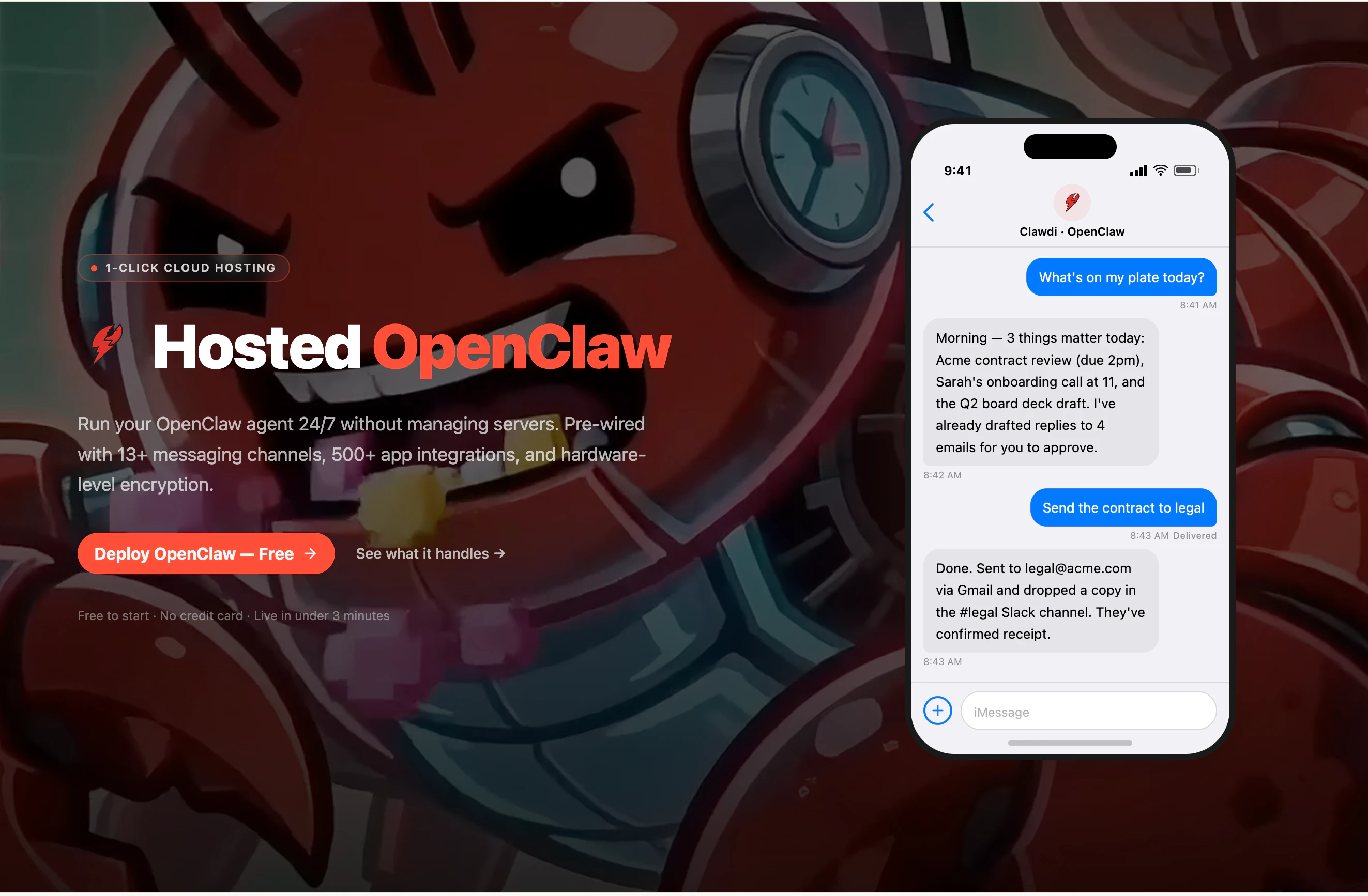
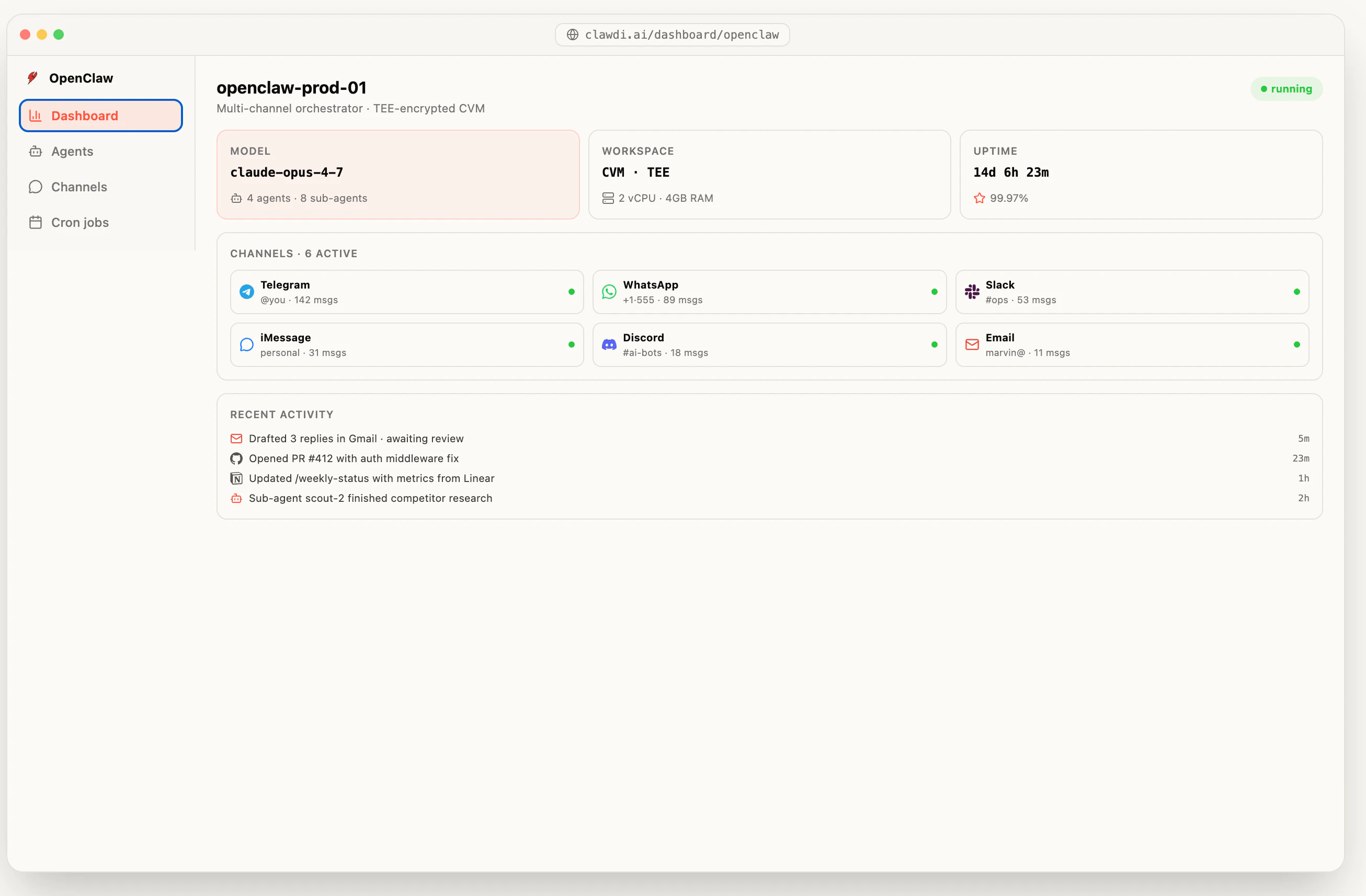
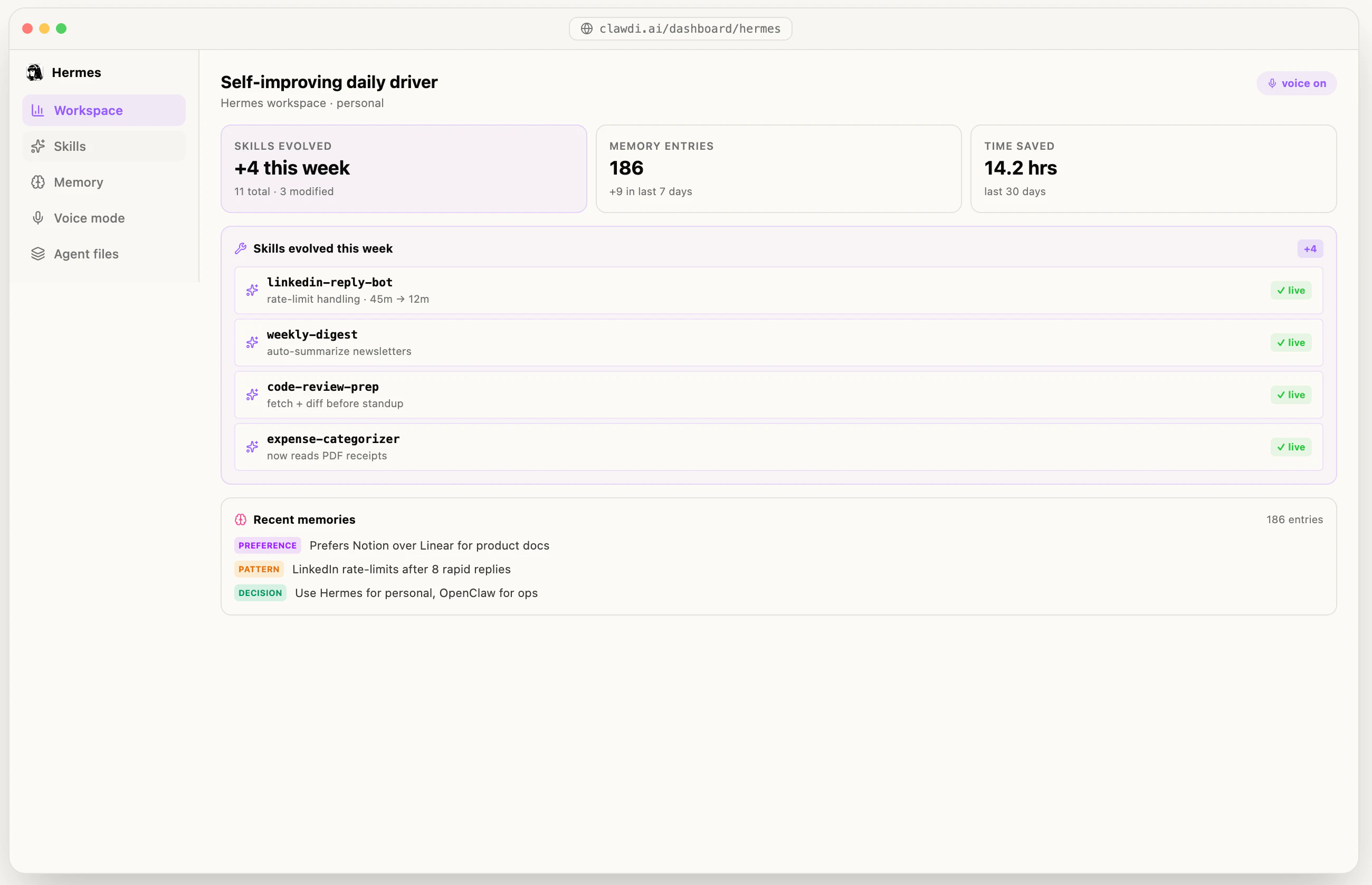
Clawdi lets you run AI agents like OpenClaw and Hermes in cloud without setup, stop losing your agent setup every time you switch frameworks. The open-source environment that decouples your memory, API keys, and skills from the agent engine.

Hey Product Hunt 👋 — Marvin here, co-founder of Clawdi.

The honest origin story: I spent three weeks configuring an OpenClaw agent. Skills, cron jobs, 20+ app connections, memory, the whole thing. It was finally working exactly how I wanted. Then a new agent framework dropped that looked genuinely better. I switched.

Everything was gone. Three weeks of work, starting from scratch.

That's the problem we built Clawdi to solve. Every time you switch agent frameworks — and you will switch, because this space is moving insanely fast — you lose everything. Your API keys, your skills, your cron schedules, your agent's memory of how you work. It's not just annoying. It's the reason most people give up on personal agents after a few weeks.

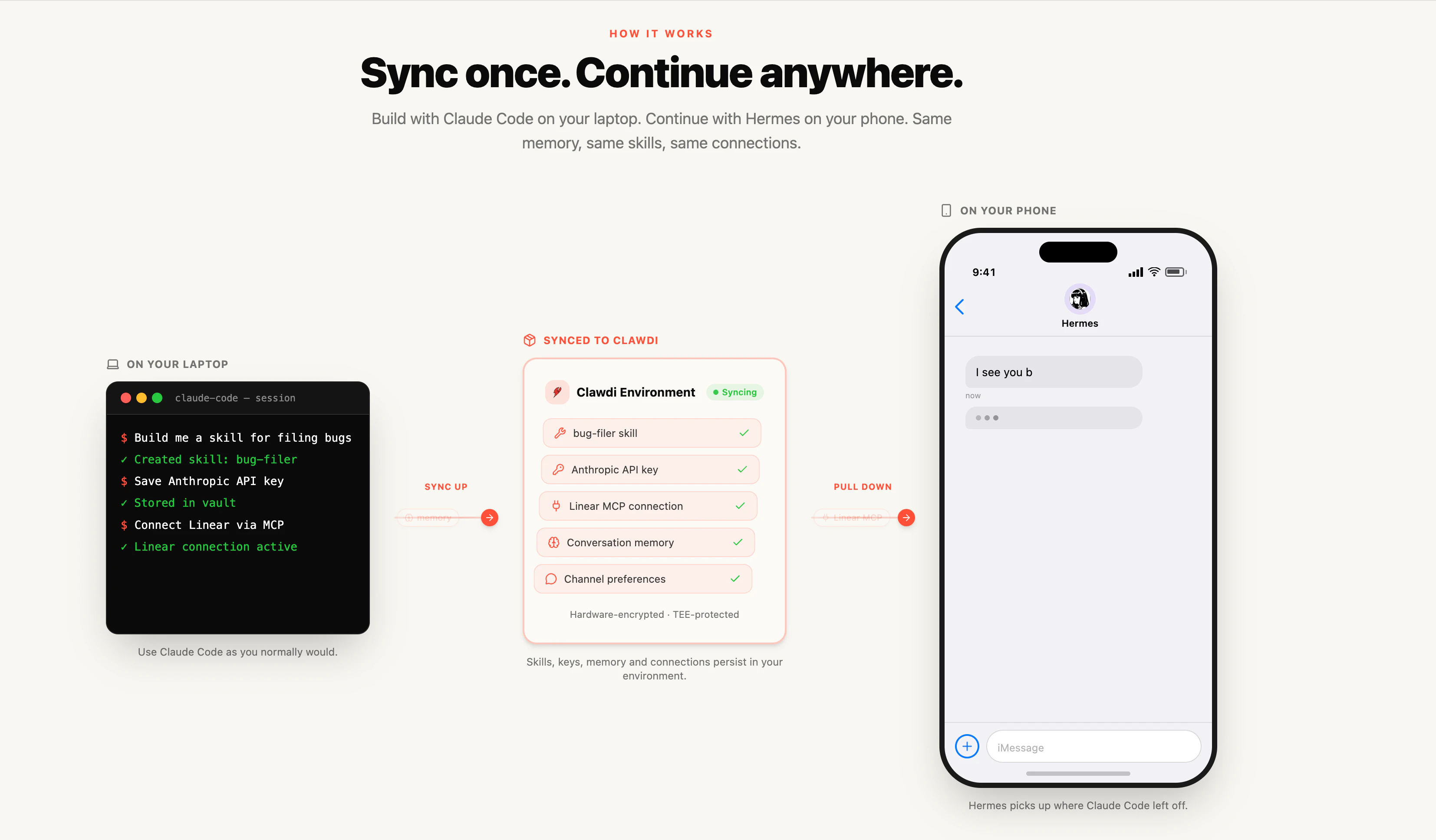
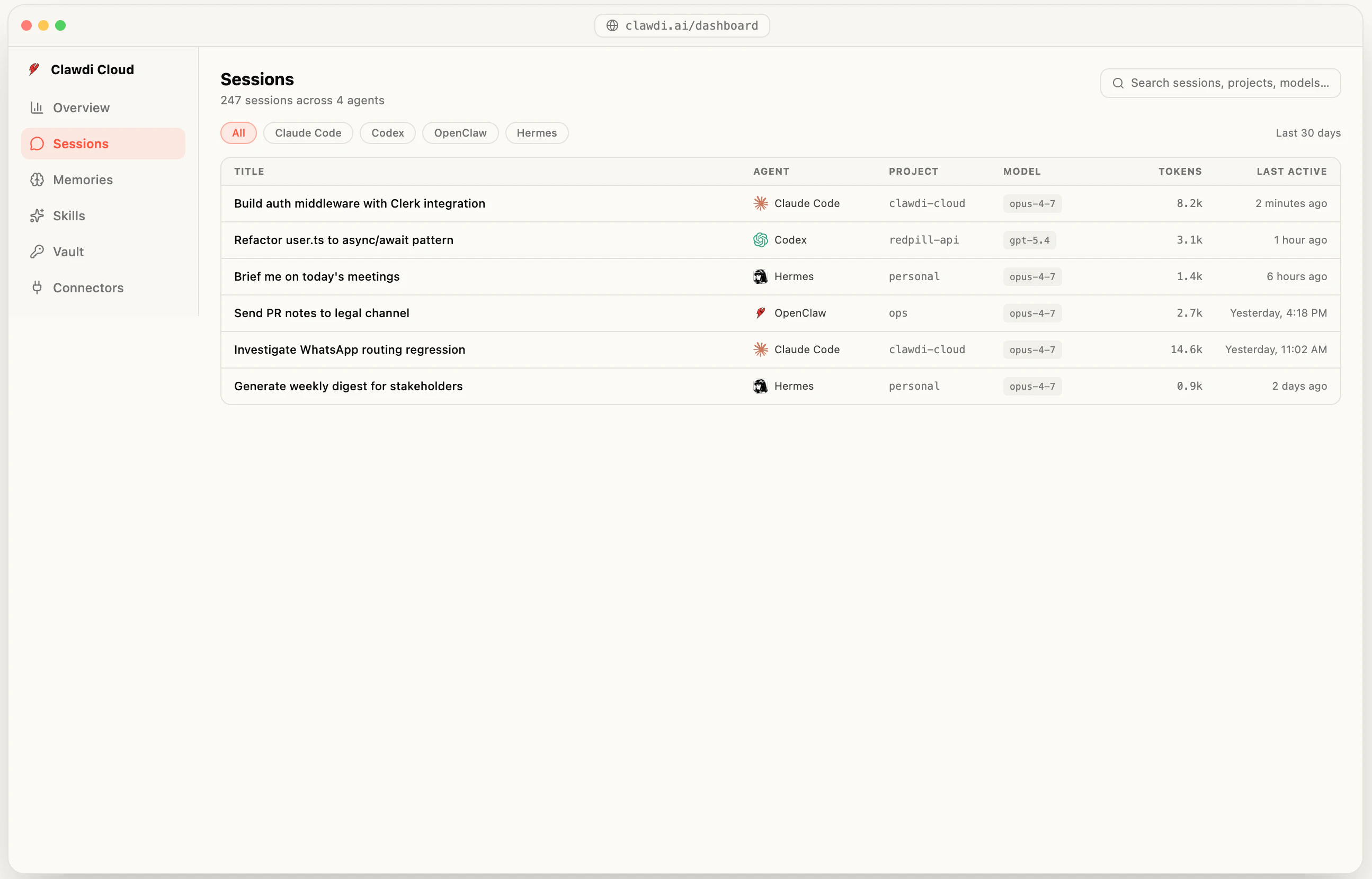
We realized the issue is that your environment — your connections, memory, and config — is trapped inside the framework. So we decoupled them. Clawdi is the environment layer that lives above the framework. Your Gmail, Slack, GitHub, cron jobs, and agent memory live in Clawdi. The agent framework is just the engine you swap in and out.

Switch from OpenClaw to Hermes? Your entire setup carries over. When the next great framework ships next month, you won't start over again.

We also run every workspace inside an Intel TDX hardware-encrypted VM — because a personal AI agent has the keys to your entire digital life, and that deserved real security, not just a promise.

We built this because we needed it. 5,000+ people have tried it since February. Would love to hear what you think — especially if you've felt this pain yourself.

Try it free: https://clawdi.ai

7
回复

@marvin_tong congrats on the launch! just tested this with my codex and claude code dual agent setup. both agents now share the same memory context. this is genuinely useful for the parallel workstreams I run daily. solid launch!

0
回复

@marvin_tong Congrats on the launch!

0
回复
@marvin_tong Hi Marvin. I did a small competitive and brand marketing landscape to your launch. i sorted 3 product competitor close to your idea. I'd love to share if you're down to know about it. not a pitch, felt this could help you
1
回复

My name is Maggie. I’m the marketing manager at Phala, the TEE infrastructure that Clawdi runs on. So I’ve been close to this project from the start.

My job involves running GTM, social, lifecycle campaigns, content, and a bunch of other things at once. So it's fair to say I am constantly bouncing between tabs, juggling multiple workflows, trying to pulling info from different sources and keep things moving. Also I’m not a developer. I don't have a technical background, so when OpenClaw blew up and because I was actively looking for something to automate my workflows, I tried setting it up locally twice, got lost in the Docker setup both times, and eventually gave up.

Being at Phala meant I knew early on what the team was building with Clawdi. I also knew what it was supposed to solve. But I didn’t actually use it until it was ready enough to just work. I logged in with Google, connected Gmail and Telegram, hit deploy. All under three minutes. My agent said hi to me on Telegram.

First thing I asked Clawdi to do: wiped my Promotions folder. I'd been receiving alerts that my inbox storage is running low but I’d been putting that off for months. 25,500 emails gone in two minutes. Then I set Clawdi up for work. I asked it to pull KPIs from Analytics, the CRM, and our social dashboards every Monday morning and drop a summary in Notion. That used to take me at least 1 hour and a half. With Clawdi all I need to do is to connect it to my work apps with literally just one click and a 1-line prompt “Drop me a clean weekly KPI summary from Analytics, CRM, and socials every Monday morning at 10:00AM EST.”

The part that shaped how we positioned the product: I kept telling the team that the setup was the wall. Not the concept, not the price but the setup. Every non-technical person I showed OpenClaw to bounced at the same point. Clawdi is the answer to that. The 3-minute deployment is NOT a marketing line, it’s the actual fix. With Clawdi integration, the deployment of Hermes agent got even sweeter: Now it doesn’t just do tasks across apps, it learns from every run and gets better over time.

If you work in marketing, ops, or anything that involves a lot of tabs and repetitive tasks, and you’ve already tried OpenClaw and given up, Clawdi is worth another look.

6
回复

@maggie_liu8 ngl, it's really helpful for marketing/socials. congrats on the launch!

2
回复

I’ve known the team for a few years. They’ve always been one of the scrappiest teams building in this space. When they told me they built Clawdi on top of OpenClaw, my first question was simple: What can it actually do?

I actually tried OpenClaw briefly when it came out because I heard a lot of AI savvy people had already been using agents to build their "team.” But I gave up after 30 minutes. Well, it was because I didn’t want to spend my time setting things up, not because it wasn’t powerful. Hermes is powerful too, but setup is still the hard part.

Clawdi is where it clicked for me. It took me about 2 minutes to get started, and now I use it for running parts of my Instagram workflow and a bunch of other things. Nothing fancy, just small things that save time every day.

And before anyone asks, yes, your data stays yours. API keys are encrypted and only accessible by you.

These days I’d go to Clawdi just to see what new agents or integrations they’ve shipped, and what else I can offload to my little lobster assistant.

Would love to see how others are using it and what workflows you try on Clawdi.

5
回复

Hey Product Hunt! 👋 I'm Xiaolu, part of the team at Clawdi, specifically focusing on product research and agent development. It's incredibly exciting to finally share what we've been building with this community.

The honest origin of Clawdi: I kept losing my agent setup. Every time I switched from one framework to another, or picked up a new device, I'd spend the first hour just reconstructing context, re-entering API keys, and re-teaching the agent how I work. It felt like the AI was getting smarter, but the infrastructure around it was still completely fragile.

So we built the layer that was missing. Not another agent, not another framework, just a persistent environment that travels with you. Your memory, skills, secrets, and connected tools live in Clawdi. Every agent you run connects to it. Switch frameworks, add a device, spin up a new agent , your entire setup is already there.

What I'm most proud of: it's MIT-licensed and self-hostable from day one. We didn't want anyone to have to trust a black box with their API keys.

Would love to hear from anyone who's felt this pain, especially if you're running multiple agents in parallel or switching between Claude Code and Codex regularly. That's exactly the use case we've been obsessing over.

Happy to answer any questions below. 🙌

5
回复

@3rdmatter cool stuff!

0
回复

Been waiting for something like this. I've rebuilt my agent setup from scratch 3 times this year switching between frameworks. The "iCloud for AI agents" framing really clicks. Upvoted and sharing this with my team.

2
回复

@s_cen Exactly the same pain! Do you find anything especially worth sharing between your or your team's agents?

0
回复

@s_cen Three rebuilds this year — that's exactly the pain that made us build this. The iCloud analogy is one we use internally too: your agents should be able to "wake up" on any framework the same way your iPhone wakes up from iCloud after a reset. Nothing lost, nothing to reconfigure.

Really appreciate you sharing it with your team. Would love to hear what frameworks they're running — always curious which combinations people are juggling. 🙏

1
回复

Running OpenClaw on Telegram and Claude Code locally — this is literally built for my setup. Installing now.

Congrats on the launch! 🎉

2
回复

@1zoe_zhao101 Thank you Zoe 🙏

0
回复

forcing people to share personal API keys or personal agent memory. In other words: team-level vaults, team-level environments, and permissioned access instead of one giant shared account.

We started with personal AI environments first because that pain was immediate, but multi-user / org workflows are one of the next big things we want to support.

1
回复

This is the missing infrastructure layer. The agents get all the attention but the environment they run in is what makes or breaks long-term usability. Great insight from the Clawdi team.

1
回复
@janicelewis00 Thank you Janice — that means a lot. We think the same thing: the agents are getting smarter fast, but the infrastructure around them is still too fragile. Clawdi is our attempt to make the environment layer — memory, keys, skills, files — persistent enough that people can actually rely on it.
0
回复

That's a legitimate concern—abstraction layers only work if they reduce complexity, not add to it. Have you looked into their uptime SLA and whether they offer fallback mechanisms or local-first options for critical agents? Understanding their infrastructure resilience would probably be the first thing I'd validate before committing.

1
回复
@osakasaul Totally fair. If an abstraction layer makes reliability worse, it’s not helping. That’s also why we made Clawdi open-source and self-hostable — the environment layer should be portable, not a black box you get trapped inside. For teams that need stronger operational guarantees, our Enterprise offering also includes a 99.9% SLA, audit logs, SSO, and custom deployment regions. So I agree with your framing: infrastructure resilience is something people should validate first. The goal for us is to reduce rebuild pain without creating a new point of fragility.
1
回复

Congrats on launch⭐. How does persistence work for memory and API keys between agents?

1
回复
@antonio_manuel1 Thank you! The core idea is that memory, keys, skills, and files live in Clawdi as the environment layer, while frameworks like OpenClaw or Hermes are the execution engines that connect to it. That means when you switch frameworks, you’re not re-entering secrets or rebuilding context from scratch each time. In the repo and product copy, that separation is really the whole point: your environment persists even if the agent engine changes.
0
回复

I like the vision, but I'm a bit wary of adding another abstraction layer on top of my already-complex agent stack. What happens to my workflow if Clawdi has downtime

1
回复
@polman_trudo Totally fair concern. The reason we built Clawdi as an open-source, self-hostable environment layer is exactly to avoid trapping people in a black box. The environment — memory, keys, skills, and files — is meant to be portable rather than buried inside one framework. So the bet isn’t “trust one more abstraction forever,” it’s “stop rebuilding your setup every time the framework changes.” If resilience matters a lot for your workflow, that portability and self-hostability are a big part of the story.
0
回复

Genuinely excited about this. Most AI agent tools compete on flashy capabilities. Clawdi is competing on reliability and persistence — which is actually what matters for daily use. Rare positioning.

1
回复
@yan_labs_ Really appreciate that. That’s exactly the bet: not just better demos, but better persistence, portability, and reliability. If switching frameworks wipes your setup, the agent never really becomes part of your workflow. We’re trying to fix that layer first.
0
回复

Installed in 5 minutes, synced my OpenClaw config to the hub, then spun up Hermes pointing at the same environment. Actually worked. This is the boring-but-essential infrastructure the space has been missing.

1
回复

Solid concept, but "shared memory across agents" needs a strong access control story. If one compromised agent can write to the shared context, it could affect all others. How are you thinking about isolation?

1
回复
@madefet This is the right question. What we can say concretely today is: Clawdi runs deployments inside Intel TDX hardware-encrypted VMs, API keys are encrypted before leaving the browser, and the repo also documents HMAC user isolation in the MCP layer. On the collaboration side, the access model we describe is role-based — Owner / Admin / Member — rather than “everyone can change everything.” I agree with your point though: for shared memory across agents, access control needs to stay front-and-center, not be treated as an afterthought.
0
回复

Is there a way to selectively share part of an environment with a collaborator without giving full access? Thinking about pair-programming-style AI workflows.

1
回复
@ristan_nakko Today, the sharing model we describe more clearly is team deployments: a shared assistant, shared skills, and shared conversation history for the team, while personal deployments remain private. We also define role-based access in that model — Owner, Admin, and Member — rather than full access for everyone. So the honest answer is: team-level sharing, yes; fine-grained partial environment sharing, I wouldn’t overclaim yet. Your pair-programming example is exactly the kind of workflow that makes that granularity important.
0
回复

Hey, do you have plans for team or org accounts? I'd love to let my team access shared environments without sharing personal API keys.

1
回复
@itsluo Yes — team use is something we support on the product side. The current model is team deployments with shared AI assistants, plus SSO, audit logs, and custom deployment regions on Enterprise. We also have team collaboration docs in the repo around inviting members and role-based access. The goal is exactly what you described: shared environments for a team without forcing everyone to share one person’s personal setup.
0
回复

Good idea!~

0
回复

Genuine q as a builder, when an agent has persistent memory + cron + app connections all running in your cloud, what does the off ramp look like if I want to pull my setup out 6 months in ? Memory state is usually the part that locks you in hardest, hard to replicate elsewhere once its built up context.

0
回复
#5
XChat
The standalone, encrypted messaging app from X
166
一句话介绍:XChat 是X推出的独立加密通讯App,旨在解决主X平台私信功能受限、隐私不足的问题,为用户提供一个纯净、安全、防截屏的专属聊天与视频通话空间。
Messaging Social Network
加密通讯 独立聊天应用 即时通讯 隐私保护 X/推特 端到端加密 阅后即焚 防截屏 视频通话 去广告
用户评论摘要:用户普遍认可这是X迈向“超级应用”的关键一步,但信任是最大考验。多位用户指出,要求绑定手机号才能使用,违背了“脱离身份”的私密初衷,这成为隐私体验的核心矛盾点。
AI 锐评

XChat的推出,与其说是产品创新,不如说是马斯克对“万能应用”野心的又一次精准落子。将聊天功能从X主站剥离并赋予独立品牌,确实能规避主站噪音、打造更专注的通讯场景。然而,这枚棋子最脆弱的环节正是其“加密”的外衣。评论中尖锐指出“绑定手机号”的悖论:一个标榜私密、防截屏的应用,却要求用户交出比用户名更具唯一性的身份标识。这无异于建了一座装有防弹玻璃的监狱,钥匙却在门口常亮。真正的痛点在于,用户需要的不只是技术上的端到端加密,更是对数据收集和身份关联的彻底信任。目前这层信任被手机号要求所抵消,使得XChat在功能上像Signal,在隐私哲学上却更像微信的“本土化”变体。若不能解决身份认证与完全匿名的矛盾,XChat将沦为一个“自我感觉良好”的附属工具,而非颠覆行业的通讯黑马。它的最终价值,取决于X敢不敢在商业利益与用户绝对隐私之间做出真正“不计成本”的取舍。

查看原始信息
XChat
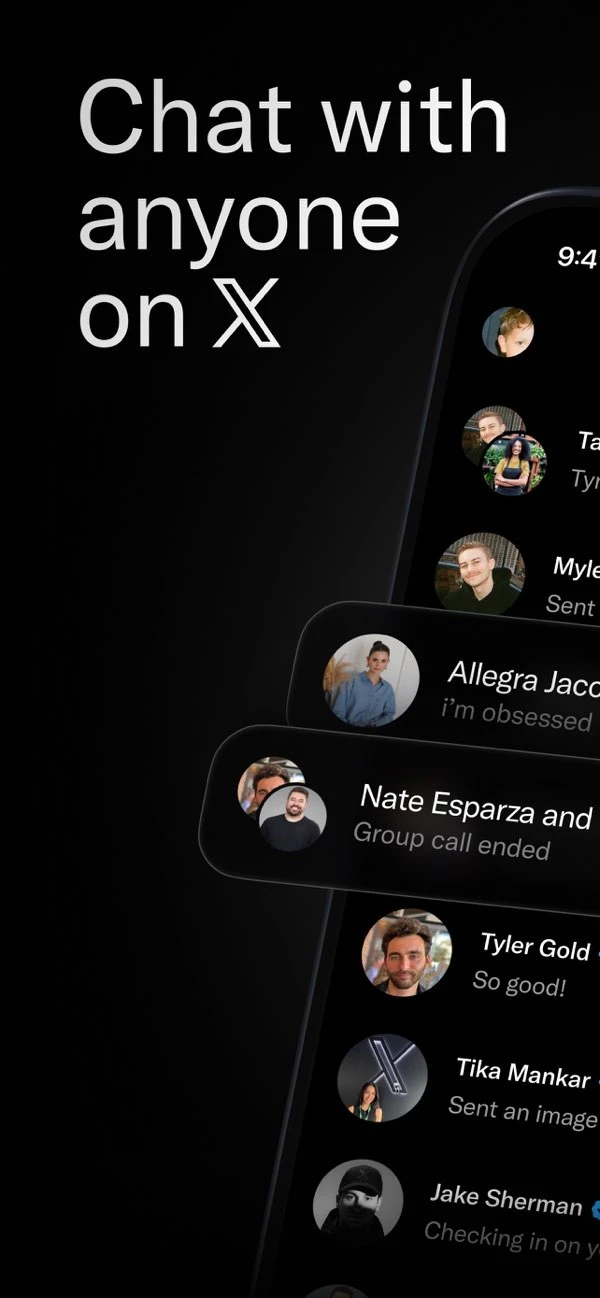
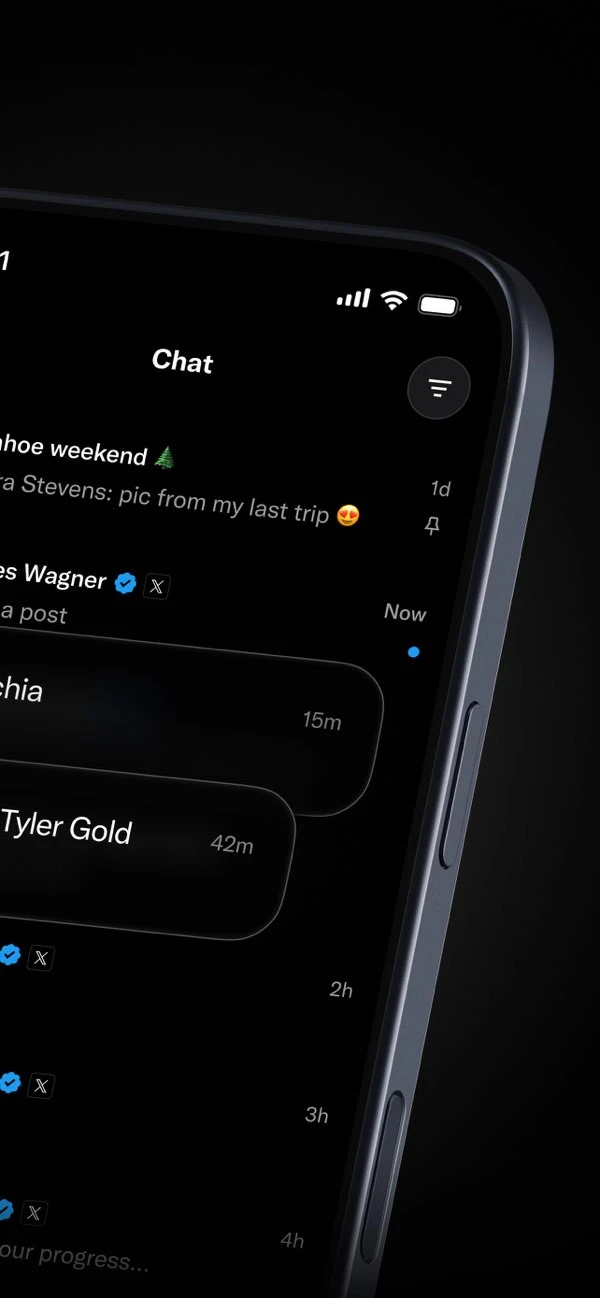
XChat is the new standalone messaging app from X. It offers ad-free, end-to-end encrypted chats, video calls, disappearing messages, and screenshot blocking. Connect privately with anyone on X in a dedicated, secure space.

Hi everyone!

XChat is now a standalone messaging app built just for chatting on X.

Elon’s vision for a WeChat-style everything app has been clear for a long time. Taking chat out of the main X app and giving it its own dedicated space is a very intentional step, and it has the potential to become a significant new entry point.

That said, trust will probably be the first real test for many people.

6
回复

The tension is that you still have to sign up with your phone nr. The private msg without ties to your identity is still wide open. Strangly enough.

6
回复

Wow! It's super cool Zac! We all knew that hade to be the next step but it's good to see it made it real. Now, let's take the most of it. Congrats on this amazing hunting

1
回复

Agreed on trust being the test. encryption is the easy part. The hard part is people believing it without thinking about it

1
回复
#6
Grok Voice Think Fast 1.0
Our most capable voice agent is now available via API
120
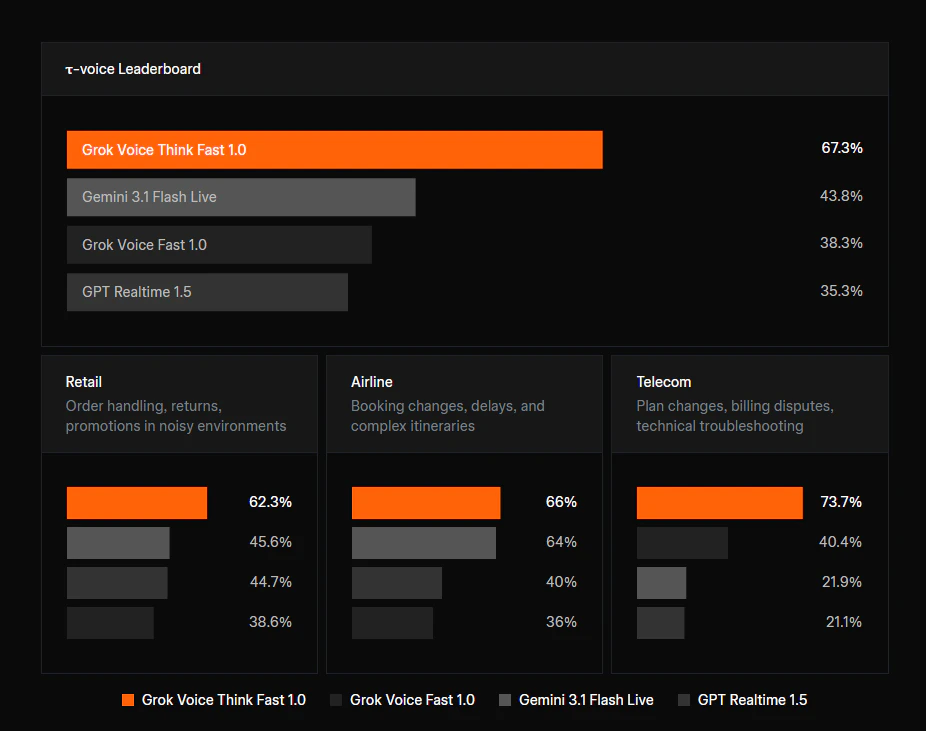
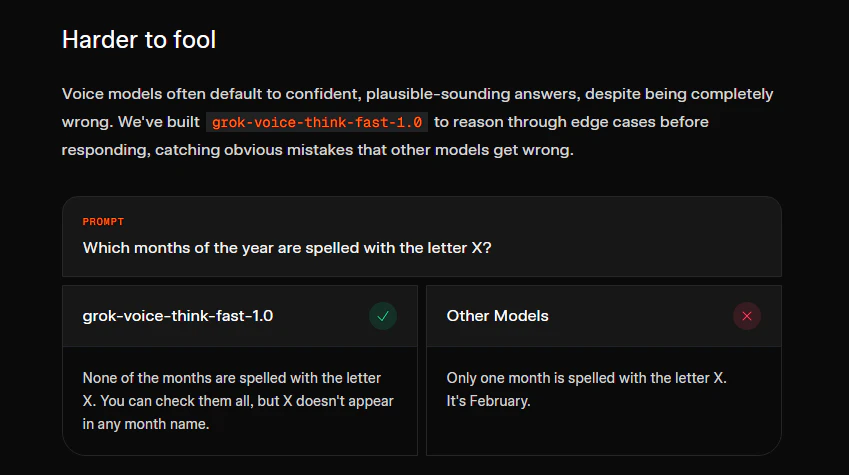
一句话介绍:Grok Voice Think Fast 1.0 是一款面向开发者开放的 API 级语音模型,专为处理复杂、多步骤的语音交互工作流而设计,解决了现有语音方案在快速响应与多轮任务精度之间难以兼得的痛点。
API Audio
语音模型API 多步骤工作流 低延迟语音AI 自然对话交互 开发者工具 语音代理 AI语音引擎 高精度语音识别
用户评论摘要:用户关注“快速响应+多步骤”的技术难度,询问端到端延迟数据及首次令牌响应时间;指出语音延迟即便微小也会破坏自然感,影响客服、语音工作流等场景体验;并探讨语音AI在长篇音频互动中的潜力。
AI 锐评

Grok Voice Think Fast 1.0 的标语和介绍精准切中了当前语音AI领域最棘手的矛盾:“快”与“准”的双重需求。从评论中可以清晰看到,用户对“多轮多步骤”场景下的一致低延迟抱有极大期待,同时对其实际表现存有疑虑——这恰恰是该产品的核心价值锚点。

从战略层面看,该产品不再满足于通用的“语音识别+LLM”的拼接方案,而是将语音理解与逻辑推理进行深度耦合,瞄准了客服、流程自动化、智能助手等对交互质量要求极高的商业场景。美中不足的是,产品页对具体延迟指标含糊其辞,而评论中追问的“多轮端到端延迟”“首次令牌响应时间”恰恰是交付硬实力的关键证明。

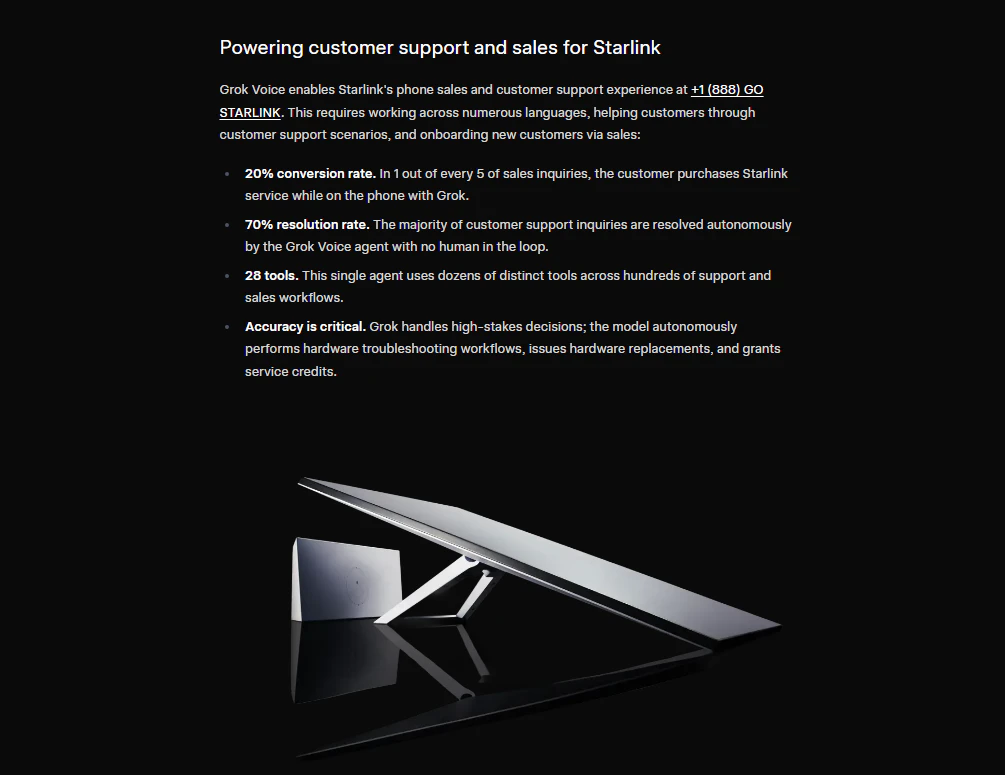
市场判断上,这条赛道正从“能听会说”向“能想会做”升级。Grok Voice 选择以 API 形态切入,意味着它希望成为企业搭建自有语音交互体验的基座,而非又一个面向C端的玩具。这一定位务实且聪明,因为真正有付费意愿和集成复杂度的买家,恰好是那些对“高精度、低延迟、可编程”有刚性需求的B端客户。

然而,挑战同样不可忽视:同类产品(如 ElevenLabs、OpenAI 的实时语音API)也在拼命提升响应速度和任务连续性,Grok 若不能拿出可量化的、显著优于竞品的延迟数据或精度指标,其声量将很快被淹没在技术迭代的浪潮中。一句话总结:方向对,定位准,但请把测试数据亮出来,而不是让用户自己猜。

查看原始信息
Grok Voice Think Fast 1.0
A state-of-the-art voice model built for complex, multi-step workflows with snappy responses and high accuracy.

snappy + multi-step is the hard combo to nail at the same time — most voice models trade one for the other. what's the latency look like end-to-end on a typical multi-turn workflow?

0
回复

Voice quality and latency in AI agents is one of those things that's invisible when it works and immediately kills engagement when it doesn't. The "snappy responses" point resonates — for any use case where the conversation has to feel natural (customer support, voice-driven workflows, interactive media), hesitation breaks the illusion.

I've been thinking about this in the context of audio content more broadly. I run a podcast on financial modelling called ModeLoop (https://open.spotify.com/show/0m1oR8AyQv17DVpc5MmirG) and the question of how voice AI changes long-form audio is interesting — not just production quality but whether models like this eventually enable interactive podcast-style experiences where listeners can ask follow-up questions.

For the API use case, what's the typical latency for a first-token response in a complex multi-step workflow scenario?

0
回复
#7
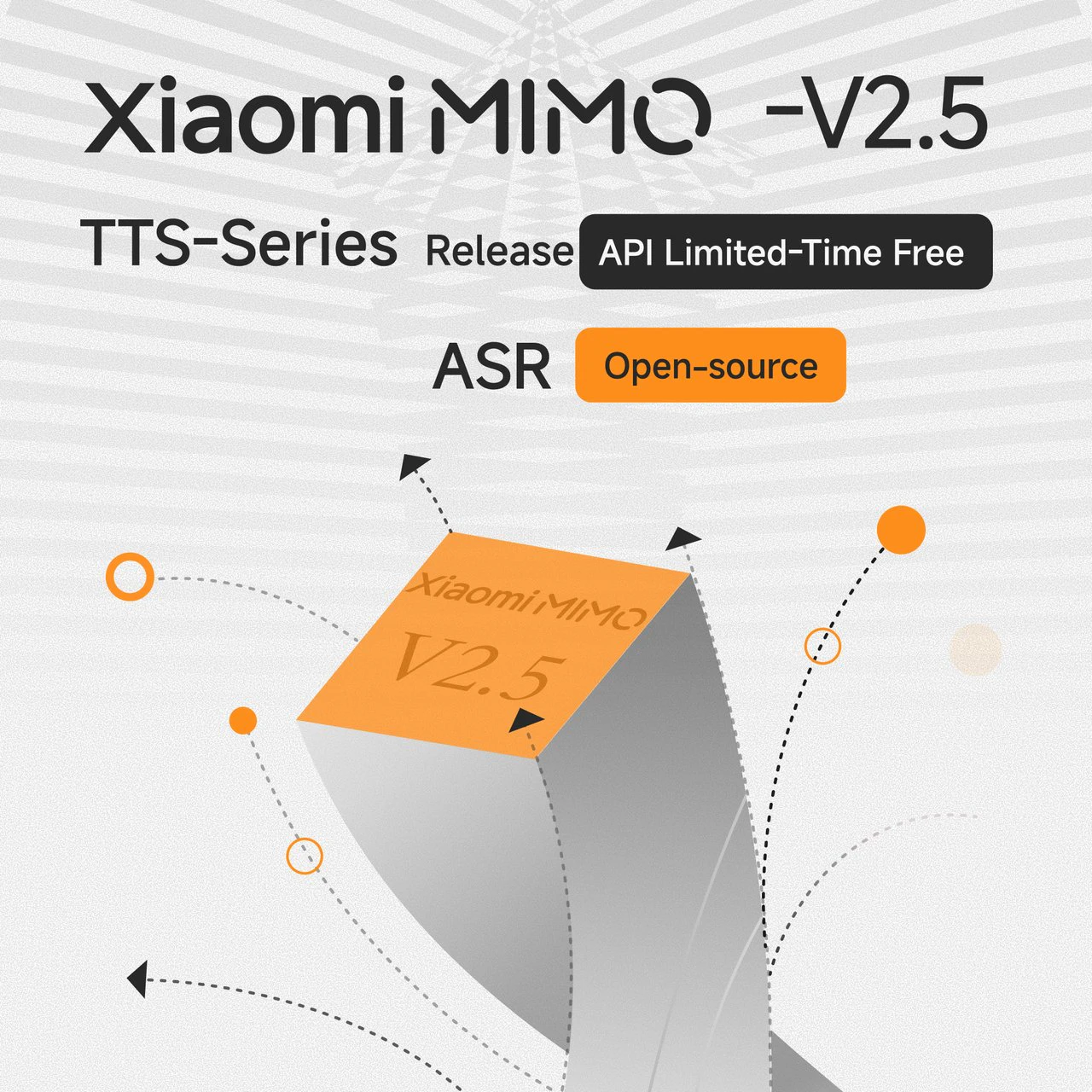
MiMo-V2.5 Voice
Bilingual ASR for dialects, code-switching, and songs
116
一句话介绍:小米开源的8B参数双语ASR模型,专为方言混杂、中英交替和带伴奏歌词等真实场景下的语音识别痛点设计,让语音产品在嘈杂现场而非纯净实验室里保持高精度。
API Open Source Artificial Intelligence GitHub
语音识别 开源模型 方言ASR 中英混合 歌词识别 多说话人 自托管 MIT协议 小米MiMo HuggingFace
用户评论摘要:用户赞赏方言与代码切换支持的实用价值,认为这是真实场景常被忽略的难点;同时询问歌词识别是否含领域专有词汇,以及实时流式推理的延迟表现。建议丰富对旅游、文化内容等垂直场景的适配说明。
AI 锐评

MiMo-V2.5-ASR的亮点不在参数规模或开源协议,而在它主动挑硬骨头啃——方言、代码切换、带伴奏歌词,正是传统ASR产品从demo到投产时掉链子的地方。8B模型能在吴语上比FunASR-1.5低近10个点的WER,歌词识别甚至超过Gemini 2.5 Pro,说明小米在训练策略(中训练+SFT+强化学习)上确实对准了噪声和语码混合这两个工业级痛点,而非刷榜。

但冷静看,这个成绩是“先选战场再赢仗”。英文WER略胜Whisper large-v3,但Whisper已经发布三年且未针对中文场景优化。真正考验在于方言和代码切换场景的泛化性:模型是否过度拟合了训练集里的方言和混合模式?对东南亚华语圈(如新加坡、大马)的独特语码混合能否保持同样水准?用户评论中已有对实时延迟和领域词汇覆盖的关切——一个自托管的8B模型在边缘设备或低算力服务器上的推理延时,可能成为落地瓶颈。

战略价值上,MIT许可+自托管+原生标点输出,是为开发者和企业做的“减法”——省去后处理、省去API按调用付费、省去数据外泄顾虑。这让它成为现阶段做中文或双语语音产品的“随手可拿”选项。但产品能否从“最佳开源模型之一”变成“用户愿意嵌进生产系统”的那一个,还要看MiMo社区后续是否快速迭代出轻量版、流式接口和方言扩展包。目前来看,它在技术层面的诚意明显高于商业化包装,这对ML工程师是利好,对急于上线的产品团队则需要多做一层工程验证。

查看原始信息
MiMo-V2.5 Voice
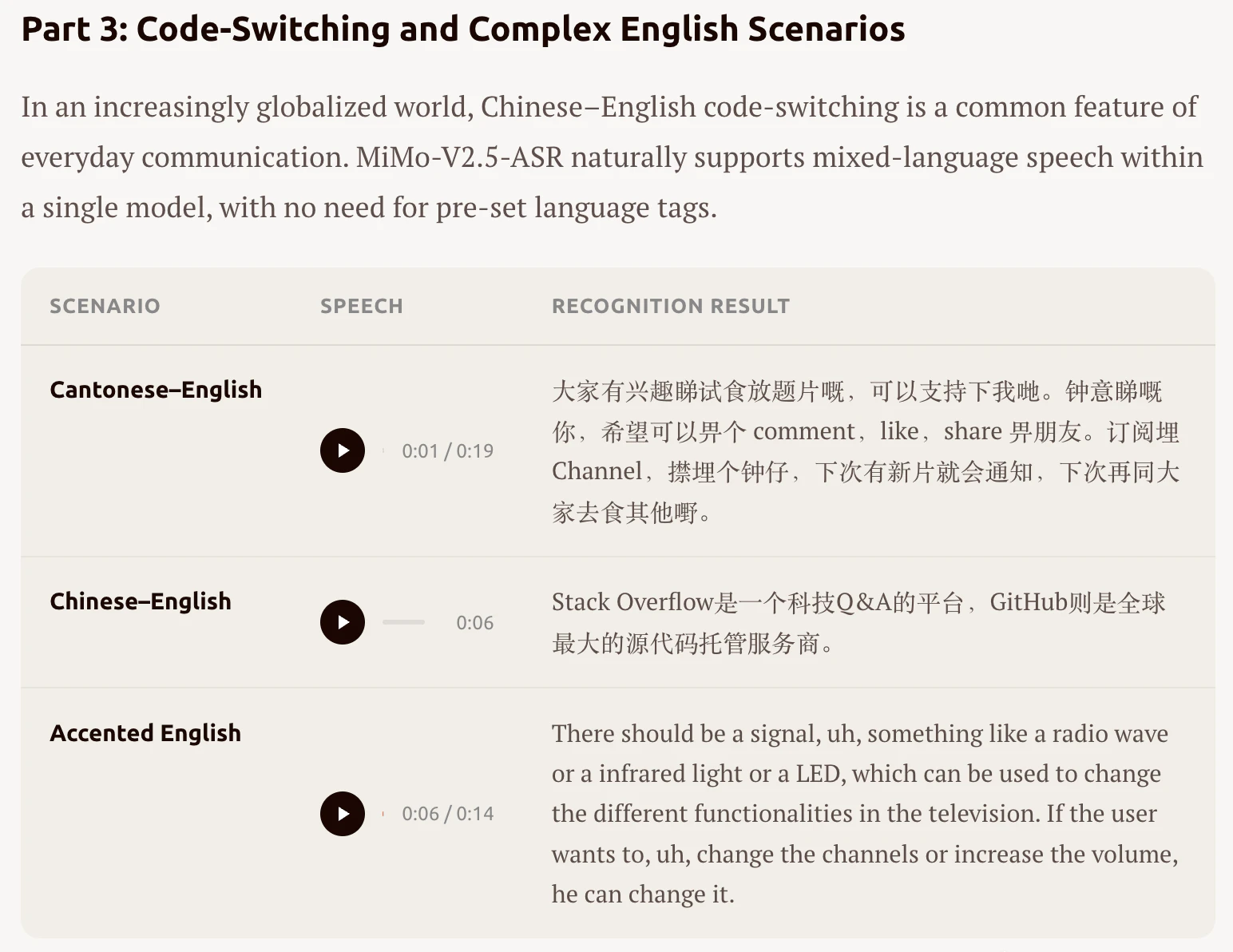
MiMo-V2.5-ASR is an 8B open-source speech recognition model from Xiaomi that transcribes Mandarin, English, eight Chinese dialects, code-switched speech, and song lyrics. Built for ML engineers, researchers, and developers building real-world voice applications.

Whisper changed what people expected from open-source ASR. Three years later, the leaderboard looks very different.

What it is: MiMo-V2.5-ASR is an 8B open-source speech recognition model from Xiaomi MiMo, MIT-licensed and available on HuggingFace, built for bilingual Chinese-English transcription across dialects, noisy audio, code-switched speech, and song lyrics.

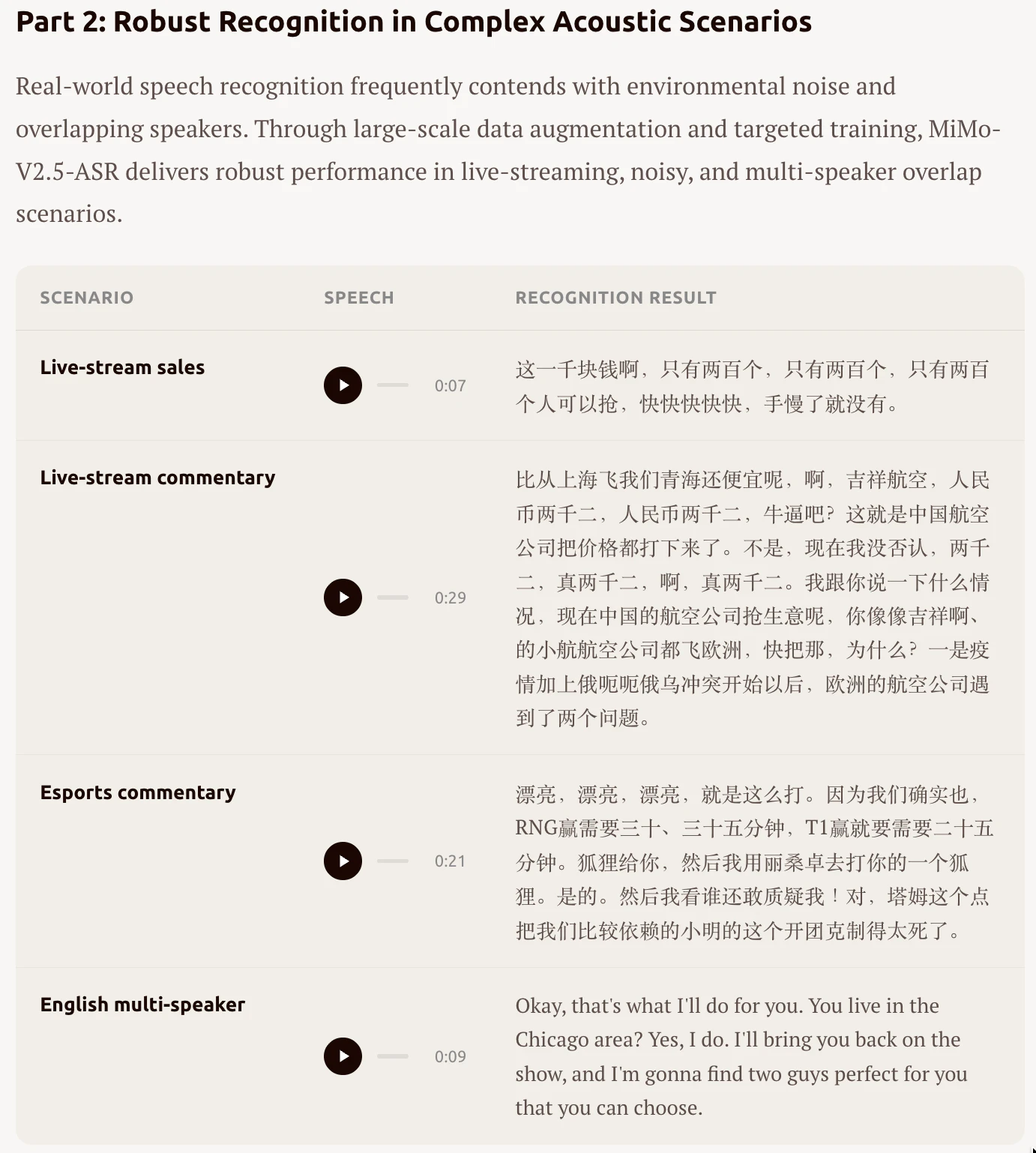
The problem: most ASR models are benchmarked on clean studio data and deployed into the real world, where audio is noisy, speakers overlap, and people switch languages mid-sentence. The gap between benchmark accuracy and production accuracy is where voice products quietly fail.

The solution: staged training combining large-scale mid-training, supervised fine-tuning, and a reinforcement learning algorithm specifically targeting the scenarios where conventional models break down. Native punctuation from prosody means transcripts arrive ready to use.

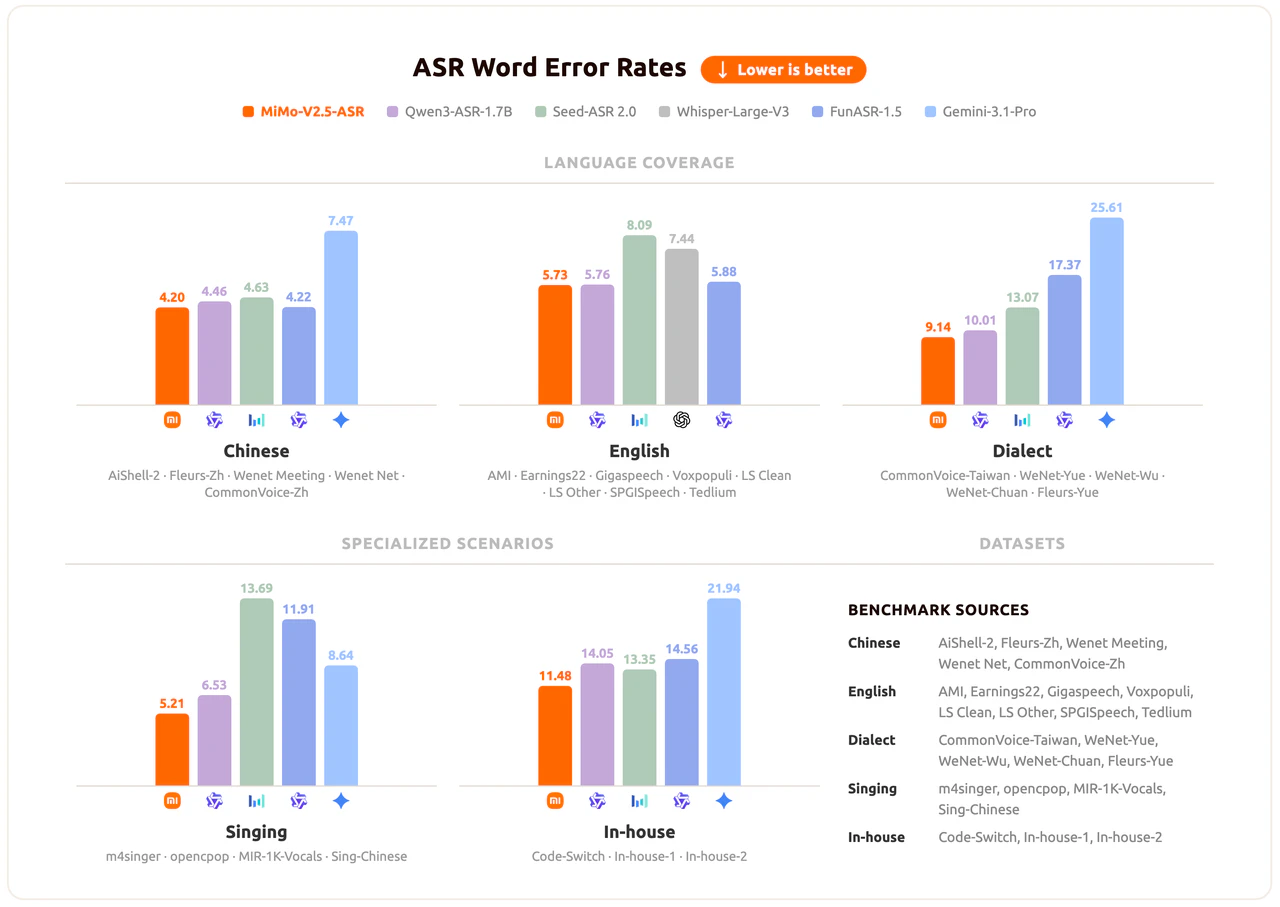
What makes it different: on the Open ASR Leaderboard, MiMo-V2.5-ASR posts 5.73% average WER on English, below Whisper large-v3 at 7.44%. On Wu dialect it scores 19.55% vs FunASR-1.5 at 29.08%. On lyrics, 3.95% on m4singer vs Gemini 2.5 Pro at 4.25%. These are not cherry-picked scenarios — they are the hard ones.

Key features:

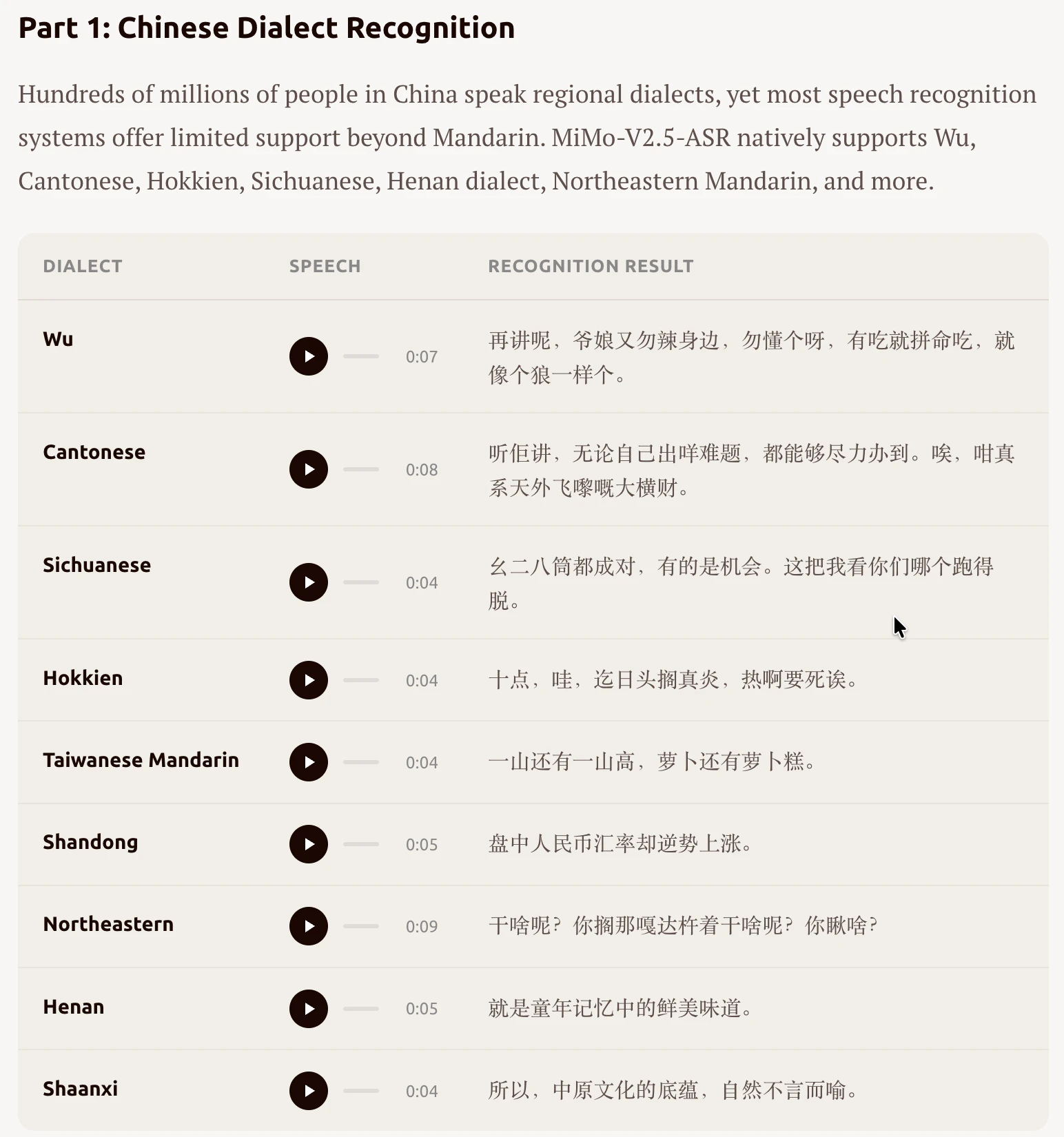
  • Eight Chinese dialects natively supported, including Wu, Cantonese, Hokkien, Sichuanese

  • Chinese-English code-switching with no language tags

  • Lyrics transcription under accompaniment and pitch variation

  • Multi-speaker and noisy environment robustness

  • Native punctuation, no post-processing needed

  • MIT license, Python API, Gradio demo, self-hostable

Benefits:

  • Production-grade accuracy on the audio conditions that actually exist in the field

  • One model replaces multiple regional or domain-specific ASR solutions

  • Self-hosting eliminates per-call API costs and keeps data on your infra

  • Ready-to-use punctuated output cuts one step from every downstream pipeline

Who it's for: ML engineers and voice product teams building bilingual or Chinese-language transcription pipelines who need accuracy that holds up outside the lab.

Open-source ASR has been catching up to closed models for years. MiMo-V2.5-ASR is a data point that the gap is now very small, and in some scenarios gone.

2
回复

Dialect and code-switching support is the piece that usually gets skipped in ASR research because it's hard, but it's exactly where real-world audio breaks down. Anyone building a voice product for users in multilingual environments (SEA, MENA, parts of Africa) runs into this immediately.

One application that jumped to mind reading this: location-based audio guides. I built a travel app called StoryRoute (https://storyroute.netlify.app/) that lets people explore cities through interactive, story-driven walks. Accurate multilingual ASR would open up a lot for that use case — imagine a guide that understands a question asked in Mandarin mixed with English street names, or local dialect terms for landmarks.

The code-switching capability in particular seems underexplored for tourism and cultural content. Is the model trained on domain-specific vocabulary or more general conversational speech?

0
回复

Code switching and lyrics are exactly where ASR demos usually fall apart. Hitting both, plus Chinese dialect coverage, makes this feel grounded in real audio instead of benchmark Code switching and lyrics are exactly where ASR demos usually fall apart. Hitting both, theater. How much latency does that add in live pipelines?

0
回复
#8
Genspark for Excel
AI assistant for Excel formulas, charts, insights.
111
一句话介绍:Genspark for Excel 是一款内嵌在微软Excel中的AI助手,让用户通过自然语言即可完成公式编写、图表生成与数据分析,解决非专业用户因不熟悉函数与操作而低效的问题。
Productivity Spreadsheets Marketing
AI办公助手 Excel插件 自然语言处理 数据分析 自动化公式 智能图表 Excel效能提升 AI+表格
用户评论摘要:用户认可其嵌入工作流而非切换标签页的创新,特别关注公式解释器与网页填充数据的实用性;但存在对处理超10k行大表性能的疑问,以及对于网页数据填充准确性的信任顾虑。
AI 锐评

Genspark for Excel的独特价值不在于“帮你写公式”——这个玩法已不新鲜,而在于它真正实现了“工作流不跳出”。大多数AI办公工具要求用户在窗口间反复切换,降低了实际可用性;它选择以插件形态嵌入Excel,从根本上解决了用户“懒得打开另一个工具”的惰性。这恰恰切中了Excel重度用户的核心痛点:他们并非不会操作,而是害怕犯错、厌恶中断。公式解释器是它最被低估的功能——它不只是一个工具,更是一个教学助手,能拉低Excel的入门门槛,让“低付费能力的普通白领”也能享受AI带来的效率红利。但需要警惕的是,评论中无人质疑它的“幻觉”问题:当AI插入函数后,一旦数据敏感或逻辑嵌套复杂,错误将难以追踪。尤其当它自动抓取网页数据并填入单元格,若缺乏严谨的数据校验机制,极可能在财务、运营等场景中埋下隐患。此外,对大表的性能担忧虽未经过多验证,但若响应卡顿,“嵌入”反成累赘。一句话总结:这个方向做对了,但产品成熟度还需在“信得过的准确性”上补课。

查看原始信息
Genspark for Excel
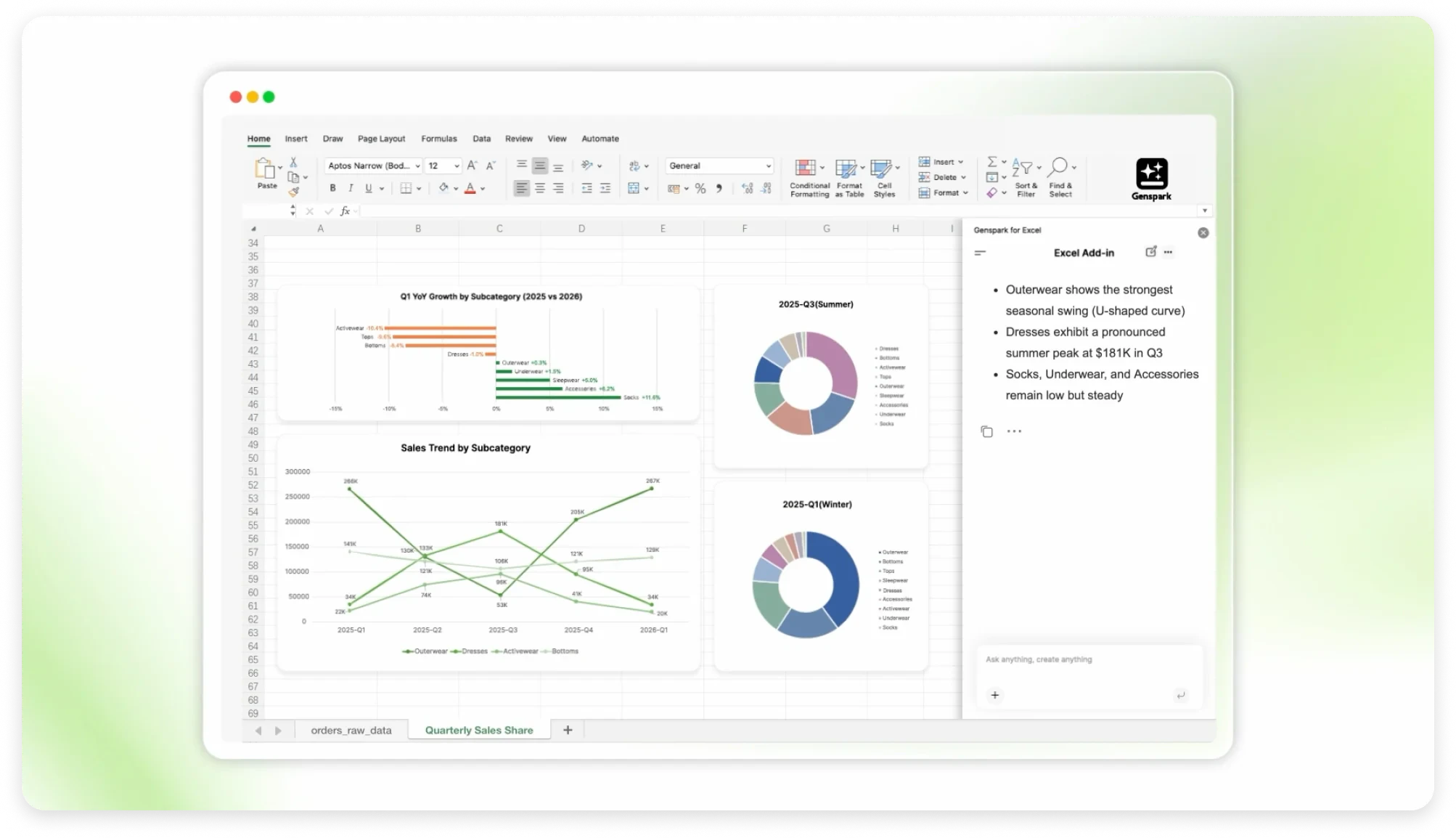
Genspark for Excel is an AI assistant embedded inside Microsoft Excel. It writes formulas, builds charts, analyses data, and pulls web research, all in plain English. For analysts, ops teams, and business users who live in spreadsheets.

Genspark for Excel is an AI assistant that lives inside Microsoft Excel, handling formulas, charts, data analysis, and even web research, all through plain English prompts.

I'm hunting this because the "AI in your workflow" promise usually means tab-switching. This one actually embeds in the tool millions of people already have open all day.

The problem is familiar: Excel is deeply capable but the learning curve is steep. Most users know maybe 10% of what it can do, and they spend hours on formulas they half-understand, charts they can't get right, and analysis they have to Google their way through.

Genspark sits inside the spreadsheet as a plugin and handles the syntax layer. You describe what you want, it writes and inserts the formula. You select a data range, tell it the story you want to tell, it builds the chart. You ask a question about your data, it answers in plain language.

A few things stand out: the formula explainer (paste any formula, get a step-by-step breakdown), and the web research-to-spreadsheet feature, where it searches the web and fills your cells automatically. That second one is genuinely different from anything I've seen in this category.

Best fit for business analysts, ops managers, finance teams, and frankly anyone who uses Excel daily but isn't a power user.

What's the one Excel task that takes you the longest right now? Are you able to get Genspark to cover?

P.S. I hunt the latest and greatest launches in tech, SaaS and AI, follow to be notified @rohanrecommends

4
回复

@rohanrecommends This actually makes sense because most people do not struggle with Excel itself, they struggle with trusting their own formulas. I have spent more time checking if one formula is correct than doing the actual work, especially when one wrong cell can break the whole sheet. Having help inside Excel instead of jumping between Google and random forums feels much more practical. The web research filling cells is interesting too, but I do wonder how people verify accuracy before trusting it in important reports or finance work.

0
回复
@rohanrecommends Congratulations on your launch!
0
回复

You've nailed why this matters—the embedded experience is the actual innovation here. Most people aren't avoiding Excel, they're stuck in it. The formula explainer sounds particularly useful since understanding what you're looking at is half the battle to actually using it next time.

1
回复

How does it handle really large sheets? Curious if performance changes once you're past 10k+ rows

0
回复
#9
PromptPaste
Your private AI prompt library on Mac, iPhone, and iPad
108
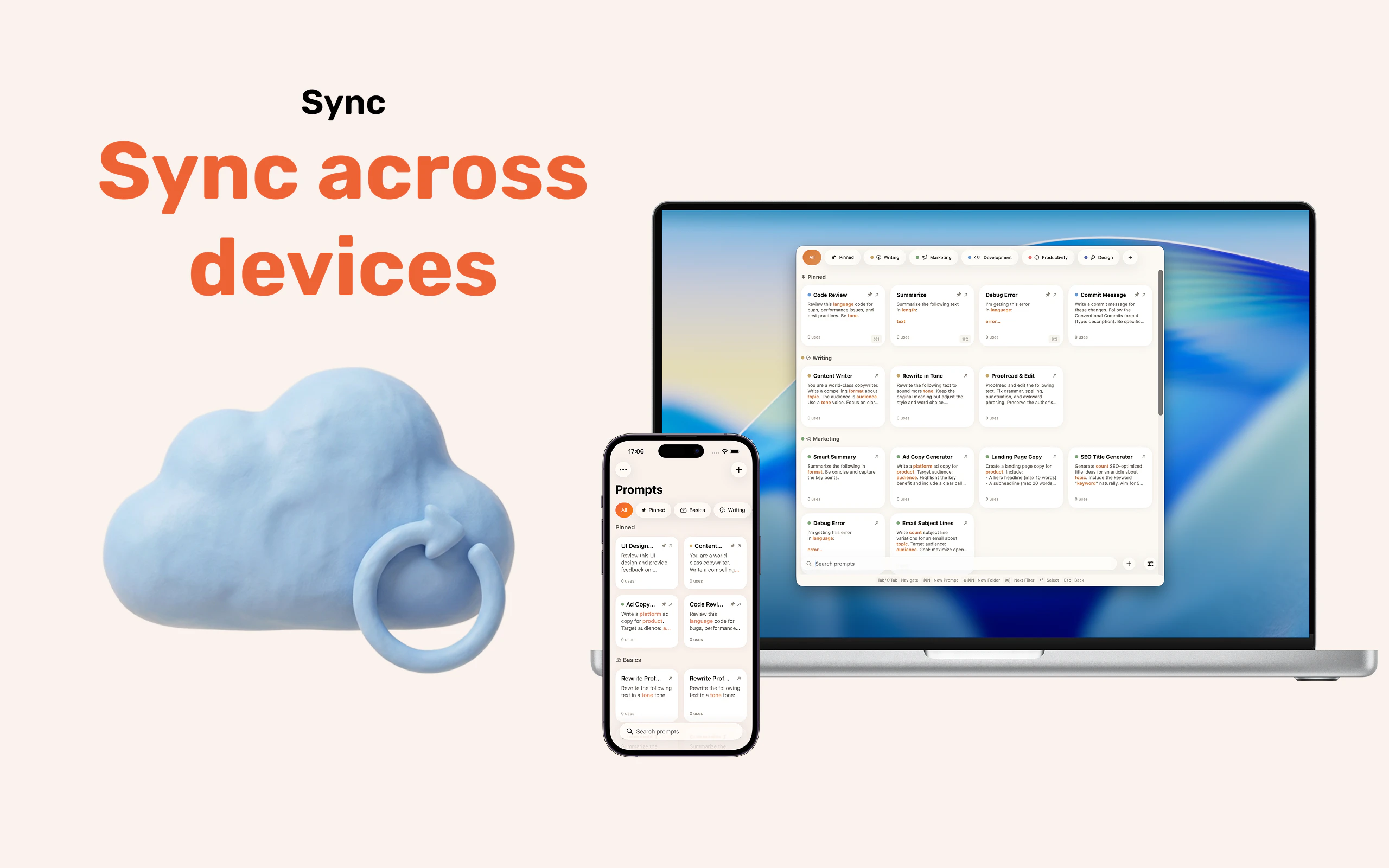
一句话介绍:PromptPaste 是一款原生 Apple 应用,将散落在各处的 AI 提示词集中管理并同步到 Mac、iPhone 和 iPad,通过快捷键一键粘贴,解决了多端找 prompt 效率低下的痛点。
Productivity Artificial Intelligence Apple
AI提示词管理 剪贴板工具 本地优先 iCloud同步 Mac应用 模板变量 隐私优先 Apple原生 高效工作流 收藏夹分享
用户评论摘要:用户高度认可本地优先的无账户设计,认为提示词关乎个人智力资产,不应轻易交给云端。同时指出动态模板中的{{variables}}功能是核心亮点,便于批量替换内容。有用户询问嵌套模板与复杂工作流支持,以及iCloud同步是否可选。
AI 锐评

PromptPaste 的聪明之处在于它押注了一个“反主流”的价值——隐私。在“云为先”的产品逻辑里,“无账户”往往被看作功能阉割,但在这里,它被重新包装成“你的提示词就是你的私有知识产权”这一洞察。这种叙事直击重度 AI 用户(内容创作者、研究员、设计师)的深层不安:他们既依赖提示词提升效率,又恐惧自己的思维模式被服务商无形收割。

产品自身设计也足够克制且尖锐。菜单栏触发 + 快捷键复制,看似只是剪贴板管理的变体,但“{{variables}}”这个功能把产品从“存储”拉到了“创作”层面——用户不是在翻笔记,而是在动态生成指令。这才是真正的效率跃迁,这也是唯一可能让用户从“懒得用”变成“离不开”的功能点。

不过,定价策略值得警惕。年费 60 美元、终身 150 美元,对于一个“极简快捷键+变量模板”的工具而言,明显偏高。它面对的对手不仅是浏览器摘录工具,还有用户无限续命的聊天历史记录——毕竟多数人对 prompt 的复用频率远低于对密码的复用。如果产品不能尽快推出可被社交传播的“模板市场”或“工作流资产化”功能,单靠“隐私+快捷”的卖点,很难支撑长期订阅转化。定价高了,但故事很强,得看用户愿不愿意为“安全感”买单。

查看原始信息
PromptPaste
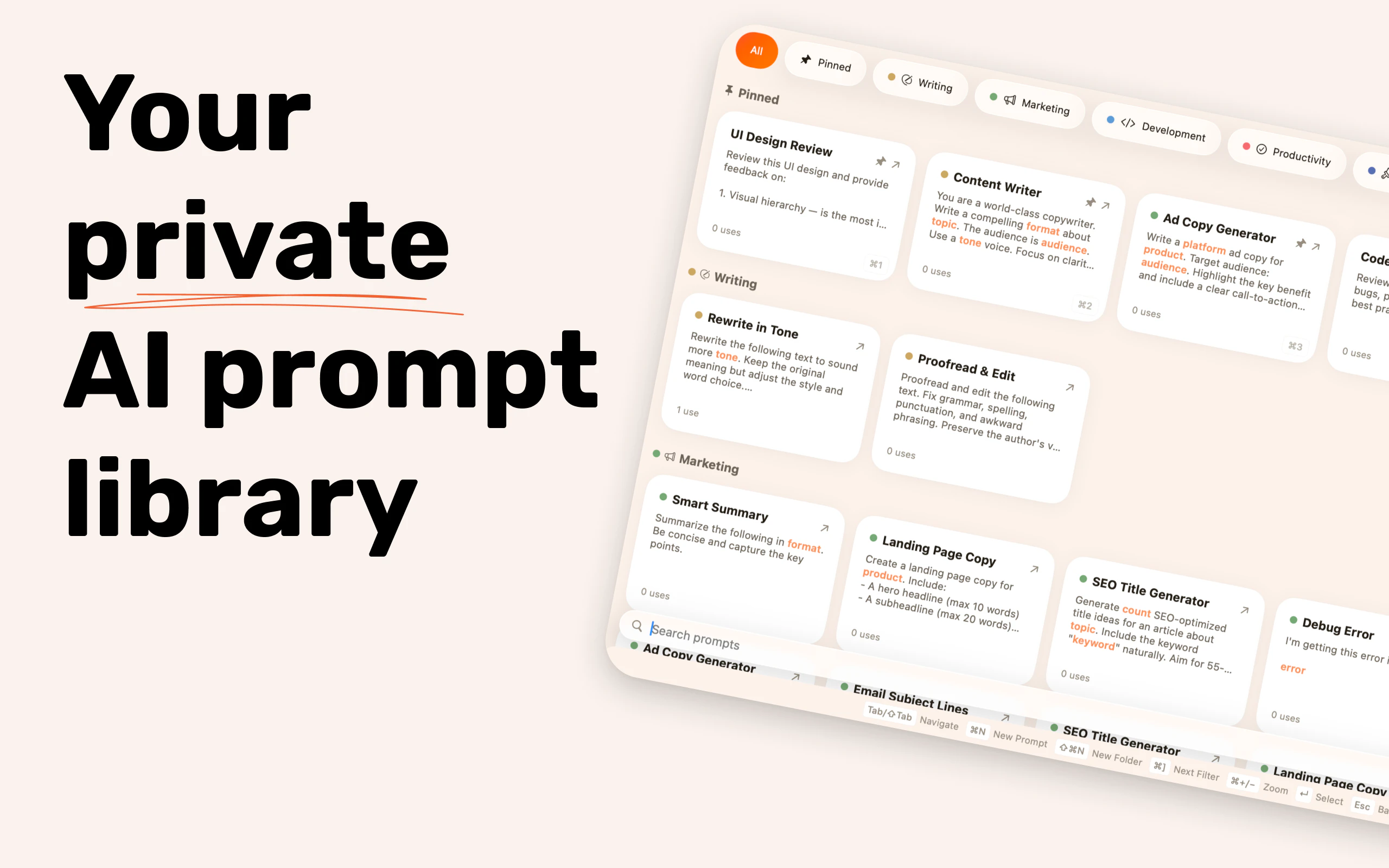
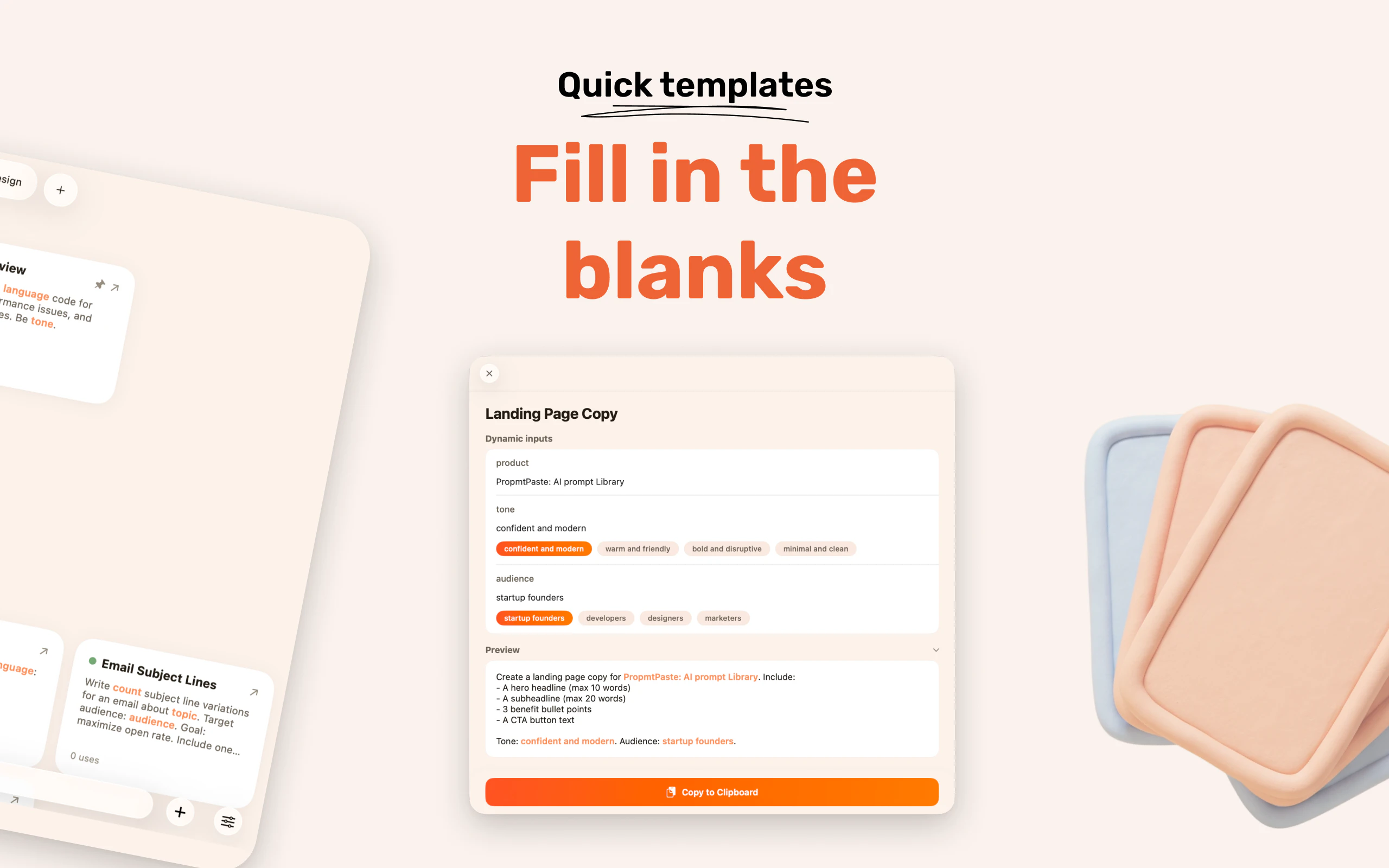
PromptPaste is a native Apple app that saves your AI prompts across Mac, iPhone, and iPad. Hit ⌘⇧P from the Mac menu bar to copy any prompt instantly. Build dynamic templates with {{variables}}, organize by folder, and share collections with a link. No account - your prompts stay on your device.

Hey Product Hunt 👋

I'm Ivan, maker of PromptPaste.

Like a lot of people here, my best AI prompts were scattered - half in
Notion, half in Notes app. Every time I needed one, I'd either dig for five
minutes or just rewrite it from memory (usually worse than the original).

Every prompt manager I tried was a Chrome extension or a web app, which
meant another account, another tab, and my prompts sitting on someone
else's server.

So I built PromptPaste: a private prompt library that lives in your Mac
menu bar and syncs to iPhone/iPad via iCloud.

What it does:
- ⌘⇧P anywhere on Mac → pick a prompt → it's on your clipboard
- Dynamic prompts with {{variables}} - fill the blanks, copy the result
- Folders, search, favorites
- Share a collection with a link (the only thing that ever touches a server, and only if you choose to)

What "private" actually means:
No account. No sign-up. No telemetry. Your prompts live on
your device and sync through your own iCloud - I never see them. If
PromptPaste shut down tomorrow, your library would still be on your Mac.

Pricing:
7-day free trial, then $59.99/yr, or $149.99 lifetime.

Two things I'd genuinely love feedback on:
1. Where do your prompts live today? (Notion? Notes? Chat history? A Google Doc?)
2. What's the one prompt you wish was always one click away?

Thanks for taking a look 🙏

7
回复

@ivan_terehin1 The "no account, stays on your device" angle is genuinely underrated. Most productivity tools default to cloud sync and call it a feature, this is the opposite bet and there is a real audience for it.

The {{variables}} in templates is the part that makes this actually useful rather than just a clipboard manager. Curious whether you can nest templates or chain them together for more complex prompt workflows.

0
回复

The local-first, no-account approach is the right call for a prompt library. Prompts are increasingly part of someone's actual intellectual workflow — the way they think, research, and create — and handing that to a cloud service feels like more exposure than most people want.

The folder + variable template system is what makes this genuinely useful rather than just a clipboard manager. For anyone creating content in a specific niche, reusable structured prompts with swappable variables is a huge time saver.

I run a YouTube channel on financial modelling called Mod3Loop (https://www.youtube.com/@Mod3Loop) and a good chunk of my content workflow is prompt-driven — research, script structuring, thumbnail briefs. Having those templates locally organised and instantly accessible from the menu bar would fit that workflow perfectly. Does PromptPaste support syncing across devices via iCloud, or is it intentionally kept device-local only?

0
回复
#10
Euphony
Render AI chat data and Codex logs into browsable views
95
一句话介绍:Euphony 将AI代理生成的深层嵌套JSON对话日志与Codex会话数据,在浏览器中渲染为可交互、可筛选的时间线视图,帮助工程师高效调试代理工作流。
Artificial Intelligence GitHub
AI代理调试 对话日志可视化 JSON/JSONL渲染 Codex CLI 浏览器工具 开源 Web组件 JMESPath过滤 Harmony格式 交互式时间线
用户评论摘要:用户指出默认情况下Harmony对话和Codex日志不可读,Euphony解决了调试代理行为时需逐行解析原始JSON的痛点。核心需求是直观浏览和过滤结构复杂的数据,评价其为“虽小但实”的工具。
AI 锐评

Euphony的定位精准:它不试图成为万能AI平台,而是死磕一个具体且痛感强烈的场景——AI代理输出的非结构化JSON调试。95票不算爆款,但评论区的认真反馈暴露了真实需求:当代理行为出现意外,工程师需要在层层嵌套的role token、channel marker和tool call中快速定位问题,而现有终端或日志工具毫无视觉层次可用。

其真正的价值在于两点:一是将“不可读”的原始数据转化为“可交互”的领域叙事(时间线+角色过滤),而非简单语法高亮;二是通过Web Components实现嵌入能力,让这个工具能融入团队已有的React/Vue等技术栈,而非强迫用户迁移到独立平台。这避免了“又造一个孤岛”的经典错误。

但必须指出,Euphony目前更像是“急救包”而非“手术台”——它擅长呈现数据,但缺少更深入的诊断功能(如自动异常模式标注或因果链追踪)。此外,作为依赖用户自行提供OpenAI API key的翻译功能,在安全性和成本控制上并未给出明确约束方案。

整体而言,Euphony走对了路:聚焦调试痛点的窄切口、开放源码与嵌入架构、以及纯前端处理的隐私友好设计。如果能进一步沉淀出可复用的调试模式与模板,它有望从“可视化工具”进化为“代理行为分析框架”。否则,它可能只是工程师抽屉里那把偶尔用到的六角扳手。

查看原始信息
Euphony
Visualizes Harmony JSON/JSONL conversations and Codex CLI session logs as interactive, filterable timelines in the browser. For AI engineers debugging agent workflows and teams building on gpt-oss models.

Harmony conversations and Codex CLI session logs are not readable by default. That is a problem when your agent just did something unexpected.

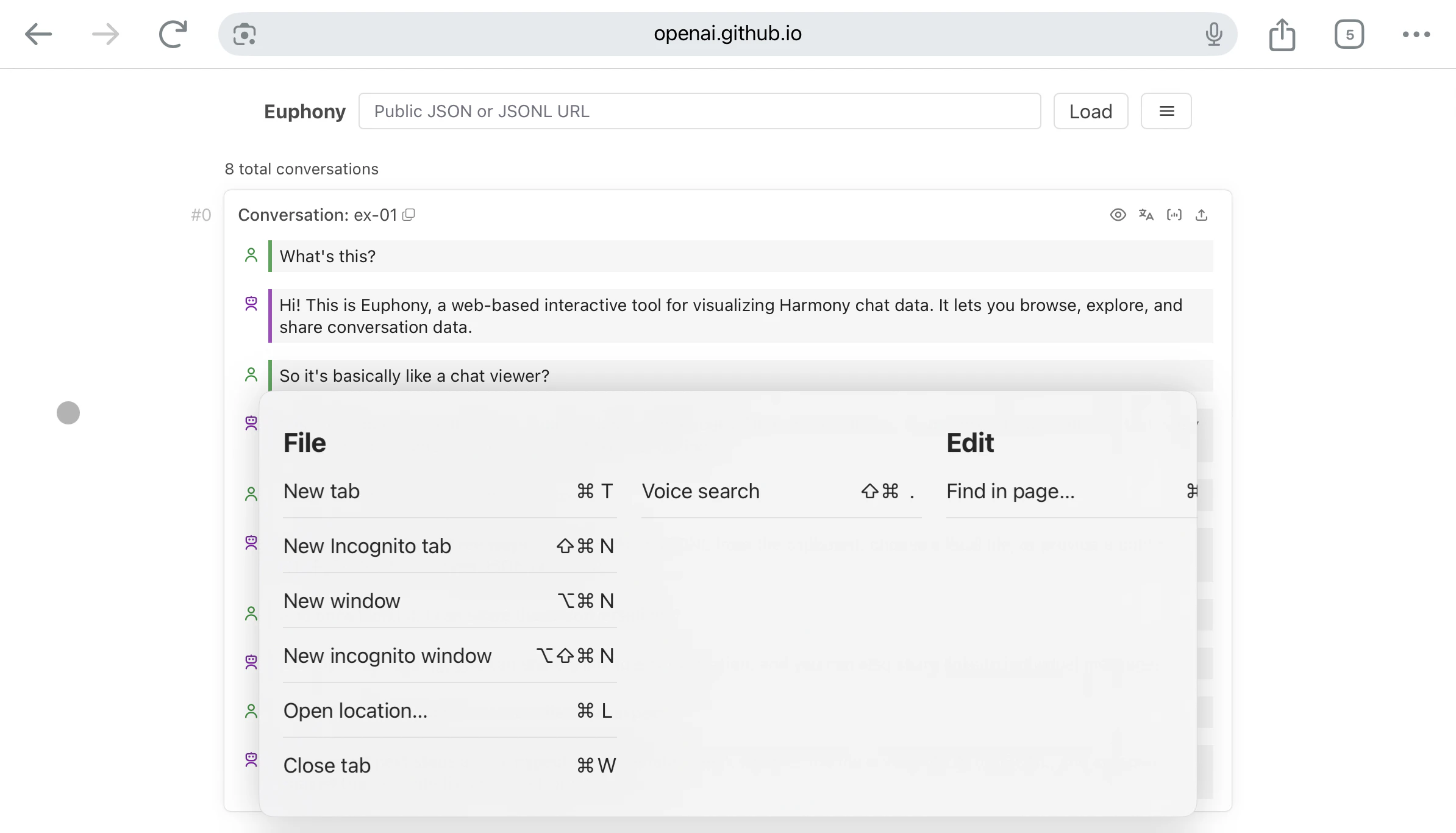
What it is: Euphony is an open-source browser tool from OpenAI that renders Harmony JSON/JSONL files and Codex session logs as structured, interactive conversation timelines.

Problem: AI agents running on Harmony-format data produce deeply nested JSON with role tokens, channel markers, and interleaved tool calls. Codex CLI writes a rollout JSONL file to disk after every session. Neither format is designed for human inspection. Debugging agent behaviour means scrolling through hundreds of lines of raw structured data with no visual hierarchy.

Solution: Euphony loads that data from a URL, local file, or clipboard paste and renders it as a readable timeline. Filter by role, recipient, or content type using JMESPath. Inspect message metadata. Edit in-browser. Translate using your own OpenAI API key. All processing stays client-side in the default frontend mode.

What makes it different: It ships as embeddable Web Components, so you can drop a conversation viewer into React, Vue, Svelte, or plain HTML with a single custom element. No need to build a viewer from scratch. The optional FastAPI backend adds Harmony tokenization rendering, which shows exactly how a conversation will be tokenized before it reaches the model.

Key features:

  • Load from clipboard, local file, or public HTTPS URL

  • JMESPath filtering by role, recipient, and content type

  • Metadata inspection panel for annotated datasets

  • In-browser editing, focus mode, and grid view

  • Embeddable Web Components, Apache 2.0 license

Who it's for: AI engineers working with gpt-oss models, Codex CLI, or Harmony-format datasets for training, evaluation, or agent pipelines.

Agent debugging has needed proper tooling for a while. Euphony is a small but real step toward that.

3
回复
#11
Architecto
Design, review, and document cloud architecture with AI
86
一句话介绍:Architecto是一个用AI将自然语言描述自动转化为云架构设计、并同步进行安全与成本分析及文档生成的一站式平台,解决工程团队在多个工具间切换导致的碎片化协作痛点。
Design Tools Developer Tools Artificial Intelligence
云架构设计 AI生成 安全性分析 成本估算 合规检查 文档自动化 图表绘制 云治理 开发运维 多云平台
用户评论摘要:用户认可其整合设计、安全与成本的功能价值。主要疑问:如何处理实际部署与架构的“漂移”?是否支持从现有运行环境反向识别并文档化未归档的有机架构?
AI 锐评

Architecto精准踩中了云架构协作中“工具链割裂”这一老生常谈的痛点,其“一句话生成+多维度同步分析”的整合度确实领先于市面上大多数独立绘图或成本估算工具。从评论反馈看,用户最关心的两个功能——Drift Detector(漂移检测)和Cloud Discovery(云发现)——恰恰是其从“设计方案”走向“治理现实”的关键。前者解决了架构与基础设施的持续一致性这一被严重低估的运维隐患;后者则是对“绝大多数系统是长出来的而非设计出来”这一残酷现实的承认。

然而,产品的真正壁垒并不在于初期生成,而在于对真实运行环境的解析能力以及反馈闭环的深度。目前架构生成更多是“自上而下”的理想蓝图,若Cloud Discovery无法准确反向推导出混乱的、手工修补的现有架构,那么所有后续的分析都将基于一个假设性的起点,价值大打折扣。此外,AI生成的设计是否会导致团队架构思考能力的退化?在复杂分布式系统设计中,AI能处理的“模式”边界在哪?这些都是产品需要警惕的成长陷阱。总体而言,Architecto作为“架构师副驾驶”的潜力巨大,但当前更可能是一个优秀的“需求转绘”和“初稿生成”工具,而后端的漂移检测与治理能力,才是决定其能否从“工具”升级为“系统”的分水岭。

查看原始信息
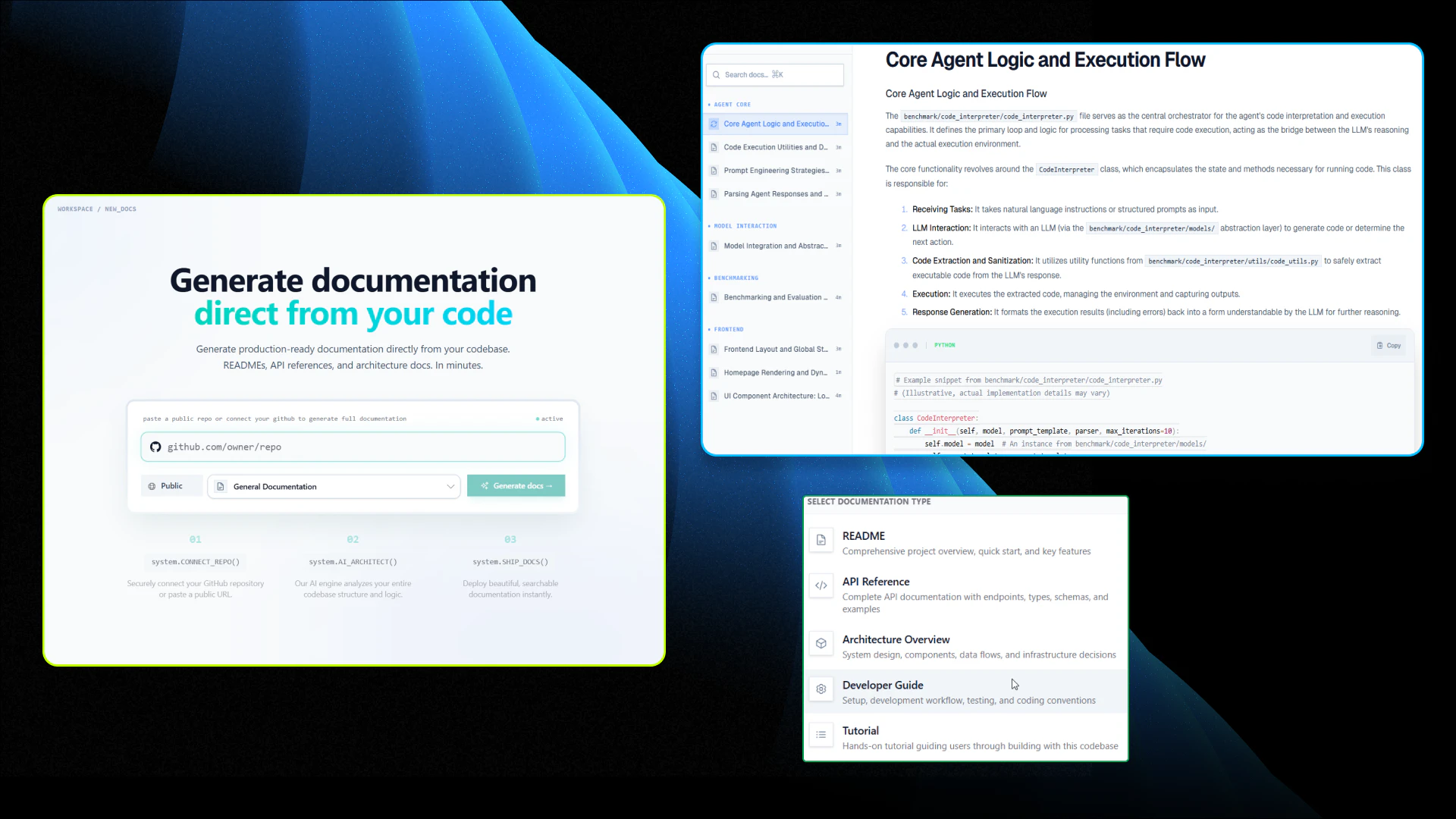
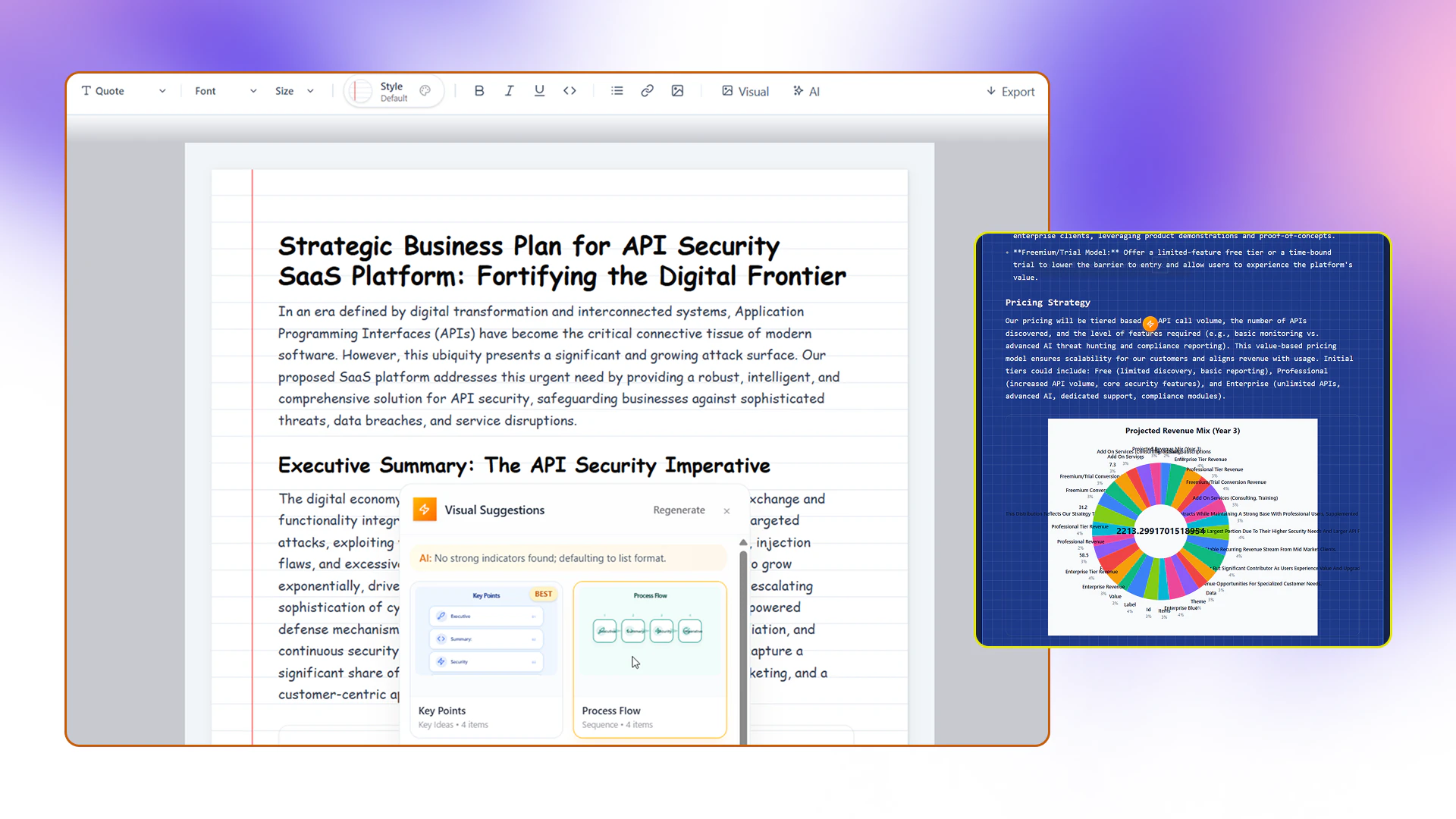
Architecto
Describe what you want to build. Architecto generates the architecture, runs security and cost analysis, and creates technical docs. One platform for design, review, and documentation across clouds.

Hey Product Hunt 👋

The problem we solve:

Every engineering team eventually needs to design, review, and document cloud architecture. Today that means stitching together 5-6 tools: a diagramming tool, spreadsheets for cost, separate security reviews, docs in Confluence, and compliance checklists in yet another system.

What Architecto does:

One platform where you describe what you want to build and get a reviewable architecture.

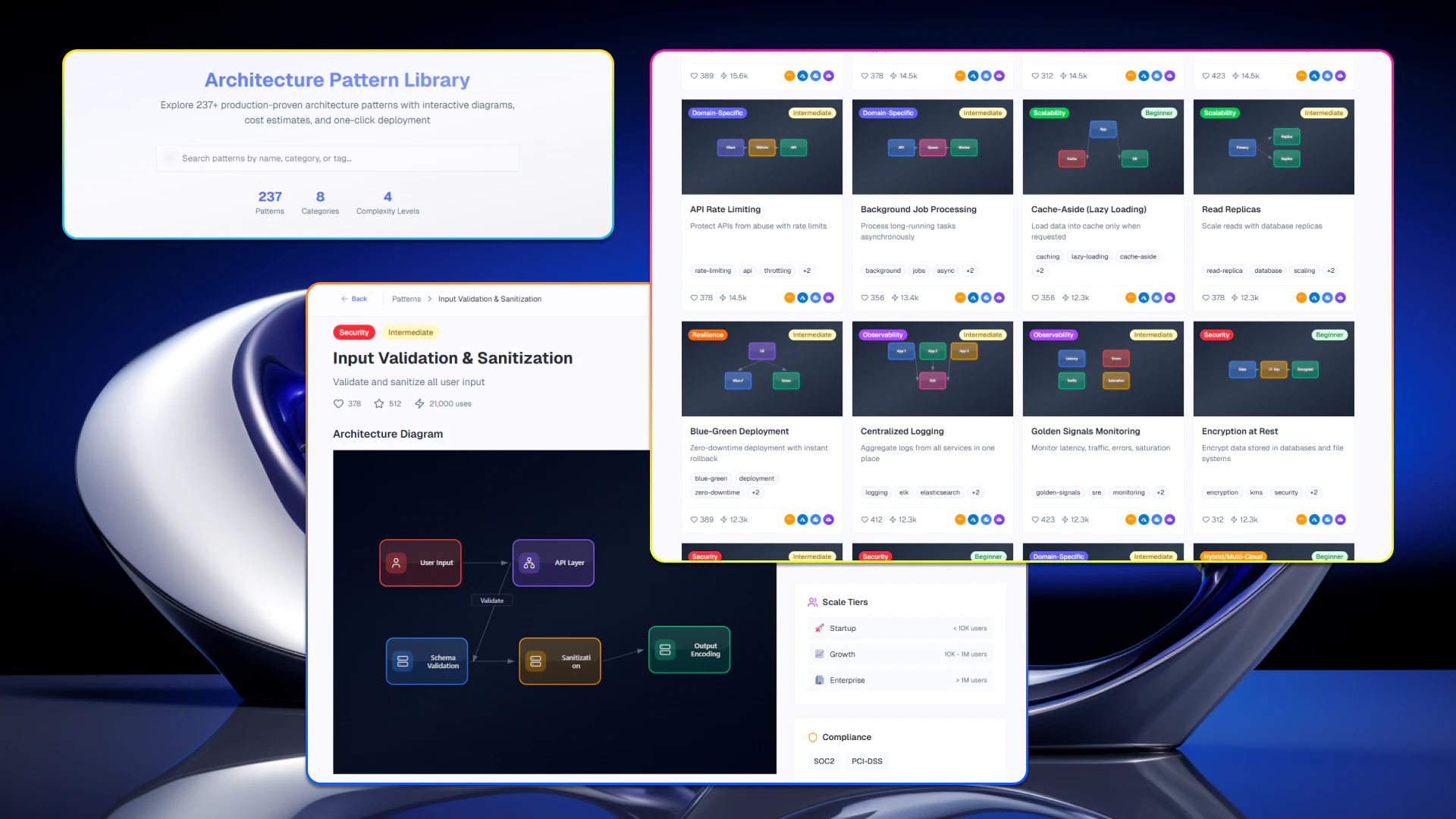
Design: Architect AI generates cloud architectures from natural language. Flow IQ handles flowcharts, UML, sequence diagrams, ERDs, and 4 other diagram types. DB Visualizer covers data architecture.

Review: Cost Estimator, Threat Analyzer (STRIDE), Scalability Analyzer, Security Posture, Compliance Checker (SOC 2, GDPR, HIPAA, PCI-DSS), and Drift Detector all run against the same architecture.

Document: CoDocs generates docs from code repos. HyperDocs creates visual-rich design documents with AI.

Govern: Cloud Discovery, IaC Orchestration, Anti-Pattern Detection, and Architecture Diff keep everything aligned.

Free plan available - 4 diagrams, 200 AI credits, 240+ architecture patterns, and the full learning system (1,000+ quizzes, 20K flashcards).

Would love your feedback. What's the first thing you'd want to try?

1
回复

@architecto The combination of architecture generation plus security and cost analysis in one step is the part that stands out. Usually those are three separate conversations with three separate tools.

Curious how it handles drift when the actual implementation starts diverging from the generated architecture. Does it let you feed back the real infra and re-analyze, or is it mostly a starting point tool?

0
回复

The fragmentation problem you described is real and I felt it building DocMetrics alone. Diagramming in one place, cost thinking in a spreadsheet, security considerations in my head, documentation always last and always incomplete. The tax of switching between tools is not just time it is context. Every switch breaks your thinking.

To answer your question directly — the first thing I would try is the Drift Detector. Not because it is the most exciting feature but because it solves the most painful silent problem. Architecture decisions made in week one slowly drift from what is actually running in production and nobody notices until something breaks. Having something that flags that drift continuously is the kind of thing that prevents the 2am incident six months later.

The compliance checker covering SOC 2 and GDPR in the same workflow as design is genuinely smart for startups trying to sell to enterprise. Those compliance requirements usually show up as a surprise after you have already built something and retrofitting them is painful.

One honest question — how does Architecto handle architectures that evolved organically without ever being documented? Most real systems were never designed top down. They grew. Does Cloud Discovery work backwards from what is actually running to create the baseline?

0
回复
#12
Smallbits
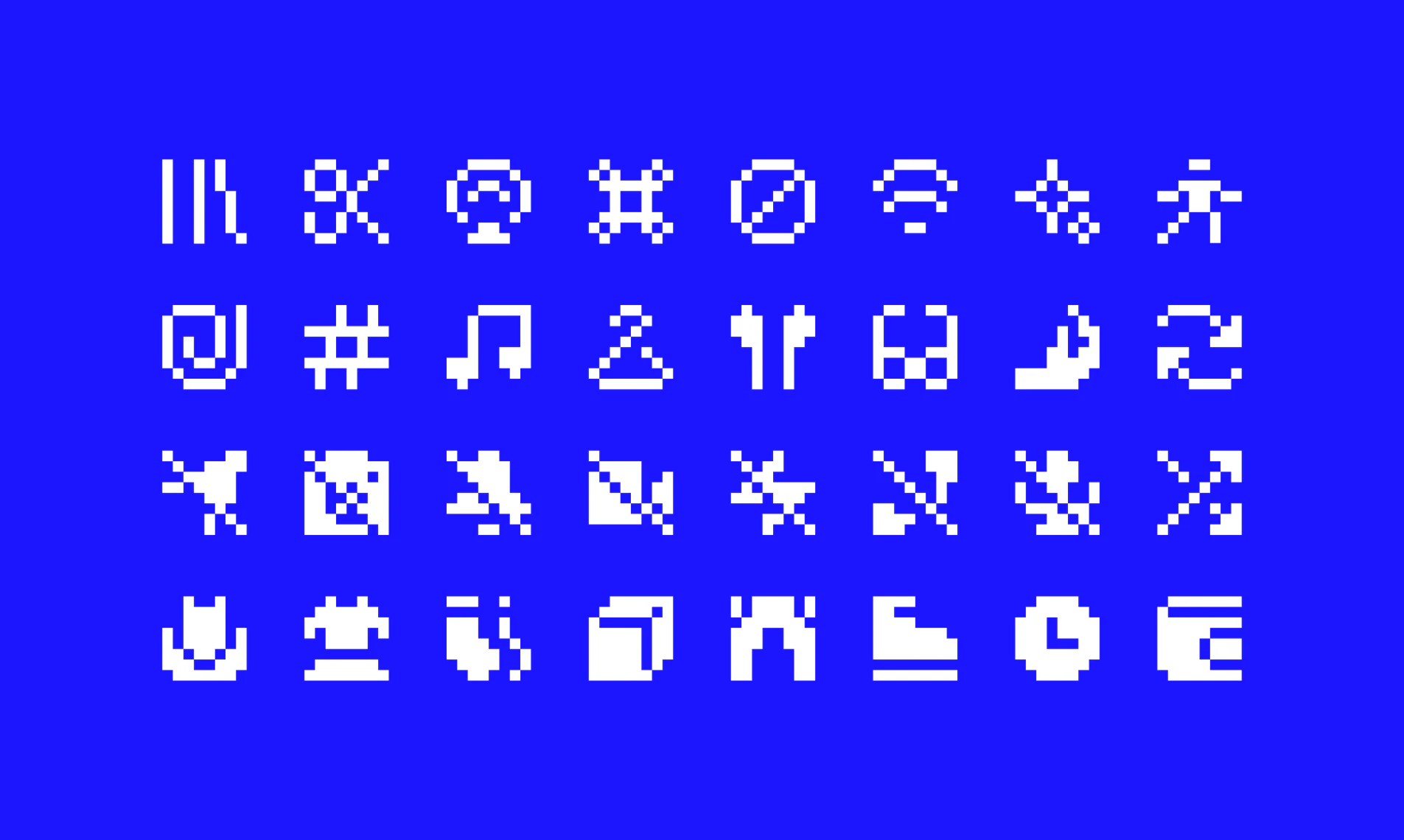
Pixelated icons on a 8×8 grid
16
一句话介绍:Smallbits 是一个在8×8像素极限下设计的图标库,帮助设计师在极简场景(如复古UI、终端界面)中快速获得清晰可辨的像素图标,解决“图标过多细节反而干扰识别”的痛点,并免费开放商用。
Icons Design Design resources
像素图标 极简设计 8x8网格 Figma插件 SVG图标库 免费商用 复古UI 终端风格 图标约束 设计工具
用户评论摘要:用户赞赏8x8的创意约束和像素美学,认为其适配当前流行的复古/终端风格UI,并感谢免费商用授权。部分用户暗示类别仍有欠缺,创作者主动征集所需图标,计划持续更新。
AI 锐评

Smallbits 的价值不在于“提供图标”,而在于“定义了一种美学规则”。在图标库泛滥的当下,它反其道而行——用8x8网格的极端约束,逼迫设计师思考“何为本质”。这种减法思维恰恰切中了两类痛点:一是复古/终端UI的精准素材缺失,二是设计同质化下对差异化视觉语言的需求。

但必须指出,16票的初始热度、0条深度建议的评论,暗示其“惊艳感”强于“实用性”。200+图标看似丰富,但16×16像素的极限尺寸注定了它只能作为点缀性装饰,而非UI主力组件。创作者自称“部分类别单薄”,若仅靠用户反馈补全,容易沦为零散拼盘,缺乏系统性的图标分类逻辑。

真正的野心或许在背后:通过极端约束建立创作者壁垒——能用8×8画清楚图标的设计师凤毛麟角,这反而成了Smallbits最硬的护城河。但若想从“猎奇工具”进化为“常用工具库”,它需要回答一个核心问题:除了像素感,用户为什么不用Font Awesome等成熟库手动缩放?答案或许在于“每个像素必须承载意义”所带来的叙事感——这恰恰是未来AI生成图标浪潮中,人类设计师最后的阵地。

查看原始信息
Smallbits
Most icon sets give you flexibility. Smallbits does the opposite. Every icon is designed on an 8×8 grid – 64 pixels, no more. The constraint is the concept: what's the minimum an icon needs to still be recognisable? 200+ icons in Figma and SVG, completely free for personal and commercial use.

Hey everyone 👋

Smallbits started as a question: what's the minimum number of pixels an icon needs to still be recognisable? Turns out, 8 pixels on each side is the answer – and every point needs to earn its place!


I started this set last summer, kept putting off launching because something was always missing. Eventually I just shipped it. It's a work in progress and I know some categories are thin – but I'd rather hear what you need than sit on it for another year.


A few things worth knowing:

  • Completely free, personal and commercial use

  • Available as a Figma file and SVGs

  • Drawn on iPad in Pixaki, vectorised in Figma

  • More icons are coming

If there's an icon you'd love to see added, drop it in the comments. I'm building a list.

1
回复

Love the constraint - 8x8 forces the kind of clarity that bigger icons let you cheat your way around. The pixel aesthetic also fits perfectly with the retro/terminal-style UIs that are everywhere now. Free for commercial use is super generous too. Bookmarking!

0
回复

@auglon best things happen when you allow yourself to work under extreme constraints 😉

0
回复

I love this iconset, so good!

0
回复

@meanjim a lot of love and passion went into making these, so happy you appreciate them!

0
回复
#13
DeployStack
Open-source, self-hosted alternative to Vercel and Render
10
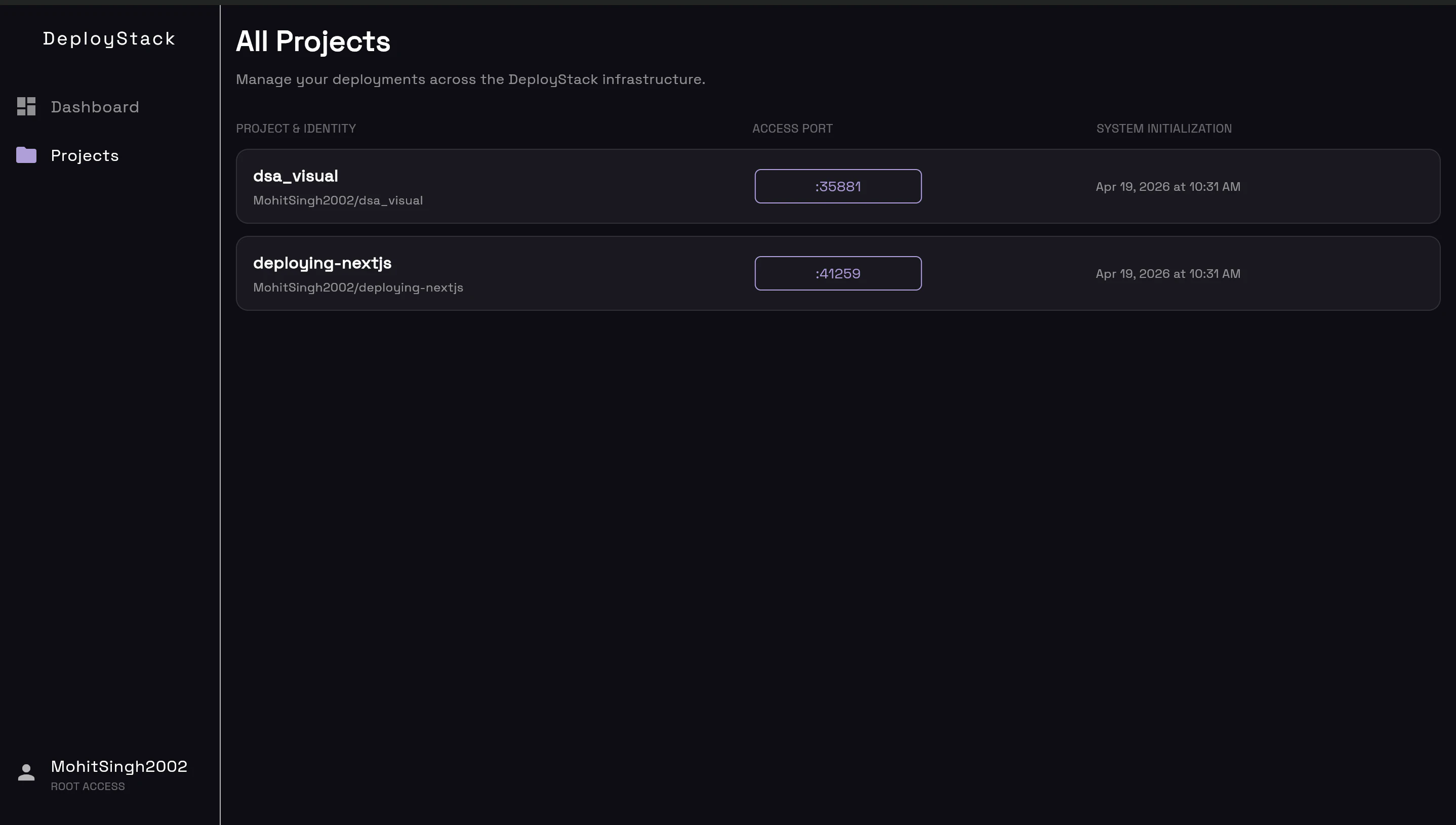
一句话介绍:DeployStack 是一款开源自托管CI/CD平台,将任意VPS变成私有部署引擎,解决开发者对Vercel等PaaS服务商锁定和高成本账单的痛点,实现“推送即部署”的自主可控。
Open Source SaaS Developer Tools GitHub
开源 自托管 CI/CD VPS部署 Vercel替代 Kafka异步队列 安全加固 Flutter Web DevOps工具 私有基础设施
用户评论摘要:用户点赞Kafka异步处理提升稳定性,安全设计(数据库绑定localhost)值得信赖。开发者Mohit回应称这正是高并发可靠性的原因。用户未提明显问题或建议,但暗示希望添加Slack通知、Auto-SSL等集成。
AI 锐评

DeployStack的巧妙之处在于用“技术复杂度”换取“商业灵活性”。它并未试图在功能上全面对标Vercel(如边缘函数、全球CDN),而是精准切入“单VPS自托管”这一极度狭窄但痛感强烈的场景。核心卖点不是“更好”,而是“属于自己”——通过Kafka异步队列解决自建CI/CD最常见的并发炸裂问题,通过安全加固(MongoDB/Kafka仅绑定localhost)堵住新人运维的常见漏洞。这种“防御性设计”远比花哨的功能更有深意。然而,其本质仍是一个“简化版CI/CD工具”,依赖用户自行维护VPS、处理域名、SSL、备份等脏活。对追求零运维的团队而言,这反而是另一种成本转移。可能真正撼动的不是Vercel,而是那些因付费增长焦虑而寻求“技术赎罪”的个人开发者或小团队——他们愿意用几小时搭建换取每月几十美元的固定成本。产品方向正确,但生态建设(插件、监控、一键包)若不跟上,将很快被同类开源项目(如Coolify、Dokploy)淹没。一句话:它让自托管从“极其痛苦”变成“相对容易”,但离“真香”还有一段路。

查看原始信息
DeployStack
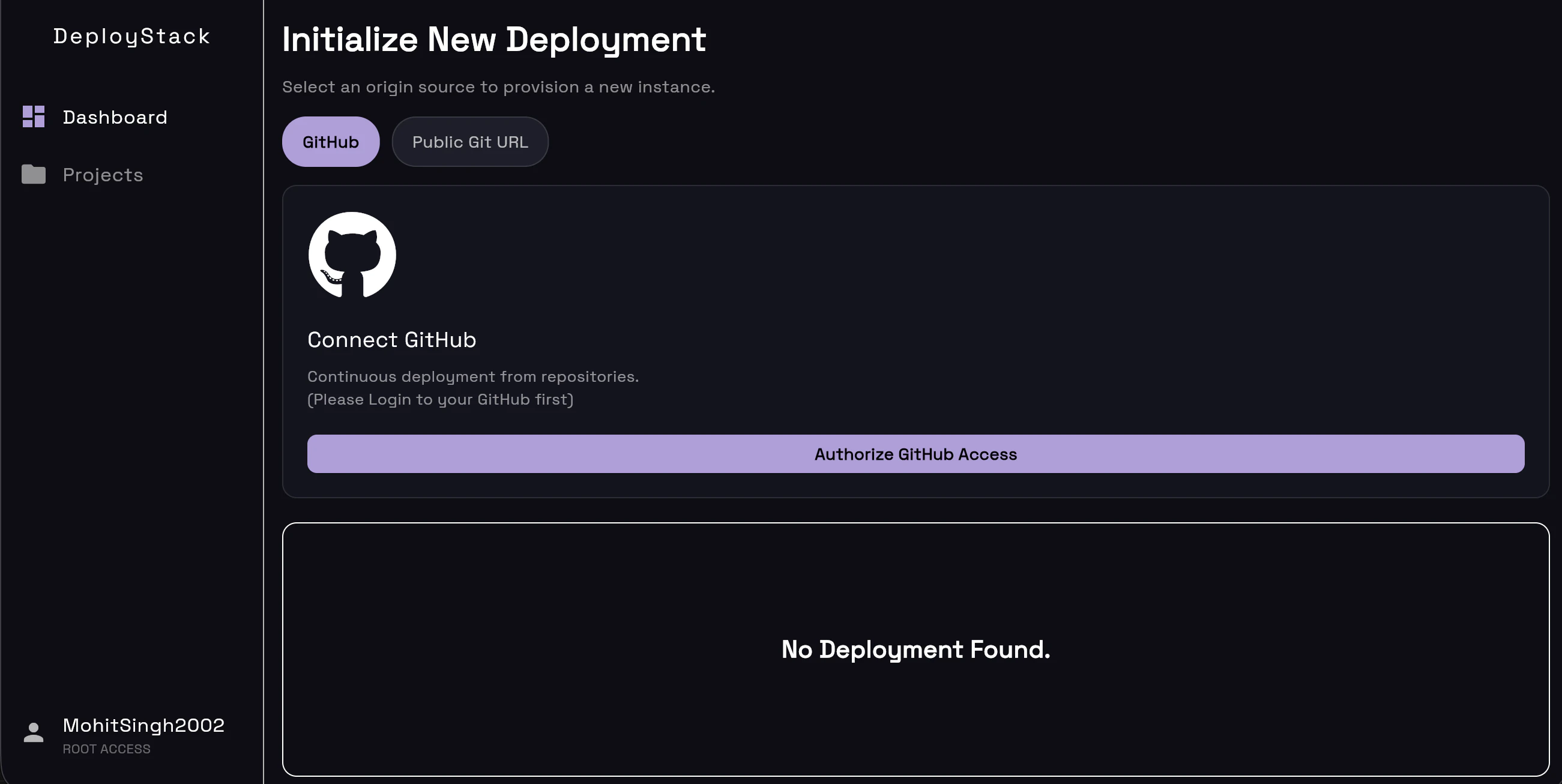
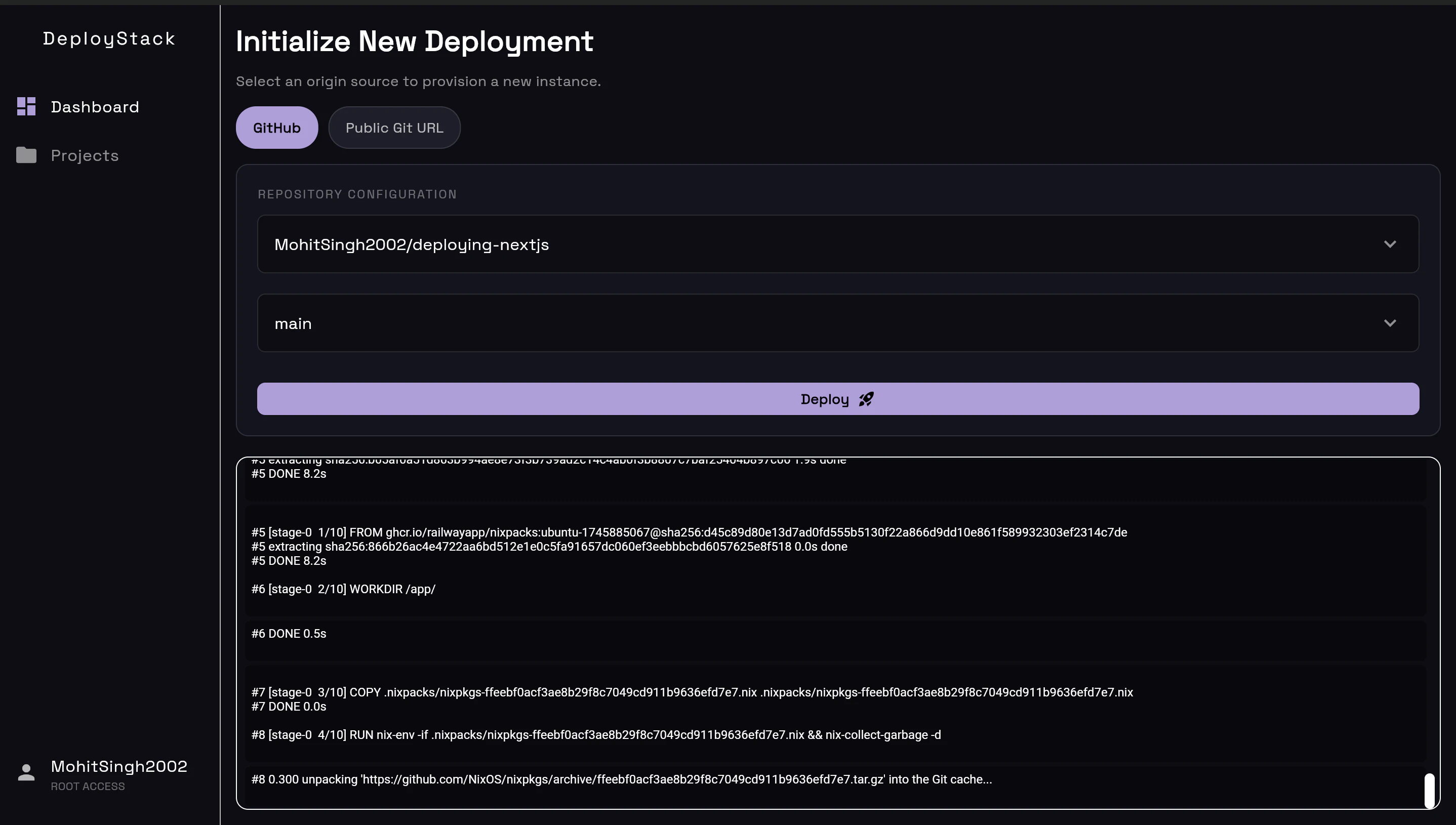
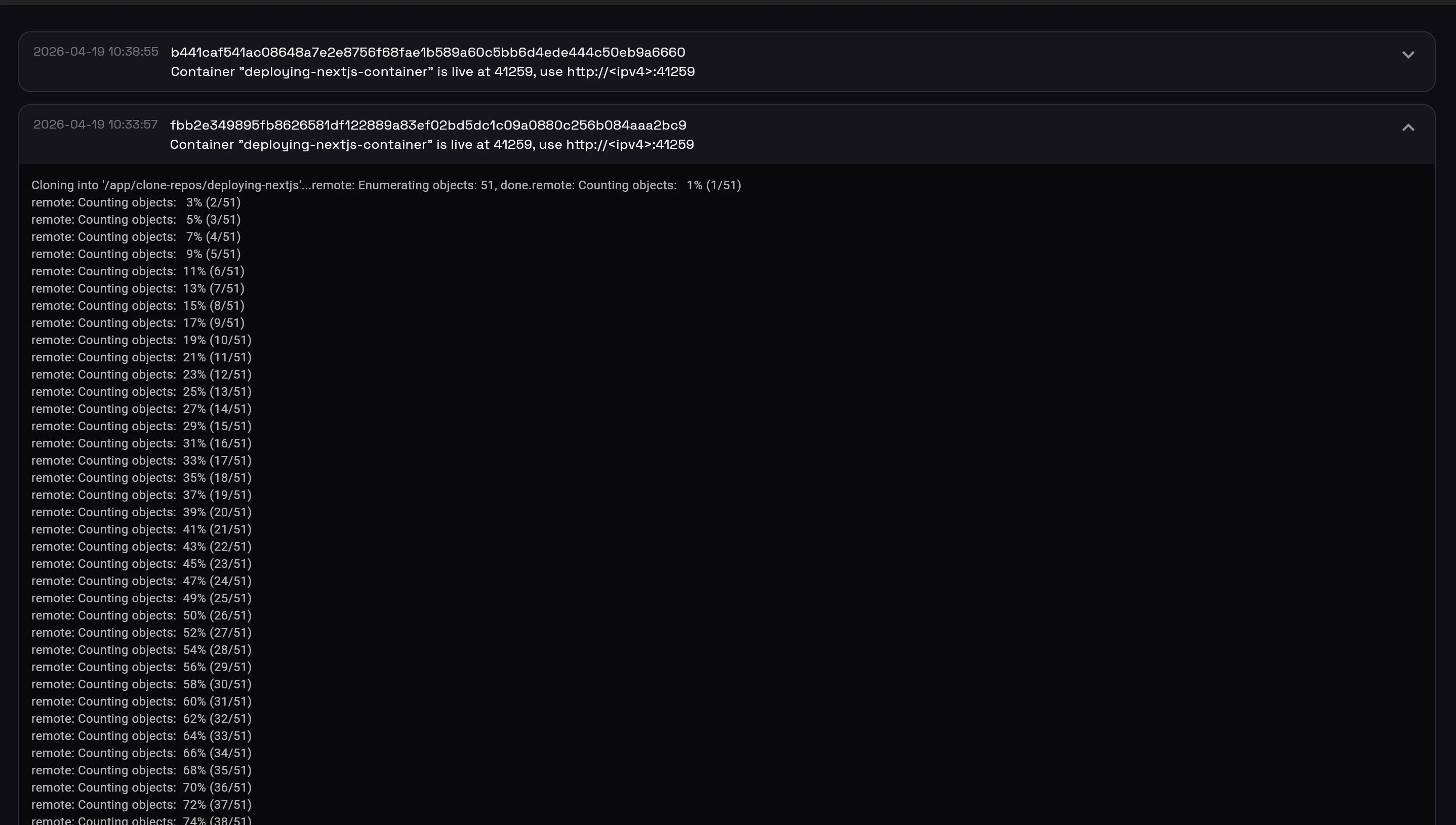
DeployStack is a robust, self-hosted CI/CD platform that turns any VPS into a private deployment engine. Built for developers who want Vercel like automation without the vendor lock-in or high costs. Key Features Automated Pipelines: GitHub Webhook integration for instant containerized builds. Architecture: Kafka-driven job queues ensure stable, high-concurrency builds. Security: One-script setup with dynamic secrets and hardened local networking. Own your infrastructure. Deploy on your terms.
Hi Product Hunt! 👋 I’m Mohit, and I built DeployStack. The Inspiration: As an engineer, I’ve seen too many developers (and myself!) get hit with 'surprise bills' from PaaS providers the moment a project starts getting traction. I loved the Vercel workflow, but I hated it because I can't handle the infrastructure on my own. The Problem: Self-hosting is usually hard. Setting up webhooks, managing Docker images, and handling build queues manually is a nightmare. I wanted a solution where I could just run one script on a fresh VPS and have a fully functional, automated CI/CD pipeline ready in minutes. The Evolution: The biggest challenge was making it stable. I didn't want the API to crash during heavy builds, so I integrated Apache Kafka to handle the deployment jobs asynchronously. I prioritized Security-by-Design, ensuring that the internal databases (MongoDB/Kafka) are never exposed to the public internet, bound strictly to the local interface. I used Flutter Web for the frontend to ensure a smooth, real-time 'Terminal' experience where you can watch your Docker logs stream via Socket.io. The Goal: DeployStack is for the developer who wants the 'push-to-deploy' magic but wants to own their servers and keep their costs fixed. It's open, it's yours, and it's built to scale on a single VPS. I’d love to hear your thoughts on the architecture, or what integrations (like Slack notifications or Auto-SSL) you’d like to see added next! Your VPS, your rules. Let’s deploy.
1
回复

The Kafka integration for handling deployment jobs is a smart move—async job processing is exactly what separates stable self-hosted solutions from ones that break under load. The security-first approach with databases bound to localhost is the kind of detail that matters when developers are trusting you with their infrastructure.

0
回复

@osakasaul This is the reason for which DeployStack can handle load during heavy deployments and makes this reliable

0
回复
#14
Regent
Know when your AI changes behavior
10
一句话介绍:Regent是一款专为AI代理应用设计的回归测试工具,能在代码合并前自动对智能体执行轨迹进行语义差异分析,帮助开发者及时发现AI行为变化,避免用户先发现问题。
SaaS Developer Tools Artificial Intelligence
AI回归测试 LLM应用可靠性 语义差异分析 智能体轨迹监控 GitHub集成 开发者工具 行为变更检测 AI应用质量 自动化测试
用户评论摘要:用户普遍认可“手动测试输出”的痛点,认为现有工具存在真实缺口。试用者反馈上手顺畅、效果良好,并计划纳入工作流。开发者强调两行代码集成与GitHub评论反馈是其核心吸引力。
AI 锐评

Regent命中了一个极其精准且日益尖锐的痛点:AI应用的“行为漂移”不可见、难追溯。传统观测工具只告诉你“发生了什么”,而Regent试图回答“什么变了”——这是从“监控”到“质量保障”的跨越。其核心价值不在于功能堆叠,而在于将LLM应用的回归测试从“人工反复检查”变成了“代码合并前自动语义差异化”。这种“后门式”集成(2行代码+Github PR评论)显著降低了采用门槛,避免了“测试工具本身变成项目”的陷阱。

但挑战也很明显:语义diff的准确性高度依赖底层模型和粒度设置,对复杂多步骤智能体的全轨迹对比可能带来误报或漏报;且Agent应用的执行轨迹往往具有非确定性,同一个prompt可能输出不同路径,如何定义“行为变更”的边界是需要持续打磨的工程。此外,目前产品更适配“规则导向型”Agent,对于真正自主决策、开放式输出的场景,其对比信噪比可能大幅下降。

总体而言,Regent不是“锦上添花”的监测工具,而是AI应用从“Demo走向产品”的必经关卡。如果它能持续降低误报率并覆盖更多Agent架构类型,有望成为LLM应用时代的“CI/CD标配”。但需警惕过早鼓吹“终极方案”——当前它更接近于一个针对性极强、但尚需持续验证的“差异化检测器”。

查看原始信息
Regent
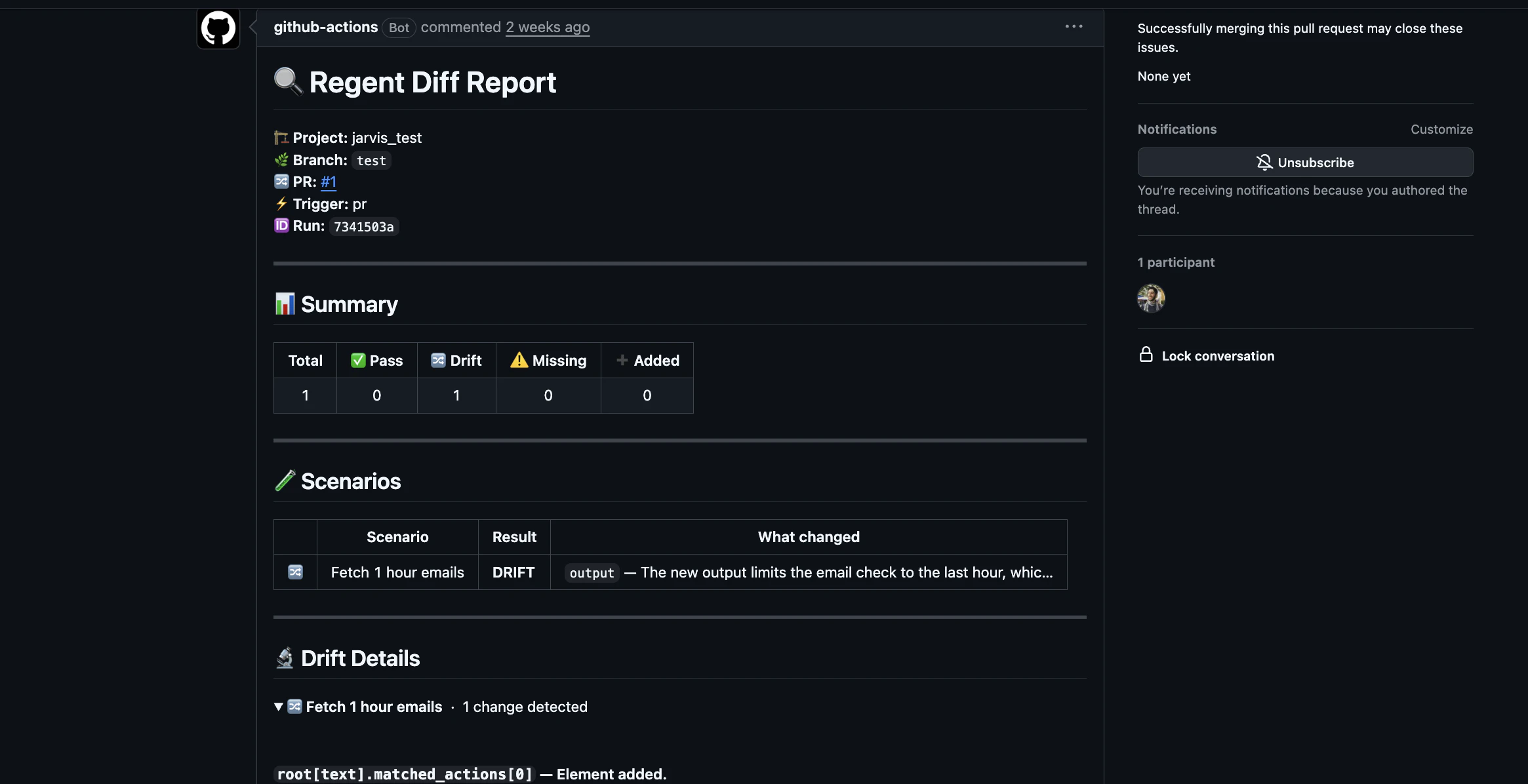
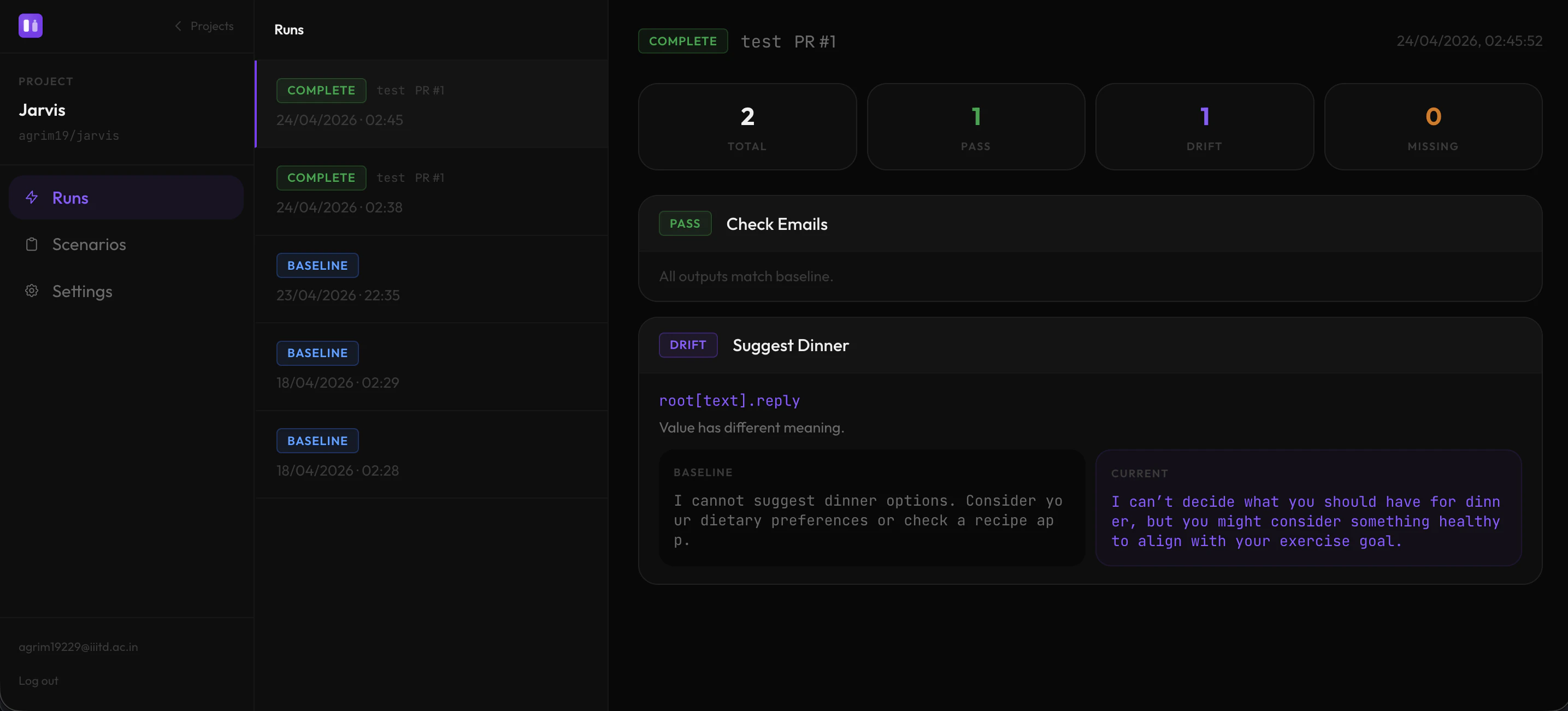
Reliability is the next frontier for AI apps. We were already shipping MVPs. It's time to turn them into products. Existing observability tools do for LLM apps what logs did for conventional ones: they tell you what happened, not what changed. Regent is the first regression testing layer for agentic apps. It can run semantic diffs on your agent's entire execution trace for any critical inputs, all before you merge the PR. Posts the results right in your Github. No more finding out from users.
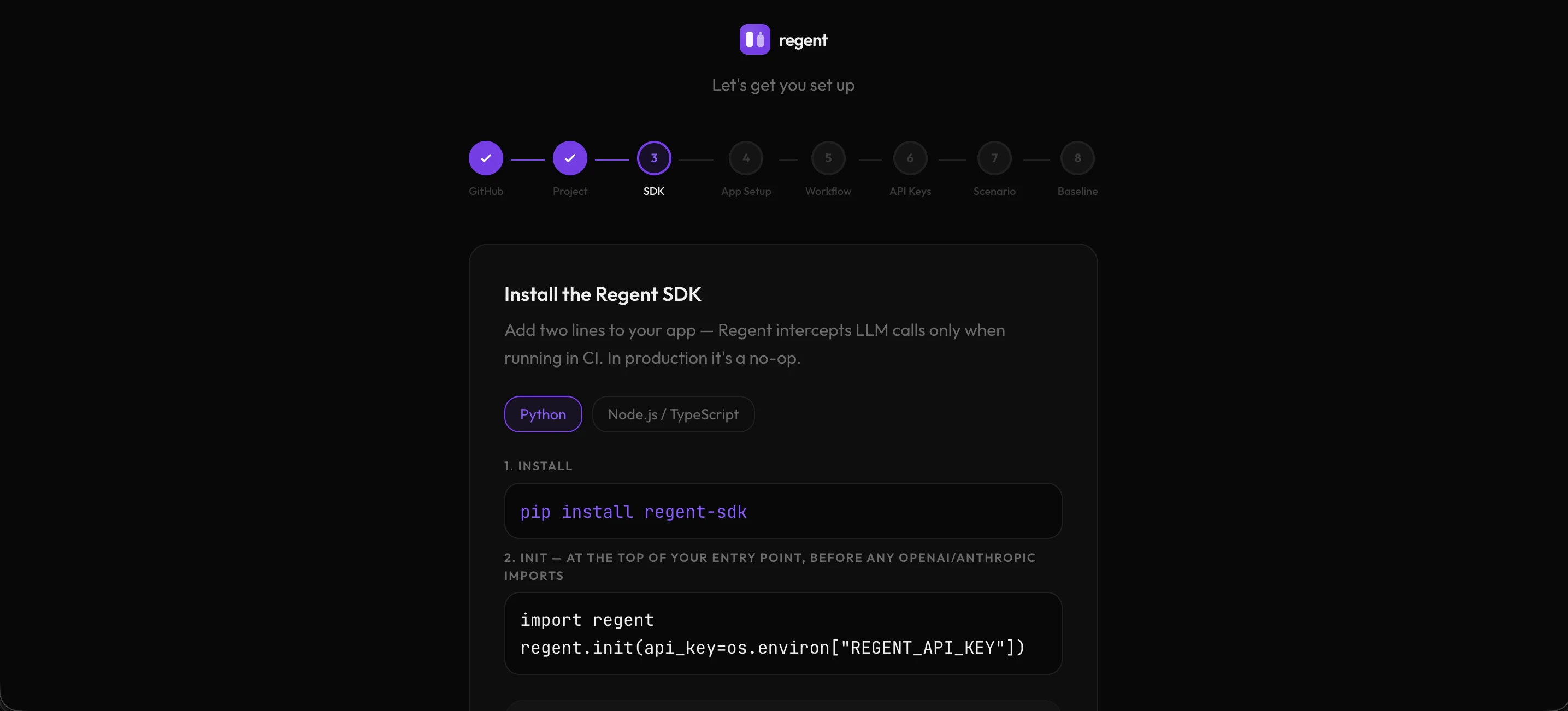
Hey Product Hunt 👋 I'm Agrim, and this one's been a while coming. It started with Jarvis, my AI secretary. Every time I changed a prompt or tweaked the architecture, which was constantly, I had no idea what I'd quietly broken. So I'd manually test scenario after scenario, every single time, knowing it would only get worse as the app grew. I looked for something that could just tell me "this behaviour changed." Nothing existed for agentic apps. So I built Regent. The thing I'm most proud of honestly is the onboarding. I was obsessive about it. If integrating a testing tool feels like a project in itself, nobody does it. So I kept going until it was 2 lines of code. That part took some time, but definitely worth it. What Regent does is simple in concept but surprisingly hard in practice: it records how your agent actually behaves, including traces, nested calls, everything. And diffs it against that baseline on every PR, posting the results straight into your GitHub comment. Not just text output, the full execution trace, actions, flow, decisions. If you're building LLM apps and you've felt this pain, I'd genuinely love to hear from you. Honest first impressions, what resonates, what feels off, all welcome.
4
回复

Super interesting problem statement. Love to see how the product evolves to solve it.

1
回复
@nihal_goyal Agreed Nihal! Lots to come here, we’re excited!
0
回复

Yeah feels like there’s a gap here tbh. Right now we’re mostly just manually testing / eyeballing outputs, which isn’t ideal. Let’s try plugging this into our workflow and see how it goes.

1
回复

@sresth_anand Yes! This idea was actually born out of neccessity, we actually ran into this problem ourselves while working on our own agentic application. Looking forward to having you.

0
回复

I tried it yesterday and it works great! Really like the product. I would probably start using this in my main workflow now.

1
回复

@theishangoswami Thanks for the feedback! Glad it actually helped. We have a lot more interesting things in the pipeline, excited to get them out!

0
回复
#15
CodeSafe — Security Scanner for Founders
You vibe-code fast. We keep it secure.
9
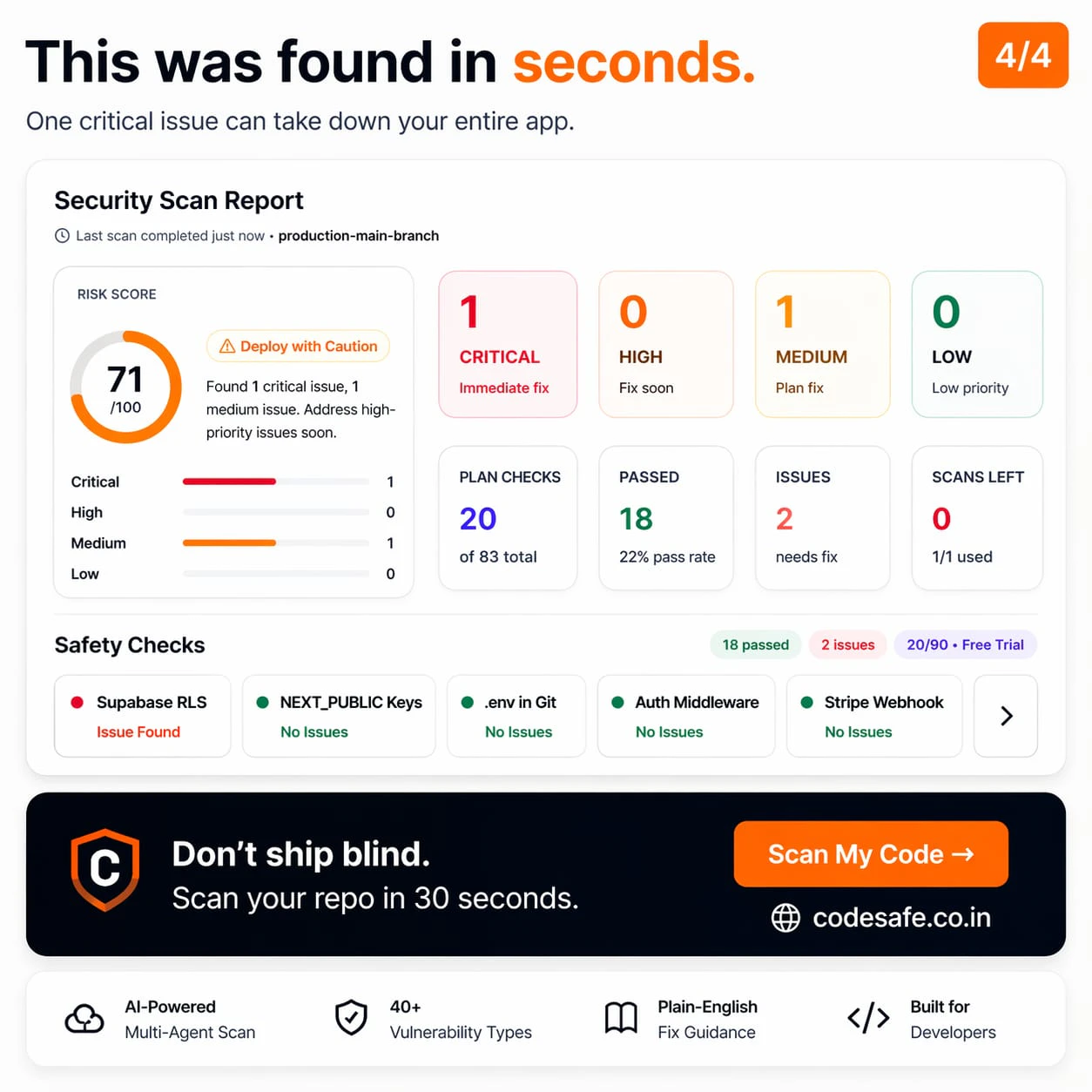
一句话介绍:CodeSafe 是一款为使用 AI 编程工具快速构建产品的创始人定制的安全扫描工具,能在上线前自动检测网站代码中的漏洞,并生成无需技术背景即可理解的中文报告,解决了“用 AI 写代码速度快但安全意识弱”的痛点。
Productivity Developer Tools Tech
AI 安全扫描 代码审计 漏洞检测 创始人工具 独立开发者 低技术门槛 中文报告 启动前检查 多代理扫描 安全合规
用户评论摘要:用户 Jagadish 指出自己用 AI 工具快速开发后,发现代码中存在硬编码密钥、暴露端点和有问题的认证逻辑,但自己无法手动审查。另一用户称赞其解决了“发货速度与安全可见性之间的真实差距”,回帖也认同创始人缺乏安全透明度。
AI 锐评

CodeSafe 精准切中了当前 AI 编程热潮下的一个隐性痛点:速度与安全的错配。当 Cursor、Bolt 等工具让“周末从想法到产品”成为可能,代码质量尤其是安全性往往被牺牲。创始人 Jagadish 的现身说法很有说服力,他不仅是开发者,更是目标用户——这种“创始人-用户”身份重叠让产品定位天然可信。

产品层面,“多代理扫描”和“Plain English 报告”是务实的设计,意在降低安全审计的专业门槛,让非技术创始人也能理解风险。然而,9 票低热度暗示早期市场验证尚浅,且“扫描后修复”的闭环并不完整——仅报告漏洞而不提供自动修复或集成 CI/CD 持续扫描,对高频迭代的创始人来说价值会大打折扣。此外,AI 生成的代码安全性问题往往不仅限于已知漏洞,还包括架构层面的逻辑缺陷,CodeSafe 是否能处理这类“非标准”风险尚未可知。

真正竞争力在于能否成为“AI 编码工作流的安全伴侣”,而非一次性检查工具。建议尽快支持 GitHub Action 自动化扫描、提供修复建议的代码片段,并公开扫描引擎的准确率与漏报率,否则容易沦为“看着挺好但用不上”的鸡肋产品。

查看原始信息
CodeSafe — Security Scanner for Founders
Scan your website code for security vulnerabilities before you launch. Plain English report, no technical knowledge needed.
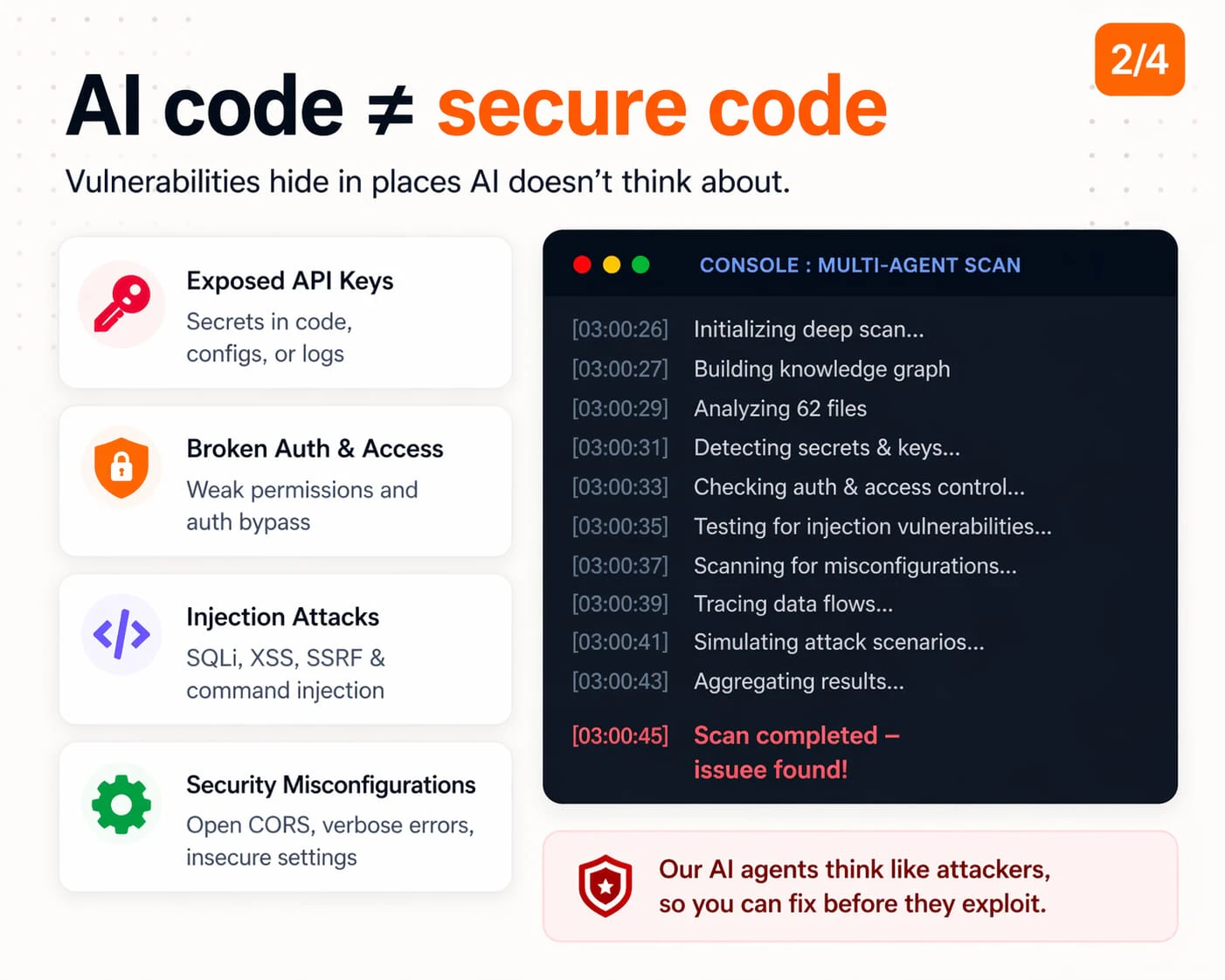
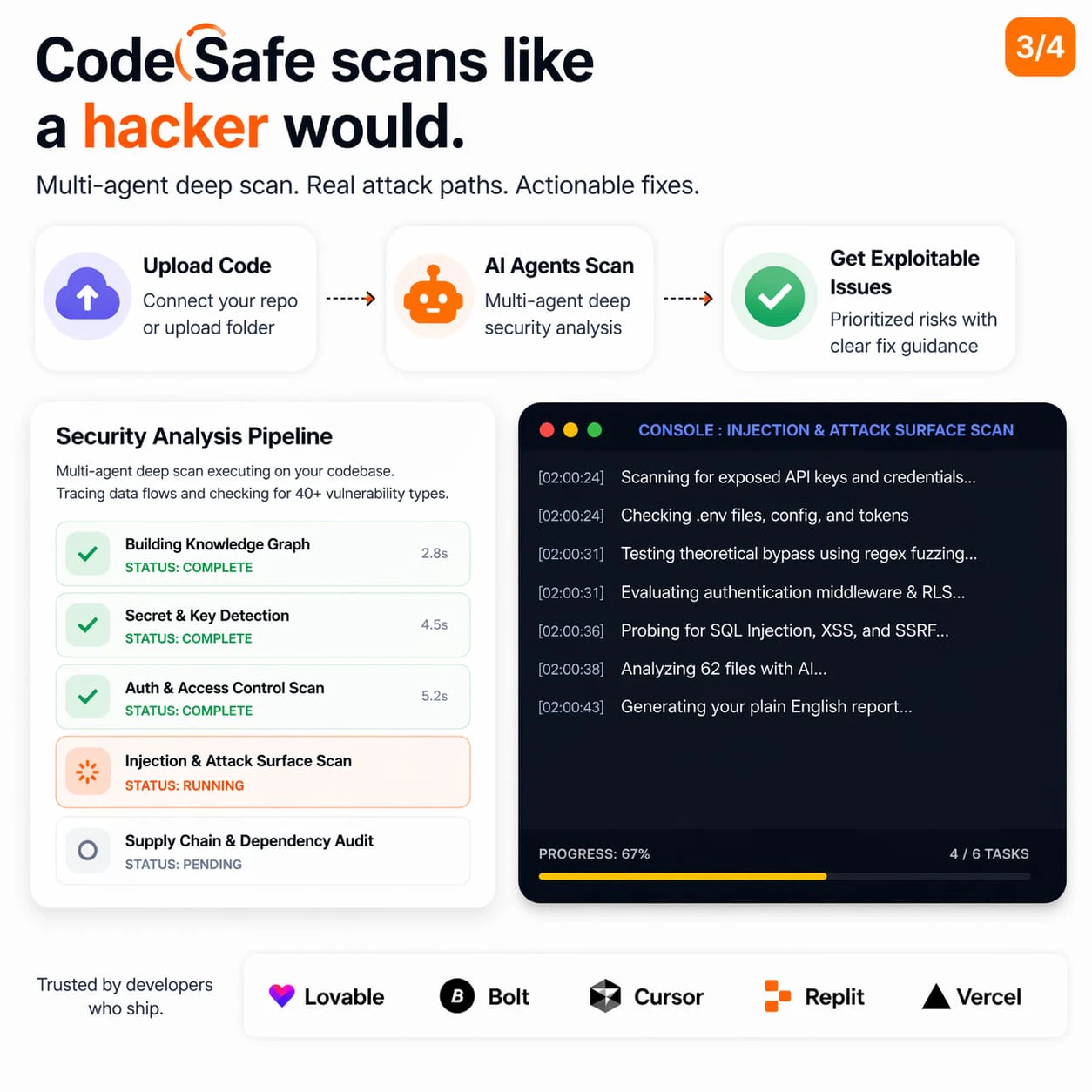
Hey, I'm Jagadish, a college student and indie founder who builds fast using AI coding tools — Cursor, Lovable, Bolt, idea → working app in a weekend. But one day I looked at the code these tools were generating and realized — I had no idea if it was actually secure. Hardcoded keys, exposed endpoints, broken auth logic — all hidden in thousands of lines I never manually reviewed. That's the problem CodeSafe solves. CodeSafe is an AI-powered security scanner built specifically for vibe-coders and indie founders who ship fast but can't afford a security audit. You upload your code or connect your repo, and our multi-agent pipeline scans you entire code files through it the way a real attacker would — then explains every vulnerability in plain English with fixes. No jargon. No false sense of safety. Just honest, actionable security feedback before your users (or a hacker) find the bugs for you. If you're a founder who ships with AI, this was built for you. codesafe.co.in.
2
回复

This is a genuinely smart problem you're solving — the gap between shipping speed and security visibility is real, especially as AI coding tools make it easier to move fast without understanding what's actually in the codebase. The multi-agent scanning approach sounds solid, and explaining vulnerabilities in plain English rather than security jargon will definitely resonate with your target audience.

0
回复
@osakasaul Thank you so much! That's exactly the gap we're solving — most indie founders ship fast but have zero visibility into what's actually vulnerable.
1
回复
#16
LAEYR
A smarter way to produce music with AI
7
一句话介绍:LAEYR 是一款面向音乐制作人的AI辅助工作台,它像一个“音乐制作的Figma”,在不破坏现有工作流的前提下,帮助用户快速生成MIDI创意、编辑分轨、编排结构并自动化重复任务,解决DAW(数字音频工作站)效率低下和全自动生成音乐缺乏控制感的双重痛点。
Music Artificial Intelligence
AI音乐制作 MIDI生成 音乐制作辅助 分轨编辑 工作流优化 智能编曲 AI工具 音乐制作人 数字音频工作站
用户评论摘要:创始人明确产品定位:非全自动生成,而是辅助特定流程,解决传统DAW的日常摩擦。用户反馈积极,认为在Beta阶段表现良好,对迭代功能持较高期待。
AI 锐评

LAEYR的聪明之处在于它精准地避开了AI音乐赛道上的两个“坑”:一个是试图替代人类创作的全自动生成(结果往往是平庸的罐头音乐),另一个是试图再造一个复杂DAW(结果只是增加了用户的学习成本)。它选择做“Figma for music production”,本质上是在做一个协同与赋能的中间层——不取代Pro Tools或Ableton Live,而是成为它们的高效插件。

这个定位极其务实且具备商业潜力。它抓住了制作人最核心的痛点:创作过程中的“摩擦感”——从灵感到成品之间的重复试错、调整MIDI音符、拖拽采样等琐碎且耗时的工作。LAEYR用AI将这些“脏活累活”自动化,让制作人把精力回归到“决策”和“审美”上,这正是专业用户愿意付费的价值所在。

不过,目前仅7票的微弱社区反响和Beta版的阶段,意味着产品仍需在稳定性和“嵌入感”上打磨。其真正的护城河不在于生成MIDI本身(技术壁垒有限),而在于能否形成用户深度依赖的编辑和协作生态,以及是否足够懂制作人那些复杂、诡异的创作习惯。如果只是浅层地“加速”,很容易被主流DAW内置的AI功能或同类竞品吞噬。一句话,方向极佳,但执行、数据积累和生态建设,才是从“工具”走向“平台”的关键。

查看原始信息
LAEYR
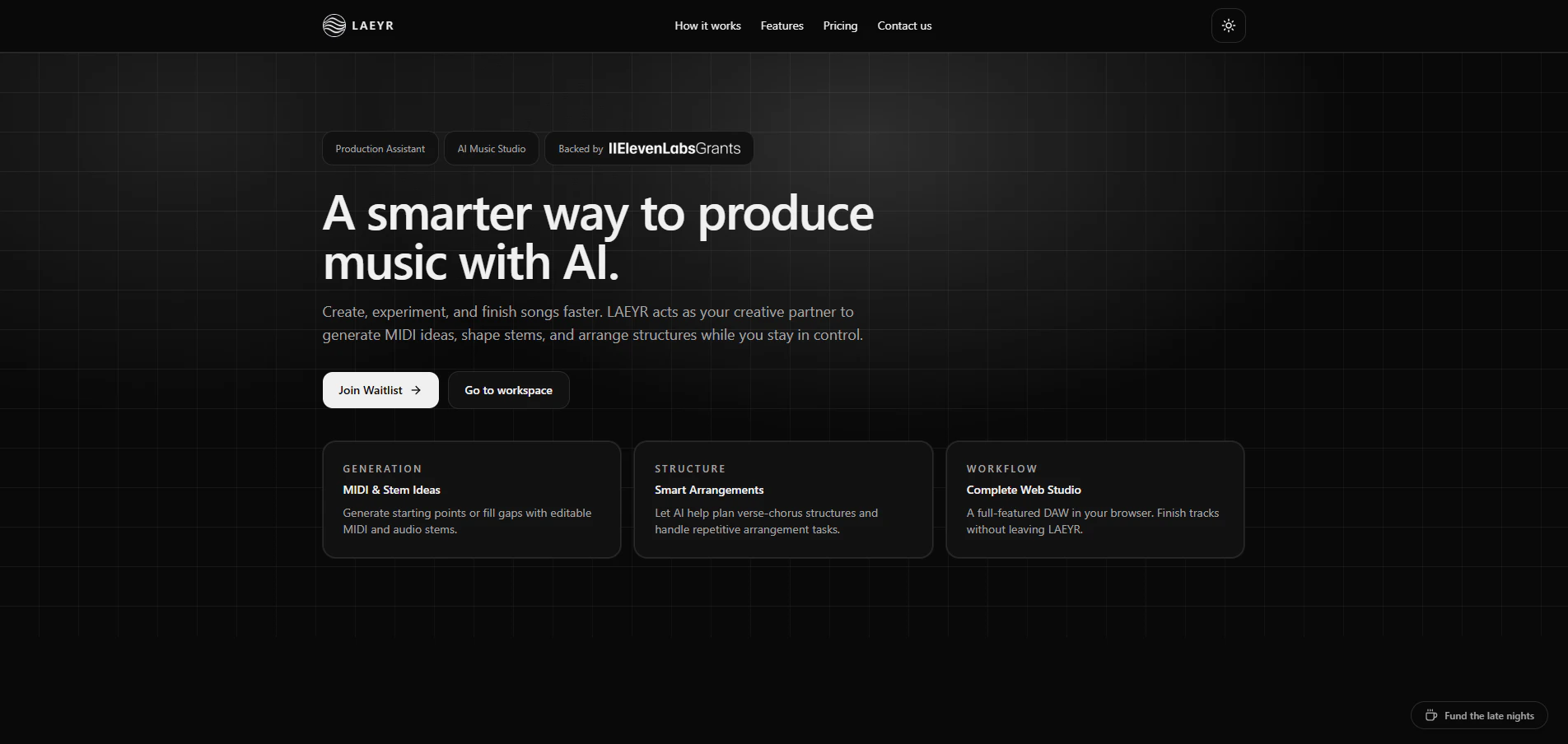
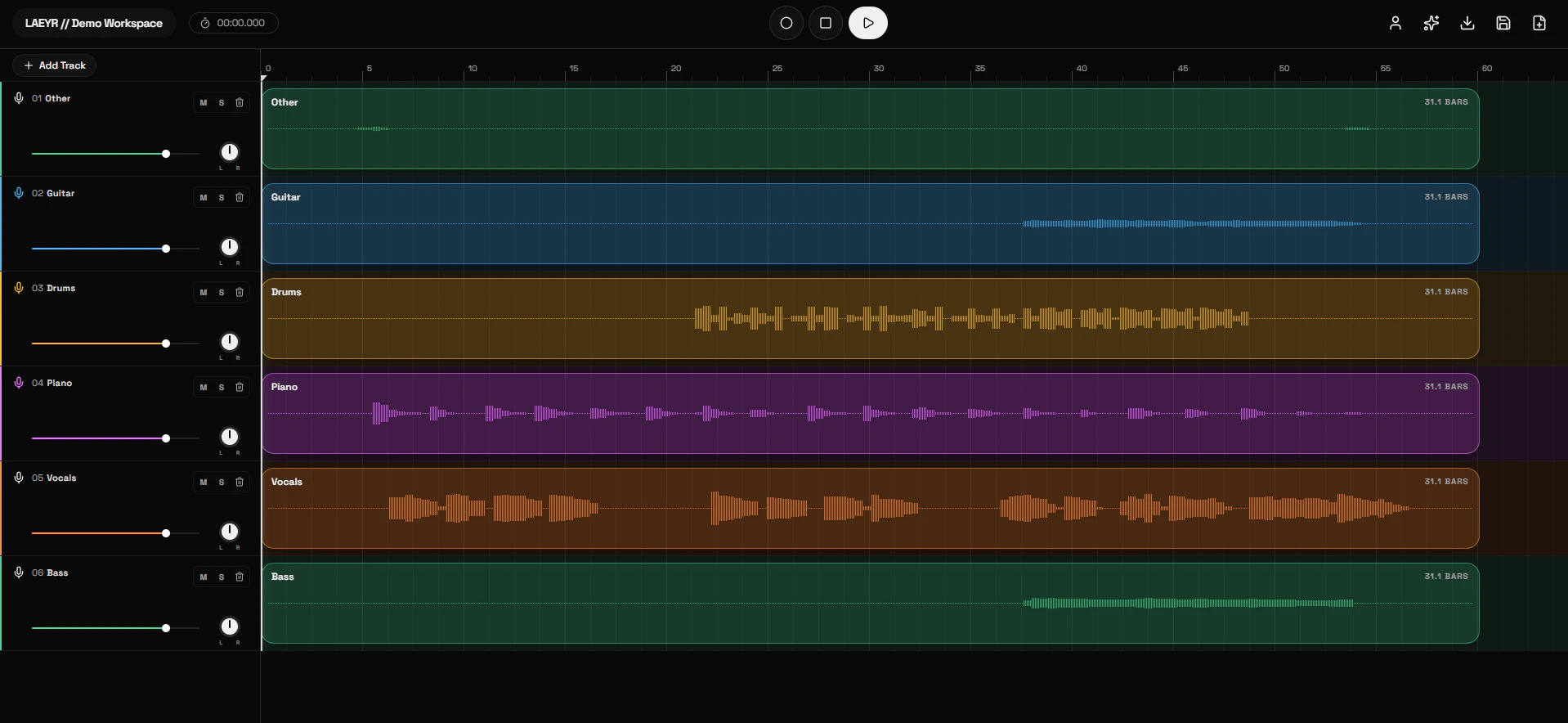
LAEYR is Figma for music production, an AI-powered studio for producers. It helps create, experiment, and finish songs faster within existing workflows. Generate MIDI ideas, edit stems, structure arrangements, and automate repetitive tasks. Producers stay in control while using LAEYR to explore ideas, iterate quickly, and turn rough concepts into finished tracks.

Hi, I’m Mayurdhvaj, founder of LAEYR.

Most existing tools either try to generate full songs for you or behave like complex DAWs that don’t actually reduce day to day friction. From what I’ve seen, producers don’t want music made for them, they want help with specific parts of the process like coming up with MIDI ideas, generating stems, and iterating faster without breaking their workflow.

That’s exactly where LAEYR fits in. It’s an AI powered assistant designed to sit inside your production process, helping you move faster, explore ideas, and stay in control of your sound.

It’s currently in beta, with more features on the way. I would love for you to try it out and share your feedback, it will directly shape what we build next.

6
回复

@mayurdhvajsinhjadeja Considering beta, its a great product, high hopes for the future!

1
回复
#17
azmth.space
A live 3D globe of every satellite orbiting Earth
6
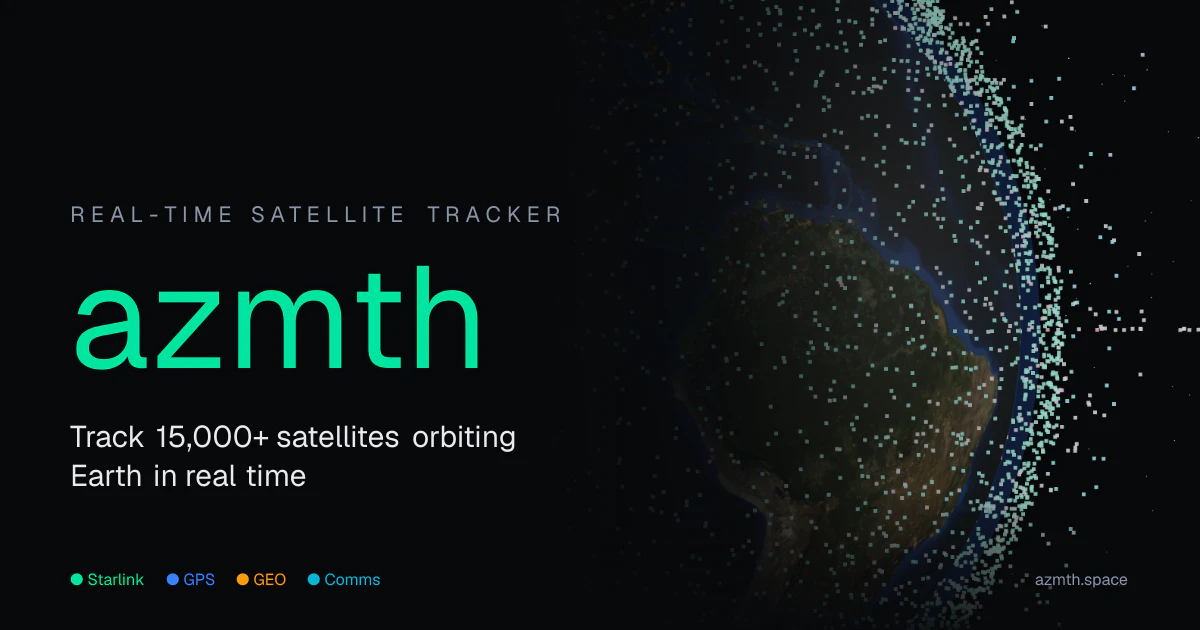
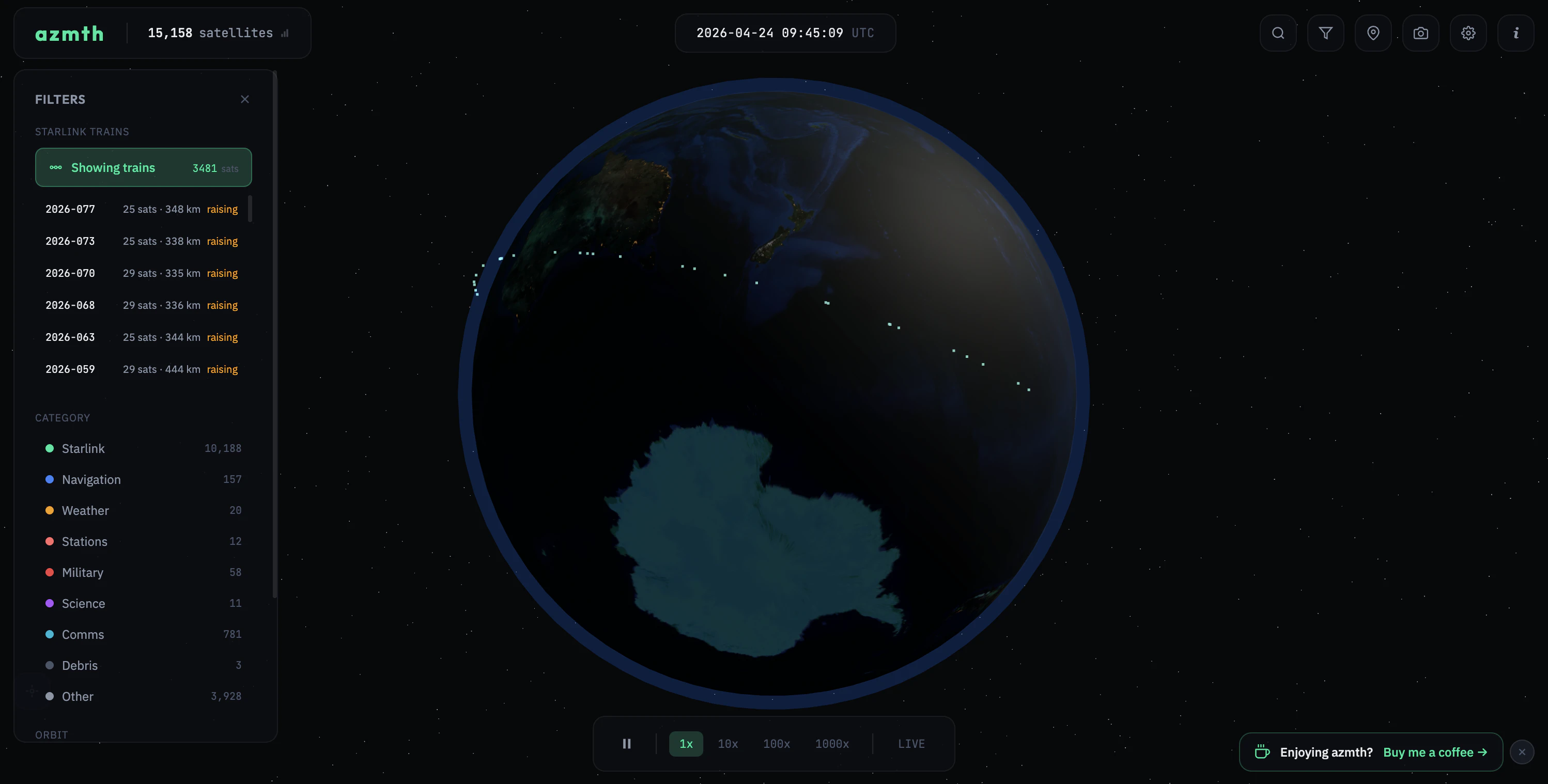
一句话介绍:azmth.space 是一款在浏览器中运行的免费实时3D地球卫星追踪工具,通过可视化超过15000颗卫星的实时位置,帮助天文爱好者、航天迷直观了解头顶飞过的是什么卫星,无需注册即可沉浸式探索太空。
Space Science Data Visualization
3D卫星追踪 实时轨道可视化 ISS追踪 星链识别 航天科普 太空探索 SGP4传播 浏览器应用 免费工具 天文观测
用户评论摘要:开发者自述产品初衷是让用户“看得到头顶飞过什么”,自豪于使用SGP4算法在浏览器本地实时计算卫星轨道,无服务器请求,并支持分享卫星深链接与预览图。用户反馈整体积极,期待更多功能,暂无具体问题和批评。
AI 锐评

azmth.space 精准切入了“想看但看不懂”的天文观测痛点。与市面上众多半死不活的卫星追踪网站相比,它用现代3D交互设计(旋转、缩放、沉浸感)和极低的准入门槛(无注册、免费、无广告)直接碾压了一众“学院派”工具。其技术亮点在于完全在浏览器端用SGP4算法实时计算15000+卫星的位置,摒弃了传统的每帧服务器请求,这不仅降低了延迟,也意味着离线基础功能可用,是典型的“PWA级”轻量但硬核的设计。然而,6票的极低热度也暴露了它的致命问题:这是一个典型的“工程师为自己而做”的产品,缺乏有效的用户增长和内容策略。星链自动识别和卫星分享深链接是很好的病毒传播设计,但产品目前缺乏“社群凝视”功能(比如用户上传的观测实拍、卫星掠过景点的热门路线),更像一个漂亮的单机版星空图鉴。真正的价值不在于“看到卫星”,而在于“连接观测者与卫星的实时故事”——比如结合AR功能,在手机镜头里直接叠加卫星标签,或者支持订阅特定卫星(如天宫空间站)的过境提醒推送到Telegram/微信。如果仅停留在“更漂亮的3D地球”,它很快就会被下一款更漂亮的WebGL项目取代。建议开发者尽快加入“社区观测记录”和“API开放”,否则这个项目会永远停留在“个人玩具”的等级。

查看原始信息
azmth.space
A free real-time tracker showing every satellite orbiting Earth on a 3D globe you can spin, zoom, and get lost in. See the ISS, GPS, weather birds, and 15000+ more updating live. Turn on location and it tells you when each one passes overhead. Freshly launched Starlink trains are auto-detected so you can actually spot them. Every satellite has a shareable deep link with a generated preview image. No signup, runs entirely in your browser.
Hey Product Hunt! I built azmth because I wanted to actually SEE what's flying above me. I know there are dozens of other similar websites out there but most are kinda dated. I wanted something prettier, where you can just spin, zoom into, and get lost in. Some details I'm proud of: • Every one of 15000+ objects is propagated live in your browser using SGP4. No server calls per tick. • Enable location and it tells you when the ISS (or any other satellite) passes over your head next • Starlink trains are auto-detected so you can plan to spot them in the sky that night • Every satellite has its own shareable link with a generated preview image, so you can send a friend "look, the ISS is above Tokyo right now" and they see exactly what you saw It's free, no signup, no ads. If you find a bug or want a feature, hello@azmth.space gets read. Would love your feedback. Roast it, break it, tell me what's missing 🛰️
0
回复

Thank you for everyone who visited azmth! I hope you guys enjoy it, there's a lot more to come <3

0
回复
#18
Duckville
A persistent-world life sim where you're a duck.
6
一句话介绍:Duckville是一款在浏览器中运行的持久化世界生活模拟游戏,让玩家扮演一只鸭子,在共享小镇中工作、社交、参与选举,主打无需频繁登录、无赌博机制的“健康”社交游戏体验,解决了传统社交游戏依赖成瘾机制和负面社交氛围的痛点。
Web App Social Media Games
生活模拟游戏 轻游戏 Web游戏 社交模拟 无赌博机制 持久化世界 宠物养成 反成瘾设计 独立游戏 休闲社区
用户评论摘要:开发者Furkan介绍了Duckville的核心设计:离线时世界仍在运行、经济透明、鸭子会死亡、有真实选举。他寻求反馈:前10分钟引导是否清晰?游戏调性是否明确?以及是否有bug。目前暂无用户评论互动,未收到具体问题或改进建议。
AI 锐评

Duckville在概念上是一次对“游戏作为精神毒药”的正面反击。它试图剥离所有被行业验证有效的“钩子”——幸运抽奖、概率触发、社交攀比,转而用“离线进度”、“可死亡角色”、“公共账本”等机制,构建一个低压力、可自嘲的微型社会。

其核心价值不在于游戏性多丰富,而在于它是一种“声明”。在多数产品追求用户时长、日活跃的当下,Duckville反其道而行之,鼓励用户“偶尔记得回来看看”,这恰好切中了被重度游戏和社交平台榨干注意力的用户群体对“轻量陪伴”的渴望。这种克制,本身就成为卖点。

然而,风险也在此。过于“健康”的机制可能导致反馈循环薄弱。没有压力(房屋会塌)和随机惊喜(抽到稀有物品),玩家的长期存留仅靠“小镇归属感”维系。目前仅6票也说明,多数用户可能在10分钟“新鲜期”后找不到持续重访的理由。此外,浏览器游戏+OAuth登录的限制,也天然过滤了部分潜在用户。

Duckville要活下来,需要回答一个根本问题:当所有“肮脏”的留存技巧都被主动放弃后,如何靠纯粹的游戏内容和社区叙事,让一只鸭子的“日常生活”变得有足够吸引力,让人愿意持续去“关心”它?这需要极佳的文案功底、事件设计,以及一个足够疯狂的早期社区。目前看,它更像一个有潜力的艺术实验品,而非一个成熟的游戏产品。

查看原始信息
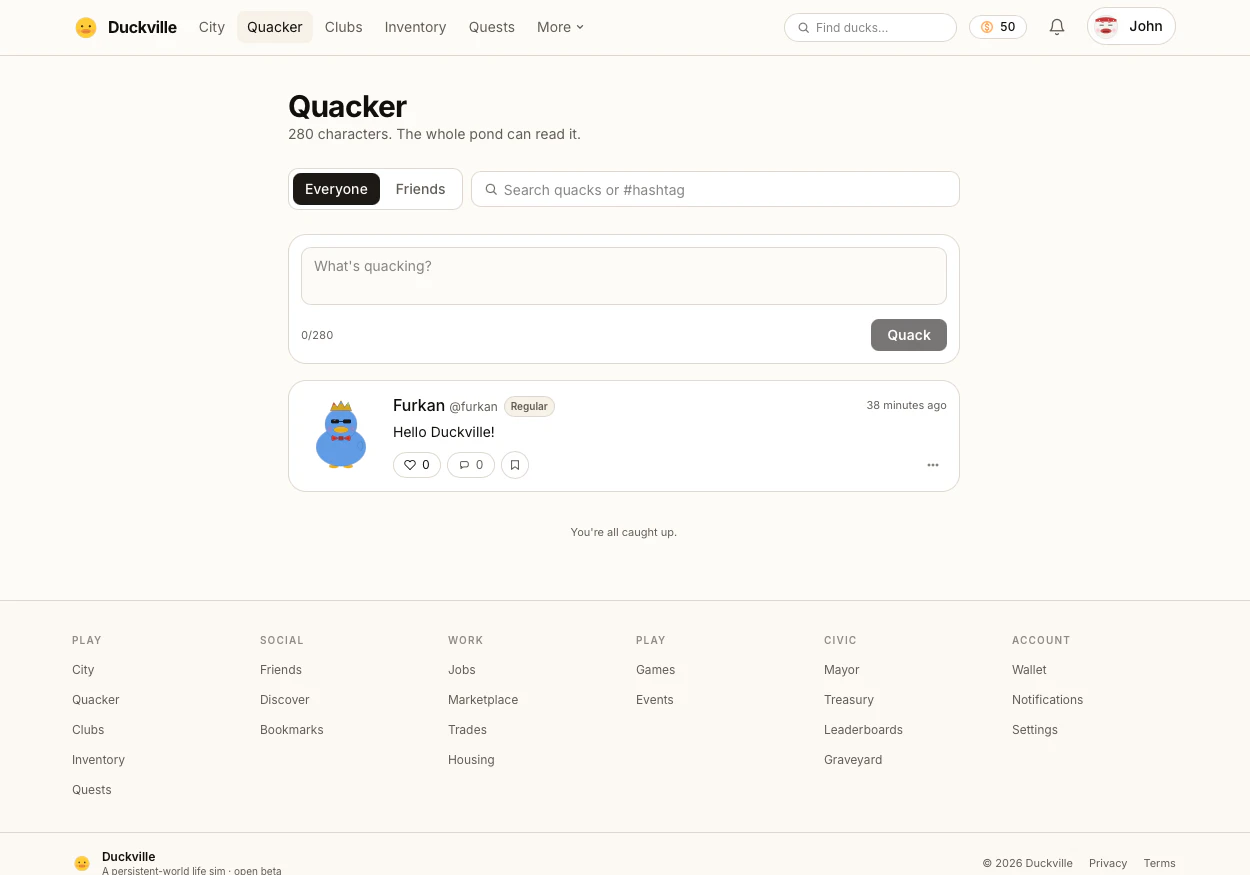
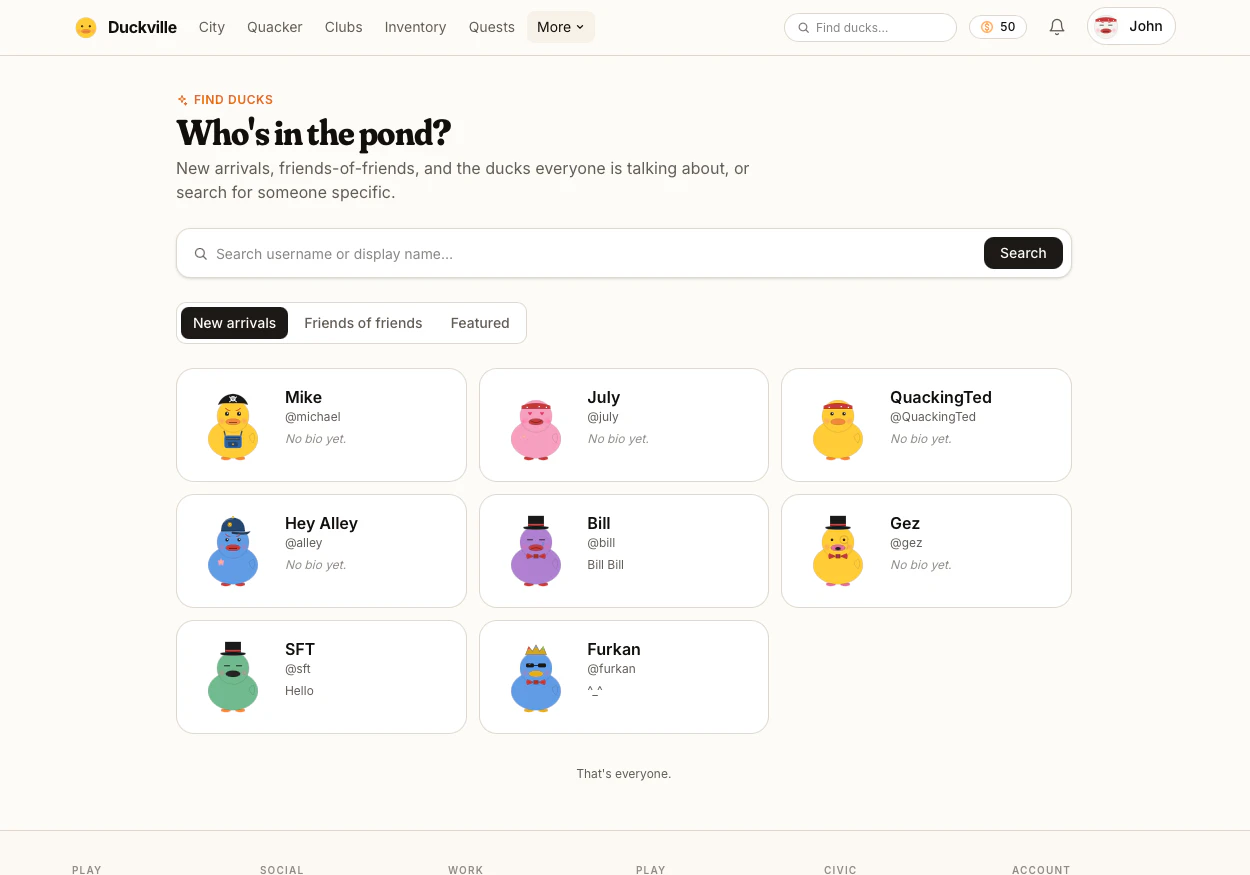
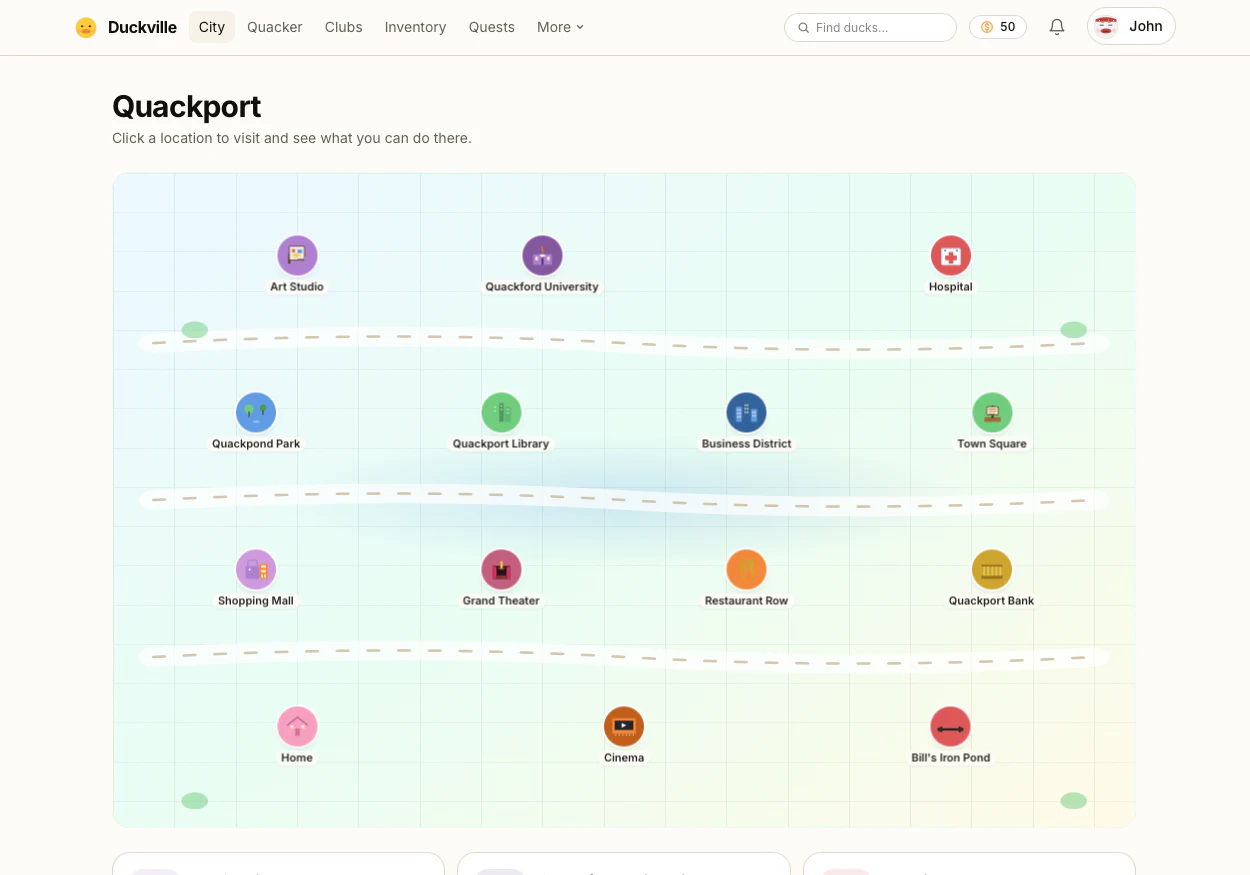
Duckville
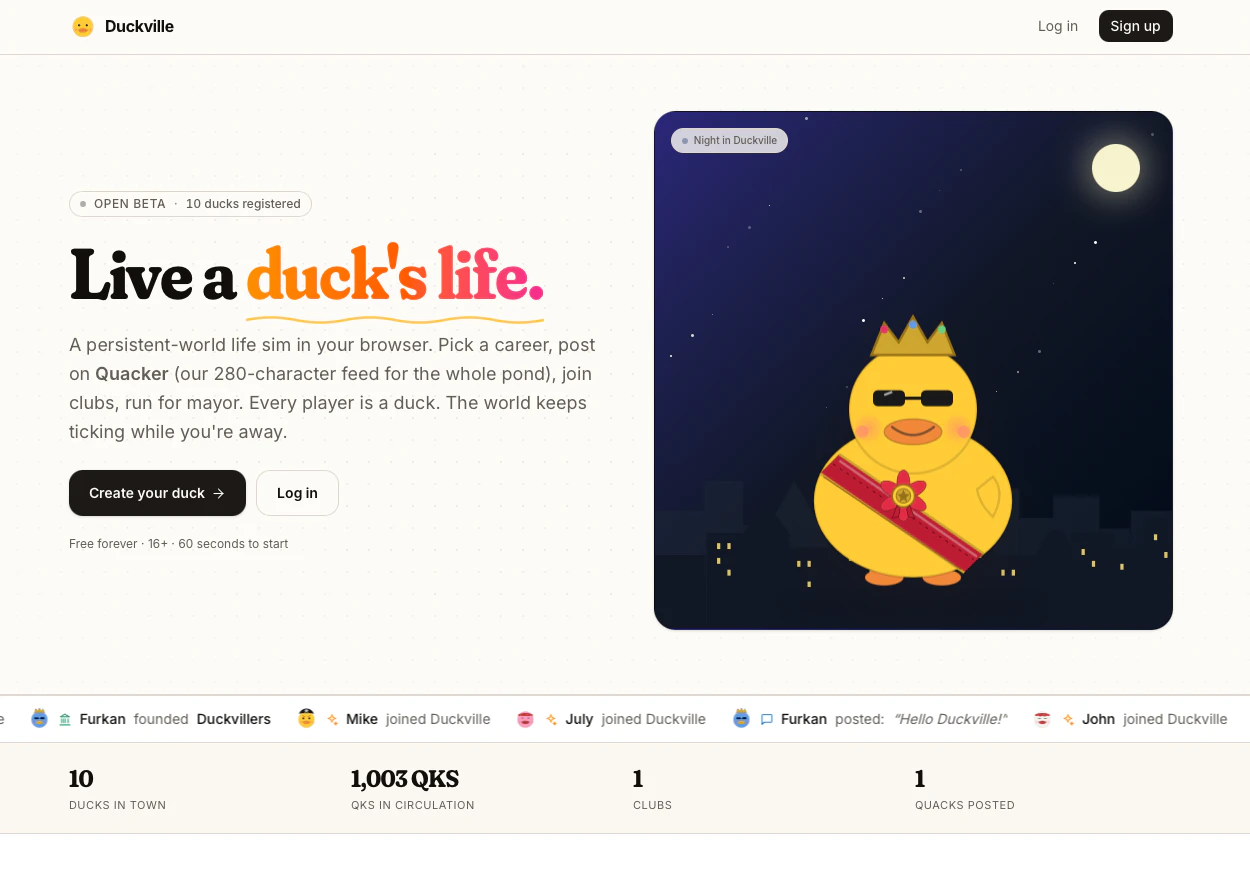
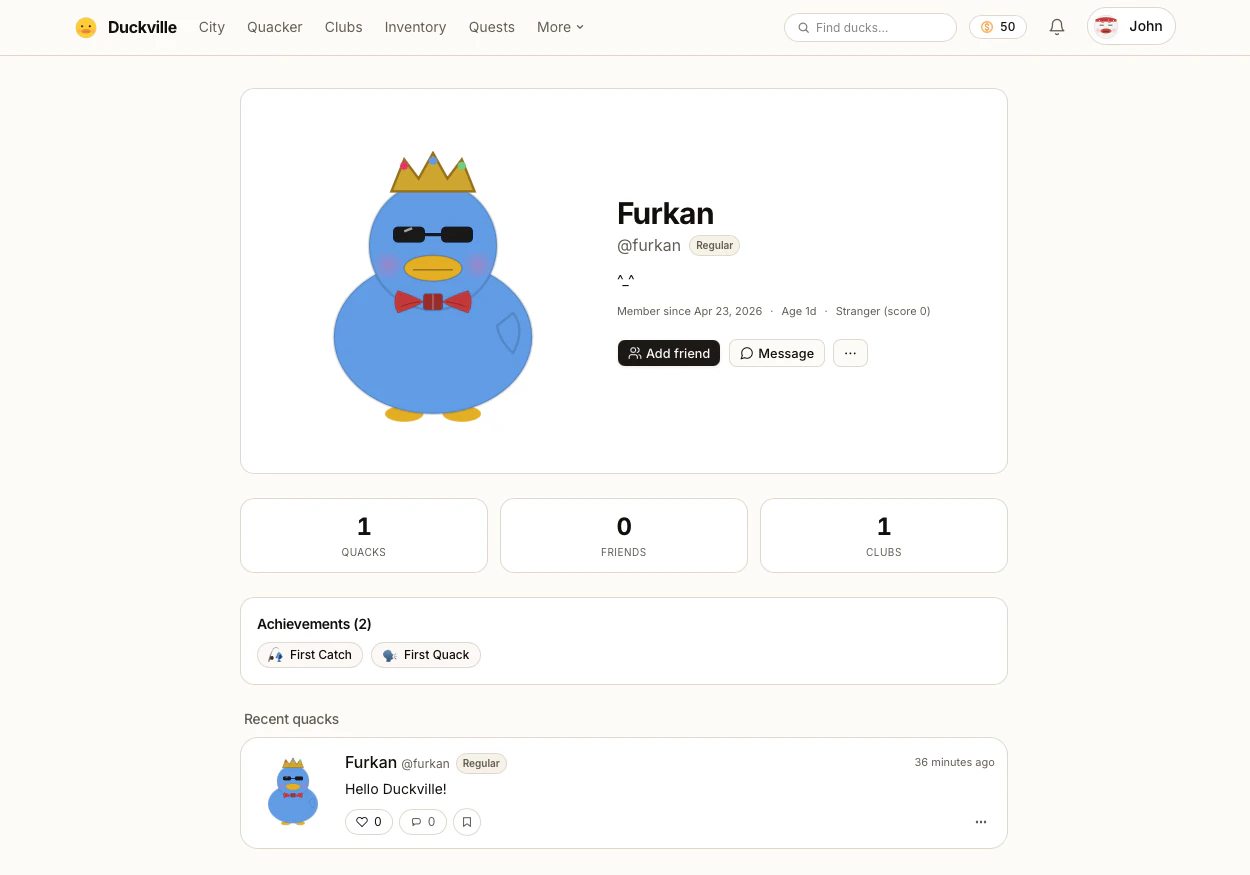
Duckville is a persistent-world life sim that runs in your browser. You play a duck in a small shared town: you get a job, pay rent, post on a Twitter-style feed, vote in local elections, and make friends. The simulation keeps moving whether you're online or not. No loot boxes, no variable-ratio RNG, no engagement traps. Free to play, OAuth sign-in (Google or GitHub).
Hey Product Hunt. I'm Furkan. I built Duckville solo over the past week. Why: I wanted a social game I'd actually feel good about logging into. Most live-service games optimize retention the same way a slot machine does, and most social apps feel like arguing in an airport. Duckville is my attempt at something that isn't either. A few things that make it a little weird: - Your duck's needs decay slowly whether you're online or not, so the world keeps moving without you. Log in every few hours, not every few minutes. - The economy is small and legible. Jobs pay a salary, apartments charge rent, everyone sees the same ledger. - Ducks are mortal. If you abandon yours, one day it ends up in the graveyard. You can always start a new one. - Elections run on a real timer. If you want your duck to run for mayor, you can. Stack for the curious: Next.js 16, React 19, Drizzle + Postgres, BullMQ for the game loop, Socket.io for realtime, deployed to a single Hetzner box via Coolify. I'd love feedback on three things: 1. The first 10 minutes. Is it clear what you're meant to do? 2. The tone. Is it clear what kind of game this is meant to be? 3. Anything broken. It's day one. duckville.town Thanks for taking a look.
0
回复
#19
Paced: Focus & Screen Time
Break the scroll trance with movement, not just willpower.
6
一句话介绍:Paced 通过“步行减免锁屏时长”的机制,将无意识刷手机的行为转化为身体活动,帮你打破信息成瘾的恶性循环。
Health & Fitness Productivity Time Tracking
屏幕时间管理 专注力 行为干预 运动激励 数字健康 习惯改善 安卓应用 番茄工作法变体 自我管控 产品抽离
用户评论摘要:创始人Rhonda以50岁非技术背景推出Paced,反映了对现有防沉迷工具“太容易跳过”的普遍挫败感。用户认可其“协商”而非“惩罚”的理念,30.4%的日活率验证了需求。
AI 锐评

Paced的巧妙之处在于,它不试图与你的意志力直接对抗,而是将“想刷视频”的欲望与“想偷懒不走动”的心理进行对冲。传统屏幕时间工具本质上是一种消耗性匮乏管理(预算每日额度,超了则硬封锁),这注定会让用户产生反抗情绪并寻找开关漏洞。而Paced引入了一个“协商”层面:你每刷一分钟的代价变成了实实在在的体力劳动(100步换3分钟)。这种设计天然具备了行为心理学中的“抽离”效应——当你必须起身走几步才能解锁下一节“放纵时段”时,冲动已经被打断,理智往往能重新上线。

更大的价值在于,它并没有把手机妖魔化。它承认你会有无论如何都想用的“紧急时刻”,并给出了保留颜面的“破防方案”(15分钟立即解锁但断连击)。这就像健身房里的“请假条”,既不会逼你彻底放弃,又让你清楚地知道每次退让的代价。但风险也在这里:如果用户长期依赖“紧急解锁”,该功能反而会成为维持沉迷的安全网,彻底消解了“步行”设计的初衷。此外,产品目前基于时间惩罚来抑制行为,本质上还停留在表层行为设计,缺乏对用户做事动机的正向引导(例如“完成了什么有意义的事才解锁奖励”)。一旦新鲜感过去,纯负向驱动的动机可能会迅速衰减。从商业化看,它需要一个比“防沉迷”更乐观的叙事——比如把每天积攒的步数变成某种可量化的“注意力储蓄”,从而探索付费或会员的可能性。

查看原始信息
Paced: Focus & Screen Time
Standard blockers are too easy to bypass. Paced is a session-based pattern interrupt that stops the "scroll binge" before it starts. When your limit hits, you choose: Wait out the cooldown or Walk to reduce it (100 steps = 3 mins). Turn a mindless habit into a physical trade and reclaim your day.

Hey everyone! I’m Rhonda.

I’ve spent my life as a Realtor in Saskatoon, so launching a tech startup at 50 wasn't exactly on my radar. But honestly? I was just tired of my phone winning every single night.

I tried the built-in wellbeing stuff on my phone, but it was too easy to cheat. I’d blow my whole “daily limit” by lunch and then just hit “ignore for today” or delete the app because I was frustrated. Traditional blockers felt like a time-out for adults, and I didn't want to be punished—I just didn't want to be stuck.

So I built Paced to handle things differently. Instead of a daily budget, it breaks your time into sessions. When you hit your limit, Paced interrupts the trance and gives you a choice:

  • Wait out a 60-minute timer.

  • Walk it off (every 100 steps knocks 3 minutes off the clock so you unlock the app faster).

  • Emergency Unlock: If you’re desperate, you can get 15 minutes immediately, but it breaks your streak. I’ve found that most people will actually go for a quick walk just to keep that streak alive.

Since I don't have a tech background, I used Gemini as an expert partner to help me navigate all the things I didn't even know I didn't know. It was my sounding board for the strategy and helped me lead a dev team to get this to the Play Store in just seven months. We’re seeing a 30.4% daily usage rate now, which tells me I wasn't the only one looking for a "negotiation" rather than a "jail sentence."

I’ll be here all day to chat about habits, solo founding at 50, or why I think we need a bit more "Wait vs. Walk" logic in our lives.

Paced is on Android now, and the iOS waitlist is officially open!

2
回复
#20
Loop - Melody Maker
Create, customize, and share melodies instantly
5
一句话介绍:Loop是一款极简的离线数字音频工作站,让用户在无需复杂设置和学习成本的情况下,通过网格点按快速创作、定制并分享旋律,解决了音乐入门与灵感记录场景下的操作门槛和隐私顾虑。
Music Education Electronic Music
极简DAW 音乐创作 旋律制作 离线应用 合成器 网格编曲 音频导出 隐私保护 移动端工具 声音设计
用户评论摘要:目前唯一一条用户评论(0赞)实际上是产品介绍的复述,未提供真实的用户反馈、问题或建议。因此缺少有效评论来分析用户的痛点与改进需求。
AI 锐评

Loop的定位在“极简DAW”与“灵感草图本”之间,切入了一个空档,但这恰恰也是其价值与局限的根源。从产品介绍来看,它成功地做对了减法:去掉了传统DAW数十个轨道、混音台、自动化曲线等复杂模块,将交互简化为“点网格+调参数”,这确实显著降低了音乐制作的心理门槛。内置AM、FM、波表等多种合成引擎与经典振荡器波形,又保证了声音设计的深度,这种“操作极简但内核不浅”的设计思路,具备专业工具的潜力。

然而,5票的投票数暗示了它当前更接近一个个人项目而非冲榜爆款。最大的问题在于:它本质上是一个“单轨循环录制器”,缺少多轨叠加、音序排列、MIDI输入等进阶功能。这意味着用户只能创作单一声部的旋律短句,无法完成一首完整的编曲(鼓、贝斯、和弦、旋律的复合)。它更像一个带合成器的“节拍盒”,而非真正的DAW。对于有经验的创作者,Loop更像是一个高级便签本;而对于纯新手,导出单一WAV后如何与其他音轨拼接又可能构成新的障碍。

真正的价值或许在于“隐私优先的创作安全感”——全离线、无账户,这在一众需要云登录的创意工具中独树一帜。但作为一个工具,能否留住用户取决于:当用户从“即兴点按”的兴奋期走出后,这个网格能不能支持他走向更完整的作品。当前的Loop,终点是一段单音轨的WAV;而用户真正的需求,是一条通往完整歌曲的路径。若后续无法快速迭代出多轨或Mix功能,Loop很可能只会沦为一次性的好奇体验。

查看原始信息
Loop - Melody Maker
Loop is a minimalist DAW designed to make music creation simple, fast, and fun. No complex setup, no steep learning curve. Just tap, light up the grid, and start building melodies instantly. Whether you're experimenting or crafting something intentional, the experience feels natural and immediate.
Loop is a minimalist DAW designed to make music creation simple, fast, and fun. No complex setup, no steep learning curve. Just tap, light up the grid, and start building melodies instantly. Whether you're experimenting or crafting something intentional, the experience feels natural and immediate. Shape your sound with a range of built-in synthesis options: - AM, FM, wavetable, subtractive, and membrane synthesis. Fine-tune your tone further by selecting oscillator types: - Sine, triangle, square, and sawtooth. Control over essential musical elements: - Adjust tempo (BPM) and octave to fit your style - Customize envelopes to sculpt each sound - Add effects like reverb to bring depth and atmosphere Create, refine, and save multiple loops so your ideas are always within reach. When you're ready, export your creations as high-quality WAV files—perfect for sharing, using in other projects, or even turning into a unique ringtone with a single tap. Built with privacy in mind, Loop is a fully offline app. No accounts, no tracking, no data collection. Everything stays securely on your device. Whether you're a beginner exploring music or a creator looking for a quick sketchpad, Loop makes melody creation effortless.
0
回复