Product Hunt 每日热榜 2026-05-05

PH热榜 | 2026-05-05

#1
Kilo Code v7 for VS Code
Parallel agents, diff reviewer, and multi-model comparisons
524
一句话介绍:Kilo Code v7 是一款基于OpenCode服务器重建的VS Code扩展,通过并行代理、差异审查器和多模型对比,解决了开发者在复杂编码任务中因工具调用串行化导致的效率低下、以及多代理协作时文件冲突和审查繁琐的痛点。
Open Source Software Engineering Developer Tools GitHub
AI编码助手 VS Code扩展 并行代理 代码审查 多模型比较 开源 开发者工具 IDE插件 工作流自动化
用户评论摘要:用户普遍认可并行工具调用和子代理带来的速度提升,并关注代理管理器、内联代码审查、多模型对比等功能。核心问题包括:依赖代理间如何共享上下文、审查疲劳如何缓解、切换模型是否中断上下文。建议体现在对远程功能、移动端分屏支持的期待。
AI 锐评

Kilo Code v7 的发布,表面上是一次功能迭代,实则是对“AI编码代理”这一品类底层逻辑的重新定价。它没有在“生成代码”这个红海里卷参数或模型,而是精准地切入了“多任务并行”与“多人协作”这两个被多数工具忽略的工程痛点。并行工具调用和子代理隔离(git worktree)直击了传统AI助手“一条路走到黑”的串行瓶颈,让耗时任务在感知上产生了降维打击。而内联代码审查与多模型对比,则巧妙地将AI生成的代码拉回到了“人机代码评审”的规范流程中,本质上是在提升信任与可控性。

值得商榷的是,评论中反复出现的“速度提升”和“模型多样性”是很棒的钩子,但用户提出的“依赖代理如何管理上下文”、“审查疲劳能否量化”等问题,暴露了产品在多代理协作的复杂性上尚未给出完美闭环。对于追求极致效率的“重码”开发者而言,并行是解药,但复杂的依赖协调可能成为新的毒药。此外,虽有“零加成”定价,但当下AI编码工具的忠诚度多绑定于编辑器生态(如C

ursor),从Cursor迁移过来的用户提及“受够了模型绑定”,这或许才是Kilo真正的战略窗口——构建一个“不绑架模型”的、开放的核心引擎。v7证明了它有能力跑得更快,但能否跑出生态赢家,要看它能否把“多代理不打架”这个难题,从“能用”进化到“好用”。

查看原始信息
Kilo Code v7 for VS Code
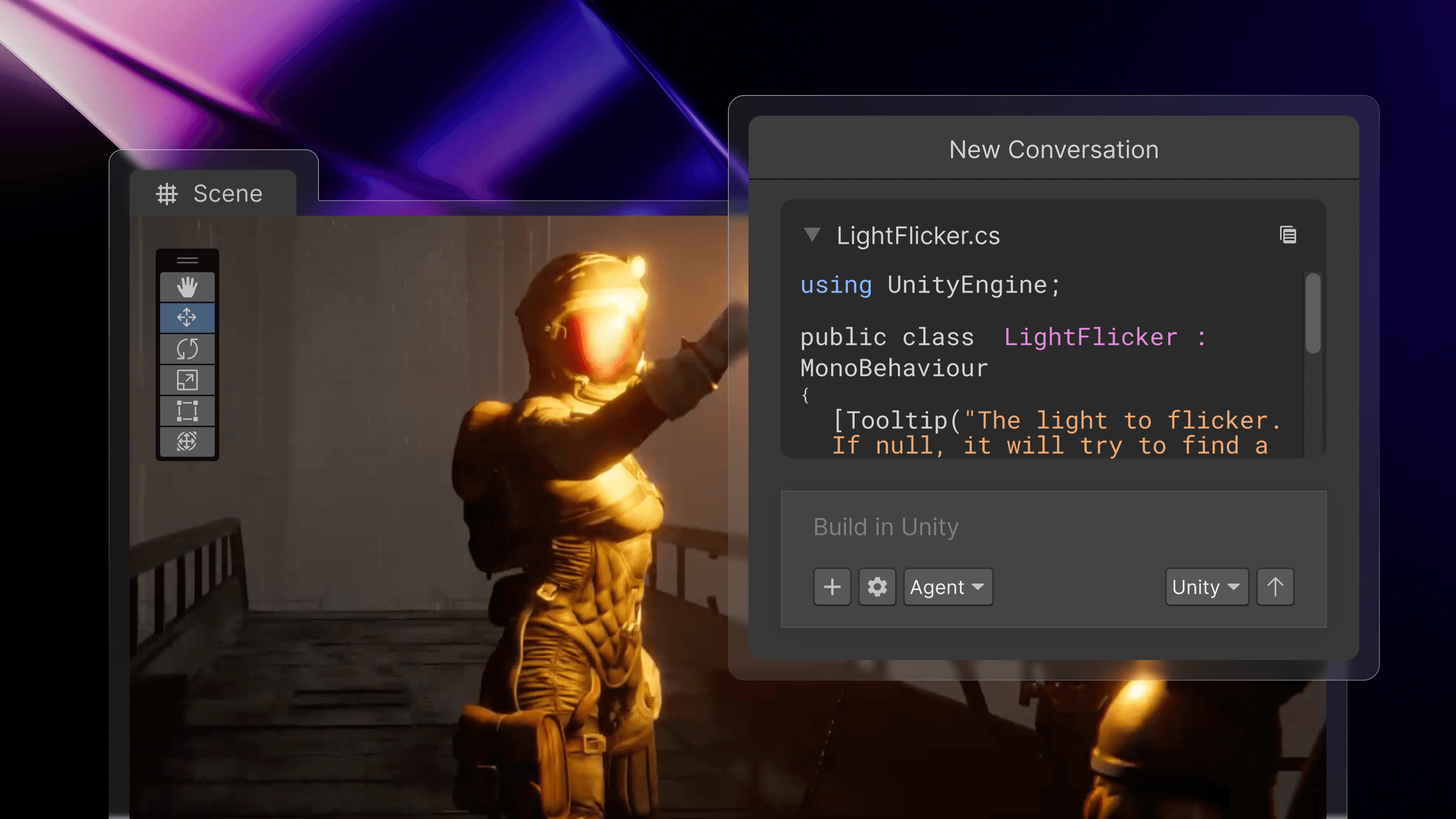
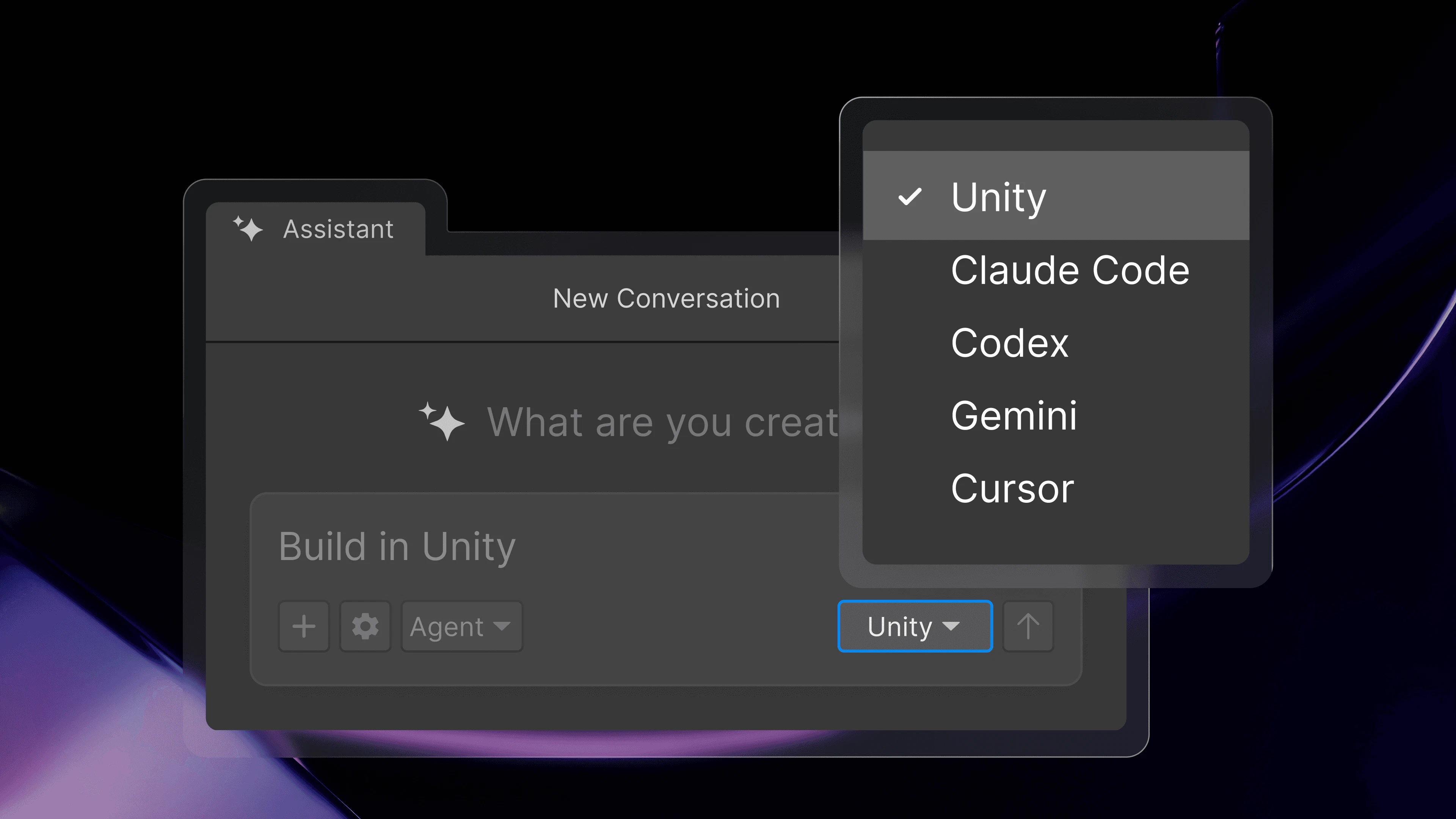
We've completely rebuilt Kilo Code for VS Code, built on OpenCode server. New portable core, parallel tool calls, subagent delegation, inline code review, multi-model comparisons. Get started: kilo.ai/install

Looking forward to seeing what you're building with @Kilo Code!

21
回复

@fmerian thank you, what's your favorite new feature in this release?

7
回复

@fmerian It looks impressive! Congrats with launch!

0
回复

Hey Product Hunt 👋 Brian from Kilo Code here.

We just shipped the biggest update to our VS Code extension since launch. The entire thing has been rebuilt on OpenCode server, which is the same open-source core that powers our CLI and Cloud Agents. One engine across every surface, so when we improve something, it gets better everywhere.

The headline feature is real parallelism. Kilo can now run multiple tool calls at the same time (file reads, searches, terminal commands all firing concurrently), and it can spin up parallel subagents that each handle a piece of a larger task simultaneously. You actually feel the speed difference.

A few other things shipping in this release:

  • Agent Manager — run multiple independent agents in separate tabs, give each one a role, and use git worktrees so they never step on each other's code

  • Inline code review — leave line-level comments directly on agent diffs, just like a PR review, and send them back as structured context

  • Multi-model comparisons — run the same prompt through different models side by side and pick the best result

  • Cross-platform sessions — start in the CLI, pick up in VS Code, share with a teammate

Kilo is open source, runs 500+ models at provider cost (zero markup), and has over a million developers using it. We'd love for you to try it out and tell us what you think!

11
回复

@brian_turcotte agent manager is such a great addition, and overall it works so much faster! Great to be working together on this one!

3
回复

@brian_turcotte curious what's your @VS Code look like? any extensions you'd recommend in addition to @Kilo Code?

1
回复

@brian_turcotte One engine across CLI, VS Code, and Cloud Agents is the right architecture. We run agent workflows across multiple surfaces internally and the biggest friction is always inconsistency between environments. Something works in the terminal, behaves differently in the editor, breaks entirely in cloud. A unified core that improves everywhere simultaneously solves that at the infrastructure level.

Real parallelism is the feature that matters most here. Sequential tool calls are the hidden bottleneck in most agentic coding workflows. When a complex task requires reading 10 files, searching a codebase, and running terminal commands, doing that one at a time turns a 30-second task into a 5-minute wait. Parallel subagents handling pieces of a larger task simultaneously is where the speed compounds even further, especially on architectural work that naturally decomposes into independent subtasks.

The Agent Manager with git worktrees is a smart detail. We've run into the exact problem of multiple agents stepping on each other's code. Isolating each agent in its own worktree so they can operate independently without merge conflicts is the kind of practical engineering decision that shows you've actually dealt with multi-agent workflows in production, not just theorized about them.

Inline code review on agent diffs is great too. The gap between "agent generates code" and "human approves code" is usually copy-paste into a PR tool. Doing it directly in the editor with structured context going back to the agent tightens that feedback loop significantly.

Open source at provider cost with zero markup across 500+ models. Hard to argue with that. Congrats on the release.

2
回复

Came from Roo Code a few months ago and honestly haven't looked back. The migration was smoother than expected. Good luck for today!

5
回复

@olivia_bennett7 happy to hear you like it. Have you tried agent manager already to put multiple agents to work?

2
回复

Came from Roo Code a few months ago and honestly haven't looked back. The migration was smoother than expected.

Your words just made our day, Olivia!

For anyone else reading this and coming over from Roo Code, the team wanted to make this as easy as possible. They crafted a migration guide that walks through bringing settings, modes, and workflows into Kilo here: kilo.ai/roo-migration

Enjoy! and make sure to leave a review here: producthunt.com/products/kilocode/reviews/new

0
回复

@olivia_bennett7 Love to hear that! Thank you!

0
回复
The inline diff reviewer is the feature I didn't know I needed. Been using AI coding tools for a year and reviewing agent changes is still the most painful part of the workflow. Does it support split views on smaller screens? Congrats BTW )
5
回复

@abod_rehman thank you, great to hear you like the inline diff reviewer. I use the code reviewer in VS Code before creating a PR, and let the code reviewer in the cloud check everything again. For small changes (and screens, since I do a lot of that on mobile) I usually kick if off from Slack or cloud agents, and then have the code reviewer in the cloud do the check.

1
回复

The inline diff reviewer is the feature I didn't know I needed.

love it! give it a spin at kilo.ai/install and let us know how it goes with a review here: https://www.producthunt.com/products/kilocode/reviews/new

looking forward to it!

0
回复

@abod_rehman Thank you!

Yes it does still support split views - even with multiple agents running!

0
回复

Hey Product Hunt 👋 - Job from the Kilo team.

Very excited for this launch. The new Kilo for VS Code is my daily driver, and this rebuilt version with agent manager is in my opinion the next step in agentic coding. I now let multiple agents run at the same time using agent manager, and it speeds up my workflow a lot. Super curious to hear what you think of it!

🚨 We're also hosting 2 live sessions TODAY:

10am EST | The Kilo Show for Non-Coders

We'll talk marketing automation, SEO, competitive analysis, and design

Register →

11am EST | The Kilo Show for Coders

We'll talk agent orchestration, codebase indexing, and IDE workflows

Register →

4
回复

@jobrietbergen yes, and we're hanging out here, on Twitter/X and LinkedIn all day - ask us anything ✌️

1
回复

I’ve been using Kilo Code for a while, and this update feels noticeably faster.

The parallel tool calls are the part I felt right away. It doesn’t sit around waiting as much, especially on bigger tasks where it needs to search files, read code, or run commands. The Agent Manager is also really nice if you’re juggling a few things at once without wanting everything mixed together.

Inline review on diffs is probably my favorite addition. It makes giving feedback to the agent feel a lot closer to how I’d review a teammate’s PR.

Overall, this is a really strong update. Kilo is becoming one of the few coding tools I actually keep coming back to.

3
回复

Kilo is becoming one of the few coding tools I actually keep coming back to.

@matheusgomes062 thank you! this just made my day 💛🖤

make sure to leave a review here: https://www.producthunt.com/products/kilocode/reviews/new

0
回复

@matheusgomes062 thanks, that's great to hear! Also thank you for joining our webinar earlier today!

1
回复

@matheusgomes062 Thank you! I agree - parallel tool calling makes the whole experience move much faster.

0
回复

Been using v7 for a while, and even the versions before this. Took a while to get used to, but generally excited to see it being built on OpenCode. Can't wait for more features especially /remote 🤞🙏

3
回复

@cheeaun love to read this, Lim! make sure to leave a review here and help us spread the word on X 💛🖤

1
回复

@cheeaun thank you for using Kilo!

2
回复

@cheeaun Thank you! Glad you're vibing with it ;)

2
回复
Multi-model comparisons inside the editor is the feature I didn’t know I needed. Does it run them simultaneously or sequentially?
3
回复

@anusuya_bhuyan they run simultaneously!

2
回复

Multi-model comparisons inside the editor is the feature I didn’t know I needed.

framing this!

0
回复

@anusuya_bhuyan it runs them simultaneously on separate worktrees

1
回复

The parallel subagents with git worktree isolation is the part that actually makes sense to me. Every other tool just runs agents on the same files and hopes for the best. Congrats on shipping this!


3
回复

@asher_luca thank your for being a user!

1
回复

The parallel subagents with git worktree isolation is the part that actually makes sense to me. Every other tool just runs agents on the same files and hopes for the best.

spot on! help us spread the word on LinkedIn, repost this

0
回复

@asher_luca Thank you!

1
回复

If one agent is refactoring an API and another agent is consuming that API, how do they handle the dependancy? Do they share context live or waiting for human reviews?

3
回复

@michael_vavilov you can use agent manager to let agents run on separate git worktrees so they don't interfere with each other. You can then review locally and in the cloud with Kilo, and resolve any merge conflicts.

2
回复

@michael_vavilov They use git worktrees to avoid conflict and share context upon merge!

2
回复

How does the multi agent system comparison handle tokens ? does it run them all in the background simultaneously ? btw Congrats on the launch :)

2
回复

@farhan_nazir55 Thank you!

And yes, while you can bring your own keys or use local models, most users pay for inference via the Kilo Gateway, which lets you switch freely between models using one balance.

You just pay for token at provider costs - whatever Anthropic charges for Opus, and whatever OpenAI charges for GPT, that's what you pay!

1
回复
A lot of people hit a breaking point when agents start generating more diffs than they can confidently review—how did you design the inline diff reviewer + line-comment-to-chat loop to reduce review fatigue, and what review metrics (time-to-approval, revert rate, “second pass” prompts) are you tracking to prove it works?
2
回复

@curiouskitty Good question!

We offer both local reviews in the extension and automated reviews on Github and GitLab PRs.

You can specify the strictness in both cases, so that you can filter down to the review points you actually care about.

2
回复

Used the old Kilo VS extension and have been using the new. Love the changes and it works smoothly. Excited to see many of the coming updates, too.

2
回复

amazing, Josh! what should we build/improve/fix from your perspective?? here's a sneak peek: kilo.ai/next

0
回复

@josh_slone1 thanks for joining us on the journey. What do you like most from the new version?

1
回复

@josh_slone1 Thank you! Glad you're enjoying it.

1
回复

Been loving my experience with Kilo! Love the team and the speed at which things are shipped. This is just another great example of the speed at which this team can produce great work!

2
回复

spot on! this team keeps shipping: @Kilo Code for @VS Code and @JetBrains, and more with @KiloClaw...

0
回复

@erik_israni Kilo Speed!

1
回复

@erik_israni Thank you! Glad you're enjoying it :)

1
回复

Been on Cursor for a while but the model lock-in is starting to bother me. The 500+ models angle here is hard to ignore. Does switching models mid-project break any context?

2
回复

@alexis_rodriguez7 happy to hear, and no, you can even switch model mid task.

1
回复

exactly - 500+ models, zero markup, no editor switch required. see full comparison vs Cursor here: kilo.ai/kilo-code/vs/cursor#comparison

hope this helps!

0
回复

@alexis_rodriguez7 It does not! You can switch in between prompts, or even run parallel agents using different models to see how they handle the tasks differently.

Your context remains intact!

1
回复

Using Kilo for Resume Matcher. Works really well, however, ƒor this launch. I'd suggest some features that Kilo should add. The first one is Skills, just like Claude-Code. A .kiloignore, and custom routines to be fired up to check for dependencies, security risks, and other supply chain attacks that may be in transitive dependencies. Because the more we vibe-code, the better the security should be, and the more exhaustive the reviews should be.

2
回复

@srbhr big fan of your work, Saurabh! what do you enjoy the most with @Kilo Code?

appreciate the feedback 💛🖤 cc @brian_turcotte

1
回复

@srbhr thanks for using Kilo and your feedback. We do support skills, and we also have our marketplace! https://kilo.ai/docs/customize/skills#finding-skills. We agree security matters! We have been working on a few features in that space: https://kilo.ai/features/security-agent, If you have further feedback please let us know on our GitHub repo!

2
回复

@srbhr Thanks for the feedback! Both Skills and .kiloignore are currently supported in v7 - nice callout!

2
回复
Is the ability to switch between models the main reason to try this? I’m a daily user or Claude code and codex. Tried antigravity and gave up. Planning to try KimiCode. 😅 Should I add kilo code to the list?
2
回复

definitely! read this full breakdown: kilo.ai/kilo-code/vs/claude-code

TL,DR: @Kilo Code is open-source, offers multi-model CLI + IDE agent with inline autocomplete vs Anthropic's Claude-only terminal-first coding agent.

eager to have your feedback!

0
回复

@lakshminath_dondeti i might be biased, but you definitely should ;) - you can also use your codex subscription inside of Kilo, or use any of the free/frontier models

1
回复

@lakshminath_dondeti I certainly think so!

In addition to freely switching models, we're also completely open-source and focused on frictionless agentic orchestration. The openness combined with parallel execution makes it a different experience than other tools, in my humble opinion!

1
回复

Niiiice! Looks amazing and clean

2
回复

@maltepruser lfg! what new feature are you most excited about?

0
回复

@maltepruser thank you!

1
回复

@maltepruser Thank you!

1
回复

Does the agent manager have any limits on how many parallel agents you can run at once, or is it just constrained by your machine's resources?

2
回复

@barnaby_lloyd it is only constrained by the hardware you’re running on.

1
回复

@barnaby_lloyd It's constrained by machine resources

1
回复

@barnaby_lloyd No limit, so it's a machine constraint if any!

1
回复

WooW this feels really fast.

2
回复

@malithmcrdev this is kilo speed ™️

1
回复

@malithmcrdev happy you like it, speed is a major differentiator of this release yea!

2
回复

@malithmcrdev Thank you!

0
回复

Great update guys! Nice work!

2
回复

ty! what's your favorite new feature in this release? help us spread the word on X, repost this

0
回复

@th_calafatidis thank you, happy you like it!

1
回复

@th_calafatidis Thanks a lot!

0
回复

Congratulations!

2
回复

thanks for the continuous support! please help us spread on LinkedIn, repost this

0
回复

@madalina_barbu Thank you Madalina! Are you using any agentic coding tools already?

1
回复
Love the idea of an opensource AI coding agent for VS Code especially with all those modes and model flexibility. How does it actually compare in real workflows vs tools like Copilot or Cursor when handling complex projects? Congrats Team!!!
2
回复

oss ftw! make sure to star this repo

1
回复

@hamza_afzal_butt thank you!

Unlike Copilot and Cursor we don't limit you on models to use. You can start by using plan mode inside Kilo, to iterate on a plan together with the agent. When you're ready to implement it, switch to code mode. Then the agent implements your plan, and asks you questions if needed. When the agent is ready you can let a local code reviewer check the changes. We also just released semantic indexing so your agent has better context.

2
回复

Rebuilt from scratch on OpenCode server and still GA'd,  that's not a small thing. Most teams would've shipped a half-baked beta and called it done.

1
回复

thank you! S/O to the team for the amazing work

0
回复

@elijah_smith6 that's not how we do things at Kilo. We ship, we get feedback, we iterate iterate iterate. Here's a quick recap of the journey: https://blog.kilo.ai/p/were-back-on-product-hunt-new-vs-code

1
回复

@elijah_smith6 Thanks for the kind words!

0
回复

The line level review comments on agent diffs is a really smart UX call. Feels like the missing link between AI wrote this and I actually trust this going to prod.

1
回复

@carter_garcia I agree! And it helps to get a local review as a sanity check before shipping to a public repo

1
回复

How does Kilo handle context limits when you've got multiple subagents running on a large codebase? Does each subagent get its own context window or do they share?


1
回复

@daniel_harris11 yes that’s the best part - each agent has their own context window. The parent agent passes only the context needed for the subagent to get its task done, and the subagent only passes the results back to the parent. All of the in between context doesn’t pollute one or the other

1
回复

@daniel_harris11 Each subagent gets its own context, then provides a summarized report to the primary agent. You can view subagent sessions while they are running and the final report if you are interested.

1
回复

@daniel_harris11 They each get their own when you're on separate worktrees (branching from the original agent), and can share when the work is merged back in :)

1
回复

Just curious, when multiple subagents are running in parallel, how does the merge back to the parent agent work? Does it ever create conflicts when two agents touch overlapping parts of the codebase?

1
回复

@boyuan_deng1 with the agent manager, each agent gets their own git worktree. That way they don’t conflict with one another. Then once they are done you can either open a PR directly from that worktree or have the agent merge it back into your local copy

1
回复

@boyuan_deng1 There are two default subagents, general and explore. Explore tends to be utilized to find or answer a question about the codebase, and general can be used to make parallel edits but in a way that is directed by the parent agent to not cause conflicts (separate folders, modules, etc)

1
回复

@boyuan_deng1 We use git worktrees to prevent conflict so that you can merge without issues!

1
回复

been looking for something like this, the ai coding space is getting crowded but this looks focused

0
回复
#2
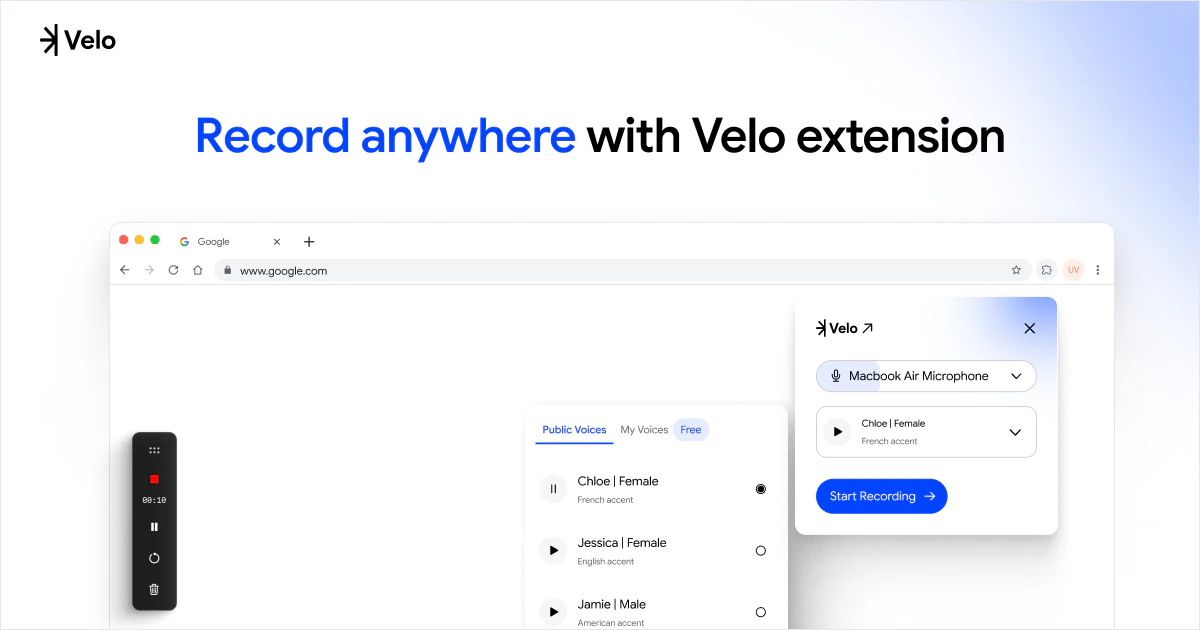
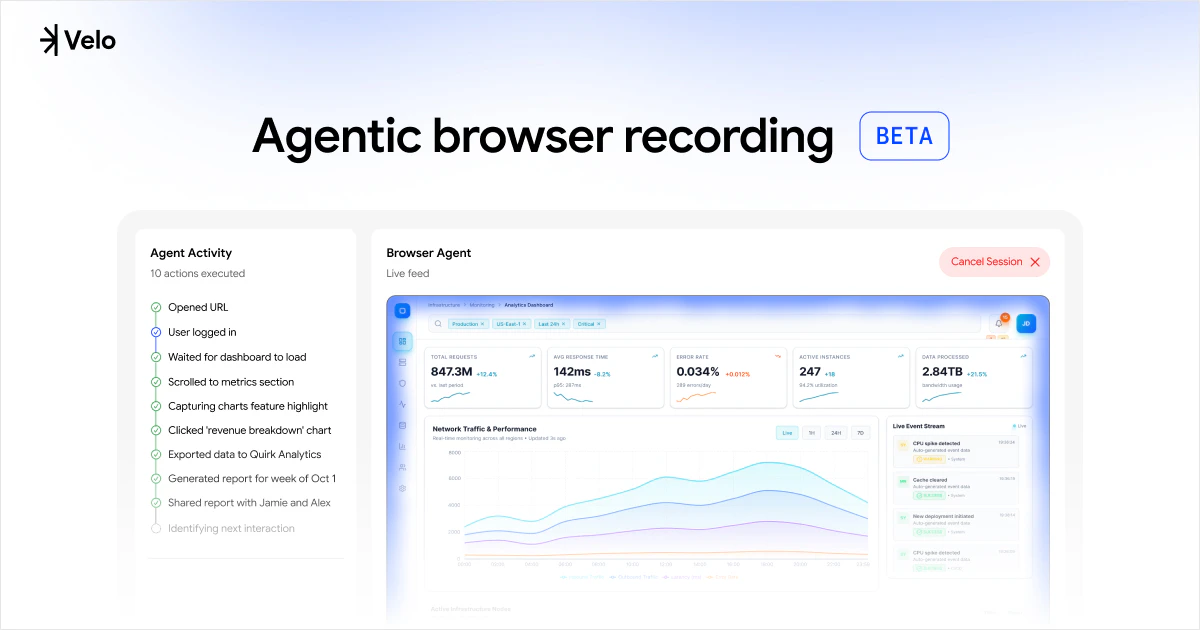
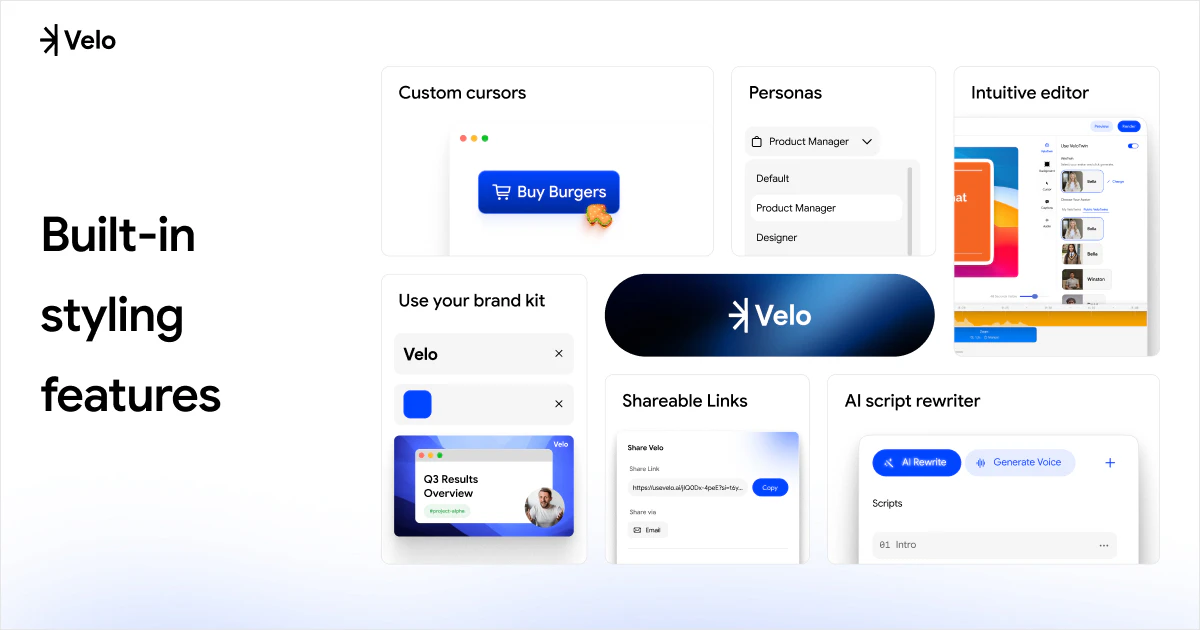
Velo 2.0
Instantly turn your voice and screen into shareable videos
467
一句话介绍:Velo 2.0通过聊天式界面和AI实时处理,将用户原始的屏幕录制和语音一键转化为可直接分享的精美视频与文档,省去繁琐的后期剪辑,让非专业人士也能高效制作出专业级视频消息。
Productivity Sales Video
AI视频生成 屏幕录制 语音克隆 聊天式编辑 视频转文档 脚本重写 实时处理 B2B创作工具 效率工具 产品展示
用户评论摘要:用户普遍称赞2.0版响应了“不够省力”的痛点,尤其对聊天界面、视频与文档同步生成、更自然的语音克隆表示认可。反馈的问题和建议集中在:PDF中的图表如何描述、能否编辑已生成的视频、是否支持纯音频转视频、以及长视频的稳定性。
AI 锐评

Velo 2.0的升级路线堪称“听劝”的教科书,但需要警惕这种迭代方式的风险。团队从1.0用户“能用但不够省力”的单一痛点出发,放弃堆砌功能,转而重构核心体验:用“聊天”替代时间轴编辑,用“实时流处理”消灭等待感,用“一次录制,视频文档双出”解决复述痛点。这些改动精准命中了B2B创作者(如产品演示、教程录制)在“录制后”环节的深层痛点——沟通成本远高于创作成本。

然而,Velo的护城河并不稳固。目前的核心逻辑(屏录+语音+AI润色)技术门槛不高,竞争对手可以快速复制。其真正的价值可能在于“从屏幕内容到结构化文档”的转化精度和“语音克隆的情感保真度”,这需要高质量的数据积累和模型调优,而非简单的功能堆叠。评论中用户对图表处理、长视频稳定性的担忧,也暴露了其在复杂场景下的成熟度不足。

此外,“聊天式编辑”虽然降低了学习门槛,但可能牺牲了对精细节奏和画面层面的控制权,这会让专业创作者感到掣肘。Velo必须在“极简”与“可控”之间找到更聪明的平衡。短期来看,它是一款出色的演示视频制作工具;长期来看,若要成为视频沟通的基础设施,需要证明其能处理更高维度的叙事和创意表达,否则很容易沦为一个“好用的PPT生成器”的升级版。

查看原始信息
Velo 2.0
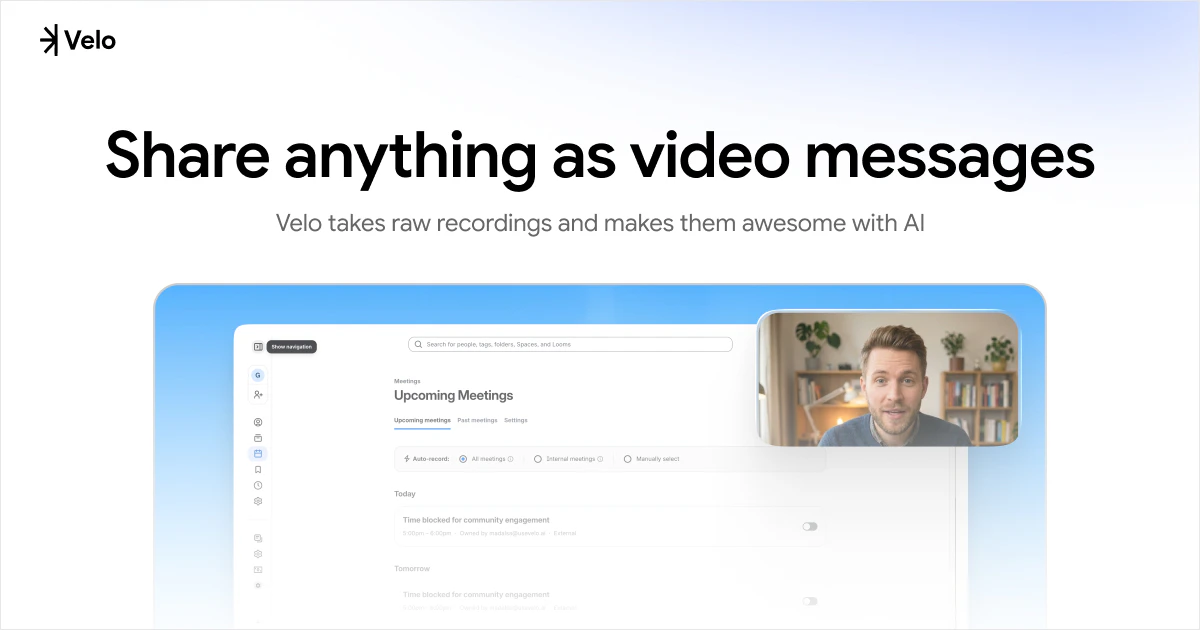
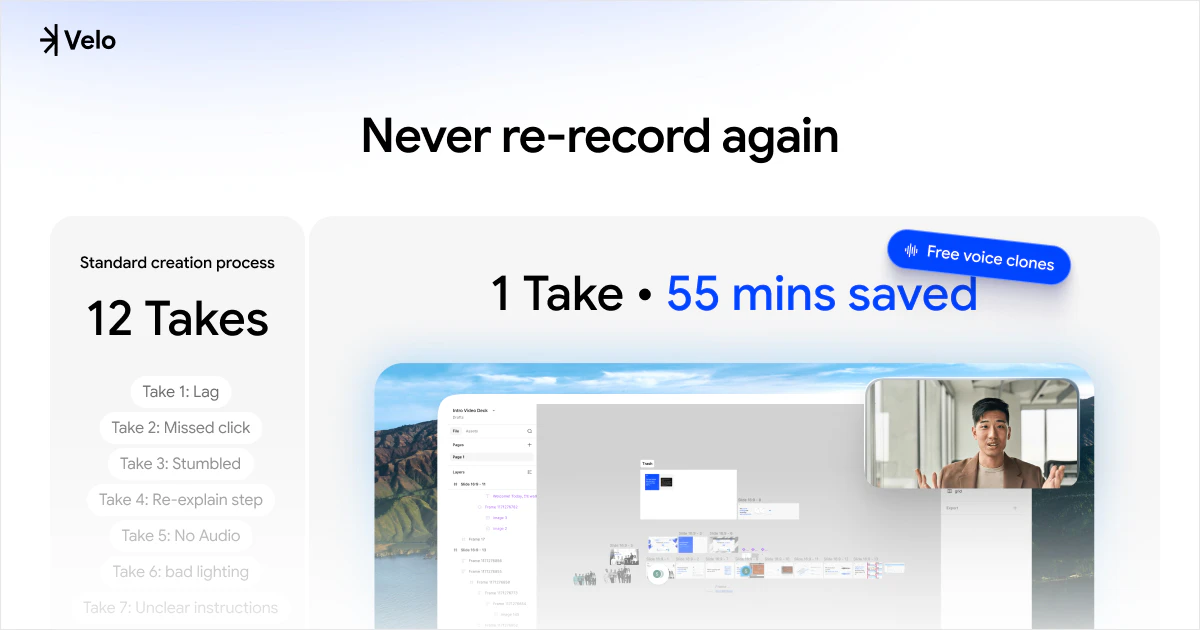
Velo 2.0 is a whole new way to make video messages. It turns raw screen recordings into polished videos and docs, with a chat-native editor, real-time processing, voice cloning, and smart script rewriting. Edit by chatting, not timelines. Record once and get both a video and a doc. Write a script even when there is no audio. Change tone anytime. Everything updates live, so the whole experience feels faster, easier, and more natural.

Hey Product Hunt community! 👋

I'm Ajay, co-founder & CTO of Velo. A few weeks ago, we launched Velo 1.0 here - an AI tool that turns a raw screen recording into a polished, share-ready video message.

The response blew us away. But one thing kept coming up in the feedback: "It works, but it doesn't feel effortless yet."

That stayed with us. For a tool built to make communication easier, "not effortless" is the whole problem.

So we went ideated, iterated, and are finally shipping Velo 2.0 here today.

Here's everything about Velo 2.0

  • Chat-native interface: Chat with Velo to shape it into a polished video - add narration, edit scripts, add voice clones, effects, and more, all through conversation.

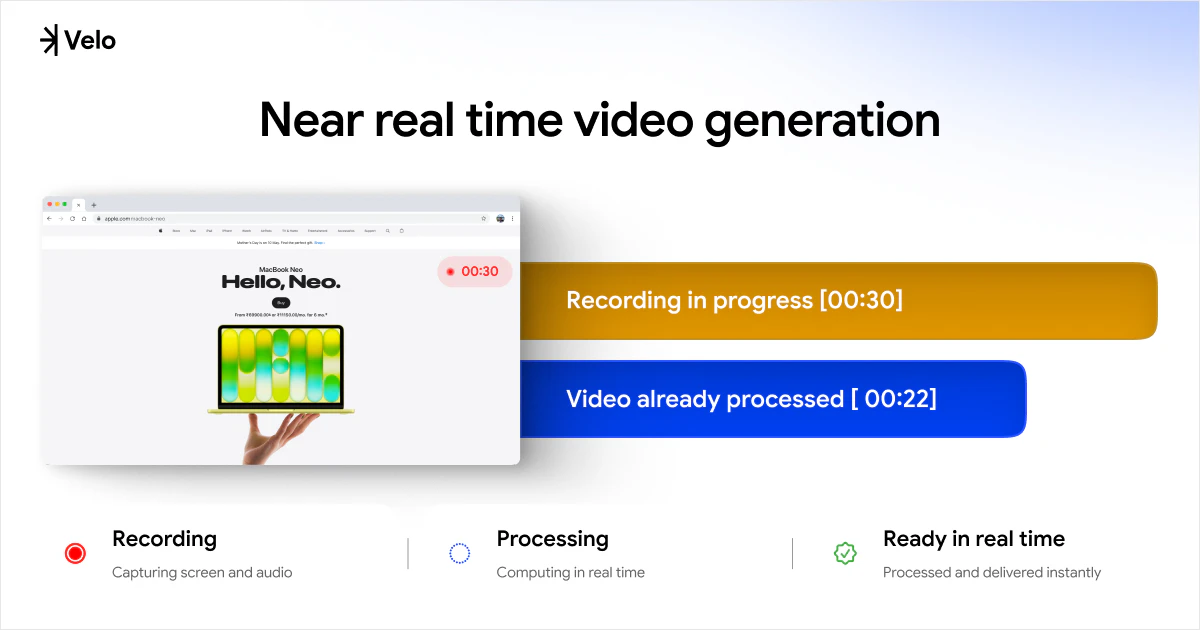
  • Streaming processing: Processes as you record, noticeably faster previews

  • Create video messages + documentation: Record once, get a polished video and a structured written document out of the same session

  • New voice model: Emotive, human, captures tone and energy, not just acoustics

  • Silent video handling: No audio in your video? Velo understands the context and generates the script instead of failing

  • Video to Doc: One click turns any video into a written article

  • Context-aware script rewriter: Set your persona and audience, Velo rewrites the narration

We've been using 2.0 internally for weeks. It's the first version where I make a video and don't feel like something's slightly off.

Please try it out and let us know what your thoughts are: usevelo.ai


We're all ears. Thank you for your support.

20
回复

@ajaykumar1018 

Congrats on the launch! I love how V2 focuses on removing friction — the “works but doesn’t feel easy yet” insight really resonated. The chat‑native editing and video‑to‑doc flow look super thoughtful. Excited to try it!

0
回复

@ajaykumar1018 As someone who’s hunted nearly 500 products, I’ve noticed a familiar pattern on Product Hunt: many makers launch, politely acknowledge feedback, and then either take far too long to act on it or never act on it at all.

The Velo team has been the exact opposite... they took every piece of feedback from our very first call and first launch seriously, and they’ve already shipped it.

Today, I’m genuinely excited to introduce Velo 2.0. Everything the PH community asked for just last month is already live in the product, making @Velo more powerful than ever in under a month.

Why I endorse Velo?

Having seen countless video AI products launch on Product Hunt, I believe this one has the potential to be the best of them. I’m proud to endorse it... for the team behind it, for their pace of innovation, and for how completely it covers everything you need to create videos.

My favorite use cases:

My favorite ways to use Velo are for demo videos, product walkthroughs, tutorials, SOP recordings for my team, and more. Give it a try today, and tell us how we can make Velo even more useful for you! :)

10
回复

@ajaykumar1018 Tried Velo 1.0 during the last launch—loved the idea, but ran into some issues with video creation so it didn’t feel fully smooth.

Velo 2.0 looks like a solid upgrade though—especially the chat interface, streaming, and video + doc combo. Will give it a proper try today.

Great to see how closely you’ve listened to feedback and iterated so quickly. This version feels much closer to something I’d actually use regularly. very appreciable!! @rohanrecommends @ajaykumar1018

0
回复

Hey PH community

The mission behind Velo has always been the same - help people communicate better through video, without needing to be a video person.

No camera setup. No re-recordings. No editor. Just you explaining something clearly, and AI doing the rest.

Velo 2.0 gets us meaningfully closer to that. The chat-native interface means anyone can start without a learning curve. The new PDF flow actually captures what you want to say, not just what's on the slide.

The voice model sounds like a human having a conversation. And features like Take Control and Video to Doc open up use cases we couldn't touch before.

What can you expect when you try it:

  • A starting experience that guides you through Velo

  • Videos that sound like you - not a robot reading your script

  • PDFs that become narrated videos in minutes

  • A written doc from every video, with one click

  • Faster previews, sharper output, less waiting


We're a small team building something we genuinely believe in. Every launch on PH has shaped what Velo is. This one is no different.

Try it. Break it. Tell us what you think. We're here all day and open to all your feedback and thoughts.

Appreciate your support.

And to everyone who used V1 and stuck around - thank you.

8
回复

@sourav_sanyal what I’m most excited about in this launch is how easy it is to get started. You don’t have to figure anything out, just prompt what you want, and Velo takes it from there.

A lot of this came directly from feedback on V1, really glad we could bring that into Velo 2.0 today

1
回复

Congrats on the Velo 2.0 launch. Really liked what the team is building here.

I’ve personally struggled with making videos because the actual recording is only one part of the work. The harder part is everything after that - trimming, fixing awkward pauses, making the flow better, adding narration, creating a doc, and then making it look shareable.


That’s where Velo has been genuinely helpful for me. It makes video creation feel much less like editing and much more like just communicating clearly.

5
回复

@mayank_gupta40 This is genuinely great feedback, thank you so much. Excited to keep making this better for you

2
回复

it’s been about a month since our first launch. this ended up being more of a rebuild than we expected. we reworked a lot of core parts to make things faster and flow better, and pushed it more towards an AI native way of using it. curious what you all think.

5
回复
@sunil_sde Yupp excited to hear what the feedback is today
2
回复

🙌 🙌 pushed a lot of updates 3 weeks, excited to hear everyone’s feedback on this.

1
回复

Velo 2.0 is heavily shaped by user feedback and analytics from 1.0, especially around where things felt slow or not “worth sending.” A lot of the changes come directly from that. Very excited to see how it feels for everyone and would love honest thoughts.

5
回复

@soni_karan Yes super excited for this launch. Lots of groundwork has gone into this

1
回复

This version is built directly on top of user feedback. After launching 1.0, one theme kept coming up: it works, but it doesn’t feel effortless yet. That became the entire focus for V2.

We went deep on listening, analyzing where the friction actually was, and improving the core experience not just adding features. All of it ties back to our mission: helping people communicate clearly through video, without needing to be “video people.”


You’ll see that reflected across the product—from more natural and expressive voice clones, to context-aware script writing that adapts to your audience, to an overall workflow that feels faster and more intuitive end-to-end.

4
回复

@sundeepjoshi Super duper pumped for this launch, so many hours, days, weeks and months of effort.

1
回复

@sundeepjoshi Love this. You’ve captured exactly what V2 is about.

For us, 1.0 proved the core value, people wanted to communicate through video. But the moment we saw “it works, but doesn’t feel effortless yet,” it was clear that’s the real bar.

V2 is basically us obsessing over that gap. Not adding more, but removing friction everywhere it shows up.

0
回复

It's been just about a month since we launched Velo 1.0, since then, we've been reading all your comments and feedbacks, last one month, it was a crazy ride. Sleepless nights, complete revamps, all flows getting changes, we gave it all. The first product was usable, but we wanted it to be the fastest and easiest product for all our end user's. In the AI-native generation, our product felt a bit old, so here we are just after a month, the complete product being revamped to an AI-native product. Your feedbacks have been gold for us and we tried to forge the product according to your feedbacks, do give it a try. Hope you all will love it too!

4
回复

@jpinkman Super excited for this launch

2
回复

@jpinkman 4 weeks and we made version 2.0, a completely new architecture and design. Excited for everyone to try this out

1
回复

Here again to support for round 2. Cheers, congratulations on shipping improvements so quickly, speaks volumes about the team at Velo.

3
回复

@yashchoudhary Thank you so much!!

0
回复

@yashchoudhary Thanks Yash

0
回复

Been recording walkthroughs for the team and retyping the same stuff into notion forever. Does it handle longer demos cleanly or is it tuned more for short messages?

3
回复

@ermakovich_sergey You can stretch it as much as you want, the longest I have done is 44 minutes

1
回复

@ermakovich_sergey We’ve seen people use Velo for lectures and longer tutorials too. It handles longer demos quite well, would love for you to try it with your workflow

1
回复

what happens when the pdf you're turning into a video has a lot of charts and diagrams? does it describe them, skip them, or try to animate them somehow?

3
回复
@igorsorokinua yes it describes all of them. We run a visual model so that we can comprehend everything before making the video
0
回复

@igorsorokinua It doesn’t skip charts, Velo tries to interpret and explain them as part of the narrative. We use it for research papers internally, made this super quick for you: https://app.usevelo.ai/share/0ffd9297-2258-4414-bfdf-5498fc0c17fb

0
回复

congrats!!

2
回复
@hehe6z thank you so muchhh
0
回复

Congrats on the launch! Just generated a video! Is it possible to edit the video after it's done?

2
回复

@byalexai Yup, in the quick actions in the chat there is an option to edit the full editor which gives you access to huge library of editing options.

0
回复

@ajaykumar1018This is really cool, congratulations! Love that it sounds like the main focus is making it feel effortless. Making videos is not necessarily my forte and honestly takes me forever so I am looking forward to giving it a try.

2
回复

@ajaykumar1018  @blaize_olle Can't wait for you to try it out and give us feedback :)

1
回复

@blaize_olle Do give it a try, would appreciate your feedback

1
回复

How does Velo treat the screen recording? Does it do any sort of animation or retouching, or just pure screen capture?

2
回复

@jacinto_salz Yup, so this version just focuses on getting the screen right but we do plan to add overlay of code style animation and motion graphics into the same workflow so people could create more engaging videos and along with that on the audio side of things we retouch the whole thing so it sounds like you recorded in a studio.

0
回复

Chat-native editing on raw screen recordings is a meaningfully better mental model than timeline editing for B2B creators. I produce a finance podcast on the side (the ModeLoop podcast) and the bottleneck is never the conversation — it's the post: trim, intro, captions, clip extraction. Voice cloning + script rewriting could collapse 80% of that into a single chat turn for podcasters who want to repurpose long-form audio into 60s teaser videos. Curious whether Velo handles audio-only sources or strictly screen + voice, and whether the script editor preserves speaker turns?

2
回复

 @samir_asadov Screen and voice for now, but this is a super interesting insight for us.

1
回复

@samir_asadov Great insight, thanks Samir.

0
回复
Scree+voice to shareable video is the dream for async teams. How’s the quality on the auto editing side, does it cut the dead air?
2
回复

@anusuya_bhuyan You make a voice clone, so even if you have a flight taking off right next to you, your whole voice is re rendered on the video

0
回复

@anusuya_bhuyan We analyze diction, tone, and emphasis in your voice to automatically refine the video. For silent segments, our AI uses the surrounding context to decide how they should flow

0
回复

Congrats on 2.0, team!! The frist time I tried V1 I liked the idea but it felt a bit slow. Really glad to hear the streaming processing was a focus this time around. Going to test this today.

2
回复

@kate_ramakaieva Cant wait to hear your feedback, we've also made the entire UX much faster and easier with a chat interface. We're all ears for feedback

0
回复

@kate_ramakaieva Thanks Kate, do give it a try. Would appreciate your feedback

0
回复
Super interesting how it turns raw recordings into polished videos with chat based editing and realtime processing how well does it handle multi version content like tailoring the same video for different audiences automatically? BTW, congratulations team for a successful launch.
2
回复

@hamza_afzal_butt Thanks Hamza! That’s actually one of the strong use cases, you can start with one video and quickly adapt it for different audiences using chat. We’re seeing sales folks use it to customize the same video for different leads all the time

1
回复

the chat-native editing is what got me. curious how it handles more complex edits - like if i want to cut a 3-minute section and re-order two others, is that still a conversation or does it get clunky?

congrats!

2
回复
@mikhail_prasolov we have super simple editor to handle that for now, you just enable a quick action to enter the editor make your change and your back into chat
1
回复
Do you have a native app? Thanks.
1
回复
@lakshminath_dondeti hey, right now we are executing everything through our web-app but a native app is surely in our roadmap!
0
回复
@lakshminath_dondeti no yet but we do see how so much content is generated on the phone
0
回复

@ajaykumar1018 Congratulations. And happy product launch new verson.

1
回复
@huisong_li thank you
0
回复

I tried Velo and it made creating video walkthroughs really fast and simple. The AI editing and voice features save a lot of time, especially when you don’t want to re-record again and again.

0
回复
#3
Flowstep 1.0
AI design engineer to turn your thoughts into editable UI
272
一句话介绍:Flowstep是一个AI驱动的UI设计工程平台,在无限画布上通过提示词或手动编辑,能将设计师的构思直接生成可投入生产的React+TypeScript代码,彻底消除设计与开发之间的“翻译”损耗。
Developer Tools Artificial Intelligence Vibe coding
用户评论摘要:用户最关心生成代码的真实可用性,质疑是否仍需大量清理。核心需求是AI能同步脚手架状态管理(useState/useEffect)逻辑,并期待设计系统(如DESIGN.md)的一致性维持。团队回应代码可直接运行,但承认复杂API和状态绑定仍需开发者处理。
AI 锐评

Flowstep的定位非常精准,它没有重蹈“AI生成设计稿”的覆辙。创始人在评论中直截了当揭示了行业的痛点——“AI能完成80%,剩下20%得重写”,这正是所有同类工具失宠的根本原因。Flowstep的解法是将“设计与代码合二为一”,用无限画布的体验换取开发者对传统设计工具的最后一点留恋,然后直接吐出可集成的React+Tailwind代码,并通过MCP接入Cursor等IDE生态,这是一种极为务实的“截胡”策略。

但真正值得玩味的是,用户并不满足于此。评论中最高赞的问题聚焦于“状态管理”和“生产级代码”,这暴露了Flowstep当前的核心软肋:它本质上仍是一个“静态UI生成器”。漂亮的页面骨架和样式很容易,但一旦涉及到交互逻辑、API绑定、数据流,它就和Figma导出切片没有本质区别。团队将“API和状态交给开发者”视为理所当然,这是一个危险的自我安慰。当V0.dev、Claude Design等竞争对手开始切入状态层和业务逻辑时,Flowstep目前“静态UI”的技术护城河会迅速变浅。

它目前的价值在于为“高保真UI原型→代码落地”提供了当前市场上最丝滑的路径,尤其适合独立开发者或小型团队快速搭建界面。但要兑现“what you design is exactly what ships”的承诺,它必须尽快攻克“智能状态脚手架”和“设计系统一致性”这两个技术高地,否则它将永远停留在“设计师的玩具”层面,而非“工程师的生产力工具”。这是一次勇敢的突围,但距离真正的“设计工程”,还有一段需要硬啃的路。

查看原始信息
Flowstep 1.0
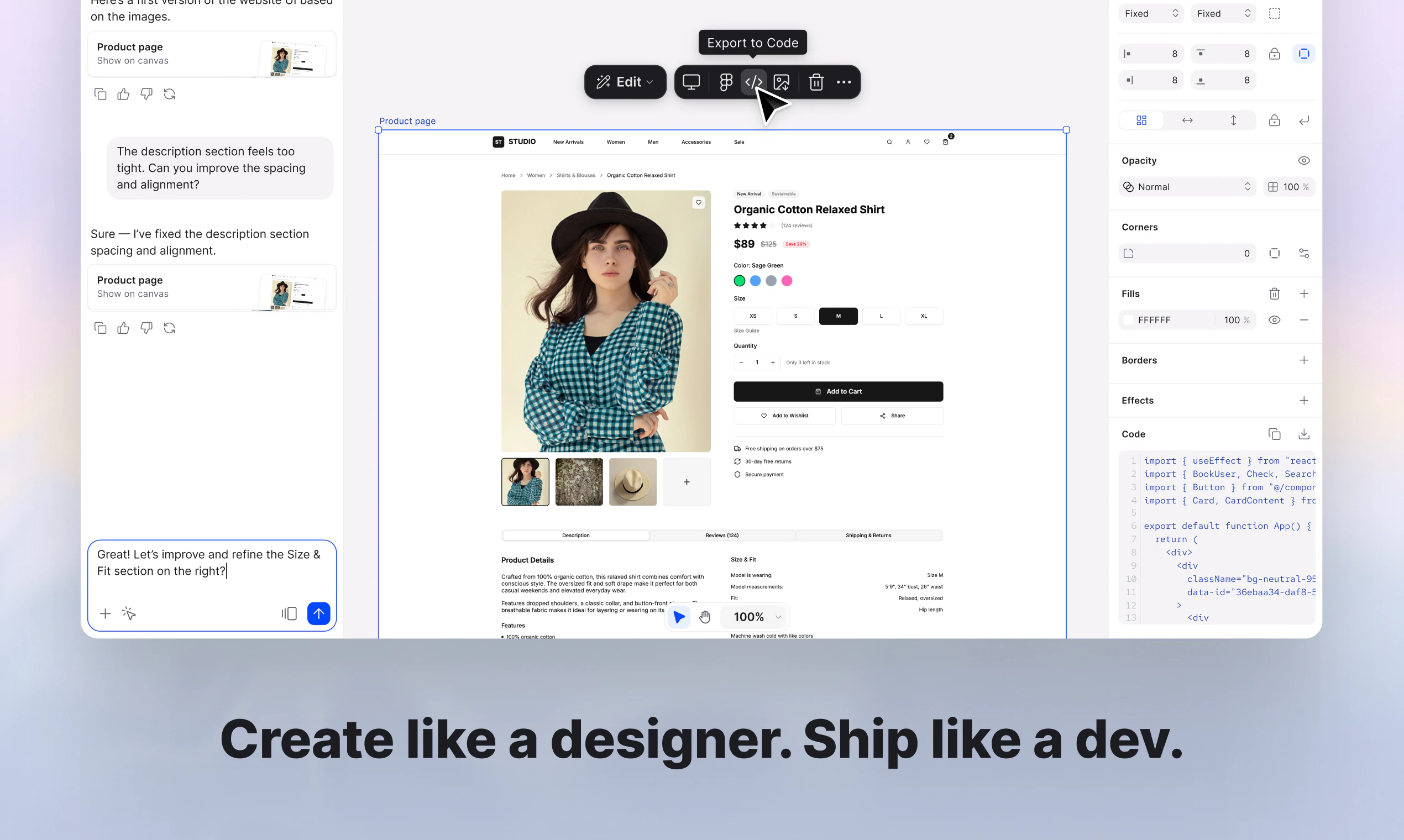
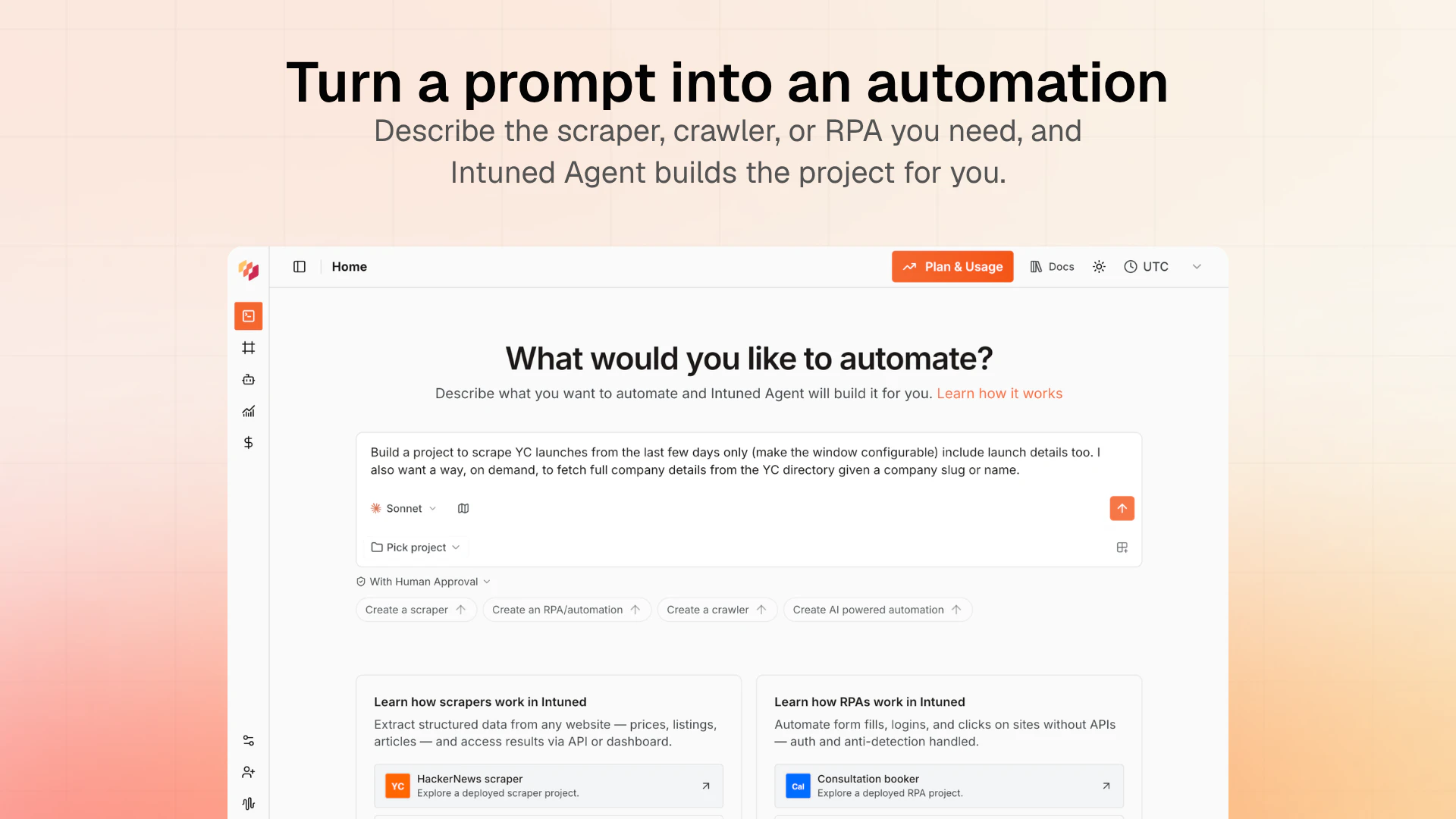
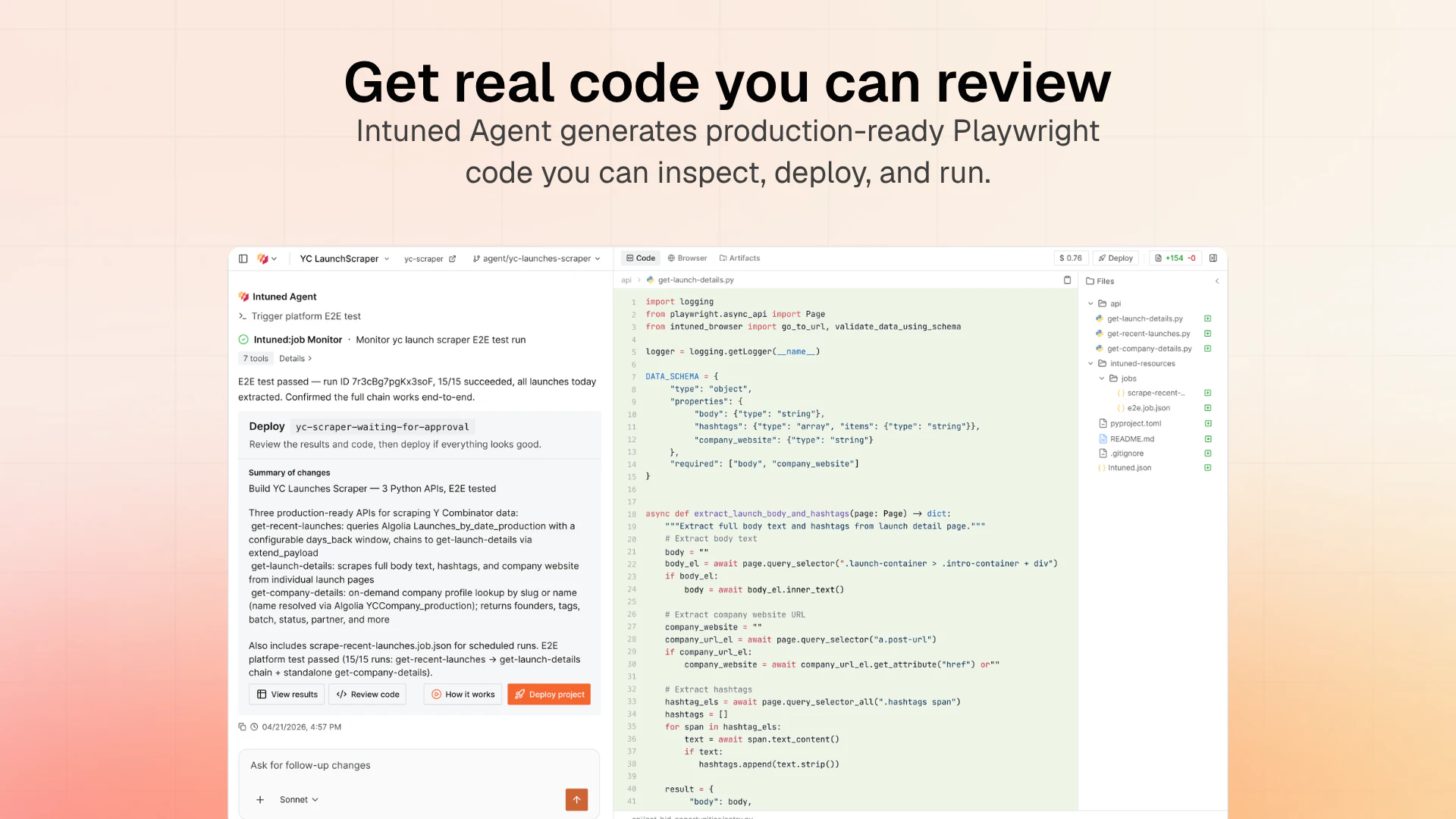
Flowstep is the AI design engineer for developers and technical designers tired of rebuilding designs in code. Prompt or edit on an infinite canvas. Export production code or connect with your agents and apps via MCP. What you design is exactly what ships.

👋 Matt here, co-founder of Flowstep.

Last year, we shipped Flowstep as an AI designer. But you kept telling us the same thing:

"it gets me 80% there, then I rebuild the whole thing in code"

We fixed that.

Flowstep is now an AI design engineer.

→ Prompt or manually edit on an infinite canvas

→ Get production React + TypeScript + Tailwind + shadcn

→ Export the code, or pipe it into Cursor / Claude Code / Windsurf via MCP

Why this exists: The process of fast iteration, multiple concepts next to each other, full control in an infinite canvas 🤌 You shouldn't have to give up that experience because of a translation layer. That's why design and code are the same thing in Flowstep.

Free to try at flowstep.ai, paid plans available from $15 p/m.

💬 Drop a comment — tell us what's missing. We listen and ship multiple times per day.

13
回复
How does this compare to pencil dot dev or Claude design?
9
回复

@lakshminath_dondeti Thanks for the question.

It's different shapes for different workflows. Pencil is a design canvas inside your IDE. Claude Design is broader in scope (decks, prototypes, one-pagers) and bundled with a Claude subscription.

We're more focused: a standalone web app for UI generation, with clean React/Tailwind output and one-click Figma export. Better designing and iteration experience. No IDE setup, no Claude plan required to try it.

12
回复

to answer your question: the one thing usually missing in these tools is state management. if flowstep can help scaffold the basic useState or useEffect logic while i'm building the ui on the canvas, i’m never opening figma for web work again. definitely checking out the free trial today.. @clannachan

7
回复

@vikramp7470 Noted — state scaffolding alongside the UI is a real gap. Curious how you handle it now?

3
回复

@vikramp7470 great feedback!!

2
回复

@clannachan  @vikramp7470 Exactly. The speed-consistency tradeoff is real, and it gets messy fast when you need to propagate design changes across a whole product. That's where having an AI that understands your design system and can apply it consistently across new UI becomes a genuine time saver.

0
回复

Great looking UI, will test it out 🔥

6
回复

@ralic Thanks Ivan, let us know what you think ;)

2
回复

@ralic thanks!! Let us know what we could improve 🙌

1
回复

wooooow so cool !!

5
回复

@tberguer ❤️

2
回复

@tberguer thanks Tristan, be sure to let us know what to improve ;)

3
回复

Wishing GL with the launch :)

5
回复

@busmark_w_nika thanks Nika, appreciate it ❤️

2
回复

@busmark_w_nika thanks a lot!!

2
回复

Congrats on the launch, good luck team! 💪🏻

5
回复

@paulinahryniewicz Thanks Paulina, appreciate it 🙏

2
回复

@paulinahryniewicz thanks! 🙌

1
回复

@paulinahryniewicz Huge thank you!

2
回复

Curious how clean the exported production code in real world scenarios .If it's truly usable without heavy cleanup this could be a game changer.

4
回复

@robyn_kline Best way to judge is to export something and look at it yourself — but the short version: clean React + Tailwind, your design tokens (if you specified them), no rewrite needed to drop into an existing codebase.

0
回复

Love the canvas first approach .Most tools still feel constrained but this seems much closer to how designers developers actually think and iterate.to

4
回复

@maali_baali Exactly — fast iteration is the whole bet. Each step should get you closer to the real product, not further into a mockup.

2
回复

This is the kind of shift that actually matters less about designing screen more about desigining shippable system.Curious how reliable the generated code is in real projects.

.

4
回复

@aarav_pittman That's the framing we care about. The export is clean React + Tailwind — it's a starting point you can build on, not a black box. Easiest to just export something and judge it yourself ;)

1
回复

The MCP integration angle is interesting feels like you're not just building a design tool but plugging into a larger AI workflow ecosystem.

3
回复

@daniel_henry4 That's the point. The canvas should be something your agents can use in and out, not just a place you export from.

2
回复

This feels like a real step toward closing the gap between design and development . The what you design is what ships” promise is exactly what many teams have been waiting for.

3
回复

@aarav_pittman Appreciate that — it's exactly the gap we're trying to close. A bit more to go, but each release gets a step closer.

1
回复

sounds like something that actually helps agents to build an authentic UI rather than just vibecoding it!

3
回复

@vedantshirgaonkar Exactly the point — and we expose it via MCP for your agent of choice.

2
回复

Yeah! Building fast sometimes means it's harder than ever to get a consistent and cool design. Even more if you need to update core design parameters and I'm sure Flowstep gonna help a lot on it

3
回复

@german_merlo1 So true. Consistency is the hard part. We shipped DESIGN.md last week for exactly this — define your design rules once, every generation respects them. Drop your design guidelines in and see what comes out ;)

2
回复
Design to UI without the handoff gap is a holy grail. Does it write a production-ready code or still need a dev pass before shipping?
3
回复

@anusuya_bhuyan Honest answer – it depends on your standard for production-ready code.


Flowstep outputs clean React + Tailwind you can ship as-is for most UIs. API and state wiring – if the app needs any – that's still on devs. At least, today. So the real question is: where's your line?

3
回复

the '80% there then i rebuild in code' line is exactly why i stopped opening figma. running claude code daily and the design to prod handoff has been the biggest tax on shipping fast as a solo founder. mcp export into the coding agent is the right shape. trying it today !

3
回复

@saad_el_gueddari can totally relate 🙌 Let us know if anything feels missing with MCP

1
回复

@saad_el_gueddari exactly what Matt said – share all feedback you have after today!

1
回复

Thanks flowstep team for making this.
It really helps me to generate different design directions in very short amount of time and 2x my past workflow

3
回复

@nishkarsh_gupta_381 Thanks – "different directions, fast" is exactly what we're going for.

One question – what's slowing you down right now, even if it's some small stuff?

1
回复

@nishkarsh_gupta_381 so great to hear that! 🙌

0
回复

Is this meant for legit designers and devs, or teams that are trying to cut corners by not hiring design and dev? Are there guardrails to keep the designs "good".

1
回复

@diana_polansky1 we believe that designers and devs are the ones making the call — the tool just speeds up getting to a good first version, not replacing them.

On guardrails: designs follow your design guidelines if you bring one, and you can set tighter rules on top of that. Not about cutting corners, more about cutting the boring parts.

2
回复

Can you import a design system?

0
回复

@dan_tatar Today you can import design tokens as a DESIGN.md file. Component support is next on our radar.

0
回复
#4
Waydev Agent
Prove ROI and see if your AI spend is actually paying off
211
一句话介绍:Waydev Agent是面向工程领导者的AI投资回报率测量平台,通过追踪AI代码的采用、影响和ROI,解决企业在“花大钱买AI却不知成效”场景下的决策盲区。
Pitch NYC
开发者工具 工程管理 AI治理 代码分析 ROI计算 SaaS 数据可视化 Copilot分析 Cursor监控 DevOps
用户评论摘要:用户普遍肯定产品解决了“AI投入不见回报”的痛点,称赞“采用-影响-ROI”的分解逻辑。批评集中在:隐藏定价令人警惕,担心试用期后高昂费用。创始人在评论中承诺提供定制化报价和PH专属折扣。另有技术用户追问AI代码归属的精确归因方法,以及与其他平台(如Jellyfish)的差异化。
AI 锐评

Waydev Agent切中了一个真实且昂贵的问题:企业疯狂采购AI开发工具,但财务与工程之间缺乏一个共识的“刻度尺”。它的拆分逻辑——“采用”看量,“影响”看质,“ROI”算账——比单纯统计“谁用了Cursor”要科学得多,这使其从数据看板工具升维为审计工具。

但它的核心挑战在于“归因”的信噪比。评论中那位技术用户的提问非常尖锐:当AI辅助变得零散且难以追踪时(如手动复制粘贴并重写),任何声称能精确归因于AI的工具都带有不可逆的误差。Waydev坦诚地承认了“未知”状态的存在,这反而比许多号称100%精确的工具更具专业操守。

真正值得关注的不是它如何测量“好”的AI贡献,而是它如何处理“坏”的:被回滚的AI代码、导致线上故障的AI代码。这才是ROI计算的陡峭门槛。如果产品能在“AI影响”层面细分出“正向贡献”与“引入技术债”的对比,其价值将跃升为工程战略层的风险管控工具。

至于隐藏定价,在这个预算敏感期确实是个减分项。但创始人的快速回应(定制报价、免会议)说明团队明白这个痛点。整体上,这是个针对性强、思考成熟的产品,但能否从“工程领导者的玩具”变为“CFO的决策依据”,取决于它能否提供让财务人员都信服的、经得起审计的数据链。

查看原始信息
Waydev Agent
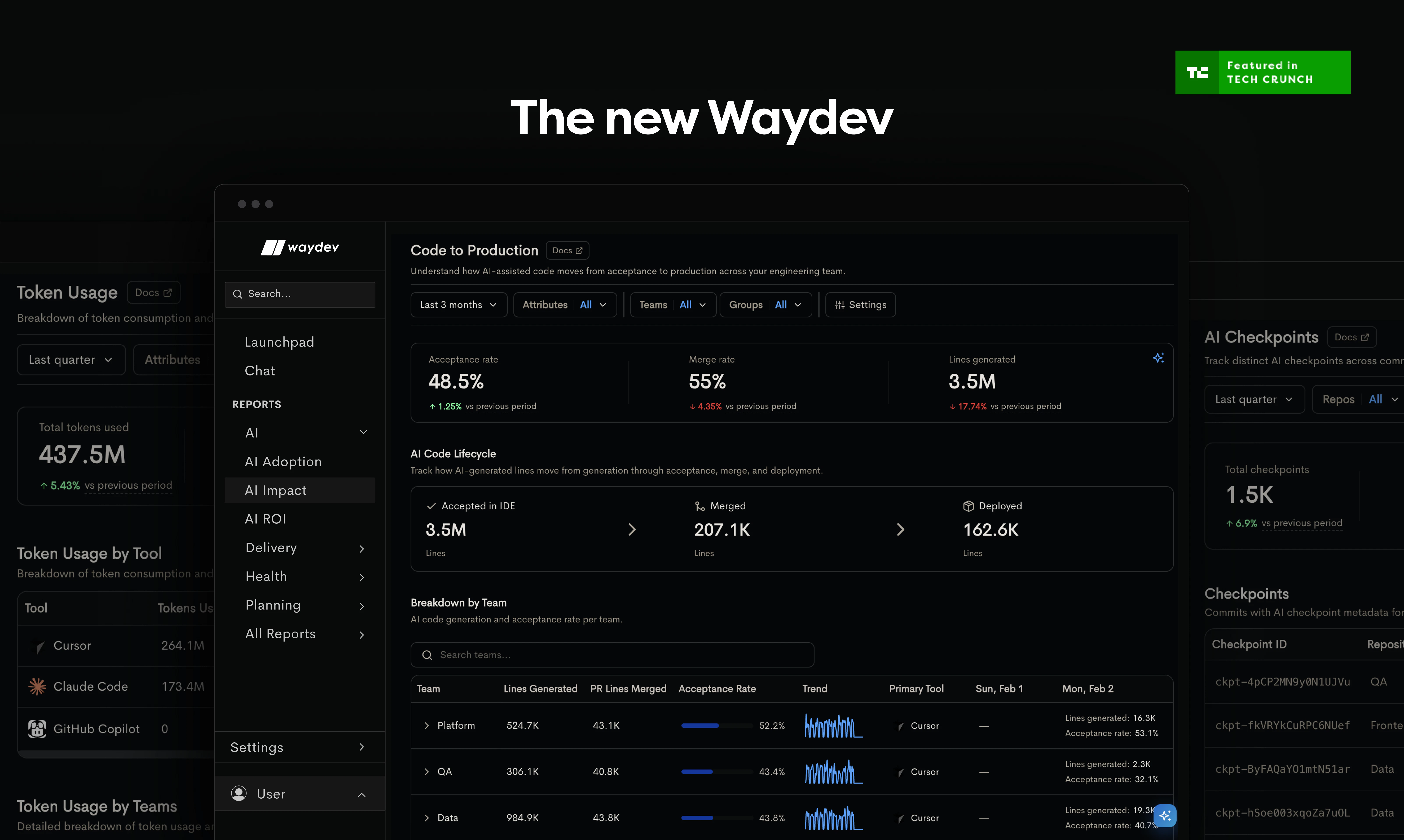
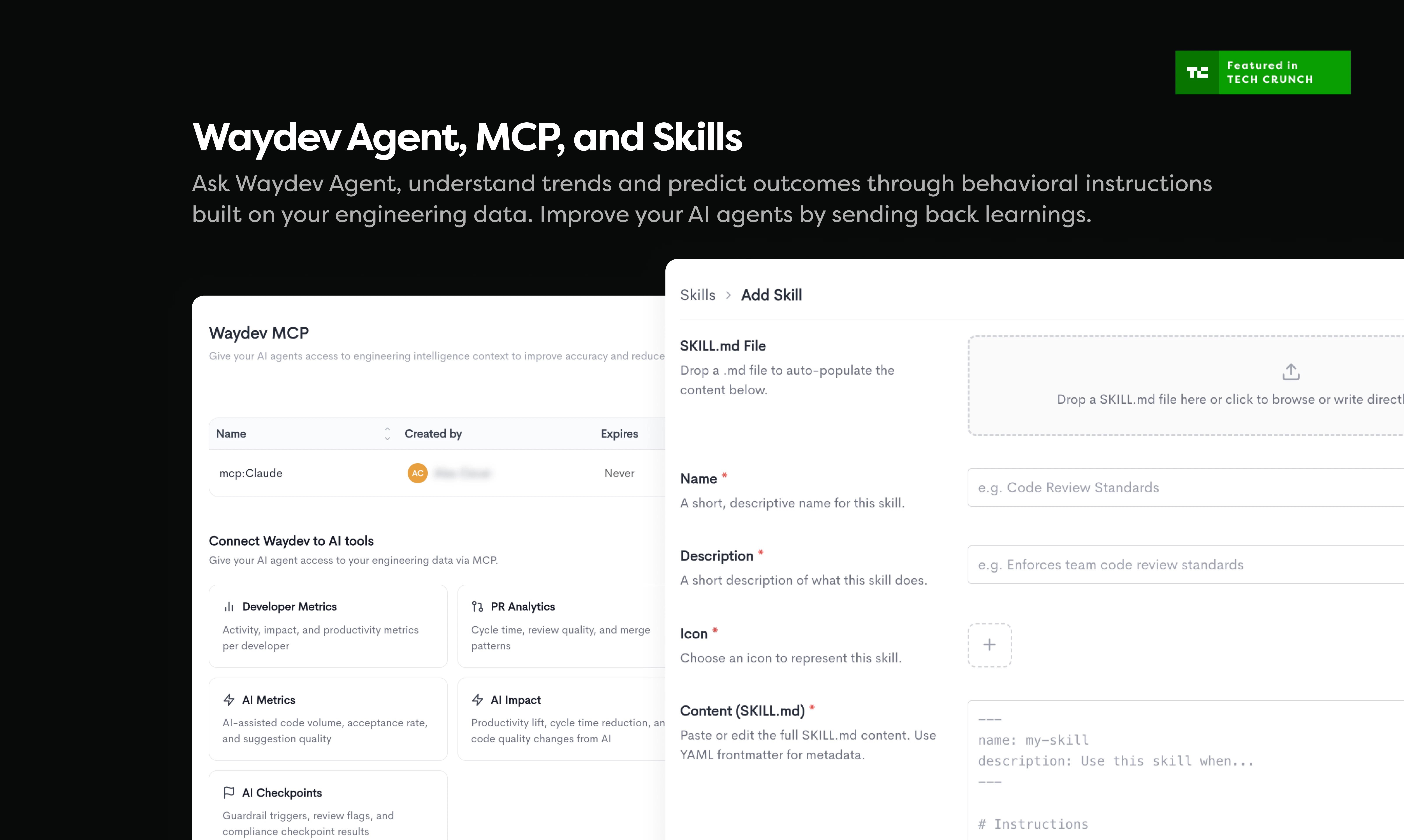
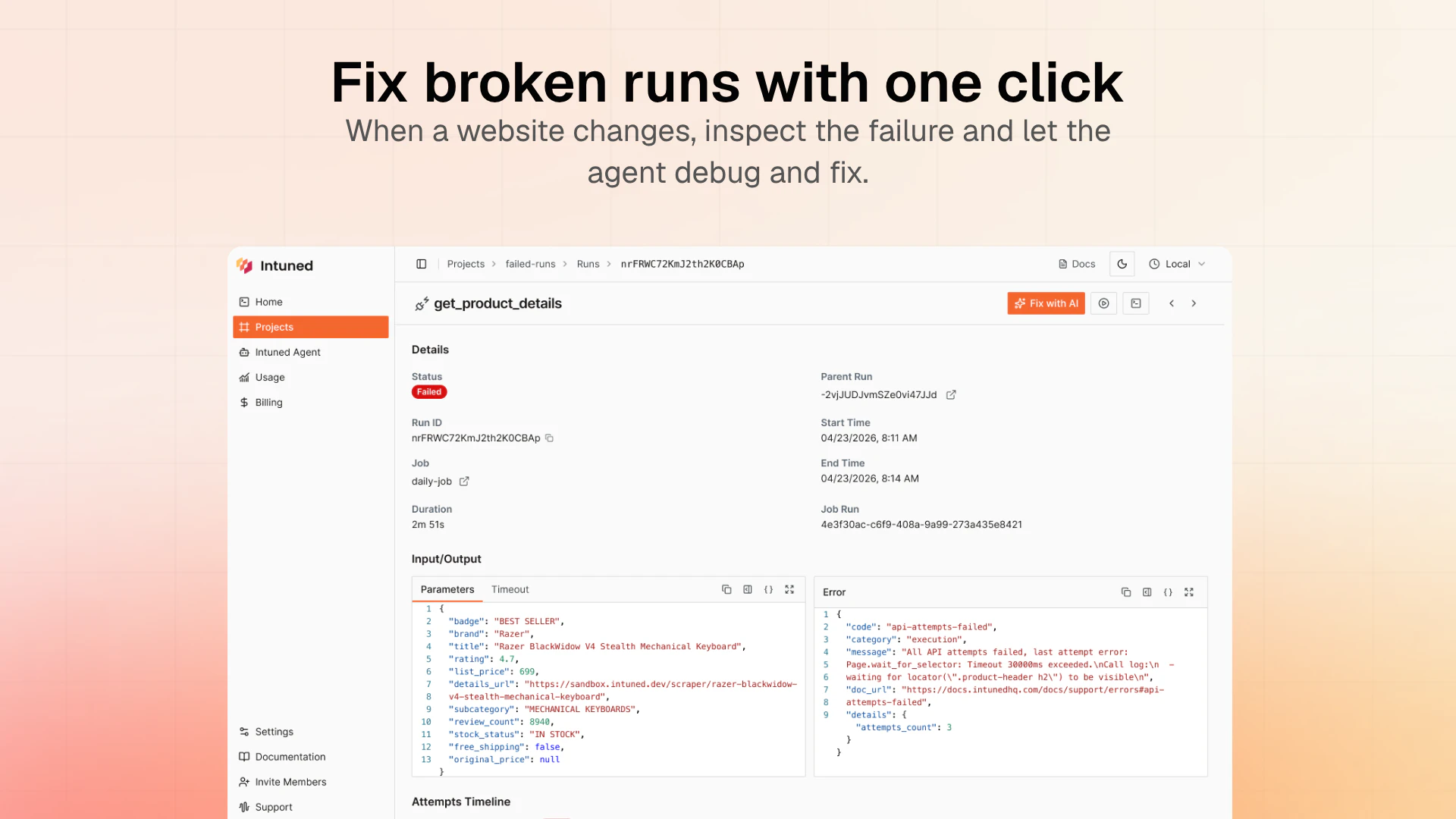
Waydev measures the AI Adoption, AI Impact, and AI ROI of your engineering teams, copilots, and autonomous agents — across every tool from Cursor to Claude Code to Devin. Ask Waydev, our agent, turns engineering data into answers in plain English (and more). Skills let you configure it with SKILL.md files. MCP exposes your engineering feed to any external agent. Built for engineering leaders who'd rather have conversations than dashboards.

Hey PH 👋

Alex here, founder of Waydev. Thanks @rajiv_ayyangar for the hunt — and shoutout to the team at Deel for including us in Pitch by Deel NYC. Excited to be part of it.

Nine years ago I started Waydev because engineering leaders were flying blind on what their teams actually shipped. Now half the code is written by Cursor, Claude Code, Copilot, and Devin — and the question from CFOs is the same one in different clothes: is the seven-figure AI bill actually paying off?

Most teams don't know. They're guessing.

Waydev is the measurement layer for AI-written code. We track three things across the full SDLC:

  • AI Adoption — who's using which tool, how often, how deeply

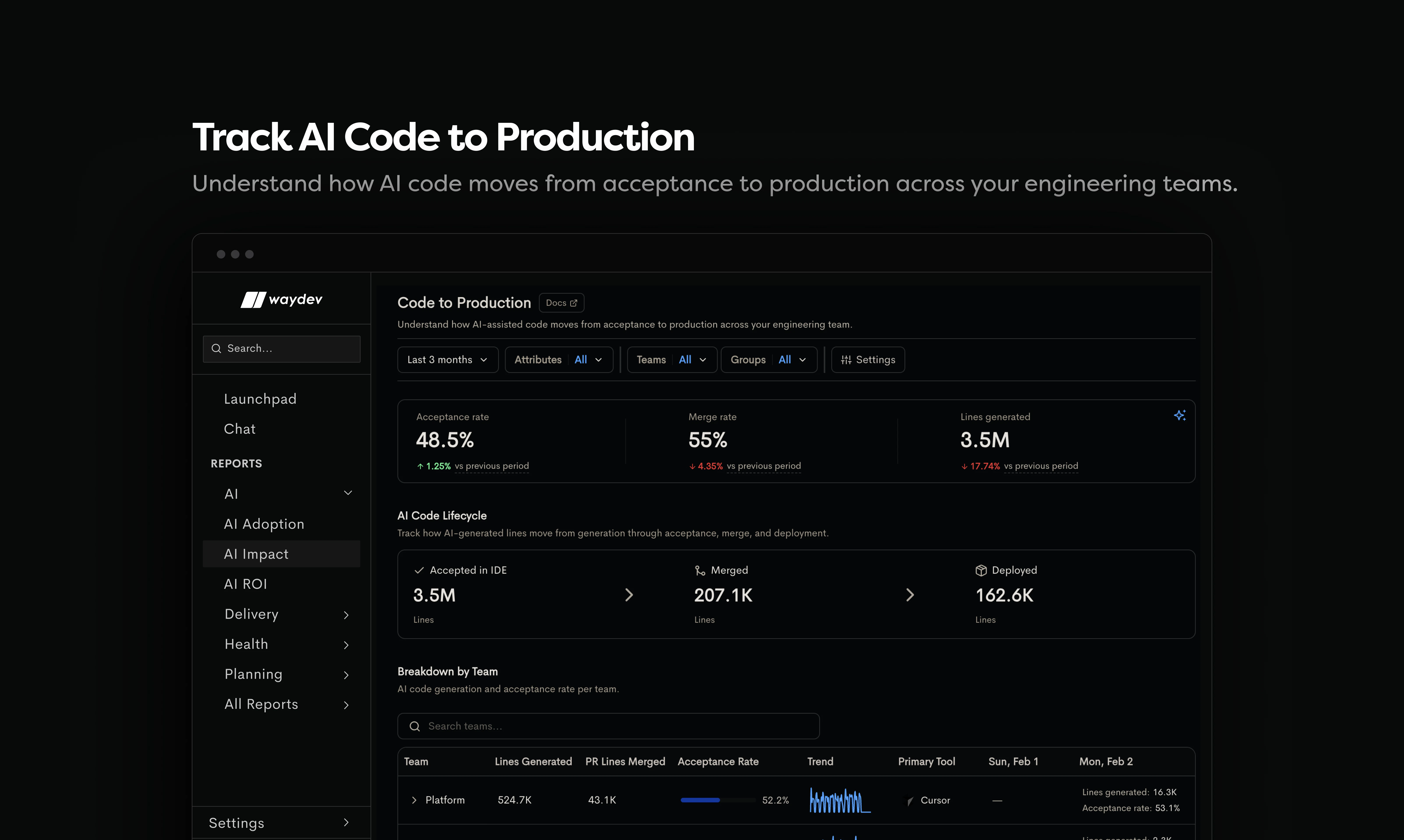
  • AI Impact — does the AI-written code ship, get reverted, or rot in PR

  • AI ROI — dollars in vs. throughput out, across humans, copilots, and autonomous agents

Today we're shipping three things that change how engineering leaders interact with their data:

  • 🤖 Ask Waydev — our agent. Ask in plain English, get a real answer. No more dashboards no one opens.

  • 📄 Skills — configure Ask Waydev with SKILL.md files.

  • 🔌 Waydev MCP — your engineering feed, exposed to any external agent. Plug it into Claude, Cursor, your internal tools — whatever's already in your stack.

The framing we keep coming back to: MCP is the data out. Skills are the instructions in. Ask Waydev is the conversation in the middle.

The bet: engineering leaders would rather have conversations than dashboards.

We've been covered by TechCrunch, TNW, and DevOps.com along the way.

I'll be in the comments all day. Roast the product, ask the hard questions. That's how this gets better.

— Alex

10
回复

@rajiv_ayyangar  @alex_circei Have you seen teams use Ask Waydev + MCP to create custom "AI health" alerts?

0
回复

@rajiv_ayyangar  @alex_circei good luck💪

1
回复

@rajiv_ayyangar  @alex_circei team waydev is on a roll - good luck!

0
回复

This is super relevant right now. Everyone is pouring money into AI, but barely anyone knows what it’s actually returning. Love the shift from dashboards to conversations, feels way more natural for how teams want to work.

1
回复
@abhi_shek1994 appreciate this. The “pouring money in without knowing the return” problem is exactly what kept us up at night. Nobody opens a dashboard to ask ‘is this $40/mo per dev actually paying off’ — but they will ask Waydev.
2
回复

the 'ai adoption vs ai impact vs ai roi' split is the right decomposition. most teams collapse all three into 'are devs using cursor' which tells u nothing about whether the code actually shipped or got reverted. measuring the impact layer is where this gets interesting

1
回复
@saad_el_gueddari absolutely! This is why we built Waydev
0
回复
@alex_circei - this is very cool, sorely needed, & looks extraordinarily well designed. With that said… I *ardently* wish you hadn’t chosen to conceal pricing data in the way thay you have. Well, I understand the philosophy, I didn’t tell you that for me it’s an immediate turn off and makes me wary to even engage the platform. Simply: I don’t know if I’m gonna really Waydev, & at the end of seven days, be expected to spend four figures a month, or be locked into an annual contract, or pay some crazy additional amount per seat, or something else that makes this fundamentally untenable for me to use. Again: great work here. This is definitely something special. I just think a little bit of transparency would go a long way. 
0
回复

@grey_seymour Fair criticism. The honest reason pricing isn't public: scope varies a lot (integrations, AI tools tracked, scale) and any single number we put on the page would either underprice the high end or scare off the low end. But that's our problem to solve, not a reason to make you eat seven days of uncertainty.

DM me - team size, AI tools you're using, rough scale. I'll send a number same day, before any trial work. If it doesn't fit, you've lost two minutes. No call, no lock-in surprises, no per-seat trapdoors. We will give you a special PH discount!

0
回复

The "AI Impact" piece is the hardest problem in this space and most tools quietly fudge it. Devs don't write code in clean buckets. They use Cursor to draft, rewrite half by hand, accept Claude's completion on three lines out of fifty, paste a ChatGPT snippet and edit it for an hour. What's Waydev's actual attribution method when AI authorship is partial, mixed, and deniable? IDE-plugin self-reporting, statistical fingerprinting on commits, or something else?

0
回复

@vincentf You're naming the exact problem we obsess over. Honest answer: there's no single source of truth, and anyone selling you one is fudging it.

Our stack is layered:

- Direct integrations with the AI tools themselves — Claude Code, Cursor, GitHub Copilot, Windsurf, Devin — pulling adoption, usage, and token data straight from each vendor's API.

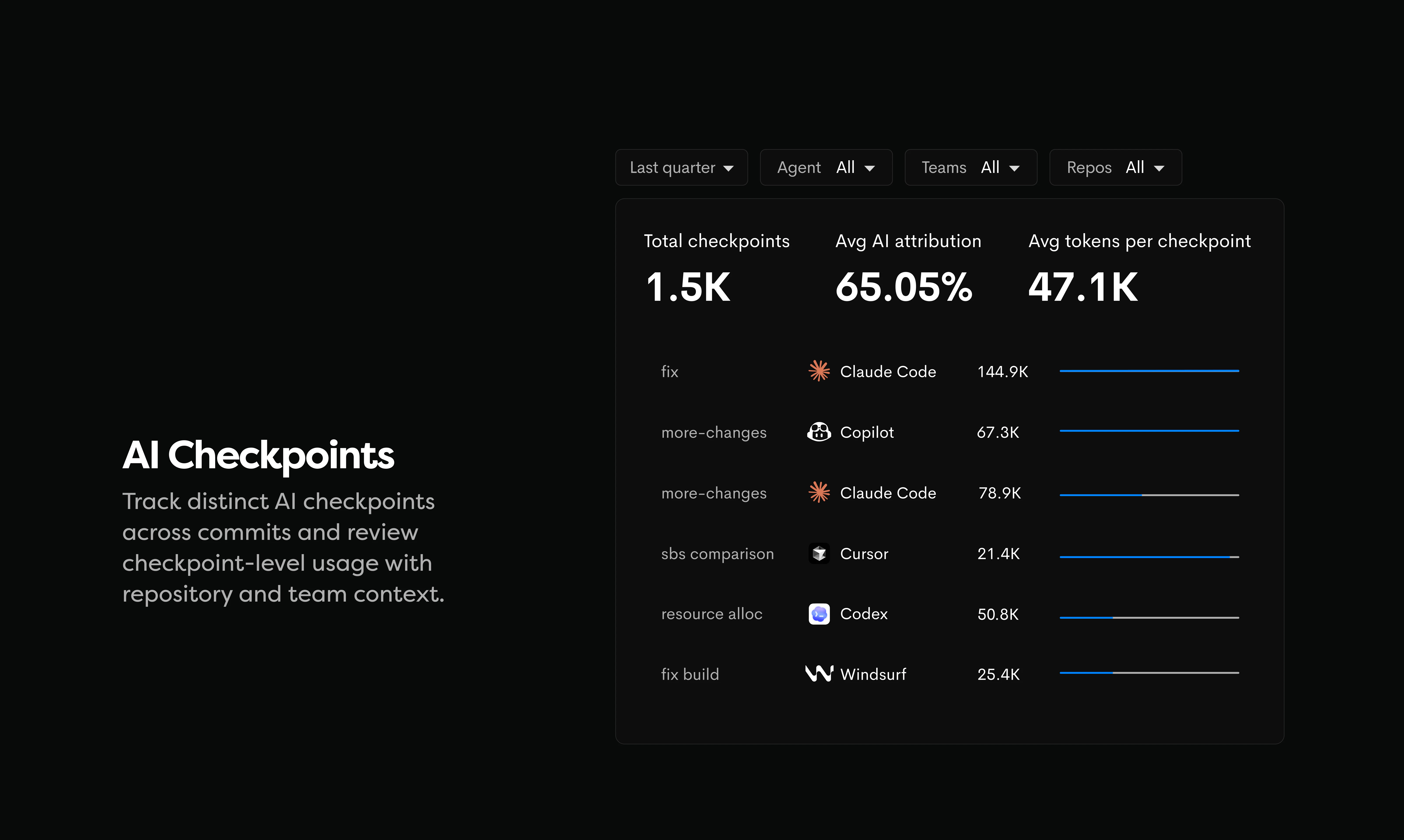
- Entire integration (open source) on top, capturing the actual AI agent session content tied to commits. We surface this as AI Checkpoints inside AI Impact.

- Our own commit hook (`wd_commit_hook`) bridges Entire's session data into Waydev's commit tracking, so a session is linked to its resulting commit deterministically, not inferred.

- Code-to-Production then maps that AI-touched commit through to a deploy.

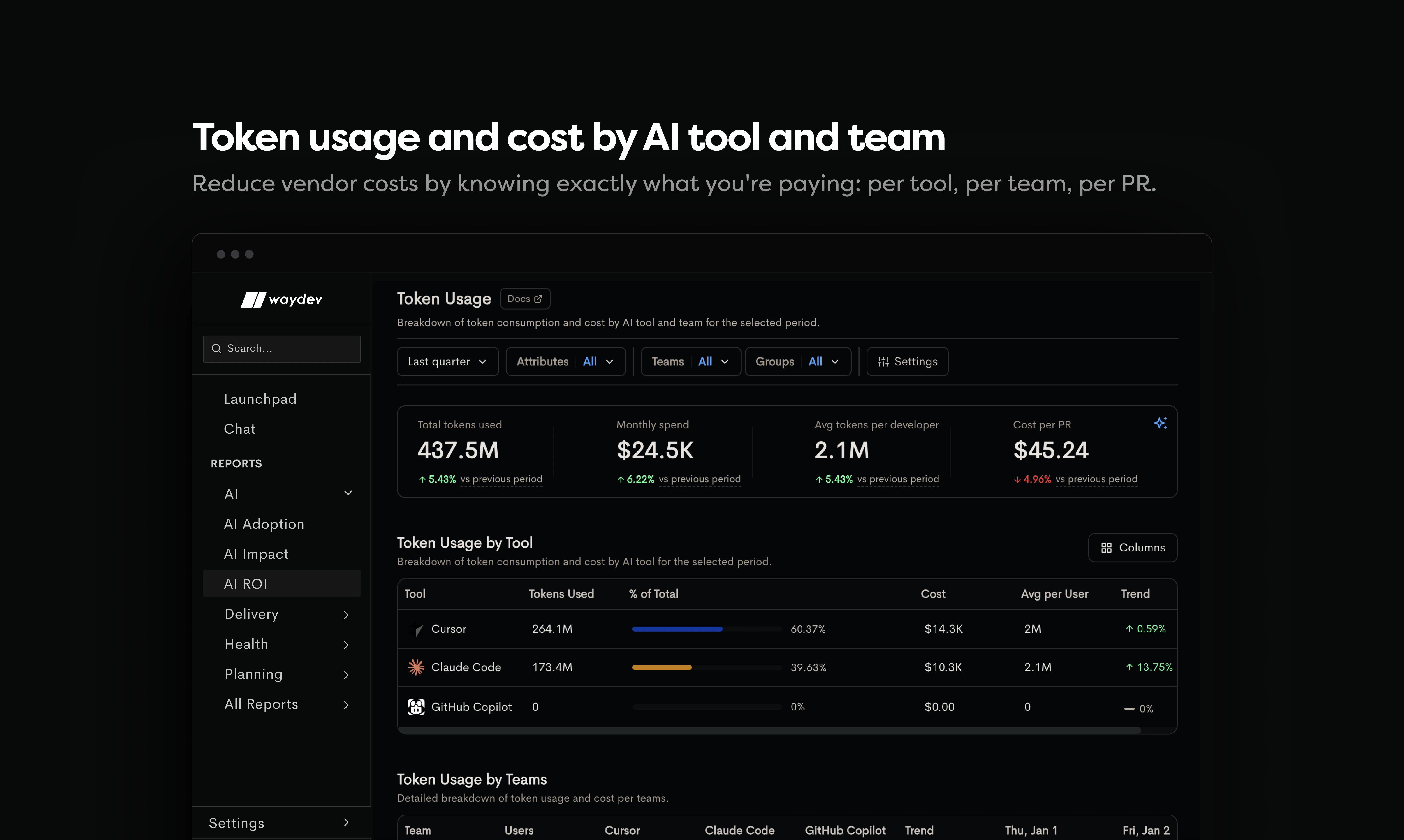
- Token Usage and Vendor ROI handle the cost side.

The honest gap: "ChatGPT in a browser, paste, edit for an hour" is the case where there's no telemetry to capture. We don't pretend to detect that. It either gets self-attributed or it doesn't get tracked. We'd rather report "unknown" than fabricate a confidence score.

Docs: https://docs.waydev.co/v5.0/docs/start-guide

0
回复
How does Waydev’s AI ROI approach differ from platforms like Jellyfish or Faros that also claim “AI impact/ROI”—specifically in how you model cost (licenses + tokens) against outcomes and how you handle confounders like team mix, project complexity, and seasonality?
0
回复

@curiouskitty Good question — genuinely the hardest part of this category, and most answers in the market hand-wave through it.

Cost side: license seats + per-engineer token consumption across Copilot, Cursor, Claude Code, Windsurf, Devin. Not seat count × adoption rate — actual usage and spend, per person.

Outcomes side: throughput, cycle time, change failure rate, rework. Not acceptance rate. Acceptance rate is a vanity metric — it doesn't tell you whether the code shipped, was reverted, or caused an incident two sprints later.

Confounders: we don't claim RCT-grade causality. Anyone who does is selling. What we actually do is per-engineer longitudinal baselines (same person pre-AI vs post-AI), cohort matching on tenure and repo, and project-type tags. That gets you directional signal you can act on, not a regression coefficient you can publish.

Vs Jellyfish and Faros — Jellyfish's DNA is capacity allocation, Faros is a flexible data platform you query. Waydev is opinionated about the question: Adoption → Impact → ROI as three connected pillars, with the agent surfacing answers instead of you building dashboards to find them.

Happy to go deeper on any of this.

2
回复
#5
Ghostwriter
Write and publish posts on LinkedIn & X
178
一句话介绍:Ghostwriter是一款AI代笔工具,帮助用户在LinkedIn和X上自动撰写、排期并发布个人品牌内容,解决内容创作耗时且难以持续更新的痛点。
Productivity Writing Social Media
AI代笔 社交媒体管理 内容自动化 个人品牌 LinkedIn X 排期发布 语音模仿 内容创作 工具
用户评论摘要:用户关心AI是否能准确模仿个人写作风格(冷启动时如何学习);支持哪些平台(Threads、Bluesky在路线图上);能否自定义附件媒体(支持上传,即将支持图片生成);以及LinkedIn是否会对AI生成内容降权(回复称无影响)。有用户反馈beta版节省时间且效果不错。
AI 锐评

Ghostwriter的定位并非又一个“帮你写”的AI套壳,而是一个完整的“内容发行闭环”。它将起草、风格定制、排期、跨平台发布整合到单条流水线,切中了个人品牌建设中最棘手的“一致性”问题——不是你不会写,而是你坚持不下来。从评论区看,产品在“风格模仿”和“冷启动”上的策略(基于个人资料生成主题、提供头脑风暴功能)初步获得了用户信任,但这也正是其核心竞争力所在:系统能否在无人干预的情况下,持续产出与真人高度一致的内容,并保持情绪连贯性?如果这一环节只靠pre-set tone或短期反馈微调,而非动态学习用户最新表达习惯(如转发热文、评论互动后的人格变化),那它终究会沦为“更顺滑的ChatGPT包装”。此外,当前仅支持LinkedIn和X,规划中的Threads、Bluesky使其有望成为多平台分发枢纽,但这对算法公平性(各平台对AI内容的态度)与品牌一致性提出了更高要求。总体而言,Ghostwriter抓住了高杠杆、低频但影响巨大的“个人内容引擎”需求,但要想真正站住脚,必须证明自己不是又一个文案转述工具,而是能反向激励用户输出真知灼见的“内容伙伴”——否则,它只会在最后两轮点赞中消亡。

查看原始信息
Ghostwriter
Your personal AI ghostwriter that writes, schedules, and publishes posts on LinkedIn and X – so you never run out of content to share.

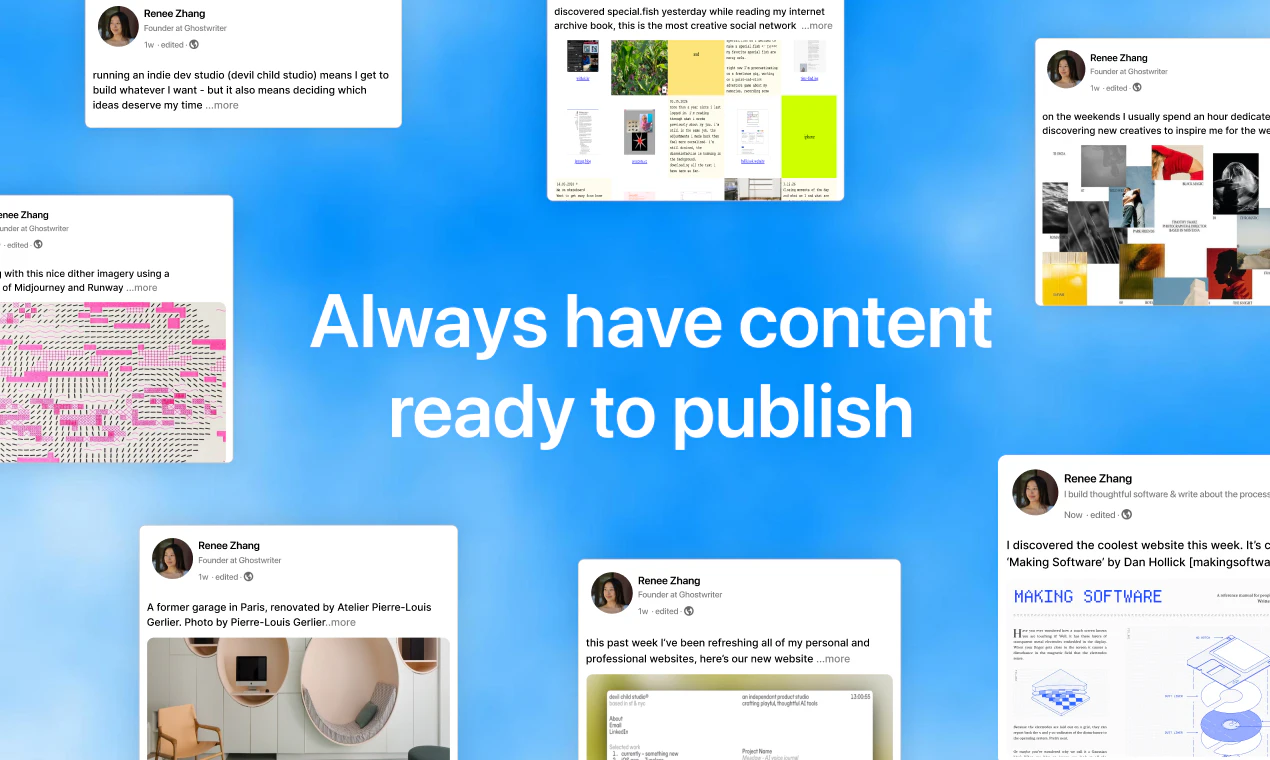
Hi everyone! Renee here - one of the builders of Ghostwriter 👋

Really excited (and a little nervous) to share this with you all. A bit of context on the story behind Ghostwriter:

1.5 years ago, I quit my chief of staff job to invest in myself and learn how to build. Around the same time, I started posting on LinkedIn and X for the first time - just sharing what I was going through and learning.

It ended up completely changing my trajectory! I started getting messages from people I looked up to, and even job offers in my DMs. I realized how powerful it is to just show up and post content online.

But… staying consistent is hard (and it's time consuming!).


So Nathan and I built Ghostwriter for ourselves - something that helps you create content that actually sounds like you, without it feeling like a chore.

Personal branding is probably the most high leverage thing you can do for yourself right now. Ghostwriter helps you create a personal content engine that works for itself.

With Ghostwriter, you can:

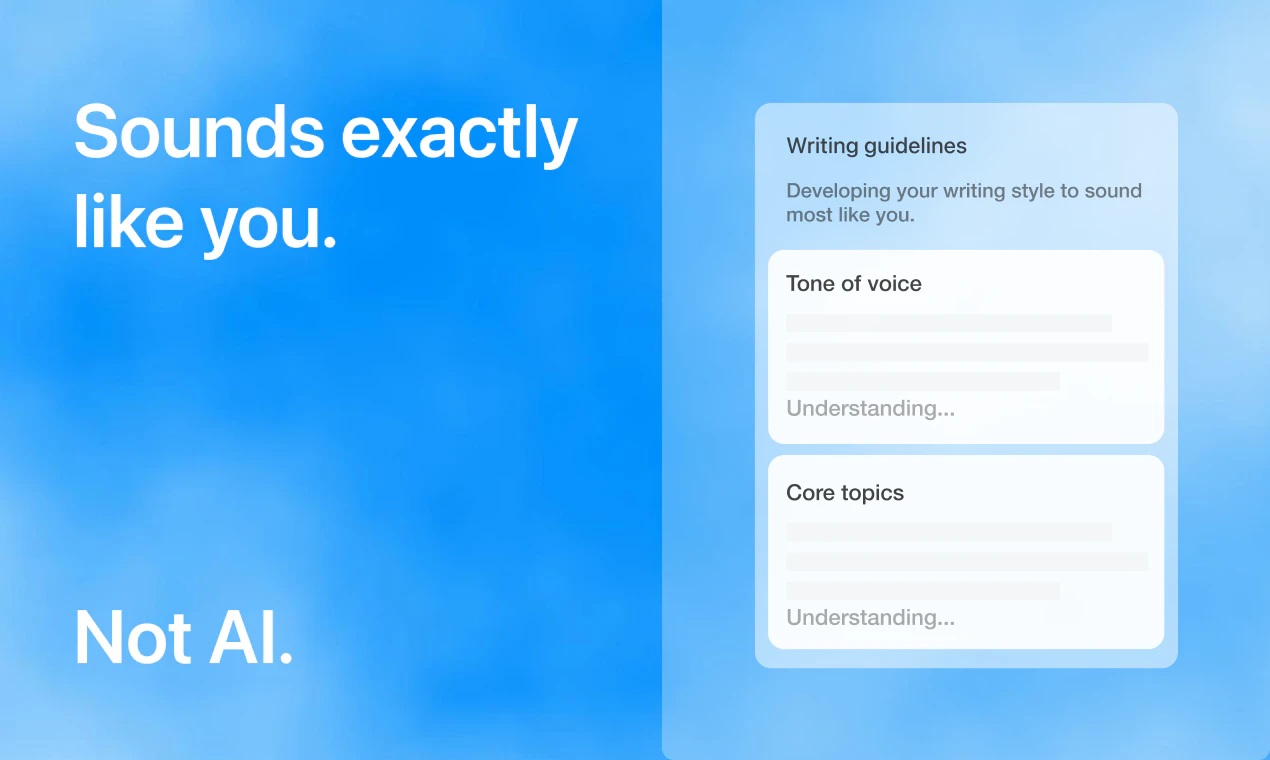
∙ draft a month's worth of posts that sound like you

∙ customize your tone of voice

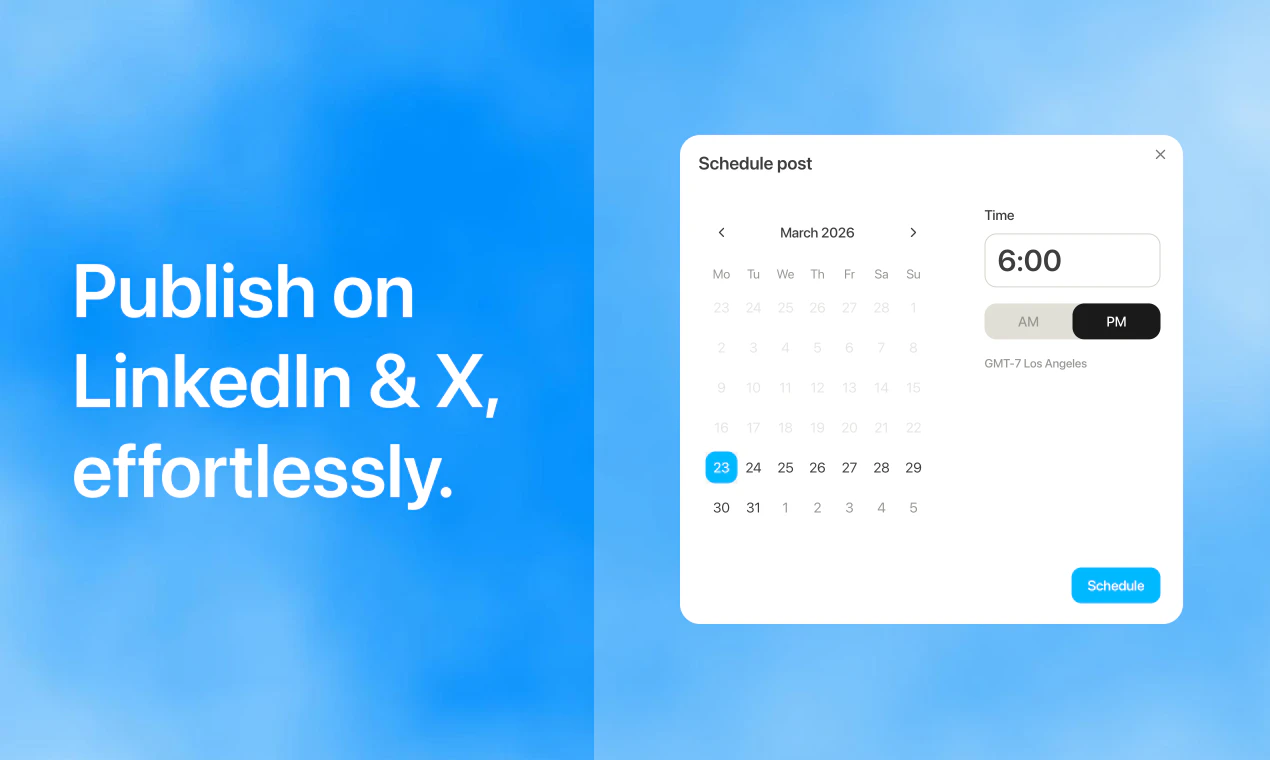
∙ schedule & publish directly to Linkedin & X

No more asking ChatGPT to “make it punchier", now you get your content handled end to end. Even my dad uses it 😇

Our early testing has been loved by hundreds of users, and we're excited to finally open it up to you all!

Hope you enjoy it, I'd love to hear what you think!

Try for free → https://ghostwriterrr.com/

Thank you!

Renee


⊹⊹⊹⊹ a few more links ⊹⊹⊹⊹

→ Join our community (we're friendly I promise): https://tinyurl.com/2eyt62nj

→ Follow us: LinkedIn & X

→ My socials: LinkedIn & X

10
回复

@reneezhang love ittt

1
回复

@reneezhang epic! I need this product so bad

1
回复

@reneezhang does Ghostwriter learn your voice from existing posts, a questionnaire, or do you train it as you go? Voice-matching is the part most AI writing tools get subtly wrong, so curious how you've approached it.

0
回复

Curious how well it adapts to different tones over time .Does it learn from past posts or require manual tweaking each time?

2
回复
@alicia_klein was just thinking that!
0
回复

Interesting positioning as an end system instead of just a writing assistant . Drafting scheduling publishing in one flow makes a lot of sense.

2
回复

@anthony_adams_ thank you! I'd love for you to try it :)

0
回复

the 'consistency is the hard part' framing is the real insight here. tools have never been the bottleneck for posting, taste and reps are. how does ghostwriter handle the cold start problem when someone has barely posted before and there's no real voice to mimic yet?

2
回复

@saad_el_gueddari this is such a great question Saad! a user who has barely posted before but wants to start posting will have topics suggested to them based on their profile, and they can customize their own too - then we have a great "brainstorm" feature in ghostwriter where you go wide on ideas first, then generate drafts for each topics and choose the ones you like :)

we'll soon be adding templates and an inspiration page so based on your preferences, you can save posts you like on the internet and customize your voice!

1
回复

Looks super cool, can't wait to try it out. Would LinkedIn have a way to detect which posts are human written and which ones are not though? And would that impact the algorithm?

1
回复

@emily_xu2 nope, not at all! I’m pretty sure 99% of content on LinkedIn has gone through at least a few rounds in ChatGPT, so you’re good :) good question though!

0
回复
Seriously was building a similar workflow on claude will try using this. Can we customize the media assets that we can attach with the post ?
1
回复

@pin4sf yes correct you can always upload your own images or videos! we’ll be adding image generation soon too :)

0
回复

Seems really useful! Sometimes I am just too tired to come up with ideas on what to write. Also, are you planning to add support for Threads?

1
回复

@alimkhan_y exactly! and yes - on our roadmap next we'll be adding Threads, and Bluesky very soon!

0
回复

Awesome stuff! I know a few friends who case use this :)

1
回复

@vishnugopal Would love to hear what they think! :)

0
回复

so keen to give this a whirl, as someone who posts a lot on different platforms, this will be a gamechanger.

ps. such a cute logo!

1
回复

@clairetaylor yay can't wait to hear what you think! haha tried to keep it fun and playful 👻

0
回复

This is really sick! 🔥

1
回复

@praveendinesh Thanks Praveen!!

0
回复

Been using Ghostwriter for my Linkedin posts last few months as an early beta user - has been game changing!

Really good stuff @reneezhang @nathanksou

1
回复

@nathanksou  @mayuresh_patole Thank you so much for all the early feedback and shaping up the product, couldn't have done it without your help! 😊

0
回复

Love the idea! Hey @mayuresh_patole - super interesting feedback! 👀 Did you notice more traction/impressions, or was the biggest win just saving time?

1
回复

Hey folks! 👻

Thank you for all the support! We're so excited to bring Ghostwriter to you.

Personal branding is the most high-leverage thing you can do for yourself right now, especially as a builder/founder.

Ghostwriter helps you create a personal content engine that sounds like you, without feeling tedious.

I started building my personal brand with Ghostwriter's help while building out the agent and platform. It's been incredible to watch it grow. I'm excited to see how your Ghostwriter writes for you.

Try for free: https://ghostwriterrr.com/

Join our community: https://tinyurl.com/2eyt62nj

Nathan

0
回复
@nathanksou you got are full support Awsome product !!
0
回复
#6
Oriane
The perception layer for Marketers and their AIs
146
一句话介绍:Oriane是一个为营销团队及其AI打造的“感知层”,通过实时观看并结构化分析海量社交媒体视频(TikTok、Reels等)中的画面、音频和字幕,解决传统工具仅能处理文字而无法理解视频内容,导致品牌无法追踪视频内曝光、发现趋势和挖掘创作者的核心痛点。
Influencer marketing Social media marketing Pitch NYC
SaaS 视频内容分析 AI营销 社交聆听 计算机视觉 创作者经济 品牌监测 趋势发现 多模态AI 视频向量化
用户评论摘要:用户核心关注技术突破(1000倍成本降低)和实际应用。主要反馈:1)趋势新鲜度(36小时生命周期内的延迟问题);2)数据量大,需强大过滤能力避免信息过载;3)搜索速度和学习曲线;4)对视频内语义、意图及多模态(如音乐)分析的进一步需求。创始人积极回应将优化搜索模板和AI报告层。
AI 锐评

Oriane的价值在于它精准刺穿了传统社交聆听最大的“皇帝新衣”:用处理文字的思维处理视频。它做的事不是简单的转录,而是构建了一个将视觉、听觉和文本三流合一的“感知层”。从“把10万视频向量化成本从6万降到60美元”这个技术亮点来看,团队确实通过工程创新把不切实际的赛道变成了可规模化落地的生意,这是Oriane真正的护城河。

然而,产品正面临从“炫技”到“落地”的关键鸿沟。评论中反复出现的“数据噪声”和“学习曲线”不是小问题,而是产品价值兑现的死穴。对品牌方而言,从400条杂乱结果中人工筛选出洞察,比没有数据更痛苦,这说明现在的输出更多是“情报”而非“决策”。创始人承诺的LLM报告层和搜索模板,本质上是在帮用户补足“分析师”的角色,这步棋走对了,但实施难度极高——如何把品牌意图精准转化为视觉搜索逻辑,需要有深度的行业知识嵌入。

另一个隐患是“快”。短视频生态消化趋势只需36小时,涉足该市场必须与内容流速赛跑。目前的客户群体是拥有成熟策略师团队的顶级广告公司和奢侈品牌,这证明了产品的底子够硬,但也暴露了其现阶段的高使用门槛。如果Oriane不能快速将复杂能力封装成低门槛的即插即用产品,它将永远困在“高端定制工具”的狭窄市场里,无法动摇Brandwatch们的根基。其真正的未来,在于能否成为AI Agent时代“眼耳”的标准接口,但在此之前,先要解决如何帮普通市场经理“看见”而不只是“看到”的问题。

查看原始信息
Oriane
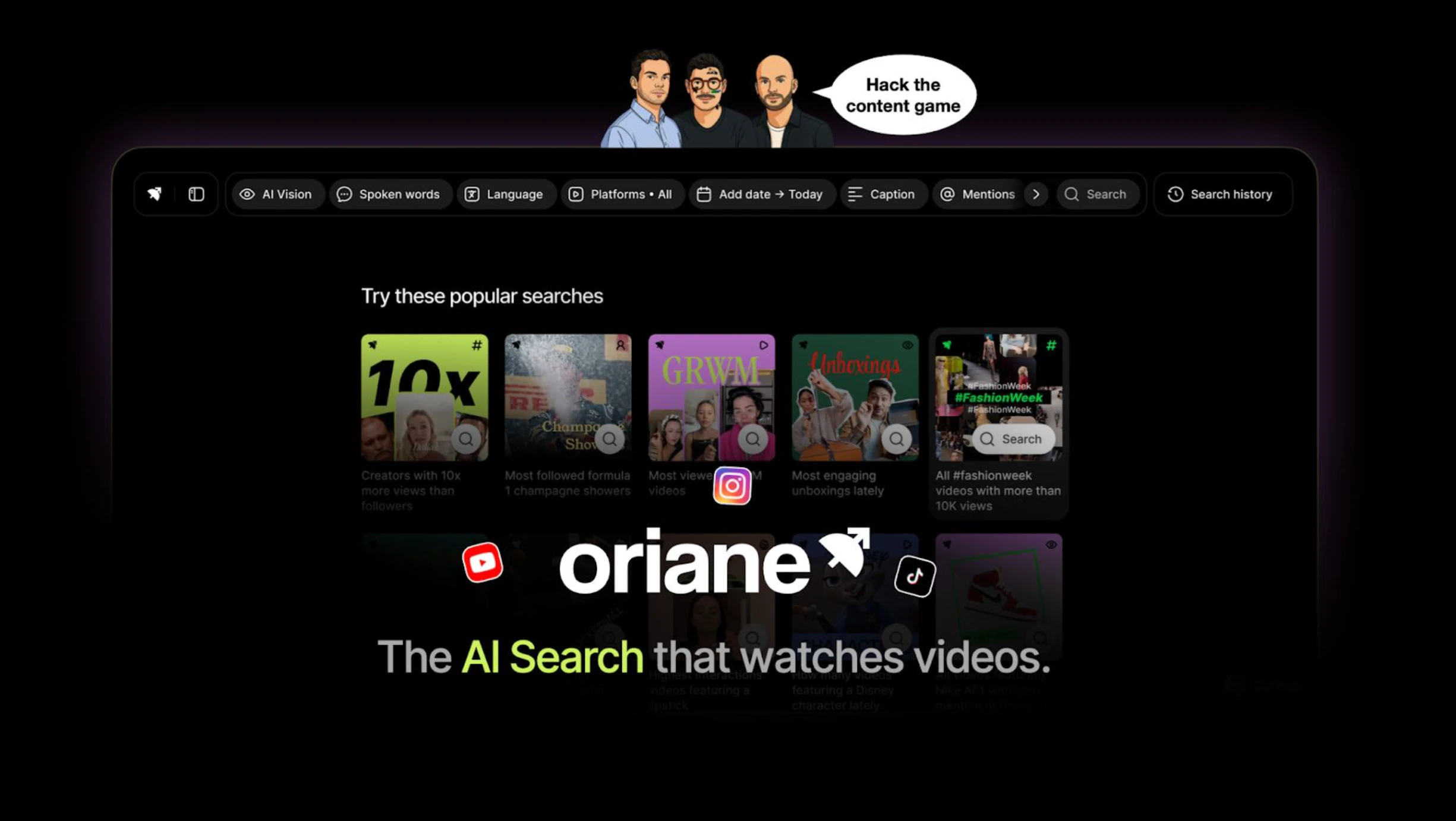
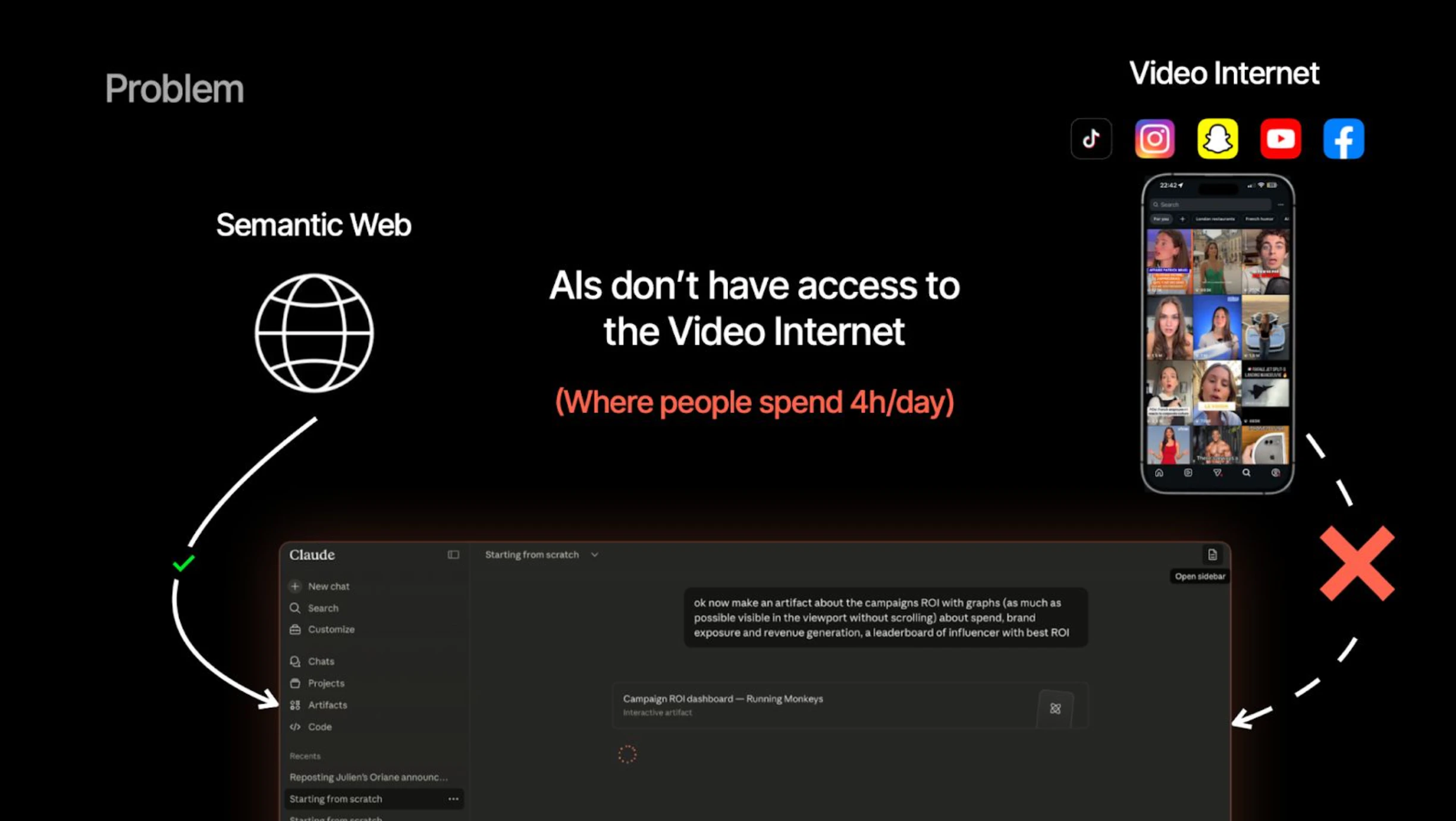
91% of internet bandwidth is led by videos that your AI does NOT watch... Oriane watches millions of social videos a day, and turns what's on screen, in audio and in captions into a structured intelligence layer for teams and their AI apps to find niche creators, spot content trends, identify viral hooks and more!

Huge thanks to @rajiv_ayyangar for hunting us 🙏

Hey Product Hunt 👋

Julien here, co-founder of Oriane (with Yuri and Thibaut).

Quick story. Two years ago, Yuri was running product at Jellysmack working with creators like MrBeast. They kept asking him: "What's my actual presence on TikTok? Where are my clips being remixed? The data simply didn't exist.

I was leading growth at DRESSX with clients like Lacoste, Adidas, Tommy Hilfiger... Same problem. Still the same at LVMH today, where brand teams rely on social listening tools like Brandwatch or Meltwater, that treat video like text. Captions and metadata aren't the content anymore.

So we built the perception layer. Oriane watches millions of TikToks, Reels, and Shorts a day, and turns what's on screen, in audio, and in captions into structured intelligence. We're the eyes and ears of the AI stack.

Brain → LLMs.

Eyes & ears → Oriane.

A few things about us:

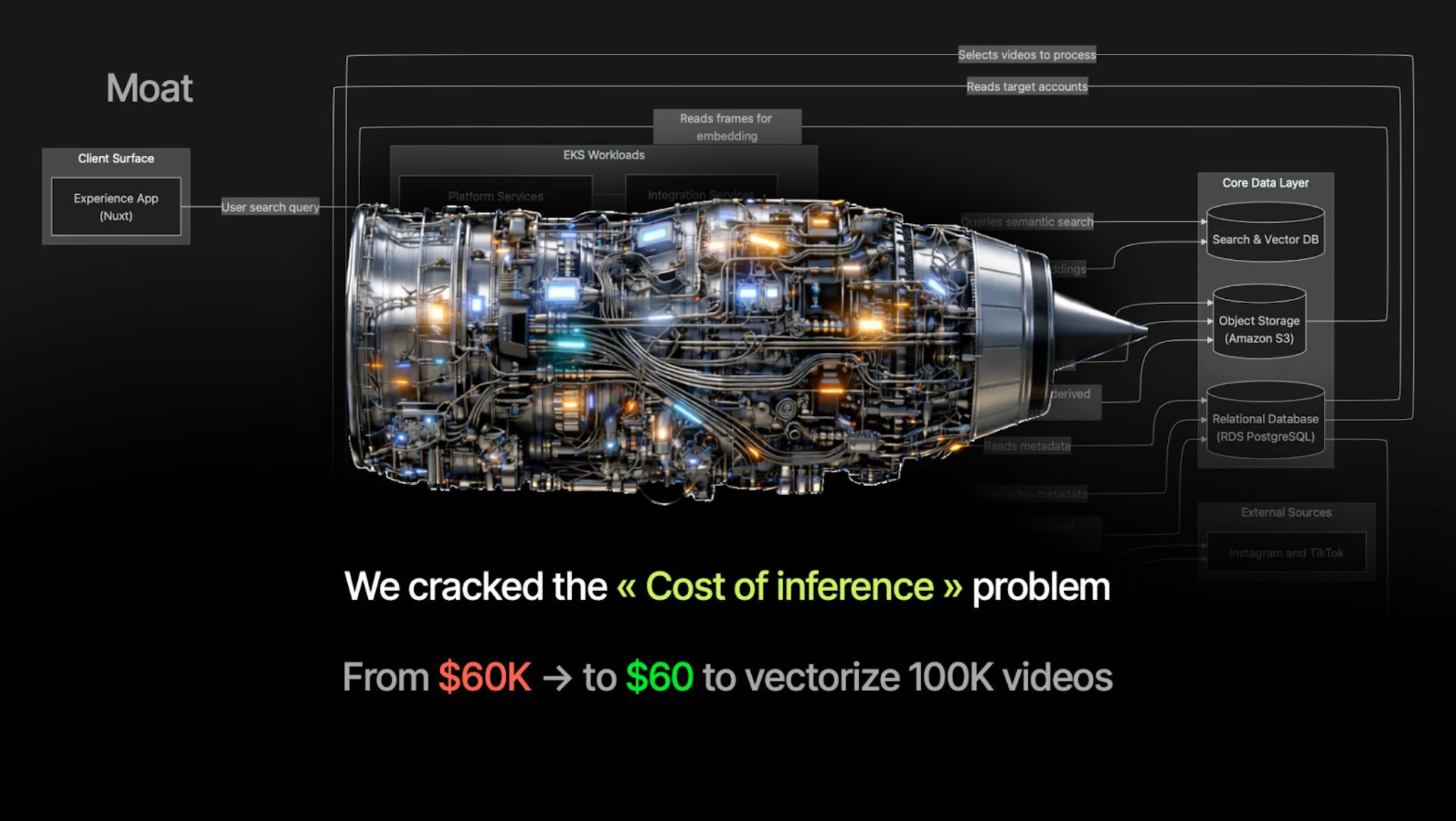
🍒 Thibaut, our CTO, took our cost to vectorize 100K videos from $60K to $60. That's a 1,000x reduction. It's why this is even a viable category.
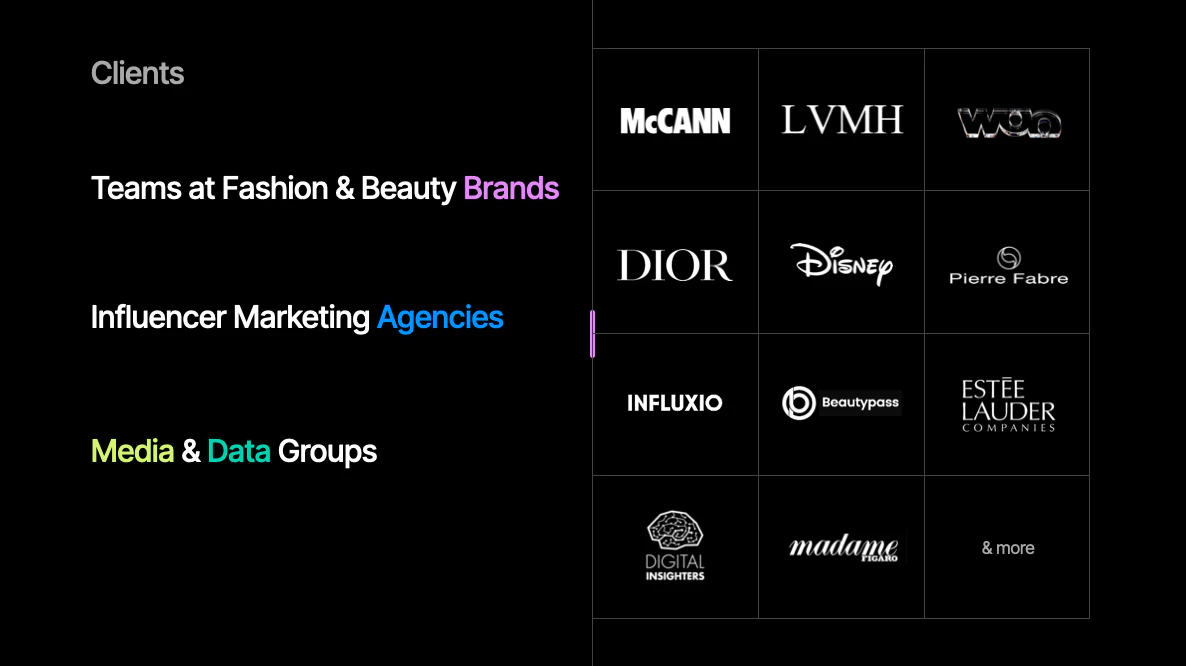
🍒 Customers include McCann, LVMH, Woo, Dior, Disney, Pierre Fabre, Estée Lauder, and more.

What I'd genuinely love feedback on:

🍒 If you work at a brand or agency, what's your current workflow for tracking video mentions, and what does it cost you?

🍒 What would make Oriane essential for your team, not just useful?

🍒 Is "the eyes and ears of the AI stack" the framing that lands for you, or is something else clearer?

Special offer for the PH community: 1 month free on Pro plan ($499 value) with code HUNTER-499. Good through May 30.

Yuri, Thibaut and I are here all day.

Bring your toughest questions 🙏

15
回复

@rajiv_ayyangar  @julien_rosilio How do you handle the freshness problem? A trend on TikTok can peak and die in 36 hours — what's the lag between a video going up and being searchable in Oriane?

0
回复

Yuri here, co-founder/CPO 👋

The Jellysmack story Julien mentioned, that's the one that made me sure this had to exist.

MrBeast asking me where his audio was being remixed, and the honest answer being "we genuinely cannot tell you."

I never want to give that answer again. If you're a creator or work with creators, I'd love to hear what your version of that question is.

We probably haven't built the answer yet, but we will.

13
回复

Thibaut here, CTO 👋

Quick note on the cost reduction Julien mentioned, happy to nerd out on the infrastructure side if anyone's curious. The short version: the whole industry approaches video understanding as "extract everything, then index",  we flipped it. We took the cost to vectorize 100K videos from $60K to $60. That's 1,000x. It's why this category is suddenly viable.

Engineers in the comments, fire away.

11
回复

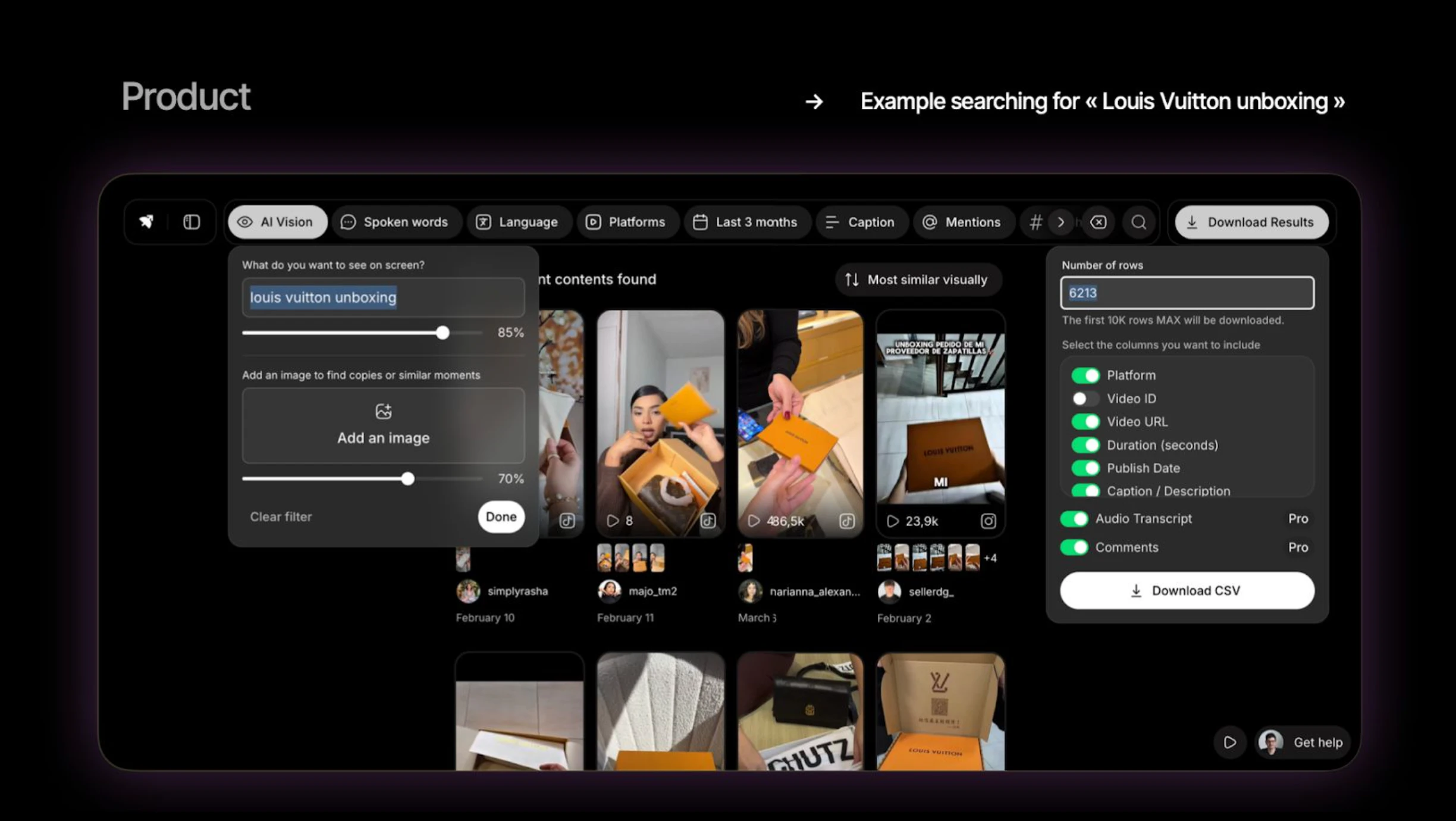
Traditional scrapers and social listening tools hunt for hashtags or captions, but they are deaf and blind to what actually happens inside the frame. This platform watches and transcribes social video content, surfacing brand mentions and visual trends that never make it into a text-based description.

It uncovers the specific micro-influencers who are already organically discussing a niche, rather than just the high-priced creators with the right keywords in their bios.

The real utility lies in the data structure. You can analyze video content to deconstruct visual hooks and audio patterns and determine exactly why specific segments engage viewers. Feeding this granular output into an LLM allows for the creation of trend reports that feel like they came from a high-priced agency, but in a fraction of the time.

While the speed is impressive, users should anticipate a learning curve. Navigating the sheer volume of "visual mentions" requires a disciplined approach to filtering, or you risk drowning in data. It isn't a "set it and forget it" solution; it demands an active strategist to turn these observations into a coherent content plan. That said, the team behind Oriane is ready to assist, and the website includes tons of case studies and use cases to inspire you. In summary, it offers a depth of category intelligence that other tools simply cannot match.

6
回复
@therealsjr this is one of the sharpest reads of what we built I've seen. Especially the "deaf and blind to what actually happens inside the frame" line, stealing that. You're right about the learning curve. We've been wrestling with this internally. The volume is the feature and the bug at the same time. A brand team can ask "where is my product showing up" and get 400 results. Powerful, but useless without a frame. Two things we're shipping in the next 6 weeks specifically to fix that: 🍒 Saved query templates by use case (brand audit, creator discovery, dark mentions audit, competitive benchmark) so teams aren't starting from a blank canvas 🍒 An LLM layer that takes the raw query results and generates the trend report you described, your "high-priced agency in a fraction of the time" framing is exactly the wedge The "active strategist" point is real and won't fully go away. Honestly that's the whole reason we lead with agencies first (McCann, Woo), they have the strategist on staff. The self-serve brand-team motion comes after we've built enough templates to compress that learning curve. Thanks for taking the time to write this. The category- intelligence framing at the end is going to live rent-free in my head. 🙏🙏🙏
4
回复

@therealsjr I agree with @julien_rosilio, that's a sharp analysis.

I would add that we are also actively working on the rigorous filtering approach you mentioned. The tool can run extremely powerful searches, but the learning curve exists. That’s exactly why we are building a more AI-driven approach to search.

The direction we are heading in is to better frame and refine queries directly in natural language for equally accurate data extraction, but without any upfront learning curve. The promise is simple: instant access to data, without friction, filters, or complex prompt engineering.

2
回复
@thibaut_hadjean Really interesting to be able to search videos across all platforms. I think the use cases go far beyond the sectors typically covered in the demos. I personally have a strong need to search videos based on what people say and the positive/negative intent behind it, for prevention purposes in my work. Is this something Oriane aims to support in the future?
5
回复

@joannarojas98 Absolutely!

In fact, this is already something we’re capable of doing today. You can download raw data with semantic fields, as well as enriched or AI-extracted fields. From there, the analysis layer takes over. We’re integrated with some of the leading LLMs on the market to power that. Check out our prompt library.

Feel free to follow the page and Yuri, Julien, and myself on LinkedIn. We regularly share use-cases showing how to leverage exactly the kind of intent-based analysis you’re describing. Today, you’re essentially 1 search + 1 extract away from generating your report.

And very soon it will be just 1 natural language prompt away, thanks to our MCP integration 🚀

3
回复

Very interesting. On the technical side, how do you manage to have such low latency with so many videos and what I imagine is a vector search? You used pinecone or qdrant?

3
回复

@adnanp You’re right, there is vectorization in our secret sauce 🧪

But in “secret sauce” there is also “secret”, which refers to the broader set of technologies we use that play a major role in making search feel immediate. That’s really what we are aiming for: response times that match modern web navigation standards.

You mentioned Pinecone and Qdrant, which are indeed two common candidates for vector storage. We have experimented with several of these technologies. Qdrant, for instance, while being a very solid vector database is somewhat limited in our quest of very complex real-time search capabilities, and it becomes quite expensive at large scale.

So the latency you’re seeing is less about a single tool, and more about the full stack design optimized specifically for speed and scale.

1
回复

"Captions and metadata aren't the content" should be on a t-shirt.

That sentence is the entire wedge against legacy social listening. Every PMM working in brand intelligence is going to steal it within the month. Watch.

3
回复
@carina_hup haha you know what let’s make those t-shirts
3
回复
@carina_hup let’s make this memorable, I ll print it on stickers for the next marketing event. Glad the positioning resonated !
4
回复

This sounds interesting for creator research. Which platforms are you pulling videos from right now, like TikTok and Reels or more YouTube Shorts?

3
回复
@thamibenjelloun thanks! Yes indeed very useful to build target creator lists to reach out to. Instagram reels and TikTok at first, next YT shorts and snap spotlights !
4
回复

The watches millions of video a day claim is wild .Would love to understand the infrastructure behind that.

2
回复
@maklyen_may yeah clearly the infra is our core differentiator for its scale and efficiency I’ll let @thibaut_hadjean add more details
0
回复

@maklyen_may The volume is indeed massive, and it keeps growing.

To make that viable, we need end-to-end control over the infrastructure. Making videos searchable is a challenge in itself, but what you’re pointing at actually sits at the intersection of two major parts of our system: acquisition and processing. Each of them comes with its own complexity. One focused on data retrieval, the other on AI-driven enrichment.

We handle this by clearly separating concerns into fundamentally different stacks and pipelines. That separation lets us better scope how data is ingested, processed, and stored.

From there, consumption becomes a different kind of challenge, but one we can manage internally. That’s what ultimately makes it possible to operate an infrastructure capable of supporting a search experience as broad as Oriane.

0
回复

Comparing this to tools like Brandwatch and Meltwater is smart they really do treat video like text.

2
回复

@yahya_rogers Thanks! It's that ongoing "incubant" story. These companies built a great business 20y ago when social media were basically a text post on your Facebook wall.
But today if you can't understand what happens inside videos, you can't say you're doing "social listening" haha.

0
回复

The Jellysmack creators ecosystem origin story makes this much more credible. You’ve clearly felt the pain firsthand.

2
回复

@debra_salt Exactly, i think this is part of our "unfair advantage". When i called Yuri in 2024 to say that "marketing teams struggled to understand their reach within videos" and responded immediately, "Big Creators like Mr Beast at Jellysmack have the same problem"... we knew we had to build a solution for this.

0
回复
@debra_salt yeah this is what allowed me to see the problem in plain sight: we manipulate videos all the day but the only data we have about it some descriptions around it
0
回复

Habéis considerado un plan de pago por videos procesados?

2
回复

@new_user___1252026215fc09078d9d3fb Hi Carlos! We will release our API with an MCP and will have a pay per request model yes!

0
回复

Actualmente tenemos 3 planes disponibles que puedes contratar de forma instantánea, desde el más limitado hasta el más avanzado: Free, Plus y Pro. Puedes encontrar la página de pricing aquí.

Para empresas también ofrecemos planes enterprise, para los cuales es necesario contactarnos directamente.

En este momento, una suscripción te da acceso automático a todos los vídeos en Oriane. A través de la aplicación web no existe ninguna limitación en el número de vídeos procesados dentro de tu acceso. A través del MCP, @julien_rosilio ya respondió!

0
回复

Hi Yuri / Thibaut, what other dimensions on top of AI Vision and audio transcripts do you plan to release then? Music ?

2
回复
@michelangelo_frigo2 yes definitely, we’ll go on with text-on-screen first, then music, facial recognition, emotions, logos,…
3
回复

Just gave it a spin on the free version, looks pretty solid. How do you manage to vectorize so much videos without running out of money?

2
回复

@justfred_ar We handle the vectorization pipeline and storage end to end, which helps us keep costs under control without relying on external services.

It does add a fair amount of technical complexity upfront, but that investment stabilizes over time (unlike immediate usage-based costs that scale with volume).

So the real “secret” is deep control over both infrastructure costs and Oriane’s overall system architecture.

1
回复

the 1000x cost reduction on vectorization is the actual unlock here. built a tiktok audio trend pipeline last year for a content channel and the math on doing it at scale across millions of videos was brutal at the time. brandwatch treating video like text has been the wedge sitting there for years, surprised it took this long for someone to go after it properly

2
回复

@saad_el_gueddari That’s a really sharp take.

You’re absolutely right that the 1000x cost reduction in vectorization is a real unlock. At scale, information processing pipelines designed for human consumption quickly become a bottomless cost sink. Especially once you start dealing with videos and continuous streams.

What we’ve been working on is less about treating data purely through an “AI layer”, and more about making it accessible through the full spectrum of human perception. That doesn’t replace semantic data layers, they are still extremely valuable. But it does break the constraint of purely computational interpretation.

In a way, it shifts the paradigm from “structured data for machines” to “perceptual data" that can be interpreted, filtered, and reasoned over by AI in a more human-aligned way.

1
回复

@julien_rosilio Congrats on your launch 🙌

This feels like a natural evolution. Social listening went text → sentiment → image recognition → video intelligence. Each step was inevitable.


2
回复
@abod_rehman thanks for seeing clearly through the evolution of the tech. Indeed it made sense. Google indexed text based internet for years, it was about time we index the video internet !
2
回复

Curious how deep the analysis goes are you just tagging content or actually understanding hooks, pacing, and storytelling patterns?

1
回复

@robert_pim Hey ! We index all dimensions of a video (visual, audio, transcript, caption, comments etc), which then can be turned into different analyses, from a content playbook, hook analysis, shadow reach, and more.

Lots of examples of those on our website explore page :)

0
回复

congrats on the launch, oriane team! how did you cracked inference problem?

1
回复

@a_6 I assume by “inference problem” you’re referring to inference scaling?

In our case, we keep full control over the entire processing pipeline. It does introduce a fair amount of engineering complexity, but once it’s under control, costs don’t scale exponentially anymore.

It becomes more of an upfront investment, combined with a solid and well-designed architecture that allows us to scale efficiently over time. That, along with the right stack (sometimes built in-house), is what enables the video search experience of tomorrow ✨

0
回复

Truly love the product! As I’m getting started with IG, Oriane helped me to figure out what content to build and what works! Thanks for building this @julien_rosilio and @yuri_mihaileanu1 🙌🙌🙌

1
回复

@amney_mounir thanks for the feedback! Glad we helped with your content journey on IG. It was fun to build this "AI & Data" content playbook together, identifying the best hooks for your next videos.

Looking forward to the next one!

0
回复

@julien_rosilio Watching this from the music side. The luxury wedge makes sense

as a beachhead, but the perception layer applies to everything.

We have the same "captions don't capture the content" problem,

just with audio fingerprinting, sample tracking, and unauthorized

derivative use.

Question for the team: if you were going to expand the perception

layer beyond brand listening, which adjacency would you pick

first? Music IP detection? Sports broadcast monitoring? Live

event surveillance? Curious how you're thinking about the second

beachhead.

0
回复

@abhiranjan_mehta music is the adjacency I get asked about most. Honest:

luxury wins on existing budget lines and density of pain. Music

IP is the most technically interesting one but the spend is too

fragmented across labels, distributors, and rights orgs to be

a clean second beachhead. Sports comes before music in our order.

What's the music problem you're closest to?

0
回复
#7
Intuned Agent
Production browser automation, built and maintained by AI
122
一句话介绍:Intuned Agent 是一款将AI代理直接嵌入生产级浏览器自动化基础设施的产品,让用户通过自然语言描述即可构建、调试和自动修复爬虫、RPA等工作流,解决了传统自动化脚本脆弱、维护成本高的问题。
Productivity Developer Tools Artificial Intelligence
AI代理 浏览器自动化 爬虫 RPA 自愈 Playwright Claude SDK 生产级 代理/反检测 代码生成
用户评论摘要:用户关注自愈功能的触发机制与准确性,担心误报或漏报;询问修复流程(如PR审查)及对认证流程等敏感操作的信任度;认可Infra集成是亮点,但质疑“中间运行时漂移”等复杂场景下的可靠性。
AI 锐评

从“提供工具”到“提供劳动力”,Intuned Agent完成了一次漂亮的商业逻辑跃迁。其核心价值不在于又一个AI代码生成器,而在于将“自愈闭环”变成了产品化服务。市面上90%的AI爬虫都在解决“写代码”这个相对简单的环节,却对“代理、反检测、超时、站点改版”等80%的维护成本视而不见。Intuned的聪明之处在于,它直接建设了生产运行所需的全部基础(Auth、Stealth、CAPTCHA处理等),再让AI Agent坐在“运维工程师”的位子上,通过监控指标异常来触发诊断和修复,而非依赖单次任务的成败。

这种模式听起来很“自动化”,但风险也明牌:在长运行、多步骤的复杂流程中,AI的“中间漂移”问题(即因页面渲染变化导致后续步骤理解错位)仍未得到令人信服的解决。评论中用户对“信任梯度”和“误报阈值”的追问,直指痛点——自愈的自愈本身才是一项高成本工程。此外,产品严重绑定Anthropic的Claude模型,如果模型输出不稳定或平台策略变更,整个产品的护城河将面临挑战。

综上所述,Intuned Agent是一个优秀的“垂直Agent”实践,它解决了过去靠“人肉运维”的沉重负担,但也把可靠性风险从“代码逻辑”转移到了“模型与监控的缝合处”。对于追求高度确定性的企业级场景,它仍需提供更硬核的“审计与回滚”能力来建立信任,而不是让用户“边睡边祈祷”。

查看原始信息
Intuned Agent
Intuned Agent is an AI agent that builds and maintains production browser automations. Describe the scraper, crawler, or RPA workflow you need, and it writes Playwright code, validates it on the live site, and deploys it to Intuned to run at scale. It also helps debug, update, and maintain automations as websites change.

Hey Product Hunt 👋! I’m Faisal, one of Intuned’s co-founders.

Today we’re launching Intuned Agent: an AI agent that builds and maintains production browser automations.

What makes Intuned Agent different is that it is built into Intuned’s browser automation infrastructure. It can use platform capabilities like auth, stealth, CAPTCHAs, proxies, schedules, retries, and observability, then inspect failed runs, traces, logs, and screenshots to debug issues and write fixes when websites change.

When we first launched Intuned, it was a code-first platform for building and running browser automations.
But almost immediately, customers started asking us for the same thing:

“Can you just build and maintain these automations for us?”

So we did. Over the past year, we ran a services motion alongside the product and processed 40M automation runs (20M mins) for a limited set of customers.

We spent more than a year trying to turn that “solutions engineer” workflow into product. The unlock was embedding Claude Code through the Claude Agent SDK directly into Intuned.

The most exciting feature that Intuned Agent unlocked is self-healing. When a project fails, if self-healing is enabled, Intuned can detect the issue, the agent can inspect the failed run, diagnose what changed, write a fix, and redeploy! with you controlling how much autonomy it gets.

That’s the core idea behind Intuned Agent: you still get real code you can inspect, own, and run in production, but the agent helps with the painful parts of building, debugging, and maintaining it.

To make this more concrete, we made a 5-minute video walking through Intuned, Intuned Agent, and how the platform works: watch it here.

Would love feedback from anyone building browser automations in production. Head over to Intuned and start building for free!

24
回复

@faisal_ilaiwi when the agent diagnoses a failure and writes a fix, does it open something like a PR for review, or does it just redeploy directly based on the autonomy level you've set? Curious how you're thinking about the trust gradient there, especially for automations hitting auth'd flows.

0
回复

Hey Product Hunt!

Nasser here, part of the team behind Intuned Agent.

Building Intuned Agent took us way longer than we expected to get right.

Our first attempt was a setup where the chatbot would collect requirements, then hand everything off to a rigid pipeline. One step to discover the site, another to structure the data, and a final step trying to group everything and fix whatever broke along the way. It looked clean on paper, but fell apart on real websites.

The biggest signal was that our own solution engineering team (who help customers build and maintain automations) didn't want to use it. It was too rigid for the kind of messy problems they deal with.

We tried to improve that setup for a while and learned a lot, but it became clear the approach itself was the problem.

When we started using Claude Code for generic coding tasks, we liked how it worked. Its fluid, end-to-end approach felt like the right direction for us to adopt. That's what pushed us toward rebuilding with the Anthropic Agent SDK.

We took all the browser automation knowledge we'd built over time and turned it into reusable skills, then let a single agent drive the process instead of forcing it through a fixed path.

21
回复

Hey Product Hunt! I’m Rauf, one of the engineers behind Intuned’s agent runtime and UX.

I’ve spent the last 3 months focused on building the user experience for Intuned Agent. One thing became obvious quickly: the hard part is not getting the model to take actions, it is making the entire workflow understandable, controllable, and reliable.
An agent like this is never just “a chat.” There is conversation state, code state, browser state, session state, billing state, and human approval state, all moving at once. The UI has to make that legible: dense enough to be useful for builders, calm enough that it does not become stressful.
Most of the real work is the product layer around the model: session runtime, queueing and turn control, reconnect and resume flows, interruption handling, human-in-the-loop approval, sandboxing, and recovery paths for when the agent stops, stalls, or crashes mid-task.
The standard I kept coming back to was simple: can people actually use this with confidence, and can we sleep while they do?
The visible surface is “an AI agent that helps you build browser automation.” The real work was making it dependable enough that builders would use it on a real project, not just admire it in a demo.

20
回复

Hey Product Hunt! I’m Omar Bishtawi, and I lead the platform team here at Intuned.

One thing that makes Intuned Agent different from a normal chat-based coding agent is the kind of work it has to do.

Agent sessions can be long-running. They drive real browsers, inspect live websites, write code, run tests, debug failures, and sometimes keep working after the user has walked away. That creates a very different infrastructure problem: sessions need to be resilient, interactive, fast to start, and secure.

A few things we built to support that:
Resilient sessions
 Agent sessions are dynamic and unpredictable in their resource needs. We continuously checkpoint session state so the agent can resume mid-task after any interruptions like machine failures, OOMs, network hiccups, or client disconnects.
Live feedback that survives reconnects
 We stream the live browser and agent activity in real time, while making the session reconnect-safe. Close your laptop, open it again, and you can pick up where you left off.
Fast startup without wasting compute
 Idle machines cost money, but cold starts hurt the experience. We use microVMs and adaptive warm pools to get from “click run” to “agent working” in a couple of seconds, without keeping too much idle capacity around.
Security end to end
 We think a lot about what it means to let an agent act on your behalf. That includes how we store shared information, limiting the agent’s access, sandboxing actions, and running each agent session in its own microVM with a dedicated kernel.

Most of this infrastructure is invisible when it works, and very visible when it does not. Excited to see what people build with Intuned Agent.

19
回复

Hello everyone, I’m Omar, a software engineer at Intuned.

When developers build browser automations in Intuned, they do more than write code. They test against live sites, debug failures, deploy updates, monitor runs and jobs, and inspect browser traces and logs. We wanted Intuned Agent to be able to do that same workflow inside Intuned.

We already had pieces of this across the dashboard and APIs, but they were built for humans and apps, not for an agent trying to complete an end-to-end workflow. The agent needed one interface that could manage the platform, discover what actions were available, and operate reliably across build, debug, deploy, and maintenance tasks.

That led us to build the Intuned CLI.

With the CLI, the agent can operate Intuned through the same tool engineers use. It can explore commands with --help, discover the right workflow, run jobs, inspect results, and interact with the platform in a predictable way.


We also added a hook system so we can tailor behavior for the agent, provide guidance, and handle specific scenarios without making the core interface messy.

The result is a cleaner interface for the agent, and a more powerful workflow for engineers building with Intuned.

Get your frist scraper, RPA or crawler up and running within minutes with the Intuned Agent!

18
回复

Hey there Product Hunt 👋

I'm Izzat, one of the engineers building Intuned Agent.

Anyone who has worked on browser automation knows how quirky things get: iframes, CAPTCHAs, selectors that break the next day, infinite scroll, logged-in sessions that expire...

What makes Intuned Agent exceptional is the browser-native harness we've spent the last few months building around it. The agent handles all of these cases naturally while writing the automation code.

Customers love it, and it keeps surprising them. It happens regularly where the agent spots a hidden network endpoint mid-exploration and turns what would've been a few-hour scraping task into a single API call. This is one example of many.

We're offering free credits to try it out. Give it your most challenging browser task and let us know what happens 🙌

17
回复

I’m Ahmad, co-founder of Intuned, and I lead the team working on Intuned Agent.

Customers use Intuned Agent to build all kinds of browser automations, all running on Intuned’s production infrastructure with proxies, stealth, CAPTCHA handling, auth, scheduling, and observability built in.

Here are a few real-world use cases we’ve seen on Intuned:
• Government data extraction across 50 sources for a B2B SaaS data company, including RFPs, solicitations, and meeting minutes. Live in days.
• E-commerce catalog migration for teams launching dozens of stores a week, moving products, prices, images, and descriptions into a clean target schema.
• A tech jobs aggregator that pulls thousands of open roles from hundreds of company hiring pages.
• Insurance quote collection from auto and home insurance providers for a price comparison platform.

This is where Intuned really shines: scale. One customer now runs close to 1,000 automation projects every day. Intuned Agent monitors failures, patches code, and redeploys fixes, so their engineers only review what it cannot resolve.

Drop a public site you’ve been meaning to scrape or automate, and I’ll run it through Intuned Agent. Happy to share what comes out. 

16
回复

Hey hunters 👋 I'm Mohamed Khalil, Solutions Engineer at Intuned — but before this, I spent ~3 years in the scraping trenches, running pipelines across 5,000+ sites (e-comm, gov procurement, real estate, the usual chaos).

Most of those years were rebuilding the same things over and over: proxy rotation, fingerprint spoofing, captcha flows, the selector that breaks every Tuesday. So when I joined and saw what the agent does, my reaction was very much *"oh, this is the layer I wish I had two years ago."*

It isn't that it clicks buttons — plenty of things click buttons. It's that it handles the boring fight: bot detection, long-running sessions, and recovery when a flow drifts. The stuff that usually eats 80% of a scraping engineer's week.

Excited to see what you all build with it 🚀

12
回复

Faisal congrats on the launch. self-healing is the thing I keep getting tripped up on in our own browser-automation pipeline. curious how Intuned tunes the trigger threshold. is the detection mostly on assertion failures (selector missing / element not in expected state), or is there a separate heuristic that watches for layout drift across runs even when the script technically completes? false positives waste agent runs, false negatives strand users, and we've found the threshold is the brittle part of the whole loop.

3
回复

@whateverneveranywhere Hi Ava, thank you for your question! So, what we do here is as follows:

  • As automations run, we monitor few metrics, including: failure rate, run duration, output size, and run count.

  • When one of these metrics changes, we create an anomaly.

  • Before promoting the anomaly to an actual issue that we should fix, the agent does a cheap analysis to figure out if this is a false positive or not.

  • If there is an actual issue, the agent will promote it as an issue, and then a fix is proposed by the Intuned agent.

Running this self-healing loop on thousands of projects for our clients, it ended up being very accurate and cheap. There is always a risk of false positives and false negatives, but the way the Intuned agent is to close the loop between the agent and the platform and test in a production environment which will guarantee that your automation is running and yielding results.

Here is more documentation about how self-healing works:
https://intunedhq.com/docs/main/02-intuned-agent/self-healing-projects

8
回复

thanks Ahmad, this is a great breakdown. the docs link is helpful too. the metrics approach makes sense for end-to-end run success. the layer I was curious about specifically: within a multi-step run, when step N's screenshot/AX-tree no longer matches what the LLM planned at step 1 because of a re-render or layout shift, does the agent re-derive the plan from a fresh observation or trust the original sequence and retry on individual step failure? our biggest debugging time goes into that mid-run drift case, where the run technically completes but produces wrong output because step 3's interpretation of step 1's screenshot has gone stale.

3
回复

a most 'AI web scrapers' fails because they ignore the boring stuff like proxie, stealth, and retries. building the agent directlly into your existing automaton infra is a smart move. it means the agent isn't just writing code, it's actually managing the execution environment. definitely checking out the claude sdk integration @ahmad_ilaiwi

2
回复

I've spent way too many hours of my life manually scrolling TikTok looking for products. The "captions and metadata aren't the content" line in the maker comment hits hard.

Question for Julien: how does Oriane handle when a creator shows the product but doesn't say the brand name?

0
回复

@briggitte_perozo wrong post?

0
回复
#8
PaceBar
A quiet pace instrument for your Mac
118
一句话介绍:PaceBar 是一款驻留在 Mac 菜单栏的安静工具,通过分析本地交互模式(如活动时长、闲置时间、应用切换频率)生成 0-100 的“工作负荷指数”,在你不自觉陷入多任务混战时及时提醒,帮你避免过度消耗。
Mac Productivity Menu Bar Apps
Mac 菜单栏工具 工作节奏监测 专注力管理 防过度疲劳 隐私安全 无云端处理 本地行为分析 会话负荷 应用切换提醒 极简生产力
用户评论摘要:用户关注会话起止的判定逻辑(基于闲置/日历/手动?),并希望增加周/月历史数据回顾功能。还有用户因欧盟DSA验证暂无法下载,开发者承诺尽快全球发布。总体反馈积极,核心疑虑围绕“轻量”与“历史记录”的平衡。
AI 锐评

PaceBar 精准切入了一个被忽视的痛点:我们往往在“已经累垮”时才后知后觉,而非在“节奏失控”的早期收到信号。它没有重复造“番茄钟”或“应用计时器”的轮子,而是提供了一个“心率监测器”式的隐喻——不干预,只反射。这种克制恰恰是它最有价值的地方。从产品思维看,它用“回避Dashboard”的姿态反衬出多数效率工具的“数据自恋”病态:过度量化、追求记录一切,反而增加了认知负担。PaceBar 的“0-100 负荷读条”简化了决策成本,让用户只需瞥一眼就知道“现在该喘口气了”。但商业隐忧也在此:太安静的工具在传播上天然吃亏。无法生成漂亮的周报、无法分享专注排名,意味着病毒系数极低。评论区用户对“历史数据”的期待也暴露了产品未来可能陷入的矛盾:一旦加入回顾功能,就可能滑向“Dashboard”的泥潭,丧失“安静”的初心。此外,应用场景高度依赖用户自主性——只有对自身状态敏感的人才会有意识地看菜单栏,而这类人往往已经能自我调节。真正的“失控型”用户可能根本不会装它。总体而言,PaceBar 是献给数字时代里“过度清醒者”的一把标尺,不是救命药,而是一面让你不得不看自己跑姿的镜子。

查看原始信息
PaceBar
PaceBar is a private Mac menu-bar app that turns on-device interaction patterns into a simple load readout, helping you notice rising work pace, reduce app switching, and take short resets when a session gets heavy.

Hey Product Hunt! I'm Charbel, and I built PaceBar because I kept noticing, too late, that I'd been working way too intensely.

A typical session: one task, then Slack, a doc, a few browser tabs, a couple of AI chats, another tab, and suddenly the "focused block" was five things at once. The annoying part was always realizing it after I was already drained.

I didn't want a productivity dashboard or another habit system. I just wanted a small signal in the menu bar that said: your pace is climbing.

So that's PaceBar.

PaceBar is a quiet menu-bar instrument for Mac. It turns local interaction patterns, like activity timing, idle time, focus time, and app changes, into a 0–100 session-load readout that adapts to your working baseline, so you can catch a rising pace before the session gets heavy.

When things are balanced, it stays out of the way. When the session gets heavy, it can nudge you to step away briefly and return to one task. When there's headroom, it can prompt you to protect the next block for the work that matters.

Privacy was a hard constraint from day one: no account, no telemetry, no cloud processing, no privileged access. PaceBar doesn't read your screen, see what you type, or touch your files. Everything stays on your Mac.

It's built for people who spend the day context-switching across code, docs, chats, browsers, design tools, research, and AI tools, and want to notice the pace before it gets away from them. Not to optimize every minute. Just to catch yourself before you overdo it.

I'd love feedback on the core idea: does a quiet menu-bar instrument for session load feel useful in a real workday? I'm especially curious whether the Calm / Steady / High framing reads clearly at a glance, and how subtle the nudges should be.

5
回复

@ramicharbel Hey Charbel, congrats on the launch. How does PaceBar know where a session starts and ends? A "session" is a fuzzy concept — is it bounded by idle time, by calendar events, by manual toggles?

0
回复

Very interesting.
Does it give a bit of a data read of last week, month etc?

1
回复

@atomicimagery  Thanks so much! Not yet, but it’s something I’m working on for the next version.

I’m being pretty deliberate about it because I want PaceBar to stay lightweight and easy to check at a glance. The current version is focused on the live session signal, but I do think a simple local history view for recent patterns would be useful, as long as it stays quiet and everything remains on-device.

1
回复

This looks super interesting.

I wanted to try it out but it's not available in my region, any plans to release it globally? 🙃

1
回复

@curiousigor Thanks so much! PaceBar is released globally, the holdup is Apple's DSA trader verification, which is required for EU distribution. I'm working through it now and it'll go live in the EU as soon as it's approved. Appreciate your patience!

1
回复
#9
Firstwork
Agentic AI for frontline hiring and onboarding
109
一句话介绍:Firstwork通过AI代理为一线岗位(如医护、物流、零售)打造从招聘到入职的运营自动化流水线,将验证、培训、排班、合规等碎片化流程整合到单一管道,加速员工上岗并降低审计风险。
Hiring Artificial Intelligence Pitch NYC
AI招聘 一线劳动力管理 入职自动化 合规引擎 文档验证 排班调度 运营流程 人力资源科技 Staffing Audit Readiness
用户评论摘要:用户普遍认可Firstwork解决了一线入职流程碎片化痛点,尤其称赞“合规规则引擎”显著节省操作时间。有用户提问如何应对入职后临时缺席和国际化人才入职问题,以及针对创业公司的定价。部分用户将其与Greenhouse、Workday等进行对比,团队澄清自己侧重运营层而非纯粹招聘流程。
AI 锐评

Firstwork的价值并不在于又做了一个“AI招聘工具”,而在于它瞄准了人力资源技术中一个被严重忽视的“灰色地带”——一线岗位的运营执行层。ATS(申请人追踪系统)和HRIS(人力资源信息系统)巨头们垄断了候选人的“获取”和“记录”,却遗忘了从“录用”到“第一天上班”之间那段漫长的、充满手工协作的流程沼泽。Firstwork精准地切入这个“入职黑箱”,将文档验证、合规校验、排班同步等低效、高风险的“脏活”自动化,其核心壁垒在于处理“同一人多个证件”的复杂匹配逻辑,而非简单的OCR(光学字符识别)。评论区中,“审计就绪”与“招聘速度”被并列讨论,反而揭示了产品的隐藏价值:在高监管行业(医疗、能源),合规风险的成本远高于招聘速度延迟,Firstwork实际上售卖的是“合规保险”。然而,产品高度依赖垂直场景(如美国医疗执照系统),地域扩展性存疑;且若大型HR系统未来将这部分功能内建,Firstwork的生存空间可能被挤压。当下,它是最佳补位者,但能否变成新标准,取决于其能否从“管道”进化为“操作系统”。

查看原始信息
Firstwork
The operational AI layer for frontline hiring. Firstwork replaces fragmented onboarding workflows with one pipeline for verification, credential checks, training, scheduling, compliance, and workforce readiness. Frontline teams move workers from application to day-1 faster while reducing manual follow-up, onboarding delays, and audit risk across healthcare, logistics, staffing, retail, and field operations.

Hi Product Hunt.
Shubham here from Firstwork.

3 weeks. That's how long many frontline hiring teams still take to move workers from application to first shift.
Not because recruiting failed. Because operational workflows slow everything down.
Verification. Training. Scheduling. Compliance. Documentation.
Meanwhile:

  • Workers drop off

  • Recruiters chase paperwork

  • Ops teams rebuild schedules

  • Compliance teams prepare for audits manually

We built Firstwork to operationalize the entire workflow.

Firstwork automates document validation, verification, onboarding, training, compliance, and scheduling in one clean, operational pipeline.

Workers reach Day-1 faster. Ops teams reduce manual follow-up. Compliance workflows stay audit-ready.

The thing we didn't expect: customers talked about audit readiness almost as much as hiring speed.
One customer told us, "We passed an audit without scrambling for documentation for the first time in years."

If you run frontline hiring or workforce operations, I'd love to hear where your biggest bottlenecks are today.

22
回复

@shubham_choudhary_fw Interesting concept
Was keen to know how do you handle last-minute no-shows or drop-offs after onboarding is complete?

0
回复

@shubham_choudhary_fw Bringing everything into one operational pipeline makes a lot of sense — especially for frontline roles where drop-off is high.

Interesting that audit readiness comes up as often as hiring speed feels like that’s an underrated pain point in these workflows.

0
回复

@shubham_choudhary_fw so excited for the impact Firstwork will make on Frontline!

1
回复

First time this clicked for me: I watched an ops manager pull up her browser.

14 tabs open, switching between them while talking to a candidate. ATS, e-sign, two state licensing portals, training tracker, scheduler, spreadsheet.

She said "I do this 30 times a day." We collapsed her workflow into one tab. She sighed with relief. That was my aha moment.

16
回复

The compliance rules engine is the part of Firstwork we're proudest of. The average recruiter was losing about four hours a week to verification checks and manual compliance lookups, and we built the engine to give that time back.

13
回复

We worked with Firstwork at my last workplace and they cut down the time it takes to review documents and perform browser-based tasks from hours to seconds for us, which had a huge positive effect on cutting down the overall time to onboard new employees. Highly recommend them!

6
回复

@nazlidanis Thanks Nazli! We hope more people experience what it's like to hire at lightning speed. Too many folks out there making peace with manual tasks.

3
回复

A much needed product in the market! This feels less like another generic AI hiring tool and more like operations infrastructure for frontline teams. I'm excited for the robust integrations, could be a game changer.

4
回复

@kritikapathak we sure hope so and the client feedback looks that way. Lots of people talking about how they've collapsed their recruitment cycles for critical roles into single day processes.

All ears for your feedback. :)

0
回复

Reading licenses with AI was the easier part of V1. The hard part was figuring out that "Sarah Chen" with a Texas nursing license, "S. Chen" with an expired California one, and "Sarah J. Chen" in New York are all the same person. The matching logic took longer to build than the AI did.

2
回复

We started with solving hiring and onboarding.


Ran into everything around it - scheduling, follow-ups, training, compliance - spread across tools and manual work.
So we built across that layer - automations, calendars, hiring flows, LMS, AI agents, even callers - to make it hold together.


Feels right in parts. Curious where it doesn’t.

2
回复

Looks exciting. How is this different from Greenhouse, Workday, or Fountain?

1
回复

@ashutoshc Great question! Those tools are built primarily around recruiting workflows. Firstwork handles the operational layer underneath, along with the application process: verification, onboarding, scheduling, training, compliance, and workforce readiness.

0
回复

the compliance looks promising. But I missed the price to use this for startups

1
回复

@zabbar Firstwork is designed for high-volume staffing and the costs are super competitive. Happy to have a chat on this over mail? I'm on ayesha@firstwork.com

0
回复

Do you help in hiring international resources? Onboarding international resources is still a huge challenge for us.

1
回复

@its_maddy_a Yes, that's key for our clientele. Firstwork is frequently used to hire international talent to fill openings in industries like Healthcare, Infrastructure, Energy, and Logistics.

0
回复

Most HR tech content hides behind vague claims and broad benefits. Firstwork is solving for a precise problem, revolving around frontline workers stuck in an activation gap that costs employers candidates and revenue every day.

We say exactly what it does and exactly who it's for. Excited to see what the community thinks.

1
回复
#10
Hestus
Native CAD autocomplete — 2.5x faster, 4x fewer clicks
108
一句话介绍:Hestus 是一款原生集成于CAD环境中的智能自动补全工具,旨在通过实时预测设计师的下一步操作,大幅提升建模速度并减少点击次数,解决传统CAD设计流程中的重复性低效问题。
Design Tools 3D Printer Pitch NYC
CAD自动补全 设计意图预测 原生集成 效率提升 Fusion 360 Solidworks 工业设计 辅助设计工具 3D建模 AI辅助
用户评论摘要:用户普遍看好(“v cool! good work”),并关注软件兼容性。已有用户询问除Fusion外是否支持其他CAD软件,官方回复称Solidworks已进入内测,将于六月全面开放。
AI 锐评

Hestus 的核心价值在于它精明地绕开了当前AI辅助设计工具的两个常见陷阱:一是“提示词依赖症”(需要用户学习新交互范式),二是“工作流断层”(需要导出/导入数据)。它选择以“原生插件”的形态,在用户熟悉的CAD语境里做“减法”——不是创造一个更智能的新工具,而是让现有工具变得更“懂你”。

这种策略极其务实且聪明。它瞄准的痛点是设计流程中大量重复、可预测的“肌肉记忆”操作(如固定几何约束、标准特征阵列等),通过算法实时解析“设计意图”来预测下一步,这比自然语言提示更符合设计师的触觉思维。2.5倍速度和4倍点击减少的数据,如果能在复杂模型中稳定复现,将是一个量级的生产力提升。

然而,其真正的护城河不在于算法,而在于生态。目前仅押注Fusion 360和即将开放的Solidworks,远未覆盖Catia、NX、Creo等高端工业软件。这些软件的用户体量虽小,但客单价高、迁移成本极高,且对AI介入的稳定性要求近乎苛刻。此外,实时预测的准确率是双刃剑:当预测准确时,它是“神队友”;一旦频繁误判或打断设计思路,就会变成“令人暴躁的自动纠正”。Hestus需要证明它的模型不仅快,而且在复杂、非标准的设计场景中足够“隐形”且可靠。总体而言,这是一个方向正确、落地谨慎且极具B端商业化潜力的产品,但能否从小圈子口碑扩散到硬核工业领域,是其从“酷工具”蜕变为“生产力标准”的关键。

查看原始信息
Hestus
Hestus brings autocomplete to CAD, helping teams move 2.5x faster with 4x fewer clicks. No clunky prompts or workflow pivots. Hestus lives natively in your CAD environment, predicting your next move by understanding design intent in real-time. Just design as you always do, only much faster.

v cool! nice work team 🙌

1
回复

@alkarim thank you

0
回复

Looks awesome, any plans to bring it to other CAD software or is Fusion the primary focus for now?

0
回复

@lvturner1 Solidworks is available in closed beta, will be available to everyone in June.

1
回复
#11
Dina
From screen to polished video in minutes
98
一句话介绍:Dina是一款macOS全栈视频创作工具,专为屏幕录制后的“后期噩梦”而生,让用户在单一软件中完成屏幕录制、剪辑、AI降噪、字幕生成与导出,省去在多个应用间反复跳转的繁琐流程。
Productivity Marketing Video
macOS视频工具 屏幕录制 AI剪辑 转录驱动编辑 自动字幕生成 文本转语音 视频标注 创作者工具 AI降噪 8K导出
用户评论摘要:用户关注多语言转录支持(德语等)和导出时的编码/码率可调性;希望录制中能实时标注。创始人回应称转录支持任意语言并可选模型,导出采用原生高码率。早期用户赞赏迭代速度和注释功能,建议修复官网残留旧名“Phia”的内容。
AI 锐评

Dina的定位精准戳中了内容创作者一个长期被忽视的痛点:录制容易,后期难。它没有尝试在“录制”这个红海领域(如OBS)硬拼功能广度,而是将核心价值集中在“录后处理链”上——通过转录驱动剪辑、AI去填充词、一键降噪等自动化手段,把原本需要Premiere、Audacity、剪映等多个工具串起来的工作流,压缩到一个场景内。这种“岛屿式”解决方案对教程博主、产品演示制作者极为有效,因为他们的痛点从来不是画质或帧率,而是“把一段笨拙的原始录制变成体面的交付物”的效率。

然而,Dina的短板同样清晰。首先,它绑定macOS生态,PC用户根本无缘;其次,创始人评论中透露的“转录模型可切换”说明AI能力仍依赖本地算力,对于更复杂的多语言、方言处理,效果存疑。更关键的是,产品看似集成众多功能,但每一项的深度都值得推敲:字幕生成能否媲美专业工具的字幕对齐?降噪能否处理非语音噪声?8K导出是否只是分辨率拉伸而非真8K渲染?用户对码率和编码的追问,恰恰暴露了潜在的专业用户对“质量可掌控”的焦虑。

从一个工具到生产链基础设施,Dina需要证明的不只是“省去切换”,而是“每个环节都达到专业标准”。它走对了方向,但接下来要解决的问题,不是“再增加多少功能”,而是“现有功能能否经得起挑剔用户的审查”。否则,它很可能会沦为一个漂亮的“万能遥控器”,却终将被每个细分领域的专业工具逐一击败。

查看原始信息
Dina
Dina is a macOS app that handles your entire video workflow in one place. Record your screen, edit clips, auto-clean audio, add voiceovers, transcript-driven editing, AI caption generation, text-to-speech voiceovers, keyboard shortcuts, beautiful annotations capabilities, ios recordings, upto 8k exports and many more — all without jumping between five different tools. Built for and creators who want professional results without the production nightmare.
Hey Product Hunt 👋 We're launching Dina today. It started as Phia ( a chrome extension ), but after talking to hundreds of people making videos, we realized the real problem: recording is easy. Everything after recording is a nightmare. You record a screen demo, and suddenly you're jumping between 3 different apps trying to make it look professional. That's broken. So we built one app that actually handles it all. You record, and everything you need to polish it lives right there in the same project. What's in here: - AI-powered transcript editing (your words become cuttable sections — remove a filler word and it cuts the video) - Auto-detect and remove fillers and long silences - Unlimited masking for sensitive data you need to hide - iOS screen recordings - Beautiful annotations that actually look good - Scheduled recordings (set it, walk away, it records on its own) - Exports up to your full screen resolution - Keyboard shortcuts built in because some of you actually want to move fast The idea is: record once, edit in one place, ship it. No context switching. For Product Hunt: We're offering 20% off with code DINAPH20 for the next 3 days. We built this because the alternative workflow is genuinely soul-crushing. Try it out and tell us what's missing or what we got wrong. We're actually here to listen. https://dina.so
5
回复

@zaidbren This app is really well designed! Does it handle auto-zooms? What's the difference to OBS?

0
回复

@zaidbren 

Congrats on the launch! The “post‑recording nightmare” part really resonated with me. The all‑in‑one workflow and transcript editing look super clean. Excited to try it!

0
回复

@zaidbren 

Hey, a really impressive aesthetics, curious about the rename from Phia to Dina. Phia → Dina isn't an obvious lineage, What drove the change?

Also, a small thing — there's a line on your site that still says "Phia makes recording effortless. Capture any display..."

0
回复

Beautiful product, the product had really evolved into something admirable.
I have been using the Annotation feature a lot lately, I generally record tutorials and documentation videos. Would there be any support for annotations during the recording as well?

2
回复

@lisaeveparker Thank you for the kind words, yes, the annotations would be available during the recording as well :)

0
回复

Hey, this looks nice!
Will the transcript-driven editing, text-to-speech and ai-captions work with other languages like german?

1
回复

@christopher_siegel Thank you Christopher, yes, transcription based editing works with any language, make sure to choose the language before generating transcription and for more accurate Transcript, you can use a higher model. All models are optimized for all systems which makes it worksable for macbook m1 too :)

0
回复

Huge congrats on the launch! 🎉 I’ve been using Dina since the very first days and it’s hands-down one of the best screen recorders I’ve tried. The pace of development has been super fast, the responses from Zaid are always on point, and the overall experience feels incredibly polished.
Everything just works.

Excited to keep using it and see where you take it next!

1
回复

@adeldima Thank you so much Adel, really appreciate it :)

0
回复

Looks cool! While I appreciate the callout on the resolution export, can you share more about the codec / bitrate that Dina exports? All of these tools fall apart for me in the same way at the end: the export looks terrible because of the default and non-adjustable export settings.

0
回复

@chris_from_xano Hello Chris, all the exports are done in native resolutions, for example, the 4k HQ exports the videos in highest quality possible bitrate, almost like 100MB, and as we do down, it adjusted itself. The highest Original type of resolution are also high bitrate only, which can exports like 8k too

0
回复
#12
Unity AI
AI agents built directly into Unity workflows
94
一句话介绍:Unity AI 是一套嵌入Unity 6+编辑器的AI辅助套件,通过项目感知助手、AI网关和MCP服务器,解决游戏开发中通用AI代理无法理解Unity特有工作流和项目上下文的痛点。
Artificial Intelligence Games Development
游戏开发 Unity编辑器 AI代理 AI游戏开发工具 工作流自动化 MCP服务器 第三方AI集成 项目上下文感知 开发辅助 Beta套件
用户评论摘要:用户称赞Unity针对游戏开发高上下文环境自建AI层,助手能理解Unity工作流、项目上下文(场景、组件、资产),支持第三方AI接入及撤销、权限等控制。评论整体正面,强调其解决通用AI代理不适配游戏开发场景的问题。
AI 锐评

Unity AI的推出是一次战略性的防守反击,而非颠覆性创新。在游戏开发领域,通用代码助手(如GitHub Copilot)正持续蚕食IDE市场,但它们对Unity这一高度专有、以场景和组件为核心的工作流几乎束手无策。Unity AI的核心价值不在于“AI有多强”,而在于“边界有多明确”——它精准地将AI限制在编辑器内、项目感知的范围内,并通过AI Gateway和MCP Server构建了可控的“第三方AI接入层”。这种设计既避免了开源社区对模型安全性的担忧(通过权限、撤销、资产标签等控制面),又为未来接入更强大的闭源模型留了后路。但Beta标签和仅94票的投票数暗示其完成度仍有待验证。真正的挑战在于:当AI开始直接修改游戏场景、资产标签甚至代码时,Unity能否在“效率提升”与“项目稳定性”之间找到平衡?如果控制机制过于繁琐,开发者会弃用;如果过于宽松,项目损坏风险剧增。此外,训练数据的质量与模型对最新Unity API的响应准确性,将是决定产品口碑的隐形门槛。一句话:方向正确,落地尚需打磨,不要把它当作“AI生成游戏”的捷径。

查看原始信息
Unity AI
Unity AI is a beta suite for Unity 6+ that brings agentic assistance directly into the Editor. It includes a project-aware assistant, AI Gateway for connecting third-party agents, and Unity’s official MCP Server for bridging Unity with IDEs and external tools.

Hi everyone!

Game development is a very context-heavy environment, and that is exactly where many generic coding agents struggle.

@Unity building its own AI layer makes a lot of sense. The assistant sits inside the Editor, understands Unity-specific workflows, and can work with project context like scenes, GameObjects, components, assets, and Editor actions. That is the kind of environment a game dev agent actually needs.

You can use Unity’s own agent, or connect a supported third-party AI subscription through AI Gateway and MCP. The suite also includes control surfaces like undo, AI-generated asset tagging, permissions, and generator controls, which matter a lot when AI starts touching real projects.

For anyone curious about the training data and model policy side, Unity has a detailed Guiding Principles page.

5
回复

@zaczuo ohh that nice !

0
回复
#13
Zyphe
Agentic Privacy-first KYC and KYB with MCP
93
一句话介绍:Zyphe是一个去中心化、隐私优先的KYC/KYB合规平台,让用户“一次验证、多处复用”,并允许AI代理安全处理身份核验,彻底解决重复提交敏感数据和数据泄露风险。
Fintech Privacy Pitch NYC
KYC认证 KYB企业认证 隐私优先 去中心化身份 合规自动化 AI代理 数据复用 加密存储 零信任架构 身份安全
用户评论摘要:用户关心数据具体存储位置、加密与访问控制机制,要求“去中心化”的技术细节;对“一次验证、多处复用”高度认可;部分用户质疑AI代理处理合规流程的信任度;普遍认为产品切中当前合规痛点。
AI 锐评

Zyphe切入了一个真实且昂贵的痛点——合规流程中身份数据的重复提交与隐私泄露。其“代理优先+可复用凭证”理念在技术原型上并不新鲜(本质是自托管身份加代理重加密),但巧妙地将MCP协议与合规工作流绑定,让AI代理能在不接触明文数据的前提下执行核验,这比传统KYC SaaS(如Jumio、Onfido)更适配未来AI驱动的高频交互场景。

然而,真正的瓶颈在于规模化:要说服B端企业放弃自有数据库、接受“用户掌控密钥”的分布式模型,意味着合规审计、法律追责链条都要重构。目前93票的社区热度尚属早期,评论中对于“去中心化”的具体实现(如存储层是IPFS还是可信执行环境)尚存疑问,说明产品在技术透明度和企业级SLA保障上还有缺口。

一句忠告:别只强调“炫酷的加密”,尽快输出典型案例(比如哪些Pitch by Deel客户部署了),并解决企业最关心的“一旦用户丢密钥,合规记录如何补?”这个致命问题。否则,容易沦为又一个“技术很美,落地无门”的隐私工具。

查看原始信息
Zyphe
The KYC compliance platform for identity and KYB. Zyphe lets your team and your AI agents run identity checks without storing personal data, so users verify once and never repeat the process.

Hey Product Hunt 👋


I’m Manuel Tumiati, co-founder and CTO of Zyphe. Thanks @rajiv_ayyangar for the hunt. Excited to be part of Pitch by Deel NYC.

KYC and KYB are still broken.

People upload the same documents again and again across different platforms, teams store sensitive data they do not want to hold, and compliance teams waste huge amounts of time on repetitive checks.

So we built Zyphe.

Zyphe is the KYC and KYB platform that lets teams and AI agents run identity checks without storing personal data, while making verification reusable across platforms and workflows.

Verify once, reuse everywhere.

That means:

🔐 Less sensitive data stored

♻️ No more repeating the same verification with the same documents across platforms

🤖 Agentic compliance that lets AI agents safely handle parts of compliance workflows

💸 Lower compliance costs and much less manual effort

The core idea is simple:
compliance should be private, reusable, and automated.

Would love your feedback on 3 things:

  1. What is the most painful part of KYC or KYB today?

  2. Does "verify once, reuse everywhere" resonate?

  3. Would you trust AI agents to handle part of compliance?

We’ll be here all day. Ask us anything

7
回复

Does the KYC Passport require a separate and dedicated app to use it?

7
回复

@marco_vinciguerra Hi Marco! No, the KYC Passport doesn’t require a separate or dedicated app.

It’s designed to work seamlessly in the background of the services that integrate with Zyphe. Users typically access and reuse their verification directly within the onboarding flow of a partner platform. For example, through a secure link or embedded experience, without needing to download or manage an additional app.

That said, the underlying model still gives users full control over their data. Even without a standalone app, they can approve what gets shared, where, and for what purpose. So you get the convenience of a native, frictionless experience, while keeping the benefits of portability and privacy.

7
回复

Talk about the right timing... feels like there's a new government (state, federal, whatever) talking about age gating and identity verification every single day. Scary to think that a lot of these sites are responsible for securing that information (or even if they trust a third party, those third parties storing data in a centralized way). Good stuff!

6
回复

Where does my passport photo and selfie actually live after I upload it? "Decentralized" sounds cool but I want to know who can see it.

5
回复

@abhiranjan_mehta Hello Abhi, after processing data is encrypted with a key you own, stored using a decentralized storage solution and shared with companies through proxy re-encryption

5
回复
How are you decentralized? How the kyc is working in a decentralized way?
5
回复

@yuri_mihaileanu1 Hi Yuri! Data is encrypted and processed in isolated environments. After processing, personal information is encrypted under keys owned by the user, stored using decentralized storage solutions, and shared with companies through proxy re-encryption. This means ownership remains decentralized at the user level. Only users and the organizations they choose to share data with can access the underlying information. This drastically reduce the risk of data breaches along and enables reusability

5
回复
#14
AWEAR
Discreet brainwave wearable for real-time mental insights
91
一句话介绍:AWEAR是一款隐蔽的耳戴式脑电图设备,通过实时捕捉脑电波,帮助用户在日常工作、学习或生活中监测压力、专注度和情绪状态,并提供呼吸练习等即时反馈,以改善心理健康。
Wearables Biohacking Pitch NYC
脑机接口 可穿戴设备 脑电图 心理健康 压力监测 专注力提升 情绪洞察 非医疗设备 神经科技 实时反馈
用户评论摘要:用户关注核心功能定义:有评论质疑“改善心理健康”的具体含义,团队回应称是通过测量脑波模式提供压力趋势与恢复建议。另一用户询问适用人群,团队明确为健康人士设计的非医疗级设备,不用于诊断或治疗。
AI 锐评

AWEAR切入了一个极具潜力的“软神经科技”赛道——将原本停留在实验室的脑电图(EEG)技术做轻、做隐蔽、做日常化。它主打“耳戴式”形态,相比头环更具社交接受度,这是产品设计的聪明之处。

但其价值目前仅限于“数据的可视化与简单反馈”。从评论回复看,产品能识别压力、紧张等情绪状态,并通过呼吸练习进行引导。这本质上还停留在“测-反馈”的闭环,与Apple Watch监测心率后提醒你深呼吸并无本质差异。关键在于,它是否真的能带来更底层、更独特的洞察。比如,是否能区分“积极专注”和“焦虑性思虑”?是否能捕捉到用户自己都未察觉的认知疲劳趋势?

AWEAR的价值不取决于它能“看到”多少原始脑波,而取决于其AI模型能在多大程度上将脑波信号转化为用户难以自行感知的、具备高行动指导力的心理状态指标。如果只是用EEG代替心率变异性做压力提醒,那就是科技加价但价值平替。真正“锐”的落脚点,是能否建立一套超越主观感受的“认知效能档案”,让用户不仅感到被提醒,更能了解自己的认知极限与恢复节奏——这才是从“监测设备”迈向“大脑私人教练”的关键一步。

查看原始信息
AWEAR
AWEAR is a discreet ear-worn EEG wearable that measures mental states in real time. While existing wearables track fitness, sleep, and nutrition, AWEAR directly captures brain activity to provide insights into stress, focus, and emotions. It is specifically designed to track brainwaves continuously unlike other neurotech devices. Our patent-pending AI translates brainwaves into actionable feedback through a mobile app, helping users understand and improve their mental wellbeing.

What does it mean "improve their mental wellbeing"?

3
回复

@serge_cherny Ehi! This is Francesco, Founding engineer at AWEAR.

Great question. For us, “improve mental wellbeing” means helping people measure and manage their mental state more objectively, day by day.

AWEAR tracks brainwave patterns through a discreet ear-EEG wearable and turns them into app insights, such as stress trends, recovery patterns, and moments where your mental load may be increasing. Then we suggest practical actions like breathing exercises, breaks, focus routines, or habit-based insights.

We’re not replacing therapy or making medical claims, we’re building a wearable that helps people understand their brain data and take better daily actions, similar to how fitness wearables help with heart rate, sleep, and steps.

2
回复

@serge_cherny it senses patterns in your brain activity associated with stress or heightened alertness and gently nudges you in the moment with simple breathing exercises to help you feel more calm and in control.

2
回复

@serge_cherny I’m using mine right now. Its really pushed me to be mindful about my health and take breathing exercises when I get too stressed out

1
回复

Is this focused primarily on healthy folks or those with chronic illness? I could see their being a significant market for those with brain fog and the like if it has actually been tested in that population.

0
回复

@christine_zolia great question. AWEAR is designed as a wellness wearable, not a medical device. It doesn’t diagnose or treat any disease. Think of it like other wearables, but instead of tracking fitness, sleep, or nutrition, it focuses on your mental state. It provides real-time insights and simple, actionable suggestions to support mental wellbeing. We’re starting with generally healthy users who want better awareness and control of things like stress, focus, and emotional balance.

0
回复
#15
Nucleo
Automated cancer diagnostics
86
一句话介绍:Nucleo 是一款面向肿瘤科的自动化癌症诊断AI工具,通过分析患者完整的影像、治疗和临床历史数据,预测疾病进展,解决现有AI软件无法利用纵向病程信息帮助医生决策的痛点。
Pitch NYC
癌症诊断 医疗AI 世界模型 医学影像 肿瘤检测 疾病预测 临床工具 自动化分析 放射科 初创公司
用户评论摘要:用户评论较少且以创始人自述为主,核心反馈强调现有医疗AI仅分析单次扫描,忽视了病历纵向演变;Nucleo旨在通过构建肿瘤学世界模型,及基于收入流的成像工具(如体成分分析、肿瘤检测),来填补临床落地鸿沟。
AI 锐评

Nucleo的叙事很有野心——“世界模型”被套用在肿瘤学上显然是为了蹭AI圈最热的概念。但冷静来看,他们现在的产品不过是“自动化医学成像分析”,在体成分、肿瘤检测上已有无数成熟竞品,差异性并不显著。真正的愿景——基于纵向数据的疾病进展预测,虽然技术上合理,但需要完善的医疗数据闭环和多模态对齐能力,这是目前行业公认的硬骨头。问题在于:一家仅靠两个创始人和86票认可度的初创公司,凭什么认为比其他大厂更有可能攻克?创始人的斯坦福背景和苹果履历有一定说服力,但缺乏临床验证和规模化数据。现阶段,Nucleo更像是一个“挂着世界模型卖旧酒”的产品,其商业逻辑是先靠传统影像工具养团队。如果后续无法迅速与医院深度绑定并拿到真实、结构化、可追溯的长期患者数据,所谓的“世界模型”将永远停留在PPT里。医疗AI的护城河不在算法,而在数据和合规。Nucleo还需要证明自己不只是又一个聪明的CT分析插件。

查看原始信息
Nucleo
World models are the hottest race in AI right now. Every frontier lab is building one - but they're all aimed at robotics, generalist agents, autonomous vehicles. None at oncology. We're the first.

Hey PH!

We're building a world model for oncology. AI that can predict and simulate disease progression based on a patient's full history across imaging, treatment, and clinical data.

That's our vision. Today, we're shipping clinical AI tools for medical imaging that serve as the building blocks (for example, automated body-composition analysis, tumor detection and tumor characterization) toward that vision. These are already powering studies in leading US hospitals, and they're how we're generating revenue while we build toward something bigger.

Medical imaging AI today looks at a single scan in isolation. It doesn't account for prior scans, treatment history, or how the disease has evolved. Radiologists carry that longitudinal understanding in their heads, but their software doesn't. We think that's one of the fundamental limitations holding back AI in cancer care.

I'm Luca and my co-founder is Angelica. We started working together in 2023 at Stanford's Department of Medicine. Between that and my time on Apple's Health AI team, we kept seeing world-class research that never reached the tools clinicians actually use. Nucleo exists to close that gap!

2
回复
#16
Steam Controller
Game with TMR sticks, dual haptic trackpads, + gyro controls
83
一句话介绍:Steam Controller 是一款为Steam全库游戏设计的可配置手柄,通过TMR摇杆、双触控板与陀螺仪的组合,在PC端跨游戏场景下,解决玩家因不同游戏操作逻辑差异而需要频繁切换或适应手柄的痛点。
Home Hardware Games
游戏手柄 PC游戏 Steam TMR磁摇杆 触控板 陀螺仪 可配置 无线充电 游戏硬件 Valve
用户评论摘要:用户高度认可其TMR摇杆、触控板及陀螺仪等硬件组合,以及社区布局与每游戏独立配置功能。核心评价是“很Valve”,即虽然独特,但功能设计完全围绕“无需强行适配,就能畅玩整个Steam库”的理念。
AI 锐评

Steam Controller的回归,本质上不是对传统手柄的挑战,而是对PC游戏输入范式碎片化的一次“收编”。它试图用一套硬件,去包容从点击式冒险、RTS到现代3A射击的不同交互逻辑。TMR摇杆与触控板的共存,并非堆料,而是提供了一种“选择权”:当你要精细瞄准时,启用陀螺仪;当你需要策略点击时,触控板是鼠标的完美替代。低延迟无线充电底座和Grip Sense也让实用性拉满。但风险也很明显——Valve需要证明这种“万能”设计的易用性远超Xbox或DualSense的社区映射方案。如果配置门槛依旧偏高,它将只服务于折腾型玩家,而非真正改变主流游戏的操作生态。其核心价值在于:它最终可能不是最好的手柄,但可能是“最不会让你换手柄”的那一个。

查看原始信息
Steam Controller
Steam Controller is Valve’s new configurable controller for the full Steam library. It combines magnetic TMR thumbsticks, dual haptic trackpads, gyro, Grip Sense, four grip buttons, Steam Input customization, and a low-latency wireless charging puck.

Hi everyone!

Steam Controller is very Valve in the best way.

TMR thumbsticks, trackpads, gyro, Grip Sense, four back buttons, community layouts, per-game configs, and a wireless puck that also works as a magnetic charger.

Every part of it is designed around one idea: play more of your Steam library without forcing every game into the same input shape.

5
回复
#17
Breathwrk
Learn and master breathwork with guided breathing exercises
78
一句话介绍:Breathwrk是一款基于神经科学的呼吸训练应用,通过引导式呼吸练习(如方形呼吸、生理叹息),帮助用户在工作、睡前或高压场景中快速改善睡眠、缓解压力、提升专注力和精力。
Android Health & Fitness Meditation Fitness
呼吸训练 正念冥想 压力管理 睡眠改善 专注力提升 神经科学 Peloton 习惯养成 健康监测 健康科技
用户评论摘要:用户指出Peloton收购(220万美元)验证了呼吸训练从“边缘养生”升级为“核心恢复工具”。评论建议与HealthKit/可穿戴设备(HRV、压力指标)联动,被动触发练习而非依赖用户主动打开APP。提示器与打卡系统是习惯养成的关键。
AI 锐评

Breathwrk被Peloton以220万美元收购,本质上是一次“工具型应用”向“场景化基础设施”的进化。其核心价值不在于提供几种呼吸法——毕竟方形呼吸或生理叹息的教程在谷歌上一抓一大把——而在于通过“提醒-追踪-打卡”的闭环,把呼吸这个高杠杆但极其枯燥的行为,嵌入了用户的日常节奏中。这恰恰是大多数冥想或健康类应用失败的地方:它们高估了用户的意志力,低估了习惯形成所需的“触发机制”。

然而,Breathwrk目前仍是一款典型的“响应型”应用:用户必须主动打开、选择练习、完成闭环。评论中提议的“被动触发”(如根据HRV或压力波动自动推送练习)才是真正的护城河。如果Peloton只是将Breathwrk作为其运动生态的一个附加模块,那它本质上是把高端用户已掌握的方法论包装成了付费内容;但如果它能利用Peloton的硬件和心率数据,实现运动后自动推荐冷却呼吸、压力过高时弹出短时恢复练习,那么呼吸训练将从“你记得要练”变成“系统知道你需要练”。

目前来看,78票与零点赞评论的境遇,说明该产品在独立应用市场声量有限。Peloton的收购更像是一次战略试水:测试用户是否愿意为“看不见的收益”(降低皮质醇、提升HRV)持续付费。终究,呼吸教练再优秀,也比不上一个在你心烦意乱时悄无声息启动的手机震动提醒。这才是科技之于正念应有的姿态——不是添一个App图标,而是消失成为环境本身。

查看原始信息
Breathwrk
Breathwrk, now a part of Peloton, is #1 breathing app for Sleep, Stress, Focus, and Energy. Breathwrk is a simple yet powerful way to improve your mental and physical well-being in just seconds with neuroscience-based breathing exercises. Get a full sensory experience with customizable sounds, visuals, haptic vibrations, and breath coaches. Build your practice by setting reminders, tracking streaks, and following Breathwrk’s recommended protocols.

Popped open @Peloton today and got this promo:

So I was like... why haven't I heard of this before? Then decided to check Product Hunt, and whaddya know, @max_gomez launched @Breathwrk here six years ago!

Looks like Peloton paid $2.2M for the app, announcing the acquisition last fall. Appears to finally be rolling out.

0
回复

the peloton acquisition context is interesting because it suggests breathwork is finally being treated as a first-class recovery and performance tool rather than a wellness afterthought. box breathing and physiological sighs have solid research behind them but most people never build the habit because there's no obvious moment to start. the streak and reminder system is probably doing more work here than the exercises themselves.

0
回复

Big fan of products that make a single boring-but-high-leverage habit effortless — breathwork sits in the same category as drinking enough water or eating consistently during deal sprints. The Peloton angle is interesting because it suggests a wellness stack play (movement → breath → nutrition) rather than another standalone app fighting for screen time. I worked on a similar problem on the food side with DishRoll, an AI weekly meal planner I built after years of skipping lunch during M&A closings. Curious whether you see Breathwrk eventually integrating with HealthKit / wearables passively (HRV, stress) to trigger sessions, rather than relying on the user remembering to open the app?

0
回复
#18
Airbyte Agents
The context layer for production-grade AI agent
77
一句话介绍:Airbyte Agents通过构建统一的上下文存储层,将Salesforce、Stripe等50+业务系统的数据实时同步并结构化,解决了AI智能体在生产环境中因多系统数据碎片化而导致的连接器维护成本高、上下文缺失、工具调用和Token消耗过大的核心痛点。
Productivity Developer Tools Artificial Intelligence
数据连接器 AI智能体上下文层 企业数据同步 MCP服务器 生产级Agent 多系统查询 低代码工具 金融数据时序 实时数据索引 Token优化
用户评论摘要:评论总体积极。用户点赞“上下文层”框架直击生产级Agent缺失的关键——跨系统推理而非单纯API调用。有金融领域用户询问时间戳快照能力,Airbyte回应采用混合架构:上下文存储做亚秒级查询,执行前再从API直连校验最新状态。另有用户质疑该解决方案为“发明出来的问题”,认为个人开发者可通过N8n等工具自建,建议Airbyte增加发现新端点的服务功能。
AI 锐评

Airbyte Agents的定位精准且务实——它不是又一个花哨的Agent框架,而是扎进“数据连接”这个最脏最累的环节。从评论中那位金融用户的追问可看出,真正的价值不在于“能接多少API”,而在于“如何让Agent理解数据之间的时间与实体关系”。Airbyte用“混合架构”回应了时序问题:亚秒级索引做预查,执行前再API自验,这既避免了实时API轮询的延迟,又保留了执行态的数据新鲜度,逻辑闭环。

但需警惕两点:其一,“40%更少工具调用、80%更少Token”的营销数据在复杂业务场景中是否可持续?若上下文存储的数据质量不高(如同步延迟、实体歧义未解),Agent引用的“旧数据”可能导致推理错误,反而增加纠错成本。其二,评论区质疑并非空穴来风——N8n、Zapier等低代码工具正在吃掉“简单连接”的需求,Airbyte必须证明自己不仅仅是“更多连接器”的集合,而是一个能支撑Agent做生产级决策的“知识盘”,否则在开源社区的力量下,其护城河会很快被抹平。真正的考验在于:当数据量从千级跃升至百万级时,那个“亚秒级搜索”是否还能撑住推理的瞬时性?

查看原始信息
Airbyte Agents
The context layer for production-grade AI agents. Connect Salesforce, Stripe, Zendesk +50 more into a queryable Context Store, so your agent reasons across systems without stitching APIs at runtime. UI, MCP, or SDK. 40% fewer tool calls, up to 80% fewer tokens.
Hey PH 👋 Jean from Airbyte here. Five years ago we built Airbyte because moving data between systems was broken. Today we sync data for 20% of the Fortune 500. Over the last year we've watched dozens of those same teams build agent demos that look incredible, then fall apart the moment they hit production. Today we're launching what we wish they'd had: Airbyte Agents, the context layer for production-grade AI agents. Why we built this: Every team we talk to is trying to ship AI agents. The demos look incredible. Then they hit production and reality sets in: - Engineers spend 4 to 6 weeks building each connector, and every API change resets the clock - Multi-tenant OAuth, token rotation, and per-customer credential isolation become a permanent tax - Agents get raw JSON from five different tools and no shared layer to help them figure out that "Acme Inc" in Salesforce is the same company as "acme.com" in Stripe Most teams reach for MCP servers or roll their own. Those help agents reach tools. None of them solve the real problem: agents don't have the full picture before they act. That's the context engineering gap. What Airbyte Agents does: It's one system with three entry points: - MCP Server: use Airbyte directly from Claude, ChatGPT, or Cursor - Agent SDK: full programmatic control for engineers shipping agents into production - Agents UI: build and operate no-code agents fast, with human-in-the-loop (in research preview) All three sit on top of the Context Store, a unified operational layer for your business data. Every customer record, ticket, deal, invoice, and conversation from Salesforce, Stripe, Intercom, and the rest of your stack, synced and queryable in one place. The Context Store continuously replicates data so agents can search across systems without hammering APIs or blowing up context windows. We're already seeing 40% fewer tool calls and up to 80% lower token consumption. We've spent the last year building this with early design partners shipping agents into production, on top of the same replication infrastructure trusted by 20% of the Fortune 500. We’re launching with 50+ connectors including Salesforce, Slack, Linear, and more, with new connectors shipping weekly. Several connectors already support write, not just read. On the roadmap: deterministic entity resolution, sub-millisecond search for the Context Store, TypeScript SDK, and CLI. Try it free: Our Free plan is available for all users. Airbyte customers get 3 months free access to our Team tier with the most advanced capabilities. The product is early. We want to build it with you, because products improve faster with feedback from real users. If you're shipping agents in production today, we'd love to hear where MCP servers and bespoke integrations are breaking down for you, and what's actually working. Drop a comment, we're reading every one.
5
回复

The "context layer" framing is exactly what's missing in most production agents — the value isn't "call this API", it's "reason across systems without rebuilding the join at runtime." 80% fewer tokens is a serious unlock when you're deploying agents on noisy, time-sensitive data streams. We hit a parallel problem on the financial side: agents watching prediction markets and trading flows produce signal soup unless you give them a unified context of positions, baselines, and event history. That's basically what we built into PolyMind for Polymarket alerts. Curious how Airbyte's Context Store handles temporal data — do you snapshot events with timestamps so an agent can reason about "what changed since 9am" without re-pulling raw API history?

1
回复

@samir_asadov Hi Samir, Henry from airbyte here. The Airbyte Context Store maintains a search-optimized index of your data so agents can instantly query "what changed since 9AM" without the lag of raw API loops. We use a hybrid approach to keep things efficient: agents use the Context Store for sub-second discovery, then perform a direct call to the API to verify the latest state right before they execute a task.

0
回复

I feel like a lot of these products are solving for invented solutions.

I had limited coding experience before starting to build my own enterprise apps + websites in Feb, and I have honestly not come up against I problem I have not been able to solve on my own.

By the time I knew N8n existed, I had already automated all of the ops in one of my projects.

I feel like having something of our the box for connectors could be useful but also as a discovery exercise, maybe part of your service could be to introduce new endpoints that customers previously had not considered (i.e. why not use X instead of Y).

0
回复
#19
Hutsy
Stop guessing where your money goes — Hutsy tells you
75
一句话介绍:Hutsy 通过每日财务简报,帮用户自动识别即将到来的账单、潜在费用和下一步行动,解决个人财务管理中“看不清钱去哪了”和“不知道下一步该做什么”的痛点。
Pitch NYC
个人理财 财务管理 账单提醒 费用追踪 行为引导 智能简报 消费分析 理财规划 每日简报 金融科技
用户评论摘要:用户认可其“引导下一步行动”的差异化价值,认为多数工具只展示数据却不指导行为。同时质疑“下一步行动”的推荐逻辑,建议增加收入趋势分析与分期付款追踪功能,以优化还款策略。
AI 锐评

Hutsy 的价值不在于“帮你记账”,而在于用“简报”这种轻量交互,在消费决策的最后一公里提供即时干预。市面上90%的记账App堆积图表和数据,却让用户陷入信息过载后的决策瘫痪——Hutsy 切中的正是这个断层。其“每日简报”形态降低了认知负荷,可能比 Mint 或 YNAB 更适合“懒人理财”群体。

但必须指出,产品的护城河极薄。目前“下一步行动”的推荐机制语焉不详,若只是基于固定规则(如“某日有账单待付”),实质上仍是传统提醒功能的包装。真正的差异化在于能否引入智能学习——比如发现用户连续一个月在午餐上超支后,主动建议“本周午餐预算还剩XX元,建议带饭三次”。另外,营收场景模糊:如果仅靠免费+广告,很容易陷入用户活跃度陷阱;如果做付费订阅,又需要证明其行动建议能切实帮用户省钱(需量化ROI)。

评论中关于“收入趋势分析”和“分期付款追踪”的需求,暗示当前产品可能偏重支出端而忽视收入与负债管理。想从“提醒工具”进化为“财务管家”,Hutsy 必须在数据维度上补足(账户聚合、现金流建模),同时在交互上克制——不要试图取代全功能记账软件,而是成为用户每天花30秒就能掌控财务的“遥控器”。否则,它不过是一个带着颜值的日历提醒。

查看原始信息
Hutsy
Hutsy gives consumers a daily money briefing that surfaces upcoming bills, likely fees, and next actions to stay on top of personal finances.

Really like the focus on next actions .A lot of finance tools show data but very few actually guide behavior. That’s where real value is.

1
回复

Great idea, but how do you define what a user should do next? I.e. Does it also show users what types of income are trending and what areas they should focus more on? Would be helpful for paying down bills if users could track X amount towards a total sum, X payments left - Make more payments to save X amount on interest.

0
回复
#20
Blaze
The AI-powered calendar that plans your day for you.
75
一句话介绍:Blaze是一款AI驱动的智能日历,它将任务、事件、项目、笔记整合为一体,通过自动规划日程、查找空闲时段与平衡工作量,解决用户在多平台间手动管理日程和任务切换的低效痛点。
Productivity Calendar Artificial Intelligence
AI日历 智能日程管理 生产力工具 任务协作 跨平台日程同步 Mac应用 iPhone应用 iPad应用 团队协作 自动规划
用户评论摘要:用户主要关注多日历连接限制(能否整合工作与家庭日历),以及AI对任务实际精力消耗的认知(是否仅靠时间数据)。创始人回应确认支持多日历,并强调可以学习用户真实耗时。此外,用户对原生iPad版本设计表示赞赏。
AI 锐评

Blaze切入了一个极其拥挤但痛点明确的市场——“日程管理疲劳症”。市面上Calendly擅长预约,Notion侧重文档,Todoist专注清单,而Blaze试图做“终结者”:把任务、日历、笔记和项目全部塞进一个AI大脑里,听起来很性感,但实现难度极大。

创始人的问题问得很聪明,但恰恰暴露了产品的软肋:如果AI不知道“真正消耗精力的是什么”,那它只能做时间排列组合游戏——这跟把Excel表排序后打印出来没有本质区别。Blaze目前的核心价值更接近一个“增强版自动排序器”,而非真正的智能助手。它能否从日历数据中学习到用户的认知负荷、创意峰值时段、干扰恢复成本,这才是从工具跃升为系统的关键门槛。

不过,提供原生的iPadOS体验、免费两个月Pro订阅,以及对用户反馈的开放态度,都表明团队在产品打磨上有诚意。对于受困于“日程碎片化”的独立开发者和中小企业团队,Blaze的“一站式整合+自动平衡”确实能显著降低认知负担。但要想让AI真正变成私人生产力管家,Blaze还需要更多关于“人”而非“时间”的数据。目前的它更像一个聪明的起点,而不是终点。
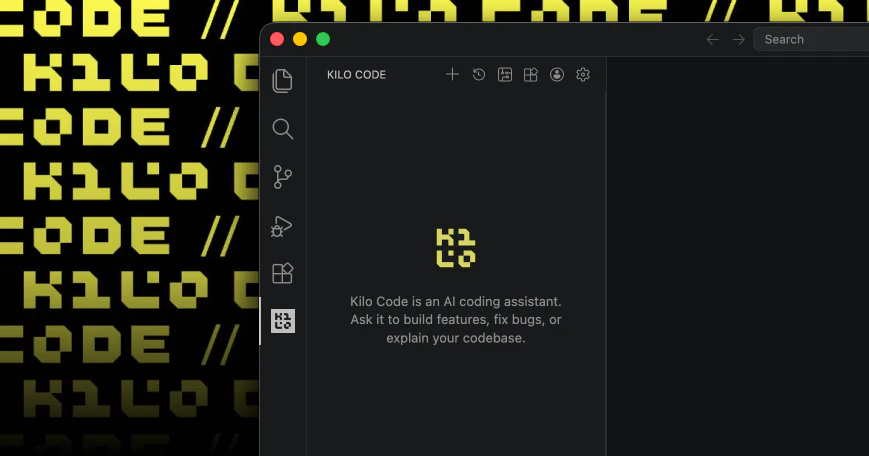
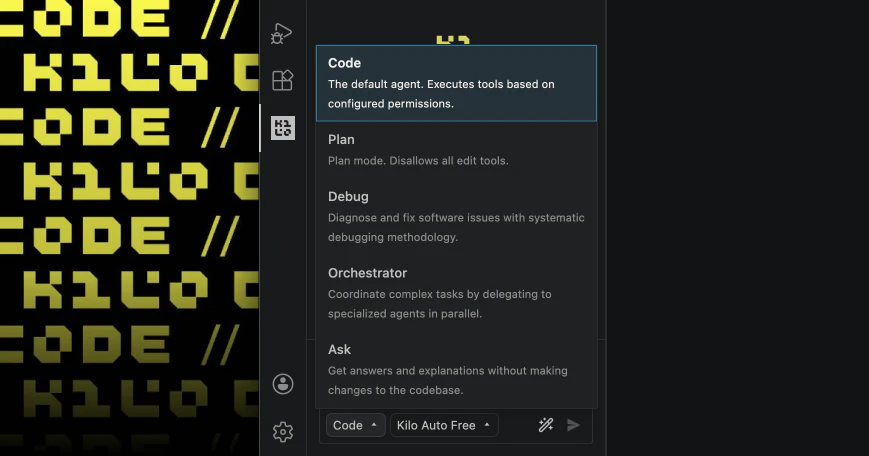
查看原始信息
Blaze
Blaze is your complete productivity system. Tasks, events, projects, and notes: all in one smart calendar. Connect Google Calendar and Apple Calendar, collaborate with your team, and let the AI reorganize your day, find free slots, and balance your workload automatically. Free to start. Available on Mac, iPhone, and iPad.

Hey everyone,
I'm Filippo, the founder of Blaze, and I'm genuinely pumped to be launching here today. 🚀

I built Blaze because I couldn't find a single app that did everything I needed without making me feel like I was managing the app instead of my actual work. So I built one.

What started as a personal tool is now something I use every single day and I'm so excited to finally put it in your hands.

A few things I'd love your honest take on:
- What's the first thing you do when you open your calendar every morning?
- What feature would make you actually switch from your current setup?

I read every single comment and it goes straight into the roadmap. This is day one for us here, and your feedback shapes what comes next.

The first 1,000 subscribers can enjoy Blaze Pro free of charge for 2 months. You can redeem the offer via this link 👉 https://apps.apple.com/redeem?ctx=offercodes&id=6756891022&code=PRODUCTHUNT

Thanks for being here. Let's make productivity not suck. 💪

0
回复

Is there a limit on how many calendars it can connect?
I always find it very hard to manage all my work + family calendars.

0
回复

The hardest part of AI scheduling is it doesn't know what actually takes energy vs what's just clock time. Does it learn from how you actually spend your day or mostly from calendar data? As a solo dev, context switching is the real killer.

0
回复
Another cool launch today that deserves more attention; great work here, @filippo_zanfini - thanks so much for making an iPadOS *native* version also, instead of just forcing compatibility with the iOS version! 😊 📅
0
回复

@grey_seymour Thank you so much! 🥹 Building a native iPadOS version was a deliberate choice: I wanted iPad users to have an experience truly designed for them, not just a port. Messages like this give me so much energy! 🥳

0
回复