Product Hunt 每日热榜 2026-05-14

PH热榜 | 2026-05-14

#1
Spellar 3.0
AI Meeting companion with cross-meeting memory
442
一句话介绍:Spellar 3.0 是一款跨会议记忆型AI助手,能无声加入通话、记录所有内容,并构建跨越不同会议的持久上下文,解决职场人士在跟进多次客户或项目沟通后,无法快速追溯历史决策与待办项的“会议失忆”痛点。
Productivity Meetings Artificial Intelligence
AI会议助手 跨会议记忆 智能笔记 会议纪要 上下文检索 多语言转录 隐私优先 工作流自动化 团队协作 AI模型自由选择
用户评论摘要:用户高度认可跨会议记忆功能,认为能显著减少手动跟进时间。问题集中于:如何协调同一客户前后矛盾的表述?是否支持本地模型(LLM)及联系人分组?与Fireflies的差异化优势何在?团队协作是否存在独立账户?建议加强自动分类,并期待原生Obsidian同步。
AI 锐评

Spellar 3.0 的发布切中了当前AI会议工具市场的痛点盲区:大量产品止步于“单次会议的高质量摘要”,而忽视了职场人真正的需求——跨会话的认知延续。从产品定位看,“AI Meeting companion with memory”比“note-taker”高明了一个维度,它实质上在做的是“工作记忆的外挂化”,将过去依赖人脑的高成本上下文衔接,变成了可检索、可追溯的结构化数据。

技术层面,跨会议记忆的实现难度远超单次转录。它需要解决信号衰减(早期会议信息被新会议覆盖)、实体对齐(同一客户、项目在不同语境下的唯一身份识别)以及时间维度上的决策冲突。评论中提到的“如何处理客户前后立场矛盾”正是这类系统的典型难关,目前Spellar似乎尚未给出AI层面的主动调和方案,这是其“记忆”价值从“查询”迈向“推理”的关键一步。

在商业化策略上,用户可自由选择AI模型(OpenAI、Anthropic、Perplexity等)是个聪明的差异化卖点,既满足了企业对隐私和合规的焦虑,也避免了与底层模型厂商的深度绑定。不过,所谓的“bot-free”更多是体验层面的优化,核心价值仍取决于云端LLM的推理质量。如果本地LLM支持不能及时跟上,其“隐私”叙事将大打折扣。

核心竞争力不在于技术堆叠,而在于通过“模板”和“自动分组”将非结构化的会议流水账,转化为结构化的“客户/项目知识库”。如果能打通与Notion、Obsidian等知识管理工具的双向实时同步,Spellar很有潜力从一个会议工具进化为企业的“第二大脑”入口。否则,它只是一款更聪明的笔记软件而已。

查看原始信息
Spellar 3.0
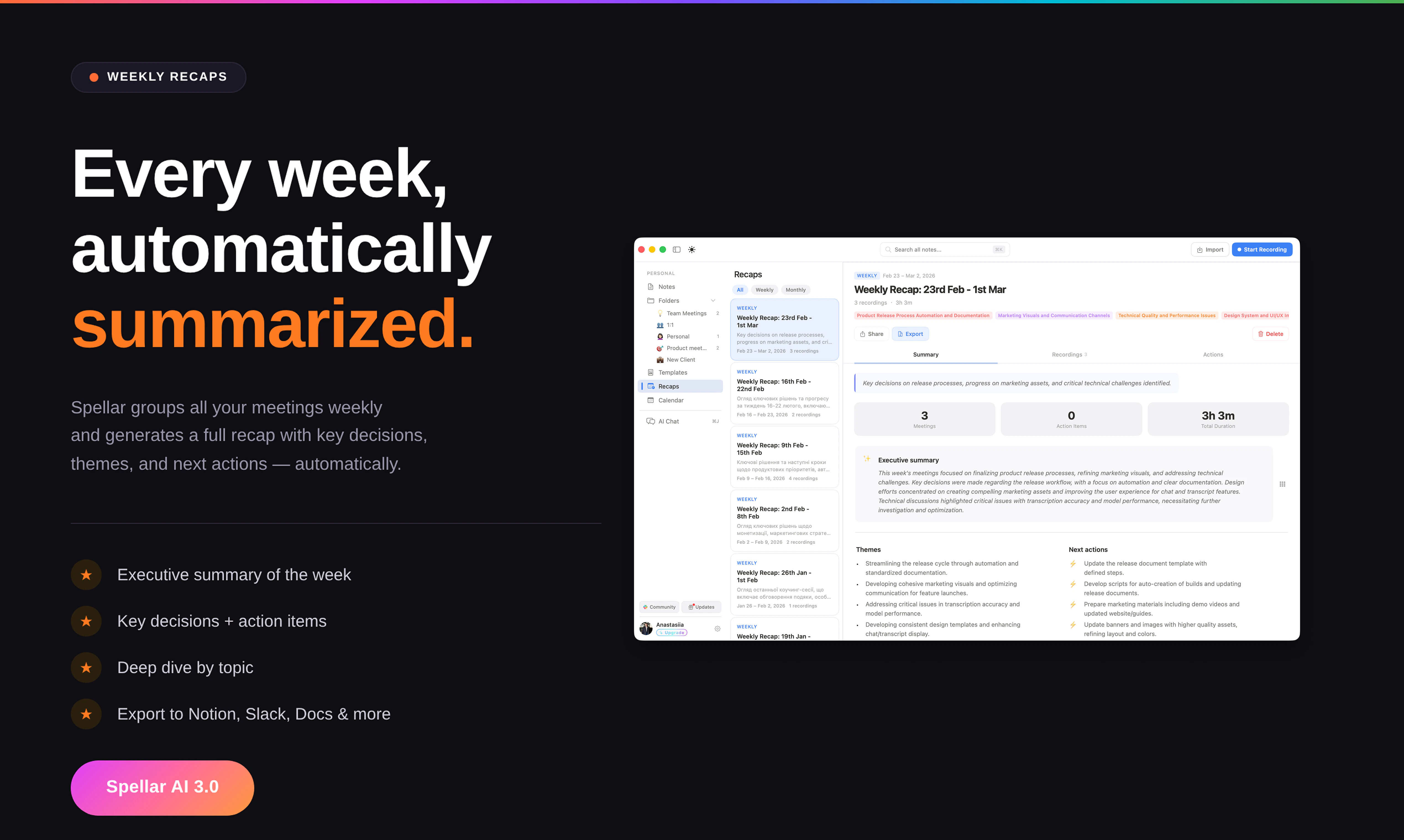
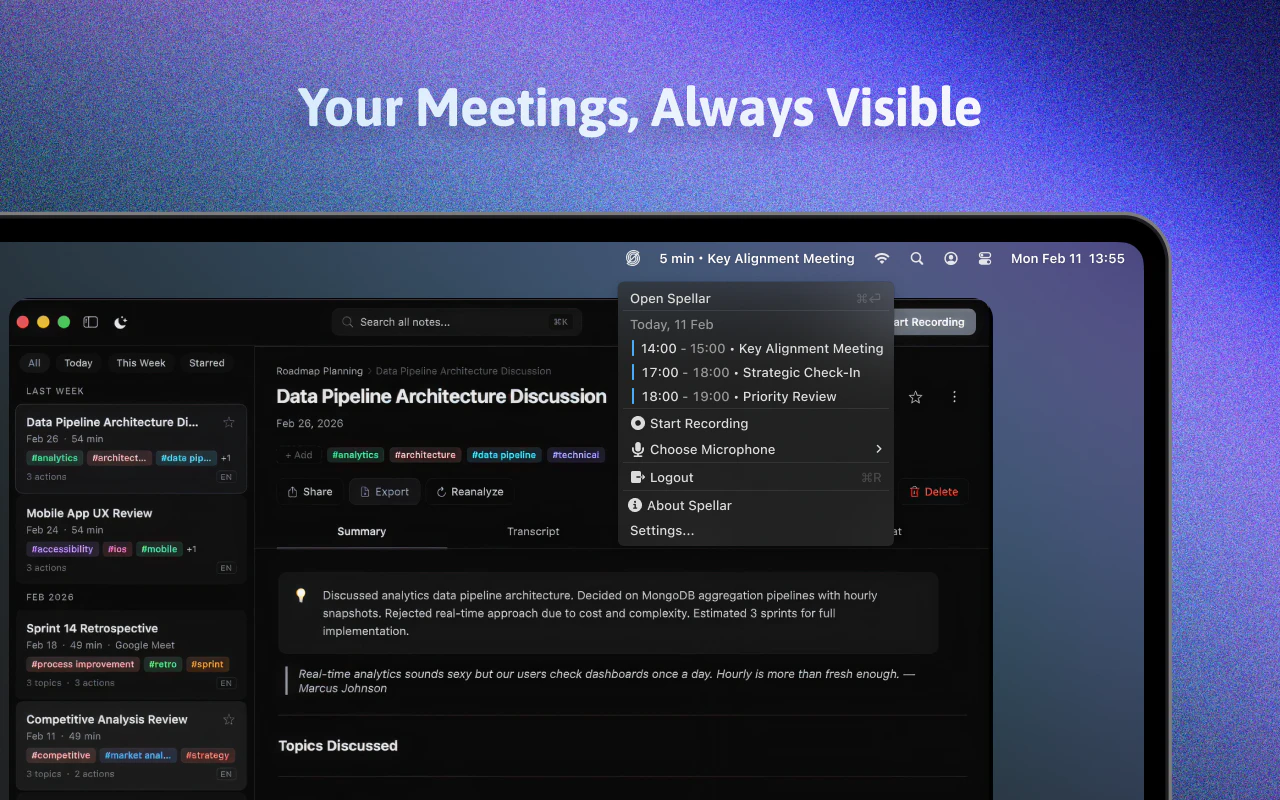
Most meeting tools give you notes. Spellar AI gives you memory. It joins your calls, captures every word, and builds context across all your meetings. Ask what a client said three calls ago. Find decisions from last week. See what’s still open. Organize by client, use templates, and choose the AI you trust — OpenAI, Anthropic, Perplexity, Gemini and more!

🚀 Hey Product Hunt! I’m Zino the founder of Spellar AI 3.0, and I'm beyond excited to be back with our biggest launch 🎉

Your support on our previous hunts (those #2 and #3 spots still give me chills 🏆) pushed us to ask a harder question: why do meeting tools only capture the moment — and never remember it?


So we built something different.

Spellar AI 3.0 isn't a note-taker. It's memory.

It joins your calls, captures every word, and builds context across your meetings — so you can actually use what was said, not just find it.


What's new in 3.0:

🧠 Cross-meeting memory — Ask what a client said three calls ago. Get an actual answer.

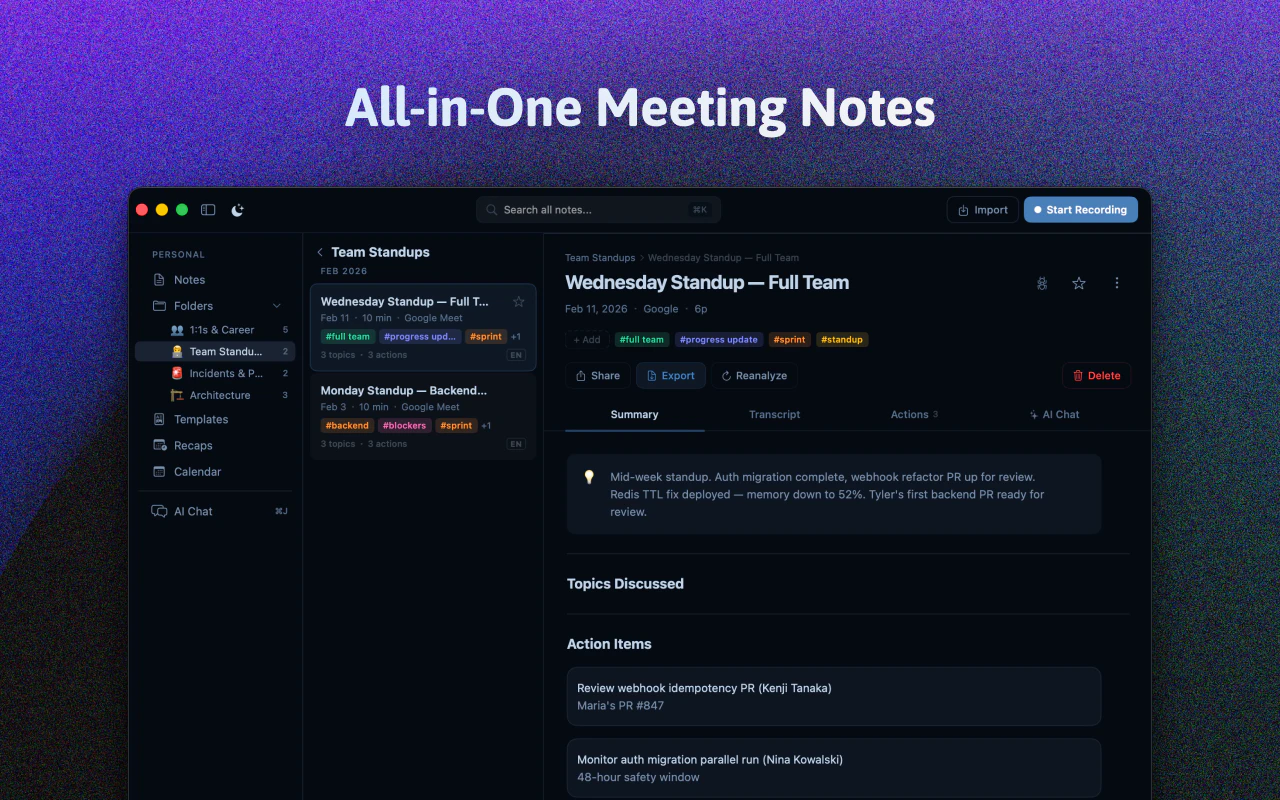
📁 Organized by client & project — Your context, structured the way you work.

📋 Templates — Set up the right AI context before the meeting even starts.

🤖 Your AI, your choice — OpenAI, Anthropic, Perplexity or Google. You decide who processes your data.

🔍 Open decisions & follow-ups — Never lose track of what still needs to happen.


We've always believed your meeting assistant should be native and bot-free, with support for 100+ languages. With 3.0, we're taking that further: meetings that don't just get recorded — they get remembered.


Would mean the world if you'd give it a try and share your honest thoughts. The Product Hunt community has shaped everything we've built, and today is no different. 🙏


Let's make meetings actually stick!

Zino

25
回复

@zinovii_z Hi Zino, Congrats on the launch. Very cool new features. do you guys extract or integrate post meeting actions into a file or other tools?

1
回复

Just checked out the new UI looks super clean compared to 2.0. That "Open decisions" tracker is going to save me at least 3 hours of manual follow-ups a week. Huge win for the Spellar team!

0
回复

@zinovii_z How does Spellar handle conflicting context or changing decisions across multiple meetings; especially when the same client says different things over time?

0
回复

Today we launched Spellar 3.0 on Product Hunt, and I want to be honest about what this launch means to me.

The last PH launch was in June 2025. Spellar got great traction, kind reviews, and new users who took a chance on us. Then, for a while, we went quiet.

Not because something went wrong — but because we kept hearing the same thing in feedback: people would use our meeting assistant, get solid notes... and still lose context a few weeks later. They'd join a follow-up call and not remember what had been decided. The notes were there. The memory wasn't.

So we spent the past year rebuilding Spellar around that idea.

Spellar 3.0 isn’t just a meeting recorder with a better summary. It’s an AI companion that works quietly in the background — no bot joining your call, no one else noticing — and creates a persistent memory across all your conversations.

You can search for something from two months ago. Pick up a thread from a call you half-remember. Walk into a client meeting with the full story from every previous chat.

Most meeting tools give you notes.

Spellar gives you memory.

We’re live today. If this resonates with how you work, your support on Product Hunt means a lot to a small, bootstrapped team like ours

Thank you so much, your support means a lot!

12
回复

@hotfixergreat work! I'm super excited to see feedback from our users 🫶

0
回复

hey team, my congrats! the memory feature is what got me. so if I have a related call today, can Spellar surface context from a meeting I had three weeks ago?

10
回复

@ashwini_mane Yes — that’s actually one of the main ideas behind Spellar. If you have a related call today, you can quickly pull context from conversations you had weeks or even months ago instead of trying to remember where something was discussed 😅

8
回复

@ashwini_mane Yes! Spellar has been designed especially for this! I look forward to your feedback 🫶

5
回复

Hi product hunters, my name is Andrii, and I'm a developer on this product.We're live. Spellar 3.0 is on Product Hunt.

There's a specific kind of exhaustion that comes not from the hours but from holding a complex system in your head for weeks straight. Every edge case. Every architectural decision you made at 2am and then spent three days second-guessing. Every "it works on my machine" that turned into a two-hour debugging session the night before a deadline.

The memory layer was the hardest part. Making a system that reliably connects context across meetings — not just stores it, but actually retrieves the right thing at the right moment — is not a small problem. We rebuilt parts of it more than once.

But today it's out. And it works. And I'm pretty proud of that.

Spellar 3.0: AI meeting companion that remembers everything. No bot joining your calls. Just quiet, persistent memory running in the background.

If you want to see what we shipped — it's live on Product Hunt today

9
回复

@andrii_tymoshchuk 
Proud of you honestly 🙌

I think people rarely see how much invisible work sits behind products that “just work”. Especially features like memory/context retrieval — it sounds simple until you actually try building it.

Watching this come together over time was really impressive. Huge congrats us on the launch 🚀

5
回复

@andrii_tymoshchuk Andrii, you’re doing so much for the product - constantly working on it, improving and refining it.

Thank you for this really useful app. I genuinely enjoy testing it and using it as a user 🙏

2
回复

@andrii_tymoshchuk our engineering is the backbone of the product. Great job!

2
回复

Congrats on the launch! I like the idea of a botless AI meeting companion. I'm curious whether it would be possible for Spellar to sort the recordings and meeting notes into related piles automatically. Would be a good time-saver!

8
回复

@jinhao_bai2 Hi, we’re actually working in that direction 🙌

For now, in Spellar you can already create groups/folders and organize related meetings there.

You can also automate summaries with different templates depending on the meeting type — for example, brainstorming, client calls, standups, etc.

So future meetings in that group can follow the same summary structure automatically 🧠

5
回复

@jinhao_bai2 templates is really a killer feature! You can customize your meetings to your needs/type of conversations, to make AI work for you at 100%!

3
回复

Congrats on the launch!

Have a question about i18n support. What languages does Spellar support for transcription? Our team spans three countries, and not everyone runs meetings in English.

8
回复

@timte Thanks a lot, Tim!

We use a combination of AI models for transcription, including Whisper, which supports 45+ languages. This makes Spellar suitable for international teams working across different languages 🤩

7
回复

@timte all major languages are supported. If you need a language that is not currently available, we offer a discount! 😜

3
回复

@timte Thank you 🙌

And yes, multilingual teams were actually one of the important use cases for us.

Spellar supports transcription in 100+ languages, so meetings definitely don’t need to be in English 🙂

A lot of our users switch between languages depending on the client/team, and Spellar is built to handle that naturally.

1
回复

The summary quality is noticeably better than alternatives I’ve tried. Feels like it actually understood the conversation.

8
回复

@daria_dzekunova Daria, appreciate the feedback on the summaries. We spent a lot of time improving the actual understanding of conversations and decision-making context.

6
回复

@daria_dzekunova That’s awesome to hear - we’ve worked a lot on improving context understanding, so this means a lot 🙏

6
回复

@daria_dzekunova thanks! Really appreciate your kind words!

0
回复

Looks great folks. Been struggling with AI notetakers' output being isolated - good to see someone is consolidating it with persistent memory:)

7
回复

@dawid_baranowski Thank you Dawid ❤️

6
回复

@dawid_baranowski Dawid, appreciate that 🙌

We wanted Spellar to feel less like “another AI notetaker” and more like a memory layer for your work 🧠

7
回复

@dawid_baranowski Thanks! In the era of AI, setting up a "second brain" is becoming more & more important

1
回复

Hi all, my name is Yuliia, and as the QA engineer on this product, I've spent months doing one thing: trying to break it.
That's the job. Find every edge case. Every flow that almost works. Every moment where the product doesn't quite deliver what it promised.
What made this one different: the core idea held up.
The memory feature - the thing that connects context across meetings over time - is the kind of feature that's easy to get almost right and very hard to get actually right. The gap between "it usually works" and "you can trust it" is where I spend most of my time.
We're at the second one. I wouldn't have let it ship otherwise.
Spellar 3.0 is live on Product Hunt today. An AI meeting companion that remembers everything - no bot, no noise, just context when you need it.
Want to hear your feedback ❤️

6
回复

@j_che Yuliia, very proud we’re launching this together 🚀

3
回复
Looks interesting What does pricing look like after the trial? Is there a free tier, or does it go straight to paid plans?
6
回复

@igal_kalnitsky Hi, we do have a free tier, so people can try the product without jumping straight into a paid plan 🙂 After that, there are different paid plans depending on usage.

4
回复

@igal_kalnitsky in addition to the free trial, we have ProductHunt deal - 20% which expires in the end of May 😜

0
回复

I've been using Fireflies for about a year - what would be the main reason to switch to Spellar? Genuinely curious!

5
回复

@richa_das24 Totally fair question 🙌

Honestly, the biggest difference is that Spellar goes way beyond just transcription — it’s all about memory and making connections across your meetings.

You get an AI assistant that actually remembers the context from every previous conversation. So, even right in the middle of a meeting, you can ask things like:
• “What did we decide last time?”
• “Did the client already mention this?”
• “What were the action items from our earlier calls?”

The idea is for it to feel less like just a notes tool, and more like having a second brain for your meetings 🧠

3
回复

@richa_das24 Hey Richa, that's a really good question. I understand that switching to another productivity tool can be challenging if you're accustomed to one.

However, Spellar is definitely worth trying. Its templates and Obsidian integration demonstrate the full customization available to elevate your productivity to 100% - give it a try, and you won't be disappointed 🤙

0
回复

Congrats on the launch. A killer feature would be to make it open source

5
回复

@zahle_khan honestly, we were considering it, but it would be challenging since we have many infrastructure components for that.

Is your concern privacy? If so, Spellar has several privacy-aware configurations, such as audio retention and local transcription, among others!

3
回复

Congrats, team @zinovii_z @hotfixer Great update with memory angle! Can teammates each run Spellar independently and have their notes connected, or is it only for individuals? GL today!

5
回复
@kate_ramakaieva yes, everyone can use that! Spellar is private meeting assistant running on your side. No bots. No third party joiners. Only your private tool building your private meeting memory 🤙
7
回复
Can we use a local model also?
4
回复

@lakshminath_dondeti Yes! Transcription runs fully on-device by default - we use a local Whisper model on your Mac, so audio never leaves your machine. Cloud transcription is opt-in for users who want it (e.g. for speed on older hardware). Summaries / AI notes currently use cloud LLMs, but on-device summarization is on the roadmap.

3
回复

@lakshminath_dondeti but, just fyi, local engine requires M1+ laptop. Foreigh languages needs larger models - which you can easely donwload/install models in the app's settings

3
回复
@zinovii_z I’m a big fan of local models. I run and play with several on a M3 Pro laptop and a studio with M3 Ultra and a lot of RAM 😅. Definitely serious about local LLMs. That said, aren’t there functional local LLMs on smartphones now? I have Google’s Edge Eloquent on my iPhone and that uses a small local model for transcription.
1
回复

My friend organizes their notes/knowledge from meetings in Obsidian, where he can interlink stuff with other knowledge.

Does your tool allow to go beyond meetings?

4
回复

@nikitaeverywhere Meetings are our focus, but the notes are yours to take anywhere. One click copies any meeting or recap as Markdown - paste into Obsidian and it slots into his graph like any other note. We also export to Notion, Google Docs, and Confluence. Native Obsidian sync isn't built yet — open to hearing what he'd want from it.

2
回复

@nikitaeverywhere Spellar notes exports are a core feature of Spellar. Our Obsidian integration was one of the most requested by users and now one of the most popular one 💜

3
回复

This is quite cool. The cross-meeting memory is what finally makes this category interesting. I've tried a few note-takers but the problem was always the same: it is great for the moment, useless two weeks later when you're trying to remember what clients actually said about pricing. The fact that it runs natively without a bot joiner is a big deal too! Does the memory search work across meetings with different participants or only the ones you attended yourself?

4
回复

Thanks @artstavenka1  — "useless two weeks later" nails the pain. Memory search runs across every meeting in your account, not just the ones you attended yourself: in a personal account that's all your recordings, in a team workspace it's everything that's been shared with you. So "what did clients actually say about pricing last quarter" works even if the call was a teammate's

What makes it really sharp is pairing it with Templates — you define a custom summary structure per meeting type (e.g. a Sales Call template that always pulls out pricing objections, budget signals, and next steps as their own fields). Two weeks later when you query across meetings, the AI has structured, comparable data to work with instead of free-form summaries — recall is dramatically better


Got a specific recall pattern you're trying to solve for? Happy to suggest a template setup 💜

5
回复

🚀 Already 11 hours into our Product Hunt launch day — and Spellar 3.0 is still holding the #1 spot 🥹

3
回复

@hotfixer it feels like "dream is comming true" 🤞

3
回复

Is there a way to create templates for recurring meetings — like 1:1s or standups — so the summaries are always structured the same way?

3
回复

@rus1ankova1enko Yes, exactly that! Spellar has built-in templates for the most common recurring formats — including 1:1, Stand-up,

  Sprint Planning, Retro, Weekly Sync, Project Sync, plus ~15 others (customer discovery, board, investor update…).

  You can also create your own: define the structure, add custom context (project background, what to listen for), pick

  the AI model, and attach it to specific recurring calendar events — so every Monday standup or weekly 1:1 gets

  summarized with the same shape automatically.

2
回复

@rus1ankova1enko as Andrii mentioned, templates are your key feature here!

You can set up the type of meeting, add additional context, and establish structure (folders, tags, AI provider)

This is essentially your way to customize your meetings to suit your cases!

2
回复

@rus1ankova1enko 

Yes 🙌

So recurring meetings can automatically follow the same summary structure every time, which makes everything much easier to scan later 🧠

2
回复
Does it automatically pull out action items, or do I still need to search through the transcript myself?
3
回复

@avikshit_lp Yes — no transcript-hunting needed. Spellar pulls action items out automatically as a dedicated section, with owner

  and context attached when the conversation makes it clear ("Anna will send the deck by Friday" → task with owner +

  due).

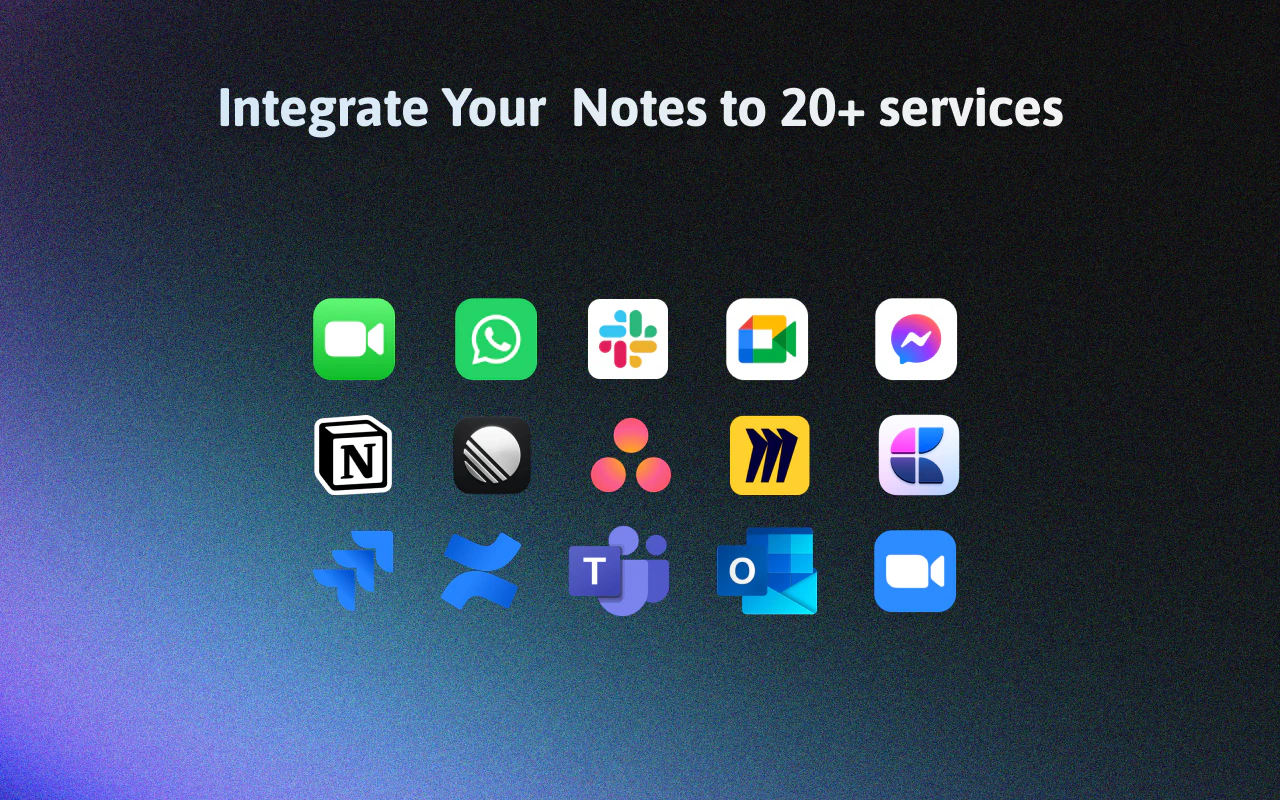
  You can review them on a separate "Action Items" tab, then push each one straight to Linear, Jira, Notion, Todoist,

  Asana, ClickUp, or Trello with a single click. The transcript is still there if you want to jump to the exact moment

  something was decided, but you almost never need to.

2
回复

@avikshit_lp everything is automated. Just turn on Spellar on your calls/meetings - and the app will take the rest 🤙

2
回复

Really interesting shift from meeting transcription to persistent memory. The cross-meeting context and ability to surface decisions from earlier conversations feels more practical than just searchable notes. Curious how Spellar handles conflicting information or changing decisions across long client relationships.

3
回复

Thanks @vaibhavi_suvarna  — that "conflicting information across long client relationships" question is exactly the messy case most cross-meeting tools wave at.

Honest answer on how it works today:

Cross-meeting search surfaces all the relevant decisions, not just the latest. If you ask "what did we agree about pricing for Acme?", Spellar pulls every mention from the folder and lets you see the evolution — March said $50k, May said $60k, here's both with links to the source meetings. We deliberately don't collapse to "latest wins" because the change is usually the interesting signal.

The pattern that makes this really sharp is Folders + custom-context Templates per client:

- A folder per client (e.g. Acme Corp) scopes the memory.

- A custom Template with client-specific context — e.g. "Track decisions on pricing, scope, deadlines, and owners. If a current decision contradicts prior one in this folder, call it out explicitly and cite the earlier meeting." — instructs the AI to flag contradictions on each new summary, not just at query time.


What we haven't shipped yet: proactive cross-meeting conflict alerts (e.g. notify me the moment a new meeting introduces a contradiction with an earlier one). The data layer makes it possible — we just don't auto-trigger it today. High on the list.


Quick one back: would alert-on-conflict be more valuable inside the meeting (a heads-up while you're still talking) or as a digest after the call?

3
回复

congrats, team! any plans for more integrations? I'd love to sync with Linear after calls.

3
回复

@igorsorokinua Hi Igor, thanks a lot for the congrats!

We’re always open to feedback from our users and actively add new integrations based on their requests.

We actually already have a Linear integration, and I personally use it to save time when creating tasks after calls 😊

3
回复

@igorsorokinua yeah, Linear was one of the first released integrations

We're very open for user feedback / requests. Just let us know what's missing for your workflow?

3
回复

The cross-meeting memory is the part that actually changes the workflow — most tools just dump a transcript per call and leave you connecting the dots yourself. Curious how it handles context when a client refers to the same project by different names across calls — does it pick that up automatically, or does it need some manual tagging to stay organized?

2
回复

Thanks @zrimko — that "different names for the same project across calls" is exactly the gap that pushed us to build the memory layer instead of just better per-call summaries.

Honest answer: the AI handles a fair amount of this semantically, without manual tagging. If your transcripts have enough context — "Project Phoenix, the Q3 launch we discussed last week" — Ask AI treats them as one thread when you query. It's pattern-matching on meaning, not keywords.


Where it gets fragile is when references are terse — "remind me what we said about the launch" with no other anchors. Two cheap lifts solve it:

• Folders per project/client narrow the search scope so terse references resolve correctly.

• A custom-context Template can hold a mini-glossary: "Track decisions about Project Phoenix (a.k.a. Q3 launch, Acme deal, new pricing initiative)." The AI reads that on every summary and normalizes naming for you.


Quick one back: how many parallel projects per client are you usually juggling? That changes whether folders alone are enough or whether the template glossary is worth the 30-second setup.

0
回复

How does the 'bot-free' part actually work? Will anyone else on the call notice something's running in the background?

2
回复

@thomas_park2 It's completely unnoticed since this software runs on your laptop and serves as your personal assistant—no one knows about it except you. However, we suggest informing other participants, as it is a requirement in some jurisdictions 🤙

2
回复
Great product. Congrats on the launch @zinovii_z ! Is there a way to easily backfill past meeting notes from Fireflies/Granola?
2
回复

@gamer05 thanks!

Yes, at Spellar, you can import meetings with audio files, and we will soon release MCP integrations to incorporate your custom meeting notes!

With our extensive integrations—Notion, Miro, Obsidian and more — Spellar manages your second brain setup for yor 🫶

3
回复
@zinovii_z sounds awesome, thanks!
1
回复

Most meeting tools just dump transcripts somewhere and hope you’ll revisit them later 😂

The cross meeting memory angle is way more useful in actual day to day work. Congrats on the launch!🚀

2
回复

@campritchard thanks 🙏

Exactly! In the AI era, we need to collect more context to be more productive, and Spellar is the right tool for that

2
回复

Noise! Nice update guys

2
回复

@mattisssa it's been a while, hope you've liked what we've built here 😜

If you have any suggestions, please let us know! ❤️

1
回复
Congrats on the launch looks like a solid product. question is how does yours stand out against fathom note taker?
2
回复

@zach_tyler000  there are several features that allow you to better configure your setup, such as:

- Selecting different AI providers for various tasks (Gemini, Claude, GPT, and more!)

- Rich templates to configure structure, additional context, folders, and tags

- Native apps with seamless synchronization: Mac, iOS, and web

Thank you for your feedback on trying Spellar 💜

2
回复

Does the cross-meeting memory work retroactively? Meaning, if I'm starting fresh today, can I import old transcripts from another tool to seed it, or is the memory only built going forward?

2
回复

@aroggava 
Yes 🙌
You can upload existing recordings and videos into Spellar, so the memory/context doesn’t have to start only from today.

That way you can bring past conversations into the same searchable context layer as your future meetings 🧠

2
回复

@aroggava Spellar App has import functionality - so you can seed any your previous meetings you have in other tools

2
回复

Good luck with your launch!

2
回复

@dmitry_zakharov_ai Dmitry, thank you for your support

1
回复

@dmitry_zakharov_ai Thanks! We've been preparing for this day for so long. Hopefully, it's paying off 🤞

1
回复

The cross-device sync is underrated — record on iPhone during a coffee chat, summary is on the Mac when I get back. Question: any plans for Apple Watch quick-record (start recording from the wrist for impromptu hallway conversations)? Would unlock the "captured the idea before I forgot it" use case for me 🤔

2
回复

Thanks @slavaakulov  — wrist-tap recording for hallway/walking moments is exactly the gap we keep coming back to. Not shipped yet but very much on our v3.x candidate list

Today the closest path is iOS — opening Spellar and tapping record is under 2 seconds, but you still have to pull out the phone. Watch obviously kills that friction

Quick one back: would "start + stop from Watch" be enough for your flow, or would you also want a live recording indicator on the wrist / Voice Memos integration? Genuinely useful input for how we'd prioritize it 🫶

1
回复
#2
Naptick AI
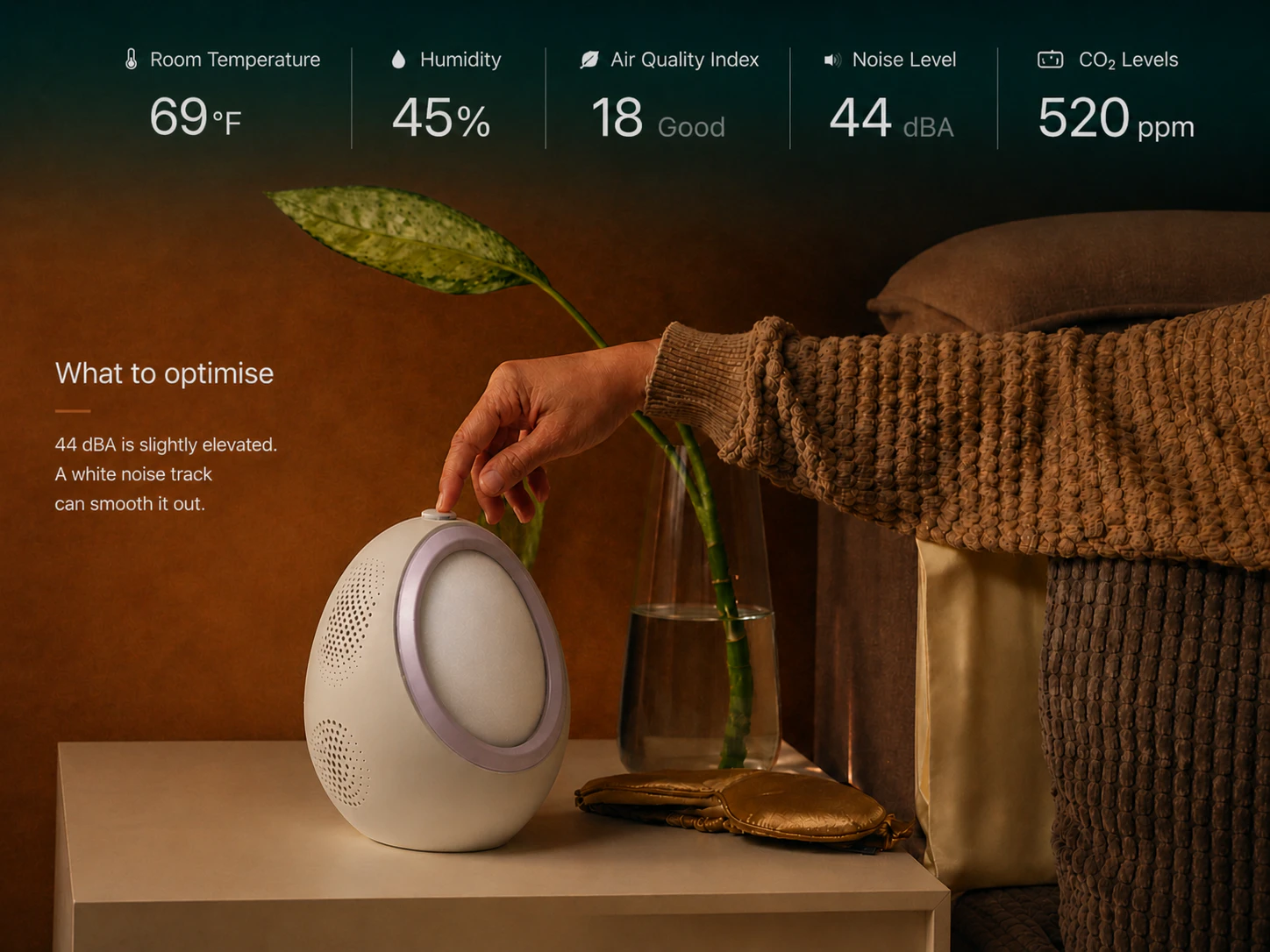
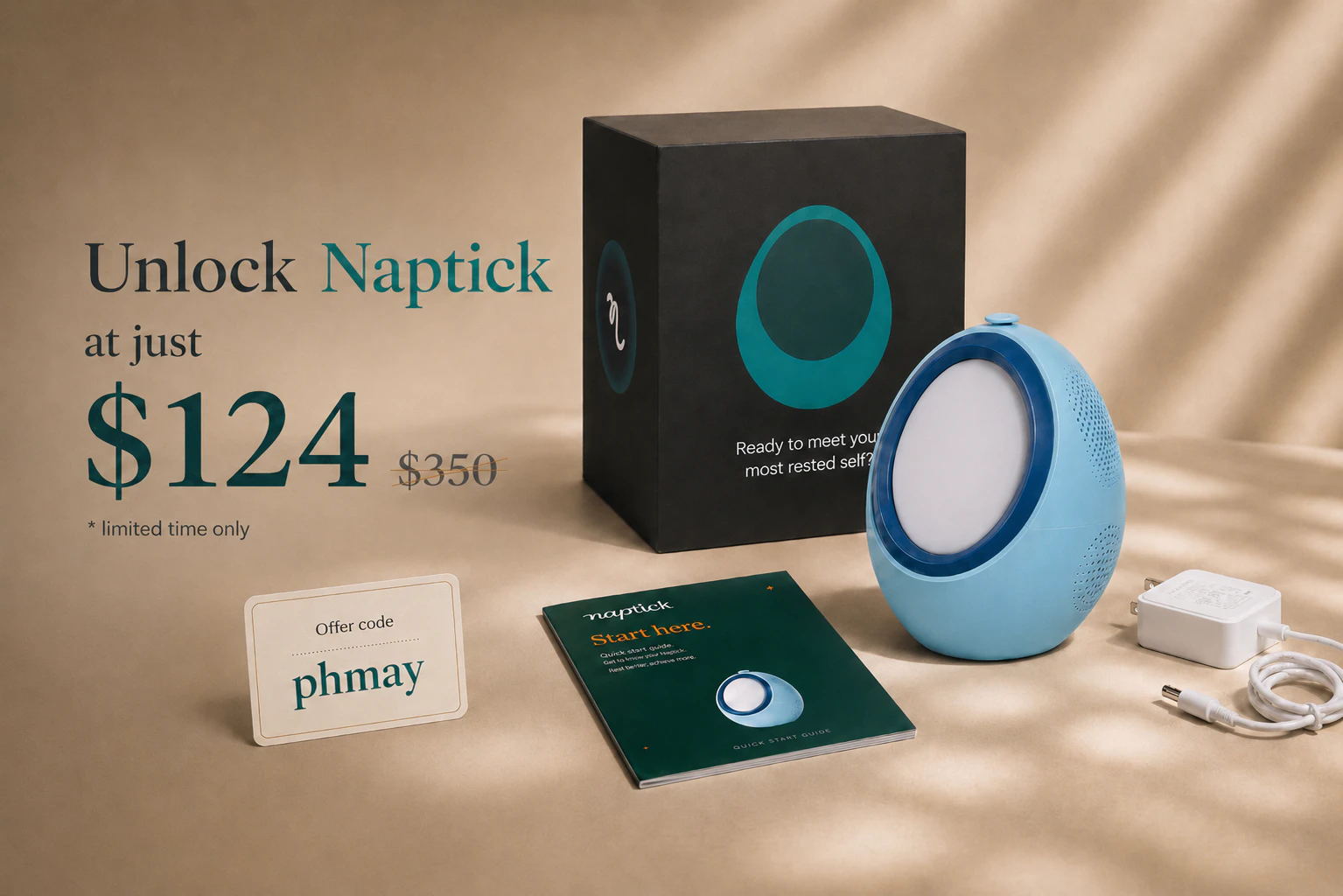
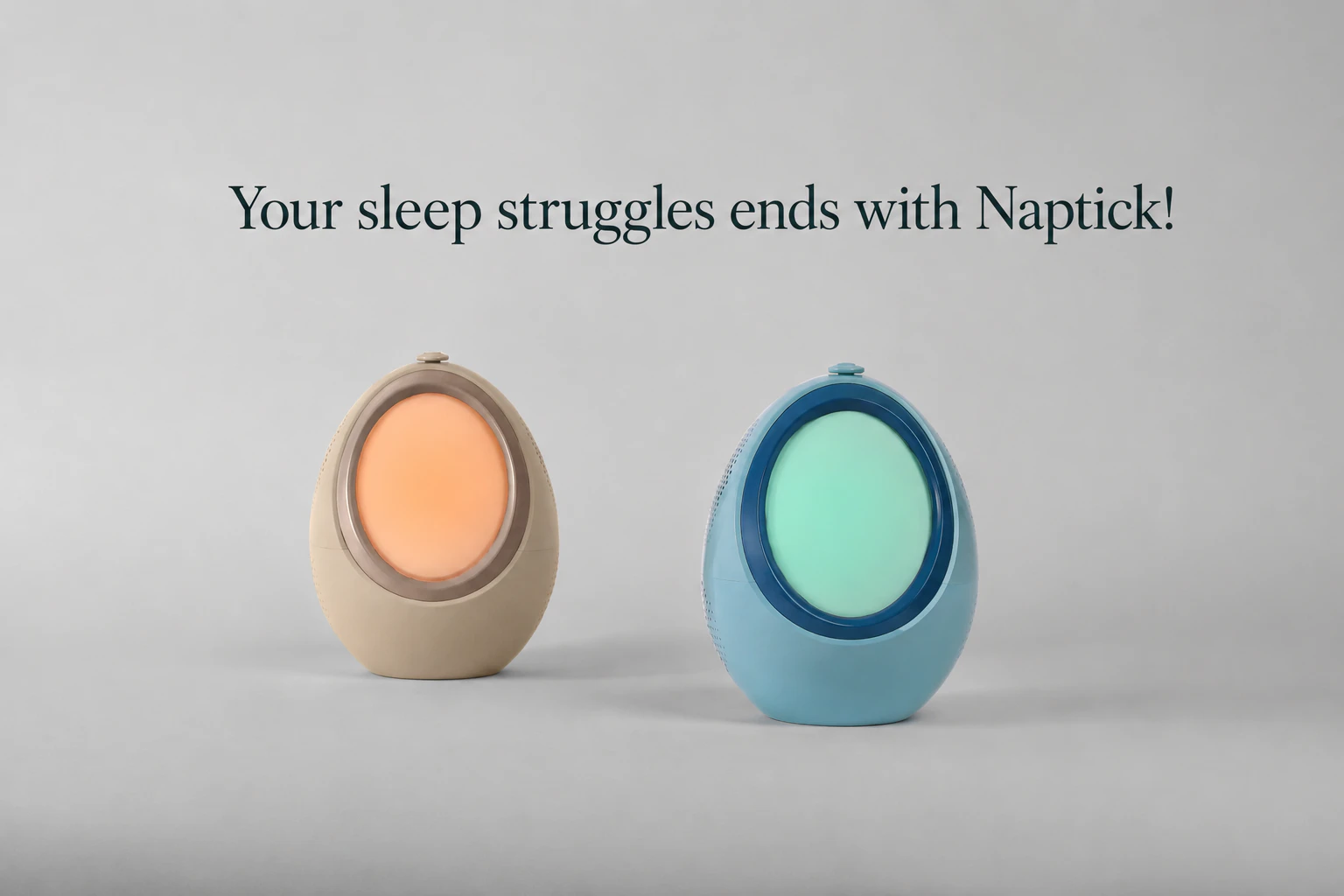
Al sleep companion that helps fall asleep without struggle
419
一句话介绍:Naptick AI是一款无手机操作的智能床头AI睡眠伴侣,通过光照疗法、自适应音景、环境监测、App锁定和AI睡眠教练,帮助创始人和高压人群在睡前主动改善环境与习惯,解决“睡前焦虑、刷手机、入睡困难”的痛点。
Health & Fitness Hardware Artificial Intelligence
AI睡眠伴侣 智能硬件 睡眠科技 光照疗法 音景 环境监测 App锁定 AI教练 床头设备 无手机设计
用户评论摘要:用户重点关注其无手机设计、AI语音交互和硬件可靠性。问题包括:夜间灯光是否扰眠?焦虑时能否抵挡手机诱惑?App锁定机制在压力下是否有效?建议未来推出针对儿童的玩偶式外观。总体上认可其“主动干预而非事后追踪”的差异化定位。
AI 锐评

Naptick AI在“睡眠科技”这条拥挤赛道上,打出了一张漂亮的差异化牌:**不做被动的数据记录仪,做主动的睡前干预者**。这恰恰是Oura、Whoop等穿戴设备与手机App的集体盲区——它们擅长告诉你“你昨晚睡得有多烂”,却对导致你失眠的“睡前刷手机、焦虑反刍、环境不适”毫无招架之力。

产品的核心洞察在于:**睡眠问题的根源不在床上,而在上床前一小时**。Naptick将卧室重构为一个“受控环境”,用硬件(光照、音景、环境传感器)建立物理结界,用AI教练提供心理卸载出口,用App锁定切断数字依赖。这种“硬件+AI+行为设计”的组合拳,远比一个白噪音App或智能灯泡更具粘性。尤其点赞其“无手机设计”——物理按钮和语音交互(无唤醒词,靠按键激活)是对隐私和睡前习惯的双重尊重,直接化解了“把手机带进卧室”这一现代睡眠头号杀手。

当然,风险也不容回避。第一,硬件的“可信赖”门槛极高:设备死机、Wi-Fi断连、光污染控制失当,任何一次故障都可能让用户重回手机怀抱。第二,AI睡眠教练的“人性化”深度存疑——如果对话流于模板化,用户很快会失去新鲜感。第三,价格与渠道:面对几百元的智能音箱+免费App的组合,Naptick必须用纯粹的体验红利证明其溢价合理。

一句话:**Naptick不是在卖一个睡眠工具,而是在卖一套“睡前仪式”的硬件化解决方案。** 它能否成为卧室里的新基础设施,取决于它能多大程度让用户“无痛戒断手机,自然滑入睡眠”。方向对了,但执行容错率极低。

查看原始信息
Naptick AI
Naptick is a smart bedside AI sleep companion designed for founders, professionals, light sleepers, and anyone struggling with nighttime stress or doomscrolling. It combines circadian light therapy, 1000+ adaptive soundscapes, room condition intelligence, app-locking, and an on-device AI sleep coach to help users fall asleep faster and wake up refreshed. Unlike passive sleep trackers, Naptick is built phone-free by design and actively helps improve sleep before the night begins.

Hi Product Hunt Community, 👋

I’m Anubhab, founder of Naptick. Really excited to finally share what we’ve been building. :)

Naptick is an AI sleep companion bringing an agentic era to sleep combining a bedside device, AI sleep coach, circadian light, adaptive soundscapes, distraction app-locking, and room condition intelligence to help people fall asleep faster, not just track sleep after the fact.

What is Naptick?

Naptick sits next to your bed and helps you build a better evening routine.

It can check your room conditions, start calming light and sound routines, help you talk through your day with an AI sleep coach, reduce phone distractions, and wake you up gently with light-based cues.

The goal is simple: make falling asleep feel effortless.

The Problem & Our Solution

Most sleep products today are passive.

They tell you your sleep score in the morning, but they don’t help much at the moment that matters most — before you fall asleep.

The real sleep problem is usually not lack of data. It’s late-night scrolling, inconsistent routines, poor room conditions, stress, noise, light, and a mind that refuses to switch off.

Naptick solves this by turning your bedroom into a guided sleep environment. Instead of saying “you slept badly,” Naptick helps you take action before the night begins.

What Makes Naptick Different

Most sleep apps still need your phone at bedtime. Naptick is built to be phone-free by design (the app is mainly for setup and preferences).

Users can start routines directly from the bedside device, control sound and light physically, talk to an AI sleep coach, and reduce doomscrolling before sleep.

It’s also not just another white-noise machine or sleep tracker. Naptick brings together the key sleep levers — light, sound, environment, coaching, routine, and phone discipline — into one connected bedtime experience.

Features & Benefits

1. Room condition intelligence: Naptick helps you understand whether your bedroom is actually sleep-ready.

Benefit: Better control over the environment affecting your sleep.

2. 1000+ adaptive soundscapes: Choose from calming sounds, nature, brown noise, piano, meditation, and more through our licensed content library.

Benefit: Easier wind-down without endlessly searching for the right track.

3. AI sleep companion: Talk to Naptick before bed to unload your mind, reflect, or get guided support.

Benefit: Helps reduce mental clutter before sleep.

4. App-locking for distraction-free sleep: Block distracting apps as part of your night routine.

Benefit: Less doomscrolling and stronger bedtime boundaries.

5. Circadian-inspired lighting: Evening light cues help you wind down, while morning light cues help you wake up gently.

Benefit: Your room starts working with your body’s natural rhythm.

6. Physical bedside controls: Tap, double tap, rotate, and long press to control sleep routines without picking up your phone.

Benefit: Fewer reasons to bring your phone back into bed.

Who is Naptick For?

Naptick is for anyone who wants better sleep without adding another complicated wellness habit.

Especially useful for:

  • Founders and high-performance professionals

  • People who scroll too much before bed

  • Parents trying to create calmer nights

  • Light sleepers

  • Apple Watch / Oura / Whoop users who want interventions, not just scores

  • Anyone trying to build a consistent wind-down routine

(Naptick integrates with wearables to create a stronger feedback loop.)

Our Ask

We’d love your feedback from the Product Hunt community.

Please check out Naptick, ask us hard questions, and tell us what would make this a daily bedtime habit for you.

And if better sleep matters to you, we’d love your support today. 🙌

Try Naptick, pre-book your device here 👉 https://launch.naptick.com/

Thank you PH ❤️

AG & Team Naptick

30
回复

@anubhab_goel1 Congrats on the launch. How do you minimize the light intrusion from the device nightlight? Any science on this?

10
回复

@anubhab_goel1 congratulation !!

0
回复

@anubhab_goel1 Nice idea for a product

0
回复

After building multiple 0 to 1 products and then scaling them upto 150M+ transactions per month, 220M+ active sessions per month, building Naptick had its own set of learnings - building scalable infra for 24x7 connected hardware devices, ensuring your devices work seamlessly all day and switching b/w places with multiple wifi networks is seamless unlike most other hardware devices that require rigorous setup after slight move, easiest controls by doing button taps on devices, seamless voice to voice conversations with the device that makes it your preference to use device by voice than by app. Go into a DND mode just by single voice command before drifting off to sleep..

9
回复

I work at Isha Foundation, and I think even ashram like ours can adapt to these sleep tech devices for the tourists and visitors who come for the experience from the outside world. Congrats on launching!!

8
回复

@ankur_jeswani Thank you so much - that genuinely means a lot to hear, especially coming from someone at Isha. I’ve personally spent time at the ashram and attended programs there, so I’ve experienced firsthand how intentional environments can deeply impact rest, awareness, and wellbeing. That philosophy has actually influenced parts of how we think about Naptick as well - using technology not to overwhelm, but to create calmer, more restorative experiences for people coming from constantly stimulated lifestyles. Would love to connect with you soon.

5
回复

As a founder running more than 7 SaaS companies, I often get thoughts of tasks that are pending for me to be done while I am just heading to bed. :D

I guess with this device I can just share all of my pending tasks which come to my mind and then I am going to ask it to remind me tomorrow so that I get it out of my mind while sleeping.

8
回复

@iamanantgupta Yes Anant, you can offload everything keeping you up at night to the device, before you drift off too sleep. Ask it to remind you about things, just share your pending tasks and it'll take care of reminding you about those.

3
回复

I think the most interesting part of this device is that it operates phone free. The contradiction about other sleep tech is they are on your phone which means screen time before bed and right after waking up. Congrats Anubhab, Shilpi and team on shipping Naptick.

8
回复

@himani_sah1 Thank you for your support, Himani! We had the same problem with currently availabe sleep tech and created Naptick with the principle of making our bedrooms phone-free and our sleep time distraction-free. If you do need something to interact with before falling asleep or right after waking up (to maybe check the time, log your thoughts etc.), our inbuilt voice assitant can fill in that gap!

8
回复

Our hardware vision is that sleep needs its own physical AI agent in the bedroom, a companion dedicated entirely to your rest.

Long term, we see it becoming the control layer for the bedroom: tracking your sleep, understanding your patterns, and taking action across connected IoT devices around you.

8
回复

The current design makes it look like a bed side lamp. Do you plan to turn this into a Reddit Snoo-like plushie or perhaps a robot in the near future for kids, teens and young adults?

7
回复

@nuseir_yassin1 Thank you for your comment, Nas! The current form factor is intentionally designed like a bedside lamp so it can gently deliver sleep-supportive light and sound cues in a familiar way. It also monitors aspects of your sleep environment like temperature, noise, light and air quality, while acting as an AI companion you can talk to about your sleep or anything on your mind.
We do think more expressive or playful form factors could be interesting in the future, especially for younger users. But for now, we wanted something simple, calming, and accessible across age groups.

4
回复

@nuseir_yassin1 Hey Nas...good to hear from you...lets connect over email ...I am on anubhab@naptick.com

0
回复

This phone free design seems intentional.
BTW, how easy is it to actually fight the urge to grab your phone in the middle of the night if say anxiety kicks in? Does the app-locking still work if you're stressed?

7
回复

@abod_rehman yes, the device lets you do app-locking with a single button click on the device and based on how strict you define your constraints of locking we take care of it for you.

love to hear what would be your ideal workflow

8
回复

@abod_rehman Thank you for noticing that Abdul! It is an intentional design.
One of our goals is to help our users unlearn the instinct of reaching for their phones, which are often right beside them, as soon as there's a small break/awakening in their sleep at night. Instead you can engage in a conversation with the device and prompt it to help you slip back into sleep. You can however unlock your phone in situations where you need to use it.

5
回复

What stands out from a PM lens - the product decisions here actually match the problem:

Voice instead of screens (because nothing pulls you out of sleep mode faster than a screen).

Hardware at the bedside, not on your wrist (so the companion is there in the moment, not three hours later in an app).

An AI that learns your patterns (so the advice gets sharper every week, not staler).

Most sleep tech treats the night as something to measure. Naptick treats it as something to actually inhabit. That's a different product entirely.

7
回复

I built Naptick because I was tired of being tired !!

The coolest part? It is not just a device. Its your personalized platform with a multi-modal four-model AI stack running under the hood. Sleep patterns + environmental sensors feeding our agent ensemble. The room itself becomes the input

Your Nap Agents are at work while you sleep. They sense the room, run your wind-down, watch the night, and learn what actually gets you to rest. By morning they have already shaped how your next day starts. Sleep that improves itself, night after night. Night 30, your Naptick is genuinely yours.

Drop your sleep struggles in the comments 👇 AMA on the agents, the hardware, the manufacturing chaos, anything!

7
回复

While building Naptick, we were very particular that it be rooted in evidence.

We spent a lot of time studying the existing science around circadian rhythms, sleep health, performance, and health behaviour change, along with evidence-based guidelines on sleep hygiene, bedroom environment, and recovery behaviours, to shape the foundation of the product.

Naptick is designed to help you create an external sleep environment and internal habits that work with your biology, so you can slip into rest at the end of the day with less friction and wake up better prepared for the next one.

7
回复

Congratulations

6
回复

@madalina_barbu Thank you so much for supporting us!

Your support really helps us reach more people struggling with sleep and nighttime stress.

Super grateful you took the time. Any feedback is appreciated!


3
回复

 Congrats on the launch, folks!

6
回复

@j_che Congrats to Spellar AI as well!

2
回复

With the journaling feature, how does it work? Like, whatever we journal, does it then later reflect into our phones, or how is it captured so that we can revisit it later?

5
回复

@divya_kothari1 yes for anything that you journal the device will have a memory of that and remember that in all the followup conversations. Those notes can also be checked in the app later on at any point in time.

5
回复

Combining hardware with AI for sleep is an interesting approach. Is the companion mostly focused on environmental factors like sound/light, or does it offer interactive guidance?

5
回复

@rivra_dev yes, it does both - we have guided routines based on different factors that impact you and your sleep - so we help you sleep better even with all that is happening with you and around you.

would love to hear what would you expect from the device as well.

6
回复

@rivra_dev What many early users are liking is our voice to voice feature...you may set your reminders, plan your day, dump your thoughts or just talk about the day....The hardware has amazing speakers and mic array to ensure we capture everything you wanna share.
An important privacy feature we have built is that we dont have a wake word on the device...user tap a button to activate the mics ( No one keeps alexa and google home in bedroom just because of this issue of always listening)

7
回复

@rivra_dev Great question - it’s actually both. We combine environmental cues like light and sound with on-device voice interaction to create a more personalised sleep experience. The companion can guide users through calming routines, respond conversationally, and adapt over time based on sleep patterns and habits. The goal is to make sleep support feel more natural and human, not just automated.

5
回复

As a founder who often finds myself 'doomscrolling' or thinking about backend architecture at 2 AM, this is exactly what I need. The phone-free design is a brilliant move. How did you decide on which 'circadian light therapy' patterns to include?

4
回复

@phatysddev Thank you for your question, Yodsavee! This is an important feature of the device.

We focused on the fundamentals and designed the device to mimic natural light patterns, which strongly influence our circadian rhythm and overall biology. By default, the device follows a sunrise and sunset protocol. The lighting has also been informed by research on the wavelengths most effective for morning wake-up simulation (brighter white light enriched with blue wavelengths) and evening wind-down (which favors warmer amber and red tones).

3
回复

Congrats @krutiparekh16 Do you guys have plans to integrate with Apple Watch / Oura data beyond just the morning sync?

4
回复

@boyuan_deng1 
Great question — we actually started Apple watch-only for the first few versions. But pretty quickly, requests started rolling in from folks using [@Oura](https://www.producthunt.com/products/oura), [@WHOOP](https://www.producthunt.com/products/whoop), Garmin, and others — all asking the same thing: 'my tracker is telling me I didn’t sleep… now what?'

So we built for them.

Today we’re integrated with ~95% of wearable users on the planet, and the moment a new request comes in, the team does a fantastic job getting them onboarded too. Honestly, it’s been magical to watch.

6
回复
Oh yeah! How many times in the evening I want to turn on relaxing music on my phone to fall asleep, but I find myself scrolling through my social media feed.

Your project protects me from such things.
3
回复

@maria_anosova Yes exactly!
It starts with “I’ll just play something relaxing for 5 minutes” and suddenly you’re 47 reels deep at 1:13 AM.

A huge part of Naptick is creating that much-needed shift from phone → dedicated sleep device, so your brain stops associating bedtime with notifications, feeds, and endless scrolling. Just a calmer space to unwind, listen, breathe, and sleep.

0
回复
Interesting! There’s a device price plus subscription? Are there line of sight or proximity requirements? Congratulations on the launch.
3
回复

@lakshminath_dondeti Thank you! Yes — the core experience is available with the device purchase itself, while the subscription is meant for optional premium experiences, deeper AI personalization, and expanded content over time. While there are no strict line-of-sight requirements, for the best experience we recommend placing Naptick within about 2 feet, or roughly arm’s length, from the head of your bed and around eye level for optimal light signals.

3
回复
@shilpi_goel thanks. For someone like me, it won’t work. I’m not disciplined during my sleep. 😭
0
回复

What's the microphone policy — does Naptick listen continuously or only when physically activated?

3
回复

@antonio_manuel1 Hi Antonio, to protect your privacy, the microphone on Naptick is not always on listening mode. It only activates on double pressing the button on top of the device, after which you can interact with it. You're also able to turn off the microphone with a touchpoint on the back of the device.

3
回复

Will the distraction app locking work if someone manually reinstalls a blocked app during bedtime hours?

3
回复

@andrew_paul11 we take into consideration all the capabilities provided by the OS.
currently if you re-install locked apps during bedtime, a user would be required to do one action on the app to allow locking the newly installed apps again. Post that the device automatically takes care of the locking for you.

5
回复

Can the circadian light automatically adjust to seasonal changes in sunset/sunrise times?


3
回复

@xavier_hernandez2 Hey Xavier, great question! Circadian lighting is something we’re working toward in the long run.

Right now, during onboarding, you’ll be prompted to set up routines that work best for your lifestyle and sleep schedule. The device is designed to help maintain consistent sleep routines throughout the year.

In practice, this means you may still use some ambient lighting for activities after sunset and before bedtime. The wind-down routine typically begins 30 to 60 minutes before your planned bedtime, while the wake-up routine starts around 15 to 30 minutes before your desired wake-up time. Hope this helps!

3
回复

Can I use my own audio tracks like a meditation app  inside the adaptive soundscapes library?


3
回复

@owen_shaw2 Great question! We actually have our own curated inbuilt library of 1000+ sounds across sleep, focus, meditation, relaxation, nature sounds, colour noises and more that you can explore and use for your routines. Users can also create their own music using AI prompts, generating soundscapes tailored to their preferences and routines. I think you'd be quite happy with our library if you explore it and may not find the need to link another app to it.

5
回复

This actually looks really usefulllllllll 😭
My sleep schedule is so bad these days, so an AI companion that helps you sleep without scrolling or wihtout listening to music for hours on your phone sounds like a good idea.

2
回复

@sairam_n Thank you! We really appreciate the feedback. Naptick is designed to reduce doomscrolling and our reliance on phones at night. In many ways, it’s about taking our nights back from screens that have gradually taken over our bedtime routines.
Naptick helps you unwind naturally through adaptive soundscapes, sleep-supportive light signals, voice interactions, personalized sleep coaching, and AI-generated moodscapes, all without needing to stay on your screen.

0
回复

The phone-free design is actually what got me — most sleep apps still need you on your phone which defeats the whole point. The fact that it actively adjusts light and sound based on room conditions instead of just playing white noise is pretty cool. Would love to know how the AI sleep coach personalises over time!

2
回复

@ananya_pesala That was exactly one of the biggest motivations behind Naptick. Most sleep apps still depend on the same device that’s often causing the distraction in the first place. We wanted to create a more ambient, phone-free experience that quietly works in the background instead of demanding more screen time.
And regarding the AI sleep coach - it personalises over time by learning your routines, preferred soundscapes, interaction patterns, and what actually helps you relax and fall asleep better. The experience gradually becomes more adaptive and tailored to you instead of staying one-size-fits-all.

2
回复

When I read the tagline "AI sleep companion," I thought that it was some kind of toy that you can cuddle and sleep with. hahaha But yeah, I think I like the design of the device. It can just comfortably sit next to my bed.

2
回复

@ragsyme Hahaha :) The idea behind “AI sleep companion” is actually something you can speak with before sleeping - not cuddle/sleep with. Thanks for liking the design, as it's been our top priority.
A big part of Naptick’s philosophy is helping people avoid picking up their phones at night, since screens and endless scrolling have become major sleep distractors. We wanted to create a calmer, voice-first bedside experience that feels supportive without being intrusive.

4
回复

What happens if I lose internet  does the bedside device still work locally?


2
回复

@peyton_perez 
In its current form, Naptick needs internet connectivity for the full integrated experience - AI conversations, voice responses, routine personalisation, environment syncing, and the learning loop. If the internet drops, the device does not yet support a full local/offline experience. But we are actively building offline-friendly functionality, starting with locally storing routines that a user plays frequently, so basic wind-down and wake-up flows can still work more reliably. For now, internet helps Naptick stay connected to your surroundings and deliver the full AI companion experience, but offline reliability is definitely on our roadmap.

2
回复

Can the circadian light therapy help with jet lag or shift work sleep disorders specifically?

2
回复

@asher_luca Thank you for your question. Naptick was specifically designed to help users develop and maintain routines using sleep-supportive lighting. However, it is not intended to function as a bright light therapy device, which may be necessary for managing conditions such as shift-work sleep disorder or jet lag.

3
回复

Great work, @anubhab_goel1 Is the AI sleep coach more like a journaling prompt or a two way conversation?


2
回复

@barnaby_lloyd Thank you! It's primarily a two way conversation which can also act as a journal where you just share your thoughts before bed and similarly share your subjective sleep experience after you wake up.

5
回复

Congrats, Does Naptick require a monthly subscription or are core features one time purchase?

2
回复

@olivia_bennett7 Thank you! Naptick’s core experience is designed to work with the one-time device purchase itself - including access to 1000+ adaptive soundscapes, room sensors, sleep routines, voice interactions, app lock feature and personalised relaxation experiences.

We will also offer an optional subscription for premium experiences, expanded AI capabilities, and advanced personalised content for users who want to go deeper.

1
回复
#3
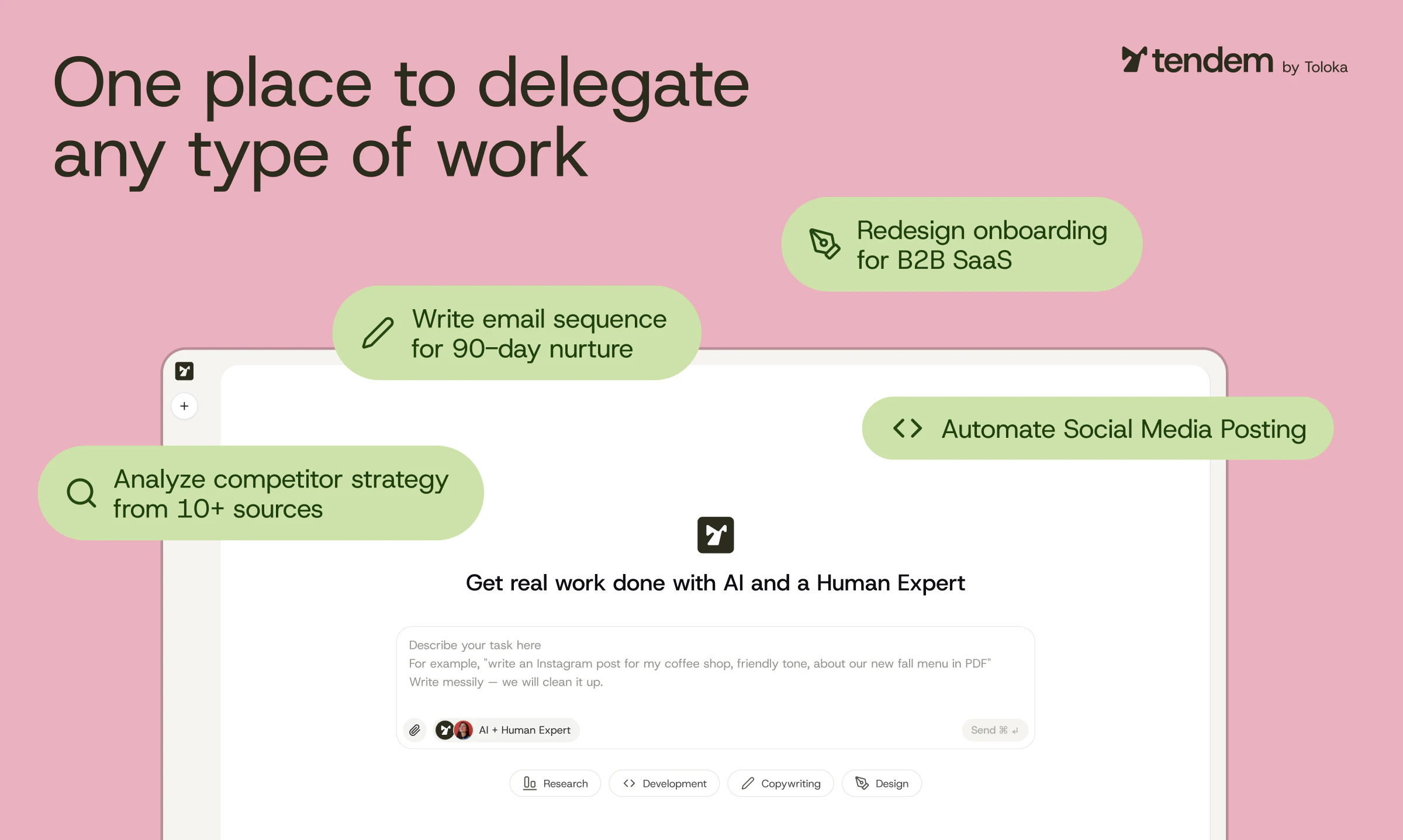
Tendem by Toloka
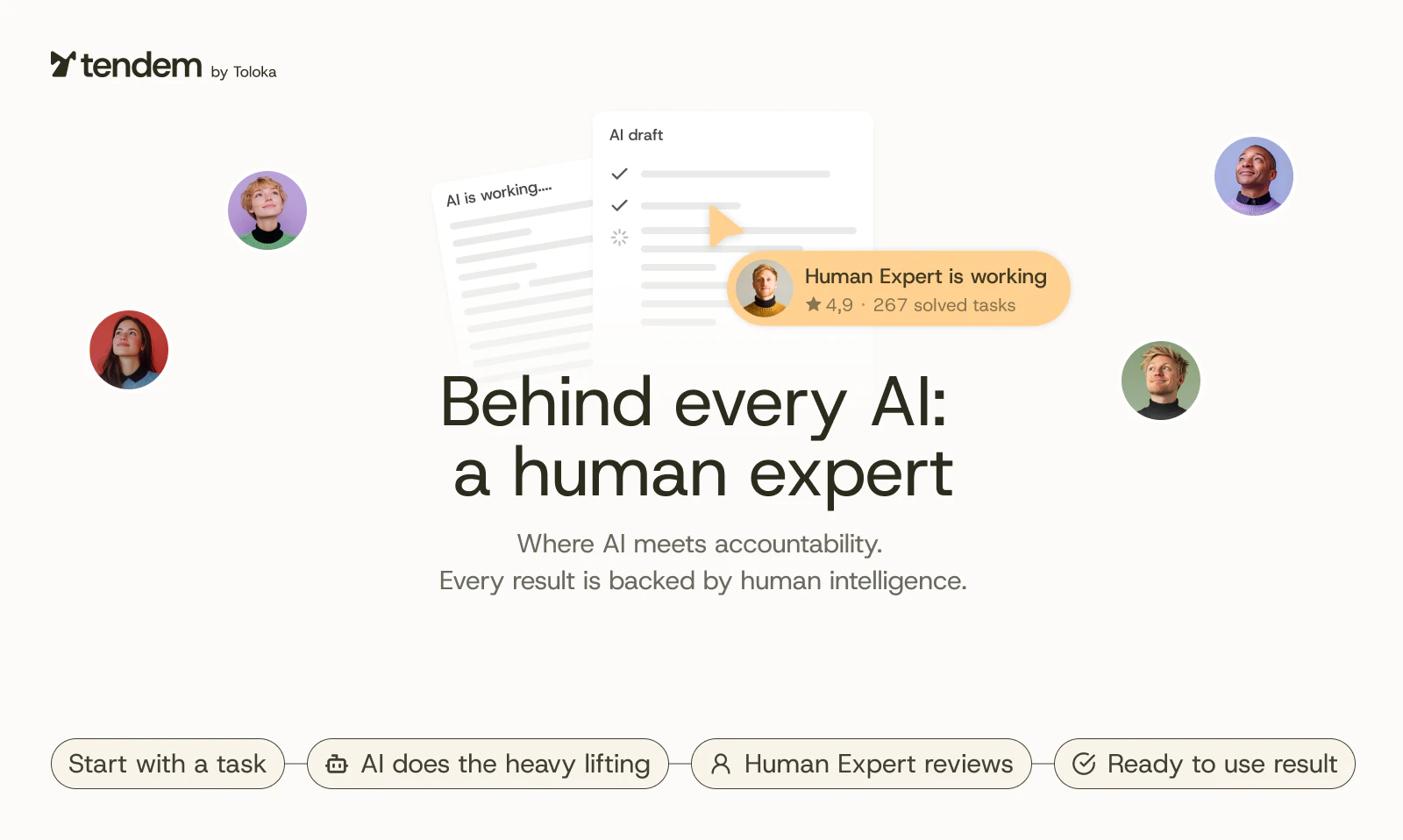
AI platform to hand off any task to a human expert
224
一句话介绍:Tendem是一个将AI代理与经过筛选的人类专家结合的托管平台,专为解决高精度任务中AI输出“最后一公里”需要人工验证与完善的痛点而设计。
Design Tools Productivity Artificial Intelligence
AI+人工协作 任务托管平台 人机协同 高质量交付 专家网络 AI验证 内容审核 数据标注 企业级AI 混合智能
用户评论摘要:用户普遍认可其解决AI输出“80%完成度后需自行修复”的痛点。主要关注:任务与专家匹配机制、周转时间(分钟级还是小时级)、QA流程(人员与AI的双重校准),以及能否替代Apollo、Clay等工具。
AI 锐评

Tendem并非一款激进的创新产品,而是对当前AI应用困境的一次务实纠偏。它精准命中了“AI幻觉”与“自由市场质量波动”之间的夹缝地带:纯AI代理在演示中惊艳,但实际交付时80%的完成度往往伴随着20%需人工收拾的烂摊子;而自由职业平台的人力成本和项目管理负担又消解了效率优势。Tendem给出的解法是“AI初筛+人类终审”的流水线,其核心价值不在于技术突破,而在于将“人机协同”从概念固化为可规模化、按次付费的服务产品。

从专业角度看,Tendem最大的护城河是其母公司Toloka十余年为前沿AI实验室构建“人在回路中”质量体系的经验,这意味着其专家筛选、任务路由和QA机制具备成熟的工业化基础,而非简单的UGC撮合。评论中透露的“LLM-QA + 独立Human QA”两层质检体系,以及针对不同任务复杂度的成本路由策略,显示出其对“人机分工”的深刻理解——知道在哪些环节省钱,哪些环节必须花钱砸质量。

然而,潜在问题同样明显:3到24小时的周转时间在“秒级响应”成为预期的时代,可能存在用户感知落差。此外,如何在与低成本纯AI工具和海量低成本自由职业者的竞争中维持定价与质量的平衡,将是其规模化过程中的核心挑战。本质上,Tendem卖的不是工具,是“确定性”。对于财务、法务、医疗等零容错领域的客户而言,这一定价可以成立,但对于追求极致速度的早期初创团队,它需要提供更具说服力的ROI叙事。

查看原始信息
Tendem by Toloka
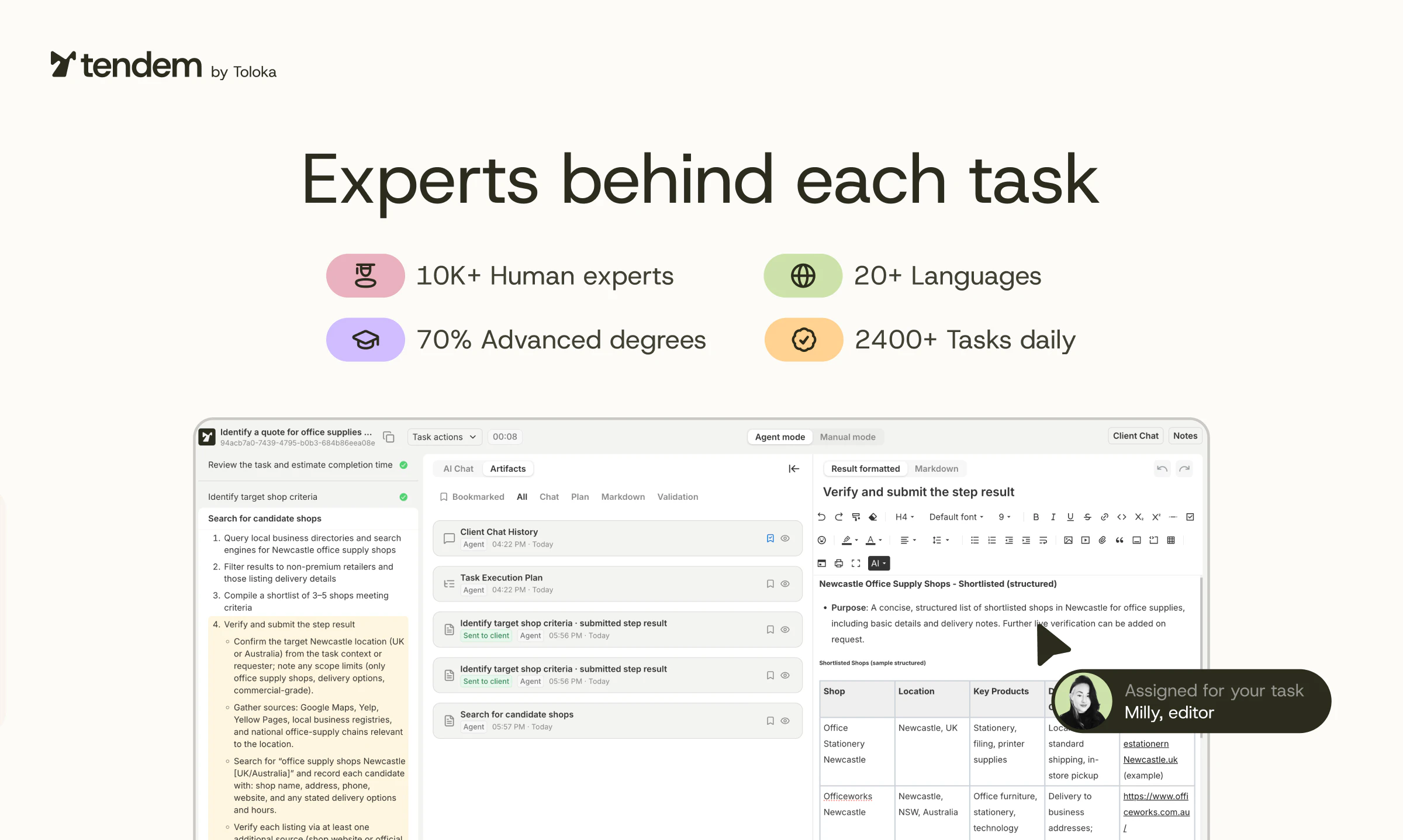
Tendem is a platform where human experts and AI agents complete high-stakes tasks. Submit a task in plain language. AI agents handle the volume. Human experts level up the the final output. What comes back is complete, accurate, and ready to act on. Built by Toloka.ai, a company that has spent more than a decade building human-in-the-loop quality systems for frontier AI labs. Trusted by founders, operators, and AI-native users who need reliable results.

Hey Product Hunt, I'm Natalia from the Tendem team at Toloka 👋

The Problem

Builders today have more AI tools than ever, but turning AI output into work you can actually ship is still harder than it should be.

Most options follow one of two flawed approaches:

Pure AI agents. Impressive in demos, then miss things, hallucinate, and leave you doing the last 20% yourself.

Freelance marketplaces. They work, but quality is a coin flip. You end up project-managing strangers, and the ramp kills the speed advantage.

After watching teams burn hours fixing AI output or chasing freelancers, we built Tendem to actually solve the problem.

How Tendem is Different 🚀

Tendem is a task delegation platform where AI and vetted human experts work together to deliver verified output, for work pure automation can't finish.

Backed by Toloka's expert network. 10,000+ vetted specialists across design, dev, copywriting, research and more — the same humans who help train the AI models you're using elsewhere.

AI + human expert in every task. No "AI-only" tier. Every output gets reviewed, corrected, or finished by a vetted human before it ships back to you.

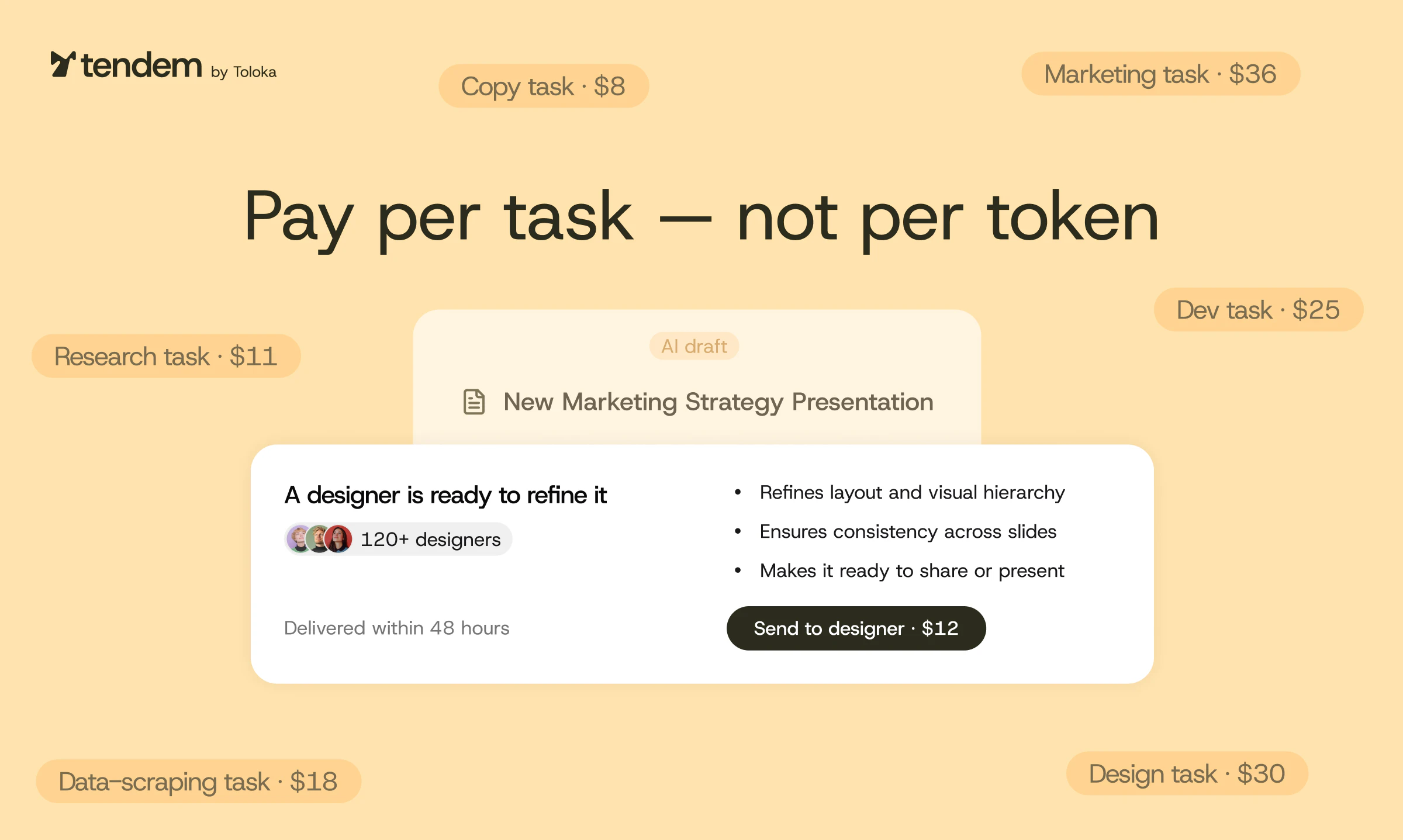
Per-task pricing. Pay for the tasks you send. No seats, no contracts, no committing to volume you don't have.

Who is this for?

If you're a founder, builder, or small team that's tired of copy-pasting AI output and thinking "well, now I have to fix this" — then Tendem is for you. Especially if your work mixes things AI is almost good at with things that absolutely have to land right the first time.

🔗 Get started today: try Tendem at tendem.ai. 20$ for our first task is on us.

33
回复

@natalia_mikhailova seriously love AI for how it can pretty much FREE US up so we can focus on more important things

9
回复

@natalia_mikhailova Tendem sounds like a solid bridge between AI speed and human accuracy especially for work where almost right isn’t enough. Nice idea for shipping reliable outputs. 🚀

0
回复

@natalia_mikhailova it's pretty daring to be none of the existing categories and becoming one.. I bet the more AI platforms will be heading into this direction of relying more on human-in-the-loop expertise!

0
回复

For anyone curious about the thinking behind Tendem: we wrote a white paper a while ago covering how Tendem works, the metrics we care about, and how it compares with other AI tools and workflows.

You can check it out here: https://arxiv.org/abs/2602.01119

25
回复

@perrymason I have this paper memorized at this point!

2
回复

@perrymason "A Human Expert is a professional who adds the kind of reasoning and contextual awareness that models cannot yet provide" - this part is so important to emphasise.

0
回复

Hey Product Hunt – I'm Egor, Head of Engineering at Tendem by Toloka. 👋

The post you're reading right now? I asked AI to write it for you.

And you know what? It was fast and technically fine.

Clean structure, correct grammar, all the usual launch words: “AI-powered,” “seamless,” “revolutionary.”

It was the kind of text that says everything and makes you feel nothing. The kind of post you scroll past before the second sentence.

And that's exactly the problem.

AI can produce something that looks finished very quickly. But “looks finished” is not the same as “ready to ship.” Real work needs expert judgment, context, human taste, and verification.

That's why we built Tendem.

Tendem combines AI with vetted human experts. AI handles the fast parts. Humans review, correct, finish, and QA the output before it gets back to you. So if you've ever used AI and thought, “Cool… but now I still need to fix this”, Tendem is for you.

We're launching our open beta today, and we’d love your support, feedback, and toughest tasks.

Your first $20 task is on us.

Try Tendem → tendem.ai

Share feedback in the comments – we’ll read everything.

19
回复

@elipski well done Yahor, what was the biggest challenge building it?

0
回复

I used to be just a digital marketer. That used to be enough.
With AI in the game, expectations on marketers grew tenfold.

My clients of the past months wanted someone who could vibecode a whole website from scratch, build a brand design system, create a verified leadlist, set up paid media campaigns, produce video and image ads, and write all kinda organic content.

I became that one person for them, a marketing builder, 'cause they needed speed, no over-explaining and full executional trust.

On my end, it meant hours of advanced AI prompting, setting up Claude Chat, Cowork, Code and Design to work in parallel on Max tier, all while verifying output by Perplexity and humanazing it with Gemini. ChatGPT was there occasionally to support me mentally.

Then I came across Tendem.

Tested it as a founder, and got stunned. I could hand off half of my tasks, and get the final results, ready for my clients' work. Hours saved on my end.

I first got kinda pissed off at them for making it so easy for users to delegate tasks. Who would need my help then?

Then I decided - I could just very well be part of the team scaling this platform, 'cause it's straightforward awesome.

Kudos to the team, and so thrilled to be part of this journey!

16
回复

@thisisgenya The ultimate plot-twist.

2
回复

One thing I’ve personally been using Tendem for a lot is competitive and market analysis work.

A surprising amount of useful information still lives across fragmented sources, pricing pages, ads, PDFs, gated content, or places agents struggle to reliably interpret. Having a workflow that combines AI research with human review has been genuinely useful for getting a more complete picture instead of just surface-level summaries.

Also worth disclosing: I’m one of the people building it, so I’m obviously biased… but this is genuinely how I use it day-to-day.

11
回复

@ddur must have been fun to build 😎

4
回复

Congrats on the launch Natalia and the Tendem team! 👋

This hits a real pain point. I’ve lost count of how many times I’ve had to spend an hour cleaning up “95% done” AI output that should’ve been shippable.

Love the hybrid approach - pure AI agents are great for speed but fall apart on the last mile, and freelance marketplaces are slow to ramp. The “AI + vetted human on every task” model feels like the middle ground that actually gets you to done.

A couple quick questions:

1. How do you match tasks to the right experts in the 10k+ network? Is it automated based on task type, or is there a human layer there too?

2. What’s the typical turnaround time for something like a landing page copy + design pass?

The $20 credit for the first task is a smart way to let people try it without friction.

Definitely going to test this for some content + research tasks I’ve been putting off. Upvoted 🚀

9
回复

@oreofe_oluwatipin Great questions.
1.Expert matching: it's both automated and human-layered. An AI-based classifier first analyzes the task and determines the required skills and qualifications, and then the system cross-references expert performance history and quality scores to select the most suitable specialist. In short, it's automated routing plus QA-backed matching, not manual assignments.

2. For a turnaround, it's typically between 3 to 8 hours depending on the complexity of the required human effort.

1
回复

I’ve played with Tendem for a few tasks! Love it, and genuinely happy to see tasks take a bit longer for the human in loop part. Helped me with sales leads, just more precise. Also felt nice to have a handshake with a person

8
回复

@jaryd_hermann1 Thanks so much, Jaryd — really glad to hear that! That “handshake with a person” feeling is exactly what we care about: AI speed, but with a human making sure the result is precise, useful, and actually ready to use. Appreciate the support 🙌

1
回复

@jaryd_hermann1 Glad to hear it ❤️

0
回复

@jaryd_hermann1 good results take time indeed. we're conditioned now to instant AI answers, but are totally ignoring the fact that it takes so much time to validate and finalize them

0
回复

congrats on the launch team Toloka 👏

8
回复

@thepetermick Thank you so much! We’re excited to be live on Product Hunt today 🙌

1
回复

@thepetermick thanks Peter, we can't wait to hear how Tendem brings value to your work!

1
回复

@thepetermick THANK YOU

1
回复

Can we keep a specific message for the experts, or is the prompt meant for both the human and the AI when we need something specific to verify, for example?

6
回复

@bengeekly Great question! Experts see the full client conversation context, along with the specific request the agent sends based on the expert’s specialty.

So if there’s any information you want to make sure the expert definitely sees and verifies, the best approach is to include it directly in the chat

2
回复

@bengeekly At the moment, there isn’t a direct client-to-expert chat. The AI first consolidates the client’s request and starts working on the task, and an expert can be involved when human expertise is needed. If there’s something specific you want the expert to verify, the best way is to include it clearly in the task brief/prompt, so it becomes part of the context. + The client can also choose to pass the task to an expert when human input is needed.

1
回复

@bengeekly Our orchestrator handles everything. We make sure that whatever it is that the human needs to do or know is communicated across, but there is no direct channel of communication.

0
回复

this is honestly the part nobody talks about enough.. ai gets you 80% there and then you spend more time fixing the last 20% than it wouldve taken to just do it yourself. the human expert layer makes sense but how do you handle turnaround time, like is it minutes or hours? because speed is usually the whole reason people use ai in the first place

5
回复

@tina_chhabra You’re absolutely right that AI often gets you 80% there — and the “last 20%” can sometimes take disproportionate effort if you’re polishing it manually.

That’s exactly where the human expert layer comes in, but it’s important to set expectations correctly around speed.

If a task is complex and requires deep expertise, it naturally takes more time because a specialist needs to carefully analyze the details, consider the best approach, and ensure high-quality results. In addition, human experts work in realistic conditions and may take breaks, including rest and sleep, which also affects delivery time. This allows them to maintain focus and accuracy rather than rushing the outcome.

In practice, turnaround time depends on complexity: some requests can be handled in minutes, while more involved ones may take hours. The tradeoff is simple — you’re not just optimizing for speed, but for getting the “last 20%” done properly, without the usual iteration loop.

2
回复

@tina_chhabra Gerat Q. Tendem is slower than a chatbot because we're doing multi-step work, browsing, writing code, creating files, coordinating across tools/agents, so it's not just generating text. We're really not trying to compete for speed. What we're trying to win with is accuracy, quality, saving you on tons of back-and-forth+ vetting, briefing freelancers...etc

0
回复

@tina_chhabra It is hours not minutes. Try sending tasks that do not require urgent results such as marketing research, outreach lists and etc. It usually takes less than 30 minutes to find a suitable expert and the whole result in less than 24 hours depending on the task complexity. We see the demand for reliability, not just speed. And I like the idea that while the other expert is working on my task verification, i can do other urgent things=)

4
回复

How do you solve QA process, as both humans and AI can maky mistakes (as we all know)?
If human - it should be expensive, if AI - it subject to hallucinations.

4
回复

@k4black You are right — this is exactly the core challenge when you combine humans + AI.

We solve QA not by relying on a single layer, but with a structured quality assurance system that evaluates both skill and integrity of human experts.

It includes a combination of LLM-based QA and Human QA review, where each delivered task is assessed for accuracy, consistency, and reliability. On top of that, we collect performance data over time and calculate expert scores based on real outcomes.

This continuous evaluation loop helps us maintain quality standards while keeping accountability high across all experts.

So instead of “human vs AI being imperfect,” it becomes a monitored system where both are checked, measured, and improved over time.

3
回复

@k4black so true! We try to get as close as possible with our llm-QA... and the user gets the final say on the results. we have a 100% money-back guarantee.

0
回复

@k4black honest answer — neither alone works, it has to be layers.

we run automated LLMQA on every output (cheap, scales, catches the obvious class: format, completeness, factual mismatch with the brief). on top of that, HumanQA — an expert reviewer who's independent from the expert who did the work. that independence is the whole trick: it stops self-rubber-stamping and catches the "sounds right but subtly wrong" class that LLMQA misses.

cost is handled by routing — high-confidence LLMQA pass ships fast, low-confidence escalates to HumanQA, and a disagreement between layers escalates further. you don't pay for human eyes when the LLM can confidently approve.

10+ years of Toloka HITL work went into figuring out which layer earns its cost where. happy to nerd out on specifics if anyone wants to dig in.

2
回复

I’m building out my GTM motion, can Tendem substitute tools like Apollo or Clay for target lists?

3
回复

@cnydeniz that's what many teams are using it for. Happy to share a promo code and hear your feedback (DM us on twitter/linkedin)

1
回复

@cnydeniz yeah, lead-list building is one of the cleanest use cases for us. AI does most of the work: query construction, scraping, basic enrichment, but it also fabricates emails, invents companies that don't exist, or hits a paywall and silently gives up. And an expert on top verifies the rows, fixes the broken ones, and sometimes writes a quick scraper when the agent can't crack a source (which is itself a skill not everyone has).

1
回复

Just submitted a research task that's been on my desk for ages. Excited to see the results, as it's exactly the kind of thing that requires human judgment to get right. Congrats on the launch!!

3
回复

@carolina_escobar1 Thanks a lot for the support and for being part of the launch!

0
回复

@carolina_escobar1 Thank you! looking forward to your feedback on the final draft.

0
回复

@carolina_escobar1 research punishes shortcuts. needs real expertise, time to actually read sources, and a separate pair of eyes that can spot when an answer sounds right but isn't. on every task the verifier is independent from the person who did the work — so no self-rubber-stamping

0
回复
Really like how Tendem blends AI with vetted experts, it feels like a practical fix for the 'last 20%' problem. How do you see this model scaling as teams grow and their needs diversify?
2
回复

@odeth_negapatan1 We think it's the perfect scaling tool. You can always tap into our expert pool when you need them on task basis...it's taking the AI productivity gains and adding best possible human experts to the mix....but again biased here :P

0
回复

@odeth_negapatan1 This is exactly the question we obsessed over while building it. The short answer: the expert layer is what makes it flexible. AI alone plateaus — but a curated expert network that grows and specializes alongside your needs doesn't. We've seen teams start with one task type and expand to five without changing how they work with Tendem. That's the goal.

0
回复

Interesting how it blends AI with human handoff — most agent platforms go fully autonomous but knowing when to escalate to a human is actually the harder problem. Curious how it decides the threshold for handoff

2
回复

@gangam_saai_sree Thank you for the thoughtful comment. Our system decides how/where human expertise would clearly improve the outcome and routes it there. We let the user know exactly how the expert will add value to the results before launching the task.

0
回复

@gangam_saai_sree the agent flags where it's uncertain, and the client makes the actual call on bringing in an expert. that keeps you in control of when humans enter the loop. We're actively building toward more seamless handoff – orchestrator routing on its own when confidence drops, but we're not there yet.

1
回复

"Love the honesty here—most agents are impressive in a demo but fall apart on complex, multi-step work. Since you’re using Toloka's specialists, is the goal for the AI to eventually 'learn' from the human corrections on the platform to become more autonomous over time, or is the human-in-the-loop always going to be the core philosophy?"

1
回复

@vanshvardhan_sorte what a great and philosophical question. Tendem's stance is the human-in-the-loop is the core value prop and it's not a stepping stone to full automation.

0
回复

@vanshvardhan_sorte great question — and one we think about a lot. Honest answer: it depends on the task. Some workflows will become increasingly autonomous as the AI learns from expert feedback. Others — where judgment, nuance, or real stakes are involved — will always benefit from a human in the loop. We're not chasing full autonomy for its own sake. Quality is the goal, not headcount reduction 😊

0
回复

World class team behind it! 🫰

0
回复

Nice one, Natalia. The "no AI-only tier" thing is the bit that stuck with me ... everyone else treats human review as the upsell, you're making it the floor. Bold pricing move.

Building in a similar space (AI drafts, human approves before anything ships) so I feel the "last 20%" pain hard. Two things I'm curious about:

  1. What's a typical turnaround look like? Per-task pricing is great until you're refreshing your inbox wondering where the human is 😅

  2. Does the expert see the AI's first pass or work blind? I keep going back and forth on this for our own stuff ... seeing the draft saves time but sometimes anchors them into the AI's mistakes.

Good luck today! 🚀

0
回复

@tery_emilson We feel you on that! 😅 The typical turnaround is 6–36 hours depending on complexity, and you get an email notification when it's done, so the intended flow is really submit-and-forget rather than wait-and-watch. Simpler tasks (a logo, a data scrape, a short copy pass) often come back in the 3–6 hour range. Complex research or multi-step builds take longer, but you're also not managing a freelancer through it, so the clock runs without you.

On your second question, this is a genuinely interesting design tension and you've put your finger on something real. Yes, the expert sees the AI's first pass. The intent is that it saves time: the AI has already done the research, formatting, and groundwork, so the expert can focus on what actually needs human judgment rather than starting from scratch. For well-defined tasks that works well. For tasks requiring original thinking, the anchoring risk you describe is real, and it's something we actively think about.
The honest answer is it's a tradeoff we're still calibrating, and we weight it by task type. It's one of the reasons our QA layer exists: to catch cases where the human just polished the AI's mistakes rather than genuinely improving on them.

Would love to hear how you've been thinking about it for your own setup, sounds like you've wrestled with it!

0
回复

How are you making money on this given that the work involves the human learning the context of the job, which isn't as fast as an LLM, and therefore how are you able to pay the experts fairly, assuming you take a cut?

A job that doesn't require much getting-up-to-speed would be better done by an LLM. If it requires strategic thinking, it should be packaged and compensated accordingly.

Second question, how do do your experts deal with context-switching? If I had to do 20 different freelance jobs a day, I'd get tired, which would make me reduce them to 10, at which point I won't be making much money, unless they're full projects, in which case I'd rather go to Upwork or TopTal.

And what's special about how you curate quality versus a freelance marketplace? At 10,000 experts, that's a lot of of competition.

0
回复
@peter_neyra Hi! These are really fair questions — appreciate you raising them. On making money and paying experts fairly: honestly, you're right that for small, low-context stuff with low stakes, a pure LLM is usually the better call. I’d agree with that. Tendem is really built for the messier cases: ambiguous or business-specific work, things where mistakes actually matter, specialized domains (design, engineering, marketing, data) where you need real judgment and multi-step execution, not just a generated draft. It's not trying to replace LLMs for the stuff they're already good at. The way pricing works is we estimate AI and human effort separately — the human-effort portion is what drives expert compensation. So experts get paid based on the actual work involved, not squeezed through some flat rate. And pricing to the customer reflects scope, complexity, and the level of expertise needed. It's a valid concern though — getting this balance right is something we think about a lot. On context-switching: that's a really good point and honestly one of the reasons we designed it the way we did. We're not throwing 20 micro-gigs a day at people — that would burn anyone out. Tasks get routed to specialists in their domain, and a lot of these require real ramp-up — reading through materials, analyzing, iterating. You talk to the agent, and the agent coordinates everything behind the scenes so neither side is dealing with unnecessary overhead. On what's different from Upwork or Toptal: Mainly two things. First, we have a structured QA layer — LLM-based checks plus human review, with performance tracked over time, so quality doesn't rest entirely on you picking the right freelancer. Second, you're not managing experts directly. You give context once in the task, and the agent handles execution and iterations from there. No vetting, no chasing, no juggling multiple people.
1
回复
#4
Theneo
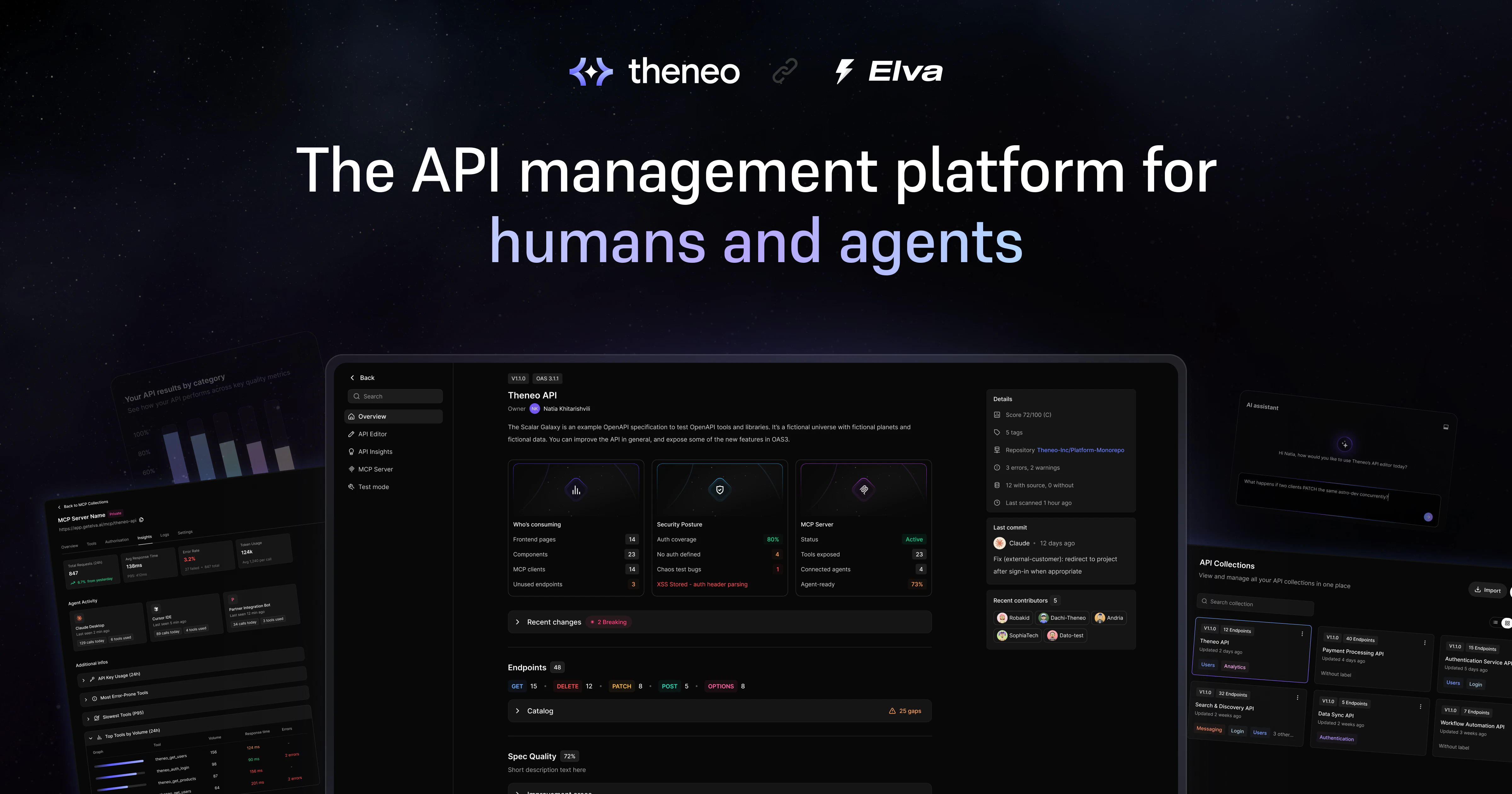
The API management platform for humans and agents
204
一句话介绍:Theneo推出Elva,为人类与AI Agent提供一站式API设计、文档、管理与可观测平台,解决API在Agent调用场景下语义不清晰、文档过时与生产安全不可控的痛点。
API Developer Tools Pitch Dubai
API管理平台 AI Agent开发 API文档自动化 MCP服务器 可观测性 API审计 接口安全 开发者工具 API设计 企业级
用户评论摘要:用户赞赏API目录审计和Agent就绪检查功能,认为能发现隐藏过时端点。焦点集中在:Agent在生产中的语义可靠性(端点语义歧义、不安全工作流)、版本更新自动触发、认证与限流如何处理,以及MCP服务器是否真能扛住生产级压力。建议增加独立审计产品。
AI 锐评

Theneo这步棋下得很准,但风险也不小。

产品的核心洞察在于:AI不是只改变了“谁来写文档”,更关键的是改变了“谁来读文档”。当Agent开始批量调用API,传统针对人类阅读者优化的文档体系(描述性段落、模糊的状态码、不强调幂等性)瞬间失效。Elva试图从“Agent可读性审计”切入,找到“文档存在但语义陷阱多”这一显性痛点,非常有杀伤力。

但需要警惕的是,目前评论区对MCP生产级安全(认证、限流、凭证零存储)的回应仍是“设计承诺”而非“大规模验证”。API管理的最大痛点永远是变更管理和版本兼容——多个Agent并行调用,一个API的非兼容性更改会导致连锁故障。产品目前强调自动更新文档和通知,但“通知”不等于“版本隔离”,也没有公布多环境分治或AB测试策略。

价值不在“帮API变好”,而在“帮API变‘安全’”。Elva更精准的定位应是“API的Agent安全护栏”而非单纯的文档工具。真正能让它颠覆Postman、Swagger的,是对Agent调用行为的事前预防和事后溯源,而非又一个AI美化文档的壳子。关键在于:能否在“建议优化”和“自动化修复”之间,形成闭环,否则仍逃不出“智能报告+手动改”的老路。

查看原始信息
Theneo
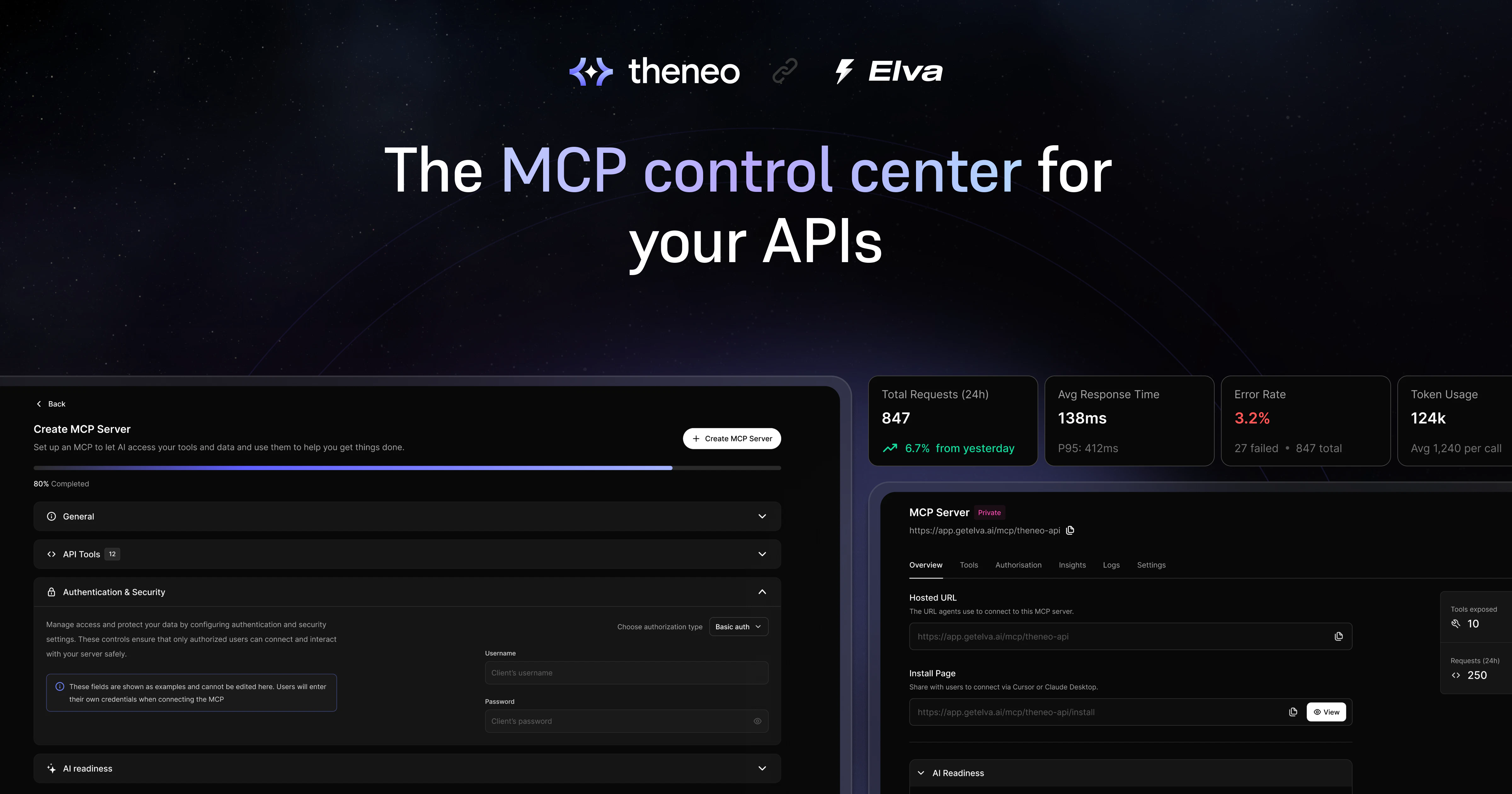
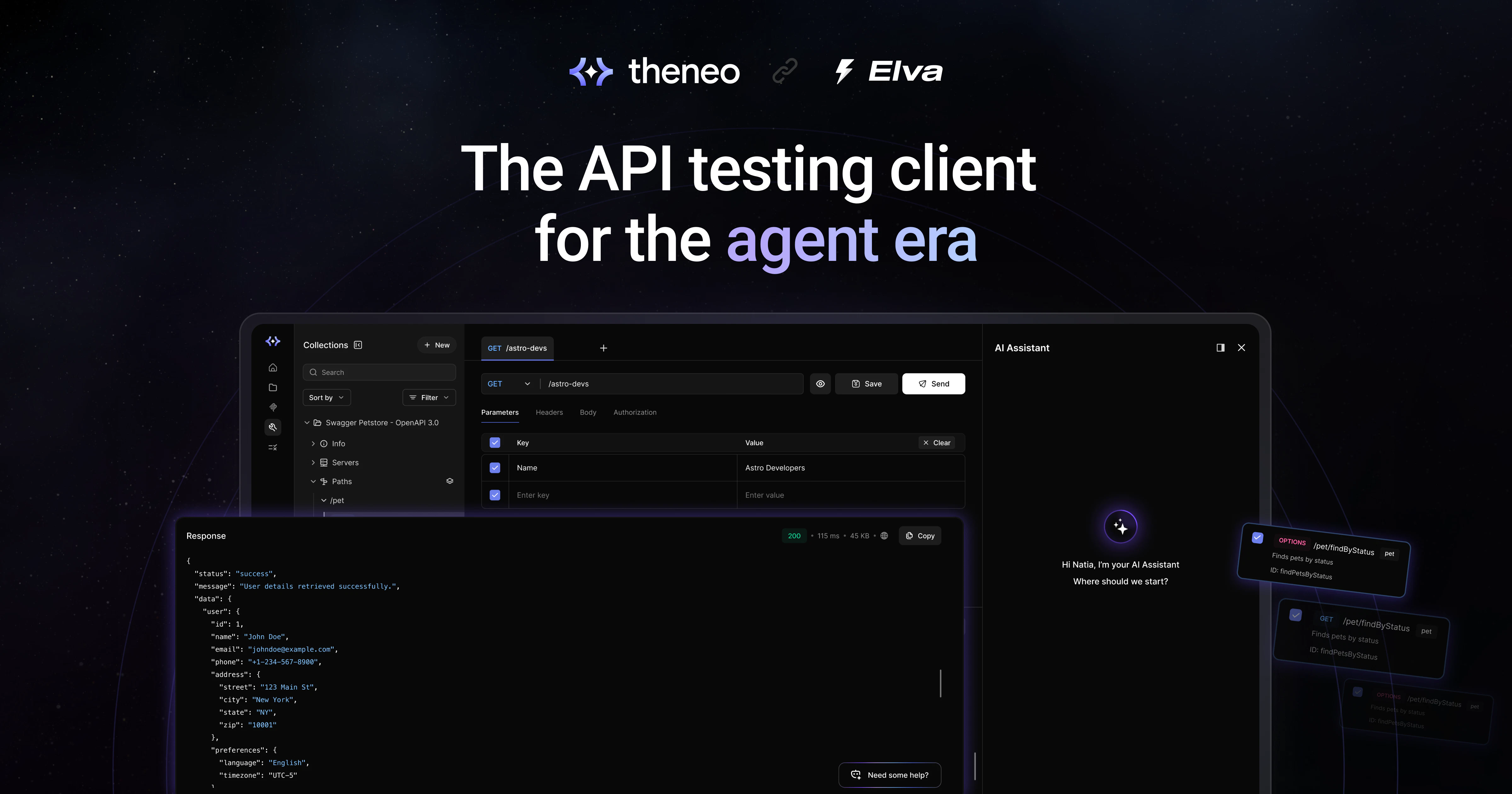
The all-in-one platform to design, document, manage, and observe your APIs. Built for the developers shipping them, the customers integrating them, and the agents now calling them at scale.

Hey Product Hunt 👋

Ana here, co-founder of Theneo.

A quick note on why this launch matters to us personally.

When we started Theneo, we made one bet: AI was going to change how APIs get documented. We were right, but we underestimated the second half of that bet. AI didn't just change how docs get written. It changed who calls APIs in the first place.

Over the past 18 months, our customers have shown us things we couldn't have predicted. Fintechs watching agents hit their endpoints in ways no human ever would. Engineering teams spending weeks hand-rolling MCP servers that crash in production. PMs realizing their API catalog was last updated two years ago and nobody knows what half the endpoints do anymore.

Elva is what came out of those conversations.

A few things I'd love your honest take on:

  1. Does the agent-readiness audit actually surface things you didn't know about your own APIs? (I'm hoping yes. Push back if no.)

  2. The production-grade MCP claim is bold. Try it on a real repo and tell me where it breaks.

  3. What's missing that would make you replace your current API client tomorrow?

I'll be in the comments all day. The harder the question, the better.

10
回复

@ana_robakidze congrats on the launch!

0
回复

@ana_robakidze Most “AI-ready API” tooling today focuses on generating MCP servers or improving documentation structure. But in real production systems, the harder problem is usually semantic reliability; agents misunderstanding endpoint intent, abusing edge-case workflows, or creating unexpected call patterns that technically validate but operationally break assumptions.

How does Elva think about that layer?

For example:

  1. detecting endpoints that are syntactically documented but semantically ambiguous

  2. identifying workflows that are unsafe for autonomous agents

  3. surfacing hidden coupling/dependencies between endpoints

  4. preventing agents from succeeding technically while failing logically

I’m asking because the gap between “callable by an agent” and “safe/reliable for agents in production” feels much larger than most teams realize.

0
回复

the api catalog audit is a smart angle.. most companies have no idea half their endpoints are outdated until something breaks in production. curious how theneo handles versioning tho, like when an api changes does it auto update the docs or does someone still need to trigger that manually

1
回复

@tina_chhabra yessss, that was one of my number one requirement for our latesst agent. It automatically updates the API catalog, APi testings, MCP, api doc, and changelog, also notifies all the stakeholders. And for those that have API contracts, it lets notify correct shareholders about the updates.

1
回复

A lot of API tools feel overwhelming unless you’re technical, so I like the focus on making API management easier for both builders and users

1
回复

@thamibenjelloun Thank you! We built Theneo so that everyone on the team - whether technical or non-technical - can contribute to and work without feeling lost. At the same time, we put a big emphasis on making the docs easy to read and navigate, not just for human users but also for AI agents.

0
回复

@thamibenjelloun Thank you! We built Theneo so that everyone on the team - whether technical or non-technical - can contribute without feeling lost. At the same time, we put a big emphasis on making the docs easy to read and navigate, not just for human users but also for AI agents.

0
回复

I love the API catalog audit feature. When you are an early stage startup this is one of the hardest thing!

Do you offer that as a standalone product in itself. :)

0
回复

Hey Ana, congrats on shipping. The framing ... "it's not just how docs are written, it's who's reading them now" ... is the most interesting thing in this post. Most API doc tools are still optimizing for humans skimming on a Tuesday afternoon.

Two questions on the agent-readiness audit:

  1. What does "agent-readable" actually mean in your audit? Is it stuff like consistent error shapes and idempotency hints, or are you scoring something fuzzier?

  2. When an agent hits an endpoint "in ways no human ever would" ... what does that look like in practice? Curious whether it's pathological retry loops, weird param combinations, or something else entirely. Feels like a goldmine of edge cases nobody documents.

Good luck with the launch! 🚀

0
回复

As someone who deals with complex API integrations, the idea of an 'agent-readiness audit' is huge. It’s one thing to have docs for humans, but another entirely to have them structured for an autonomous agent. Does Elva suggest specific schema improvements, or does it try to wrap the existing mess into a more 'consumable' MCP layer?

0
回复

@vanshvardhan_sorte Great question! Thanks for your comment. Elva does both - it doesn't just suggest schema improvements but also recommends broader API design improvements to make your APIs truly agent-ready.

0
回复
Yayyyyyyyy! I’m so happy to see this launch. 🚀
0
回复

@tessak22 Thank you so much for your support!

0
回复

Claiming production-grade MCP (Model Context Protocol) servers is definitely a bold swing! Most of the ones I’ve seen are basically toy projects. How do you handle authentication and rate-limiting when spinning these up directly from a repo? @mariam_lekveishvili1

0
回复

@vikramp7470 Thanks for your comment! Fair skepticism. A lot of MCP servers today are basically demo code with hardcoded API keys. In our case, generating from a repo or OpenAPI spec only produces the tool interface. Authentication, execution, rate limiting, and observability all run through the hosted runtime layer, not the generated server code itself.
Credentials are handled with a zero-storage approach: we don't persist raw API secrets, and agents don't receive them directly. The runtime injects credentials only at execution time, strips sensitive headers/bodies from telemetry, and scopes rate limits per workspace by default, with optional per-client quotas on top.
The big goal is making MCP servers production-safe by default, instead of every team reinventing auth, isolation, and abuse protection around generated tooling.

1
回复

Designing APIs for AI consumption is a very specific challenge. How does Theneo help with auto-generating documentation that agents can actually parse effectively?

0
回复

@rivra_dev Great question, so while theneo does the auto generated api docs, Elva in this case helps with API management, where it will scan your repo, output api catalog, and outline how well they are designed for AI, what are the issues, what can be fixed quickly, and then after MCP is launched also gives you more insights how they are actually being used and how it can be improved.

0
回复
#5
Causo for Fundraising
Pitch the right VCs, skip the grind
169
一句话介绍:Causo是一个AI驱动的融资助手,通过实时更新的VC数据库和自动化邮件 outreach,帮助创始人自动匹配合适的投资人并发送个性化推销邮件,解决融资中手动研究、定向和沟通的低效痛点。
Productivity Venture Capital Artificial Intelligence
AI融资 VC数据库 投资者匹配 自动化外联 创始人工具 融资效率 邮件自动化 冷启动 初创服务 SaaS
用户评论摘要:用户普遍认可其解决“手动研究VC”和“AI幻觉”痛点,称赞实时数据库刷新和个人化邮件质量。问题集中:何时集成LinkedIn外联?能否追踪VC回复后的情感信号?如何避免邮件进垃圾箱?当前答:邮件为主,情感分析和CRM整合在路线图中;发信使用个人邮箱,有发送量指南。
AI 锐评

Causo踩中了创始人融资中“信息不对称”与“重复劳动”的双重痛点,产品逻辑扎实。其核心价值不在于“AI生成邮件”这个噱头,而在于“实时更新的合伙人级VC数据库”——这是大部分LLM方案无法逾越的护城河。评论中用户对“幻觉”的痛骂与对“实时性”的追问,恰恰证明了这一点。

产品形态上,它本质上是“智能化的SDR(销售开发代表)”替代,把融资中最繁琐的“找人、调研、写第一封邮件”自动化,让创始人回归产品与客户。从已有用户反馈(18家基金5周获4个会议)看,冷启动效果不错,证明匹配质量并非噱头。

但需警惕:一是邮件为主的天花板明显,LinkedIn等渠道的缺失会限制触达深度,特别是对看重私密关系的早期投资人;二是“实时数据库”依赖公开数据源,合伙人秘密离职或基金策略变化等“暗信息”可能遗漏;三是外联效果高度依赖创始人自身公司质量与赛道热度,“跳过苦劳”不等于“跳过功劳”,Causo是放大器而非创造者。后续能否通过构建VC反馈闭环、提升投后匹配的归因能力,将是其从“工具”进化为“平台”的关键。目前来看,对于种子轮到A轮的创始人,这是一笔值得尝试的时间投资,但别期待它替代你与投资人面对面喝的那杯咖啡。

查看原始信息
Causo for Fundraising
90% of startups die from no money, not bad products. Causo's AI agents find matching investors and email them for you while you ship. Upload your deck or website, get matched with specific partners at relevant VC funds, send your pitch. All on autopilot. Let our raccoons do the work while you ship product and talk to customers.
Hey PH, I'm Dawid: I'm a serial (exited) founder who's raised ±$80 million in venture funding and it was NOT fun. Causo is the tool I wish I had when fundraising: -save hours hours hours on manually finding and researching the right VC funds and the right person to reach at that fund -crafting the perfect email -monitoring email campaigns -getting disappointed when low replies It's time to automate this process. At the same time, just prompting Claude to 'find me perfect vcs for my raise pls don't hallucinate' doesn't cut it. Causo runs on a massive, live-enriched database of VCs, down to individual team members. We live research and update recent fundraises, portfolio investments, and backgrounds of investors. All you need to do is plug in your deck, and let our agents do the work. Hope you raise tons of monies with Causo! 🦝
8
回复

@dawid_baranowski 

Love that you called out the claude/chatgpt hallucination problem. i’ve had ai 'find' me vcs that haven't existed since 2018. having a live-enriched database down to the individual partner level is the only way this actually works. rooting for #1 today...

3
回复

@dawid_baranowski Congrats on the launch Dawid. I love the "don't hallucinate" comment :)

2
回复

Cool new launch guys. I like the free investors database - I'm not quite ready to raise. How often do you refresh the vc info?

2
回复

@mike_hill7 Hey Mike - Causo is powered by lots of very busy AI agents that scour the open internet for updates about VCs. The database get updated daily: recent fundraises by VCs, notable portfolio investments, and news down to the individual partner level.

Once you upload your deck and website, we use the VC info to match you with the right partners at funds that are most likely to invest in companies like yours :)

0
回复

@mike_hill7 Thnx Mike! Happy to see you here again!

0
回复

Hey PH - Ivan here.

Fundraising today is still painfully manual:
finding the right funds, figuring out the right partner, writing outreach, tracking replies... repeat for months.

We built Causo to automate the entire workflow.

Upload your deck, and Causo’s agents:

  • find relevant investors

  • identify the right people at each fund

  • research them using live data

  • craft personalized outreach

  • monitor campaigns and replies

No stale VC databases. No hallucinated matches. Just targeted fundraising outreach that actually saves founders time.

Would love your feedback 🙏

2
回复

Love the honesty ... "$80M raised and it was NOT fun" is the most relatable founder line I've read this week 😅

The bet on a live-enriched DB vs prompting an LLM is the right one. LLMs confidently pitching you to partners who left the fund 18 months ago is a real failure mode.


Two questions:

  1. How fresh is "live"? If a partner moved firms last Tuesday, when does Causo know?

  2. Does it learn from outcomes ... e.g. if a thesis-match looked perfect on paper but the partner ghosted three founders in a row, does that signal feed back into ranking?

Rooting for the raccoon 🦝

1
回复

@tery_emilson Hey Tery, appreciate your kind words! And thank you, we try to be direct - much inspiration from PostHog for our voice and branding.

To your points,

1. We tend to catch news on a same day basis, so the scenario of someone leaving a firm should be caught on the same day it's made public - this is the only caveat. We do rely on public data sources (and some private databases), so any moves made in full stealth might be caught not in real time.
2. This is a great point. Currently, we don't yet track things that happen after a VC's initial reply. In the near future, we want to track sentiment of replies (positive or negative, which will improve founders' campaigns), and if/when we start ingesting info about founder-VC interactions downstream of outreach, we could also potentially inform scoring. A real world concern that comes to mind is what we mean by ghosting a founder: did the VC stop replying because something was not to their liking in their conversation (VCs are feeble beasts and whether you get a reply or not can also depend on your own company and product); or did the VC commit to something, but not pull through on their commitment? This particular bit sounds like it would need more thought from us and we haven't gotten to this exact point yet :)

Thanks again for your support, it means the world!

0
回复

this hits home. fundraising outreach is basically the same problem as b2b outreach -- matching the right person, right message, right timing. curious how you handle personalization at scale without sounding generic

1
回复

@nossa_iyamu Appreciate you! About emails: it's basically context-dependent. We gather tens of datapoints as well as qualitative info about every VC team member, and asks users to upload their deck and website, as well as provide details about their raise - any interesting highlights, traction, etc. The more context our agents have, the richer and more distinct emails they can write :)

0
回复

@nossa_iyamu thank you very much!

0
回复

Taking a deck and turning it into an end-to-end outreach campaign is a perfect use case for multi-step agents. Since Causo is monitoring the campaigns, I'm wondering how it handles the data logging. Does it integrate directly with CRMs like Salesforce to log these touchpoints, or does it act as a standalone dashboard for the raise?

1
回复

@vanshvardhan_sorte Great question! As of today, we map replies from VCs to emails - and hand it over to the user to continue the conversation. Sentiment mapping (automatically analyzing if the reply was positive or negative and feeding that into improving future emails) as well as CRM integrations are roadmap items in the Soon bucket :)

Thank you for your support!

1
回复

This looks really interesting. I've spent hours on VC research in the past. Curious if you're adding linkedin outreach soon? That's where I've had a lot of success in the past, it seems you're email only for now?

1
回复

@rickybobby Hi Richard, thanks a lot! Indeed for now we're doing email cold outreach - Linkedin is a little bit more complex when managed with agents as there are some dependencies with inmails, adding connections, and your account limits - so one needs to be careful to execute it correctly. It's definitely a roadmap item. In the meantime you can find linkedin details of the VCs in our database in the product :)

0
回复

@rickybobby Hey Richard! Thank you very much!

Definitely, working on it already but there are a lot of obstacles when trying to work with linkedin :/

0
回复

This is the kind of AI automation founders actually need. Researching VCs manually is exhausting 😅 Congrats on the launch!

1
回复

@j_che Thanks a lot! I know the pain firsthand. Glad it resonated :)

0
回复

@j_che thank you for the kind words! Appreciate it!

0
回复

@dawid_baranowski @ivan_sem Congrats on the launch 🚀 How do you handle the relevance signal? Does Causo match on stage + sector only, or does it factor in things like check size, recent deal activity, or thesis alignment? Building an investor list right now for pre-seed and “match quality” is the hardest part.​​​​​​​​​​​​​​​​

1
回复

@ivan_sem  @francesco2689 Hey Francesco, thanks!

We do matching in two ways:

-stage + sector + geography fit as 1st pass: filters out investors that aren't active at the right stage or in the right category, passes the ones active
-alignment scoring as 2nd pass: agents score all the matched funds by closeness of fit, looking at recent activity, thesis alignment, recent raises, etc

It's a tricky question in the real world: some VCs will invest in a company of a certain kind and look to write more similar checks; others prefer to bet on a single company in a given niche. @ivan_sem spent years working as a VC and I'm from the other side of the table, so we tried to create a product that reflected our lived experience in the sector and best practices :)

We have a 50% off for the 1st month offer on the launch - do feel free to give Causo a spin and see what matches we find :)

1
回复

@dawid_baranowski  @francesco2689 Good question, this is the part we obsess over tbh.

Stage and sector are just the floor. On top we factor in geo, check size fit, recent investments, social posts, podcast and interview appearances, website signals. Basically if it's on the internet we try to find it. Partner-level is where the real signal hides, a fund can look perfect on paper but one partner is writing this quarter and another hasn't done a deal in 18 months, or not touching a certain space.

1
回复

Congrats on launch! Now this one is interesting and one of few projects I would personally you. I understand the startup side of the project but what about investor side. Is it cold outreach from their point of view or they also have Causo account and are reviewing matches directly on the platform?

1
回复

@davitausberlin Appreciate you! For now, this is cold outreach - an investor side platform is definitely a cool idea, but probably one we could think at much larger scale, as the product would only be interesting when there's a large enough critical mass of VCs onboarded. Right now, we're aiming to help smaller teams get their checks :)

0
回复

Congrats, guys, you're shipping faster than Anthropic 😂
Btw how do you avoid these emails getting into spam folder?

1
回复

@nelly_orlova the power of two people, a lot of agents, and enough caffeine to alarm a cardiologist :))

Outreach on Causo goes from your own email - not from a managed outbox like for marketing emails (eg Sendgrid, Mailchimp). Landing in inbox should be easy if your domain is healthy, and warmed up. We have guides and suggested sending limits inside Causo to make sure you aren't sending too many emails per day, which would risk hurting your deliverability:)

0
回复

@nelly_orlova Thank you!

0
回复

Onboarding right now - stoked for this!

1
回复

@will_hickl Can't wait to hear what you think!

0
回复

Congrats @dawid_baranowski , a must have tool for founders, specially the 1st-time-to-raise ones.

QQ, the platform sources and does the outreach to the VCs and angels, right? or just sources the best matches?

1
回复

@khashayar_mansourizadeh1 Thank you! Causo also finds contacts and does outreach. You get hyper-personalised emails automatically generated and sent from your own email.

You can review every email before sending (we don't use templates at all), and every email is rich with context about your company, the details of your fundraise, and the details of the specific partner you're emailing :)

0
回复

@dawid_baranowski  @khashayar_mansourizadeh1 

Thank you Khashayar! You got the intention right!
Really hope to give more founders a chance... So many people give up 10-20 emails in, and their cool stuff gets lost for ever.

0
回复
I have used the product on the starter plan: - it works - we did a campaign of 18 funds and got 3 replies in the first week, and 5 in the second - individual matches were pretty good (we do saas in MENA so the investor pool is limited) - emails are very human like and actually use all the info provided - we were able to schedule 4 meetings so far Having the whole DB open is a nice new addition. GL🚀
1
回复

@mazin_assaf Appreciate you Mazin! Hope you raise lots with Causo 🙏🙏

0
回复

@mazin_assaf Thank you Maz!
Always grateful for your feedback!

0
回复

Pitch the right VCs, skip the grind reads as one of the cleaner positioning lines I've seen this week. Ran a quick Lastest baseline on the homepage while looking — turned up a small UX finding (Start Finding Investors anchors to a #start id that doesnot exist on the page, so the click goes nowhere):

https://app.lastest.cloud/r/ESO6NqR2Nzn2jQJMNJGrow

0
回复

@viktor_fasi Hey Viktor, thanks a lot - and thanks for flagging this through! I've not been able to replicate this error so far - and we've seen a surge of signups today, so it seems the CTA button might be working for most - but I'm digging a bit deeper and will report back here. Thanks again for your kind words :)

0
回复

@viktor_fasi Investigated this further - your tool picked up a dead link as the click is normally intercepted by a JS handler to route users to /auth; but a crawler-like tool will only read the url preview path. Slight oversight on our end to leave the stale reference in url - will clean up, but the good news is users will not get stuck. Thanks for looking into it, appreciate you:)

0
回复
#6
Notion Developer Platform
Build on Notion, not just inside it
162
一句话介绍:Notion Developer Platform 让团队通过 CLI、Workers、外部代理API等工具在 Notion 上构建工作流与智能体,突破传统文档协作,将 Notion 从“工作场所”升级为可编程的“应用与代理基础设施”。
Artificial Intelligence Development Notion
低代码/无代码平台 开发者工具 智能体协作 工作流自动化 API集成 数据库同步 CLI工具 Webhook触发 MCP协议 企业级应用
用户评论摘要:用户肯定其创新方向与落地页设计细节,但核心质疑集中在:Notion编辑器本身卡顿、数据库不稳定、S3媒体链接超期、API速率限制仅3次/秒等问题未解决,认为其不适合作为生产级数据库或CMS,建议先优化基础体验再扩展平台功能。
AI 锐评

Notion Developer Platform 的发布,本质上是一次“借壳生蛋”的叙事升级——它试图用“智能体基础设施”的概念,掩盖其底层数据库长期存在的性能与可靠性短板。从用户尖锐的吐槽可以看出,3次/秒的API限速、过期即崩的媒体链接、祖传的编辑器卡顿,这些根本性问题在开发平台的光环下不但没有消失,反而因为要承载“生产级应用”而变得更加致命。

该平台真正的价值,并非让开发者用Notion替代PostgreSQL或Supabase,而是提供一种“轻量级粘合层”:让非技术团队能在Notion内直接触发线性/Zendesk同步,或给Claude/Codex分配可溯源的任务。这切中了一个现实痛点——企业真正的瓶颈不是缺少强大的数据库,而是数据、流程与代理分散在不同系统,无法形成闭环。Notion凭借已有的用户基数和协作心智,来降低这个闭环的搭建成本。

但风险同样明显:如果Notion不优先解决底层稳定性而只顾堆砌“CLI+代理API”等宏大的开发者体验,最终只会吸引一批尝鲜者,然后被“3秒限流”劝退。平台能否真正成为“智能体基础设施”,取决于Notion愿不愿意从“笔记软件”的底层架构做一次痛苦的硬核重构。否则,这只是一张漂亮的建筑图纸,地基却还在漏风。

查看原始信息
Notion Developer Platform
Notion Developer Platform lets teams build on Notion with CLI, Workers, database syncs, agent tools, webhook triggers, MCP, and External Agents APIs, so data, workflows, and agents can operate inside the same shared workspace.

Hi everyone!

Notion used to be a place to work in. Now it’s a place to build on.

This release makes Notion more than a workspace and closer to agent infrastructure. By introducing hosted Workers and a dedicated CLI, developers can now deploy data syncs (like @Zendesk or @Linear) and custom agent tools entirely on Notion's infrastructure.

With External Agents API, you can now bring your own agents—whether it's Claude, Codex, or an in-house build—directly into your workspace. They operate as first-class collaborators that your team can mention, assign tasks to, and review.

The Developer Platform unlocks the full potential of agents for your entire team. What will you build?

4
回复

Why?
Why not focus on fixing the editor and the slugginess first?!

As a developer .... I feel like Notion is an incredible workspace tool for note-taking, but it is fundamentally not built to be a reliable production database or a headless CMS.

Has anyone actually managed to build a stable, scalable production app on top of Notion without losing their mind?

Think about my biggest pain points:

  • Expiring S3 Media URLs == game over

  • The block payload is worse than walking on magma

  • API Ratelimits is 3/s

What does your caching infrastructure look like?

1
回复
the landing page is next-level
1
回复

@fmerian The footer has a tiny surprise. Press space 👀

1
回复
@zaczuo no detail is too small!
1
回复

This looks pretty neat. Can you integrate custom code snippets directly, or is it more about using pre-built templates?

0
回复

The dedicated CLI for deploying custom agent tools is exactly what was missing for serious builds. I love the idea of agents as first-class collaborators you can actually 'assign' tasks to. Does the API allow the agent to report back its 'reasoning' steps within the Notion comment thread, or is it strictly focused on the final output/task completion?

0
回复

It’s really pulling me in!

0
回复
#7
Raindrop Workshop
Open source, free, local debugger for AI agents
159
一句话介绍:Raindrop Workshop 是一款免费开源的本地AI代理调试器,通过实时追踪流和MCP协议,让开发者能本地调试、回放并让AI代理自我修复,解决了代理行为黑盒化和调试效率低下的痛点。
Open Source Developer Tools Artificial Intelligence GitHub
AI代理调试器 开源工具 本地开发 MCP协议 自愈循环 代理追踪 实时流式调试 Claude Code集成 开发者工具 AI工程化
用户评论摘要:用户普遍赞赏其集成简便和实时追踪功能,解决了“不再需要console logging”的痛点。核心疑问集中在如何保证自修复质量(担心修复不彻底)、与Vercel AI SDK调试器的区别、以及自定义可视化支持情况。
AI 锐评

Raindrop Workshop的野心不止于做一个本地调试器,它试图定义AI代理开发的“调试范式”。其核心价值在于两点:一是将代理的运行时状态从远程SaaS“拽回”本地,这不仅仅是隐私和延迟的优化,更意味着开发者获得了完全的掌控权——可以在离线环境下逐token分析、任意修改提示词并即时重放,这是任何云端仪表盘都无法比拟的调试粒度。二是通过MCP协议将调试器本身变为可编程的AI工具。当Claude Code能读取追踪、编写评估、触发修复时,产品从“被动观察者”跃升为“主动诊断者”,形成了“开发-失败-自愈”的闭环。这一架构巧妙地利用了现有大模型(如Claude)的代码能力来反哺代理开发,本质上是在为“代理即应用”的范式构建底层基础设施。不过,评论中“如何保证自修复质量”的质疑直指核心:当前版本的修复成功率依赖于Claude Code对特定逻辑的理解,一旦任务涉及复杂业务规则或非确定性行为,自动修复很可能会引入新bug。此外,产品目前强依赖Claude生态,对LangChain、AutoGPT等其他框架的支持深度尚待观察。值得肯定的是,开源策略降低了上手门槛,也为其积累修复案例库提供了土壤——是否能从“开源玩具”成长为“工业级标准”,取决于它对多代理协作、长链追踪的支撑能力,以及社区是否能贡献出高质量的评估集。短期看,它是代理调试的效率工具;长期看,它可能是构建可观测、可自我进化的代理系统的基石。

查看原始信息
Raindrop Workshop
Raindrop Workshop is the first local debugger for agents. It's free, local, and open source. Your local agent traces stream, token-by-token, instantly. Another Agent like Claude Code can read them over MCP. Then Claude can write evals, replay traces, fix bugs... and do it all over again. This is the Self-Healing Agent loop. And it’s only possible on Raindrop. Check it out and star on Github here: https://github.com/raindrop-ai/workshop

Hey PH! This is Alexis, Co-Founder of Raindrop.

Your agent fails at 1am, traces are in some SaaS dashboard, harness is on your machine, eval suite is in a third place, and Claude sees none of it.

We've been stuck in this loop. So we built our way out of it. Workshop is the first sane way to debug your agent locally.

It has two parts: a local UI and an MCP.

Every span streams live to a local browser UI and you can replay any agent run with edited prompts, models, and tools.

The MCP lets you create self-healing eval loops. Claude Code reads your traces, writes evals, and fixes what's broken.

It's free, open source, and works with all the agent SDKs you already use.

One command to install: curl -fsSL https://raindrop.sh/install | bash

Excited to hear what you think!

6
回复

@alexisgauba Hi Alexis, Congrats on the launch. How do you ensure quality? Trying automated test and fixes seems to always leave something not done.

0
回复

@alexisgauba This looks great, will surely test it..

0
回复

Welcome to the self-improving agentic world. Very solid team, great launch. Congrats Alexis!

5
回复

@alexmasmej It's a crazy world! Thanks so much Alex

0
回复

This was so easy to integrate and view my agent traces. No more console logging!!

4
回复

@ryandonofrio huge!! love to hear it

1
回复

We've been building an agent and this is exactly what we've been looking for! so excited to give this a spin

2
回复

@yitong_zhang so excited to get your feedback!

0
回复

Really excited about this! If I'm a fan of Vercel's AI SDK local debugger what should I expect from this one? Raindrop integration I assume?

2
回复

@igel amazing! the biggest thing is that it exposes a local MCP so Claude can write evals, replay traces, fix bugs... and do it all over again in a self-healing loop

0
回复

@igel this also allows you save traces, re-run from production, is compatible with pretty much any SDK (including Claude Code!) etc.

1
回复

This is incredible! Using it to improve your prompting and execution is already a massive improvement, but your agent being able to use it itself just tightens the feedback loop. Huge!

2
回复

@paolodamico amazing to hear :)

0
回复

This is really interesting, excited to play with it

2
回复

@aditabrm excited to get your thoughts!

0
回复

What’s the easiest way to hook Raindrop into an existing agent project?

2
回复

@thamibenjelloun great question, you can actually just run the command below and then call a skill from your coding agent and it will set it up!

1 curl -fsSL https://raindrop.sh/install | bash

2 /instrument-agent in your coding agent

Let me know how it goes!

0
回复

Agents have been such a black box, you're all doing an amazing job and helping me make sense of building in the new world. Congratulations and thank you for this!

1
回复

@jamestamplin thanks so much James!! Glad to hear its been useful :)

0
回复

Finally, a proper debugger for the agent era. Bridging traces over to other agents via MCP is such a smart architectural move. I love the focus on local-first—it makes iterating on sensitive agent logic much more viable. Does Raindrop support custom visualizers for specific tool-call outputs yet?

1
回复

@vanshvardhan_sorte exactly! what are you looking for from the custom visualizer? it's also open source so we're excited to see what people contribute :)

0
回复
#8
Resend Automations
Build event-driven email flows
142
一句话介绍:Resend Automations 通过触发、条件、延迟和运行可见性,让开发者构建事件驱动的自动化邮件工作流,解决传统邮件发送无法灵活响应业务事件、缺乏流程控制和反馈的问题。
API Developer Tools
事件驱动邮件 自动化工作流 邮件触发 条件延迟 开发者工具 邮件API 运行可见性 电子邮件基础设施 SaaS工具 自动化引擎
用户评论摘要:用户普遍兴奋,认为该功能让邮件编排更直观,期待集成到自身产品。有用户询问题发支持的自定义事件,官方回复确认可使用自定义事件作为触发条件。此外,有用户提到推出仅一个月已运行超过51万次自动化,侧面验证了需求强劲。
AI 锐评

Resend Automations 的推出,本质上是将 Resend 从“邮件发送管道”升级为“邮件编排引擎”。它抓准了开发者长期以来的痛点:业务邮件不是“发了就行”,而是需要根据用户行为、状态变化、延迟通知等复杂逻辑动态触发。过去这类需求往往需要开发者自建调度任务系统或依赖营销自动化工具(如 Customer.io),前者成本高、难维护,后者则与代码层割裂、灵活性差。

该产品的真正价值在于“事件驱动”与“开发者体验”的结合。通过API自定义事件,开发者可以将业务逻辑与邮件流程强绑定,同时获得运行日志、回溯可见性——这对于调试、审计和后期优化至关重要。评论中用户询问“是否支持自定义元数据”,说明高级用户已经开始考虑更复杂的分支场景,而官方肯定的回答则体现出产品架构的弹性。

不过,目前该产品仍高度依赖 Resend 已有的发送基础设施。如果其定价策略不能匹配自动化带来的额外计算成本(如触发器监听、条件判断),或者缺乏与主流后端的深度集成(如 Webhook 动态响应、数据库变更流),它将容易被 Zapier 等低代码工具或成熟的多渠道平台替代。Resend 最大的护城河在于其“邮件可靠性与交付性”的口碑,Automations 若想走得更远,下一步必须补齐对失败回放、A/B测试以及非邮件渠道的扩展能力。

查看原始信息
Resend Automations
Build event-driven email workflows with triggers, conditions, delays, and full run visibility.

@Resend announced Automations during their launch week a month ago, and @zenorocha just posted an update on X: 518,265 automation runs since then.

Impressive!

2
回复

This feature is exactly what I've been waiting for — it makes arrangement so much more intuitive. Huge thanks to the @Resend team!

1
回复
yesssssss! so excited to integrate this into my products
0
回复

Resend's DX is already top-tier. For the new automations, can we trigger flows based on custom metadata passed through the API, or is it strictly pre-defined events for now?

0
回复

@rivra_dev, you can use custom events as a trigger.

0
回复
#9
Instants by Instagram
Send disappearing, unedited photos to Close Friends
142
一句话介绍:Instants 是 Instagram 推出的独立应用,强制用户用手机实时拍摄、无编辑无滤镜的瞬时照片,发送给“密友”后自动消失,旨在解决社交平台上“过度修饰”带来的真实感缺失,满足小圈子内自发、坦诚的视觉分享需求。
Android Social Media Photography
真实社交 密友分享 瞬时照片 防截图 无编辑 Instagram 生态 贝瑞尔模式 青少年保护 数字极简 下架式应用
用户评论摘要:多数用户认可“无编辑/无上传”的强制真实机制,但质疑防截图技术的可靠性(能否跨OS真正拦截而非仅标记),并指出用户可能找到变通方法。部分评论认为这是BeReal与Snapchat功能的融合,并对仅为此单一功能推出独立App表示困惑。
AI 锐评

Instants 的本质,是 Meta 对“真实性”的一次产品工程化实验。它把“无滤镜、无相册上传”从用户选择变为技术铁律,这比 BeReal 的“定时拍”更激进,也比特效滤镜的反向操作更有结构张力。但真相是:防截图技术至今仍是猫鼠游戏,Android 端几乎不可能绝对封堵屏幕采集;而“密友”列表一旦膨胀到20人以上,信任密度稀释,所谓的“真实瞬间”也会沦为另一种表演。更关键的是,这款独立 App 的功能几乎完全复制了Instagram 客户端内已有的“密友”瞬时分享能力,只是砍掉了入口、加上了约束。它解决的是“朋友间看到的是真实的你”这一幻觉需求,而非“更好地分享”的实用需求。因此,Instants 更像一次品牌公关——向公众传递“Meta 懂真实社交”的信号,而不是一个能规模化独立存活的产品。它的终局很可能是作为 Instagram 的一个可开关功能模块被收回,而不是单独占领用户桌面。Meta 在下注:在滤镜疲劳期,约束反而成为解放。可惜,约束一旦成真,用户也会抛弃。

查看原始信息
Instants by Instagram
Instants is a photo-sharing app that sends unedited, real-time photos to Instagram Close Friends or mutual followers. Photos disappear after viewing and can't be edited or screenshotted. For Instagram users sharing privately.

Meta just launched a standalone app for sharing raw, unedited photos with your inner circle.

What it is: Instants is a photo-sharing app built on Instagram's infrastructure that lets you send real-time, unedited photos to your Close Friends or mutual followers, where they disappear after viewing or after 24 hours.

What makes it different: The no-edit, no-upload constraint is baked into the product at a mechanic level, not just a UI nudge. You can only share what the camera captures in the moment. Combined with disappearing delivery and screenshot protection, the authenticity signal is structural, not optional.

Key features:

  • Real-time capture only — no uploads from your camera roll

  • Photos disappear after viewing, and can't be viewed after 24 hours

  • No edits, no filters before sending

  • Screenshots and screen recordings blocked

  • Undo button to retract before a recipient opens

  • Private archive for the sender only, retained for up to one year

  • Recap to Stories: compile past instants into an Instagram Story

  • Snooze control to pause incoming instants without blocking

  • Teen Account integration with shared time limits, Sleep Mode, and parent notifications

The interesting thing about Instants is that it frames authenticity as a product constraint rather than a user choice. Whether that model holds at scale depends on whether the Close Friends list is actually small and trusted for most users but as a design stance, it's a cleaner take on ephemeral sharing than most.

Note: The standalone app is currently rolling out in select countries only. The feature itself is available globally through Instagram.

P.S. I hunt the latest and greatest launches in tech, SaaS and AI, follow to be notified @rohanrecommends

4
回复

@rohanrecommends Saw the announcement by Sam yesterday. Waiting for it to come in India

0
回复

so basically bereal but with instagrams social graph and disappearing messages. the no-edit no-upload thing is interesting but lets be real people will find workarounds.. they always do. the screenshot blocking is a bold move tho, curious how well that actually holds up technically

3
回复

this makes me nostalgic for the spontaneity of social media. I love it, I hope it sticks around!

2
回复

A standalone app just for this one feature?

1
回复

Making authenticity a hard constraint rather than just a filter option is a bold move. I'm definitely curious about the anti-screenshot tech—handling that reliably across different OS versions sounds like a headache. Does it actually block the capture entirely, or just flag it?

0
回复

Heheh like used to be snapchat?

0
回复
#10
Asteroid
Build Browser, Linux and Windows AI agents in seconds
135
一句话介绍:Asteroid让运维团队和工程师在几分钟内构建用于浏览器、Linux和Windows工作流的自动化AI代理,彻底解决了传统RPA和AI代理在无API的复杂企业系统(如EHR、保险门户、Citrix等)中难以可靠执行的痛点。
Developer Tools Artificial Intelligence No-Code
AI代理构建平台 计算机使用代理 浏览器自动化 RPA替代 企业工作流自动化 多环境支持 元代理 合规自动化 医疗自动化 保险自动化
用户评论摘要:用户高度认可其针对Cookie登录、复杂门户的可靠性;核心关注点包括MFA/验证码处理(支持TOTP和验证码求解器)、失败重试策略(支持自定义)、HIPAA合规下的数据记录处理(提供零数据保留选项)。对“元代理”自动调试功能期待较高。
AI 锐评

Asteroid的定位非常精准——它没有追逐当前AI Agent领域“无所不能”的乌托邦叙事,而是务实地下沉到企业最痛苦、也最有价值的“脏活累活”中:那些没有API、依赖老旧浏览器、需要VPN、动辄MFA验证的遗留系统。这恰恰是当前大多数炫酷的通用Agent框架(如CrewAI、AutoGPT)集体翻车的地方。

其核心价值不在于“AI多聪明”,而在于“工程化做得多扎实”。支持Windows/Linux桌面、持久化文件系统、会话保持、独立邮箱处理2FA、代理支持——每一项看似基础的功能,都是在企业真实生产环境中“翻车”后才能沉淀出的必要基建。135条评论中,用户对MFA、CAPTCHA、失败重试策略等细节的追问,恰好验证了这一点。

“元代理” Astro 的引入是关键一步,它试图将构建和维护Agent本身的工作也自动化,这直接命中了当前AI Agent开发中“调试成本远超构建成本”的痛点。从数据看,单月15万次执行和HIPAA/SOC II合规认证,证明其在小而精的垂直场景(医疗、保险)中已经跑通闭环,具备了极强的壁垒。

然而,风险同样明显。产品高度依赖底层LLM(如Claude Opus 4.6),模型的降级或定价波动将直接冲击其可靠性。此外,目前仍以SaaS形态提供服务,不提供本地部署,这对最高安全要求的金融、国防客户而言是个硬伤(评论中已有提及)。若未来无法在“深度定制”和“规模化复制”之间找到平衡,Asteroid可能会被困在“Best for Healthcare”的标签里,错失更广阔的通用企业市场。总的来说,这是一款“懂行”的产品,但天花板取决于其能否将垂直领域的深扎能力,横向复制到更多行业。

查看原始信息
Asteroid
Asteroid lets ops teams and engineers build computer-use agents for browser, Linux, and Windows workflows in minutes. Our meta-agent, Astro, builds the agents, writes scripts as it goes, and makes repeat runs faster and cheaper. Last month, Asteroid agents completed 150,000+ executions across EHRs, benefits portals, insurance carriers, Citrix, desktop apps, and VPN-protected environments.

👋🏻 Hi Product Hunt! I'm David, co-founder of Asteroid.


We spent the last year perfecting the experience of building computer use agents.


RPA, Playwright, and browser automation are as old as bad software itself. The problem got bigger with AI agents: they're useless if they can't connect to systems that lack APIs. But every computer use agent framework until now has overpromised and underdelivered.


Thankfully, 2026 LLMs like Claude Opus 4.6+ make this hard problem actually solvable.


We went deep on complex customer use cases and took a clear stance: it's better to automate 50 complex browser portals extremely reliably than 1,000 at surface level. We focus on repeatable workflows, not one-off tasks.


A year of iterations, major updates, and small shipped features later, we have a full-stack platform that combines everything you need to build, run, and optimize computer use agents.

Just last month, Asteroid agents completed 150,000+ executions across 1000s of EHRs, benefits portals, insurance carriers, Citrix, desktop apps, VPN-protected environments, including:

We're the only platform supporting:

  • 🌐 Any environment: browser, Linux, and Windows desktop

  • 🖱️ Any interaction mode: visual computer use, structured DOM, or scripted execution

  • 🧠 Any frontier LLM: OpenAI, Anthropic, Google, and more

  • 🤖 Meta-agent: builds and debugs your agents for you

  • 💾 Persistent filesystem: each agent stores scripts, files, and memories for reuse across runs

  • 🔐 Session persistence: agents stay signed in and pick up where they left off

  • 📬 Email inboxes: every agent gets its own inbox for 2FA and notifications

  • 🕵️ Proxy support: stealth browsers, residential proxies, custom VPNs, and Tailscale

  • 👀 Live view & recordings: watch runs in real time, review sessions, and add human-in-the-loop checkpoints

  • 🛡️ Secure & compliant: HIPAA and SOC II Type II certified

  • 🧩 API-first: webhooks, MCPs, and SDKs out of the box

You need all of these together to deploy computer use agents across critical industries at scale. Our use cases inlcude:

  • 🏥 EHR / Patient Record Extraction: hospice and post-acute patient ingestion across agency EHRs

  • 🩺 Voice-to-Form Clinical Intake: GP receptionist call transcripts turned into submitted triage forms

  • 💳 Health Insurance Enrollment: ACA enrollment, plan handling, CRM sync, and binder payments

  • 📅 Patient Creation & Scheduling: ECW patient creation, referral intake, approval checkpoints, and scheduling

  • 📄 Insurance Policy Management: creating, filling, updating, and endorsing policy forms across carrier and agency portals

  • 💬 Insurance Quoting: submitting quote requests, configuring coverage, and extracting results from carrier portals

  • 🔁 Insurance Renewals & Endorsements: initiating renewals, applying mid-term changes, and tracking endorsement status

  • 🧾 Insurance Claims Submission: end-to-end claim entry via Citrix VDI and status tracking across portals

  • 🗓️ Intelligent Scraping: schedule extraction across 10,000+ venue calendars

  • 📝 Form Filling: government portals, banking dashboards, and internal finance tools

If you've used Cursor, Lovable, or Claude Code and felt that magical moment, you'll feel it again when you see Asteroid automating portals you'd already given up on.


Try it now here or book a scoping call to talk through your use case.


Use promo code ASTRO10 for $10 in free credits to get started.


Would love your feedback! 🚀

12
回复

@pie3 It's been so much fun working on the Asteroid platform for the last year or so! We've built something epic!

6
回复

@pie3 love that you included live view and recordings with human checkpoints. for mission-critical workflows like patient scheduling or insurance quoting, you absolutely need that audit trail and the ability to intervene. very thoughtful build.

7
回复

To give you some stats from our small engineering team, over the last 12 months

  • we've shipped 3,093 pull requests

  • we've closed 1,351 Linear issues

  • we've scaled our infrastructure to support over 100x the volume

It's been a long journey, but I'm incredibly proud of what we've built and I'd love you to check it out!

9
回复

@joe_hewett A* team of builders

6
回复

I've used several Agents, specifically browser agents, over the past year and found Asteroid to be the best one. It was actually able to visit sites that require cookies and managed some of the harder to do things I wanted. Excited to see that the team is now going for computer use agents!

6
回复

@riccardo_varenna1 Thank you Riccardo! Computer Use agents definitely present different challenges to the browser stuff that we've been iterating on for over a year. Not having the DOM for example makes it a more difficult environment to work in. But we've seen great success so far on Windows and Linux tasks:)

2
回复

Great to see how the product has grown since inception, congrats on the launch!

(and the new landing is slick ✨)

6
回复

@mikolaj_kacki1 thank you so much, i feel almost embarrassed by the previous versions now..finally you can feel the AGI when you build a coding browser agent:)

3
回复

I'm so proud of the work we've achieved as such a small team. I joined right after the last Product Hunt launch, and looking back I can't believe just how much the platform has changed. The way it looks, and what it offers. The things our agentic workflows are able to do for customers are truly game changing. So many people now rely on automations running on Asteroid, and they won't even know it! Unless they stop and think: "Wait, I got that GP referral so quickly this time around". Let's go! ❤️‍🔥

5
回复

@davide_lct it's incredible how much a small team can ship and how many customers it can serve, when motivated and with high agency!

3
回复
does it retry autonomously, pause and alert the operator, or does it depend on how the agent was originally configured?
4
回复

@veerhunt_agai you can configure that yourself - using prompts or deterministically. You can tell the agent "when failing, try again" or "when failing, ask user for help". We also have fancy logic around detecting selectors on the page which can trigger human intervention. This is super useful for critical applications!

3
回复

Healthcare interoperability is exactly where computer-use agents shine - EHRs don't expose decent APIs. How does Astro handle sessions that need MFA or CAPTCHA mid-flow? That's typically where automation gets flaky.

4
回复

@christian_knaut we have a TOTP generator, email support and captcha solvers! So all of these are solved:)

0
回复

I've been looking forward so much for this launch, and to be able to share what we've been working and show what our computer use agents are really capable of!

The launch of Astro v2 is a game changer, which has enabled the intelligence to be injected into the repeatable workflows much earlier - resulting in faster, cheaper and more accurate executions. This is the natural evolution of the human layer interaction with agents at scale.

Can't wait to continue the work with such a great team!

4
回复

@edupton looking at our previous PH launch and how the platform looked like compared to v2 makes me feel almost embarrassed :D

2
回复

The 'Meta-agent' for debugging is the feature I’ve been waiting for. Debugging browser agents is usually a massive time sink, so having an agent that can troubleshoot its own execution is brilliant. I'm really interested in the HIPAA compliance—how much of the 'Live View' and recording data is redacted or processed locally to maintain that standard?

3
回复

@vanshvardhan_sorte we can sign BAAs for HIPAA compliance and discuss also details around zero data retention! Feel free to book a call on https://asteroid.ai/

0
回复

Love it!

We've been using Asteroid for last-mile automation at Lodo and it's the only thing that's reliably handled the messy switching portals we couldn't crack ourselves. Astro genuinely feels like the magical moment you described. Chapeu!

3
回复

@alteshaus happy to help!

0
回复

Awesome to see all the progress

3
回复

Excited for this! Curious, how would Asteroid work for businesses using legacy systems that are gated (ie Iconote for Rehab Clinics)? Is there any vertical or situation where it can’t be used?

Really stoked to try this out. I’ve been selling agents to mid-market/enterprise businesses and the biggest bottleneck has been gated legacy apps.

3
回复

@jaykhan3 We have many customers across healthcare that use our browser agents across legacy systems that are even behind VPNs, so I'm sure Iconote for Rehab Clinics would not be a problem. I'd not say there is a vertical Asteroid can't be used, one thing we don't do yet is on-premise deployment. I'd recommend building an agent and you will see - https://platform.asteroid.ai/

2
回复

This is epic congrats on the launch! What's been some of the most surprising use cases that have popped up? I imagine things can get a little wild in the world of agents. Would love to hear what your guys' journey has been!

0
回复
#11
Fei Design Mode
Directly edit and tweak UI pixels live with AI agents
130
一句话介绍:Fei Design Mode 让设计师在实时预览界面中直接点击UI元素,通过AI代理可视化调整像素级样式,并一键将修改推送到生产代码库,彻底消除设计到开发的交接瓶颈,让设计师真正掌控最终上线的每一个像素。
Design Tools Artificial Intelligence No-Code
AI设计工具 UI像素级编辑 设计转代码 Figma插件 实时预览编辑 设计交付 无代码开发 设计师提效 设计工程化 Product Hunt
用户评论摘要:用户赞赏该工具颠覆了“提示转代码”模式,实现像素级结对编程。核心关切包括:复杂组件状态处理(官方回应支持状态和代码层面)、代码质量与重构(官方承诺生产级代码且会干净重构)、版本控制与回滚(官方确认内置完整版本控制)。整体反馈积极,认为对小型团队快速交付有巨大价值。
AI 锐评

Fei Design Mode 真正值得关注的不是“AI生成UI”,而是它重新定义了设计交付的终结形态——将设计师从“规格说明书提供者”转变为“直接部署者”。产品切中了长期被忽视的痛点:设计迭代中最耗时的并非“从0到1”,而是“从1到1.01”的像素级微调。传统流程中,每一次“往上移2px”都需要发起一个完整的开发工单循环,效率损耗巨大。

然而,冷静审视其声称的“生产级代码”和“干净重构”能力,这恰恰是最大的技术挑战。如果AI在处理数十次微调后能真正生成符合语义化、可维护的CSS/组件逻辑,而非堆叠内联样式和负边距,那么它确实具备颠覆性。但目前130票的社区热度尚不足以验证其在大规模、复杂组件树中的鲁棒性。产品真正的护城河在于对“像素-状态-代码”三层意图的精准映射,而非视觉编辑本身。

对中小型团队而言,这可能是“设计一人成军”的加速器;但对大型工程化团队,代码质量、设计系统的绑定以及AI修改的审计合规性仍是悬而未决的问题。建议团队尽快展示在React/Vue等主流框架中,经过多次迭代后实际生成的代码片段,否则“生产就绪”的说法仍停留在营销话术层面。

查看原始信息
Fei Design Mode
Design Mode gives designers direct ownership of what ships. Point to any element in the live preview, tweak styles visually, and push straight to your codebase from Figma or Claude Design. No handoff. No translation layer. What you designed is what ships. Finally, real superpowers for designers.

Hey everyone, Tammuz here, CTO and co-founder.

When we first built this, our power users were PMs — people who think at the functional level: "users should be able to filter by date." The agent ran with that and shipped it. Huge unlock.


But as more designers started using us, we noticed something different. The functional part wasn't the hard part for them — the iterative tweaking phase was. They wanted their screens pixel-perfect, and they didn't want to wait on a developer who might or might not land their exact vision.


So we built Design Mode. Same experience as sitting next to a developer, pointing at the screen and saying "no, move that up a bit — the padding is wrong" — except now you're directing AI agents. Click the element, tweak the property, see it live. If you're working in Figma or Claude Design, your design intent flows straight in — no manual transfer, no context lost.


Ask me anything about how it works.

2
回复

AI agents that directly edit live UI pixels is a completely different approach from prompt-to-code tools. This feels more like pair programming at the pixel level. Wondering how it handles complex component states.

2
回复

@gangam_saai_sree thank you for the comment. This what we worked on for so long, so our ability to understand not just in the pixel level, but also in the state level and code level - that's the secret sauce:)

0
回复

The 'build in production' workflow is bold. Does Fei offer a way to rollback or version-control the changes made in Design Mode, or is it intended for real-time hotfixes?

2
回复
@rivra_dev we have a full version control so no hot fix , you can create everything within the send box and if you don’t like something just change the version
1
回复

This is awesome!! Congrats on the launch!

1
回复

That's an awesome addition!

1
回复

The workflow of pointing at an element and having an agent tweak the code live is a huge unlock for the handoff process. I'm really curious about the code quality that comes out of Design Mode, though. If a designer makes twenty micro-adjustments to a single button, does the agent refactor the CSS cleanly, or do you end up with a bunch of layered visual hacks?

1
回复

@vanshvardhan_sorte Great one! it will refactor it cleanly, the code is production ready!

0
回复

the designer-to-code gap is one of those problems everyone complains about but nobody fixes well. if this actually pushes to the real codebase from a visual editor, that's a huge unlock for small teams shipping fast

1
回复

@nossa_iyamu feel free to try our playground!

0
回复

Hey PH! I'm Adir, CEO of AutonomyAI.

We built Fei Studio because of a pattern we kept seeing across every product team we talked to: iteration speed is what determines how fast a company moves. Every change needed a full cycle. PM describes it, designer specs it, engineer builds it. Repeat.

Design Mode collapses that cycle. PMs and designers ship directly from Figma, from Claude Design, or straight inside the live preview. Design intent moves into production regardless of where it originates.

If your team is still waiting on engineering for every small change, this is for you.

Ask me anything.

1
回复
#12
Openclaw OS
Turn one-off chats into persistent, usable apps
104
一句话介绍:Openclaw OS将AI从聊天窗口解放出来,让用户把一次性的对话指令固化成一键运行、可复用的持久化应用,解决AI工作成果被聊天记录淹没、难以管理和复用的核心痛点。
Productivity Open Source Developer Tools GitHub
AI操作系统 持久化应用 生成式UI 智能代理(AI Agent) 工作流自动化 任务管理 效率工具 插件生态 定时任务(Cron)
用户评论摘要:用户普遍认可从聊天到持久化应用的转变是重要方向。核心关注点聚焦于:持久化应用的状态如何跨对话保持?应用是独立前端还是寄生于现有生态?社区期待了解具体的上下文管理机制与实现细节。
AI 锐评

Openclaw OS精准地命中了当前AI Agent落地的“最后一公里”难题——成果的沉淀与复用。其核心价值不在于创造了一个更强的聊天机器人,而在于宣判了“聊天界面作为AI唯一交互形态”的死刑。它敏锐地指出,当AI开始真正处理工作,聊天窗口就成为效率的瓶颈,而将对话碎片“编译”为结构化、可管理的“App”和“Cron Job”,本质上是将AI从“对话型工具”升级为“系统型基础设施”。

这一步棋巧妙之处在于,它没有试图从头造轮子,而是通过“OpenClaw插件”的形式,为其生态内的Agent赋予了操作系统级别的管理能力。这更像是一个“元管理”层,为混乱的Agent产出建立了秩序和契约——你不再需要重复描述需求,而是运行一个由AI为你定制的、随时可用的“工作程序”。不过,真正的挑战在于“生成的应用”的质量、稳定性和可编辑性。如果生成的App只是“一次性玩具”或者“黑箱”,无法让用户进行深度的二次定制和调试,那么“持久化”反而可能变成“僵硬化”。此外,目前深捆OpenClaw生态,意味着它的市场天花板取决于OpenClaw本身的普及度。但无论如何,它为AI Agent的实用化探索了一条清晰且极具启发性的路径:未来的AI竞争,不是比谁更能聊,而是比谁的成果能更有效地“凝固”下来,变成真正的生产力。

查看原始信息
Openclaw OS
Your agent can already do the work. Can you keep up? OpenClaw-OS turns OpenClaw from a chatbot into a system you run. Telegram was never built to manage agent work. Build apps once and let them run. Work organized, not buried in threads.

Hey Product Hunt! 👋
Thrilled to be sharing OpenClaw-OS with you today.

⏳The story
We've been deep in the generative UI world for a while now, building OpenUI as an open standard. Over the past few months, watching how people actually use OpenClaw, the AI that actually does things, a pattern kept showing up. Folks were running OpenClaw inside Telegram, Discord, Slack DMs. Your agent can do the work. The question is whether you can keep up with it.

You'd ask OpenClaw to analyze something, schedule something, run a script. It would. But the output would scroll past, get buried under the next message, and three days later you'd be searching threads trying to find what your own agent did for you. The agent was doing real work. The chat window was the bottleneck.

🔑Apps are the unlock
The thing we're most excited about: OpenClaw-OS lets your agent build apps for your specific use cases. Not one-shot answers. Actual apps that stick around and keep working.

💹A sales dashboard that pulls from your CRM.

💌An inbox triage app that sorts and drafts replies on a schedule.
🗞️A standup digest that assembles itself before 10am.

🧾A pipeline tracker your whole team can open and act on.
🔬A research workspace that watches a set of sources and tells you what changed.

You build the app once, you stop re-prompting forever. That's the shift. You're not chatting with an agent anymore, you're running a small system the agent built for you.

💬Why this beats chat
Once your agent is doing real work, chat falls apart. You can't see what's running. You can't manage multiple agents. Files get lost in scrollback.

OpenClaw-OS gives every part of agent work a real home.
🤖Agents (run multiple, switch like Slack workspaces).
🧵Sessions (named, saved, resumable).
📱Apps (the persistent ones above).
▶️Artifacts (documents and datasets the agent produced).
💿Context (the files and sources it can see, all visible to you).
⏰Cron jobs (scheduled work, in one place instead of buried in a config file).

And one more thing. We brought generative UI into the chat as well. Your agent responds with live UI: a chart when you ask for a sales breakdown, a form when it needs to confirm a meeting, a table when you want a list. The output adapts to the task.

Check it out at

openui.com/openclaw-os.

Drop feedback in the comments, especially if you're already running OpenClaw seriously.


What's missing? Which parts do you actually reach for? We're listening.

5
回复

@pgd interesting shift from chat to os. how does the 'context' handling work for these persistent apps compared to a standard long-running chat session?

1
回复

The jump from a chat interface to a 'usable app' is where most agents fail. Does Openclaw generate a standalone frontend, or is the 'app' hosted within your own ecosystem?

2
回复

Hey@rivra_dev ,
It's an openclaw plugin. OpenClaw is the ecosystem :)
Everything is generated and stored with all your files.

1
回复

Super fun built something with Generative UI that is for everyone. I built a dashboard to monitor Github stars with OpenClaw OS.

1
回复

The jump from one-off chats to persistent apps is exactly where AI tools should be heading. Most chat interactions die after the conversation - turning them into something reusable is a real unlock. How are you handling state persistence across sessions?

0
回复
#13
Open Browser Use
Open-source browser automation for local AI agents
100
一句话介绍:Open Browser Use 是一款开源、本地优先的浏览器自动化工具,通过真实 Chrome 配置文件连接本地 AI 代理,解决了开发者在无需托管服务的情况下实现复杂标签页操作、状态检测与多 SDK 集成的痛点。
Chrome Extensions Developer Tools Artificial Intelligence GitHub SDK
开源 浏览器自动化 本地 AI 代理 MCP 服务器 Chrome 扩展 CDP 命令 多 SDK 集成 标签页管理 本地优先 开发者工具
用户评论摘要:用户关注本地优先和真实 Chrome 配置文件的优势,询问代理管理、多代理标签协调及 CDP 检测等问题。开发者回应支持标准 MCP 协议,并强调其非单一运行时绑定特性。
AI 锐评

Open Browser Use 精准切中了当前 AI Agent 落地中“浏览器自动化”的夹缝需求——既要本地实时、又要真实状态、还要可编程。它没有重造轮子,而是通过 MV3 扩展+原生宿主+MCP 的三层架构,巧妙绕过了托管服务的延迟和限制,直接赋能开发者操控 Chrome 的真实标签页。从 CLI 到 JS/Python/Go SDK 的快速布局,显示出强烈的工具链野心。

但它的真正挑战不在于技术,而在于生态兼容性:与已成熟的 Playwright/Puppeteer 相比,OBU 独特价值在于“真实配置文件”和“标签页级控制”,但这也意味着稳定性依赖 Chrome 扩展 API 和 CDP 的黑盒行为,多代理协调、下载监控等高级特性仍需大量工程打磨。同时,作为一个 100 票的早期项目,文档完善度、社区支持、长期维护性都是潜在风险。

客观来说,OBU 目前更像是“一个有趣的桥梁”,而非替代品。它适合快速原型、本地调试以及 CI 中的轻量任务,但若想在生产级多代理编排中站稳脚跟,还需要在容错机制、跨平台兼容和性能基准上证明自己。MIT 许可证是加分项,但开源项目从“有趣”到“可靠”,中间隔着一整个微服务的距离。

查看原始信息
Open Browser Use
Open Browser Use connects local AI agents to your real Chrome profile through an open-source MV3 extension, native host, CLI, MCP server, and JS/Python/Go SDKs. It can open and claim tabs, run CDP commands, inspect page state, watch downloads, handle file choosers, and keep agent tabs organized without a hosted automation service.
Hi Product Hunt, I'm Leo. I built Open Browser Use after wanting a Browser Use-style Chrome route that was open, local-first, and not tied to a single agent runtime. It pairs an MV3 extension with a native host so Codex, Claude Code, scripts, CI, or your own SDK integration can operate real Chrome tabs while keeping the transport local. What it includes today: - CLI and MCP server for lightweight agent workflows - JS, Python, and Go SDKs - tab claiming/opening/group cleanup, CDP, downloads, clipboard, and file chooser helpers - Chrome Web Store extension plus npm/Homebrew setup path The repo is MIT licensed. I'd love feedback from people building agent tooling or local browser automation stacks.
4
回复

@ifuryst Do you support proxy management?

0
回复

@ifuryst how does it compare to other more established projects like browser-use, notte? it does look like a simple mcp over a browser

0
回复

This is exactly what I've been looking for. I use browser automation heavily for B2B workflows and the local-first approach with real Chrome profiles is a game changer - no more fighting with headless detection. The MCP server integration is a nice touch too. How does tab claiming work when multiple agents need to coordinate?

0
回复

Running against your actual Chrome profile is smart - sites behave very differently with real history and cookies. How do you handle CDP detection? Thats where most local automation setups get flaky.

0
回复

Browser agents become really powerful once they can reliably navigate authentication flows and multi-tab sessions. I like the local/open-source direction here since debugging agent behavior is still a major challenge in production environments

0
回复

Open-source browser use is the missing link for local agents. Does this support standard MCP (Model Context Protocol), or is it a custom automation framework?

0
回复

@rivra_dev  Yes - it supports standard MCP. OBU includes an MCP server, plus CLI and JS/Python/Go SDKs if you want to use it outside an MCP client.

So it is not a custom-only framework; MCP is one of the main integration paths.

0
回复
#14
Edit Mind
Search videos like you'd describe to a friend - 100% local
98
一句话介绍:Edit Mind是一款100%本地的视频内容搜索引擎,帮助视频创作者、编辑和记者通过自然语言对话式搜索,在海量本地视频中瞬间定位所需画面,彻底解决传统云端分析成本高、效率低、隐私无保障的痛点。
Mac GitHub Video
用户评论摘要:用户高度认可其本地化、无需上传的特性,并询问是否支持跨视频统一索引、能否批量选取片段发送至编辑时间线。有用户关心支持的本地AI模型类型,以及未来路线图(如桌面端优化、多格式支持)。创始人回应确认支持批量发送,并分享了自托管版本与技术栈(Whisper、YOLO、DeepFace等)。
AI 锐评

Edit Mind切中了一个长期被忽视但极具痛点的场景:视频素材的“本地化智能检索”。它不仅规避了Google等云端API高昂的按量计费成本(对动辄TB级素材的创作者堪称财务噩梦),更从根本上解决了内容敏感数据的外泄风险。产品在技术实现上颇具深度——结合Whisper进行语音转录、YOLO实现物体检测、DeepFace完成人脸识别,同时加上了Qwen等本地大模型驱动的对话式索引,已经是一个相当完整的本地AI视觉分析流水线。

然而,必须指出其潜在挑战:首先是模型性能对硬件的要求。在用户评价中提到的“Apple Silicon与GPU优化”正是关键——无论是Whisper还是YOLO,在普通消费级设备上处理大量长视频时,索引时间与功耗仍是巨大瓶颈。其次,产品目前生态整合尚浅,是否能原生嵌入Premiere、DaVinci Resolve等主流编辑软件的工作流,将决定它是否只是一个“独立搜索工具”而非“编辑必备插件”。最后,“自然语言搜索”的准确度高度依赖语音转录与视觉模型的质量,错检与漏检在复杂场景下仍难以避免。

但从另一个角度看,Edit Mind代表了一个明确的产品趋势:本地AI不再只是概念,而是正在重塑专业创作工具的底层逻辑。它的真正价值不在于搜索本身,而在于将视频从“不可查询的二进制文件”转变为“可全文搜索、可片段调用的结构化资产”。如果能持续优化性能、开放API并深度融入剪辑流程,它有可能成为视频媒体团队的标配基础设施。

查看原始信息
Edit Mind
Built for content creators, video editors, journalists, and video production companies. Search hours of footage instantly. No cloud. No switching your editing software

Hey,

I'm Ilias, a content creator and software developer. I've been creating content on YouTube for more than 3 years (80 videos, with an average duration of 1 hour). It's become harder for me to find video files and moments

After I got a bill from Google Video API for a couple of video analyses, about 450$ (couple of videos).

So I built a local-first tool that:
* Transcribes your footage on-device
* Analyzes frames: faces, objects, scenes, and text on screen
* Indexes everything so you can search in plain language ("find me when I'm at my desk looking excited")
Now, you can search using natural language to find the exact moment using local AI models. I don't wanna upload my videos to the cloud to get them indexed.

Start indexing your videos: https://edit-mind.com

4
回复

@iliashaddad3 Hi Ilias, Congrats on teh launch, very cool tool. Do you centralize the index (1 query across your 80 vids) or is it individual?

2
回复

Congrats on the launch @iliashaddad3 and @rohanrecommends !

Can the user select multiple found moments and send them as a batch to the editing timeline?

3
回复

Thank you so much@byalexai !

Yes, you can send multiple moments to the editing timeline, either using the search feature or the AI chat assistant.

1
回复

The whole picture looks like an intro from the series "Lie to Me" with Tim Roth. Detecting micro facial expressions etc. :)

2
回复

@busmark_w_nika Haha, love that reference. Thank you!

2
回复

Love the concept as I have about 20TB of videos to search and sort through. Congrats on your launch. Besides adding to the integration with the various editing programs, what is on your upcoming roadmap for the foreseeable future?

1
回复

@st1100 Thank you so much! I'm currently working on the desktop app, making it optimized for Apple Silicon and Windows with GPUs. Improving the performance and speed of indexing videos, adding support for different video formats, and making it an essential part of the workflow as an editor or someone with a lot of videos.

Also, the project isn't only for video editors because I have a lot of feedback and requests from non-video editors, but many users have a lot of videos to index and search.

Also, I have a public roadmap for the self-hosted version: https://github.com/IliasHad/edit-mind/discussions/12

1
回复

Hi Ilias, good luck. Which local models do you think work best with it?

1
回复

@sadegazoz Thank you! I've been using different models. Each model is good at a specific task: OpenAI Whisper for transcription, @YOLO for object detection, gpt-oss or qwen2.5:7b-instruct for the chat assistant, and RAG and DeepFace for facial recognition. I have a self-hosted version that is available on Github (https://github.com/iliashad/edit-mind)

0
回复

Searching video like a conversation is a game-changer for editors. Does this index the visual elements of the frame, or is it primarily relying on the audio transcript?

1
回复

@rivra_dev Thank you. Yes, it indexes the visual elements of the frame, like faces recognized, objects detected, and on-screen text, and it describes the video frame scene plus transcription.

0
回复
#15
Pressmaster.ai
Thought leadership AI for founders and teams
98
一句话介绍:Pressmaster.ai通过“AI双胞胎”将创始人的采访、零散想法和素材自动转化为符合其个人风格的高质量文章、帖子及多平台发布内容,解决创始人没时间将思想转化为专业内容的痛点。
Pitch Dubai
AI内容生成 思想领导力 创始人工具 AI双胞胎 内容策略 多平台发布 个人风格 趋势发现 内容规划 采访转内容
用户评论摘要:用户赞赏采访转内容流程节省时间,能捕捉真实声音;但质疑如何保留创始人独特观点和反面意见,避免模型过度平滑导致内容失真。官方强调通过上下文、句法和语义三重优化来保护个人风格。
AI 锐评

Pressmaster.ai切中了一个真实但极其刁钻的痛点——不是“内容太少”,而是“创始人的思想被AI洗成平庸的鸡汤”。绝大多数AI内容工具本质是“排列组合机器”,产出再多也只能填充流量垃圾,而创始人真正的资产是其独特的判断、取舍和反主流观点。Pressmaster聪明地绕开了这个陷阱:它不试图从零生成,而是通过双胞胎建模优先捕获“句法+语义”,即一个人如何想,而非仅仅如何说。这使其在思想领导力赛道具备了真正的壁垒。

但问题也很明显。评论中用户对“保留负面样本”的疑虑直击核心——AI天然倾向于正向、平滑,而真正的领袖魅力往往来自“对什么说不”。Pressmaster声称建模了“信仰和反主流观点”,但具体如何量化“不被采纳的选项”仍是黑箱。另外,深度依赖输入素材质量意味着前期访谈和语料采集成本不低,这对于孤身作战的早期创始人是否友好?若无法自动化这步,“节省时间”就可能沦为半成品。

短期内,它解决了“从思想到草稿”的70%问题,但剩下的30%——尤其是对独特性的保护能力——才是决定其能否从“工具”升级为“创始人第二大脑”的关键。如果它能持续证明自己不仅产出内容,更能生产“只有这个人才能说出来的话”,那它就不仅是增效工具,更可能成为思想领导力碎片化时代的出版系统。但若只是优化了文案工序,那迟早会被其他更廉价的方案追上。

查看原始信息
Pressmaster.ai
Pressmaster helps founders and teams turn interviews, ideas, and source material into posts, articles, research, and publishing workflows in their own voice. It combines an AI twin, trend discovery, content planning, and multi-platform publishing in one system.

I've been using Pressmaster for a few months and it's got a really smart way of generating content using your own voice. Particularly like the 'interview' mode for crafting articles.

2
回复

@james_bridgman1 Thanks James!!

0
回复

The interview-to-content pipeline is clever. As a founder I have a ton of half-formed thoughts and opinions but turning them into LinkedIn posts or blog articles always falls to the bottom of the priority list. If this actually captures my voice from a quick conversation and publishes it - that's a real time saver.

1
回复

@nossa_iyamu Very true. And taking it one step further: turning raw, half-formed thoughts into high-performing content that fits your narrative and serves a clear growth goal is a whole different story.

That’s why we believe the real leverage starts with the raw material: the founder’s ideas, opinions, experience, and way of thinking.

If you capture that properly, everything downstream becomes much stronger.

0
回复

The interview/source-material angle feels like the right direction for founder content. The hard part with “authentic voice” usually is not just matching vocabulary; it is preserving the founder’s actual judgment: what they reject, what tradeoffs they care about, and where they are willing to be specific.

I’d be curious how much the workflow captures negative examples or “don’t say it this way” notes. That is often where the real voice shows up.

1
回复

@jim_jeffers Good point. Generally, at Pressmaster we intentionally optimize for 3 things.

Context, syntax, and semantics.

Context means we understand who you are, what you stand for, what your expertise is, and what narrative you are building.

Syntax means we capture how you actually communicate: your rhythm, wording, structure, tone, and style.

Semantics means we understand the deeper meaning behind your ideas, not just the words on the surface.

That is where the Twin becomes powerful. It does not just help create more content. It helps turn raw thoughts into content that still sounds like you, fits your narrative, and carries the right meaning across different formats.

0
回复

Thought leadership often suffers when it sounds too 'robotic.' How does Pressmaster.ai capture a founder's specific 'voice' or contrarian takes without smoothing them out?

1
回复

@rivra_dev Hi Rivra, that's a great point.

We don’t start with generic prompts.

Pressmaster first builds a founder’s Content Twin through interviews, past content, website context, positioning, opinions, writing patterns, and the way they naturally frame ideas.

We also map out both syntax and semantics.

Syntax is how someone writes: sentence rhythm, structure, phrasing, pacing, formatting, and tone.

Semantics is how someone thinks: beliefs, opinions, recurring themes, contrarian takes, mental models, and the meaning behind their ideas.

That combination is what makes the Twin powerful.

Pressmaster builds a deeper model of the founder, so it can preserve their actual point of view instead of smoothing everything into generic AI copy.

The goal is to protect what makes them distinct, then help them turn that into high-quality content across channels.

I hope that makes sense

0
回复
#16
Indigo
Stay in touch with your people on Bluesky and Mastodon
92
一句话介绍:Indigo是一款将Bluesky和Mastodon动态整合到一个时间线的社交客户端,解决用户在多平台分散关注、难以统一维护社交圈子的问题。
Social Network Social Media Social Networking
联邦宇宙 跨平台社交 Bluesky客户端 Mastodon客户端 统一时间线 跨帖发布 付费订阅 社交聚合 第三方客户端 Ultraviolet
用户评论摘要:用户肯定其作为联邦宇宙桥梁的价值,并询问是否支持跨帖发布。开发者确认支持跨帖,并称其前身Croissant专为此设计。关于商业模式,用户将其类比Ivory,开发者披露了免费试用、付费互动的订阅制(Ultraviolet),月/年/一次性购买及地区定价策略。
AI 锐评

Indigo的“统一时间线”定位并不新鲜,但其真正的价值锚点在于“跨帖发布”的深度实现。从评论中可知,团队此前开发的Croissant为跨帖功能积累了技术基础,这让Indigo不再是简单的“聚合阅读器”,而是切中了多平台创作者的刚需——在一个客户端发布,内容同步辐射至Bluesky和Mastodon两大阵营。这种“输出端整合”比“输入端整合”更具差异化和黏性。

商业层面,其“免费浏览、付费互动”的模式颇值得玩味。这本质上是在用“信息消费”做漏斗,用“互动与发布”做付费墙,巧妙地避开了与Instagram、Threads等巨头的正面竞争,转而服务联邦宇宙里的轻度用户。但挑战同样尖锐:119.99美元的终身买断不覆盖所有未来功能,这种“减配版永久授权”容易引发用户对“半成品”的信任危机。更关键的是,Indigo完全依赖Bluesky和Mastodon的开放API,一旦平台收紧访问策略或功能变更,这款“桥梁”产品的根基就会动摇。它像是联邦宇宙生态的“精品插件”,价值明确但天花板也清晰——无法独立,只能寄生。对于需要多平台高效发布的重度用户,这是一笔值得计算的“时间成本置换”;但对只想刷时间线的普通用户,免费浏览已足够,付费动力不足。

查看原始信息
Indigo
Indigo is a brand new app that combines Bluesky and Mastodon into a single, unified timeline. It can be tough to keep up with your social circles when they're not all in one place, but Indigo makes it a breeze. Indigo has a modern user interface that helps make common interactions faster and less disruptive, doing its best to provide you all the information you need, without getting in your way.

Exciting to see a new, full featured Mastodon + Bluesky client!

The business model is also interesting; maybe similar to @Ivory for Mac?

Indigo is free to download and try out, but interacting with posts and creating posts requires payment. Our premium tier is called Ultraviolet and has monthly, annual and one-time purchase options.

Prices are regional, based on a purchasing power index and are based on the US prices, which are:

$4.99 per month

$34.99 per year

$119.99 one-time purchase

Please note that the one time purchase may not include all future features in perpetuity as ongoing and that the services, Bluesky and Mastodon, may change what features are available without notice.

3
回复

With the federated web growing so fast, this is a much-needed bridge. Does Indigo allow for cross-posting, or is it primarily meant for consuming feeds in one place?

0
回复

@rivra_dev Yes! Indigo supports cross-posting, and has a bunch of neat features for linking posts across networks. Prior to Indigo, we build Croissant, the sole purpose of which was cross-posting, so Indigo was a natural (if huge) evolution of that

0
回复
#17
OptimizeGEO.ai
Agentic GEO platform for AI search visibility
91
一句话介绍:OptimizeGEO.ai是一个帮助品牌监控并提升在ChatGPT、Gemini等AI搜索引擎中可见度与准确性的自动化GEO平台,解决品牌在AI回答中“被误读”或“不被提及”的痛点。
SEO Artificial Intelligence Pitch Dubai
GEO AI搜索优化 品牌可见度 生成式引擎优化 AI代理 声誉管理 内容策略 自动化监测 市场分析 企业SaaS
用户评论摘要:用户普遍认可产品解决了棘手痛点(如品牌在AI中被错误描述)。有用户指出,多语言场景下GEO评分会失真,因为不同AI引擎对不同语言的回应不一致,单一分数无法指示优先修复的市场。
AI 锐评

这是一款踩准了AI搜索变革节奏的产品。其核心价值不在于“优化”本身,而在于“监测与诊断”——当多数营销人还对AI引擎的“黑箱”反馈束手无策时,OptimizeGEO提供了可量化的“可见度”与“准确性”指标,本质上是为品牌在AI生态系统里建立了第一道质检线。AI代理自动识别问题并归因到内容、引用、PR等环节,将模糊的“提升AI友好度”转化为可执行的工单,这才是实效所在。但产品面临两大挑战:一是用户评论中提到的“多语言GEO评分失真”问题,这暴露了模型间行为差异带来的度量标准不统一,若无法细化到引擎-语言-市场颗粒度,宏观分数反而会误导资源分配。二是AI搜索格局未定,ChatGPT、Perplexity等平台的算法迭代频繁,此刻的“优化策略”可能随时失效,产品需要证明其策略的时效性与自适应性,而非静态报告。整体上看,这是一张通向下一代SEO的入场券,但能否从“工具”升级为“标准”,取决于它能否率先解决跨引擎、跨语种归因的底层逻辑难题。

查看原始信息
OptimizeGEO.ai
OptimizeGEO helps brands win visibility, accuracy, and trust in AI answers. It tracks how your brand appears across ChatGPT, Gemini, Perplexity, Claude, and other answer engines, measuring visibility, share of voice, competitor presence, and accuracy. Then AI agents identify issues, prioritize fixes, and improve your content, citations, website, PR, and AI readiness, so your brand shows up more often, more accurately, and with measurable business impact.

Excited!

8
回复

@saurabh_doshi indeed exciting and a great product helping great brands be seen.

0
回复

aggregate GEO scoring gets weird the moment a brand operates in more than one language. ChatGPT and Perplexity often disagree on the same brand depending on whether the prompt is in English or Polish, so a single number hides which market actually needs the fix first.

3
回复

Having partnered with brands, sports and the creator economy in the last shift to social and mobile, thrilled to do it again in the era of ai search driven discovery!

3
回复

@kirthiga_reddy2 super excited, great product

0
回复

@kirthiga_reddy2 lets do it

0
回复

This looks super helpful. Searched for my brand on Perplexity last week and the answer was completely wrong. Didn't know where to even start fixing it. This is timely. Congrats! 👏

3
回复

@munis_abbas Thanks Munis, we are here to help. Just book a free demo on our website www.optimizegeo.ai and we will take it from there.

3
回复

Looking great! I was actually trying to tackle the same problem manually for https://warpply.com, so I’m really curious to see how well this works in practice. Haven’t tested it yet, but it definitely looks like a huge time saver 👏

3
回复

@nathan_reuter Thanks Nathan, would love to hear more about your experience.

2
回复

Thanks for your post and comment

2
回复
#18
Open Computer Use
Open-source Computer Use MCP for AI agents
87
一句话介绍:Open Computer Use 将本地桌面自动化封装为标准 MCP 服务,让任何 AI 代理(如 Codex、Claude Code 等)都能跨平台操控桌面应用,解决单一平台或闭源代理无法自由集成桌面自动化能力的痛点。
Open Source Developer Tools Artificial Intelligence GitHub
桌面自动化 MCP服务 AI代理 开源工具 跨平台 命令行工具 开发者工具 办公自动化
用户评论摘要:开发者普遍认可“标准化桌面控制”的思路,认为这为自定义代理打开了新可能。主要疑问集中在能否用于自动化数据录入(如从旧系统导出到数据库或表格)。项目方回应肯定,并建议加入校验截图等环节以保证稳定性。
AI 锐评

Open Computer Use 的定位非常聪明——它没有试图再造一个“完美”的桌面操控引擎,而是敏锐抓住了 Agent 生态中“算力过剩、接口孤岛”的错配,用 MCP 这个标准协议做了一次完美的缝合。把 Codex 的“计算机使用”体验提取成跨平台服务,本质上是在为 AI Agent 提供“手脚”的标准化接口,让开发者不再受限于单一厂商的封闭方案。87票不算爆款,但其核心价值在于解耦:“应用操控”从特定产品能力变成可插拔的基础设施。这解决了 Agent 落地的关键卡点——AI 在数字世界里的“行动力”。风险在于:跨平台兼容、非侵入式自动化的可靠性(定位、点击、截图准确性)仍是硬骨头;而且 MCP 协议本身还在早期,生态渗透率有限。如果项目能搞定 Linux/Win 的高频 fail case,并借助 npm 降低部署门槛,它极可能成为 Agent 时代的一根重要“拐杖”——虽不性感,但没它不行。对于工具型产品,别急着吹“改变世界”,先把 “click and type” 做到 99.9% 不出错再谈野心。

查看原始信息
Open Computer Use
Open Computer Use turns local desktop automation into a standard MCP service. It lets Codex, Claude Code, Gemini CLI, opencode, and custom MCP clients inspect apps, click, type, scroll, drag, and take screenshots across macOS, Linux, and Windows. It is open source, npm-installable, and designed to bring the non-intrusive Codex Computer Use experience to any agent stack.
Hi Product Hunt, I built Open Computer Use because the new Computer Use experience should be available to any agent, not just one host. It wraps local desktop automation as MCP, so Codex, Claude Code, Gemini CLI, opencode, and custom clients can inspect apps, click, type, scroll, drag, and capture screenshots. The repo started from studying Codex Computer Use, then turned into a cross-platform runtime with macOS, Linux, and Windows support. It is installable with npm and open for people who want to study, extend, or plug Computer Use into their own agent stack. Feedback is especially welcome on reliability, Linux and Windows coverage, and host integrations.
1
回复

the new Computer Use experience should be available to any agent, not just one host.

I agree 100%.

0
回复

Love the idea of standardizing computer use via MCP. It opens up so many possibilities for custom agents. Do you think it could be used to automate data entry from legacy apps directly into something like a structured database or even a spreadsheet?

0
回复

@phatysddev  Yes, exactly - that is one of the use cases I am most excited about.

Because Open Computer Use exposes desktop control through MCP, an agent can inspect a legacy app, click through forms, read or copy values, and write them into a structured database or spreadsheet. Beyond MCP, it also supports a CLI, JS/Python/Go SDKs, and Skills, so you can plug it into different agent stacks or build a more custom workflow around it.

For production-ish data entry flows, I would still recommend adding validation steps, screenshot/state checks, retries, and human review for sensitive fields, but the core automation path is supported.

0
回复
#19
Enjo Help Center
AI auto-builds your help centers that learn from your team
83
一句话介绍:Enjo Help Center 通过AI自动从网站URL生成帮助中心,并能从团队解决客户问题的过程中自动学习并撰写新文章,解决了帮助中心“建而不用、维护困难”的核心痛点。
Customer Success SaaS Artificial Intelligence
AI帮助中心 知识库自动化 客户支持 工单闭环 AI学习 自动文档生成 SaaS工具 知识管理
用户评论摘要:用户普遍认可AI自动建立和更新帮助中心的价值,尤其赞赏从已解决对话中自动生成文章的功能。评论中未见具体问题或建议,用户更多是表达对AI-first设计理念的认同,以及希望看到实际应用效果的期待。
AI 锐评

Enjo Help Center的发布,精准击中了企业中知识管理与客户支持脱节这一长期痛点。其核心创新并非简单的“AI生成文档”,而是构建了一个“问题-解决-知识沉淀”的自动闭环。这看似简单的逻辑,实则颠覆了传统帮助中心“人工撰写->定期维护->被动查询”的静态模式,将其转变为随客户互动不断自我完善的“活”系统。

产品真正的价值在于,它将“维护成本”从撰写环节转移到了更具价值的“审核”环节。团队不再需要绞尽脑汁预判所有问题并撰写长文,只需处理AI筛选出的盲区问题,并在解决后复核一篇AI草稿。这种模式无疑会大幅降低企业(尤其是SaaS公司)建立和维持知识库的心理门槛与人力成本。

然而,必须冷静看待的是,这套系统的天花板在于“学习质量”。AI自动生成的文档质量高度依赖于初始知识库(网站URL)的规范性和团队解决方案的专业度。如果初始信息混乱,或团队为解决短期问题给出不够标准的答案,AI学习到的“错误”将会被放大和固化,造成知识污染。此外,产品目前200条/月的免费额度和$95/月的起步价,对于小团队或查询量级不高的场景可能是门槛。它能否在更复杂的、多语言或高度定制化的支持场景中保持质量,还有待观察。总的来说,Enjo不是“自动写文档工具”,而是“知识资产管理引擎”,但如何管理好这个引擎的“燃料”(输入质量),是用户和产品自身都需要警惕的核心命题。

查看原始信息
Enjo Help Center
Enjo generates a full help center from just your website URL. Pick a template, answer 2 questions, and you're live. When customers ask questions it can't answer, Enjo learns from the resolution and writes new articles automatically.

Hey Product Hunt! 👋

I'm Rashmi, cofounder at Troopr Labs. We make Enjo, used by 600+ companies including Netflix, Snowflake, and Grammarly for support automation. We're launching Enjo Help Center today.

Here's a conversation we've had with dozens of support teams:

"We know we need a help center. We've been meaning to set one up. But nobody has time to sit down and write 20 articles from scratch."

So the help center never gets built. Or it gets built once and nobody maintains it. Customers can't find answers, they file tickets, and the team answers the same questions every day.

We asked ourselves: what if you didn't have to write anything? What if you just pointed the AI at your website, answered a couple of questions, and got a working help center?

That's what Enjo does. Pick a template, paste your URL, and the AI generates your articles, organizes them into collections, and gives your customers a portal that actually answers questions.

But here's the part I'm most excited about: it gets smarter on its own.

When a customer asks something your help center can't answer, Enjo escalates it to your team. When they resolve it, the AI drafts a new article from that resolution. Next customer with the same question? Answered. No ticket needed.

Every conversation makes the help center more complete. Escalations go down over time, not because someone wrote more docs, but because the system learned from your team's real answers.

Free to start. All features, 200 AI replies/month, no credit card. Your help center stays live even after AI replies are used up. Starter plan is $95/mo when you need more.

What's been the biggest thing stopping your team from building a help center, or keeping the existing one from going stale? Genuinely curious what the blockers look like for people here.

21
回复

@rashjbp HI Rashmi, Congrats on the launch. very cool new feature.

0
回复

Rajesh here, CEO at Troopr Labs 👋

Building a help center is the easy part. Keeping it alive is what kills you.


Every team we talked to had the same story. Built one, it was great for a month, then it slowly rotted. Nobody had time to maintain 40 articles.


The core idea behind Enjo is that a help center should be a compounding knowledge base. Sources go in, AI compiles articles, customers query, and every interaction feeds back to make it more complete. When a question gets resolved by your team, that resolution becomes a new article. The loop closes. Coverage grows from use, not from someone manually writing docs.


To keep that loop running long term, we built the Help Center Agent. Tell it "rewrite all billing articles for our new pricing" or "reorganize everything by user journey." One prompt, bulk changes. You review and approve.


The website URL is the fastest path in, but not the only one:

→ Zendesk/Intercom/Freshdesk tickets? Enjo extracts articles from your team's repeated answers.

→ Docs in Notion, Google Drive, Confluence? Connect them directly.

→ Most teams end up combining 2-3 sources.


We've been building support infra since 2019. Same AI layer that Netflix, Snowflake, and Grammarly run on daily.


Ask me anything. Genuinely.

18
回复

Great to see this live! The closed-loop system where team resolutions automatically become draft articles is definitely the right way to think about knowledge management. It shifts the burden from writing to just reviewing. Congrats to the Troopr team!

7
回复

@vickyonit Spot on. The knowledge already exists in resolved conversations, it just disappears into ticket history. We close that loop. Thanks for the support 🙏

2
回复

Wow, this is how help desk should be redesigned AI-first, ground up. Love that it can build articles from customer quieries. Congrats @raj42 @rashjbp and the team!

6
回复

@rashjbp  @itzsuresh Thanks Suresh! That was exactly the bet. Most help center tools bolt AI onto a manual-first architecture. We started with AI as the foundation and built everything around it. Appreciate the love 🙏

2
回复

I tried Enjo Help Center today and was genuinely impressed by how quickly it understood our product. Right after signup, it automatically generated a clean, well-structured set of help articles using our website and documentation. The content was surprisingly relevant and saved us a significant amount of manual setup time.

4
回复

@niyati_dhingra That's great to hear Niyati, thanks for trying it out! As your portal gets real customer questions, you'll see the self-improving loop start filling in the gaps on its own. Let us know how it goes 🙏

2
回复

Really excited to see companies start using this!

We've been building it for months, so there's a lot to explore but the best part is we made sure resolved conversations don't just disappear, they become the raw material for the next article.

Would love to hear how it lands for your team! 🙌🏻

1
回复

Really excited to finally see how teams use Enjo 🚀.

We actually built this to solve our own support headaches first, and used it internally before deciding to launch because we wanted to be sure it genuinely worked in everyday support workflows.

Would genuinely love to hear what resonates, what doesn’t, and how other teams end up using it. Let’s go 🙌

1
回复

Super excited to be a part of this! Creating a help center has always been a daunting task, and now with Enjo, you can generate contextual articles to answer complex customer queries.

0
回复
#20
DoDocs inc
AI OS automating accounting docs & reconciliation
81
一句话介绍:DoDocs作为会计操作系统,自动执行账单催收、发票对账和欺诈检测,帮会计师与创始人摆脱低效文书工作,实现财务数据实时响应。
Fintech Artificial Intelligence Pitch Dubai
会计自动化 AI对账 发票匹配 欺诈检测 文档追踪 QuickBooks集成 Xero集成 Zoho集成 Workflow自动化 SaaS
用户评论摘要:用户关注已上线模块(文档催收与对账功能),提问AI对账的判断逻辑(确定性/AI混合)及人工审批交互方式。创始人关心边缘费用分类处理能力。团队回复承诺自定义模式和演示支持。
AI 锐评

DoDocs切中了会计行业最痛的“无效工时”问题——53%的时间花在催单、对账这类低价值重复劳动上。其产品逻辑清晰:不试图取代会计,而是以OS层整合QuickBooks、Xero等现有工具,用AI agent替代人工流程,同时保留人工干预的灵活性(如用户可控制自动化程度),这既解决效率痛点又避免职业抵触。

但需冷静审视:81票的Product Hunt数据不算惊艳,且其“二度上市”暗示过往产品未形成爆款。当前仅两个模块(催款与对账)在线,剩余四个要年内交付,功能矩阵完整度存疑。AI金融数据处理合规性(如欺诈检测的误报率、数据安全)和与核心财务系统的深度集成能力是长期壁垒,亦是对手(如Bill.com、Vic.ai)已深耕的领域。

真正价值在于“实时财务问答”——缩短创始人等待会计回复的天数至秒级,这直击中小企业和初创公司融资对账的信任痛点。但若未来不能持续扩展至薪资、关账等复杂场景,并建立生态网络效应,则容易停留在“高级脚本工具”阶段,难以支撑其“OS”叙事。
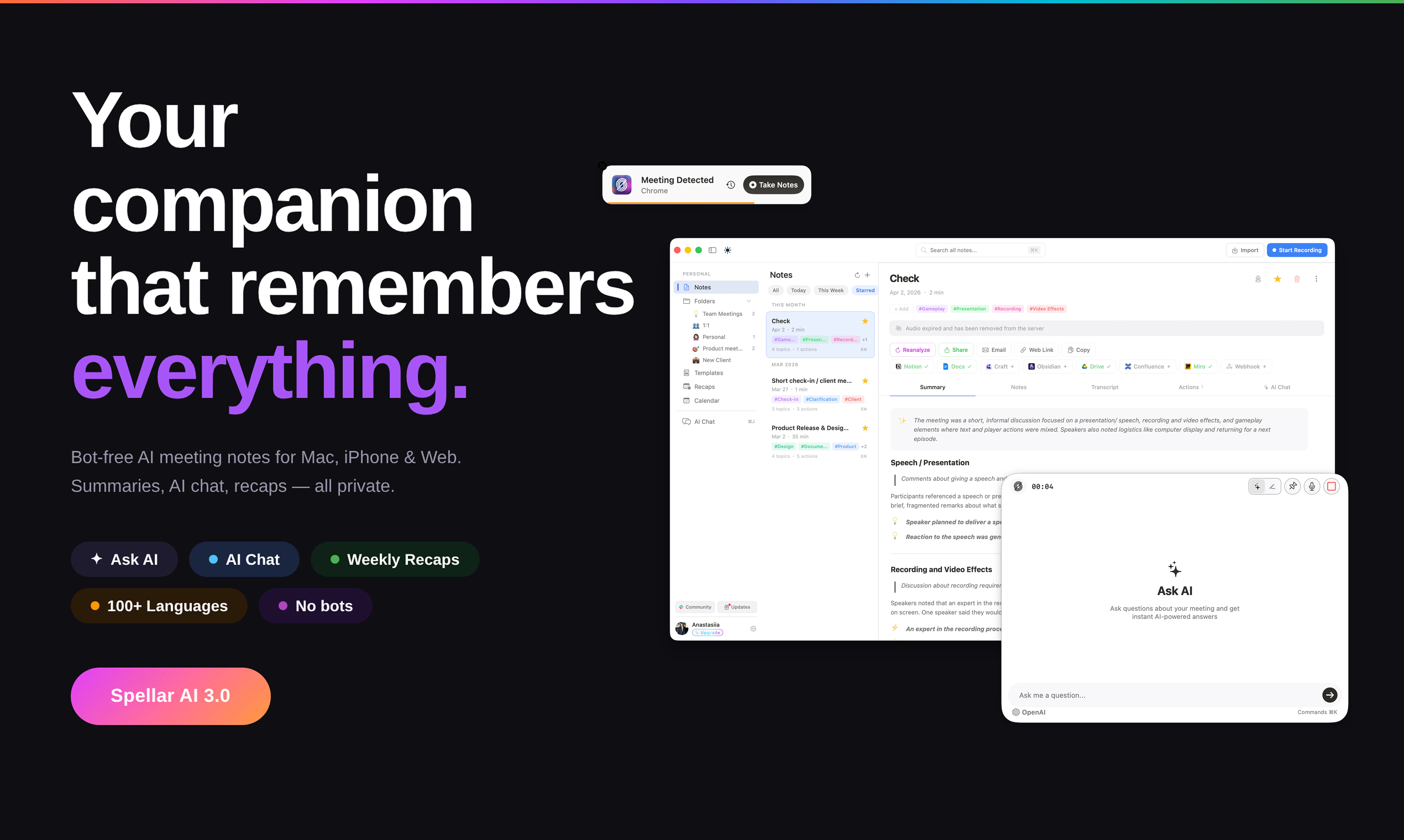
查看原始信息
DoDocs inc
Accountants spend 53% of their time chasing documents, matching invoices, and manually reconciling — work that adds zero value to clients. dodocs automates all of it! Chase loops via email and WhatsApp, AI reconciliation with fraud detection, and real-time financial answers for founders who are tired of waiting weeks for their fractional accountant to respond. Two modules live today. Four more shipping this year.

Hi Product Hunters!

I'm Dan, co-founder of .dodocs — and yes, this is our second launch here, but a very different one.

Our first launch was a document extraction API. Useful, but narrow. What we actually kept seeing — across hundreds of accounting firms and startup founders — was a much bigger problem hiding underneath.

Accountants spend over half their working hours chasing documents, matching invoices, and reconciling statements.

Work that adds zero value to their clients. Meanwhile, founders wait 3–14 days to get a simple answer from their fractional accountant — "what's my cash balance?" or "how much tax do I owe this quarter?"

So we stopped building a tool and started building an OS.

.dodocs is now the Accounting OS — it sits on top of QuickBooks, Xero, and Zoho and runs the work that accounting teams currently do by hand.

What's live today: 🔁 Chase Loops — AI-powered document chasing via email and WhatsApp. Clients get followed up automatically. Escalations happen only when a human is truly needed. Saves 24h/month per firm. Reconciliation — Automatic invoice ↔ statement matching with fraud detection. Flags duplicates and vendor anomalies before they hit your books.

Shipping next: 📅 Period Close · 🏥 Client Health · 📊 Team Performance · 💸 Payroll Agent

We're at 1,000+ users, growing 3× YoY — and we're just getting started.

As a thank you to Product Hunters, we're giving 2 months free — the code is in the last screenshot of the carousel.

Backed by Techstars Atlanta. Built by a team that has lived this pain firsthand.

Would love your honest feedback — especially from accountants and founders in the comments. What module would make you switch tomorrow? 👇

— Dan & the .dodocs team

2
回复

Which part is live today, the document chasing or the reconciliation piece?

1
回复
@othman_katim both are live. We can make a kick off call
0
回复

Hi. Reconciliation is the part I’d want to try first. Is matching deterministic, AI-assisted or a mix? Also curious how you show what was auto-matched vs human-approved.

1
回复
@ihorperkovskyi you can choose level of automation anytime. At first steps it can be fully controlled by human or you can delicate it to AI agent fully. Happy to schedule a demo call and discuss
0
回复

Good luck

1
回复

@dzianis_yatsenka Thank you!!

0
回复

The 'no busywork' promise is huge for founders. How does DoDocs handle the categorization of complex edge-case expenses that usually trip up automated systems?

1
回复

@rivra_dev thank you for your question - we customize it by schemas, generated in our system for your company. It takes 15-20 seconds to do and system trying itself

0
回复