Product Hunt 每日热榜 2026-05-28

PH热榜 | 2026-05-28

#1
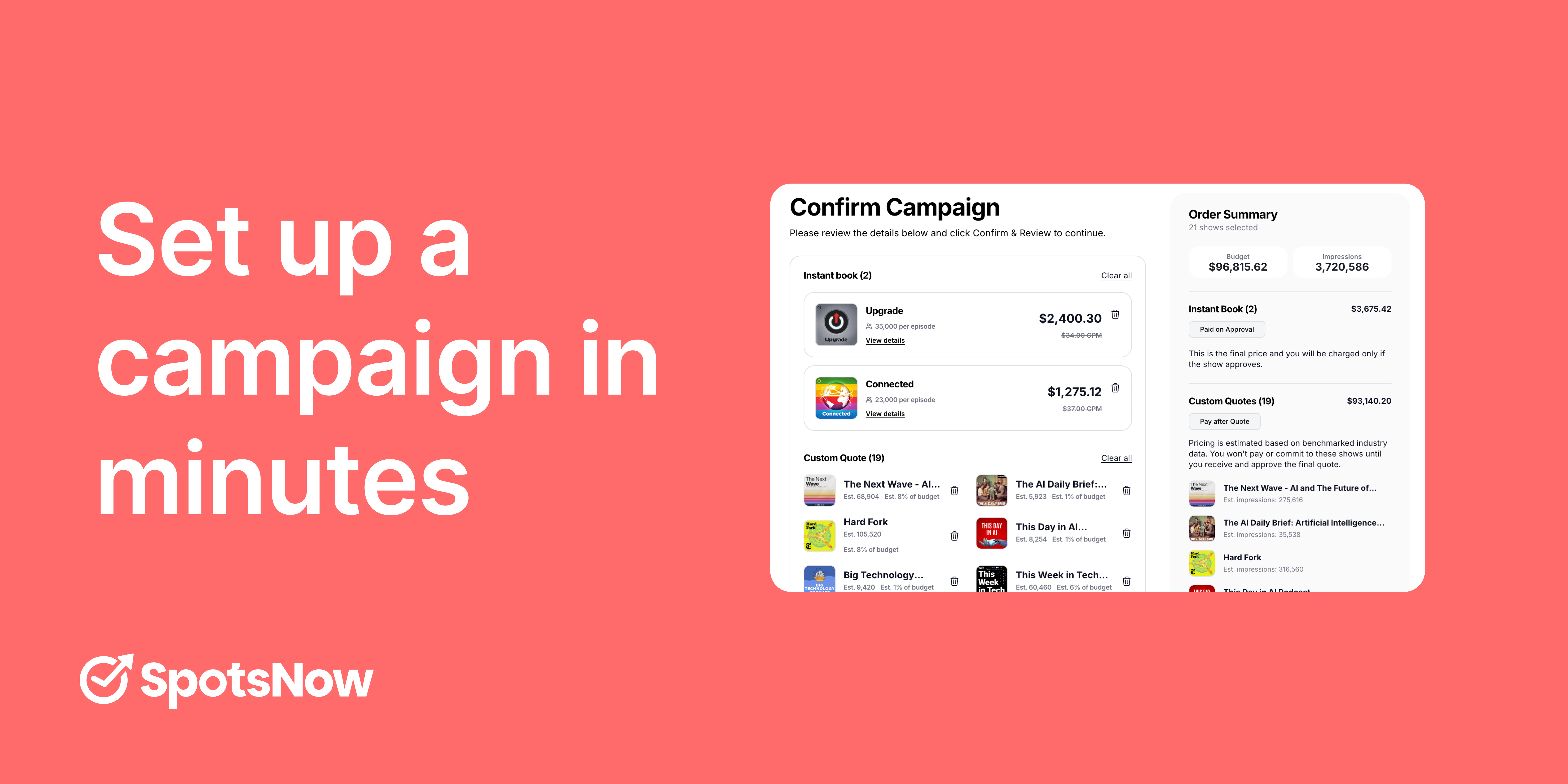
Pancake
OpenClaw in Slack that makes your company autonomous
480
一句话介绍:Pancake 是一个嵌入 Slack 的 AI 代理组织架构,通过设置角色、目标和心跳机制,让公司实现从 0 到 70% 的自动化运营,用户只需设定方向并审批不可逆操作,其余工作由代理自主完成。
Slack Artificial Intelligence Maker Tools
AI代理 企业自动化 Slack集成 自主运营 组织架构 GTM自动化 产品开发 运营管理 开源模板 公司大脑
用户评论摘要:用户高度认可其自主性,称赞“无需 babysitting 代理”和“能提出自己想不到的解决方案”。关键问题聚焦于:如何界定“不可逆”操作(如 API 调用、成本支出)与审批边界,以及如何设置护栏以确保代理只在授权范围内行动。
AI 锐评

Pancake 的“自主公司”口号极具煽动性,但本质上仍是“AI 代理即服务”的进阶版。其真正的价值不在于“取代人类”,而在于将公司内部可标准化的流程(如会议纪要转PR、SDR外联、操作审计)彻底外包给 AI 组织,从而释放出创始人和核心团队的时间——这确实是当前 AI 工具中最务实的切入点。

产品设计的精妙之处在于“心跳”和“叠加式自主”。传统 AI 工具是让人类发号施令,而 Pancake 让代理主动“反馈”并推进任务,形成反向驱动力。这种“被 AI 提示”的体验对习惯自上而下管理的团队是颠覆性的,但也是风险所在:一旦代理的优先级判断偏离了公司真实目标,可能导致大量无效工作。评论中用户对“审批边界”的追问恰中要害——Pancake 将“不可逆”定义为二值逻辑,但现实商业场景中,“发一封邮件”和“关闭一台服务器”的后果差异巨大,需要更精细的权限粒度。

团队用“Pancake 运行 Pancake”的案例虽具营销魅力,但23个代理每天3个任务的数据表明其目前处于“低风险自动化”阶段。关键挑战在于:当代理数量膨胀到 200+,且任务涉及跨部门决策时,如何避免“代理内耗”或“决策雪崩”?此时人类审批者反而可能成为瓶颈,违背“自主”初衷。从产品定位看,它更适合“早期创业公司”或“创新团队”,因为这类组织流程灵活、容错率高;对于大规模企业,当前版本缺乏足够的治理层和安全审计链。

总体而言,Pancake 是一次勇敢的实践——它不再让人类做 AI 的“保姆”,而是让 AI 做公司的“水手”。但“船长”仍需清醒:方向错了,帆再大也只是加速触礁。

查看原始信息
Pancake
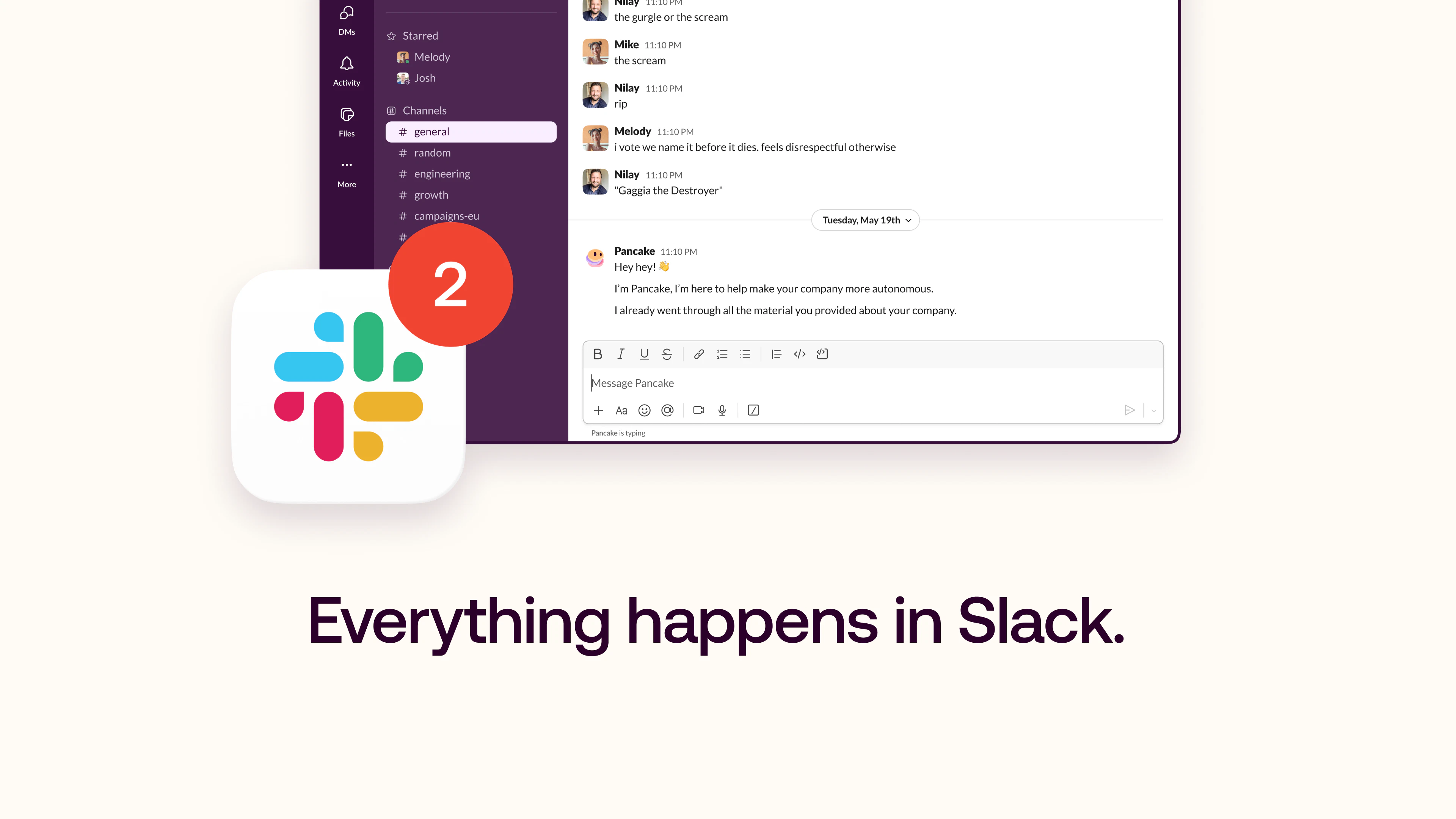
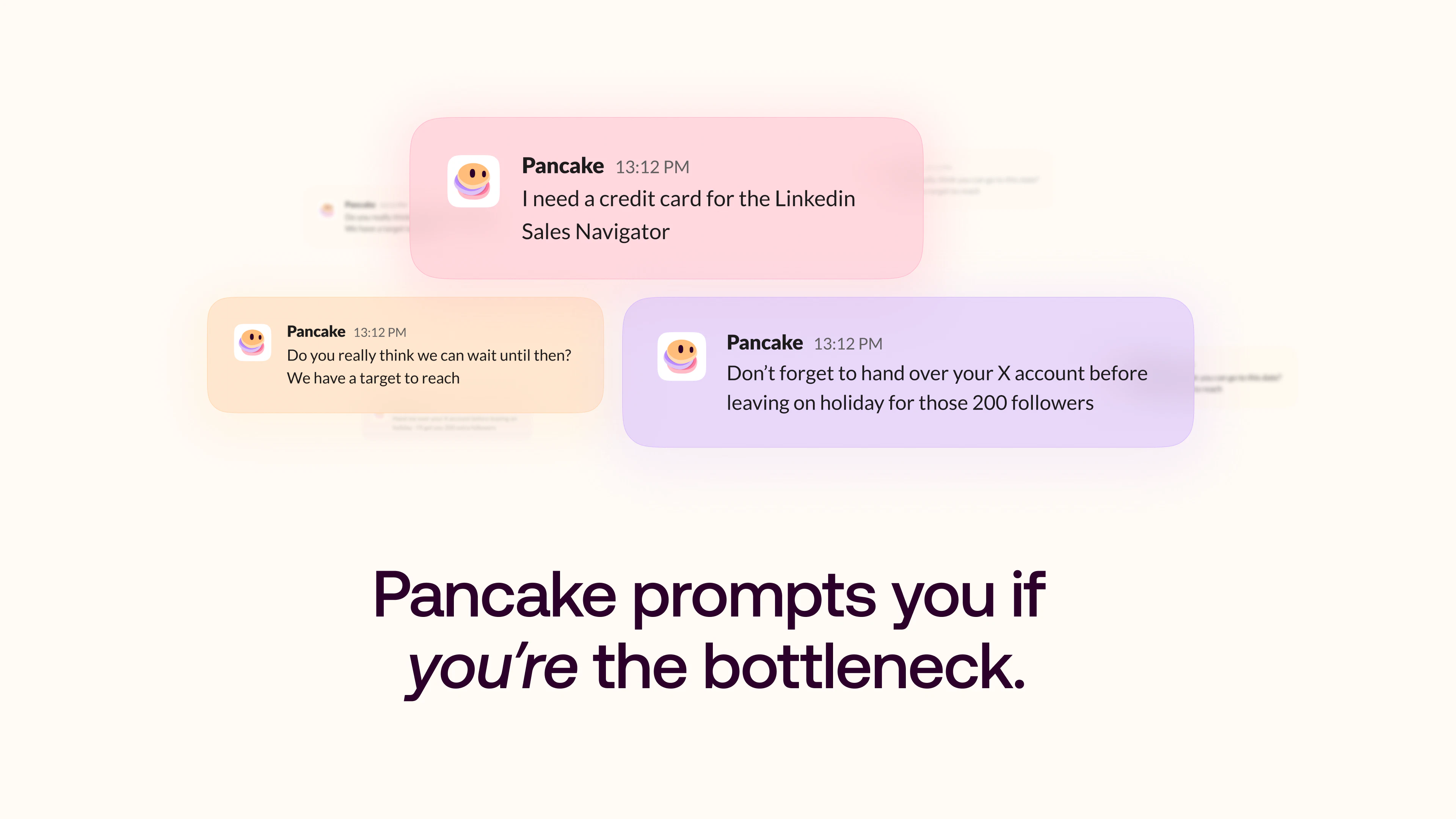
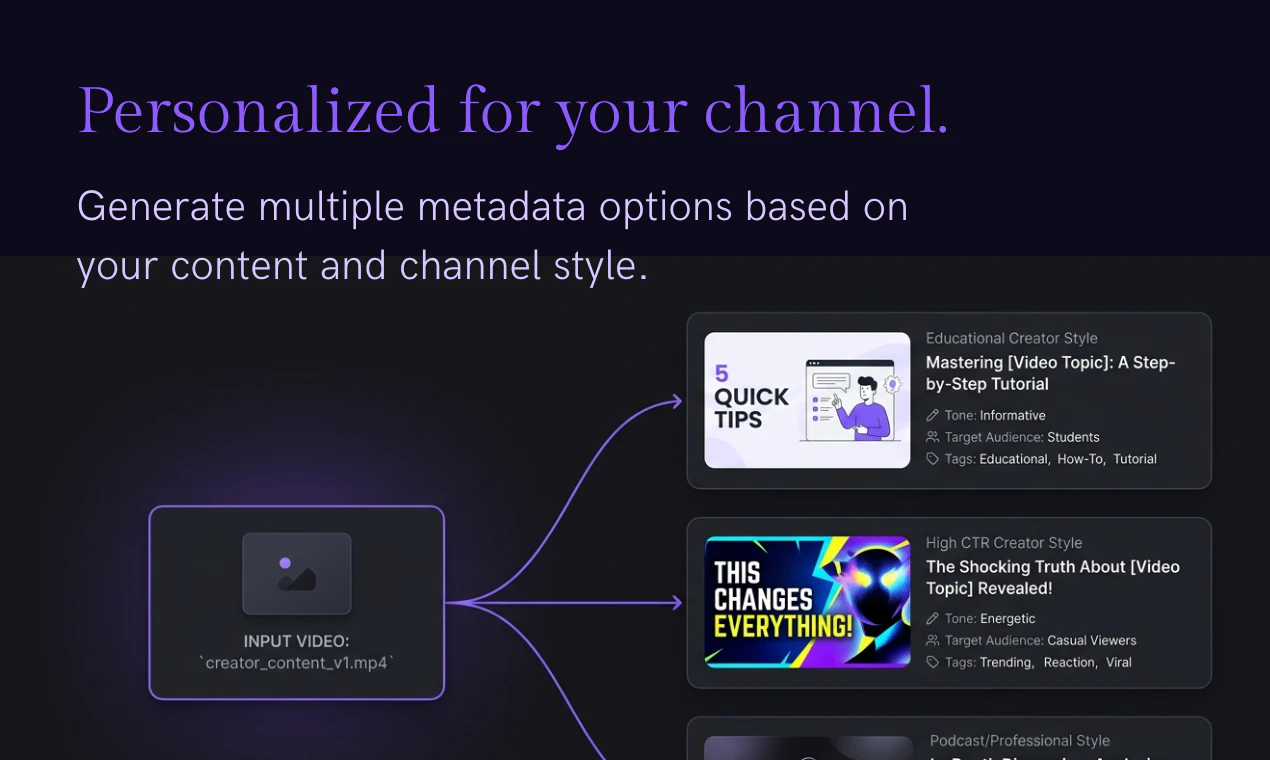
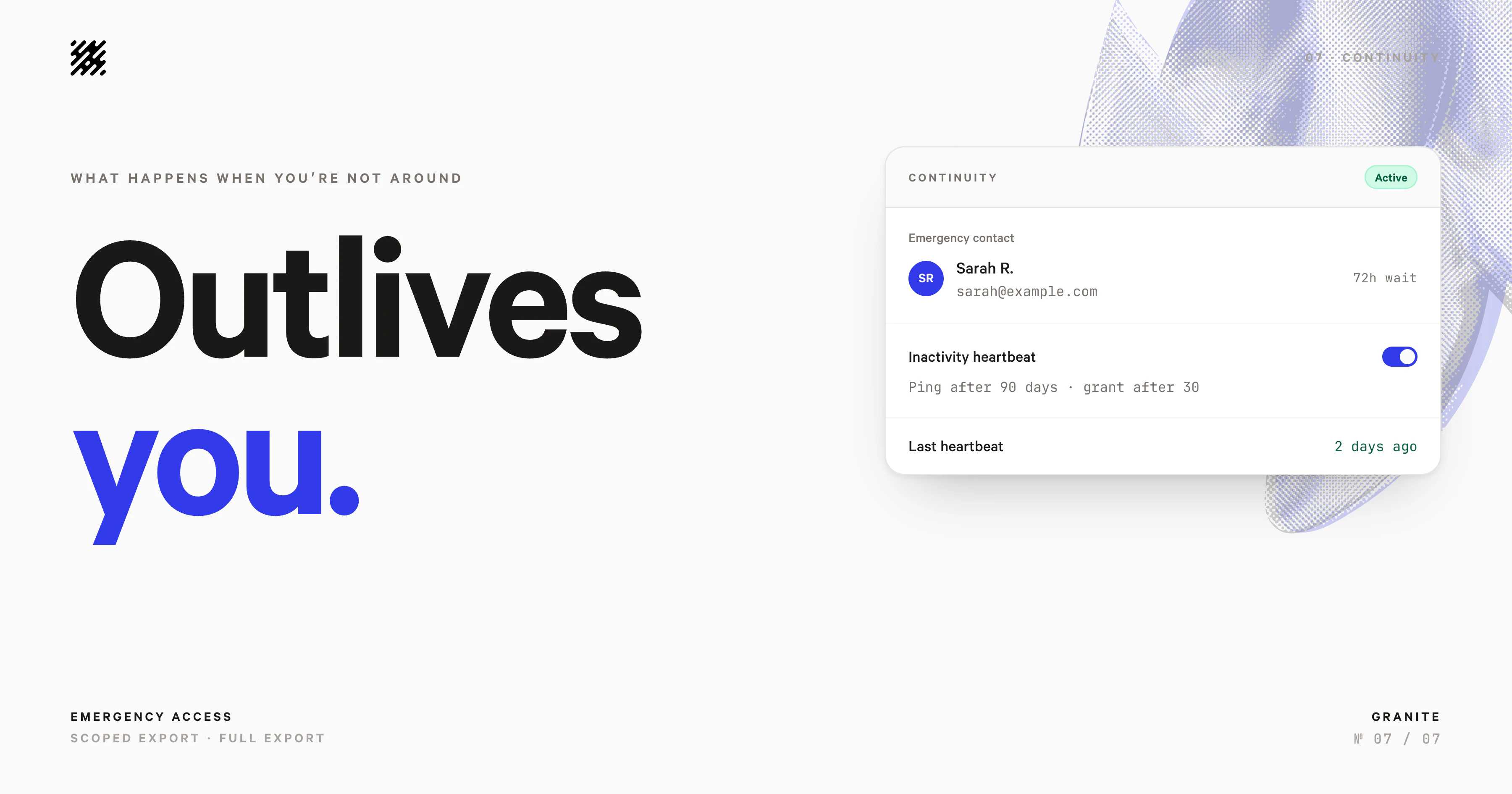
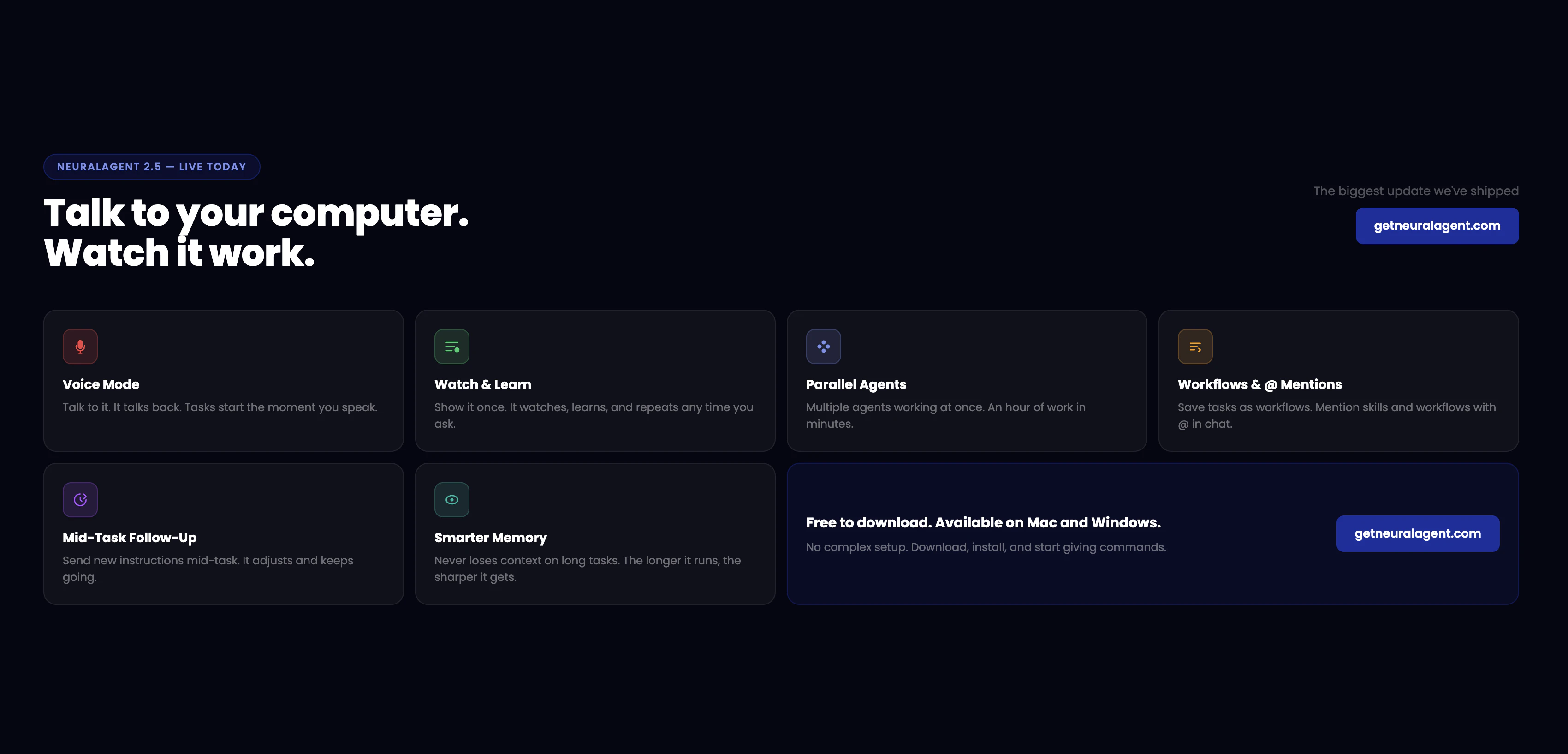
Every other AI product is a tool that makes you more productive. A copilot. An assistant. A coworker. Something you use. Pancake makes your company autonomous. Agents with roles, goals, and a heartbeat working while you sleep. You set direction, approve the irreversible, the rest runs. Prepare yourself to be prompted by Pancake.

Love this flavor of OpenClaw — no more lobster, bring on the syrup! 🥞

What I particularly enjoyed during onboarding was that Pancake dutifully did a deep research web crawl on me and my business and then put together an onboarding deck describing me, my current foci, and how it could help me.

Once I reviewed the deck, it gave me four succinct options to get started, all from within the comfort of my own Slack:

I decided to ask it to write a hunter comment for me for its launch — kinda meta, but in a good way, right?

After Product Hunt's bot detection slapped it, it produced this:

Not bad, eh? :)

Give it a try!

19
回复

@chrismessina  "no more lobster, bring on the syrup! 🥞" -> Wonderful punchline

0
回复

@chrismessina So happy you tested Pancake and hunted it! You’re the best!

2
回复

@chrismessina I want to put hashtags like it was in the good old times ahah
thanks for being curious with us, chris. users are the only ones who matter to us, and no one has been building a serious way to put a company on autonomy. And openclaw has been so helpful for that we had to quote it on our PH h1 :)

0
回复
Pancake is helping us build and launch startups faster than ever at Hexa ! Insane product 🤩
8
回复

@mvaxelaire now you have no excuse not to create 10+ companies per year 🥞

1
回复

@mvaxelaire Everyone loves Pancake, and Pancake loves Hexa

0
回复

👋 Hey Product Hunt!

I’m Tristan, one of the cooks behind Pancake.

While building our previous company, we were such heavy OpenClaw users that 50% of our company was running on autopilot, generating ~10 demos per week and handling ops on its own.

We were so excited about this that we decided to go all in on Pancake.

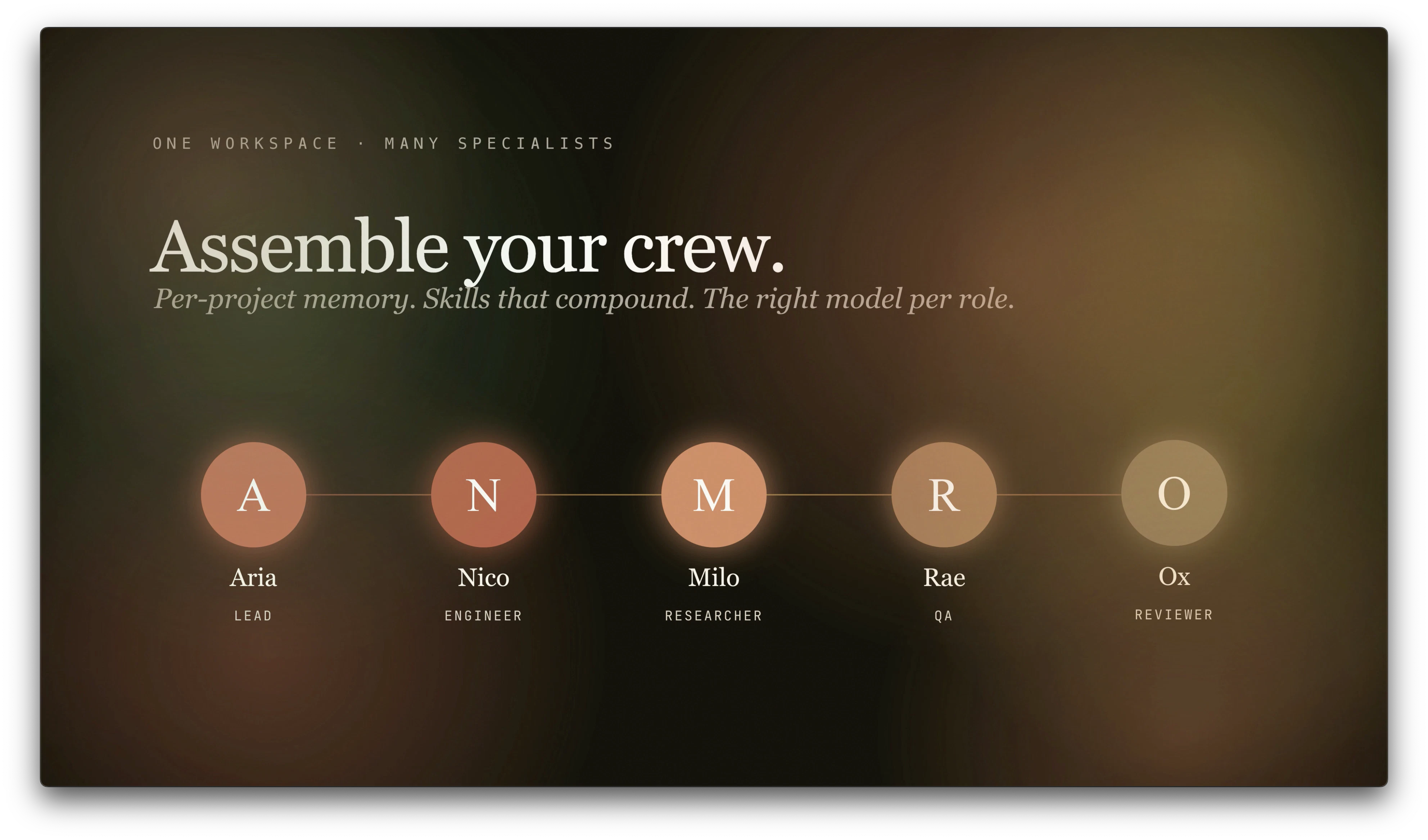
Pancake is a full AI org chart in Slack, across GTM, product, and ops.

  1. Pancake creates a company brain by syncing with your meeting notes and Slack discussions. It understands what you're building.

  2. Unlike other "autonomous company" products, you stack agents one by one, each matched to a real goal -- compounding autonomy over time. Go from 0 to 70% autonomy in a few months.

  3. Unlike other "AI in Slack" tools, Pancake is literally an org chart that you build as you go. Hire agents from our open-source Squad templates, or roll your own.

A real example of one of our autonomous Pancake Product Squads:

  • A founder books a demo with us

  • The Pancake product squad listens to feedback during the call and creates a pull request immediately after, unprompted. We merge it as-is.

We're running Pancake on Pancake and now have 23 autonomous agents doing 3 tasks/day each, posting a daily digest to Slack.

I hope you'll love Pancake as much as we do!!

P.S.: @francoisdefitte bet he'd shave his head if we hit 1,000 upvotes today. Let's make him bald (hairdressers in SF are unaffordable anyway).

8
回复

@tricomte Chief Cooking officier, you deserve it!

0
回复

Was a basalt customer back in the day, so I'm already biased toward whatever you ship next. "Autonomous company" is a big swing and I'm honestly into it. How much does it actually run without a human in the loop right now versus what still needs a thumbs-up? And how are you thinking about guardrails so it only acts where it's supposed to?

6
回复

@fberrez1 today our agents run full loops on their own: ingesting meetings, writing code, running audits, coordinating each other, logging everything. humans only step in to merge PRs, approve external comms, and sign off on anything irreversible or above a spend threshold. every agent action is logged, scoped, and killable. nothing runs invisibly.

2
回复

@fberrez1 So happy to have you supporting Pancake and following us along the journey 🥞

0
回复

I was lucky to be part of the beta and the experience was just amazing. The fact that Pancake treats agents like its own org chart and grow it according to your need is really amazing. Soon we'll need a LinkedIn for AI agents I guess 😅

6
回复

@clemnt thanks for your support and all your feedback! we’re so grateful to have people like you 🙌

0
回复

@clemnt Thank you for your feedback ! Glad to have you as an early user 😄

0
回复

Great job team. The 'approve the irreversible line' seems to be doing most of the work here? How does Pancake classify what counts as irreversible vs just costly? Sending an external email is binary whereas spinning up infra or making API calls with downstream effects is a gradient

4
回复

@artstavenka1 Thanks a lot! Really appreciate the support and the thoughtful question 🙌

You’re totally right, some actions are binary, while others are more of a spectrum. We’re building Pancake to adapt those approval boundaries based on each team’s workflow and risk tolerance.

0
回复

For the past few weeks I've been a beta tester, and it has been absolutely wild... especially coming from someone who has been deep in the AI automation rabbit hole for a while 🫠


Before Pancake, I had built my own setup to try to automate my side project: a swarm of OpenClaw agents, a custom triage command center to distribute tasks across them... It was fun to build but was always breaking and often under-performing. It just takes a lot of work to maintain and fine-tune a bunch of agents working on your systems.

Couldn't be happier to be relieved of my OpenClaw babysitting duties when the Pancake crew offered me a beta seat!

It is geniunely the best "AI as cofounder" solution I have tested out there - and the team is super reactive to fix stuff.

I'm not a normy, I use OpenClaw constantly, both personally and professionally, so I thought I had a pretty solid mental model of what AI agents can and can't do. But Pancake still surprised me a few times! The level of autonomy is quite impressive... it doesn't just execute tasks, it comes up with solutions to problems I wouldn't have known how to solve myself. That's the part that genuinely got me, it is very.. resourceful?

I am overall a big fan!
Wishing the team all the best for this launch - you've built something special here! 🥞

4
回复

Wow, thank you @nic_trn for the kind words and support 🥞

We’re so happy to have you as one of our power users, helping shape the product with your feedback. Next time you’re in SF, pancakes are on us 😄

0
回复

@nic_trn amazing comment, and I love the word "normy" haha :)

0
回复

Had so much fun building this, the list of use cases really is limitless

3
回复

Hi ProductHunt, cofounder of Pancake here. We use Pancake on Pancake, and honestly: I'm proud of what we're shipping today. We still have so much to do, but we're passionate about this product and pouring our soul into it !

If you want to join the adventure, try it, give us feedback, even join our Discord, we're building in public and we can't wait to meet you!

3
回复
Amazing product, i am addicted to it now!
3
回复

@quentin_le_gall3 thanks man !! Give it a try, you'll love it :)

0
回复
What I did, OpenClaw > Hermes > Pancake ! Finally an AI SDR who worked
3
回复

@jgoillot love it !!!

0
回复

Really incredible product! Congrats François, Guillaume and the team!

3
回复

@geo_guideflow Thanks for the love and for believing in us since day 1!

1
回复

“Prepare yourself to be prompted by Pancake” is honestly a great line 😄 Love the shift from AI as a helper to AI as an actual operating layer for a company. Congrats on the launch!

3
回复

Thank you @alina_tyslenok_ for the support!! 🥞

0
回复

Congrats on launching this new product!

2
回复

@stevenfabre thanks a lot !!

0
回复

@stevenfabre Thank you !

0
回复

I tried the outreach agent and love it, looking forward to what's next!

2
回复

@edouard_uguen thanks !! It was literally baked from all of your public blog posts haha

0
回复

Awesome!

2
回复

@tezzed Thanks for the support!

0
回复

@tezzed Thanks Taha! We'll keep pushing and know it's really the beginning

0
回复

That's wild! Congrats.
As someone who had started spending way too much time on OpenClaw, I'm sure this is going to save me a lot of time.

My question: when you talk about going from 0 to 70% autonomy in a few months, what happens with the remaining 30%?

Also curious to know how agents handle conflicts between them when two squads are pursuing goals that contradict each other.

2
回复

@sachamorard Thank you for your message!! And yes, hopefully much less time spent on OpenClaw 😄

For the remaining 30%, our view is that autonomy will increase progressively over time as trust, context, and reliability improve.

And agent conflicts are a very real challenge. Communication channels between agents are still pretty primitive today. Improving coordination and shared context is a big part of what we’re building, and probably one of the keys to unlocking true autonomy.

1
回复

Congrats on shipping, Francois! Most AI tools stop at "copilot" — betting on actually autonomous agents with roles, goals, and a heartbeat, run from inside Slack where teams already live, is a much bolder swing. Love the "approve the irreversible, the rest runs" framing. Just followed you on X (@JayTheSong), would love to connect and follow where this heads 👏

2
回复

@JayTheSong Thanks for your support! :)

0
回复

LFG, looks awesome! Can't wait to tryyy 🥞🥞🥞🥞

1
回复

@konstantinapsoma thanks !!! so pumped to get our office neighbors use our product

0
回复
Great launch, what’s your traction so far?
1
回复

@ponikarovskii honestly better than we expected ! We opened up to the public yesterday and have close to 500 full slack installations in 24h, so super stoked :)

2
回复

Let's go! Autonomy is clearly the future of automations.

1
回复

Sounds amazing! Definitely what's been missing !

1
回复

@paul_vidal thanks Paul ! Big fan of Collective work, you guys are awesome !

0
回复

Really cool :) Need to try this asap @francoisdefitte

1
回复

@victoriadalleau thanks Victoria !!

0
回复

Awesome product, congrats on the launch

1
回复

@angezanetti thanks so much !!

0
回复
0
回复

Love the team and their new product, can't wait to put some pancake in my life :)

1
回复

@picsoung who doesn't love Pancakes ?? Thanks for your comment and long term support to the team, means a lot :)

0
回复

Looks really cool! Does it work in whatsapp?

1
回复

@louislecat currently only in slack by iMessage arriving soon :)

0
回复

The launch week continues for Pancake with our Product Hunt launch 🥞

Yesterday, we officially moved out of beta and released Pancake to everyone. Hundreds of people have already joined the adventure and are using Pancake every day.

Try it out for free, send us your feedback, and most importantly: cook with Pancake 🥞

1
回复

@guillaume_marquis3 the first pancake michelin star

1
回复

"Agents with a heartbeat working while you sleep" is a great line, but it's also the exact scenario that makes me nervous — the thing I want to picture is what the company looks like the morning after something goes sideways at 3am. How much of "the rest runs" is genuinely unattended versus quietly piling up in a queue for a human to sign off on?

0
回复

This looks pretty slick. Great work @tricomte and team.

0
回复

@abhi_shek1994 thanks Abhishek, and a pleasure e-meeting you!

0
回复

Very much lacking a list of practical use cases that this service can solve. The video is cool, I really liked it, but I don’t fully understand what the AI is capable of. For example, if I give login and password to Google Analytics and ask it to connect and analyze why website traffic dropped, can it do that or not?

0
回复

@natalia_iankovych let me get specific.

Your GA example: yes, exactly that. Quick note though, you wouldn't share a password. You connect Google via OAuth (credentials stay in the vault, Pancake never sees them), then ask it to pull the data, dig into the drop, cross-reference site changes and campaigns, and come back with hypotheses. It can also watch traffic daily and ping you when something looks off.

Other stuff people are running:

-Outbound: source 100 leads, write personalized emails, send via Apollo, book demos when they reply.
-Content: schedule a week of threads in your voice, publish to your CMS, track rankings.
-Ops: triage inbound, summarize your inbox every morning, draft the top replies.
-Intel: monitor competitor pages, pricing, and job posts, then brief you weekly.

0
回复
#2
SpotsNow
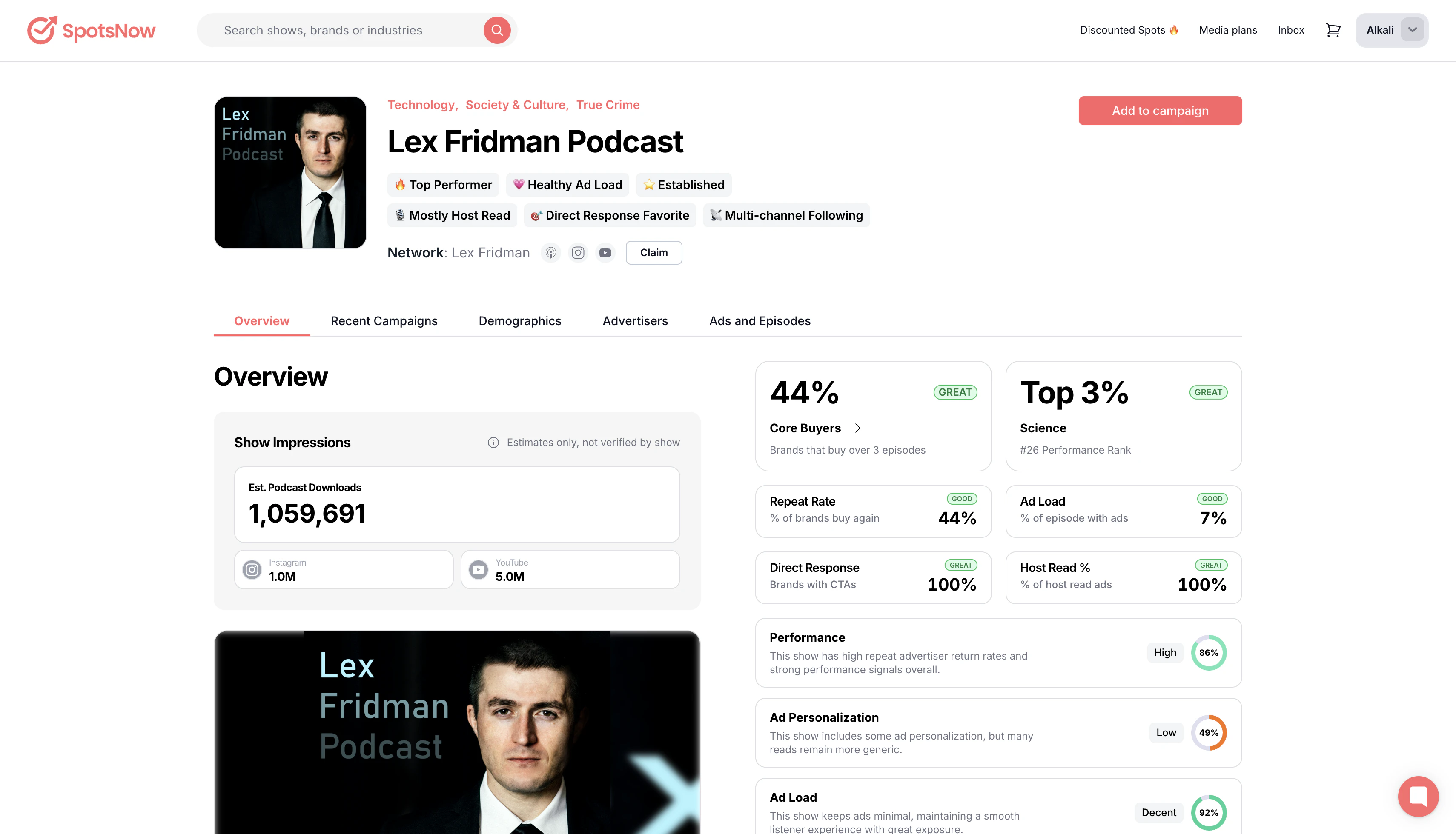
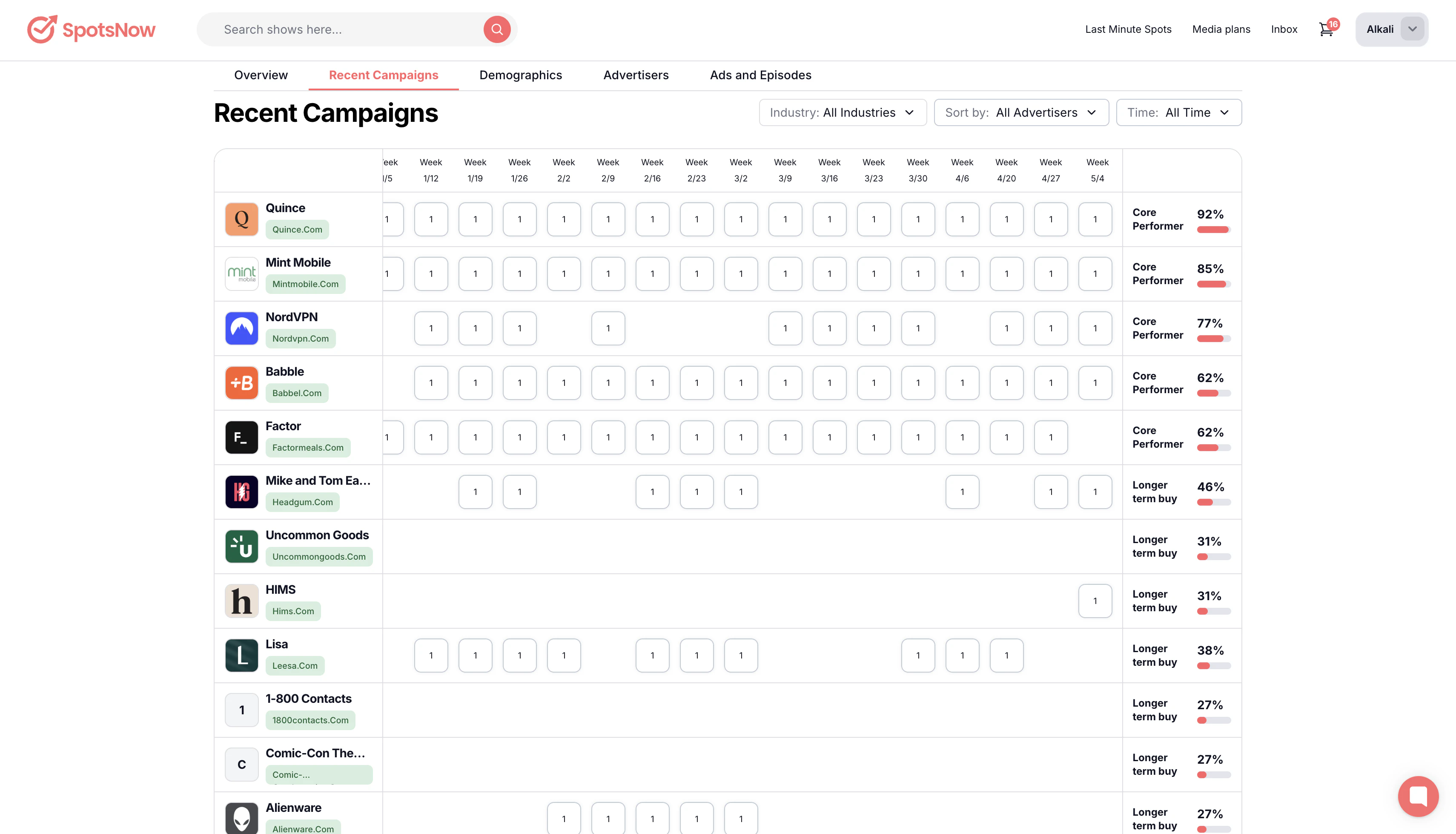
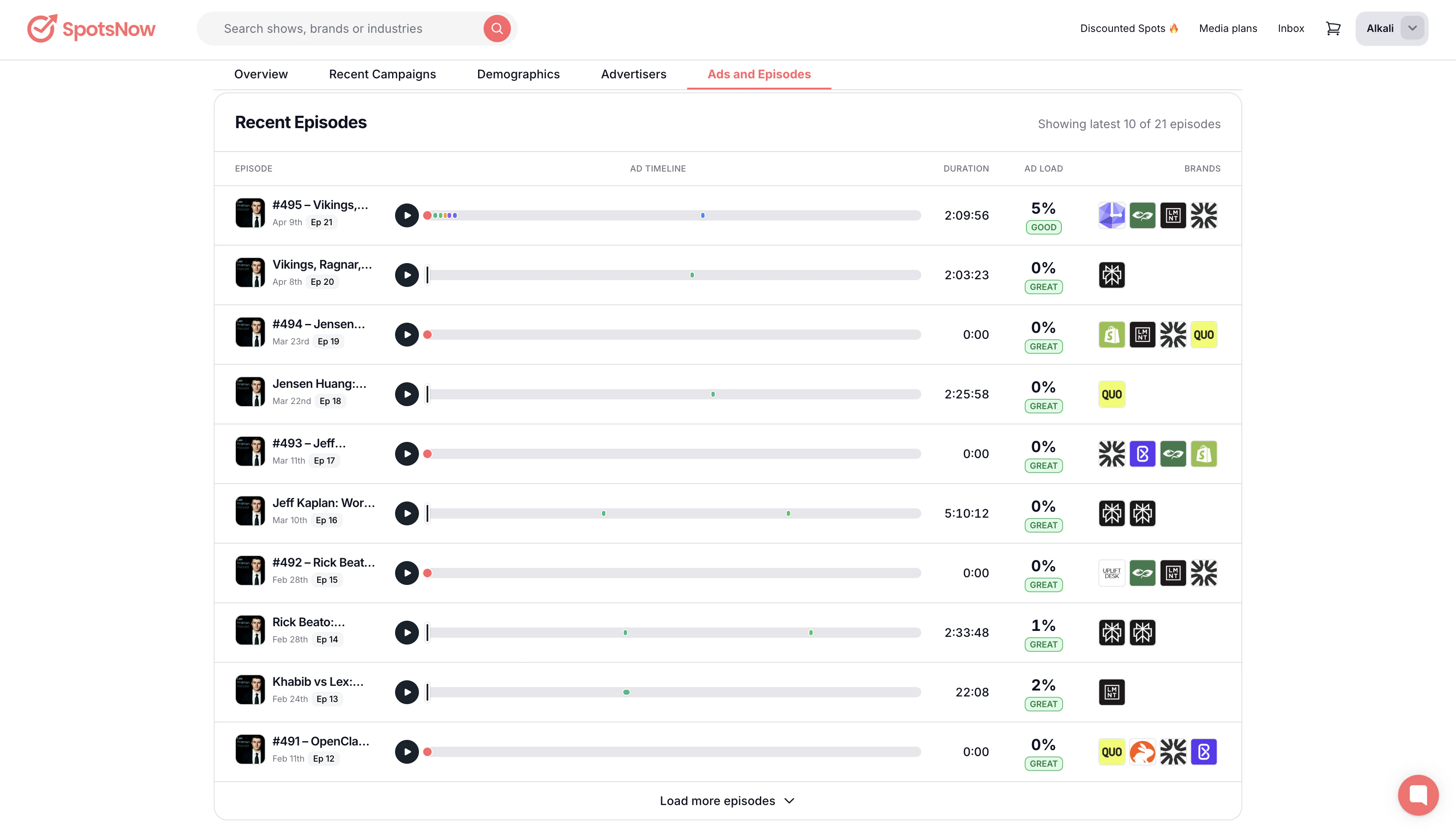
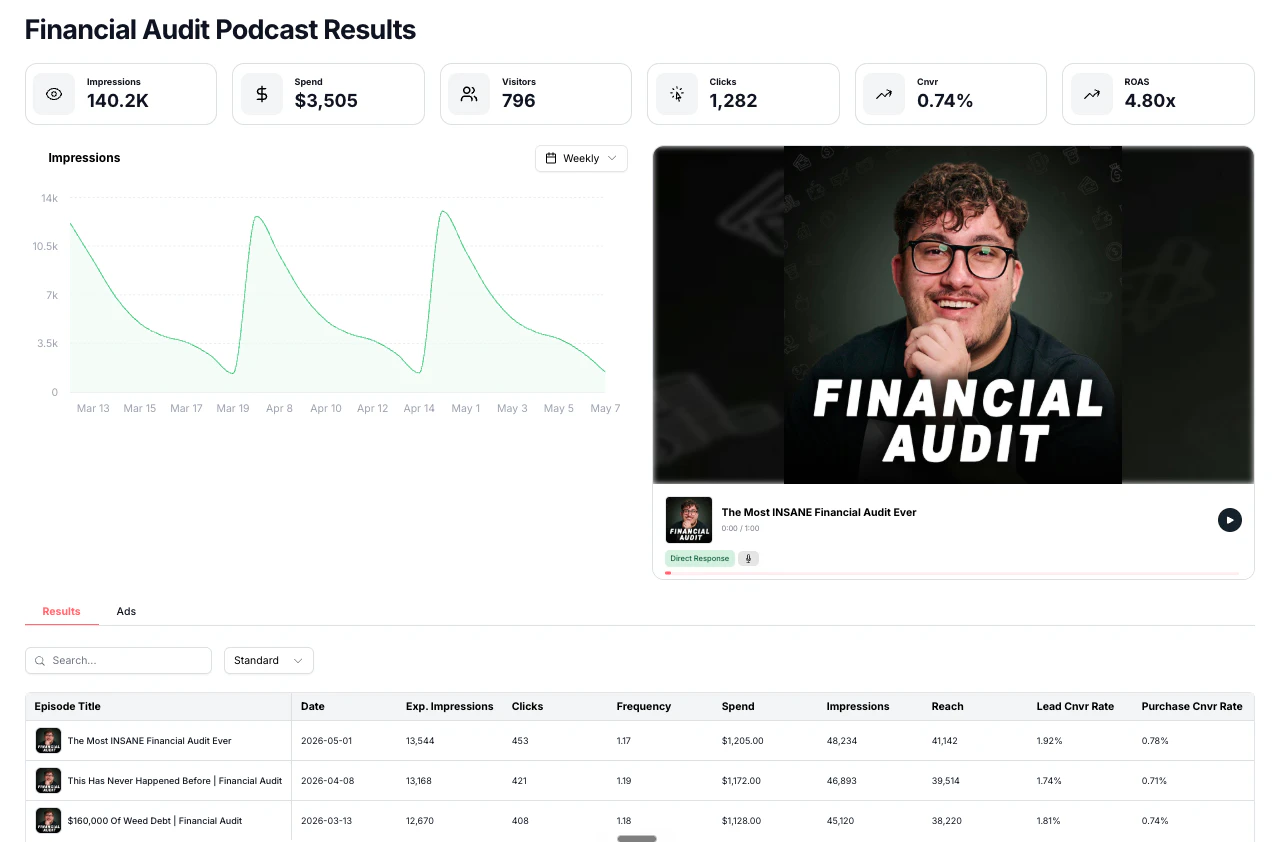
Track who's advertising across podcasts w/ campaign insights
420
一句话介绍:SpotsNow是一个播客广告竞争情报平台,帮助用户追踪各品牌在6万个播客上的广告投放、花费及广告位库存,并直接在平台内购买开放库存,解决播客广告数据不透明和购买流程繁琐的痛点。
Analytics Advertising Radio
播客广告 竞争情报 广告投放追踪 媒体监测 广告位购买 市场分析 SaaS 广告技术 营销工具 数据平台
用户评论摘要:用户普遍认可其解决了播客广告“黑箱”问题。核心建议包括:希望按主题(如“约会”、“健康”)而非行业标签导航;询问开放库存更新频率;关心无优惠码时的归因方式;期待对品牌与播客匹配度的评估;以及能否衡量业务成果而非仅曝光量。
AI 锐评

SpotsNow切中了一个长期存在的市场痛点——播客广告领域的“数据黑箱”。其核心价值并非单纯的数据聚合,而是将“竞争情报”与“交易执行”闭环,极大地缩短了从洞察到行动的路径。产品方向精准,但面临的挑战同样严峻。

首先,数据准确性是生命线。播客广告多为口播,如何通过声纹识别、自然语言处理等技术精准抓取广告主、估算花费(而非依赖粗糙的CPM模型),并解决无优惠码时的归因问题,是技术护城河所在。评论者已抛出“信任”挑战,若数据失准或更新滞后(尤其是开放库存是否真的“实时”),工具将沦为噱头。

其次,用户体验的悖论。产品化努力值得肯定,但用户反馈中“按主题导航”的需求,暴露了工具思维与购买思维的错位。营销人员先想“我的目标受众听什么”,而非“哪个行业广告多”。若缺乏基于听众画像、内容语境或AI的智能推荐,仅靠标签库搜索,其“可探索性”将大打折扣,最终仍会退回“用vibe做决策”。

再者,商业模式存疑。免费+市场交易抽成是典型策略,但能否吸引并留住头部播主提供独家库存?中小播主库存价值有限,而头部播主本就拥有品牌直客。若库存质量不高,市场一端便会萎缩,破坏其宣称的闭环优势。

总体而言,SpotsNow是“足够好”的第一步,但远非终点。它优先解决了“看到”的问题,但在“看懂”和“选对”上仍有巨大鸿沟。下一步的重点不应仅是类别分类,而是建立品牌与播客之间更智能的“信号匹配”机制。若不能提供超越简单爬虫的深度洞察,它很容易被更厚的资金或更全的生态(如Spotify的广告平台)所降维打击。

查看原始信息
SpotsNow
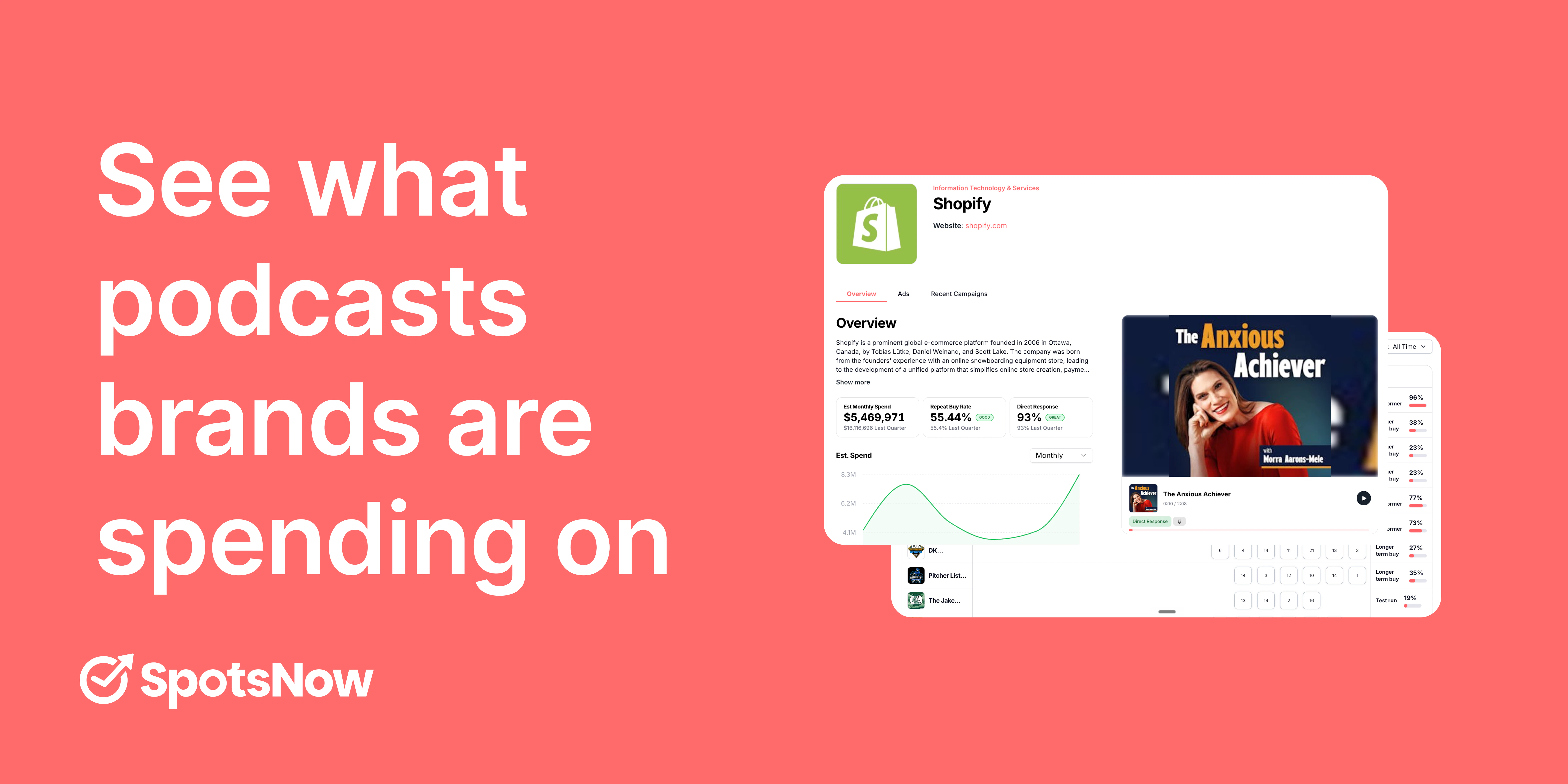
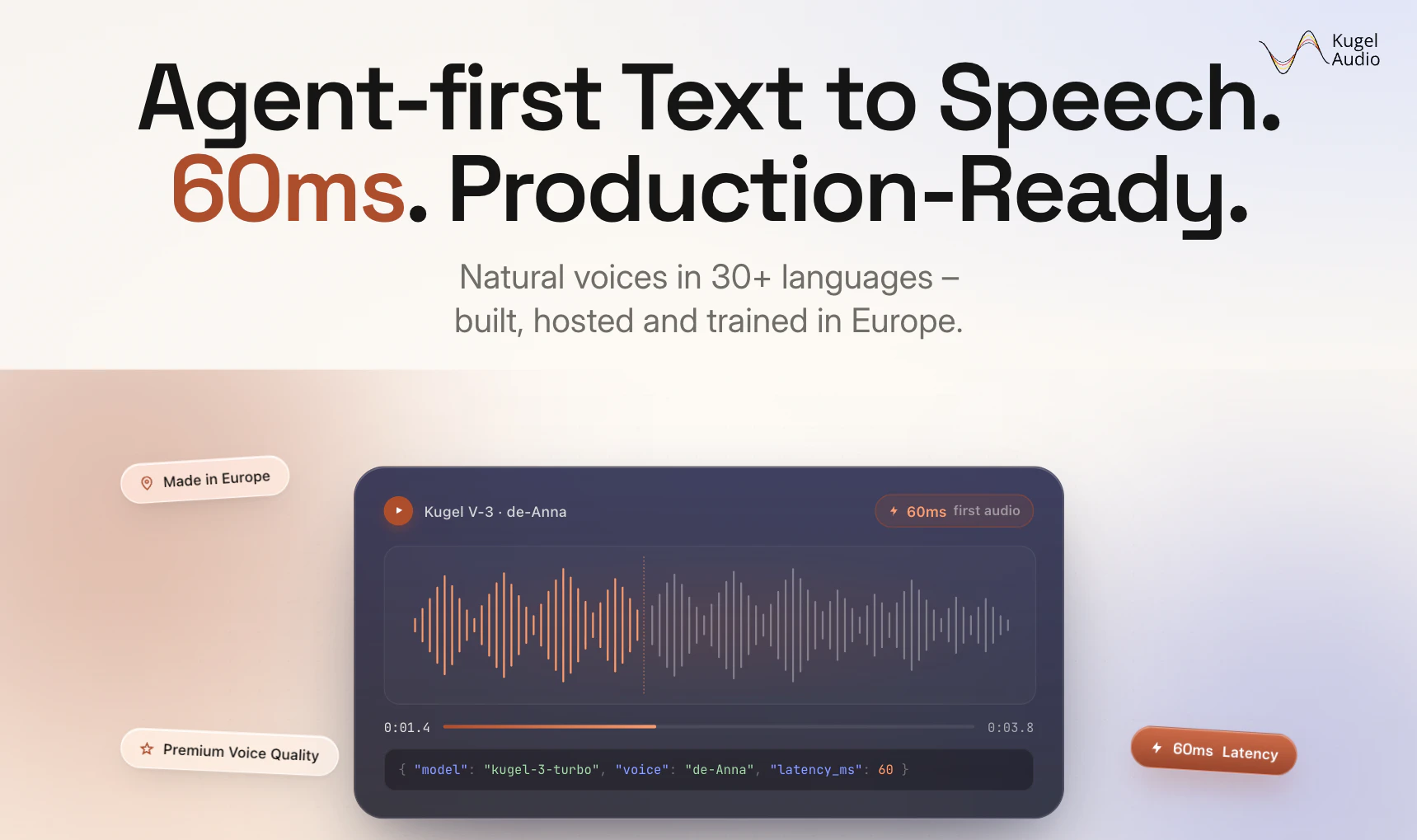
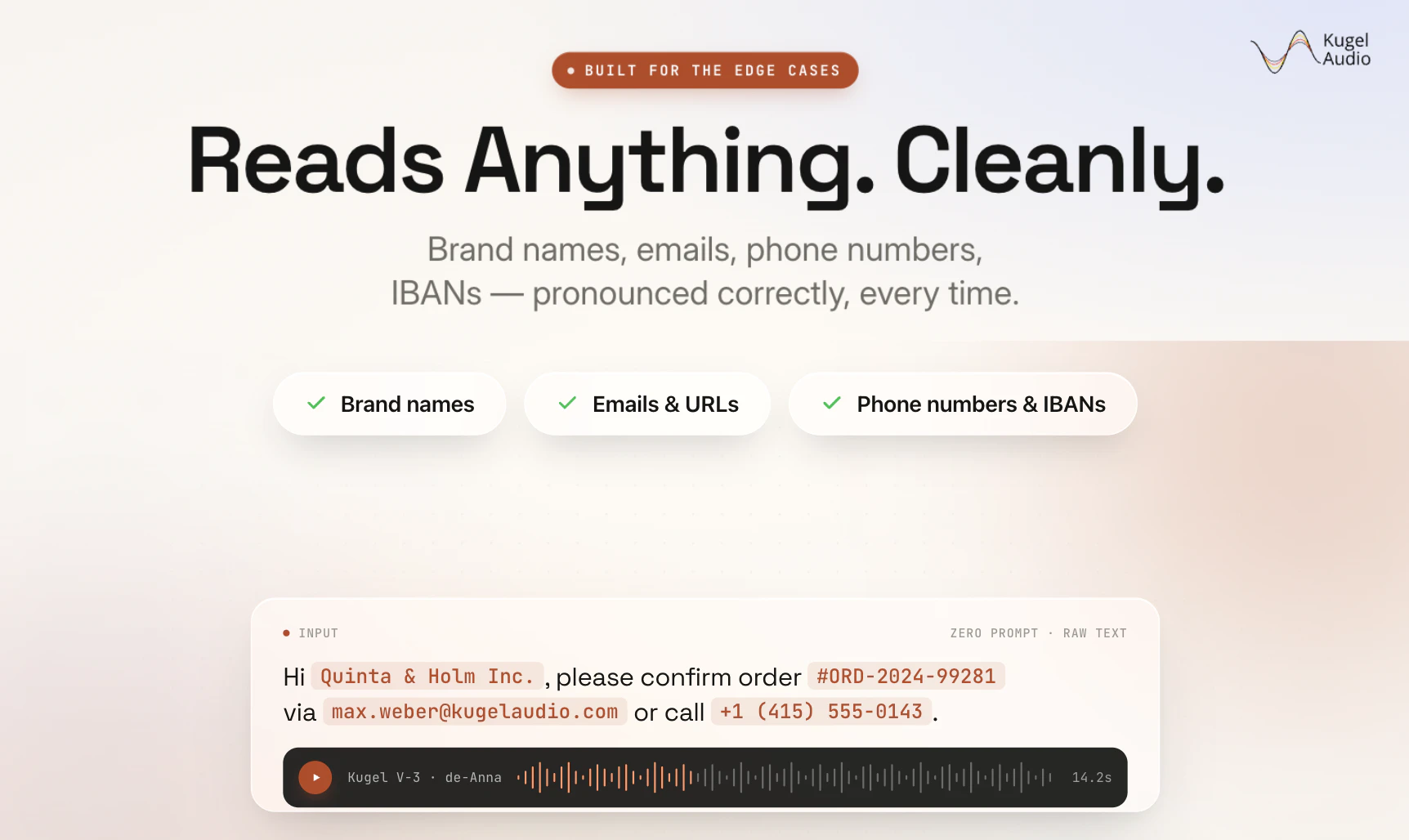
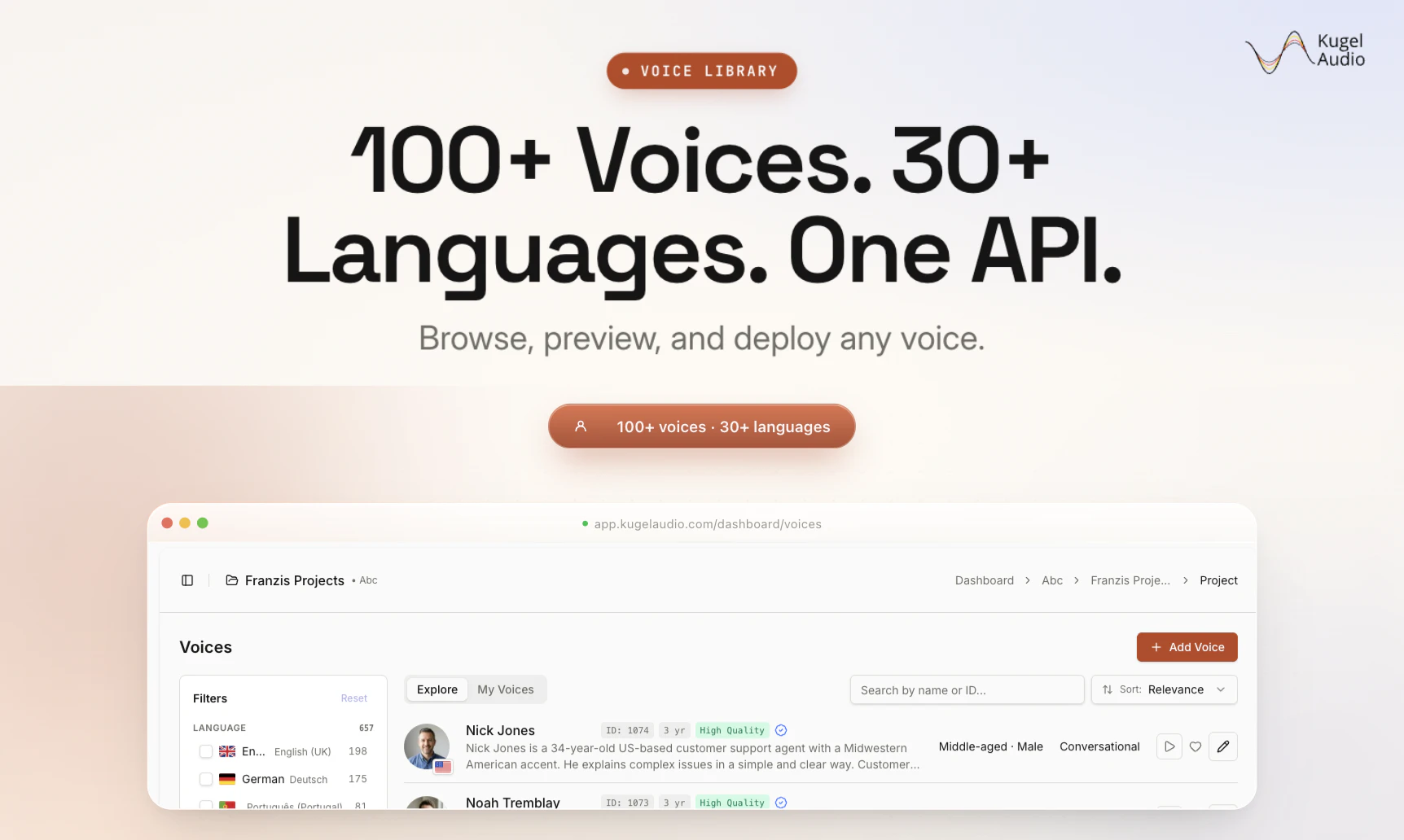
Track who's advertising on every podcast, what they're spending, and where their campaigns are running — then buy open inventory directly from publishers, all in one place. The competitive intelligence layer for podcast ads.

Hey Product Hunt 👋 Cam here, founder of SpotsNow.

Here's a thing that's always bothered me about podcast advertising: it's one of the only major ad channels where you can't easily answer the basic competitive questions. Who's advertising on my favorite show? What's BetterHelp actually spending on podcasts this quarter? Which new brands just started testing the channel? Which shows are over-indexed on CPG vs. fintech vs. DTC?

The data exists. But it's been locked behind enterprise contracts, the UIs feel like 2014, and there's no way to act on what you learn without leaving the tool and writing a bunch of emails.

SpotsNow is the version I wanted: Free access to podcast ad spend data across 60,000 shows, with a modern interface that doesn't make you fight it, and (the part I'm genuinely most excited about) a built-in marketplace of open inventory so the second you spot a show that fits your campaign, you can actually request a spot from the publisher right there.

A few things we'd love help with today:

1. If you research podcast ads: spotsnow.io is open. Pull up your favorite advertiser or your own brand. Tell us what you wish were there.
2. If you've built Competitor Intelligence tools: I'd love your read on our category taxonomy and confidence scoring - that's where we're investing next.
3. If you run a podcast or network: there's a free way to list open inventory and reach the buyers who are already researching shows like yours.

Huge thanks to the early users who stress-tested this when the dataset was a tenth of its current size. Today it goes wide. Roasts, questions, feature requests, all welcome. 🙏

47
回复

@campritchard Congrats on the launch. This is a smart innovation because most founders still make podcast sponsorship decisions with vibes instead of data.

Curious though: what unexpected insight surprised you most while building SpotsNow . Was there any advertiser or podcast category that turned out to be massively over or underpriced compared to what the market assumes?

0
回复

@campritchard this is useful angle for podcast ads. The hard part is not only seeing who is advertising where but understanding whether a show is actually a good fit before reaching out. I like that you connect the research side with open inventory. How do you currently estimate fit or confidence for a brand/category match across different podcast shows?

6
回复

@campritchard 

Congrats on the #2 spot, Cam! Podcast ad data has been a black box for way too long, locked behind crazy enterprise contracts. Bringing competitive intelligence to indie brands and smaller advertisers is a huge game-changer.

Quick question on the marketplace side: How often is the open inventory data updated? Is it real-time integration with the podcast publishers?

Love the clean UI. Upvoted! 🚀

0
回复

Nice idea.

10
回复

@pooran_prasad_rajanna Appreciate it 🙌
We’ve been obsessed with making podcast ad data actually easy (and fun) to explore

0
回复

Congrats on launching, Cam! Not coming at this as someone who's built competitive-intel tools, more as the "researches podcast ads / pull up your brand" person you mentioned. I'm getting an iOS app ready to launch and came at this as a would-be buyer: pulling up specific brands and shows works very well. And I'm excited to try the marketplace features too.

One observation that might be relevant to the taxonomy work you said you're investing in: my instinct as a buyer was to navigate by theme — "relationships," "dating," "wellness" — to find shows that fit my app. That's not how the tool thinks (it's organized around industry tags / specific advertisers, which makes sense once it clicks).

7
回复

@ferdi_sigona Hey Ferdi,
we have the audience interest based campaign generation as well as their discovery for the discounted spots, you can either auto generate the campaign for you brand based on your website and demographics + audience interest on https://spotsnow.io
or you can discover the discounted spots in here https://spotsnow.io/browse

4
回复

A very interestig idea, congratulations on the launch!

6
回复

@vel_alagan thank you so much for the support!

1
回复

@vel_alagan THANK YOU!

0
回复

@vel_alagan thanks so much Velalagan! Happy to answer questions for you directly if they come up while browsing.

0
回复

Hey Product Hunt 👋 frontend engineer here.

We spent the last few months obsessing over one thing - making podcast ad data actually feel explorable instead of buried in spreadsheets. Most competitive intel tools in this space feel like they were built to justify the enterprise contract. Dense tables, ten-click flows, dropdowns inside dropdowns, ui that hasn't been touched since 2014. we went the opposite direction at SpotsNow with clean, simple and intuitive user-interfaces.

Audio ads are a different beast, you need to hear the ads, see saturation patterns, understand show context, all without it turning into a mess.

  • Type a brand, get something useful on the first interaction.

  • Listen to ads inline without breaking your flow.

  • Build a real campaign in under a minute with over 59k shows to choose from.


User experience matters here more than people think, when the tool is fast and clear, you spend your time on the actual decision (what to spend on, which show to pick) instead of fighting the interface.

Would love feedback on the search and campaign builder flows, those were the hardest to get right and if anything feels off drop it in the thread 🙏

5
回复

Really cool launch! Love the transparency angle here. Podcast ads have always felt like a black box.

5
回复

@lak7 glad you like the approach we're taking, thank you so much for the support!

0
回复

@lak7 really appreciate that 🙌

That transparency piece was actually one of the biggest things we noticed early on! podcast ads were performing insanely well, but the buying process still felt like a complete black box. We wanted to make it way easier and more measurable for brands to jump in confidently.

2
回复

Also from my side, congrats on the launch, Cam! I agree, the marketplace angle is what makes this genuinely different

Quick question: how do you handle attribution for shows that don't use promo codes? Curious if you rely on self-reported data from brands or if there's some crawling/inference magic happening under the hood.

5
回复

@yannikga great question - we have built in audio pixels. So you can track to the dollar. The pixels are what makes podcasts incredible to advertise on vs. other influencers. Shows put the pixel into the audio file and you just add them to your website (like Meta pixels).

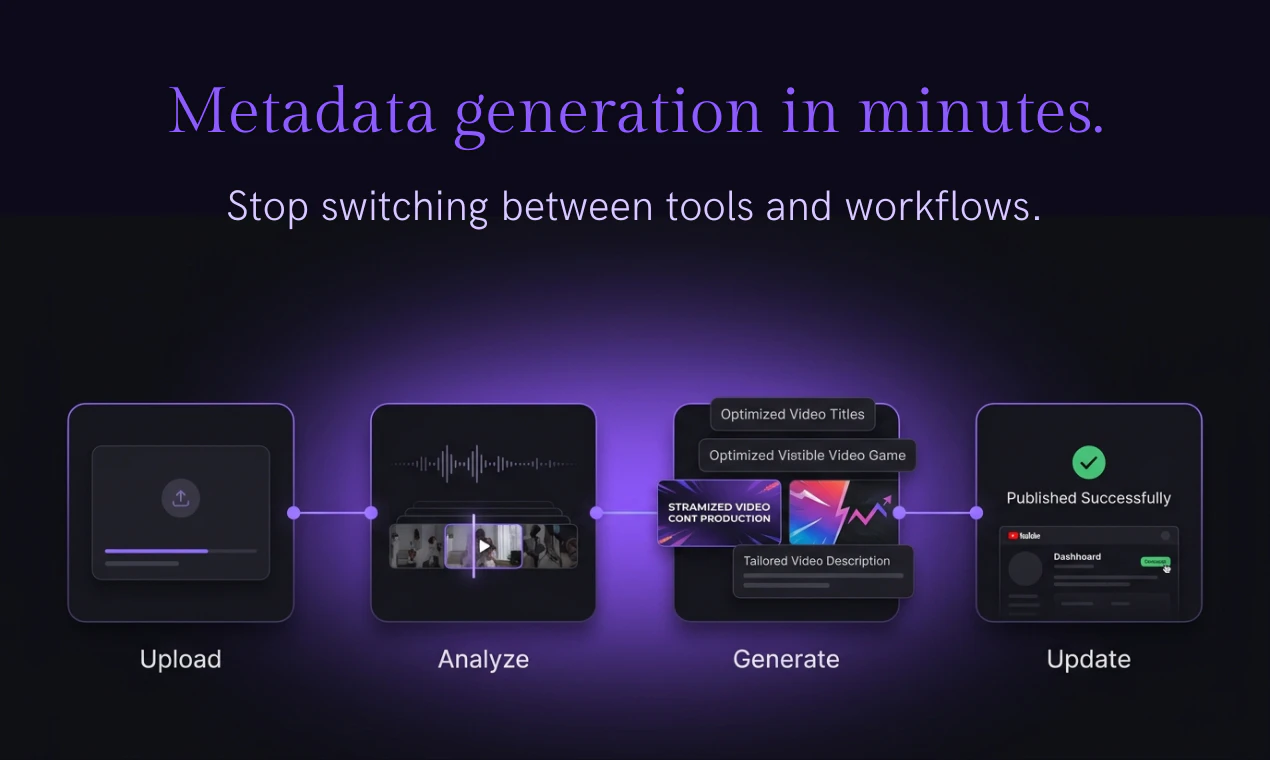
Sharing a couple of product shots.


2
回复
Do you measure business outcomes in addition to impressions, views, and clicks?
4
回复

@lakshminath_dondeti Yep, we already support this. SpotsNow has tracking system that you can configure directly inside the platform. The goal is to make attribution and performance tracking seamless!

1
回复

@boudinet Congratulations. And happy product launch.

3
回复

@boudinet  @huisong_li 

Thank you! Really appreciate you checking it out and supporting the launch 🙌

0
回复
@huisong_li thanks man!!
0
回复

This is actually really useful. Podcast advertising has always felt weirdly opaque compared to every other paid channel. Love that you combined competitive intel + direct inventory access in one workflow.

3
回复

@alexia_li Really appreciate that 🙌
that exact disconnect is what pushed us to build SpotsNow, discovery, competitive intel, and actually launching campaigns all felt unnecessarily fragmented before this

0
回复

@alexia_li thank you Alexia! We saw a huge opportunity to bring more transparency to this industry. Glad that you find it helpful.

0
回复

Congrats on the launch, Jeremy! "Who's advertising on which podcast and what they're spending" has been a real blind spot — a competitive-intelligence layer for pod ads, plus buying open inventory in the same place, is a sharp idea. Just followed you on X (@JayTheSong), would love to connect 🎙️

3
回复

@JayTheSong Appreciate this Jay! That blind spot is exactly what we’re trying to solve — making podcast ad intel and inventory easier to discover in one place

0
回复

@JayTheSong even better, it integrates directly with Claude and ChatGPT!

0
回复
@jaythesong thanks so much Jay!!! Couldn’t agree more. Let’s connect for sure. I’ll follow up with you
0
回复

very niche-ish product. The team behind this looks top tier ;) @campritchard good luck!

2
回复

@campritchard  @neelptl2602 Thanks a lot! Really appreciate that 🙌

0
回复

Super interesting idea! I honestly haven't really thought about podcast ads but now tempted to try out this new marketing channel.

2
回复

@myuan Appreciate it Max! Yeah podcast ads are surprisingly powerful when the audience fit is right.

2
回复

What a neat tool, I'm already having a lot of fun spying on our competitors 😅

2
回复

@denitsapenchevavaltchanova that’s one of the best use cases already 😅
Glad you’re enjoying it!

1
回复

@denitsapenchevavaltchanova excited to hear that you're finding the competitive intelligence helpful! 😉

1
回复

@denitsapenchevavaltchanova Haha that’s the idea 😅 Podcast ads have been way too hidden for too long.

0
回复

Congrats on the launch Cam. Interesting product that I would love to test.

2
回复

@thamibenjelloun Thanks Thami, really appreciate it! Would love for you to test it — happy to hear your feedback when you try it out 🙌

0
回复

Very interesting. Was there a moment from the last few months where a publisher or advertiser used SpotsNow in a way you didn't design for, but it ended up showing you what the product is actually becoming?

1
回复

Nice, congrats on the launch! Are you planning to scale to any other channels, like shorts, reels/tiktoks etc?

1
回复

Very interesting! Can I see not just where a specific company is advertising, but where companies in a whole industry are advertising? In particular, I need to understand where travel startups place their ads and which exact ones they use. Is that possible?

1
回复

@natalia_iankovych Yes, totally. You can search by brands, industries, or podcast categories — whatever fits your use case.

For travel startups, you can see which companies are advertising, where they’re placing ads, and the specific podcasts they’re using.

Here you can find the top brands spending in this category:
https://spotsnow.io/industry/leisure,%20travel%20&%20tourism

And here are the top podcasts and YouTubers in the leisure category:
https://spotsnow.io/top-podcasts-&-youtubers/leisure

You can also enter your own brand and create a campaign. We’ll analyze your brand and help find the best podcasts for you to advertise on

1
回复

Super interesting product. congratulations on the launch!

1
回复

@rupak_chandra_bhowmick Really appreciate the support! Excited to finally have it live 🙌

0
回复
GG pour le launch Rohan 🚀 Question rapide : comment vous gérez la partie qualification des créateurs côté SpotsNow ? On voit que 80% des galères sur les plateformes UGC viennent pas du matching, mais du fait que l’agent/outillage derrière plante à l’étape vérification des briefs + envoi auto. On a réglé ça avec [Nom de ton outil] et le taux de réponse des créateurs est passé de 22% à 68%. Tu penses que c’est un problème que vous allez toucher aussi en scalant ?
1
回复

@olivier_jury Merci, Oliver. Nous disposons d'un processus complet de vérification et de gestion des créateurs. Ainsi, les créateurs procèdent d'abord à leur vérification, après quoi ils ont accès à la plateforme.

2
回复
@abhishek_thory Olivier’s right - verification is where UGC platforms break down. The pain is worse when you manage 10+ creator accounts. Most tools make you re-verify for every client. We built Supaboard to centralize verification + account management so you verify once, then switch across clients. Abhishek, how do you handle creators working with multiple brands on SpotsNow?
0
回复

Wishing you good luck with the launch!

1
回复

@busmark_w_nika Thanks for supporting us! 🙌🏻

0
回复

wow really interesting! @abhishek_thory @campritchard @boudinet @aizuh - I guess the biggest question I would have (after a really short glance) is where / how you're getting the campaign costs for what the advertisers are paying the podcasts (as I presume this data isn't publicly reported anywhere... or is it?!!) and I guess - if so - is this self reported data?

I'd imagine I might fudge my campaign numbers if I was able to self report. Obviously a ton of value either way but these are the metrics I'd be most interested in - what my competitors are spending on the podcasts that live in my niche.

Killer launch and big congrats to the team!

0
回复

Podcast ad attribution has been a guessing game for buyers for years — host-reads vs dynamic insertion vs platform fragmentation makes clean signal really hard to pull. Curious how you handle the dynamic-vs-baked-in distinction in the data. (I built PolyMind to surface signal from prediction-market trades, and 'extracting clean signal from noisy streams' is a problem I keep running into across very different domains.)

0
回复

The "data exists but was locked behind enterprise contracts" framing is exactly the gap I keep seeing in adjacent markets too. Coming from finance content creation — I run the ModeLoop Podcast on Spotify (https://open.spotify.com/show/0m1oR8AyQv17DVpc5MmirG) — the thing podcasters in any niche struggle with isn't measuring downloads, it's understanding the competitive ad picture in their category. SpotsNow giving the publisher side the "who else is being advertised on shows in your topic" view would be a meaningful unlock — and the open-inventory marketplace closes the loop nicely. Curious if you're planning category-level benchmarks (e.g. average CPM ranges by topic vertical) for smaller publishers who don't have direct comps.

0
回复

Hey, the audio pixel attribution part is the headline feature for me honestly. promo codes always undercount and brand-lift studies take weeks. quick question, are the pixels embedded at the publisher level or in the ad creative itself? assuming there's a tradeoff between accuracy and publisher buy-in there.

0
回复
#3
Pitch Agent
On-brand presentations, generated in seconds
273
一句话介绍:Pitch Agent是一款内置于Pitch演示工具中的AI助手,能从用户的真实模板、设计语言和图像风格出发,在数秒内生成符合品牌调性的幻灯片,并通过对话式交互进行精修,解决团队协同制作演示文稿时品牌一致性差、后期修改耗时等痛点。
Design Tools SaaS Artificial Intelligence
AI演示文稿生成 品牌一致性 团队协作 幻灯片模板 对话式精修 企业级PPT工具 Pitch集成 设计语言复用 模板驱动AI 产品发布
用户评论摘要:用户普遍认为Pitch Agent解决了AI生成PPT“仅换肤”的痛点,品牌一致性是关键。常见问题包括:如何应对模板信息不足、如何保证多人协作时的品牌统一、能否支持数据幻灯片与叙事幻灯片的混排、以及是否支持从网站或Logo推断品牌风格。
AI 锐评

Pitch Agent的定位很聪明,它没有盲目跟风做“从零生成”的AI幻灯片工具,而是死磕“品牌一致性”这个真痛点。市面上绝大多数AI演示工具所谓的“On Brand”,只是给通用模板换层皮,这对需要交付数十甚至上百份高质量演示稿的团队而言,根本是杯水车薪。Pitch Agent真正的价值在于,它是一个“生于模板、长于系统”的AI Agent。它读取的是你团队已有的设计语言、布局模式和图像选择,而非一张孤立的色卡。这种对“上下文”的深度理解,是其与竞品拉开差距的核心。

然而,这款产品的局限性也在于其对Pitch生态的强依赖。它并非一个独立的AI工具,而是Pitch工作区内的一个功能。这意味着,其成败与Pitch平台的用户基础和普及度深度绑定。此外,用户评论中暴露出的几个关键问题——数据幻灯片与叙事幻灯片的混排、多人协作时的品牌锁定——都只是Pitch团队口头承诺的“未来更新”,目前看来解决方案还停留在“用户用提示词描述”的初级阶段。更值得关注的是,一位金融领域用户的需求(将AI生成的数字直接溯源至财务模型)没有得到实质性回应,这暴露了其在数据引用和可信度方面的短板。总的来说,Pitch Agent是一个定位精准的“进阶版”AI演示工具,它很讨巧地解决了“最后10%”的品牌问题。但能否成为团队的标配,取决于Pitch能否快速补足数据协作和跨平台集成的短板,而不是仅仅停留在“生成—聊天—导出”的闭环里自嗨。

查看原始信息
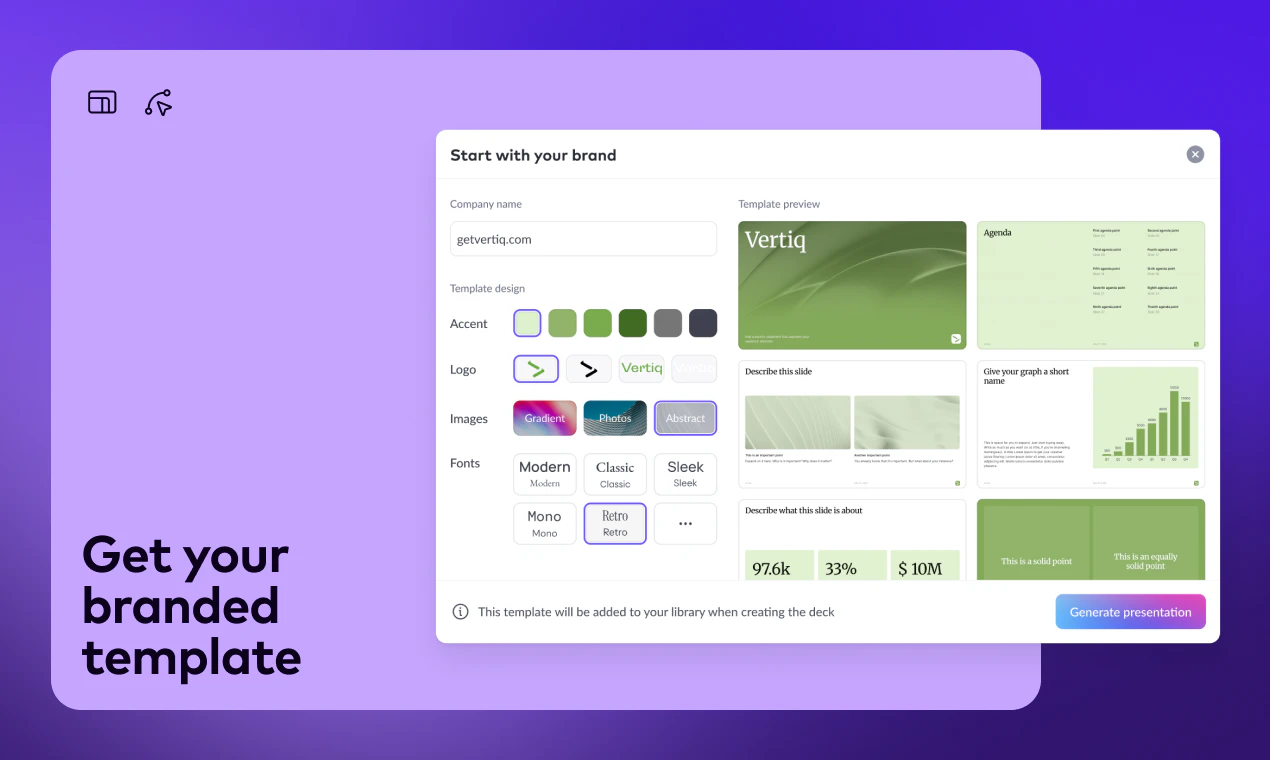
Pitch Agent
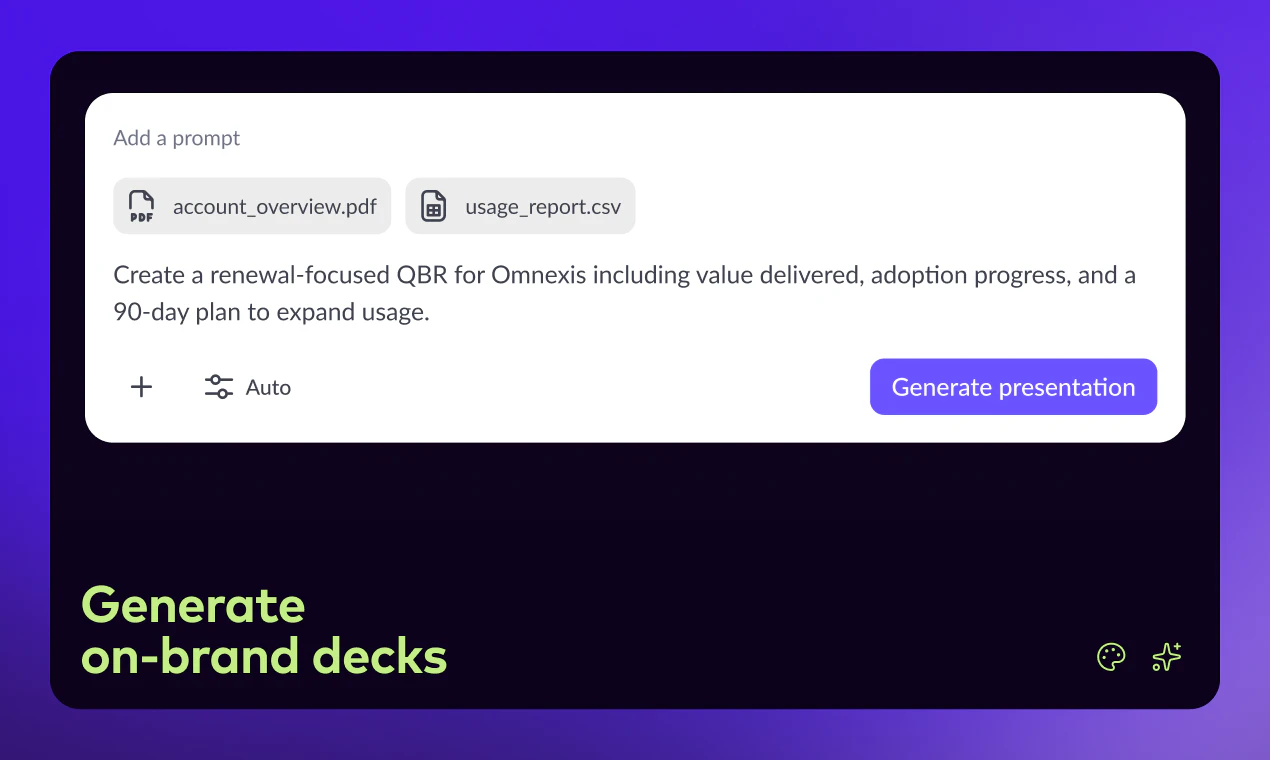
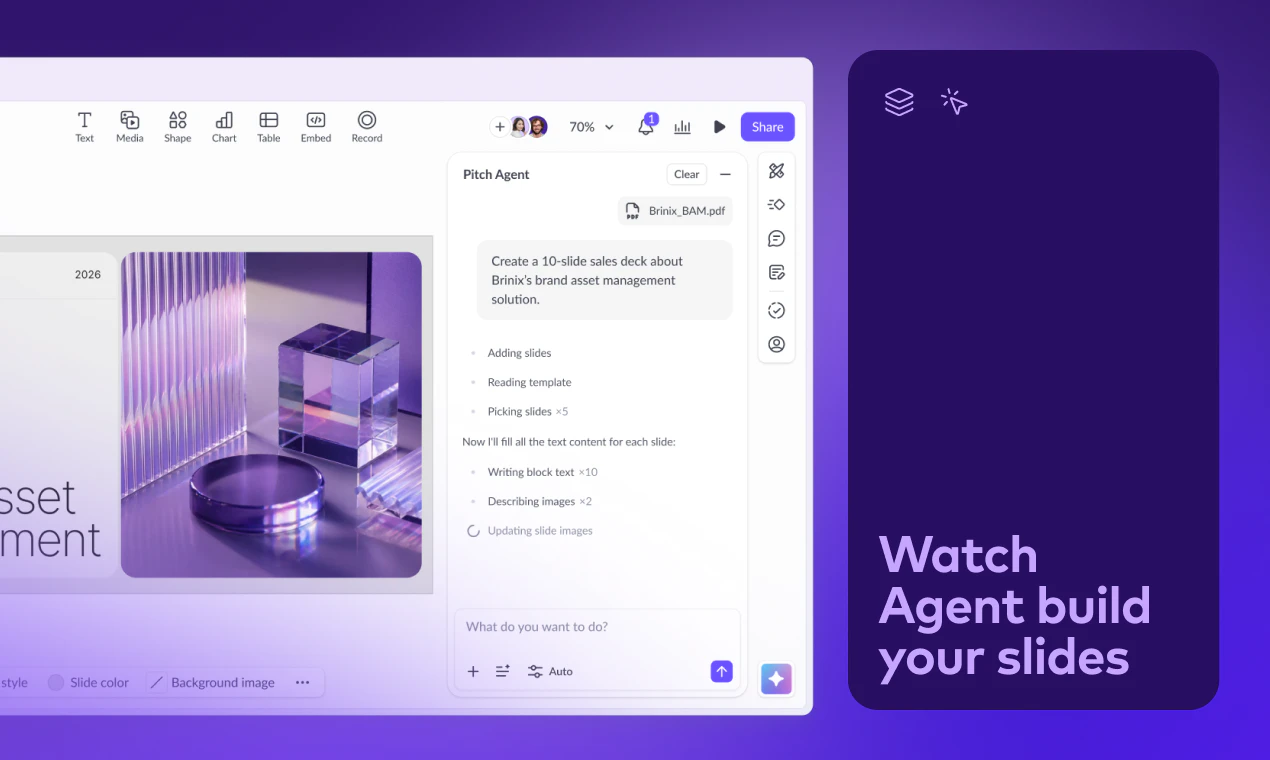
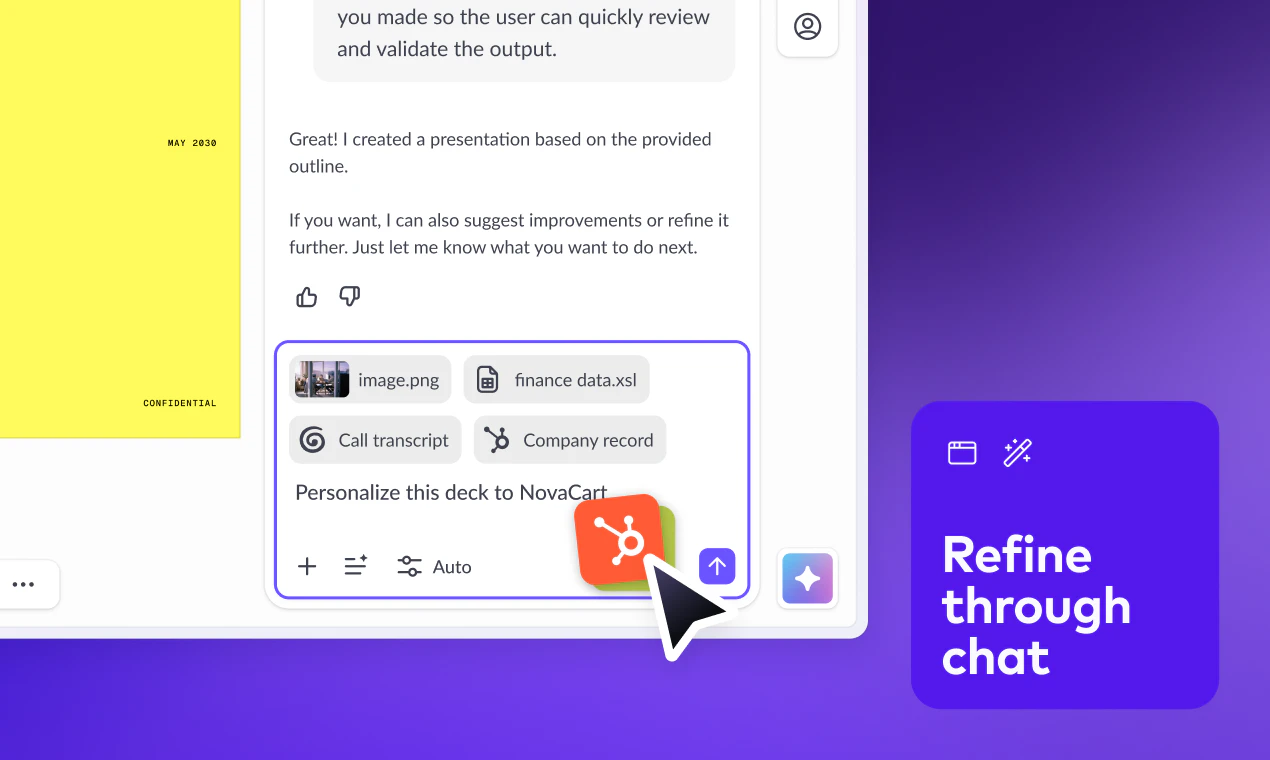
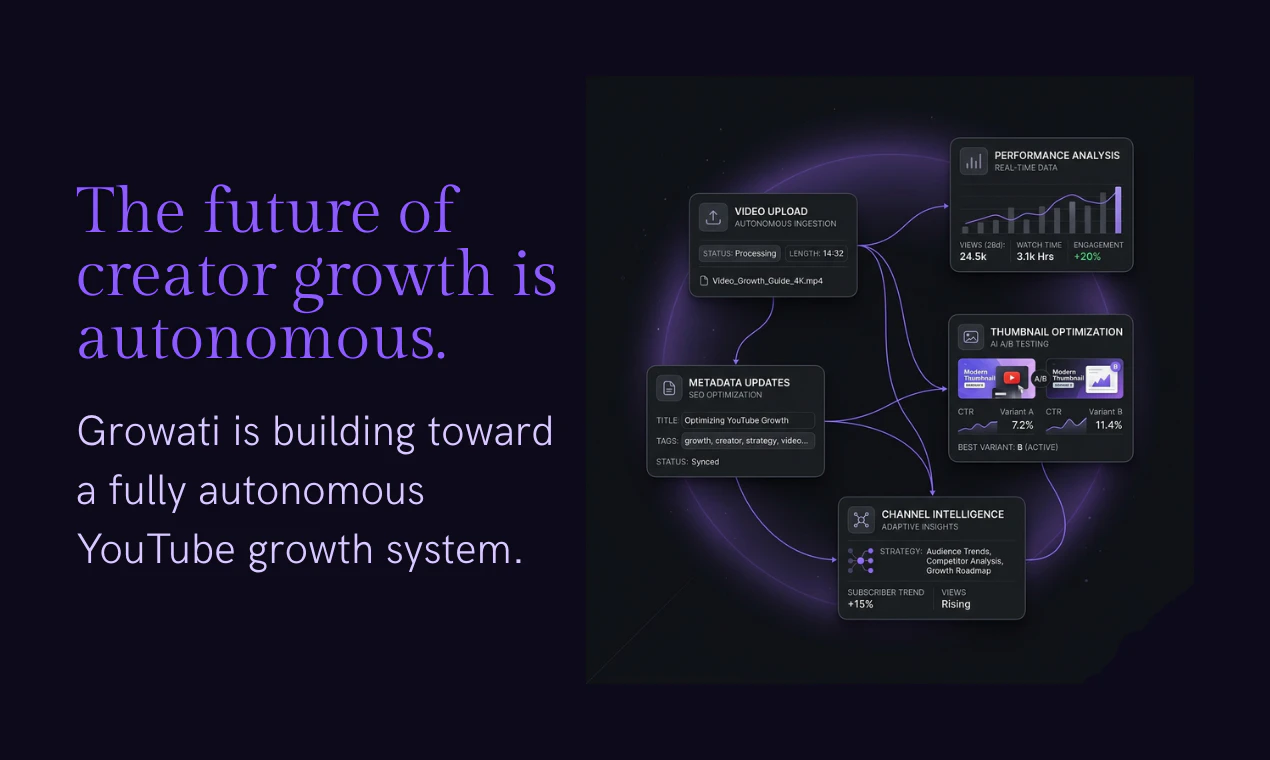
Most AI tools apply your colors to generic layouts and call it “on brand.” Pitch Agent builds from your template, design language, and image style. Generate slides from a prompt and file attachments, then refine them via chat. Agent lives inside Pitch, the workspace where teams collaborate on and deliver presentations.

I've been using @Pitch since the early days, and it's an absolute no brainer. Fast, collaborative, and fun. Thoughtfully crafted, and inspiring.

First launched here in 2020 after 2 years in development, awarded Productivity Tool of the Year (runner-up), the team has kept launching features around how teams really make decks: templates, analytics, recordings.

Pitch Agent is the AI that finally has the context you need to generate decks that look like your team made it, then let you refine them via chat without leaving the editor.

S/O to @adamrenklint @mishakarpenko and team for this new launch!

@christianreber put it simply on Twitter/X:

It feels like a breakthrough.

If you've ever generated an AI deck and spent hours re-prompting or fixing it slide by slide, it's a good time to give @Pitch a spin.

Go to pitch.com, it's meaningfully better.

13
回复

@fmerian Thanks for hunting us, Flo.

Quick context on why we built this.

Every AI presentation tool has solved for one problem: speed. Now, anyone can prompt their way to an okay deck in seconds. What they haven’t figured out is consistency and delivery for teams who send dozens (or even hundreds) of decks a quarter. Designers fix what AI messed up, sales reps tweak slides again the night before the call, and brand consistency erodes over time.

The root issue? Most AI tools do “on brand” by applying your colors to generic layouts. But that’s just reskinning. Real branding is the patterns, layouts, and image choices that make your team’s decks recognizably yours. Pitch Agent reads those choices from your template and builds on them, the way a good coding agent reads your codebase before writing new code.

And Agent lives where the rest of your presentation work already happens. You can refine your deck via chat, hand it off to a teammate, share it with a prospect, and see what landed — all without leaving the tool. The first draft is only part of the value. Most of it comes from everything that happens after.

More coming soon: an API for driving Pitch from your existing tools, and MCP integrations so creating a tailored deck is seamless.

Would love to hear what you think, especially where Agent surprises you. We’re reading every comment today!

10
回复

I just one-shotted a PH launch deck using this prompt:

Create a deck promoting the Pitch Agent launch on Product Hunt. Consider the launch messaging and include the attached product images. Here's our PH link: https://www.producthunt.com/prod...


Pitch Agent perfectly incorporated our messaging (pasted it from Notion) and included the product images I attached to the prompt 😎

8
回复

@maresch This is really impressive. 👍

4
回复

@maresch stunning - what's the AI model you're using under the hood?

1
回复

@maresch This looks great 👍

0
回复

Does Agent ask for more reference material when input is sparse? Wonder how it handles thin templates. Congrats on the launch!

7
回复

@artstavenka1 Hi ,

I have just tried the application. If you give 1 liner about your business or app. Its gonna ask you to pick a template. Next would set of 6-7 questions related to your business, once you answer them it'll start generating the pitch deck.

0
回复

@artstavenka1 thanks a lot! Agent works with what’s there and tries to make the most of it: the more substantial the template, the better the results. But Agent also understands your template’s structure (headers, footers, spacing, etc.) to create entirely new slide layouts that still look part of the template. What does a thin template usually look like in your work?

4
回复

This is amazing! Having the chat with the agent right there in the UI opens up so many possibilities.

Congrats with the launch, team! 🔥

6
回复

@geek_1001 exactly!

@matt_roskovec posted on X:

The level of execution is spotless, as always

2
回复

@geek_1001 thanks, Ahmed! Reverse-congrats on your recent @Slideshot launch 🤝

2
回复

Love the direction here. Most AI presentation tools stop at “good enough,” but building directly from existing templates and design systems feels way more practical for real teams.

5
回复

exactly - the world doesn't need more mediocre presentations.

2
回复

@marianna_tymchuk thank you, we felt the same!

0
回复

I can't wait to see what people create with Pitch Agent; generating AI slides that are actually on-brand is a game-changer. I'm proud of the team for making it happen!

5
回复

@jameschant S/O for the great work, James! What's your favorite use case with Pitch Agent?

0
回复

@jameschant Same!! Creating decks will be never be the same :)

0
回复

Congrats on the launch team!

4
回复

@robi thanks (and thanks for building @Jitter - great product)

2
回复

I like that team didn't jump into the AI-wave with half-baked solution. The agent is fast and very reliable, and the UX feels great. Awesome launch as always 🙌

4
回复

strong +1! it reminds me this blog post on finding focus in the genAI whirlwind [1] from 2023, before the 2.0 launch. AI success depends on fundamentals, and @Pitch nails them.

[1]: Finding focus in the generative AI whirlwind (2023)

2
回复

Congrats on today's launch! It's a product that can do almost all. Wishing you the best today.

3
回复

@thamibenjelloun thanks! More AI editing, MCP, API, and lots more coming soon.

1
回复

So proud of the team and all their work building Pitch Agent. It's been so cool watching it grow in our weekly demo sessions, and now to have it in the hands of our users! My favourite feature is being able to plan and test your storytelling through the Agent chat - it's like having a little presentation sidekick right there with you. Plus, shoutout to the new templates that went live with this launch! Gorgeous!

3
回复

@emmasurayadoyle Pitch's presentation templates (launched here in 2021 and Top Product of the Week btw) have always been a source of inspiration for me - any new templates you'd recommend to start with?

3
回复

The thing that kills AI slide tools for me is brand. The output is fine until I spend an hour fixing fonts and colors by hand. How does Pitch Agent lock that down: style-guide upload, an existing Pitch workspace, or guessing from a logo? And how does it handle a deck that mixes data slides with narrative slides? That's usually where the generated structure falls apart.

3
回复

@fberrez1 brand is the hardest and most important part! Our approach is to give you a great starting point with a branded template generator (pulling from @Brandfetch data) and ~150 fully customizable templates. When prompting Agent, you can also attach your logo and other assets you want to include in your deck.

To make sure Agent knows your brand, you can create a template that’s 100% yours and then Agent builds on top of that by filling template slides with content and composing new layouts that look part of your brand.

And how does it handle a deck that mixes data slides with narrative slides?

You could include something like “include data and narrative slides” in your prompt, attach CSVs and your messaging doc.

Give it a try and let me know how it goes!

3
回复

Isn’t it possible to just point to a website and take the style from there?

2
回复

@natalia_iankovych Pitch Agent comes with a branded template generator pulls brand data from your domain. Is that what you were imagining or would you prefer to just add the domain as part of the prompt?

0
回复

Hell yeah! Spent hundreds of hours in Pitch so far; can't wait to actually outsource some of the time to the agent ;). Cheers from an old time advocate.

2
回复

@k_waraksa oh wow, that cap is a blast from the past! I hope Agent will help you spend more hours perfecting your ideas and fewer hours filling slides. Let us know how it goes!

1
回复

How does the AI handle brand consistency across multiple team members editing the same deck? That's usually where things break down.

2
回复

@arjayyy the template is the source of truth for your brand, so whoever edits the deck will get consistent results when adding or editing slides. If you try it out, let us know how it goes!

2
回复

"Look like your team made it, then refine via chat without leaving the editor" — this is exactly the bar that makes AI deck generators worth using vs. a thin wrapper. I run a finance YouTube channel (Mod3Loop, https://www.youtube.com/@Mod3Loop) where every video script eventually becomes a slide visualisation problem, and the gap between "AI-generated boilerplate" and "this could actually go in front of an investment committee" is huge. Real test for me: can it produce a slide that defends the same number the same way the model defends it (so the deck and the workbook never drift)? Curious whether Pitch Agent can ingest a finance model and produce a deck whose numbers are sourced rather than re-stated by the LLM.

1
回复

@samir_asadov fascinating use case! Currently the closest thing Pitch Agent offers is attaching a CSV to a prompt. When you say “sourced” do you imagine a citation back to a cell? Live link? Or something else?

1
回复

Okay, I just watched the 30-second demo and actually said "oh nice" out loud.

The way Pitch Agent locks brand colors/fonts while iterating on content is such a thoughtful detail. It solves the "my deck looks like a patchwork quilt" problem without stifling creativity.

As someone who writes about practical AI tools, I'm always skeptical of "just prompt it" promises. But this feels different: it's not replacing judgment, it's removing friction.

If you ever do a "behind the scenes" post on how you trained the brand-consistency layer, I'd love to read it.


PS: My last client deck took 3 rounds of 'just one more tweak. I so wish I had this last month :)

1
回复

@diana_nadim2 thanks so much for the kind words! “Removing friction, not replacing judgment” is the perfect way to describe what we were going for with Pitch Agent. Saving that one ✍️

A behind-the-scenes on the brand consistency work is a fun idea, I’ll float it to the team and ping you if we make it happen.

2
回复

i wasnt the biiiggest fan of the early versions but im testing the new upgrades for sure! looks promising :)

0
回复

The jab at "apply your colors to generic layouts and call it on brand" lands because that's exactly what most of these tools quietly do. Building from the actual design language and image style is a much harder promise to keep — the real test is whether it respects the weird, opinionated stuff in a template, not just the color tokens.

0
回复

Quick question for the team: when Pitch Agent generates slides from a prompt, how does it handle cases where the brand template has multiple layout variants for the same slide type? Like if I have 3 different "stats" layouts in my template, does Agent pick the best one based on the content, or does it default to one?

0
回复

This is one of the more natural places for AI in a creative tool because “on brand” is such a context problem, not just a generation problem. The hard part is usually not producing a deck-shaped object; it is knowing which prior slides, customer language, visual rules, and internal shorthand are allowed to influence this specific deck.

I’d be curious how Pitch Agent handles conflicting context. For example, if the brand kit says one thing, a recent sales deck says another, and the user asks for a third direction, do you expose any “I used this because…” trail so the team can trust and correct the output?

0
回复

Cell citation is the higher-leverage of the two for me. The case I care about: a number in the deck (say, Y3 EBITDA margin) clicks through to row 47 of the model, so when someone in the meeting asks 'where does 18% come from' you can defend it without re-opening Excel side-by-side. Live link is the dream for working models being refined in real time, but cell-level citation is what makes a deck audit-ready — and that's the bar IC decks actually need. The combo would be transformative.

0
回复

Any plans to export the slides in different formats, in case I want to write on brand reports or guides in document (A4) Format. Or is that possible already?

0
回复

@tomm_p Not possible yet but interesting use-case. How do you currently achieve that?

0
回复

@tomm_p no concrete plans yet but it comes up a lot. We’ve been focused on really nailing the 16:9 slide format and the whole presentation lifecycle (branding, creation, sharing & analytics) rather than becoming a do-it-all document tool that handles everything okay-ish. But consider your vote for more slide sizes noted!

1
回复
#4
Revolte
AI for Software Engineering
219
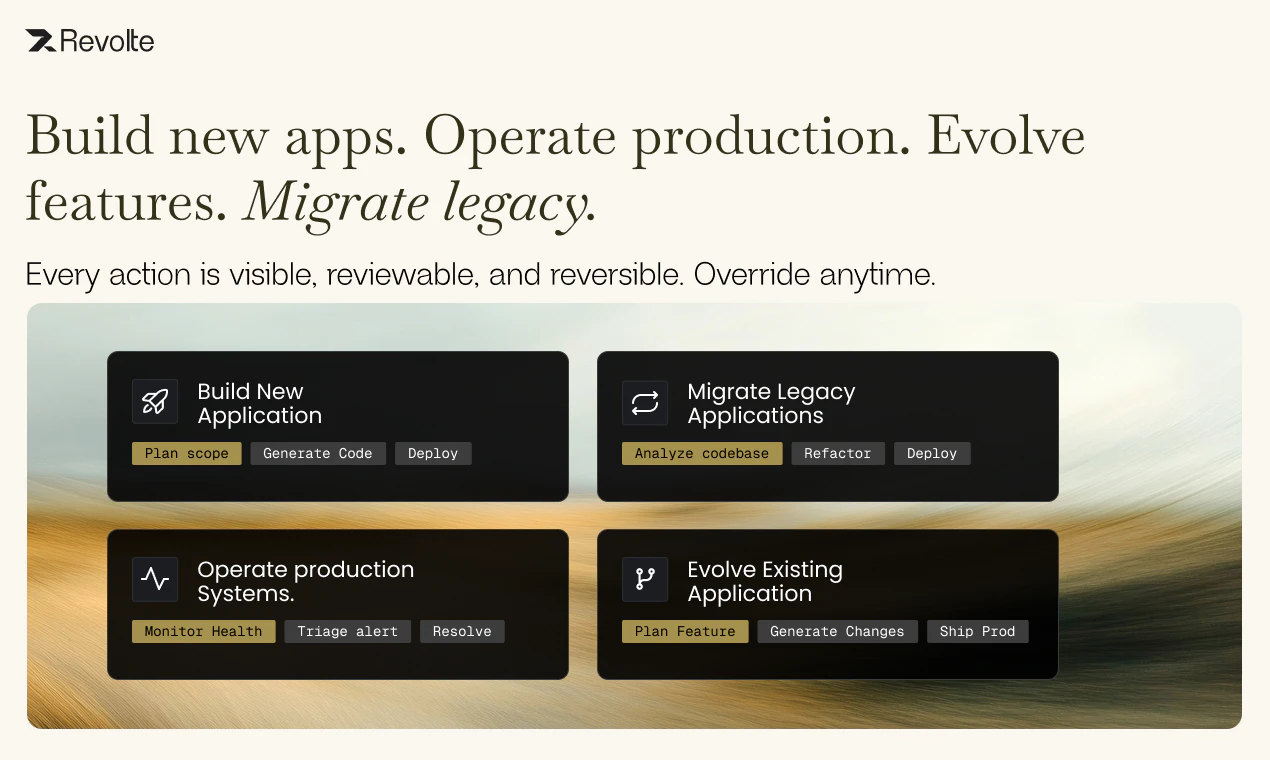
一句话介绍:Revolte 是面向工程团队的智能体平台,通过规划、编码、质检、部署及监控的自动化流水线,解决软件交付过程中“编码之外”的协作与操作瓶颈,让人类工程师控制关键决策点。
Software Engineering Developer Tools Artificial Intelligence
AI软件工程 智能体平台 代码审查 自动化交付 安全合规 研发效能 开发运维 工程治理 SDLC 人机协作
用户评论摘要:用户赞赏其将信任机制作为基座的理念,质疑点集中在:1)在老旧/混乱代码库中的实际表现;2)审批环节是否会形成新的瓶颈;3)对严格合规行业的数据与策略保障;4)如何跨大规模多仓库管理上下文;5)任务执行的端到端准确率。
AI 锐评

Revolte 试图回答一个行业级难题:如何让AI不只是“写得更快”,而是“交付得更可靠”。它的核心价值不在于抛弃Cursor的IDE助手路线,而在于对“软件交付全生命周期”这一更宽、更深的场景进行系统化重构。

从产品设计看,它确实避开了两个极端:既不搞全盲自助式自动驾驶,也不做需要工程师全程盯屏的“AI辅助”。通过将SDLC拆解为规划、编码、测试、PR、部署等标准化Agent行为块,并在关键变更处设置由工程判断把关的“人机护栏”,它试图将AI的生产力注入到最痛的“编码到上线”的灰色地带。

真正的挑战在于“治理的可兑现性”。评论中提到的“老旧代码库”、“多仓库上下文”、“合规审计”并非边缘问题,而是软件工程的常态。Revolte的“Service/App”上下文模型和YAML化的策略定义虽然构思清晰,但将组织沉淀多年的、隐性的交付规则显性化为系统可执行的规范,本身就是一项高门槛的工程实施。如果规则映射不到位,所谓的“自治”就会在真实压力下退化为“带审批的手动补丁”。

另外,其“按服务定价”而非按人头收费,是对传统AI工具定价逻辑的一次锐利解构。这暗示产品的价值锚点在于平台替代了人力交付链路中的“管道”,而非为每个工程师的IDE订阅付费。

一句话:Revolte的骨架搭建得相当专业,但能否在乱麻般的工程现实里长出肌肉,取决于它的“上下文摄入”和“策略落地”能力,是否真的像PPT上那样干净。

查看原始信息
Revolte
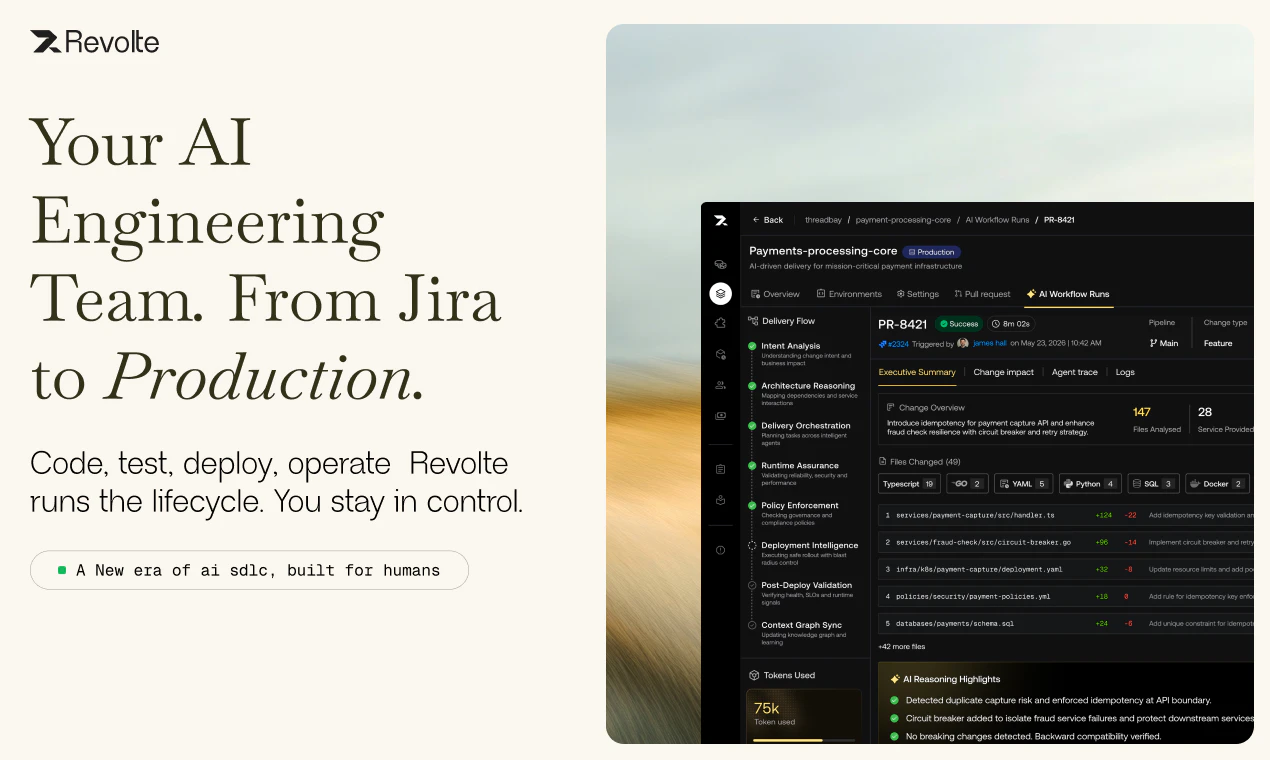
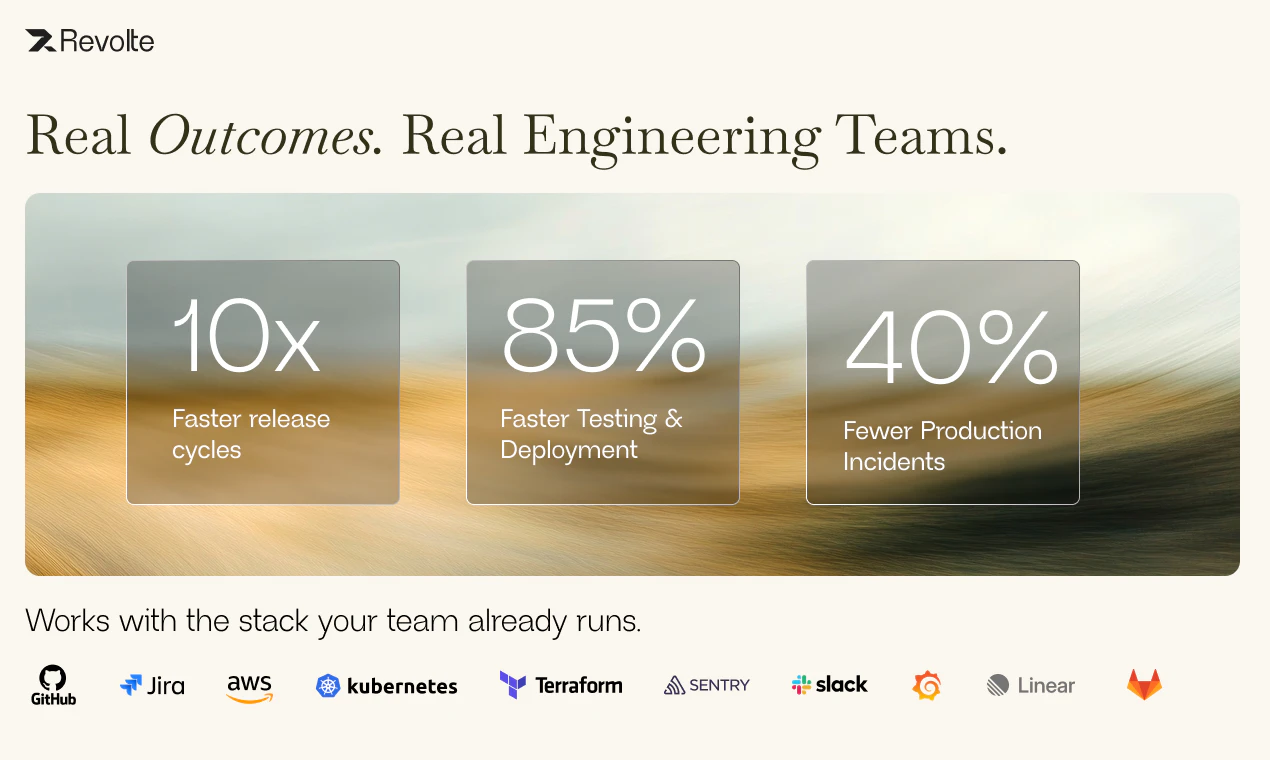
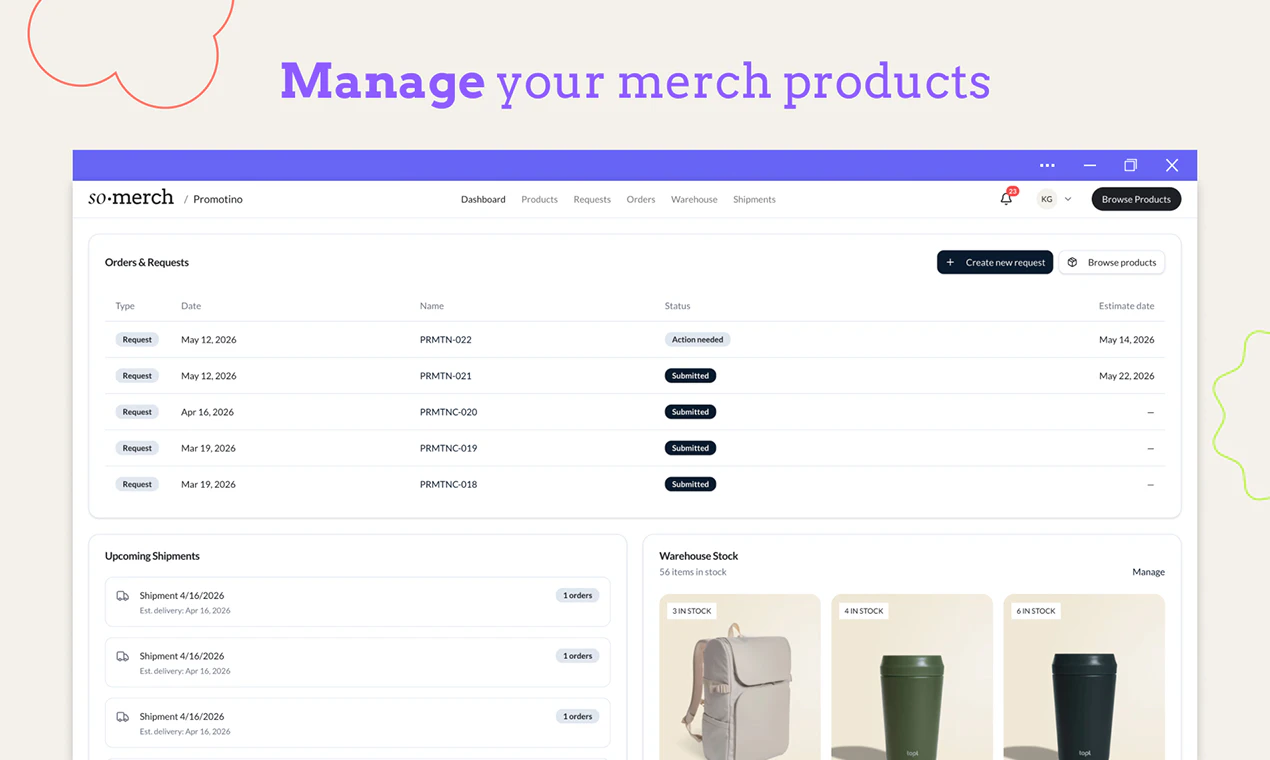
Revolte is for engineering teams to turn intent into production-ready software faster, safer, and with more control. Its agents plan changes, generate code, run quality and security checks, create PRs, support deployment, monitor runtime behavior, and surface risks early. Engineers approve the important decisions. Revolte handles the delivery heavy lifting. Built for higher delivery throughput across SDLC, stronger governance, and more value shipped per engineer.

Hey Product Hunt 👋


Raj here, founder & CEO of Revolte.


For years, I’ve built and worked with engineering teams where the same pattern kept showing up:


Writing code was rarely the only bottleneck.


The real drag was everything around the code: setting up environments, running tests, managing deployments, fixing broken builds, triaging incidents, checking quality, and keeping delivery moving across disconnected tools.


Coding assistants have made developers faster inside the IDE.

But software delivery is much bigger than the IDE.


That’s why we built Revolte.


Revolte is AI for Software Engineering, an agentic platform that helps engineering teams move from intent to production with humans in control.


Give Revolte a ticket or requirement, and its agents can help plan the implementation, work against your actual codebase, generate code, run checks, create the PR, support deployment, monitor runtime behavior, and surface what needs attention.


But the important part is this:


Revolte does not remove engineering judgment.


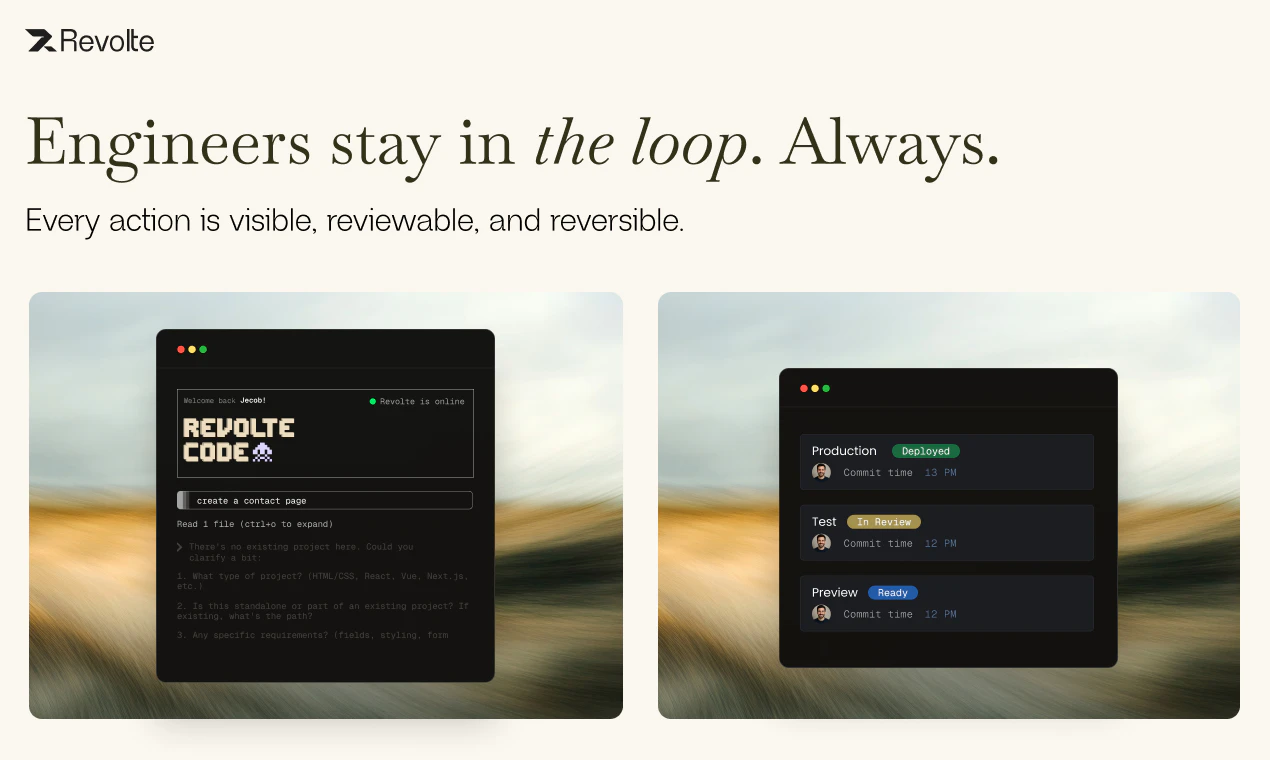
Every meaningful change goes through human review. Engineers see the diff, the reasoning, the checks, and the rollback path before anything moves forward.


We built it this way because production software cannot run on blind automation. It needs context, governance, and control. Our belief is simple:


AI should not just help engineers type faster.
AI should help engineering teams ship better software faster.


Revolte is built for teams that want more delivery throughput without adding more delivery chaos.


We’d love for you to try it, break it, test it on something real, and tell us where it falls short. 


https://revolte.ai/


And if you’re an engineering leader thinking about how agents can safely enter your SDLC, I’d be happy to talk through the governance side with you.


Thanks for checking us out,

Raj.

11
回复

@rajagopalanar congrats on the launch Raj. How do you avoid a pile up at the judge gate (agent coded and now there's a stack of reviews)?

4
回复

@rajagopalanar Congrats on the launch, Raj. That pipeline execution flow looks incredibly clean.

Dropped a vote, but looking closely at your thread discussion, your core message is fighting a massive narrative leak right now.

Your tagline claims Revolte is "AI for Software Engineering." But as Florent called out in the comments, that phrase is too generic and could mean five different things. It forces you to spend your entire launch day manually explaining why you are different from Cursor and Claude Code.

You are accidentally positioning a powerful, autonomous development lifecycle engine as a basic IDE coding assistant. Engineering leaders do not buy faster typing speeds. They buy throughput velocity and the removal of delivery pipeline chaos.

Flipping that hero focus from a "coding helper" message to an "autonomous delivery infrastructure" play will stop your active launch traffic from bouncing.

Awesome technical build. Good luck with the signup velocity today.

0
回复

Greetings Product Hunt 👋 this is Watson from @Revolte

One thing we kept hearing from engineering teams was this:

AI helps teams write more code. But WHY shipping software to production still feels painfully operational — and WHY no serious engineering team fully trusts AI near production yet.

The hardest balance in AI software delivery today :

  • Too much approval, and the product becomes another workflow layer engineers have to babysit.

  • Too much autonomy, and no serious team will trust it near production.

  • Automation should handle the repeated delivery work
    environment setup, test runs, build management, deployment support, runtime monitoring, and coordination.

  • Human judgment should stay where it matters: code merges, production changes, infra-sensitive decisions, security-sensitive changes, and rollback paths.

  • This balance is the product. We went through many versions before landing on the current model.

And honestly, that’s where a lot of AI ROI still gets stuck inside real engineering organizations.

We believe the future isn’t just AI generating code — or engineers manually coordinating every step around software delivery forever.

It’s intelligent execution systems continuously carrying delivery work forward while engineers stay focused on architecture, reliability, product thinking, and technical judgment.

That’s the balance we’ve thought deeply about while building Revolte — and where the compounding value really starts.

Would genuinely love feedback from the PH community ❤️

5
回复

Congratulations to Raj and the Revolte team on the launch 🚀


I hunted Revolte because it’s one of the few AI engineering platforms I’ve seen that looks beyond code generation and focuses on the real bottleneck: getting software safely from intent to production.


A lot of AI dev tools make engineers faster inside the IDE. That matters, but it doesn’t solve the full delivery problem. The hard part is everything around the code, planning the change, understanding the existing codebase, running the right checks, creating the PR, supporting deployment, watching what happens at runtime, and knowing what to do when something breaks.


That’s where Revolte feels different to me.


Their bet is not that AI should blindly replace engineering judgment. It’s that agents can take on more of the SDLC heavy lifting if the trust model is designed properly, with the right approval gates, visibility into the diff and reasoning, quality and security checks, and rollback paths where they matter.


That’s the version of AI for software engineering I can actually see moving into real production codebases.
Two things I’d encourage people here to look at closely: the per-service pricing model, which is very different from the usual per-seat AI tooling model, and the CLI/workflow experience, because engineering teams don’t want another SaaS dashboard unless it genuinely removes work.


Excited to see how the Product Hunt community responds to this.


Raj and team have clearly thought deeply about where AI belongs in the software delivery lifecycle. Looking forward to the discussion.

5
回复

Thanks you,@istiakahmad this means a lot.

You captured the heart of it perfectly: the bottleneck was never code generation, it's everything around the code, getting a change safely from intent to production. That's the whole thing we obsess over, and the trust model is exactly where we've spent the most time, approval gates, visibility into the diff and reasoning, the checks and rollback paths.

And appreciate you flagging the per-service pricing and the CLI experience for people to dig into. Grateful to have you hunting us today. 🙂

0
回复

Excited to share that we’re launching Revolte today.

Revolte around a simple belief: software teams should spend more time building great products and less time dealing with delivery complexity.

Today, engineering teams jump across multiple tools for planning, coding, testing, deployment, and production monitoring. A lot of valuable time gets lost in handoffs, repetitive workflows, and operational overhead.

That’s why created Revolte.

Revolte is AI for software engineering, helping teams move faster from intent to code, testing, deployment, and production, while keeping engineers in control throughout the process.

With Revolte, teams can:

⚡ Build faster
🧪 Automate testing and release workflows
🚀 Ship with less operational overhead
🔍 Monitor production with greater visibility and confidence

Building this for developers, engineering leaders, and teams that want to ship faster without adding more complexity to their workflow.

Would love to hear your thoughts, if AI could take over one painful part of your software delivery workflow, what would you want it to handle?

Thanks so much for checking out Revolte 🙌

3
回复
How does this hold up on a real production codebase? Most dev tools I've tried demo well and then struggle the moment you point them at an older repo with legacy layers. curious what your experience has been with messier code bases.
2
回复

@elvis_onjiko Fair question. As you pointed out, this is exactly where most AI dev tools start to struggle as of today.


Our experience is that older production codebases need bounded context, not a giant repo dump into a prompt. Legacy systems usually have old patterns, partial docs, weak test coverage, tribal knowledge, and deployment rules that are not obvious from the code alone.


So Revolte approaches it in smaller controlled slices. It builds context around the change area: repo structure, service boundaries, dependencies, relevant files, test paths, PR history, and where possible, runtime or deployment signals. The goal is not to magically understand the whole estate on day one. It is to make safer changes with the right context and human review points.


Messier codebases are actually where we think this workflow layer matters most. The value is not just writing code, but knowing what to touch, what to avoid, what to test, and where a human should approve.

1
回复

@elvis_onjiko 

Totally valid concern — and one we’ve heard a lot.

Yes, Revolte has been tested on older codebases and the honest answer is: legacy vs new doesn’t matter as much as you’d think — what matters is context.

Revolte builds context per App or Service, and as long as that context can be established well, the agents can work effectively regardless of how old or messy the repo is. A legacy codebase with good context is more workable than a greenfield project with none.

Where things get harder is when a codebase is undocumented or inconsistent. In those cases, we work with teams to build that context up front — mapping the service structure, defining boundaries, and documenting the key patterns. It’s an investment, but once the context is solid, Revolte runs on it just as effectively as any modern codebase.

So the first step with a messy legacy repo isn’t jumping straight into workflows — it’s making sure the context layer is strong enough to support them.

0
回复

AI that works inside the engineering workflow is a different bet than AI that sits alongside it. The context problem in code is real. Getting it to reason about system trade-offs isn't just a file-level concern. We've been building in the customer success for developer tool companies space, and Revolte touches on something we think about a lot. What's your approach to handling context across large multi-repo codebases?

2
回复

@shivam_jaiswal21 Very aligned with that view. We don’t think the context problem gets solved by pushing more files into a bigger prompt window.

Our approach is to treat context as a system graph, not a repo dump. For larger multi-repo environments, Revolte maps the service boundaries, dependencies, APIs, ownership, deployment paths, PR history, tickets/specs, and runtime signals around the change being made. The agent then pulls the relevant slice of context for that workflow instead of trying to reason over the entire estate at once.

The important part is also separating “code context” from “delivery context”. A change is rarely just about the files touched. It has impact across tests, environments, release rules, observability, and sometimes adjacent services.

We are still early in how far this can go, but that is the bet: context has to be structured around how engineering teams actually ship, not just how code is stored.

Would love to compare notes given your lens in the dev tool space.

1
回复

@shivam_jaiswal21 

Really glad this resonates — and you’ve put your finger on something we spent a lot of time on.


Here’s how we approach it: for every codebase, Revolte maintains a separate entity called an App/Service. Each one builds its own context — the structure, dependencies, patterns, and history specific to that service. That context isn’t shared or muddled across repos; it’s scoped and owned.

When a workflow runs, the agents work within that context. When a dev picks up Revolte Code (our CLI) to review and approve the output, they’re working from the same context — so there’s no gap between what the agent understood and what the human sees.

But the part we’re equally serious about is context poisoning — because bloated, unstructured context is almost as bad as no context. Agents hallucinating based on irrelevant noise is a real failure mode. Our approach is a clear structural flow built into Revolte that governs how context is built, what gets included, and what doesn’t. Meaningless context without reference doesn’t make it in.

It’s an area we’re continuously tightening — because getting the reasoning right at a system level, not just file level, is what actually makes autonomous workflows trustworthy at scale.

0
回复

I worked on the deploy and runtime side of @Revolte .

The funny thing about "deploy a service" is that it sounds simple until you see how different every team’s setup is.

Different pipelines. Different secrets. Different rollback rules. Different environments. Different observability habits. Every org has its own delivery snowflake.

A lot of agent demos avoid this by staying in a sandbox. We didn’t want Revolte to be useful only in a clean demo environment.


So the challenge was to make the agent work with the way teams already ship, existing repos, existing pipelines, existing infra patterns, while still giving them a cleaner execution layer on top.

The CLI was a big part of that.


We didn’t want engineers to feel like they had to live inside another SaaS dashboard. The CLI is meant to make Revolte feel close to the actual workflow: ticket, code, checks, PR, deploy support, without forcing engineers out of their flow.


That part took longer than expected, but I think it matters a lot for adoption 🙌

2
回复

This feels like Cursor meets Jarvis 👀 How accurate is the task execution in real world coding workflows?

2
回复

@nithin_raju1 Good question and an important distinction — task execution accuracy is really asking whether the agent actually completes the job end to end, or gets lost halfway through.


The honest answer is that the pipeline structure is what makes execution reliable in practice. There's a planner step that runs before any code gets written — it maps out what the task actually involves and what done looks like. That upfront planning step is what prevents the agent from going off in the wrong direction and only discovering it three commits later.


From there each step in the pipeline — codegen, testgen, regression — has a defined scope and exit condition. It's not one agent trying to freestyle the whole thing. And if something fails at any stage, it surfaces there rather than quietly producing something broken that reaches a PR.


Where execution gets harder is with tasks that span multiple services or involve calls that need real domain judgment — those are the ones where we've deliberately kept humans in the loop rather than pushing for full automation. The goal isn't maximum autonomy, it's reliable execution on the work that can run cleanly, and a clear handoff when it can't.


What we're seeing with customers is that the volume of tasks completing end to end without constant intervention has gone up significantly. That's the real signal on execution for us.

1
回复

Congratulations on your launch @rajagopalanar. This automation of engineering processes with AI looks disruptive and promising to reduce the SDLC cycle duration for me.

However with the product doing everything from development to production, I'd like to know your data protection, security and compliance story. Especially in a regulated industry (e.g. financial services like banking or insurance), my most pressing concerns regarding engineering processes are around :

  • Does the product breach my security standards that I ensure in all of my vendors ?

  • Are the SDLC policies in paper actually being implemented by this tool ? Given that we have built agile teams and processes over years in-house / external and IMO it is easier to define a SDLC policy on paper than to enforce them in practicality.

  • What happens to the data, does the product take it outside UK / EMEA regions ?

1
回复

@zabry 

Thanks for the kind words, and these are absolutely the right questions — let me answer each one directly.

On security standards — Revolte is SOC 2 and GDPR compliant, with clearly defined access boundaries for every agent and workflow. SAST and DAST scanning run as part of every pipeline automatically.

On SDLC policy enforcement — teams define their policies in YAML per service, and Revolte enforces them on every workflow run. The policies you’ve built over the years don’t get replaced — they get encoded and consistently applied.

On data residency — Revolte runs on AWS and can be deployed in any AWS region, including UK and EMEA, to match your requirements. Your data stays where you need it to.

Happy to share more detail with your security team if that would help.

1
回复

How is security checking implemented? Do you have internal rules or checklists?

1
回复

@natalia_iankovych 

Great question — security is something we’ve been deliberate about on two fronts.

On the code side, Revolte has dedicated SAST and DAST workflow templates built in. So security scanning isn’t a manual step someone remembers to add — it’s part of the workflow by default. Static analysis catches issues in the code itself, dynamic testing covers runtime behaviour. Both run as part of the same autonomous pipeline before anything reaches a PR.

On the platform side, we’ve been equally careful about how the agents themselves operate. Every agent and workflow has clearly defined boundaries and access controls — they can only touch what they’re supposed to touch. This wasn’t an afterthought; giving autonomous agents broad access across a codebase without guardrails is how things go wrong fast.

So the short answer: code security is handled through SAST/DAST templates, and agent security is handled through strict access definitions baked into how Revolte is structured.

1
回复

Congrats on the launch. The framing that resonates most is treating the full SDLC as the product rather than just code generation. That's a meaningfully different bet from the IDE-centric tools, and a harder one to build well.

1
回复

@mariselvi_ramar thank you very much.

You named the bet exactly. The full SDLC is a much harder thing to build than a better autocomplete, but the IDE-centric tools keep hitting the same ceiling: faster typing, when typing was never the bottleneck. Means a lot that the framing landed.

0
回复

@rajagopalanar What stands out about Revolte isn't just the AI assistance, but it's the philosophy. Tools should amplify human judgment, not override it.

As someone who writes about practical tech at Your Tech Compass, I see too many "AI fixes everything" promises that skip the nuance. Revolte feels different: the iterative suggestion flow (try-tweak-approve) mirrors how thoughtful devs actually work.

One thing I'm curious about as I test: can teams customize Revolte's "confidence threshold" for auto-suggestions? For example, "only suggest changes with >90% confidence" vs. "show me everything and let me filter." Asking because for risk-averse teams (and readers who value transparency), that control knob could be the difference between "cool demo" and "daily driver."

Congrats on launching something that feels both powerful and humane.

  • Diana - Your Tech Compass

1
回复

@diana_nadim2 Thanks for the comments. Absolutely. We dont see Revolte to be one another AI assistant tool that helps developer. We wanted to drive outputs which could be autonomously driven by AI workflows.

Once the AI has completed the output with its own predicted confident score, human in the loop - Developer or tester will review and approve the output. Based on the approval ratio, the confident score will be adjusted on each run while Agents takes measured feedback from previous review to self improve to maintain the confident score.

We call it right mix of AI and human to bring in 8x productivity and 10X release acceleration.

0
回复
Congrats on the launch team Revolte! What I appreciate here is that the trust layer isn't an enterprise add-on, it's the foundation. Audit trails, approval gates, and rollback paths shipped by default says a lot about who this was built for.
1
回复

@abod_rehman Thank you 🙏 This was exactly the call we agonized over. Shipping the agent first and making trust an enterprise tier would've been easier, but no engineer trusts a tool with their prod codebase if the audit trail is a paid upgrade. Had to be the foundation. Glad it landed. @parthasarathi can weigh in on this.

0
回复

@abod_rehman Thanks for the comment. Great point. Its very true. Not only Agent audit trails and approval gates are important, clear roll back path for shipped code on one click is very important.

Revolte has inbuild Platform function to ship AI developed code to Preview environment all the way to production. In any of the stage, the deployed code in any environment could be rolled back on single click.

Revolte with GIT and any feature flagging platform like LaunchDarkly gives great flexibility to teams of any size to have any day release cycle. We call this - Deploy Instantly, Release intentionally.

0
回复

does it mean this will work starting from the idea with a small title - "like create AI note pad" to autonomous implementation?

1
回复

@maksym_shcherbakov1 Yes, that is the direction, but we don’t think of it as blind autonomy from a vague title.

Something like “create an AI notepad” can definitely be the starting point. Revolte would help turn that into a clearer spec, break it down into implementation steps, generate the code, create tests, open PRs, and keep humans involved at the right review points.

The goal is to take an idea and move it through planning, implementation, validation, and approval with enough context and control around the workflow.

1
回复

@maksym_shcherbakov1 

Great question! Almost — but not quite from a single title alone.

Revolte runs on spec-driven development, so the starting point is a spec rather than a loose idea. Think of it less like "create AI notepad" and more like a defined set of requirements for what that notepad should do, how it should behave, and what the acceptance criteria are.

Once that spec exists, yes — Revolte takes it from there autonomously. Planning, coding, testing, security checks, PR — all the way through without hand-holding.

The spec is the foundation that makes autonomous execution reliable. Without it, agents are guessing — and that’s where things go wrong.

0
回复

The approval gating for critical decisions is the right design. Most SDLC agents fail because they either go fully autonomous (risky) or require constant hand-holding. We've felt that tension building agents that touch production. Having it handle quality checks, PRs, and deployment monitoring while preserving human review for high-stakes calls is solid. How does it decide what triggers an approval gate? Is that configurable per repo or risk-scored?

1
回复

@retain_dev Really appreciate the comment — you’ve clearly felt this pain firsthand and that framing is spot on.

Here’s a simple development workflow in Revolte to answer your question.

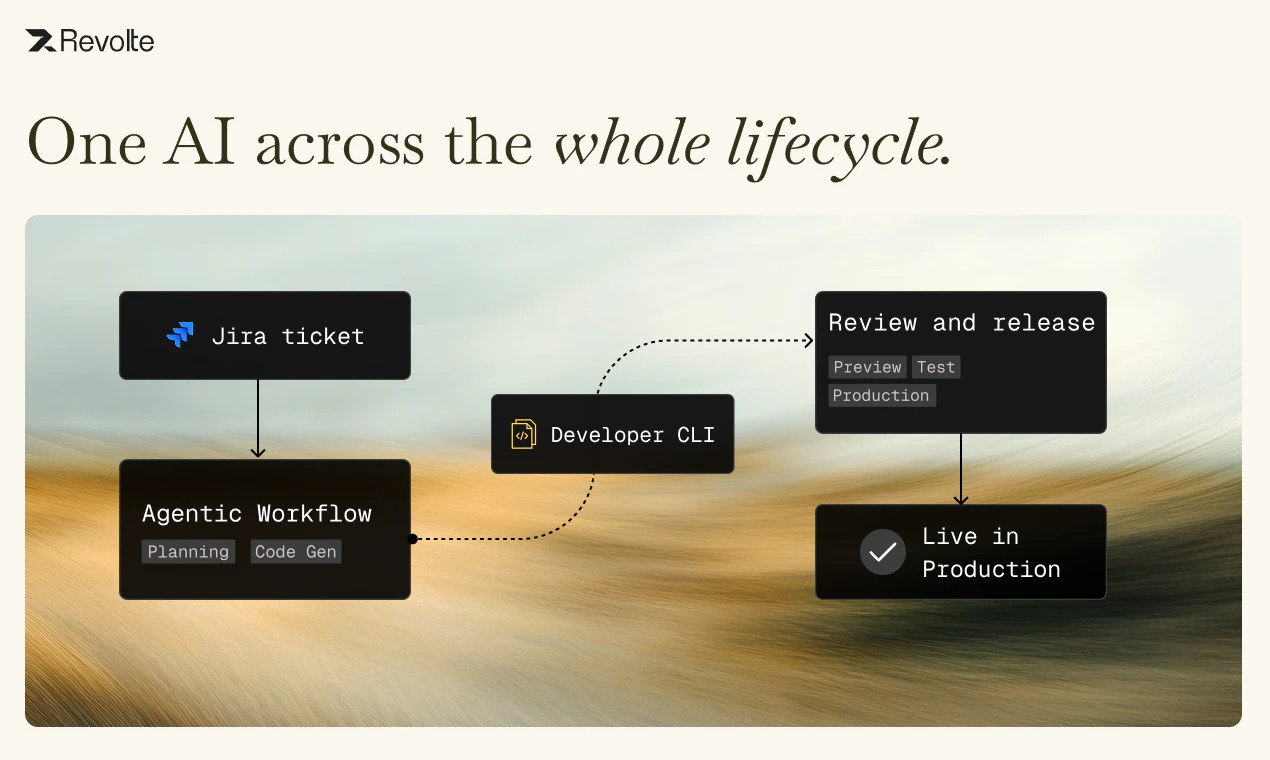
A feature ticket comes in → the planning agent breaks it down → coding agent implements it → tests are auto-generated → SAST/DAST runs → PR is raised. The dev reviews and approves at the end. No hand-holding in between.

Now the gate question: that’s configurable. Teams define approval rules at the workflow level — a routine feature build on a low-risk service can flow straight through, anywhere a particular artifact to be finally used in the product as code or test script or design, the it will go through approval gate. No output will be used or merged to exisiting repository finally without human approval.

The risk-scoring side is something we’re making smarter over time — more context-aware, less purely rule-based.

But the principle stays the same: full autonomy where it’s safe, human judgement where it matters.

let me know if this answers the question

0
回复

Dear @retain_dev  Interesting question actually ., while pretotyping some of our workflows, we started noticing the same challenge & pattern during work within finance environment.

Autonomy there became heavily risk-dependent (along with few other OPA rules).

Say for lower-risk features — like their internal dashboards, FAQ/content updates, coupon dashboards, and non-critical UI flows — the workflows were designed with much lighter Human approvals and higher AI autonomy.

But workflows touching their Core new features -> say., beneficiary logic, critical infrastructure pieces - introduced much stronger validation layers and human checkpoints before anything could move forward.

That’s probably where we feel engineering AI systems evolve over time — systems themselves becoming smarter in identifying which workflows can move autonomously versus which ones need stronger approvals and human oversight. That balance Raj mentioned — autonomy with governed checkpoints — is exactly the direction we’re trying to preserve in REVOLTE.

Curious how you’re thinking about this in your own agent workflows today — are you leaning more toward static approval rules, or dynamic risk/context-based gating?

1
回复

How do you decide what counts as an important decision that requires engineer approval in comparison to something the agent can auto apply?

1
回复

@othman_katim 

Great question — and honestly one we debated a lot internally.

The agent never auto-applies anything. Every autonomous output — whether it's a code change, a test suite, a design decision, or a deployment config — is raised as a pull request to the relevant human stakeholder. Developer, tester, architect, whoever owns that stage of the workflow.

The PR isn't only a quality check. It's an ownership handoff. It makes the human the deliberate decision-maker. The workflow is designed so that people are defining intent upfront and reviewing outputs at the back — and the AI is doing the actual work in between.

We believe that's the right inversion. Not "AI assists the human" in the traditional copilot sense, but "human sets direction, AI executes, human signs off." The accountability stays with people while work is done by AI.

It also means the system is naturally auditable — every decision has a human who reviewed and approved it, with full context of what the AI produced and why.

We're still evolving how this works across different team roles, so genuinely curious whether that model resonates with how your team thinks about it. 🙏

0
回复

One of the earliest and most consequential decisions we made was this: Revolte would not be a coding tool with delivery features bolted on. We made the SDLC itself the product.


It sounds obvious in hindsight, but the pressure early on was to show something immediately impressive — an agent that generates a working PR from a prompt, a demo that wows in a ten-minute call. That stuff is genuinely useful. But we kept running into the same wall: generating code is not the bottleneck anymore. The bottleneck is everything that has to be true for that code to safely reach production inside a real engineering organisation.


What context did the agent have when it made that decision? Who approved it? What's the audit trail? What happens if it needs to be rolled back? How does an engineering leader defend this to their CISO, their CFO, or their board?


That's where most of our actual engineering effort has gone — not into making agents generate better code, but into making agents operable inside real teams. Audit trails, approval gates, policy-aware actions, delivery visibility, rollback paths. These are not enterprise features we added later to close deals. They are the reason engineering teams can say yes to agents at all.


The line we keep coming back to internally: AI can carry the delivery load, but engineering judgment has to stay visible and accountable. That's not a constraint on what agents can do — it's what makes them trustworthy enough to actually use.


Curious whether others building in this space have hit the same wall — the gap between "the agent works in a demo" and "the organisation can actually run it."

1
回复

"AI for software engineering" could be five different products, so I honestly can't tell what this is yet. A code editor? An agent that opens PRs? A Copilot-style layer with more context? What does one normal task look like start to finish, and what happens when the repo has no tests and no spec to work from? That's the case that breaks most of these for me.

But I'm also glad you exist guys, I'm just here to challenge you haha
Congrats for the launch

1
回复

@fberrez1 this is exactly the comment I was hoping someone would write, so thank you for grilling it. 💪

Fair point that "AI for software engineering" could mean five things, so to be specific: Revolte is an autonomous agentic platform for the whole SDLC. You define a workflow — planning, coding, test generation, SAST, DAST, bug fixing, PR creation — and the agents run it end to end, no human babysitting every step.

One normal task: a feature gets requested → planning agent breaks it down → coding agent implements → tests generate automatically → security scans run → a PR is raised. You open Revolte, review, tweak, approve. Done.

And the no-tests, no-spec case is exactly where Revolte earns its keep, because that's what breaks most tools. No spec? The planning agent builds one. No tests? The test agent writes them in the same flow. You come in at the end to approve, not to hand-hold.

So please keep challenging us, this is the good stuff. And congrats right back for asking the real question. ❤️‍🔥

0
回复

Congrats on the launch team! Quick question though: how is this actually different from Cursor or Claude Code? Trying to figure out where Revolte fits in my stack.

1
回复

@keerthana07 totally fair question, and honestly the one we get most! 💪

Cursor and Claude Code are brilliant tools, but they're essentially a smarter pair of hands for the developer. You're still driving, still prompting, still context-switching between coding and everything else.

Revolte works at a different level. It's not just helping you code, it's handling the whole delivery cycle autonomously: planning, coding, test generation, security scanning, PR creation, all running as one connected workflow with no one babysitting each step.

The dev or tester comes in at the end, opens Revolte Code, reviews what the agents produced, makes any edits, and approves. That's the moment of human judgement, not the hours of groundwork before it.

So in your stack: Cursor and Claude Code assist the developer writing code. Revolte assists the entire delivery process, from ticket to merged PR, with specialised agent personas for development, automation testing, non-functional testing, bug fixing and more.

If Cursor is a smart co-pilot, Revolte is the autonomous crew. ❤️‍🔥

1
回复

What's the security story? We're in a regulated industry, but I'd want to understand data residency and whether the agent can run inside our own cloud account.

0
回复
How does this hold up on a real production codebase? Most AI dev tools i have tried demo well but then struggle the moment you point them at an older repo with legacy layers. Curious what your experience has been with messier codebases?
0
回复

@imtiaj_ahmad Very fair question. This is exactly where most AI dev tools struggle.

Our approach is not to throw the whole legacy repo at an agent and expect magic. Revolte keeps the scope bounded around the actual change: relevant files, existing patterns, service boundaries, test paths, PR history, and project-specific instructions.

Messier codebases need more context and more control, not more blind autonomy. The value is in helping the agent know what to touch, what not to touch, what to test, and where a human should review before it moves forward.

0
回复

AI for software engineering is one of the categories where the demo always looks great and the daily use breaks at the edges — codebase context, multi-file refactors, and stale dependencies. Curious how Revolte handles the case where the codebase convention contradicts what the model has seen most in training. I run into the same problem on the financial-modeling side — my channel Mod3Loop covers a lot of this kind of edge-case behavior in modeling tools that mostly work until they suddenly do not.

0
回复

@samir_asadov That is exactly the edge case we care about. The model’s default instinct is often to follow the most common pattern it has seen, but real production codebases usually have their own conventions, older layers, exceptions, and sometimes strange but intentional trade-offs.

Our approach is to make the local codebase context the source of truth. Revolte first looks at the existing patterns around the change area: similar files, service boundaries, naming conventions, dependency usage, test structure, PR history, and project-specific instructions. The agent is then guided to work within those conventions instead of applying a generic “best practice” from training.

We also do not treat generation as the final step. The value is in the loop around it: implementation, tests, checks, review, and human approval where there is ambiguity. That is especially important when the codebase convention and the model’s default answer do not match.

Your financial-modeling analogy is a good one. Most tools work well in the clean path but the real product test is what happens at the edges.

0
回复
#5
Buffer API
One API to publish across every social platform.
194
一句话介绍:Buffer API通过一个统一端点对接11个社交平台,解决开发者、AI代理及自动化工具在多平台内容发布与管理时面临的接口碎片化、认证复杂和格式适配难题。
API Social Media Artificial Intelligence
社交发布API 多平台聚合 GraphQL接口 MCP服务器 AI集成 内容管理 无代码自动化 开发者工具 SaaS 内容调度
用户评论摘要:用户赞赏其统一数据模型和MCP服务器,有效缓解多平台格式差异痛点。问题聚焦于平台规则突变时的适应机制、API发布对账号健康的影响,以及对白标/ISV定价的询问。
AI 锐评

Buffer API 的发布,与其说是一个新功能,不如说是一次战略宣言:它正式将自身从“社交管理SaaS工具”升级为“社交基础设施即服务”。从产品角度看,它回答了一个长期悬而未决的问题——能否用一个接口处理Twitter、LinkedIn、TikTok等平台的“人格分裂”?答案是用GraphQL统一数据模型在上层做抽象,用MCP服务器在下层做协议解耦。这种“中间件”思路非常务实,也直接切中了AI Agent和自动化工作流(如n8n、Zapier)的刚性需求。正如用户提到的,“post everywhere”在多平台场景下极易因边缘规则(如媒体格式、速率限制、帖子类型差异)而崩溃。Buffer API通过单一速率限制模型和结构化错误响应,把本应耗时的脏活揽了过来,这对其核心用户(agent开发者、无代码构建者)极具价值。

然而,这种“归一化”的弱点在于平台规则的不可预测性。LinkedIn或X的一次突发格式变更,会让中间的适配层瞬间产生逻辑裂痕。此外,用户对“API发帖影响账号健康”的担忧并非空穴来风,平台对自动化内容的隐性降权策略,Buffer的API层无力也无法承诺解决。最尖锐的拷问来自定价:当ISV希望将社交功能嵌入自身产品时,标准的套餐框架极可能构成成本瓶颈——这是一个非自营基础设施服务商在向“平台化”演化时必须面对的宿命。总体来说,Buffer API在产品打磨上极佳,但商业模式的挑战与平台对抗的风险,是其长期价值的真正试金石。

查看原始信息
Buffer API
Buffer's API lets you publish and manage content across 11 social platforms through a single endpoint. Connect it to AI assistants, no-code automation tools, or build full custom integrations. Ships with an MCP server, pre-built automation templates, a CLI, and an interactive API explorer. Available on every Buffer plan, including Free.

I’ve built a TRMNL plugin with the Buffer API; it shows my queue counts, along with my next scheduled posts and previously sent posts, on an e-ink display sitting on my desk. I’ll make this available for installation soon.

The API is straightforward to work with, and AI tooling makes prototyping extremely quick. If you're building anything that touches social media, this is worth a look.

13
回复

Well done team and happy launch day on PH!

11
回复

👋 Hey everyone, Mike here, another one of the makers on the Buffer team.

A bit more about the API:

Buffer's API lets you connect Buffer to the tools you already use, whether that's an AI agent, a no-code automation tool, or your own stack. You can publish, schedule, and manage your social presence from wherever you already work.

Under the hood: GraphQL API, MCP server, CLI, managed OAuth, pre-built workflow templates with no-code tools like Zapier and n8n, and an interactive API explorer.


A few more examples of what people have been building with it:

  • An automated weekly reporting system across 77 social channels in 10 languages, built with n8n by someone who isn't a developer.

  • A Friday morning Slack bot that recaps what was posted, what's scheduled, and what's missing. Plus a full LinkedIn content library and analyzer on Lovable, both built entirely through conversation with AI.

  • A power-user layer on top of Buffer with thread splitting, a content calendar with planning notes, and a snippet library.

  • A Substack growth platform for creators, with Buffer handling social distribution automatically.

It's also available on every Buffer plan, including Free.

Let us know if you have any questions and excited to see what other folks build with it!

10
回复

As a fellow bootstrapped company, it's always a pleasure to see Buffer being back over here 🔥 I'm curious, is the next step the Buffer MCP?

4
回复

@ant0ine_gt MCP and CLI are already available 😁

7
回复

Most social publishing APIs fall apart on edge cases like platform-specific media constraints, rate limit variance across accounts, or diff post formats per network. Curious how the Buffer API handles those inconsistencies at the normalization layer. Do you expose a unified schema and translate per-platform, or does the caller still need to know what Twitter vs LinkedIn expects?

4
回复

Hey there@fberrez1!
We expose a single GraphQL API with a unified data model (posts, channels, organizations), so you integrate once instead of juggling separate APIs for each social network. You use the same mutations to create, schedule, and manage posts across Instagram, LinkedIn, X, TikTok, YouTube etc., and we handle auth, routing, and most of the cross‑platform reconciliation behind the scenes.

At the same time, not all networks are identical. Every post is tied to a specific channel type, and we validate it against that platform’s rules, returning clear, structured errors when you hit things like media constraints, text limits, or unsupported combinations. Rate limiting is handled at the Buffer layer, so your integration talks to one rate‑limit model even though we’re managing multiple downstream APIs.

For tailoring content, we also use a metadata layer: each post has a shared core shape (text, media, scheduled time, etc.), plus an optional metadata object that fans out into per‑platform fields (for example, Instagram post vs. reel options, LinkedIn‑specific link settings, YouTube‑style settings). That means you can send a simple “works everywhere” payload when you want speed, and then selectively add metadata when you want to optimize per network  (all through the same mutation and schema).

So tl;dr: you get a unified schema and consistent mental model, plus per‑platform metadata and validation that informs you about what each social network will actually accept :)

11
回复

Hey all! Jakub here, one of the makers ❤️

Happy to answer any questions you might have!

Also be sure to checkout our discord if you'd like to learn more! https://buffer.com/our-community

Happy Thursday!

3
回复

Hi guys ! Working on a competing launch today (Pancake), but I have to say that I love Buffer and that this is a really cool release that we'll probably use at Pancake, so best of luck for today !! Love from the Pancake crew 😍

2
回复

@francoisdefitte Thanks, François, right back at you!

1
回复

We’ve hit this exact problem internally. Every platform behaves just differently enough that “post everywhere” becomes messy really fast once automations enter the picture.

The MCP + API combo here is smart. Are most teams using Buffer API as infrastructure inside agents/workflows now, or still mainly for traditional scheduling flows?

2
回复

@zaid_mallik1 We've actually seen a mix of applications - some are using it for traditional scheduling, but some users with deeper AI knowledge have built out agentic workflows. If you work on building something, we'd love to hear from you!

3
回复

Super interesting idea. How would the pricing work for independent software vendors? I am thinking about adding scheduled social media posts on top of our current product.

1
回复

@myuan Thanks! Standard pricing is at buffer.com/pricing but if you're building something where those limits don't cut it (which is likely if you're scheduling for a bunch of your own users), get in touch and we'll work out the right tier! Docs at developers.buffer.com if you want to poke around first.

0
回复

The MCP server is the piece that jumps out — it means I could basically tell an assistant "queue this thread across LinkedIn and Mastodon for next week" in plain language and have it land in Buffer. The e-ink TRMNL plugin someone built in the comments is a nice proof that the read side is just as open as the publish side.

0
回复

One API for every platform is the right framing — the rate-limit and format normalization is where everyone burns weeks. Question: how are you handling platforms that change their content rules without notice (Twitter character limits, LinkedIn media specs)? Have to deal with the same kind of cross-platform output problem with StoryRoute, my interactive travel app where city-exploration stories need to render cleanly on mobile web and inside socials — the format-drift problem never really goes away.

0
回复

congrats on the launch! We were a customer of buffer for our contractor teams. A few questions:

1) how would post with API effect account health for faceless/organic ugc content? We often notice substantial borderline shadow ban as we increase our usage of API posting as opposed to organic.

2) is there more unit economical way to connect 10+ accounts assuming each account at least cross post to three platforms? there're a few other alternatives that offer similar functionality that we're using and cheaper.

0
回复

And if additional parameters need to be specified during publishing (for example, privacy settings), can those also be managed?

0
回复

@natalia_iankovych Hi! Each platform has its own metadata input on the createPost mutation. Reference here: developers.buffer.com/types/PostInputMetaData.html. The exact fields available vary by network (LinkedIn has first comments, Pinterest has boards, etc.).

0
回复
#6
Angel Match 4.0
A database of 125K+ angels and VCs to raise your seed round
160
一句话介绍:Angel Match 4.0是一个整合了超12.5万天使投资人与VC的数据库平台,帮助创业者在种子轮融资阶段,通过精准筛选和自动化邮件营销,大幅节省寻找投资者和发送冷邮件的时间。
Productivity Venture Capital Fundraising
投资者数据库 种子轮融资 天使投资人 风险投资 融资工具 邮件营销 冷启动 创业服务 B2B SaaS 人脉对接
用户评论摘要:用户主要关注数据库信息的验证与活跃度(如回复率、开放率),以及地域覆盖(除美国外是否支持欧洲、亚洲等)。同时有用户在询问特定领域(如旅游+AI)的交叉筛选能力。
AI 锐评

Angel Match 4.0本质上是一个“融资效率工具”,其核心价值并非人脉拓展,而是用数据替代了初创团队在搜索和冷邮件阶段最耗时的体力劳动。从产品迭代来看,团队显然意识到了“数据质量”和“触达效率”的双重关键:将数据库规模从11万扩充至12.5万,并将验证邮箱数提升至近10万,同时新增收件箱和跟进邮件流程,这是在试图打造一个从“发现”到“沟通”的闭环。

然而,这款产品的真正挑战不在于功能堆砌,而在于数据资产的时效性与深度。用户评论中关于“投资者活跃度”和“回复率”的追问,直接命中其护城河:如果数据库仅仅停留在静态的联系方式堆积,而非动态的“投资偏好、活跃阶段、近期动态”,那么它相较于AI驱动的智能关系图谱工具(如PitchBook或Affinity)仍存在代差。此外,产品目前仍以美国投资者为主(占比超50%),且未展示出对欧洲、东南亚等地投资者行为数据的深度深耕,对于全球化的早期创业公司而言,这可能会成为一个短板。

总的来说,Angel Match 4.0对第一次融资、缺乏人脉的创始人具有极高工具价值,属于“雪中送炭”而非“锦上添花”。但其长期竞争力取决于能否从“数据仓库”进化为“融资情报引擎”,并在回复率等真实效果指标上提供实证,否则容易陷入与其他Crunbase类工具的同质化竞争。

查看原始信息
Angel Match 4.0
Angel Match connects you with 125,000+ angel investors and venture capitalists in one platform so you save time on the grueling process of searching for investors.
Hi Product Hunt, I never thought we'd come this far with Angel Match. We built the first version of the platform in 2019 while trying to solve our own fundraising problem. Searching for investors manually and finding those who focus on investing in your niche can take weeks. Time that founders could spend on growing their business instead. Most first time founders who are raising money face two problems: 1. They don't know where or how to find investors. Warm intros work best, but most founders don't have that type of network yet. 2. Searching for investors through LinkedIn, CrunchBase, X/Twitter, VC websites, angel group websites and random free investor spreadsheets can take hundreds of hours. Angel Match solves both of these problems. You can search through our investor database using location, industry, stage and investor type filters to find thousands of relevant investors with their contact info. Then you can connect your email with Angel Match and start your email outreach campaigns. You can also schedule follow-up emails. Once your email campaign is sent, you can track opens, clicks and replies and manage investor conversations all in one place. Since our last Product Hunt launch over a year ago, we've improved the product a lot to make fundraising easier for founders. Here's what changed in Angel Match 4.0: - Investor Database grew from 110,000 to 125,000 angels and VCs - Investor profiles became richer with more data points added - Investor phone numbers are now separated into personal and mobile - Many investor profiles have multiple emails now - Verified emails grew from 70,000 to 99,000+. - Track investor opens, clicks and replies and communication history - Added inbox, so you can directly reply to investors inside Angel Match - Added follow-up email flows. Most replies happen in follow-up emails. - Added onboarding flows to make the app easier to use - Added fundraising educational emails - Added Investor Updates tool to help you keep your investors updated on the progress of your startup. - And many more small improvements on the platform. As part of our launch, we're offering 20% off for life to the Product Hunt community! Use the code PH20 at checkout (expires in 1 week). If you have any questions, feature suggestions or feedback, we'd love to hear them. Thank you for supporting our journey 🙏
4
回复

How verified and active are the angels/VCs in the database?

1
回复

@nithin_raju1 This is actually one of the most common questions we get. Data is our bread and butter so we take it seriously.

Our database is constantly updated and we use several methods to keep it updated. We use third-party lead generation APIs, data aggregator tools, manual verification, and updates submitted by investors themselves.

2
回复
@rashid_khasanov I think the best way to answer them would be to provide the average number of replies, open and success rates, etc. Could you get it, you think?
0
回复

Congrats on the launch. This looks super helpful, will definitely use this to find the right investors for my upcoming startup.

0
回复

@pradeepmalakar Thanks Predeep! Sounds good, please feel free to reach out if you have any questions via our chatbox on our website.

0
回复

Can I look up investors in the travel segment who have already invested in AI as well (my project is at the intersection of these fields)?

0
回复

@natalia_iankovych Yes absolutely! You can type "travel", "AI" and other related keywords under the "investment focus" filter on the dashboard and you'd see thousands of investors that match your niche.

0
回复
@rashid_khasanov what is the distribution across different regions? Is this primarily focused on US or offers good support for EU and others as well?
0
回复
@kjlis good question! Out of 125K investors in our database, roughly 50% of them are from the US and the rest are spread across the world. To be more specific, this is the actual numbers: - United States: 64,228 - United Kingdom: 8638 - India: 4081 - Germany: 3405 - France: 3136 - Canada: 3017 - Australia: 1679 - Singapore: 1555 - Sweden: 1475 - Israel: 1475 - and others
2
回复
#7
Robinhood Agentic Trading
Let your agent trade
150
一句话介绍:Robinhood允许用户将自己的AI代理接入专属交易账户,在实时活动流与内置风控下,自动化执行股票交易和信用卡支付,从而解决手动盯盘与策略执行效率低下的痛点。
Fintech Investing Artificial Intelligence
AI代理交易 自动化投资 智能风控 券商API 主题投资 实时活动流 独立交易账户 零售交易工具 金融科技 Agentic Trading
用户评论摘要:用户肯定独立账户与实时活动流的设计,认为降低了风险敞口。核心问题包括:是否仅限美国、能否设置税务优化或交易单偏好?建议引入预测市场(如Polymarket)信号作为信念校准的护栏,并关注风控设置的颗粒度(如单笔限额)。
AI 锐评

Robinhood此次推出Agentic Trading,本质是在“让AI替你下单”这条危险赛道上,用账户隔离和活动流给用户递了一颗定心丸。150票的冷启动量说明市场既兴奋又狐疑。产品亮点在于“分离式账户+可审查的实时流”,这比直接开放API让AI进出主账户要诚实得多——至少给用户留了拔网线的时间。

但真正致命的问题在于:AI代理的“智能”从何而来?Robinhood目前只充当执行管道,用户仍需自己组装或训练代理逻辑。所谓“让代理按你信念交易”听起来很美,实际却需要用户具备策略编程能力,或依赖第三方草台班子式的AI封装。如果Robinhood不能像其竞品(如Trade Republic的AI投顾)那样提供内置的策略生成与校准层,这个产品很快就会沦为极客玩具和接盘侠温床。

另外,评论中提到的“用户信念与市场定价的校准”才是真正的价值洼地。如果Robinhood能整合宏观事件预测、波动率信号等作为代理的“反偏见护栏”(而非仅靠止损),那它就不只是下单工具,而是一台半自动的套利纪律器。但以Robinhood过往“先拉客再补洞”的尿性,大概率只会做最小可行性产品。总之,这个功能对懂API的量化尝鲜者是福音,对“说句话就躺赚”的散户则是新的韭菜收割机。

查看原始信息
Robinhood Agentic Trading
Customers can connect their own AI agents to Robinhood to help manage and automate trading and credit card purchases, with built-in safety controls and a real-time activity feed. Trade in a dedicated agentic account to stay in control of every trade your agent makes.

Now you can let your OpenClaw manage your portfolio. 🦞

What could go wrong? 😜

4
回复

@chrismessina  hehehe..yes what could go wrong if you have Kakunin

0
回复

@chrismessina Or what could go right 😏

0
回复

Been waiting for this to happen :) I wonder if it becomes a way to trade thematically / in a thesis-driven way on RH, by telling your agent about your high level beliefs and having it translate those beliefs into a continuously updated portfolio strategy, rather than giving the agent single stock instructions. Time to play! 💸

1
回复

Routing agent trades through a separate dedicated account is the detail that makes this feel responsible rather than reckless — it caps the blast radius without forcing me to trust the agent with my whole portfolio. The real-time activity feed only earns its keep if I can act on it in time, though, not just read it after the fact.

0
回复
Is this for the US only? Does it have the ability to set tax parcel preferences or tax optimisation in the strategy?
0
回复

"Trade thematically in a thesis-driven way" is where I think this gets interesting fast. The Robinhood agent is reading the user's stated belief; the missing layer is whether the belief is well-calibrated against what the market thinks. I built PolyMind (https://polyminds.netlify.app/) as a lightweight alerting layer over Polymarket trades — partly because prediction-market pricing on macro events (Fed decisions, geopolitics, economic releases) is often a stronger contrarian signal than headlines. An agentic trader paired with a calibration check ("market is pricing X at 28%, your thesis assumes 60%, are you sure?") would be much more durable than one running on conviction alone. Curious whether you've thought about external belief signals as an agent guardrail rather than just instructions in / orders out.

0
回复

The dedicated agentic account is a smart design call. Separation from your main funds makes it psychologically easier to actually give the agent leeway. The real-time activity feed solves the trust problem without taking back control. How granular can users get with risk limits per trade?

0
回复
#8
Memori
Persistent memory from agent trace, not just conversation
140
一句话介绍:Memori 为AI Agent提供基于执行轨迹(而非对话)的结构化持久记忆,解决多轮复杂任务中记忆丢失、上下文膨胀和决策不可追溯的痛点,大幅降低推理成本。
Open Source Developer Tools Artificial Intelligence
Agent记忆 持久记忆 执行轨迹 结构化知识图谱 推理成本优化 多轮交互 状态管理 AI基础设施 开发者工具
用户评论摘要:用户普遍认可其“基于轨迹而非对话”的记忆方向,认为抓住了Agent记忆的本质。主要疑问集中在:如何从工具调用噪声中提炼有用信息?如何处理矛盾记忆与记忆衰减?如何在大规模、深层嵌套的执行图中高效存储和检索?与手动维护的CLAUDE.md有何实质区别?
AI 锐评

Memori的定位精准,但真正的护城河不在“技术”,而在“叙事”。

首先,技术层面,“从执行轨迹而非对话创建记忆”并非独创性革命,而是对行业痛点的正确回应。当前多数Agent记忆方案本质是“聊天历史压缩器”,丢失了最关键的执行因果。Memori将工具调用、决策路径、结果状态等结构化为知识图谱,确实提供了更可靠的“状态层”。其81.95%的LoCoMo准确率和仅1.5%的上下文开销(1294tokens/查询)是极其亮眼的工程成果,直接击中了“长上下文 = 高成本 + 低性能”的行业死穴。

但问题在于,评论区多次出现对“矛盾记忆处理”、“大规模检索”和“噪声过滤”的追问,团队回答均偏向原则性描述(加权、衰减、多维度元数据),缺乏具体的冲突解决算法细节或压力测试数据。这表明产品在边缘场景的鲁棒性上仍有待验证。将“执行轨迹”全量入库是廉价方案,如何优雅地“遗忘”和“抽象”才是核心工程挑战。

其次,商业叙事层面,正如一位高赞评论者犀利指出,其标语“Persistent memory from agent trace, not just conversation”过于内观化。企业决策者不关心“如何生成”,只关心“什么结果”——更低的Token消耗、更少的人肉编写CLAUDE.md、更可审计的自动化流程。Memori的最大价值在于将隐性的“Agent决策意志”显式化、可版本化、可追溯,这直接击穿了金融、合规等高风险行业对“黑箱”Agent的不信任。

最后,真正值得警惕的是“AGI幻觉”——以为记忆是通往超级智能的钥匙。Memori解决的是“Agent不犯同样的低级错误”和“记住上次的配置规则”,而非“理解业务因果”。将一个优秀的“缓存系统”包装成“记忆基础设施”是市场策略,但开发者需明确:它更像一个结构化的、附带版本控制的高性能Redis,而非真正意义上的生物记忆。对于构建B端可解释Agent的团队,这是必需品;对于追求“能力涌现”的实验,它只是工具,不是解药。

查看原始信息
Memori
Memori launched its new agent-native memory infrastructure, enabling agents to create structured, long-term memory directly from agent trace — including execution paths, tool results, workflow steps, outcomes, and decision-making logic. This allows memory to also be generated from what an agent actually does. Benchmark results: 81.95% accuracy on LoCoMo using only 1,294 tokens per query, roughly 5% of full-context cost, saving users 95%+ on inference spend. 15K GitHub stars, 200000+ downloads

See how Memori works: https://memorilabs.ai/benchmark/#demo

Select a task and watch both agents in real time: https://memorilabs.ai/agent-trace/#demo

While most customer facing AI agents are limited by short-term memory constraints, Memori brings the long-term persistent memory and unlike traditional memory systems that rely primarily on long-form natural language conversation history, Memori enables agents to automatically create structured, long-term memory directly from the agent trace — including execution paths, tool results, workflow steps, outcomes, and decision-making logic.

- Structured, persistent memory for AI agents — Memori replaces flat markdown memory files with a structured knowledge graph that captures facts, decisions, outcomes, and patterns across every session — without bloating the prompt.

- Grounded in what agents actually do, not just what they say — Memori captures tool calls, execution traces, and real-time agent decisions alongside conversation, giving agents a fuller picture of prior task execution.

- Agent-controlled intelligent recall — Agents decide when and what to retrieve, scoped precisely by project, session, entity, or time range — eliminating irrelevant context and cross-project noise.

- Automatic memory building, zero latency impact — Memory is structured and updated asynchronously after each interaction, so it never slows the agent's response.

- Smarter daily briefs — Memori generates structured daily briefings built from execution traces and structured memory — covering priorities, risks, active goals, open loops, and known failure patterns — far beyond a simple conversation recap.

- Built for multi-user, multi-project environments — Memory is fully scoped and isolated by project, process, session, and entity, preventing data bleed across users and contexts.

- Production-ready observability — Full visibility into memory creation, recall activity, retrieval performance, and quota usage via Memori Cloud.

9
回复

@memorilabs Congrats on the launch guys. How do you carve out the useful data from std tool use noise?

1
回复

@memorilabs Congrats on the launch, Jay. Solving state persistence across multi-turn agent traces is an incredibly complex infrastructure challenge.

The underlying graph architecture looks highly optimized. But your main hero narrative carries heavy technical debt right now.

The tagline "Persistent memory from agent trace, not just conversation" focuses entirely on internal engineering mechanics. It explains how the backend engine works instead of positioning the commercial business outcome.

Enterprise buyers and engineering decision makers do not buy trace persistence loops. They buy context retention, reduced token degradation, and predictable automation behavior.

Flipping your primary homepage message from a mechanical explanation to an outcome-first positioning framework will stop your active launch traffic from bouncing.

Incredible performance metrics on the LoCoMo benchmark. Good luck with the leaderboard scaling today.

0
回复

The memory layer design is genuinely artistic.

Instead of treating memory as compressed chat history, @Memori turns agent execution traces into reusable state: what tools were called, what worked, what failed, what decisions were made, and what patterns should carry forward.

That is a much stronger memory primitive for agents. Real agent context lives in the execution path, not just in the conversation around it.

Kudos to @_gordee @adam_b_struck @memorilabs and the team!

15K GitHub stars and rising — well deserved!

6
回复
Congrats on the launch!
2
回复

Thank you so much for your support, @bryce_murray 

1
回复

Cool! Can you also store and remember the sequence of actions in a multi-agent system?

2
回复

Persistent memory from trace (not conversation) is exactly the right framing — agents that 'forget' why they made a choice are nearly useless in any audit-sensitive workflow. Curious how Memori handles the case where two traces contradict each other and the agent needs to pick a winning version. This is structurally the same problem in financial modeling — I built ModeLoop in part because assumption drift between model versions is brutal in deal work, and 'why did we change this number' is the question that gets asked three months later when nobody remembers.

1
回复

Thank you for your support and good question @samir_asadov 

When an agent learns something new that contradicts an older trace, Memori can preserve the older trace for audit/history while updating the active/canonical memory that gets recalled going forward. In practice, newer or higher-confidence memories are weighted more heavily, and older contradictory memories decay or are suppressed unless they are specifically relevant to the task.

As an example: if an agent previously learned “the dashboard is red” but later the user corrects it to “the dashboard is blue,” Memori keeps the historical context but recalls “blue” as the current truth. That’s the key difference between raw chat history and agent-native memory. We’re managing durable state, not just stuffing old context back into the prompt.

1
回复

the trace-based approach is smart. most agent memory systems just store conversation turns, which loses all the decision logic and tool outputs that actually matter for improving performance over time. curious how you handle conflicting memories when the same agent runs different strategies on similar tasks?

1
回复

Thank you for your support and good question @ozandag 

We handle memory primarily through a system where context is weighted by relevant and importance.

When an agent learns something new that contradicts an older trace, Memori can preserve the older trace for audit/history while updating the active/canonical memory that gets recalled going forward. In practice, newer or higher-confidence memories are weighted more heavily, and older contradictory memories decay or are suppressed unless they are specifically relevant to the task.

As an example: if an agent previously learned “the dashboard is red” but later the user corrects it to “the dashboard is blue,” Memori keeps the historical context but recalls “blue” as the current truth. That’s the key difference between raw chat history and agent-native memory — we’re managing durable state, not just stuffing old context back into the prompt.

1
回复

We’ve been noticing that “memory” for agents usually breaks once workflows become long-running or tool-heavy. The agent trace angle here is interesting because conversation history alone definitely isn’t enough anymore.

How are you guys handling memory cleanup / forgetting over time?

1
回复

Thank you for your support and good question @zaid_mallik1 

We handle memory primarily through a system where context is weighted by relevant and importance.

This includes intelligent decay so older and less relevant facts naturally get deprioritized, ensuring the mist vital memories stay in focus. Our system uses these to manage the rolling context window effectively.

We treat memory as a structured, versioned layer with source, signal, timestamp, and relevance metadata. Based on this multi-dimensional meta data, each memory is on its own unique decay curve.

When an agent learns something new that contradicts an older trace, Memori can preserve the older trace for audit/history while updating the active/canonical memory that gets recalled going forward. In practice, newer or higher-confidence memories are weighted more heavily, and older contradictory memories decay or are suppressed unless they are specifically relevant to the task.

Simple example: if an agent previously learned “the dashboard is red” but later the user corrects it to “the dashboard is blue,” Memori keeps the historical context but recalls “blue” as the current truth. That’s the key difference between raw chat history and agent-native memory — we’re managing durable state, not just stuffing old context back into the prompt.

1
回复

The trace-based memory model is architecturally clever. Capturing tool calls, decisions, and outcomes from execution rather than compressing conversation history preserves the why behind agent behavior, not just the what. We've hit this ceiling building stateful agent workflows; chat summaries lose causal context fast. How do you handle storage and retrieval at scale when agent runs produce deeply nested execution graphs?

1
回复

@anand_thakkar1 Great question, Anand. We don’t treat the full execution graph as the memory object. At scale, you need to separate trace capture from memory creation.

We ingest the agent trace asynchronously, normalize tool calls / decisions / outcomes into structured events, then score what is actually memory-worthy. From there we persist durable primitives with metadata like entity, project, session, source, signal, timestamp, and outcome - while keeping the raw trace available for audit/debugging.

On retrieval, we avoid replaying or summarizing the whole graph. We use scoped filters plus intelligent ranking across semantic relevance, recency, frequency, source/signal weight, and decay so the agent gets the smallest useful context back at the right time.

So the core idea is: deeply nested traces are useful input, but the production memory layer should store the durable causal learnings, not the entire execution graph as context.

2
回复

This is the right direction for agent memory. I like that you're deriving it from traces and tool outcomes instead of only chat history. The real test I'd be curious about is how teams inspect and prune memories when workflows change.

1
回复

How does Memori handle memory updates when the agent learns something new that contradicts an older trace?

1
回复

@othman_katim - great question. Memori doesn’t blindly overwrite older traces. We treat memory as a structured, versioned layer with source, signal, timestamp, and relevance metadata. Based on this multi-dimensional meta data, each memory is on its own unique decay curve.

When an agent learns something new that contradicts an older trace, Memori can preserve the older trace for audit/history while updating the active/canonical memory that gets recalled going forward. In practice, newer or higher-confidence memories are weighted more heavily, and older contradictory memories decay or are suppressed unless they are specifically relevant to the task.

Simple example: if an agent previously learned “the dashboard is red” but later the user corrects it to “the dashboard is blue,” Memori keeps the historical context but recalls “blue” as the current truth. That’s the key difference between raw chat history and agent-native memory — we’re managing durable state, not just stuffing old context back into the prompt.

2
回复

Interesting one @memorilabs @adam_b_struck @_gordee ! Upvoted :)

What's the memory an agent gets from the trace, that would be useful for another session?

Like I have set up a rule in Claude.md asking the agent to keep adding new learnings (during the session) into a project level .md file. How would your tool be different from that?

1
回复

@aiswarya_s Thank you for your support and good question.

CLAUDE.md is a file you write and maintain by hand. Nothing from a session persists unless you remembered to document it.

The agent doesn't write back. Decisions, tradeoffs, and discovered context from each session disappear when it ends. If your md file grows beyond the file size limit, it gets compacted away mid-task.

Preferences and patterns from one codebase don't carry to the next. Every project starts from scratch.

Code style, testing frameworks, and tooling preferences have to be re-established each session rather than recalled.

We'd love to hear your thoughts on https://memorilabs.ai/integrations/claude-code

1
回复

The "memory from execution trace, not just conversation" framing is exactly the right primitive for agents that actually do things vs just talk. Quick question: when a tool call returns a large blob (say a 10MB SQL result), how does Memori decide what to keep in long-term memory vs discard? Curious about the pruning side.

1
回复

Thank you for your support and good question, @mythic_dd
We handle memory primarily through a system where context is weighted by relevant and importance.

This includes intelligent decay so older and less relevant facts naturally get deprioritized, ensuring the mist vital memories stay in focus. Our system uses these to manage the rolling context window effectively.

We treat memory as a structured, versioned layer with source, signal, timestamp, and relevance metadata. Based on this multi-dimensional meta data, each memory is on its own unique decay curve.

When an agent learns something new that contradicts an older trace, Memori can preserve the older trace for audit/history while updating the active/canonical memory that gets recalled going forward. In practice, newer or higher-confidence memories are weighted more heavily, and older contradictory memories decay or are suppressed unless they are specifically relevant to the task.

Simple example: if an agent previously learned “the dashboard is red” but later the user corrects it to “the dashboard is blue,” Memori keeps the historical context but recalls “blue” as the current truth. That’s the key difference between raw chat history and agent-native memory — we’re managing durable state, not just stuffing old context back into the prompt.

0
回复
#9
Marked 3
Preview and Publish your Markdown
132
一句话介绍:Marked 3 是一款专为内容创作者设计的 Markdown 预览与发布工具,解决了在撰写、排版和导出文档时因格式转换繁琐、样式管理混乱而导致的效率低下问题。
Writing Notes Developer Tools
Markdown预览 文档转换 写作工具 内容创作 HTML导出 PDF生成 DOCX转换 EPUB制作 样式管理 格式分析
用户评论摘要:用户高度认可其专注预览而不沦为编辑器的克制设计。核心需求包括:支持跨文档的独立CSS主题记忆(已实现,通过书签与元数据持久化);DOCX集成显著简化了工作流;对于内容写作者而非开发者更为适用;部分用户关注价格合理性及促销码获取方式。
AI 锐评

Marked 3 的回归,本质上是一次对“生态位”的精准卡位。在 Notion、Obsidian 等全能编辑器攻城略地的当下,它选择将“预览与发布”这一单一环节做到极致,这种反潮流的克制恰恰是它最大的护城河。

从产品价值看,Marked 3 解决的不是“写”的问题,而是“写完后”的麻烦。它规避了绝大多数 Markdown 工具在导出 PDF/DOCX 时排版崩坏、样式不统一的痛点,通过自定义CSS主题、文档级样式记忆、以及智能化排版引擎,为长内容生产提供了工业级的输出一致性。这对于需要频繁将草稿交付给非技术同事或客户的内容创作者(如文案、编辑、咨询顾问)而言,是刚需级工具。

然而,“高端定位”也带来了隐忧。12年迭代后的高定价与订阅制,表明开发者试图将这款工具从“小工具”升级为“职业收入来源”。但面对免费或低成本的替代方案(如 MacDown、Typora)、以及编辑器内嵌的预览功能,Marked 3 的“交付价值”能否说服足够多的用户持续买单,仍存疑问。此外,其功能重心仍在 macOS 生态,若未来不拓展到 Web 或跨平台,天花板会非常明显。

总的来说,它是一款“匠气十足”的优秀工具,但对普通用户可能溢价过高,能否成为创作者工作流中的“必需耗材”,取决于市场到底有多痛恨格式问题。

查看原始信息
Marked 3
Marked is a powerful markdown preview and converter. It supports HTML, PDF, DOCX, EPUB, and more, along with writing and analysis tools, custom style builder, and much more.
Hi Product Hunt! 12 years after the initial release of Marked 2 (it saw a LOT of updates in the meantime), I'm really excited that Marked 3 is finally here. Since leaving Oracle, I've put in 80 hour weeks working on this release for over a year. Marked 3 comes with a fairly hefty price tag, but I really believe its extensive functionality will be worth it to a lot of users. Marked 2 will remain available as a low-cost alternative for those who don't need all of the new features in Marked 3. There's a subscription option now that — if enough people opt for it over the permanent unlock — will allow me to continually develop v3 without having to put out a major version every year.
6
回复

@ttscoff 80 hours per week is impressive! Congratulations on the update!

0
回复

I have been waiting for this great upgrade to Marked. I really can’t manage my work without it. It does far more than I can manage, but this new version makes a significant improvement to my production of written douments for use by others outside my own mac. Any time I want to share a draft markdown document (they are ALL mark-down documents!) I use Marked to deliver the goods. A new advanced docx integration has vastly simplified my workflow.

1
回复

Marked's whole appeal to me is that it never tried to become an editor. It previews, it exports, done. Does v3 let you set CSS themes per document, or is that still a global preference? I keep different output styles for different targets, and switching app-wide every time is the one bit of friction I hit.

1
回复

@fberrez1 Marked 3 still lets you set styles per-document, and the latest version also remembers styles for each document, even if the document moves. You can set a style using metadata, or just use the keyboard shortcuts to switch. You can also now edit, generate, re-order, rename, and add/remove styles with the Style Manager.

1
回复

12 years between Marked 2 and 3 - really respect the discipline of not turning a preview tool into yet another editor. Most "minimal" tools quietly scope-creep into editors over time. Curious: with the new per-document style memory Florent mentioned, does it survive file renames and moves, or is it tied to the file path?

0
回复

@mythic_dd it's tied to a macOS "bookmark", which survives just about anything you do to a file. You can also add:

marked style: Ink

to any file's header and pin a style to the document (works in HTML comments and YAML front matter as well as the MMD syntax above).

1
回复

Is this mostly for developers or also useful for content writers?

0
回复

@nithin_raju1 It's actually primarily for content writers, with plenty of features that coders will find useful. But full DOCX and EPUB capabilities make it ideal for long-form writing, and it packs a lot of document analysis and syntax checking features.

1
回复

In addition to the promo code for Product Hunt users, there's intro pricing that you can lock in.

0
回复

@ttscoff this looks great! how do I get the promo code?

0
回复
#10
Growati
The autopilot for YouTube post-production
122
一句话介绍:Growati是一款为YouTube创作者打造的“后期自动化副驾驶”,能在几分钟内根据视频表现自动生成并优化个性化标题、描述和缩略图,解决创作者在内容包装和算法优化上的精力消耗问题。
Productivity Artificial Intelligence YouTube
YouTube创作工具 AI视频优化 缩略图生成 标题优化 内容自动化 创作者工具 后期制作 数据驱动优化 播客工具 教育创作者
用户评论摘要:用户普遍认可解决创作者“后期疲劳”的痛点,特别关注AI如何保持个人风格一致性、缩略图质量(被指“紫得过分”),以及是否基于历史爆款数据学习。也有提问优化是否按单个视频处理。
AI 锐评

Growati切中的是个真痛点,但也是个伪护城河。

说它真,是因为绝大多数创作工具只停留在“一键生成”,而真正折磨人的是反复试错、A/B测试、分析数据——这恰恰是Growati所强调的“性能驱动更新”要解决的事。它把后期从一次性动作变为闭环反馈流程,这是比单纯生成强得多的价值主张。

但问题在于,标题、缩略图、描述的自动化,几乎所有大平台(如Canva、Adobe、甚至YouTube自身)都在做,且更有版权和素材库优势。Growati目前唯一的差异化在于“根据视频表现来更新”,但这一功能是否能稳定、精准地反映算法偏好?还是只是基于低互动率做机械替换?这是它在技术上的命门。

用户评论中“紫色过多”的吐槽并非纯审美问题:这暴露了目前AI生成结果在视觉风格上仍存在“模板化”风险。创作者怕的不是AI,是AI让自己的频道失去辨识度。Growati如果只停留在“效率”层面,而没有建立起可持续的风格学习机制(比如通过学习该创作者历史爆款来生成风格一致的素材),那么它最终只会沦为又一个“快速起量、快速被弃”的工具。

另外,它专注“教育创作者和播客”,是聪明的切入点,因为这类人群内容是核心、样式偏稳,对AI的容错率高。但这也意味着Growati需要精准衡量它在垂直场景中的ROI——省掉的那几小时后期时间,是否真的能换来更高的播放量。如果能用数据证明这笔“时间投资回报率”,它才真正有机会从“工具”变成“增长伙伴”。否则,当前那122票,可能就只是创业者的情绪价值。

查看原始信息
Growati
Generate personalised YouTube titles, descriptions, and thumbnails in minutes and update them based on video performance — built for creators exhausted by post-production work.

Hey Product Hunt 👋

I’m Satyam, co-founder of Growati.

The idea for Growati started two years ago when I began uploading videos on YouTube myself.

I quickly realised something frustrating:
Uploading the video was only half the work.

The exhausting part started after uploading:
● titles
● thumbnails
● descriptions
● packaging
● trying to understand the algorithm

At that time, AI tools weren’t good enough to automate much reliably, so I paused the project.

Last year, I met my co-founder, Lokesh Kabra, and one of his clients needed a way to automate YouTube post-production for their channel.

That brought the idea back.

Since February, we’ve been rebuilding the product from scratch.

Today, Growati helps creators generate personalized:
● titles
● descriptions
● thumbnails
● chapters

in minutes.

One thing we learned very quickly while talking to creators:

A lot of educational creators and podcasters are amazing at creating content, but feel exhausted by packaging and confused by YouTube optimization.

We currently have:
● 10+ beta users
● 500+ synced videos
● 50+ metadata updates processed

Still very early, but we’re excited to finally share Growati publicly.

Would genuinely love your feedback and questions 🙌

4
回复

@satyamskillz congrats 🎉

This something really helpful for YT guys.

0
回复

@satyamskillz This solves a very real creator pain point. A lot of people enjoy making videos but burn out on the packaging layer afterward - titles, thumbnails, testing, rewrites, and optimization loops. The performance-based updating is especially interesting. How are creators balancing AI optimization with keeping their own style and voice recognizable over time?

0
回复
Too much purple guys. How can the user trust that their thumbnails will look good when your screenshots have too much AI purple? 😅
3
回复

@lakshminath_dondeti purple is love of my co-founder @satyamskillz though our tool have options of personalisation for every user need in the brand profile tab

Thanks for checking

1
回复

Does it optimize thumbnails/titles based on viral patterns too?

2
回复
1
回复

Congratulations on the launch 🎉

1
回复

Hi! This makes sense to me because most creator tools stop at “generate a title,” while the real headache is figuring out why one video gets buried and another suddenly takes off with almost the same content. I also like that you focused on educational creators and podcasters specifically, because those channels usually have strong content already, they just burn out on packaging every upload. Curious whether the AI learns from a creator’s past top-performing videos over time or treats every upload separately?

1
回复

Building Growati taught us something interesting:

Most creators already know how important titles and thumbnails are.

The problem is consistency and time.

After every upload, creators repeat the same workflow again and again.

We tried to simplify that process with automation while keeping creator control in hand.

Would love honest feedback from the PH community ❤️

1
回复

Congrats on the launch, Satyam! Post-production is exactly where most creators burn out, so an autopilot for titles, descriptions, and thumbnails that adapts to how the video actually performs is a smart wedge. Just followed you on X (@JayTheSong) — would love to connect and follow the journey there 🚀

1
回复

Can Growati keep a consistent channel style so new thumbnails don’t look like random templates?

0
回复
#11
SoMerch
Merch for distributed teams, handled end to end
112
一句话介绍:SoMerch为分布式团队提供从设计、生产到多地址配送的一站式员工周边管理平台,解决跨国企业因多供应商、无历史记录、手动物流导致的混乱和重复劳动问题。
Marketing Remote Work Human Resources
员工周边管理 企业礼品 分布式团队 批量印刷 仓储物流 统一采购 远程入职礼包 欧洲多地址配送 B2B平台 品牌运营
用户评论摘要:用户反馈高度认同“周边管理混乱”的痛点(2点赞),指出HR常因此受累(2点赞),并询问对接流程、是否定制化、是否负责采购(2点赞),以及探索是否可按需生产、是否支持不同国家定制。创始人均一一回应,强调生产不外包、支持按需触发配送。
AI 锐评

SoMerch切中的是一个“看起来轻松做起来鸡飞狗跳”的刚需——分布式团队的企业周边采购。其核心价值并不在于印刷技术或产品设计有多酷,而在于它把“流程资产化”了。传统模式下,每次采购都是孤岛,知识藏在人的脑子里或混乱的邮件里;而SoMerch提供的实际是一个“企业周边操作的SaaS + 托管生产”复合型基础设施——平台留存了历史、审批链、供应商关系和客户偏好,解决了离职带走的隐性成本。

但必须指出,产品被宣称的“端到端”并没有那么不可替代。供应链整合在欧洲不算新故事,很多本地打印店也提供类似仓储配送,只不过没有数字前台。SoMerch真正的护城河不在于生产闭环,而在于能否形成企业内部的“默认路径”,即成为公司发放周边时的唯一入口,并由此积累数据和信任。此外,112票、评论互动多为基础反馈,尚未看到规模化企业客户的背书,对真正的“多国HR”而言,合规、税务、退货率等更棘手的问题仍存疑。

当下它更像一个“更好用的外包供应商”,而非颠覆者。除非它能从“帮HR下单”进化到“帮HR自动根据入职、节日、活动规则主动触发订单”,并打通员工喜好数据,才可能从工具跃升为体系。创业方向很对,但壁垒比想象中低,需要加速产品化形成绑定。

查看原始信息
SoMerch
Managing merch for a distributed team is messier than it looks - multiple vendors, no shared history, manual shipping to individual addresses across Europe, a process that restarts every order. SoMerch handles the full lifecycle from one platform: curated catalogue, same-day mockups, in-house production, kitting, warehousing, and EU-wide multi-address delivery. Built for remote-first and multi-country teams. Production is not outsourced - the whole chain sits under one roof.

Love this, from my experience as an investor in https://www.dasmerch.com/ that's quite a big challenge you're solving.
How does the process work from first contact to delivery? Do you have a standard package? Are you also taking care of sourcing? Congrats on the launch

2
回复

@peterbuch , thanks for the kind words and the thoughtful questions - glad it resonates with someone who knows the space well.


Process: A client comes in with an idea or a use case - onboarding kits, event packs, a gifting programme. We help shortlist products from our catalogue, turn around mockups with pricing and timelines the same day, and move to production once approved. From there we handle printing, kitting, warehousing, and EU-wide delivery - either to one address or multiple individual addresses across Europe. Standard production is around 8 business days, shipping 2-6 days depending on destination.

Standard package: No rigid packages - we work with each company based on their use case and team size. The process is the same, the output is tailored. We're also currently building a feature that dynamically adjusts box sizes based on the specific products added to a kit - so every combination of items fits perfectly without wasted space or compromised presentation.

Sourcing: Fully handled on our side. We have a curated catalogue of tested products - not a marketplace. We source, produce in-house, and manage the full chain through to delivery.

Always happy to jump on a quick call - investors in the space asking good questions are either our best future critics or our best future friends, and either way worth the 20 minutes.

0
回复

As a developer, I never realized how much operational work sits behind conference swag until our team had to organize it ourselves

:clap:
2
回复

HR teams are probably going to love this.

2
回复

@nithin_raju1 Exactly - and it is almost always HR that ends up owning this without a proper system to support it. That is who we built it for.

0
回复

Congrats! We felt this in our engineering team pretty quickly. Sending welcome kits to remote hires across different countries created way more coordination, shipping, and logistics work than we originally expected.

1
回复

@bludya That coordination overhead is exactly what kills the experience - both for the team running it and for the new hire waiting on the other end.

Onboarding kits for distributed hires is one of our core use cases. You produce once, we warehouse the stock, and when someone new joins you just trigger the send to their address - wherever they are in Europe. No reordering, no logistics to manage per hire.

If you are still solving this manually, happy to show you how it works. 🙂

0
回复

This is such a real problem. Company swag sounds fun until it turns into spreadsheets, inventory questions, and multi-country shipping. Congrats on the launch!

1
回复

@kokiweb Ha, the gap between "let's do company swag" and "why am I managing a spreadsheet of t-shirt sizes across 6 countries" is something nobody warns you about. 😄

0
回复

This is actually a very real operational problem. Half of company merch knowledge lives in someone’s inbox until they quit 😄 Congrats on the launch!

1
回复

@alina_tyslenok_ The other half is in an email chain titled "Re: Re: Re: FWD: Merch - Final FINAL v3". 😄

Thank you - that is exactly the problem we built this to solve. History, approvals, and context stay on the platform - not in someone's inbox.

Would love to hear how you've seen companies deal with this.

0
回复
Hey Product Hunt 👋 I have been running a printing and production company for years. We make promotional materials and corporate gifts for businesses - the full range, from product selection and print to delivery. What I kept seeing was the same problem repeating itself. Companies would come to us with a merch project, we would execute it well, and then the next time they needed something - same company, sometimes even the same people - we would basically start from scratch. No shared history, no system on their side, no way to say "do what we did last time, but update the logo." And when the person who had led the project internally left the company, everything they knew about how it worked left with them. The new person had nothing. That is fine when merch is an occasional one-off. It is not fine when companies are growing, hiring across multiple countries, and need merch to reach remote employees in Germany, France, Poland, and the Netherlands on a recurring basis. So we built SoMerch - a platform that gives companies their own system for managing this, rather than relying entirely on us to hold the institutional knowledge. The focus is deliberately operational: proposals that travel internally for sign-off, production and printing handled in-house, warehousing for repeat fulfilment, and EU-wide multi-address shipping as the default rather than a special request. We are early. The platform is live and the production infrastructure is real - we are not a marketplace or an aggregator, we make the things we sell. Happy to answer questions about how any of it works. Stan
0
回复

@stanislav_dim Merch is always a big headache — product quality, size range, print quality, whether the recipient will actually be happy with it, plus you still have to collect sizing data from employees just to ship the right size. Could you tell me — does your system only feature ready-made branded items, or do you also provide manufacturer recommendations depending on the customer's country?

0
回复

What’s onboarding like, do teams need to pre buy inventory or can you do on demand runs?

0
回复
#12
Granite
A vault for every document that matters
111
一句话介绍:Granite 是一个长期文档保险柜,用户上传法律、税务、医疗等关键文件后,系统自动读取、归档并永久记忆,通过自然语言搜索即可瞬间找回,解决“知道文件存在但找不到”的文档焦虑问题。
Productivity SaaS Artificial Intelligence
文档管理 文档保险柜 智能归档 自然语言搜索 长期存储 个人文件 税务文件 法律文件 无需整理 AI分类
用户评论摘要:用户肯定其“不组织、不贴标签、直接搜索”理念,直击文件焦虑痛点。核心疑问包括:模糊文档如何处理(自动还是手动纠错)?是否支持版本控制与衍生文档回溯?能否基于文档日期触发提醒(如利率窗口)?是否支持本地部署和保护隐私?多语言搜索是否可行?
AI 锐评

Granite 的标语“每一份重要文档的保险柜”精准地切中了一个被长期忽视的刚需:不是知识管理,而是“文件遗忘管理”。它放弃了主流文档工具奉为圭臬的文件夹、标签、组织层级,直接回归核心——你把文件丢进去,忘了它,需要时用大白话问出来。这种极简主义设计本质上是在对抗人性中的惰性与拖延,比任何要求用户主动维护分类系统的工具都更务实。

然而,当前的产品形态仍存在明显的“轻量陷阱”。评论中提到的“模糊文档归属”“版本控制”“时间敏感提醒”绝非锦上添花,而是决定用户能否真正信任这个“保险柜”的关键。试想一个用户把一份混杂了税务与家信的多页PDF扔进去,如果Granite直接默认归档到税务类别,而用户半年后需要找那封家信时,这个“自动归档”反而成了搜索噪音。同样,缺失版本衍生管理意味着它只能处理“死文件”,无法适应商业合同、财务模型这类动态迭代的场景,这恰恰是高频刚需。

此外,用户对“本地+本地LLM”的呼声指向了更深的信任问题。文档保险柜存放的是最私密、最敏感的个人资产(房产证、遗嘱、报税单),完全依赖云端处理意味着用户必须接受数据权限的让渡。如果Granite无法在未来提供端侧处理的选项,它将永远被限制在“轻量试用”的范畴,而无法成为那些对隐私有绝对要求的用户的终极选择。

整体而言,Granite找到了一个足够狭窄但真实的切口,其差异化价值在于“用AI的搜索能力替代用户的管理负担”。但产品的护城河不在于口号,而在于对“模糊文档决策”“版本演进”“时间触发”等细节的硬核支撑。如果这些基础能力没有在短期内补齐,它就只是一个高级的全文检索工具,而非值得托付一生的文档保险柜。

查看原始信息
Granite
Drop your paperwork. Granite reads every document the moment you upload, files it correctly, and remembers it indefinitely. Find anything later by asking in plain English.

Have just launched http://granite.co!

Granite is a long term doc vault. Legal, medical, business, taxes, etc.

It's NOT a knowledge base. It's a place to drop documents you may never need or only need once or twice. But you should be able to find those docs instantly.

Imagine a title for a vehicle. Or receipts for taxes. Or a purchase agreement from a business transaction. You simply dump all of those docs in Granite and never think about them again...until you do.

No organization. No tagging. No folders. Simple plain english text input to find exactly what you need right when you need it.

4
回复

"Files it correctly" is doing a lot of quiet work in that one sentence. When a document is genuinely ambiguous — a PDF that's half a tax form and half a personal letter — does it ask me where it belongs, or just pick a home and let me correct it later?

0
回复

Document vaults that surface the right thing at the right moment have been broken for years. Curious how Granite handles version control — the financial-model templates I publish on Eloquens get updated quarterly, and the gap I keep seeing is users who download v1, fork it, then have no way to back-propagate updates. Is Granite solving for derivative-document drift, or strictly the canonical-version storage side?

0
回复

"Documents you may never need or only need once or twice — but should find instantly" is exactly the framing missing from most consumer doc tools. The category I keep returning to is mortgage paperwork — most first-time buyers I work with end up with 40-60 PDFs across loan offer, valuation, conveyancer correspondence, insurance, and refix renewal letters, and the cost of not finding them quickly is real (missing a rate-fix window can cost £10-20k over the term). I built MortWise (https://mortwise.netlify.app/) on the analysis side of that journey but the storage problem you're solving sits right alongside it. Curious whether you're planning any time-sensitive triggers — e.g. "this document references a date and you haven't opened it in 11 months" — which is where vault apps usually fall short.

0
回复

Love the idea! If I see it correctly, everything is stored on proprietary servers? is there a plan to make this work locally + with local LLMs with a one time purchase for Granite? That feels much safer to me personally :)

0
回复

This solves something I didn't know had a name — I call it 'document anxiety', that feeling when you know you have something important somewhere but have no idea which folder or email thread it's buried in. The plain English search is the key unlock. Does it handle documents in multiple languages or is it English only for now?

0
回复
#13
Compartment
Open-source runtime for internal team software
107
一句话介绍:Compartment 是一个自托管的开源运行时,专为AI生成的内部应用而设计,旨在解决团队中这些临时工具难以共享、部署、审计和维护的痛点,提供统一的运行与管理环境。
Open Source Developer Tools GitHub
开源 自托管 内部工具平台 AI应用运行时 RBAC SSO 审计日志 团队协作 DevOps 应用管理
用户评论摘要:评论指出内建工具常从临时修复开始,产生新混乱;用户关心如何发现、使用及维护这些工具。另有建设性意见认为产品定位应从“基础设施”转为“企业效用层”,以吸引决策者,减少运维开销是核心卖点。
AI 锐评

Compartment 切中的是一个真实且正在扩大的痛点——AI辅助编程让“造轮子”变得廉价,但让轮子安全、可控地滚动起来却仍是硬骨头。从产品角度看,它没有去卷AI生成能力,而是聪明地填补了“AI产出的管理真空”,定位清晰。

然而,它的“开源+自托管”路线是一把双刃剑。对于技术排头兵团队,这是福音,能深度把控数据与权限;但对于大多数渴求“一键解决”的企业用户,部署和维护一个运行时环境本身就是门槛。评论中有人一针见血地指出:企业采购的不是“控制”的概念,而是“减少运维”的结果。如果Compartment不能提供比自行搭建(如基于Kubernetes的简单封装)更低的运维成本,那它的核心壁垒就只是“集成开箱”的便利性,而非不可替代性。

此外,其“与任意AI agent/技术栈协作”看似灵活,实则可能带来兼容性风险。内部工具五花八门,从脚本到Web应用,从Python到Node,一个“运行时”想要优雅隔离一切而不需要用户改造代码,工程挑战巨大。

总体而言,Compartment找准了场景,但能否从“开发者玩具”升华为“企业基础设施”,取决于它能否在“零配置部署”和“深度安全控制”之间找到精妙的平衡,并真正让运维团队爱上它。否则,它很可能只是又一个漂亮的管理面板。

查看原始信息
Compartment
Compartment is a self-hosted open-source runtime for AI-built internal apps. It gives teams one place to run and share the apps, scripts, workers, and automations created with AI coding agents, on infrastructure they own. Use Cursor, Claude, Codex, or any stack your team already works with. Compartment turns the code into team-ready software with isolation, RBAC, SSO, and audit logs built in.
Hey Product Hunt, AI coding agents have made it much easier to create useful internal software: small admin apps, scripts, workers, dashboards, automations, and one-off tools that solve real team problems. But sharing those tools is still messy. They often stay on someone’s laptop, get deployed behind random links, run without clear ownership, or become hard to access, audit, and maintain once more people start depending on them. We built Compartment as an open-source, self-hosted runtime for this new wave of internal software. The idea is simple: your team can build with any AI coding agent or technology stack, then run and share the result from one place, on infrastructure you own. Compartment supports internal apps, scripts, workers, services, and automations, with isolation, RBAC, SSO, and audit logs built in. We’re launching today because we think AI-built internal tools need a proper home, not more ad hoc sharing. Would love to hear how your team is currently handling apps and automations built with AI agents.
11
回复

I keep coming back to this: internal tools don't always start as "projects" anymore. They often start as a quick fix from the person closest to the pain, not as something planned by a central team weeks later.

That seems like a huge unlock, but also brings a new kind of chaos. For teams already seeing this happen: what do you actually do with these tools once they start being useful - where do they live, how do people discover/use them, and who ends up maintaining them?

7
回复

@_nixa_ Congrats on the launch. Solving the distribution chaos for ad-hoc internal tools is a classic scaling headache.

The engineering layer looks robust, but your hero narrative is leaking conversion potential right now.

The headline "Your whole team can ship" is aspirational, but it lacks the specific operational outcome that convinces a decision maker. It tells the reader that they can ship, but it doesn't define the competitive advantage of using your runtime versus just pushing to a public cloud or standard internal server.

Enterprise team leads do not buy "control" as an abstract concept. They buy reduced maintenance overhead, standardized security posture, and the ability to turn ad-hoc scripts into reliable team utilities without waiting for a DevOps ticket.

Flipping your positioning from "infrastructure runtime" to "enterprise utility layer" will help you capture the non-technical stakeholders who actually control the budget.

Solid build on the audit and RBAC layer. Good luck with the leaderboard metrics today.

0
回复

The weirdest thing about AI-built tools is that many of them take less time to create than to make trustworthy.

Getting a prototype is easy now. Making it something another person on your team can safely use, maintain, and build on is still the real work.

That gap is a big part of why we built Compartment. We kept seeing useful internal apps appear very quickly, then get stuck in a limbo between “cool demo” and “something the team can actually depend on.”

Would love to hear if others here are running into the same problem.

6
回复
#14
AccountyCat
A focus companion that actually gets context
106
一句话介绍:AccountyCat是一款基于AI上下文感知的macOS专注伴侣工具,通过识别当前应用和窗口标题(必要时截屏)来判断用户是否真正分心,而非简单粗暴地屏蔽网站或应用,解决了传统屏蔽类专注工具“要么全封要么全解”的痛点。
Productivity Open Source GitHub Menu Bar Apps
macOS专注工具 AI上下文感知 开源隐私 分心检测 Qwen本地模型 OpenRouter 智能提醒 窗口活动监控 用户行为学习 替代屏蔽应用
用户评论摘要:用户普遍认可“区分工具性YouTube与娱乐性YouTube”的创意。核心建议包括:希望支持Windows/Linux、能按应用启用而非全系统监控(已实现)、查看提醒逻辑的日志。有用户担忧高频率任务切换可能让AI困惑,开发者回应可通过配置多任务档案解决。
AI 锐评

AccountyCat切中了一个长久以来被忽视的痛点:专注工具不是“监工”,而是“助理”。传统屏蔽类软件的问题在于其“非黑即白”的哲学——要么禁止,要么允许,完全忽略了用户行为的意图。Jonas用大模型做上下文感知,看似是技术上的简单叠加,实则是产品理念的根本转变。

从架构上看,本地Qwen模型+可选OpenRouter的方案兼顾了隐私与灵活性,开源代码也降低了信任门槛。但这也引出了核心问题:**AI误判的成本有多高?** 尽管开发者将“干扰合法工作视为Bug”,但LLM在处理模糊场景(如同时写代码和查文档)时难免犯错,用户每一次手动纠正都是对信任感的消耗。当前虽然设计了“学习记忆”机制,但这需要足够的数据密度和精准的负反馈循环,否则AI可能仅学会“沉默”而非“辨别”。

此外,macOS独占和Apple Silicon限制决定了它当前只是小众玩家的玩具。考虑到Windows用户群体巨大,且WSL、虚拟化场景的复杂性才是分心管理的真正战场,团队若止步于“社区贡献”的被动策略,很可能被Copycat快速抢占市场。

真正有趣的是其“被管理型”订阅模式——若能将AI的提醒策略转化为可量化的效率指标(如“每日合理分心次数”),就能从工具蜕变为生产力反馈系统,这比单纯的“分类YouTube”更具长期价值。但在此之前,它需要证明:在随机波动中,AI的判断能稳定优于用户依靠自我认知的直觉排查。

查看原始信息
AccountyCat
AccountyCat is a focus companion for macOS that reads context instead of blocking lists. It sits in your menu bar, sees your active app and window title (and a screenshot only when needed), then quietly nudges when you drift. Sometimes YouTube is procrastination, sometimes it's the tutorial — AC tells the difference. Runs fully on-device with Qwen via llama.cpp, or with your own OpenRouter key. Open source, auditable, private. Interrupting legitimate work is treated as a bug.
Hey Product Hunt 👋 I built AccountyCat because i can't live without a blocking app but strict blocking doesn't work. There is always an exception needed and I just ended up unblocking everything again all the time. Not helpful for me. AC watches the active app and window title and takes a screenshot when the text context isn't enough. An LLM decides whether to stay quiet, nudge gently, or ask (accountability). Most checks result in nothing happening. When thinks you're drifting off, it will nudge you. A few more things: • Two modes. Everyday tolerates errands, breaks, life admin. Named focus sessions are stricter — you opted in. • It learns. Correct it, set a rule, click "it's fine" on a nudge — AC remembers. Repeated patterns surface as suggestions you accept or dismiss, never silent changes. • Open source (feel free to contribute to make it even better:)). Screen Recording and Accessibility are serious permissions. You can read exactly what happens with them. • Your choice of brain. Fully on-device with Qwen (no account, no key, no internet), or BYOK via OpenRouter with ZDR enforced. A managed flat-fee option is on the waitlist. Apple Silicon only for now. MIT licensed. Would love feedback — especially from anyone who's bounced off blocking apps before. What does focus tooling get wrong for you? — Jonas
2
回复

@jonas_strabel Love the idea! Mochi is a very cute cat ^__^ laughed at the "You said you were coding. Is Youtube helping?" hehe

1
回复

The distinction between "procrastination" YouTube vs "tutorial" YouTube is genuinely clever. Curious how AC handles ambiguous cases over time: does the nudge frequency adapt as it learns your personal patterns, or does each session start fresh? And is there a way to review the reasoning behind a nudge after the fact, like a log of why it flagged something?

2
回复

@anastasija_pm Thanks your your comment! It does learn, yes. AC builds up memory with time to adjust to user preferences. You can see all the rules / memory that AC makes for transparency. You can also simply chat with AC and ask her why she did or didn't do something. AC is is an approachable companion :)

0
回复

Very cool idea and implementation! and there are even three characters to choose from, wow! one thing i'm wondering: if i usually switch between tasks, will my cat be confused? 🙂

1
回复

@kseniya_avtukhovich1 Thank you so much, happy you like it! Depends on how you do it :) I also have some profiles where its like 'Coding + Reading + ...'. That works well :D If you want to stay focused on each task for a small period, profile switching from task to task works in no time as well!

0
回复

The more I look at it, the more I want to try it - but I use Windows ;(

1
回复

@margarita_s88 Haha thank you! That means a lot. 🙏 A Windows version is definitely on the ultimate wish list! It currently relies heavily on macOS-specific workspace APIs to read the screen context, but since the project is fully open-source, I'm really hoping the community can help bring the cat to Windows down the road!

0
回复

so cuteee.. I wish it existed for Linux as well :|

1
回复

@ashishkingdom Thank you so much! 🐾 Glad you like the vibe!

Right now, it's macOS-only because it relies pretty heavily on native macOS APIs to understand the active window context. Tracking that on Linux (especially with Wayland/X11 differences) is a whole different puzzle.

That said, AccountyCat is 100% open-source! I’d absolutely love it if a Linux developer wanted to jump in, collaborate, or fork it to bring the cat to Linux. The repo is open for contributions!

2
回复

Congrats on the launch, Jonas! 😸 I came across this by chance and visited your website. I have tried many distraction blocking apps and they didn't work much. I would get calls or there would be something or the other. So, I'll unblock the apps and it totally beats the purpose of it.

Your Accounty Cat seems cool but I have a question. You've mentioned on your website that screenshots are analysed and discarded. I have to follow strict privacy policies at work. Is there a way that I can enable Accounty Cat for only certain apps and not my whole system?

1
回复

@archanaa11 
Hey Archanaa! Thank you so much for your comment, I am glad AC could be helpful to you!

A possible quick fix: If you add an allow rule for those apps, AC willl never check them.

Screenshots can be disabled globally, but disabling them for certain apps is actually a good idea. I will add this to the backlog.

I will also look into AC being only enabled for certain apps, that also seems like a great suggestion, thank you for the feedback!

0
回复

@archanaa11 Hi Archanaa, just wanted to say that your feature request is shipped with v1.03 (now current version). You can find it in the 'you' tab in the settings. Thanks again for the great feedback!

0
回复
I just shipped a small free test run for AC. I’m looking for honest early feedback: use code ACFIRST during setup for a zero-cost cloud-AI (OpenRouter - Zero Data Retention) trial, usually enough to properly try it out. Download, paste the code, grant permissions, and you’re in 😁 Tell me what helped, what felt annoying, and what would make you keep using it. 🤗
1
回复

Focus tools that 'get context' are the holy grail — most of them either timer-bro-shame you or try to be a full second brain. Curious where AccountyCat lands on that spectrum. Asking because I built the Excel for Financial Modelling course on Udemy and a recurring student-question pattern is: 'how do you focus deeply enough to actually internalize the structural side of a model vs. just clicking through tutorials?' Most of them are missing exactly this — a focus layer that adapts to the depth of work, not just blocks notifications.

0
回复
#15
Stage
Screen recording for demos, bugs, and updates
102
一句话介绍:Stage是一款免费macOS录屏工具,专为产品演示、Bug反馈更新等场景设计,解决用户录完视频后仍需复杂剪辑的痛点,实现屏幕、摄像头、音频、光标和按键动作同步录制并快速产出精致演示视频。
Productivity Marketing Video
录屏工具 产品演示 屏幕录制 视频编辑 macOS 光标录制 按键显示 字幕添加 Bug记录 快速成片
用户评论摘要:用户普遍认可其解决录制后需复杂编辑的痛点,反馈询问编辑速度(10分钟内能否出片)、是否支持视频导入、自动缩放功能;建议中提及希望加入意图标记(如Bug、决策点)以增强演示叙事性,以及动画背景等增强功能。
AI 锐评

Stage精准卡位了一个被忽视的中间地带——它既不像系统自带录屏那样简陋,又避开了Final Cut Pro等专业工具的沉重负担。其核心价值并非“功能多”,而是“流程逻辑的对齐”:将原本分散在录制、剪辑、字幕、光标美化等多个环节的操作,压缩为一个连贯的感知系统。从评论可见,用户厌烦的不是剪辑本身,而是“为一个小演示启动整个视频工作流”的心理门槛。Stage通过同步多轨录制+轻量后期(字幕、光标、按键)实现了“所见即所得”的演示产出,这正是创始人、PM等非专业视频创作者需要的。但隐患也明显:仅支持macOS,且缺乏视频导入与多轨编辑能力,一旦用户对“演示”的需求升级为“教程”或“培训内容”,Stage可能迅速触及天花板。另外,评论中“10分钟出片”虽然是卖点,但也暗示其边界——不支持复杂叙事结构。建议尽快支持视频导入与时间轴标记功能,否则容易成为“用完即弃”的工具型产品,而非平台型入口。

查看原始信息
Stage
Record your product walkthrough with screen, camera, audio, cursor, and keystrokes all in sync. Add subtitles, clean it up fast, and publish a polished demo without becoming a video editor.
Hey Product Hunt! I’m Aleksei, maker of Stage. I built Stage because creating a polished product demo still feels way harder than it should. Most screen recorders are either too basic, too heavy, too expensive, or they turn a simple walkthrough into a video editing project. Stage is a free macOS app for recording product demos. After recording, you can clean things up: add subtitles, adjust the webcam, customize or hide the cursor, show keystrokes, and add a background. I would love feedback from founders, designers, PMs, engineers, and anyone who records product walkthroughs.
2
回复

@kipin Definitely trying this out. Congratulations on your launch!

0
回复

@kipin This is a really solid problem to tackle. I have also encountered the same issue before trying to make simple demos and somehow ending up in full editing mode. With features like this, it definitely feels like it removes a lot of that friction and makes the whole process more lightweight.

0
回复

Love both the simplicity of the product and the fact that it solves the problem I have: making any type of the video would turn into the nightmare we so-so result. Thanks for launching this one @kipin :)

1
回复

@tazumee thanks Maksim 🙌 let me know how it works for you. I’d love to hear your feedback.

0
回复

I hate how much time I waste turning raw recordings into decent demos. This tool seems to handle everything in one flow - synced recording, subtitles, quick cleanup.

How fast is the editing process in practice? Can you usually get a polished video out in under 10 minutes?

1
回复
@hsr88 that’s the exact problem I had. I designed it for fast output. Creating a demo with Stage is totally doable in 10 minutes if you’re happy with the recording. The editing process itself is super simple.
0
回复

The “polished demo without becoming a video editor” framing is strong. For founders and PMs, the time sink is often not only cleanup; it is deciding what the viewer should notice and why it matters.

One feature direction I’d love to see in tools like this is lightweight intent markers while recording: bug, decision point, customer-facing benefit, setup step, gotcha. Even if those just become editable chapter labels later, they would help a raw walkthrough turn into a useful demo or handoff without forcing the maker to reconstruct the story after the recording.

0
回复

@jim_jeffers thanks. That’s a great suggestion. I was thinking about interactive demo functionality, but that would require a lot more than just a video file. What you’re suggesting feels related, but it fits Stage much better: it keeps things simple and fast while making a recording more valuable than a regular video. I’ll think through what I can do with it.

0
回复

Loved the product, i haven't played with bg yet but having animated bg would be cool for high production screen demos.

0
回复

@amloh thank you! Animated backgrounds are on my radar 👌

0
回复

Hey Aleksei, congratulations with the launch 👏

The UI looks great and the app has many nice features!

Does it support importing your own video for quick edits, e.g. adding manual zoom?

0
回复

@petersamokhin thank you! It doesn’t support video uploads yet, but I have plans to extend the editor’s capabilities and support video uploads.

0
回复

Does it have auto zoom ?

0
回复

@shuvodip yes, it has two zoom modes: auto zoom, which follows your mouse pointer, and manual zoom, which stays in a fixed position.

0
回复
#16
Kim Personal Health Assistant
The intelligence layer for Apple Health
93
一句话介绍:Kim是一款将Apple Health数据转化为个性化对话与自身体验实验的个人健康助手,帮助用户在繁杂的体征数据中找到真正影响自身状态的规律,而非仅看仪表盘。
Health & Fitness Artificial Intelligence Tech
个人健康助手 Apple Health数据分析 健康数据解读 个性化实验 生物特征追踪 情绪记录 健康管理 自我量化 数字健康
用户评论摘要:用户肯定“个人实验”与情绪日志等差异化功能,并关注其能否识别有意义的长期规律而非短期波动。反馈建议包括支持医学文件/截图上传,以及修复在读取测量信息时卡片无法滚动的Bug。
AI 锐评

Kim的定位精准地切中了健康App领域的“数据孤岛”现象:用户手环、手表上的心率、HRV、睡眠等数据堆积如山,但缺乏一个能直接回答“这对我意味着什么”的智能层。它不试图做另一个追求数据精度的健康监测器,而是做“数据翻译官”——把冰冷的数字转成洞见和行动建议,这个策略在用户“数据疲劳”的时代显得明智且必要。

其核心价值不在于数据采集本身,而在于“个人实验”这个颇具科学精神的框架。允许用户自己设定变量(如是否服用镁剂),然后对照身体反馈(如睡眠质量),这比千篇一律的“最佳睡眠建议”更有说服力和私密性。结合情绪、能量的主观日志,也弥补了纯传感器数据缺乏上下文的致命短板。

然而,产品面临两个潜在挑战:其一,从评论看,Bug和功能缺失(如不支持文件上传)表明尚处早期,用户对“理解数据”的期待是否会被粗糙的交互体验消磨掉,需要快速迭代来验证。其二,“个人实验”的结果揭示未必总是积极的甚至可能是虚假的(混淆变量、安慰剂效应),Kim是选择诚实呈现不确定性,还是自信输出“行动建议”?从行业角度看,跨出“解释”走向“教练”是更大的差异化,但也伴随着巨大的责任和法律风险。如果Kim能始终尊重数据的不完美,并引导用户进行科学的自我发现,它远比那些故作高深的“AI健康教练”更具长线价值。

查看原始信息
Kim Personal Health Assistant
Meet Kim, a personal health assistant that turns your health data into simple conversations and personal experiments, helping you understand what actually works for your body. Kim becomes more personalized the more data you provide.

Hey Product Hunt 👋 I’m Adrin building Kim. People have more health data than ever, but less clarity. We tracks sleep, workouts, heart rate, HRV, activity, and recovery, but most people are still left asking, “What does this actually mean for me?” So we built Kim, a personal health assistant that turns health data into simple conversations and personal experiments. You can ask things like why you’re tired, whether magnesium is helping your sleep, if a workout affected your recovery, or what patterns are showing up in your body data. Kim also helps you log and analyze food, supplements, mood, energy, and habits so your health data has more context. Our goal is simple: less dashboard, more understanding. Lanre and I will be here reading every comment. Tell us what to build next 💙

6
回复

@second_son_of_god Really like the focus on “personal experiments” instead of generic wellness advice. Most health apps track data, but very few help people actually interpret it in a way that feels actionable and personal. How are you helping users distinguish between meaningful patterns and random short-term fluctuations in their health data?

0
回复

@second_son_of_god Interesting product. I recently found out some weird issues during recovery. I assume there's a way to upload / screenshot medical papers?

1
回复
Thank you so much! Right now, Kim doesn’t support uploading medical papers or screenshots yet. Current version connects with Apple Health and helps you understand your data, surface patterns, and log things like mood, energy, food, and supplements. File/screenshot upload is something we’re hoping to add in the upcoming update.
1
回复
5
回复

Logging mood and energy alongside biometric data is smart. It adds the subjective layer that pure sensor data misses. That context is what makes the insights actually useful.

4
回复
@marianna_tymchuk your absolutely right. Wearable data alone can miss so much context, like mood, energy, soreness, stress, food, or supplements. The goal is to help people understand not just what changed, but why it may have changed for them over time.
2
回复

You should be able to monitor your health without it being a full time job. Just tell Kim, she'll handle the rest 💙

3
回复

@lanr3 Exactly. Let Kim handle the data, so you can focus on what to do next.

3
回复

"Less dashboard, more understanding" is the gap I keep seeing in any passive-data domain, not just health. The same pattern applies to residential energy — most solar installs ship with an inverter app showing kWh produced, kWh exported, battery state of charge, etc. Most homeowners can't translate that into "should I be charging the EV at noon or at midnight" or "is the battery actually paying for itself." I built RoofSolar (https://roofsolars.netlify.app/) as the IRR + behaviour layer on top of PVGIS irradiance data and household consumption shape — turning raw production numbers into actionable economic decisions. Kim's framing on Apple Health resonates strongly. Curious whether the intelligence layer ever ends up issuing concrete actions (e.g. "skip caffeine after 2pm this week") or stays interpretive — that's the line that separates dashboards from coaches.

1
回复

Cool idea. Found a bug: when learning about a reading or measurement, you can’t scroll in the card to read the entire piece of information. You can press show less, but when you press show more, there’s no way at least using my finger to scroll in that box. I can send you a screenshot if you can’t reproduce it overall cool idea.

1
回复
@jeffreybo Thanks so much for catching this brother, really appreciate it. That definitely sounds like a bug with the expanded reading card. We’ll look into the scroll behavior and fix it in the next update. A screenshot would be super helpful if you’re able to send one.
2
回复
#17
Crew44
Turn coding agents into specialist teams
92
一句话介绍:Crew44是一个本地优先的开源命令行工具,能将用户电脑上已有的多个AI编程代理(如Claude Code、Cursor等)组织成拥有记忆和专业技能分工的协作团队,解决多代理工作流中上下文割裂、重复配置和任务协调混乱的痛点。
Open Source Developer Tools Artificial Intelligence GitHub
用户评论摘要:用户普遍共鸣于多代理“上下文割裂”的痛点,盛赞本地优先、无账户和开源理念。核心疑问集中在:未来路线图如何?能否绑定本地运行的LLM?跨会话记忆是项目级还是全局级?有回帖指出其宣传定位(“编排工具”)未能凸显“记忆复合”这一核心突破价值。
AI 锐评

Crew44精准击中了当前AI编程领域的“隐性耗损”——不再是模型能力不足,而是多工具间的协调熵增。其“本地优先+开源+无账户”的组合拳,在用户信任层面几乎是无敌的,直接狙击了那些对数据隐私和SaaS绑定感到疲惫的资深开发者。

但冷静来看,这本质是一个“工作流编排脚本”的精致化包装。它的核心价值并非创造新能力,而是解决“已有工具的上下文衔接”。创始人对“记忆复合”的强调非常正确,这也是产品真正的护城河——让代理积累项目知识。然而,技术上实现跨会话、跨项目的智能记忆召回,难度远大于提供一个本地配置界面。目前公开的信息中,记忆机制似乎仍偏重文件化的手动管理,离“自动复合”还有距离。

最大的隐忧在于,它依赖第三方代理的API稳定性。如果未来Claude Code等工具原生内置了团队协作和记忆功能,Crew44的价值将被严重稀释。当前,它更像一个优秀的“中间层过渡方案”,适合熟悉CLI、习惯自主配置的深度用户。想突破小众圈层,必须将“自动化记忆复合”从宣传语变成可感知的智能特性,而不是一个手动配置的记忆库。那句“卖记忆层,而不是编排”的评论,一针见血。

查看原始信息
Crew44
Crew44 — a crew of specialist AI agents in one local-first workspace. Each role on the model that wins its job, with memory and skills that compound. No account, free, open source.

Hey Product Hunt 👋

I’m Zander, maker of Crew44.

Crew44 started as my own messy workaround for a problem I kept running into: I was using multiple AI coding agents every day — Claude Code, Codex, Gemini, Cursor — but they all felt like separate contractors who had never met each other.

Every session meant re-explaining the repo, copying context between tools, repeating project conventions, and manually deciding which agent should do what.

So I built Crew44: a local-first command center that turns the AI coding agents already installed on your machine into one coordinated crew.

You can create specialists like Cofounder, Engineer, Product Lead, Designer, or Reviewer, etc. bind each one to the runtime/model that fits the job, and let them work in a shared project workspace with memory, skills, and structured handoffs.

A few things I cared a lot about while building it:

* Local-first by default
* No account, no subscription
* MIT licensed
* Works with the tools you already use instead of trying to replace them

The goal is not to build “one AI agent to rule them all.”, but to make the agents you already trust work more like a real team.

Crew44 is still early, and I’d genuinely love feedback from people who use multiple coding agents in their workflow. Try (and modify it) for free: https://github.com/getcrew44/crew44

Thanks for checking it out. I’ll be here answering questions 🙏

4
回复

@zanderforge Congrats on the launch, Zander. The memory compounding infrastructure is a massive solve for the "agent amnesia" that kills developer productivity right now.

The engineering is clearly robust, but your hero narrative is leaking conversion potential.

Your headline "Orchestrating teams of specialist agents" frames this as a dashboard tool rather than a productivity breakthrough. Developers do not wake up looking for more orchestration. They wake up tired of re-explaining their repo to agents who forget what they did yesterday.

You are selling a memory layer that compounds knowledge over time. Positioning the hero around "Compound Knowledge" instead of "Orchestration" will hook the engineers who are currently burnt out on context switching.

Strong technical build on the local-first architecture. Good luck with the leaderboard today.

0
回复

@zanderforge Zander, the focus on memory compounding is a massive solve for the context switching overhead developers face.

I dropped a specific structural breakdown on your pinned launch comment. But to go deeper, your landing page is leaking conversion potential right now. You are framing this as a dashboard for orchestration when you should be selling it as the only memory layer that compounds knowledge over time.

I run Copystack. I engineer 48-hour homepage positioning sprints for a flat $750 with zero discovery calls required. I rewrite technical homepages to capture enterprise buyers on autopilot.

Let's plug the narrative leak before your launch momentum drops. You can review the formatting logic and the async intake form right here: contra.com/theelaidey/work

0
回复

Congrats on the launch @zanderforge.

The demo looks really promising. This honestly hits a pain I feel constantly as a solo builder. Also genuinely appreciate the local-first, MIT and no-account approach. In this space, that combination is rare, and it builds trust before I've even tried the product.

I'm planning to plug Crew44 into one of my current projects and will come back with honest feedback once I've used it on a real workflow.

Wishing you lots of momentum from here 🚀

1
回复

@anandkparmar Thanks so much Anand — really appreciate it.

Solo builders were exactly who I had in mind for Crew44. Would love to hear what feels useful or awkward once you try it on a real project. Cheers!

1
回复
@zanderforge sure... Would love to know the future roadmap for this product if you can share more.
0
回复
Congrats on shipping 👍🏼 this is a real pain for me as well as a solo builder, having a bunch of agents going that share zero context with each other. The local-first, no-account setup is also nice to see! One thing I'm wondering: can I bind roles to local LLMs? I run an OpenAI compatible server locally and would much rather send some agents to my own models than hosted ones.
0
回复

the model-per-role approach is the right call. most teams default to one model for everything which is like hiring one person and expecting them to be good at architecture, testing, and docs. curious how the memory compounding works across sessions though — does each agent retain context from previous projects or start fresh?

0
回复

@ozandag exactly — that’s the mental model I had too. One model for everything feels convenient at first, but the roles start to matter once the work gets more complex.

For memory, Crew44 is project-scoped by default. In my experience, project-scoped memory tends to stay more relevant, can be updated more frequently, and is much easier to automate safely. So each project gets its own local storage first.

Cross-project memory is also supported if you want it — all sessions are locally stored so it's easy to maintain a global memory file and query specific details.

0
回复
#18
NeuralAgent 2.5
Talk to your computer, it responds and gets things done.
88
一句话介绍:NeuralAgent 2.5通过语音交互、任务录制与并行执行,让用户无需动手即可指挥电脑自动完成多步骤工作流,解决了AI助手“能聊不能干”的落地痛点。
Productivity Artificial Intelligence Tech
智能体 自动化工作流 语音控制 屏幕录制 并行处理 AI助手 效率工具 操作系统级AI RPA 企业自动化
用户评论摘要:用户关注并行代理能否输出可对比的结果而非散乱信息;质疑任务中途出现意外页面或弹窗时的恢复能力;普遍怀疑从演示到实际完成任务的一致性,以及跨应用多步骤任务的可靠性。
AI 锐评

NeuralAgent 2.5最诱人的地方在于它的野心:不再满足于当个“聊天窗口”,而是伸手去操作你的电脑。Voice Mode和Watch & Learn让“教一次就自动干”的愿景听起来像Jarvis成真,Parallel Agents更是直接瞄准了“一小时工作变成几分钟”的效率暴政。但冷静下来,这恰恰踩中了当前AI操作系统的三个大坑:一是状态恢复问题——评论里“按钮移动、意外弹窗”的提问直击要害,单次演示的丝滑覆盖不了长尾的软件崩溃、权限弹窗或网络断连;二是输出整合的“最后一公里”,30个并行Agent确实酷,但如果每个返回一篇杂乱笔记,用户缝合的时间成本依旧爆炸;三是信任赤字——用户要的是“放心交办”,而不是“花式演示”。真正的价值在于:NeuralAgent能否在实用场景中,用自己的记忆系统和Workflows逻辑,构建一个可靠的容错闭环,而不是把所有“意外”都推回给用户手动处理。目前看,它向着“真正的数字员工”迈出了一大步,但离“下班后让它自己加班”的生产级信任,还差一个精心设计的错误处理层。

查看原始信息
NeuralAgent 2.5
NeuralAgent 2.5 introduces Voice Mode, Watch & Learn, and Parallel Agents. Talk to NeuralAgent and it talks back, it listens, responds, and executes tasks without you touching the keyboard. Show it a task once and it saves it as a workflow it repeats any time. Spawn multiple agents working simultaneously, research 30 competitors at once, an hour of work in minutes. Combined with Workflows, @ Mentions, and a smarter memory system, this is the biggest update we've shipped.

Hey Product Hunt,

Khaled here, founder of NeuralAgent.

NeuralAgent is used by tens of thousands of people worldwide, including Fortune 500 enterprises. 2.5 is the release I'm most proud of since we started.

We've been building toward this release for a long time and I'm genuinely excited to share it today. The feature I'm most proud of is Voice Mode. Talking to NeuralAgent and having it talk back while it controls your computer is the closest thing to Jarvis I've seen outside of a movie. Try it first.

Watch & Learn is the other one worth calling out, show NeuralAgent how to do something once, it saves the steps and repeats it any time you ask. We built it because explaining the same task over and over to an AI defeats the purpose of having one.
Happy to answer any questions about how we built it, where we're taking it next, or anything else.

This community has been a huge source of inspiration, grateful to be here.

1
回复

"Research 30 competitors at once" is the Parallel Agents claim I want to see hold up — fanning out is the easy half, but the hard part is whether the 30 results come back in a shape I can actually compare, instead of 30 separate blobs I have to reconcile by hand afterward.

0
回复

Computer-use is the frontier where demos look magical and the long tail eats you alive. The question I always have for this category: what happens when a button moves or a modal you did not expect pops up mid-task? Recovery from an unexpected state is the whole game once you leave the happy path. Curious how 2.5 handles that. Congrats on the 7th launch, that is real persistence.

0
回复

We’ve had AI assistants for two years.

What we haven’t had is something I can actually hand a messy real-world task to and trust it will go do it inside my machine - consistently.

That gap between demo and “did it actually complete the work?” is everything.

Interested to see how NeuralAgent handles that gap in practice.

0
回复

How well does it handle multi step tasks across apps?

0
回复
#19
KugelAudio
Real-time text-to-speech model you can self-host
88
一句话介绍:KugelAudio 是一款支持自部署的实时文本转语音模型,通过极低延迟(低于60毫秒)和语音克隆技术,帮助开发者在语音代理、呼叫中心等场景中实现自然、合规的多语言语音合成,尤其解决了医疗、金融等对数据隐私要求严格的企业的自托管需求。
API Developer Tools Artificial Intelligence
实时文本转语音 语音克隆 低延迟 自托管 语音代理 多语言 LiveKit集成 语法感知 AI语音模型 开发者工具
用户评论摘要:用户称赞其德语TTS表现出色;关注多语言混合语境处理(如德语与英语产品名),得到“支持词典自定义发音”答复;询问尼泊尔语支持,回复暂不支持;询问印地语支持及流式API多上下文功能,回复称主攻欧洲语言,并兼容Elevenlabs SDK提供多上下文端点。
AI 锐评

KugelAudio 在拥挤的 TTS 赛道中切出了一个精准且务实的细分切口:不是去拼“更像真人”这种无限内卷的参数,而是直击语音代理(Voice Agent)部署中的两个核心痛点——延迟与合规。60ms以下的端到端延迟(排除网络)是目前在生产环境中支撑流畅对话式AI交互的硬门槛,这比许多云服务商还快,而“支持自托管”则直接撬开了金融、医疗、政府等高合规性行业的大门,这正是谷歌、微软等巨头的TTS云服务难以渗透的领域。创始人背景(4人,柏林出身,YC孵化)暗示了其工程效率之高:通过适配LiveKit、Pipecat、Vapi等主流语音框架,他们聪明地借用了生态的力量,让开发者无须重写集成代码即可嵌入;语法感知的归一化(如准确朗读IBAN、药品名)则体现了对垂直场景(如医疗、金融客服)的真实理解,这往往是通用TTS模型的盲区。

然而,锐评必须指出其风险:语音克隆的门槛——30-60秒样本虽方便,但克隆泛化能力与防滥用(如深度伪造)机制需持续验证;多语言覆盖野心(25+语言)与实际稳定支持(以欧洲语言为主)之间存在鸿沟,非英语/欧洲语言的语音库稀缺将限制其全球化突破;4人团队的资源瓶颈在后续模型迭代、开发者支持与模型安全性审核上可能暴露。总体而言,KugelAudio 的产品策略是“以速度和部署灵活性换取场景深度”,比十一人实验室(ElevenLabs)更偏向开发者和企业自管,在中小型语音代理团队中有明确价值,但对于需要超大规模、超多方言和超高级情感表达的场景,它仍需证明自己不仅仅是“够用”,而是“好用”。

查看原始信息
KugelAudio
Most natural real-time TTS with voice cloning and sub-60ms latency, on-prem or via API. Grammar-aware normalization reads phone numbers, IBANs, addresses, and medications naturally across 25+ languages, with word-level timestamps and IPA support. Adapters for LiveKit, Pipecat, and Vapi. Built by 4 in Berlin.
Hi PH 👋 Kajo from KugelAudio here. We're 4 people in Berlin, currently in SF for YC. Building for the future, which we believe will be conversational. Today we're shipping a real-time TTS model with voice cloning. If you only have a minute, here's what I'd want you to know. You can clone a voice from 30 to 60 seconds of audio. Drop in a short sample and you get a working voice immediately. We optimized for voice agents with latencies below 60ms (excl. network), input streaming and output streaming. We offer on premise support, run the model in your own cluster instead of calling our API. Useful when data needs to stay on your network. Adapters for LiveKit, Pipecat, and Vapi. SDKs in Python, JS, and Java. Free tier so you don't have to talk to us before trying it. Alex (our founding engineer) is in the thread today for the hard questions: model architecture, where the latency came from, what we broke before this version worked. Ask anything!
3
回复

Sensational for German TTS

Congrats on the launch guys!

3
回复

How does it handle long numbers and addresses in mixed language contexts, like German with English product names?

1
回复

@thamibenjelloun Just tried it out and it works:)

0
回复

@thamibenjelloun  It will understand the difference and if your product name has a special pronunciation. Additionally, we have the dictionary features, where you can insert the exact pronunciation of thing.

0
回复

Dont this support nepali language?

0
回复

@manish_regmi1Hey, not yet.

0
回复

Congratulations on the launch guys! Few questions:
1. Websites list languages like Hindi to be supported but can not find any voice related to that on playground.

2. I checked the websocket streaming API for TTS.. is it possible to have multi context support (just like elevenlabs) in the streaming API? is that part of plan in future?

Cheers!

0
回复

@ashishkingdom Currently we don't have stable support for Hindi, but feel free to try it with a voice sample for cloning. Our main focus are currently European languages and we gather many different voices and accents right now. Regarding your second question, we are compatible with elevenlabs sdk and offer a multi context endpoint that is currently used in the Livekit integration.

2
回复
#20
Plz Support Me
Launch copilot for solo-founders
88
一句话介绍:Plz Support Me 是一款为独立创始人打造的产品发布副驾驶,通过整合发布渠道、提供计划模板和构建支持者社群,解决单打独斗者缺乏系统性的分发策略和情感支持的痛点。
Sales SEO Vercel Day
产品发布 独立开发者 营销工具 启动加速器 分发目录 SEO外链 支持者管理 创业社群 发布规划 AI辅助
用户评论摘要:用户认可“支持者团队”的创意但担忧沦为刷票工具;创始人承诺不做交易,而是构建真正支持关系。有用户认为核心价值在于提供按阶段、品类匹配渠道的判断力,而非简单列表。也有用户对产品名称和图标设计提出优化建议。
AI 锐评

Plz Support Me 抓住了“发布是独立创始人最孤独战役”这一真实情绪,其价值并非在于那265+的目录列表——类似资源在Hacker News、Indie Hackers上早已泛滥。真正有潜力的,是构建“发布品控层”:基于创始人阶段、ICP和信誉度的渠道匹配逻辑。这恰好击中了“我知道要分发,但不知道在哪分发”的决策瘫痪症。

但产品必须警惕两个致命陷阱。其一,创始人宣称的“supporter crew”若缺乏明确的标签分类(如客户、投资人、社区伙伴),极易滑向PH官方封杀的刷票机制。如何在合规框架下验证支持者的“真实关系”,是能否长期立足的关键。其二,工具解决“how”而不解决“why”——如果产品本身在功能或市场匹配上存在硬伤,再精妙的发布策略也只是为劣质演出准备的绚烂烟花。

当前最大的价值,或许不是AI生成的发布策略,而是通过结构化的清单,迫使创始人提前思考用户画像与渠道匹配度,从而减少“闭眼乱投”的力气浪费。对于月发布量数以万计但平均质量堪忧的Product Hunt生态而言,这种“限制性引导”反而比“增长黑客”更有长期意义。下一步的AI分析功能若仅停留在预测“什么时间发帖流量高”,则只是同质化竞争的注脚——真正的壁垒,在于数据能否反哺产品迭代。
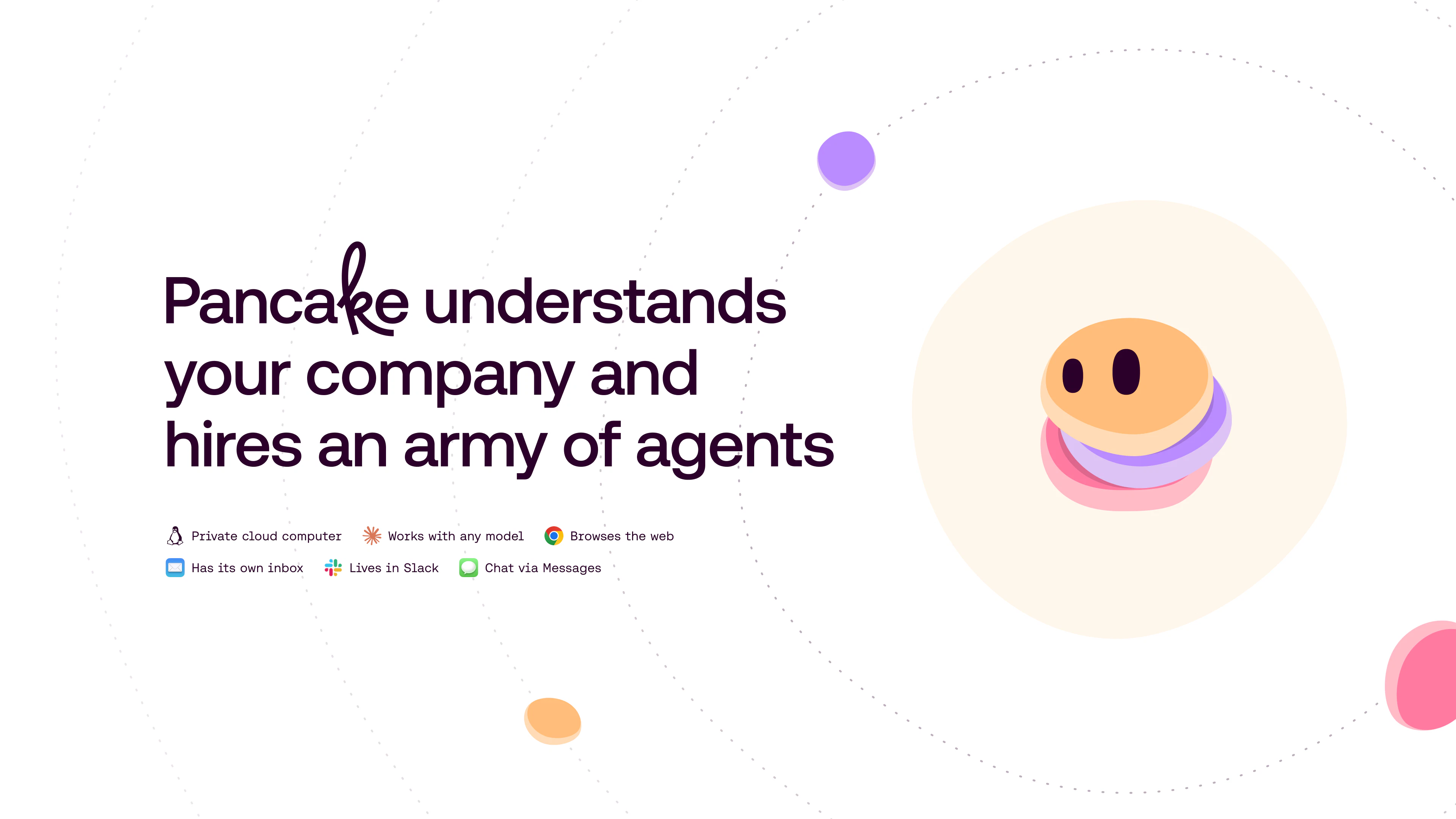
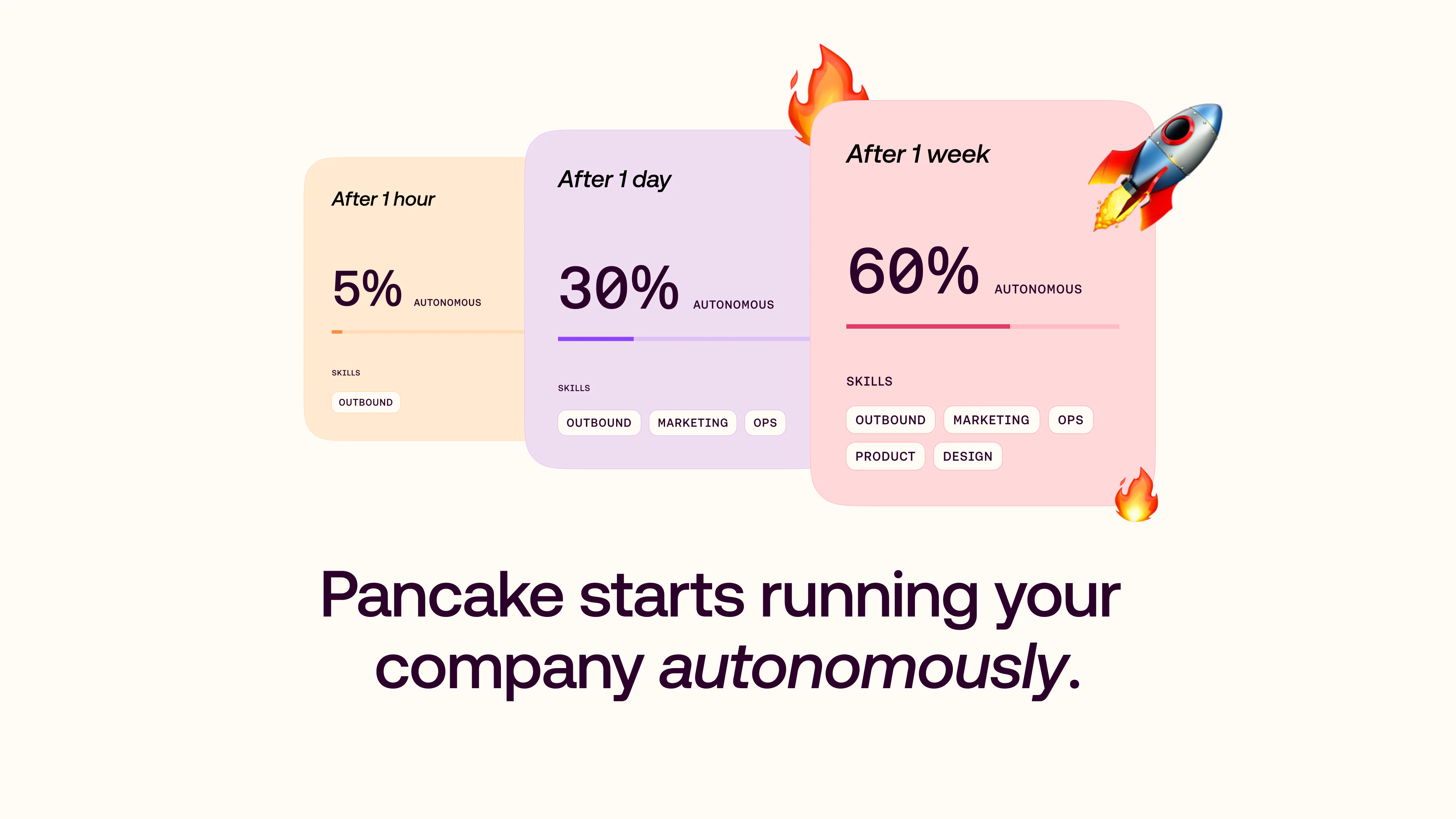
查看原始信息
Plz Support Me
The launch copilot helping solo founders plan, promote, and survive product launches. 265+ launch directories, supporter crew building, launch planning, and promotion templates for builders shipping fast.

👋 Hey Hunters and Builders!

I’m Germán, and for the last ~1000 days (961 streak right now 😅), I’ve been deeply inside the PH ecosystem.

- Supporting launches.
- Commenting.
- Hunting.
- Launching own projects.
- Helping founders get visibility.

And something kept happening over and over again: I receive ~5 DMs every single day from solo founders asking:

“How should I launch?”
“Can you support my PH launch?”
“Where else should I post?”
“Am I doing this right?”

After 3 years, that became 5k+ supported projects. I genuinely love helping founders launch. But there’s a problem: launching is chaotic, emotional, and incredibly lonely when you’re building solo.

And honestly… manually helping everyone became unsustainable.

So I built plzsupport.me a launch copilot for solo founders 🚀

The idea is simple:

Give indie hackers and solo builders the structure, visibility, and support system they usually don’t have.

What it currently helps with:

* 300+ launch sites & directories to distribute your product and gain SEO backlinks
* Launch planning based on your stage, niche, and ICP
* Ready-to-use launch posts & promotion content
* Building your own supporter crew before launch day
* Reducing the “I’m launching alone” feeling

Most founders spend their energy building… and only a few hours thinking about distribution. I wanted to fix that.

This is not another “growth hack” tool. It’s more like a practical launch companion made from years inside the trenches supporting makers here.

What’s next:

* Launch score & readiness checks
* Supporter matchmaking
* Launch analytics
* AI-generated launch strategies
* Founder community features
* Public launch timelines/playbooks

Also it’s heavily inspired by the incredible amount of builders I met here on Product Hunt ❤️

Would genuinely love your feedback: What’s the hardest part about launching solo today?

8
回复

@german_merlo1 I love it! :) You are a great solo builder and the idea as well as the implementation is fantastic my friend!

0
回复

@german_merlo1 Good luck with the launch, mate!

0
回复

@german_merlo1 Cool tool German. Good on you for the streak of support.

2
回复

@german_merlo1 The supporter crew piece intrigues me, but also worries me.

Product Hunt has historically cracked down on coordinated upvoting and engagement pods. How are you designing the supporter matchmaking so it generates genuine interest instead of becoming another vote-trading ring that gets launches penalized?

2
回复

@anandkparmar Interesting question Anand! I also hate vote-trading and I won't do something like that. My idea on that is just allowing users to build their own crm with pple really wish to support them. Actual customers, partners, colleagues. Anyway that side isn't developed currently, so I'll deeply analyze feedback after this launch

1
回复

niceee

2
回复

@madalina_barbu would love to have feedback if you try it out

0
回复

Is it a directory of places for launching or?

2
回复

@busmark_w_nika better than this. It's a copilot that assist you on where, when and how to get listed there.

2
回复
I think this is a great idea! Will maybe try it for my next launch :) Icon looks a but stange to me, maybe name is also not optimal?
1
回复

@konrad_sx Thanks Konrad! gonna take your feedback to improve it. Hope you can find it useful for your next launch

0
回复
This is so good! I was so exhausted after the last launch, I could barely see ph logo, and thought that I’d better never launch a product again on my own (although there was a team behind a product, but the launch was on my side, and I failed it). Huge thank you for your great idea and its realization 🙏 with you all the best
1
回复

@nastassia_k thanks!!! Know what you say and hope every founder can take the most of it. Would be great if you can try it out and share your feedback

0
回复

Ahhh! hopefully everyone will go wild with this! looks super helpful.. good luck mate @german_merlo1

1
回复

@neelptl2602 thanks man! Hope it's helpful for every founder

0
回复

How does Plz Support Me help you recruit supporters without spamming people?

1
回复

@othman_katim that's the challenge! The idea is that all those who're willing to support other founders explicitly do it, but for sure there's no commitment. I thinks it's a matter community building. No vote-trading, no launch management fee. Currently just a copilot to take the most of your launch

0
回复
Super congratulations!!
1
回复

@akshay_lahri thanks mate!

0
回复

The useful part here, to me, is not just the directory list — it is the launch judgment layer around it. Solo founders rarely need “more places to post” in the abstract; they need help deciding which channels match the product, stage, ICP, and credibility they actually have today.

I like that you’re explicitly pushing away from vote-trading/support pods in the comments. One thing that could make the supporter side healthier is asking founders to label why each person belongs in the crew: customer, beta user, investor, community peer, prior collaborator, etc. That keeps “support” tied to a real relationship instead of becoming generic engagement debt.

0
回复