Product Hunt 每日热榜 2026-06-24

PH热榜 | 2026-06-24

#1
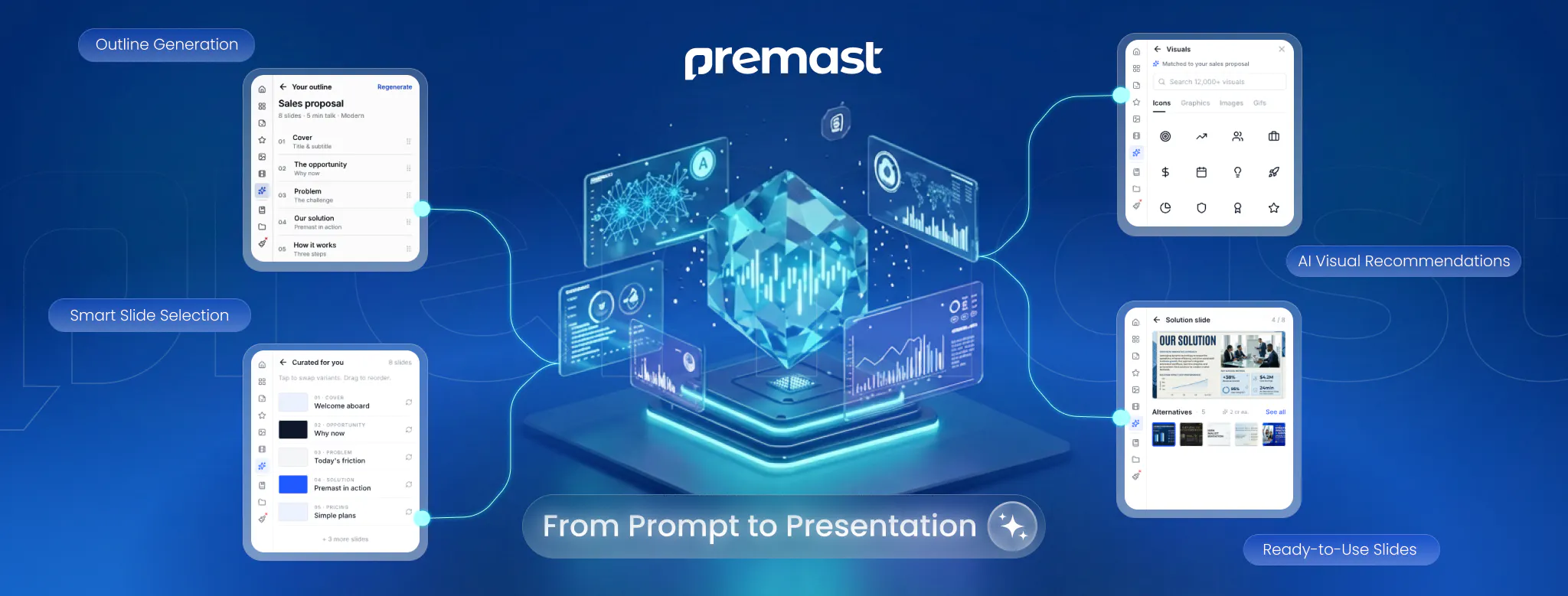
Tencent EdgeOne Makers
Ship AI agents like web apps, in minutes.
494
一句话介绍:Tencent EdgeOne Makers是一个边缘AI Agent部署平台,让开发者通过熟悉的CLI、Git和CI/CD工作流,像部署Web应用一样在几分钟内将AI Agent从原型推向生产,彻底消灭构建基础设施的“脏活累活”。
Website Builder Artificial Intelligence Development
AI Agent部署 边缘平台 无供应商锁定 全栈基础设施 沙箱化工具 模型网关 长时运行工作流 多框架支持 可观测性 Serverless函数
用户评论摘要:用户聚焦于三大痛点:①长时运行Agent(超过几分钟)的架构实现,官方明确Agent运行在专用云运行时而非边缘,单次最长1小时,超时需持久化+恢复;②跨框架沙箱行为一致性,官方确认沙箱在运行时层统一,仅工具接口和内存层按框架自适应;③数据安全与最小权限访问,官方暂未详细回应;此外,多语言混合(JS+Python)目前仅支持单Agent单语言。
AI 锐评

EdgeOne Makers精准击中了当前AI Agent从Demo到生产的最大瓶颈——基础设施拼凑。其核心价值不在于“边缘计算”,而在于提供了一站式的“Agent原生云服务”,把内存、沙箱、追踪、存储等晦涩的底层能力抽象成平台内建服务。这本质上是对标Vercel之于前端应用、Supabase之于后端逻辑的生态位,但针对的是AI Agent这一新物种。

但需警惕两点。首先,“边缘”是个营销糖衣。团队坦承长时Agent运行在“专用云运行时”而非边缘V8,这暴露了当前边缘计算架构与有状态Agent工作流的根本矛盾。所谓边缘,更多是利用其全球分发能力处理静态资源和短时API调用,核心计算仍在中心化云上。其次,“无锁定”策略是把双刃剑。虽然支持Claude SDK、LangGraph、CrewAI等框架,但“框架感知”意味着每次适配新框架都需要平台侧开发,长期看很可能形成事实上的平台依赖——工具接口和内存层的封装方式最终会塑造开发者习惯。一旦生态固化,切换成本并不比绑定单一框架低。

从评论反馈看,用户最关心的生产级问题(数据安全、持久化检查点、混合运行时)平台并未给出令人信服的完整方案。例如,长时工作流依赖“持久化+恢复”而非真正的分布式编排引擎,这意味着复杂多步Agent在对一致性要求高的场景下仍有状态丢失风险。安全方面仅以“沙箱”笼统回应,未见明确的租户隔离或数据泄露防护机制。

总的来说,EdgeOne Makers是当前Agent基础设施领域少有的务实的“平台级封装”,对中小团队从小型实验向轻量生产转型极具吸引力。但真要承载企业级高并发、有状态、安全敏感的Agent生产系统,它仍需要回答好“边缘”与“中心”、“无锁定”与“平台化”、“易用”与“安全”之间的本质矛盾。这一步,才是从“好用的工具”到“可信赖的平台”的真正跨越。

查看原始信息
Tencent EdgeOne Makers
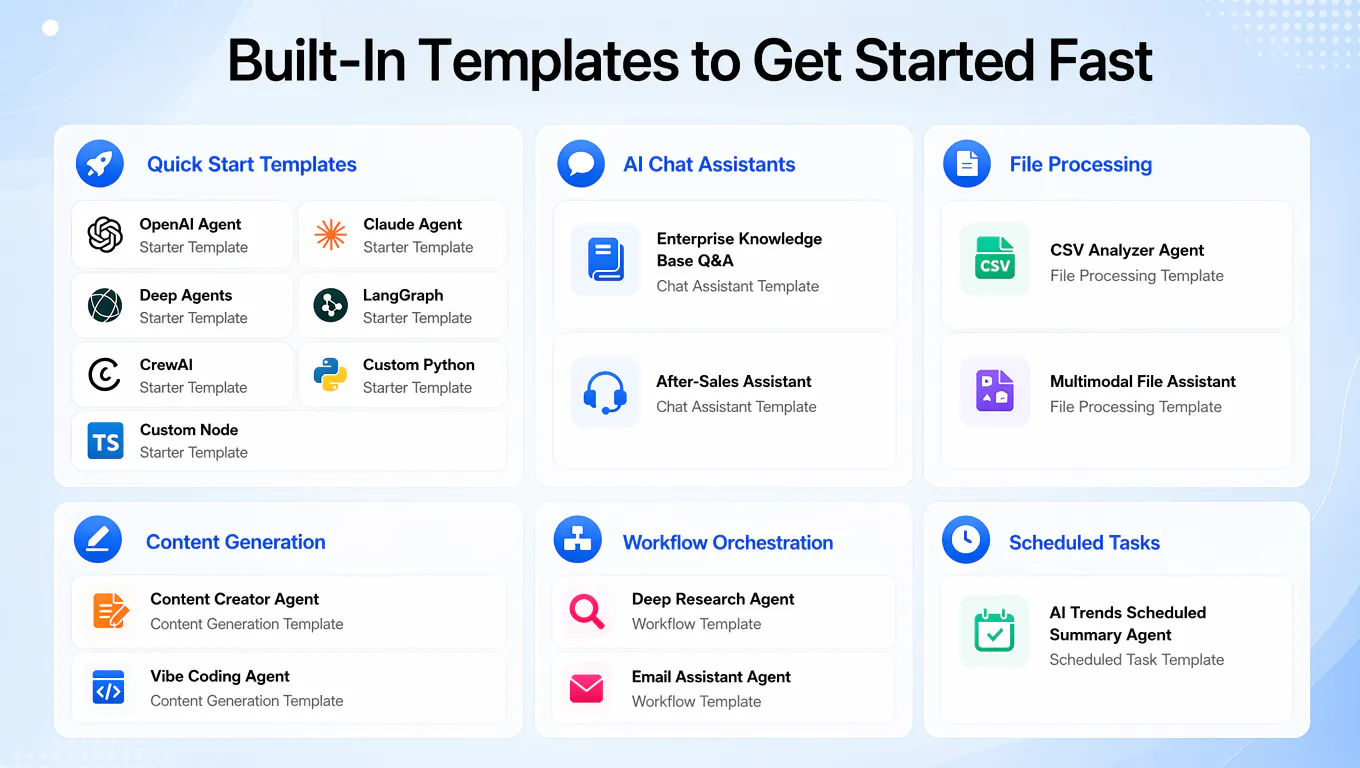
Tencent EdgeOne Makers is an edge platform for modern web apps and AI agents. Build with your preferred frameworks and deploy through familiar CLI, Git, and CI/CD workflows. Get built-in agent runtime, sandboxed tools, memory, observability, model gateway support, serverless functions, and storage—without stitching together complex infrastructure. Add AI agents to existing products or launch new AI applications in minutes. Deploy AI agents like web apps.

Hey Product Hunt 👋 Kitty here, product lead for Tencent EdgeOne Makers.

Over the past year, I've watched more and more people—including myself—start building their own AI Agents.Today, building an Agent has never been easier. A solid idea and a few hours gets you a working demo. But the real work starts after the demo ships.

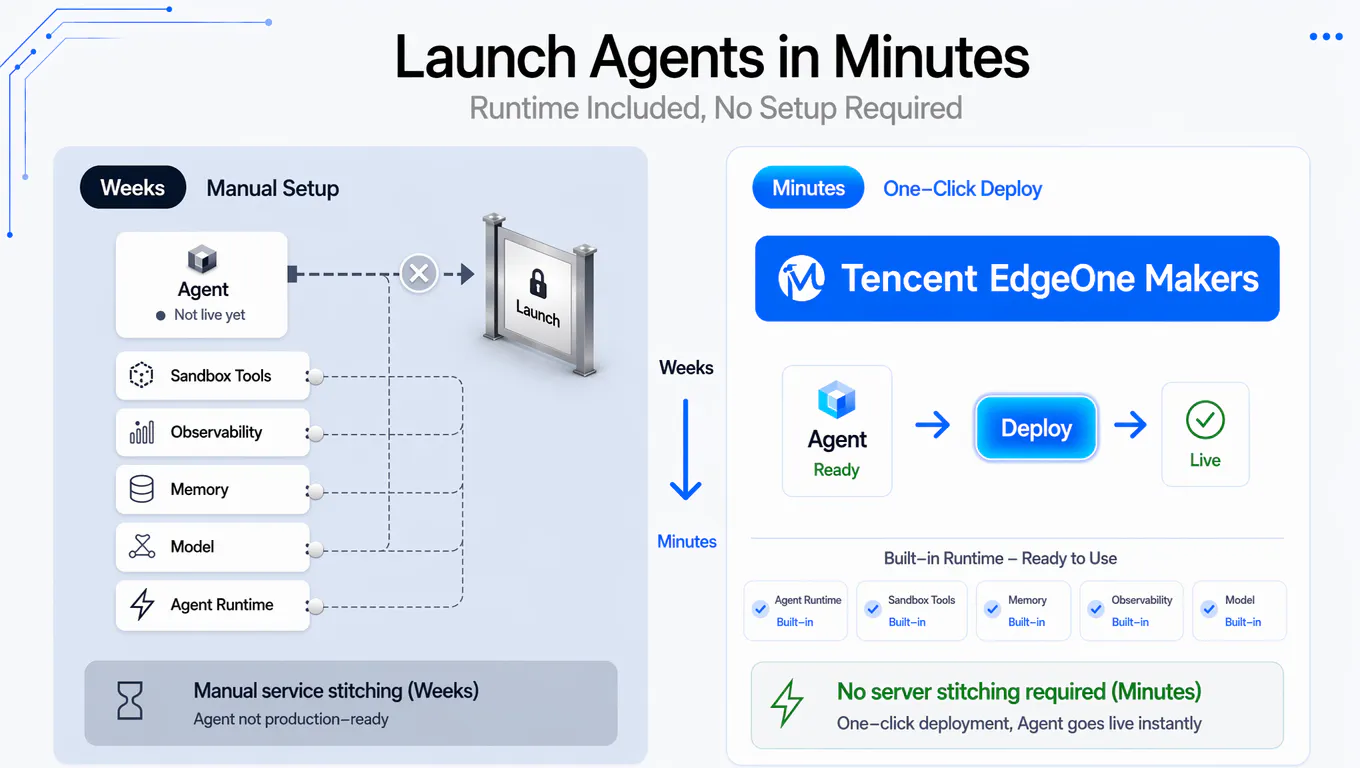
Suddenly, you're hit with a wall of production questions: How do you manage memory? How do you run tools securely in sandboxed environments? How do you trace and debug execution paths? How do you scale when a hundred users hit it at once? And how do you deploy it globally so it's actually fast?

Most builders end up choosing between two painful paths: spend weeks building all of this boilerplate infrastructure from scratch, or lock themselves into a restrictive platform that dictates which framework, language, or model they have to use.

We wanted a third option. That's why we built Tencent EdgeOne Makers.

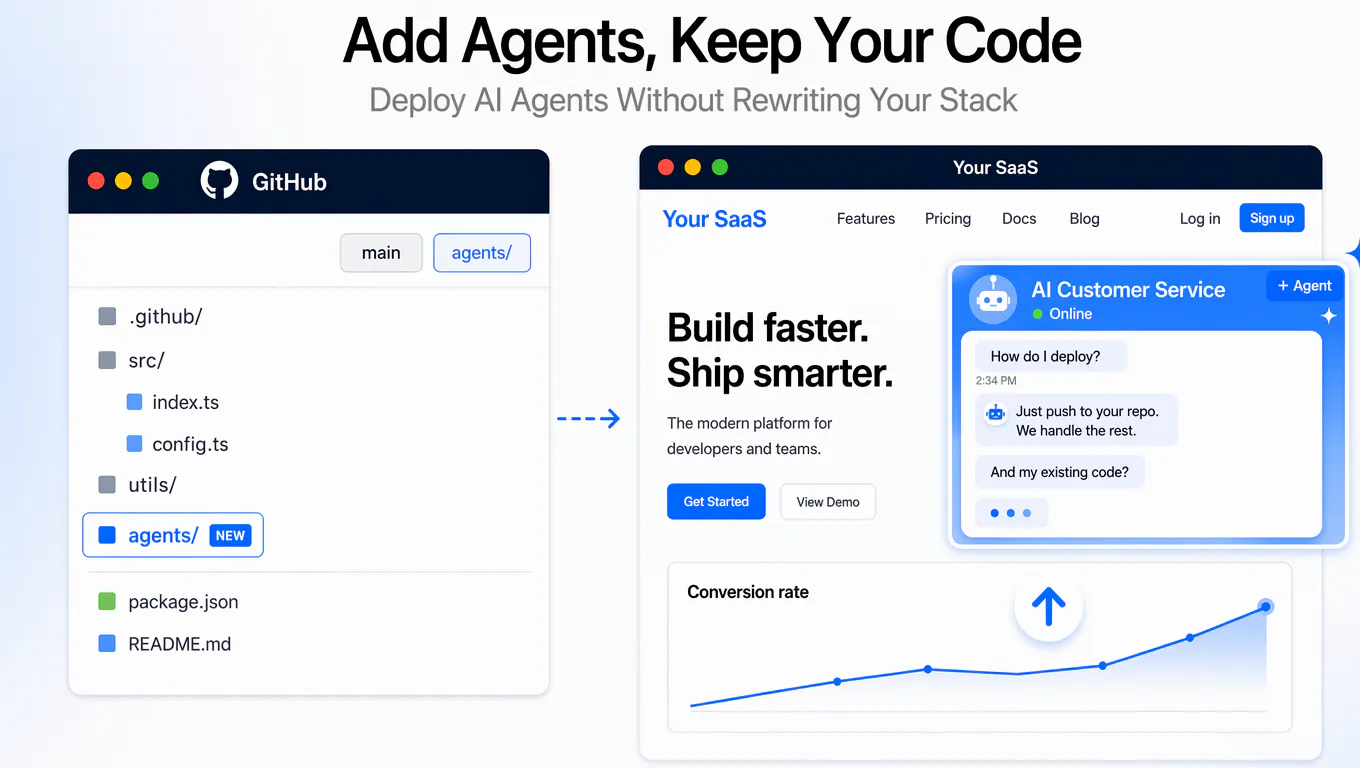
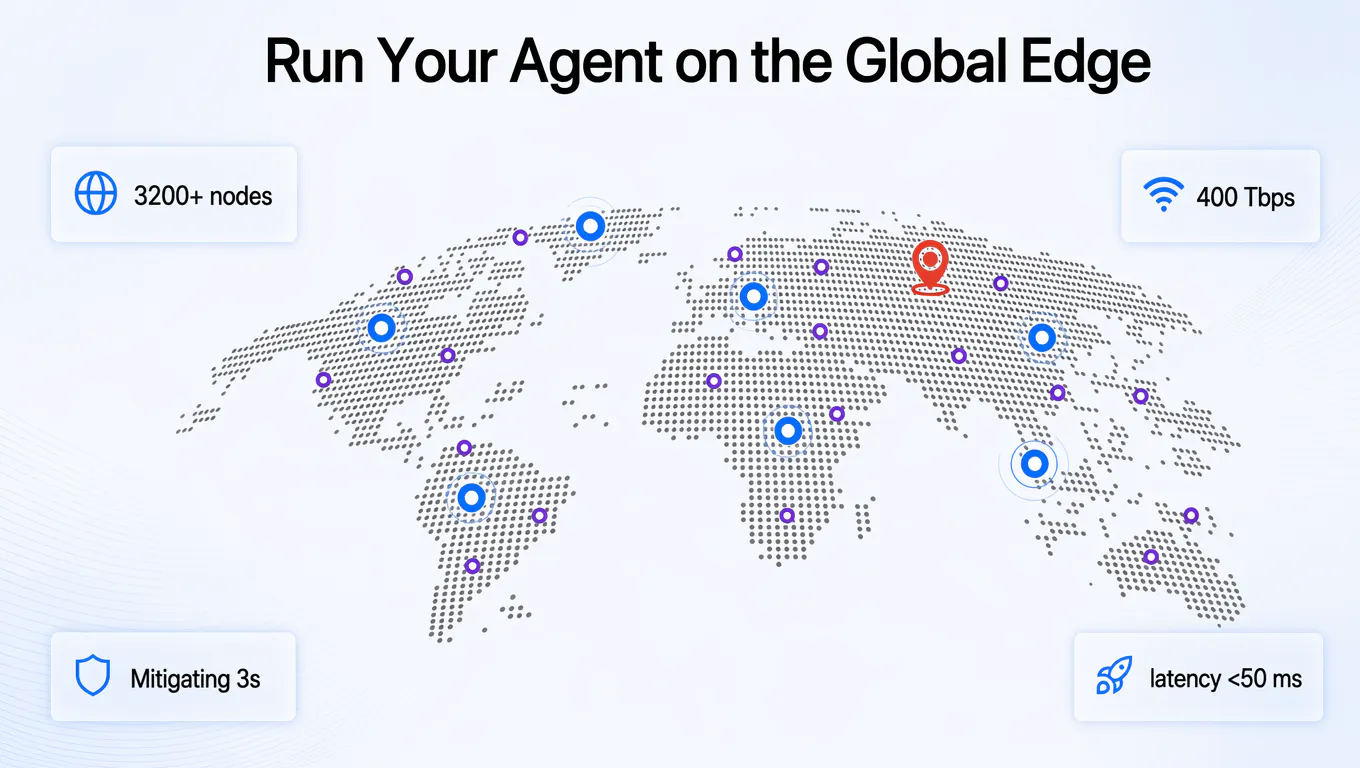
Tencent EdgeOne Makers is an edge platform for modern web apps and AI Agents. It fits into the workflows developers already know, with familiar CLI, Git, and CI/CD support. You get Agent runtime, sandboxed tools, memory, observability, model gateway support, serverless functions, and storage built in, without having to stitch together complex infrastructure yourself. In other words, you can deploy AI Agents the same way you deploy web apps.


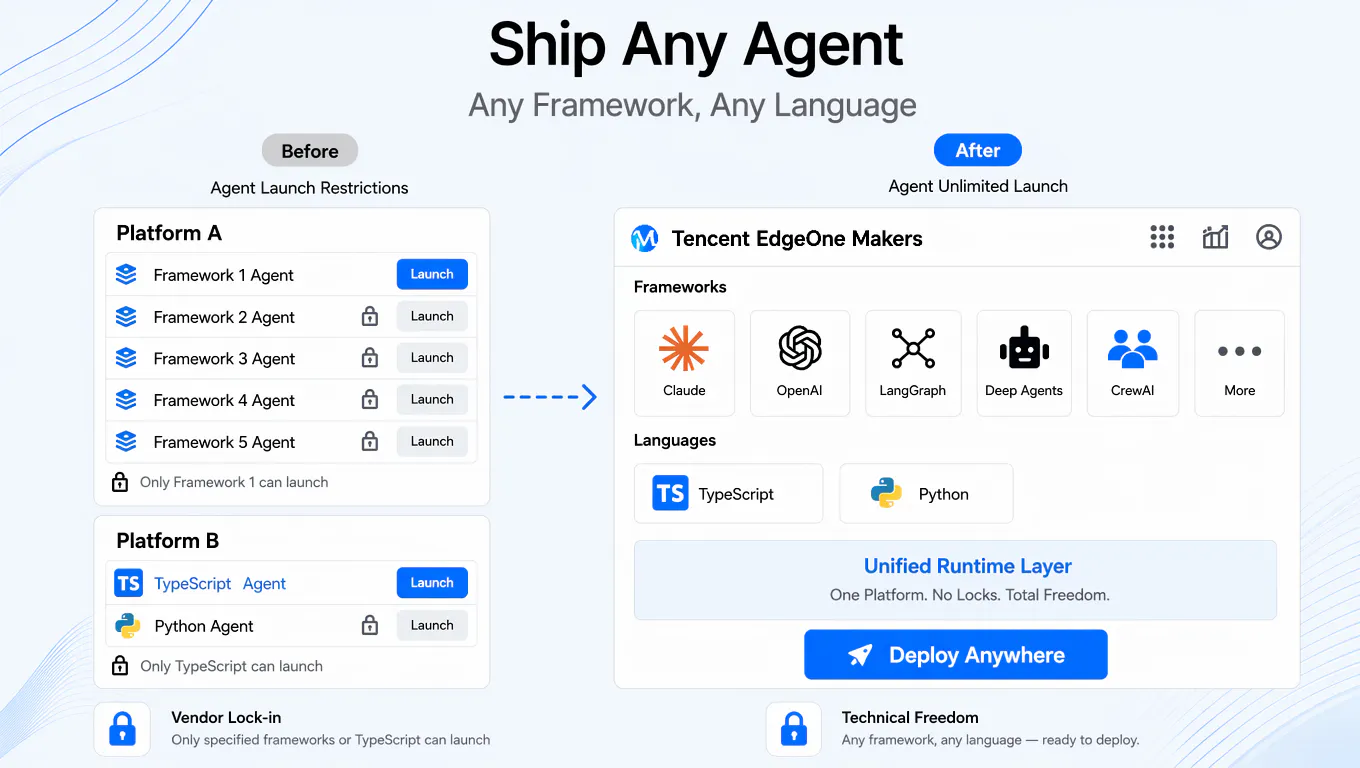
We kept the platform completely open. No vendor lock-in, no framework constraints:

  • Framework agnostic: Works out of the box with Claude SDK, OpenAI SDK, LangGraph, CrewAI, and more.

  • Polyglot: Full support for both JavaScript and Python.

  • Flexibility: Use whatever model or tech stack makes sense for your application.


Whether you’re looking to plug an Agent into an existing SaaS, website, or e-commerce flow, or you're building a brand-new AI application from scratch (like an AI recruiter, sales rep, data analyst, or fitness coach)—Tencent EdgeOne Makers is designed to let you spend your time on your product, not the plumbing.

We're excited to share this with the Product Hunt community today. Give it a spin, ask us any tough questions, and let us know what you think! Feel free to join our Discord to chat with us.

Thanks so much for the support!

20
回复

@kitty_lee1 Congrats on the launch. Quick question; for Agents that need to interact with external APIs and user data, what best practices or built-in safeguards does Tencent EdgeOne Makers provide to prevent data leakage and ensure least-privilege access across sandboxed tools, third-party integrations, and persisted memory?

3
回复

@kitty_lee1 Congrats on the launch!

2
回复

@kitty_lee1 Congrats on the launch!

0
回复

Congrats on the launch!
For framework-agnostic support, does the sandboxed tool execution behave the same across Claude SDK, LangGraph, and CrewAI, or do some frameworks get more native support than others?

11
回复

@abod_rehman Thanks! The key design choice here is that sandboxed tool execution lives at the runtime layer, not inside any specific framework — so it behaves consistently whether you're on Claude SDK, LangGraph, or CrewAI. The framework handles your agent logic; the sandbox, isolation and tool execution sit underneath and work the same for all of them. That said, we do ship starter templates for each so you get a smooth zero-config start.

5
回复

@abod_rehman 

Where framework-awareness kicks in is at the tool interface layer (context.tools) and memory layer (context.store). Both adapt automatically based on a framework field in edgeone.json — so Claude SDK, LangGraph, and CrewAI each get their tools and conversation history pre-wrapped in the format they natively expect, without any glue code on your side.

2
回复

@abod_rehman Same execution across all of them — one sandbox, same atomic tools. The only per-framework difference is the binding format, and Claude SDK / LangGraph / CrewAI are all first-class (OpenAI Agents SDK too). You set framework in edgeone.json and context.tools hands you objects already shaped for it — no glue code.

0
回复

Congrats on the great product! The edge angle is the interesting bet. Edge runtimes are usually tuned for short requests, but agents that actually do work run long, with memory and retries between steps. How do you guys handle an agent that runs for minutes or picks up a scheduled task later?

6
回复

@artstavenka1 Great question — and you're right that edge V8 is tuned for short requests. So we don't run agents on the edge.

Agents run on a dedicated cloud runtime built for long, stateful work: a single run goes up to1 hour, also with a sandbox (for tools/code) up to 1 hour.

  • Runs for minutes → sticky-routed by conversation_id, so in-memory state is reused, plus built-in conversation memory that persists across runs (native to Claude / OpenAI Agents / LangGraph / CrewAI). Step retries live in your framework loop.

  • Picked up later → native cron (schedules in edgeone.json) can trigger an agent on a schedule, and since state is keyed by conversation_id, it resumes from the prior context.

The edge bet is really about distribution + the fast path — the heavy work runs where it should. Curious what you're building!

2
回复

Love this question.The edge + long-running agent tradeoff is something we spent a lot of time thinking about when building Makers. Thanks for digging into the details.

3
回复

Since this is polyglot (JS + Python), can a single agent mix both, or is it one language per deployment?

4
回复

@boyuan_deng1 Great question! Today it's one language per deployment — each agent runs in either a JS or Python runtime. But since Web and agents share the same project, you can absolutely have, say, a Python agent and a JS service running side by side and talking to each other. Mixing both within a single agent isn't supported yet — curious, what's the use case you had in mind? It'd help us think about where to take this.

1
回复

Curious what scenario would require mixing both 🤔 would love to hear more.

3
回复

@boyuan_deng1 One language per agent — a single agent runs as one runtime (JS or Python), not both in the same process. But the project is polyglot: you can run JS and Python agents/functions side by side in one deployment, routed by file and sharing the same domain + env. Need both? Split them into separate routes and call between them.

0
回复

congrats on the launch!
the idea of treating AI Agent deployment like web app deployment is really interesting.how does Makers handle long running agent workflows that may span hours or even days?


2
回复

@avery_thompson2 Our platform provides two runtime modes. agents/ is purpose-built for real Agent workloads, with dedicated runtime-level design:

  1. Session affinity: Requests within the same conversation are routed to the same instance, reusing its in-memory context, caches, and connections throughout the active session.

  2. Extended execution time: A single execution can be configured up to 1 hour — and if that's not enough, reach out to us for an allowlist extension. This is more than enough for multi-turn agent loops, repeated tool calls, deep research, and other long-running tasks.

cloud-functions/ is a stateless, request-level autoscaling mode: each request spins up, executes, and recycles — no idle cost — ideal for data queries, helper APIs, and other short-lived logic.

1
回复

Just to add a bit — for longer workflows, a big focus for us has been making sure things don’t feel broken up between steps.

1
回复

@avery_thompson2 Great question.
We don't keep one process running for hours or days — a single run is time-bounded by design. Long workflows are durable instead: state lives in the conversation store (keyed by conversation_id), so a later run resumes right where it left off, and cron (schedules in edgeone.json) can wake the agent to continue or kick off the next step. So "spanning days" = persist + resume across runs, not one never-ending execution.

0
回复

Congrats on the launch! Interesting direction. What does debugging look like when multi-step agent workflows fail across tools and runtimes in production?

2
回复

@henry_habib We inject OpenInference-based instrumentation before your code loads, so every LLM call and tool invocation automatically becomes a structured span — with timing, inputs/outputs, token usage, and errors — without you adding any decorators or SDK imports.

Traces are viewable in both the cloud console and the local dev panel with the same UI. When a multi-step workflow breaks, just open the trace, walk the span tree to the failing step, and see exactly what went in and what came out.

3
回复

Great question. In our experience, the hardest bugs are rarely in a single model call — they're usually somewhere between multiple steps, tools, and retries. That's why this area got a lot of attention from us. Appreciate you digging into it.

2
回复

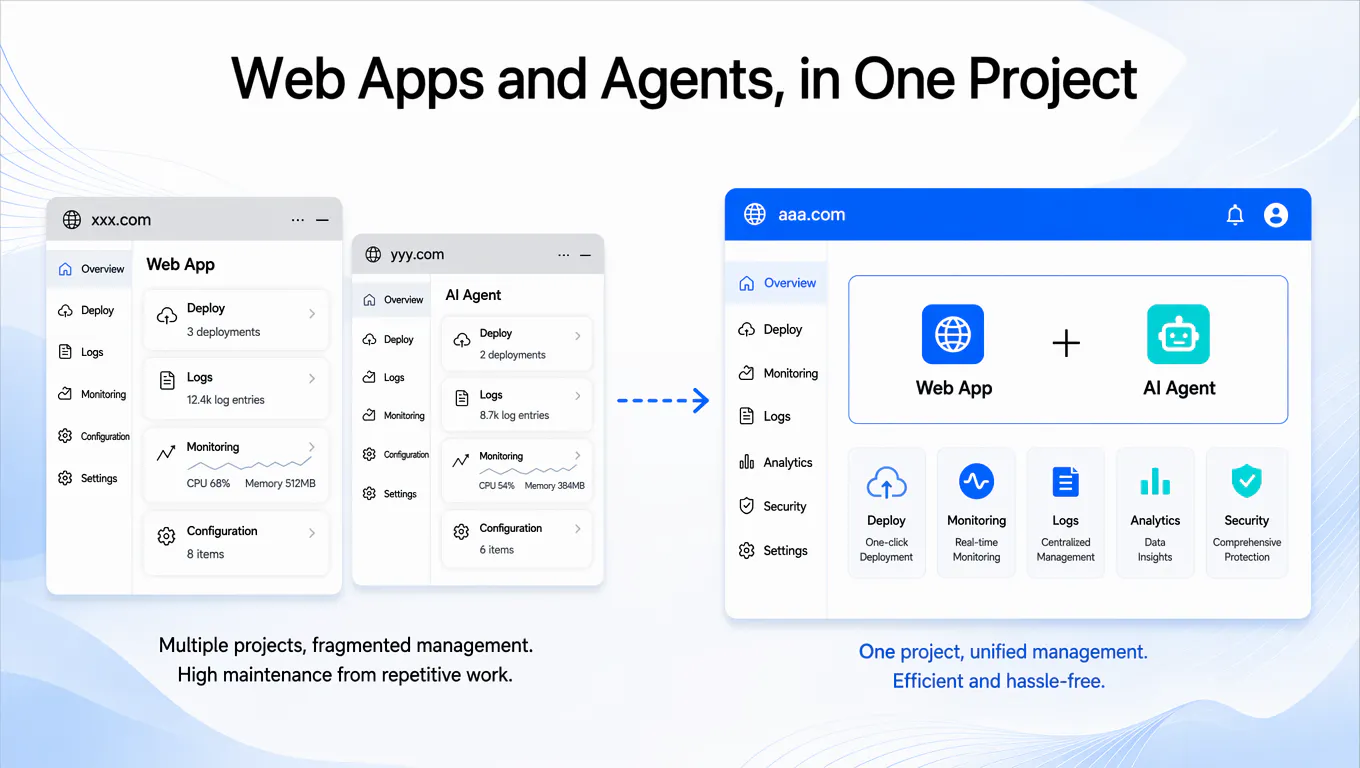
Web and agents in one project with unified deploy is a really smart move. Less context switching, less glue code.

2
回复

@jocky Exactly the thinking behind it. Most stacks force you to treat your web app and your agent as two separate worlds — different repos, different deploys, glue code in between. We figured if they share the same project, account, and deploy flow, that whole layer of friction just disappears. Glad it resonates — thanks!

2
回复

Really glad that resonates Keeping everything in one flow just felt like the most natural way to build it. Appreciate the feedback!

2
回复

Congrats on shipping this. Agent demos are easy now, but production is still messy. Memory, tracing, scaling, storage, all the boring stuff is exactly where most projects slow down.

2
回复

@carlvert You just described our entire reason for building this. The "boring stuff" is exactly where projects stall — and it's boring precisely because everyone has to rebuild it from scratch every time. We figured that should just come with the platform, so you can spend your time on the agent, not the plumbing. Thanks for getting it so precisely!

1
回复

Yeah, that’s exactly the gap we kept seeing too. Glad this resonates — really appreciate you putting it so clearly.

1
回复

@carlvert Couldn't agree more — the demo-to-production gap is all that "boring" plumbing. That's exactly why Makers bakes it in: memory, tracing, scaling, and storage come with the runtime, so you're not wiring four services together before you can ship. Keeps the fun part fun.

0
回复

Finally, agent hosting that doesn't make me wire up five services first. Nice work!

2
回复

@luke_pioneero "Five services" hit a little too close to home 😅 That's exactly the pain we wanted to kill — memory, sandbox, tools, tracing all come wired in, so you can just ship the agent. Thanks, glad it resonates! 🙌

0
回复

Haha yeah. Getting all the infra pieces out of the way is kind of the whole point for us.

0
回复

@luke_pioneero That line is basically why we built it — memory, tools, tracing, storage all come with the runtime, so you ship the agent, not the plumbing. Thanks! :)

0
回复

Nice launch! The deployment experience looks really clean.

One question: how do you handle long-running agent workflows? For example, if an agent needs to wait for user approval or perform multiple asynchronous steps, is there built-in state management or checkpoint support?

1
回复

@qiwap Thanks! State management is built in — the conversation store (keyed by conversation_id) persists across runs, so a workflow that pauses for approval just resumes when the next request lands on the same conversation. Since a single run is time-bounded, the model is persist + resume (cron can drive scheduled steps too), not holding a process open.

On checkpoints specifically: there's no automatic durable-execution engine baked in — but if your framework has a checkpointer (e.g. LangGraph), you point it at the store. So: state, yes; automatic step-replay is on your framework.

0
回复

The honest truth is most of us under-budget the "make it production-ready" phase by like 3x. A platform that absorbs that is genuinely valuable.

1
回复

@shaowei1 That’s very real☺️ The gap between “it works” and “it runs reliably in production” is still where most of the time goes.

0
回复

@shaowei1 So true — that "make it production-ready" phase is the part everyone underestimates. The idea here is the platform absorbs most of it (memory, tracing, scaling, storage built in), so that 3x doesn't land on you. Thanks for the kind words! 🙏

0
回复

Running Web and agents from the same project is a clever architectural choice. Less to manage, fewer moving parts.

1
回复

@andy2026 Appreciate that😊We've definitely felt that pain ourselves, which is a big part of why Makers exists in the first place.

We’ve used a lot of setups where everything is split across multiple services, and it usually adds up quickly in terms of things to manage and keep in sync.

0
回复

@andy2026 Thanks! That was deliberate — Web and agents share the same project, deploy, domain and env, so your frontend and your agent backend aren't two systems to keep in sync. One repo, one deploy, fewer moving parts.

0
回复

@andy2026 Yes, this is one of our architectural decisions.

Our view is that an Agent is fundamentally just another "route" within a web application, so there's little reason to split it into a separate project. As a result, within the same project you can have:

/app → Your web frontend (static pages / SSR)

/agents/customer-service → Agent endpoint

/cloud-functions/api → Supporting APIs

Everything lives in a single codebase and is deployed together, making it easier to develop, manage, and evolve the entire application stack.

0
回复

This feels like a good fit for teams moving from AI experiments into production. That transition is still more painful than it should be.

1
回复

@blink_66 Thanks! That's exactly the transition we kept seeing — getting a demo working is one thing, turning it into something real people can rely on is another.

0
回复

@blink_66 That experiment-to-production gap is exactly the gap we're going after — the memory, tracing, scaling and storage you suddenly need in prod are built in, so the jump is a deploy, not a re-architecture. Thanks! 🙏

0
回复

Congrats on the launch! The no lock-in part is important. A lot of teams don’t want to bet their whole AI stack on one model or one framework.

1
回复

Thanks! The AI ecosystem is moving so quickly that flexibility feels more important than ever. We wanted people to be able to choose the models and frameworks that make sense for them.

0
回复

@jody_l_wyatt Exactly — that's why it's framework-agnostic (Claude / OpenAI / LangGraph / CrewAI) and the model gateway is OpenAI-compatible, so swapping models is a config change, not a rewrite. Bring your stack, don't bet the house on one. Thanks! 🙏

0
回复

curious how edgeone handles the growing wave of AI agent traffic specifically. traditional CDN caching works great for human browsing patterns but agent requests tend to be API-heavy, bursty, and less cacheable. is there anything in the stack tuned for that kind of workload or is the focus still primarily on conventional web delivery?

1
回复

@shubham4real Good distinction — cache-centric delivery is tuned for human browsing, not agents.


The key point: agent/API traffic doesn't go through the caching path at all. Cacheable content is served the conventional way at the edge; dynamic and agent work runs on a separate compute layer (Edge Functions for short calls, a dedicated Agent runtime for the stateful ones). That path auto-scales with bursts instead of leaning on cache hit-rates, and agent sessions are sticky-routed so warm state is reused across steps rather than re-established each call.


So it's not "cache the uncacheable" — it's edge for distribution + a runtime built for the dynamic side. Curious what traffic patterns you're seeing?

0
回复

Really interesting point. One thing we've noticed is that agent traffic is starting to look very different from traditional web traffic, which makes these infrastructure questions much more interesting than they used to be. Curious what kind of agent workloads you're seeing.

0
回复

congratulations to the team! i appreciate the focus on reducing infrastructure complexity.how does pricing scale for teams that suddenly experience rapid user growth?


1
回复

@olivia_bennett7 EdgeOne Makers currently offers a free plan. Before the official commercial launch, usage limits for the free plan are enforced with some flexibility. Even if you exceed your quota, we will prioritize the stability of your services. If you need a higher quota, please contact us to request a quota increase.

1
回复

@olivia_bennett7 Thanks for the support! Honestly, we are currently in our free beta phase, so you can experience full capabilities with zero infrastructure costs right now.

As we look toward future commercialization, our goal remains to keep infrastructure accessible and affordable for growing teams. We’ll definitely design generous quotas for scaling startups.❤️

1
回复

congratulations on the launch! supporting both Python and JavaScript is a huge plus.are there plans to expand support for additional languages in the future?


1
回复

@imogen_wallace Thanks! We chose Python and JavaScript first because they cover the vast majority of agent development today — most LLM SDKs (OpenAI, Anthropic, LangChain, CrewAI) are Python-first or JS-first, so supporting both means developers can use their preferred framework without compromise.

If there's a specific language or runtime you're thinking about, we'd love to hear it — it helps us prioritize.

1
回复

Thanks! One thing we cared about a lot was meeting developers where they already are, instead of asking them to switch languages or workflows just to deploy an agent.

1
回复

The fact that I can start from a working example instead of a blank repo is underrated for actually shipping.

1
回复

@cynthia220 This is so underrated — a blank repo is where a lot of good intentions quietly die. We see it in the data too: starting from a working example dramatically changes whether people actually get to a deployed agent vs. stalling on setup. That's exactly why we lead with templates. Thanks for calling it out!

1
回复

Yeah. That first working version really changes everything.

0
回复

Congrats Kitty and team. The sandboxed tools part is the most interesting to me. Do you have examples of what kind of tool permissions or isolation developers can control?

1
回复

@orman_canida Thanks — the sandbox is my favorite part too.


Isolation: every conversation gets its own sandbox instance (Tencent Cloud isolated instances), keyed by conversation_id and physically isolated from other conversations. It auto-recycles on timeout, and you can extendTimeout() or kill() it yourself.


Tool permissions: you decide exactly which tools the LLM can see — context.tools.all() for everything, grouped subsets like context.tools.files() / context.tools.browser(), or hand-pick with context.tools.get(name). So you can hand an agent only file access, without shell or browser.

On the developer side you also get the raw atomic APIs (context.sandbox.commands / files / browser / runCode), with per-command control over user / env / cwd / timeout.


Happy to point you at a template if you tell me what you're building!

3
回复

Great question. One thing we've learned is that once agents start interacting with real systems, permissions and isolation become just as important as model quality. Really appreciate you digging into this part.

2
回复

It's interesting how much of user experience depends on things people never see directly. Faster load times and reliability rarely make headlines, but users definitely notice when they're missing. Nice work.

1
回复

@harini_mukesh Well said — the invisible stuff is the whole job. Speed and reliability only get noticed when they're gone, so we'd rather you never have to think about them. Thanks for the kind words!

1
回复

Well said. The things users rarely notice are often the things teams spend the most time getting right.

1
回复

@harini_mukesh Well put — the best infra is the kind nobody notices. Nobody opens an app thinking "wow, great cold start," but they definitely leave when it's slow. We spend most of our time on exactly that invisible layer, so developers (and their users) never have to think about it. Thanks for seeing the part that usually goes unseen!

0
回复

The fact that I can start from a working example instead of a blank repo is underrated for actually shipping.

1
回复

@shaowei1 Love this — that "blank repo paralysis" is real. Starting from something that already runs means you're editing toward your idea instead of scaffolding from zero. That's exactly the bet. What are you thinking of building?

0
回复

Totally agree. Sometimes the hardest part is just getting that first version out the door.

0
回复

Congrats @kitty_lee1 and team. The sandboxed tools part is the most interesting to me. Do you have examples of what kind of tool permissions or isolation developers can control?

1
回复

@kitty_lee1  @thea5 
Thanks! The sandbox is the part we're most proud of too. Each agent runs in an isolated environment, and you get control over things like which tools it can call (web search, code execution, browser, shell, file access) plus guardrails like execution timeouts and interrupt control — so a misbehaving or long-running task can't run away with your resources. Happy to go deeper on the permission model if it's useful — what's your use case?

1
回复

@thea5 Thanks! The sandbox is honestly the part I personally pushed hardest on. When we started, our view was simple: if you're going to let an agent execute code, browse, or touch files on behalf of real users, isolation can't be an afterthought — it has to be the default.

So today each agent runs in its own isolated environment, and you control exactly which tools it can reach — code execution, browser, shell, file access — with timeouts and interrupt controls so nothing runs away with your resources. Happy to walk you through the permission model in more depth — what are you looking to build?

1
回复

Love the "push and it runs" approach — shipping agents has been way too painful. Upvoted!

1
回复

@ea_z "Push and it runs" was the whole goal — glad it comes through. Shipping shouldn't be the painful part. Thanks for the upvote!

0
回复

Appreciate it! We believe developers should spend time building great agents, not stitching together infrastructure. "Push and it runs" is the experience we're aiming for.

0
回复

Edge deployment for agents = low latency for users worldwide without me thinking about regions. That's a strong angle.

1
回复

@shirley_mou Exactly — you shouldn't have to think about regions at all. You deploy once, and it runs close to your users worldwide on the edge. Glad that angle landed for you — it's one of the things we care about most. 🙌

1
回复

@shirley_mou Glad that resonated with you! As builders ourselves, we really wanted the deployment experience to feel effortless—so you can focus on the fun part: building the agent. 😄

1
回复

As someone who ships side projects on weekends, "live in minutes" is the dream. Can't wait to throw an agent at this. Congrats on the launch! 🙌

1
回复

@sandy_liusy 
Weekend shippers are exactly who we built this for 🙌 Throw an agent at it and let me know how it goes — genuinely want to hear what works and what doesn't. Happy to help if you hit anything!

0
回复

@sandy_liusy Thanks! ❤️ That's exactly who we built Makers for.

Getting an agent demo running is easy these days. Getting it production-ready is where most weekend projects slow down. We wanted to make deployment, memory, sandboxed tools, and scaling feel as simple as shipping a web app.

Would love to see what you end up building—feel free to share it with us when you launch! 🚀

0
回复

@sandy_liusy Weekend builders are exactly who we made this for. Spin one up and let us know what you ship — edgeone makers dev, then deploy. Have fun, and thanks! 🙌

0
回复

Congrats on the launch!

0
回复

nice product, nice team

0
回复

@ll_wen Thanks! 🙌 glad you like it

0
回复

Multi-user isolation out of the box is a big deal for anyone serving real customers, not just demos.

0
回复

@xiao_zhang9 That’s exactly where things start to matter. A lot of setups work fine in single-user or demo mode, but once you move to real customers, isolation and predictable behavior become essential pretty quickly.😊

0
回复

Coming from stitching together a bunch of cloud services, having this as one coherent thing is refreshing.

0
回复

@lily_liu8 Thank you! That's exactly the principle behind our design: Agent developers shouldn't have to spend a significant amount of time stitching infrastructure together.

We hope this helps you spend less time assembling infrastructure and more time building what truly matters. If you have any feedback, we'd love to hear it!

0
回复

@lily_liu8 Appreciate that 😊 We've definitely felt that pain ourselves, which is a big part of why Makers exists in the first place.

0
回复

Congrats on the launch!

Is "sandbox" referring to the browser's sandbox environment?

0
回复

@trify3d The sandbox tool built into Makers Agent is underpinned by Tencent Cloud's isolated instances. These instances are specifically designed to host the "side effects" generated during Agent execution—such as running commands, reading/writing files, controlling browsers, and executing code. This enables the LLM to truly possess "hands-on" capabilities, rather than being limited to text output.

0
回复

Easy misunderstanding. When we say "sandbox," we're talking about an isolated execution environment for agent actions, rather than the browser sandbox most people are familiar with.

0
回复
#2
Propane
Automatic customer context for product teams and agents
468
一句话介绍:Propane 是一款自动整合客户上下文的产品管理工具,帮助产品团队和 AI 代理在统一画布中收集、协作并直接交付给开发/设计智能体,解决客户信息散落、重复搬运和决策依据缺失的痛点。
Productivity SaaS Artificial Intelligence
产品管理 客户上下文 AI代理协作 信号收集 团队对齐 产品分析工具 自动采集 设计交付 SaaS 效率提升
用户评论摘要:用户普遍认可“两派团队都在做90%相同工作”的痛点,尤其赞赏其统一上下文、减少工具碎片化。建议方面,有人关心数据冲突时的“真相”处理(如销售笔记与客服工单矛盾),以及是否有最小数据量要求才能产生有效洞察。也有用户询问与Jira、Linear等任务工具的对接细节。
AI 锐评

Propane 在 Product Hunt 上的高票(468)和热情反馈,精准击中了一个被长期忽视却越来越致命的痛点:**产品团队的上下文债**。在 AI 编码代理(如 Cursor)大幅降低“怎么做”的门槛后,“为什么做”和“该做什么”成了最大瓶颈——这正是 Propane 试图破解的。

其价值并非简单的“又一个反馈收集工具”。核心壁垒在于 **“从信号到代理交付”的闭环**:自动去重、冲突解决(如产品介绍中提到的“数据仓库问题”)是底层苦活,上层则是让 PM、设计师和 AI 代理基于同一份“真相”协作。这比 Harvestr 等传统反馈工具更“上游”,直接服务于 AI 时代的产物流程——本质是给产品决策者装上了一个实时更新的“客户大脑”。

但风险同样明显:1)数据冲突的“真相”处理策略未公开,若仅靠简单规则(如时间戳覆盖),可能污染下游代理的决策;2)评论中“与 Jira/Linear 对接”的需求暗示其当前闭环能力有限,若无法深度嵌入现有工作流,容易沦为“漂亮但孤立”的仪表盘;3)定价模型(按“新上下文”量收费)虽新颖,但“上下文”的计算颗粒度若模糊,后期可能引发成本疑虑。

一句话:Propane 踩准了从“人脑协作”到“人+AI代理共享脑”的转折点,但能否从“惊艳的体验”升级为“必不可少的基础设施”,取决于它处理数据矛盾的算法强度和对工程/设计工具链的嵌入深度。这不是颜值题,是工程题。

查看原始信息
Propane
Propane gives your product team and agents one connected, always-current view of your customers. Automatically collected from all your tools. Collaborate on a shared canvas. Commit straight to any coding or design agent. Secure, maintained, always on. You just build products people love.

Hey Product Hunt 👋

Our founding team has been building products for 10+ years at scalable SaaS and deep learning AI companies. We wanted to fix our own problems. The way product teams work has not changed much in a long time, and we think it is time for that to change.


Over the last several months we went very deep with hundreds of product teams. Two camps: stuck in legacy tooling or building everything from scratch. What surprised us is that both are doing 90% of the same work. Collecting customer feedback. Shaping and evaluating ideas. Handing off to coding agents. Every team. Every time.


The same shift Cursor brought to engineering is coming for product.


How you understand your customers at scale, how you operate and strategize, how you collect and make sense of everything. All of that should just be provided for you. Automatically, with your context, your intent, and your personalization built in.No one should be rebuilding that infrastructure individually, at every company, every time.

We are building Propane for the people who want to focus on the primary work. To think, strategize, and shape the future of software. To have time to talk to customers, look at the market, and build products that everyone loves ❤️


How Propane works

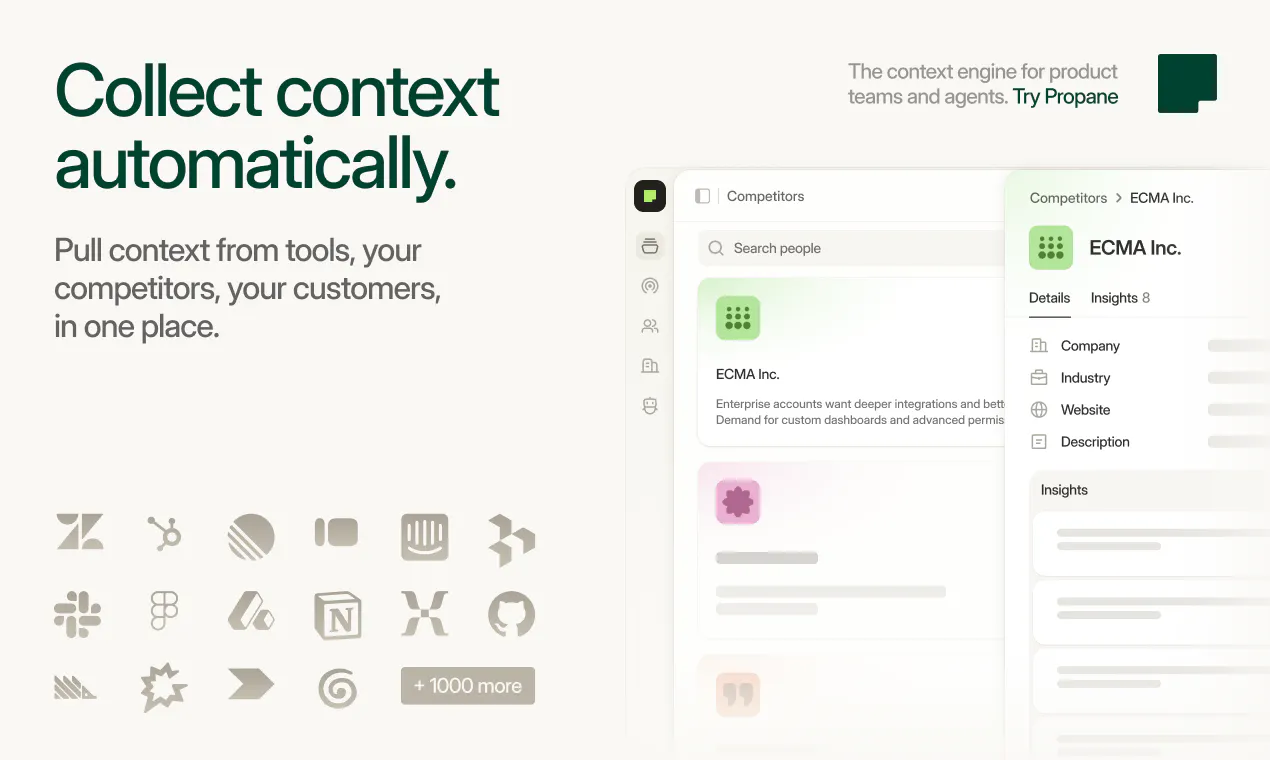
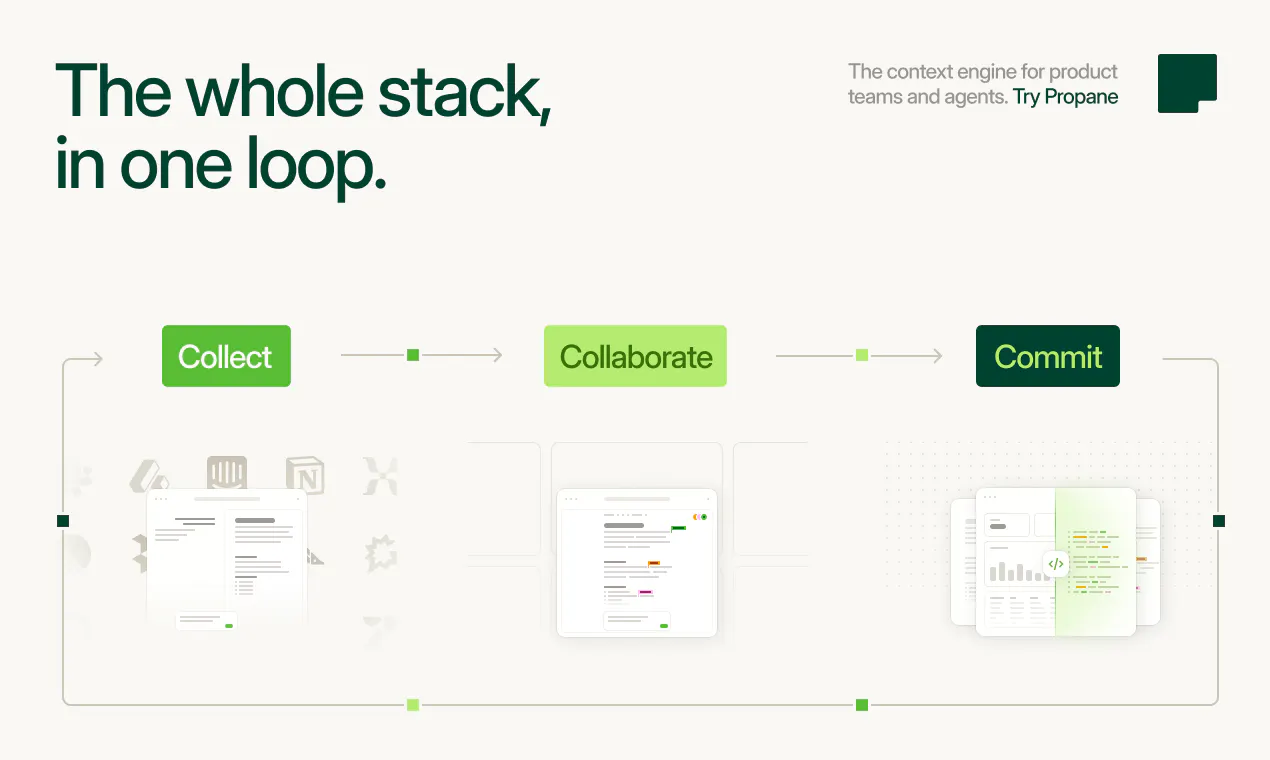
  • Collect: we pull everything into one shareable context. Your customer and market brain, for your entire team and agents.

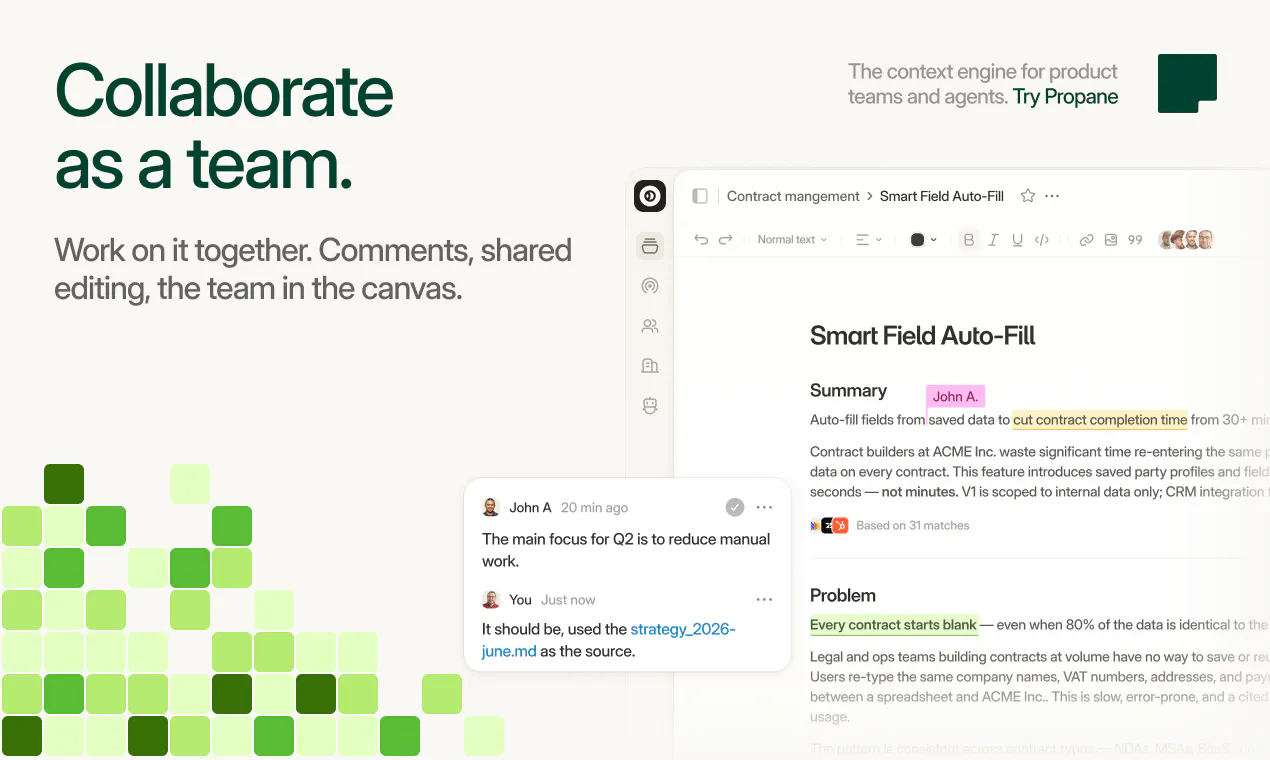
  • Collaborate: you and your agents work together in one shared workspace. No copy-pasting, no context switching.

  • Commit: from that same context, hand over to your coding and design agents with a canonical data set built for meaningful outcomes.

Everyone has access to the same context. No more sharing documents across other systems. Everything compounds and stays in one place where humans and agents can work together.

We think pricing should be different.


We want to make this more accessible and more valuable. That is why we are introducing one price, as many users and tools as you need. You only pay for the new context we find and index each month. Capped. No surprises.


Our offer to the Product Hunt community: use code PH001 for three months free on the base plan.
That is $150 in value, on us.


If you want to know more:

Sign up, try it, and help us shape the future. We are reading everything.

Best,
The Propane team ❤️ 🚀

43
回复

@greenlieber im so excited for this launch. The multiplayer part and how we can accelerate our decision making in Product and cross functionally is critical to get right to actually save time and to get the decisions right

6
回复

@greenlieber Interesting vision. I like the idea of giving both humans and AI agents access to the same always-current customer context instead of scattering insights across dozens of tools. The ability to move directly from customer understanding to execution could be especially powerful if it keeps context intact throughout the workflow.

0
回复
@greenlieber congrats brother!
5
回复

The ''both camps doing 90% the same work'' point really lands. We're the built-from-scratch type and honestly half our internal tooling exists just to move context around.

6
回复

@carolina_ellen super happy to hear it resonates Carolina!

we definitely know the pain of building/maintaining internal tooling in the ai-era - duct-taping different tools together and using precious time just to keep the house in order

we really wanted to focus on keeping product context simple and accessible across the team! easy to reach the insights that matter from customers and then to collaborate together

I think so many people are tired of moving context around as you mention! in your ideal world how would this be done?

1
回复

Let’s goo!!🚀 most excited to be part of building signals, my favourite part of propane, that gathers the most useful product context where I already work, and then makes that simple and accessible.

We really built this for ourselves as builders to actually build what matters - would love to speak to anyone building in the ai-era that feels limited by context, that was me!

6
回复

@benfleming Too the mooooooooooooon! 🌝

1
回复

Amazing!

5
回复

@yahia_bakour3  appreciate the support man! we love context.dev as you know;)

1
回复
2
回复

Everyone on a product team can build now. That makes one thing the real bottleneck: signal. Not what to build, but why it’s worth building.

On our team every engineer ships end to end and picks their own problems to solve. Getting them (and me as a PM) to the “why” faster, with confidence, is exactly the gap I'm feeling right now. Been waiting for this one. 👀

5
回复

@jarek_owczarek1 GO GO! We are excited to enable your team even more in the future.

2
回复

At @GameAnalytics, our product team has been an early alfa → beta tester of Propane, and we’ve had a very exciting experience experimenting with it. The direction is interesting: bringing customer context, product thinking, and agent handoff closer together in one workflow.

Great to see it launching publicly 🚀

5
回复

@wulff Thanks for supporting all the way, this is just the start!

3
回复

@wulff 🐺❤️

1
回复

Flame on! 🔥 So excited to finally launch this here on PH! 😽

We really put our blood, sweat and tokens into this one. the part i'm most excited about: for any PM, the days of context scattered across folders on your system are over — it now lives in one place you can actually work and collaborate in, a shared doc or prototype.

We built this for ourselves first, because we where drowning in scattered context, re-explaining the same stuff every time — so if that's you too, we'd genuinely love to hear your feedback! 💭

5
回复

I've burned through a lot of tools trying to solve the same problem, keeping design decisions grounded in actual customer reality instead of internal assumptions.


What I like about Propane is that I went in thinking "this is for PMs." It's not. As a design lead, the context layer is where I spend a disproportionate amount of time, pulling from research, support threads, sales calls, Slack, just to make a case for a direction. Propane collapses that. When you're committing context directly to a design agent, you're starting from signal instead of noise.

This is the right problem to solve. ❤️💪

5
回复

@madshensel Thanks for being a supporter day 1

2
回复

What does that handoff look like, generating a spec or directly creating tasks in a tracker?

4
回复

@thamibenjelloun Its a spec with attachment to signals files etc, we have not focused on created tasks in tools like @Linear or @Jira if thats what you mean? How would you like that work out?

Work from context in Canvas -> Spec + context -> Tasks then agents work from that vs direct handover?

1
回复

Looks very polished! What vendor did you use for document processing/multiplayer text editors?

4
回复

@uladzislau_rasliak Thanks for the praise. We landed on @Tiptap to handle that layer. Great product with great offerings. Shout out to them :)

5
回复

@uladzislau_rasliak 🙏 Vivaldi looks nice as well! I'll take it for a spin! 🚴‍♂️

3
回复

Looks very interesting - is there a minimum of data (maturity of company / product) that is needed in order for these insights to be valuable / actionable?

4
回复

@simonsylvest What's up simon thanks for the support!🤝

I would say for a decently established team (small/startup fine for sure) but probably not solopreneurs. One good rule of thumb could be if you have a stack of tools that are capturing customer context already but it is scattered across your team.

Then signals will flow in seamlessly from those tools, filtering out the noise, and you can collaborate with your team with them in canvases!

3
回复

@simonsylvest hey man, besides from Ben's answer there is also the difference between a signal and a insight on our platform.

Enough insights about the same subject turns into a signal, which as you said, becomes actionable. Hope that covered all the angles! Say if you have more questions

2
回复

Great work and congrats on the launch. Am I correct to assume the always-current, auto-collected part is the hardest element? Wondering what happens when two tools disagree about the same customer (ex. - sales notes say one thing, support tickets another) - what do you treat as truth before committing that to an agent?

4
回复

@artstavenka1 Yes, you're right, that's the hardest part. Think of it like a data warehouse problem: deduplication, matching, conflict resolution across sources. That's real infrastructure work and most teams have no business spending cycles on it.

Our view is that teams shouldn't have to deal with that layer at all. You connect your tools, you get access to clean, enriched context. We handle the hard job underneath. The goal is that when two sources disagree, that's our problem to resolve, not yours.

2
回复

The day has finally come 🔥

Super excited to get this out and see what problems you'll solve with it.

Being on a team where everyone believes so deeply in what we're building tells me this was made with real heart - and I can't wait for you to experience it. Go check out what we made for you.

4
回复

@nicolai_harms very fun to tag-team building some core stuff on this one together!🚀🚀🚀

4
回复

I've been watching what you've been building for a while now and is genuinely excited for this.

With the teams you've been testing with, where do teams typically see the biggest lift first: support speed, product discovery, or better handoffs between teams?

And how do you see your tool stack up against, for instance, harvestr?

4
回复

Hej @toxboe 👋 Thanks for following along!

I'd say the biggest lift is actually increase alignment, because they have a shared context and understanding from the get go.

Discovery comes second, and something that sneaks up on the teams, as they get more and more invested in the platform.

I haven't used Harvestr, but did a quick background check, and I'd say it's a different tool, for a different problem. They look like they are more focused downstream, with collecting and organizing feedback, and pushing that to a roadmap, right? We're focusing more upstream, and signals come before feedback, and the context is there for the agents, when you want to dig in. So we overlap, but we've taken a different approach to it.

Happy to show you what we're seeing.

3
回复

And here we go!!!!

I watched product teams spend years deciding what to build based on whoever talked the loudest that week, while the real evidence of what customers needed sat scattered across support chats, sales calls, and notes nobody had time to read together.

With Propane, the reasoning behind a decision finally sits next to the feedback that shaped it, and an AI agent can use that same context to actually help instead of guessing.

It's been a pleasure building this for you all!

4
回复

@greenlieber This feels like a real product team problem. Collecting feedback is not the hard part anymore; the hard part is turning scattered customer context into decisions without losing the reasoning behind them. I like the idea of giving both humans and agents the same shared context instead of forcing everything through separate docs and handoffs. Congratulations.

3
回复

@alpertayfurr Thanks, ofc i 100% agree with your views here, and the strong point you have highlight is "reasoning" behind it. We often ignore that point.

1
回复

Really like this. Keeping customer context current automatically is the piece that actually matters, since every other tool in this space just hands you another doc to maintain. The shared canvas and committing straight to an agent are great touches too. Will be trialing it. Congrats on the launch and the #1.

3
回复

@geva_avriel Thanks, that was also how we saw, why do i need to set up a loop to index data and manage it, when i can lets others deal with that. We really build this tool for our self, how would i like to work in the future.

1
回复

@geva_avriel huge thanks for the support Geva!🙌

We felt this problem too, we just want to make your product context simple, accessible and out-of-the-box! When you trial would love to hear your feedback!!

0
回复

Great idea. what part of the product do users usually understand the fastest?

3
回复

@rose_florean the Canvas is very compare some experiences they have tried in notion, claude etc. So that is fastest from our data.

1
回复

@greenlieber very cool, congrats on the launch!! Would you mind going a bit deeper into to the type of information / data that is fed into the product? You touched on it in the video but would love to hear a little bit more about that. Thanks!

3
回复

@millwiller So we can pull from crms, calls, support etc. focus right now is qualitative data that we index canonical, but we have a plan to add quantitative to the profiles of users and customers, So you can go deeper.

"The customers that do X more then Y and has been talking about our filtering system, who are they, what they do"

So context is not only a layer one side but also with more rich attribution; t
What type of data are you looking to have? from a tool or data you dont have today?

2
回复

Looks promising, but what's the biggest reason teams decide not to move forward with Propane?

3
回复

@ella_reyes1 hey ella, thanks for your question!😁

we have many of the core tool connectors (popular crms, customer success, product analytics) but sometimes there are connectors we haven't built an integration for yet that customers really need

however, we are very happy for users to tell us what we want and we will build a connector for them asap!!! all of the connectors we have now have been hotly requested, so we went and built them!

0
回复

@ella_reyes1 It depends a bit, when we meet "Builder" that loves to play with skills, mcp, context layers them self, it can be a header sell; vs team that is tried or dont have some and just want a package solution but with the same model power, it a lot easier.

0
回复

@greenlieber Congratulations. And happy product launch.

3
回复

@huisong_li Thanks man, you have an intersting background in Graph DB; What is you view of agents, mcp and context?

1
回复

the idea of giving agents and product teams the same customer context is smart. right now most teams have the PM reading one set of signals and the agent working off something completely different. does propane handle cases where the data conflicts though? like support tickets pointing one direction but usage data saying the opposite?

3
回复

@shubham4real thanks for your thoughts & support shubham!!

100% agree that there will be conflicting data, but in that case it is important the PM or builder has the full landscape of what is going on with their customers or competitors, and that is what signals will provide you with and build over time

then it comes down to your strategy and good product judgement from a product manager, coming to a consensus with your team - we want propane to be the place where you can do that seamlessly and easily humans and agents together!

1
回复

@shubham4real Yes to some level, it all about your intent as well, these things are some of the hardest to get right; But you are right a customer ranting about a feature is bad or needs improvement and it the ones the data say that they use the most, can be conflicting.

1
回复

Nice! So intrigued - will have to test

3
回复

@tarek_slimani thanks for support Tarek! excited to hear your feedback😁

1
回复

@tarek_slimani Yay! That's what we want to hear 😆

1
回复

@tarek_slimani Go GO :) I'm here to support or personally onboard if needed :)

1
回复

The canonical context idea is the right problem. The release risk is provenance: if an agent is going to commit from customer context, the team needs to see which source changed the recommendation and how stale that source is. Otherwise the shared brain quietly turns into another untrusted doc pile.

3
回复

@krekeltronics Spot on, but is also an hard problem to get right, all while that part of the market is in a mindset of "let it ship on it own" BTW. a massive fan of the product you have been part of, Teenage Engineering. wow a beautiful product and fun to play.

3
回复

When a customer's context changes after a coding agent has already committed work based on the older context, does Propane flag that drift, or is keeping the agent's snapshot up to date on the team?

3
回复

@nikita_zaro thanks for your comment nikita!

right now propane has a two-speed system of ingesting context:

  • signals - which is continuous, proactive and surfaces what matters

  • mcp - where the agent can retrieve what it needs on-demand (up to date, latest)

so right now, it kinda depends which tools you have connected!

you would definitely see what customers are saying about whatever you just committed/shipped coming in via signals with your crm, intercom etc. hooked up. however, we are working on ways of getting a bidirectional context so propane has an explicit awareness of what you shipped from our platform

our vision is to make product context simple and effortless for the team:)

1
回复

Congrats on the launch 🚀 Propane feels like a tool I’d actually want to try, connecting workflows with real intelligence is exactly what I’ve been looking for

3
回复

@moon10 Give it a go! The promo gives you 3 months free to fool around :-) Ping us, once you've had a chance to take it for a spin. We're still very much learning, and all the feedback we collect feeds back into Propane, so expect it to evolve fast from here ;-)

1
回复

Congratulations on your launch! To gain maximum leverage in an AI era business context is the secret sauce - both for building the right products & for winning the distribution game. Building out the winning USPs is all about understanding the space, and foundational to this is context.

How do you collect and synthesize context across sources, and how do weigh the importance of each piece of information? A classic example is a freemium user saying; I'd buy your product if the UI was french, and a red account or $1m lead says; if you had a plug and play integration for SAP, I'd sign tomorrow.

Synthesizing and actively reasoning across the feedback to surface the true value - how do you think about and solve that?

3
回复

@deani_bille_hansen 🙇‍♂️

1
回复

@deani_bille_hansen Thank you so much for your support! and super interesting topic you've landed on which is exactly the problem we built Propane to solve.

You're right that collecting feedback is the easy part, and weighing it is where things get hard, because raw volume can be misleading. Ten freemium users asking for a French UI can drown out the one account that would sign tomorrow if you supported SAP, and a system that just counts requests would tell you to go build localization.

Our approach is to pull signals from your CRM, support tools, and product analytics into one place, then ground each one in business context. A request carries more than the words themselves, because it also tells you who said it, their segment, their account value, and where they sit in the funnel. The idea is that account value and revenue potential should shape the weighting, so the French-UI ask and the SAP ask might look the same on the surface but get treated very differently once that context is attached.

Two principles guide how we think about this: every insight should trace back to its source, so you can see the evidence instead of trusting a score you can't inspect. And insights have a shelf life, so how recent and how repeated a signal is matters too, since five accounts last week should count for more than one comment from six months ago.

2
回复

@deani_bille_hansen Thanks!

Great question and you nailed the core tension. Synthesizing context is one thing, weighing it is the real challenge. We collect insights and cluster them across sources, so patterns surface across feedback rather than each piece standing alone. From there our agents can reason on top of that and factor in what the team is actually trying to do.

A good example is when you're shaping a new feature. The context that matters most should be grounded in your actual intent: are we trying to convert more freemium users, or close enterprise accounts? That intent shapes which signals the agent surfaces and how it reasons across the feedback.

The weighting isn't hardcoded by us, it emerges from the clustered context plus the team's intent. We provide the baseline, the agent does the reasoning.

We're expanding that layer as the context system matures.
The goal is that it reasons with you, not just at you or just the agent.

2
回复

Congrats on the launch!!

3
回复

@luigi_receiptorai Thanks, big love from Copenhagen!

2
回复

@luigi_receiptorai Thanks for your support Luigi!

2
回复

I had the pleasure of giving Propane a spin with @atherkildsen and I have to say that I believe they're really onto solving "the real" headache for product managers and anyone else working with qualitative (plus quantitative) data collection. Distilling insights from phone calls, emails, usage patterns and shower-thoughts used to be an art form. Propane helps make the process transparent and solid from insight to deployment. Junior PMs get a nudge towards quality and senior PMs get speed and collaboration on the artefacts that matter.

Excited to see where the team will take this!

What are you looking at next @greenlieber ? I suppose with launch on product hunt there will be a lot of insights for you to capture now, and distill? ;)

3
回复

@atherkildsen  @stian_nm  Take over the world haha... I want to enable all Product teams to build amazing products based on context, this values them and their customer, fighting AI slop products.

3
回复

@greenlieber  @stian_nm 💚 A lot happened since our chat (a month ago 🤪), so you should go check it out!

2
回复

As a designer, the context layer is where I lose the most time. It takes loads of time pulling from research, support threads, and sales calls just to justify a direction. Love how you guys are solving this problem with Propane! Congrats on the launch.

3
回复

@ben_shih I know that feeling 🫠 Though we're primarily serving PMs, I've been using Propane myself for design work — having the customer evidence already synthesized before I touch a frame changes how I think about a direction entirely. Especially the back-and-forth with your team (or agents) 🤖

3
回复
#3
Crewdle AI
Use every business AI tool without every subscription
285
一句话介绍:Crewdle AI 是一个面向小企业的多功能AI工作平台,将聊天、自动化、内容创作、网站构建等工具整合于一处,采用按用量计费模式,解决多订阅造成的成本浪费和工具碎片化问题。
Productivity Developer Tools Artificial Intelligence
小企业AI工具 AI工作平台 按用量计费 自动化代理 多工具整合 内容生成 网站构建 无代码自动化 成本优化 AI助手
用户评论摘要:用户普遍认可整合多工具和按用量计费的痛点解决方案,核心疑问集中在:各类工具是否深度可用而非浅层集成?不同模块如何定价?非技术人员的学习门槛有多高?使用者最常从哪里入门?自动化能否处理复杂工作流?以及生成的代码是否可导出。
AI 锐评

Crewdle AI 切中了一个真实但已被反复啃食的痛点——“订阅疲劳”。它的策略很聪明:不是做一个更牛的单点工具,而是做一个“AI工具的瑞士军刀”,并配以按用量计费的定价模式,直接打击中小企业主的支付焦虑。产品概念完整,从Chat到Build,试图覆盖小企业日常运营的大部分AI需求,并且强调“统一上下文”和“工具互调”,这比单纯的大杂烩更有吸引力。

但“一站式平台”是创业者最易陷入的陷阱。用户评论中一针见血的质疑:“会不会每样都做一点,但什么都不精?”这正是Crewdle必须面对的核心考验。统一体验的代价往往是功能深度的妥协,尤其是在自动化、网站构建这类已有成熟竞品(如Zapier、Webflow)的领域。目前能看到的亮点在于“自主代理”获得了最高评价,这或许是破局点——通过让AI自主调度内部工具,来掩盖单个功能的平庸。

另外,定价模式虽然讨喜,但“按用量”的透明度和成本天花板仍需观察。如果复杂任务消耗量巨大,用户可能会发现月费并不比订阅制便宜多少。Crewdle的护城河不在技术,而在能否建立足够细分的、针对小企业的垂直工作流,并且让各模块之间的协作真正产生1+1>2的效果。否则,它可能只是一个漂亮的“临时解决方案”,最终沦为又一个被整合的对象。

查看原始信息
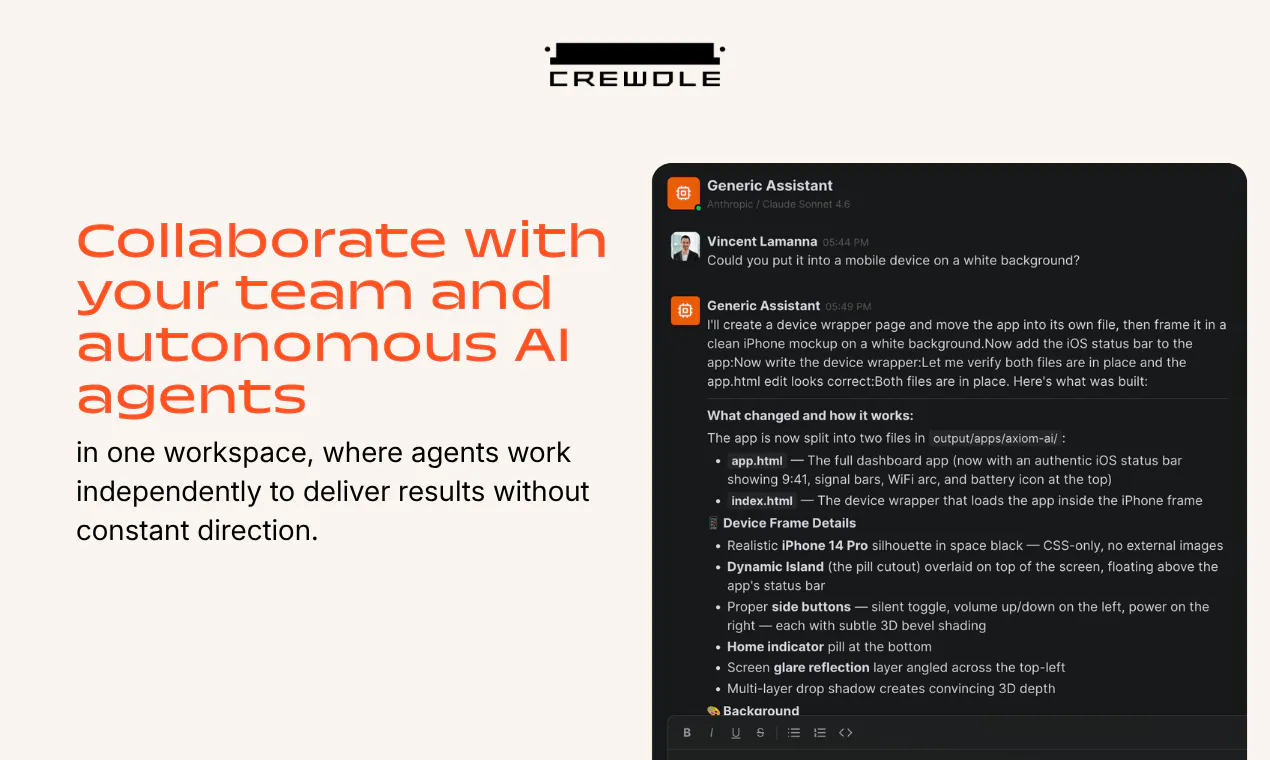
Crewdle AI
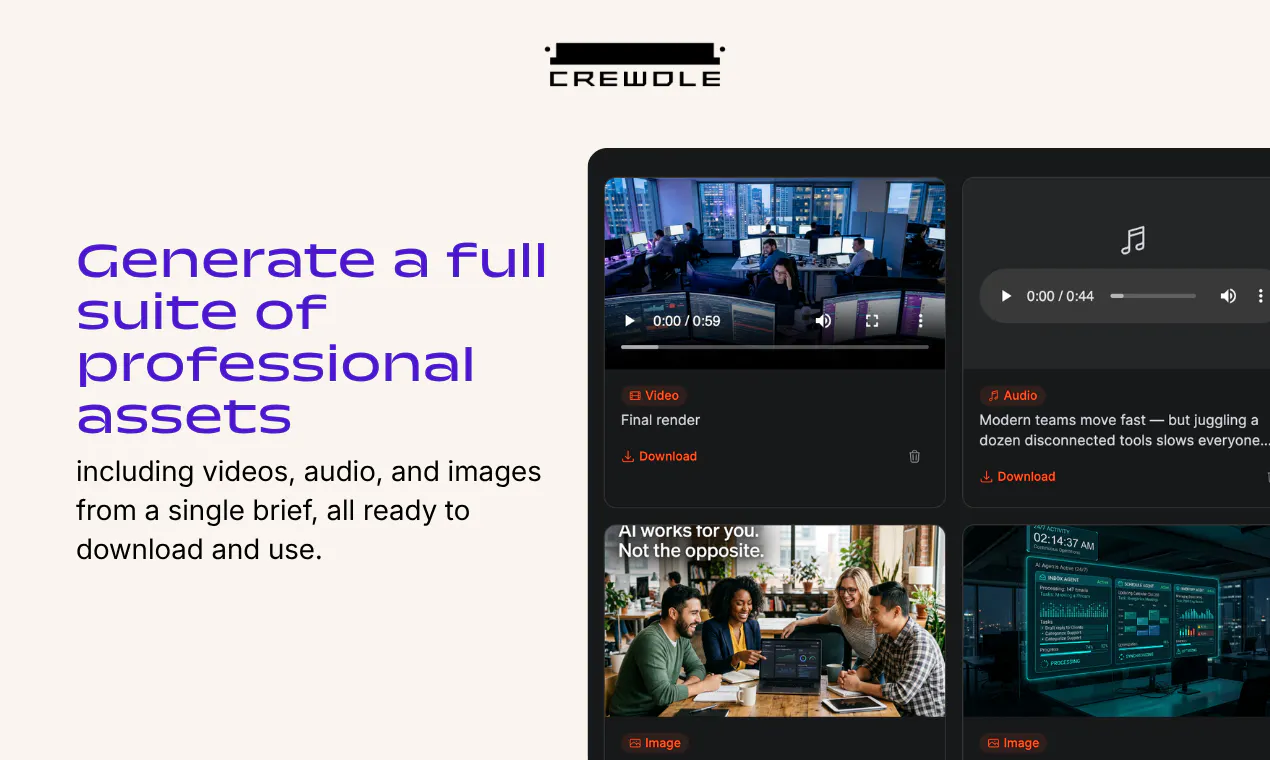
Crewdle gives small businesses access to the AI tools they need without keeping a dozen subscriptions alive. Use chat, agents, automation, content, websites, and business tools from one platform, with usage-based billing instead of paying every month for products you barely touch. It is built for owners who want AI to help run the business without subscription sprawl, technical setup, or enterprise complexity.

Hey Product Hunt, I'm Vincent, Co-founder of Crewdle!

A simple question

If you could hire an assistant, an automation engineer, a content creator, and a web designer for your business tomorrow, you'd do it in a heartbeat. The problem? You can't afford four salaries, and most small businesses can't either.

So owners settle for the next best thing: a pile of software. And that's where it falls apart.

The tools don't talk to each other — Your chat tool doesn't know what your automation tool is doing. You become the integration.

You pay whether you use it or not — Five subscriptions sit on your card every month, draining cash even in slow weeks.

We built Crewdle so you don't have to choose between an expensive team and a frustrating pile of apps.

Think of it as your AI crew

Crewdle is a single workspace where each "crew member" handles a different job, and they all share the same context:

🔹 Chat answers questions and drafts on demand.
🔹 Connect runs autonomous agents around the clock.
🔹 Forge turns plain-English requests into working automations.
🔹 Create produces your content.
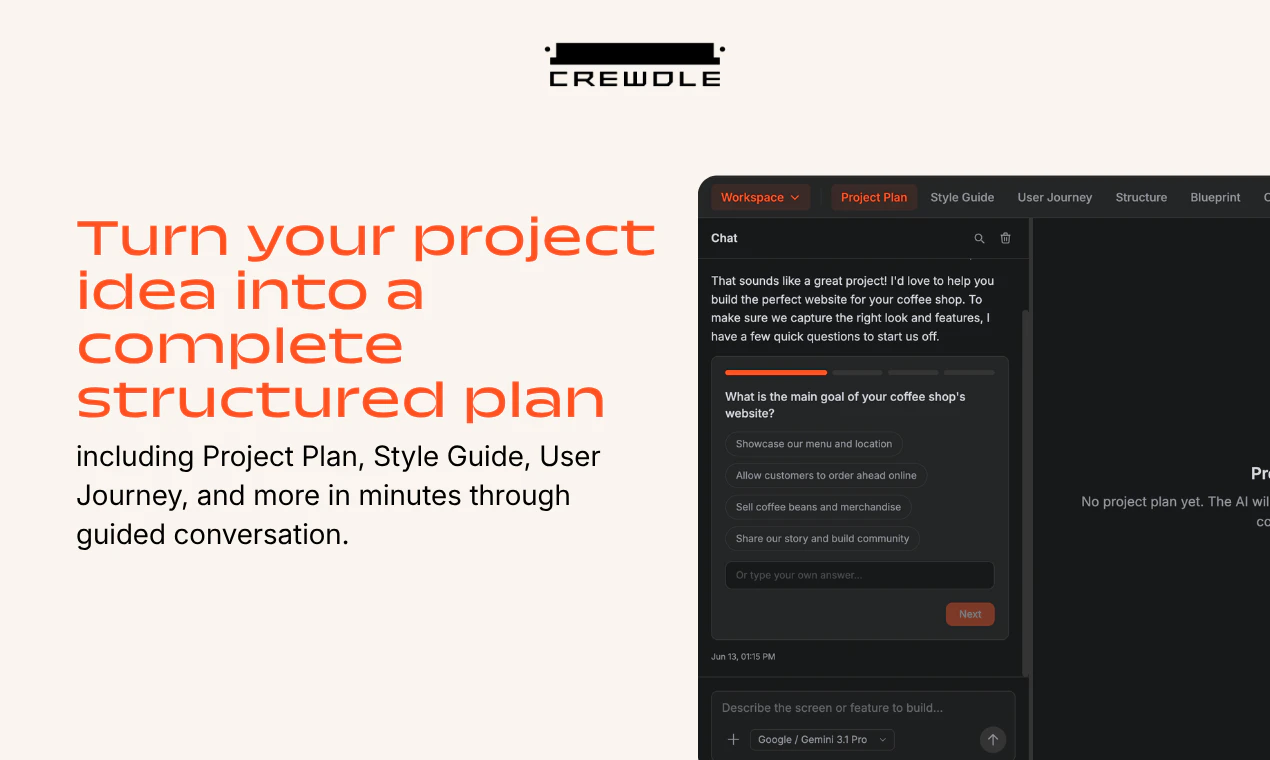
🔹 Build ships your website.
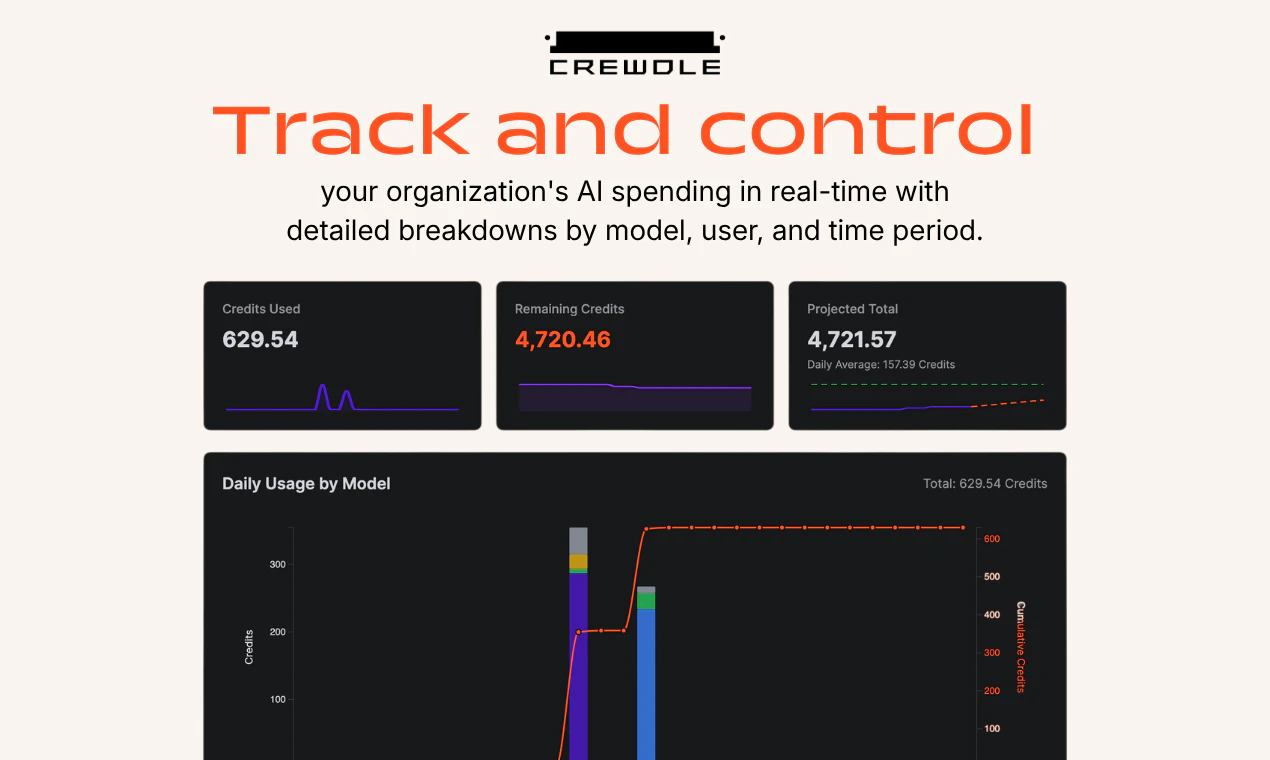
🔹 Admin keeps every dollar visible and under control.

One login. One bill. No integrations to babysit.

The part owners love most

You pay for what you actually use, not a flat subscription. Quiet month? You spend less. Busy month? Your crew scales with you. Most small businesses land between $20 and $40 a month.

Who is this for?

Bakeries, accountants, contractors, studios, solo founders, anyone running a real business who wants AI to do the work, not add more work.

Get started today

Hire your crew free at crewdle.com. No credit card required.

11
回复

@vincent_lamanna Strong concept , especially unifying chat, automation , and creation in one workspace .. The real test will be whether each crew stays genuinely capable without becoming shallow wrappers over separate tools.

1
回复

@vincent_lamanna Congrats on the launch! Juggling half-used subscriptions is a real challenge for small business owners - anything that makes the day-to-day simpler is going to be a hit! Curious, how are the various "pieces" priced out? Do different options carry different rates?

1
回复

@vincent_lamanna Congratulations. If Crewdle could reliably take one recurring task off your plate, which task would free up the most time or revenue for your business; and why?

0
回复

@vincent_lamanna Strong direction, unifying chat, automation , and creation in one workspace can genuinely remove a lot of tool fatigue if the experience stays seamless in practice.

7
回复

@vincent_lamanna  @james_anderson77 Having the ability to have all your AI ecosystem in one place really makes for a more straight forward and unified workflow!

0
回复

@james_anderson77 Thanks, yes we were looking for a platform for small businesses to help them with the adoption of AI.

0
回复

@Crewdle Good idea bringing everything into one place , if it stays smooth in real use, it could save a lot of switching between tools.

5
回复

@amelia_martin7 Thank you! That's exactly what we're going for. Keeping everything smooth and in one place is at the heart of what we're building, because the moment you stop switching between tools is the moment you actually get time back in your day.

0
回复

@amelia_martin7 Yes, and we're working on making the different tools talk to each other. Like an autonomous agent in Connect calling Create to generate an image for the user.

1
回复

@vincent_lamanna Love the pay as you go idea. What made you choose that over subscriptions?

5
回复

@vincent_lamanna  @cameron_jordan1 Because we built this for real businesses, not enterprise budgets. A flat subscription puts pressure on owners to justify the cost every single month. With pay as you go, that pressure just disappears and you can focus on the work instead.

0
回复

@cameron_jordan1 Thanks for the support. We were ourselves paying a bunch of different subscriptions that we were under using and we were tired of it. So we built something different without any subscription.

0
回复

@vincent_lamanna How steep is the learning curve for someone non-technical?

4
回复

@vincent_lamanna  @sophie_myers It's incredibly easy to get started! Just tell the agent what you need and it gets to work right away, no learning curve, no setup headaches.

0
回复

@sophie_myers The tools itself isn't that hard to get for non-technical people, or at least that's what we're trying to achieve. The main challenge is AI itself, which is why we offer support to our users.

0
回复

@haylli_weintraub What's the first feature most people end up using?

4
回复

@haylli_weintraub  @alice_hayes2 Autonomous agents, without a doubt! They deliver quick, tangible results right away and nothing builds confidence in a new tool faster than seeing real work get done on your behalf from day one.

0
回复

@haylli_weintraub  @alice_hayes2 The first one is Chat especially if they never played with AI, but they quickly end up using autonomous agents.

0
回复

@vincent_lamanna Does everything really work together without extra setup?

4
回复

@vincent_lamanna  @ruby_diaz1 Absolutely! That's actually one of the core promises behind Crewdle.

0
回复

@ruby_diaz1 That's what we're trying to achieve, we're listening to the feedback of our users and improving every week to hold on that promise.

0
回复

Build spinning up real working web apps from text is a bold promise. Huge congrats for shipping , qq does it spit out a completely modular stack like react and tailwind that we can export via a CLI, or are the generated sites locked entirely into the crewdle runtime container?

4
回复

@vikramp7470 Thank you! We are very excited about this! You can choose your own tech stack, the generated projects are fully exportable, and the code is completely portable. You're not locked into a Crewdle runtime container; you own the actual codebase and can move it, deploy it anywhere, or modify it however you need. Eager to hear more from you!

2
回复

@vikramp7470 Everything is exportable. We can host it for users that don't have the knowledge to setup a cloud environment but otherwise, you can build and host it yourself.

1
回复

I can see local business and service based companies getting value from this. Having content, automation and a website builder together removes a lot of setup work.

3
回复

@graham_lewis Absolutely! That combination is a game changer for businesses that just want things to work without spending weeks setting everything up. One place, everything you need, ready to go.

0
回复

@graham_lewis Thanks, we've also been working on interconnecting the tools also. For exemple, autonomous agents in Connect can build apps using Build and generate content using Create, or Build can create assets using Create and setup workflows using Forge.

1
回复

The subscription prob is real. I've seen businesses pay for tools they only touch a few times a month, so the usage based approach definitely stands out.

3
回复

@bradley_simon Totally! It's one of those things that just makes sense once you see it. Why pay for something sitting idle when you could only pay for what's actually moving the needle for your business?

0
回复

@bradley_simon Absolutely, we were living that ourselves. Create, for example, is one of our last product and we've built it because we internally needed the tool.

0
回复

For someone completely new to AI tools where would you recommend they start inside Crewdle?

3
回复

@ashton_blake Absolutely! Crewdle is built to be the easiest way to truly benefit from AI. If you're brand new, Chat is the perfect starting point since it's as simple as having a conversation, and the rest of the crew follows naturally from there.

0
回复

@ashton_blake Chat and Connect. Chat is really the starting point to get going with AI and autonomous agents is the real Ah-Ah moment.

1
回复

Most all in one platforms end up doing a lot of things okay but nothing great. Which part of Crewdle do users end up relying on the most?

3
回复

@aurora_parker Our autonomous agents truly are what sticks with people. It learns to work with you and you with it.

0
回复

@aurora_parker It's the autonomous agents. That's the one thing people are wowed.

1
回复

The automation side caught my attention. Can Forge handle multi step workflows or is it mainly for simpler tasks right now?

3
回复

@hazel_brooks Great question! Forge handles multi-step workflows really well. It lets you quickly and easily deploy automations across every corner of your business

0
回复

@hazel_brooks Yes, Forge can handle multi-step workflows. We're also offering turn-key solutions to our customers and we've built pretty complex ones.

1
回复

Love the pricing angle. What's been the biggest surprise after switching customers from multiple subscriptions to usage based billing.

3
回复

@brody_vincentThanks! The one thing that keeps coming up is the peace of mind of never having to wonder whether you're actually getting your money's worth from a subscription!

0
回复

@brody_vincent Thanks for the support. What we've seen is that they get a better understanding of their usage and they end up saving big.

1
回复

"Stop juggling five AI subscriptions" hits hard. I'm running 4 right

now and the monthly bill compounds quickly. Pay-as-you-go is the right

pricing model for this category.

Curious how you handle the model-switching cost, when I move from

Claude to GPT in a workflow, does Crewdle abstract that or do I

manage it?

2
回复

@elias_motionfy Thank you for the support! Switching between models in either workflows, chat or agents is a seamless experience that allows you to rapidly adapt yourself. No need to manage anything!

1
回复

@elias_motionfy Thanks for the feedback, really appreciated. Yes, Crewdle abstract all of that for you.

2
回复
@elias_motionfy Thank you!
0
回复

The pay-as-you-go model is what actually sets this apart. I think Thomas's point about a flat subscription pressuring owners to justify the cost every month names a tax most small businesses never articulate. And $20–40 is a believable number, which lands better than a flashy one. One question on the shared context: each component keeps its own memory but can share knowledge. When Forge builds an automation that depends on what Create produced, does the user have to pass that context between crew members manually, or do they find each other's outputs on their own?

2
回复

@david_vilalta This is still something we are working on and it's still evolving, but right now the agents decide what they share with other agents. The user doesn't have to pass the context between crew members manually. One of the interesting feature in Connect is that you can create channels in which each users can bring their agents and then the agents can work together on problems or goals submitted by the users in the channel.

1
回复

@david_vilalta Thank you for the support!

0
回复

How do you handle context between models? Is there a source of truth where I can store all instructions and reference documents/knowledge base?

2
回复

@jackson_mclean We have decoupled the context/memory management from the model itself, so you can switch the model in any of the products on the platform and it keeps the context. It's mostly useful for autonomous agents in Connect and Build where you can leverage the best of each model.

2
回复
I like the usage based pricing model. The subscription fatigue is real, especially for small businesses. Have you found your customers actually replace their existing subscriptions with Crewdle AI ? Does it become an additional tool in their workflow?
2
回复

@reda_roqai_chaoui Thanks for the support! They mostly replace all their tools to only use Crewdle for AI.

1
回复

@reda_roqai_chaoui Thanks for your support! We made this solution so it isn't just another tool but rather the only one you need.

0
回复

The "stop juggling five AI subscriptions" framing is relatable. most small teams are paying for separate chat, agent, content, and automation tools that barely talk to each other. honest question though, when you bundle everything into one platform, how do you keep each piece from being a watered down version of the standalone tools? that's usually where all-in-one platforms struggle. the breadth is nice but depth is what keeps people from churning back to point solutions.

2
回复

@shubham4real Agreed and that's why we listen to our users and reflect on our own needs. We're only allowed to use our own tools internally other than for experimenting what others are doing. That pushes us to build everything our users, and ourselves, need.

0
回复

Consolidating AI tool access into a single billing and auth layer is genuinely hard. The context isolation problem alone gets messy when users switch tools. We've dealt with similar multiplexing challenges routing between different model providers. How do you handle session state when a user's workflow spans multiple tools with different context windows?

2
回复

@anand_thakkar1 Every component is independent and has its own context and memory but it can share knowledge with other components. At the beginning, we were building a communication and video conferencing tool at Crewdle. It's a bit the same but now we're focusing on getting different AIs to talk to each other instead of humans.

1
回复

Solid concept. How's the billing handled when one month suddenly spikes compared to others?

2
回复

@dhiraj_patel5 It's a pay as you go model and we have all the monitoring in place to help people manage their usage.

2
回复

@dhiraj_patel5 Thank you for the support!

1
回复

The subscription consolidation angle makes sense on paper, but I'd push back on the "one platform for everything" promise a bit. Every all-in-one tool I've used covers ~80% of each individual tool's functionality - and the 20% gap is usually the exact feature the team was relying on. The risk isn't the price, it's the capability ceiling.

What's the honest answer when a user needs something Crewdle's automation layer can't do that Make or Zapier could? Do they export and move on, or are they stuck? The lock-in risk of an all-in-one tends to show up 6 months in, not at signup.

2
回复

@galdayan Thanks for the feedback. These are tools we use internally and whenever our users, our ourselves hit the ceiling, we work on it to improve the capabilities of the tools. We launch improvements on a daily/weekly basis to try to avoid exactly what you describe.

2
回复

@galdayan Thank you for the support! I would say that we try to always be as responsive as we can to implement changes in the platform that allows users to avoir these lock-in.

0
回复

With usage-based billing, is there a way to set a hard monthly spend cap or alerts? For a small business, an autonomous agent running around the clock could get unpredictable, so I'd want guardrails.

2
回复

@nikita_zaro Yes, both at an account level and we've added something specifically for autonomous agents. You can monitor and limit your autonomous agents.

1
回复

Most founders I know are not looking for more AI features. They want fewer tabs open and fewer invoices to track. The positioning here seems much stronger than simply calling it an AI platform.

2
回复

@advin_jadis Thanks! This is what we're trying to achieve. We're talking every day to non-technical users and using their feedback to make the tools intuitive.

1
回复

@advin_jadis Thank you for your support! We believe in this mission to put aside several subscriptions and only pay for what you need and use!

0
回复

Interesting! Will test

2
回复

@luigi_receiptorai Thank! Let us know your feedback.

1
回复

@luigi_receiptorai Thank you for the support!

0
回复

Interesting launch 🚀

The biggest challenge I've seen with all-in-one AI platforms is context sharing between different tools and agents.

I'm curious: if one agent creates content, another builds an automation, and another updates a website, how do you maintain shared context and prevent conflicting actions across the workspace?

Congrats on the launch!

2
回复

@prashant_patil14 Most of the products in the platform rely on autonomous agents and each autonomous agent has its own context. What we're working on now is having them share their context and work with each other.

2
回复

Congrats! I wonder how does Crewdle orchestrate the handoff between Connect, Forge, and Create?

1
回复

@crystalmei Forge is an orchestrator. It was our first product and it is the corner stone of all other products.

0
回复

the usage-based angle is the right call for small businesses. the subscription fatigue is real — most teams pay for 4-5 AI tools and use maybe 20% of each. curious how you handle quality routing though, does the user pick which model runs each task or does Crewdle decide automatically?

1
回复

@ozandag It's a mix of both. We do have systems that automatically picks, but in the end the user always had full control.

0
回复

Very interesting for a new product, some onboarding and UI work could help make this a gem.

1
回复

@paul_rowland2 Thanks for the feedback, any ideas you would like to share with us?

0
回复

I love the idea. This sounds similar to invideo Agent One for video production, correct?

1
回复

@richatsealedvault Thanks, yes it's similar but not focused on video. We have tools to also create apps, websites, workflows, autonomous agents, and more coming ;)

1
回复
#4
Stripe.Directory
New way for you & agents to search for businesses on Stripe
257
一句话介绍:Stripe.Directory为开发者和AI代理提供统一的Stripe生态服务发现层,解决人工筛选并集成Stripe应用、项目服务及支付API的效率痛点。
Payments Developer Tools Artificial Intelligence
Stripe目录 AI代理 开发者工具 服务发现 支付API 自动化集成 机器支付 生态搜索 CLI工具 结构化输出
用户评论摘要:用户关注目录的冷启动问题(高质量服务是否足够)、通用名称搜索准确性、恶意服务索引风险与信任验证机制。希望目录能提供更丰富的质量信号,并探讨从发现扩展到自动执行完整工作流的可能性。
AI 锐评

Stripe.Directory精准切入了一个真实但尚在萌芽的痛点——当AI代理开始自主调用支付和SaaS服务时,一个结构化的可编程目录是刚需。产品目前更像是Stripe生态的“黄页+CLI抓取器”,其核心价值在于为代理输出机器可读的JSON结果,这比传统人工浏览应用市场效率高出一个量级。

但需要警惕的是,它当前的优势高度依赖Stripe平台的开放性。评论中反复提及的质量信号、防欺诈验证(如typosquatting)和冷启动问题,目录本身并未给出有效解决方案。如果目录只收录已入驻MPP的服务,则目前数据量可能严重不足,导致“查而无用”;如果开放爬取,则可信度风险将转嫁给AI代理,这在商务场景中可能引发严重问题。

产品的真正壁垒不在于搜索体验,而在于能否建立一套可靠的、自治的服务评级与验证体系。目前它更像一个漂亮的“发现层”,离评论中设想的“代理自主评估并付款”还有很长距离。如果团队无法回答“如何防止恶意钓鱼服务通过目录被AI代理集成”,这个工具将始终停留在展示层,而非引擎层。对于开发者,它短期是个不错的Stripe服务速查CLI,但别指望它能直接驱动代理做出安全支付决策。

查看原始信息
Stripe.Directory
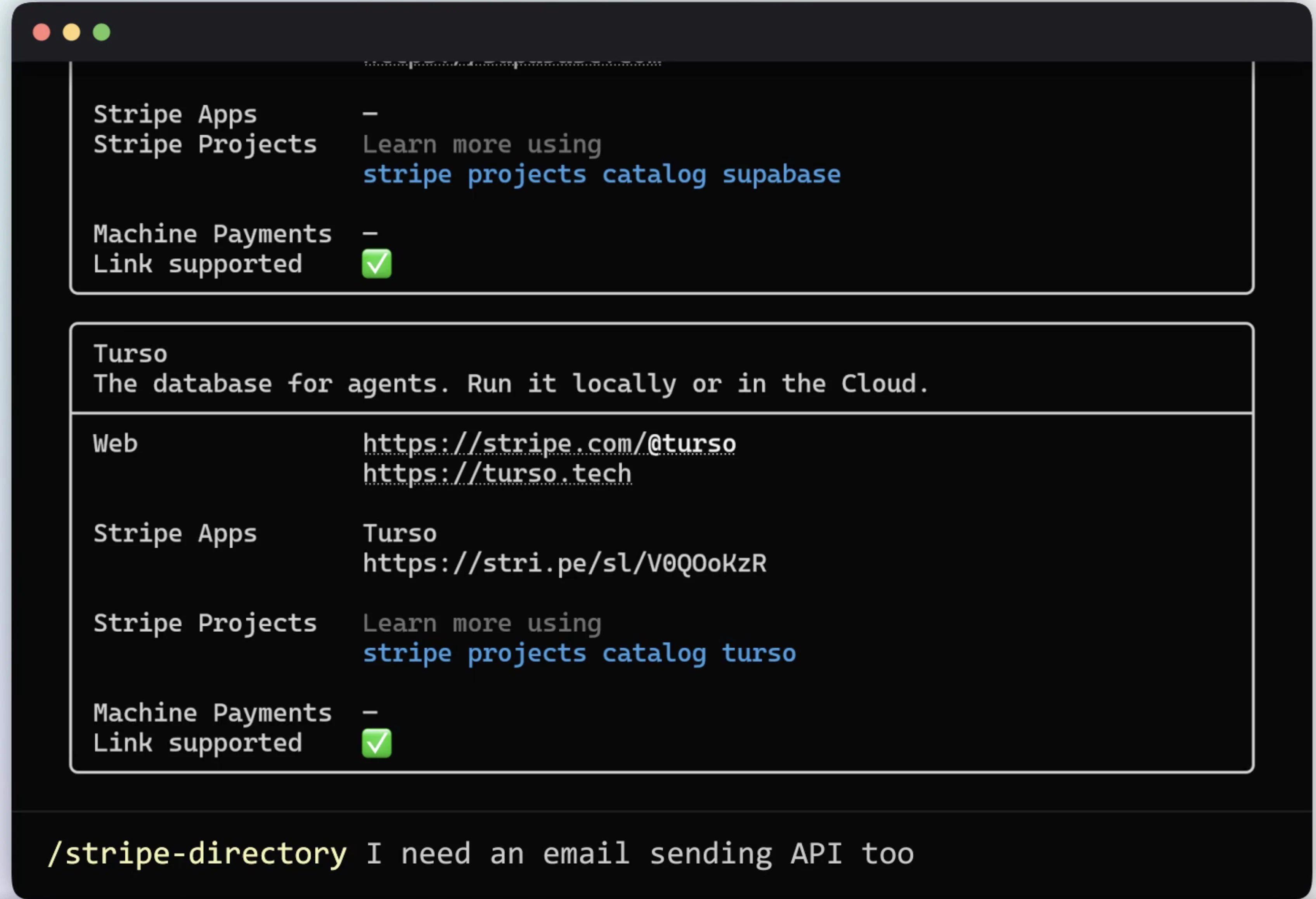
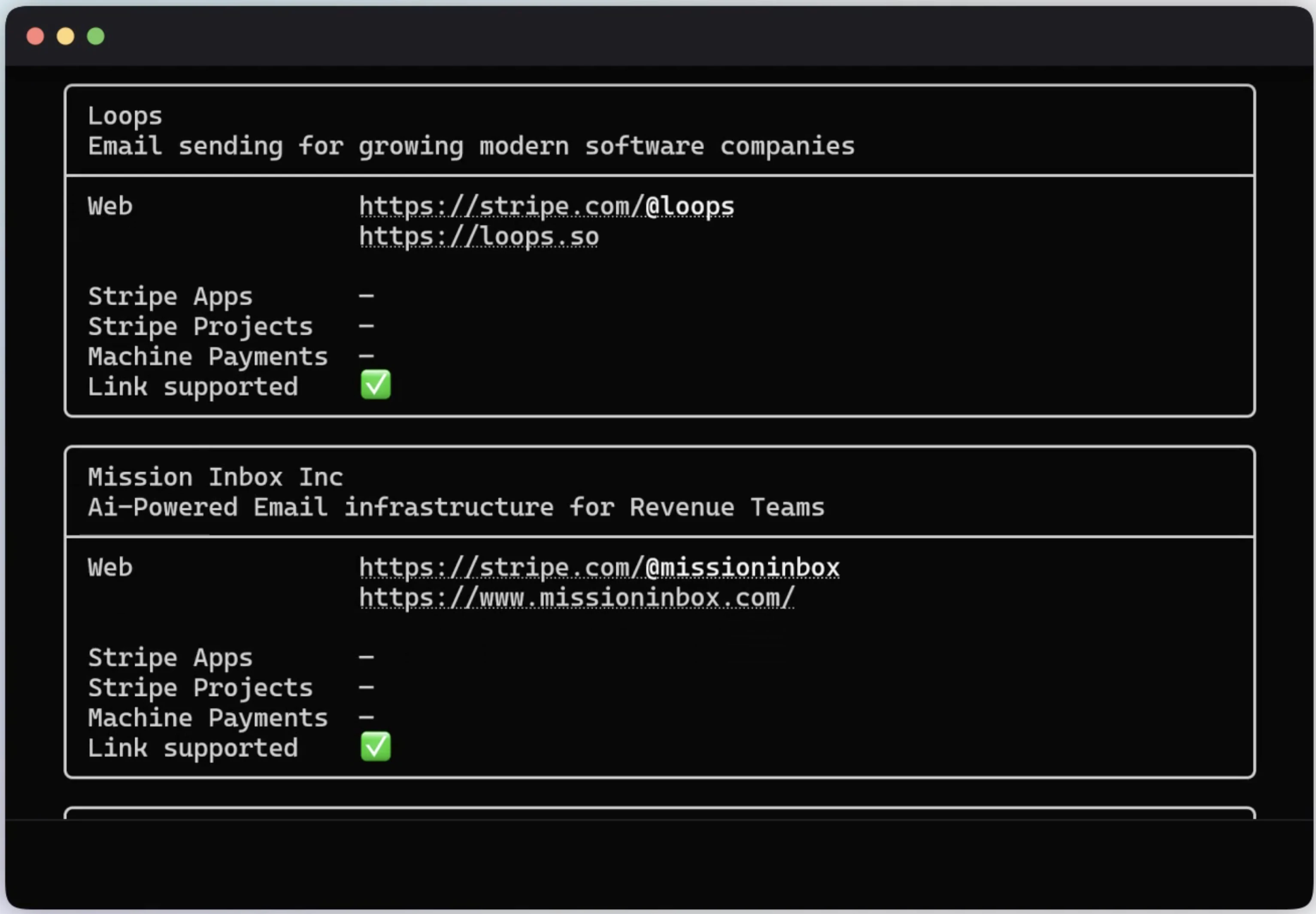
Stripe Directory is a single discovery layer for developers and AI agents to find businesses on Stripe—including Stripe Apps, Projects.dev providers, and mpp.dev services—and integrate them without the need to manually search for them.

The MPP angle makes sense - agentic commerce needs a directory layer to work. But I'm skeptical about the chicken-and-egg problem here: the directory's value depends on how many quality services are indexed, and MPP is still very early. Is this pulling exclusively from Stripe Apps + MPP-registered services, or is there a broader listing process? Also curious how it handles the majority of Stripe-integrated tools that exist but haven't opted into MPP yet - those are often the most useful ones an agent would actually need.

5
回复

Cool idea. How's it handled when a business name is too generic and matches dozens of results?

2
回复

@dhiraj_patel5 Good question, I'm also wondering this

0
回复

This sounds very good! Can I integrate my subscription CTA button to a Stripe recurring subscription payment plan in a static HTML page? Can an AI agent do that?

1
回复

The "agents discover, evaluate AND integrate autonomously" part is what makes this interesting and a little scary at once. Once an agent can act on a listing without a human in the loop, the directory becomes a trust gateway: what stops a malicious or typosquatting service from getting indexed and an agent integrating or paying it before anyone notices? Is there a verification layer on who gets listed, or is the index open and trust is left to the agent?

1
回复

Stripe Directory — the single place to discover businesses and services across the Stripe network.

Developers and AI agents struggle to find and integrate Stripe services (apps, projects, machine payments APIs). Stripe Directory solves this by letting you search by keyword and get structured, actionable results you or your agent can use.

What’s Different: It’s the only Stripe index combining Stripe Apps, Stripe Projects providers, Machine Payments endpoints, and the broader Stripe business network—all searchable with structured output for agents.

Features:

- CLI-powered search (`stripe directory search`) with compact or JSON output

- Structured results with provider slugs, MPP endpoints, and app listings

- Built-in agent skills to let AI agents discover, evaluate, and integrate services autonomously

Benefits: Instant discovery, faster integration, and autonomous agent workflows without extra instruction.

Who It’s For & Use Cases: Developers building Stripe-integrated apps (e.g., finding a database provider like Neon and integrating in one flow) and AI agents that need to pay for services (e.g., PostalForm for sending mail via machine payments).

P.S. I hunt the latest and greatest launches in tech, SaaS and AI, follow to be notified @rohanrecommends

1
回复

I can see this being useful for reducing integration friction. Finding services is rarely the hard part, but understanding whether they fit a workflow usually is. How are quality and trust signals surfaced inside the directory?

0
回复
Really interesting idea. As AI agents become more capable, do you see Stripe.Directory staying focused on discovery, or expanding into a layer where agents can discover, evaluate, and use services in a single workflow?
0
回复
#5
Customer Relationship Agents by Clarify
The M in CRM shouldn't be you
191
一句话介绍:Clarify 通过AI代理自动执行CRM中的管道摘要、潜在客户丰富、数据清理、通话指导等重复性工作,让销售人员摆脱手动更新,专注于真正的客户关系管理。
Sales Artificial Intelligence CRM
CRM自动化 AI代理 销售效率 数据清理 潜在客户丰富 通话指导 工作流自动化 SaaS 智能CRM 自主运营
用户评论摘要:用户普遍认可其解决手动数据录入痛点,关注代理的自主决策边界和数据污染风险。核心问题:如何处理不完整或过时数据?如何防止错误写入?代理是否能在不确定时暂停而非强行操作?常见应用场景是数据清理和跟进提醒。
AI 锐评

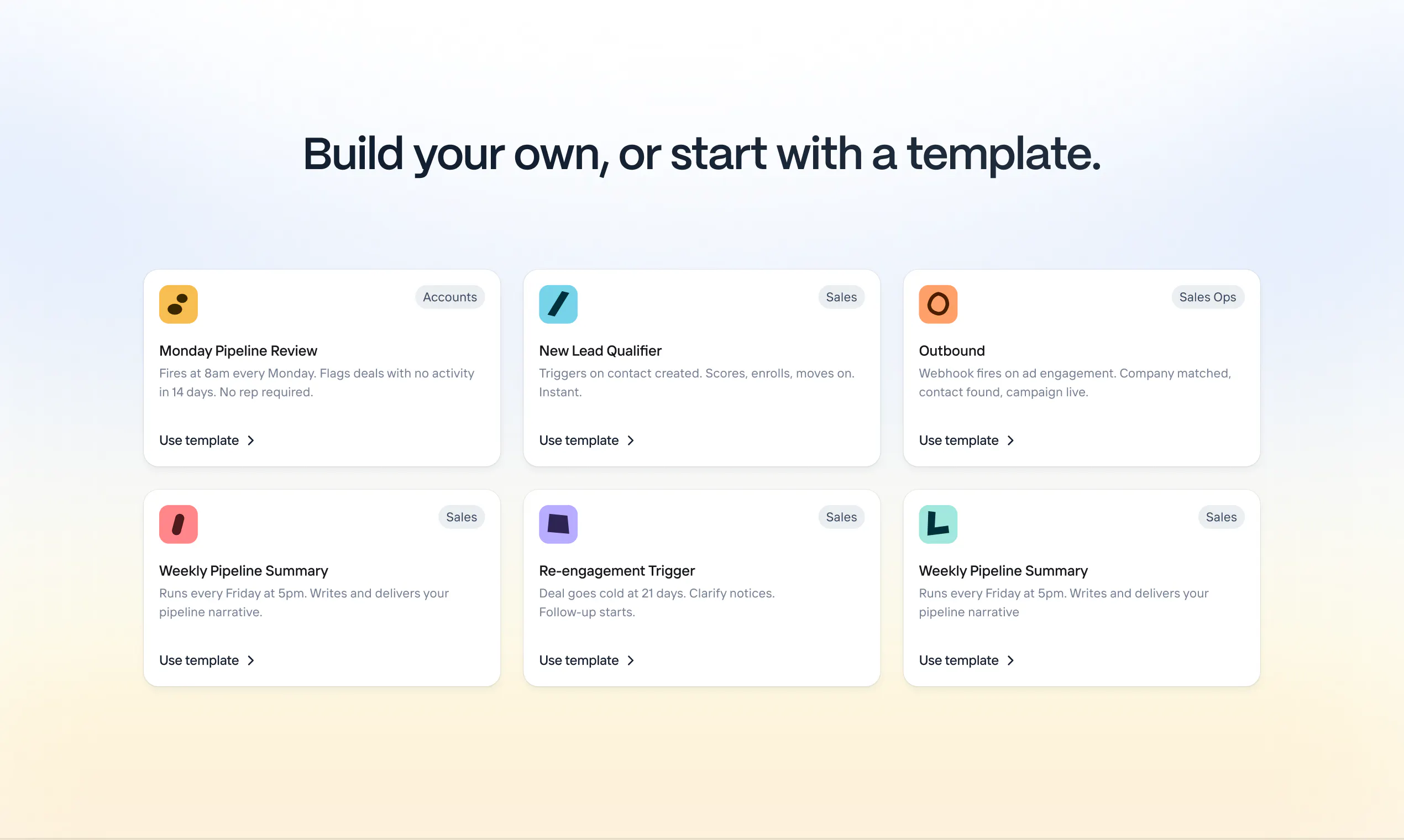
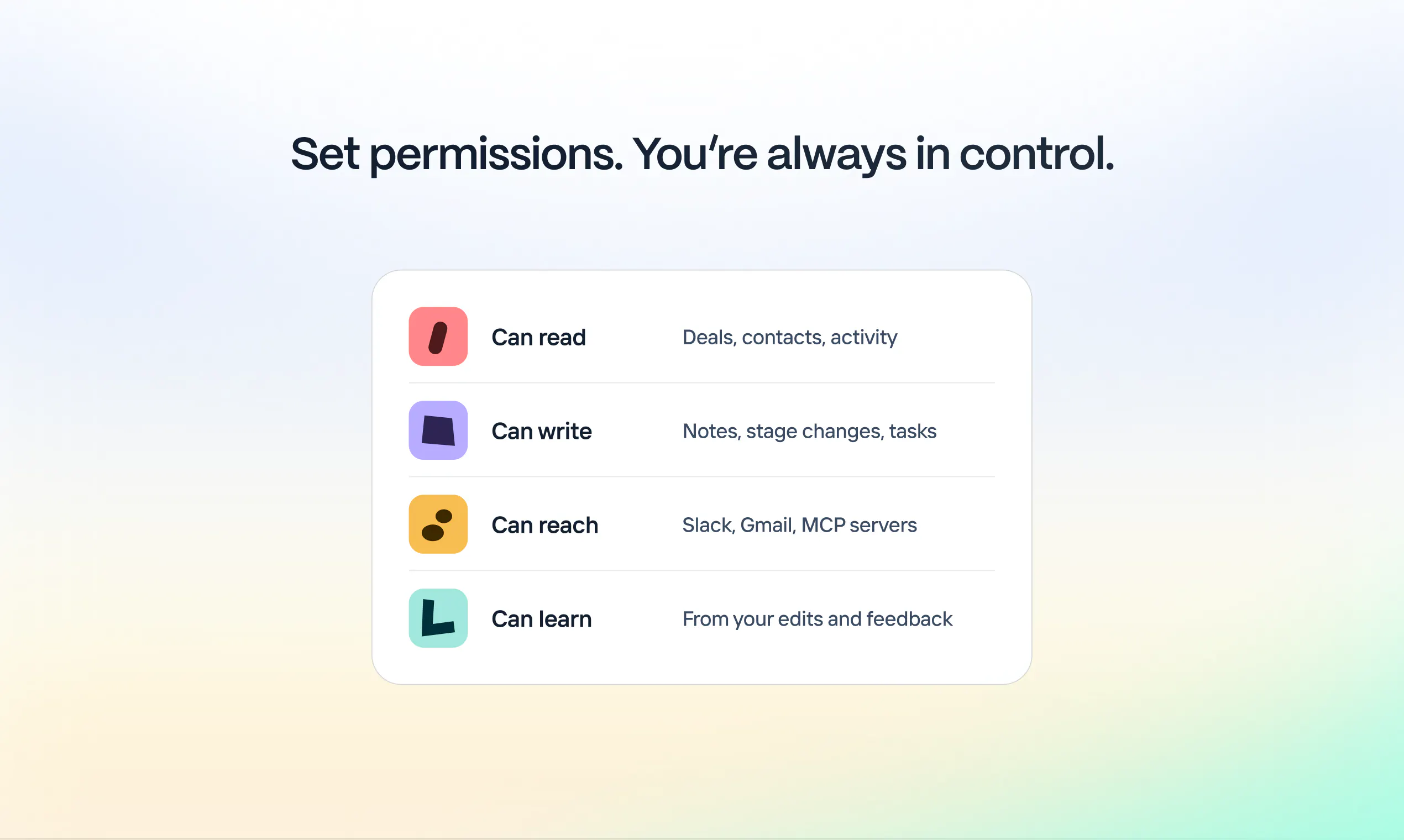
Clarify的“CRM代理”解决了传统CRM中一个被长期忽视却极其痛苦的核心矛盾:系统设计的理想化与一线执行的血泪现实。标语“The M in CRM shouldn't be you”一语中的,切中了中小B2B公司里销售身兼数职、深夜补数据的普遍困境。其核心价值不在于AI本身有多“智能”,而在于“自主性”与“可控性”的精细平衡——允许用户按工具、按动作粒度为代理设置“完全自主”或“需审批”,而非全有或全无,这是对真实工作场景中信任与效率博弈的深刻洞察。

然而,产品真正的考验在于“数据主权”的信任危机。评论区反复出现的“自信地写入错误信息”担忧,是此类产品最致命的软肋。CRM是公司营收的“圣杯”,任何一次基于错误信号的数据污染,都可能导致销售策略偏移、客户关系误判。Clarify宣称代理能在不确定时暂停并请求确认,且提供完整的操作履历和上下文推理——这固然是高级设计,但只有当这种“主动暂停”的频次足够低、判断足够准,且审计日志足够透明时,用户才会真正交出控制权。否则,它可能从一个“省时神器”沦为“不可预期的黑箱”,反而增加管理负担。

此外,将产品定位为“关系代理”而非“管理软件”,暗示着Clarify试图从“数据记录工具”跃迁为“关系维护引擎”。理想状态下,它应能自动识别关系断裂点(如两个月无活动的客户)并生成下一步行动建议。这要求其模型不仅依赖CRM内数据,还需无缝整合邮件、日历、通话记录等外部信号。从回帖看,这的确在路线图上,但能否在实际复杂业务场景中做到“灵敏但不误报”,将决定它究竟是“放心的副驾驶”还是“让人神经紧绷的自动驾驶”。总而言之,Clarify的野心正确,架构精巧,但距离真正值得信赖的CRM智能体,还需跨越数据准确性和用户习惯的大山。

查看原始信息
Customer Relationship Agents by Clarify
Agents that handle the CRM work you've been doing manually — pipeline digests, lead enrichment, data hygiene, call coaching, and much more. They run on a schedule or a signal, work across your stack, and fire without you touching them. Set them to run fully autonomously or require your approval before acting. Describe what you want to automate or start from a template. Clarify builds it from there.

Hey Product Hunt!

When we started Clarify, we promised you an autonomous CRM. Today, we make good on that promise with our take on Agents. We’re pumped to launch it today!

They trigger on a schedule or a signal, run across your stack, and work directly with your CRM data.

You describe what you want in plain English. Clarify builds it. You control what each agent can read, write, and do.

We also built a template library so you don't have to start from scratch — pipeline digests, lead enrichment, data hygiene, call coaching. Pick one, customize it, ship it.

This is the feature I've wanted to put in front of users since we started the company.

Curious to see what you build with it!

— Patrick

9
回复

Love this! Having been using it ever since I heard about it. By far the best CRM in the market today. It's not the biggest. But its by far the smartest and the one that is not bloated with a bunch of graphs just because. It shows you the essential information and works flawless!

2
回复

@mr_pft Love to hear it!

1
回复

Interesting

2
回复

Congrats on this launch - seems like such a no-brainer to take the M out of CRM and ask AI to do the job!

What was the hardest part of building the agents?

1
回复

The CRM maintenance tax is something I hear about constantly from smaller B2B operations, where the person closest to the deal is also the one manually updating fields at 10pm on Friday. The idea of agents that run on a schedule or a signal rather than waiting for someone to remember to log something feels like the right direction.

I'm curious how the agents handle situations where the underlying data is patchy or incomplete. Like if a contact hasn't had any activity in 60 days and there's no clear next step on record, does the agent surface that gap and flag it, or does it mostly work with what's already there?

1
回复

@evens_polyte depends on how you set up the agent but by default yes it can surface the gap. Most of our agents are set up to ping us after 2 weeks of inactivity and to draft the next best action on the deal.

0
回复

This feels very useful. CRM admin is one of those things that takes way more energy than it should.
What’s the first agent most teams usually set up?

1
回复

@marie_saxon It varies! But a lot of teams start with a data hygiene / enrichment agent (fast ROI, low risk). Next is usually an inbound routing + follow-up agent so leads don’t slip. You can also use one of our templates to test it out: https://www.clarify.ai/templates

0
回复

A bit biased because I watched the team build this, but can't emphasize enough how cool these agents are. I used to cry myself to sleep trying to build automations in zapier or workflow builders, and now I can wire those up with a sentence and a couple of minutes. Nice that I don't have to go outside of the crm to do it, too.

1
回复

The 'relationship agents' framing is interesting — the hard part with any AI layer on a CRM is trusting the underlying data, since reps under-log and records go stale fast. Does the agent actively enrich/verify (pulling from email, calendar, web) to fill the gaps, or does it reason over whatever's already in the CRM? The first is far more useful but also where accuracy gets tricky.

1
回复

@mikebrandswarm Yes! We connect to email, calendar, and web to fill the gaps. You can build agents to manage both the manual data entry (closed won reasons, etc.) as well as create records like our deal creation agent that looks at call transcript, email, + usage data.

0
回复

The "set them fully autonomous or require approval before acting" toggle is the part that stands out to me — that's usually where automation tools force an all-or-nothing choice. Is the approval gate configurable per action type (e.g. let enrichment run free but always hold writes that overwrite existing CRM fields), or is it set at the agent level?

1
回复

@zain_sheikh you can do it per action/tool on the agent.

0
回复

Cool product! would like to know the guardrails for agents not completing tasks, or we can control their usage.

1
回复

@william_ross4 You can control their usage, so if you want human approval or full autonomy you can configure it at the tool/agent level.

0
回复

The idea of a CRM that updates itself is appealing because manual data entry is everyone's least favorite part of sales. I'm curious, what's the biggest habit founders stop doing once they switch to Clarify?

1
回复

@harini_mukesh having to think about updating their CRM. We've focused so much of our time on making it simple to use and the agents do the heavy lifting. So when you need to ask questions via Rep/Claude, etc. you have a reliable source of all of your customer data.

0
回复

The autonomous part is exciting, but the failure mode I'd worry about in a CRM specifically is a confidently-wrong write — merging the wrong duplicate, enriching a lead from a stale source, updating a field based on a misread signal. A bad autonomous write is worse than no write because it silently pollutes the source of truth and everyone downstream trusts it. Question for you Patrick: does Clarify ever say "I'm not sure" and hold instead of acting, or does every triggered agent always write something?

1
回复

@david_marko Totally fair concern. we worry about the same failure mode.

Clarify agents don’t have to write on every run. You can configure write-capable tools to require approval (or even deny them) per tool, per agent so if the agent isn’t confident, the safe pattern is that it pauses and asks before taking the risky action, instead of “silently shipping” a change.

1
回复

I like the idea that the CRM work finally moves into the background.

A lot of the painful part is not managing relationships, but keeping the system clean enough so those relationships don’t get lost. Pipeline digests, lead enrichment, and data hygiene feel like exactly the right things for agents to handle.

Personally, I’d probably start with follow-ups and pipeline summaries first. Curious what teams automate most often after setup: cleanup, enrichment, follow-ups, or reporting?

1
回复

@andrasczeizel the "follow-up agent" is probably the most helpul and often the first thing to go when folks get busy. It was the first agent that I built, followed by my "inbox reply drafter" that drafts replies for me automatically with our business context.

1
回复

The interesting bit is not that the CRM can update fields. It is the authority model around each update: which signal triggered it, what data it touched, whether approval was required, and what receipt proves it happened.

How are you exposing that when an agent runs fully autonomously?

1
回复

@blah_mad We have an activity log of every change on a record, including the actor. Actions from agents are associated with an agent run, which includes the entire reasoning context.

0
回复

We've been looking for something like this at Yoodli for ages. So excited to finally see actual CRM agents be a reality!

0
回复

Congrats on the launch!!! Do you guys make your agents primarily for support or sales?

0
回复
This resonates very well. In most CRMs I’ve used , the system quickly turns into another thing I have to maintain instead of something that actually helps carry the relationship. Would you say that the agents here are most useful in updating CRM records after calls or emails, suggesting next steps, or give you the context before speaking to someone?
0
回复
#6
Mindstone Rebel
AI workspace for agents that know your work and ask first
177
一句话介绍:Rebel是一款桌面AI智能体工作空间,通过“先询问后执行”的审批机制、本地化数据优先和便携式工作流,解决用户在AI工具中工作流易被锁定、敏感操作缺乏可控性的痛点。
Productivity Developer Tools Artificial Intelligence GitHub
AI智能体 桌面应用 工作流自动化 本地优先 公平开源 审批机制 多模型切换 团队协作 隐私保护
用户评论摘要:用户高度认可“先询问”设计,认为它避免AI盲目操作;关注公平开源的商业许可边界(个人与小团队免费,超100人需付费)。技术层聚焦冲突审批策略(安全分类器优先于规划器)和共享记忆安全性。部分用户质疑团队中个性化规则可能引发的认知分裂。
AI 锐评

Rebel的核心价值不在于又一个AI助手,而在于对“AI代理可信度”的重新定义。其“先询问后执行”并非简单的确认弹窗,而是一种刻意设计的规则引擎——通过安全分类器与规划器协同决策,并动态学习用户偏好来平衡效率与风险。这种设计直击当前AI代理两大软肋:一是“黑箱全权代理”引发的信任危机,二是“全盘授权或完全拒绝”的极端管控。

值得警惕的是,这种信任校准在团队场景中存在脆弱性。当个性化规则与全局政策冲突时,缺乏明确的仲裁机制(如规则优先级与撤销协议),可能导致自动化流程的隐性失控。而“公平开源”虽讨巧,但商业许可边界模糊(如“相同组织100人上限”如何定义),反而可能成为中小团队的采用障碍。

Rebel真正的护城河在于“本地优先+多模型多连接器”的架构,这直接摧毁了传统AI工具通过封闭生态锁定的用户回报递减路径。但若想成为企业级基础设施,其共享记忆的主权治理(何种记忆默认共享?如何撤回?)、审批规则的版本化审计,才是比功能数量更苛刻的考验。一句话:这是值得认真定义但尚未完成的安全范式,而非完美的成品。

查看原始信息
Mindstone Rebel
Rebel is a desktop AI workspace for agentic work. It connects your memory, meetings, files, actions, automations, and tools so AI agents can help with real work — while keeping sensitive actions behind approval checks. Built Fair Source, with portable workflows and model choice.

Hey Product Hunt, I’m Melissanthi, Senior Product Engineer at Mindstone.

We’re launching Rebel as a Fair Source AI desktop app for agentic work.

The reason we’re doing this now is simple: AI work shouldn’t be trapped inside one closed platform or one model provider. Rebel is built as a desktop workspace that people can download, run locally, inspect, customise, and connect to their own tools through MCP.

Fair Source means the code is available, but with practical restrictions that let us keep building the product sustainably. Small teams and individuals can use and adapt Rebel freely, while larger organisations need a commercial licence.

This release is also part of a broader push toward more portable AI workflows: model choice, local-first files, MCP connectors, and workflows that teams can actually understand and adapt.

We’d love feedback from makers, developers, operators, and AI teams on:
• what you’d want from a Fair Source AI workspace
• how you think about model choice and local-first AI tools
• what would make Rebel useful in your own workflow

9
回复

@melissanthi_papacharalampous1 I like that you're building around the idea that workflows should be portable.

One thing that's been bothering me lately is how easy it is to get locked into a specific AI tool, only to realize all your workflows live inside someone else's platform.

How important was that concern in shaping Rebel's direction?

0
回复

@melissanthi_papacharalampous1 Asking first before taking actions is such a better default for agent behavior. What surprised you most when you started testing this with actual developers?

0
回复

where exactly do you draw the line between what a small team can adapt freely vs what needs a commercial licence? Asking because that clarity is usually what makes or breaks adoption for us.

5
回复

@thomas_wright2 Anyone can adapt freely. Up to 100 users within the same group don't require a license. More than 100 would, but we like to think you'd get a ton of extra value around AI transformation of the entire organisation alongside of it (an impact dashboard measuring your ROI, clear analysis of where things are working and where not, etc.) as well as direct support from our team.

0
回复

My favourite thing about Rebel is the way the memory works - learns as you go, and shares its memories with other Rebels (e.g. throughout your company).

The interesting part is how it works to judge which memories should be shared and with whom, and which should be kept private. And it asks if it's unsure.

4
回复

@greg_detre The shared-memory model is the most interesting part to me ! But how does it make that call in practice: is shareability classified by content, set by the user, or learned over time? And what's the recovery path if something goes wrong?

0
回复

A bit of personal context on why I care about this so much.

I don't use Rebel as a demo environment. I run a large part of my work through it.

Most days, that means speaking rather than typing: meeting prep before important calls, catching the follow-ups I would otherwise delay, pulling together context from email, calendar, Slack, docs and old conversations, drafting things in my voice, and challenging assumptions before something goes to a customer, investor or the team.

The shift for me has not just been "the same work faster", but more that I can now do work at the level I always wanted, but often did not have the time or attention for. Better prep. Better follow-through. More context. Less living out of my head.

This is also why fair source matters to me.

If an agent is going to sit this close to my actual work (memory, tools, approvals, the messy context of their day) trust cannot just be a brand promise. People should be able to inspect it, run it themselves, and understand the boundaries.

Rebel started as my own operating system for work, and I wouldn't be able to do my job without it today. Opening it up feels like the right next step.

4
回复

The 'asks first' framing is smart — most AI agents just barge ahead and you find out later it did the wrong thing. Is this confirmation step configurable, or always-on by default?

2
回复

@martin_mo it's on by default, but it learns from what you approve and you can tell it things like "always approve actions like this in the context of Y".

0
回复

@melissanthi_papacharalampous1 The “ask first” layer is the strongest part for me. Agents become much more useful when they can work freely on low-risk tasks, but pause before actions that touch email, shared spaces, or anything sensitive. That middle ground between locked-down and fully autonomous feels like where real trust starts.

1
回复

What kinds of actions can Rebel actually execute today, like email and calendar, or internal app automations?

1
回复

@thamibenjelloun Hi Thami. It can do lots! Read, draft, send emails and create calendar events for sure. But so much more too. Rebel has 137 (and counting) Connectors to tools like Salesforce, Notion, Zoom, Slack meaning Rebel can be empowered to do tonnes of real work for users.

0
回复

@thamibenjelloun There are a number of things that Rebel can do that we don't think anything else can:
- Manage multiple connectors of the same kind (e.g. multiple email addresses, calendars, Slack workspaces, etc
- Figure out what's most relevant in a given conversation, and just do the right thing
- Privacy-first - we do not touch any of your proprietary data by default
- Keep track of the things you need to do in its own internal "Actions" list (or sync with an external todo app via MCP)
- Automations
- Mobile app (in beta) that works with your computer off (via hosted or self-hosted cloud)
- Work across multiple providers and multiple models
- And lots of other things (e.g. safety approval) covered elsewhere in this thread

0
回复

The ask-first default is strong. The piece I’d want durable is the rule change after an approval: original action, future scope, who accepted it, and when it should expire or be reviewed. Otherwise learned permissions can quietly become permanent permissions. Are those rule updates inspectable later?

0
回复

The approval-before-action model works well for individual workflows but gets complicated fast in team settings. Imagine two people on the same team have given Rebel conflicting learned rules for the same action type. One has approved it, one has flagged it. When a shared automation runs, whose learned policy governs? This seems like it could silently diverge across team members over time, especially as each person's rule set adapts independently. Have you thought about a policy reconciliation layer for shared workflows, or is the current model intentionally keeping rules personal and non-shared?

0
回复

@binu_george Hmmm, great point!

Company Technical Admins can set some company-wide safety prompts and settings.

Within that, each person can tune the safety approval based on their own preferences.

That's the balance we've tried to strike, but you're right that there are subtleties here that deserve close exploration, especially with shared automations.

0
回复

If I’m understanding this right, the local-first/customisable thing makes sense, especially if the point is not getting stuck inside one AI vendor’s way of working.

One thing I’m wondering though is what happens once this moves from one person using it to a small team using it. If people start adapting their own workflows, connectors and approval rules, do you risk everyone ending up with slightly different ways of working?

Is there a way to share the setups that work well without making it feel like one central locked-down workspace again? Curious how you’re thinking about that.

0
回复

@tobiasfleischer Hi Tobias, thanks for the question. We know that the impact of Rebel compounds when teams can use it together effectively, we see this in our team every day. Its quite easy for colleagues to share or build upon each others skills or automations. Safety settings, model configurations and connector suggestions can all be managed centrally by admins if required.

0
回复

@tobiasfleischer One more thing to build on what Liam said - we allow for one user to customise a base (i.e. shared) skill. So there might be a base sales proposal skill shared with the whole team, and one person could choose to create a customised version that varies slightly, based on their preferred style.

0
回复

The planner/worker/background-safety-classifier split is a genuinely interesting routing decision. When the safety classifier and planner disagree on risk - does planner intent override a conservative flag, or does the classifier always win?

0
回复

@taylor_time Hi Kevin, Rebel is designed to never overwrite the safety controls. If the planner wants to do something that your safety settings prohibit, it has to stop and ask you. If you decide not to approve the action, then the planner will work with you on what to do instead.

1
回复

"Ask first" is probably the right default. The challenge is that the more context an agent has, the more confident people become in its actions. Have you found a point where users start approving things without really reviewing them? Curious how you're thinking about trust calibration over time.

0
回复

@jared_salois Hi Jared. We’ve definitely seen users build trust in Rebel over time. The goal of our safety system is for Rebel to learn what you do and don’t want it handling autonomously, so it only interrupts you when it genuinely needs input.

0
回复

"For all of it, not one task" is the right framing, most AI tools

optimize for single workflows and break the moment your work spans

multiple systems.

How does Rebel decide what needs approval vs what can run autonomously?

The friction between trust and speed is where most agentic tools either

slow you down or scare you.

0
回复

@elias_motionfy Hi Elias, it’s definitely a point of friction. Rebel starts off cautiously by asking for approvals quite a bit, but it learns your preferences from each approval or rejection. Over time, this means it can operate more autonomously and ask for fewer approvals.

0
回复

Congrats to the whole Mindstone team, this is a serious piece of work! Really like the approval layer being impact-aware, writing to a shared space treated as riskier than a private one is the kind of detail most agent tools never bother with. We've been building an agent that takes real actions and know the gate is the hardest thing to get right, too loose and its dangerous, too tight and nobody uses it. Rebel learns rules from approvals instead of re-asking forever and you clearly ran this on a lot of real work - very impressive. Another great thing is tool-level permissions like an email MCP that can draft but not send - IMO exactly the granularity people actually need. Nicely done!

0
回复

@artstavenka1 thanks! please let us know what you'd like to see next! :)

0
回复

Tried out Rebel across our internal ops and the approval gating is the part that actually changed how we work — most agent setups force you to choose between "full autonomy and pray" or "so locked down it's useless," and the ask-first middle ground is what finally let us point agents at real workflows instead of toy demos. The fact that it's aware of the original query when deciding what's risky (sending an email is fine if I asked for it, sketchy if I asked for research) is a small detail that removes a ton of approval fatigue in practice. Pairing that with model choice + local-first means we're not re-architecting every time a provider changes pricing or limits. Genuinely useful! thanks

0
回复

@robin_de_lacroix very happy it's useful! please let us know what you'd want us to focus on next :)

0
回复

Strong angle, and the maker replies show you've thought about the hard part. One thing I'd add from doing this on customer-facing work: the risk with ask-first isn't only where you draw the line, it's approval fatigue. If the agent interrupts too often, people start rubber-stamping every prompt and the gate quietly stops protecting anything. Two things seem to matter most: making each approval information-rich enough to decide in a couple of seconds (what it's about to do, why, and the source it's acting on), and the auto-updating rules you mentioned so it stops re-asking about things someone has already approved a dozen times. Get those right and ask-first scales; get them wrong and it becomes click-through noise. Curious whether Rebel surfaces the "why" and the source inline at the approval moment. Congrats on the launch.

0
回复

@syed_noor4 great shout and totally agree. Yes we try to surface the context and all information required to easily make a “yes/no” call within a few seconds. Not perfect yet (and will continue iterating), but hopefully better than what’s out there at the moment.

0
回复

@syed_noor4 Yes yes yes to everything you're saying here. We went through so many iterations trying to get this right.

As you say, it needs to give you enough for a quick decision, but also access to the full details if you want to dig in.

I'd be interested to hear what you think of where we landed.

0
回复

the approval checks for sensitive actions is something more agent tools should be doing. most platforms either give the agent full access or keep it so restricted it can't do anything useful. that middle ground where the agent works freely on low risk stuff but pauses for human approval on anything sensitive is how you actually get teams to trust agents with real workflows. curious how granular the approval rules are, can you set different thresholds per agent or per action type?

0
回复

@shubham4real we have a few approaches and systems working together. 1) the system learns from your approvals over time and you can tell it to “approve in X context”. 2) the system is aware of original query. Sending an email when specifically asked to do so is normal. Sending an email when the query was about research, less so. 3) the system is aware if impact (writing to shared spaces is more risky than writing to a private space). 4)you can switch individual tools on/off so you can have an email mcp with rights to draft, but not send for example

0
回复

@shubham4real After each approval request, you can give it guidance, e.g. "In future, it's always fine to send emails to internal people".

The system makes suggestions for rule-updates of different granularity, or you can write a custom one.

0
回复

The ask-first posture is important. For small teams, the useful split is usually reversible vs irreversible actions: summarize, draft, search, and organize can move fast; writes to customers, CRM, payments, deploys, or files that other systems trust need a visible checkpoint and a trace.

0
回复

@krekeltronics totally agree. Rebel also allows you to switch certain tools off entirely if you’re uncomfortable with it using them (like sending email vs drafting email)

0
回复

@krekeltronics Yes, exactly.

You can also take a crude approach, e.g. "only enable read-only tools for Gmail", or something more sophisticated (see other comments).

Our built-in MCPs know which tools are read-only vs read-write to make this easier.

And if you're the technical admin for a Rebel rollout to your company, you can disable certain tools for everyone.

0
回复

The 'ask first' principle is something we've had real debates about internally. Autonomous agents that act without confirmation can compound errors in ways that are hard to recover from, especially in stateful workflows. What's your approach to calibrating when the agent should interrupt vs. proceed? Does it use confidence thresholds, or is it more rule-based?

0
回复

@anand_thakkar1 it’s a combination of confidence thresholds, with auto updating rules (you can tell the system how to update it’s own rules for future calls) and hard lines (like a non understood bash command).

All of this in context of the user’s query: if the query specifically asked to send an email, the “send-email” tool is fine. If the request was “do some research” that same tool call appears more risky.

0
回复

Nice approach. How's conflicting context handled when agents pull from multiple different projects?

0
回复

@dhiraj_patel5 great question: it tries to triangulate, but ultimately will surface to the user if it cannot decide what is correct.

Personally, I have a daily automation running to clear up discrepancies between data sources and ask if unsure.

1
回复

Love the Fair Source approach. Curious why did you choose fair source over fully open source for Rebel, and what feedback have you received so far from developers?

0
回复

@manjesh_yadav1 as these types of AI operating systems become ever more fundamental to the businesses they operate, we thought it important you get to inspect how they work. It creates trust and extendibility, so we never get in the way.

We also wanted to make sure smaller companies could use the best technology had to offer without being constrained by cash.

At the same time, we are still trying to build a business and so thought fair source in this way was a good and balanced path allowing for all of this to be true.

0
回复

Since it's local-first with model choice, can the approval checks for sensitive actions run entirely on a local model, or does the gating logic still require a cloud model call?

0
回复

@nikita_zaro You are two steps ahead! That is exactly the kind of thing we're thinking.

Right now, there are 3 different tiers of model:
- Planner for overall task decomposition, needs a smarter model
- Worker does most of the heavy lifting, could be a mid-tier model
- Background/behind-the-scenes model: does a lot of the lower-level house-keeping (e.g. safety-approval classification).

You could set that background/BTS to a local model, and then the safety approval decisions would be routed through it.

I haven't tried this, but it's a great idea.

0
回复

@nikita_zaro you can configure it to entirely rely on your local model even for the gating logic

0
回复
#7
Buy by Agentcard
Order DoorDash from Claude
162
一句话介绍:通过绑定虚拟信用卡Agentcard,让用户能在Claude等AI助手中直接下单DoorDash订餐,实现“一句话叫外卖”的自动化消费体验。
Developer Tools Artificial Intelligence Delivery
AI支付代理 虚拟信用卡 AI agent消费 DoorDash MCP集成 一次性卡片 自动化购物 AI工具生态
用户评论摘要:用户对AI自主支付的安全性和控制权高度关注,核心问题包括:如何防范提示注入欺诈、退款与错误订单处理、跨agent的支出追踪与对账。同时普遍欢迎从餐饮这种低风险场景起步,为信任积累铺路。也期待支持UberEats、Grubhub等其他平台。
AI 锐评

Agentcard用“一次性虚拟卡+按需销毁”的机制,巧妙回应了AI自主支付最大的合规与安全痛点——既不让agent拥有永久资金权限,又保留了“说一句话就触发购买”的魔法感。选择DoorDash作为首发场景堪称精准:高频、低客单价、容错成本低,用一顿午饭的钱来教育市场,远比让agent去订机票或买云服务更安全有效。

但从评论看,产品仍处于“赛博外卖仔”的阶段,离真正的AI代理经济基础设施还有鸿沟。几个要害问题尚未被充分暴露:第一,订单误解导致的纠纷路径不清晰——如果Claude理解错了你的“不加辣”,谁来负责退单?难道用户要跟AI客服和DoorDash客服来回扯皮?第二,MCP集成虽然酷炫,但评论里不少开发者问的“程序化发卡API”、“分agent预算管理”指向的真正需求是B端企业级用例——让AI替企业员工采购SaaS工具、云资源等。目前Agentcard似乎更偏向C端尝鲜。第三,最棘手的欺诈面:单次卡虽能兜底一次订单金额上限,但若Prompt Injection诱导agent下单给虚假商户,用户依然要承受退款的时间成本。官方的回应“我们正在做这个”说明安全层还未做完。

真正让这产品从玩具变成基础设施的,不在于能否点外卖,而在于构建起完整的“AI消费信任三角”:

1. 防错:用户在agent下单前的确认/回退机制

2. 溯源:每笔订单的完整元数据流水(商品、商家、agent决策链)

3. 兜底:欺诈/误单的快速赔付与责任界定

一句话:Agentcard摸到了AI消费的入口,但后端的安全、对账、风控才是真正的护城河。如果只停留在“让Claude帮你叫外卖”,那它最终只是DoorDash的一个AI插件;如果能把支付控制权以API形式注入到企业agent工作流中,才配得上“Agent经济的支付层”这个雄心。

查看原始信息
Buy by Agentcard
you can now buy Doordash from Claude. connect Agentcard to your Openclaw, Claude or whatever you use, ask for what you want and we handle the rest. it feels magic. install from agentcard.sh and make your first order for free!
hi Product Hunt, I'm Karen, cofounder of Agentcard. today we are announcing Buy. we want agents to buy things online for us and we are starting with DoorDash. would love if you can try it and give us your feedback! you can make your first order for free with our free plan :)
5
回复

@keyserfaty Interesting concept. Giving AI agents spending capability is powerful, but the one-time-use virtual card model adds an important safety layer. I like that each purchase is isolated and automatically expires after use—it feels much more aligned with how agents should handle financial permissions than giving them broad access to a primary card. The compatibility with multiple agents and MCP workflows is a nice touch too.

0
回复

Starting with DoorDash is a smart wedge, a bounded low-stakes purchase to prove the buy flow before agents touch anything bigger. For someone running several agents, can I issue a separate card per agent or per workflow so limits and spend are scoped independently, and does each transaction carry back enough metadata to reconcile which agent/run made the purchase? Trying to picture how the accounting maps back when it's not just one Claude ordering dinner.

1
回复

Where do you get a $15 dollar lunch? The real product is a time machine to get lunch back in the 2000s.

1
回复

can we get this for grubub?

1
回复
@pc4media yes sir
0
回复

If agents are going to do real tasks for us, payments become unavoidable. Ordering food is a very understandable first use case because it is concrete, low-friction, and easy to test.

The big question for me is control. How do you handle limits, approvals, refunds, wrong orders, or cases where the agent misunderstands what the user wanted?

1
回复

As someone who lives in these AI tools all day, ordering food straight from Claude is wild. Congrats on the launch.

1
回复

@suzychase thank you!!! let me know what you think when you try it

0
回复

My fav agentic payments company and it's not even close!

1
回复

@alymoursy lets gooooooo

0
回复

great product guys! Hope this becomes the default way to shop in the agent economy era.

What are the ways to fund your card? do you guys support x402?

1
回复

@arag_agrawal we don't. you fund with a credit/debit card.

0
回复

Genuinely curious how you're handling the fraud surface here — when an agent can place an order, what stops a prompt-injection or a spoofed merchant from turning "order dinner" into a drained card? Is there a spend cap or a human-confirm step, or does the user set the guardrails up front?

1
回复

@peterdigitalis great question! cards are one time and created on the spot to complete a single order. they get destroyed after use :)

1
回复
@peterdigitalis cards are created for each order for that specific amount, so no. having said that we are working on something to do what you are describing:)
1
回复

Single-use cards are a strong first boundary. The next thing I’d want is the order-intent receipt: merchant, amount, delivery address, items, who/what approved it, and the cancel path.

For agent payments, the proof after the purchase matters almost as much as the card cap.

0
回复

This is super cool! I'd love to get onboarded - how so?

Are there any features coming in the future or product expansions to UberEats etc? Also curious to know how you connect to DoorDash, api/mcp?

0
回复

Very cool! Any plans for cards provisionable programmatically by agent companies like us (Solid) so that our agents can provision cards on behalf of our users to do things like sign up for Twilio & DigitalOcean?

0
回复
@tkeith we have that today. it’s ours company’s product https://www.agentcard.sh/companies
0
回复
Love the idea. I think starting with doordash to deliver food is an easy way to build trust with customers. Quick question : What's the first purchase which isn't food you think users are going to feel comfortable letting an agent make on its own?
0
回复

@reda_roqai_chaoui everything that we don't enjoy buying but we need to buy anyway, like toilet paper lol

0
回复

How does the agent actually make the payment? It uses chrometools to select the product and navigate to checkout?

0
回复

@ashwin_kumar46 we don't use chrome to make this, it would spend too many tokens. you should try it! for payment we create an Agentcard and pay :)

0
回复

Ordering food is convienient, yet I would hesitate before letting an agent make higher-value purchases. Curious how you think about building confidence over time.

0
回复
@darly_selby i think we will gain confidence as models improve. i think there are also many things we can do to help that from our side (like giving you an easy way to cancel purchases)
0
回复

Cool product! Curious how guardrails will work

0
回复
@william_ross4 thanks will! we issue one time cards for every order that get destroyed after first use
0
回复
#8
StaleMate PR
Your menu bar turns red when PRs pile up
135
一句话介绍:StaleMate PR 是一款 macOS 菜单栏工具,通过红绿灯图标实时显示 GitHub 和 GitLab 上积压的 Pull Request(PR)状态,帮助开发者避免错过审核、减少团队阻塞。
Developer Tools GitHub Menu Bar Apps
PR管理 代码审查 开发效率 GitHub工具 GitLab工具 macOS菜单栏 实时提醒 团队协作 开发者工具 生产力
用户评论摘要:用户普遍认为工具解决了PR被忽视的痛点,红绿灯视觉提示直观高效。问题包括:是否区分“等待我审核”与“等待别人审核”(可建多个监视器解决);是否支持Windows/Linux(计划中);部分用户关心API调用限额及轮询频率(可自定义)。整体反馈积极,针对独立开发者或小团队场景高度认可。
AI 锐评

StaleMate PR 的价值不在于“创新”,而在于“极致的减法”——它把一个典型的技术管理痛点(PR积压)转化为一个即时、无侵入的视觉信号。相比跑一个仪表盘或每天手动检查,用菜单栏红绿灯做“被动提醒”确实是更优雅的解法,尤其适合追求“不打断工作流”的开发者。

但这款工具的局限性也很明显:首先,它只是“状态显示”,不是“系统决策”——它告诉你PR变红了,却不帮你分析为什么红(是审核人忙、CI卡住、还是需求不清晰?),更不会给出处理建议。其次,依赖本地轮询意味着无法做到真正的实时,对于大型团队(上百个活跃PR、频繁CI变更),图标的变色频率会变得琐碎,反而增加焦虑。最后,支持跨平台(Win/Linux)还在计划中,目前只能服务macOS用户,限制了其普及度。

从产品定位看,StaleMate更适合个人开发者、极客团队或小型公司的“轻量级”PR健康监测,企业级用户可能需要更侧重流程治理的工具(如Linear、CodeClimate)。它解决的是“信息可见性”问题,而非“流程效率”问题。优点是独立、无服务器、注重隐私,未来如果能加入“自动化提醒”(如未回复评论的PR自动推送)、支持多平台,甚至提供轻量级分析报告,才可能从“无聊但有用的小工具”真正进化成团队必备品。

查看原始信息
StaleMate PR
StaleMate is a tiny macOS menu-bar app that watches your GitHub & GitLab pull requests. The icon stays green when the queue is clean, fades yellow when reviews build up, and goes red when things start to rot. Up to 5 independent monitors. Native, sandboxed, $-friendly.
Hey Product Hunt 👋 I'm the maker of StaleMate. The story is dumb but real: every Monday morning I'd open GitHub and find a PR I'd missed reviewing on Friday. It blocked a teammate for 3 days. Nobody was at fault — the information just wasn't visible. StaleMate solves that by living in your menu bar. The dot is green when nothing needs you, yellow when the queue is growing, red when something has gone stale. You can run up to 5 independent monitors — "Mine awaiting review", "Assigned to me", "Team", whatever you want. A few things that might matter: – 100% native SwiftUI, sandboxed, no Electron, no telemetry – Works with github.com, GitHub Enterprise, gitlab.com, self-hosted GitLab – On the App Store (Setapp to come) – macOS 15+ Happy to answer anything — bugs, feature requests, weird edge cases. I'm here all day.
4
回复

Does it detect when a PR is blocked on you or waiting on someone else’s review?

1
回复

@thamibenjelloun Hi Thami! Currently there's no detection per se, it's only reporting and alerting (via push notification) when you are assigned a PR or when you have CI state change, conditions are customizable. However you can set one monitor for the PRs that were assigned to you for review and another one for your own so that you have a clear idea of what's pending your review and what's pending other people's review.

0
回复

The traffic-light menu bar icon is such a clean way to surface this — green/yellow/red is instantly readable. With up to 5 independent monitors running, how does the single menu bar dot decide its color? Does it reflect the most urgent state across all monitors, or is there a way to prioritize one?

1
回复

@zain_sheikh Hi Zain! Actually, each monitor is like an "instance" of the app, it's a dedicated dot with its number in it for every PR that fits the query so you can have one for "My PRs", another one for "Team PR", "Need review", etc.
Each monitor is customizable with its own notifications rules, dot color, dot color evolution, label, you can even have only an image in front of the dot to avoid having a potentially long name (and an image is worth a thousand words).

0
回复

Hey, very useful product. Is this also available for Windows as well ? Are you planning to make this for some of the most popular OS as well ? Thanks

1
回复

@vikas_dalal1 Hey! Thanks for your comment, it's not currently available for Windows unfortunately but I plan to release it on Windows and Linux in the near future, you might see it pop on PH again soon!

1
回复

Simple, sharp idea — the kind of tool that solves a real daily annoyance without overengineering it. Built this solo, or with a small team? Always curious how indie devs scope these micro-tools.

0
回复

@martin_mo Hey Martin! I built this on my own with my spare time! In the beginning, to be honest, I was going to keep this extra simple and just use it myself and give it to my team. But after a few iterations, feedbacks and new features, I figured I might as well turn it into an actual product.
Most of the features are just deductions from my daily pain points as a developer in a medium sized team.

0
回复

the no-server constraint is the real tax — sandboxed means polling, and 'red when stale' needs review state per pr, not just the list. 5 monitors on busy repos and the 5000/hr github ceiling gets close.

0
回复

@qifengzheng Actually, Github requests are using GraphQL so I can fetch all the information I need for said monitor in only one fetch which should get you pretty much in the clear. Plus, you can adjust the polling rate if for whatever reason you need to. Also, you can narrow down the query to just what you actually need with a custom query!

0
回复

Congrats on the launch. Love a tool that makes you feel the problem instead of just listing it in a dashboard. It's so easy to let that stuff slide to the bottom of the to-do list, and a red menu bar is a smart nudge.

0
回复

@suzychase Thanks Suzy, yeah that's exactly what I was going for, keeping the problem just visible enough to think about it without making it overly big!

0
回复

Love how this flips the usual "open GitHub to check" workflow into a passive ambient signal you can't ignore -- your menu bar becomes a guilt-free health check for your team's review hygiene.

0
回复

@ilko_kacharov Hey Ilko! Indeed, that's the spirit! Eliminate friction and distraction to stay up to date and focused!

1
回复

green→yellow→red in the menu bar is the right kind of ambient signal, glanceable beats another notification you'll dismiss. does the color ease in or just snap?

0
回复

@reallynattu It just snaps for now but since it's something you don't tend to watch for prolonged periods, it should be fine! You can also select a solid color if you don't want it changing proportionately to the number of PRs or you can select your own gradient scheme if you want to go from light to dark blue, that's on you!
There's also a grey scale option for people with visual impairment.

0
回复

The menu bar warning is a simple but useful idea. PRs often go stale quietly, so making review debt visible before it piles up could help teams keep momentum.

0
回复

@farrukh_butt1 Hi Farrukh! Exactly, that's the spirit. Thanks for your comment!

0
回复

Nice launch 🚀

This solves a small but very real developer pain. Missed PR reviews can quietly block a team for days.

I'm curious: can StaleMate prioritize PRs by age or urgency, for example PRs waiting on my review vs PRs where I'm the author and need to respond?

That kind of separation would be super useful for developers juggling multiple projects.

0
回复

@prashant_patil14 Hi Prashant! Actually you can create a separate monitor for every use case you have, each monitor will be a separate "instance" of the app, living in you menu bar, you can assign a specific label or image or even a solid color to it to quickly have an idea of how many PRs are in that case. You can create a dedicated monitor for each project / repo / query, as you wish!

1
回复

This actually solves a real annoying gap with PRs slipping through. Would be good to know how quickly it reflects updates across different providers. Congrats on the launch

0
回复

@henry_habib Hi Henry! Thanks for the comment! You can set the polling rate in the app actually. Personally I use a 1 min poll rate, you can do more but not much less so you're pretty up to date with everything that's going on regarding your PR.

1
回复
#9
Ruby
Ask better questions, live on every call
128
一句话介绍:Ruby是一款在实时通话中通过AI隐形提示帮你问出关键问题的辅助工具,解决用户错过追问时机、事后后悔的痛点。
Productivity Sales Artificial Intelligence
AI会议助手 实时对话提示 用户访谈 销售辅助 人工智能 通话分析 沟通技巧 会议复盘 智能问答 隐私友好
用户评论摘要:用户赞赏其实时提示思路,避免事后遗忘;期望产品能从成功案例中学习提问模式;关注隐私,担心云转录对NDA合规性;部分用户遇到安装和自动检测问题,希望有入门教程。
AI 锐评

Ruby切入了一个被多数会议工具忽略的“当下”时刻——当对话流畅进行时,思考能力会滞后。市面上Otter、Fireflies等产品聚焦“事后记忆”,而Ruby解决的是“现场决策”,这一差异化策略足够锋利。

用户最真实的痛点是:知道自己该问,但就是反应不过来。Ruby的“隐形药丸”UI设计很聪明,既避免社交尴尬,又防止对话失真。但目前它更像一个智能提词器而非思考伙伴:它依赖预设目标,缺乏真正理解对话潜流并生成反直觉问题的能力。

评论中一个关键未被满足的需求是“学习闭环”——如果用户在追问后成功签单,系统能否归纳提问模式并优化后续推荐?这才是从工具进化为教练的关键一步。另外,依赖Claude Code和云端转录带来双重限制:一是缺乏深度集成(如Zoom原生插件),二是在金融、医疗器械等合规行业存在致命短板。用户的隐私关切没有被完全平息——“仅通过中继传输而非存储”在法务团队眼中不够有力。

长远来看,Ruby面临的是“先发优势”和“护城河”的博弈。大厂随时可能在Teams或Google Meet中内嵌类似功能。Ruby真正的护城河不在于提示技术,而在于能否积累足够多的行业对话模型(如用户访谈、销售谈判、投资人会面),变成垂直场景的专家系统。目前看来,它仍是一个漂亮但轻巧的MVP。

查看原始信息
Ruby
Most people walk out of an important call thinking "I should have asked that." Ruby makes sure you don't. She listens in real time and slides you the question worth asking — through a small pill only you can see, live as the conversation unfolds. → Before: she helps you think through your goal and what to listen for. → During: she nudges you with the sharper question, at exactly the right moment. → After: she writes the recap, so you don't have to.
This resonates a lot. The hardest part of user interviews is often knowing what to ask next, not taking notes. Has Ruby ever surfaced a question that completely changed the direction of a conversation?
3
回复

@luki_notlowkey That's actually the problem we're trying to solve 😄

We're still early, so I don't have a legendary example yet. But even in our own calls, Ruby has been good at catching the follow-up questions we'd otherwise think of after hanging up.

The value isn't that it asks magical questions. It's that it helps you ask the obvious next question at the moment it matters.

0
回复

@luki_notlowkey It did a great one for me for another of my products.

In an early pilot discussion, it caught the customer mentioning they were nervous to deploy our tool with their live customers. Ruby nudged me to go deeper on that and prodded for specifics. Led to them ackowledging size was the concern and they'd be okay piloting our tool with a smaller sized customer. We closed the pilot!

0
回复
Hey PH 👋 We've launched a lot of products here. Behind every one is the part nobody posts about: tens of hours on calls with users, trying to understand their actual problems. Those calls are deceptively hard. You're talking to someone with real domain expertise, it's moving fast; and you miss the moment to ask the obvious follow-up, or you hang up and realize you never got to half your objectives. We kept wishing for the same thing on every call: an AI sitting in with us that knew what we were trying to learn, and handed us the right question at the right moment. So we built her. Meet Ruby. You tell her your objective before the call. She listens live and slides you the question worth asking, through a small pill only you can see. Not a note-taker, not a summarizer: a second mind in the room, thinking about what to ask next while you stay in the conversation. We run it on every user interview, sales call, and investor meeting now. Free for the whole beta — try it and tell us what you'd want it to catch. We read every reply ⬇️
2
回复

@sunnyjoshi Interesting angle. I like that Ruby focuses on the moment that matters most—the conversation itself. Most meeting tools help after the fact with transcripts and summaries, but surfacing the right question in real time could have a much bigger impact on the outcome of the call. The before, during, and after workflow feels thoughtfully designed.

0
回复

The invisible pill UI is the right call, the moment it becomes visible to others it turns into a crutch and kills authenticity. What I'm curious about: does Ruby learn from the calls that went well? Like, if I closed a deal after asking a specific sequence of questions, does it start surfacing similar patterns in future calls?

2
回复

@romeo_ciobanu Not yet, but that's a great idea! Today you can manually add instructions to Ruby's memory to personalize her for you

1
回复

One thing worth flagging for anyone getting an error on first launch 👇


You'll need Claude Code installed in your terminal for Ruby to work, not just the Claude desktop app. They're two separate things, and the app alone won't connect.


If you've hit an error during your first prep chat, that's almost always why. Install Claude Code in your terminal and you'll be set.

Happy to help if anyone's still stuck 🙌

2
回复

Ruby looks like the kind of tool that’s useful because it stays simple. I like products that solve one clear problem without making you learn a whole new workflow first.

1
回复

@rick_borduur appreciate that Rick! Would love to hear what you think once you've tried it out :)

0
回复

Does Ruby run its real-time transcription and suggestions locally, or is call audio sent to the cloud? Curious how that works for calls under NDA or with privacy-sensitive interviewees.

1
回复

@nikita_zaro the transcription does use a third-party cloud api. No audio is ever stored on our end though, simply passes through a relay.

0
回复
Incredible app. Man such a great concept and when I fed it a good prompt it gave me great questions for me meetings. I was shocked. My one flaw is that I prompted it but did click start and it didn’t auto detect a meeting so no help on that one but I’m sure it’s coming. Amazing app.
0
回复

Cool idea to be more productive, love the ui. Great Reimagination of Ruby programming language branding :D congrats on the launch guys

0
回复

Running customer discovery calls as a first-time CTO, I know that post-call feeling of "I should have dug deeper on that." The in-call nudge approach is smart - it's the difference between coaching before the game vs. yelling from the sideline after. Curious how Ruby handles long tangents - does she still queue the question or re-adapt context? Either way, trying this on my next user interview.

0
回复

The interesting part here is the narrowness of the wedge. There are already plenty of tools trying to capture everything after the call, though staying present while still noticing the thread you should probably pull on is sometimes the hardest part.

Curious how Ruby handles that in real time. If the conversation goes off-script but starts revealing something useful, does it follow that thread and suggest deeper questions, or does it mostly anchor back to the objective you set before the call?

0
回复

This is such a good idea. As a neurodivergent person, I always remember the important question after the call is over. A small real-time nudge would help a lot.
How subtle are the prompts during the conversation?

0
回复

Would love a tutorial on how to get started!

0
回复

@william_ross4 you need a mac and claude code installed. That's it. It'll walk you through everything once you start the app.

0
回复
#10
FUTO Swipe
Open models for on-device swipe typing
126
一句话介绍:FUTO Swipe 是一套开源的、可本地运行的滑行输入模型,旨在为VR、笔记本等非传统平台提供不依赖云端或封闭系统的精准滑行输入方案。
Custom Keyboards Open Source User Experience
滑行输入 开源模型 本地推理 隐私优先 输入法 VR/AR输入 小型模型 1M数据集 C++库 布局无关
用户评论摘要:用户关注模型拆分设计(编码器可复用)与低资源训练的可行性;询问VR、AR等非常规输入场景的应用进展;肯定其本地运行与开源数据集的价值;期待App Store发布和个人化学习功能。
AI 锐评

FUTO Swipe 的价值不在“滑行输入”本身——这项技术在移动端早已是标配。它的犀利之处在于:用一套极小的模型(参数总量不到2.5M)和100万条开源数据,打破了手机厂商对“输入体验”的闭环垄断。

从技术架构看,布局无关的编码器+轻量解码器设计是真正有想象力的部分。这让为AZERTY、Dvorak甚至VR手势路径添加输入支持的成本被压到极低,只需训练一个300K的解码器即可。这种“通用编码+适配解码”的思路,比Gboard等方案更灵活,也更适合碎片化的硬件生态(智能电视、车载屏幕、头显等)。

但产品层面的硬伤同样明显:目前体验必须依赖FUTO Keyboard,这意味着用户实际面对的是一个仍在早期的小众键盘App,而非可以插拔的“模型SDK”。评论中反复出现的“什么时候上架App Store”“如何嵌入第三方键盘”等提问,暴露了它能打但不好用的现状。

最大的讽刺在于:这家公司用极低的成本给“隐私优先”的输入体验铺好了底层模型和技术路线,但真正的价值释放——被各大厂商采用、成为输入法领域的“Android”——需要的是商业生态的推动力,而这恰恰是开源项目最缺的。若只停留在极客自嗨的层面,再好的模型也只是又一颗技术珍珠。

查看原始信息
FUTO Swipe
FUTO Swipe is a family of small, open models for accurate swipe typing. It includes a layout-agnostic encoder, a layout-specific decoder, and a lightweight context language model. The full system runs efficiently on-device with a very small footprint, and FUTO has also released the 1 million swipe dataset used to train it.

Hi everyone!

Swipe typing is one of those features that seems simple, but is actually incredibly hard to get right without relying on closed keyboard systems.

FUTO built a three-model system to solve this: a 635K-parameter layout-agnostic encoder, a 300K-parameter QWERTY decoder, and a 1.5M context language model. Because the footprint is tiny, the whole thing can run locally in milliseconds.

Releasing the weights and the C++ beam search library means people can now build proper swipe typing for VR, laptops, or alternative mobile platforms without relying on closed-source blobs.

The best way to experience it today is FUTO Keyboard.

3
回复

Releasing both the models and the 1M-swipe dataset is what stands out here. Beyond keyboards, have you seen developers experimenting with FUTO Swipe for non-traditional input systems like VR, AR, smart TVs, or accessibility-focused interfaces? Curious which unexpected use cases have emerged so far.

1
回复

privacy-first ux only works when the core interaction feels genuinely good, and this is a rare case where it does. keeping the typing path local while still shipping something polished is the right product bet, especially from a team that keeps backing this space.

0
回复

The split between a layout-agnostic encoder and a layout-specific decoder is the interesting call here, since it implies adding something like AZERTY or a custom split layout only needs a new ~300K decoder rather than retraining the whole stack. Is that actually the case, can I train just the decoder against the released 1M swipe dataset while reusing the encoder, or does the context LM need retuning per layout too? Also curious what the license allows for embedding the C++ runtime into a third-party keyboard.

0
回复

I've been using swiftkey after trying out a bunch of different swipe-y keyboards a couple years ago. Any plans to launch this on the app store? I'd love to try it out!

0
回复

shipping open on-device models AND releasing the 1M swipe dataset is the rare open-source move that actually moves the field. respect.

0
回复

Well done, this is a really worthwhile project, thanks for sharing. There seems to me to be a lot more scope for open-standard solutions being picked up and baked into devices, and maybe even built upon as a store, like Chrome's plugins. That would be a big unlock across devices.

0
回复

Interesting launch 🚀

I like that this runs fully on-device instead of depending on closed keyboard systems or cloud inference.

Curious how well the model handles different typing styles over time. Is there any personalization layer planned, where the keyboard can adapt locally to a user's common words, slang, or swipe patterns without sending data off-device?


Open models for keyboard input feels like an important direction.

0
回复
#11
Nimt
Your AI Search Coworker in Slack
117
一句话介绍:Nimt是一个嵌入Slack的AI搜索同事,自动追踪八大AI模型中的品牌表现,并直接执行页面优化、内容修改和外联工作,解决营销团队“知而不改”的痛点,无需再学新工具。
Productivity Marketing SEO
AI搜索优化 Slack集成 自动化营销 GEO工具 品牌可见性 内容执行 多模型追踪 营销自动化 团队协作 智能同事
用户评论摘要:用户关注Nimt是否真能端到端执行(自动发布内容或仅给草稿)、多模型追踪是否含Bing和Google、以及如何量化内容改动对品牌信任的影响。创始人回应:不自动发布,需人工审批;追踪8大AI模型;基于实时数据与品牌历史调整。
AI 锐评

Nimt的聪明之处在于切中了AI搜索优化领域的“信息暴政”——大量工具只展示品牌有多隐形,却把修复工作甩回用户手上。它把执行端嵌进Slack,本质上是用“同事关系”替代“工具订阅”的心理契约,降低使用门槛,绑定团队日常。

但核心问题在于:它到底自动化了什么?创始人承认,内容发布和页面改动仍需人工审批。那它所谓的“执行”实际是“生成建议+自动外联”,而非真正的端到端。这并非缺陷,而是合规与品牌安全下的必然妥协——但宣传上“do the work”容易给用户过度承诺。

另一个隐忧是多模型追踪的价值。追踪8个AI模型的推荐状态有意义,但当前AI模型的推荐逻辑变动极快,且黑箱程度高。“优化”可能很快沦为对已知公共语料的套利(如制造更易被抓取的结构化内容),而非真正的品牌信任建设。如果Nimt不能提供差异化的归因分析(比如“哪个改动导致Recall提升”),它就会变成高阶版SEO对标工具。

产品亮点在于“Coworker”的交互范式——把数据仪表板和任务分配变成对话,这比大多数工具更贴近团队实际工作流。但最终价值取决于:它能多准确地理解品牌声音,而非仅产出SEO合规文本。否则,你只是在雇佣一个效率更高的文案模板。

查看原始信息
Nimt
Nimt lives in Slack and handles AI search for you, end to end. It's not a tool, not a dashboard. Nimt is your AI search coworker. It sets up tracking across every major AI model, builds your dashboard, and does the work to make you win, on-page and off-page. Nimt even works in your CMS, your inbox, social media, and 3,000 other.
Hi Product Hunt, Manuel here, one of the founders. Writing this from a sunny Sweden this morning. ☀ I spent most of my career in agencies, making brands visible. When AI search showed up, I watched a wave of tools launch to track it. Every one of them did the same thing. They showed you how invisible you were, then left the actual work to you. A dashboard, basically. But I don't think marketers, growth teams, agencies and founders want another tool or dashboard. They want the work done. Because knowing you're losing isn't the hard part. Fixing it is. The content, the page work, the outreach to get cited by the sources AI trusts. That's the work, and no tool was doing it end to end. So we built a coworker instead of a tool. You add Nimt to your Slack, talk to it like a colleague, and it does the work. It tracks how all eight major AI models talk about your brand, builds your dashboard, and then handles the fixes, on-page and off-page. It lives in Slack, because that's where teams already are. No new platform to learn, and anyone on your team can use it. You just talk to Nimt like you'd talk to a colleague. Happy to answer anything today. And if you want to try it, there are 5,000 free credits to get you started. 🚀
4
回复

The 'do the work, not another dashboard' framing is the right wedge, since most GEO tools stop at showing you how invisible you are. Living in Slack, how much actually executes end to end: does Nimt ship the content and page changes itself (CMS writes, PRs) or hand back drafts for a human to push? And where does the state of what's been tried per brand live, inside Slack threads or a separate workspace you set up on first run?

0
回复

Living in Slack instead of a separate dashboard removes the biggest barrier to actually using an SEO tool daily, most teams open the dashboard once a week and forget about it. The multi-model tracking is what caught my eye though: are you aggregating ranking data across Google, Bing and AI search like Perplexity in the same dashboard, or is it primarily Google-focused? That distinction matters a lot in 2026.

0
回复

@romeo_ciobanu Hey! We track and optimize for AI search. The models we track:

  • Claude

  • ChatGPT

  • ChatGPT Websearch

  • Perplexity

  • Gemini

  • AI Overviews

  • Google AI Mode

  • Copilot

1
回复

Congrats on the launch. I like the move from passive AI-search dashboards to actually doing the work. Curious how you measure whether suggested content changes improve visibility without hurting content quality or brand trust over time?

0
回复

@forest_top Thanks!

The coworker works from real data, not guesses. It reads the cited pages, your AI search data, your own site and social, competitor sites, and the actual articles getting cited. You can also connect Google Drive (and 3,000 other tools) and similar so it understands your brand deeper, and it reads the relevant Slack conversations for even more context. The more it knows about how you actually sound and what you stand for, the more on-brand the work is.

On top of that, you're always in the loop. Nothing goes out without your approval. The coworker drafts the content, the page fixes, the outreach to journalists and creators, and you approve before anything publishes to your CMS, your socials, or anywhere else.

On measuring visibility, that's the tracking side. We watch how you show up across the eight major AI models every day, so you can see whether a fix actually moved you up in how ChatGPT, Claude, and the rest recommend you. The dashboard is ofc included and the coworker sets it up for you.

0
回复
#12
React UI Kit V7
All the chat components you need. None of the complexity
117
一句话介绍:CometChat React UI Kit V7 提供即插即用的聊天、语音、视频组件,让React开发者无需从头处理消息列表、输入状态、重连等复杂前端逻辑,快速集成全功能通讯体验。
User Experience Developer Tools Tech
React通讯组件库 UI Kit 聊天SDK 实时通讯 音视频 AI功能 Next.js支持 SSR安全 主题定制 低代码开发
用户评论摘要:用户肯定“组件自主状态”架构和SSR兼容性,认为其解决了常见痛点。核心疑问包括:长token流式回复时是否导致列表频繁重渲染?网络掉线后的重连速度?以及迁移至其他后端(Stream Chat等)的锁仓成本需明确告知。
AI 锐评

CometChat V7 的“组件自主状态”与“SSR安全”确实是杀手锏,精准击中了React团队在IM场景中最隐秘的痛点:那些因实时监听泄漏、服务端渲染冲突导致的“深夜debug”。同时,插件系统与CSS变量主题化也展示了模块化扩展的诚意。

但必须指出,这款产品的真正价值并非“开箱即用”的技术便利,而是一个精心构建的“产品化陷阱”。所有宣称的“零复杂度”都建立在对CometChat后端的强绑定之上。用户指出迁移路径不透明,绝非吹毛求疵——一旦业务增长,因数据主权或成本选择更换后端,UI层重构的“复杂度”会以几何级数反弹回来,届时V7提供的便利将变成沉重的技术负债。

是否值得?要看团队核心诉求。如果是MVP验证期,用这套工具快速上线IM功能,它确实是当前市场最成熟的React方案。但对有长期规划、强调数据自主性的产品团队,V7本质上是一个“高端脚手架”,它藏匿了真正的成本——后期可能的架构绑架。所有开发者都该记住:选择“无复杂性”之前,先想清楚它把复杂性藏到了哪里。

查看原始信息
React UI Kit V7
Build chat, voice, and video experiences in React faster with CometChat React UI Kit V7. Get production-ready messaging components, calling, AI features, theming, localization, and customization out of the box. New in V7: a more flexible component architecture, plugin-based extensibility, improved customization, and support for React, Next.js, React Router, and Astro. Ship a fully featured chat experience effortlessy.

Hey 👋 Product Hunt!

Pourav here, PM at CometChat.

We kept hearing the same thing from React teams: the chat backend is the easy part. Then they hit the UI. Message lists that scroll the right way, typing indicators, read receipts, threads, retries, real-time listeners that don't leak on unmount — that's weeks of frontend work that has nothing to do with their actual product. And every team rebuilds it from scratch.
So we rebuilt our React UI Kit V7 around one idea: every component handles its own data, its own real-time listeners, and its own state. You drop it into your layout. It works.
A few highlights:

  • Compound components — compose only what you need (Root, View, EmptyState, and friends). No monolithic widget to fight.

  • Plugin system — custom message rendering through one interface, so your polls, payments, or whatever render the way you want.

  • Theming with CSS variables — light and dark out of the box, every token overridable.

  • SSR-safe — no browser APIs at module scope, so the Next.js App Router doesn't fight you.

  • 19 languages built in, plus optional voice and video when you need them.

There's a live CodeSandbox in the docs if you want to fork it and poke at it.
Try it out for yourselves and let us know what you think. I'm in the comments all day.

Pourav

10
回复

@pouravraj98 the "each component owns its own state" approach is exactly the part teams underestimate. I build voice/chat AI agents, so my question is about token streaming: when the assistant reply arrives as a stream of partial tokens, does the message component re-render on every chunk or do you batch/diff it so a long streamed answer doesn't thrash the list? That's the detail that usually breaks chat UIs once you plug an LLM in.

1
回复

@pouravraj98 "No browser APIs at module scope so the App Router doesn't fight you" is the kind of sentence that has personally cost me weekends. Glad someone finally treated SSR as a feature and not an afterthought.

2
回复

Chat UI is one of those things that looks simple until you start dealing with threads, retries, read receipts, and all the little edge cases. I like that this gives teams a cleaner starting point instead of making everyone rebuild the same pieces again.

2
回复

How do you handle presence and reconnection, like does it speedily recover when someone’s network drops?

1
回复

V7's compound component model sounds cleaner - each component owning its own state and real-time listeners is a genuine improvement over the monolithic widget approach. The honest question: when every component manages "its own data," that data is wired to CometChat's backend. What does migration look like if a team later wants to swap to Stream Chat, Sendbird, or a self-hosted solution? "None of the complexity" is only true if the CometChat lock-in is a tradeoff teams understand clearly upfront.

0
回复
#13
Swimio
AI swim coach with Apple Watch tracking & smart workouts
114
一句话介绍:Swimio是一款专为游泳者打造的AI教练应用,通过深度集成Apple Watch,在泳池场景下解决游泳训练中缺乏智能指导、数据反馈粗糙和交互体验差(如水中触屏失灵)的痛点,提供从个性化训练计划生成到实时数据追踪与赛后分析的完整闭环。
Apple Watch Health & Fitness Artificial Intelligence
游泳AI教练 Apple Watch追踪 游泳训练计划 泳池数据追踪 SWOLF效率 运动健康 健身科技 智能可穿戴
用户评论摘要:用户普遍赞赏通过数码表冠导航避免水锁干扰的细节设计,认为这解决了一直以来的痛点。主要问题集中在对Garmin手表的支持及AI训练计划如何具体适配到泳池长度、个人状态并动态调整。有用户建议增加演示视频。
AI 锐评

Swimio精准地切入了游泳这个在健身科技领域长期被忽视的细分赛道。它的最大价值并非在于“AI”这个营销热词,而在于对泳池场景下设备交互痛点的深刻洞察和解决。在几乎所有跑步应用都在讲AI教练时,游泳用户甚至还在为如何在水中操作手表而苦恼。这款产品用“数码表冠解锁”这一细节,就足以赢下最挑剔的核心用户群体的好感。

此外,产品价值在于其构建了一个“训练计划生成-实时追踪指导-赛后个性化分析”的完整闭环。这解决了游泳者的核心矛盾:基础的圈数记录无法指导进步,而昂贵的线下教练又无法实时陪伴。通过结合心率、SWOLF、划水效率等生物力学与生理学数据,通过AI模型将“训练负荷”与“恢复状态”可视化,这正是业余爱好者和严肃训练者之间巨大的体验鸿沟。

然而,它的天花板也异常清晰:目前高度依赖Apple Watch是最大的软肋,评论中对Garmin的呼声证明了这一点,但受限于后者封闭的生态,这一块的进展将决定其能否从细分爆款进化为平台级应用。另外,AI教练的“智能”程度也面临考验——在没有生物力学分析(如入水角度、推力曲线)的补充下,仅凭配速和心率数据来评估“是否尽力”或“技术是否退化”,得出的结论深度有限,存在沦为“高级圈数计数器”的风险。创始人团队在发布中的深度回复展现了极好的用户沟通诚意,但未来的挑战在于:从解决一个精巧的交互细节,到真正构建起不可替代的游泳训练数据资产和教练逻辑。

查看原始信息
Swimio
Swimio combines AI coaching, advanced Apple Watch swim tracking, and personalized workout generation in one platform built specifically for swimmers. Create workouts tailored to your goals, follow them directly from your Apple Watch, track pace, SWOLF, stroke efficiency and heart rate, and get actionable performance insights after every session. Built for swimmers, coaches and teams who want more than a simple lap counter.
Hi Product Hunt, I’m Luca, creator of Swimio. As a swimmer, I’ve always felt there was a gap between simple swim trackers and expensive coaching platforms. Most apps either record laps or offer generic plans, but very few actually help swimmers understand how to improve. So I built Swimio. Swimio is designed to help swimmers train smarter with: * AI-powered workout generation * Deep Apple Watch integration * Detailed swim analytics and performance insights * A professional pace clock directly on your wrist * Support for swimmers, coaches, and teams One of the details I care about most is the Apple Watch experience: during training, you don’t need to keep unlocking Water Lock just to check your data. You can use the Digital Crown to move between your metrics and workout views, keeping the session fluid and distraction-free. The goal is simple: help swimmers train smarter, not just harder. I’d love to hear from the community: * What do you currently use to track your swims? * What’s the biggest challenge in your swim training? * Which feature would you like to see next? Thanks for checking out Swimio. I’d really appreciate your feedback.
2
回复

@luca_corsilli Hey Luca, does this also help someone who is at a beginner level of swimming? If yes, then how?

0
回复

The Digital Crown navigation without killing Water Lock is the detail that tells me you actually swim! Every watch swim app I've tried makes you fight the wet-screen lock mid-set and it wrecks the session:) Well done! And one question. On the AI side: a pool only hands you splits and times, so how does the model know I blew up on a set versus cruised it?

2
回复

@artstavenka1 Thanks, Art. I really appreciate that observation. As a swimmer myself, the Water Lock experience was one of the biggest frustrations I wanted to solve. During a hard set, the last thing you want is to fight the watch UI instead of focusing on swimming.


Regarding the AI side, you're absolutely right that pools only provide a limited set of signals. Today, Swimio combines splits, pace consistency, rest patterns, workout completion, historical performances, Apple Health data, and swimmer feedback to estimate effort and adaptation over time. It's not perfect, but the goal is to build a much richer picture than raw lap times alone.

And I completely agree with your point about the handoff between plan generation, in-workout guidance, and post-session analysis. That's exactly the area I'm focusing on, because that's where a swim app can evolve from being just a tracker into something that actually helps swimmers improve.

Thanks again for the thoughtful feedback!

1
回复

Swimming is the most underserved sport in fitness tech - every running app has AI coaching now but swimmers get basic lap counting. The Water Lock detail stands out: the mid-set scramble to unlock your watch kills the flow, and the Digital Crown navigation fix shows you actually swim. Curious whether the AI workout generation adapts to pool length - 25m vs 50m changes pace targets and rest intervals meaningfully. Nice work filling a real gap here.

0
回复

@galdayan Thanks so much for the thoughtful feedback! It means a lot, especially coming from someone who clearly understands the nuances of swim training.

And yes, it absolutely does. Swimio adapts workouts to the selected pool length (25m, 50m, and even yards), adjusting distances, repetitions, pace targets, and rest intervals accordingly. The goal is to generate sessions that make sense in the environment you’re actually training in, rather than simply converting distances.

I’m also continuously improving the AI so it takes into account not only pool configuration, but also swimmer profile, performance history, health metrics, and training progression to make each workout more personalized over time.

Really appreciate your comments about the Water Lock workflow too, that came directly from years of frustration in the pool. I wanted the Apple Watch to stay out of the swimmer’s way, not become another thing to fight with during a set.

Thanks again for the great feedback!

0
回复

As someone who swims 3-4x a week the water lock thing is exactly the pain - every other app i've used i end up jabbing at a wet screen mid-set and losing count, so being able to scroll metrics with the crown is honestly the feature that'd make me switch. and tracking swolf + stroke efficiency instead of just laps is what actually tells you if you're improving or just tired. clearly built by someone who's spent real time in the pool. nice one.

0
回复

@fanny_guillou Thanks so much for this feedback. This is exactly the problem I wanted to solve when building Swimio. I was constantly frustrated by having to interact with a wet screen during workouts and losing focus on the actual training.

The Digital Crown navigation and Water Lock workflow were designed specifically for swimmers who spend a lot of time in the pool, so it's great to hear that resonated with you. And I completely agree on SWOLF and stroke efficiency, laps alone rarely tell the full story of whether you're actually becoming a better swimmer.

I'd love for you to give Swimio a try and let me know how it compares with the apps you've used before. Feedback from experienced swimmers like you is incredibly valuable as I continue improving the platform. Thanks again for the support!

0
回复

I was curios if you think eventually this could work with Garmin as well?

0
回复

@tyler_bush Absolutely! Garmin support is one of the most requested features and it’s definitely part of the vision for Swimio.

A basic Garmin Connect integration is actually already available today, so Garmin users can sync their activities. The main limitation is that Garmin Connect and Apple Health don’t expose exactly the same data, which means some of the advanced metrics and insights available on Apple Watch aren’t fully accessible yet through the Garmin ecosystem.

I’m also actively working with Garmin to bring a deeper native experience. At the moment, Garmin is going through some changes on their developer platform, so part of the timeline depends on updates from their side. Once those changes are finalized, I’ll be able to move much faster.

The goal isn’t just to support Garmin devices, but to bring the full Swimio coaching experience to Garmin swimmers as well. Feedback like this helps me prioritize what’s most important for the community!

0
回复

Congrats on the launch! Swimio looks really polished. I like that it goes beyond basic lap counting and brings workout planning.

Curious if Garmin support is on the roadmap as well?

0
回复

@kuzmovych @kuzmovych Thanks so much for the feedback, I really appreciate it!

Garmin support is definitely on the roadmap and is actually one of the most requested features so far.

A basic Garmin Connect integration is already available today, allowing Garmin activities to be synced into Swimio. The main challenge is that Garmin Connect and Apple Health expose different sets of data, so some of the advanced metrics and insights available through Apple Watch aren't fully accessible yet from Garmin's ecosystem.

I'm also working with Garmin toward a deeper integration. At the moment they're going through some changes on their developer platform, so part of the timeline depends on updates from their side. Once that's settled, I'll be able to move much faster.

My goal isn't just to support Garmin devices, but to bring the full Swimio coaching experience to Garmin swimmers as well. Thanks again for the kind words and for asking about it!

0
回复

Congratulations on the launch! 🚀

I like that Swimio focuses on actually helping swimmers improve rather than just tracking laps and distance.

I'm curious: have you considered using trends in pace consistency, heart rate, and recovery between sets to automatically adjust future workouts? That seems like it could make the coaching experience even more personalized over time.

The Apple Watch experience looks especially well thought out.

0
回复

@prashant_patil14 Thanks so much for the thoughtful feedback!

You're describing exactly the direction Swimio is heading. The platform already uses swimmer profile data, training preferences, performance history, and health metrics to personalize workouts, but the next step is making that adaptation even more dynamic over time, as well as improving the AI core of the platform.

I'm actively working on using trends such as pace consistency, heart rate behavior, workout execution, recovery patterns between sets, and long-term performance progression to continuously refine future training recommendations. The goal is for Swimio to learn from every swim and become more personalized as it gathers more data about the athlete.

I'm also exploring fine-tuned models trained specifically on swimming-related data to provide even more relevant coaching insights and workout generation.

Really appreciate you noticing the Apple Watch experience as well. A lot of effort went into making it feel natural in the water, where usability matters just as much as the coaching itself.

Thanks again for the great feedback and for checking out Swimio!

0
回复

The Apple Watch detail matters. In a pool, the interface has to respect attention and water lock instead of pretending the user can babysit a screen. I would keep testing the handoff between generated plan, live watch guidance, and post-session correction; that is where coaching apps tend to become either useful or noisy.

0
回复

@krekeltronics Thanks, Patrick. I completely agree.


The Apple Watch experience was actually one of the main reasons I started building Swimio. In the pool, you shouldn't have to fight the interface or constantly look at the screen. The interaction model has to respect the reality of swimming, water lock, and the fact that your attention should stay on the workout.

Your point about the handoff between workout generation, in-session guidance, and post-swim analysis is spot on. That's exactly the area I'm focusing on because it's where an AI coach can either become genuinely useful or just add noise.

Really appreciate the thoughtful feedback and perspective. Comments like this help validate the direction Swimio is taking.

0
回复

The Digital Crown to move between metrics without unlocking Water Lock is such a smart detail — anyone who's actually tried to tap a wet touchscreen mid-set knows how much that matters. Tracking SWOLF and stroke efficiency rather than just laps shows this was built by a swimmer. Out of curiosity, does the Apple Watch workout support set-based structures (e.g. 8x100 with rest intervals), or is it continuous-distance focused?

0
回复

@zain_sheikh thanks for the kind words! As a swimmer myself, that Digital Crown interaction was one of the first things I wanted to fix.

And yes, Swimio absolutely supports structured workouts. You can follow complete training sessions with sets like 8×100, rest intervals, drills, kick sets, pull sets, warm-ups, cooldowns, and much more directly from your Apple Watch.


The goal isn't just to track what you've done, but to guide you through a real swim workout while you're in the water. If you get a chance to try it, I'd love to hear your feedback!

0
回复

This feels like one of those products that was clearly built by someone who actually swims. The Apple Watch experience sounds especially thoughtful because small usability details matter a lot when you're in the water.

0
回复

@advin_jadis Thanks, that means a lot. You're absolutely right. Swimio was built from the perspective of someone (me) who spends a lot of time in the pool and has been frustrated by existing swim apps and the Apple Watch experience in the water.


Really appreciate you checking it out. I’d love for you to try Swimio and hear what you think!

0
回复

Hi! Looks interesting!

Could you explain more about how AI adapts or creates a workout? Based on what parameters? and using any specific model?

0
回复

@iosune_goni_lecea Great question!

Today, Swimio generates workouts by combining multiple data sources rather than relying on a single fixed template.

The AI considers:

  • Swimmer profile information collected during onboarding (experience level, goals, training frequency, strengths, weaknesses, etc.)

  • Historical swimming performance and completed workouts

  • Apple Health and Apple Watch metrics when available

  • Progress over time and previous training adaptations

On top of that, swimmers can explicitly customize the workout generation process by selecting parameters such as preferred stroke(s), available equipment (pull buoy, paddles, fins, kickboard, etc.), workout length, training focus, and other constraints.

The goal is to create sessions that are personalized to the athlete instead of producing generic swim plans. Regarding the model itself, the current version uses AI-driven workout generation combined with swimming-specific training logic, tailored algorithms and constraints.

For future releases, we're actively working toward fine-tuning a dedicated model on swimming training data and athlete performance patterns to provide even more personalized and adaptive coaching recommendations.

I'd love to hear what parameters you think would be most valuable for workout personalization!

0
回复
Nice concept and well done man but you should have made a demo video engaging one that would have been made this whole thing much much better!
0
回复

@divvsaxena Fair point 😄. I spent way more time building Swimio than filming it. A better demo video is definitely something I need to work on because seeing the Apple Watch experience in action tells the story much better than screenshots. Thanks for the honest feedback!

0
回复
#14
Prospector by Synter
Your outbound agent, right inside Slack
66
一句话介绍:Prospector是一款嵌入Slack的AI外拓助手,用户无需打开额外仪表盘,直接通过聊天提问即可获取营销活动洞察、筛选高价值联系人并执行去重等操作,解决了SaaS团队在Slack与营销工具间频繁切换的痛点。
Marketing Advertising Tech
Slack集成 AI外拓代理 营销自动化 CRM去重 低代码工作流 B2B销售效率 实时数据查询 安全凭证管理 产品猎人 Synter系列
用户评论摘要:用户赞赏“LinkedIn互动用户去重本地联系人”这一核心场景,认为其消除了Slack内上下文切换成本。同时提问:ICP筛选是预设配置还是通过Prompt实现?能否对接HubSpot等现有CRM,使去重基于真实管道数据而非本地列表?
AI 锐评

Prospector的巧妙之处在于将“外拓分析”从一个需要登录、导航、刷新的独立界面,压缩成一个聊天框里的自然语言指令。这本质上是在“降维”营销工具的操作门槛——Slack本身就是B2B团队工作流的“最后一公里”,将它变为唯一入口意味着用户不需要学习新UI,就能完成“看报告、建列表、查联系人”等高频操作。

从产品逻辑看,Prospector并不试图替代HubSpot或Salesforce这类深度CRM,而是充当“任务会话层”。它最聪明的设计是让“外拓代理”与同公司的“付费媒体代理”Synter共享同一受众池,这意味着只要用户在Slack里问一句,就能跨渠道对比:哪些人点击了广告,同时又回复了我的冷邮件。这种横向打通的数据洞察,是传统Dashboard难以实时提供的。

但值得警惕的是,评论中用户对ICP筛选方式与CRM对接的追问,暴露出目前产品的边界——当用户需要的是“按生命周期阶段过滤并写入HubSpot”这种强SLA操作时,仅靠Slack内的Prompt可能力不从心。此外,尽管创始人强调安全,但AI代理直接读写营销活动、联系人、LinkedIn互动数据,对权限管理与审计日志的要求极高,企业采购时很可能会卡在SecOps审核上。

本质上,Prospector解决的不是“如何做外拓”,而是“如何不离开聊天界面管理外拓”。这个切口很窄,但足够锋利。如果后续能支持通过Prompt定义条件自动触发动作(如“每天早9点汇报昨日新增联系人中的Top5线索”),它将从一个“被动回答的调度台”进化为“主动驱动的运营引擎”。目前66票的热度偏早期,其价值真正爆发的节点,是让用户不再想起“Web端后台”这个存在。

查看原始信息
Prospector by Synter
Nobody likes dashboards. So we built Prospector instead — an outbound agent that lives in Slack. Just ask: How are my campaigns doing? Who engaged with this post and is worth reaching out to? It reads your outbound, builds lists from real engagement, and answers in a sentence. Prospector runs outbound, Synter runs paid media, and they share the same audiences. Try it: /prospector /pipeline /campaigns /contacts /report
Hey Product Hunt, Joel here, founder of Synter. I built Prospector because I was tired of outbound dashboards. They never really told me what was working, and I could not just ask them a question. So I made an agent that I talk to in Slack instead. Now I ask things like "how are my campaigns doing" or "pull the people who engaged with this LinkedIn post and dedupe them against my contacts," and it just does it. Same idea as Synter, our paid media agent, but pointed at outbound. One thing I care about a lot: a lot of tools that connect AI agents to your accounts are careless with credentials. We are not. Prospector handles access in a safe, secure, and reliable way, because an agent is only as trustworthy as how it stores your keys. Happy to answer anything about how it works, what is under the hood, or where we are taking it next. What would you want an outbound agent to do for you?
4
回复

The "pull people who engaged with this LinkedIn post and dedupe against my contacts" use case is the one I'd actually build a workflow around. Most of our outbound coordination already runs through Slack, so keeping the agent there removes the context-switch tax completely.

Two questions: how does ICP filtering work before building the list - do you configure that upfront or is it prompt-level? And does it connect to existing CRMs like HubSpot so the dedup is against real pipeline data, not just a local contact list?

0
回复
#15
Premast ai
Your AI teammate for building presentations in PowerPoint
50
一句话介绍:Premast AI是一款内嵌在PowerPoint中的AI助手,用户只需输入主题、文档或URL,即可在几分钟内自动生成结构完整、设计精良的演示文稿草稿,解决从零开始制作PPT时在构思、撰写和设计上的耗时痛点。
Design Tools Artificial Intelligence Design resources
AI演示工具 PowerPoint插件 演示文稿生成 企业品牌套件 幻灯片设计 内容自动化 商业汇报 模板库 效率工具 协作办公
用户评论摘要:用户普遍认可其高效便捷,核心疑惑集中在:如何对接已有品牌规范(颜色、字体);与同类产品Gamma的区别;以及能否支持动态数据图表(如Excel实时联动)。开发者回应支持品牌套件上传模板,并强调完全基于PowerPoint内操作。
AI 锐评

Premast AI的切入点非常精准:不试图创造一个全新的演示工具,而是选择扎根于微软Office的生态“旧土”。这实际上是对抗Gamma、Beautiful.ai等“AI原生”演示工具最聪明的策略——它避开了用户迁移成本这个最大的坑。其核心价值不在于“AI生成内容”这个噱头,而在于将“设计师级别的模板库”与“AI内容编排”结合,输出可直接编辑的原生PPT文件。这解决了一个真实且高频的生产力浪费:商业人士在逻辑梳理和设计美学上的博弈。

但从评论反馈看,产品边界问题凸显。对于多数企业用户,品牌一致性是刚需,尽管回复提及了品牌套件,但具体实现程度(如是否能一键套用全局主题)未详细说明。另一个硬伤是数据可视化支持——“图表与Excel联动”属于基础操作,若AI不能理解数据并自动生成优化图表,其在商业分析场景的竞争力将大打折扣。此外,50票的投票数和1位数的深度互动,暗示其在冷启动阶段尚未引发大规模爆发。作为一款主打“效率”的工具,Premast目前的护城河在于生态绑定和设计资产积累,但如果不能快速在数据处理和品牌定制上建立更深壁垒,很容易被微软官方Copilot功能从底层吞噬。一句话:方向对了,必须跑得快。

查看原始信息
Premast ai
From a single prompt to a complete presentation. Premast AI helps founders, marketers, consultants, and teams create, improve, & design PowerPoint presentations in minutes. Premast AI helps you brainstorm, write, design, and polish PowerPoint presentations faster. Perfect for pitches, sales decks, proposals, and team presentations. Generate slides, rewrite content, build presentation structures, and create beautiful decks without switching tools. Everything happens right inside PowerPoint.

👋 Hey Product Hunt!

Quick question: how much time did your last presentation take to create?

For many people, the workflow usually looks like this:

Before:

• Open a blank presentation
• Figure out the structure
• Write content slide by slide
• Search for visuals
• Rearrange everything several times
• Spend 2–4 hours getting it presentation-ready

After, with Premast AI:

• Paste a topic, document, or URL
• Get a complete presentation draft in minutes
• Refine and customize instead of starting from scratch

That’s the problem we wanted to solve.

We kept seeing people, including ourselves, spend more time building slides than communicating their ideas. The content already existed, but turning it into a well-structured presentation was still a surprisingly manual process.

So we built Premast AI Presentation Generator.

Give it:

✅ A prompt
✅ A document
✅ A URL

And it generates:

• A structured presentation outline
• Slide-by-slide content
• Visual recommendations
• A draft that’s ready to edit and present

Our goal isn’t to replace creativity. It’s to eliminate the repetitive work that happens before the real polishing begins.

I’d love your feedback on one specific thing:

👉 If you could automate just one part of creating presentations today, what would it be?

Structuring the deck, writing slide content, finding visuals, or something else?

Looking forward to hearing your thoughts and answering questions throughout the day 🚀

5
回复
0
回复

@momen_elshamy I like the focus on making professional presentation design more accessible. Presenting ideas clearly is a skill everyone needs, and an all-in-one solution that reduces design complexity while helping users create polished presentations could be valuable for students, professionals, and teams alike.

0
回复

This is a really great idea and I think it will make creating presentations much easier and faster for a lot of people.

I have one question: if I'm working for a company and already have established brand guidelines, such as specific colors, fonts, and overall visual style, can I upload or define those guidelines so that the generated slides automatically follow my brand identity?

2
回复

@dina_mostafa Thank you Dinaa! 🙌

Yes, absolutely. You can upload your existing presentation or template, and AI Presentation will generate new slides while following your brand guidelines, including colors, fonts, layouts, and overall visual style.

We know brand consistency is critical for teams and companies, so maintaining that identity was an important part of the experience. We'd love to hear how you'd use it in your workflow!

3
回复

@dina_mostafa Thank you so much, Dina.
Sure you can try our brand kit feature and upload, manage, and share your brand assets with your team

2
回复

@dina_mostafa 
After you try also, you can leave a review here
https://www.producthunt.com/products/premast-templates/reviews
Thank you

0
回复

We built AI Presentation to turn ideas into decks in minutes.

What's your biggest presentation pain point today? 🤔

2
回复
0
回复

Love the experience working with you @momen_elshamy @reem_kamal Good luck!

2
回复

@momen_elshamy  @samirrashed Thank you for your kind words! It was a wonderful experience working together.

1
回复

Wow Momen! It's impressive. Presentation made easy than ever is super cool and I'm sure many of us will take the most of it. Wish you all the best!

1
回复

@german_merlo1 Thank you so much! Hope your like the new features

0
回复

Congratulations on the launch 🤩

As a designer, platforms that simplify the creative process especially for presentations are always appreciated.

Wishing the team all the best for this exciting new chapter and looking forward to seeing the impact you’ll make. 🚀❤️

1
回复

@yassmin_moghazy Thank you! we appreciate your feedback

1
回复

@yassmin_moghazy Also, you can try the other features and leave us a review here
https://www.producthunt.com/products/premast-templates/reviews

0
回复

@yassmin_moghazy Thank you so much, Yassmin! 😊

We truly appreciate your kind words and support. As a designer, your feedback means a lot to us. Our goal is to make presentation creation faster and easier while still empowering creativity.

0
回复

How is this different from Gamma?

1
回复

Hey @busmark_w_nika 

The big difference: Premast AI works right inside PowerPoint — no exporting, no switching tools.

And instead of generating slides from scratch, it builds your deck from our huge library of templates handcrafted by our talented in-house designers. So the AI does the thinking — picking the right slides for your topic and dropping them straight into your deck — while every slide still looks like a designer made it.

Best part: everything stays native, editable PowerPoint that’s fully yours. Don’t love a slide? Swap it in one click.

So Gamma gives you AI web docs — Premast gives you designer-quality decks, built by AI, inside the PowerPoint you already use. 🚀

2
回复

Congratulations on the launch! 🎉

As someone who works with presentations regularly, I know how much time can be spent searching for the right templates, icons, and visual assets. Premast does a great job of bringing everything together in one place and making the presentation design process much more efficient.

Wishing the team a successful launch and lots of growth ahead! 🚀

1
回复

@tasneemibrahim_ Thank you so much! we appreciate it

1
回复

@tasneemibrahim_ Also, you can try the other features and leave us a review here
https://www.producthunt.com/products/premast-templates/reviews

0
回复

For presentations with lots of data can it pull in live charts or tables from something like Google Sheets or it purely text and static visuals for now.

1
回复

@pradyumna6 charts can be linked with Microsoft Excel to get real data from it.

0
回复
#16
Well - Business Context Graph
One Legible Business Context Graph for You and Your Agents
49
一句话介绍:Well 构建了一个统一的“业务上下文图谱”,将企业分散在 SaaS、CRM、邮件、银行、会计工具中的数据结构化,通过一个 MCP 端点让人类和 AI 代理能跨系统实时查询、推理和自动化,解决“数据孤岛”导致的分析低效和代理集成维护难题。
Fintech Developer Tools Artificial Intelligence
企业数据集成 上下文图谱 MCP代理 AI自动化 业务智能 财务分析 SaaS连接器 数据统一 创业工具 效率工具
用户评论摘要:用户高度认可“单端点统一 MCP 认证”解决了多会话凭证失效痛点,认为图谱化数据模型比碎片化拼接更利于 AI 推理。建议优先连接银行和 CRM 以快速追踪销售到账,期待 CRM、税务模块落地,并质疑“一个 MCP 统治所有”在复杂场景下的长期稳定性。
AI 锐评

Well 切入了一个真实且尖锐的痛点:企业数字工具越多,数据越割裂,AI 代理越智障。市面上多数同类产品停留在“拉取数据”的浅层连接,而 Well 的差异在于构建了一个本体论驱动的“业务上下文图谱”——不仅仅是 API 聚合器,而是将支付、发票、客户等55+实体建模为可推理的关联网络。这意味着一句“本月交易”不再是模糊的猜测,而是从跨系统实体映射中生长出的精确答案。

其“MCP 一站式管理”策略也颇具攻击性:自动维护令牌和升级 MCP 版本,将用户从 Claude/Codex 会话的碎片化配置中解放。这对中后期创业公司(已采用10+工具且财务数据分散)是显著的效率杠杆,尤其适用于“关账提速到10分钟”这种高频、高价值的财务操作。

但必须指出,其核心挑战在于“图谱的准确性”与“规模化后的泛化能力”。当前依赖人工定义的 55 个实体和轻量的本体,当接入的垂直工具(如医疗、制造业的 ERP)急剧增多时,图谱能否自动扩充、实体映射是否准确、大规模查询下的性能如何,尚存悬念。此外,将整个企业的数据访问权集中于一个 MCP 端点,对安全审计和权限隔离提出了更高要求,这可能是中小企业无感、但大客户会严格盘问的软肋。

一句话:Well 是一个聪明的“数据底座”级切入,其价值远超普通集成器,但能否从“财务利器”进化为“企业大脑”,取决于底层图谱的鲁棒性与生态拓展速度,别在早期吹爆,真正考验是跑通三个高复杂度行业场景。

查看原始信息
Well - Business Context Graph
What if your whole business ran on one MCP? Well identify and sync with your SaaS, CRM, Emails, Productivity tools, Accounting and Banks get all that into one shell. Manage all your MCPs in one line of command, get your data consolidated into one context graph. Make your business legible, to you and your agents.

Hey PH 👋 Maxime here, co-founder of Well.

You know how Obsidian turns scattered notes into one connected graph you can actually navigate? We built that for your whole business.

It's not only about mapping the data altogether. We created an ontology that stores in a unified data model your payments, invoices, customers and 55+ entities, kept in one living model your agents can actually reach.

We went full into MCPs, connecting the tools that we use on the daily basis, but never gets connected under one roof: productivity tools like Notion, Slack or Gmail; 11K banks feed connectable like Mercury, Ramp or Qonto, Accounting tools, CRM, Ecommerce... and many more.
When a MCP is available, it's automatically part of our collection (thanks for that!). If not, we leverage public API documentation and generate a MCP out of it, so that we never miss a tool.

We build what we called a "Business context graph".
-> The more you connect tools to your second brain, the smarter it is.
Today you reach it over MCP and CLI.

The smart part? When you install a MCP with Well, you don't need anymore to maintain it in any of your Claude or Codex session. We maintain it, and things get simpler for you, 1 MCP -> All MCPs, no broken auth. One MCP to rule them all.

More upcoming... This context unlocks real work: close your books in under 10 min, or just ask a question and we draw the chart that shows where you stand. CRM, tax and payments are next, brace yourself. But shh...🤫

How to test it?
-> For the builders: one MCP endpoint, api.wellapp.ai/v1/mcp, point Claude, Codex, or Cursor at it and your agents reach your whole business and every connected tool. One MCP to rule them all, that's the motto, you got it now!

🎁 PH offer:
We made several launches prior to this one, we want to reward the community that helped us in the early days.
3 months free for lower plan, or unlimited tokens on a paid plan. Both time-limited, code in the link:
-> https://wellapp.ai/?utm_source=producthunt&utm_medium=referral&utm_campaign=context_graph_launch

One question for you: which tool would you connect first, and what's the first thing you'd ask your business?

Make your business legible. Build your second brain right now!

7
回复

Massive congratulations on the launch, @maxime_champoux1keeping all mcp tool authentication alive across different claude and cursor sessions is an absolute nightmare, so having one single unified endpoint completely changes the game. let's gooooo👏

6
回复

Really enjoyed working on this one 🙌 .
Worked on the layer under the chat: reconciliation, enrichment and the data model that builds the graph.

Reconciliation matches what's actually what across your tools; enrichment pulls in everything we can find on each entity and how they connect. That's what turns scattered records into one connected business: the chat can actually reason over them, a lot of LLM work to make it hold at scale.

Curious which integrations you'd connect first and which would be most useful to you. 👀

4
回复
@florian_vidal thanks Florian, happy to have you onboard
0
回复

Looking at it from an Ops/Growth perspective, I'd probably connect my bank and CRM first, just so I could quickly see which closed-won deals actually turned into cash, and which "paying" customers still owe us.

First thing I'd ask Well: show me this month's pipeline against what actually hit the account.

That used to mean a bunch of tools wired together, messy exports, and too much time spent building reports.

4
回复
@kevin_gengembre that’s the way to go
0
回复

Just opened my new company entity and it looks like just the right tool to handle all my scattered invoices, accounting tools and company expenses, from a centralized plateform with just a chat.
That's honestly a game breaker to spend more time building and loose less time on what doesn't provide value to my business

4
回复
@julian_romana1 you got it!
0
回复

Not their first launch on PH but the shipping velocity is something else. I love the Obsidian analogy applied to finance data that connected graph mental model finally makes sense for payments, invoices, and customers instead of dev notes. One MCP to rule them all is a bold promise but if it holds, that's a genuine time saver for finance teams. Congrats @maxime_champoux1 and the Well team.

4
回复

@alexd Thanks Alex, feels privileged to have you onboard!

0
回复

Congrats on the launch!

3
回复

You used to be the glue between a dozen apps that don't talk. Every tool is now addressable and agents reach across all of it for you. Same data, none of the manual stitching, the second brain we've all been asking for.
Really proud of what the team pulled off here.

2
回复

Looks incredible! Can't wait to try it out

1
回复

This team keeps dropping bombs! Love the attention to detail!

1
回复

Genuinely think this solves a real problem: every new tool you add is one more silo. Getting bank, accounting, CRM and email into one context graph the agents can reach on demand is a serious time saver for finance/ops teams.
Proud of what the team shipped !

1
回复
@victor80 yes that’s it!
0
回复

Honestly the thing that got me is that it's one graph instead of another integration to keep alive. our finance data is spread across qonto, pennylane, stripe and the crm and pulling it was never the hard part - it's getting it into something an agent can actually reason over without making stuff up. having all the entities in one model the AI can reach is what makes "just ask" give you a real answer instead of a guess. keen to see the crm and tax pieces drop but the base is right.

0
回复

Hi Well team, thanks a lot !! Every other connector setup I've run ends the same way: an auth token silently expires mid-week and half my Claude/Codex sessions start failing without telling me why. Offloading that maintenance so the context layer stays alive across sessions is the actual unlock here, not just "another connector." The Business Context Graph framing makes sense too,  a unified model beats stitching together fragments from Stripe, HubSpot and Notion that each only know a slice. Solid execution

0
回复
#17
Off Autopilot
Curated, human-written articles about agentic coding
46
一句话介绍:Off Autopilot 是一份每周人工精选的 Newsletter,专注于筛选并推荐关于智能编码(agentic coding)的高质量、真人撰写文章,帮助开发者在泛滥的付费广告和AI生成垃圾内容中快速找到真实有价值的讨论。
Newsletters
Newsletter 智能编码 Agentic Coding 人工精选 内容筛选 开发者社区 信息噪声 AI内容检测 技术阅读 周报
用户评论摘要:用户普遍认可“信号/噪声”筛选的必要性,痛恨AI生成和营销软文。核心疑问包括:如何确保“人类撰写”(回复解释为GPT Zero检测+人工复核);是否提供公开存档(有)和RSS(有);担忧GPT Zero误判,询问人工阈值。
AI 锐评

**Off Autopilot 精准地戳中了当前技术内容社区最大的一颗脓包:智能编码领域的内容已沦为“流量粪坑”。** 产品切入无需质疑——49票的低热度恰恰说明,这个痛点足够真实但尚未被有效解决。

**价值清晰,但壁垒极低。** 本质上,这是一个人工+工具的过滤管道,将HN、Lobsters等社区的信号聚合为周报。创始人亲自“筛垃圾”提供信任背书,但一旦规模扩大,人工成本会指数级上升。核心风险在于:信噪比依赖个人判断,而个人判断无法扩展。

**用户评论中透露出两个危险信号:** 一是对GPT Zero误判的担忧(技术写作常被误伤),二是“边缘情况下谁说了算”的追问。若采用“检测器否决制”,真实作者可能会被错杀;若加入工兜底,则又回到规模困局。

**这更像一个“手工精品店”,而非平台级机会。** 对于开发者个人来说,订阅它比每天刷Reddit高效得多。但产品形态决定了它很难摆脱“创始人博客+邮件列表”的宿命——除非未来引入社区协作筛选或可信众包机制,否则价值天花板肉眼可见。

**一句话总结:** 切中刚需的利基工具,值得订阅,但也别指望它能替你彻底解决信息过载。真正的解法,或许在于让开发者社区自己学会如何“盐碱地里种庄稼”。

查看原始信息
Off Autopilot
Agentic coding discourse is drowning in sponsored and slop content. Off Autopilot is a weekly newsletter curating high-signal, human-written articles about agentic coding

The signal/noise framing is the right call — most agentic-coding content right now is either token-selling hype or AI-generated filler dressed up as a tutorial. How do you actually filter for 'human-written' each week: is it you manually reading through the firehose, or do you have heuristics/tooling to pre-screen candidates? And is there a public archive or RSS so I can pull past issues into my own reading workflow, or is it email-only for now?

3
回复

@noctis06 

How do you actually filter for 'human-written' each week

I have an agentic workflow that finds candidates based on the topic and positive social signal on forums (hn, lobsters, reddit, etc..)

Then I go through each and check with GPT Zero + manually

And is there a public archive or RSS so I can pull past issues into my own reading workflow

Public archive - https://offautopilot.substack.com/archive

RSS - https://offautopilot.substack.com/feed

0
回复

Happy to find this project.

The amount of irrelevant and destructive noise is annoying. I am quite tired of reading "you're cooked", "you're replaceable", "one prompt will change everything," blah blah.

Being a software engineer, this is a fascinating tool that we all need to learn meticulously, see problems, disadvantages, weak points and learn how to trick them and make our solutions better.

Another problem I have is that it's annoying to read an AI-generated article. I've unsubscribed from a few tech bloggers I've been reading so far because of the AI-slop smell in their text.

I like that this project combines both - top-picked relevant articles for agentic coding and double-verified that those articles have a human touch and human deep thinking, not like "make an article about agentic coding with 1000 words, make no mistakes".

2
回复

Agree with the problem, it's almost as depressing as the sheer amount of AI-written comments on PH 😂
Will be one of your readers!

2
回复

@ferdi_sigona ai comments are basically everywhere. Lobsters is a good exception. And HN is not terribly bad as most ai comments get downvoted

1
回复

Hey all.

I don't think I've ever seen this amount of noise to signal content ratio for any other topic as I see for agentic coding. The amount of slop (sponsored slop, hype/doom rage-baiting, ai-generated slop) is unbelievable.

My bet is that figuring out agentic coding workflows will be a very long, unsexy process done by devs who actually use agents in real-world scenarios and document their findings, not by corporations whose incentive is to sell more tokens to companies.

I spend some time each week sifting through mountains of garbage to find original human-written articles about real-world applications of agents. I decided to make a newsletter out of it. Hope you find it helpful.

1
回复

Grabbed the RSS, thanks. The GPT Zero + manual pass makes sense, though GPT Zero tends to flag heavily-edited human writing as AI too — when the detector and the HN/Reddit social signal disagree on a piece, which one wins, or does a borderline one just get cut? And does the feed carry the full curated picks or just the issue announcements?

1
回复

makes sense, using GPT Zero to discard the ~100% AI stuff rather than trying to score everything is a pragmatic line to draw. Where I'd worry is false positives, since GPT Zero flags plenty of genuinely human technical writing as AI, especially clean edited prose. Do you have a manual override when a piece you rate highly gets flagged, or is the detector a hard gate? And good to know the feed carries the full curated picks, that's the part that makes subscribing worth it over just the announcements.

0
回复

The amount of agentic coding content has gotten noisy fast, so a human-curated filter actually sounds useful. I’d rather read a few real workflow notes than another recycled “AI will change coding” post.

1
回复

The noise problem in agentic coding content is real - half of what circulates is vendor marketing dressed as tutorials or pure hype. We spend actual team hours triaging what's worth reading vs what's just token farming. The human-written constraint is exactly the right filter. Subscribed.

0
回复
#18
Crop.photo AI for Shopify
Bulk Edit Shopify Product Photos With AI Recipes
46
一句话介绍:Crop.photo AI for Shopify 是一款专为Shopify卖家设计的AI批量图片编辑工具,通过可复用的“AI Recipe”(配方)自动完成产品图的裁剪、缩放、去背景和格式转换,将数天的图片处理工作缩短至几分钟,解决了电商运营中因海量SKU图片处理而产生的效率瓶颈与人力成本问题。
Artificial Intelligence E-Commerce Photo editing
Shopify 电商图片批量处理 AI图片编辑 背景移除 自动裁剪 图片配方 模特识别 商品视频生成 多规格输出 电商运营工具
用户评论摘要:用户普遍认可解决大批量、多规格图片处理的痛点,并积极围绕细节提问:AI输出是否可信赖到无需人工审核?如何处理不同长宽比以保持视觉统一?能否上传自有模特图生成新背景和姿势?AI Match如何学习品牌特定风格(如奢侈品)?去背景在毛发/织物边缘的精细度如何?能否自动适配亚马逊/Etsy等多平台尺寸?
AI 锐评

Crop.photo切入的并非“图像美化”,而是电商运营中最枯燥、最吃人力的“图像搬运工”场景。其核心壁垒在于“AI Recipe”这一抽象层——它将裁剪、去底、改尺寸、换背景等重复操作用可复用的“配方”固化,再通过“Pose-aware AI”区分模特与产品,解决了批量处理时“人机混图”的混乱。这本质上是在将非标的手工流程标准化,让商家从“操作工”变为“策略制定者”。

但评论中暴露的关键问题也值得警惕:一是“AI可靠度”悬念——当用户追问是否无需人工审核、处理毛发边缘是否精细时,说明AI在复杂场景下的“确定性”仍是成交障碍。二是“品牌化输出”的难题,奢侈品用户对留白、阴影、构图的极苛刻要求,考验的是AI Recipe的微调能力而非通用模板。三是竞争同质化,Canva、Photoshop的批量功能、甚至Shopify原生工具都在蚕食这块市场,Crop.photo若仅停留在“去底+裁剪”的卖铲子阶段,将很快陷入价格战。

真正的价值在于:它把电商视觉的“体力活”变成了“运维活”,让中小卖家能以零技术成本获得一套堪比大品牌运营团队的图片生产管线。但成败不取决于它能做多少事,而在于能否让商家安心“关闭人工审核”,一旦这层信任建立,它就从增效工具变为库存级基础设施。目前来看,它更接近“80分效率工具”而非“100分解决方案”。

查看原始信息
Crop.photo AI for Shopify
Running a Shopify store means drowning in image work- every product needs crops, resizes, clean backgrounds, and the right ratios for PDPs, ads, and social. Crop.photo automates all of it. Bulk-edit thousands of SKUs at once with reusable AI recipes that auto-crop, resize, remove backgrounds, and align images. Pose-aware AI even tells models from products for clean, consistent crops - then generates on-model shots, lifestyle scenes, and PDP videos from a single photo. No shoots. No Photoshop.
Hey Product Hunt👋, We built Crop.photo because we kept watching e-commerce teams burn entire days and weeks on the most monotonous creative work - cropping, resizing, putting white backgrounds and re-exporting the same product photos into a dozen formats for every channel. The team at hemline which was running 30+ shopify stores was manually prepping images one by one just to keep listings consistent. It was slow, expensive and ineffective. So we built an AI Pipeline that actually understands a product image - recognises the difference between a model and a product. Our AI Match is designed to understand the product and your desired output recommending the right recipe ensuring no need of manual editing or review. Today brands like Urban Outfitters and 5,000+ Shopify stores use it to cut image turnaround from days to minutes. It’s free to try, and we’re around all day to answer questions. We’d genuinely love your thoughts - especially what would make this a no-brainer for your store.
12
回复
@rahul_bhargava1 Really liked the problem you’re solving here. I’m planning to launch my first Shopify store and this made me realize how much work image prep can become. In real use, do teams still review outputs manually or is the AI reliable enough to publish directly?
2
回复
@rahul_bhargava1 Yes, I’d love to try that.
0
回复

@rahul_bhargava1 Hi! Can you expand a bit on the way this tool works? Let's say I have 1000 images of fashion related products to process and I need them standardized to specific dimensions, as well as set to specific background color. Can I upload all those images at once? I see you mention recipes; are those configurable? What if I got the results from that batch of 1000 images and there are a couple that I would like to make adjustments to?

0
回复

I've seen agencies absolutely pull their teeth while working with shopify stores to fix product images. You've actually pulled up a core issue most of these stores face - photoshoots take a lot of planning, time and of course, money.

A friend runs a clothing brand and wanted to repurpose a photoshoot - she already had images of models wearing her clothes and she just needed more variety. I messed with google flow by adding different backgrounds and get the model in different poses but it took a lot of time to get something usable and believable.

In cases like this, can we upload our own model images and generate new backgrounds and poses for them? If yes - I need to send this to her!

4
回复

@arathy_kushalappa1 Yes,

We offer option to upload custom models to do a fashion shoot and generate lifestyle backgrounds and different poses. Do check out the AI Fashion Shoot automation.

0
回复

All the best for the launch @rahul_bhargava1 & team!

This'll be extremely helpful for my Shopify store. Quick question, can i create my own configurations and use it in the future?

3
回复

Congrats on the launch! 🎉 The focus on maintaining catalog consistency at scale is really interesting.
How does Crop.photo handle products with very different aspect ratios while still keeping the catalog visually aligned?

2
回复

Just checked your website and tried the demo using that "Try a Shopify Recipe in Seconds" block. And honestly, I'm impressed.
This has everything that I was looking for.
Image resizing, On model images, video generation for my products.. everything at a single place.

1
回复

Congrats Rahul and team! We recently worked with multiple Shopify brand on abandoned cart recovery use cases and got to the ops heavy nature of maintaining product photos. This seems super useful.

1
回复

@aj_123 Thanks Ajitesh for your support.

Do let me know if you have any questions or feedback :)

0
回复

This solves a real cost problem for small brands honestly, reshoots every season add up fast. Being able to generate on-model and lifestyle shots from a single photo is a smart move. How different does the output look if you try multiple poses/scenes from the same source photo, does it start looking repetitive after a point?

1
回复

@piyush_kag Appreciate the support Piyush

Firstly, we offer multiple options for poses and option to have the type of background you want based on the product type.

Our AI is designed to understand the product and context you want the product in to generate the post and background. You can try out the playground as well via https://www.crop.photo/recipes/ai-fashion-model-generator-mens-studio

1
回复

Congratulations on the launch! 🎉

The Shopify use case really resonates, image preparation is one of those tasks that's incredibly important but rarely gets the attention it deserves until it becomes a bottleneck.

I'm curious about AI Match: when a brand has a very specific visual style (for example, luxury products with precise spacing, shadows, and composition rules), how does the system learn and maintain that consistency across thousands of images?

1
回复

I've tried a couple of background removal tools before and the results were always a bit "off" around hair and fabric edges. What makes the output here cleaner than what's already out there? Genuinely asking because if it actually works on complex product shots I'm signing up today.

1
回复

Interesting product. We've reached a point where generating images is becoming easy, but keeping an entire Shopify catalog consistent still feels like a full-time job.

Have you seen any common numbers around how much time merchants save once they start using AI recipes instead of managing product images manually?

1
回复

@abhinandan_ghosh1 This is one of the recent reviews that we got from a power user who processed over 2000 images in a matter of minutes instead of hours.

The main gain is automating the monotonous resizing tasks and focus on creativity and new ideas for majority of the teams using Crop.photo

4
回复

Looks especially useful for Shopify stores with large catalogs. Bulk cropping and resizing could save a lot of time when preparing PDPs, ads, and social creatives. Does crop.photo also handle different marketplace image ratios automatically?

0
回复

I have a lot of bag images that needs to be resized for marketplace specs with proper margins. Can that be handled with Crop.photo?

0
回复

@kanika_mehta3 Sure can.

You can create a recipe within the web app with the dimensions that you want and margin you need depending upon the marketplace and save it to put all the bags through for uniform and marketplace compliant results.

Here's a short video for your reference -> https://youtu.be/SUpAsm9Mhwk

0
回复

Been a power user of crop photo, totally content with the value for money, it does what it promises, which is still a rare occurrence with today's softwares suites

0
回复

@sibu_sahu We appreciate your ongoing support!

0
回复

Bulk editing product photos is one of those tasks that sounds simple until you're doing it for 500 SKUs at once. The AI Recipes angle is smart, reusable presets mean you build the workflow once and apply it forever. Does it handle transparent backgrounds for marketplace listings like Amazon or Etsy, or is it primarily Shopify-focused?

0
回复

@romeo_ciobanu Yes

You can create recipe for all the marketplaces like Amazon, Etsy and have transparent backgrounds on them.

You can check out some pre-built recipes via https://www.crop.photo/recipe-galleries/bulk-resize-crop-tools

2
回复
I loved the part where the selected inventory gets automatically classified into categories based on image type and not just generic product types. I felt this was something unique
0
回复
Congratulations on the launch. I have clients who deal with images day in day out. I will forward this to them. Couple of questions: Do you have APIs that they can integrate with because I know that some of them are looking to automate their workflows currently. And secondly, do you have plugins to any existing MAM / DAM systems? That's more for me, I work in that spectrum and I am curious to know what possibilities are around.
0
回复

@akila_mp Yes, we do have APIs which you can access via https://api.crop.photo/

We do offer plugins with all MAM/DAM systems in our enterprise offering.

1
回复

Congrats on the launch! @rahul_bhargava1
Quick question: does the model support multiple input images for fashion products?

For example, can I upload several photos from the same shoot and use them as references to generate new poses, angles, or backgrounds while keeping the garment and styling consistent?

0
回复

@rashmi_hussain1 Yes,

You can use up to 6 different products to style a model with different poses.

1
回复

Congrats! Looks good

0
回复

@samirrashed Appreciate your support

0
回复
#19
TaskFord
Plan, track, and align work across every project
46
一句话介绍:TaskFord是一个整合型工作交付平台,将项目、任务、资源、时间线与协作集中到一个工作空间,解决团队因工具泛滥导致数据割裂、上下文丢失、协调大于执行的效率痛点。
Productivity Task Management SaaS
项目管理 工作交付平台 团队协作 资源规划 任务追踪 时间管理 工作流集成 产品路线图 Portfolio管理 工具泛滥
用户评论摘要:用户普遍肯定“整合分散工具”和“让工作真正交付”的痛点,但质疑其与Linear、ClickUp等成熟工具的差异化。具体建议包括:需支持从Linear等工具的CSV迁移(已支持);期待AI驱动的排程与资源优化功能;对跨项目任务的可见性和组织方式有实际需求。
AI 锐评

TaskFord在Product Hunt上的46票和温和的评论反馈,折射出项目管理红海市场一个残酷事实:用户对“又一个全家桶”的疲劳感远大于对新工具的兴奋。创始人Jennifer团队对“追踪任务vs交付成果”的洞察是准确的——这本质是静态管理思维与动态执行流之间的鸿沟。但产品当前展示的核心能力,仍停留在将Jira的任务板、Asana的甘特图、Slack的沟通和Excel的资源表进行“物理堆叠”,而非“化学融合”。

评论中用户最犀利的追问——“和Linear、ClickUp、Notion、Monday有什么区别?”——恰恰暴露了TaskFord的软肋。当竞品早已具备看板、文档、自动化、报告功能,且生态更成熟时,单纯强调“整合”是不够的。真正的护城河应在于:1)如何将“跨项目漂移任务”的追踪从人工手动升级为自动感知(如基于AI的行为模式识别);2)如何用数据驱动而非人工填表的方式实现资源动态调度。

团队在回复中提到的“AI排程”尚在早期,这是正确的方向但风险极高——AI的准确率、用户对算法干预的信任度、以及数据量门槛,都是巨大的挑战。目前看,TaskFord最务实的切入点可能是中型B2B团队中那些被“手动整合”压垮的项目经理,特别是跨部门协作场景下的“工具受害者”。但在这个价格敏感、转换成本高昂的市场,若缺乏一个“迁移后第一周就能感知到的效率倍数提升”(比如自动生成跨项目资源冲突预警),用户很可能在试用后继续回流到既有生态。

查看原始信息
TaskFord
TaskFord is the Integrated Work Delivery Platform that integrates projects, tasks, collaboration, resources, and timelines into one workspace. Teams will no longer suffer from "tool sprawl" or lose critical data between disconnected apps. TaskFord eliminates this friction by centralizing your entire operational lifecycle - from high-level roadmaps to daily execution.

👋 Hey Product Hunt fam!

I’m Jennifer, and I’m excited to share what we’ve been building.

🌐 What’s TaskFord?

TaskFord is an integrated work delivery platform that helps teams plan, manage, and actually deliver work, all in one place.

Instead of juggling multiple tools for tasks, resources, time, cost, updates, and collaboration, TaskFord brings everything into a single, connected workflow so teams can stay aligned and move faster.

💡 Why we built it?

Most tools today are great at managing tasks, but not at delivering outcomes. Work gets split across different tools, context gets lost between updates, and teams end up spending more time coordinating than actually shipping.

The problem isn’t a lack of tools; it’s the lack of connection between them.

We built TaskFord to change that. By bringing planning, execution, and delivery into one integrated flow, teams don’t just track work; they actually move it forward and get it done.

🚀 Why try TaskFord?

Integrated workflow: no more tool-hopping to get work done

🔍 Real visibility: always know what’s happening without chasing updates

🤝 Connected work:  tasks, projects, resources, time, and collaboration stay in sync

🧠 Built for delivery: not just managing tasks, but helping teams actually finish and ship work

🙌 Join us
We’re still early, and we’re building this with the community.

I’d love to hear:

  • What’s the hardest part of delivering work in your team?

  • Where does your current workflow usually break?

Start free on the site, or reach out anytime: 📨 support@taskford.com

Feel free to try it out and share your thoughts, I’ll be here all day to chat and learn from you 💙

7
回复

@jennifer147 let's gooo!

1
回复

@jennifer147 Here we gooo 🚀

1
回复

The gap you describe — between tracking tasks and actually delivering work — is real. Most tools solve the visibility problem but not the momentum problem: you can see everything clearly and still feel stuck. Curious how TaskFord handles tasks that drift between projects, the ones that don’t clearly belong anywhere but keep moving?

5
回复

@dmb_dmb Great point. That's actually one of the reasons we built TaskFord's Portfolio Management feature.

TaskFord handles this through Portfolio Management.

TaskFord gives you a portfolio-level view of all tasks, workloads, leave schedules, and tracked time across teams and projects. So when tasks move between projects or don't clearly belong to a single one, they don't get lost, they're still visible from the portfolio perspective.

You can then zoom into individual projects for details while keeping an overall view of resources and delivery progress across the organization.

2
回复

@dmb_dmb Love how you framed this, Anastasia. That “visibility without momentum” gap is exactly the kind of pain we’ve been thinking about a lot. Would be really curious for you to try TaskFord and hear how it feels with the kind of work you described

2
回复

Massive congratulations on the launch @jennifer147 and team being the manual human integration between three disconnected task and resourcing apps is an absolute nightmare. definitely signing up for a free sandbox run this afternoon.🙌

5
回复

@priya_kushwaha1 Thanks so much, Priya 🙌 You nailed the exact pain we’re trying to solve. Being the “manual integration layer” between tools is exhausting and slows teams down fast. We’re really happy to have you try it, and we’d love to hear your feedback!

2
回复

@priya_kushwaha1Thanks a lot! 🎁

That “manual human integration” line is so real. It’s exactly the kind of pain we hope TaskFord can take off teams’ plates.

Really appreciate you checking us out, and we’d love to hear your thoughts 💙

4
回复

@jennifer147  @priya_kushwaha1 Thanks a lot! 🙌

You totally get the problem we're trying to solve 😅. Hope you enjoy trying it out

3
回复

Really nice work. I'd love to see some AI-driven scheduling capabilities in the future. Is that something you're exploring?

4
回复

@danh_lieu Thank you, Danh. Appreciate the thoughtful suggestion. In the future, we’ll definitely continue making more improvements to help users plan more easily and intelligently. We truly appreciate your support 😊

1
回复

@danh_lieu Great minds think alike 😄

We're already working on AI-powered scheduling and planning features. The goal is to help teams spend less time organizing work and more time getting it done.

Hopefully we'll have more to share soon.

1
回复

@danh_lieu Thanks so much! 😊

Yes, AI-powered scheduling is definitely something we're exploring. We see a lot of potential in helping teams automatically optimize schedules, workloads, and resource allocation.

Still early, but it's an exciting area for us. Appreciate the suggestion!

1
回复

TaskFord team member here 👋

Lately, I’ve been feeling this more in daily work: finishing tasks isn’t the hard part — getting work all the way to done is.

There’s always something in between. A missing update, a quick discussion somewhere, or just not being fully sure who’s owning what.

Working on TaskFord made me think a lot about that gap. Not just how to manage tasks, but how to make it easier for work to actually move forward without getting stuck in the middle.

Curious if others feel the same in their team.

4
回复

Exactly what I need right now. I am using Slack, Notion, Google Drive, iMessage, well as my company's internal tools.

Sometimes it's really hard to direct teammates, and the workflow is a bit chaotic. centralization works so much better than disconnection.

3
回复

@cecilia_zeng13 Thanks so much, Cecilia! This is exactly the kind of workflow friction we built TaskFord to solve. We’re glad the idea of centralizing work resonates with you, and we’d love to have you try TaskFord with your team 😊

2
回复

@cecilia_zeng13 Totally relate to this.

It's funny how work can become chaotic even when every tool is good on its own 😆 The challenge is getting everything and everyone on the same page.

Hope TaskFord can bring a bit more clarity to your workflow.

1
回复

Congrats on the launch! Any easy migration steps from tools like Linear?

3
回复

@luigi_receiptorai Thank you! 🙌 Great question — right now you can migrate easily by importing your projects and tasks via CSV, so you won't be starting from scratch.

We're also working on deeper integrations with popular tools in the near future, so stay tuned! 👀

In the meantime, if you need any help with the import, we're happy to walk you through it! 😊

4
回复

Hey everyone 👋 Annie here

From a marketing side, I’ve always felt the hardest part isn’t planning, it’s what happens after things start moving.

Plans change, priorities shift, small updates keep coming in… and you end up spending a lot of time just trying to stay in sync.

Working on TaskFord made me think more about how teams deal with that day-to-day reality, not just the ideal workflow.

Curious how others handle this in their teams.

3
回复

Hey PH 👋

Feels like most teams already have enough tools — the harder part is just keeping everything in sync.

That’s something we’ve been thinking a lot about.

3
回复

Hey PH 👋 Teresa here from the team

One thing I’ve noticed is that workflows rarely “break” suddenly, they just slowly get messy.

At first everything feels fine. Then over time, tasks, discussions, and decisions start living in different places, and it becomes harder to keep track of what’s actually going on.

Being part of building TaskFord made me pay more attention to how to keep things connected as work grows and changes.

Would love to hear if this is something others run into, too.

3
回复

I’ve been searching for something like this for so long!!

2
回复

@thach_nguyen3 Yesss!! 🙌🚀 Thanks for supporting all the way, this is just the start!

1
回复

@thach_nguyen3 Love hearing that! 😊 Hope TaskFord lives up to your expectations, and we'd love to hear what you think after giving it a try.

0
回复

Big congrats 🙌 Taskford seems refreshingly straightforward, I’m curious to see how it fits into my routine.

2
回复

@moon10 Thanks a lot! Moon 🙌 That's great to hear. We'd love to know how TaskFord fits into your workflow once you've had a chance to explore it

1
回复

@moon10 Really appreciate that.

I'd love to know what does your current workflow look like? Are you mainly managing personal tasks, working with a team, or juggling projects across multiple tools? I'm curious to see where TaskFord could fit into your routine.

1
回复

Looks like a simpler way to manage tasks and balance workload. Gave it a quick try and it feels pretty smooth. Congrats on the launch!!!

1
回复

@emily_song_tam_ Thanks a lot Emily!😊 Really glad you had a chance to try it out. We'd love to hear any feedback as you continue exploring TaskFord

1
回复

@emily_song_tam_ Thank you so much! 🙌

Besides managing tasks and balancing workloads, we're aiming to give teams better visibility into their work and provide more features to support day-to-day collaboration. Feel free to explore them and see what works best for your team.

2
回复

I like how simple this looks.

A lot of tools feel heavy right from the start

0
回复

The "tool sprawl" problem is real, but I'm genuinely curious what makes TaskFord stickier than the 10+ tools already fighting this same battle - Linear, ClickUp, Notion, Monday, Asana. Every one of them launched with the same "one workspace to rule them all" pitch. What's the thing you've seen users actually switch for that they couldn't get elsewhere?

0
回复
#20
Liner Developer Platform
Build search agents with 10x cheaper web search
41
一句话介绍:Liner Developer Platform 提供成本仅为 OpenAI 十分之一的网页搜索API及多种预构建AI搜索代理,帮助开发者在构建AI应用时实现低成本、高时效且可溯源的外部实时信息检索,解决大模型“记忆局限”与“搜索成本高昂”的核心痛点。
Developer Tools Artificial Intelligence Search
AI开发平台 搜索代理 网页搜索API 学术搜索 低成本 引用溯源 深度研究 可视化回答 RAG 开发者工具
用户评论摘要:用户普遍认可其极低成本与高性价比(“最快最便宜的搜索API”)。有开发者关注在规模化运行代理时的高频搜索成本痛点,并询问学术搜索相对网页搜索的延迟表现。反馈中未见负面或功能建议,整体态度积极。
AI 锐评

Liner Developer Platform 精准切中了当前AI应用落地的“阿喀琉斯之踵”——实时搜索成本。大模型厂商(如OpenAI)的搜索工具不仅定价高昂,且缺乏细颗粒度的场景分层。Liner 的犀利之处在于,它没有试图与底层模型竞争,而是自降身段,成为一套廉价且灵活的“搜索插件”集市。

其产品策略极其务实:一方面,用“$1/1K请求”这种近乎白菜价的价格捅穿底线,让长尾应用和原型验证变得可行;另一方面,它提供从“预配置Agent”到“裸API”的完整光谱。这满足了两种截然不同的开发者心理:*懒人*要现成的搜索代理(Deep Research Agent),*硬核玩家*要底层工具(Web Search API)自己编排流程。这种“全都要”的策略看似贪婪,实则是为快速铺开生态而精心设计的陷阱——先用低价圈住用户,再用易用的Agent套件提高迁移成本。

潜在隐忧在于,其技术护城河高度依赖底层搜索引擎的稳定性和成本结构。学术搜索的延迟问题若未解决,会严重阻碍其在专业领域(如科研RAG)的落地。此外,面对日益强大的开源本地搜索(如MCP协议),以及OpenAI/Google可能的价格战,Liner如何维持“10倍便宜”的长期优势,是其能否从“工具”升维为“平台”的关键。当前41个投票体量太小,更像是一次开发者的情感表态,而非市场的终极验证。
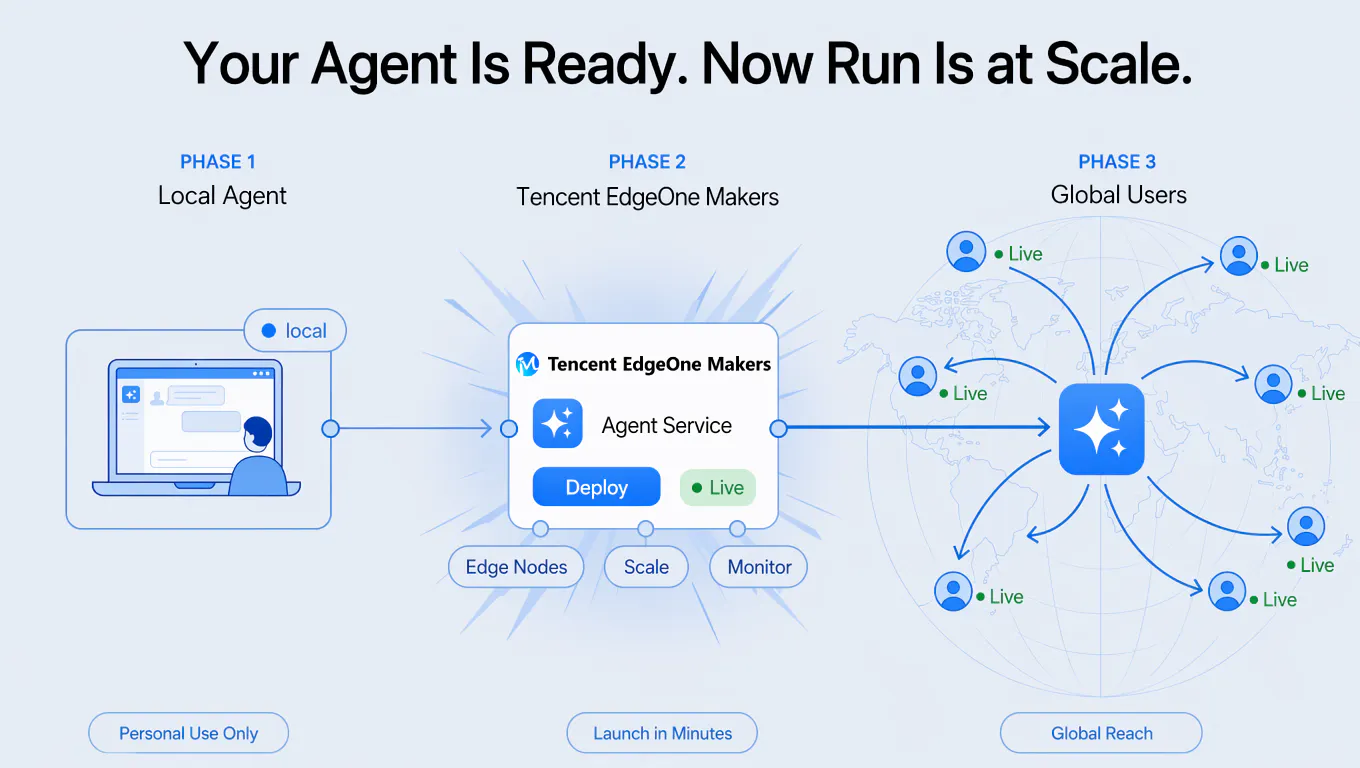
查看原始信息
Liner Developer Platform
Liner helps developers build AI apps with search agents and lower-cost search tools. Add web search, academic search, cited answers, deep research, and visual answers to your product. Web Search starts at $1 / 1K requests — 1/10 of OpenAI’s public web search tool-call price.

Hey Product Hunt 👋

I’m Stellar from Liner. Today we’re launching Liner Developer Platform, search agents for AI products, plus lower-level tools for teams that want to build their own workflows.

Most AI apps need more than model memory. They need to search fresh sources, cite evidence, research complex questions, and sometimes explain the answer visually.

Liner gives developers two ways to build that:

Agents
🔎 Search Agent — searched answers with citations and source evidence
⚡ Quick Answer Agent — fast, lightweight cited answers
📄 Deep Research Agent — multi-step research reports
📊 Visual Answer Agent — answers with interactive visuals

Tools
🌐 Web Search — structured web results
📚 Academic Search — scholar results and paper metadata
🧩 Visualization — turn queries into embeddable HTML visuals

We’d love feedback from people building AI search apps, copilots, agents, RAG workflows, and research tools.

Question for builders: would you rather start with a ready-made search agent, or use lower-level search tools and build the answer flow yourself?

7
回复

The fastest & cheapest search API I've ever used. Amazing

7
回复

Been playing with it for a bit. Solid value for the price 👍

1
回复

This api is amazing. I’m using this for my personal project, and I really appreciate for this great product! Thank you liner team!

1
回复

Search costs are a real line item when you're running agents at scale - the OpenAI web search pricing adds up fast once you get past toy usage. $1/1K requests with cited answers is the kind of pricing that actually makes grounded AI features worth shipping. Curious how latency compares on the academic search vs the web search endpoints.

0
回复