Product Hunt 每日热榜 2026-07-09

PH热榜 | 2026-07-09

#1
Timbal AI
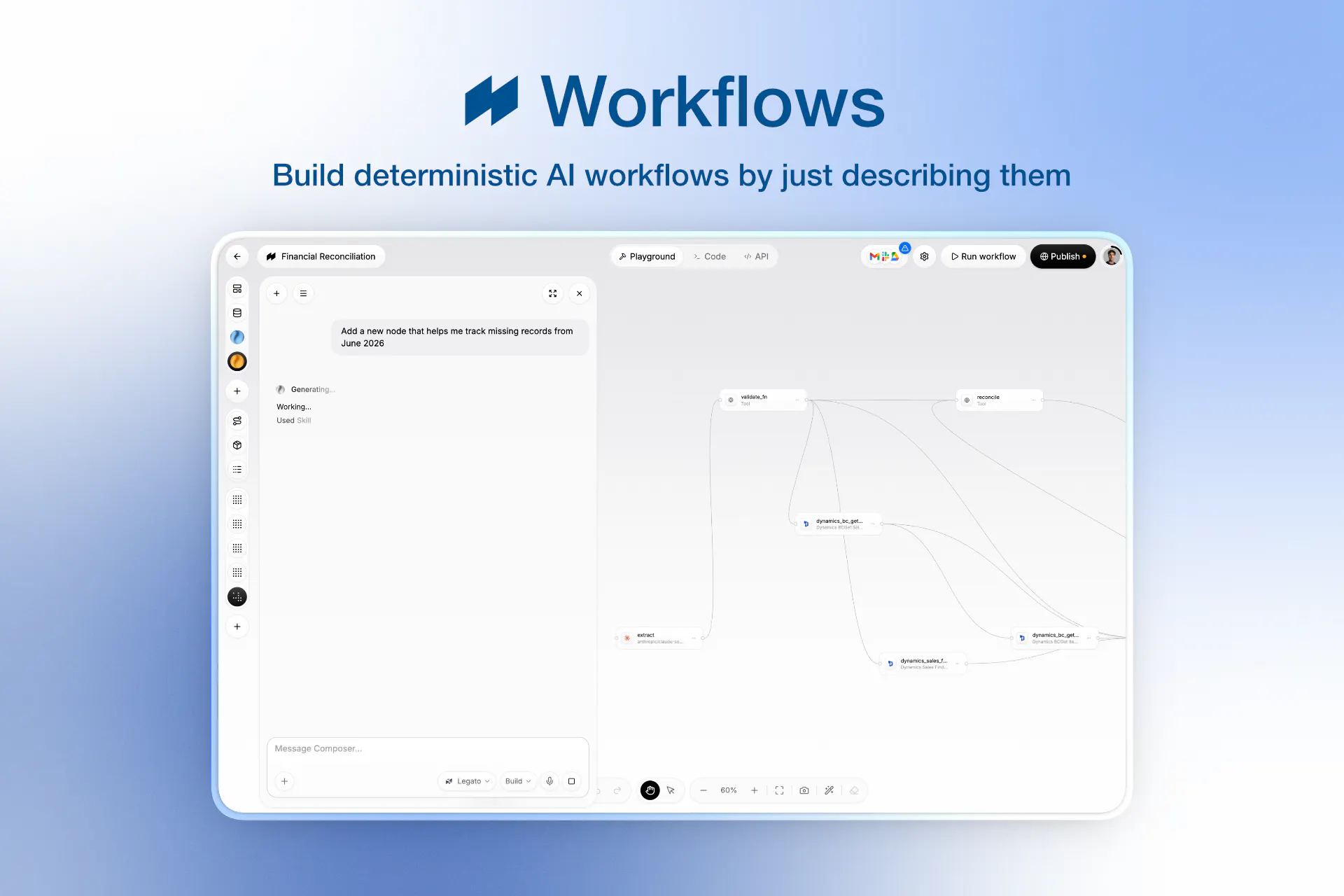
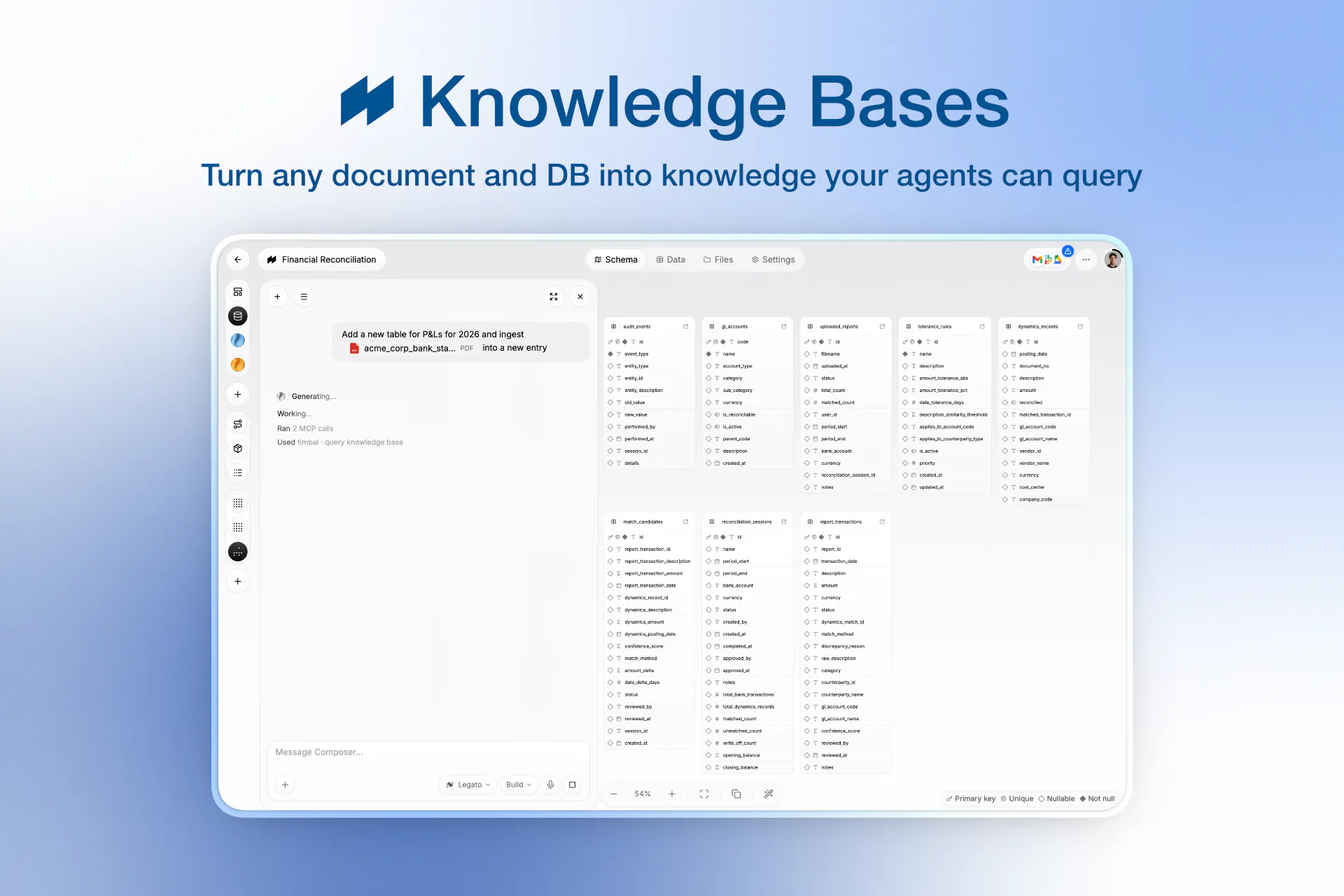
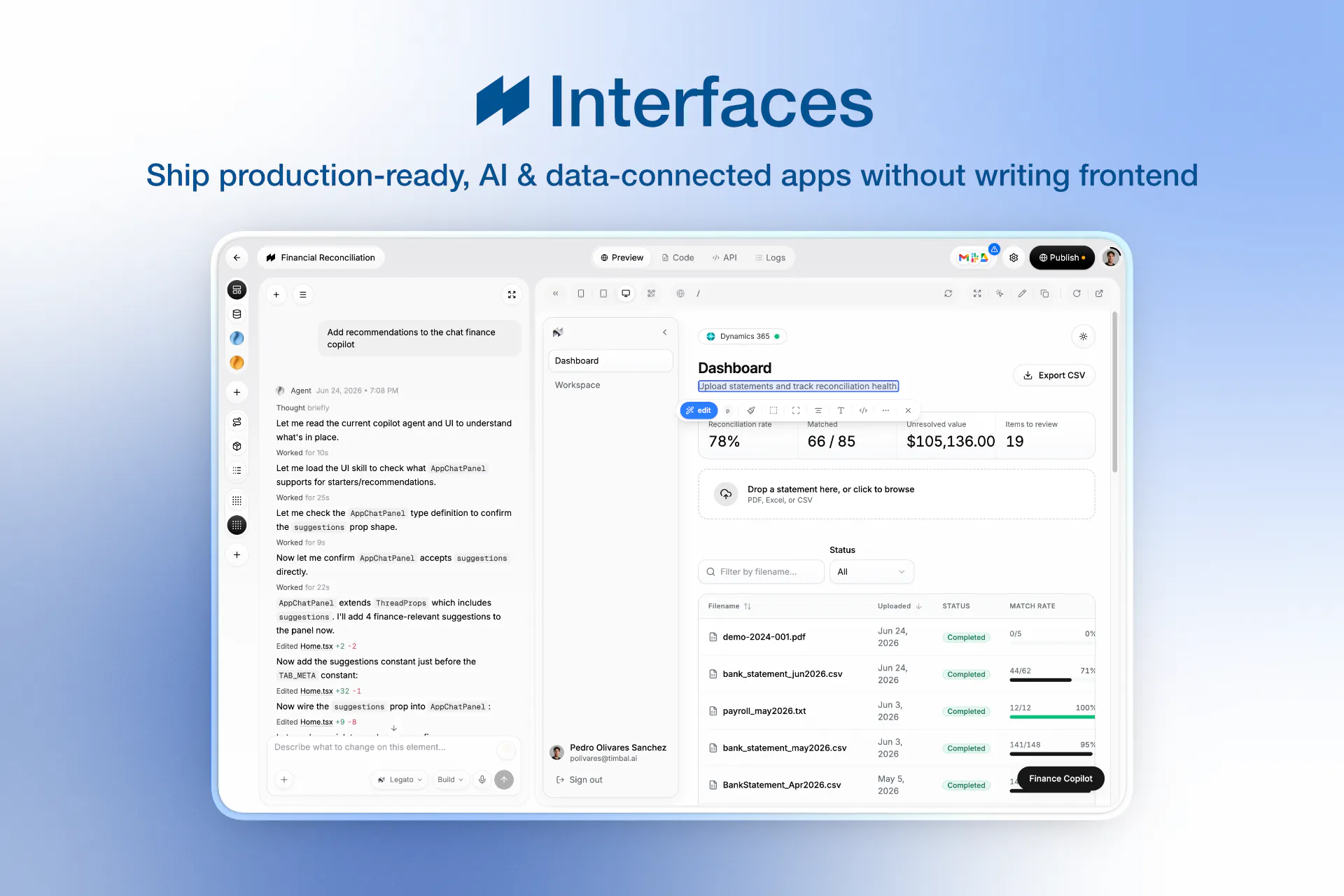
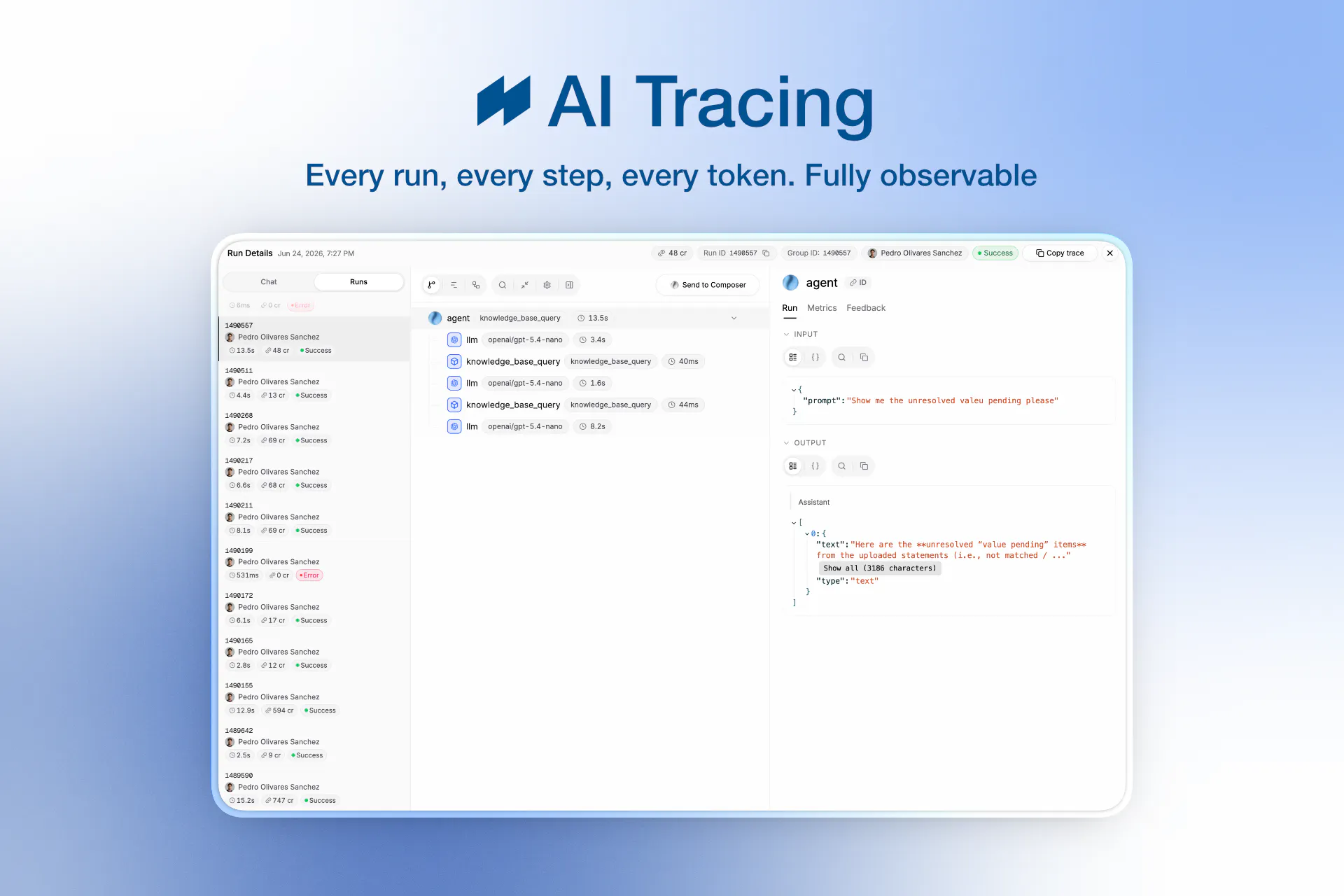
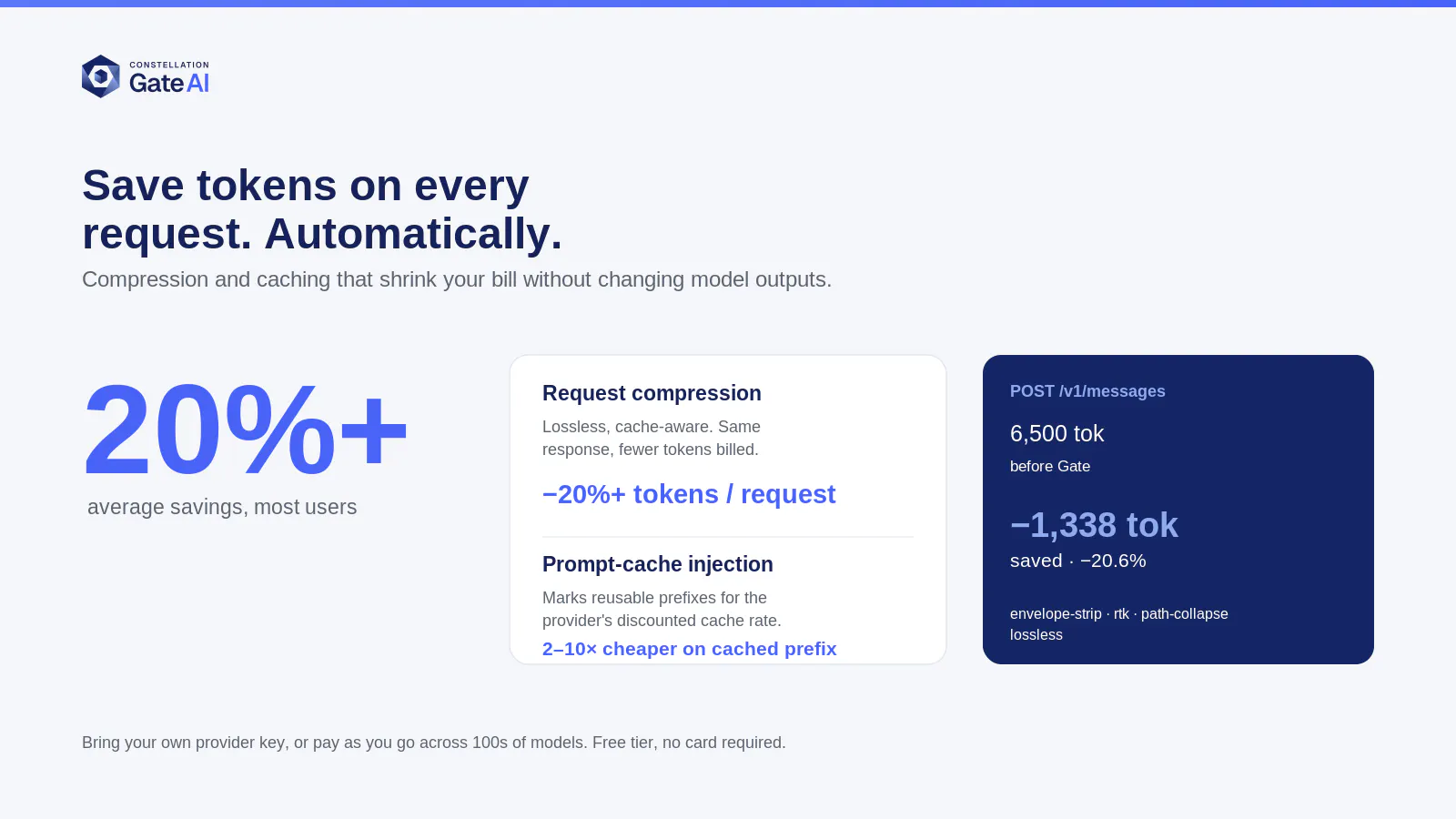
Build AI agents, workflows, and apps in one stack
430
一句话介绍:Timbal AI 是一个将AI原型转化为生产级应用的统一平台,通过整合数据、编排、界面、监控与治理,解决团队在原型之后面临的碎片化工具堆砌与部署维护难题。
Productivity SaaS Artificial Intelligence
AI代理平台 低代码开发 企业级AI 工作流编排 可观测性 评估治理 混合数据库 一键部署 人机协同 生产级AI
用户评论摘要:用户普遍认同“原型易、生产难”的痛点,高度赞赏平台内置监控与评估、减少工具切换。核心问题集中在:编排与现有工具有何区别?迁移现有项目是否便捷?平台当前更擅长内部流程还是面向客户的产品?团队回应强调原生运行时、Composer迁移助手及双场景适用。
AI 锐评

Timbal AI 聪明地避开了“又一个AI代理构建器”的红海,直接瞄准了AI落地中最棘手的“原型到生产”鸿沟。它的核心卖点并非某个炫酷的单一功能,而是将数据库、编排、UI、监控、评估、治理等原本需要5-6个独立服务拼凑的环节,整合进一个原生运行时的统一堆栈。这种“一站式”策略直击企业级AI项目的两大死穴:一是工具碎片化导致的维护成本失控,二是合规与治理的缺失让项目在采购环节夭折。

产品最大的差异点在于其“原生性”。无论是AC执行引擎的自动重试与回退机制,还是内置的ISO/SOC2合规与可观察性,都不是后期外挂的插件,而是运行时的固有属性。这迫使开发者在设计阶段就考虑生产环境问题,而非事后补救。同时,Composer支持自然语言或Git仓库导入迁移,试图降低门槛,但“用自然语言描述”的生产级应用是否能在复杂场景下保持稳定,仍需检验。

然而,产品也存在潜在隐忧。统一堆栈虽然方便,却也带来了强烈的供应商锁定风险——一旦深度依赖,迁移成本将极为高昂。尽管团队强调“模型无关”,但数据层与编排层的强耦合仍构成隐形成本。此外,针对大型企业与个人开发者的需求本质是矛盾的:前者需要严苛的合规与审批流,后者则追求极致简化。Timbal试图用一套方案覆盖两端,这可能导致产品在功能深度与灵活性上两头不讨好。总体而言,Timbal为解决真问题提供了扎实的方案,但能否在锁定与开放、复杂与简易之间找到平衡点,将决定它能否从“优秀”走向“卓越”。

查看原始信息
Timbal AI
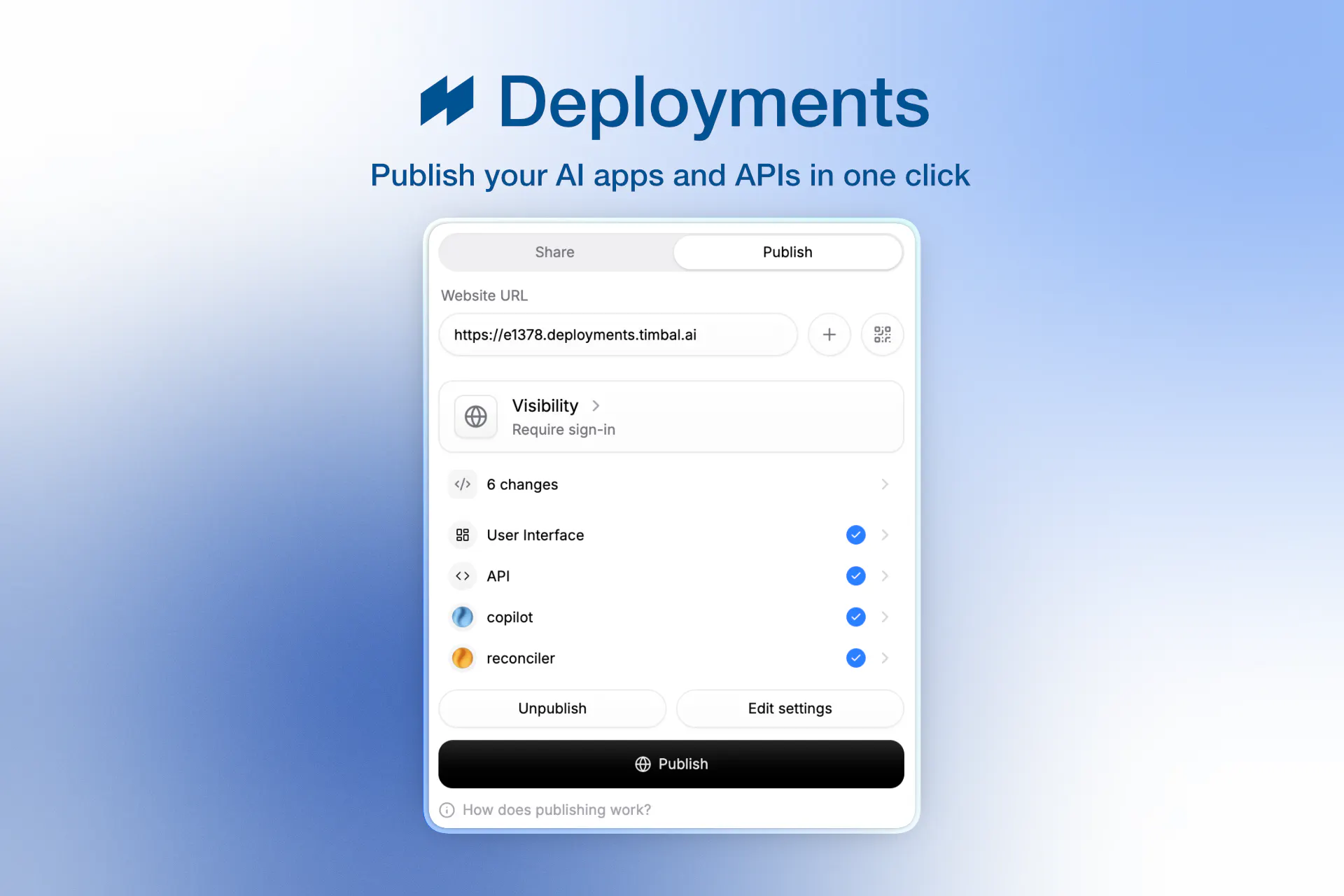
Timbal helps teams turn AI prototypes into production systems. Build agents and workflows, connect them to your data, design interfaces, deploy, monitor, evaluate, and govern everything from one platform. Instead of assembling separate tools for retrieval, orchestration, UI, observability, and evals, Timbal gives you one core for shipping reliable AI applications.

I've built a few AI workflows recently and i've realized the hardest part isn't getting the first demo working it's everything that comes afer. i love that Timbal is focusing on the production side instead of stopping at the prototype.

18
回复

@tessa_lynch Tessa, you nailed the exact insight the whole company is built on. The demo is the easy 10%, everything after is where projects go to die.

And it's actually more than production-grade workflows. The full picture:

Native tools across the stack, so you're not maintaining a zoo of integrations. Proprietary infrastructure on AWS with one-click deployments, no DevOps ceremony between you and production. Compliance built in from day one: ISO 27001, SOC 2 Type II, NIS2, because for enterprise that's not a nice-to-have, it's the entry ticket.

And the part that ties it together: you can create all of it in natural language.

Workflows, agents, interfaces, deployments. Describe what you need and Composer builds it on that same production-grade foundation, so "prototype" and "production" stop being two different projects.

6
回复

@tessa_lynch I Loved the direction here. The biggest takeaway for us is that Timbal isn't just helping people build AI agents, it's helping them ship AI agents confidently.

We're also getting ready to launch Juno AI, a personal AI assistant focused on making everyday workflows simpler, so it's always inspiring to see fellow builders tackling different parts of the AI ecosystem.

We'd genuinely love to hear your thoughts once we launch as well. Wishing the entire team an amazing Product Hunt launch! 🙌

0
回复

what stood out to me is that you're thinking about monitoring and evaluation from the start those are usually the things people only worry about after they've already shipped.

16
回复

@vincentbanzpk4 Exactly what we're tackling, Vincent. Retrofitting monitoring after shipping is where most AI projects stall, so we made it a property of the runtime instead of an afterthought.

Context on why: we're enterprise-focused, and that market doesn't forgive missing observability or governance. The nice side effect is that SMEs and agencies get the same performance and security machinery out of the box, stuff they'd normally never have the resources to assemble. The reliability layer is a byproduct of building for the hardest customers first.

1
回复

I've found myself jumpingh between way too many AI tools on a single project so the idea of bringing everything togetehr really stand out. Less context switching usually means I can spend more time building.

13
回复

@hassan_ismail_rebe Less context switching, more building. That's the whole thesis, glad it lands.

Composer is the piece that makes it real: think n8n + Lovable + Supabase, but as one proprietary stack. Nothing is wrapped, workflows, interfaces, and the database all run on the same core, and you build all of it in natural language without leaving the platform.

Also worth knowing: it's model agnostic. 120+ models supported, with native image and video generation built in. One stack, but zero lock-in on the model side.

2
回复

Hey Product Hunt 👋🏻

I'm Martí, co-founder and CEO of Timbal AI.

In today's AI world, going from 0 to 1 it's easy fast and cheap, going from 1 to 100 is not.

Complex data, legacy software, messy folders and heavy compliance and cybersecurity requirements, that's the enterprise reality.

You can prototype an agent in an afternoon, but then the real work starts. You have to wire together a vector database, an orchestration framework, a UI tool, and an observability layer. Before you know it, you're maintaining a fragmented stack of vendors, and your app still breaks in ways you can't easily trace.

Timbal is the unified stack that closes that gap. Everything you need to go from idea to production lives in one place:

A Database Native to AI: Run vector, keyword, and relational searches in a single query, ensuring your agents are always grounded in your actual data.

Deterministic Workflows: A reliable runtime for agents with built-in observability, traceability, and evals. You will always know exactly why your AI made a specific decision.

Omnichannel Visual Builder: Turn your logic into real apps instantly. Ship directly to the web, WhatsApp, email, or voice.

Our core is open source (Python framework, NPM packages, and TypeScript SDK on GitHub). You can stay in the code, build visually, or seamlessly mix both.

Putting this in front of the PH community is the milestone we’ve been waiting for. We want your brutal feedback—tell us what you'd build, what's missing, and where you think we're wrong.

Let's chat in the comments!

Martí & the Timbal team

10
回复

What makes your orchestration different from existing tools? A real customer story would answer that quickly.

9
回复

@alheri_murya Fair challenge, Alheri. Two parts to the answer.

First, Timbal isn't an agent project sitting on top of someone else's stack. It's a full suite built on our own proprietary Python framework, where orchestration, evals, observability, and the data layer are all native to the same runtime. That matters because the failure modes of agents in production usually live between tools, and we don't have a between.

A concrete example. For a client automating public tender analysis, we run a workflow that calls different specialized agent nodes: one extracts requirements from the tender docs, one checks them against the client's catalog, one drafts the response. Each node runs with ACE (our Action Control Engine) turned on, which enforces the expected behavior of every step. If a node's output doesn't pass, the runtime retries automatically, and if the primary model keeps failing it falls back to a secondary model, all without a human touching it. And when a step genuinely needs a human, you configure human-in-the-loop directly at the framework level: the workflow pauses, routes to a person for review or approval, and resumes with their input. Every retry, fallback, and decision is traced, so when something looks off we can see exactly which step and why.

In most stacks all of that resilience logic is glue code you write and maintain yourself. Here it's just how the runtime works. Happy to go deeper on any piece of it.

6
回复

I appreciate that you're trying to simplify the AI development process without hiding the important pieces. reliability and visibility become much more valuable as projects start to grow.

7
回复

@sarahjadefi Really appreciate you naming that Sarah, because it's a distinction we care about a lot. Simple shouldn't mean hidden, it should mean you're not fighting the tool to see what's actually happening.

That's why everything runs with full observability and evals from day one, not something you bolt on once things start breaking. As a project scales, that visibility is usually the difference between "we caught the issue in staging" and "we found out from an angry user."

0
回复

i find myself switching between too many AI tools during a signle project. having one platform for the whole workflow sounds much more manageable . less time configuring tools usually means more time improving the product itself.

7
回复

@amanda_silmon That's the exact reason this whole thing exists, Amanda!

We got tired of watching people spend more time configuring tools than actually building the thing they cared about.

Since you're here and clearly get it, we're giving away 40,000 free credits right now for anyone who wants to put Timbal through a real project. Would love to see what you'd build with it 🙌

1
回复

i like products that solve workflow issue instead of adding another tool to the stack. if Timbal can replace a few separate services that 's already a big win in my book.

6
回复

@georgiafor9p Georgia, that's the whole bet we're making. Every "just add one more tool" decision feels small in the moment, but a year in, most teams are maintaining a stack nobody fully understands anymore, including the people who built it.

Timbal replaces the orchestration layer, the data layer, the UI layer, and observability in one runtime. Not five vendors talking to each other through glue code, one system that already knows about all the pieces.

1
回复

@georgiafor9p Indeed! And this is one of the main bets we are making. Most teams end up with a vector DB, an orchestration framework, a UI tool, and an observability layer, all coming from separate vendors and having their own quirks, so it involves a lot of work to glue them together instead of building the actual product.

With Timbal, knowledge bases and retrieval run on our own hybrid DB engine instead of a separate vector DB, the UI builder is native, and observability and evaluations are part of the runtime instead of a dashboard. This means that Timbal allows you to have the four or five tools you'd normally stitch together but already in the same place and seamlessly talking to each other.

0
回复

i've noticed that AI projects become difficult to manage as soon as more people join team. having everything in one place could make collaboration a lot smoother.

6
回复

@anthonywrinqsb Yeah, this is one we see constantly. The AI part rarely breaks first, it's the coordination layer around it. One person tweaks a prompt, someone else changes the data schema, and two days later nobody can explain why the agent's behavior shifted.

We actually live this ourselves internally, we're selective about the AI projects we take on, each one led by a small, focused team, but we help each other across projects constantly. Having workflows and traces live as an actual git repo (commits, diffs, branches) helps a lot here, everyone sees exactly what changed and when, instead of "it worked yesterday" being the only explanation you've got.

0
回复

Hello@anthonywrinqsb 

I'd love to collaborate with you. Could you help me with my business?
https://docs.google.com/document/d/13GmfwDnnIpzLbKF7nGpsYmm9XM8AbDSfWIhBI3OG9PM/edit?tab=t.0

0
回复

Hey PH! Pedro here, Head of Product at Timbal.

Martí covered the big picture, so I wanted to add a bit on Composer specifically, the piece I spent the most time on for this launch. Most no-code builders get you 80% of the way and then you hit a wall the moment you need real logic, a tricky auth flow, or a data model that doesn't fit the template. Composer lets you drop into actual code right at that point, no rewrite, no migration to a "real" stack later.

If you've ever hit that wall with another builder, I'd love to hear what broke it for you. That's exactly the kind of feedback that shapes what we build next.

Thanks for checking us out today 🙌

6
回复

Congrats on the launch!

I spend most of my day talking to enterprise teams who are stuck exactly where you're describing: impressive demo, then six months of stitching together retrieval, observability, and governance before legal will even let it near production. The human in the loop piece is what caught my eye, since "who approved this agent's decision" is usually the question that kills deals late in procurement.

Curious how long your average enterprise sales cycle is now that you've built compliance in from the start, has it actually gotten shorter?

5
回复

@pablo_martin6 Yes! Very glad that this part jumped out, because it is exactly one of the reasons why we built human-in-the-loop the way we did. The problem of "Who approved this" used to blow up procurement conversations late in the process, while now it's just logged at the step level, so it's a much quicker turnaround!

3
回复

@pablo_martin6 Thanks Pablo, love getting a sales-side perspective on this one 🙌

1
回复

@marti_norberto I appreciate that this isn't just another agent builder. It feels like you're trying to solve the production side of AI as well. That's the part I usually end up spending the most time on.

4
回复

@marti_norberto  @aduma__emmanuel That's the part that took us the longest to get right, and honestly the part most builders underestimate until they're already in production and things start breaking in ways they can't trace.

Getting an agent to work is the easy 10%. The other 90% is retrieval, observability, evals, permissions, all the stuff that never shows up in a demo but decides whether you can actually trust the thing with real users. That's the whole reason Timbal exists.

0
回复

How easy is it to migrate an existing project into Timbal. A guided import feature would make adoption much easier.

4
回复

@advin_jadis Great question, and honestly the guided import you're describing pretty much exists, it's called Composer. Two ways to migrate today: 1. Send your code or workflow directly to Composer, our super agent. It can translate workflows from Make, n8n, and other providers straight into Timbal, so you're not rebuilding node by node. 2. Connect your GitHub repo and let Composer manage the migration from there: it reads your existing project and brings it into the Timbal stack. Either way you end up with a native Timbal workflow, with the eval and observability layer on top from day one, not a wrapper around your old setup. If you have a specific project in mind (a Make scenario, an n8n flow, a repo), try throwing it at Composer and tell us where it struggles. That feedback is gold for us right now.

4
回复

Hello Pedro, building agents is getting easier every day, but deploying and maintaining them is still a challenge. Nice to see a platform tackling the whole lifecycle.

3
回复

@mathew_chang Thank you your support, Mathew! We are very proud that we manage to tackle the whole lifecyle, we believe it is a big step forward!

0
回复

The prototype-to-production gap for AI apps is very real. It is easy to get something impressive working in a demo, but then retrieval, orchestration, ui, monitoring, evals, permissions, and governance all become separate problems very quickly. as someone building a product, I can definitely see the appeal of having one place to move from "this agent works locally" to "this is actually reliable enough for users."

Curious where Timbal is strongest today. is it mainly for teams building internal AI workflows, or are people also using it for customer-facing AI products?

3
回复

@andrasczeizel Appreciate you saying that, means a lot given how much of the last two years went into exactly that side of it.

To your question: honestly, both, but for different reasons. Internal workflows tend to be the fastest wins, teams automating things like tender analysis, data cleanup, or ops tasks that used to eat a huge amount of manual hours. That's usually where clients start because the risk is lower and the ROI is immediate.

Customer-facing is where the governance and observability layer really earns its keep, once an agent is talking to your actual users, "it worked in testing" isn't good enough anymore. You need to know exactly why it made a decision, and you need guardrails that hold even when the input is messy. We've got clients running both today, but if I had to generalize, most start internal and move customer-facing once they trust the reliability layer.

3
回复

I enjoy platforms that remove unnecessary complexity. What level of customization do developers have for interfaces. More template examples could help new users build faster.

3
回复

@gaspard_dupuich Thanks Gaspard! Short answer: whatever level they want.

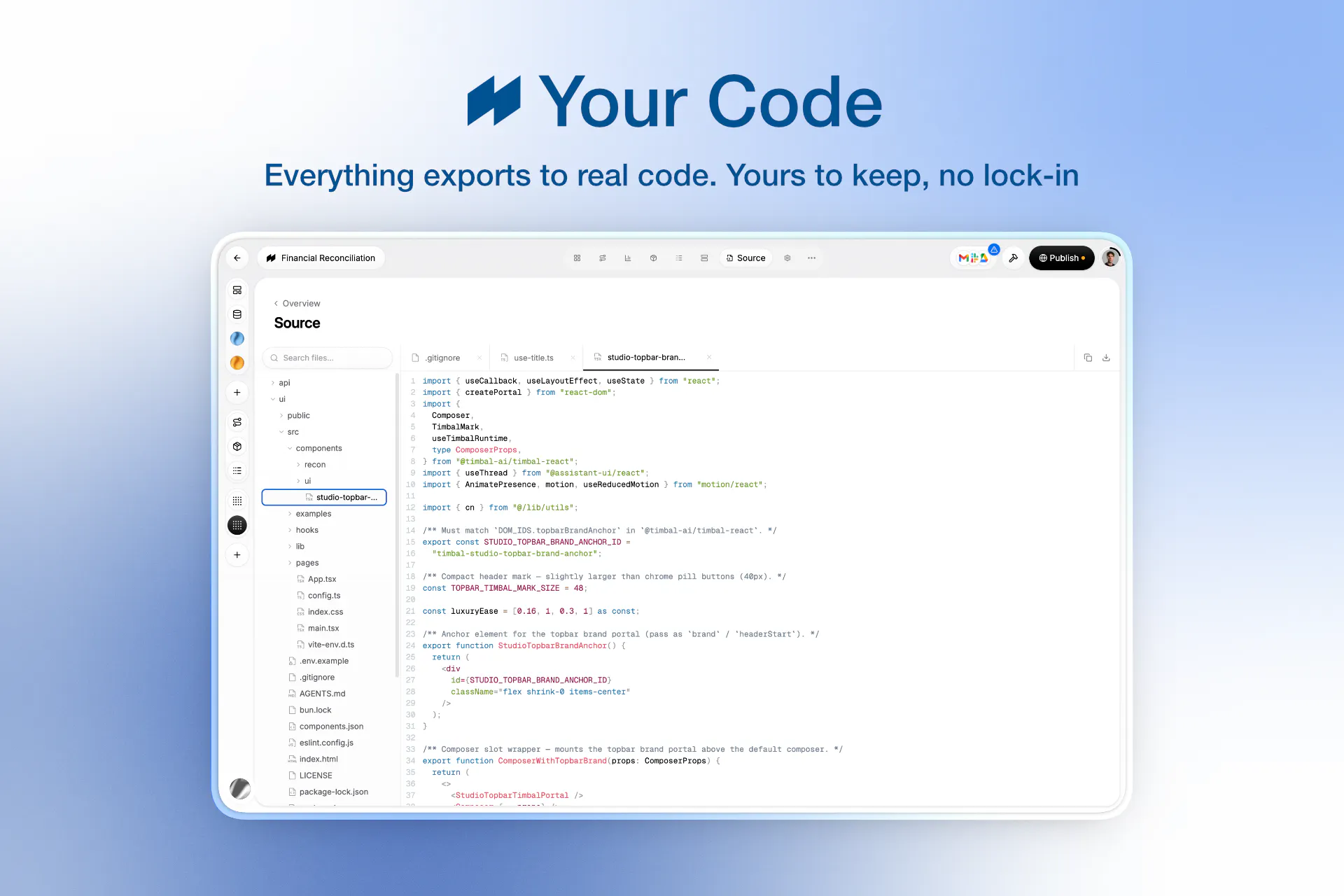
Think of it as a Lovable inside Timbal. You can keep iterating with Composer in natural language until the interface is exactly what you had in mind, and if you want to go deeper you can download the code or connect your GitHub and work on it directly. It's real code you own, not a locked template, so there's no ceiling where the builder stops and you're stuck.

On templates: we already ship with them. They're not exposed as a gallery in the platform yet (coming soon), but Composer already fetches them from the backend and picks the ones that match the intent of your prompt. So in practice you're rarely starting from a blank canvas, even if you never see the template library itself.

Curious what kind of interface you'd build first, that helps us prioritize which templates to surface.

1
回复

Consolidating retrieval, orchestration, UI, observability, and evals into one core solves the tool-sprawl problem that quietly eats operations budgets, so this is going straight on my evaluation list.

2
回复

@kelly_king3 Kelly, that's exactly the framing we'd hoped someone in an operations seat would catch. Tool sprawl doesn't show up as one big line item, it hides in five smaller subscriptions, the engineering hours spent gluing them together, and the incident that takes twice as long to debug because the trace lives across three different dashboards. It's a real cost, just a quiet one.

Really glad this is going on your evaluation list. If it'd help to skip straight to the parts most relevant to how you'd actually use it, happy to set up time rather than have you piece it together from launch day comments.

Congrats on everything you're building at Creatium too, always good company on PH launch day.

2
回复

@kelly_king3 I love that framing, "quiet cost" is exactly right. Excited to see where your evaluation lands 🙌

0
回复
how can i try it
2
回复

@startup_guy Hello! You can jump in directly at timbal.ai

1
回复

the trace-at-every-step answer to Shubham's question is the part that sold me, that's the actual difference between a demo and something a team will trust in production. one thing I'd want to understand before committing though: once retrieval, orchestration, UI, observability and evals all live in one core, how painful is it to rip out just one piece later if a team outgrows it or needs something more specialized, or is the whole pitch that you shouldn't need to

2
回复

@galdayan The pitch isn't "you'll never need to rip anything out," it's that ripping something out doesn't leave you stuck.

Everything in Timbal, agents, workflows, integrations, compiles down to clean, readable code you own. Nothing is a black box abstraction that only makes sense inside our platform. So if a team outgrows the UI builder, or needs a more specialized eval setup than what we ship, you're not migrating off a proprietary format, you're working with code you can already read, edit, run locally, or self-host.

In practice, most teams don't rip pieces out entirely, they go deeper into code for the specific piece that needs more control while keeping the rest running natively (same pattern Gaspard asked about for interfaces earlier in this thread)

2
回复

Love how you're baking governance and step-level tracing into the runtime itself, turning the usual after-the-fact scramble into something you can just replay and inspect.

2
回复

@ilko_kacharov Hey Ilko! The alternative most teams end up building is logs scattered across five different tools, and by the time something breaks you're reconstructing what happened from fragments. Baking tracing into the runtime means every step, model calls, tool calls, retries, fallbacks, is already captured as it happens. You're not debugging from memory, you're replaying the exact decision chain.

0
回复

@ilko_kacharov Also just checked out Juma AI, the marketing focus is really interesting, that's actually my world day to day. Would love to compare notes sometime 🙌

2
回复

I've noticed that every new AI projects seems to introduce another tool into the stack. If Timble can replace even a few of those I can see value straight away.

2
回复

@edith__christian Edith, exactly the pattern we kept running into with our own clients before building this.

Every new AI initiative meant another subscription, another auth flow, another thing to monitor separately.

Happy to get specific if it helps. What's currently in your stack that you'd want to see replaced first? That tells us a lot about where the pain is actually concentrated.

1
回复

Me wonder how evaluation works for complex agent systems with multiple steps. Sharing sample evaluation reports would help teams understand how they can improve reliability before deployment.

2
回复

@eoin_bishop Great question Eoin, this is exactly the layer where most agent projects fall over.

Evals in Timbal work at two levels. First, natively in the Python framework: you define evals per step or across the whole workflow, so in a multi-step agent system you can pinpoint exactly which node degrades instead of just seeing "the answer got worse." Second, Composer can create those evals for you and wire in ACE (our Action Control Engine) to enforce the expected behavior of each step, so evals aren't just a report you read after the fact, they become constraints the runtime actually holds.

All of this runs in a parallel or pre-deployment environment, so you validate reliability before anything touches production. That's the enterprise-ready part: you're not testing on your users.

On sample reports, fair ask. Attaching a real one below: cost and latency comparison of the same task with ACE on vs. off. Latency 5.17s vs 12.21s, cost $0.007 vs $0.089, one tool call instead of many. Enforced behavior isn't just safer, it's dramatically cheaper and faster because the agent stops wandering.

0
回复

Question about ACE: does it work with standard chat completions from OpenAI? Curious if the behavior enforcement sits at the runtime level regardless of which model provider you plug in, or if it needs specific model features to work.

2
回复

@miguel_jalon Yes! ACE works with standard OpenAI chat completions out of the box. The behavior enforcement sits at the runtime level, so it's provider-agnostic: OpenAI, Anthropic, open models, whatever you're running.

And here's the part most people miss: ACE is actually a standalone product. You don't need to be building inside Timbal to use it. You can drop it into your own agents and workflows, on your existing stack, and get the same behavior enforcement layer. Integration is genuinely a few lines.

So if switching models isn't trivial for you today, good news: you don't have to switch anything. Bring ACE to the stack you already have.

1
回复

@miguel_jalon Thank you for your support Miguel!

0
回复

Congrats on the launch! 🚀


Been using Timbal and honestly having all the tools I need in one place is what sold me, it makes building AI solutions genuinely simple instead of stitching together five different things. And the monitoring side is a huge plus, actually knowing what your agent is doing instead of guessing.


One question: does ACE ever get in the way when a task needs more flexible reasoning, or can you loosen it per agent/step?

2
回复

@carla_granados_soler Thank you so much for this, and for putting Timbal through its paces on the daily 🙌

Great question. ACE isn't one global switch, it's set per step/agent, so you can tighten it where you want strict guardrails (approvals, writes, anything customer facing) and loosen it where you actually want the model to explore, like open ended research or ambiguous classification.

The mechanism is the easy part honestly, the harder part is knowing where to draw that line for a given use case, we're still learning from real usage what the right defaults should be.

Have you hit a specific case where it felt too rigid? Would love to dig into it with you.

2
回复
We could actually genuinely use this. Congrats on the launch!
1
回复

@maria_wall_ball Thanks!! Means a lot coming from someone building in this space too!

0
回复

Congrats on the launch!!
That's a really cool project, I tried to create a simple agent and it really satisfied my expectations.

But what about token usage? isn't it expensive?

1
回复

@yernururu Thanks, glad the agent held up! Fair question, and actually it tends to go the other way. ACE stops agents from wandering into extra tool calls, so token usage often drops instead of climbing, and overall ends up more economical 🙂

0
回复

Congrats everyone! Composer will get the attention because it's the flashy front door, but the real value here is what happens after you build something (how it's run, traced, and governed). That's the part most tools skip and it's exactly where projects usually fall apart once they're live.

1
回复

@marc_matas Yeah exactly, this is precisely the split we think about a lot internally. Composer is the fun part people notice first, but production is where it actually gets hard. After a bit, "worked in testing" is just not good enough anymore. That's why tracing, evals, and governance are built in from the start instead of something you bolt on after it breaks once. Thanks for your support!!

0
回复

The tool-stitching problem is so real. Spent way too long gluing together separate tools for orchestration, logging, and UI. Makes total sense to have one platform for all of it. Congrats on the launch 🎉


1
回复

@nayan_joshi Thanks Nayan! The gluing is always the hidden cost, nobody budgets three weeks for "make orchestration, logging, and UI talk to each other" but everyone ends up paying it.

That's exactly the tax we built Timbal to remove. One runtime, so nothing needs to be wired together after the fact.

0
回复

How does pricing scale as you add more agents and team members, especially once you start hitting heavier eval runs on bigger workloads?

1
回复

@gnepalanclx6es Good question, Güneş. Timbal is pay-per-use, so it scales with actual consumption rather than seat count or a fixed agent limit. You're not paying more just because you added a team member or spun up another agent, you pay for what actually runs.

On top of that, you set well-defined budgets, so heavier eval runs on bigger workloads don't turn into a surprise invoice. You know your ceiling going in, whether you're a small team experimenting casually or an enterprise running production workloads at scale. Predictability was a deliberate design goal, not an afterthought.

If you have a rough sense of your expected volume (agents, workload size, eval frequency), happy to help you sanity-check what that would look like in practice.

0
回复
Congrats on the launch! I build AI agents internally for a 40-person company and my current stack is duct tape: prompts in one place, tools in another, deployment somewhere else. One stack for all of it is exactly the pitch that gets me. Question: how do you handle testing before an agent hits production? Rolling back a bad prompt change has burned me more than once, so versioning and evals are what I’d look at first.
1
回复

@ridhwikvinod On your specific pain point, rollback. Every workflow is a real git repo, commits, diffs, branches. A bad prompt change is just a commit you revert, same as reverting any other code change, no separate rollback UI to figure out under pressure.

On testing before production:,you define evals per step, so you're not just checking "did the final output get worse," you can pinpoint which exact node degraded. Composer can also scaffold a starting eval set for you if writing them from scratch isn't where you want to spend time.

For a 40-person team running this internally without a big platform team behind it, that combination (git-native rollback + step-level evals) is probably what saves you the most time day to day, not because either piece is fancy, but because you already know how to use them.

0
回复
#2
Auriko
Trading desk for LLM calls
398
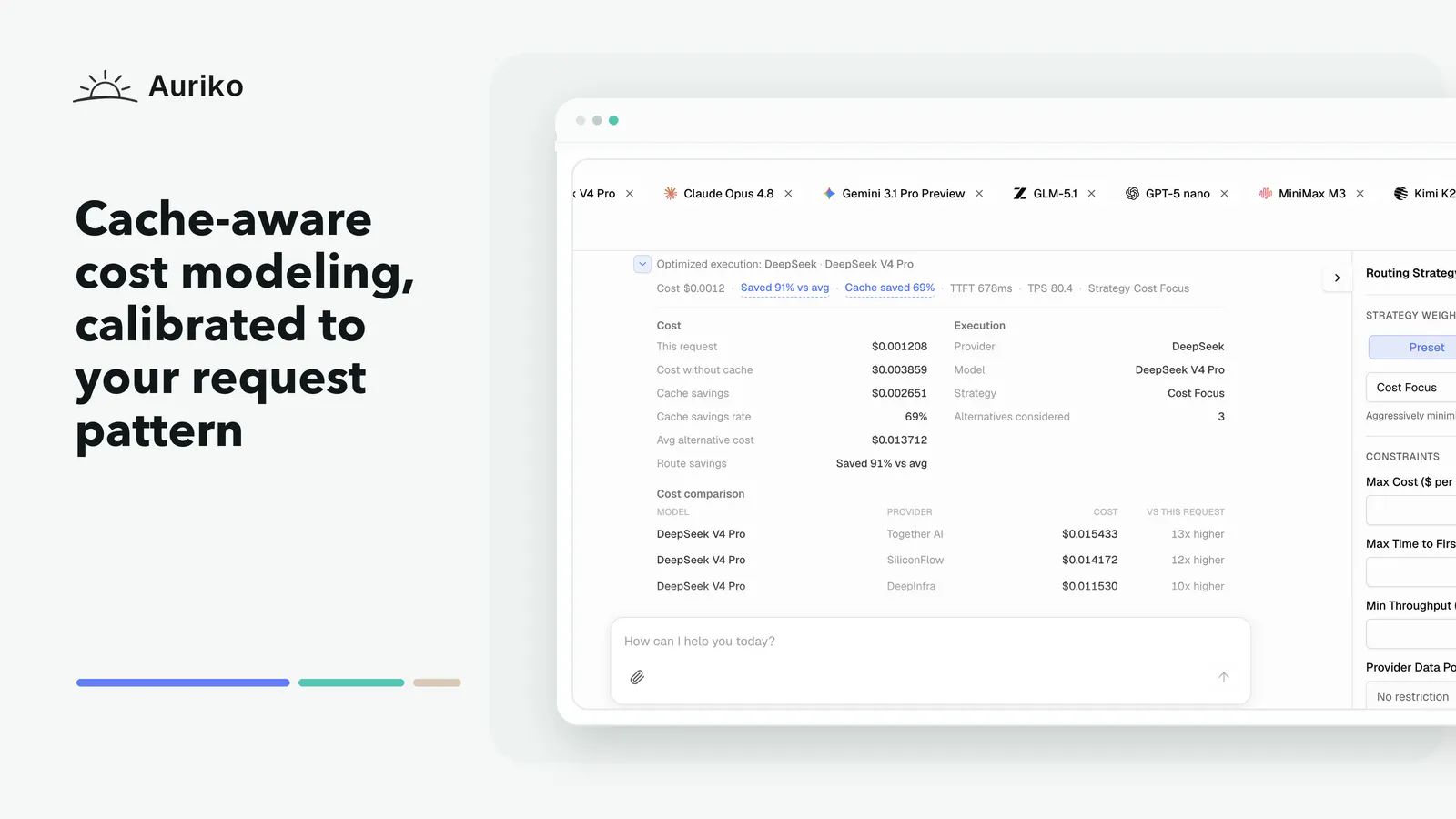
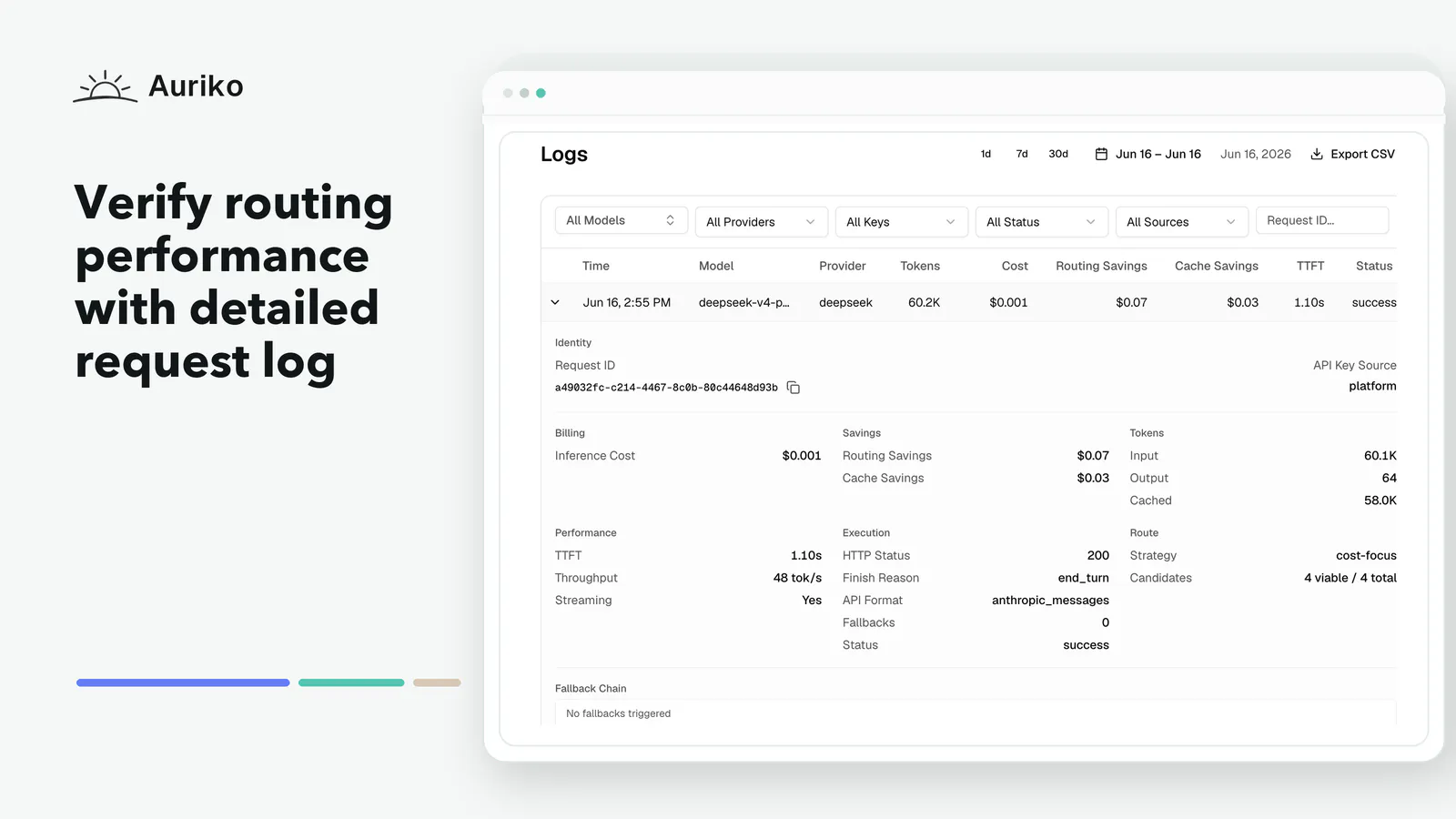
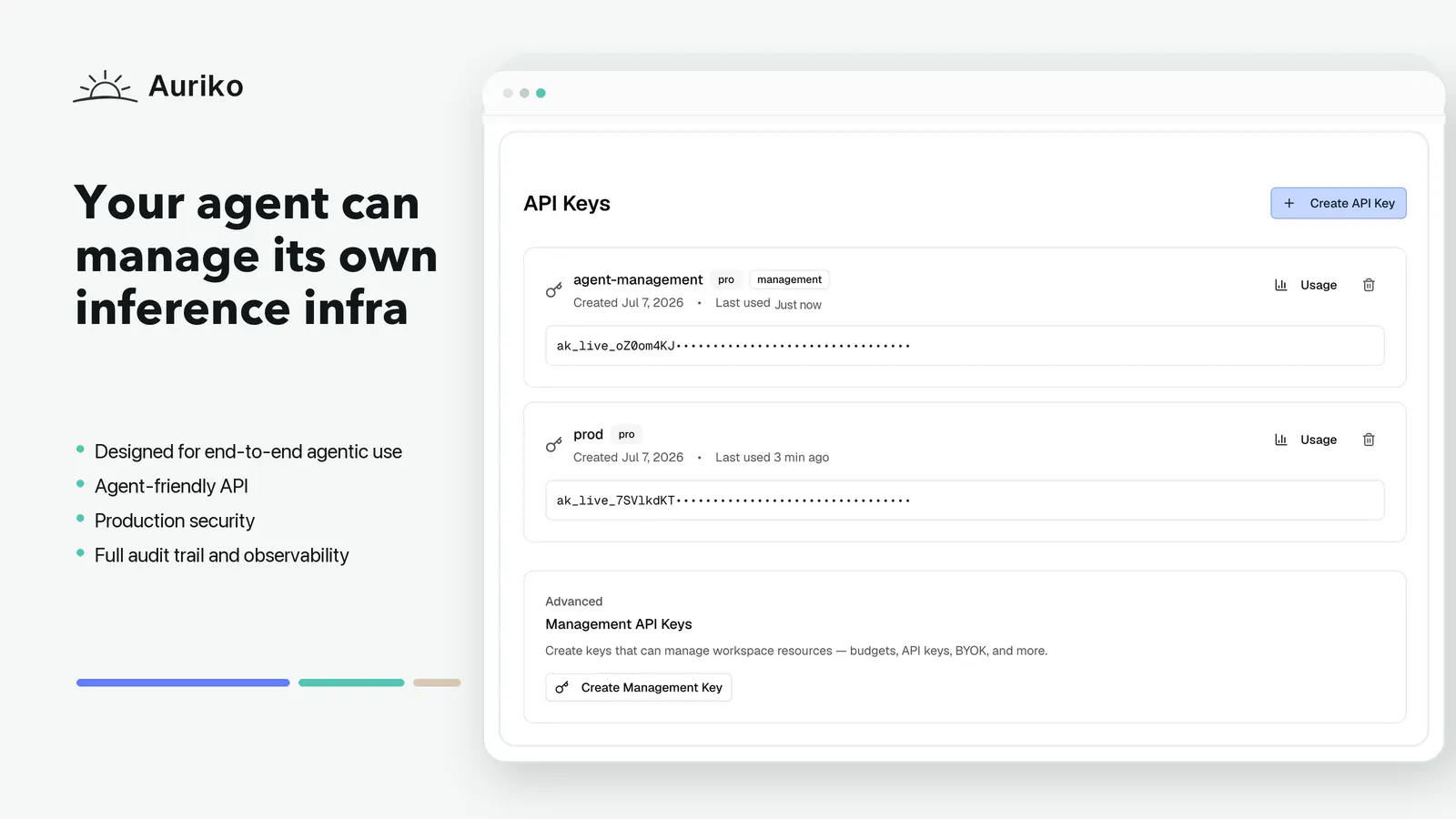
一句话介绍:Auriko是一个专为LLM调用设计的智能路由引擎,通过量化交易中的套利思维,实时分析不同供应商的token价格、缓存行为、延迟和可靠性,自动选择最优推理路径,帮助开发团队在保证质量的前提下平均降低30%的推理成本。
API Developer Tools Artificial Intelligence
LLM路由 成本优化 推理套利 缓存感知 API聚合 智能调度 量化交易 AI基础设施 延迟控制 开发者工具
用户评论摘要:用户高度认可“交易台”的类比,核心关切集中在:如何在降本时保证输出质量与延迟?路由是否考虑缓存状态与会话连贯性?能否设置自定义优先级?团队回应称支持硬约束和自定义权重,路由引擎会基于用户请求模式校准缓存策略,而非逐条最优。
AI 锐评

Auriko的聪明之处在于它将一个老生常谈的“API聚合”问题,重新包装成了一个精妙的金融套利叙事。核心价值并非“统一接口”,而是动态的“跨供应商套利引擎”——它精准捕捉了当下AI从原型走向生产时最真实的痛点:大规模推理成本失控、缓存定价混乱、以及锁定单一供应商带来的风险。

产品的量化血统确实帮它抓住了本质:LLM推理成本是充满摩擦的、非完全有效市场。不同供应商在输入端token、缓存命中率、延迟保障上的定价存在结构化套利空间。Auriko将缓存状态作为路由决策的核心信号,而非静态比价,这一点比市面上多数“负载均衡”级的竞品要深邃得多。它试图在“保持缓存粘性”与“追逐瞬时低价”之间找到最优解,这是真正的技术壁垒。

然而,产品的挑战同样显著。其一,声誉风险:当路由决策错误导致输出质量跳水时,用户不会责怪供应商,而是归咎于Auriko。团队所谓的“质量有保障”过于轻巧,缺乏对模型能力降级(如从4o降到3.5-turbo)的精确兜底机制。其二,边际收益递减:随着各家供应商追平缓存定价策略,套利窗口将会缩窄。Auriko必须证明其30%的成本削减是可持续的,而非初始窗口期的红利。

更尖锐的问题是:这究竟是“为每个任务选最好的路”,还是“用金融工程的复杂度替换了工程决策的简单性”?对于小型团队,Auriko可能是救命稻草;但对于已经深度优化了缓存策略和供应商选型的成熟团队,其边际价值可能被高估。总体而言,Auriko是一个定位精准、技术扎实的基础设施工具,其“交易台”的比喻在营销上堪称惊艳,但它仍需在长期的实际生产环境中,用硬数据证明自己不是又一个花哨的“成本计算器”。

查看原始信息
Auriko
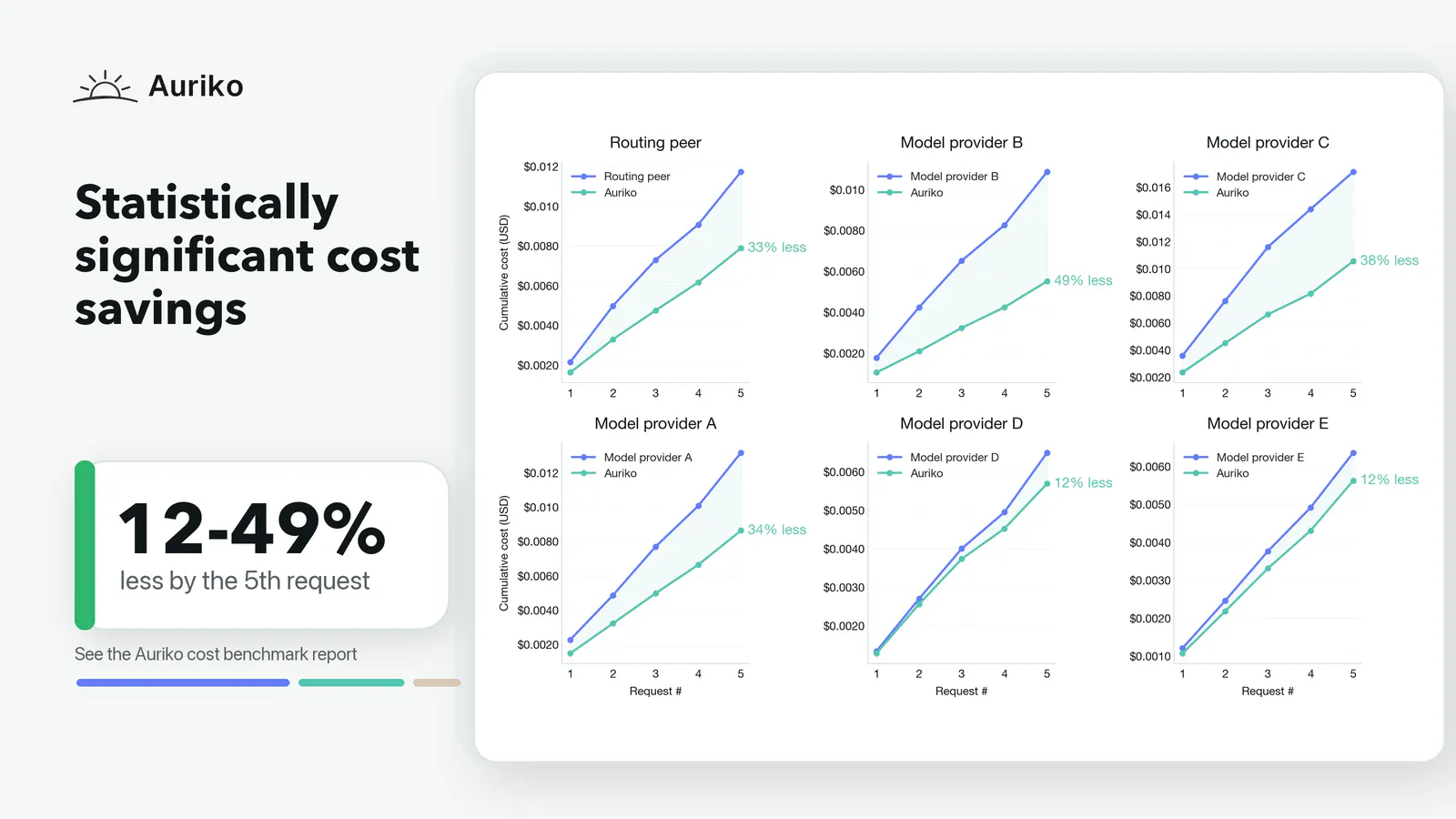
Auriko treats LLM providers as trading venues and arbitrages the spread. Built by ex-quant traders, Auriko’s cost-arbitrage engine calibrates to each user’s request patterns and selects optimized inference paths based on token price, cache behavior, latency, reliability, and request quality. Auriko benchmarks show average 30% cost reduction against industry peers and direct providers. See the source: https://www.auriko.ai/reports/llm-cost-arbitrage
In a previous life, I traded options as a quant trader. When I started building with AI agents, I needed to switch models quickly across inference providers. A trader’s OCD for finding the lowest price kept pushing me to figure out which provider was cheapest. That sent us down the rabbit hole of comparing inference costs. We realized cost is not just the headline input/output token price. A huge part of our spend came from cache pricing, cache-hit efficiency, and routing choices. We ended up building a system to optimize all of that. And we turned it into auriko.ai.
9
回复

@zxy_action1 One thing we really liked about Auriko is that you didn't stop at offering a unified LLM API, you focused on intelligent routing, cache-aware optimization, and cost-efficient inference. That's the kind of infrastructure that becomes increasingly valuable as AI applications move from prototypes to production.

We're building Juno AI, a personal AI assistant, and we're preparing for our launch soon. As we've been thinking about reliability, latency, and balancing different models for different tasks, it's been fascinating to see products like Auriko tackling those challenges from the infrastructure side.

We'd genuinely love to get your thoughts on Juno once we're live. Congrats on an impressive launch, and wishing the team all the best!

0
回复
Congrats! A trading desk for LLM calls is a framing I haven’t seen before and it clicks immediately, model costs do behave like a market. My question: when Auriko routes a call to a cheaper model to save money, how do I protect quality? Can I set a floor per task type? Saving 40% on inference means nothing if my customer-facing outputs get worse and I find out from a complaint.
6
回复

@ridhwikvinod lol looks like you are a pro on OTC trading! Don't worry about the performance - the cost is optimized without compromising the quality of models!

2
回复

@ridhwikvinod Great question, and we agree. Cost savings are only useful if quality stays predictable.

Quality control starts with explicit model constraints. In Auriko, the model catalog uses truthful model identities, and users can specify the exact model they want, including quantization where relevant. Routing then stays within those boundaries. We also evaluate models before adding them to the Auriko catalog.

Optimization is about choosing the best provider/path for a model. Under the hood, Auriko computes a composite routing score using live signals that represent expected cost, TTFT, latency, throughput, and reliability. You can use the default strategy, choose different strategies for different workflows (we recommend using different api keys for different workflows to maximize our calibration engine's and improve your cost savings), or specify your own routing weights. For example, if throughput matters most for a use case, you can increase the throughput weight.

7
回复

Love the “trading desk for LLM calls” framing. Cost optimization across providers is becoming a real pain point as AI apps scale.

How do you balance cost savings with output quality and latency, especially for production workloads?

5
回复

@longway1 Thanks for the question Kevin! Our data engine actively tracks model performance - latency, throughput, reliability, etc. The routing engine computes a composite score for each available route.

Users can choose preset routing strategies depending on what matters most for a workflow, like cost, TTFT, or throughput. Power users can also set custom routing weights for more fine-grained control.

0
回复

Is Auriko mainly about monitoring and comparing LLM calls after the fact, or does it help decide where a call should go before it is sent? For developer teams, that distinction matters a lot, especially if they’re juggling quality, latency, and spend across different AI workflows.

5
回复

@crystalmei Great question! Definitely pre-request.

When a request hits Auriko, we build the available routing candidate set, apply hard constraints like capabilities, budget, data policy, parameter support, and availability. The routing engine scores every available candidate i across cost, latency, throughput, and success rate, then picks the best one based on your strategy

The request performance data feeds back into routing: we use it to generate provider health and performance signals, then use those signals to calibrate future routing decisions. So the main value is real-time routing, with observability data used to make the router smarter over time.

1
回复

treating LLM providers as trading venues is a genuinely smart framing from people who understand arbitrage. token price differences between providers are real and most teams just pick one model and stick with it out of inertia. the cache behavior optimization is the part i'd want to dig into more, prompt caching can drop costs dramatically on repetitive agent workloads but only if you're structuring requests to actually hit the cache. does auriko handle that automatically or does it require some setup on how you're sending requests?

4
回复

@shubham4real Love this question! Auriko handles the provider side automatically, but we still recommend following prompt-caching best practices since we do not see or log user's prompt (we have a Zero-Data-Retention policy!)

When you route through Auriko, we account for each provider’s caching behavior before sending the request: whether the model supports caching, how cache pricing works, and which route is likely to be cheaper for that workload. For supported providers, Auriko can also apply the right cache hints automatically, like Anthropic cache_control, OpenAI prompt_cache_key / retention, or session affinity where that helps reuse. We also normalize cached-token and savings reporting in the response. The part we still recommend users do is keep reusable context stable: system prompts, tool schemas, few-shot examples, long instructions, repeated RAG blocks, etc.

0
回复

quant background makes sense for this, arbitrage is fundamentally about finding mispriced spreads and providers pricing caching differently is exactly that. the tension I'd want to understand: prompt caching usually rewards staying on the same provider for a session so the cache stays warm, but a router optimizing per-request could bounce a session across providers chasing the best price each time and never let any single cache warm up. does the routing engine account for cache-state as its own signal, like "this provider already has a warm cache for this context, don't move away from it even if a competitor is nominally cheaper this instant"

4
回复

@galdayan Yes! The router accounts for cache state. We also calibrate routing against each user’s usage pattern. For example, if you are a heavy coding-agent user with rapid-fire requests, large context, and long conversation sessions, that pattern becomes an input signal to the routing engine. In that case, Auriko may prefer a provider with deeper cache discount instead of chasing a cheaper provider on headline token price.

0
回复

The prompt caching focus sounds valuable. A lot of teams know caching exists but do not optimize around it.

4
回复

@yolo_xiao Exactly. Caching is easy to know about but hard to price correctly, because every provider handles prompt caching differently, and cost is also a function of the user’s request pattern.

If we had a crystal ball and knew the exact content and timing of a user’s future requests, as well as each provider’s exact caching mechanism, we could compute the cost of the same workload across providers and pick the cheapest path. In reality, the problem is much harder because the information is incomplete. The user’s request pattern has to be estimated, and each provider’s prompt caching mechanism has to be probed and modeled correctly. That is where Auriko’s quant-trading-inspired infrastructure comes in, and how we are able to drive around 30% cost reduction.

2
回复

@yolo_xiao Caching is exactly one of the most important factor in model routing - nice catch!

0
回复

Can developer set their own priorities, like preferring lower latency over lower cost, or is the routing fully automatic?

3
回复

@lakeesha_weatherwax Definitely! Power users can fine-tune the routing strategy to their specific objective.

0
回复

someone on my team has been comparing different inference providers manually to keep costs under control. I'll definitely share Auriko with them because it could save a lot of effort.

2
回复

@shawn_idrees Yes the mission of Auriko is to free you up from the tedious work of choosing models!

0
回复

The 30% cost reduction number, is that on top of what you'd already save by using OpenRouter or similar, or is that the comparison baseline?

2
回复

@boyuan_deng1 Yes if you are using another model aggregator or router, you will mostly likely see the cost reduction against it! It should be self-explanatory with some A/B test. Happy to help you set up a test to see the difference!

0
回复

Congrats on the launch!
For teams running agents that have really strict latency requirements, can you set a hard ceiling on response time and let Auriko optimize cost within that constraint, or is it more of a balance between the two?

2
回复

@abod_rehman Definitely. There are two ways to control this in Auriko.

1. you can set hard constraints, such as a TTFT ceiling. 2. you can use softer control by increasing the weight of response time (TTFT) in the composite routing score. Both affect the routing decision!

0
回复

Congrats on the PH launch! Modeling request patterns sounds helpful.

2
回复

@anthony_cai Thank you for the support! give it a try!

0
回复

Congrats on the launch! , Doesn't cheapest-per-request routing fight with caching though? If you hop providers to save on one call you lose the warm cache you built at the last one, and the next 20 calls cost more. Curious if the router accounts for that or just prices each call on its own.

2
回复

@irahimiam Very sharp question! In a nutshell, we model expected cost across the full session, not just the first request.

For example, a heavy coding-agent user with rapid-fire requests, large context, and long sessions will usually have a very different cache-hit profile from someone running periodic deep research. Auriko calibrates routing against each user’s usage pattern, and that pattern becomes an input to the expected cost computation. So in some cases, our routing engine may choose a provider with a deeper cache discount instead of choosing a provider with the lowest headline token price.

0
回复

How do you measure quality when routing across models? Do you use developer feedback, user behavior, retries, or some kind of evaluation layer?

2
回复

@phoenixhu We measure metadata such as latency, throughput, error rate, fallback, cache-hit and use that to inform our routing engine. And user can check all information in detailed request logs

0
回复
Congrats on the launch! I'm curious,does Auriko make routing decisions before each request based on cost, latency, and quality, or is it mainly focused on optimizing spend after the fact?
2
回复

@thys_beesman  Thanks and great question! It's both.

The routing engine decides where the llm request should go before it is sent. For each request, Auriko builds the eligible provider set, applies hard constraints like capabilities, data policy, budget rules, parameter support, and availability, then scores the viable routes accounting for expected cost, latency, throughput, capacity headroom, and cache economics. The cost model accounts for provider-specific prompt caching mechanics and the workload’s reuse patterns, so routing is based on expected request-level economics, not just static model prices.

We then feed the request metadata back into our signal generation engine for future routing decisions. This helps us maintain a dynamic and effective awareness of the routing candidates.

0
回复

The quality bar for production AI apps is high, so cache aware routing needs good observability.

2
回复

@nicole_h94 Thanks for the feedback! We have detailed log and audit trial for all llm request and all management api key. The goal is to provider enterprise grade control and observability.

0
回复

Auriko’s core competence is our quant-trading-grade data pipeline, signal generation engine, and inference cost modeling. We track each inference provider’s prompt-caching mechanics, estimate users’ request patterns, and model inference cost with both provider and user signals in mind.

Our data pipeline also generates real-time signals on provider health, latency, and throughput.

2
回复

the cost angle makes sense but I'd worry about behavioral drift - even at the same nominal price point, different providers running "the same model" can have different quantization, latency profiles, or subtle output differences. if you're routing a request to whichever venue is cheapest at that moment, how do you keep output consistency for something like a customer facing agent where behavior needs to stay predictable

1
回复

@omri_ben_shoham1 Very valid concern, and we are very aware of this concern. Cost optimization only works if quality stays predictable.

We gate the Auriko model catalog and make sure each model is represented truthfully, including quantization. Instead of optimizing for wide inference provider coverage, Auriko optimize for inference provider's quality and credibility. Users can specify the exact model they want, and optimization does not mean quietly swapping to a lower-quality variant. We also evaluate models before adding them to the catalog.

Optimization is about choosing the best provider/path for that model. Under the hood, Auriko computes a composite routing score from live signals across expected cost, TTFT, latency, throughput, and reliability. You can use the default strategy, choose different strategies for different workflows, or specify your own routing weights. We also recommend using separate API keys for different workflows, so our calibration engine can learn each traffic pattern more cleanly and improve cost savings. For example, if throughput matters most for a use case, you can increase the throughput weight.

0
回复

How does Auriko handle providers with different caching rules? Some make caching easy to reason about, while others expose less detail. Does Auriko normalize all of that for developers?

1
回复

@withshawn Thanks for the comment! Our data engine tracks and tests provider-specific behavior like token thresholds, block granularity, read/ write pricing, expiration windows, and pricing tiers.

Auriko also handles the provider-specific steps needed to activate caching where possible, like cache directives, cache keys, or session affinity. Developers still see a normal OpenAI-compatible API and consistent cache usage/saving fields in the response.

0
回复

Love that you guys came from the quant trading world and applied real arbitrage logic to LLM routing instead of just defaulting to whatever provider has the shiniest SDK. The benchmarking transparency page is a nice touch too.

1
回复

@ece9cgh Thanks for the support! Yes! quant trading and model routing share similar magic - arbitrage and optimize!

0
回复

The trader instinct behind this makes complete sense to me. Treating those choices like a live market feels like the sort of thing only people who have lived it would ever think to build.

1
回复

@fanny_guillou Exactly - trading and routing, this is the way how you maximize your token usage!

0
回复

A trading-desk framing for LLM calls makes sense. Once teams have more than one model and more than one workload, the real work becomes routing, cost control, and knowing why a call behaved the way it did. The audit trail matters as much as the cheaper token path.

1
回复

@krekeltronics Definitely - audit trail just assures you everything is transparent!

0
回复

This is a smart wedge most teams are eating unnecessary inference cost simply because provider selection is usually a one time decision baked into the code rather than something dynamic. A 30% reduction is meaningful at scale. Would love to know how request quality is scored in your benchmarks, and whether the savings hold up for latency sensitive production workloads or mainly batch use cases. Excited to see this evolve bookmarking for our team's eval.

1
回复

Big congrats 🙌 Auriko feels practical and fresh, excited to test how it streamlines collaboration.

1
回复

@moon10 Thanks!

0
回复

This looks super useful for teams watching their AI bill climb every month. Congrats!

1
回复

@yuki1028 Thanks!

0
回复

I like that the focus is not just more models, but using the right route for each request.

1
回复

@tammytan516 Thank you for the support!

1
回复

@zxy_action1 Michael... this is jaw-dropping. I am beyond impressed by such a novel yet robust approach to token-spend reduction. My budget loves this!

(my brain, however...? it immediately wants to set about reverse-engineering this mf to tune it towards revenue generation... 😈)

Great work!!

1
回复

@grey_seymour Glad you like it!

0
回复

The quant-desk framing lands, and Michael's point that spend hides in cache pricing and routing more than headline token price matches what bit me. Where I'd push: Ridhwik already asked the quality-floor question, and "optimized without compromising quality" can't be the real answer. I run an LLM backend where the output is the product, and two models at the same token price diverge hardest on the one axis a price benchmark never sees — by the time a complaint tells me, the bad output already shipped. So the mechanism I want to understand: can I define what "request quality" means per route — my own golden set or judge — or is it one internal score you calibrate? Whose definition the router optimizes against is the whole risk surface for anything customer-facing.

0
回复

Love the "trading desk for inference" framing—routing on cache behavior and real-time provider signals instead of just headline prices is exactly the kind of optimization most teams skip, and the zero-markup model makes it a no-brainer to try. Congrats on the launch! 🚀

0
回复

Nice launch! LLM cost optimization is exactly where a lot of teams need help right now.

0
回复
#3
Perfai Security
Find & fix live vulnerabilities in Vibe Apps with 1-prompt.
267
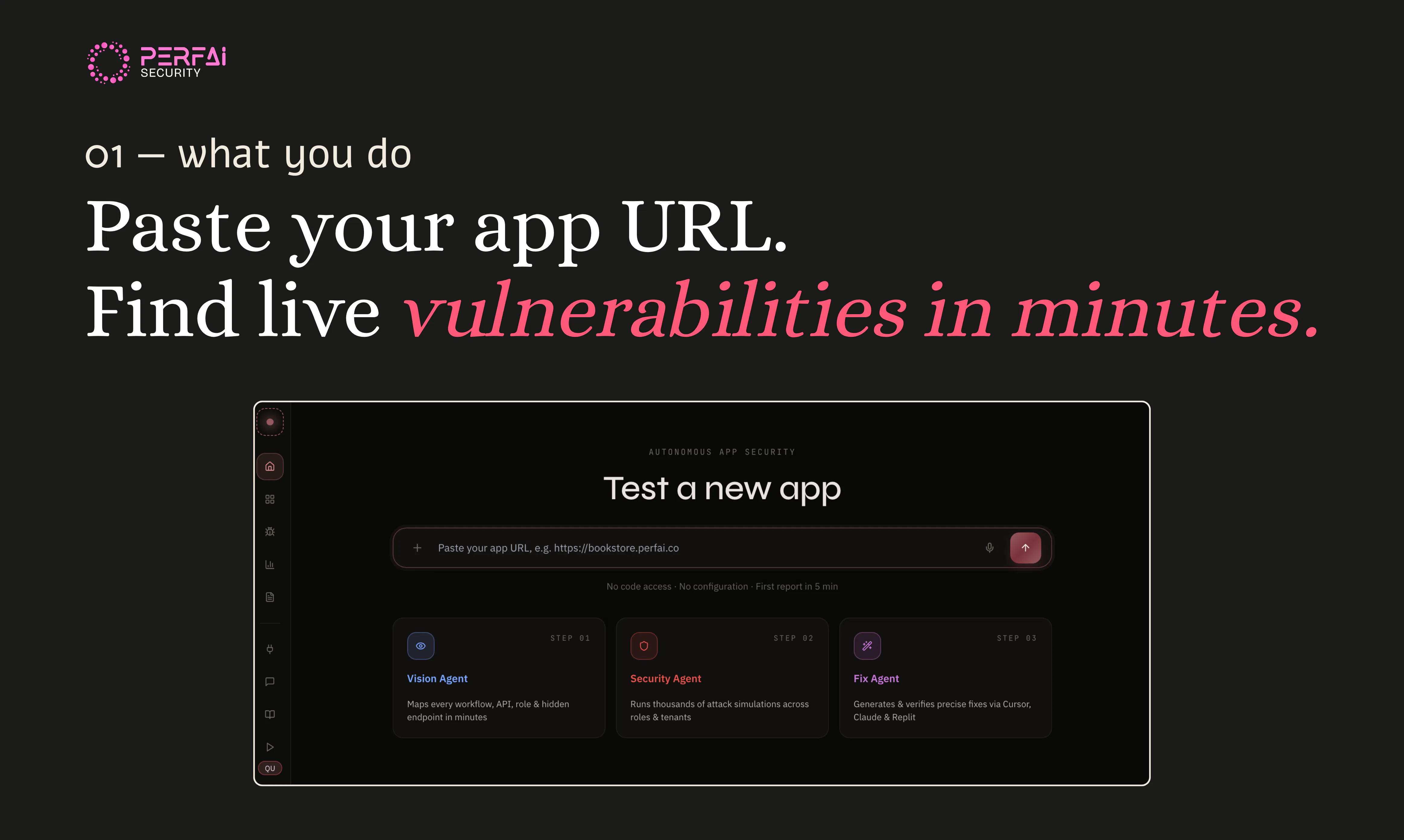
一句话介绍:Perfai Security 是一个针对AI生成应用(Vibe-coded apps)的自动化访问控制安全平台,开发者只需粘贴应用URL,即可在数分钟内自动发现并修复因权限缺失导致的数据泄露、越权访问等漏洞,无需安全专业知识。
Developer Tools Security Vibe coding
AI应用安全 访问控制 漏洞扫描 自动化渗透测试 Vibe-coded Apps 权限管理 SaaS安全 身份与访问管理 零信任 安全运维
用户评论摘要:用户普遍认可其“粘贴URL即可扫描”的易用性及对暴露API密钥、隐藏路由等漏洞的有效发现。核心疑问集中在:如何区分有意权限与实际漏洞?能否检测业务逻辑漏洞?对多租户及复杂权限层级支持如何?扫描时间根据应用复杂度从数分钟至1小时不等。已集成CI/CD,但不支持SQL注入等可能破坏生产环境的测试。
AI 锐评

Perfai Security切中了AI编程时代一个极其真实的痛点:代码生成速度与安全审查能力的割裂。当Cursor、Replit等工具让“一小时出产品”成为常态,传统的安全测试流程(数周渗透测试、等待安全团队排期)已彻底失效。它的核心价值不是发现SQL注入这类经典漏洞,而是聚焦于“访问控制”这一在AI生成代码中极易出现逻辑混乱、但手动排查成本极高的领域。

从技术路径看,其“Vision Agent+Security Agent+Fix Agent”的组合拳打出了差异化:不依赖源码,在运行时态进行黑盒验证,能抓到“UI上隐藏但API仍然可访问”这类典型的“影子功能”漏洞,这在静态代码分析工具中是无法做到的。尤其对于多租户SaaS应用,跨租户数据泄露和权限越级是真实的高危场景,而Perfai直接面向生产环境测试,比传统的单元测试或代码审计更具实战价值。

然而,产品也有其明确的边界:它明确放弃了SQL注入等破坏性测试,虽然是为了生产安全,但这也意味着它并不能成为一个“全栈安全解决方案”。此外,评论中反复提及的“误报率”和“漏报率”问题,将是其商业化的关键——缺乏安全背景的开发者用户对假阳性极度排斥,而企业级客户则会关注覆盖率。目前团队通过展示测试覆盖率和显式报告凭据未覆盖区域来应对,这是正确的方向,但实际效果仍有待市场检验。

总体而言,Perfai Security是一款思路清晰、定位精准的垂直安全工具。它不是万能药,但确实为AI原生应用的安全检测提供了一条低门槛、高时效性的新路径。对于所有“用AI搭了个MVP正准备上线”的团队,在投入正式渗透测试前,花几分钟用这个扫一遍,能有效避免“把裸奔当敏捷”的尴尬。

查看原始信息
Perfai Security
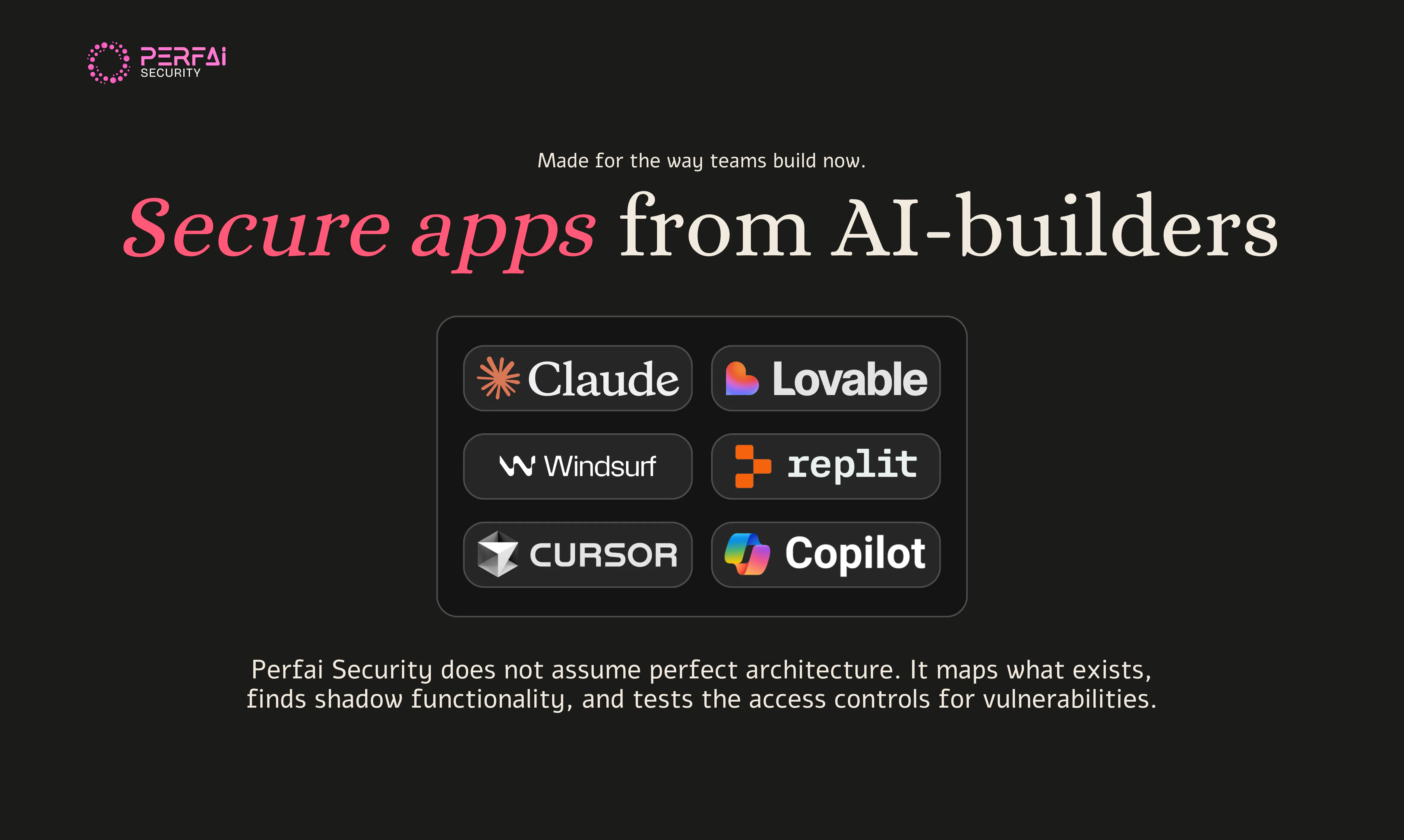
Autonomous access control security for Vibe-coded apps. Our platform finds and fixes live vulnerabilities in your vibe-apps built on Replit, Lovable, Claude Code, Cursor, and other AI-coding tools. 1-prompt makes your app production-ready in minutes without requiring security expertise.

Hey Product Hunt!  👋 Qutub here from Perfai Security.


Over the last 18 months, I've found vibe-coders — including myself — opening Replit, Lovable, Cursor, Copilot, Claude Code (any of the various AI-coding tools) and within a few hours, they have something that looks and functions like a real product, with login, dashboards, payments, database records, admin screens, user roles, and the foundations for handling customer data.


And that's awesome because the app looks finished!

But that's when the serious builders ask:

"Is this actually safe to put on the internet?"

The Problem

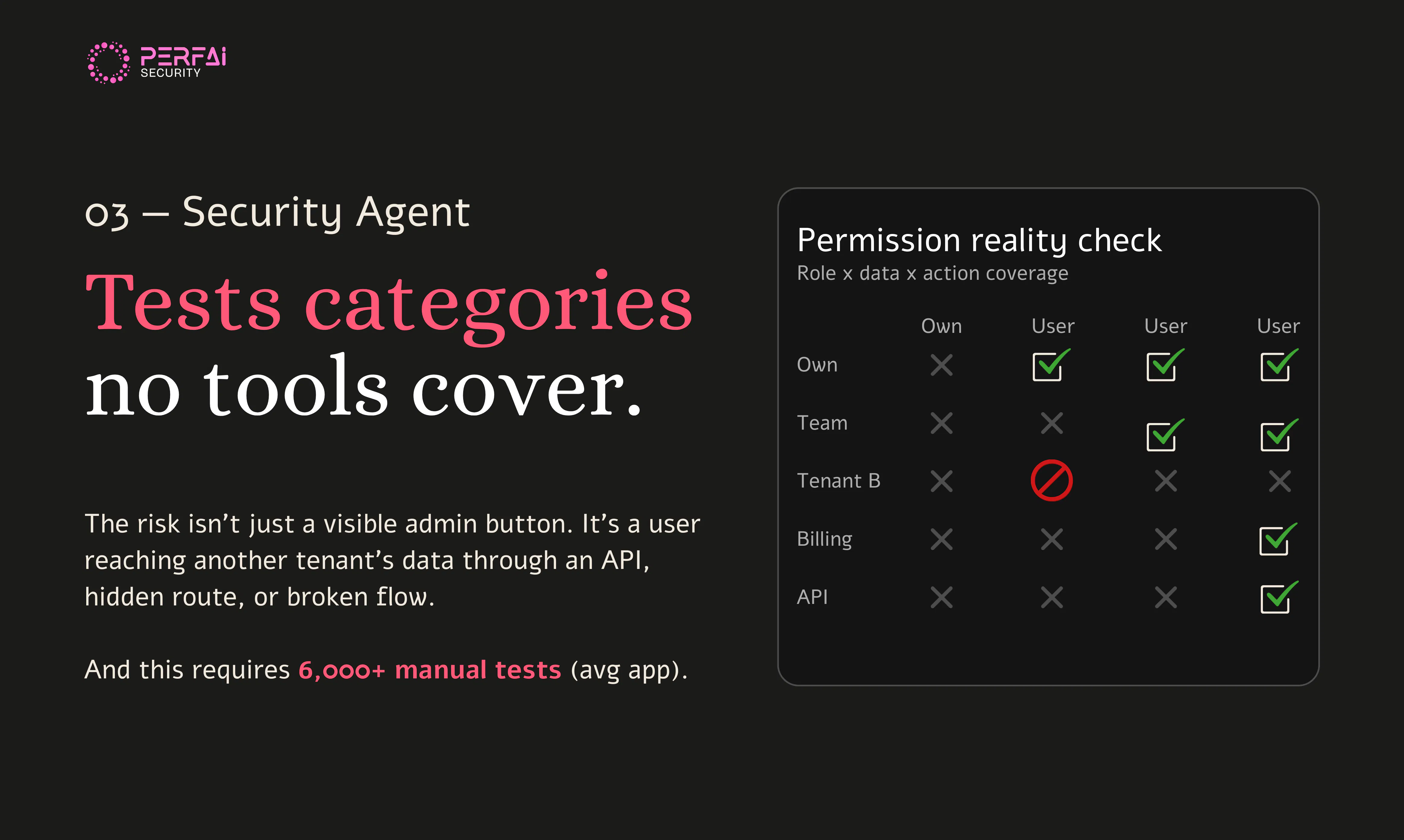
Every app has permissions about who can do what. Customer X should only see X's own data, not someone else's. A normal user should not gain admin access. These permissions are also called access controls.

The problem is that even a small app will have thousands of access controls. Here is the simple math:

6 Roles x 10 Data x 100 Actions => 6,000+ access controls

These access controls live in three places: the app pages people click on, the API endpoints (where the app sends and gets data), and the database (where the data is stored). AI tools build apps fast. But they skip most of these checks in all three places. That is how data leaks and hacks happen.

The Solution: Perfai Security

Autonomous security for AI & vibe-coded Apps

You just paste your app's URL. No code needed. Then our AI agents do three things:

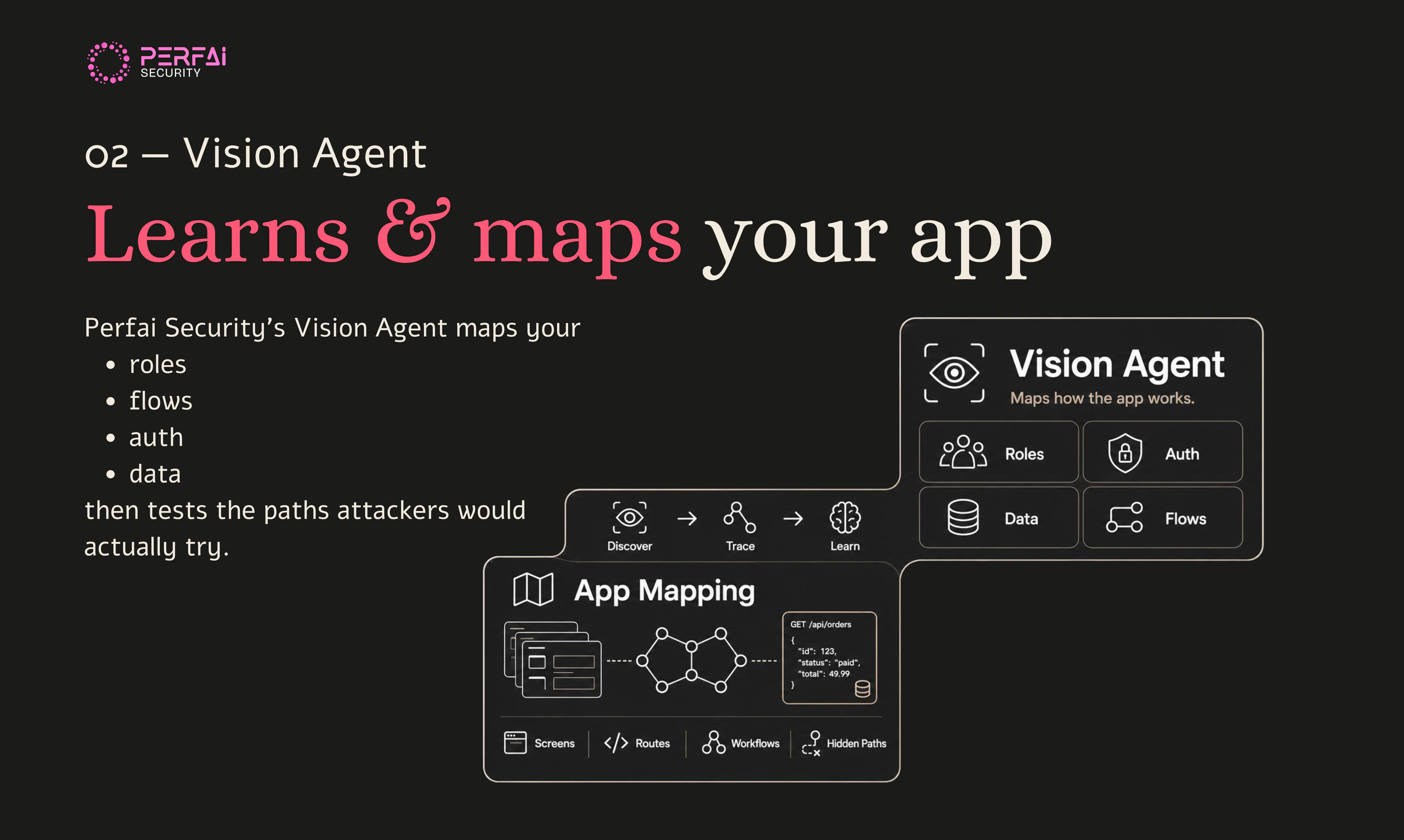
  1. Vision Agent: Learns your app. It navigates through every page, API, and action, with every app role.

  2. Security Agent: Tests every access control. It checks the pages, workflows, API endpoints, and the accessible database. It finds the doors that are open but should be locked.

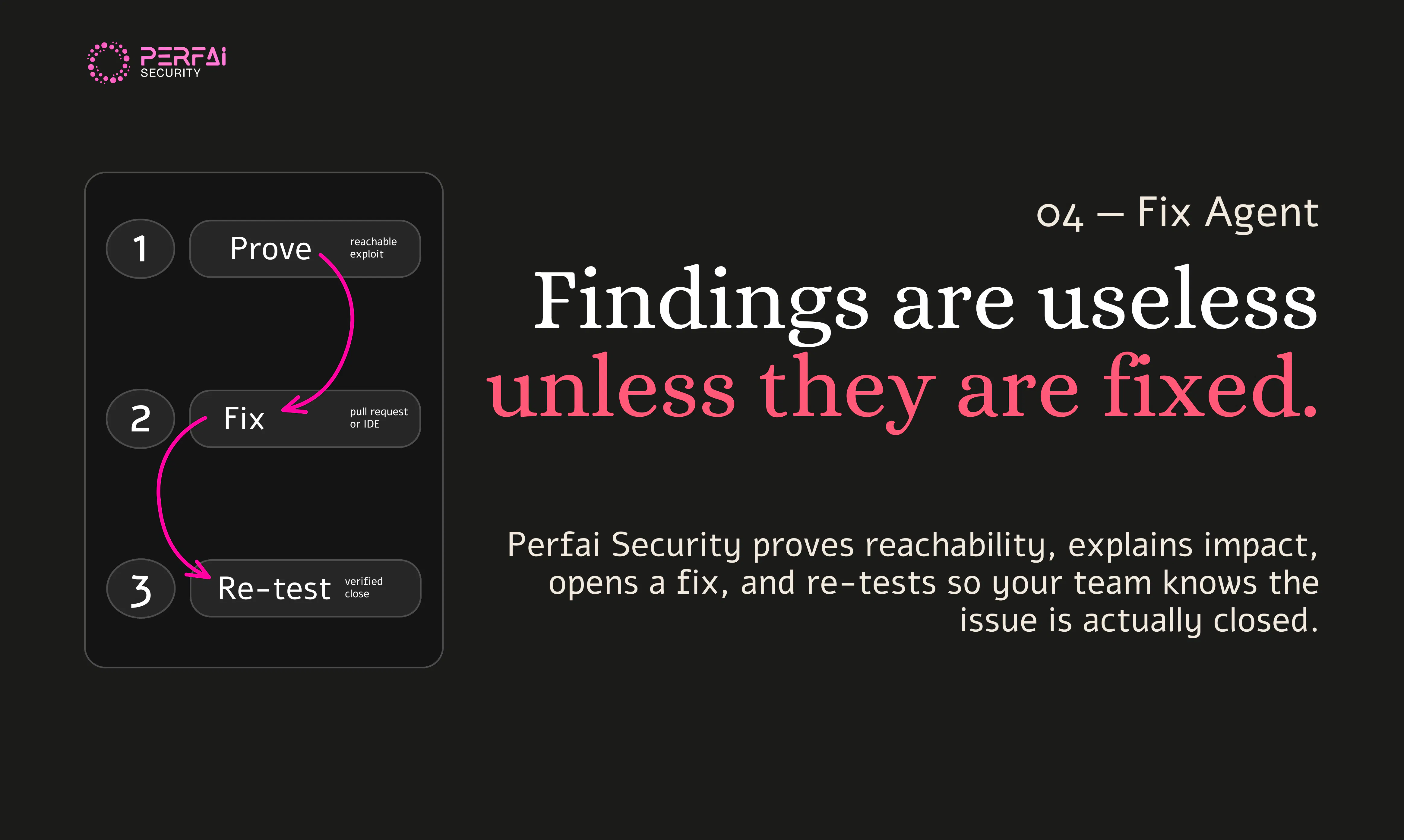
  3. Fix Agent: It tells your AI-coding tool (Replit, Lovable, Cursor, Claude Code, etc.) how to fix these vulnerabilities, and verifies the attack paths are patched.

It also keeps watching. Every time you update your app, a locked door can open by accident. We check again after each update, and tell you what broke before anyone else can find it.

And since all of this is done in minutes (relative to what would previously take dev teams weeks to accomplish), the entire loop can be run again with every new update.

Direct Benefits of using Perfai Security?

  • You save $100K+ in breach costs.

    • Find vulnerabilities no other tools cover.

    • Find live issues before users, attackers, or bug bounty hunters do.

    • Secure your apps against the excessively growing attack-surfaces.

  • Protect enterprise deals and funding rounds by showing what is being covered, continuously.

  • Reduce compliance and privacy risks.

  • Save $10K–$40K in manual testing time and effort by automating.

  • Prevent customer churn and reputation damage associated with logic issues.

Early Traction:

So far we have secured 4,000+ apps. We found and fixed 28,400+ vulnerabilities. We saved our customers $27.5M in bug bounties. And for our contributions to the overall security field, we have been awarded Innovator of the Year by CloudX.

Product Hunt Offer:

For the Product Hunt community, Perfai Security's Pro-plan is offered at 50% discount with the discount code

Discount Code: PRODUCTHUNT50

You can start testing by pasting your app URL — no source-code access required — and getting your first vulnerability results within minutes.

Thanks for checking out Perfai Security.

Build fast. But don’t ship blind.

18
回复

@qutub_syed Many congratulations Qutub, Intesar and team on the launch! :)

How I met the maker: I met Qutub a few weeks ago when he pitched me the product. We had a few back-and-forth conversations on the messaging and assets before the launch was ready to go live, and I really enjoyed brainstorming and discussing it with him.

What is the product?

Perfai Security is an autonomous security platform for vibe-coded apps. It finds and fixes live access-control vulnerabilities in apps built with tools like Replit, Lovable, Claude Code, Cursor, and other AI coding platforms.

Why I endorse it?

I endorse it because it tackles a real problem for modern builders: shipping fast often means shipping blind on security. Perfai makes it much easier to catch and fix vulnerabilities before they reach users, without needing a security expert on hand.

Enter your vibe-coded app's URL and find vulnerabilities in minutes: https://perfai.ai/

11
回复

@qutub_syed @intesar_mohammed1 Great launch. AI makes apps easy to build, but permission mistakes cause most data‑privacy leaks. Even small apps have thousands of access checks.

Perfai Security helps builders — and bug‑bounty hunters — find these issues fast.

2
回复

@qutub_syed Congratulations Intesar and the team on the launch!

I met Intesar and the team at AI DevSummit 2026 a couple months ago. We are a stealth startup that hadn't done any formal security testing, and Intesar offered to help. That conversation turned into a real engagement.

Perfai is an autonomous security platform that finds and fixes live vulnerabilities in AI-built apps. It maps your full attack surface: UI workflows, API endpoints, token security, privacy compliance, and runs hundreds of tests simultaneously across OWASP and its own AI-native framework, and tells you exactly what to fix.

Why I endorse it: Because it delivered real findings, fast. Across two test runs on our platform, Perfai executed 258 automated tests(240 security tests across 7 API endpoints and 11 UI workflows, plus 18 privacy tests) and surfaced 6 high-severity issues we didn't know about: 2 security vulnerabilities (missing RBAC and rate limiting) and 4 privacy compliance gaps (missing GDPR user rights endpoints). What impressed me most was the follow-through. Intesar and the team facilitated multiple reruns as we addressed each finding, confirming fixes were holding before marking them resolved. We have not tried the fix agent yet. That is next on our list. If you're building and haven't done a security pass yet, this is the fastest way to find out what you're missing.

0
回复

Hey ProductHunt! 👋 Intesar here — CEO of Perfai Security.

This is my third company (DCHQ was acquired by HyperGrid and APIsec), and out of everything I've built, this is the one that keeps me up at night in a good way — because the timing is so obviously right.


Here's the thing about vibe coding that most people miss: the AI coding tools are incredible at making an app look and function like a real product in a few hours. What they're not good at is remembering that "User A shouldn't be able to see User B's invoices" is a rule that has to be enforced in three separate places — the UI, the API, and the database — every single time you ship an update. Nobody's shipping blind on purpose. They just don't have a security team checking access control on every prompt-to-deploy cycle, and honestly, neither did I on my first two companies until it hurt.


So we built Perfai Security as a pre-launch security testing platform for exactly this moment — the gap between "it works on my screen" and "it's live with real users." Paste a URL, our agents map your app, attack its access controls the way a real bad actor would, and hand your AI coding tool (Cursor, Replit, Lovable, Claude Code, whatever you're using) the exact fix — before you ship, not after someone finds it for you. They keep watching every future deploy too, so regressions don't sneak back in. No security background required on your end.


Huge credit to the team who actually built this: Hai, Dr. Abdullah (engineering), Dr. Habeeb (AI), Ghouse (customer success), and Qutub, who wrote the comment above and has been carrying GTM on his back.

If you're vibe-coding anything that touches real user data, I'd genuinely love for you to run it through Perfai Security and tell me what you find (or what we got wrong). I'm in the comments all day — ask me anything about the product, the roadmap, or what "6,000+ access controls in a small app" actually means in practice.

Thanks for checking us out. Build fast, ship safe. 🚀


— Intesar CEO, Perfai Security (perfai.ai)

11
回复

Ran it on a small Replit app and it flagged an exposed API key plus a sketchy redirect I genuinely missed, super easy fix flow. Wish I'd had this a few months ago when I shipped something embarrassingly broken.

8
回复

@tarkb3lu Thanks for sharing that.. an exposed API key and an open redirect are exactly the kind of issues that can slip through when you're shipping quickly with AI. It's usually not carelessness, just not having time to inspect every endpoint and flow.

Glad Perfai caught them in one pass. If you've got a larger app with multiple roles and real user data, that's where it starts finding the more interesting access control issues too. Give it a run and see what it turns up.

Thanks again for sharing the results!

0
回复

@tarkb3lu This is awesome to hear! Thanks for sharing.


An exposed API key and a sketchy redirect are exactly the kind of bugs that slip through when you ship fast. Glad the fix flow made it easy too. That's the goal: find it, fix it, move on.


And don't feel bad about the earlier app. Almost every vibe-coded app we test has issues like this. You're ahead of the game now.


If you want to scan more apps, the free tier is there, and we're giving away 50% discount codes for the launch. Every scan comes with a full pentest-style report. Need extra credits or help onboarding another app? Just reach out. Happy to help!

0
回复

Scanning live deployed vibe apps rather than static source is the right call. Most tools miss runtime behavior entirely. We've run into situations where AI-generated code introduces subtle auth gaps that only surface under specific API call sequences. How does your scanner handle stateful multi-step exploits? Can it chain requests across endpoints to trigger a vulnerability that no single request would expose?

5
回复

@anand_thakkar1 that's exactly the right question, and yes 🔥. It's one of the biggest reasons we built the Vision Agent. Instead of looking at isolated endpoints, it learns how your app actually works by mapping the workflows and request sequences it uses, like create → update → approve → read

The Security Agent then replays those flows and mutates them to uncover things like multi step privilege escalation, state transition abuse, creating an object as role A and accessing it as role B, or skipping an approval step a few calls earlier. These are the kinds of stateful authorization issues that only show up across a sequence of requests, so most scanners never see them.

Every finding comes with the exact request chain needed to reproduce it. Business logic chaining is an area we're continuing to push hard on.

Give it a try and see what sequences it surfaces in your app. It's free: perfai.ai

3
回复

@anand_thakkar1 Great question! This is exactly why we test live apps instead of just code. Some auth bugs only show up when requests happen in a certain order, and code scanners can't see that.


Yes, we handle multi-step exploits. Our Security Agent learns how your app works, then chains requests across endpoints and roles. For example, it logs in as a low-level user, grabs an object ID from one endpoint, and tries to use it somewhere else. That's how we catch bugs no single request would find.


On average, Perfai finds dozens of critical vulnerabilities and active data leaks, and it fixes them instantly too. Full coverage across UI, API, data, and roles, at a fraction of pentest cost.


Try it free at perfai.ai. Just enter your app URL to start. We're also giving away 50% discount codes for the launch. If you need extra credits or help onboarding your app, reach out to me anytime. Happy to help!

0
回复

Congrats on the launch. How much time does it typically take to generate report? I am guessing it may vary based on the complexity of the app?

5
回复

Thank you@zerotox You can get the first results in minutes, but yes it scales with complexity and may take up to 1 hour based on the load. The work is proportional to your access-control matrix (roles × data objects × actions), so a small app is minutes and a large multi-role one takes a bit longer. But we're talking minutes-to-hours vs. the weeks a manual pentest of the same surface would need. And because it's that fast, you can re-run the whole thing on every deploy.

0
回复

@zerotox 
Thank you!


You guessed right, it depends on the app. The agents explore every page, API, and role combination, so a small app finishes in under an hour, while a large app with many roles and data types can take a few hours.


The good news: it's fully hands-off. Paste your URL, and the agents do the rest, including signing up their own test accounts. You can watch the live activity log while it runs, and the full pentest-style report lands when it's done. Re-tests after app updates are faster too, and drift detection flags what changed.


Try it free at perfai.ai. We're giving away 50% discount codes for the launch too. Need extra credits or help onboarding your app? Just reach out. Happy to help!

0
回复

Do you think you can add a GitHub Actions integration to automatically trigger scans after each deployment??

5
回复

@ankur_jeswani Appreciate the comment! This integration already works today. Drop in a GitHub Actions step (our CI/CD API is built for it): it triggers a scan, waits, and fails the build on new Criticals with a dedicated CI service-account role, job-id idempotency so retries don't double-scan, and auto-created GitHub issues for findings. It's a copy-paste snippet from our docs right now; one-click Marketplace Action is next. Happy to send you the snippet

0
回复

@ankur_jeswani 
Testing after every deploy is exactly where this should go, since apps change fast and stale results lose value.


The good news is our setup makes this easy to build. Since a test only needs your app URL, a GitHub Action just has to hit our API after deploy. No agents, no repo access needed.


In the meantime, you can trigger re-tests in one click, and we do drift detection, so when your app changes, we catch new gaps that the last test couldn't see.


I'd love your input on how you'd want the Action to work (fail the build on criticals? just report?). DM me and let's shape it together.


Try it free at perfai.ai and get a full pentest-style report. We're giving away 50% discount codes for the launch too. Need extra credits or help onboarding your app? Just reach out. Happy to help!

0
回复

Congrats. How does Perfai distinguishes between intentional permissions and actual access control vulnerabilities?

5
回复

Great question @iamanantgupta 

We start by learning what access is intended. Perfai Security reads the app's UI and role structure to find the base for who's meant to see what before building a permission map from it. Then we replay the same API calls as different users, roles, and tenants and compare what actually comes back.

The distinction is in the response. We only flag it when a user actually receives unauthorized data they were never meant to see. If the endpoint returns their own data, an error, or empty results, that's intended behavior and we leave it alone. We go a step further by excluding resources that are shared by design.

Above all of this, we surface permission anomalies such as cases where the app's real behavior contradicts its own intended access model (a user who should be blocked isn't, or an authorized user is wrongly denied). That's how we separate deliberate permissions from genuine broken-access-control, IDOR, and privilege-escalation issues.

0
回复

@iamanantgupta 
Thank you! This is one of the hardest problems in access control testing, so great question.


Here's how we approach it. Our agents first learn your app's intended permission model by exploring what each role sees in the UI. If a page, button, or data field never appears for a role, but the API still serves it, that's a strong signal of an unintended gap. The UI is basically your app telling us what you meant to allow.


We also weigh the data itself. A viewer role reading a public blog post looks intentional. A viewer role pulling another user's private records through a direct API call almost never is.


And for edge cases, you can mark a finding as intended behavior, and we won't flag it again in future scans. Your feedback tunes the results to your app.


Try it free at perfai.ai and get a full pentest-style report. We're giving away 50% discount codes for the launch too. Need extra credits or help onboarding your app? Just reach out. Happy to help!

0
回复

Dropping a major upvote, qq does the security agent test for complex injection flaws (like SQLi or NoSQL injection) alongside the broken object-level access controls? congrats 👏 @qutub_syed

4
回复

Really appreciate the kind words,@vikramp7470 !!
Our access control testing platform compliments DAST / SAST testing tools that already test for injection flaws. And so as to not compete, but rather ensure the un-addressed majority of threat categories are secured against, we built Perfai Security around access control vulnerability testing.

1
回复

@vikramp7470 

Thanks for the upvote!


Straight answer: no, we don't run injection tests like SQLi or NoSQL injection. That's by design. Injection attacks can damage a live app's database, logs, and third-party integrations. We built Perfai to be production-safe, so we stay away from that category on purpose.


Our focus is access control: BOLA, broken role permissions, and data exposure across UI, API, and data layers.
Our agents chain requests across endpoints and roles to find the gaps that single-request scanners miss. That's where most real breaches happen, and it's safe to test on live apps.


For injection coverage, we pair well with a code scanner or a scheduled pentest. Think of us as the layer that covers what those tools can't see at runtime.


Try it free at perfai.ai and get a full pentest-style report. We're giving away 50% discount codes for the launch too. Need extra credits or help onboarding your app? Just reach out. Happy to help!

1
回复

How well does Perfai handle multi-tenant SaaS applications with complex permission hierarchies?

4
回复

Hi! This is our home turf @syed_shayanur_rahman Multi-tenant SaaS is where access control gets brutal, and it's what we test hardest. The Vision Agent builds a per-tenant identity map with every role across your hierarchy (org → workspace → team → resource, plus nested roles and inherited/overridden permissions) and the Security Agent then attacks on two axes: horizontal being classic cross-tenant isolation breaks and vertical being whether a member can escalate to admin/owner inside a tenant. It reasons over the effective permission, not the declared one, so inheritance quirks and role-override edge cases get exercised. Cross-tenant leakage is the highest-severity class we hunt.

0
回复

@syed_shayanur_rahman 

Great question. Multi-tenant SaaS is honestly where Perfai shines, because cross-tenant data leaks are the scariest access control failures out there.


Our agents map your app's roles, data types, and actions, then test the combinations. That includes tenant boundaries: can a user in Company A reach Company B's data through a direct API call, a shared object ID, or a side door the UI never shows? Those are exactly the bugs that hide in complex permission hierarchies, and no single-request check finds them.


For hierarchies like org admin, team admin, member, and viewer, we prove what each level can and cannot reach across UI, API, and data. The agents sign up their own test accounts where possible, and you can add accounts for roles that need invites.


Drift detection matters here too, since permission models change as you ship new features.


Try it free at perfai.ai and get a full pentest-style report. We're giving away 50% discount codes for the launch too. Need extra credits or help onboarding your app? Just reach out. Happy to help!

0
回复

Can Perfai detect business logic vulnerabilities, or is it mainly focused on authorization issues? BTW, congrats on shipping..

4
回复

@roopreddy thank you, and great distinction to draw. Access control is business logic. It's the highest-value slice of it, and the one missed most often. So that's where we go deepest: BOLA/BFLA/IDOR, privilege escalation, cross-tenant isolation, multi-step workflow authz.

But we don't test at the "is there an auth check?" level. The Vision Agent builds a semantic model of your app with the roles, objects, actions, state... all taken into account. And our Security Agent can reason about the intended rules and then try to break them, such as:

  • skip a workflow step

  • replay a state transition

  • mutate an object you own to reach one you don't

  • chain a privilege escalation

That's all 'logic'-level attacking. Pure economic-logic abuse (price/coupon/quota manipulation, business-invariant races) is what we're expanding into next. Want to see what it flags on yours? You can use our discount code to get 50% off on the Pro plan (in pinned comment)

3
回复

@roopreddy 
Thank you!


Great question. Our core focus is access control: roles, permissions, and data exposure across UI, API, and data layers. That's where most real-world breaches happen.


But there's a lot of overlap with business logic. Since our agents learn your app's actual workflows, they catch logic gaps tied to access, like skipping steps in a flow to reach data you shouldn't, or performing actions your role shouldn't allow. Pure business logic bugs like pricing errors aren't our focus today, but the access side of logic flaws is well covered.


Try it free at perfai.ai and see what it finds. You get a full pentest-style report with every scan. We're also giving away 50% discount codes for the launch. If you need extra credits or help onboarding your app, just reach out. Happy to help!

1
回复

Tools like this are usually judged by what they catch, but the harder part is what slips through.

Do you have a sense of that side - cases where something looked clean but was found later? That would matter more to me than the total number of vulnerabilities found.

Congrats on the launch!

4
回复

Hello@jared_salois I'm particularly excited to answer your question! 

Raw vuln counts are a vanity metric. And you're right... what slips through is the real test. A few ways we attack the false-negative problem head-on:

We measure against a known denominator. The Vision Agent enumerates the full access-control matrix (roles × objects × actions), so we report coverage (what share of that surface we actually exercised) not just a pile of findings. You see what we tested, not only what we caught.

Gaps are reported as gaps, never as green. An auth wall we couldn't cross, or a path we lacked credentials for, or a flow needing business context we can't infer ("this discount should never apply to enterprise SKUs"), etc. All those surface as explicit coverage gaps, not a false "clean."

"Looked clean, found later" is a first-class case. Every deploy gets re-tested, and as our attack models improve, we re-scan existing apps. So yesterday's "clean" can legitimately become today's finding. Coverage is a living thing, not a one-time snapshot.

And every finding is exploit-verified, so what you do get isn't diluted by false positives. We'd rather hand you an honest "here's what we didn't reach" than a green checkmark that lies.

3
回复

@jared_salois 

Thank you! And this is one of the best questions we've gotten.

Honest answer: yes, things can slip through. No tool catches everything, and anyone who says otherwise is selling you something.


Here's how we think about it. We're focused on access control, so bugs outside that scope (like injection or business logic errors) are not what we hunt. Within access control, our coverage comes from testing every role against every data type and action, so the misses tend to be edge cases like flows the agent couldn't reach, not whole categories.


When a customer or pentester finds something we missed, we treat it as a bug in our system. We add it to our test framework so every app we scan after that gets checked for it. That feedback loop is how our coverage grows.


If you want to see for yourself, try the free tier at perfai.ai. You get a full pentest-style report, so you can compare it against your own findings. We're giving 50% discount codes for the launch too. Need extra credits or onboarding help? Just reach out!

1
回复

Does Perfai support authentication providers like Clerk, Auth0, or Supabase Auth out of the box?

4
回复

@nuseir_yassin1 yes! Because we test black-box from your app's URL, we authenticate through your real login flow using the test credentials you provide for each role. This way, Clerk, Auth0, Supabase Auth and the rest all work. We meet your app wherever it lives instead of needing a separate integration per provider. If you've got a specific setup in mind, let us know and we can confirm the exact flow.

Would genuinely love to have you run something through it.

0
回复

@nuseir_yassin1 
Great question! We're auth agnostic. If a typical user can sign in to your app, our agents can too. Clerk, Auth0, Supabase Auth, custom logins, all work out of the box. Our Vision Agent handles the sign-in flow the same way a real user does, and it even signs up its own test accounts if your app supports sign-up.


The only limitation right now is MFA or OTP beyond email. Email-based OTP works fine, but codes sent to phones or authenticator apps aren't supported yet.


Once in, we run full access control testing across UI, API, data, and roles, with drift detection catching new gaps as your app changes.


Try it free at perfai.ai and get a full pentest-style report. We're giving away 50% discount codes for the launch too. Need extra credits or help onboarding your app? Just reach out. Happy to help!

0
回复

Perfai reduces the barrier to security testing as the workflow is as easy as pasting the URL. Congrats on launching today.

4
回复

Much appreciated @himani_sah1 
That’s exactly what we’re trying to solve. With so many vibe-coded apps going live, security testing needs to fit the builder’s workflow. Perfai Security makes it possible for solo founders and small teams to deep-test access controls in live apps without needing enterprise security teams, long setup cycles, or manual testing expertise.

0
回复

@himani_sah1 
Thank you! That's exactly the goal.


Security testing has always had a high barrier: expensive pentests, complex tools, or needing an expert on the team. Most builders just skip it. So we made the barrier one paste. Drop in your URL, and our agents explore your app, sign up their own test accounts, and test everything across UI, API, data, and roles.


No setup project, no security background needed. And with drift detection, coverage stays fresh as your app changes, so it's not a one-time check.


Try it free at perfai.ai and get a full pentest-style report. We're giving away 50% discount codes for the launch too. Need extra credits or help onboarding your app? Just reach out. Happy to help!

0
回复

Hi Qutub Syed, nice idea and the site looks good, I like the “test a live app by URL” approach, especially for small builders who don’t have a security team.

I tried entering my app URL and clicking “Test now”, but nothing seemed to happen on my end. I may be missing a step, or it could be a browser issue. Just wanted to flag it in case it helps with the launch feedback.

3
回复

@elsedes really appreciate you trying it out and flagging that. Team's already looking into it.

0
回复

@elsedes Here's an update: You didn't miss a step.. we had a security policy on our end that was blocking the "Test now" request. It's fixed now, so after a quick refresh, give it another try and you should go straight into the scan.

1
回复

If UI hides an admin route that's still live on the backend, does Vision Agent even catch it?

3
回复

@calvin_russell1 yes, that's what it's built for. The Vision Agent doesn't just click the UI — it maps the underlying API surface (every endpoint it can discover), so a route that's hidden from the interface but still live on the backend gets found and attacked anyway. That "hidden-but-live admin function" is a class we explicitly hunt, known as shadow functionality (and broken function-level authorization (BFLA)). If the backend still honors it, we'll call it, prove it with a reproducible request, and hand you the fix.

0
回复

@calvin_russell1 
Yes, and this is one of our favorite bugs to catch!


Hidden-but-live routes are classic access control gaps. The UI hides the admin page from regular users, but the backend never checks who's asking. Code review misses it, and clicking around the app misses it, because the door is invisible to the eye.


Here's how we catch it: our Vision Agent maps your app from higher-privilege views too, so it knows the admin routes exist. Then the Security Agent tries reaching those routes and APIs as lower roles. If a viewer account can hit a live admin endpoint the UI never showed them, that's a finding, with the exact request that proved it.

Hiding a button isn't security. The backend has to enforce it, and we test that it does. And with drift detection, if a new route ships next week without protection, we catch that too.


Try it free at perfai.ai and get a full pentest-style report. We're giving away 50% discount codes for the launch too. Need extra credits or help onboarding your app? Just reach out. Happy to help!

0
回复

Faster than a manual pentest sure, but does it catch the weird edge cases a human would?

3
回复

@trevor_nicholas2 honest answer: if a manual pentester checks ~50 permission combinations before the clock runs out, Perfai Security tests all 6,000+ (across every role × data × action) ...including the weird ones, including chained privilege escalation, cross-tenant ownership quirks, admin functions live under a hidden route. These "edge cases" are usually just cases nobody had time to reach by hand, but in practice, we've surfaced findings a decade of manual pentests had missed. Where a creative human still shines is open-ended business logic, and we're pushing into that too.

0
回复

@trevor_nicholas2 

Fair question, and the honest answer is: humans and machines catch different things.


A skilled pentester might spot a weird one-off flaw with creativity. But humans have limited time. They test for a few days, sample some endpoints, and move on. Our agents test everything: every role against every data type and action, thousands of combinations a human would never have time to try. Weird edge cases often live exactly in those untested combinations.


And here's why our focus matters: Gartner reports that access control issues account for about 50% of breaches and security incidents. That's precisely what we go deepest on. In total we cover 75+ AI-threat categories, spanning access control, auth, and classic categories.


Plus a pentest is a snapshot. With drift detection, we keep testing as your app changes, so you're covered next month too, not just today.


Try it free at perfai.ai and get a full pentest-style report. We're giving away 50% discount codes for the launch too. Need extra credits or help onboarding your app? Just reach out. Happy to help!

0
回复

How's this different from zero Thread or Beagle,both listed as similar tools?

3
回复

Hello @reid_anderson4 , great question!

Those are broad AI-pentest / DAST scanners that are good at surfacing known vuln patterns across an app. Perfai Security goes deep on the one class generic DAST structurally does not cover: broken access control (OWASP's #1 for four years running). We don't just fuzz URLs... our Vision Agent first maps every role × data × action, then the Security Agent attacks the permission model itself: BOLA/IDOR, BFLA, privilege escalation, cross-tenant isolation.

Every finding is exploit-proven, and the Fix Agent ships the patch into your AI coding tool and re-tests to confirm it's closed. In a different lens, they scan the surface, whereas we break the authorization logic.

0
回复

Hello!
I'm a Mechanical Engineer from Japan, and I'm expanding my engineering business into the U.S. market. I'm looking for U.S. citizens interested in a long-term collaboration.

Could you help me with my business?

0
回复

Is the report readable solo, or do I need to already know what IDOR means?

3
回复

@paige_lauren2 readable solo 🙌. You do NOT need to possess technical knowledge on what IDOR means — each finding is plain language with OWASP/CVSS/CWE detail tucked in for the dev folks who want to go deeper. And you don't have to interpret it to fix it. The Fix Agent hands the exact patch to your AI coding tool (Cursor, Claude Code, Replit, Lovable…) and re-tests to confirm it's closed. Security expertise is optional... that's the whole point. Try it free at perfai.ai, first finding in ~20 min.

0
回复

@paige_lauren2 
Totally readable solo! We built the report for people shipping apps, not just security pros.


Every finding is written in plain language: what the issue is, why it matters, and what could happen if you leave it. So instead of just "IDOR detected", you'll see something like "a viewer account was able to open another user's private records by changing an ID in the request". You see the exact request that triggered it, so nothing feels like a mystery.


And you don't need to know how to fix things either. Every finding comes with a one-prompt fix for your code agent, like "Fix Critical" or "Fix #2". Find, understand, fix, done.

For those who want depth, findings also map to standards like OWASP and CWE. But you never need that to act on the report.


Try it free at perfai.ai and get a full pentest-style report. We're giving away 50% discount codes for the launch too. Need extra credits or help onboarding your app? Just reach out. Happy to help!

0
回复

Do I paste the URL and walk away, or set up test accounts first?

3
回复

@oliver_hayes1 you can paste-and-go for a fast first look 🙂, but for the real value, hand it a couple of test accounts. Access control is all about who can do what, so the high-severity findings like cross-tenant data access, privilege escalation, BOLA will only surface when the agent can log in as different roles and try to cross the boundaries between them.

0
回复

Hello@oliver_hayes1 

I'm a Mechanical Engineer from Japan, and I'm expanding my engineering business into the U.S. market. I'm looking for U.S. citizens interested in a long-term collaboration.

Could you help me with my business?

0
回复

@oliver_hayes1 
Great question! Just paste the URL and walk away. Our Vision Agent explores your app on its own, maps the pages and APIs, and even signs up its own test accounts if your app has sign-up. From there it runs deep access control testing across UI, API, data, and roles.


The only time you'd add test accounts is if your app doesn't support self sign-up (like invite-only apps). Then you just drop in credentials during setup. Takes a couple minutes.


And with drift detection, we keep catching new gaps as your app changes, so it's not a one-time thing.


Here's a quick demo so you can see the flow: https://www.youtube.com/watch?v=04BtCSA8dqQ


Try it free at perfai.ai and get a full pentest-style report. We're giving away 50% discount codes for the launch too. Need extra credits or help onboarding your app? Just reach out. Happy to help!

0
回复

Congrats! Is Perfai Security looking at the running app, the codebase, or both? The “live vulnerabilities in Vibe Apps” wording makes me curious about where it plugs into a developer workflow, especially for teams using AI agents or vibe coding tools to ship fast.

3
回复

Much appreciated!! @crystalmei  Perfai Security looks at the running app from the URL you give it. That's exactly what "live vulnerabilities" means. We test the deployed, running system the way an attacker actually hits it, not static source analysis, andso we need zero codebase access to find issues. Where it plugs into your workflow is the fix side. The findings flow back through an MCP server (perfai-mcp-server) you drop into your IDE (Cursor, VS Code, Claude Code…), and into CI/CD via a GitHub Actions step so every deploy auto-re-tests.

0
回复

@crystalmei 
Thank you!


We test the running app, not the codebase. That's a deliberate choice. Code scanners can't see runtime behavior, like an auth gap that only shows up when requests happen in a certain order, or a role that can reach data it shouldn't. Those bugs live in the running app, so that's where we test.


It also makes setup dead simple: just enter your app URL. No repo access, no CI config, no agents to install. That fits vibe coding perfectly, since the code changes constantly and often nobody's reading it anyway. Ship your app, drop the URL in, and re-scan after big updates.


Our agents test across UI, API, data, and roles, so you get full app coverage no matter what tool wrote the code.


Try it free at perfai.ai and get a full pentest-style report. We're giving away 50% discount codes for the launch too. Need extra credits or help onboarding your app? Just reach out. Happy to help!

0
回复

the "mutate an object you own to reach one you don't" part is what caught my attention. if that attack succeeds against a live production app, the agent didn't just find the vulnerability, it exploited it for real against real data. is there a safe/sandboxed mode where the mutation attempts happen against a snapshot or shadow copy, or does running this against a production app with real customers mean you're accepting some risk of the test itself causing the exact damage you're trying to prevent

3
回复

@galdayan great question, you decide what Perfai Security points at. You hand us any base path or app URL. The aggressive, state-changing pass runs against a staging environment, a preview deploy, or a clone/snapshot, not necessarily your live prod. The blast radius is your call, not ours.

And even then, proving an access-control break almost never requires destroying data. For "mutate an object you own to reach one you don't," the vuln is proven the moment the system authorizes the cross-boundary action for the wrong principal... making the 'authorization' the finding. We assert that the boundary is crossable but we don't complete the destruction to prove it. So the check never depends on a destructive write, and anything genuinely state-changing you route to the staging/clone URL you give us.

You can sign up free at perfai.ai (or 50% off the Pro plan with our Product Hunt discount) and I'd be happy to connect and walk you through pointing it at a staging clone.

1
回复

@galdayan Really good question. You're right that this is where most testing tools get risky.


Perfai Security is production-safe, unlike regular pentesting. Here's why:


We don't run injection attacks at all. Those are the tests that can damage your app, database, logs, APIs, containers, and third-party integrations. We focus on access control testing, which is safe by design.


The agent also uses its own test accounts, not real customer accounts. When it checks if it can reach data it shouldn't, it's testing if the door opens, not pulling customer data. For risky actions like updates or deletes, it only tests against objects it created itself. Real records are never touched.


So the test itself won't cause the damage it's trying to prevent. That safety is core to how we built it.


Try it free at perfai.ai and get a full pentest-style report of your app. We're giving away 50% discount codes for the launch too. If you need extra credits or help onboarding, just reach out. Happy to help!

1
回复

This launch caught my eye since every other product is vibe-coded now sometimes without even involvement of a technical team member. However, for teams with devs, can developers customize scan depth for staging versus production environments?

3
回复

@divya_kothari1 great question, and yes. You run different profiles per environment. You can go deep and aggressive in staging with seed test tenants, exercise state-changing and destructive attack paths, full-matrix coverage... because nothing's at risk. On production it runs in a safe, non-destructive mode (read-only checks, no mutating actions) so always-on monitoring never touches live data.

0
回复

@divya_kothari1 
Thanks! You're right, so many apps ship now with no security review at all. That's exactly who we built this for.


For teams with devs, yes, there's room to tune things. You can set up separate apps in Perfai for each environment, so your staging and production scans run with their own settings, credentials, and roles. Since Perfai is production-safe by design (no injection attacks, test accounts only, no real data touched), you can run full-depth scans on production without worry. That's a big difference from regular pentesting.


Devs also get detailed findings with the exact request chains that triggered each issue, so fixes are fast.


Try it free at perfai.ai and get a full pentest-style report. We're giving away 50% discount codes for the launch too. Need extra credits or help getting your team's apps set up? Just reach out. Happy to help!

0
回复

Congrats on the launch! The re-check on every update is the part that matters most, since a lot of these tools only catch access-control gaps once and then go stale. Does that re-scan run automatically after each deploy, or do you have to trigger it?

3
回复

@irahimiam spot-on! Both modes exist, but automatic is the whole point. You can fire a run manually anytime (one prompt / paste-URL), but the real setup wires it into your pipeline so it runs automatically on a scheduled basis or with each deploy... GitHub Actions steps (or our CI/CD API / deploy webhook) can trigger the scan, wait, and fail the build on any new Critical. Each run diffs against your last clean baseline, so you only hear about what changed, not the same list again. Set it once and every future deploy can re-test itself.

0
回复
Does Perfai only detect vulnerabilities, or can it automatically suggest or apply fixes as well?
3
回复

Hi @thys_beesman , thanks for asking. Perfai Security offers both, and this is where Perfai Security really shines. We don't just stop at a list of vulnerabilities.

We ship an MCP server (perfai-mcp-server) you drop into your IDE (Cursor, VS Code, or any MCP-compatible agent). Once connected, it pulls your reported issues directly into the editor, and for any issue it generates a context-rich fix prompt with exact endpoint, vulnerability, remediation contexts. Your IDE's coding agent then implements the fix right in your codebase, following your existing patterns and architecture.

We deliberately keep the developer in the loop rather than auto-patching your repo. This way, we never require any code-access. And so the fix lands in your editor where you review and merge it like any other change.

So it's detection → guided remediation → fix, without Perfai Security ever writing to your code behind your back.

TL;DR — Perfai Security maps your app, detects vulnerabilities, provides the fixes, and then retests to verify the issues are patched.

0
回复

@thys_beesman 

Great question! Both. We detect and fix.


Every finding comes with an instant fix you can apply with one prompt in your code agent, like "Fix All", "Fix Critical", or "Fix #2". You don't need to be a security expert or spend hours figuring out how to patch each issue yourself. The Fix Agent hands you exactly what to do.


That's the full loop: our agents test your live app across UI, API, data, and roles, find the gaps, and give you one-prompt fixes. And with drift detection, we catch new issues as your app changes, so you're never relying on a stale report.


All this without paying thousands for a pentest. You get a full pentest-style report on the free tier at perfai.ai. We're also giving away 50% discount codes for the launch. Need extra credits or help onboarding your app? Just reach out. Happy to help!

0
回复

Great idea! Quick question: how do we ensure this fix doesn't break anything or cause a regression in the application?

2
回复

@maaz_b_tariq_shaikh 

Great question! This is exactly why we keep a human in the loop. Perfai suggests the fix, but your team reviews and applies it. Access control changes can break real user flows if applied blindly, so we never push changes to your app ourselves.


Each finding comes with proof of how we exploited it, so your developer knows exactly what to fix and why. After you apply the fix, just re-run the test. Perfai verifies the issue is gone and that your other permission checks still pass. Our drift detection also keeps testing as your app changes, so if a fix causes a new gap later, you'll catch it fast.


Try it free at perfai.ai. Use code PHLAUNCH50 for 50% off any paid plan. Full pentest-style report included. Need extra credits or onboarding help? Just message me!

0
回复

Great concept. My team runs into this problem consistently. Even with AI guardrails and instructions, we have to spend valuable hours testing for vulnerabilities.

2
回复

@zohaib_akmal 
Thank you! Your team's experience is exactly why we built this. AI guardrails help, but they can't replace real testing, and doing it by hand eats hours.


Perfai Security does that testing for you. Just enter your app URL. Our agents sign up their own test accounts, then test thousands of permission combos across roles and actions. You get a pentest-style report with proof for every issue. We also run drift detection, so new gaps get caught as your app changes.


Try it free at perfai.ai. Use code PHLAUNCH50 for 50% off any paid plan. If your team wants extra credits or onboarding help, just message me!

0
回复

The decision to require just a single prompt to turn a freshly vibe-coded app into something production-ready is genuinely clever, cuts straight past the usual security onboarding friction.

2
回复

@ercan1811695 
Thank you! That friction was exactly what we wanted to kill. Security tools usually ask for weeks of setup before they find anything. We wanted the opposite: paste your URL, get results.


Our agents even sign up their own test accounts, so there's nothing to configure. They test thousands of permission combos across roles and actions, then hand you a pentest-style report with proof for each issue. And since vibe-coded apps change fast, we run drift detection to catch new gaps as you ship.


Try it free at perfai.ai. Use code PHLAUNCH50 for 50% off any paid plan. Want extra credits or help getting started? Just message me!

0
回复

Congratulations to the whole @Perfai Security team!! In the AI era, auth and access control issues have become an epidemic, and they're often some of the hardest vulnerabilities to catch before they reach production.


We're actually using Perfai ourselves to help ensure the Dashboard for @Wristband's multi-tenant auth platform is configured correctly and that tenant isolation and authorization rules behave as expected. It's been a great addition to our development process, and seeing it in action has given me an even greater appreciation for what the team is building.

Having personally watched the evolution of this platform, I'm especially excited to see this launch. Huge congratulations to @intesar_mohammed1 and the entire team. Beyond building a great product, they're genuinely friendly people and a pleasure to work with. Looking forward to seeing where Perfai goes from here! 🚀

2
回复

@jim_verducci 

Thank you so much! This comment made our day.


Wristband is exactly the kind of use case we love: a multi-tenant auth platform where tenant isolation has to be right, every time. Watching your team use Perfai to prove authorization rules behave as expected, across every update, is the product working exactly as we dreamed. Auth platforms hold everyone else's front door keys, so the bar is highest there.


And the kind words about the team mean just as much as the product praise. Working with you all has been a pleasure for us too.


For anyone reading: this is what Perfai does. Test your live app's access control across UI, API, data, and roles, with drift detection catching gaps as you ship. Try it free at perfai.ai and get a full pentest-style report. We're giving away 50% discount codes for the launch. Share your app URL and I'll get you a free report personally. Need extra credits or onboarding help? Just reach out!

1
回复

Qutub, that little knot of worry right after you ship something fast is so familiar. Having something quietly watching your back so you can actually breathe afterward feels genuinely kind to the people building.

2
回复

@benjamin_riou 
Thank you for putting it that way. That knot of worry is exactly what we're trying to untie.


Shipping fast should feel exciting, not scary. But so many builders hit publish and then lie awake wondering what they missed. Nobody should need a security team just to breathe after launch. That's the whole reason Perfai exists: something quietly watching your back, testing every update, catching the gaps before anyone else does.


Comments like this remind us why we build. Thank you.


If you ever ship something, the free tier at perfai.ai is there, with a full pentest-style report and drift detection as your app grows. We're giving away 50% discount codes for the launch too. And if you need extra credits or help onboarding, just reach out. Happy to help!

0
回复
Congrats team! Half the tools launching right now are vibe-coded, so someone had to build this. The one-prompt fix is the part I want to poke at: after Perfai patches a vulnerability, does it re-scan to confirm the fix didn’t open a new hole? AI-generated fixes are how a lot of these bugs got in to begin with, so the verify step matters more than the fix step for me
2
回复

@ridhwikvinod You're pointing at the part we care about most. Verification isn't an afterthought, it's a core part of the workflow.

Once a fix is applied, Perfai re-runs the original exploit to make sure that specific issue is actually gone. We don't consider a vulnerability fixed until the attack no longer works.

We also re-map and re-test the application after every change. That's important because an AI generated fix can solve one problem while unintentionally introducing another. The re-test is there to catch exactly that.

The end result is a clear verdict for every finding, backed by proof instead of assumptions.

Feel free to try it.. it's free at perfai.ai

0
回复

@ridhwikvinod 
Thank you! And great point. An AI fix without verification is just more vibe code.


Yes, we re-test after every fix. The agent re-runs the exact request chain that triggered the vulnerability to confirm it's closed. And since re-scans only need your app URL, running a full scan after patching is one click, so you can confirm the fix didn't open a new hole somewhere else.


You also review every fix before it ships. The agent shows you what it changes and why, so nothing load bearing gets touched blind.


That's the loop: find, fix, verify. Not just find and hope.


Try it free at perfai.ai and get a full pentest-style report. We're giving away 50% discount codes for the launch too. Need extra credits or help onboarding your app? Just reach out. Happy to help!

0
回复
#4
Toyo
Exec assistant who lives in iMessage and calls your phone
264
一句话介绍:Toyo是一款嵌入iMessage、支持语音通话的AI执行助理,帮助用户处理收件箱、会前准备、项目跟进及知识查询,解决日常工作中在多个应用间切换的琐碎忙碌痛点。
Email Messaging Artificial Intelligence
AI助手 智能助理 工作流自动化 iMessage集成 语音通话 收件箱管理 项目管理 知识检索 代理架构 生产力工具
用户评论摘要:用户高度认可iMessage生态嵌入及主动来电功能,但关注点集中在邮件处理等自主任务中如何防止误操作?多数据源(日历、邮件、消息)优先级冲突如何裁决?长期对话上下文管理依赖摘要压缩还是实时拉取?触发主动呼叫的消息区分机制是否可调节?
AI 锐评

Toyo的聪明之处不在于又搞了一个“万能AI”,而在于它几乎放弃了大厂惯用的独立App策略,将触角扎进iMessage和电话这两个用户每天打开频率最高的高频场景——不重新制造“又一个Tab”,切中了AI助手普遍面临的采纳率硬伤。如果助手本身变成需要管理的工具,那它就输了;Toyo试图把自己做成朋友/同事,才可能赢。

但产品价值的下限取决于集成深度,上限取决于“猜你需要”的精准度。团队自述花大量时间维护代理栈,最终产品化出Toyo,说明底层有实际工程积累。而用户真正买账的点是收件箱清理和会前简报这种“高频低风险”任务——Toyo暂时没尝试做高风险的自主决策(如替用户回邮件/执行敏感操作),这是个聪明的边界选择。

然而隐忧也很明显:iMessage和电话没有官方API,目前依托第三方基础架构(Linq)运行,存在被苹果封堵或功能被捆绑的天花板;另外,1,000+ MCP工具集成听起来华丽,但如果想用好,用户仍需一定配置成本,可能会劝退非技术白领用户。Toyo需要在“开箱即用”和“高度个性化”之间权衡更清晰的梯度,否则容易沦为“小团队的高效玩具”,而非规模化生产力工具。

查看原始信息
Toyo
Toyo is a personal AI assistant that lives in your messages and can call you on the phone. Talk to it like you'd message a coworker. Toyo triages your inbox, preps you for calls, can help keep your projects moving, and pulls answers and context from your company's tools. It works over text and voice: Have it call you when you want to get updates or just talk through some work. It lives in iMessage, so there's no new apps, and no new tabs to manage.

Hey Product Hunt 👋

Aidan here, co-founder at Toyo.

Like many of you, our team spends too much of every day ping-ponging between inboxes, tabs, notifications and follow-ups.

We're tinkerers with some degree of AI psychosis. We'd rather be burning tokens than dealing with email, so we built dozens of internal agents to automate the busywork. They worked, until we were spending our days maintaining an increasingly complex agent stack instead.

So we decided to productize the best of it, and Toyo is the result: the assistant we built for ourselves (and the first part of a larger product vision).

Toyo lives in your messages. You onboard by a quick phone call with Toyo, then connect your tools. Your Toyo gets to know you and your work. Then, it can help you with things like:

  • Inbox: triages email overnight, texts you a brief on what needs you, drafts replies in your voice.

  • Meetings: prep before calls, follow-ups after, no scheduling back-and-forth.

  • Voice: call it, voice-note it from the car, or have it call you.

  • Projects: connects Linear, Todoist, Asana, Slack and your meeting notes, so nothing from a call evaporates.

  • Knowledge: ask "what's our current pricing, and what changed last quarter?" and get an answer instead of a search.

We've run lots of our own busywork through it for months, along with a group of early users, and found it can be really helpful — especially when you have connected your email and calendar and set up a few basic workflows.

For me, the combination of scheduled updates tuned to what is important to me + Toyo actively scanning my inbox for urgent/ important emails and notifying me as they come in has super helpful. I start the day with a quick briefing of what is most important when I sit down at my desk and check my inbox way less than I used to throughout the day, which has helped me get distracted less.

The team and I are here all day to help anyone get set up and answer any questions.

Try it, break it, and tell us what you'd want yours to do. We want your feedback and ideas!

If you use PRODUCTHUNT at checkout you can try it out for one month free 🥳

10
回复

@aidanhornsby Since Toyo handles autonomous workflows like inbox triage and outbound outreach, what specific guardrails or 'human-in-the-loop' confirmation steps are in place to ensure the AI doesn't send inaccurate information or violate communication preferences with sensitive VIP contacts?

2
回复

@aidanhornsby Really like the idea of keeping AI where work is already happening instead of adding another app to manage. The mix of messaging, voice, and pulling context from company tools makes it feel much more like a true assistant than just another chatbot. Excited to see how teams use this day to day—great launch!

0
回复

@aidanhornsby Really impressive launch! Since Toyo integrates with multiple productivity tools, how do you handle conflicting context across different data sources? For example, if calendar events, emails, and messages suggest different priorities, how does the agent resolve that before taking action?

0
回复

Hey Product Hunters, CEO and co-founder of Toyo here.

We’ve had a lot of fun building Toyo and throwing lots of automations and tasks at it for the last couple of months and it continues to surprise us!

Under the hood we built a completely new agent architecture. This allows you to have a never ending single iMessage or voice conversation with Toyo, whilst it seamlessly uses subagents to get things done.

We’ve integrated over 1,000 MCP tools so you can connect all the tools you use today.

Some ideas our team and early users came up with:

  • Summarize newsletters that hit my inbox and never get read.

  • Track receipts and expenses in a Google Sheet.

  • Call me everyday on the phone and talk through my plan for the day.

  • Send a voice note with the blog post idea and get an instant draft.

We’d love to hear what you’d want to automate.

8
回复

@dctanner S/O for the great work! curious how you use @Toyo personally? what are your favorite use cases?

0
回复

Hello @dctanner 
I'm a Mechanical Engineer from Japan, and I'm expanding my engineering business into the U.S. market. I'm looking for U.S. citizens interested in a long-term collaboration.

Could you help me with my business?

Whatsapp : +1 361 247 1247

Email : kai2026@cleverbiz.us

0
回复

@dctanner the "never ending single conversation" part is what I'm most curious about mechanically. months of iMessage history plus 1,000 connected MCP tools is a lot to keep live in context. is there some rolling summarization/compaction happening under the hood so old threads don't get forgotten, or does it lean more on re-fetching from the connected tools each time rather than remembering the raw conversation itself

1
回复

Great launch! The iMessage-native call is kind of wow. The usual failure mode for these assistants is becoming one more tab we forget to open and living where you already text sidesteps that. One thing - iMessage has no official API, so handling deliverability and Apple changing things might be tricky if I got it right - but I am sure you get it covered in the very near future?

4
回复

Thanks @artstavenka1! Yeah this is definitely an area we've invested a lot to tune the experience to feel right. We couldn't be here without the amazing team + infrastructure of @linq which is powering this part of Toyo!

We're very excited to build on this with iMessage apps which they just launched last week: https://linqapp.com/blog/supercharge-your-agents-with-imessage-apps 

2
回复

I've been following @dctanner @aidanhornsby and team's journey since the early days, and I'm amazed by the level of thought and attention to details they put into their work. It started with @Layercode (launched here in October 2025, ranked #3 Product of the Day), then pivoted, and now @Toyo. Different products, same level of craft.

If you're looking for an AI assistant built with care, @Toyo is a no-brainer.

4
回复

Thank you @fmerian! That's very kind. It's a crazy time to be building and launching products and the pivot from @Layercode was only obvious after the fact.

As we were building the voice AI platform we increasingly felt that despite voice dictation exploding in popularity, conversational voice is a really overlooked way to give agents rich context — it's so natural to verbally dump context to an agent that asks questions).

Alongside that, we observed that many builders and founders were spending increasing amounts of their time building, experimenting with, and maintaining their own internal AI agents to the point that they had created multiple new full-time jobs for themselves and their teams. A totally new kind of busywork that didn't exist even a year ago.

That to say, Toyo is the result of us becoming incredibly passionate about these two insights and we want to try to give more people access to the promise of an AI agent that can communicate with them wherever is easiest, and actually help them get real work done without all the engineering headaches.

4
回复

living in iMessage instead of requiring a new app is the right distribution call. the hardest part of AI assistant adoption is the habit change and if it's already in a surface you check 50 times a day that problem mostly solves itself. the proactive calling is the interesting differentiator though. most AI assistants wait to be asked. curious what triggers toyo to call you vs send a message, and whether you can tune how proactive it gets so it doesn't become its own source of interruptions.

3
回复
Congrats on the launch!! love that it lives in iMessage instead of being yet another app to open, that's honestly the unlock, people already text like they'd message a coworker so there's zero learning curve. the call-you-when-you-need-updates thing is such a nice touch too, feels way more human than another chat window. excited to see this take off.
2
回复

@priyatharshini_c Thanks so much! So glad it resonates. If you have any feedback please share — we're prioritizing building feature and integration requests and shipping fast 🚀

1
回复

awesome! let's spread the word on X, repost this

0
回复

How does it actually pull context from company tools without needing a full-on integration setup each time, and is that something you have to configure per tool or does it work out of the box?

2
回复

@aseldover13449 there's a few ways:

  1. Foundational/high level context (what the business does, what tools you use, etc) primarily gets pulled from (1) a scrape of your website and (2) what you tell Toyo during your onboarding (text + phonecall)

  2. More timely/less evergreen context is drawn from the tools you connect: Email, Slack, calendar, etc.

Different companies store key information in many different places but we've found connecting Notion and Slack is very helpful to give Toyo a good understanding of what's going on in your organization.

This is a very big challenge to get right though — especially as what is important and timely evolves slowly over time, and many tools like Notion do not store their data in ways that is optimized for agents. We have some strong opinions on this and are building something to help solve this as elegantly as we can — watch this space!

1
回复

You had me at the adorable claymation

2
回复

@nealogrady I appreciate that because it took me more time than I'd like to admit to get image models to produce adorable VS horrifying for some of those shots 😂

1
回复

@aidanhornsby what's the most magical moment you and/or your team have had dogfooding Toyo?

My 'woah' moment so far is not having to check my inbox when I wake up and instead getting all urgent emails and news summarized into a single text from my Toyo :)

2
回复

@jessema great question! Reliably having to actually check my inbox less has definitely been a really nice daily value add.

I think the most surprising for me has been the difference made by giving Toyo a TON more context about how me and my brain work. I gave my Toyo the agent-optimized personality report from @Deep Personality and it seemed to level up the quality of my daily updates (what's included, prioritized, how they're framed) and just generally tuned how my Toyo speaks to me to feel like it 'gets' me on a personal level.

1
回复

My 'woah' moment so far is not having to check my inbox when I wake up and instead getting all urgent emails and news summarized into a single text from my Toyo

@jessema lfg! make sure to leave your review here: https://www.producthunt.com/products/toyo/reviews/new

0
回复

The iMessage integration is clever, no extra app to open is a real win. The phone call feature sounds handy for getting quick updates while away from my desk.

2
回复

@dursunltxo thanks for your support! please help us spread the word on X, repost this

0
回复

I love using Toyo already. One surprising win: it summarizes all my AI newsletters, pulls out the 5 most interesting/relevant things each day, then just deletes them from my inbox. I signed up for those newsletters to stay on top of AI news, but they ended up stressing me out, cluttering my inbox, and making me feel guilty for not reading them. This is just one small example of the workflows you can set up to make Toyo actually useful for your day, not just another tool to manage.

2
回复

@erinsullivan great example!

people can learn more about this capability here btw: toyo.ai/capabilities/newsletter-summaries

0
回复

Love assistants that live inside imessage - have been a user of Poke!

Slightly unrelated question - what did you use to make the video?

2
回复

ping @aidanhornsby who made this awesome claymotion launch video

1
回复

@raghu_mohan1 Thank you so much! It was a lot of fun to make but all done with internal tools I built: Claude, Codex, Open AI image API, Replicate w/ Seedance 2.0, Grok Imagine & a lot of Final Cut Pro.

I'm gonna write up a bit more about the process soon!

1
回复

Congrats on the launch, this is such a fun idea. Love that it actually calls you instead of just living in a chat window. Does it remember what you talked about on a call the next time you text it, or does that reset each time?

2
回复

Love that it actually calls you instead of just living in a chat window.

@irahimiam spot on! been following their team since the early days, and what struck the most is the level of thought and craft they put into what they're building. result: a product beautifully executed and actually helpful.

give it spin: toyo.ai

1
回复

I loved the trailer video! it made the product feel much more real than a normal assistant demo :)

the imsg + phone call angle is really exciting. a lot of AI assistants still feel like another tab you have to manage, but Toyo living where conversations already happen makes the whole thing feel closer to an actual coworker. the "AI psychosis" line also made me laugh, because building internal agents until the agent stack becomes its own job is painfully believable. curious how Toyo decides when something is important enough to interrupt you. inbox triage and scheduled briefings sound very useful, but the trust really depends on whether it can learn what deserves attention and what can wait

2
回复

S/O to the 🐐 @aidanhornsby for this claymotion launch video!

3
回复
Looks interesting! Will definitely give it a try. GL team!
2
回复

Thanks @hamza_afzal_butt!

Let us know if you have any questions or need help getting set up 👍

1
回复

thanks for your support, Hamza! give @Toyo a spin at toyo.ai

and add your review here: producthunt.com/products/toyo/reviews/new

enjoy!

0
回复

This is kinda what Apple Intelligence should've been haha. Can you give any insight to how you manage agent context under the hood and any guardrails you had to build to avoid devious things being done with this assistant?

1
回复

@noice30sugar  appreciate that! Thank you man.

So, a bit on each piece:

  • Context: every company gets its own isolated cloud workspace, and Toyo's context is built fresh from it each turn — what it's learned about your business, its memory, and the live thread. When it gets long, Toyo summarizes and hands off to itself instead of forgetting.

  • Memory isn't a black box! Actually, it's plain ol' markdown in your workspace that Toyo reads and writes. Super simple.

  • Guardrails are mostly architectural: what 'thinks' — model orchestration, your keys, integrations — runs on @Cloudflare Workers, kept separate from what 'acts': sandboxed, per-company containers that never hold your credentials. Plus per-company isolation, capped spend, and a confirm step before anything irreversible.

On company context + memory specifically: we're running an internal

prototype of something really cool here... watch this space! Can't wait to

share soon.

0
回复

The solution looks very interesting, but the inability to trial is a non-starter for us.

1
回复

@anderhole icymi use PRODUCTHUNT at checkout to try out @Toyo for one month free

get started at toyo.ai - enjoy!

0
回复

Building a group trip planner, so "lives where people already reply" is the whole ballgame for me. When Toyo calls someone's phone, is that a real voice agent talking or just a nudge to open the thread? Curious where a call actually beats a text that gets left on read.

1
回复

@chielephant yeah it's a real voice agent! It has access to all of the same context and memory that Toyo does over text, so you can talk to it the same way as via iMessage.

Voice vs text is a very personal preference but generally I think it's useful when you're on the go. Personally:

  • I used it a ton when I was exploring Tokyo last month, asking it for recommendations on some sightseeing and actually having it explain to me the difference between some different Pokemon card products I was trying to pick up for a friend's son, lol.

  • I also have called it a few times when I wanted to brain dump some ideas into a note to turn into a content draft that I could pick up when I was back at my desk.

1
回复
Really like the "assistant in your messages" approach! Curious how you think about third-party integrations over time. Will Toyo become a platform where developers can add new capabilities, or will you keep the experience tightly curated?
1
回复

@luki_notlowkey Yes! We are going to continue invest in integration and MCP support to make it easier to connect almost any tool or data source to your Toyo!

1
回复

The phone/iMessage surface is interesting because it puts the assistant where small-business operations already happen. The key trust boundary is what happens before it commits to the outside world: clear confirmation, durable notes, and a trail the owner can inspect later.

1
回复

@krekeltronics framing this! spread the word on X, repost this

1
回复

Does it actually plug into tools like Linear or Notion, or is it just working off your inbox and calendar for now?

1
回复

@oguzperdah4102 great question! and yes, @Toyo plugs in to @Linear, @Notion, and the tools you already use to run your business via MCP integrations. see everything it can do here: toyo.ai/capabilities

hope it helps!

1
回复

Congrats on the launch! Nice concept.

How much control is there over what Toyo can access and act on once all your tools are connected?

1
回复

thanks for your support, Henry! and great question.

from a security standpoint, @Toyo is built on @Cloudflare. every agent operates in an isolated, sandboxed environment. your data never leaves your environment.

cf cto @dok2001 put it simply:

By leveraging Cloudflare, Toyo can deliver performant and secure AI agents at scale.

hope it clarifies - give it a spin: toyo.ai

1
回复
What's the most time consuming task Toyo has completely eliminated for your own team since you started using it internally?"
1
回复

great question! @dctanner wrote about this in more detail in this blog post: Why we cancelled our entire SaaS stack, and how we built what replaced it

tl,dr: they cancelled their CRM, their email automation, their website builder, their prospecting tools. all of it.

over to you! toyo.ai

1
回复

@thys_beesman For me it's meeting prep. I have my Toyo research all the attendees for an important meeting, then call me and give me the background on each one, then we discuss whatever prep exists for the meeting (slides or pdfs) - and go back and forth to align on what's important to cover. Then usually I have it write a summary for whatever my part in the meeting is that I need to cover.

3
回复

@thys_beesman Great Q! For me: I used to check my inbox reflexively throughout the day and would get distracted by things that were neither urgent nor important.

We spent a bunch of time how Toyo scans, labels and helps manage your inbox and I am finding it very reliable for me at pinging me when something time-sensitive actually hits my inbox. As a result, I actually don't check my email anywhere near as much, which is saving me from those distractions. I feel that in my day and it's awesome.

(the email logic is fairly opinionated, actually. huge shoutout to @stuartbowness & @charles_catta for building an refining how it works today — more info here if interested: https://toyo.ai/capabilities/inbox-triage).

1
回复

One thing that would make Toyo way more useful for me is letting it take notes during my calls and automatically push a summary plus action items to my project board. Right now I still have to recap everything myself after a long call, which defeats the purpose of having it there in the first place.

1
回复
@bedirhan192089 absolutely! Helping prep for and streamline follow up from meetings is an area we are super focused on. While Toyo can’t take live meeting notes yet, it can sync meeting notes and full call transcripts from Granola, then take action based on those notes — including updating other tools connected to Toyo (via MCP)
2
回复

The “lives in iMessage and calls your phone” part is interesting because it suggests Toyo can handle both async and more urgent workflows. How do you decide when the assistant should call versus just continue in the message thread? I’d also be curious whether users can set rules by topic, like sales follow-ups, calendar changes, or personal errands.

1
回复

The “lives in iMessage and calls your phone” part is interesting because it suggests Toyo can handle both async and more urgent workflows.

@crystalmei spot on!

picture this: you're waking up. @Toyo has already scanned your inbox, tracked competitor changes, and flagged what matters. you get a 2-minute brief tailored to your current priorities. not a notification flood, not another dashboard.

get started at toyo.ai

0
回复

@crystalmei Good question! Right now there's two ways:

  1. Ask Toyo to call you reactively (good if you want to do something like talk through an idea for a piece of content or team update you need to get drafted, and hand off the outline/first draft to Toyo, etc)

  2. Ask it to call you on a schedule with a specific prompt or instruction. This is more useful for things like a daily update every morning (something that is useful in text but some people prefer a call because they have commute at the same time every day, etc).

1
回复

Turns out that one launch today wasn't enough — we sprinted to add OpenAI's new GPT 5.6 model, which is now powering Toyo :)

https://www.producthunt.com/p/toyo/new-gpt-5-6-makes-toyo-better-at-complex-work

0
回复
#5
Opper AI
The european AI gateway for agents
228
一句话介绍:Opper AI 为欧洲市场提供统一API网关,接入300+模型,解决开发者因模型频繁更迭而需重复对接不同供应商的痛点,同时满足数据驻留与合规需求。
API Developer Tools Artificial Intelligence
AI网关 模型聚合 欧洲数据合规 API兼容 Agent工作流 PII脱敏 成本控制 模型路由 审计追踪 Sovereign AI
用户评论摘要:用户肯定其欧盟数据驻留优势及低切换成本。关键问题涉及:路由是否自选欧盟模型;预算上限在链式调用中如何工作;网关增加多少延迟;免存储声明谁来审计;以及如何防止过度优化成本导致模型质量下降。
AI 锐评

Opper AI的巧妙之处在于,它将一个看似普通的模型聚合网关,包装成了欧洲AI主权叙事下的“政治正确”产品。从产品层面看,它直击了当前AI开发者的核心痛点:模型竞赛白热化,切换供应商的成本和适配工作是巨大隐性负担。提供统一API和兼容现有SDK,降低了迁移门槛,这是从OpenRouter等前辈身上学到的基础功。

其真正的护城河在于“欧盟原生”的身份标签。这不仅仅是一个营销噱头,而是通过产品设计深度绑定——半数的欧洲供应商、单一欧盟数据处理方、默认不存储提示词。这恰恰切中了欧洲企业对GDPR、数据驻留和审计的刚性需求。它能迅速获得5万开发者,并拿到投资,证明这一策略在市场层面是成功的。

然而,这款产品的冷峻之处在于其商业模型。声称“不加价”但收取3%充值手续费,本质上是走资金流水的金融生意,而非技术溢价。当模型选择从稀缺走向过剩,网关的“路由”价值将逐渐被削弱,最终沦为纯粹的通道。团队需要警惕,一旦巨头(如AWS、Azure)在其云服务内提供更便捷的欧洲合规模型调用,Opper的“换行代码”的切换优势将荡然无存。目前评论中未触及的深层问题是:当所有模型都能通过一个网关调用,如何防止企业被锁定在Opper的“统一计费和合规”体系里?这才是它未来真正的增长瓶颈。

查看原始信息
Opper AI
One API key to 300+ models, hosted in the EU. Drop-in compatible with the OpenAI, Anthropic, and Google SDKs: switching is a base URL change. What's different: ~half our 30+ providers run inference in Europe, one EU sub-processor covers every model, no prompts stored by default. Add the control plane for routing, PII masking, per-team spend caps, and audit trails. Agent-native: paste one line into Claude Code or Cursor and it sets up Opper for you. No markup on tokens, 3% fee on credit top-ups.

Hey Product Hunt! Felix here, one of the founding members of Opper.

We're launching Opper, Europe's answer to OpenRouter: one API key to 300+ models across 30+ inference providers.

One integration to find the right model for any task, run it, and switch the moment something better ships. OpenAI, Anthropic, Google, Meta, xAI, Mistral, DeepSeek, plus the leading open-weight labs.

The reason we built it: there is no single best model. The lead changes every week, and wiring up a new provider every time it changes means new contracts, new SDKs, new billing. With Opper that's one integration, no new contract per model or provider.

Being European isn't just where we're incorporated, it's the product. Around half of our 30+ providers run inference in Europe, including sovereign hosts like Evroc, Berget, Geodd, and many more.

EU data residency, audit trails, and PII controls are built in, not bolted on. If you've ever needed the best models AND a straight answer on where your data runs, that's us.

On the control side: per-team spend caps and full cost visibility. Think Stripe for AI spend.

Where we are today: 50,000+ developers, powering AI for 10M+ end users, €3M raised from the investors behind Lovable.

You might already know us without knowing the name: we're the team behind the viral Car Wash Test, where we asked 53 models whether to walk or drive 50 meters to a car wash and only 5 said drive: opper.ai/blog/car-wash-test

That's now a thing you can do yourself with AI Roundtable: put any question to 200+ models and watch them answer and debate at askroundtable.ai.

I'll be in the comments all day. Would love to hear what would make you switch gateways, or what's kept you from using one at all.

12
回复

@felix94123 One API key to hundreds of models, hosted in the EU and drop-in compatible with the SDKs teams already use — that's the combination that makes switching painless, and the European hosting is a real, specific reason to choose you over the default.

A gateway shows its value better in motion than in a description, and you launched without a demo video — so I made you one, free and whitelabel, no strings:

https://www.youtube.com/watch?v=RlB6e2Hwxk4

Yours to keep — download it from https://foxplug.com/v/ss-opper-launch-the-european-ai-d289407f and put it on your own channel or launch page. Launches with a video do better, and yours is still editable.

Made at https://foxplug.com/?utm_source=producthunt&utm_medium=comment — make more there, or record your own product tour in ~2 minutes. Anyone else launching soon: paste your site, video in about 30 seconds. Nice work.

3
回复

Very cool. So basically Opper can guarantee that my data never leaves the EU if I use models hosted in the EU?

5
回复

Thanks @tom_dickson1 and yes that's exactly right. You can even set this as a fixed routing rule so you or anyone in your team can't switch the region by accident. Happens more than one would think :)

2
回复

Howdy Product Hunt! Co founder Göran here.

One thing we care a lot about is to not just track the frontier, but also the base. We run benchmarks on common tasks and track model performance, cost and time to complete. For example, GLM 5.2 does not perform as well as Fable across these standard tasks, but it runs the benchmarks at 1/14:th of the cost.

Models should do 100% on these benchmarks: https://opper.ai/real-world-benchmarks

4
回复
1
回复

how do the spend caps behave mid-chain when an agent calls several models back to back - does it fail gracefully or need pre-checking before each call?

4
回复

@ulykbek11 Spend caps are enforced once per request, at the gateway on the way in, not per model call. So when an agent chains several models back-to-back (or falls back primary→fallback₁→fallback₂), the cap is checked once up front and never re-checked between calls. You don't need to pre-check before each call, and nothing gets killed mid-chain: if you're over a cap, the next request gets a clean 402 before any model runs. Two things worth knowing:

  • Metering is eventually-consistent (spend is debited after each call and batched before it hits the ledger), so a long chain or a parallel burst can overshoot the cap slightly before the block kicks in on the following request. For "stop runaway spend" that's exactly what you want; if you need a hard per-call ceiling, gate on balance yourself between calls.

  • Failed fallback hops are free — you only pay for the model that actually delivers tokens, not the ones that erred and fell over. And if you're already over the cap before the call, you never reach the fallback at all; you get the 402 up front.

0
回复

Congrats on the launch! The EU-hosted angle is smart, that's usually an afterthought for most teams. Does it route to EU inference automatically, or do you choose that per request?

3
回复

Thanks @irahimiam! You can either set it as a fixed rule in your route settings or choose EU as a region when setting the model in the platform. You can also filter in our public model list and copy the API ID directly: https://opper.ai/models?region=EU

1
回复

Cool! Been looking for something like this to keep my data in the EU.

3
回复

@nielsbosma it's a match! 🤝

1
回复

Massive congratulations on getting this live @gsandahl qq does the unified schema support advanced provider-specific features like structured outputs or tool-calling seamlessly across different models?

3
回复

@priya_kushwaha1 yes!

We offer compatability endpoints for Anthropic (messages), OpenAI (chat completions, responses, open responses), Google (interactions) and allow for using the right endpoint for the right model to avoid lossy translations. For many use cases all models can be used across all compat endpoints, but to get the most advanced feature access we recommend using the right endpoint.

Some things we are looking very closely at:

- Caching
- Tool calling
- Structured output
- Provider server side tools

3
回复

No mention of latency added by routing through Opper vs calling direct.

2
回复

@cody_spencer good question, we wrote an article about that, and routers do not inherently add latency: https://opper.ai/blog/llm-router-latency-benchmark-2026

1
回复

Who actually audit the no- storage claim?

2
回复

@brandon_chase we engage with providers and have them sign their DPAs. But we can all do better to verify claims! We expect the industry to mature

1
回复

Love this, go European tech sovereignty!

2
回复

@denitsapenchevavaltchanova yes go europe!! 🚀

0
回复

Hey Felix, congrats on the launch! How do you handle the case where a customer's routing logic picks a cheaper model that's actually worse for their specific task? Is there danger that people over-optimize for cost and regret it?

1
回复

Switched two prototypes over in under five minutes, just swapped the base URL and it worked. Really appreciate the no markup on tokens, makes it way easier to forecast costs.

1
回复

@nevzatyolag2y3 great! Let us know if you have any feedback or questions!

1
回复

Been beta testing Opper.ai for a good month now. Works great! Question: I read that OpenRouter has some P2P providers now. via akash.network etc. Soon they will also add suport for HW enclaves in the H100 on akash, which means Soverginity becomes absolute anything your could see on the opper roadmap in the future? Think true E2E soverginity. Zero escape hatches for data to leak etc.

1
回复

@conduit_design yes very good point, we may be working on something in that regard but can't disclose too much yet. Stay tuned 👀

1
回复

Congrats on the launch!


Felix nailed the "lead changing every week" problem. I’ve been using Opper for agentic coding workflows, and being able to route different subagents to different models from one account has been a real time-saver.


Worth checking out if you’re building with multi-agent workflows.

1
回复

@nileback thanks so much, great to hear from a happy customer 🙏

0
回复

I like that you’re not just aggregating models but also adding things like PII masking, audit trails, and routing into the same gateway. Was the decision to keep prompts unstored by default mainly driven by privacy requirements in Europe, or did customer feedback push you in that direction?

1
回复

@amjad_shaik our gateway tier is by design very light and zero data retention because it is very important for some that either need privacy or low cost. On our control plane tier we add options to add tracing with configurable retention, guardrails etc. We hope this strikes a good balance. Thanks for engaging!

1
回复

This is nice. Does PII masking work on structured JSON outputs from agents, or just raw text?

1
回复

No token markup but 3% on top- ups___ pricing convenience into cash flow not per-call margin.

1
回复

@jack_sullivan5 do you see this as negative for the users? Thanks

0
回复

Congratulations on the launch! I'm new to gateways and have questions about the setup. First, how does my data stay in the EU if a request goes to a US-hosted model like Claude or GPT? Or the EU residency is only for the models you host in Europe? And second, if I mostly use one EU model, what does routing give me over just calling that model directly? Thank you!

1
回复

Thanks@alieksia ! For your data to stay fully within the EU, you have to choose a model with EU hosting availability. We offer this out of the box for almost all models, even for leading ones like Claude Opus 4.8 with several providers, so you can even have a fallback. Fallbacks is also why you would want a router, imagine you use Claude Opus 4.8 on AWS Bedrock and they have an outage, then your app / access is also down. By choosing another provider, e.g. Azure as a fallback, you ensure that you have continued access to Opus 4.8. And outages / ratelimits have been very common in the past. There are many more reasons, like having the ability to switch to other models for specific tasks so you don't pay $$ premium opus tokens for a basic task that 10x cheaper open-source models can easily handle.

2
回复

The EU data residency angle is exactly what we needed for a BIMI email authentication tool we're building on Swiss infrastructure. We process brand assets (SVG logos) for enterprise clients who are sensitive about where their data lives — the 'one EU sub-processor covers every model' line is the kind of thing that actually matters in a sales conversation with a European IT team. Adding this to the stack.

0
回复

I have been using Opper for over a year, and this is my goto supplier of models. The team is super friendly and very attentive to changing market conditions and needs.

0
回复

@tribaling thank you for the kind words ❤️

0
回复

Congrats on the launch @felix94123 — the single-EU-sub-processor + drop-in SDK combo is a genuinely sharp wedge against OpenRouter for anyone stuck in a procurement conversation. 👌

Two things I'd love to understand as someone building agents on top of gateways:

When an agent is mid tool-call loop and a provider errors, how does the fallback behave across providers whose function-calling and streaming semantics differ? Does the tool-call schema get normalized so the loop survives an Anthropic→Azure hop, or can a partial streamed response get lost on the switch?

And beyond the one-line Claude Code setup — is model selection programmable per task (route by task metadata / an MCP tool the agent calls), or always an explicit model + fallback list you configure up front? Curious if there's any automatic quality-aware routing vs. cost-only.

0
回复

the single EU sub-processor covering everything is the detail that actually matters for GDPR compliance. most AI gateway solutions technically run in Europe but still have US-based sub-processors in the chain, which creates the same data transfer headache you were trying to avoid. the drop-in compatibility with existing SDKs is smart too, switching costs are the main reason teams stay on non-compliant infrastructure longer than they should. curious how latency compares to going direct to anthropic or openai for european users?

0
回复
#6
Lispr
Hold a key, speak, and Lispr writes it anywhere
201
一句话介绍:Lispr是一款系统级语音听写与翻译工具,用户按住快捷键说话、松开后文本即刻出现在任意应用的光标位置,解决了在多语言和多应用场景下打字效率低、给AI工具描述不充分的核心痛点。
Mac Productivity Artificial Intelligence
语音听写 实时翻译 系统级输入 Mac Windows AI效率工具 多语言免账户 低延迟 隐私优先 语音输入
用户评论摘要:用户肯定其系统级无感体验和低延迟(346ms),期待翻译更精准;争议集中在无账户下词汇文件存储本地是否足够透明,以及付费模式尚不清晰。多人提出Windows下载被Chrome拦截、快捷键自定义可优化。
AI 锐评

Lispr的成功不在“听写”这个老功能上——而是它精准切中了“AI时代打字太慢”这个隐性超痛。当大模型成为信息处理的主要接口,输入带宽决定产出质量。打字会让人下意识“精简”指令,而口诉则天然携带更丰富的上下文和场景信息,这直接拉高了AI生成结果的上限。

它的技术决策击穿了竞品最厚的壁垒:放弃昂贵的离线模型下载(2-3GB),通过预连接、流式压缩和区域路由将云端延迟压缩至350ms以内,让“本地”和“云端”的使用感受趋于无感。翻译的双键并行设计(一个键听写,加上第二个键翻译)也避免了模式切换的认知摩擦,这对于经常在母语、英语、工作语言三者间摆动的开发者或数字游民来说,是恰如其分的痛点解药。

不过要注意,它的竞争护城河并不深——技术架构是可复现的,用户体验门槛主要靠“默认无账户”换来初期信任。目前免费策略依赖于其母公司外包业务的补贴,一旦付费上线,“日常使用保持免费”的承诺能否守住,将是用户信任的试金石。此外,中期威胁来自操作系统本身:macOS和Windows正在不断强化自带语音输入和AI辅助功能,若集成度提升,Lispr的“第三方存在合理性”将被逐渐侵蚀。它的核心护城河,其实是“够快、够轻、够隐蔽”这六个字。

查看原始信息
Lispr
Lispr is a free voice dictation and translation app for Mac and Windows. Hold a key, speak, release. Your words land in whatever app your cursor is in. Speak in ~99 languages and switch mid-sentence. Hold your translation key as well, and the translation lands instead, in any of 32 languages. Median latency 346 ms. The mic is off until you hold the key, and we never store your audio. No account, no model download, free.

Hey Product Hunt 👋

I'm Konstantin, co-founder of Codebridge, a software development company. Lispr's first user was me.

Why I built it

My workday is Claude Code sessions, client emails, Teams threads, and spec reviews: thousands of words typed across a dozen apps. Then I noticed that when I dictated instead of typing, I got several times more done. The effect was strongest with AI tools. When you talk to Claude or Cursor, you give whole paragraphs of context you'd never bother to type, and the answers get far better. Typing made me ration what I told the AI.

I wanted one tool that types wherever my cursor is: chat, email, code editor, browser. I tried what was on the market and kept hitting the same walls: multi-gigabyte model downloads, accounts, subscriptions, or latency that sent me back to the keyboard. We're a dev company, so we built our own.

The multilingual part is personal too. We're a Ukrainian company. Ukrainian inside the team, English with clients, and many of our people live abroad and run daily life in a third language. So translation got its own keys: you set two, and holding one along with the dictation key changes what happens when you let go. Release with just the dictation key and you get the transcript; release with a translation key held and the translation lands instead. When you drift between languages mid-sentence (we all do), Lispr follows. No setup, no mode switch.

What Lispr is

A free voice dictation and translation app for Mac and Windows. Hold the key, speak, release. Your words land in whatever app your cursor is in. Hold a translation key too, and on release the translation lands instead of the transcript.

Where it earns its keep:

  • Draft Slack messages and emails without touching the keyboard

  • Prompt Claude, ChatGPT, and Cursor by voice, with far richer context than you'd type

  • Write in Notion, Docs, anywhere text goes

  • Speak in ~99 languages, switch mid-sentence

  • Teach it your vocabulary, so client names and jargon come out spelled right

  • Dictate in one language, release, and it lands in another of 32, via two configurable per-language keys. No other Mac dictation tool has this.

Speed and footprint

Median latency is 346 ms from key-release to text on screen, measured server-side on live traffic. The whole app is a 3.67 MB download, with no model file and no GPU requirement. It runs on macOS 11 and later, including Intel Macs, and on Windows.

Privacy, the specifics

  • Your microphone is off until you hold the key.

  • Audio streams to a hosted Whisper large-v3-turbo model for transcription. Our servers don't store it, and no transcript content is logged anywhere. The inference provider holds audio up to 30 days only for abuse review, then deletes it.

  • Nothing trains on your voice, transcripts, or translations unless you opt in, and the opt-in is double-gated.

  • No account. Download, grant mic permission, start talking.

Is there a catch?

No. Lispr is free and the free tier stays. Codebridge is a profitable consulting company, and Lispr's architecture pays per call, so infrastructure costs scale with usage, not with always-on GPU capacity. It costs us very little to keep free. If we ever add a paid tier, it will be for heavy or team-scale use, never for everyday dictation.

For the PH community

We're reading and answering every comment today. What gets named in this thread will shape what we build next: iOS and Android are already on the list, and the requests here move up the queue.

What I'd love from you

  • Download it and tell me where it trips: lispr.ai

  • Which languages do you work in? We built this for multilingual days, and I'm curious how multilingual this community is.

Thanks to our early users in 29+ countries for finding the rough edges, and to @myroslav_budzanivskyi, our CTO, who took Lispr from first commit to a notarized public release in a single day, then shipped 67 releases in the three weeks after.

Konstantin

3
回复

@myroslav_budzanivskyi  @konstantin_karpushin1 Since Lispr is designed around speed and simplicity, how are you thinking about adding more AI-powered features (like rewriting, summarization, or contextual actions) without compromising that near-instant experience? As we're building Juno AI, we've found that every additional AI capability introduces trade-offs between latency, UX, and cognitive load. Curious how your team decides where to draw that line.

0
回复

Nice one. I added voice input to my own app recently and the hard part wasn't transcription at all, it was getting the mic to behave the same on every device. Does hold to talk work in any text field system wide, or is it per app? Congrats on the launch, hope it goes well today!

2
回复

@henry_s_jung Thanks Henry! System-wide: anywhere you can put a cursor, you hold the key and talk. Per field, not per app, so it works in random Electron apps, browser inputs, terminals.

And agreed on transcription being the easy part. For us the hard bits were speed and consistency: we start streaming audio to the model before you finish speaking, run a quality check before the text lands in the field, and route recognition to the nearest region (Asia to Asian servers, US to American) so latency stays flat wherever you are. Mic behavior across devices is its own separate pain, you have my sympathy there.

Congrats on shipping voice input yourself, and thanks for the kind words!

0
回复

I've been using Lispr on my mac almost every day, and it's honestly become one of those apps I keep coming back to. I work in marketing and also do mentoring, so I spend a huge chunk of my day writing feedback, docs, slack messages, briefs etc. It doesn't magically write everything for me, but it cuts the time I spend writing by a lot. Funny enough, I used Lispr to write this review too 😄

If your job involves writing a lot, I'd definitely recommend giving it a try.

2
回复

@katrya_syrotynska A review dictated through the product it reviews. That's the best QA report we got today 😄 Thank you!

"It doesn't write everything for me, but it cuts the time" is exactly the bar we aim for. Lispr types what you say and stays out of the rest. Curious which part of your day it took over first: the Slack messages or the briefs?

0
回复

Congrats for you! Wondering how it handles contexts like coding tools versus marketing or social writing, since those are pretty different voice-to-text use cases.

2
回复

@crystalmei Thank you! I'm on the marketing side and use it all day, so here's the honest user answer.

Lispr doesn't change its behavior per app. It types what you said wherever your cursor is, the same way in VS Code and in a LinkedIn post. The difference is in how you use it. In coding tools I don't dictate syntax; I dictate prompts to AI assistants, commit messages, and comments, and that covers most of what a keyboard did for me there. Our CTO dictates code comments through it daily.

For marketing and social writing it's the main way I draft now: long text with full context comes out faster than I could type it.

Two things help across both contexts. It transcribes what you say without rewriting it, so your wording stays yours in both worlds. And there's a vocabulary feature, so product names and client names come out right instead of being "corrected" into dictionary words. It even learns new terms from your dictations.

If you try it in a specific tool and something feels off, tell me which one. The team ships fixes fast.

1
回复

How does the translation work mid-sentence without it getting confused, especially with technical terms or names that don't translate cleanly?

1
回复

@pnarwmyy It doesn't translate mid-sentence, so there's nothing to get confused by. Nothing appears while you speak. When you release the key, the model gets the whole phrase at once and translates it with full context.

Names and technical terms pass through untranslated. And if a term ever comes out wrong, you can fix it in the vocabulary, and it stays fixed.

0
回复

This is a very neat idea. Love the concept. For clarity on Windows, it only uses the right CTRL key right? Which I don't think I ever use for any other purpose so makes a lot of sense!

Just fyi, Chrome is flagging a security risk on download. I wonder if it would be better hosting downloads from a common repository rather than your own site? Although this is obviously an issue that will disappear over time.

1
回复

@martin_tanner Thanks, Martin! Right Ctrl is the default on Windows, but you can remap it in the settings menu. Fair point that this isn't obvious. We'll make the key options easier to find in the UI.

The download flag is a reputation warning. Chrome and Windows show it for any new executable until enough people have downloaded it, wherever it's hosted, so a common repository wouldn't dodge it. We sign every build and it passes the security checks; the warning ages out with download volume, as you guessed. Appreciate the heads-up.

0
回复

This is the right shape for dictation tools: the trust boundary matters as much as the model. A visible hold-to-talk state, no account, and clear audio handling make it much easier to use in client notes, specs, and prompts without second-guessing the capture path.

1
回复

@krekeltronics Thanks Patrick, you named the design principle better than we did. The trust boundary was a day-one constraint: the mic opens on key-down and closes on release, and macOS's own orange indicator confirms it, so you don't have to take our word for anything. Same reason there's no account. Fewer things to trust means fewer things to audit.

0
回复

Just downloaded and I'm using LISPR to write this message. Seems like a great tool. All the best with the launch.

1
回复

@umar_lateef Thanks Umar! A comment dictated with Lispr on launch day is the best kind of upvote. If anything feels rough in the first days of use, tell me here, that feedback shapes what we build next.

1
回复

the no-account, stateless-relay answer to the audit question above was refreshingly honest, more teams would just say "we don't log anything" and leave it there. that raises a question about the vocabulary feature though - if it learns client names and jargon from my dictations over time, that's a profile of sorts even without an account. is that vocabulary list stored purely on-device, or does it live server-side somewhere tied to an install id, since "no persistent identity" and "the app remembers your jargon across sessions" seem like they need to be reconciled somehow

1
回复

@galdayan Fair question, and thank you for reading the audit answer that closely. The vocabulary list is stored only on your device. There is no server-side copy and no install id it's tied to. So "remembers your jargon across sessions" means a local file on your Mac, not a profile on our side. That's how it reconciles with "no persistent identity": the persistence lives on your machine, nothing on our side persists between requests.

1
回复

Nice one love it! How to you plan to make money ? and the trigger key isn't working on my mac i tried multiple of them. maybe add the possibility to add custom one ?

1
回复

@toukoum Thanks Raphaël! On the trigger key: that's not normal, both left and right Option should work out of the box. We're checking the logs on our side right now. Can you tell me which keys you tried and your macOS version? Also check Lispr's settings menu: you can already pick a custom trigger key there, so if Option conflicts with something on your setup, switch it.

On money: the first 1,000 users got Lispr free forever, and the free tier stays for everyone with normal daily use. Down the road we'll charge heavy users, priced in line with similar tools in this space. Running costs are low, so keeping it free is not a trick.

And since you brought up money: if you have ideas on what you'd pay for, I'd love to hear them. That answer is worth more to us than the upvote.

0
回复

Congrats on the launch!
just wanted to understand how is @Lispr different from Wispr flow?

1
回复

@malikankush Thanks! Two differences matter most.

Speed. Lispr pre-warms the connection when you press the key and streams audio while you speak, so the production median is 346 ms from release to text. Side by side, that's the difference you feel in the first minute.

Translation. Hold a second key and your words land translated, in any of 32 languages. Wispr Flow transcribes in many languages but doesn't advertise translation. The case our users love: vibe coding. Models are trained mostly on English, and English prompts burn fewer tokens. So you think out loud in Ukrainian or Spanish, hold the translation key, and a clean English prompt lands in your terminal.

Also free, no account. Full comparison, including where Wispr Flow wins: lispr.ai/blog/lispr-vs-wispr-flow

1
回复
Really interesting. Since Lispr works system wide, have you found any unexpected workflows where users save the most time?
1
回复

@thys_beesman In transcribing the lectures (online or offline) to avoid writing down the lecture notes manually.

1
回复

@thys_beesman Three surprised us.

The biggest: talking to AI tools, vibe coding above all. When your reader is a model, spelling and paragraph breaks stop mattering; the model understands context. So people speak two minutes of context and constraints instead of typing three sentences, and the output gets better. Half our team dictates prompts now, including in the terminal. Lispr's part in this is speed and fidelity: it types your words as you said them, anywhere, fast. The app never rewrites you. The freedom to be loose comes from who's listening.

Second: thinking out loud. Jeremy Caplan of Wonder Tools listed Lispr last week as a free alternative to Wispr, under what he calls "bionic dictation": talking through an idea before the editing impulse kicks in. We built a typing tool and people use it as a thinking tool.

Third is on this page: Katrya's review above, dictated with Lispr 😄

0
回复

I do marketing for Lispr. But I'm writing this as its heaviest user, because the tool changed how I work before it ever became my job to talk about it.

The biggest surprise was my AI workflow. When I typed prompts, I kept them short and got generic answers back. Speaking, I give the model two minutes of context, examples, and constraints without thinking about my fingers, and the answers improved to the point where colleagues asked what I changed.

The second thing: I live in Poland and run my life in three languages. Ukrainian with family, English at work, Polish everywhere else. Switching the output language is one extra key held at release, so I think in Ukrainian and the message lands in English. Of everything in the app this is what I'd pay for.

Ask me anything about how we use it day to day. The founders are in this thread too.

1
回复

Hey Product Hunt! CTO here. I wrote most of Lispr's code, so I'll take the technical questions today.

The problem that started this: every dictation flow we tried did the same thing. Record a file, upload it, wait for the transcript. That round trip takes 1.5 to 2.5 seconds, and at that speed you stop trusting the tool and go back to typing.

So we built Lispr around one idea: the network work should happen while you speak, not after. The moment you press the key, we pre-warm the TLS connection. While you talk, audio is compressed to Opus and streamed out in 20 ms packets. By the time you release the key, most of the work is already done. Median latency in production is 346 ms across tens of thousands of dictations. That's the difference between "waiting for a tool" and "it just types."

The app itself is native Swift and AppKit. 3.67 MB, universal binary, runs on macOS 11+, including old Intel Macs. No 2 to 3 GB model download before first use.

The line we will not cross: no account, no transcript logging, and nothing trains a model unless you explicitly opt in. Our relay doesn't store your audio. We built it this way because we dictate our own emails, docs, and code comments through it all day.

Pro tip: nothing types while you speak, and nothing gets sent for you. Text lands at your cursor when you release the key, so in a chat it sits in the input field until you press Enter yourself. Don't like how it came out? Delete it and say it again. And if you hold your translation key as well, what lands is the translation instead, in any of 32 languages.

I'll be in the comments all day. Tell me where it breaks, which app it misbehaves in, and how it runs on your Windows machine. Honest technical feedback is the most useful thing you can give us today.

1
回复

@myroslav_budzanivskyi Since Lispr relies on a cloud-based pipeline to achieve its ~350ms latency, what technical guarantees such as independent audits or ephemeral processing can you provide to ensure that my audio or transcripts are truly not being logged or used by your ASR providers, especially when I am not in a 'zero data retention' mode?

3
回复

As an indie dev who basically lives in AI coding sessions, the "typing made me ration what I told the AI" point hits hard — I under-explain to Claude/Cursor constantly just to save keystrokes. Sub-350ms and it lands wherever the cursor is could genuinely fix that. Curious how it handles code/technical terms and jargon vs everyday speech?

0
回复

hosted whisper to keep it 3.67mb is a sharp trade — but latency's now a network function. the seam is a flaky link: a partial transcript landing silently is the one failure worse than a keyboard.

0
回复
#7
GPT-Live
Full-duplex voice for ChatGPT
193
一句话介绍:GPT-Live是OpenAI为ChatGPT Voice推出的全双工语音模型,解决了传统语音助手必须轮流对话、无法自然处理停顿和打断的用户痛点,让对话更接近真人交流体验。
Artificial Intelligence Virtual Assistants Audio
语音模型 全双工 ChatGPT 打断处理 实时对话 OpenAI 语音交互 背景推理 自然语言处理 AI助手
用户评论摘要:用户普遍认可自然停顿和打断效果,但质疑嘈杂环境下的语音识别鲁棒性(如厨房、车内),关注背景推理任务的无缝性及API调用延迟,同时葡萄牙语支持仍有提升空间。
AI 锐评

GPT-Live的核心价值并非“更逼真的对话”,而是通过分层架构把语音交互的“节奏控制”与“认知负载”解耦。这一设计的真正杀手锏,在于让语音层永远保持低延迟的自然流转,而把耗时的高阶推理任务(如搜索、逻辑链)丢给后台模型同步消化。这本质上是在解决语音AI的“呼吸不畅”问题——绝大多数竞品(包括苹果的Siri、亚马逊的Alexa)仍陷在“轮流发言”的对话囚笼里,用户必须等待完整回答后才能提出新问题,这种体验像极了用对讲机而非打电话。但GPT-Live的“全双工”只是入场券,真正的硬仗在于信号/噪声的语境判别——评论中有人一针见血地指出,在开放式厨房或高速行驶的车内,模型能否从背景噪音中精准抓取人声指令,比“允许打断”的演示Demo难得多。这背后需要的不仅是语音分离算法,更可能是端侧模型对环境事件的实时归因(比如过滤掉收音机里的平行对话)。此外,目前版本将后台任务委托给GPT-5.5,意味着推理延迟依然存在,用户提到的“可感知间隔”可能随着模型升级逐渐消失,但也暴露了OpenAI这代语音产品尚未完成真正的端到端优化——它更像一个工程粘合剂,而非原生集成的智能体。从商业视角看,GPT-Live的API定价与W ebRTC支持程度将决定它能否从炫技产品转变为生产力工具,毕竟对于开发者在真实场景下的电话集成,延迟与稳定性的A/B测试结果才最有说服力。总体而言,GPT-Live拉高了语音交互的基准线,但离取代人类客服或成为全天候助手,还有一长串“噪声过滤”和“认知分派”的考卷要交。

查看原始信息
GPT-Live
GPT-Live is OpenAI’s new full-duplex voice model for ChatGPT Voice. It can listen and speak at the same time, handle pauses and interruptions more naturally, and delegate harder search or reasoning work to frontier models in the background.
Hi everyone! GPT-Live is OpenAI’s new voice model series now powering ChatGPT Voice. The important change is full-duplex interaction. It can listen and speak at the same time, so you don’t have to speak in perfect turns or wait for a clean pause every time. You can pause, interrupt, ask it to stay quiet, or let it give small listening signals without taking over the conversation. For harder work, GPT-Live can delegate to a frontier model in the background. At launch, that means GPT-5.5. Hopefully 5.6 soon :) So the voice layer keeps the conversation moving while search, reasoning, or more complex work happens behind the scenes. This feels closer to how a real voice assistant should work. One layer handles timing, listening, and flow. Another handles the deeper work when needed. Take out your phone and talk to ChatGPT Voice today - maybe you’ll get a small hint of what OAI’s future hardware interaction could feel like 😉
7
回复

Nicely done, will have to try it out. I've been building the UX layer for my product heybono.ai and was waiting for a model that actually gets natural conversation flow (pauses, talk-over, latency) right.

Is this available via the API, or ChatGPT only? And how does it perform over a phone call vs. WebRTC when using the API, any latency differences between the two?

0
回复

Natural interruptions and pause are something most voice assistants still struggle with. If GPT Live handles those well, it could make voice AI much more practical.

3
回复

Honestly surprised how smooth the docs are compared to what I expected, made it easy to get a quick prototype running in under an hour.

0
回复

the listening-signal part is the interesting bit to me, not the interruption handling. most "full-duplex" demos look great one-on-one in a quiet room but the real test is a noisy kitchen or a car with the radio on, where the model has to decide what's actually speech directed at it vs background noise it should just ignore. curious if that discrimination holds up outside a controlled demo or if it still needs a wake word to reset context when it gets confused

0
回复

the pause and interruption handling is what I've been most curious about — natural back-and-forth is still the hardest part of voice UX. building on the voice side too and the latency when delegating to a background reasoning model is the piece I'd love to stress-test. does it feel seamless in practice or do you notice a perceptible gap?

0
回复

Portuguese of Portugal still a bit choppy but perfectly usable!

0
回复

Finally a more natural sounding voice model.

0
回复
#8
Aura: Agents + Git + Intent Open Source
OSS IDE for controlling AI coding agents with built in loops
167
一句话介绍:Aura是一款基于Git原生工作流、通过AST语义分析追踪AI编程代理逻辑变更的桌面IDE,解决开发者面对多个AI编码工具时难以审查、回溯和验证代码意图的痛点。
Developer Tools GitHub Vibe coding
用户评论摘要:用户普遍关心AST差异追踪对代理输出的鲁棒性、意图验证的独立性(避免模型自我证成)、重写循环终止机制、本地部署与状态同步问题,以及函数级回滚的依赖预警。创始人回应强调不解析代理输出而直接解析源码AST,意图由模型自动从差异中推断,但部分用户质疑这种下游推断无法捕获“自信的错误”。
AI 锐评

Aura并非又一个AI编码聊天框,它打中了当前AI辅助编程工具链的一个核心盲区:多个代理工具(Claude Code、Cursor等)并行作业时,开发者缺乏一个可靠的“控制台”来追踪、验证和审计变更。它的价值不在于替代Git,而是通过AST级别的语义差异分析,在Git的行级变更之上构建了一层逻辑变更的“审计层”——这正是当前开发者面对巨大且混乱的Git差异(diff)时最需要的。

从技术角度看,将追踪锚点从代理输出(易变、不统一)转向源码AST(通用、稳定)是明智且务实的。这避免了与各个代理工具输出格式的耦合,确保了跨工具、跨版本的长期可维护性。用户评论中暴露的“意图验证”悖论更为致命:若意图从差异中推断(且模型与写代码的模型同类),则验证循环会自我强化,无法识别“自信做错”的场景。这本质上是一个AI时代的“循环论证”问题——用同一把尺子量出的结果去验证这把尺子的准确性。Aura需要提供一个独立于代码生成模型的意图锚点(如原始任务描述、人工标注的断言),才能真正具备审计的公信力。

此外,“函数级精准回滚”与“依赖预警”的平衡,以及“自动重写循环”的终止条件(基于目标评分而非“代理停止说话”)是其差异化体验的关键。目前看,Aura的定位更准确地说是一个“AI编码代理的后台总控与审计系统”,而非一个前端IDE。它能否从早期采用者(高频使用多个AI编码工具的开发者)扩散到更广大的开发者群体,取决于其“意图验证”的可信度是否能跳出生成模型的“自我叙事”陷阱,以及其工作流是否足够轻量,能无缝融入开发者已有的Git操作习惯而不增加显著的认知开销。开源和本地优先的策略是正确的起点,但真正的壁垒在于那个“证明”环节的算法深度和稳健性。

查看原始信息
Aura: Agents + Git + Intent Open Source
Aura is not another chat box for coding. It is a Git-native IDE for working with AI coding agents. You can run agents, track their changes at the function and class level, compare the code against the original intent, and prove whether a task was actually completed before you commit. Git shows you lines changed. Aura shows you what changed in the logic.
Hey Product Hunt, Mo here, founder of Aura. When we launched Aura the first time, we honestly did not expect the response we got. We thought we were launching a semantic version control tool for AI-written code. Simple idea: Git shows line changes. Aura shows logic changes. But the feedback made the real problem much clearer. Developers are no longer just using one AI coding assistant. They are using Claude Code, Cursor, Codex, Gemini and other agents inside the same repos. These agents can move fast, but the control layer around them is still messy. Terminal logs. Scattered chats. Huge Git diffs. Unclear intent. No clean way to prove what the agent actually did. So we took what we learned from the first launch and rebuilt Aura around that. Aura is now a Git-native workspace for controlling AI coding agents. You can run agents from one desktop app, manage tasks, review AI-written code, inspect semantic diffs, track changes at the function/class level, connect work back to intent, and prove whether a task was actually delivered before you commit. It is not trying to replace Git. It sits on top of the Git workflow teams already use and gives you a better way to work with agent-written code. Git tells you what lines changed. Aura tells you what the agent actually did. This second launch is our next step: from semantic source control to a full desktop control layer for AI coding agents. Would love feedback from builders using Claude Code, Cursor, Codex, Gemini or multiple agents in real codebases. Question for everyone: What is the scariest thing an AI coding agent has changed in your repo without you noticing?
4
回复

@mhdashiquek Since Aura operates on AST semantics instead of line diffs, how do you handle AI-generated refactors that intentionally change the code structure while preserving the same behavior? Is there a semantic similarity threshold or another validation layer before Aura decides whether a change is equivalent or genuinely introduces new logic?

0
回复

How do you keep function- level tracking accurate as Claude Code and Cursor update their output?

2
回复

@kellyops 

Great question, here's the honest answer:

Aura doesn't parse agent output at all. That's the key. It tracks changes at the AST level directly from the code on disk, not from anything Claude Code or Cursor emit. So when those tools change their output format, prompt, or diff style, there's nothing for us to break against, we re-parse the actual source files with tree-sitter and diff the syntax trees. The agent could hand us code by carrier pigeon; we only ever look at the resulting bytes.

Three things make the function-level tracking robust across agent updates:

  1. Language grammars, not tool contracts. Function/class boundaries come from tree-sitter grammars per language. Those track the language, which moves slowly and independently of any agent vendor. A Cursor update can't shift where a Rust `fn` begins.

  2. Rename-proof node identity. We identify logic nodes by structure and content, not by line number or name, so a function that gets renamed or moved is followed as the same node rather than counted as a delete + add. This is the same mechanism whether a human, Claude Code, or Cursor made the edit, the source of the change is irrelevant to identification.

  3. Capture is at the git/filesystem boundary, agent-agnostic. Intent + AST snapshots hook in at commit/edit time on the repo itself. We deliberately built one renderer / one tracking path that any agent flows through, rather than an integration per tool, so there's no per-vendor adapter to maintain as they update.

So the maintenance burden isn't "keep up with N agents changing their output", it's "keep up with tree-sitter grammars," which is a much smaller, slower-moving surface that the whole ecosystem shares.

The one real edge is brand-new language syntax (e.g. a new language version adds a construct the grammar doesn't know yet), that's a grammar bump, not an agent-tracking problem, and it's the same fix regardless of which tool wrote the code.

I hope this helps, you can reach me at mo@auravcs.com if you want to discuss further or see how you can adopt it.

2
回复

the AST-level diffing instead of parsing agent output is the smart call, that's the part that'll actually survive tool updates. question on the "intent" side though - where does the original intent come from? is it the prompt you gave the agent, a spec you write separately, or does Aura infer it from the diff itself? asking because if intent has to be written by hand for every task, that's extra overhead people will skip under deadline pressure, which is exactly when you'd want the check most

1
回复
@galdayan thanks for the question, yes, Aura understands and writes the intent automatically from diff using the same agents and cli models available in the system for coding. It makes total sense that nobody’s gonna wait to write intent after each change for AI edits. It’s fully automated, you can even chose to use a fully local model or just let Aura use Claude code or other agents in the background to keep things well organised on the intent and session matters.
1
回复

The built-in loop is the part I keep hand-rolling myself: kick the agent, check the diff, re-run. How does Aura decide a loop is done versus stuck in a rewrite spiral? That's usually the moment I have to step in and babysit mine.

1
回复

@chielephant 
That babysitting moment is exactly what we built the loop around, so the short version: Aura judges "done" by the goal, not by "the agent stopped talking." Every task carries an explicit goal, and after each pass Aura runs a proof against it, checking the logic your change was supposed to add actually exists and is wired in, plus tests and an intent-vs-change match. "Done" = that verdict comes back verified and the work commits cleanly.


The rewrite-spiral case falls out of the same mechanism: passes are bounded, and because each iteration is scored against the goal, a spiral shows up as iterations that keep running without moving the verdict (checks still failing / not wired). At that point the loop stops and hands the task back as failed, with the proof verdict attached, so instead of watching every diff, you get pulled in once, with a straight answer to "what's still not satisfied." It also flags when an agent's edits drift from the stated intent, which is usually the earliest signal a run is going sideways.


Fair disclosure: automatic rollback-on-failed-verify and worktree-parallel passes are still landing, today it stops and surfaces rather than auto-reverting, but the goal-anchored "is this actually done" check is the live core.

0
回复

An open-source ADE sitting on top of local agent CLIs like Claude Code and Cursor is the missing control layer — the agents ship fast but there's no cockpit over them. Two setup questions: does Aura run fully local against my own repo and agent binaries, or does the orchestration route through a hosted service? And where does the loop/intent state live — committed into the repo alongside git, or in a separate Aura store I'd have to sync per machine?

1
回复

@noctis06 
Local-first, yes, the loop runs entirely on your machine. The desktop app and CLI drive your agent binaries (Claude Code, Codex, Cursor, Gemini) as local subprocesses, against your git repo. There's no hosted orchestrator in the path, the kick-agent → check-diff → prove → commit loop executes locally and works fully offline. The only cloud touchpoints are opt-in and additive: team awareness/collab sync, consent-gated anonymous telemetry, and our hosted "brain" if you choose it instead of your own binaries. Nothing about running agents against your repo requires our servers.

State lives in the repo, not a side store you babysit. Aura keeps two planes. Your code stays in plain git, untouched. The meaning plane, intent log, the goal/proof ledger, session records, lives in a .aura/ directory inside the repo and is git-tracked, so it travels through your normal git push/pull with no separate per-machine sync. Purely local artifacts (rewind snapshots, caches) stay on the machine by design and aren't something you need to move around. So: committed alongside git, portable with the repo, and readable/diffable like anything else in it.

1
回复

I was checking this out earlier, and it looks like the first ADE that won't be overkill for my simple workflow (I just use the terminal in Zed with Codex and Antigravity CLIs) while allowing me to add in some of the more advanced techniques.

I've come back to download and try it out, but the site's down, unfortunately.

1
回复

@thedatadavis 

Hey Chris, really glad it landed that way, because that's exactly what we built it for. Aura isn't trying to be another heavyweight IDE you have to move into. It's a thin layer over the Git and terminal you already use, so you keep working in Zed with your Codex and Antigravity CLIs, Aura just runs underneath them.

That's where the "more advanced techniques" come in, whenever you want them, none of it forced on you:

  • Drive any of your CLIs from one place and switch between them mid-task without losing the thread, one shared history across all of them.

  • See what an agent actually changed in plain language (not just a wall of red/green), with a verdict on whether it really does what you asked.

  • Hand it a backlog and let it work through tasks on its own, proving each one before it lands.

  • Undo a single bad function surgically instead of rolling back your whole session.

And sorry about the site, you'd caught a broken link on our end, now fixed. Here's the working one:

👉 https://auravcs.com , Download's right on the page. Free, public beta, macOS + Linux.

It's also fully open source (Apache-2.0) if you ever want to look under the hood: github.com/Naridon-Inc/aura

Would genuinely love your take once you've played with it, especially whether it stays out of your way the way it should.

2
回复

That black box feeling is exactly what makes me hesitant with these coding helpers. Being able to see what actually happened and trust it lines up with what I asked would settle my nerves a lot, Mo.

1
回复

@robin_de_lacroix That black-box feeling is the whole reason Aura exists, Robin. The bet is simple: an agent shouldn't hand you a diff and a shrug. Every change it makes carries its reason in plain language, what you asked, what it did, and whether those two actually line up, so you're reviewing a decision, not doing detective work. And you don't have to take its word for it: it checks its own work against the goal you set and shows you the result. Trust should come from seeing, not hoping, that's the bar we're building to, and I'd love for you to hold us to it.

1
回复

The built-in loops caught my attention since that’s usually where agent workflows start getting more interesting. Are those loops something developers configure themselves, or can Aura adapt them based on how the agent is performing?

1
回复
@amjad_shaik Both, and the loop does more than you’d expect. You can hand Crew explicit tasks, but you don’t have to: give it a one-line goal and Aura’s own model decomposes it into a small task graph with the dependencies wired for you. Or drop in a pile of existing tasks and it infers the order across them. From there it runs the graph itself, starts a task only once its dependencies are done, runs several ready tasks in parallel (each in its own isolated git worktree, merged back at the AST level), and checks every finished step against the goal it was meant to deliver. If a step fails that check, the work is rolled back automatically instead of polluting the branch, and the task loops back to be retried. So it’s less “adapt to how the agent feels” and more gate on whether the work actually landed, it adapts to proof, not vibes. Same loop runs from the CLI (aura crew run), chat (/loop), or the Crew board.
1
回复

The AST-diff-over-parsed-output call is right — Gal already flagged that's the part that survives tool updates. What I'd poke at is Mo's answer to him: if intent is inferred from the diff by the same class of model that wrote the code, then "does the code match intent?" is comparing the diff to a description of the diff, both downstream of the same generation. That catches the agent fumbling syntax. I don't see how it catches the agent confidently doing the wrong thing, because the reconstructed intent will just narrate whatever the diff did and call it deliberate. I hit exactly this running eval on my own app's output — an inferred rubric inherits the generator's blind spots and rates the confident-wrong case as a pass. Is there any mode where intent is anchored to something upstream of the diff — the original task, a human note — so the check has an independent reference?

0
回复

Congrats on the launch, Ashik. I’ve been using coding agents quite a bit, and honestly, reviewing what they did is often harder than asking them to do it. After a long run, I’m usually staring at a huge diff wondering whether the agent actually solved the task or just produced something that looks right. Being able to rewind one function instead of rolling back the whole session sounds useful.

I’m curious about one thing. If I rewind a function and other changes depend on it, will Aura show me that before I do it?

0
回复

Answering your question — the scariest for me is the silent collateral edit: I ask for one feature and the agent quietly "improves" an unrelated function or changes how a config value gets read, and it slips past because the diff's too big to eyeball. An intent-vs-actual-change verdict before commit is exactly the guardrail I keep wishing git had. Which languages does the tree-sitter tracking cover well today?

0
回复
#9
Monogram AI
AI with a visual and interactive interface
148
一句话介绍:Monogram AI是一款通过实时生成交互式UI界面(而非纯文本)来回应查询的iOS应用,旨在解决用户在海量文本信息中低效获取可操作内容(如找食谱、规划旅行)的痛点。
Productivity User Experience Tech
AI交互界面 动态UI生成 iOS应用 智能助手 可视化问答 用户体验创新 实时布局 自然语言交互 工具型AI 个性化响应
用户评论摘要:用户对动态UI生成表示惊喜(如食谱清单),但提出关键疑问:生成界面是否可预测/可分享?如何保证屏幕阅读器可用性?实时数据来源?是否支持对话历史保存与分话题管理?生成过程对算力与token消耗的担忧。
AI 锐评

Monogram AI的野心是显而易见的——它试图将AI的答案从“文字墙”重构为“操作界面”,这不仅是UI上的创新,更是人机交互范式的试探。其核心价值在于:让AI输出服务于具体行动(看片、做菜、旅行),而非信息陈述。然而,这种“一次性生成UI”的模式面临三重结构性挑战:一、可用性与可预测性的矛盾。每一轮对话生成全新布局,很可能破坏用户心智模型——用户无法依赖肌肉记忆操作,每次“重新学习”界面。评论区对“固定查询是否得到稳定布局”的追问,直指轮椅效应:动态UI对无障碍(如VoiceOver)可能是灾难性的,测试成本随生成次数线性增长。二、系统负担与可扩展性。为每个响应生成完整UI,意味着LLM需要同时完成理解、排版与界面逻辑推理,其token消耗远超纯文本输出,且客户端的实时渲染性能(尤其是粒子动画等高级效果)会快速冲高硬件门槛。三、交互深度受限。评论中“实时数据获取”“编辑部分UI”等需求暴露了其当前技术局限:动态生成的UI往往难以支持局部更新,若每次微调都导致全界面重建,用户会迅速陷入“等界面加载”的挫败感。更关键的是,这种“一次性界面”缺乏社交资产属性——无法将生成结果作为可分发、可协作的“能力包”,而只能封闭在会话中,本质上是比ChatGPT更高级的“黑箱”。Monogram的真正价值不在于取代Chat,而在于它展示了“AI作为操作系统中间件”的可能性:未来AI不应只回答问题,而应即时编译出“完成任务的工具”。但目前它只是“闪闪发光的雏形”,离成为日常生产力工具,还需解决可复现性、可访问性、可演进性这“三可”难题。如果团队能聚焦于“高频场景的界面模板固化”与“渐进式界面更新”,而非每次都重新造轮子,Monogram或许能成为AI时代的“HyperCard”——一个以意图驱动的动态交互原型平台。

查看原始信息
Monogram AI
We want to share our new iOS App. Ask anything and Monogram responds with a visual, interactive interface instead of a wall of text. We created a technology that generates an entire user interface on the fly, in just a few seconds. With a consistent and crafted user experience. We designed Monogram for everyday use cases, whether you’re looking for something to watch, finding a recipe, planning a trip, or anything else on your mind.
Hey everyone. We believe AI deserves a better interface than chat, this is our first take! We would love to get your feedback and your thoughts on the future of UI for AI.
2
回复

The on-the-fly generated UI per response is the actual bet here — most "AI + interface" attempts just re-skin a chat bubble, this genuinely renders a fresh layout each time. Day-one design question: is the generated interface deterministic for a given query (so re-asking "what should I watch tonight" gives me a stable, recognizable view), or does it re-roll a new layout every time and make the app feel unpredictable? And can I hand a generated interface to someone else — send a friend the interactive trip plan — or is it locked to my session?

0
回复

the "generates a whole UI on the fly" part makes me wonder about accessibility. a fixed app UI can be tested once with VoiceOver and you know it works. if every response is a freshly generated interface, how do you make sure that stays usable for someone relying on a screen reader, or is that just not solved yet at this stage

0
回复

Finally tried this and the recipe one genuinely surprised me, it pulled up a full ingredient checklist with step navigation instead of a paragraph. Felt like a real shift from the usual chat walls.

0
回复

How does Monogram handle the UI generation when it needs real-time data like live sports scores or current flight prices — is it pulling from specific APIs or is everything happening client-side?

0
回复

Is it possible to do a particle animation when switching between different layouts, so that it all looks fluid ? That would be cool

0
回复

@edouardtabet Interesting idea, and pretty convincing demo! Some questions though: isn't generating interface everytime token/hardware consuming ? what kind of LLM is behind and is that customizable ?

0
回复

How does it decide which type of interface to generate for a given question, and is there any way to customize or save the layouts it creates?

0
回复

How does it handle follow up questions, like if I want to tweak one of the suggested options it just generated? Does the whole interface rebuild or can it edit just that part?

0
回复

@feride130131 It can edit a part of the UI or regenerate a whole new interface

0
回复

I tried the app and really loved the idea! AI is rendering widgets/tools with each response and creates a unique UI for each output.

But I have a question -- right now I see that you don't store previous conversations (or at least I couldn't locate it). Are we going to be able to leave certain chats open like we do on Safari tabs. I may want to be able to switch between tabs and continue with a previous chat I had.

0
回复

@kerem_ozman we had to temporarily disable that feature during AppStore submission, we're bring it back an improved version any day now.

0
回复

Are these interactive interfaces shares like ChatGPT chats?

0
回复

@iamanantgupta we have a different memory model. The day of the conversation you can just continue your interactive sessions. After a while they are summarized into more semantic "conversations". If you discussed 2 completely different subjects , they will becomes 2 separate topics you can continue later

0
回复
#10
Tasks.txt
Plain text task manager for macOS
145
一句话介绍:Tasks.txt 是一款为习惯用纯文本管理任务的macOS用户打造的极速原生键盘流待办应用,解决了传统txt文件操作效率低、无法快速归档和标记完成的问题。
Mac Productivity Task Management
纯文本待办 todo.txt格式 macOS原生应用 键盘快捷键 离线本地 无云无账户 轻量级任务管理 秒速启动。
用户评论摘要:用户普遍赞赏其极简、无云、无账户的理念。核心问题集中在:跨设备同步(已确认优先开发iOS版)、外部编辑器修改时的冲突处理(已实现即时加载)、归档历史的快速操作(已有自动归档)、以及对子任务和复制已完成任务的支持,多数为正向反馈和功能建议。
AI 锐评

Tasks.txt精准地戳中了一群“数字极简主义者”的痒点。它并非一款全新的应用,而是一个对“生产力工具疲劳”的反思产物。其真正的价值不在于功能创新,而在于对“所有权”和“隐形”的极致追求。

从用户反馈看,开发者对“纯文本”和“原生性能”的坚守获得了高度认同,这恰恰是目前大多数过度设计、追求付费和生态锁定的SaaS任务管理工具的软肋。然而,产品目前的瓶颈也很明显:它本质上是一个“单机版”工具,其“无云”的核心卖点与用户多设备协作的现实需求存在天然矛盾。开发者已意识到这一问题,但将如何解决同步问题,是在文件层面与iCloud/Dropbox这种通用方案共存,还是开发自有同步协议,将决定它能否从“小众极客玩物”进化为“通用高效工具”。

另一个潜在风险是,其“极简”使其缺乏护城河。任何文本编辑器配合一个小脚本都能复制核心体验。因此,其真正的护城河是键盘快键键的精心设计、原生性能带来的流畅感,以及针对todo.txt格式的优化体验。如果开发者仅停留在“快捷层”的定位,而不深入解决上述冲突与协作问题,它很可能只是“另一个短暂流行的产品博客”里的素材。但反过来,如果它能做好与Git或云盘的底层底层协同,并打磨出真正“人无我有”的键盘快捷键体系,它确实有潜力成为一个系统级的底层效率工具。

查看原始信息
Tasks.txt
You kept going back to atxt file, so I made it faster. Tasks.txt is a free native macOS app for people who run tasks in atxt file. Plain text todo.txt format, keyboard shortcuts for everything. No cloud, no account.
I've been developing software for over 12 years and used almost every task tracker out there - Redmine, Jira, Trello, Clickup, etc. Yet I always found myself going back to a .txt file open in Sublime Text. Of course i still have to use whatever tool the enterprise requires to track my work, but I also need a place to keep track of all the things, prioritise them and plan my day. I also track my personal stuff like groceries or phone calls in that same place. I even made a post asking if others also do this, and turned out I'm not alone. Here's how my file looks: 20 Jun 2026 - test CI/CD - check Mark's PRs - call mom 21 Jun 2026 - send invoices ───────────────────── - call electrician before friday - update gitbook When comparing this against more specialised tools, the benefit is that it's almost invisible. There's no project setup, no configuration, no popups, no navigation between different pages, no loading spinners or wait time. It's always open, instant to edit, and you can see everything on a single view. Still there is some friction, like pressing cmd+S after every edit to save the file or manually archiving done tasks by deleting the old dates (or moving to another file in case I wanted a history of what I did last week). Also i have to enter dates by hand and there's no keyboard shortcut to mark something done. So I built tasks.txt to solve exactly those little things. It's keyboard-first, written in native Swift. No Electron, no web wrapper. Opens instantly, scrolls fast, doesn't lag on a keystroke. The format is plain text inspired by todo.txt - one line per task, readable in any text editor, grep-able in Terminal, version-controllable in Git, always on-device. The app is mostly a keyboard shortcut layer on top of a file you own. I also added a scratchpad for everything that isn't a task - notes, half-formed ideas, the things I'd otherwise open a new tab for. It's free. Would love feedback from anyone who's been using plain old txt files or is looking to simplify their workflow. Less is more.
2
回复

@localhost_ceo Since tasks.txt is designed as an open, text-based standard, how are you thinking about conflict resolution when multiple AI agents or collaborators modify the same task file? Do you envision versioning, merge strategies, or metadata becoming part of the specification, or do you prefer keeping the format intentionally minimal? we're building Juno AI, and this is something we've been discussing internally as AI assistants become more collaborative. Curious how your team is approaching that trade-off.

0
回复

The decision to skip the cloud entirely and keep everything in plain text is genuinely thoughtful. Appreciate the respect for how some of us actually like to work.

1
回复

Thanks for the feedback@demirleng78497 ! I am a big fan of lean and powerful instruments and my philosophy for that kind of approach comes long way back when i started programming: redis, git, rsync - these are the tools i always loved. they do their thing and they do it perfectly.

0
回复

love the "almost invisible" framing, that's the right bar for a tool like this. question about the no-cloud/no-account choice though - if someone works between a laptop and a desktop, is the expectation that they drop the file in iCloud Drive or Dropbox themselves and just deal with the occasional sync conflict, or is single-machine use basically the intended use case and multi-device is out of scope on purpose

1
回复

Thank you so much, @galdayan !

Launching a basic version first was a conscious choice to see if people actually wanted a tool like this. Now that I've seen the feedback today, I have all the validation I need.

Cross-device sync and an iOS companion app are officially the next big priorities. Thrilled to have you along for the ride while it's still a desktop-first tool!

0
回复

Finally a todo app that doesn't try to be a project manager. The keyboard shortcuts feel right and it loads instantly since it's just reading a text file.

1
回复

@tuncay2tva thank you! That’s exactly what I was aiming for. In my opininio the best productivity tools are the ones that feel completely invisible and let you save your brainpower for the actual work.

0
回复

"Plain text you own, forever" is exactly why I never fully left a todo.txt file — every polished task app eventually wants an account and a sync I don't need. Keyboard shortcuts for everything on top of the todo.txt format is the combo I've been missing. Does it stay in sync if I edit the underlying file in another editor?

0
回复

For me its always been scratching down a todo list in TextEdit. This is a great little app for having that experience of ticking a box and seeing the task disappear.

The only things i'm currently missing for it to be perfect are:
- Ability to copy paste completed tasks back out of the app (for reporting purposes).
- It would also be good to be able to nest sub-tasks beneath other larger epics.

0
回复

'a shortcut layer on a file you own' is the whole pitch — so the tell is editing it in another editor while the app's open. whether that write reloads or clobbers is where owning it actually holds.

0
回复

@qifengzheng This is the test I’d use too. If the file changes in another editor while Tasks.txt is open, I’d want it to reload safely or surface a conflict rather than silently decide which copy wins. “A file you own” becomes much more convincing when the app can coexist with the other tools that can edit it.

0
回复

@qifengzheng yeah i specifically tested that one - if file is edited in any other editor, the changes will be reflected instantly in Tasks.txt

0
回复

Plain text is the only task setup I've never quit, because it outlives whatever app I was into that month. Does Tasks.txt follow a spec like todo.txt so my file stays readable if I stop using the app, or is it its own format? The lock-in question is what kills these for me.

0
回复

@chielephant Yes, it uses precisely todo.txt format, file is always readable with any other text editor. Here's an example of file format.

send business proposal to lead investor created:2026-06-04 upcoming:true
Call design lead +freelance created:2026-06-15 upcoming:true
0
回复

Really like the decision to stay close to todo.txt instead of wrapping it in a heavy workflow. The no-cloud, no-account angle also feels right for this kind of app. One thing I'd be curious about is a very fast archive/review flow for completed days, since plain-text users usually want history without losing the minimal feel.

0
回复

Thank you@sergbmw

The app handles the cleanup for you - tasks completed today stay visible as a "win wall," and then get automatically moved to the Archive section at the end of the day.

Because it's just a raw text file underneath, your history is always there if you want to Git-track it or Terminal-search it, but the app keeps it out of your sight line so you can focus on what's next.

0
回复

Congrats on shipping this, that native Swift choice instead of Electron is exactly the kind of decision people notice once they actually use it. The scratchpad for stray notes is a nice touch too. Curious if the archiving (deleting old dates) is still manual, or did you build a shortcut for that already?

0
回复

Thanks for checking it out @irahimiam !

The "Done" section is actually designed to auto-archive at the end of the day so you can see your daily progress before it clears out.

I didn't include a shortcut to purge the archive because I figured people wouldn't need to do it often, but you're right - for a keyboard-first tool, no need for using a mouse is the whole point. Would you prefer a shortcut to clear the archive entirely, or just a shortcut to manually archive a "Done" task?

0
回复
#11
Coasty
A Computer-Use-Agent that runs legacy software like a human
135
一句话介绍:Coasty是一款通过模拟人类操作(点击、键入、识屏)来自动化运行无API的遗留桌面软件的AI代理,专注于医疗预授权、保险、税务等行业的复杂业务流程,解决传统RPA易崩溃、无法应对界面变化的技术痛点。
Developer Tools Artificial Intelligence Tech
计算机使用代理 AI自动化 遗留系统 无API 桌面软件 RPA替代 医疗预授权 审计追踪 OSWorld基准 虚拟机隔离
用户评论摘要:用户肯定其VM隔离、并行性能和低价格;核心询问面对弹窗、界面变化等意外时的可靠性机制,团队回应每步后验证屏幕且有恢复系统;关注敏感数据的审计日志存储与保留政策;关心冷启动延迟及对长任务的支持。
AI 锐评

Coasty在产品方向上是精准的——它抓住了“无API的遗留系统”这个庞大且痛苦的蓝海市场(医疗、保险、税务),而不是再做一个平平无奇的API接口聚合器。82.81%的OSWorld得分(尤其是独立测评)是其核心背书,说明在纯视觉驱动+步骤恢复的路径上,它确实走到了行业前列。

但亮点与疑点同样清晰。第一,**“模拟人类操作”的本质决定了天花板**:视觉识别的鲁棒性再强,面对UI重构、缩放变化或诡异的弹窗逻辑依然会出问题。用户提出的“模态框异常出现”是经典死穴,尽管团队强调了“每步验证屏幕”的恢复机制,但这正是其区别于传统RPA的差异点,也是真正的工程难点。第二,**成本与隔离的矛盾**:用户敏锐地指出了“独立VM”成本应更高但Coasty反而更便宜,这可能意味着其在单VM性能(如CPU、内存)或集群利用率上做出了牺牲,而这类对医疗预授权这类“长任务+高可靠性”场景是否足够稳定,尚无长期数据佐证。第三,**合规性的真正考验**:在医疗场景下,审计日志中包含PHI(受保护健康信息)这一设计是将双刃剑——完全可回放是卖点,但也成了二级数据泄露风险源。如果其日志加密、访问控制和生命周期管理不能对标HIPAA等法规要求,金融机构和医疗系统会严格拒绝。

总的来说,Coasty不是在做一个通用的“屏幕代理人”,它更像是对传统RPA的AI增强版,在产品形态上比Browser Use等开源方案更接近企业级交付(API+审计+隔离)。但真正的护城河不是模型得分,而是对垂直行业数百种“烂软件”的异常模式覆蓋度。如果它只开放支持指定应用,那依然是个定制工具;如果能真正做到“任何桌面软件自主运行”,Coasty才有机会成为下一代企业流程自动化基础设施。

查看原始信息
Coasty
Coasty is a computer use agent that operates real desktop software end to end. Started with healthcare prior auth, automating payer portals and legacy EHRs, and data removal for data privacy but now we're expanding into insurance and tax & accounting. Coasty does that work autonomously, with human takeover and full audit trails. Independently verified at 82.81% on OSWorld Verified (359 tasks), near the top of the leaderboard. No APIs required. If software has a screen, Coasty can run it.
Hey everyone, I'm Prateek, co-founder of Coasty. We didn't start here. Our first product was an LLM aggregation tool. When we analyzed 14,000+ agent interaction logs, we noticed the real bottleneck wasn't the models. It was operating legacy desktop software end to end. Payer portals, EHRs, freight TMS systems. Software with no API, just a screen. So we built an agent that uses the computer the way a person does. It clicks, types, reads screens, and knows when to hand off to a human. We scored 82.81% on OSWorld Verified (359 tasks), independently evaluated, which puts us near the top of the leaderboard. Happy to answer anything about how the agent works, where it fails, and what it took to get it reliable enough for regulated work.
2
回复

Spun up an agent for a browser automation test and it felt noticeably faster than my usual container setup, plus the per-VM isolation gave me real peace of mind for multi-agent runs.

1
回复

@recep728172 What good is an isolated environment if it's not isolated haha. Glad you had a good experience!

0
回复

Spun up a couple of agents to test browser automation and the VM isolation actually felt real, nothing leaked between them. Pricing is noticeably cheaper than what I was paying on GCP for similar sandboxes.

1
回复

@halit1241755 Yup, we pride ourself on providing this level of intelligence at a low rate. It should be accessible to everyone!

0
回复

Driving legacy desktop software by pixels is a nightmare I know too well from automating my own stuff. How does Coasty stay reliable when a window shifts or a modal pops mid-task, does it re-read the screen each step or follow a recorded path? The surprise dialog is always where mine breaks.

1
回复

@chielephant Surely, if you have a workflow in mind please reach out to us, we are more than happy to fix it

0
回复

@chielephant That's why we've focused a lot on our recovery systems and making sure the agent gets back on track for pop-ups and unexpected changes. It verifies the screen after every step.

1
回复

Spun up a few agents to test browser automation and each one felt genuinely separated from the others, no weird latency when running them in parallel. The teardown being clean is a nice touch too, nothing lingering in the background.

1
回复

@ekrem1698809 Thank you, hope you can be our customers

0
回复

Is there a list of all softwares it supports?

1
回复

@ankur_jeswani It supports any software you can run on your desktop or the Virtual Machines we have, since it just uses a screen, mouse and keyboard.

0
回复

how does the per-VM teardown actually handle stateful workloads like browser automation where you need session persistence across multiple steps

1
回复

@sevgiuurelukag Our VMs last forever, irrelevant of the tasks or the number of steps. And we specialize in long-horizon tasks(30m+), so we deal with this all the time.

0
回复

If you want us to run it for you live or just in general, want to talk to us, here's our Calendly: https://cal.com/coasty/15min.

1
回复

For the developers here! Coasty is also available as an API.

You send a task in plain language, the agent gets a fresh environment, does the work, and returns structured results plus a full action log. Every click and keystroke is recorded, so you can replay exactly what the agent did. Setup takes 2 to 5 minutes per environment, then the agent runs unattended until the task is done or it decides a human should take over. It's modular so you can use the predict part of the harness to write an instruction for your own screenshots or any other part of the system. The pricing is fully transparent for every type of call you could make(at the end of Docs).

Docs are at Coasty/Docs. The quickstart gets you to a first running task in a few minutes. If you build something with it, tell me. I read everything in this thread.

1
回复

@prateek_j1 given you started with prior auth and EHRs, the "every click and keystroke recorded so you can replay exactly what the agent did" part raises a real question for that use case specifically: those replays and screenshots would routinely contain PHI on screen. where does that action log live, who can access it, and what's the retention/deletion policy on it, since the audit trail itself becomes a second copy of sensitive patient data that needs the same protection as the source system

0
回复

If you want more example Audit Trails, reply under this comment!

0
回复

If you want to see more demos, check out our youtube channel: https://www.youtube.com/@CoastyAI.

0
回复

In the enterprise platform and the developer api, you get a much deeper view of every log with timestamps.

0
回复

Another feature, that enterprises love, is the Audit Trail! Keep Coasty accountable with a full replay of the session and every step taken in detail. Here's an example one for data removal in data privacy: https://coasty.ai/share/b28c6b0a-faad-4647-824c-67c4a3d2654f

0
回复

a dedicated VM per agent instead of a shared container pool is a real security win but I'd expect that to cost noticeably more per-agent, not less. how are you undercutting AWS/GCP on price while giving up the efficiency of shared compute - is it just thinner margins, or some trick on the VM provisioning side

0
回复

@omri_ben_shoham1 definitely made tradeoffs in some areas.

0
回复

Curious how the cold start time compares to something like a warm lambda since spinning up a fresh VM per agent sounds like it could add real latency for quick browser automation tasks.

0
回复

@vedat2091990 Hey we currently do cold starts, so wait times are longer, but watch out for updates :) we will make it superfast in upcoming times

0
回复
What made you start with healthcare prior auth instead of going horizontal from day one?
0
回复

@steven_snider We were horizontal haha. We’re still exploring which vertical to focus on but prior auth and healthcare was one of the first.

0
回复

Running legacy software like a human sounds like a practical use case for computer-use agents. I’m curious how much setup is typically needed before an agent can reliably interact with an existing application.

0
回复

@amjad_shaik Not much setup is required! Just download the local version of Coasty and run it.

0
回复

how fast does the VM actually spin up when I need to fire off a quick agent task, is there cold start latency to worry about

0
回复

@kaanalayandvxb The VM spins up slow(about 2m) since it's an instance that lasts forever but we are working on making it even faster.

0
回复

Congrats on the launch!
The runs forever part is what stood out most agent VMs die when the session ends. Does it keep state between tasks, or reset each time?

0
回复

@irahimiam It keeps the state of the VM(doesn’t reset) and a snapshot when the VM fails for some reason, so you can restore and continue.

1
回复
#12
Just Ask by SEORCE
Talk to your SEO & AI Visibility data on WhatsApp.
124
一句话介绍:Just Ask by SEORCE 将SEO、GEO与AI可见性数据接入WhatsApp,让用户通过自然语言对话直接获取数据洞察与修复建议,无需登录复杂仪表盘,解决传统SEO工具操作繁琐、查询效率低下的痛点。
Productivity SEO Artificial Intelligence YouTube
SEO工具 AI可见性 WhatsApp聊天界面 数据对话 GEO 自然语言查询 仪表盘替代 自动修复建议 性能监控 智能代理
用户评论摘要:用户普遍认可“聊天式界面”的便捷性和创新性,但核心疑问集中在安全(WhatsApp号码与数据绑定机制)、AutoFix SLM的决策逻辑是否影响现有排名,以及“AI可见性”指标(如GEO数据)的底层测量标准是否可靠,强调数据真实性决定聊天界面的可信度。
AI 锐评

Just Ask的聪明之处不在于技术突破,而在于“降维打击”——把专业SEO工具的交互门槛拉到普通人的日常聊天里。这直接命中了传统仪表盘“打开即头痛”的痛点:查询需层层点击,答案藏在图表里,用户变成了数据搬运工。WhatsApp作为超级App,天然具备低摩擦、高频次的使用习惯,让数据“随问随答”,极大地缩短了从发现问题到采取行动的决策链路。

然而,产品的核心价值取决于两个硬骨头:一是数据安全与账户绑定的严谨性,二是AI可见性(GEO)指标的可信度。前者关乎信任,评论中已有人质疑SIM卡回收风险,尽管团队回应了账户绑定机制,但用户心理门槛依然很高。后者则直接拷问产品的护城河——当用户问“AI visibility moved”时,背后的数据来源与计算逻辑是否足够透明、可复现?如果只是聚合零散的AI提及率或固定脚本跑出的“黑盒分数”,那它本质上还是换了个皮的仪表盘,只是把按钮换成了气泡。

此外,AutoFix SLM虽强调“审批流程”,但自动纠错与排名保护之间的平衡仍存疑,尤其在大型站点上,任何元数据的自动修改都可能引发蝴蝶效应。这需要产品在“高效”与“安全”之间建立更明确的规则边界和用户控制权。

总体而言,Just Ask在“降低SEO数据获取门槛”上迈出了漂亮的一步,但若想从“酷玩具”进化为“生产工具”,必须在数据透明度与安全信任度上给出更硬的背书,否则再顺畅的聊天体验也填补不了地基的松动。

查看原始信息
Just Ask by SEORCE
SEO software has looked the same for 20 years: log in, open dashboards, build reports, find answers. We think it's time for a new interface. SEORCE lets you chat with your SEO, GEO, Analytics, Backlinks and AI Visibility data directly on WhatsApp. Ask complex questions in plain English and get instant, actionable answers from your live data. Stop searching dashboards. Just ask.

Hi Product Hunt 👋

I'm Sudhirr, founder of SEORCE.

Over the last year we've been building an SEO + GEO platform, and one thing kept bothering us: every SEO tool expects you to open a dashboard before you can get an answer.

People ask Claude and build skills, talk to ChatGPT - all without your brand or website context. Without context all advice is just generic content.

So we wondered - what if SEO worked more like ChatGPT / Claude?
That's Just Ask.

Now you can message your SEO / AIO / GEO platform on WhatsApp and ask things like:
• Which pages are losing traffic?
• How do we compare in ChatGPT?
• What should I fix first?
• Show me pages with high impressions but low CTR.

SEORCE reads your live SEO, Analytics, Backlinks, Technical Audit and AI Visibility data and replies in seconds - then tells you what to fix, not just what's wrong.

The dashboard is still there and becoming powerful by the day. But a lot of questions don't need one anymore.

Try it free: sign up at seorce.com, link your WhatsApp, then text "Hi" to +1 (363) 200-3169.

We're excited (and slightly nervous!) to hear what you think. Every comment, suggestion and criticism will help shape where we take this next.
What would you ask it first?
I'll be here all day.

Thanks for checking us out 🙏

4
回复

@sudhirr_vashist Congratulations on the launch!

What stood out to me is how you're changing the way people interact with SEO data. Instead of searching through reports, you can simply ask a question and get context-aware recommendations instantly.

The WhatsApp-first experience feels surprisingly natural, especially for quick decision-making. Wishing the SEORCE team all the very best—excited to see where this goes!

0
回复

How does the AutoFix SLM actually decide what to change and what to leave alone, especially for sites where on-page edits could affect existing rankings?

2
回复

@senamelekavm8u Thanks for your question, All the changes suggested by the Autofix SLM go through an approval, nothing gets posted without your intervention or approvals. We work with some really large teams and websites and this comes about as a common concern. The good thing is that what took weeks now takes minutes to fix or optimise, with AI built in that learns your website and brand. Every fix compounds the learning.

0
回复

@senamelekavm8u Great question... AutoFix SLM doesn’t just randomly change pages. It first looks at the crawl data, page context, technical issues, and ranking impact. Then it focuses on safe, clear fixes like schema, meta tags, alt text, headings, and canonicals. For anything that could affect existing rankings in a bigger way, it doesn’t blindly push changes. It prioritizes the issue, shows the context, and keeps the fix controlled so teams can act with confidence. So basically fix what is clearly broken, avoid unnecessary changes, and protect what is already working.

1
回复

Moving SEO into chat instead of a dashboard is an interesting shift.

Curious how you see the split long-term - does WhatsApp become the main place people work, or more of a quick layer on top of the dashboard?

Congrats on the launch!

2
回复

@jared_salois Many thanks for the appreciation and your conviction.

1
回复

@jared_salois 

Thank you!

We see WhatsApp as the conversational interface, not the replacement for the dashboard.

The dashboard will remain the place for deeper analysis, visualisations, historical trends, configuration and taking actions.

WhatsApp is designed for speed-asking questions, getting instant insights, alerts, summaries and recommendations without having to log in every time.

Over time, we expect users to spend a lot more of their day-to-day interactions in chat, while the dashboard becomes the workspace for deeper investigation and execution. The two are designed to complement each other rather than compete.

0
回复

I've seen plenty of SEO tools, but the WhatsApp-first experience caught my attention. It's an interesting shift from navigating dashboards to having a conversation with your data.

Excited to follow today's discussions and feedback from the community. 👏

2
回复

@princeku945 Excited for this launch and looking forward to conversations. The idea was very simple, instead of bringing users to the platform, let us take @SEORCE where the users already are.

1
回复

the WhatsApp interface is a genuinely nice idea, way lower friction than opening a dashboard. security question though - what's the pairing step between a WhatsApp number and a brand's live SEO/analytics data? WhatsApp numbers get recycled and SIM-swapped, so I'd want to know it's more than "whoever texts from this number gets the data" before connecting anything real to it

1
回复

@galdayan Tricky one.

That's a fair concern, and we've designed it so it's not simply "whoever messages from this number gets the data."


Your WhatsApp number is linked to your SEORCE account and can only be managed from within your authenticated account on https://seorce.com. If you change your phone number, switch devices, or want to use a different WhatsApp number, you simply log in and update it under Account Settings.

In other words, the pairing is established through your authenticated SEORCE account - not by WhatsApp alone. The WhatsApp number is just the communication channel, while the account remains the source of authentication and access control.

0
回复

This is one of those products that makes you wonder why nobody built it earlier. Excited to see where SEORCE goes 👏

1
回复

@suryansh_tiwari2 Thanks much.

0
回复

Getting a straight answer without opening a single dashboard sounds like a small mercy. Dashboards always leave me feeling like I have been handed homework.

1
回复

@amine_aziz_alaoui Dashboards have been replaced by AI and conversations. ChatGPT, Claude made this interface handy and usual. We decided to bring this to the communication platform that is used by businesses in general.

Thanks for your appreciation.

1
回复

Nice product!

1
回复

@sneas Thank you very much!

1
回复

This feels like such a natural next step for SEO tools.

Most of the time, you don’t want another dashboard. You just want a clear answer like “what dropped?”, “what should I fix first?”, or “where are we missing visibility?”

Bringing SEO + GEO + AI visibility data into WhatsApp makes the whole process feel much faster and easier.

Excited to see Just Ask by SEORCE launch today. This could save teams a lot of time and make seo decisions way more actionable.

1
回复

@i_love_my_india4 In a few geographies, businesses use Whatsapp as the primary communication platform, it was a natural extension for our AI Agent to be available and be closer to our users.

1
回复

The "every tool makes you open a dashboard first" framing is the right wedge — I stopped opening most of mine for that exact reason. Where I get stuck is the GEO/AI-visibility half, and it's a measurement question, not an interface one. SEO you can ground: there's a SERP you can scrape and a rank stable enough to report. Being surfaced inside a Claude or ChatGPT answer is zero-click, personalized, non-deterministic, and there's no log you own — so when Just Ask tells me my AI visibility moved, what's underneath that number? Are you running a fixed prompt set against the models yourself and measuring mention frequency, or is there a signal I'm not seeing? Asking because a chat interface is only as trustworthy as the ground truth it reads back, and GEO is the layer where ground truth is hardest to come by.

0
回复
#13
Constellation Gate AI
Prompt injection and token savings - #1 in benchmarks
121
一句话介绍:Constellation Gate AI 是一款为AI代理和应用提供安全网关的中间件,通过即插即用的方式解决提示注入攻击、数据泄露和API成本失控三大核心痛点,让企业和开发者在不改代码的前提下获得可审计的AI交互安全与成本优化。
Developer Tools Artificial Intelligence Security
AI安全网关 提示注入防御 令牌压缩 机密扫描 可审计追踪 区块链锚定 零代码集成 多模型路由 成本优化 企业级AI基础设施
用户评论摘要:用户高度认可其零代码集成、提示注入防御(#1基准)及显著令牌节省(实测达50%)。主要问题聚焦于:区块链审计的实质价值(用户质疑其相对于传统签名哈希链的优势),以及基准测试是否由第三方独立验证。团队回应公开了方法论文档,并强调区块链锚定提供了不可篡改的外部时间戳。
AI 锐评

**技术噱头还是刚需利器?Gate AI走了一条巧妙的差异化路径。**

第一,**打中AI部署的「隐形地雷」**。提示注入是OWASP头号大模型威胁,但市场防御方案要么贵得离谱(六位数起),要么逼你改代码。Gate直接切入「零代码安全盾牌」的真空地带,用基准测试第一的成绩(F1 97.4%)把技术可信度立住了。这对正在跑Claude、Cursor等代理的团队是刚需,而不是锦上添花。

第二,**成本优化是更聪明的钩子**。公告和评论都表明,令牌节省(20-40%)比安全功能更能吸引用户——这很现实。用省钱换取入局机会,再让用户「顺手」用上安全与审计,是一种高明的产品策略。压缩技术不改变模型输出的承诺,针对空白符、工具结果优化等细节,技术可信度高于纯炒作。

第三,**区块链审计是双刃剑**。用户质疑有道理:对于组织内部或信任的审计方,传统哈希链完全够用,用区块链锚定更像是为了「卖概念」而非解决实际问题。团队解释其为「外部不可篡改时间戳」是合理的,但若无法展示出比传统方案更低的验证成本或更强的监管认可,这一功能可能沦为营销标签而非核心卖点。Free层已捆绑审计,说明他们知道这很难单独收费。

**潜在风险**:安全方案对抗的是动态攻击,基准测试第一不代表生产环境永远第一;压缩/缓存虽声明无损,但在极端抽象逻辑、依赖精确措辞的few-shot场景下是否真的100%无副作用,仍需长期验证。

**一句话总结**:它不是革命者,而是AI工程化中的「保险丝+节流阀」——解决痛点的价值足够直接,但区块链叙事有过度包装之嫌。对于跑在Claude/OpenAI上的正经团队,值得一试;对于追求技术极简的纯工程师,可能觉得多了一层不必要的玄学。

查看原始信息
Constellation Gate AI
Point your AI agent at Gate. Inherit prompt-injection defense, secret scanning, and a verifiable audit trail. Gate includes prompt compression and caching so you can reduce token usage by 20-40% without changing model output. In AI security benchmarks, Gate ranks #1 across 16 public prompt-injection datasets. Keep your Claude or ChatGPT subscriptions and route them through Gate, or choose from 100+ models pay-as-you-go. Setup is easy: no code changes with our desktop app.

👋 Hey Product Hunt! I'm Ben from Constellation Network — excited to launch Gate AI today. I believe this is an incredible tool for both management of engineering teams to use as well as the individual developer. We made the platform extremely easy to onboard that even your CFO would understand it in minutes. This provides audibility around your organizations AI usage (while saving you money and providing security. Our goal is that Gate AI can become a standard tool across organizations.


If you're running Claude CoWork, Cursor, an OpenAI/Anthropic-based agent, or anything that calls a model API, Gate sits inline as a proxy and does three things automatically:

🛡️ Blocks prompt injection: ranked #1 across 16 public benchmarks (97.4% F1), beating the leading enterprise vendor 96.6% to 83.7% F1 head-to-head
🔒 Redacts secrets & PII before they leak out in a response
💸 Cuts token spend 20%+ via lossless compression and prompt-cache injection — with zero code changes

Every decision Gate makes is sealed to a blockchain-anchored, independently verifiable audit trail — so you're not just told it's safe, you can prove it.
Free tier, no credit card.

Would love feedback from anyone shipping agents in production and management looking for better AI controls!

14
回复

@benjamin_jorgensen1 Congrats on the launch, Ben! 🎉

What stood out to me wasn't just the security layer, but how Gate AI combines prompt injection defense, secret redaction, cost optimization, and an auditable blockchain trail into one workflow. Making onboarding simple enough for non-technical stakeholders is a smart move too.

Looking forward to seeing how engineering teams adopt this.

0
回复
0
回复

Hey everybody! I'm Alex from Constellation.

Gate AI is our answer for multi-agent AI users and teams. All of your messages and sessions flow through a single platform so that you have a view into what your agents are doing, even when you're not watching directly. You can keep your existing subscriptions to Claude Code, ChatGPT, or any other and route your requests through Gate. Or, you can connect directly to any of the 100+ models that we serve directly - mix and match.

Gate does inline prompt compression and caching for your requests which allows you to save tokens without changing model outputs. Most users see 20-40% token savings just by routing through the platform. We scan every message for prompt injection attacks and personal data leaks, allowing you to block, flag, or redact the request based on your settings.

Check out the platform and let us know what you think! Happy to answer any questions you might have.

8
回复

Quick disclaimer: I’m part of the Constellation Gate team, so I’m not exactly neutral here. But I’m also using it on my own projects, so this is from real usage.

I’m running https://openpoker.ai/ and https://theupsiderai.com/.

For The Upsider AI, this matters a lot because the product uses AI workflows that deal with prompts from posts of users on X. That means prompt injection is a real concern.

Having Constellation Gate in front gives me more confidence that the workflows are protected, sensitive data has another layer of defense, and everything is logged with a proper audit trail.

The part that surprised me most was the token savings. On The Upsider AI, I’m seeing around 50% token savings so far. That is huge for me.

So yes, I’m biased because I’m part of the team. But I’m also using this as a builder, and it already feels like one of those tools I don’t want to remove from my stack.

Protection, visibility, and savings in one place.

8
回复

How does the immutable audit trail actually work in practice, is there a per-call cost or does it come bundled with the free tier?

7
回复

@satanuurscfq The immutable audit trail is fully bundled in the Free tier (and every paid plan). No per-call costs, no usage limits, and no hidden fees for the core logging/verification itself.

0
回复

@satanuurscfq The audit trail is bundled with the free tier. The audits leverage Constellation's Digital Evidence technology. In the future, we'll add more reporting features that may end up in paid tiers. The basic auditing will remain free.

6
回复

Hi @product . Dave here, CPO at Constellation Network. @Gate AI is what we've been building since March.

Prompt injection is OWASP's #1 LLM threat. The commercial defenses I could recommend to a friend a year ago all started at six figures. If you're one dev running a coding agent, the honest answer has been "figure it out yourself." That's the gap we built Gate AI to close.

Point your AI agent at Gate. No code changes. Inherit prompt-injection defense (F1 97.4% at 1% FPR across 16 public benchmarks; full methodology on arXiv at 2606.02959, we published it so the numbers can be audited), secret and PII scanning, and an audit trail sealed to Constellation's Digital Evidence layer that a regulator can verify without trusting us. Compression saves 20%+ tokens automatically. Early access pro users are running closer to 30%+.

Free tier available, no card. Paid and pay-as-you-go for teams and heavier usage.

What I most want feedback on: does the zero-code onboarding hold for your setup? Does the audit trail cover what your compliance team asks for? If something is confusing, tell me. We'll fix it fast.

7
回复

Hello!

I'm a Mechanical Engineer from Japan, and I'm expanding my engineering business into the U.S. market. I'm looking for U.S. citizens interested in a long-term collaboration.

Could you help me with my business? Looking forward to connecting with you

0
回复

Hey everyone! I’m Marcus Sousa, a Software Engineer at Constellation Network.

Over the past few months, I’ve been helping build Gate AI, and it’s exciting to finally see more people trying it.

The idea is simple: AI workflows are becoming increasingly multi-agent, but they’re also becoming harder to observe, secure, and optimize. Gate sits between your agents and the models they use, giving you a single place to route requests, monitor activity, and apply security and optimization policies.

Whether you’re using Claude Code, ChatGPT, Gemini, Qwen, or any of the 100+ models available through Gate, you can route everything through one platform instead of managing each provider separately.

Some of my favorite features are:

  • Transparent routing across providers and models.

  • Prompt compression and intelligent caching that typically reduce token usage by 20–40%.

  • Built-in prompt injection detection and sensitive data protection.

  • A unified view of what your AI agents are actually doing.

We’re building Gate because we believe AI infrastructure should be secure, observable, and efficient—not just another API gateway.

If you’re experimenting with AI agents or production AI systems, I’d love to hear your thoughts and feedback!

6
回复

Hi! I'm Gabriel, and I'm also part of the engineering team behind Gate AI. I just wanted to add that we're heavy users of Gate AI ourselves. The token savings and the injection protection do make a difference.

5
回复

Hello @gabriel_claramunt 

I'm a Mechanical Engineer from Japan, and I'm expanding my engineering business into the U.S. market. I'm looking for U.S. citizens interested in a long-term collaboration.

Could you help me with my business?

Looking forward to connecting with you

0
回复

Curious what the benchmark setup looks like: are you measuring against known jailbreak/prompt injection datasets, real agent workflows, or synthetic prompts? Also wondering whether the token savings come from prompt compression, routing, filtering, or something else under the hood.

4
回复

@crystalmei Good questions. Our published benchmarks measure against 16 public datasets covering both known injection/attack scenarios and benign prompts. We train against real agent attack scenarios as well but focused on datasets in the benchmarks that allow comparison against other systems. You can read more about the benchmark methodology on our blog post or read the arXiv report if you want to deep dive on the specifics.

The tokens savings come from a combination of inline prompt compression and response caching. Most workflows see 20-30% token savings from the compression alone. Response caching is configurable and more dependent on your workflow but can save a significant additional amount on repetitive workflows.

8
回复

Combining prompt injection protection with token optimization is an interesting mix since people usually think about those separately. Have you found that customers come for the security side first, or are the benchmark results what usually gets their attention?

3
回复

@amjad_shaik Honestly a bit of both, but the token savings tend to be the bigger draw right now - especially with Fable burning through tokens on Claude subscriptions so fast lately.

The prompt injection security is the harder feature for other platforms to match, and nearly all the current options are enterprise-only. We wanted something anyone could sign up for to protect their workflows without booking a sales call.

Overall we want the platform to be a place anyone running AI agents can plug into for visibility into what their agents are doing, protection against prompt injection and other attacks, and lower costs, without giving up the tools they're already using.

5
回复

genuine question on the "blockchain-anchored" audit trail claim - what does the blockchain actually buy you over a plain signed hash chain (like a Merkle tree you publish periodically)? tamper-evidence works fine with either, and blockchain usually only earns its cost when multiple mutually-distrusting parties need to verify something without a shared authority. for an audit trail that's presumably verified by the org itself or an auditor they already trust, that bar seems higher than what's needed here, unless I'm missing what it adds

2
回复

@galdayan Great question. The blockchain anchoring is an automated way to publish Merkle roots of your data to a public ledger. The advantage over a self-published chain is that the timestamp is fixed externally - we can prove the state of your data at each point in time and that it wasn't altered afterward, precisely because we don't control the anchor. A timestamp you set yourself doesn't prove anything, but one anchored to a public ledger does.

It arguably exceeds the standard that would be demanded by an auditor but we believe it is a more complete solution for tamper-evident logs. The cost is highly optimized and not really a factor - it's free for all account types.

4
回复

"#1 across 16 public prompt-injection datasets" is a strong claim - is that benchmark run by you internally or is there a third party leaderboard I can check that number against? also the 20-40% token savings "without changing model output" - does the compression step ever get caught out by a prompt that relies on exact wording (like a few-shot example)

0
回复

@omri_ben_shoham1 The benchmarks were run by our team and we published the complete methodology so that anyone can replicate the results. You can check out the blog post or arXiv report if you want to dig into the specifics.

The prompt compression never changes prompt wording - it saves tokens by removing whitespace and invisible tokens, and reformatting inefficient or duplicate tool results. There are specific strategies for different tools that are designed to optimize for token count without modifying the information available to the model.

2
回复
#14
ARKAD Wallet
Control your budget with voice
109
一句话介绍:ARKAD Wallet 是一款主打语音记账的预算管理应用,旨在解决用户在移动端记账时因打开App手动分类而导致的习惯中断问题,让理财变得像说话一样自然。
Productivity Fintech Personal Finance
语音记账 预算管理 个人理财 财务健康评分 无表格化 消费追踪 习惯养成 极简记账 移动端工具 金融科技
用户评论摘要:用户普遍认可语音输入降低了记账门槛,并关注ARKAD Aura评分是否带来压力而非动力;核心疑问包括:能否导入历史银行数据以构建完整净资产视图,以及是否支持CSV等格式的数据导出。
AI 锐评

ARKAD Wallet切中了一个真实且顽固的痛点——记账的“心流中断”。市面上多数预算App要求用户打开应用、点选分类、输入金额,这一系列动作本身就是对习惯的惩罚。ARKAD用语音输入将“记一笔”从2分钟压缩到5秒,从交互上解决了一个心理问题:越简单,越容易坚持。

然而,产品的核心价值目前仍停留在“有效率地记录”,而非“有效地管理”。ARKAD Aura评分作为本次更新的亮点,其设计哲学值得审视。如果评分仅基于App内使用行为(如记录频率、预算完成率),它本质上是“App活跃度评分”,而非真正的“财务健康评分”。真正的财务健康指标应包括收入-负债比、应急基金覆盖月数、投资多样性等。若评分缺乏这些客观财务维度的支撑,容易沦为“用游戏的壳掩盖理财的空”——用户可能为了刷分而疯狂记账,而不是真正改善资产结构。

此外,评论中多次出现的“数据导入”需求暴露了一个根本问题:ARKAD目前是孤岛式记账。它要求用户从零开始手动输入每一笔支出,无法与银行账户或历史报表联动,这在通胀和收入波动的现实环境中,无论是净资产计算还是趋势分析都极为薄弱。一家“帮助你不再需要Excel”的应用,如果连导出CSV都只能手动处理,这种“反表格”立场反而显得像一个营销话术,而非产品能力的体现。

总体而言,ARKAD的语音交互体验是其最大护城河,但若要真正摆脱“漂亮的记账工具”这一标签,必须在数据互联、评分科学性上下真功夫。否则,它只能成为一个让你“更勤快记账”的应用,而不是让你“变得更富有”的工具。

查看原始信息
ARKAD Wallet
ARKAD Wallet is a voice-first budgeting app for people who want financial control without spreadsheet headaches. Reach your financial goals without turning money management into a second job. This launch introduces ARKAD Aura - a personalized financial score from 0 to 100 that measures how effectively you manage your money, highlights your strengths, and helps you build better financial habits over time.

Like the voice logging! I guess the moment you have to open an app and tap through categories, the habit falls apart, so you handle it well. Wondering... when I say '12 quid lunch,' how often does it get the category wrong? Congrats on the launch!

2
回复

Hey@artstavenka1 !!!

Exactly, my friend. It's so nice to hear that, great that you got the idea :)

ps. I just tried to say exactly "12 quid lunch" and it have no issues😁 (ofc account is missing because we did not specified the account)

1
回复

Voice is an interesting angle for budgeting because the hardest part is usually logging things before you forget them. I also like that you frame it as reducing spreadsheet friction instead of adding more finance complexity. Curious how you present ARKAD Aura so it stays motivating and useful without making people feel scored or judged.

2
回复

Hey @sergbmw! 👋

I'm really glad you caught the vibe and intention behind ARKAD 🖤

I think the biggest psychological decision we made was making ARKAD Aura feel less like a grade from a teacher and more like something that's alive, something you naturally want to take care of and improve.

The goal is to create just enough gentle pressure to encourage better financial habits while still feeling supportive.

0
回复

Could it write my expenses into the Excel sheets or so? :D

1
回复

Heeey @busmark_w_nika!

Haha, that's actually a very interesting question! 😄

The funny thing is... spreadsheets are kind of our sworn enemy. 😂 The whole idea behind ARKAD is to help people escape the world of endless Excel sheets and manual budgeting.

So instead of writing your expenses into a spreadsheet, we'd rather help you never need one again. 😉 Just talk to ARKAD, and let it handle the boring stuff for you.

(Although... if enough people ask for Excel export, we might have to make peace with our old enemy. 😅)

1
回复
Hey Product Hunt — I’m Maksim, founder of ARKAD Wallet. We built ARKAD Wallet for people who want to budget seriously without turning personal finance into a spreadsheet habit. Since our last launch, we shipped a major update and that’s why we’re back. The biggest addition is ARKAD Aura - a new score that shows how well you’re actually using the app. Instead of only showing transactions and budgets, ARKAD Aura gives you a clearer sense of progress across things like budgeting setup, spending control, tracking habit, and savings growth. We also added dark mode, improved the overall mobile experience. The core idea is still the same: faster budgeting, less friction, clearer decisions. Voice input is a big part of that, especially for people who want to log money quickly and keep the habit alive. Would love your feedback on two things: 1. Does ARKAD Aura make the product feel more motivating? 2. Is the positioning clear enough from the page alone? Happy to answer anything. Thanks for checking us out.
0
回复

Maksim, the talking part is the piece that stuck with me. Speaking out loud strips away the exact friction that makes me quietly abandon every money app I try, and that small thing might be what finally makes one stick for me.

0
回复

Thanks so much @raphael_kamm !

That honestly means a lot to hear. 🙌

That's exactly the kind of friction we wanted to remove. We're really happy the voice-first approach resonates with you, and we hope ARKAD becomes the budgeting app that you love 🖤

0
回复

Voice-first logging is the thing that would actually make me stick with a budgeting app — the friction of opening an app and tapping through categories is exactly why I've dropped every other one. Two day-one questions: when I start fresh, is it purely forward voice-logging, or can I import existing bank/transaction history so the net-worth view isn't starting from zero? And if I ever want to leave, can I export everything I've logged as CSV?

0
回复

Thanks a lot, @leo404 ! Really glad the voice-first approach resonated with you! 🙌

At the moment, we don't import historical data. Bank statements or spreadsheets usually miss a lot of the context and relationships ARKAD builds over time, so they'd create an incomplete picture.

And yes - you can always export your data from ARKAD if you decide to leave.(ps. but it will not happen because ARKAD Wallet is addicting!!!) 😊

0
回复

The UI loks super clean, do you have Import, export data?

0
回复

Thanks a lot ignacio_zorrilla_barbera! Really happy you like the UI! 🙌

We don't support data import just yet - we're working on bank integrations, so your recent transaction history will be imported automatically once you connect your bank.

As for export, we don't have an automatic option yet, but we're happy to prepare it manually if needed.

By the way, how would you expect import/export to work? We'd love to hear your thoughts! 😊

0
回复
#15
Glimpse
The competitive intelligence agent
109
一句话介绍:Glimpse是一款AI驱动的竞争情报代理,自动追踪竞品在广告、定价、招聘、内容、评论及AI搜索中的动态,并生成实时作战卡片与流失需求分析,通过Slack/邮件推送,让单人团队也能像十人团队一样高效应对竞争。
Analytics Marketing Business Intelligence
竞争情报 AI代理 自动化监控 竞品分析 销售赋能 定价追踪 AI搜索可见性 营销洞察 实时警报 SaaS工具
用户评论摘要:用户普遍关注信号筛选与优先级排序,担心噪音过多。多位提问聚焦AI搜索可见性的测量方法(样本模型、查询频率)及数据源验证。反馈建议增加生成内容简报、自动发现竞品、按团队定制相关度学习等功能,核心诉求是从“监控”升级到“决策建议”。
AI 锐评

Glimpse的聪明之处在于,它没有陷入“AI监控工具”的同质化泥潭,而是精准切入了两个真实痛点:一是单人团队无法持续手动追踪竞品,二是LLM时代“隐藏的流失”被传统CRM完全忽略。

其核心价值并非“爬取数据”这种底层能力(谁都能做),而是“信号分级”与“可行动的洞察”。通过建立竞品自身基线来识别异常波动(而非绝对数值),并定义严重等级,这解决了竞品监控中最致命的“信噪比”问题——大部分变化是噪音,少部分定价/定位变动才是决胜关键。创始人Sven在评论中坦诚“全团队相关度学习尚未完全实现”,这种务实态度反而值得信任。

但必须指出,产品存在明显的“平台依赖风险”。AI搜索可见性基于25个预设提示词和采样模型,这种“黑盒”测试的样本量有限,且模型更新会导致结果波动,官方也承认“趋势比单次结果有意义”。对销售团队而言,如果无法准确界定“丢失的数千万美元”是真实测算还是概率推演,就会沦为新的认知负担。此外,对称竞争后“互相监控”的博弈稳态尚未验证,定价页面是否会被对手操纵干扰基线仍需观察。

真正的护城河不是数据量,而是将信号转化为“销售话术”和“产品决策”的闭环效率。如果Glimpse能进一步整合用户反馈的“自动生成内容简报”和“按团队优先级学习”,它才真正从一个“情报站”升级为“竞争战略的副驾驶”。否则,它只是让用户从“手动打开8个标签页”变成了“自动收到更快的噪音”。

查看原始信息
Glimpse
Your competitors move every day. Glimpse is the AI agent that keeps up. It tracks every competitor across ads, pricing, hiring, content, reviews and AI search, then turns each move into your next one: always-current battle cards, your real win rate, and the demand you lose in AI answers before a deal exists. Delivered to Slack and your inbox. It runs the whole competitive program for you, so a team of one moves like a team of ten. Start free in minutes.
Hey everyone! Sven here, founder of Glimpse. 👋 We built Glimpse because tracking competitors by hand doesn't scale. By the time you spot a pricing change or a new ad campaign, your team is already a step behind. Glimpse watches your competitors automatically - content, ads, pricing, hiring, website and tech-stack changes, reviews, even where they show up in AI answers - 20+ signal types in all. When something moves, you know about it before your next coffee. The part I'm most excited about is the AI agent on top. It doesn't just collect data - it tells you why a change matters and what to do about it, keeps your sales battle cards current as competitors evolve, and flags the demand you're losing in AI search before a deal even exists. It fits the tools you already use too: Slack alerts, a REST API, and native Zapier, Make, and n8n support, so you can trigger whatever automation makes sense. No new dashboard to babysit. We're early and building fast, and there's a free trial if you want to point it at your own competitors. Would love to hear: what competitive-intel problem keeps you up at night?
1
回复

Genuinely useful tool, congrats 👏 @sven_de_meyere1 If the agent finds that a competitor is getting heavy traction in AI search summaries, qq can it generate content briefs to help us close that specific gap?

1
回复

@vikramp7470 Actually like that idea a lot & it's exactly in line with the core thesis of the platform: not give you raw signals to process, but actual 'next steps'. At the moment we already 'surface the gaps & opportunities', for both AI search & regular Search Engines, but adding the next step after that would make a lot of sense (and it's not a heavy lift to build, we have most of it in place to do this quickly). Thanks for the tip!

2
回复

Congrats on the launch. The useful part for me is the jump from monitoring to deciding the next move. When Glimpse sees a pricing change, new ad angle, and a few review complaints at the same time, does it rank those signals by confidence or business impact before suggesting an action? That prioritization layer feels like where a team of one either gets leverage or just gets more alerts.

0
回复

The AI-answer-visibility signal is the freshest part here — everyone tracks competitor ads/pricing/hiring, almost nobody tracks where rivals surface inside LLM answers. Two setup questions: how do you actually sample that (which models and queries, and how often is it refreshed), and when the agent flags a "move," does it link the raw source so I can verify before it auto-updates a battle card my sales team reads? Day one, do I feed it my competitor list or does it auto-discover them?

0
回复

the "demand you lose in AI answers before a deal exists" line is what caught my eye, that's a real blind spot most competitive intel tools don't touch. how do you actually measure that - are you prompting a bunch of models with buyer-style questions and tracking who gets mentioned, or is there a more direct signal

0
回复

@omri_ben_shoham1 What Glimpse does: we build a panel of 25 buyer-style prompts for your category (the questions a real evaluator would ask, "best X for Y", comparison questions, "alternatives to [incumbent]", problem-framed questions rather than brand-framed ones). We run that panel against the major models and AI search surfaces on a recurring schedule, then track three things over time: whether you're mentioned at all, where you sit relative to competitors, and what sources the answer cites.

The citation part matters most in practice, because it tells you which pages are feeding the answers, and that's the part you can actually act on.

The "before a deal exists" framing comes from that last piece: if the models consistently recommend your competitor for the exact question your ICP asks, you're losing evaluations you never knew were happening. No CRM will ever show you that loss.


Fair caveats: it's sampling, not a census. Model answers vary run to run, so we track trends and deltas rather than treating any single answer as ground truth. Point-in-time AI visibility scores are mostly noise; the movement is the signal.

0
回复

Competitive tracking is the task I'm worst at keeping up with. Right now it's eight open tabs and a note I stopped updating in March, so an agent that just watches is appealing. The part I'd worry about is signal. Most of what a competitor changes is noise (a button color, a new blog post), and the stuff that matters (a pricing move, a repositioning) is rare and easy to miss. Does Glimpse rank changes by how much they actually matter, or surface everything and leave the triage to me? I watch one incumbent pretty closely, so that filter would be the whole thing for me.

0
回复

@chielephant Short answer: ranked, not dumped. Glimpse separates raw signals from insights. Signals are everything we observe (and yes, that includes the blog posts and the button colors, the full stream is there if you ever want to dig). Insights are the layer you actually read: changes that cleared a materiality threshold against that competitor's own baseline, tagged by severity. A pricing page edit, an unusual spike in messaging changes, a repositioning pattern across several pages. The routine churn never reaches you.


Your one-incumbent case is actually where this works best. The baseline gets tight fast, so deviations stand out clearly. If your incumbent normally touches their site twice a week and suddenly rewrites their pricing and positioning pages, that's an alert in your inbox with the why attached, not item 47 in a feed.

And the rare-but-critical stuff you mentioned (pricing, repositioning) is exactly what the severity model weights highest, because you're right: missing one of those is the whole cost of doing this badly.

0
回复

@sven_de_meyere1 Congrats on the launch!

'A team of one moves like a team of ten' really resonates. We think about the same leverage question on the lead-capture side (turning one scanned card into a fully enriched, ready-to-act lead).

Curious how you handle signal-vs-noise as competitors scale, does Glimpse learn which moves actually matter to a specific sales team over time, or is every battle card treated the same?

0
回复

@mittalpatel Signal-vs-noise is honestly the whole product. Raw monitoring is easy; the hard part is not burying a sales team in it. Today Glimpse handles it in three layers:

  1. Every competitor gets its own baseline. A pricing page change from a competitor that never touches pricing means something very different than one from a company that A/Bs it weekly. Insights only fire when activity clears a materiality threshold vs that competitor's own normal, so "20 page changes this week vs a typical 7" surfaces, routine churn doesn't.

  2. Insights carry severity (alert / warning / info), so a team can decide where their attention floor sits. Most of the stream never needs to be read.

  3. Teams can dismiss insights, and that feedback is the seed for the part you're really asking about: learning what matters to your team specifically. Full per-team relevance learning (this team cares about pricing and hiring, ignores social) is where we're headed rather than fully shipped today. I'd rather be honest about that than pretend the magic is done.

Battle cards are per-competitor and regenerate from live signals, so they're not treated the same in content, but the prioritization layer above them is what makes the difference between intel and noise.

1
回复

Keeping an eye on competitors is one of those things everyone swears they will do and nobody keeps up with. Sven, having it quietly handled and summed up sounds like a real weight off.

0
回复

@matthieu_poitrimolt That's exactly our thesis. ;-)

0
回复

Positioning it as a competitive intelligence agent instead of another dashboard makes the workflow easier to picture. Do most teams use it for ongoing monitoring, or is it more common for one-off market research projects?

0
回复

@amjad_shaik It's meant for ongoing monitoring, exactly to avoid that one-off research to become stale & outdated really quickly.

0
回复

That's clever. Does it surface competitor pricing changes in real time or on a scheduled batch cadence?

0
回复

@dhiraj_patel5 We check twice a day for changes, which for something like a pricing page should be more than enough. :-)

0
回复

the "not an LLM wrapper, we parse the raw source first" answer to the accuracy question was a good one, that distinction matters more than most people asking about AI tools realize. separate question though - if everyone in a category eventually runs something like Glimpse, competitors watching competitors becomes symmetric, and pricing/ad pages start getting hit by a lot of automated traffic that isn't real customers. do you see any sign of companies changing behavior because they know tools like this are watching, like cloaking pricing pages or running decoy ad variants specifically for competitor-tracking bots versus real users

0
回复

@galdayan What I actually see is the incentive running the other way right now. Companies are making their pricing and positioning pages MORE bot-legible, not less, because LLM crawlers (ChatGPT, Perplexity, Claude) have become a real buyer discovery channel. If you cloak your pricing page against automated traffic, you're also cloaking it against the answer engines your prospects are asking. That trade is a bad one, so almost nobody makes it.

The "cloaking" that does exist is mostly the old-fashioned kind: sales-led companies hiding pricing behind "talk to sales." That predates CI tools by a decade and it's about deal-level price discrimination, not bots.

Decoy ad variants: haven't seen it in B2B SaaS. Ad libraries on Meta and LinkedIn are already public by regulation, so the cost of running fake variants (confusing your own performance data, wasting spend) outweighs fooling a competitor's dashboard.


On symmetry, I think you're right that it becomes table stakes, same as everyone having analytics. But detection was never really the moat. Everyone can see a competitor shipped a pricing change. Very few teams interpret it correctly and respond within the week instead of finding out from a lost deal three months later. That gap is where the value stays even when watching is symmetric.

0
回复

Looks very useful to priortize your efforts. In such a crowded space, it's mandatory. Ideally the system should subscribe & test competitor's products :) Good luck !

0
回复

@vincent_vandegans Thanks for the support & interesting idea, appreciated!

0
回复

Competitive intel is one of those things everyone knows they should do, but very few teams actually keep updated consistently. ads, pricing, hiring, reviews, positioning, website changes... it all moves too fast to track manually unless someone basically owns it full-time.

The AI search part is especially interesting to me. it feels like competitors are not only fighting for attention on Google or social anymore, but also inside the answers buyers get before they even visit a website. Curious how Glimpse measures that lost demand in AI answers. are you tracking specific buyer queries over time, or comparing how often each competitor gets recommended across different models?

0
回复

@andrasczeizel We have 25 prompts that we track across all major LLMs. We provide a list of suggested prompts based on your own website & the competitor's website, but you can also add your own! The AI visibility score allows you to track your progress over time.

1
回复

I like the idea of keeping up your competitor's data up to date but my first thought is about accuracy, how do you validate the information before it's surfaced ?

0
回复

@reda_roqai_chaoui Usually because we get the data straight from the original source: public ad libraries, competitor's website, social channels, etc.. So it actually parses the original raw data first, then we enrich it through our own engine & then convert it into analysis & recommended actions. So it's not a LLM wrapper that hallucinates random insights.

0
回复

Congrats on the launch! This looks really interesting. One thing I'm curious about: does Glimpse include a competitive analysis feature where you can compare companies across product features, positioning, social media presence, and distribution channels? That would make it an incredibly powerful research tool.

0
回复

@daniela_pilla (at this stage) we don't compare on a feature-by-feature basis as such, but we do track 'new features' for example. And all of the other things like social presence & distribution channels is exactly what Glimpse does. We monitor both organic & paid channels and give you a full insight in which ads your competitors run, for how long, which USPs they use, etc..

0
回复
#16
Outloud
The AI ghostwriter that runs your socials in your voice
60
一句话介绍:Outloud是一个AI社交媒体自动运营工具,能学习用户的写作风格,并自动在X、LinkedIn和Threads上以用户自己的口吻发布内容,解决“没时间天天写但不想听起来像AI”的痛点。
Writing Social Media Marketing
AI写作 社交媒体自动化 声音克隆 内容生成 LinkedIn增长 X运营 Threads发布 个人IP AI缩水 自动发帖
用户评论摘要:用户普遍认为声音匹配超出预期、不显AI味。主要疑问:1)需多少内容训练(回复:约150字);2)自动发帖是否可预览(回复:默认审核模式,可切换全自动);3)回复和正式帖的口吻差异如何处理(回复:分离上下文分别学习)。
AI 锐评

Outloud在“出圈等于人格”的社交媒体战场上,切中了最痛的痒处——AI性冷淡味。市场早已泛滥的AI“内容生产机”多数在优化字数和频率,结果是一堆模板味的文字垃圾,用户快速脱敏。Outloud反其道而行:不是帮用户写作,而是帮用户做“自己”。其核心壁垒不在于生成长篇大论,而在于训练模型区分“正式发帖”和“快速回复”两种语态,并保存用户口吻的连贯性。创始人用公开的56天挑战“从0到1万粉”来对赌产品可信度,这一营销策略本身比大多数SaaS A/B测试更有说服力。

但问题同样明确:首先,声音匹配是“增量学习”难题——随着主题和情绪变化,用户的文风也会漂移,目前没有展示如何长期锁定身份;其次,依赖历史数据进行“克隆”意味着新人(无历史帖者)几乎只能靠预设的“名人风格”库来起跑,这本质上还是选择了模板。最后,监管和伦理也是暗礁——当“AI写但我装”成为日常,平台的推荐算法是否容忍,以及用户本人是否愿意在LinkedIn这种严肃社交场所以“自动化人设”示人,是更硬的现实。总的来说,Outloud在“如何听起来不像AI”这一赛道上做对了优先级的排序,但能否真正搞定身份保持与长尾信用的平衡,还要看它能否在增长和质感之间死守住不向“机器味”妥协的底线。

查看原始信息
Outloud
Outloud learns how you write, then drafts and publishes to X, LinkedIn, and Threads on autopilot. You show up daily and sound like yourself, never like AI. Built for anyone who wants to grow an audience without writing every post. Free to start.
hey product hunt 👋 i'm aliya, solo founder of outloud. a while back i started posting online for the first time, just sharing what i was building and learning. and it changed things faster than anything else i'd done. i've hit around 40k impressions and brought 500 people to my site, all from just showing up and posting. but showing up every day is hard and it eats hours. and every ai tool i tried made me sound like ai slop, so i stopped trusting them. so i built outloud to fix the one thing those tools get wrong. it learns your actual voice and writes posts that sound like you wrote them, not like a machine. what it does: ∙ writes posts and replies in your voice across x, linkedin, and threads ∙ makes ai images and carousels for you ∙ autopilot mode that drafts, schedules, and posts on its own showing up online is one of the highest-leverage things you can do right now, and outloud makes it something you don't have to dread. the best part: i'm running outloud on myself right now, on a public 56-day challenge to go from 0 to 10k followers. so the product is its own proof, and you can follow along here: https://www.linkedin.com/in/aliy... i'd love your honest feedback, especially on how well it matches your voice. tell me what feels off and i'll fix it fast. try it free → tryoutloud.app
5
回复

@aliyazhanabayy Congratulations on the launch!

0
回复

@aliyazhanabayy Wow, so useful!!

1
回复

Nice one! Specifically enjoyed 'sounds like you, not AI slop' bar - these days this is the whole game. Clearly, its where most of similar tools faceplant as they optimise for volume and you can smell the template from a mile off

2
回复

@artstavenka1 appreciate that, you nailed it. optimising for volume is exactly where they faceplant, the template starts showing and people smell it instantly. keeping it unsmellable is the actual hard part and pretty much the thing we obsess over here. thanks for getting it.

1
回复

The "AI slop" trust problem is the whole ballgame. I build AI ad generation, so I live on the other side of this, the moment output stops sounding like a specific person and starts sounding like "content," people disengage, whether it's an ad or a LinkedIn post. Generic is the actual enemy, not AI.

The self-proof move (running the 56-day challenge on your own product) is the smartest thing in this launch. Everyone claims "sounds like you." Almost nobody puts their own follower count on the line to prove it. That's the difference between a demo and evidence.

One genuine question on the voice-matching: how does it handle the drift between how someone writes when they're being careful (a launch post) vs. how they write when they're being fast (a reply)? Those are two different voices for most people, and tools that learn from polished posts tend to make the fast replies sound too formal. Curious if you separate those modes or blend them.

1
回复

@elias_motionfy thank you for going straight at it. outloud learns from your reply history too, not just polished posts, and treats replies and posts as separate contexts so replies stay short and loose while posts keep their structure.

0
回复

Hey Aliya! Congrats on the launch. Wish you all the best here!

1
回复

@german_merlo1 thanks so much Germán, appreciate you stopping by.

0
回复

Keeping someone’s writing voice consistent over time seems like the hardest part of this problem. I’m curious how much editing new users typically do before the AI starts sounding like them consistently.

1
回复

@amjad_shaik it trains on your existing posts, so the first drafts are usually already close instead of starting from zero. most people just tweak a couple of the early ones to sharpen it and it locks in fast from there, and the more you run through it the tighter the voice gets. and if you're starting fresh, you can pick a celebrity voice from the voice library in the platform and shape it into your own.

0
回复

i tried writing posts for x, and it made the process much easier while letting the content stay genuine. thanks! and does autopilot posts on its own or does it send them to me first before publishing?

1
回复

@nzhumasseiit thanks Nuray, really glad it stayed genuine for you, that's the whole point. autopilot publishes on its own on a schedule so you don't have to touch it. but if you'd rather eyeball things first, you can keep it in draft mode and approve each post before it goes out.

0
回复

Great product

1
回复

@madalina_barbu appreciate it Madalina, thank you!

0
回复

Cool! Do you have any feedback from the early users?

1
回复

@busmark_w_nika yeah! most common one: people expect it to read as ai and then it doesn't, it sounds like them. that plus early testers gave me an idea for autopilot that made it in.

1
回复

the voice matching is actually better than i expected. gave it a few of my old posts and what it drafted didn't feel copy-pasted generic, had some of my actual phrasing in there

one thing i want to know — how many posts does it need before it gets your voice right? and does autopilot mode show you a draft before posting or does it just go live on its own

that second part would make or break it for me honestly

1
回复

@yerkonty appreciate this, glad it sounded like you.

on voice, it needs about 150 words of your writing to lock onto your style, so a couple of posts or one solid sample does it. the more you connect after that, the sharper it gets.

as for autopilot, you choose. the default is full review, so it drafts and you approve before anything posts. you can flip it fully hands-off if you want, but you're never locked in.

0
回复
#17
Surge
Turn your startup URL into a weekly content system
30
一句话介绍:Surge是一个面向创业者的AI增长助手,通过输入产品官网URL即可自动生成覆盖LinkedIn、X、Reddit等多平台的每周内容计划和短视频创意,解决创始人“整天忙着做产品却没时间规划内容策略”的痛点。
Social Media Marketing LinkedIn
AI内容生成 初创公司营销 社交媒体增长 内容策略自动化 创始人工具 多平台发布 视频素材 创业工具 效率提升 工作流管理
用户评论摘要:用户认可内容计划贴合产品而非泛泛而谈,且能模仿个人风格;针对早期公司信息少的场景,建议增加补充上下文功能;期待Reddit/Threads输出能有深度差异而非简单格式化;质疑内容是否基于网站静态文案而非实际业务动态;建议优先支持Reddit平台。
AI 锐评

Surge踩准了创始人“没时间但必须做内容”的泥潭,用“丢URL就能开机”的极低门槛解决了从零开始的决策瘫痪。它的核心价值不是生成文案,而是构建了一套“输入-输出-规划”的轻量级工作流,把内容从临时性任务升级为可复用的系统。但真正考验来自两个方向:一是深度,用户反馈中已有人点出“静态网站vs业务动态”的隐患——如果内容只从官网文案抄作业,那它和套模板的AI没有本质区别,只会生产“无趣但正确”的废料。真正有价值的输出应该能捕捉到本周的发版、客户对话或关键指标,这直接取决于其理解引擎是否具备感知变化的能力,而非仅仅做一次性的站点爬取。二是平台特性,评论中敏锐提到Reddit这个“高品质发现+低容忍度”的阵地,若Surge不能在帖子结构、语气、信息密度上做原生适配,而只是做跨平台复制粘贴,那它很快就会被专业用户抛弃。目前投票仅30、评论偏早期热情型,产品尚在PD阶段。它的天花板在于:能否从“帮你发帖”进化为“帮你想清楚这周最该讲什么”——这才是创始人真正缺的东西。

查看原始信息
Surge
Surge is an AI growth assistant built for founders. Instead of asking you to write prompts or brainstorm ideas, Surge learns about your startup from its website and generates a weekly, platform-native content plan for LinkedIn, X, Reddit, Threads, TikTok, and more. It also creates short-form video concepts, reusable templates, and founder-aware content that sounds like you—not generic AI copy. Everything is organized into a weekly workflow so you always know what to post next
Hey everyone! 👋 I’m Yernur, the founder of Surge. I kept running into the same problem: after building all day, I still had to figure out what to post on LinkedIn, X, Reddit, or TikTok. Most AI tools could write a post, but they couldn’t build a consistent content system. So I built Surge. You paste your startup’s URL, and Surge generates a weekly, multi-platform content plan tailored to your product. It also suggests short-form video ideas and keeps everything organized in one place. I’d really love your feedback: * What feels useful? * What would you improve? * Which platform should we support next? I’ll be here all day answering questions. Thanks for checking it out! 🚀
4
回复

pasted my startup url and the content plan it generated actually made sense for my product, not just generic "share your story" type posts. that part was solid

curious how it handles early stage startups with barely any content on the landing page, does it struggle or still produces something usable? also is the reddit/threads output any different from linkedin or is it basically the same post reformatted


would use this weekly if the quality stays consistent

2
回复

@yerkonty Thank you for your feedback🙌. About early startups, user can add additional context on profile page, as a result it still generates personalized posts.

In reddit and threads it generates different posts, since there are different algorithm.

0
回复

Pulled it in with my site URL and the first week of posts actually sounded like how I talk on LinkedIn, not like a template dressed up. The TikTok video concepts were a nice surprise too, way more usable than I expected.

1
回复

@remg3bj Thank you for your feedback🙌. Appreciate it

0
回复

I like that the starting point isn't "write a post"—it's "understand the company first." As AI content becomes easier to generate, I think the bigger differentiator will be whether a product can consistently reflect a company's evolving narrative rather than just produce more content. That's a much harder problem to solve.

1
回复

@aryan787544 thank you🙏

0
回复

The "build all day, then still have to figure out what to post" problem is real and specific. The gap most content tools miss is that founders don't lack the ability to write a post, they lack the system that tells them what's worth posting this week vs. saving.

The URL-to-plan approach is smart because it removes the blank-page problem, but I'd push on the depth question: does it pull from what's actually happening in the business (a shipped feature, a customer conversation, a metric that moved), or does it generate plausible-sounding content from the static website copy? Because the second one produces posts that are technically on-brand but have nothing to say. The founders who grow on LinkedIn are posting specifics from this week, not evergreen product descriptions.

Which platform next, Reddit, honestly. It's where the highest-intent SaaS discovery happens and where generic content dies fastest, so it'd be the real test of whether the output has substance.

0
回复
#18
Blocks.ai
The Control Plane and Network Layer For AI Agents
27
一句话介绍:Blocks.ai 为AI智能体打造了一个无需开放端口、修改防火墙或配置DNS的全局控制层与网络层,解决智能体之间以及智能体与前端应用之间安全、私密、实时的互联互通难题。
Developer Tools Artificial Intelligence GitHub SDK
AI代理网络 智能体连接层 零信任安全 实时通信 去中心化代理 跨框架互操作 端口穿透 任务路由 MCP协议 代理即服务
用户评论摘要:用户最关心安全问题:如何验证代理身份、防止冒充与越权。官方以基于OIDC PKCE+CWT的逐任务令牌旋转应答。定价方面,目前免费,后续推出企业版;公开代理抽成15%。延迟方面,WAN下约20-30ms,对推理类代理影响可忽略。
AI 锐评

Blocks.ai 的定位非常精准且聪明——它并非另一个花哨的Agent编排框架或运行时,而是直接切中了当前AI代理落地最“脏”的痛点:网络连通性。当行业都在热烈讨论高级的编排策略、复杂的LLM调度时,绝大多数开发者的实际麻烦是“我的Agent跑在笔记本上,别人怎么访问它?” 这个Down-to-earth的问题,恰恰是阻碍Agent从“玩具”走向“工具”的最后一公里。

Blocks.ai 的价值在于,它通过一个“单出口连接”的架构,优雅地消除了端口转发、隧道和DNS配置这些技术债。这使得原本只能运行在本地终端的AI大脑,瞬间获得了可被任意前端(Web、手机、CLI)调用的能力,并且这一过程是零信任安全的。它实际上是在为“互联网即代理”构建不可或缺的“物理层”基础设施。

不过,产品也有隐忧。首先,过度依赖单一桥接网络(虽然不是非侵入式)依然带来了单点信任和潜在的SLA风险,虽然宣称99.999%可用性,但在极端情况下它依旧是一个瓶颈。其次,商业模式依赖公共代理市场的15%抽成,这需要网络效应和足够多的优质“专业代理”形成生态闭环,否则极易沦为“付费版netcat”。再者,虽然连通过程透明,但代理间通信的内核完全绑定PubNub的私有协议,本质上是一种强锁定。开发者免费阶段尝鲜可以,但一旦产生依赖,迁移成本将很高。

简而言之,Blocks.ai 解决了真实且丑陋的部署问题,但能否从优秀的起点走向垄断性的网络层,取决于它能否快速攻占开发者的“心智份额”,并让市场上出现真正离不开它的互联Agent生态。

查看原始信息
Blocks.ai
PubNub introduces Blocks.ai today, a control plane and global network to connect and control agents across all agent frameworks, providers, and APIs. Blocks Network supports all AI agent use cases without opening inbound ports, setting up tunnels, changing DNS, or modifying firewall rules. For more than a decade, PubNub has been the infrastructure and platform for real-time connectivity supporting billions of devices, now, PubNub delivers Blocks Network connecting the Internet of Agents.
Your agent is stuck. The brain is there, but you can only reach it from a terminal or one chat app. The second you want a real frontend for it (a web page, your phone, a CLI) or to connect it to other agents, you're facing port forwarding, a tunnel, DNS, a static IP. Blocks removes that ceiling. Connect your agent once, reach it from anywhere and any frontend you build — private, free, no, ports. Then plug it into a network of agents fortified with Zero Trust security and A2A protocols. Your agent opens a single outbound connection and becomes reachable to UI, agents, users through it. No inbound ports, no DNS, no firewall changes. Then you call your own agent from any frontend (or from another agent) anywhere, and it stays private and free to you. - Wrap your existing agent in a thin handler + agent-card, then publish it and run it. - Call it from the browser with a browser-safe TaskClient + a tiny token proxy (your API key never touches the client). Add `pipe` + streams for a live chat UI. - Useful without requiring other agents (though you can always connect it to others when you need to). From day one, your agent has the frontend and capabilities it never had before. - Your agent is no longer isolated. It still runs on your machine, your model, and your data. Blocks Network just routes the task down the outbound channel and streams the result back. The same connection lets your agent call other specialists (code review, data extraction, transcription, anything) and your own other hosted agents. Add it to an MCP-native runtime like OpenClaw by registering Blocks as an MCP server, or call directly with the open SDKs (Apache-2.0, TS + Python). It's not a replacement for your runtime. Your code, your model, and your stack stay exactly as they are. You're just adding a connection. Built on PubNub (99.999% SLA, SOC2, GDPR), so the streaming chat UI and streaming specialists (i.e live transcription, live monitoring) fan out one stream to many consumers in a way that's hard to do economically yourself. Reach quickstart: https://blocks.ai/docs/quickstart SDKs (Apache-2.0): https://github.com/blocksnetwork... I'd love to hear how you currently reach your agents. That's the most useful feedback I can get today. Ask me anything.
36
回复

Interesting positioning. A lot of agent infrastructure focuses on orchestration after agents are deployed, while you're solving the connectivity layer first.

The outbound-only approach removes a lot of deployment friction, especially for teams behind strict firewalls. I'm curious how you handle identity and trust as the network grows. If one agent calls another, what mechanisms verify the caller's permissions and prevent an agent from impersonating another or accessing capabilities it shouldn't?

13
回复

@varun1jan Great question. The Blocks Network allows you to create an org, under which you register your agents. Each agent gets an API token for access to the network, and each task between agents generates and distributes its own auth token that rotates to each task.

Org --> agent (API Token) --> task (per-task tokens)

When a task is submitted by a "caller" agent, the Blocks Network checks whether the caller has permission, and if so, relays the task to "provider" agent, and relays the per-task tokens to both the provider and caller. From that point forward, the caller and provider communicate directly (proxied via PubNub streaming using the per-task tokens). Subsequent tasks require re-authorization and new token generation (all handled automatically by Blocks Network).

The bottom line is that identity is proven per request, and the Blocks Network itself is responsible for verifying the callers permissions and validating the tokens (which can be instantly revoked if an agent needs to removed from the network).

There's a good whitepaper with tons more detail here: https://blocks.ai/architecture/security-whitepaper

12
回复

How does Blocks.ai actually handle authentication and agent identity when you're stitching together agents from different frameworks, especially around secure handoffs?

11
回复

@adilhrel7rew Authentication is handled via OIDC PKCE with GitHub and Google. For secure handoffs and session data, we use CBOR Web Tokens (similar to JWTs but using CBOR instead of JSON). OIDC PKCE is how Auth0 and Better-auth provide authentication. This allows agents running in different frameworks to communicate securely with the blocks network communication layer.

13
回复

@adilhrel7rew To add on to @stephenlb's response: The Blocks Network is responsible for authentication and identity on a per-agent basis. This doesn't bypass or invalidate any per-framework security, it just wraps it with the Blocks SDK.

The Blocks SDK works by establishing an outbound socket connection to the Blocks Network, managing the token distribution, listens for tasks that are dispatched via Blocks, and then hands them off to the local agent.

Comms-level security are handled through a set of data stream channel names (via PubNub), each with it's own permission level. For example, tasks are submitted through an inbound channel that only the Blocks Network can publish on (the caller agents cannot directly submit tasks on that channel). Data streaming outbound (from provider-to-caller) happens on channels that can only be written (i.e. published to) by the provider agent, and listened to (i.e. subscribed) by the caller agent.

The details on how that all works are in another whitepaper here: https://blocks.ai/architecture/network-whitepaper

12
回复

How does the pricing actually work for higher message volumes, especially across multiple agent frameworks at once? Trying to figure out if it scales reasonably or gets painful fast.

5
回复

@emirhan255440 Blocks is currently free for your project use. If you list your agents on the Blocks Network in "private/free" mode, only you and the people/agents you explicitly invite can access. If you list your agents in "public/paid" mode specify a per-task price, then your agents will be listed publicly on the Network tab (https://app.blocks.ai/agents) and Blocks takes 15% of the per-task revenue, you get 85%. (Note you can also list your agent as "private/paid" and Blocks takes 15% of the revenue, but your agent won't be listed in the Network tab.)

We will soon be launching an "enterprise" version that has a variety of compliance, auditing, added security, and other extensions that will have its own price tag.

7
回复

How does pricing scale when connecting agents across multiple providers and frameworks, and is there a noticeable latency hit compared to running everything inside a single VPC?

2
回复

@ali514664046464 Please see my comments on pricing above. Latency increase is generally not noticeable (especially for "pipe" tasks when you're communicating via pub/sub; that's generally adding ~20-30 ms over the WAN; your VPC can be ~5-10ms depending on physical distance, or even sometimes slower than Blocks-based latency since your VPC may extend across multiple data centers, firewalls, etc as well). Plus, there are other benefits within Blocks that make latency even lower:

  • Automatic compression and bundling of messages over configurable time windows.

  • Automatic least-loaded load balancing across multiple instances of an agent based on concurrent tasks/instance.

  • JWT-style signed tokens that auth in microseconds on a per-message basis.

For inference-based agents, 99+% of the latency will be within your agent as it does inference. For faster, deteministic agents that need low-latency streams and low-latency responses, Blocks is fast enough to route voice in real-time, stream video, etc, send telemetry and control signals fast enough to "feel" local with no perceived latency difference.

4
回复

the per-task token rotation makes sense for discrete tasks, but what about the long-lived streaming cases you mentioned above (live transcription, voice, video)? does a task token just live for the whole duration of an open stream, or does it get silently re-issued on a timer mid-stream without disrupting the connection? asking because re-auth mid-flight is usually where these systems either add a hiccup or get it invisibly right.

0
回复
#19
sales_stack
Give Claude Code & Codex 300M leads + LinkedIn outreach
23
一句话介绍:SaleStack为Claude Code和Codex等AI智能体提供集成式销售数据栈,覆盖超3亿条LinkedIn线索挖掘、身份丰富与自动化外联,解决多工具API割裂与数据陈旧的问题。
Sales API
AI销售智能体 B2B线索生成 LinkedIn外联自动化 数据丰富 MCP协议 Claude Code Codex 客户画像 实时数据 API集成
用户评论摘要:用户赞赏其LinkedIn邮箱验证准确、B2B转B2C功能新巧,且数据30天刷新比Apollo更新。质疑点集中在:LinkedIn自动化违反平台条款的封号风险应对(仅用静态IP+30次/日限制),定价对个人创业者偏高,以及数据实时性承诺的可持续性。
AI 锐评

SaleStack切中的是AI Agent落地的“数据饥渴”真实痛点——市面上多数销售工具仍为人工操作设计,API杂乱、数据滞后,而SaleStack以纯JSON接口和MCP协议低摩擦接入主流AI平台,首次实现了“用自然语言调动完整销售栈”的流畅体验。其按次付费、积分制无订阅的设计,对自动化迭代型团队确实友好。

但产品本质仍是“数据中间商+自动化外壳”,核心竞争力不在AI技术,而在数据源的广度(3亿+)与更新频次(30天)——这恰恰是资本密集型战场,初创公司能否持续烧钱维护数据新鲜度存疑,尤其是面对Apollo、ZoomInfo等已有客户积累的玩家。此外,LinkedIn自动化模块打擦边球:评论区已有用户尖锐指出“安全仅止于当前模型”,静态IP和频率限制只能延缓检测,一旦LinkedIn升级反爬,整个功能线可能瞬间归零。创始人对封号归属权的暧昧回应,说明风险由用户承担,这是产品在合规层的致命隐患。

真正的价值在于:短期内,它降低了AI Agent做销售外联的试错成本,尤其适合技术团队快速搭建PoC。但长期来看,它缺乏数据护城河和合规壁垒,更像个高效的“集成套件”。未来要么因数据更新成本过高而涨价赶走预算敏感用户,要么因LinkedIn封禁潮而丧失核心卖点。一句话:好用但有期限,适合当下不想绑死工具的“流浪销售团队”。

查看原始信息
sales_stack
SaleStack gives your Claude Code and Codex agents a full sales stack: lead gen, enrichment, research, and LinkedIn automation across 300M profiles. 🔍 Find perfect-fit prospects by profile or intent 🔗 Enrich any LinkedIn URL into verified emails, phones 🔄 Convert B2B contacts into B2C profiles (and back) 🤖 Automate personalized outreach and follow-ups Set your ICP. Your agents find, enrich, and reach out — while you build.

Hey Product Hunt! 👋

Dave here, founder of Sales Stack. Excited to share what we've been building.

The problem: If you've ever tried to build an automated prospecting workflow, you've probably hit the same wall: 4 or 5 different tools for lead gen, enrichment, scraping, and LinkedIn data. Each with its own API key, its own subscription, and its own stale database. None of them were built for AI agents to consume. They were built for humans clicking buttons in dashboards.

Sales Stack is one console with 5 data engines, built JSON-first for AI agents:

  • 🔍 Lead Generation: Search 300M+ profiles by seniority, industry, department, and more

  • ✨ Data Enrichment: Turn a partial email or name into a complete profile

  • 🌐 Web Scraping: Clean markdown/HTML from any URL, with proxy + dynamic rendering

  • 💼 LinkedIn Intel: Pull profile data, company info, and post engagement

  • 🤝 LinkedIn Automation: Visits, connection requests, and messages

Why it works:

No API keys. Add it as an MCP server to Claude Code or Codex, sign in with email + 6-digit code, and just ask in plain English: "Find VP-level sales leaders at SaaS companies." Your agent picks the right engine and returns structured JSON.

Real-time data. No stale, pre-built lists. 300M+ profiles searched live.

Pay-as-you-go, credits never expire. From $0.10/credit down to $0.06/credit depending on volume. You only pay when you actually use it. Free credits included on signup, no card required.

Fast. Less than 3s average response time. Fast enough for real-time agent workflows.

How we make money: Credits. That's it. No subscriptions, no hidden tiers, no upsells. Buy credits, use them whenever, and they never expire. The cheapest action is a web scrape at 1 credit ($0.06 to $0.10). The most expensive is LinkedIn automation at 10 credits.

Special for Product Hunt: We've set up extra free credits for anyone coming from today's launch. No card needed, just sign up and start exploring.

Works with: Claude Code (MCP), Codex (MCP), Clay (REST API), any MCP-compatible or REST client.

I'm here all day and happy to answer questions about the architecture, pricing model, data sources, or anything else. Would love your feedback!

— Dave

4
回复

@drichardsGiving AI agents a full sales stack — lead gen, enrichment, research and LinkedIn outreach across 300M profiles — is the missing half most agent projects hit a wall on, and bundling it behind one interface is what makes it usable instead of a pile of integrations.

That kind of workflow lands harder when people watch it run than when they read about it, and you launched without a demo — so I made you one, free and whitelabel, no string and you can add it to your launch page medias:

https://www.youtube.com/watch?v=B91ZPY1CW5o

Yours to keep — download it from https://foxplug.com/v/ss-sales-stack-a-full-sales-sta-52ce8dc7 and put it on your own channel or launch page. Launches with a video do better, and yours is still editable. Made at https://foxplug.com/?utm_source=producthunt&utm_medium=comment — make more there, or record your own product tour in ~2 minutes. Anyone else launching soon: paste your site, video in about 30 seconds. Nice launch.

0
回复

Congrats👏 on the launch @drichards looks incredibly powerful for agentic workflows, qq how does the platform handle LinkedIn's rate limits and anti-bot detection when an agent automates outreach sequences?

3
回复
@priya_kushwaha1 we provide controls to keep each LinkedIn account to 30 actions per type.
1
回复
@drichards we also use a static us residential IP for each account
1
回复

the 30-actions-per-type throttle plus a static residential IP is a sane technical answer to detection, but it doesn't really touch the underlying issue - LinkedIn's terms flatly prohibit automating connection requests and messages, regardless of how human the traffic pattern looks. if an account gets flagged anyway, is that entirely the user's risk to eat, or does sales_stack do anything on the warm-up/pacing side to actually reduce ban odds rather than just evade detection? genuinely curious how much of this is 'safe by design' vs 'safe until LinkedIn updates their model.'

0
回复

the LinkedIn URL enrichment worked shockingly well on a few test profiles, pulling emails i wasn't expecting to find. solid base for any outbound workflow, though the pricing feels a bit steep for solo founders just starting out.

0
回复

Combining lead discovery with Claude Code is an interesting workflow since most tools stop after finding contacts. How do you keep the lead data fresh as companies and roles change over time?

0
回复
@amjad_shaik we refresh lead data every 30 days
0
回复

I was wondering what's the difference between Sales Stack and Apollo ?

0
回复
@reda_roqai_chaoui we provide much more up to date data with a 30 day refresh interval. Also we provide filtering by online intent keywords that monitor over 200+ billion urls.
0
回复

Plugged it into my Claude Code workflow last night and the enrichment step actually returned clean emails on the first try, which never happens. The B2B to B2C profile conversion is a clever touch I hadn't seen elsewhere.

0
回复
#20
KnowYourCompany.ai
Uncover Hidden Insights, Invest with Confidence
22
一句话介绍:KnowYourCompany.ai 是一款AI原生的股票研究平台,帮助散户投资者像机构一样高效阅读财报、发现投资机会并实时监控风险,解决“没时间研究”和“盲目跟风”的痛点。
Fintech Investing Artificial Intelligence
AI股票研究 智能投研 财报分析 投资决策 上市公司研究 信息披露监控 自动化研究 散户工具 印度市场 AI Agent
用户评论摘要:用户普遍认可“溯源到文件行级”的功能,认为比一般AI工具可信;多人表示解决了没时间跟踪市场的痛点。部分用户询问数据来源是否仅限公开信息,以及警报系统的敏感度是否能自定义。
AI 锐评

KnowYourCompany.ai 的标语和创始人亲述直击散户投资的核心困境——“凭感觉”与“没时间”。产品切入点是精准的:它将原本属于机构的研判流程(搜索、筛选、深读、监控)交给AI Agent,并强调每一句分析都能溯源到具体文件行,这在金融AI领域是稀缺的合规诚意。

但从用户投票数(22)和评论量来看,这款产品尚处于极早期,且目前完全聚焦印度上市公司,尚未扩展全球市场。产品真正的价值不在于“生成分析”,而在于“建立系统”——正如创始人所言,研究是系统问题。然而,评论中已有用户提出了实用性质的担忧:警报系统如何定义“重大信息”?能否自定义敏感度?这恰恰是其长期壁垒所在——如果只是简单抓取关键词推送,那和其他信息聚合工具并无本质区别;如果无法灵活适应用户持仓类型和风险偏好,就很容易沦为噪声制造机。

此外,过度依赖公开文件(财报、公告)意味着它擅长的是“事后解析”,而非“前瞻判断”。对于需要捕捉管理层语气变化、行业链条信号的投资人来说,目前的Agent架构可能还不够“野”。

总体来看,这是一款有清晰定位、重视透明度的好开端,但若要成为投资者的“底层操作系统”,仍需在智能过滤颗粒度、跨市场扩展、以及事件驱动型重估机制上持续打磨。否则极易陷入“AI写报告,人照样不看”的尴尬境地。
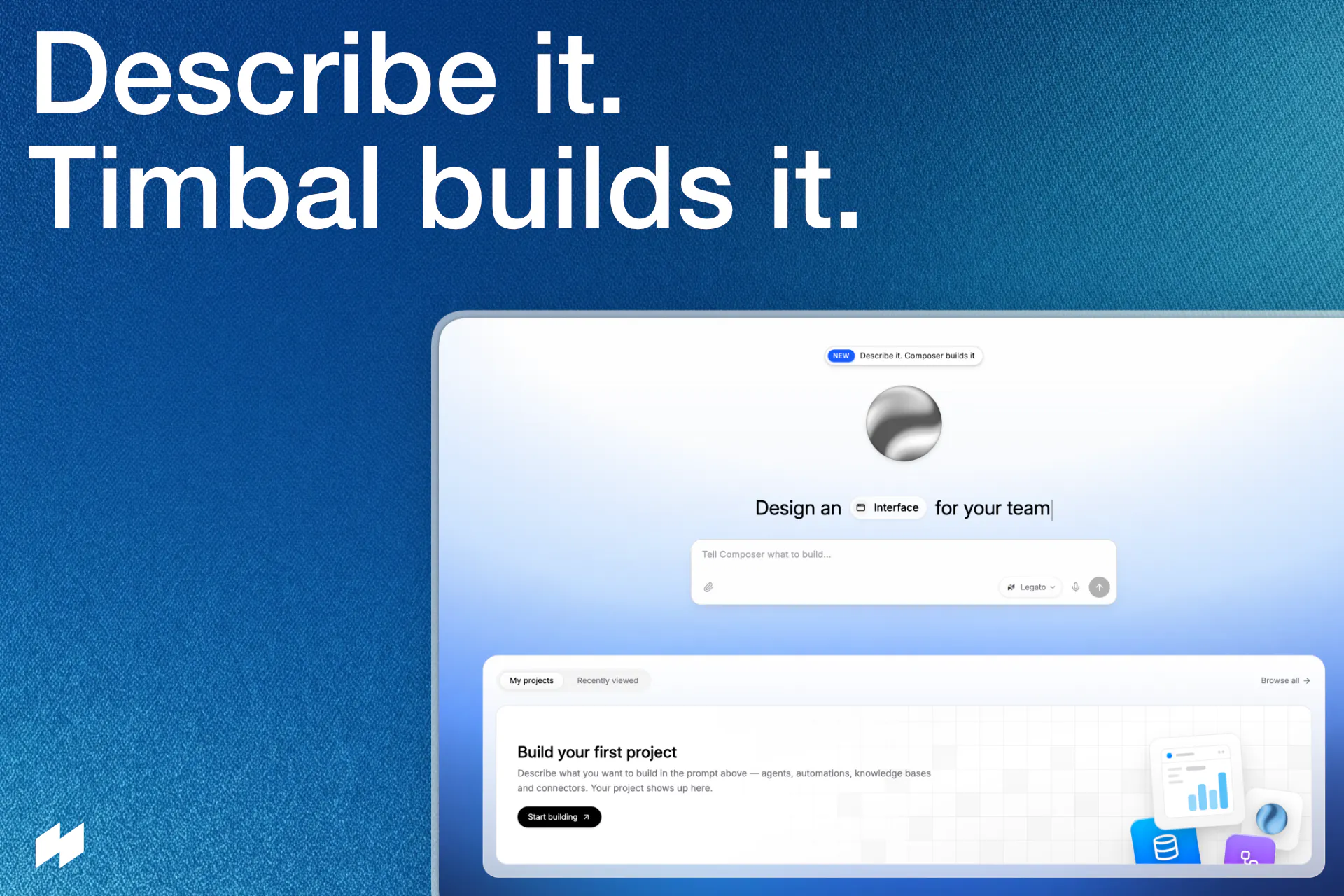
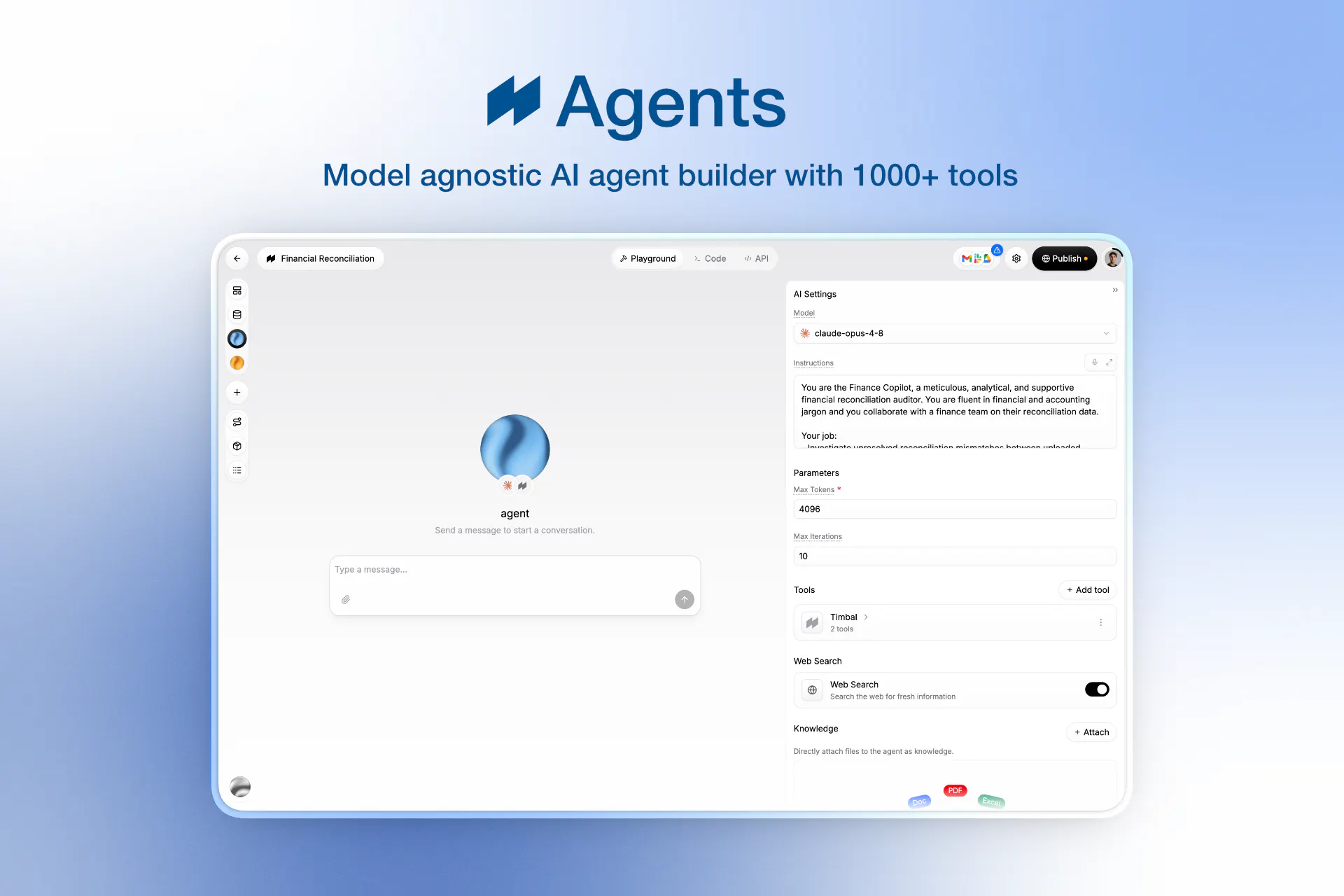
查看原始信息
KnowYourCompany.ai
Stop investing on vibes ! KnowYourCompany.ai is the AI-native equity research platform that gives you the discipline the funds use, in plain English. 1. Find: is this worth my money? 2. Understand: what am I actually buying, distilled in one morning. 3. Stay safe: alerts the day something material lands. Deploy agentic AI to expand your coverage, offload manual review, and surface signals faster. Every fact linked back to the filing.

Hey Hunters 👋 Shams here, one of the makers.

Honestly, this started as a problem of our own. We were investing on the side, doing our own research, and tracking our own ideas. Then life got busy, and keeping up with everything we'd found just fell apart. The signal was there; we didn't have the time to stay on top of it.

So we started building agents to do it for us: surface ideas, dig into them, and follow up before the window closed. Coming from cybersecurity, it felt familiar. Pull scattered signals into one place and act before the moment passes.

That side project became KnowYourCompany.ai: a cognition platform to discover, research, and act on any of India's listed companies, with every claim cited to the exact filing, page, and line, so you never have to just trust the AI.

The lesson for us was that research isn't a time problem; it's a systems problem. You can't read 500 filings a day, but your stack can. It should be watching, filtering, and digging for you, so your time goes into thinking and deciding, not searching and verifying.

So I'm curious: what does your research stack look like today? Screener tabs, Telegram tips, a spreadsheet, Claude ? Drop it below. I'd love to compare notes on what's working and where things fall through the cracks.

9
回复

Love the tech here. Even as a fresh product, it is (almost) bug free and so easy to use. For someone who finds to very difficult to read through finances and follow updates on news and markets, it is definitely going to take the edge off while investing. Looking forward to making the most of it.

3
回复

@shubhransh_srivastav Really appreciate the feedback.
Pro tip – Switch on updates and stay up-to-date about all your investments.

Happy investing :)

0
回复

This is great! Will really help simplify my work to figure out which companies I should be invested in!

3
回复

@aditya_bhattacharyya Thanks, Aditya, for the kind words! This is just the start. There is a lot more in the pipeline yet to come. Onwards and upwards !!

0
回复

This is a great tool — especially for someone like me who invests but doesn't have the bandwidth to track the market closely. Having source-linked research and auto-updated financials in one place is exactly what I need.

1
回复

I like that you’re focusing on company research rather than just market trends. Are the insights generated entirely from public information, or can users connect their own research sources as well?

1
回复

@amjad_shaik At the moment, Only publicly available information.

0
回复

The link-back to filings feature is genuinely useful, made me trust the summaries way more than usual AI research tools. Coverage alerts sound promising too.

1
回复

@arinburtakpq70 Thanks, Arin! Our aim is to give full visibility to investors as they deploy their precious capital.

0
回复

Congratulations on the launch, guys!! The UX is pretty clean :)
The line-level citations are the standout for me. "Never just trust the AI" is exactly the right posture for anything touching money.

Curious about one thing: how often do the agents re-examine an existing thesis? Is it event-driven- a new filing drops and the agent re-checks or on a schedule? Would love to understand how it flags when something you already hold has quietly changed.

1
回复

@naman_shukla Trust through transparency was one of the key pillars when we embarked on developing this product.
And yes – it's dynamically updated in real time with the latest filing we receive. It checks the recency as well as the document type before updating the thesis. Not all documents are the same.

p.s. You'd be surprised how often a company changes their EPS value in the financial results & then in the subsequent press release. :p

0
回复

how does the alert system actually decide what counts as material, especially for smaller filings that might still move a position? curious how much i can customize the sensitivity before it just becomes noise

0
回复