Product Hunt 每日热榜 2026-07-12

PH热榜 | 2026-07-12

#1
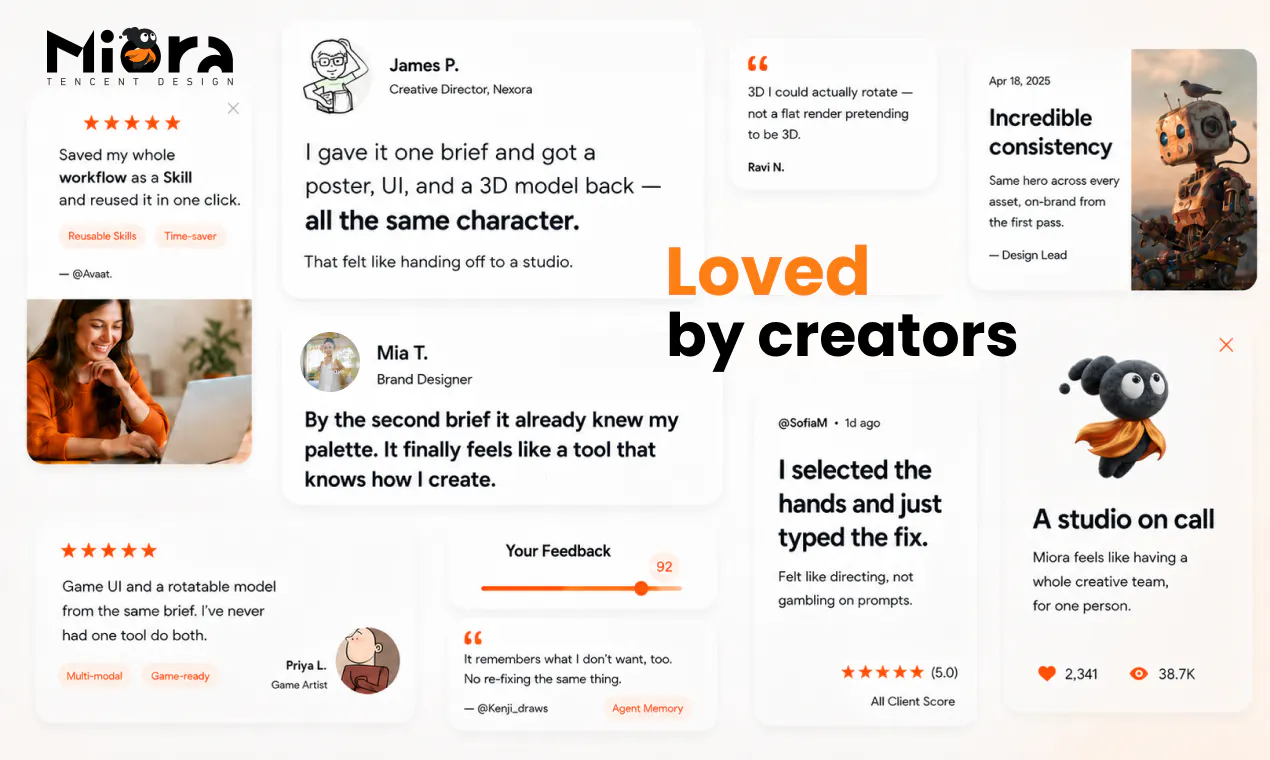
Miora
Scale your creativity on editable canvas with agent memory
517
一句话介绍:Miora是一个具备“记忆”能力的AI创意工作室,通过可编辑画布让个人创作者从一个想法出发,自动生成并跨模态协调脚本、视频、UI、3D等品牌资产,彻底解决AI工具之间“每次都要重新教”的痛点。
Design Tools Marketing Artificial Intelligence
AI创意工作室 智能体记忆 多模态生成 可编辑画布 品牌资产 创意工作流 风格一致性 技能复用 产品发布 视觉AI
用户评论摘要:用户普遍认可“可编辑记忆”和“技能复用”是核心竞争力,同时核心关注点在于:多模型间的一致性如何保证;生成流程是否可追溯、可调试;记忆与技能的范围(全局/项目)及共享机制;锚点修改后下游资产如何处理;以及是否支持客户端演示模式。
AI 锐评

Miora在这场Product Hunt的发布中,投中了AI创意工具领域一个真实的“隐痛”:**生成变容易了,但一致性与上下文管理成了新地狱。**

它的核心价值不在“又一款AI图像工具”,而在于“记忆”与“编辑性”的结合。本质上,Miora试图解决的是从“单次生成”到“连续创作”的范式跃迁。绝大多数AI工具仍是“无状态”的——你每次打开都在教学,品牌规则、风格偏好、项目上下文被一次次抛弃。Miora的Agent Memory和可复用Skill,是将“上下文”从用户端转移到了工具端,这的确是结构性优势。

但要注意,这个价值能否兑现,取决于几个关键节点。评论中专业用户提出的“流程可追溯性”和“锚点变更的传播策略”直指要害——如果记忆成为黑箱,它很快就会从助手变成绊脚石;如果下游资产必须全手动重做,所谓的“一致性”就成了精致的谎言。Miora目前的回应是“智能协同”而非“自动冲掉所有下游”,这方向正确,但执行难度极高。

另一个被高估的风险是“可编辑画布”。多模态asset共处一室,听起来很美,但这实际上是在挑战Adobe和Figma生态的护城河。Miora目前的定位是“上游生成枢纽”,承认资产必须导出到传统工具做最终编辑,这是务实的妥协,但也意味着它难以成为创作的终点站。

最聪明的一步是Skill作为可共享的SOP(标准作业程序),而非持续漂移的记忆。这区分了“工具个人化”和“团队协作”两个场景,并且巧妙地避开了AI模型“风格漂移”这个钉子。

**一句话总结:Miora不是又一个生成器,而是一个“创作伴侣”的系统级尝试。它的未来取决于记忆的透明性、流程的可调试性,以及能否在“生成”与“控制”之间找到真正的平衡点。**

查看原始信息
Miora
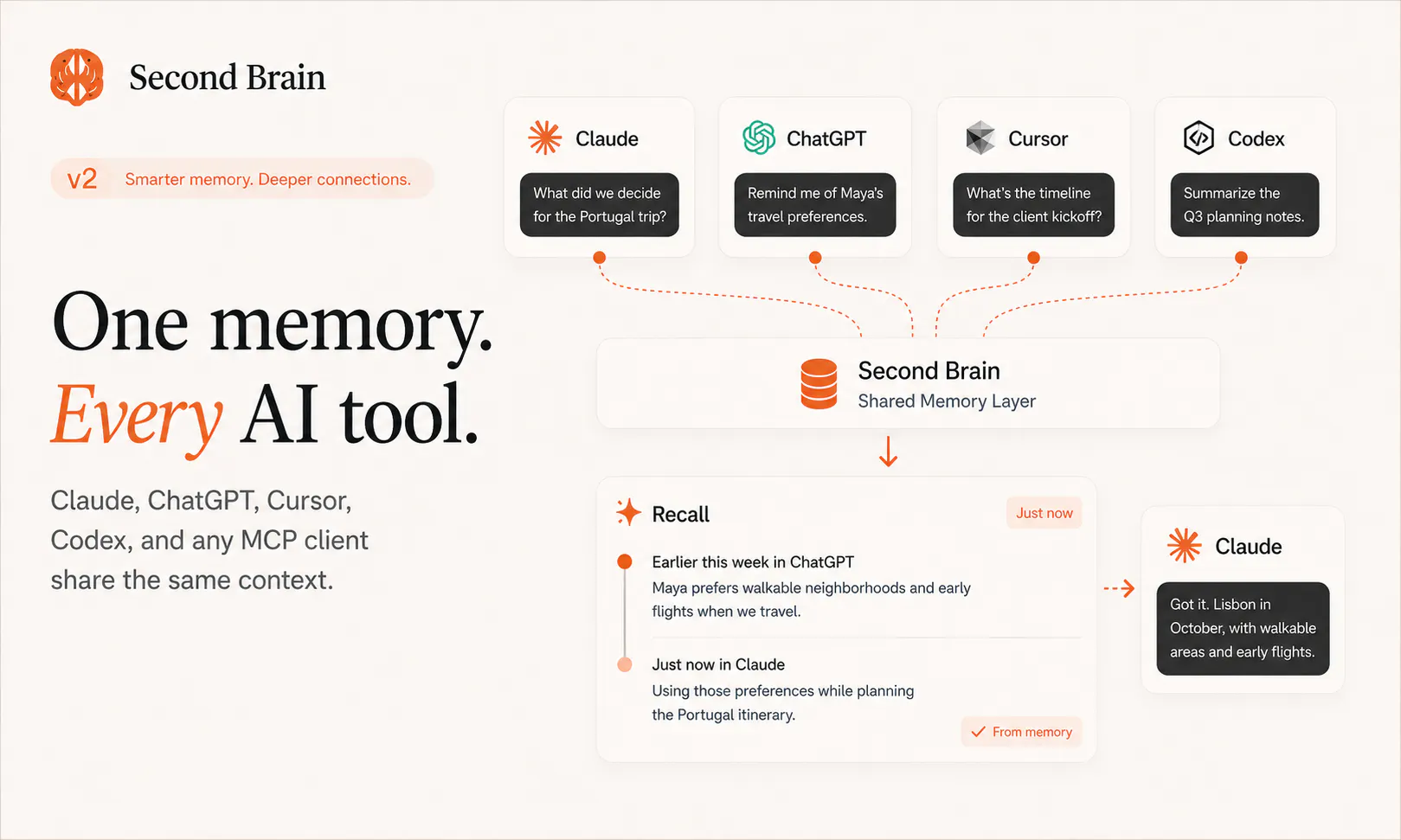
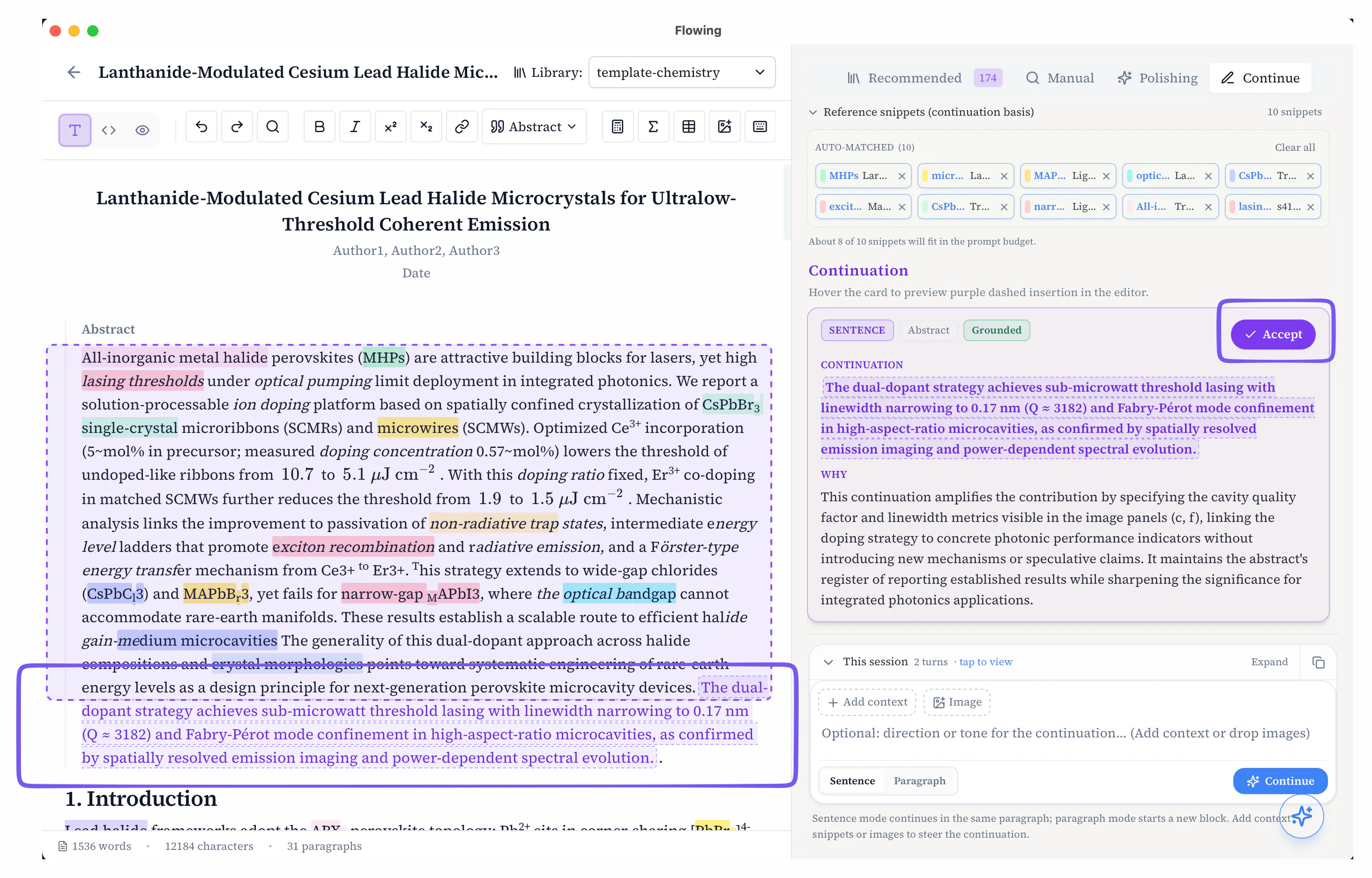
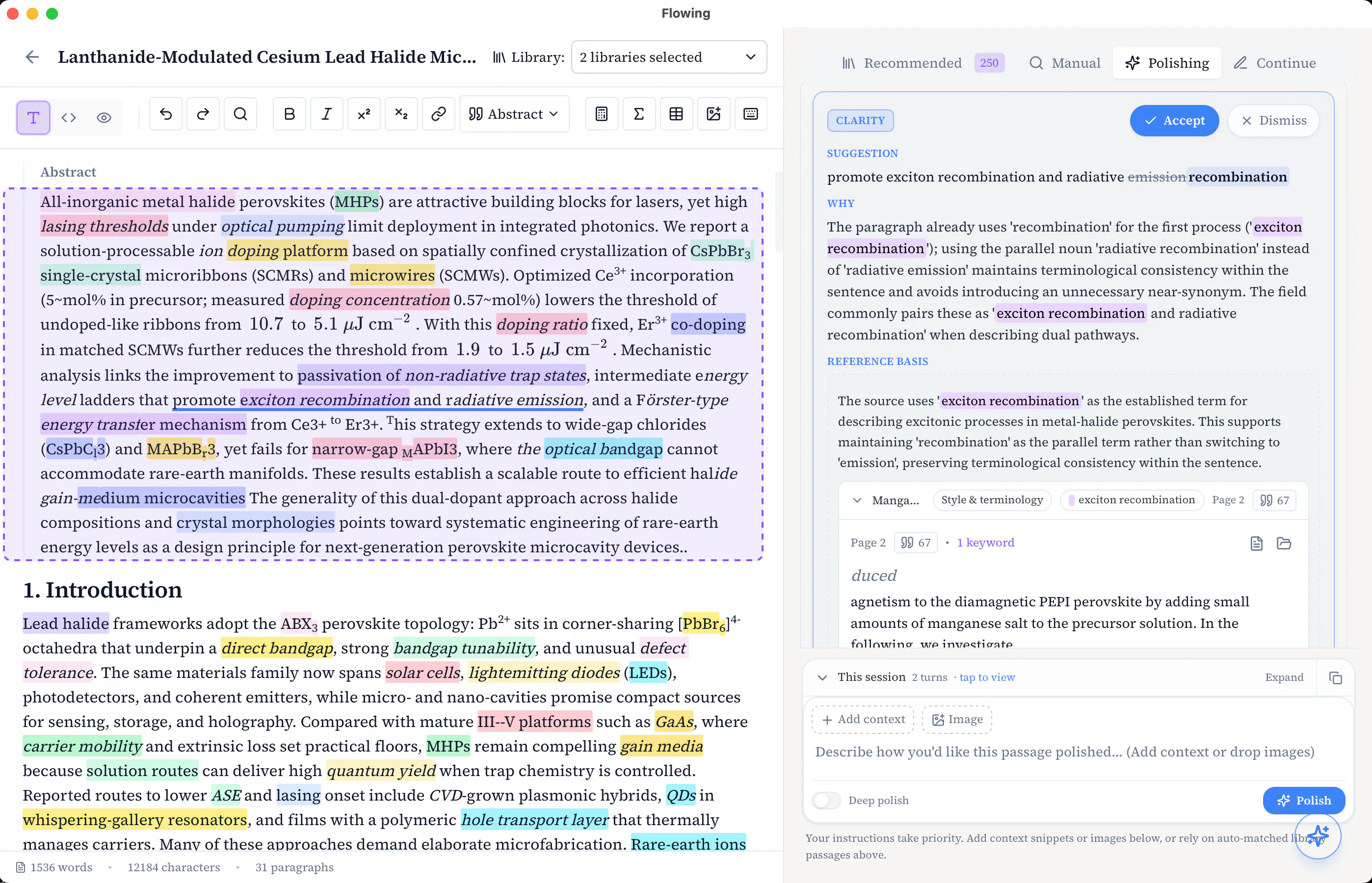
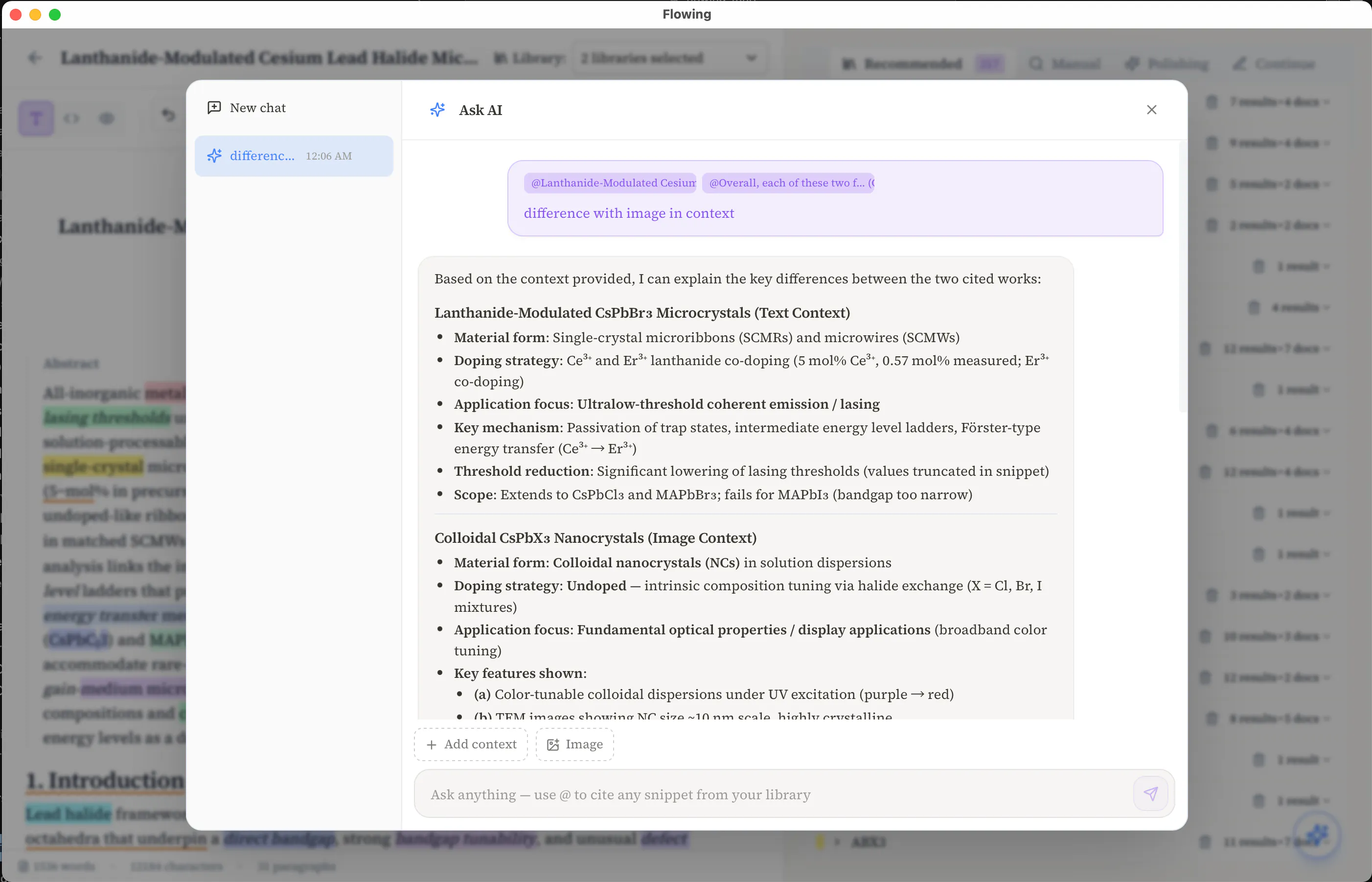
Not another AI image tool. Miora is an Agentic Creative Studio with Memory. Bring one idea, generate multimodal assets on one editable canvas, turn auto-built memory into a reusable Skill, then create more, always true to your taste. One person, a whole creative studio.

Hey Product Hunt 👋

I'm part of the team that built Miora.

The way we create is going through a paradigm shift. AI changed what a single step can do, but the work is still scattered across tools, and you're teaching it your preferences from scratch every time.

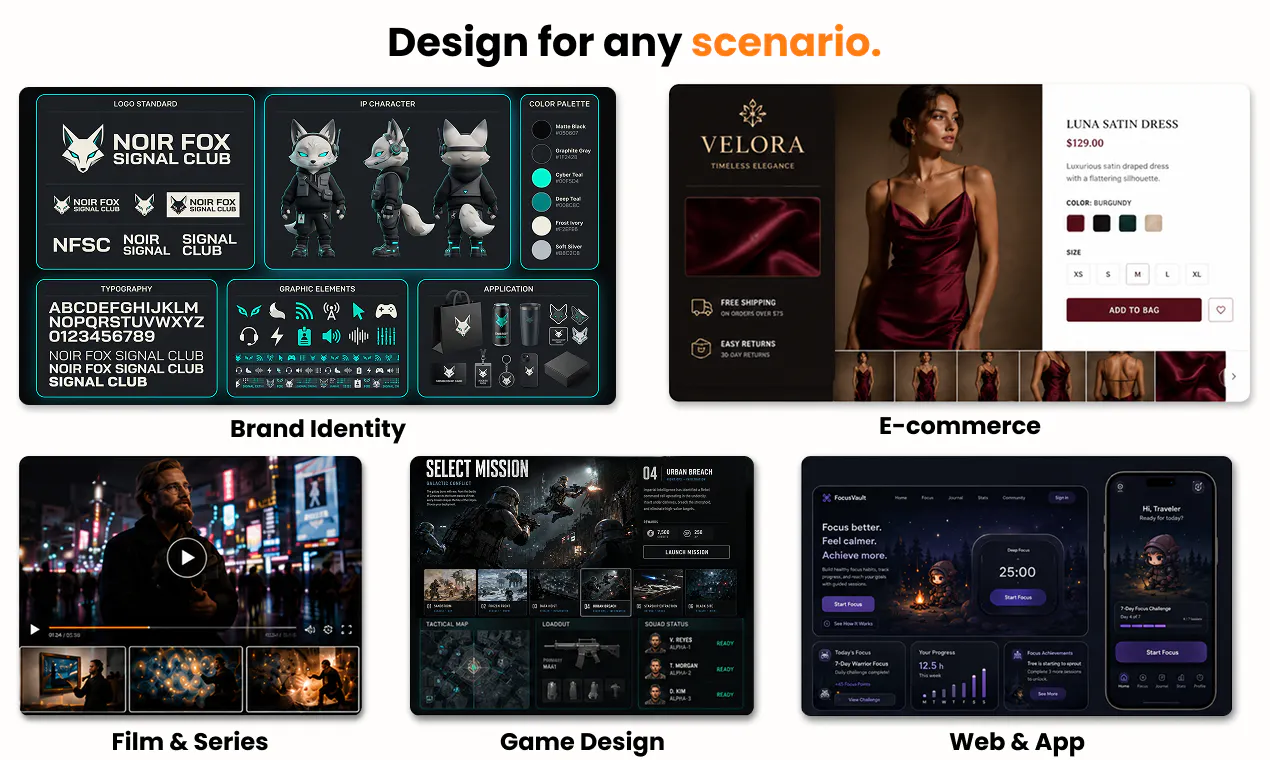
So we built Miora, an Agentic Creative Studio with Memory. Give it one brief, and it autonomously orchestrates a team of AI Specialists, delivering a full campaign asset pack in one go, from script, storyboard and video to UI/UX, illustration, 3D and brand systems, always true to your taste.

Why Miora is different:

  • Agent Memory: your brand, style, rules and taboos build up automatically, and stay fully editable. The first brief generates; every one after continues from where you left off.

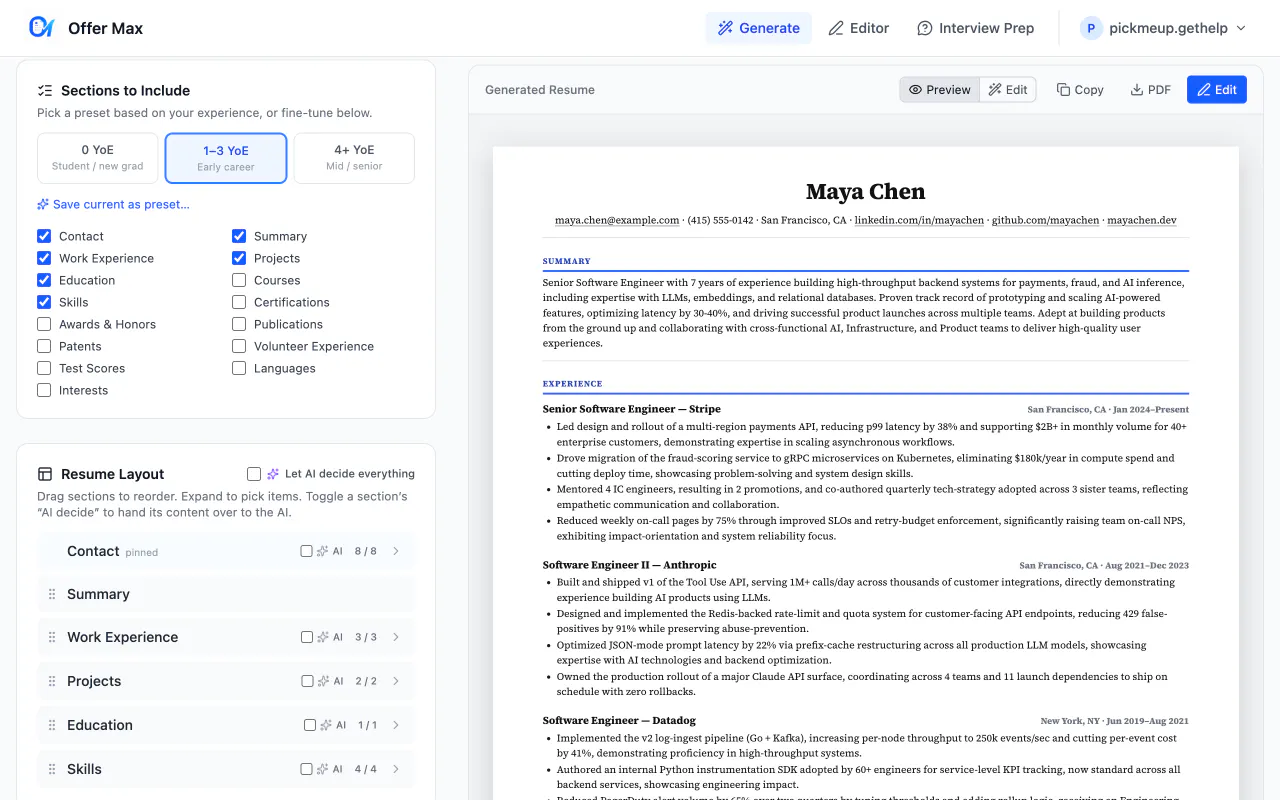
  • Multimodal on one canvas: image, video, UI and 3D live together, not scattered across tabs.

  • Everything stays editable: Edit Text, Selection Edit, or just say the change in plain words.

  • Skills you own: save a workflow as your own Skill. Reuse it, share it, never rebuild from scratch.

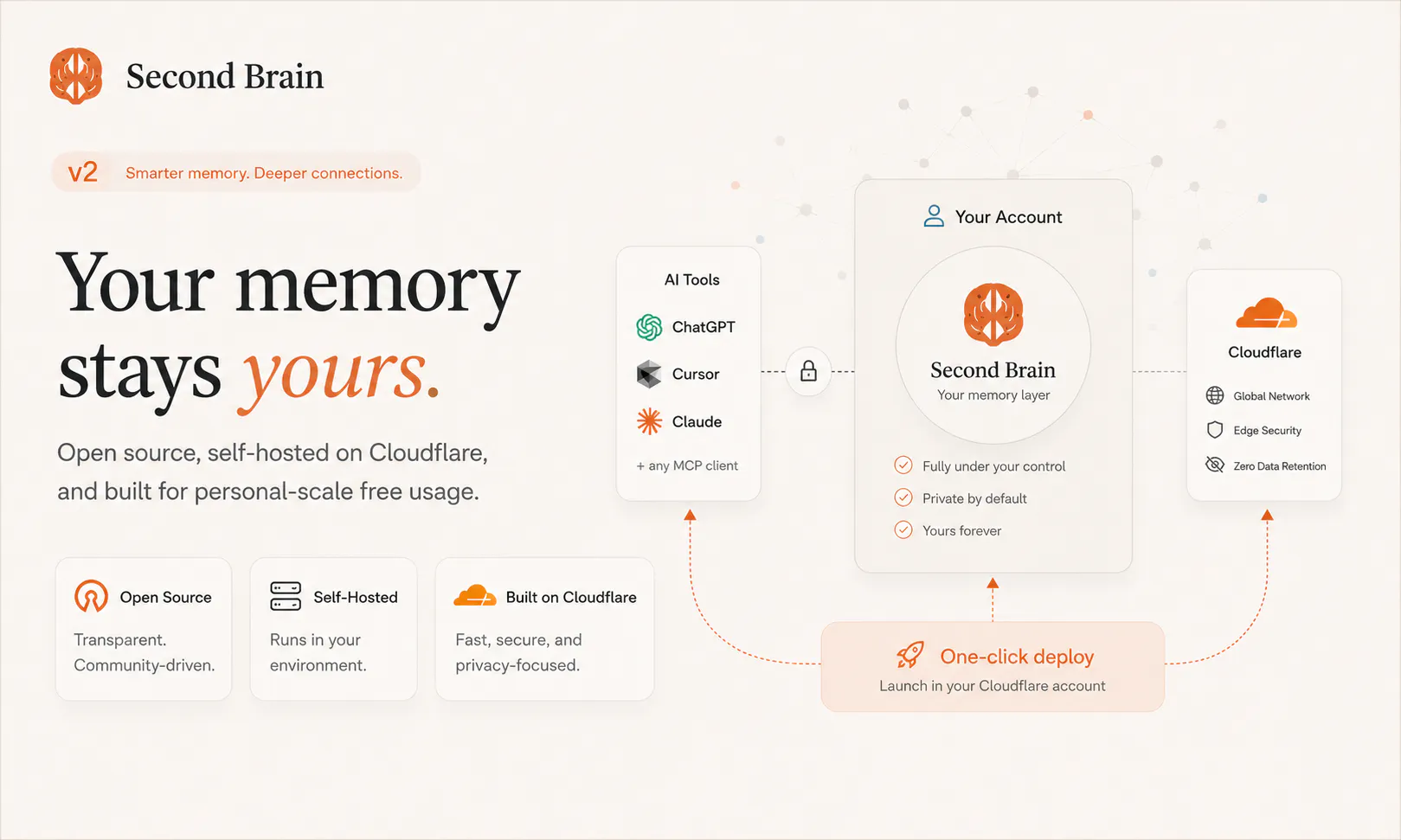
Memory is the part we most want to dig into. As you work, Miora quietly remembers your style and each project's rules, and it's no black box: you can view, edit and add to any of it. So the first brief generates; every one after is continuous creation built on your context. The deeper you go, the more it gets you.

Here's how it works:


  1. Pick a Skill, drop a brief: no prompt gymnastics, just say what you need.

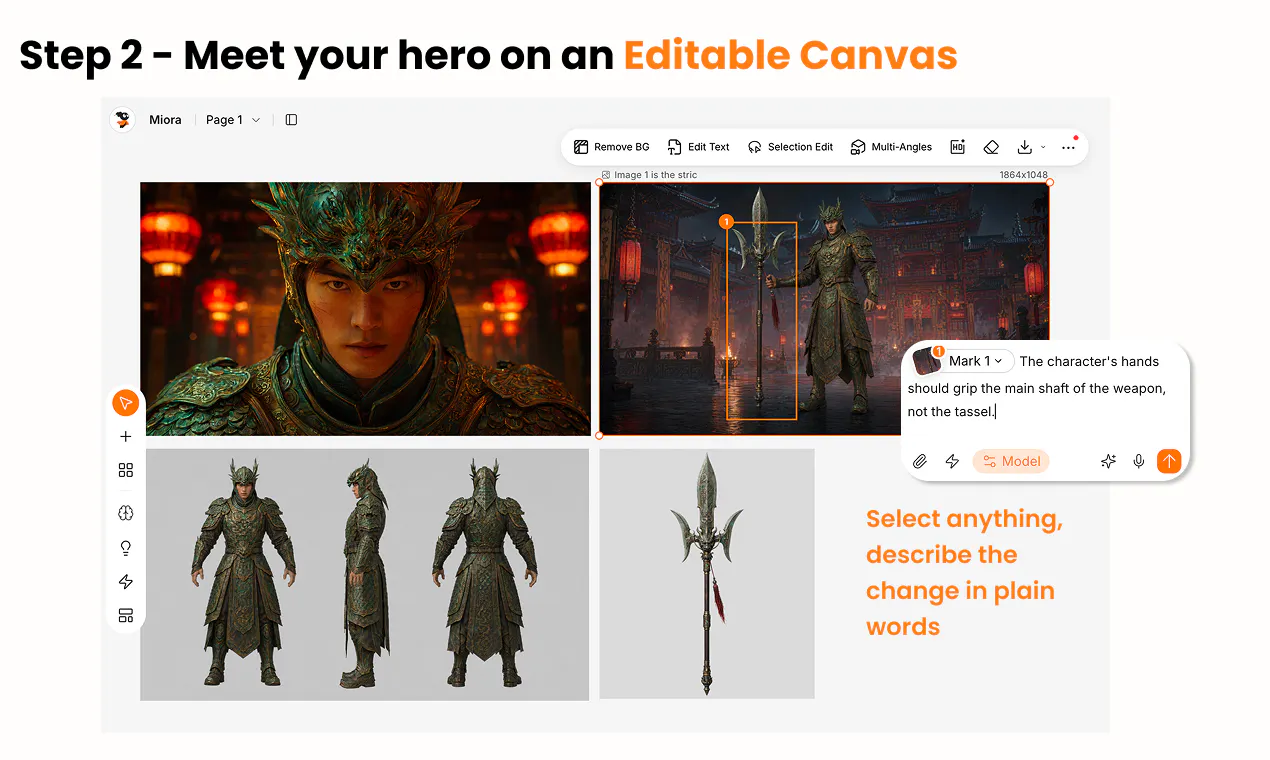
  2. Meet your hero in an editable canvas: one brief becomes a fully-designed character, and every element stays editable: select anything, describe the change in plain words.

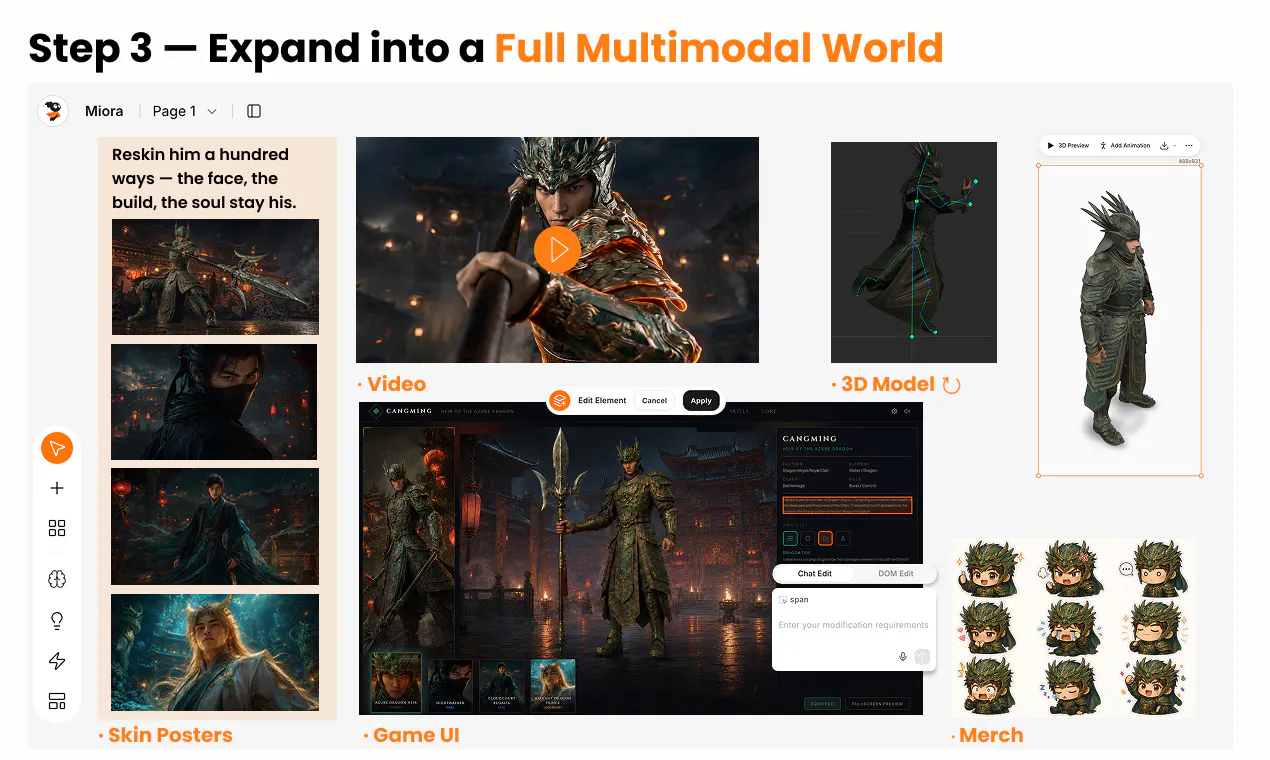
  3. Expand into a full multimodal world: that one character fans out into video, game UI, 3D, skins and merch, all one consistent IP, all on a single canvas.

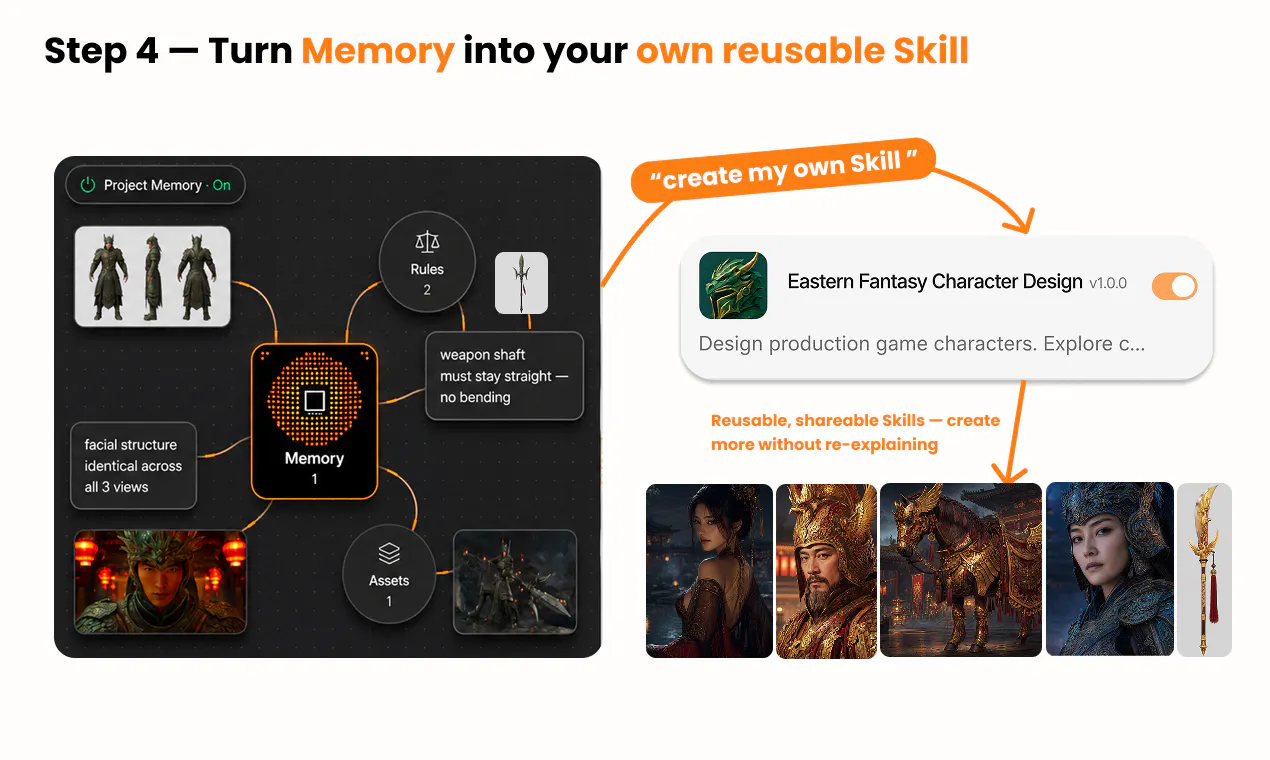
  4. Turn the memory into your own Skill: Miora remembers your rules, taste and taboos, then packs the whole workflow into a Skill you reuse and share.

We believe creation is shifting from "people operating tools" to "creating alongside Agents." Your role changes from executor to director. From a single idea to a batch of deliverable work — that's the distance Miora wants to close.

To celebrate our launch, every new account gets 1,000 free credits to start creating right away.

Try it → miora.design

15
回复

@sherina_chen Congrats on launching Miora! The part that stood out for me was the problem - teaching a tool your preferences from scratch every time is a tax people are paying with AI creative tools right now.

Memory is what Miora's all about - that's the kind of differentiator most tools would love to have, and it's currently buried under the deliverables.

Who do you picture opening this first - an agency creative director, or a solo brand builder?

0
回复

@zack good to hear. the reason i ask about specialist visibility specifically is that when the pipeline gets faster, review debt piles up faster too. teams reviewing 40 assets a week can't debug what went wrong without knowing which agent decided what. curious what the roadmap looks like for that part.

0
回复

This looks insanely useful. Jumping between tabs and constantly re-prompting my style rules is the worst part of my workflow right now. Having an agent that actually remembers previous briefs is huge. Gonna go use my free credits now. Congrats!

0
回复

Hey cool this treats memory as something you can inspect and edit rather than a black box the model manages on its own. A lot of "personalization" in AI tools happens invisibly, so letting someone add or remove a specific rule changes the trust relationship with the tool in a big way for sure

4
回复

@uddipta Appreciate that. We kept feeling that "trust me, the AI remembers" wasn't enough. If memory affects the output, people should be able to inspect it, edit it, and decide what stays.

0
回复

@uddipta You put it really well. The trust relationship changes when memory is inspectable and editable. Miora can organize memory automatically in the background, but users should be able to see what it learned, remove what’s wrong, and add specific rules when needed. Memory should feel like a creative system you own, not a black box.

0
回复

@uddipta Such an insightful comment, Uddipta! "Trust" is such a crucial word for us. We strongly believe that true creative tools shouldn't require blind faith in a black box. We designed Miora to earn your trust not just through a hands-on, transparent working mode on the canvas, but also through consistent reliability when executing your specific vision. Letting you inspect, tweak, and own those rules is the only way to build a real partnership with the AI rather than just fighting against it. Thanks for the support!

0
回复

Love the direction you're taking . The idea of AI remembering my creative preferences instead of starting from zero every session feels like a much bigger leap than just generating another image.

3
回复

@felix_harper That's the shift we're excited about too.

For a lot of creative work, the real cost isn't generating the asset. It's re-explaining the context, preferences, and decisions every single time.

We're hoping Miora can become something that grows alongside the creator, instead of resetting back to zero every session.

0
回复

@felix_harper Exactly. The goal is for Miora to build on what you have already made and decided, instead of making you repeat your taste, references, and constraints every time. like a teammate

1
回复

@felix_harper btw
That has been one of the strongest reactions from our beta users: after working with Miora’s Agent for a while, they do not want to go back to one-shot generation tools that make them start over every time.

1
回复

One of the most interesting launches today, especially the anchor-node idea. Wondering...you approve a core key visual, branch video, UI and 3D off it, then perhaps realize the anchor was slightly wrong...Does fixing the anchor re-propagate to everything downstream? Is each child a manual redo? Great work anyway!

3
回复

@artstavenka1 Great question! Updating the anchor doesn't automatically redo everything. The new direction can be saved into Miora's memory, and creators can choose which downstream assets they want to regenerate.

We believe creative teams should stay in control — sometimes you want the whole system to evolve, and sometimes you only want to adjust one branch~

1
回复

@artstavenka1 Thanks for the kind words and the brilliant question, Art! The short answer is that we deliberately avoid forced auto-propagation. Miora is designed as a fluid canvas rather than a rigid, top-down workflow tool. There isn't a strict "downstream"—you can use node A to generate node B, and then actually use B to iterate back on A. We built it this way because we strongly believe that in the age of AI generation, the "human touch" found in step-by-step fine-tuning and curation is more precious than ever. Blindly auto-updating child nodes often destroys those intentional creative choices. However, if you do want that automated pipeline effect for a specific task, you can easily save your mature process as a reusable Skill!

2
回复

@artstavenka1 You touched on a really important point. Miora isn’t designed as a traditional node-based workflow where changing one upstream node mechanically re-runs everything downstream.

The anchor is more like a shared creative direction: the approved intent, visual logic, references, and decisions behind the work. If you later realize the anchor is slightly wrong, you can update that direction, and the agent can help carry the correction into related assets across video, UI, or 3D.

The goal is not automatic destructive re-propagation, but intelligent revision. The agent should understand what changed, what needs to be adjusted, and what can stay intact, more like working with a creative teammate than operating a pipeline.

0
回复

Tried Miora this morning and the memory turning into a reusable Skill thing actually worked, my color choices carried over to a totally different asset without me redoing anything. The editable canvas feels way less chaotic than juggling tabs.

2
回复

@cnurettin33910 Thanks so much for trying Miora and sharing this!

This is exactly what we’re building toward and really glad the Skills and editable Canvas are helping make your workflow smoother.

Would love to see what you create with Miora and hear any feedback as you keep exploring!

1
回复

@cnurettin33910 Thanks so much for trying Miora out, Nurettin! We strongly believe that maintaining context shouldn't require manual copy-pasting, and organizing thoughts shouldn't feel like a tab-management simulator. Really glad to hear the canvas is bringing some visual sanity back to your creative process!

1
回复

@cnurettin33910 This is exactly what we heard a lot during our beta. Once people use Miora for a while, it becomes hard to go back to one-off generation or node-based workflows.

The value really shows up when creative decisions start carrying across assets naturally: colors, style choices, brand rules, references, approved directions. You spend less time rebuilding context and more time actually shaping the work.

0
回复

the memory-as-editable-rules approach is the right call, most "AI remembers your style" tools hide it as a black box you can't inspect or correct. being able to literally add/remove a rule and see it apply next generation is a much more trustworthy pitch for studio use than "the AI just gets you" marketing

2
回复

@omri_ben_shoham1 Couldn't agree more. Especially for teams, editable memory feels much more useful than magical memory.

0
回复

@omri_ben_shoham1 Really appreciate that!

We think creative teams need more control, not just "trust the AI." Making memory editable means it's easier to refine, share, and keep everyone aligned instead of hoping the model remembers the right things~

0
回复

@omri_ben_shoham1 Spot on, Omri! This touches exactly on a major pain point we observed in real creative workflows.

Memory is fantastic, right up until the moment you need to pivot. In actual production, there are always times when you have to partially or completely scrap a previous style and take a new direction. In those situations, a "magical" black-box memory becomes a nightmare—it stubbornly drags you back to the old context, and you end up fighting against the tool.

By making memory explicit and editable, creators can literally just delete or toggle off the outdated rules. You keep the foundation that still works, and toss the rest. Really appreciate you highlighting this practical difference!

0
回复

agent memory that builds up your brand's taboos automatically is exactly the piece every creative team has been re-teaching AI tools weekly. one persistent brand doc miora actually reads is the win.

real q: is the specialist chain visible when an asset ships? like can i see "script agent to storyboard agent to illustration agent" with what each contributed? asking because when brand teams review, they want to point at the specific step that went wrong, not the whole pipeline.

2
回复

@thenameisarian Great question! That's actually a direction we're really excited about.

Today in Miora's Free Canvas, you can see assets evolve step by step and jump in to edit any part of the process directly on the canvas, so creation feels collaborative rather than like a black box.

You're also not locked into a fixed workflow, you can decide which specialist handles which task and shape the process as you go.

1
回复

@thenameisarian Right now you can already see what each specialist is doing in the conversation and follow how assets evolve on the canvas.

So if something breaks, you can usually tell where it broke.

The more explicit review workflow you're describing for brand teams isn't there yet, but honestly that framing is kind of brilliant 😄

"Don't blame the whole pipeline, point to the step that broke" is probably a better way to describe the problem than we've been doing internally.

Mind if we steal that? Would love to keep you posted as we build toward it.

1
回复

@thenameisarian Because a real Agent is handling the task, you don’t need to worry about the process being hidden. Unlike traditional pipelines or workflows, you can freely direct the Agent or ask questions to get exactly what you need!

1
回复

A full campaign pack from one brief sounds powerful. How does the agent maintain consistency when assets are produced by different underlying models for image, video, UI, and 3D?

2
回复

@luke_pioneero Yeah this was the thing that kept us up honestly. The trick is the consistency doesn't live in the models, it lives one layer above them. Whatever you upload (your product, palette, the rules) gets pinned in memory and pushed into every step as hard constraints, so it doesn't matter if it's the image model or the video one doing the work, they're all drawing from the same anchor. Otherwise, you just get 5 pretty assets that look like 5 different brands

2
回复

@luke_pioneero Building on Sherina's point about the memory anchor, this is exactly why we don't just generate everything simultaneously in a black box. The workflow in Miora usually starts with establishing a strong core asset—like a key visual or character design. Once you approve that node, its specific stylistic DNA gets locked into the agent's memory. When you then branch out to generate a video or a 3D object, the agent isn't starting from scratch; it's explicitly referencing that approved anchor node. The underlying models might be different, but they are all forced to obey the same master reference you established.

1
回复

@luke_pioneero Great question. The key is that consistency lives above the individual models. The agent keeps the approved direction, character traits, references, and design rules as shared context, then adapts them for image, video, UI, or 3D generation.

Different models may produce the assets, but the agent is carrying the same creative intent across them.

1
回复

@sherina_chen pretty interesting, and potent to see Tencent behind this!

One nit — when I tried to "polish my prompt", it translated it to Chinese!

1
回复

@sherina_chen also, when verifying the video settings, I couldn't figure out how to alter them. I could either Confirm or Deny or "type additional requirements", but typing them didn't seem to make a difference.

1
回复

The editable Agent Memory holding a brand's rules and taboos is more useful to me than one-shot generators that forget my taste every brief. Day-one question: is that taste memory one global profile, or scoped per project so a client brand's rules don't bleed into my personal work? And when I save a workflow as a Skill I "own," can I export it or hand it to a teammate outside Miora, or does reuse only happen inside my own account?

1
回复

@leo404 You’ve landed on exactly the problem we designed for. Miora has two kinds of memory:

Personal memory lives with your account and can carry context across projects. Project memory stays inside that project, so it can hold a client’s brand rules, taboos, key decisions, and progress without bleeding into your personal work.

Skills are not limited to your own account. You can use them yourself, download and share them with teammates, or publish them to the marketplace for other creators to use.

0
回复

@leo404 Memory is just the one of many exciting features coming to Miora. We’re rethinking creative generation around a true Agent, with the goal of transforming how people create while dramatically lowering the barrier to entry. Much more is coming.

0
回复

the memory-into-Skill part is the interesting bit for me - if my taste shifts mid-project, does the skill drift with new edits or does it lock in from the first few briefs and need a manual reset?

1
回复

@sabber_ahamed To clarify, a Skill in Miora functions as a shareable SOP rather than a continuously evolving memory. It doesn't automatically drift in the background as you continue to edit, nor is it rigidly locked to your very first brief. Instead, it acts as a snapshot. When you finally decide to save a process into a Skill, the system looks at your entire workflow and summarizes the final, matured style you landed on at that exact moment. If your taste shifts again later in the project, you would simply save that new, updated process as a fresh Skill.

1
回复

@sabber_ahamed That’s a really sharp question. The distinction is deliberate: Skills stay fixed, so they do not quietly drift as your taste changes. If you want to update one, you can ask Miora to revise it, but that is an intentional change.

Memory is different. It can evolve with the current context and your history, correcting itself as it learns more about your preferences. You can also edit it directly whenever you want.

0
回复

@sabber_ahamed Memory and skills is just the one of many exciting features coming to Miora. We’re rethinking creative generation around a true Agent, with the goal of transforming how people create while dramatically lowering the barrier to entry. Much more is coming.

0
回复

when you share a Skill with a teammate, does the anchor/memory baked into it travel with it, or does it need re-anchoring against their own account's memory first?

1
回复

@sabber_ahamed That is a great technical question! To clarify, a Skill in Miora operates much like skills in other AI agent products—it is completely stateless. The baked memory and specific anchor nodes do not travel with it. Instead, a Skill is designed to summarize your process and capture your workflow, essentially acting as a SOP. When you share it with a teammate, you are sharing the exact recipe, which they will then apply to their own specific anchors and canvas memory.

0
回复

i like the vision of replacing scattered creative tools with one workspace. How will exported projects stay editable later? Saving flexible project files could give creators more confidence.

1
回复

@rajveer_raj That is a very fair point about building creator confidence. Right now, while you cannot export the entire Miora workspace as a single offline project file, we've made absolutely sure that no creative asset is ever locked in. You can export every single piece of content you generate on the canvas—whether that's images, videos, UI components, or 3D models—in standard industry formats.

Our current philosophy is to make Miora the ultimate upstream generation hub where you nail down the vision, giving you the freedom to pull all those individual assets into your traditional downstream software for any final, structural editing.

1
回复

@rajveer_raj 

Every asset on the canvas exports in standard formats, whether that's images, videos, UI files, or 3D assets, so nothing gets trapped in a proprietary format.

Projects can also be shared via link, making it easy for collaborators and stakeholders to revisit the full context of the work, not just the final outputs.

We think creators should own their work, not the tool that helped create it.

1
回复

@rajveer_raj Good point. All assets created in Miora can be exported, and keeping projects editable over time is important to us. We’d love for you to try it and share what else you’d need to feel confident using Miora as your long-term creative workspace.

0
回复

Many tools can generate variations. Fewer can remember why a direction was approved and carry it into another medium

1
回复

@jody_l_wyatt That's exactly the problem we're interested in. Generating options is getting easier fast. Remembering why a decision was made feels much harder and much more valuable.

0
回复

@jody_l_wyatt Totally agree. The hard part isn't creating more options, it's maintaining creative consistency and delivering reliable, aligned outputs over time. That's something we've been thinking deeply about, and it's the kind of creative memory we're building with Miora.

0
回复

@jody_l_wyatt Spot on, Jody! You’ve highlighted exactly why the traditional linear chat interface often fails real creative work. When you try to iterate inside a chat box, the AI tends to get stuck in a rut, getting progressively worse as you give it more feedback, and you can't even roll back to a previous good version. That’s why we built Miora on an infinite canvas—it lets you freely branch, compare, and merge different nodes. When you finally approve a specific direction, our memory layer captures the exact WHY behind your choice, acting as a stable anchor that carries that approved style seamlessly into other mediums like video or UI without losing the essence along the way.

0
回复

I would love a presentation mode that turns selected canvas nodes into a clean client review flow.

1
回复

@jocky Love this idea. A lot of creative work ends with client review anyway, so having a cleaner way to present selected parts of the process makes a lot of sense.

1
回复

@jocky Great suggestion, Jocky! Bridging the gap between the creative process and client deliverables is exactly the kind of professional workflow we want to support. Turning curated canvas nodes into a streamlined presentation makes total sense for agency and studio use cases. Really appreciate you sharing this, it gives us a great direction to explore!

1
回复

Congrats on the launch. I would start with a deliberately difficult brief involving one character across illustration, UI, motion, and 3D to see how well the memory carries the identity.

1
回复

@carlvert Haha that's exactly the kind of brief we'd want people to throw at it. Curious what you'd think after trying it.

0
回复

@carlvert Thanks! That’s actually a great stress test. Keeping one character’s identity consistent across illustration, UI, motion, and 3D is exactly the kind of challenge we want to tackle. Would love to see what you create with it!

0
回复

I like that memory is not presented as magic. Being able to inspect, edit, and add rules makes it feel more like a creative system the user owns instead of hidden personalization controlled by the model.

1
回复

@orman_canida This is exactly how we think about it. Every rule in memory is visible and editable — you can add "always keep this brand color," remove something that's drifting, or correct how it reads your style. It's a creative system you steer, not hidden personalization you inherit. Appreciate you calling that out

0
回复

@orman_canida Exactly. The biggest problem with "magical" black-box memory is that it actually works against you when you need to change directions.

In real studio production, you frequently need to partially or completely overturn a previous design. An invisible memory will just keep interfering and messing with your new concepts. Making memory editable means you can instantly clear out the old rules and pivot without fighting the AI. Thanks for seeing exactly what we were aiming for!

0
回复

@orman_canida Yes! We don’t want memory to feel like hidden magic. In Miora, memory is organized automatically in the background, almost like how the brain consolidates thoughts while dreaming at night.

But the important part is ownership. Users should be able to inspect it, edit it, add rules, or correct the agent when needed. Creative memory should be something the user can shape, not something silently controlled by the model.

0
回复

Congrats! Turning learned creative preferences into reusable Skills is a smart idea.

1
回复

@sandy_liusy Thanks! yeah that's the part I'm personally most excited about. The thing you used to re-explain every single time just... becomes a Skill you reuse. Feels obvious in hindsight but it took a while to get there

0
回复

@sandy_liusy Thanks! Really glad that resonated with you~

0
回复

@sandy_liusy Thanks Sandy! Exactly. We hope Skills and memory can go beyond reusable instructions and become a way for the Agent to truly learn how you create. The more you work together, the less you need to explain yourself again.

0
回复

I can see a small brand team using this to turn one launch brief into key visuals, social cuts, landing-page concepts, and merch.

0
回复

For me, other products require a series of preparations each time a project is recreated, and it's necessary to maintain the style without any changes in every step. miora helped me solve this problem!

0
回复

For event marketing, one brief could become stage graphics, social assets, badges, 3D booth concepts, and recap visuals.

0
回复

Congrats on your launch! One canvas for UI, video, image, and 3D sounds incredibly satisfying.

0
回复

@charlenechen_123 Thank you! That feeling of having everything live on one canvas instead of jumping between five different tools was exactly what we were chasing

0
回复

The editable-canvas approach makes this feel much closer to real creative work. Congrats on shipping!

0
回复

Memory is the most interesting part to me. Can users see why a particular memory was recalled for a generation and remove it from that run without deleting it permanently?

0
回复

@s_cen In Miora, memory isn't hidden away in a black box. We separate personal memory from project memory, and both are visible and editable by the user.

You can also turn memory off entirely when you want to work from a clean slate.

The "why was this memory recalled for this generation?" part is a fascinating direction though. The moment AI starts having memory, it probably also needs receipts.

0
回复

How granular is Selection Edit? Could I change a character's jacket while preserving pose, lighting, and identity?

0
回复

How does Miora decide which memories are worth keeping, and can users approve them before they affect future work?

0
回复

I can see product designers using this to align marketing visuals with the UI language of a new feature.

0
回复

@lily_liu8 Exactly. One of the early use cases we kept seeing was teams trying to make sure the product UI and the launch visuals felt like they belonged to the same story.

Turns out consistency is easy to say and surprisingly hard to maintain

0
回复

The project-vs-personal memory split is what sells this for me — as an indie dev I'm always making promo art and covers for my own app, and the visual language has to stay consistent, which black-box "AI remembers your taste" tools always drift on. Saving that as an editable Skill I reuse per project is the part I'd actually use. When you share a Skill, does it carry its memory rules with it, or just the workflow steps?

0
回复

@lennoxbeflying You are exactly the kind of creator we had in mind when we split project memory from personal memory.

The idea is that a shared Skill carries the workflow and the intent behind it, while each creator still brings their own context and references into the project.

So if your Skill says "keep the playful illustration style, the soft gradients, and the visual language from Project X", those rules travel with the Skill. The personal history behind why you like those choices stays yours.

We like to think of it as sharing the recipe and the taste profile, not your entire kitchen.

0
回复

@Zack Lee that explicit-correction model makes sense, but it puts the burden on the user to remember to say something every time their taste shifts. realistically most people won't bother until the drift is annoying enough to notice. is there any passive signal you use, like consistently editing away from what a rule suggests, that nudges Miora to flag "hey, this rule might be stale" instead of waiting for an explicit override?

0
回复

@omri_ben_shoham1 That’s a great point. Memory system looks at the user’s current input and weighs both strong and weak signals when deciding whether to add or update a memory. An explicit correction carries more weight, while smaller signals can indicate that a preference may be shifting.

We’ll keep refining how Miora interprets those signals based on user feedback. If you notice situations where it reacts too strongly or misses a change, we’d love to hear about them.

0
回复

Creative consistency is usually lost in the handoffs: key visual to motion, motion to social, social to product UI. Putting those assets on one canvas with shared memory could remove a lot of repeated explanation.

0
回复

@mingyouagi Exactly, and it is more than putting the assets on one canvas. Miora’s agent sees the work in one shared context, so it can follow the connection from a key visual to motion, social, and UI without making you re-explain the brief every time.

Project memory carries the important context across new conversations too, such as your logo, brand rules, and key decisions. That continuity is where the handoffs start to feel much less painful.

0
回复

@mingyouagi and memory is just the one of many exciting features coming to Miora. We’re rethinking creative generation around a true Agent, with the goal of transforming how people create while dramatically lowering the barrier to entry. Much more is coming.

0
回复
#2
JustVibe
The search engine for doing, with apps built for you
505
一句话介绍:JustVibe将搜索指令直接转化为可交互、可定制的应用,解决了传统搜索仅提供“文字答案”而无法“直接完成任务”的痛点,让用户从“读答案”变成“用答案”。
Web App Search No-Code
搜索引擎 AI应用生成 零代码 任务型搜索 交互式结果 可编辑应用 旅行规划 创意工具 个性化 产品猎
用户评论摘要:用户高度认可“从搜索到应用”的范式革新,核心关切集中在应用的永久保存、数据持久化、编辑灵活性和导出能力上。多位用户询问生成的应用是否可长期复用、数据是否会自动清除、未来能否导出至日历等第三方平台。创始人回应称应用永久保存在图书馆,数据可通过应用内功能手动保存,导出功能即将上线。
AI 锐评

JustVibe的野心在于重新定义搜索的终点——不是信息,而是行动。它巧妙地将“搜索即用”从概念落地为产品:用户输入“计划东京五日游”,不再得到一堆链接,而是一个可直接填写的行程App。这一框架在旅行规划、创意板、菜谱推荐等轻量级、高频任务场景中极具杀伤力,尤其对非技术用户极其友好。核心差异在于“持久化与可编辑”——生成的应用不是一次性玩具,而是可永久保有、随时调用的私人工具,甚至支持基于他人应用的二次创作,这实质上搭建了一个“应用即内容”的UGC生态。

但风险同样明显。其一,对复杂、重度逻辑的任务(如财务管理、项目管理),“一句提示生成可用App”的承诺极易破功,用户对“准确性和持久可靠性”的追问已暴露这一隐患。其二,后端成本压力巨大:每个个性化应用都需维持持久运行,若用户量激增,免费模式能否支撑?其三,从评论看,“数据归谁、是否隐私”尚需更透明的沟通。JustVibe用“零代码、自由编辑”降低了创作门槛,但未解决“产品质量依赖AI幻觉”的核心矛盾。如果生成的应用在关键时刻出错(如行程安排导致误机),信任将瞬间崩塌。

一句话总结:这是一次对搜索消费形态的大胆重构,但产品从“惊艳Demo”到“可信赖工具”仍有硬仗要打。短期看,最适合的场景是灵感探索和轻度规划——真正的“搜索引擎终结者”还为时过早。

查看原始信息
JustVibe
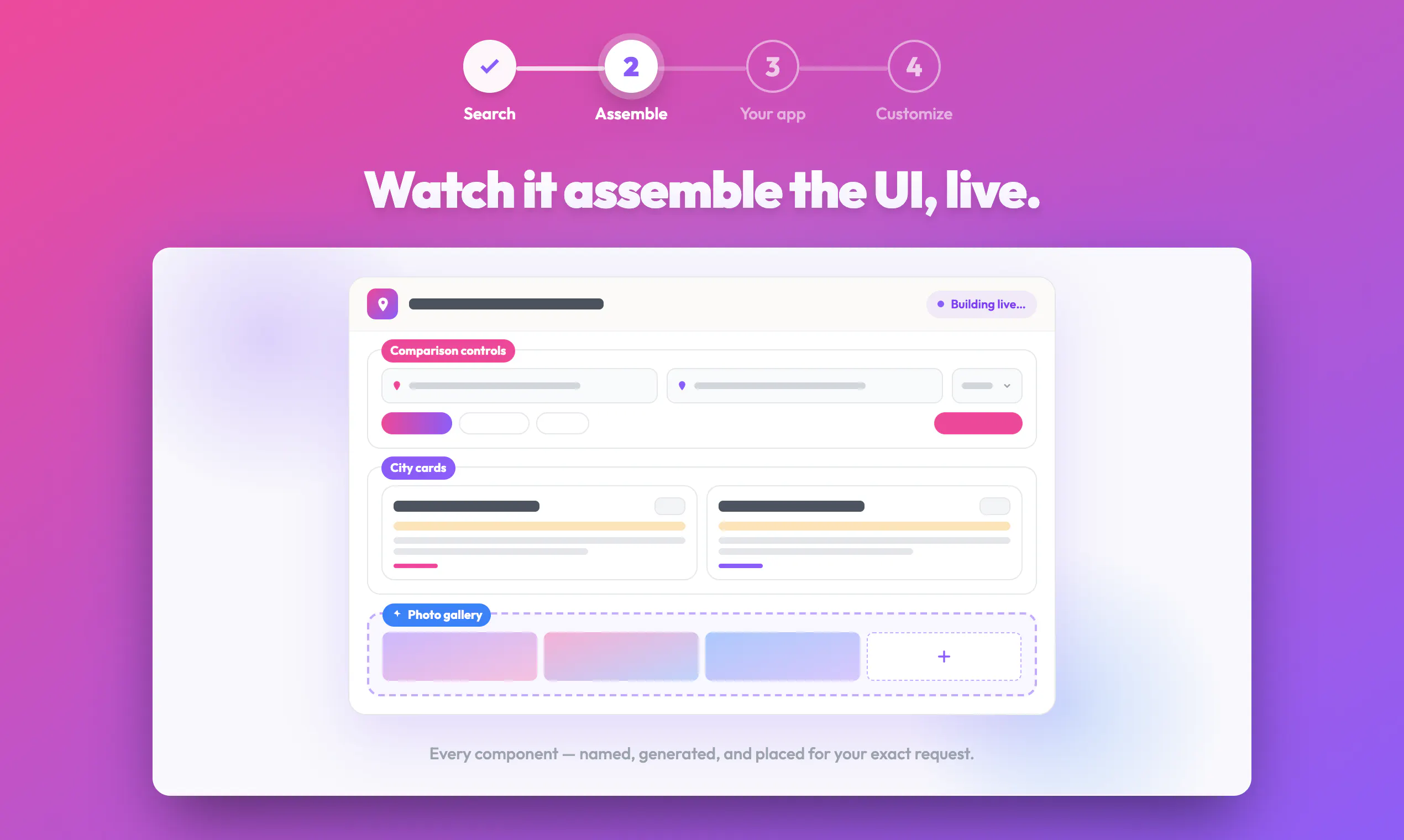
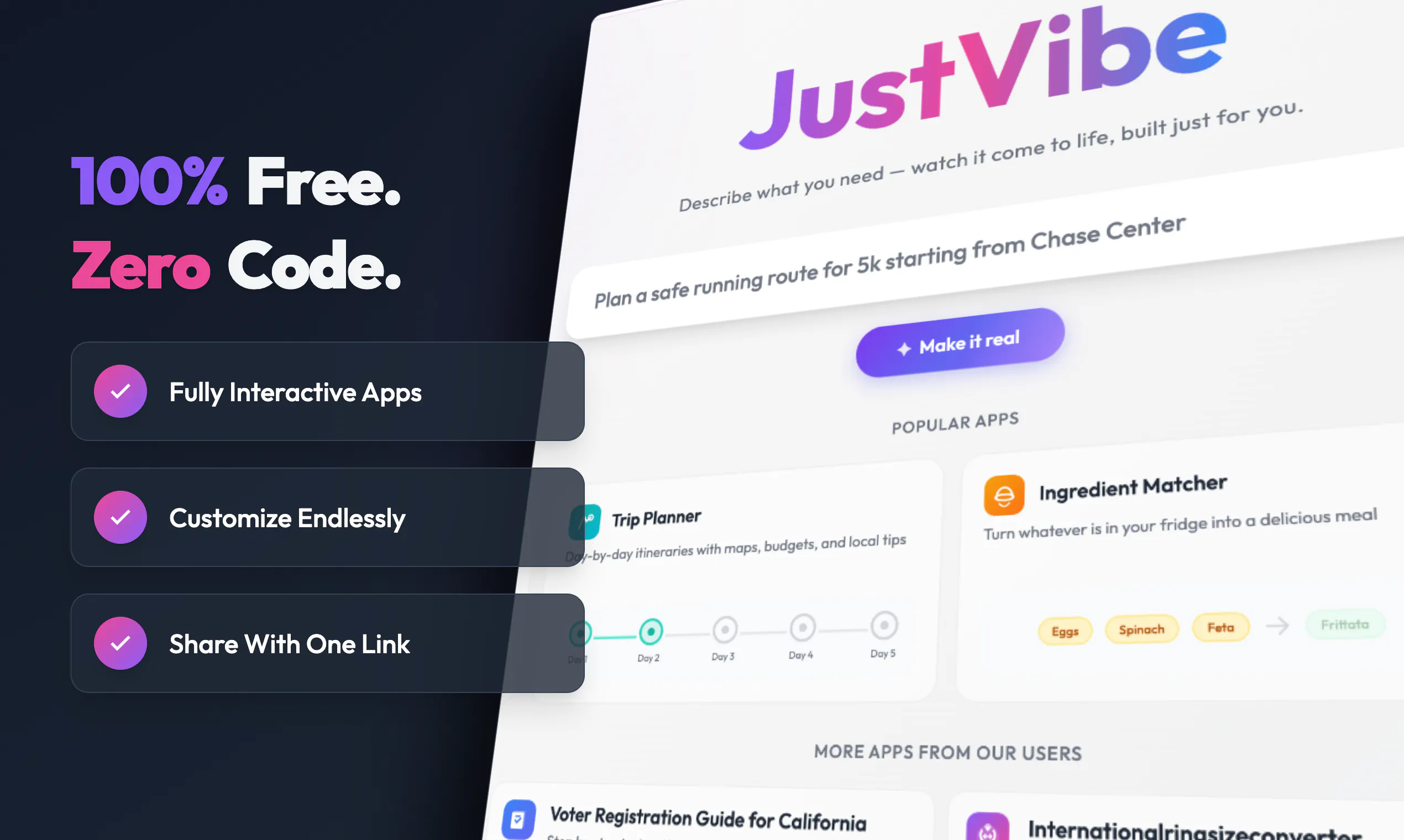
JustVibe is a free search engine, built to help get things done. Search "plan my 5 day trip to tokyo" and instantly receive a fully functional and interactive trip planner, perfectly set up for Tokyo and running directly in your browser. If your perfect app doesn't exist yet, JustVibe builds a custom one for your exact needs in minutes. Every app is yours to keep forever, with zero code. Chat to customize every detail and share your new app with a single link.

Hey Product Hunt 👋

I'm Lianghao, Founder of @JustVibe. I previously led ML/AI teams at Pinterest and The Yes.

I believe the best search engine results should be visual, interactive and actionable. In other words: a working app, built for your exact need. JustVibe started with a simple frustration: when you need something done (compare two destinations for a trip, plan a wedding mood board, figure out dinner from what's in the fridge), every answer today is something to read: links, listicles, paragraphs. What you actually want is an app.

✍️ Here's how it works:

  1. Search like you normally would. Full sentences welcome. The more specific, the better.

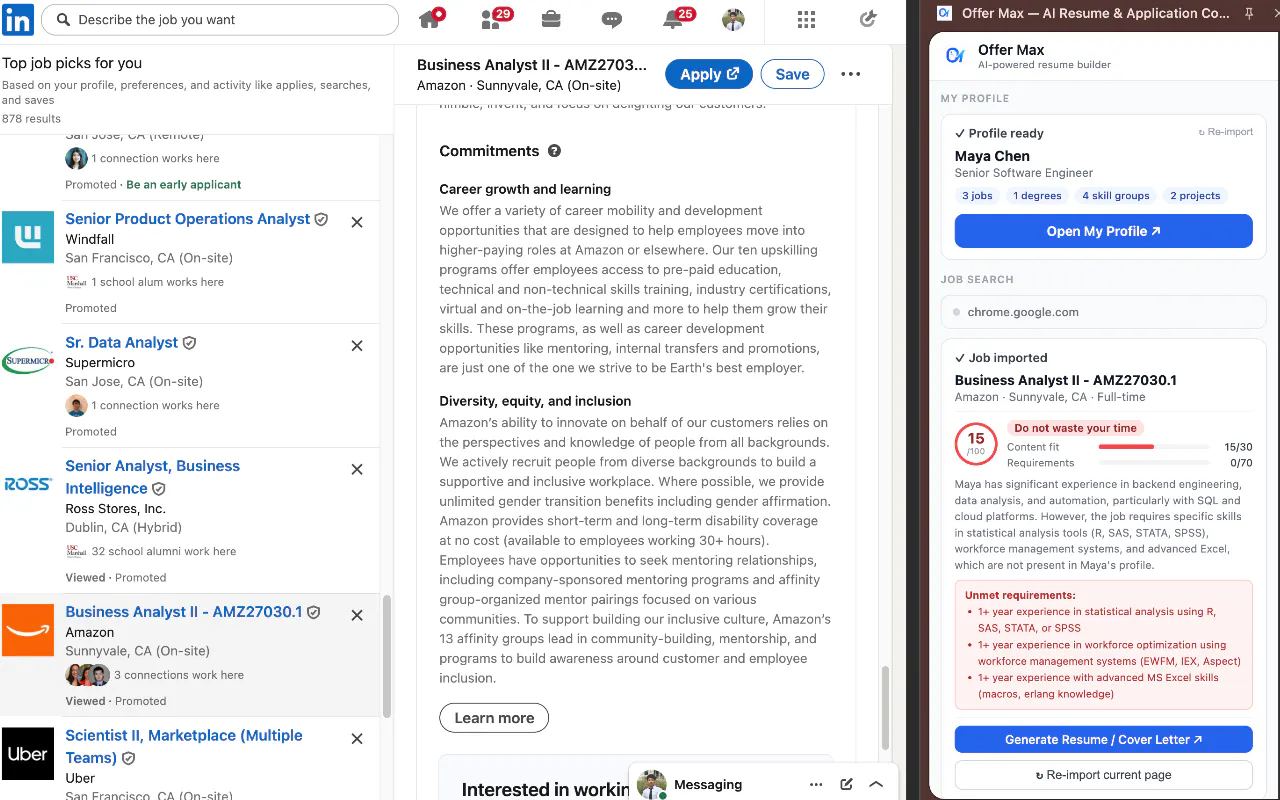
  2. Instantly an app renders with your exact need, from our massive pre-built app library.

  3. Or get an app built just for you in a few minutes. Watch it come alive or explore related apps while you wait. All your apps land in your Library: yours forever to reuse, edit, and share.

  4. Want to customize anything? Open any app and reshape it by describing the change. You never see code.

👉 Go to https://justvibe.com. Try these searches. Or try to stump it. Everything is 100% Free.

  • "create a mood board for a rustic Italian wedding"

  • "plan my 5 day trip to tokyo"

  • "I have eggs, spinach, and feta. what can I make?"

  • "compare tokyo and kyoto for my next travel"

What are the search queries that have never worked in the way you wanted? Let's see what JustVibe would offer!

24
回复

@chenlh Congrats on the launch 🚀

I love the idea of search evolving from "finding information" to "getting a working app." That's a pretty compelling shift from reading answers to interacting with them.

I'm curious, what's the most unexpected prompt that JustVibe handled surprisingly well? Was there a user query that made your team realize, "Wow, this is exactly the future of search"?

Wishing you an amazing launch. Excited to see where JustVibe goes! 🔥

0
回复

@chenlh i love this website! Also, is there a way to submit my website into the results?

0
回复

The plan my 5 day trip is Tokyo example instantly made the idea click for me. I like product that show value within seconds and this definitely dioes. I;m curious to see what other types of apps create with a simple prompt.

9
回复

@morgan__harriss It's great to hear and thanks for your support! @JustVibe shows instant full app experience for a wide range of topics, like mood board creation, home design, outfit explorer, and a lot more you can explore based on your interests!

0
回复

the pivot from "read the answer" to "run the answer" is the actual search UX everyone kept describing but never shipped.

real q: when an app renders, is it mine to save/share/return to, or ephemeral? asking because "i built this comparison app for my trip planning last week" is a whole different value prop from "i asked justvibe and got a result." the persistent version is where the network effects live.

8
回复

That's a good insight @thenameisarian I believe every app should be reusable, shareable, and should even encourage for collaborations.

  • For any app you created on @JustVibe , it's saved to your "Library". You may reuse or share with anyone you'd like. It's yours, forever.

  • For an app you discovered but created by others, you may still save to your "Library". What's more interesting? You can edit this app just by chatting and this edited version becomes your own app. You can think of this as the open source community for apps, where contributing is as easy as chatting.

3
回复

No export option mentioned? Trip itinerary into calendar would help."

6
回复

@aria_turner The apps that involve planning (like a trip planner app) usually have a "save" or "summary" button that would save your app summary (it can be a trip itinerary for a trip planner, or a food recipe for a recipe finder) into you "Library". These summaries are yours to keep. You can come back to them any time you want. Exporting your plan to your calendar app (like google calendar) is coming soon.

0
回复

This is a strong direction. I like the framing of search results becoming usable software instead of just links or text answers.

The big question for me is persistence: once JustVibe creates an app, how editable and reliable is it over time? For travel planning, for example, I’d want to keep tweaking it as plans change without feeling like I’m starting from scratch.

Cool idea. Curious how people are using it beyond travel planners.

5
回复

Thanks @vahid_davoudi I believe the endless app customization is what leads to the ultimate personalization on @JustVibe. You can edit any app (no matter who the creator was) by selecting a component of the app and putting a comment. You can edit any edited app, with unlimited edits you may perform.

3
回复

JustVibe’s pitch is: “the search engine for doing, with apps built for you.”

Ask it to plan a five-day Tokyo trip and you'll get a working trip planner running in your browser in an instant — and if nothing in JustVibe's existing app library fits, it'll build you one from scratch in a few minutes.

Not quite right on the first try? Keep prompting, until you've got the perfect result just for you.

This is a totally new paradigm for search.

Worth knowing @chenlh ran ML engineering at @The Yes (acquired by @Pinterest!) and worked on search/recommendation on Pinterest’s Discovery team — this isn’t his first go at building complex search products!

4
回复
How hard is it transfer the results to other platforms?
3
回复

@doganakbulut Good question! The apps that produce artifacts (e.g. a trip itinerary) have show summary / share / export functionalities that allow you to seamlessly share with friends or export to a third party service through your device's native integrations.

0
回复

How does it actually handle the backend stuff like data and accounts when these custom apps are kept forever? Like, if I build something personal, is it running on your infra indefinitely?

2
回复

That's a good question@sevim1088807

  • All the apps created for you will be stored into your "Library", and by default will keep running forever. You always have the option to delete any app from your "Library". The app would be entirely wiped from JustVibe when deleted.

  • How the data within the apps are handled is different app-to-app. Some apps like a security key generator run 100% in your browser and JustVibe never has access to these data. Other apps like travel planner allows you to save your travel plan data into your "Library", but does not keep any data after your app usage if you do not choose to save.

0
回复
@chenlh considering different apps handle data differently, I bet having some sort of tooltip that tells you how the app you’re using does it would go a really long way in building users’ trust
3
回复

i found the idea of turning searches into working apps much more interesting than another AI search experience. Reading results is useful, but interacting with them immediately feels like a completely different workflow

2
回复
@mathew_chang Thanks for your support! I believe there are so many AIs today that are just technology but not a real product that are useful for consumers. That’s why I built JustVibe.
0
回复

How does JustVibe ensure that user-created apps remain accurate, reliable, and useful over time as the underlying information changes?

2
回复

That's a good question@rod_sodax Apps on JustVibe are not just UI. Apps are built with sophisticated backend, with the capabilities to search / browse the latest web, to generate creativity assets, to fetch the real time data from stock market, to access the massive commerce inventories, and many many more. So when an app loads for a user, it leverages the capabilities it's armed with and provides the most useful information it could to the user.

2
回复

Congrats on the launch! Q - When an app gets generated from a search, does it live permanently in your library the way a saved document would, or does it expire if you don't come back to it?

2
回复

Thanks@uddipta Apps never expire on @JustVibe. You can save any app into your "Library". You can go back to any app in your "Library" any time you want. Even if you just have the url to this app, the url would work for ever.

1
回复

"Scaling custom app generation per prompt is the hard part usually."

2
回复

That's a good point@victoria_brooks I believe a prompt is just a starting point of a custom app. What enables the ultimate customization on @JustVibe is endless edit: You can easily select any component on the app and put in a comment on how you'd like to edit. There is no limitation to how many time you can edit an app. You can see the entire edit version history and customize endlessly to your exact need.

0
回复

"Perplexity gives text answers. This gives a working app. Riskier bet."

2
回复

The "search that returns a working app instead of a list of links" framing is the part that clicks for me — most of what I type into a search bar is really "do this," not "show me pages about this." The Tokyo planner example sells it instantly.

One genuine question as a user: what persists? If I generate an app on Monday, put a bunch of data into it, and come back Friday — is my state still there, or is each app a fresh build? The "yours to keep forever" promise kind of lives or dies on that answer. Either way, strong launch — congrats on #1.

1
回复

@avantigrowthlab Thanks for your support and that's a great question! Apps and app data can both be persistent, but in different ways. All the apps created for you and all the apps you saved are kept in your "Library". It's yours to reuse, to share, to edit, forever. The app data are not persistent automatically, but there are controls inside the apps you can use to store the data or an artifact into your Library, like the trip itinerary from travel planner app and the living design plan from a home design app.

0
回复

Congrats on the launch! Curious — when someone searches a task, how do you decide between serving an existing app vs. generating a new one? And do popular generated apps get reused across users?

1
回复

Thanks! @ryancheng When trying to match a query in the existing app library, we primarily look at 1) if what the app was built for matches the query's intent and 2) if the app satisfies all the requirements from the query (e.g. a query may say "allow me to specify my interests like food and culture"). JustVibe would serve you an existing app if it perfectly match these requirements, otherwise you can choose to build one specific to your need or chose from a list of existing apps that are your closest matches.

Apps can be shared and reused across users freely. You may even create an edited version of an app created by others for your specific need!

0
回复

The “search engine for doing” line is interesting. When someone comes in with a vague task, like a marketing workflow or a small internal tool, does JustVibe first clarify the goal, or does it jump straight into building an app? Since the page mentions AI Workflow Automation, Engineering & Development, and Marketing & Sales, I’m wondering how much the product adapts its questions based on the category.

1
回复

@crystalmei Good question! Many searches on JustVibe (like the ones with vague intent) do not land you on an app directly, but instead the result page includes quick answers on different directions for the topic, and suggestions on the interactive apps that you may use.

0
回复

The 'answer is a working app, not a listicle' framing is the part I actually want - most AI search hands me text to redo myself. Two day-one questions on the keep/share flow: when I send someone the single link, do they get a live editable copy that forks into their own version, or a read-only view of mine? And is each generated app saved to my account so I can reopen and tweak it a week later, or is it a one-shot render I'd have to regenerate from the prompt?

1
回复

Thanks @leo404 that's a great question!

When you share an app with your friend, your friend gets the same app, but it's like a forked version of the app. Both you and your friend can create your own edited versions on top of this app. But your friend's edits would never impact your apps.

Whenever an app is created for you, it's automatically saved to you "Library". It's yours forever. You are free to reuse, to share, to create edits. @JustVibe keeps the entire edit version chain so you may go back to any version that you want!

0
回复

@Lianghao Chen appreciate the detailed breakdown, that actually addresses most of my original concern. the part I'm still curious about is the persistent-summary/itinerary export piece you mentioned, when the underlying data changes after export (say a flight time shifts), does the exported summary stay static or does JustVibe surface that the source data moved on?

1
回复

@omri_ben_shoham1 The summaries that are exported today are static as they stay on third party platforms, but if you go back to the same app again on @JustVibe and the app would try to fetch the latest and the most useful information live for you.

0
回复

Nice job! I noticed one small issue that may just be on my end: after scrolling down, I’m unable to scroll fully back to the top of the page. It looks like the header may be blocking some of the content.

I recorded a short video here for reference ~15 seconds: https://createademo.com/v/cmriby0ze0001js04hyugcsiu

1
回复

@john_marker3 Thank you so much for sharing the feedback! The header was designed to disappear when you are using the app and to re-appear when you scroll up past the top of the app. It does create a confusing moment for you and we will look into this.

0
回复
Just another question. This app definitely makes a difference in browsing the web, essentially interacting with the results rather than just reading. I wonder though, considering search engines fundamentally help surf the web by linking sources around a query, are you planning to embed sources into those apps that could make use of it, or is it out of scope for the time being? For example, the same trip planner demo could benefit from trip advisor reviews, or hotel accommodations to go along the planning, and so on. These references needn’t be included within the app itself, rather they could just be linked, so users know the results are not just vibed and are actually trustworthy, while making the engine actually help searching in a brand new way.
1
回复

@henryslang Very interesting point!

Apps built on @JustVibe have the capabilities to browser and use the web in real time, to conduct deeper research on topics, and to perform third party integrations (e.g. to get hotel accommodations). Most of the apps built on @JustVibe today include links if they would help with the user journey, e.g. the links to travel destination websites, the links to hotel accommodations (try this query: "hotels in Paris that are close to metro"). If you are seeing links missing but helpful on an app, you can always "edit" the app asking it to include a link or reference for you. Your point on making the results trustworthy is a really good one.

0
回复

I can see this being useful for some searches, but I'm still not sure if people will prefer an app over a simple answer for most cases. I think the long term value will depend on how often people come back to use it again. Are there some searches that JustVibe couldn't handle well ?

1
回复

That's a really good point! @reda_roqai_chaoui 

On @JustVibe, not all search queries would lead you to an app. We understand if the user query intent is better fulfilled with an interactive app or a quick answer. Try search for something like "when is world cup final" on JustVibe and an instant quick answer instead of a full app would show up.

0
回复

The app index + build fresh approach is smart. Had a play this morning - really impressed. The instant matches are slick and the ones it builds from scratch are genuinely good too which is the tough part. Congrats Lianghao!!

1
回复

@hannonc Thanks for your support, Hannon! Instant interactive experience + Endless customization is exactly where I believe consumer software should be heading towards.

0
回复

The build-you-an-app-if-nothing-fits angle is the interesting part to me. I build in the trip-planning space, so the Tokyo example hit close to home: when JustVibe spins up a planner on the fly, does that little app persist and stay editable later, or is it throwaway for that one session? The keep-and-come-back-to-it part is where these generated tools usually either click or fall apart for me.

1
回复

@chielephant Good question! For the apps instantly set up for your searches, you can always get back to this app by either 1) use "save" to store into your Library or 2) simply go to the same url. For your custom built / edited apps, they are already in your "Library" when built.

No matter how an app was built, you can always reuse, share, or create your own edited version. It's yours to keep, forever!

0
回复

congrats on the launch. the persistence answers cover storage, but I'm curious about reproducibility of the generation itself - if I edit an app six months from now, does it use the same underlying model/logic that built the original, or could a newer version of JustVibe's generator produce a meaningfully different app from the same prompt? asking because "yours forever" implies stability, but the generation layer presumably keeps improving underneath.

1
回复

Thanks @galdayan that's a good question.

On @JustVibe, apps remain unchanged, while app creation / edit process improves over time. When you create an app, we don't want you to come back tomorrow and find out the app gets changed. Reusability is our promise.

The app generation improves over time and works with all apps, no matter when an app was created. So if you want to edit your favorite app created six months ago, you are leveraging better models and better app generation process while at the same time they work seamlessly with your old app.

1
回复
Really cool! Prefer this idea over Gemini or something of the bunch. However, I’m quite skeptic about the pricing and sustainability of the app, how are you planning to monetize it? Or are you planning to subsidize it until the end of times? 😂
1
回复

Thanks @henryslang! I believe the most frictionless consumer platforms do not put a pay wall in front of their users. Even though JustVibe is not monetized today, there are countless experiences that allow users to shop. The plan is to work with commerce partners without any changes to the user experience.

1
回复
@chenlh that sounds really nice, best wishes in that effort, and extra props if you manage to do it without much privacy issues. Tbh, this is the coolest release I’ve seen here in PH, and of them AI-related ones, one of the few that feels like it actually makes a meaningful difference in the experience of their users compared to legacy apps.
1
回复

Love that JustVibe turns a search query straight into a working app instead of a list of links. Shifting search from finding to actually doing is a genuinely fresh take. Congrats on the launch!

1
回复

@ilko_kacharov Thanks for your support! The shift from finding matched webpages, then to information gathering, now to Get Things Done is where I believe the ultimate search experience should head towards.

0
回复

turning a query into a running app instead of a list of links is the part that clicks for me. the tokyo trip-planner demo explains the idea faster than the tagline does.

1
回复
@alex_watson2110 Thanks for your support! A fully interactive would go a long way beyond travel planning. Feel free to try out other scenarios. Mood board creation, home design, and a lot more!
0
回复

the library-reuse vs custom-build split is the interesting part - what's actually deciding whether a search gets served from the existing app library vs triggers a fresh build? similarity match on the prompt itself?

1
回复

@sabber_ahamed When finding a match from the existing app library, we primarily look at 1) if what an app was built for matches the query's intent (e.g. to create a travel itinerary for the next trip) and 2) if an app satisfy all the requirements from the query (e.g. "allow me to specify my interests like food and culture" in the query).

Just like Google has a huge index of the pages on the web, @JustVibe has an index of a massive app library.

0
回复

Congrats on the launch! 🚀

Honestly the searches that never work for me are the ones that should just be a tool, not a bunch of reading. Like "what do I actually take home on this salary here". I just want the number for my situation and Google gives me a wall of text. If JustVibe can just spit out a thing I can drop my own numbers into, that's the dream. Gonna give it a try, nice job.

1
回复

@nelsonsilvadev Thanks for your support! There is a big distinction between helping you get things done vs. giving you information to read. The full app experience @JustVibe is envisioned address a wide variety of the searches much better. Try out the ones on JustVibe and try out the ones that never worked elsewhere. I would love to hear about your feedbacks!

0
回复
I'm having way too much fun with this. If a woodchuck could chuck wood, the woodchuck would chuck 700 pounds of wood.
1
回复
Well said @z1governs What you can do with JustVibe is so much amplified with the endless customization on what you want to experience.
1
回复
#3
FetchSandbox
API integration testing that remembers what breaks
361
一句话介绍:FetchSandbox是一款面向开发者和AI编码代理的API集成测试工具,能在真实API行为(如重试、重复webhook、事件乱序、状态变更、异步工作流)中复现故障并记忆失效模式,解决“测试全过、上线仍崩”的集成后漏洞漏测痛点。
API Developer Tools Artificial Intelligence
用户评论摘要:用户高度认可“200 OK之后的真实漏洞”定位,核心需求集中于:失败库是否支持按版本/项目自动隔离、CI中能否确定性重放特定故障、是否可跨项目记忆失效模式,以及如何自动将新失效推入共享库。开发者坦承部分功能(如乱序编排、自动回归门禁)仍在建中,但确定性重放和重复/重试场景已可用。
AI 锐评

FetchSandbox切中的痛点真实且昂贵——“一切测试皆绿,凌晨三点被叫醒”是每个集成工程师的噩梦。其核心差异不在“测试”,而在“记忆”:将一次难以复现的生产故障转化为可重放、可交付的工件,而不是再编一个mock用例。这种“失效库+复现链路”结合MCP协议直连IDE与AI代理,实际上是在构建一个集成场景的“负反馈回路”,让AI不仅写代码,也能记住自己写出的代码怎么死。

但必须点名几个隐忧:首先,当前产品实测还高度依赖手工编排与开发者对失效库的主动调用,所谓的“记忆”更多是单次测试的产物归档,跨项目、跨版本、自动回归的闭环远未打通。用户反复追问的“AI代理不会重复踩坑”仍是愿景而非现状。其次,其依赖的MCP生态虽在快速扩展,但如果各大IDE和Agent平台自己进场做集成测试沙箱(如Anthropic自建工具链),FetchSandbox的分发优势会迅速被侵蚀。最后,产品目前仅覆盖60+API,且对新版API的静默漂移(如字段增减、模型下架)只能靠手工维护,这恰恰是生产事故频发的另一主因——“已知的失效”有库可查,“未知的漂移”无药可医。

一句话:方向精准但成熟度尚浅,价值峰值在“确定性重放”而非“记忆推理”。适合已经写了很多集成代码、但被生产bug折磨到麻木的团队尝鲜,别指望它立刻帮你管住所有暗坑。

查看原始信息
FetchSandbox
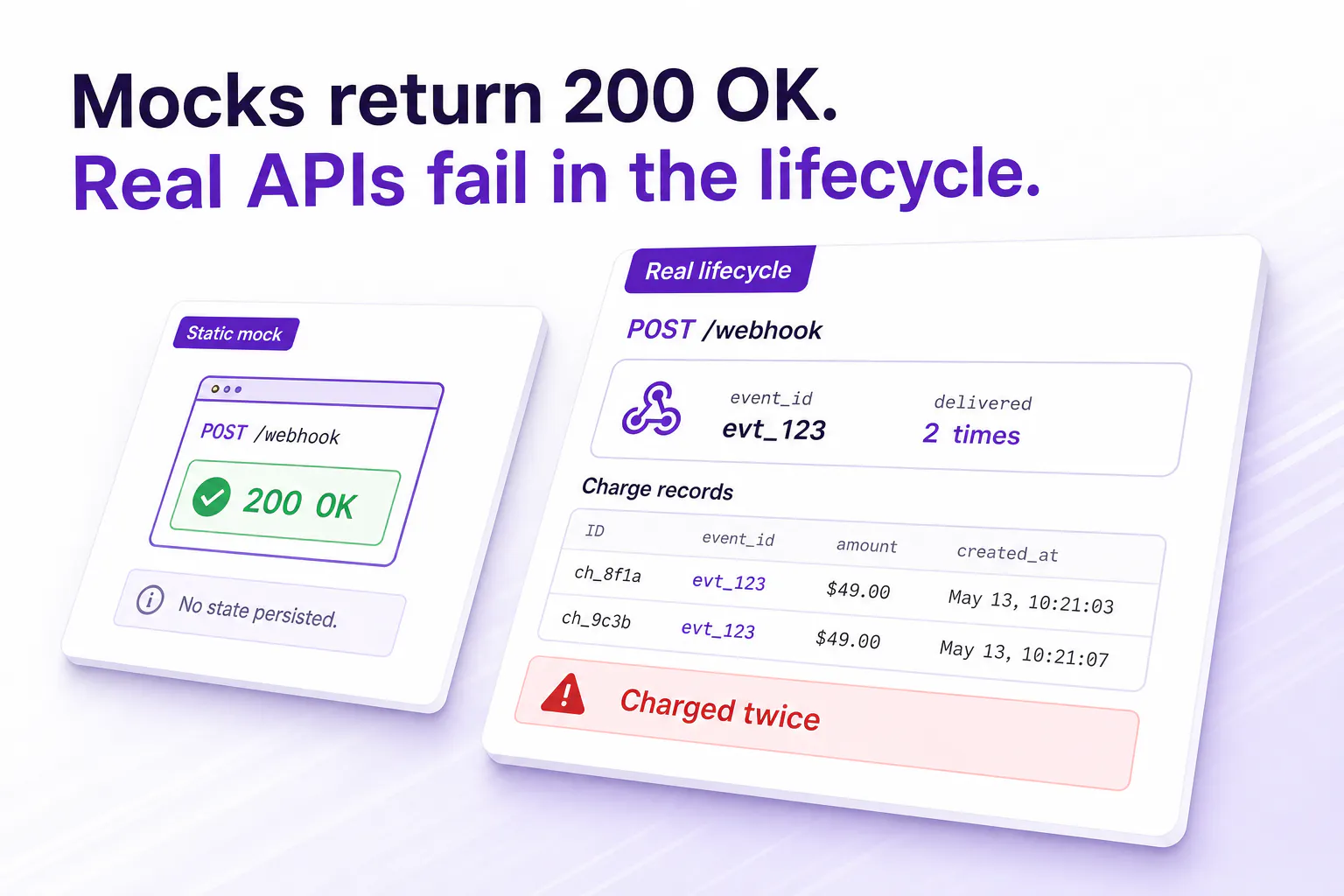
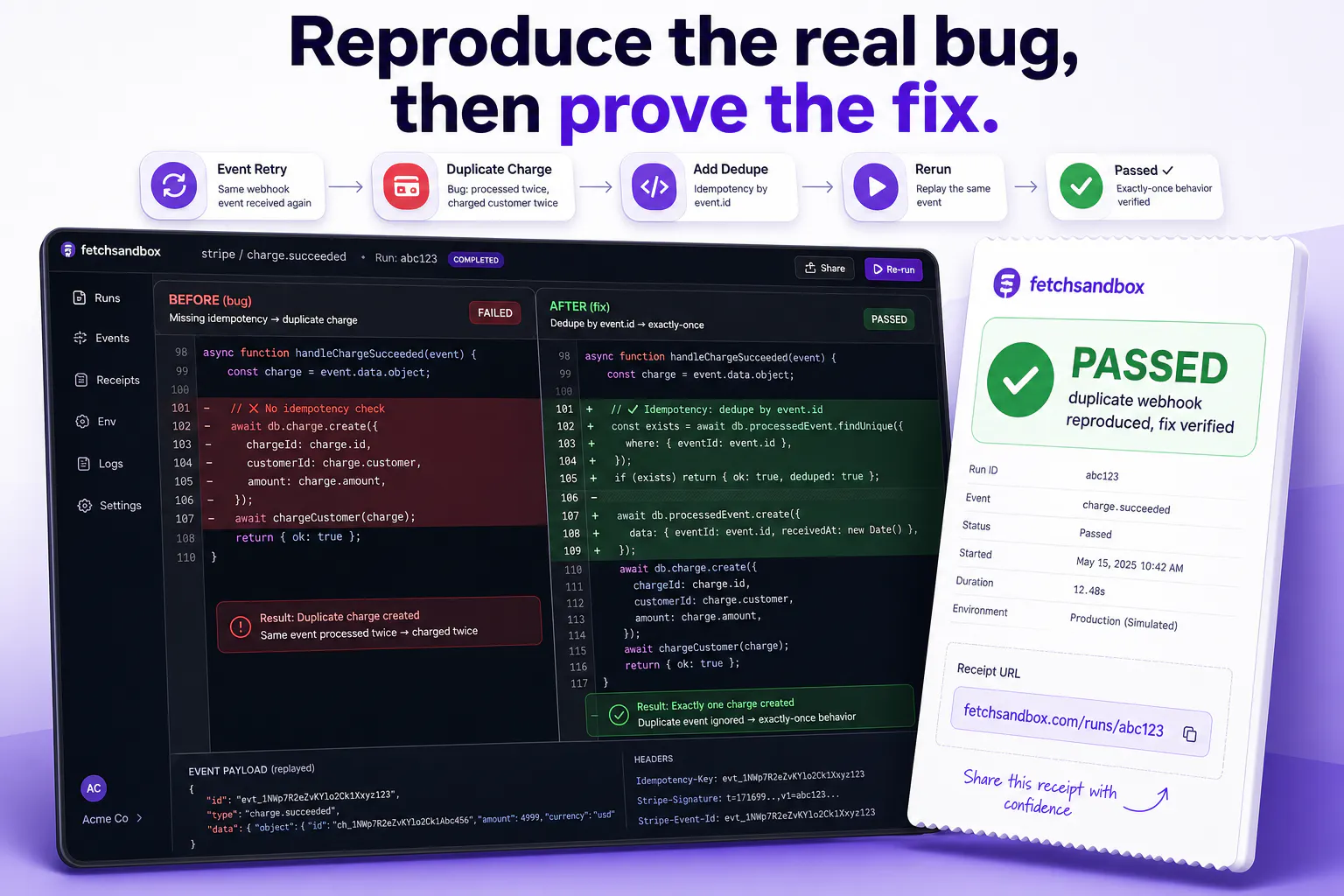
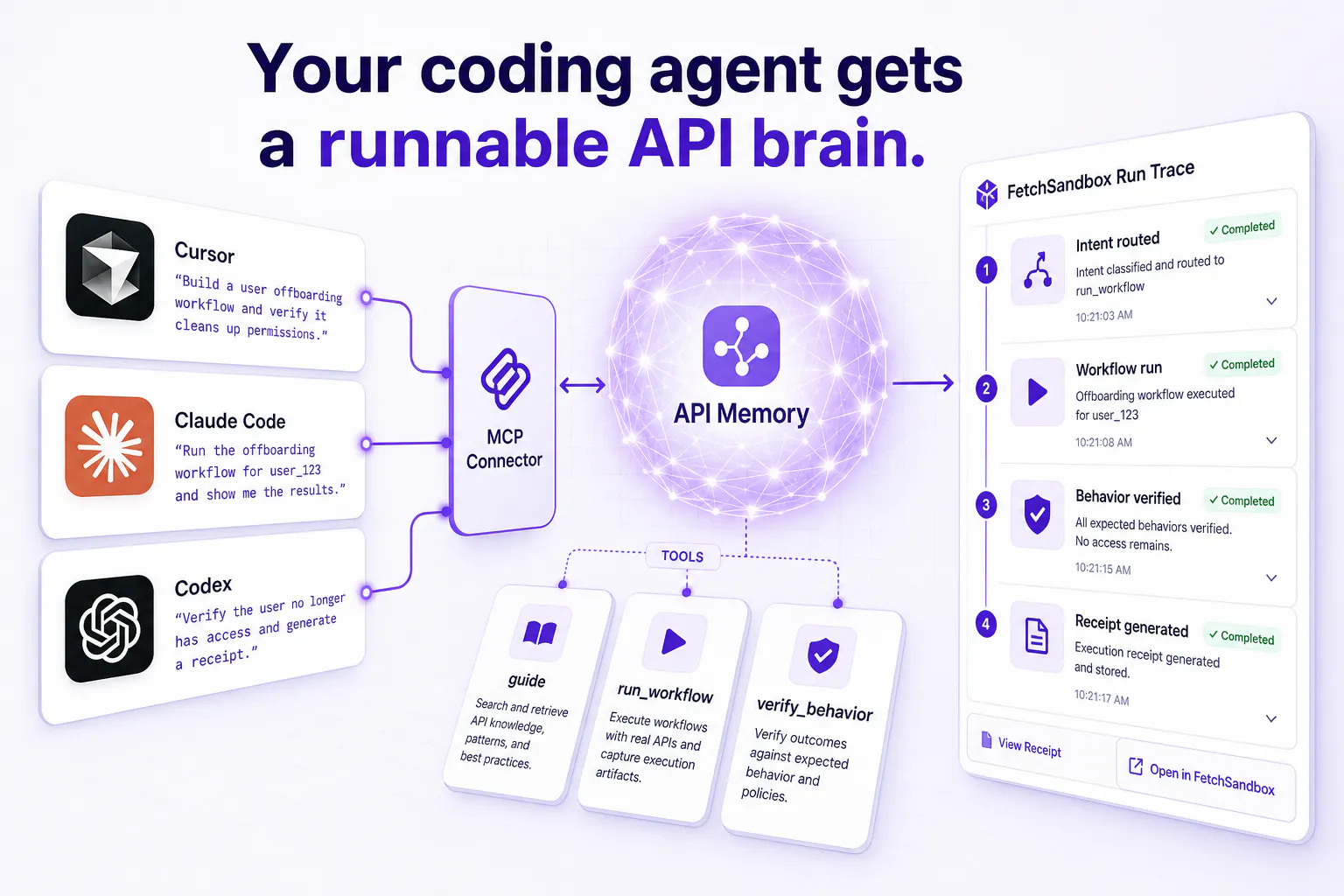
Most API tests stop at 200 OK. FetchSandbox lets developers and AI agents verify what happens next—webhooks, retries, state changes, async workflows, and failure scenarios. It reproduces the real bug, proves the fix, and remembers what breaks—so your agent catches it before production. Connect via MCP to Cursor, Claude Code, Windsurf, VS Code, and Codex. Explore 60+ APIs—Stripe, GitHub, Clerk, Resend, Twilio, Descope, OpenAI—without burning real API quota or waiting on staging.

Huge congrats on launching, I’m really curious about the persistent memory part If the sandbox learns that our app fails when a Clerk webhook arrives out of order qq does it automatically create a permanent regression test case for that, or how do we save it? @rnagulapalle 

6
回复

@priya_kushwaha1 thanks priya! the reproduction is the saved artifact. you get a receipt URL, a replayable trace of the exact out-of-order sequence plus what your handler did, and the workflow + delayed-delivery scenario that triggered it is a re-runnable check you can drop in CI. that's your regression.

not auto-written into your repo as a test file, it's a re-runnable proof you keep and rerun. delayed/out-of-order delivery is one of the lifecycle failures the sandbox simulates deterministically, so you can reproduce that clerk case on demand instead of waiting for prod to bite you again.

honest bit: one-click "save this + push to shared library" is the direction, not fully there yet. that's exactly what i'm building toward.

1
回复

@priya_kushwaha1 thanks Priya. the reproduction itself is the saved artifact. when it catches that clerk timing failure you get a receipt, a replayable trace of the exact sequence and what your handler did, and the workflow plus scenario that triggered it is a re-runnable check you can drop into CI. thats your permanent regression, you keep it and rerun it.

its not auto-written into your repo as a test file, its a re-runnable proof you own. one honest note since it came up elsewhere in the thread, true out-of-order as its own knob isnt in yet, it comes out of variable delivery timing today, but the way you save and rerun it is the same either way.

the part thats not automatic yet is one-click save this novel failure and push it into the shared library so the agent doesnt reintroduce it later, thats the direction im building toward, being straight about that.

0
回复

Hi everyone! I'm Raj, maker of FetchSandbox.

I spent years at PayPal and other SaaS companies wiring up API integrations. Building them was never the hard part — knowing what breaks, when, and how to catch it before production was. In the agentic world that's only sharper: your AI writes the integration in minutes, but nobody checks how it behaves when a webhook fires twice or an event lands late.

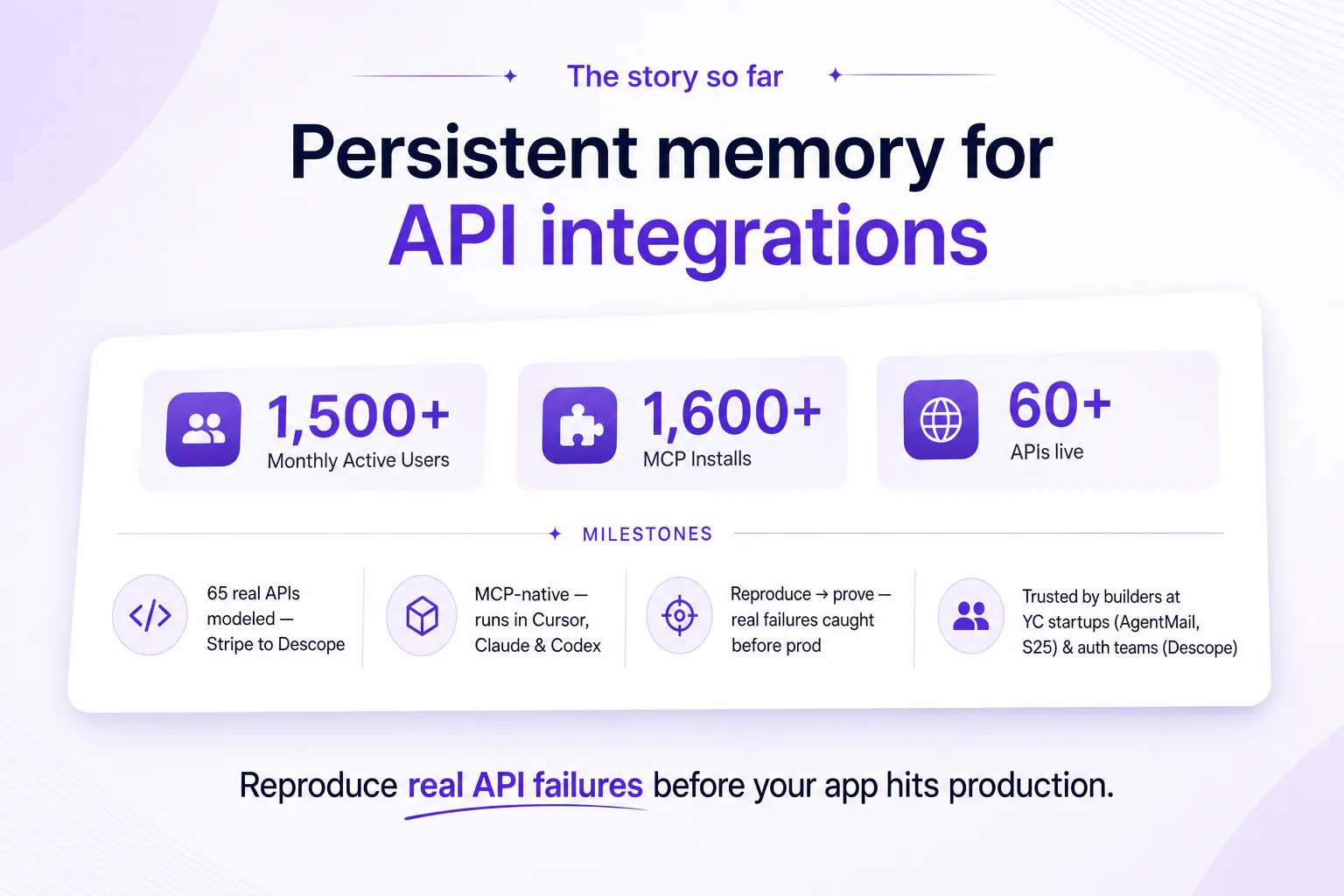
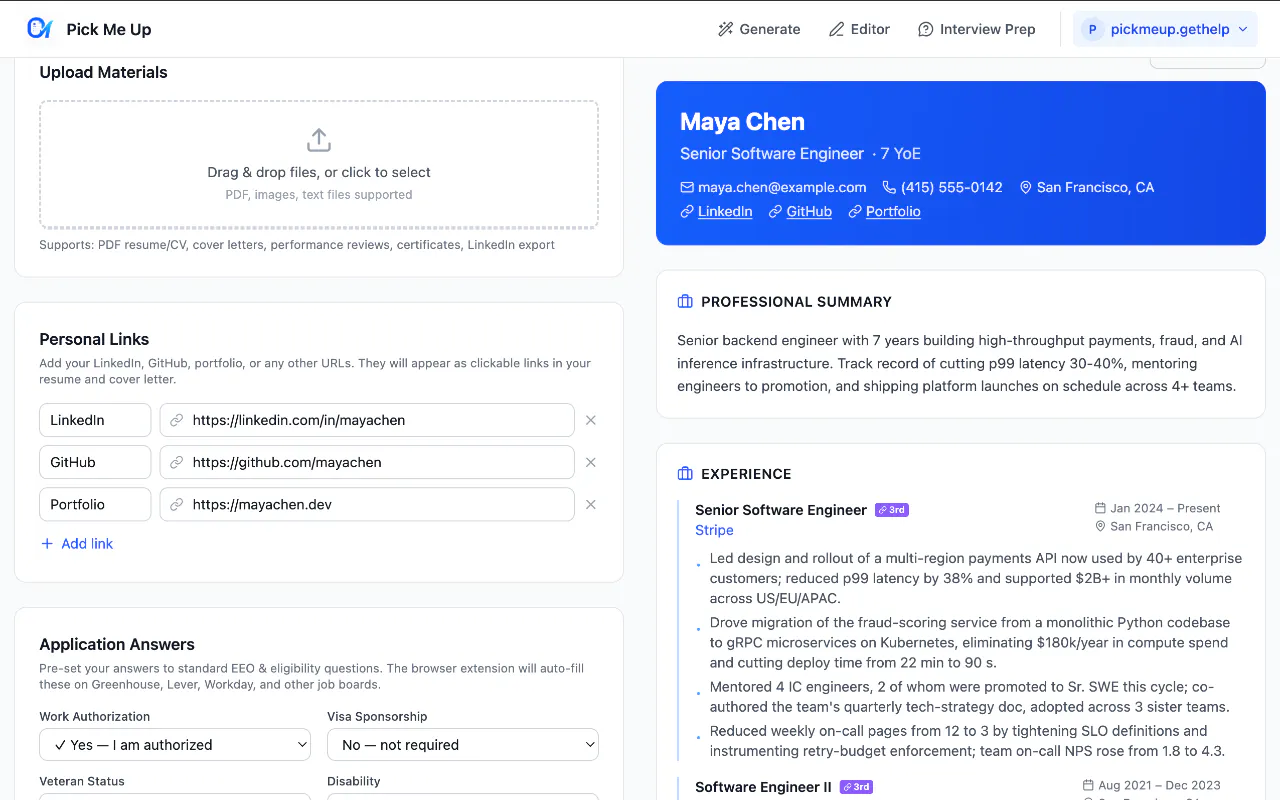
FetchSandbox gives your coding agent runnable sandboxes for 60+ real APIs (Stripe, Descope, Twilio, Resend, and more) — right in your IDE. It runs the real integration — requests, state changes, webhook deliveries — so you catch the lifecycle bugs mocks never show.

A few things we're proud of:

  • Real API behavior, not 200-OK mocks — webhook retries, duplicate events, stale state, rate limits

  • Reproduce → prove — it reproduces the actual failure, applies a fix, and reruns until it passes

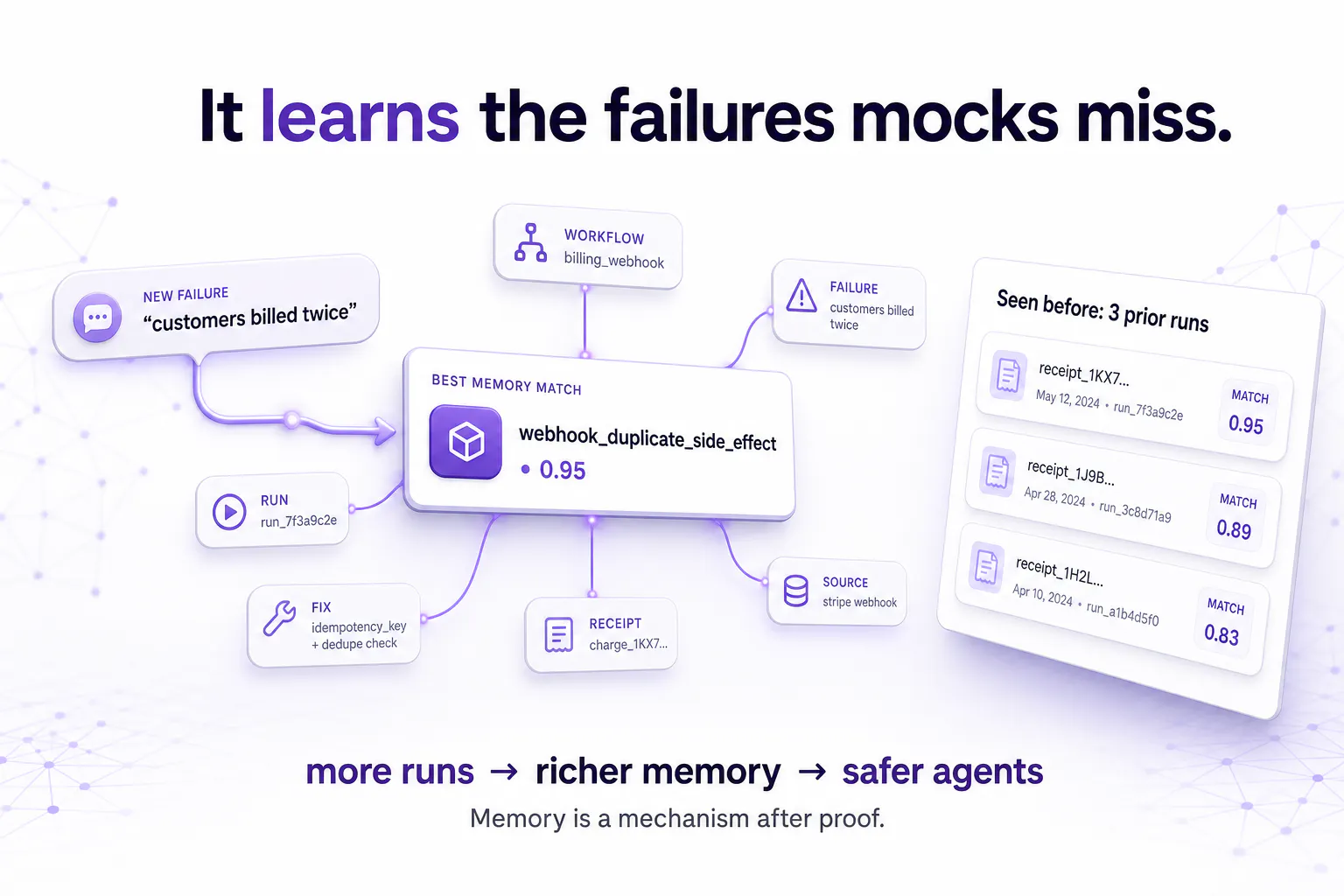
  • Persistent memory for API integrations — it learns failure patterns, so every run gets safer

  • MCP-native — works in Cursor, Claude Code, and Codex; no keys, no accounts

I'd love to hear in the comments:

  1. How do you test an API integration today — before it hits production?

  2. Would a sandbox that reproduces the actual failure (duplicate webhook, late event), not just a 200 mock, be useful to you?

  3. What's the worst post-integration bug that ever slipped to prod on you?

5
回复

BTW — you can try it headless in Claude Code, Cursor, or Codex via MCP. One-line install, no keys or accounts, and the API is fully documented.

Here's a starter prompt to try:

./fetchsandbox "test my Stripe checkout — customers are getting charged twice. reproduce it and prove the fix."

3
回复

@rnagulapalle congrats! btw is the failure library stored completely locally inside the mcp server or hitting your cloud database ?

1
回复

Congrats on the launch, Raj. The "passes every test and still pages you at 2am" framing hits home — I shipped a Stripe integration this week where everything was green in test mode, then the first real card hit a setup-mode checkout and it 400'd on a missing currency param test mode never complained about. Exactly the class of thing a simulated lifecycle would have caught before prod.

Curious about the failure library: is it seeded from documented API behavior, or does it learn from failures observed across real integrations? The compounding-memory angle is the most interesting part of this to me.

Free tier plus MCP made it an easy try — pulling it into my agent setup this week.

3
回复

@ryan_davis23 thanks ryan, and yeah that setup-mode currency 400 is exactly it. test mode passes clean, the mode/param interaction only bites on a real card, and you don't find out until prod. that class of thing is what the stripe library carries.

on seeded vs learned: today it's curated from real integration failures and documented behavior, but nothing enters until it's reproduced. a buggy handler and a fixed one have to actually diverge in a sandbox run, not just "the docs say this can happen." so it's behavior-grounded and proof-gated, not just a wiki.

the auto-learning piece, failures from live integrations flowing back in on their own, that's early. that's the compounding thing you're pointing at and it's where this goes. curation is still more hands-on than i'd like right now, being straight about it.

glad you're wiring it in this week. if anything's rough, reply or DM, i want the sharp edges. fast first win: point it at a stripe flow and have it prove the webhook-retry/idempotency path before you merge.

1
回复

I have spent time debugging APIs where the request worked perfectly but the webhook created unexpected issues later. A tool that can consistently recreate those situations would have saved a lot of time. Nice work on tackling such a common challenge.

2
回复

@nitesh_kumar98 thanks man.., request worked, webhook bit me later is the one that gets everyone. you don't see it until a customer emails you about it. being able to recreate that on demand, duplicate delivery, late event, dropped, without waiting for prod to bite you, that's the whole point. give it a spin and

0
回复

Hey congrats! I like how the product considers several scenarios duplicate webhooks, late events, stale state, live one layer past that, where most testing tools stop at the happy path!
Question - once the shared failure library flags something like "this behavior changed in a newer API version but older integrations still trip on it," how does that get surfaced to someone still running the older version? That version scoping seems like the hardest part to get right over time.

2
回复

@uddipta thanks man ., and yeah a few people landed on this exact thing which tells me it's the real hard part.

the intent is that patterns carry conditions, version, config, auth model, so "changed in v5" scopes to <v5. old version still gets the warning, v5 doesn't get a stale alert. version is just another condition on the pattern, not a global flag.

honest status: the condition mechanism exists but version-range partitioning is shallow right now. that's the next thing the shared library has to get right, and you're correct it's the hardest part to hold over time.

1
回复

@uddipta thanks man.., and yeah a few people landed on this exact thing which tells me its the actual hard part.

the way its meant to work.. a pattern carries its conditions with it, which version, which config, which auth model, so something that changed in v5 gets scoped to below v5. someone still on the old version keeps getting warned, someone on v5 does not get a stale alert they don't need. version just becomes another condition on the pattern instead of a global on-off.

honest bit, that condition mechanism exists but version-range scoping is shallow right now, its the next thing that has to get solid. you're right its the hardest part to keep right over time, a shared library that cant tell whos still affected is just noise.

0
回复

This is much closer to how API testing should actually work. a 200 OK can give a lot of false confidence when the real bugs are duplicate webhooks, delayed events, retries, stale state, and partial failures that only appear after the initial request.

The reproduce, fix, rerun loop feels especially useful for coding agents, because writing the integration is becoming the easy part while proving it survives real behavior is still hard. Curious how the persistent memory works across projects. does FetchSandbox learn failure patterns globally for an API like Stripe, or keep everything scoped to the specific codebase and workflow?

2
回复

@andrasczeizel thanks man.. 100% agree..and on global vs scoped, it's both. the global layer is per-API: when you test stripe you inherit the known ways stripe breaks, webhook dedup on the wrong header, a PaymentIntent stuck at requires_capture, duplicate delivery on retry. you don't rediscover those. that library compounds the more integrations run against it.

the scoped layer is your code: the reproduce, fix, rerun happens against your handler and your routes. global tells the agent what to look for, the sandbox proves whether your specific code survives it.

honest state: the global per-API library is real and shipped. the cross-project learning piece, where a failure one team surfaces flows back into the shared graph automatically, that's the direction we're heading, not a solved thing yet

2
回复

The "remembers what breaks" line is the whole reason I clicked. The APIs I integrate never fail cleanly. They pass in dev, pass in review, then throw a 500 once a week in production for reasons I can never reproduce on demand. Does FetchSandbox help with that kind of intermittent break, or is it aimed more at catching hard contract changes when a provider ships a new version? And does it cover webhook and callback flows, or just the requests I make outbound? Those inbound calls are where I get burned most and they're the hardest to test.

1
回复

@chielephant this is basically what i built it for so i'll answer straight.

the intermittent break is the core use case. those are impossible to reproduce because they're timing and state dependent, a retry hitting stale state, a duplicate event, a slow response tripping a race. in the sandbox you turn those conditions on deterministically, so the once-a-week 500 becomes something you can trigger and watch fail on demand instead of waiting for prod to show you. that's the "remembers what breaks" part, it's a curated set of failure modes per API.

webhooks and callbacks, yes, fully covered, that's honestly where most of the value is. duplicate deliveries, retries, out of order, dropped events, you replay them and see if your handler double-processes or corrupts state.

the provider-version-drift one is the honest gap. we catch a shape mismatch within a run if our model of the API is current, but auto-detecting that the live provider moved on its own is still on the roadmap.

0
回复

the most-tests-stop-at-200 framing is exactly right. the bugs never live in the happy path, they live in the retry that fires twice and the webhook that lands out of order. good to see a tool pointed at that part specifically.

1
回复

@alex_watson2110 thanks, yeah that retry-that-fires-twice and the out-of-order webhook are exactly the two i kept getting burned by, thats the whole reason this exists. appreciate you getting it.

0
回复

The "verify what happens after the 200 OK" framing is the actual gap for me — most of my integration bugs live in retries and webhook ordering, not the happy path. Two things I'd want to pin down before wiring it into a Claude Code loop: when I connect over MCP, does the failure library and my recorded scenarios live locally per-project or in your cloud, and can I pin a specific failure (say a Stripe webhook-out-of-order case) so a CI run replays it deterministically instead of re-deriving it each run? Determinism is what decides whether I'd gate a merge on it.

1
回复

@hi_i_am_mimo good questions, and using determinism as your merge gate is the right call, so i'll be precise.

where the library lives: it's server-side, not per-project. when you connect over mcp you're talking to our backend. you're not recording your own scenario library locally, you're pulling from the curated one we ship per API. runs are keyed to a sandbox id you control, but the failure definitions themselves live on our end.

determinism: named workflow + named scenario is repeatable, same inputs replay the same way, and you get a receipt url as the artifact to attach. duplicate/retry (same event id redelivered) is fully deterministic today, you can gate CI on that one right now.

honest caveat on your exact example: out-of-order isn't a first-class pinned fixture yet. ordering currently falls out of variable timing rather than a strict "deliver B before A" replay. duplicates, retries, stale state, deterministic. precise out-of-order as a pinned sequence, not yet, that's the next one i'm adding.

so if your gate is retries and duplicate delivery, it's ready. if the specific gate is deterministic out-of-order replay, i'm not going to tell you it's there when it isn't.

0
回复

Congrats on the launch. I integrate several AI provider APIs in my product, and the painful breakages are never the loud ones. It's when the same endpoint quietly starts returning a slightly different shape, or a model name stops resolving one day. Does FetchSandbox catch that kind of quiet drift, or is it focused on hard failures?

1
回复

@henry_s_jung right now its focused on the hard and lifecycle failures, not the quiet drift you mean.

the shape thing, within a run we validate responses against the contract, so if your handler assumes a field thats missing or wrongly typed, that shows up. but that only catches it if our model of the api is current.

the case you actually care about, the real provider silently changing shape or a model name that stops resolving one day, we dont auto-detect that yet. we test against a sandbox, so we catch the mismatch only if the sandbox already knows the api moved. noticing the live api drifted on its own is the piece im still building, and honestly its the one im most focused on next.

0
回复

Congrats Raj! It looks amazing and I wish you all the best here

1
回复

@german_merlo1 thanks man.. appreciate the kind words.. this community was very supportive... with kids/fulltime/gridning weekend. was bit challenge literally slept like 4 hrs avg haha. now this results give me confidence !!

0
回复

The "verify what happens next" framing is exactly the gap — 200 OK tells you nothing about the retry/webhook/state mess that actually breaks in prod.

Two things I'd want to know as someone wiring these into agents:

When an agent drives this over MCP, does it get to discover the failure library as callable scenarios — enumerate and pick which failure to inject — or is scenario selection still human-curated and the agent just runs what you set up?

And "remembers what breaks" — is that memory per-project, and does it auto-replay the known-break scenarios as a regression gate on the next change, so a fix that regresses gets caught without me re-describing the bug? @rnagulapalle

1
回复

@akbar_b good questions, both hit the same edge.

first one, it's more guided than a raw menu today. the agent doesn't freely enumerate the whole failure library and pick, but it's not just running whatever i configured either. you describe the symptom or bug you're worried about, the router matches that to the right workflow plus scenario, and you can also pass a scenario by name directly. what's not there yet is a clean "list all injectable failures for this API" call the agent can just browse. reasonable thing to expose, on the list.

second, the library is per-API not per-project right now. you inherit the known breaks for stripe/clerk/etc the first time you touch them. the per-project piece, what broke in your specific app, is early.

and the auto-replay-as-regression-gate, honestly not automatic yet. today a known break is a re-runnable workflow plus scenario you can drop into CI, so a regressing fix does get caught, but you're wiring that gate yourself. it's not auto-replaying on every change on its own. that loop, catch the regress without you re-describing the bug each time, is exactly where this goes. being straight: not there today.

0
回复

This is a very real pain point for AI-coded integrations. The first version usually passes the happy path, but the scary bugs are async: duplicate webhooks, late events, retry order, and state that looks correct until a second system reacts.

If I were testing this, I’d want one simple report after each run: what behavior was simulated, what state changed, and which failure is now covered so the agent does not reintroduce it later. That “memory of breakage” angle feels stronger than just another API sandbox.

1
回复

@grace_lee26 thank you.., this is exactly pain... the state that looks correct until a second system reacts one is the worst, everything looks green and then some downstream thing double-processes and you hear about it from a customer.

on the report you described thats basically what the receipt already is. after a run it shows what got simulated (the retries, the late and duplicate events), what state changed step by step, and where it broke. the part you really nailed is the last one, which failure is now covered so the agent doesnt reintroduce it later. thats the memory piece and honestly its the thing i care most about too. today the failure goes into the per-api library so its there next time anyone hits that api, but the part where the agent wont reintroduce it in your own repo is still early, being straight about that.

also memory of breakage is a better way to put it than how ive been saying it, might steal that.

0
回复

Hey bro
The website icon is showing of Next.js default icon . It would be great if that shows your website's logo .

1
回复

@vansh36 ahh good catch man.. thank u.. will fix it

0
回复

Love that it covers async edge cases most testing tools miss, the MCP integration with Cursor is super smooth. One thing that would make this a no-brainer for me: built-in support for replaying recorded webhook sequences against different environments, so I can validate that a staging deploy handles the exact same payload ordering as production without re-running the whole test suite.

1
回复

@mirahmlk thanks Miraç, glad the cursor integration felt smooth, that was a big focus for us.

on the replay idea, part of it is there and part isnt, being honest. the sequences today are deterministic so you can rerun the exact same webhook/retry ordering against a change and confirm your handler still behaves the same, thats basically the staging-regression check you're describing. what isnt there yet is capturing a real production sequence and replaying that exact recorded payload ordering against your own staging or prod, right now it runs against our sandbox not your environments. thats a genuinely good ask though, record-from-prod and point the replay at your own env is the thing that turns it from a pre-merge check into a real regression tool. putting it on the list, appreciate you spelling it out...

0
回复

the webhook replay feature is genuinely useful, finally a way to test retry logic without stubbing out half my codebase

1
回复

@tuncaypamurqnk thanks, and honestly thats the whole reason it exists. stubbing webhooks to test retry logic is miserable, you end up writing more mock than real code and it still doesnt behave like prod anyway. glad its clicking for you.

0
回复

the failure-library angle is interesting but the thing I'd want proven before trusting it: who keeps the simulated failure behavior itself honest against the real API over time? stripe changes retry semantics or adds a new webhook edge case, and if fetchsandbox's simulation of that api lags the real one, you get a false sense of security - green in the sandbox, still breaks in prod, just a different flavor of the same problem you're trying to solve. is that drift something you actively monitor per-API, or does it rely on someone reporting a mismatch?

1
回复

@galdayan this is the sharpest question in the thread, and honestly the one that keeps me up....you're right that a sandbox drifting from the real api is just the same problem moved somewhere else, green here and still breaks in prod. any tool in this space has to answer it or its not worth trusting.

where i can be straight: two things ground it today. one, the failure library isnt guessed from docs, its built from real integration failures, so the patterns actually happened, not ones i imagined. two, nothing counts as verified unless it actually reproduces in a run, so its behavior-grounded not just written down.

what i wont pretend: a fully automated per-api drift monitor that continuously diffs our simulation against the live api isnt there yet. today when stripe changes retry semantics its closer to catch-and-correct than an automated watchdog. thats the honest gap.

and thats exactly the thing that has to exist for this to be trustable at scale. per-api drift detection is on the roadmap and high on it. you're pointing at the real moat and the real risk at the same time.

0
回复

We do something similar on a smaller scale in our own Stripe integration — coupon/pause mutations carry session-scoped idempotency keys so a double-click can't create two coupons, and webhook processing claims-then-deletes on failure so LS/Stripe can safely retry. The proof-gated regression capture here (reproduce → fix → rerun) is the piece we've been doing manually — would've saved some debugging early on. Following for the async/retry simulation angle, that's usually the first thing testing tools skip.

1
回复

@cancelkithq this is a genuinely solid setup.... session-scoped idempotency keys on the mutations plus claims-then-deletes-on-failure is exactly what survives a retry storm, most people don't get that far until after they have already been burned once.

and yeah, the reproduce-fix-rerun loop being manual is the exact gap... you clearly already know the pattern, its just painful to do by hand every time and easy to skip under pressure, the whole point is making that part automatic so its not on you to remember.

appreciate you following. if you ever point it at your coupon/pause flows i'd love to hear whether it catches the stuff you already handle or misses something you do, that feedback is worth more to me than any upvote....tbh

1
回复

API integration testing is becoming critical as AI agents rely on more external tools. Curious if you’ve seen AI-generated requests expose edge cases that traditional integration tests usually miss?

1
回复

@amjad_shaik thanks for the question.... honestly its less that agents expose brand new edge cases and more that they confidently miss the same ones humans do, just faster and at way more volume.

the pattern i keep seeing is the agent nails the common shape, types check, mock passes, looks perfect, then it breaks on the exact edge nobody exercised, retry with the same idempotency key, a payment intent thats requires_capture not actually paid, a session jwt it decodes but never verifies. same edges we always missed, but now the code is generated so its harder to catch in review because it reads so plausible.

so the shift isnt really new bugs, its the same bugs shipping faster and with more confidence. thats basically why this exists, the happy path looking perfect is exactly when i stopped trusting green.

0
回复

the webhook/retry/async testing angle is the part that's actually missing from most API sandbox tools, everyone nails the happy path 200 OK case but real integration bugs live in the retry logic and race conditions. does it let you simulate out-of-order webhook delivery, or just delayed/duplicate events?

1
回复

@omri_ben_shoham1 yeah the async/retry layer is where the real bugs live and most sandboxes just skip it entirely.

three scenarios shipped today: delayed delivery, duplicate/redelivery (same event id fired again so you can actually test idempotency), and dropped. covers most of the retry + race surface.

out-of-order specifically: not a dedicated knob yet. variable delays can surface ordering races but a controlled "deliver B before A" isn't in yet. that's the next one i want.

0
回复
Congrats on the launch! This truly is the postman for testing integrations
1
回复

@aadilghani thanks man.. appreciate the kind words

0
回复

The "remembers what breaks" line is interesting for API integration testing. Does FetchSandbox keep track of the exact failing request/response details, like payloads, headers, status codes, and timing, or is the memory more about patterns across previous test runs? That distinction would help teams understand where it fits beside their current CI checks.

0
回复

The "beyond 200 OK" framing is exactly right, and I learned it the hard way. I shipped a Paddle integration recently and every test I had was a green 200 — the bug that actually bit me was an idempotency one: a retried/duplicate event creating an orphan customer on a rolled-back checkout. Nothing in my suite could have caught it, because I was only asserting the happy path.

The way I eventually found it was by hand: ngrok pointed at localhost, replaying webhooks, poking state until something broke. A deterministic failure library that just does the duplicate-event / late-event / stale-state cases for me would have saved me an entire evening.

Two questions: (1) does the failure library cover Paddle, or is Stripe the only payments provider so far? (2) for webhook lifecycle bugs specifically — can you replay events out of order (e.g. a subscription.updated landing before the checkout.completed)? That ordering case is the one that actually broke me, and it's the hardest to reproduce on purpose.

0
回复

The worst production bugs are always the ones that look completely fine until a second system reacts. Your own code passes, the API returns 200, and then three hours later a duplicate webhook fires and someone gets charged twice. Curious what the most common failure pattern is across your 60 plus APIs, is there one class of bug that shows up regardless of which API you're testing?

0
回复

@jasnoor_singh_oberoi yeah idempotency is the one. almost every webhook provider is at-least-once by design, so duplicates aren't bugs on their end, they're just how it works. but handlers get written assuming exactly-once, so the same event fires twice and you get two charges, two users, two emails. doesn't matter what the API does, if there's an async event with a side effect behind it that gap exists. and it passes every test you'd normally write, code is correct, 200 comes back, shape is fine. breaks hours later when the second delivery shows up. by then it's real money or real data. stale state is second most common but idempotency is the truly universal one.

0
回复

the dropped-vs-mid-response-timeout distinction @omri_ben_shoham1 raised is the one I'd want too. adjacent question: do you simulate variable latency (webhook arrives 3s vs 30s late) or is timing binary right now, on-time vs late?

0
回复

@omri_ben_shoham1  @sabber_ahamed good adjacent question. right now its in between, not binary but not fully variable either. you can set the delay amount so its not just on-time vs late, you can make it 3s or 30s, but its a single fixed delay applied across the run, not per-event jitter where some land at 3s and others at 30s in the same run.

real variable latency, a distribution with tails where some events are way slower than others, isnt there yet. and thats exactly the thing that produces the ordering races and timeout-window bugs, so its tied to @@omri_ben_shoham1  point too. worth having, on the list.

short version, today its configurable but uniform delay, per-event variance is the next step...

0
回复

the dedup/idempotency scenarios are the ones I'd actually use. when two CI runs hit the same sandboxed Stripe API concurrently, is state isolated per run, or can one job's retry storm bleed into another's results?

0
回复

@sabber_ahamed good question, and its the right one for CI. isolation is per sandbox, each one has its own state, its own event log, and its own active scenario. so if each run spins up its own sandbox (one call) theyre fully isolated, one jobs retry storm cant bleed into anothers results at all.

honest caveat, a sandbox is a stateful environment, so if two runs deliberately point at the same sandbox id they share state, thats by design not a bug. the pattern for concurrent CI is one sandbox per job, then you get clean isolation even under a retry storm.

short version, own sandbox per run = isolated, shared sandbox = they see each other.

0
回复

@Raj shipping duplicate/redelivery with the same event id is the one that matters most imo - idempotency bugs are the ones that actually cost people money in prod, way more than a webhook just being late. nice that you got that out fast. curious if dropped events also simulate a partial timeout (connection dies mid-response) vs a clean non-delivery, since those two failure modes get handled very differently in most retry logic

0
回复

@omri_ben_shoham1 yeah agreed, the duplicate-same-event-id one is the money bug. late is annoying, double-charge or double-grant is the one that actually hurts.

on your question... right now dropped is a clean non-delivery, the event just doesn't land. the nastier case you're describing, connection dies mid-response so the receiver maybe processed it but the sender never got the ack, is not its own scenario yet. the redelivery run covers the downstream outcome of it (you retried and now theres two), but the actual ambiguous-ack failure mode as a first-class thing is not in there. and you are right, retry logic handles those two completely differently, so its worth having as its own knob. putting it on the list.

0
回复

the failure library that compounds per-API is the actual moat. every eng team burning 3 hours debugging a stripe webhook idempotency issue is unwittingly training knowledge fetchsandbox already has cached.

real q on the cross-project learning piece raj mentioned: when a team learns something the hard way, is there a review step before it enters the shared library, or does it auto-propagate? asking because the "stripe fixed this in v5 but old integrations still trip" class of knowledge needs some staleness handling.

0
回复

@thenameisarian yeah, both of those are the right places to poke.

on review vs auto: it's gated, not automatic. a pattern doesn't enter the shared library just because someone hit it once. it only lands after it's reproduced, a buggy handler and a fixed one have to actually diverge in a sandbox run. so the flow is incident → candidate → proof gate → library. the proof gate is what's shipped today. the part that's early is auto-ingestion, pulling a team's live incident into that pipeline without manual curation. that's still more hands-on than i'd like.

on staleness: that's the sharpest version of the question and you're right, it's exactly what breaks a naive shared library. patterns carry applicability conditions, which auth model, which config, which version, so "fixed in v5" is meant to scope the pattern to <v5 rather than warning everyone forever. version-range partitioning is shallow right now. that's the next thing the shared library design has to get right, and "old integrations still tripping on stale patterns" is precisely why.

0
回复
#4
Second Brain for AI v2
AI memory that connects the dots across every tool
328
一句话介绍:Second Brain for AI v2 是一款开源、自托管的跨AI工具统一记忆层,通过自动构建知识图谱,解决用户在不同AI工具(如Claude、ChatGPT、Cursor)间上下文割裂、决策冲突及信息过时的问题,实现可信的持久化记忆。
Productivity Developer Tools Artificial Intelligence GitHub
开源 自托管 AI记忆层 知识图谱 跨工具同步 MCP协议 Cloudflare 矛盾检测 语义检索 开发者工具
用户评论摘要:用户高度认可“规范/草稿”矛盾解决机制和状态管理,但普遍担忧:自动链接的准确性、无声过时信息的处理、全局记忆池导致上下文污染、以及召回时缺乏来源可追溯性。建议增加按项目分区和“验证后信任”的年龄戳机制。
AI 锐评

Second Brain v2 精准切中了当前AI工具链中一个被普遍忽视但又极其痛苦的短板——上下文记忆的“脏缓存”问题。绝大多数记忆方案天真地假设信息单调递增,而v2通过引入“规范/草案/弃用”三级状态和写入时矛盾检测,实际上是在为AI协作建立一套基础的数据一致性协议。这才是它真正的价值内核,而非简单的记忆存储。

然而,产品面临的挑战同样尖锐。其一,自动知识图谱链接(multi-hop recall)在工程上是一个“置信度陷阱”——小众领域或非结构化信息中,错误链接带来的误导性风险可能远超纯语义搜索的“找不到”。目前仅靠“一键解链”和“弱链接自动修剪”来兜底,对于生产级可靠性而言仍显粗糙。其二,产品对“无声过时”信息的处理存在结构性盲区。用户“kyo_shino”提出的问题一针见血:当事实因代码变更等外部因素自然失效,却无任何冲突写入时,系统毫无感知。仅仅传递时间戳是工程上的回避,而非解法。真正的产品护城河应在于如何让模型具备“主动质疑”的能力,例如结合操作环境日志或代码仓库状态进行半自动失效标记。

此外,全局记忆池的设计在高频多工具协作中会快速引发“信息串扰”。虽然标注和未来的分区功能是应对方案,但这一设计决策本质上将路由复杂度甩给了用户,有悖于产品“自动连接”的承诺。

总体而言,Second Brain v2是AI工具记忆生态中极具前瞻性的探索,尤其对于重视数据主权和决策可追溯性的专业用户(如独立开发者、小团队)。但若想成为通用基础设施,它需要在“链接的准确性”和“过时信息的主动感知”这两个工程化难题上给出更硬核的解决方案,而非停留在UI和流程设计的优雅上。

查看原始信息
Second Brain for AI v2
Second Brain remembers your projects, people, decisions, and preferences across Claude, ChatGPT, Cursor, Codex, and any MCP client. V2 automatically links related memories, follows those connections during recall, and distinguishes settled decisions from drafts and stale context. Open source and self-hosted in your Cloudflare account.
Hi Product Hunt, Three weeks ago, I launched Second Brain for AI here. It finished #3 Product of the Day, but the most valuable part of the launch was not the ranking. It was the comments. You told me that newer information is not always more correct. You asked what happens when Claude and Cursor save conflicting versions of the same project decision. You described the need to compress long conversations without losing their through-line. You pushed me to make self-hosted deployment easier to understand. Those comments became the roadmap. The first version gave Claude, ChatGPT, Cursor, and other MCP clients one persistent memory layer. You could store context once, retrieve it by meaning, and keep the data inside your own Cloudflare account. Today I am launching v2. Second Brain now builds a self-organizing knowledge graph from your memories: - related memories link automatically as they are saved - multi-hop recall follows those links beyond the closest semantic match - an interactive graph shows how projects, people, decisions, preferences, and ideas connect - canonical, draft, and deprecated states separate settled knowledge from exploration and stale context - episodic and semantic classification distinguishes events from durable knowledge - hybrid retrieval combines semantic and keyword recall - contradiction-aware ranking prevents recency from automatically becoming truth - semantic compression preserves the important through-line as context grows The core promise has not changed. Second Brain is still one open-source memory layer for every AI tool you use, deployed into your own Cloudflare account and designed to run on the free tier at personal scale. V1 made memory persistent. V2 makes it connected and more trustworthy. I would especially value feedback on three things: 1. Are the automatically created relationships accurate enough to trust? 2. Does multi-hop recall surface useful context that ordinary semantic search misses? 3. Does the graph help you understand your memory, or is it only visually interesting? Thank you to everyone who commented, tested the product, opened an issue, followed the first launch, or shared Second Brain with others. You helped shape this release.
5
回复

@rahilpirani Hi Rahil, the hard part with cross-tool memory has always been trust, not recall. When it answers, I want to know which source it pulled from so I can sanity-check before acting on it. Do you surface provenance per answer, or is it more black-box synthesis? In my experience that one distinction decides whether a team actually adopts it.

1
回复

@rahilpirani It's really nice to see how much the product has changed based on user feedback. Memory is only useful if the system can tell the difference between updated information and conflicting information. How do you know when an old memory is outdated ?

1
回复

Confirm-step is the right default - I'd rather resolve a conflict than have recency silently win. The one-global-pool part is what I'd pressure-test: if tagging only filters recall, does a draft-vs-canonical conflict from a throwaway experiment still surface while I'm working in an unrelated project, or does tagging also scope where contradictions get raised? Per-project partitioning landing would basically remove that worry.

1
回复

This is a strong direction. The interesting part isn’t just “memory,” it’s whether the system can tell what is still true vs what was only temporary context.

I like the idea of separating settled decisions from drafts and stale context. That feels essential if AI memory is going to be useful across tools instead of slowly becoming a pile of old assumptions.

Curious how you handle corrections when the memory graph connects something wrong.

3
回复

@vahid_davoudi  Corrections work on two layers. When the graph forms a bad link, you can remove it directly from the Related list (one tap in the web UI) or via the unlink MCP tool. Weak links also get pruned automatically as evidence thins. For the truth vs temporary context question, canonical entries mark what's settled and are protected from silent overwrites. Drafts hold contested context until confirmed.

2
回复

the "newer information is not always more correct" insight is the entire challenge of persistent AI memory in one sentence. most memory systems assume monotonic updates and break the first time claude and cursor disagree.

real q: when claude asserts one project decision and cursor asserts a different one hours later, does second brain surface both with source + timestamp, or resolve automatically? asking because the resolution logic IS the product — everything else is storage.

3
回复

@thenameisarian  Both surface, but not equally. Canonical memories are protected, so the contradictory Cursor write comes in as a draft for review rather than a silent overwrite. You confirm it supersedes the original or deprecate it. Deprecated memories drop from recall but stay in the audit trail. No tool wins by being last.

2
回复
@rahilpirani congratulations. Do you figure that the customer for the second brain is the user or their agents or external people?
2
回复

@lakshminath_dondeti  The user. Agents are the interface, writing and recalling on your behalf. External sharing is out of v2 scope.

0
回复

How does the semantic search actually decide what to pull in when context is ambiguous, and does it ever surface stale info that you've already updated somewhere else?

2
回复

@zcankekozpdmd  Hybrid retrieval (semantic + keyword) handles ambiguity, with graph links as a tiebreaker when signals are close. Stale entries are filtered at the recall layer: deprecated and superseded memories never reach the AI.

1
回复

Persistent memory makes agents much more useful, but also raises interesting reliability challenges. How do you validate that outdated or incorrect memories don’t keep influencing future responses?

2
回复

@amjad_shaik  Three mechanisms handle this: contradictory writes become drafts for review rather than silently overwriting settled context, canonical memories require explicit confirmation before they're superseded, and deprecated entries drop from recall but stay in the audit trail. Recency alone doesn't win.

1
回复

does it provide any kind of api for that storage ?

2
回复

@kartikmalik  Yes, two interfaces: MCP tools (remember, recall, search) for AI clients like Claude and Cursor, and a REST API for direct programmatic access. Both are documented in the GitHub repo README.

0
回复

Finally something that solves the most frustrating part of using AI. Plugged it into Claude and Cursor and the recall by meaning actually works, way better than digging through old chats. Love that it's self-hosted too.

2
回复

@phardinghy4670  The recall-by-meaning piece was the hardest to get right. Glad it's landing as actually useful rather than just technically interesting.

0
回复
@phardinghy4670 I love this SB a lot ! ✨
0
回复

The "connects dots across tools" framing resonates — I've been working on cross-session memory for fictional characters and hit the same wall: memory needs to know what contradicts what, not just accumulate. Does Second Brain handle conflict detection when the same topic appears differently across tools, or is resolution left to the user?

1
回复

@avantigrowthlab  Detection is automatic at write time. When Cursor writes something that conflicts with a canonical from Claude, both surface immediately as a draft-vs-canonical pair with source and timestamp attached. You see the tension the moment it's written. Resolution is yours to call - the system surfaces it, you settle it.

0
回复

Your contradiction handling all keys off a competing signal — a second write disagrees, so it comes in as a draft. The case that bites me running a hand-curated file memory for my own agent has no such signal: a memory that was true when I wrote it, now false because the code moved underneath it, and nothing ever contradicted it. No competing write to open a draft, no reason to deprecate — it stays canonical and reads as trustworthy.

You told Gal wrong-from-the-start is hard because there's no recency signal. This is its sibling: right when written, wrong now, still no signal.

My only patch: stop treating recall as ground truth. Every entry reaches the model stamped with its age and a "verify before trusting" note, so even settled memory lands as a point-in-time claim.

So does v2 pass age through to the model at recall, or does "canonical" itself read to the model as "trust this"?

1
回复

@kyo_shino  Age passes through. Every recalled memory surfaces with its write timestamp and current status. Canonical means a human confirmed it, not that the model should treat it as current truth.

The silent staleness case you're naming is real and not solved in v2. Your patch of stamping every recall with age and treating it as a point-in-time claim is the right direction. Worth building as a first-class feature.

1
回复

As a solo dev I burn the first ten minutes of every Claude and Cursor session re-explaining decisions I already made, so a self-hosted memory layer is something I'd actually run. The canonical-vs-draft split, so a newer write doesn't silently overwrite a settled decision, is the sharp part here — treating recency as truth is exactly how these memory piles rot. Running it on my own Cloudflare free tier basically seals it.

1
回复

@lennoxbeflying  Ten minutes per session adds up fast across tools. Running on your own Cloudflare free tier at personal scale without hitting limits was a design requirement, not a lucky side effect - glad that part lands.

0
回复

self-hosted and MIT licensed is the right call for something that's basically your whole context history - I'd never trust a memory layer like this if I couldn't see exactly where the data lives. the "canonical vs draft" distinction for handling contradictions is smart, most memory tools just let the newest write win and call it a feature

1
回复

@omri_ben_shoham1  Building it on your own Cloudflare account was the only architecture where trusting the memory layer isn't a leap of faith. The canonical vs draft decision follows the same logic - if you own the data, you should also own every decision about what overwrites what.

0
回复

Cross-tool memory is the piece I keep wanting and keep not trusting, mostly because I can never see what it decided to remember. Does Second Brain let me look at and edit the actual memory it's built, or is it a black box I have to take on faith? The moment one of these quietly remembers something wrong I lose the whole thread, so the inspect-and-correct part matters more to me than the recall.

1
回复

@chielephant  Not a black box. The web UI shows every memory: which tool wrote it, when, and its current status (canonical, draft, or deprecated). You can edit, unlink, or deprecate entries directly. Visibility came before recall in the design, for exactly the reason you named.

0
回复

Self-hosting the memory layer in my own Cloudflare account is what makes me willing to put real project context in it — the data staying mine is the whole ballgame. The V2 "distinguishes settled decisions from drafts and stale context" line is the part I'd stress-test: when Claude and Cursor write conflicting versions of the same decision, does it auto-pick the newer one, or is there a confirm step so I decide what's canonical? And is recall scoped per-project, or does every connected MCP client pull from one global pool?

1
回复

@noctis06  Confirm step, not auto-pick. Contradictory writes from any client surface immediately as a draft-vs-canonical pair and you decide which stands. On scope: one global pool per user across all MCP clients. Tagging lets you filter recall by context today; per-project partitioning is on the roadmap.

0
回复

Interesting idea. How do this scale efficiently? Is there an indexing or meta layer so as I have more info to save? What about "split personalities?" There's work info, personal info, hobby info, etc that tend to be fairly siloed. Does it figure out my silos over time?

1
回复

@markherschberg  Vectorize keeps recall latency flat as memory grows. On silos: v2 doesn't auto-partition yet. You can tag memories by context, but the graph links across domains when memories are semantically close. Automatic partitioning is on the roadmap.

1
回复

Interesting take on memory. The part I keep running into with long lived AI memory is not storage, it's that old memories go stale and quietly become wrong later. Curious how v2 handles that, do memories decay over time or get re checked against newer context?

1
回复

@henry_s_jung  v2 doesn't auto-decay, but every write checks against existing canonical memories. Contradictory new context surfaces immediately as a draft-vs-canonical pair, so stale info gets flagged the moment something newer conflicts with it. The trickier case is memories that were wrong from the start and never contradicted - that's a real gap we're thinking about.

0
回复

the deprecation/audit-trail design is solid for handling info that goes stale over time. different case though: what if a memory was just wrong from the start (bad transcription, hallucinated detail from the source tool) and by the time you catch it, three other memories have already linked off it as if it were true? does correcting the root node also flag or re-check what was built on top of it, or is that on the user to notice and untangle manually?

1
回复

@galdayan  Correcting the root doesn't cascade. The graph shows you what linked off it, so the dependency chain is visible rather than hidden, but walking those downstream nodes is on you. The wrong-from-the-start case is harder than stale-over-time because there's no recency signal to catch it early - that's a real gap we're thinking about.

0
回复

I run most of my business ops through AI agents day to day, and the "newer isn't always more correct" framing matches exactly what I see — tools overwrite settled decisions with whatever happened last. Curious: when memories are written autonomously by agents rather than by me in a chat, does the canonical/draft distinction still hold up, or does it assume a human is doing the confirming?

1
回复

@podcast_ai  The distinction holds regardless of who writes. Agent writes that conflict with existing canonical memories surface immediately as a draft-vs-canonical pair at write time. Settling a draft to canonical is a human action. Agents write freely but can't settle context unilaterally.

0
回复

the settled-vs-draft distinction is the part I'd want to poke at - is that inferred from how often a decision gets re-referenced across sessions, or does the user have to explicitly mark something as settled?

1
回复

@sabber_ahamed User confirms it. Contradictions surface both writes as canonical vs draft, and you decide which stands. Re-reference frequency is a signal we track, but it doesn't automatically settle anything.

0
回复

the review's "what needs improvement" flags the Vectorize/Worker CPU ceiling under concurrent multi-hop recall - have you actually hit that limit at real personal-scale usage, or is it still theoretical?

1
回复

@sabber_ahamed  Theoretical at personal scale. The bottleneck has been hop latency, not CPU. The ceiling becomes real when you layer concurrent multi-hop over conflict reconciliation at multi-tenant scale.

0
回复

The linked-memory approach is compelling, but I think the harder problem isn't remembering more—it's remembering the right things.

How does v2 decide that a decision is "settled" versus something that should remain tentative? It seems like getting that boundary right could matter more than the size of the memory graph, especially when AI starts reusing old context automatically.

Congrats on the launch! 🚀

1
回复

@aryan787544  v2 doesn't decide on its own. Contradictory writes become drafts for your review, not silent overwrites. You confirm what's settled. The boundary stays with you; the system just makes the tension visible.

1
回复

Finally a memory layer that actually feels useful across different tools. Set it up with my Claude and Cursor workflows and the semantic recall saved me from re-explaining a project setup I had already detailed the day before.

1
回复

@birgl1646637  The re-explaining tax is the whole reason this exists. Glad the cross-tool recall is cutting it already.

1
回复

What is the diff with a simple obsidian vault?

1
回复

@fberrez1  Obsidian is notes you write for yourself. This is memory AI tools write automatically across Claude, ChatGPT, and Cursor, recalled by meaning rather than keyword search.

0
回复

I often work across multiple agents, but messages and memory are not shared between them, which means I need to frequently copy context back and forth. The appearance of Second Brain is truly a lifesaver!

0
回复

Nice upgrade for the second shot bro. How does it resolve the conflict? Does it deterministic? What happen if (Could I) revert to history question because of decision changes or bad responses?

0
回复

That's a clean model — surfacing draft-vs-canonical at write time with source + timestamp is the right primitive. The case I keep hitting in my own domain (character memory for fiction) is a third one: not a hard conflict, but soft drift. "She's cautious" → "she took a risk once" → "she's a risk-taker." No single write trips a conflict detector, yet the canonical quietly erodes. Have you thought about drift as a separate problem from hard conflict, or is that out of scope for the tool-sync case?

0
回复

That's a clean model — surfacing draft-vs-canonical at write time with source + timestamp is exactly the right primitive. The hard part I keep hitting in my own domain (character memory for fiction) is the *third* case: not a clean conflict, but a soft drift where the new statement doesn't contradict the canonical, it just slowly erodes it. "She's cautious" → "she took a risk once" → "she's a risk-taker." No single write trips the detector, but the canonical is gone. Curious whether you've thought about drift vs. hard conflict as separate problems, or if that's out of scope for the tool-sync use case.

0
回复

Is this open sourced?

0
回复

This solves a problem I hit constantly as a solo maker. I'm building a small Mac app + re-explaining architecture decisions, naming conventions, and "why we did it this way" every time a session resets gets old fast.

The canonical vs. draft distinction is the part that stands out to me. Most memory tools I've tried just let the newest note win, which is actually worse than no memory when two sessions disagree. Curious how it behaves for a single-developer, multi-tool setup like mine specifically; is there any overhead to set up for someone who isn't running a team, or is the self-hosted Cloudflare piece basically "connect once and forget about it"?

One thing I noticed: there's no simple hosted webpage to just sign up and go — it looks like setup is done directly through git/deploying to your own Cloudflare account. Was that a deliberate choice to keep it self-hosted and avoid managing user data yourselves, or is a simpler no-code setup on the roadmap for people who aren't comfortable with git?

Also: does it pick up context automatically as I work, or do I need to explicitly tell it "remember this" for a decision to stick?

Nice to see self-hosted taken seriously here rather than another tool that wants my data in someone else's cloud.

0
回复
#5
ServiceBeard
Sync your mailbox with your issue tracker
145
一句话介绍:ServiceBeard 将客服邮箱与GitHub、GitLab或Linear等开发者常用的问题追踪器直接同步,把邮箱变成一个工单看板,让团队无需购买昂贵的坐席制客服软件即可运作服务台。
Productivity Developer Tools GitHub
开源客服系统 工单管理 邮箱同步 Issue Tracker集成 自托管 IMAP 服务台 开发者工具 Linear GitHub
用户评论摘要:用户普遍认可解决“共享邮箱混乱”和“坐席费用高”的痛点,但对双向同步的可靠性有深度疑问:技术评论如何触发客户邮件?关闭后的邮件回复能否自动重开工单?CC多人的邮件如何切分?线程匹配逻辑能否处理复杂场景?开发者回应称支持配置,并承认需加强自动化测试。
AI 锐评

ServiceBeard精准切入了一个介于“简陋的彩色标签管理共享邮箱”与“昂贵臃肿的Zendesk”之间的巨大真空地带——即10-50人左右的开发型团队。其核心价值不在于“邮箱转工单”(这是既有功能),而在于“零切换成本地复用现有自动化流水线(GitHub Actions、GitLab CI)与开发工作流”。这等于把客服系统降维成开发者系统的一个“邮件驱动型插件”,从根本上消解了“去另一个工具里看客服反馈”的上下文切换之痛。

但真正的考验并非功能有无,而是边界情况的鲁棒性。用户评论中反复提及的“CC、跨地址回复、连环回复、关卡后的回复”才是一个服务台工具的生死线——这些细节决定了一个系统是提升效率还是制造新混乱。开发者承认这些场景的自动化测试还不够,这其实暗示了该项目当前处于“可工作的MVP”阶段,而非成熟产品。对自托管且开源的项目来说,这恰好是优势:你可以在测试中花时间完善,而不必像SaaS产品那样急于上线。

另外,不走Webhook而坚持用IMAP/SMTP是一把双刃剑。它确实规避了第三方平台的API限制和认证成本,使部署极度简单(任何邮件服务器即服务),但也意味着同步是轮询而非事件驱动,在高频或长邮件线程的场景下,延迟、重复、乱序的风险会明显放大。开发者需要在“简单易部署”与“实时可靠”之间做出明确取舍,并且对用户透明地说明当前处于哪一端。

总体而言,ServiceBeard的开源、自托管、无功能限制定位,精准狙击了那些不想为“每人每月几十美元”买单、又有自部署能力的技术团队。它不是一个要取代Zendesk的野心之作,而是切入一个精准、轻量的Use Case,做到了“在现有工具上解决一个具体痛点”——这恰恰是Product Hunt上最容易成功的产品形态。

查看原始信息
ServiceBeard
Turn your customer-facing mailbox into an issue board. ServiceBeard syncs your emails directly to your issue tracker, letting you run a full service desk from your existing workspace. You can leverage the automation pipelines you’ve already set up without investing in expensive, per-seat helpdesk software. It's open-source, connects via standard IMAP/SMTP, and currently supports GitHub, GitLab, and Linear.

👋 Hi Product Hunt,

I'm Joram, the solo developer who built ServiceBeard.

My team was managing a shared mailbox by using coloured labels and read/unread statuses just to track who had replied to an email. Not ideal. Of course, this problem has been solved by proprietary service desk tools, but those often come with steep pricing models and heavy onboarding. That's why I built ServiceBeard.

It caters to teams who either can't or don't want to invest in yet another tool, or who prefer not to run commercial, proprietary software. It's fully functional with no limits or feature caps in the self-hosted version, and there is a managed cloud version that anyone can try for free.

I'm looking for honest, early feedback: is this something you'd use? What could be improved, and what features should be added? I'd love to hear your thoughts!

2
回复

@hongaar Hi Joram, the mailbox-to-tracker gap is where half my support context goes to die. When a customer replies "actually it's still broken" four emails deep, does that thread onto the existing issue or spawn a new one? Curious how you decide what counts as a duplicate versus a genuinely new report, because that call is usually where these tools live or die.

1
回复

Congrats on the launch, @ServiceBeard The shared mailbox struggle is incredibly real, and building a bridge straight into developer tools like Linear and GitLab completely cuts out the context-switching friction.

What stands out here is the ability to inherit existing automation pipelines. When a ticket is updated inside the issue tracker, does the two-way sync support mapping custom workflow statuses (like "In QA" or "Scheduled for Deploy") back to automated customer email notifications, or does it strictly trigger updates on the initial creation and the final closing of the issue?

Love the zero-bloat approach to service desk operations!

2
回复

@varunvivek Label or status changes do not trigger updates back to the customer currently, only public comments do. I know other products support this, but I didn't want to make it too 'chatty'. Is this a feature you'd like to see in a product like ServiceBeard?

0
回复

Finally a helpdesk tool that doesn't force per-seat pricing. Hooked it up to my Linear board over IMAP and had tickets flowing in within minutes, no need to migrate my whole team's setup.

2
回复

the threading answers cover inbound well. what about the reverse direction - if a dev replies to the issue inside GitHub/GitLab/Linear instead of going back to the mailbox, does that comment actually go out as a real email to the customer maintaining the thread, or does it just sit in the tracker until someone manually copies it back into an email? that gap is usually where teams quietly go back to just replying from the inbox directly.

1
回复

@galdayan comments on the issue tracker are sent back to the customer through email (delivery through your own SMTP server), unless marked as internal. Thanks for checking out ServiceBeard!

0
回复

solo dev building a self-hosted option instead of the usual SaaS-only route is the right call for this. what happens when a customer replies weeks after the linked issue got closed - does it reopen the old issue or spawn an orphaned one?

1
回复

@sabber_ahamed both are supported - this is configurable per Project Rule (so e.g. bug reports can have different behaviour than feature suggestions). Great question!

0
回复

@Joram good to hear it's on the roadmap. if it helps at all, the case I'd prioritize testing first is a thread where a customer replies twice in a row before anyone on your team answers - that's the one that tends to break naive read/unread and two-way sync logic the hardest, way more than plain out-of-order delivery.

1
回复

How does it handle email threads where multiple customers are CC'd, do those get split out into separate tickets automatically or linked together somehow?

1
回复

@tunahan7j2k Interesting edge case. ServiceBeard will create a single conversation and a single issue from this incoming email, it doesn't use CC'd addresses to create additional tickets or links at the moment. How would you expect or want this to work?

0
回复

The framing of "we were managing a shared mailbox with colored labels" is a more honest starting point than most tools admit to haha

1
回复

Finally something that doesn't force me to drag my team onto yet another per-seat subscription. Synced our shared inbox to Linear in a few minutes, and the IMAP setup was straightforward enough that I didn't need to bother our admin.

1
回复

syncing mailbox to issue tracker isn't new (Zendesk, Front, even Gmail+Zapier have done this for years), so the pitch really comes down to how clean the two-way sync stays once a thread gets messy - CC'd people, forwarded emails, someone replying from a different address. that's usually where these integrations start creating duplicate or orphaned tickets

1
回复

@omri_ben_shoham1 Tested some of these scenario's, but not in an as structured way as I'd like. I'm going to to put more (automated) testing towards this. Thanks for raising this!

0
回复

the "we manage a shared mailbox with color labels because zendesk feels overkill" problem is exactly where 90% of small teams live and none of the enterprise tools acknowledge exists.

real q: does the mailbox-to-issue mapping keep both threaded? asking because most sync tools drop the email thread after the first ticket creation and then agents context-switch between two tabs to reconstruct the conversation history.

1
回复

@thenameisarian ServiceBeard will try its best to keep conversations threaded in both mailbox and issue tracker, and I'm using layered strategies to detect the conversation a message should be part of: by In-Reply-To, then References, then subject+sender. Great question!

0
回复

Getting stuff out of the inbox and into where work actually gets tracked is a problem I feel weekly. When ServiceBeard syncs a mailbox to the issue tracker, how does it decide what's a real issue versus a one-off reply or a thank-you, and can I keep a two-way link so a comment on the issue lands back in the email thread? The round-trip is the part that makes or breaks these

0
回复

Running a service desk out of Linear instead of paying per-seat for a helpdesk is exactly the tradeoff a small community/support team wants, especially self-hosted over IMAP. The loop I'd need to close before adopting: is the sync bidirectional — if I reply on the Linear issue, does that go back out to the customer over SMTP as an email, or is it inbound-only and I'm still answering from the mailbox? One-way would mean context lives in two places again, which is the exact problem I'd be adopting this to kill.

0
回复

Nice angle on using existing IMAP/SMTP plus the automation teams already have in GitHub, GitLab, or Linear instead of adding another per-seat support layer. One workflow question I would look for quickly as a user: how do you handle email threading and duplicate issue prevention when one conversation turns into multiple tickets or several teammates reply from the same mailbox?

0
回复

Plugged it into a test repo and watched a support email land as a Linear issue without me touching anything, that part just works. The IMAP setup was surprisingly painless too.

0
回复
#6
Offer Max
Every job application is a click, not an evening
30
一句话介绍:Offer Max是一款AI驱动的求职助手Chrome扩展,通过一键抓取职位描述、智能匹配度评分、定制简历与求职信、自动填写申请表单及预测面试题,解决求职者海投效率低、文书重复修改的痛点。
Chrome Extensions Artificial Intelligence Career
AI求职助手 Chrome扩展 简历优化 职位匹配度评分 求职信生成 自动填表 面试准备 工作搜索
用户评论摘要:用户关注AI在专业领域(如工程、学术)处理术语的准确性,以及对模糊职位描述的应对。创始人回应强调AI不虚构内容,基于用户个人资料改写;对于隐藏的职位描述,支持手动粘贴。用户也担忧简历定制导致千篇一律或被ATS标记,创始人解释关键词溯源与量化限制。
AI 锐评

Offer Max切入了一个效率工具的拥挤赛道,但其差异化在于“决策前置”而非单纯的“手速提升”。将匹配度评分置于投递前,试图在用户投入时间前过滤低质机会,这一逻辑比传统简历生成器更贴近求职者的实际心智模型——用户恐惧的不仅是填表,更是“无效申请”带来的时间沉没。

产品核心价值源于其“Profile as Source of Truth”的设计哲学。拒绝AI捏造经历,要求所有输出必须回溯用户原始简历,这既规避了法律与道德风险(防简历造假),又在技术上通过“映射旧阅历至新JD”而非“从零合成”来克制幻觉。与市面上输出同质化严重的智能写手相比,这算务实的解法,但也意味着产品天花板由用户输入质量决定——Profile构建入口的引导机制将成为决定用户体验优劣的关键。

评论中暴露的隐患不容忽视:CEO明确声称依赖Claude而非更便宜的GPT,但当前展示的回复语气存在明显的“AI味”,用户易生疑虑。此外,产品在“专业领域术语保真度”与“边缘应用场景(如易捷关联、模糊JD)”上给出的人工兜底方案(建议手动微调、归因低分),本质将部分适配责任转嫁给用户,降低痛点解决的彻底性。整体而言,Offer Max是条理清晰的AI求职器,但距离解决“求职地狱”中最后10%的决策惰性与简历个性化,它还需证明其AI不是聪明的模板匠。

查看原始信息
Offer Max
Finding a job is already a full-time job. Offer Max makes it a lot less painful. The Chrome extension captures any Job Description in one click. AI tells you how good your fit is before you commit to applying, rewrites your résumé in the recruiter's language, drafts the cover letter, autofills the tedious application forms, and preps you with the interview questions this team is likely to ask. Build your master profile once. Show up more prepared than everyone else.

How does the résumé rewrite actually handle specialized fields like engineering or academic roles where the jargon matters a lot, and does it need ATS-friendly templates or can you upload your own format?

1
回复

@eymen4ufh 

Great questions — two-part answer.

On jargon in specialized fields: The AI doesn't invent terminology — your profile is the source of truth. If you're a compiler engineer, phrases like "LLVM IR" or "loop unrolling" only appear in the tailored resume if you put them in your profile. When targeting a specific JD, the model anchors on the JD's exact wording and selects / rephrases from your existing bullets to bridge the two — it doesn't hallucinate a whole new domain. For academic roles specifically, we treat Publications, Patents, Awards, and Test Scores as first-class profile sections, so citations, PI names, conference venues, etc. get preserved exactly as you enter them.

Two honest caveats worth mentioning: (1) for very niche fields (specific semiconductor process nodes, regulated medical-device terminology, etc.) we recommend a bullet-by-bullet review before submitting — the AI is a strong reorganizer, not a domain expert. (2) Spending 2-3 minutes tweaking one bullet manually the first time usually pays off — the model picks up on your tone for future generations.

On templates: Four built-in templates (Modern, Classic, Minimal, Creative) — all deliberately ATS-parseable: single column, standard section headings, no tables / images / text-boxes. The PDF export is vector (not rasterized), so ATS text extraction is clean.

You can't upload your own template today — that's on the roadmap. What you can do: after generation you get the full editable markdown source — tweak it in the in-app editor, or copy it out into Overleaf / Word / any format your target company expects. A few users generate with us, then paste the content into a Word template their recruiter shared with them. It's a fine bridge until custom templates ship.

Happy to answer follow-ups!

0
回复

How does it handle situations where the job description is vague or buried behind an apply button, like LinkedIn Easy Apply?

1
回复

@ceylan1dzf 

Two different problems packed into one question, both worth answering honestly.

Easy Apply specifically: The JD is actually visible on the LinkedIn job page itself — the "Easy Apply" button just triggers the form, it doesn't hide the description. Our Chrome extension scrapes whatever's currently rendered in the DOM. One gotcha: LinkedIn often collapses long JDs with a "See more" link — if the user hasn't expanded that, we only get the truncated version. So the practical advice is click "See more" first, then hit Import. We're looking at auto-expanding it in the next extension update.

Genuinely hidden JDs (some ATS redirects, some career pages that gate the description behind login) are the harder case. There's no scraping around content that isn't in the DOM. For those, the fallback is: paste the JD text directly into Offer Max's /generate page — same output, just skips the auto-scrape step.

Vague / thin JDs (the "seeking a passionate individual to drive impact" variety, all vibes no specifics): the tool doesn't invent detail that isn't there. What it does instead:

  • The score-match becomes low-confidence — we surface fewer keyword-match chips, which is itself a signal: "this JD doesn't tell us much."

  • The tailored resume falls back to profile-driven writing — pulling from what you did, in your voice, without over-fitting to weak JD signal.

  • We have a separate "Research Job" feature that pulls in company / role context to backfill some of what a vague JD leaves out.

Honest limitation: with a truly generic JD, tailoring degrades to "polished but generic" — which is still better than the base resume, but not as sharp as when the JD is specific. In that scenario I'd tell users to spend 30 seconds writing 3-4 bullet points about what they think the role probably wants (e.g. based on the company or team page) and paste that into the JD field. The AI turns manual signal into tailored output remarkably well.

0
回复
Hey Product Hunt 👋 I'm the founder of Offer Max. This is what I wish I'd had when I was applying to jobs. Six months ago I was staring at a Google Doc titled Resume_v37_FINAL_ACTUALLY_FINAL and asking myself why I was rewriting the same bullets for the tenth time that week. The AI tools I tried either made up experience I didn't have, or spat out generic filler that helped no one. So I built the thing I actually wanted. What Offer Max does: Build your master profile once — upload your LinkedIn URL or past PDF résumés, and AI parses everything into a unified profile that powers every feature below Score your fit 0-100 against any JD on LinkedIn, Indeed, jobright, Handshake, and 20+ other boards — before you commit 20 minutes to applying AI rewrites your résumé bullets in the JD's own vocabulary — never invents anything; every claim traces back to your master profile Drafts a matching cover letter in the same 30 seconds Autofills the boring EEO + contact fields on application forms Generates the exact interview questions this team is likely to ask, with sample answers grounded in your real experience Free to try: 10 credits per feature, no card. I built this solo while job-hunting myself, so if something breaks, I'm the actual human who ships the fix. help@offermax.me lands in my inbox. Would love your feedback on: Does the fit score match your gut when you read a JD? Any job board you use that we don't support yet? What's the single thing you hate most about applying to jobs? (Might be the next feature.) Thanks for taking a look — upvotes are gold, sharp critiques are gold. 🙏
0
回复

I hate rewriting the same information for every single application, rewriting the same resume again and again for different jobs is tiring. How do you prevent that your resume rewrites from sounding similar to everyone else ?

0
回复

@reda_roqai_chaoui Totally hear you on the "same info 50 times" pain — that's literally the reason the profile-based approach exists. You fill your profile once, we handle the rewrite per JD, and that alone kills most of the fatigue.

On the "everyone sounds the same" concern — the trick is we don't rewrite from a generic template. We rewrite from your actual bullets. If your profile says "Rebuilt Stripe's dispute-handling pipeline to hit 99.97% uptime during a 3× traffic spike", that specific wording, that specific number, that specific voice is what gets tailored. Two candidates targeting the same JD would still produce very different resumes because their profile inputs differ — the AI is selecting and reshaping, not writing from scratch. Generic-AI-voice only shows up when the profile itself is generic (which is a separate problem no tool can fix for you).

Two things help further: the AI is deliberately not templated — no "led X by doing Y resulting in Z%" scaffolding — and we picked Claude Sonnet 4.6 as the writer specifically because it has the best sense of tone across current mid-tier models. GPT-4o-mini would produce noticeably more formulaic output; it's cheaper but the difference in feel is real. Also, if you tweak one bullet manually the first time, the model tends to pick up on your voice for the rest — worth spending 2-3 minutes on your first generation.

0
回复

the autofill piece is the part I'd want to understand before trusting it with a real job hunt - a lot of the big boards (workday, greenhouse, some linkedin flows) actively try to detect and block automated form-filling, sometimes flagging the application itself. does offer max ever run into that, or is autofill scoped conservatively enough (just EEO/contact fields like you said) that it stays under whatever bot-detection these platforms run?

0
回复

@galdayan Fair concern. Based on our research and conversations with people familiar with recruiting platforms, anti-automation systems generally seem to focus on high-volume, unattended application behavior rather than a user saving time on a few repetitive fields. They're not built to catch individual job-seekers using a browser tool to shave 30 seconds off tedious EEO forms. That's why something like Simplify has been around for years, has hundreds of thousands of users, and hasn't been blanket-banned by any major ATS — it's within the norm of "power user tooling", not adversarial behavior.

And honestly, Offer Max does even less than Simplify (we are still catching). Simplify actually tries to fill the whole application — cover letters, custom essay questions, everything. We deliberately don't. Ours is scoped to EEO/demographic and boilerplate contact stuff — the fields that are literally the same across every application you'll ever submit. From an ATS perspective there's just nothing to fingerprint: a radio button click is a radio button click, whether you tap it or the extension does.

So both technically (native events, user's own session, no bulk pattern) and philosophically (individual friction removal, not application farming), we sit comfortably on the safe side of what these detection systems are actually watching for.

0
回复

the resume-rewriting-per-JD part is the piece I'd worry about most - a lot of ATS systems and recruiters now specifically look for phrasing that's too perfectly matched to the job description, it reads as templated. curious how you're tuning that so it doesn't just produce keyword-stuffed resumes that get flagged instead of helping

0
回复

@omri_ben_shoham1 This is a topic I’ve spent a lot of time thinking about over the past couple of months — probably more than is healthy for dinner-table conversation.

The main thing we do: the AI is never allowed to invent keywords. Everything in the tailored resume has to trace back to something in your actual profile. So if the JD wants "distributed systems" and you wrote "microservices at Stripe" — we bridge those two phrasings. If you never touched distributed systems, "distributed systems" doesn't magically appear. That's the failure mode you're describing, and it's the exact thing I've been trained (by dinner-table lectures) to prevent.

Add to that: hard word cap per bullet, quantification pressure, and the match-score panel exposes which JD requirements didn't match instead of trying to fake them. If the JD wants a PhD and you don't have one, we say "PhD requirement — not met" instead of writing "PhD-level research experience" 🙃

0
回复

I like that you're optimizing for the decision of "should I even apply?" instead of only making applications faster.

One thing I'm curious about: how do you prevent the match score from becoming overconfident? Great candidates often look like weak matches on paper because their experience doesn't fit the keywords, but that's exactly where the best opportunities can be.

Congrats on the launch! 🚀

0
回复

@aryan787544 You're pointing at the hardest case for any keyword-based scoring — lateral pivots and career jumpers who look weak on paper but crush the interview. Nobody's fully solved this, us included.

A few things we lean on. First, matching is phrase-level, not literal — "microservices at Stripe" registers against a JD asking for "distributed systems" even when the words don't overlap. On top of that, when the model supports thinking mode (Google, Anthropic), we let it reason beyond keyword hits before it commits to a number. And finally the output isn't just the score — there's a "strategy" section next to it that surfaces transferable strengths the number alone can't capture.

But honestly the score is meant as signal, not verdict — we don't gate applications on it. A 40/100 with strategy notes saying "your payments experience translates directly to this fintech role, lead with the $4B/month figure" is often way more actionable than a 90/100 for a role you're overqualified for. Great candidates just have to trust the strategy more than the number.

Thanks for the 🚀 — this is exactly the question I wish more people asked about scoring systems.

0
回复
#7
CONTRABAND VR Cinema
A theatrical experience with friends, from home.
27
一句话介绍:戴上Meta Quest头显,与真实观众在虚拟影院中同步观看电影,且无人能暂停或快进,重塑“共同经历”的仪式感。
Virtual Reality Movies
VR影院 社交观影 元宇宙 Meta Quest 独立电影发行 直播放映 线上活动 共享体验 人工智能电影 付费票务
用户评论摘要:用户认可“禁止暂停”设计对仪式感的关键作用,并关注社交反馈(笑声是否传递)。建设性建议包括:开放私密包场功能(选定场次与友人锁定房间),以及思考如何为独立电影吸引观众,防止放映时座无虚席。
AI 锐评

CONTRABAND VR Cinema 在“VR观影”拥挤的赛道中,找到了一个极具差异化的切入点:不卖社交玩法,卖“惩罚性同步”。其核心价值并非像素级别的画质提升,而是通过强制规则——无人可暂停、无人可跳过——重建了一种被流媒体彻底摧毁的“无法作弊的共时性”。这恰好戳中了被Netflix“异步观看”与“协商遥控器”折磨的当代观众的痛点。

然而,项目的真正野心或许在“创作者侧”。它瞄准了传统影院和流媒体都不愿接纳的独立与AI电影,并提供了一种直接变现的票务渠道。这比“虚拟大屏”更具颠覆性,也更具风险。目前收到的反馈也暴露了潜在短板:如何解决“冷启动”——即当一部小众影片只有极少数人购票时,那种“偌大虚拟影院仅有三人”的氛围反而会放大孤独感。此外,它强制用户绑定Meta Quest这条硬件“锁链”,大大限制了受众市场。虽然开发者回应称“手机端会破坏体验”,但这更像是一种技术自嗨。

真正具备爆款潜质的虚拟影院,要么做到设备平台通用,要么在内容排片上引入“票房预购+动态场次合并”的算法,确保每次放映拥有最低观众量,否则“虚拟比现实更空荡”的讽刺场面,很快就会劝退所有好奇的用户。

查看原始信息
CONTRABAND VR Cinema
Put on your Quest headset and step into a real cinema with a real audience, watching the same film at the same moment together. Nobody pauses and nobody skips ahead. When the credits roll, you vote on what screens next. This is what going to the movies used to feel like. This is Virtual Cinema.

Hey Product Hunt 👋

I built CONTRABAND because I enjoy watching movies, and lately have been enjoying some of the old movies on my VR headset. And it is amazing how close the experience is, to going to a real theatre.

CONTRABAND is a scheduled, ticketed VR cinema running inside a Meta Quest headset. You walk into a lobby, find your seat, and watch a film with a real audience at a set time. Nobody pauses. Nobody skips ahead. When the film ends, you vote on what screens next.

Two problems we are trying to solve:

For audiences - streaming gave us convenience and took away the ritual. The shared moment of watching something together, in the dark, at the same time, is what made cinema special. CONTRABAND brings that back, and makes it possible with people who are not even in the same city as you.

For filmmakers - independent and AI-made films have no real distribution home. Distributors won't touch them, theatres won't book them, and YouTube pays $30 for a thousand views. CONTRABAND gives them a scheduled screening, a real audience, and direct ticket revenue via Stripe.

We just launched. The Quest app is live and our first public screenings are coming up.

Would love your feedback, your votes, and your honest questions. Happy to answer everything.

2
回复

I can relate to missing the feeling of actually going to the cinema. How do you keep the social experience feeling natural inside VR?

0
回复

the filmmaker distribution angle is actually the more interesting problem to me than the audience experience, since the audience side has been solved-ish by watch parties before, just badly. for an indie or AI-made film getting a slot, what determines the audience size at a screening - is it just whoever happens to buy a ticket for that timeslot, or is there some discovery/marketing layer helping a first-time filmmaker actually fill the room instead of screening to three people?

0
回复

"nobody pauses and nobody skips ahead" is such a small detail but it's actually the whole point - most watch-party apps let everyone pause whenever which kills the shared-event feeling entirely. the vote-on-what-screens-next bit after credits is a nice touch too, feels like an actual midnight-movie crowd instead of a Zoom call with a movie playing. does the audience reaction (laughing, talking) carry over between people or is it just the movie audio?

0
回复

@omri_ben_shoham1 the audience reaction carries over - and you can choose to mute in two levels. You can mute everyone, or mute everyone who isnt your friend / companion - so you can decide if you want to watch the movie with everyone (i love watching horror movies or comedies this way), but if you want it to be with friends and just hear them, you can mute everyone else.

0
回复

The shared screening idea is genuinely cool, love that voting mechanic. One thing that would make it feel even more like a real cinema is letting a small group of friends lock a private room so you can pick a film ahead of time and watch together, while the open rooms keep the public schedule. Would help on nights when nothing in the vote matches what your crew wants to see.

0
回复

@berkehallokdww So while you are watching - you don't see faces or avatars. You only see glows of other people in the room - the empty theatre environments always made it a bit depressing for me. And you have two ambient audio modes - listen to everyone, or listen to only friends. So if you click on listen to friends only mode, you wont hear any of the others, so its almost like being in a private room with friends - or even on a date.

0
回复

@vijayanands This is very cool, futuristic like a black mirror eposide coming alive. Love the ticket pricing as well. Very budget friendly.
Limiting it to premium headsets, limits the TAM. Any plans on running it on Mobile devices and let it play via affordable headets?

0
回复

@roopesh_donde The display does set the experience though. Even on a 2, the display is okay. What sort of headset do you have?

Mobile devices would take away the whole theaterical experience thing right? If you have a Quest 2 or Quest 3 device, you can check it out and play some of the trailers to see what it feels like.

1
回复
#8
Flowing
Ground your academic writing in your own papers.
25
一句话介绍:Flowing 是一款桌面写作工具,通过自动检索用户PDF文献库中的相关段落,帮助研究者在学术写作中随时锚定自己的论文证据,无需离开编辑器翻找文献,从而解决“记得看过证据但找不到原文”的痛点,并基于个人文献提供更精准的续写和润色建议。
Productivity Writing Artificial Intelligence
学术写作工具 文献检索 AI辅助写作 知识锚定 PDF管理 研究效率 桌面应用 个性化语义搜索 写作流程优化 科研生产力
用户评论摘要:用户关注大PDF库支持(已确认5K+可用)、协作功能缺失、对误引与AI痕迹的担忧。建议包括:自动标注与观点冲突的证据、跟踪AI生成内容源头以符合学术诚信要求。开发者已回应将探索冲突检测功能,暂无实时协作与注释识别。
AI 锐评

Flowing 切中的是一个真实且频繁被忽略的痛点——学术写作中的“证据断裂”。研究者并非缺乏信息,而是在从阅读到写作的转换中,信息被撕裂成“模糊记忆”和“混乱的PDF文件夹”。Flowing 通过将本地PDF库嵌入写作界面,用关键词触发生成式检索,解决了“我知道我看过,但我找不到”的效率黑洞。这个定位比通用AI助手更聪明,因为它回避了“幻觉”和“引用不实”这两个AI学术写作的最大雷区:建议直接来自用户自己的文献,而不是凭空生成。然而,产品真正的挑战并非技术实现,而是学术信任问题。评论区对“误引”和“AI痕迹追踪”的担忧非常尖锐——即便建议来自文献,如果系统无法精确标识每一段输出的来源(第几页第几段),或者无法告知用户AI主动删改了多少原文,那么这个工具在真实审稿和学术伦理审查中仍可能被质疑。Flowing 目前对 Zotero 等引用管理的集成薄弱,也暴露了其定位缺陷:它不是一个端到端的学术写作方案,而是一个“从混乱PDF中检索段落”的中间层。若想真正成为学术写作的基础设施,不仅要做得更准,还要在透明性和追溯性上比同行更激进。目前产品处于早期,方向对,但要走通从“检索工具”到“可信写作伴侣”的升级路,还得靠更多对学术工作流深水区的理解和硬核打磨。

查看原始信息
Flowing
Flowing is a desktop writing tool that keeps your research library in the writing loop. As you write, it highlights key terms, recalls relevant passages from your PDFs, and lets you ask, polish, and continue writing with suggestions grounded in your own papers, helping deliver better accuracy and alignment than generic AI assistants like ChatGPT. Research writing isn't just about generating fluent text. It's about staying faithful to your evidence. That's exactly what Flowing is designed for.

Hi Product Hunt! 👋

I'm Jim, an independent developer, and I'm really excited to finally share Flowing with you.

Over the years, I've noticed a few recurring pain points in research writing.

You know you've seen the evidence before.

You might even remember the paper—but not where the relevant paragraph, figure, or experiment is.

So you leave your editor, open PDFs, search again, and break your writing flow—sometimes only to realize you still can't find the exact passage you needed.

So I started building Flowing around one simple idea:

Keep your research library inside the writing process.

Instead of leaving your editor to search through dozens of PDFs, Flowing automatically detects high-quality keywords you're writing about and surfaces the most relevant snippet from your own paper library. You can preview the snippet thumbnail or return to the original source with one click.

Moreover, thanks to those retrieved snippets and your manuscript as context, Flowing's continuation and polishing suggestions stay much closer to your intended narrative than what you'd typically get from general-purpose AI assistants like ChatGPT. We even benchmarked this on a real chemistry PhD manuscript, where the difference became surprisingly clear. (Here is the detail if you are interested in: 📝https://flowing.works/en/blog/ai-paper-continuation-comparison)

Flowing is now publicly available. 🎉

To celebrate the launch, we're offering an Early Bird program. Join our Discord (https://discord.gg/Vqh7sKeJn4) to receive an invite code, and you'll get 2 years free, plus 50% off for life after that.

If you're already using ChatGPT, Claude, or Gemini for research writing, I'd genuinely love to hear how you currently keep your reference library in the loop—or whether that's still a pain point for you.

Thanks so much for checking out Flowing! 🙌

5
回复

Does it work well with really large libraries, like several thousand PDFs?

3
回复

@ethanyoungl8 Yes! We've tested Flowing with libraries of 5,000+ PDFs (in the chemistry field), and that's actually quite close to the scale we designed it for.

Both automatic keyword detection—which surfaces relevant snippets as you write—and manual keyword search continue to work well even with libraries of that size.

0
回复

📚 I've known Jim for quite a while—we actually built Paperly, a research reading tool, together a few years ago.

One thing I've always admired is that he's stayed focused on research productivity. It's a space that genuinely benefits from continuous exploration, and Flowing feels like a natural continuation of that journey.

Rather than simply adding AI to writing, it tackles something every researcher has experienced: remembering where you've seen the evidence you need. Helping researchers write with the knowledge they've already collected is a really thoughtful direction, and I'm excited to see where Flowing goes.

Congrats on the launch! 🚀

2
回复

@callmericky Thank you so much—it really means a lot coming from someone who built Paperly with me.

Looking back, I think Flowing actually grew out of the same question we were asking back then: how can researchers spend less time searching for information and more time thinking and writing?

This time the focus shifted from reading to writing, but the goal is still the same—helping researchers make better use of the knowledge they've already collected.

Thanks again for all the support over the years! 😊

0
回复

Would love to see a way to flag passages I'm not sure I agree with so the tool warns me when I lean on them, since right now it surfaces sources without telling me whether my own framing matches the cited claim. That kind of tension check would make it way more useful during drafting.

2
回复

@luzunefe16087 Thanks! I really like this idea.

Our current goal is to make it much easier to find the right evidence while you're writing. But as you pointed out, retrieving a relevant paper is only part of the problem—it's equally important to know whether the evidence actually supports the point you're making.

A workflow that helps researchers spot mismatches between their draft and the cited evidence would be incredibly valuable. We'll definitely keep exploring ideas along these lines.

Thanks for the thoughtful feedback!

2
回复

Can it recognize handwritten notes or annotations inside PDFs too?

1
回复

@lee_jay1 Good question. Actually not yet. At the moment, Flowing focuses on the text content of your PDFs rather than handwritten notes or annotations. It's definitely an interesting direction, though, especially for researchers who annotate papers extensively. Thanks for the suggestion!

0
回复

@goodbetterbest Congrats on the Lanuch. I wish I had something like flowing during my Management days. This is really need in academics here working with word and docs is just time consuming. Can we collaborate with peers? does it support multiple projects at a time?

1
回复

@roopesh_donde I'm really glad it resonates with your experience. 😊

At the moment, Flowing is primarily designed for individual researchers, so real-time collaboration isn't supported yet. It's definitely something we've heard interest in, though.

Yes, you can absolutely work on multiple projects. You can create separate documents and switch between different paper libraries depending on what you're writing.

Right now, our main focus is helping researchers stay grounded in their own literature while writing. Once that workflow is solid, we'll continue exploring features that make research collaboration easier as well.

Thanks again for the thoughtful questions!

2
回复

the part I'd worry about is subtle misattribution - if it's pulling a passage from your own PDFs to support a claim, does it ever surface a source that's tangentially related but not actually saying what the draft implies it says? that's the kind of error that's easy to miss during a deadline crunch and expensive to catch after submission

0
回复

the tension-check idea in the comments below is the right instinct, and I'd push it one step further: once a suggestion gets accepted and lightly edited into the manuscript, is there any record that this sentence originated from an AI continuation grounded in source X, versus purely the researcher's own synthesis? asking because academic integrity policies are increasingly asking authors to disclose AI-assisted passages, and "draft -> check evidence -> light edit -> keep" as you described it is exactly the kind of workflow that gets fuzzy to reconstruct after the fact if someone asks "which parts did the AI actually write."

0
回复

Does it support citation managers like Zotero or Mendeley out of the box?

0
回复

@hambali_salisu Not a direct Zotero/Mendeley plugin today — Flowing is built for the writing loop, not bibliography management.

Most people use both: Zotero/Mendeley for citations, Flowing for drafting with PDF snippets you can verify.

0
回复

How often do people actually accept Flowing's suggestions compared to starting from scratch?

0
回复

@pablo_ani We’re tracking this now (accept / edit-then-keep / dismiss vs typing on your own), but it’s still too early for a reliable %.

In practice it’s rarely all-or-nothing: most useful cases look like draft → check evidence → light edit → keep. “Start from scratch” usually means the suggestion didn’t fit that spot in the manuscript, not that people avoid AI entirely.

Happy to share more once the data is actually meaningful.

0
回复
#9
Mochi Analytics
Analytics you would actually want to look at
23
一句话介绍:Mochi Analytics 是一款将 Stripe 收入与流量渠道直接关联的轻量级分析工具,旨在解决创业者“知道谁来过,但不知道谁付了钱”的痛点,让你在5分钟内告别GA4的混乱和多个仪表盘的割裂。
Analytics Marketing SaaS
网站分析 收入归因 Stripe集成 流量渠道分析 热力图 漏斗分析 事件追踪 AI爬虫监控 产品猎手 轻量级工具
用户评论摘要:用户普遍赞赏其将收入与渠道直接挂钩的核心价值,但提出关键问题:如何处理退款/订阅流失的归因?是首次点击还是末次点击模型?如何区分AI助手、暗社交等复杂归因?产品面临“日常习惯性打开”的挑战,而非紧急查问题才用。
AI 锐评

Mochi Analytics 精准切中了独立开发者和小型创业团队的“收入盲区”——花了钱做营销,却不知道哪一笔钱真正从用户口袋里掏回了钱。它用“一行代码、5分钟”的极简集成,把GA4的复杂性和多仪表盘的天花板瞬间击穿,这是它最大的卖点,也是它最锋利的刀。

然而,这把刀砍下去可能留下一个巨大的后遗症:**归因的傲慢**。评论区用户一针见血地指出了“首次点击”与“末次点击”的过时许愿,以及退款、订阅流失对“收入”指标的污染。Mochi目前描述的“每个美元映射回来源通道”听起来更像是末次点击归因,这在复杂的B2B、长转化周期或重定向广告场景下,几乎等同于“自我安慰”。把结果画得太漂亮,反而可能让用户做出错误的营销预算决策。

它的真正价值不在于“精准归因”,而在于**提供一个可触摸的“单靠访客数与收入关联”的快速反馈链路**。对于还在早期验证市场、流量来源清晰、转化路径短的产品(如大多数SaaS、小电商),这足以替代90%的GA4使用场景。但Mochi若想从“有趣的小工具”进化为“必备的分析平台”,必须直面多触点归因的复杂性,并诚实承认自己的归因模型边界,而不是用一句“who visited became money”来简化这个让所有分析工具头疼的行业难题。否则,它只是又一个好看的“虚荣仪表盘”而已。

查看原始信息
Mochi Analytics
Most analytics tell you who visited. Mochi tells you which visits became money. Connect Stripe and every dollar maps back to the channel that earned it - Organic, Social, Product Hunt, that one Reddit thread on one page, not 10+ dashboards. One line of script, live in 5 minutes. Plus heatmaps, funnels, custom events, Search Console keywords and a separate AI-crawler chart. Free for 14 days, from $6.99/mo, every feature on every plan.
Hey Product Hunt 👋 A demo is worth a thousand words, so here is a live interactive example: https://www.mochianalytics.com/s... I built Mochi because I was tired of not being able to fully understand GA4 and similar analytics platforms. I have GA4 open, Stripe in another tab and GA could tell me 12,000 people visited from "google / organic." Stripe could tell me I made $240 that month. Neither could tell me that the $240 came from Google or Product Hunt, or that one Reddit thread. The two numbers never touched. So Mochi ties them together. Connect Stripe and it maps every dollar back to the channel that earned it - google.com made you $149, Product Hunt $180 - on one page. No 10+ dashboards you'll never open, no query builder to learn. One line of script, about five minutes to set up. The scope crept the way these things do, heatmaps for when your audience shows up, funnels for where they drop off, Search Console keywords, custom events, even a separate chart for AI crawlers (GPTBot/ClaudeBot are hammering everyone's site now). But the north star never moved: open it, and in three seconds know whether your marketing is working. It's free for 14 days, no card. Plans start at $6.99/mo for 10K events and every feature is included on every plan — you only pay for event volume. Would genuinely love your feedback.
1
回复

@dev_tanna Congrats on the launch — tying Stripe revenue back to the channel that actually earned it is the analytics everyone should've built; "which channel actually pays" beats another vanity-traffic dashboard. You shipped without a demo, so I made you one: a looping GIF of Mochi actually working — free, white-label, no strings.

How to use it: download it and drop it into your Product Hunt gallery, right after your screenshots — a moving shot of the product in use, next to static images, makes the page land harder and holds attention longer. Works pinned in a comment or on your site too.

Built it with FoxPlug — paste your site and it turns what you shipped into launch videos, GIFs and posts. This one's on us; your kit + make your own: foxplug.com/g/7f346213cebb47e7b9de

0
回复

different question from the attribution model debate above - what happens when a Stripe charge gets refunded or charged back after Mochi has already credited it to a channel? does the dashboard retroactively pull that revenue back out, or does the channel just keep the credit for money that didn't actually stick? for subscription products especially, day-1 revenue and month-3 churned revenue can tell very different stories about which channel is actually worth the spend.

0
回复

Congrats on the launch. I live in PostHog for my own product and honestly most dashboards go unopened until something feels wrong. What makes Mochi get opened on a normal day when nothing is on fire? That habit gap always felt like the real competitor, more than other analytics tools.

0
回复

the "which visit became money" pitch sounds great until you hit the reality that most B2B and even a lot of DTC purchases aren't single-touch - someone finds you on reddit, forgets, comes back via google two weeks later, then buys after an email. mapping the dollar to "the channel that earned it" as one line kind of implies last-touch or first-touch under the hood, which is the same oversimplification every attribution tool eventually gets called out for. is this last-touch, or actually multi-touch weighted?

0
回复

I like the shift from "who visited" to "what actually made money." That's a much more useful question for founders.

One thing I'm curious about: attribution is getting noisier every year with AI assistants, dark social, and cross-device journeys. How does Mochi decide when a revenue source is genuinely responsible versus just being the last visible touchpoint? That distinction seems like where the real value is.

Congrats on the launch! 🚀

0
回复

Finally an analytics tool that connects revenue to the actual source, not just sessions. The Stripe integration mapped everything back in minutes, way easier than juggling GA4 and spreadsheets.

0
回复

Finally an analytics tool that connects Stripe directly to traffic sources without making me bounce between five different tabs. Setup took literally five minutes and the dollar-to-channel view is genuinely the first one I've seen that feels accurate.

0
回复

Finally something that connects actual Stripe revenue back to the traffic source instead of just showing pageviews. Wired it up in under five minutes and seeing which Reddit post actually converted was genuinely useful.

0
回复

Finally connected Stripe and instantly saw which Reddit thread actually drove sales instead of just traffic. Heatmaps in the same view is a really nice touch.

0
回复

finally an analytics tool that ties revenue back to the actual channel, the stripe integration alone makes it worth trying. pricing is genuinely fair for what you get.

0
回复

How does Mochi handle attribution when a customer signs up via organic search but only converts after clicking a retargeting ad weeks later?

0
回复
#10
AI Visibility
Check how ChatGPT, Gemini and Claude talk about your brand
22
一句话介绍:AI Visibility让品牌方一次性检测ChatGPT、Gemini、Claude等主流AI助手如何提及、评价或忽略其品牌,并提供可执行的优化清单,解决“AI时代品牌在问答中失语”的痛点。
Analytics SEO Artificial Intelligence
AI可见性 品牌监测 生成式引擎优化 竞争对手分析 AI口碑管理 AEO审计 内容策略 大模型搜索
用户评论摘要:用户普遍认可竞争对手排行榜和引用来源分析的实际价值,认为比单一分数更有意义。核心需求是:趋势追踪而非单次快照;区分模型输出波动与真实排名变化;识别对手为何被提及的根因。同时建议增加邮件提醒、差异内容机会建议和客座博客推荐功能。
AI 锐评

AI Visibility切入了一个真实且正在急剧膨胀的痛点——当消费者习惯性向AI盒子“问答案”时,品牌在搜索引擎上的投入可能会在AI回答里瞬间归零。产品的核心价值不在于那个好看的可视化分数,而在于“谁替代了我,以及为什么”,这恰好是传统SEO工具完全失效的盲区。

但必须指出,该产品目前仍停留在“单点侦查”阶段。创始人诚实承认了模型输出的随机性与地域差异,但一个靠手动月检才能看出的趋势,对于需要高频迭代的初创团队而言,反应速度远远不够。更致命的短板是:它只能告诉你“你在哪里输了”,却不能持续告诉你“你今天的修正是否扭转了明天的局面”——而后者才是品牌战略决策的真正锚点。

抛开这些早期阶段的技术限制,产品的真正刀锋在于“引用来源的可视化”。它恰好击中了AI生成式搜索的底层游戏规则:谁的结构化数据更容易被模型抓取、谁更早地占领了Reddit和评测榜单,谁就有更大的概率被模型“翻牌子”。对于已经在内容上投入的真金白银的团队,这份列表就是最直接的作战地图。

一句话,这是一把有用的探照灯,但还不是一个能让品牌安睡的导航系统。目前更适合拿来做竞品侦测和内容缺口诊断,远未达到值得为此调整整个营销预算的地步。

查看原始信息
AI Visibility
Your customers ask ChatGPT, Gemini, Perplexity and Claude before they ever reach Google. AI Visibility checks how those assistants talk about your brand: whether they name you, who they name instead, and which sources they trust. You get a visibility score, a competitor leaderboard, an AEO audit of your site, and a fix list you can act on the same day. Free to run on any brand and website.
Hey Product Hunt 👋 I'm Andrew, maker of AI Visibility. I come from SEO. Last year I watched a familiar pattern break: clients kept their rankings, but the buyers stopped arriving from rankings alone. People were asking ChatGPT which tool to pick, and the answer either named my clients or quietly handed the deal to someone else. Nobody could tell me which one was happening. The tools I tried either charged for a dashboard before showing anything useful, or returned a single score with no way to act on it. So I built the check I wanted to run myself. Enter a brand and a website, and AI Visibility shows you how ChatGPT, Gemini, Perplexity and Claude talk about it. You get: 🔍 A visibility score built from live answers, not estimates 🏆 A leaderboard showing who the assistants name instead of you 📎 The sources they cite, including the ones where you are missing 🛠 An AEO audit of your site with a fix list, ordered by impact The whole check is free. Run it on your brand, or on a competitor. Being honest about the edges: assistants change their answers between runs, so the score is built to absorb that rather than promise exactness, and the fix list is a starting plan, not a done-for-you service. I would love to know: when you check your own brand, what did the assistants get wrong about you? I'll be here all day.
2
回复

@baliy Hi there, we started checking this by hand a few months back and what surprised me was how differently each model described us, and how fast it drifted after one blog post got indexed. Do you track the delta over time so you can tie a shift in what the models say back to something specific you published? The one-off snapshot is interesting, but the trend is what would actually change how we write.

0
回复

Congrats on the launch. I run several models side by side in my own product and they disagree with each other far more than people expect, so I can believe brand answers vary a lot between ChatGPT, Gemini and Claude. How often do the three actually contradict each other about the same company? And is the check point in time, or do you track how the answers drift week to week?

0
回复

@henry_s_jung Thanks. And yeah, you already know the punchline then, they disagree way more than people expect.

On how often: for the plain "does it mention us" they're fairly consistent, but the moment you look at who gets named alongside you, the three often return pretty different sets. For big established brands they mostly line up; for smaller or newer ones the overlap can be surprisingly small, sometimes only one name in common across all three. That's exactly why I show them per-assistant instead of blending into one number, an average would hide that you might be strong on Gemini and invisible on ChatGPT.

On timing: each check is point-in-time, a snapshot. Your checks are saved though, so you re-scan (monthly works well) and watch the answers drift. It's a manual re-scan today, not automatic weekly tracking, that's the direction, but I didn't want to fake continuous monitoring before it's solid.

0
回复

the "who they name instead" part of this is what actually matters to me, way more than just "does it mention us." I've checked ChatGPT manually for my own stuff before and the bigger surprise was seeing which competitor kept getting recommended over me and having zero idea why. does the audit try to explain why a competitor wins a mention, or just flag that they do?

0
回复

@omri_ben_shoham1 Yeah, that "who wins instead, and why" gap is the whole reason I built past just a yes/no mention.

It does more than flag them. For each answer you see the sources the model leaned on, so when a competitor keeps getting named you can usually see why: they're sitting on the pages the model trusts, a Reddit thread, a listicle, a review roundup, or a page structured cleanly enough for the model to quote. Nine times out of ten "why do they keep winning" comes down to being present on those trusted sources and being easy to parse, and the citations make that visible.

What it won't do is read the model's mind and hand you one definitive reason, no tool honestly can. But seeing who's cited instead of you, on which prompts, from which domains, gets you most of the way to "right, that's the thread I'm not in, the roundup I'm missing from", which is usually the real lever.

0
回复

Really like that you're measuring AI visibility as a competitive landscape instead of just another SEO score.

One thing I'm curious about: as LLMs update constantly, how do you distinguish between a temporary ranking fluctuation and a genuine shift in a brand's AI visibility? That seems like the difference between founders reacting to noise versus making better strategic decisions.

Congrats on the launch! 🚀

0
回复

@aryan787544 Thanks, that competitive-landscape angle is exactly the framing I care about, glad it lands.

On noise vs a real shift: honestly you can't tell from one check. A single run wobbles within a band, so if something moves on one prompt one time, I treat it as noise. What I trust is a move that shows up across the whole cluster of prompts, holds on the next scan, and ideally shows on more than one assistant at once. That pattern is usually real, and it almost always has a cause you can point to, a page that got indexed, a competitor's push, or a model update.

So the rule I'd give a founder is simple: don't react to any single number, react to a direction that repeats. That's the whole reason the tool leans on monthly re-scans and trends instead of one snapshot, and it's the part I most want to sharpen, only surfacing moves big and sustained enough to actually mean something, not every fluctuation.

1
回复

The competitor leaderboard idea is genuinely useful, most AEO tools stop at your own score and leave you guessing who is actually winning those prompts.

0
回复

@seherkrmacmvsb Thanks, that's exactly the gap that always bugged me. Your own score in a vacuum doesn't really tell you anything, "am I winning or losing" only means something against who's actually showing up for those prompts. Glad the leaderboard framing clicks for you too.

0
回复

Ran it on a couple of small brands I work with and was surprised how differently ChatGPT and Claude described the same product. The competitor leaderboard is genuinely useful, not just a vanity score.

0
回复

@arin1841226 Thanks, really glad it landed that way. The "not a vanity score" bit is exactly what I was going for, a number on its own is useless, the leaderboard is where the actual "so what do I do about it" lives. And yeah, small brands are where the models diverge most, there's less out there for them to agree on, so each one fills the gaps its own way. Appreciate you running it on real brands.

0
回复

the "assistants change their answers between runs" honesty is the right instinct, but it raises the obvious question: how many samples per assistant go into one score? a single ChatGPT call is basically one noisy draw, and if the tool only fires once per assistant per check, two people running it an hour apart on the same brand could get meaningfully different scores and think something changed when it's just sampling variance.

0
回复

@galdayan Exactly, one call tells you nothing, so we don't score off a single request. We run prompts in clusters and show the average per topic cluster, which smooths out most of the single-draw randomness.

Even then the data still moves around, so where we can we also run from geolocations close to the project's main target audience, since answers shift by region too.

It's still not perfectly precise, especially for newer brands where there isn't much out there for the models to go on. But it gives you a usable ballpark, and re-scanning once a month is where the real signal is, you watch the trend instead of chasing one number.

0
回复

Interesting direction. Have you noticed cases where an AI model confidently gives outdated or incorrect brand information, and if so, how do you distinguish hallucinations from missing public data?

0
回复

@amjad_shaik Yeah, all the time. Models will state old pricing, an old tagline, even the wrong founder, with full confidence.

Rough way I split it: if a model names you but cites no real source, that's usually its memory talking, and where hallucinations creep in. If it cites a page but the page is stale, that's outdated public data. And if it never mentions you at all, that's just a gap, not a wrong answer.

So the tool shows what each model says next to the sources it leans on, and you judge from there. It won't certify what's true, but seeing the claim beside its source usually makes it clear which of the three you've got. Honestly the "confidently wrong" case is the scariest, since publishing more doesn't fix it, you have to go correct the sources it trusts.

0
回复

Love how it surfaces which sources the assistants actually trust rather than just giving a vague score, that level of detail makes the fix list feel actionable instead of generic.

0
回复

@atlkulac3065 Thanks, that's really the whole bet. A score tells you you're losing but not what to touch; the sources are the part you can actually act on, get into that roundup, fix that page, earn that mention. Means a lot that it reads as actionable and not just another dashboard. Appreciate you taking the time to dig in.

0
回复

We’ve been using AI Visibility for our SaaS, and it’s one of the few GEO/AI visibility tools that provides insights we can actually act on. We especially like seeing which prompts we’re already visible for, where competitors are ahead, and how our visibility changes over time. The reports have already inspired new content ideas, including comparison pages, integration guides, and content focused on real customer questions.

A couple of features we’d love to see: email notifications when a scheduled report is ready or when visibility changes significantly, plus a “content opportunities” section suggesting blog topics based on prompts where competitors are cited but we aren’t. A directory of potential guest post partners or industry blogs would also be a great addition.

0
回复

@spiri7 Thanks, this really means a lot. Glad it's already sparking content ideas.

On the features:

  • Email alerts when a report's ready or your visibility moves a lot - yeah, I want that too.

  • "Content opportunities" from prompts where competitors show up and you don't - the gap view kind of does this already, and turning it into actual topic suggestions is an easy next step.

  • A list of guest-post blogs - bit further out, but I like the idea. Which ones matter in your space?

Really helpful, thanks for taking the time to write all this.

0
回复
#11
LockIn for Chrome
Increase productivity with AI distraction blocking
19
一句话介绍:LockIn for Chrome 让用户通过AI代理设定每日任务,自动屏蔽无关网站,解决分心拖延问题,实现无摩擦的专注工作模式。
Productivity Task Management Artificial Intelligence
生产力工具 AI专注辅助 Chrome扩展 任务管理 网站屏蔽 MCP协议 反拖延 智能工作流 时间管理 AI代理
用户评论摘要:用户担心绕过屏蔽的“人性弱点”依然存在(如手动解锁),建议加入承诺机制或冷却期;部分用户肯定其“让AI代理决定封锁”的新颖逻辑减少了操作负担,期待社区持续优化。
AI 锐评

LockIn for Chrome 的创意并不在于“再做一个屏蔽工具”,而在于将决策权交给AI代理,让用户通过“任务设定”这一前置行为间接实现防分心。这比传统手动黑名单/白名单模式聪明得多——它砍掉了用户和屏蔽规则之间的“谈判环节”,从根本上降低了自我欺骗的可能性。然而,评论中提出的“绕过问题”是真实且致命的:当用户能从代理那里“申请”解锁时,这实际上只是给拖延增加了一层“按个按钮”的摩擦,而不是消除拖延的根源。除非引入真正的承诺装置(如固定冷却期、第三方见证锁、甚至经济惩罚),否则这个设计在长期对抗人性时大概率会失效。此外,目前MCP协议限制了其跨平台能力(无法封锁手机或桌面原生应用),实际使用场景仍局限于Chrome浏览环境。总体而言,LockIn的理念比市面上多数“番茄钟+白名单”产品更接近未来的工作流形态,但眼下更像一个巧妙的原型,还缺一把真正把自己“焊死”的锁。

查看原始信息
LockIn for Chrome
The brand new LockIn chrome extension makes your agent even better at blocking distractions for you. Give it your to-do's for tomorrow, it adds them to your dashboard as tasks. Then open your laptop and start a task, every site that is not relevant to the task gets blocked, the ones you need stay available.

isn't the bypass problem still there though? if I can tell my agent "block distracting sites," I can just as easily tell it "unblock reddit for 10 minutes" the moment I actually want to procrastinate. feels like the friction comes from a human deciding to type that command, not from whether it's an extension or an MCP server. curious if there's any commitment device built in, like a cooldown before the agent will honor an unblock request

1
回复

@omri_ben_shoham1 I agree, friction has been found to wear off after awhile and people will bypass anyways. However, I think that a large portion of people do just need a little bit of nudge to stay locked in, so hopefully this keeps developing with a community behind it to really make it impactful! The flow of how it works is pretty creative and removes a lot of the mental workload off of the user.

0
回复

Cool proactive angle, smart way to get the minimal set of tasks to achieve for your day. Congrats on the launch!

1
回复
0
回复

Telling your agent to lock you out instead of relying on a Chrome extension is genuinely clever. Feels like the first blocker that respects how people actually work now.

1
回复
0
回复

I’ve been using v1 for a while and loved it. This feels like a massive step forward, can’t wait to try it!

1
回复

@kiog_aser Thank you SO MUCH for the support! Always happy to hear what users are thinking 🥰

1
回复
Hey Product Hunt, I'm excited to announce the brand new chrome extension for LockIn MCP! Just a few weeks ago we launched our first version of LockIn MCP which let your favourite agents block distractions for you. Now they can also create task lists for you and have much more flexible distraction blocking in our chrome extension. I personally use it like this: -> I list out my tasks for tomorrow at night -> Agent creates a task list -> I open my laptop and see my tasks, activate one -> All sites that are not relevant to my current task get blocked Excited to see you guys try out the new extension! Oh and to get it in more people's hands this time around, there's a free trial now! Let me know your thoughts! Mil
0
回复

Telling my agent to lock me out of distracting sites actually worked way better than I expected, no extension to uninstall when I cave. Surprised how strict it stays too, no obvious bypass.

0
回复

@smail1452579 have you tried it?

0
回复
#12
Alson Shop
The AI-native bookstore for our storybooks
17
一句话介绍:Alson Shop 是一个AI原生的插画故事书市场,用户通过聊天对话发现或由AI即时生成专属绘本,解决选书效率低和个性化创作门槛高的问题。
Education E-Commerce Books
AI故事书 AI绘本生成 聊天式购物 儿童图书市场 AI电商 图像生成 角色一致性 按需出版 创意工具 AI原生应用
用户评论摘要:用户肯定生成速度快、画风多样。主要疑问集中在:1)市场如何避免低质量作品泛滥;2)插图编辑控(能否局部修改);3)多页角色一致性易出问题。开发者回应可重绘10次,声称已解决一致性问题,但用户实际体验仍有飘忽。
AI 锐评

Alson Shop本质上是一个“需求接生器”而非“书城”。其核心价值不在于第二个亚马逊,而在于将“模糊的阅读需求”直接转化为“可交付的个性化成品”。跳过库存与搜索,用生成满足长尾,这一逻辑清晰且高明。

但产品目前卡在两个暧昧地带。**其一,编辑深度不足。** 评论中用户反复提及“角色一致性”与“局部修改”问题,开发者仅以“可重绘10次”“AI会幻觉”回应,暴露了当前技术对精细化控制的妥协。如果生成后的编辑能力仅停留在“抽卡式重绘”,那它更接近玩具而非工具,无法满足家长为孩子定制“无穿帮”故事的刚需。**其二,市场治理逻辑缺失。** 用户对“低质量内容泛滥”的担忧直指命门。当任何人皆可生成长篇并上架,缺少评分、完读率或人工审核,聊天匹配将很快被SEO式关键词灌水淹没,最终劣币驱逐良币,信任崩塌。

真正的问题在于:Alson Shop想同时扮演“创作工具”和“交易平台”。但平台的繁荣依赖高质量供给,而创作工具的易用性又必然导致供给质量参差。这是AI原生市场的经典悖论——如果用户通过聊天找到的“完美”故事其实是由另一个刚入门的孩子五分钟生成的,这个闭环还能成立吗?出路或许在于:要么引入更强的创作者激励与审核机制(走向“精选”),要么彻底放弃市场,把重心放在“单次生成订阅”上(走向“工具”)。目前两头都想抓,但两头都需要更深的技术和运营护城河。

查看原始信息
Alson Shop
Alson Shop is a GenAI-powered marketplace for illustrated storybooks. Instead of browsing endless categories, customers chat with Alson shop to find the right book for them.
We’re launching Alson Shop, a GenAI-powered marketplace for illustrated storybooks. The idea is that shopping for books should feel more conversational. Instead of scrolling through endless categories, customers can simply chat with Alson Shop and ask for the kind of book they want . If the right book already exists, we help them find it. If it does not, they can create their own with AlsonAI, exactly to their imagination. We see this as an AI-native bookstore: part discovery engine and part marketplace—all stemming from AlsonAI as a creation tool. Would love feedback on whether the conversational flow feels clear, what you liked, and what you would like to see different if anything!
0
回复

curious about the discovery side more than the generation side - once anyone can spin up a book with AlsonAI and list it, what keeps the marketplace from filling up with low-effort books that just happen to match a lot of chat keywords? does the chat ranking weight anything like completion rate or reviews, or is it mostly semantic match on the description right now

0
回复

How much control do you actually have over the illustrations after generation, like can I edit specific parts of an image or just regenerate the whole thing if a detail is off?

0
回复

@sleymantalnkyt once a book is generated, we allow for 10 image re-generations which can cover broad changes or minute details to really make the story yours!

0
回复

@sleymantalnkyt you can regenerate the entire image or have a character change expression etc. our customers love the ability to edit and get it just right!

0
回复

Generated a short storybook for my niece in about ten minutes and the art styles actually look distinct from each other, not just slight filter tweaks.

0
回复

@mcahit321044 can you share the title? I don’t see in the backend something matching your description so want to double check. Thanks

0
回复

would love a "character consistency" option so the same character looks the same across every page, right now mine keeps shifting outfits and faces between illustrations and it breaks the flow of the story

0
回复

@yldz1742642 we have character consistency and outfit changes happen mostly if the story requires. I looked through the backend and don’t see a story where each image is different outfit but feel free to share specifics that I can look into! Thanks

0
回复

Would love to see character consistency across pages, like being able to lock in a character's look once and have it stay consistent through every illustration. Right now generating a full book sounds magical but if the protagonist changes outfits or faces between pages it would break the story.

0
回复

@ethem_topr36430 that’s exactly what we have solved for! Our characters are consistent along with scene and style. Sometimes AI does hallucinate , but you can regenerate the image and it fixes the issue. Give it a try! Thanks

0
回复

@ethem_topr36430 our stories should definitely have character and image consistency. Please feel free to upload an image and I can help you with anything you might be seeing!

0
回复

@ethem_topr36430 our stories should definitely have character and image consistency. Please feel free to upload an image and I can help you with anything you might be seeing!

0
回复
#13
OGCanvas
A visual editor for dynamic Open Graph images
17
一句话介绍:OGCanvas是一个可视化编辑器,让用户设计一次动态模板,通过托管渲染URL为网站的每个页面自动生成独特的Open Graph社交预览图,解决手动为每页制作分享图或使用静态图的痛点。
Design Tools Developer Tools Design templates
社交分享图 OG图像生成 可视化编辑器 动态模板 自动化渲染 URL参数 品牌套件 网页预览 图像导出 无代码工具
用户评论摘要:用户认可动态文本字段和URL参数效果,免费无水印导出受好评。但核心质疑集中在社交平台爬虫缓存问题上,询问当数据(价格、标题)更新时,托管渲染URL如何主动处理缓存失效,而非依赖用户手动强制刷新。部分用户关心缓存解决是否内置。
AI 锐评

OGCanvas捕捉到了一个真实但稍显狭窄的痛点:为每个页面手工制作OG图像的低效。其“一次设计,动态生成”的视觉编辑思路,降低了非开发者的设计门槛,免费无水印的策略也展现了拉新诚意。然而,产品真正的价值与挑战,并不在编辑器本身,而在那张“托管渲染URL”背后的技术逻辑。

评论区的质疑非常到位:社交爬虫(Twitter、LinkedIn、Facebook)的强缓存机制,是动态OG图方案的天敌。即使OGCanvas能在请求时渲染最新数据,但平台索引的旧图可能数天不变。如果产品仅提供URL生成,而将缓存刷新(如添加版本参数、主动通知平台重新抓取、或提供定制化缓存头控制)完全甩给用户,那它本质上仍只是一个“轻量级Screenshot-as-a-Service”,与用户自己用Puppeteer搭一套渲染服务并无本质价值差异。

该产品的核心护城河,必须从“设计工具”延伸至“分发基础设施”。当前Premium版每月5美元的模式,若仅解锁模板和品牌套件,无法解决缓存痛点,则会导致用户——尤其是流量主——在试用后迅速流失。真正值得付费的是:确保每次变更后,社交平台能低延迟地展示新图。否则,它只是解决了“生成”问题,而没有解决“有效展示”的根本问题。对于重度依赖社交分享的内容站点,这个解决方案可能还需要一个“缓存清理器”的深度集成。

查看原始信息
OGCanvas
OGCanvas turns one design into every Open Graph image your site needs. Create a polished 1200×630 template in a visual editor, make text, images, and colors dynamic, then use one hosted render URL to generate a unique preview for each page. Start with 30 templates, preview links across social platforms, and export PNG, JPEG, or WebP. Free to design and download - no watermark or credit card required.
Hey Product Hunt! 👋 I’m Nitesh, the maker of OGCanvas. I built OGCanvas because Open Graph images are usually treated as a last-minute task. Developers either use the same static image everywhere, build and maintain their own rendering system, or manually create a new image for every page. I wanted a simpler workflow: design a template visually, make parts of it dynamic, and use one hosted URL to generate a unique social preview for every blog post, product page, launch, or changelog entry. With OGCanvas, you can: • Design polished 1200×630 images in a visual editor • Start from 30 ready-to-use templates • Add dynamic text, images, colors, and themes • Preview how your link looks across social platforms • Export PNG, JPEG, or WebP without a watermark • Generate per-page images from a hosted render URL OGCanvas is free for designing and downloading. Premium is $5/month for unlimited designs, every template, a brand kit, and the hosted render URL. I’d really appreciate your feedback- especially on the editor, templates, and dynamic URL workflow. What would make OGCanvas more useful for your website? Thanks for checking it out! ❤️
1
回复

@niteshseram Congrats on the launch — dynamic, per-page Open Graph images is something every product needs and almost nobody does well; "design it once, every page gets a share image that converts" nails it. You shipped without a demo, so I made you one: a looping GIF of OGCanvas actually working — free, white-label, no strings.

How to use it: download it and drop it into your Product Hunt gallery, right after your screenshots — a moving shot next to static images makes the page land harder and holds attention longer. Works pinned in a comment or on your site too.

Built it with FoxPlug — paste your site and it turns what you shipped into launch videos, GIFs and posts. This one's on us; your kit + make your own: foxplug.com/g/c679a3ea59154f0a95c5

0
回复

Tried it with a simple blog template and the dynamic text fields actually worked as advertised when I swapped the URL params. The export options being free without a watermark is a nice touch, didn't expect that.

1
回复

@rza1192250 Thanks for checking out

0
回复

the one-hosted-render-url part is what caught my eye, since it means the image is generated at request time rather than baked at build time. curious how you handle crawler caching though - twitter/linkedin/facebook all cache the og image aggressively once they've scraped a url, sometimes for days. if the underlying data behind a render changes (price update, headline edit, whatever), does the old cached preview just stay stale on those platforms until someone forces a re-scrape, or is there a way around that built in?

0
回复

I built an OG image pipeline for my own site so I appreciate what you're doing here. The thing that surprised me most wasn't rendering, it was caching. Social crawlers hold onto old images long after you regenerate them. Does OGCanvas handle cache busting on the hosted render URL, or is that left to the user?

0
回复
#14
Long-term Software Governance
Keep commercial software reliable for the long run.
16
一句话介绍:面向企业提供长期软件治理服务,在AI加速开发、团队变动频繁的场景下,解决商业软件上线后可靠性下降、维护失控、技术债累积与责任归属模糊的痛点。
User Experience Artificial Intelligence Vibe coding
软件治理 商业软件可靠性 长期维护 技术债务管理 AI代码风险 工程标准 团队连续性 架构审计 安全治理 第三方审查
用户评论摘要:用户关注AI代码引入的风险如何识别;建议提供公开变更日志和路线图以增强透明度;质疑治理服务难以量化“未发生的故障”的价值;询问原开发团队离场后的实际操作模式是代管代码还是顾问指导。
AI 锐评

“长期软件治理”切中了一个被行业长期忽视的硬核痛点——软件价值的实现不在上线那天,而在之后几年里能否持续扛住业务压榨。当AI让“写出第一版”变得廉价,真正的稀缺能力变成“让软件活过三年”。

该产品没有走自动化工具的老路,而是选择以“人+流程”提供治理服务,这既是亮点也是软肋。亮点在于,AI生成代码的深层问题(逻辑漏洞、架构错配、隐含的依赖链)恰好是静态扫描工具的死角,人类专家审查仍有不可替代性;软肋在于,评论中一针见血地指出了核心困境——“未发生的故障”无法量化,治理效果更像一种信任承诺而非可度量产出。客户续费时,面对的是“今年没出大事”这种模糊叙事,容易被砍预算。

此外,服务对“原团队离场”后的介入模式含糊其辞——是接管代码库承担全部责任,还是仅做顾问指导由客户自担执行风险?前者对服务方的人力成本和责任边界要求极高,后者则可能沦为“建议写了但没人改”。若不能在这点上建立清晰的运行机制和问责框架,治理很容易变成昂贵的“心理安慰剂”。

长期治理的本质是帮企业对抗熵增。但真正有价值的收费模式,不是卖“安全感”,而是与客户签“SLA级别的可靠性增量”——比如约定半年内P0级事故下降多少、变更回滚率控制在多少。把“看不见的价值”折算成可审计的运营数据,才是从咨询生意进化为核心基础设施的关键一步。

查看原始信息
Long-term Software Governance
Keep commercial software reliable for the long run. Commercial software creates value through continued use, not through a single launch. We establish long-term mechanisms for stability, iteration, security and team continuity. # Commercial Software Is Never Disposable AI has shortened the time required to produce a first version. It has not shortened the years for which software remains accountable to the business.
The first version is only the beginning Commercial software does not create its value on delivery day. It creates value through years of use, iteration and business change. A first version proves that the product can exist; production begins proving that it deserves to remain. Once customers, revenue, data and internal workflows enter the system, it is no longer just code. Every outage, error and delay becomes a real business consequence. The real cost emerges after launch Initial development cost is visible. Long-term cost is distributed across maintenance, incidents, staff turnover, vendor dependency and repeated short-term decisions. These costs rarely arrive together, but they continuously reduce the team’s speed. The enterprise does not need a count of all technical debt. It needs to know which issues threaten customer commitments, revenue stability and the next year of business plans. A rewrite without business order merely creates another round of spending. AI accelerates output—and loss of control AI can generate code, tests and documentation faster. It can also move dependencies, duplicated logic and undocumented decisions into the system faster. More output does not mean the team understands the system more deeply. When code grows faster than review capability, the scarce resources become boundaries, evidence and accountability. AI output must pass the same—or stricter—acceptance system as human output. Long-term value comes from continuous governance Long-term governance establishes a small, durable set of rules across architecture, quality, release, security and operations: decisions are recorded, critical releases have gates, risk has a business order and incidents create improvement. The enterprise must ultimately own more than code. It needs a shared understanding of the system, executable engineering standards and an internal team capable of continued improvement. That is how software stops depending on one person or one vendor.
2
回复

@stevenleep Congrats on the launch — independent governance to keep commercial software reliable for the long run is a real, unglamorous problem nobody owns; "launched then abandoned" is exactly the gap. You shipped without a demo, so I made you one: a looping GIF of it actually working — free, white-label, no strings.

How to use it: download it from the page we made you (below) and drop it into your Product Hunt gallery, right after your screenshots — a moving shot next to static images makes the page land harder and holds attention longer. Works pinned in a comment or on your site too.

Built it with FoxPlug — paste your site and it turns what you shipped into launch videos, GIFs and posts. This one's on us; your kit + make your own: foxplug.com/g/ca0642ecb2d84743977d

1
回复

Long-term governance feels especially relevant as AI-generated code becomes more common. Does the platform also help identify reliability risks introduced by AI-assisted development?

1
回复

@amjad_shaik 

This is a service we offer rather than a specific product.


If you're looking for a product-based solution, please feel free to check the following reference, which may better meet your needs:

https://github.com/scanaislop/aislop

0
回复

@amjad_shaik 
Yes, this is becoming increasingly important.

Since we provide a human-driven governance service, we do help teams identify and address reliability risks introduced by AI-assisted development. Our experts review the codebase to catch subtle issues that automated tools often miss — such as logical inconsistencies, architectural weaknesses, maintainability problems, security risks, and long-term technical debt.

We focus on combining human judgment with structured processes to ensure AI-generated or non-R&D code remains reliable and sustainable over years, not just at launch.

Happy to share more concrete examples if you're dealing with this challenge.

0
回复

A public changelog or roadmap page would help a lot here, showing users what is actively maintained, what was deprecated, and what security updates are coming. It builds trust when software is meant to last years and gives customers a clear signal that the team is still invested long after launch.

1
回复

@halimezcalvran 
Thank you for your thoughtful feedback — I really appreciate it!

We launched this service specifically to help teams solve the long-term governance challenges of AI-native applications and products built by non-R&D members. Your point about transparency and sustained investment is exactly why we exist — to provide reliable, ongoing support that builds lasting trust.

We’ll take your suggestion regarding a public changelog and roadmap seriously as we continue to develop the service.

If you’d like,
I’d be happy to share more details about how we can support your team’s specific needs.

0
回复

this is one of those services where the value is basically "the incidents that didn't happen," which is a hard thing to prove or sell against. how do you actually measure success with a client a year into an engagement - is it tracked against fewer incidents/faster incident resolution, or is it more of a qualitative "the team understands the system better now" kind of assessment? asking because the second one is real value but a much harder thing to point to when a client asks if the retainer is worth renewing.

0
回复

How does this actually work in practice once the original dev team is gone, do you take over the whole codebase or more of an advisory role on handoffs?

0
回复
#15
YourOnlyAI
Find the right tool, not the hype.
14
一句话介绍:YourOnlyAI是一个AI推荐平台,用户通过聊天界面描述任务,平台会自动增强提示词并推荐最合适的AI工具,旨在解决“选AI比干活还累”的痛点,帮用户从海量工具中精准匹配。
Productivity Artificial Intelligence Search
AI推荐引擎 提示词增强 工具匹配 AI搜索 智能助手 模型推荐 LLM 产品评测 效率工具 人工智能
用户评论摘要:用户认可“提示词增强”的交互设计,但核心质疑集中在推荐缺乏透明理由:仅凭内部基准给出工具名和置信度,用户难以信任“为什么”选这个。创始人回应称有自有基准系统,但未解释如何让推荐理由可视化。
AI 锐评

YourOnlyAI的切入点很精准——AI工具泛滥时代,“选工具”本身成了新痛点。其将推荐流程封装成类ChatGPT的对话界面,降低了用户心理门槛,内置提示词增强也解决了“不会问问题”的隐性需求。但问题是,产品名为“YourOnlyAI”,实际却是“找AI的AI”,用户信任链条天然脆弱。评论中多次出现的灵魂拷问“为什么推荐这个”暴露了真正的挑战:推荐系统不仅要准,还要可解释。YourOnlyAI目前只谈“自己的基准测试”,却回避了让推荐过程透明化的产品细节,这会导致用户把它当“黑盒”,用两次发现不准就弃用。另外,投票仅14票,评论互动冷淡,侧面说明产品尚处早期,缺乏真正的高频使用案例来背书。建议团队优先把推荐理由(如“此工具擅长长上下文推理,适合你的任务”)直接嵌入对话流,而非只抛一个工具名+置信度。真正的护城河不是推荐算法本身,而是让用户真切感知到“这次选对了”——这才是从工具变平台的关键。

查看原始信息
YourOnlyAI
YourOnlyAI is an ai recommendation platform which resembles to the same ui of modern llm agents with built in prompt enhancer which suggests the best ai with the best prompt to get the best result.
👋 Hi Product Hunt! I'm Aakash, the founder of YourOnlyAI. Like many people, I found myself constantly asking the same question: "Which AI should I use for this?" There are thousands of AI tools and models today, but choosing the right one often takes longer than actually doing the work. People end up switching between ChatGPT, Claude, Gemini, Perplexity, Midjourney, and dozens of other tools often without knowing which is best for their specific task. That's why I built YourOnlyAI Instead of making you search through endless AI tools, YourOnlyAI lets you describe what you want to achieve in a simple chat interface. It then: ✨ Understands your goal ✨ Enhances your prompt ✨ Recommends the AI or model best suited for your task The goal is simple: less trial and error, better AI results. This is just the beginning, and I'd genuinely love your feedback. What features would make this the first place you go before using AI? Thank you for checking out YourOnlyAI and for supporting independent makers. Your feedback will directly shape what we build next. 🚀
1
回复

@aakash_mishra7 Congrats on the launch — cutting through the AI-tool noise to match people to what actually fits their use case, "not the hype," is a needed antidote right now. You shipped without a demo, so I made you one: a looping GIF of YourOnlyAI actually working — free, white-label, no strings.

How to use it: download it from the page we made you (below) and drop it into your Product Hunt gallery, right after your screenshots — a moving shot next to static images makes the page land harder and holds attention longer. Works pinned in a comment or on your site too.

Built it with FoxPlug — paste your site and it turns what you shipped into launch videos, GIFs and posts. This one's on us; your kit + make your own: foxplug.com/g/58d37692ed32467fbc22

0
回复
@saulfleischman definitely sir. thanks for the feedback and recommendation.
0
回复

Love how the prompt enhancer sits right in the chat flow, subtle enough to not clutter the conversation but obvious enough that you actually want to use it.

1
回复
@kadriyeukuehi6 really appreciate that you like it. we would definitely do our best in making it effectively better
0
回复

agree with Henry's point above and I don't think "we have a benchmarking system" actually answers it - benchmarks tell you the tool is good in general, not why it's the right pick for this specific prompt. does the recommendation come with any visible reasoning ("claude for this because it's a long context reasoning task" vs "midjourney because it's visual"), or is it just a name with a confidence score and you're trusting the system blind either way?

0
回复

Congrats on launching. I built model recommendation into my own product and the hardest part wasn't the ranking, it was getting people to trust a pick they didn't make themselves. How does YourOnlyAI explain its recommendations? In my experience the why ends up mattering more than the what.

0
回复

Congrats on launching. I built model recommendation into my own product and the hardest part wasn't the ranking, it was getting people to trust a pick they didn't make themselves. How does YourOnlyAI explain its recommendations? In my experience the why ends up mattering more than the what.

0
回复

@henry_s_jung it has its own benchmarking system which allows recommending the perfect tool according to the query of the user.

0
回复
#16
Gymsly
Gym management software for the modern world
14
一句话介绍:Gymsly 是一款专为现代健身业务打造的一站式管理软件,集会员管理、自动计费、排课、CRM和智能门禁于一体,帮助健身房老板摆脱多工具拼凑的混乱局面,专注社区运营。
Health & Fitness Sales Analytics
健身房管理 会员管理 自动计费 智能门禁 CRM 排课系统 健身SaaS 一体化运营 数据分析 多门店管理
用户评论摘要:用户对界面简洁和会员管理流程表示认可,但提出多项具体关切:生物识别数据存储安全性(是否本地化及删除机制)、定价随活跃会员增长的阶梯规则、以及缺少内置会员流失预警(如两周未签到账号自动标记)功能。
AI 锐评

Gymsly 在功能堆叠上做得相当“诚实”——会员管理、计费、排课、CRM、门禁一锅端,确实击中了小型健身房老板最痛的“工具缝合”问题。其自研蓝牙门禁和生物识别支持,算是从管理软件向“硬件+软件”一体化迈出了关键一步,这在小众健身SaaS市场里是具有差异化竞争力的。但评论区的质疑同样锋利:生物识别数据的安全路径不透明,会成为机构采购决策中的一票否决项;定价模型和中大规模客户门槛的缺失,暗示其当前最优解仍是SMB,对于连锁品牌而言天花板明显。更值得注意的是,用户对“流失预警”的呼声——这反映出单纯替代Excel的工具思维已不够,Gymsly 需要从“管理工具”进化为“增长引擎”,用数据主动驱动客户留存。目前来看,产品完成度尚可,但安全合规和智能分析能力决定了它能否从“替代品”跃升为“必需品”。建议创始团队在隐私白皮书和动态定价上下狠功夫,不然只能做下一个Mindbody的影子。

查看原始信息
Gymsly
The #1 gym management software for fitness businesses. Manage members, billing, class scheduling, CRM and analytics. Start your free 14-day trial.
Hi Product Hunt! 👋 I'm Zubair, the founder of Gymsly. Over the last few years, I've spoken with gym owners of every size—from small neighborhood gyms to multi-location fitness chains. One thing kept coming up: they were stitching together 5–10 different tools just to run their business. One app for memberships, another for billing, another for access control, spreadsheets for leads, WhatsApp for communication... it was messy. So we built Gymsly. Gymsly is an all-in-one gym management platform designed to help fitness businesses automate their operations and spend more time growing their community instead of managing admin. It brings together member management, recurring billing, access control, lead management, staff management, analytics, branded member experiences, and much more into one platform. We even built native Bluetooth access control alongside support for biometric and RFID systems, so members with active subscriptions can enter automatically. Some of my favorite features: • Automated recurring memberships & payments • Member and trainer management • Built-in CRM for leads and follow-ups • Bluetooth, RFID & biometric access control • Attendance tracking & analytics • Multi-location support • Mobile-friendly dashboard • Branded member experience We didn't build Gymsly to be another "gym software." We built it to become the operating system for modern fitness businesses—simple enough for an independent gym owner, yet powerful enough for growing chains. This launch is a huge milestone for us, but it's only the beginning. We'd genuinely love your feedback—whether it's about the product, onboarding, pricing, or features you'd like to see next. If you run a gym, work in fitness, or have built a SaaS product yourself, I'd love to hear your thoughts. Thank you so much for checking out Gymsly and supporting independent makers. ❤️
1
回复

@_syed_zubair_ahmed Congrats on the launch — members, check-in, payments and a finance forecast all in one place is what most gym owners are duct-taping together today; the dashboard looks genuinely calm. You shipped without a demo, so I made you one: a looping GIF of Gymsly actually working — free, white-label, no strings.
How to use it: download it and drop it into your Product Hunt gallery, right after your screenshots — a moving shot next to static images makes the page land harder and holds attention longer. Works pinned in a comment or on your site too.

Built it with FoxPlug — paste your site and it turns what you shipped into launch videos, GIFs and posts. This one's on us; your kit + make your own:

foxplug.com/g/755fea42622741c08150

0
回复

the biometric access control is the piece I'd want more detail on before recommending this to a gym owner - fingerprint or face data is a much bigger liability than a name and a card number if it ever leaks. is that biometric data stored locally on the access control hardware itself, or does it round-trip through gymsly's servers, and does a member have a way to actually delete their biometric enrollment if they cancel their membership rather than it just sitting in a database somewhere?

0
回复

How does pricing scale once you go past a certain number of active members, and is there a cap on locations per account?

0
回复

The dashboard layout looks really clean and uncluttered, which is rare for gym software that usually feels overwhelming with too many tabs. The member management flow seems well thought out too.

0
回复

Setup was pretty painless and the member billing view saved me time on day one.

0
回复

Would love to see a built-in member retention dashboard that flags accounts that haven't checked in for 2+ weeks so we can reach out before they churn. Right now I have to pull that data manually which takes way too much time each week.

0
回复

Clean interface and the member check-in flow was quicker than what I’m used to with Mindbody. Free trial is generous enough to actually run real classes through it before committing.

0
回复
#17
Glimpse
Distilled Internet
14
一句话介绍:Glimpse 将冗长的YouTube视频在1分钟内自动转化为结构化信息图,让用户“扫一眼”就能掌握核心内容,彻底告别低效的视频刷看。
Productivity Education Artificial Intelligence
视频摘要 信息图 AI内容压缩 知识管理 效率工具 YouTube工具 信息过载 思路整理 免看视频 结构化阅读
用户评论摘要:用户关心摘要是否会丢失视频中关键的“然而、取决于X”等限定性表述,导致结论过度自信;同时担忧过度依赖音频/文字转录,会遗漏无声演示或代码实操中的画面信息。此外,用户希望增加收藏夹与主题文件夹整理功能,以便用于长期研究。
AI 锐评

Glimpse切中了一个真实的“时间-信息比”痛点:用户花30分钟看视频,可能只为2分钟的有用信息。它的核心价值不在于“替代观看”,而在于“预判价值”——让你在决定是否投入30分钟前,先用30秒判断视频是否值得看。这在信息爆炸、视频时长远超用户耐心的今天,是极为实用的决策辅助工具。

然而,评论中的质疑非常致命。作为一款基于音频/文字转录的摘要工具,它天然存在信息“失真”风险:它将原本带有语境、语气、演示的画面信息压缩为一张“看起来肯定”的信息图,这本质上是信息熵的损失而非增益。尤其是在学术讲座、技术演示、或者充满论证细节的内容中,“删除干扰信息”和“剪掉关键复杂之处”的界限极难把控。用户提出的“抛弃了权衡性”与“丢失画面信息”是产品最核心的硬伤——如果不能解决信息衰减与过度简化的悖论,Glimpse只适合浅层引导类内容,对深度学习者反而可能造成误读。

产品目前14票的上线数据与三个0赞评论也侧面印证了它仍处于早期阶段。收藏和分类功能缺失是情理之中,但若不尽快建立让用户“校验与延伸”总结的机制(比如关联的时间戳、原始语句引用),它很难从“标题党摘要工具”进化为“可靠的知识锚点”。一句话:点子讨喜,但离“替代看视频”还差一个量级的理解力。

查看原始信息
Glimpse
Glimpse turns long YouTube videos into short, visual summaries. Search for a YouTube video link and get a clear summarised infographic covering the video, within a minute. Each infographic is laid out with structure, hierarchy, and comparisons you can scan at a glance. A 30-minute video becomes a 30-second scan - you don't have to spend hours to gain information. Glimpse has a Discover feed. It's the antidote to mindless scrolling. Instant information. Your scroll time finally counts.
The idea for Glimpse came from a simple frustration: too much time spent watching videos, too little actually retained. Even at 2x speed, videos still forced viewers through intros, sponsor reads, and recaps before getting to the actual point. The information was there, it just took far too long to reach. That gap, between how long a video takes and how much it actually says, is the reason Glimpse exists. The goal was never to replace watching entirely, but to give people a way to know what a video says before deciding whether it's worth the full watch.
0
回复

the thing I'd want to know is whether compressing strips out hedging - a lot of videos are worth watching specifically because of the "but it depends on X" caveats buried in the middle, and a summary optimized for scannability might quietly flatten those into a more confident-sounding takeaway than the speaker actually intended

0
回复

How well does it handle videos that rely heavily on visual demos or code walkthroughs, where the spoken summary alone might miss the actual content being shown on screen?

0
回复

@saadetcihaa03j Good question, and worth being upfront about: Glimpse works from the audio/transcript, so it's strongest on talk-heavy videos — podcasts, lectures, tutorials where the speaker narrates what they're doing. In practice most code walkthroughs do narrate as they type, so summaries still capture the flow and key decisions. But for silent screencasts or demos where the screen carries info that's never spoken, some of that gets missed today.

0
回复

Would love a way to save infographics into themed collections so I can build up a little library around topics I'm researching, instead of losing them in the feed.

0
回复

@araszengin54995 You can currently favourite infographics and view them in the favourites section on the home page. Working on a way to organise them into folders.

0
回复
#18
Orivon
Discover where your potential creates the most value
13
一句话介绍:Orivon是一款不贴标签的人力潜能扫描工具,通过自适应问卷将用户的思考、工作与决策模式转化为具体的职业路径和商业方向,帮助才华横溢却迷茫的人找到价值最大化的落脚点。
Productivity Artificial Intelligence Career
人力潜能扫描 职业方向测试 人才评估 AI决策引擎 个性测评 职场导航 能力图谱 商业方向 自我认知 人力资源SaaS
用户评论摘要:用户肯定其职业建议的具体性与实用性(如区分单人/团队工作偏好),并追问进化机制:如何区分真实能力转变与角色导致的临时行为?创始人回应称每次扫描为“快照”,长期愿景允许多次对比,避免标签化。
AI 锐评

Orivon在泛滥的“性格类型测试”红海中,尝试切出一个更有价值的细分切口——“价值创造能力图谱”。它不再问你“你是谁”,而是问“你怎么干事”,这从产品定位上看是准确的,因为职场本质上是一个价值交换系统,而非性格认同中心。用户评论中对其“不是标签”和“针对职业场景”的正反馈,印证了这一切入点的有效性。

然而,产品目前面临的核心矛盾是“静态测试”与“动态决策”之间的鸿沟。尽管创始人设想通过多次扫描形成对比曲线来追踪进化,但当前仅13票的早期状态意味着:**1) 模型验证不足**:所谓的“Human Potential Intelligence”是基于什么维度和数据训练的?是自有的评估理论,还是对MBTI/大五人格等成熟模型的改造?产品介绍并未给出足够可信的科学依据;**2) 转化链路薄弱**:免费扫描后的“Direction Report”是付费点,但若扫描结果本身因样本少、算法粗糙而缺乏深度,用户很难为一份“更深的报告”买单。评论中“好奇如何区分主动进化与被动适应”的提问,恰恰暴露了产品现阶段“只解决了What,没解决Why”的软肋。

Orivon要真正立足,必须从“有趣的测试”升级为“可信的决策工具”。建议团队优先强化两点:一是引入心理学或组织行为学背景的专家背书,提升模型的可信度;二是尽快开放“多快照对比”功能,让用户看到随时间推移的“价值曲线”而非孤立结论。否则,它很可能沦为又一个“准了一次,下次忘掉”的社交货币工具,而非用户期待的“职业决策引擎”。

查看原始信息
Orivon
Orivon is an adaptive Human Potential Intelligence scan that maps how you think, work, decide and create value — then turns your profile into career paths, business directions and a personalized Direction Report.
Hey Product Hunt 👋 I’m Raphael, the maker of Orivon. I built Orivon because I kept seeing the same problem: many people have talent, ambition, and energy — but they don’t know where that potential actually creates the most value. Most personality tests tell you “who you are.” I wanted to build something more practical: a scan that maps how you think, work, decide, and create value — then turns that into career paths, business directions, environments to seek or avoid, and a concrete direction report. Orivon is still early, but the core idea is: → Free adaptive scan → Human Potential Profile → Career/business direction → Optional full Direction Report I’d love brutal feedback on three things: 1. Does the result feel accurate? 2. Does the experience feel useful or too abstract? 3. Would you pay for a deeper direction report after the free scan? Thanks for checking it out — I’m building this fast and improving it based on real feedback.
2
回复

@pathfinderen Congrats on the launch — treating talent as a position on real axes, scored against actual paths, "a snapshot, not a label," is a genuinely different take on the assessment space, and "no account to run it" is a great touch. You shipped without a demo, so I made you one: a looping GIF of Orivon actually working — free, white-label, no strings.

How to use it: download it from the page we made you (below) and drop it into your Product Hunt gallery, right after your screenshots — a moving shot next to static images makes the page land harder and holds attention longer. Works pinned in a comment or on your site too.

Built it with FoxPlug — paste your site and it turns what you shipped into launch videos, GIFs and posts. This one's on us; your kit + make your own: foxplug.com/g/fa304b1f0d394eb68287

1
回复

I like that you're trying to map how people create value instead of just assigning another personality type.

One thing I'm wondering: when someone's work evolves over time, how does Orivon distinguish between a genuine shift in their strengths versus temporary behavior driven by their current role or environment? That seems like the difference between giving someone a useful direction and locking them into an outdated profile.

Congrats on the launch! 🚀

2
回复
@aryan787544 Great question. Orivon intentionally treats every scan as a snapshot, not a permanent identity. We believe people’s core tendencies are relatively stable, but the way they express them changes with experience, responsibilities and environment. That’s why our long-term vision is to let users compare multiple scans over time, separating temporary adaptations from genuine long-term evolution. The goal isn’t to tell people who they are forever, but to help them understand how they create value today—and where they’re most likely to create even more value tomorrow.
0
回复

@aryan787544 Thanks, I'd really appreciate that.

You can reach me at orivon.support@gmail.com

Looking forward to hearing your thoughts. (I can't post link on IH)

0
回复

Took the scan out of curiosity and was surprised how specific the career suggestions felt, like it actually picked up on how I prefer working solo versus in groups.

2
回复

@emin6zgn Thanks a lot! That's actually one of the main goals of Orivon. I wanted it to feel less like a personality label and more like a practical snapshot of how someone naturally creates value. Really appreciate you taking the time to try it.

0
回复

the scan actually nailed how I approach messy projects, and the career paths it suggested weren't the usual generic list. curious to see how the report updates over time as my situation shifts.

2
回复
@cervantesh93980 Thanks a lot! That’s actually one of the directions I’m exploring. I don’t want Orivon to be a one-time personality test, but a decision engine that evolves as your skills, goals and opportunities change/evolve. Really appreciate you taking the time to try it.
0
回复
#19
Dcyde
Decision memory for you and your team
13
一句话介绍:Dcyde是一款让团队从Slack、Figma等工具中一键“钉选”决策并记录其背后原因的轻量级共享决策记忆库,解决决策信息丢失、事后无处追溯的痛点。
Productivity Notes SaaS
决策管理 团队协作 工作流记录 知识管理 信息溯源 去AI化 轻量级SaaS Slack集成 Figma集成 远程团队
用户评论摘要:用户认可“记录为什么做决定”的价值,但核心质疑集中在搜索与采纳习惯:建议支持关联决策链以追踪演变;担忧用户在激烈讨论中无暇使用;对无AI纯搜索的容错率存疑,希望自动提醒过往相关决策。
AI 锐评

Dcyde选择了一条反主流的道路——坚决禁用AI。在同行疯狂用AI“意念扒取”聊天记录制造噪音时,它反身押注“人的主动记录才有意义”。这种反AI姿态既是它的护城河,也是它的紧箍咒。

从产品逻辑来看,它试图解决的“决策失忆症”确实存在,但将其困在“有人会主动停下记录”的假设里,其实与人性相悖。开会时激烈的争论、群聊里一闪而过的拍板,都不会给用户打开一个新app或打斜杠命令的优雅时机——这也是评论中“采纳习惯”成最尖锐风险的原因。除非与Slack/Figma的集成能做到“零摩擦到极简交互”(如长按消息即弹窗),否则这个“刻意记录”的锁链会筛掉90%的潜在需求场景。

更深层的矛盾在于:产品通过“人为主观筛选”来过滤噪音,却把事后基于模糊记忆的“搜索”责任完全甩回给用户。没有AI辅助联想和上下文重提,当决策库积累上百条后,用户大概率仍会再次迷失在“我好像记了但不确定搜哪个关键词”的困境中。它解决的只是从“跑题聊天”到“不跑题笔记”的浅层问题,离真正的“决策重提”还有很大距离。

这不是一个坏产品,它精准服务那些高度流程化、员工具备较强记录习惯的小团队。但对于试图捕获“激烈讨论中诞生的真正关键决策”的广大职场,Dcyde目前更像一个形式优美的“存档器”,而非能穿透组织惰性的“回忆引擎”。

查看原始信息
Dcyde
How do you keep track of what your team decides? A Slack thread? An email? A notebook you'll never open again? They all vanish. Six months later, nobody remembers why. Dcyde.app is a simple, shareable memory for your decisions. Pin the decision and the why behind it, straight from Slack, Figma, or the app, and actually find it later. Solo developer, small team, or a whole company. Technical or not.

This one hits home. I keep hundreds of decision records for my own product and the hard part turned out to be neither writing them nor storing them. It's that months later nobody remembers the decision exists, so nobody goes looking for it. Does Dcyde resurface old decisions on its own when they become relevant again, or is it search based?

1
回复

@henry_s_jung Your decisions are your data. Dcyde won't run AI over them itself, nothing reads or summarizes them in the background. A person makes the call and it stays on the record with their name.

If you want to connect your own AI to read them, that's up to you. I want to add an API for that, and for exporting your decisions wherever you want. It's in the backlog for now.

0
回复

How does search work if my team has been piling in decisions for a couple of years, is it tagging based or do you rely on some kind of AI to surface the right one when I only remember a detail or two?

1
回复

@celalasravxqhf  Keyword-based plus filters, no AI. You search across the decision and its reasoning, not just the title, and narrow by scope, author, or date range. No AI reading or interpreting your decisions, that's a deliberate line.

0
回复

the no-AI-interpretation choice is the interesting bet here, most competitors in this space are racing to auto-detect decisions from chat so nobody has to remember to log anything. you're betting the opposite: that a person deliberately choosing to pin something is worth more than passive capture. the risk I'd worry about is adoption - the decisions that most need a paper trail are usually the messy ones made in the heat of a disagreement, exactly when nobody wants to stop and open another app. how are you seeing that play out with real teams so far?

1
回复

@galdayan My bet is that passive AI capture just makes noise. It logs everything, so no one trusts the list. A person choosing to pin is what makes it matter. The teams who lose decisions the worst usually aren't AI-savvy at all, the whole auto-detect-from-chat race assumes everyone already lives in AI, and most organizations don't.

That's why /pin lives inside Slack, you don't leave the channel, and I want to add more connectors so you can capture wherever your team already works. Whether the habit sticks, I'll only learn from real use.


0
回复

Love that it pulls decisions straight from Slack. Honestly the "pin the why" part is what sold me, half my team's reasoning lives in a graveyard of DMs that nobody bothers to search later.

1
回复

@keremdbga Exactly, the DM graveyard is the enemy. And the "why" is just the start: on each decision you can tag specific people, add scopes to keep things organized, set an owner who's accountable for the call, and ask the team to align through a private vote. That last part has worked surprisingly well for remote teams, you get honest signal instead of meetings. Is your team mostly remote? That's exactly who I built the alignment feature for.

0
回复

It would be great if Dcyde could automatically link related decisions when you pin a new one, so you can trace how a choice evolved over time instead of just seeing a flat list. That would make the why behind a decision much clearer months later.

1
回复

@robersonbr32549 Hi. It's actually a feature in the backlog; I am glad you shared this. Out of curiosity, when you look back months later, is it usually one decision you're hunting for, or the whole chain that led somewhere?

0
回复

how does the search actually work if I'm trying to find a decision from months ago, like can I filter by team or just keywords?

1
回复

@filizaltuniu43 Yes, the search has a date range filter. You can filter by scope (like "Design System" or "Pricing"), by author, and by date range, and there's keyword search across the decision and its reasoning on top

0
回复

Hi everyone.


Did you make a decision today? Was it about work? Did it involve other people, on your team or another team? And how did you share it, if you shared it at all. Maybe Slack, maybe email, maybe you asked an AI to help you with it.


Most of us here are AI-savvy. But the other 99% of people out there aren't, and they make decisions all day too. Everybody does. And those decisions need to be shared, especially inside big organizations, where they get lost the fastest. I've lived that and felt it for years. That's why I built dcyde.app.

A simple, secure, and modern shared memory for decisions.

How it works: when someone makes a decision worth sharing, they add it to a Dcyde room. Everyone in that room sees it right away. You can turn on voting to align the team, add scopes and links, and as an admin pin the important ones to the top of the feed. If you use Slack or Figma, the connectors let you add decisions straight from those tools.


And in an age where AI is everywhere, one deliberate choice: Dcyde doesn't use AI to read or interpret your decisions. A person makes the call, and Dcyde just keeps it on the record, by name.


It's free for your whole team, no seat limits.


So, did you make a decision today? How did you share it? I'd genuinely love to know.


Thanks for taking a look

Alex

0
回复
#20
PitchHighway
Upload any song and learn to sing it, note by note
12
一句话介绍:PitchHighway是一款让用户上传任意歌曲,通过吉他英雄式的实时音准反馈和分段练习,将学唱过程变成个性化声乐训练的应用,解决现有App强制使用曲库、缺乏针对性练习的痛点。
Music Education Artificial Intelligence
声乐训练 音准反馈 歌曲学习 实时音高检测 练声工具 音频处理 吉他英雄式 浏览器工具 iOS应用 个性化练习
用户评论摘要:用户普遍称赞实时音准反馈和浏览器免注册测试体验。核心问题集中于:1)上传歌曲的旋律提取是本地还是服务器处理(版权顾虑);2)请求增加变速不变调、MIDI/PDF导出、多次测试趋势图、练习曲目标记等功能。
AI 锐评

PitchHighway的价值在于它精准切中了“练习自由”这一软肋——多数声乐App要么强制使用曲库、要么输出泛泛的练声曲,而它让用户用自己真正想唱的歌来驱动练习闭环。这说明开发者深刻理解了一个事实:对于非专业歌手,动机比技巧更重要。

但产品目前存在明显的技术隐患。评论中关于旋律提取是否上云处理的问题不仅是法律合规漏洞,更是产品承诺的核心矛盾——如果演唱声纹都本地处理,而歌曲音频云上传判断版权风险,用户会质疑“隐私”叙事是否完整。此外,实时音高检测在浏览器上的低延迟表现虽令人惊喜,但这依赖于Web Audio API的支持,限制了高精度训练场景(如专业声乐学生)的需求。

从营销角度看,“给自己的歌做游戏化训练”这个定位非常聪明,但“12个投票”的冷淡反馈表明:它还未找到一个能触达大众的传播锚点。目前激活用户的路径(先玩范围测试)足够轻量,但缺乏社交分享的数学化成果(如“你的音域超越了xx%人”),导致留存与裂变动力不足。

真正的护城河不在技术本身——本地音高检测的壁垒通过开源库(如pitchy)就能解决——而在它能否建立“歌曲-练习-数据”的闭环:用户花了时间沉浸在自己的歌里,再导出训练数据与教练共享,这才是从工具走向平台的筹码。而在那之前,需要先回答一个尖锐问题:当用户花了10分钟练习一首新歌后,产品能给他什么不可替代的短期反馈?“音准变好了”太抽象,不如告诉他在哪一秒的跑调率下降了30%。

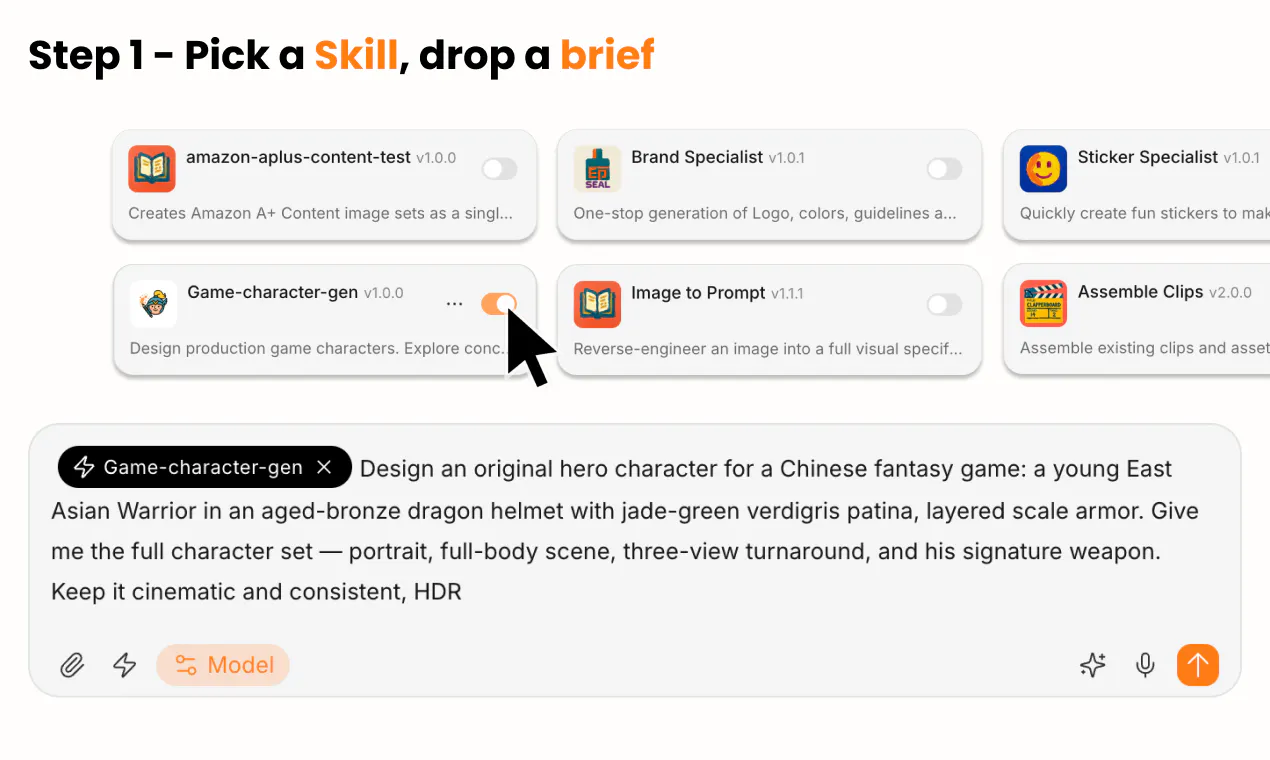
查看原始信息
PitchHighway
Upload any song and PitchHighway turns it into a personalized singing journey — warmups in the song's key, range drills, and phrase-by-phrase practice with real-time pitch feedback, like Guitar Hero for your voice. Try the free range test in your browser.
Hey Product Hunt! 👋 Solo maker here. PitchHighway 🎵 started from a small personal habit: every morning I sing for about 15 minutes. Not because I'm a good singer — just because it relaxes me and sets up my day. Later I found there's actual science behind that feeling (singing stimulates the vagus nerve, which calms your nervous system), and it stopped feeling like a so-so habit and started feeling like something worth building around. But here's what bugged me: every singing app wanted me to do random exercises or pick from their catalog. I just wanted to sing my songs — and get some honest feedback that I wasn't butchering them, plus a way to actually get better at them. So I built PitchHighway. You upload any song, and it: Extracts the vocal melody and turns it into a "highway" — you see the notes coming and your own pitch in real time, Guitar Hero style Builds a practice journey around that song — warmups in the song's key, range drills, phrase-by-phrase practice Runs pitch detection on-device, so it works in real time and your voice never leaves your phone If you want to try something in 10 seconds without signing up, test your vocal range in the browser: pitchhighway.com/voice-range — I'd love to hear what you get. I built everything myself — the iOS app, the audio pipeline, the web version — so I'm here all day and genuinely want your feedback: on the product, the idea, or your own morning-singing rituals. 🙂
0
回复

the on-device pitch detection makes sense for privacy on your own voice, but curious about the song side - when someone uploads a commercial track to extract the melody, does that audio get processed on a server to pull out the vocal line, or is the melody extraction also happening locally? seems like the copyrighted song itself is the part more likely to need to leave the phone, separate from your own singing

0
回复

Love how the warmups are already in the song's key, that small detail shows you actually thought about the practice flow instead of just bolting pitch detection onto a generic app.

0
回复

the range test worked right in my browser with no signup, and seeing my pitch land on the note highway in real time was weirdly satisfying. would love to see song warmups beyond just drills.

0
回复

Does the real-time pitch feedback actually work through the mic in a regular browser tab, or do I need to download something for low latency?

0
回复

Played around with the free range test and the Guitar Hero-style feedback is genuinely satisfying, makes it way easier to see where I'm flat. Surprised how smooth the pitch detection felt in the browser without any setup.

0
回复

Love the Guitar Hero angle for singers, this could really make practice stick. One thing I'd want is the ability to export a session as a MIDI or PDF practice sheet so I can review my pitch accuracy offline or share it with my vocal coach.

0
回复

Would love a way to save multiple range tests over time and see the trend in a simple graph, super motivating to actually watch my range expand song by song. Also maybe tag which songs tripped me up so I can circle back to them.

0
回复

Being able to upload a song and have it figure out the key and break it into phrase-by-phrase practice is honestly such a smart idea, would have saved me so much time with my vocal coach. One thing that would make it even better is if you could slow down tricky sections without changing the pitch, similar to how some guitar tab apps let you loop a riff. That way you could actually nail the runs before speeding back up to the original tempo.

0
回复