Product Hunt 每日热榜 2026-07-31

PH热榜 | 2026-07-31

#1
MiniMax H3
Unified video generation for motion design and branding
333
一句话介绍:MiniMax H3 是一个能一次生成带原生立体声的2K视频的开源多模态模型,将文本、图像、视频和音频输入统一处理,解决商业创作者在动态海报、品牌视频和电商营销中反复拼接多个工具、难以保持风格一致和文字渲染失真的痛点。
Design Tools Art Artificial Intelligence
视频生成 多模态大模型 2K视频 原生立体声 文字渲染 品牌资产生产 动态设计 商业内容创作 开源模型 AI视频工具
用户评论摘要:用户核心关注点集中在品牌一致性与文字渲染稳定性上,质疑连续重渲时能否锁定精确色号和字体;同时询问是否支持对已有视频的局部迭代编辑而非整段重生成;另有用户关注多模态输入是真正联合驱动还是仅同一接口并行,以及API是否支持alpha通道以支持后期合成。
AI 锐评

MiniMax H3 踩中了视频生成从“demo玩具”向“生产工具”转型的临界点。其真正价值不在于把多模态塞进一个模型,而在于它用“原生立体声”和“2K分辨率”回应了商业视频最硬性的交付指标——这比单纯追求画面“好看”务实得多。但社区评论一针见血地揭开了它的遮羞布:品牌工作流的核心是“精确复现”,而生成模型的本质是“连续概率分布”,这决定了它在锁定Hex色号、特定字体这类离散命题上必然失分。更致命的是,几乎没有人关心首帧有多惊艳,所有人都在追问“重渲一致性”和“局部编辑能力”。这暴露了产品介绍与真实生产需求之间的错位:API已上线,但若没有提供alpha通道或干净背景板以便后期确定性合成品牌元素,它依然只能停留在概念可视化阶段,无法真正进入品牌资产交付管线。另一个被广泛质疑的点是“统一多模态”是否名副其实:如果音频只是叠加在画面下,而非驱动剪辑节奏,那所谓融合不过是拼接。MiniMax要想从“让人惊叹”走向“让人依赖”,下一步必须回答:如何在不可控的生成层与要求绝对精确的品牌层之间,架起一条可预测的工程桥梁。否则,它只能吞噬初级剪辑师的工作,却取代不了品牌设计师。

查看原始信息
MiniMax H3
MiniMax H3 is an open multimodal model that generates 2K video with native stereo sound. It unifies text, image, and audio inputs, excelling at accurate text rendering, visual packaging, and complex instruction following for commercial content creation.

Hi everyone!

@MiniMax H3 is especially good at turning a mixed set of references into finished-looking motion work.

You can mix text, images, video, and audio in one request, then simply tell H3 what you want to borrow from each reference. It can follow the same character, camera movement, voice, or overall visual style and turn everything into a 2K video with native stereo sound.

This makes H3 especially useful for commercial creative work. The output can feel much closer to a finished piece, with the typography, motion, pacing, and sound working together across product videos, motion posters, music visuals, and ecommerce campaigns.

The API is live now, and the weights are coming!

6
回复

@zaczuo Asad's re-render consistency point is the real test, not the first output. anyone can nail one clean take, the actual claim to check is whether the same layout survives when you swap one word for a longer one. that's the difference between a demo and something a branding team could actually rely on for repeat work.

curious whether commercial users are mostly generating final assets directly, or still treating this as a first-pass that gets touched up in an editor before it ships.

0
回复

@zaczuo Congratulations on the launch!

What caught my attention isn't just the video quality, it's the ability to combine multiple references into one coherent output. Creative work rarely starts from a blank page. It starts from scattered ideas, assets, and inspiration that need to come together naturally.

I can see this becoming a huge time saver for marketing teams, agencies, and content creators who iterate constantly.

I'm curious, what's been the most unexpected use case you've seen so far? Did someone use H3 in a way your team never anticipated? Wishing you an amazing launch!

0
回复

Text rendering is the claim I'd want tested hardest here, because a motion poster lives or dies on one word being right and video models have historically turned typography into soup. The useful test isn't whether it renders clean once, it's whether you can swap that word for a longer one and get the same layout back. Everything in a branding workflow is a re-render, so consistency across takes matters more than any single take. Native stereo in the same pass is the part that actually removes a handoff.

3
回复
Congrats on the launch! I lead marketing and we’re deep in launch-asset production right now, so my question is about brand fidelity rather than single-shot quality. Our brand lives on exact hex colors and one specific typeface. When I generate a campaign’s worth of assets, product video, motion poster, teaser, can H3 hold those exact brand values across every render, or does each generation drift a little? Reference images help with style, but “close to our green” isn’t our green. If there’s a way to lock a brand kit across outputs, that’s the feature that moves this from cool to production.
2
回复

@ridhwikvinod Ridhwik, the honest answer on brand fidelity is that you should not be asking a generative model for it, and the good news is that you do not have to.

Exact hex and one specific typeface are the two things this class of model is structurally worst at, because both are discrete and everything inside the model is continuous. Asad is right that consistency across re-renders is the real test, and it is the test these models will keep half-failing for a while yet.

The pipelines that actually ship brand work do not fight that. They let the model make the motion, the atmosphere and the camera, then composite the brand layer on top deterministically. Logo, wordmark, exact colour, legal line, all placed by something that cannot hallucinate.

Which turns your question into a far more answerable one. Not can it render my typeface, but can I get a clean plate to composite onto.

So the thing I would ask MiniMax directly: does the API return an alpha channel, or a background plate with no burned-in text? That one feature decides whether this belongs in a brand pipeline or stays a concepting tool.

0
回复

The unified text/image/audio input approach is interesting , most "all-in-one" generation tools end up mediocre at everything. How's the output quality holding up for commercial/branding use cases specifically, vs. more experimental content?

1
回复

@shivvv hi help you

0
回复

@shivvv Shivarchan, the distinction worth pressing on is whether the modalities actually condition each other, or just arrive in the same call.

Accepting text, image, video and audio at one endpoint is a convenience. Genuinely joint generation means the supplied audio drives the cut timing, the reference video drives camera motion, and the image drives palette, all at once and influencing one another. Those are very different capabilities sitting behind an identical looking API.

There is a cheap test. Feed it audio with an obvious beat and see whether the cuts land on it. If the edit comes back rhythm aware without being asked, the modalities are genuinely fused. If the cuts fall wherever they like and the audio is simply laid underneath, you have parallel pipelines sharing one endpoint.

Worth establishing before you build a workflow on it, because the second kind falls apart the moment you need the inputs to agree with each other.

0
回复

Congratulations

How can i reach out to your team?

0
回复

🚀 Congrats on the launch! What stood out to me wasn't just the multimodal generation, but the potential to reduce the number of tools in a production workflow.

One question I had is about iterative editing. In a real marketing campaign, we rarely regenerate everything from scratch. We might only need to update a product image, change a headline, or swap a voiceover while keeping the same camera movement, pacing, and overall style.

Can H3 preserve those elements and edit only what's changed, or does each revision require generating a new video?

I think that workflow would make a huge difference for teams creating commercial content at scale.

0
回复

thanks for eating my job. lol

0
回复

ongrats on the launch, this is a strong day one showing. Mixing text, image and audio inputs in one model would make quick brand teasers way less painful, right now that is three tools and a lot of glue between them. Can I feed it a product shot plus a rough voiceover clip and have it build the motion design around both?

0
回复

The multimodal breadth here is impressive: text, audio, image, video, and music under one roof is a lot to pull off well, and the ultra-long context plus strong code/agent capabilities is exactly the combination that makes these models actually useful for real workflows rather than demos. "Co-create intelligence with everyone" is a nice framing for the mission too. Curious which modality you've found resonates most with builders so far. Congrats on the launch! 🚀

0
回复

is it better than flux and seedream?

0
回复

@paul_from_dentro Paul, these are not really in the same category, and that is itself the useful answer.

Flux and Seedream are image models. H3 is video with audio generated in the same pass. If what you need is one still, an image model will almost always beat a frame pulled out of a video model, because video models spend capacity on temporal coherence that a still generator puts straight into per-frame fidelity. That tradeoff is structural rather than a quality gap somebody closes next month.

So the question that actually decides it is whether your output moves. If it does not, stay on the image models. If it does, the comparison you want is against other video models, not these two.

0
回复
#2
Cleanlist AI
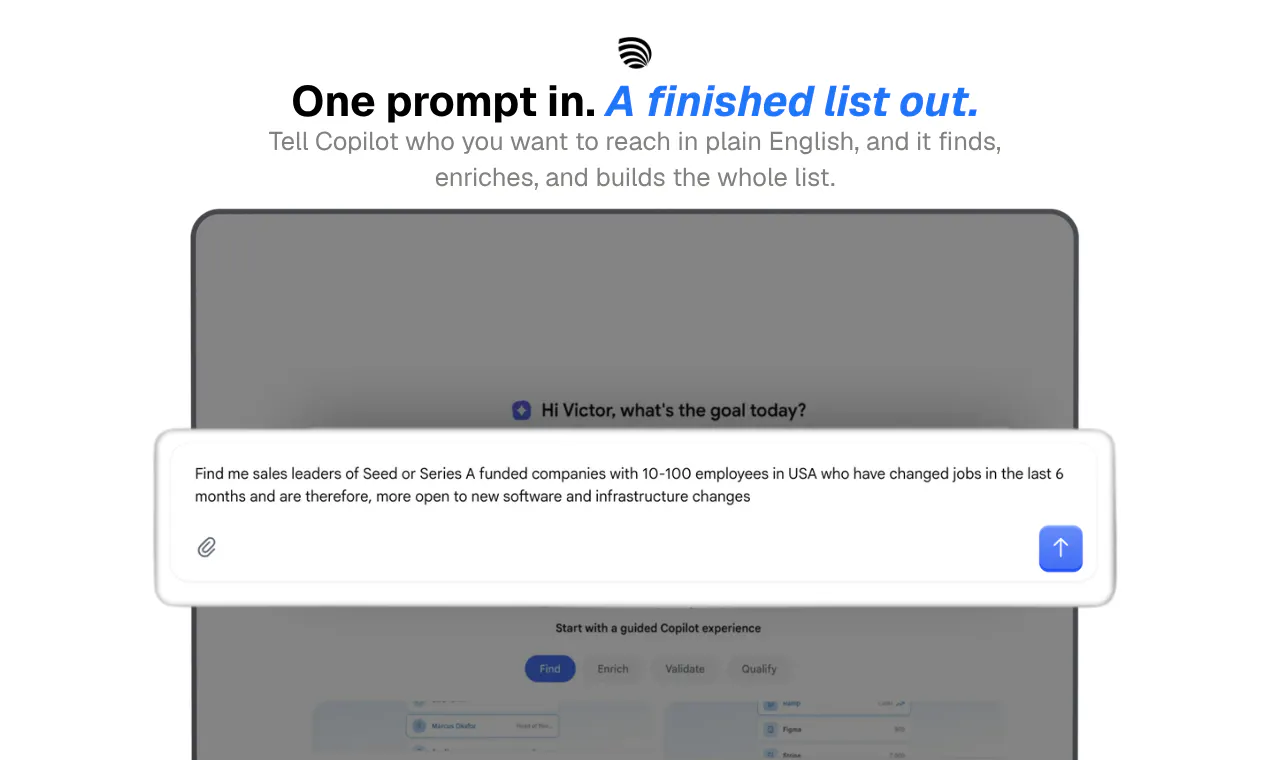
Natural-language prospecting: find, enrich and sync leads.
261
一句话介绍:Cleanlist AI 是一款自然语言驱动的B2B销售线索挖掘与 enrichment 工具,帮助GTM团队将任意来源的原始线索(CSV、LinkedIn URL、搜索条件)自动清洗、验证、丰富并同步至CRM,省去多工具拼接的繁琐流程。
Sales SaaS Artificial Intelligence
AI销售线索挖掘 B2B数据清洗 邮件验证 CRM同步 自然语言搜索 销售赋能 GTM工具 数据丰富 线索管理 自动化销售流程
用户评论摘要:用户普遍认可其解决多工具切换痛点的方向,核心质疑集中在三点:数据新鲜度与置信度标识、GDPR下数据来源溯源性(及API/导出是否暴露字段级来源)、与Clay的差异化(尤其对比“工作台”与“电器”的定位)。另有负面反馈称UI过时难用,遭创始人反驳为虚假评论。整体有效建议指向透明性与权限控制。
AI 锐评

Cleanlist AI 的巧妙之处不在于技术壁垒,而在于精准的“产品立场”切割——它把自己定位为“有主见的家电”,而非Clay式的“可组装工作台”。这直击了GTM团队中“没有专人运维复杂工具链”这一隐形但普遍的权力真空。500+付费用户验证了其“开箱即用”的价值主张,15家供应商的水瀑布在成本控制上采用“首中即停”与“无效不收费”策略,商业逻辑比功能本身更值得赞赏。

然而,其护城河相当可疑。核心功能(找邮箱、验证、CSV清洗)极易被集成商(如HubSpot原生功能)或通用AI Agent(Claude Code + API)组合替代。评论中对其“AI”含量的质疑——Copilot生成的代码甚至不如手动筛选——暴露了其自然语言层的浅薄。

更重要且致命的是数据合规与透明性隐患。创始人承认“字段级来源未在UI展示”,这不仅是GDPR Article 14的技术债,更是触发规模化销售的定时炸弹。当客户询问“第14个供应商的模式猜测与第1个的真实匹配为何显示相同置信度”时,现有回答难以服众。若不出台自服务的字段级溯源及置信度分级导出,其高价值企业客户增长将很快触顶。概括而言:这是一款优秀的效率工具,但距离“可信赖的数据平台”,还差一个“审计功能”的距离。

查看原始信息
Cleanlist AI
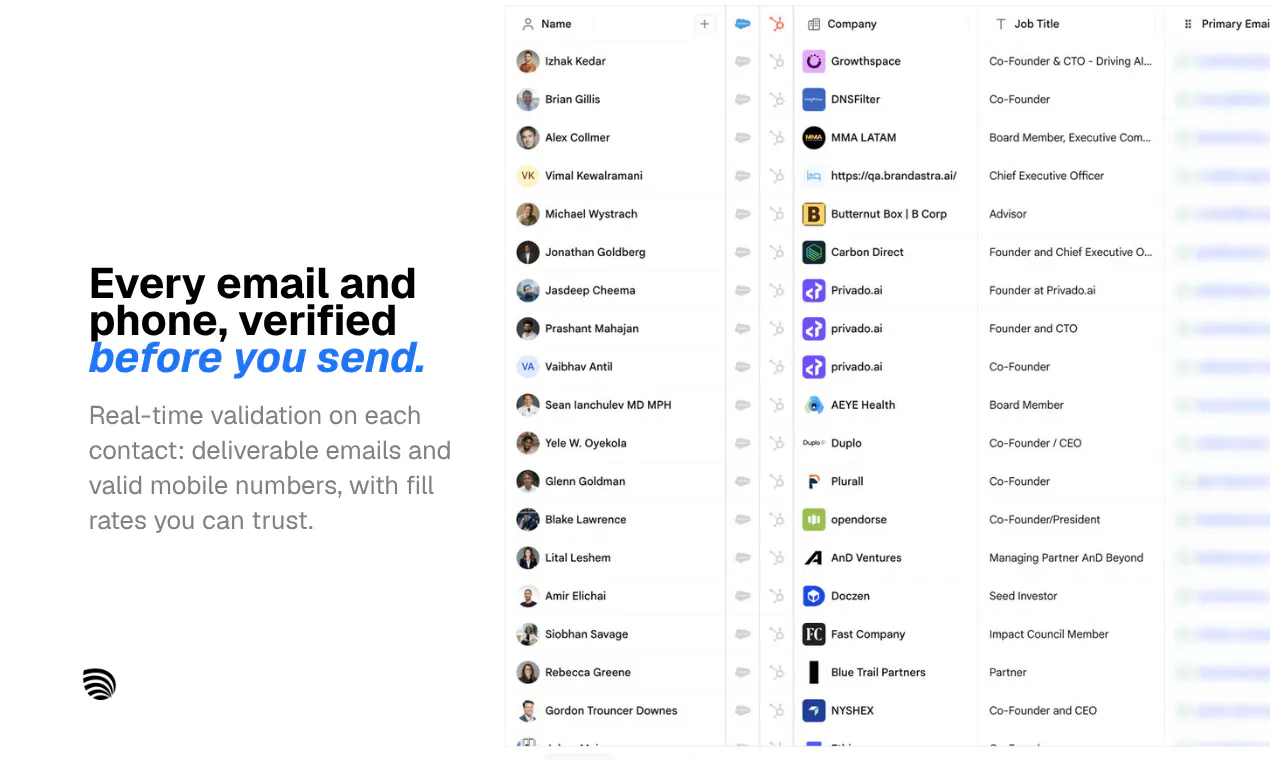
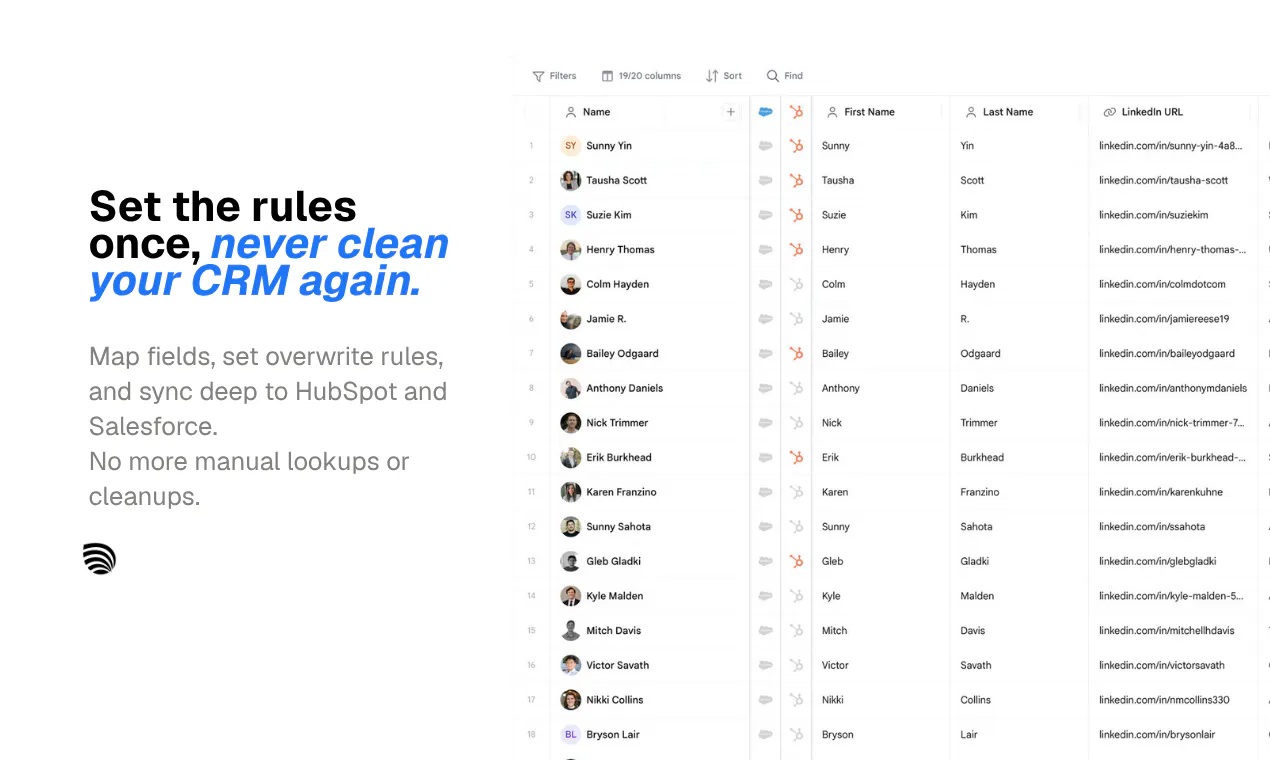
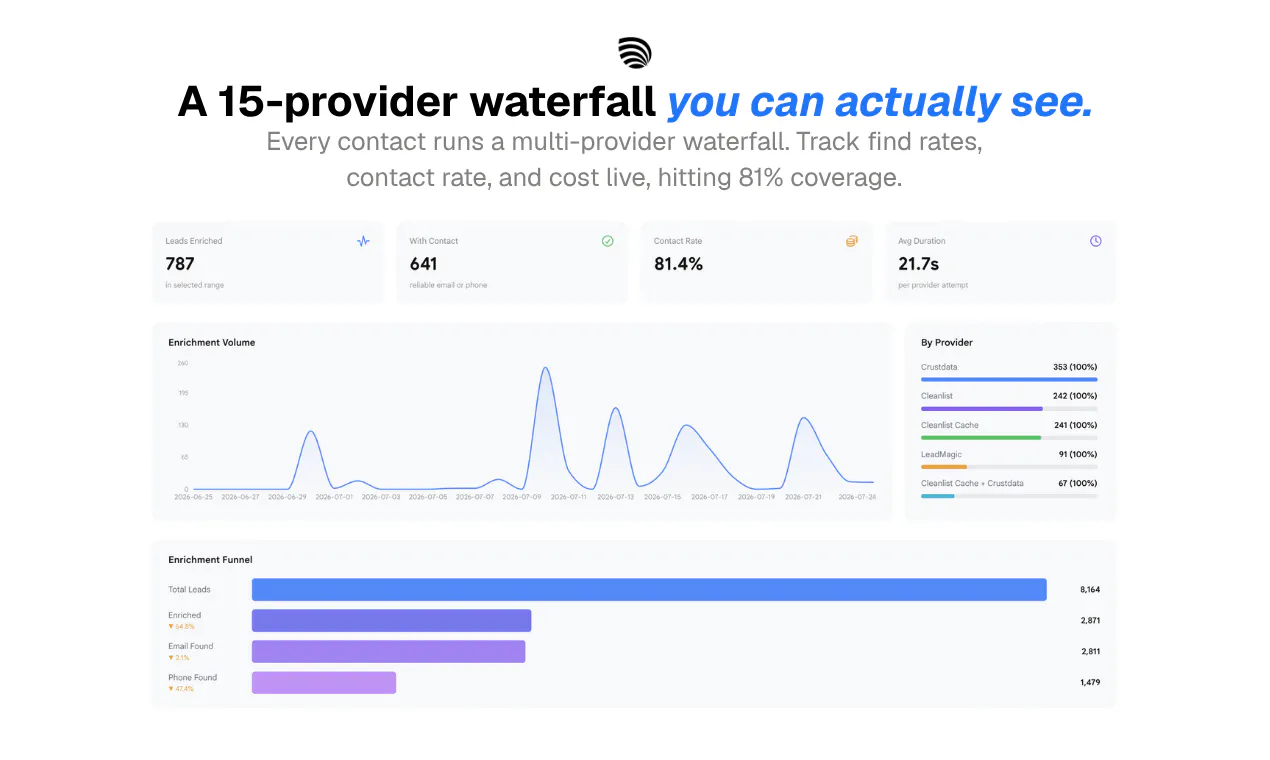
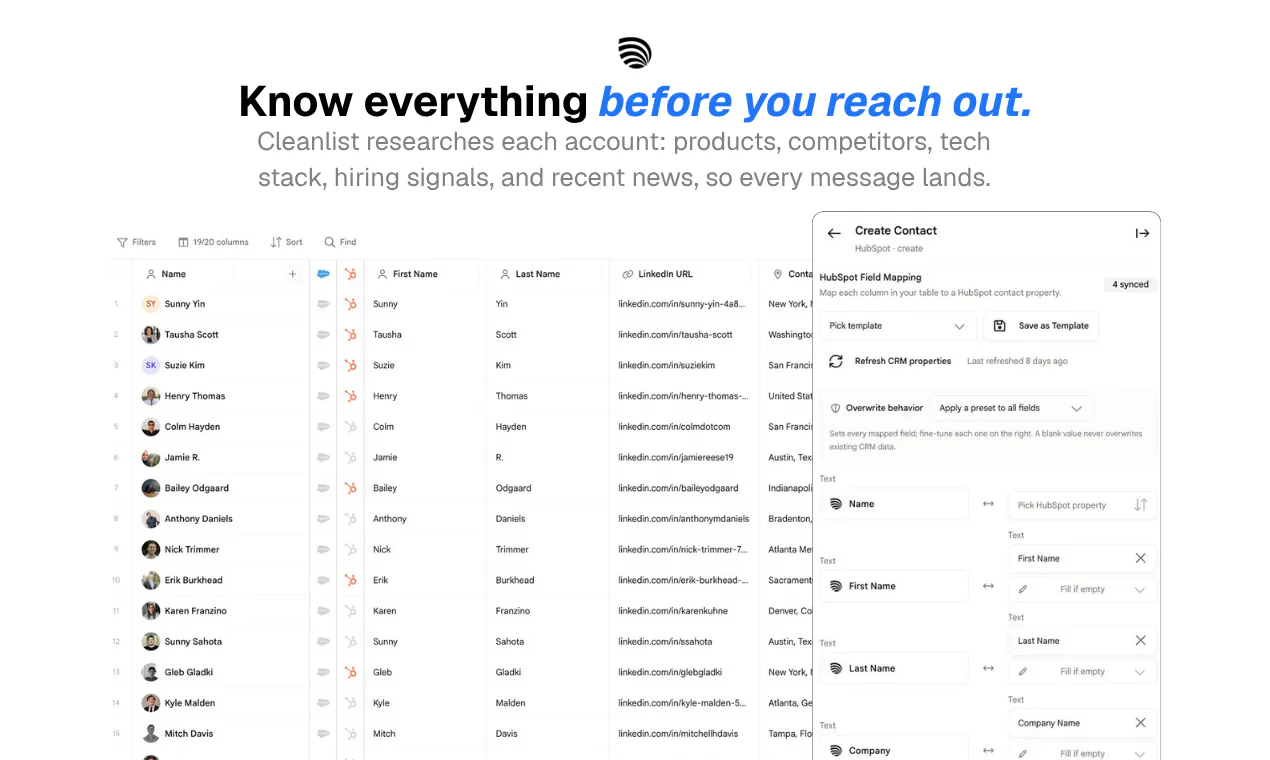
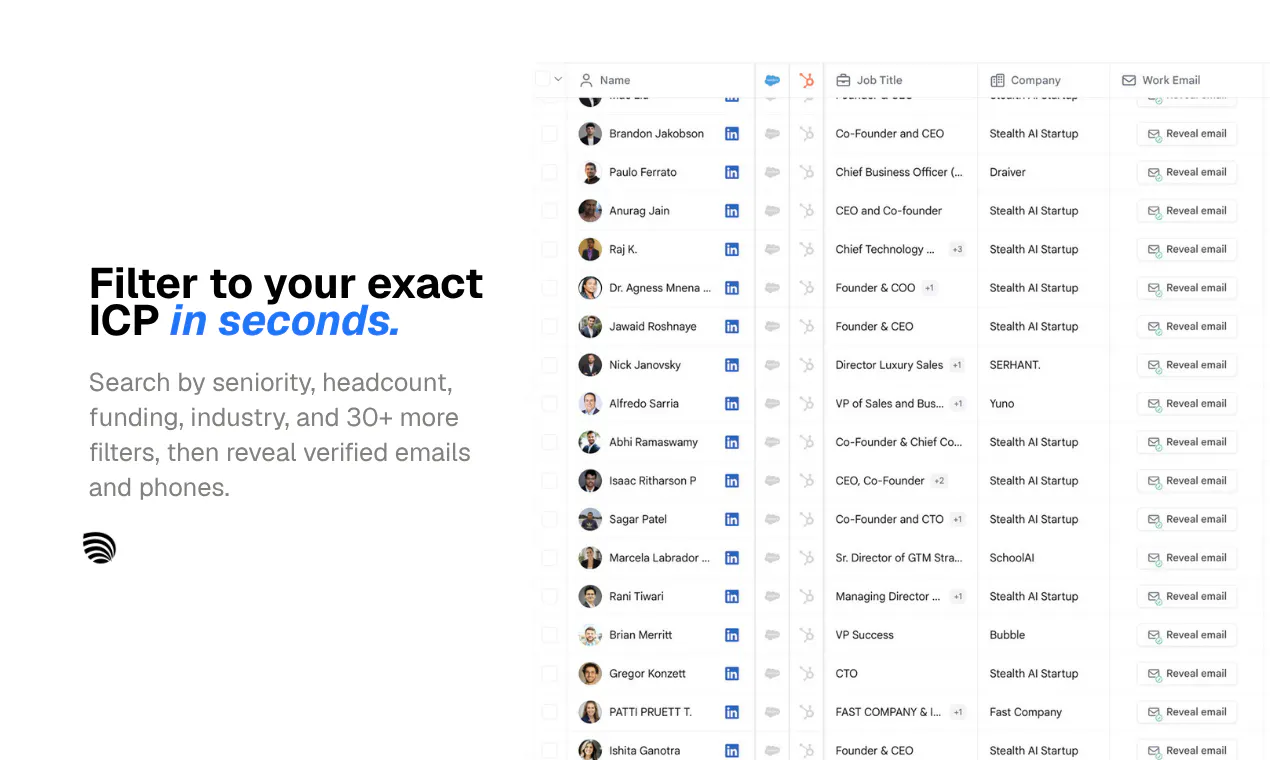
Cleanlist AI turns any prospecting input into a verified, enriched, CRM-ready lead list. Upload a CSV, paste LinkedIn or Sales Navigator URLs, add domains, or use search filters, then let AI agents enrich contacts, verify emails, research each lead, and sync the final list to your CRM. With a 15-provider enrichment waterfall, AI research columns, and one-click CRM sync, Cleanlist helps GTM teams build lists without stitching together six tools.

Hey Product Hunt, Levon here, founder of Cleanlist.

The Problem

Building a prospect list used to eat our week. Export from one tool, enrich in a second, verify in a third, fix the CSV, load the CRM, then watch half the emails bounce anyway.

Most tools give you one of three bad options:

- Static databases: Clunky filters, stale data, and cleaning is still your job.

- DIY enrichment stacks: Powerful, but you wire up every provider and babysit each run.

- GTM orchestration platforms: Sophisticated, but much more expensive and almost always need a dedicated GTM engineer to run.

So we built Cleanlist to make prospecting feel like asking, not operating.

How Cleanlist is Different

However you prospect, it ends the same way: a verified, enriched, contextualized list, ready for your CRM or outreach platform.

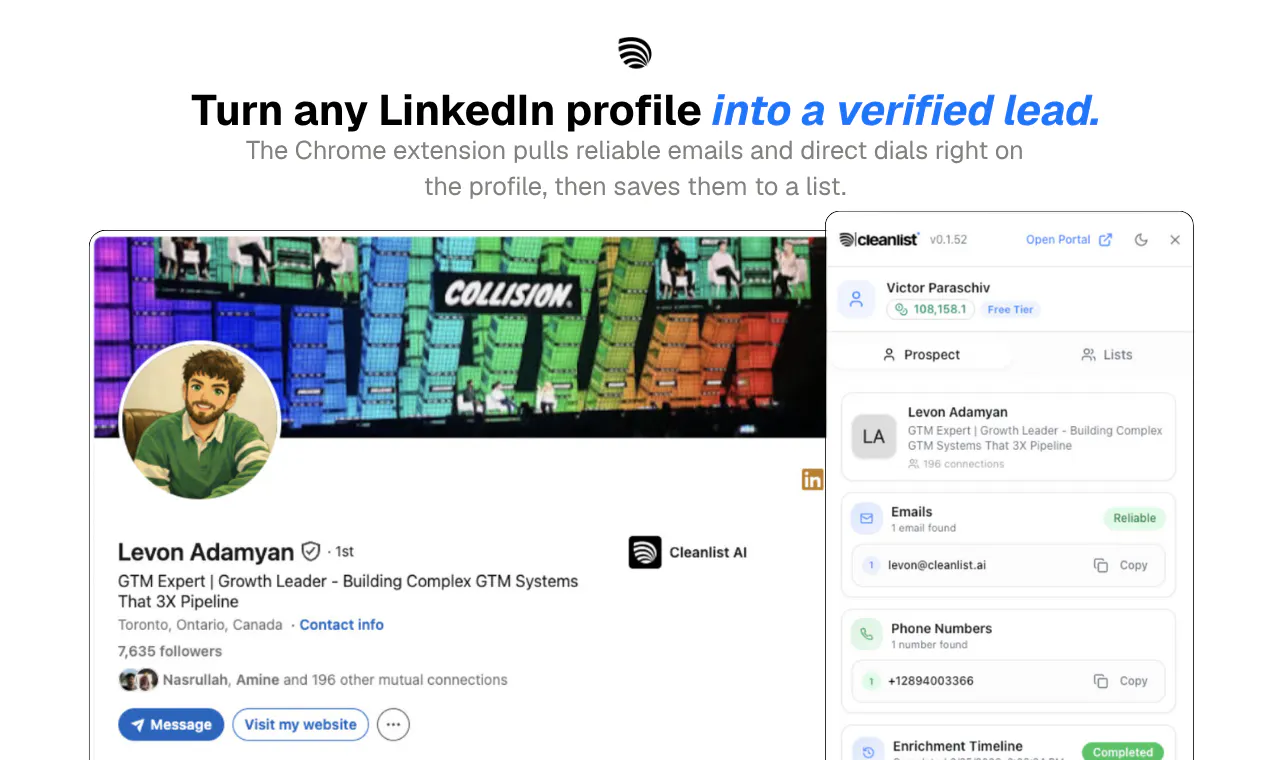
- Start from anything. Upload a CSV, paste a LinkedIn or Sales Navigator URL, use People Search filters, or pull leads with our Chrome extension right on a LinkedIn profile.

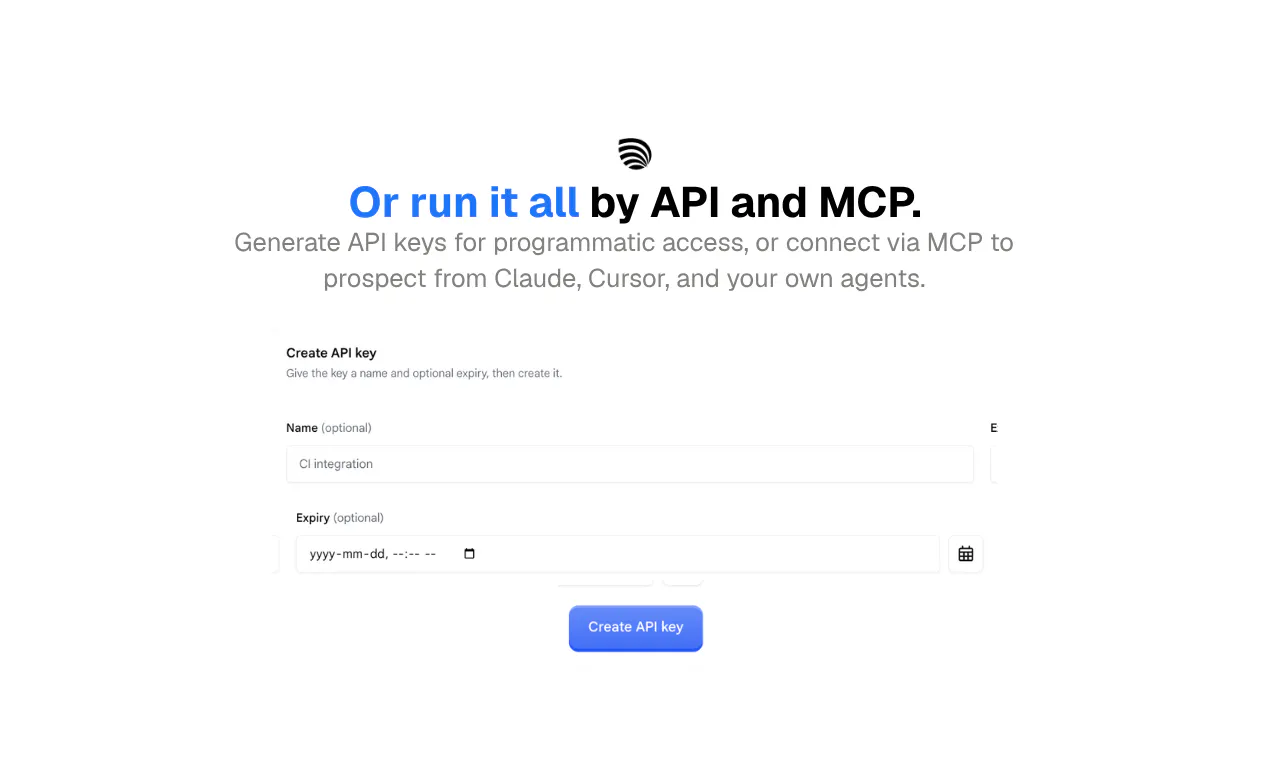
- Or just ask. Tell Copilot who you want in plain English, or prospect from your own code and AI tools (Claude, Cursor) via our API and MCP.

- 15-provider waterfall. 98% email accuracy, 85% phone coverage, 50+ fields, no setup.

- Deep HubSpot and Salesforce integrations. Set your conditions and rules once, and building a list never means a manual lookup or cleanup again.

Who is this for?

B2B sales, marketing, and founder-led teams who want pipeline without running a separate tool for every step. We have over 500 paying users already!

Get started today

Free: 30 credits, no credit card. For Product Hunt, code PH25 = 25% off forever.

I'll be here all day. Ask me anything!

11
回复

@levon_adamyan From the buyer side, the hard part of prospecting was never finding leads, it was trusting the enrichment. I've paid for lists where half the emails bounced or the decision maker had left months ago. How fresh is the data you enrich against, and do you flag confidence so I know which contacts are worth outreach? Bad data burns sender reputation before you notice.

4
回复

@levon_adamyan For a founder-led sales team that’s currently juggling 2–3 tools, what’s the one workflow you’d recommend we rebuild first in Cleanlist to feel that 80% time-save fastest? And is there a tiny “success signal” where teams usually go, “okay, this actually changed our week”?

0
回复

@levon_adamyan Congratulations on the launch, Levon! 🚀

I think most people assume prospecting is a data problem. From my experience, it's actually a workflow problem. Finding leads is easy. Cleaning them, enriching them, verifying them, and getting them into the CRM without breaking the flow is where the real time disappears.

That's why I like the direction you've taken. Instead of adding another point solution, you're removing the handoffs between tools. Those small context switches add up more than most teams realize.

Reaching 500+ paying customers also tells me you've solved a pain people are willing to pay to eliminate, not just a feature they think is nice to have.

I'm curious, once customers start using Cleanlist, what's the feature they end up relying on the most? Is it the AI Copilot, the 15-provider waterfall, or the CRM automation that quietly saves them hours every week? Wishing you and the team a fantastic launch! 🚀

0
回复

Congrats on the launch, Levon! Really like the direction you're taking with Cleanlist AI. The AI research columns and CRM sync are a clever combination, can definitely see this saving GTM teams a ton of manual work. Looking forward to seeing where you take it. 🚀

3
回复

@davemadeit Thank you. The CRM sync came straight out of customer conversations, so it is good to hear that combination lands. Appreciate you taking a look.

2
回复
Sounds super practical, Levon — love how Cleanlist cuts through the messy stack of tools and makes prospecting feel effortless. The “just ask” angle with Copilot + API support is a game-changer for founder-led teams who don’t want to babysit CSVs. Excited to see how this scales!
2
回复

@odeth_negapatan1 Thank you. Babysitting CSVs is the thing we were most sick of ourselves, which is where a lot of this came from. We just want teams to focus on revenue generating tasks

2
回复

Different angle to the data quality thread above, and on the buyer side it's the one that would decide this for me before accuracy does.

A 15 provider waterfall is excellent for match rates and awkward for provenance. Under UK and EU GDPR, when you enrich someone's details from a third party, Article 14 says you have to be able to tell that person where their data came from, and they can ask. If the answer is "one of fifteen providers, whichever matched first", that's a difficult letter to write.

So: does provenance come back with the record? Does each enriched field carry which provider supplied it, stored and queryable later, or is the waterfall an implementation detail that gets discarded once a match lands? Same question for how you'd evidence lawful basis, since legitimate interests only stretches so far for cold outreach to individuals in the UK and EU.

I ask because whoever maintains the privacy notice will eventually be asked, and if the tool can't answer then the honest answer becomes we don't know, which is the one thing you can't put in writing.

2
回复

@dalemooney Every enriched field records which provider it came from, and that's stored against the record. We can pull the source for any contact after the fact. It doesn't get discarded when the match lands.


Caveat worth being straight about: it's not surfaced in the UI today. You'd ask us and we'd pull it. Fine for a subject access request, less fine if you want to self-serve it, and that's on the list.


Lawful basis is a longer answer and I'd rather give you that in writing. Email support@cleanlist.ai and I'll send the DPA along with how we handle UK and EU records.

3
回复

@dalemooney Victor's answer makes this more interesting, not less. The provenance exists. It is just not surfaced.

That is fine for the case Dale is describing, because a subject access request comes with 30 days and a human in the loop. It is not fine for the case that shows up sooner.

A 15-provider waterfall does not produce one quality of email. It produces fifteen. A verified match from the first provider and a pattern guess from the fourteenth arrive in the same column looking identical, and sending to both at the same confidence is how a sending domain gets burned.

That decision happens at send time, not over email with support. Which means the field you are already storing is the input to send-or-skip, and surfacing it turns a compliance obligation into a deliverability feature.

Is per-field source available on the export or the API today, even though the UI does not show it?

0
回复

Third Product Hunt launch and a clear jump in ambition each time, nice progression. The thing I would try first is pointing it at an old CSV export and letting the enrichment waterfall fill in the gaps before re-importing anything. When it syncs into HubSpot, does it dedupe against contacts that already exist there or create fresh records?

1
回复

@doganakbulut That's the use case I'd pick too, old exports are usually where the most value is sitting and nobody wants to touch them.


On HubSpot it matches on email and updates the existing contact, so you're not getting duplicate records. Default is fill-empty-only, so it leaves alone anything your team has already put in, and you can set it per property if you'd rather it overwrite or append.


I'd run a small batch through first so you can see exactly what it's writing before you point it at the whole export.

1
回复

tried Cleanlist AI and unfortunately the experience was disappointing. The UI feels outdated and unintuitive, making even basic tasks more complicated than they should be. Navigation is confusing, the workflow isn't smooth, and the overall product feels unpolished for something positioned as an AI sales tool. There are plenty of features, but the poor user experience makes them difficult to use effectively. It needs significant improvements in design, usability, and overall product quality before I could recommend it.

1
回复

@suryansh_tiwari2 Hey, just checked! You don't have an account with us and are actually one of the people/agencies who reached out promising upvotes which we declined

As this is fully false, please kindly remove your comment, thanks!

2
回复

@suryansh_tiwari2 I believe your exact words after 2 times of telling you “NO” was:

“Going to do mass bot attack as well as Going to report to PH team”

————————

@product can we please take action against this user!

1
回复

I am trying to wrap my head around this. Is it like a simpler version of Clay? What does it do that I can not do with a CSV file and Claude Code?

1
回复

@sm0r3ll Clay is a good product, it's just built for teams who have a GTM engineer sitting there, and most people asking this question don't. We come in cheaper and you don't need to hire anyone to make it work, which is where the real money goes with Clay anyway.


Start with actually finding people, which Claude Code can't do at all. You search by title, seniority, location, headcount, industry and you get a real list back, not whatever the model manages to scrape off a page. Same on the company side.


Then enrichment sits on top of that, 15+ providers waterfalling until you get a verified email or a direct dial.


Then Smart Agents, which is the bit I actually like. You ask a question in plain English and it runs against every row, so stuff like which CRM are they on, are they hiring SDRs right now, does the site mention SOC 2, how well do they fit our ICP. It goes and reads the site and the job posts and fills the cell in.


All of that's on the API too, and there's an MCP server, so if you want to drive the whole thing from Claude Code you can, then push the result straight into HubSpot or Salesforce.


Claude Code is a good researcher, it just has no database underneath it and nowhere to put the answer at the end.

1
回复

@sm0r3ll Steven, the useful way to tell these apart is not the feature list, it is who does the composing.

Clay is a workbench. You assemble the waterfall, wire the AI columns, decide the order, and it is genuinely powerful once you know what you are doing. The cost is that building the pipeline is itself a skill, and plenty of teams who buy it end up using a fraction of it because nobody on the team actually owns that job.

The pitch here is the opinionated version. The waterfall is already composed, you ask in plain language, you get a list. Less control, far fewer decisions to get wrong.

So the question is not which is better. It is whether you want a workbench or an appliance. If nobody on your team is going to own the pipeline, the appliance wins by default, because a workbench you do not operate is worth nothing.

0
回复

Hello I have tested the Cleanlist AI and I want to provide some feedback:

The sign up using Google worked as expected, the configuration worked fine as user interface but in Network a lot of GET resulted in 401 Unauthorized just mentioning maybe it is as expected for a free account maybe not it's up to you to decide.

The People search worked for QA Manager returning a lot of potential leads. However I have tried to filter the results using Copilot to only show people with QA manager role not QA but the copilot generated some the following code that I think needs to be executed:

<function_calls> <invoke name="get_company_profile"> </invoke> </function_calls> <function_calls> <invoke name="people_search"> <invoke name="people_search"> <parameter name="titles">["QA Manager", "Quality Assurance Manager"]</parameter> </invoke> </function_calls>.

If there is another solution for filtering the people table please let me know. I hope my feedback will be useful. Have a great launch!

1
回复

@andrei_constantin_alexandru Salut!

Thanks for testing it properly and writing this up, genuinely useful.


For filtering, People Search has manual filters as well. You can set title there directly and get exact matches on QA Manager.


For the rest, hit us on live chat in the portal or support@cleanlist.ai and we'll get you sorted.

1
回复

Looks super exciting — congrats on the launch! Natural-language prospecting with CRM sync is a really smart approach. Wishing you a great launch day!

1
回复

@zvonimir_sabljic1 Thanks, appreciate you checking it out. If you end up giving it a go, tell us what you think :)

1
回复

the 15-provider waterfall is the bit that actually matters here, most tools stop at one and still call it enrichment. where do you cut it off though? running all fifteen on every lead would get expensive quick.

1
回复

@alex_watson2110 It stops at the first confident match. They're ordered by hit rate and cost, so most records resolve in the first one or two. The hard ones go deeper.


You pay one credit for a verified email whether it took one provider or nine. We absorb the rest. And we only charge when something comes back, so an unfindable lead costs you nothing.

1
回复
#3
mectrics
Your Mac's vitals in the menu bar. Free and open source.
241
一句话介绍:mectrics 是一款免费开源的 macOS 菜单栏系统监控工具,通过“Compact Health”将 CPU、内存、电池等状态折叠为一个安静图标,只在异常持续时主动提醒,解决用户被海量实时数据淹没、对告警麻木的痛点。
Mac Open Source Menu Bar Apps
系统监控 菜单栏工具 开源免费 macOS 硬件状态 告警通知 隐私保护 轻量级 Compact Health 开发者工具
用户评论摘要:用户普遍认可“Compact Health”的克制告警逻辑,认为其优于 iStat Menus 的持续噪音。核心诉求集中在:① 缺少 CLI/JSON 导出,不利于无头 Mac mini 场景;② 温度/风扇模块未在菜单栏展示,且无法识别“热降频”而非单纯高温;③ 询问自身资源占用(约60-65MB);④ 对比 iStat 的优势在于免费、开源、零遥测。
AI 锐评

mectrics 的聪明之处在于它没有试图在数据广度上对抗 iStat Menus,而是用“注意力管理”重构了监控工具的体验。Compact Health 本质上是一个“沉默的大多数”逻辑——默认不打扰,只在持续异常时发声,这精准击中了老用户对传统监控工具“信息过载导致心理脱敏”的痛点。其零遥测、纯本地读取的隐私承诺,在当下一众云端监控工具中形成了清晰的价值观差异,对开发者群体有天然吸引力。

但它的短板同样明显。首先,功能深度不足:温度与风扇模块缺失,且无法区分“传感器读数高”和“系统实际降频”这两种本质不同的异常,这对跑批处理或本地 AI 负载的用户是硬伤——他们需要的不是温度波动,而是“性能被腰斩”的明确信号。其次,所有告警逻辑依赖 GUI,没有 CLI/JSON 输出,直接切断了无头 Mac mini、自动化运维等最需要“静默监控”的核心场景,这与其“轻量、安静”的定位自相矛盾。作者在回复中已承诺下个版本加入只读 CLI,方向正确,但若想真正撼动 iStat 的存量用户,还需在“热降频事件”识别、自定义规则上做更深层的系统级整合。

开源的 MIT 协议是双刃剑:它吸引了隐私敏感型用户,但长期维护的可持续性、以及社区贡献能否跟上 macOS 系统迭代,都是未知数。简而言之,mectrics 目前是一款“理念优秀、细节尚欠火候”的产品,它在正确的方向上迈出了第一步,但距离成为替代 iStat 的成熟工具,还差一个深度场景的打磨。

查看原始信息
mectrics
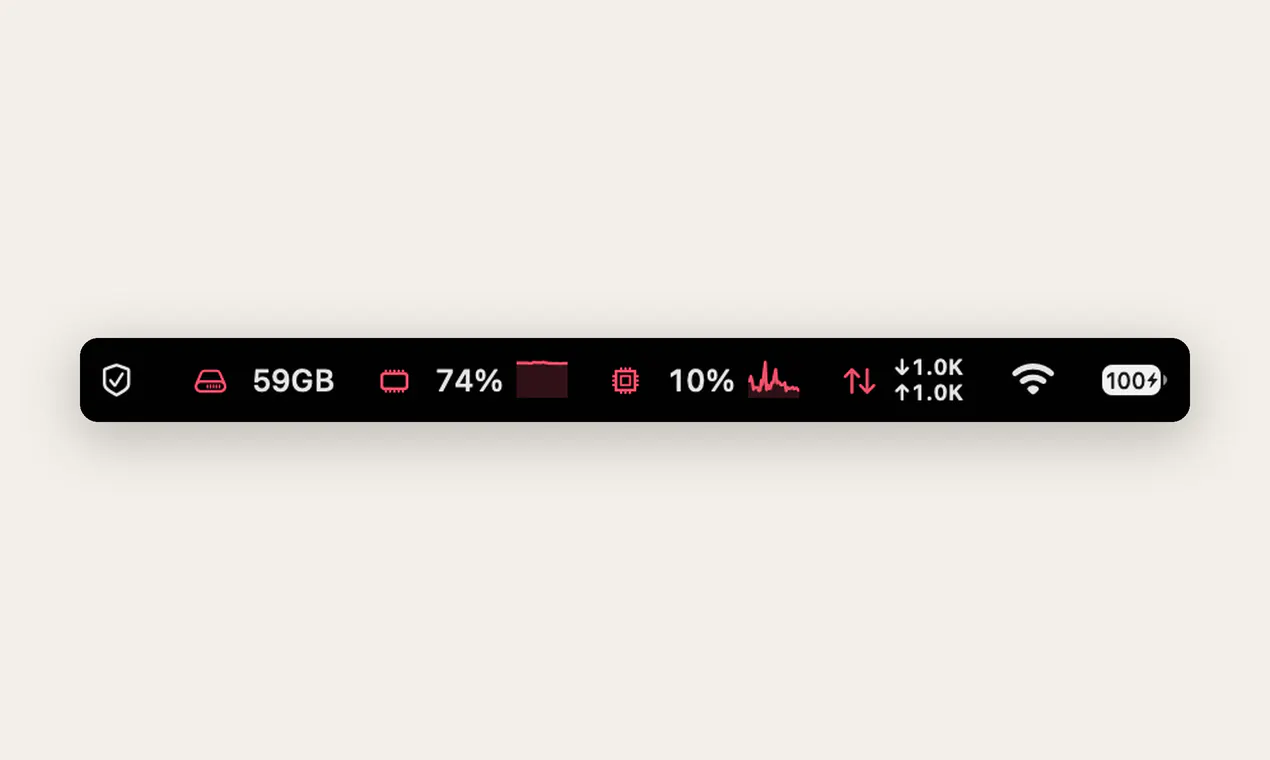
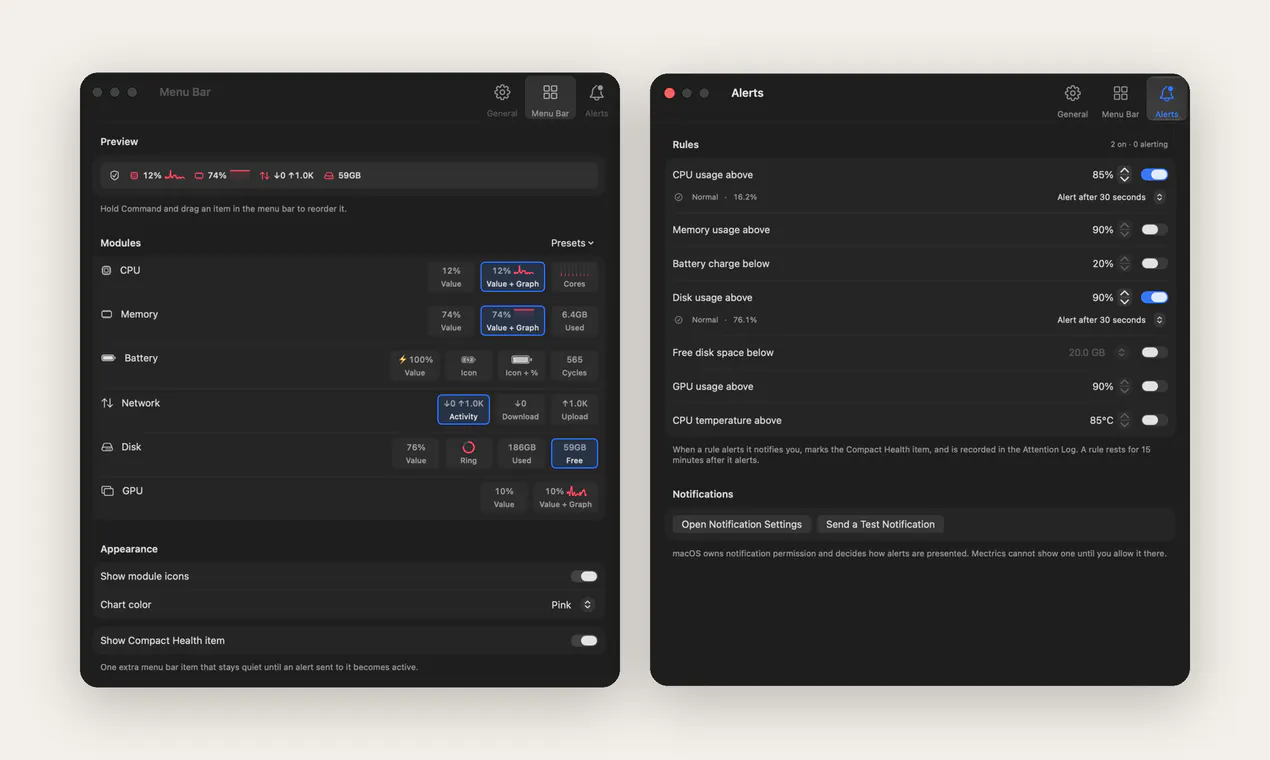
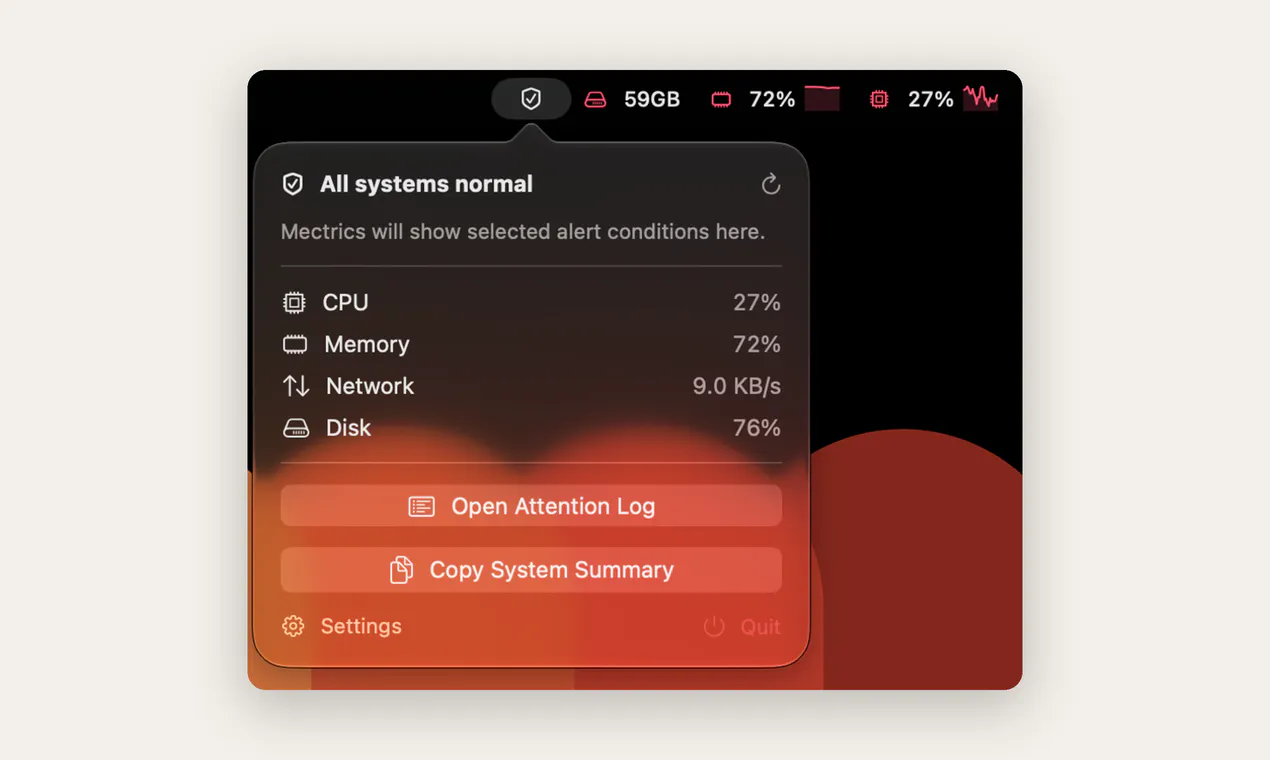
CPU, memory, battery, network, disk, GPU, temperature and fans in your menu bar. You pick which ones show, and a click opens the detail behind it. Compact Health folds the whole machine into one item that stays quiet until something's off. MIT, macOS 15+.
Stats proved an open source monitor can be excellent, and iStat Menus set the depth people expect. I wanted something between the two: free and open, with alerting I'd actually trust. The part I use most is Compact Health. It's one menu bar item that summarizes the whole machine and stays quiet until something needs attention, so I'm not reading six numbers all day. Alert rules fire on sustained thresholds rather than momentary spikes, and there's a test delivery so you know what a 3am notification will look like before it happens. Everything is read from local system interfaces. No analytics, no crash reporting; the only network call the app can make is an update check you trigger yourself. Swift, MIT, macOS 15+. Happy to hear what's missing.
2
回复

@faruk_kamcici Really like the Compact Health idea - quiet until something's actually wrong is exactly right.

Quick question: your description mentions "temperature and fans" alongside CPU/memory/battery/etc., but the menu bar picker only has 6 modules (CPU, Memory, Battery, Network, Disk, GPU) - no temp or fan module. I see CPU temp does show up as an alert rule, but fans don't appear anywhere.

Are those planned, or just described a bit early?

0
回复

@faruk_kamcici For people coming from iStat Menus or Stats, what’s one alert rule you’d recommend setting up first so they feel that trust without getting notification fatigue?

0
回复

@faruk_kamcici Congratulations on the launch, Faruk!

The feature that immediately stood out to me wasn't the monitoring itself. It was Compact Health. Most monitoring tools overwhelm you with data, but what we actually want is confidence that everything is fine until it isn't. A quiet system is often the best system.

I also appreciate your privacy-first approach. Reading everything locally and leaving network activity entirely under the user's control is becoming increasingly rare, and I think many developers will value that as much as the monitoring itself.

I'm curious, after people started using mectrics, what metric surprised you the most? Was there a system signal that users consistently overlooked before Compact Health surfaced it? Wishing you a fantastic launch and plenty of happy users!

0
回复

Compact Health is the bit I'd use. I've got a Mac Mini sitting headless running agent jobs, so the menu bar is exactly where I never look. Is there a way to get the same alert rules out over CLI or JSON so I could pipe them somewhere else, or is it menu bar only for now?

1
回复

@dalemooney That’s a really good use case. There’s no CLI or JSON output for alerts right now, but we can build it. I’ll work on adding it in the next release. Thanks for the idea, Dale!

1
回复

Love that Compact Health folds the whole machine into one item that stays quiet until something is actually wrong, that is the opposite of how these apps usually behave. Free and MIT licensed is a generous move too. Does the compact item still show enough at a glance on a notched MacBook where menu bar space is tight?

0
回复

@doganakbulut Thanks, Dogan! Compact Health takes up only the space of a single icon. It shows the overall state at a glance, and clicking it opens a popover with the details. It works especially well on notched MacBooks where menu bar space is limited.

0
回复

congrats on the launch. I run a Mac mini headless most of the day for local model work, so it's basically always on and I'm sensitive to anything that adds its own background load. for a tool that's polling CPU, memory, GPU, temp and fans continuously, what's mectrics' own footprint look like - is the sampling itself negligible, or is there a tradeoff between poll frequency and how much it costs you to run the monitor in the first place?

0
回复

@galdayan Thanks, Gal! That tradeoff was one of my main concerns too. The main app currently settles around 60 to 65 MB of memory. Lightweight metrics update every second on AC and every two seconds on battery, while GPU, temperature, and fan readings run every third cycle.

The planned read-only CLI for the next release should have a lower footprint on headless setups because it skips the UI and samples only what each command needs. If you try Mectrics and see a very different footprint, let me know and I’ll dig into it.

0
回复

congrats on the launch! I've been using iStat Menus for years. Since I already have a license of iStat what would be the main drivers to bring me over to mectrics? I do like the Compact Health and the suggested CLI/JSON export sounds like a great tool for headless setups.

0
回复

@jacob_sherwood Thanks Jacob! If iStat already works well for you, I would not claim Mectrics has more depth.

The main difference is a quieter approach: Compact Health instead of watching several numbers, sustained alerts that ignore brief spikes, zero telemetry, and free open source code.

The next release also adds a read-only CLI, JSON snapshots, and alert events for headless setups.

It is less about replacing every iStat feature and more about offering a simpler, focused, and private monitoring workflow.

1
回复

Love that Compact Health folds everything into one quiet menu bar item that only speaks up when something is actually wrong, which is exactly how a monitoring tool should respect your attention.

0
回复

the GPU and temperature tracking is what caught my eye - I've had my mac silently throttle during long batch jobs before and only noticed afterward from how long everything took. would compact health actually flag sustained thermal throttling, or just raw temperature being high? those aren't quite the same thing and the throttling itself is usually the real problem, not the number on the sensor.

0
回复

@omri_ben_shoham1 Right now it's the raw number, so you'd catch a hot sensor but not the

throttling. You're right that the throttling is the part that costs you.

The app already reads ProcessInfo's thermal state, but only to back off its own

sampling. It never surfaces it.

Going into the next release, good contribution. Thanks!

0
回复

The Compact Health mode is a really thoughtful touch, surfacing issues only when something actually needs attention instead of cluttering the menu bar with constant noise.

0
回复

@titus_gan Thanks. It's off by default too, so it only shows up if you decide you want it.

1
回复

Compact Health staying quiet until something's actually off is the detail that matters. Every other menu bar monitor I've used just dumps every number on you all the time and you tune it out.

0
回复

@irahimiam Hey, thanks for the comment!

That's exactly why I built it. I had six numbers up there and had stopped

looking at any of them.

It only speaks up if something stays off for a while, not on a quick spike.

Otherwise it just sits there being boring.

Let me know if it ever nags you when it shouldn't.

0
回复
#4
Poth Labs
The customer brain for your company
201
一句话介绍:Poth Labs 通过构建客户知识关系图谱,让“Ask Poth”能跨系统推理分析客户行为与业务结果,解答“高价值客户为何流失”等单一数据源无法回答的问题,并自主补缺调查。
Customer Success Analytics SaaS
客户知识图谱 客户智能 流失分析 行为分析 AI问答 自适应调研 B2B SaaS 数据集成 沉默信号识别
用户评论摘要:用户高度认可“关系而非文档”的理念,但集中追问:1)首日接入哪些系统及CRM与工单冲突如何处理;2)小团队最低数据源配置;3)是否支持Discord/GitHub等社区信号及其实时性;4)能否将“沉默”建模为流失前兆而非数据缺失。
AI 锐评

Poth Labs的切入点精准且刁钻——它没有试图再造一个“更聪明的CRM”,而是用知识图谱重新编排企业已有的客户数据孤岛。其核心价值并非“回答问题”,而是把“无数据”与“有数据但沉默”区分开,让“安静”不再被误读为“健康”。这直击了SaaS续约场景中最昂贵的认知盲区。

但产品面临三重考验:其一,认知负担——图谱的价值取决于数据源的丰富度与清洗质量,小团队可能陷入“连完数据却问不出好问题”的尴尬,评论中关于最低配置的追问正是此焦虑的体现;其二,信号时效性——企业知识图谱的构建容易,但维持实时同步极难,尤其是社区信号(Discord/GitHub),一旦延迟,预测性价值将大幅缩水;其三,判断权归属——当CRM与工单数据矛盾时,Poth选择“呈现矛盾而非裁决”,这在AI时代很政治正确,但也意味着它现阶段只是“高级陈列架”,而非决策引擎。

真正的护城河在于“自适应调查”闭环——用图谱暴露信息缺口,再通过AI主动向客户发问补全。这比单纯的分析仪表盘深一个维度。但若调查触发过于频繁或问题笨拙,极易消耗客户耐心,反而加速沉默。Poth需要在“主动提问”与“保持安静”之间找到危险的平衡点——这决定了它是客户的第二大脑,还是又一个制造噪音的骚扰者。短期看,它最性感的场景仍是高客单价、长周期的B2B生意,尤其是开发者工具领域,先发占据“沉默预测”心智,比追逐通用智能更稳妥。

查看原始信息
Poth Labs
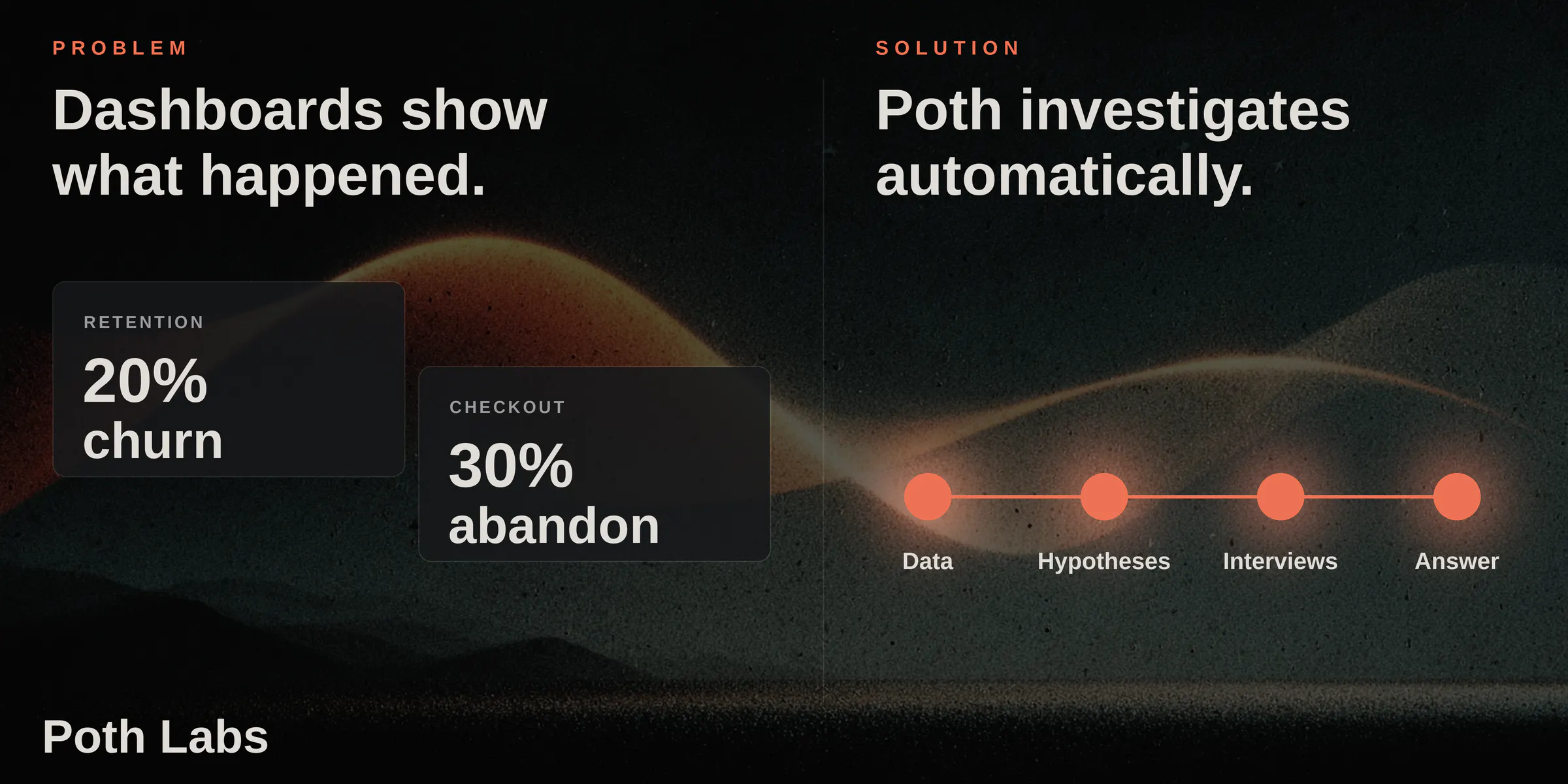
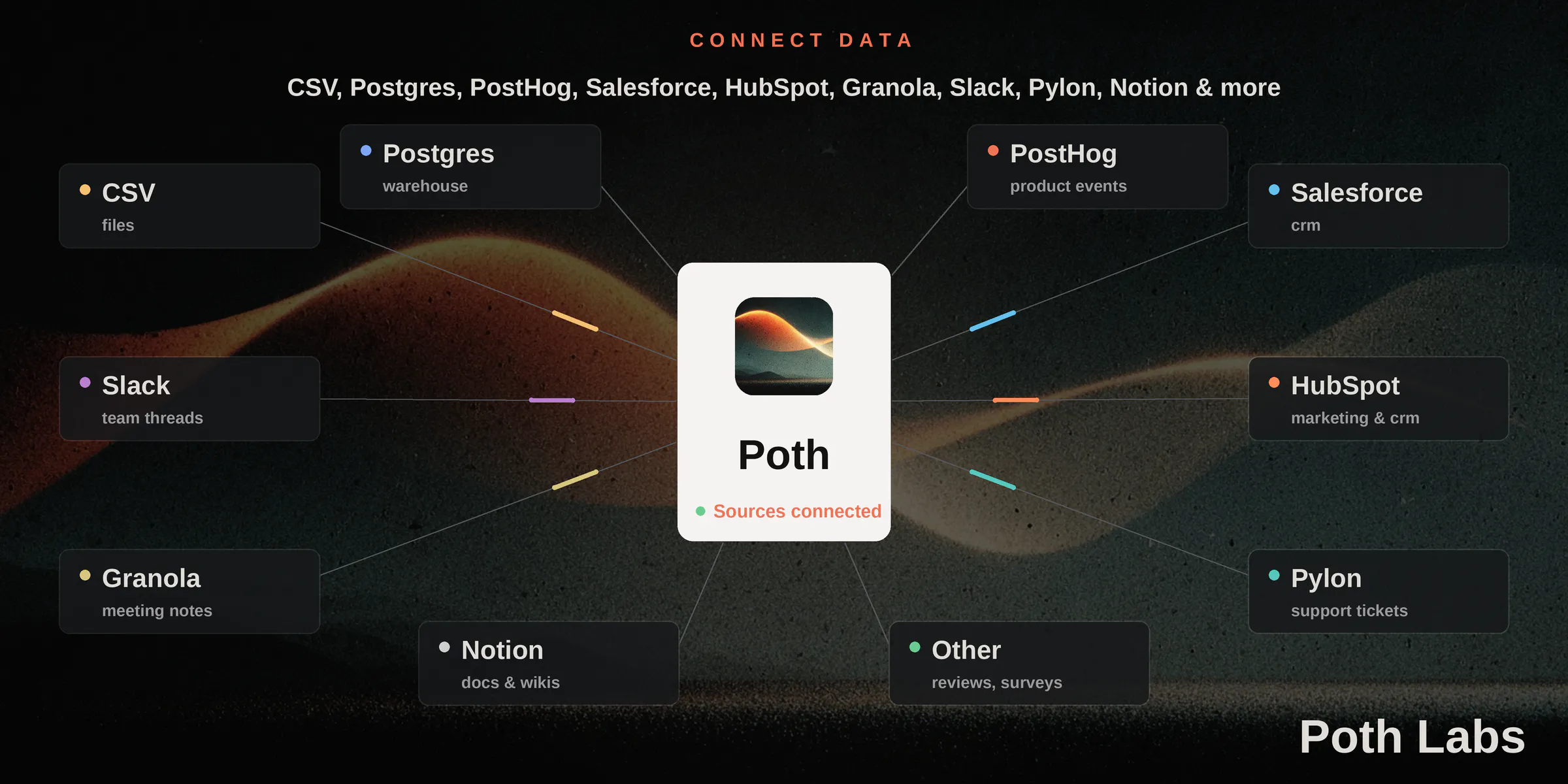
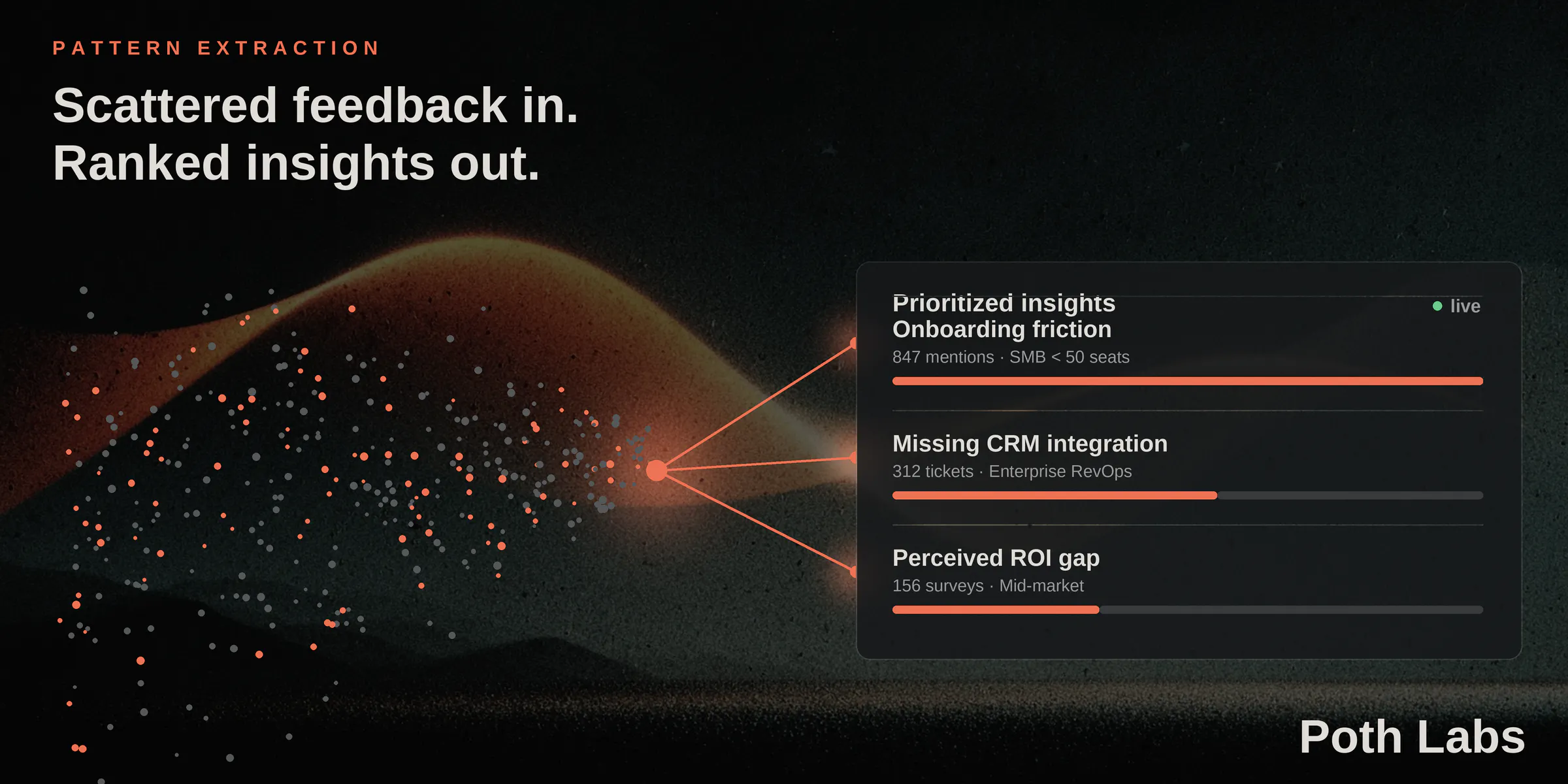
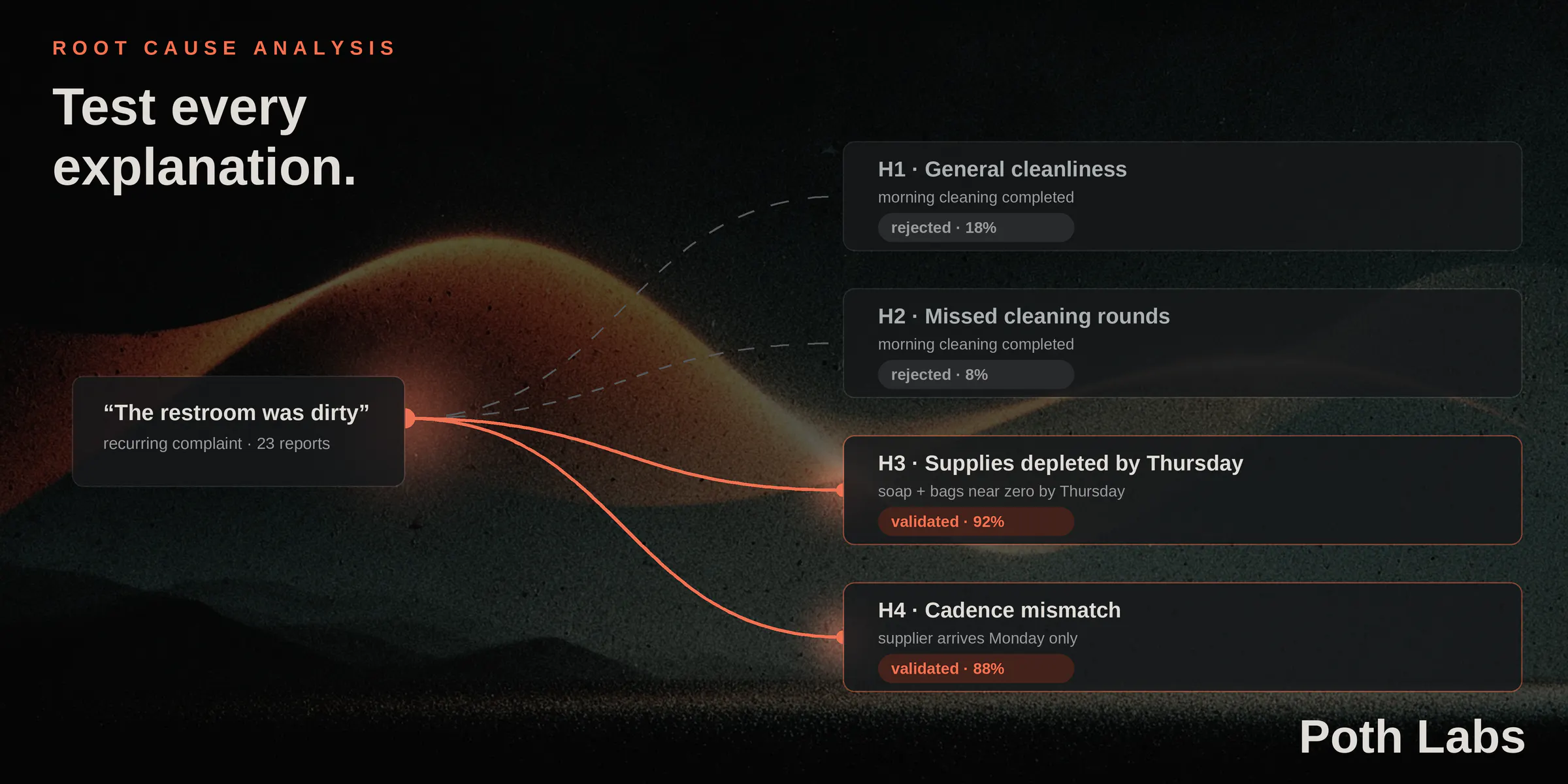
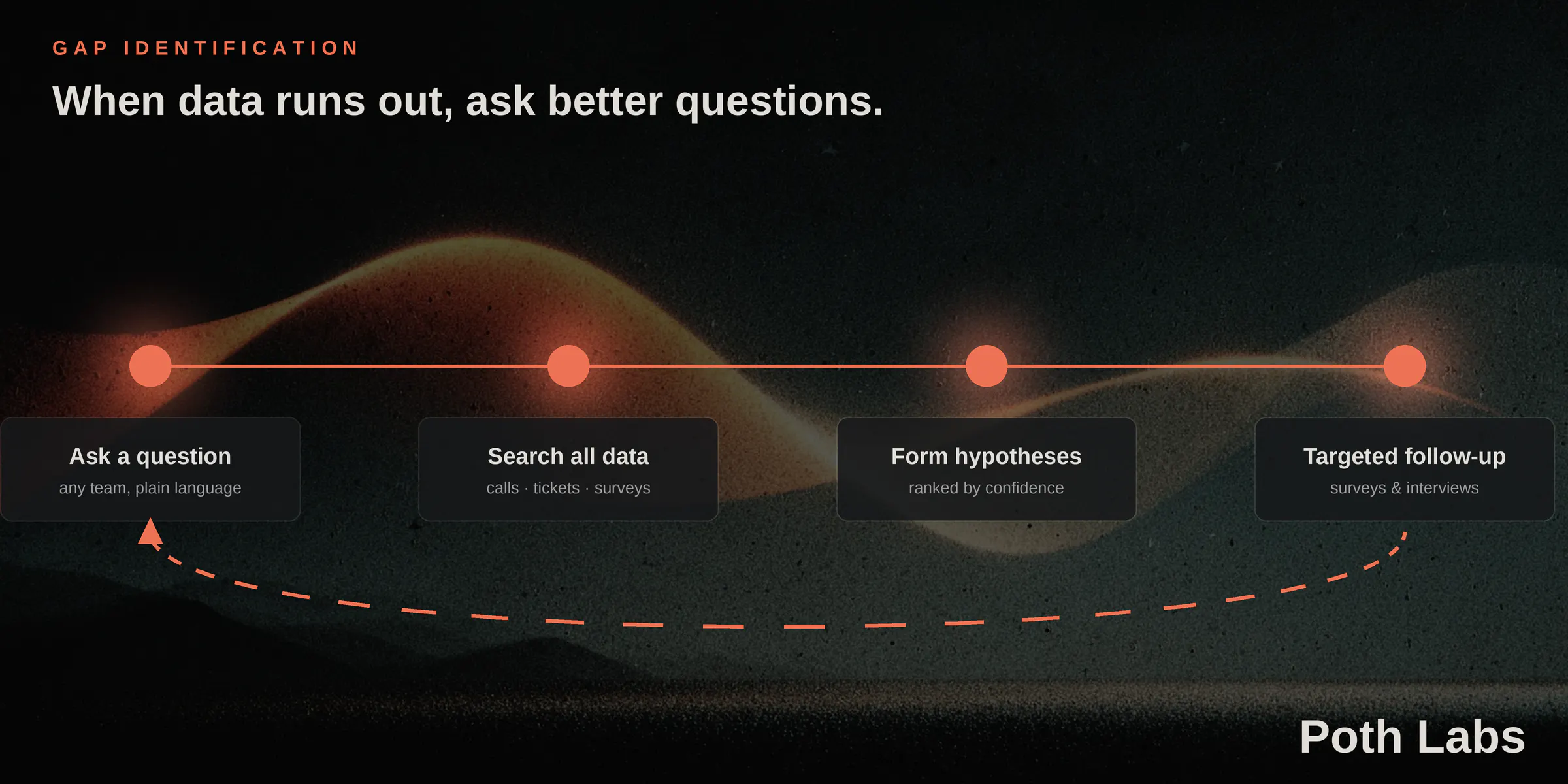
Customer knowledge isn't a collection of documents. It's a network of relationships. Poth builds a living model of your customers before answering questions, so Ask Poth can reason across all your company knows instead of summarizing isolated sources. That unlocks questions no single source can answer, from what's driving churn to why customers adopt or abandon features. Every conclusion is grounded in evidence. If the answer isn't there, Poth launches adaptive surveys to collect what's missing.
Hello Product Hunt! We started Poth because companies already know a lot about their customers—but that knowledge is scattered across calls, tickets, CRM records, analytics, surveys, and internal docs. Questions like “What’s driving churn among our highest-value accounts?” rarely have an answer in one place. Teams have to manually connect what customers said, what they did, and what happened to the account. Poth originally generated hypotheses and ran adaptive customer interviews and surveys. But to ask useful questions, it first had to understand everything a company already knew. That led us to build a living model connecting customers, accounts, features, behaviors, and conversations across different systems. As teams began using that model to answer questions across their existing customer knowledge, we realized it needed to become a core part of Poth. Today, Ask Poth reasons across your customer knowledge, grounds every conclusion in evidence, and shows what information is still missing. When the answer isn’t there, Poth can collect it through adaptive interviews and surveys. We’d love to hear your feedback!
7
回复

@mojmir_horvath The version of this I've actually needed is one place that remembers context so success and sales stop asking customers the same questions. In practice the blocker is always integrations. Which systems do you pull from on day one, and how do you handle it when the CRM and support tool disagree about the same account?

2
回复

@mojmir_horvath For teams just starting out with Poth: what’s the minimum set of data sources you’d recommend connecting first to get a meaningful ‘Ask Poth’ answer within the first week? And what’s a realistic example question a small team could ask at that stage?

0
回复
Good direction but a tough one to crack.. most customers don't talk till they are coaxed to share, still your beginning is correct for collecting all behaviours, and reasons.. the chances of catching a detractor is higher when you know that a churning customer your system knew about, had many signs that match with the current customer behaviour.. good wishes for your success..
1
回复

Churn in developer communities doesn't show up in the CRM first. It shows up in Discord going quiet, GitHub issues tapering off, forum activity slowing down weeks before anyone cancels or even thinks about it. Does Poth connect to sources like that, or is the knowledge graph limited to CRM and support integrations? That gap is the one I'd actually want closed.

1
回复

@hazy0 Not out of the box today, current sources are more product analytics, calls, and CRM/support. But Poth doesn't care where activity comes from, it's all behavioral signal. We build integrations customer-by-customer during onboarding, and Discord + GitHub activity for devtools is exactly the kind we'd build first. Totally agree that's where dev churn shows up before anyone cancels.

0
回复

Good to know the integration layer is open ended. If Discord and GitHub are on the near term roadmap for devtools, the question becomes the latency on that data. Community signals go stale fast. Is the ingestion close to real time, or is it a daily batch?

0
回复

Alex is pointing at the real hole. I would go one step further.

Staleness never throws an error because absence of data and absence of change look identical to any system built from ingested artifacts. No ticket, no call, no email. The graph reads that as a quiet, healthy account. It is usually the opposite.

We learned that expensively once, with a customer who was signed, warm in every conversation, and had not used the thing a single time. Every source we had said green. The only honest signal was usage, and nobody was looking at it.

So: does Poth model silence as evidence? Not "no data on this account" but "this account has gone quiet in a pattern that has preceded churn before."

And on Artem's question, when the CRM and the support tool disagree, does Poth pick one or surface the disagreement? The disagreement is usually the actual finding.

1
回复

@rabnoor_s On silence: Poth ties the graph to behavior, not just ingested artifacts, so an account going quiet is visible rather than invisible. What we don't do yet is the learned version: "this quiet pattern preceded churn before," but that's where this is headed.

On the disagreement, I mentioned in my reply to Artem but we surface both supporting and contradicting evidence leaving the human user to make the judgement call!

0
回复

Really like the idea of reasoning over relationships instead of just retrieving documents. Curious - do you see Poth staying focused on customer intelligence or is that just the first step toward becoming a broader knowledge layer for product, marketing and other teams?

0
回复

relationships rather than documents is the right framing. the hard bit is that a relationship goes stale without ever throwing an error, nobody files a ticket when a champion quietly leaves, so the graph keeps looking healthy right up until the renewal.

0
回复

@alex_watson2110 Agreed, nobody announces they've gone quiet. That's why our graph tracks behavior, not just documents. A champion leaving looks like silence in the activity data, and silence is a signal if you're watching for it.

0
回复
#5
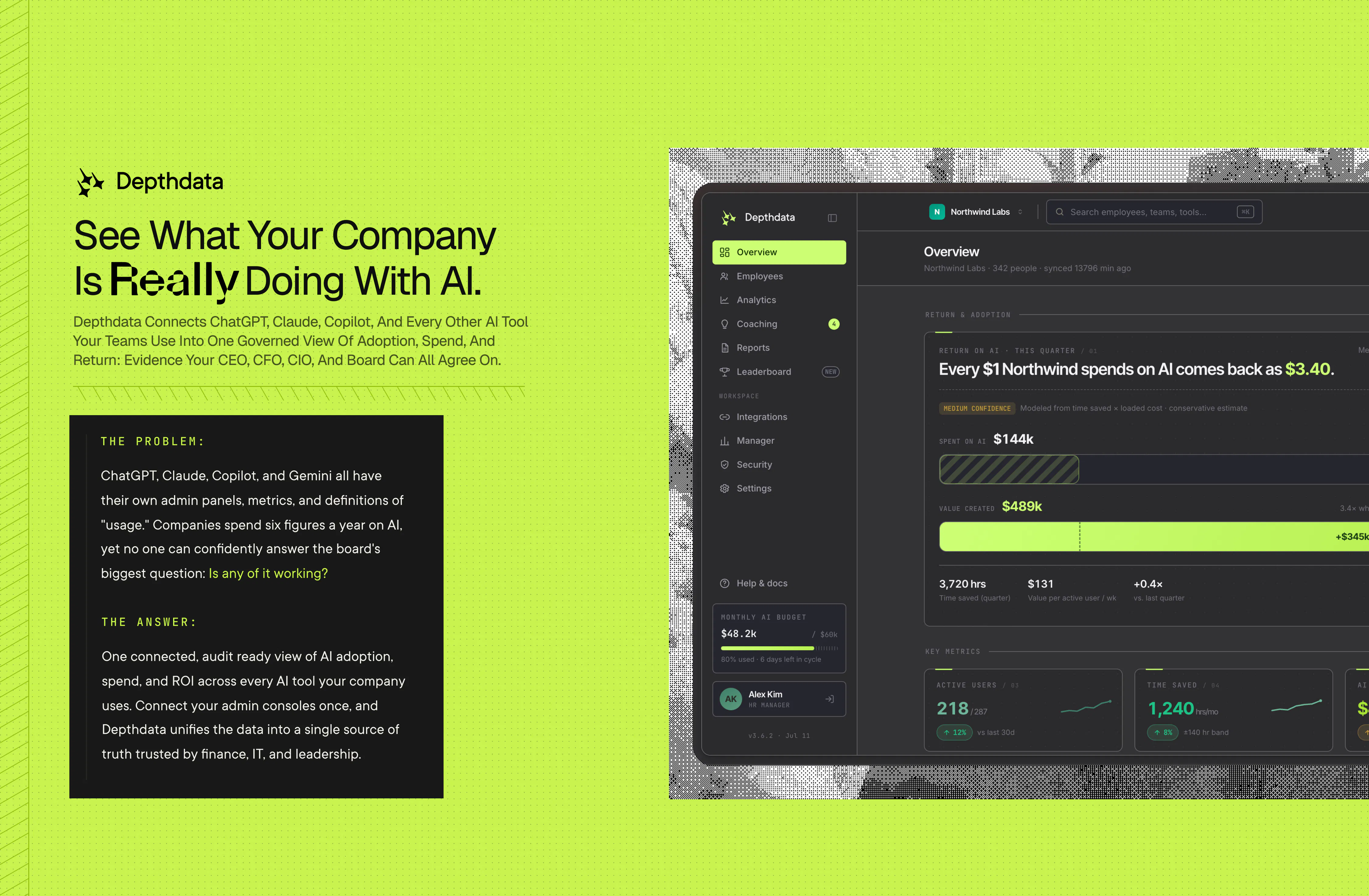
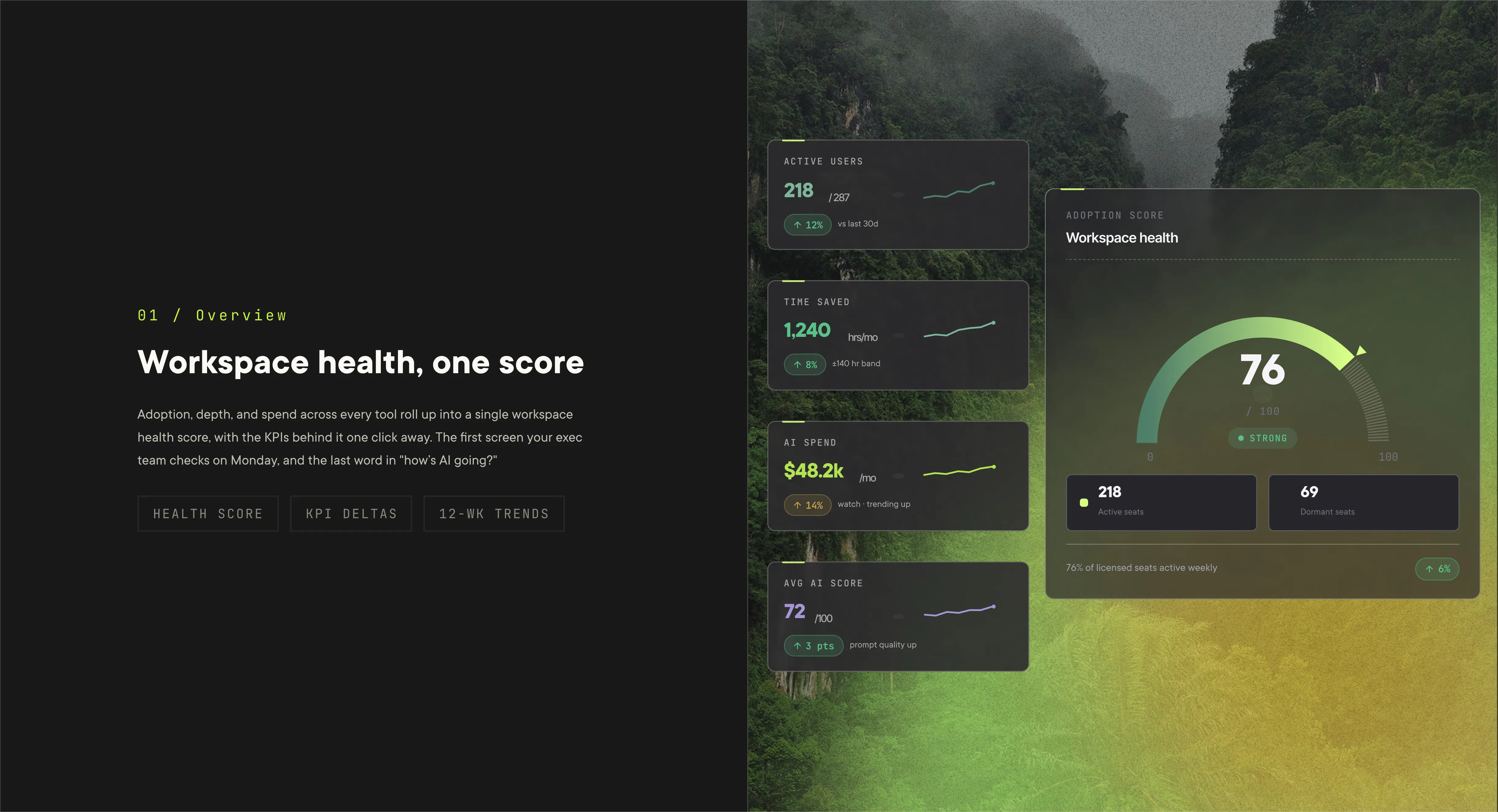
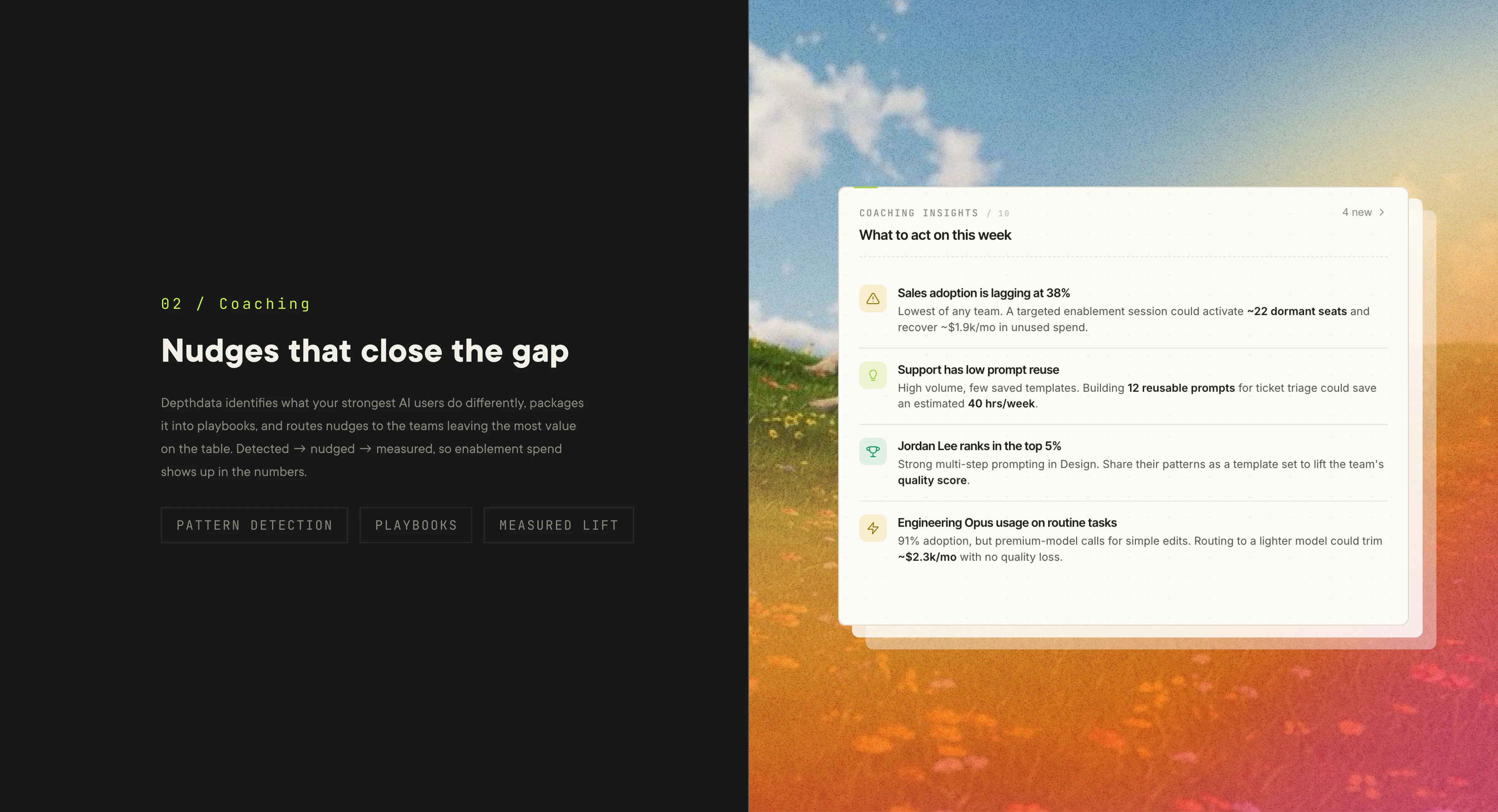
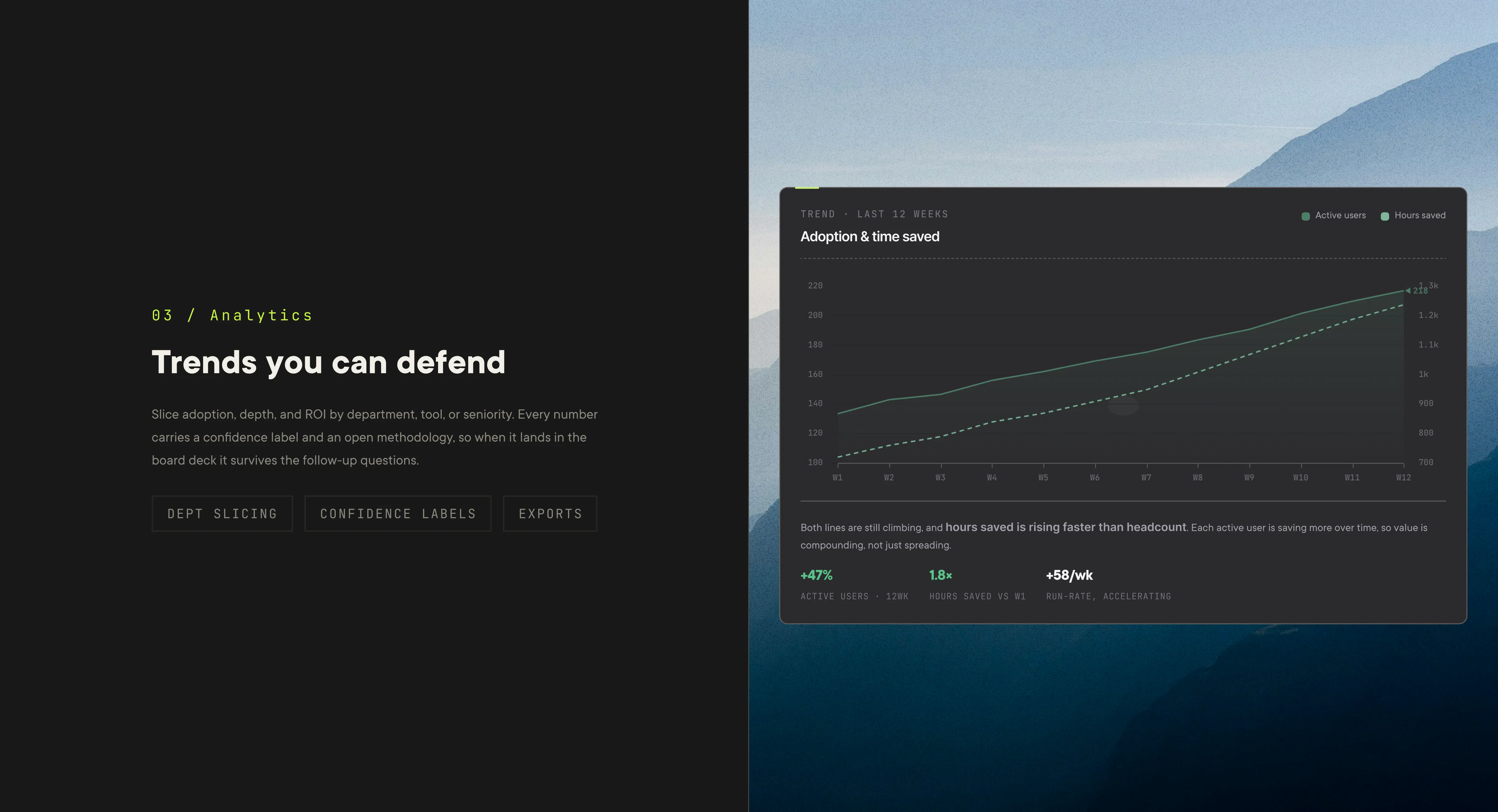
DepthData
The system of record for your company's AI spend.
164
一句话介绍:DepthData 是一个企业AI支出与采用度的审计级记录系统,解决公司同时使用多个AI工具(如ChatGPT、Claude、Copilot)时,无法回答“花了多少钱、谁在用、哪些席位闲置”这一基本管理盲区,无需读取提示词、仅基于API元数据即可生成可验证的支出总览。
Analytics SaaS Artificial Intelligence
AI支出管理 SaaS管理 成本优化 IT治理 审计合规 使用分析 席位管理 API集成 财务运营 企业软件
用户评论摘要:用户核心关注点集中在:数据验证层级(测得/分配标签)、API权限边界(是否读取提示词)、影子AI支出(个人订阅报销)、跨工具重叠检测(同一用户双席位)、按用量计价的单人高额消费(席位视图失真)、通过SSO/IdP交叉验证使用真实性。创始人回应称,对API不可见数据明确显示为“缺口”而非估算,并支持按人员成本与重叠成本归因,但判断由用户自行决定。
AI 锐评

DepthData切入的是一个真实且迅速恶化的企业痛点:AI采购从“单一工具试点”变成了“部门各自为战的多工具混战”,而财务与IT部门仍在用Excel和猜测进行管理。其核心价值不在于“又一个可视化仪表盘”,而在于确立了“证据层级”这一信任机制——每一个数字都标注为MEASURED(从API直接测得)或ALLOCATED(分配/推断),并诚实显示API无法覆盖的“数据缺口”而非填充估算值。这一设计直击企业软件采购中“审计恐惧”的命门:当老板追问数字来源时,销售方拿出的往往是“看起来精确”的模型假设,而DepthData选择在架构层面拒绝造假,这恰好是CFO和CISO最看重的稀缺品质。

然而,产品面临两个结构性挑战。第一,AI工具生态本身的API开放度参差不齐,Anthropic、OpenAI、Cursor提供较细粒度用量数据,但Gemini捆绑在Workspace中、Replit聚合credits、Vercel依赖用户打标签,这种碎片化意味着DepthData的“可信数据”视图天然带有大量空洞。虽然以“显示缺口”而非“估算”处理在道德上正确,但商业上可能削弱实用性——采购方最终仍需全口径数字,缺口过多会降低使用意愿。第二,评论中反复出现的“影子AI支出”(员工用个人订阅额度报销)无法从供应商API获取,只能通过对接费用系统解决,而那是另一个产品类别的战场。创始人对此的回应——“显示缺口而非猜测”——虽然诚实,但可能让产品在“完整记录”这一核心主张上打折扣。

从产品策略看,DepthData的“验证标签”是绝佳的设计锚点,既建立了专业信任,又制造了与竞品(如Zylo、Productiv)的差异化。但真正的护城河可能不在“展示开销”,而在“归因到人”——评论中一位用户指出“名字旁边有数字比总金额更能改变行为”,这暗示其最终形态应成为企业内AI资源治理的“问责工具”,而非单纯的费用报表。若下一步能打通SSO/IdP登录数据(Okta、Entra)进行交叉验证,并支持从费用系统导入个人报销数据将影子支出显性化,产品将补齐“审计闭环”。否则,它可能止步于“大型企业的IT治理专员”这一相对狭窄的市场,而无法触及更普遍的“AI支出失控”焦虑。产品验证了需求,但仍需证明自己能否覆盖数据的暗面。

查看原始信息
DepthData
Companies now pay for four or five AI tools (ChatGPT, Claude, Copilot, and more) but can't answer the basics: what are we spending, who's using it, and which seats sit idle? DepthData connects every AI tool into one audit ready view of spend and adoption. What makes it different: every number is labeled by how it's verified, we never read prompts, and we show exactly what each vendor's API can and can't expose. The trusted system of record for your company's AI spend.
Hey everyone, Ali here 👋 I'm a product designer, and over the past year I kept noticing the same thing: companies are buying more and more AI tools, but nobody actually knows what they're spending across all of them or who's really using what. The answer usually means logging into five different admin consoles and cobbling together a spreadsheet, and even then you're mostly guessing. So I built DepthData to pull all of it into one clear, audit ready view of AI spend and adoption. The part I care most about: I made a hard rule that we never show a number we can't actually verify from the tool's own API. Every figure is labeled by how we know it, and we never read prompts, only metadata like usage and seats. I got tired of dashboards that look confident but fall apart the moment you ask "where did this number come from?" I wanted the opposite. It's early and I'm building it mostly solo, so I'd genuinely love your honest feedback. What would make this actually useful for your team? What am I missing? Happy to answer anything.
4
回复

@aliberkuyanik We lost track of AI spend the moment every team started expensing their own API keys and seat licenses. Finance saw one number, eng saw another, nobody could explain the gap. Are you pulling from provider billing directly or from usage logs, and can you attribute spend down to a team or project?

0
回复

@aliberkuyanik Congrats on the launch!

This is a real gap for us too. We run our own product on top of Anthropic's API, and tracking what each feature actually costs per run, especially after switching between plans, has been a spreadsheet exercise so far.

Curious how granular this gets, can you trace spend down to a specific feature or session, or is it more of a monthly aggregate view right now? We currently do that by hand and it's the part that doesn't scale.

1
回复

@aliberkuyanik Really like your approach of only showing numbers that can actually be verified instead of estimating them. One thing I'm curious about: how does DepthData handle companies where teams use their own API keys or personal subscriptions outside of company-managed accounts? Can it still surface those blind spots somehow?

0
回复

This is a smart wedge ,most spend dashboards mix hard numbers with guesses and never tell you which is which, so the second someone actually audits it, trust falls apart. Curious how you handle vendors that barely expose anything beyond seat counts , do you just flag those as low-confidence, or is there a minimum bar of data before a tool even gets added? Also wondering if you're planning to cross-check against SSO/IdP logins (Okta, Entra etc.) at some point, since that's often where you get a more honest "who's actually using this" than the vendor's own console gives you.

1
回复

Congrats on the launch! Getting a single source of truth for AI spend is exactly what teams need right now — love the audit-ready angle. Best of luck today!

1
回复
@zvonimir_sabljic1 Thank you! Your support means a lot🙏🏻
0
回复

Never reading prompts, only metadata, is the detail that gets this past a security review. Most spend trackers ask for way more access than the actual problem needs.

1
回复

@irahimiam Exactly. Most spend trackers ask for way more access than the problem needs. Depthdata is read only and metadata only: seats, usage counts, spend. The endpoints we connect to don't carry prompt content at all, so conversations never enter our system, there's nothing to leak. Narrow scope is the architecture, not a promise, and that's what security teams actually check.

0
回复

Did the same exercise on AWS spend this year and the total was never the hard part, attribution was. What actually moved the number wasn't the dashboard, it was being able to put a name next to each line so somebody had to defend it.

Your rule about never showing a figure you can't verify from the tool's own API is the right call. The follow up I'd want: what happens to the spend no provider API will tell you about, like the personal ChatGPT subscription someone quietly expenses? That shadow half is usually where the surprise lives.

1
回复

@dalemooney That AWS experience is exactly the thesis. The total never changes behavior, a name next to the line does.

On shadow spend, straight answer: no AI vendor API will ever show a personal subscription someone quietly expenses. That money lives in your expense system, not the vendor's org account. So Depthdata shows it as a gap, not a number. Closing it properly means pulling from the expense side, which is a different connector class. Until then, same rule as everything else: no API to back it, we show the gap instead of a guess.

0
回复

The ALLOCATED vs measured label distinction is the right call. We ran into this exact thing with transaction categorization, once you're inferring instead of reading a hard number from the source, you have to keep that visibly separate or people start treating estimates as facts six months later when nobody remembers which number was which.

0
回复

@raffay_sajjad That six months later failure is exactly the one we designed against. The label isn't a UI decoration, it travels with the number, exports and reports carry MEASURED or ALLOCATED on every figure. So even when nobody remembers which number was which, the number remembers. Once an estimate loses its label it becomes a fact, and that's how dashboards quietly go wrong.

0
回复

the verification labeling and the per-user vs seat point already cover most of what I'd have asked. one thing I didn't see come up: overlap across tools rather than idle seats within one tool. we've ended up paying for two AI tools that do 80% the same job for the same people, because each one got adopted separately by a different team before anyone compared them side by side. that's not an idle seat in either tool, both look fully used, the waste is that the org didn't need both. is that something DepthData could ever surface, or is it necessarily out of scope since it's a cross-tool judgment call rather than a per-tool number?

0
回复

@galdayan Not out of scope at all. The overlap itself is measurable from data we already pull: same people holding seats in two same category tools, both active, and what the double coverage costs. So Depthdata can name it: 40 people pay for both X and Y, here's what the second one costs.

What we won't do is pick the winner. Whether it's really the same job is your call. We put a name and a number on the overlap so somebody has to defend it, the judgment stays with you.

0
回复

The verification label is the actual product here, the dashboard is just where it lives. What you're missing is that idle seats are the easy half. On anything usage priced, one person's month can outspend the other forty put together, and a seat view shows those two people as identical, so you cut the wrong licence and save nothing. Worth naming which vendors can't expose per user consumption at all, because that gap is where the spreadsheet quietly goes wrong.

0
回复

@asadmalik901 You're right, the label is the product. And agreed, idle seats only matter on seat priced tools. On usage pricing the money concentrates, one heavy user can outspend a team, and a seat view hides that. So Depthdata shows cost per person, not just seats. Those numbers come straight from vendor APIs, Anthropic and OpenAI and Cursor all expose per user spend in their docs. Demo runs on sample data today, but nothing on screen an endpoint can't back.

The gaps, Gemini bundles AI into Workspace so per user cost doesn't exist, Replit pools credits with no per member API, Vercel needs tagging first. We show those as gaps instead of estimating over them.

0
回复
#6
Halo by Scam AI
Know who’s real on every video call
159
一句话介绍:Halo是一款实时运行于设备本地、为Zoom/Teams/Google Meet等视频会议提供深度伪造人脸检测的AI安全工具,在通话进行中即时标记合成面孔,解决“屏幕对面的人是否真实”这一关键信任痛点。
Meetings Artificial Intelligence Security
深度伪造检测 视频会议安全 实时AI防护 端侧推理 反欺诈 身份验证 金融安全 隐私保护 企业风控 防骗工具
用户评论摘要:用户高度认可“实时检测”而非事后分析的价值,称赞端侧部署带来的隐私优势。核心追问集中在:技术实现路径(WGC抓取窗口)、对新生成模型的更新策略(agentic系统+重训练)、误报控制机制(画质过滤+置信度阈值)。有深度评论指出检测生成物是“注定失败的竞赛”,建议转向“认证身份比对”而非“识别合成”;另有用户担忧产品会改变用户警惕行为,导致假阴性代价更高,并质疑其能否作为财务流程的可依赖控制项。
AI 锐评

Halo的产品叙事很聪明——用一个“电汇2500万美元”的极端案例激活恐惧,再用“纯端侧、实时、不录音”三重卖点包装技术方案。但这恰恰是最值得警惕的地方:它把“检测合成”包装成了“验证真实”,两者之间存在本质断层。

评论中那位匿名用户的质疑击中要害:基于生成物特征的检测器是天然衰减的资产。生成端(如扩散模型、GAN变体)迭代速度以周计,且无需任何许可即可发布;而端侧模型受制于应用商店审核和用户更新习惯,仅靠“web爬虫+定期微调”的agentic系统根本无法弥合这个时间差。你永远在追着对手的上一代产品跑。

更深层的问题在于产品对用户行为的反噬。当用户信赖“没有警告=安全”时,Halo实际上把原有的怀疑机制给替代掉了。一次假阴性(漏检)在部署后的破坏力远大于部署前——因为屏幕上的绿色状态本身就是一种社会工程。评论者精准地指出:产品应该永远不显示“此人真实”,只输出“有风险”或“信息不足”,但这会严重削弱商业价值,所以厂商大概率不会这么做。

因此Halo的真实定位与其说是“安全产品”,不如说是一种“心理安慰剂”。它在金融风控流程中能提供的增量价值极为有限——正如用户所问:当一笔转账仅凭视频通话就能被批准,漏洞根本不在视频,而在流程。Halo让调用者感觉安全,却没有解决流程中“为何视频是唯一信任锚点”的问题。这是产品经理用技术焦虑包装流程缺陷的典型案例。

最终结论:Halo是一个漂亮的技术demo,一个优秀的公关叙事,但它离“安全基础设施”还差一个承认——承认自己无法证明“真”,只能试探性地提示“假”,且这个“假”的识别能力会持续衰减。它真正适合的场景,是低风险的社交或招聘场景的辅助提示,而非任何涉及资金转移的高风险决策点。

查看原始信息
Halo by Scam AI
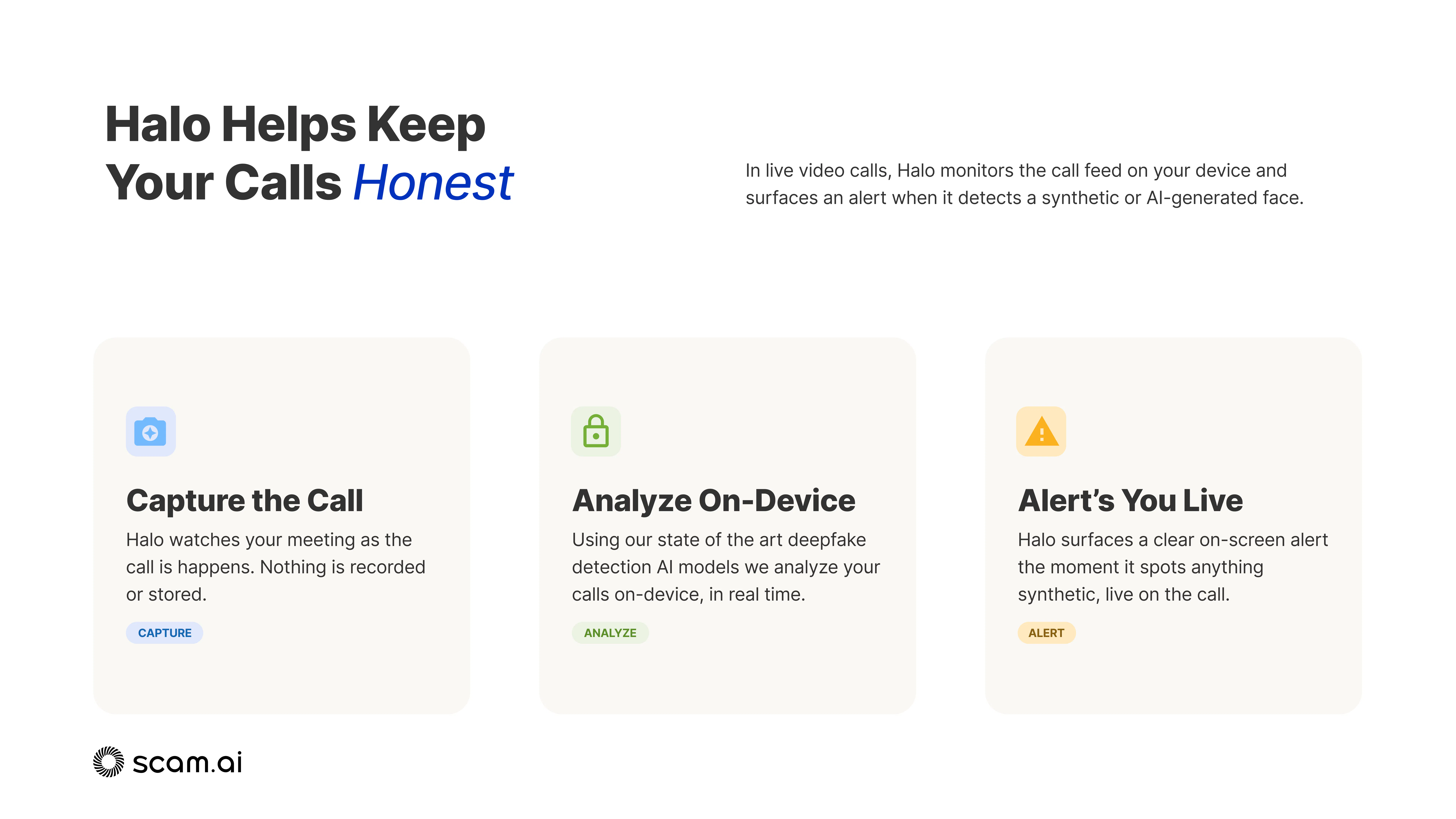
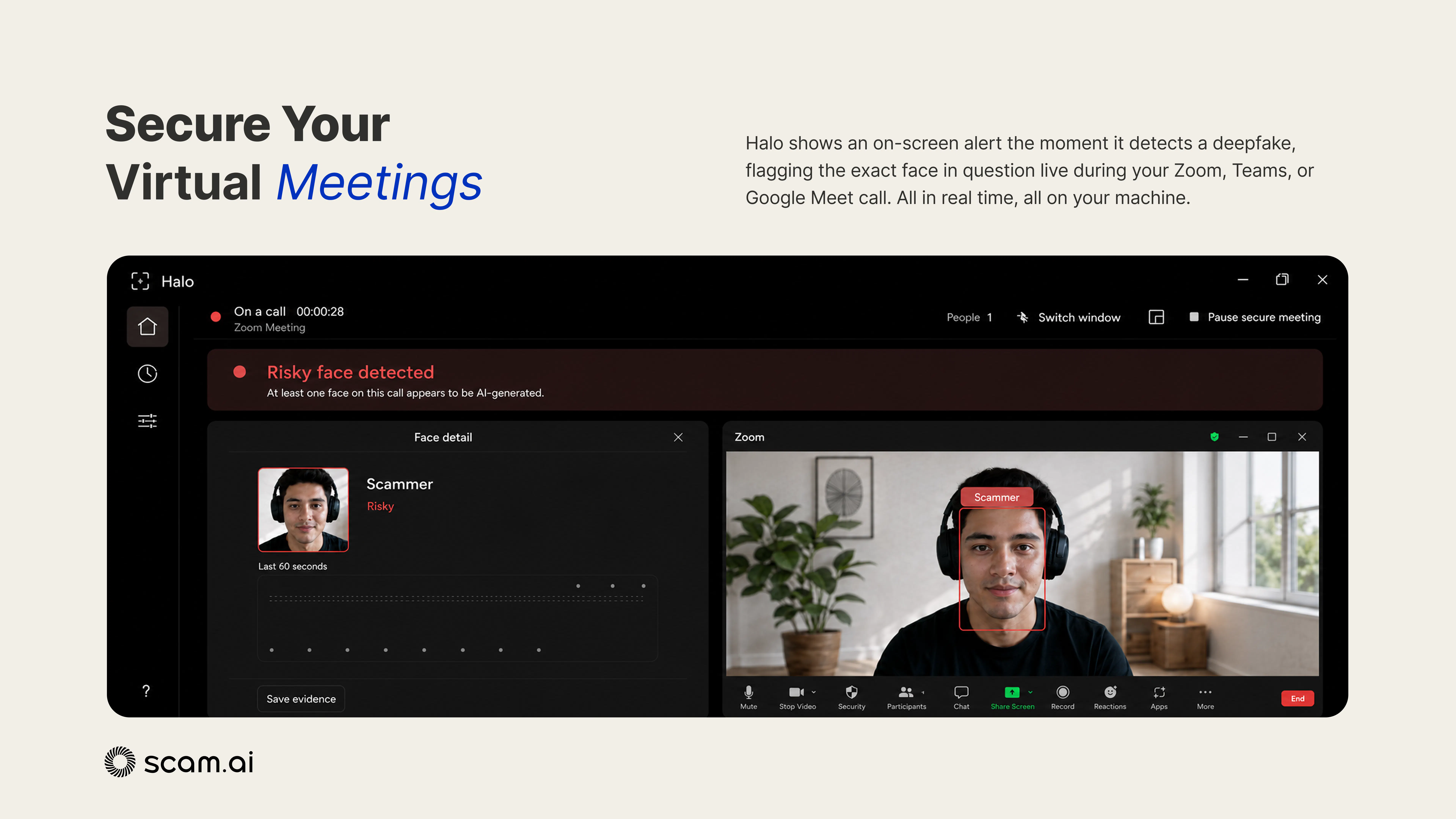
The person on your next video call might not be real. With Halo you don't have to guess. Halo secures your Zoom, Teams, or Google Meet call live and flags synthetic faces the moment it detects one, entirely on your device. Deepfake video calls are already being used to scam people and businesses around the world, it's just that most people have no way to tell. From confirming who you're hiring to confirming who you're wiring money to, Halo catches it before it costs you.

Hi Product Hunt 👋

I'm Neo, co-founder of Scam AI, and I'm excited to introduce Halo a real-time, on-device deepfake AI model for video meetings. It secures your Zoom, Teams, or Google Meet call live and flags synthetic faces the moment it detects one.

In 2024, a finance employee at Arup joined a video call with what looked like his CFO and several colleagues. Every face on that call was a deepfake. He wired $25 million before anyone realized.

We kept coming back to that story because almost everything built to catch deepfakes works after the fact: you upload a recording, wait, and get a report once the decision has already been made. Nothing was built to catch it while the call is still happening, when it actually matters.

What Halo does:

  • Secures Zoom, Teams, and Google Meet calls live

  • Flags synthetic faces in real time, in real time

  • Runs entirely on-device, no recordings, no cloud inference

  • Built for the moments trust actually gets tested on video: confirming who you're interviewing, confirming who you're wiring money to

Halo is live now at scam.ai/halo. I'll be here all day, happy to answer anything about how it works, and to help however I can!

11
回复

@neo_tiangratanakul great stuff! Incredible and timely tool for stopping deepfakes and scams before they strike!!

1
回复

@neo_tiangratanakul the real time catch is genuinely the right problem to attack, the Arup story only works as a warning if the detection happens during the call. the thing i'd push on is the on-device part specifically though: no cloud inference means the model shipped in the app is what you're stuck with until the next app update, while the generators on the other side (the ones actually producing the deepfakes) get better continuously and don't need anyone's permission to ship. a cloud model can get retrained and pushed same day a new generation technique shows up. an on-device one is gated by your release cycle and by how fast users actually update the app. how are you thinking about that gap, is there some kind of lightweight signature/model update channel separate from full app releases, or does "on-device" mean you're accepting some lag against the newest generation methods as the tradeoff for the privacy story?

0
回复

@neo_tiangratanakul Congratulations on the launch, Neo! 🚀

What stood out to me most wasn't the deepfake detection itself—it was the decision to make Halo work during the call instead of after it. In security, timing is everything. A perfect report after the money has been wired isn't nearly as valuable as a warning before someone clicks "Send."

I also appreciate the on-device approach. When the purpose is to build trust, keeping sensitive conversations off the cloud feels like the right design choice.

I'm curious, as deepfakes become more realistic every month, do you see the future being purely AI detecting AI, or will we eventually need identity verification and cryptographic proof to truly know who's on the other side of a call? Wishing you and the team an incredible launch! 🔒🚀

0
回复

The part I'm proudest of: getting the detection to run live and fully on-device.

  • Nothing about your meeting ever leaves your machine.

  • Real-time was the non-negotiable constraint. A report that only lands after you've already wired the money isn't detection, it's an autopsy.

3
回复

Does it hook into the system audio/video pipeline via virtual camera, or is it reading the display buffer directly? congrats for shipping 🙌

2
回复

Thanks Vikram 🙌 It's neither, actually we use WGC to grab the rendered meeting window directly. That way our model sees and takes in the same screen the user is seeing!

2
回复

Congrats guys!

2
回复

Thanks so much Teagan!!!

2
回复

Already used the plugin for a few meetings already and seems to working well. Looking forward to seeing enhancements from this. 🔥

1
回复

Congrats on the launch, Neo!

I have 2 questions:

How does Halo detect new deepfake models it hasn’t seen before? And my second question: how do you avoid false alarms during calls?

1
回复

Thanks Aleksandar!

Halo is generalizable to do alright against new deepfake methods but to make sure it keeps up to date we have an agentic system that constantly scrapes the web for new deepfake methods, collects data, and fine tunes our model towards these new deepfakes.

For your second question: Halo runs a quality check on the input itself before it ever makes a call. Bad lighting, shaky footage, heavy compression, or a face too far from the camera can introduce noise, so we filter that out first. On top of that, if the model's ever on the fence and not fully confident, it pulls in more signals before deciding, so we don't throw false alarms during calls!

1
回复

@byalexai Aleksandar has asked the question the whole category rests on, and I think the honest answer is an uncomfortable one.

Detecting whether something was generated is a losing race by construction. You train on the generators that exist, a new one ships, and the detector degrades quietly. Nobody gets a notification on the day it stops working.

The version that does not decay is a different question altogether. Not is this synthetic, but is this the same person as the reference I already trust. Verification against an enrolled identity does not require recognising the generator at all, so a new model does not break it.

Neo, which of those two is Halo actually doing underneath? The answer decides whether this needs retraining every time something new comes out, or whether it holds.

0
回复
How often does something like this happen?
1
回复

Around 1 in 7 digitial onboarding fraud attempts involve deepfakes and there has been a 16x increase in deepfake attacks in the last 2 years. From our enterprise customers we're seeing these same statistics parroted. I think we're lucky that right now it isn't too wide spread but we believe this to be more common place in the next year. Which is why we built Halo to get ahead of the game!

1
回复

Really exciting launch—congrats on Halo by Scam AI! Love seeing practical tools like this reach more people. 🚀

1
回复

🚀🚀🚀

1
回复

I appreciate products that reduce anxiety around everyday internet use. I’d definitely use this before opening unfamiliar links or payment requests

1
回复

Thanks so much for the support!

1
回复

Congrats on the launch, Neo! The "catch it during the call" angle is what really sets Halo apart — most deepfake tools I've seen assume you already have a recording to analyze after the fact, which is basically useless mid wire-transfer conversation.

One question: since Halo runs entirely on-device, how does it actually hook into the meeting client? Virtual camera, native SDK integration, or a browser extension for Meet? Curious how the coverage differs across Zoom desktop vs. Meet in the browser.

1
回复

Thanks Rohit and I totally agree, after-the-fact detection doesn't help much for situations like a wire transfer. Hence why we're so proud to have made a product like Halo!

Halo actually uses WGC to see the rendered meeting window directly, the same way whether it's Zoom desktop or Meet in a browser tab. Which allows us to cover every video conferencing app and browser!

2
回复

Remember how some guys created a tool that creates AI live video chats. It seems that when you create one solution, you need to create another "anti-solution".

Do you already have your user base?

1
回复

Thanks so much! Honestly, this "anti-solution" space has always been super inspiring to us, there's something exciting about getting to keep building things that protect people as fast as this space moves. Though we see some legitimate use for AI video generation, we also see how much harm it can cause when it's used maliciously. But honestly, stopping bad actors from abusing AI is a big reason why we started this journey in the first place!

As for user base: we've actually already got some enterprise customers using our detection tech, and Halo is really us expanding that out to the consumer side now 🙂

2
回复

The Arup case is exactly the story that makes the case for this on its own. Curious about the failure mode in the other direction though, what happens when it flags a real person as synthetic because of bad lighting or a compressed webcam feed mid call. Does it surface a warning you can dismiss, or does it interrupt the call, since getting that wrong costs you a real relationship, not just a false sense of security.

1
回复

Really good question! Honestly one we thought about a lot. We made it so that Halo checks the quality of what it's seeing: bad lighting, shaky video, heavy compression, or if a face is too far away from the camera. If the conditions are bad it gather more data or waits for the lighting or image size to get better later in the call, and only makes a decision once it actually has good enough data to be confident. So a bad frame on its own isn't going to set off a false alarm. Since, just like you said, getting that wrong costs a real relationship.

2
回复

@raffay_sajjad The failure direction Raffay raised has a second-order version that worries me more.

A detector people trust changes their behaviour. Before Halo, that Arup employee at least had the option of being suspicious. After Halo, no warning reads as an endorsement, and the natural response to a clear screen is to scrutinise less. So a false negative after deployment costs more than the same miss would have cost before the product existed.

Which argues for never showing a positive verdict. Flag, or say not enough signal. Never say this person is real, because that is the sentence somebody eventually wires money on.

And the uncomfortable half: the Arup money moved because a wire got approved on the strength of a video call. That is a process gap. Halo makes the call safer without touching the reason the call was load bearing in the first place.

So do you position it as a control finance can rely on, or as one signal that still requires an out of band confirmation?

0
回复
Congrats lads
1
回复

Thanks so much! Really appreciate you taking the time to check it out!

4
回复

Incredible launch, congratulations! What use case have you seen being the most valuable so far and which is the use case that people underestimate most?

0
回复
#7
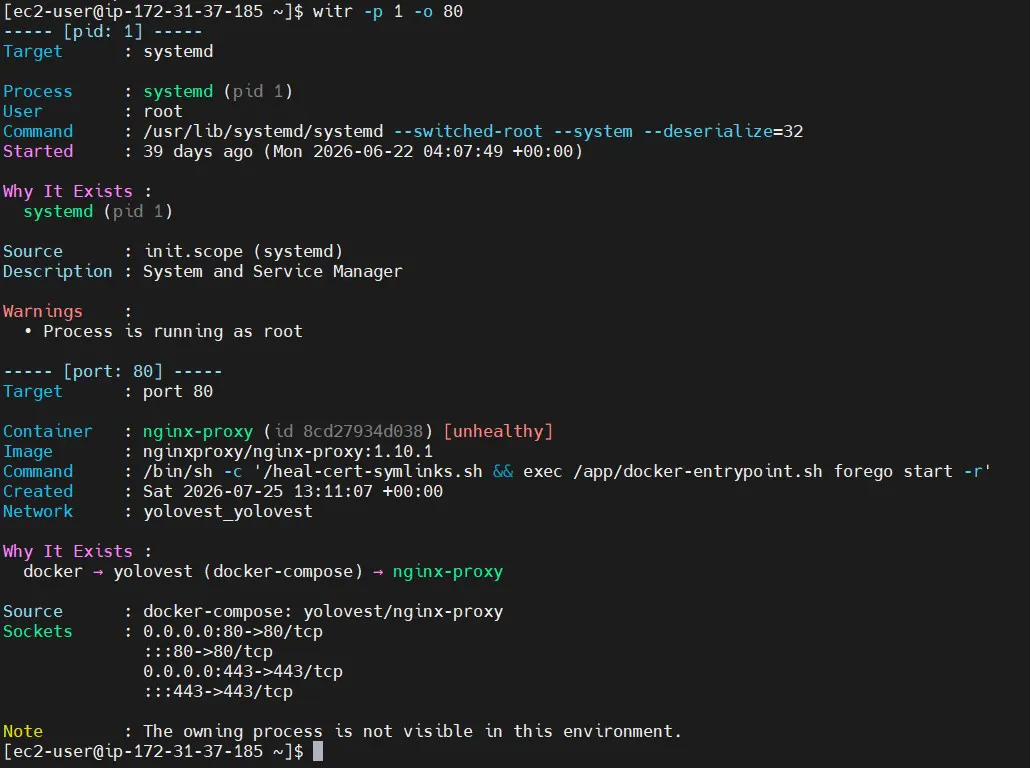
witr
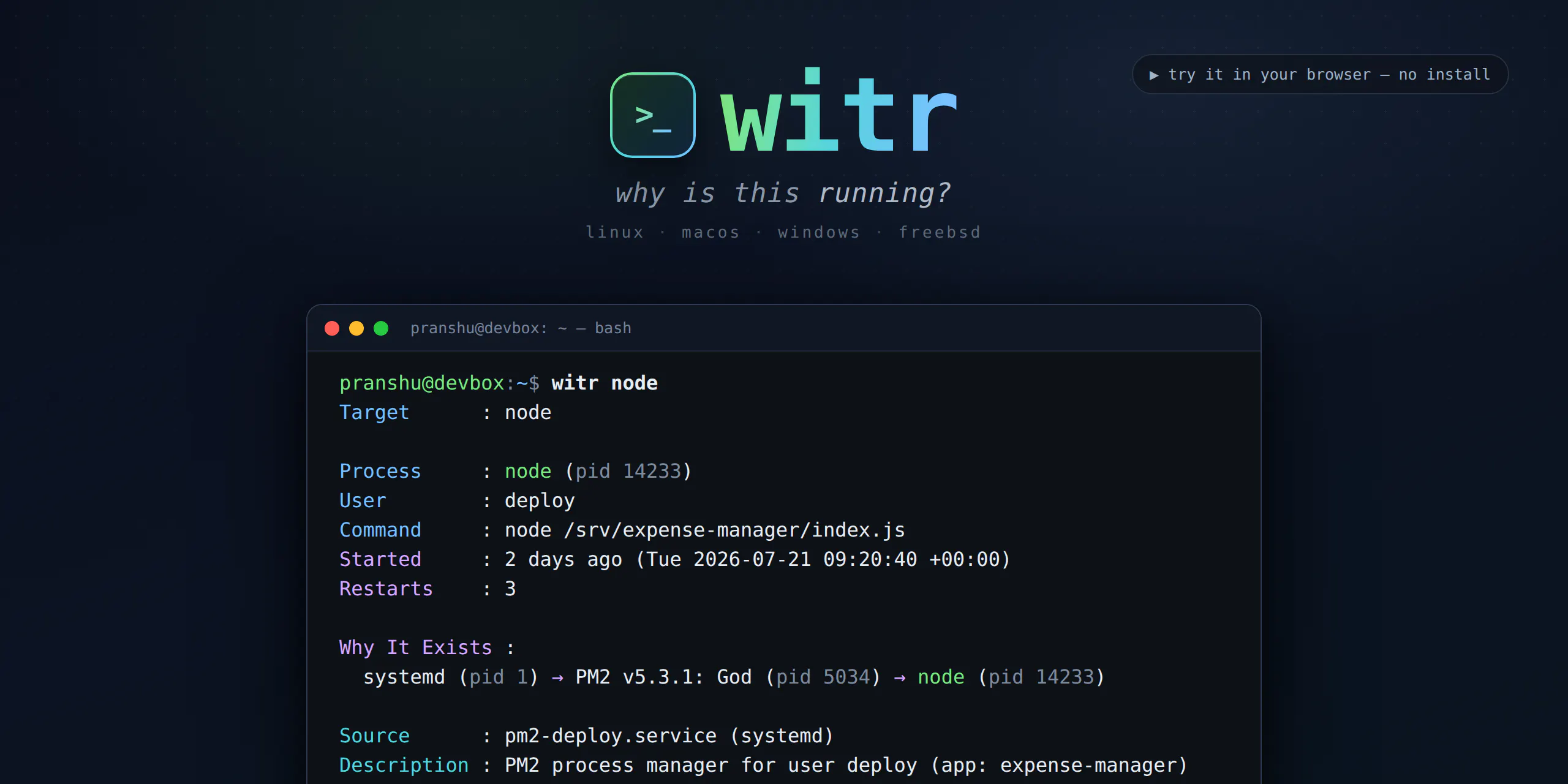
Why is this running? Trace process, port, container or file
143
一句话介绍:witr 是一款用于回答“进程为什么在运行”的根因追溯工具,通过沿着进程、端口、容器或文件的父子关系链,定位到 systemd、cron、shell 等真正的启动源头,解决运维和开发中“知其然不知其所以然”的排查痛点。
Linux Open Source Developer Tools GitHub
进程溯源 根因分析 系统监控 命令行工具 TUI 容器调试 端口排查 文件锁诊断 跨平台运维 开发调试
用户评论摘要:用户普遍认可其解决实际痛点的能力,但核心质疑集中在“不确定性的诚实展示”上。多数有效评论追问了孤儿进程、PID复用、WSL2无systemd、容器穿透到宿主等边界场景的准确性。开发者响应迅速,承认部分缺陷并列出改进计划,但也暴露了当前版本在孤儿进程溯源上仍可能误报的硬伤。
AI 锐评

witr 在“进程在跑什么”这个拥挤的赛道里,巧妙地切入了“为什么在跑”这个更深、也更难回答的细分领域。它用静态二进制和跨平台支持降低了上手门槛,用 TUI 和 JSON 输出覆盖了交互与脚本两种场景,产品思路相当清晰。

但它的致命弱点在于:**它回答的是“启动链”,而不是真正的“存在理由”**。正如评论中所指出的,知道“systemd 启动了它”不等于知道“为什么它应该继续运行”。当一个进程被 init 收养或parent 消亡后,witr 目前的处理逻辑(默认归因到 PID 1 或 shell)会给出一个看似合理实则错误的结论——这恰恰是工具类产品最危险的失效模式:用户基于错误的答案做出错误的生产操作。虽然作者已针对部分场景提出修复计划,但这暴露了核心算法在应对真实世界复杂性时的脆弱。

另一个值得深思的是商业价值:这是一个典型的“调试时用一下”的工具,而非“持续监控”的工具。它能否沉淀为用户日常运维流水线的一部分,取决于 `--json` 模式能否与监控告警系统深度集成,以及它能否在“孤儿进程识别”“锁竞争分析”等纵深场景做到无可替代。目前看,它更像一把精心打磨的瑞士军刀,而不是导弹发射井里的开关——好用,但尚未成为必需品。

真正的护城河不在功能堆砌,而在于**对“不确定性”的诚实声明**。如果 witr 能在所有无法确认的场景下,明确输出“此处为推断,证据如下”并附带原始数据,它就能建立远超竞品的信任度。否则,它只是另一个“偶尔好用,但不敢全信”的调试利器。

查看原始信息
witr
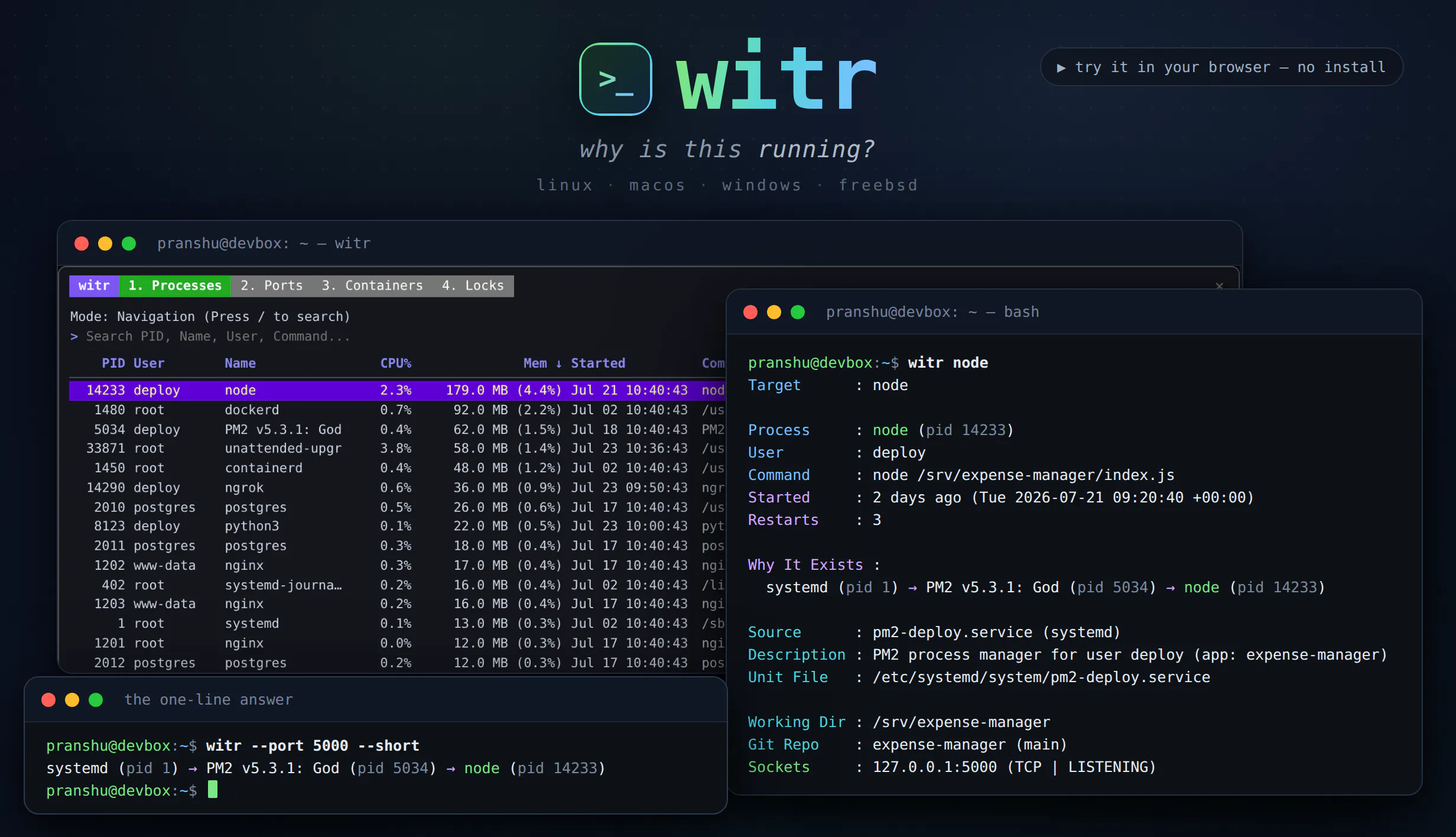
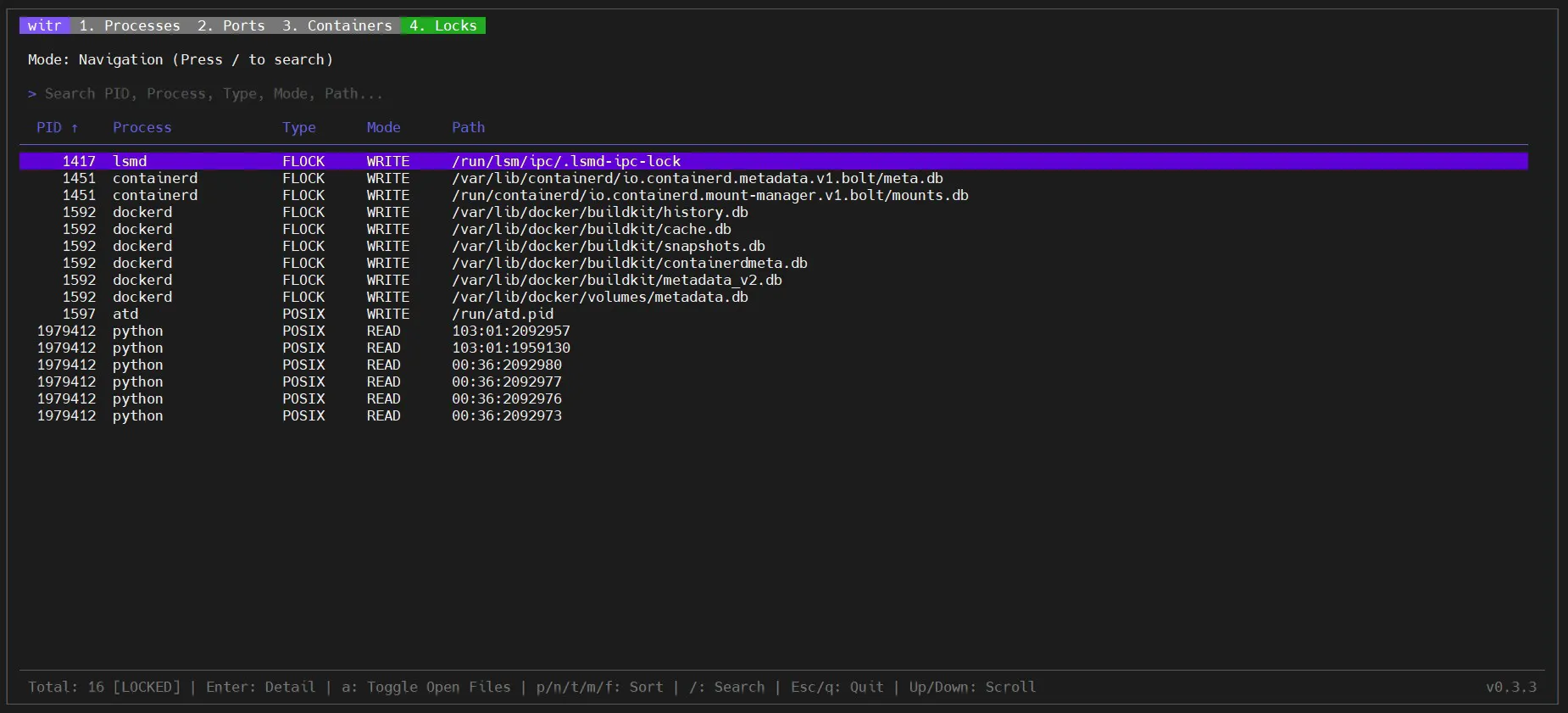
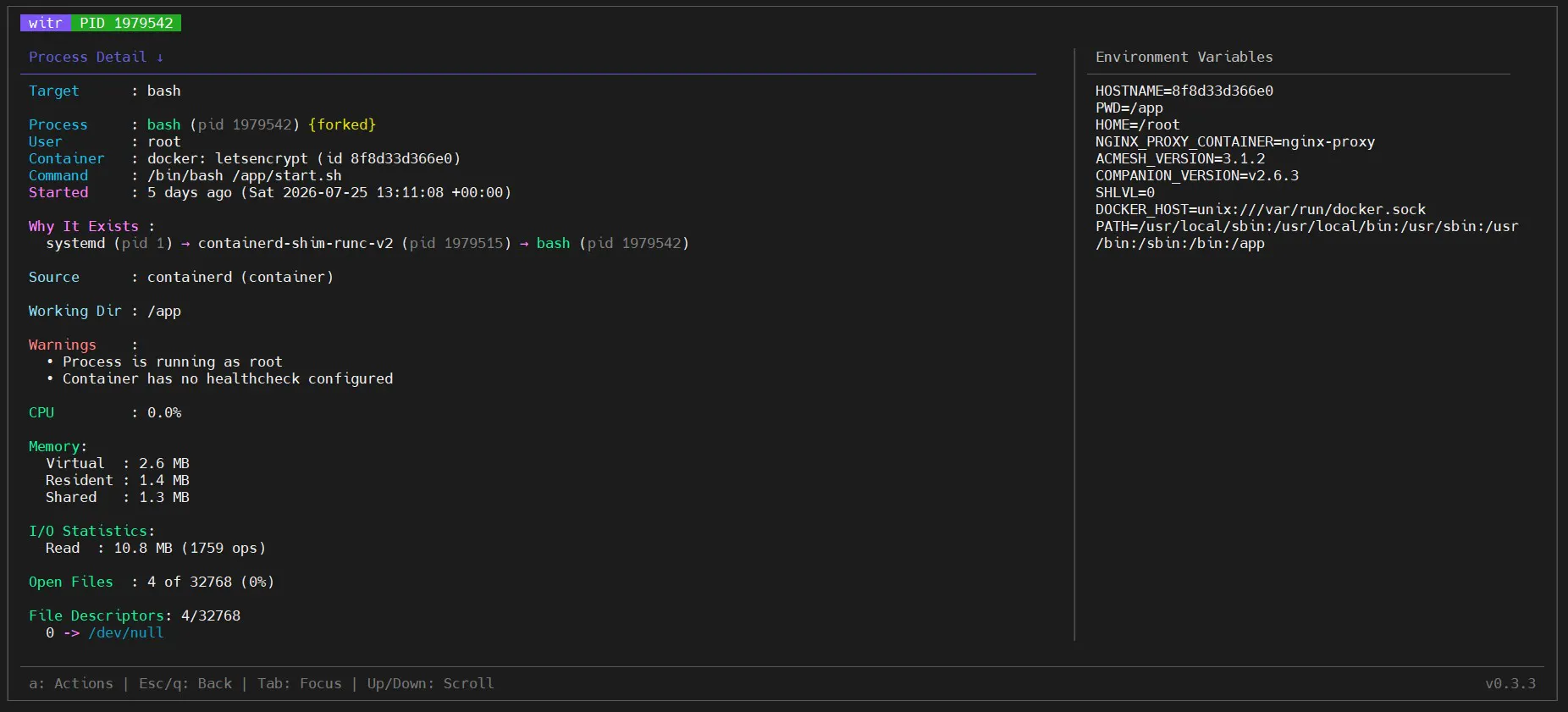
ps, top and lsof tell you what is running. witr tells you why. Point it at a process, PID, port, container or file and it traces the chain that explains it - systemd, supervisor, shell or cron - plus who started it, when, from where, and the warnings worth knowing. Run it bare for an interactive TUI with Processes, Ports, Containers and Locks tabs. Or script it: --short for a one-line chain, --json with real exit codes. One static Go binary for Linux, macOS, Windows and BSD.

The thing that'll decide whether I keep it is what it prints when the chain dead ends. A process reparented to init after its parent died, or something started inside a container runtime that hides the real caller, and the honest output there is that it can't tell you. Tools like this get uninstalled the moment they guess once and someone acts on the guess. The --json exit codes are the right instinct, so give the unknown case its own code instead of folding it into success.

3
回复

@asadmalik901 Thanks for the detailed use case. Two things here, since witr treats them differently. Zombies are handled, a defunct process shows a [zombie] marker and a warning. But a live process that lost its parent isn't correctly handled. It prints shell as source which is inaccurate. I've filed a bug in the repo to handle this correctly. Thanks again.

0
回复
Hey Product Hunt! I built witr out of a recurring annoyance: you find something running - a process eating CPU, a port that's already bound, a container you don't remember starting - and every tool tells you what it is, but nothing tells you why it's there. ps, top, lsof and systemctl all answer "what". witr answers "why". Give it a name, PID, port, container or file and it walks the ancestry chain back to whatever is actually responsible - a systemd unit, a supervisor, a cron job, a shell session, a container runtime - and shows who started it, when, from where, and anything worth knowing (running as root, bound to 0.0.0.0, deleted binary, LD_PRELOAD set, restarting in a loop). Run it with no arguments and you get an interactive TUI with Processes, Ports, Containers and Locks tabs, live search and an ancestry side panel. Or script it: --short gives a one-line chain and --json comes with meaningful exit codes. It's a single static Go binary, Apache-2.0, running on Linux, macOS, Windows and FreeBSD. Every operation is read-only, so it's safe to point at production. If you'd rather try before installing, there's a browser playground with a guided tutorial: https://pranshuparmar.github.io/... Would love feedback.
2
回复

witr looks fantastic. Huge congrats on shipping, and best of luck with the launch! 🚀

1
回复

@leon_ostrez Thank you! Really appreciate the kind words and support. Hope you enjoy using it.

0
回复

How deep does it trace - down to which file handle or socket a process holds? That's usually the part I'm actually hunting for.

1
回复

@kritishpuri Yes, it goes down to individual sockets and file descriptors (in --verbose mode). Sample output section:


  Sockets     : 127.0.0.1:6010 (TCP | LISTENING)
                127.0.0.1:22008 (TCP | ESTABLISHED)
  Open Files  : 9 of 10240 (0%)
  File Descriptors: 9/10240
    0 -> /dev/pts/2 (deleted)
    3 -> pipe:[23241]
    4 -> socket:[26671]
    5 -> /dev/ptmx

It also works in reverse, which sounds closer to what you're actually hunting. --file finds which process is holding a file and gives you its full ancestry chain, and --port does the same for a socket. The TUI has a locks and ports tab for browsing interactively.

Thanks for the question, and I hope you try it out.

0
回复

ps and lsof telling me what but never why is a decent chunk of my debugging life. Two questions. Does the Containers tab pick up things Docker Desktop started, and does it do anything sensible under WSL2 where there's no systemd to trace back to? That's usually where I lose the thread.

1
回复

@dalemooney @dale_mooney Real results from Windows + WSL2 with Docker Desktop running.

Docker Desktop containers are picked up. Container detection goes through the Docker API rather than the local process table, so it works even though Docker Desktop runs containers in its own VM where those PIDs don't exist in your distro at all:

  Container   : witr-dd-test (id d0a9b15ffb6f)
  Image       : alpine
  Why It Exists :
    docker → witr-dd-test
  Source      : docker
  Note        : The owning process is not visible in this environment.

That last line is deliberate. When the processes live in the Docker Desktop VM it tells you, rather than inventing a chain.

On systemd, I ran it inside the docker-desktop distro, which has no systemd at all and PID 1 is init, and it resolved the source from the cgroup:

  Container   : docker (d0a9b15ffb6f)
  Source      : docker (container)
  Why It Exists :
    init (pid 1) → SessionLeader (pid 8) → Relay (pid 10) → wsl-bootstrap (pid 12)
      → unshare (pid 42) → init (pid 43) → containerd-shim-runc-v2 (pid 2657) → sleep (pid 2680)

Thanks for the question, and I hope you try it out.

0
回复
How do you handle cases where a process has been re-parented, daemonized, or launched through several abstraction layers? I’m curious how WITR communicates uncertainty when it can reconstruct only part of the original startup chain.
1
回复

@mrbrjan A daemon reparented to PID 1 still resolves correctly, because the owning unit is read from the process cgroup rather than the parent walk:

  Service     : cron.service
  Why It Exists :
    systemd (pid 1) → cron (pid 11300)
  Source      : cron.service (systemd)
  Unit File   : /usr/lib/systemd/system/cron.service

The chain there is degraded to systemd → cron, but the real cause is still recovered. Containers work the same way, the cgroup identifies it through the runtime layers.

Where it falls down is when a bare orphan with no supervisor behind it. Then it walks ppid, lands on PID 1, and reports whatever is sitting there as the source, which is inaccurate. The issue to handle this exists.

Thank you for your comment and hope you personally try out witr.

0
回复

the single static Go binary shipping for linux, mac, windows and bsd with no runtime dependencies is the kind of boring, disciplined execution that makes a tool actually pleasant to drop on any box

1
回复

@phardinghy4670 Thank you for the awesome comment. Hope you try it out and like it.

0
回复

This solves something I've dealt with too many times chaining lsof, ps, and systemctl manually just to trace who actually started a process. The ancestry chain approach (systemd → supervisor → cron → shell) is exactly the missing piece.

for containers, does it trace through to the host-level process, or stop at "docker started this"?

Trying the playground now. Nice work.

1
回复

@talha_ramzan3 Thank you for your appreciation and trying out playgound. To answer your question, it traces through to the host. Example output pointed at a containerized process from the host:

  Container   : docker: witr-hosttest
  Why It Exists :
    systemd (pid 1) → containerd-shim-runc-v2 (pid 49883) → sleep (pid 49904)
  Source      : containerd (container)

So you get the real host-side chain through the shim, plus the container name resolved rather than just an ID.

0
回复

@talha_ramzan3 The manual chain has one property worth not losing on the way to a single answer.

When you run lsof then ps then systemctl yourself, you see the raw evidence at every hop, so you can tell when a step is lying to you. A synthesised "why" is faster and quietly takes that away.

Which is why I would want the evidence behind the chain available on demand, not just the conclusion. Same output, plus what it read to get there.

You save the four commands. You keep the ability to notice when the answer is wrong.

0
回复

The PID reuse case is the one I'd want to understand. Linux recycles PIDs pretty fast under load, so if I point witr at a PID that already exited and got reused by something unrelated, does it know the two are different processes, or could it walk an ancestry chain that's actually stitched together from two different processes that happened to share a number?

1
回复

@raffay_sajjad All the actions in TUI are properly guarded, it compares process start time before a kill or renice, so a signal can't land on a recycled PID. The ancestry walk could be improved here, it walks ppid with loop protection but no start-time validation. So the risk does exists for the parent PID. I've filed an issue to handle this appropriately, and thank you for your comment.

0
回复

Filing Asad's bug within hours of him raising it says more about where this tool will be in a year than the feature list does.

One push on the product itself. The chain answers what started it. It does not answer why, and you have named the tool after the harder claim.

systemd started it because a unit file says so. The real why is whether anyone still wants it running, and that lives outside the box entirely.

So the output I would value most is the inverse of ancestry. This is running, and nothing on this machine explains why it still should be. Started from a shell session that ended months ago. Unit enabled by someone who has left. Container from a compose file that is no longer in the repo.

That is the thing I actually go hunting for at 2am, and nothing tells me.

Is orphan detection something the ancestry data you already collect could support?

0
回复

@rabnoor_s Thank you for the kind words and a very fair challenge.

The name came from frustration rather than a claim. The moment it's built for is "why the hell is this port occupied", "why is this even running", and the ancestry chain happened to answer that version of why well enough that the two blended and thus I gave this name.

To answer your other questions, today witr stops at the chain. I made an orphan to check, and it just reports Source: process_api (init) with no warning. But the data to do better is largely already collected: session id and tty sit in the /proc/<pid>/stat slice I parse and currently skip, so checking whether the session leader still exists would give you the dead-shell case directly. systemd may need additional logic, I'll investigate more on this and file issue to enhance the logic.

Thanks again for in-depth technical challenge.

0
回复

The Locks tab caught my eye. Does it cover advisory file locks (flock/fcntl) alongside mandatory ones, or is it scoped to one type? I work with Node.js processes sharing a SQLite file across workers, and the symptoms are usually slow queries rather than visible contention. Knowing whether witr can show which worker holds a read vs write lock on a specific file path would be the thing that saves me reaching for strace.

0
回复

@hi_i_am_mimo Thanks, good question. I tested this on your exact setup before answering.

Advisory, both kinds. On Linux the Locks tab reads /proc/locks, so fcntl/POSIX byte-range locks and BSD flock locks both appear, and the Type column tells them apart. No separate mandatory category. witr shows locks that are held, not workers blocked waiting.

Read vs write per worker: yes. Two Node workers on one SQLite file, one in a read txn, one in a write txn:

PID      Process    Type      Mode      Path
 8964     node       POSIX     READ      .../app.db
 8972     node       POSIX     WRITE     .../app.db
0
回复
#8
Customer.io Summer Release
New ways to reach customers in the moments that matter
138
一句话介绍:Customer.io夏季发布版是一个集地理围栏、锁屏实时通知、自带SMS供应商、通知收件箱等能力于一体的客户互动平台,解决品牌在用户关键触点(如进店、锁屏、跨渠道)上“找到人但抓不住时机”的精准触达痛点。
Email Email Marketing Marketing
客户互动平台 营销自动化 实时触达 地理围栏 推送通知 SMS集成 AI辅助 跨渠道营销 通知收件箱 WhatsApp管理
用户评论摘要:用户评论聚焦两点:一是对AI内置于campaign builder而非附属功能表示认可,认为其减轻了分群和建流量的重复劳动;二是创始人Jeff主动征集“最期待功能”及“移动端使用场景”,评论区暂未出现具体批评或功能缺失反馈,有效信息偏少。
AI 锐评

Customer.io这轮发布本质上是一次“存量功能大补课”——地理围栏、Live Activities、自带SMS供应商、通知收件箱,这些能力在Braze、OneSignal乃至Firebase Cloud Messaging上已不算新鲜。其真正的护城河不是某个单点功能,而是“把这些东西塞进原有自动化编辑器、受众分群和统一数据模型里”的集成成本。从创始人Jeff的发言看,产品叙事从“邮件平台”转向“全渠道互动中枢”,但问题是:当核心差异化来自“All-in-one”时,它面对的竞争就不再是营销自动化同行,而是Segment(数据层)+ Braze(触达层)+ Twilio(通信层)的组合拳。用户对AI的正面反馈值得注意,但“AI帮你做分群和排流程”本质上是降低操作门槛,却并未改变底层数据质量和策略设计的上限——如果客户的数据干净、事件定义清晰,这类AI只是锦上添花;如果数据一团糟,AI只会加速放大错误。此外,138票在Product Hunt上属于中等偏下水平,评论仅一条有效信息,说明其目标客群(中大型B2C品牌)对“发布新鲜感”不敏感,更看重的是迁移成本和现有工作流的兼容性。建议关注其后续API开放程度和价格梯度——如果SMS自带供应商只是“免绑定”,而非“省成本”,那对中小客户的吸引力就相当有限。真正值得观察的,是地理围栏和Live Notifications能否在移动端跑出高留存案例,否则这只是一次“功能陈列式”的版本更新。

查看原始信息
Customer.io Summer Release
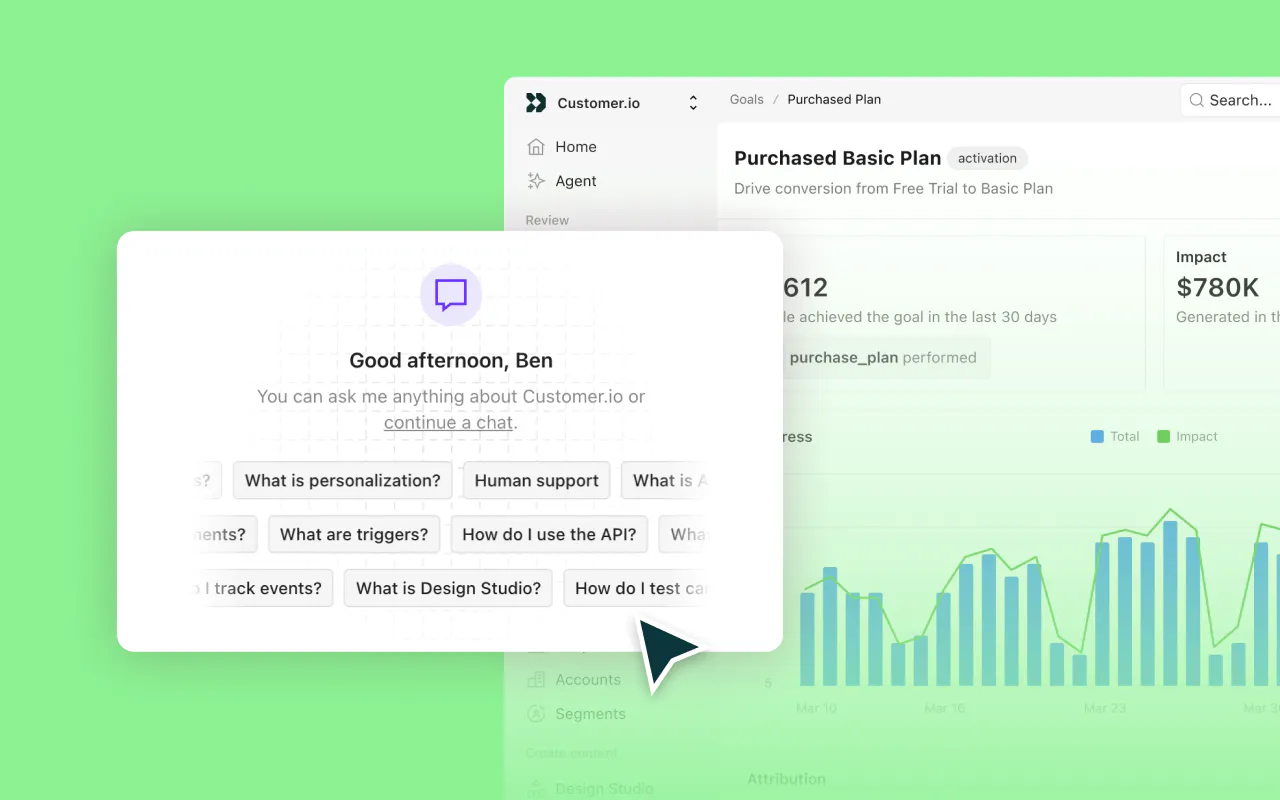
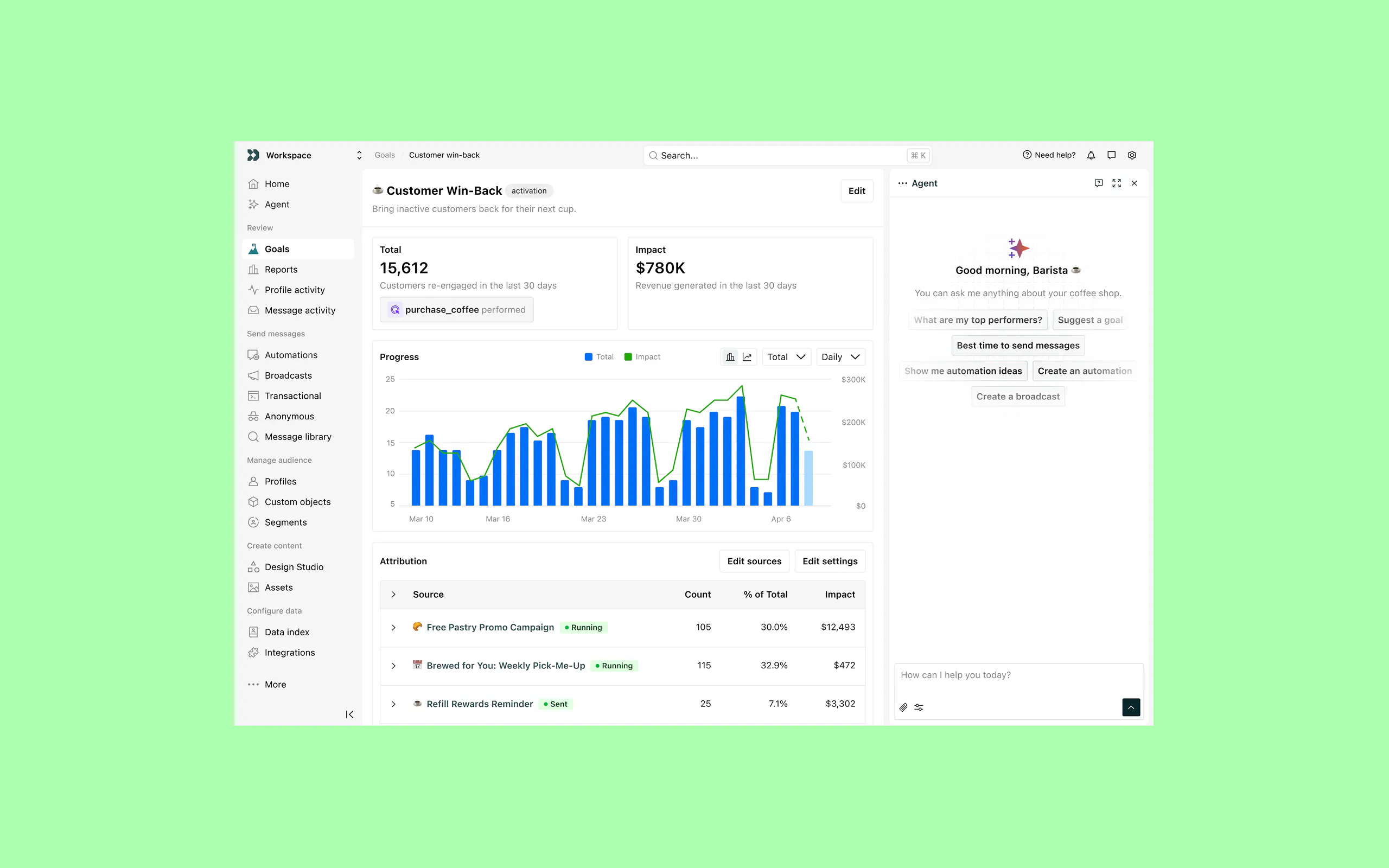
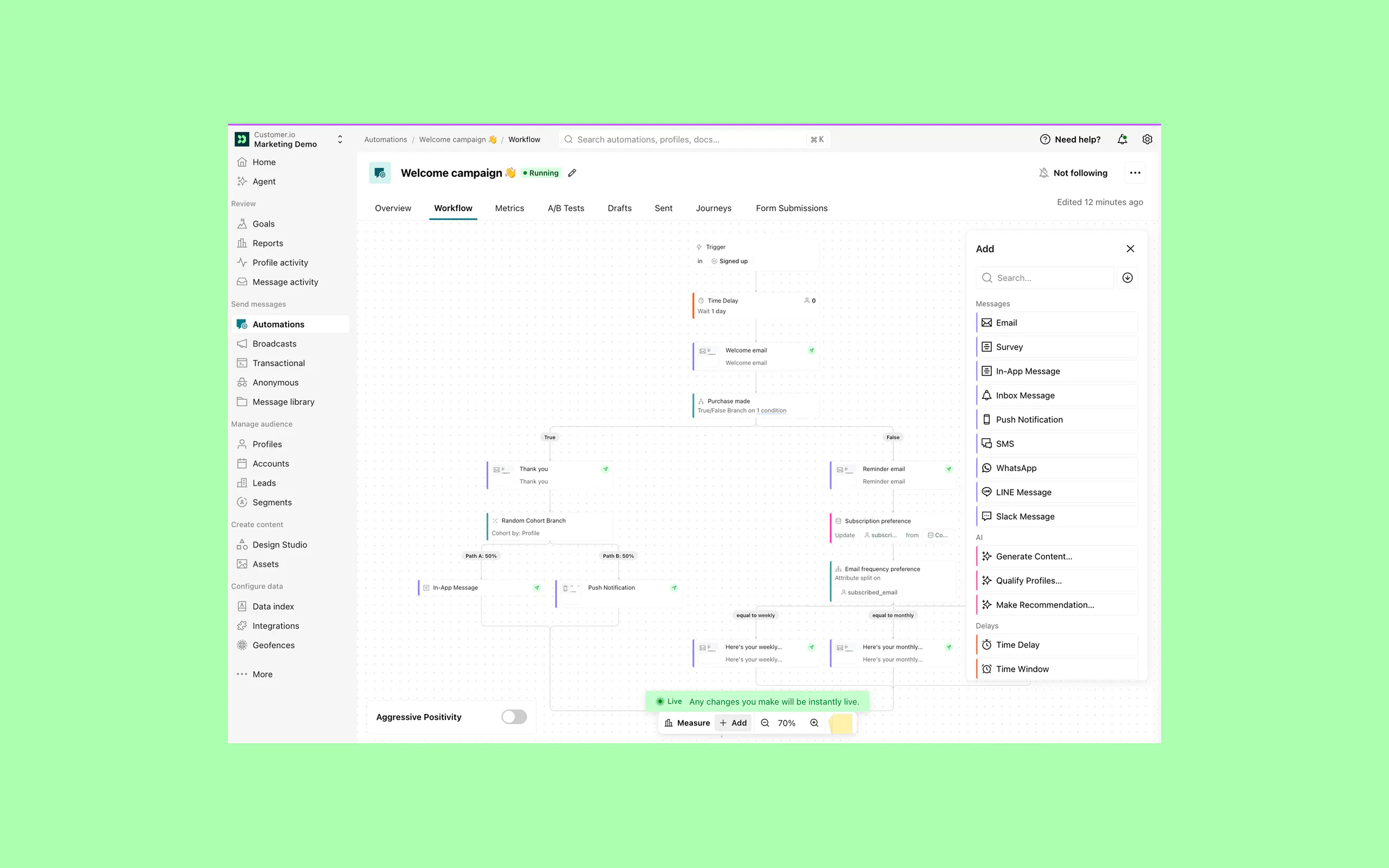
Customer.io's most expansive launch yet brings powerful new ways to engage customers exactly when it matters across expanded triggers, surfaces, and channels. Reach customers with geofencing, Live Notifications, flexible SMS providers, notification inbox, and beyond. Improved WhatsApp management, smarter AI, and more, all from one platform.

👋 Hey Product Hunt! It's Jeff from Customer.io

We're excited to be back on Product Hunt for our first launch since 2017.

A lot has changed since then. We've grown to support more than 9,000 brands, crossed $100M ARR, and evolved from an email platform into a complete customer engagement platform.

One thing hasn't changed: helping businesses build meaningful relationships with their customers has always been at the core of what we do.

Over the past year, we've heard the same challenge from customers:

It's not enough to build great customer journeys. You need to show up at exactly the right moment.

That's what inspired this release.

Today, we're launching more than 10 new features that help brands connect with customers wherever they are:

📍 Native Geofencing

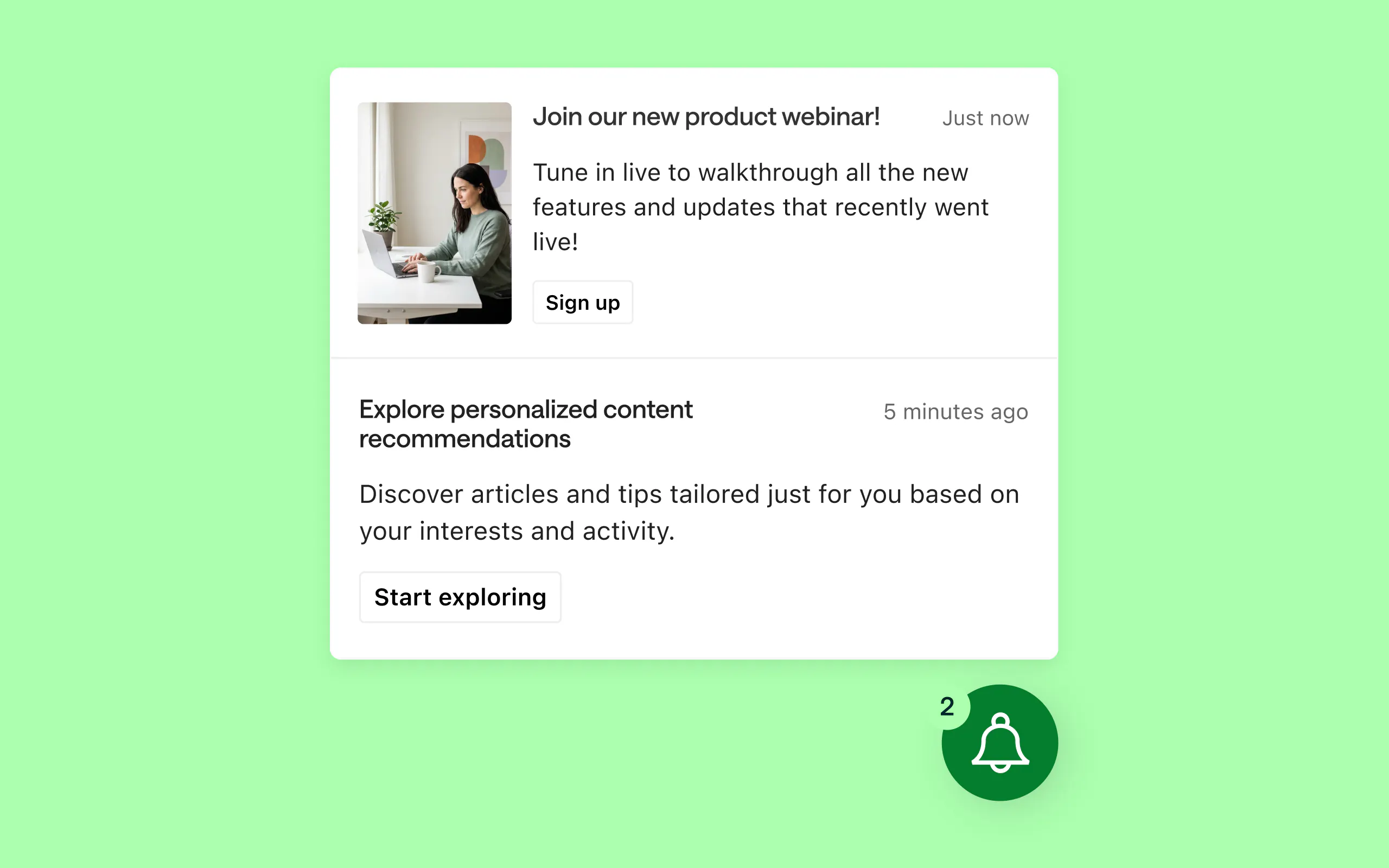
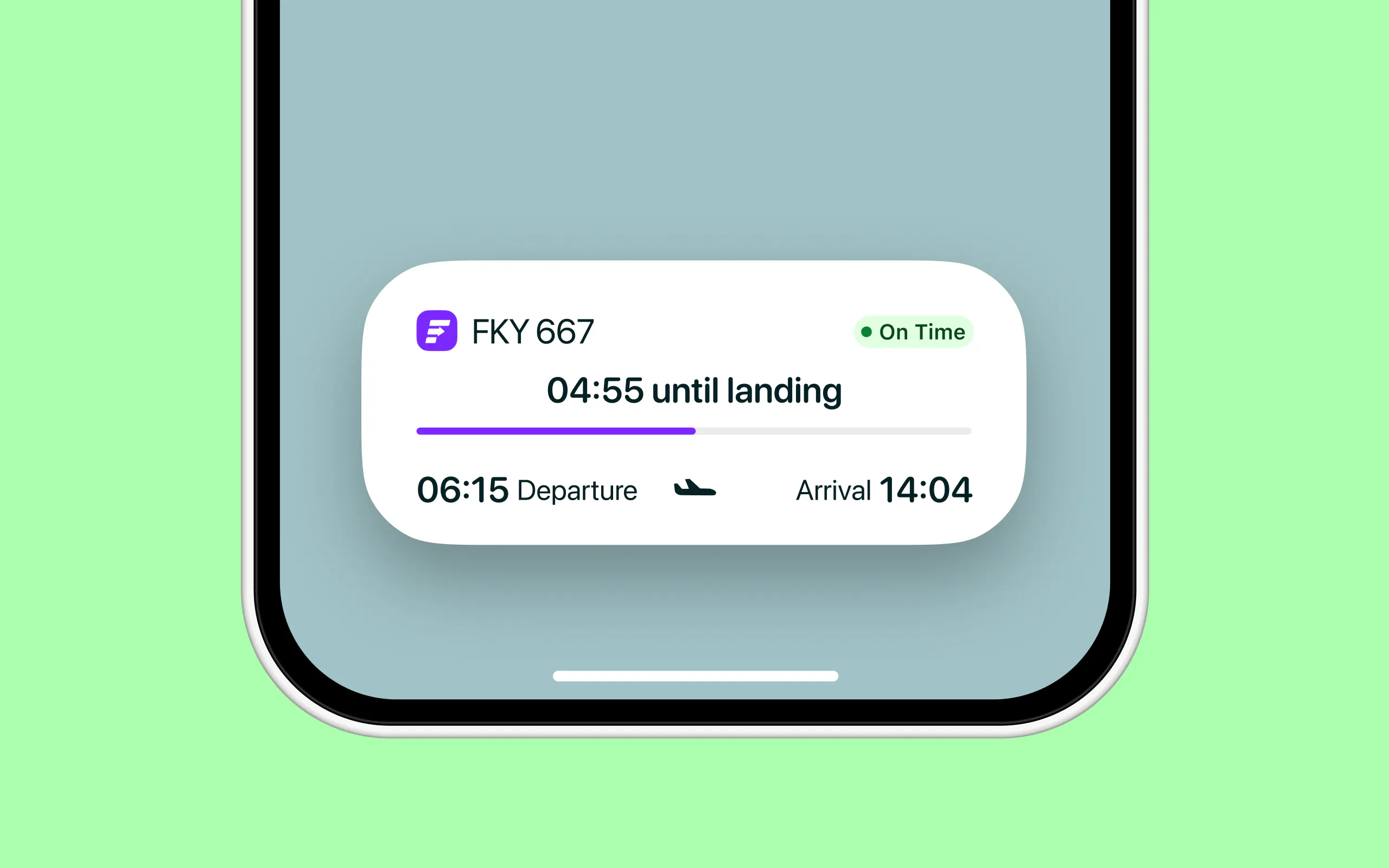
📱 Live Notifications (Live Activities for iOS and Live Updates for Android)

💬 Bring your own SMS provider

📥 Notification inbox

🟢 Native WhatsApp template management

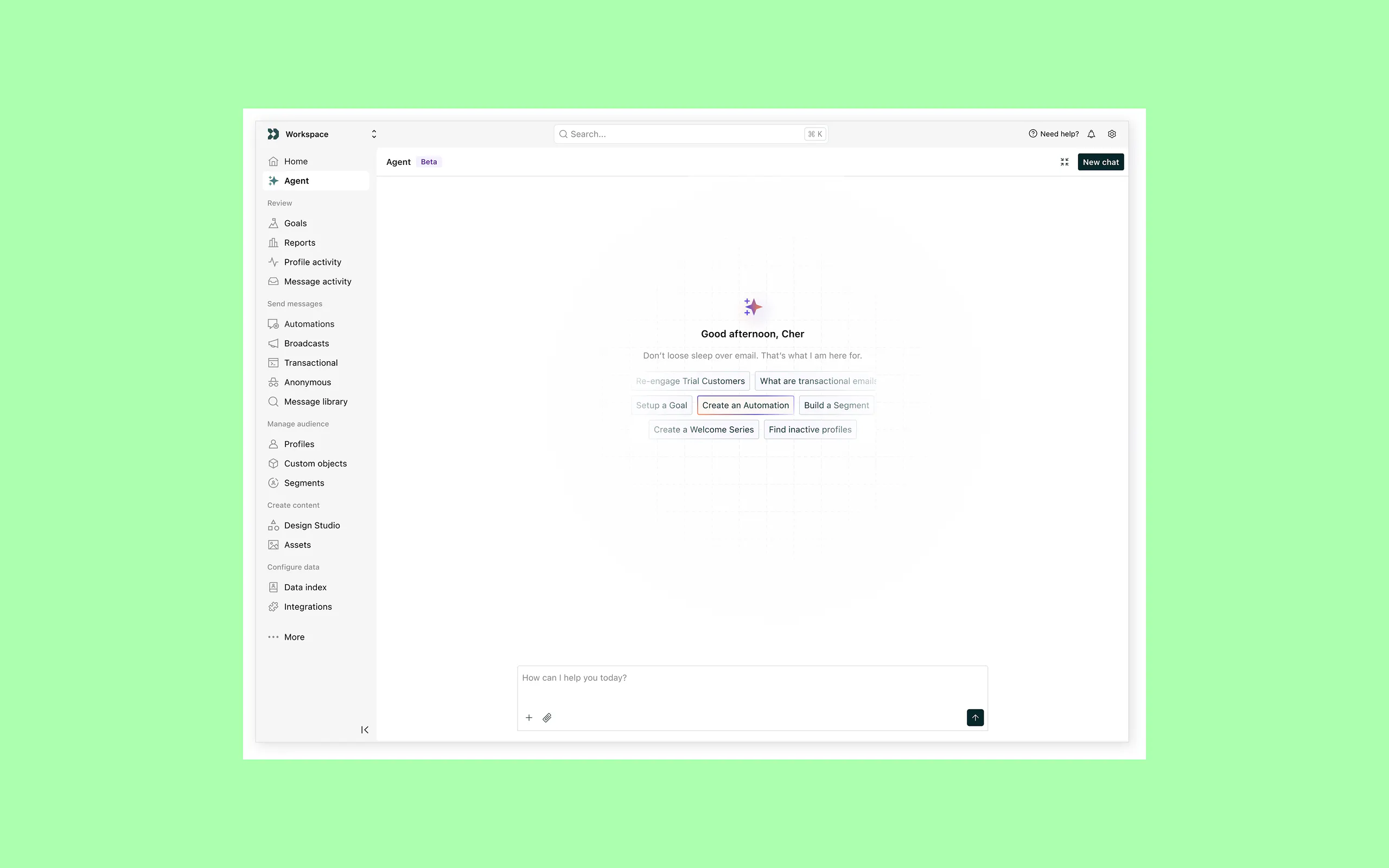
🤖 Enhanced AI actions

🌙 Dark mode (finally!)

...plus multiple apps per workspace, omnichannel subscription controls, message frequency caps, tooltips, and more.

These features work together inside the same automations, segments, and data your team already uses, making it easier to engage customers across mobile, web, SMS, in-app, WhatsApp, email, and beyond.

Whether you're notifying someone the moment they enter a store, updating them on their lock screen in real time, or giving them a place to revisit important messages later, Customer.io helps you show up when it matters most.

We'd love to hear from you:

• Which feature are you most excited about?

• What's the biggest challenge you face with customer engagement today?

• If you run a mobile app, what would you build with these new capabilities?

Our team will be here throughout the day answering questions, gathering feedback, and talking about what's next.

Thanks so much for checking us out. It's great to be back, and we can't wait to hear what you think! 🚀

2
回复

love how they bake AI directly into the campaign builder instead of tacking it on as an afterthought. basically feels like the platform is doing the heavy lifting on segmentation so you can actually focus on the creative side.

0
回复

@kocanaoglu80506 Thank you! That was exactly our goal.

We wanted AI to feel like a natural part of building campaigns, not another tool you have to switch into or learn separately.

The idea is to help with the repetitive work, like segmentation, audience selection, and workflow creation, so marketers can spend more time on strategy and creating great customer experiences.

Really appreciate you checking it out.

0
回复
#9
Screencap
Turn your team's real workflows into AI training data
132
一句话介绍:Screencap是一款macOS开源屏幕记录工具,通过持续记录屏幕、点击和键盘操作,将团队真实工作流程转化为结构化数据集,用于AI训练与流程自动化,同时内置严格隐私保护机制。
Productivity SaaS Artificial Intelligence
屏幕录制 AI训练数据 工作流程自动化 开源 macOS 隐私保护 行为数据采集 团队知识管理 流程挖掘 本地优先
用户评论摘要:用户普遍认可隐私设计,但质疑应用级屏蔽无法覆盖浏览器标签页等敏感内容,建议采用允许名单。核心担忧是“持续录制”易演变为绩效监控——数据能否按人查询是信任边界。另有反馈称导出数据格式不明,且文档链接存在错误。
AI 锐评

Screencap踩中了两个性感的风口——AI数据饥渴与企业流程数字化。但它的本质是一个“带安全锁的员工监控软件”,这决定了其价值与风险同样尖锐。

从产品逻辑看,它确实聪明:将人类隐性操作转化为显性结构化数据,这比让员工填写文档成本低得多,且数据质量真实。但评论中那位用户的质问直指命门:**当录制数据可被按人查询,就成了装了摄像头的KPI系统。** 即便创始人强调“审查后上传”,但上传至云端后的数据主权和使用边界才是信任崩塌点——没人会向老板提交一份“我摸鱼时打开了三次推特”的log。

技术门槛上,应用级屏蔽是最弱的一环。CRM里的客户信息、浏览器Tab中的内部系统,这些内容级敏感数据在屏幕流中无处遁形。尽管回复声称有内容级掩码,但识别准确性存疑。而“上传前人工审查”在现实中会因使用成本过高而沦为摆设——用户会盲点“确认”以维持效率。

更现实的问题是数据出口。Screencap的端点价值是“AI训练数据”,但噪音数据清洗成本极高:真实工作流中的误操作、中断、等待时间如何标注?若仅做流程挖掘,现有RPA工具已能捕捉交互日志,为何需要录制整个屏幕?除非它最终希望成为“行为数据的AirTable”,让用户自行构建Agent训练集——但这又回到了隐私信任的同一堵墙。

开源是它的底牌,社区的隐私审计和自托管承诺能暂时安抚早期采用者。但商业化的天平一旦倾向“团队版”的云端聚合,所有善意都会被重新审视。**它必须在产品中显式承诺:数据不可按人检索,仅以流程片段存在。** 做不到这一点,“AI训练数据”就只是HR部门观看员工“演出”的另一种方式。当前阶段,它更适合被用于“个人AI记忆回放”而非“团队标准化”——至少,一个人对自己的数据有天然的边界感。

查看原始信息
Screencap
Screencap records how work actually happens: screen, clicks, keystrokes, window context and teams can use it to turn real workflows into structured datasets for automation and AI training. Consent and privacy are enforced while recording so most sensitive apps are blocked before anything is written, and every trace is scrubbed and reviewed before it leaves a machine. macOS, open source. Try it solo with a free trial, or talk to us about a team pilot.

Hey people!

We built Screencap mainly because knowledge inside teams keeps getting lost. Sometimes it lives in someone's head, and when that person leaves, it leaves with them. And even when nobody leaves, teams that move fast rarely remember every step it took to get something done. So when it's time to repeat a workflow, we lose hours trying to reconstruct what we did before. What if the things that matter had permanent memory?

That's what Screencap is: a screen recorder for your Mac that keeps everything on your device and makes your work searchable, by you and by your AI tools if you connect them. Sensitive stuff like password managers and banking is blocked while recording, so it's never even written to disk. Nothing leaves your Mac unless you choose to upload it, and even then it's scrubbed and you review it first.

We still have a lot to improve, and that's exactly why we're launching now. We want to build this together with a community and shape the path forward with the people using it. It's also why we're completely open source. And we're committed to making it accessible to everyone, not just technical people: download, hit record, done.

Honest feedback means a lot to us. What would you need to trust a tool like this enough to leave it on all day?

7
回复

@rutefig Is this a competitor to screenpipe?

0
回复

@rutefig Really like that Screencap focuses on capturing how work actually happens instead of relying on people to manually document their workflows. The emphasis on consent, built-in privacy protections, and reviewing sensitive data before it leaves a device makes the approach especially interesting for teams looking to build automation and AI systems responsibly. Good luck with the launch!

0
回复

@rutefig Small thing: "Browse the dataset" and "Read the anonymization spec" both link to the same URL (screencap.sh/dataset) the spec link looks like it's pointing to the wrong place.

Cool concept overall!

0
回复

The framing of turning real workflows into training data is clever, but I would probably use this first to document how processes actually happen on our side versus how we think they happen. Everything staying on the Mac until you choose to share is what makes that feel safe. What does the exported dataset look like in practice, structured steps with clicks and window context or raw video plus metadata?

1
回复

@doganakbulut Hey! Yeah you can definetely use it to document how processes happen as well. The exported data is structured steps yes and window context

0
回复

Hey - congrats on the launch!
How do you get consistent labeling out of messy real usage? Real workflows are noisy next to curated demos.

1
回复

@kritishpuri thanks a lot! Labeling is not done at this layer as of course but my colleague @aayushtheg can give you more insights there

0
回复

Blocking password managers and banking at record time is the right instinct, and it's the easy half. The harder half is the app that's fine 95% of the time. A CRM is a perfectly normal thing to record right up until someone opens a customer record, and no app level blocklist catches that.

Is there anything working at the content level rather than the app level, or is the review step before upload doing that job? Asking because "I have to review every clip" is the thing that quietly kills daily use.

1
回复

@dalemooney yes it is also in terms of content, anything that looks password, emails, names, etc is masked, review is mostly just another safeguard for people that want to be really sure

1
回复

Solo use is what I am curious about here. Does it work without the team cloud sync, or is that required to actually generate the training data? I would want to capture my own editing workflow locally. Share specific clips deliberately, not just have everything go up automatically.

0
回复

Blocking sensitive apps is a denylist, and denylists fail open. The internal tool nobody's heard of, or anything sensitive that lives in a browser tab rather than its own app, gets recorded because it wasn't on the list, and you find out when someone reads the trace. An allowlist captures far less and makes the pilot conversation much shorter, which for the buyer you're going after is probably the better trade.

0
回复

the always-on framing is the appealing part but also the scary part for me. when you're on a call and someone shares their screen, or a client shares something confidential over zoom, is that captured too since it's on your display, or does it only ever record your own local apps? if there's a quick pause hotkey for exactly that moment i'd trust this a lot more day to day.

0
回复

You asked what it would take to leave it on all day. Honest answer: nothing in your privacy section, because that is not where the fear lives.

Blocking banking and password managers protects me from a leak. It does nothing about the thing people actually worry about, which is what the recording gets used for later.

Consent to be recorded is not consent to be compared. The day someone can ask how long I take on a workflow versus the person next to me, this stops being team memory and becomes a performance review with a video attached. Nobody says that out loud. They just quietly stop recording the messy days and record the tidy ones, and then your dataset is a fiction.

So the guarantee I would want is about use, not storage. Traces can build automations. Traces cannot be queried per person.

Is that a boundary you would be willing to make explicit in the product?

0
回复

Congrats on the launch Rute!

0
回复

@german_merlo1 thank you :)

0
回复
#10
Gemini Robotics 2
Google's AI brain for the next generation of robots
115
一句话介绍:Gemini Robotics 2 是谷歌 DeepMind 推出的新一代机器人“大脑”,将 Gemini 多模态大模型能力注入物理实体,让不同形态的机器人在真实世界中理解环境、推理任务并灵巧执行,主要面向工业操作、医疗辅助、多机协作等复杂物理场景,解决传统机器人泛化能力差、无法适应非结构化环境的痛点。
Robots Artificial Intelligence
机器人AI 具身智能 多模态大模型 Google DeepMind 物理世界理解 灵巧操作 多机器人协作 自适应推理 机器人操作系统 AI前沿研究
用户评论摘要:多数用户认可物理AI是下一前沿,但批评官方发布缺乏硬核技术指标。核心质疑集中在:未见未训练环境下的任务成功率、失败恢复机制、感知到动作的延迟数据。评论认为当前更像定位声明而非可评估产品,呼吁提供技术论文或基准测试。另有医疗背景用户畅想机器人+医疗知识的颠覆性应用。
AI 锐评

Gemini Robotics 2 的发布,本质上是一次典型的“高姿态、低信息量”研究预告——它用“整机智能”“灵巧操控”等宏大词汇掩盖了当前具身智能领域最致命的短板:缺乏可复现、可量化的泛化能力证明。评论区的冷静声音一针见血:没有 unseen environment 的成功率、没有失败抓取的自恢复案例、没有感知-动作闭环的延迟数据,那么这只能被视为 Demo 而非 Product。

从技术纵深看,Gemini 模型在多模态推理上的积累确实为机器人提供了更高级的“认知前端”,但物理世界的复杂性远非语言+视觉的拼接能覆盖——接触力学、动态扰动、实时规划仍是硬骨头。即便 Google 拥有顶级算力和人才,若不能将模型能力转化为真实世界上稳定的控制信号,其价值将止步于论文引用。

更值得警惕的是,这类“概念先行”的发布正在消耗行业的信任度。当每隔两周就有一个“物理AI新前沿”刷屏,而没有任何一个产品能达到宣称的自主水平,投资者和工程师会越来越难以区分真正的技术突破与 PR 叙事。

当然,不可否认 Gemini Robotics 2 在架构设计上(如多机协作、全身控制)代表了对未来形态的前瞻思考,且 DeepMind 的学术实力使其有潜力快速迭代出实质性结果。但作为“发布”,缺数据即是原罪。建议团队尽快公开技术报告或开放评测基准,用数字替代口号——否则,它只会成为 AI 寒冬叙事里又一个过度炒作的注脚。

查看原始信息
Gemini Robotics 2
Gemini Robotics 2 is Google DeepMind’s latest step toward intelligent robots that can understand, reason, and act in the physical world. Powered by advanced Gemini models, it brings whole-body intelligence, dexterous manipulation, and adaptive reasoning to robots of different shapes and sizes. From complex physical tasks to multi-robot collaboration, Gemini Robotics 2 moves us closer to a future where robots can work alongside humans.
Discovered this while following Google DeepMind’s latest AI research and thought it deserved a Product Hunt spotlight. We’ve seen AI transform how computers understand text, images, and information. Gemini Robotics 2 represents the next frontier: bringing that intelligence into the physical world. The exciting part isn’t just robots moving — it’s robots that can understand environments, reason through tasks, and adapt like intelligent agents. Physical AI feels like the next major chapter of artificial intelligence, and Gemini Robotics 2 is a fascinating glimpse of where things are heading.
4
回复

@justin2025  As a self learnt Developer and former Nurse - I am completely convinced that Robots esp. in Medical - Area are already “ IN”! The future will be - decentralized, self sustaining and - fantastic! Imagine this Robot with a Doctors And Nurses brain !!? Imagine sickness “ repair “ in hours instead of months! Gemini Robotics 2 is - fascinating for me!!

0
回复

genuinely interested in this space but the post itself doesn't give me much to react to beyond "physical AI is the next frontier," which is true of basically every humanoid robotics announcement of the last two years. what would actually change my mind about this one specifically is something concrete: task success rate on an unseen environment, how it handles a failed grasp instead of just a clean demo reel, or latency from perception to actuation. without that it reads more like a positioning statement than a product I can form an opinion on. is there a technical writeup somewhere with actual numbers, or is this purely a research preview at this stage?

0
回复
#11
TraceLLM
OpenTelemetry for production AI applications
103
一句话介绍:TraceLLM 是一款专为生产环境AI应用打造的可观测性平台,通过OpenTelemetry(OTLP)追踪提示词执行、Token消耗、延迟、错误及模型调用,帮助开发者快速定位LLM工作流中的性能瓶颈与故障根因。
Open Source Developer Tools GitHub Tech
AI可观测性 LLM监控 OpenTelemetry 提示词追踪 Token计量 延迟分析 错误追踪 模型调用追踪 开发者工具 生产环境
用户评论摘要:用户高度关注数据安全与Redaction机制,追问PII是否可在导出前按字段清洗;质疑“成功但错误”的静默故障难以捕获,建议用内容指纹(如文档ID哈希)替代全文存储;同时强烈要求MCP工具调用作为一等span,支持嵌套子span及成本属性归因,而非挂载JSON blob。
AI 锐评

TraceLLM踩准了LLM应用从“演示”到“生产”的痛感转换点:当应用开始承受真实流量,开发者发现传统的APM工具对“提示词-模型-工具”这一新调用链几乎失明。其Otel原生导出与工具Span设计直指行业短板,尤其是将工具调用从JSON blob中解放出来,并支持嵌套与成本归因,这在主流观测产品中并不常见。

但评论区的拷问远比功能列表更残酷。其一,安全与合规不是后置选项,而是能否通过企业采购的第一道闸门。尽管宣称“可配置”,但默认关闭的Grounding捕获会让最需要排查的“自信错误”完全不可见——这是产品逻辑的内在矛盾:你越是保护数据,越可能在故障发生时失去唯一线索。其二,用户提出的“内容指纹”方案(哈希文档ID与工具参数)是更为务实的折中,既能证明上下文一致性,又规避敏感数据出境,这值得TraceLLM在下个版本中作为一等公民内置,而非停留在SIG。其三,OTLP导出看似中立,实则将筛选、脱敏、保留策略的合规负担全部转嫁给运维端,若不能在SDK层提供精细的字段级Redaction策略,其“生产可用”的叙事将止步于安全评审。

产品目前更像一个高效的数据管道,而非智能诊断中枢。若不能在“幻觉归因”或“异常漂移检测”上提供超越传统trace的语义分析能力,它很容易被SigNoz或Honeycomb等平台通过插件生态模仿并吞噬。建议团队将Roadmap聚焦于:一是提供内容无关的语义指纹能力,二是打通成本与根因的因果关联,三是将MCP工具链的自动埋点从路线图提到当前迭代——这三点才是它区别于通用Tracing的护城河。

查看原始信息
TraceLLM
Tracellm is an observability platform for production AI applications. Monitor prompt execution, token consumption, latency, spans, errors, and model calls across your LLM workflows. Export traces using OpenTelemetry (OTLP) and quickly identify bottlenecks before they impact users
Hey Product Hunt! I'm Jyotishmoy, the maker of Tracellm. Like many developers, I've been building AI applications using different LLMs and frameworks. One thing quickly became obvious: once an AI app reaches production, it's surprisingly difficult to understand what's actually happening. Questions like: Why did this request fail? Which prompt caused the issue? How many tokens did this interaction consume? Where is the latency coming from? Which model call is slowing everything down? There are great observability tools for traditional applications, but I wanted something purpose-built for AI workloads. That's why I built Tracellm. Tracellm gives developers complete visibility into their AI applications by tracing prompts, spans, token usage, latency, model calls, and errors in one place. It also supports OpenTelemetry (OTLP), making it easy to integrate with your existing observability stack. This is just the beginning. I have a lot more planned, including richer analytics, cost optimization insights, and support for more AI frameworks and providers. I'd genuinely love your feedback: What features would make this indispensable for your workflow? Which AI framework or model provider should I support next? What would you like to see improved? Thanks so much for checking out Tracellm! I'm excited to answer your questions throughout the launch. please give it a "⭐" in GitHub if you find this helpful.
2
回复

This looks super useful — OpenTelemetry-based observability for LLM apps is a great idea, especially catching bottlenecks early. Congrats on shipping!

1
回复
@zvonimir_sabljic1 thanks a lot!
0
回复

Every question on that list is about a failure that announces itself. Failed request, slow call, token spike, all visible.

The one that costs most in production is the request that succeeded. No error, normal latency, sensible token count, and the answer was confidently wrong. To catch that afterwards the trace has to hold what the turn was grounded in, which retrieval actually landed and what the tool returned, attributed to that turn. Otherwise the worst incident of the year looks like a healthy span.

Does a span carry the retrieved content and tool results, or the call and the timing only?

1
回复

@jernej_jan_kocica yes, it can carry the grounding context and tool results, not just call timing, but we make that explicit and configurable because production AI traces can contain sensitive customer data.

0
回复

@jernej_jan_kocica Jernej has named the only question on that list that matters, and the answer to it creates a second problem worth planning for.

Grounding capture is configurable because production traces hold customer data. Reasonable. But it means it gets switched off exactly where a silent wrong answer is most expensive, and whoever switches it off has to make that call before they know they will need it.

The version that survives both constraints is capturing identity instead of content. Retrieval document ids, a hash of each chunk, tool arguments and a hash of the result. You can then prove which context a turn actually used, and whether it changed between two runs, without storing a line of customer text.

Not the same as replaying the answer. But it turns "the worst incident of the year looks like a healthy span" into something you can diff.

Could the span schema carry a content-free grounding fingerprint today?

0
回复

OTLP as the export path is the right bet, but it moves the hard problem rather than solving it. The moment a prompt body leaves for someone's existing stack it lands under retention and access rules it was never collected under, so the first thing I'd want to know is whether payload capture is opt in per span and whether I can strip it at the collector rather than in the SDK. Worth answering on the page, because that's the question that decides whether this gets past a security review or dies in one.

0
回复

The redaction point further up is the one that decides whether we could even turn this on. Full request and response bodies leaving our infra to a third party is a hard no on anything finance adjacent unless PII gets scrubbed before export, not after. Is that per field configurable or a fixed blanket list?

0
回复

The thing I keep wanting from LLM tracing is MCP tool calls as first class spans, not just the model call with a blob of tool JSON hanging off it. Half my latency is the tools, not the model. Does the OTLP export break tool calls out as child spans?

0
回复

@dalemooney Yes. TraceLLM has a first-class tool span kind, so tool calls do not have to live as a JSON blob on the model span.

In a typical agent/RAG flow you can emit separate spans for agent.plan, tool.crm.lookup, retrieval.docs.search, and openai.chat.complete. Each one gets its own timing, status, metadata, optional input/output, and errors.

On OTLP export, those TraceLLM spans are mapped to real OpenTelemetry spans, so in SigNoz/Tempo/Honeycomb the tool latency can be inspected separately from the model latency.

The current caveat is that this is SDK-instrumented today: you create the tool spans from your app code. Automatic MCP tool-call capture is on the roadmap, so MCP calls can become first-class spans without as much manual wiring.

0
回复

@dalemooney Building on Dale's point, the thing that bit us is that a tool span is usually not a leaf.

An MCP tool call often fans out to two or three services of its own. If the whole tool is one span you get a total, and you still cannot say which downstream call is the slow one. That is the same JSON blob problem, one level down.

The other half is cost. If half the latency is tools, a real share of the spend is too, and most tracing attributes cost only to model calls. Cost per turn is only honest if tool cost lands on the turn that caused it.

So two things: does a tool span nest, and can it carry a cost attribute?

0
回复
#12
Mubert API
Edit tracks & stems, get consistent music with new engine
101
一句话介绍:Mubert API 通过全新引擎让开发者能在几分钟内将可编辑、可混音、最长两小时的实时生成音乐能力集成进自己的产品,解决了生成音乐“不可控、不可改、无法商用”的核心痛点。
Music API Artificial Intelligence
音乐生成API AI音乐编辑 分轨混音 实时音乐流 开发者工具 商用音乐授权 生成式AI 音频工作流 Claude/Codex Skill
用户评论摘要:用户关注点集中在:1) 实时stem替换的响应时间;2) 同一seed和提示词跨时间的确定性与引擎版本锁定(可追溯、不可变资产);3) 编辑后输出的版权归属和商用授权边界(是否覆盖客户项目)。多数评论认可“可编辑音乐”是行业进步,但对API的契约稳定性提出质疑。
AI 锐评

Mubert API这次更新表面上卖的是“更一致的引擎”和“2小时长音频”,但评论区已经替它把真正的价值说透了:把AI音乐从“老虎机”变成了“可编辑资产”。这确实是质变——当你能单独静音或替换一个鼓组声部而不必把整首歌推倒重来,音乐生成才从玩具跨进了生产力工具的阵营,而“针对特定用途快速集成”的路线也符合开发者预期。

然而,真正决定它能否进入严肃商业市场的是评论中反复出现的两个字:确定性。目前评论区有一条灵魂拷问几乎戳穿了行业通病——引擎版本更新后,同一seed生成的音乐“更好”了,但这对需要维持一致性的品牌客户来说是灾难。如果生成的资产不能被永远寻址获取,如果引擎版本不能被pinning锁定,那么所有“编辑”功能都是建立在流沙之上。一个能随时改变你历史资产面貌的API,无法支撑任何长期内容战略。

另一个被轻描淡写的问题是版权。官方用“copyright-protected”这个模糊话术,但评论区对商用场景的追问极其精准:如果你生成音乐并交付给付费客户,版权究竟归谁?被用户编辑过的派生作品,Mubert是否保留权利主张?在API的定价和授权条款未公开透明之前,这种模糊性会直接促使企业级用户选择自托管模型——这恰恰是评论区有人走过的弯路。

最后说说真正的护城河。Stem编辑、2小时生成、实时流都是可以被竞争对手快速复制的功能,而不可变资产寻址、引擎版本快照、商用输出版权明确归属这三个看似无聊的工程细节,才是决定开发者敢不敢把它嵌入核心产品生命周期的地基。Mubert现在最紧迫的任务不是继续吹嘘音频质量,而是尽快发布一份“资产存取可追溯+引擎版本可锁定+版权责任白纸黑字”的技术承诺契约。否则,它注定只是又一款优秀的AI玩具,而非创作者经济的基建。

查看原始信息
Mubert API
Meet the new Mubert API. Edit tracks, swap stems, and generate more consistent music with our latest engine. Create tracks up to 2 hours long, stream music in real time, and integrate Mubert into your pipeline in minutes with Skills.
Hey all Thanks for checking us out. We worked hard on this release and now you have full control on the music you generate. And you can build with us in few clicks using Claude/Codex Skill. Please share your feedback!
7
回复

@alexmubert nice launch.. congrats qq what’s the average response time when requesting real-time stem swaps over the API?

5
回复

Stems are the part that changes the workflow, everything else is a nicer reroll. The moment I can mute one layer and re-render only that, music stops being a slot machine and becomes an editable asset. For API use the thing that decides it is whether the same seed and prompt returns the same track next month, because branded content gets revised weeks after it ships. Consistency across sessions matters more than consistency inside one.

4
回复

@asadmalik901 That's a great point. Once music becomes editable instead of something you regenerate from scratch, it fits much better into real creative workflows. I also agree that consistency is critical, especially for brands that revisit campaigns weeks or even months later.

0
回复

@asadmalik901 Asad has named the thing that decides whether this is an API or a toy, and I would push it one step harder.

Seed plus prompt determinism is not really the requirement. The requirement is determinism across model versions, and no vendor can promise that while also shipping a better engine. If the November model is genuinely better, the same seed hands you a better track, which is exactly wrong for a brand video that needs the one from September.

So the two things I would want written into the contract are a pinnable engine version, and generated tracks treated as immutable stored assets rather than something you regenerate. Re-fetch the artifact, do not re-roll it.

Vadim, is a generated track permanently addressable once created, and can a caller pin the engine version it was made with?

0
回复

Hi Product Hunt!

For a long time, music APIs were mostly about sending a request and getting a finished audio file back. But teams building music into real products need much more: track editing, license and user management, usage controls, long-form generation, real-time streaming, and an integration process that does not slow development down.


That is what we focused on with this release. The updated Mubert Music API now supports track editing, individual stems, more cohesive compositions powered by our latest engine, tracks up to two hours long, real-time streaming, and faster integration through Skills for Claude and Codex.


I am especially excited to see what developers build with it, from creator tools and games to wellness, fitness, streaming, and entirely new forms of personalized media.


We would love to hear your thoughts: what product would you add generative music to, and what would you need from an API to make it work?

2
回复

Hey all,

Thanks for checking us out. This release is about control over what you generate.

You can edit a track after it's made, swap a single stem instead of starting over, and the new engine keeps it consistent across the track.

And you can build with us in a few clicks using the Claude/Codex Skill, so no wading through docs to get started.


Would really love your feedback — especially from anyone who's tried building with a music API before and hit a wall.

2
回复

@kirill_kiryanov the stem-swap-without-full-reroll thing is the right fix, Asad's point about it turning from a slot machine into an editable asset is exactly it. question tied to the "copyright-protected" framing on the tin though: once someone edits a track, swaps a stem, and ships that as part of a paid product, who actually holds the copyright on that specific edited output, the user or Mubert? asking because "copyright-protected" usually means "you won't get DMCA'd for using it," but it's a separate question from "you own this specific derivative enough to enforce it if someone else rips your final mix." those are different guarantees and only one of them matters if you're building a commercial product on top of the API rather than just using the output as background music.

0
回复

Licensing is where I got burned before. The licence covered my own content but excluded ads and anything shipped inside a paid app, so I ended up self-hosting a model instead. Does worldwide copyright-protected cover a track my software generates and posts for a paying customer, or only my own use?

0
回复

the adaptive playlists feel surprisingly natural for AI-made music, no robotic loops here. curious how it handles licensing for client use though.

0
回复
#13
Polygres
Turn your entire database into a context window for AI
51
一句话介绍:Polygres将Postgres数据库直接转化为AI代理的“工作记忆”,通过统一的混合API同时检索结构化数据、关系图谱、语义向量和全文结果,省去独立的向量库、图数据库和同步管道,帮助开发者为现有数据快速构建有据可依的AI代理。
Open Source Developer Tools GitHub Database
AI代理记忆 混合检索 Postgres扩展 GraphRAG 向量搜索 开发者工具 数据基础设施 开源组件 MCP集成 无限上下文
用户评论摘要:用户赞扬其消除同步管道、降低上下文成本的思路。核心问题集中在:检索速度(官方回复约20-30毫秒);“无限上下文”机制(官方解释为按需动态取数而非真正无限);数据可追溯性(有用户严肃指出需提供行ID、时间戳等“凭证”以支持事后审计);以及能否替代Algolia等专用搜索引擎。
AI 锐评

Polygres的切入点很聪明——它精准命中了当前AI应用开发中最痛的“基础设施缝合”问题。团队没有发明新数据库,而是选择在存量Postgres上做“内存扩展”,这大大降低了采用门槛。“免同步”是最大卖点,但这也正是其技术债务的藏身处。

目前收到的反馈虽热情,但缺乏深度测评数据。官方对“速度20-30ms”的回应偏向营销话术,未说明在数据量级、并发和复杂关系查询下的表现。更值得警惕的是“无限上下文”的定义——它本质是RAG的调度优化,而非技术突破,对“幻觉”和一致性问题没有提供新解法。

最有力的评论来自那位质疑“可复现性”的用户:当AI基于动态数据库做出决策时,如何回溯它当时“看到”了什么?这是所有基于实时数据的AI系统都无法回避的合规与审计问题。如果Polygres能提供类似“检索凭证”的机制(返回时附带行ID、排序、时间戳),它就能从“便利工具”跃升为“企业级可信任基础设施”。

当前定位模糊——既是开发者友好的免费工具,又宣称“企业就绪”。建议团队集中火力啃下“图关系+向量”混合查询的性能优化和审计追踪两块硬骨头,而不是急于宣传“无限”概念。毕竟,开发者会为省时买单,但只有企业会为可追溯性付费。整体方向正确,但距离“生产级”仍有距离,需观察其在这轮热度褪去后的实际留存率。

查看原始信息
Polygres
Polygres turns Postgres into working memory for AI agents. Retrieve structured rows, connected relationships, semantic matches, and full-text results through one hybrid API. All without a separate vector store, graph database, or sync pipeline. Build grounded agents over the data you already have, with relational, graph, and vector context joined at the source. Use the managed cloud or self-host with our open source components. Polygres is currently free to use, just sign up!
Hey Product Hunt 👋 We built Polygres because AI agents have a context problem. Most teams solve this by adding more infrastructure: a vector database, a graph database, a search service, sync pipelines, and custom retrieval code to hold everything together. We wanted a simpler model: What if the database itself became the agent’s context window? What if we could deploy graphRAG with one click? You can use Polygres as a managed platform or work with the open-source SDK and your existing Postgres schema. We’d especially love feedback from people building agents, copilots, memory systems, and AI-native products. Thanks for checking out Polygres. We’ll be here throughout the launch answering questions and learning from the community. — Dale, Dalton & Damien
13
回复

@evokoa always struggling with context window and optimize cost as my db grows large, and i started moving into using polygres. i was very suprised to see how my agent can queries everything a lot more efficiently in term of memory and cost after that like literally. still working on trying out the product more as the knowledge based become larger, but this looks exciting!!!

Congrats the team on the launch

4
回复

@evokoa I like the idea of reducing unnecessary complexity

0
回复

I’m going to try this for my mental state agent. It always need more context

5
回复

@dylan_bryan2 That's a great idea! Happy to help you build this out you can dm me on my X.

4
回复
@dylan_bryan2 let’s goo!! It’s free now try it out, and you can use the cli and skill to do it directly in Claude code / codex!
2
回复

How fast does the search get?

4
回复
@nhina typically in the milliseconds, like 20-30ms :)
2
回复
Love the launch! Who would benefit the most from using Polygres?
1
回复
@ioanamarin anyone building ai agents that need to connect to data If u ever plan to scale u should use polygres! From day 0 to day 10000
0
回复

Congrats on shipping this! Turning Postgres itself into the retrieval layer instead of bolting on a vector store and a graph db is such a clean idea. I've been dealing with sync pipelines between Postgres and a separate vector store on my own agent project, this would've saved me weeks. Bookmarking for the next build.

1
回复
@dmitriipokidov thank you!
0
回复

Love the launch polygres team! How exactly do you guarantee an infinite context window?

1
回复

@lucapiekarski The full database remains available as external memory. For each request, Polygres retrieves and ranks the most relevant rows, relationships, and search results, then fits that information into the model’s actual token limit.

As the conversation continues, the system can fetch additional context on demand instead of trying to load the entire database into one prompt. So the database is effectively unbounded context.

We've dubbed this the infinite context window!

2
回复

How can I connect it to my polygres to my agent? Can I use mcp?

1
回复

@1nk Hey inky! so we have a cli and skill that you can connect directly to the agent :D https://docs.evokoa.com/polygres/agent-skills

0
回复

Its helping me a lot in vibe coding

1
回复

@istp Glad to hear that! our goal is to make it incredibly easy to deploy a production grade AI agent :D Build it on sunday, be enterprise ready by monday :D

0
回复

ayo this is gonna solve a big old problem surely and make good relation work between claude code and codex, cant wait to use this myself 😉, my stupid claude can be good guy now thanks

1
回复

@b4boom Yeah! For code specifically we are releasing a feature called Polygres Pocket soon, stay tuned!

0
回复

Why graphs over loops?

1
回复

@james_yang7 Loops are just shitty graphs. I wrote a whole piece about this :D https://x.com/daleverett/status/2078969402046009374

1
回复
@evokoa 100%. Well said!
0
回复

I saw Polygres on X and got a quick demo by its founder Dale. AMAZING PRODUCT AND EVEN AMAZING FOUNDER. would be using polygres in every one of my products from now. The infinite context window is real.

0
回复

Can it replace Algolia?

0
回复

Really good idea, need to try it ASAP

0
回复

The one-store argument is the right one. Sync pipelines between a vector store and the source of truth are where most of these systems quietly go wrong, so removing the sync is worth more than any benchmark number you could put next to it.

The thing I would want to know: retrieving from the live database buys you freshness and costs you reproducibility.

If the agent's context is whatever the DB held at that moment, then the same question next Tuesday gets a different answer, and I cannot reconstruct what the agent was actually looking at when it made a call I now have to defend.

Anywhere there is an approval step, that matters more than latency does.

So does a retrieval come back with a receipt? Row ids, ranking, timestamp, stored next to the decision. Not for the agent. For the human who has to explain it three months later.

0
回复

Calling it infinite context is a stretch, but fetching more on demand instead of stuffing everything into one prompt is the right shape. Closer to how people actually recall things anyway.

0
回复
#14
VulX Watch
Vibe-code freely. We watch your back
39
一句话介绍:VulX Watch 是一个只读的AI代码安全审查工具,连接GitHub仓库后,它能独立核查AI生成的代码是否存在漏洞,并附上证据和具体代码行,解决“AI写代码但无法自证安全”的信任痛点。
Analytics Artificial Intelligence GitHub
AI代码审查 AI安全 漏洞扫描 Vibe Coding GitHub集成 供应链安全 DevSecOps 代码审计 独立验证 SaaS工具
用户评论摘要:用户普遍认可其解决“AI写码无安全兜底”的痛点,尤其适合无安全人员的小团队。主要问题集中在:发现漏洞后的通知方式是否支持Slack或邮件;以及创始人回应称产品免费,并欢迎改进建议。
AI 锐评

VulX Watch切中的是一个真实且迅速膨胀的痛点:AI编程工具让代码产出效率飙升,但安全验证能力却真空。产品定位精准——不是又一个扫描器,而是“AI的独立审计员”,直击大模型“既当运动员又当裁判”的逻辑悖论。从评论反馈看,用户不仅认可其价值,更敏锐追问了“持续监控”和“告警集成”等工程化细节,这暗示了该产品从“一次性扫描”向“持续安全运营”演进的可能性。但锐评需指出两点隐忧:其一,39票的冷启动数据反映市场竞争激烈,GitHub原生代码扫描、Snyk等老牌玩家已占位,VulX Watch必须证明其“AI代码”的专项检测能力相比通用工具存在显著代差,否则“独立验证”只是个叙事故事;其二,免费策略虽能引流,但安全工具的核心壁垒在于漏洞库的更新速度和误报率控制,若没有足够的付费客户支撑,其威胁情报的时效性可能成为致命短板。总体而言,产品方向正确,但从“工具”到“可信赖的安全基础设施”,路还很长,关键看其能否在AI代码特有的安全模式(如幻觉API调用、错误依赖引用)上建立不可替代的检测能力。

查看原始信息
VulX Watch
The AI that built your app can't verify its own work. VulX Watch can, connect a GitHub repo and it independently reviews what your AI actually shipped, shows you what's vulnerable, and backs every finding with the evidence and the exact line. Read-only, never touches your code, free to try. Keep building fast, and let something independent certify what you made.
Hey PH 👋 AI writes most of your app now but the same AI can't tell you if what it shipped is safe. It's marking its own homework. VulX Watch is the independent check. It started as an enterprise product; we're bringing it to the builders who need it just as much, so Watch is free while we build it out. Would love feedback, especially if you build with AI tools: what would make you trust something like this with your repo? — Tomek, Founder of VulX
4
回复

If you have any questions or feedback I would love to hear it and will try to answer as quickly as possible thank you again for being here

1
回复

@ngotomek Super clean landing page! How do notifications work once a vulnerability is found? Can we route alerts to Slack or Email...

3
回复

Congrats on the launch of VulX Watch! This is a thoughtful idea and I’m excited to see where it goes. 🙌

1
回复

@leon_ostrez Thank you, appreciate the words of support. Any suggestions for improvement?

0
回复

With the increase of vibe coders and recent surge of vulnerabilities in many packages and libraries, tools like VulX are much needed, excited to try it out

1
回复

@kisekiya Thanks 🙏 That surge is what we are going after, more people shipping faster with less ability to verify it. It's free, so give it a run and let me know what you think

0
回复

This solves a very real problem, especially for small teams shipping AI-generated code without a dedicated security function. Continuous re-checking as new vulnerabilities emerge is far more valuable than a one-time scan. The positioning around "your model can’t audit itself" is sharp and easy to understand.

Great product.

1
回复

@chirag_chamoli Thanks means a lot, and you named the exact reason we built it. The "small team shipping AI code with no security function" is precisely who gets left out. Real security tooling is priced for companies with a security budget and those are the people who need it just as much. Appreciate you taking the time 🙏

0
回复

Sounds very interesting, worth trying as i do vibe coding a lot!

1
回复

@istiakahmad Thanks a lot. That's exactly what we're going for, letting people build as much as they want, free for now, with the guarantee that whatever you vibe-code gets an independent verification. So you don't have to worry as much about what your AI is producing. Thank you again for this comment and if you have any suggestions on improvements please let us know

0
回复
#15
Nommer.ai
Turn recipes into 2-player mode
21
一句话介绍:Nommer.ai 将任意菜谱拆解为双人协作步骤,让情侣或搭档在做饭时各司其职、同步收尾,解决“一人指挥、一人打杂”的协作摩擦。
iOS Cooking Food & Drink
双人烹饪 菜谱协作 厨房效率 情侣做饭 任务分工 智能菜谱 生活工具 协作应用 烹饪体验 团队做饭
用户评论摘要:用户普遍认可双人协作的痛点真实,创始人也坦诚描述了从“不一起做饭”到“享受协作”的转变。核心疑问聚焦动态性:若某一步提前完成,是否会实时重新分配任务以避免等待?另有用户因已熟记菜谱而暂时无需求,但肯定对新手期有巨大帮助。
AI 锐评

Nommer.ai 的切入点很刁钻:它不解决“做什么饭”或“怎么做饭”,而是解决“两个人怎么同时做一顿饭”的流程管理问题。这本质上是将菜谱从信息工具重构为协作协议——把主厨的隐性调度权(“你切洋葱”“先别动锅”)显性化为并行任务流,这是对烹饪场景下“关系经济学”的精准捕捉。其商业模型也足够聪明:导入菜谱免费,只有双人协作模式才消耗积分,直接为“多人同时使用”这一稀缺场景定价,避免了与免费菜谱库的正面竞争。

但产品目前暴露的短板也很明显:最关键的动态负载均衡能力(步骤提前完成后的任务重分配)在评论中未获明确回应,这恰恰是协作类工具从“演示惊艳”走向“日常依赖”的分水岭——如果流程僵化,用户很快就会退化回“一人主导、一人刷手机”的旧模式。此外,产品过度聚焦于“情侣”这一甜蜜但狭窄的画像,忽略了合租室友、亲子协作、甚至专业后厨预演等同样高频的多人烹饪场景,这限制了其天花板。

另一个隐患是习惯迁移成本:用户已熟记菜谱后,产品的粘性会急剧衰减。要突破这一点,Nommer 需要从“菜谱执行器”进化为“协作关系的中枢”——例如记录你们最默契的任务分配模式、生成家庭专属的协作菜谱库,甚至将双人协作的数据沉淀为个性化的烹饪能力画像。否则,它终究是一个“恋爱初期的高效玩具”,而非长期厨房基础设施。从投票数和评论热度看,团队具备真实场景洞察力,但技术兑现力将是决定其生死的关键。

查看原始信息
Nommer.ai
Nommer turns any recipe into 2-player mode so you can cook together with ease. The core of the app is a unique cooking interface that splits a recipe into steps for each chef; one might do the onion cutting prep while the other creates a sauce for instance. At the final step, everything always comes together as a team. Unlike other recipe apps, you can import and cook as many recipes as you want; you only spend credits when you cook together with another chef.

Hi everyone!

Me and my gf both love cooking, but always struggled to cook together because there's a lot of tiny friction points that make it unpractical.

We talked about it with friends and turns out lots of people share this experience. For most people cooking together is more trouble than its worth because whoever is the lead chef needs to coordinate what the co-chef does, effectively cancelling out any time gain they'd get. On the other hand the co-chef feels kind of useless most of the time and continuously needs to ask the lead chef for tasks to do, disrupting each others' flow.

So me and my gf ultimately decided that we just don't cook together.

Interviewing friends and coworkers, this is the solution most couples come up with even though they do really desire to cook together.

Unsatisfied by this, we set out to fix this. Nommer is the v1 solution to this problem.

For us Nommer massively improves the cooking together experience by taking on the labor of coordinating who does what in a balanced manner. With Nommer, each chef focuses on their own tasks: Chef A cuts the onions, while Chef B grates the carrots. Chef B then makes the sauce while the Chef A grills something in the pan. In the final phase, everything comes together seamlessly as a joint finishing step.

It has been really surprising how well it works for us. Cooking together has changed from a friction point to something we really enjoy doing together; so even if no one else likes this app it's a big win for us personally :-)

That said, very curious what the Product Hunt community thinks after trying it out. Anything that was unclear that needs fixing?

4
回复

@garmdotcom Really interesting approach. I'm curious—how does Nommer handle recipes where one step finishes earlier than expected? Does it dynamically rebalance tasks so one person isn't left waiting?

0
回复

Ngl me and my dad are gonna use this 😂😂💪

1
回复

@jamesjustgains awesome!! Let me know how it goes :-)

0
回复

Honestly, I rarely cook from recipes now because I’ve memorized most of the ones we make. But a few years ago, when my wife and I were still figuring out how to cook together without one of us becoming the designated onion cutter, this would have been a game changer 😅 Congrats on the launch!

0
回复
#16
Ctrl+Shift+3
A calm, chronological, text-first community platform.
16
一句话介绍:Ctrl+Shift+3是一款主打“平静、时间线排序、纯文本优先”的社区平台,旨在为厌倦算法喧嚣和商业导向社交媒体的用户,提供一个回归Web 1.0/2.0极简交流氛围的线上空间。
iOS Social Media Community
社区平台 纯文本社交 时间线信息流 极简主义 反算法 隐私保护 Web 4.0 iOS应用 替代社交 慢社交
用户评论摘要:用户认可“回归简单”的定位,但质疑其商业模式能否持续,认为仅靠“不贪财”难以支撑托管与审核成本;另透露iOS版已提交审核,开发者称更优版本因苹果审核延迟发布。
AI 锐评

Ctrl+Shift+3的“反商业化”叙事精准踩中了后算法时代用户的情绪痛点——但这也恰恰是其最大的隐患。它把“Meta等平台唯利是图”作为道德出发点,却回避了所有社区产品终将面临的资源诅咒:服务器账单、垃圾信息治理、社区规模与调性平衡。评论中那句“利润足够付托管费就行”听起来理想主义,但在现实运营中,“足够”是个动态且危险的概念。当用户增长带来指数级带宽与审核成本时,所谓“简单决策”会瞬间变成复杂的融资或卖身抉择。更值得警惕的是,产品标榜“文本优先”,却只能靠“苹果审核慢”这种花边新闻引起关注,反映出其功能层面尚无任何差异化壁垒——极简UI和按时间排序是任何开源论坛脚本的默认配置,而非核心竞争力。若没有一套自洽的社区自治机制(如用户付费托管节点、去中心化存储或筛选严格的白名单邀请制),这个项目大概率会像许多“反Facebook”的乌托邦实验一样,在数百个用户阶段靠情怀运转,随后被沉默的大多数弃置。它最大的价值,或许不是作为产品成功,而是作为一份对当代社交平台“注意力剥夺”的病理学诊断书。

查看原始信息
Ctrl+Shift+3
A calm, chronological, text-first community platform.
Web 2.5 and 3 got too busy and technical. On top of that social media dominates and still does today. The problem is, they did it wrong. They built platforms with one goal: get rich. Time for w4 (web 4). Web 1 and 2 vibes with modern tech behind the scenes, mixed with privacy/data control, and good vibes.
0
回复

fair enough, that's a pretty honest way to put it. good luck with the iOS approval, hope Apple speeds up.

0
回复

genuinely like the pitch of going back to something simpler. but the "other platforms just wanted to get rich" framing makes me curious what the actual plan is here. every calm text-first platform eventually needs to pay for hosting and moderation somehow, so what's the model, ads, a paid tier, or is this staying a personal project for now while you figure that part out?

0
回复

@omri_ben_shoham1 It’s simple. Meta for example focuses on max profit and annual mass layoffs. Eventually any project needs at least enough to pay for web hosting. Beyond that the owner(s) must make a simple decision: Max profit at all costs, or just enough to pay for infrastructure and some employees?

0
回复

There's an iOS app version too. 🤫 Keep it on the down low.

0
回复

And a better version of the iOS app is coming. Apple is taking their sweet time approving. Grrr. To the moon, Apple, to the moon.

0
回复
#17
NexaLibre
Secure hosting for whatever your AI builds
15
一句话介绍:NexaLibre 是一款面向AI生成代码的自动化安全托管平台,让用户无需管理服务器,即可将AI产出的应用或开源项目一键部署上线,解决从代码到可访问产品的“最后一公里”基础设施难题。
SaaS Artificial Intelligence Development
AI应用托管 自动化部署 无服务器运维 安全主机 HTTPS内置 一键上线 开源应用库 独立开发者工具 云基础设施 极速启动
用户评论摘要:目前评论较少,有效反馈仅一条:称赞“将AI代码转为即时安全应用”的思路,并肯定内置HTTPS与备份功能。暂无用户提出具体问题或改进建议,早期验证阶段,社区期待更多实操细节。
AI 锐评

NexaLibre踩中了当下最热但最“虚”的痛点——AI生成代码的“最后一公里”。ChatGPT、Claude们能写出看似完整的应用,但把它们跑起来涉及域名、证书、反向代理、进程守护、数据库连接,这足以劝退绝大多数非运维背景的开发者。NexaLibre本质上卖的是“AI时代的Serverless”,把复杂基础设施封装成黑盒,这方向正确且极具商业想象力。

但必须泼冷水:当前15个投票、1条有效评论,产品仍处于极度早期。该赛道竞争极其激烈,Vercel、Railway、Render已在做类似事情,且巨头如AWS(AppRunner)、Cloudflare(Workers)随时能碾压式跟进。NexaLibre真正的差异化牌是“内置对AI生成代码的适配”,但AI代码质量参差不齐,若仅做自动化部署,壁垒极低——任何托管商都能声称支持“AI生成项目”。

更关键的问题在于:它的目标用户是谁?如果是独立开发者,他们更可能选择Vercel的免费额度;如果是企业,则缺乏团队协作、审计日志、私有网络等企业级功能。产品介绍中“数百个开源应用可部署”是个亮点,但需警惕变成“应用商店”的低价值搬运工,而非真正的平台粘性。

创始人背景偏运维,这是优势也是风险——容易陷入“技术自嗨”,过度优化底层,忽略产品体验和增长。建议NexaLibre尽快明确垂直场景(如“专为Copilot代码设计”),并展示一个复杂AI项目的完整部署演示,证明其比现有通用PaaS更“无痛”。在AI编码浪潮中,工具链的机会真实存在,但只有极致简化+明确差异化,才能避免成为又一个小而美的僵尸产品。

查看原始信息
NexaLibre
Turn AI-generated code into live, production-ready applications instantly—or deploy from hundreds of open-source apps if you don't want to build from scratch. NexaLibre provides secure, automated hosting with built-in HTTPS, reliable backups, and seamless custom domain support. Stop wrestling with server setups and launch today.

Turning AI-generated code into live, secure apps instantly is a fantastic idea — the built-in HTTPS and backups make it even better. Huge congrats on the launch!

1
回复

@zvonimir_sabljic1 Thank you so much 🤗

0
回复
Hi Product Hunt! 👋 I'm Diego, the maker behind NexaLibre. The inspiration for NexaLibre goes way back to high school. I've always viewed servers as the ultimate bridge to building real-world solutions—they are the foundation where all the world's most amazing software lives. Spending years getting my hands dirty managing physical hardware, tinkering with Docker containers, and building self-hosted environments made me realize how powerful, yet complex, good infrastructure can be. That passion led to building out the infrastructure at Spartan IT, and NexaLibre is the next evolution of that journey. I wanted to build my own hosting cloud to take everything I love about robust servers and make it instantly accessible. Whether you are deploying AI-generated code or spinning up one of our open-source apps, we handle the heavy lifting so you can just launch. I'd love to hear your thoughts and answer any questions in the comments!
0
回复
#18
Franchise Builders™
The only tool a franchisor needs
14
一句话介绍:Franchise Builders™ 是一站式特许经营建设工具,帮助潜在加盟商自动生成FDD法律文件、加盟协议与运营手册,并直接对接FMLS交易市场与加盟商门户,解决特许经营启动流程复杂、专业门槛高的痛点。
Android User Experience Marketing SaaS
特许经营 FDD生成 加盟协议 运营手册 加盟商门户 法律文书自动化 加盟市场 创业工具 特许经营SaaS 品牌扩张
用户评论摘要:目前仅有一条有效评论,点赞1次,认可其整合FDD、协议与手册的功能范围,称“减轻加盟商负担”。无负面反馈或具体建议,评论者身份未明,互动深度有限,缺乏对实际使用体验的验证。
AI 锐评

Franchise Builders™ 的定位非常精准——它切入的是特许经营行业里最“脏活累活”的环节:FDD(特许经营披露文件)和运营手册的编制。这两项文档通常需要律师、咨询顾问数周到数月才能完成,成本动辄数万美元,且法律合规风险极高。产品试图用“生成器”方式将其自动化,理论上能大幅降低加盟扩张的门槛,这确实是行业刚需。

但问题也恰恰出在这里。FDD不是标准化的填空题,它涉及州法差异、财务披露细节、诉讼历史等高度定制化内容,且法律效力极强。如果生成结果只是模板拼装,一旦出现遗漏或误导,加盟商可能面临集体诉讼,而平台若不对法律后果兜底,实际信任度会大打折扣。此外,仅14票的发布数据说明产品尚处早期,没有规模化用户验证其文档质量、法务审核流程是否可靠。

真正值得关注的是其“FMLS市场+门户”的闭环设想——将文档生成、项目挂牌、加盟商管理串起来,试图做成特许经营的“Shopify+ MLS”。但这也意味着它必须同时搞定法律合规(B端信任)、交易撮合(平台流量)、SaaS运营(续费率)三件难事,任何一环薄弱都会拖垮整体。目前看来,它更像一个“文档自动化工具”而非“生态平台”,价值虽有,但被过度包装。建议团队先集中火力攻下FDD的合规审核与人工法务复核机制,再谈市场野心,否则容易在早期因法律风险翻车。

查看原始信息
Franchise Builders™
Franchise creator to build a franchise: generate your FDD, franchise agreement & operations manual, list on the FMLS marketplace, and run your franchise portal.

Impressive scope — generating the FDD, agreements, and ops manual in one place is a huge lift for franchisors. Nice work, congrats on the launch!

1
回复

@zvonimir_sabljic1 Thanks, Zvonimir! Are you in the franchise space? If so, I'd love to connect!

0
回复
#19
Servey
Your Mac, in your pocket - control it from anywhere
12
一句话介绍:Servey 将你的 Mac 镜像到 iPhone 和 iPad 上,支持完整鼠标、键盘和真实终端,通过硬件加速保障局域网流畅度、点对点加密连接实现远程控制,解决“人离开 Mac 但需要操作 Mac”的随身控制痛点。
iOS Mac Apple
Mac远程控制 iPad终端 硬件加速 点对点连接 桌面镜像 移动办公 键盘鼠标重定向 局域网低延迟 远程运维 iOS工具
用户评论摘要:两条评论均集中认可局域网内无延迟体验,尤其提到硬件加速在家庭网络下效果明显;iPad端终端响应迅速,操作“原生感”强。目前无负面反馈,但样本量太少,未涉及公网传输质量与安全性验证。
AI 锐评

Servey 踩中了两个微妙的需求痛点:一是“跨设备形态”的连续性,二是“终端控”对键盘与真 Shell 的执着。从产品描述看,它没有选择走 TeamViewer 或 Jump Desktop 的通用路线,而是把“硬件加速”作为局域网体验的护城河,这确实击中了不少人在沙发上用 iPad 接管 Mac 的慵懒刚需。但冷静看,12个投票、两条零点赞评论,说明它目前仍处于极早期,且评论高度同质化,缺乏对公网环境、延迟波动、安全加密、多显示器等关键维度的实测反馈。更关键的是,它面临的竞品并非弱者:macOS 原生屏幕共享、Tailscale + VNC 组合、甚至 Parsec 的串流方案,都已在“速度—功能—免费”三角中占据位置。Servey 若只停留在“局域网快”这一单点优势,很容易被大厂复制;真正壁垒应在于“真实终端”是否做到如 iTerm2 般丝滑,以及点对点模式下是否能在无公网 IP 的 NAT 穿透场景中保持稳定。建议团队尽快发布公网压力测试报告,并开放免费层验证留存,否则这更像是一个不错的个人项目,而非能够规模化商业化的产品。

查看原始信息
Servey
Servey mirrors your Mac to your iPhone and iPad with full mouse, keyboard, and a real terminal - hardware-accelerated on your network, private peer-to-peer anywhere else.

finally got my Mac to follow me to the couch without lag, the hardware acceleration actually makes a difference on my home network. terminal access from the ipad is a nice bonus too.

0
回复

Finally a remote tool that feels native on the iPad, the terminal especially is impressively snappy over my home network.

0
回复
#20
BackdropKit
Launch-ready screenshots and demo videos private by design
12
一句话介绍:BackdropKit 是一款在浏览器本地运行的发布素材制作工具,帮助开发者在不泄露隐私的前提下,将原始截图或演示视频一键加工成适配各大平台的发布级图片、视频、动图及文案。
Design Tools Marketing Privacy
本地隐私处理 截图美化 视频导出 发布素材 启动页设计 文本脱敏 AI背景生成 GIF制作 产品营销 无版权工具
用户评论摘要:现有评论较少,仅有一条祝贺语及一条开发者自述。有效反馈尚未形成,开发者主动询问“哪类发布素材制作最痛苦”,但暂无用户具体建议或问题。
AI 锐评

BackdropKit 切中的确实是独立开发者与小型团队在“发布前最后一公里”的琐碎痛点——不是做不出截图,而是让截图看起来不像随手截的。其“本地处理、设计上默认私密”的定位,在当前云端工具泛滥、数据泄露频发的环境下,是一个差异化的价值锚点,尤其对金融、医疗或未公开产品而言,这一卖点甚至比功能本身更诱人。但现实很骨感:12票的冷启动数据说明了两个问题——其一,Product Hunt 上“隐私友好”已非稀缺叙事,用户更关心生成效果是否足够惊艳;其二,浏览器本地处理意味着算力受限,尤其在视频生成和AI背景方面,其效果上限大概率低于云端专业渲染。若其本地生成质量无法与Canva、CleanShot X等成熟工具拉开代差,那么“私密”只能成为少数极客的勋章,而非破圈的筹码。更关键的隐患在于,产品将“导出文案、alt text”这类琐碎功能也纳入卖点,稀释了核心视觉处理能力的锐度。建议团队聚焦于“为GitHub开源项目或App Store审核场景提供一键式合规脱敏+极简视觉包装”,用更垂直的模板生态锁定特定用户群,而不是试图覆盖所有发布需求。否则,它很容易沦为“用了不错,但没到非用不可”的鸡肋工具。
查看原始信息
BackdropKit
BackdropKit turns a raw product screenshot or demo video into a complete launch kit without sending it anywhere. Add or generate backgrounds, spotlight and call out UI, redact sensitive text, and export channel-sized images, video, GIF, thumbnail, post copy, and alt text. Everything runs locally in your browser—free, private, and watermark-free.

BackdropKit looks genuinely useful. Congratulations on getting it out into the world! 🚀

1
回复
Hi Product Hunt! We built BackdropKit for the last-mile problem of shipping a product: you have a screenshot or a demo, but making it feel launch-ready usually means uploading it to several tools and recreating every export by hand. BackdropKit keeps that work in your browser. Style a backdrop, focus the exact UI moment, redact private text, generate a local background when your GPU supports it, and export images, video, GIFs, thumbnails, copy, and alt text in one go. It’s free, private, and never adds a watermark. We’d love to hear which launch asset is most painful for you to make today.
0
回复