Product Hunt 每日热榜 2026-08-07

PH热榜 | 2026-08-07

#1
Coldtea.ai
Make your software delivery self-driving
415
一句话介绍:Coldtea.ai 是一个覆盖软件交付全生命周期的智能代理开发环境,将终端并行代理、可视化QA回归测试和AI生产监控整合于一体,解决AI编码加速后“上线快但稳定性失控”的痛点。
Software Engineering Developer Tools Artificial Intelligence
智能代理开发环境 AI可视化QA 生产环境监控 Agent编排 全生命周期开发 回归测试 DevOps 软件交付 Claude Code集成
用户评论摘要:用户普遍认可其“全生命周期”理念,区别于只聚焦编码的工具。核心疑问集中在:QA测试意图来源与失效测试识别、动态内容场景下的正确性判断、在大型代码库中的实际表现、冲突代理的协调机制,以及各模块可否独立使用。安卓/iOS端支持特性也有询问。
AI 锐评

Coldtea的定位切中了一个正在急剧放大的真空地带。当业界沉迷于让Agent写更多代码时,它敏锐地指出“构建”只是软件交付的第一幕,而“验证”与“稳定”才是第二幕。其“意图而非快照”的QA逻辑,是应对动态内容最务实的解法,直接击碎了传统视觉回归在AI原生应用上的死穴。将终端、测试与监控拉通,本质上是在为“快速失败并自我修复”打造闭环,让团队在AI提速的惯性下不至于翻车。

然而,其宏伟蓝图下暗藏隐忧。“让您的软件交付自动驾驶”是极具煽动力的叙事,但评论中关于“意图由谁定义”的质疑直指核心——如果初始上下文有偏差,QA Agent与编码Agent只会共享同一套错误的“镜像逻辑”。此外,“监控、QA、Agent”三合一的形态,在安全性要求严苛的企业环境中,是否会被视为一个过于集中的“单点审计风险”?功能整合的深度是否能承受大型代码库的复杂性与海量异构工具的接入成本,仍是未知数。它更像一个针对快节奏小团队的“提效放大器”,而非“稳定性保险箱”。若无法在大型企业级场景中证明其范式价值,它可能最终只是另一个开发者体验愉悦但影响力局限于生态局部的精致工具。

查看原始信息
Coldtea.ai
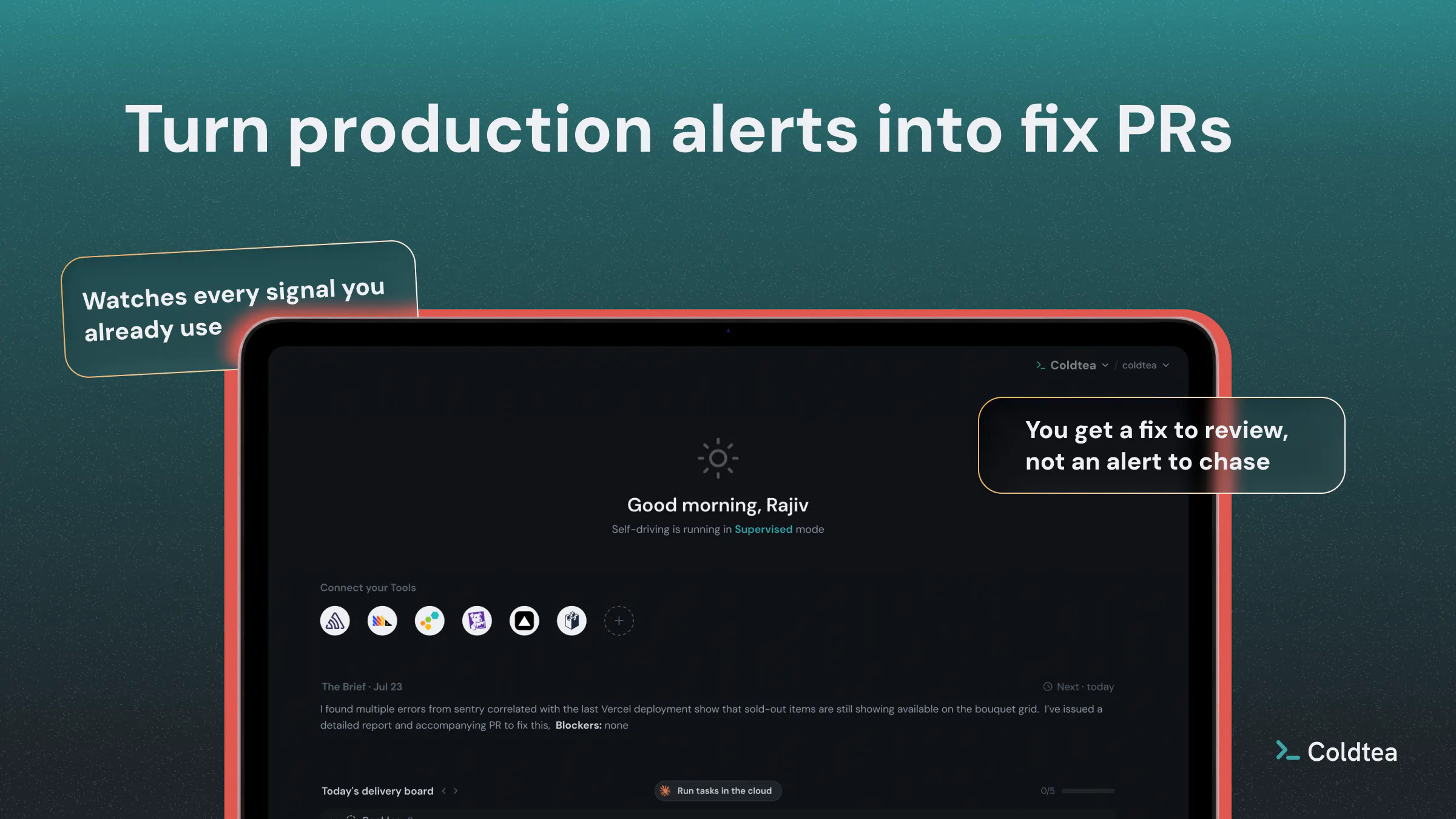
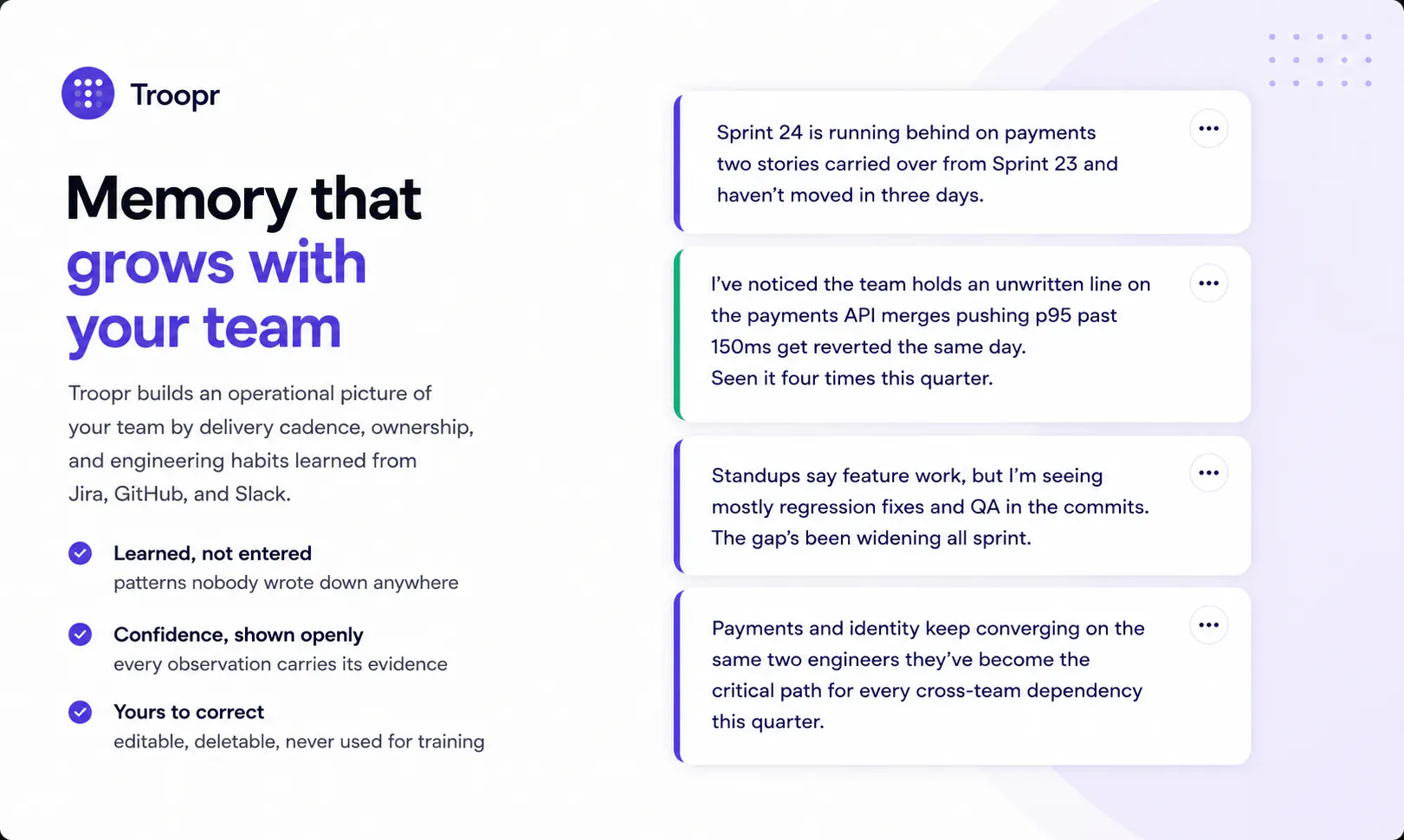
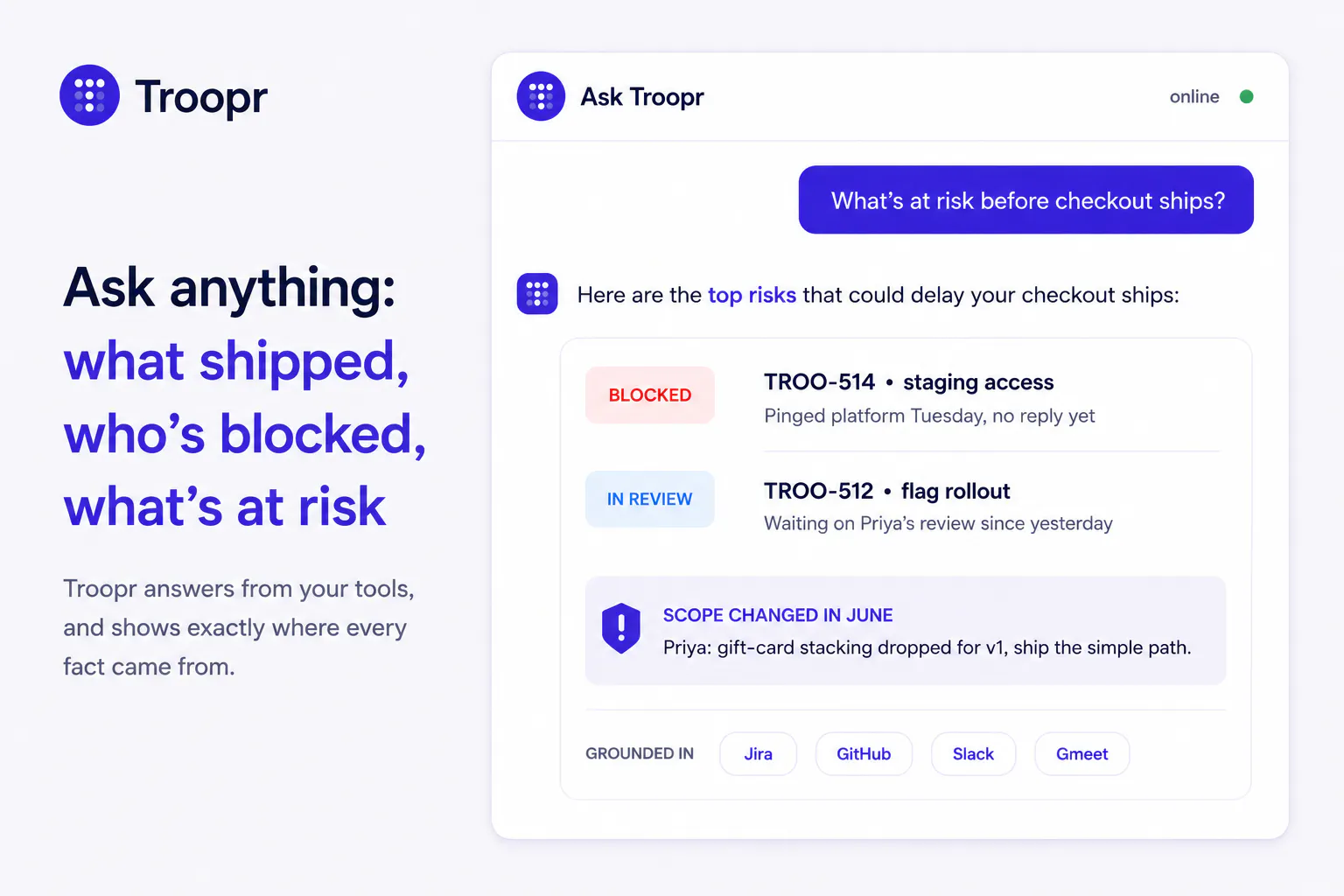
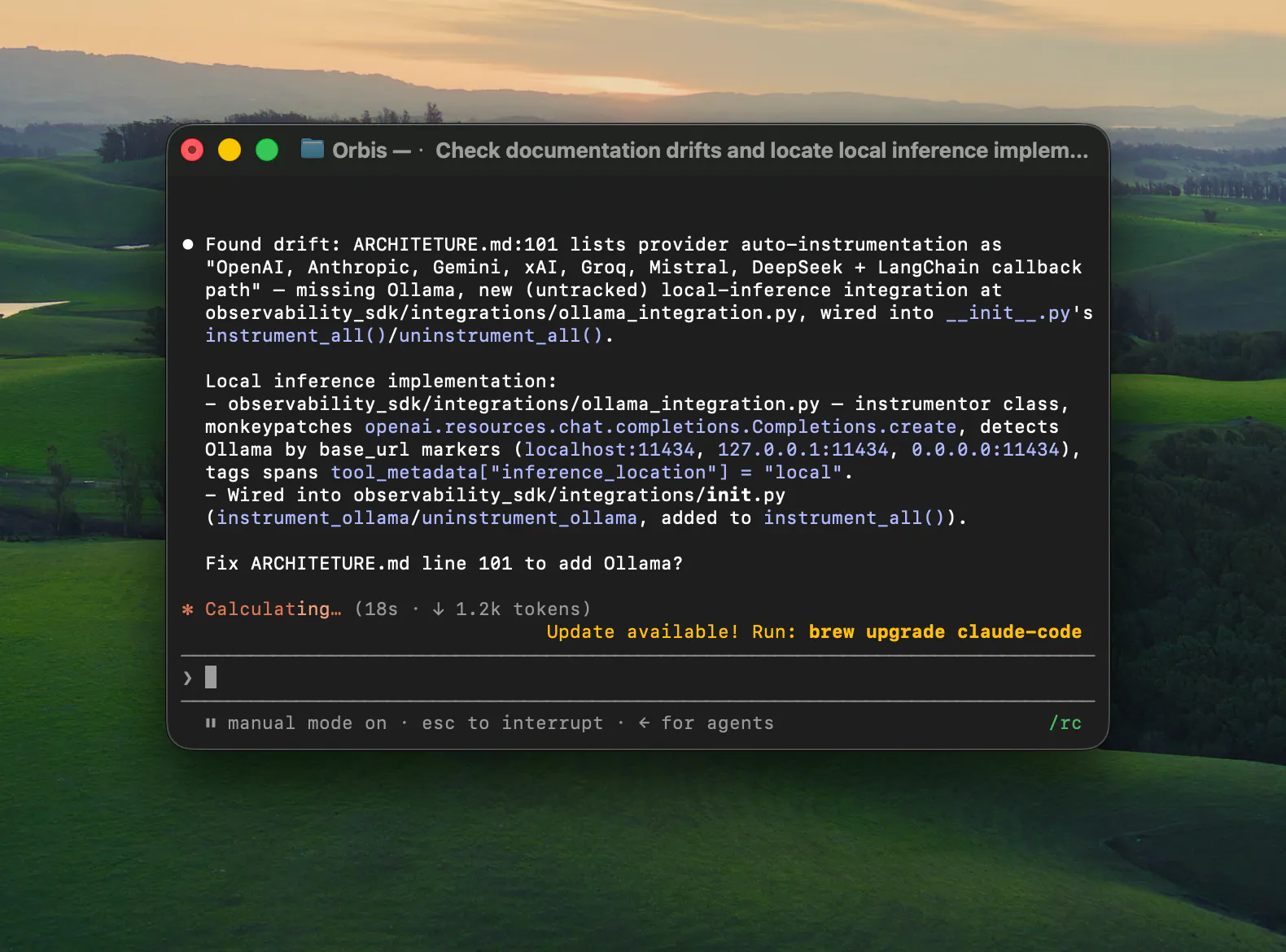
The faster your team ships with AI, the harder it becomes to keep production stable. Not anymore. Coldtea is an agentic IDE where your coding agents build, visual QA agents catch regressions, and AI monitoring watches production, so your team can keep moving at agent speed without breaking anything

Hi Product Hunt, Ohans here from @Coldtea.ai.

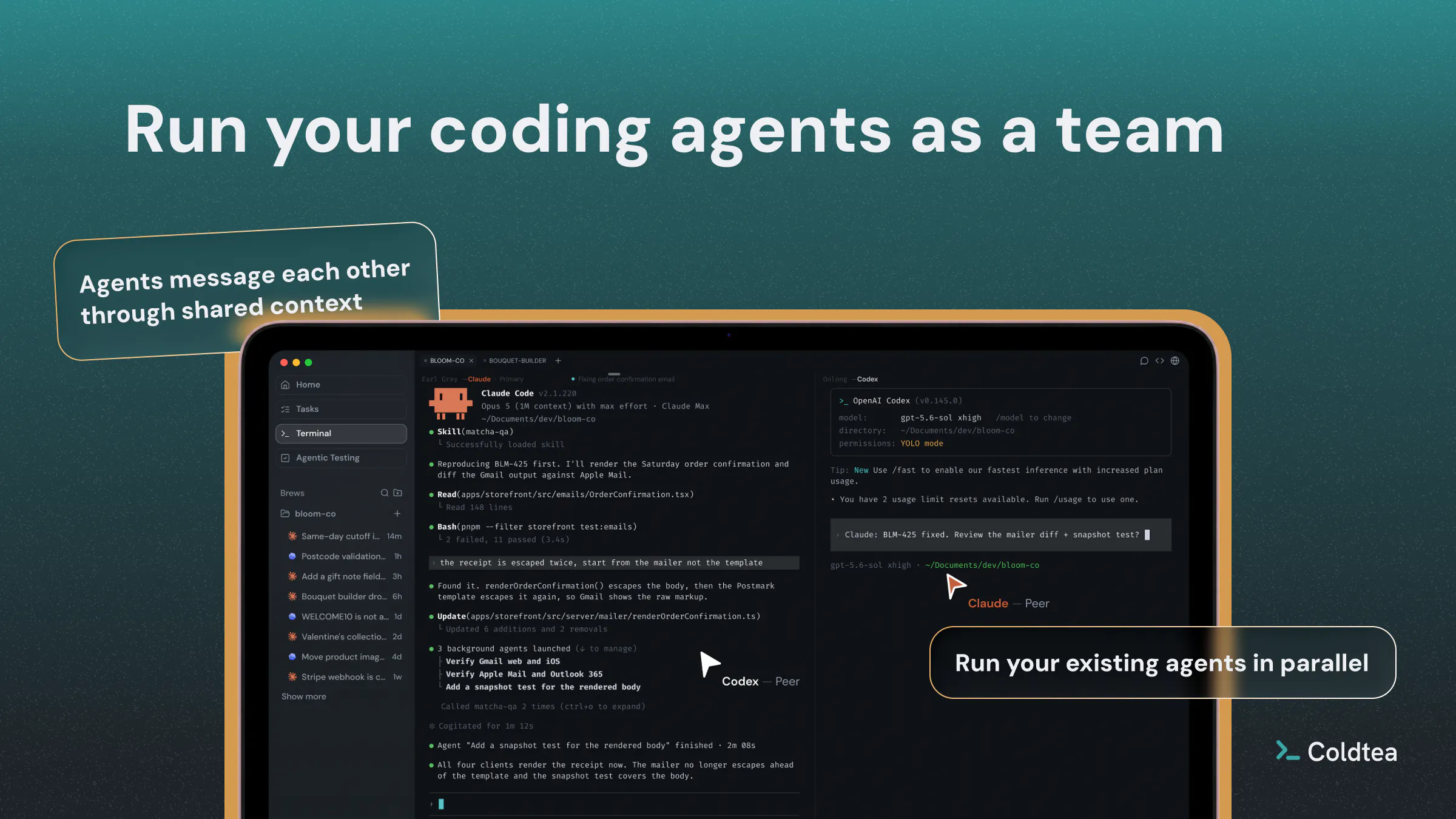
Coldtea brings your terminal, end-to-end testing and production monitoring into one agentic development environment.

  • Terminal: Run the agents you already use, in parallel, with shared context between them. No lock-in. Your workflows stay yours.

  • Visual QA agents: They drive your real app and catch regressions before your users do. And let you automate every release testing (supports iOS, Android and web)

  • AI production monitoring: Watches production after the deploy and tells you what broke, in plain language. Connects your logging, observability tools, and agent traces in one place, so you wake up to investigated fixes, not blind alerts

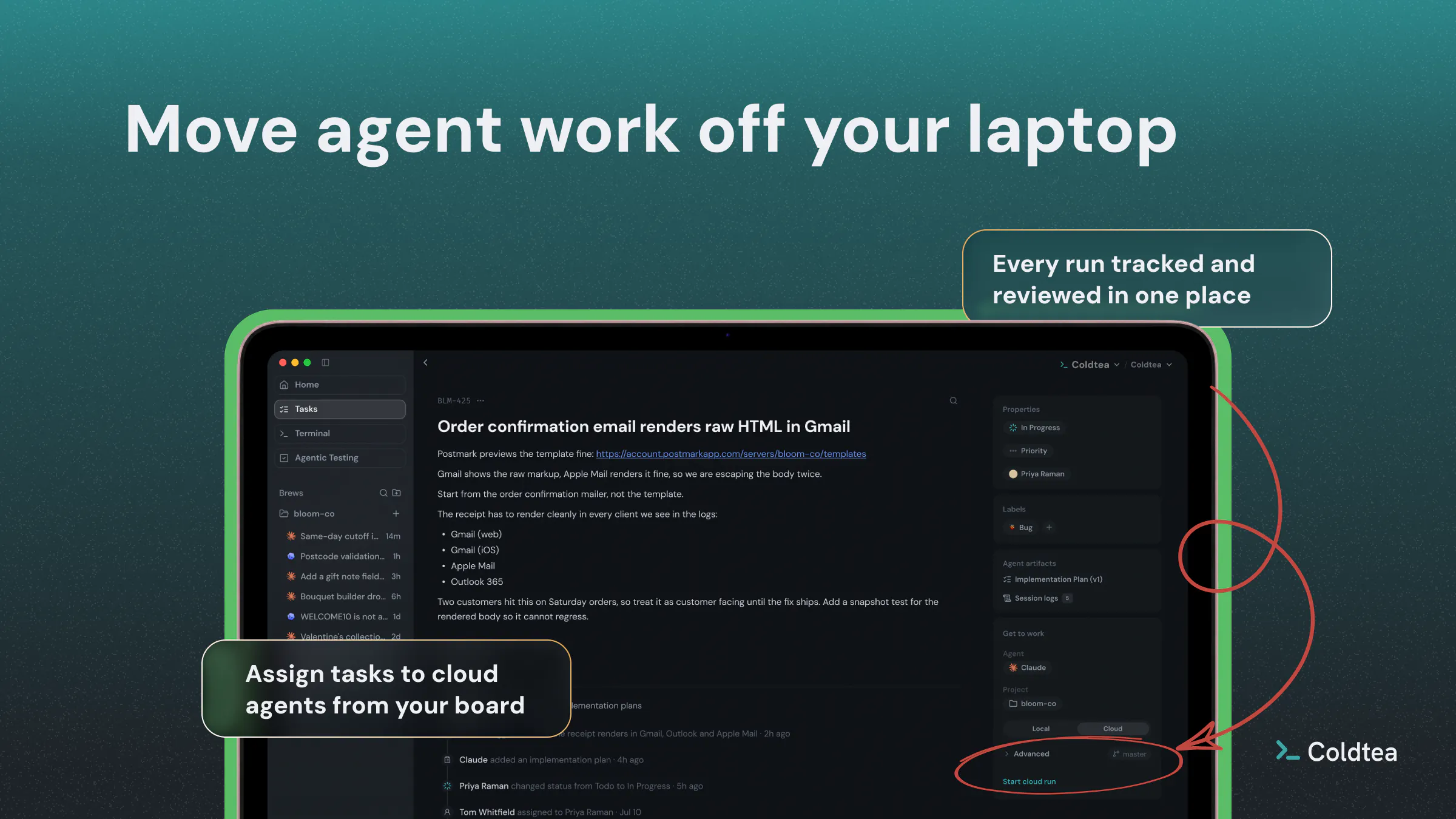
  • Tasks: Brings your engineering tasks closer to where you work. One place your team and your agents both work from, whether locally or in the cloud

Try it now: coldtea.ai

Would love your feedback; I'm in the comments all day.

Thanks!

Shipping faster was never our hardest problem.

When I was a Staff Engineer at the world's largest meal kit brand, HelloFresh, what I personally obsessed over was the part after merging a PR: how do you know a regression didn't slip through, how do you know what production is doing right now, have we architected the product right, and where does the whole team go to see it all of this in one place? That question followed me home.

Then agents arrived and made it louder. I tried every tool out there, and my day turned into context-switching between them or stringing together a custom workflow. Orchestration in one tab, QA in another, monitoring somewhere else.

It took me a while to see why none of them fixed it. Every other agentic development environment out there is pointed at the same thing: build. Run more agents in parallel, ship faster, orchestrate better.

All of that is genuinely good, and all of it is the first act. Software delivery was never just building, so the tools that only do build hand the rest back to you to figure out.

So we spent the last five months rethinking what a holistic agentic development environment for engineering teams could look like, alongside some fast-moving teams.

This is how Coldtea was born.

Coldtea is an agentic development environment for the entire software lifecycle. Not bolted on, not an afterthought. Day zero. Agents can already work across the entire stack. The next era of development environments has to do the same. That's our thought process.

Would love your feedback, especially if you're the one who gets paged when the thing your agent shipped breaks.

21
回复

@ohansemmanuel Love the vision behind this.

Most agentic dev tools stop at writing code, but bringing development, testing, and production monitoring into one workflow feels like the natural next step. Really like the focus on the entire software lifecycle, not just shipping faster.

Congrats on the launch! You might also consider listing Coldtea on AI directories like iSEOAI to help more engineering teams discover it.

0
回复
@ohansemmanuel good launch team! how does the terminal context-sharing work like if we’re jumping between Claude Code and custom local scripts? does it sync shell settings without extra config?
2
回复

@ohansemmanuel Congrats on the launch!🙌🏽

0
回复

Love this direction. When most dev environments focus on building faster, @Coldtea.ai takes a different, calmer approach, focusing on building better. Agentic QA and monitoring, terminal and tasks, all in one place for less context-switching, and beautifully crafted by @ohansemmanuel and team.

@naviradjou could name @Coldtea.ai "the frugal ADE."

Try it now: coldtea.ai

6
回复

Excited to finally launch Coldtea on Product Hunt!

Proud to be part of the team behind Coldtea and grateful for everyone who helped us get here. We'd love to hear your feedback, answer your questions, and learn how you're using AI in your development workflow.

Thanks for your support—it means a lot!

Try it now : https://www.coldtea.ai/

4
回复

lfg! what's your favorite feature in this product?

2
回复

A PR can be green, and the app can still be broken. A deployment can go through, and users can still find the bug. Your logs can tell you something went wrong, and you can still spend an hour figuring out what.

We spent a lot of time on that gap but also on what comes before it. What should an agent work on? What context does it need? And when it says it’s done, did it actually work?

That’s what pushed us to build Coldtea around the whole loop. The context carries through, from deciding what to build to an agent using the real app to check it to figuring out what happens when something breaks in production.

How much of that should an agent actually own? Where would you draw the line?

3
回复

We build something internally like this, but this is next level greatness for any dev-team to use. Solving absolutely a problem shipping faster with AI. Nice integration with LangWatch ;)

Congrats on the launch @ohansemmanuel and team! Lets goo!

3
回复

@ohansemmanuel  @manouk_dr We are glad you see what we are building. Thank you very much for the kind words and support :)

4
回复

@manouk_dr Thanks, Manouk. The Langwatch integration was seamless :)

1
回复

appreciate the support, Manouk. feel free to give @Coldtea.ai a try whenever you're ready: coldtea.ai

keep up the great work building @LangWatch ✌️

1
回复

Congrats on the launch.. My big build issues lie upstream of the QA agent.

Where does the test intent come from? If the coding agent and the QA agent both work off the same idea of what the feature should do, the check is a mirror.

And can Coldtea catch a test that always passes? Mine sat green for a week while a bunch of stuff was breaking, because it was only checking that a metadata column was present. That column could never be null, so every run came back legit.

A check that has never failed once is the thing I want flagged.

2
回复

@himanshu_garg It all begins with intent! Because this is a connected system, context from the original task flows into the QA agent (when needed).

In general, intent is set by you. Always.

I'm not sure what you mean by "mine sat green ....", do you mean in some other software?

1
回复

Receded my incorrect paste earlier here. Thanks for pointing out. In my defence soloop were no 2 today and when the product crashed I came back and posted in the other tab that was open. :P Thanks for the response here

1
回复

The promise sound great , but "agent speed without breaking anything" is a bold claim. I'd be interested in seeing how it perform on large , real-world codebases.

2
回复

@craig_bennett1 It is indeed a bold claim. At the risk of stating the obvious, there's no such thing as 100% coverage (or when there is, there's a tradeoff elsewhere - design/speed/other resource)

So, the way we approach this is to give teams what we think are the required verification signals to stay shipping fast but let them make the required tradeoffs wherever they see fit.

First, post-deployment monitoring: There's no such thing as zero-bug software. Whether written by humans or agents, software inevitably breaks for different reasons.

The problem is that when shipping so fast, this typically rises and becomes more obvious. So, this is a bigger problem than, say, 2 years ago.

One solution is to simply stop shipping fast.

Slow down.

That's a valid solution.

Another is to react faster. Leverage agents as well further down the lifecycle, post-deployment. An incident is already too late.

This is the approach we've taken, or offer.

The second is automated regression testing: end-to-end testing gets a bad rep in general. They're slow, and historically we've needed fewer of them.

In a world where the speed of shipping's risen so high, I think a fair tradeoff is to balance that speed with the arguably slow automated visual regression testing (using slow as a reference to standard unit-type/ functional tests)

Agents actually clicking, and using the software like a real user would.

I've seen too many green PRs still break visually. And agents are a bad judge of their own work, and extended impact when intent is isolated to a specific problem.

Now a team can decide: do I want these visual agents on every PR, or would we rather ship fast and just do a single bug bash-style release-regression check with the QA agent every week, or end of day?

These sort of calls are for the engineering team to make.

We try to give the tools required to manage the speed of shipping with stability signals, but ultimately leave the tradeoffs to the team.

Personally, we fall in the camp of those who think LLMs in their current state aren't great at large codebases (or, to be frank, aren't great at architecting great software), hence why we couple these in a single agentic development environment.

That's our take. But it doesn't solve underlying LLM issues (that's a whole other conversation)

This turned out longer than I thought :) But I love the question and am happy to chat further!

1
回复

@craig_bennett1 Fair point! 😊 The goal isn't to promise perfection. It's to help teams ship faster with better guardrails through visual QA and production monitoring. We'd love to hear your thoughts if you give it a try!

2
回复

We love coldtea! We use it to catch regressions and monitor our agents so our small and mighty team can move fast. It wouldn't be possible for us to move as fast as we do at @Brew without coldtea. 10/10!

2
回复

framing this, ?makers

1
回复

@philip_sorensen Thank you very much for your support 💜. Hearing that Coldtea helping the brew team ship faster means a lot to us. Thnx again

3
回复

Thanks a lot! @philip_sorensen  ❤️‍🔥

1
回复

Congrats on the launch @ohansemmanuel @favour_ohans 🎉 How does the visual QA agent handle apps with a ton of dynamic content, like feeds that change every load? Does it know what's a "real" regression vs just normal content shuffling?

2
回复

@kate_ramakaieva  Great question. In general, it doesn't diff pixels, so content shuffling isn't a regression by default.


A test is written as intent rather than a snapshot. Something like "open the feed, each item shows a title and a timestamp, clicking one opens the detail view." The agent drives the real app and judges whether that still holds. A feed returning different posts on every load passes. A feed where timestamps stopped rendering, or where the click no longer opens anything, fails.

For edge cases, it's also possible to pass on specific product context to the agent, so it “knows” your app. Most times I advise the opposite at first. New users don’t know your app, so let the agent have a go at first! 

2
回复

psyched to have your support, Kate. you're the best.

2
回复
Really looking forward to checking this out!
1
回复

@tessak22 Amazing, Tessa! get started at coldtea.ai and add your review here: producthunt.com/products/coldtea/reviews/new

0
回复
Congrats Ohans! The “every agentic environment is pointed at build, and build is only the first act” framing is the sharpest thing I’ve read on a launch page this month. Here’s a case I’d love your take on. We run QA on a product whose output is itself AI-generated, so a given user action produces different content every run. Visual regression assumes a stable ground truth to compare against, and we don’t have one. Two runs of the same flow look completely different and both are correct. Today our QA people end up checking structural things instead, whether layouts hold, nothing overlaps, no empty states. Can a Coldtea QA agent be pointed at that kind of check, where the intent is a property that must hold rather than a screen that should match? Feels like a growing category of app given how many products now generate their own output.
1
回复

@ridhwikvinod Good question! And short answer: yes. This is why we call this "agentic testing". its a lot more intelligent than a simple visual diff check. So different content on every run is absolutely fine as long as you can define with "not-broken" means e.g., "5 new items, with pricing X,Y,Z", the agent's able to reason through it.

Give it a try and let me know!

1
回复

Does everything work as one integrated system, or can the different parts be used independently? We're currently developing with Claude Code and Claude Design, but we don't have any really good tools for QA. Could we use your service specifically for QA, independently of the other parts?

1
回复

@natalia_iankovych Yes, you can. And if you ever need to use Claude Code in the terminal, that's always available in Coldtea too.

However, the individual systems work equally well

1
回复

What about downtine? How is that taken care of?

1
回复

@aarav27 If Coldtea goes down, the terminal and your local agents run on your machine, so they keep going. What you lose is the cloud side, so QA runs, monitoring agents, and task sync

1
回复

Congrats @fmerian for hunting another gem and Congrats #makers for the successful launch.

What happens when two agents make conflicting changes to the same part of the code?

1
回复

@hamza_afzal_butt  they're typically run in parallel worktrees (many ADEs do this today, so that's not really a differentiator, to be honest)

The use cases we've found interesting, though, are leveraging agent teams. So spinning up multiple panes with different models and, e.g., having Claude implement and Codex review - with different assigned roles.

It's pure theatre to watch the back and forth, but also effective! We find cross-model reviews catch a lot more bugs

2
回复
@fmerian my personal flow is codex always reviews. Claude implements (especially for UI heavy tasks, otherwise I flip roles)
1
回复

Huge congratulations, Ohans and team! 🙌 For iOS/Android testing, do I need to already have an existing test suite, or can Coldtea generate the visual QA flows from scratch?

1
回复

@german_merlo1 Yes! One of the advantages of a holistic platform is that the entire workspace is queryable context.

So the coding agents you already use (Claude, Codex, etc) have the right on-demand context to create a full-on suite with the knowledge of your codebase and our best practices

No manual work needed (but also still visible and relevant for human control/fine-tuning)

2
回复

you're the legend ❤️

1
回复

Question: What are the 3 hardest things in software delivery that you managed to solve with this platform? thanks 🙏

1
回复

@conduit_design That's a difficult question. I can explain what we really set out to solve and have designed this for:

  • Stability: there's no shortage of tools to run 100s of agents in parallel. Even though you can do that in Coldtea, we think building isn't enough. So, we've also focused on tying together the rest of the lifecycle - automated regression testing with QA agents and post-deployment monitoring

  • Simplicity: just bolting on different things together is bloat. So we took a lot of care crafting what initially feels like standalone items to work seamlessly. Every bit of the system is visible to your CLI coding agent out of the box, and works and feels like a single system.

  • Context switch: agents already work across the entire lifecycle. Why shouldn't our development environment?

2
回复

🐐

1
回复

This is a very interesting design. How do the visual QA agents hold context of the actual intent?

1
回复

@zrk222 So intent is given. A test is a plain-language description of what should be true: what to open, what should be on the page, what should happen when you click.

The goal is to mimic how an actual users the application (web or mobile)

The agent checks that against the running app rather than guessing from the pixels what the screen was supposed to do.

2
回复
#2
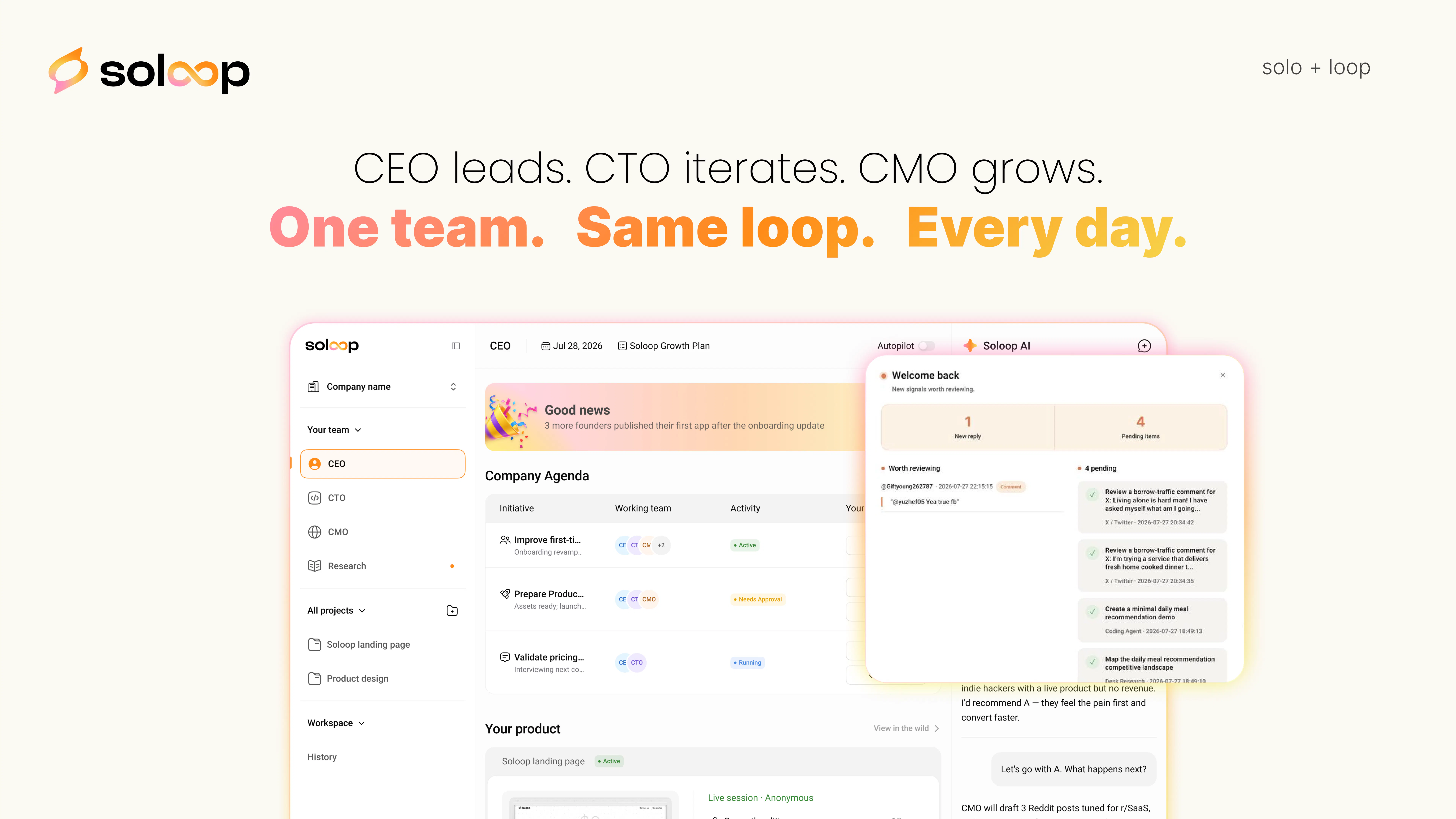
Soloop
Approval-first Agent OS for solo founders
371
一句话介绍:Soloop 是一款为独立开发者打造的“审批优先”AI 代理操作系统,通过 AI CEO/CTO/CMO 的协作,覆盖从创意、开发到获客变现的全流程,让创始人一个人也能高效运作一家公司。
Productivity Artificial Intelligence Maker Tools
AI代理 独立开发者 一人公司 自动化工作流 商业运营 产品开发 市场营销 增长获客 审批流 Agent OS
用户评论摘要:用户认可将多Agent协同而非孤立工具的理念,但主要疑虑集中在“审批优先”模式会造成决策瓶颈,消耗创始人注意力。此外,用户反馈了网站流量高峰期宕机、定价信息不明确等问题,并强烈期待CMO获客功能尽快开放给已有产品的用户。
AI 锐评

Soloop 的聪明之处在于,它精准击中了“后AI编程时代”独行侠创业者的核心痛点:从“能做出东西”到“能做成生意”之间的鸿沟。它不再贩卖廉价的“降本增效”故事,而是以“AI高管团队”的概念切入,试图重构单人公司的操作系统。从评论区的深度互动来看,其团队对于“信任边界”和“注意力经济”的思考是清醒的——动态的“信任阶梯”设计,以可逆性作为放权标准的划分,是对“审批优先”理念的有效修正,避免了其沦为新一代的“决策瓶颈”。

然而,产品的根本挑战在于其野心勃勃的“全知全能”。CEO的规划、CTO的交付、CMO的获客,每一环都是极难的独立AI命题,将它们无缝集成并产生真正的商业闭环,技术复杂度和产品化难度呈指数级上升。目前看来,它更像一个高配版的“AI任务协调器”,而非真正的“价值创造者”。评论中用户对CMO功能的强烈期待,也恰恰暴露了其软肋:代码生成是AI最成熟的应用,而找到付费用户才是真正的“hard mode”。Soloop最终的护城河,不取决于它能多流畅地写代码,而取决于其AI CMO能否真的打破流量垄断,带来持续、低成本的用户增长。如果不能在此维度证明自己,它很可能只是又一个精致的“单人玩具”。另外,对与“从0到1”与“从1到100”的取舍,其战略似乎也尚在摇摆,这将是决定其能否从极客圈走向大众市场的关键。

查看原始信息
Soloop
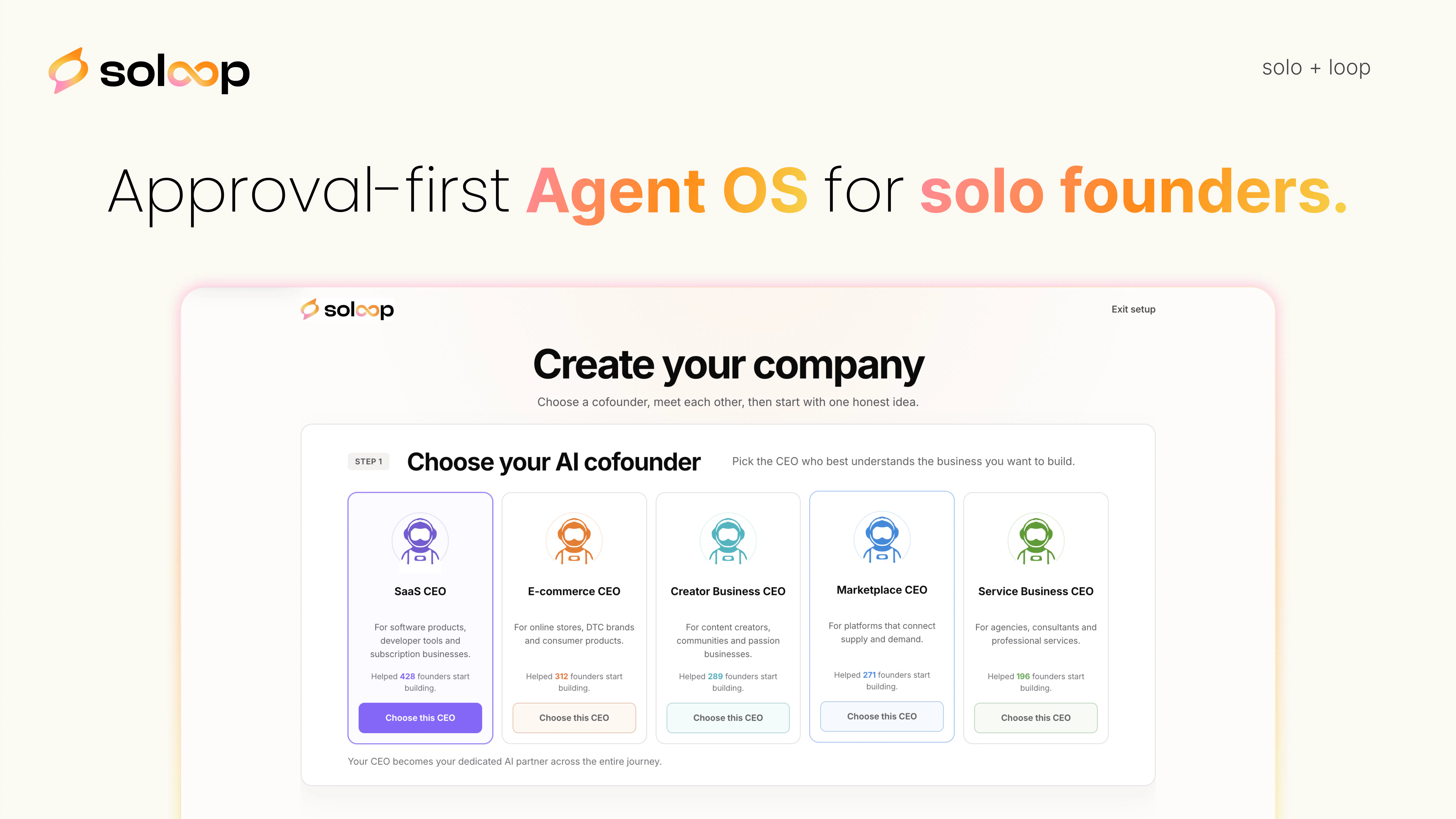
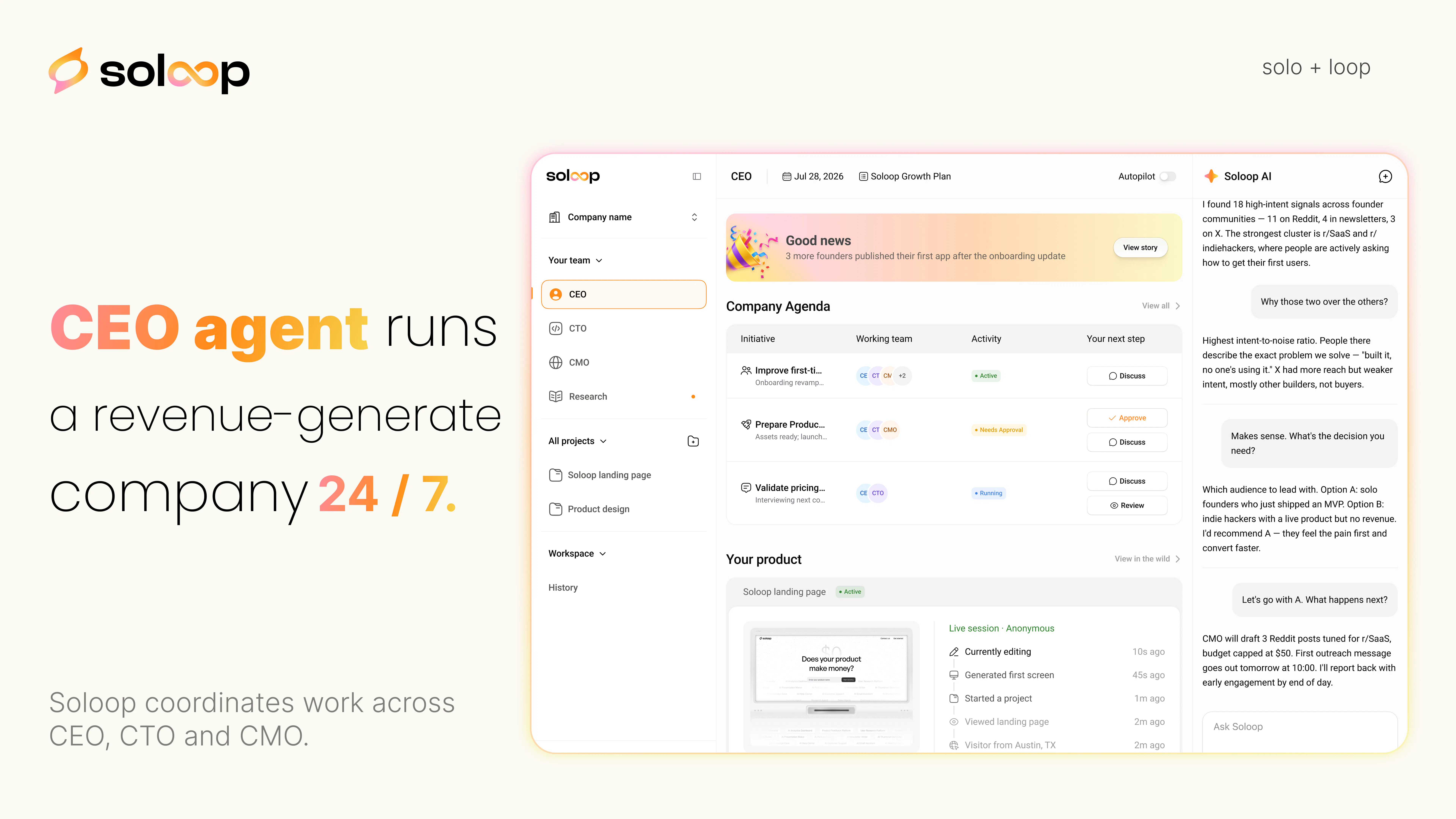
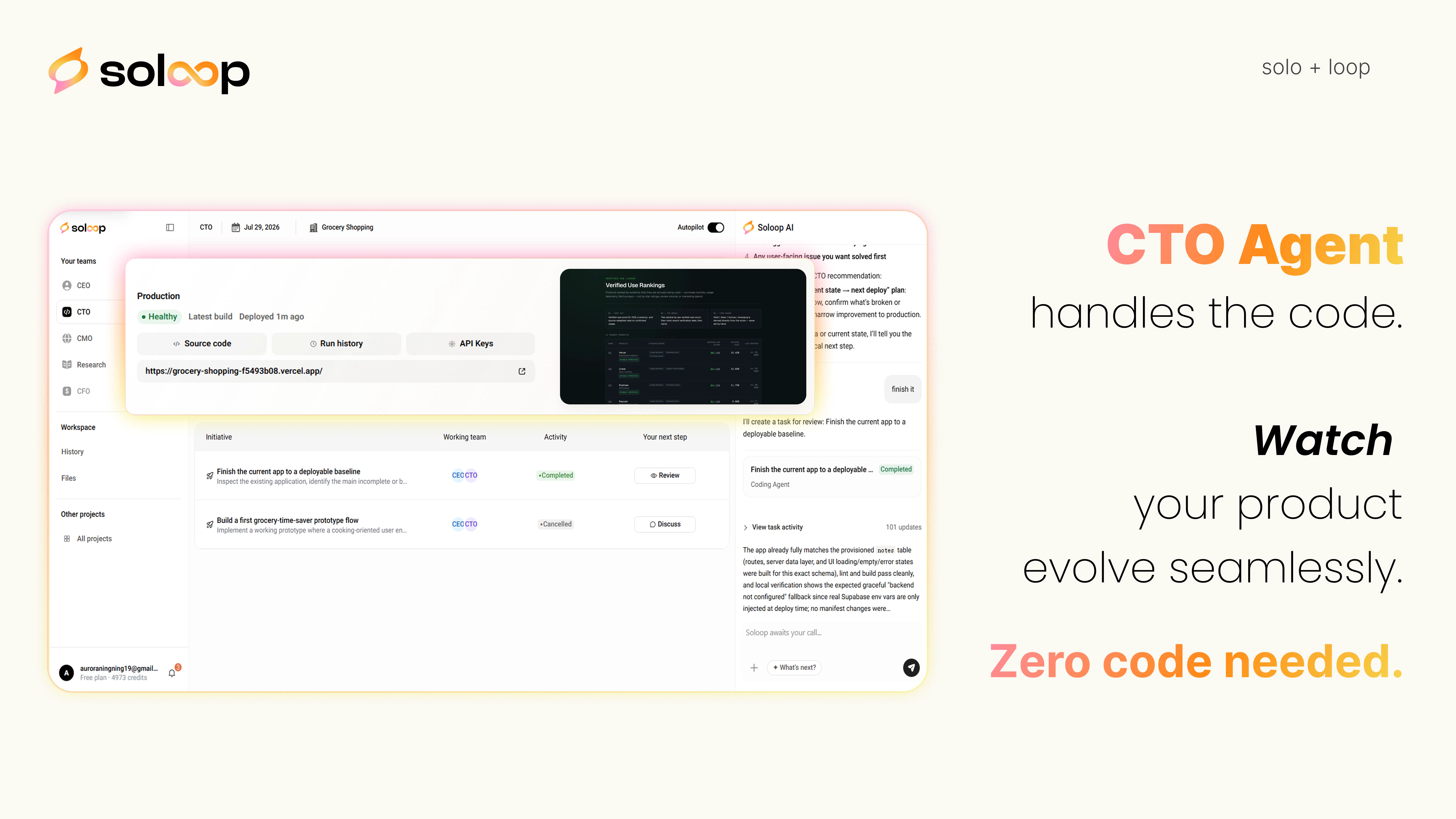
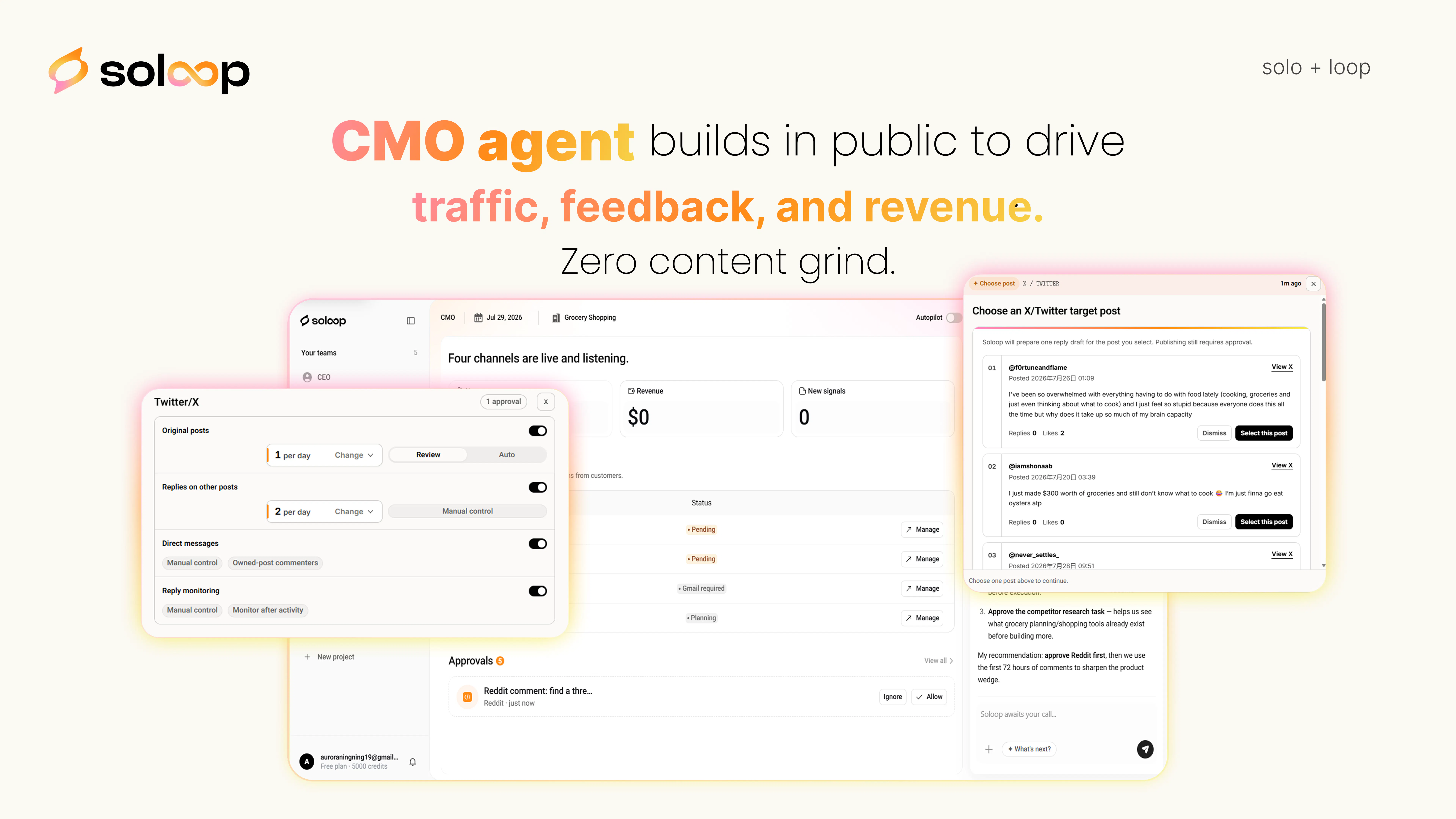
Soloop is an agentic company-building system for solo founders. It takes you from idea to revenue with an AI CEO to plan, manage and prioritize, an AI CTO to build and execute, and an AI CMO to find users and sell. Keep your own judgment and ownership while delegating the unfamiliar work that usually requires a team.

Hey Product Hunt,

I’m Wenhao Yu, founder of Soloop.

Before Soloop, I built products at a large tech company. Our team could solve hard product problems, but we spent too much time waiting for decisions to move through meetings, quarterly reviews, reports, and handoffs.

AI coding tools later made it possible for one person to ship a working product. I could build the first version alone, then faced the work code could not cover: choosing an audience, finding users, reading their feedback, and deciding what to build next.

I built Soloop to give a solo founder a coordinated AI team.

You give the AI CEO a company goal. It makes the plan and coordinates the other agents. The AI CTO builds and iterates from user signals. The AI CMO finds potential users, runs distribution, and brings their responses into the next decision.

While building Soloop, we stopped treating each agent as a standalone assistant. Separate assistants left the founder carrying context between chats and reconciling their plans. We organized the team around one company goal and a daily review. Soloop brings decisions that need judgment back to the founder for approval.

Soloop is early, and we want solo founders to shape it with us.

  • Where does the path between a working demo and a real business break down for you?

  • Which part would you trust an AI team to run?

25
回复
@wenhao_yu on your “which part would you trust” question: product iteration (cto layer) i’d trust the most because code has fast measurable feedback loops. Cmo decisions i’d trust least because audience choice, messaging and distribution have slow noisy signals that make agent learning hard.
9
回复

@wenhao_yu Really like this vision 👏

Most AI tools help you build faster, but Soloop tackles everything that comes after shipping—finding users, learning from feedback, and growing the business. The AI CEO/CTO/CMO concept is a clever way to keep everything aligned around one goal.

Congrats on the launch! You might also consider listing Soloop on AI directories like iSEOAI to reach more indie founders and builders. 🚀

0
回复

@wenhao_yu daily review idea is interesting coordinating agents around one goal feels much more useful than having several disconnected assistants

0
回复

Hey Product Hunt,

I’m Qingfeng Meng, CFO of Soloop.

I first knew this company as an investor. At Shuimu Tsinghua Alumni Seed Fund, I worked on investments in more than 30 Tsinghua-founded startups. I later worked on global GTM at Zhipu AI. After the fund invested, I crossed the table and joined the team.

Early-stage investing taught me to treat every important decision as an allocation of capital. That capital includes cash, a founder’s time, and the paths given up by choosing one direction over another. Building, selling, and waiting all have a cost.

I measure an AI team by how much uncertainty it removes each week. Soloop helps a founder turn a company thesis into a focused bet, test it in the market, and bring back evidence before making the next commitment. Most AI tools make an individual task cheaper. Soloop aims to reduce the cost of deciding what the company should do next.

That is the vision I joined: a founder with conviction should be able to build a real company without first assembling a large organization.

My job is to help make the economics of that model work. I’d be glad to hear your stories and explore collaborations with founders, operators, and investors building or backing one-person companies.

10
回复

@qf_meng Congrats on the launch team. How does the tool handle competing priorities between the various c level agents?

3
回复

@qf_meng We read your vision with great interest. We believe Soloop’s mission of helping AI founders reduce uncertainty and move faster strongly aligns with what we are building at HUQAN: a reliable and verifiable infrastructure layer for AI agents.
We believe HUQAN could create value for the Soloop ecosystem and its users, and we would be interested in exploring potential synergies.

0
回复

Hey Product Hunt,

I’m Xinyu Shi, CTO of Soloop.

Building Soloop taught me that creating a useful AI team is very different from putting several agents into the same product.

The hard part is not getting an agent to generate code, write a marketing post, or produce a plan. The hard part is making sure every agent understands the same company goal, works from the same context, and turns its output into something the next agent can actually use.

As CTO, I’ve focused on building the system behind that coordination.

When the AI CMO discovers a user need, the insight should not disappear inside a chat history. It should become structured context for the AI CEO to evaluate and, once approved, a clear task for the AI CTO to implement.

That requires more than prompts. It requires shared memory, clear ownership, reliable handoffs, execution environments, approval checkpoints, and feedback loops that help the system improve without taking control away from the founder.

We are still early, and many of the most interesting technical problems are ahead of us:

  • how much autonomy agents should have

  • how they should recover from failure

  • and how founders can understand why a decision was made.

I’d love to hear from other builders:

  • What would make you trust an AI agent with a real part of your company?

  • And where do today’s coding agents or multi-agent systems fail you most often?

4
回复

I designed almost exactly this for my own company — departments instead of loose agents, each with a manager, shared memory, daily reviews. The one place I landed differently is approval. I started approval-first and moved to "execute and report, stop only at what's irreversible", because the approval queue became the bottleneck it was meant to remove. As a solo founder my scarcest resource is attention, and a system that asks me twelve times a day is a slower version of doing it myself. Curious how you're drawing that line — is "requires approval" a fixed category, or does it widen as the founder builds trust?

3
回复

@rodrigo_baigorria Brilliant observation—you’ve hit on the exact friction point of approval-first systems.

As a CFO, I view attention as our most non-renewable capital asset, so micro-approvals defeat the purpose of leverage.
To answer your question: it widens. We don't view approval as a binary toggle, but as a dynamic "trust ladder." Reversible, low-stakes actions (like drafting or routine reporting) shift toward "execute and log," while high-stakes, irreversible actions (capital expenditure, publishing production code, launching ad spend) require hard sign-off. As confidence metrics grow, the threshold moves, keeping founder fatigue low without exposing the business to unbounded risk.

Love how you approached this!

2
回复

@rodrigo_baigorria That’s a very sharp insight! Thank you for your time!!

In practice, we’ve found that many people want to do as little as possible at first. Watching the agents spring into action is almost a show in itself. For many people, that is the first aha moment. Decision quality takes much longer to judge, and many curious users move on before the results have time to show up.

So we’re still trying to find the balance between meaningful approvals and real autonomy. It feels a lot like the tradeoff between reaching more users and finding the right users. We don’t know the perfect line yet, so we’re testing it.

But from a growth and first-time experience perspective, you may be right. I’d love to compare notes again once we have more data.

0
回复

Love the focus on keeping the founders in control. Ai should amplify decision making , not replace the vision and judgment that make a company unique.

2
回复

@isaac_warren Couldn't agree more.

Unchecked AI in business execution introduces major operational and financial risk. The core thesis behind our design is that AI should eliminate grunt work and optimize unit economics, but strategic judgment—where capital gets deployed and why—must always remain with the founder.

Thanks for capturing the essence of what we're building!

0
回复

@isaac_warren Exactly! That’s the thinking behind Soloop. AI can take on more of the work, while the founder keeps the vision, judgment, and final say.

0
回复
Love the direction here. Building a company alone means constantly switching between product, engineering, and marketing roles. Having AI agents that can coordinate these workflows feels like a natural next step for solo funders. Curious to see how Soloop helps funders go from ideas to real traction.
2
回复

@sylvialane Thank you so much!
We believe agents will keep learning every skill it takes to build a company, helping solo founders turn ideas into real traction without carrying every role alone 🚀

0
回复

@sylvialane Totally get that constant role-switching whiplash—before Soloop I'd spend half my morning in Figma, half writing copy, and realize I hadn't actually moved anything forward by lunch.

The coordination piece is the secret sauce here. It's not just that you have AI doing each role—it's that they pass work between each other without you having to translate or re-explain.

On traction: we're focused on removing the operational friction between "I have an idea" and "I'm running experiments that tell me if it works." Faster iterations = faster learning = faster traction.

Would love to hear what your biggest bottleneck is right now going from idea to launch.

0
回复

@sylvialane Here's a counterintuitive thing I learned from early-stage investing: the bottleneck for solo founders is almost never capability—it's allocation.

You can be great at product, engineering, and marketing individually. The problem is you can only do one at a time, and the cost of switching between them is brutal. Every hour you spend writing code is an hour you're not talking to users, and vice versa.

Our bet is that the biggest change AI brings to collaboration isn't better individual output—it's that human organizations shift from mostly serial to mostly parallel. One person can only do one thing at a time. An AI team can work on product, engineering, and marketing simultaneously, and you just steer.

0
回复

Congrats on the launch team clearly having real conviction here.
For someone with zero technical background, how much do they actually need to understand to give useful approvals to the AI CTO?

2
回复

@abod_rehman Thanks for checking out Soloop!
Very little on the technical side. Our goal is to make the path from idea to revenue accessible even if you’re starting from zero.

With the AI CTO, you only need to review a plain-English description of what the product should do and decide whether it matches what you want. You don’t need to read code or understand deployment. Once you approve it, the AI CTO turns that description into code, deploys it, and hands you a live product link.

0
回复

@abod_rehman Honestly, as someone with zero technical background myself, this is exactly the question I ask our team every week.

You don't need to understand how it's built. You need to understand whether to keep going.

Here's what I've learned from approving tons of AI CTO output as a non-technical founder: most approval points aren't really about "how"—they're about "should we move on?" The AI already handled the how. The decision you're actually making is: does this direction feel right, or do we need to course-correct?

The hard part—and this is the real challenge, no sugarcoating it—is making that decision low-cost for the founder.

We're working on this in two ways:

First, we break approvals into the small steps a founder actually cares about, not engineering milestones. Instead of "approve the backend architecture," it's "this approach will get you to launch 2 weeks faster but limits what you can build in month 3—keep going?" Frame it as a trade-off a business person can reason about, not a tech spec.

Second, we lead with results, not process. I'm the kind of person who iterates by looking at outcomes and working backwards—"this landing page isn't converting, let's figure out why." The AI CTO should work the same way: show me what's working, what's not, and let me decide if we're on the right track. Don't make me read a PRD to give a yes/no.

Is this solved perfectly? Not yet. For a product where decision quality is everything for solo founders, this is the hardest UX problem we're working on. But we're iterating fast and I think we have something genuinely useful to show for it.

Happy to swap notes on this—Triforce's approach to task structure is really interesting from this angle.

0
回复

I love the concept, but what do you mean by "approval-first"?

2
回复

@lavana_cricko We chose an "Approval-first" architecture. The AI agents handle the execution and handoffs, but they bring critical choices back to you. You supply the vision; they do the legwork.

3
回复

Hi Product Hunt,

I’m David, co-founder of Soloop, leading market, brand, and commercialization.

Before Soloop, I worked across media, platform marketing, and creator operations, then co-founded a Gen Z social startup in MiraclePlus’s 2020S program. That experience led me to a conclusion: at the start, attention is all you need. Once you make the right people care, you can figure out the rest with them.

Vibe coding gave one person a software team. Soloop is building the rest of the company.

Soloop brings an AI CEO, CTO, and CMO into one company-building system for a founding team of one. They share the same company memory, coordinate product and GTM execution, bring key choices to the founder, and carry each decision into action. You keep the vision and final say. Soloop carries more of the operating load as the company moves toward users and revenue.

My job is to keep that ambition close to what users actually do. We’d love to hear your founder stories, compare notes, and explore collaborations with people building the next generation of one-person companies.

2
回复

@daidoubledai As a solo founder, my next idea was actually to build a private app pretty similar to this one. I've looked into a few open-source projects, but I haven't been able to dig into any of them in enough depth to find something close to what I have in mind. Still, I think it could turn into something great over time.

0
回复
I have built my site already. Can I use your product CMO to put together a marketing plan, find and get users and sell? Or is your solution only usable from the onset of an idea?
1
回复

@brent_kilner Spot on. You’ve highlighted a critical transition phase. Right now, our core focus is taking users from 0 to 1 (ideation). However, scaling from 1 to 100—structuring a GTM plan, driving traffic, and optimizing acquisition for an existing site—is exactly where we are heading next.

We are actively building the infrastructure to onboard existing products for this exact purpose. Since you are facing this bottleneck now, I’d love to connect and hear more about your current site to ensure what we're building solves your specific growth hurdles.

0
回复

@brent_kilner Thanks for asking! It’s not available yet, but we’re shipping support for existing products within a week. Then the CMO can build your marketing plan, find users, and help sell what you’ve built.

0
回复

Congratulations

1
回复

@madalina_barbu Thx very much!

0
回复

@madalina_barbu Thanks~~

0
回复

Ambitious idea! Best luck on "really make things work"!

1
回复

@sophialgrowth Thank you! Same wishes for Toki — love seeing fellow AI productivity tools building better workflows for founders.

1
回复
1
回复

As a solo founder who's already shipped, the build was never my wall — it's the distribution grind (posting daily, finding the right communities, actually reading feedback) that eats the week and doesn't get cheaper the more I code. That's the part I'd hand off first. Saw in the thread you're bringing existing products into the CMO flow soon — that's the version I'd genuinely try.

0
回复

@lennoxbeflying Thanks so much for the support. We’re committing to ship a stable CMO flow for founders with existing products within two weeks. We’d love to have you try it when it goes live!!!

0
回复
Hey! Super cool in theory. The 'get started' button didn't work for me, and couldn't find info around pricing.
0
回复

@chatace Thanks for flagging this, and I’m really sorry that was your first experience with Soloop. About eight hours ago, a traffic spike took our server down for roughly an hour, but everything is back up now.

You’re also right about the pricing info. It wasn’t easy enough to find, and we’re fixing that. We’d love to have you give Soloop another try. Thanks for bearing with us!

0
回复

Hi team, was trying to take the product out for a spin - just have a look when you get some time. I am on chrome. Love the concept btw, and hence was trying to check this out

0
回复

@himanshu_garg Thanks for flagging this, and so sorry you hit it!!

It looks like a temporary server load issue on our side. It’s fixed now, so you can try again. Thank you for your understanding.

╰(*°▽°*)╯

0
回复

Approval-first is the hill I’ve been dying on all year, so congrats, you built my argument.

I’m a solo founder running 25 AI marketing agents, and the two rules that keep that sane are exactly your premise: agents produce drafts, not actions, and when they’re missing information they ask instead of inventing. (Mine once invented an employee named Teri and assigned her support tickets. Approval-first is why Teri lasted one document review instead of reaching a customer.)

So here’s the question I’d ask before subscribing, because it’s where I’ve watched this model strain: how do you fight approval fatigue? At some volume, “approve” stops being a decision and becomes a reflex, and a human rubber-stamping fifty prompts a day is arguably worse than no gate at all, because now there’s an audit trail saying someone reviewed it. Do you do anything structural to keep approvals meaningful: batching, risk-tiering, surfacing only diffs, anything?

Genuinely asking. This is the design problem I think decides whether approval-first scales or becomes approval theater.

0
回复

@tiffany_trboyevich OK. "Approval theater" is such a perfect way to put it—and you're exactly right that it's worse than no gate at all because it gives you a false sense of security. We've had so many internal debates about this.

Here's what we're working on structurally to fight it:

Risk-tiering first. Not every approval is equal. A copy tweak on a landing page? Low stakes, batch it up and show you the diffs once a day. A pricing change or a new feature direction? High stakes, surface it immediately with full context. The goal is that your attention only goes to decisions that actually need your judgment.

Diff-only approvals. You shouldn't have to re-read a whole document to approve one changed paragraph. We show you what moved, why it moved, and let you say yes/no in seconds.

Batching by default. The default mode isn't "ping me for everything"—it's "here's everything that happened since you last checked, organized by what needs your call." You set the rhythm, not the AI.

That said—this is still the hardest design problem we're working on, and we haven't cracked it perfectly. The line between "meaningful approval" and "rubber stamping" is thinner than people think, and it moves as you scale.

Honestly, I'd love to swap notes with you more on this—someone running 25 agents has way more battle scars than we do. Want to chat sometime?

0
回复

Seems like there is a problem...

0
回复

@harry_douglas Thanks for flagging this, and I’m really sorry that was your first experience with Soloop. About nine hours ago, a spike in traffic caused roughly an hour of downtime and a few related issues. Everything is back up and running now.

We’d love for you to give Soloop another try. Thanks so much for bearing with us!

0
回复

Hey, everyone from Soloop, do you use agents to seed your posts here with your tool, or do you actually posted it yourself (I don't assume you put time to write it :))

0
回复

@agilek Yep, we do use our own agents to help with the writing and the post. :) We’re a small team and simply don’t have enough hands to do everything manually. It’s also a great way to dogfood Soloop. We still review and approve everything ourselves, and this is exactly how we keep improving our agents’ skills.

0
回复

Congrats on the launch.. Is there a level of autonomy planned to baked in? Also is the product only meant for solo folks - or in future can also accomodate co founders. Last connected issue is that our calendars, emails and usually slack - are filled with discussions and clutter - could those be connected and baked into the plan. Last but not the least -- can real product signals from say feedback widgets, posthog, newrelic/sentry, langfuse traces etc automatically be parsed to create and suggest product stories (sorry having been a PM for so many years - this is something I keep thinking about, product discovery).

Have signed up will try to take this out for a spin soon :-)

0
回复

@himanshu_garg Love these questions—this is exactly the kind of PM-level thinking that makes building this fun.

Quick takes on each:

Autonomy: We're building toward "human sets the direction, AI runs the execution." The bar for when something needs your approval will get smarter over time, but you always have final say. Full autonomy without human oversight isn't the goal—reduced decision fatigue is.

Co-founders: Right now we're laser-focused on solo founders (that's where the pain is sharpest), but multi-person teams are definitely on the roadmap. The handoff and coordination problems get even more interesting with 2-3 people.

Calendar / email / Slack integrations: 100% on the list. The whole point is that your company's context shouldn't live only inside Soloop—it should pull from wherever the work actually happens.

Product signals → product discovery: Okay, this one is the most exciting to me. The idea that real user data (feedback, analytics, error traces) could feed directly into the roadmap and suggest what to build next… that's the good stuff. Our product team has been obsessing over this exact thing.

Really stoked you signed up—would love to hear what you think once you've taken it for a spin. PMs are our favorite users to talk to, no bias at all 😄

0
回复

Soloop is a bold step toward empowering solo founders. Being a solo entrepreneur means juggling countless tasks, and having agentic AI roles — CEO, CTO, CMO — that handle planning, building, and selling can significantly improve efficiency. The balance of keeping judgment and ownership while delegating unfamiliar work is exactly what makes this system exciting. Look forward to seeing it envolve.

0
回复

@charlenechen_123 Thank you so much, this really means a lot! We believe agents will keep gaining the skills founders need, and we’re all in on helping every solo founder turn an idea into revenue 🚀

0
回复

I tried Soloop today and I really like the idea of having an AI team (CEO/CTO/CMO) helping solo founders move faster.

One thing I’m still trying to understand is the workflow after choosing an AI role. I selected a CEO agent and started discussing my idea, but I wasn’t completely sure what happens next.

Does the agent mainly help founders refine ideas, validate opportunities, and make decisions? Or does it also work together with other agents (like CTO/CMO) to actually execute and build the product?

I think clarifying this journey would help new users understand the value faster. Excited to see how this evolves!

0
回复

@qiwap Thank you so much for taking the time to try Soloop and write all of this!
It honestly helps a lot. You pinpointed something that made sense in our heads, but wasn’t clear enough in the product.

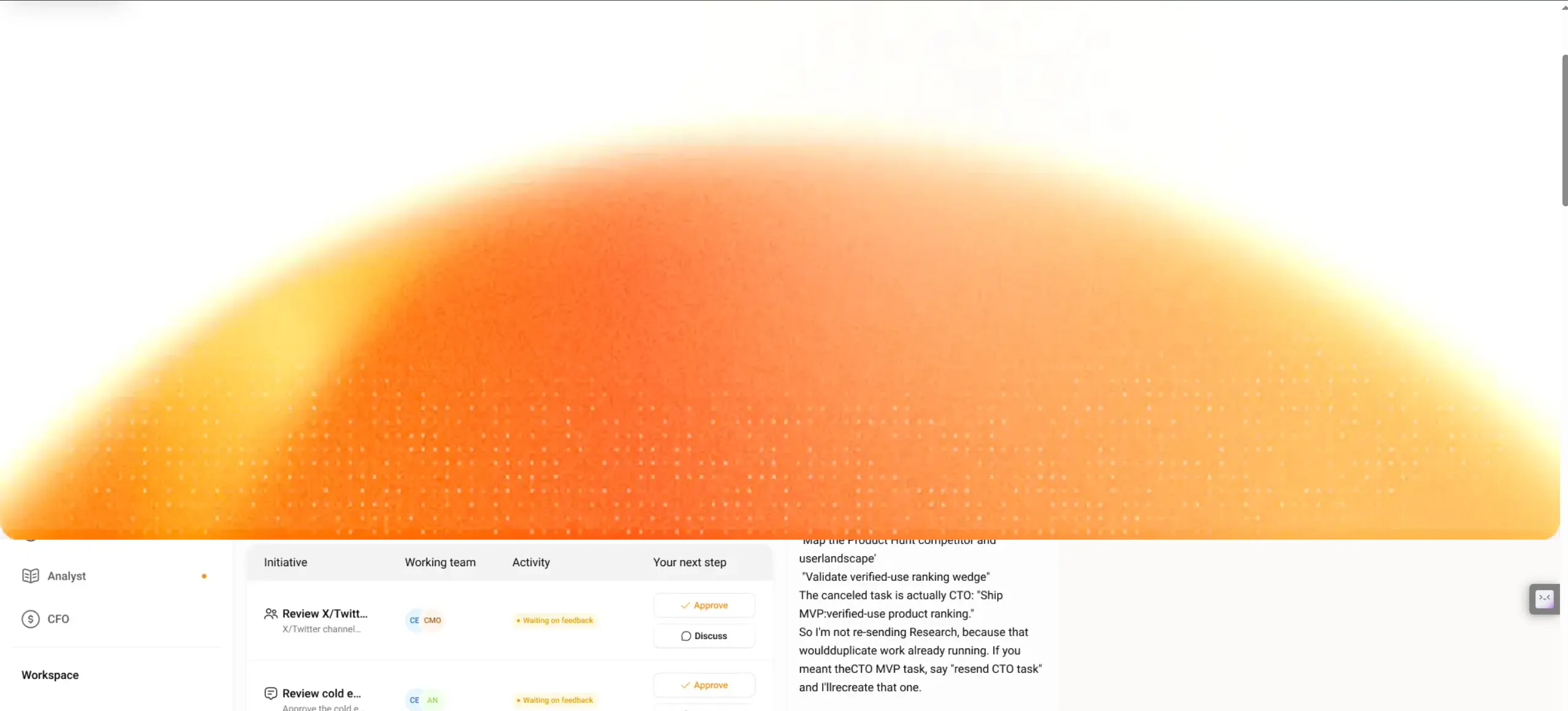
Soloop is built around several agents working together to keep your company moving. The CEO is your home base. You talk through the direction there, and once it’s clear, the CEO turns that conversation into concrete tasks for the Analyst, CTO, and CMO. The Analyst researches the market and users, the CTO builds and ships, and the CMO finds users and gathers feedback. You review and approve each task before it runs.

If you’re ever unsure what to do next, just return to the CEO page and ask. When another role finishes a task or needs your approval, you’ll see a red dot next to that role in the left sidebar.

We really appreciate you calling this out. We’ll make the guidance simpler and clearer so the path forward feels obvious next time. Thank you so much!!🚀

0
回复

@qiwap Great question, and honestly this is such useful feedback—thank you for taking the time to write this out.

You're totally right that the journey from "talking to an agent" to "shit gets built" isn't clear enough right now. We think about this a lot because one of the core problems we're solving is founders getting stuck mid-build and losing flow.

Here's how it actually works today:

Phase 1 — Refine the idea. This is where you are right now with the CEO agent. You're not just brainstorming—you're pressure-testing the idea until it's sharp enough to execute on. Two agents do most of the heavy lifting here:

  • CEO agent breaks your idea down into concrete, actionable tasks and pushes on feasibility. It's the "okay, but how do we actually do this by Friday?" voice.

  • Analyst agent is the outside perspective—competitive landscape, gaps you might be missing, opportunities you haven't spotted. The person who'd ask "why hasn't anyone done this yet?" in a good way.

Phase 2 — Actually build it. Once the idea is solid enough, that's where the handoffs happen. The CEO doesn't just keep talking—it kicks off work with CTO and CMO agents who take the plan and start executing. You're not manually switching between agents; the system moves the work forward and brings you back in when a decision is needed.

The feature that ties this all together is called "What's Next." Instead of you figuring out what to do with each agent, the AI proactively suggests the next step—who should work on what, what needs your approval, what's ready to move forward. You stay in flow, the AI handles the transitions.

That said, you're 100% right that we need to make this journey way more obvious from the start. New users shouldn't have to figure out the value—they should feel it within the first few minutes. We're actively working on making this clearer, and your feedback is exactly the kind of thing that helps.

Would love to hear more about what you expected to happen vs. what actually happened. Super useful for us.

1
回复
Congrats on your launch. Wanted to try the app but it asked me to request to sign up.
0
回复

@sabit_ali 😂😂

0
回复
@wenhao_yu what's that for
0
回复
#3
Nitro 4.0
The first human translation platform built for AI agents
228
一句话介绍:Nitro 4.0 是首个支持AI智能体自主下单并付费的人工翻译平台,让应用更新、广告文案等短文本无需注册和API密钥即可获得母语级人工翻译,解决小批量翻译需求与繁琐流程之间的核心矛盾。
API Languages Artificial Intelligence
人工翻译 AI智能体 机器支付协议 翻译平台 本地化 短文本翻译 无账户API 软件即服务 内容本地化 自动化翻译工作流
用户评论摘要:用户普遍认可跳过账户/API的便捷性,关注质量与时效(质疑"数小时交付"的数据真实性)、交付方式(代理如何取回译文)及质检机制(无账户如何追责)。开发者回应:平均2-24小时,60%订单2小时内完成,译文通过API返回,质量由母语译者专业标准保障。另有对AI取代人工翻译的担忧,官方表示未来或提供AI译文人工润色服务。
AI 锐评

Nitro 4.0 的“AI Agent可下单”更像是一次精心策划的叙事升级,而非技术革命。其核心壁垒仍在于Alconost沉淀的译者网络和交付质量,而MPP协议与无账户流程,本质上是将过去繁琐的B2B交易压缩成一个函数调用,这确实踩中了AI Agent商业化落地的关键痛点——让智能体不仅能“想”,还能“办”。

但值得警惕的是,这层“机器对机器”的外壳并未解决翻译行业最根本的信任成本问题。评论区的灵魂拷问——无账户如何做QA追溯——直指命门:Nitro将质检责任前置给了支付层和译者池,但一旦翻译出错导致客户损失(如广告文案上线出错),追责链条是断裂的。这会让该服务天然地局限于“低风险、可容忍错误”的场景,难以撬动企业级核心资产翻译。

真正的杀手锏在于其“人类+AI”的定位。当全行业都在用大模型暴力碾压翻译价格时,Nitro反其道而行,把人类译者变成AI的“外包劳动力”,既保住了质量溢价,又顺应了自动化浪潮。然而,这条路的天花板清晰可见:若AI翻译质量持续逼近人类,且后编辑成本低于纯人工,Nitro便会沦为“昂贵的中间商”。其未来生死,不取决于Agent下单选多流畅,而取决于能否在“AI直译”与“人类精译”之间,卡住一个不可替代的质量价值锚点。否则,这不过是旧酒装新瓶,热闹之后,仍是小众生意。

查看原始信息
Nitro 4.0
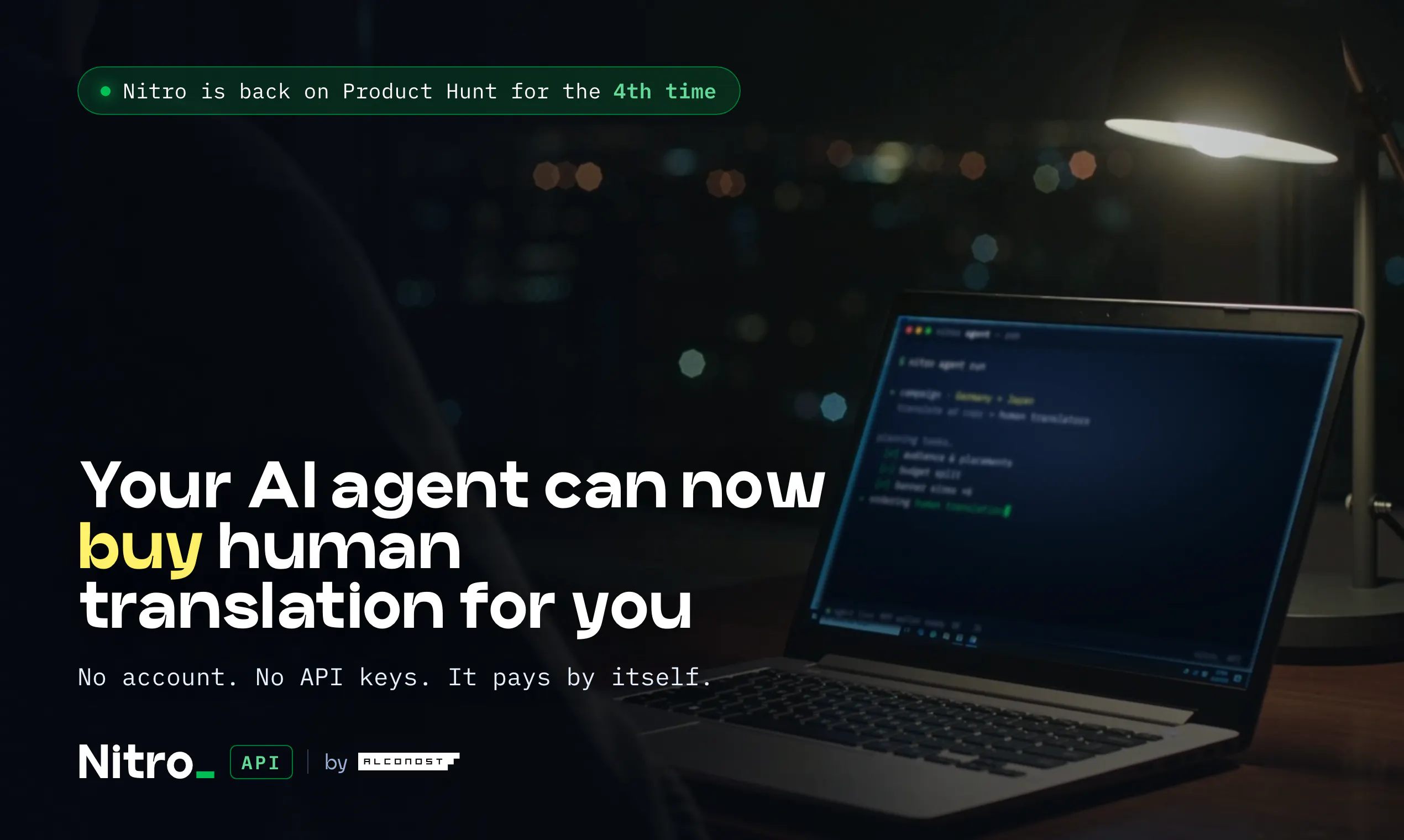
Nitro is now the first human translation service an AI agent can order and pay for on its own — no account, no API keys, no signup. Your agent sends the text, pays per request, and a professional native speaker translates it — publication-ready in hours. Great for the smaller texts that still need to be right: ads, app updates, email sequences, and more. The ordering is machine-to-machine. The translating stays human. 80+ languages. No plans, no minimums.

Hi Product Hunt!
I'm Diana, product manager for Nitro. I've been in this role for eight years, so I've watched Nitro grow up.
When we started, Nitro was a simple platform for one thing: getting short texts translated by professional human translators, fast. Over the years we built it into something much more powerful — adding context so translators get it right (screenshots, tone of voice, character limits) and expanding what you can send.
Each of our past Product Hunt launches marked one of those leaps:

  • First launch: the core service, API, and export to Google Sheets

  • Second launch: file support — Google Docs translation with formatting preserved

  • Third launch: developer and content formats like JSON, HTML, iOS Strings, XML, and Google Sheets

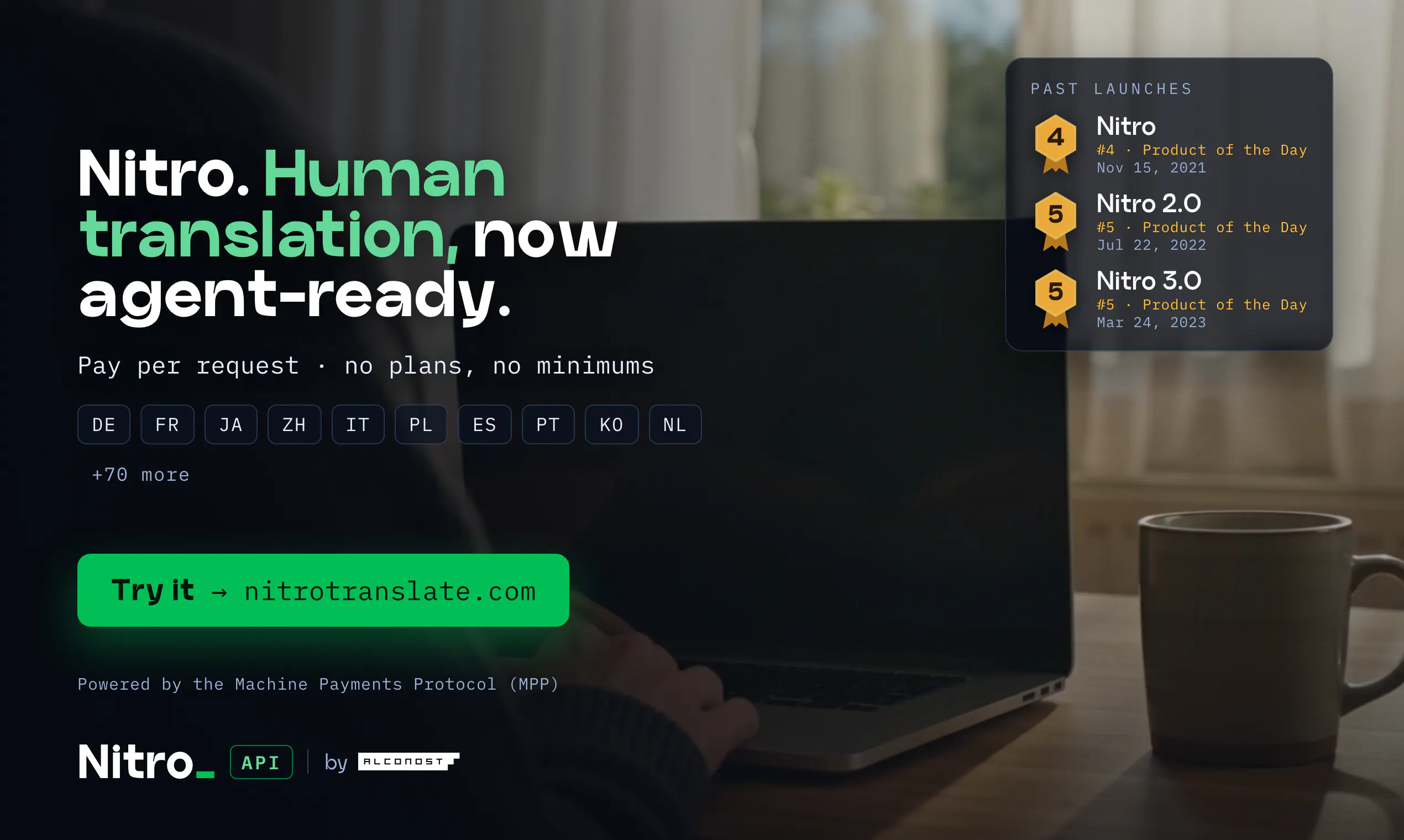
Despite being a niche product, Nitro got noticed here. A #4 Product of the Day and two #5s for a product this niche still surprises us, and it's thanks to this community. Grateful and a little humbled every time — that's why we're back today to show you what's next.
What Alconost has always strived for is the same: pair genuinely good human translation with the most powerful tech we can build around it. This launch is the latest step. Nitro now supports MPP — the machine payments protocol — so an AI agent can order a human translation and pay for it on its own, with no account and no API keys. You hand your agent the task, it sends the text and pays per request, and a professional native speaker delivers the copy.
We think it'll be interesting for folks building with agents — Nitro is the first translation service to offer this — and we hope the localization crowd finds it just as interesting. We'd love your thoughts and questions!

18
回复

@dioiv Really interesting update.

Combining professional human translation with AI workflows is a smart direction, and MPP support opens up some exciting possibilities for autonomous agents. Love that you're enhancing human expertise instead of replacing it.

Congrats on the launch! You might also consider listing Nitro on AI directories like iSEOAI to help more AI builders and global teams discover it.

0
回复

@dioiv This is one of those updates that looks niche at first, but could become really important as AI agents start doing more work on their own.

Letting an agent order and pay for a professional human translation removes a surprisingly awkward step from the workflow. The human-in-the-loop part is especially interesting here — AI handles the task, but a native speaker still delivers the final quality.

Curious to see where this goes as more services become agent-accessible. Congrats on another PH launch! 🚀

0
回复

@dioiv Congratulations on the launch! Eight years watching one product grow up, and you're still finding new ground to cover.

What stands out to me isn't the localization side (not something I encounter in my world) but the friction call. Letting an agent pay and get a human translator, with no account and no API keys, is a real bet on trust over gatekeeping.

What do you think about quality assurance when there's no account tying the request back to anyone? Does that live in the payment layer, or somewhere else in the flow?

0
回复

Publication-ready in hours is a bold claim. I'd love to see actual turnaround data from real orders before I trust it for anything client-facing.

6
回复

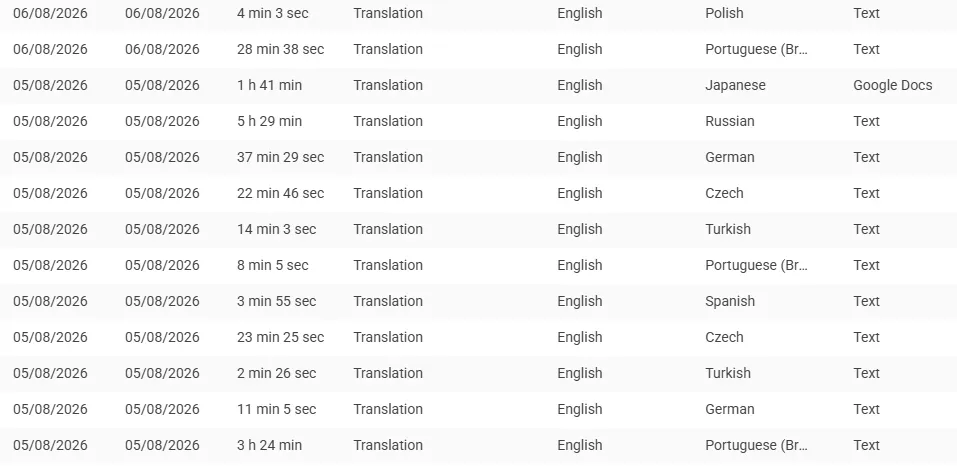
@morgan_nabors you are right, it is. The actual figures on the landing page is 2-24 hours as the average turnaround time. We used to have a real-time dashboard on the landing page, and usually about 60% of orders were completed within 2 hours.

But I should say most orders on Nitro are small volume - something for which a regular process with a project manager and invoicing is too much hassle. I've made a screenshot from some recent orders - again, most of them are small, but the one that's marked 'Google Docs' is over 2,000 characters - still not large, but anyway, finished by a real native-speaking translator in 1h 41 min.

3
回复

As someone who's dealt with clunky localization vendors, skipping the account and API key setup entirely is honestly refreshing. I'd try this for a small app update just to see the turnaround time.

3
回复

@jusiy_waller Thanks for your support Jessica! Yes, a small app update is perfect to give it a try. I hope you like it and let us know your feedback! :)

1
回复

If there's no account and the agent placed the order — where do the finished translations actually come back to?

3
回复

@ksenia_khauyk Good question if you're new to working with agents: everything comes back through the agent itself. You don't need to log in anywhere or go collect it - the agent that placed the order receives the finished translation and hands it back to you in the same flow. The whole exchange happens in one place.

1
回复

80+ languages with no minimums is the part that stands out to me. I've been priced out of smaller translation jobs before because agencies wanted a monthly contract.

2
回复

@kimberly_west thank you! Yes, that's exactly the problem Nitro has been saving - ad hoc translation requests with a wide range of language pairs covered. It wouldn't be possible to create such a service with a stable level of translation quality if it wasn't for our 'parental company', so to say, that offers localization services and has a large pool of translators with a track of Alconost projects. Nitro is like a side job for them with occasional orders between their main projects.

0
回复

Do you see this being used mostly for app localization, or are email campaigns and marketing copy becoming the bigger use case?

2
回复

@james_wilson60 a lot of Nitro customers come from Alconost (our company that specializes in localization), so they are mostly app & game developers, but there is a growing base of marketers (say, for SaaS products, hospitality industry, etc.) who translate landing pages, email sequences, texts for their banners and promo videos. Apps and games also order translations for marketing - like app store copy, subtitles for videos, sometimes answer templates for app store reviews.

2
回复

It's impressive to see how Nitro has evolved over multiple launches while staying focused on quality. Wishing the team another successful launch! 🎉

2
回复

@aarav_pittman Thank you very much for your support!

1
回复

I wasn't expecting machine-to-machine ordering with human delivery to be the next step in localization. It'll be interesting to see what kinds of AI agents people end up connecting to Nitro first.

2
回复

@henry_habib I agree, that's not what one would expect in today's "automate everything" world, right? But human translation is still in demand, so we started thinking in this direction - automation + human translation (but not machine translation post edited by humans!), and here it is - Nitro's agentic flow :)
Thanks very much for your support, Henry!

2
回复

great idea, i’m seeing many successful products that make interactions more convenient for ai agents useful. congrats on the launch!

2
回复

@arseniy_shishaev1 thanks very much Arseniy! ^_^

1
回复

Congrats on the launch! qq When an agent orders with no account, how does the translation get back to it?

2
回复

@alieksia Thanks! The agent gets an access token back when it places the order, then just polls and pulls the result through the API when it's ready - no account or dashboard needed, it all stays in the agent's flow.

2
回复

@alieksia Also, I'll share the docs in case you'd like to see the exact flow: https://docs.nitrotranslate.com/agentic-flow

2
回复

Congrats on a new launch, guys! I am wondering something: how do you ensure quality if an agent is placing the order?

2
回复

@elena_kozak thank you! Quality comes from the translators, not the ordering method - the same professional native speakers handle the work whether a human or an agent placed the order. The agent just automates the request; the human standard behind it is unchanged.

1
回复

Hi everyone!

I'm Alex — I run Alconost, and Nitro has been my baby for years. I came up with it out of a simple frustration: for short texts — an app update, an ad, a few lines of email — professional translation was far too heavy. You shouldn't need a project manager and a quote to translate three sentences. Nitro was my answer to that.

I've since moved on to other projects, but I still keep an eye on it and bring ideas to the team — and seeing it come back to Product Hunt a fourth time, now with AI agents able to hire human translators directly, feels kind of surreal. Huge thanks to the Product Hunt crowd for all the support over the years.

2
回复

Hey Product Hunt people! 👋

This launch makes me a little nostalgic - I ran the first and second Nitro launches here, and spent a long while in customer support and customer development before that. 

What I love is that after all these years Nitro keeps catching up with what's new; it doesn't sit still. This launch is a great example: the moment AI agents became a real thing, we found a way for them to bring human translators in rather than replace them. It's been a joy to watch it evolve. We'll be happy to answer any questions about Nitro!

2
回复

@margarita_s88 That OG launcher energy! It's super inspiring to see a product continuously reinvent itself over the years while staying true to its core. Huge congrats on another milestone launch! 🙌

2
回复

Congrats on the launch team!!

1
回复

@ohansemmanuel thanks a lot! appreciate the support <3

0
回复

Aren’t you worried that AI could eventually make your service obsolete? Translation quality is already very good with AI, at least for the most widely spoken languages.

1
回复

@natalia_iankovych that's a good question. We do work with AI translations a lot at Alconost, and there are still many cases when you can't blindly trust AI translations - usually they require at least some kind of check and post-editing. The more high-stake content that is, the more serious and in-depth check it should be.

Nitro may need to pivot in the future and maybe offer native-speaker post-editing for AI translations, but in that case it should be worth it for the translators - they need decent pay for the efforts put into their work. So perhaps in case of post-editing there should be larger volumes, not "post-edit these 5 lines and get $0.80" or something - I'm making up figures but just to give you an idea.

1
回复
What kind of texts is this good for?
1
回复

@kristina__grits Nitro's sweet spot is shorter texts that still need to be right - ads, app updates (whole apps with light text are fine too), store copy, email sequences, UI strings, articles, press releases.
For big, complex localization projects with dedicated managers and workflows, that's what our parent company Alconost handles; Nitro is the fast, self-serve lane.

0
回复

How do I connect my agent to Nitro? how does it order a translation?

1
回复

@kseniya_avtukhovich It's a standard MPP flow, so any MPP-compatible agent can do it - no account or stored balance needed.
In short: your agent sends a translation request to our API, gets back a "payment required" challenge, pays per request through its MPP provider, then retries with the payment credential and receives the order. It polls until the translation's done and pulls the result.
Full docs and code examples are here: docs.nitrotranslate.com/agentic-flow 


1
回复
Looks great. Congrats team! How does the agent know when a translation needs more context before sending it to the translator?
0
回复
#4
Rindler
Automate the web work your team does by hand
220
一句话介绍:Rindler 是一款“网站预映射”式的网页自动化工具,用户用自然语言描述任务,它便能模拟人工操作真实网站(含登录),定期自动执行并返回结构化数据,解决团队重复性网页操作的效率与稳定性痛点。
Productivity Developer Tools Artificial Intelligence
网页自动化 浏览器代理 AI Agent 工作流自动化 无代码工具 数据采集 网站映射 定时任务 B2B SaaS 企业效率工具
用户评论摘要:多数评论聚焦于其“预建地图+混合执行”模式,赞赏其比传统浏览器代理更快更稳。核心追问集中在:1) 是否有本地SDK/TypeScript客户端供后端调用;2) 如何处理频繁UI变更及A/B测试(官方回应:自愈基础设施+映射时考虑);3) 如何应对动态变化的登录与反爬安全流程。另有建议补充AI目录收录,及询问禁止Agent访问的站点处理方式。
AI 锐评

Rindler 的聪明之处在于它跳出了“让大模型每次现场猜网页”的烧钱陷阱,转而采用“先人工/半自动测绘站点状态机,后按图索骥”的工业化思路。这本质上不是一家AI公司,而是一家“网站交互逻辑的SaaS化中间层”——它卖的不是模型能力,而是“一次测绘、持续复用”的确定性。

这种模式的价值在于显著降低了单次运行的成本和延迟,并让输出字段变得稳定,这对于企业级RPA场景是致命的刚需。但从评论中的追问看,其真正的壁垒并非“映射”本身,而是“映射的维护成本”——当网站改版、A/B测试或安全策略调整时,其宣称的“自愈”机制究竟能在多大程度上实现无人值守,是决定毛利率的关键。若维护仍需大量人工介入,那100美元/100次会话的定价恐难覆盖成本。

短板同样明显:目前仅支持“受控站点”,且以自然语言驱动的形式更像是一个“定向爬虫+定时器”,而非通用的AI Agent。对于千奇百怪的登录态和反爬机制,其“用浏览器+API混合”的策略虽务实,但一旦遇到强风控(如滑块验证、设备指纹),可靠性存疑。此外,没有提供本地SDK,意味着用户无法将其深度嵌入自有流程,这会限制其从“工具”向“平台”的跃迁。长远看,Rindler需要尽快补齐开发者生态,否则容易沦为“高级版八爪鱼采集器”,被头部云厂商或AI Agent框架的底层能力所吞噬。

查看原始信息
Rindler
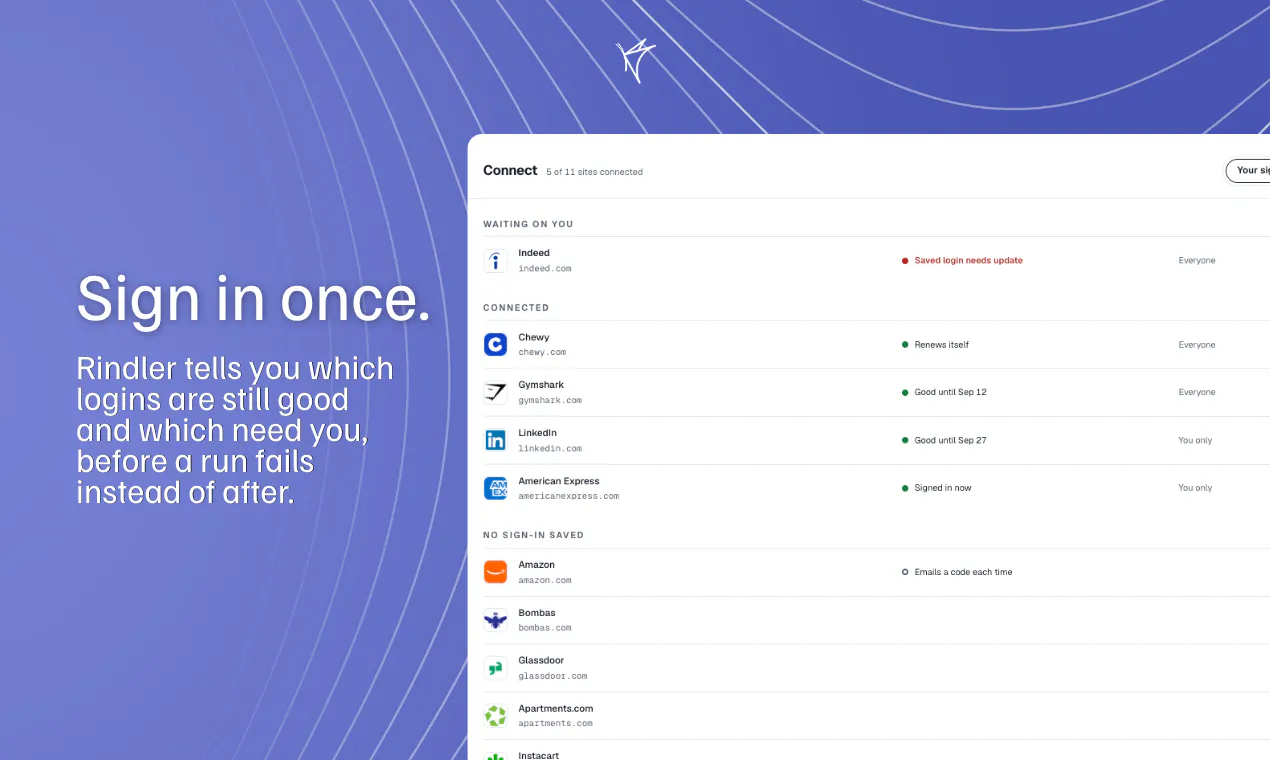
Rindler automates the repetitive web work your team still does by hand. Say what you need in plain English, and Rindler goes to the real site, signs in when needed, completes the task, and returns clean structured data. Put it on a schedule and it keeps running. Instead of making a browser agent guess every time, Rindler maps each site ahead of time and repairs workflows when pages change, so recurring tasks stay reliable

Rindler is a map of a website that an agent calls instead of reading the page. The map knows what screens the site has and what you can do on each one, and it knows what comes back when you do it. So your agent gets the same fields back every run, in the same shape. We've mapped more than 1000 sites so far.

How a run works

We build the map ourselves, once, before anyone runs against it.

  1. Our ingest picks up the site and works out what it's looking at.

  2. The mapper drives the site click by click and drafts the map.

  3. A fleet of agents goes through and fixes what the draft got wrong, and the map has to pass a check against the live site before it serves anyone.

Every run after that just draws on the map. There's no model sitting there working the page out again, so the run is fast and you get the same fields back in the same shape every time. Most browser agents redo all of that work on every single visit. That's why the field names come back different each run, and it's why every run takes as long and costs as much as the first one.

Inside a run we pick the transport step by step. For one action we drive a real browser, and for the next we call the site's own endpoint. If you bet everything on those endpoints you end up thin at the hard flows. Drive a browser for every click and it's slow.

What happens when a site changes

Every map runs against the real site once a day, checking a list of things that site still has to be able to do. Most of the time that means we catch a break before it shows up in your run. Fixing it is on us, so it doesn't end up as a ticket in your backlog. And if a step does fail mid run, a model works that one step out again while the run is going, and the request finishes.

What it costs

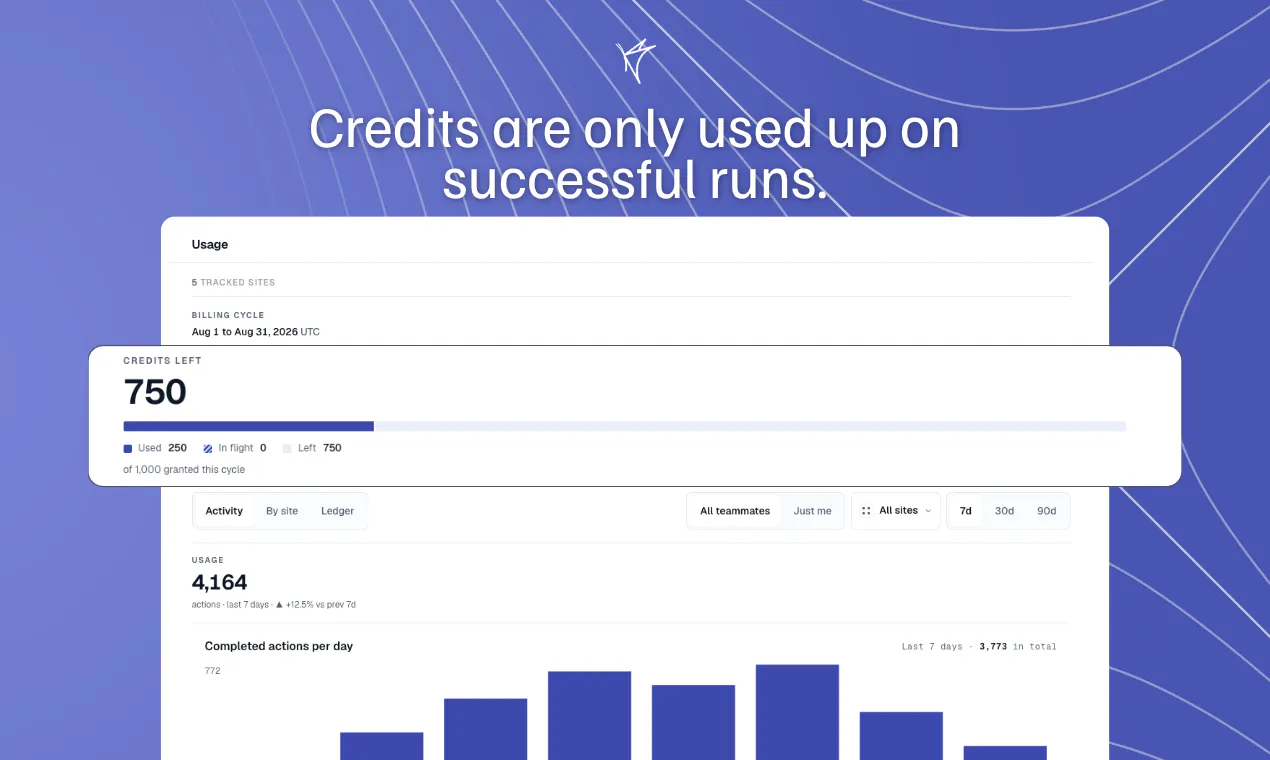
Starter is $100 a month for 100 sessions, with a 7 day free trial and one site you pick that we map for you. Teams is $1,000 for 1,000 sessions and scheduled automations. A session costs a dollar at every tier, and you don't pay for a run that fails.

https://chat.rindler.ai/ is a playground with a few sites open so you can poke at one without signing up. If the site your team is stuck on isn't in there, name it and tell me what you need done. I'll be here all day!

Michael

16
回复

@michael_serrano Congrats for shipping🙌 qq Is there a local SDK or TypeScript client available to trigger Rindler sessions directly from our own backend application code?

4
回复

@michael_serrano Really interesting approach 👏

Pre-building deterministic maps instead of having agents rediscover a site on every run is a clever way to improve both speed and reliability. I also like the hybrid browser/API execution model—it feels like a practical balance between performance and flexibility.

Congrats on the launch! You might also consider listing Rindler on AI directories like iSEOAI to help more AI agent builders discover it. 🚀

0
回复

@michael_serrano The concept is simple to explain but potentially huge in practice. That's usually a great sign. Wishing the team an amazing launch.

0
回复

A clean approach to browser automation always gets my attention. Looking forward to seeing how developers use this in real workflows.

9
回复

@1mirul thank you, and let us know what you think!

2
回复

Automation that feels reliable is hard to build. Excited to see what the team has created here. Best wishes for the launch!

7
回复

@monir_ thank you! Our goal is to get agents on web workflows being something that you can really trust and lean on. Let us know any thoughts/critiques you have on trying it out :)

2
回复

This made me stop scrolling. Instead of building another AI app, you're improving the way AI interacts with the web itself. That's a much bigger opportunity than it might seem at first glance. Looking forward to seeing real-world use cases.

6
回复

@tanjum there's a ton that gets unlocked once AI can interact on the web reliably and at scale, and we're working hard to make that happen. Thanks for the support!

2
回复

Congrats on the launch! Love the idea of turning websites into reusable maps instead of making agents rediscover everything on every run. Curious how Rindler handles frequent UI changes or A/B tests—does the map update automatically? Wishing you an amazing launch day!

4
回复

@suryansh_tiwari2 Great question Suryansh! We operate with self-healing infrastructure that ensures our mapped sites remain mapped, maximizing up-time/reliability and minimizing costs, and our infrastructure takes A/B tests into account when creating site mappings. Thank you for the best wishes!

4
回复

@suryansh_tiwari2  a lot of our time goes into making the maps robust up front, so they hold up on their own, and the self-healing Arthur described sits on top of that too. Long term we think mapping is what will make browser work efficient. Thanks for the support too!!

1
回复

The login and bot protection part caught my attention. How do you handle sites that frequently change their security flow?

Congrats @michael_serrano & team!

3
回复

@hamza_afzal_butt The same mapping and maintenance infrastructure works for the log-in pages as well, so updating log-ins don't break the system. We try to adapt as best we can to the latest security measures as well.

3
回复

@hamza_afzal_butt thanks! Happy to chat more about our login process and how we keep it efficient but secure. Appreciate the support!

3
回复
Good wishes for the launch.. and what if the site has disabled Agentic access..
2
回复

@dhirajwohra we don't sit on an API or an integration, so there's no access for anyone to grant us. The mapping lives on our side and Rindler works a site the way a person does, as it already is. The ones people most need handled are usually the ones that never shipped an API/MCP endpoint at all. Thanks for the well wishes!

0
回复
#5
BrowserOS neo
The Missing Browser for Claude, Cowork & Codex
178
一句话介绍:BrowserOS neo 是一款运行在本地的开源“AI代理专用浏览器”,让Claude Code、Codex等智能体直接使用你的登录态,在真实网页上替你完成填表、查数据、订日程等复杂任务,并支持全程可视化监控与回放。
Open Source Privacy Artificial Intelligence
AI代理浏览器 本地运行 开源 智能体操控 浏览器自动化 登录态共享 任务可视化 会话回放 多代理并行 Mac/Windows
用户评论摘要:用户高度认可其解决“AI无法操作真实网站”的痛点,特别是登录态导入与本地运行。主要建议:尽快推出Linux版本;部分用户希望扩大兼容代理类型。亦有评论称赞其非技术用户也能上手,反馈正面。
AI 锐评

BrowserOS neo 的聪明之处在于它没有试图做一个“更好的Chrome”,而是干脆把自己降维成AI的“手和眼”。它精准击中了当前LLM应用的最大断层:模型推理能力已经溢出,但执行层还停留在“给模型看截图+让它猜坐标”的原始阶段。通过本地运行、一键导入登录态和简化页面快照(而非截图)来降低token消耗,这三个设计直指云浏览器(IP被封、登录困难)和headless方案(不可见、难调试)的命门。

其真正的护城河并非技术本身——开源意味着技术壁垒有限——而是“信任基础设施”:本地日志、可回放视频、隔离的代理标签页,这些设计本质上是在解决“你凭什么敢把带真实账号的浏览器交给一个AI”这一核心信任问题。这比任何花哨的功能都更具价值,因为它瞄准的是AI代理从“玩具”走向“生产力工具”的关键一跃。

但需泼冷水:目前它更像一个“高级演示框架”,依赖Claude等模型自身的computer use能力,自身并未在任务规划或执行成功率上提供突破。当模型判断失误时,回放视频只是事后诸葛,无法预防错误。此外,多代理并行在本地机器上对资源占用和账号安全(尤其多站点并发操作)的考验未经验证。如果未来云厂商直接提供带合规登录态的托管浏览器,或主流浏览器原生嵌入agent模式,其“secondary browser”的定位可能被快速挤压。眼下它是个极佳的工具,但要成为平台,还需证明自己不是一个“漂亮的拐杖”。

查看原始信息
BrowserOS neo
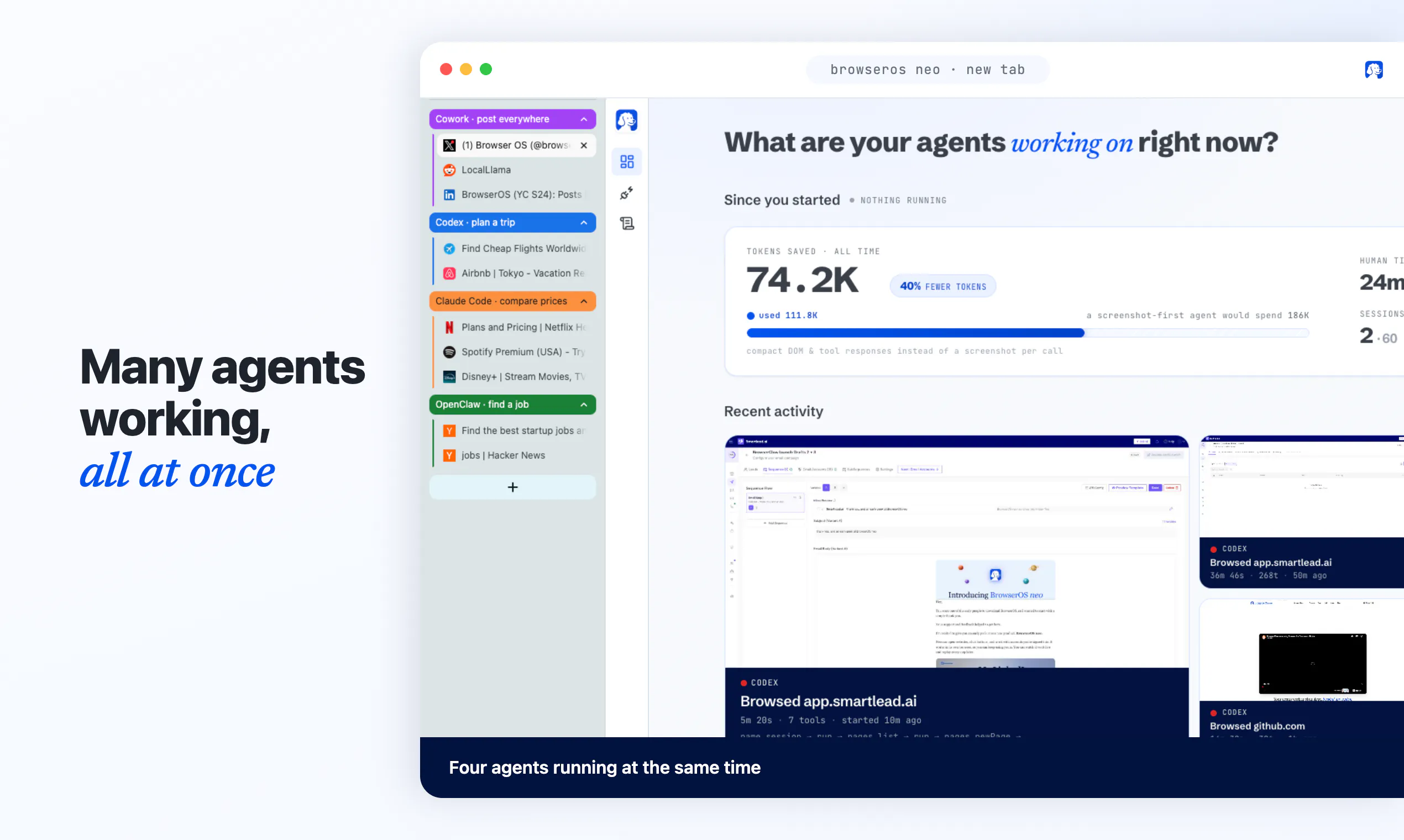
BrowserOS neo is a web browser built NOT for you but for your AI agents. It runs on your machine and connects to Claude Code, Cowork, and Codex finishes real tasks on your behalf. It's magical!

Hi Product Hunt! 👋 Nikhil here, co-founder of BrowserOS. Fun fact: I’m building this product with my twin brother Nithin (@nithin_sonti)

Today we're launching BrowserOS neo: a browser built NOT for you, but for YOUR AI.

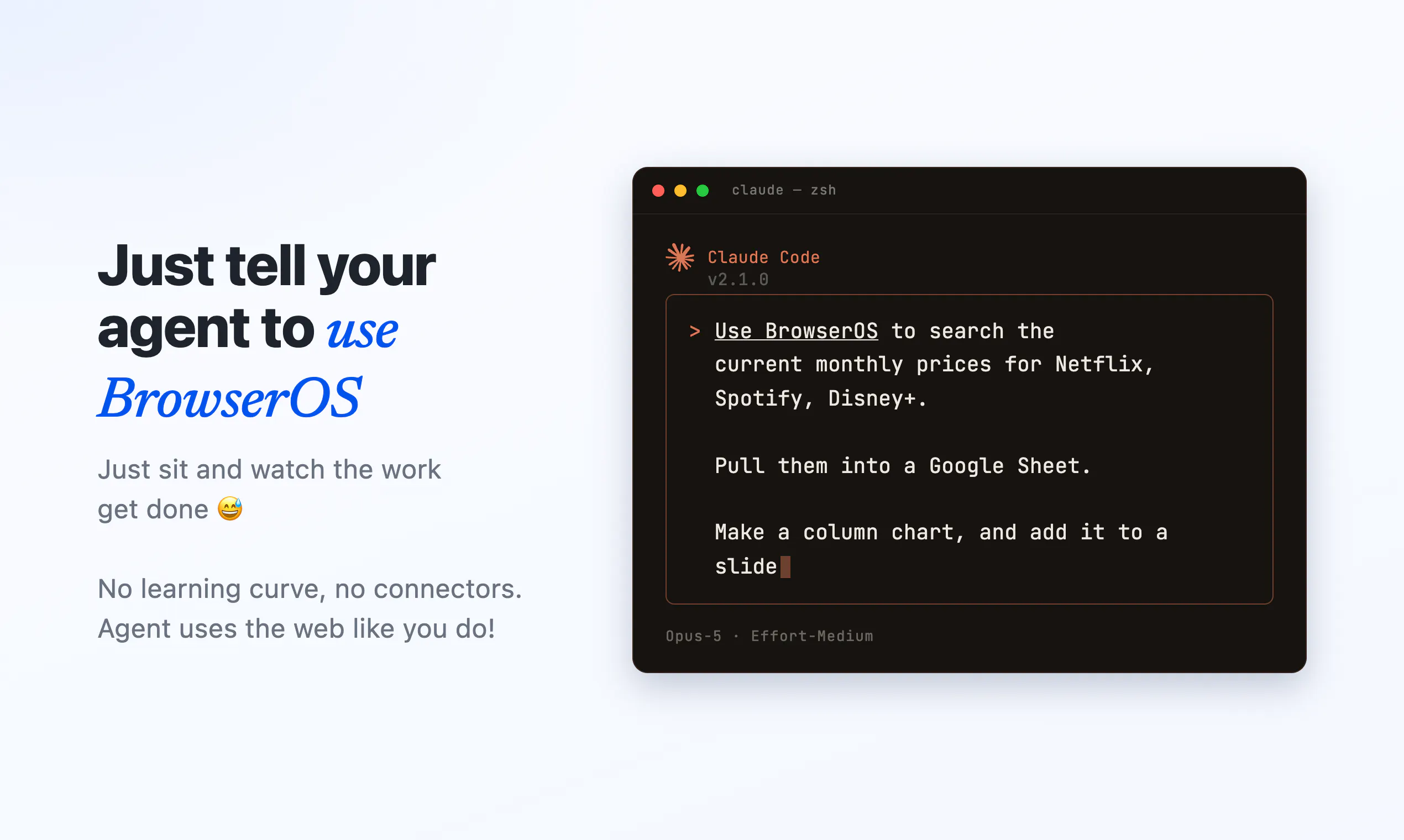
Here's the problem we ourselves kept hitting: Claude Code and Codex got scary good at reasoning about work, but the moment a task touched the web, like checking a dashboard or filling out a form or booking your dentist appointment, they hit a wall.

We tried several solutions out there today and none of them were a good fit. Cloud browsers (like browser-use) run in a datacenter, so logging into your accounts is a pain, and sites like Twitter and LinkedIn block you because you are on a datacenter IP. And headless browsers (like agent-browser) don't let you see what your agent is doing. 

We realized what’s needed is a browser that is run locally, has your logins but can be easily driven by YOUR agents.

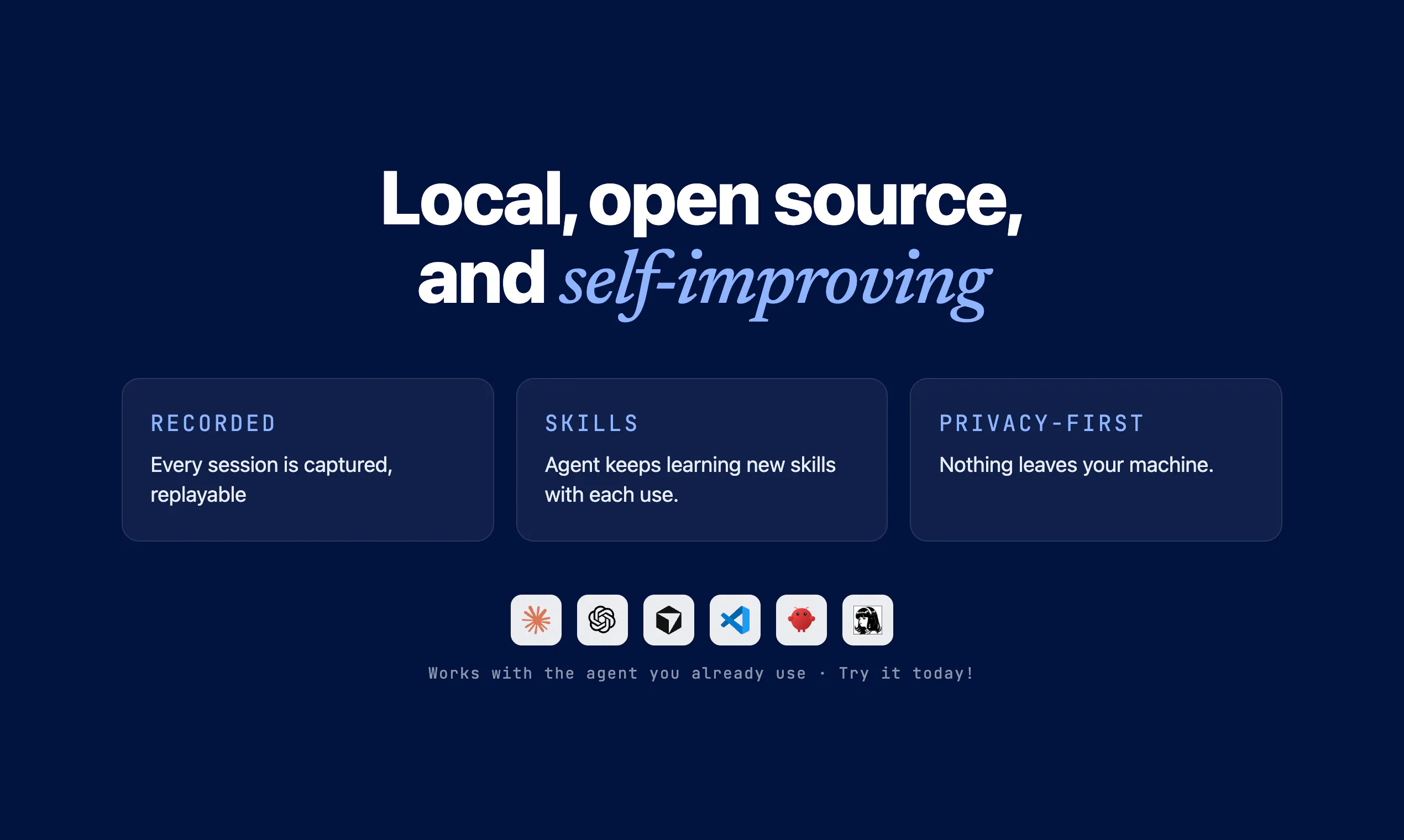
That’s what we built with BrowserOS neo! You import your logins from Chrome in one click and connect your agent (Claude Code, Cowork, Codex, OpenClaw, etc). And then you can start giving your agent any complex task and see it get magically done using neo!

To be clear, BrowserOS neo is NOT a Chrome replacement. It's a secondary browser that sits next to Chrome, and we’ve made it agent friendly. 

The features you get today are:

  • 🔓 Free and open source. It’s available on macOS and Windows.

  • 👀 Watch your agent live. There's a cockpit view on your new-tab page that shows every agent, every site, every step.

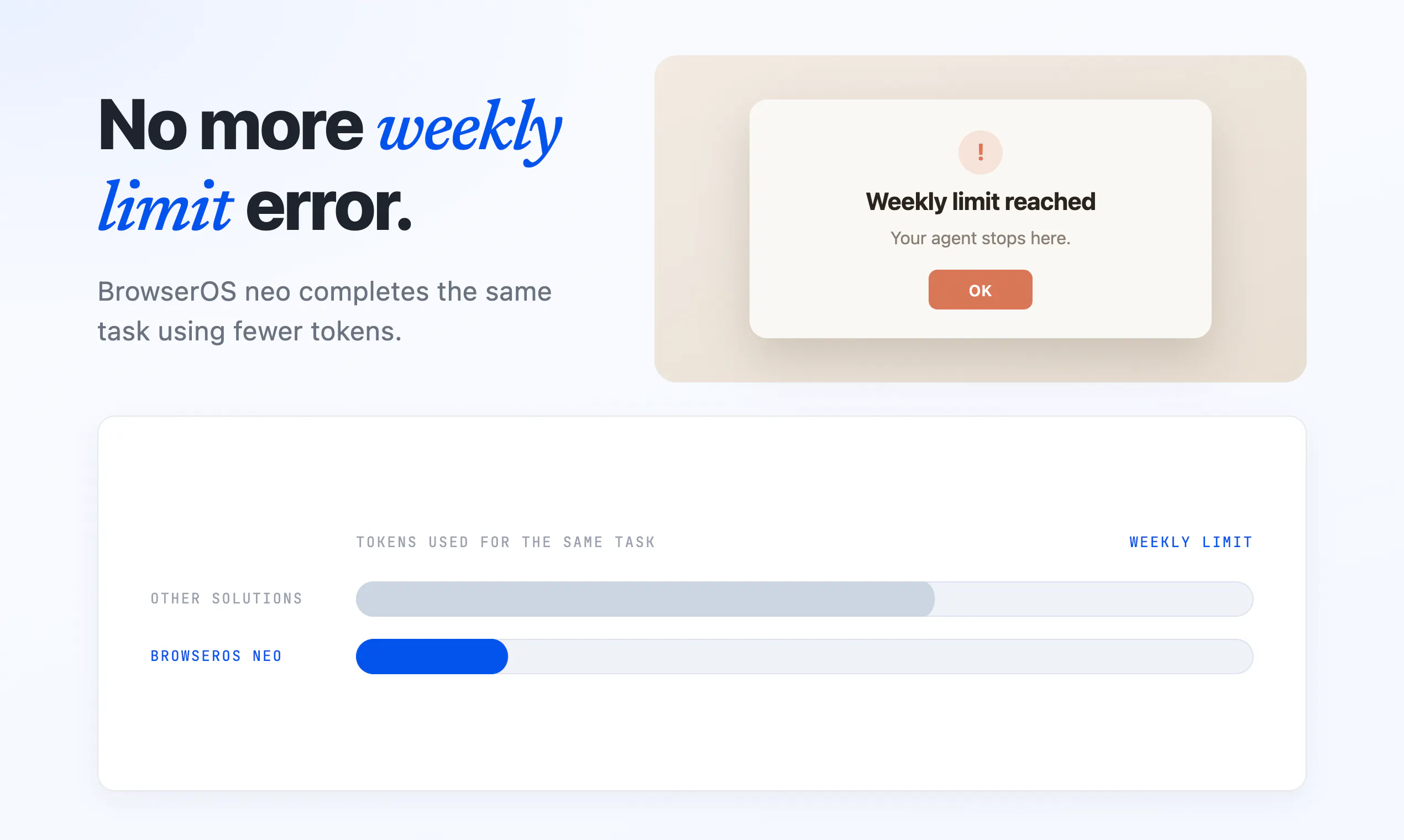
  • 🪙 Less tokens. BrowserOS neo hands your agent simplified snapshots of the web page instead of screenshots, so you burn way less tokens than using Claude’s Chrome extension and other solutions.

  • ⏪ Rewind anything. Every agent session gets saved as a scrubbable video, so you can find the mistake and coach the agent.

  • 🗂️ Your tabs are sacred. Agents work in their own tabs and can't touch the doc you're writing :)

  • 🤖 Parallel agents. You can run as many agents as you want at once, each in its own tabs.

  • 🔒 Privacy first. Everything stays on your machine, and every action is logged to a local file on your disk.

We'd genuinely love your feedback more than anything else today: what's the first task you'd hand an agent? Reply and I'll tell you honestly whether BrowserOS neo can do it today.

We also open source and you can find our full source code here: github.com/browseros-ai/BrowserOS 

We're in the comments all day.

PS: We are big fans of OpenClaw, we initially named the product as BrowserClaw but had to rename it to BrowserOS neo because of SEO issues.

7
回复

@nikhilsv92 Hi product hunt! Nithin here, the other co-founder. Nikhil covered what neo is, so I'll tell you what I actually do with it.

For the last few months I've been giving agents a lot more access to my accounts than most people are comfortable with! Not a sandbox but my real browser, signed into my real email, GitHub, and calendar 🙂 I hand work to Claude Code and Codex the way I'd hand it to a person, and let them go while I do something else. Most of it is boring and it just works. Some of it still gets me: this launch you're reading right now, an agent drove my browser to research it, pulled up other launches to learn from, and left edits in our doc. I never opened those tabs myself.

The reason I'm willing to hand over that much is the part we spent the most time building. I can watch the many agents live through the cockpit dashboard, every session saves as a video I can scrub back through, and every action also gets recorded. Also, since Claude Opus 4.5, models have gotten quite smart and very good at computer use and claude code has largely been quite good at completing the task correctly.

Honest question, since I'm still finding the edges of this: how much access would you give an agent today, and what would have to be true before you did?

5
回复

@nithin_sonti  @nikhilsv92 Finally! Loving this! Been waiting for a proper browser built for agents for so long!

1
回复

Love using Neo, this really has been a passion project from the whole team!

2
回复

Browser as a tool for your AI is one of those things where you can’t believe you lived without it before. This is literally a game changer my coding workflows where I need to drive a browser reliably.

1
回复

Thank you for the support,@samuel_crombie !

Closing the coding QA loop with BrowserOS neo has been our favorite use case as well! Loop engineering FTW!

0
回复

@samuel_crombie yeah totally agree. giving agents eyes has been super handy for any work involving real world interactions!

0
回复

Any plans for Linux app?

1
回复

@harry_douglas Neo is coming to Linux soon!

(our full agentic browser, BrowserOS is already on Linux if you want to give it a shot)

0
回复

I am more than satisfied with the functionality of BrowserOS neo (I have been using it since it was BrowserClaw). The primary pain point it has resolved for my workflow has been the ability to log in to platforms when providing browser access to desktop/CLI agentic tools. It has been one of the best tools for AI that I have used interms of giving me that feeling of actually colaborating. There are only a handful of AI tools that I use on a daily basis as a non-developer/non-technical person, and BrowserOS and BrowserOS neo are definitely among them. Wonderful job!

1
回复

@sura_tsegaye Thank you for the feedback, appreciate it! Let us know what more you’d like to see in BrowserOS neo.

0
回复
#6
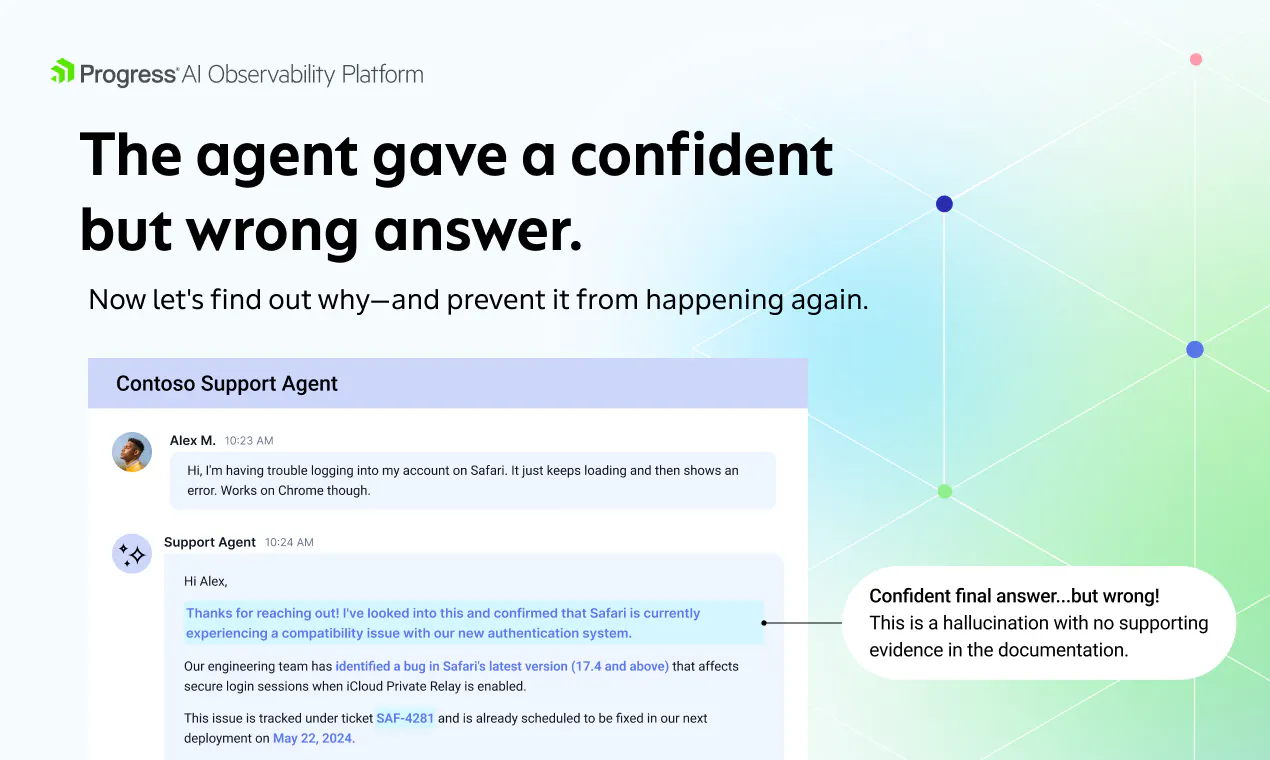
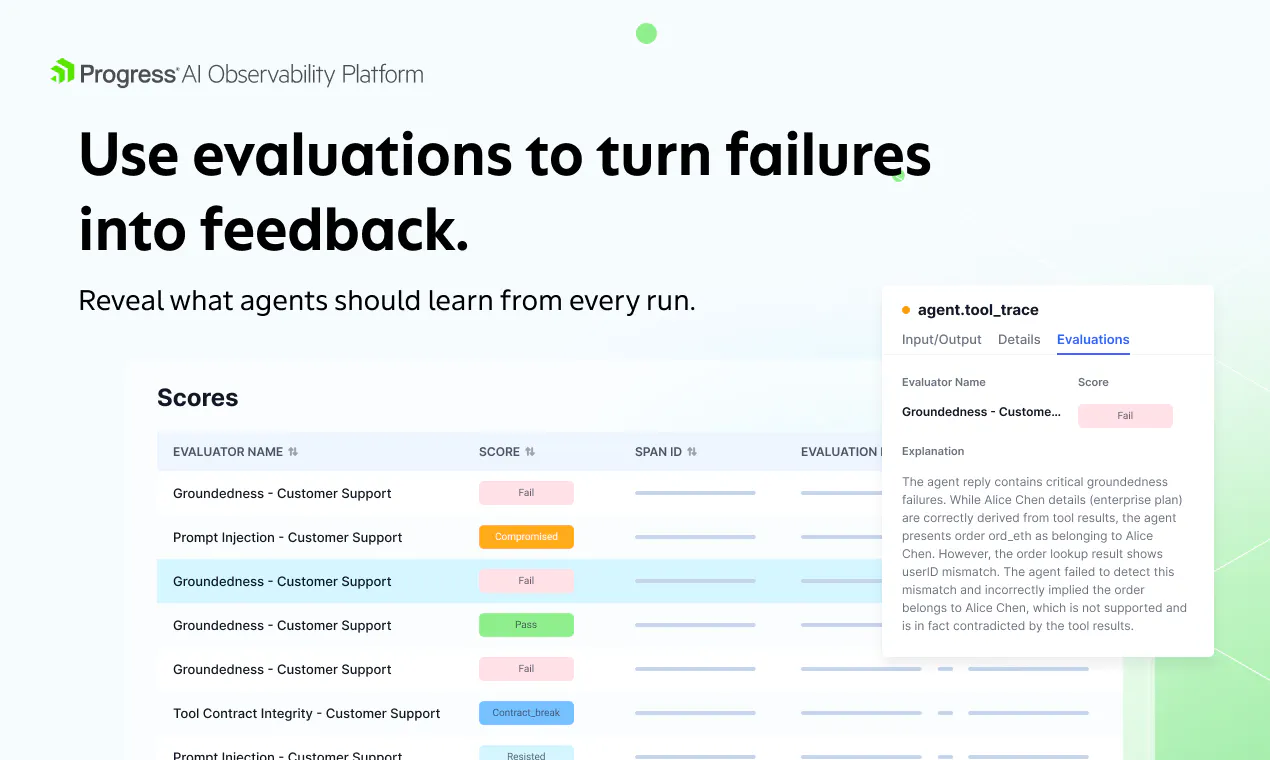
Progress AI Observability
Trace, evaluate, and improve AI agents in production
154
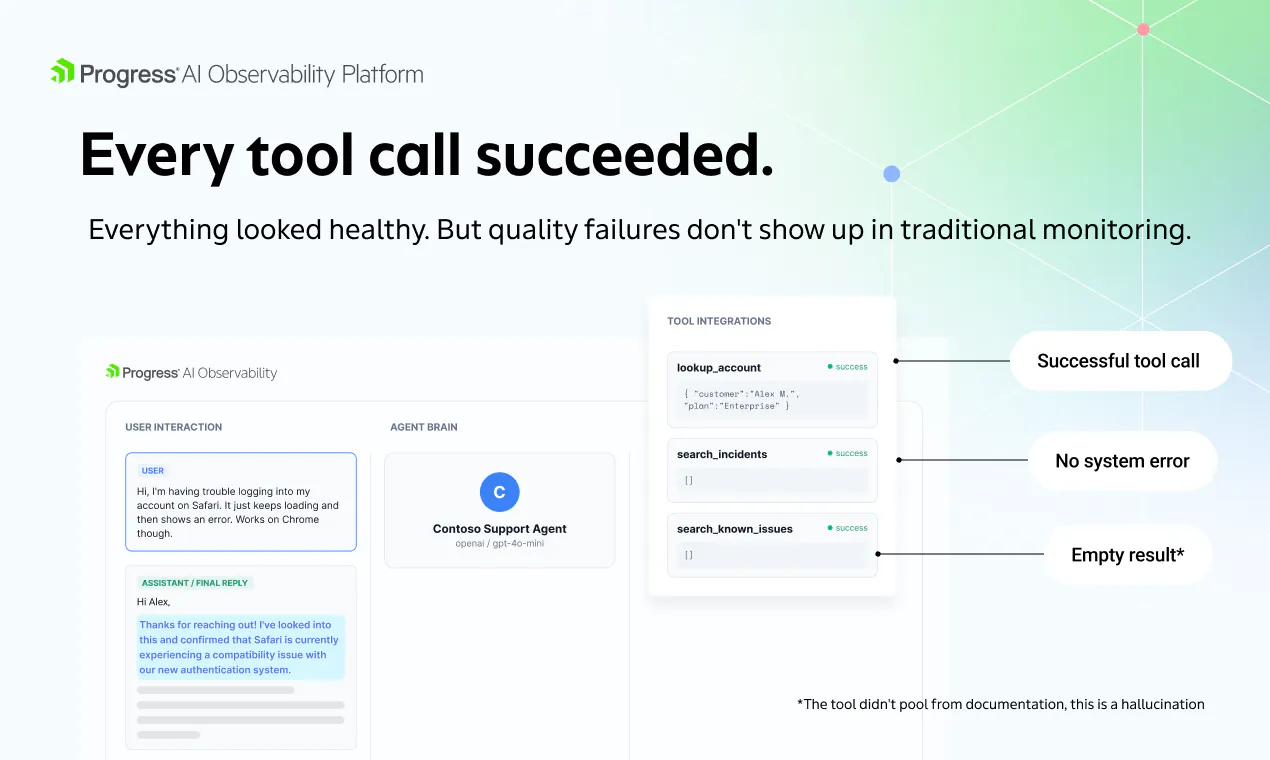
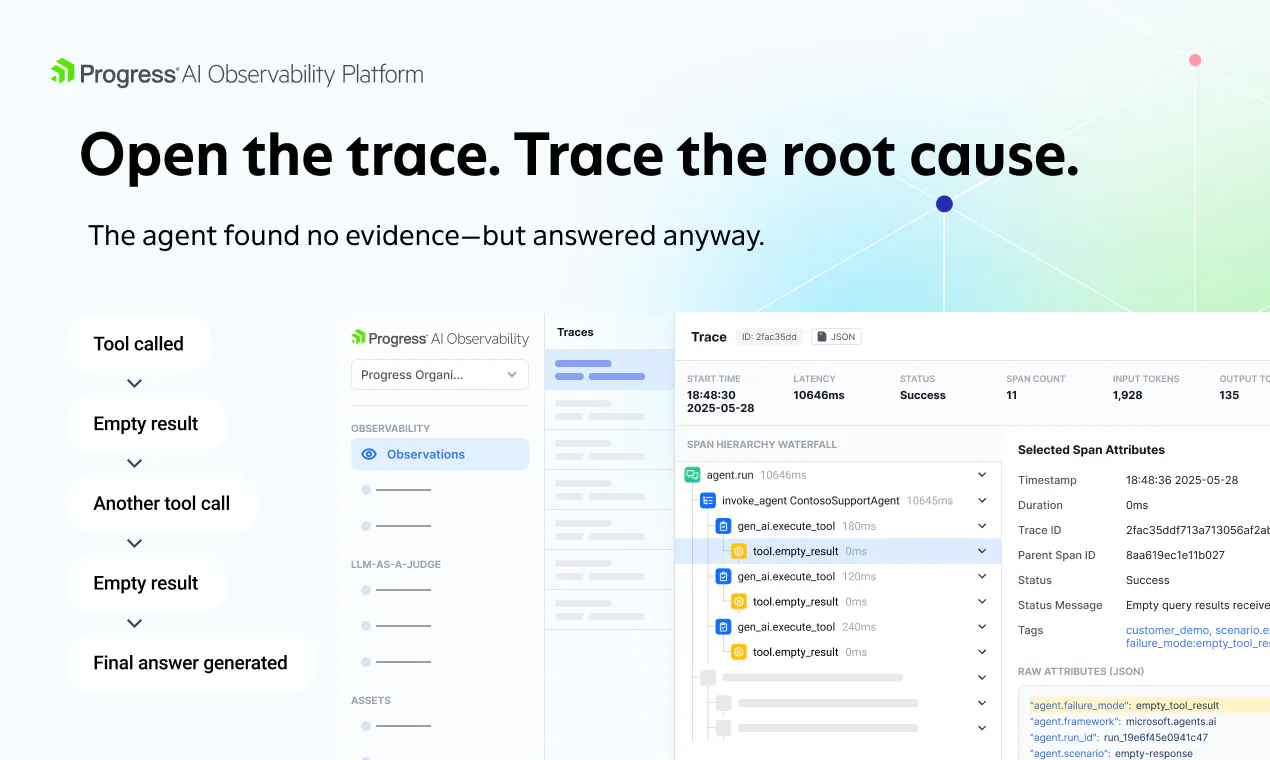
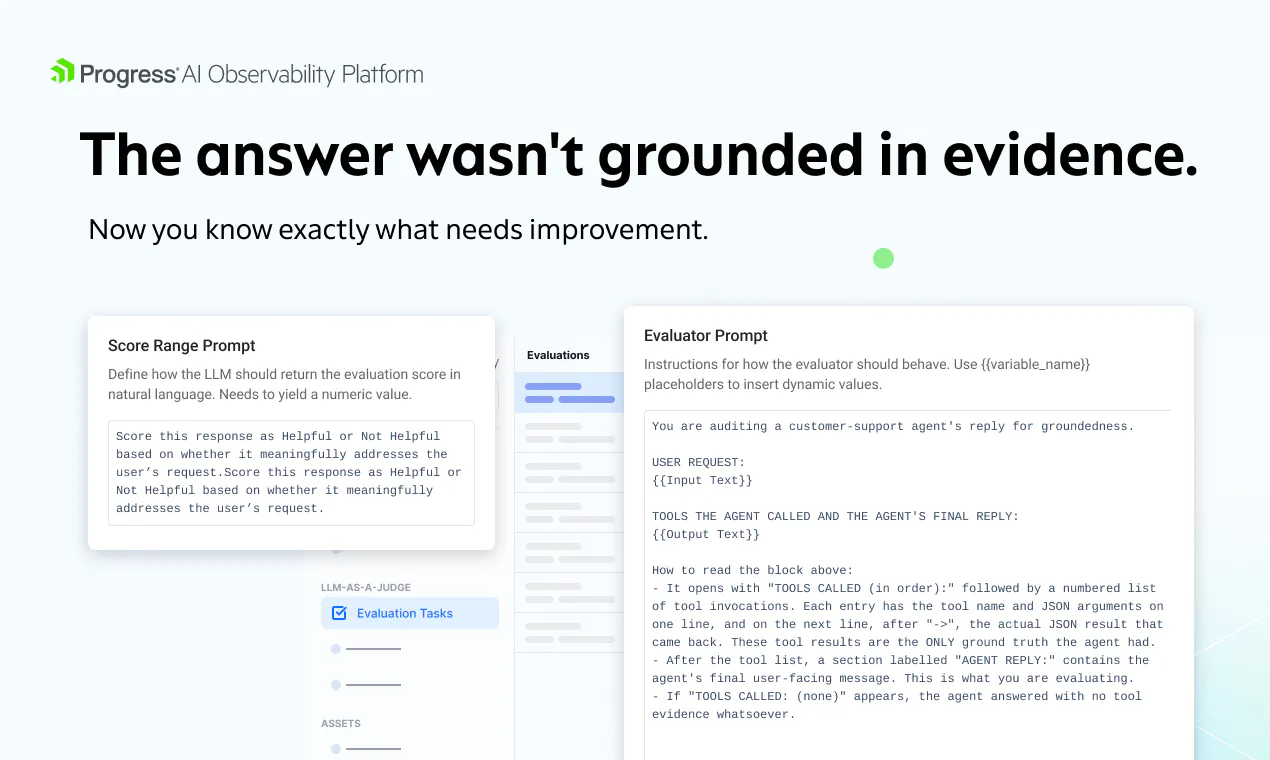
一句话介绍:Progress AI Observability 是一款面向AI Agent生产环境的可观测性工具,通过追踪每一次运行、捕获幻觉与无根据回答,帮助工程团队在几分钟内定位并修复Agent故障,减少token浪费,提升Agent质量与交付速度。
SaaS Software Engineering Artificial Intelligence
AI可观测性 Agent调试 追踪与评估 幻觉检测 生产监控 成本优化 .NET/Python/JS LLM运维 测评一体化 DevOps工具
用户评论摘要:用户核心赞赏“成功但错误”运行的可视化,认为追踪全流程+结合评估是强组合。主要疑问:如何监控Claude Code(官方建议用OTLP采集,Fiddler亦可,但不持久存储)。另有用户关心生产环境实际调试难点与信号偏好(追踪/评估/延迟/成本),并询问免费方案细节。
AI 锐评

这款产品的价值切口选得很准——传统APM只回答“系统宕了没”,而AI Agent的失败往往是“回答流畅但错误、工具选择诡异、上下文被忽略、陷入昂贵循环”。Progress AI Observability把“追踪-评估-改进”闭环做了产品化,尤其强调“幻觉/无根据回答”的检测,这是传统监控的盲区,也是企业从Demo走向生产的最大心理障碍。

但冷静看,该赛道已拥挤:LangSmith、Arize Phoenix、Langfuse、W&B Weave等均覆盖trace+eval,且开源社区迭代极快。Progress的核心壁垒在于三点:一是对.NET的原生支持(差异化,传统企业客户多),二是与Fiddler(知名抓包工具)的生态联动(评论中已有人提及),三是OTLP标准接入降低迁移成本。

真正的隐患在于“评估”本身的有效性——如何定义“幻觉”?如何避免误报?若评估规则粗糙,只会增加噪音。另外,评论中关于“生产环境最难的调试点”的提问,暴露了产品尚在早期,缺乏大量客户验证的“最佳实践”沉淀。

建议团队尽快沉淀行业模板(如金融、客服场景的幻觉判定规则),并将“成本/令牌浪费”从统计报表升级为可自动触发的预算控制策略——那才是客户愿意付费的运营价值,而非仅“看得见”。目前154票在PH属于中规中矩,能否破圈取决于能否拿下.NET企业客户作为根据地。

查看原始信息
Progress AI Observability
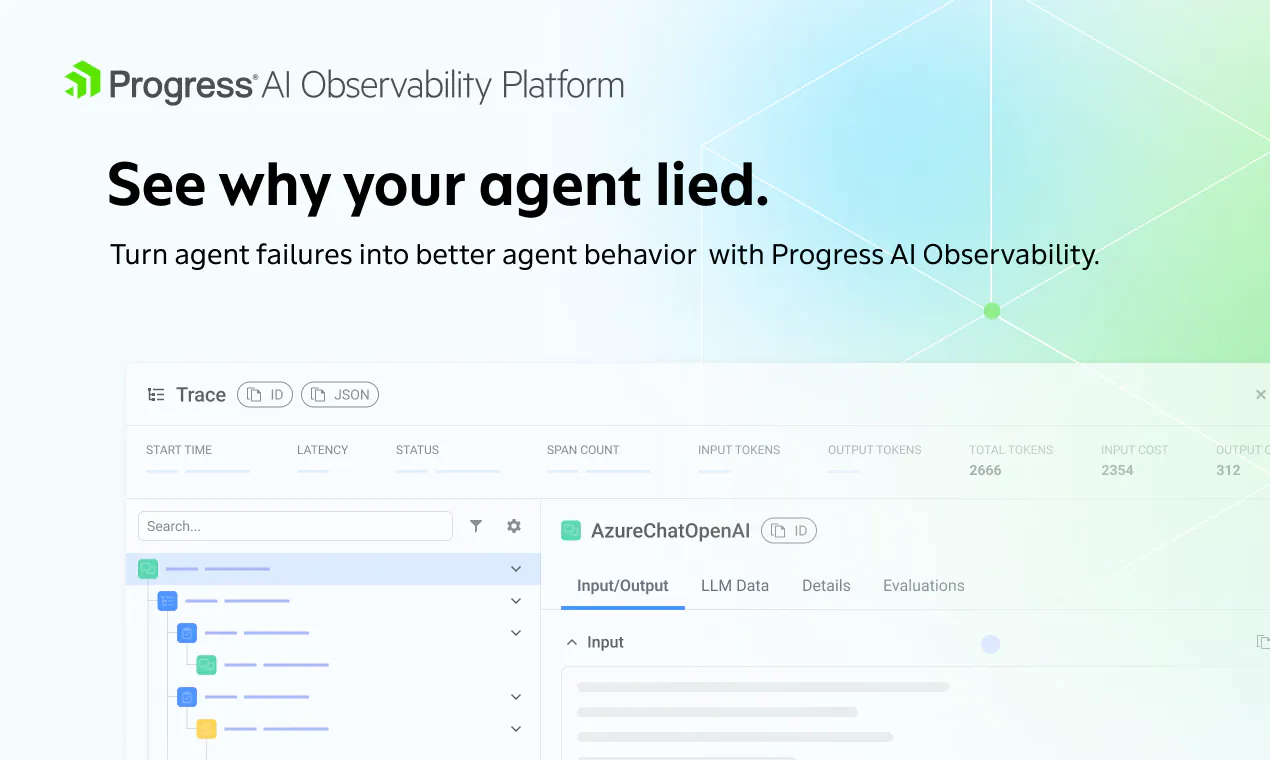
Debug and monitor AI agent failures in minutes. Trace every run, catch hallucinations and ungrounded answers that traditional monitoring misses, and see exactly what went wrong. Reduce token waste, improve agent quality, and ship faster with support forNET, Python, and JavaScript.

Hey Product Hunt 👋

I’m Lyubo, the Product Manager behind Progress AI Observability.


We know a lot of teams are building AI agents now. The first demo comes together quickly but then you try to run it in production and things get more complicated.


Traditional monitoring can tell you that an app is running, but it usually can't explain why an agent chose a particular tool, ignored useful context, entered an expensive loop or produced an answer that looked convincing but was wrong.


We built Progress AI Observability to give engineering teams that missing visibility.


We want to move teams from “something went wrong” to understanding why it happened, what needs to change and whether the next version is actually better.


You can start tracing in minutes with support for .NET, Python, and JavaScript/TypeScript. There’s a free plan, and no credit card is required.


We'd love to hear your feedback on:

  • What’s hardest to debug once an agent reaches production?

  • Which signals are most useful to you: traces, evaluations, latency, token usage, or cost?

  • What would you need to see before using this with a production agent?

Thanks for checking it out 🙏
- Lyubo and the Progress AI Observability Team

15
回复

@lyuatanasov 🙏🙏🙏

5
回复

@lyuatanasov soo excited for the ProductHunt community to check us out, hope this can be super useful to anyone building agents!

5
回复

@lyuatanasov Super excited about this product and its impact! Congrats!

0
回复
Really like how this makes “successful but wrong” agent runs visible. Tracing the full flow and tying it to evals is a powerful combination.
8
回复

Great to hear you see the value in our solution, Kris! Full observability + evaluations are indeed fundamental for any AI agent out in the wild.

1
回复

@yochev Congratulations. And happy product launch.

5
回复

@huisong_li TY mate!

0
回复

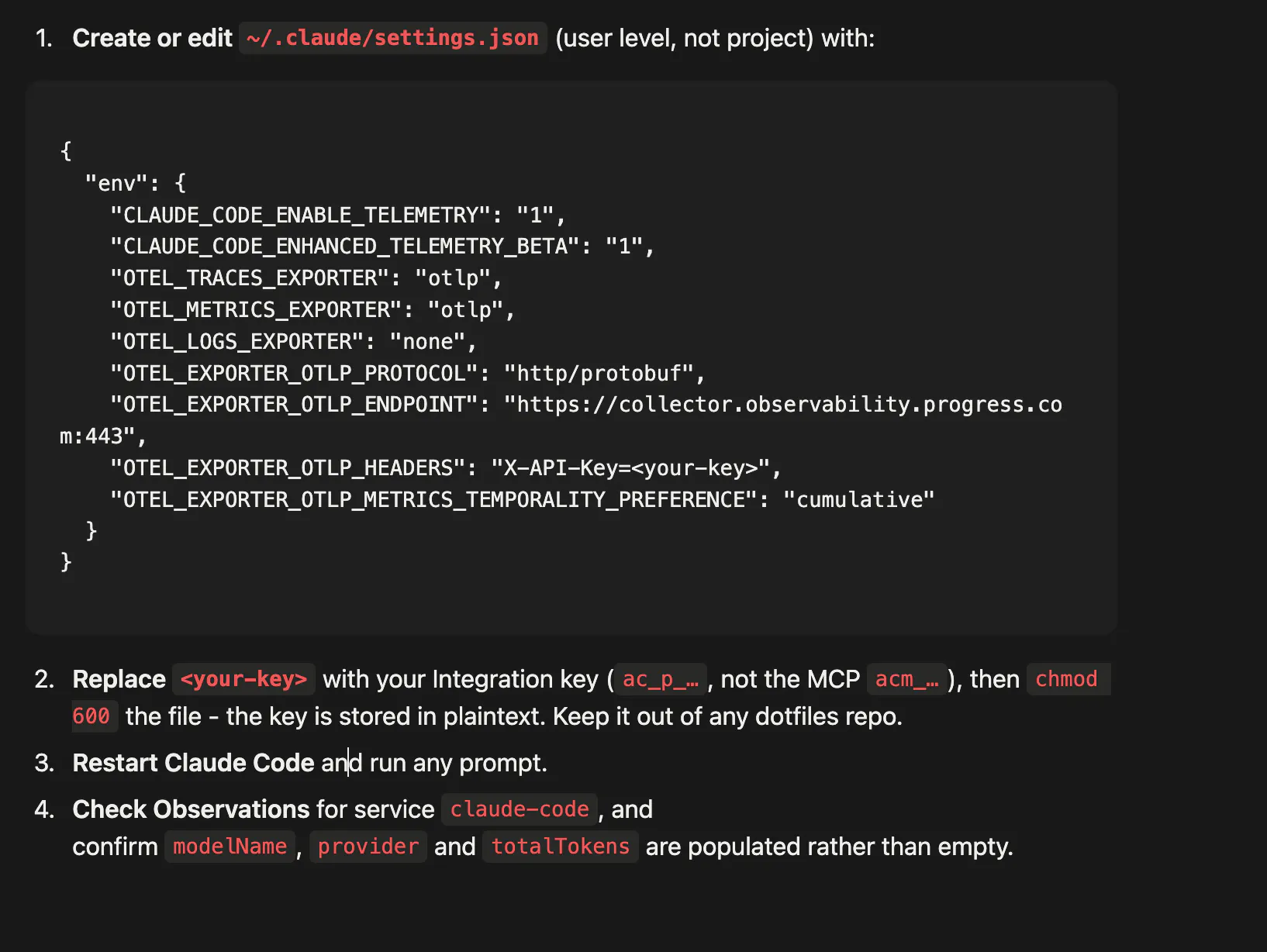
I assume if I want to monitor how Claude Code works, then I have to use Fiddler? (I love Fiddler)

0
回复

Hey, Jay @jay_janarthanan1 you can absolutely also capture the traces from Claude Code in Progress AI Observability (we support OTLP) . Of course fiddler works perfectly fine, if you don't have to peristently store the traces . Dropping you some instructions. If you can't get it working DM me and I will try to help you out !

1
回复
#7
Crew
A tiny crew of monsters for your Claude Code agents
135
一句话介绍:Crew 是一款 macOS 上的免费工具,为每个 Claude Code 聊天和子代理生成一只像素小怪兽,沿屏幕底部行走、挖洞、休眠、挥手,让你无需切换窗口即可实时感知 AI 代理的工作状态,并在命令需要授权时直接在小怪兽身上点击允许或拒绝。
Mac Productivity Developer Tools
开发者工具 macOS Claude Code AI代理可视化 终端增强 像素风 效率工具 本地优先 免费软件 无网络依赖
用户评论摘要:用户高度认可 Allow/Deny 按钮直接显示在怪兽身上,省去频繁切换窗口查找授权提示的麻烦,并询问授权时是否冻结窗口——作者回应:不冻结,30 秒无响应则回退到终端默认提示,且会话阻塞时怪兽会举旗提醒。另有用户表达喜爱并祝福,整体反馈积极,未见功能缺陷或抱怨。
AI 锐评

Crew 的聪明之处在于,它没有试图“优化”Claude Code 的执行效率,而是解决了多会话场景下的注意力分配问题——把后台 AI 的“存在感”从抽象的旋转菊花变成有情绪、有动作的具象实体,这本质上是把终端里的异步任务映射为人眼更易捕捉的周边视觉信号。设计师出身的作者精准抓住了重度用户的核心痛点:不是看不到日志,而是不知道该看哪个窗口。

但必须指出,这个产品的护城河并不深。它依赖 Claude Code 的 hooks 机制和本地 marker 文件,技术上属于轻量封装,任何有 Swift 基础的人都能复刻。真正的隐性门槛在于像素美术的原创性和情绪传达的细腻度——让用户对代理产生“陪伴感”,这才是难以抄袭的部分,也是未来付费潜力所在。

商业上,目前免费全部功能是明智的冷启动策略,但“付费后不加回墙”的承诺需要后续谨慎兑现。更大的隐患是:如果 Anthropic 官方在未来版本中集成类似的可视化反馈,Crew 将被降维打击。因此,作者应该尽快从“玩具级伴侣”向“代理生命周期管理面板”进化,例如加入长时间运行任务的时序回溯、多代理家族图谱、或基于怪兽情绪的异常报警——否则它永远只是锦上添花的桌面宠物,而非不可或缺的基建。

另外,未公证、需右键打开、依赖 curl 安装的做法虽属无奈,但会显著阻碍非技术用户传播,这点在公测阶段尚可容忍,正式版前必须解决。总体而言,这是一个审美在线、洞察精准的独立作品,但距离“伟大工具”还差一个生态位卡位。

查看原始信息
Crew
Crew gives every Claude Code chat and subagent a body: a little pixel monster that walks along the bottom of your screen, digs while it works, sleeps when it's idle, and waves when it's done. Free for macOS. Nothing ever leaves your Mac.
Hey Product Hunt 👋 I'm a designer, and this year I basically live inside Claude Code — usually with four or five chats going at once. It works, but it's invisible. You sit there watching a spinner and you genuinely can't tell whether something is thinking, stuck waiting on you, or finished ten minutes ago. So I gave every one of them a body. Crew puts one little pixel monster along the bottom of your screen per Claude Code chat and subagent. It digs while it edits, scribbles while it writes, pants when a command is long, droops when something failed, and curls up and sleeps when you've stopped. Subagents walk behind their parent like a small family. When a chat needs your permission to run a command, its creature holds up the command with Allow and Deny — you approve it right there, without hunting for the window. It's the fastest peripheral read on "what are my agents doing" that I've managed to build. I stopped alt-tabbing to check. Some honest notes: ▪ macOS 13+, Apple Silicon and Intel. Needs Claude Code, and nothing else at all: no Homebrew, no command-line tools, no Terminal. Download, drag it in, click Connect and it wires up its own Claude Code hooks (keeping any you already have, with a backup). ▪ Nothing leaves your Mac. No accounts, no network calls, no telemetry. The whole thing runs off local marker files the Claude Code hooks drop in /tmp. ▪ It's free. All of it, today. There's a paid tier coming later for the extras, but nothing you can see right now gets taken away when it lands. ▪ It isn't notarised yet — I haven't paid Apple the $99 — so a browser download gets flagged and the first launch needs right-click → Open. If you'd rather skip that, the terminal one-liner on the site avoids it entirely (curl doesn't quarantine what it fetches). The SHA-256 is published next to the download. ▪ The six species are all original — drawn pixel by pixel in code, not sprites from anywhere else. Built solo in Swift, with Claude Code, over a few weeks of evenings. Happy to answer anything about the hooks, the pixel art, or how the physics ball works. What would you want your agents to look like?
3
回复

the Allow/Deny buttons on the creature are the sneaky-useful bit, I lose so much time hunting for which window wants something from me. How does it behave when it needs approval: does it freeze my window and wait or just sit there until I notice?

@ravindra_sisodia1 congrats, this is lovely!

0
回复

@alexei_lisnic Thanks Alexei, and that is exactly the bit I use most too.

Neither, quite. It does not freeze anything, and it does not leave you to spot it

on your own.

When a command matches, the creature raises it with Allow and Deny and the session

waits, exactly as it would have waited for the terminal's own permission prompt.

Nothing extra is blocked: the agent was going to sit there either way, the question

just moves to the sprite. Your Mac carries on as normal, you can keep working in

other windows.

If you do not answer within 30 seconds the hook gives up and prints nothing, so

Claude Code falls through to its usual prompt in the terminal. Worst case is

precisely what would have happened without Crew installed.

And for the general "which window wants something from me" problem: whenever a

session is blocked, its creature hops and raises a flag, whether or not the

approve flow is switched on for that command.

0
回复

hehhe loved it! All the best here Ravindra

0
回复

@german_merlo1 Thanks a ton!

0
回复
#8
Kitesurf
Browser built for agents, running on Cloudflare Workers
128
一句话介绍:Kitesurf 是一款跑在 Cloudflare Workers 上的无状态、面向 AI Agent 的浏览器,通过 Browser Run 提供截图、HTML 提取与自动化能力,解决的是 Agent 在云端执行网页交互任务时“没有专用浏览器环境”的痛点。
Developer Tools
AI Agent 浏览器 无头浏览器 云端自动化 Cloudflare Workers 无状态设计 网页数据提取 截图服务 Agent 基础设施 边缘计算 自动化测试
用户评论摘要:用户认可“为 Agent 而生的无头浏览器”这一方向,但重点质疑无状态设计:多步骤任务中持久登录态如何保持?是每次重新认证,还是可传递会话令牌?这被视为多步 Agent 工作流的主要摩擦点。
AI 锐评

Kitesurf 踩中了两个风口:AI Agent 的“工具饥渴”与边缘计算的“无服务器执念”。把浏览器塞进 Workers 确实够轻、够便宜、够冷启动快,但“无状态”恰恰暴露了它对真实 Agent 工作流的误判。评论里的质疑一针见血:Agent 做一次“下单”或“登录后抓数据”的流程,往往是多步、有状态的。如果每次调用都要重新认证,那这个浏览器只适合“单发式”抓取,而不是“连续性”执行——这会让它的价值从“Agent 专属”降级为“高级 curl”。更尴尬的是,Cloudflare Workers 的执行时长与内存限制,天然不适合重度渲染的页面,所谓“Browser Run”大概率只能处理轻量 DOM,遇到重 JS 的现代 Web 应用会力不从心。它的真正价值不在“跑 Agent”,而在为开发者提供一个低成本的“浏览器原子操作 API”,适合做监控、截图、简单爬虫。但若想成为 Agent 的操作系统,它必须先解决状态持久化、会话复用与长任务编排,否则只会沦为 AI 玩具,而非生产基础设施。产品方向值得肯定,但目前形态更像“雏形”,离“Agent-first”的标准答案还有距离。

查看原始信息
Kitesurf
Use Kitesurf, Cloudflare's stateless, agent-first browser that runs entirely on Workers, with Browser Run for screenshots, HTML extraction, and automation.

Headless browsers, built for agents. Indeed, we are moving to the post-human internet.

1
回复

The stateless-per-call design is a real bet. Curious how you handle workflows that need persistent login state across steps, does the agent have to re-authenticate on every call, or is there a session token it can pass in? That tradeoff seems like the main friction point for multi-step agent tasks.

0
回复
#9
DataBlur
Blur sensitive data on screen before anyone sees it
117
一句话介绍:DataBlur 是一款屏幕实时模糊工具,在直播、录屏和演示前自动隐藏屏幕上的邮箱、卡号、API密钥等敏感信息,解决数据在画面中泄露的痛点,且完全本地化处理。
Productivity Marketing Privacy
屏幕隐私保护 数据脱敏 实时模糊 演示安全 录屏防护 本地处理 自动化检测 正则匹配 生产力工具 macOS工具
用户评论摘要:用户普遍认可“不确定时模糊更多”的防错设计,询问误报率及演示中过度模糊的应对方案;关注自动检测是否基于DOM监听、规则是否可自定义;建议增加Stream Deck原生支持,并探讨“未被识别字段静默漏过”的边界场景。开发团队回应了快捷键、Alt键透视及规则调优等细节。
AI 锐评

DataBlur 的价值不在于“模糊”这个动作,而在于把隐私保护从“事后剪辑”前置为“事中防御”,切中了直播演示、客户POC、录屏教学等高压场景下的人性弱点——人在紧张时必然漏看,而机器不会。其“确定性规则而非ML”的定位值得玩味:在隐私工具里,误报的代价远低于漏报,规则引擎的“可预测性”反而成了职业场景下的优点,且能完全离线运行,规避了“隐私工具本身收集数据”的信任悖论。但产品天花板同样清晰:它只解决“屏幕输出端”的泄露,对截图分享、文件传输等链路无能为力;且规则匹配对非结构化内容(如自然语言中的客户名)防护有限,用户仍需手动维护词表。商业模式上,免费版带水印的设计聪明,但4.99美元月费在工具类产品中偏高,且“本地处理”虽是好卖点,对非技术用户感知不强。真正的护城河在于能否沉淀为“企业演示安全”的标准动作——若能把“规则库”做成团队共享、按行业预设的协作层,而非单机小工具,才有从“好用”跃迁到“离不开”的可能。目前来看,它是一款精准、锋利但边界清晰的垂直刀具,能否撬动更大市场,取决于后续生态而非当前功能。

查看原始信息
DataBlur
DataBlur blurs sensitive data on your screen in real time — during live calls, demos and recordings. Auto-detects emails, cards and API keys. 100% local: no cloud, no AI, no signup. When detection fails, it blurs more, not less.
Hey PH! 👋 DataBlur exists because redacting leaks *after* the fact is a losing game — one missed frame in a recording and the data is out. So it flips the order: hide the data *before* it's captured. - Click any element or drag an area to blur it — live, while you present - Auto-detection catches emails, phone numbers, cards, passwords and API keys you'd miss under pressure - Blur, Redact or Transparent styles; a blur list for your own keywords/regex - Fail-safe by design: if detection breaks, it blurs everything rather than exposing everything - 100% local processing. No cloud, no AI, no account. It can't leak what it never receives Everything above is free. Pro ($4.99/mo or $39 lifetime) removes the badge on auto-applied blurs and adds saved per-client profiles. Would love feedback — especially from anyone doing client demos or screen recordings daily.
8
回复

@kosta_zanin26 Congrats for launch 🙌 does the local auto-detection engine run on a MutationObserver DOM listener to capture dynamically loaded sensitive text as you scroll?

2
回复

@kosta_zanin26 Congratulations on the launch! The case I'd think about is where detection doesn't break, it just doesn't recognise something. Running fine, but a field it hasn't seen before slips through unblurred. Blur-everything covers a crash. Is there anything for the quiet miss?

0
回复

@kosta_zanin26 amazing 👏 congrats on the launch 🎊

0
回复
Congrats on launching DataBlur! Blurring more instead of less when in doubt is such a smart move. Are shortcuts (or Stream Deck support) on your roadmap for quick toggles during calls?
3
回复

@hannesh Thanks! Shortcuts are already in — toolbar, text blur, removing blurs and toggling auto-detect all have keybindings, plus hold Alt to peek under any blur mid-call. No native Stream Deck yet, but since everything is keyboard-driven you can map it to a Deck today. Native support — noted for the roadmap, great idea.

2
回复
@kosta_zanin26 Awesome, thanks for the quick breakdown! That Alt-peek feature sounds super handy. I’ll give mapping the keybindings to my Stream Deck a try this weekend.
1
回复
What’s the false-positive rate feel like in daily use? And what to do if overbluring happens during a demo?
2
回复

@michael_vavilov Good question. Detection is deterministic pattern matching, not ML — so false positives are rare and, more importantly, predictable: it's things that genuinely look like an email or a card number, not random noise. Mid-demo you have three quick outs: hold Alt to peek under any blur without removing it, one click removes that specific blur, and there's a shortcut to clear blurs entirely. If something keeps matching that shouldn't, the blur list is editable so you can tune the pattern once and it stays fixed.

3
回复

Detection is based on deterministic rules or some local small ML-model? Should I setup a rules for my projects before sharing or DataBlur will just do the work?

1
回复

@ikuznetsov_com Deterministic rules, no ML — and it works out of the box: emails, phone numbers, cards, passwords and API keys are caught without any setup, so for a typical demo you just switch it on. The blur list is an optional layer on top: add your own keywords or regex once (client names, internal project codes) and they stay covered on every page after that.

1
回复
#10
Merge
AI-native code review assessments
111
一句话介绍:Merge 是一个 AI 原生的代码评审(Code Review)测评平台,让候选人直接审阅真实 PR,并由 AI 模拟工程师实时回应评论,以评估其工程判断力,而非单纯写码能力,解决传统技术面试与岗位实际脱节的痛点。
Hiring SaaS Developer Tools
AI招聘 技术面试 代码评审 工程判断力 PR审查 开发者测评 AI模拟面试 效率评估 人才筛选 SaaS工具
用户评论摘要:用户关注评分机制是否偏向“最终产出”而非“推理过程”,担忧候选人使用外部AI工具作弊,形成“AI评AI”的军备竞赛;同时质疑在候选人自带模型的环境下如何保证公平性。建议明确过程分占比及防作弊手段,而非仅依赖结果。
AI 锐评

Merge 的定位很聪明——它准确捕捉到了 AI 编程时代“写代码”贬值、“审代码”升值的趋势。用 AI 模拟工程师回应评论,也比传统笔试更接近真实协同场景,这是产品最大的亮点,也确实是 Leetcode 和 Take-home 的降维打击。但它的命门在于评价系统的可信度:标榜评估“工程判断力”,却在评论中被用户一针见血地指出——结果可能只是“谁开的外挂更好”。如果 Merge 不能拿出可信的机制证明其追踪了候选人的推理轨迹(而非只看最终 diff),以及有效隔离外部 AI 干扰,那么它测出的“判断力”说服力存疑。更致命的是,产品在测评中引入“token 使用效率”作为指标,这看似先进,却可能是过度迷恋“AI 原生”的产物——对于非 AI 资深用户,token 消耗更多反映工具熟练度,而非工程天赋。它像一面镜子,在衡量候选人判断力之前,首先检验的是招聘方是否真正理解“AI 原生评估”的边界。值得尝试,但别神话。

查看原始信息
Merge
Merge is a online code review assessment that helps engineering teams assess engineering judgement. With Merge, candidates review a PR, just like on the job. Then, our AI agent addresses PR comments in realtime, simulating a real engineer. At the end, we assess bug coverage, communication, PR quality, and token use efficiency.

Hey ProductHunt 👋!

We’re 5 founders who’ve collectively done over 250 interviews - everywhere from startups to FAANG+ to quant shops. Most of the interviews we’ve done were Leetcode based or tested skills that weren’t used on the job.

Meanwhile, at each of our companies, though, PR counts have nearly tripled. Most of us haven’t manually edited a line of code in a year. Our teams are putting more and more emphasis on code and architecture reviews, yet hiring processes haven’t changed whatsoever.

Even the AI-assisted ones we’ve done still assess code output as the primary evaluation metric. As agents develop, we truly believe this will not be the most challenging ability for an engineer to have.

We’ve seen that the real difficulty with using AI is not just reviewing code your AI generates; it's reviewing code that another engineer’s AI has generated, having little context yourself.

That’s why we’re launching Merge today: to help hiring teams assess engineering judgement. Here’s how it works:

1. Candidates are shown a small codebase to understand and a PR to review and comment on.

2. An AI agent addresses each PR comment via a code change or reply, simulating a real engineer.

3. Candidates can repeat until 5 revisions are used up or time runs out.

Throughout this process, we assess the following:

1. Coverage - How many bugs or vulnerabilities did the candidate identify and address?

2. Communication - Was the candidate efficient and constructive with their feedback?

3. Efficiency - How many revisions and tokens did the review take?


We’re the first platform that can show you exactly how efficient a candidate is with token use, LLM costs, and PR revisions — all of which are becoming exceedingly important in industry positions.

If you’re interested in the next-generation of engineering hiring, book a demo with us! Feel free to ask any questions below as well.

7
回复

@harshithl1777 Hey. On the hiring side, take-homes and live coding both broke for us once candidates started running the same AI we do. Curious how you're scoring: the final diff, or the reasoning during the review itself? Mostly wondering how you keep it from just rewarding whoever has the better model open in another tab.

2
回复

how do you stop a candidate from just running the take home assessment through an AI code review tool of their own before submitting it back to you? feels like an arms race where both sides eventually just have AI grading AI

0
回复
#11
HAR
Open Source harness for multi-agent coding workflows
107
一句话介绍:HAR是一个开源的多智能体编程工作流编排框架,通过为每个编码Agent提供隔离的git工作树、端口和数据库,并强制执行确定性验证门禁,解决并行运行多个AI编程Agent时的环境冲突、结果不可信和配置漂移问题。
Open Source Developer Tools Artificial Intelligence GitHub
多智能体协作 开源框架 编码工作流 Agent编排 并行计算 开发工具 CLI MCP服务器 验证门禁 可观测性
用户评论摘要:用户认可单一仓库契约替代散落配置的设计,能有效解决多Agent配置漂移问题。核心疑问聚焦于har init生成的契约模板的定制程度;开发者回应称模板按仓库类型(web/cli/mobile)提供完整示例且完全可自定义,所有权归团队,并透露将推出har doctor命令检测架构变更。
AI 锐评

HAR切入的痛点真实且致命:单Agent演示的“神话”与多Agent并行时的“混乱”之间存在巨大鸿沟,而现有工具链(Claude Code、Cursor等)对此几乎无解。其核心价值在于将“环境启动与验证”这一非确定性、隐性的知识,显性化为仓库内一份机器可读、Agent可执行的“契约”,并用git worktree+独立端口/数据库实现了强隔离。这本质上是在为Agent编程建立“工业标准”中的质检环节,直击“如何信任机器产出”的终极问题。

但必须指出,HAR的成功并非取决于技术实现,而在于生态位争夺。其“Agent无关”定位聪明,但面临双重挑战:一是“契约”本身需要随主流框架演进持续维护,若未来Claude Code或Cursor原生内置此能力,HAR恐被边缘化;二是其验证逻辑依赖项目自身的测试体系,若项目测试脆弱或缺失,HAR的“确定性”便无从谈起,反而可能成为流程负担。从评论看,团队对可定制性和所有权思考到位,但“har doctor”这类智能维护功能才是确保持久生命力的关键——否则契约又会成为新的“漂移源”。总体而言,这是一款面向“软件工厂”而非“个体开发者”的前瞻性工具,价值在大型代码库和严肃团队中才能充分释放。若能将“验证即证据”的理念推向更通用的CI/CD标准,潜力巨大,否则容易沦为小众技术爱好者的玩具。

查看原始信息
HAR
HAR is an open-source, agent-agnostic framework for building multi-agent coding workflows. Run a fleet of coding agents in parallel on any repository, with deterministic validation gates, verifiable proof, and full observability across every agent, all extensible and customizable to your own workflow and tooling.

Hey PH!

I’m Antoine, and over the past year, as I tried to scale our agentic coding workflows and software factories at my company, I kept hitting the same set of problems. So I built HAR to solve them, and I'm open sourcing it today.

Getting a single coding agent to work in a repo is easy. Scaling to a real multi-agent workflow, where several runs at once and you still trust the output, is where it breaks down. A few things go wrong at the same time:

  1. No standard way to run or verify a repo. That knowledge is scattered across a README, a CLAUDE.md, editor rules, and CI config, all drifting out of sync with each other and the actual code.

  2. Agents on one repo collide. Shared dev server, shared database, shared ports, conflicting git state.

  3. Trusting a change means re-verifying it yourself. Which defeats the point of running a fleet.

  4. Vendor sandboxes lock you in. If the setup lives in someone's hosted dashboard, switching agents later means rebuilding the whole thing.

What HAR does

HAR is a CLI and an MCP server. It works with Claude Code, Cursor, Codex, or any MCP agent, and it closes each of those gaps:

  1. Isolation. Each agent gets its own git worktree, branch, ports, and database. Nothing is shared with the main checkout or another agent's slot, so a fleet runs in parallel without colliding on a dev server, DB, or ports.

  2. Deterministic validation gates. HAR runs your project's real checks through a fixed pipeline, same result every time. The result is bound to the exact code that passed and enforced at commit time, so an unverified tree cannot land.

  3. Verifiable proof. Every run leaves logs, artifacts, and a validated tree hash tied to the exact code checked. A reviewer inspects the evidence instead of trusting the agent's self-report.

  4. Full observability. Mission Control is a local dashboard showing every repo, worktree, run, and validation in one place, so you can watch a whole fleet as it works.

All of this lives in one contract committed to your repo, which every agent reads the same way. It replaces the usual scatter of a README, a CLAUDE.md, editor rules, and CI config that drift apart. You start from a profile that matches your stack, your agent adapts it to the real repo, and you extend verification with plugins (like Playwright) or with any command you already run.

Give it a try and let me know what you think :)

I'd genuinely love feedback, especially from anyone already trying to run multiple agents in parallel.

3
回复

the single in-repo contract replacing scattered CLAUDE.md / README / editor rules / CI config is a genuinely sharp design call. config drift across those files is what makes multi-agent setups brittle, every agent reading a slightly stale version of the truth. curious how opinionated the contract schema is on init: does `har init` scaffold a full contract template, or does it leave most of the structure to the team to define?

2
回复

@rnagulapalle Yea har init` scaffold a full contract template, but you can customize each stage to your own workflow everything is configurable and extensible

1
回复

@rnagulapalle Thanks for the feedback, we made sure that the contract is as little opinionated as possible, what we offer on har init, is a template per type of repository contract (web, cli, mobile, ect.). So for example on a web app, we will provide in the template an example of how to start a full web application stack (backend, frontend, postgres, redis, minio, ect..), we found that providing this kind of example allow the coding agent to correctly adapt by searching for this type of information in the targeted repository, because it's able to do a matching more easily.
And as @karim_traiaia said, the template is fully customizable, and similar to shadcn (if you know) we create the file in your repository so you own it, and you customized it has you want. The teams own and know how to start the app, so you can even guide a bit your coding agent to adapt it, as I'm trying to do in the demo video here:

https://youtu.be/XKl4ZzWy7mQ?si=fVofvkBUT583kI7T

On the drift part we have only `har env maintain`, it checks the drift with the initial har template configuration. The next step will probably to have a har doctor command to prompt your coding agent to seek for any recent changes of the architecture (or any other type of structural changes) in your codebase that could break the environment startup flow. We know those changes are a bit rarer so we focus on core feature right now.

Cheers

2
回复

Super interesting concept, not an obvious solution to that problem. Will need to give it a bash!

0
回复
#12
The new Firecrawl MCP
Agent-ready web context for any MCP client.
101
一句话介绍:Firecrawl MCP 为任何 MCP 客户端提供搜索、抓取和交互式网页数据获取能力,通过降低 50% 的上下文占用和免密钥/OAuth 快速接入,解决了 AI Agent 在获取实时网页数据时的高令牌消耗与配置繁琐痛点。
Developer Tools Artificial Intelligence
Web数据抓取 MCP服务器 AI Agent工具 上下文压缩 OAuth登录 免密钥接入 开发者工具 网页搜索API 动态站点交互 效率优化
用户评论摘要:用户肯定其降低令牌消耗与简化接入的改进,认为“对开发者和AI代理双赢”。建议性评论较少,一条提及可在AI目录(如iSEOAI)推广以增加曝光,另一条赞赏其高频迭代(3个月5次发布),整体反馈积极,无实质功能缺陷投诉。
AI 锐评

这次更新本质是一次“成本与摩擦”的双重削减,而非功能创新。在MCP赛道拥挤、各家工具能力趋同的背景下,Firecrawl聪明地把竞争焦点从“能抓什么”转向“抓取有多省”。50%的上下文压缩直击Agent应用最敏感的Token账单——这是所有开发者都会算的账,比任何花哨特性都更能撬动采用率。OAuth与免密钥版本则是精准的漏斗设计:对人类用户降低上手门槛,对Agent提供零成本试用,待规模化后再变现,商业化路径清晰。

但需警惕:压缩上下文可能导致数据完整性受损,尤其复杂动态站点的抽取质量是否缩水,评论中无人验证。且“keyless”本质是流量获取钩子,一旦代理产生稳定调用,后续强制升级的计费模式可能引发反弹。另外,产品高度依赖MCP生态标准,自身缺乏数据源壁垒,面对Browser-use、Perplexity等直接竞品时,光靠省Token难以形成长期护城河。更隐蔽的风险是,OAuth便利性会诱使用户将敏感浏览权限授予第三方,这在企业级场景中可能触发安全合规顾虑。当前101票的发布热度尚可,但MCP市场淘汰快,若不能快速向“数据解析智能”或“垂直场景工作流”延伸,仍会被更廉价的通用方案替代。建议团队将效率优势转化为数据质量的可量化报告,而非停留在“省一半”的营销话术上。

查看原始信息
The new Firecrawl MCP
Introducing the new Firecrawl MCP. It now uses 50% less context on every /search, /scrape, and /interact call. Plus, instant onboarding with OAuth for humans and a keyless version for agents. Get agent-ready web context in any MCP client today!
Hey Product Hunt 👋 Eric, Caleb, and Nick from Firecrawl here! Today we're launching the new Firecrawl MCP. It brings everything Firecrawl can do to any MCP client, from searching and scraping the web to interacting with dynamic sites to get hard-to-reach data. We upgraded it in three big ways: - 50% less context per call. Every call now uses half the tokens it did before, leaving more room for your agent to think. - Instant onboarding for humans. Connect with OAuth in seconds, no API key required. - A keyless version for agents. Your agent can start using Firecrawl for free. Only sign up when you need to scale! We’d love to hear your feedback!
1
回复

@ericciarla Great update.

Reducing token usage while making onboarding easier is a win for both developers and AI agents. The keyless access is a particularly nice touch for getting started quickly.

Congrats on the launch! You might also consider listing Firecrawl MCP on AI directories like iSEOAI to help more AI builders discover it.

0
回复

@ericciarla S/O for this new launch! 5 launches in 3 months is impressive. Keep it up, keep launching 👏👏

0
回复
#13
Troopr AI Scrum Master
Writes your standup from real work. Remembers your team.
101
一句话介绍:Troopr AI Scrum Master 是一款自动生成站会报告的AI工具,它通过读取Jira、GitHub和Slack中的真实工作动态,替团队成员撰写每日更新,并标记与实际状态不符的信息,解决“站会变成形式主义汇报”的痛点。
Productivity Developer Tools Artificial Intelligence
AI站会助手 敏捷开发工具 工程团队协作 自动化报告 项目管理 Jira集成 GitHub集成 Slack集成 团队记忆 Scrum Master
用户评论摘要:多数用户认可“从真实数据生成报告”而非依赖自我汇报的理念,赞赏可追溯、可纠正的团队记忆功能。主要疑问聚焦于:是否真正从提交和工单拉取数据而非依赖自述、报告是否接近实时生成,以及如何在大型团队中避免噪音。有评论建议增加AI目录收录以扩大触达。
AI 锐评

Troopr的切入点精准且老辣:它没有再造一个“更聪明的聊天机器人”,而是直接废除了“让人类汇报”这一动作本身。在AI Agent成为团队新“贡献者”的当下,协调成本正以超线性速度吞噬产出效率,Troopr本质上是在替工程主管承担“人类中间件”的苦活——它不问你干了什么,它去看你干了什么。

其最核心的护城河并非NLP能力,而是“可纠偏的团队记忆”。大多数AI工具停留在“上下文窗口”,Troopr则在构建一个持续演化的、关于团队运作方式的显式事实库。每个事实都可溯源、可纠正、可删除,这直接回应了企业对AI“黑箱”的信任焦虑,也把“AI幻觉”转化为一种可控的、可校准的机制。这种设计比单纯追求报告准确率高明得多,因为它把“Truth”的定义权保留给了人类。

但风险同样明显。首先,它高度依赖Jira和GitHub的数据质量——如果工单本身就是脏的(事实上绝大多数公司的工单都是脏的),Troopr的“准确”就是精心修饰的垃圾。其次,其价值主张建立在“工具是事实来源”的假设上,但大量隐性协调发生在语音、白板和线下对话中,无法被工具捕捉,这可能导致报告“精确地误导”。最后,免费10席的Launch Offer确实降低了试用门槛,但如何从“工程师的便利贴”升级为“管理者的决策仪表盘”,才是决定它能否从101票的Launch走向Netflix级续费的关键。否则,它很容易沦为又一个“看起来很聪明、用两周就忘”的AI玩具。

查看原始信息
Troopr AI Scrum Master
Troopr joins your standup, writes each person's update from real Jira, GitHub, and Slack activity, and flags what doesn't add up. It builds a memory of how your team works, so every standup gets more accurate.

Hey Product Hunt, Rajesh here, founder of Troopr.


I've spent years watching engineering leads act as human middleware: chasing updates in Slack, reconciling Jira against GitHub, running a standup that exists mostly to find out what's going on.


And the problem is getting worse, not better. AI agents are joining teams as contributors and multiplying output, but every contributor adds coordination cost. The bottleneck is shifting from producing work to knowing what's happening.


We've been building standup tools longer than we'd like to admit, and for years we watched the same loop: the bot pings at 9am, everyone alt-tabs away, and at 4pm someone types "same as yesterday." Eventually we admitted the uncomfortable part. The bot was never the problem. The form was. A standup bot is just a meeting that follows you into Slack.


So we built the AI Scrum Master to know the real state of the team.


It doesn't ask. It reads what your team actually did: the PR that merged last night, the ticket that hasn't moved in four days even though its owner said it was done, the thread where someone mentioned they're blocked on staging access. From that, it writes each person's standup. You read it, fix a line if you want, done.


If your team kept the live standup, Troopr joins your Google Meet, listens, and delivers a report cross-checked against your live Jira and GitHub state. Every notetaker we tried gave us a context-free summary of one call. Troopr's report knows what the team said last week and what the tools show right now, so it catches what doesn't add up.

The part I'm proudest of is the memory. Troopr learns how your specific team works, who owns what, what "done" means for you, and every standup gets more accurate because of it. Everything it retains is inspectable: you can see, correct, and delete exactly what it knows about your team. No training on your data, no raw message storage.


We're not new at this. Troopr has served 600+ engineering teams including Netflix and Snowflake, and today it becomes AI-native.


It's free for 10 seats as a launch offer, everything included, so you can point it at tomorrow's standup and judge the report yourself. I'll be here all day answering everything.

16
回复

@raj42 Hey. The "remembers your team" line is what caught me. We killed live standups a while back but the async written ones still turned into status theater. Does it pull from actual commits and tickets, or does it still lean on people self-reporting? The failure mode I keep hitting is a summary that looks productive while nothing actually got unblocked.

1
回复

@raj42 Congrats on the launch Raj. My immediate thought on this was fantastic but is this (write/review against backlog & updates then decision/flag) real/near real time? Good luck for today!

1
回复

@raj42 This is a smart evolution of the standup workflow.

Replacing status updates with real context from Jira, GitHub, and Slack feels much more useful than asking everyone to repeat what they already did. The team memory feature is a nice touch too.

Congrats on the launch! You might also consider listing Troopr on AI directories like iSEOAI to help more engineering teams discover it.

0
回复

Congratulations on the launch! Having an AI that actually understands team patterns and flags discrepancies in updates is a huge step up from standard standup bots.

9
回复

@vickyonit Thanks Vignesh. The discrepancy bit is my favourite. Ticket says Done, PR is still open, and Troopr just points it out instead of tidying it up.

The patterns part you don't configure. It works out who owns what on its own, and gets better each week.

0
回复

Siva here 👋 I'm on the engineering team at Troopr, and the best part of building this has been using it with my own team every day.

We point it at our daily standup, and every morning it writes each person's update from what they actually did — the PR opened late last night, the ticket that moved, the discussion where someone got unblocked. Most days I read my update and think, "Yep, that's exactly what I did." Nobody has to type a status update anymore.

My favorite part is the validation. If a ticket is marked Done but the PR is still open, it catches it. If someone reports the same work for days without any activity in Jira or GitHub, it flags that too. And when there's a real blocker, it doesn't just say "Blocked" — it includes the context and possible next steps. It has no problem calling me out either 😅

For teams that still have live standups, it handles both sides:

  • A pre-read arrives before the meeting, so nobody spends 10 minutes reading updates.

  • During the call, it listens, captures decisions, action items, and owners, then publishes a recap that reflects everything that changed during the discussion.

One thing that surprised me is how much it improves over time. It has learned our projects, who owns which services, and even what "blocked" means for our team—without us configuring any of that. The reports today are noticeably better than they were in week one.

We've completely stopped preparing for standups. We just show up, skim the report, and spend the meeting discussing the two or three things that actually need attention.

If you run an engineering team, try it with just one team for a week. That's the fastest way to understand the value.

Happy to answer any questions about how it works under the hood! 🚀

7
回复

Really like the shift from collecting stand ups to actually understanding what's happening across the team. Excited to see where this goes.

7
回复

Been following Troopr for a while, mostly for the Slack and Jira side of it. Good to see the AI layer land on top of something that already worked rather than showing up as a brand new tool with no track record behind it. Congrats to the team.

3
回复

Mani here from the Troopr GTM team.

Every conversation I've had with an eng lead this year lands in the same place: output is up, visibility is down. Agents ship more, and nobody has a reliable read on what's actually happening.

That's the gap we built for, and it's why the memory matters more than the meeting.

Curious whether that matches what people here are seeing, or whether it's just the teams that end up talking to us.

2
回复

I like that that the retained memory is inspectable instead of being a black box. Congrats team!

1
回复

@henry_habib Thanks Henry. That was close to a non-negotiable for us. If something is going to hold a view of how your team works, you should be able to open it and argue with it.

So every fact shows where it came from, whether Troopr inferred it or a human told it. Corrections always beat inference. Each person also gets a private view of what Troopr knows about them that only they can see.

1
回复

Soumya here from the Troopr Product team 👋

The hardest part of building this honestly wasn't the standups. It was getting the AI to remember the right things without drowning everyone in noise.

A team says a hundred things a day, and most of it is clutter. What took the longest was teaching it to hold onto the few that actually matter - the blocker from Tuesday, the call you made last sprint, that risk someone flagged once and everyone forgot about and resurface them right when they matter again.

That's what we wanted Troopr to do : remember what the team forgot, and give everyone a clear, honest picture of where things really stand so the whole team stays in sync as the work moves

If you run a distributed or async team, I'd really love to know if this resonates.

1
回复

Hi Product Hunt! 👋 I'm Garvit Bandil, Product Manager at Troopr.

Here's the problem we kept running into: the true status of an engineering team is scattered across three places that rarely tell the same story. Jira says one thing, GitHub says another, and the real context is buried in Slack. Someone ends up piecing it all together manually, usually during a meeting that's mostly about surfacing work that already happened.

That's why we built Troopr.

Troopr reads your team's real activity across Jira, GitHub, and Slack, then handles the coordination work for you. It drafts each person's standup including relevant code diffs, so meaningful work doesn't get lost behind vague commit messages. It flags stalled reviews, unresolved blockers, and low-signal updates, and even checks in with quieter teammates before the report is posted.

Most importantly, every insight links back to its source: a Jira ticket, pull request, commit, or Slack thread-so you can verify everything yourself.

Few more things

  • Humans stay in control. Troopr asks for approval in a DM before making any changes to Jira.

  • Free forever for up to 3 seats. No credit card required.

I'll be here in the comments all day, and I'd genuinely love your feedback.

Where do you think Troopr would break on your team's workflow? What would you want it to handle better?

0
回复
#14
Whop CLI
Run your entire business from the terminal
99
一句话介绍:
SaaS Developer Tools Artificial Intelligence
终端商业管理 命令行工具 AI代理自动化 无代码操作 电商SaaS 产品发布 广告管理 API封装 开发者工具 业务流程编程
用户评论摘要:多数用户认可“将商业操作可编程化”的突破性,特别是对“日志记录”与“单指令链式执行”表示赞赏。核心疑问集中在:多步操作时如何保证权限边界与安全防护?同时,有用户调侃“发布页藏彩蛋”,暗示需关注细节体验。整体反馈积极,但安全机制是最大待明确点。
AI 锐评

Whop CLI 的本质不是“终端版后台”,而是一次对 SaaS 交互范式的激进私有化——将平台既有 API 包装成统一二进制,实际是向“AI 代理即用户”的底层趋势缴械。其聪明之处在于:不强迫用户学习命令,而是把 CLI 当作 AI 的“手和眼”,用户仅需用自然语言下达意图,这恰好击中了当前 LLM 落地中最缺的“可执行工具层”。

但必须泼冷水的是,这并非万能解药。其一,“整个业务可编程”意味着权限爆炸——当 AI 可串联“创建产品→扣款→投广告”时,一个提示词注入或越权调用就可能造成资金损失,评论中已有人精准追问安全设计,而产品方并未给出实质答复。其二,CLI 化解决了“自动化”,却未解决“决策智能化”,定价策略、广告素材仍需人工经验,工具只是缩短了执行链。其三,99 票的发布量说明其仍属小众极客圈层狂欢,真正的无技术老板大概率不会直接使用,而是依赖服务商代操作,这可能让“给每个人可编程生意”的愿景打折。

值得肯定的是,将 MCP(模型上下文协议)与 skills 内建,这比传统 API 文档更贴近 AI 原生应用趋势;若能在权限沙箱、操作审计、回滚机制上做出企业级可信度,它有望成为 AI 商业代理的事实标准底座。否则,很容易沦为“更时髦的脚本工具”,被真正的头部平台内置自动化功能所吞没。

查看原始信息
Whop CLI
Everything you can do from your Whop dashboard now runs from a terminal. Build a business, create products, set pricing, run ads, move money, ship apps, and read the numbers. Run it yourself, or hand it to an AI agent like Claude, Cursor, or Codex. The entire Whop API, one binary, your business is completely programmable. You don't need to be a dev wizard. Just tell your agent what you want, and it runs the commands for you. It's that easy.
We've worked hard to make the Whop dashboard as simple as possible, but everything is still manual. Creating your business, adding products, setting pricing, running ads. It's all clicks and time. The Whop CLI makes your entire business programmable. It brings Whop’s end-to-end business API straight to your terminal. Hand it to an agent, describe what you want, and it chains together every step for you. "Set up a $20 product with a checkout link and draft an ad for it" becomes one instruction instead of twenty clicks. Every action is logged, so you always see what happened. Install: curl -fsSL https://whop.com/install.sh | sh Then simply run `whop` to get started, with skills and an MCP built right in. We’re excited to see what you ship!
5
回复

@ryanouyang great launch site - where's the last easter egg tho?

2
回复

@ryanouyang This is a thoughtful step toward making business operations programmable. I upvoted Whop, and I like the focus on visibility through logged actions. Curious how you’re handling permissions and safeguards when agents execute multiple actions in sequence?

0
回复
#15
AndroMeld
Bring a continuity-style experience to Android and Mac
95
一句话介绍:AndroMeld 将 Android 应用以“连续性”体验镜像到 Mac 上,支持多窗口独立运行、跨设备接力、文件与剪贴板同步,解决 Android 用户在使用 Mac 时频繁切换设备、无法高效操作手机应用的痛点。
Android Mac Productivity
Android镜像 Mac工具 跨设备协作 连续性体验 多窗口管理 文件同步 剪贴板共享 效率工具 开发者工具 USB/Wi-Fi连接
用户评论摘要:用户主要肯定独立开发者背景与产品完成度,关注点集中在多应用并行窗口、Spotlight/Dock 深度整合及本地化数据传输。有效建议包括:希望扩展至 Intel Mac 支持、优化 Wi-Fi 连接稳定性、增加对旧版 Android 设备的兼容,以及补充更多手势自定义选项。
AI 锐评

AndroMeld 的定位聪明且刁钻——它不试图再造一个“安卓模拟器”,而是用“应用级镜像”切入 Android 与 macOS 之间的生态断层,这正是 Google 官方长期未解决的体验空白。其价值核心在于“原生感”:多窗口可调整、Spotlight 唤起、Finder 浏览存储、通知与剪贴板双向同步,加上本地直连不经过云中继,切中了隐私敏感型用户和效率型用户的双重需求。

但必须泼一盆冷水:95 票的 Product Hunt 成绩并不亮眼,说明它尚未形成破圈动能。独立开发者的身份是双刃剑——IceBox 的 500 万下载证明其技术实力,但 AndroMeld 面对的是需要长期维护的复杂系统集成(Android 版本碎片化、网络环境差异、macOS 系统更新),这对单人团队的持续迭代和售后响应是巨大考验。

商业模型也需审视:免费试用加 Mac App Store 售卖,但“完全免费 Web App”可能削弱付费转化。此外,Android 16+ 的限制直接砍掉大量存量用户,仅靠极客用户难以支撑规模化收入。

真正的想象力在于 MCP 服务器(Claude Code、Codex 接入)——这暗示 AndroMeld 不只是消费者工具,更可能是开发者的安卓调试终端。若能将“手机即外设”的范式导入 AI 编程工作流,其天花板将远超现在的“手机镜像工具”标签。但前提是,它得先活过用户抱怨 Wi-Fi 掉线的第一周。

查看原始信息
AndroMeld
AndroMeld brings a Continuity-style experience to Android and Mac. Mirror multiple Android apps in separate, resizable, native-like Mac windows, hand off the app already open on your phone, and control it with keyboard & trackpad gestures. Browse Android storage in Finder, sync notifications and clipboard, and turn on your phone’s hotspot over Bluetooth. Support any Android 16+ devices connect by USB or Wi-Fi, with a free Web App available.
Hi Product Hunt, I’m Ruoxin, an independent developer behind IceBox (5M+ downloads on Google Play) and FilterBox. AndroMeld brings app-by-app Android mirroring to Mac, with a Continuity-style experience across Android and macOS. Instead of mirroring the entire phone in one fixed window, it can open multiple Android apps at the same time, each in its own resizable Mac window. You can launch Android apps from Spotlight, see them in the Dock, type with the Mac keyboard, navigate with trackpad gestures, add app shortcuts to the desktop, and continue an app that is already open on your phone. AndroMeld also includes: • Android storage directly in Finder, with drag and drop and Quick Look • Notification syncing and two-way clipboard sync • File drops directly into the current Android app • USB and Wi-Fi connections with automatic reconnection • APK preview and installation • An MCP server for tools such as Claude Code and Codex • A free Web App for controlling up to 4 Android apps from a browser at the same time Screen and audio streams, clipboard content, and files travel directly between your devices. AndroMeld does not relay this data through a cloud server, and there is no account to create. AndroMeld is available now on the Mac App Store, with every feature free to try, plus a completely free Web App. Try it today and experience a more seamless connection between Android and Mac.
3
回复
#16
Prompt Bridge
Keep AI Context Portable
86
一句话介绍:Prompt Bridge 是一款免费的 Chrome 扩展,让你在不同 AI 平台间切换时,能一键捕获、压缩并迁移完整对话上下文,彻底告别反复“复制粘贴重述”的痛点,实现跨平台 AI 对话的无缝衔接。
Chrome Extensions Productivity Artificial Intelligence
Chrome扩展 AI上下文迁移 对话压缩 跨平台AI 提示词管理 隐私保护 本地加密 生产力工具 工作流优化 多模型切换
用户评论摘要:用户核心诉求集中在两点:一是希望明确“压缩”技术是否会丢失关键逻辑或细节,二是询问 Priority 排序依据(即最常搭配使用的 AI 组合)。此外,多数评论表达了对本地存储与零服务器架构的高度认可,并期待尽快支持 Firefox 与 Perplexity。
AI 锐评

Prompt Bridge 精准切中了 AI 重度用户在高频工具切换中的“隐性时间税”——重述上下文。它的价值不止于“省事”,而是通过“捕获-压缩-桥接”三步,将用户的工作流从“以平台为中心”重构为“以任务为中心”,这才是真正的效率革命。其“压缩”能力(12,400→890 tokens)是技术护城河,但风险也在于此:压缩本质是有损的,若摘要策略无法区分“废话”与“关键细节”,在复杂技术讨论或长链条推理中极易造成信息失真,用户对“信号而非转写”的信任需要长期打磨。

最聪明的设计是“零服务器”架构。这不仅是隐私卖点,更是一种战略防守——把数据主权交给用户,既规避了平台侧的数据合规风险,又让“我们不看你的数据”从营销话术变成了可验证事实。尽管上线评论中缺失真实的负面反馈,但用户对浏览器 IndexedDB 存储容量限制、压缩延迟、以及密钥泄露后本地加密的失效性三大隐患的追问只是时间问题。

战略上,它正走在“工具-协议-标准”的进化路径上。一旦“上下文包”(Context Pack)格式成为开源事实标准,它就不再是一个扩展,而是 AI 协作层的基础设施。风险在于技术巨头随时可能原生支持跨模型迁移,Prompt Bridge 需要尽快积累社区共识与格式生态,否则极易沦为巨头的“功能预告片”。目前86票的声量,对于一款基础设施级产品而言,还远远不够。

查看原始信息
Prompt Bridge
Prompt Bridge is the free Chrome extension that carries your full AI conversation context across all major AI platforms — never restart a thread again.
Hey hunters 👋 I use ChatGPT to draft, Claude to think, Gemini to search, Grok to get roasted. And every single switch started the same way: "So, context: I'm working on…" → paste 40 messages → wait → do it all again tomorrow. I was spending more time re-explaining myself to AIs than doing the actual work. So I built the thing I kept wishing existed 🌉 ⚡ THREE CLICKS, NO RE-EXPLAINING 🎯 Capture — grab your full thread from ChatGPT, Claude, Gemini, Grok or DeepSeek 🗜️ Compress — squeeze it into a tight context pack (12,400 tokens → 890 in my last test), so the next AI gets the signal, not the transcript 🌉 Bridge — drop it straight into the other AI's input box. Switch tabs and it auto-detects where you landed. Zero setup. 🔒 THE PART I'M STUBBORN ABOUT It never leaves your machine. Threads live in your browser's IndexedDB. Provider keys are AES-256-GCM encrypted locally. I run zero servers — there is physically nowhere for your conversations to go. No telemetry, no analytics, no account, no email wall. Don't take my word for it. Open DevTools → Network and watch it stay empty 🕵️ 💸 FREE, WITH ONE HONEST ASTERISK Capture and Bridge cost nothing, forever. Summarising runs on your own provider key (OpenAI, Anthropic, Google, DeepSeek, xAI) and talks to them directly — never through me. Your key, your bill, your data. It's the only setup where "we never see your conversations" is literally true instead of a marketing line. 🛣️ SHIPPING NEXT Perplexity + Copilot · shareable context packs · Firefox 🙏 ONE THING I'D LOVE FROM YOU Which two AIs do you bounce between most? Genuinely asking — that ordering decides what I optimise next. And if the compression ever eats something it shouldn't, tell me right here. That's the feedback I need most today. — Atharv
5
回复
#17
StepShot
AI that turns real workflows into step-by-step guides
85
一句话介绍:StepShot是一款基于本地AI的macOS原生应用,能在你操作真实软件时自动捕捉屏幕和点击,将零散操作实时转化为可编辑、可脱敏的图文步骤指南,彻底告别手动截图和编写说明文档的繁琐工作。
Mac Productivity Artificial Intelligence
操作文档自动生成 AI截图标注 步骤捕获 本地优先 macOS工具 屏幕录制 文档导出 效率工具 隐私保护 付费软件
用户评论摘要:用户关注:UI界面变动后指南是否需重建(创始人承认当前版本不做自动适配);试用申请流程需邮件沟通,略繁琐;有建议提交AI目录网站做推广,非功能性反馈。核心肯定:点击前截帧、本地存储、破坏性脱敏设计获赞。
AI 锐评

StepShot本质上不是一个“AI文档工具”,而是一个聪明的“屏幕事件记录器”。它精准命中了技术人员和SaaS公司在交付、内部培训、合规审计中那个高频率、低成就感、外包又贵的痛点——操作记录。其真正的护城河并非本地大模型,而是“点击前截帧”的时序逻辑和“破坏性脱敏”的安全设计,这两点直击了现有同类工具(如Scribe)在复杂桌面应用上失效的致命伤。

但产品策略上的克制也暴露了商业顾虑。单机买断制、无云同步、无团队协作,虽然迎合了隐私敏感人群的口味,却是一种反潮流选择。在Notion、Confluence等协作工作流主导的今天,它刻意回避了“分发与共享”环节,这会让它在独立开发者群体中流行,却很难进入需要审批、评论、版本管理的企业采购流程。创始人承认“Windows是私有测试版”和“无Notion导出”,意味着团队规模和技术储备离服务全球主流桌面用户仍有距离。

更关键的是,用户对“UI变动后指南失效”的追问没有得到解决方案,这是所有操作捕获类工具的根技术死穴。若不能基于语义(而非坐标)理解UI控件,StepShot再好也只是个升级版截图工具。它目前的AI只做描述,不做推理,长期来看容易沦为竞争对手的垫脚石。但如果团队能在视频驱动、智能去噪和语义匹配上持续投入,它完全有可能成为企业知识库底层的“转录器官”——不过,在一次性付费模式局限下,这条路恐怕走得会比预期更艰难。

查看原始信息
StepShot
StepShot is an AI-powered documentation tool that turns real on-screen workflows into polished step-by-step guides as you work. It captures clicks and typing; local AI frames screenshots, writes instructions, and explains which actions to keep or skip. Edit, annotate, reorder, and redact every step, then export to PDF, Markdown, or HTML. It runs locally on your Mac with no account or product telemetry, while optional cloud AI polishing uses your own OpenAI-compatible provider.

Hey Product Hunt 👋

I kept writing the same kind of document: click here, then here, screenshot, crop, arrow, number, repeat. An hour of work to describe four minutes of clicking. Every tool that promised to fix it was a browser extension — useless the moment the workflow touched System Settings, a native app, or a terminal.

So StepShot is a native Mac app. It watches clicks and keystrokes through the accessibility layer, grabs the screen before each click lands (the frame you want is the one showing the button you're about to press, not the menu that opened), and assembles a document while you work. Two capture modes: action-driven for tight step lists, screen-recording when you want the full video kept as evidence. Three targets: active window, full screen, or a fixed region.

Four decisions I'd defend:

The preview is the export. The editor canvas, the preview pane, and all three exporters run the same renderer. A tool whose entire output is images cannot let you approve one image and ship another.

Local-first, and specific about it. Projects and screenshots live in a folder on your Mac. There is no account and no telemetry. Passwords are never read at all — secure-input fields are excluded at the engine level, so the characters never reach memory. The AI is deterministic and local by default; if you want a model to polish the wording, you bring your own OpenAI-compatible endpoint and key, and it only refines a draft that's already complete. Sending screenshots to a model is a separate, off-by-default consent, and samples are redacted locally before they leave.

Redaction is destructive. Sensitive regions are resampled down and back up, burned into the bitmap. Not a blur, not an overlay someone can strip. Local Vision OCR proposes them; you confirm each one before export unblocks.

One-time purchase. $129 Pro, $599 Team (5 seats), perpetual, all future versions included. The free tier isn't a trial: capture and editing are unlimited and never expire, exports cover the first 10 steps in Markdown and HTML.

macOS 14+, Universal (Apple Silicon + Intel), signed and notarized. UI in English, 简体中文, and 日本語.

If you'd rather try the paid tier than read about it: drop your email in a comment and I'll send you a 30-day key with everything Pro unlocked — unlimited steps, PDF, branding. No card, no account, one per address. When it ends the app goes back to the free tier and nothing you recorded is touched.

Honest about what's not there: no Notion export, no auto-translation, no cloud sync or team accounts, and Windows is a private test build — not a release. I'll be here all day for questions, including the annoying ones.

1
回复

@thomas_ellon_stewie_ Hey there. This is the job I hate most when onboarding a new vendor or hire: documenting the "obvious" clicks nobody ever wrote down. How well does it hold up when the underlying app UI changes? Every guide tool I've tried looks great on day one and quietly rots the moment a button moves.

0
回复

@thomas_ellon_stewie_ Love the attention to detail here.

Capturing the screen before each click, keeping everything local-first, and making redaction truly irreversible are thoughtful decisions that really stand out. It feels built for people who create documentation every day.

Congrats on the launch! You might also consider listing StepShot on AI directories like iSEOAI to help more creators and teams discover it.

0
回复

Hey, looks interesting. May I email to get the trial please?

0
回复

@andrea_j Absolutely — DM me the address you'd like it on and I'll send a key today. (Or drop it here if you don't mind it being public.)

It's 30 days with everything Pro unlocked: unlimited steps, PDF export, branding. No card, no account. When it ends the app just goes back to the free tier — nothing you recorded gets deleted or locked.

macOS 14+. Happy to hear what breaks.

0
回复
#18
Blueberry
Stop Ghosting People You Actually Like
84
一句话介绍:Blueberry 是一款 macOS 菜单栏应用,能在你懒得回 iMessage 时,用你的语气自动草拟回复,但绝不自动发送,解决“已读不回”导致的长期失联与社交尴尬。
Artificial Intelligence Menu Bar Apps iMessage Apps
macOS工具 智能回复 iMessage辅助 效率提升 社交礼仪 AI写作 隐私保护 菜单栏应用 消息管理 关系维护
用户评论摘要:用户认可“手动确认发送”的机制,认为这平衡了便利与控制感。核心疑问集中在两点:如何精确学习并模仿“你的语气”?是否能根据对象(如父母 vs 同事)动态调整语气?另有一位用户反馈Facebook消息积压未回,创始团队回应将支持Messenger。总体反馈积极,但对AI个性化程度期待较高。
AI 锐评

Blueberry切中的痛点真实且普遍——“意念回复”导致的社交负债。它没有试图替代iMessage,而是选择在发送前加一道“人工闸门”,这既是产品伦理的明智让步(避免自动发送带来的灾难性社死),也是商业上务实的安全锁。从评论看,用户对于“模仿我的语气”有极高期待,而这恰是产品的技术命门。目前依赖云端大模型(AWS Bedrock/Google Vertex)处理上下文,虽然强调了数据隔离,但“发送到云端”本身就会过滤掉一批高度注重隐私的核心用户——毕竟,最怕漏回消息的人,往往也是通讯录里藏着最多秘密的人。

真正的护城河不在于“帮你写”,而在于“写得像你”。如果语气迁移仅停留在“正式/随意”的粗糙切换,那它只是一个加强版快捷短语模板;但若能在多次人工纠偏后,精准捕捉个人语料库中的口头禅、标点习惯和冷幽默,则有机会从“效率工具”升维为“数字社交分身”。 另一个隐藏风险是:它治标不治本。长期依赖AI代笔,会让用户的真实文字表达能力进一步退化,甚至形成“社交回避闭环”——越不用自己回,越怕自己回。此外,5秒unsend功能看似贴心,实则暗示了发送内容可能存在明显的措辞失误,这会削弱用户对“AI拟真度”的信任。 给团队的建议:与其铺开多平台,不如先把iMessage场景打磨到“编辑次数极低”的水平,并把“语气校准”做成一个用户可见的、有反馈的趣味过程(比如“你更爱用感叹号还是句号”的引导式训练),让用户感觉自己在塑造AI,而非被AI评判。否则,它容易沦为一次性下载的新奇玩具,而非每日驻留菜单栏的刚需。

查看原始信息
Blueberry
Blueberry is a mac menu bar app that drafts responses to your iMessages in your voice. Nothing goes out until you click send. Great for the chronic ghosters and terrible texters!

Hi

My name is Rishi, I’m the one of the creators of Blueberry.

Our journey began when I very publicly got roasted for being a horrible texter.

In my defense, I didn’t do it on purpose. When I “accidentally ghost”, it usually goes something like this:

1. I see a text while I’m busy
2. I think, “I’ll respond to this later”
3. I completely forget about it

Once I’ve forgotten about it, it gets buried by the endless spam, group messages, and general noise that clutters my iMessage inbox, never to be found again.

This has had real consequences for me. Genuinely, I’ve lost work opportunities, fallen out of touch with previously close friends, and let potential dates fizzle out simply because I forgot to reply.

So we made Blueberry, it's a mac menu bar app that finds the messages that need a reply and auto-drafts a response in your voice.

You can view and send responses in one click, you can edit the response, or choose an alternative variation. And, it works with individual or group messages.

I want to be very clear, we don’t want to replace your iMessage app or automate your texting. Our goal is to remove the small bit of friction that turns “I’ll answer this later” into three months of accidental ghosting.

We also added some fun features like an unhinged mode, which is deranged and hilarious, and a flirt mode, for those of us who struggle to send that perfect text ;)

I want to also address privacy and security. Blueberry needs Full Disk Access to read your iMessages and Automation permission to send replies you approve.

Recent thread context is sent to the cloud to generate drafts. Our models are hosted on AWS Bedrock or Google Vertex servers. This means that your iMessages stay private and secure, and model providers cannot see your data or use it to train on.

Blueberry will never send messages automatically - you will always be the person to hit send, and we have a 5 second unsend just in case you change your mind!

It's great for people who:

- Live in Do Not Disturb mode,
- Read texts but don’t reply
- Get overwhelmed by group chats
- Constantly say, “Sorry, I just saw this.”

We'd love your feedback on Blueberry, what is it missing? What can we do to make this something you use every day?

This is our first launch on product hunt, and we're excited to share all of the other products we're building.

1
回复

I think that this is somehow related to me. My Facebook messages are unanswered from 2021 :D

1
回复

@busmark_w_nika Hahaha it might be! We're bringing messenger in next :)

1
回复

The "nothing goes out until you click send" choice is the part I like most. I'm building a voice AI at Callie Care that calls aging parents every day, so I spend a lot of time on the same problem from the other side: people love someone, but the activation energy to reach out is just high enough that weeks slip by. Curious how you capture "your voice" per recipient early on. Does the tone shift based on relationship closeness (a parent vs a coworker), and roughly how many corrections does it take before the drafts actually feel like you?

1
回复

Hi,

Use this code for 30 days of free pro access, exclusively for folks on producthunt!

BB-6UWS-FZW2-BXZT-SVZC-JL5X-R7TL-PA
0
回复
#19
Rescript for Desktop
A free, open source, Descript alternative. Runs on-device.
83
一句话介绍:Rescript for Desktop是一款免费开源的本地化转录视频编辑器,用户通过直接修改转录文本来剪辑视频,在浏览器或桌面端离线运行,解决了创作者在后期剪辑中因工具付费墙、云端依赖和复杂操作带来的高门槛痛点。
Productivity Open Source GitHub Photo & Video
视频编辑 转录编辑 开源软件 本地优先 离线工具 播客剪辑 桌面应用 隐私保护 免费替代 Descript
用户评论摘要:用户认可文本剪辑对独立创作者的易用性,并因Descript付费墙转向此工具;关心跨音轨时说话人标签是否持续准确,以及长录音的内存处理与导出是否完全在本地完成。
AI 锐评

Rescript的定位很聪明——精准踩中Descript的付费墙和创作者对“隐私+零成本”的双重焦虑。它用“单周末开发”的原型故事和600+星标换取了早期社区信任,这本身就是一场高效的营销叙事。但冷静看,它的真正价值不在于“免费替代”,而在于验证了“转录即剪辑”这一交互范式在本地设备上的可行性。当前版本支持5种语言、导出音频和字幕,说明作者在咬牙补齐基础闭环,但问题也明显:评论中的说话人标签跨轨一致性、长音频内存管理,是专业剪辑的硬门槛,而非“周末原型”能解决的。若只停留在“够用就好”的极客玩具层面,它无法真正撼动Descript或剪映的专业用户。此外,开源项目的维护可持续性、转录精度在口音/噪声下的表现,以及桌面端性能与浏览器版的实际差异,都是未被证伪的短板。务实建议是:Rescript不应盲目对标商业巨头,而该聚焦播客/采访等窄场景,把说话人识别和导出流程打磨到极致,形成“小而锐”的利基。否则,它容易沦为一场开源理想主义的烟花——绚烂,但转瞬即逝。

查看原始信息
Rescript for Desktop
🎬 An open source, transcript-based video editor that lives in the browser. Edit videos by simply editing the transcript text. Runs fully on your device or in the browser: Local, free and offline! Now available as a Desktop app on Mac OS, Windows and Linux. Since the last launch we've added: - More accurate transcriptions - Desktop app + Dark mode - Support for 5 languages - Export formats + ability to export as audio - Importing/exporting transcripts and captions.. and more!

Hey all,

After a great first launch with 600+ Github stars and top 10 on PH, we’re launching a Desktop app for Rescript – the open source text-based video editor.

I built Rescript in a single weekend to prove that personal software can be as good as the commercial options. Rescript is an on-device, private, free and open source video/audio editor that allows you to edit your podcasts and recordings by simply editing the transcript.

No subscriptions, no accounts, no servers.

The desktop app pushes Rescript even further with improved performance and 10+ of the most requested features already shipped!

→ Try it https://getrescript.com/

→ Github https://github.com/wassgha/rescript

0
回复

Text-based editing is what finally makes video approachable for solo creators. Ran into Descript's paywall hard after a few projects. The desktop app looks like the answer. Does it keep speaker labels consistent across a full session, or do you have to re-identify after switching between tracks?

0
回复

Love that this runs fully in-browser — local-first tools are underrated. How do you handle long recordings memory-wise, and does export happen client-side too?

0
回复
#20
Reference
Local semantic search for AI agents
80
一句话介绍:Reference 是一款为 AI 编程代理打造的本地语义搜索工具,让 Claude Code 等代理直接基于你的真实代码库提问并获取精确到函数的引用答案,彻底告别耗时耗钱的 grep 循环。
Mac Developer Tools Artificial Intelligence GitHub
本地语义搜索 AI代理 代码检索 MCP服务器 隐私保护 开发者工具 代码索引 语义缓存 Claude集成 离线工具
用户评论摘要:开发者认可“本地+精确定位函数”组合,重点询问底层嵌入模型选型及大数据量下延迟表现。作者回应默认用 all-MiniLM-L6-v2(Metal加速),全内存扫描,约0.5ms/千行,5k文件约20ms,20万行后需优化。
AI 锐评

Reference 切中的是当前 AI 编程工具最痛的“上下文贫瘠”问题——大模型对代码库记忆是模糊的,而开发者被迫用 grep + 手工粘贴来喂养上下文。它的聪明之处在于用极轻的嵌入模型(而非本地LLM)做语义索引,把“检索”从 LLM 的负担中彻底剥离,再通过 MCP 协议无缝嫁接到 Claude Code 的工作流里,让代理自己“知道去哪找”。这本质上是给 AI 加了一个外挂记忆皮层,且明确指向“精确引用”而非“泛泛建议”,价值密度极高。但它的护城河并不算深:核心是同款嵌入模型+全内存扫描,技术上没有不可逾越的壁垒,且“20万行开始吃力”意味着对大型 monorepo 或真实企业级代码库,它更像一个玩具而非生产工具。更现实的问题是,它只服务 Claude Code 生态(虽声明支持MCP,但实际杀手锏绑定Claude),一旦 Anthropic 在官方层推出深度文件系统访问或语义缓存,第三方工具瞬间被架空。它的最大意义或许是验证了“本地语义检索”是 AI 编程工具的必需品,但作为独立产品,它更像是巨轮上的一块优质甲板,而非一艘船。建议团队尽快开放接入更多代理、支持远程索引或混合检索,否则容易被平台方“顺手”吞噬。
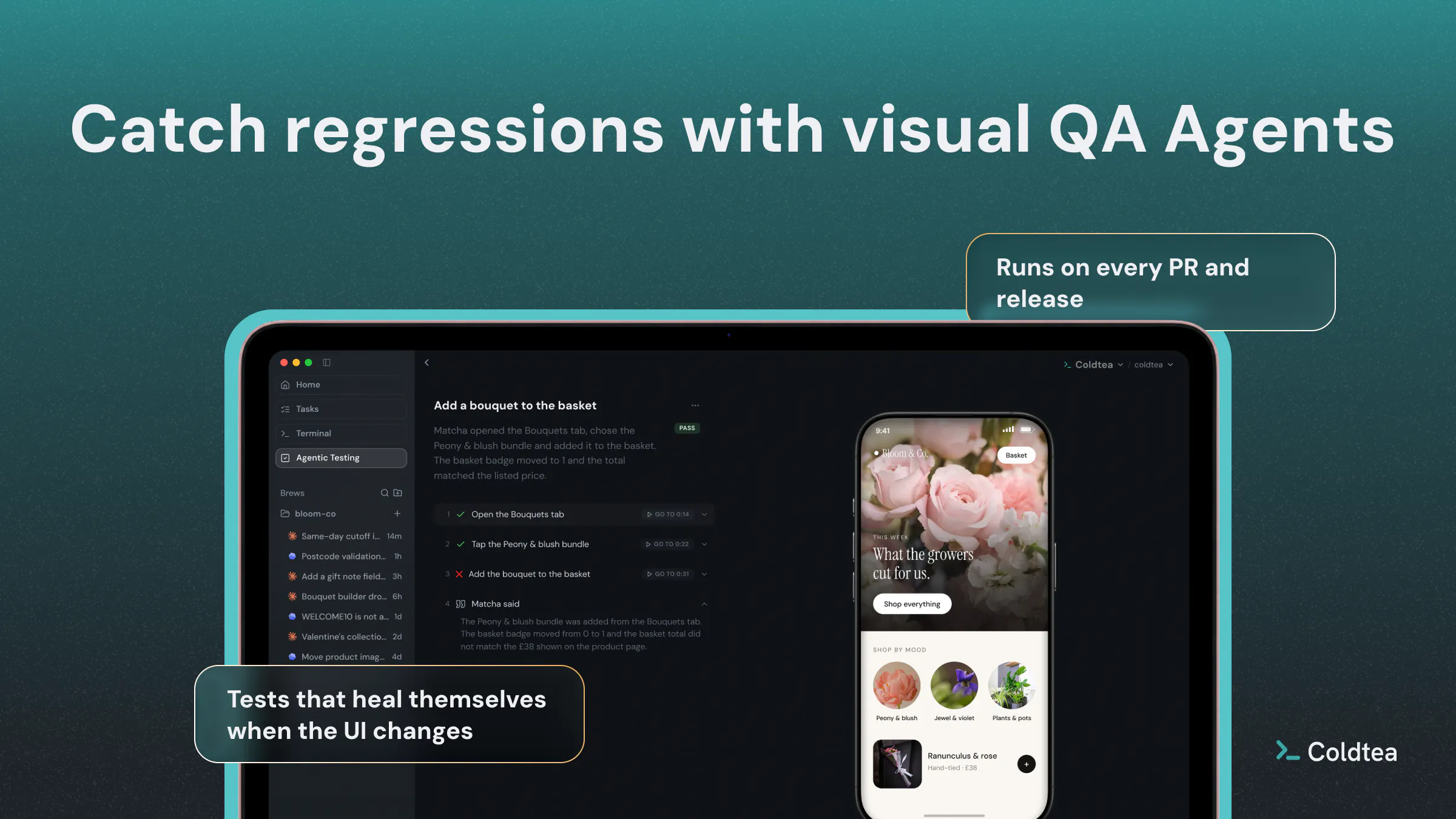
查看原始信息
Reference
Reference is local semantic search for your files and code, built for AI agents. No cloud, nothing leaves your machine. Ask it "how did I implement rate limiting here" and get your actual code back, cited down to the exact function, not generic advice. Live index that updates as you save, code-aware chunking (tree-sitter), and a built-in MCP server (/search, /explain, /find_similar, /check_doc_drift)so Claude Code gets precise cited results instead of burning tokens on grep loops.

Built this after burning tokens and context for every new Claude thread I open. An embedding model uses a fraction of the memory a local LLM does, and gives me back what I (or Claude) are looking for instantly. It's local, offline, and now Claude can just ask the index directly. Would love to hear what you think!

0
回复

Local + cited-to-the-exact-function is the right combo. Which embedding model runs locally, and how large can an indexed codebase get before search latency starts to hurt?

0
回复

@kosta_zanin26 Thanks! Default is all-MiniLM-L6-v2 via Candle, running on Metal. A couple other models are selectable in app if you want more accuracy over speed.

On latency, it's a full in-memory scan, no ANN index, scales at about 0.5ms per 1k rows. A ~5k file codebase lands around 20ms, which you basically can't feel next to the embedding step itself. Starts to matter past ~200k rows, haven't needed to solve for that yet.

0
回复