Product Hunt 每日热榜 2026-08-11

PH热榜 | 2026-08-11

#1
Tines 3B
The secure environment for agents, apps, and automations
377
一句话介绍:Tines 3B 是一个 AI 原生、代码优先的安全执行环境,让用户用自然语言快速构建并运行代理、应用和自动化工作流,同时通过凭据隔离、沙箱执行和全链路审计,解决 AI 生成代码“失控运行”带来的安全与合规风险。
Developer Tools Artificial Intelligence
AI自动化平台 安全沙箱 凭据管理 智能工作流 代码优先 企业级治理 无代码构建 审计追踪 AI代理 DevOps工具
用户评论摘要:用户普遍认可凭据代理注入与沙箱隔离设计,但追问细粒度权限控制与副作用防重机制(如写操作重跑风险)。非技术用户赞赏低门槛,IT团队关注跨部门自动化所有权、重复工作流治理及成本可视化。部分建议优化首页文案区分个人探索版与企业治理版。
AI 锐评

Tines 3B 精准踩中了“AI 生成代码”爆发后的治理真空——当 Copilot 和 Cursor 让每个业务人员都能快速产出脚本,企业面临的不再是产能问题,而是失控的凭据泄露、不可审计的 shadow IT 和运维黑洞。其核心价值不在“构建”而在“关进笼子”:通过代理注入凭据、沙箱网络隔离、以及连接器显式授权,从架构上杜绝了代码触碰密钥的可能性,这比任何事后扫描工具都更本质。

值得肯定的是,团队对“人”的洞察——允许员工用 AI 飞快试错,但上线必须经过 IT 可见的审批,这种“放水养鱼但设闸”的策略,既顺应了业务部门对 AI 自主权的渴求,又维护了平台方的信任生态。监控仪表盘对成本、重复工作流和弱认证端点的可视化,也直击大企业多云环境的账单惊吓与合规痛点。

但硬币的另一面是:当前“自动修复”机制在写操作上仍依赖人为确认,实质性限制了 AI 的闭环能力;环境级连接器虽在规划中,但尚未落地,意味着多环境隔离的承诺仍需验证。此外,产品叙事在“个人开发者/家庭实验室”与“企业级治理”之间摇摆,前者需要极致的轻量,后者需要深度的 RBAC 与策略引擎,二者对交互范式和部署模型的要求迥异,如何兼顾是后续产品分化的关键。

总体而言,Tines 3B 并非革命性的新品类,但它是“AI 工作流安全化”赛道上的一个高完成度竞品。它的成败取决于能否将安全优势从卖点转化为生态壁垒——即在连接器丰富度、社区模板质量和企业合规认证上持续加码,否则很容易被云厂商的原生 AI 运维平台或成熟 iPaaS 巨头复制。

查看原始信息
Tines 3B
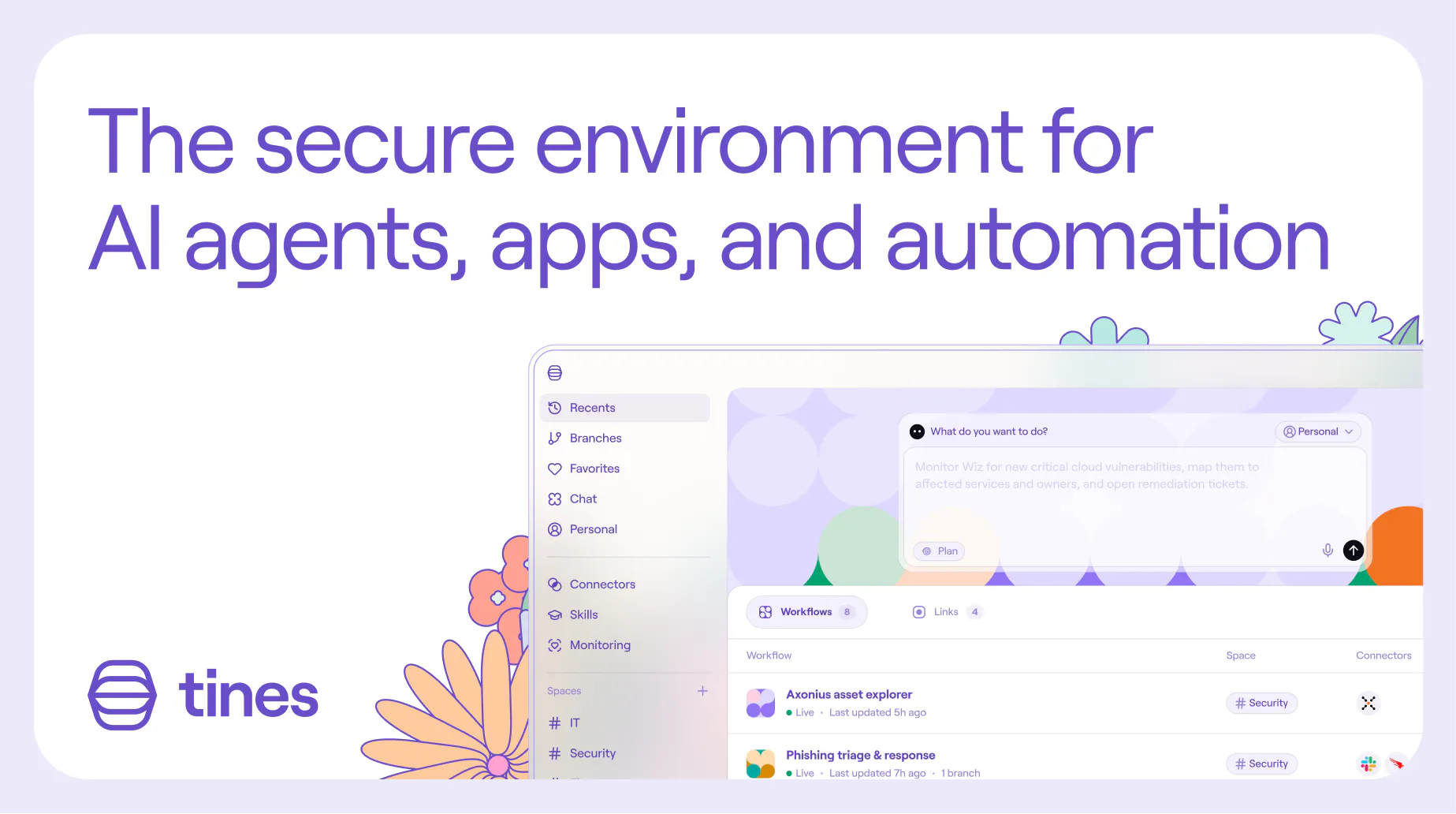
Tines 3B is the single, secure environment for your most important agents, apps, and automation. Build with AI, from anywhere. Code runs isolated and credentials stay protected. Everything you ship is fully auditable and monitored from one place. Tines 3B is code-first and AI-native, built to help you move fast without compromising on security. Explore Edition is available today and gives you access to 3 live workflows with unlimited users, spaces, and connectors.

Hey Product Hunt! Stephen here, Head of Product at Tines, and one of the makers of Tines 3B.

Last year, AI coding tools got good enough that anyone could build agents, apps, and automation fast. Just describe what you want, and pretty soon you have something that works. But what about what happens next? AI-generated software needs to connect to the real world, and it often does that by hardcoding API keys in plain-text files or databases. Handing credentials to models that can hallucinate or fall for prompt injection is a major risk. Run that code in a typical, unisolated container, and one bad step can contaminate the whole system.

We call this phenomenon wild code: it’s work that’s built fast with AI but runs ungoverned and unmonitored, while creating hidden security, financial, and operational risk.

With 8 years of intelligent workflow experience in supporting customers like Reddit, Coinbase, and Databricks, we knew how to solve this problem. And so we set out to build Tines 3B

What is Tines 3B?


A single, secure environment for everyone’s most important agents, apps, and automation. Tines 3B provides: 

  • Freedom to build with AI anywhere

  • Control to run and monitor that work

  • An AI-native, code-first platform built to work with LLMs and AI coding tools

We built Tines 3B with safety as a north star. The AI never sees your credentials. They are injected at runtime by a proxy that sits entirely outside the code.

Why launch on Product Hunt now? 


We recently introduced Explore Edition, a no-commitment way to try Tines 3B yourself. This community of innovators is exactly who we want exploring it first. You’ll have unlimited users, spaces, and connectors, and can push 3 workflows live. This includes tunneling into your own home network or self-hosted services, no port forwarding required. Build, run and monitor your apps, agents, and automation with credential protection, isolated execution, and full auditability.

Who is Tines 3B for?

  • Builders who want to go from ideas to workflows using natural language

  • IT and Security teams who need visibility into what’s running 

  • Anyone dealing with sprawl from AI-generated scripts, agents, and one-off tools

  • Innovators who want AI to write the code for their projects, home labs, or personal agents

We’d love your feedback


We think you’re going to enjoy building in Tines 3B, and feel the control it gives you. Powering the world’s most important workflows is what we’re here to do, and we want to know what you think.


We welcome feedback from this community on how you and your teams are managing AI-driven work, and where Tines 3B fits in your day-to-day. 


I’ll be in the comments all day, ask away!

49
回复

One very cool piece of inspiration on the site is the Examples Gallery. Some great real-world examples in there that help give a taste of what can be done on 3B, and can quickly be built out and run on the free Explore offering.

11
回复

Stephen — the “wild code” problem is concrete, but the launch invites both individual builders/home labs and enterprise IT/security while the homepage hero reads mainly for the enterprise approver (“You told everyone to use AI…”). I’d test one first-screen fork: “Build safely” for Explore and “Govern team AI” for Deploy, with one relevant proof and CTA for each. That would help a Product Hunt visitor answer where 3B fits day-to-day before choosing free signup or demo. I mapped a compact page order if useful.

0
回复

Just describe what you want, and pretty soon you have something that works. But what about what happens next?

This is the part that scares me as a non-traditional builder. I want to build, and learn, but I don't want to put myself or the company at risk. Thankfully, now I don't have to.

4
回复
I love how 3B made it easier for me to build any workflows I have in mind without the need to know about technical stuff like APIs or webhooks.
10
回复

@zmiro I love that bit too. I've also been so amazed by how Tines 3B is able to troubleshoot on its own. If it's having a hard time with the first plan of connection, it doesn't give up and put it back on me to figure out.

What have you built so far?

2
回复

The credentials never reaching the AI/code itself is probably the part I'd want to test first.

8
回复

Hey @joseph_parker3! In the age of AI, it’s more important than ever to keep credentials secure.

In 3B, credentials are injected at runtime by a proxy that lives entirely outside the code executed by workflows. This ensures that neither users or LLMs ever read secrets directly, mitigating the risk of runaway workloads or leaked secrets being persisted in context.

It’s also super important to us that users can understand and reason about how credentials are used in workflows. This can easily be viewed in the usage graph for every credential you configure in the product!

Check out our free Explore offering for any testing you’d like to conduct. See you in the product!

10
回复

This feels especially relevant for the little internal tools people build with Claude/Cursor and then somehow end up on six months later.

8
回复

@charles_eric3 You've hit on one of the key patterns we kept seeing. Six months later a credential has expired, the person who built it has moved teams, and nobody notices it's broken until someone complains.

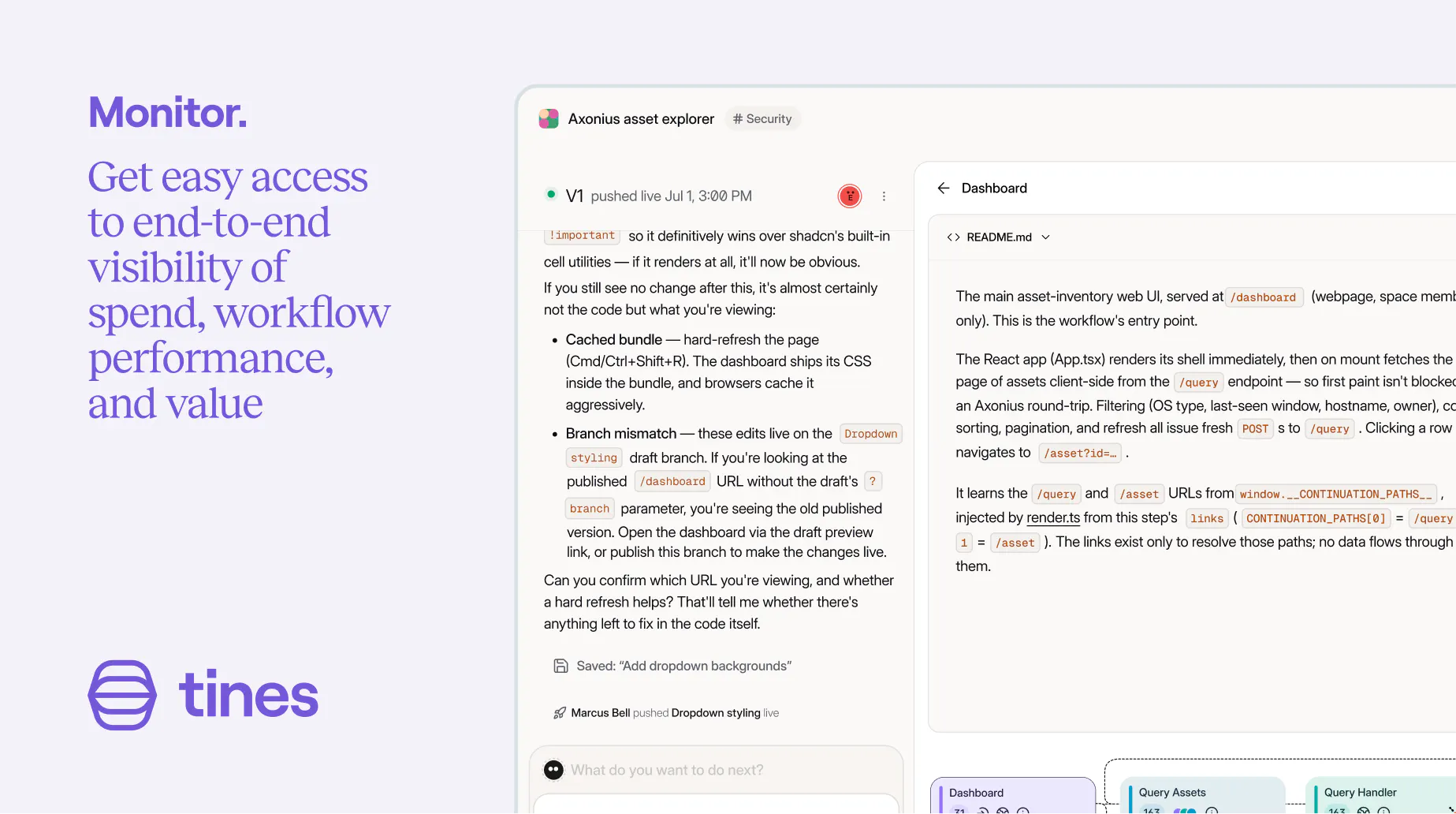
That's a big part of what Tines 3B is for. Everything you build sits in one place with an owner attached, full logs and an audit trail, and the credentials are held by the platform rather than pasted into a script. IT and platform owners get one view of everything running across the business, so an ownership gap gets picked up before it turns into an outage rather than after. If a step does fail, autofix reads the error, applies a fix on a separate branch, reruns it to check the fix actually works and then emails you. Your live workflow isn't touched until you approve it.

So that “little internal tool” stops being a brittle, personal side project and becomes something the org can run.

6
回复

@charles_eric3 'small software' is a term I've heard used for these tools. In the last month, Tines' marketing team has built over a dozen production apps that we are using every day.

1
回复

The credential isolation makes sense, but I’m still not clear on how the actual workflow is controlled. If AI-generated code can request credentials through the proxy, what prevents it from using those credentials to do something unintended? Is there granular control over what each workflow can access or do?

6
回复

Hi @mad94! Great question. The step’s code never sees the credentials themselves. It runs in a secure sandbox, and every outbound request must pass through our proxy (internally named Pony). A 3B connector must be explicitly attached to the workflow before it can be used, and the proxy only adds its credentials to requests sent to that connector’s approved URL. Because Pony runs outside the sandbox and a sandbox's networking is routed through Pony, the code cannot inspect, extract, or bypass the credentials. Within those limits, the workflow can perform actions allowed by the connector’s own permissions, so we also recommend using narrowly scoped credentials whenever possible.

It’s also super important to us that users can understand and reason about how credentials are used in workflows.

This can easily be viewed in the usage graph for every credential you configure in the product!

Check out our free Explore offering for any testing you’d like to conduct. See you in the product!

10
回复

Tines 3B is such an exciting launch for me! I've gone from needing a fair amount of support when building, to being able to build fully functioning workflows myself. The blocker now is knowing what I want to build next 😅

This kind of freedom to experiment and find new ways of working has been really fun, and challenging, but one I'm delighted to have. Not being the most technical person, I'm also super happy to still have guardrails up so I'm not just pushing code out into the universe! I'm not blocked from building, but pushing a workflow live is still something that the IT and Security team have visibility over.

6
回复

@danielle_swans I can totally relate! 3B has unlocked opportunities for me to build workflows I've always thought about but couldn't instrument myself. As a non-technical user, 3B is really a game changer and I get to build in a safe environment I know our IT team trusts.

4
回复

@Tines 3B has changed the way that our RevOps team works. Every use case is now solvable in a smart, secure, intuitive way.

4
回复

@steobrien This looks really impressive! I especially like the idea of keeping agents, apps, and automations in one secure and auditable environment.
Good luck guys!

4
回复

@adana Thank you!

1
回复

How are teams handling ownership when lots of small AI built automations start spreading across different departments?

Congrats team!

4
回复

Great question @hamza_afzal_butt 
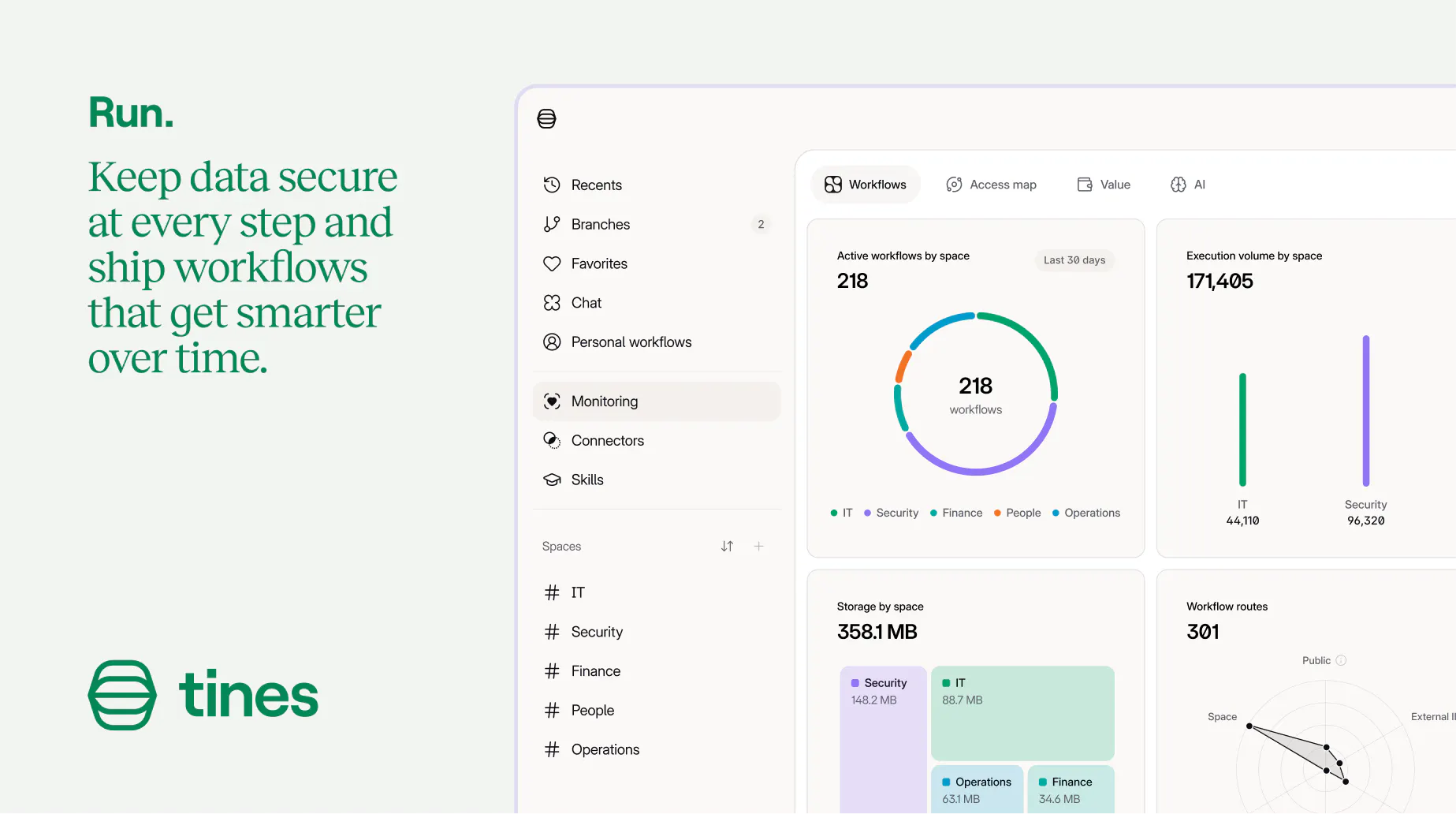
One of our favorite features in Tines 3B is the monitoring dashboard, it allows us to track all activity across Tines 3B.

In Tines 3B, everything rolls up into a space, so your IT and Security teams (or you!) can see what each department is doing. The dashboard gives a breakdown of executions, active workflows and storage used by space. Cost and AI usage are tracked too, so your workflows won't give you a surprise when its invoice time.

Something I'm really liking is the duplicate workflows section. It highlights similar workflows across all spaces and gives you the option to keep both, or pick one so you're not doubling up on workflows solving the same problem.

I wrote about the monitoring dashboard in our docs here if you're interested in learning more about how we approach this.

0
回复

@hamza_afzal_butt while I don't have or manage teams to have personal experience, it seems like an organization cam have a centralized owner for 3B, and then each department or team can have their own subset group access. So everything built within will be accessible and manageable to the group above and centralized across the full organization using it.

5
回复

@hamza_afzal_butt That's a big part of the core value proposition of 3B. The main area that helps manage that in Tines 3B is our monitoring dashboard. It enables the tenant owner to have visibility across all the automations, apps, and agents across the different departments using it.

In Tines 3B, everything rolls up into a space (think:team), so you can see what each department is doing. In the dashboard:

  • There are dedicated breakdowns for executions, active workflows and storage by space.

  • Failing workflows surface automatically.

  • Duplications and dependencies are visible for identifying similar workflows or different workflows with the same dependency.

  • You can spot risky exposure by identifying workflows with public or weakly-authenticated endpoints.

  • Cost and AI usage are tracked.


For more info, you can get an overview of the monitoring dashboard here in our docs.

4
回复

I like that you are not trying to stop people from building with AI. the safer approach seems to be letting them move fast, then putting guardrails around what actually runs.

4
回复

@sansa_grey Agreed. There has to be that balance between letting it run wild and completely blocking the organisation from building and running workflows with AI.

I personally view that latter scenario of completely blocking it as the worst case. Those competing with you are going to use it. And your employees are going to want to access it and the value it can unlock for them (and the org), and if you don't enable that they'll go elsewhere.

2
回复

@sansa_grey that's exactly right! We've found that teams across the org want to build and innovate with AI. Tines 3B gives IT teams the confidence and control they can enable that securely.

1
回复

@sansa_grey This is probably my favorite bit of Tines 3B. I have had so many ideas bouncing around my brain and I'd been long blocked by not only "How do I build this?" but also "Am I even allowed to?"

And now I can. It has totally changed my mindset to tackling problems and I am a happy building nerd over here. :)

1
回复

As a marketer I've truly never experienced something like Tines 3B - connecting 3 totally different, unrelated systems to get an accurate picture of campaign performance, spend, and pipeline has been a GAMECHANGER.

3
回复

@hannah_mccabe And what's extra wild is that YOU were able to do it, right? I am no coder outside of some front end dev stuff, but the things I've been able to do is just wild. Gamechanger for sure!!

3
回复

@hannah_mccabe That’s what I’ve found most interesting too. I come from a somewhat technical background but I’m blown away by how quickly I’ve been able to get powerful, meaningful workflows up and running with Tines 3B, without ever having to touch the code. That’s what makes it such a gamechanger for me.

2
回复

@hannah_mccabe I have never seen a tool that really empowers the ability for people to just go and build things like 3B does. I have yet to come across something that I can't do with it.

1
回复

@rosie_halpin is doing a live demo of Tines 3B on LinkedIn and Youtube right now for anyone interested!

1
回复

Curious as to why you named it 3B. I thought Tines for was releasing a small language model at first lol.

0
回复

@thedatadavis It's actually quite a wholesome reason. You can read about it here: https://www.tines.com/blog/making-tines-3b/#a-third-baby

1
回复

I didn't quite understand the part about seeing the revenue generated by each workflow. Is that for entrepreneurs who create lots of small products that they bill independently?

0
回复

@johannes_riecken oftentimes users want to be able to communicate the value that a tool is creating for the team, for example demonstrating that what used to take 10 hours a week for a person paid $50/hr is now happening automatically, and saving $500/week. It's definitely not an exact science, but it's a good way of showing leadership, finance, etc that the investment in a tool like 3B is working out, in a way that doesn't require explaining all of the intricacies of the particular use case you're solving. So this is less about revenue generated, and more about time or money saved.

6
回复

@Tines The credential proxy answers above cover the read path well, so I'll ask about autofix instead. It was mentioned it applies a fix on a branch and then reruns the workflow to confirm the fix actually works. If the failing step was a write, posting to an API or sending mail, does that rerun hit the real connector with real credentials, or is there a dry run path so a fix attempt can't duplicate a side effect?

0
回复

@clement_avq really great question. Currently, autofix (and the agent generally) will avoid re-running anything with a risk of a side effect, without explicit authorization from the user. Additionally, we are in the process of adding "environmental" connectors. So that you could have (say) a sandbox Salesforce connector used in branches, and a production one used for live. That way autofix, the agent, and human users can run without any production risk.

2
回复
#2
BetterClaw
Deploy AI Agent, 60 seconds & $0 forever
295
一句话介绍:BetterClaw是一款无需代码的AI Agent搭建平台,让非技术用户通过OAuth连接Gmail、Slack等工具,在60秒内部署定时运行的自动化工作流(如邮件分诊、晨间简报),并采用“实习生→专员→主管”的信任升级机制保障安全,支持自带API密钥实现零成本使用。
Productivity SaaS Artificial Intelligence
无代码AI代理 定时自动化工作流 日程调度 企业级OAuth集成 信任分级权限 BYOK自带密钥 零成本SaaS 邮件分诊 生产力工具 Gmail自动化
用户评论摘要:用户普遍认可“60秒部署”和“$0成本”定位,高度赞赏“Intern先询问后行动”的安全设计。核心问题集中在:信任升级机制目前为手动且非自定义规则;浏览器自动化(Chrome集成)存在“报告成功但实际未执行”的可靠性缺陷;能否批量清理通知等具体操作。团队承诺下一步优先开发“自定义权限触发规则”和验证下游真实状态。
AI 锐评

BetterClaw精准踩中了AI Agent赛道“最后一公里”的痛点:不是模型能力不足,而是部署与信任成本过高。其“60秒部署+BYOK零元购”直击开源方案(如OpenClaw)的Docker噩梦,将目标用户从开发者扩展到运营、销售等业务人员,这是清晰且正确的市场切分。

“信任等级”设计是最大亮点,它没有空谈“AI安全”,而是用“Intern先问、Lead后行”的工程化机制,将模糊的信任概念转化为可操作的产品流程,有效降低了用户的心理门槛。这比大多数直接给全权限的Agent工具高明。

然而,产品护城河尚浅。从评论看,其核心壁垒并非技术,而是“集成数量+托管便利”,这极易被Zapier、Make等自动化平台或大厂(如OpenAI、Google)的原生Agent功能降维打击。更关键的隐忧在于“可靠性”:当前对OAuth连接器之外(如浏览器自动化)的“假成功”问题承认无力,这暴露了其作为“定时任务调度器”而非“真正的自主Agent”的本质——一旦任务复杂度上升,其信任体系将因不可验证而崩塌。

真正的价值在于验证了一个方向:AI Agent落地需要“收敛的权限+显式的审批流+廉价的试错成本”。但若不能在“自定义规则引擎”和“下游状态验证”上快速形成差异化,BetterClaw很可能只是过渡性产品。$0是获客利器,但也是双刃剑,长期盈利模式(从Pro订阅到API调用分成)的可持续性仍待市场检验。

查看原始信息
BetterClaw
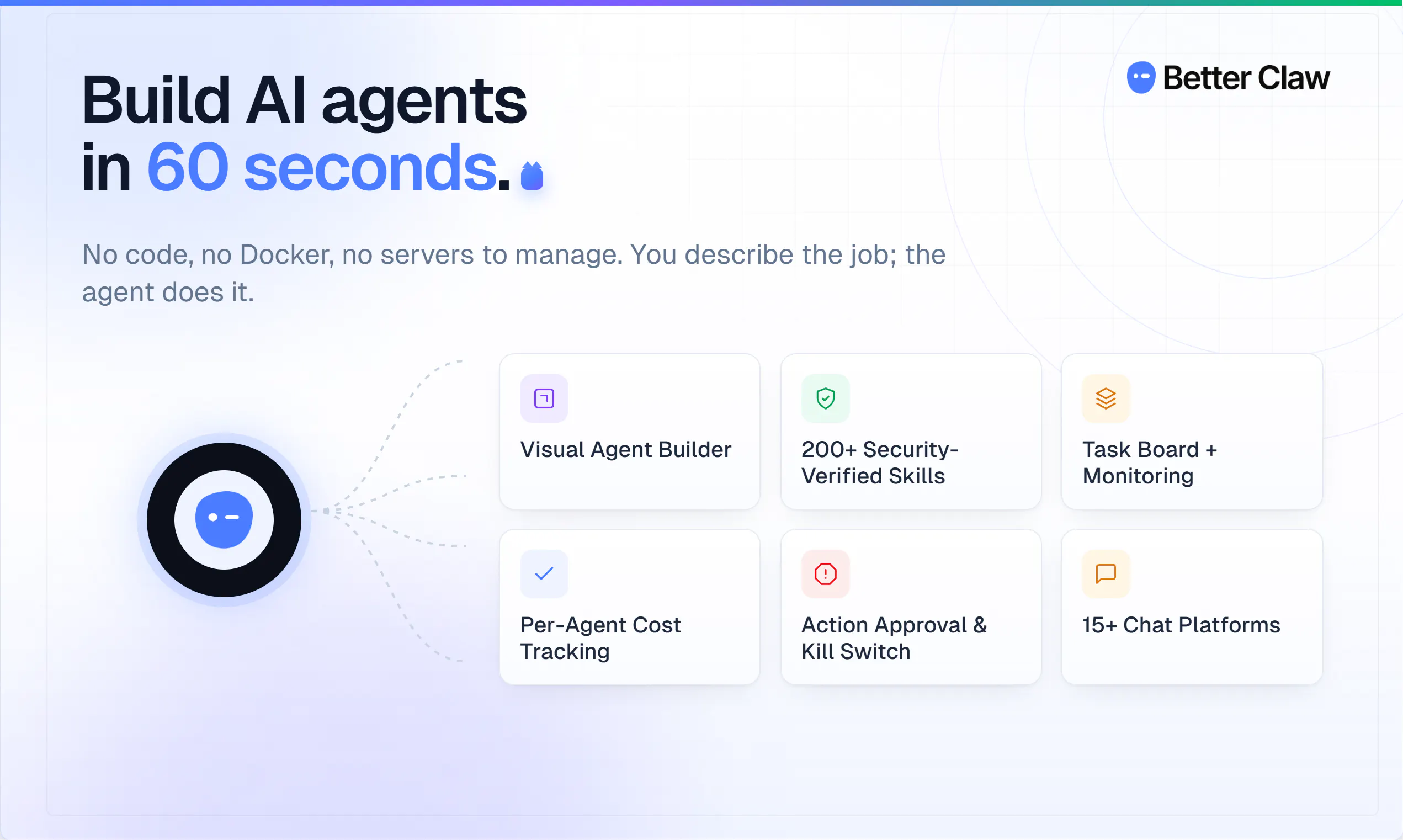
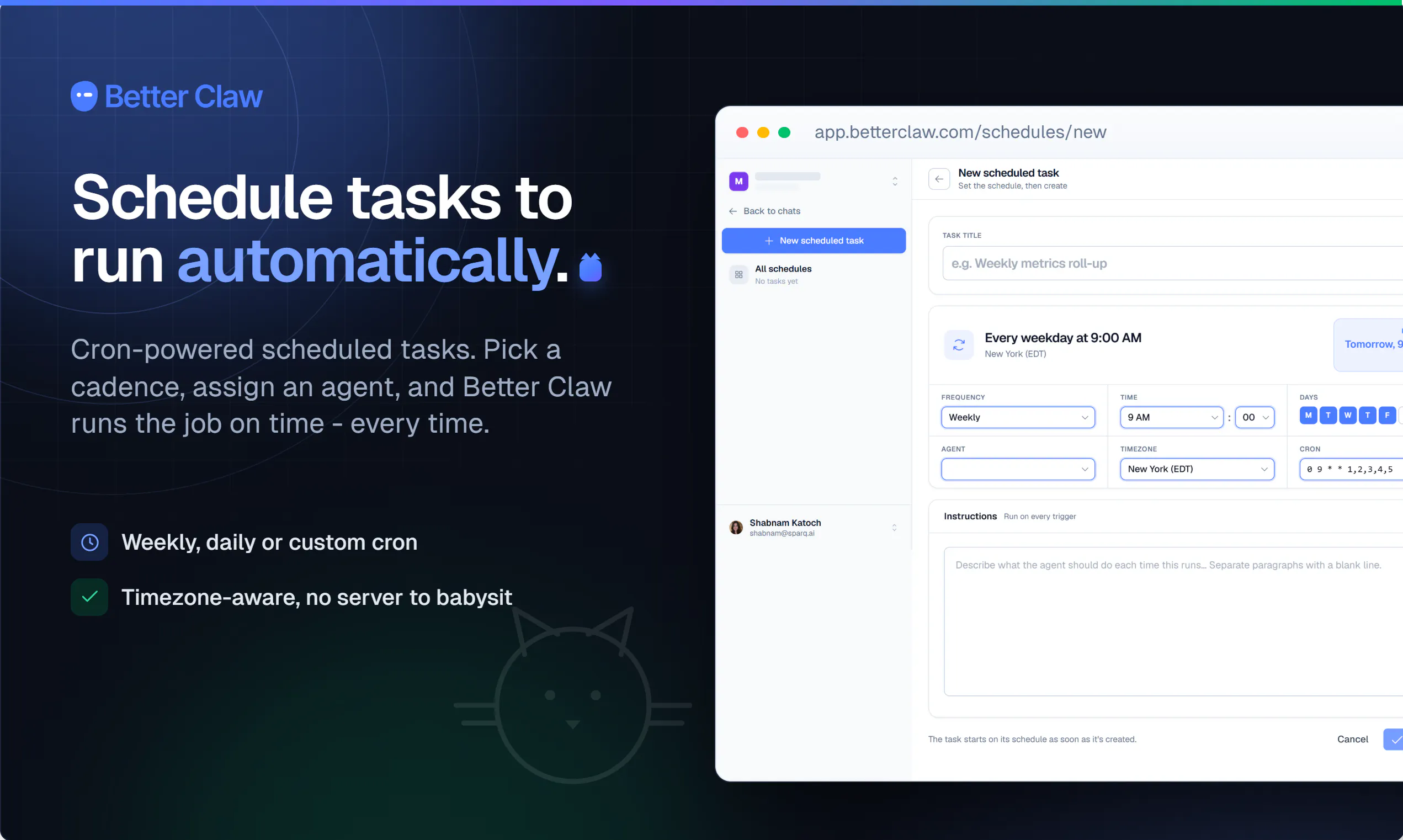
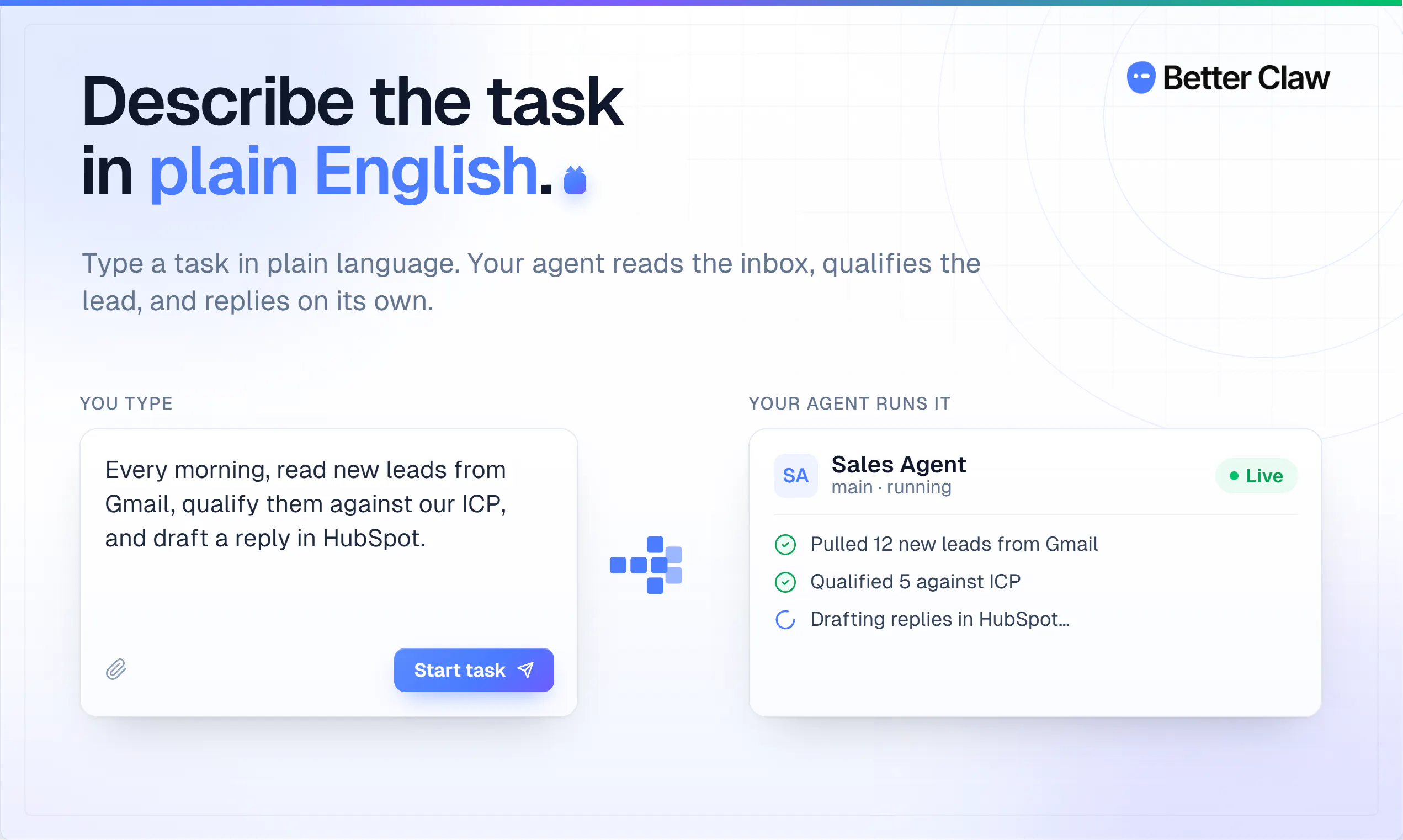
BetterClaw is a no-code platform for building AI agents that run on a schedule without you. Connect Gmail, Slack, or Telegram, and your agent triages inbox, sends morning briefings, or monitors what you care about. Agents start as Interns that ask before acting. Bring your own AI key and it's genuinely $0.

Hey PH, I'm Shabz, one of the people behind BetterClaw.

BetterClaw is a no-code platform for building AI agents that actually run on their own. Connect your tools, describe what you want, and it's live in 60 seconds.

Why we built it

I spent months in the OpenClaw subreddit helping people set up their agents. Hundreds of them.


And the pattern was always the same.

Someone discovers AI agents. Gets genuinely excited. Their eyes light up when their agent sends its first message.


Then they lose an entire weekend to Docker and config files.

And they're gone before week two.


The AI part was incredible. The infrastructure part was quietly killing it.

So we kept asking: why should anyone need to become a sysadmin just to use an AI agent?

They shouldn't. So we removed that part entirely.

What makes it different

  • 60-second deploy - no Docker, no YAML, no VPS, no terminal. We timed it.

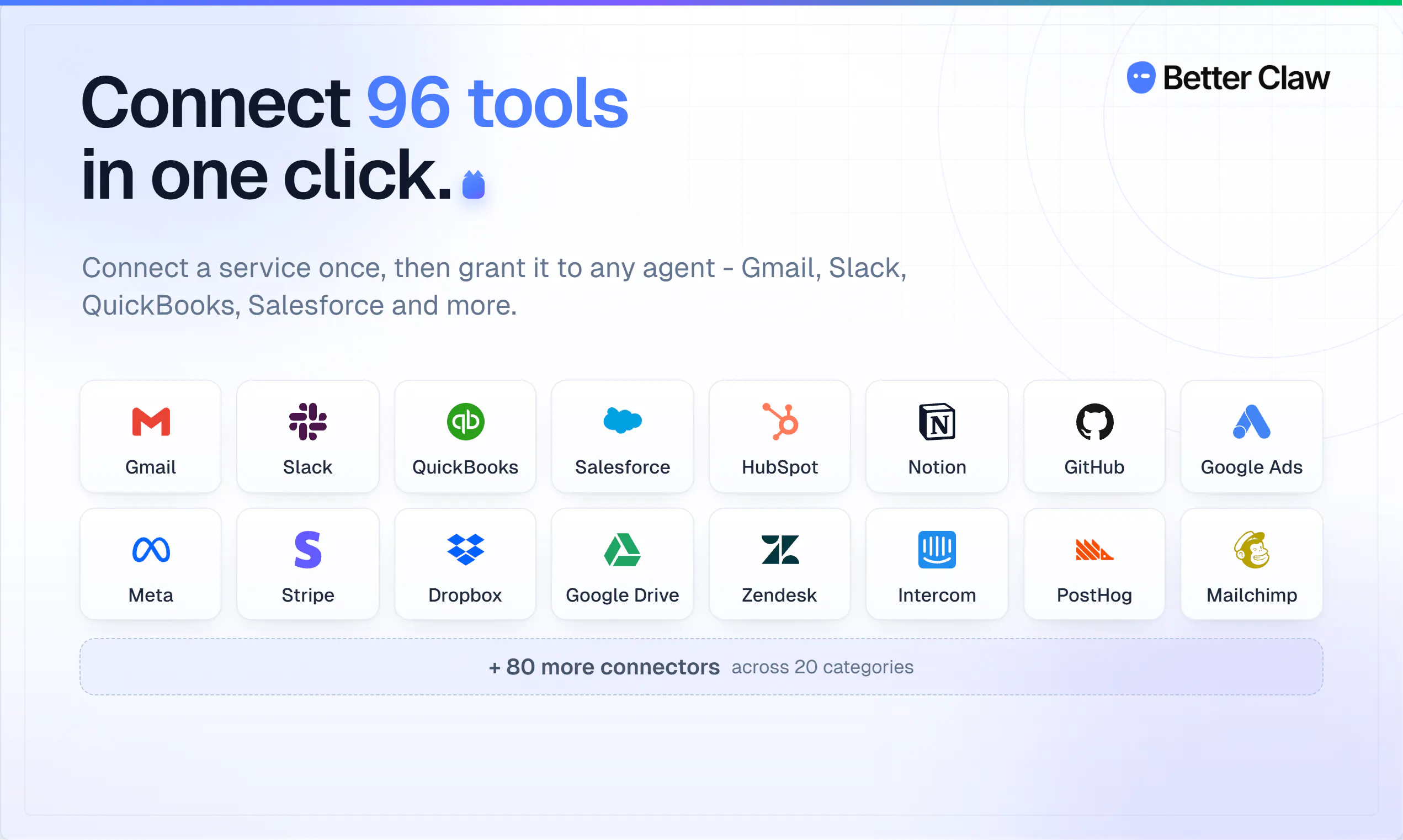
  • 95+ one-click OAuth integrations - Gmail, Calendar, Slack, HubSpot, GitHub, Jira, Meta Ads, Linear and more. Real OAuth, not "paste a webhook and pray."

  • Trust levels - every agent starts as an Intern that asks permission for everything. Promote it to Specialist, then Lead, as it earns your trust. Handing an AI full system access on day one is wild, and somehow that's the default everywhere else.

  • Secrets auto-purge - AES-256 encrypted, and gone from agent memory after 5 minutes.

  • BYOK, zero markup - bring your own LLM key. Pair it with a free model (Gemini, OpenRouter, Groq) and your total cost is genuinely $0.

Not "$0 but you need a server." Zero.

Who it's for

Founders, ops and support teams, recruiters, agencies, and tbh, anyone non-tech who's tired of doing the same thing 50 times a week.

What people are building

Meta + Google Ads spend vs Stripe revenue → daily ROAS in Slack
Gmail lead → scored, enriched into HubSpot, call booked
Zendesk tickets → answered from your product data, only edge cases escalated
Search Console → finds page-one pages losing clicks (grew our own site 1.6K → 7.9K clicks in a month)
Stripe declines → follow-up drafted, recovery tracked
PostHog drop-off → cross-checked in Salesforce → owner pinged pre-renewal

Huge thanks to @rohanrecommends for hunting us, and to the PH team for building a place where small teams get a real shot

And to Tina, Varsha, Aniket and everyone who poured months into this - this one's yours too. ❤️

🎁 For PH folks: use code PH3 for 3 months of Pro at $49.

We'd genuinely love your feedback - especially on what you'd want an agent to handle first. I'll be in the comments all day. Ask me anything, including the stuff we haven't figured out yet. 👇

betterclaw.io

29
回复

@better_shaya Congrats on the launch, Shabnam! The "simple and secure" combo is the hard part with agent deployment — curious how you're handling permissioning/sandboxing for agents in a shared workspace?

11
回复

@rohanrecommends  @better_shaya Congratulations on the launch, genuinely good product!! I have been part of BetterClaw community for past 3 months, very good product and I have been on the free plan and it's been just enough for my daily tasks.

Thought would come here and support your launch!!

0
回复

@rohanrecommends  @better_shaya All the best for the launch! Following this. :)

7
回复

Finally, a no-code AI agent platform that respects both my time and my wallet. The scheduled workflows (Gmail triage + Slack briefings) are exactly what I needed, and the fact that I can bring my own API key instead of paying per execution is refreshing. The UI is clean, setup was under a minute, and the "ask before acting" safety net is brilliant. Instant upvote — well done team!

9
回复

@shahe_alam Thank you so much! 🙌 We built it around exactly these principles-saving time, keeping costs predictable, and making sure agents stay under your control. So glad the scheduled workflows and “ask before acting” resonated with you. 🚀

8
回复

Wishing good luck with the launch guys! :)

8
回复

@busmark_w_nika thank you Nika! means a lot coming from you 🙏🥰

5
回复

@busmark_w_nika Thank you so much Nika!!! :)

4
回复

@busmark_w_nika Thanks for showing up for our launch Nika, means a lot :)

3
回复

Laiba here, also on the BetterClaw team.

One thing worth calling out: every agent starts as an Intern that asks before it touches anything. You promote it to Specialist, then Lead, once it stops surprising you. That's the difference between a cool demo and something you leave running while you sleep.

We built it that way because we didn't trust our own agents at first either.

Fastest first agent is a morning briefing on Gmail or Slack. Takes about a minute.

What would you want an agent to take off your plate? I'm in the comments all day.

8
回复

@worksforme +1 to this. I’ve seen this firsthand on the team, and the “Intern → Specialist → Lead” progression really captures how we think about trust and autonomy. The goal isn’t just to make agents capable, but to make them reliable enough that you can actually hand things off and get back to your day. Excited to see where we take this next! 🚀

4
回复

I like the idea of scheduled agent handling small repetitive task without needing another dashboard open all day.

7
回复

@awesome_america Thanks Amelia! That was honestly the whole motivation. Most automation tools just move the work rather than remove it, you end up checking a dashboard to see if the thing that was supposed to save you time actually ran.

Ours reports into wherever you already are. Slack, Telegram, email. If nothing needs your attention, you don't hear from it. That felt like the right default :)

2
回复

@awesome_america heartbeat scheduling was one of the first features we built because we were tired of agents running 24/7 when they only needed to work twice a day. glad that clicked with you 😊

2
回复

@awesome_america Thanks Amelia! That's honestly the feature we lean on most ourselves. We have one agent that pulls our search data three times a week and drops a summary in Slack. Nobody opens a dashboard for it anymore.

1
回复

The Intern model is a smart touch. Having the agent ask before acting makes automation feel a lot safer to try.

7
回复

@athar_jatoi Thanks! That was the piece we spent the most time on.

Handing an AI full access to your inbox on day one is a big ask, and I think that's why a lot of people try these tools once and quietly stop. Starting as an Intern that asks permission means the first week is low stakes. You watch what it wants to do, correct it when it's wrong, and promote it when you're actually comfortable.

Demotion works too, and there's a kill switch. Trust that only goes one direction isn't really trust.

5
回复

@athar_jatoi exactly! most platforms give agents full access on day one. starting as Intern and earning trust over time just makes more sense. glad that resonated 🙏

4
回复

@athar_jatoi Appreciate it Athar 🙏 That was exactly the thinking. Most people don't want full autonomy on day one, they want to watch it work first and then loosen the leash over time.

1
回复

How do you decide when an agent has done enough to move from Intern to Specialist without giving it too much access too early?

Congrats @better_shaya & team!

7
回复

@hamza_afzal_butt Whenever you have that confidence on your agent, people generally wait for a week, approve and then once they are sure they upgrade it to specialist and let it perform tasks without manual intervention.

I would still recommend reviewing the sensitive tasks.

Social Media, marketing, etc can be relied upon

6
回复

@hamza_afzal_butt Skills are toggled individually and credentials are scoped per agent, so an agent never gets more access than it's earned — and its activity log shows the track record behind each step.

5
回复

@better_shaya  @hamza_afzal_butt Thanks Hamza 🙌 It's your call rather than the agent's, so you keep it at Intern until you've watched enough approvals go through clean and feel good about handing over more. Most people move one task type at a time instead of promoting the whole agent at once.

2
回复

This is intersting. Does it also clean unwanted notifications after summarizing..... like I love to see Linkedin notifications. But deleting all of them manually is a task. Can you do that?

7
回复

@chilarai We can do that. We have an integration for chrome (in beta), which can connect with local chrome instance and take any action you would like it to take autonomously

4
回复

BetterClaw is taking a practical approach to agentic AI — instead of just generating responses, the agents can actually run workflows on a schedule and handle repetitive tasks in the background.Love the “60 seconds & $0 forever” positioning.

7
回复

@aniket_bhatnagar Thank you! 🙌 That’s exactly the direction we’re going for-agents that quietly handle the repetitive work in the background, while keeping setup and cost as close to zero as possible. 🚀

1
回复

BetterClaw looks like a really exciting way to make AI agents actually useful in the background-especially the scheduled workflows and no-code setup. Love the “60 seconds & $0 forever” positioning.

7
回复

@varsha_saini2 Totally agree — the "set it and forget it" approach is exactly what AI agents needed. The no-code builder + scheduled workflows feel like a cheat code for productivity. Excited to connect my inbox and see the morning briefings in action. Great work building this! 🚀

7
回复

The "Interns that ask before acting" model is the right instinct, most agent tools skip that approval step entirely. Question on the other side of it: once an Intern acts on something external, an email sent, a Slack message posted, how do you verify the action actually landed rather than trusting the connector's own success response? I've spent today running browser automation and roughly one in three actions reported success while nothing actually happened, a click that never navigated, a submit that never posted. Curious whether BetterClaw checks real downstream state after an agent acts, or trusts the tool call's response.

6
回复

@abdullah_javaid3 That’s a really good question. We’re definitely conscious of the gap between a tool returning “success” and the action actually taking effect. The goal with BetterClaw is to verify the downstream state where possible rather than blindly trusting the connector response. That distinction is a big part of making agents reliable enough to run unattended.

3
回复

@abdullah_javaid3 partially, and not as well as we'd like.

For OAuth connectors we're in decent shape, mostly because those APIs hand back an identifier on success. A sent email returns a message ID, a Slack post returns a timestamp and channel. Where that ID exists we verify against it rather than trusting a 200, and if the response claims success without one, we treat it as failed and escalate.

Where we don't do this well is exactly the case you're describing. Our Chrome integration is in beta and it trusts the tool call more than it should. Your one-in-three number tracks with what we saw in testing. A click that resolves cleanly but navigates nowhere is genuinely hard to catch without checking real post-action state, and we haven't built that properly yet.

What partly covers us today is that Intern level means a human sees most actions before they fire, so silent failures surface as "wait, that didn't happen" rather than compounding quietly. That's a workaround, not a fix. It stops helping the moment someone promotes to Lead and walks away.

2
回复
Your Intern/Specialist/Lead framing looks sharp. What triggers the a promotion from intern to specialist? Consecutive approval without edits? And can Specialist become Intern back? I really like the idea of seniority levels for agents.
6
回复

@michael_vavilov Thanks! This is the part we went back and forth on the most.

Right now promotion is manual, not automatic. You review what the agent's been doing and promote it when you're comfortable. We deliberately didn't auto-promote on "X approvals in a row" because approving 20 low-stakes actions doesn't tell you much about how it'll handle the 21st one that actually matters. The trust you build watching it work is more informative than a counter.

2
回复

@michael_vavilov Thanks Michael 🙌 Right now you set the level yourself rather than the agent earning it, so you can move an agent up or down anytime based on how much you trust it with a task. Auto-promotion off a clean approval streak is something we've been kicking around though.

3
回复

As an agent gets promoted from Intern to Specialist/Lead, can you set granular custom rules for what actions trigger a permission prompt, or is it based on predefined roles? Super excited to see where you take this!

3
回复

@aren_barseghyan Right now it's role-based rather than fully granular. Each trust level has a defined scope, and skills are toggled individually per agent, so you can restrict what an agent can touch even at a higher level.

What you're describing, custom rules for what specifically triggers a prompt, is the thing we keep coming back to. Something like "always ask before anything leaves the company" or "ask on any action touching a contact tagged VIP." That's more useful than a blanket level because the risk isn't uniform across actions.

Not built yet. It's the most requested thing from this thread so far. Curious what rule you'd want first, that would help us pick where to start.

2
回复

Congrats on the launch! The trust-level idea feels especially practical: starting agents as Interns before giving them more autonomy is a smart way to make non-technical users comfortable with scheduled AI workflows.

3
回复

@yaroslav_stelmakh Thank you! 🙌 That’s exactly what we’re aiming for-letting people start with a level of oversight they’re comfortable with, then gradually give the agent more autonomy as it earns trust.

1
回复

@yaroslav_stelmakh Thanks Yaroslav! That was exactly the goal. Most people's hesitation isn't "can AI do this," it's "what happens if it does something I didn't expect while I'm asleep." Starting at Intern means the first week costs you nothing but a few approval taps, and you learn what it's actually like before handing over more.

1
回复

Not needing Docker or a VPS removes a pretty big barrier for people who just want an agent running. Congrats!

3
回复

@henry_habib Exactly! That was a big part of the goal-making it easy to get started without having to deal with infrastructure first. Appreciate you giving it a try! 🙌

3
回复

@henry_habib Thanks Henry! That barrier was the whole reason we built this. I watched so many people in the OpenClaw community get genuinely excited about agents, then lose a weekend to Docker networking and never come back. The AI part was never what stopped them.

2
回复

Someone on our team shared this and I set up an agent that pulls my calendar and Slack messages in the morning and sends me a briefing at 8am. That's it. That's my whole use case. Took about 2 mins

The Intern thing is smart. I would not have connected my work Gmail to something that could just do whatever it wanted. Knowing it has to ask me first made me actually try it instead of closing the tab.

2
回复

@ajay_negi6 Thanks a lot Ajay!! We are so glad that you are liking the product!! :)

0
回复

Been burned by "no-code agent" tools twice before so I went in expecting to hit a paywall or a "contact sales" screen within 5 minutes. Neither happened.

Set up a Gmail triage agent on a free Gemini key. Took maybe 90 seconds, not 60, but close enough. It's been running for 11 days now and the only time I touched it was to promote it from Intern after day 4 because I got tired of approving the same correct classification over and over.

The BYOK part is what keeps me here. I switched from Gemini to Groq for one agent and to Sonnet for another, took about 10 seconds each time. No price increase on BetterClaw's end because they're not in the billing path.

Solid tool. Genuinely free. Would've saved me about three weekends I lost to Docker last year.

2
回复

@deepaksingh09 Hi Deepak, so glad that it is working well for you!!

0
回复

I like the idea of agents as Interns. That approval step could make this mucg easier to trust especially when connecting Gmail or Slack for the first time.

2
回复

@lilydigital Hi, Totally agree. Giving people that moment to review and approve an action makes connecting things like Gmail or Slack feel a lot less risky. It’s a big part of building trust before giving the agent more autonomy. 🙌

1
回复

@lilydigital Thanks Lily! Gmail and Slack are exactly where that matters most. Those are the two connections people hesitate on, understandably, because the downside of a mistake is visible to other people.

Running at Intern for the first week or so on those means you see every draft before it goes anywhere. Most people promote once they realize they've been approving everything unchanged.

1
回复

The Intern that asks before acting is the part I would build the whole product around, and it is also the part that quietly decays. We run approval-gated sending on our side, and the failure mode is never the agent doing something reckless. It is the human. Reviewing every action works until the volume goes up, then you start skimming, and the ones that get through are never the obvious ones.

So the thing I would watch is what keeps an approval meaningful on day ninety. An agent that asks rarely, and only where it is genuinely unsure, is worth more than one that asks every time and trains you to click yes.

1
回复

@jernej_jan_kocica This is one of the sharpest critiques of the model we've gotten, because it's true and it's not something a permission gate on its own fixes.

"Trains you to click yes" is exactly the failure mode we worry about too. Right now our answer is incomplete: Intern asks on everything by default, which is safe on day one and genuinely annoying by day ninety if the agent hasn't earned the right to ask less. We haven't built the part where it learns to only interrupt you when it's actually unsure, rather than on a fixed rule.

What we do have is the activity log as a check against rubber-stamping. If you're approving without reading, at least there's a record to catch it after the fact, which isn't the same as preventing it.

The honest version of what we should build next, based on what you're describing: confidence-based asking rather than category-based asking. Ask often early, ask rarely once it's shown it gets the boring 95% right, and always ask on the specific category you've marked as high stakes regardless of streak. That's meaningfully harder to build than "ask before every action" and probably why most of the industry hasn't done it either.

Appreciate you naming the actual failure mode instead of the reassuring one.

0
回复
Is this like Hermes ?
1
回复

@andrew_esparon different layer, same ecosystem. Hermes is the agent runtime, it's what actually executes tasks and talks to models. BetterClaw sits on top and handles the parts that make Hermes painful to run yourself: no Docker or config files, OAuth to 95+ tools with one click, credential encryption, and the trust-level permission system.

Think of it as: Hermes is the engine, we're the car. If you're comfortable in a terminal you might not need us. If you want an agent running today without becoming its sysadmin, that's the gap we fill.

1
回复

Is it really going to be 0$ forever?

1
回复

@stefano_galfre1 Yes - that is why I added it right on the tagline

500 credits will reset every month - enough to run 40-50 basic automation tasks every month

1
回复

How does the agent 'earn' promotion, is that manual on your end or does it track some kind of track record automatically?

1
回复

@abod_rehman We have kept it strictly manual - only promotes once it has earned trust from you

1
回复

@shabb_katoch Congrats on the launch, Shabnam! Love that you doubled down on security from day one and also mentioning it right on the top of the fold in the website.

1
回复

@shabb_katoch  @productrambler Thanks Lavakumar! Putting security above the fold was a slightly nervous decision, it's not usually what people lead with. But if the whole pitch is "let this thing into your Gmail," it felt dishonest to bury how that actually works three clicks deep. Glad it landed.

1
回复

congrats on the launch you guys!

1
回复

@albattran Thanks Samir! Appreciate you 🙏

1
回复

Congrats on the launch, Shabz! 🚀 60-second deploys with BYOK and zero markup is how no-code AI tools should actually work.

Really love the 5-minute secret auto-purge feature for enterprise/security peace of mind. Wish you guys a huge launch day!

1
回复

@denitsapenchevavaltchanova Thanks Denitsa! The auto-purge one gets less attention than it should. Most platforms hold credentials in agent memory indefinitely because it's simpler, and that's fine right up until it isn't. Five minutes felt like the right ceiling.

Really appreciate the kind words on launch day 🙌

1
回复

I ran into what seems like a loop bug when retrying the agents. I initially tried it with a Groq API key, and even after switching to a Gemini API key, I kept getting the same error:

“The agent hit an unexpected error while responding.”


I’m not sure if the issue is with my API keys or something else in the retry flow, but sharing it here in case it helps you guys identify what’s going on

1
回复

@matheusdsantosr_dev Thanks for flagging this properly, that's a genuinely useful report.

The fact that it persisted across both Groq and Gemini keys suggests it's not your keys, it's likely something in our retry flow swallowing the real error and surfacing a generic message instead. That string is far too vague to be useful to you, which is on us.

Could you reach out to hello@betterclaw.io, or use the support button on the left-hand side in the app? That gets it to the team with your agent ID attached so we can pull the actual gateway logs and see what's hiding behind that message.

In the meantime, if you want to unblock: try spinning up a fresh agent rather than retrying the existing one. If it's stuck in a retry loop it'll usually keep hitting the same wall.

1
回复

Nice product to have! Keep building!

0
回复

@annmast Thanks a lot Anna!! Your support means a lot :)

0
回复
#3
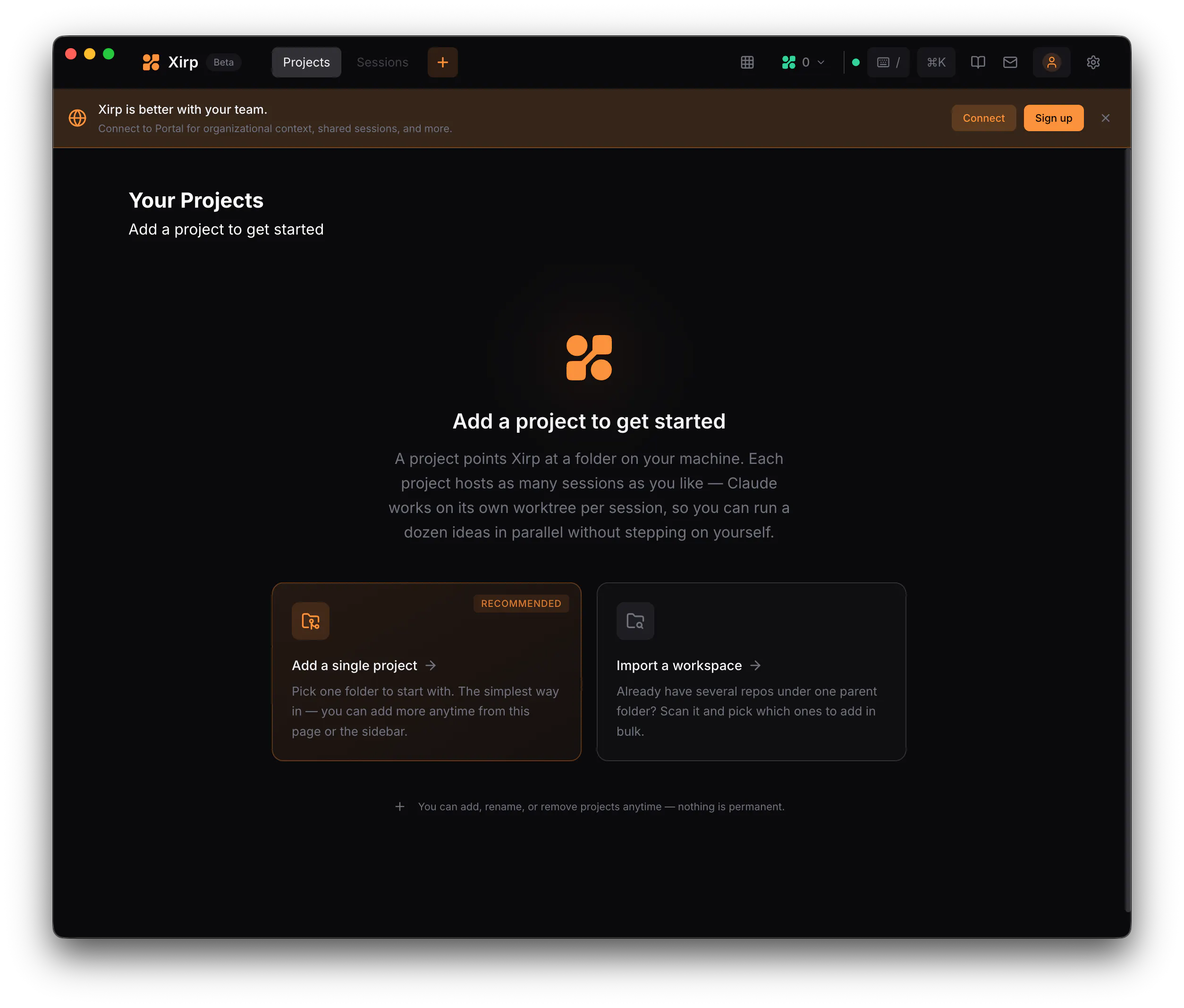
Xirp
The agentic development environment built by Spotify
235
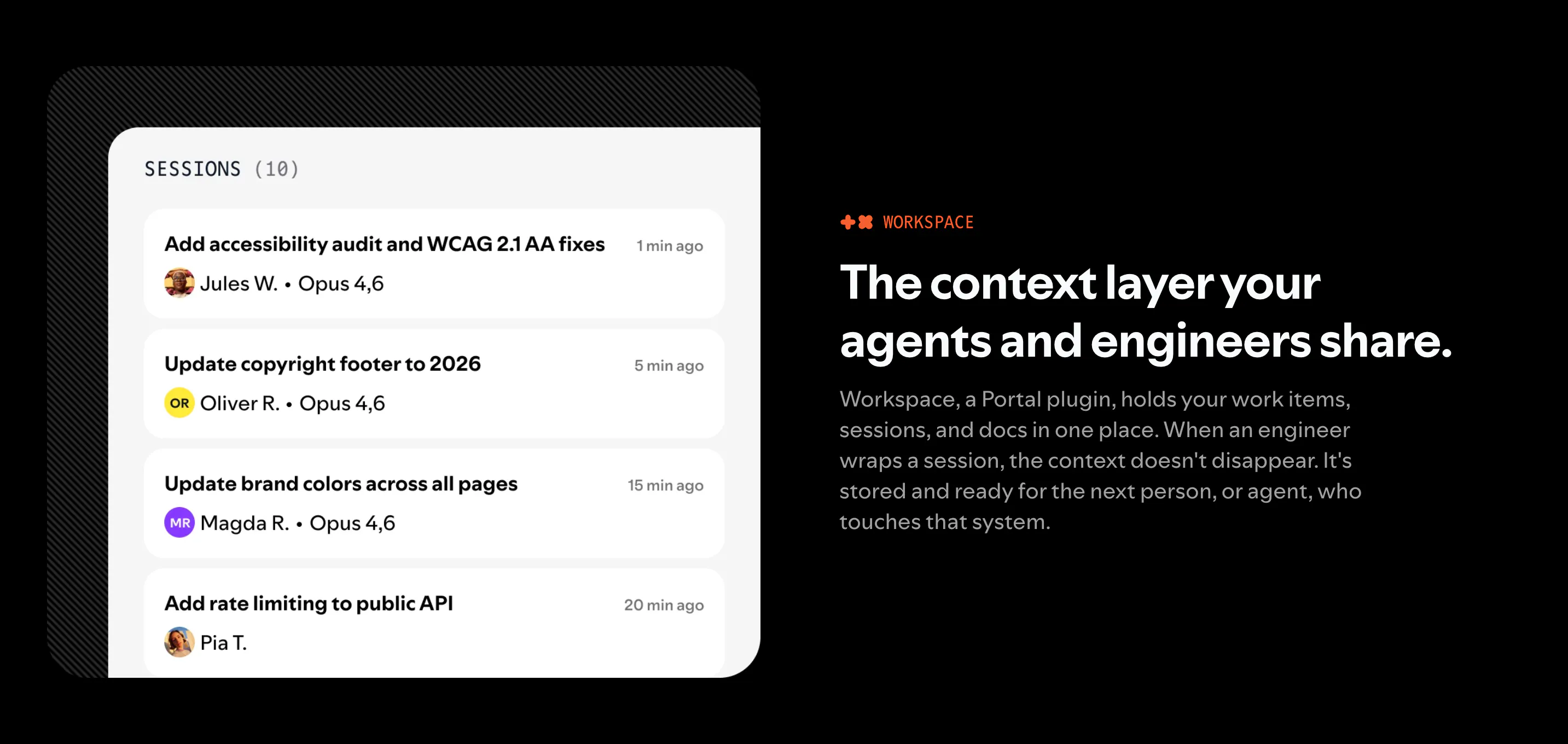
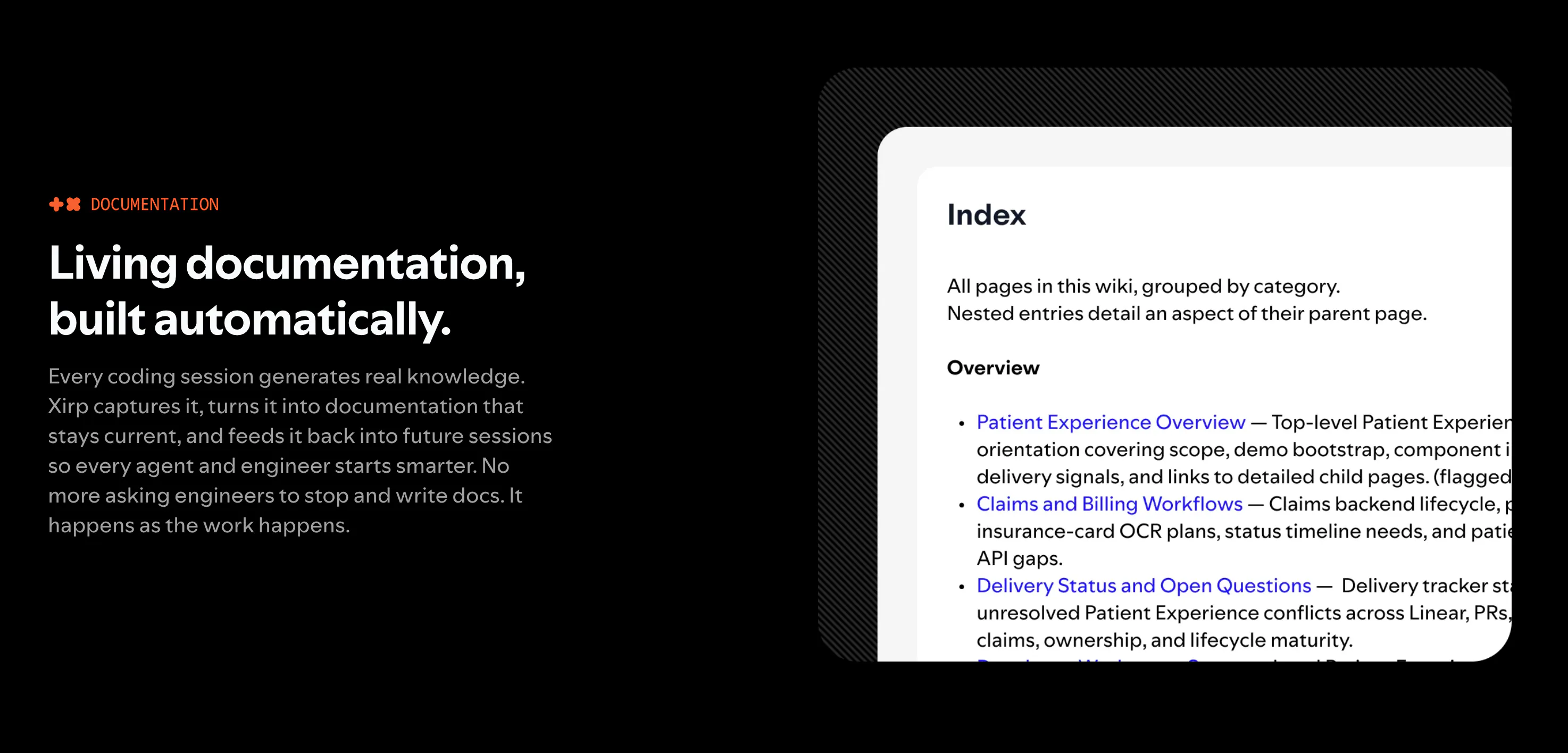
一句话介绍:Xirp 是 Spotify 打造的一款“带机构记忆”的智能体开发环境,连接内部服务、代码归属、文档与架构决策,解决多智能体并行编码时上下文丢失、工具锁定和团队知识断层的问题。
Spotify Developer Tools Bots
智能体开发环境 AI编码助手 机构记忆 开发者工具 多智能体协作 供应商中立 模型切换 架构上下文 Spotify 内部平台工程
用户评论摘要:多数评论认可Spotify转型AI公司及Xirp的“机构记忆+中立性”组合,认为可解决多智能体会话上下文丢失。有效问题集中于定价模型未公开,以及Portal访问权限等待。部分评论指出其与Craft Agents类似,但未见深度质疑或负面反馈。
AI 锐评

Xirp 的价值不在“又一个AI编程工具”,而在于它把“组织知识”从静态文档变成了可被智能体调用的运行时上下文。这切中了当下AI编码最大的浪费:每个会话都从零开始,重复理解架构、依赖和所有权,而Xirp试图让智能体“带着记忆上班”。Spotify用“供应商中立+自托管模型”的姿态,实际上是在对冲模型API价格与能力的波动,这比大多数押注单一模型的创业公司更务实。

但别急着吹。所谓“机构记忆”本质上依赖Portal的元数据质量,而Spotify的工程文化未必能复制到普通团队——多数公司的架构决策、文档和归属权本身就是一团乱麻,没有干净的数据源,Xirp的“记忆”就是幻觉放大器。评论中没人质疑这一点,只有人在催定价和权限,说明早期用户更多是尝鲜心态而非生产级验证。

更值得警惕的是,Spotify第100次产品发布,从Backstage到Xirp,确实在构筑“开发者基础层”的野心。但一个内部工具被外放,最大的敌人是“通用化陷阱”——本地最佳实践一旦脱离Spotify的工程土壤,就会变成平庸的Agent Orchestrator。Xirp真正的护城河不是AI,而是它背后那套复杂的组织图谱数据模型。如果第三方团队拿不到同样深度的接入能力,这产品最终只会是Spotify云服务的一个引流插件,而非独立平台。

一句话毒评:想法值90分,执行看数据接入深度,商业化看它敢不敢放弃“Spotify背书”的惰性。

查看原始信息
Xirp
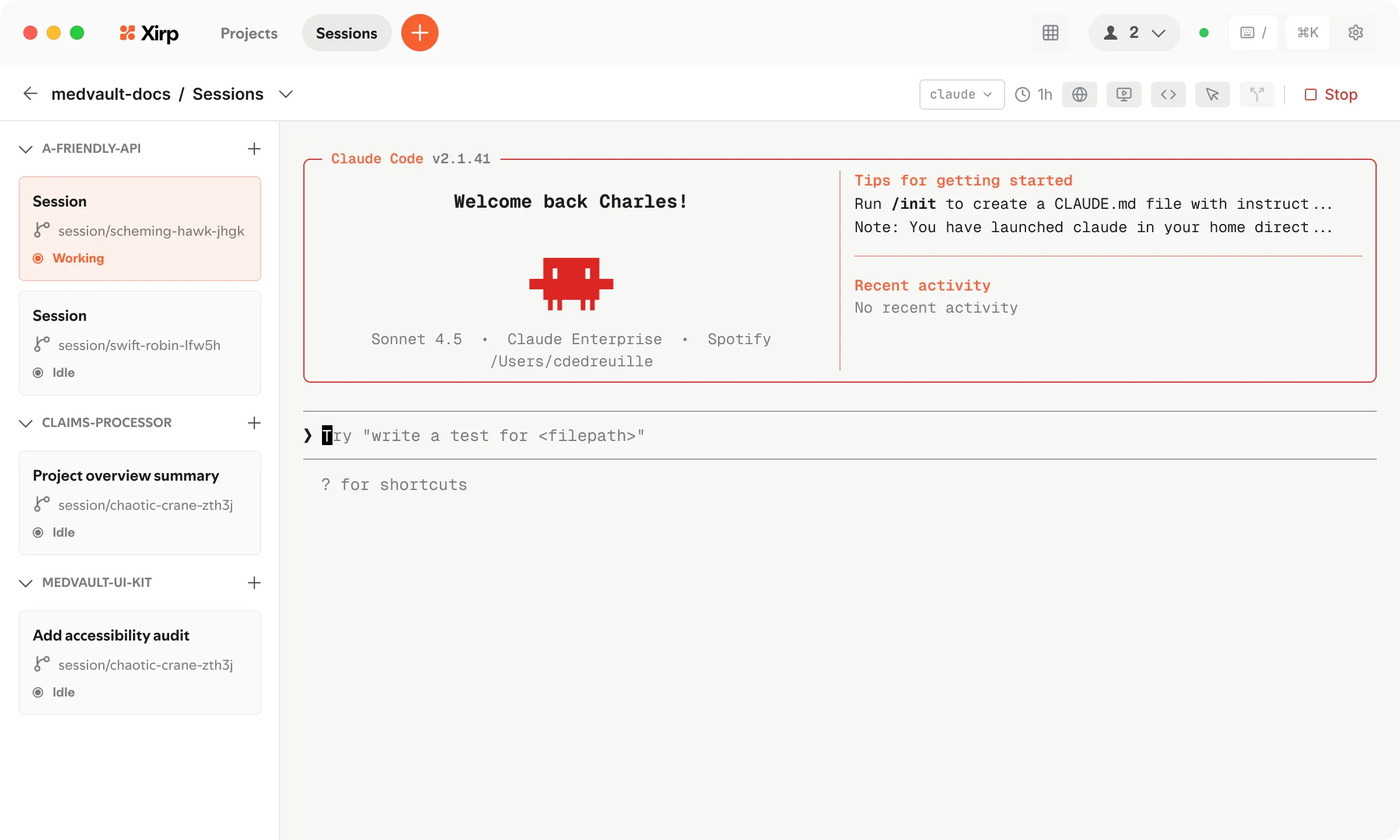
The agentic development environment with institutional memory. Xirp connects to your services, ownership, docs, and architectural decisions so every session starts with real context. Powered by Spotify Portal.

This is Spotify's 100th launch on Product Hunt!

Suitable — considering most people think of Spotify as a music service, but really, from @Backstage to Xirp, they've become a formidable AI company in their own right.

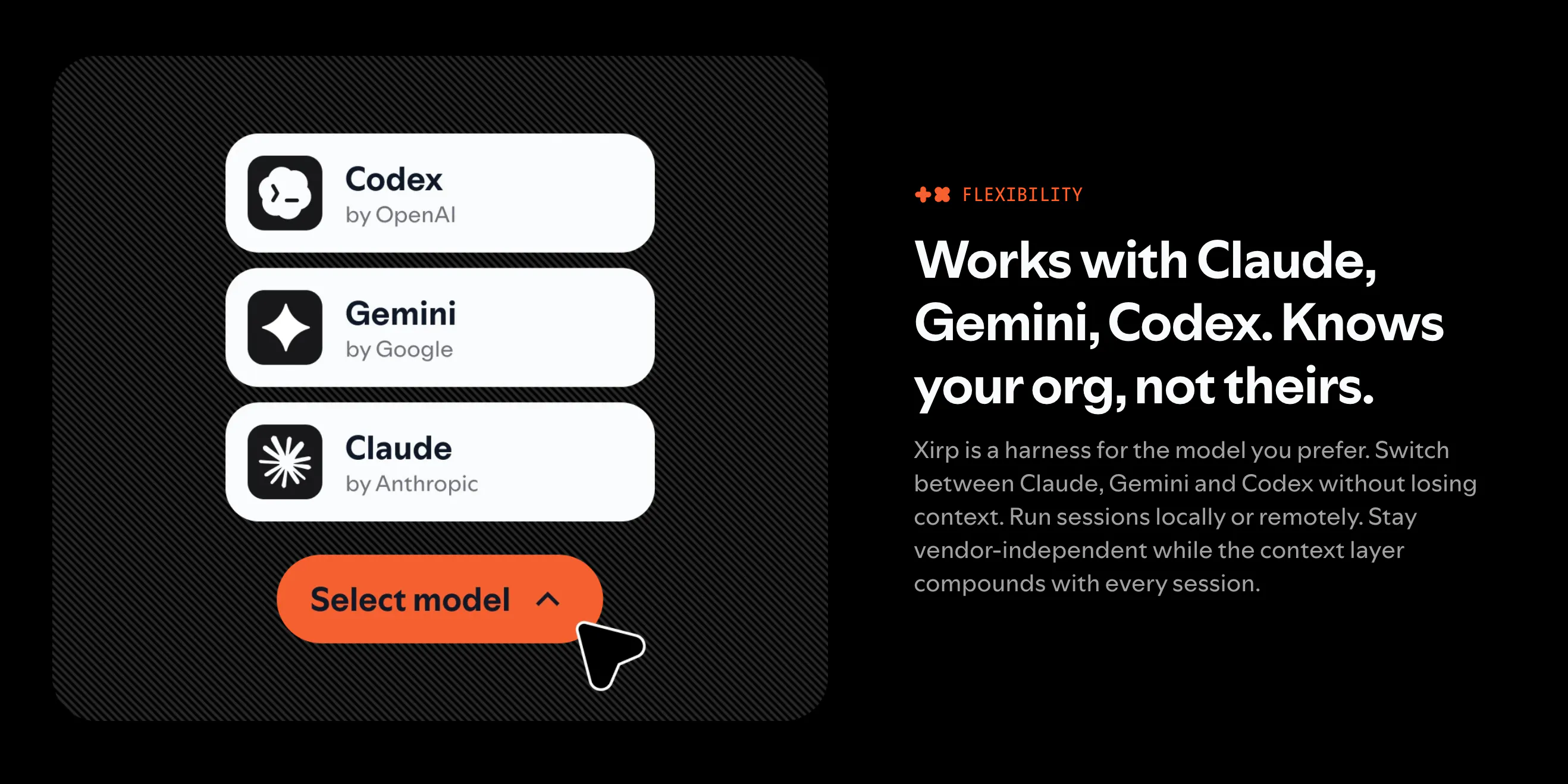
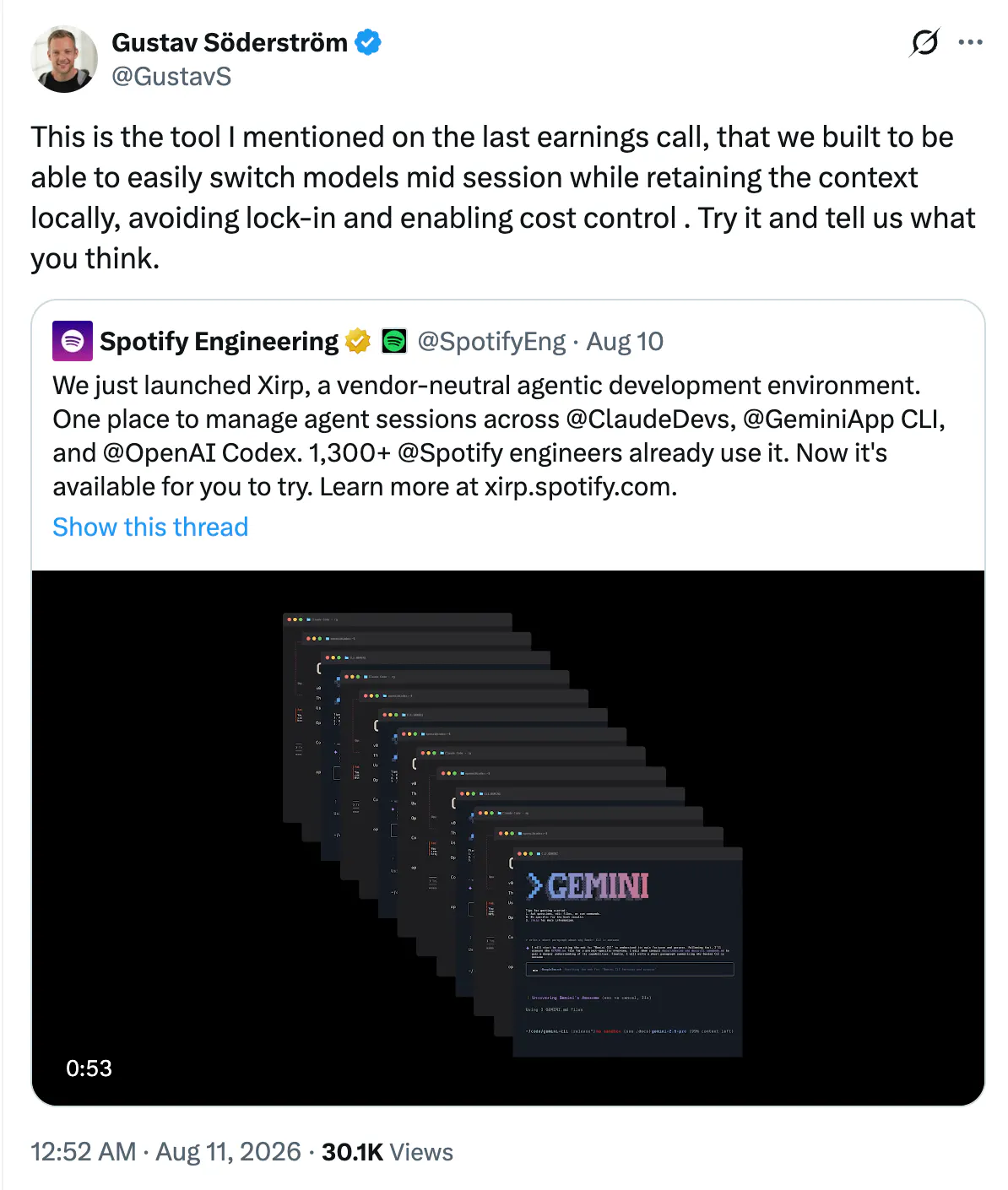
Here's Spotify story about how it built Xirp, a vendor-neutral agentic development environment, to help engineers manage dozens of parallel AI coding sessions without losing context or getting locked into a single tool.

Paired with Portal, Xirp turns Spotify’s organizational knowledge into a shared baseline that improves agent effectiveness, reduces duplicate work, and makes it easier to switch models and preserve context across sessions.

Key Features

  • Xirp lets Spotify engineers run 50+ parallel agent sessions across different harnesses while keeping worktrees and context separate but portable.

  • The system is vendor-neutral, allowing Spotify to switch models mid-task and optimize for price-performance, including self-hosted open source models.

  • When connected to Portal, Xirp adds organizational context like architecture, dependencies, ownership, and decisions, while session data flows back for visibility and reuse across teams.

From what I can tell, the nearest analog to Xirp is Craft Agents, which was acquihired by @Polymarket.

10
回复
@chrismessina Very interesting. What's the pricing model? I couldn't find anything about that on the website.
0
回复

@chrismessina Spotify’s 100th PH launch is a pretty wild milestone 👏

What caught my attention here is that Xirp feels less like “another AI coding tool” and more like an attempt to solve the mess that comes after you start running dozens of agents in parallel.

Vendor neutrality plus institutional memory is a seriously interesting combination. If agents can actually carry architectural decisions, ownership, and context between sessions without locking the team into one model, that could become a pretty powerful foundation for agentic development.

0
回复

I didn't see this coming from Spotify

4
回复
1
回复
It‘s actually quite nice, now I‘m waiting for access to portal. :)
1
回复
#4
Equitybee Benchmark
Compare your startup equity grant for free.
222
一句话介绍:Equitybee Benchmark是一款面向美国初创公司员工的免费股权赠予对比工具,基于9000+真实新聘期权数据,帮助用户按部门、职级和公司阶段评估自身股权是否合理。
Fintech Data & Analytics Career
股权比较 期权估值 薪酬透明 初创公司 员工福利 数据基准 谈判工具 人力资源科技 免费SaaS 美国市场
用户评论摘要:用户普遍认可工具填补了信息不对称空白,界面简洁、数据量大。主要建议与问题集中在:1)是否扩展全球数据(欧洲、拉美、APAC);2)增加更多筛选维度(行业、公司估值);3)希望未来迭代补充更多比较维度。官方回复称V1将持续收集反馈改进。
AI 锐评

Equitybee Benchmark的巧妙之处在于,它把原本只属于HR和薪酬委员会的内部数据,以“免费工具”的形式反向输送给员工——这本质上是一场权力关系的微小重组。从产品逻辑看,它并不创造新数据,而是将已有的9000+期权赠予记录结构化、可视化,切中了员工在谈判桌前的核心焦虑:“我的package到底值多少?”这种“信息平权”的定位精准且具有传播性,评论区中大量“终于有了”“早该存在”的共鸣即是证明。

但冷静审视,其真实价值存在明显边界。第一,数据仅覆盖美国初创企业,且未经独立审计,自报数据的偏差可能让基准本身失真;第二,它提供的是“市场分布”而非“合理定价”,对于早期公司期权这种高度非标、依赖行权价、稀释率和退出预期的资产,简单分位数对比容易造成认知简化,甚至助长员工高估期权价值;第三,免费工具的本质是获客入口,其母公司Equitybee主业是期权变现和流动性服务,基准功能大概率是培养用户习惯和积累谈判场景数据的前置钩子。

因此,这款产品的直接价值在于“谈判前的心理锚定”,而深层价值则可能是数据资产和用户漏斗。对员工而言,可用它做初步参考,但绝不能替代对自身公司财务状况、融资条款的逐项深究。在薪酬透明化的大趋势下,它是一次堪称聪明的尝试,但距离真正的“公平”,还有很长的路——毕竟,知道别人的数字,和知道自己该拿多少,终究是两回事。

查看原始信息
Equitybee Benchmark
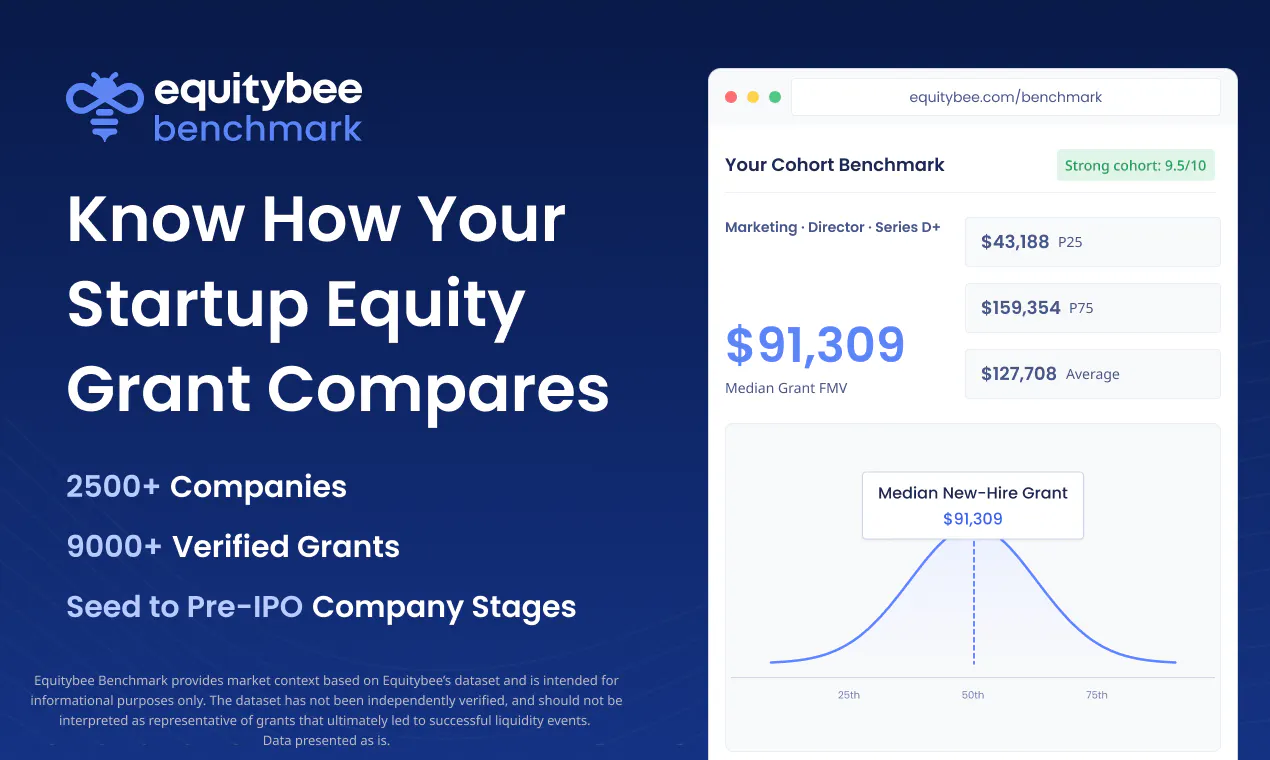
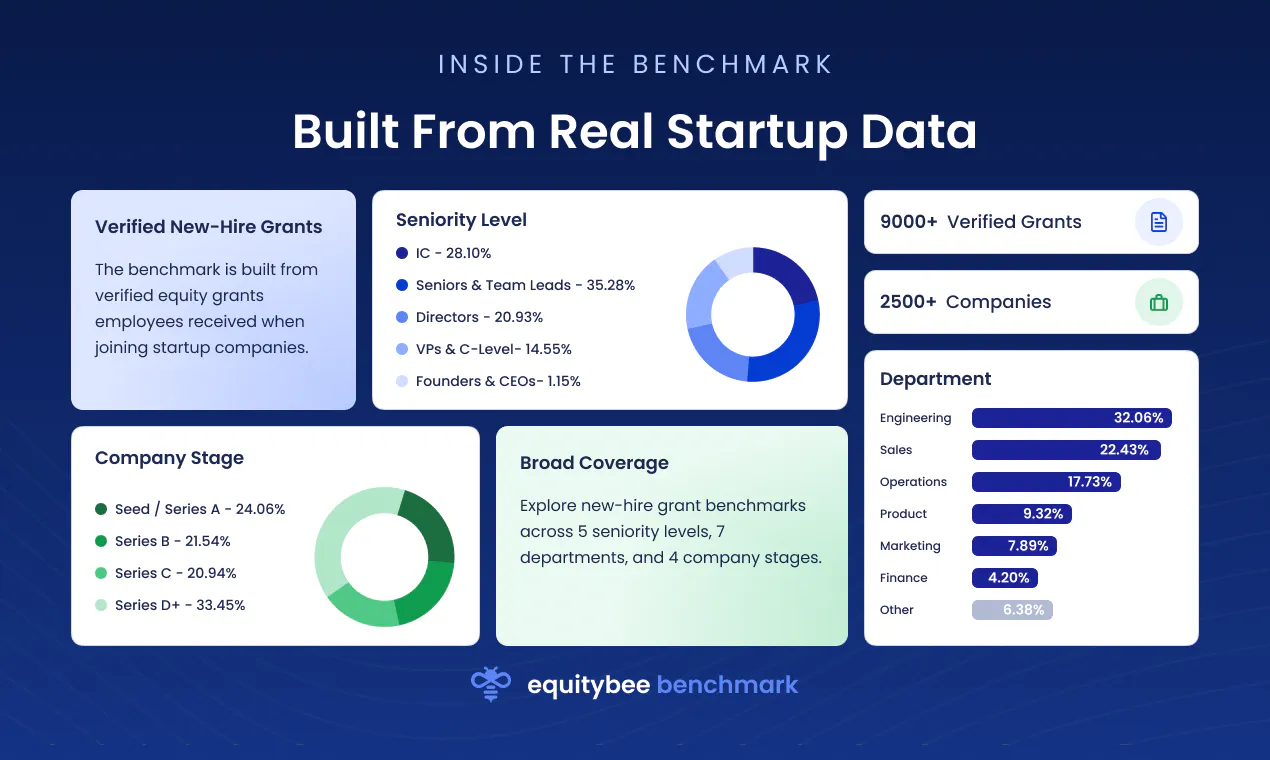
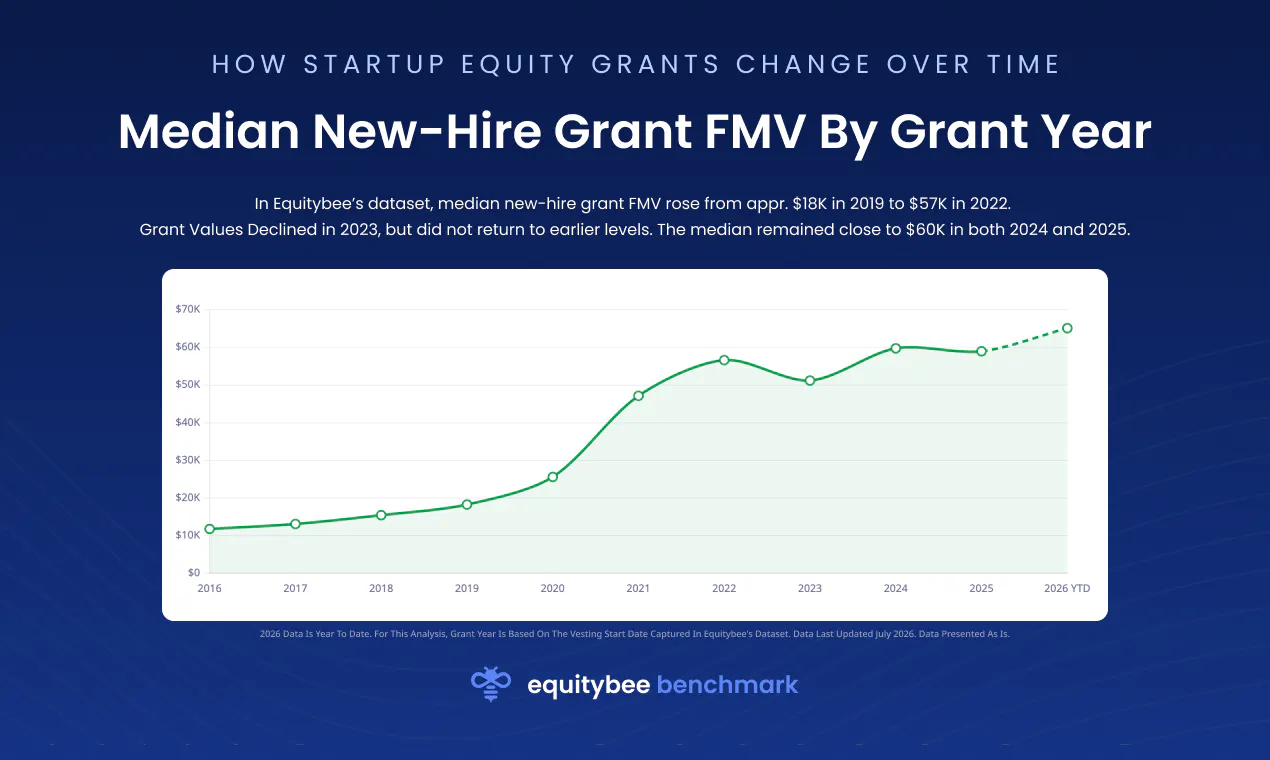
Equitybee Benchmark helps U.S. startup employees understand how their equity grants compare. Explore 9,000+ verified new-hire grants across 2,500+ startups by department, seniority, and company stage. For years, companies have benchmarked the equity they offer. Now you can benchmark yours. -- The benchmark provides market context based on Equitybee's dataset and is intended for informational purposes only. The dataset has not been independently verified. Data presented as is.

Hey Product Hunt! 👋

I’m Oren, co-founder and CEO of @EquityBee, alongside @oded_golan

Today, we’re excited to launch Equitybee Benchmark, a free tool that lets U.S. startup employees compare  equity grants by department, seniority, and company stage.

🎯 Why we built it

Companies have long used compensation benchmarks when structuring equity offers. Employees evaluating those offers rarely have access to the same market context.

We believe employees should have a benchmark too.

That context can help when evaluating a job offer, comparing opportunities, or preparing for a compensation conversation.

📊 How it works

Equitybee Benchmark is built on more than 9,000 verified new-hire option grants covering more than 2,500 U.S. startups.

Select your:

• Department
• Seniority level
• Company stage

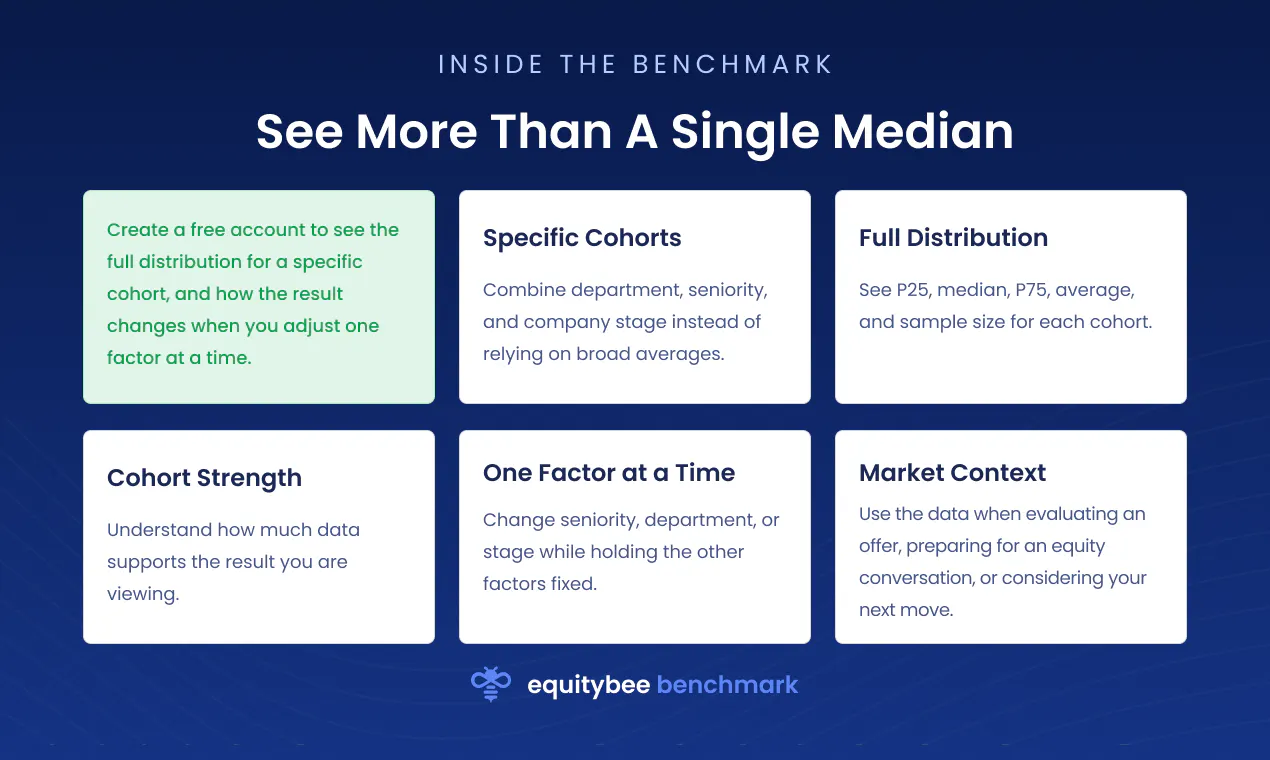
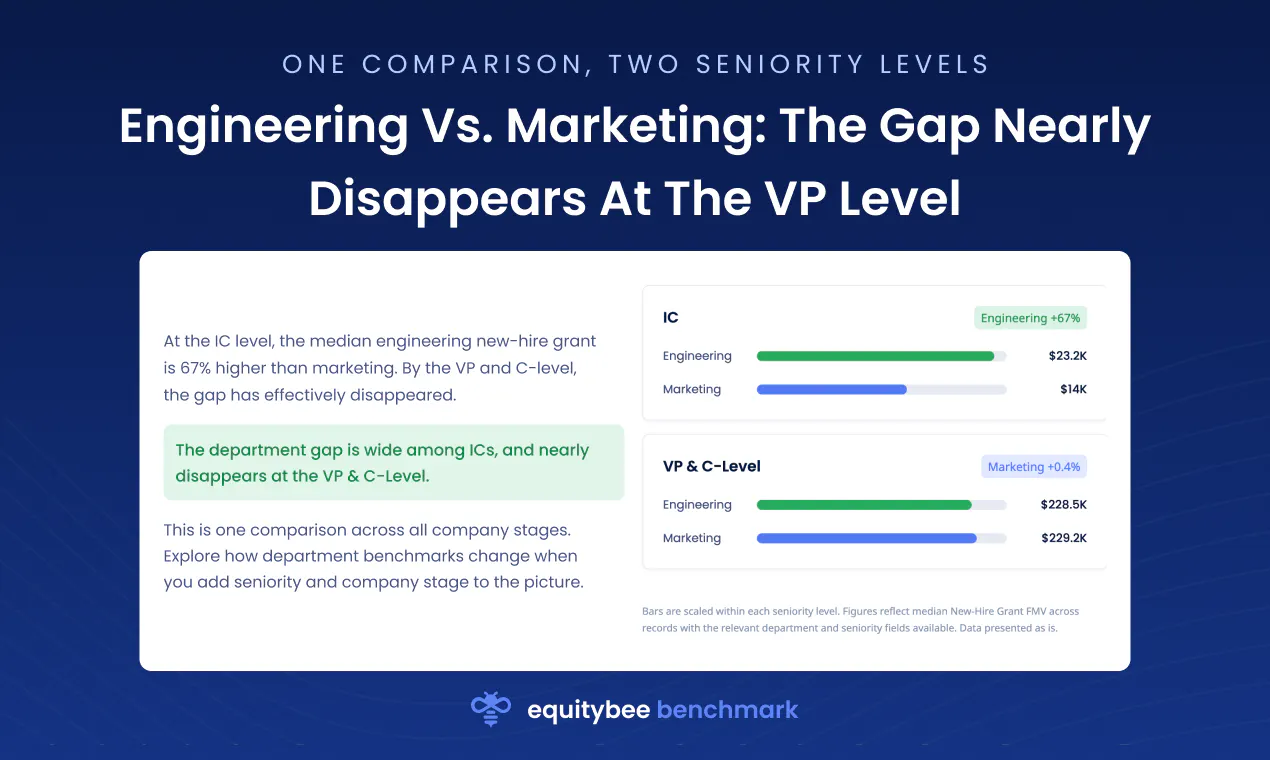
So, if you’re a senior engineer evaluating an offer from a Series B startup, you can create a relevant comparison group and see the 25th percentile, median, 75th percentile, and average fair market value of grants within that group, alongside insights that help put those figures into context.

The goal is not to predict what those options may eventually be worth. It is to give employees a relevant comparison point for understanding the equity they are being offered.

Equitybee Benchmark is free and built specifically for startup employees, not their HR teams.

💬 We’d love your feedback

Explore the Benchmark and tell us: what additional information or comparisons would help you better evaluate startup equity?


19
回复

@oded_golan  @orenbarzilai Building a tool tailored specifically for startup employees rather than HR or compensation departments keeps incentives completely aligned with job seekers, qq Is there any plan to expand the dataset globally to cover international startup hubs in Europe, LatAm, or APAC? congrats for launching🙌

7
回复

@orenbarzilai 
Here’s to bringing more value to the startup community. Startup employees should have access to this kind of data, and I’m super proud that we’re the ones making it available!

9
回复

@oded_golan  @orenbarzilai "Employees should have a benchmark too" is a clean way to name something that shows up everywhere — companies have market context on their own compensation, insurers know exactly what claims cost, subscription businesses know precisely how much friction to put in

front of cancellation. Building Cove, we've ended up thinking about it as the same asymmetry, just on the money side: institutions have the full picture, individuals get a monthly statement. Feels like there's a whole category of these products right now, all doing the same basic move — handing the other side's context back to the person who actually needs it.

0
回复

Amazing teams build amazing products!
This is super valuable and helpful to startup employees.

15
回复

Super excited to launch Equitybee Benchmark today! 🎉

Leveling the playing field for startup employees has always been at the heart of what we do at Equitybee. Having real, verified data to help people navigate offer letters or equity negotiations is a huge milestone.

Huge congrats to the team! Take it for a spin and let us know your thoughts!

14
回复

I work at Equitybee, so I am biased, but this is the tool I wish existed years ago. I spend my days inside cap tables, and the one question employees can never answer is "how does my grant actually compare?" Companies have had that market context forever. Employees have not. Benchmark closes that gap: pick your department, seniority, and company stage and you see the real distribution, not a vague market median. Built from more than 9,000 verified grants.

14
回复

Guy here, I lead marketing at @Equitybee and was one of the people working on this new product.


At Equitybee, our mission is to empower startup employees to participate in the success they helped build.

To deliver on that mission, we believe employees should have access to the data, knowledge, and tools they need to better understand the equity portion of their compensation.

I’m really excited to see the value this can bring to the startup builder community, and even more excited to learn from your feedback.

I’m here to answer any questions, thoughts, or concerns!

13
回复

I’m Lior, VP R&D at @Equitybee

One of the biggest challenges with startup equity is that employees often have very little context for understanding how their grant compares.

That’s exactly why we built Equitybee Benchmark.

We’ve taken a complex set of inputs, data points, and comparison dimensions and turned them into an experience that feels simple, clear, and useful.

Now every startup employee can explore how their equity compares by role, seniority, and company stage.

Take it for a spin and let us know what you think. We’d love to hear your feedback and what you’d like to see next

13
回复

Super excited to see Equitybee Benchmark live today! 🚀

It’s been really rewarding to work on this product and turn a large, complex dataset into something simple and useful for startup employees. Equity compensation can be hard to put into context, and our goal was to make it much easier to understand how your grant compares to the market.

Really proud of what the team built, and excited to hear your feedback. Give it a try and let us know what you think! 🙌

11
回复

So great to see it in the air! Good luck to the Equitybee team!

9
回复

@yaeli_gila Thank you!

1
回复

Hey Product Hunt 👋 I’m Oded, co-founder and CPO at @Equitybee.

One of the things we’ve seen again and again is how little context startup employees have when it comes to their equity. You can know the number of options you were granted, but still have no idea whether that grant is actually competitive.

That’s a big part of why we built Equitybee Benchmark: to give employees access to real comparison data by department, seniority, and company stage. It’s built on 9,000+ verified new-hire grants across 2,500+ U.S. startups.

Really proud of what the team has built, and I’d love to hear what you think - especially what other data or comparisons would make this more useful for you.

8
回复

Great job helping to bring transparency to the equity compensation space! Nice work!

8
回复

@m_k101 Thank you!

1
回复

Tried a few combinations of department, seniority, and stage. Looks good!

Are you planing to add more dimensions?  industry? company valuation?

8
回复

@shaulmert We will. This is V1 of the benchmark. We are collecting feedback and will add additional data based on users feedback.

5
回复

Great work!

8
回复

@tripp_middleton Thank you!

0
回复

@orenbarzilai @guy_elbaz1 , This fills such a big gap to help hiring with startups a fair play where both startups and talent can negotiate a full cash + equity in a transparent and data driven way. Congrats on the launch!

7
回复
7
回复

Thank you @illaigescheit, that's what we're trying to do here.

5
回复

@guy_elbaz1  @illaigescheit thanks for your support

3
回复

So proud of our team for this launch! Benchmark makes it so easy to see how your equity grant stacks up against others in your role, seniority, and stage; no more guessing if your offer is fair. Super clear, intuitive, and genuinely useful for startup employees.

5
回复

When it comes to stock option grants in the startup ecosystem, the information gap is real. Startup employees (myself included) have struggled with this issue for far too long. Equitybee Benchmark was launched to promote greater transparency across the ecosystem and empower startup employees to make better-informed decisions about what can easily become their most valuable asset: their equity.

Proud to be part of this company!

5
回复

Really interesting tool! Equity grants can be pretty difficult to compare with one another, so having more context around how a grant stacks up across companies/industries seems like a great way to assess one's position.

4
回复

This is the kind of transparency the equity comp space has needed for a while. Well done!

3
回复

Congratulations on the launch :)

Are people using it more when weighing an offer, or later when deciding whether to exercise?

2
回复

@alieksia Thanks for asking!

We think Equitybee Benchmark can be especially valuable in three key moments:

  1. When weighing a new offer

  2. When preparing for a promotion or equity refresh conversation

  3. When considering your next career move

The decision of whether to exercise is a bit different. It’s not necessarily about how your grant compares to the market, but more about your belief in the company, your risk appetite, your overall portfolio, and the opportunity cost of exercising.

Hope that helps!

5
回复

Everyone here is on the employee's side of the table. From the founder's: the option pool is the line item we see modelled worst — headcount goes in as cash, equity as "free".

Any plan for the reverse lookup? Feed it an 18-month hiring plan, get the pool it takes.

1
回复

@xp_vit Great point. On the company side, there are already some useful tools for this - Carta, for example, has an option pool calculator that helps companies estimate the pool they’ll need based on their hiring plans.

What felt much less solved to us was the employee side of the table: giving startup employees access to the market data they need to understand and benchmark their own equity.

That’s exactly the gap we’re trying to close with Equitybee Benchmark.

2
回复
#5
Bullet
30-60% faster than Claude Code and Codex
204
一句话介绍:Bullet是一款为开发者打造的极速AI编程代理,通过自动选型、并行执行和精准代码搜索,解决现有编码代理(如Claude Code和Codex)响应慢、迭代周期长、上下文混乱的核心痛点,让“等AI写代码”的时间大幅缩短。
Productivity Developer Tools Vibe coding
AI编程代理 代码生成提速 开发者工具 模型路由 并行计算 上下文优化 SWE-bench Claude Code替代 Codex替代 本地模型
用户评论摘要:用户普遍认可“快”这一核心卖点,调侃“等AI的功夫能刷手机了”。主要问题集中在token消耗与成本:有用户表示虽有订阅但每月token花费高达数千美元,担心额外开销;官方回复强调可复用Claude Code/Codex订阅,零额外成本。另有用户询问是否有token节省的具体基准数据,以及对复杂分布式系统开发的实际效果。
AI 锐评

Bullet的定位非常精准——它没有去卷模型智商,而是直接攻击了当前AI编程工具最被诟病的“磨洋工”问题。在Claude Code和Codex的用户群里,“等待”是最高频的抱怨,而Bullet的“自动路由+并行搜索+免全库嵌入”本质上是对现有Agent工程架构的一次瘦身手术。这确实是刚需,尤其对以秒为单位计费的企业开发者,节省的时间直接等于金钱。

但从产品策略看,Bullet的护城河并不深。其宣称的“30-60%提速”更多是工程优化红利,而非不可替代的技术壁垒:OpenAI和Anthropic随时可以在官方版本中集成类似的路由与并行策略,届时第三方工具的价值会迅速被稀释。目前团队依赖“兼容Claude Code/Codex”的模式,本质上是寄生在大厂生态之上,一旦上游API策略或定价调整,生存空间会立刻受压。

另外,评测数据仍需警惕。SWE-bench 95.8%的得分很亮眼,但该基准考察的是短任务修复,并非长会话复杂重构——而后者恰恰是用户抱怨“上下文混乱”的重灾区。评论中没有人质疑速度,但也没有人拿出真实的“复杂业务项目”案例来佐证其稳定性。至于“token节省”的质疑,官方回应“正在做benchmark”显然底气不足,这实际上是用户最关心的成本问题,不应该被视为路线图上的待办事项。

总结:Bullet是一把锋利的快刀,但它目前只解决了“切得快”的问题。如果团队不能在模型评估、上下文记忆或专用工作流上建立更深的数据壁垒,它大概率会成为大厂更新日志里的一个注脚。建议团队尽快冲出“做自己的产品”的舒适区,拿出硬核的token成本对比和长任务稳定性报告,否则“免费速度”的营销话术撑不过半年。

查看原始信息
Bullet
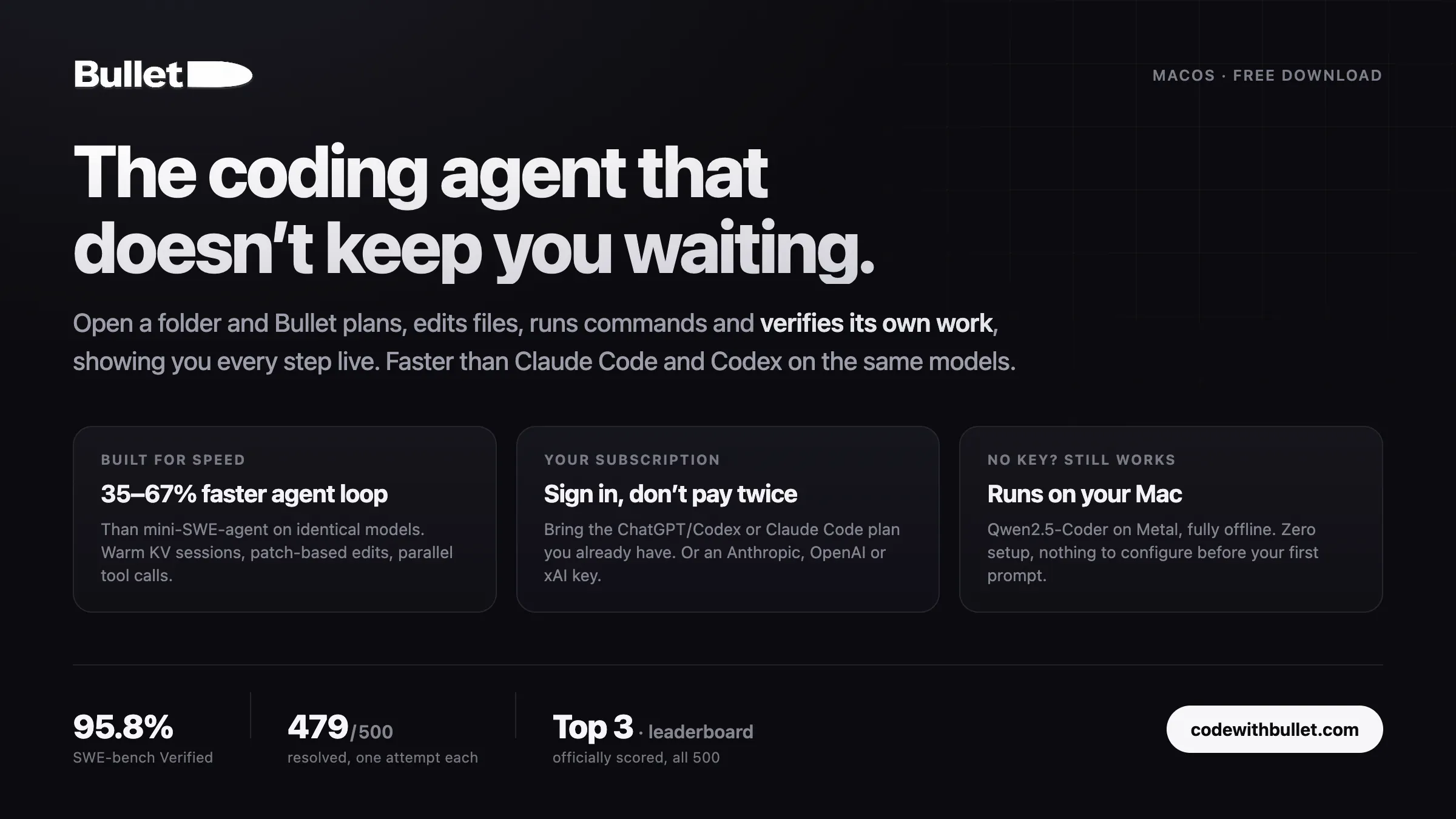
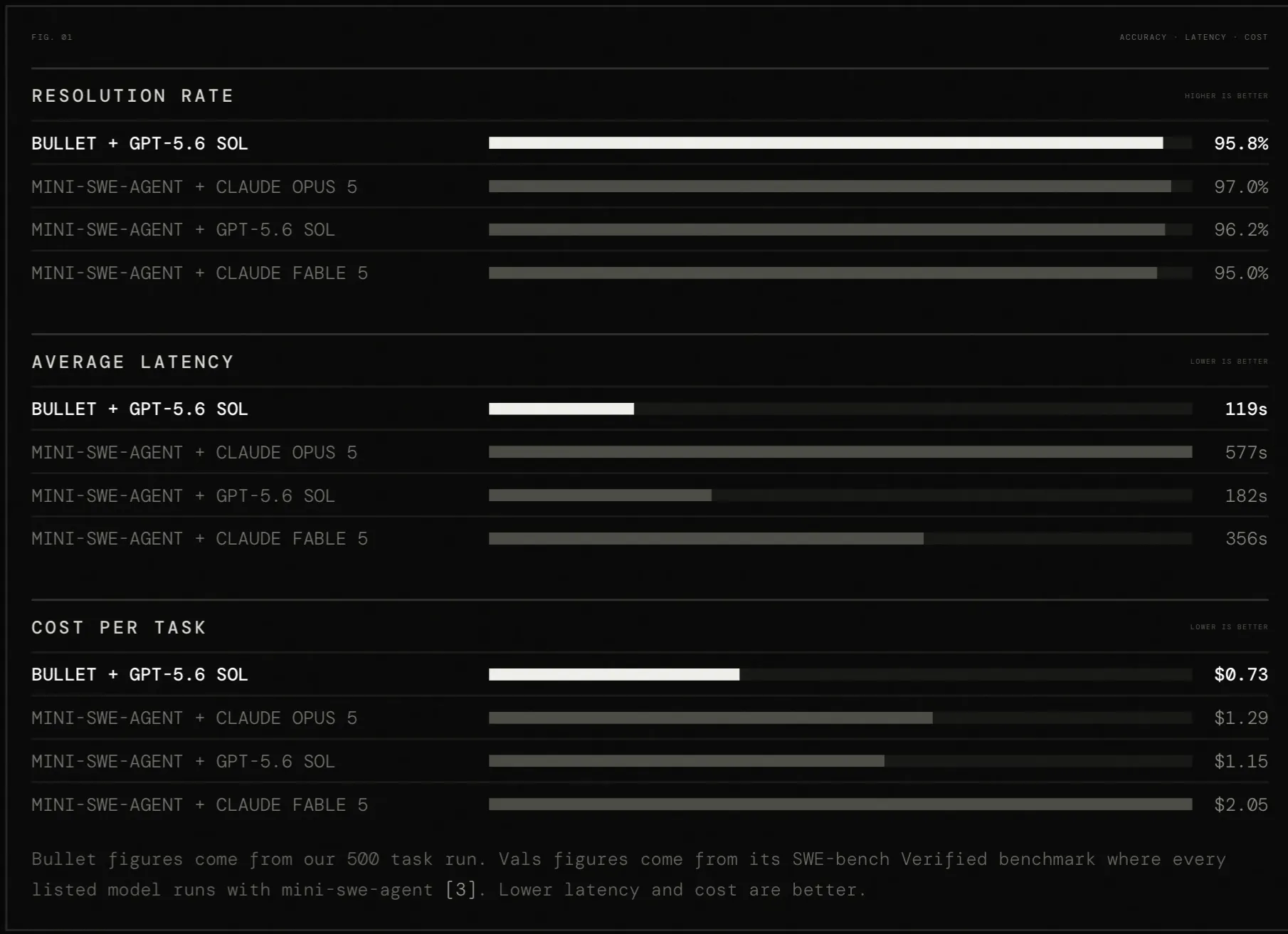
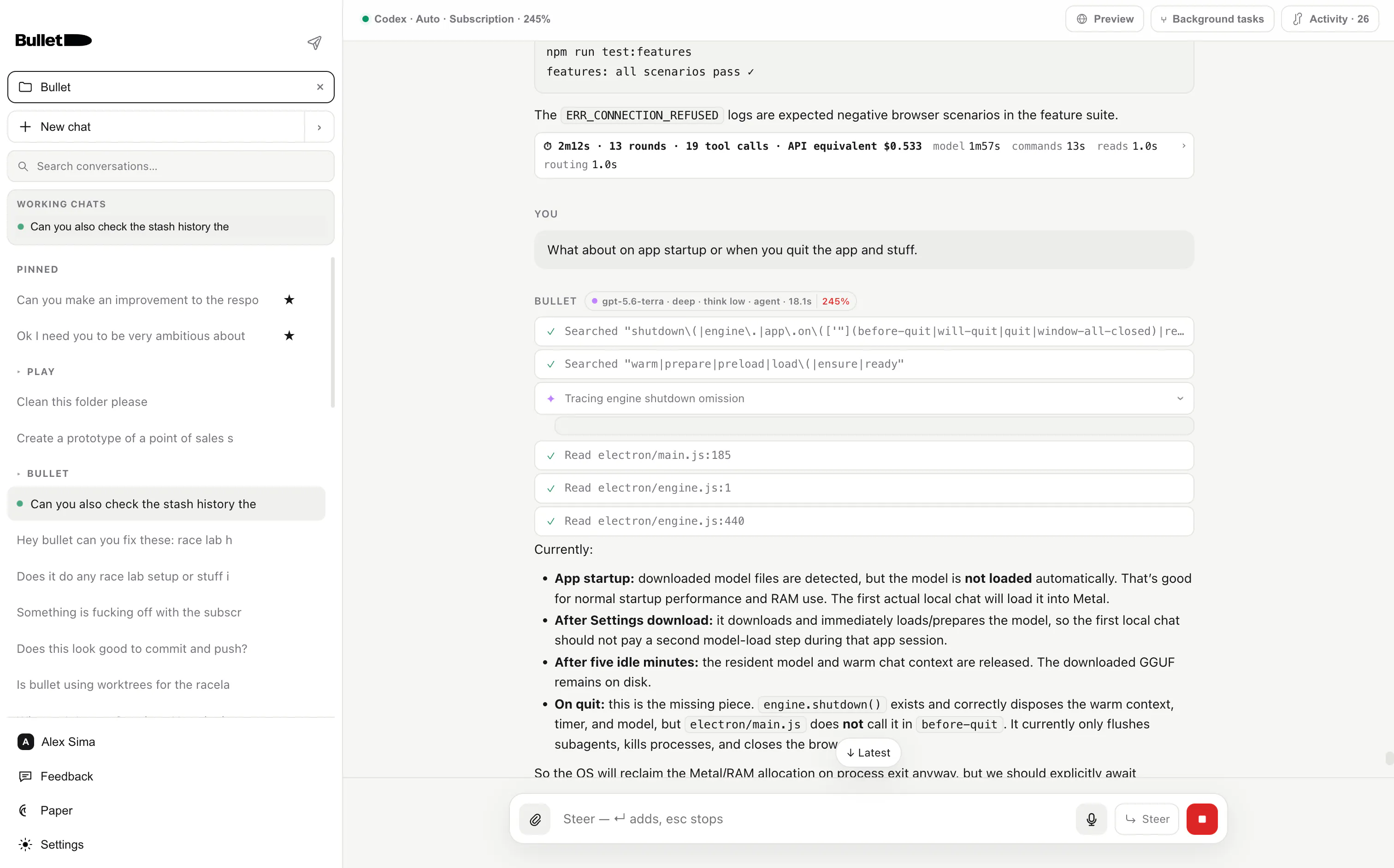
Bullet is a coding agent built for speed. We got tired of burning hours waiting on agent runs. The models were fine, but the loops around them were slow. Bullet auto-picks the right model/reasoning level per prompt, parallelizes searches/reads/commands, and uses targeted code search instead of embedding your whole repo. Works with your Claude Code or Codex subscription, API keys, or an on-device model. 95.8% on SWE-bench Verified (top 3), 119s/task. Built by Yale CS grads, ex-AppLovin/Citadel.

Hey everyone, my name is Alex Sima and I am the CTO of Bullet.

Like the post said, we built Bullet because Claude Code and Codex were too slow. Our YC partner said we should solve a problem we face ourselves, so we decided to go big or go home (guess we decided to go small and lightweight but ok).

We now only use Bullet internally...and personally, I can't go back to using Claude Code. If you hate slow coding agents, join the club: https://www.codewithbullet.com.

You can bring your subscriptions over, so it's free speed -- enjoy :)

13
回复

@alex_sima26 Nice to meet you CTO!

5
回复

@alex_sima26 Awesome work Alex!

1
回复

Congrats! This is so cool :) Quick question — besides the Minecraft clone example in the video, what are some other real-world coding tasks where you think Bullet’s speed improvements would make the biggest difference?

4
回复

@christian_thomas7 hi Christian!

0
回复

@christian_thomas7 Thanks Christian! all real-world coding tasks are fair game, we used Bullet to build Bullet, and others have used it to build their own products! (anything from apps to backend distributed systems)

3
回复

Hi everyone, my name is @adi_kulkarni and I’m the CEO of Bullet.

Existing coding agents were too slow for our development workflows, especially when iterating on a feature synchronously. Even when they finished, there would be a mistake so countless hours were wasted in this loop. After a certain amount of context accumulates in a session, both the agent and I are confused about the actual state of the feature!

Thus, we built Bullet to make coding agents faster, more focused, and easier to iterate with. It automatically chooses the right model and reasoning level, runs independent work in parallel, and uses targeted code search instead of dragging unnecessary context through every step.

We built Bullet for ourselves first, and now we’re excited to share it with everyone. Would love to hear what you all think!

4
回复

@adi_kulkarni Hey Adi, CEO of Bullet

4
回复

Bullet so fast I can't even doomscroll inbetween agent sessions anymore

3
回复

@haita thanks exactly what we’re solving for haha!

1
回复

Congrats on the launch@alex_sima26@adi_kulkarni! Does Bullet also help stretch usage limits, or is it just speed? Any benchmarks or stats on token savings?

3
回复

@adi_kulkarni  @rohithreddy Interesting you mention that, we were actually speaking with some users who were saying that Bullet usage lasts longer because it finishes tasks faster (and we do routing) but doing token saving benchmarks is definitely on our to-do list!

4
回复

Congrats on the launch! Waiting on coding agents is easily one of the most annoying parts right now, so cutting down iteration time is a big win.

3
回复

@henry_habib Thanks Henry!

3
回复

@henry_habib Appreciate it Henry!

3
回复

congrats on the launch guys! looks very impressive, excited to see where this goes!!!

3
回复

@darweenist Thanks Dawson!!! We learn from the greats 🙂‍↕️

3
回复

@darweenist thanks Dawson, appreciate it man!

2
回复

Congrats Alex and team, love this!! Looks fire 🔥

2
回复

@jonathan_waldorf thanks Jonathan!

2
回复

Great product, testing it rn.

2
回复

@daniel_martinez19 sounds great, let us know what you think!

2
回复

Stumbled across this post as my claude code was taking 30 years. How timely

2
回复

@dima_vremenko haha it’s a sign

1
回复

Best coding agent!! Lets go team!

2
回复

@sam_turchetta appreciate it Sam!

2
回复

Congrats Alex and team, this looks great!

2
回复

@govikavaturi thanks Govind!

2
回复

I would love to download and start using this today, but can't justify burning tokens when claude code is $200 a month and I spend $3-4k worth of tokens :(

2
回复

@rishab_mehra Hey Rishab, actually you can bring your own subscription and use that to power the models inside! No extra cost to you, just sign in with OAuth

2
回复

I'm so excited for this! Recently I've been noticing that the bottleneck with coding agents isn't quality anymore, it's just speed - so excited to have bullet accelerating my dev velocity!

1
回复

@oliver_moreland Awesome! Let us know your thoughts after you give it a try!

1
回复
#6
bb
The IDE that builds itself
179
一句话介绍:bb是一款可自我扩展的智能体编排桌面应用,通过自然语言让用户随时改造界面和功能,解决“通用工具不贴合个人工作流”的痛点,让IDE随需求生长。
Developer Tools Artificial Intelligence GitHub
智能体编排 AI开发工具 可扩展IDE 开源软件 提示词驱动开发 Agent工作流 跨平台支持 本地优先 MIT协议 开发者工具
用户评论摘要:用户好评集中在“灵活可定制”“体验流畅”及“兼容现有订阅”。建议与问题包括:期望更标准化的Web UI通知路径,询问Linux/Windows支持(官方回应桌面版规划中,可用`npx bb-app`跨平台运行),以及Lovable集成疑问(需经GitHub中转)。
AI 锐评

bb的“自我构建”在AI工具链里不是新概念,但把它做成GUI编排器并开源,确实踩准了当下两类显性焦虑:一是对单一模型/厂商锁定的恐惧(它兼容Claude Code、Codex等),二是对静态工具形态的不满(“等官方更新不如自己改”)。它本质上是把“元编程”能力下放给提示词,用AI替代传统插件开发的编译周期——这会极大降低工具定制的门槛,但代价是系统的不稳定和心智负担的转移。评论中“Emacs for coding agents”的比喻很精准:灵活、强大、无限可能,但也意味着用户必须承担“持续折腾”的隐性成本。目前它0.36版本、创始人自认“not a settled daily driver”,说明仍在高速迭代,生态插件丰富度远不及成熟IDE。真正的价值在于验证了一个方向:当AI能即时重组UI和逻辑时,“软件形态”的定义权正从厂商移向终端用户。但危险也在此——如果“万能”都交给提示词,一旦底层抽象层(ACP协议、桌面壳)出现问题,用户将陷入调试AI生成代码的无底洞。锐利地看,bb是未来工作台的一次勇敢原型,但离“即插即用的生产力工具”还有一段让普通用户望而却步的鸿沟。它更适合高技能开发者当作玩具兼武器,而非大众市场的替代品。

查看原始信息
bb
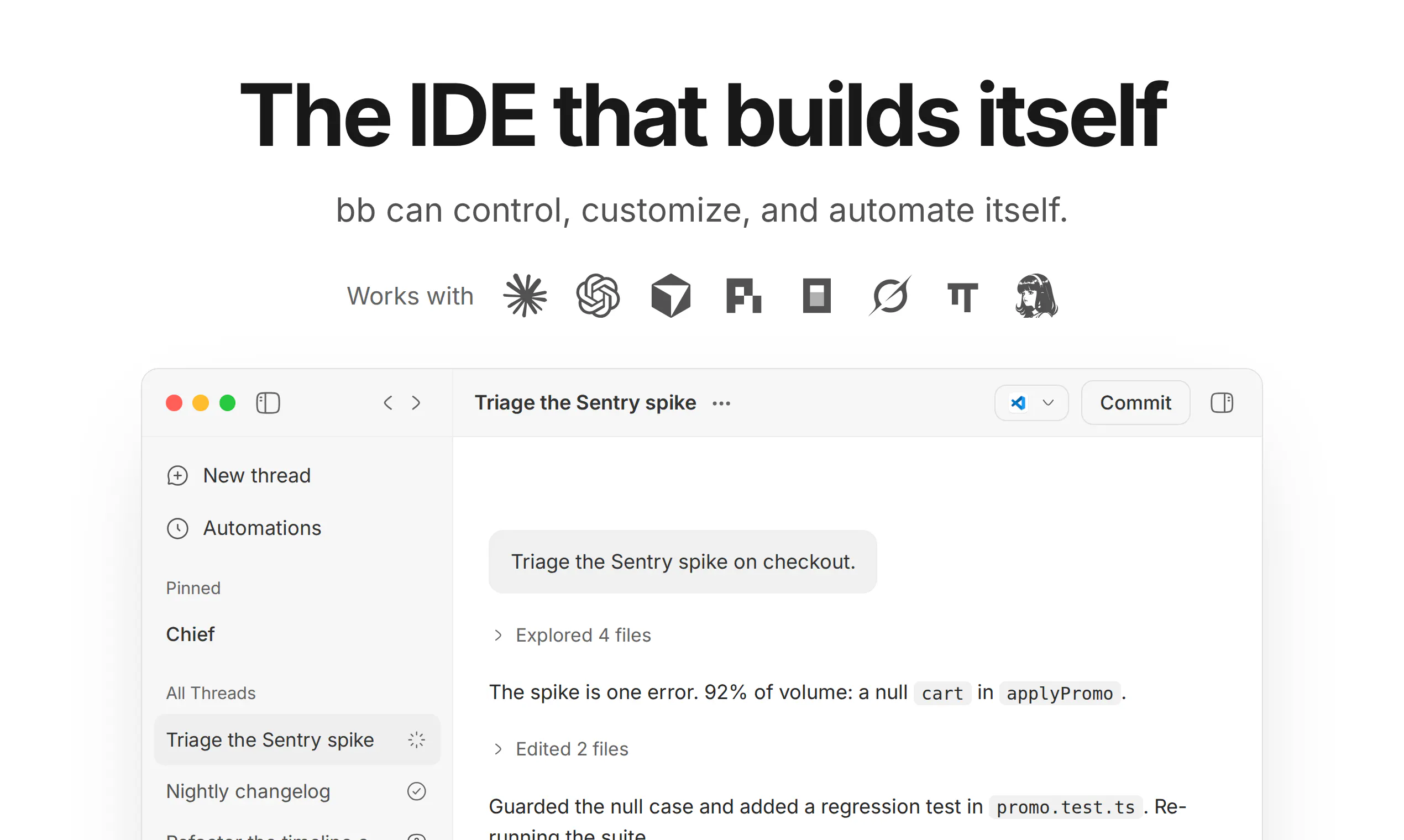
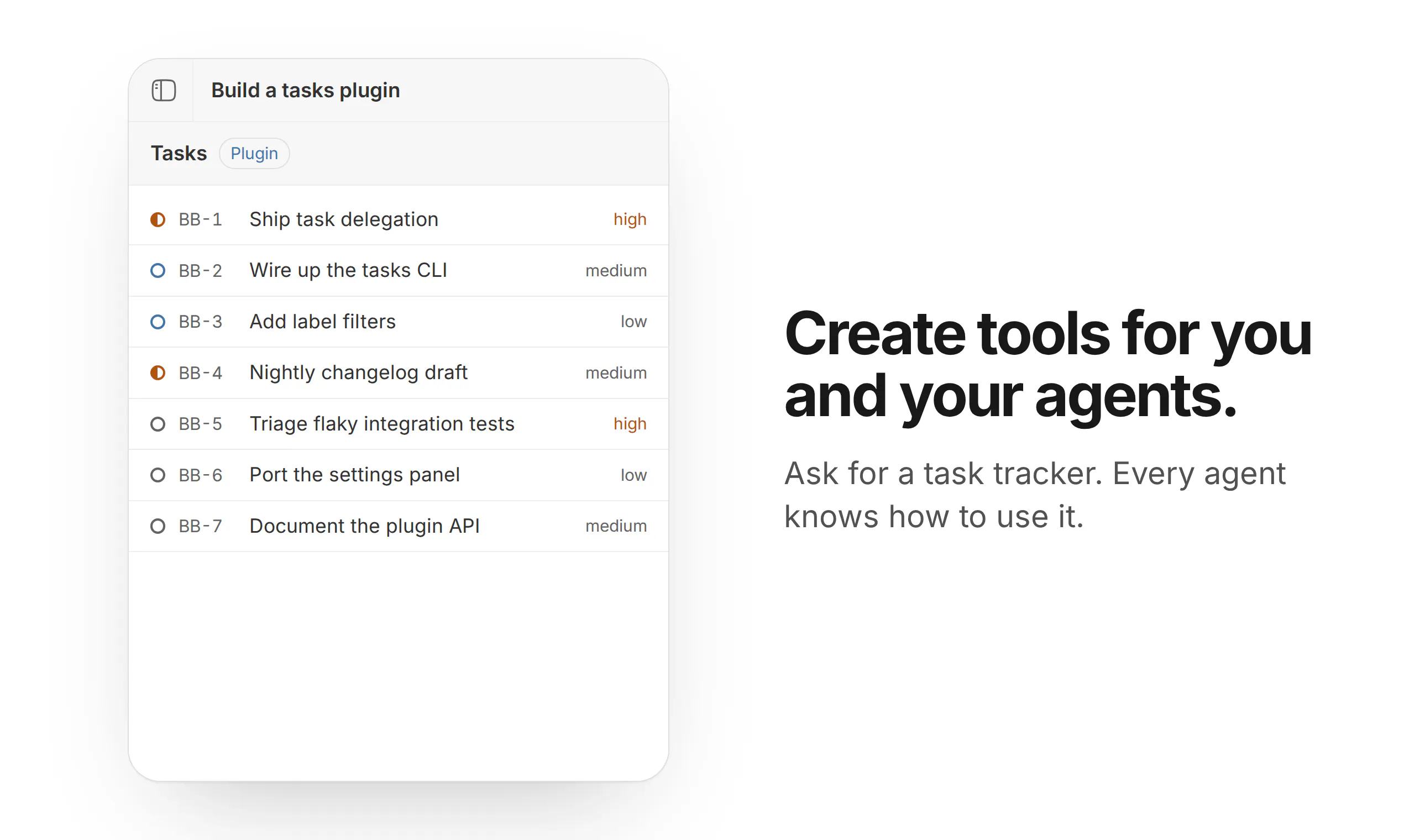
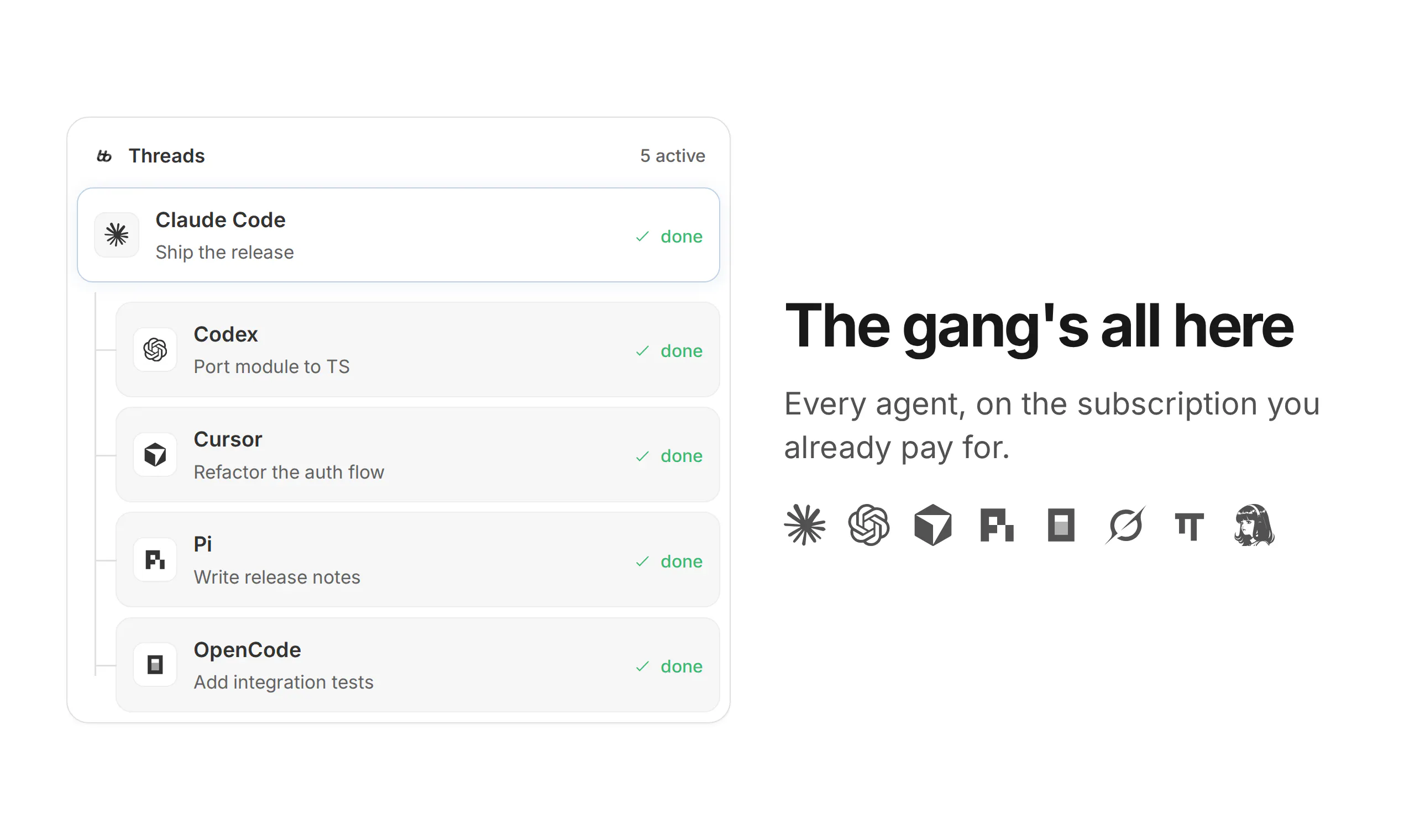
bb is an agentic orchestrator GUI, not unlike the Codex app, but it works with any provider: Claude Code, Codex, OpenCode, and more. What makes bb different is that it can customize and extend itself. Almost anything in bb can be changed with a single prompt. Ask for a task tracker, and one appears. bb also creates a skill that teaches all of your agents how to use it. Instead of waiting for your agentic workspace to add the feature you need, you can just ask for it.
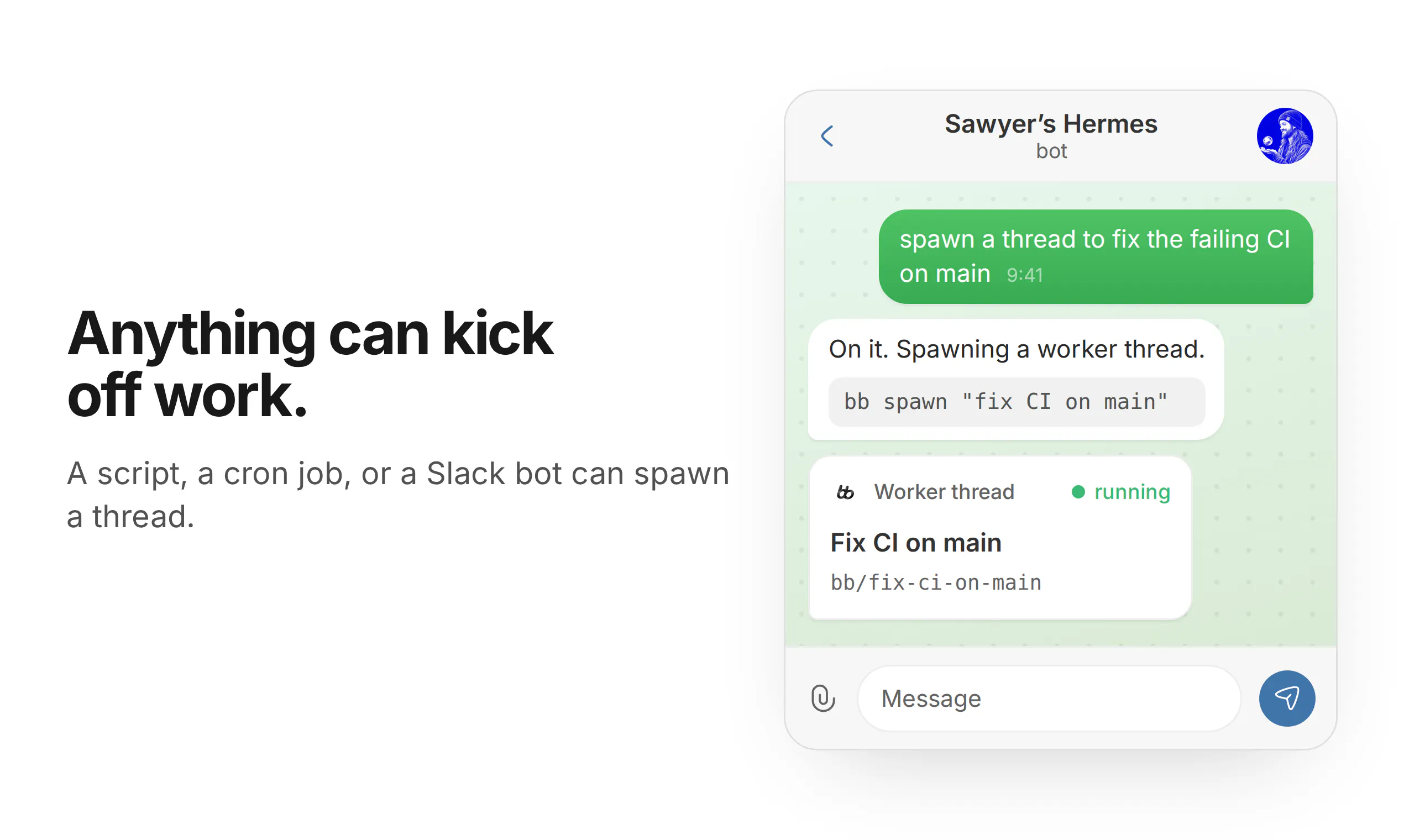
Hey Product Hunt! I’m Sawyer, one of the creators of bb 👋 There are a lot of agent orchestrators now, so the obvious question is: why another one? For me, the answer is that bb is software you can actually make your own. bb is an agentic orchestrator GUI that works with Claude Code, Codex, OpenCode, Cursor, and other ACP-compatible agents using your existing subscriptions. But almost anything in bb can also be changed or extended with a prompt. Ask for a task tracker and bb can build the UI for it, then create a skill that teaches your agents how to read, create, and manage tasks. People have also built tiling systems for agent threads, automated code review, markdown editors, and even a DAW inside bb. A lot of bb itself is built on the same extension system available to you. Workflows, side chat, crons, inline previews, remote access, and more are all plugins. It’s open source and MIT licensed. Clone it, run it, and if there’s something you wish it did, ask it to build it. I’ve gotten pretty addicted to using software I can change. I don’t think I want to go back.
3
回复

I love love love BB. It just feels GOOD to use and the flexibility to build and manage agents is extremely freeing.

1
回复

@j1ngg ty so much! I'm glad that it is working for you!

1
回复

I'm genuinely enjoying using bb. Super slick experience and was a breeze to set up with my custom checkouts/worktrees setup. I'm looking for some more standardized paths for notifications for web ui, at the moment.

1
回复

@colel glad you are enjoying it! Better notifications are certainly on our radar!

0
回复

Congrats on tha launch, Sawyer! Love that this is oss and respects existing agent subscriptions

1
回复

In spirit, bb feels like Emacs for coding agents: an environment intended to be shaped around how you work. bb is less like an AI chat bolted onto an editor and more like the beginnings of a programmable working environment for coding agents. I've been testing with version 0.36.0 and it has been an eye-opener. bb is evolving rapidly. It's not a settled, maintenance-free daily driver but it is extremely flexible and be warned you'll be dragged into exploring an insane multitude of possibilities!

0
回复

Can bb be integrated into Lovable?

0
回复

@celestin_gahaya not directly, but if you export your project to github you can then edit it. bb works anywhere a cli coding agent would work!

0
回复

Hi, do you have plans supporting other platforms, than Mac? I'd give Linux build a try.

0
回复

@foobar_beer linux and windows builds for the desktop app are certainly on the road map!

In the meantime you can run `npx bb-app@latest` and run the server form of it and access it in your browser (this works cross platform).

1
回复
#7
Continuum
Remember what you know about the people you manage
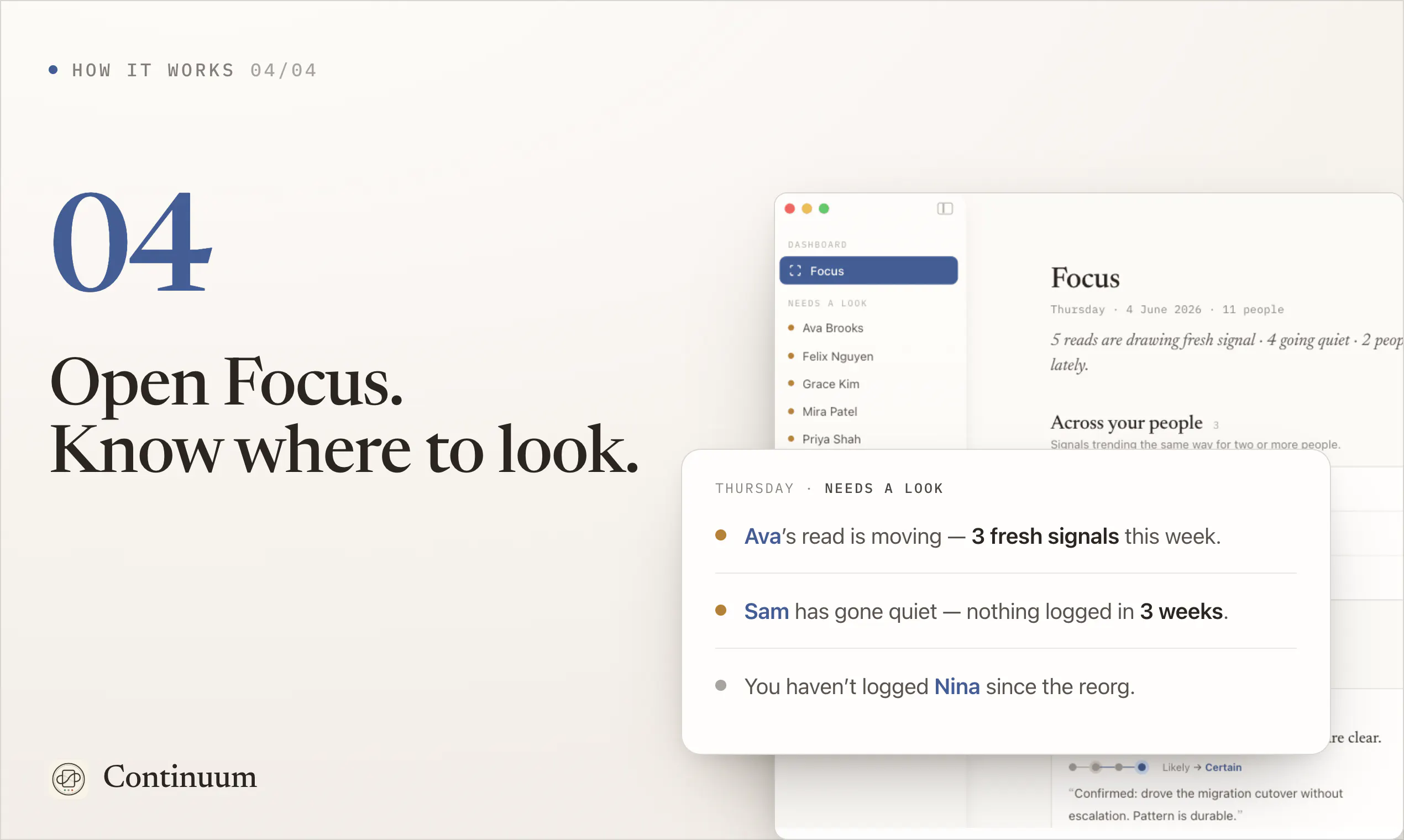
128
一句话介绍:Continuum 是一款本地私密的 Mac 应用,帮助管理者记录对下属的“信念”与变化信号,在 1:1 和日常管理中动态追踪对员工的认知演变,告别零散笔记和凭记忆做绩效判断的痛点。
Mac Productivity Meetings
管理工具 1:1会议 人员洞察 本地优先 隐私保护 绩效辅助 笔记管理 信号追踪 认知记录 去评分化
用户评论摘要:用户普遍认可本地私密与信号淡出机制,认为其符合管理中的动态认知需求。主要疑问是退出后有无数据导出;建议增加引导管理者挑战自身偏见、避免确认偏差的提示功能;也有用户认为无评分无报告是可信赖的关键。
AI 锐评

Continuum 精准切中了管理者“隐性人事实录”的空白——既不替代 HR 系统,也不做评分工具,而是将“对某人的判断”降维成可观测、可衰减、可修正的信念流。其真正的价值不在于记录,而在于用时间加权信号倒逼管理者对自己的认知纠偏,本质上是一台“管理直觉养成器”。但风险也很明显:首先,它把复杂的人性压缩进“信念-信号-方向”的三层模型,虽然简洁,却容易将管理者的偏见结构化甚至合法化,若不引入反方视角(如用户建议的挑战性提示),产品可能沦为“自我强化偏见的高级笔记本”。其次,“纯本地”虽迎合隐私焦虑,却让多人协作、团队校准和知识移交成为死穴——评论中对导出功能的疑问已暴露此短板,若无迁移路径,长期留存与付费转化将成为硬伤。定价方面,免费三人版合理,但 Pro 订阅对轻度用户偏高,年付折后仍是决策门槛。整体而言,这是为深度反思型管理者定制的“认知健身房”,但它必须持续证明自己不会变成一部精致的记忆外包机器,否则市场会很快将其归类为“另一种高级笔记应用”。

查看原始信息
Continuum
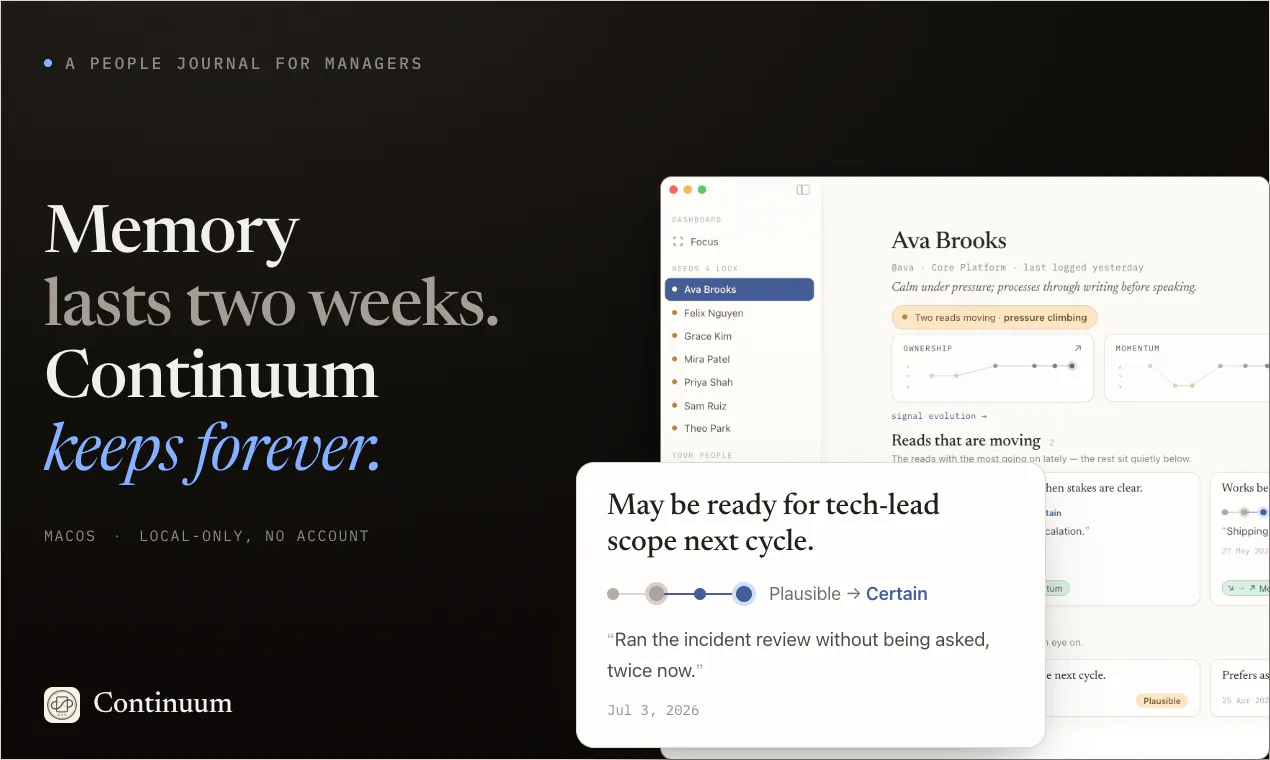
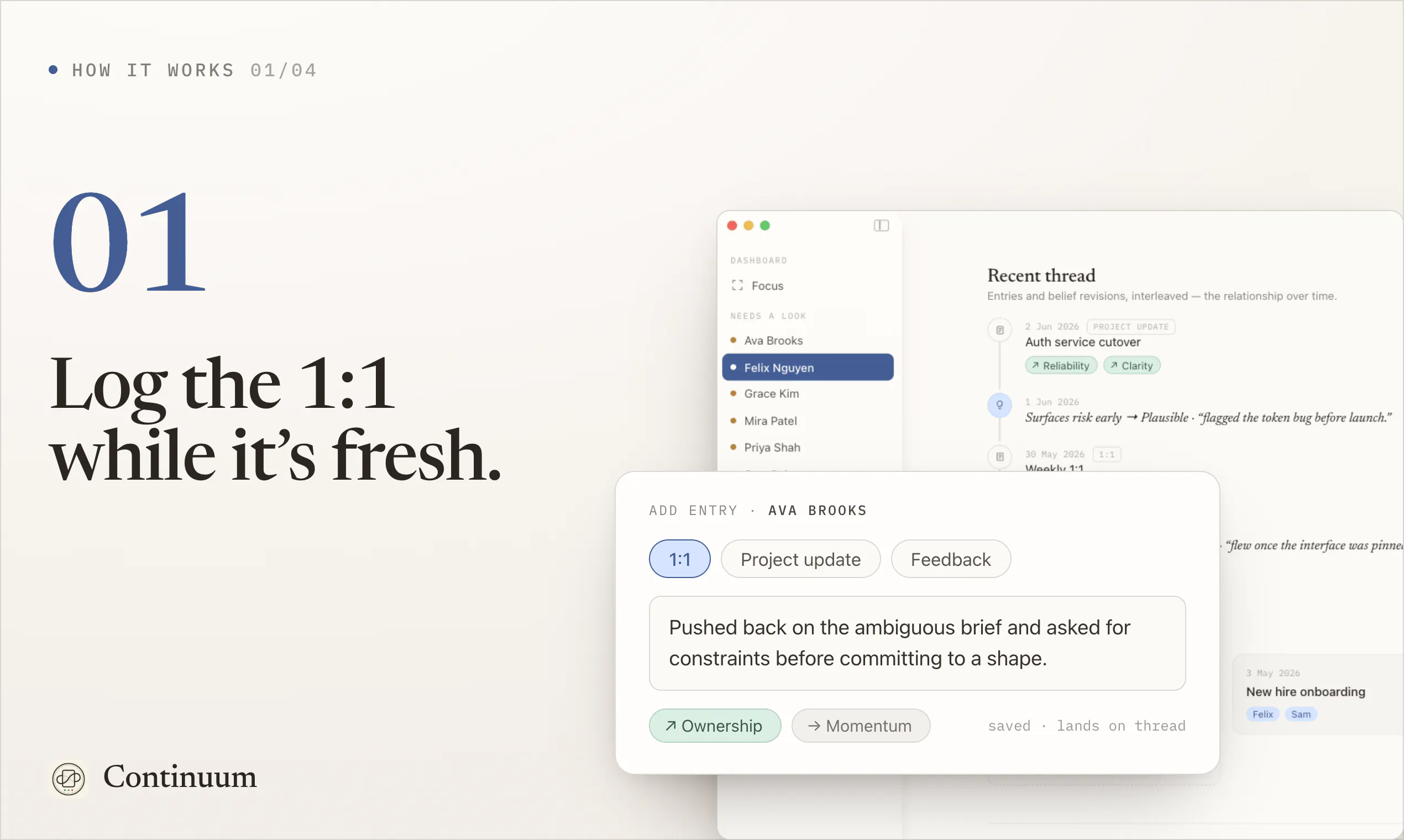
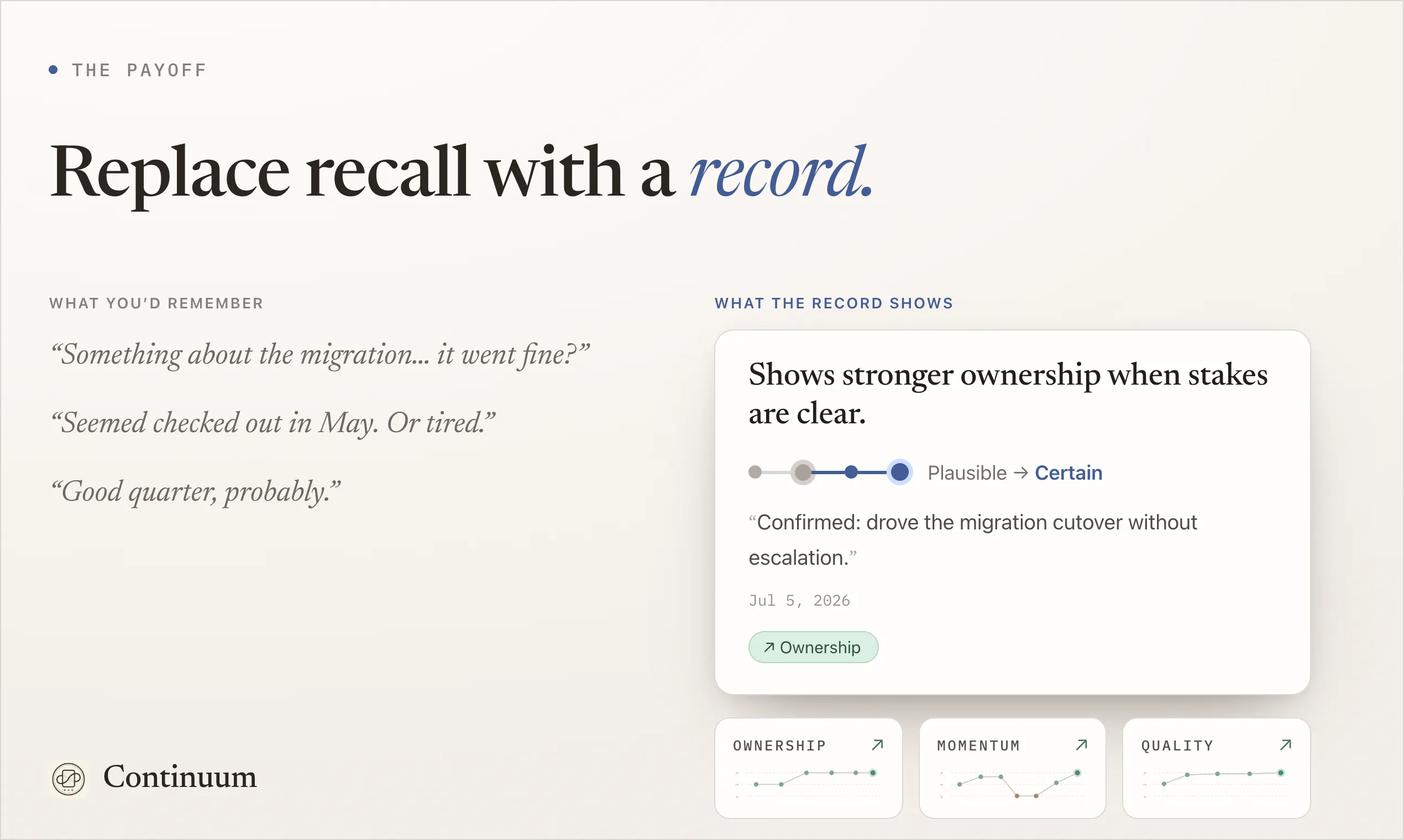
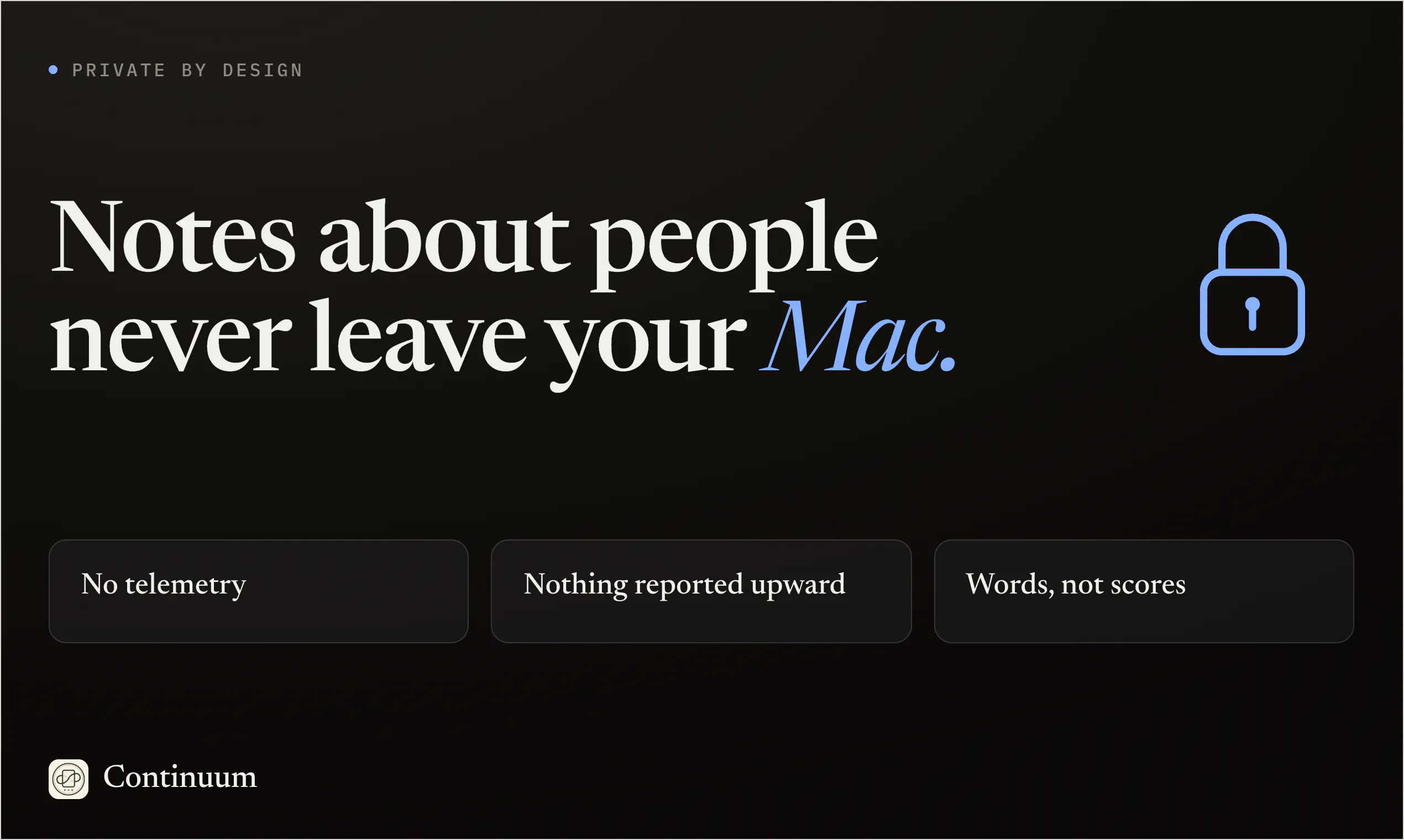
Continuum is a private Mac app for managers. You write down what you believe about each person you lead, tag what you notice in your 1:1s, and let your read change on the record. No scores, no reports, nothing that leaves your Mac.
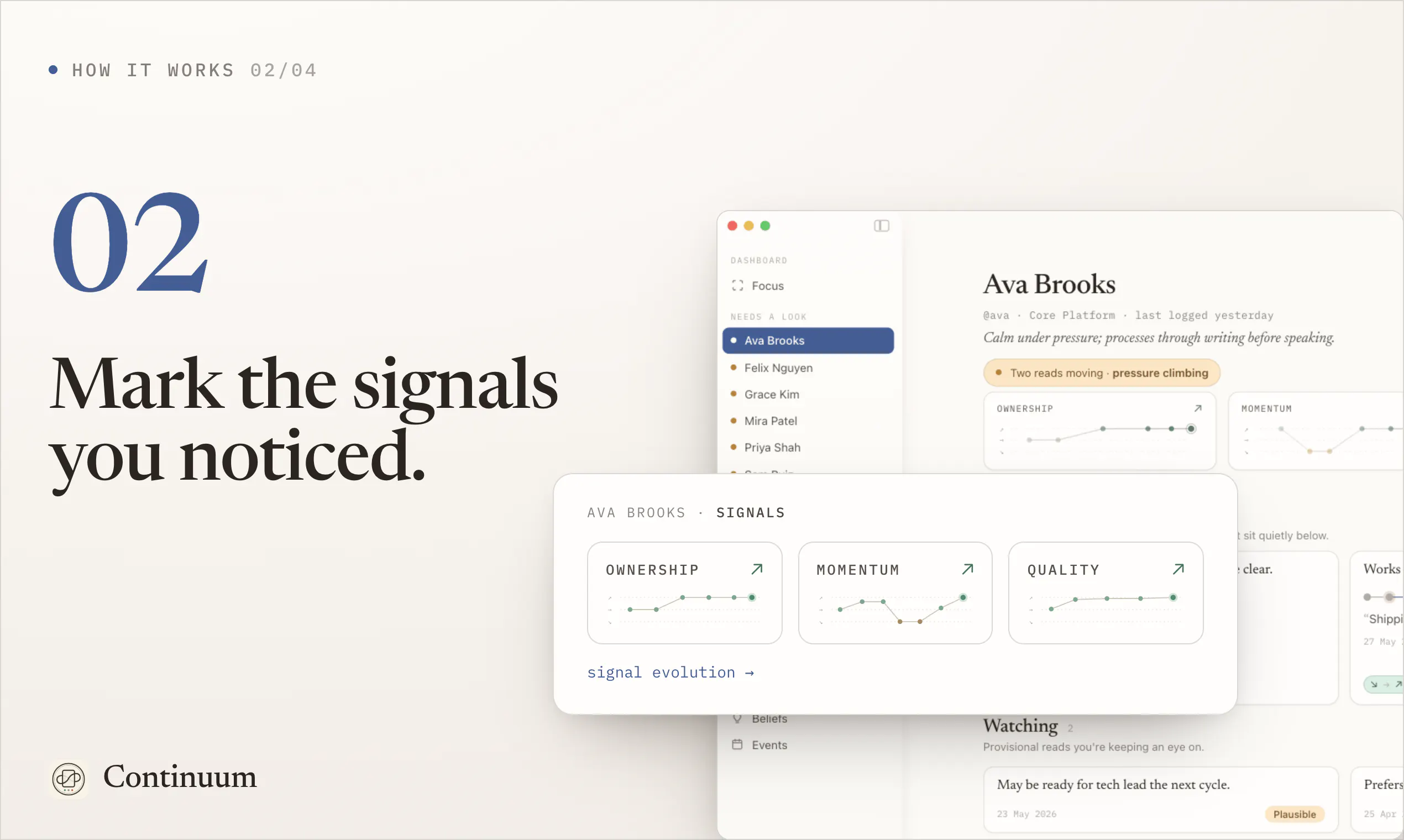
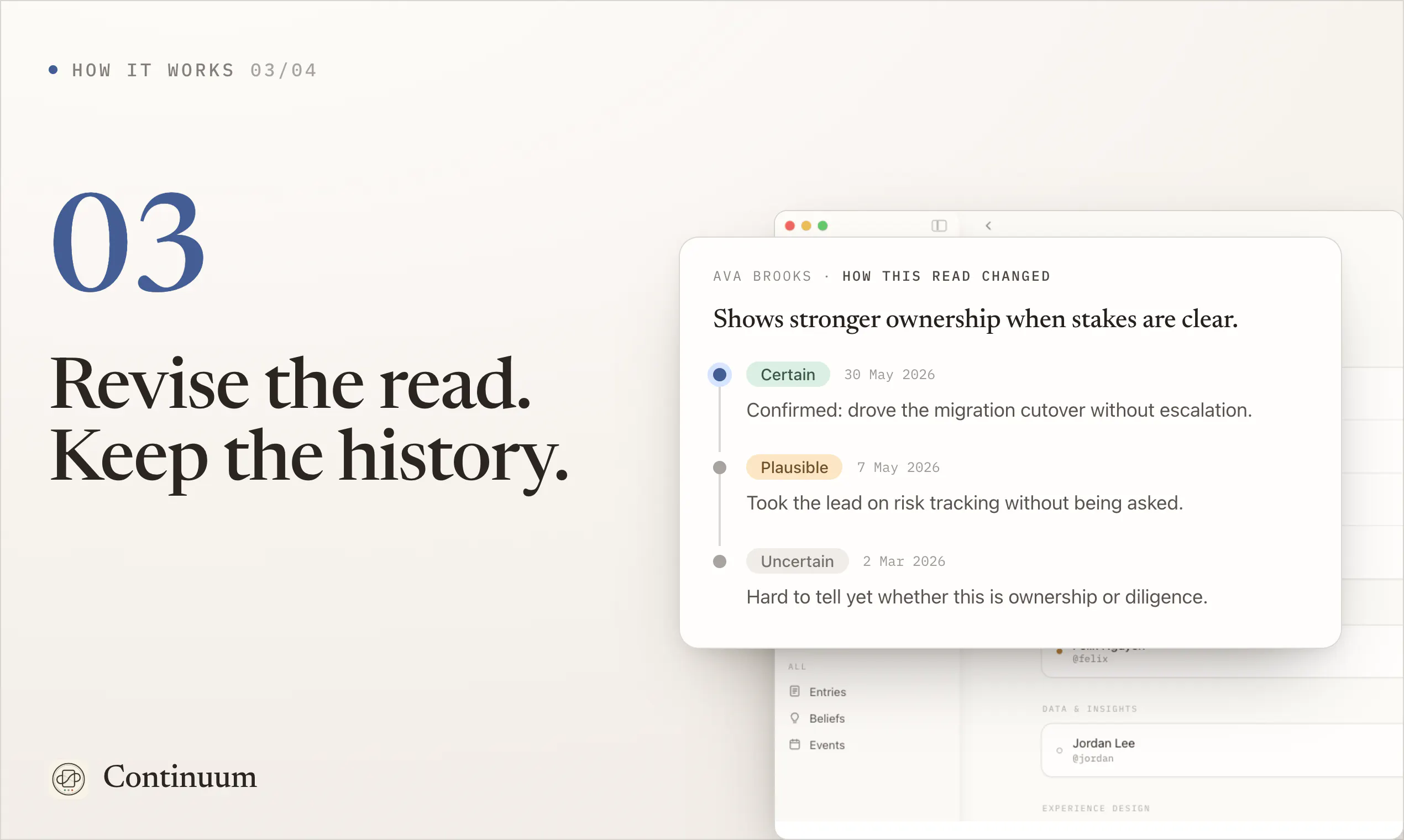
I've managed engineers for a few years, and I kept hitting the same issue: I'd notice something about a direct report (a dip in engagement, a shift in how they handled ambiguity, a theory about what was driving it) and then lose it. Not the meeting notes. The reason underneath, that quietly drifts until a review forces me to rebuild it from the last few weeks. I tried Notion, Apple Notes, a spreadsheet once. None of them stuck, because none were built for the actual work I needed: forming a belief about a person, noticing the signals that confirm or unsettle it, and seeing how your understanding moves over months. So I built Continuum. You write beliefs about each person, with a confidence (uncertain, likely, plausible, certain) and a status (active, watching, resolved, discarded). As you write up a 1:1, you tag the signals in it (productivity, ownership, proactiveness, etc), each with a direction (up, down, or steady), and those signals flow into the beliefs they touch, nudging your confidence and leaving a note about what changed. A signal fades over time unless you notice it again, so what surfaces is based more on what's current and less on what's old. There's no score on anyone, no performance review, and nothing is reported anywhere. It's also local to your Mac. This is v1 and I'd love any kind of feedback, but especially on: - Whether the belief-and-signal model matches how you actually think about your people - What signal types you'd set up for your team - Whether the fading-strength idea feels right or fiddly - What do you use today to keep track of your read on the people you manage? Continuum is free for up to 3 people; Pro is $12/month or $108/year (14-day free trial on yearly), or $249 once for lifetime. During launch week, get: - first year at 50% off, for the monthly subscription, directly in the app - 50% off yearly subscription with the code CONTINUUMPH2026 - 50% off lifetime purchase, directly in the app
3
回复

@rolandleth "No scores, no reports, nothing that leaves your Mac" is a rare stance in 2026 and the reason I'd trust it with 1:1 notes. Is there any export if I leave the company, or is that deliberately not a feature?

0
回复

@rolandleth This is a thoughtful take on a problem most managers solve with scattered notes and unreliable memory. I especially like that signals can fade.. good management should reflect changing evidence, not turn an old observation into a permanent label. Have you considered adding prompts that help managers challenge their own beliefs and spot confirmation bias before a 1:1?

0
回复

@rolandleth I really like the fading-strength idea. It makes a lot of sense that something you noticed six months ago shouldn't carry the same weight as a pattern you're seeing now. Also appreciate that you're explicitly avoiding turning this into another performance scoring tool. Congrats on the launch!

0
回复

Congrats on the launch :) I really like that everything is local and private and the fading-strength idea feels just right to me.

0
回复

@alieksia thanks, happy to hear it resonates!

1
回复

Upvoted, really cool concept @rolandleth !

0
回复

@jacob_swiss thanks, glad you like it!

0
回复
#8
Vizard Agent
One AI agent for every kind of video
122
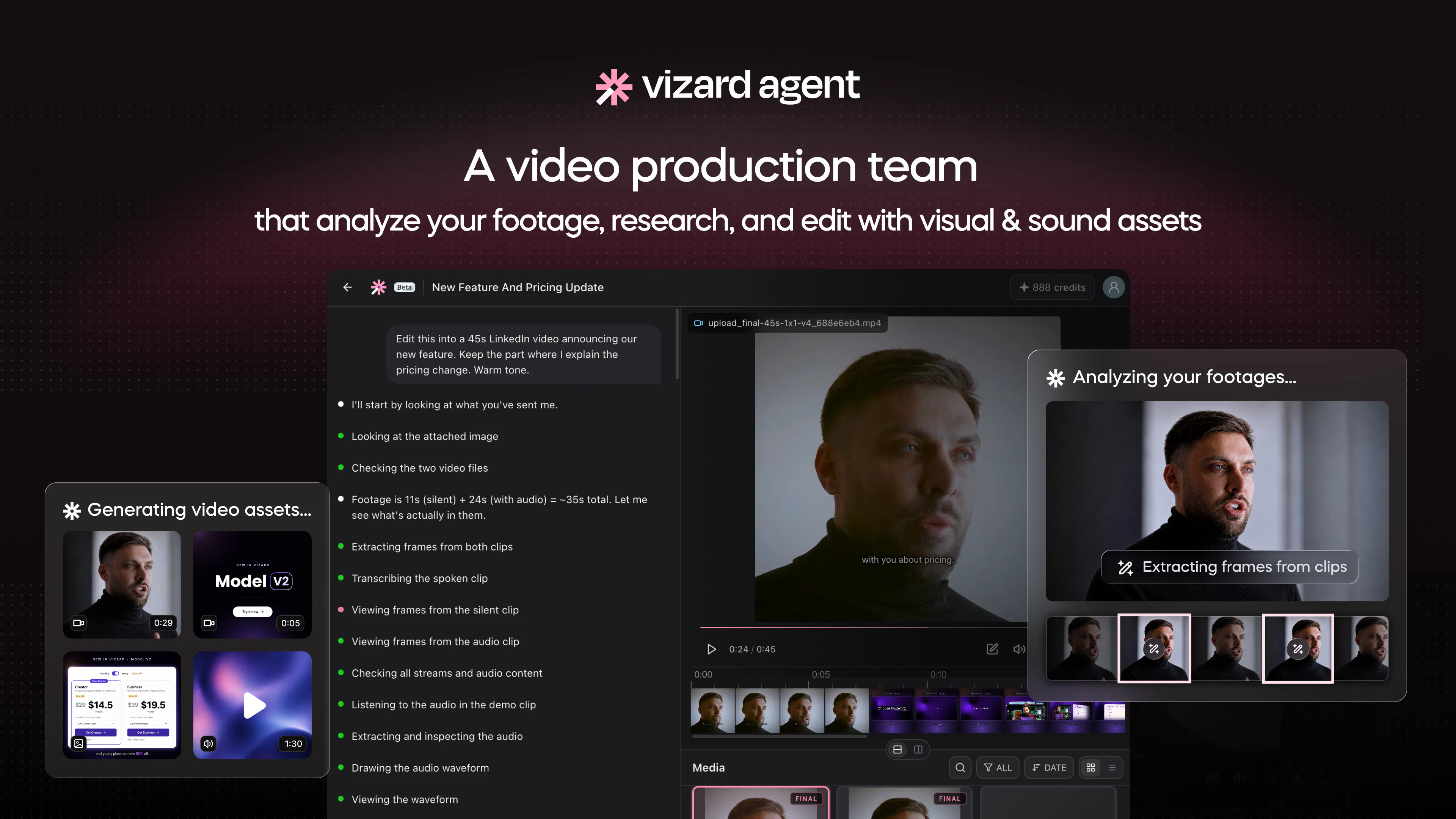
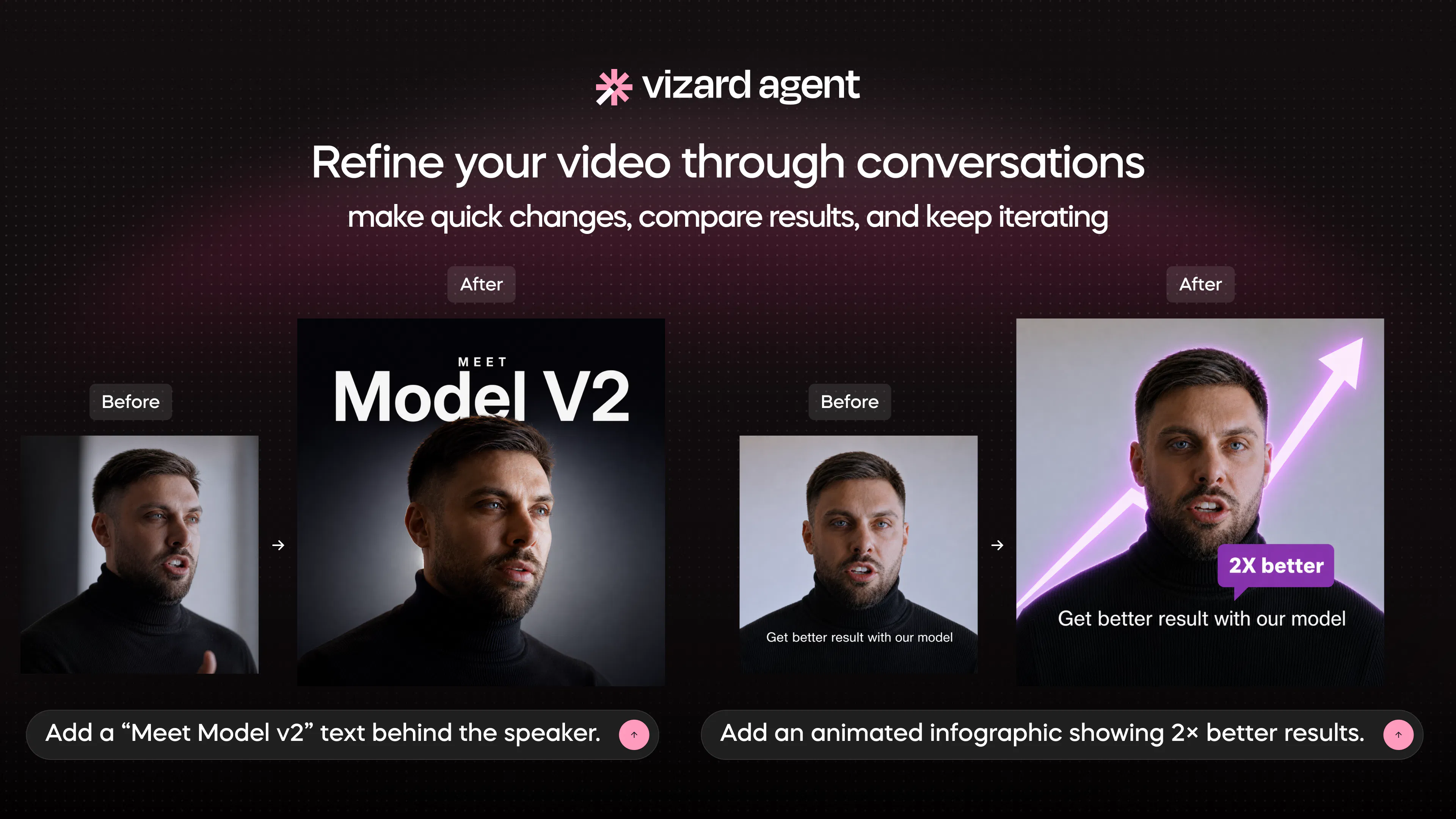
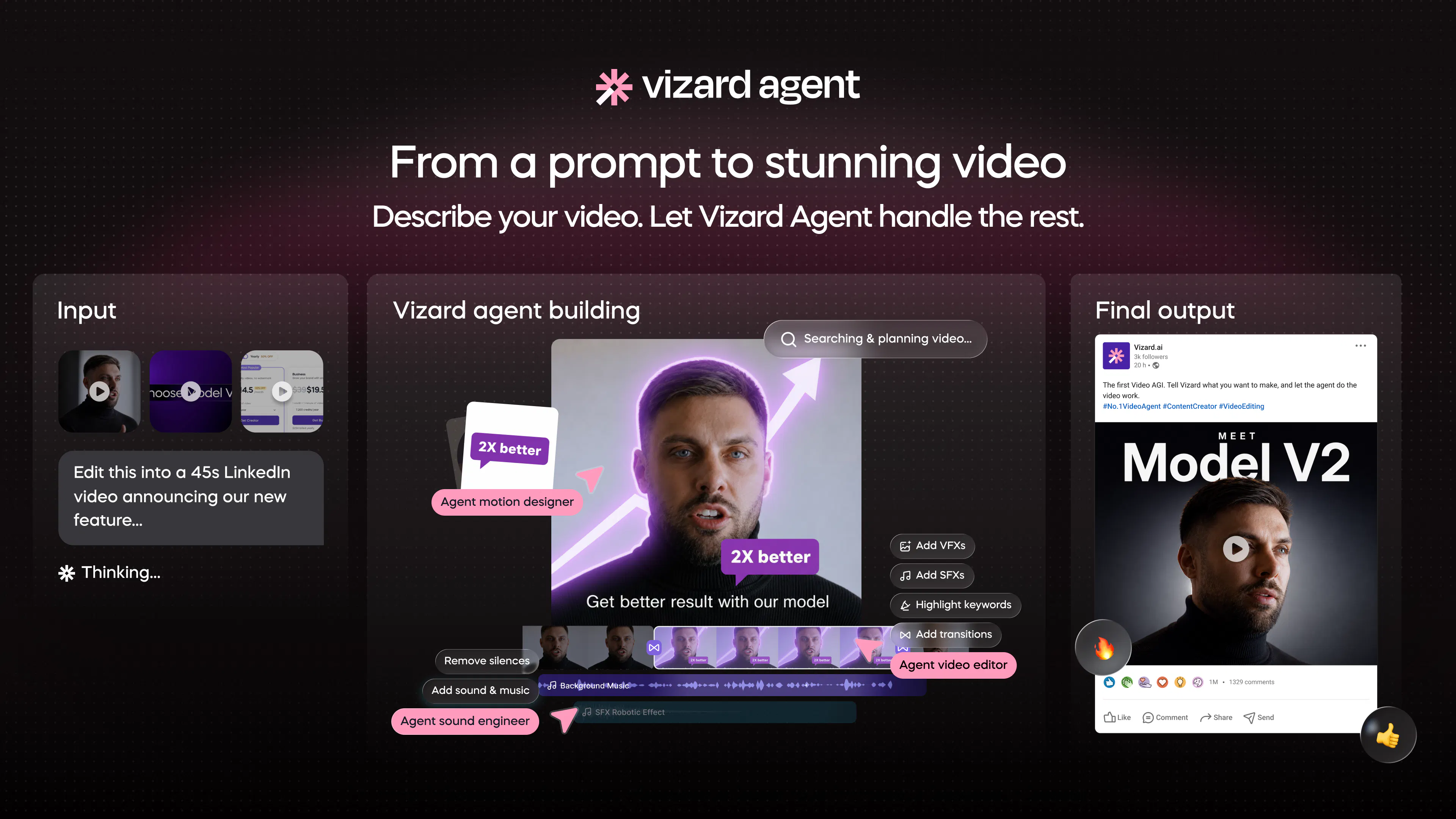
一句话介绍:Vizard Agent 是一款通用型 AI 视频代理,用户只需用自然语言描述目标(如“把网站做成30秒广告”),它就能自动完成从剪辑、生成到翻译、改版的全流程,彻底消灭了传统视频编辑的时间轴和繁琐工具链。
Productivity Artificial Intelligence Video
AI视频代理 视频自动剪辑 自然语言编辑 视频本地化 AI口型匹配 视频批量改编 无时间轴编辑 创作自动化 AI视频生成 智能修图
用户评论摘要:创始人Gary回应了可用性地区限制问题(未明确说明支持国家)。用户“zhangguanqun”询问产品在创意模糊场景(如“更高级”需求)下的处理逻辑:是主动提问、生成多选项还是自行决定?另有用户反馈使用体验良好,认为“从简报→规划→成品”的流程让“视频代理”概念落地。
AI 锐评

Vizard Agent 的野心不是做又一个AI剪辑插件,而是用“代理”模式重写视频生产的交互范式。它赌的是:用户真正想要的是“结果”,不是“工具”。这个判断在短片、社媒广告、口播视频等轻量场景中成立,因为这类需求高度模板化、容错率高。但其宣称的“全视频工种”面临巨大鸿沟:当遇到品牌调性、叙事节奏、潜意识情绪等高级创作需求时,自然语言所承载的信息密度远低于视觉语言。用户“creative ambiguity”的提问恰恰戳中要害——如果代理选择“自行决定”,那它产出的只是“平均水准”的视频;如果选择“提问”,则又退回传统工具的逻辑。更现实的瓶颈是:视频的校对成本极高(画面一帧、字幕一个字、音乐一拍的错误都肉眼可见),代理节省的“操作时间”可能被“审核时间”吞噬。目前它更接近“超级自动化模板工”,而非“通用视频智能体”。但方向是对的——砍掉时间轴是必然,只是“一句话生成”之后,如何用对话式迭代逼近真正创作意图,才是它能否从“玩具”变成“生产力”的分水岭。此外,地区限制和创始人“一人回复所有评论”的模式,暗示团队尚未在合规与客服上做好全球化准备。

查看原始信息
Vizard Agent
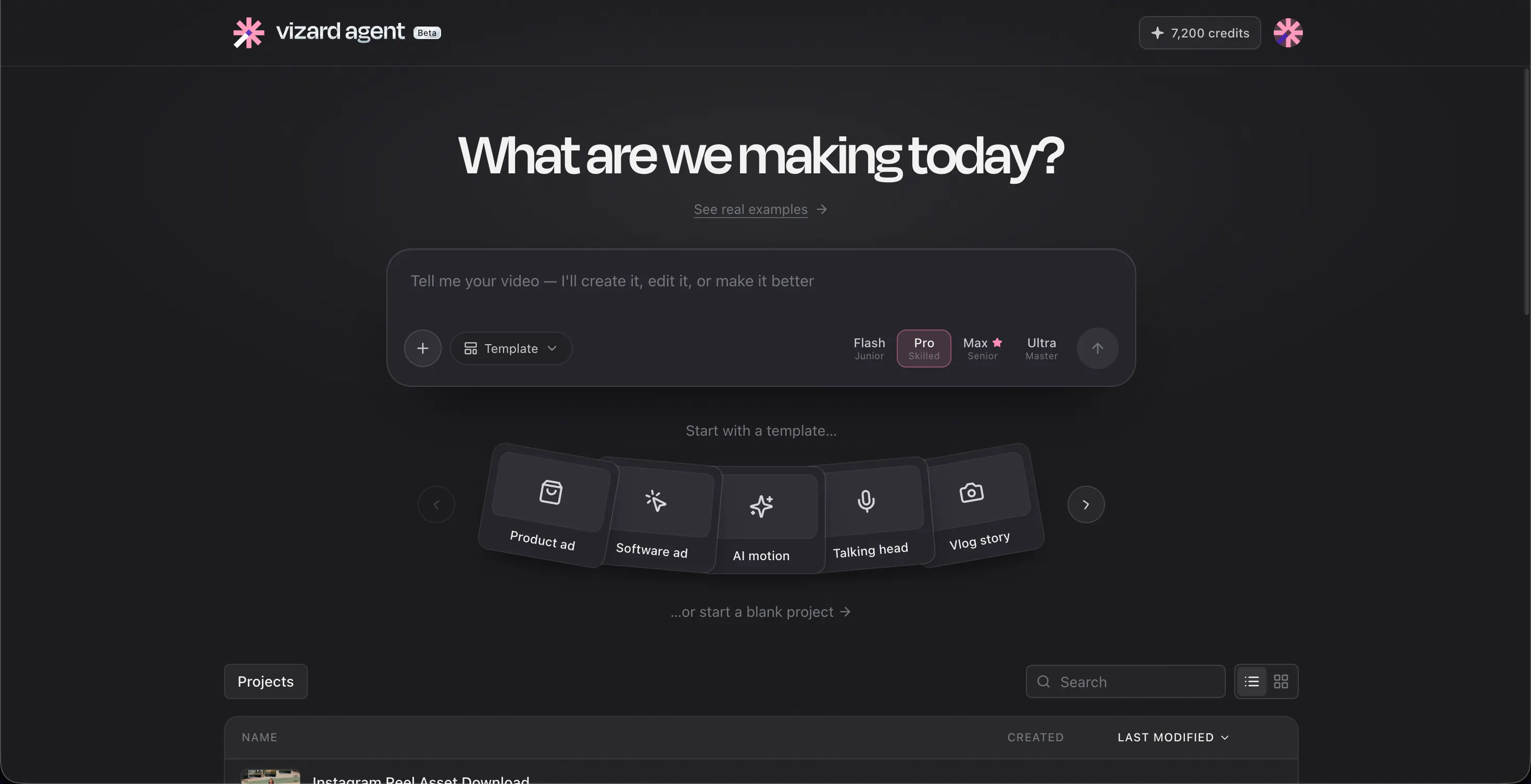
Vizard Agent is a general AI video agent built to take on the whole video job. Start with raw footage, an existing video, a URL, a script, an image, or just an idea. Tell it what you want to make, and it figures out the work in between, from editing and generation to repurposing, localization, and revisions. Instead of managing a different tool for every step, you give one agent the outcome you want and work with it until the video is finished.
I'm Gary, founder of Vizard. We've spent 6 months building something new: Vizard Agent — a full video editor that works like a human editor. You brief it, it does the entire job and hands you the finished video. No timeline, nothing to learn. Just say it: "Make a 30-second ad for my product — here's my website." "Translate this into Spanish — and make my lips match." "The logo on my shirt is wrong in this shot. Fix it." What Claude Code is to programmers, Vizard Agent is to video. Just go to agent.vizard.ai and sign in with your Vizard account. It works right now. One thing I ask in return: reply and tell me what you think — what impressed you, what fell short, what you wish it could do. I read every message myself, and the next version will be built on what you say.
4
回复

@zhangguanqun Congrats on the launch! 🚀")

0
回复

@zhangguanqun If it is not available in all the countries, maybe you should mention that?

0
回复

@zhangguanqun “Claude Code for video” is a compelling direction.. the biggest unlock may be removing the timeline entirely. How does Vizard handle creative ambiguity when a brief like “make it feel more premium” could lead in several directions: does it ask questions first, generate options, or make the call itself?

0
回复

Just tell Vizard Agent what video you want to create, then sit back and let it surprise you. Congrats on the launch! 🚀

1
回复

@vizard You get the secret :)

0
回复

Been working with Vizard Agent for a while, and the part that feels different isn’t any single AI feature. It’s being able to say “make me this video” instead of manually deciding which tool to use for every step.

It’s still early, but watching it go from a brief -> planning -> creating/editing -> a finished video has made the “agent for video” idea feel much more concrete to me.

Very excited to finally see this out in the world!

0
回复
#9
Product Analytics for Agents and Users
Optimize Agent Actions with User Behavior.
114
一句话介绍:Kubit是一个将AI智能体的后端执行链路(Agent Traces)与前端用户行为数据打通的产品分析平台,解决“AI功能失败但不知道用户为何离开”的盲区,帮助产品/AI工程师精准定位流失归因并反哺开发。
Analytics Artificial Intelligence Business Intelligence
AI产品分析 用户行为分析 Agent可观测性 智能体追踪 漏斗分析 数据集成 OTel BYOW 增长归因 开发者工具
用户评论摘要:多数评论聚焦于“连接智能体轨迹与用户行为”的空白价值,认为技术成功的Agent仍可能造成体验挫败感。有用户追问实际发现的隐藏模式;创始团队回复强调能直接定位“坏工具调用”与“用户流失”的因果关系,并提及快速集成与数据自主可控。
AI 锐评

Kubit踩准了一个真实且日益尖锐的痛点:当AI成为产品核心交互层时,传统APM(应用性能监控)与用户分析工具的割裂导致“技术成功”与“体验失败”的归因彻底失效。其价值不在于再造一个分析仪表盘,而在于提供了一个“跨域关联”的语义层——将底层agent的延迟、token消耗、工具调用链,与前端用户的rage click、放弃点、重复提示行为强行建立因果关系。这本质上是把“人因工程”引入AI系统调优,方向正确且技术选型聪明(兼容OTel和BYOW,降低了接入门槛,也迎合了企业数据主权需求)。

但必须泼冷水:第一,该功能容易陷入“相关性不等于因果性”的陷阱,即便能拼合日志,也未必能解释用户心理动机,需要极强的数据建模能力;第二,该品类同质化严重,LangSmith等LLM可观测平台已在向行为侧延伸,传统Mixpanel/Amplitude也在向agent侧渗透,Kubit的护城河不够清晰;第三,目前114个投票和浅层评论更像早期市场教育,未见到复杂策略(如个性化实验)的案例。其真正能否立住,取决于能否将“洞察”闭环到“编码代理自动修改产品”的飞轮里——口号已喊出(Headless for Coding Agents),但落地路径未展示。短期看是精巧的桥梁工具,长期若无AI-driven自动化优化能力,恐沦为数据中转站。

查看原始信息
Product Analytics for Agents and Users
Kubit helps product engineers optimize AI agents with user behavior. Connect agent traces directly to user activities to see exactly why users re-prompt, drop off, or convert. Then, feed those insights straight into your coding agent to build AI products that actually stick. Start instantly with seamless integrations via OTel, your CDP, or Bring Your Own Warehouse (BYOW).

Hey Product Hunt! 👋 I’m Alex, founder and CEO of Kubit.

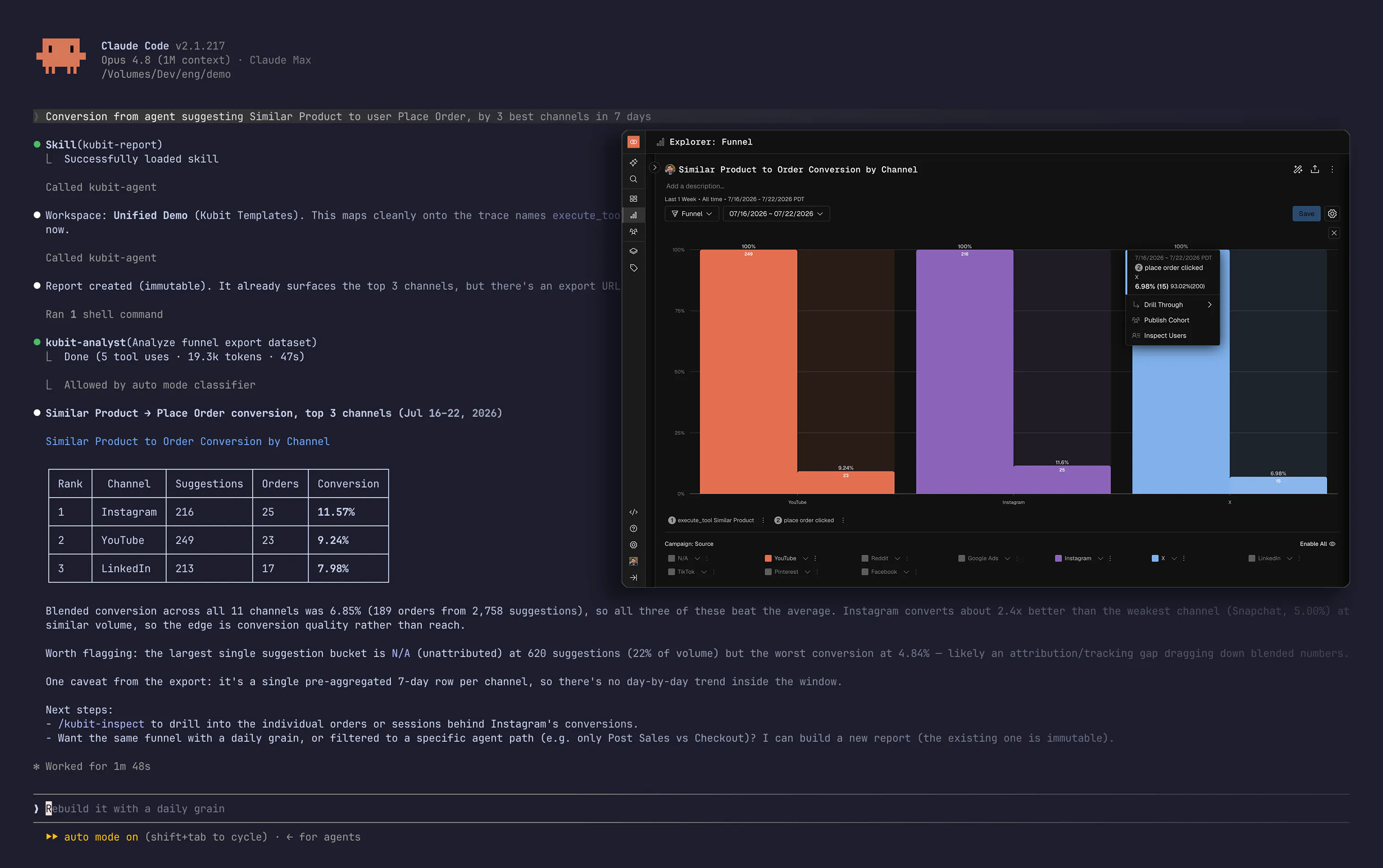
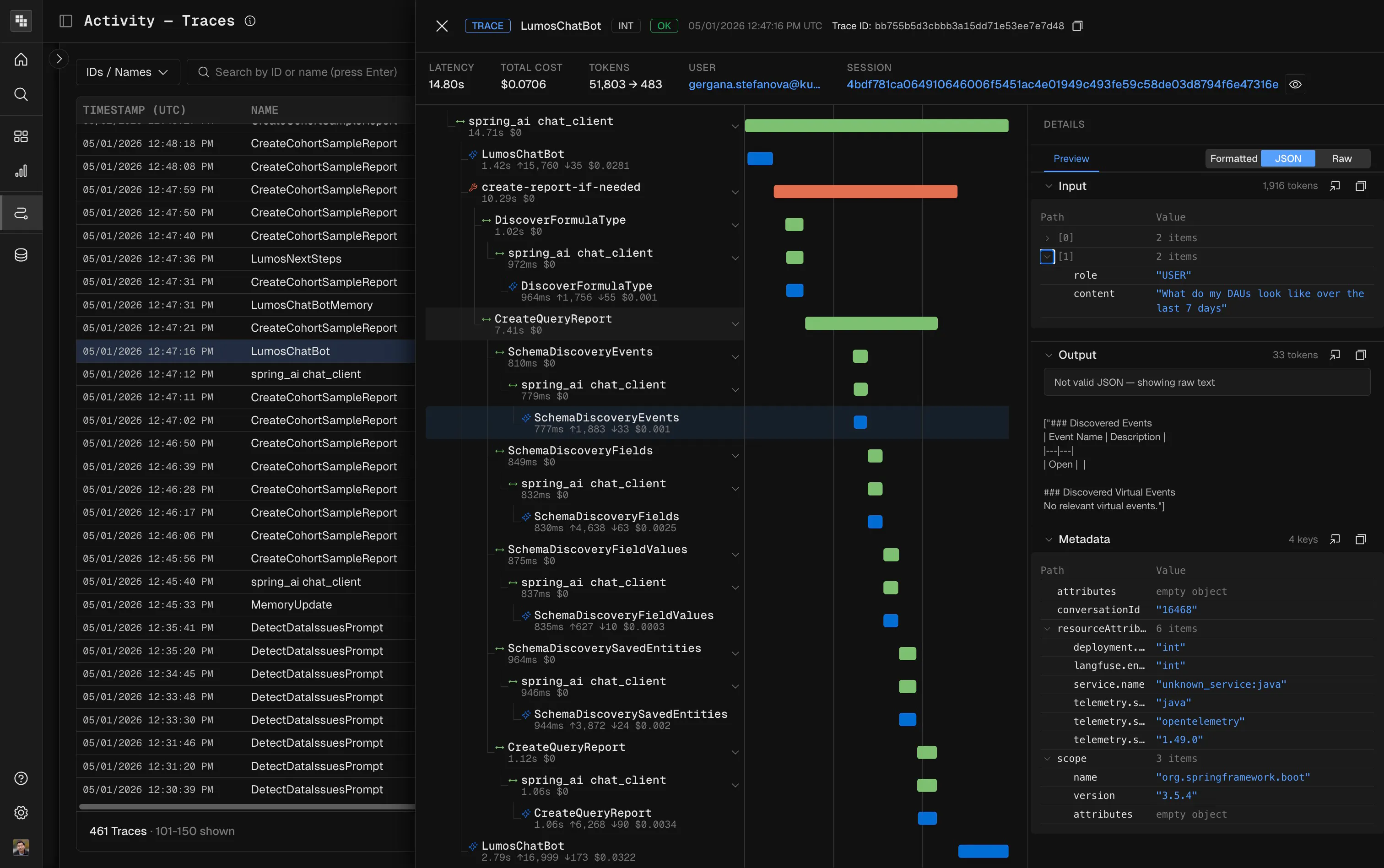
When an AI feature fails, existing observability tools tell you what the agent did, and traditional analytics tell you if the user left. Neither tells you why because they don't talk to each other. You're left toggling between tabs, manually matching AI execution logs to front-end user sessions just to figure out what broke the experience.

We experienced this frustration first hand when building our own AI features. So we built Kubit to bridge this exact gap: a unified product analytics platform designed for both agents and users.

With Kubit, you can:

  • Connect Agent Traces to User Behavior: Link backend agent traces directly to user actions to see why users re-prompt, abandon a flow, or convert.

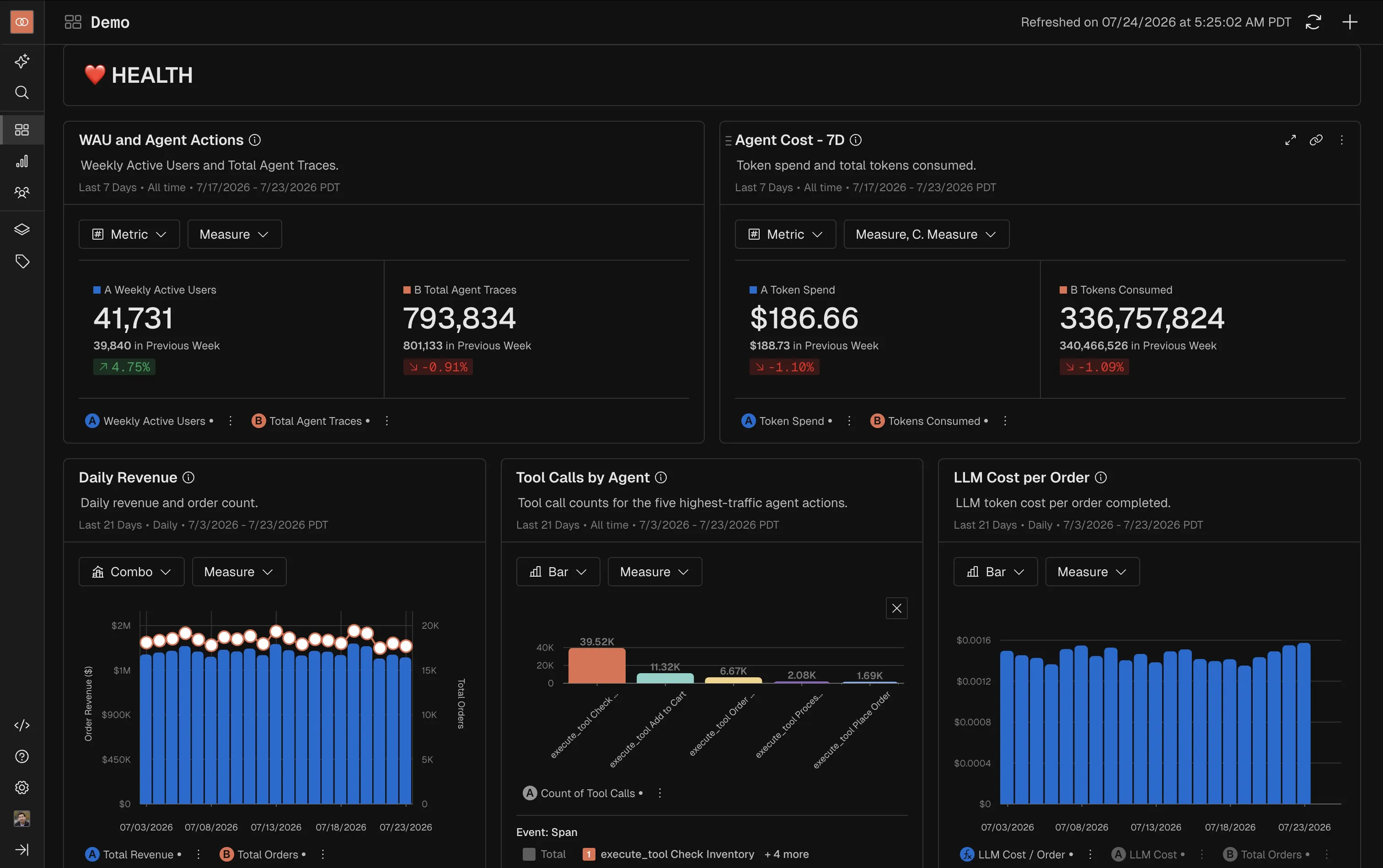
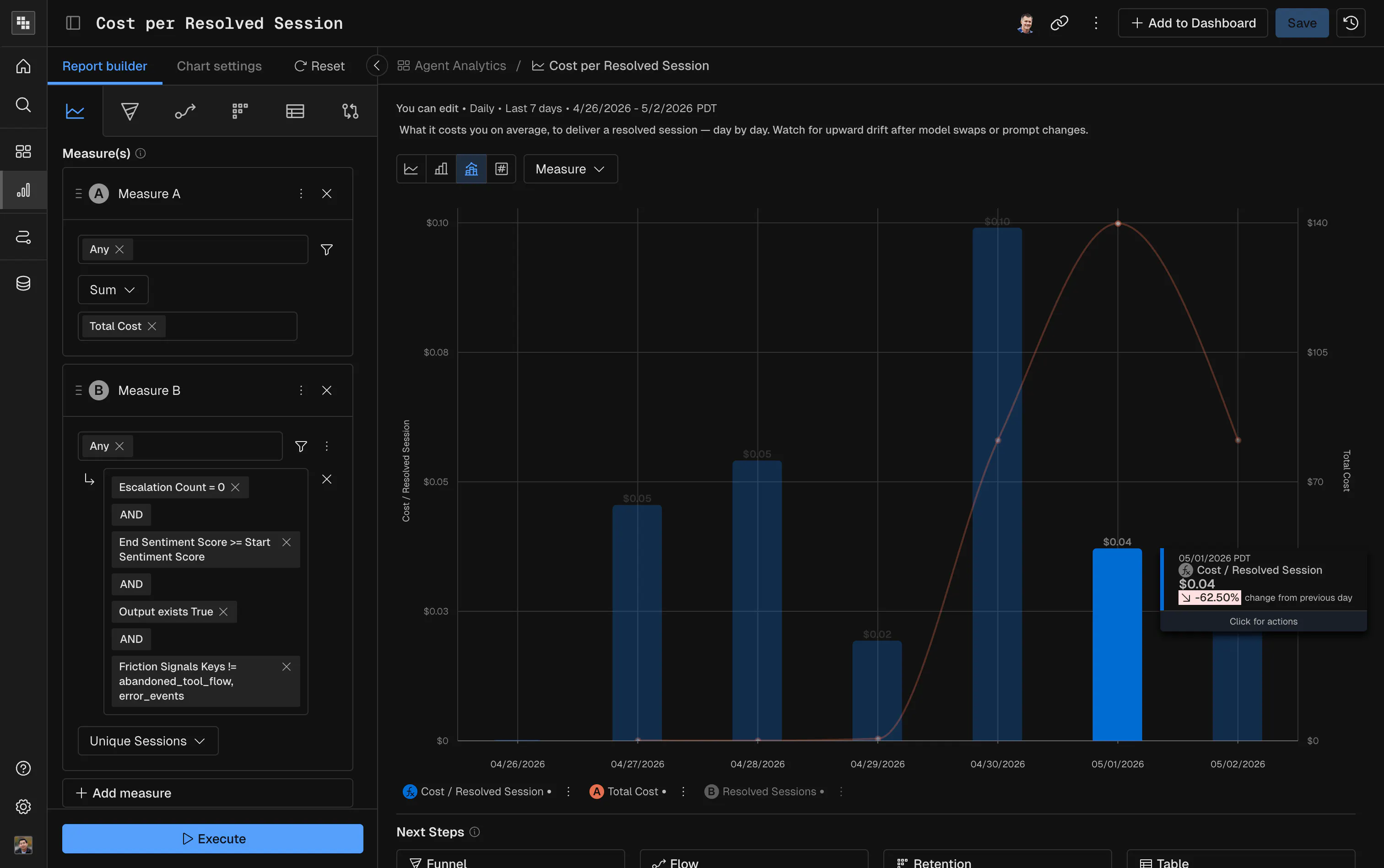
  • Tie Agent Performance to User Outcomes: Correlate P95 latency, token usage, and model costs directly to core metrics like DAU, retention, and LTV.

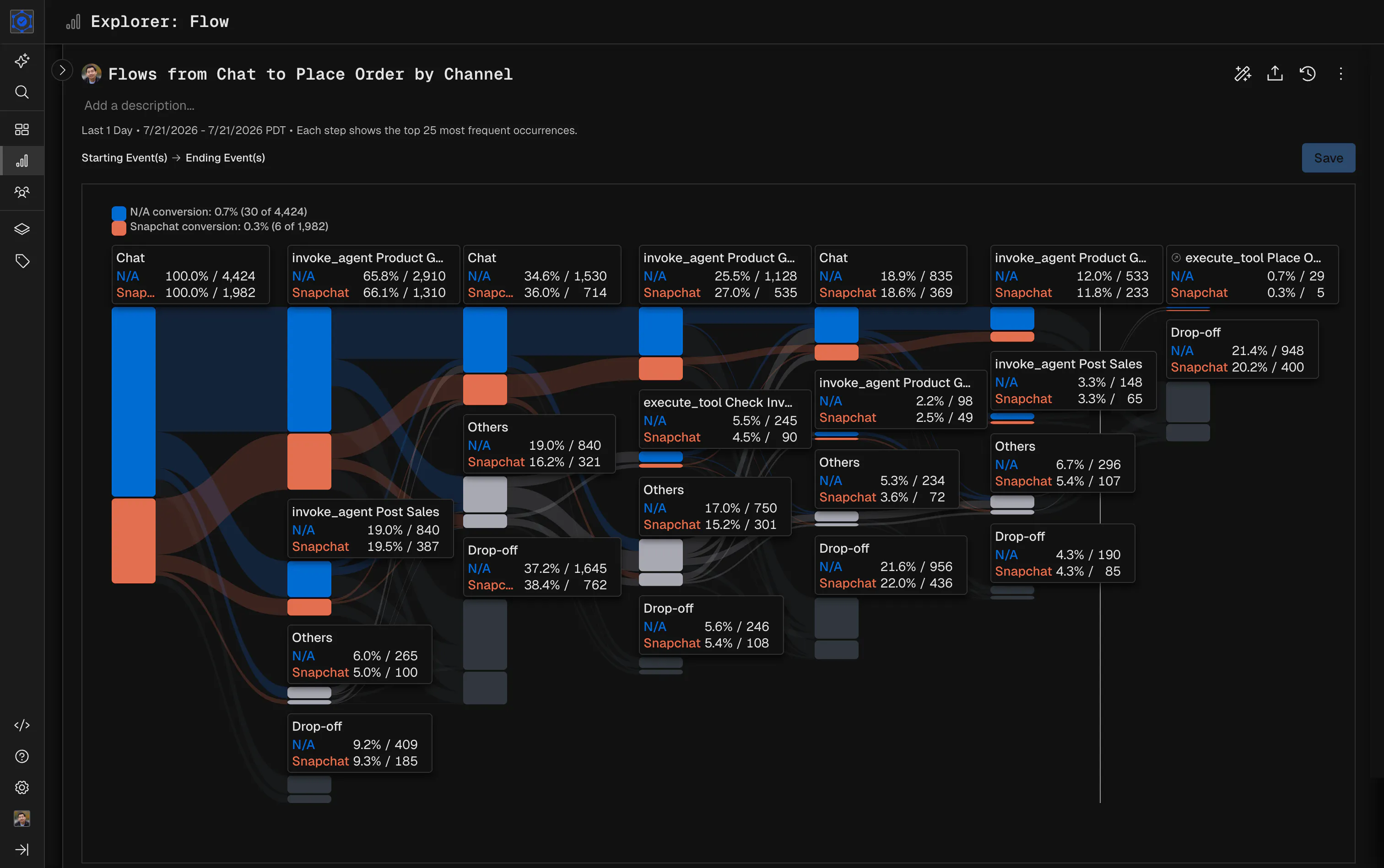
  • Track User-Agent Funnels: Pinpoint the exact step where an agent’s hallucination or failed tool call disrupts a conversion funnel.

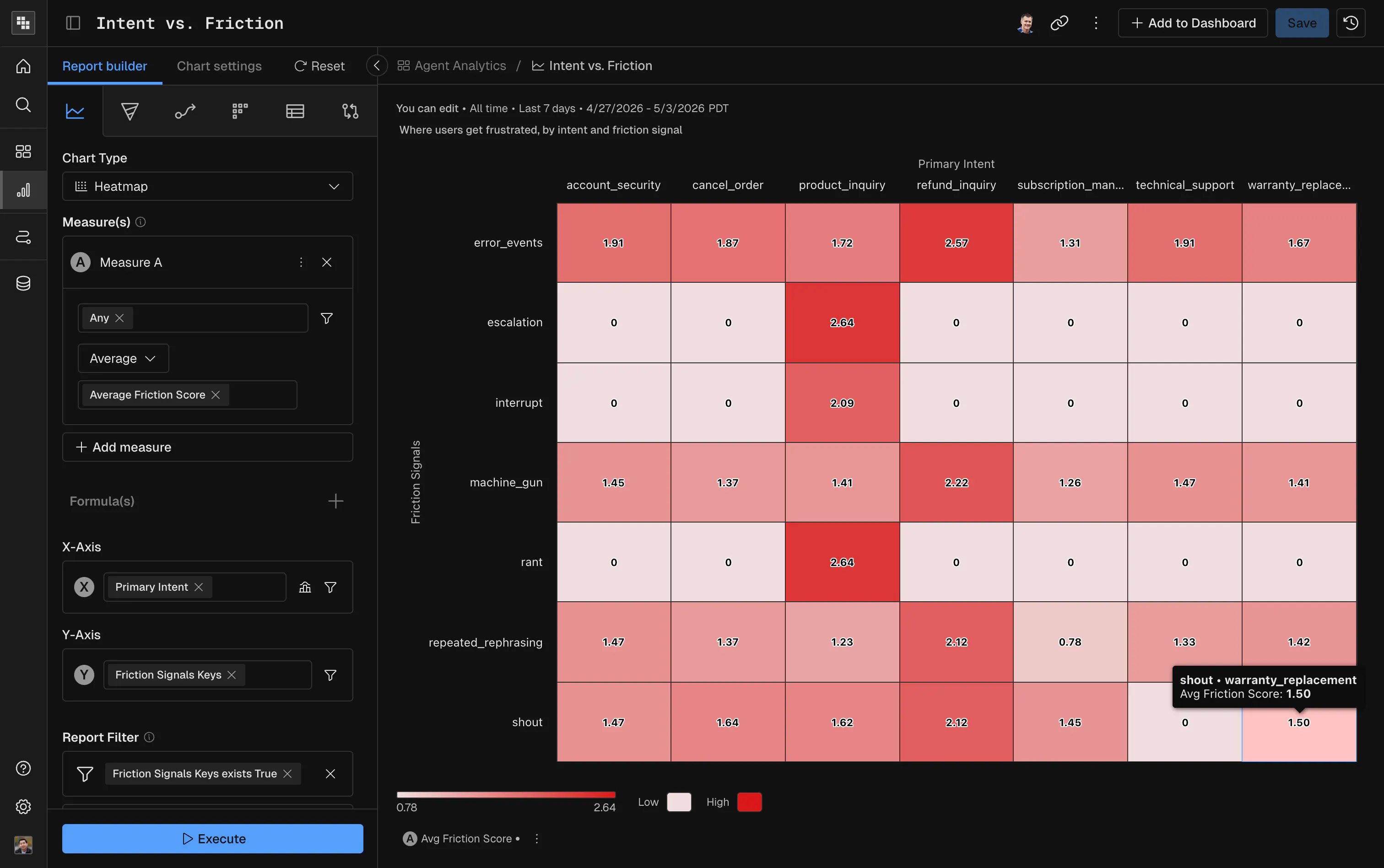
  • Map AI User Journeys: Track re-prompts, rage clicks, user intent, and sentiment to uncover hidden UX dead-ends that standard APMs miss.

  • Build Granular Cross-Domain Cohorts: Segment users using complex conditions that combine both backend agent interactions and front-end user behavior.

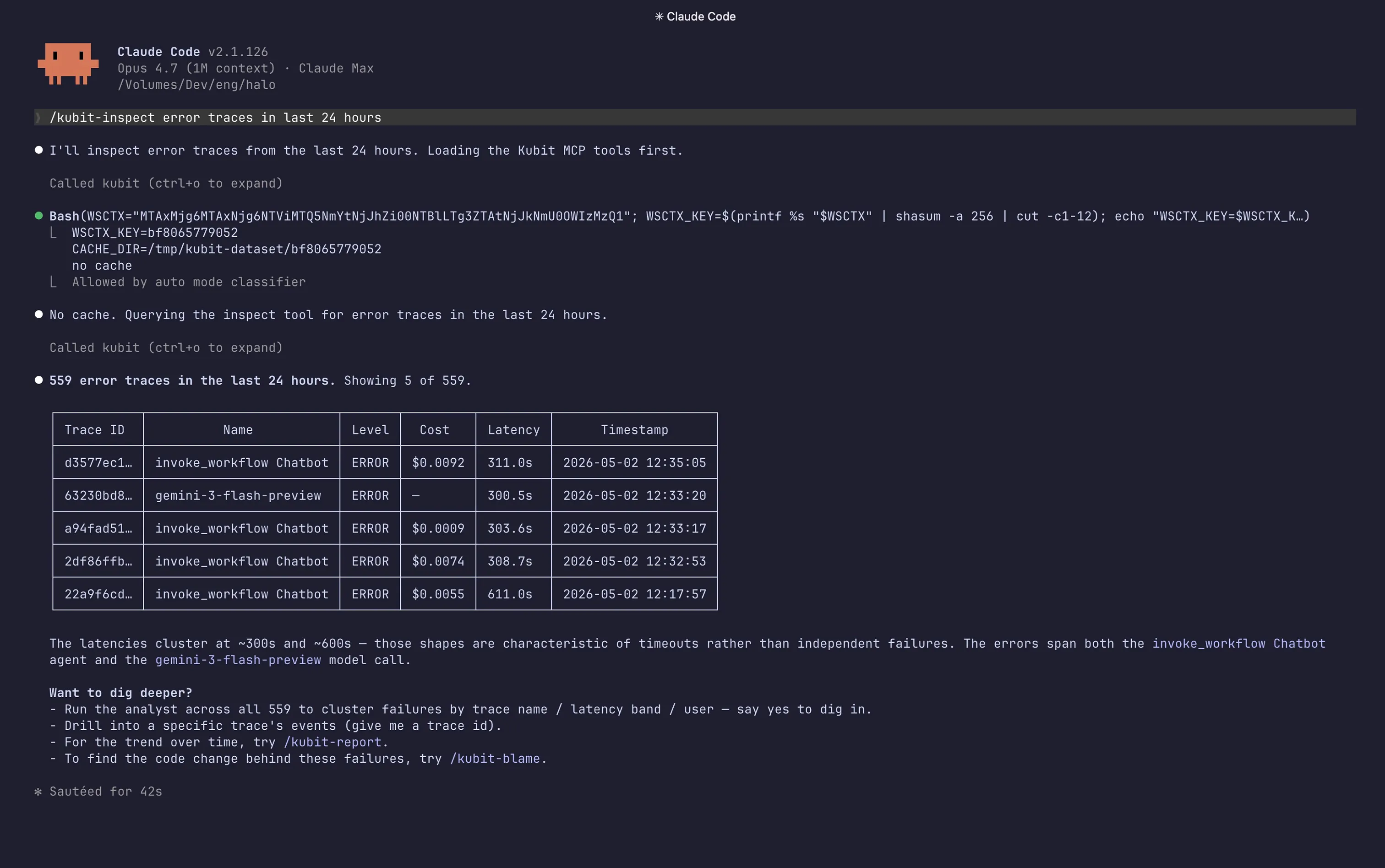
  • Headless for Coding Agents: Leverage MCP and custom Skills for headless analytics designed for developer-facing AI tools.

Easy Integration & Flexible Data Architecture

  • Quick Setup: Connect Kubit directly to your existing OpenTelemetry (OTel) infrastructure or CDP in minutes.

  • Zero-Copy / BYOW: Prefer to keep data in your own stack? Our Bring Your Own Warehouse (BYOW) architecture ensures top-tier security, compliance, and control.

We built Kubit to help product and AI engineers optimize agent performance alongside user behavior to create AI products that actually stick. Try it out for free today at kubit.ai.

We’d love your feedback! How are you currently tackling agent observability and user analytics? Drop your thoughts, questions, or feature requests in the comments below, join the conversion, or reach out directly at alex@kubit.ai.

Happy building! 🚀

15
回复

@alexli_kubit Huge congrats on launching🙌visualizing user-agent funnels to spot exact friction points before a user churns is huge for optimizing conversational flows.

11
回复

@alexli_kubit Thrilled to launch today! The gap between tracking human behavior vs. AI agent workflows has been huge—until now. Really excited to see how this helps both individuals and teams get clear insights to optimize user and agent experiences together!

10
回复

@alexli_kubit Congrats on launching! Bridging agent traces with actual user behavior feels like the missing piece especially when a technically “successful” run still creates a frustrating experience. What patterns have you uncovered so far that wouldn’t have been visible in agent traces or product analytics alone?

0
回复

I talk to teams building AI features every week, and it's always the same story. They can tell you what the agent did. They can tell you if the user bailed. What they can't tell you is why, because those two things live in separate tools and nobody's connected them.


That's the whole reason Kubit exists. Agent traces and user behavior, same place, so you can actually trace a bad tool call to the drop off it caused instead of guessing.


Would mean a lot if you checked it out and gave us an upvote. And if you're wrestling with this problem yourself, tell me how, I'm curious.

8
回复
#10
Cerenovus
Proactively find the money your company is losing
108
一句话介绍:Cerenovus是一款面向中大型企业的AI运营流程审计工具,通过接入公司内部文档、通讯和数据库,自动绘制业务流程全景图,精准定位资金流失的瓶颈与低效环节,并生成经人工核验的、附带引用的可执行改进报告,解决管理者“看不见全局”导致的隐性成本失控问题。
Artificial Intelligence Consulting Business Intelligence
企业流程挖掘 AI运营审计 效率分析 知识图谱 商业智能 内部信息整合 流程优化 SaaS工具 管理决策 资金流失检测
用户评论摘要:用户关注核心场景落地,追问最优切入的业务流程;质疑AI在证据冲突时是展示矛盾还是选边站队;肯定“引用+人工复核”机制,但担忧访问权限——报告若涉及具体团队或个人绩效,可能引发职场风险,询问报告分发范围是否默认全公司可见或按团队隔离。
AI 锐评

Cerenovus切中的是“公司规模复杂化”这一真实痛点——当组织超过50人,管理者的认知边界必然成为效率天花板。其技术路线本质上是把“精益管理咨询”产品化:用AI做全量信息摄入和流程穿透,再用人工复核兜底结论可信度。这个“AI发现+人工验证”的组合,是对纯自动化输出的务实纠偏,也直接回应了企业客户对“AI胡说”的深层恐惧。

但产品真正的价值不在“发现问题”,而在“定义问题”。它声称能计算“是否值得修复”,这实际上是把管理咨询公司最贵、最依赖经验的服务——ROI排序和优先级判断——试图用算法封装。如果这一点能真正做到精确,价值极大;但如果只是概念包装,就会沦为昂贵的“流程体检报告生成器”。

最大的隐患恰恰是评论区那位用户点破的“政治风险”。一份精确到“哪个团队/个人在流失资金”的报告,在多数公司内部就是杀伤性武器。产品逻辑越准确,引发的组织抵抗就越强。Cerenovus目前的回答只提到了“人工验证”,但这避开了更棘手的问题:报告的权力边界如何设计?是提供给CEO一锤定音,还是给部门经理做局部优化?这决定它是赋能工具,还是内部斗争放大器。

从商业角度看,产品方向正确,但落地难度被低估。其成败不取决于AI模型多强,而取决于能否设计出一套让“被审计者”也能受益的权限与反馈机制,否则规模化销售会受阻。现阶段值得关注,但需警惕“技术正确”与“组织现实”之间的鸿沟。

查看原始信息
Cerenovus
We ingest information from around your company (documents, communications and databases), and map out your company's workflows, along with the bottlenecks and inefficiencies within those workflows. Then, we figure out how to fix the problems (and whether their worth fixing). Then, we give you cited, human-verified reports outlining concrete, actionable steps you can take to see real results.

Hi Product Hunt!

Large companies are extremely complex systems. As soon as a company scales past fifty or so employees, it becomes totally impossible for an executive to know every single thing that happens at a company. This means that, since everyone at a company only understands a small slice of what's going on, it's essentially inevitable that inefficiencies arise on a global level that aren't visible at smaller scales. Before Cerenovus, this was a very difficult problem to tackle, because there was just too much information for any one person to have the whole picture. Cerenovus is built to fix this.

Here's how Cerenovus works:

First, Cerenovus ingests the company's information. This looks differently for every company based on their priorities and existing systems, but typically this means hooking into documents, communications and databases that the company wants to analyze, and bringing all the information together in one place.

Next, Cerenovus runs an AI-powered synthesis pipeline to organize the information and map out all existing systems and workflows. Once the system has mapped out how things work at a company, it scans for a wide variety of common failure modes, and does open-ended analysis to find places where processes can be streamlined. Finally, its findings are compiled into polished, cited briefs, reviewed and validated by humans, and then shipped back to our clients.

We're so excited to show everyone what Cerenovus can do - book a demo today: https://cerenovus.ai

5
回复

@jonathan_waldorf nice launch congrats🙌what is the single biggest operational workflow you hope to see teams transform using Cerenovus first?

1
回复

@jonathan_waldorf Cited findings instead of confident summaries is the only way this gets used for real decisions. When sources disagree, does it surface the conflict or pick a side?

0
回复

@jonathan_waldorf “Governed operating memory” is a compelling way to frame this. Most knowledge systems preserve information, but not the uncertainty, permissions, and decision context that determine whether it can actually be trusted. How does Cerenovus handle conflicting sources or conclusions when the evidence evolves. Does it surface competing interpretations, assign confidence, or resolve them through a workflow?

0
回复

the adversarial reviewer checking sources is a good answer to the accuracy question, but the part that'd worry me more as a customer is access, not accuracy. to find inefficiencies across a whole company you need to ingest documents, comms and databases pretty broadly, and "where the money is being lost" reports often trace back to a specific team or person underperforming. that's a report with real career consequences for someone, generated from access to their emails and docs that they didn't necessarily know would be read this way. who inside the client company actually sees the finished brief, is it scoped so a manager only gets findings about their own team, or does it land somewhere with company-wide visibility by default?

0
回复
#11
Octomind Cloud and Hub
One login, zero API keys — cloud agents + 27 models
108
一句话介绍:Octomind Cloud and Hub 通过云端托管AI智能体,让开发者用统一账户和计费在21个模型间切换,彻底解决“合上笔记本电脑,任务和上下文就丢失”的长期运行痛点。
Productivity Developer Tools Artificial Intelligence GitHub
AI智能体云端运行 会话持久化 多模型聚合平台 API密钥管理 按秒计费 开发者工具 Agent托管 模型切换 基准测试
用户评论摘要:用户高度认可会话持久化功能,并追问底层状态同步与中继记录机制。团队回应正基于“配方”概念构建非技术用户也能自建智能体的功能,但承认目前仍处早期阶段。
AI 锐评

Octomind的切入点并非“更强的模型”,而是“更可靠的运行环境”。在Claude Code和Codex等工具将智能体推入主流视野后,基础设施层(即Agent所在的计算和会话状态)反而成为最大的隐性成本——它不体现在API账单上,而体现在“Task跑到一半笔记本断电”的时间损耗里。Octomind将长时运行的Agent任务转化为可中断、可恢复的云端进程,这在产品逻辑上直接对标了GitHub Codespaces对开发环境的云端化,是Agent工作流从“玩具”走向“生产力工具”的必经之路。

不过,亮眼的“24/25基准成绩”需要审慎看待。该成绩仅来自单一模型(glm-5.2)在单类PR任务(real-PR benchmark)上的测试,且未披露任务难度分布和基线模型的精确配置,不宜过分解读为对Claude Code的全面超越。商业策略上,自筹资金且“按订阅购置硬件”的模式限制了爆发式增长,但在当前GPU成本高企的环境下,这确实是一种避免“用户涌入即资源枯竭”的务实选择。

真正的隐忧在于其壁垒:任何云厂商都能轻易复制“虚拟机+会话持久化”模式,而Agent市场拼的最终是模型能力和生态。Octomind目前更像一个高性能的“调度器+容器”,若不能尽快基于“配方”(Recipe)沉淀工作流资产,建立起“云Agent应用商店”的生态,则极易被大厂的基础设施能力所吞噬。但就当下而言,它确实精准解决了一个普遍且痛感强烈的问题——这本身就是一种成功。

查看原始信息
Octomind Cloud and Hub
Run AI agents in the cloud — pick a machine, tell it what to do, close your laptop. Sessions resume from any device. Per-second billing, 21 models built in, no API keys. Solved 24/25 benchmark tasks — ahead of Claude Code and Codex.
Last time I was here, we launched the runtime – one Rust binary, open source, run it yourself. This time I'm here because I got tired of my own agent dying. I'd kick off a refactor, the agent would be forty minutes in, and then I'd close the lid to catch a train. Session gone, context gone, tokens I paid for producing work I'd never see. Agents are long-running processes. Laptops are not long-running machines. So we built the thing I wanted: machines in the cloud that keep running when your laptop doesn't. The part I'm proudest of is sessions – start a turn, close the tab, lose your connection in a tunnel, the turn keeps going and the relay records every step. Open it from your phone later and the full transcript is there. We tested this by killing browsers mid-turn until we couldn't lose a byte. The other thing: I had API keys in five dashboards. OpenRouter, Anthropic, OpenAI, Voyage, a .env file one git add -A away from being public. So the hub side is one login, one key, every model works. 21 of them, including glm-5.2 which solved 24/25 real-PR benchmark tasks – ahead of Claude Code with Opus, and it's in every paid plan. We're bootstrapped, no investors, so we buy hardware as people subscribe. I'd rather hand out machines at the rate we can actually serve them than watch a signup rush turn into "at max capacity" for everyone. The screenshots in the launch post are my actual account spending real cents. That was the bar – not a demo, a place where your agent works while you don't. Ask me anything.
3
回复

@donk8r Preserving session state when a browser tab closes or a connection drops in a tunnel is huge. How are you maintaining state sync and recording relay steps under the hood while the agent keeps executing? Nice launch congrats🙌

2
回复

Really like the session persistence. Congrats!

2
回复

@henry_habib Thanks! Just starting, have huge plans to make AI agents easily built and adapted based on recipes widely not by techies only yet. But still early.

2
回复

Hey everyone, Vladimir here, one of the makers of Octomind.

We built this out of a simple frustration: AI agents that die the moment you close your laptop. Now you just hand off a task, shut the lid, and pick the session up later from any device.

Really proud of what the team shipped today. If you give it a try, honest feedback — good or bad — is the best thing you can leave here. Happy to answer any questions. Thanks for checking us out!

1
回复
#12
Gitar
AI code review that fixes what it finds
107
一句话介绍:Gitar 是一款直接集成于 GitHub/GitLab 的 AI 代码审查工具,不仅定位 PR 中的缺陷和 CI 失败原因,还能自动修复问题并回跑流水线验证修复效果,彻底解决“只提问题不给方案”的传统审查痛点。
Software Engineering Developer Tools Artificial Intelligence
AI代码审查 CI诊断 自动修复 开发者工具 代码质量 DevOps GitHub集成 GitLab集成 Sonar 开源免费
用户评论摘要:用户反馈显示对 Gitar 高度期待,认为高端代码审查仍是蓝海。核心问题聚焦于:Gitar 如何判断何时可自主应用修复、何时必须交由人类决策?已有用户等待试用,并希望 SonarQube 的图数据库能接入 AI 审查以突破现有工具(CodeRabbit、Greptile 等)的局限。
AI 锐评

Gitar 切入的并非“代码审查”赛道,而是“修复闭环”赛道。市面上大多数 AI 审查工具(如 CodeRabbit、Sourcery)止步于“发现问题并解释”,最终仍由开发者手动修改、重新提交、等待 CI——这些工具本质上是“高级注释器”。Gitar 的差异点在于把工作流从“审查-修复-验证”串联成自动化流水线,并直接操作 CI 结果和 flaky test 重试,这更像一个“AI DevOps 工程师”而非审查助手。

被 Sonar 收购是加分项,但也是双刃剑:Sonar 的企业基因利于商业化,却可能拖慢 Gitar 在开源社区的迭代速度。评论中那位用户点出关键——希望 SonarQube 的图数据库与 AI 结合,这恰恰说明 Gitar 的长期壁垒不在模型调参,而在代码图谱与语义理解深度。若仅停留在“修 bug、重试测试”层面,它仍能被更便宜的工具模仿;只有当它能理解跨文件架构意图、主动建议重构方向时,才真正配得上“高高端审查”的定位。

目前 107 票、用户口碑不错,但评论区真正的疑问——“何时自主修复、何时求助人类”——没有在介绍中得到解答。这个边界若设得太保守,自动化成了噱头;设得太激进,则引入不可控风险。建议 Gitar 在后续发布中明确决策透明度与可配置安全阈值,否则它只是一个聪明的补丁工,而非蓝海先行者。

查看原始信息
Gitar
Gitar reviews pull requests, diagnoses CI failures, applies fixes, and validates the changes against your pipeline. It can also retry flaky tests, automate review workflows, and act directly inside GitHub or GitLab. Now part of Sonar.

Hi everyone!

Awesome to co-hunt Gitar with André @conduit_design!

Now part of @Sonarsource, Gitar reviews PRs, diagnoses CI failures, applies fixes, and validates those fixes against the same pipeline.


The review doesn’t end with a finding and another comment for devs to deal with. Gitar stays with the change through the fix and back through CI.

André had a good way of putting it:

Most people think this space is saturated. It is, but in the low end. High-end code reviews is blue ocean. Maybe Gitar could be the first one to enter.

P.S. If you maintain an open-source project, you can apply for free access to Gitar.

5
回复

@zaczuo Excited to test this one! Currently on the waiting list to get approved. I use Cubic, CodeRabbit, Greptile, Sourcery, Octopus. Which are good but leaves a lot to be desired. Hopefully SonarQube can connect their Graph database to the AI review process and then surface more than what is currently possible in this landscape.

2
回复

@conduit_design  @zaczuo “High-end code review is blue ocean” is a sharp observation. The real value is closing the loop from finding an issue to fixing it and validating the result in CI and not simply generating more comments for developers to process. How does Gitar decide when it’s safe to apply a fix autonomously versus when it should stop and ask for human judgment?

0
回复
#13
agent-manager
The fastest workflow for developing with AI
99
一句话介绍:agent-manager 是一个基于 tmux 的 AI 编码代理多路管理器,让你在一个列表里同时运行并监控 Claude Code、Codex 等多种 CLI 编程代理,用单键操作解决“多代理会话切换混乱、审查费时、阻塞无人管”的协作痛点。
Open Source Developer Tools Artificial Intelligence
AI编程代理管理器 多代理工作流 tmux集成 CLI工具 编码效率 会话管理 代码审查 终端复用器 开发者工具 开源
用户评论摘要:用户普遍认可其“单键直达”的高效体验,尤其喜欢 ctrl+r 的整文件 diff 审查模式和方向键切换窗格。有用户反映官网链接偶发打不开,开发者回应称可能是部署瞬时问题,并提供了 brew 和 GitHub 备用安装渠道。目前缺失成本追踪功能,滚动依赖方向键,有用户期望更多自定义。
AI 锐评

agent-manager 聪明地选择了一个被大厂忽视的生态位:不重写 Agent,而是做 Agent 的“指挥室”。它的价值主张极其清晰——在 LLM 编码代理泛滥的当下,真正的时间杀手不是启动模型,而是同时盯着五六个终端窗口的兵荒马乱。用 tmux 做底座是巧劲,既继承了终端复用器的稳定和用户习惯,又避免了从零搭建 UI 的无底洞,一个二进制、Apache-2.0 许可证也直击开发者对透明度和可审计性的隐性需求。

但也要泼冷水。99 票的发布成绩说明它尚未破圈,核心原因在于:它的高效建立在“重度终端用户”和“多代理并行”这两个前提之上。对于只跑单代理或偏好 IDE 的开发者,其学习曲线和单键逻辑反而是负担。更致命的是,它回避了真正的成本管控问题——当 Agent 成为团队的日常工具,token 账单和上下文窗口管理才是企业落地的拦路虎,而评论中“没有成本追踪”一句带过的坦诚,恰恰暴露了产品在商业化上的薄弱点。此外,单键操作虽快,却牺牲了可发现性,新手面对满屏快捷键会直接劝退。

不过,它把“comment as review prompt”这一模式做得很扎实:从 diff 到反馈回循环的路径极短,这切中了 AI 编程中“人机审阅协作”的最痛环节。如果能将这一能力扩展到跨仓库、跨团队的异步协作,并补齐成本墙,它有机会从“硬核玩家的玩具”进化为“AI 开发团队的基础设施”。前提是——不要被 tmux 的硬核气质锁死天花板。

查看原始信息
agent-manager
Run Claude Code, Codex, OpenCode, Gemini CLI, Grok and Pi in one tmux list with live status per session. space answers a blocked agent without attaching, f forks the conversation into a named sibling, T pins a plain shell next to the agents, and ctrl+r opens whole-file diffs where line comments go back as one review prompt. Sessions can spawn into their own git worktrees. Ordinary tmux sessions survive quitting the manager. One Go binary, Apache-2.0. macOS, Linux, Windows via WSL2.

agent-manager is the fastest way I have found to work with coding agents, and everything in it is one keypress.

space on a group starts an agent in the right directory from a single sentence. space on a session answers one that is blocked, without attaching. ctrl+r opens what it changed as whole files, where a comment on a line goes back to that agent as a review prompt. f forks a conversation into a named sibling, T pins a plain shell next to the agents, and yesterday's release added the arrow keys for stepping in and out of a pane.

It runs on tmux rather than replacing it. Sessions are ordinary tmux sessions on their own socket, so quitting the manager leaves every agent running and your own tmux config untouched. Claude Code, Codex, OpenCode, Gemini CLI, Grok and Pi come with status rules, and any other CLI runs as a session right away.

Honest about the scope: cost tracking is not there, and the wheel scrolls but everything else is keys. Go, Apache-2.0, one binary, no daemon.

Happy to hear what breaks for you.

1
回复

Looks cool! I’m gonna give it a try! For some reason, though, the website link doesn’t seem to work.

1
回复

@rishabh_bajpai24 Thanks! Just checked it from a couple of networks and agent-manager.dev is answering fine, so it may have been a blip while I was pushing a change to the site. If it is still dead for you I would like to know what you see.

In the meantime the install is brew install yoanwai/tap/agent-manager, and the repo is github.com/YoanWai/agent-manager if you want to skip the site entirely.

0
回复

One thing I did not expect: review mode became the reason I keep it open, more than the list did.

It started as a way to see which agent was blocked. Then I kept attaching just to read diffs, so ctrl+r grew into whole-file diffs where a comment on a line goes back to the agent as one review prompt. Yesterday's release added stepping in and out of a pane with the arrow keys, which sounds trivial and is now the thing I press most.

If you run more than one agent: where does your time actually go, watching them or reviewing what they wrote?

1
回复
#14
Gotcha
World's First AI Copilot for Android. You talk. It acts.
94
一句话介绍:Gotcha是一款开源的Android端AI副驾驶,让你用自然语言直接操控手机执行打开应用、填写表单、运行脚本等复杂操作,彻底解决传统AI助手“只动嘴、不动手”的痛点。
Android Productivity Artificial Intelligence GitHub
AI副驾驶 安卓自动化 本地AI 开源 语音控制 UI自动化 终端控制 智能体 隐私保护 效率工具
用户评论摘要:用户普遍认可其本地优先、能实际操作手机的价值,认为比普通聊天式AI更实用。主要建议关注敏感操作的确认与误触恢复机制,期待在更多机型上与不同LLM搭配的体验反馈。
AI 锐评

Gotcha精准切入了一个“伪需求”泛滥的赛道:当大多数移动AI助手还在比拼对话流畅度时,它直接绕开ChatGPT式的文本回复,选择成为“操作系统级别的执行者”。利用无障碍服务与Termux的深度结合,它把Android的开放生态优势转化为真正的生产力,这一思路在iOS封闭生态下几乎无法复制,是极具差异化的护城河。

然而,其面临的挑战同样致命。首先,无障碍服务的权限边界与误操作风险并存,评论中关于“敏感操作确认”的提问直指要害,如何在不打断流畅体验的前提下建立可信的“撤销”与“沙盒”机制,是决定其能否从极客玩具走向大众工具的门槛。其次,AGPLv3协议虽能吸引开发者,但也可能让商业公司望而却步,后续若依赖云代理(如Samosa AIR)收费,用户的“开源信仰”与商业持续性之间会产生撕裂。最后,多OEM的系统碎片化是个无底洞,每一款手机的UI改动都可能让自动化脚本失效,维护成本极高。

总的来说,Gotcha的价值不在于“又一个AI助手”,而在于它重新定义了移动端AI的交互范式——从“建议者”变为“执行者”。它目前更像是一个技术宣言或开发者社区的强力样板,而非成熟消费品。若能解决安全信任与生态适配问题,它有机会成为Android生态中的“Tasker重启版”或“自动化灵媒”;若不能,它则会沦为极客圈内昙花一现的炫技作品。其未来,取决于创始团队对“控制权”与“安全性”平衡的智慧,而非LLM能力的堆砌。

查看原始信息
Gotcha
Control your Android phone using natural language. Gotcha is a free, open-source on-device AI copilot featuring 100+ native device tools, dual safety modes, and real-time voice calls over any app, powered by Samosa AIR (LLM, STT, and TTS).

This feels much more helpful than regular AI chat apps on mobile. Excited to see how it improves!

2
回复

@mandavi_mishra Good that you liked it. Feel free to reach out to us for any feedback!!!

1
回复
Hey Product Hunt! I'm Rishabh, one of the creators of Gotcha. We’re super excited (and a little nervous!) to launch Gotcha here today. THE ORIGIN STORY: WHY WE BUILT GOTCHA A few months ago, my co-founder and I had a realization: almost every "AI assistant" on mobile is just a glorified text box wrapped in a fancy UI. You ask it a question, it types back a response, and then… you still have to manually open your calendar, copy text into another app, trigger a bash script in Termux, or adjust your smart home lights yourself. We asked ourselves: Why can't an AI actually DO things on your phone for you, locally and safely? That’s how Gotcha was born. We wanted a true open-source (AGPLv3) AI co-pilot for Android that could bridge the gap between natural language, UI interaction, and local terminal execution—all without forcing you to route your private device data through proprietary cloud servers. WHAT GOTCHA CAN DO Gotcha operates on an autonomous agentic loop (plan -> execute -> observe -> adapt). It looks at your screen or terminal output, understands context, and acts: - UI Automation: Uses Android’s Accessibility Services to navigate apps, tap buttons, fill out forms, and scroll—just like a human would. - Termux & Terminal Access: Runs bash scripts, Python code, git commands, or curl requests inside Termux directly from natural language commands. - Privacy & Local LLMs: Connects natively to local LLM servers running on your machine (Ollama, LM Studio, llama.cpp with Qwen 2.5) or cloud models (Gemini 1.5 Flash, Groq, OpenAI). - Ecosystem Integrations: Native support for Home Assistant, Notion, Android Contacts, SMS, and Health Connect metrics. - Hands-free Wake Word: Local "Hey Gotcha" wake-word engine with multilingual support across 9 languages. OPEN SOURCE & FREE TO TRY Gotcha is 100% open-source, requires no account creation, and the APK can be built from source or downloaded directly from GitHub. For Product Hunt hunters who want to test it right away without setting up a local LLM server first, we’re providing free foundational credits on our proxy router (Samosa AIR) so you can get started in seconds! WE'D LOVE YOUR FEEDBACK! Building an AI that controls an Android UI and terminal comes with unique challenges across different phone models and OEM Android skins (Samsung OneUI, Pixel, Xiaomi MIUI). We’d love to hear from you: 1. What local or cloud LLM setup are you pairing with Gotcha? 2. What automations or workflows would you want Gotcha to handle on your phone? 3. Any UI or OEM quirks you spot on your device! GitHub: https://github.com/samosa-ai-com... Releases (APK): https://github.com/samosa-ai-com... My co-founder and I will be hanging out here all day to answer your questions, chat about local AI on mobile, and take feature requests. Thank you for checking out Gotcha!
1
回复

@rishabh_bajpai24 Hey rishabh, looking forward on launch! A local-first agent that can bridge app UIs and Termux feels genuinely useful especially without sending private device data through the cloud. How does Gotcha handle confirmation and recovery when an automation is about to take a sensitive action or taps the wrong thing?

0
回复
#15
VoiceGecko
Open source, local voice-to-text
94
一句话介绍:VoiceGecko 是一款开源、本地运行的桌面语音转文字工具,用户按下快捷键说话即可将语音实时转为文字并复制到剪贴板,解决了邮件、写代码、AI提示词等场景下打字效率低和隐私泄露的痛点。
Developer Tools Audio
语音转文字 开源 本地运行 隐私保护 桌面工具 快捷键操作 离线识别 效率工具 语音输入 AI辅助
用户评论摘要:用户认可本地化与开源的隐私价值,但担忧本地模型对技术词汇(变量名、库名)的识别准确率,并询问是否支持自定义词库或微调,以适配专业场景。
AI 锐评

VoiceGecko 踩中了两个正确风口:一是 AI 驱动的语音交互普及后,用户对“输入即隐私”的敏感度陡增;二是开源社区对“数据不出本机”的执念从未消退。它用最轻量的交互(快捷键+剪贴板)切入桌面端,避免了像手机语音助手那样陷入 App 生态的泥潭,算得上聪明。但评论里那条关于技术词汇准确率的质疑,几乎是这类本地模型的死刑判决——因为目标用户(程序员、效率工作者)恰恰是词汇最不规范、最依赖自定义术语的人群。倘若没有可热加载的自定义词库或轻量微调接口,这个工具就只是“演示级产品”:日常口语尚可,一碰专业黑话就露怯。更尴尬的是,它把结果直接塞进剪贴板,看似高效实则割裂了“边说边改”的自然流,长句识别错误时只能全文重来,且无历史记录与回放修正机制,这对严肃写作是硬伤。开源是诚意,但开源不自动等于好用。建议团队优先做两件事:一是提供简易的词库导入(支持正则、批量变量名),二是加入“语音回听定位”功能,让用户能快速修正错词。否则,这款产品的结局大概率是“被当作玩具点赞,然后被卸载”。毕竟,能打字的都在用 AI 大模型网页版,打不了字的早就去用付费云识别了——夹缝中的免费本地工具,得靠专业纵深才能活下来。

查看原始信息
VoiceGecko
Instant dictation for desktop. Press a shortcut, speak, and instantly get accurate text on your clipboard—perfect for emails, coding, AI prompts, or brain dumps.

open source and local is the right call for a dictation tool specifically, since the whole point is you're speaking things you'd never type into a random cloud service. curious how the accuracy holds up on technical vocabulary though, variable names, library names, that kind of thing tends to be where local models fall over compared to the big hosted ones. is there a custom vocabulary or fine tuning option for that or is it running as-is out of the box.

0
回复

Love that this runs fully local and open source, so my voice never leaves my machine while I dictate. That privacy first approach is a rare and refreshing take for a dictation tool.

0
回复
#16
Lexi
The operating system for legal work
93
一句话介绍:Lexi 将法律团队的起草、审查、研究、案件知识沉淀与事务跟踪整合到一个工作系统中,解决律师在多工具间切换、信息分散导致的工作效率低下和失控问题。
Productivity SaaS Legal
法律科技 法律工作流 案件管理 法律研究 合同审查 知识管理 SaaS 协作平台 效率工具 Legal Tech
用户评论摘要:目前评论较少,官方介绍强调“忙而不乱”,核心是统一工作流。点赞最高的评论为官方自述,缺乏用户具体反馈或建议。回帖仅是祝贺与转发推荐,暂无实质性问题或深度使用体验。
AI 锐评

Lexi 的定位——“法律工作的操作系统”——野心不小,但也很容易沦为营销话术。法律行业的核心痛点确实存在:信息孤岛、流程割裂、重复劳动。把起草、审查、研究、知识库和案件跟踪塞进一个界面,方向上是对的,尤其是对中小型律所或法务团队,这类团队买不起或不愿用昂贵的传统 CLM(合同生命周期管理)和 eDiscovery 工具,需要一个轻量但覆盖全流程的“作业平台”。

但“操作系统”这个词暗示了底层架构和生态闭环,而 Lexi 目前的产品介绍更像是一个“功能聚合器”,而非真正重构工作逻辑的底层系统。若只是把已有功能拼在一起,价值上限有限——因为律师的信任建立在专业判断的不可替代性上,而非工具数量。真正的护城河应该是:能否通过数据沉淀和 AI 分析,反向指导律师的决策过程,例如风险预警、先例匹配、条款冲突提示,而非仅仅把文件放整齐。

当前 93 票的启动量很一般,评论几乎为零有效反馈,说明产品还在早期获客阶段,尚未经历真实用户打磨。建议团队尽快挖出 3-5 个深度使用案例,展示“用了 Lexi 之后审一份合同的时间从 X 降到 Y”这类具体指标。否则,“操作系统”四个字只会让律师觉得又是一套贵且难用的软件。另外,法律行业的销售周期长、决策链复杂,产品体验再好也得解决合规与数据安全信任问题,这部分在介绍中完全缺位——如果不能明确回答“数据放在哪里、如何加密、是否通过 SOC2”,大客户连试用都不会开。

总体判断:方向正确,执行待验。真正价值不在“统一”,而在“智能化地统一”。若只在 UI 层做缝合,很快会被 Notion、ClickUp 加法律插件替代。若能在“自动整理案情时间线、关联相似条款、生成初审批注”等 AI 能力上做到专业级,才配叫操作系统。目前,更像是一个精致的 MVP。

查看原始信息
Lexi
Lexi is the operating system for legal work. Legal teams use Lexi to draft, review, research, organize matter knowledge, and track every matter in one place, while lawyers stay focused on judgment, strategy, counsel, advocacy, and clients.
We built Lexi for legal teams that need work to move without losing control. Research, drafting, review, matter knowledge, and tracking live in one place, so lawyers stay focused on judgment, strategy, counsel, advocacy, and clients.
2
回复

@shyam_sunder24 Congrats on the launch! 🚀")

0
回复

@shyam_sunder24 Will recommend it to my friend in need of it, congratulations on launching

0
回复
#17
AMP by CanyonTechs AI
AI agents that act. Automation that delivers.
92
一句话介绍:AMP是一款7x24小时自主监控生产日志、自动定位故障并生成修复PR的AI运维代理,让工程师在站会前就能拿到修复方案,告别半夜被生产事故叫醒的痛点。
Software Engineering Developer Tools Artificial Intelligence
AI运维 智能监控 自动化修复 日志分析 人工智能代理 开发者工具 生产环境 事故响应 DevOps AIOps
用户评论摘要:用户反馈集中在产品上线兴奋感,认可“站会前PR就绪”的价值主张。暂无明确功能疑问或使用建议,有效评论主要来自创始团队及关注者,社区深度讨论尚待积累。
AI 锐评

AMP切中了一个真实且高频的痛点:生产环境的“被动救火”。其价值不在于代码生成的准确性,而在于将“监控-诊断-修复-提审”这一完整闭环从“人工被动触发”变为“AI主动驱动”,这本质上是对研发运维工作流的一次重构。80%的修复率虽然亮眼,但真正的护城河并非模型能力,而是“自主性”带来的信任挑战。在无需提示、直接操作PR的机制下,工程师的心理负担并未消失,只是从“写代码”转移到了“审查AI的修复逻辑”,而后者往往需要更高的上下文理解成本。目前评论区的热度更多是发布初期的人情捧场,缺乏来自独立第三方对误报率、复杂故障处理边界及人机交接摩擦的真实吐槽。AMP若想从“锦上添花的工具”进化为“不可或缺的基础设施”,关键在于能否构建一套可量化评估的信任体系(如修复采纳率、回滚率),并明确在哪些故障类型上坚决不碰。否则,它极易沦为又一个高成本、高噪音的监控告警放大器,而非真正的“自主缓解平台”。最后,所谓“无需提示”的卖点,在多数遵循严格变更管理的企业环境中,可能反而是流程合规的障碍。

查看原始信息
AMP by CanyonTechs AI
AMP autonomously monitors production logs, detects incidents, and opens a reviewable PR with the fix — no prompting needed. 80%+ fix rate. Certified for Java, Python, TypeScript, Node.js & Rust. No direct prod access. Human-in-the-loop. Use code PH3MOFREE.
Hey Product Hunt! 👋 I'm Mahendra, Founder & Adviser at Canyon Technologies LLC. We built AMP — Autonomous Mitigation Platform — because engineers shouldn't wake up to production fires. AMP watches your logs, understands what broke, fixes it, and opens a PR for your review — before standup. No prompting. No babysitting. What makes AMP different: It's not a code assistant. Code assistants wait to be asked. AMP acts — autonomously, 24/7. Currently certified for: Java, Python, TypeScript, Node.js & Rust. AMP can work with any language — certification for additional languages is in progress. How it works: 🔍 Monitors your production logs continuously 🎫 Files Jira/GitLab tickets automatically 🔧 Generates the fix with 80%+ accuracy ✅ Submits a PR for your team's review — you stay in control 🎁 Exclusive PH offer: Use code PH3MOFREE at signup for 3 months free on any monthly plan. Valid for our launch window only. No installation. No direct prod access. Human-in-the-loop by default. Free to start at app.canyontechs.ai/signup — connect a repo, point your logs at AMP, and watch the first fix land in minutes. Ask me anything! 🚀
3
回复

@mahendra_tharshanan So excited to see AMP live today! Been following the build process and the "PR ready before standup" part is such a simple way to describe how much time this saves engineering teams. Congrats to the whole team!

2
回复
#18
Switchy for Mac
Switch your Magic Keyboard, Trackpad, and Mouse between Macs
84
一句话介绍:Switchy for Mac 是一款菜单栏工具,让用户一键将同一套苹果妙控键盘、触控板和鼠标在局域网内的多台 Mac 之间无缝切换,免去反复配对或插线烦恼。
Mac Productivity Menu Bar Apps
macOS工具 菜单栏应用 外设切换 妙控配件 多设备管理 局域网发现 效率工具 生产力 Mac配件
用户评论摘要:用户认可其解决了妙控配件切换痛点,并赞赏开发者自建需求。有用户询问切换快捷键是否可自定义(担心与现有应用冲突),另有人吐槽苹果官方竟未提供此功能,整体反馈积极但功能细节待确认。
AI 锐评

Switchy 精准踩中了“多 Mac 双设备”人群的隐性痛点——苹果自家生态对妙控外设的切换体验停留在“有线级”原始状态。这款工具的价值不在于技术壁垒,而在于对苹果产品体验断层的商业嗅觉补齐:它用一个菜单栏图标,把苹果懒得做或有意不做(或许为了卖更多配件)的低频刚需,变成了类似 AirPods 的“无感流转”。

从评论看,用户核心诉求是“无感”和“可靠”,而非炫技。当前反馈中唯一的实质疑问(快捷键是否可配置)直指工具类应用的生死线:是否会与用户已有工作流冲突。开发者若能提供高度可自定义的快捷键或触发方式(如菜单点击、全局热键、甚至自动化脚本),并保证局域网设备发现的低延迟与稳定性,则有望成为 Mac 外设管理的隐形标准。

不过需警惕两点:一是竞品门槛低,系统级工具或“收费后加广告”的变现模式可能侵蚀口碑;二是仅靠“切换”难以构建长期护城河,未来若扩展到多设备同步配置、外设状态监控或与 Raycast/Alfred 联动,才能从“工具”升维为“工作流基础设施”。目前 84 票略显小众,但开发者从自身痛点出发的克制打磨,比泛泛而谈的“效率大礼包”更值得关注。

查看原始信息
Switchy for Mac
Switchy is a macOS menu bar app that automatically discovers nearby Macs on your local network, so you can connect to your magic devices without disconnecting and reconnecting or having to use a cable. It's useful for users who have multiple Macs or MacBooks (i.e work and personal) but want to use one set of magic accessories.
Few months ago, I bought new accessories for my desk. A magic keyboard, mouse and trackpad thinking that this will be easy to use with my work and personal MacBook but I soon realised that magic accessories don't work like Apple AirPods. You need to manually disconnect / reconnect or worse, use a cable to switch the devices from one computer to another. My colleagues were buying brand new trackpads - one for each computer and were wasting a lot of money. I decided to find a way to solve this and that's how I built Switchy. I use it everyday when to switch all my magic devices from one computer to another with just one tap.
1
回复

@benhur_senabathi Congratulations on your launch, will give it a try

0
回复

Finally, a tool for this. Is the switch shortcut configurable or fixed? Been burned before by tools that hardcode something that clashes with whatever app I have open.

0
回复
It’s kind of crazy that Apple doesn’t include a fast switching feature like this with their very expensive peripherals. Thanks for making it and congrats on the launch!
0
回复
#19
ScreenMark
Menu bar app for live annotations, whiteboard overlay + more
81
一句话介绍:ScreenMark 是一款 macOS 菜单栏原生屏幕标注工具,通过桌面叠加层和iPhone遥控器,解决教师在演示、开发者分享时无法离开键盘进行标注、缩放和讲解的痛点。
Productivity Education Menu Bar Apps
屏幕标注 macOS工具 演示辅助 远程遥控 白板叠加 录屏 教学工具 开发者效率 菜单栏应用 原生应用
用户评论摘要:开发者自述核心诉求是“离开键盘仍能标注”,iPhone遥控功能获赞“比标语更聪明”。用户追问:叠加层在Zoom/Meet屏幕共享时是否被正常捕获?目前尚无明确答复,此为技术关键点。整体情绪积极,但有效反馈较少。
AI 锐评

ScreenMark的聪明之处在于找准了“Presenter的最后一米”需求——不是做另一个功能堆砌的标注板,而是把手机变成肢体延伸。这解决了真实痛点:演示时的物理束缚感。但它的护城河并不深,macOS原生开发虽保证流畅,却天然局限于单一生态,且面临OpenBoard、Zoom自带白板等竞品的降维打击。29.99美元买断价格合理,但“Pro才解锁录屏和实时缩放”的设定略显鸡肋,因为这些本应是标注工具的标配。最大的悬念在于评论中那个致命问题:屏幕共享时叠加层是否被捕获?如果答案是否定的,那么远程教学/会议场景将直接失效,产品沦为线下投影仪专属工具。开发者强调“无账号、不上传”的隐私卖点值得赞许,但在协作盛行的时代,缺乏云端传输能力也意味着天花板有限。它是一款出色的独立工具,但距离“不可或缺”还有距离——除非那根“遥控魔杖”能解决Zoom共享的底层渲染问题,否则它只会是少数极客的炫技玩具。

查看原始信息
ScreenMark
ScreenMark is a macOS menu bar app for live screen annotation, zoom, whiteboard overlay, freeze frame, and recording. Perfect for teachers, presenters, and developers. A free companion iPhone app turns your phone into a remote: trigger cursor highlight, flashlight, drawing and zoom. The free tier covers the core annotation tools. ScreenMark Pro unlocks recording, live zoom, cursor highlight and flashlight, advanced annotation, custom break-mode, custom shortcuts available in pro.
Hi Product Hunt 👋 I built ScreenMark because every time I presented something on my Mac I ended up doing the same awkward dance: talking about a detail on screen while wiggling my cursor at it and hoping people were looking at the right thing. There are good annotation tools for the Mac already. What I kept missing was being able to move — to step away from the keyboard, walk to the screen, and still highlight, zoom or draw. So ScreenMark has a companion iPhone app that works as a remote. That turned out to be the feature I use most. The rest is what you would expect from an overlay tool, done natively: draw, text and shapes over any app, live zoom that follows your cursor, freeze frame, whiteboard and blackboard modes, blur and spotlight for sensitive regions, and recording with system audio and mic. Everything runs on device — no account, no uploads, nothing leaves your Mac. It is free to start. Pro is a one-time $29.99 purchase if you would rather not have another subscription — there are monthly and yearly plans too. I would genuinely like to hear what breaks or what is missing, especially from teachers and anyone who presents remotely. Thanks for taking a look.
1
回复

@mustafaecerit Congrats on the launch! 🚀")

0
回复

@mustafaecerit The iPhone-as-remote for cursor highlight and zoom is a smarter idea than the tagline gives it credit for. Does the annotation overlay survive screen sharing on Zoom and Meet, or does it get captured differently?

0
回复

@mustafaecerit Congratulations on launching today

0
回复

Very cool, the companion app remote really elevates this to a uniquely practical tool

0
回复
#20
AdmitRaven
Duolingo for college applications
78
一句话介绍:AdmitRaven是一款“大学申请版多邻国”,通过每日碎片化课程和防拖延机制,以极低成本为高中生提供从文书写作到选校奖学金的全程申请指导,并支持阅读和咨询真实录取者范文。
Productivity Writing Education
大学申请 教育科技 升学指导 碎片化学习 文书辅导 选校匹配 奖学金查询 防沉迷 普惠教育 AI辅助申请
用户评论摘要:创始人在评论中说明产品源于帮妹妹申请大学的痛点,经调研500名学生后认为行业收费高、信息不透明,因此打造低价替代方案。仅有的回帖表达认可与祝福,缺少对功能的质疑或具体改进建议,有效反馈不足,但“最难的环节是哪里”的提问值得持续收集用户痛点。
AI 锐评

AdmitRaven的定位聪明地把“多邻国式游戏化”嫁接到高度焦虑、高客单价的大学申请市场——用“每日任务+阻断刷手机”解决拖延,用“真实录取文书+直问学长”对冲AI代写泛滥带来的同质化危机。这抓住了两个真实痛点:一是信息不对称(穷孩子只能靠猜),二是过程管理缺失(没人逼就无限拖延)。但产品名字和“口袋顾问”的承诺,暗示它想替代的是“顾问”,而现实中顾问的核心价值在于个性化策略(选校梯度、活动规划、亮点挖掘)和情绪陪伴,这两点恰恰是课程化产品最难复制的。78票的冷启动数据不算亮眼,评论中只有创始人的“感人故事”而缺乏用户实测反馈,也说明早期口碑尚未形成。更大的隐患在于内容壁垒:真实录取文书与学长问答的可持续性、版权与质量审核,会迅速推高运营成本,最终可能被迫涨价,背离初心。如果AdmitRaven只停留在“题库+任务清单”,它充其量是“申请版Notion模板”,但若能通过用户行为数据反向训练出“个性化推荐算法”(比如根据学生背景动态调整文书brainstorming提示词),同时引入社区互助机制,则有机会真正撬动旧体系。目前看,方向正确,但护城河未明,需要警惕“看起来很美”的课程化陷阱。
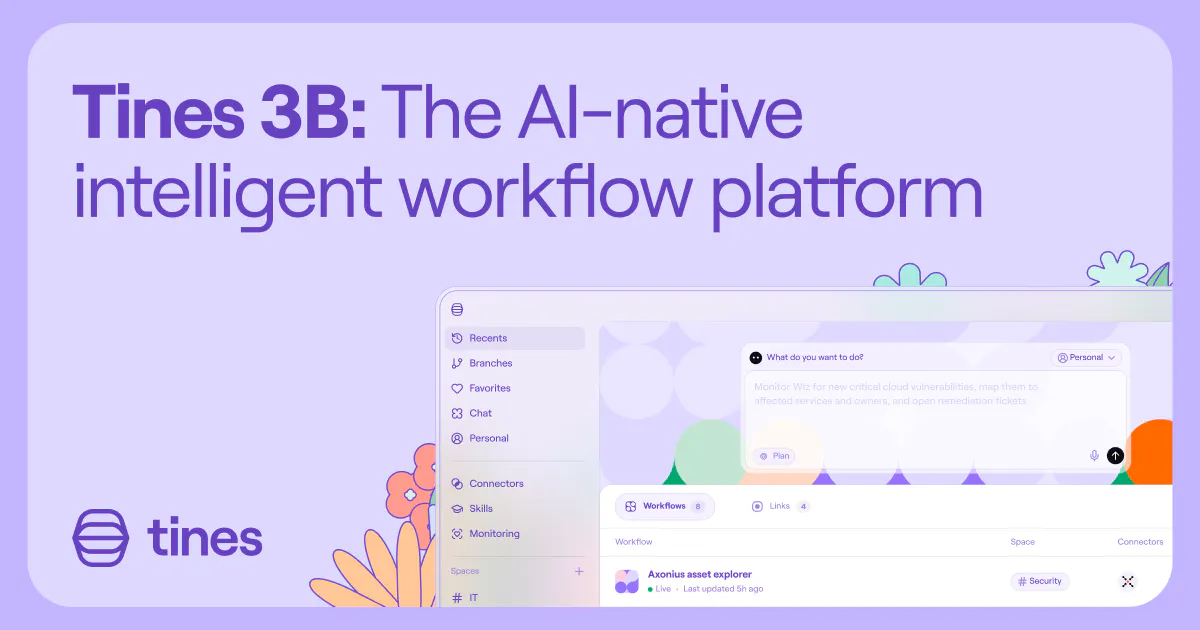
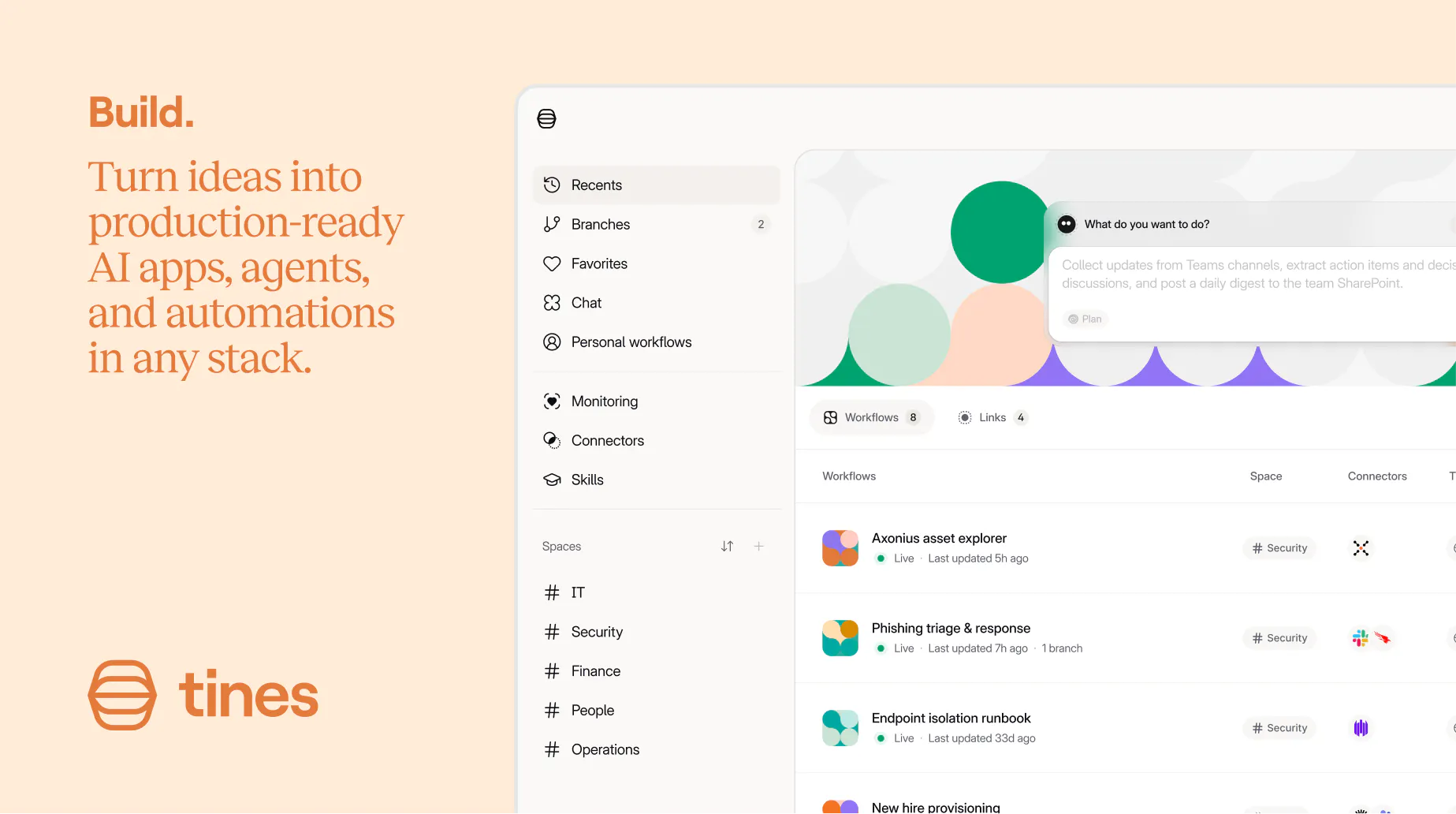
查看原始信息
AdmitRaven
AdmitRaven is a college counselor in your pocket for a fraction of the cost. It walks students through the entire application journey in daily, bite-sized lessons, and blocks doomscrolling until you finish them. It helps you craft authentic, compelling essays, stay on top of every deadline and requirement, and match to the right schools and scholarships. You can even read real admitted students' essays from your dream school, and ask them questions directly.
I built AdmitRaven after my sister came to me for help on her college applications. It wasn't just that she didn't know where to start, she was feeling the pressure of watching peers spend thousands on tutors or use AI to write everything for them. I wanted to give her something that would actually inspire and guide her, and she got into her dream school. I wasn't aware before of how flawed the industry had become, so I drove across the country and interviewed over 500 students. Almost all of them said the same thing: they felt overwhelmed, priced-out, and put it off as long as they could. The system rewards families who can afford expensive counselors, and everyone else is left guessing. AdmitRaven is my attempt to fix that. To put genuinely good guidance in reach of any student, not just the ones who can pay for it. I'd love your feedback, and I'm around all day to answer questions. Use code HUNT26 at web checkout on admitraven.com if you'd like to test the whole system out free for a month. If you applied to college: what was the single hardest or most confusing part of the process for you?
0
回复

@xander_hastings Congratulations on launching, thanks for making this tool,

I wish I had something like this when I was applying. I hope this product gets the kind of exposure it deserves!!

0
回复