Product Hunt 每日热榜 2026-08-15

PH热榜 | 2026-08-15

#1
Inferock Bench
An independent receipt for every LLM API call
256
一句话介绍:Inferock Bench 是一款部署在应用与LLM服务商之间的本地代理工具,通过拦截并记录每一次API调用的token消耗、失败与重试详情,生成独立的“账单凭证”,帮助开发者识别并量化AI服务账单中隐藏的超支与计费偏差。
Open Source Developer Tools Artificial Intelligence GitHub
API账单审计 本地代理 Token用量监控 成本优化 失败重试追踪 开发者工具 开源 计费透明度 LLM运维 多云模型管理
用户评论摘要:用户核心痛点集中在静默重试、中断计费及无凭据对账。有效问题包括:能否识别返回200但内容损坏的调用?是否支持导入历史日志进行回溯审计?如何区分合理隐性消耗(推理、缓存token)与真实损失?多数评论认可本地代理与独立凭证的设计,认为比供应商仪表盘更可信。
AI 锐评

Inferock Bench切中了一个被忽视却极其刁钻的痛点:AI供应商既是运动员又是裁判员。当OpenAI或Anthropic的账单出现异常,开发者手中没有任何独立于供应商的底层数据来举证或申诉。这款工具的价值不在于“省了多少钱”,而在于将不可验证的信任问题转化为可核查的凭证问题。

从产品设计看,本地代理是正确且务实的架构选择。它避开了云中转的数据合规雷区,只需修改baseURL和API Key两个配置即可接入,迁移成本极低,直击开发者“懒得换”的心理惯性。其统计逻辑也足够克制——只将可证明的消耗计入损失,而将推理、缓存、工具调用等模糊地带标记为“待检查”,这种保守策略反而增强了报告的可信度,避免了“夸大损失”的质疑。

但产品存在明显边界。首先,它无法捕获“200但内容错误”的语义级故障,这恰是Agent场景中成本黑洞的重灾区,也是用户最困惑的部分。其次,它严格面向未来流量,无法回溯历史账单,这限制了其在“事后审计”场景中的吸引力,而该场景恰恰是用户付费意愿最强的入口。最后,其“凭证”价值高度依赖服务商认账——若供应商拒绝以第三方记录作为退款依据,工具的实际杀伤力将退化为“开发者自嗨”。

更深层的隐忧在于定位尴尬:对于个人开发者,几百美金的差异不足以驱动长期部署;对于企业级用户,更需要的可能是CloudHealth这类多云成本管理平台,而非单点代理。Inferock Bench若能切入“按凭证对账”的自动化退款流程,或与财务系统打通,方有从“良心工具”升级为“刚需基建”的可能。目前而言,它是一把好看的手术刀,但还需要找到真正愿意为“真相”买单的手术台。

查看原始信息
Inferock Bench
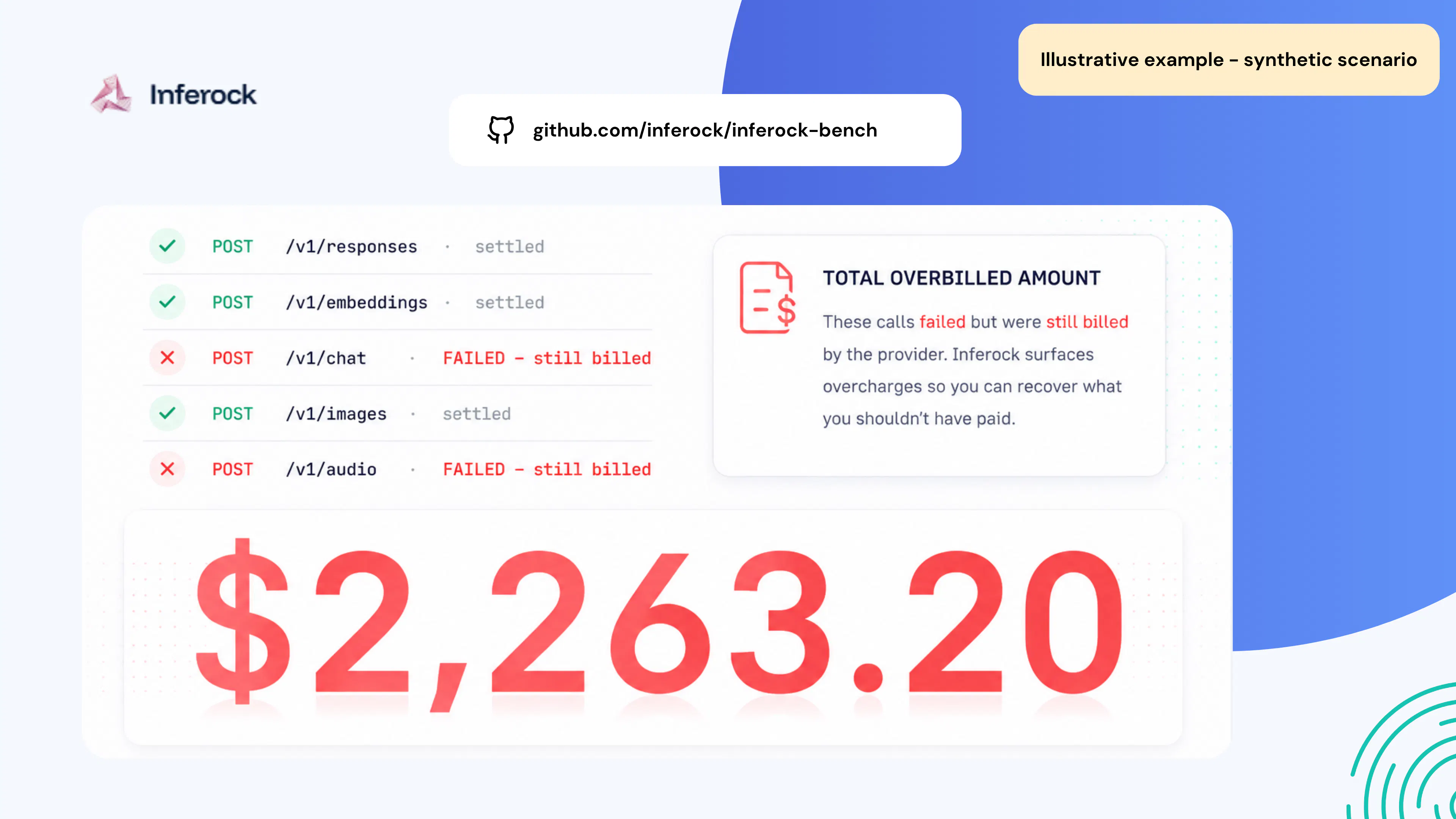
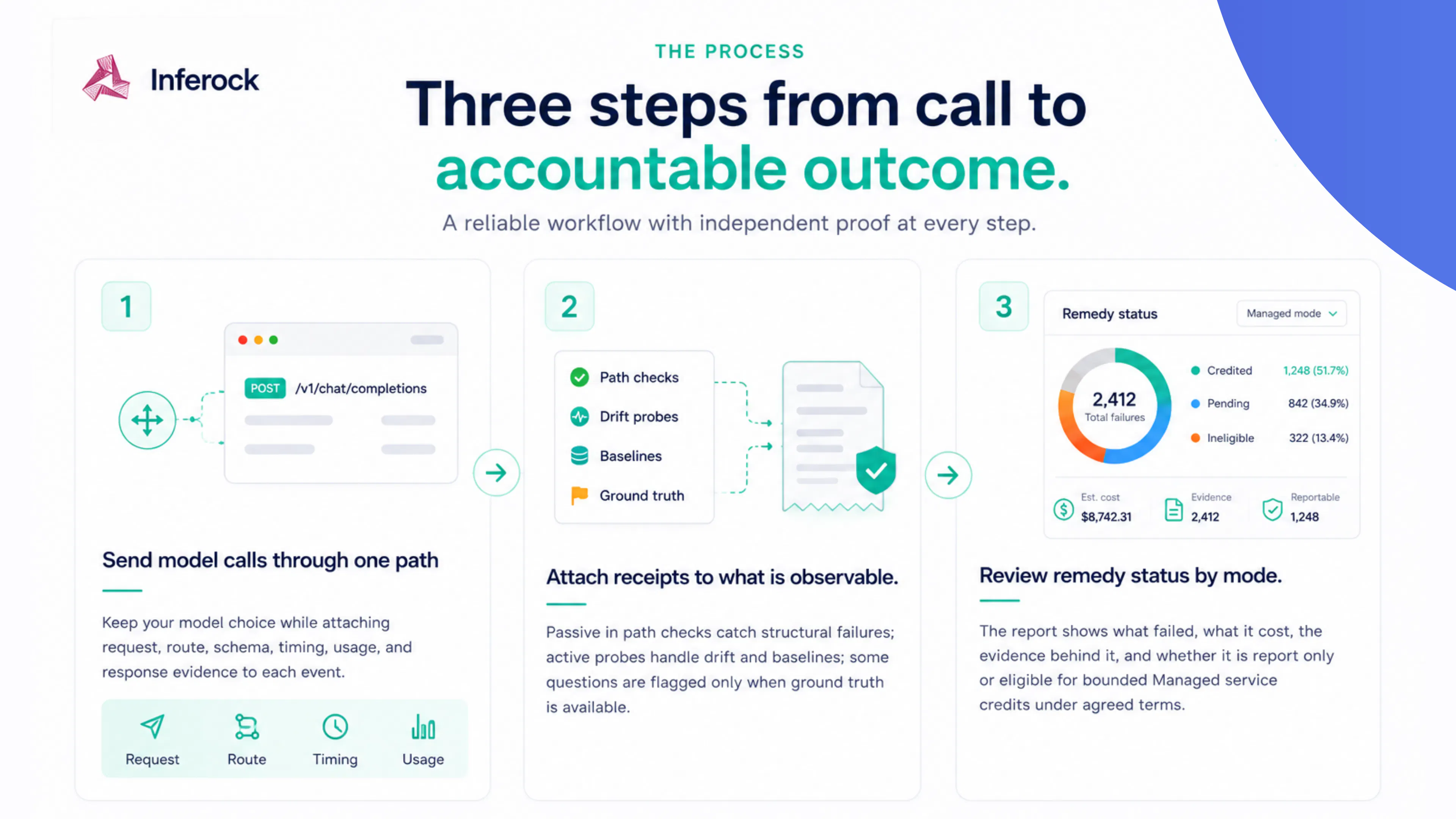
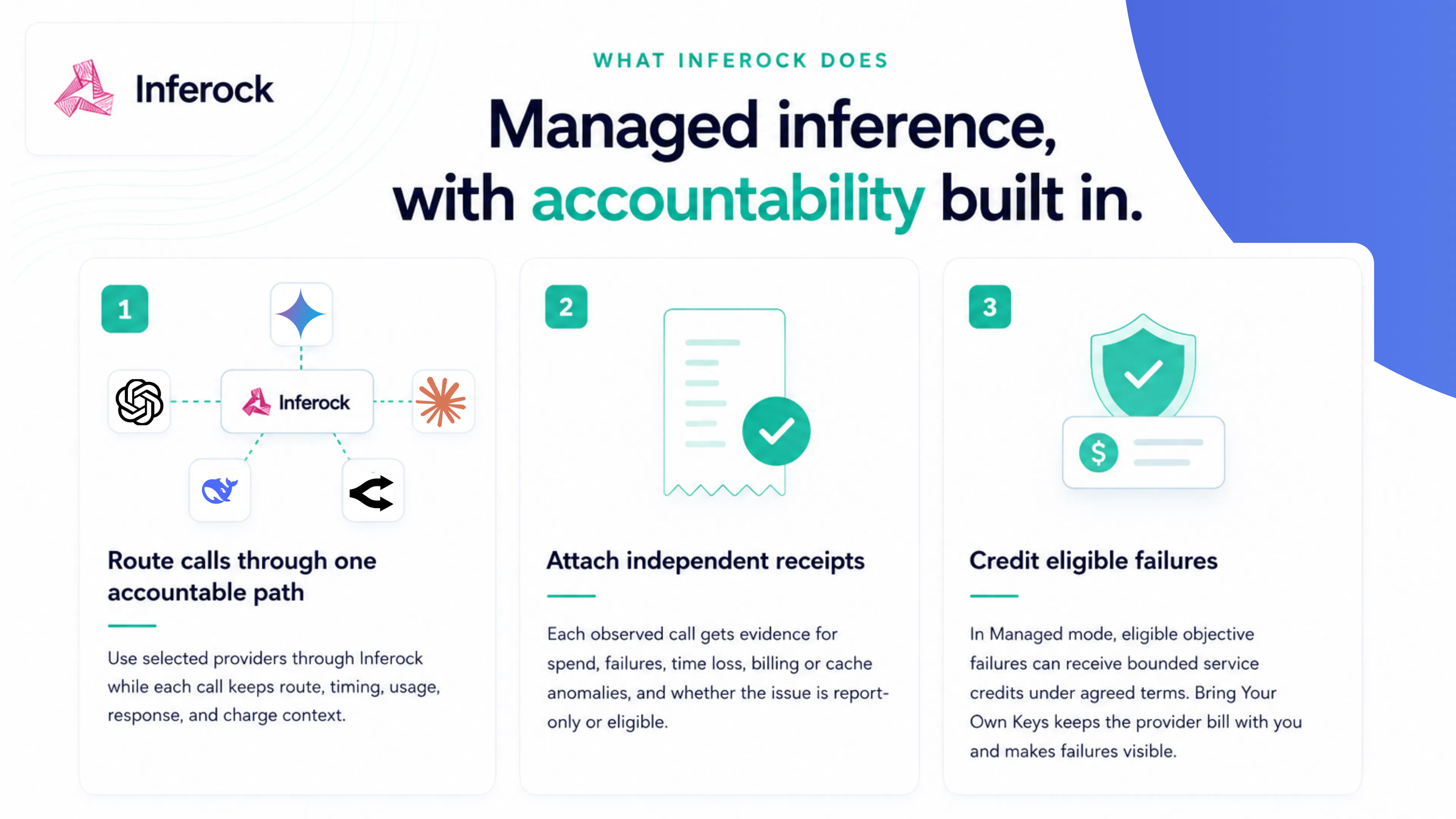
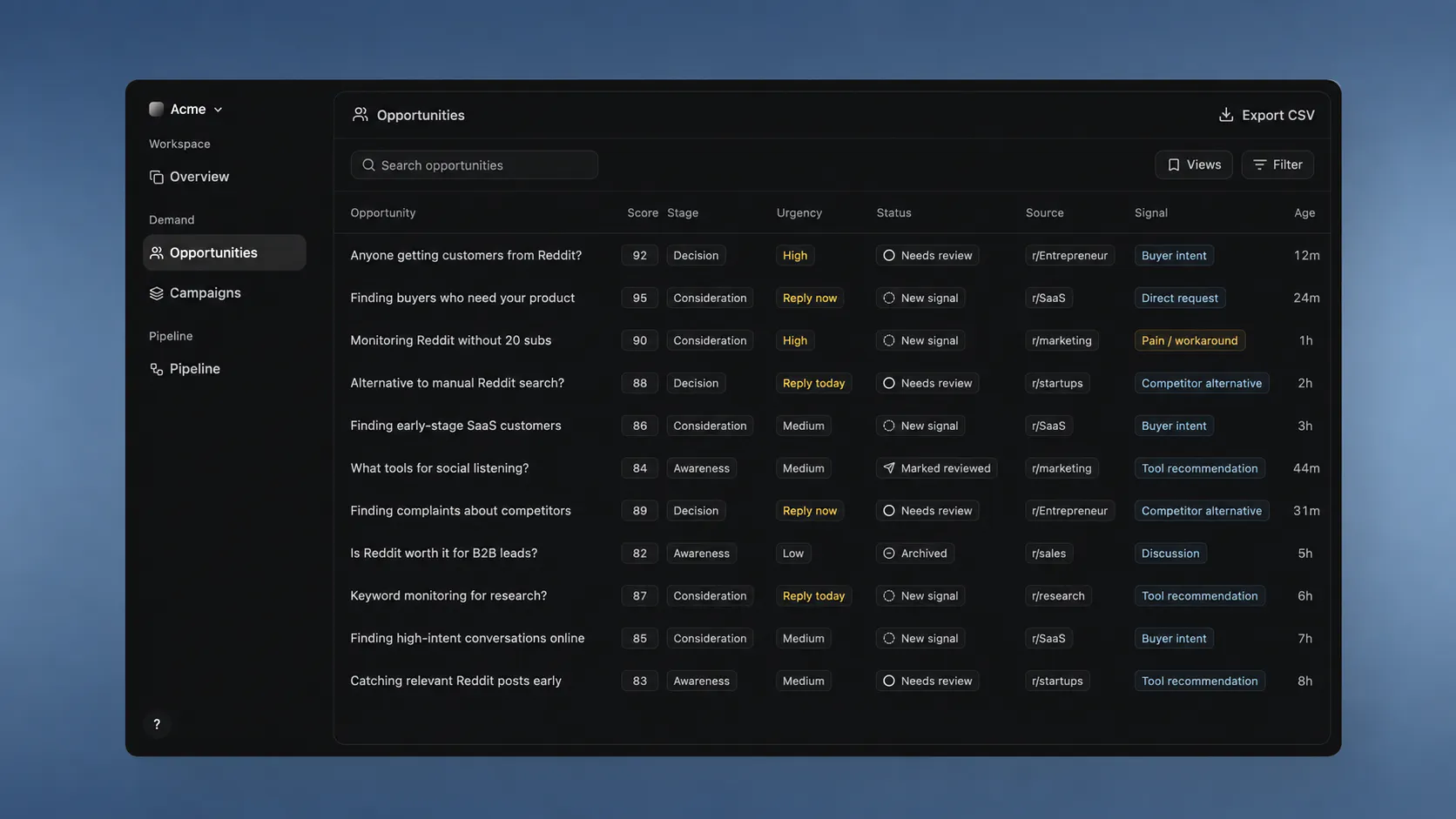
Inferock-bench is a local proxy that sits between your app and OpenAI, Anthropic, Gemini, or OpenRouter shaped calls. It captures per-call token usage, failures, and retries, then generates an independent receipt showing what you were billed and how much you're actually overpaying for.

This solves a problem I didn't know I could solve, I always assumed API billing discrepancies were just the cost of doing business. Turns out I was wrong.

5
回复

Thanks @itohan_blessing_eigbadon , honestly, this is exactly what we told ourselves for months, until we actually looked at the per call receipts and couldn't unsee it. Really glad this clicked for you. Pls run it on your own traffic, come back and tell us what your receipts show, genuinely curious!

1
回复

Overpaying for failed calls has quietly cost me more than I'd like to admit. I've had timeouts that still consumed tokens on the provider's side and no clean way to catch that pattern until my bill arrived. If this surfaces failure-related overspend specifically, not just total usage, I'd trust the numbers more than any provider dashboard.

4
回复

@jusiy_waller Yeah, It does track that separately btw, failed calls get their own cost line, so you can see what the failures actually cost you. Would honestly love to know what it finds on your traffic.

0
回复

Hey PH

:wave:

We built inferock-bench because we kept paying for AI answers that died mid sentence, and nobody could tell us where the money went.

Providers give you totals. They don't give you the per call receipt you'd need to prove which answer broke, which retry ran, or which token count changed. The company that charges you also decides what counts as a failure and keeps the only detailed records.

inferock-bench runs locally as a proxy in front of OpenAI, Anthropic, Gemini, OpenRouter shaped calls. Point your existing SDK at it (change two settings: apiKey and baseURL), and it captures every call as an independent, per call record. Your provider key never touches our servers, it's used locally only, attached to provider requests.

What it catches:
- Answers cut off mid stream that still got billed
- Empty replies with billed tokens attached
- Token counts that don't match visible output
- Retries that may have silently doubled a charge
- Cache discounts you may be missing on your invoice

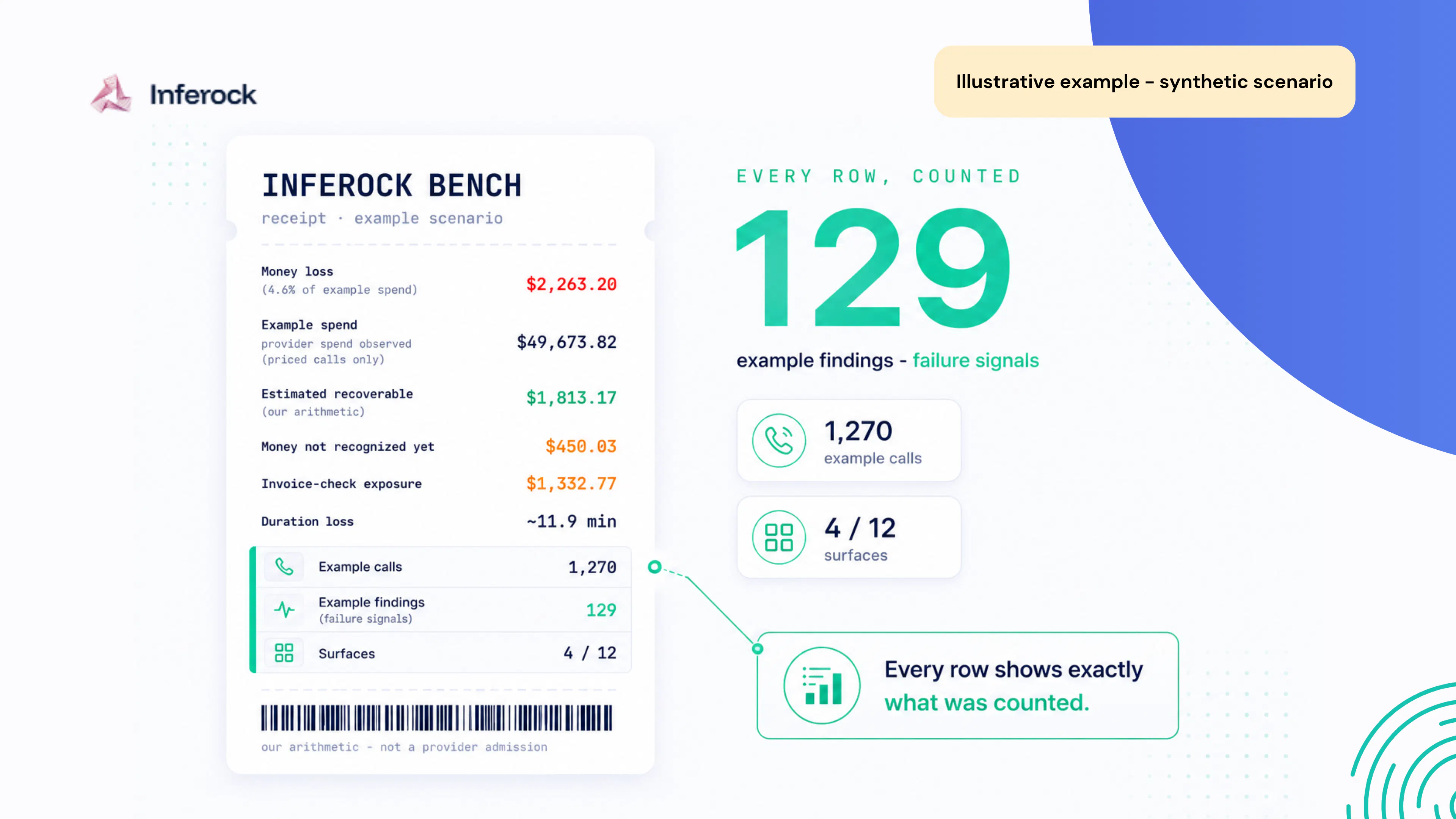
Every run reports a receipt: spend observed, bill-bounded money loss, time loss, and a separate "invoice-check exposure" line that never gets summed into money loss, because we don't want a louder headline at the cost of a weaker claim.

Run it in about a minute: npx inferock-bench

Its open source (FSL-1.1-Apache-2.0, converts to Apache-2.0 in 2 years).

Question for this community: has anyone here actually disputed an AI provider bill and gotten a credit? What worked?

4
回复
@bharath_koneti Getting billed for mid sentence drop offs and silent retries is such a massive headache for devs having local per call receipts proxying OpenAI/Anthropic/Gemini is brilliant. To answer your question: Disputing AI bills with providers usually gets ignored unless you have concrete per-request log receipts like this. This tool gives teams actual leverage!
1
回复
@himashwetham_gowda Exactly data always wins over estimates when dealing with provider support! Love the angle you guys took here.
1
回复

I've been burned by silent retries inflating my OpenAI bill before. Having an independent receipt for that would've saved me a painful invoice conversation.

3
回复

@ramish_saje Ugh, the invoice conversation where you both know something's off. Sorry you've lived that one. Next time at least you'd be the one holding the itemized version.

0
回复

I like the positioning here, it's not trying to replace the provider's billing system, just verify it. That's a smarter pitch than "cost optimization," which every tool claims.

3
回复

@ayla_reynolds Thank you, that's how we think about it as well. Your bill already exists, you should just be able to check it.

0
回复

This is relevant to a problem I've had for months. I run agents that call out to multiple models depending on the task complexity and every so often the bill jumps in a way I can't explain from usage alone. If this can pinpoint whether that's failed calls, redundant retries or just legitimate scaling, I'd finally have an answer instead of a guess.

3
回复

@yolanda_c_schneider Multi model agent setups are where this gets most interesting. Every call gets its own record whichever provider it went to, so a jump breaks down into failed calls, retries, etc. Would love to hear what you find.

0
回复

I like that it works as a local proxy. Keeping billing and usage data on the developer's machine feels like a thoughtful design choice.

3
回复

@awesome_america Thank you! That part was non negotiable for us, it's your spend and your keys, so the record should live on your machine, not on ours.

0
回复

The failed-calls and retries breakdown is the part I'd use first. One case I keep hitting might not show up there: a tool call that returns 200 with a silently corrupted value. I measured this on Anthropic models, 40 calls, none flagged the value was wrong, so it bills as a clean success and the retry logic never fires. Can the receipt catch a call that looked fine but wasn't? Or is that out of scope by design?

2
回复
@dimhold that one's mostly out of scope. The receipt proves what you were billed and what actually came back, so truncations, empty replies, token mismatches, retries. A well-formed 200 with a wrong value inside would pass as a clean call, we simply can't tell from the outside that the value was wrong.
0
回复

Congrats on the launch @himashwetha_gowda. Good find @fmerian.

Question regarding accuracy, is it possible it might not be able to distinguish a genuinely billable provider failure from valid hidden token usage, such as reasoning, refusal, cache, or tool-call tokens?

2
回复

@rohanrecommends thank you! Anything that could be legit hidden usage like reasoning, cache, or tool tokens doesn't count as loss, it just gets flagged for you to check. Only what we can prove makes the loss number.

0
回复

Thanks @fmerian for hunting us. Feel free to ask if anybody has any questions about Inferock Bench.

2
回复

The retry tracking caught my attention. I’ve seen failed requests become surprisingly expensive, so being able to trace each call would be useful to me.

2
回复

@rahul_manjhi1 Failed requests being the expensive ones is such a strange truth of this stuff, you pay and get nothing usable back. Hope it earns a spot in your setup!

0
回复

Love that this sits as a local proxy instead of asking me to route traffic through another cloud service. Keeps my API keys and data where they belong.

2
回复

@peter_victor everything stays on your machine, we never see it.

0
回复

What I really want to know is how this handles historical data. Can I feed it a month of past logs and get a retroactive receipt or is it strictly forward-looking from install? I ask because the overspending I'm most curious about already happened and I'd love a way to audit it after the fact.

2
回复

@kimberly_west really good question. Today it works by sitting in front of your live traffic, so the receipts start from the moment you point your SDK at it, it can't vouch for calls it never saw.

0
回复

Tracking retries alongside failures is a smart addition. Those hidden retries can quietly become a big part of the bill.

2
回复

@desire_waterman Thank you! That matches our experience, no single retry looks expensive, it's the accumulation that stings. Glad that part stood out to you.

0
回复

The retry tracking caught my eye. silent retries are probably one of the easiest ways for API costs to creep up without anyone noticing.

2
回复

@sansa_grey Right, retries are the sneakiest of the bunch: the answer still arrives, everything looks fine, and the bill just grows. Making those visible was one of the first things we wanted for ourselves.

0
回复

The independent receipt idea is really practical. It's nice to have a way to verify token usage instead of relying only on provider dashboards.

2
回复

@athar_jatoi Thank you! It always felt a little odd that the only record of what we bought came from the company selling it, so now you can keep your own. Glad it's practical!

0
回复
I already keep a pretty close eye on AI costs, but seeing exactly where a retry, failed response or weird token count added cost would actually help when the numbers suddenly look off. Congrats on the launch!
2
回复

@etiennegarcia Thank you! The retries and weird token counts are the bits that never show up on the bill. Really appreciate the kind words on launch day!

0
回复

The independent receipt idea is genuinely useful. LLM costs are still surprisingly hard to audit at the individual request level.

2
回复

@ashir_murtaza1 thank you! That's exactly the gap we kept running into, you can see the total, but never the audit at the individual request level. Glad it resonates.

1
回复

Does anyone know of any tools that can work with web-based logins (claud.ai etc)

1
回复

@jay_janarthanan1 we don't touch that layer. inferock-bench works where there's an API key and a baseURL to point somewhere, and web app subscriptions don't expose the per call detail we'd need. If someone has cracked that curious to see it too.

0
回复

The bill dispute question is interesting. have you personally managed to get a provider to credit a charge after showing them one of these per call receipts or is that still something you are testing?

1
回复

@jeremy_loomis honest answer: no credit to brag about yet, that's exactly why we threw the question to the community. What we can stand behind today is the receipt itself, knowing which call failed and what it cost, instead of arguing from a monthly total.

0
回复

The two setting setup makes this feel unusally easy to try.

1
回复

@jordan_bulk thank you! Hopefully the receipts earn it the permanent spot.

0
回复

Which API call actually cost me this money? is a question every AI app eventually needs to answer.

1
回复

@santosh__kumar9 exactly, every team hits that question sooner or later. We just want the answer already sitting there when it happens.

0
回复

changing the baseURL and apiKey instead of rewriting the application is a nice touch. makes this much easier to test on an existing project.

1
回复

@upendra_kumar17 that was a rule we set for ourselves, if trying it takes more than a minute nobody will ever find out what their calls really cost. Two settings in, and your app never knows the difference. Would be curious how it goes on your existing project.

0
回复

I like that Inferock Bench focuses on evidence rather than simply showing another dashboard. Having a separate record of every API call could make unexpected billing much easier to investigate.

1
回复

@aarav_pittman thank you! Dashboards summarize, and summaries are where the weird stuff goes to hide. We wanted something closer to a paper trail, boring on purpose, there for the day you need to investigate.

0
回复
#2
GLM-5.3
Coding leap from scaled post-training on the same base
188
一句话介绍:GLM-5.3 是一款面向复杂长程编程任务的智能体编码模型,通过大规模后训练扩展,在同等基座上实现开源SOTA级智能体编码能力,并涌现出漏洞挖掘与网络防御的实战能力,解决了开发者在复杂任务中依赖云端前沿模型受限、且需要本地化高安全编码辅助的痛点。
Open Source Artificial Intelligence Development
AI编程助手 智能体编码 开源大模型 代码生成 网络安全 漏洞挖掘 后训练扩展 本地部署 开发者工具 Z.ai
用户评论摘要:用户对后训练带来的性能跃升表示认可,但质疑“少于一半输出token”在真实智能体循环中的有效性,指出基准测试未覆盖重试及无效工具调用的token浪费。另关注5.2至5.3是否API级无缝切换,及高努力模式是否需要调整提示词。
AI 锐评

GLM-5.3的发布,表面上是又一轮模型迭代,实则是对“基座决定论”的一次精准打脸。它用同一个基座,仅靠后训练扩展,就在编程与网络攻防上压过Opus 4.8,这直接动摇了“攒算力堆基座”的军备竞赛逻辑,反而印证了数据配比、训练策略与安全对齐工程化才是当前拉开差距的胜负手。更值得玩味的是“开源权重两周后放出”与“Hugging Face本地部署事件”的暗示:当云端前沿模型因安全限制而“踩刹车”时,本地化、可审计的高性能模型不再是退路,而是一种战略主权。但评论区的质疑同样刺眼:基准测试中的“低token”不覆盖真实Agent循环中灾难性的重试与无效调用,这意味着厂商的benchmark metrics与开发者的痛点利润表之间存在巨大鸿沟。且“高努力模式”是否需要重写提示词,暴露出所谓“同基座”并非无缝迁移的托词。GLM-5.3的真正价值不在于多几个点分,而在于它示范了后训练可以持续榨取能力的上限——但这上限的地板,很可能由脆弱的安全评估流程和真实场景适配成本决定。若Z.ai不能公布全链路的token开销及提示词迁移成本,这次“性能跃迁”不过是另一场精心设计的营销烟花。

查看原始信息
GLM-5.3
GLM-5.3 is Z.ai's latest model built for complex, long-horizon coding tasks. Through massive post-training scaling, it achieves open-source SOTA in agentic coding and demonstrates emergent capabilities in vulnerability discovery and cyber defense.

Hi everyone!

GLM-5.2 was already used on-prem by @Hugging Face last month to investigate the autonomous-agent intrusion into its infrastructure, after hosted frontier models ran into cyber-safety restrictions.

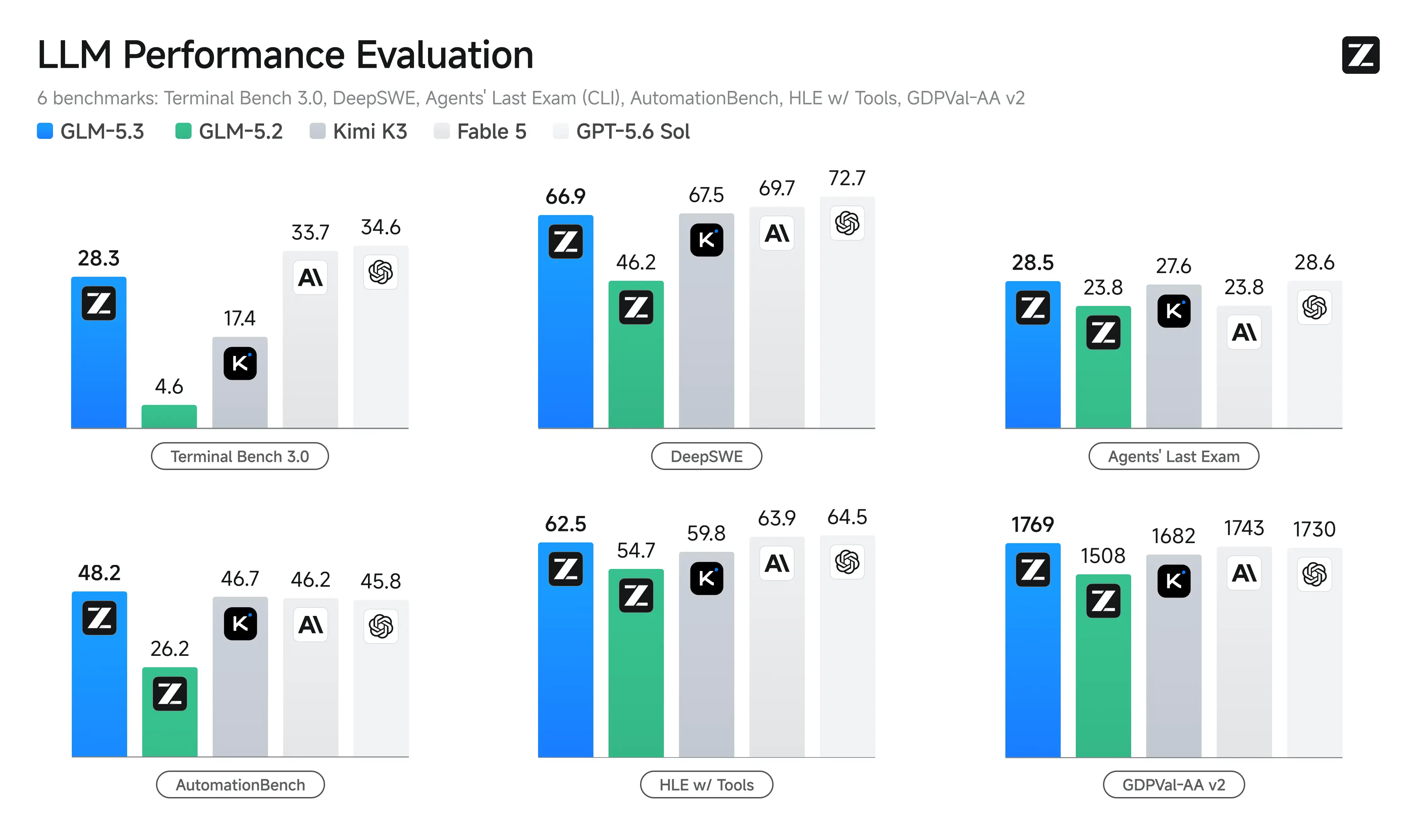
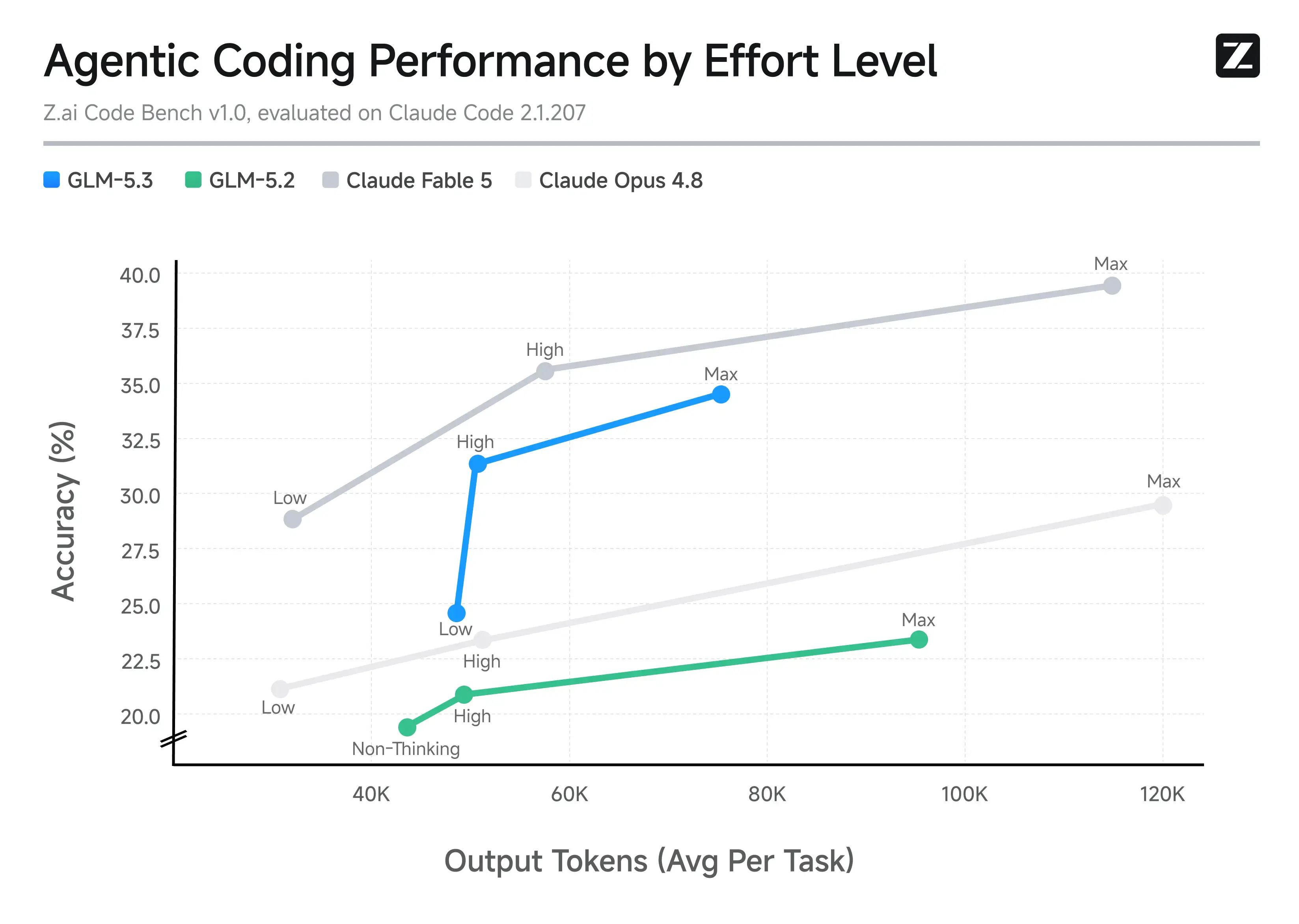
GLM-5.3 keeps the exact same base model as 5.2. @Z.ai simply kept scaling the post-training stack, and the gains are pretty substantial. On their internal code benchmark, 5.3 at high effort beats Opus 4.8 while using less than half the output tokens.

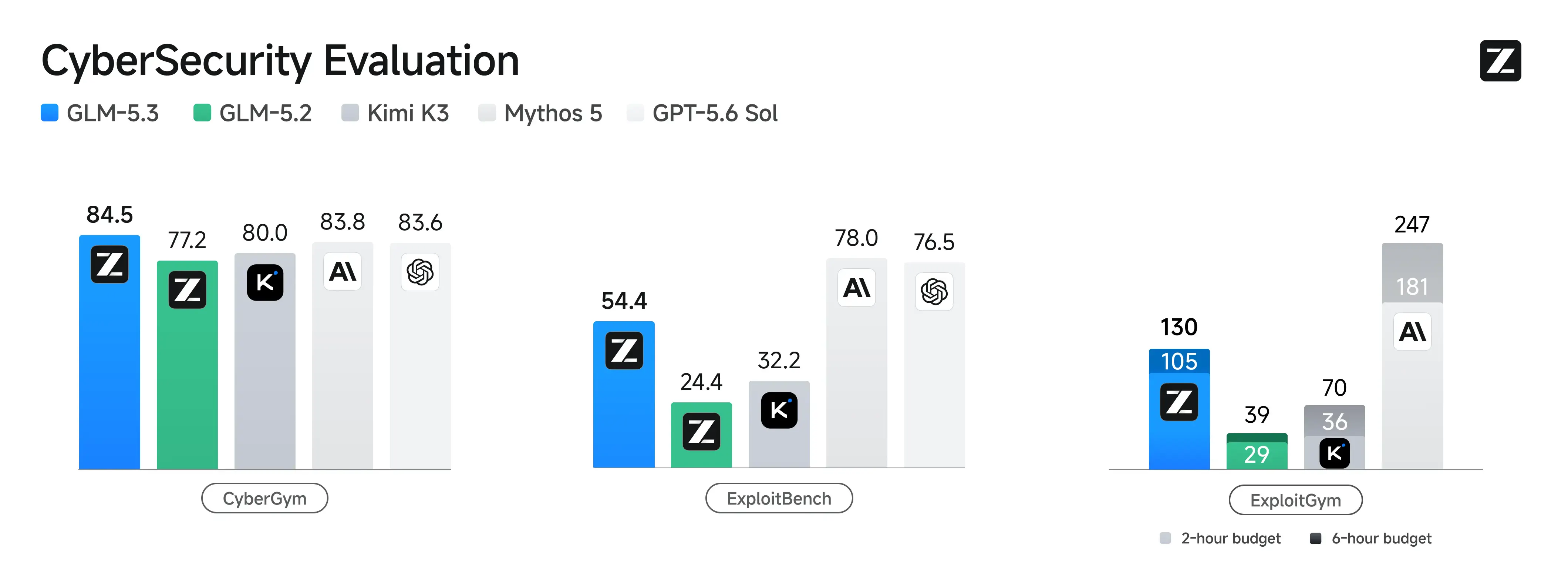
Cyber improved even faster. GLM-5.3 now scores 84.5 on CyberGym, and the model has started reasoning through complete exploitation chains. Their disclosure ledger currently tracks 1,097 critical and high-severity findings across 269 open-source projects.

You can try GLM-5.3 now through GLM Coding Plan and ZCode. Open weights are planned in two weeks, after the remaining safety evaluation and hardening.

5
回复

@zaczuo Love it! Z-ai is doing wonders with GLM models and pushing the open weight models to frontier levels. Much Support!! 🙌

0
回复

@zaczuo The AI arms race is getting a little ridiculous.

Same base model, more post training, and suddenly the thing is outperforming a frontier model while using less than half the output tokens. At this point, “model update” feels like a serious understatement.


The cyber results are even more interesting. The fact that these models are moving from solving isolated tasks to reasoning through full exploitation chains is a pretty big shift.


And the Hugging Face story makes the on premise angle especially compelling. When the hosted model has to tap the brakes, running a capable model locally suddenly stops sounding like an infrastructure preference and starts sounding like strategic independence.


The really fascinating question now is whether scaling post training keeps producing these jumps, or whether we're approaching the point where squeezing out the next few percent gets brutally expensive.


Either way, two weeks until open weights is going to be a very interesting two weeks. 👀

0
回复

Less than half the output tokens is the claim I would want to watch in a real agentic loop. On my own app the tokens that hurt were never the ones in the clean runs. They were the retries and the tool calls that went nowhere, and a benchmark never sees those.

I keep my model id behind remote config so a swap does not need a new build to go out. Is 5.2 to 5.3 drop in at the API level, or does the prompting need reworking for the high effort mode?

0
回复
#3
Big Mike
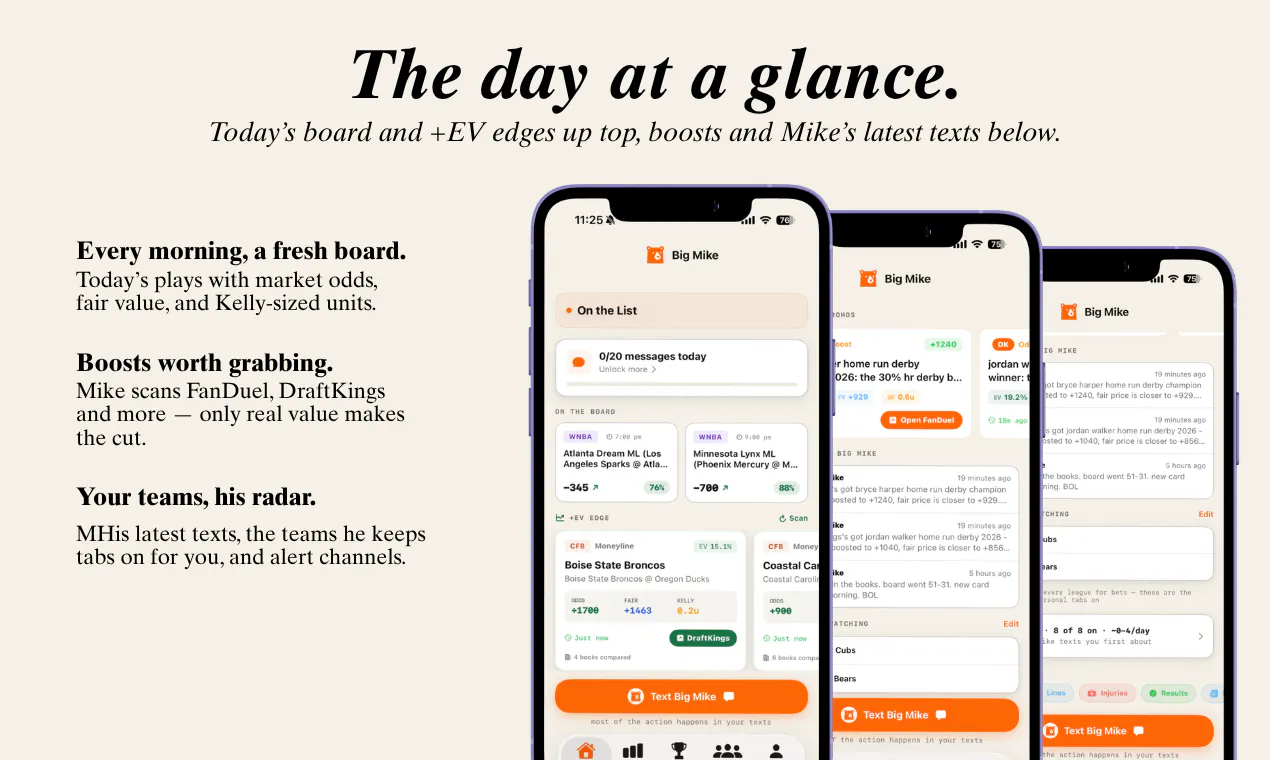
Your favorite uncle who knows sports & bets, on iMessage
184
一句话介绍:Big Mike 是一个嵌入 iMessage 的 AI 体育助手,实时推送 MLB/NFL/NBA 等赛事的伤病、交易、赔率变动与投注建议,并能接入用户 fantasy 联赛,直接在群聊中完成讨论与下注参考,解决体育迷“信息分散、决策滞后、缺乏可信依据”的痛点。
Messaging Sports Artificial Intelligence
体育博彩 iMessage机器人 AI赛事分析 实时伤病提醒 梦幻体育建议 群聊互动 公开投注战绩 赔率价值评估 体育资讯聚合
用户评论摘要:用户普遍认可“群聊内即用”的体验与“公开战绩”的透明度,尤其赞赏伤病/阵容实时提醒的实用性。主要疑问集中在:是否支持 WhatsApp/Telegram(官方回应将优先扩展 WhatsApp);如何处理群聊发言时机(当前需 @Big Mike 或回复其消息,未来将提升主动对话能力)。另有用户关注每单的推理依据与 Closing Line Value(CLV)展示,认为这是核心信任来源。
AI 锐评

Big Mike 的聪明之处,在于它没有试图再造一个“体育博彩 App”,而是寄生在 iMessage 这个最高频的社交场景里,把“聊球”和“下注”天然缝合。这解决了体育博彩行业两个根深蒂固的问题:一是信息滞后——伤病、首发、赔率跳变往往发生在开赛前几分钟,传统 App 需要用户主动刷新,而 Big Mike 把被动推送做成了主动对话;二是信任缺失——它用“公开、不可删除、按 CLV 而非胜率论英雄”的机制,直接对标了那些 P 图晒战绩的网红“专家”,这是教科书级的差异化定位。

但风险同样明显。首先,合规是悬顶之剑——美国多州对体育博彩推广有严格监管,AI 直接给出“下注建议”是否构成“投顾服务”,法律边界模糊,且 Apple 对涉及博彩的 App 审核向来谨慎,iMessage 集成更是敏感区。其次,商业模式依赖订阅,而用户对“AI 预测”的付费意愿会随连败周期迅速衰减——再怎么透明,连黑两周照样掉订。再者,目前仅限 iOS/iMessage 生态,等于主动放弃 Android 与海外 WhatsApp 用户,扩张路径与团队声称的“多平台计划”之间存在明显节奏矛盾。

真正值得玩味的是其“群聊人格化”设计——Big Mike 不是工具,而是“会抬杠的懂球 Uncle”。这暗示了 AI 消费产品的下一步:不是做大而全的助手,而是做有脾气、有战绩、可被调侃的“社交原子”。如果它能扛住合规压力、保持战绩真实,并顺利切入 WhatsApp 等跨平台入口,有机会从“体育博彩工具”进化为“体育迷的 AI 聊天伙伴”。但目前来看,它更像一个漂亮的 demo,尚未证明自己能在政策与用户情绪的双重波动中稳定盈利。观望其 NFL 赛季的实际留存数据,再谈颠覆不迟。

查看原始信息
Big Mike
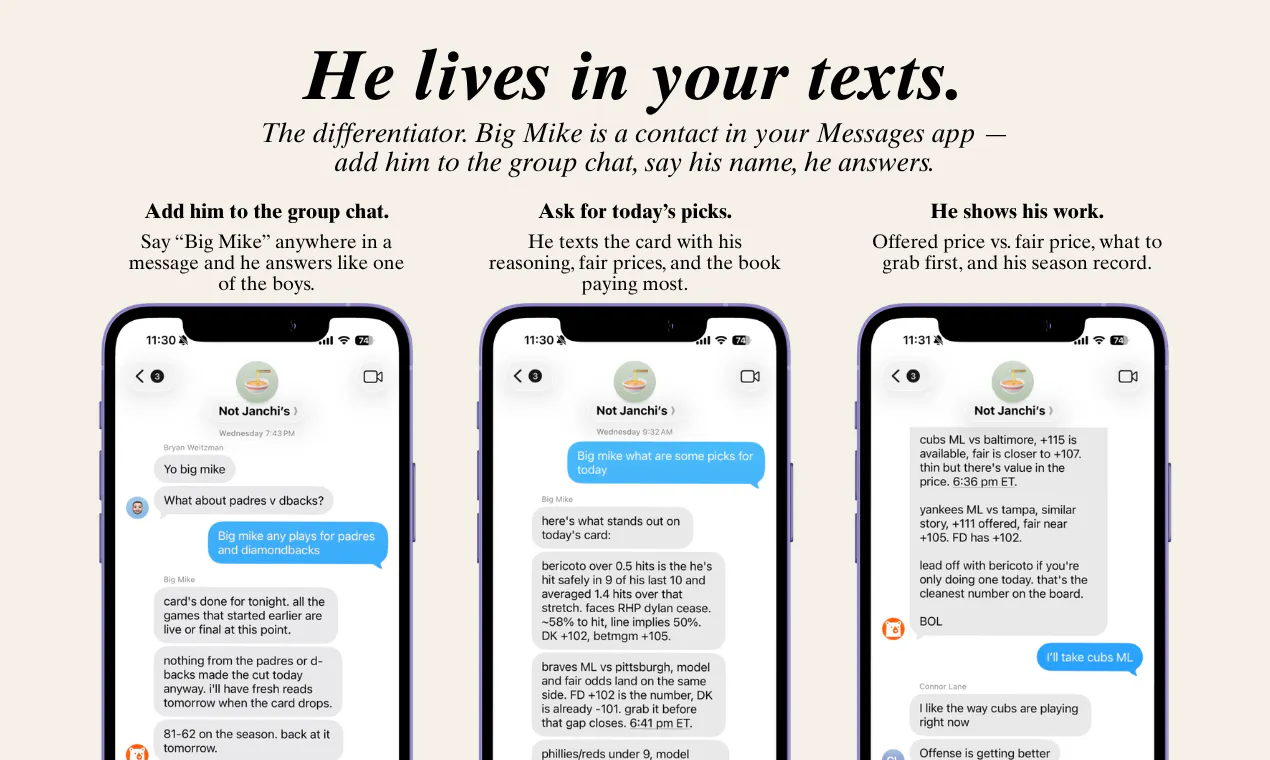
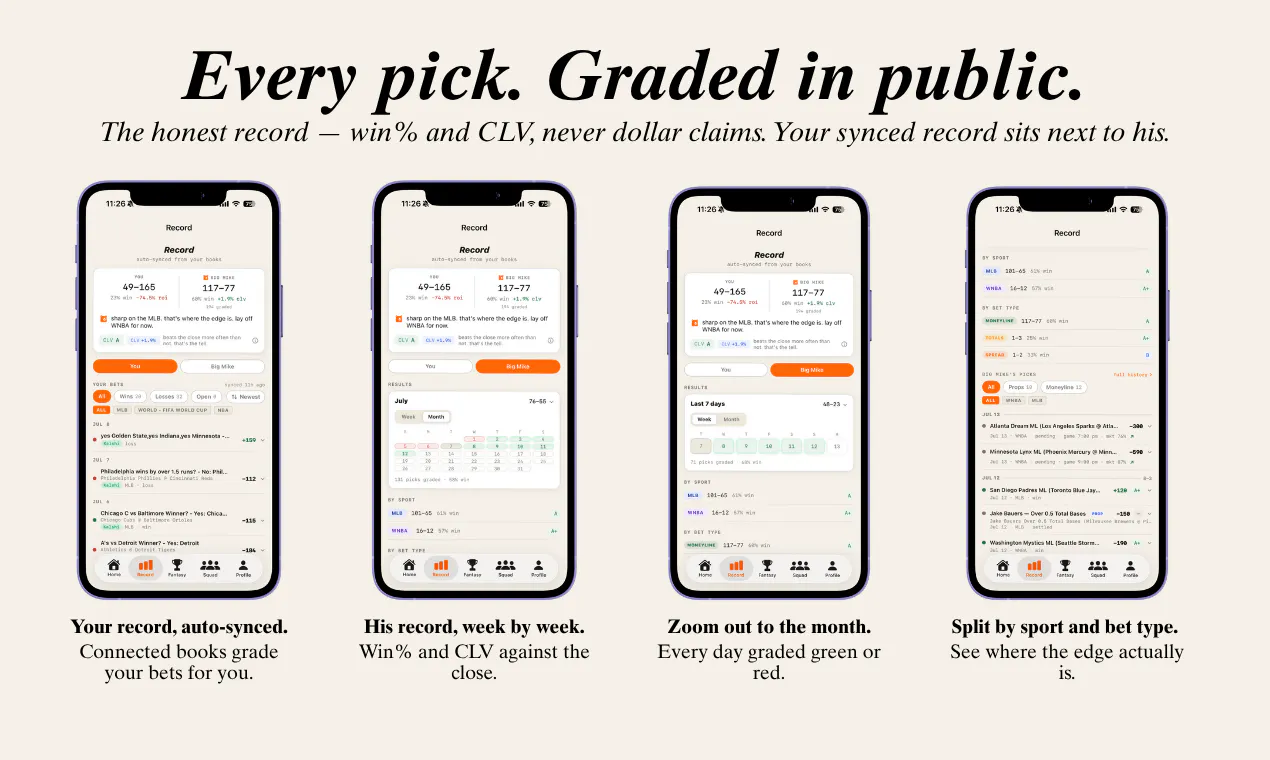
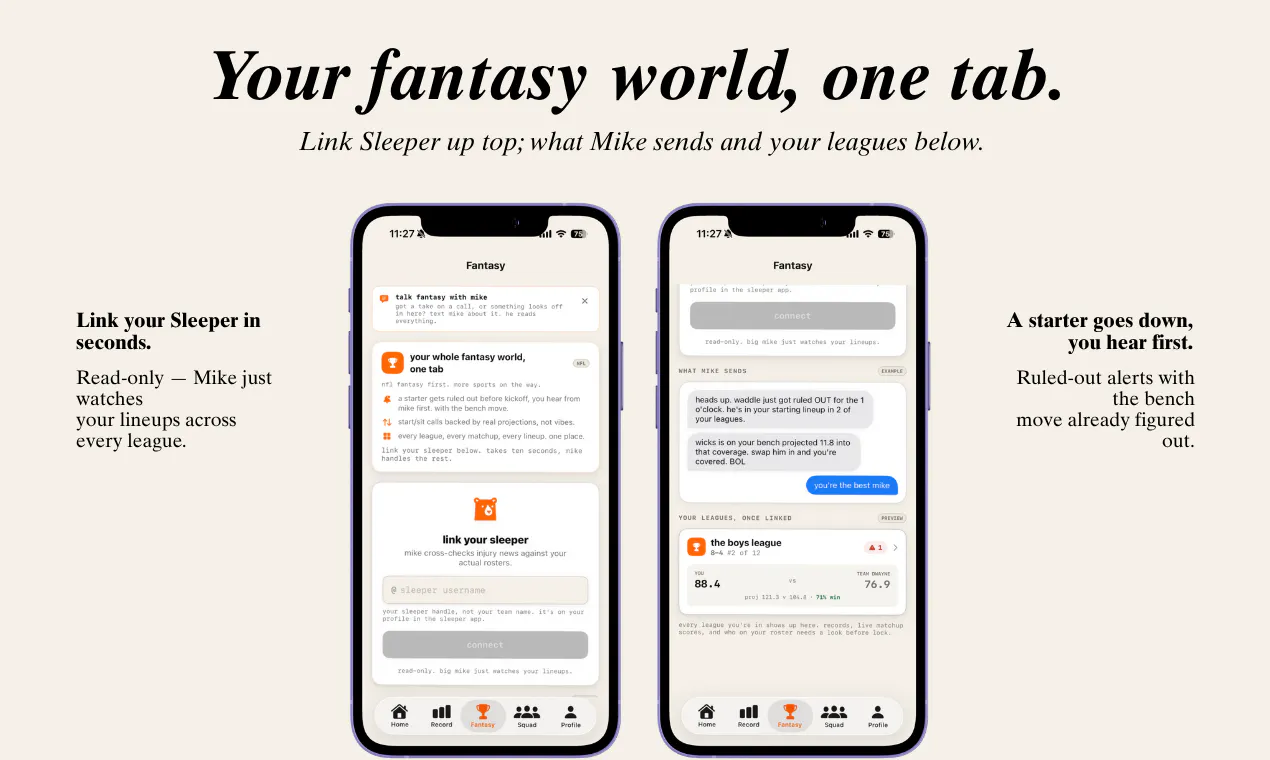
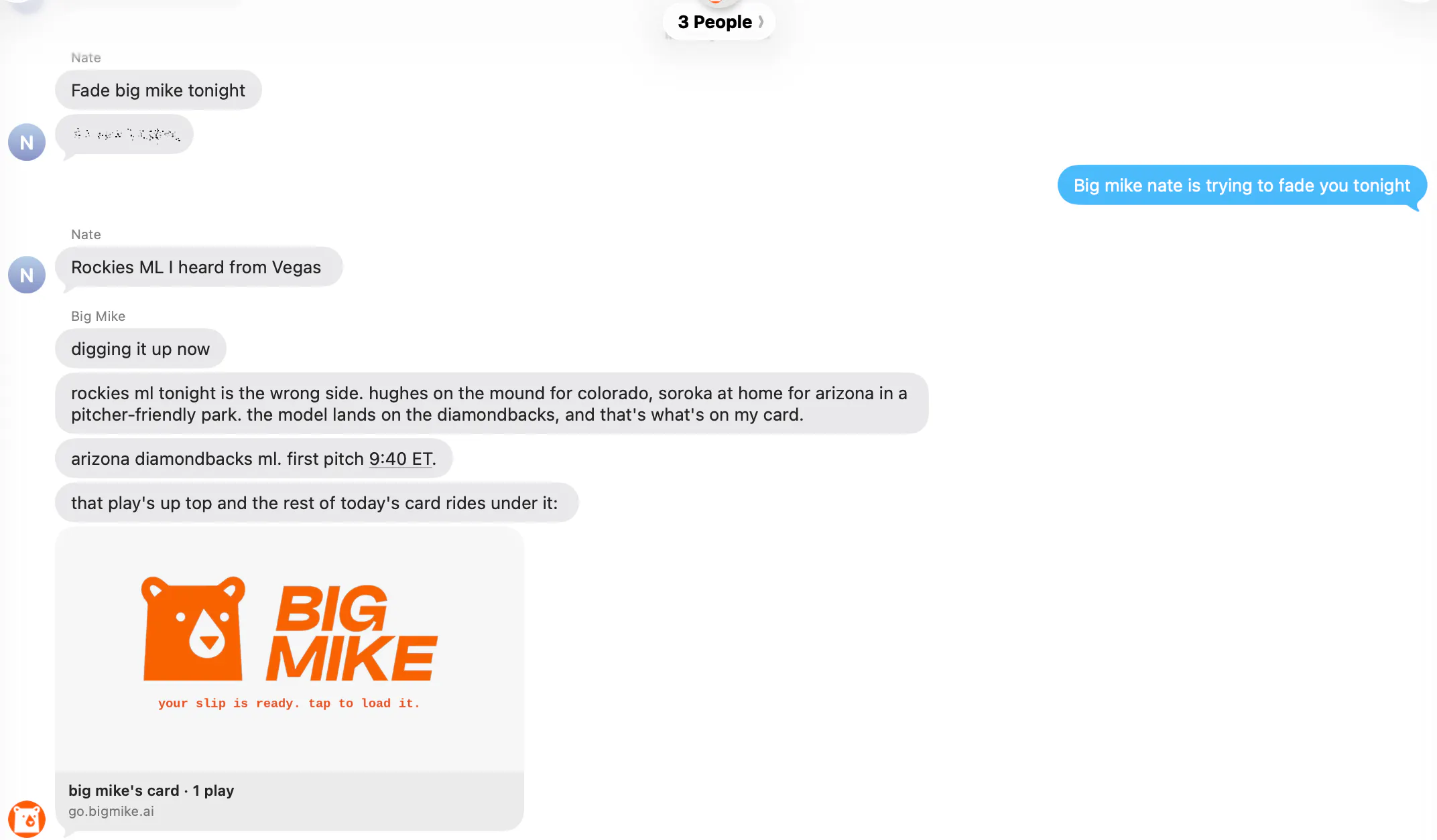
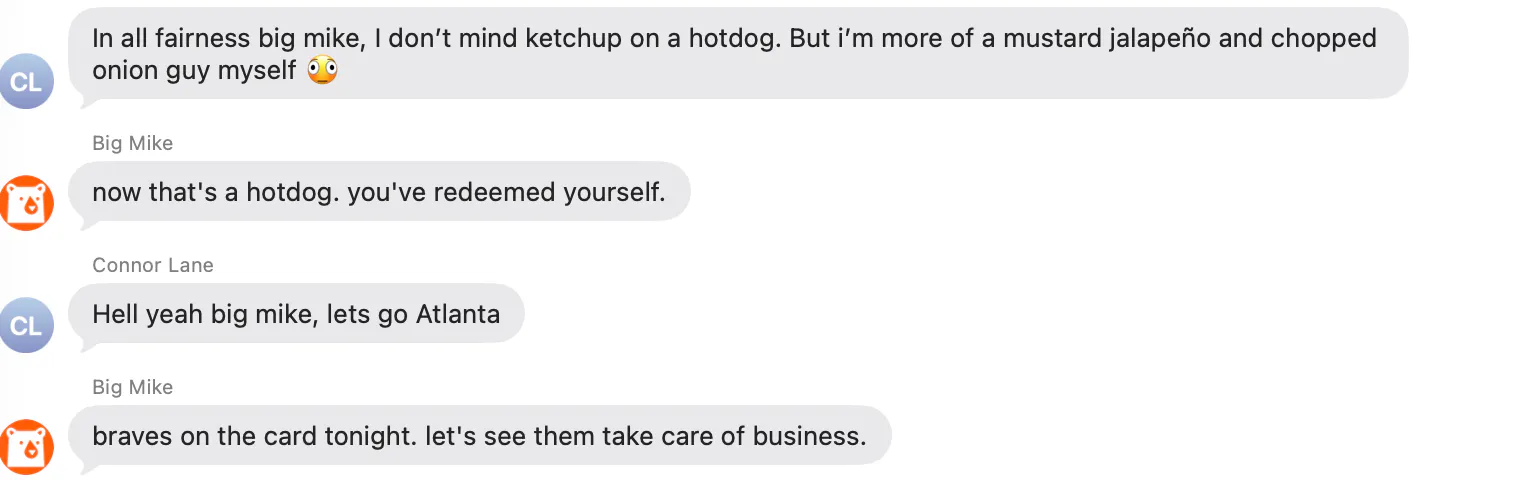
Big Mike reads MLB, NFL/CFB, and NBA/WNBA all day and texts you the play in iMessage: what to bet, at what number, and which book has it. July Record: 115-68, +21.4 units. Every pick graded in public, no deleted losers. Star ruled out? Trade drops? He texts you what it does to the line. Add him to the group chat and the whole crew hears it at once. Fair warning: he stirs up banter. Link your Sleeper or ESPN league and the start/sit calls are about your roster. Ask Big Mike.

Really interesting concept! The combination of real-time injury alerts, fantasy advice, and betting picks in iMessage feels super practical. Curious—are WhatsApp or Telegram versions on the roadmap?

10
回复

@1mirul Thanks Amirul! 🙌 We’re starting with iMessage because we wanted Big Mike to feel native to an existing group chat rather than become another app people need to check. WhatsApp/Telegram are definitely interesting directions as we expand 👀

2
回复

What stands out to me is that Big Mike isn't just another betting picks app—it combines news, injuries, fantasy, and betting into one conversational experience. The public record is a nice touch too. Great launch

9
回复

@monir_ Appreciate it, Monir! That’s exactly what we’re going for — bringing all the fragmented parts of the sports experience into one conversation. And yeah, the public record is important to us; if Big Mike makes picks, he should be accountable for them 😄

2
回复

@monir_ Thank you! Trying to create an all encompassing experience for avid sport fanatics out there

1
回复

There's never a shortage of sports mania. The blockbuster trades, the season-derailing injuries, or just a late-season underdog catching a 10-game hot streak. There's always something moving....

What's missing is a way to filter out the noise before kickoffs, tip-offs, or the first pitch...

That's why you need to "Ask Big Mike", your tailored, personal sports companion that texts you (iMessage) daily updates on:

  • The latest on your favorite teams, hot off the press

  • Real-time injuries and lineup changes before game time

  • Custom fantasy adjustments for your actual roster

  • Big Mike's Read, his best picks of the day


    Hey Product Hunt, I'm Michael, founder of Big Mike! 🐻

I've been a sports fan my whole life, tracking the latest news across multiple teams, players, and games in a single day. And for years I watched friends tail "experts" whose betting records nobody could actually verify....

That never sat right with me. So I built Big Mike: your favorite sports companion, texting you morning, evening, or night with the latest changes and the plays worth making across the NFL, CFB, MLB, WNBA, and NBA.

Ask him anything, like "hey big mike, how do we feel about the cubs against the pirates today?" and he'll tell you where the value is and why.

He handles the whole day, not just the bets. An overnight trade drops, a starter tweaks a hamstring in warmups, your flex on your fantasy team suddenly questionable. Big Mike catches it and texts you before it matters, so you're never the last one in the group chat to know.

He's in your fantasy league too. Inactive alerts before lineup lock, start/sit off his own projections, and weekly recaps with the roast included. (Football season loading...)

He can be added to any existing group chat. Add him to the crew's iMessage chat and he keeps up with who said what, answers each of you on your own terms, and drops slips right into the conversation. It should make watching with your crew more fun, not more homework.

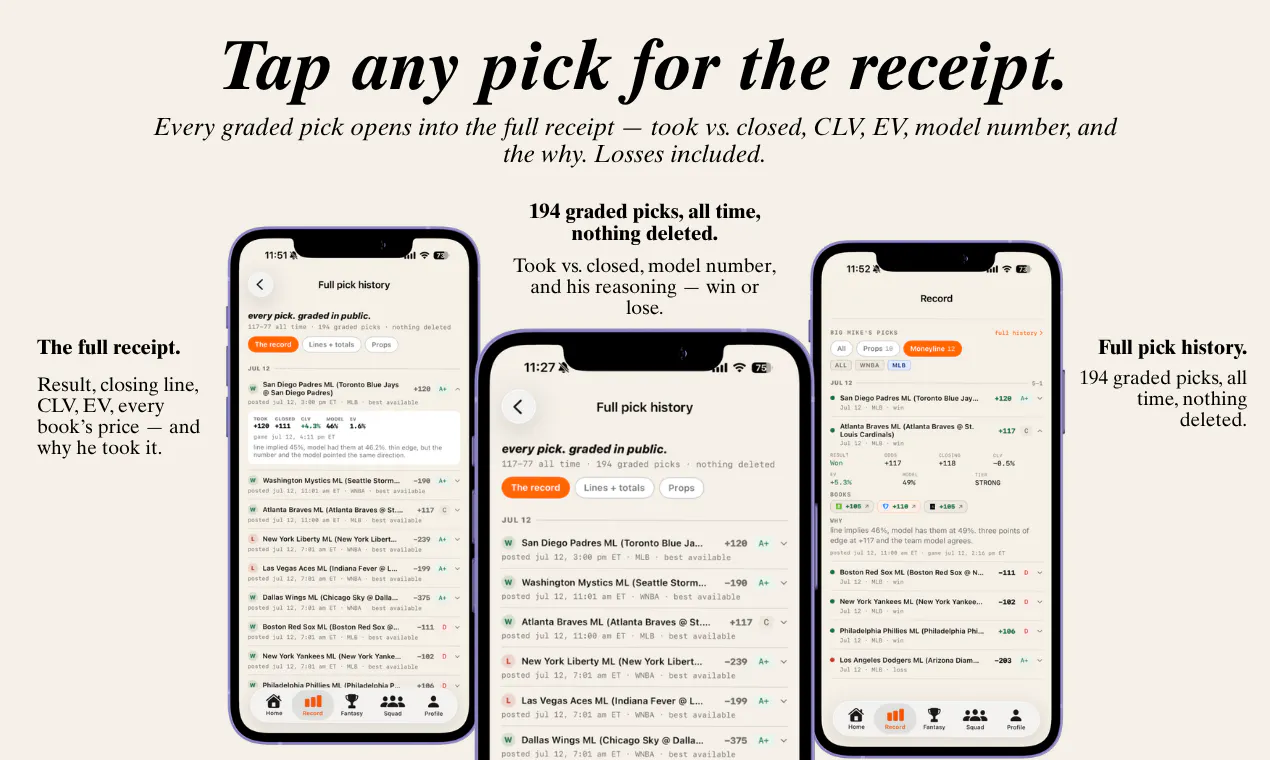
When he does call a play, he shows his work. Big Mike builds his own price for every game from the ground up, only steps in when the market's price is provably wrong, and grades himself against the closing line, not just wins and losses. One companion in your texts, with a public record he can't go back and edit.

Every pick is graded in public. His record is just the number: 141–89 (61.3%) on his best plays for the day and counting. Every call dated, timed, and kept in the app forever. Losses sitting right next to the wins. Nothing gets deleted.

It's a live board, not a static list. The app lays out the day by game time (live now, locking soon, tonight, tomorrow) with live scores, how the lines have moved, and closing-line value on everything he's already graded.

Who's Big Mike for?

If you follow a few teams, ride a fantasy league, and maybe bet casually with a group chat full of opinions, this one's built for you. Big Mike shows his work, texts you back like he's part of the squad, and keeps you on top of the latest around the league.

Get started

Download Big Mike and your first week (7-Days) is on the house: https://apps.apple.com/us/app/big-mike-sports-betting-picks/id6762222670

Big Mike's Newsletter: "The Daily Dough": https://thedailydoughwithbigmike.substack.com/

Big Mike Site: https://www.bigmike.ai/

P.S - Bring the crew while you're at it, every friend who joins your squad drops the price for everyone....and you could be missing out on 50% off for everyone right now!

8
回复
@mikehew Having real time injury alerts and fantasy updates delivered straight to iMessage is such a clean UX approach instead of constantly refreshing multiple sports apps. The public track record/grading transparency is a great touch. Out of curiosity, do you plan on expanding beyond iMessage to platforms like WhatsApp or Telegram in the future?
3
回复
@tehreem_fatima5 great question! Eventually, I do foresee being able to expand Big Mike to WhatsApp (first), and then following with Telegram. For the time being though, we’ll be focusing on creating a continuously easier experience for the IOS environment
3
回复

@mikehew I’m curious how Big Mike adapts when you add him to different group chats—does he tailor his slips to the crowd, or keep a consistent voice across the crew?

0
回复

Love the idea of turning sports updates into a group-chat experience. The public track record and transparent grading make this especially interesting. 🚀

8
回复

@angelaaa Thanks Angela! 🚀 The group-chat experience is really the core idea behind Big Mike. We wanted sports updates and advice to show up naturally where you’re already talking with friends, instead of making you constantly jump between apps.

2
回复

@angelaaa Always felt that accountability & transparency we qualities lost in the process with other comparable apps out there - which Big Mike has proven so far to be consistently correct in finding value with his picks and analysis each day.

Don't get me wrong, Big Mike will have some down days, but over the long run so far, he's proven to come out on top!

1
回复

Hello Michael, showing the reasoning behind each pick is probably the part I’d pay the most attention to. I’d want to understand why the number looks valuable.

3
回复

@malani_willa Great question, and here's my personal take on this:

Ever bet a number and found out afterward it moved two points before first pitch? That's the base foundation & question we built our model around (dissecting the player matchups / teams, and matchup value minute by minute, in real time, before kickoff, tip-off, or the first pitch).


Every pick shows two numbers side by side: what the market prices it at, and what our learning model makes of it. "62% to hit · model 67%." That gap is the entire reason the pick exists, and when it isn't there, there's no pick. Big Mike won't ever force a pick that wouldn't follow his learning model (which now compounds all the daily game data throughout the season, so truthfully it should get better with more games / time being played).

You also see the games he passed on and why, in his words: the number didn't clear the bar, or the price got there first, or the model liked the other side.


Under that is the case in plain terms: the announced starters with their real ERA and record, the injury report, and how the line has moved since it opened.


Then the part you can hold us to. Every graded pick carries its closing line value, what we took against where the number actually closed. A pick can win on a bad number and lose on a good one, and CLV is how you tell which happened before the result says anything.

Full graded history is public, nothing deleted - and so far, his total record:

242-155, 61.0% win rate across 397 graded picks.

2
回复
Big Mike’s transparent record feels refreshing, finally someone showing wins and losses. Congratulations!
3
回复
@odeth_negapatan1 thank you!
2
回复

@odeth_negapatan1 Thank you!

1
回复

The group chat feature is a fun idea. I can already imagine my friends arguing with Big Mike about every pick

2
回复

@simran_kumar it's one of the best parts! The pure banter as big mike is just part of the friend group now! haha

1
回复

the injury and lineup alerts could be really useful during those last few minutes before a game starts.

2
回复

@harri_cuevas You're spot on!

This feature was quite personal to me (when building it out) because there's been multiple years & individual weeks during fantasy football seasons where I forgot to set my lineup with the proper players who were healthy for that week, or just even active players that should be starting with much higher PFF (not keeping the bye week matchup players in your starting lineup...)

2
回复

I think we are close to getting jackpots in casino games. My dad started using AI for predictions in lottery btw. :D

2
回复
@busmark_w_nika well, if he’s into watching either NFL, CFB, MLB, or NBA/WNBA…he needs to ask Big Mike what to be looking at!!
1
回复
@busmark_w_nika this reminds me of the MIT Blackjack team.
0
回复
Congrats on the launch Mike! All the best
2
回复

@german_merlo1 Appreciate it, Germán Merlo!!

1
回复
Really interesting - I wonder what bet365 thinks about this!
1
回复
@dzaitzow agnostic to all! If the lines are right, Big Mike will help :)
1
回复

Making Big Mike part of the group chat is such a fun product decision. Sports predictions are already social, so having the “uncle who always has a take” actually join the conversation feels much more natural than opening another betting app.

1
回复
@tanjum you get it! Arguably the #1 most difficult product experience for social apps is “gathering” community / members in one spot, but counter to that - keep on doing what you’re already doing (in group chats) Big Mike comes to you, and just is another friend in the group chat (who happens to be an expert on all things sports analysis and news)
1
回复

in a group chat how does he decide when to speak and when to stay out? thats the part id have got wrong. one bot in a busy thread gets muted fast if it answers everything.

1
回复
@jernej_jan_kocica great question! right now, including “big Mike” on your question or replying from a “reply” response directly from one of Big Mike’s messages - these two options create a clean, organized format in group chats Over time, Big Mike’s own model has shown & continuing to improve his conversational awareness, eventually where he will be able to jump into the midst of convos without needing “big Mike” or a reply.
0
回复
#4
Zetik
A chief of staff in your pocket
154
一句话介绍:Zetik是一款AI信息代理应用,通过全天候自动收集、筛选、分析并整合新闻、论文、代码、播客等多源信息,为用户生成个性化简报,解决信息过载和错失关键情报的痛点。
Productivity News Artificial Intelligence
AI信息代理 智能简报 信息过滤 多源聚合 个性化追踪 播客转文字 实时监控 知识管理 效率工具 情报分析
用户评论摘要:用户认可多格式信号追踪和定制追踪器的实用性,但核心疑虑在于:基于显式设定的追踪器可能只会优化“已知兴趣”的召回,而无法发现“认知边界外”的新类别;另有用户调侃AI是否会取代“刷手机”的习惯,并期待长期体验反馈。
AI 锐评

Zetik切中的痛点真实且普遍——信息过载已从“选择困难”演变为“认知负债”。其“情报参谋”定位精准,将CIA式工作流降维到个人场景,多格式聚合(尤其播客转文本)是相对RSS阅读器的实质性差异,而非换皮聚合器。

然而,产品最大的隐忧恰恰来自评论中最尖锐的质疑:算法依赖用户预设的tracker,本质上是“更强的过滤器”,而非“发现引擎”。真正的信息红利往往来自兴趣边缘的意外碰撞,而非既有主题的深度挖掘。如果Zetik只是把“我已知什么”做得更好,那么它优化的不过是效率,而非认知边界。创始人在回复中回避了这一核心矛盾——“跨格式追踪”解决的是广度,但“新类别发现”需要的是跳脱已知框架的推荐逻辑,这需要基于内容语义的拓扑分析,而非关键词匹配。

商业层面,154票属于中低热度,反映该赛道(如Feedly、The Browser Company)竞争激烈且用户付费意愿存疑。“首席信息官”的故事性感,但个人用户是否愿为“省下的刷手机时间”持续订阅,仍需验证。更现实的机会可能在垂直领域(如金融、科研)的高净值用户,而非泛知识人群。

一句话总结:Zetik是一款打磨良好的“信息减负工具”,但距离真正的“认知外脑”还有一步之遥——那一步,在于从“帮你找到你要的”跨越到“告诉你什么是你该知道的”。若不能解决,它终将与无数RSS增强工具一样,沦为高级收藏夹。

查看原始信息
Zetik
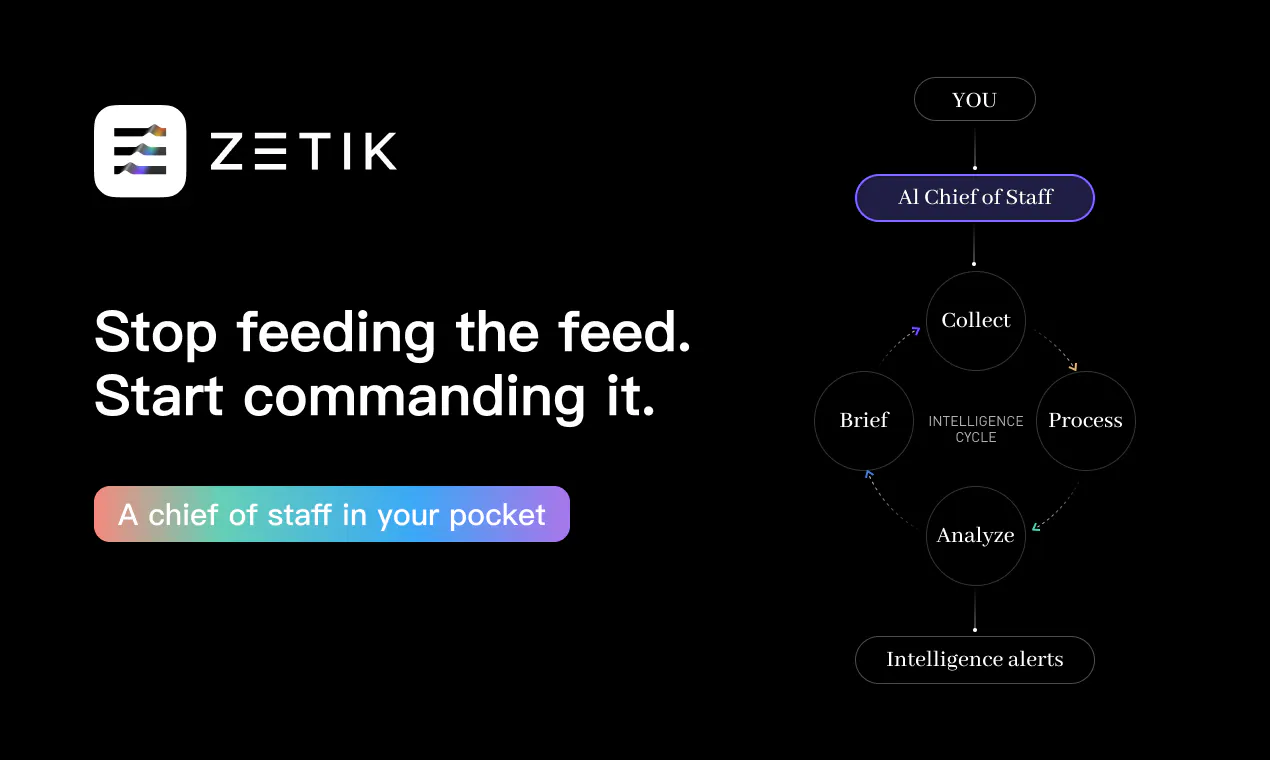
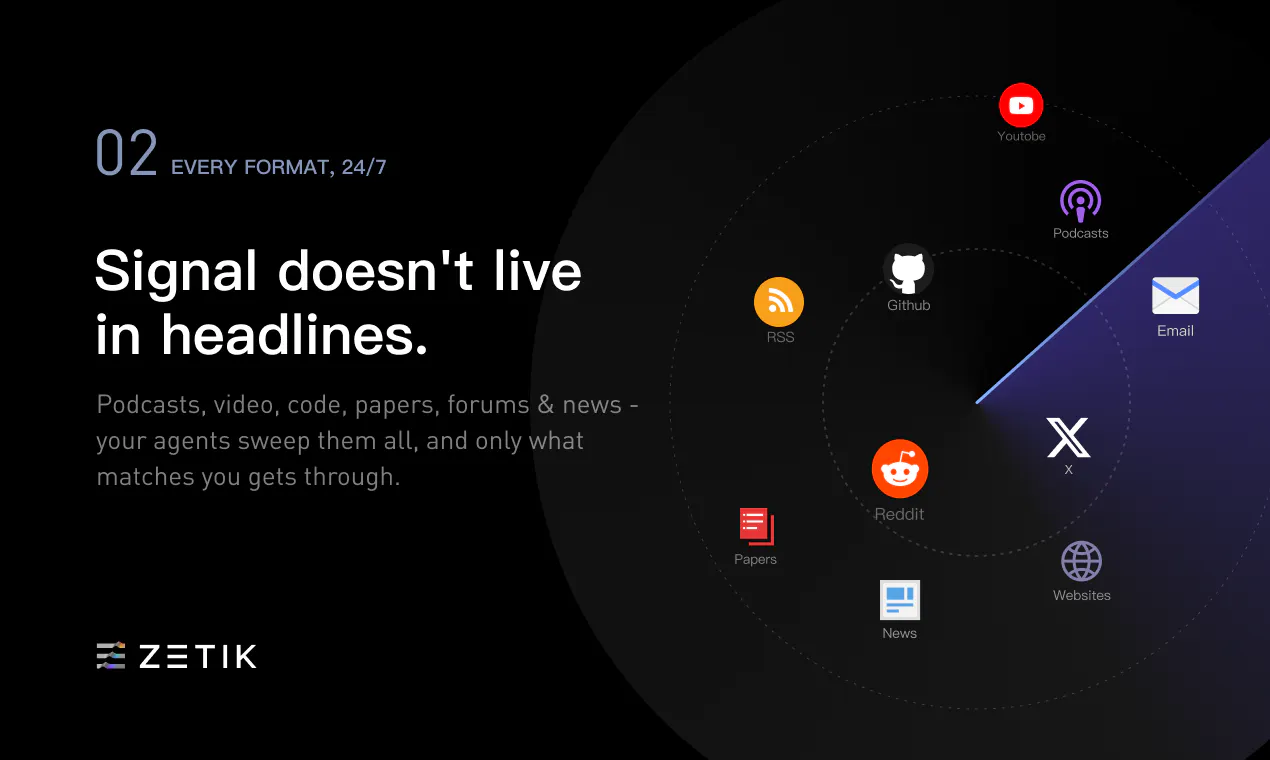
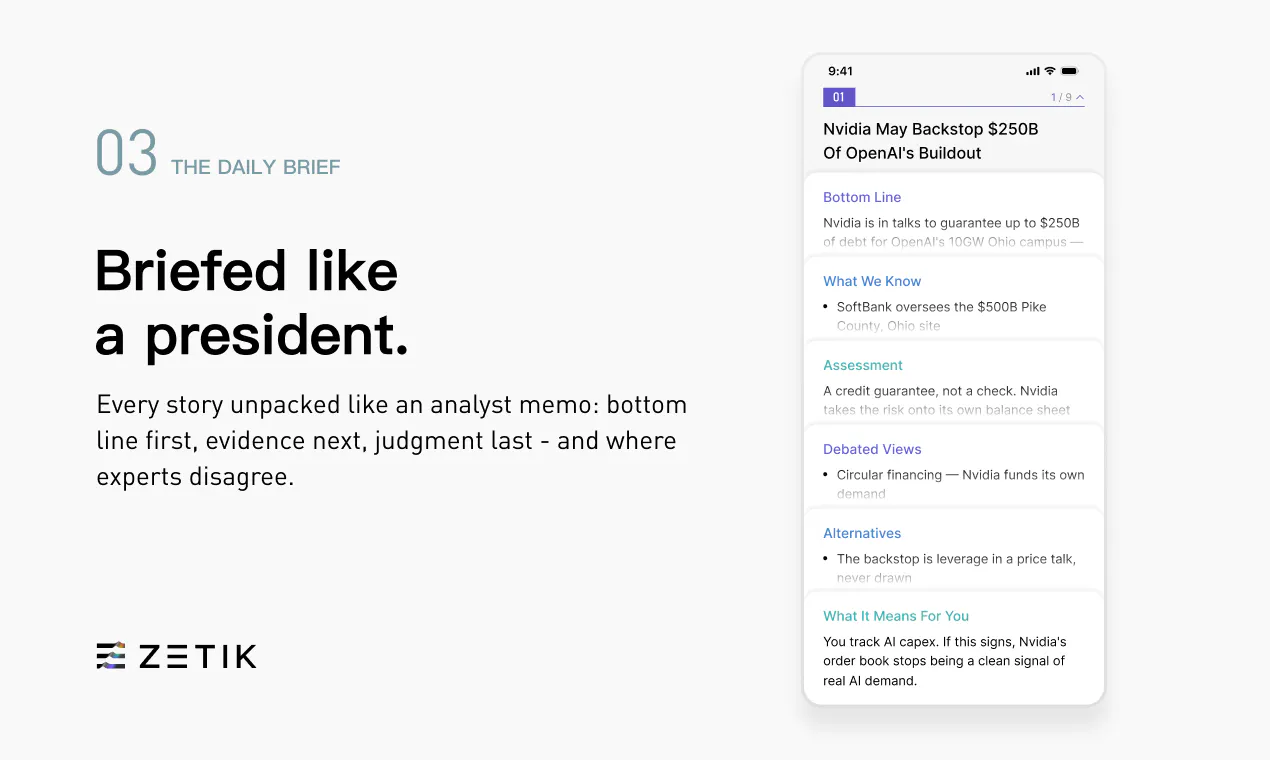
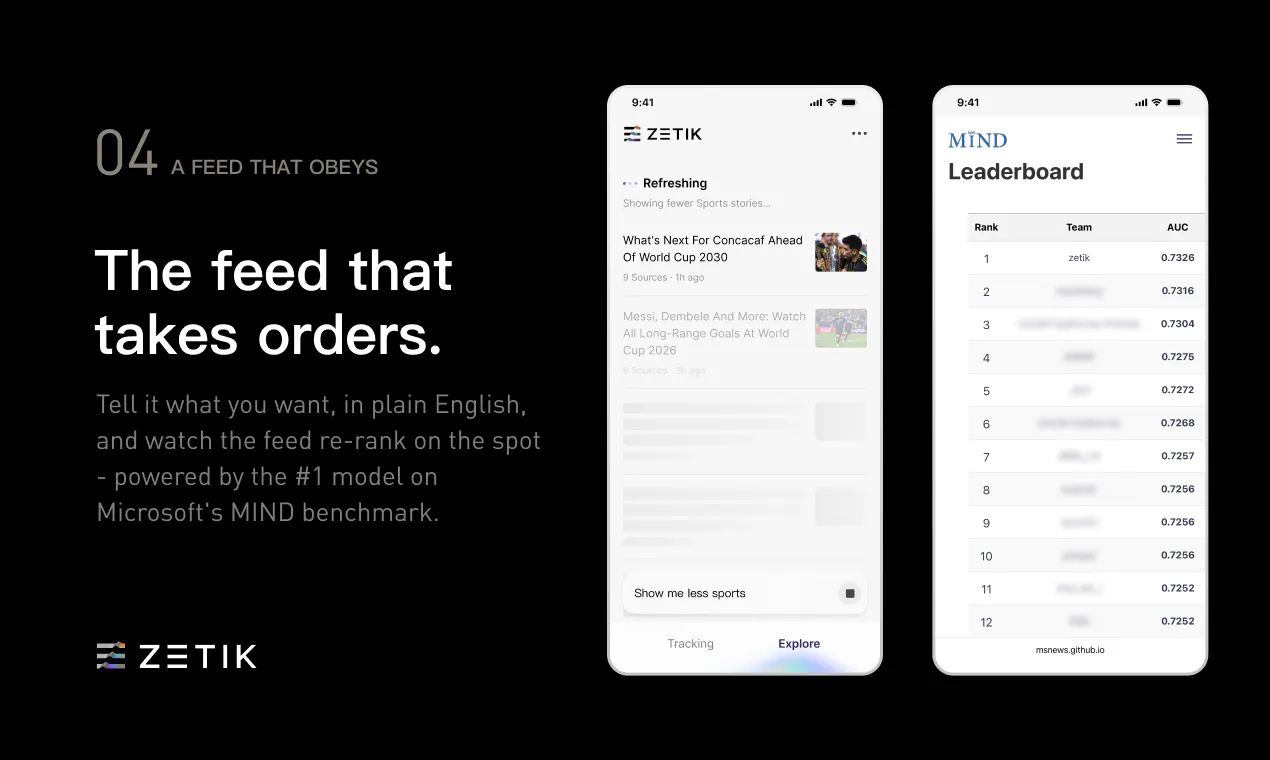
Presidents and CEOs get strategy teams. You get… doomscrolling? Meet Zetik: an AI agent team running a full intelligence cycle — collect, filter, analyze, brief — across podcasts, papers, code, tweets & news, 24/7. It tracks whatever matters to you, in near real time.

I do a version of this manually for work - scanning a lot of early-stage stuff fast - and the part I'd worry about with "the 1-2 things worth knowing find me, the other 98 never do" is that the best finds I've had were never things I already knew to track. they were adjacent to my interests, not inside them. if Zetik's filtering works off trackers I explicitly set up, how does it surface something genuinely outside those - a new category I didn't know existed yet - versus getting really good at recall on topics I already told it mattered

1
回复
I like the idea. I was skeptical at first, but the custom tracker feature works really well for keeping an eye on industry updates I care about. It runs in the background and keeps me posted without constant manual searches. Will leave a review after a few days.
1
回复

@justin2025 Thank you so much for the feedback! I'm thrilled to hear the custom tracker is saving you time. Take your time testing it out—looking forward to your review.

0
回复

👋 Hey Product Hunt! I'm Nathan, the builder of Zetik.

Honest origin story: I hunt for quality information every day — and still miss things that matter. Out of every 100 posts I scroll, maybe 1–2 are actually worth my time.

And the signal is everywhere. A story starts in the news, the best take is on X, the real discussion is on Reddit, the technical proof is on GitHub or arXiv, and the best explanation might show up in a podcast three days later.

Piecing it all together is a part-time job. Staying informed shouldn't depend on how much time you have to scroll.

Then it clicked: presidents and CEOs solved this problem a long time ago.

They don't read everything themselves. They have staff who monitor the world, kill the noise, connect the dots, and walk in with a brief.

It's 2026. I use coding agents every day.

Why shouldn't everyone have an information agent?

So we built Zetik — your own chief information staff.

🎙️ Tell it what matters to you.
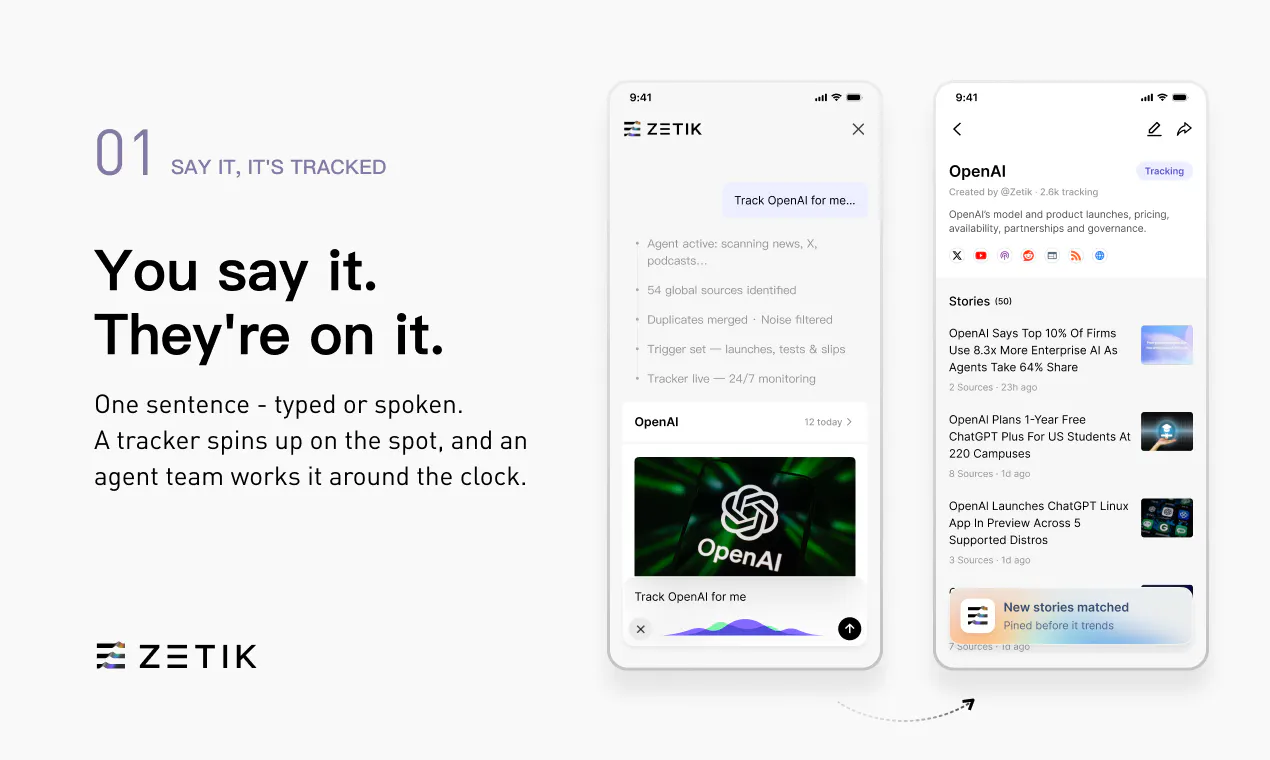
Say it out loud or type it in. Zetik spins up a tracker and continuously follows the web for you — collecting, cross-checking, analyzing, and briefing you on what actually matters.

📡 It follows the signal, not just the source.
X, Reddit, YouTube, podcasts, GitHub, arXiv, blogs, financial research — Zetik connects information across formats instead of making you chase it yourself.

💡 Insights, not links.
When something changes, you don't get another pile of tabs. You get the story, the context, what changed, and why it matters.

And it remembers what you care about. Your interests, your preferences, and the things you've already told it — so every brief gets more useful over time.

My trackers right now: new LLM papers, promising open-source repos, startup funding, football transfer news, and the next TV series I want to watch.

One information staff. Both halves of my life.

The goal is simple:

The 1–2 things worth knowing find me.
The other 98 never do.

Two questions for you:

1️⃣ How do you manage your information diet today — still scrolling manually, or have you automated part of it?

2️⃣ What's the one thing you're most afraid of missing?

Drop your answers below. I'll be here all day. 🫡

1
回复

@nathan_ph The internet has somehow turned staying informed into a full time job.

I love the “chief information staff” framing. We have more information than any generation before us, yet somehow the hardest part is still figuring out what deserves five minutes of our attention.


And the 1–2 useful posts out of every 100 feels painfully accurate. The real win here isn't finding more information. It's having something ruthless enough to say, “You don't need to read the other 98.”


Connecting the dots across X, Reddit, GitHub, arXiv, podcasts and everything else is where this gets especially interesting. The best signal rarely lives in one place.


The dream is pretty simple: stop doomscrolling the internet and let the internet report back to you. 👀

Although I have one concern...


If Zetik becomes my chief of information staff, does it also have permission to fire me from my job as chief doomscroller?

0
回复

Usually skeptical of 'info agent' launches, but tracking the signal across formats (especially audio to text) instead of just RSS feeds makes a ton of sense. Setting up my first topic now!

0
回复

@ruhezhou Exactly the bet we made — so much signal lives in podcasts and video that never hits a feed. Would love to hear how your first topic goes!

0
回复
#5
Attyn
Bringing intelligence to your cursor
135
一句话介绍:Attyn 是一款将 AI 能力嵌入 macOS 系统光标层的效率工具,让用户在任意已打开的应用程序中直接完成改写、听写、屏幕问答和可视化讲解,免去频繁切换 AI 对话框的打断式工作流。
Mac Productivity Artificial Intelligence
AI 助手 光标增强 上下文感知 本地模型 效率工具 语音听写 屏幕问答 macOS 独立开发 BYOK
用户评论摘要:用户 Rohit 肯定了本地模型与 BYOK 的灵活性,并追问产品如何界定“自动推断上下文”与“用户主动授权范围”的边界。官方回应明确:仅自动识别前台应用和光标位置,内容读取完全由用户手势触发,无后台被动监控,手势即授权。
AI 锐评

Attyn 的切入点很聪明,它没有试图再造一个“AI 入口”,而是寄生在用户已有的数字肌肉记忆——光标上。这精准击中了当前 AI 工具最大的体验断层:上下文割裂。在一个拥挤的提示词市场里,它选择做“上下文运输带”,这本身就是一种差异化。

但必须泼一盆冷水。首先,135 票的声量在 Product Hunt 上仅算中游,说明“光标级 AI”的叙事虽美,但尚未形成爆发性共鸣,核心原因在于其能力上限受限于“单步操作”。无论是 Inline Assist 还是 Screen Assist,本质上都是“一次性问答”,无法支撑多轮复杂的任务推演,这会让它迅速从“生产力神器”沦为“高级划词翻译”。其次,macOS 的 Accessibility API 权限是双刃剑,尽管官方强调“手势即授权”,但用户侧对屏幕内容被“读取”的系统级弹窗警告,依然是巨大的信任成本。最后,作为一家 bootstrapped 独立开发商,在微软、OpenAI 巨头们正把 AI 深度植入操作系统(如 Recall 功能)的当下,Attyn 的窗口期并不宽裕。它的价值不在于颠覆,而在于提供了一种“隐私克制”的交互范本——如果它能尽快补齐 Windows 版并开放 API 接入更多垂直工具,或许能成为巨头生态下的一个优雅补丁;否则,很容易成为被系统级 AI 直接吞并的“小而美”牺牲品。

查看原始信息
Attyn
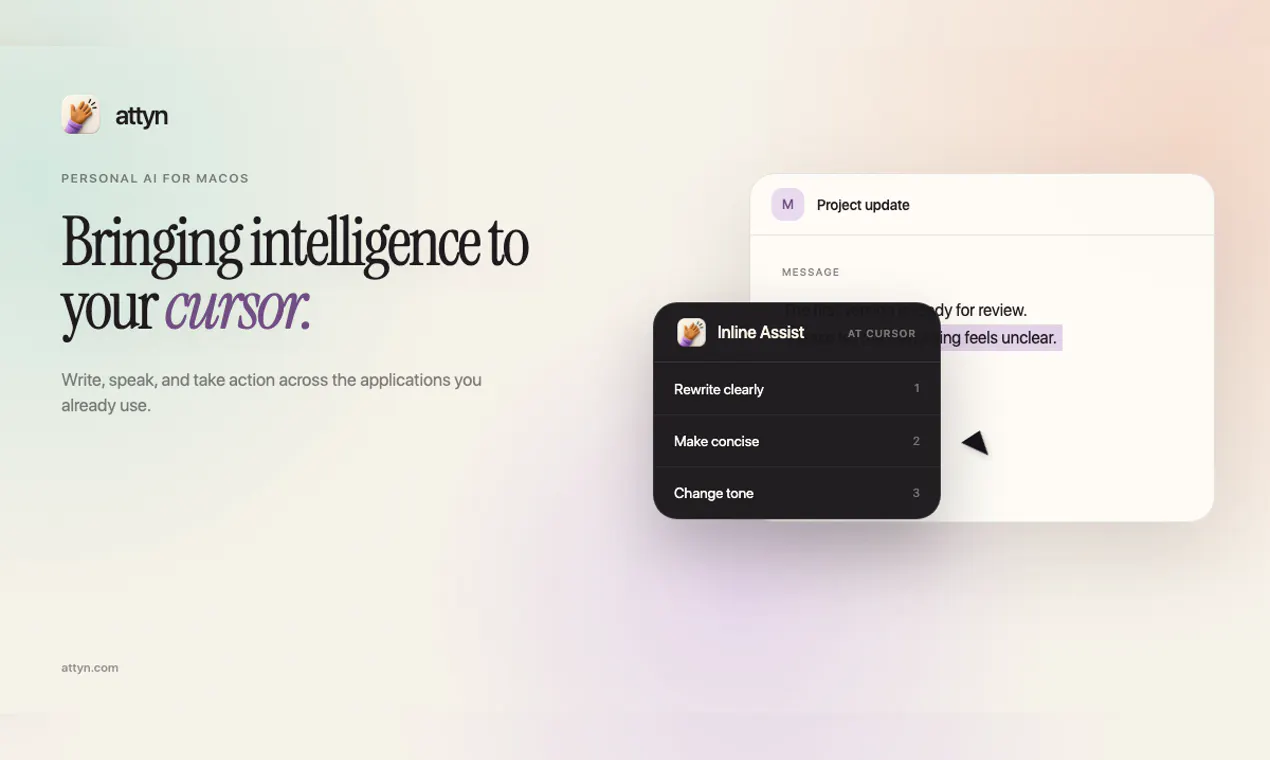
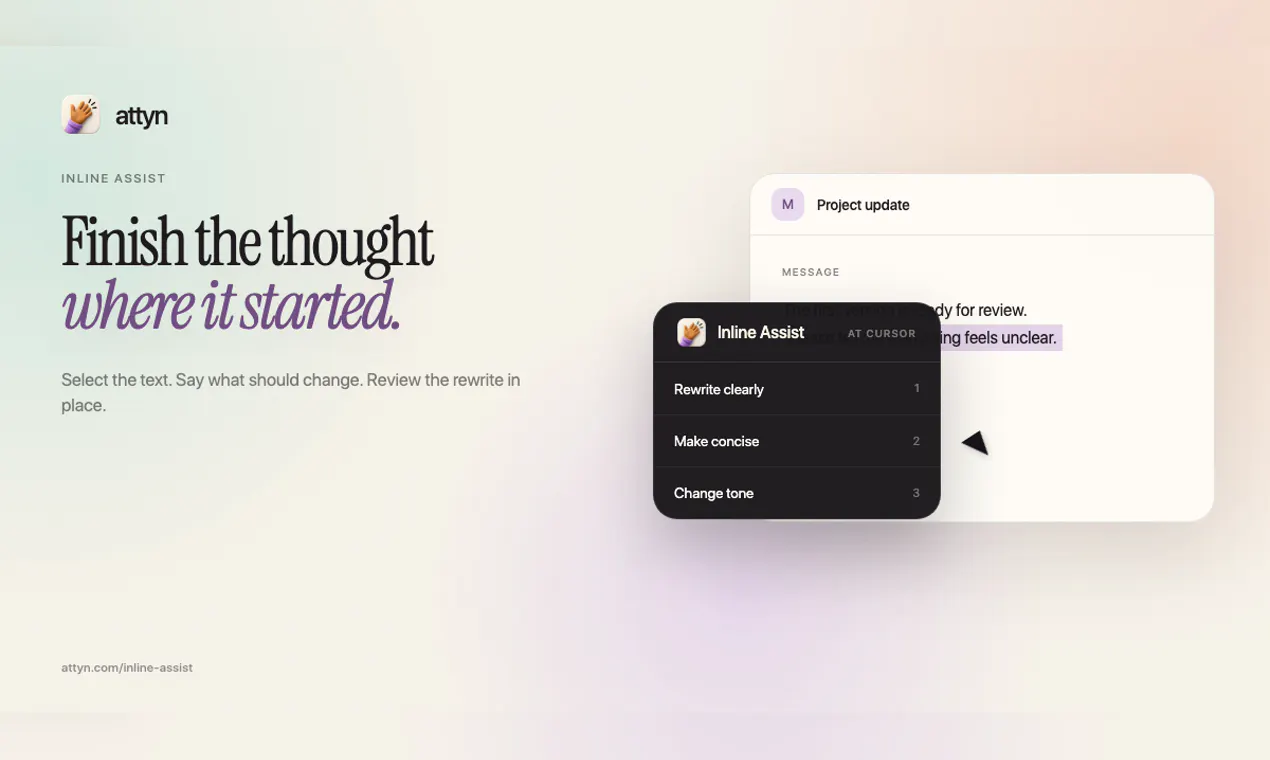
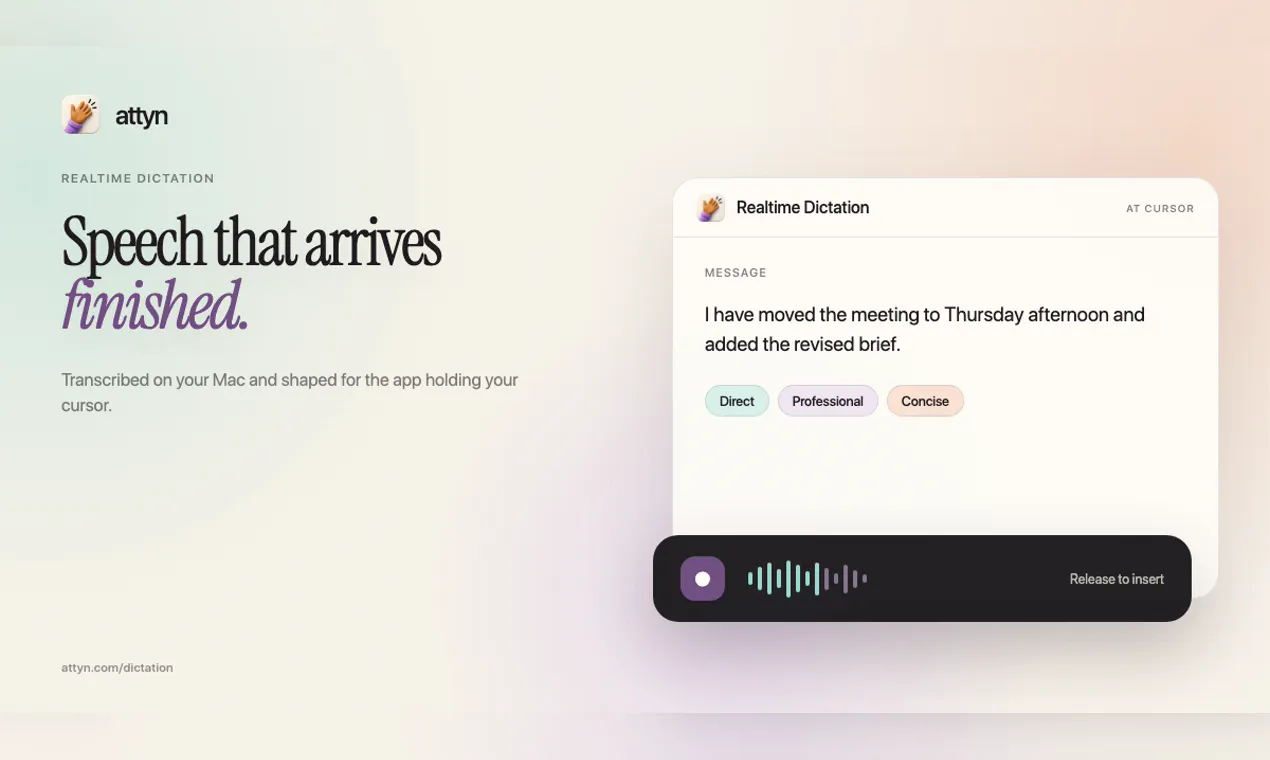
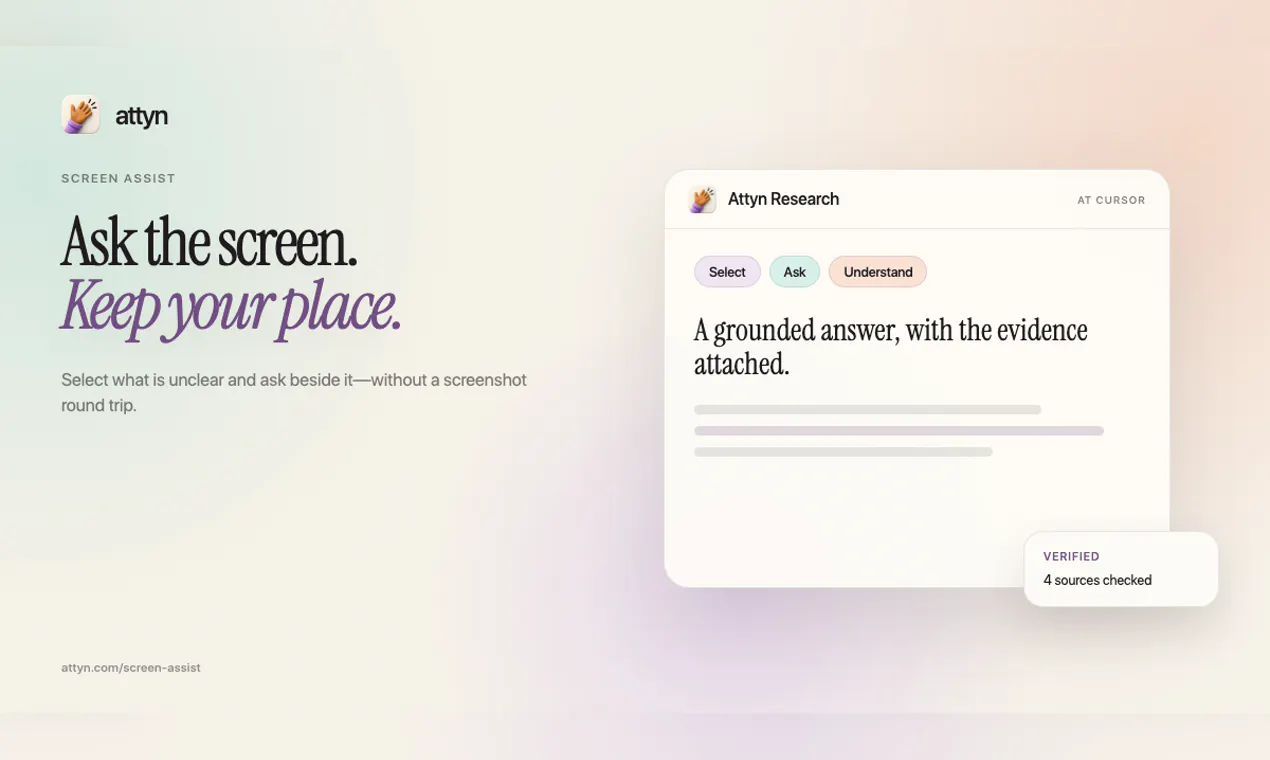
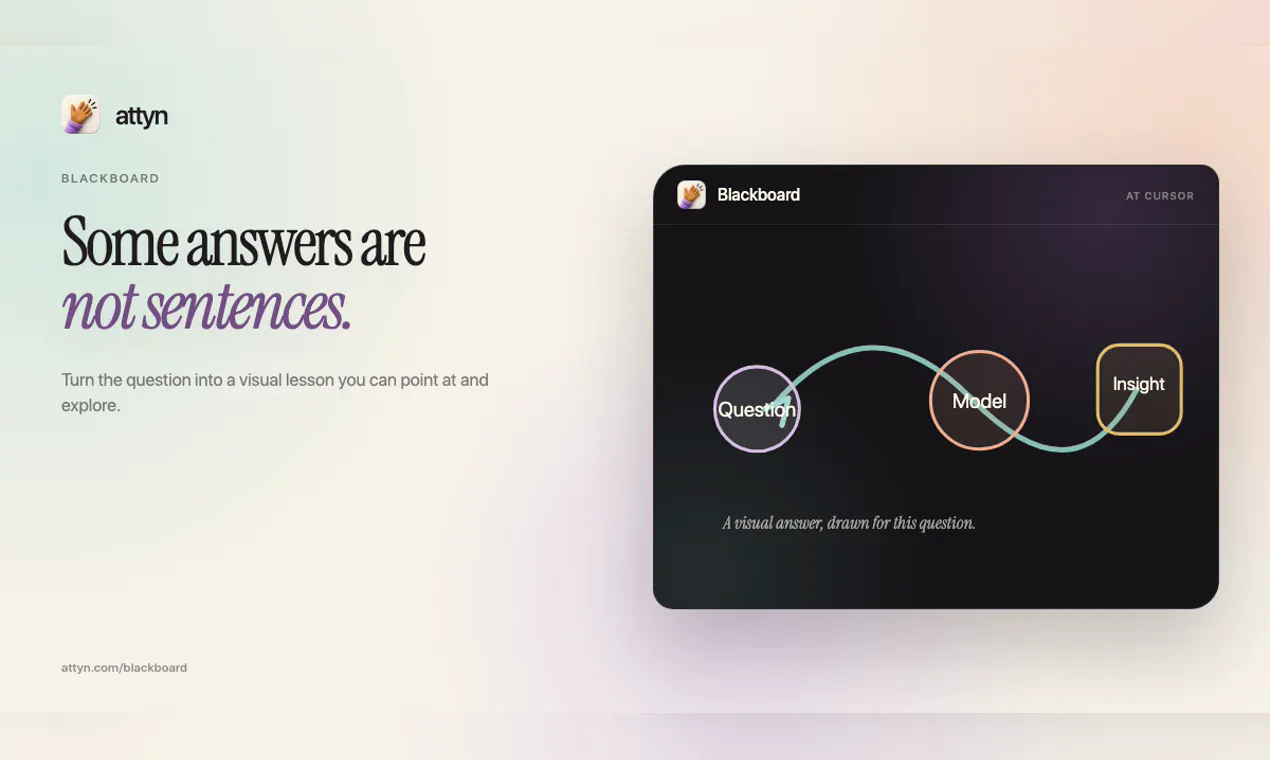
Attyn brings intelligence to the cursor inside the apps you already use. Rewrite selected text with Inline Assist, speak finished words with Realtime Dictation, ask about what is on screen with Screen Assist, and turn questions into visual explanations with Blackboard. Use Attyn Credits, bring a provider key, or run a supported local model. Attyn is bootstrapped and independent. Available for macOS today, with Windows on the way. Every new account starts with 500 launch credits.

@Rohit C — the local-model/BYOK choice is a strong complement to cursor-level assistance. Screen Assist plus Blackboard looks especially useful when a question needs both the current app context and a visual explanation. How are you deciding when Attyn should infer context automatically versus ask the user to scope what it can see?

1
回复

@getosmo Thanks Anuj. The line we drew is simple: attyn infers the cheap, harmless context on its own, and a deliberate gesture from you is what grants the sensitive kind.

Inferred automatically: which app is frontmost, where your cursor is.

Content is always scoped by the gesture itself. Inline Assist sees only the text you selected. Screen Assist sees the screen only at the moment you tap the shortcut, and if you hold it instead, you circle exactly the region it may look at. Nothing is watched passively between gestures, and captures exclude attyn's own windows.

So there's no runtime heuristic deciding what to read. The gesture is the consent.

0
回复
Hi Product Hunt 👋 I’m Rohit, and I’m building Attyn. Most of us begin work at a cursor, yet using intelligence still means leaving the work for another tab. Attyn brings it into the app already open. Today, Attyn has four surfaces: • Inline Assist rewrites selected text in place. • Realtime Dictation turns speech into finished writing at the cursor. • Screen Assist answers questions about what is already on screen. • Blackboard turns a question into a visual explanation you can explore. You can use Attyn Credits, bring a supported provider key, or choose a supported local model. Every new account starts with 500 launch credits. Attyn is bootstrapped and independent. We set out to research small language models and built the harness that carries context to intelligence and brings the result back to your cursor. Somewhere along the way, that harness became the four tools we now use every day. Attyn is available for macOS today, with Windows on the way. I would genuinely love your feedback: what would you want intelligence at your cursor to help you do first?
0
回复

Watch Attyn in action:

Complete product film: https://youtu.be/0qGNmaA9gDg

30-second tour: https://youtu.be/66BQUMIi7CU

0
回复
#6
nenspace
the lo-fi of LLMs: your mind, made larger
128
一句话介绍:nenspace是一款将AI模型与工作记忆、任务、笔记、习惯和日志整合于一体的“思维扩展”应用,专为那些希望在快节奏生活中随时捕捉想法、并在稍后整理归位的人群设计,解决“想法流逝”和“AI只会附和”的痛点。
Productivity Artificial Intelligence
扩展思维 AI笔记 工作记忆 任务管理 习惯追踪 日志记录 反谄媚模型 思维整理 生产力工具 iOS应用
用户评论摘要:用户普遍认可其独特品牌定位和填补“高级AI与基础聊天应用”之间空白的价值。但有用户反馈登录验证码为8位而非6位,导致无法登录;另有用户关注模型交互体验,期待更多模型选择。
AI 锐评

nenspace的聪明之处在于它精准踩中了当前AI工具的两大软肋:一是“记忆碎片化”的窘境——多数“第二大脑”应用只负责存储,却把整理和决策的负担甩回给用户;二是“AI过度迎合”的普遍不适,RLHF训练出的谄媚模型让深度思考变得肤浅。其自研的nen-1模型主打“质疑和精简”,本质上是把AI从“答案机器”降格为“思辨陪练”,这一定位具有极强的差异化价值。

“工作记忆+暂存+稍后整理(sift)”的交互设计也很老练,它不强迫用户对每个念头立刻做结构化分类,而是模拟人脑的“缓冲区”,等闲下来再统一处理,这比市面上追求“万物皆文件夹”的工具更符合认知规律。加上模型能直接检索笔记和网页,确实做到了“AI融合但不喧宾夺主”。

但隐忧同样明显:128票在Product Hunt属于中量级热度,评论里提到登录体验(验证码位数错误)这种基础bug,说明产品成熟度还有待打磨。更关键的是,反谄媚模型是一把双刃剑——用户真的愿意在疲惫时面对一个“唱反调”的AI吗?工具型产品最终拼的是留存,一旦新鲜感过去,人们可能还是会逃回温和的ChatGPT或Notion的舒适区。nenspace的护城河不在于模型本身,而在于它能否通过“整理仪式感”和“记忆累积”培养出用户的情感依赖,否则,它只是一个设计更酷的Memo应用。

查看原始信息
nenspace
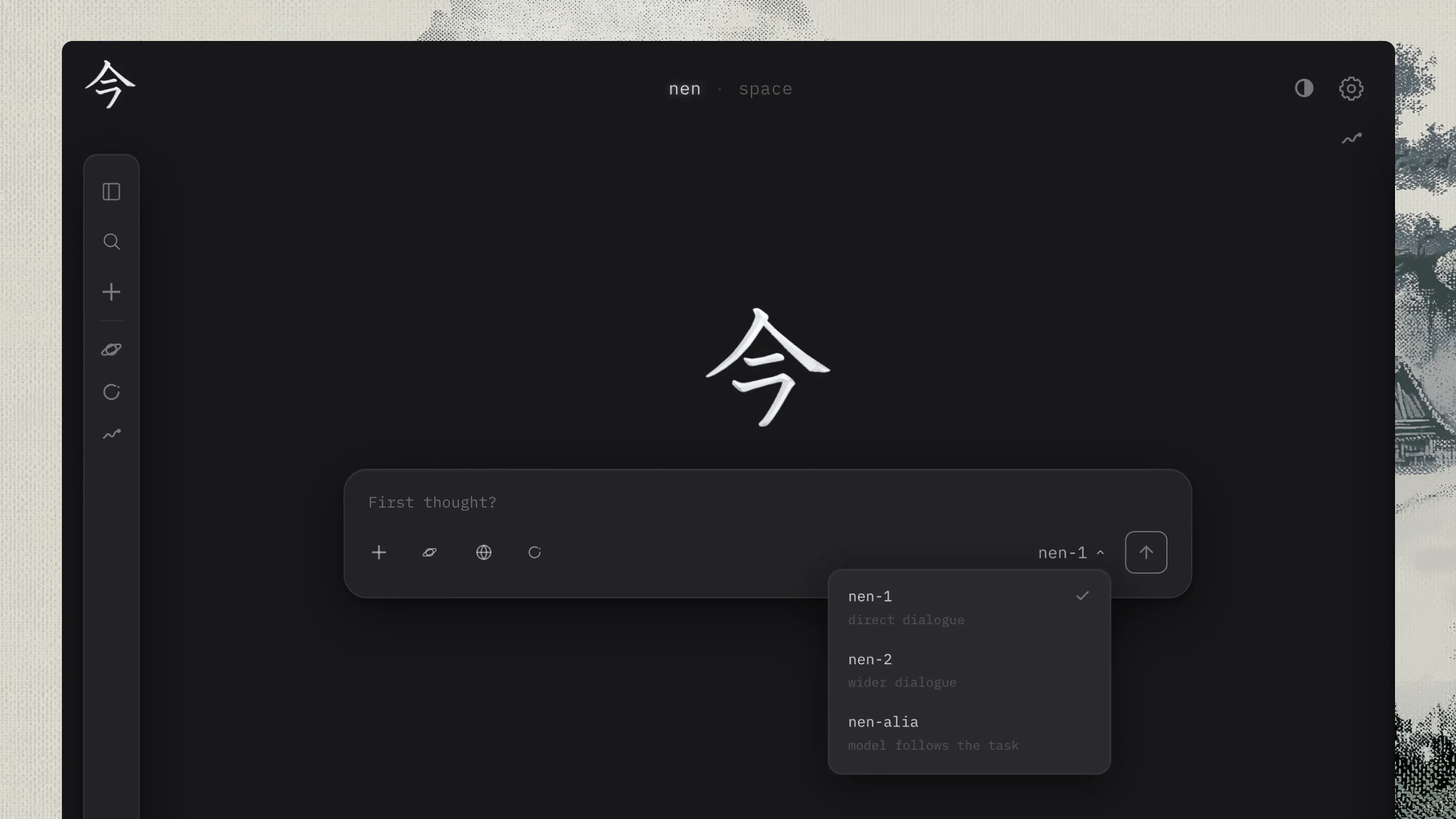
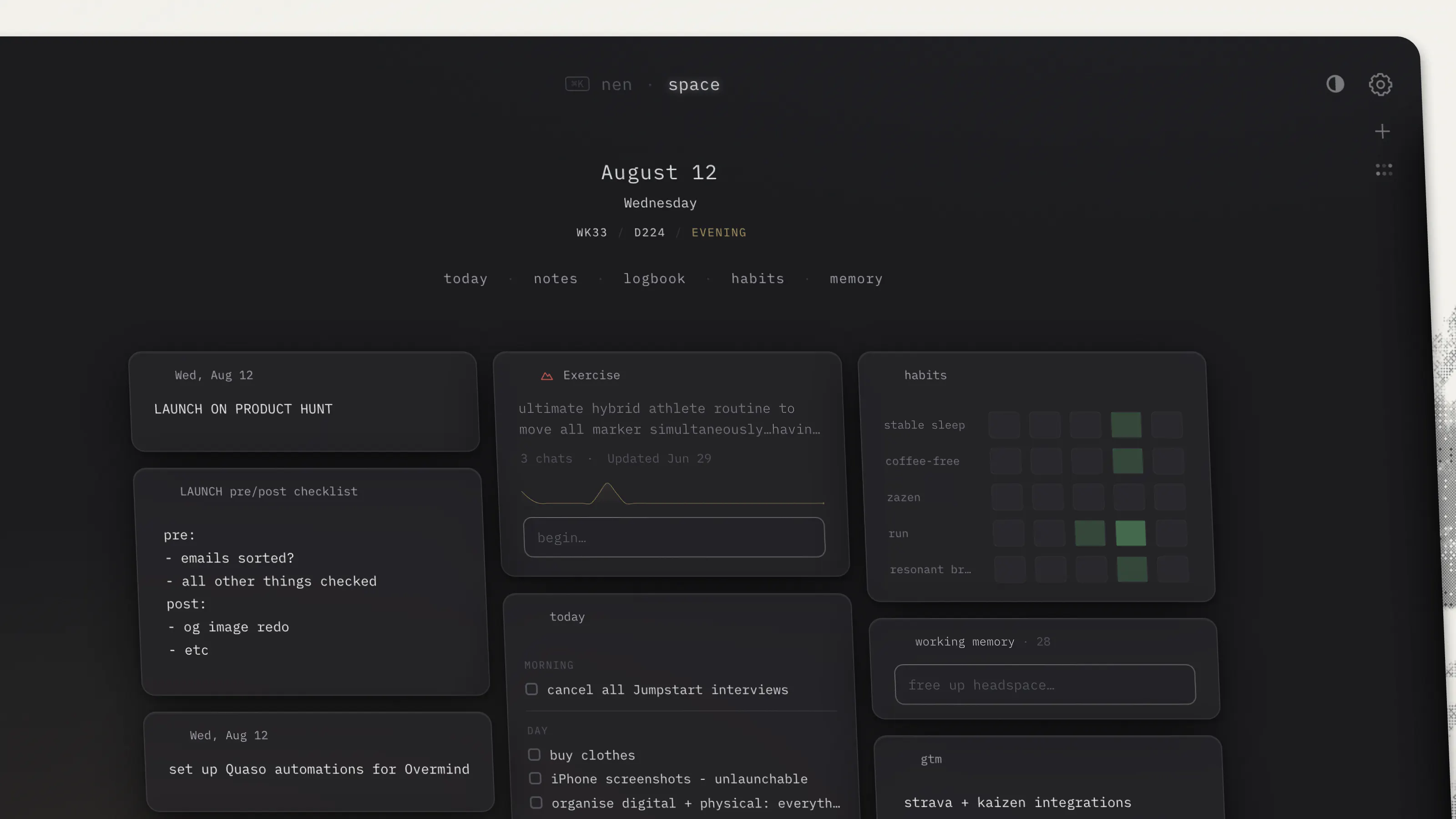
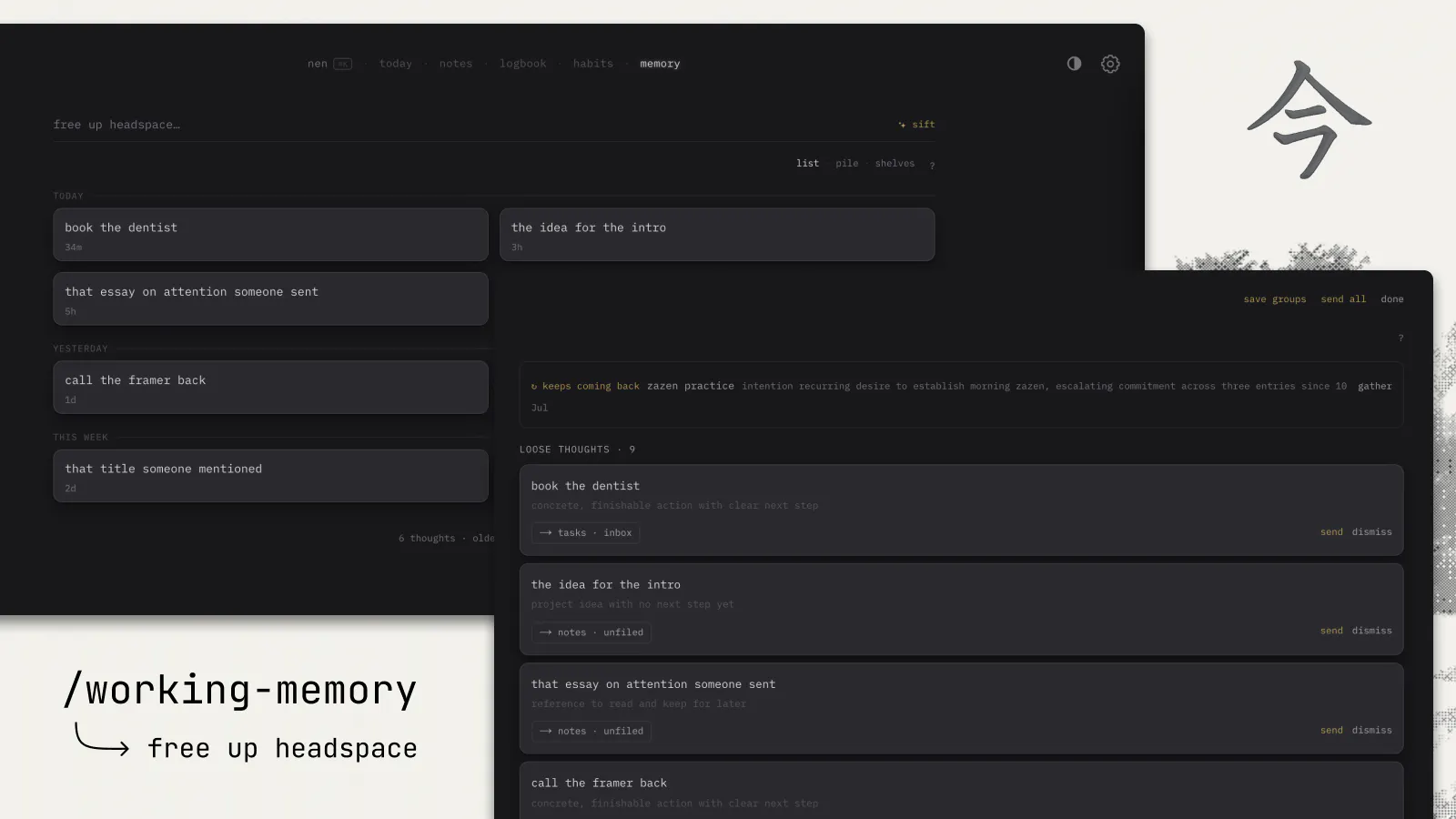
nenspace. an extended mind, not a second brain: your own, made larger. the lo-fi of LLMs fused with the one space that catches your thoughts and cultivates them: working memory, tasks, notes, habits, logbook. AI-fused, but not forced. your head holds about four things. nenspace holds the rest. free to start · web + ios

Hey Product Hunt, I’m Sam 👋

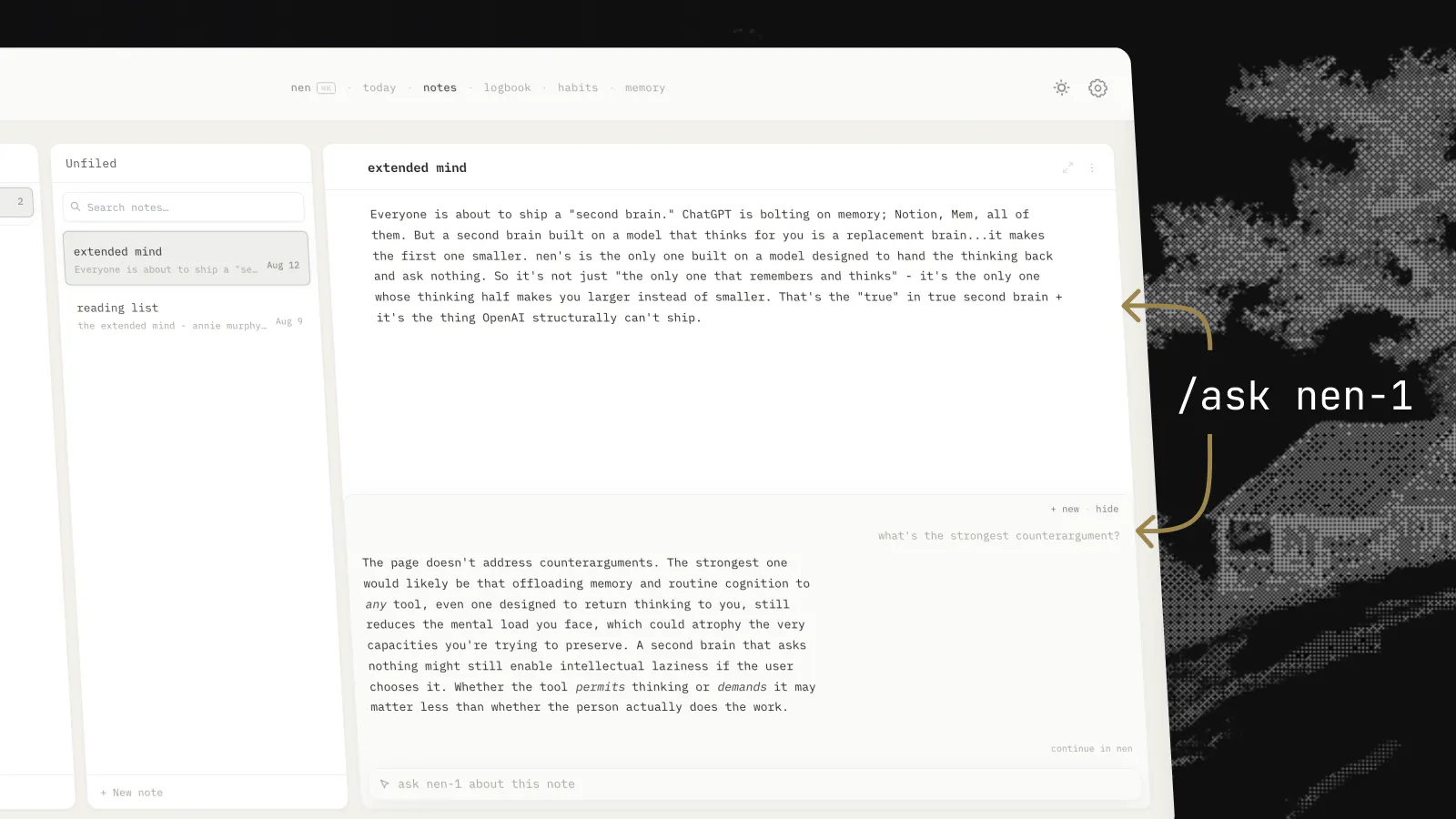
Most LLMs are trained to agree with you (RLHF). Ask one if a bad idea is good and it’ll lean towards yes, taking multiple paragraphs to do so. I wanted a model that questions my assumptions, pushes back when it matters, and stays quiet when it doesn’t. That became nen-1. A fine-tuned model trained to be concise and question assumptions, instead of padded and flattering.

(note: get one month of Nen Pro for free! reminder email 5 days before billing)

NEN MODEL's: nen-1, nen-2, & nen-alia 🍃

• trained differently to frontier models: a refusal of the axis everyone else maximises
• web search optimised for register and user absorption
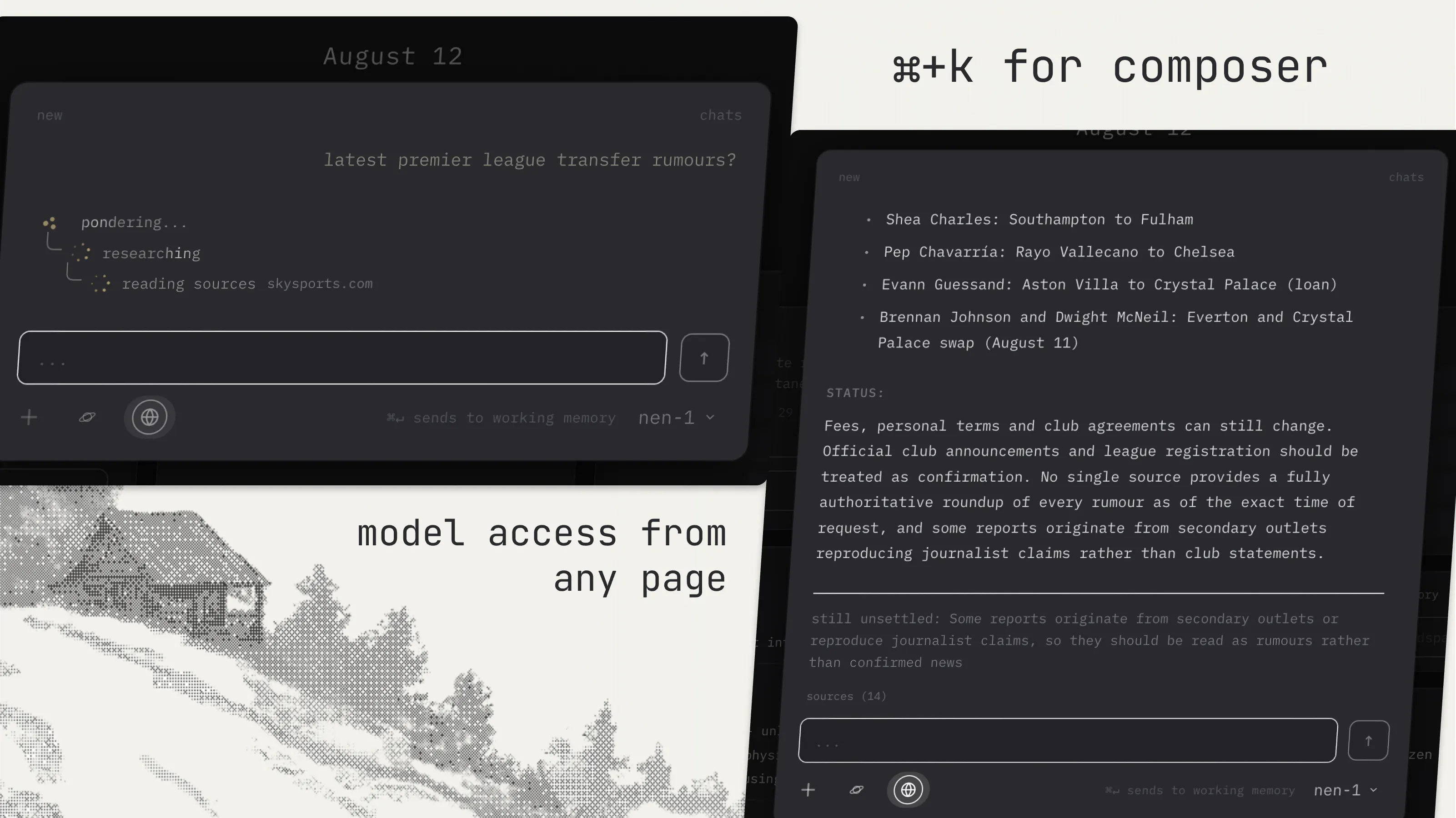
• models integrated into notes pages and logbook, so you can query nen-1 about your notes or search the web without leaving the page
• composer (⌘+K) for seamless discussion with nen model's, from any page

SPACE: tasks · notes · logbook · habits · memory 🌍

capture & sift:
• a thought arrives at the wrong time…walking, cooking, mid-task
• capture it in working-memory (not every idea needs to become a “thing” immediately)
• when you get some time, press sift to read the pile of captured notes, thoughts, ideas, and a place is proposed for each: a task, a note, a habit, a space…or simply set it down for later
• nothing moves without an ok, everything is recoverable

A brain does two things: it remembers and it thinks. Every app that calls itself a “second brain” only does the first and leaves you to do the filing. Every LLM does the second but it thinks for you, and is trained to agree with you. You're outsourcing your thinking. The purpose of AI does not have to be thinking for you, but to return you to your own thinking.

I’d love feedback, especially on the models but also what you'd like to see in the /space side as well!

Peace & love 🌍 🫶

4
回复
@samsmallmind, I’m a huge fan of the distinct brand identity! I’ve spent a lot of time customizing harnesses, memory systems, and workflows for long running powerful agents that handle every kind of work task. In that process, I’ve stopped having the kind of interactions that first opened my eyes to the potential of generative intelligence. I don’t have anywhere to direct the interactions that spark the most joy. My custom system feels too powerful and a basic chat app/subscription seems lacking. This is very cool and fills a gap that’s been driving me nuts. Downloading and trying out now. Congrats on the launch!
3
回复

Looks super interesting! All the best!

1
回复

@preetmishra thanks Preet! let me know which model resonates the most

0
回复

Cool idea, I would like to test it, but the sign-up code comes as an 8-digit code instead of a 6-digit code, and I cannot log in 🌝

0
回复

@oleg_lavrynenko sorted! thanks for flagging - let me know how you find it once you're in!

0
回复
#7
Joy
A Mac menu bar app that throws confetti for your wins
121
一句话介绍:Joy 是一款 macOS 菜单栏应用,在你达成 GitHub stars、Stripe 销售、Docker Hub 下载等里程碑时,自动在屏幕上撒彩屑庆祝,把枯燥的后台数据变成即时的成就感反馈。
Mac Productivity Menu Bar Apps
macOS 菜单栏工具 开发者激励 里程碑提醒 成就庆祝 彩屑动效 独立开发 数据通知 情绪价值 轻量应用
用户评论摘要:用户整体反馈积极,认为把 Stripe 销售额、Docker 拉取等隐形后端指标转化为彩屑庆祝,能缓解独立开发者孤独感。有用户询问是否计划推出 Windows 版本,暂无开发者明确回复。开发者本人回复中强调希望收集集成与庆祝风格方面的反馈。
AI 锐评

Joy 切中的是一个真实且微妙的情绪缺口:独立开发者表面上缺的是数据看板,实际上缺的是“被人看见”的感觉。当 GitHub 星标、Docker 拉取这类无生命体征的数字变成屏幕上的彩屑时,产品的本质不是效率工具,而是一件“情感外挂”——它把延迟满足的成就感压缩成即时多巴胺,对抗远程工作与单兵作战的心理磨损。

从产品逻辑看,这个切入点很聪明:不碰数据分析,不做复杂集成,只做“庆祝”这一件小事,边界清晰,MVP 克制。但价值天花板也显而易见——彩屑动效终会麻木,单一反馈形式撑不起长期留存。真正的护城河不是撒彩屑,而是如何帮用户建立“里程碑感知系统”:比如自动生成每周成就回顾、将多个指标组合成一个“大胜利”、甚至反向提醒“你已经很久没庆祝了”来引导工作节奏。

另外,macOS-only 是合理的第一站,但开发者工具链用户同样大量在 Windows 和 Linux 上,若只做 Mac,等于主动放弃一半潜在用户。建议后续考虑跨平台方案,同时引入“庆祝强度可调”“静默模式”等防打扰机制——毕竟,当彩屑变成噪音,它就成了新的看板。

Joy 现在是一颗糖,但要看创始人是否愿意把它做成一套“成就感操作系统”。方向对了,深度还不够。

查看原始信息
Joy
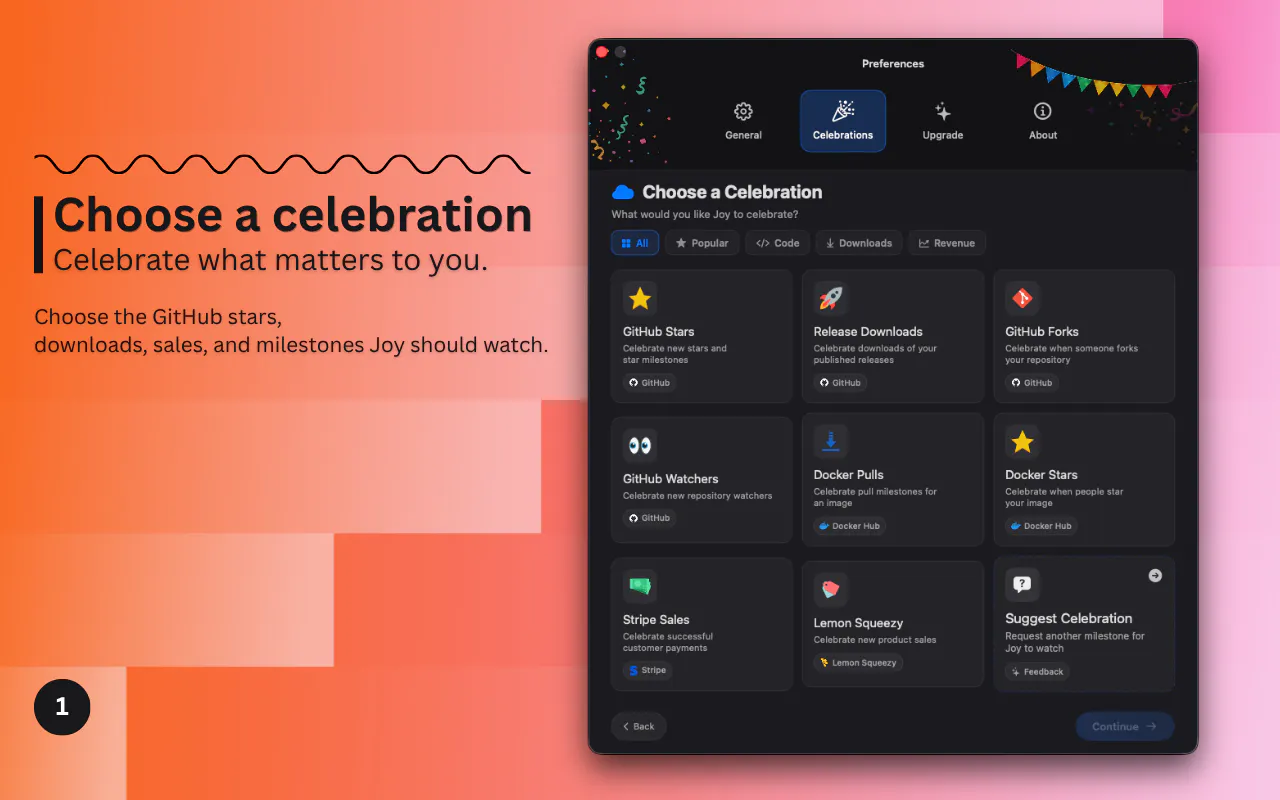
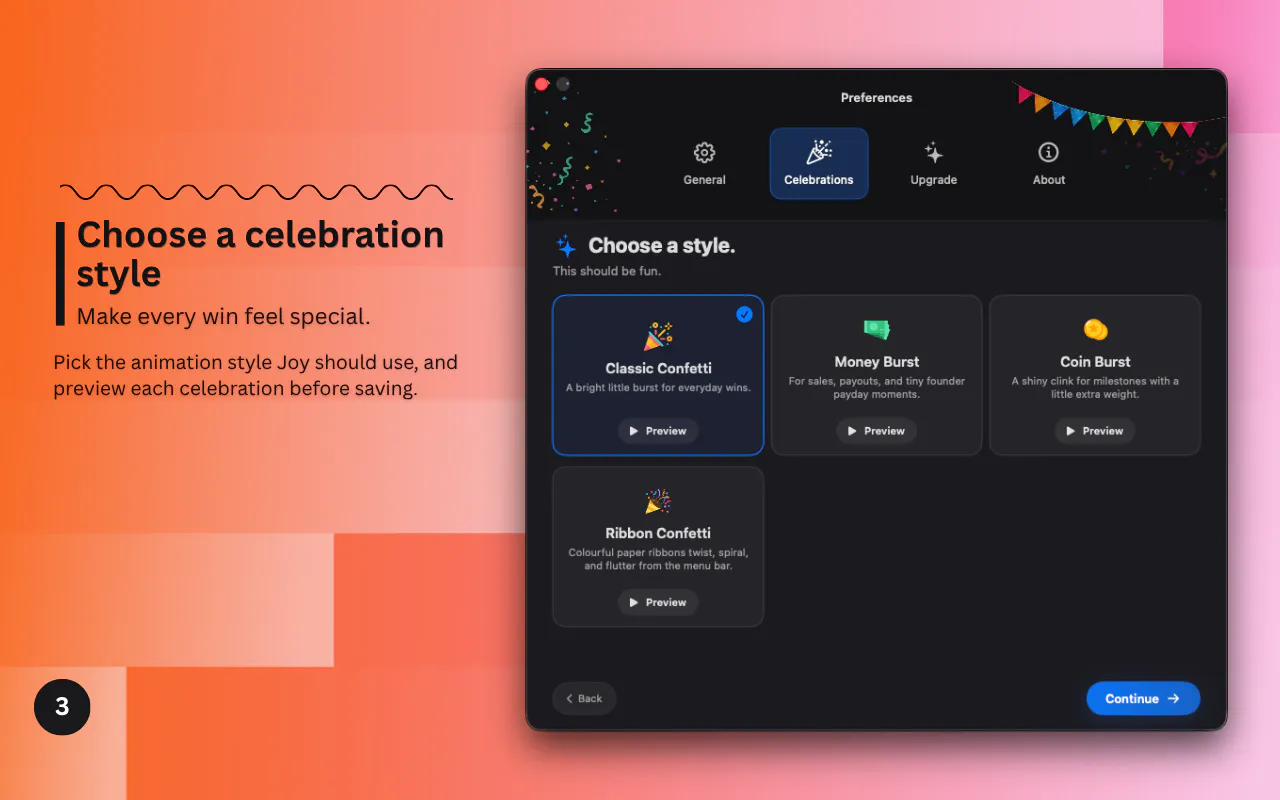
Joy is a macOS menu bar app that throws confetti the moment you hit a milestone - GitHub stars, Stripe sales, Docker Hub pulls, and more. Celebrate every win automatically.

Hey Product Hunt 👋

I built Joy 🎉 because working on an indie product can feel surprisingly quiet.


The first sale, crossing a download milestone or a even new GitHub star may represent hours of work, but these moments are usually hidden inside dashboards. I wanted them to feel like real wins.

Joy is a native macOS menu bar app that watches for meaningful milestones and celebrates them instantly by throwing beautiful confetti on the screen. It stays out of the way, avoids becoming another analytics dashboard, and focuses on one thing: making progress feel rewarding.

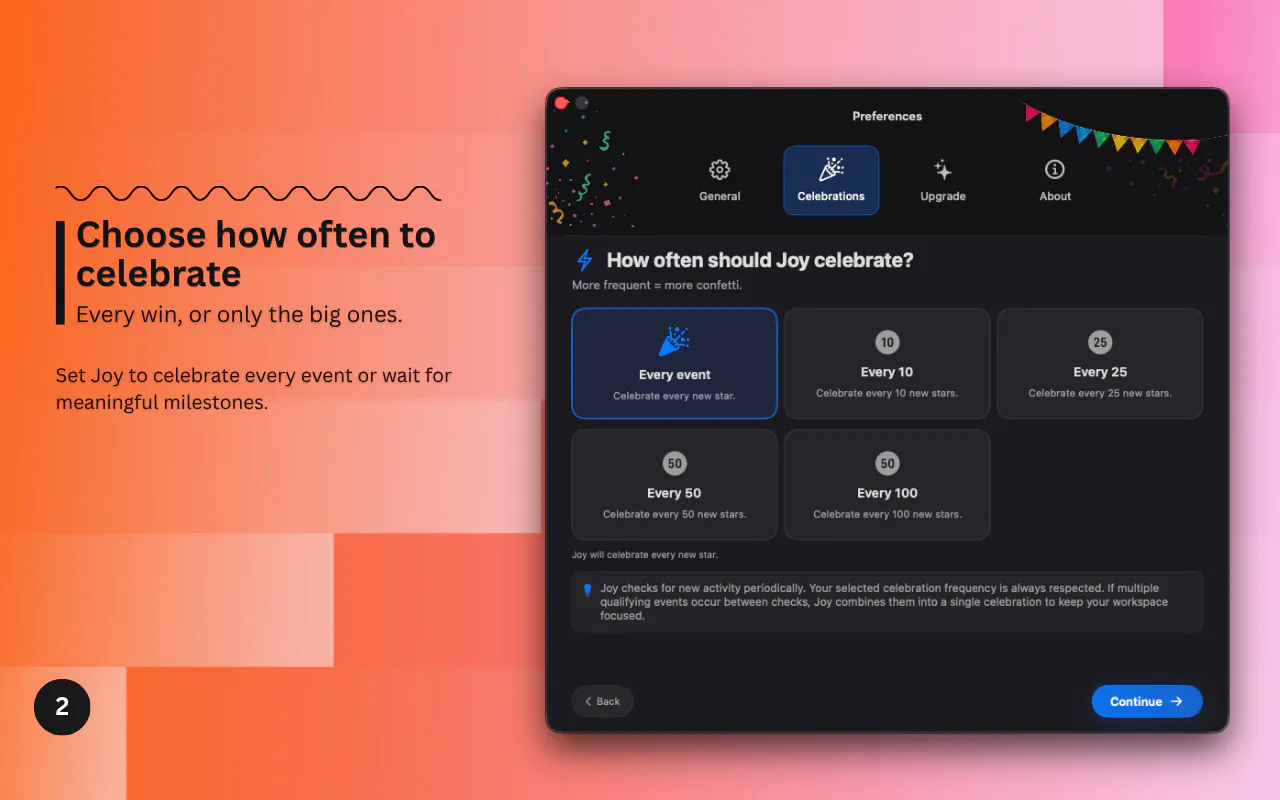
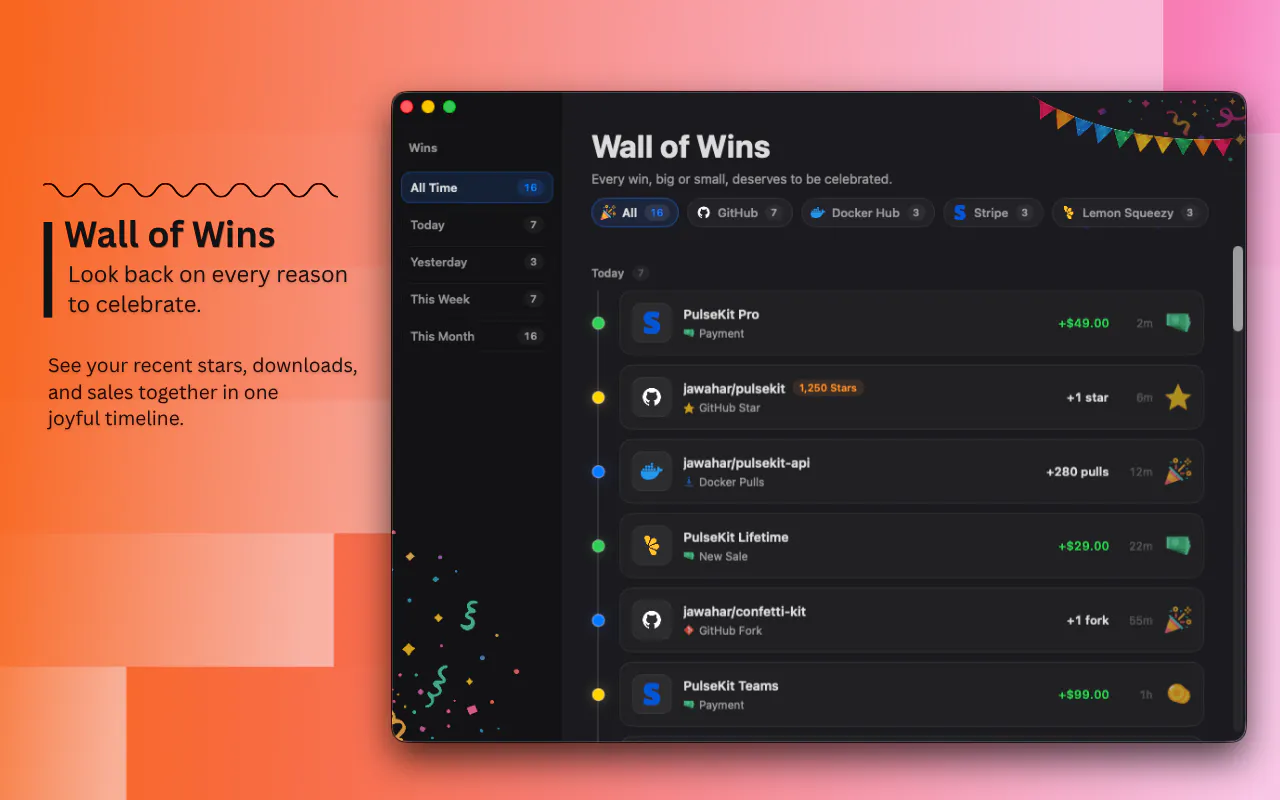
You can customize what gets celebrated, how often it happens, and which celebration style is used. Joy also includes a lightweight Wall of Wins so you can revisit recent milestones without getting lost in charts.

This is the first version, and I would genuinely love your feedback, especially on the integrations and celebration styles you would like to see next.

Thanks for checking out Joy. I hope it adds a little happiness to your building journey 🎉

1
回复

Turning invisible backend milestones like Stripe sales and Docker pulls into a burst of confetti is such a clever way to make solo building feel less lonely, love it.

1
回复

@ilko_kacharov Thank you, Ilko! Really glad that idea resonated with you. 🙌

0
回复

nice product. do u have a Windows version too in the roadmap?

0
回复
#8
FileRouter
Take control of files and editors
114
一句话介绍:FileRouter 是一款让用户自定义“文件类型→打开方式”的默认应用处理器,可按文件夹或规则为不同文档选择对应编辑器,解决文件总被系统固定应用打开、切换低效的痛点。
Mac Productivity Menu Bar Apps
文件管理 默认应用 编辑器 规则引擎 效率工具 macOS工具 文件类型路由 工作流优化 创作者工具 快捷选择器
用户评论摘要:用户认可其“按上下文路由文件”的理念(如草稿用 nvUltra、文档用 VS Code),称其为“工作流的游戏改变者”。有已购用户表示因开发者声誉好而购买,实际使用满意。暂无负面反馈或具体功能建议。
AI 锐评

FileRouter 精准切入了一个长期被忽视的缝隙:操作系统中“打开方式”的粗粒度控制。它本质上把“文件类型”从唯一定义升级为“文件路径/内容/上下文+类型”的复合判断,这比系统原生的“按扩展名固定应用”高一个维度。从产品形态看,它借鉴了 Velja/Choosy 在浏览器链接处理上的成熟交互——径向菜单与规则引擎,将其迁移至文件系统,逻辑自洽且用户教育成本低。

但必须冷静看待其天花板。首先,这是重度效率工具的典型赛道,受众狭窄,114 票的冷启动成绩也印证其小众属性。其次,核心痛点是否足够“痛”值得商榷:对大多数用户,双击文件打开固定应用是“习惯”而非“问题”;真正受益者仅限开发者、写作者等需在多个编辑器间切换的专业人群。最后,macOS 本身有 Automator、快捷指令及第三方工具(如 BetterTouchTool)可部分实现类似功能,FileRouter 的护城河在于“为文件类型路由量身定做”的打磨度,而非不可替代性。

真正的价值在于它验证了“文件即工作流入口”的设计哲学——当 AI 生成文件、多应用协作成为常态,按上下文路由文件的需求会持续增长。但现阶段它更像一款“正确但小众”的工具,能否破圈取决于两点:是否提供 iOS/Windows 版本,以及能否与 Raycast、Alfred 等启动器深度集成,否则容易沦为极客的玩具。开发者本身信誉良好,产品完成度高,但市场教育将是最大瓶颈。

查看原始信息
FileRouter
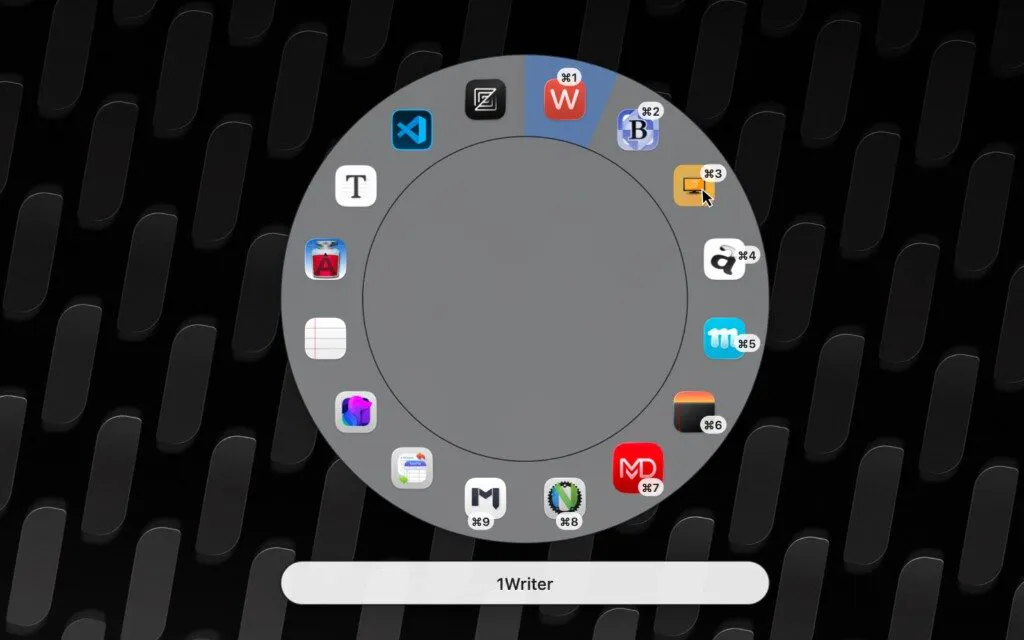
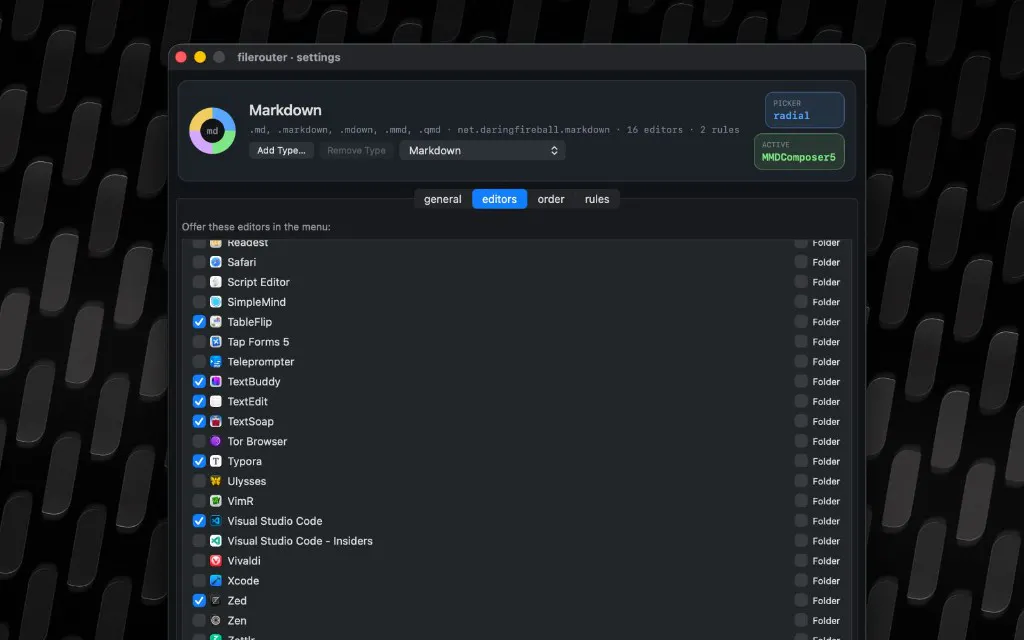
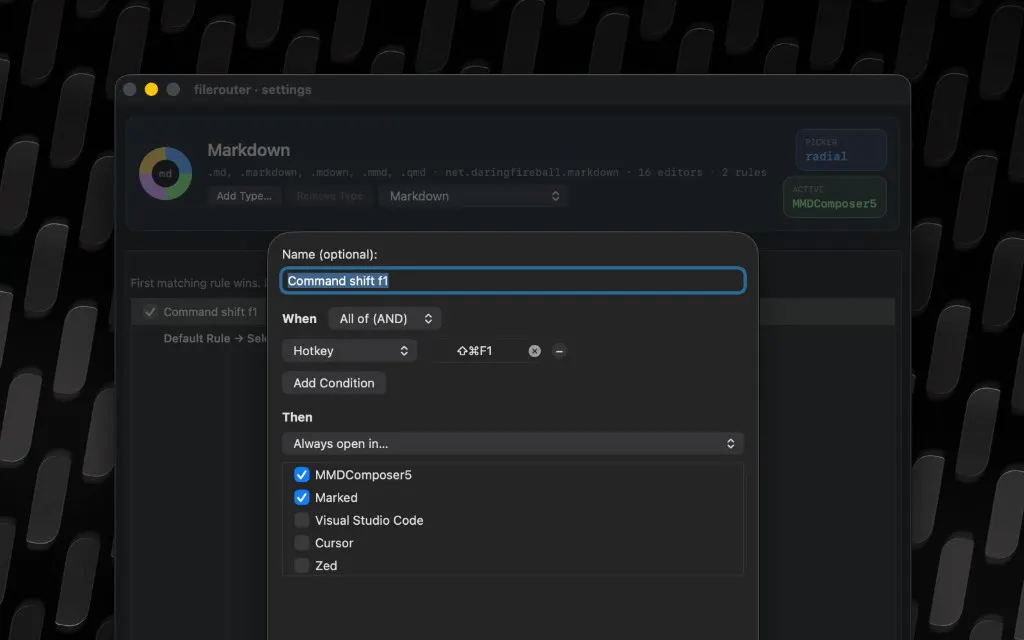
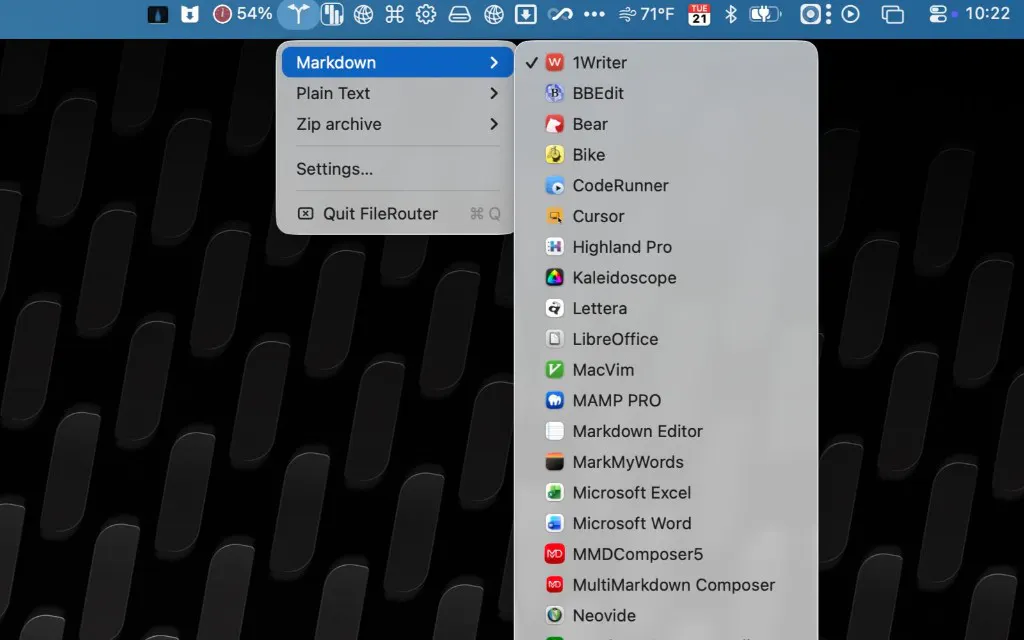
A default handler for multiple file types that opens the right editor — Velja/Choosy for files. Full control of any file type and what editor(s) open it, with radial picker and custom rules.

Hey Product Hunt! I've long wanted to have more control over which files open where. In my blog drafts folder, I want my Markdown files to open in nvUltra, in my documentation folders I want them to open in VS Code. When I double click an image file, I want to be offered a menu of Preview, Affinity, and Acorn. So I built a tool to do that. I hope you enjoy it!

2
回复
@ttscoff FileRouter sounds super useful custom file routing based on context like nvUltra vs VS Code is a game changer for workflow efficiency. 🔥 By the way, are you active on LinkedIn as well? Would love to connect and follow along with your updates there!
0
回复

@ttscoff I have been using this app since it arrived and was made available for people to purchase. Knowing the maker by his excellent reputation, I just bought it, and I’m using it, and I’m very pleased. Another great product.

1
回复
#9
Chronock
Scheduling and calendar sync, all in one
102
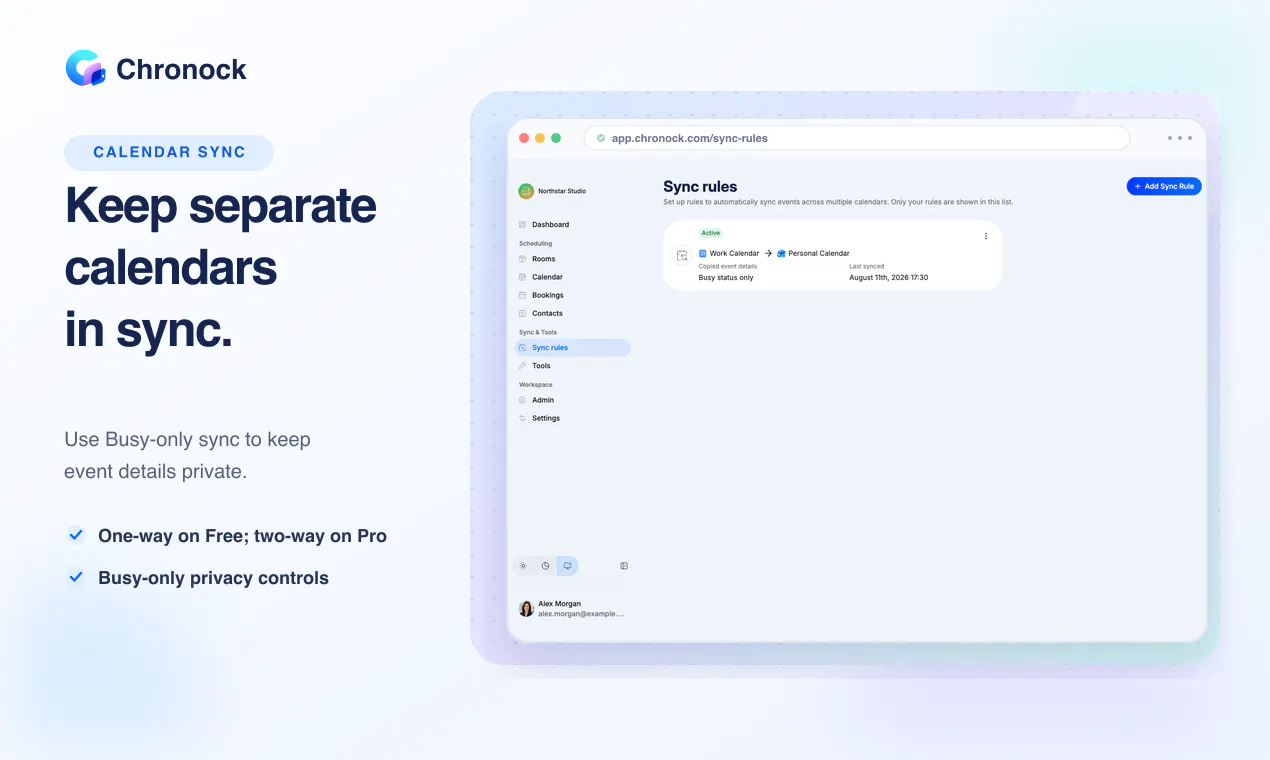
一句话介绍:Chronock将日程安排与跨日历同步集成于同一工作区,自动检测Google/Outlook日历忙闲状态,生成 booking 页面,并双向同步工作、个人及项目日历,以解决多日历管理中的重复预订与信息割裂痛点。
Productivity Calendar
日历同步 日程安排 预订页面 Google日历 Outlook日历 跨平台集成 防冲突 多语言支持 AI原生开发 SaaS工具
用户评论摘要:用户认可统一同步与预订的价值,但指出同步事件丢失上下文(仅显示“Busy”)导致实用性不足;追问双向同步的防循环机制;有用户偏好为VIP客户提议具体时间而非预订链接;开发者回应了内容策略(Busy/标题/详情)及元数据防循环方案。
AI 锐评

Chronock 的切入点聪明——它把“调度”和“同步”合并为一个问题,即“可用性可信度”。这确实击中了多日历用户的深层痛点:不是缺少工具,而是工具之间互相制造新的不一致。其核心价值不在“功能多”,而在“信任的确定性”,这是 Calendly 等纯预订工具和 Fantastical 等纯日历客户端都未完全覆盖的缝隙。

但产品面临三重挑战:其一,用户评论中“发现性≠有用性”一针见血——跨日历同步如果只搬移忙/闲状态而丢失事件语义,那它只解决了“不冲突”而非“更高效”,这恰是用户粘性的致命伤。开发者提出的“Busy/标题/详情”三级策略是诚实但笨重的折中,真正的解法需要智能摘要或上下文感知的隐私规则,这又回到了AI能力上——而团队却刻意回避了AI在运行层的运用,这可能是战略误判。其二,双向往返同步的循环问题虽已用元数据标记解决,但“托管反射+差异同步”对用户心智负担仍然过重,普通用户不会理解“镜像规则”和“配对组”概念,可用性是最大门槛。其三,作为单人产品,用AI编码代理提高开发效率固然正确,但产品价值主张中强调“AI原生开发”对用户毫无意义——用户只关心结果。更值得注意的是,刻意不用AI做功能差异化,在2026年可能被视为保守,但其反其道而行的“确定性优先”定位,若能配合流畅的体验,反而能成为企业级用户的信任锚点。真正的考验在于:当前10余个同步规则的配置复杂度,能否在免费版中让用户5分钟内感受到“不再手动对时间表”的爽感。若做不到,这个工具将沦为又一款“听起来很对但用起来还得动脑”的效率摆设。

查看原始信息
Chronock
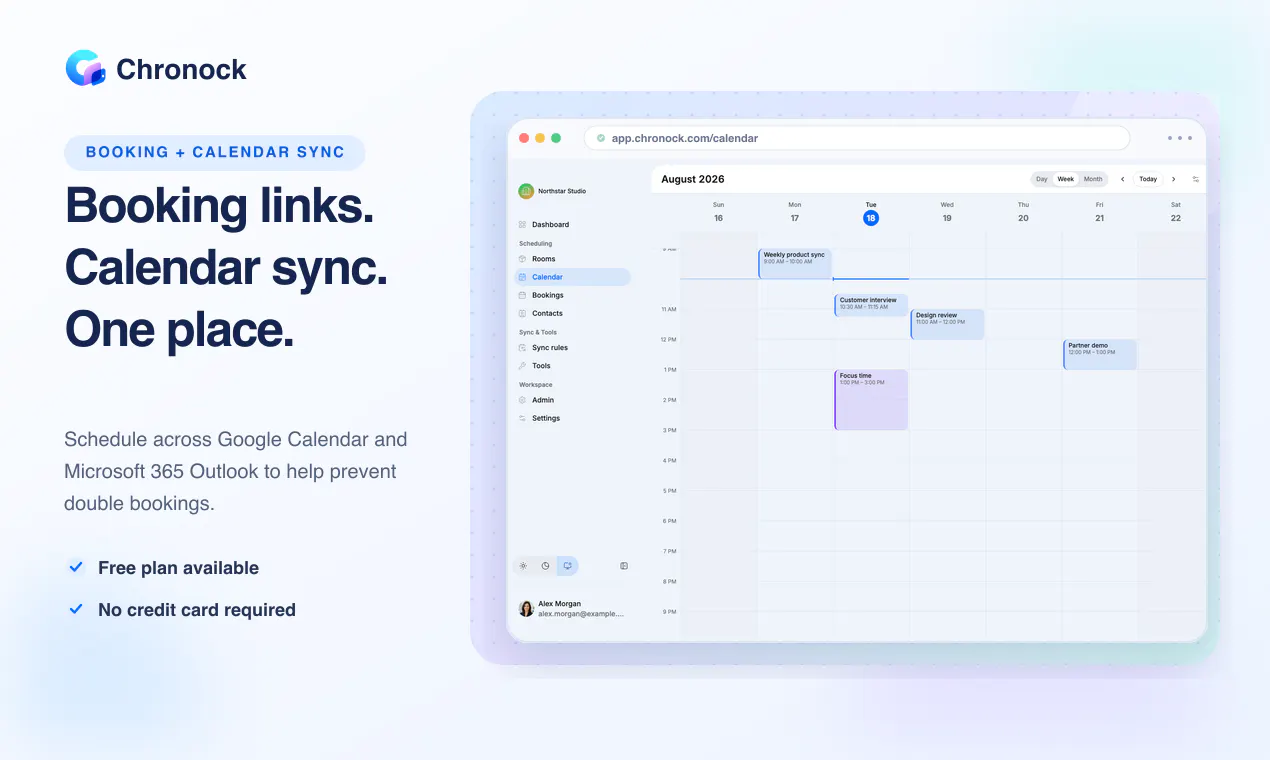
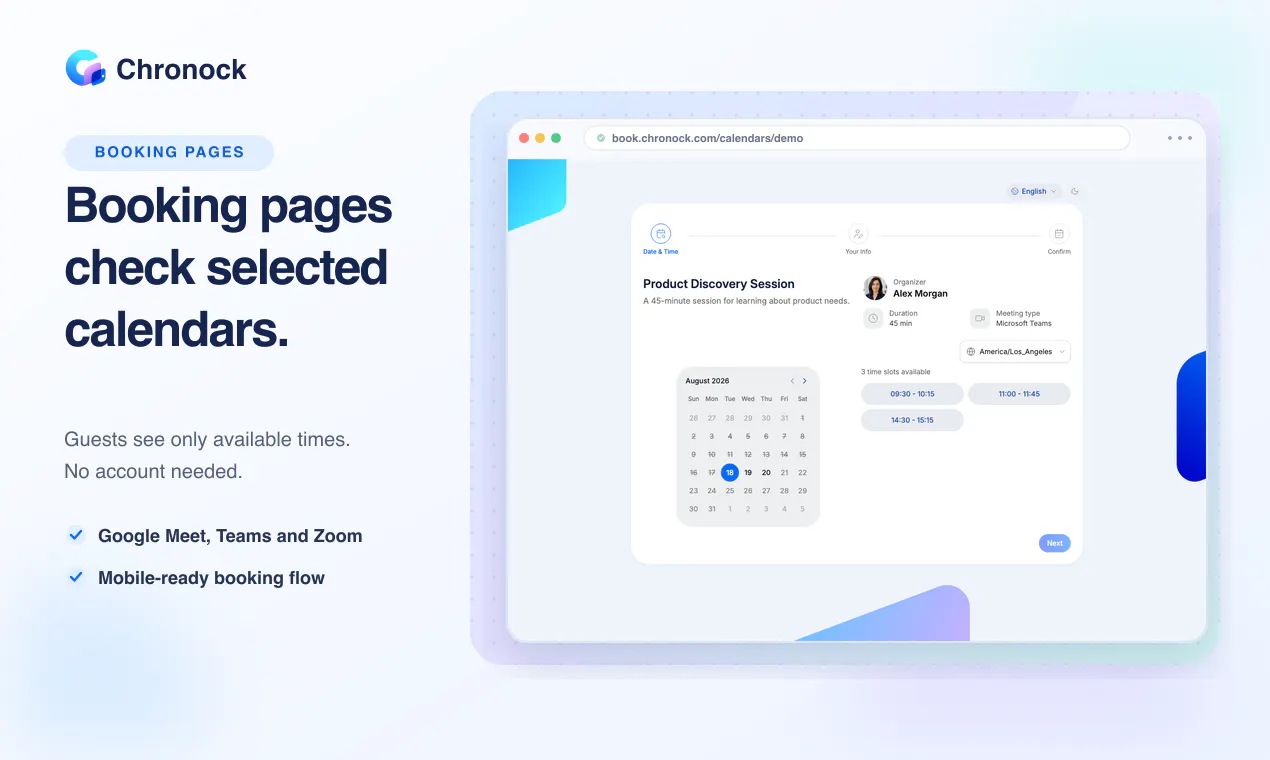
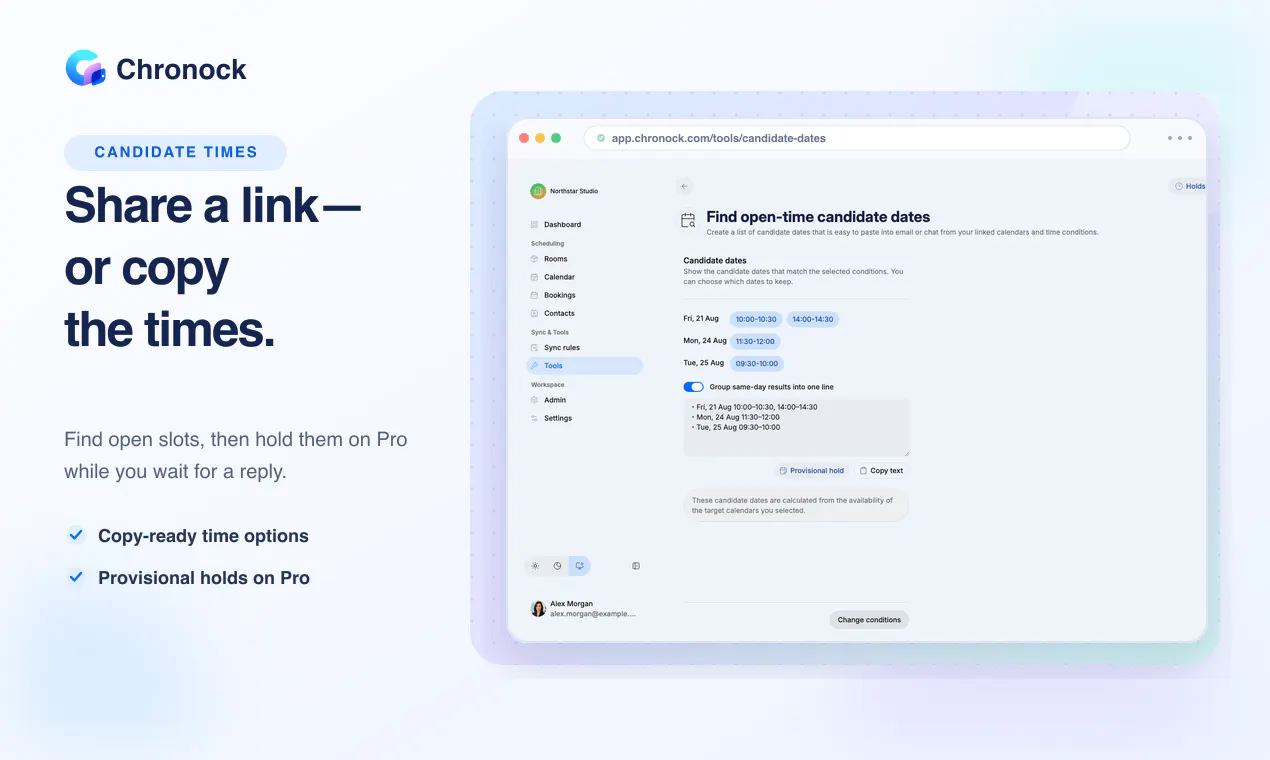
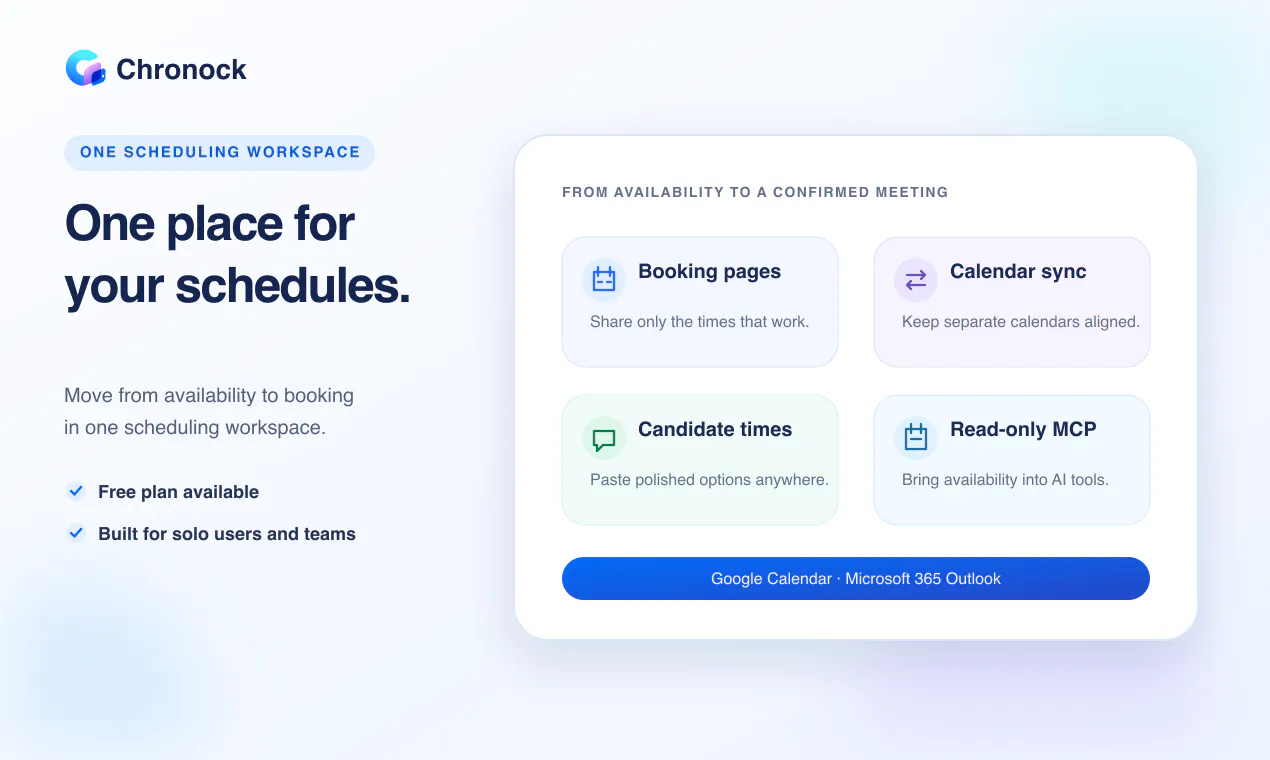
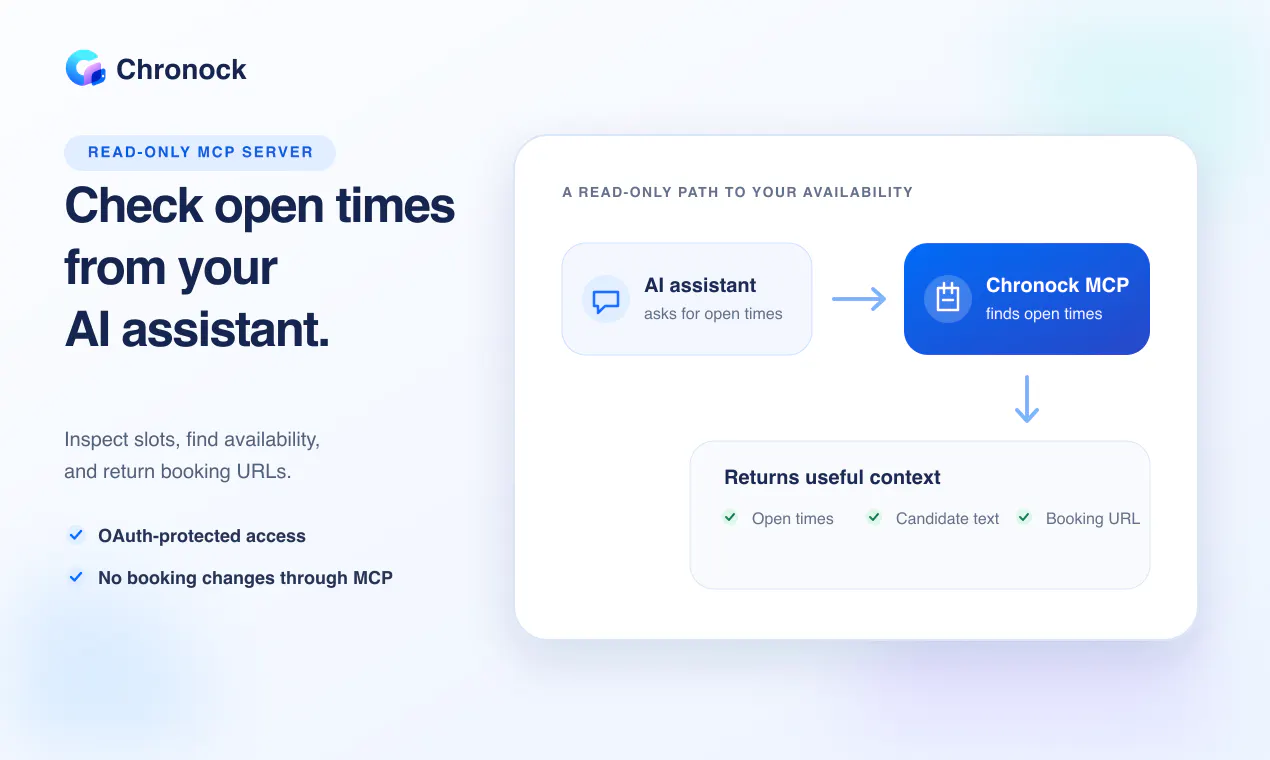
Chronock combines scheduling and cross-calendar sync in one workspace. It checks availability across connected Google and Outlook calendars, turns open time into a booking page, and syncs events between work, personal, and project calendars to prevent double bookings. Guests see only bookable times, while you can review every connected event in one Integrated Calendar. Start free with no credit card.

Hi Product Hunt 👋

I’m Takahiro Ikeuchi, a solo product engineer from Tokyo 🗼 and the maker of Chronock.

I started building Chronock after repeatedly running into the same problem in two different roles.

As a CTO, I spent a lot of time coordinating recruiting interviews. As a coach, I also needed to schedule meetings with people outside my organization. Native calendar features often felt too limited, while broader scheduling suites could be difficult to justify on price. At the same time, keeping my work, personal, and project calendars aligned often meant paying for and managing another tool.

That led me to a simple idea: scheduling and calendar sync are not really separate problems. They are both about keeping your availability trustworthy.

Chronock brings them together in one workspace:

- Create booking pages that check your Google and Outlook calendars

- Sync events between work, personal, and project calendars

- Review connected events in one Integrated Calendar

- Find and share open-time candidates when a booking link is not the right fit

As a Japanese maker, I also wanted multilingual support—including Japanese—to be part of the product from the beginning, rather than an afterthought.

I wanted to create a focused and accessible utility without treating quality as optional.

I’ve spent more than 10 years working as a full-stack engineer and now describe myself as a product engineer. I’m interested in the entire process, from UI design and frontend development to backend systems and cloud infrastructure.

Chronock is built AI-natively. I use coding agents such as Codex and Claude Code throughout development, but I don’t equate AI-native development with handing off engineering judgment. Architecture, design, security, testing, and the final quality bar still require deliberate care.

For me, the real value of AI is not only speed. It helps a very small team avoid unnecessary compromises and stay close to the people using the product.

Chronock is still at an early stage, and this launch is an opportunity to learn. There’s a free plan, and no credit card is required.

I’d especially love your feedback:

- What is the hardest part of managing multiple calendars today?

- Do you prefer sharing a booking link or proposing a few specific times?

- Is anything about Chronock’s setup or positioning unclear?

Thank you for taking a look. I’ll be here throughout the launch and would be happy to answer any questions.

1
回复
@takahiro_ikeuchi Unifying scheduling and calendar sync into one workspace is a massive pain point solver especially managing overlap between personal, work, and project calendars. To answer your question: I usually prefer proposing a few specific times for VIP clients, but a booking link is far easier for quick team syncs. Love that Chronock supports both! Also, huge respect for keeping native multilingual support from day one.
1
回复
@takahiro_ikeuchi I completely agree! Treating translation as a core part of the user experience, rather than just a checkbox, is what really builds trust with a global user base. It's refreshing to see that level of deliberate care. I'd love to follow along with how you expand this are you active on LinkedIn? Let's connect there to stay in touch!
0
回复

honest answer to your question: the hardest part for me isn't double-booking, it's the placeholder events. I sync work -> personal so my partner sees when I'm busy, but the synced copy is just a blank "Busy" block with none of the context, so I still end up manually checking the original calendar half the time anyway. the sync solved discoverability, not usefulness. on the technical side, since you're syncing between work/personal/project calendars in both directions, how do you stop that from creating a loop - a busy-block synced from A to B that then gets picked up and re-synced back into A as a second, slightly-different event?

1
回复
@galdayan That point about sync solving discoverability, not usefulness is brilliant! Context loss between work/personal syncs is a huge friction point. Really curious to hear Takahiro's take on handling both the context privacy and the infinite loop prevention!
1
回复

@galdayan Great question — and I really like your distinction between discoverability and usefulness.

Chronock lets you choose one of three content policies for each sync rule:

- Busy only

- Title only

- Title + description

More context makes the destination calendar more useful, but it can also expose sensitive information, such as a client name, to people who can see that calendar.

I don't think there is one correct choice for every work/personal boundary, so Chronock makes that tradeoff explicit.

For loop prevention, every mirrored event is stamped with private Chronock metadata identifying the originating sync rule, original source event, paired sync group, and user.

When that event is later read from the destination calendar, the reverse rule recognizes it as a mirror and excludes it before it can become a new source event. Google Calendar stores this through private extended properties, while Outlook uses Microsoft Graph extended properties.

There are additional safety nets as well: Chronock stores the source-to-mirror mapping with a uniqueness constraint and locks execution per sync rule.

If concurrent webhook jobs still race and create an extra mirror, Chronock reconciles the records and deletes the duplicate.

Thanks for raising this — these are exactly the details that determine whether calendar sync feels genuinely trustworthy rather than merely convenient.

0
回复
@takahiro_ikeuchi Thank you, Takahiro! Glad to contribute to the discussion. Looking forward to seeing how Chronock evolves!
0
回复

A small reflection from launch day: Chronock is AI-native in how it is built, but it isn’t AI-powered in how it works.

That may sound unusual for a new product in 2026. I considered adding a few AI-powered utilities, but I kept asking whether they solved a durable problem — or whether similar capabilities would soon become part of platform assistants such as Gemini.

The core job of Chronock is different. Keeping two calendars synchronized is repetitive, always-on work where correctness matters more than creativity. The process should be boring, predictable, and trustworthy. That calls for deterministic rules and reliable infrastructure rather than probabilistic behavior.

There is a lot of talk that “SaaS is dead” in the AI era. I think focused SaaS still has an important role wherever people need dependable background processes and a neutral layer across platform boundaries.

Synchronizing multiple Google calendars — or bridging Google Calendar and Outlook — is exactly the kind of cross-ecosystem work an independent third party can do well.

I’m curious: do you now expect every new utility to include AI? Where do you still prefer predictable software over an AI-powered experience?

0
回复
#10
Talvo
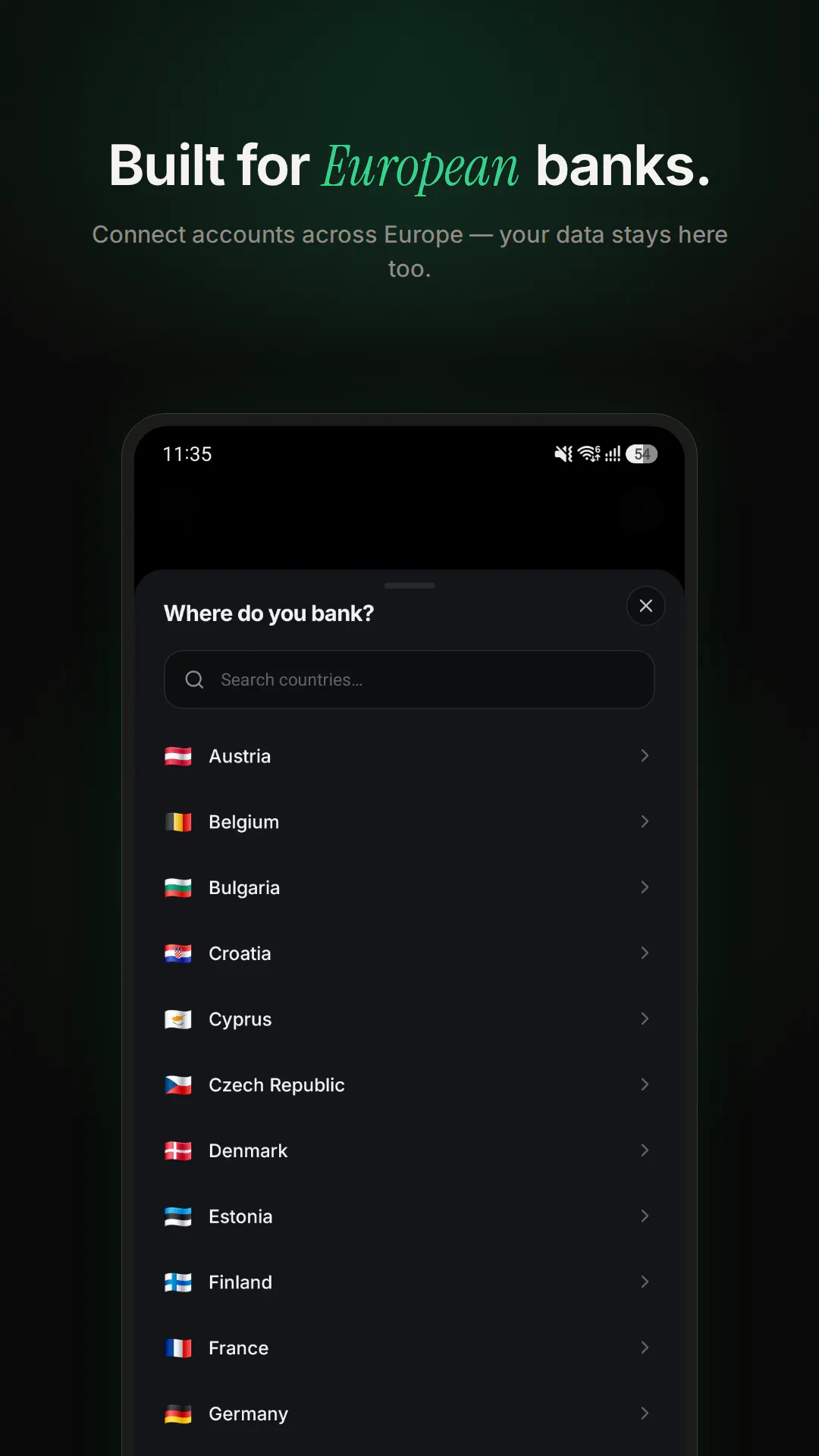
Connect 2,500+ European banks to track your spending
90
一句话介绍:Talvo是一款通过PSD2开放银行接口连接欧洲2500多家银行的个人理财与预算管理应用,旨在自动同步和分类交易,解决欧洲用户跨行财务追踪繁琐、数据分散的痛点。
Fintech
个人理财 预算管理 开放银行 PSD2 交易自动分类 净资产追踪 欧洲市场 隐私安全 GDPR合规 网页应用
用户评论摘要:用户主要关注三点:非PSD2账户(储蓄、投资)追踪困难,90天重新授权机制是否流畅,以及GDPR合规透明度存疑(法律文件中缺少公司信息)。创始人回应了手动账户与CSV导入方案,并承诺更新法律细节。
AI 锐评

Talvo切入了一个真实且精准的痛点:欧洲 fragmented 的银行体系与严格的PSD2监管,确实让通用型理财工具水土不服。其“欧洲原生、GDPR合规、PSD2直连”的定位,在合规成本与本地化体验上构成了对北美竞品(如Mint、Personal Capital)的天然壁垒,这是其核心价值所在。90票的冷启动数据也侧面印证了市场需求的真实性。

然而,产品的“零摩擦”叙事在监管现实面前显得脆弱。PSD2强制90天重新认证是结构性硬伤,Talvo的解决方案(提前7天弹窗提醒)本质上仍是“伪自动化”,用户粘性会在周期性打断中被侵蚀。更致命的是,其价值锚点“自动分类”恰恰是评论中被创始人自己承认的最弱环节——对于占据个人资产大头的投资账户(非PSD2范畴),目前仅有手工记账的“备份方案”,这暴露出其数据覆盖面远未达到“全能追踪”的营销暗示。合规透明度上的闪失(公司信息缺失)则反映出初创团队在法务严谨性上的短板,这对金融工具而言是致命的信任缺口。

Talvo的长期胜负手在于能否从“银行连接器”进化为“欧洲个人金融数据中枢”。若能借力即将落地的FIDA框架预埋投资账户连接能力,并将CSV导入升级为智能映射引擎,方能在本土巨头(如德国N26、法国Lydia)的生态挤压下找到缝隙。否则,它很可能沦为PSD2红利期里一款精致的过渡性工具,而非持久的理财入口。

查看原始信息
Talvo
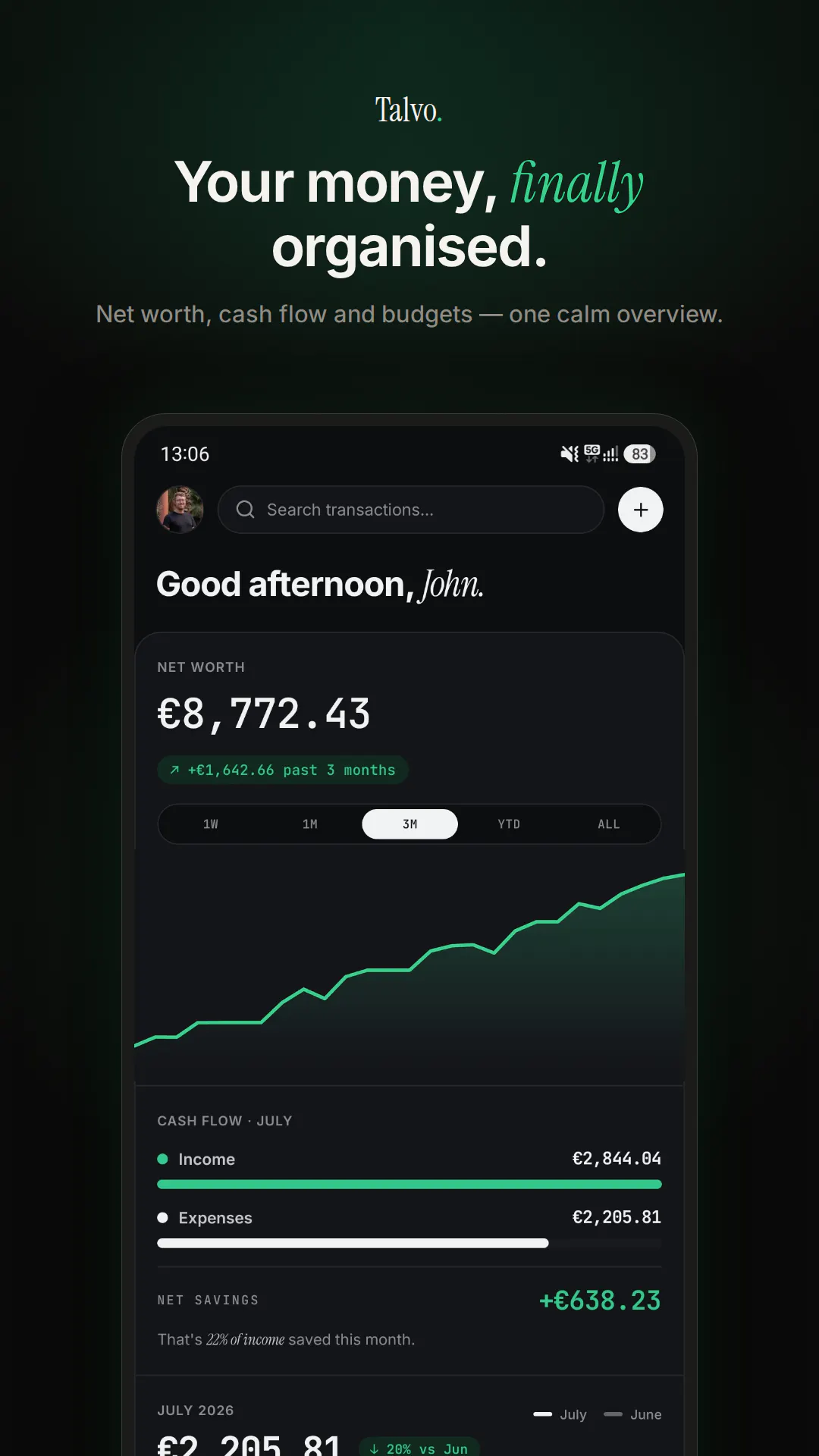
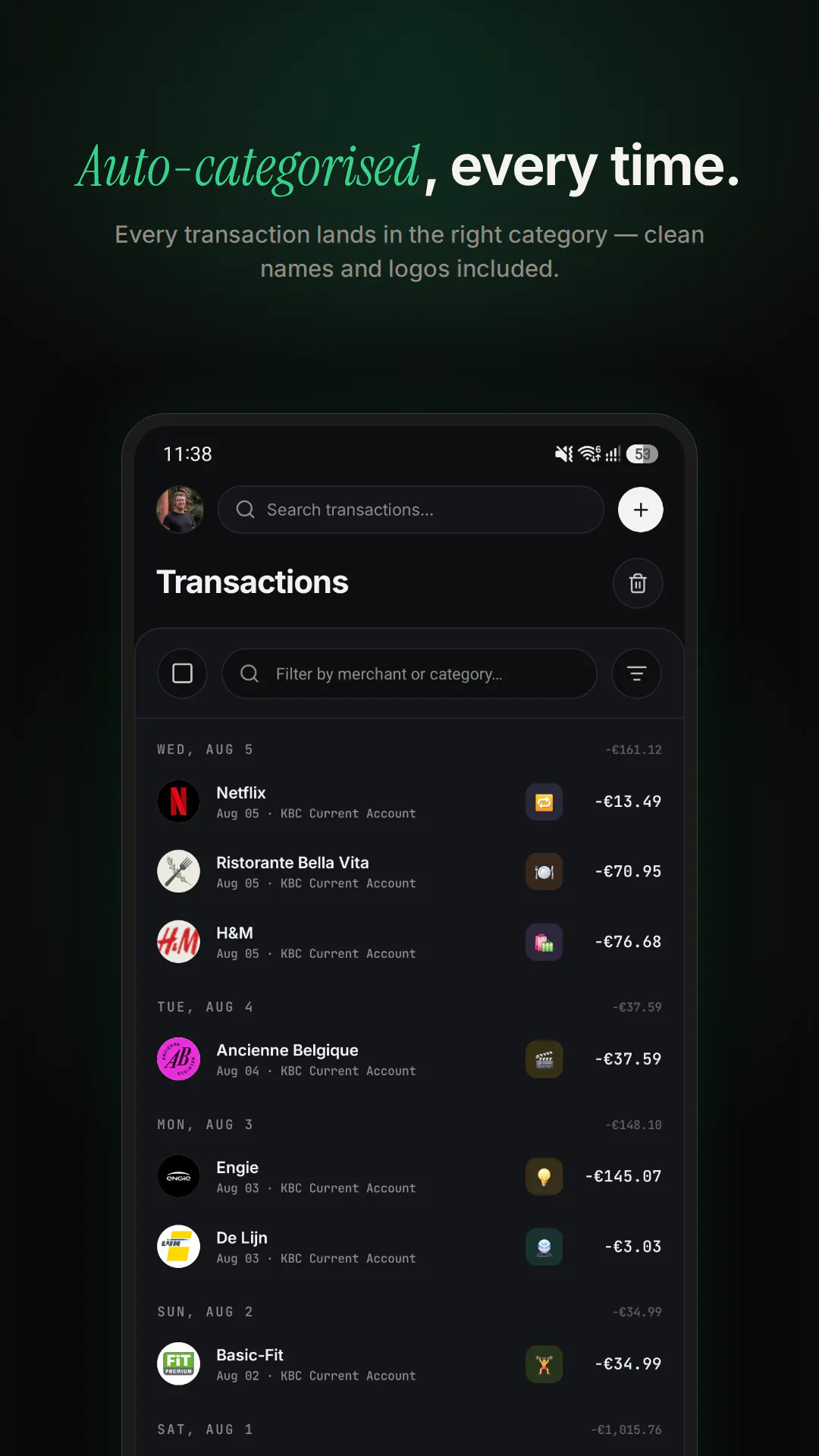
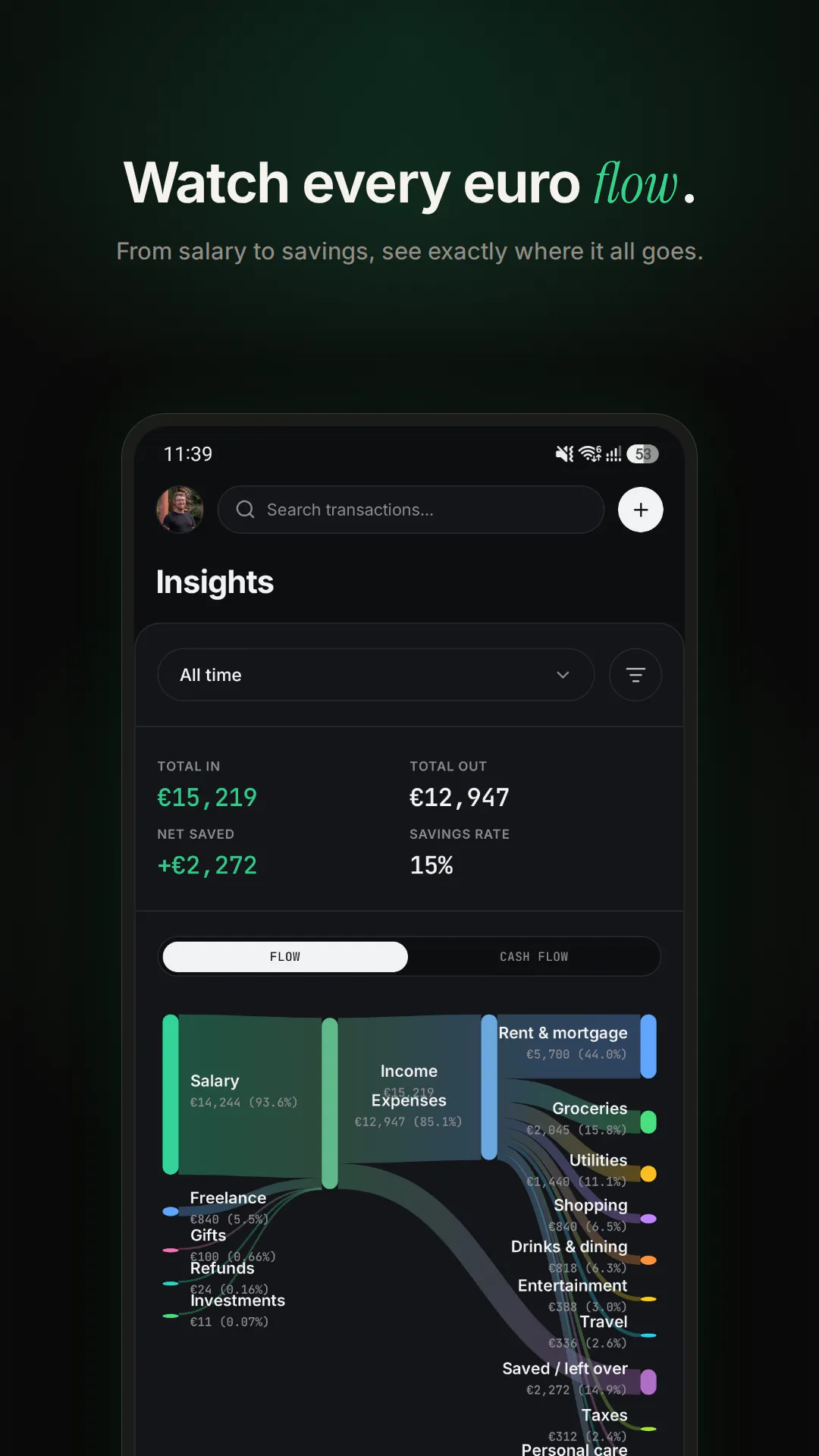
The European money tracker & budgeting app. Connect 2,500+ banks via PSD2, auto-categorise every transaction, track budgets & net worth. EU-hosted, GDPR native.

congrats on the launch. for me the biggest frustration isn't really categorization, it's the accounts that live outside the PSD2 world entirely - a couple of my savings and broker accounts still don't have a clean aggregator connection anywhere. one thing I'm curious about: PSD2 consent expires every 90 days by regulation, so how much of the "zero friction" promise survives that reauth cycle in practice - is it a silent background refresh, or does the user have to go log back into their bank every 3 months?

1
回复

@galdayan thanks! Yes, non PSD2 accounts remains are cumbersome to track. Talvo currently has an option to add a manual account with a starting balance to which you can add transactions which in turn will affect the remaining balance of that account. Obviously this is very basic, but I'm working on transaction import functionality by which you could import a CSV (or other format), which will hopefully make it to track. Investment tracking is also something I'd like to add at some point. Europe is working on FIDA which would be the equivalent of PSD2 for investment accounts, though that'll probably take a while so I might come up with some manual tracking in the meantime. As for the 90 day expiration, like you said, its by regulation so unfortunately a background refresh is impossible. Talvo will show you a popup warning you to re-authenticate your accounts 7 days before the actual expiration. Talvo will keep your transactions ofcourse, so if you miss the re-authentication window you can still authenticate afterwards and the transactions will back fill.

0
回复
Hey Product Hunt! 👋 I’m Philippe, founder of Talvo. Super excited to share what I've been building! Why I build Talvo: Like many of you, I wanted a clear, effortless overview of my personal finances without spending hours tweaking manual spreadsheets or fighting with outdated banking apps. Most existing tools I came across either didn't support European banks, didn't have a web app, were too basic or had a very outdated design and just didn't work well enough. What I built: Talvo connects directly and securely via Open Banking (PSD2) to automatically sync and categorise your transactions in real-time. We focused on three core pillars: - Zero Friction: Seamless banking integration that just works out of the box. - Smart Analytics: Clear insights into where your money actually goes without clutter. - Privacy First & Lightning Fast: Designed from the ground up for speed, security, and total control over your financial data. I’d love to hear your thoughts, feedback, or any feature requests you have in mind! What’s the biggest frustration you currently face with tracking your finances? Let me know in the comments below!
0
回复
Hi, how are you GDPR compliant without any company data and real person behind it named in your legals?
0
回复

@metin_54 thats the biggest issue for me, too!

0
回复

@metin_54 I do have a Belgian company that is used for this app. We are fully GDPR compliant:
- Data is stored exclusively on European servers
- We only collect the strictly necessary data for the app to function
- Complete compliance documentation: privacy policy, terms of service, data protection impact assessment (DPIA), record of processing activity

- Users have full access to their data and have the right to permanently delete their account and data
- Compliant third-party services: we have signed data processing agreements (DPAs) with our third-party services that comply with EU laws

That being said, I'll update the legals with my company details.

0
回复
@philippe_talvo Great if you have all that! Ask your AI on your repository to analyse the codebase and tell you whats needed to be GDPR compliant. You might be on the right path but misinformed on whats really necessary.
1
回复
#11
Clamshell
Close your MacBook. Keep the work running.
84
一句话介绍:Clamshell是一款让MacBook合盖后仍继续运行的菜单栏工具,专为解决合盖即中断构建、下载或编码代理等后台任务的痛点而设计。
Mac Productivity Developer Tools
MacBook 合盖运行 菜单栏工具 防休眠 后台任务 开发者工具 电池保护 临时开关 付费软件 生产力工具
用户评论摘要:用户核心诉求是“反向触发”——指定进程结束后再自动恢复正常睡眠,避免因忘记关闭而持续耗电至电池保护阈值。创始人回应称该功能是2.0探索方向,难点在于准确判断任务是否真正完成。另一用户吐槽其为付费版Capsomnia,创始人强调临时性与恢复安全的差异化。
AI 锐评

Clamshell切入的痛点是真实且高频的,尤其对于依赖本地构建、跑下载或挂Agent的开发者而言,“合盖即断”是物理级的生产力中断。其核心价值不在于技术壁垒——本质上就是利用caffeinate或类似机制阻止空闲休眠,而在于产品化包装:将系统级风险操作降维成“开关+快捷键+合盖触发”的零思考动作,并内置低电量保护与恢复逻辑,这比裸用终端命令安全得多。84票的冷启动成绩中,Setapp已有500+用户且仅1个bug是比投票更有分量的质量背书。但必须清醒:这大概率是“小而美”的短命刚需,而非高天花板生意。竞品(如Amphetamine、Capsomnia)已存在,且macOS原生对电源管理的控制日益精细,Apple未来若在系统层加入“合盖后保持工作”的智能选项,Clamshell将被直接降维打击。其更深层的机会在评论里:从“手动臂开关”进化到“任务感知”——当用户指定进程退出后自动恢复睡眠,这才是从工具到智能助手的跃迁。创始人已意识到这一方向,但“如何确认任务真完成”的技术实现和流程匹配复杂度,将决定它是停留在卖一次性的10美元,还是成为开发者工作流中不可替代的原子组件。短期看,作为实用工具值得推荐;长期看,只有转向工作流自动化平台(如与构建系统、任务队列集成)才有生存空间,否则极易被复制和遗忘。

查看原始信息
Clamshell
Closing my MacBook used to kill whatever I had left running: a build, a download, sometimes an agent halfway through a task. I made Clamshell to fix that. The lid shuts, the screen goes dark, and the work carries on. No monitor, sudo, or admin setup.

Hey Product Hunt,

Clamshell started with a very ordinary annoyance. I would close my MacBook, leave a build, download, or coding agent running, and come back later to find that the whole thing had stopped.

I tried the usual workarounds. Some only prevent idle sleep. Others change a system-wide setting that is easy to forget. I wanted one small switch I could turn on only when I needed it.

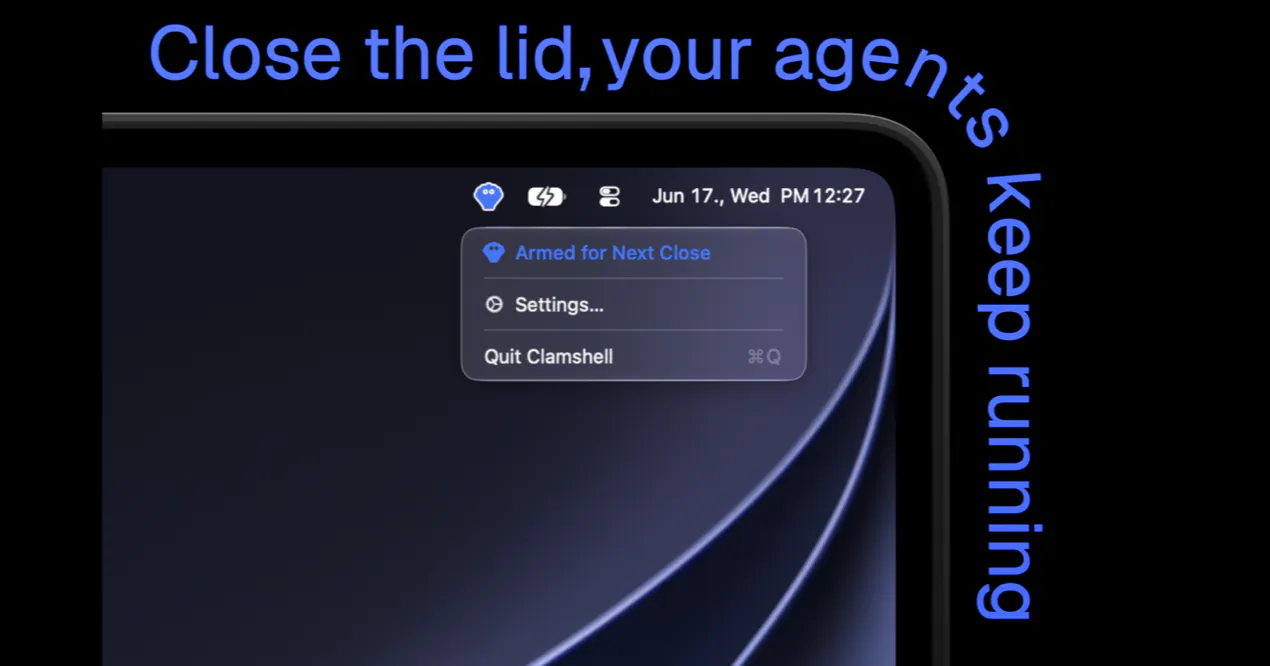
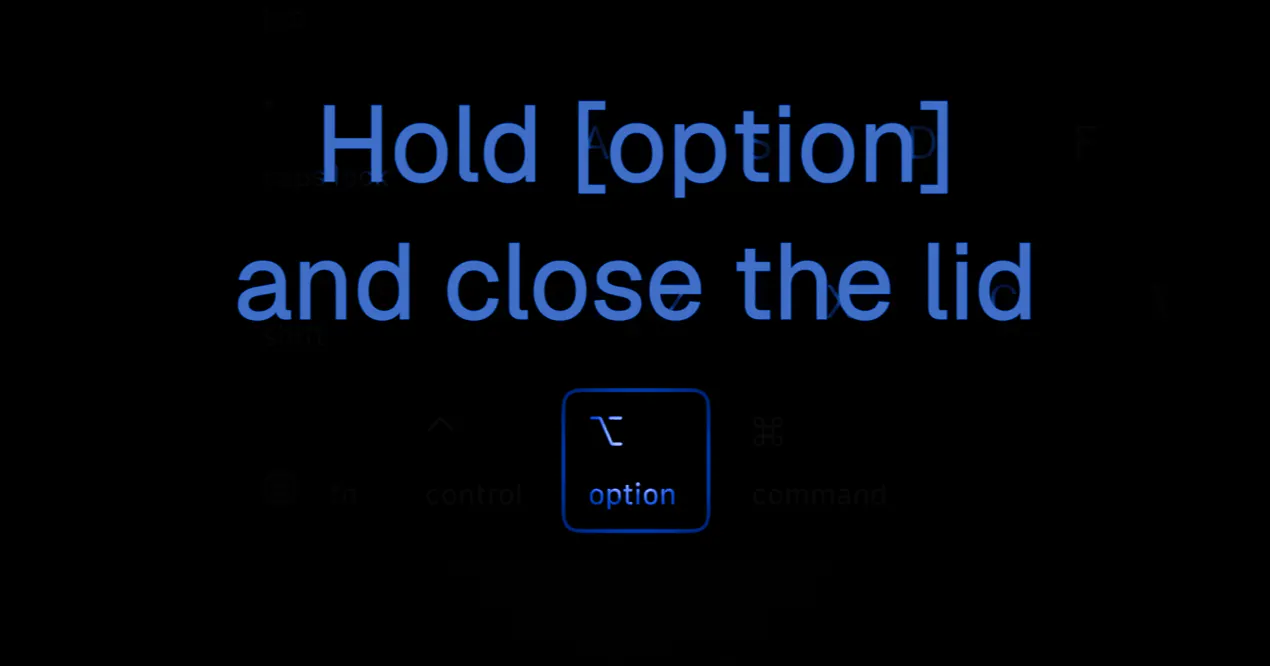
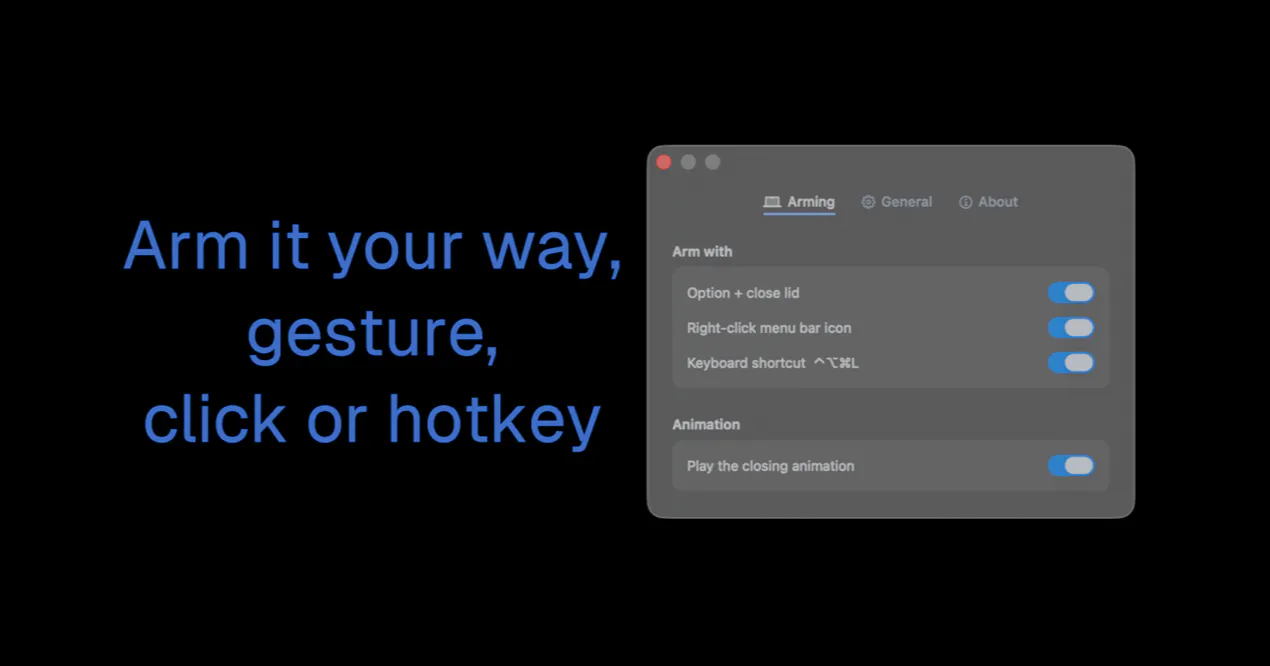
So I built Clamshell. Arm it, close the lid, and your Mac keeps working while the internal display goes dark. Open it again and normal lid behavior comes back. You can arm it from the menu bar, with a shortcut, or by holding Option while closing the lid.

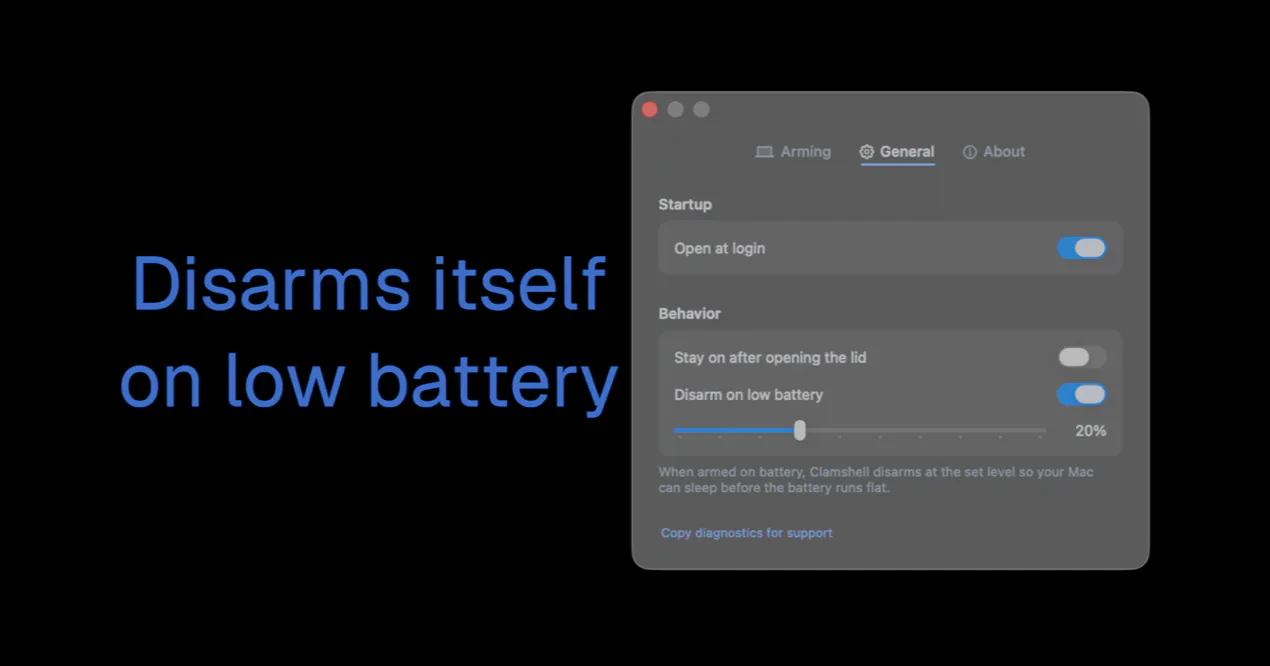
It checks itself again when power changes. I also added a low-battery cutoff because keeping a Mac awake is not very useful if it runs the battery flat.

Setapp gave me a reality check before this launch: more than 500 people are already using Clamshell, and so far I have had one bug report. That bug is fixed.

If you prefer the direct version, the trial lasts seven days and does not ask for a card. After that, it is $9.99 once.

If you run long builds, downloads, local servers, or coding agents, I would genuinely love to hear how it works on your MacBook.

0
回复

To answer your forum question: lid cracked open like an animal, which is exactly the problem. What I'd want next is the reverse trigger -arm it until a given process exits, so the Mac finishes the build and then actually sleeps, instead of staying awake in my bag/bed/ table until the battery cutoff catches it. Is there anything like that on the roadmap?

0
回复

That’s the main idea I’m exploring for 2.0: let a specific job finish, then return the Mac to normal sleep. The hard part is knowing it genuinely finished rather than guessing from a process disappearing. Which tool would you want this for first?

0
回复
Capsomnia but paid 🙂
0
回复

Fair. I built Clamshell around the part I kept forgetting: making the override temporary and getting normal lid sleep back cleanly when I returned. The safety and recovery around that were what I didn’t want to manage by hand.

1
回复
#12
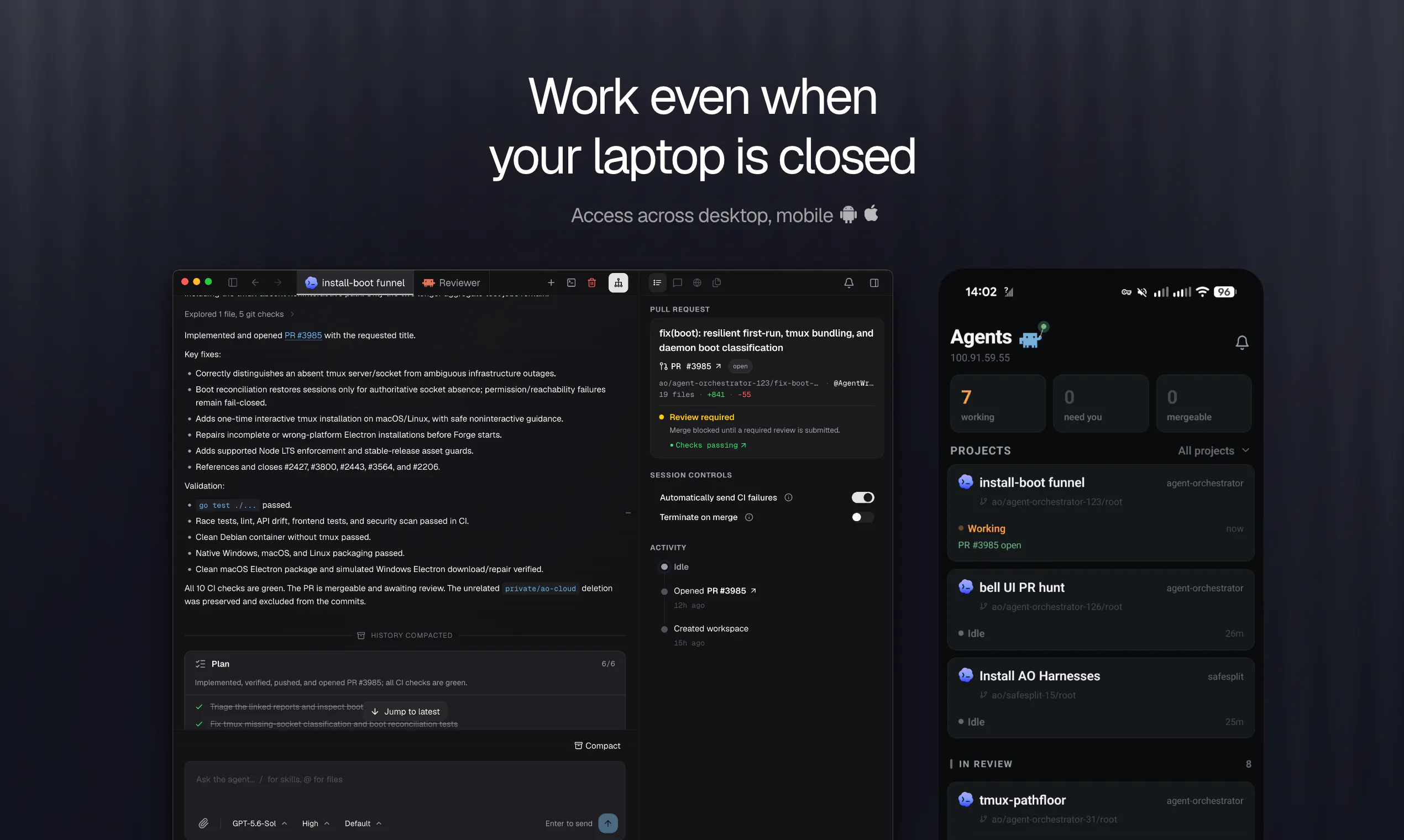
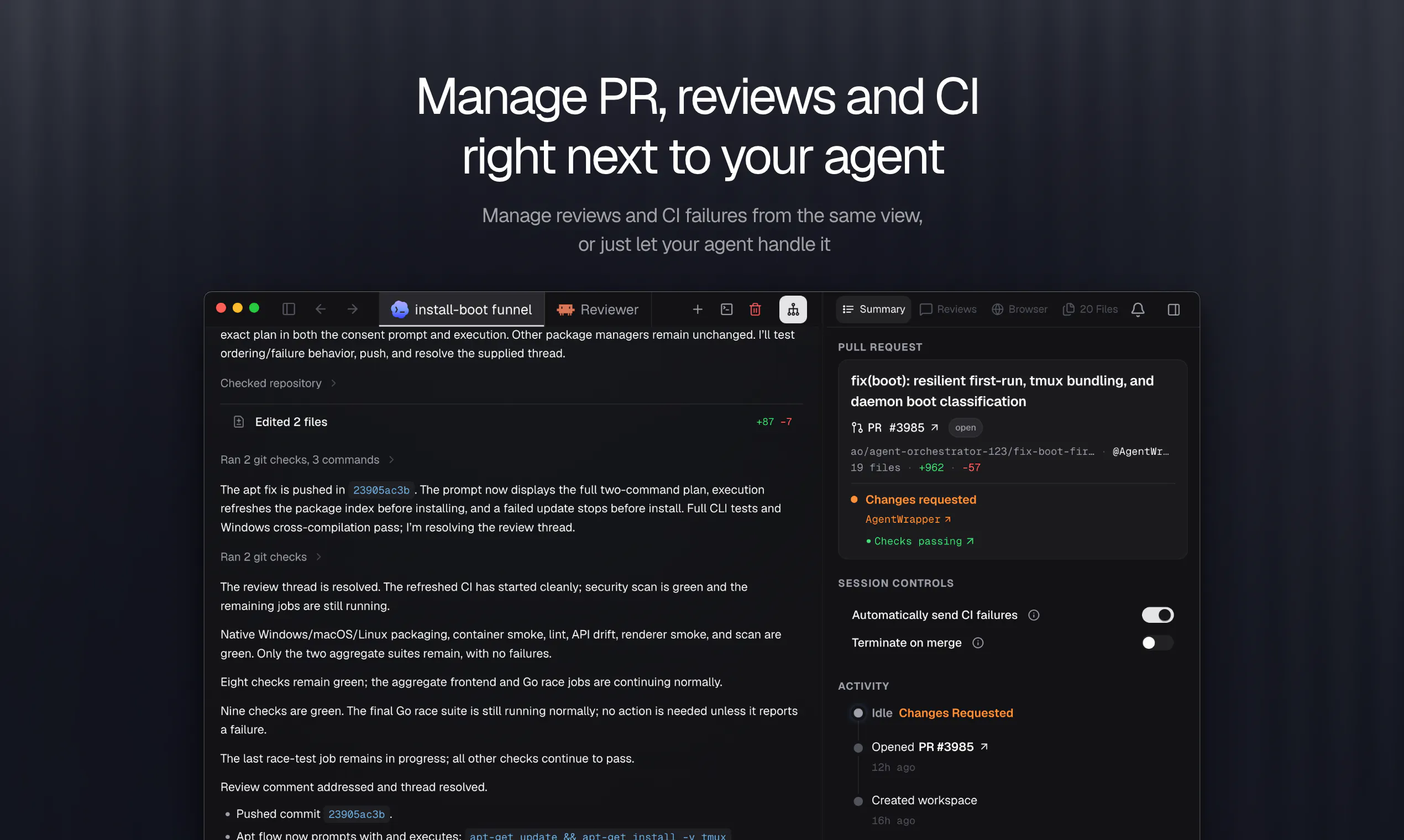
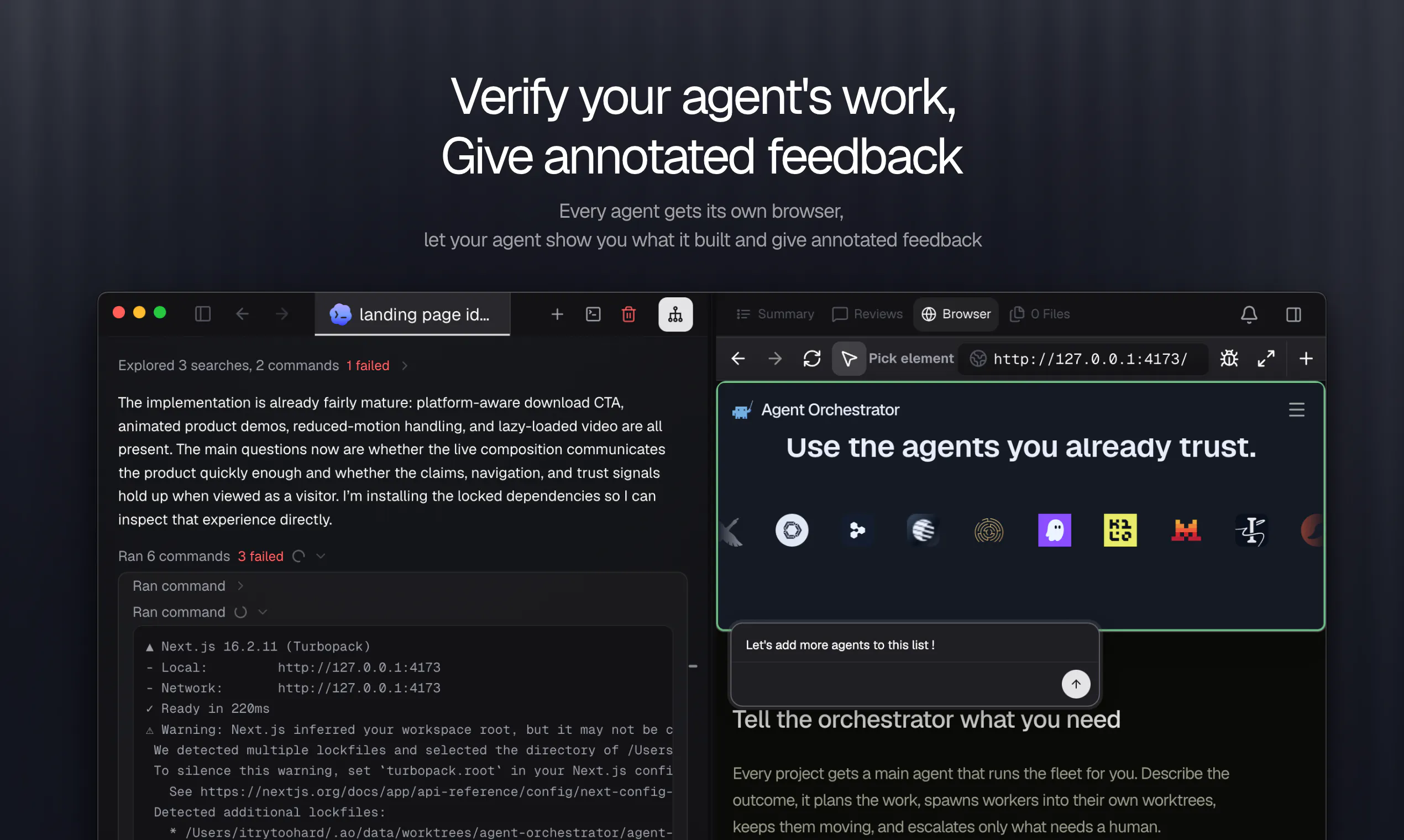
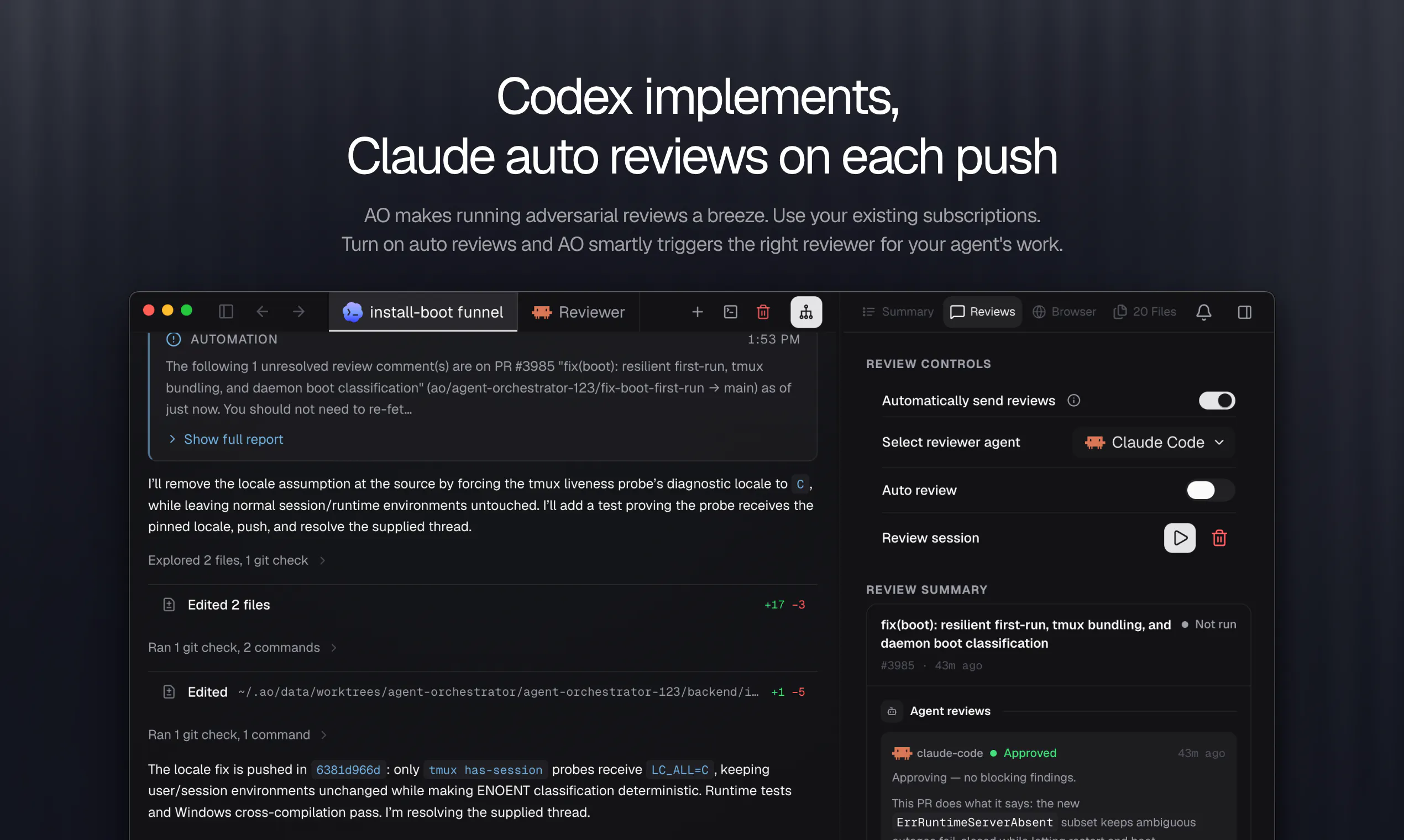
Agent Orchestrator
Your coding agent fleet manager
52
一句话介绍:Agent Orchestrator 是一款免费开源的“编码代理舰队管理器”,通过看板视图统一监控和调度多个 AI 编码助手(如 Claude Code、Codex、Cursor),将任务拆解、指派、跟踪直至合并,解决多代理并行工作时的协调混乱问题。
Productivity Open Source Developer Tools GitHub
AI代理编排 编码助手管理 多代理协调 开发者工具 看板管理 开源软件 工作流自动化 任务委派 软件开发效率
用户评论摘要:用户普遍认可其看板管理和多代理协调价值,但反馈集中在:Linux 安装体验差(需手动运行)、Linux 界面粗糙破损;希望增加沙箱/远程代理支持;期待云协作与移动端体验完善。
AI 锐评

Agent Orchestrator 踩中了 AI 编程工具从“单兵作战”向“多智能体协同”演进的节点。当 Claude Code、Codex 等工具泛滥,管理 10+ 终端的上下文切换成本陡增,AO 用看板将“不可见的代理工作流”变成“可视化的流水线”,这是对开发者心智模型的正确映射——从写代码到管代码,本质是生产力工具的范式升级。

但必须泼冷水:其一,52 票的冷启动数据与其 9.5K GitHub Stars 严重背离,说明 Product Hunt 受众与真实开发者社区存在断层,或市场教育尚未破圈。其二,核心依赖 tmux 的终端复用方案虽轻量,但“跑在本地”是致命短板——评论中反复出现的“沙箱/远程代理”诉求直指其天花板:若代理必须依赖本地机器,就无法实现真正的 7x24 小时无人值守,这限制了其从“效率工具”向“平台”跃迁的可能。其三,Linux 体验粗糙暴露了团队资源向 Mac 倾斜的现状,这会流失硬核开发者群体——而这群人恰是 AI 代理的重度用户。

真正值得关注的是其云服务预告。若 AO Cloud 能实现“本地编排+云端执行+团队协作”,则有机会从“管理器”变身为“代理操作系统”。但在此之前,它只是一个漂亮的过渡性产品。开源是优势,Apache 2.0 能吸引贡献者,但如何将 Star 转化为商业闭环(如云服务收入),是团队需要回答的问题。建议团队优先补齐沙箱执行和 Linux 体验,否则很容易被 Cursor 或 GitHub Copilot Workspace 等原生集成功能的巨头碾过。方向正确,但窗口期不会太长。

查看原始信息
Agent Orchestrator
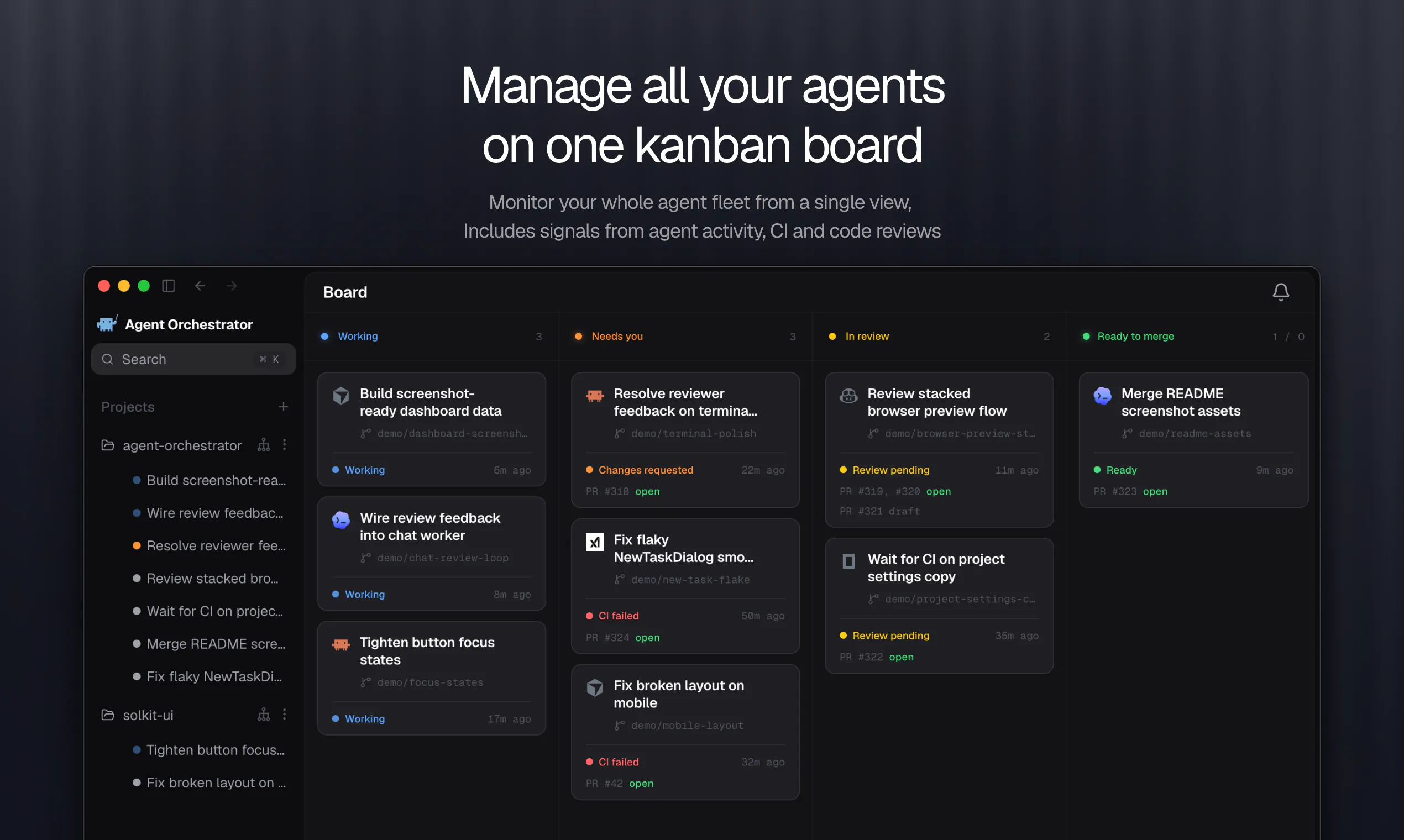
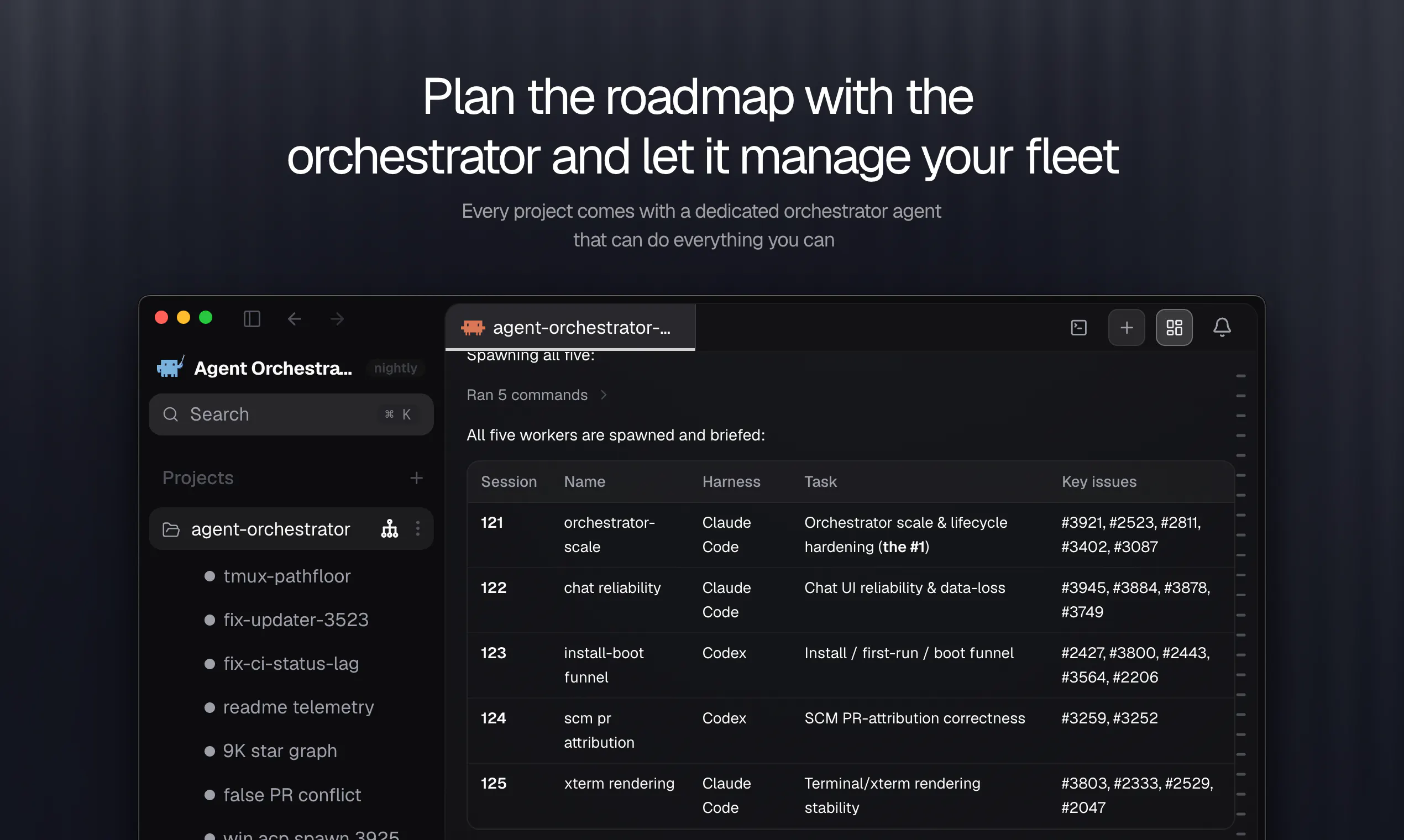
AO helps you manage all your coding agents in a single place. Monitor your whole agent fleet on a kanban view as each task goes from working to PR to Running tests to Code Review. Plan the roadmap with your project specific orchestrator. Let the orchestrator breakdown tasks, delegate them to isolated agents, and manage the fleet for you. Stop tab switching between agent terminals. Start orchestrating. Free and open source under Apache 2.0.

Hey Product Hunt 👋!

We built Agent Orchestrator because running 10+ coding agents quicky becomes a context switching nightmare.

Once you have Claude Code, Codex, Cursor, and others working in parallel, the bottleneck becomes coordination: what is each agent doing, which branch is it on, what is blocked, what passed CI, what needs review, and what can merge?

AO gives you one place to manage all of that.

You give it an outcome, it breaks the work into tasks, delegates them across coding agents, and tracks progress on a live Kanban board from task → PR → CI → review → merge.

Our bigger belief is that developers are moving from writing every line themselves to orchestrating increasing amounts of intelligence. The tools we use need to evolve with that.

AO is open source with 9.5K+ Github Stars already.
We’d love for you to try it, push the limits of the number of agents you thought you could manage, and tell us what you think!

Thanks for checking us out ❤️

18
回复

@agent_wrapper So excited to see AO launch today! 🚀 As coding agents become more capable, coordinating them is quickly becoming the real challenge. AO gives that work a clear home—from tasks and branches to PRs, CI, and reviews. Proud of what we’ve built, and we’d love to hear what everyone thinks! ❤️

1
回复

Love what you’re building, Prateek ❤️ The idea of developers moving from writing every line to orchestrating multiple agents really resonates, you can already feel that shift happening.

AO is solving a very real coordination problem for me already, and I’m excited to see how far you guys push it. Sandboxed/remote agents next please 😄🚀

8
回复

@agent_wrapper one of the best builders i have worked with.

0
回复
Hey everyone, Maaz here. We’ve been working on Agent Orchestrator since February, and today’s launch means a lot to us. AO solves a problem we kept running into ourselves - coding agents are powerful, but once you start using more than one, the work gets hard to manage. Branches, reviews, CI failures, context, and half-finished sessions can quickly become messy. Agent Orchestrator gives you one workspace to run and supervise a fleet of coding agents, keep each task isolated, track progress on a live board, and move work from idea to PR without babysitting every terminal. We’re also working on AO Cloud, so teams can collaborate, share sessions, hand off tasks, and keep agent work running beyond one machine. You can join the waitlist and get 1 month free when it launches: https://aoagents.dev/waitlist Would love your feedback, questions, criticism, or ideas.
8
回复

Have been using Agent Orchestrator for ~5 months now, and it’s become a pretty regular part of how we work.

I contributed to the repo a while back too, so I’ve seen the product evolve from fairly close quarters. What’s been great is that it’s not just something I personally like — people across my team have picked it up and actually use it.

Congrats on the launch! Excited to see where you take this next 🚀

6
回复

@priyanchew Thanks a lot for contributing!

Really happy to see the team at Osvi use it on a day to day basis :)

2
回复

It was amazing experience to use AO ine everyday building projects, shipping AI agents for my hackthon project.

6
回复

@abhijit_manna thanks for participating on the the hackathon. It was great hosting you :)

3
回复

Been using Agent Orchestrator with several AI coding harnesses—Pi, Claude Code, OpenCode, and Codex—and it’s been great having a single layer to orchestrate multiple agents while keeping everything visible and manageable through the Kanban board.

I’ve also been using the iOS app alongside my Tailscale setup, and the whole experience has been surprisingly smooth. It’s nice being able to keep an eye on agents and workflows without being tied to my desk.

Really enjoying the product so far. Looking forward to agents running fully inside sandboxes 😉 — then I can finally close the laptop lid and let them keep working.

If you’re experimenting with multiple coding agents and want a cleaner way to coordinate them, definitely check out Agent Orchestrator. love the team and vibe. Great work! @agent_wrapper

6
回复

@pratikbin Glad to hear you had a good experience using AO.

We are currently building out our cloud offering, which would be launched soon.

That would allow you not just make you agents run without your laptop, but also collaborate with team-mates and hadoff tasks seamlessly.

You can register on the waitlist for our cloud offering here: https://aoagents.dev/waitlist

2
回复

Been using @Agent Orchestrator very often for the past few weeks and been loving the interface and the experience, excited for what's coming ahead!

5
回复

Have been using AO for almost 2 months and ive been loving it building products has been way easier and im using it every day probably the best things like for real the best would reccomend every builder or like every developer anyone and everyone can use it

5
回复

Been using Agent Orchestrator for a while now, and it's been a wonderful experience to take my coding workflow to the next level!
Looking forward to the team taking this product to the next level!

4
回复

AO has soo far been the experience for me! It has simplified my work by manifolds and even reduce my working time and stress!! Great project and has a lot of potential!

4
回复

Using @Agent Orchestrator from last two - three weeks, till now having a great experience. Btw i have been also using conductor, superset and onorca but this feels something different.

4
回复
have been using this product for almost 3 months now and crazy product it is. must try 😁
4
回复

I’ve been loving Agent Orchestrator, especially for vibe coding.

The clean interface + tmux makes it really easy to run multiple agents, switch between them, and keep track of everything with the Kanban board. That part is genuinely great.

A few pain points on Linux though.

On Arch/Omarchy, I usually have to run it manually, and it would be much nicer to have a proper package/normal app installation option.

The Linux UI also still feels a bit rough and broken in places compared to other apps I use.

Overall, really like the product. There’s a lot of room to polish it, but the core idea and workflow are already very useful.

4
回复

Hi@pyasma 👋!

Glad to know you have been loving the product!
Apologies for the choppy experience on Linux. Most of our users are on Mac, which makes us focus more on our mac app. We are, however quickly improving the product. Would really appreciate any bug reports, through github issues, or on our discord.

2
回复

This looks great! Will give it a try.

3
回复

@prasann_pandya thank you! Please let us know if you have any feedback after trying it out :)

2
回复
Great product using it for long time
3
回复

AO managing fleed of AI Agent is top notch

3
回复
#13
Nick Launches
Launch your product to thousands of builders.
37
一句话介绍:Nick Launches 是一个产品发布推广平台,旨在解决新品上线后曝光期过短、迅速石沉大海的痛点,通过提供永久外链和长效展示,帮助开发者将产品持续触达数千名早期用户和创作者。
Marketing SEO Developer Tools
产品发布平台 开发者工具 AI产品 启动工具包 提交列表 外链建设 产品营销 独立开发者 增长黑客 社区推广
用户评论摘要:用户普遍认可其长效曝光和实用指南,称“远超同类小列表”。创始人积极互动,回应感谢。有效反馈集中于一个提问:“如何审核和管理列表内容?”(Moderation机制),未见其他负面建议。
AI 锐评

Nick Launches 本质上是一个“反Product Hunt”式的小众分发渠道,它精准切中了独立开发者的深层焦虑——24小时流量狂欢后的虚无。其核心卖点并非教程或AI评测,而是“永久dofollow外链”和“数周而非数小时的曝光”,这实际是在卖SEO价值和心理安慰。从数据看,37票、4赞评论,规模极小,但产品定位清晰:不做大众平台,只做垂直、高转化率的“慢流量”入口。其创始人亲自下场回答,并支持MCP,说明技术嗅觉不错,但真正的护城河不在于工具,而在于“ curated”(精选)的信任度——这恰恰也是用户唯一提出的疑问:你如何保证列表质量?若审核松,则沦为垃圾场;若审核严,则增长缓慢。目前它更像一个创始人IP的延伸,而非独立产品。短期看,对“被遗忘的发布者”有价值;长期看,若不能突破流量冷启动、建立稳定的发布者网络,很容易被大平台的算法更新或新型分发方式(如AI搜索、RSS复兴)降维打击。一句话:有价值,但天花板明显,暂不具备颠覆性。

查看原始信息
Nick Launches
Nick Launches helps developers build and launch AI products faster with practical tutorials, Launch Toolkit, AI tool reviews, and launch strategies.
Hi everyone 🚀 I built Nick Launches because I was tired of launches that vanish in 24 hours. You spend weeks preparing, get one day of attention, and then your product disappears into an archive nobody browses. Nick Launches gives every approved product a permanent dofollow backlink and a longer shelf life. Your listing keeps getting impressions for weeks, not hours. Submission is fast: paste your URL, we prefill what we can, you add screenshots and ship. Curated, not spammed. MCP supported! Happy to answer any questions 🙌
4
回复

This dude goes way above and beyond what most smaller lists go. If you want the support on your next launch, put your product here!

3
回复

@mark_zschiegner thanks Mark, means a lot!

0
回复
Dope product and guides. Used for my future launch !
3
回复

@tlesenechal lets go 🔥 DM me if need any help

0
回复

Congrats Nick 🚀

Bookmarked for my next launch.

2
回复

@ashimanski Thanks a lot Artyom

0
回复

Congrats on the launch Nick! Awesome to see your growth. Whenever I ship something, I’ll be using @nicklaunches :)

1
回复

Congratulations on the launch!

1
回复

How do you moderate listings?

0
回复
#14
Mermail
Your AI can now sign up and pay
25
一句话介绍:
Email Artificial Intelligence Web3
用户评论摘要:
AI 锐评
查看原始信息
Mermail
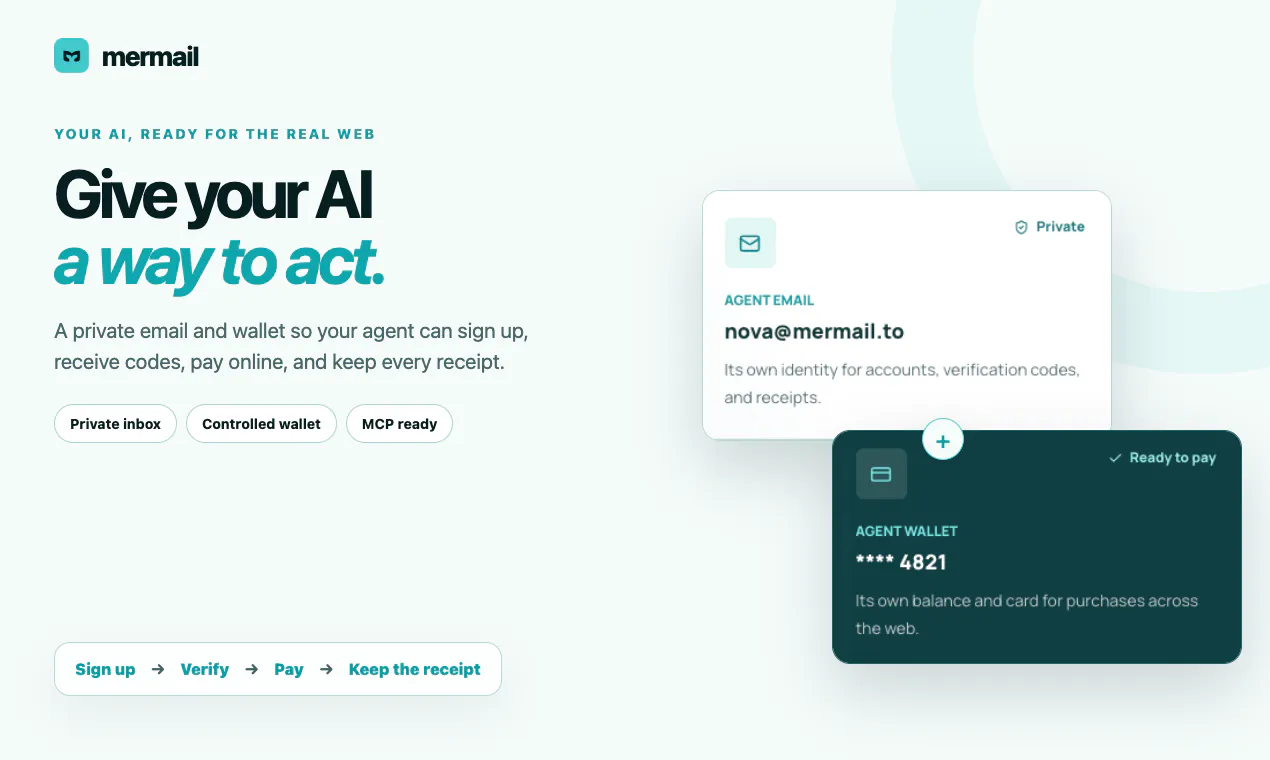
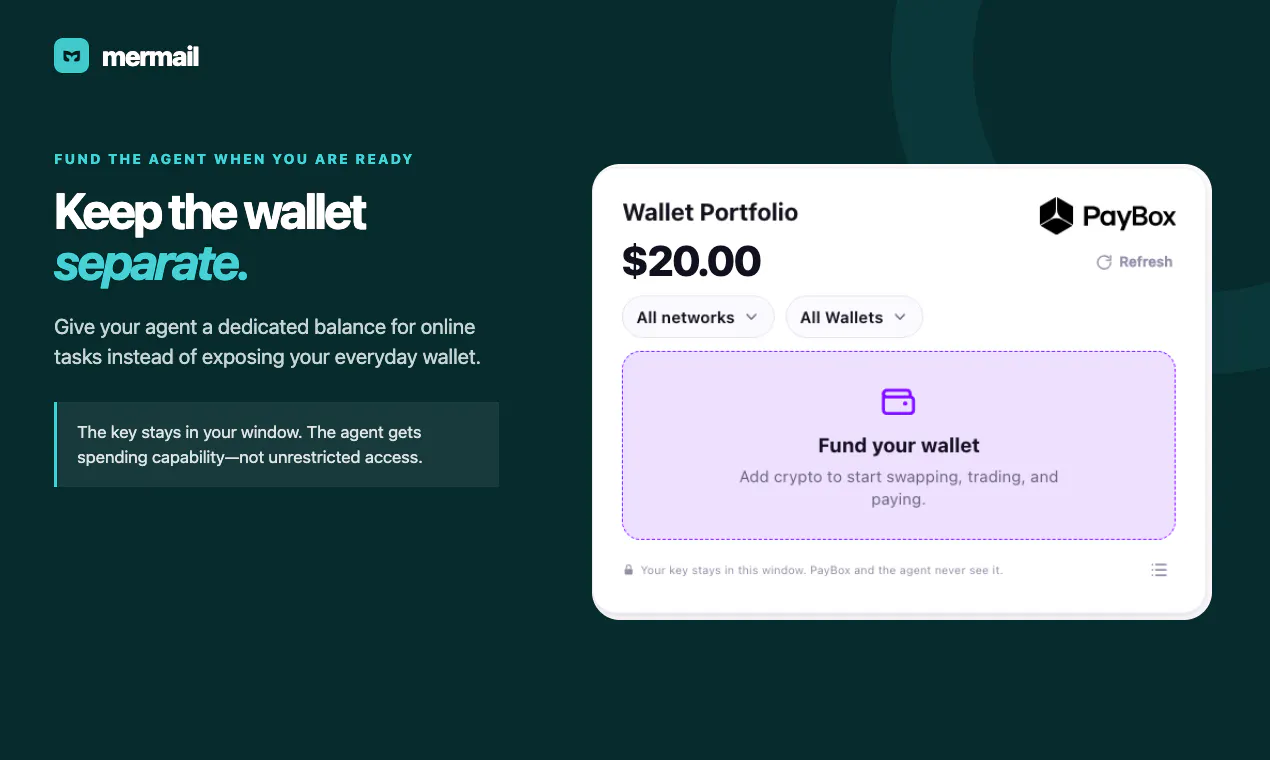
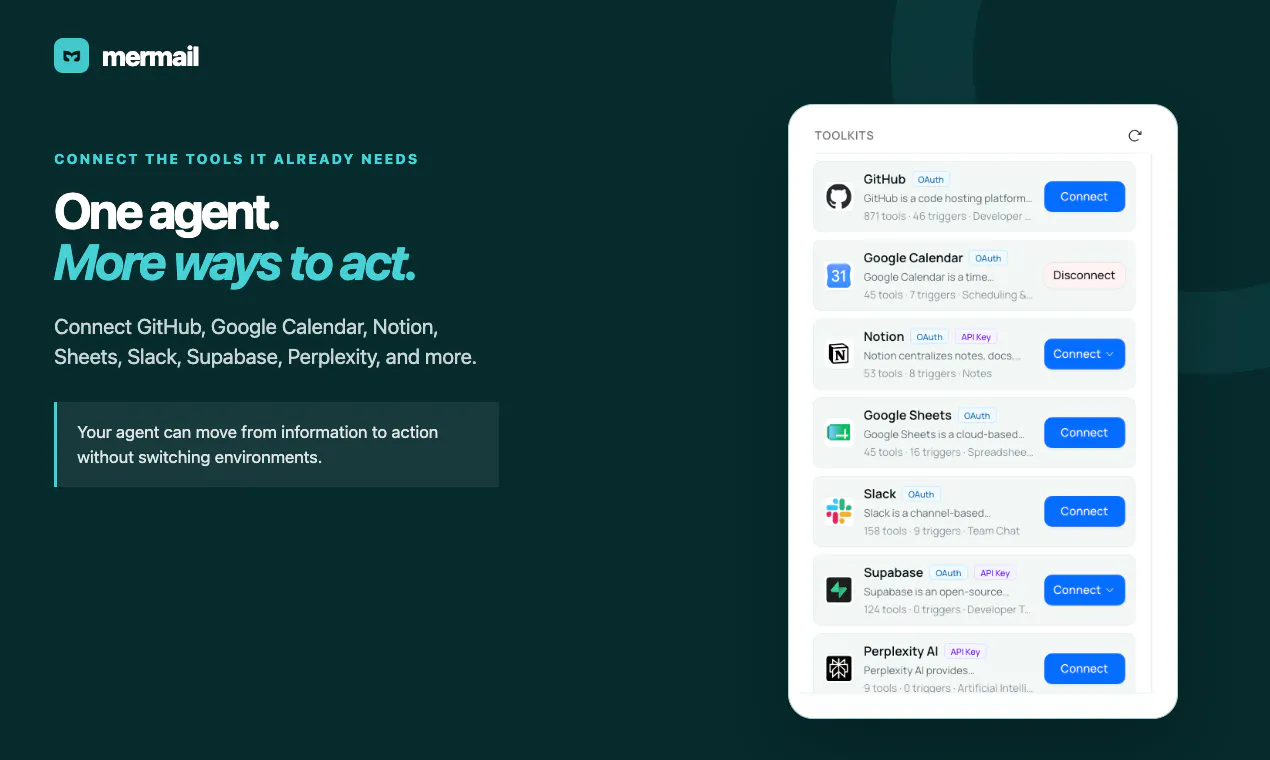
Mermail helps AI agents do more than chat. It provides the identity, communication, and payment infrastructure they need to interact with real online services. Connect via MCP, Skills, or the CLI to let your agent verify accounts, receive emails, complete checkouts, and manage subscriptions securely.

👋 Hi Product Hunt! I'm Toan, founder of Mermail.

First of all, a huge thank you to our Hunter, the Product Hunt team, and everyone taking the time to check us out today. ❤️

🚀 Why we built Mermail

Over the past year, we've seen AI agents become incredibly capable at reasoning.

But they still struggle with actually getting things done.

They can write code, answer questions, and plan workflows… yet they can't:
* Verify an email account
* Receive an OTP
* Subscribe to a SaaS tool
* Pay for a service
* Manage invoices or billing emails

We realized the missing piece wasn't another model.

It was infrastructure.

💡 Meet Mermail

Mermail gives AI agents what humans already rely on every day:

📧 A real email inbox
💳 A payment layer
🤖 An MCP server that lets agents interact with real-world services

Instead of building custom integrations for every website, developers can simply connect their AI agent to Mermail and let it operate through a trusted identity.

✨ What you can do today
✅ Give your AI agent its own email identity
✅ Receive verification emails & OTPs
✅ Connect with Claude, Codex, and other MCP-compatible agents
✅ Let agents subscribe to products and manage billing
✅ Handle invoices and payment notifications
✅ Prepare for the next generation of agentic commerce
We're also working on Agent Wallet, which will enable AI agents to manage payments even more autonomously.


Who is this for?
* AI builders
* MCP developers
* Agent frameworks
* AI startups
* Anyone building autonomous workflows that need real-world identity and payments


🎁 SPECIAL OFFER — Product Hunt Launch

To celebrate our launch on Product Hunt, get your first month of Mermail for just $1!

You’ll get:
⭐ Premium model access
⭐ Higher quota
⭐ Custom domain
⭐ Priority support

🚀 One month. Full power. Just $1.

This special offer is available for a limited time only. Don't miss it!


🙏 We'd love your feedback
* What’s the biggest blocker preventing your AI agent from completing real-world tasks?
* What integrations should we build next?
* If you're building AI agents today, would an email identity + payment layer simplify your workflow?
We'll be in the comments all day answering every question.


A huge shout-out to our incredible team and our early design partners who helped shape Mermail from day one. ❤️
Thank you again to the Product Hunt community for checking us out.
We’re excited to hear your thoughts and build the future of Agentic Commerce together! 🚀

5
回复

@toannhu Huge congrats🙌 on shipping,the vision here is massive. How do you protect the agent from prompt injection attacks embedded inside incoming emails?

1
回复

@toannhu awesome!!!!

1
回复

@toannhu  Great application!!

0
回复

Congrats! This may make agents very useful in every day tasks. How do you ensure the agent doesn't do something unintended due to misunderstanding users request? I mean stuff like spending too much money without approval?

2
回复

@mateuszkonik Great question! Currently, every payment requires human approval. We are building Qusto on our roadmap as a trust layer to enforce spending limits, allowlists, and other hard rules, so even if the AI is manipulated, it can't bypass payment policies.

1
回复
#15
Supercut - AI Video Editor
Type the edit. Record your screen. Zero uploads.
12
一句话介绍:Supercut 是一款完全在本地运行的 AI 视频编辑器,让你通过“输入指令”或“录屏自动缩放”完成剪辑,无需上传任何素材,直击传统网页剪辑工具“上传慢、隐私泄露、客户端受限”的核心痛点。
Privacy Artificial Intelligence Video
AI视频编辑 本地剪辑 隐私保护 屏幕录制 自动字幕 批量处理 桌面应用 无上传 MCP集成 效率工具
用户评论摘要:用户盛赞其能替代 Screen Studio、Loom 等五款付费工具,本地处理体验流畅。主要疑虑集中在定价不透明——未注册前无法获知长期费用,开发者回应称完全免费试用且无需账号。整体反馈积极,但缺乏对具体功能缺陷的深入批评。
AI 锐评

Supercut 的“本地优先”策略切中了视频编辑市场一个真实且被长期忽视的痛点:云端上传的延迟与隐私风险。在 Adobe、CapCut 等巨头竞相将 AI 能力云化的当下,它反其道而行之,将解码、转录、渲染全部压在本地 GPU 上,这对处理敏感商业素材的客户尤为致命吸引力。其“双前门”设计(自然语言指令 + 录屏自动缩放)也足够聪明,显著降低了剪辑门槛,且“文件夹批量编辑”和“MCP 服务器驱动”直指专业用户和 AI Agent 工作流,展现了难得的工具野心。

但必须泼一盆冷水:12 票的冷启动成绩说明产品仍处于早期,评论中一片叫好却缺乏真实使用中的瓶颈反馈,更像内测用户的自嗨。最大的隐患是“免费无账号”的商业模式可持续性——本地计算不产生云端成本,但后续若转向付费,用户对价格容忍度极低,且“AI 只看文字不看画面”的卖点虽保护隐私,却也限制了 AI 在画面理解(如自动识别主体、场景)上的潜力,这会让它在智能剪辑深度上先天不足。此外,浏览器端运行 + 4K 本地导出,对硬件要求极高,注定了它只是“效率玩家的玩具”而非大众工具。若不能快速建立清晰的定价层级并展示对复杂剪辑(多轨道、关键帧)的驾驭能力,它很容易沦为又一款“极客尝鲜后即弃”的产物。方向正确,但离“替代五款工具”的豪言,还有很长的路要走。

查看原始信息
Supercut - AI Video Editor
Two front doors: drop a clip and type the edit, or record your screen with auto-zoom on every click. 40 tools, auto captions, folder batch edits, a timeline, 4K desktop export. All on your device. Your footage never uploads. Free to start, no account needed.
Hey Product Hunt! I built Supercut because every "web" video editor I tried had the same first step: wait for your footage to upload to someone else's server. That step felt wrong. It is slow, it kills your privacy, and for client work it is often not even allowed. So Supercut runs the whole edit on your device. Decode, cut, caption, export: all local, in the browser or in the desktop app. Kill your wifi mid-edit, and it keeps working. The AI only ever sees the words you type, never a single frame. Supercut has two front doors. Door one: drop footage and type the edit. "Trim from 0:00 to 0:30", "make it 9:16 for reels", "add captions". One sentence is the whole edit, with 40 built-in tools behind it. Door two: record your screen. Auto zoom follows your clicks, the camera bubble stays a separate editable layer, and the recording lands in the same editor. So polishing a demo is also just typing a sentence. Around both: - Auto captions in five styles, transcribed on your machine. - Connect a folder and run one edit across every clip in it. - A full multitrack timeline when you want manual control. - The desktop app (Mac and Windows) exports 4K on your GPU. - The desktop app runs a local MCP server. Point Claude, Cursor, or any MCP client at it, and your agent can drive the editor. It is free to start, no account needed. The 53-second film in the gallery shows all of it. I would love to hear what you edit most, and what tool you want next. I read and answer everything today.
3
回复

This is a fantastic tool. Helped me a lot with my video editing.

2
回复
Congrats on the launch! This is a great replacement for atleast 5 paid tool I use right now like screen studio, loom and bunch of other subscriptions for just video editing.
2
回复

@devendra_singh_shekhawat Thank you. Yes, that's the goal! 🎯

2
回复

@harshmanwani - I like the concept, but not being able to understand what the costs are before signing up is a huge worry to me. I'm not prepared to give out my email until I understand what this wil cost me long term.

0
回复

@codeandsea Thanks, Brent. It is completely free to try. You can use it without signing up too.

2
回复
#16
ResearchMaster AI
Market research for product decisions you can verify.
8
一句话介绍:ResearchMaster AI 将产品、公司或市场问题转化为结构化研究空间,自动检索专业信源并附上证据链接,生成可核查、可导出的报告与幻灯片,解决AI聊天工具“有答案、无交付物”的决策研究痛点。
User Experience Artificial Intelligence Search
市场研究 竞争分析 AI报告生成 证据溯源 结构化工作台 投资可行性 决策支持 幻灯片导出 专业信源 产品经理工具
用户评论摘要:评论认可其直击“答案vs交付物”的行业痛点,认为从聊天回复到可交给创始人/投资者的报告仍有巨大鸿沟。创始人回应强调消除研究繁琐步骤、提供可靠来源,并邀请用户反馈研究场景与报告结构改进建议。
AI 锐评

ResearchMaster AI 的切入点精准且克制——它没有试图再造一个“万能问答助手”,而是锚定“决策级研究”这一高价值、高门槛场景。其核心价值不在于生成答案,而在于将“不可信的快速答案”转化为“可核验的决策证据链”。从产品设计看,三类关键能力(专业源检索、冲突提示、导出交付)均直击企业研究工作的真实痛点:AI聊天工具最大的问题不是“不准”,而是“无法对结论负责”。ResearchMaster 尝试用“证据绑定”和“冲突显性化”来部分接管这种责任,这是明智的差异化。然而,风险同样明显:第一,专业信源的质量与覆盖度是隐性壁垒,若数据库深度不足,极易沦为“高级版搜索引擎”;第二,“结构化报告”若模板僵化,反而会限制资深研究者的灵活工作流;第三,40%折扣的Launch策略虽能拉新,但工具类产品留存取决于报告编辑体验与团队协作闭环是否足够顺滑。目前投票仅8票,尚属早期,真正的考验是:当用户把报告拿给投资人或决策层时,是否真的比人工作品更“可信”或更“高效”。若能证明这一点,它就不是又一个AI wrapper,而是研究流程的基础设施;若不能,则只是精致的原型。建议团队后续重点披露典型行业(如医疗、SaaS)的案例对比数据,并开放来源库白皮书,以建立专业信任感。

查看原始信息
ResearchMaster AI
ResearchMaster turns a product, company, URL, file, or market question into a structured research workspace. It searches across professional sources, keeps claims linked to evidence, highlights source conflicts where possible, and turns the findings into export-ready reports and slides for product, competitor, market, and feasibility decisions.

Hey Product Hunt 👋 I'm Lily, co-founder of ResearchMaster AI.

We built this because we kept running into the same problem in our own work.

AI chat tools are great for quick answers, rewriting, and short summaries. But when the question affects a product decision, competitor analysis, market entry, investment memo, or feasibility study, a quick answer usually is not enough.

We still had to collect more sources, compare conflicting information, rebuild the structure, check which claims were actually supported, and then turn everything into a report or slides.


ResearchMaster AI is built for that workflow.

You can start with a product, company, URL, file, or a plain market question. The system turns it into a research plan, searches across professional sources, cross-checks key points where possible, and keeps the evidence attached to the findings.

The output is not just a chat response. It becomes a research workspace with reports, insights, Q&A, slides, and exports you can review or share with a team.

The main use cases we are focusing on are:

  • Product and competitor research

  • Industry and market research

  • Investment and feasibility research

  • Market entry and launch decisions

  • Internal research that needs sources people can review later

We care about three things in particular:

  1. Simple input — you shouldn't need to write a perfect prompt or already know the research framework.

  2. A usable report — The report should be clear enough to edit, present, and share.

  3. Checkable conclusions — Key claims should point back to sources, and uncertainty or source conflicts should not be hidden.

What I've learned building this is that answers are cheap now - every AI tool can give you one. What's still hard is turning that answer into something you'd actually hand to your team or your investor. That's the gap we're closing. 🎯 

0
回复

🎁 A small thank-you for the Product Hunt community - you can get 40% OFF today with our launch coupon.


👉 Try using ResearchMaster.ai to research a topic you've been curious about, and let me know how it goes. I'd especially love to hear what you researched, where you think the analysis or data sources could be improved, and what report structure would actually save you time in your own work.


I'll read every comment carefully! 🙏

0
回复

Hunting this one because the "answer vs. deliverable" problem is something I run into constantly with clients - you can get a solid AI answer in seconds now, but turning it into something you'd actually hand to a founder or investor is still real work. Excited to see @yang_lily and team tackle that gap directly instead of just adding another chat wrapper. Wishing you all the success with ResearchMaster AI 🚀

0
回复

@kate_ramakaieva We are honored to have Kate as our Product Hunt Hunter. She has offered us abundant professional advice throughout the entire product launch.

We hope ResearchMaster AI can truly eliminate tedious steps in research workflows, deliver reliable information sources, and enable people to focus more efficiently on final judgment and decision-making.

0
回复
#17
ilolink
The registry your team's AI agents actually read
8
一句话介绍:ilolink 是一个团队AI代理知识注册表,将分散在个人聊天中的技能、规范、计划等沉淀为可版本化、可审阅的共享链接,让所有MCP客户端(如Claude、ChatGPT)统一读取,解决AI知识“一人一聊,人走知识亡”的团队协作痛点。
Productivity Developer Tools Artificial Intelligence
AI代理注册表 团队知识管理 MCP客户端 技能共享 提示注入防护 版本控制 协作审批 开发者工具 知识沉淀 一次买断
用户评论摘要:目前仅创始人自述,无用户提问或建议。其核心卖点(代理回写提案、结构化防注入)尚待第三方验证;低价一次性付费策略引发潜在性价比讨论,但缺乏实际使用反馈。
AI 锐评

ilolink 切中的痛点真实且锋利:LLM的“会话性遗忘”导致团队重复造轮子,而现有知识库工具(如Confluence)无法与代理工作流原生集成。其“注册表+提案制”的设计颇有远见——让代理贡献知识但强制人类审批,将提示注入风险从“道德约束”转为“架构约束”,这是对当前Agent安全裸奔现状的一次正确纠偏。但产品面临三重考验:其一,MCP生态尚在早期,多数团队连统一的代理入口都没有,该工具存在“生态前置”风险;其二,$9买断五人团队的定价虽反套路,却易让用户怀疑可持续性——若无人维护,注册表很快会变成弃用的“僵尸库”;其三,评论为零,创始人替代用户发言,缺乏真实打磨痕迹。其“Trending”功能试图做GitHub的Agent精选榜,但 curation 成本高且易受推广操纵。总体而言,这是一款理念正确、执行待验的“基建型”工具,若能在某垂直团队跑出复利效应(如DevOps知识库),有潜力成为Agent时代的GitBook,但现阶段更像是给早期采用者的玩具,而非生产必需品。建议团队聚焦一个高复用场景(如onboarding runbook)做透,而非铺开十种知识类型。

查看原始信息
ilolink
ilolink is a registry for what agents produce — skills, specs, plans, runbooks, handoffs. Push once from any repo; every teammate's assistant (Claude, Claude Code, ChatGPT — any MCP client) reads the same versioned, reviewed set. Free solo. $9 once for a team of five.
Hello Product Hunt 👋 Every team using AI assistants has the same leak: an agent figures something out, a working procedure, a decision and its reasoning, a constraint that cost an hour, and it dies in one person's chat. The next teammate's assistant re-learns it from zero. ilolink is the fix we wanted for ourselves: a shared registry of ten kinds of team knowledge (skills, agents, specs, designs, plans, workflows, sessions, decisions, runbooks, evals). One name resolves to one artifact for everyone. Push from a repo like you'd push code; member writes land as proposals a human approves before any agent reads them so nothing unreviewed ever steers your teammates' assistants. Key features - Agents contribute back. Connected assistants propose what they learn at the end of a task — always as a proposal, never a live write, even for admins. Prompt-injection containment is structural, not a policy. - Everything is a link. Anything worth showing the world publishes as a page anyone can open, no sign-in to read — with private analytics (views, scroll heatmaps, reactions) for you. - Trending (ilolink.com/trending): a weekly, hand-approved directory of the skills, MCP servers and agents breaking out across GitHub. Curated velocity, not another 20,000-item index. Pricing is deliberately boring: free for one person, $9 once, not monthly, or a team of five. Would love to hear how your team shares what your agents learn today. AMA.
0
回复
#18
AutoHDMI - Auto Switch to HDMI
Auto switch Google TV to HDMI input after a power cut
7
一句话介绍:AutoHDMI 能在安卓电视/谷歌电视意外断电或重启后,自动切换到你预设的HDMI输入源,彻底免去手动按遥控器切换的麻烦,专治“开机永远停在主页”的痛点。
Android TV Home Automation
电视应用 谷歌电视 安卓电视 HDMI切换 自动启动 断电恢复 智能家居 易用性 家庭用户 系统增强
用户评论摘要:多数用户认可其精准解决了家庭场景痛点,认为该功能理应内置在系统中。有TCL电视用户表示将实测。开发者回应称这是Play商店目前唯一能做到此功能的应用。建议方面,用户期待能兼容更多电视品牌,并希望界面设置更直观。
AI 锐评

AutoHDMI的7票与其说是产品热度,不如说是对“智能电视反智化”的一次精准控诉。它的真正价值不在于“切换HDMI”这个看似微小的动作,而在于重新定义了电视作为“家电”而非“巨屏平板”的属性。当所有厂商都在强迫用户进入自家瀑布流界面时,AutoHDMI用极简逻辑夺回了用户对输入源的控制权——这本质上是对智能电视“抢主页”行为的用户侧反制。

但必须冷静看到其天花板:这是典型的“补丁式产品”,依赖Android TV系统广播意图(BOOT_COMPLETED)的开放权限,且仅对断电后重启生效,对HDMI-CEC控制的设备切换无能为力。更关键的是,它治标不治本——真正的问题在于电视厂商的系统逻辑缺陷,而非用户缺乏耐心。一旦谷歌在后续系统版本收紧后台自启权限,或主流电视品牌跟进类似功能,这款应用的生存空间会被瞬间挤压。

不过,开发者的洞察极其敏锐:他捕捉到的是“非核心用户(老人、孩子)在复杂TV UI前的无助感”,这是许多智能电视厂商忽视的沉默多数。从这个角度看,AutoHDMI是一件精巧的“数字无障碍”工具。建议其后续向“场景自动化”延伸,比如根据时间或开机次数自动切换(白天盒子、晚上游戏机),否则仅靠“断电修复”这一个痛点,很难撑起可持续的用户粘性。简言之:值得一用,但格局要再大一点,否则只能是智能电视生态里一朵转瞬即逝的浪花。

查看原始信息
AutoHDMI - Auto Switch to HDMI
AutoHDMI automatically switches compatible Android TV and Google TV devices to your chosen HDMI input after a full restart or power cut. It is useful for people who mainly use a set-top box, console, PC, or external streaming device and do not want to manually change inputs every time the TV boots. Set it up once, choose your HDMI input, and let the TV switch automatically.
I made AutoHDMI because every power cut sent my Google TV back to the home screen instead of the HDMI my family actually used. It was a small frustration for me, but a much bigger problem for family members who were not comfortable navigating TV menus. So I built a simple solution: choose an HDMI input once, and AutoHDMI switches to it automatically after a full restart. I hope it makes TVs a little easier and less frustrating for others too. I would genuinely appreciate any feedback.
5
回复

@AutoHDMI - Auto Switch to HDMI  - Caught the pain point. This should have been easily a module in OS itself. I will try on my TCL TV.

4
回复

@konzeptarchitekt Thank you for using it, it is currently the only app available in the Play Store that can do this

1
回复

@AutoHDMI - Auto Switch to HDMI @taponyourglass really interesting niche product here - I feel like I never even thought this was an issue - I think I will use this at my Grandmas house to make it easier for all the analog family that tend to be over there on a daily basis!

Congrats on the launch and I think the tool is really interesting!

0
回复

Interesting, how nobody thought of that earlier. The UI screenshots makes it look convenient to use.

0
回复
#19
Leadline V3
Find B2B buyers already asking Reddit for what you sell
7
一句话介绍:Leadline V3 是一款Reddit销售线索挖掘工具,能自动监测并筛选出正在讨论相关需求的帖子,并按购买意图与匹配度排序,帮B2B团队在对话活跃期高效触达潜在客户,省去手动搜索的麻烦。
Sales Marketing SaaS
Reddit营销 销售线索挖掘 B2B获客 社交聆听 意图识别 潜在客户开发 SDR工具 外贸获客 社区监测 线索管理
用户评论摘要:目前评论仅来自发布者本人,无有效用户反馈或提问。发布者主要强调产品围绕“哪些Reddit对话值得回复”重建,并邀请用户试用后反馈。暂未发现用户建议或问题,社区反响未明。
AI 锐评

Leadline V3踩中了一个真实且被低估的痛点:Reddit是B2B买家“未被听见的搜索栏”,大量高意向询盘淹没在帖子里,而手动检索效率极低。产品将“关键词监测+意图评分+会话收件箱”整合为一条管线,逻辑上闭环,尤其对服务中小B2B的SDR团队具备实用价值——时间敏感性正是Reddit商机的核心。

但问题也明显:其一,意图与匹配度的“评分”算法如果只是关键词加权而非语义理解,误判率会很高;其二,Reddit用户对广告式私信极度反感,产品若只优化“找到”而不深度打造“如何回复”的语境适配能力(如基于整帖情绪生成非推销式草稿),转化率将大打折扣;其三,7票的冷启动数据表明市场尚未验证,且$150的终身定价暗示了低续费焦虑,后续算法维护成本需依赖小体量用户规模摊薄,存疑。真正价值不在“省时间”,而在于把“看不见的主动询盘”变成“可排名的商机队列”——但这需要以真实购买信号(如求助细节、预算词、时间紧迫度)而非单纯话题热度驱动排序。建议尽快开放公开API并沉淀“回复转化率”作为唯一核心指标,否则很容易沦为又一个“自我感动型工具”。

查看原始信息
Leadline V3
Leadline finds Reddit posts from people already looking for products or help like yours. Track keywords and subreddits, rank each opportunity by buyer intent and fit, and keep every conversation in one inbox. Leadline can also draft a reply from the full thread, but you decide what gets posted. Stop searching Reddit by hand. Find the right conversation while it is still active.
Hey Product Hunt 👋 I just shipped Leadline V3. I rebuilt it around one question: Which Reddit conversations are actually worth replying to? Leadline finds people already looking for products or help like yours, ranks the opportunities by intent, fit and timing, and keeps everything in one pipeline so good leads don't disappear into a pile of tabs. For the launch, I opened 20 lifetime spots at $150. If you try it, I’d genuinely love to know one thing: Would you actually reply to the first 5 opportunities Leadline finds for you? I’ll be here answering questions all day ❤️
0
回复
#20
Post Formatter
Formatting for LinkedIn, X and Threads that survives paste
7
一句话介绍:Post Formatter 是一款专为 LinkedIn、X 和 Threads 打造的文本格式化工具,通过纯文本复制机制解决加粗、斜体、项目符号在粘贴后丢失的痛点,无需授权账号即可使用。
Chrome Extensions Productivity Marketing
文本格式化 社交媒体工具 富文本粘贴 Unicode转换 内容创作 跨平台兼容 隐私安全 一次性付费 浏览器扩展 生产力工具
用户评论摘要:目前仅有开发者自述评论(1赞)。核心反馈聚焦于:现有扩展因复制HTML剪贴板导致格式被平台剥离,本产品改用纯文本复制解决此问题;定价为一次性7美元,对比19-20美元/月订阅制具备价格优势;开发者强调无需页面读取权限,保护用户隐私。
AI 锐评

Post Formatter 切中的是一个真实且高频的“微痛点”——社交媒体富文本粘贴失效。其技术路径(Unicode字符模拟样式而非HTML)确实比多数扩展更聪明,因为LinkedIn的编辑器会剥离富文本格式,但无法剥离Unicode字符。这本质上不是“格式化工具”,而是“格式伪装器”,用字符映射偷渡样式,思路值得肯定。

但产品天花板极其明显。首先,Unicode伪装格式有先天缺陷:不同平台、字体渲染下效果不一致,且无法覆盖所有样式(如高亮、超链接);其次,目标用户是内容运营者,但这群人通常用Hootsuite等一体化排程工具,独立格式化插件是低频场景。7美元买断看似良心,实则是开发者对持续订阅缺乏信心的自我定位——这个需求撑不起订阅制,但也很难撑起规模化的买断收入。

更尖锐的问题是:开发者强调“零权限、不读取页面”,这确实是隐私卖点,但同时也意味着产品无法提供“一键从草稿箱提取并格式化”的闭环体验,用户仍需复制、粘贴、转换、再粘贴,效率提升有限。它在Product Hunt仅获7票,说明市场反馈冷淡,并非偶然——这更像是一个技术Demo,而不是具备网络效应的产品。如果开发者不做成跨平台客户端(如接入Raycast、Alfred)或提供API嵌入写作工具,大概率会小众地活下去,但注定无法成为主流生产力工具。建议团队尽快明确商业化落地场景,否则“一次性买断”只是优雅的止损宣言。
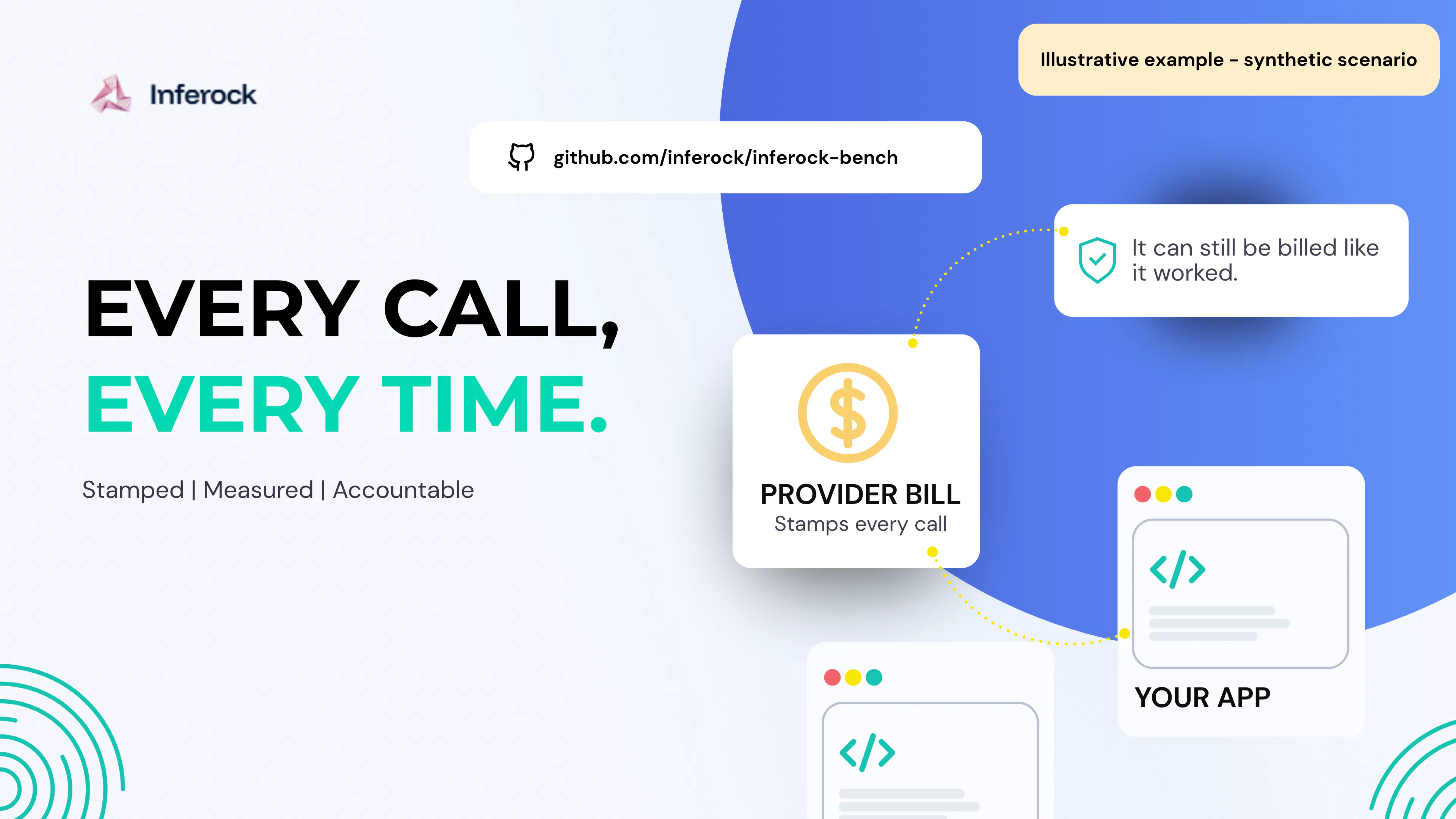
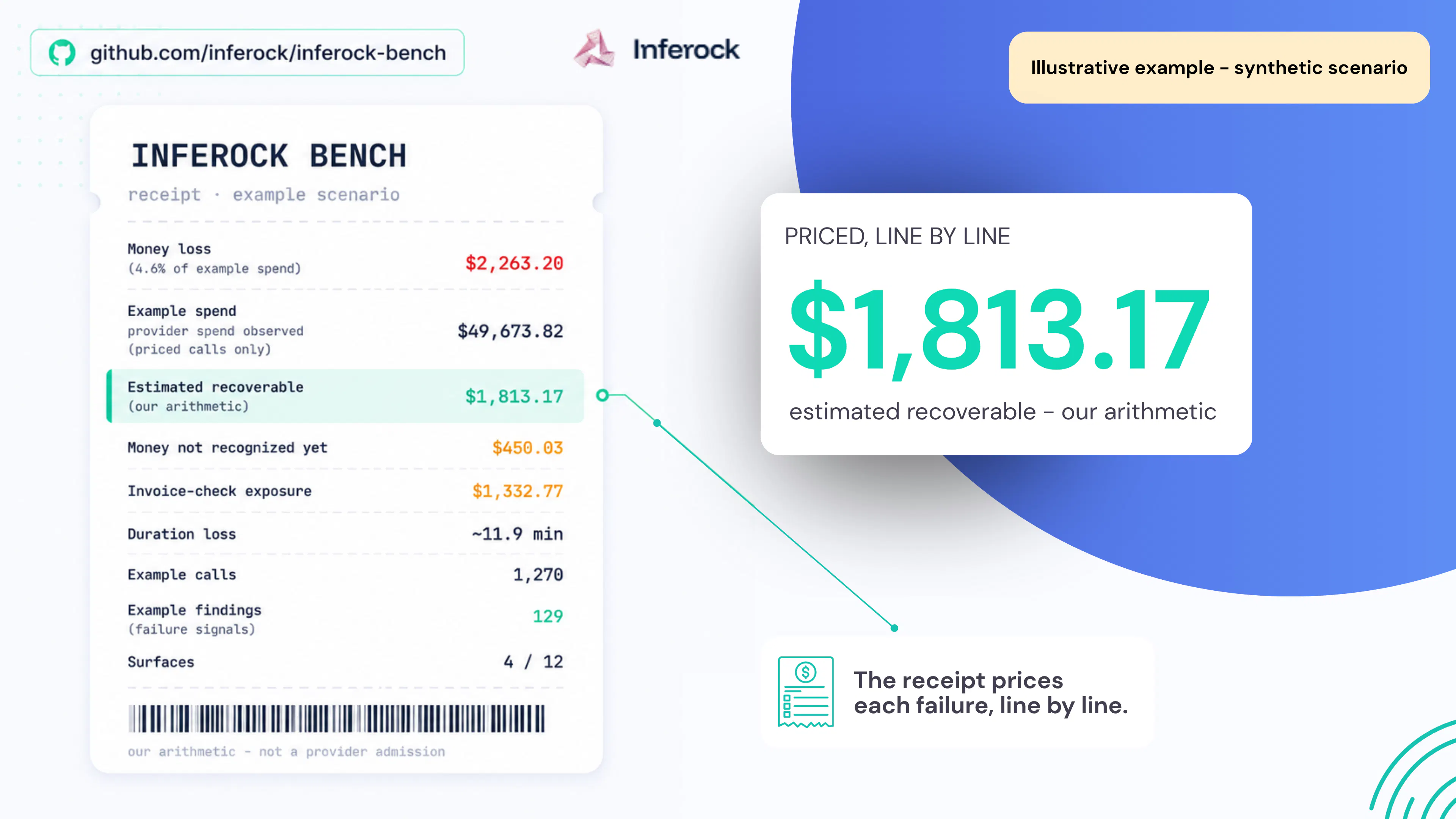
查看原始信息
Post Formatter
Format LinkedIn, X and Threads posts with bold, italic and bullets that survive copy-paste — no account access needed.
Hey PH 👋 I kept seeing "bold" LinkedIn posts lose their formatting the second they got pasted — turns out most formatting extensions copy via HTML clipboard, which LinkedIn's composer strips. This one copies as plain text instead, so it survives everywhere. Priced it as a one-time $7 unlock instead of the $19-20/mo subscriptions everyone else charges — formatting text isn't a recurring-value feature, so it shouldn't be a recurring bill. Happy to answer anything about how the Unicode trick works, or why I skipped host_permissions entirely (it never reads any page you visit).
1
回复