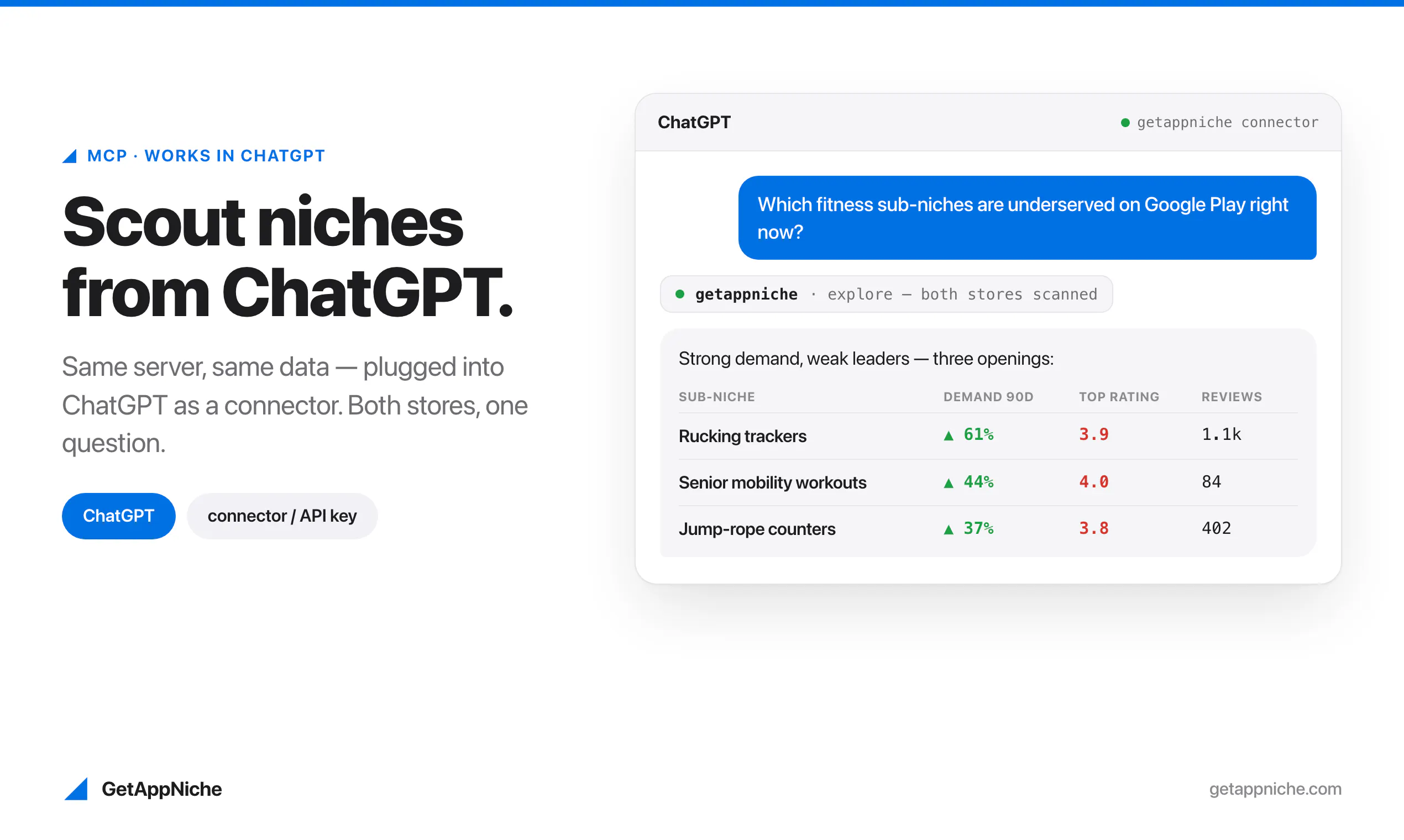
Product Hunt 每日热榜 2026-08-16

PH热榜 | 2026-08-16

#1
Blume
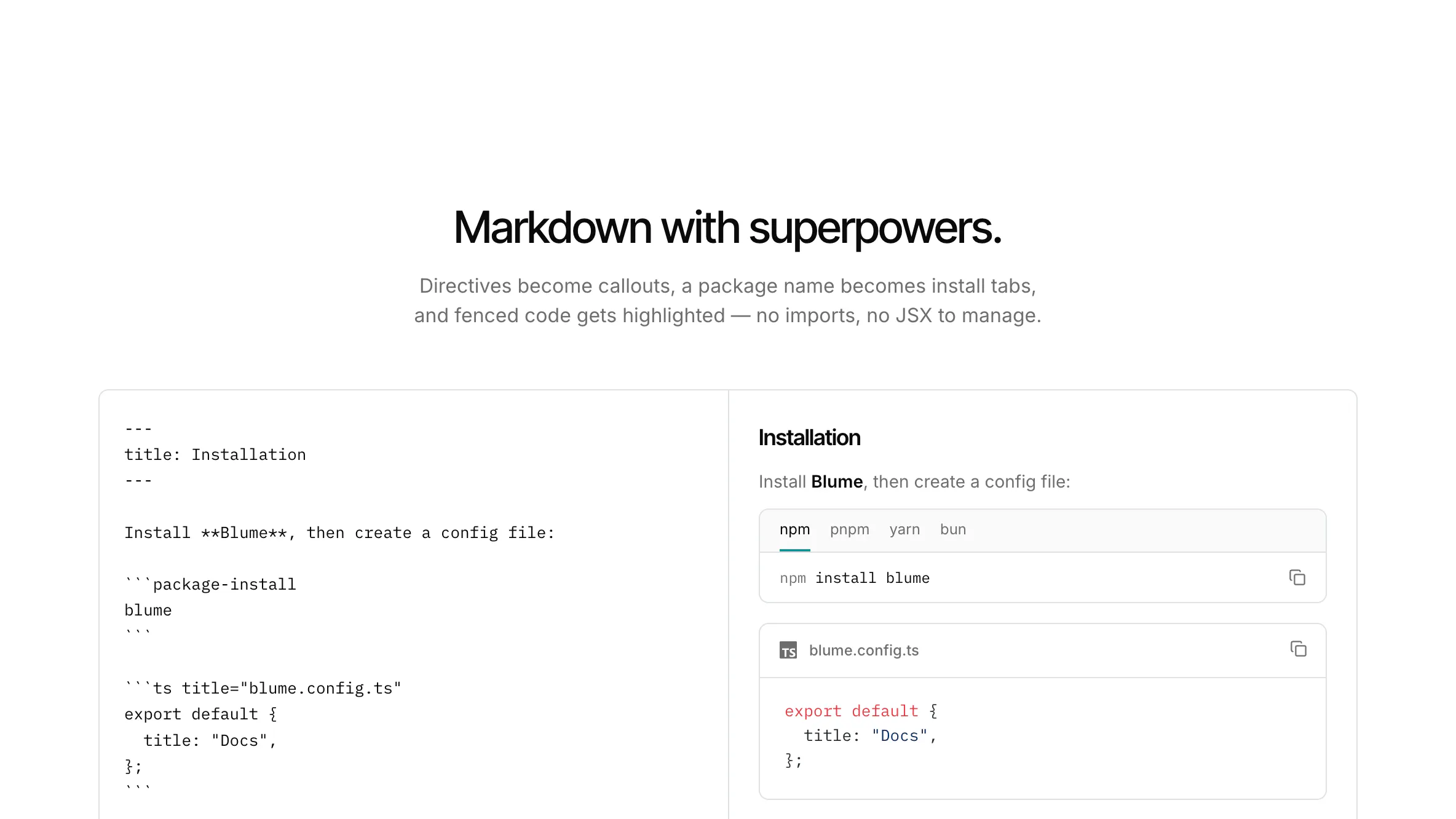
AI-ready, Markdown-first documentation framework
257
一句话介绍:Blume 是一个基于 Markdown 的文档框架,主打“AI-ready”与零配置部署,帮助开发者快速构建美观、快速、可被 AI 代理高效读取的文档站点,解决传统文档工具在内容结构、部署复杂度和 AI 检索适配上的痛点。
Developer Tools
文档框架 Markdown AI-ready 开源 零配置 Astro Vite 开发者工具 SEO 静态站点
用户评论摘要:用户普遍好奇“AI-ready”的具体实现,追问是否内置 llms.txt、结构化输出或 schema。也有人担心文档与API漂移问题,询问是否有校验机制。多数评论表达对作者高产能力的惊叹,部分实测反馈出现空白页问题,整体认可开源替代Mintlify的定位。
AI 锐评

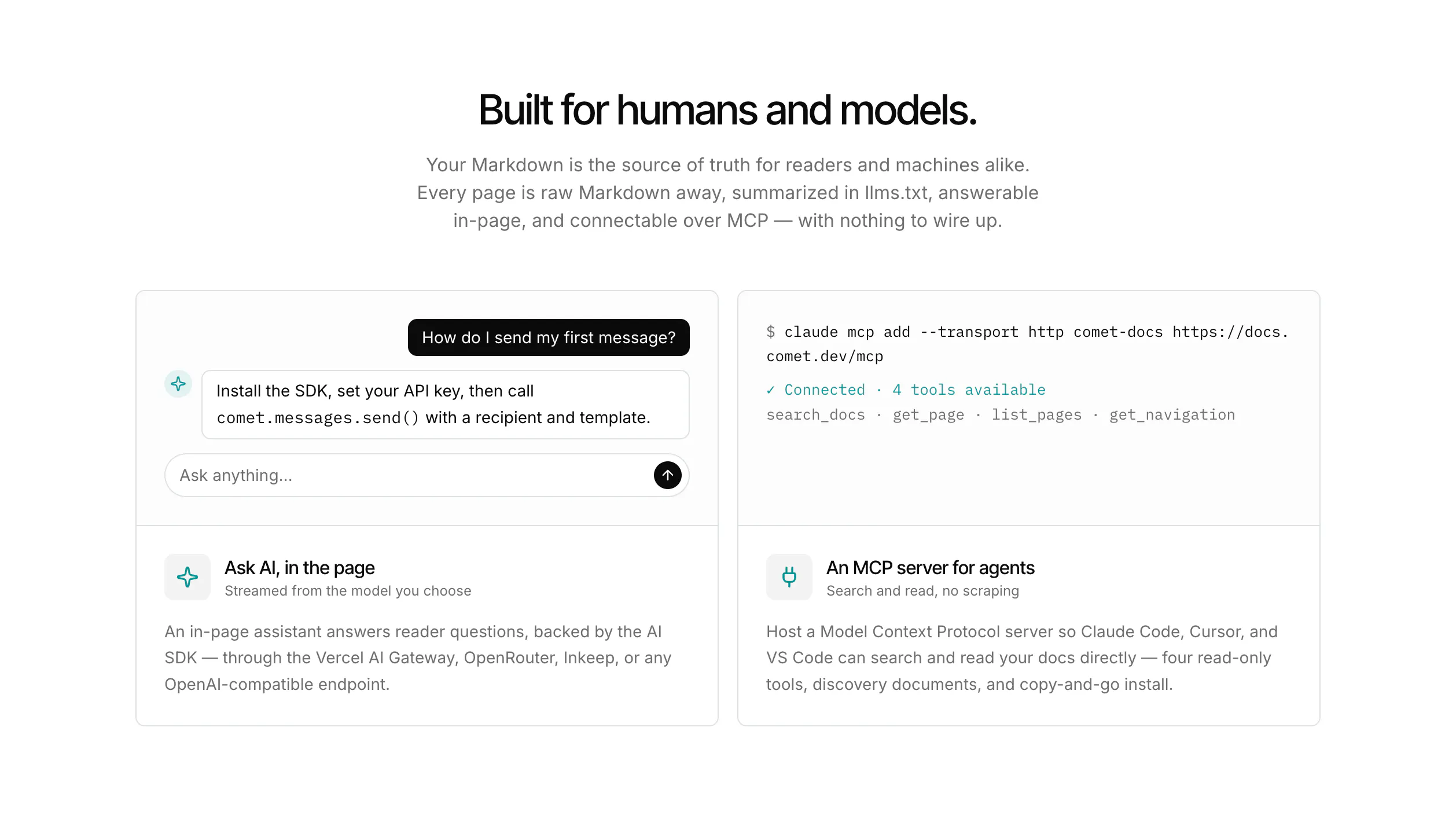
Blume 踩中了两个真实痛点:一是文档工具链的割裂——传统框架要么重配置(Docusaurus),要么闭源且贵(Mintlify),要么AI支持停留在“语义化HTML”这种伪需求;二是LLM应用爆发后,文档不再是给“人”读的,更是给“代理”读的。它用llms.txt、内容协商、MCP服务器等一揽子方案,把“AI-ready”从营销词变成工程配方,这是比“美观和SEO”更硬核的价值主张。

但评论区的质疑同样致命:当用户问“如何检测文档与API漂移”时,回答是“未来用skills弥补”——这暴露了当前版本本质仍是“渲染层”,而非“知识管理层”。AI-ready如果只解决“读取格式”,不解决“内容保鲜”,那顶多算降本,不算提效。另外,零配置是把双刃剑:它牺牲了深度定制能力,一旦用户需要复杂布局或权限控制,会迅速撞墙。开源策略是亮点,但生态尚未成型,插件与主题数量将决定其天花板。

一句话评价:Blume 是文档生成框架里的“性能党+AI原教旨主义者”,值得关注,但别急着把生产环境迁移过去——等它回答完“内容如何与世界同步”这个问题再说。

查看原始信息
Blume
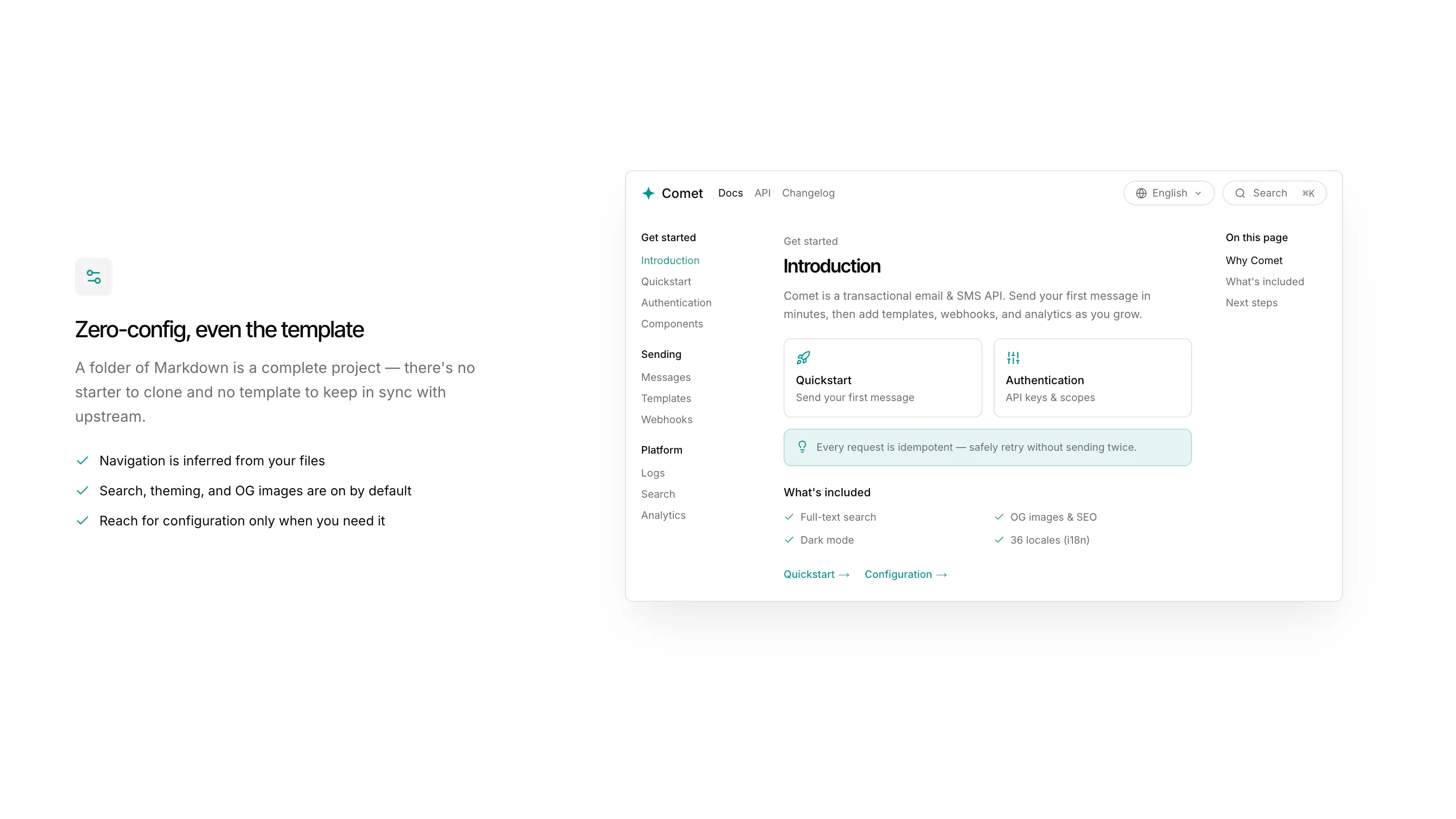
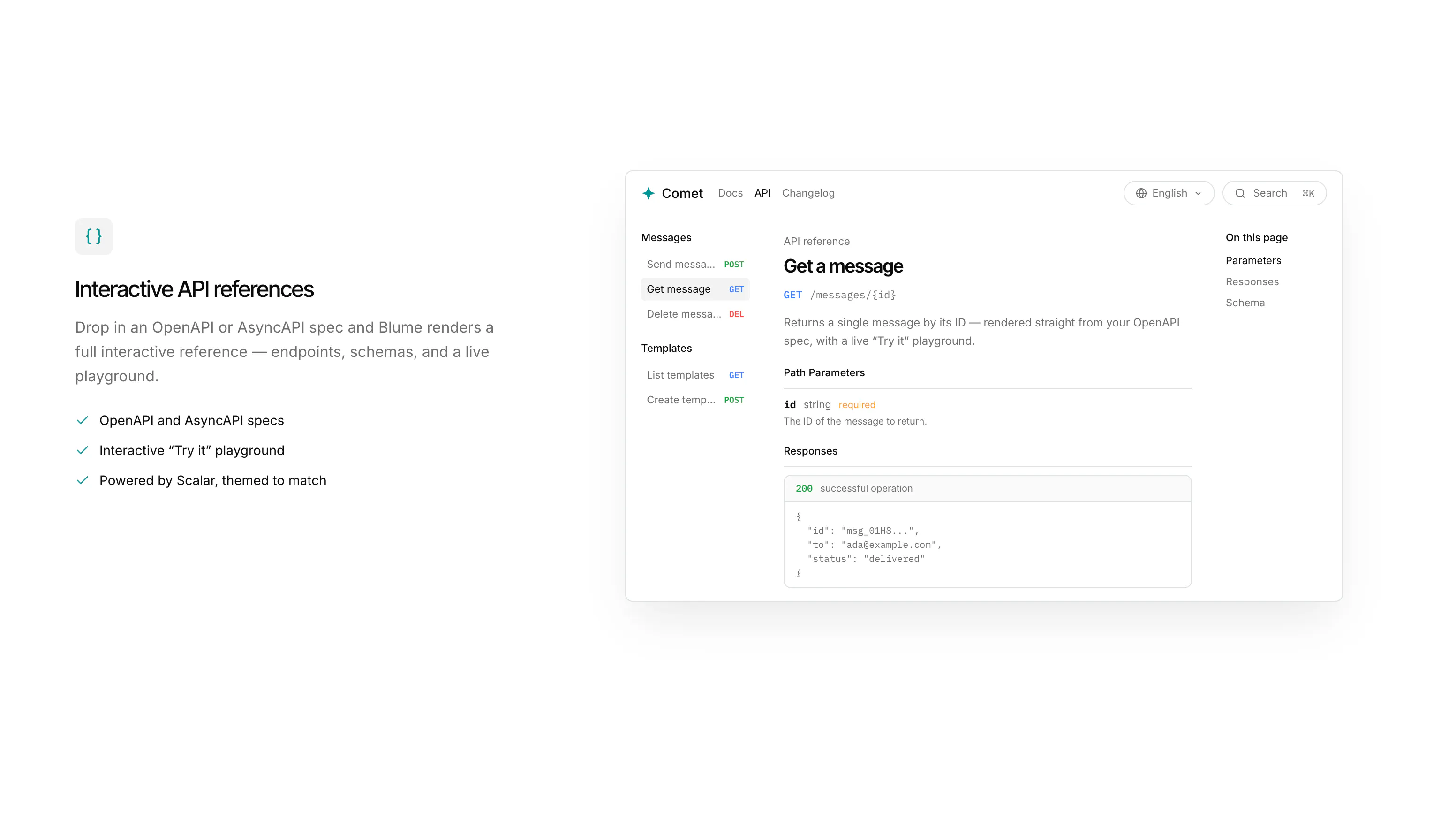
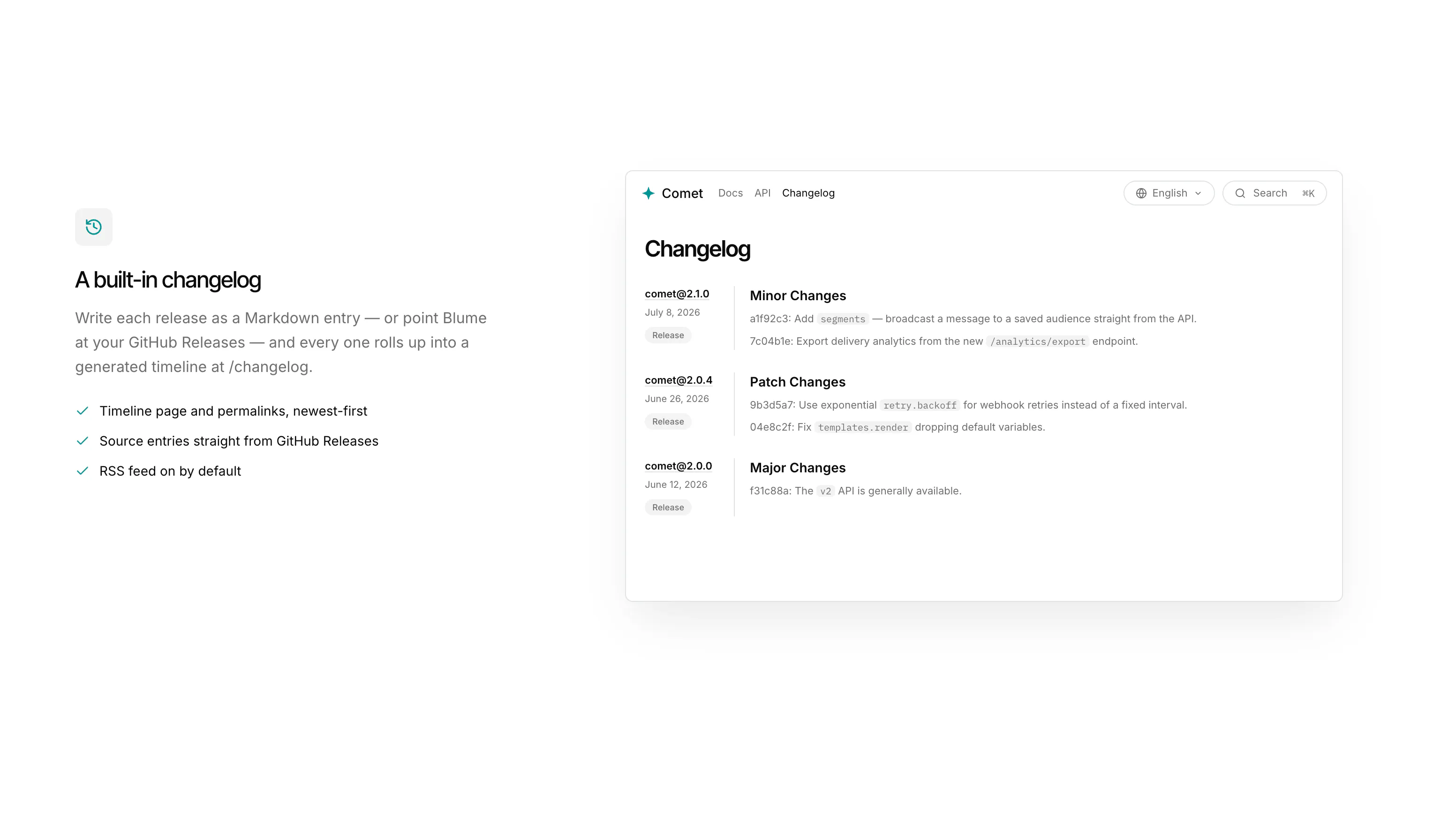
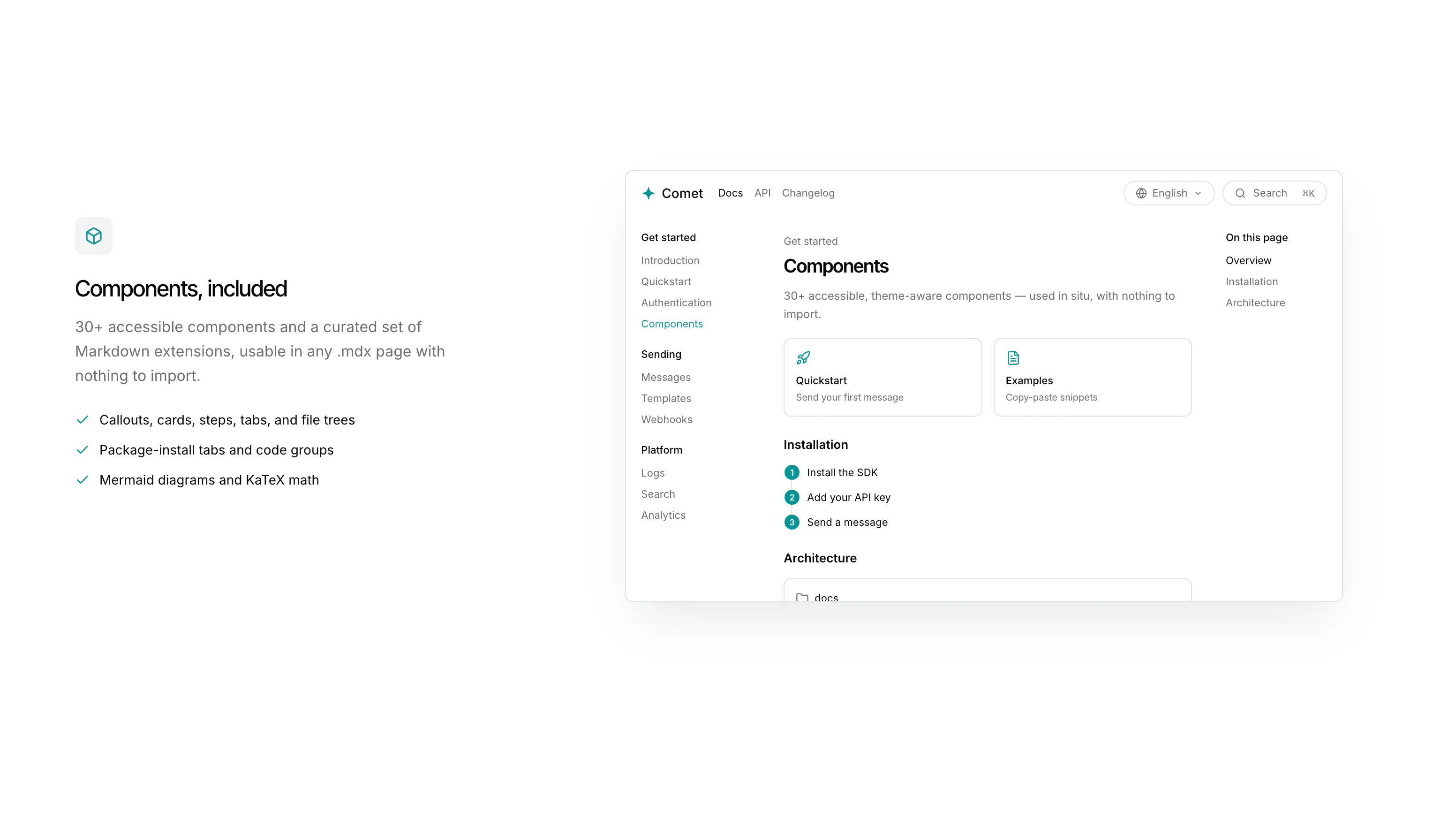
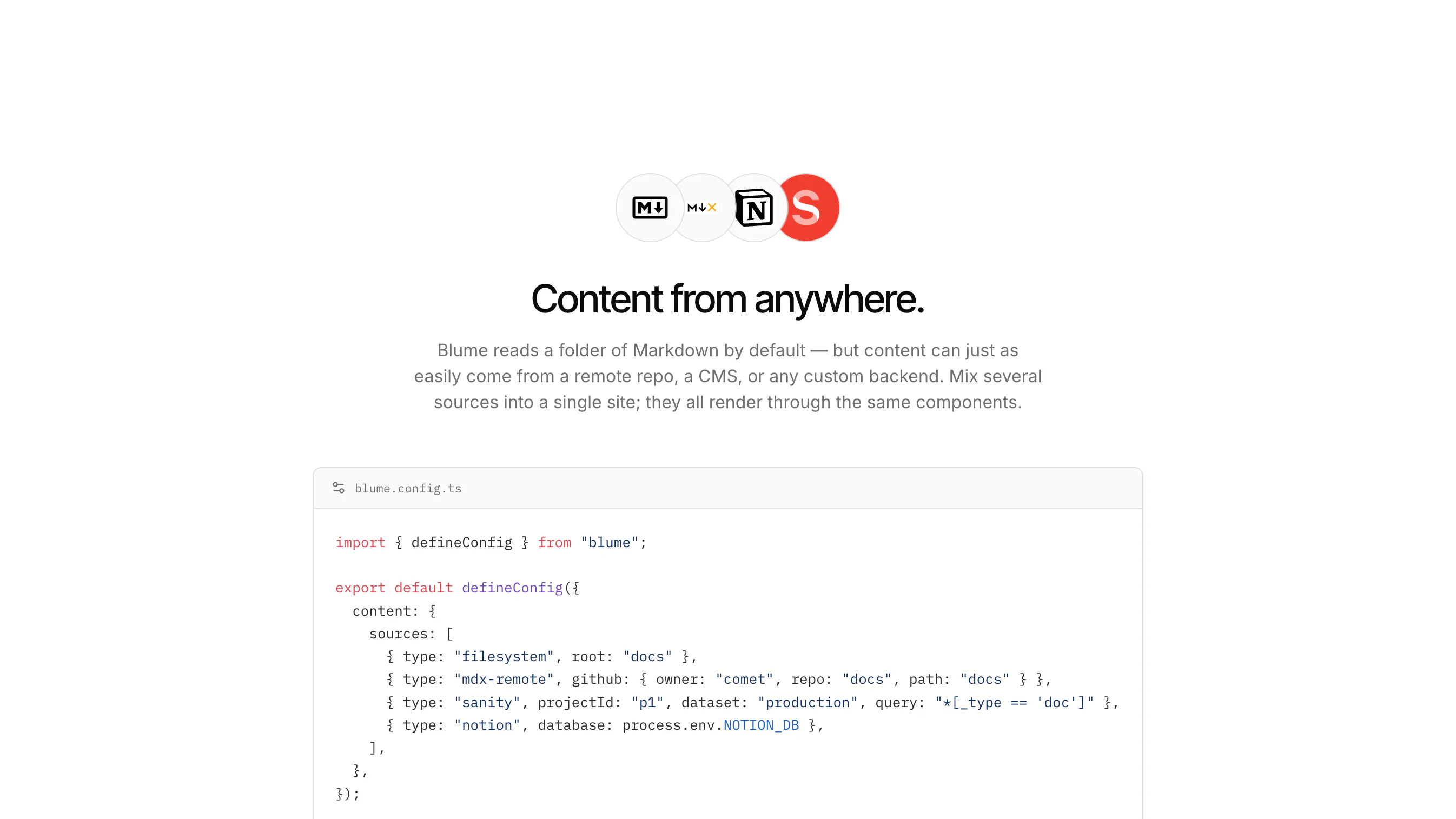
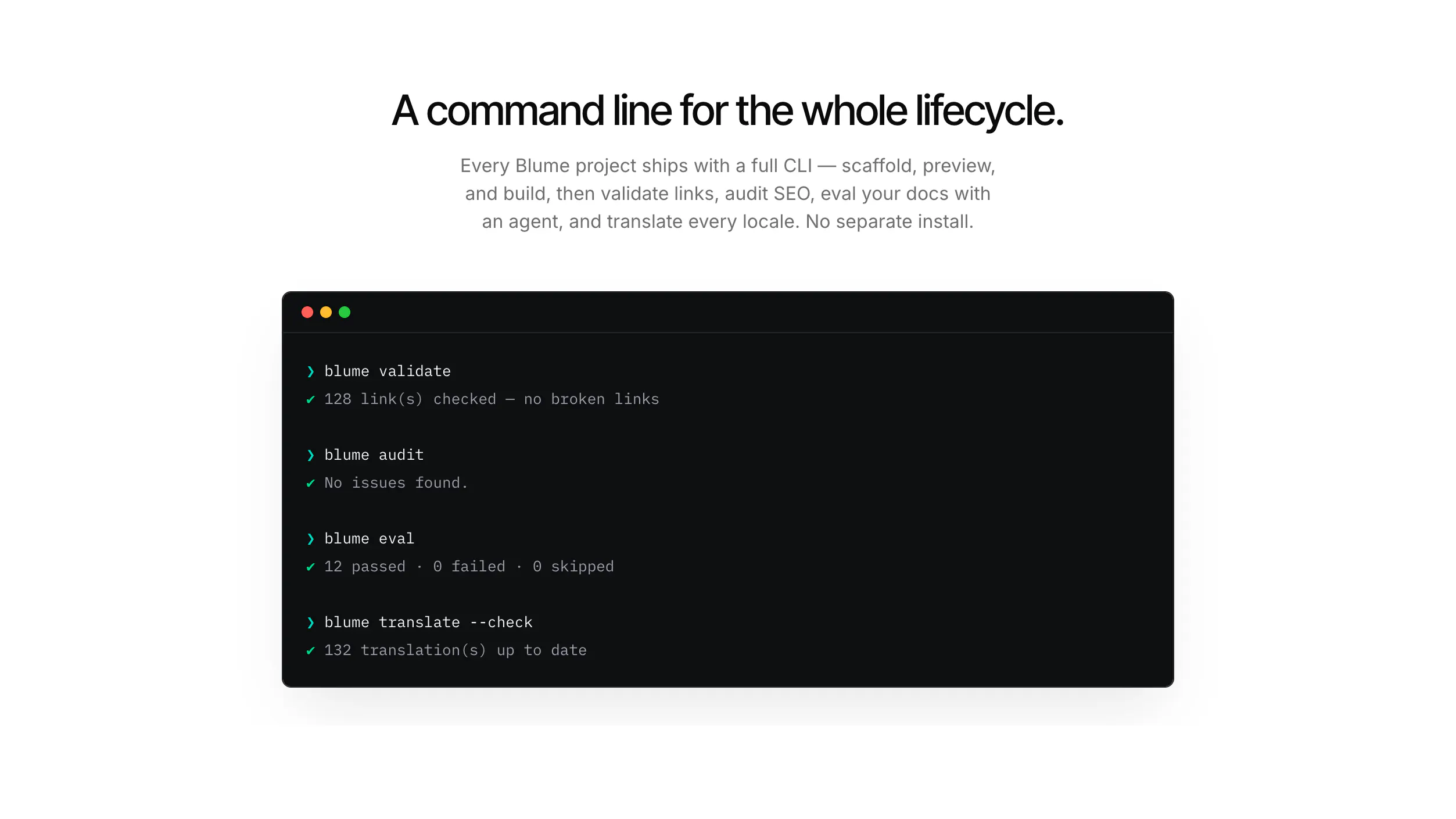
Ship beautiful, fast, AI-ready documentation from plain markdown. Blume gives you search, theming, SEO, and one-command deploys on Astro and Vite.

the maker of @Ultracite keeps cooking.

@haydenbleasel just introduced @Blume, an open-source alternative to @Mintlify and @Fumadocs that is fast, AI-ready, and zero-config.

view source code here

6
回复

@haydenbleasel  @fmerian Curious what "AI-ready" means concretely here, llms.txt and clean semantic output, or something more? That term is getting stretched a lot right now and yours seems to mean something specific.

0
回复

@haydenbleasel  @fmerian Hayden is on one of those “apparently sleep is optional” runs.

Ultracite, and now Blume. Open source, zero config, AI ready, and coming straight for the docs stack.

At this point, we’re not even watching a maker ship products. We’re watching a maker build an ecosystem. 🔥

0
回复

@haydenbleasel  @fmerian Congrats on the launch! "AI-ready" jumped out at me. I’m curious how you’re actually pulling that off. Is it just clean markdown that LLMs can chew through easily, or are you baking in structured data or schemas so AI assistants pull and cite docs correctly, not just scrape them? We’ve been down this hole ourselves on the content team, so I’d love to hear how you’re tackling it for a docs-first product.

3
回复

curious what "AI-ready" means concretely here - is it generating something like an llms.txt under the hood, or is it more about the markdown being cleanly chunked/structured for retrieval. the docs tools I've seen that use this label usually just mean well-formed markdown, but the actual pain point for me has always been staleness - docs drifting from the real API surface over time. does blume do anything to flag that drift, or is it purely a generation/theming layer on top of whatever markdown you feed it

1
回复

@galdayan Means lots of things - llms.txt, raw markdown via negotiation headers, mcp servers, agent readability, skills. All in the pursuit of making your docs easier to read by agents. Check it out here: https://useblume.dev/docs/configuration/ai

0
回复

@galdayan As for staleness, we have a few things to help here e.g. translations but hoping we can work on bridging the gap between product and docs more going forward, perhaps with skills.

1
回复

Congrats on the Launch!

I have built a quick demo for you
https://app.livedemo.ai/livedemos/6a81d97a73073a505dd64fa5

0
回复

@gapostolov I get a blank ehite page. Let me know when you get it up again?

0
回复
#2
HarnessRouter Community Edition
Open-source unified interface for agent harnesses
242
一句话介绍:HarnessRouter Community Edition是一个开源的统一接口层,通过单一API无缝接入Codex、Claude Code和Hermes等主流Agent harness,让开发者无需重建后端即可在自有基础设施上快速切换和调用成熟的智能体运行时,大幅缩短交付周期并提升Agent质量。
API Developer Tools Artificial Intelligence GitHub
Agent编排 开源 统一API Harness管理 智能体网关 基础设施 Apache2.0 协议标准化 开发者工具 DevOps
用户评论摘要:用户普遍认可Apache 2.0许可及社区版与云版同构的策略,认为这避免了锁定。核心讨论集中在:如何避免“最弱共同点”限制异构能力(如权限流),协议对不可正常化特性的显式支持机制,以及与DeepSeek开源harness的差异和组合方式。部分用户关注数据隐私处理模式。
AI 锐评

HarnessRouter的定位精准且锋利——“OpenRouter for agent harnesses”一句道破了当前Agent工程化的核心矛盾:底层模型趋同,而围绕模型封装的harness(会话管理、流式传输、容错恢复)才是决定交付质量和效率的护城河。它巧妙地把竞争从“重造轮子”引向“租用轮子”,将Codex和Claude Code等商业harness视为可插拔组件,这本身就是对生态现状的清醒认知。

该项目真正的价值不在于提供又一容器编排工具,而在于其押注的**统一Harness协议(UHP)**。评论区的焦点——能力协商避免“LCD(最弱共同点)”陷阱——直指协议设计的灵魂。如果UHP能如同LSP之于语言服务器那样,在harness与上层应用之间构建一个成熟的能力发现与降级机制,它将从根上重塑Agent应用的架构方式。其精心设计的47项一致性测试,更是为协议的可信度提供了硬性背书。

但风险同样显著。Apache 2.0开源的社区版与云版共享API,是典型的“开源获客,云上变现”路径,短期有效,但长期若社区创新活力不足,协议演化将可能被商业需求牵引。此外,产品押注“商业harness(如Codex)将持续领先”,这在开源社区如DeepSeek等快速迭代的背景下存疑——若开源harness追上且免费,HarnessRouter的差异化将受到削弱。最后,协议层设计得越完善,也就越复杂,其学习与适配成本可能抵消部分“即插即用”承诺。它现在解决了“选哪个harness”的焦虑,但下一代问题——“谁该拥有harness的默认策略”——将持续考验这个项目的治理智慧。总体而言,方向正确,执行力尚待时间检验,值得开发者密切关注。

查看原始信息
HarnessRouter Community Edition
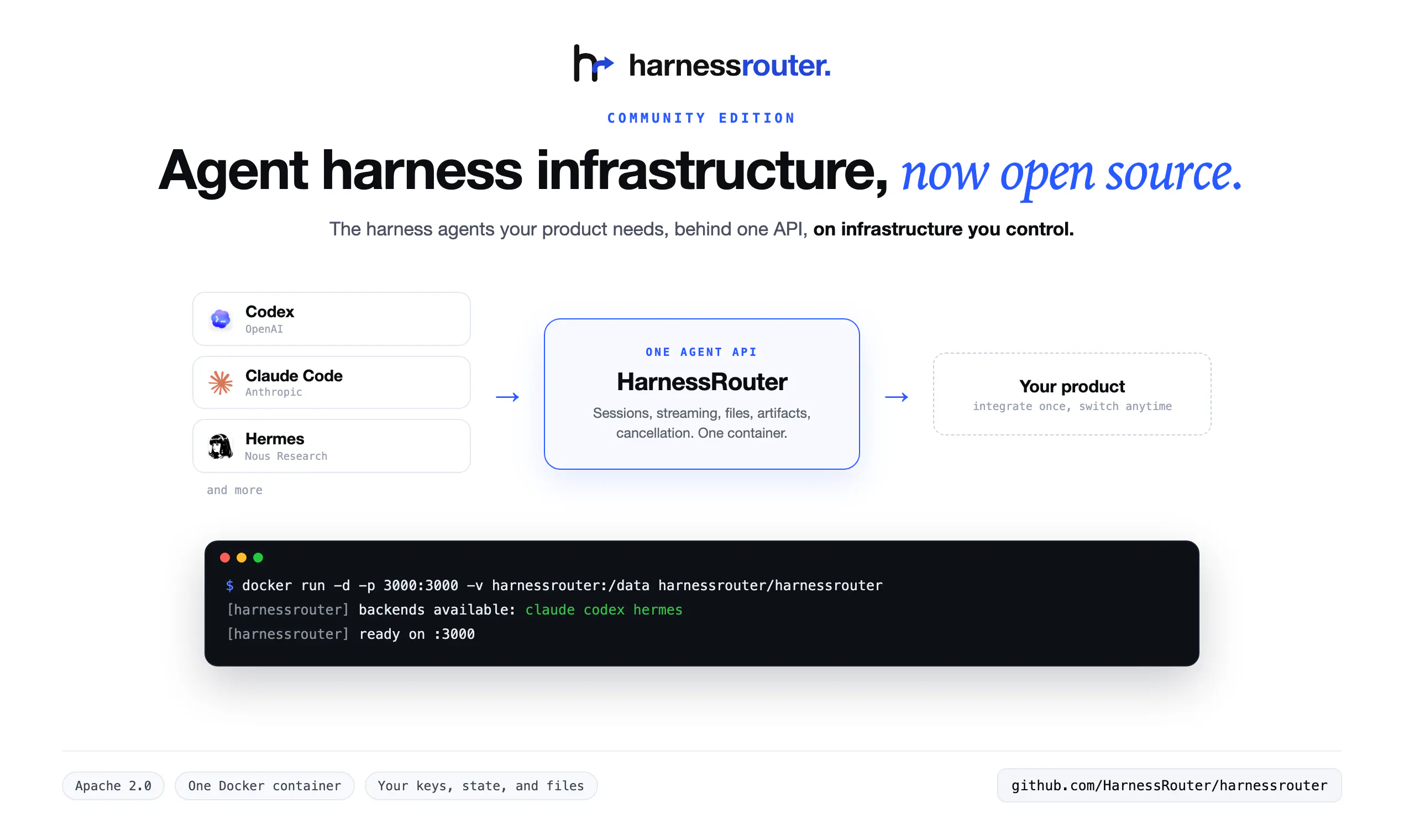
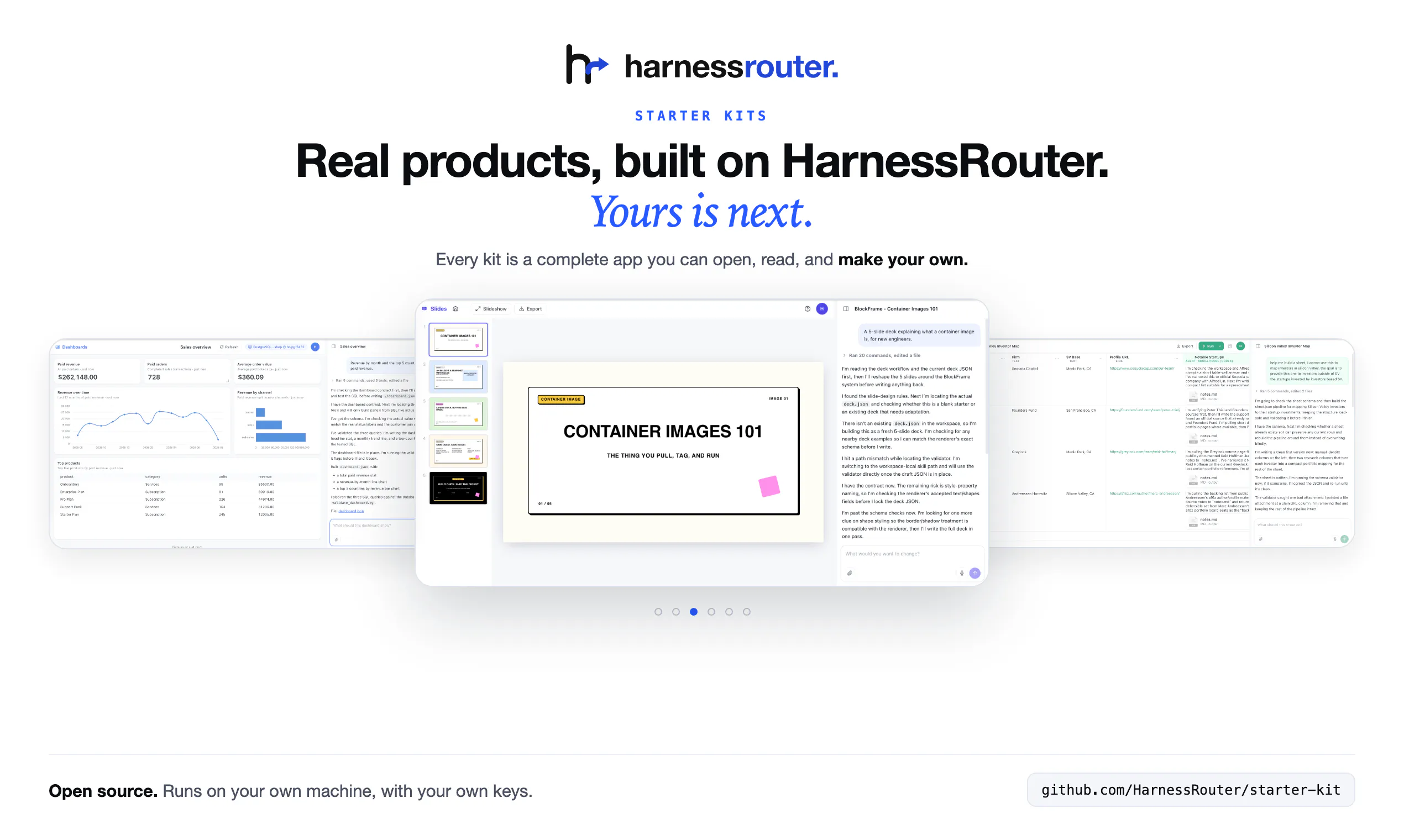
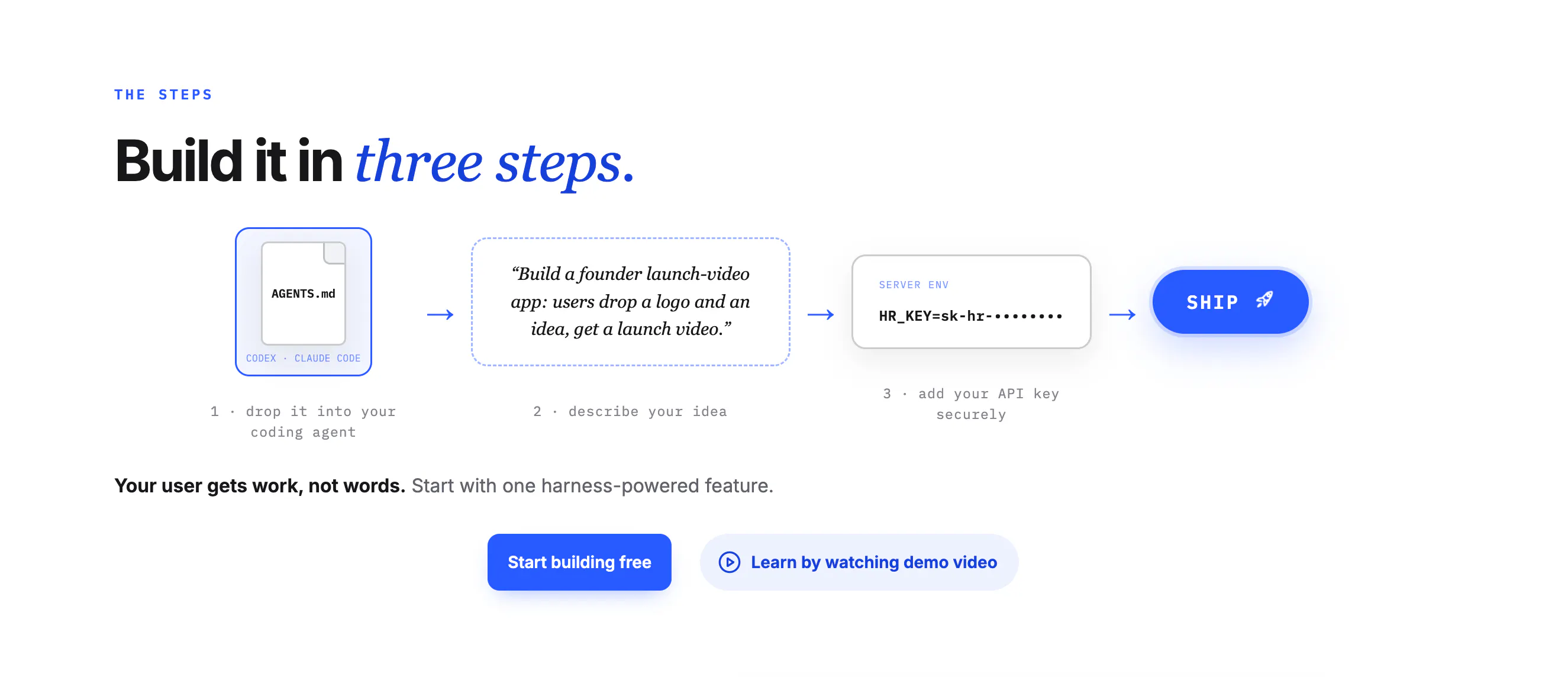
Plug-and-play managed agent harnesses in your product: Codex, Claude Code and Hermes through one API on your infrastructure, now open sourced under Apache 2.0. Switch harnesses without rebuilding your backend. Sessions, streaming, files, artifacts, cancellation, failure recovery, all handled. Model provider keys, state, and deliveries under your control. Gateway, Runner, Console in one Docker container. Ready-to-use starter kit apps as inspiration of possibilities.

Hey Product Hunt 👋

Today we're launching HarnessRouter Community Edition. Think of us as OpenRouter, but for agent harnesses instead of models.

We built HarnessRouter because we used to rebuild the same backend every time we need an agent runtime behind a product. We used to build our own harness with LangGraph, agent SDK, pydantic, etc, just to find out our self-built harness performance is hard to compete with Codex, Claude Code, Hermes, etc. Once we switched our infra to leverage off-the-shelf harnesses instead of rebuilding, our agent feature delivery time is shortened from weeks to hours, and the agent quality is dramatically better. We want to advocate the same mindset to the builder community.

HarnessRouter Community Edition puts Codex, Claude Code, and Hermes behind a single API: sessions, streaming, files, artifacts, cancellation, and all the failure handling nobody enjoys writing. Pull and start with one Docker container. Your credentials, state, and files never leave your infrastructure.

In addition to the product itself, we are also publishing Unified Harness Protocol. The Unified Harness Protocol standardizes how an application talks to an agent harness. The protocol covers harness selection and configuration, task execution, streaming events, sessions, file management, cancellation, error handling, and result delivery.

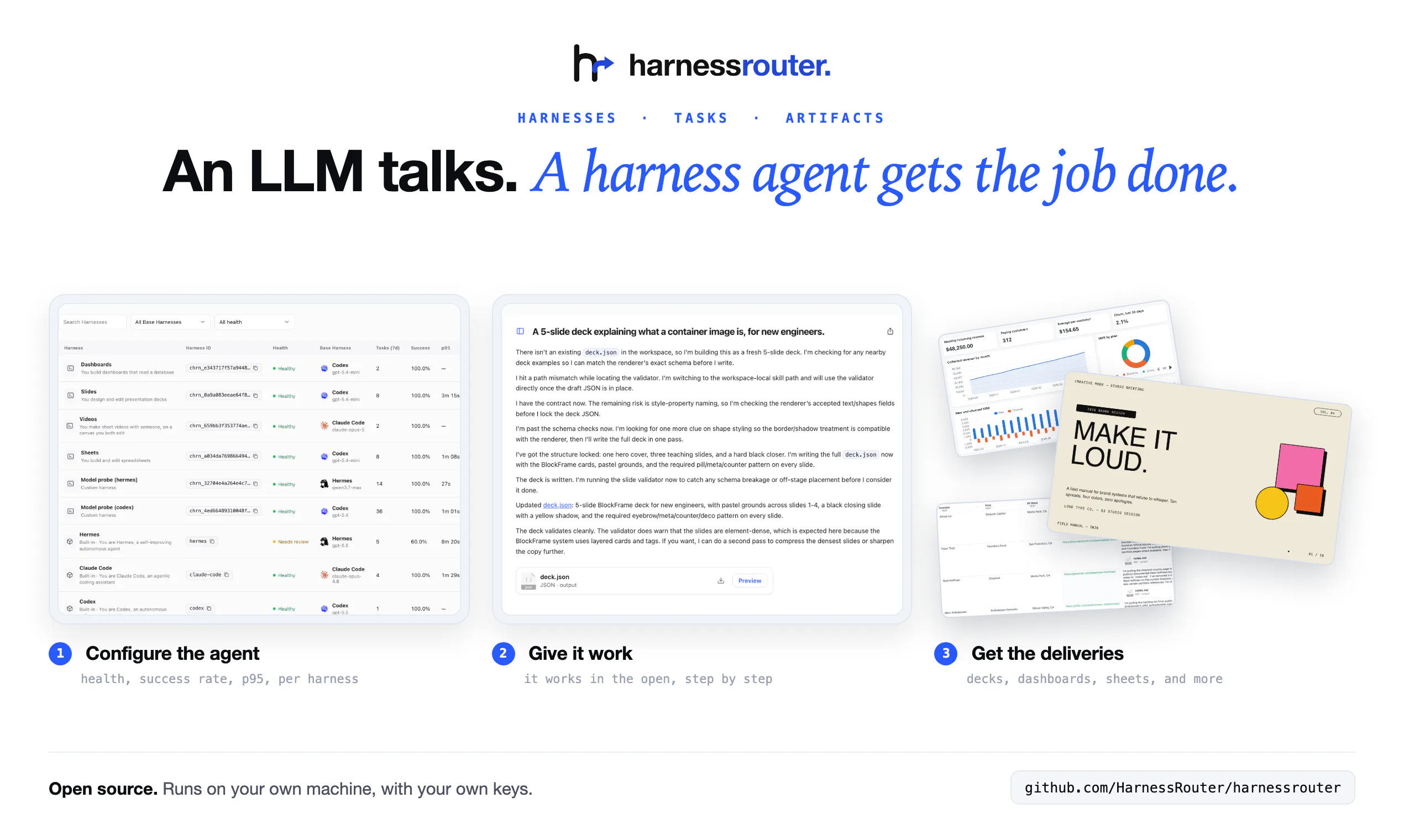
One more thing: harness agents are good at far more than coding. We're shipping open source starter kits across a bunch of agentic use cases (PPT building, Spreadsheet creating, BI/Dashboard creating, Video editing, etc). The use cases we're most curious about are the ones we haven't thought of.

We would love to learn two things from ProductHunt community:

  1. Which harness should we support next?

  2. Where does the abstraction leak for what you're building?

We're around all day.

7
回复

@renchu_song For teams adopting this, what’s one non-obvious failure mode you’ve seen when swapping harnesses that the Unified Harness Protocol specifically protects against; so we know where the abstraction truly earns its keep?

0
回复

@renchu_song The “OpenRouter, but for agent harnesses” framing is dangerously clean.

There’s something refreshing about admitting, “We kept rebuilding the same infrastructure, then realized the good stuff already existed.”

Going from weeks to hours while getting better agent performance is a pretty strong argument for letting the harness do the heavy lifting instead of reinventing it with another orchestration layer.

And the Unified Harness Protocol feels like the bigger bet here. If it actually makes harnesses interchangeable, builders can start treating them more like infrastructure than a permanent architectural decision.

Also love that you’re pushing beyond coding. The moment Codex, Claude Code, Hermes and friends become general purpose workers, the interesting question stops being “which agent?” and becomes “what ridiculous thing can I make it do?” 👀

Curious where you think the abstraction breaks first. That’s usually where the really interesting product opportunities hide.

0
回复

@renchu_song Nice launch Congrats🙌 loving the clean UI and vision here, How are you guys handling data privacy and local vs. cloud processing under the hood?

4
回复

Since its opensource. Its meant to be forked and customized I suppose? And since its a composition product, a product with many parts, how composable is it? how easy is it to swap out parts of the system for my own when I want to change things etc? Recently DeepSeek launched their harness as opensource. 100k stars in 2 days etc. And the code was modeled on a composable plugin architecture of sorts ref https://github.com/cordiverse/paper what are your thoughts around this? Thanks!

4
回复

@conduit_design Great question André! And yes, we've been watching the dsh launch closely (the Cordis paper is genuinely interesting work on revertible effects / hot-swap composability).

The way we think about it: dsh and HarnessRouter are composable at different layers. dsh makes the internals of one harness swappable: model adapter, tool registry, agent loop, all plugins. HarnessRouter makes harnesses themselves swappable: you integrate one API (UHP), and you can route each task to Codex, Claude Code, Hermes, and soon Pi, dsh and more, without rebuilding your backend. UHP is a versioned open spec (OpenAPI 3.1 + JSON Schema, 47 runnable conformance checks), so if you want to swap in your own harness implementation, or fork ours, the contract is public and independently testable. That's where the fork-and-customize story lives.

On plugin-level flexibility: it's always a trade-off between composability, customizability, and ease of use. Our bet is that the frontier labs and the best harness teams will keep their harnesses tuned with the latest best practices, and most application builders get better results building on those than reassembling agent loops from parts. It's an 80/20 thing, most use cases are best served by a strong common foundation; the domain-specific cases that need a 10-20% edge may want plugin-level control, and dropping down to something like dsh makes sense there.

And because we sit a layer above, dsh isn't a competitor for us, it's a candidate harness. We can absolutely support it behind the same API and let the market tell us which harnesses win, beyond the launch-week hype. Thanks for the thoughtful question!

2
回复

@kuanzema Apache 2.0 is the right call, too many recent "open source" launches are really source available with strings attached. If the Community Edition and Cloud truly share the same API contract, the upgrade path is a choice and not a trap. That's how it should work.

3
回复

@kuanzema  @abhiranjan_mehta Exactly the bar we set for ourselves. Community edition and Cloud implement the same versioned unified harness protocol spec and both have to pass the same growing list of check conformance suite, so an integration built on community edition moves to Cloud unchanged, and back again. Cloud sells managed infra and observability features, never API surface. Lock in through withheld APIs is a business model we specifically wanted to avoid.

2
回复

@abhiranjan_mehta Exactly. We want users to have that sense of safety and freedom. Moving from local to Cloud is a choice, not a forced migration: our open-source Community Edition gives developers control over their own infrastructure, while Cloud handles deployment, operations, and scaling when they’re ready for production.

3
回复

Awesome launch! Taming failure recovery, streaming, and session state across different harnesses into a single protocol is top-tier work. Rooting for you @renchu_song from the agent space!

2
回复

@marcin_michalak Thank you so much for your support, Marcin! I see a huge synergy between the HarnessRouter being an intelligent unit layer, and AgentX's multi-agent orchestration as a mesh layer on top, together we will be form a complete solution for Level 5 of AI: AI Organizations, which is the ultimate step in OpenAI's 5 level AI roadmap

1
回复

@renchu_song Congratulations. And happy product launch.

1
回复

@huisong_li Thank you for your support, Huisong! Your support means a lot to us :D

0
回复
Hi Richard. You mentioned delivery going from weeks to hours once you stopped building your own harness. What was the first thing you shipped that made that obvious?
1
回复

@charlie_titherley Hey Charlie, as a founder/CEO, I constantly need to build a lot of pitch decks and PPTs. I was so frustrated about all AI ppt products in the market and I tried to build one myself. When I first tried it last September, I find it so intimating to even get an agent loop (harness was not a term back then) able to understand a PPT template. A lot of trials and errors, a few weeks and no success. The only learning I had was agent able to generate EChart json config and be embedded into a slide page as an image, following the style.

This year, I retried the same challenge. With the harness being so mature, and a lot of taste skills, I was able to build a fully functional PPT agent within a day. We put our PPT agent implementation as one of our starter kits at https://github.com/HarnessRouter/starter-kit/tree/main/kits/slides

2
回复

the composability answers above cover most of what I'd ask, so a narrower one: Codex, Claude Code and Hermes each have harness-specific stuff that isn't just an implementation detail - things like Claude Code's permission/tool-approval flow or subagent delegation. when a task gets routed to whichever harness actually supports that, does UHP give the calling app a way to detect "this harness can do X" and branch on it, or does building against the common surface mean you're implicitly limited to whatever the weakest supported harness can do

1
回复

@galdayan Thank you for your insightful question! It's the classic abstraction-layer problem, and the trap you're describing (silent LCD) is what UHP is designed against.

First, more normalizes than you'd think. Claude Code's tool-approval flow, from the app's side, is just a lifecycle event: "run paused pending approval, approve/deny." Subagent delegation surfaces as structure in the trace. UHP models these in the common surface (sessions, streaming events, cancellation, structured errors), so harnesses that support them emit them natively.

Second, what doesn't normalize is explicit, not silent: harnesses declare what they support so apps can feature-detect and branch, and invoking an unsupported capability returns a structured error, same pattern LSP used (capability negotiation at init) to avoid LCD across hundreds of language servers.

Third, harness-specific config (permission policies, skills, MCP, model policy) stays typed at the harness-config layer rather than forced through the intersection. So the ceiling is per-harness, not weakest-common.

The common core is what's hardened by the conformance suite today; the capability surface will keep evolving as we add harnesses with weirder shapes. Spec's public and versioned, would honestly love your review on exactly this seam: https://github.com/HarnessRouter/harnessrouter/tree/main/protocol

1
回复
#3
Expeditione
The Interactive 3D Encyclopedia
238
一句话介绍:Expeditione 是一款浏览器端的交互式3D百科全书,通过让用户亲手探索手工搭建的历史场景(如古埃及),将“阅读知识”变为“体验知识”,解决传统图文学习枯燥、记忆不牢的痛点。
Education 3D Modeling Web Design
3D百科 交互式学习 教育科技 古埃及 浏览器应用 独立开发者 无登录 轻量化 沉浸式体验 课堂工具
用户评论摘要:用户普遍惊叹于单人开发的完成度与轻量化优化(1MB内)。主要建议包括:希望增加更多主题(如机场、太空、影视场景);有计划推出面向学校的课堂通行证(免登录);部分用户认为工作日发布能获得更多关注,但开发者回应因首页推荐被移至周日。
AI 锐评

Expeditione 的价值不在“百科”,而在“证明”。它用1MB的体积和1000小时的个人投入,狠狠打了当下动辄几十MB、依赖高配GPU的“伪3D教育”一记耳光。其真正亮点有二:一是将“重3D”与“轻网页”这对矛盾体成功调和,这为未来教育内容的传输与分发提供了极具想象力的技术范式——无需下载、无需账号、即开即用,完美适配课堂与低端设备;二是其场景选择极具智慧,聚焦“采石场”而非“金字塔”,直击历史教育的盲区,将劳动过程可视化,传递了比“奇迹”更珍贵的历史唯物主义视角。

然而,冷眼观之,其暗面亦不容忽视。作为单人项目,其可持续性存疑——你如何对抗拥有引擎级团队和资本的3D内容平台?目前“社区投票决定下一主题”的模式,极易让内容走向猎奇化(如网友建议的星球大战场景),从而稀释其严谨的教育基因。更重要的是,1MB的精巧是“线性展览”的副产品,一旦加入用户自由创造或复杂物理模拟,体积必然膨胀,技术神话将难以复刻。另一个隐患是商业化路径模糊,免费+教育资源的路线固然高尚,但若无法提供持续收入,这个宏伟的百科宇宙恐将止步于古埃及的沙土之中。它目前是一件惊艳的艺术品,但要成为改变教育格局的产品,还需在“单点突破后的平台化”与“可持续盈利模式”上拿出更务实的答案。

查看原始信息
Expeditione
Created by a single person, Expeditione is an Interactive 3D Encyclopedia built to make learning fun and memorable. Instead of simply reading about a subject, you can enter handcrafted, explorable worlds and discover them through interaction. It runs directly in the browser, with no login, ads, or tracking, and is optimized to stay remarkably lightweight. The first three expeditions are free forever, with free educator resources for classroom use.

Greetings everyone,

I’m Aureon, the solo creator behind Expeditione.

Ancient Egypt is the first major expedition I’ve built. It took me 1,000+ hours of research, reconstruction, 3D modelling, animation, interaction design, writing, and optimization.

It explores 5 handcrafted scenes covering family life, quarrying, temple life, the Nile Delta, and the Pyramids, with interactive elements throughout.

No ads. No login. No popups. No trackers.

It’s free to explore. If you have a look, I’d be glad to hear what you think.

Link : https://expeditione.fun/

I hope you enjoy the expedition.

— Aureon

Edit: I realized I forgot to mention the engineering constraint I set for myself! The landing page and the first 4 scenes of Ancient Egypt are optimized to ~1MB. That includes all the custom 3D models, audio tracks, textures, shaders, and code. I wanted to prove that immersive doesn't have to mean bloated.

7
回复

@aureon Handcrafted explorable worlds that stay lightweight in the browser is a hard combination to pull off solo, most 3D-on-the-web dies on load time. How are you keeping the expeditions small, and roughly what does one weigh?

0
回复

@aureon i completely love that you are solo + your own hunter too. let's make you #1 producthunt. just build cool stuff!!!

0
回复

It is a cool idea, would deserve to be launched during the work week to get more attention! :)

+ it could be a good Wikipedia visualisation on each topic! Love this idea.

5
回复
@busmark_w_nika Appreciate it! I did originally launch it on Wednesday but I got a notification saying that it was moved to Sunday for a featured spot. So I let it be. And I do wish to cover many subjects, from Ancient civilizations to inside a warship to how an Airport works? Whatever the community wants next haha. Thank you.
3
回复

Awesome, I learned a lot about soil!
I can see some of these courses being sold to certain educational establishments.
Congrats on the launch!

3
回复

@marco_ciavarella Thank you for the kind words Marco. As you pointed out, my future vision is to have classroom passes (without login) so that kids can jump right in and enjoy the worlds. Also, whenever you have the time, do check out Ancient Egypt. I had so much fun making it and I learnt a lot of crazy facts haha!

2
回复

@aureon Hey congratulations on the launch! I really like this. Its immersive and feels high quality. The guided learning feel well thought out as well.

Congratulations again!

2
回复
@darryl_bayliss Thank you. I hope you had a good time 🙂
0
回复
Hi Aureon, I believe I gave you one of your very first upvotes this morning! As a digital creator myself, I really appreciate the depth, graphics, and visual polish of your application. Keep building—can't wait to see what's next!
1
回复

@inna_fridrikova Hey Inna, thank you for supporting me that early and for your kind words. I appreciate it a lot!

0
回复

I love how you combined educational aspects with a game and how you recreated life many years ago. I think the atmosphere created is one of a kind and delivers a perfect vibe. What scenes are you planning for the future? I think it would be awesome and a great win, if you would also re-create artificial scenes like from movies like star-wars or harry potter.

1
回复

@hejsfj Hi, Thank you. I have quite a lot of things brain dumped into future expeditions channel haha, everything from Ancient Civilizations (such as an underground/floating cities) to subsurface ocean of on Saturn's moon! But there is a community voting system live, which is what I'd consider next.

0
回复

Wow! This is stunning and love that it’s educational too

If you’re interested, just submit it to our Netlify’s Aug build challenge (which is on the theme of educational apps) and you may win prizes

https://ntl-back-to-school.netlify.app/

1
回复

@thisiskp_ Thank you very much! I will check it out. Appreciate the invite!

0
回复

i love that it is now okay to say "created by a single person" (you have no idea how many years i have tried to hide that part about me and my projects because people keep telling me that makes my projects worth less!)

1
回复

@yosun I fail to understand. How would building something on your own be worthless? It’s like calling your baby worthless before it’s even had a chance to grow.

Do not ponder others' opinions. Take pride in your work, and your work shall speak for itself.

Ideas need time to nurture. Take good care of them.

1
回复

Quarrying as one of the five scenes is an odd and good choice. Most Egypt material jumps straight to pyramids and skips the part where someone had to cut and move the stone, so putting the labor in a scene of its own tells kids more than the monument does. Curious how long a single scene takes to walk through.

1
回复

@manavsehgal Mmhmm, I actually had my mind blown when I learnt they had to cut, quarry, ship and place it all every 2-3 mins. Those blocks weigh tons! And yet the internet sells us fringe theories, which is why I wanted to show the hard work behind it. As for the time, I'd say anywhere between 10-15 mins as a new visitor? I have lost count of it because I just click 'next' crazily seeing the same thing over and over again across months during development 🤣

2
回复
this is so damn cool, i’m a huge lego fan and builder, and exploring these 3Ds gives me the same satisfaction as exploring the details of my lego structures.
0
回复

@sina_tayebati Thank you, really glad to hear that.

0
回复

Probably the coolest thing I've seen get launched this week - no ads, login, popups or trackers is also a cherry on top for such a purposeful project. W solo founder.

0
回复

@lorbes Thank you. I'm just passing along the feeling of how the web was back in the days to the next generation.

0
回复

That's interesting. Did you make those models yourself?

0
回复

@alexandrmucha Hi, yes. The dioramas and the characters were modelled, rigged and animated by myself.

1
回复
Had a quick look at this on my phone and I’m already liking it more than I expected, the little explorable worlds, all the details and animations make it pretty fun to go through. And no, I did not skip the intro haha 😄 Congrats on the launch!
0
回复

@etiennegarcia Took me 3.5 hours to sync the text with the audio haha. Glad you didn't skip it, lest you'd have faced the wrath of Cleo!!!

0
回复

What a cool website! I love it. Appreciate your time and your skill for making this

0
回复

@zeng Thank you very much!

0
回复
#4
Vidaya
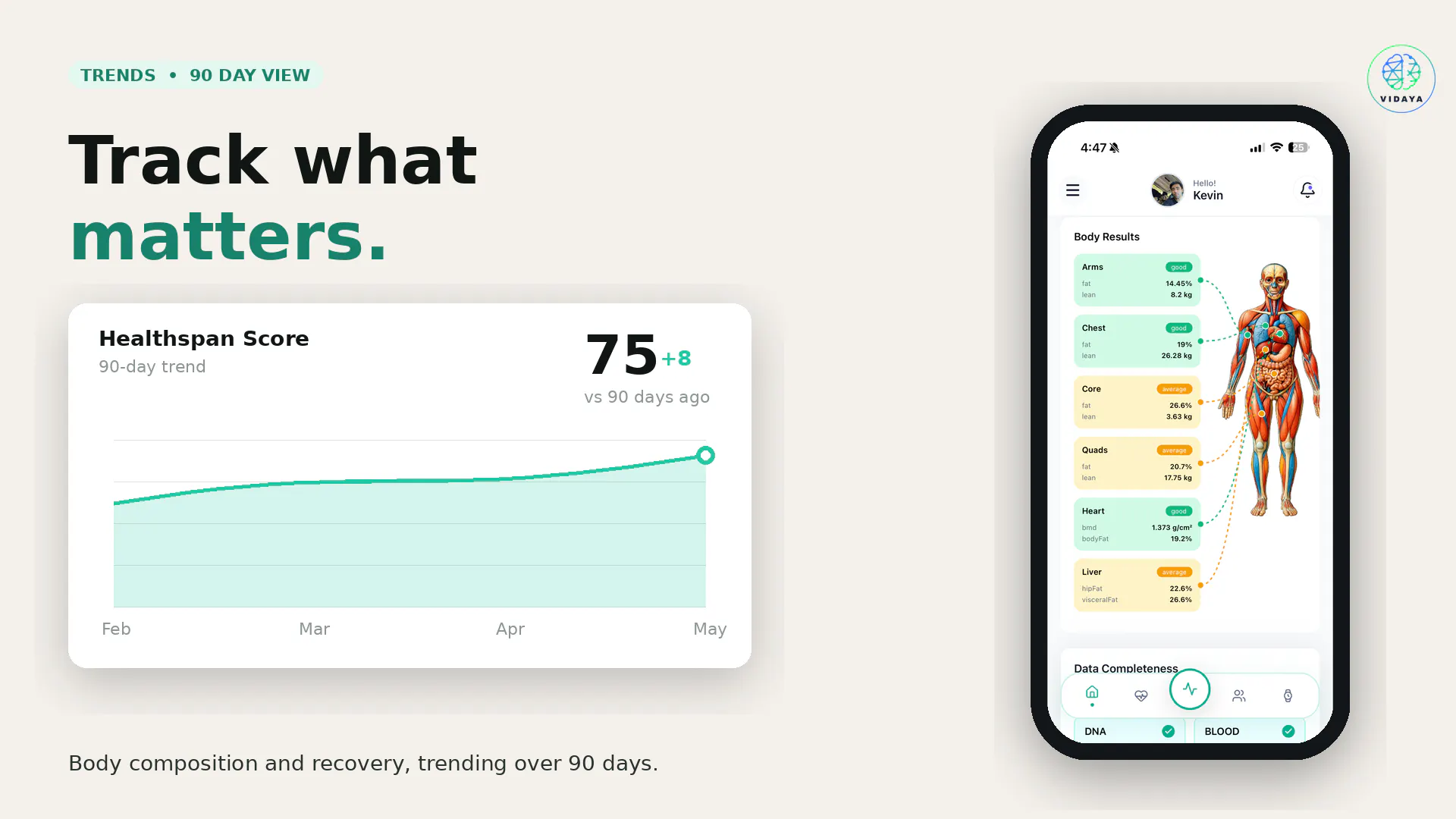
Healthspan score from your wearables, labs, and DNA.
195
一句话介绍:Vidaya是一款将智能穿戴、化验报告、DNA检测等60+来源的健康数据整合为“健康寿命评分”并提供个性化行动方案的AI长寿管理平台,解决用户“数据分散在各App、只看到数字却不知道下一步该做什么”的核心痛点。
Android Health & Fitness Productivity Artificial Intelligence
AI健康管理 长寿科技 健康评分 聚合平台 个性化建议 智能穿戴整合 医疗数据互联 健康数据分析 AI教练 健康趋势追踪
用户评论摘要:用户普遍认可“从碎片数据到行动建议”的定位,赞赏趋势可视化与AI引证机制。主要问题聚焦:评分模型透明度、数据不足时如何回应、家庭账号支持、以及向医生导出完整报告的需求。另有用户关心急救与处方等安全边界,创始人均承诺数据不足时坦诚相告并引导就医。
AI 锐评

Vidaya的聪明之处在于,它精准地击中了量化自我运动中最大的挫败感:数据收集得越多,却越不知道自己该干什么。创始人以自身高血压漏诊故事切入,将产品叙事从“仪表盘”升级为“行动指令”——这确实是极具说服力的卖点。

然而,深度审视后,其价值主张面临几重现实拷问。第一,商业化悖论:整合60+数据源是重资产维护模式,而技术壁垒不高——真正的护城河并非数据来源的广度(可被Apple Health或Google Fit逐步吞噬),而是跨源关联的洞察质量与医疗级准确性。专利尚在申请中,能否形成有效防御存疑。第二,信任红线:尽管团队强调HIPAA合规与0幻觉审计,但“方向而非诊断”的边界话术,在真实健康焦虑场景下容易让用户产生误解——当Vaya错误地忽略某个早期病变信号,法律与伦理风险瞬间放大。其AI依赖1000条文献库+7B级模型,属于稳妥但无革命性的工程实现。第三,商业模式粗糙:年费39美元的低价策略,与“医疗保险式”的长期价值预期不匹配,难以支撑持续研发成本;而家庭Squads功能虽能扩展场景,儿童数据合规与亲子监控的伦理灰度都可能成为隐患。

总体而言,Vidaya是“数据聚合+提示工程”的成熟产品,胜在产品心智清晰,但要成为长寿赛道的真正颠覆者,它尚需回答“AI建议如何让医疗决策链真正落地”这一终极问题——否则,它终将沦为一个优秀的“趋势仪表盘”,而非通往健康长寿的AI导航仪。

查看原始信息
Vidaya
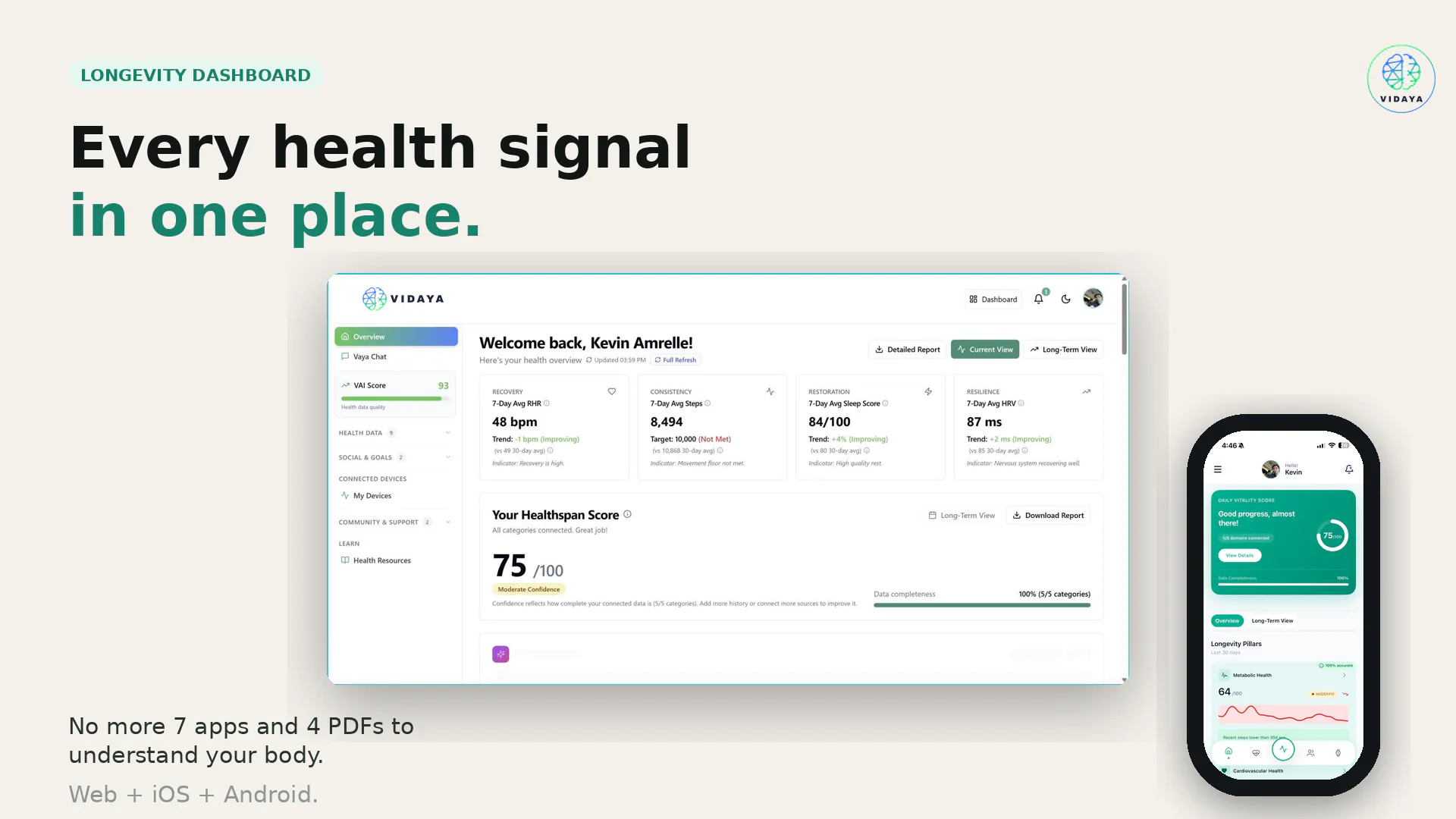
Vidaya turns your wearable data, labs, and habits into a real Healthspan score and a personalized longevity plan. Built by founders tired of dashboards that show numbers but never tell you what to actually do next.

A health dashboard that finally connects every signal you generate. That sounds simple, but the work is in the connecting.

I’m Kevin Amrelle, Founder and CEO of Vidaya (you may have known us as Vitality AI Health, same product, same team, new name).

The problem: Your health data is everywhere, and none of it talks to each other. Your meals are in MyFitnessPal. Your supplements are in SuppCo. Your blood work is in a PDF from Quest. Your DNA report is in your Ancestry account. Your medical history is locked in Epic. Your steps are in Apple Health. Your air quality is on a government EPA dashboard. Your prescriptions are at CVS. Every one of those tells you a piece of the truth. None of them tell you what’s actually happening to your body, or what to do about it.

I learned this the hard way. I was in a winter bike race when my heart rate capped at 120 BPM. My cuff confirmed stage 2 hypertension. None of my health apps caught the trend. I built Vidaya so that never happens to anyone again.

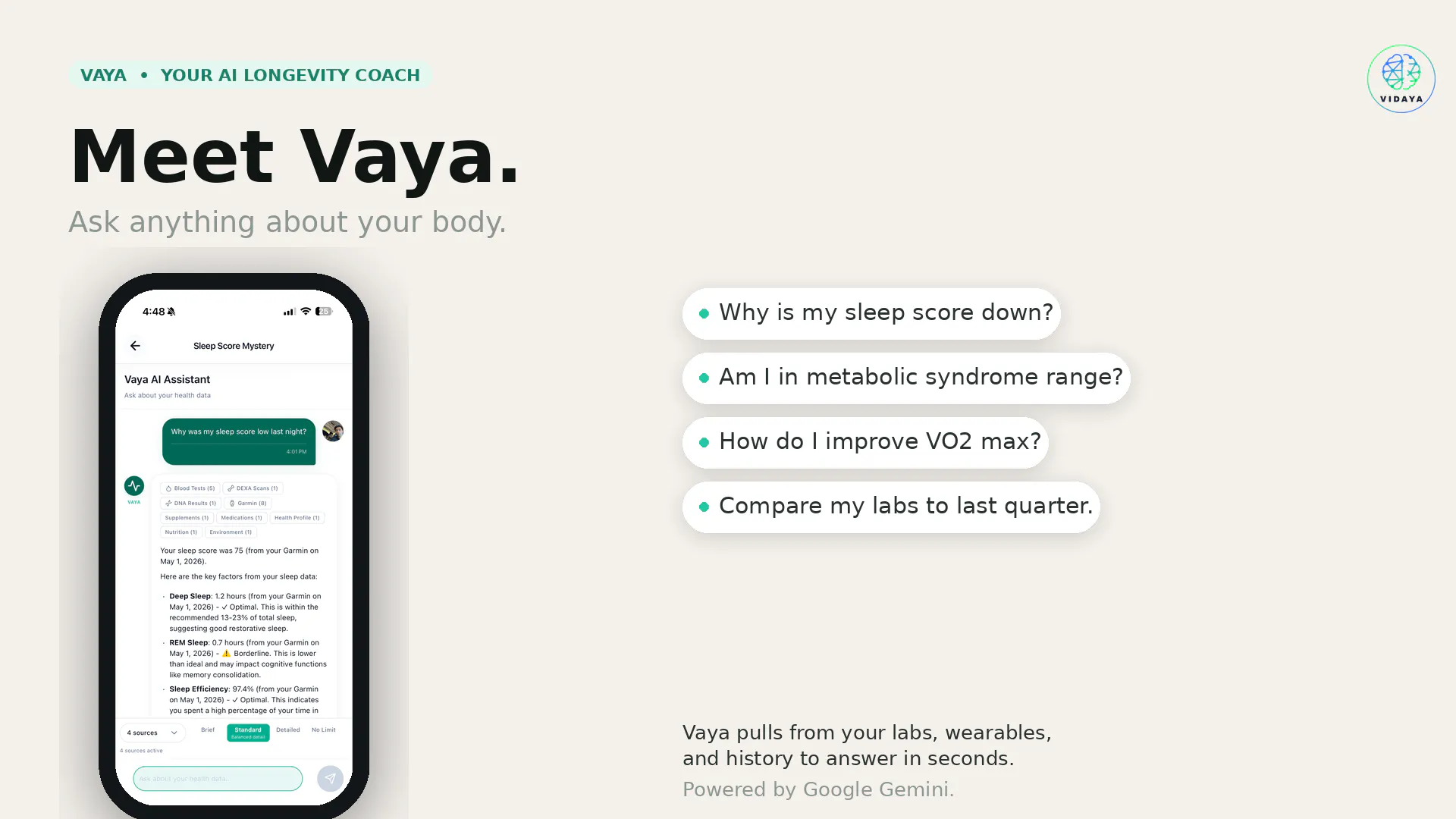
What it is: Vidaya is the AI longevity dashboard that unifies every health signal you generate, wearables, blood work, DNA, nutrition, supplements, environmental exposure, and your Epic medical records, into one place. Vaya, our AI coach, finds the correlations no single app can.

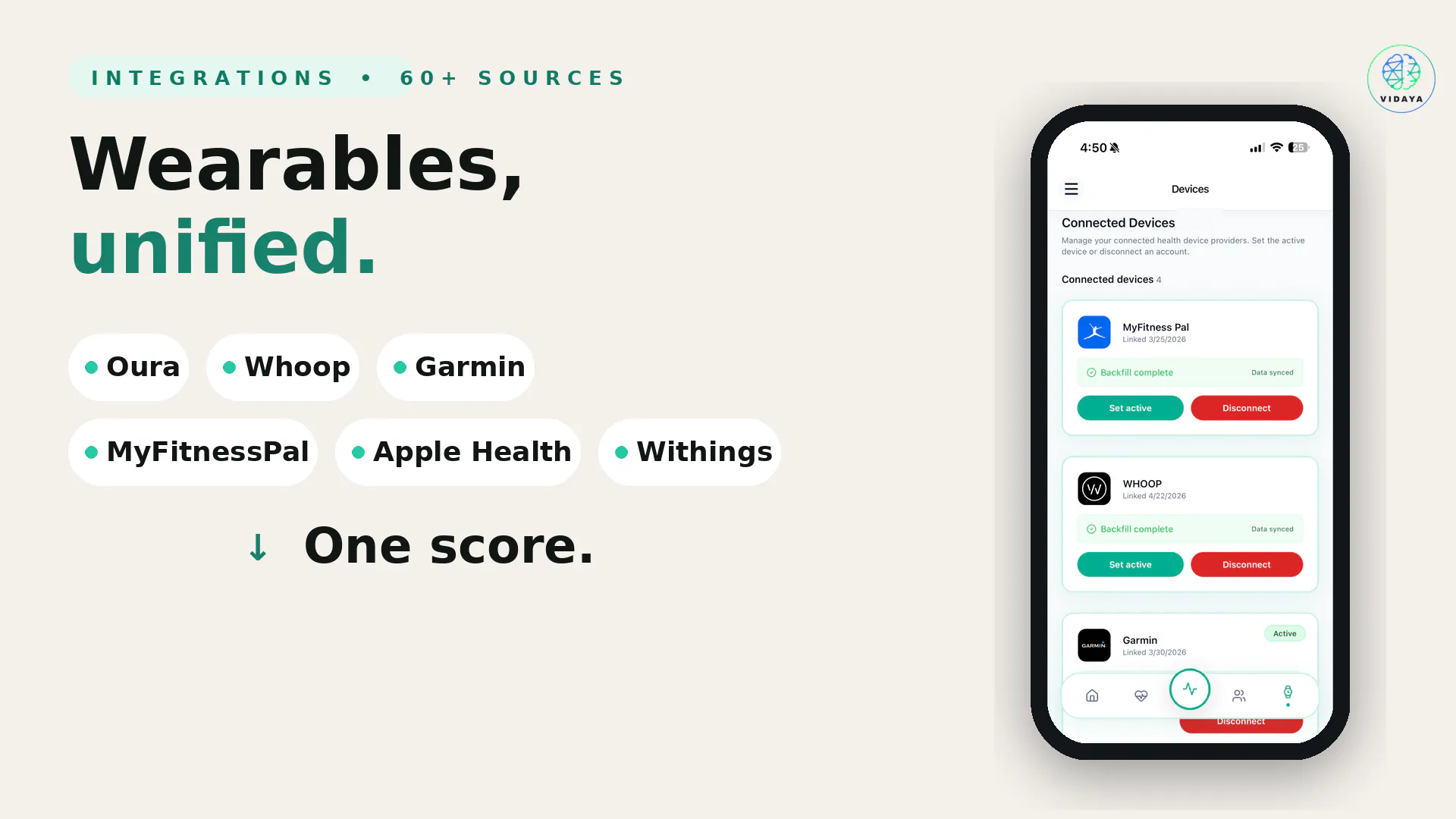
What makes it different: Most consumer health apps aggregate one or two data categories. We aggregate every category you actually generate, including the medical-grade ones (Epic FHIR, Labcorp, Quest, 23andMe, AncestryDNA). The product was built HIPAA-compliant from day one, and the underlying cross-source correlation engine is the subject of a patent application.

Key features:
Vaya Chat AI for natural-language questions across all your data (ask “how did my sleep change after starting Lexapro” and get a grounded answer in 10 seconds)
60+ integrated data sources unified in one dashboard: wearables, labs, DNA, nutrition, supplements, environmental, and medical records
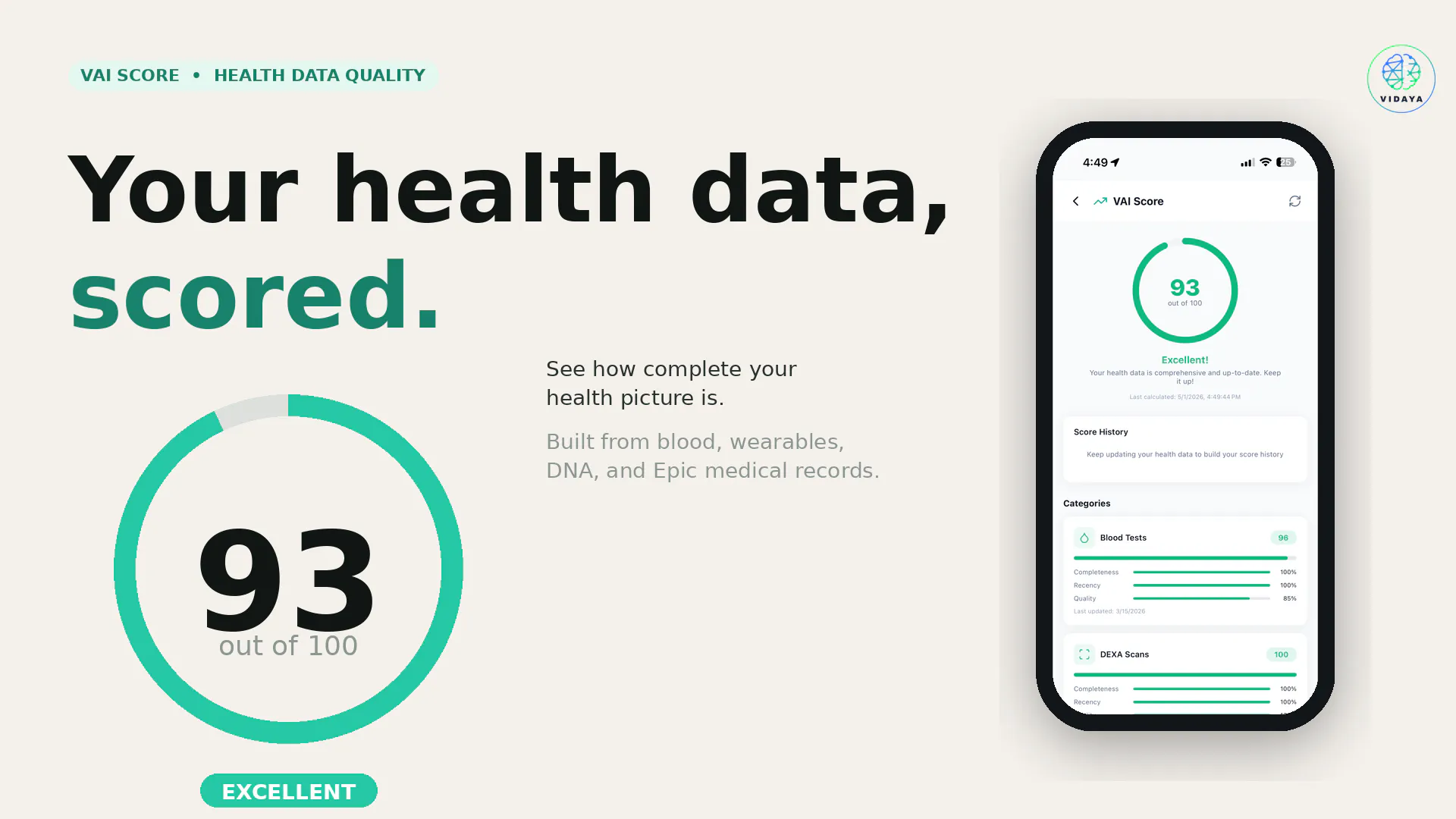
Healthspan Score across five longevity pillars, plus the VAI Score (0-100) showing how complete your health picture is
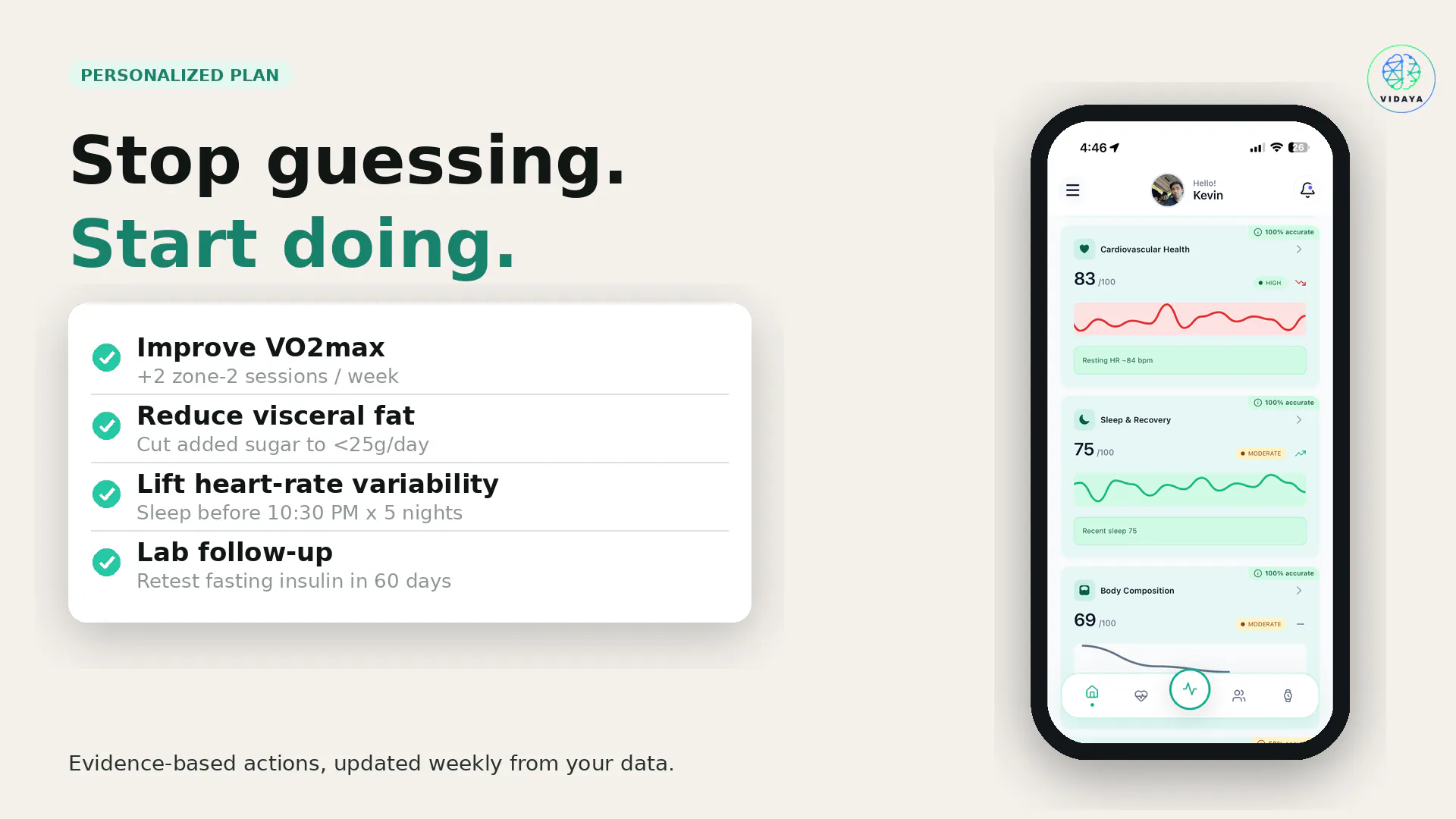
Trend lines for every biomarker across 7d / 30d / 90d / 1y, so you catch problems early, with a personalized plan of evidence-based next actions

Benefits: Stop logging into eight apps to answer one health question. Catch trend changes early instead of in a clinic six months later.

Who it’s for: Anyone who has tried to quantify themselves and given up because the data was scattered.

Launch offer: For Product Hunt launch week only, $50 off the annual plan with code VIDAYA50 ($89/year becomes $39). Code expires [date, launch day plus 6 days]. Live on iOS, Google Play, and the web. Install in 60 seconds, connect your devices in 5 minutes. Includes a 30-day money-back guarantee.

Try it at https://vidaya.ai and let us know what data correlation surprises you. We read every comment.

Kevin Amrelle, Founder and CEO, Vidaya

15
回复

@kevin_amrelle Reading about that winter bike race where your heart rate capped at 120 BPM and none of your apps caught the trend really stuck with me—it’s wild how much we rely on tools that don’t actually talk to each other. What’s the first health signal you connected when you started building Vidaya?

0
回复

@kevin_amrelle  “Thanks for the feedback! We really appreciate it and will definitely keep this in mind.”

0
回复

@kevin_amrelle Health data has become incredibly fragmented, so bringing wearables, labs, nutrition, DNA, and medical records into one context feels like a genuinely useful step forward. The personalized action layer is the part I’d be most interested in trying.

5
回复

The idea of turning scattered health data into something actionable really stands out. Most health apps give you more dashboards and numbers, but Vidaya seems focused on answering the more useful question: “What should I actually do next?” Great launch!

7
回复

@monir_ Thanks, Monir. "What should I actually do next" was literally the design question. Most of us do not need a tenth dashboard, we need the Tuesday morning answer. Every score and trend links to a concrete next step, and you can ask Vaya why a number is moving and what to do about it against your own data. Congrats on CheckYa as well.

0
回复

Hi, Venkata here, Co-Founder and Head of AI and Data Science at Vidaya.

Kevin told you why we built this. I want to tell you how we made an AI you can trust with your health data.

The problem with health AI: Most consumer health AI claims safety but cannot prove it. We decided to earn ours.

How we tested it: Over 120+ chat-quality iterations, we tuned Vaya Chat against a 32-question health stress suite covering lab trends, emergency symptoms, prescription requests, hallucination traps, and adversarial prompts, until every safety-critical category passed.

How we monitor it: We built a continuous observability layer on Arize AX with 9 LLM-as-judge evaluators and 9 production monitors scoring every response in real time at 100 percent sampling, not just at test time. On May 15 we ran the full 32-question suite against live production Vaya. The audit: 0 hallucinations across 32 questions, 10 out of 10 correct clinical-safety redirects on emergency and prescription prompts, and 4 out of 4 correct“data not available” answers on hallucination-trap questions. The full audit is available on request.

How it stays fast: Vaya uses smart routing between two model tiers. Roughly 80 percent of queries take a fast path that answers in 1 to 2 seconds, and complex clinical analysis goes to a deeper grounded path that cites your actual data.

The data engineering: We normalize 60+ sources into one longitudinal record: wearables through a vendor wearable-normalization API, labs, DNA, nutrition, and Epic medical records over SMART on FHIR. Correlations get computed from unified data instead of guessed from fragments.

Security: The platform was built HIPAA-compliant from day one with guidance from Denis Galkin, our vCISO, who brings twenty years of healthcare security experience.

Ask me anything about the evaluation stack, the routing, or the data model. I read every comment.

Venkata Ramana Duddu, Ph.D., Co-Founder, Head of AI and Data Science, Vidaya (https://vidaya.ai)


7
回复

I like that Vidaya goes beyond another health dashboard. Turning 7d/30d/90d/1y trends into specific next actions feels much more useful than simply showing whether a metric is “good” or “bad.”

5
回复

@1mirul Thank you. Good and bad labels were the bar we wanted to clear. A red number without a reason just creates anxiety. Direction of the trend, the reason behind it, and a specific next action is what actually changes behavior. Appreciate you taking a close look at how the trends work.

0
回复

I like that Vaya isn't positioned as just another AI chatbot. Being able to ask questions across your own health history and get answers grounded in the underlying data could make AI genuinely useful for personal health.

3
回复

@tanjum Thank you, Tanjum, that distinction is the whole product. A generic chatbot can only give you generic advice; Vaya answers against YOUR history and cites which of your sources each answer drew from (which panel, which device, which date range), so you can see the basis rather than trust a vibe. And when your data can't support an answer, it says so instead of guessing. That grounding is what makes AI actually useful for personal health, in our view. Appreciate you looking closely!

1
回复

How transparent is the scoring model when Vaya recommends a particular action based on someone's health data?

3
回复

@hamza_afzal_butt Great question, Hamza! Transparency is something we designed for at two levels.

At the answer level: every Vaya response cites which of YOUR data sources it drew from (which lab panel, which wearable, which date range), so you can always see the basis for a recommendation rather than taking it on faith. If the data isn't sufficient, Vaya says so and tells you what's missing instead of guessing. And recommendations come with the evidence framing, target ranges, and the "why". This is drawn from a curated library of 1,000+ citations from medical literature, not free association.

At the scoring level: the scores are deliberately explainable rather than a black box. The VAI Score (data completeness) shows you the per-category breakdown, you can see exactly which categories are pulling it up or down and what to connect next. The Healthspan Score is broken into five labeled pillars (cardiovascular, metabolic, sleep & recovery, body composition, resilience), each traceable to the underlying markers.

And a boundary we're explicit about: Vaya gives you direction, not diagnosis, anything clinical gets redirected to a medical professional. Every response is also scored in production by our observability layer (9 LLM-as-judge evaluators at 100% sampling), so "is this answer grounded in the user's data?" is checked on every single response, not just at test time.

1
回复
The observability work behind Vaya is probably one of the more reassuring parts of this launch. Health AI needs that rigor.
3
回复

@abod_rehman Thank you, Abdul, that rigor is very deliberate. Our background is in banking, one of the most heavily regulated industries there is, so we came into health AI already thinking about accuracy, auditability, and what happens when a system gets something wrong. That shaped how we built Vaya: every response is scored in production by 9 LLM-as-judge evaluators and 9 monitors at 100% sampling, not just at test time. And rather than letting the model free-associate, we built a curated library of over 1,000 citations from medical literature that Vaya draws on, so answers are grounded in your data plus referenced sources, not vibes. Health AI deserves at least the same discipline as banking.

2
回复
Would you consider adding family profiles eventually, especially for people managing health information for parents and children?
2
回复

Great question, @imtiaj_ahmad , and yes, the foundation for this is already live. We built Squads, shared dashboards for small groups (originally athletes, pilots, military teams) where a captain, coach, or trainer can see the group's data, with privacy controls so every member chooses what they share.

Family is a natural next step on that same foundation, and managing a parent's health data is one of the use cases we hear most. An adult child watching a parent's trends is basically a two person squad with the right permissions. Children are a different story. Pediatric health data carries extra regulatory and ethical obligations, COPPA among them, so we are not going to rush it. If we do it, it gets done properly.

Is your use case more the parent side or the kid side? That genuinely helps us prioritize.

1
回复

The trend visualization across 7d, 30d, 90d, and yearly periods feels much more useful than looking at today's numbers alone.

2
回复

@istiakahmad Thanks, Istiak. That was exactly the design bet. A single day's number is mostly noise, but the same marker across 7d, 30d, 90d and 1y is where the real signal lives. Slow drifts, a resting heart rate creeping up over a quarter or a lipid trend across two panels, are invisible day to day and obvious over a year. Which metric would you most want to see a full year of?

0
回复
How does Vaya respond when the available data isn't sufficient to confidently answer a health-related question?
2
回复

@odeth_negapatan1 Great question, this is one of the specific failure modes we designed against. When Vaya doesn't have enough of your data to answer confidently, it says so explicitly rather than filling the gap with a plausible-sounding guess. It tells you what data it's missing and what to connect or upload to get a real answer (e.g., "I don't have recent blood work for you — your last panel was 14 months ago"), and every answer cites which of your sources it actually drew from, so you can see the basis yourself. We test this deliberately: our stress suite includes hallucination-trap questions that ask about data the account doesn't have, and in our May production audit Vaya answered "that data isn't available" correctly on all of them. And for anything urgent or clinical, it redirects to a medical professional instead of playing doctor. The honest answer to a health question is sometimes "I don't know yet, here's what I'd need", we'd rather say that than make something up.

3
回复
A useful addition would be letting users export their complete longitudinal health profile for sharing with their doctor.
1
回复

@priyankamandal Thank you, Priyanka, you can actually do this today! Vidaya generates a downloadable PDF health report from your dashboard covering your yearly trends across all your connected domains, plus dedicated exports for blood panels (full marker tables with reference ranges, formatted so a doctor can read them at a glance) and DEXA results. It's exactly the use case we built them for, walking into an appointment with a year of your data instead of describing things from memory. We're continuing to expand what's included (raw CSV/JSON export of everything is on the roadmap). If you try it with your doctor, I'd love to hear how the conversation goes!

0
回复
I like that you focused on the "what should I do next?" problem instead of building another dashboard full of graphs. 👏
1
回复

@raihanshezan hanks, Raihan! Dashboards were the easy 80%, the hard 20% is turning a moving number into "here's what to do on Tuesday." That's the problem we actually wanted to solve, since most of us already had plenty of graphs and no answers. Glad it landed! 🙏

0
回复

Congrats @kevin_amrelle @kevin_amrelle

Bringing wearables, labs, nutrition, DNA, and medical records into one timeline could make long-term trends much easier to understand 🙌🏻

1
回复

@kate_ramakaieva Thank you, Kate! You nailed the core idea, a single timeline is the unlock. Any one reading (a sleep score, one lab value) is just a snapshot, but put wearables, labs, nutrition, DNA, and medical records on the same axis over years and the trends start explaining each other, that's where the "oh, THAT'S why" moments live. Congrats on everything you're building at FuseBase too! Out of curiosity, which of those data types would you connect first?

0
回复
This is awesome! Health care is something I started watching closer than ever and Vidaya seems to be a great deal on it. Wish you all the best here
1
回复

@german_merlo1 Thank you, Germán! Love hearing you've started paying closer attention to your health, that's exactly the moment Vidaya is built for, when you start caring and immediately discover your data is scattered across five apps. If you give it a spin I'd genuinely love to hear what you connect first. Wishing you the best right back!

0
回复
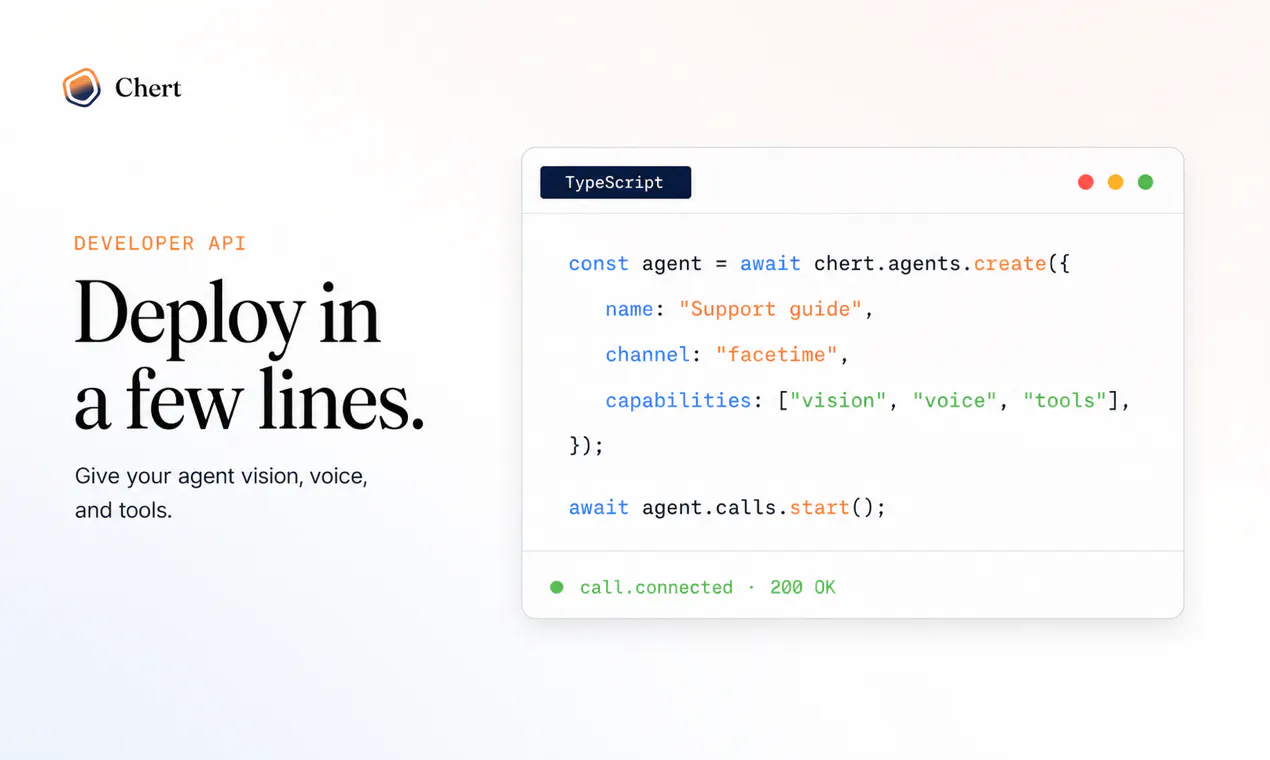
#5
Chert
Vapi for FaceTime: AI video agents in a few lines
170
一句话介绍:Chert 是“FaceTime 版 Vapi”,用几行代码即可构建能主动拨打/接听 FaceTime 视频通话的 AI 代理,让 AI“看见”用户摄像头画面并实时响应,解决远程支持、 telehealth 等场景中“光靠语音描述不清”的视觉痛点。
API Developer Tools Artificial Intelligence
AI视频代理 FaceTime集成 视觉语音Agent 远程支持 telehealth 低代码开发 实时视频对话 开发者工具 Vapi替代 Apple生态
用户评论摘要:用户普遍认可“让语音代理不再瞎”的定位,实时演示延迟低于预期。主要疑问集中在隐私合规(视频流加密)、跨平台扩展(WhatsApp等全球渠道),以及KYC/身份验证等垂直应用;创始人回应称已规划多平台,并强调数据加密。
AI 锐评

Chert 的聪明之处在于没有发明新入口,而是直接寄生在苹果最强势的“信任型通讯协议”上——FaceTime 的免安装、强隐私背书和 iOS 原生集成,让 AI 视频代理第一次有了“打陌生电话不被拒”的可能。这比做独立 App 或网页端 WebRTC 的冷启动成本低一个量级,确实是“事后看来显然”的机会。

但它的天花板同样清晰:第一,FaceTime 是封闭生态,欧美市场之外(尤其东南亚、拉美)用户基数有限,而评论中“WhatsApp 才是全球市场”的质疑正中要害——若不能迅速打通 WhatsApp 视频,Chert 只能吃下苹果生态内的高净值客户,这或许能撑起一家精品公司,但撑不起“Vapi for FaceTime”这个宏大叙事。第二,隐私合规是悬顶之剑。尽管创始人声称“加密用户信息”,但在医疗、金融等强监管场景里,光靠传输加密远不够,还需要可审计的调用日志、用户明确的动态知情同意机制以及与 HIPAA 等标准的合规认证,这些隐性工程成本远超“几行代码”的营销话术。第三,技术壁垒存疑:实时视频理解 + 低延迟对话的架构(如视觉 loop 的端到端延迟)是真正的护城河,但评论中仅以“试试看”带过,缺乏可量化的延迟基准。Vapi 在纯语音赛道上已经卷到价格战,Chert 若不能证明自己在视觉推理上有独特模型优化,很容易被大模型厂商的视觉 API 降维打击。

总体而言,这是一个精准切入“被忽视的 FaceTime 接口”的漂亮产品,适合小步快跑验证需求。但要在 2024 年后的 AI 基础设施赛道上立足,它必须尽快回答两个问题:如何打破苹果围墙花园?如何在视觉 agent 成本与延迟上建立真正的指数级优势?否则,它可能只是大厂视频通话功能里一个“AI 特效”的预演版。

查看原始信息
Chert
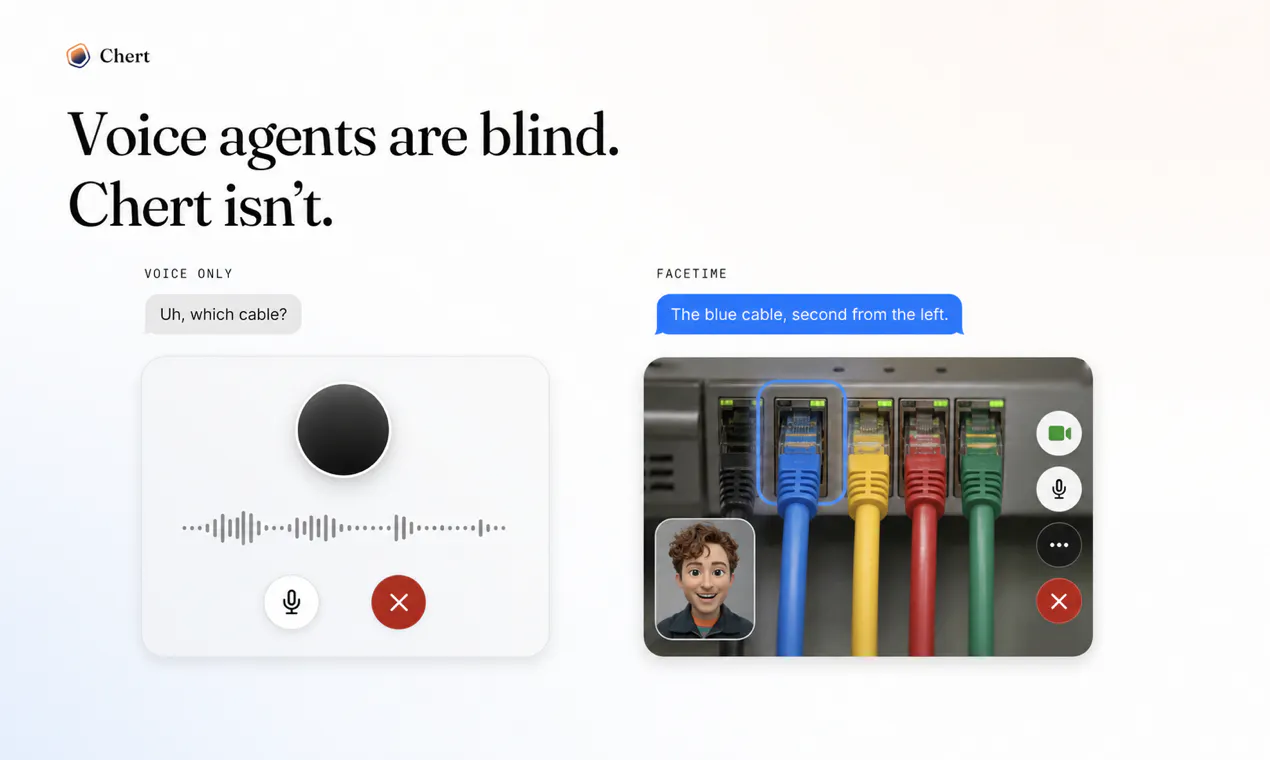
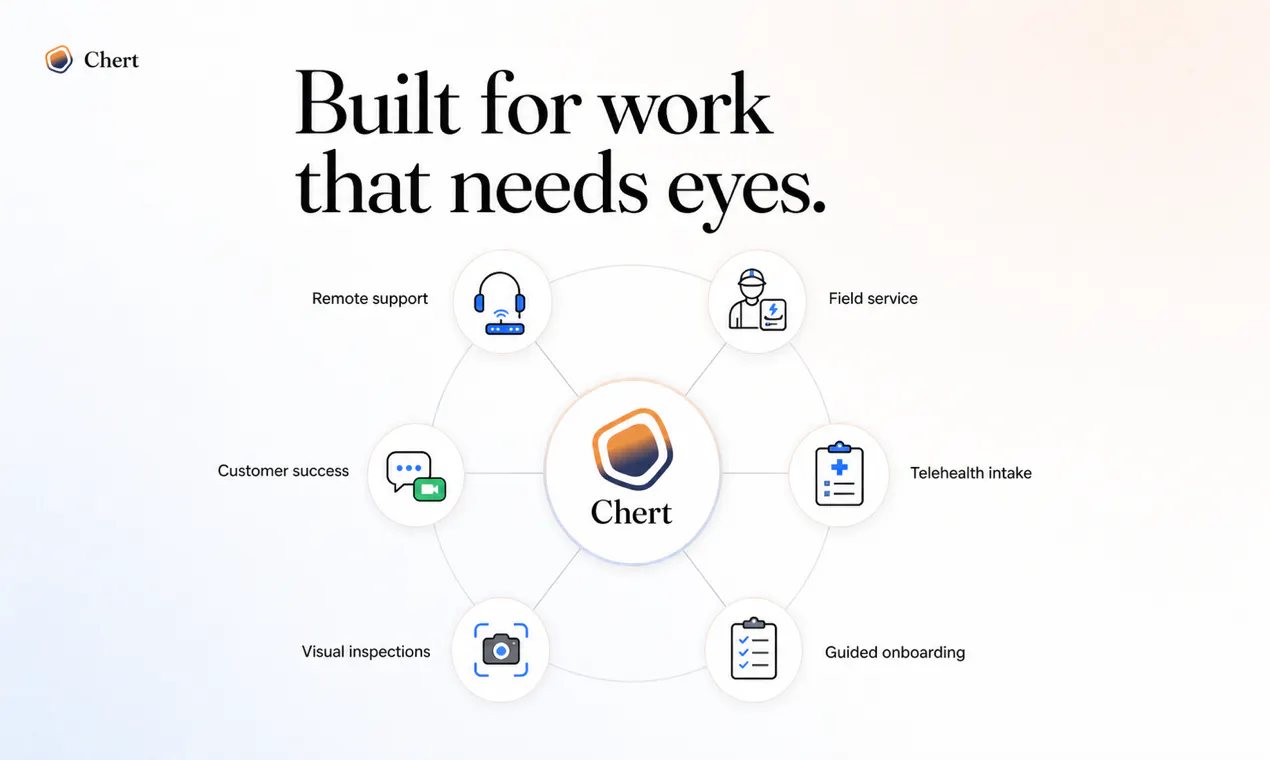
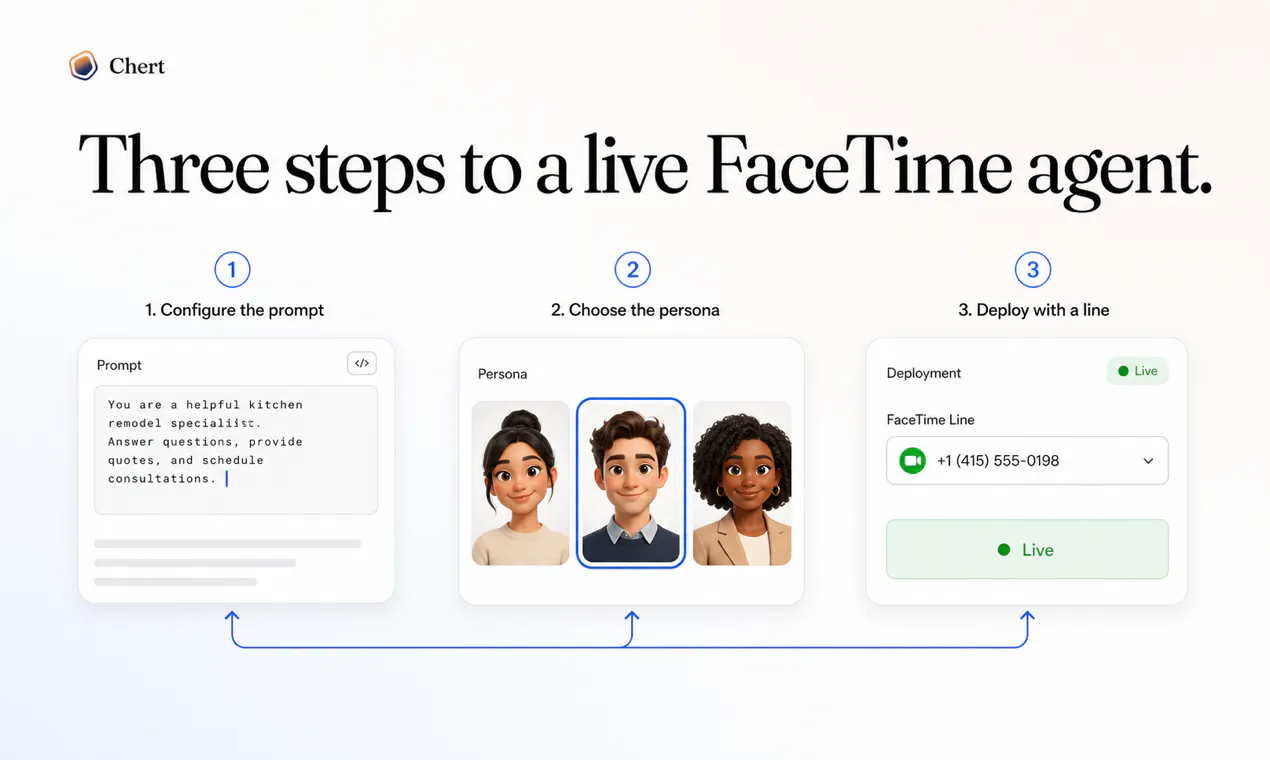
Chert is Vapi for FaceTime. Build and deploy interactive AI video agents that can answer and place FaceTime calls with just a few lines of code. Deploy agents for remote support, field service, telehealth intake, guided onboarding, or anything that's easier to show than explain. Try it live: FaceTime an agent right now and show it something.

@garygao Congrats on the launch! The voice agents are blind framing instantly clicked for me.

2
回复

@suyash_kr Thanks!!

0
回复

How do you handle privacy and consent for the video stream, especially for regulated use cases?

2
回复

@rajesh_gupta__ We encrypt user information so that it is never exposed

0
回复

What are the use cases of this?

2
回复

@vimal_singh6 Use cases could be anything from remote support to field service, telehealth intake, or guided onboarding!

0
回复

Hey everyone! I'm Gary, co-founder of Chert (YC P26).

Chert is launching Vapi for FaceTime. In a few lines of code, you can deploy an AI agent that answers and places FaceTime calls, sees what the user shows their camera, and responds in real time.

Here's why we're fired up about this: every voice agent shipping today is blind. It can only handle what a customer can describe, so the second a problem is visual (e.g. "which cable goes where?", "what's this error on my screen?"), a human has to jump in. The most natural fix is video.

Now any builder can put an agent on the single most trusted and already-installed video channel: FaceTime. Remote support that can actually see the problem. Telehealth intake that reads the room. Onboarding that walks you through it live. This is the interface AI has been missing.

Try it right now: FaceTime +1 310 279 2297 and check out https://www.trychert.com/facetime

Would love any feedback or thoughts!

1
回复

@garygao I can already see this being a game-changer for remote tech support—no more back-and-forth trying to describe a weird UI glitch. Could this eventually handle more complex scenarios like live diagnostics or repair walkthroughs?

0
回复

@garygao Congrats, seems pretty cool. Are you planning to expand to WhatsApp or other channels, since Facetime is pretty exclusive?

0
回复

congrats on the launch!

1
回复

@mcarmonas Thanks!

0
回复

The latency on the live demo is better than I expected, really impressed!

1
回复

@maurya_abhiranjan Thank you!

0
回复

@garygao This is one of those ideas that's obvious in hindsight. Nobody opened FaceTime up before, huge.

1
回复
0
回复

FaceTime is pretty US/Apple-centric, isn't WhatsApp the bigger market globally?

1
回复

@arun_pratap_singh7 Yes, we have plans to expand to WhatsApp messaging + video calling in the future!

0
回复

Can this be used for KYC or identity verification on a video call? Feels like a pretty cool and interesting use case

1
回复

@abhi_singh4000 Yes, visual identity verification could actually be more robust than a lot of the current identity verification infrastructures over text, email, or calls today

0
回复
What's your end-to-end latency on the vision loop? That's usually the problem and killer for live video agents, especially when you put it on a conversational channel like FaceTime.
0
回复

@priyankamandal Our latency is really good. Feel free to give it a try on our website here: https://www.trychert.com/facetime

0
回复
#6
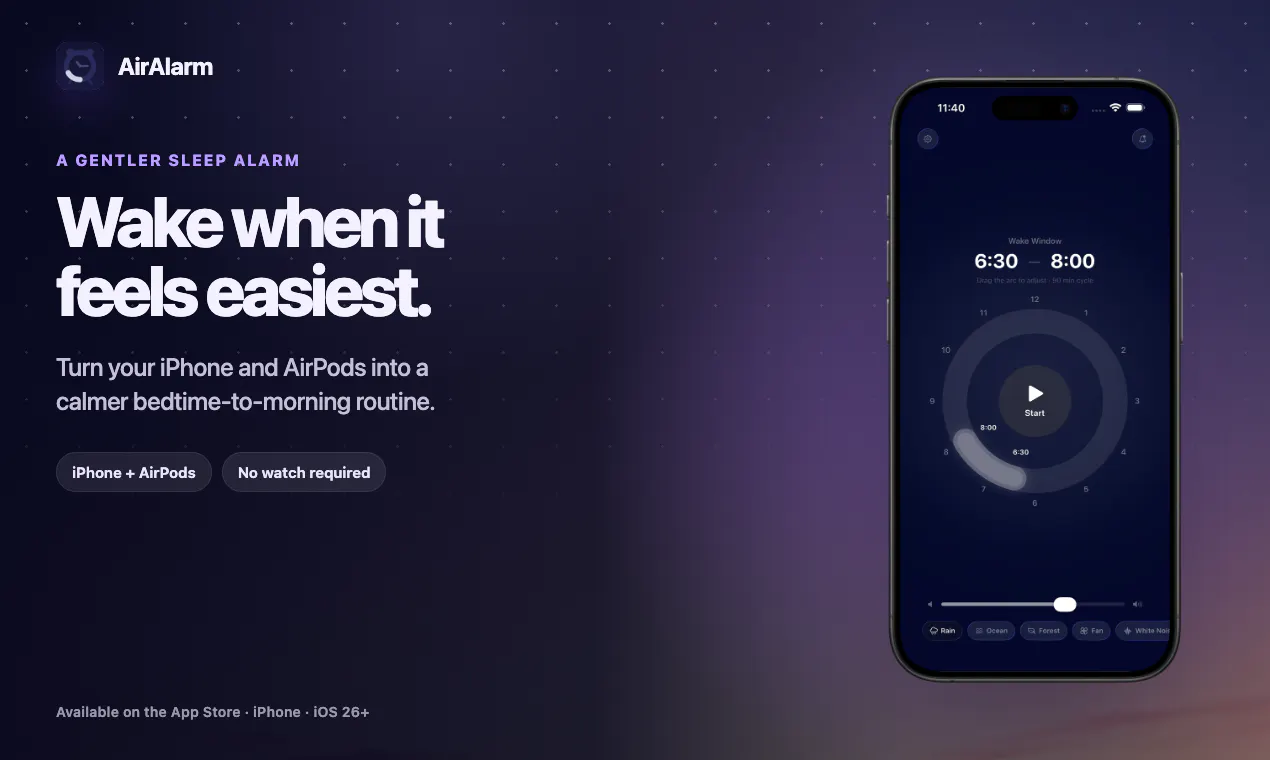
AirAlarm
Wake at the end of your sleep cycle
121
一句话介绍:AirAlarm将iPhone与AirPods转化为智能睡眠闹钟,让你设定最晚起床时间,在90分钟睡眠周期结束的自然节点轻柔唤醒,告别被精准闹钟硬生生惊醒的痛苦。
iOS Health & Fitness Audio
智能闹钟 睡眠周期唤醒 AirPods iOS应用 无穿戴设备 隐私保护 无广告 睡眠辅助 健康科技
用户评论摘要:用户普遍赞赏“唤醒窗口”概念取代固定闹钟的做法,认为更贴合自然醒来习惯。主要问题集中于是否有Android版本,开发者回应因依赖AirPods入睡检测功能,暂无安卓计划。另有用户肯定无账号、本地存储睡眠数据的隐私设计。
AI 锐评

AirAlarm的聪明之处,在于它精准地切入了“闹钟焦虑”这一现代人普遍却未被充分满足的痛点,并用“90分钟周期+唤醒窗口”这一科学逻辑,取代了传统闹钟冰冷的“精确到分钟”的机械逻辑。它没有试图制造一个复杂的睡眠监测硬件生态,而是巧妙利用了用户已拥有的AirPods和iPhone,以极低的用户迁移成本,提供了“更聪明”的起床方案。这在产品策略上是典型的“降维打击”。

然而,其核心竞争力也恰恰是其最大的战略天花板。深度绑定AirPods的入睡自动暂停检测,使其功能逻辑与苹果生态强耦合,这种“护城河”在短期内是优势,但长期看却主动放弃了基数庞大的Android市场。评论中用户的多次询问已表明需求真实存在,但开发者的回应虽坦诚却略显保守,在可穿戴设备(如华为、三星)同样具备睡眠监测能力的安卓阵营,技术替代方案或许并非完全不存在,只是需要更大的开发投入。此外,该产品本质上是“睡眠周期闹钟”这一成熟理念的精致化封装,并非颠覆性创新。在Apple Watch已自带类似功能的背景下,AirAlarm必须持续证明其独立存在的价值——即“无穿戴设备”这一极简主义卖点能否形成足够强的用户忠诚度,足以抵御苹果官方功能的迭代侵蚀。其隐私承诺是很好的差异化标签,但若不能将这种“轻量、隐私”的体验转化为社区或口碑的复利效应,很容易在功能同质化中沦为小众工具,最终被平台功能吞没。

查看原始信息
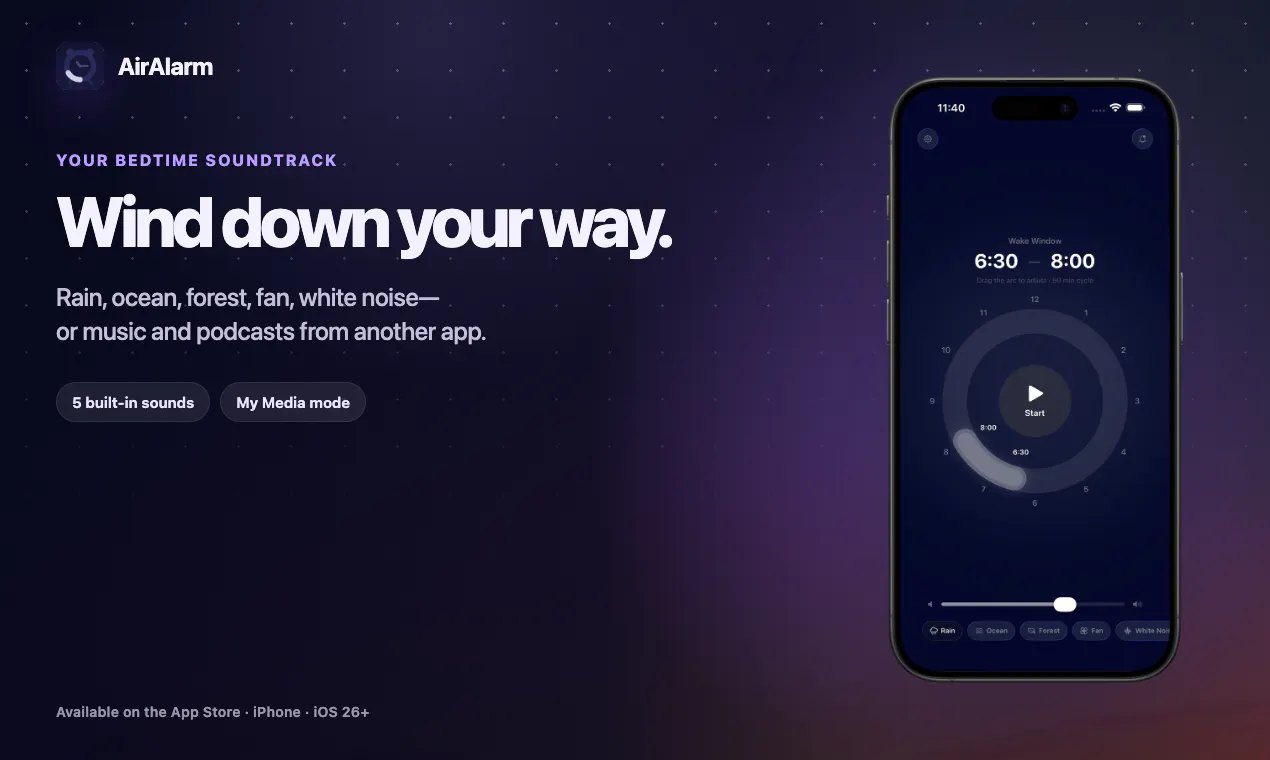
AirAlarm
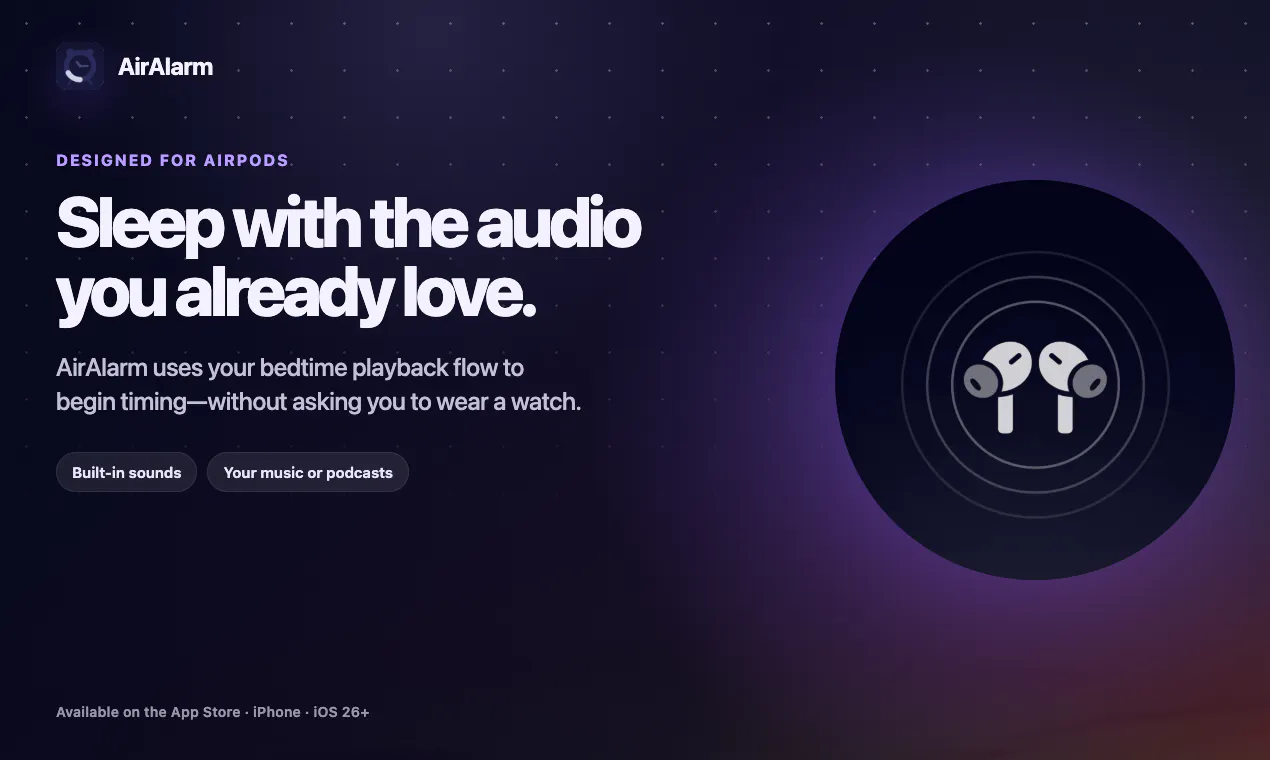
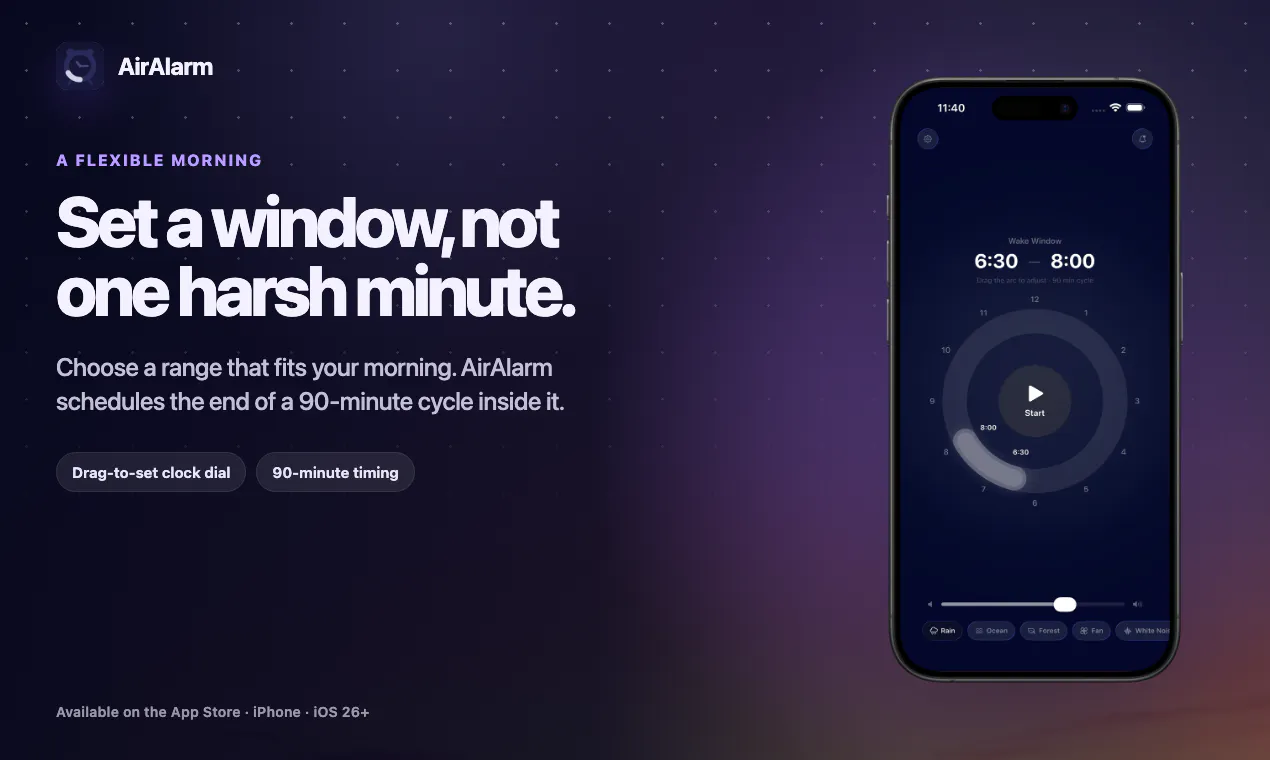
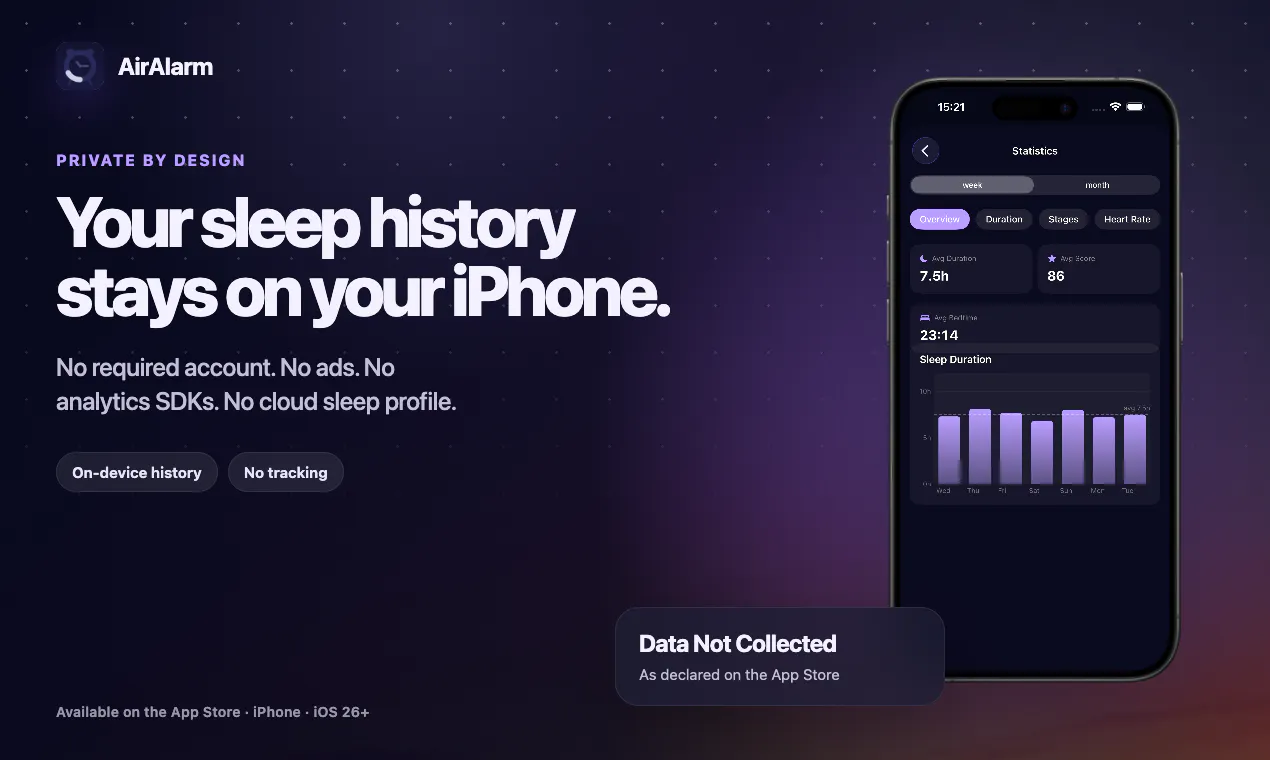
AirAlarm turns your iPhone and AirPods into a gentler sleep alarm. Set a wake window, drift off with built-in sounds or your own media, and wake at the end of a 90-minute cycle. No Apple Watch, account, ads, analytics, or cloud sleep profile.

Coming to android soon?

1
回复
@stephenfinch Thanks for asking! Unfortunately, there are no plans for an Android version at the moment. Air Alarm’s sleep detection relies on features provided by AirPods and iPhone, and there doesn’t seem to be an equivalent way to achieve the same experience on Android right now. If that ever changes, I’d definitely love to explore it!
0
回复

The wake window instead of one exact time is the part I like. I set 6:40 and then lie there doing math about how much sleep is left, so handing the last 20 minutes to the app fits how I actually wake up. Keeping sleep history on the phone with no account is also why I would try it.

1
回复

@manavsehgal Thank you — really glad that part resonated with you!

The wake window is actually one of the core ideas behind Air Alarm. Instead of asking you to pick the exact minute you want to wake up, you just set the latest time you absolutely can’t sleep past. Based on your sleep cycle, Air Alarm then chooses the best moment within that window to wake you when you’re more likely to wake up naturally.

So ideally, no more lying there calculating “if I fall asleep now, I’ll get X hours…” — you set the deadline and let the app handle the rest.

And yes, keeping things private and lightweight is very intentional. There’s no complicated account system right now, your sleep history stays on your device, and I don’t really plan to turn it into an account-heavy app in the future either.

0
回复

Do you have plans for an android app?

1
回复

@build_with_aj Thanks for asking! I don’t have plans for an Android version at the moment. Air Alarm relies on the AirPods feature that detects when you fall asleep and automatically pauses audio, and as far as I know, there isn’t an equivalent capability I can access on Android right now. If that changes in the future, I’d definitely consider it!

0
回复
Hi Product Hunt! 👋 I built AirAlarm because I wanted a gentler alarm without adding another wearable, account, or cloud sleep profile to my night. The idea is simple: instead of treating one exact alarm minute as a cliff, AirAlarm lets you choose a wake window. You fall asleep with your AirPods and either AirAlarm's built-in sounds or audio from another app. AirAlarm uses that bedtime flow to schedule the end of a 90-minute sleep cycle inside the window you chose. AirAlarm is native SwiftUI and uses Apple's AlarmKit for system-level alarm scheduling. Sleep history stays on the iPhone. There are no ads, analytics SDKs, or required accounts, and you do not need an Apple Watch. The app currently supports English, Simplified Chinese, and Japanese. I would especially love feedback on two things: 1. Does choosing a wake window feel more natural than setting one exact time? 2. What would make you comfortable using AirPods as part of your bedtime routine? Thanks for taking a look — I will be here throughout launch day to answer questions.
0
回复
#7
CostLogic
AI-powered construction takeoffs, estimates, and invoices
106
一句话介绍:CostLogic 是一个面向建筑行业的 AI 测量与成本管理平台,通过智能体 Onyx 自动完成从图纸上传、房间识别、尺度校准、工程量计算到报价单与发票生成的全流程,让承包商在同一个浏览器工作区中告别多工具切换,将原本数天的估算工作压缩至几小时甚至几分钟。
Artificial Intelligence Operations Construction
建筑科技 AI估算 工程量清单 施工报价 智能体 图纸识别 成本管理 发票生成 云端协作 效率工具
用户评论摘要:创始人强调行业现有工具老旧(2005年级别)或GPT包装易出错,他们致力于“速度与可控性”平衡。回帖用户认可该定位,认为AI应去除繁琐工作但保留人工对关键数字的最终把关,避免引发信任危机,期待产品在估算可靠性上持续突破。
AI 锐评

CostLogic 的切入点是精准的:建筑估算行业长期被两种劣质选择绑架——老旧的桌面软件(如 Bluebeam 的复杂宏)和只会胡诌价格的 GPT 套壳。它的价值不在于“AI 自动算量”这个单点功能,而在于将“算量→估算→发票”这条必须连贯的业务链整合进一个智能体工作流。Onyx 的“替你干活”属性,实际上是针对行业最深的痛点:数据孤岛与人工转录误差。106票虽不算高,但评论区的质量远胜于普通 to C 产品,反映出专业用户的审慎期待。真正的护城河不是模型能力,而是“尺度校准”和“房间识别”这类垂直领域的数据飞轮——越用越准,越准越敢用。但风险同样明显:建筑行业容错率极低,一次 4 万美元的 AI 幻觉足以摧毁客户信任。创始团队明白“保留人工在环”是对的,但如何定义“关键时刻”的交互边界(是每项数字都需点击确认,还是仅在高风险项拦截)将是产品体验的分水岭。如果 CostLogic 能在可追溯性(每个数字来源可查)和审计日志上做到极致,它不仅能替代工具箱,更可能成为建筑承包商的财务操作系统。当前唯一的问题是:它能否避免成为又一个“演示惊艳、落地拉胯”的 AI 精益创业案例。建议团队尽快公开一组与人工估算误差对比的基准测试,用数据消除专业用户的怀疑。

查看原始信息
CostLogic
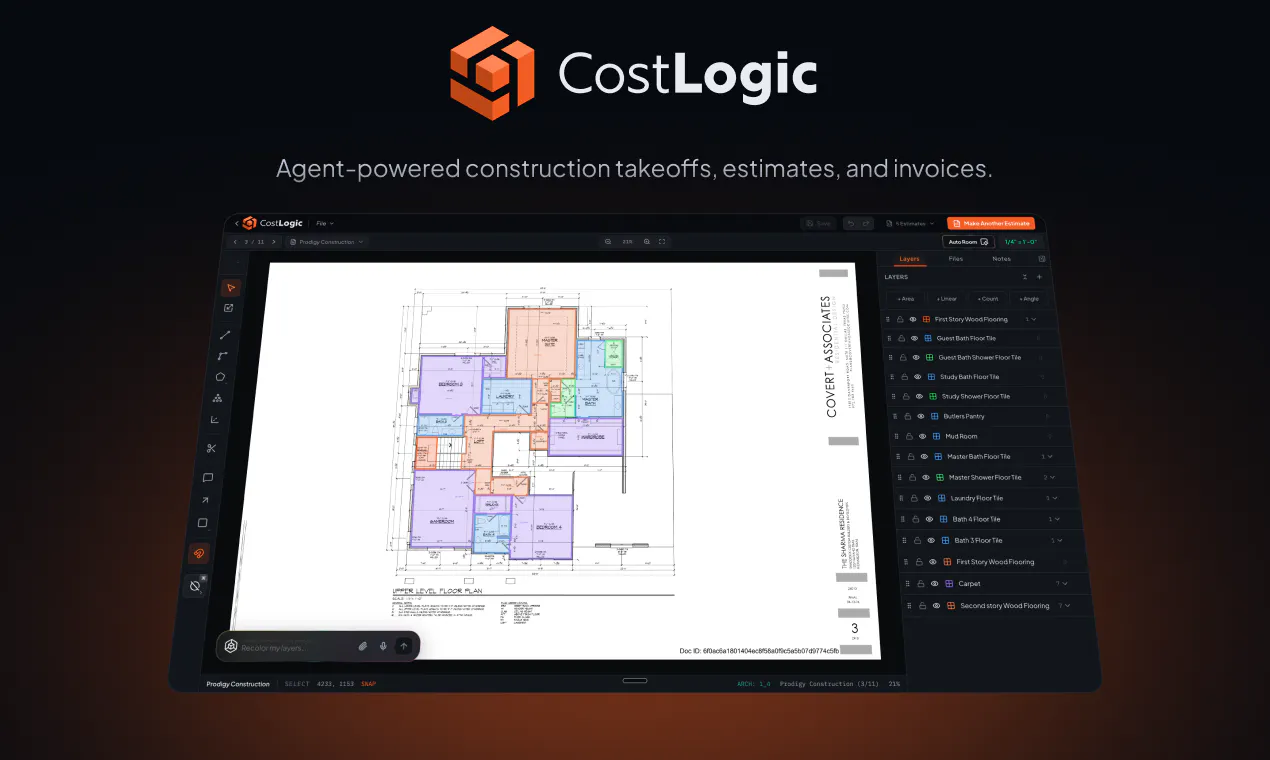
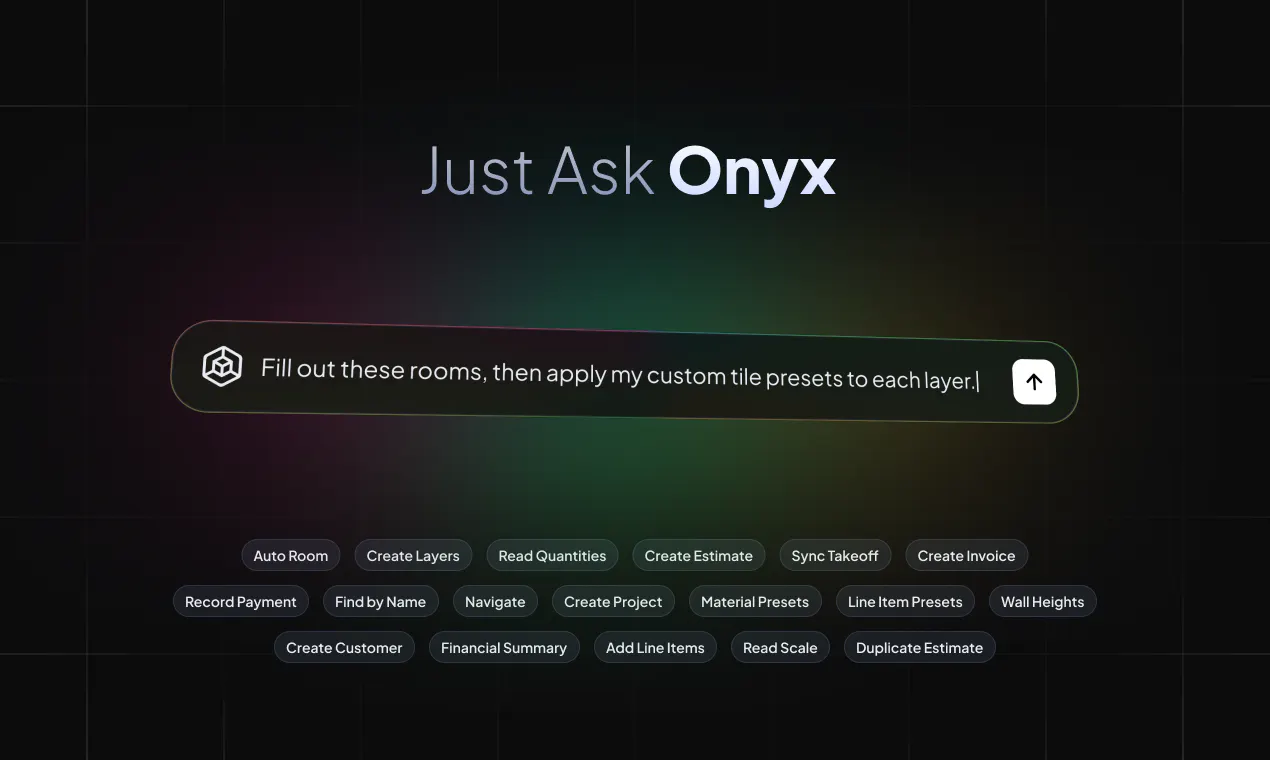
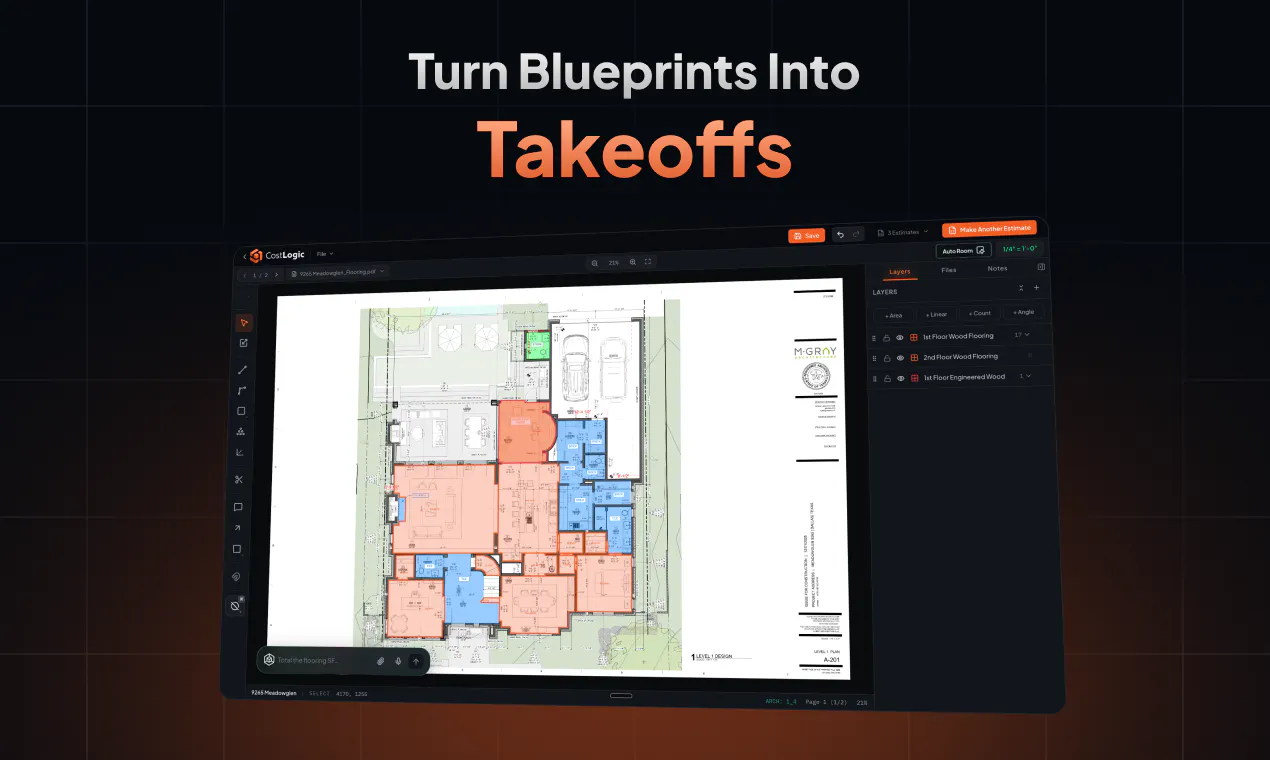
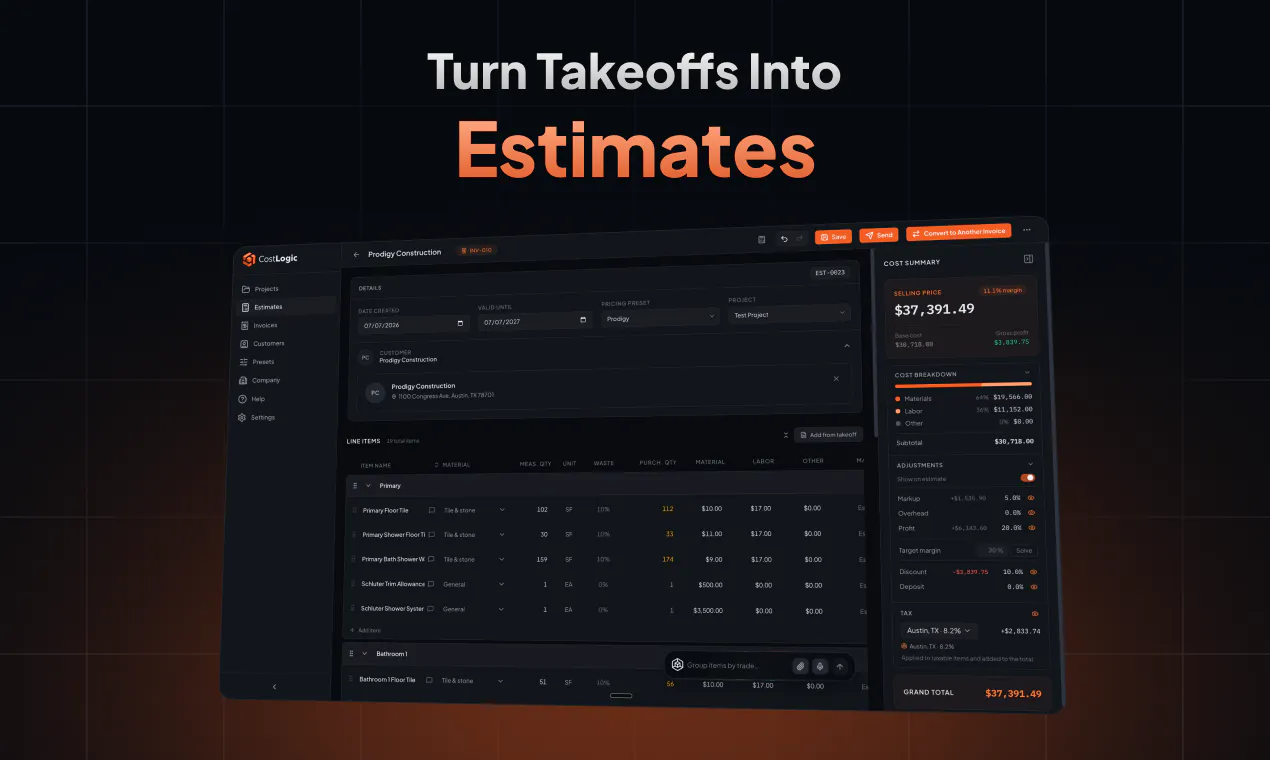
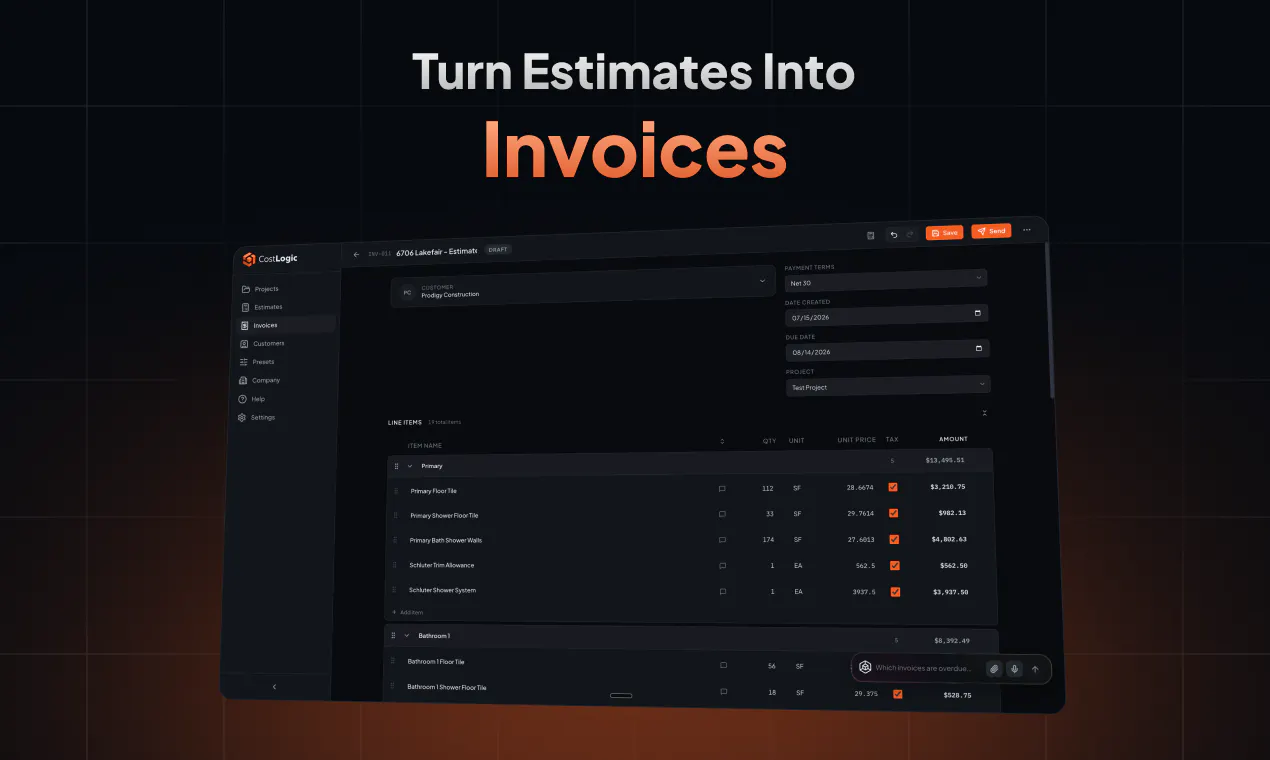
CostLogic is a construction takeoff and job-costing workspace with a powerful agent called Onyx. Onyx can perform actions on your behalf. Upload plans, detect rooms, calibrate scale, measure quantities, turn takeoffs into estimates, and send invoices, all in one browser-based workflow. Go from blueprint to invoice without stitching together five different tools, and turn days into hours or minutes of work.
Me and my co-founder noticed that there weren't enough tools in the construction space that were able to harness the power of AI in the way other industries have. You look around and you are either working in a program built in 2005, or talking to a thin GPT-wrapper that is prone to costly mistakes. We believe CostLogic strikes a balance between speed and control. Let us know what you think of the software! -Micah
4
回复

@micahdoes Construction has somehow been asked to choose between software from 2005 and AI that confidently invents a $40,000 mistake.

So yeah, “speed with control” feels like the right problem to solve.

I especially like that you’re not trying to replace the expertise that makes construction complicated. The interesting opportunity is using AI to remove the tedious work while keeping humans firmly in the loop when the numbers actually matter.

If CostLogic can make estimating faster without making people nervous about trusting the estimate, that’s a pretty compelling sweet spot.

Curious to see how far you can push that balance. 🔥

0
回复
#8
Vaaya
Turn your Github profile into Credit Card for your agents
44
一句话介绍:Vaaya 将开发者的 GitHub 资料转化为代理(Agent)的信用额度,提供统一的 MCP 接口,让 AI 代理无需预充值即可调用超过 1400 个付费工具与服务。
Payments Developer Tools GitHub
代理支付 信用评分 MCP AI Agent工具 开发者基础设施 无预充值 x402 身份认证 金融科技 自动化工作流
用户评论摘要:用户认可创意并惊叹于实际应用(如自动支付图形生成)。核心质疑集中于信任模型:GitHub 身份可伪造或租用,存在刷高额度后赖账风险;另有开发者询问如何处理不在 x402 或 Stripe 协议内的服务商。
AI 锐评

Vaaya 的实质是给 AI Agent 装上一张“信用卡”,试图解决代理经济的最后一块短板——支付。将 GitHub 作为信用背书是个讨巧且低门槛的增长策略,但正如用户犀利指出,这是建立在流沙上的风控模型。GitHub 档案的廉价可制造性决定了它只能作为冷启动的引子,而非信用锚点。创始人在回复中承认了这一点,并揭示了真正的算法:以“消费-还款”的历史记录来构建代理的 FICO 分。这才是 Vaaya 真正的护城河,也是其隐藏在“工具聚合”表象下的金融野心。短期看,1400+ 工具是诱饵,用于吸引开发者产生真实消费行为;长期看,它是在收集代理的信用数据,试图成为代理经济中的征信局。其潜在风险在于,如果“先消费后结算”的模式无法跑通,坏账率会迅速吞噬利润,同时严格的卡门禁(Card-gated)策略也限制了其宣称的“无摩擦体验”。这并非一个简单的开发者工具,而是一场围绕代理数据与信用评估的金融博弈,值得持续关注其风控模型的演进。

查看原始信息
Vaaya
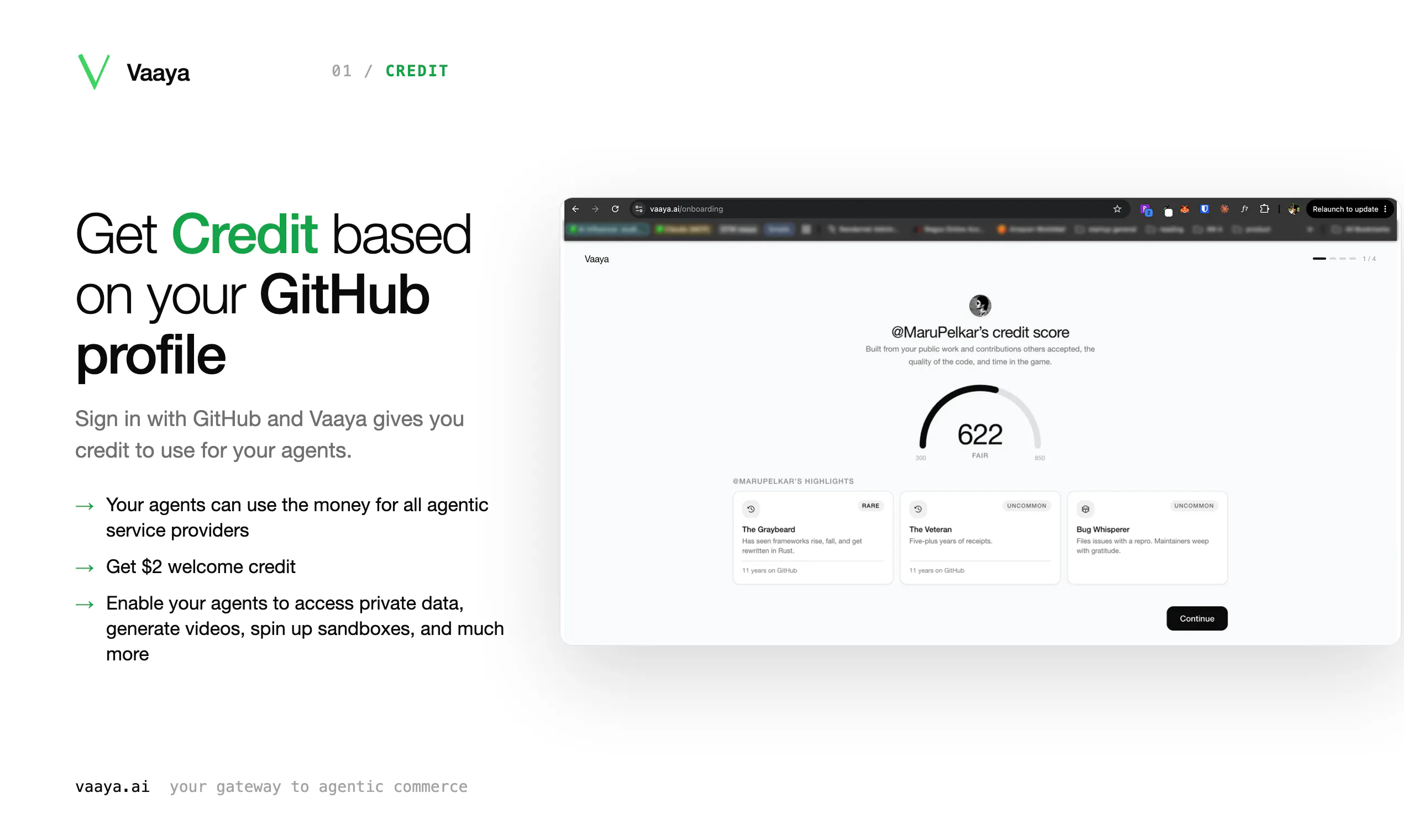
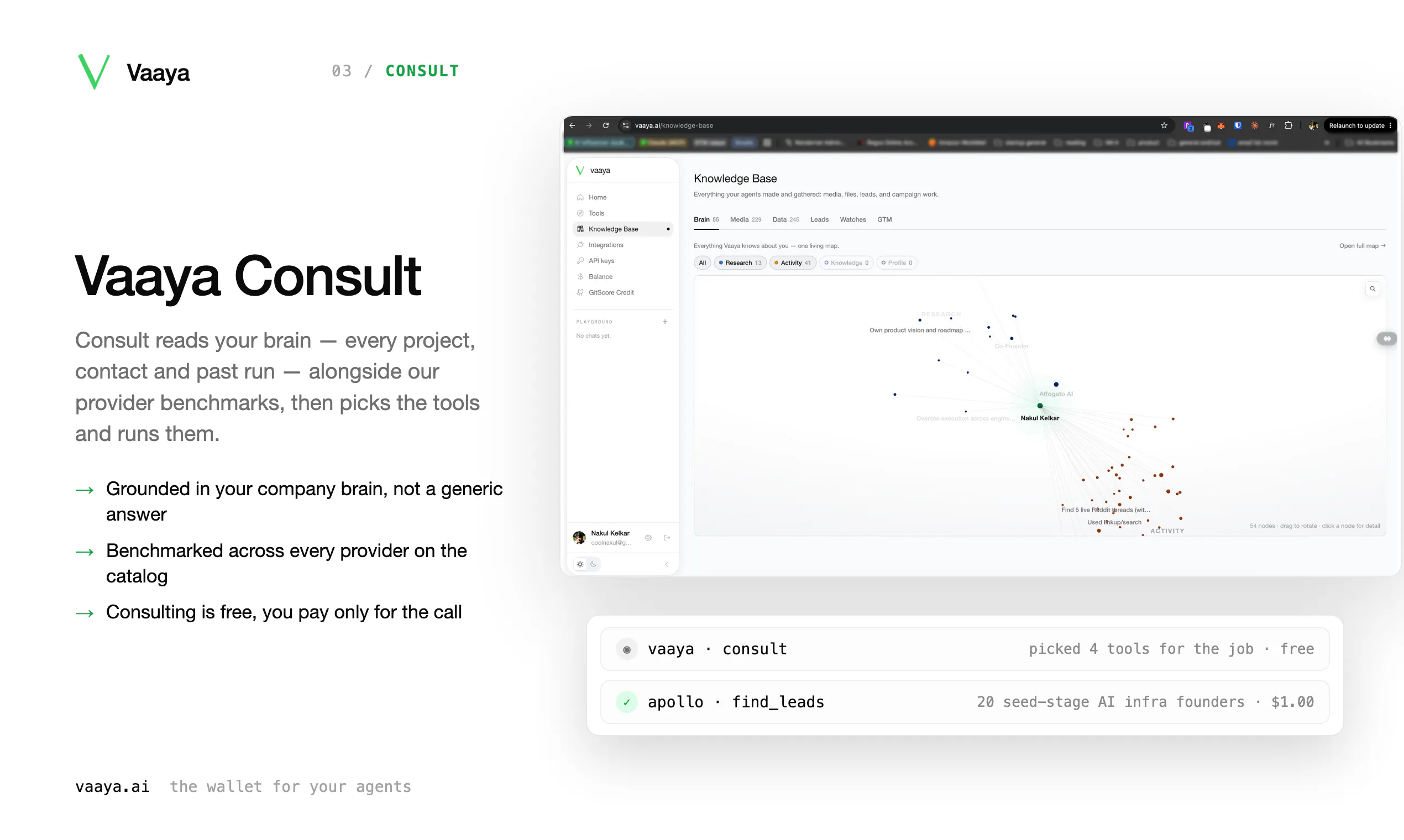
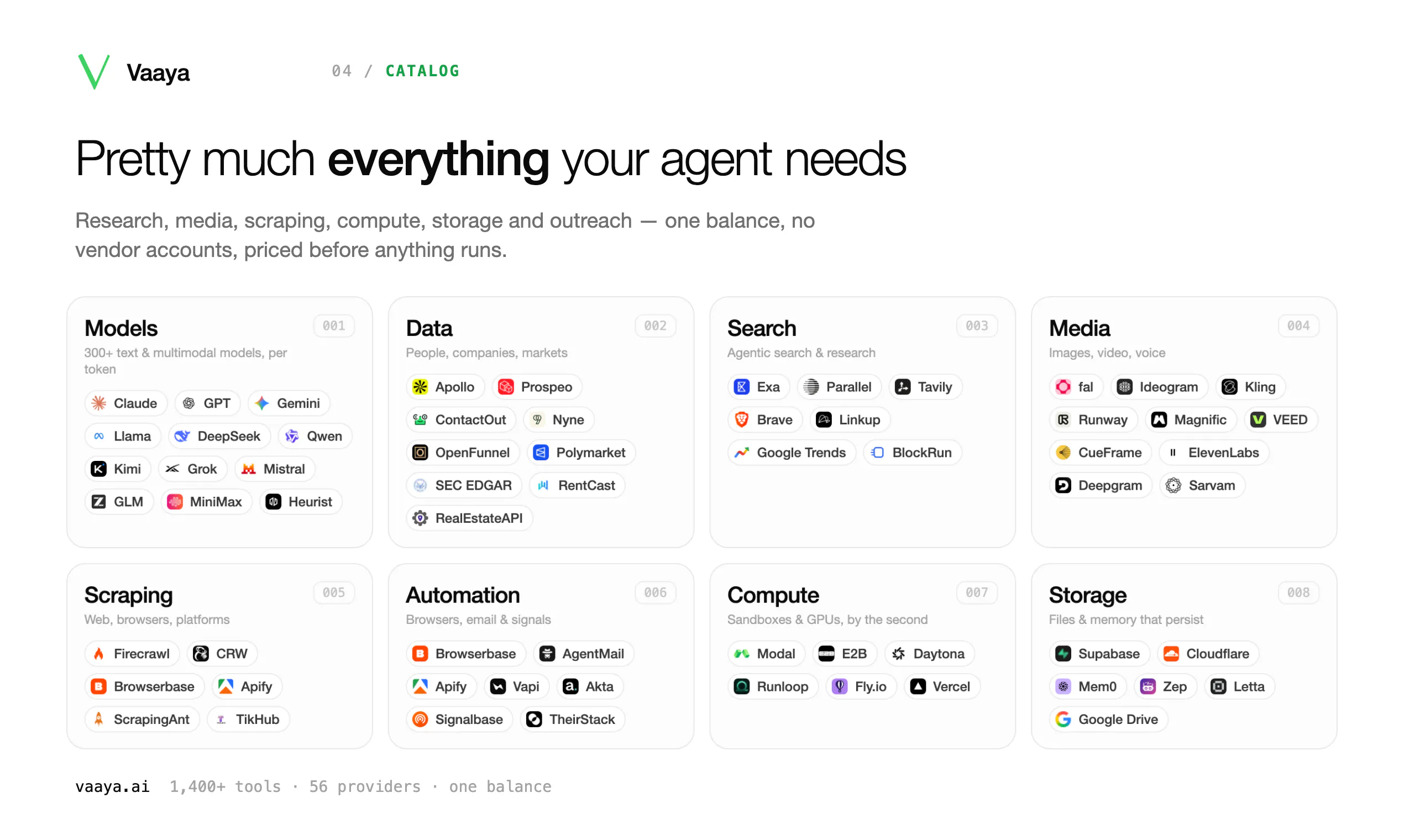
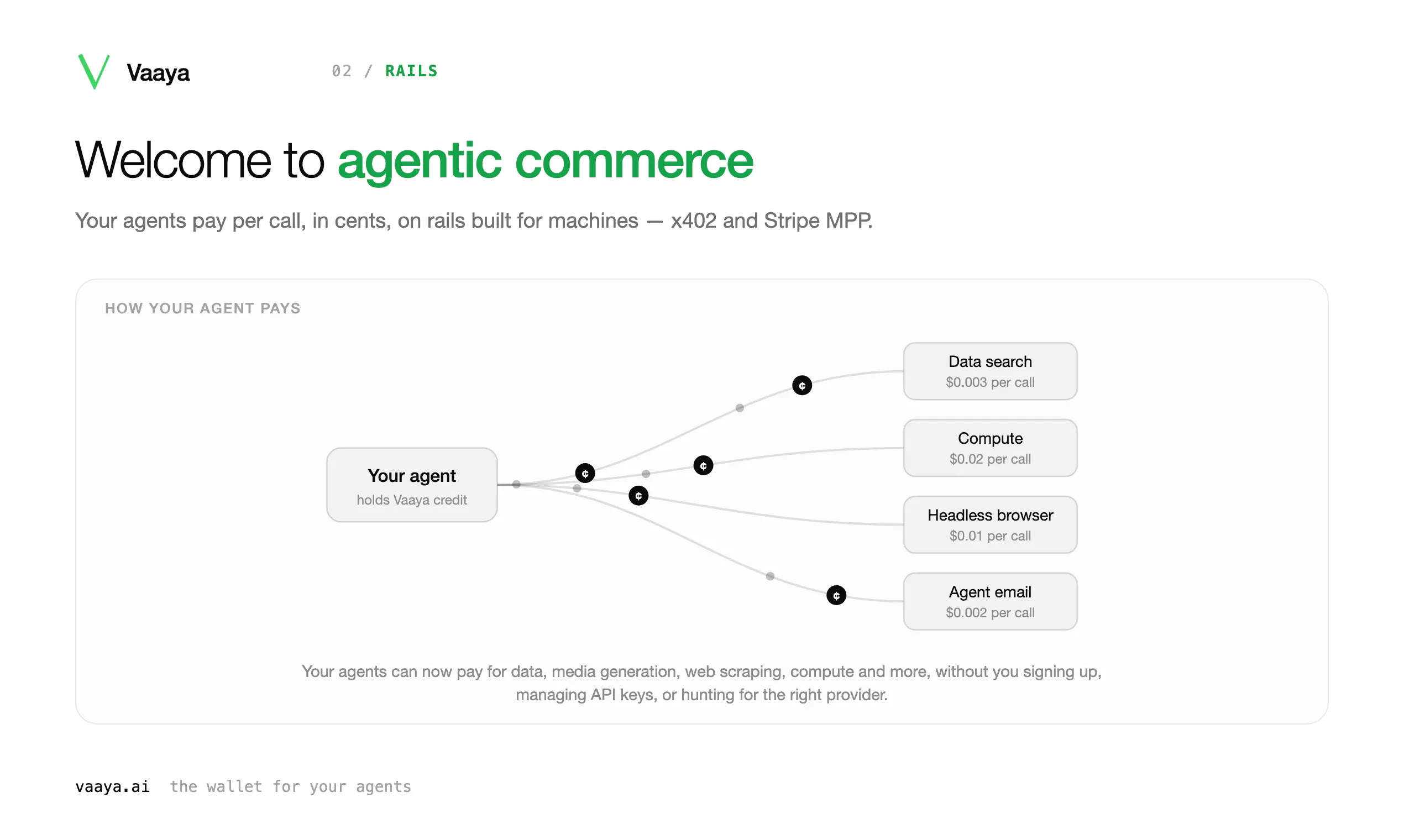
Build your agentic credit score from your github profile credit profile and give your agents money to spend. Enable your agents to access 1400+ tools like Exa, Firecrawl, Fal (media generation), Apollo.io, Browserbase, Modal and a lot more with just one MCP. Installing Vaaya is simple just run npx @vaaya/mcp install
Hey PH community, Introducing Vaaya.ai - your gateway to agentic commerce. Its funny to think that Vaaya started as claudepoker.com, which was casino for your agents on x402 (agentic payment rails). After I built claudepoker.com, i started to onboard my friends and quickly realised that no one knew anything about agentic wallets, x402 or just letting agents pay for anything. That prompted me to build the infrastructure for developers to start using agentic payment rails and explore this new brave and beautiful world. The biggest painpoint was just people not being able to add money to their agentic wallets. We solve that by giving you an agentic wallet (managed and secured by us), and giving you a credit line based on your github profile. This helps us manage risks with credit and allows developers to test out the product without any upfront commitment. With Vaaya, we give your agents a credit line on x402 with strong safeguards and extensive benchmarking on all service providers. We also have detailed recipes to guide your agents on using multiple tool calls in sequence or parallel that enables them to do stuff that you would not think your agents can do. For example, graphics in the above video are done with Fable and Remotion paid by Vaaya. You can use it to generate background images and graphics for your website, or scrape reddit and facebook to find what people are talking about you or your competitor. We have more than 1400 end points and we are adding more providers daily. Just giving Vaaya to your agents unlocks the whole paid internet to them.
6
回复

@marupelkar Seeing Fable and Remotion actually pay for graphics through Vaaya really brings the vision to life—it’s one thing to talk about agentic commerce, but watching it power actual creative work is next level. What’s one tool or workflow you’re most excited to see agents tackle next with these multi-step recipes?

0
回复

been exploring Vaaya recently the idea of giving agents access to real tools without managing a separate setup for everything is pretty interesting. Excited to see how this evolves. 🙌

3
回复

Cool concept but I'm stuck on the trust model - a github profile is not a hard identity, it can be bought, forked from, or built up with throwaway contributions. What stops someone from renting an aged high-star account to unlock a bigger agent spending limit, then walking away once the bill comes due? Curious how you're weighting signal vs just profile age/stars.

1
回复

@omri_ben_shoham1 Fair challenge, and you're right that a GitHub profile is not a hard identity. We don't treat it as one.

The thing that blunts your specific attack is that the GitHub line is card-gated. Nothing from it is spendable until a card is on file, and that card settles whatever gets drawn. So renting an aged high-star account gets you a bigger number on the screen, not free money. On top of that the amounts are deliberately small. We're underwriting tens of dollars, not thousands, so acquiring and burning an account costs more than the payoff.

That sizing isn't an accident. I've spent time in alternate lending, where thin-file underwriting always has exactly this problem. The answer there was never a perfect signal, it was small limits, fast feedback, and tightening as you learn. Same playbook here.

On weighting, it isn't stars or age. Those are the cheapest things to manufacture so they carry the least. I won't pretend the current model is more than a starting point though, and we're actively improving it.

The real unlock is spend history. Once accounts have a track record of drawing and repaying, that becomes the primary signal and GitHub drops to secondary. That's effectively a FICO equivalent for a developer profile, and it's what we're building toward.

0
回复

Interesting, what about services which are not on x402 or stripe mpp - How does agent pay for them?

0
回复
#9
Mac Developer Bridge
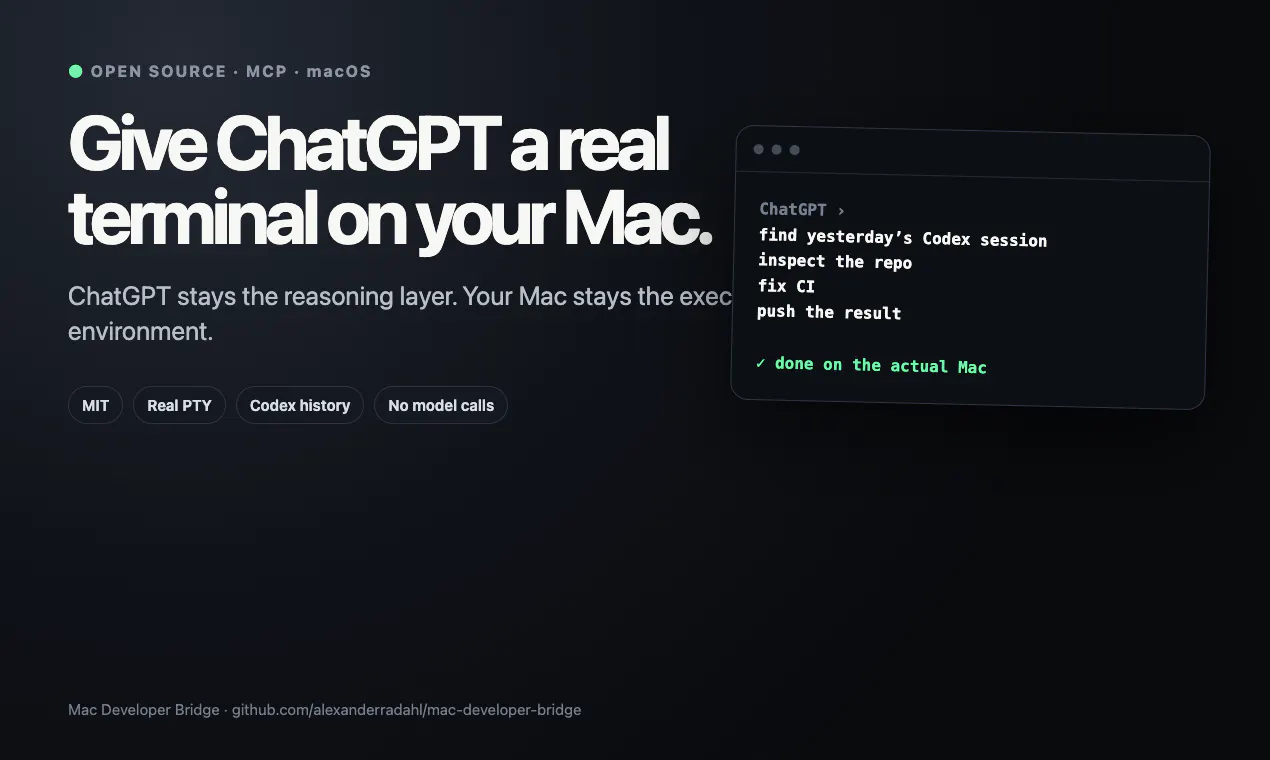
Give ChatGPT a real terminal on your Mac
14
一句话介绍:Mac Developer Bridge 是一款开源 MCP 桥接工具,让 ChatGPT 能直接操作你 Mac 上的真实终端、文件系统和后台任务,摆脱“人工复制粘贴”的低效循环。
Mac Open Source Developer Tools
开发者工具 MCP服务器 AI终端控制 开源 本地自动化 PTY会话 文件系统访问 Codex集成 无沙箱 安全审计
用户评论摘要:用户认可开源属性和“ChatGPT做大脑、Codex做手脚”的架构分工,并确认其核心价值在于免去手动搬运prompt和输出。但暂无负面或使用细节反馈,仅对安全模型表示谨慎关注,未暴露具体痛点。
AI 锐评

Mac Developer Bridge 的价值不在“给 ChatGPT 一个终端”这个表面功能,而在于它重新定义了 AI 协作中的职责边界:让推理与执行彻底解耦。它精准击中了高级开发者最烦躁的环节——在多个 AI 工具间来回搬运上下文和命令,本质上是把“人肉胶水”替换成了协议。但它的激进之处也恰恰是致命弱点:“非沙箱”设计意味着一旦 ChatGPT 的推理被恶意 prompt 注入,你的 Mac 就是裸奔的。虽然作者提供了 kill switch 和审计日志,但这只是缓解而非解决,它把安全责任全数推给了用户,这在企业或生产环境中几乎不可接受。此外,14 个投票和仅一条评论说明它仍属极客玩具,距离“开发者默认工作流”尚远。真正的考验在于:当 Codex 或 Claude 原生支持持久化终端操作时,这种第三方桥接的生存空间会被迅速挤压。它现在更像一个精致的概念验证,而非可持续的产品。对于个人开发者,它值得尝试;对于团队,请三思后行。

查看原始信息
Mac Developer Bridge
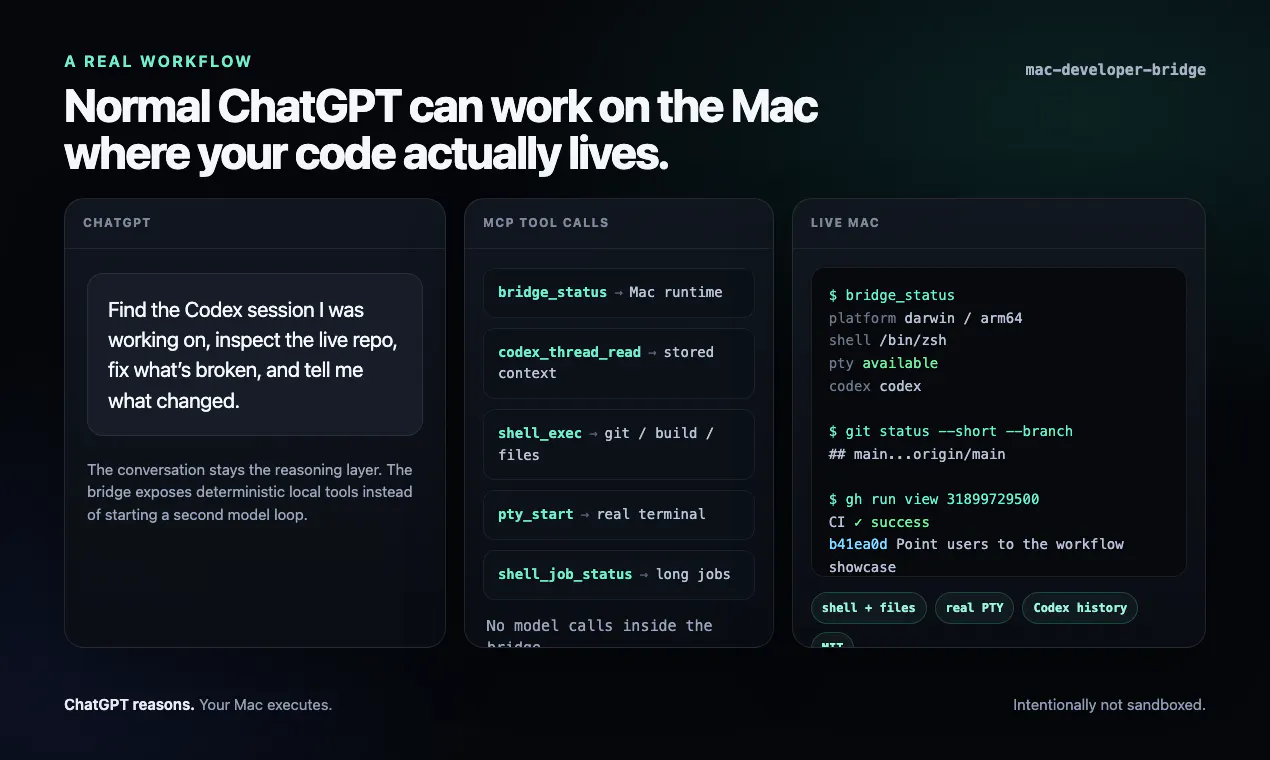
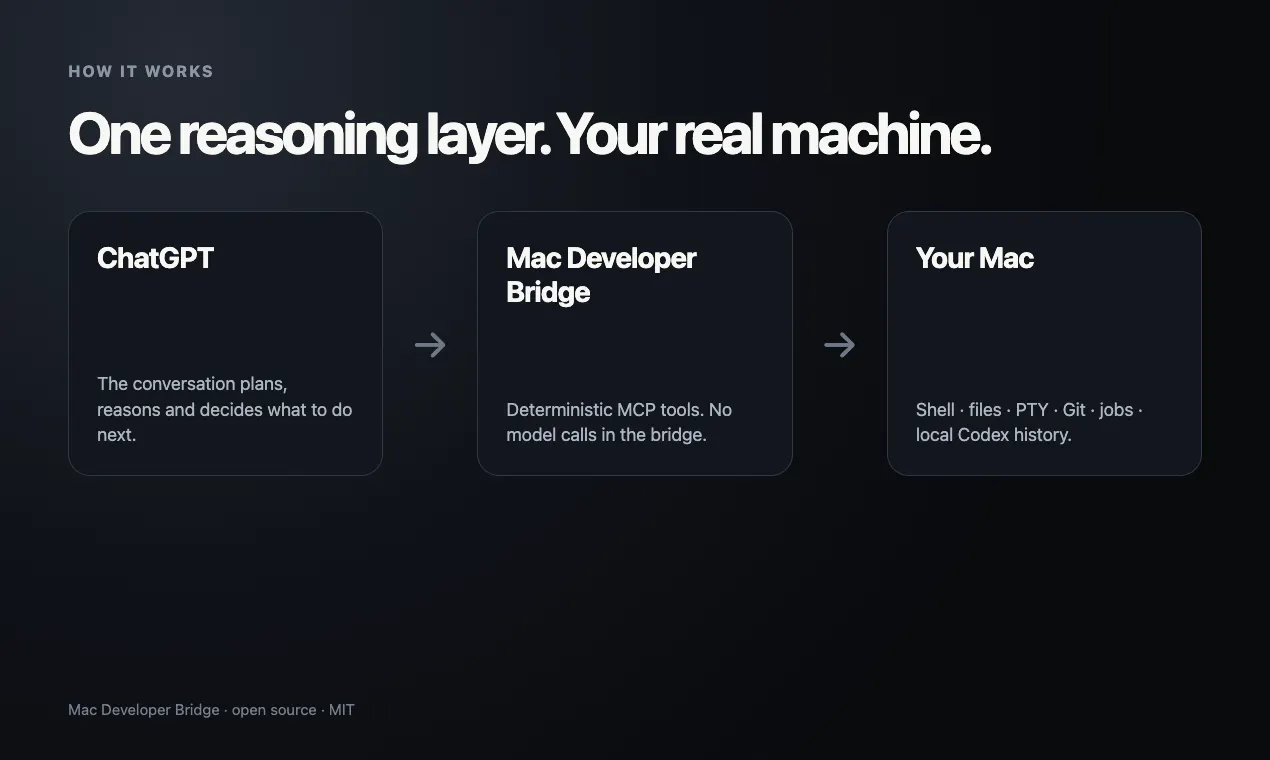
Open-source MCP bridge that lets ChatGPT operate your actual Mac: shell, files, real PTY sessions, background jobs, and read-only Codex history. ChatGPT stays the reasoning layer; your Mac stays the execution environment. MIT licensed and intentionally not sandboxed.
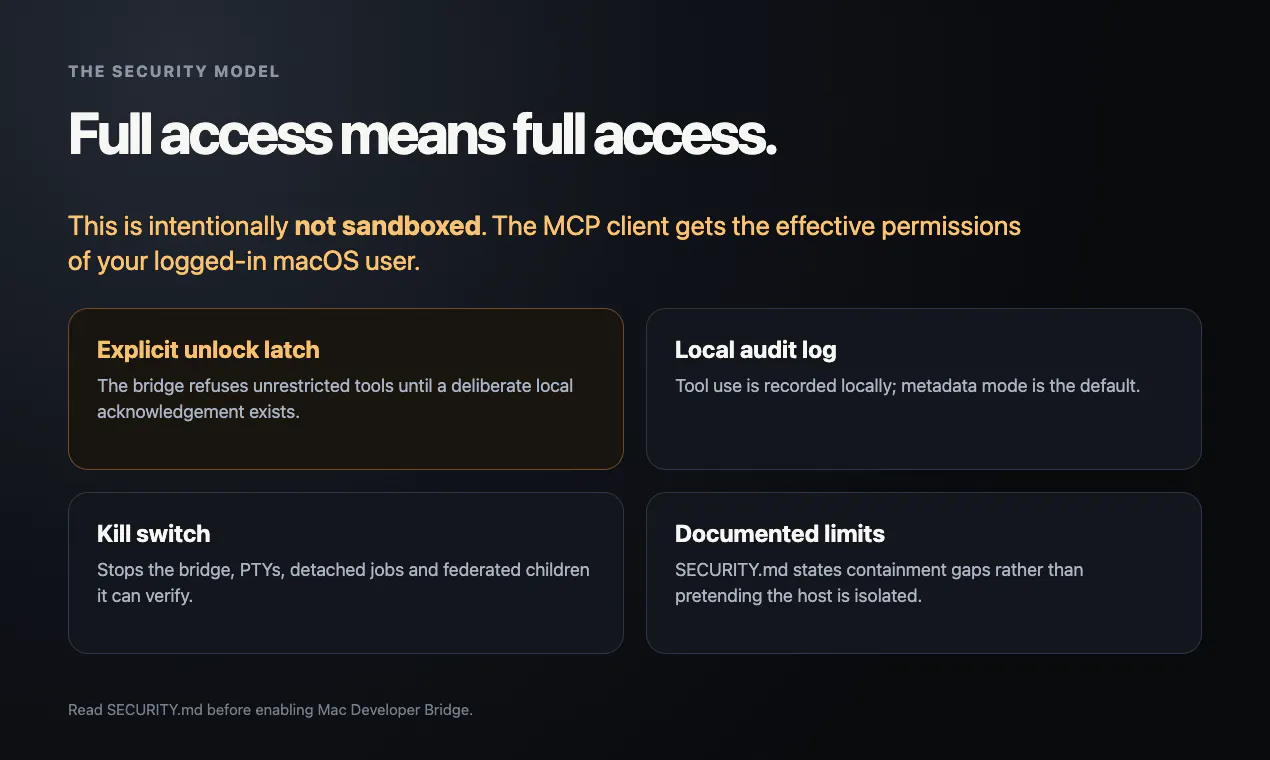
I built Mac Developer Bridge because I kept ending up as the human copy/paste layer between a strong ChatGPT conversation and the Mac where the real work lived. The workflow I wanted was simple: “Find the Codex session I was working on yesterday, recover the context, inspect the live repo, fix what’s broken, and push the result.” I wanted that to happen from normal ChatGPT without starting another model loop or relaying files and terminal output by hand. So the bridge exposes the Mac over MCP: shell execution, unrestricted filesystem operations, real PTY sessions, detached jobs with logs, and read-only access to persisted Codex threads. The bridge itself makes no model calls. ChatGPT does the reasoning; the Mac does the work. One warning matters more than the feature list: this is intentionally not sandboxed. It runs with the effective permissions of your logged-in macOS user. I added an explicit unlock latch, local audit log, a kill switch, and detailed security documentation, but this is for people who deliberately want that permission model. It’s free, MIT licensed, and the core bridge has zero npm runtime dependencies. I’d love feedback on two things: where the setup still feels too fiddly, and what local workflow you’d want normal ChatGPT to take over first.
0
回复

@alexander_benz Let's see if I've got what you're doing here before I go diving into this repo. First, open-source? You're already "plus ten" in my book. Ok. So, I often have long, detailed, conversations with ChatGPT when she it tied into my github repo. I have codex running in the app. So I totally get the notion of having ChatGPT do all the brain power and then what I have her do is give me the detailed, maybe one-shot, prompt to get stuff done in Codex with those prompts sometimes going for 20 minutes of execution. Then ChatGPT, via looking at Github, can review the work and create the next codex prompt. Codex is arms n legs, ChatGPT is the brain. It let's me use cheap model in Codex and the latest in my 20 dollar ChatGPT subscription.

So, are you essentially saying, why do the codex part, have chatgpt do what I do now but THEN kick it over to the MCP server to execute on whatever? Do I have that right?

0
回复
#10
Assetli.app
Personal finance & net worth, wired to your AI
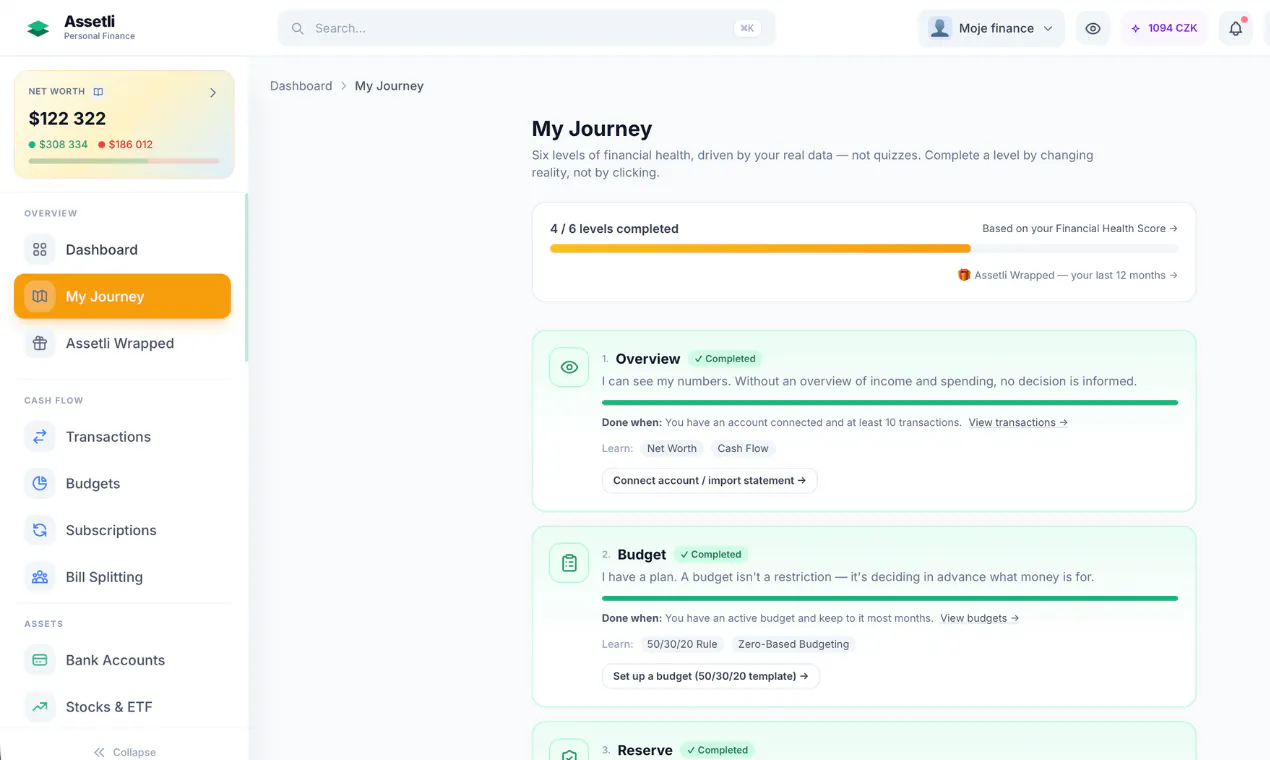
12
一句话介绍:Assetli是一款无需强制绑定银行账户、支持通过CSV/PDF导入数据,并能直连Claude或ChatGPT(经MCP协议)让AI读取及更新个人财务与净资产数据的记账工具,旨在解决“安全顾虑”与“复杂数据整理”之间的两难痛点。
Fintech Artificial Intelligence Personal Finance
个人理财 净资产追踪 AI集成 MCP协议 手动导入 多资产类别 FIRE计算器 隐私安全 独立开发者 订阅制替代
用户评论摘要:目前仅有一条来自开发者本人的介绍性评论,无其他用户有效提问或建议。核心信息聚焦于AI集成功能与隐私安全设计,有待后续用户实测反馈验证。
AI 锐评

Assetli的12票和唯一一条开发者自述评论,使其更像一个“概念验证”而非成熟产品。其核心卖点“让AI用你的数据”确实切中了当前金融App“只读不智”的痛点——多数应用把数据锁死在面板里,而MCP协议接入Claude/ChatGPT是首个真正实现“双向操控”的务实尝试(AI不仅能看,还能改账),这比那些徒有其表的“AI记账分类”高出一个维度。

但锐评必须指出三点硬伤:其一,**数据导入是双刃剑**。CSV/PDF导入虽规避了银行API的安全红线,但也将繁重的“账目整理”成本转嫁给用户。对普通用户而言,每月手工整理对账单的摩擦成本,足以使活跃度在两周内断崖式下跌——这几乎是所有“手动记账”类产品的宿命。其二,**“AI更新账目”是危险裸奔**。允许LLM直接写入财务数据,一旦AI因上下文污染或工具误调用产生错误写入,其溯源与纠错成本极高。开发者未展示任何“AI操作审计日志”或“写前确认机制”,这在金融场景中属于合规与体验的双重缺失。其三,**生态位尴尬**。它既不如Copilot Money等自动化工具便捷,又不如纯Excel灵活,唯一差异化的AI MCP接口,目标用户是“会搭MCP的高阶玩家”——这群人更可能自己写脚本,而非用一个12票的早期产品。

真正的价值点在于:它证明了一个轻量级、隐私优先的“AI-CFO”本地化方案是可行的。如果开发者能将CSV/PDF解析做成“智能纠正+一键确认”的AI流程,并给AI写入操作加上像Git一样的版本回滚机制,同时强化FIRE/房贷计算器的决策联动,或许能在“自动化巨头”与“手动硬核用户”之间的夹缝中,找到一批忠实的隐私敏感型高净值用户。否则,这将又是一款开发者自嗨的“个人作品集”项目。

查看原始信息
Assetli.app
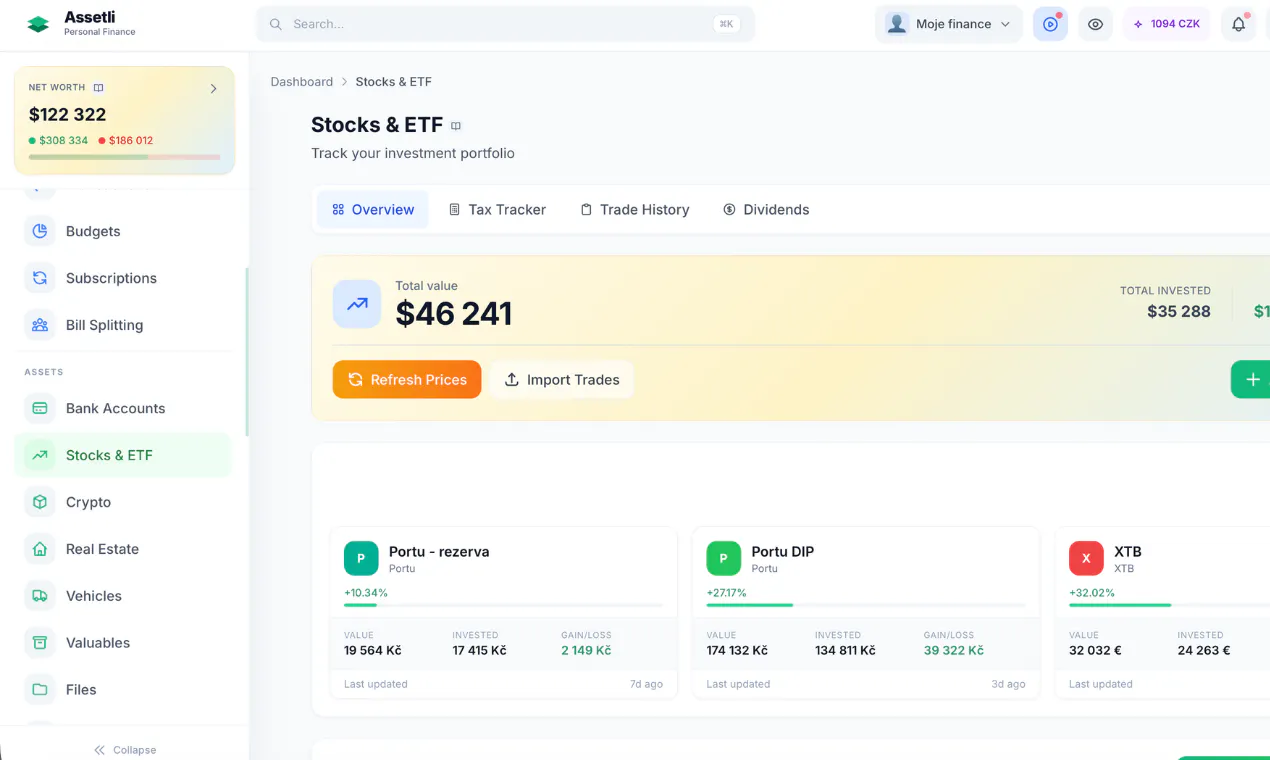
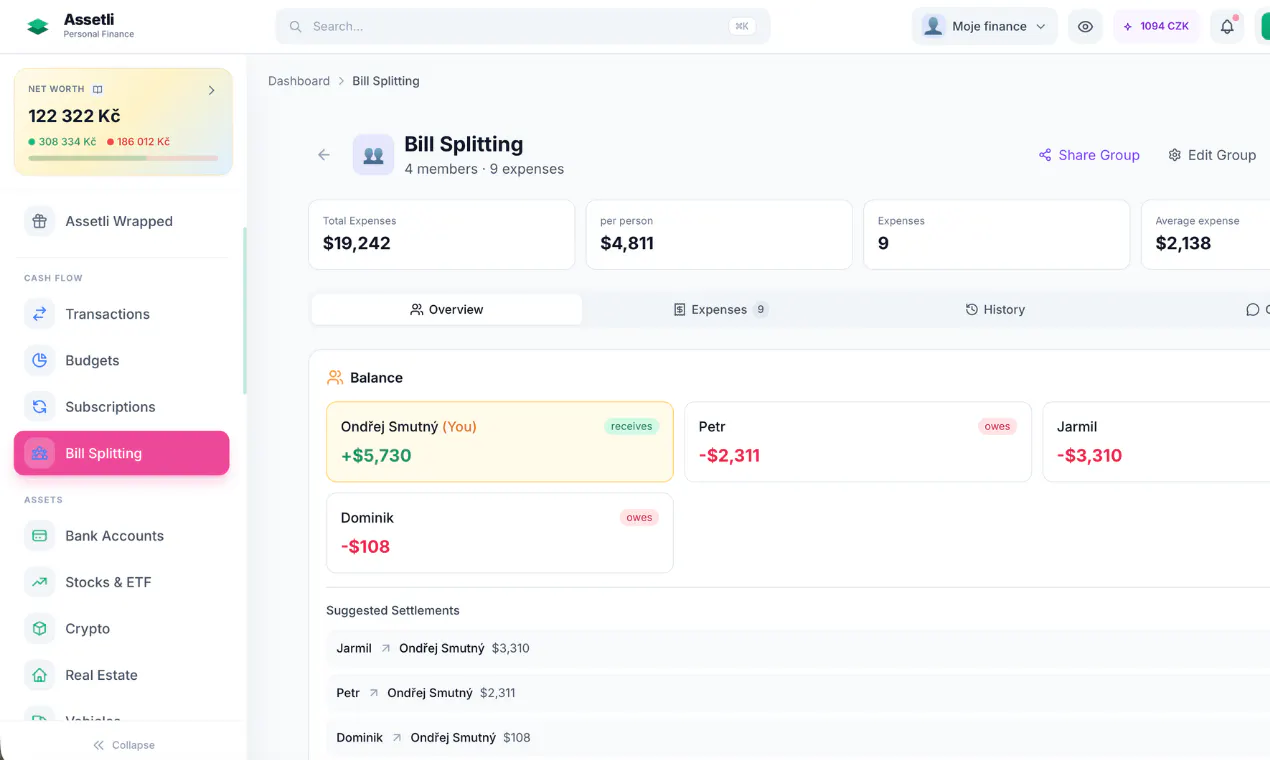
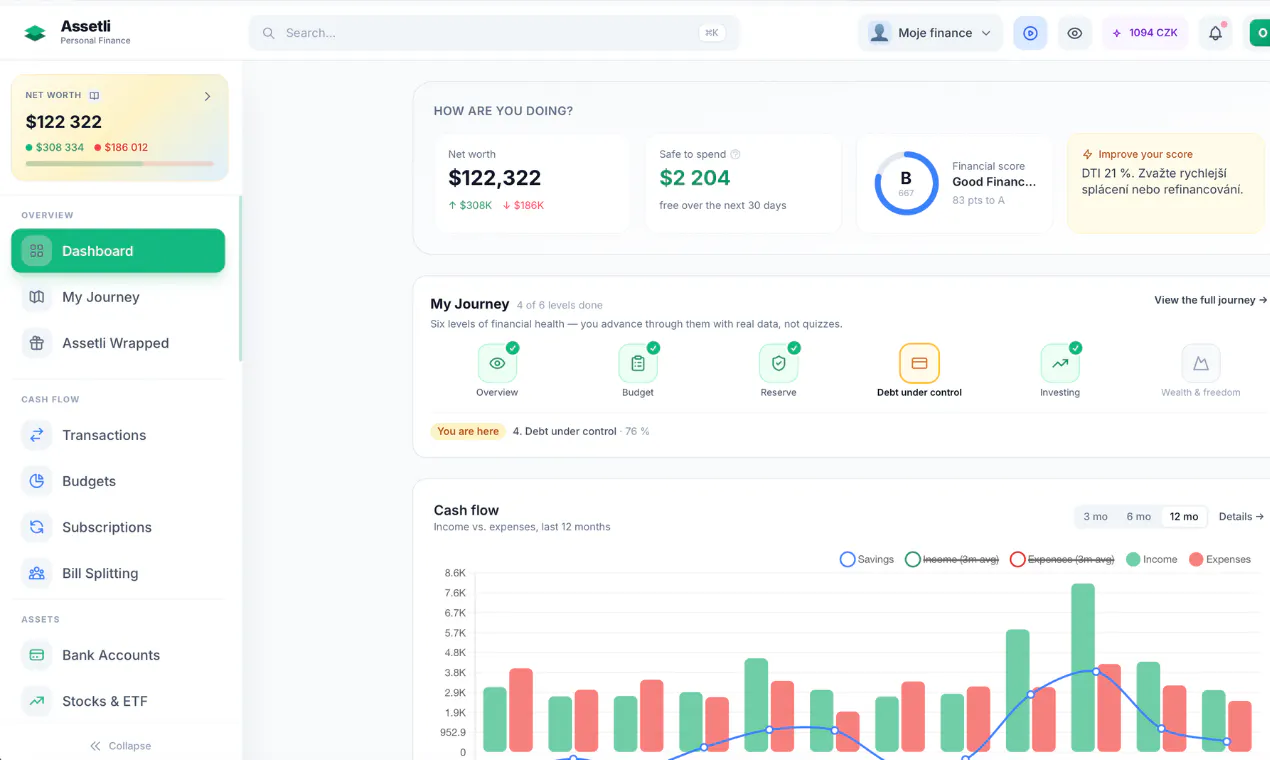
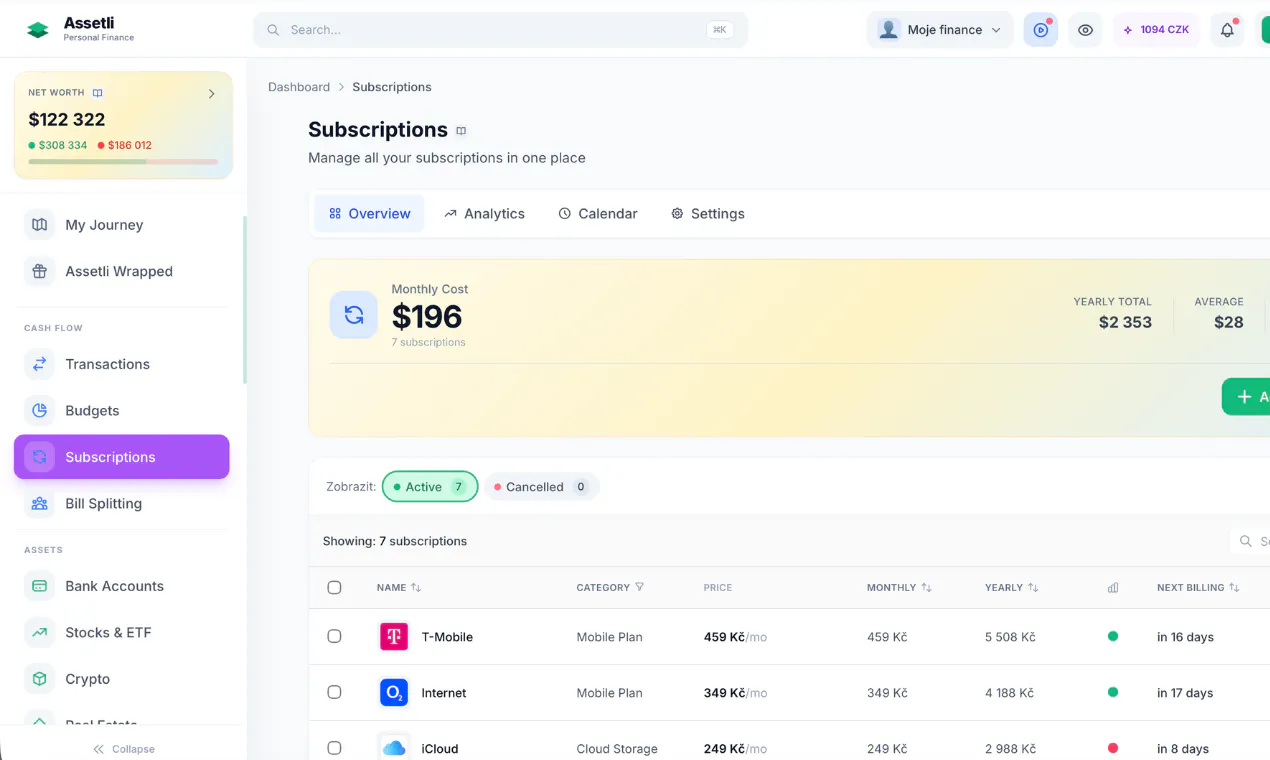
Most finance apps just show you a dashboard. Assetli lets your AI use it. Connect directly to Claude or ChatGPT via MCP — your assistant reads your real net worth, transactions and portfolio, and can update them too, right inside your own AI chat (we never see it). Beyond budgeting, Assetli tracks stocks, crypto, real estate, vehicles and valuables in one place, with built-in FIRE, mortgage and rent-vs-buy calculators. No forced bank linking — import via CSV/PDF, stay in control.
Hey Product Hunt! 👋 I'm Ondřej, a solo developer from Czechia. I built Assetli because I was tired of choosing between two bad options: finance apps that need to connect to my bank (security risk I wasn't comfortable with) or spreadsheets that got messy fast. Assetli tracks everything — bank accounts, stocks & crypto, real estate, vehicles, even valuables — without forcing a bank connection. You import via CSV/PDF and stay in full control of your data. The part I'm most excited to share today: Assetli connects directly to Claude or ChatGPT via MCP. Your AI assistant can read your real financial data and even update it — all inside your own AI chat, which means we never see those conversations. It's the closest thing to a personal CFO I've been able to build. I use Assetli every single day for my own finances, so this is a product built from real need, not a corporate roadmap. Free plan forever, no credit card required. Would love your feedback — especially on the AI assistant integration, since that's brand new. Happy to answer anything in the comments! 🙌
0
回复
#11
Scaloom
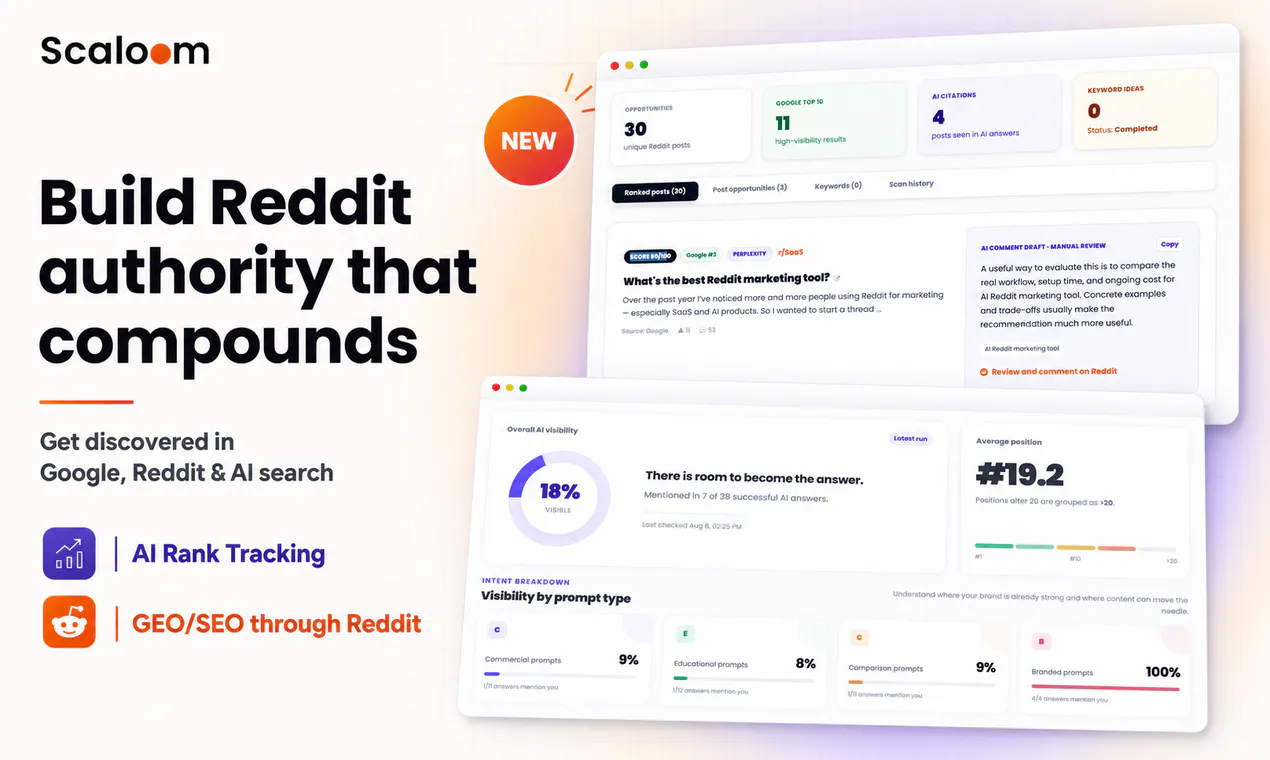
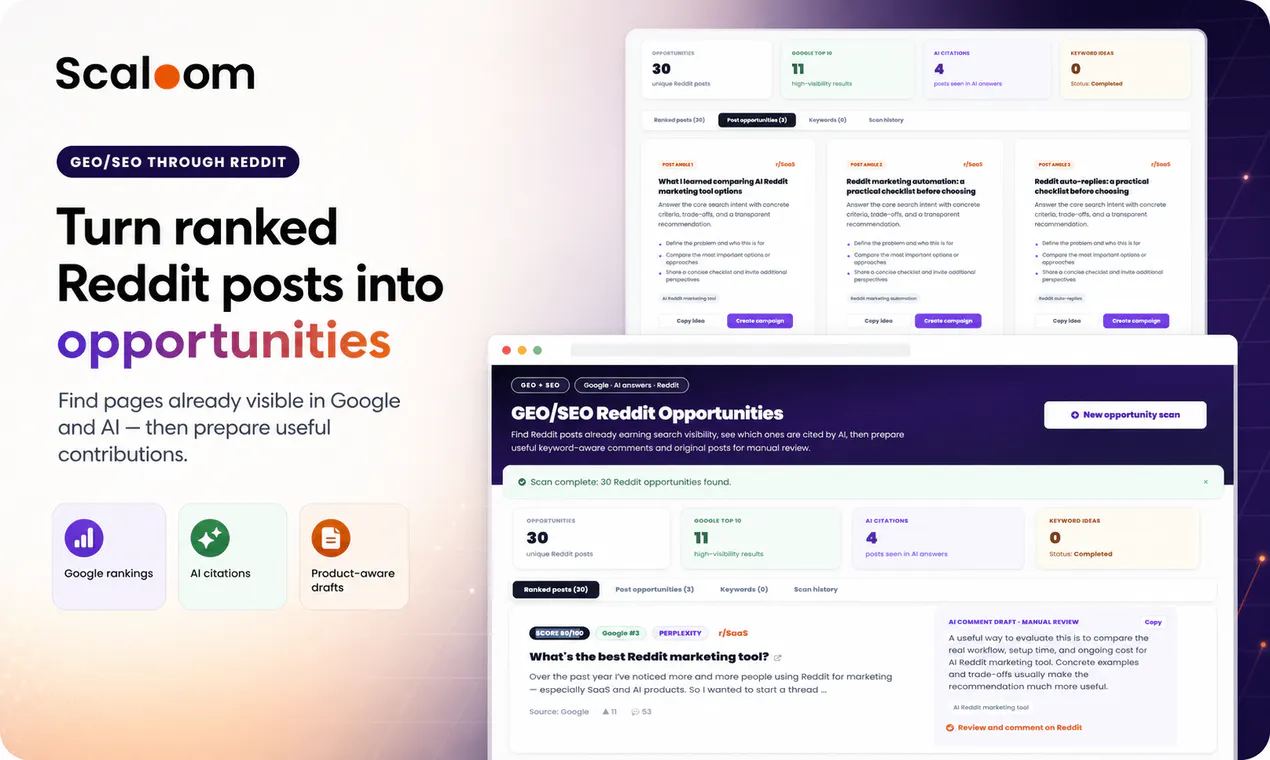
AI-powered Reddit marketing for Google & AI search
8
一句话介绍:Scaloom是一款AI驱动的Reddit营销平台,帮助创始人通过养号建立信任、发现高相关讨论并生成人工审核的回复,从而将Reddit转化为可被Google及AI搜索引擎收录的流量获取渠道,解决品牌在Reddit上冷启动难和搜索可见性低的痛点。
Marketing Artificial Intelligence Social media marketing
Reddit营销 AI营销工具 账号养号 品牌监测 GEO优化 SEO工具 AI搜索优化 社区运营 创始人工具 搜索引擎可见性
用户评论摘要:目前仅有一条创始人发布的介绍性评论,无用户反馈或建议。评论内容主要阐述产品从养号工具升级为“Reddit到搜索可见性”平台的逻辑,并邀请用户对AI可见性追踪和GEO/SEO功能提出意见,属产品自述而非有效用户反馈。
AI 锐评

Scaloom踩中了两个看似性感的趋势:Reddit的流量价值重估,以及AI搜索对内容来源的偏好。逻辑上,它试图把“Reddit营销”从玄学变成工程——养号防封、找已排名帖子、追踪ChatGPT/Perplexity的引用,这确实是很多独立开发者和中小品牌刚需。但问题同样刺眼:第一,Reddit官方对自动化营销的打击越来越严,任何“养号”工具都游走在封号边缘,Scaloom把“安全”当卖点,本质是平台对抗的灰色生意,风险极高。第二,投票数仅8,评论为零用户反馈,说明产品尚在早期,所谓“AI回复”和“多引擎追踪”大概率是浅层API调用加规则匹配,深度和准确性存疑。第三,它强调“帮助品牌被AI搜索引用”,但GEO(生成式引擎优化)目前并无成熟方法论,Scaloom更多是提供监控仪表盘而非增长引擎,价值停留在“看见问题”而非“解决问题”。真正务实的定位应该是:作为Reddit内容策略的辅助分析工具,而非自动营销黑科技。如果无法解决Reddit封号风险,以及证明其AI回复能真实带来有效流量,这产品最终只会沦为一款昂贵的“数据监控面板”。建议团队优先打磨合规性,并拿出可复现的案例证明“Reddit帖子→Google排名→品牌曝光”的转化链路,否则难以说服精明的Reddit用户群。

查看原始信息
Scaloom
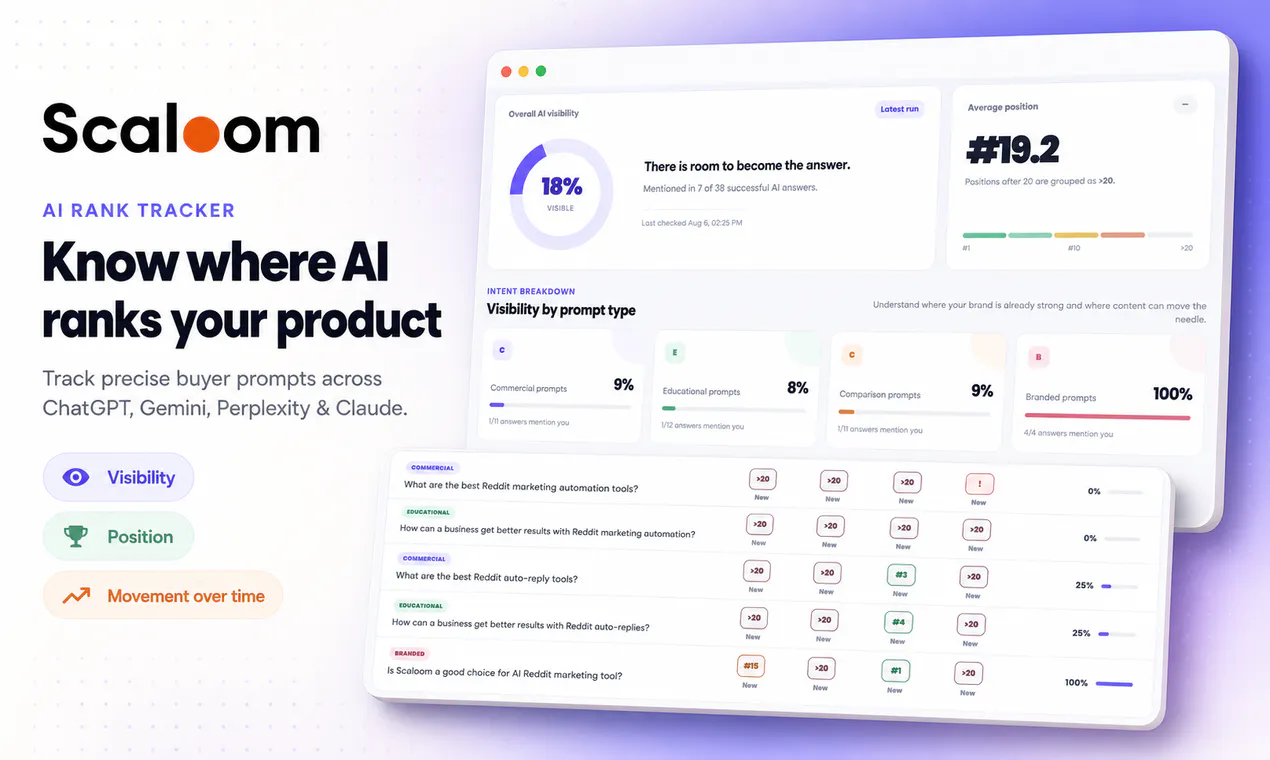
Scaloom is an AI-powered Reddit marketing platform that helps founders build trusted accounts and turn Reddit into a search acquisition channel. ✅ Warm up Reddit accounts for karma & trust ✅ Find relevant subreddits and conversations ✅ Draft AI replies with human approval ✅ Find Reddit threads already ranking on Google ✅ Track brand visibility across ChatGPT, Gemini, Claude & Perplexity ✅ Discover GEO/SEO content opportunities
Hey Product Hunt 👋 I’m excited to share the new version of Scaloom. Scaloom started as a Reddit marketing tool focused on account warmup and safer community engagement. With this release, we’re expanding it into a broader Reddit-to-search visibility platform. You can now: ✅ Discover GEO/SEO opportunities through Reddit ✅ Track how your brand appears across ChatGPT, Gemini, Claude, and Perplexity ✅ Warm up Reddit accounts gradually and build trust ✅ Discover relevant subreddits and conversations ✅ Draft AI-assisted replies with human approval ✅ Find Reddit threads already ranking on Google ✅ Monitor visibility and competitors over time The idea is simple: build trust on Reddit, find conversations that already have search visibility, contribute something useful, and track how your brand visibility evolves across Google and AI search. I’d love your feedback, especially on the new AI visibility tracking and Reddit GEO/SEO features.
0
回复
#12
Nthly - 2FA Authenticator
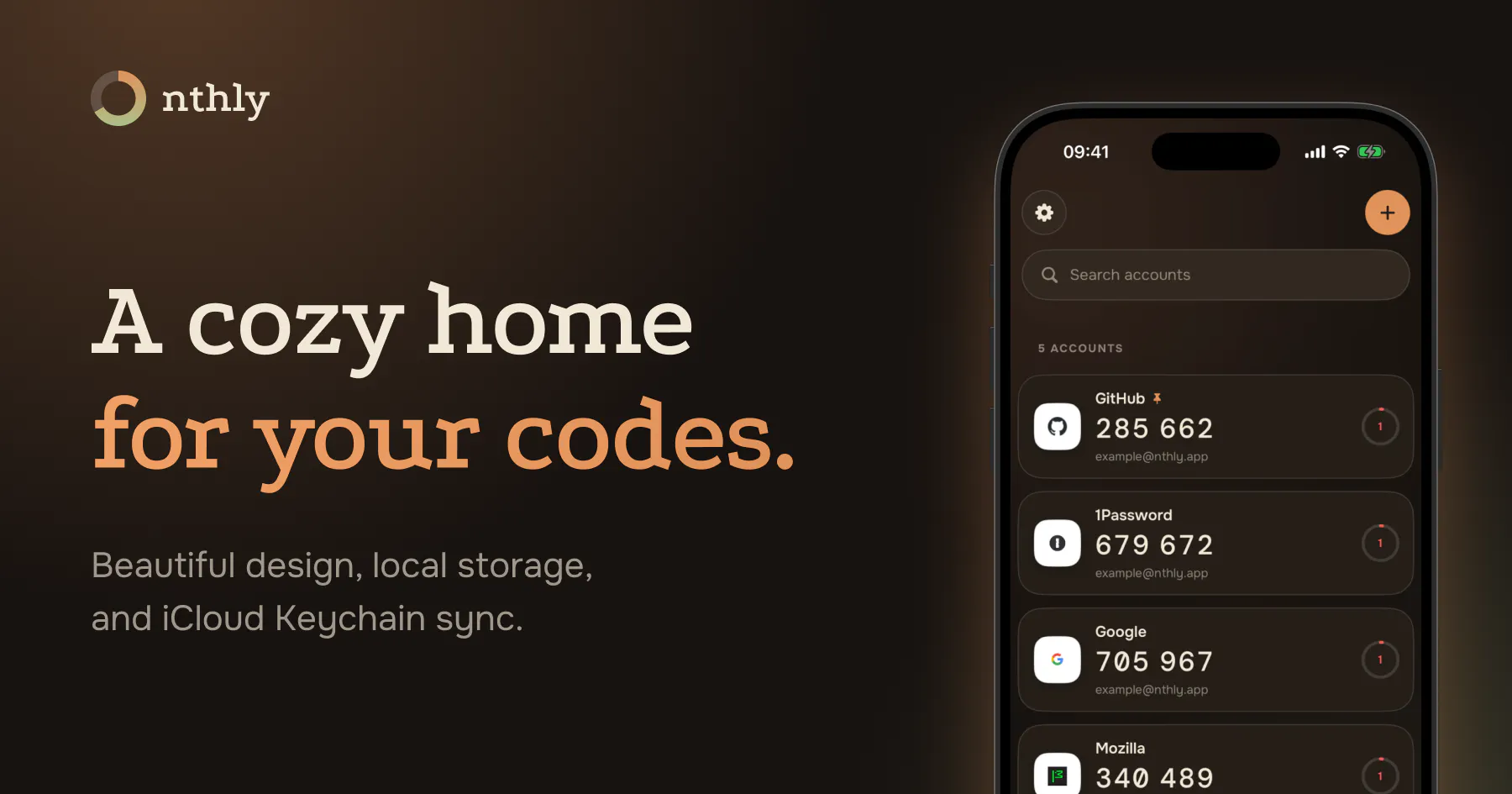
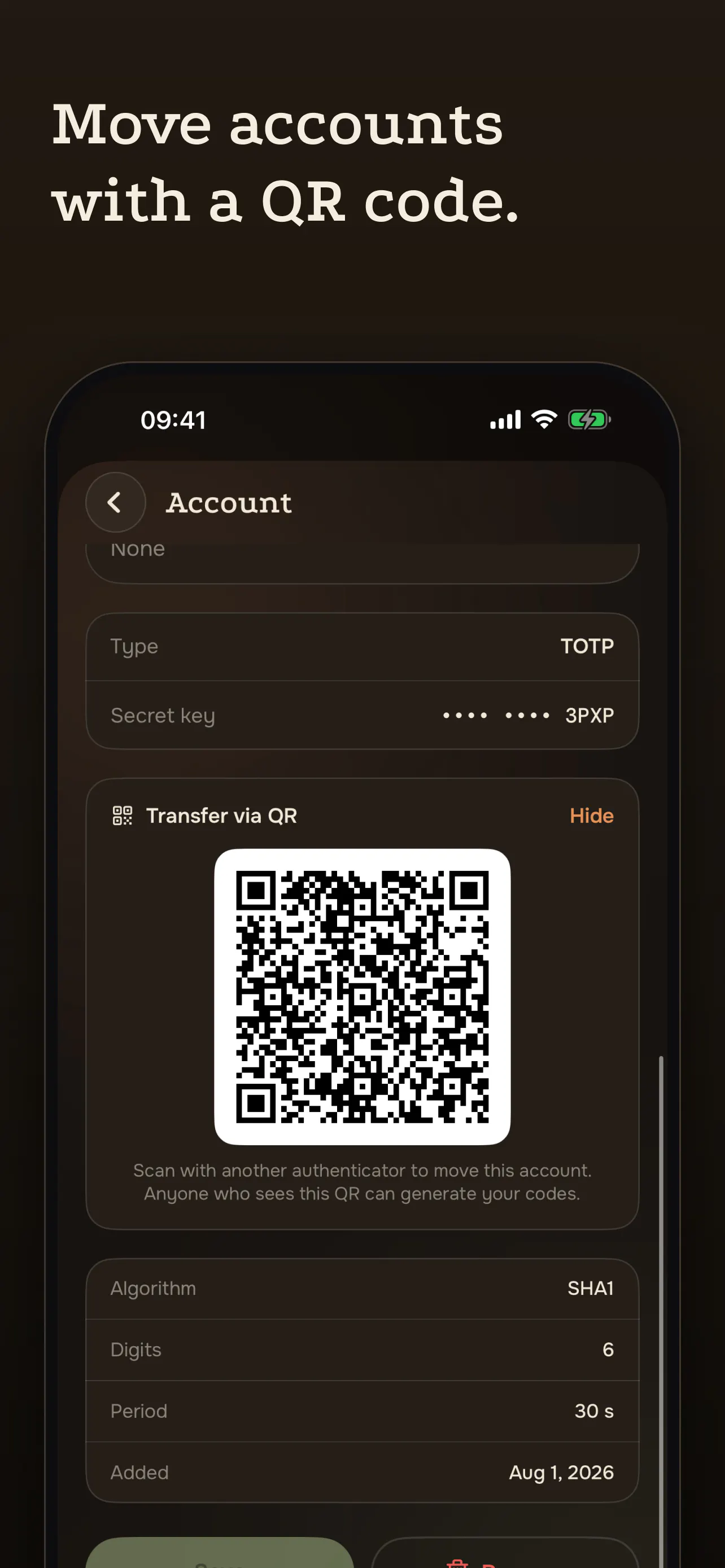
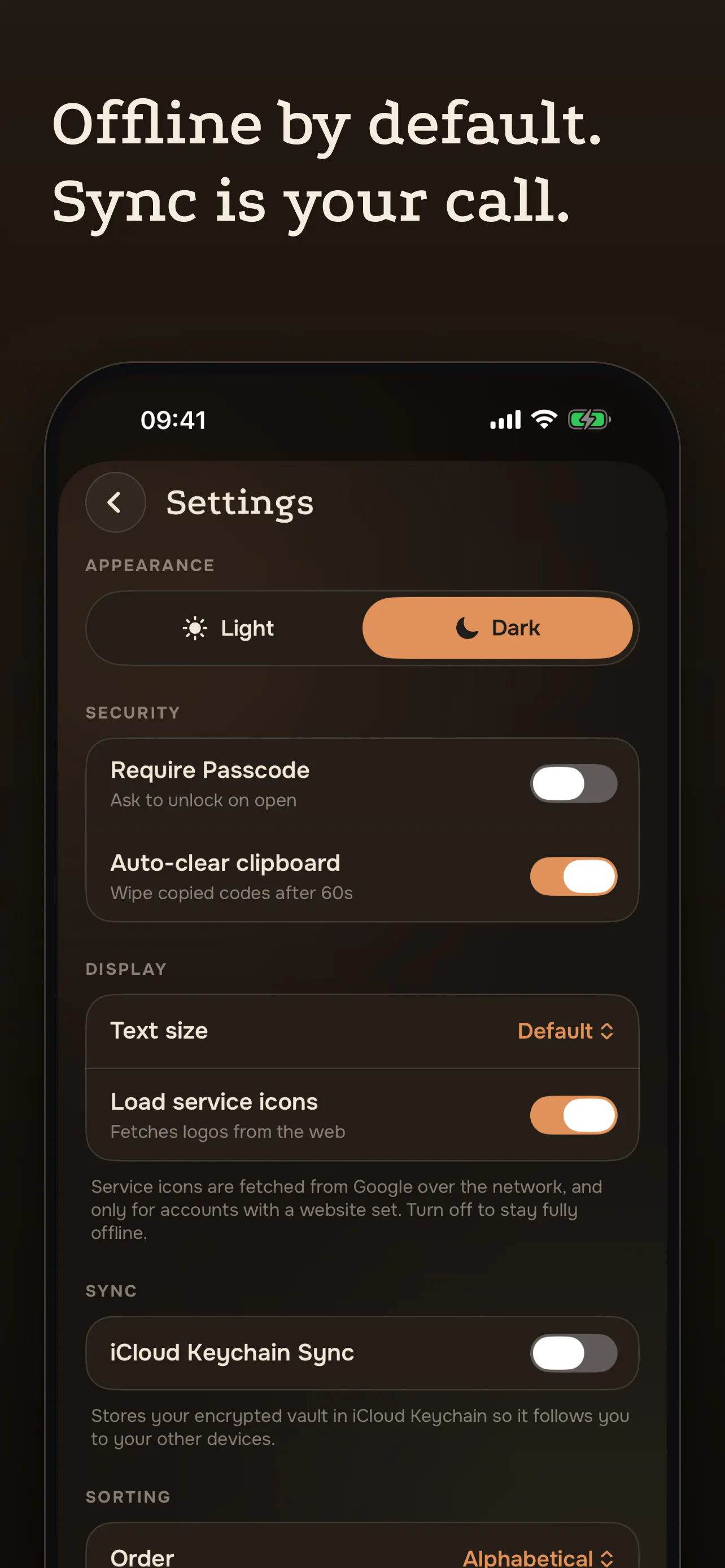
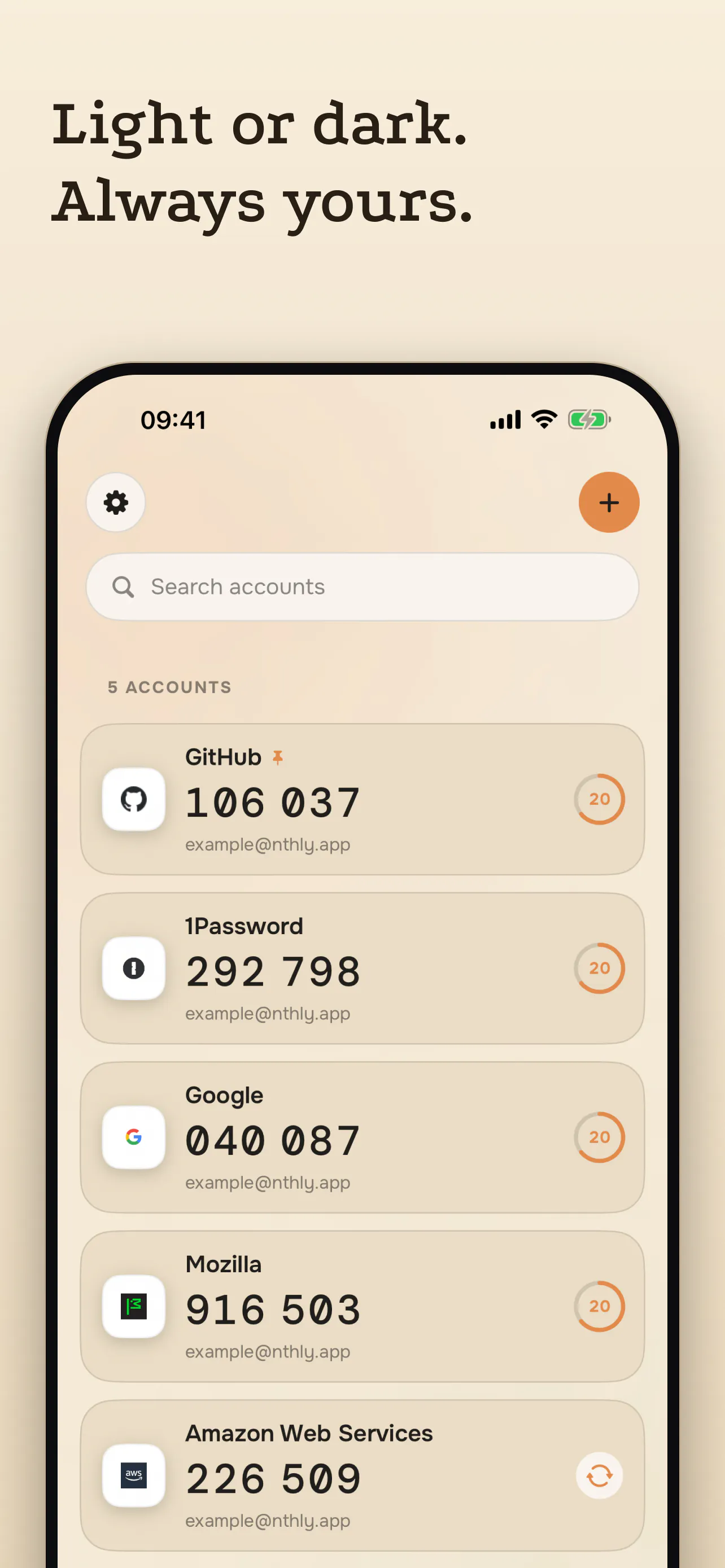
Nthly is a private and secure authenticator.
8
一句话介绍:Nthly 是一款纯本地离线运行的苹果端双因素认证(2FA)应用,通过 TOTP/HOTP 标准生成动态验证码,让用户在不依赖任何第三方服务器或账号体系的前提下,安全登录各类在线服务。
Productivity Developer Tools Security
2FA验证器 双因素认证 TOTP HOTP 隐私安全 离线生成 苹果生态 iOS应用 免费无订阅 密码管理
用户评论摘要:用户普遍认可其隐私与免费特性,但痛点集中在平台覆盖不全——目前仅支持 iPhone,用户明确期待 iPad、Apple Watch、Mac 版本及 iCloud 同步功能。开发者回应称 iPad 版接近完成,macOS 版也将很快推出,但未提及 Watch 与同步时间表。
AI 锐评

Nthly 的本质是一款“政治正确”的极简主义安全工具——它用“无账号、无服务器、纯本地”换取了隐私洁癖者的信任,但这恰恰也是其最大的商业与功能天花板。投票数仅8,评论寥寥,说明它尚未在拥挤的 2FA 赛道(Google Authenticator、Authy、1Password、Bitwarden)撕开任何口子。它的真正价值不在技术(TOTP/HOTP 是公开标准,任何开发者都能实现),而在于对苹果生态的深度绑定与“免费无内购”的诚意——对不想折腾、又警惕云同步泄密的普通 iPhone 用户,这是一剂有效安慰剂。但致命问题在于:2FA 的核心痛点早已不是“生成密码”本身,而是“跨设备无缝恢复与迁移”。当前只支持 iPhone 且无 iCloud 同步,意味着一旦手机丢失或升级,所有账户的安全入口将同时失守——这恰恰是安全工具最不能容忍的失败模式。开发者承诺 iPad、Mac 版将至,却回避了 Watch 与同步具体规划,这暴露了产品仍处于“能用”而非“好用的”阶段。建议团队放弃“纯本地”的道德高地,改为端到端加密的 iCloud 同步(参考 Raivo OTP 的折中方案),否则它只会是少数极客的玩具,而非大众所需的安全刚需。在 Authy 已支持多设备加密同步、苹果原生密码管理器已内置验证码功能的当下,Nthly 若不做差异化(如基于 Face ID 的快捷填充、设备迁移二维码、自动备份审计日志),其“免费”标签将很快被遗忘。一句话结论:有初心,无壁垒,需要跑得更快。

查看原始信息
Nthly - 2FA Authenticator
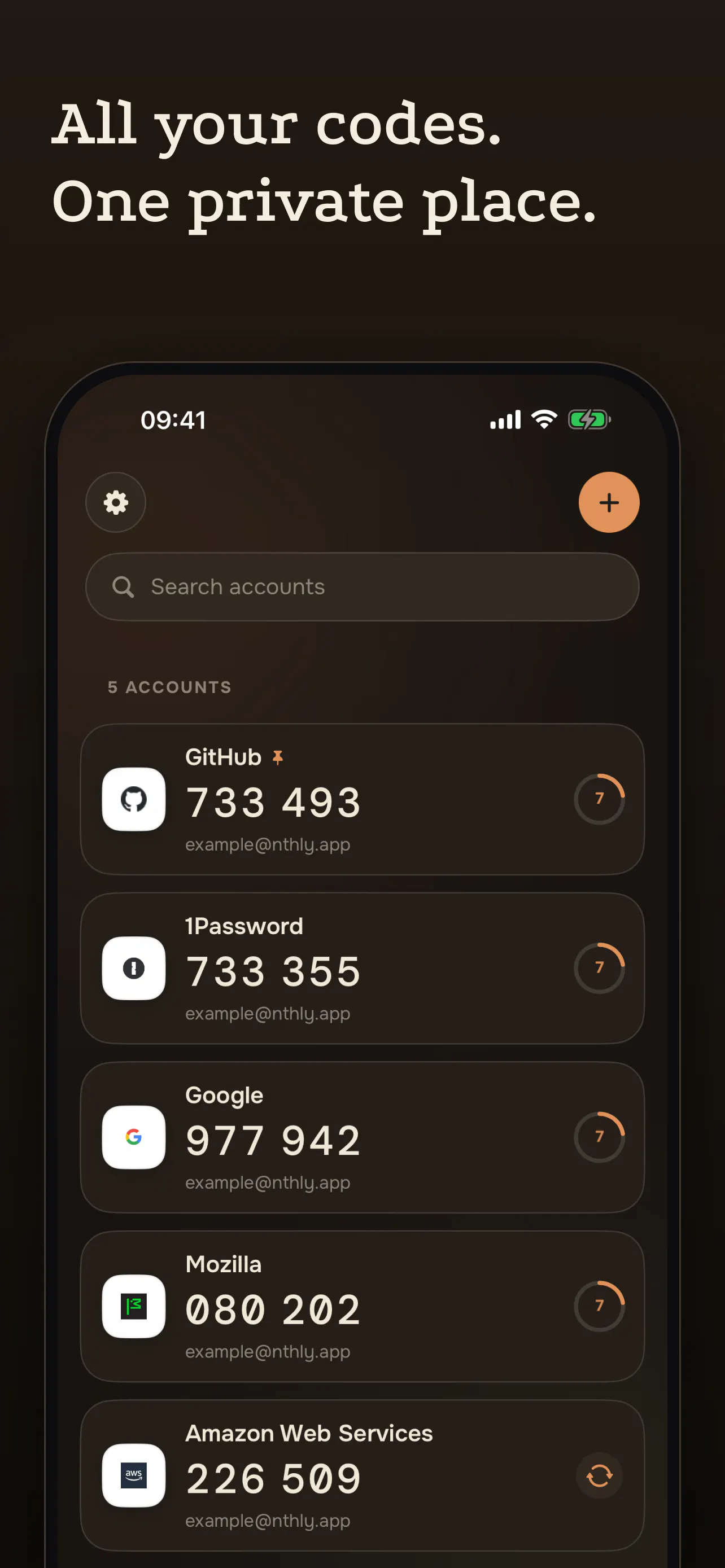
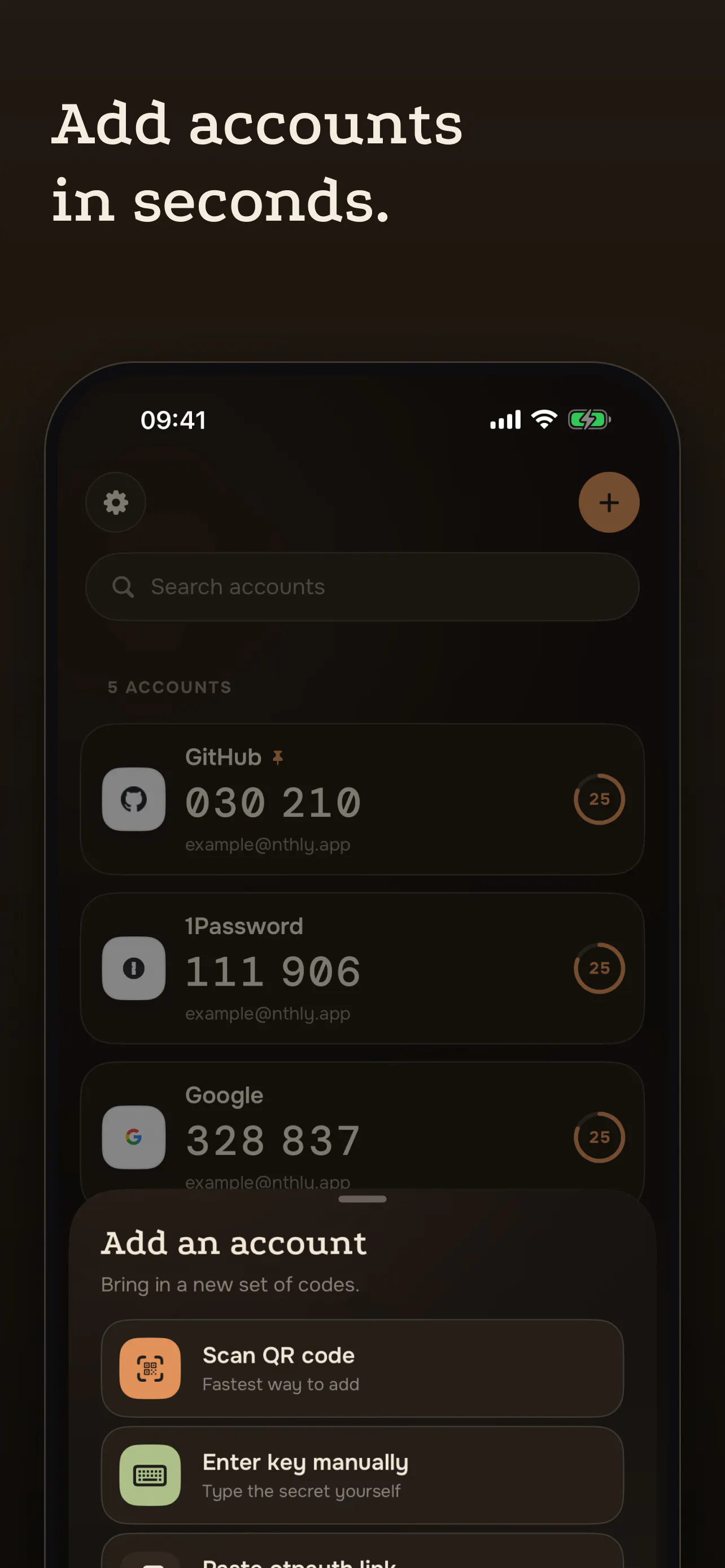
Nthly is a private, secure authenticator that generates one-time passwords using the TOTP and HOTP standards. Sign in to Google, GitHub, your bank, work accounts, and hundreds of other services. There are no accounts to create and no third-party servers to trust. Your secrets stay on your iPhone.

Designed exclusively for Apple devices, Nthly is completely free - no subscriptions, no in-app purchases.

Support for iPad, Apple Watch, and Mac is coming soon.

1
回复

@likid_geimfari - This looks awesome, will be nice once you have the other platforms available too, especially with the iCloud sync. Hope the launch today goes well

0
回复

@codeandsea Thank you so much! Yes, the app will be available on all Apple devices very soon. The iPad version is almost ready, we just need to polish it up a bit. The macOS version will be available very soon as well.

0
回复
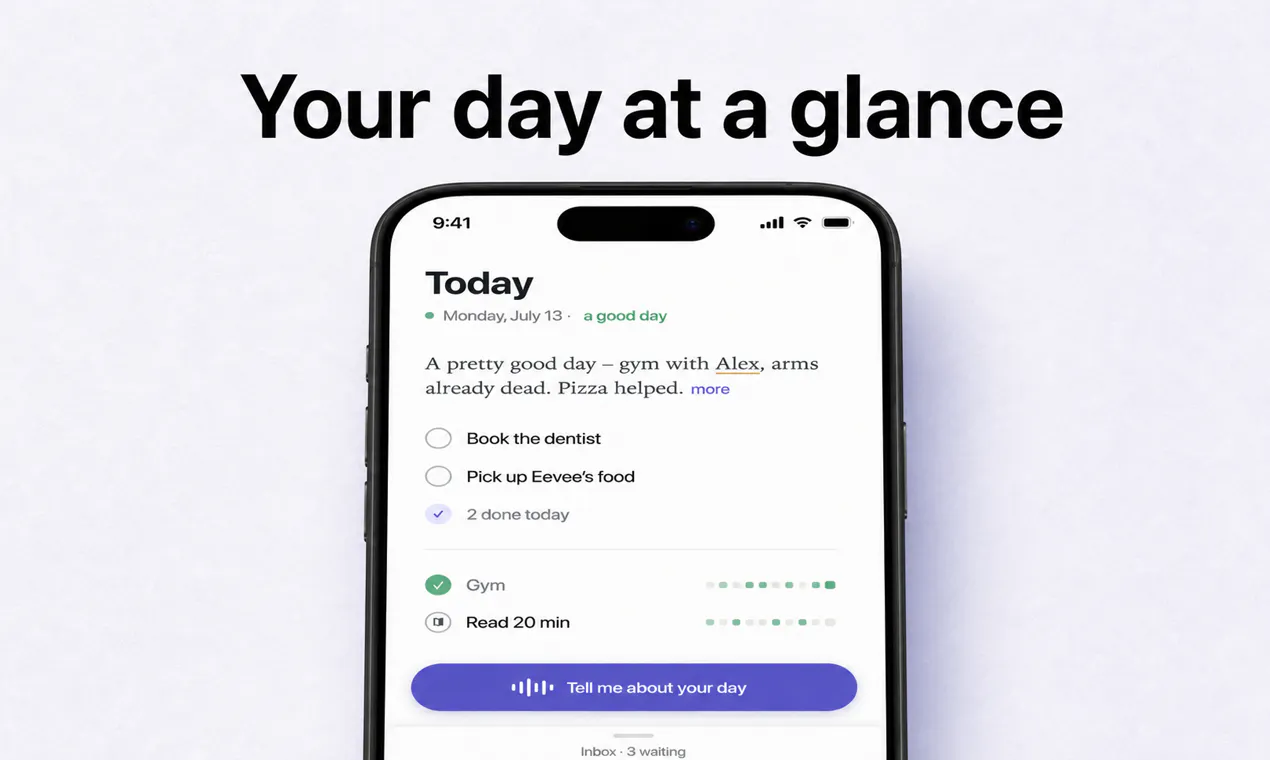
#13
Yap - Voice Diary
Journaling Made Easy
8
一句话介绍:Yap是一款用“说”代替“打”的语音日记应用,用户按住按钮口述一天经历,自动整理为结构化摘要,并追踪情绪、习惯与待办,解决“想记日记但懒得打字”的痛点。
Health & Fitness Productivity Task Management
语音日记 Journaling AI整理 本地隐私 情绪追踪 习惯记录 待办事项 无账号 语音转文字 效率工具
用户评论摘要:多数用户认可无需打字、无连续打卡压力的设计,称赞界面简洁。但一位用户反馈严重缺陷:录制15分钟无法保存、无法回看、多次报错,最终删除应用。开发者已道歉并请求联系排查,产品稳定性待验证。
AI 锐评

Yap的切入点很聪明——它承认“写日记”是反人性的,转而用语音降低启动成本,并用本地LLM自动提炼结构化信息(情绪、待办、人际关系),这确实比传统录音或手写高出一个维度。但8票的冷启动与一条“无法保存”的差评直接戳穿了它的软肋:AI整理是锦上添花,而“可靠记录”是生死线。用户按下按钮说15分钟,结果什么都没有,这不是bug,是产品失信。更值得警惕的是,它宣称“本地LLM”和“数据私有”,但小团队在移动端跑本地模型,往往意味着更差的识别率和更长的延迟,这可能在低端设备上成为灾难。从策略看,无账号、无连续打卡、允许导出,都是为了降低心理负担,但“本地数据”也意味着换机即失忆,反成为迁移门槛。目前它更像一个精美的demo,而非可依赖的日常工具。建议团队先修好“保存”和“回溯”这一核心闭环,再谈情感化设计——毕竟,用户不会为“未来可能变得好用”买单,但会为“现在丢了日记”愤怒卸载。

查看原始信息
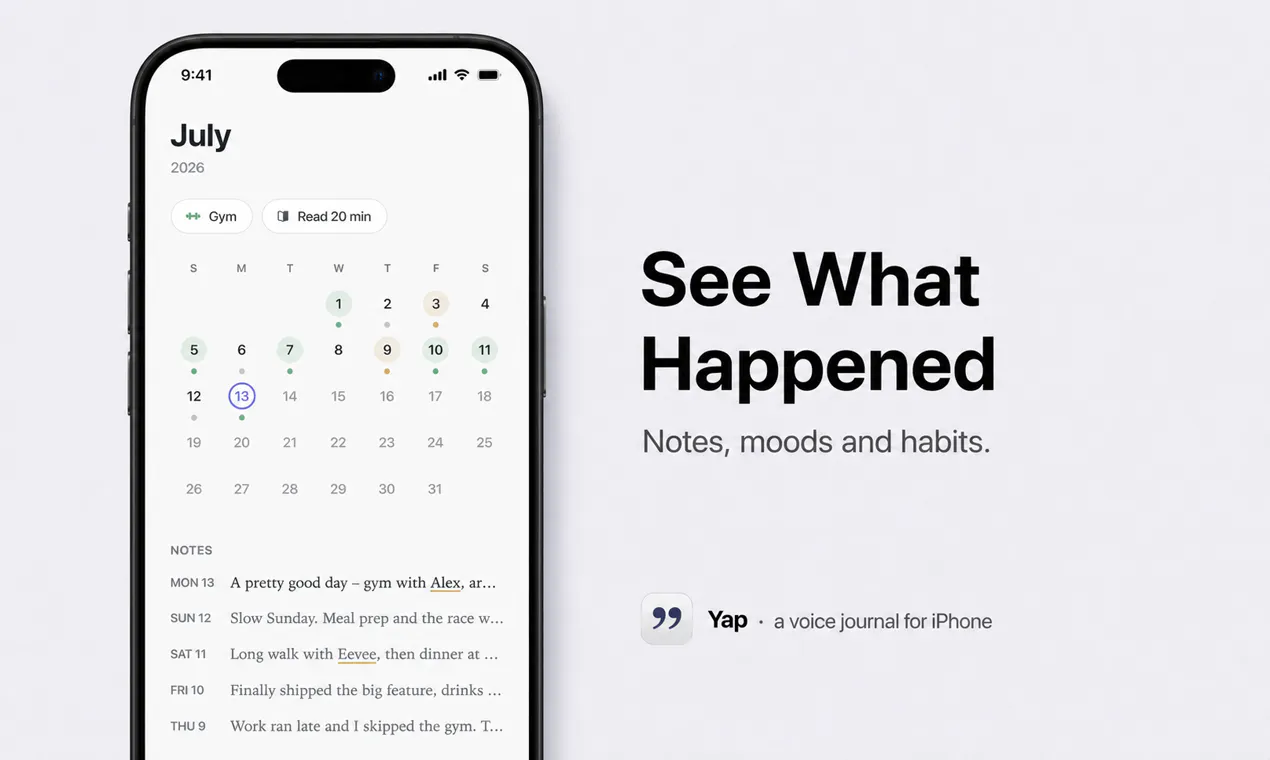
Yap - Voice Diary
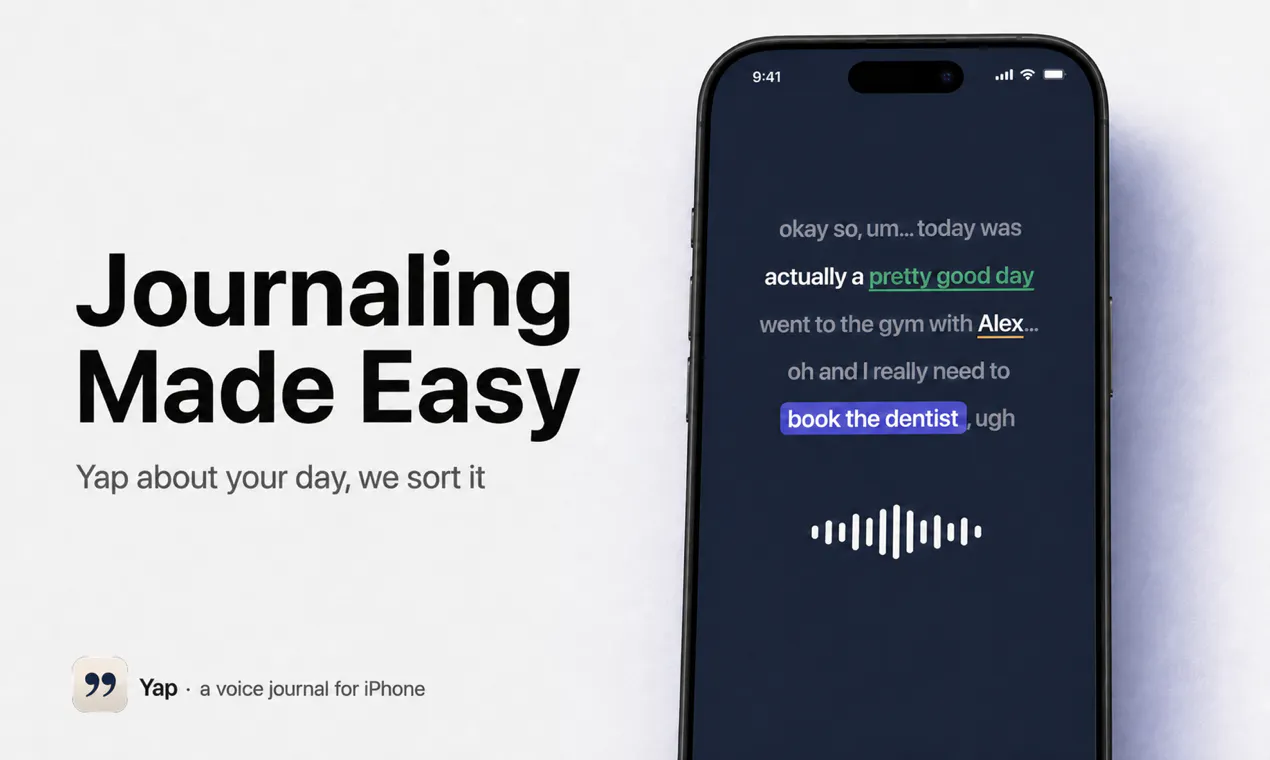
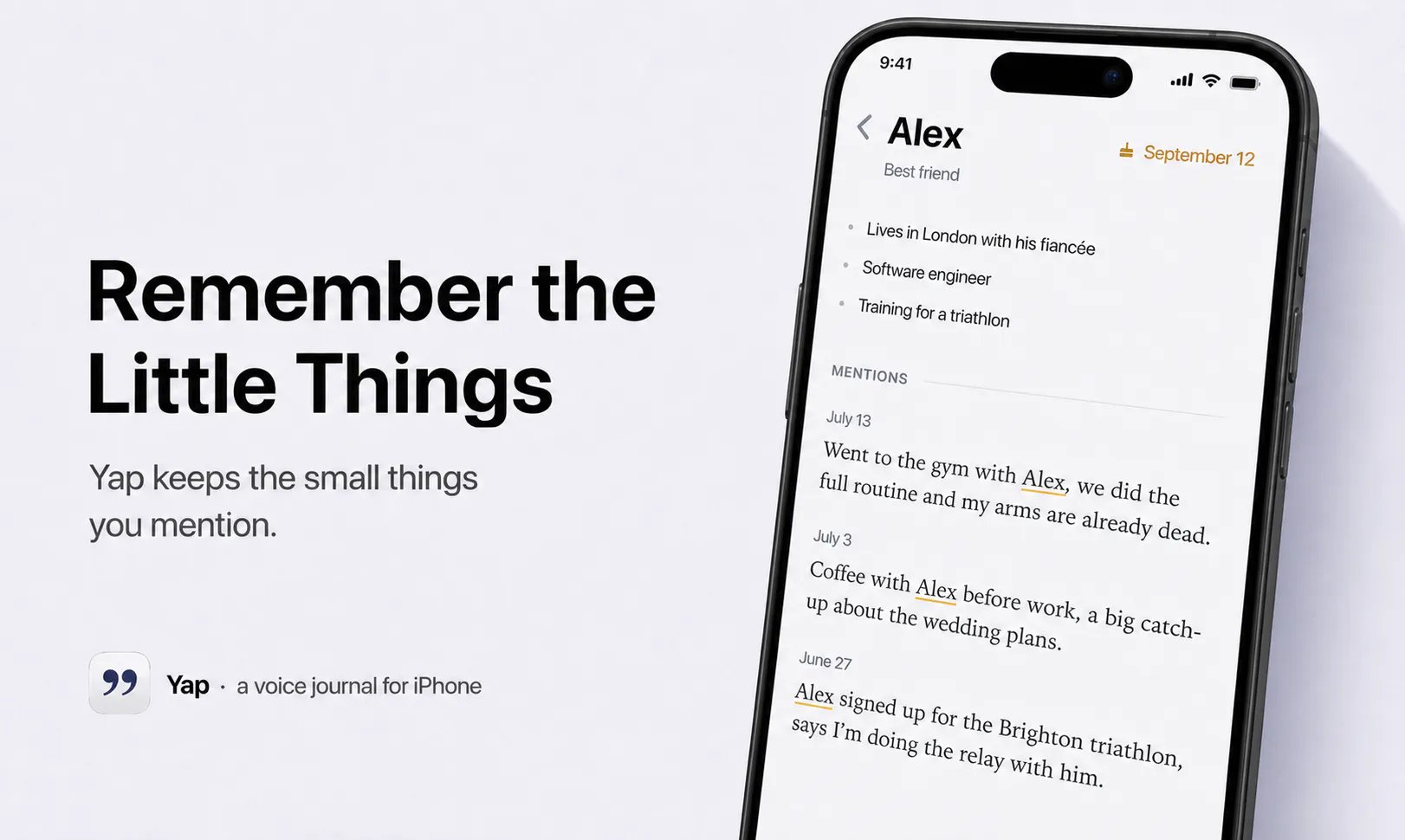
Journal without typing. Open the app and yap about your day. It's that simple. The app tidies it up and keeps track of your mood, habits, to-dos and the small things you mention about your friends and family. Each day is also summarised, making going back in time easy. Memos, transcripts, notes all local on your device. Export at any time.
Hey Product Hunt, I’m Martin! I built Yap because I like the idea of keeping a journal much more than I like sitting down to write one. At 11pm on a Thursday it just feels like homework. But yapping about the day doesn’t. It's quite simple. You hold the button, say what happened and let go. Yap saves your memo but also categoriese key points: short note summarising your day, your mood, to-dos, habits and details about your friends&family so you don't forget! It's all on your phone, no accounts or ads. You own all of your data which can be exported at any time. It's using local LLMs (your data is kept private) and all the data is saved locally (unless you want to back it up). The first 100 people to try Yap keep it completely free forever.
1
回复

I like this. Also, I like that there's no streak counters. I've always found journaling most valuable when I don't force myself to do it, and just choose to when I'm in the mood.

Also, my journals are packed during less busy times in my life and sparse during busy times, so I like the core concept here.

1
回复

@tori_seidenstein yes, agreed. Streaks feels weird in journals

0
回复

@tori_seidenstein Thank you so much! glad you like it :)

0
回复

Super cool 🚀 love the design and cleanness. I journal pretty much daily and the voice parts feels really natural for this.

1
回复

@nicolas_carmont Thank you! means a lot!

0
回复

I tried it today and it doesn't work. I talked into the app for 15 minutes straight and while everything was being recorded on screen, there were just two options out of that dictation: either discard or keep talking. There was no way to go back and access those notes Also twice it said some error occurred and nothing got stored saved and all almost all of the times I couldn't come back to the calendar and click on today's date where I recorded those notes and there were no notes to be found like I could just could not see or find or access my recordings. So I happen to be the 87th member who downloaded the app and signed up but I have deleted it unfortunately, it needs improvement and it happens to be at a very preliminary stage right now, not ready to be pushed out into the world.

0
回复

@heena_kohli Hi, thanks for giving Yap a try and I do appologies for that experience. Sadly i haven't seem to record that issue but that's no excuse! Can you please reach out to the support email (mine) so we can connect, I'd like to understand more closely what failed.

0
回复
#14
Make it RAIN
Find who may pay before you automate a guess
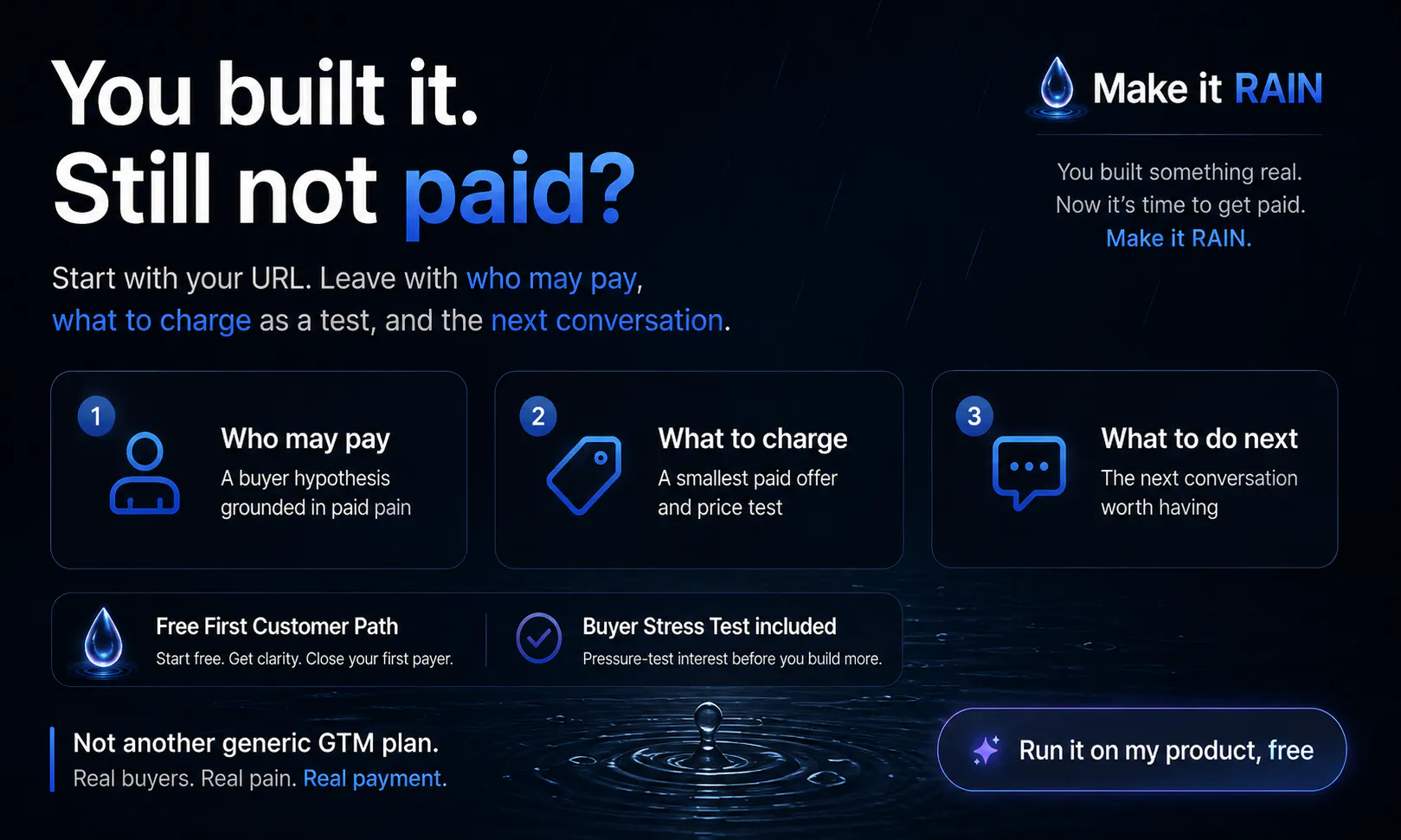
8
一句话介绍:Make it RAIN 面向已上线产品但尚未找到付费用户的技术创始人,通过粘贴产品 URL 自动生成“首个客户路径”报告,用买家压力测试替代盲目获客,在正式外联前验证谁可能付费、痛点是否值钱及定价是否成立。
Sales Marketing Vibe coding
SaaS工具 付费验证 客户发现 定价测试 买家假设 技术创始人 市场匹配 GTM策略 产品上线后 无代码门槛
用户评论摘要:用户认可 URL 直连的低摩擦 onboarding;强调“把买家和价格视为假设”比 AI 假装验证需求更可信;指出产品解决“上线后不知道找谁”的真实痛点;创始人留言最关注 Buyer Stress Test 能否在盲目外联前攻击 offer 弱点,并欢迎用户指出市场判断错误。
AI 锐评

Make it RAIN 切中的是技术创始人“发布即迷茫”的真实断层——代码能跑通,但市场假设全凭猜测。它的核心价值不在生成报告,而在于把“付费意愿”从伪命题变成可证伪的实验:通过 Buyer Stress Test 模拟怀疑买家来攻击 offer,迫使创始人承认“买家和价格只是假设,除非用行为证明”。这比市面上泛滥的 GTM 模板或线索列表更接近商业本质,也避免了 AI 生成“虚假确定性”的通病。

但必须泼冷水:投票仅 8 票,评论几乎全是自问自答式背书,缺乏独立第三方验证。URL 解析生成的“买方假设”大概率基于网页文本的语义猜测,对复杂B2B场景可能浅薄;而“最小付费 offer”和“价格测试”若没有真实对话数据支撑,仍只是精心包装的启发式建议。产品真正的护城河应该是后续的“对话反馈闭环”——即每次买家互动后如何自动修正假设并优化下一步动作,如果这部分仅停留在“建议下一步对话”而没有系统跟踪行为结果,那它仍是一个高级问卷生成器,而非增长引擎。技术创始人最危险的是用工具获得“我验证过了”的错觉,本质上仍是逃避与真实市场对话的痛苦。所以,请把 Buyer Stress Test 延伸到真实销售对话的复盘里,否则它只是让焦虑者更心安理得地原地踏步。

查看原始信息
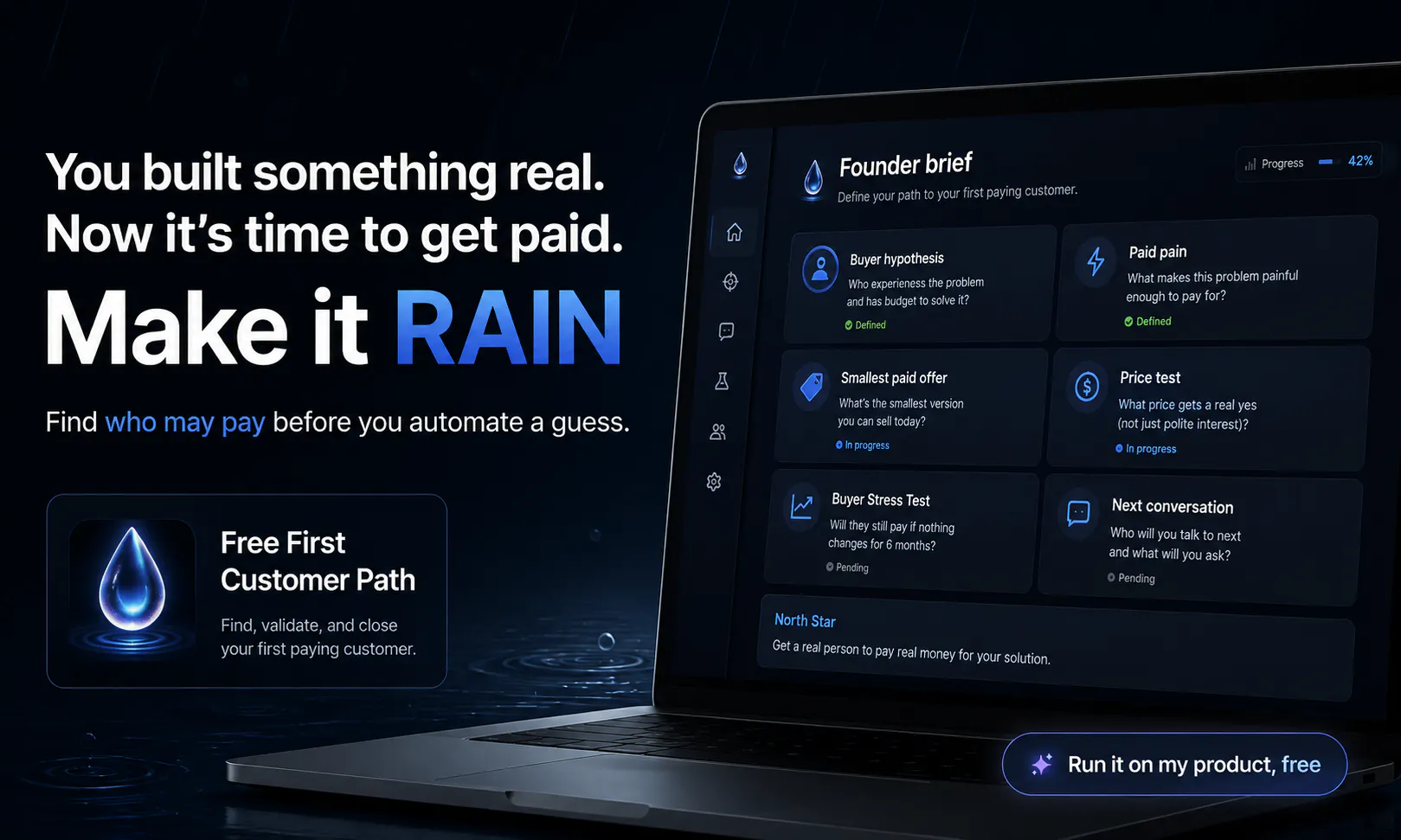
Make it RAIN
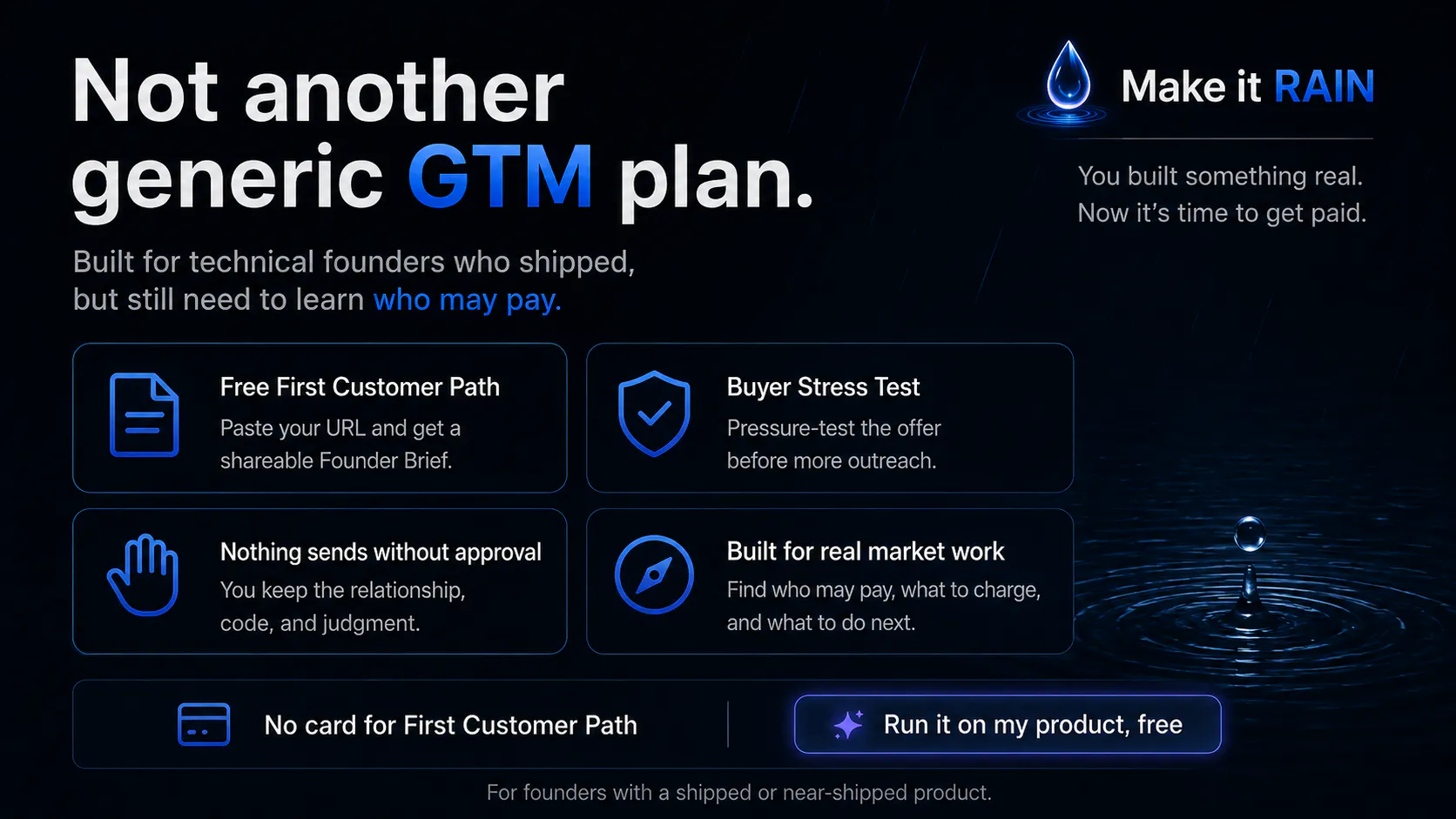
Make it RAIN is for technical founders who already shipped but still need to learn who may pay. Paste a product URL and get a free First Customer Path: buyer hypothesis, paid pain, smallest paid offer, price test, Buyer Stress Test, and next conversation. Unlike another generic GTM plan or lead list, it stress-tests the offer before more outreach and uses buyer outcomes to improve the next move. No card. Nothing sends without approval.
You built something real. Now it's time to get paid. Make it RAIN. The problem I wanted to solve is what happens after a technical founder ships. You can have a working product and still not know who may actually pay, what pain is valuable enough, what to charge, or which conversation deserves your time next. Make it RAIN starts with the product URL. First Customer Path produces a Founder Brief with a buyer hypothesis, paid pain, smallest paid offer, price to test, Buyer Stress Test, and a next conversation worth having. The Buyer Stress Test is the part I care about most. Before you burn another week on outreach, it attacks the offer like a skeptical buyer would. Buyers and prices remain hypotheses until real behavior proves them, and nothing sends without your approval. The goal isn't to promise customers. It's to stop automating guesses, work the market, and make what happens in each buyer conversation improve the next move. First Customer Path is free and doesn't require a card. If you've shipped something, run it on your URL and tell me the first place the brief gets your market wrong. That's the feedback I care about most.
2
回复

@makeitrainapp Vibe coding made building ridiculously fast. The 'okay, who actually pays for this?' problem definitely did not get easier.

2
回复

The URL-first onboarding is smart. Much less painful than filling out another giant startup questionnaire.

0
回复

I like that you're calling the buyer and price hypotheses instead of pretending AI magically validated demand. That distinction matters.

0
回复

I could have used something like this after my last launch. Building was straightforward. Figuring out who to approach afterward was the messy part.

0
回复
#15
ShouldBuild
Find out what your market wants before you waste months
6
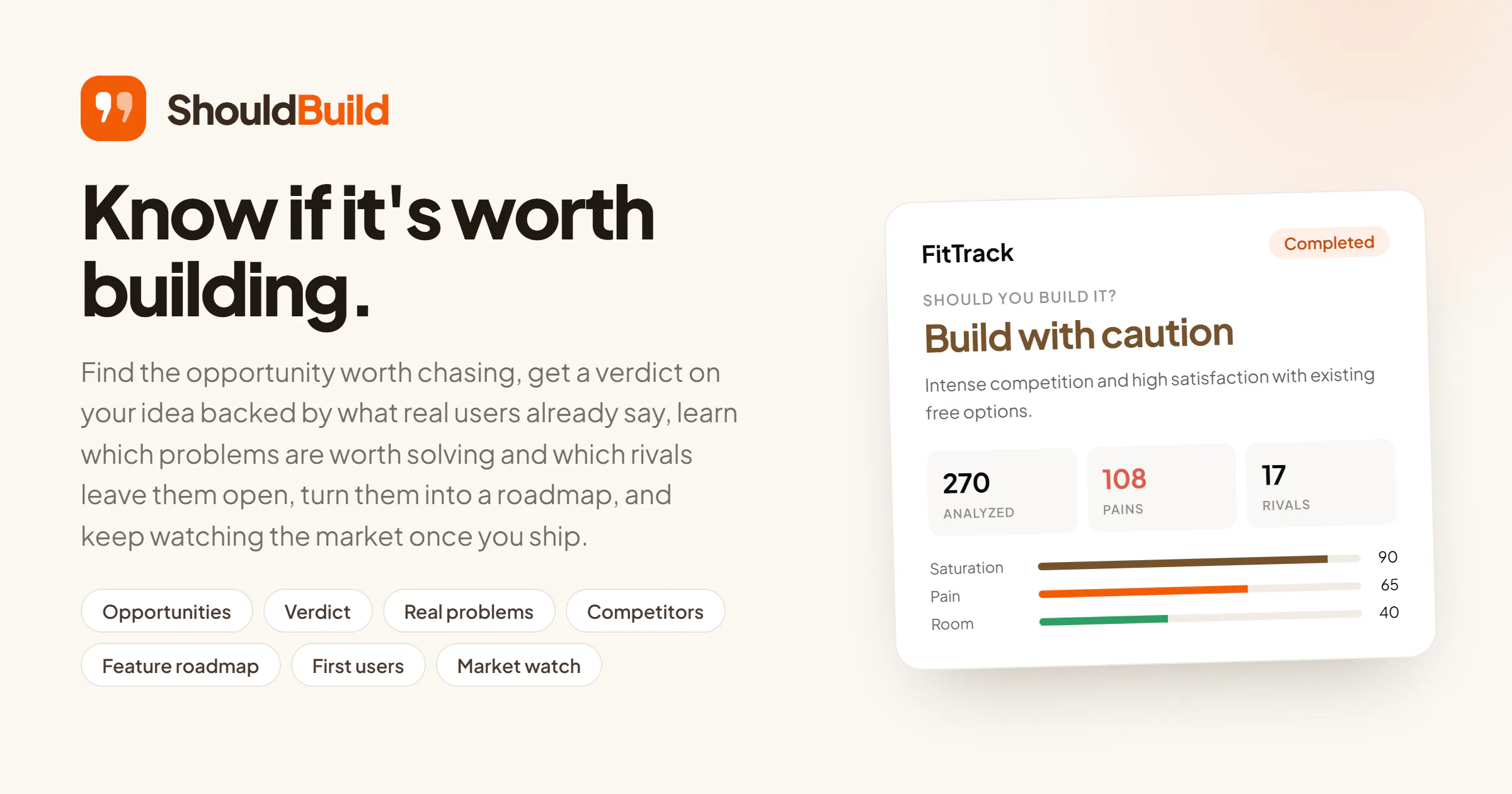
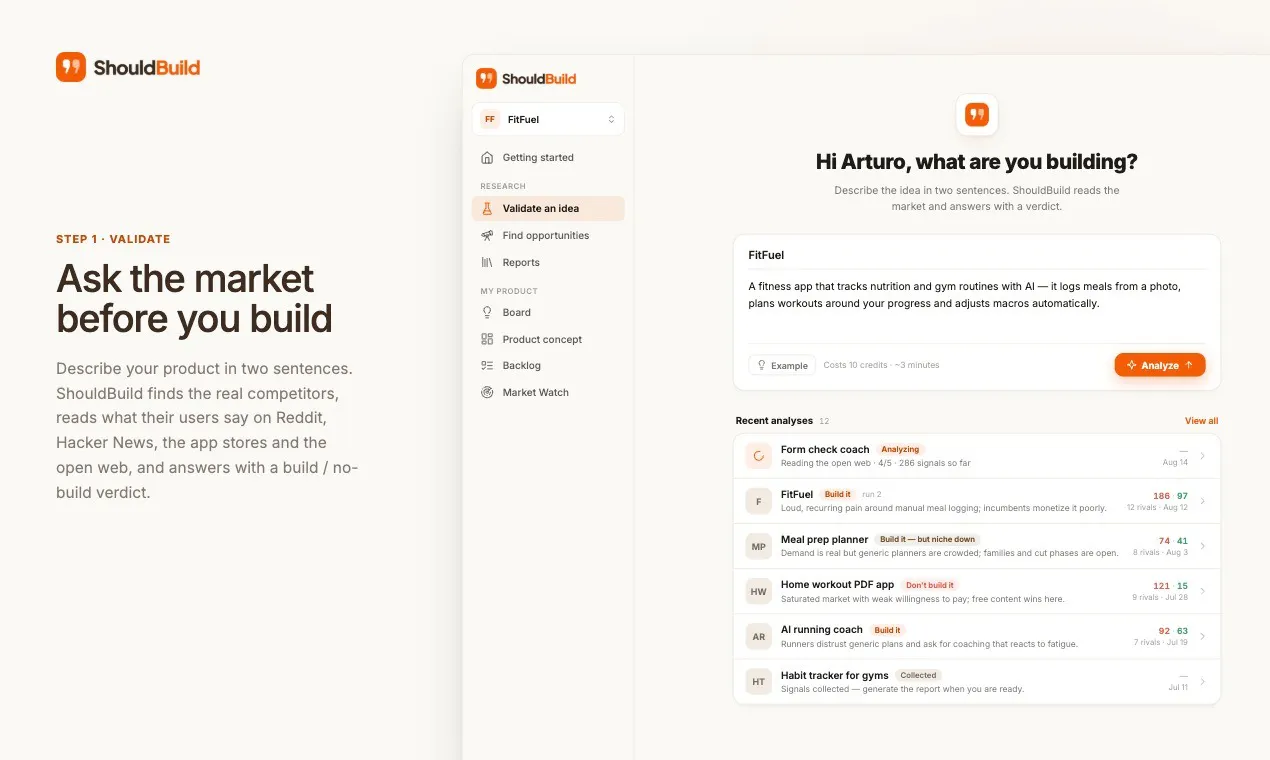
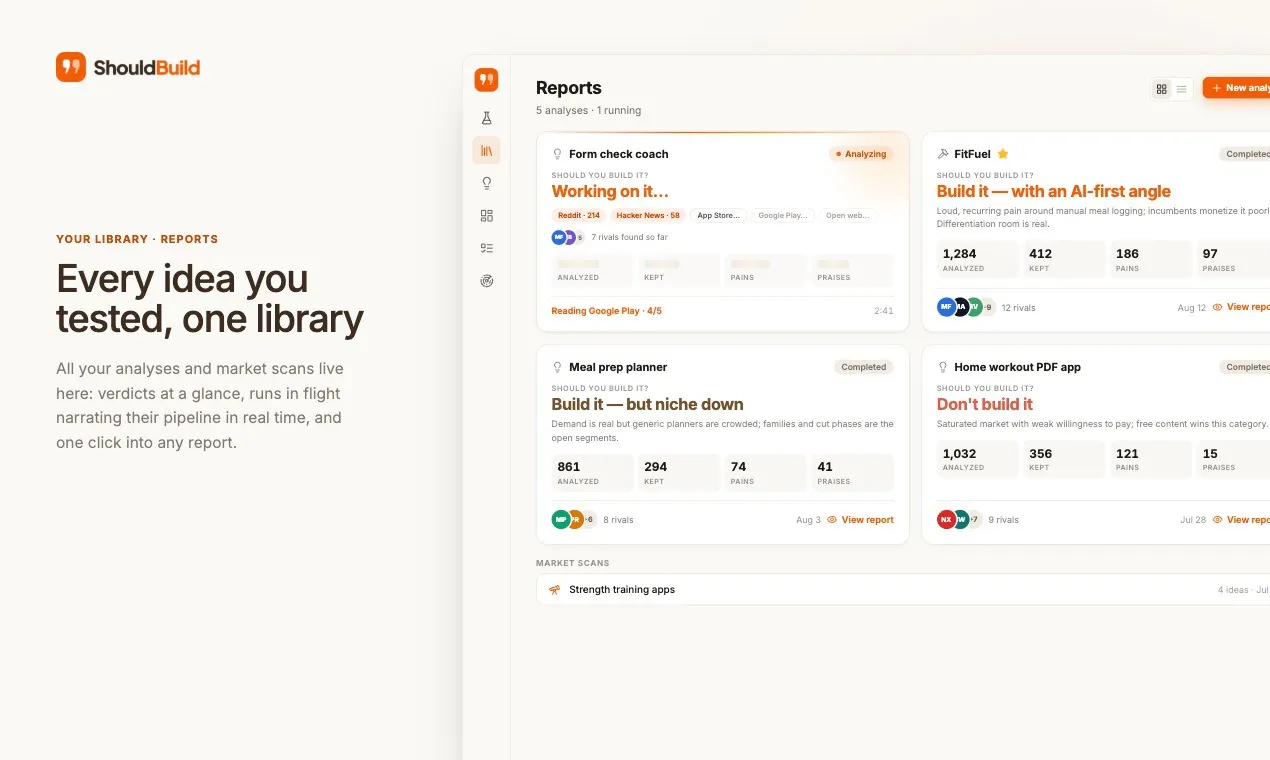
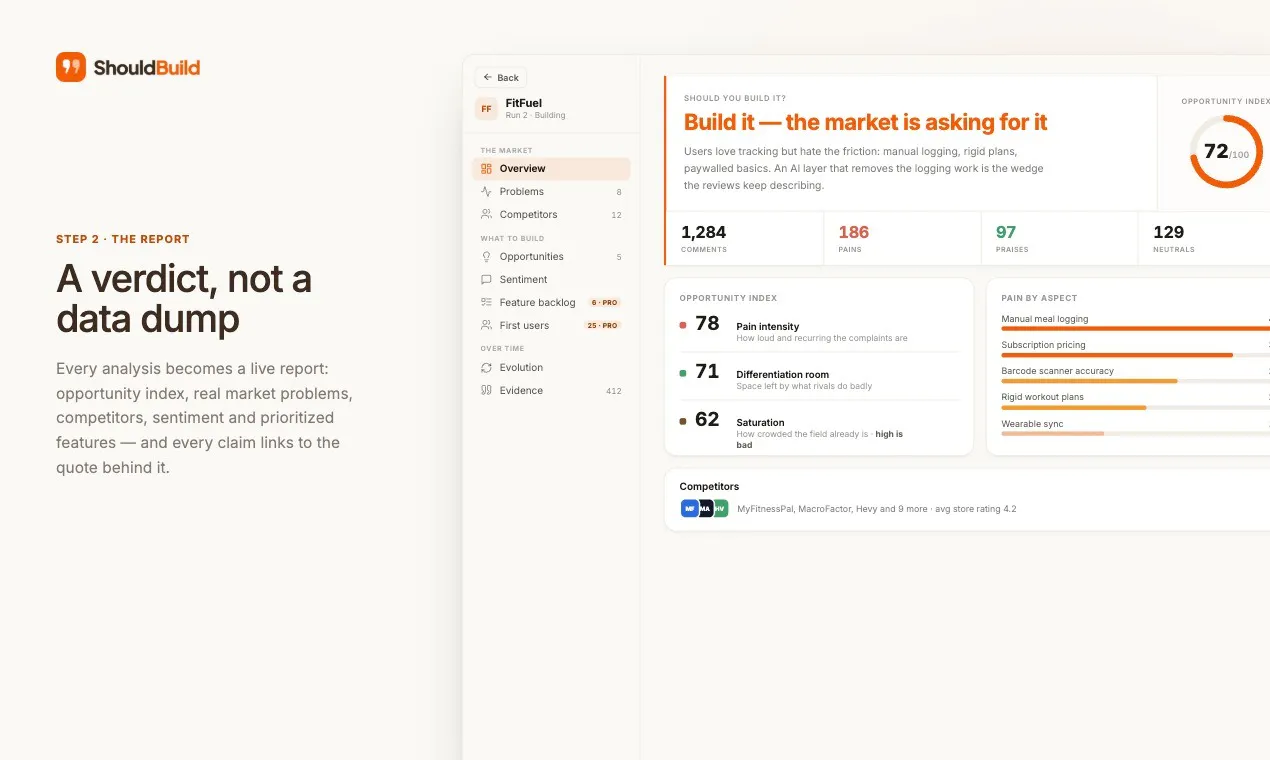
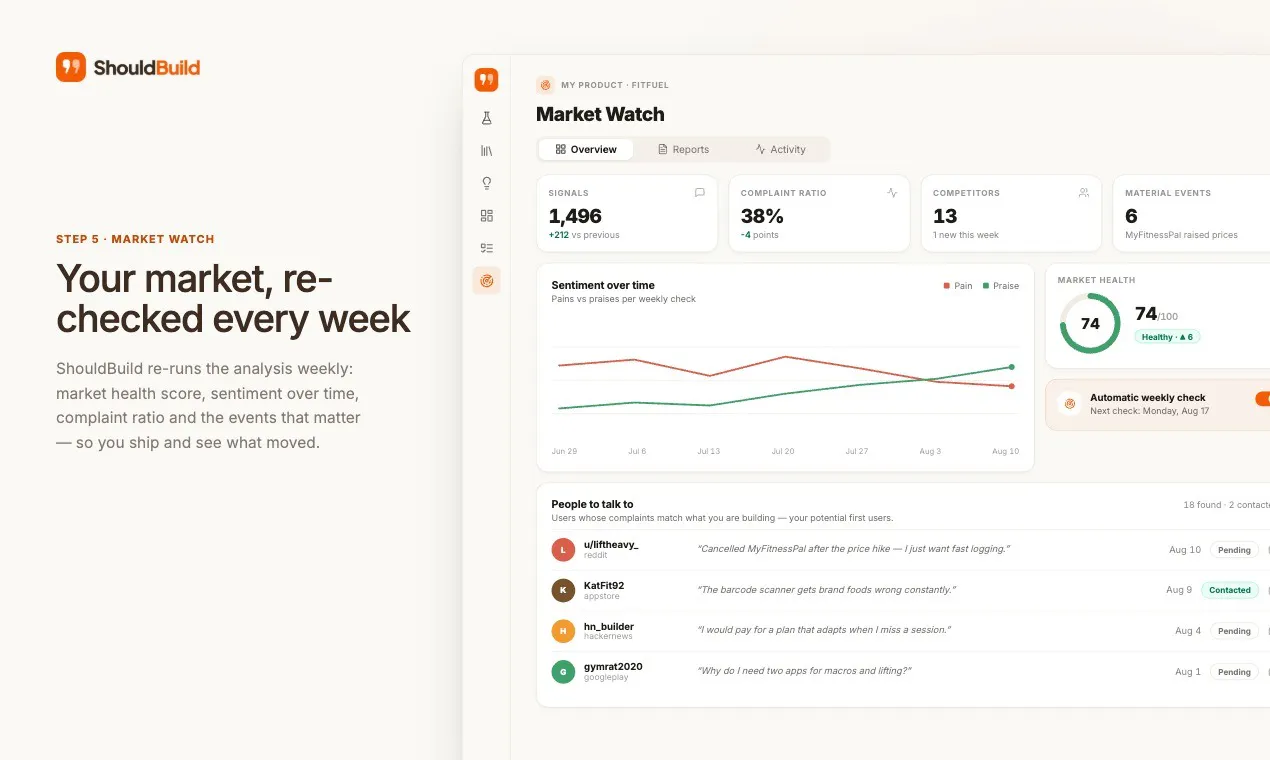
一句话介绍:ShouldBuild是一个AI市场验证工具,在你投入数月开发前,通过聚合App Store、Reddit、Hacker News及全网的真实用户抱怨,给出“该做/不该做”的决策依据,并附上可点击的原始引述,帮你避免在无人需要的产品上浪费生命。
Marketing SaaS Artificial Intelligence
市场验证 AI竞品分析 用户反馈挖掘 产品决策 需求验证 独立开发者 创业工具 SaaS 痛点分析 周一市场监控
用户评论摘要:用户Farid肯定其能帮新手少走弯路;核心批评来自试用户Tester:①报告存在“LLM帮助性偏差”,对明显违法/荒谬的点子仍给出冗长分析而非直接否决;②单份报告token成本极低(约$0.5),定价偏高;③建议增加快速非法性拦截,提升报告可信度与直率度。
AI 锐评

ShouldBuild踩中了当下AI创业最大的伪需求——把“验证”包装成一次性的数据快照。其核心壁垒根本不是技术,而是那个“每周一重读市场”的持续监控闭环,这确实比ChatGPT生成一份报告有深度。但很遗憾,产品当前暴露的缺陷恰好是其宣称要解决的头号问题:决策质量。

那位试用户用“核潜艇无人机送披萨”这个极端的反例,一针见血地戳穿了LLM的迎合性:即便报告结论是“不要做”,后续给出的“联系律师、做落地页”等步骤已构成误导性噪音。对真正犹豫不决的创业者,这种含糊其辞的“帮助性建议”比直接说“这想法愚蠢”危害更大——因为它会让用户产生“还有戏”的错觉,从而继续投入时间。

定价策略也显得精于算计而疏于诚意。单份报告成本不足一美元,7天免费试用后若按行业常规SaaS价格收费,本质是给“焦虑”定价,而非给“洞察”定价。用户不傻,尤其在Product Hunt这个聚集早期极客的平台上,毛利率一眼看穿。

但平心而论,产品形态是对的。在代码不再稀缺的时代,验证确实是第一痛点。若能做出三处调整:①引入金融风控式的“硬否决”逻辑(如违法、极高监管风险直接一票否决而不展开);②报告末尾强制附上“反对意见TOP3”以抵消LLM偏见;③定价按报告份数而非订阅,把毛利透明化——它将有机会从“聪明的工具”变成“可信赖的参谋”。否则,它最终只能成为又一个帮人把烂点子做得更精美的包装纸。

查看原始信息
ShouldBuild
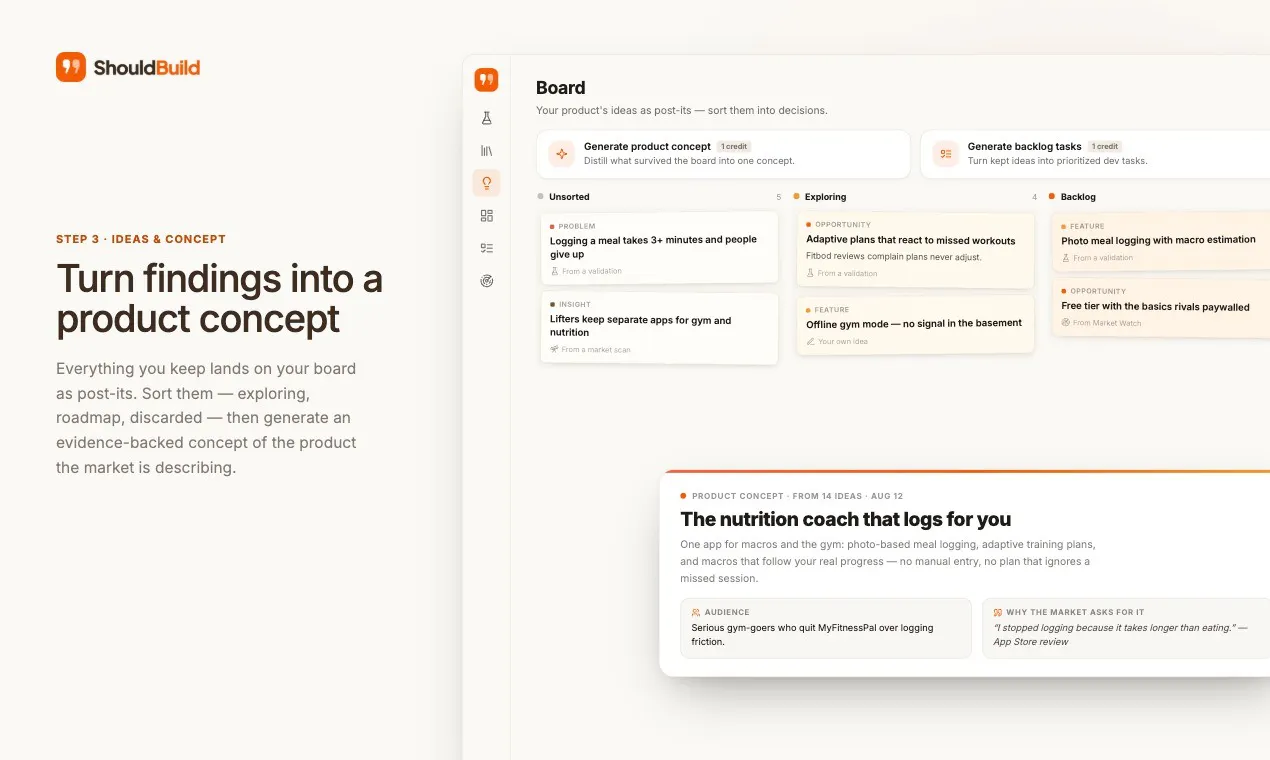
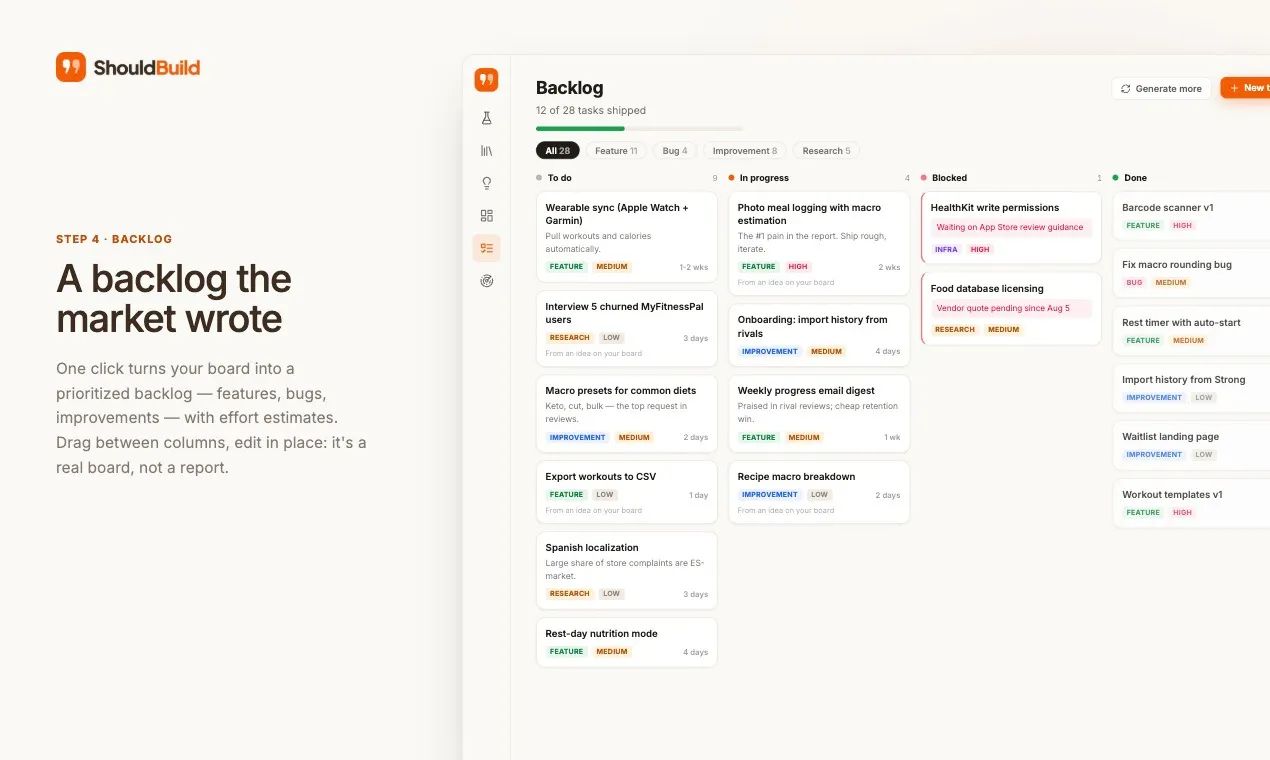
You can build for months before finding out nobody wanted it. ShouldBuild reads what real users already complain about — across the app stores, Reddit, Hacker News and the open web — and hands you a build / don't-build verdict backed by quotes you can click. Keep the findings worth keeping, turn them into a concept and a backlog, and every Monday see what moved: new rivals, new complaints, and whether what you shipped made its complaint go down. 7-day free trial, no card needed.

Always very valuable to know if an idea is worth building, as we can now build so fast.

1
回复

@daniel_smidstrup Exactly, that's the idea! The barrier to entry is not code anymore, so there are plenty of ideas that can be executed, but not all of them are worth it!

Thanks for your comment, Daniel! :)

0
回复

Look like a cool product! I wish I had this when building my first products, would def help me make better decisions. Good luck Arturo!

1
回复

@farid_sukurov Yes, I was inspired by all the people who are currently creating their products from scratch; I don’t want them to make the same mistakes that others of us may have made with our first projects.

Thank you for your comment Farid! :)

0
回复
Hey Product Hunt! 👋 I'm Arturo, a solo founder from Madrid. My first job was at a bank, building the decision engine for consumer financing, the system that decides, in seconds and with real data, whether financing your purchase is worth the risk. Nobody there would put a single euro on someone without studying them first. Then I'd go home and do the exact opposite with my own time: months building apps on a hunch, validated by nobody except my own enthusiasm. Almost nobody used them. And unlike money, time doesn't refill. ShouldBuild is that decision engine, pointed at your ideas. Give it a name and a description. It reads what real users already complain about across the app stores, Reddit, Hacker News and the open web, maps your competitors, and hands you a build / don't-build verdict, where every claim carries a real quote you can click and check. No "trust me", no chatbot vibes. What you keep becomes your concept and your backlog. And every Monday it re-reads your market and tells you what moved, including whether the thing you shipped made its complaint go down. That's the question no report (and no chatbot) can answer. There's a 7-day free trial with the whole product, no card needed, enough to run the full loop on your own idea. I'd love to know: what's the thing you built that you wish you'd validated first? Tell me below. 🙌
0
回复

This isn't bad. The tokens involved in doing the report is not going to amount to much. I'd be surprised if the tokens required per report amounted to $.50, maybe a dollar. So, out of the gate the pricing is on the high side for a customer but as a developer? Nice gross margins! :-)

The reports suffer, in my limited trial/opinion, from 'LLM helpful bias'. No matter how stupid the idea, ShouldBuild will try to find something. Consider this idea:

"a drone delivery service to service nuclear submarines with restocking uranium and pizza while in hostile waters. two for one on Wednesday"

Yes. I know, epically stupid on purpose to test helpful bias. The report back was don't build it and did flag illegal. It did, tho, try to send me down the path of heavy duty drone delivery with a bunch of next steps to chase down lawyers and users plus building a landing page to advertise the service. @itsarturodev , I'm sure you can see the results in your system along with the other two I ran.

To me, my single opinion, a quick 'illegal' check should stop the process in 30 seconds and say, this is illegal full stop, try again with something different, and be done. I think that adds to the creditability of the product's analysis vs a full report on praise and the like as ShouldBuild did here.

Again, my opinion is that if somebody is going to ask for objective, analysis before spending time and money; blunt, this is stupid/dumb/illegal is 100% valuable feedback. Yes, pivoting the idea to Drone delivery could be seen as trying to be helpful but the unseen risk is that the core product doesn't solve for LLMs helpful bias which may create issues for the so so ideas that get biased towards doing it when it shouldn't. I could be wrong.

Regardless, good luck with the product.

0
回复
#16
Interview Agent by NexI
AI interviews that screen, score, and shortlist talent
6
一句话介绍:Interview Agent by NexI 用AI面试官自动完成候选人初筛,通过“面试证据+评分卡”替代简历筛选,解决招聘初期效率低、评判标准不一致的痛点。
Hiring SaaS Artificial Intelligence
AI招聘 智能面试 候选人筛选 自动化HR 面试评估 招聘提效 反作弊识别 TalentArbor 语音/虚拟人面试 招聘SaaS
用户评论摘要:目前唯一有效评论来自开发者自述(16赞),核心诉求是征集HR与创始人对“AI面试证据”和“反AI作弊”功能的反馈。暂无第三方用户提出具体问题或改进建议,需警惕“自嗨式”发布。
AI 锐评

这又是一个典型的“技术自嗨”型产品。表面上它解决了招聘初筛的效率和一致性问题,但实质是用AI对话替代了“第一轮人工电话”,并叠加了“结构化评分”和“反AI作弊”的装饰性功能。其宣称的“比简历更有价值的面试证据”值得商榷——在生成式AI已能完美模拟人类应答的今天,所谓“识别AI辅助回答”只是猫鼠游戏的上半场,且算法误杀真实候选人的风险远高于防作弊收益。

真正的痛点不在“谁来提问”,而在“问题本身是否有效”。如果面试题库和评估维度仍由HR拍脑袋定制,AI只是把低效的流程跑得更快,而非更准。TalentArbor技术并无创新性壁垒,可被ChatGPT套壳一周复制。6个投票、0条第三方评论的数据,说明其尚未获得市场初步验证,连早期种子用户都未激活。

建议团队先回答三个问题:1)AI评分与资深HR人工评分的相关性系数是多少?2)如何防止候选人用更高级的AI对抗“反AI”算法?3)当面试证据在法律层面成为雇佣决策依据时,谁来承担歧视或误判的责任?否则,这只是一款“演示精美、落地存疑”的招聘玩具,而非改变行业生产力的工具。

查看原始信息
Interview Agent by NexI
Transform your hiring process with Interview Agent by NexI. AI-powered automated interviews, intelligent candidate evaluation, and seamless recruitment workflow. Powered by TalentArbor technology.
We built Interview Agent by NexI because traditional pre-screening interviews are slow, inconsistent, and difficult to scale. Our goal was simple: let an AI interviewer handle the repetitive first conversation while giving recruiters something more valuable than a resume — **actual interview evidence**. Interview Agent can conduct voice or avatar interviews, evaluate candidates against a structured hiring rubric, identify potential AI-assisted answers, and return a ranked scorecard with the transcript and integrity signals. We’re launching on Product Hunt to get feedback from recruiters, hiring teams, founders, and anyone building the future of hiring. Would love to hear what you think.
16
回复
#17
PixelGlass
Make your Ghost Publication stand out from the crowd.
5
一句话介绍:
Design Tools SaaS No-Code
用户评论摘要:
AI 锐评
查看原始信息
PixelGlass
PixelGlass turns your idea into a real, custom Ghost theme - AI Customized, no code required. Design your blog, newsletter, or publication, fast.
#18
AlsonAI Poetry
Turn poetry and spoken word into illustrated books.
5
一句话介绍:AlsonAI Poetry 是一款将诗歌、口语诗等非叙事类文本自动转化为精美插画书的 AI 创作助手,核心解决“AI 在诗歌场景下乱加内容、破坏节奏与留白”的痛点,让创作者保留原声的同时获得出版级视觉呈现。
Kids Artificial Intelligence Books
AI写作辅助 诗歌生成 插画书制作 口语诗 文学创作工具 创意辅助 排版设计 独立出版 文本可视化 创作者工具
用户评论摘要:唯一有效评论来自创始人,详细说明了产品转向诗歌赛道的动机:原有故事叙事模型不匹配诗歌的留白与重复结构,因此新版本强化了“何时不生成”的克制能力。未见用户建议或批评,目前缺乏第三方真实反馈,属于早期拉新阶段。
AI 锐评

AlsonAI Poetry 的定位很聪明,但也很危险。聪明在于,它精准切入了一个被大模型普遍忽视的细分场景——诗歌和非线性文本的结构尊重。绝大多数 AI 写作工具(如 ChatGPT、Jasper)默认输出“完整段落”和“因果叙事”,这在诗歌创作中是灾难性的:AI 会本能地填满留白、解释隐喻、破坏节奏。AlsonAI 提出“学会不写”,本质上是在对抗大模型的生成惯性,这个技术方向和产品哲学是成立的。

危险在于,它把“克制”作为卖点,但“克制”恰恰是最难量化和变现的。用户无法像看到“生成 500 字”那样直观感知“AI 少写了什么”,除非最后呈现的插画书足够惊艳。目前投票数仅5,评论为零真实用户反馈,说明产品尚在冷启动,所谓的“最受请求功能”缺乏外部证据支持,更像自我叙事。

更值得警惕的是,诗歌 + 插画书的组合,市场天花板极低。诗歌创作者本身是窄众,愿意付费将诗歌制作成精装插画书的人更少,且这类需求更多是“纪念品”而非“工具”。AlsonAI 真正的对手不是其他 AI 写作工具,而是设计师(如为诗集配画的插画师)和自助出版平台(如 Blurb)。AI 若只停留在“生成配图 + 排版”,则价值有限;若能做到“理解诗歌情感核心,自动匹配视觉隐喻”,才有差异化,但这也意味着它需要进入图像生成与语义对齐的深水区,技术难度远超文本约束。

一句话:方向是对的,但当前更像一个 demo,而非可持续的产品。建议先跑通 100 位真实诗人的付费验证,再谈“尊重创作者声音”。否则,这股“克制”的清风,很快会被大厂功能集成的洪流淹没。

查看原始信息
AlsonAI Poetry
AlsonAI now supports poetry, spoken word, rhymes, and writing that doesn’t fit a traditional story arc. Instead of forcing every idea into a narrative, AlsonAI learns when not to write—respecting line breaks, repetition, pacing, and the creator’s voice while helping turn their words into a polished illustrated book. It’s a creative assistant built to add value without getting in the way.
Hey Product Hunt 👋 One of the hardest things to teach AI is when not to write. We originally built AlsonAI around stories. But as more people started creating with us, they brought writing that didn’t fit neatly into characters, scenes, conflict, and traditional story arcs: poems, spoken word, rhymes, and pieces where twelve lines might already say everything that needs to be said. That created a very different product problem. With poetry, generating more is often the wrong answer. Meaning can live in a pause, a repetition, a line break, or one word placed exactly where the writer intended it. So we built Poetry around a different question: How can AI add value to what a creator already has without getting in the way of it? AlsonAI can now work with poetry, spoken word, rhymes, and other nontraditional writing and help creators turn those words into illustrated books while respecting the structure and voice they started with. This has been one of our most requested additions, and we’re excited to finally put it in your hands. I’d especially love to hear from the writers and poets or people who feel passionately: where do you want AI to help—and where should it stay out of the way?
0
回复
#19
Fabbit
All your growth data. One next move.
5
一句话介绍:Fabbit是一款将SEO、数据分析、竞品监控、CRM和网站审计整合于一体的增长智能平台,通过每日生成一条明确行动建议,解决增长团队在多个工具间切换、面对海量数据不知如何下手、错失市场机会的痛点。
Analytics Marketing SEO
增长智能平台 SEO工具 数据分析 竞品监控 网站审计 CRM集成 AI行动建议 效率工具 SaaS 营销自动化
用户评论摘要:目前仅有创始人发布的官方介绍评论,无第三方用户反馈。评论重点阐述了产品构建初衷(数据噪音与行动迟缓问题),但缺少真实用户对产品功能、易用性及有效性验证的有效建议或批评。
AI 锐评

Fabbit踩中了当前SaaS工具泛滥与AI效率焦虑的双重风口。其“统一看板+每日行动指令”的定位切中要害——增长团队的确烦透了在GA、Ahrefs、CRM之间反复横跳,也厌倦了只看报表无法落地的无力感。从战略上讲,将“数据洞察”转化为“任务清单”是极具价值的跃迁,这相当于给增长负责人配了一个AI运营助理。

然而,产品面临的挑战显而易见:第一,整合工具易,整合数据难。将不同类型数据源统一并提炼出有效“唯一动作”需要极强数据清洗和业务规则建模能力,稍有不慎就会沦为一堆错误建议的合订本。第二,5票的低热度及仅有官方自述的评论,表明产品尚处于早期验证阶段,缺乏外部真实使用场景背书。第三,“每天一条建议”是产品亮点也是死穴——如果建议质量不稳定(如建议删除一个实际上带来高转化长尾词的关键词),信任崩塌速度将比工具迭代更快。

Fabbit真正的价值不在于“多合一”,而在于其决策引擎的准确度。如果它能在“为何建议”上提供足够的透明度和证据链,让用户可信赖地执行,则有机会成为增长中台的水电煤;反之,若只是一层AI皮肤缝合了多个API数据,它将很快被同类产品(如Ahrefs的AI功能、Semrush的Copilot)吞噬。现阶段,Fabbit需要迅速找到一批高活跃的种子用户,用真实案例证明其“每日行动”的采纳率和ROI,方能在拥挤赛道中撕开一道口子。

查看原始信息
Fabbit
Fabbit is a unified growth intelligence platform (SEO, analytics, competitors, CRM, site audit, all in one hub) that turns scattered data into a daily actionable next step. Its core differentiator: most tools "show data," Fabbit "shows data and tells you what to do about it," fast.
Hey Product Hunt! 👋 Growth and SEO work used to tolerate being slow. You’d log into 5 different tools, stare at dozens of charts, export spreadsheets, and try to figure out what to actually do next. By the time you found an answer, the opportunity was gone. The AI era doesn't allow that pace anymore. We built Fabbit to fix this. Instead of just showing you more data, Fabbit unifies your SEO, analytics, site audits, and competitor insights into one hub and instantly turns that noise into one clear next move. Every single day. Why we built it: ⚬ Data without action is noise: Most tools leave you at "here is a metric." We show you the number, why it matters, and the exact step to fix it. ⚬ Built for speed: No waiting for quarterly reports. Know what to fix, and know it first. ⚬ All-in-one focus: Stop context-switching between 10 different growth dashboards. We’d love for you to give Fabbit a spin and tell us what you think. What’s the biggest friction in your daily growth workflow right now? Excited to hear your feedback!
0
回复
#20
GetAppNiche
💰 Stop building apps nobody wants. See what any app earns
5
一句话介绍:GetAppNiche 是一款应用市场情报分析工具,通过提供 360 万+应用的收入与下载量估算数据,帮助独立开发者在构思阶段验证应用创意,避免盲目开发无人问津的产品。
Analytics SaaS Developer Tools
应用市场分析 收入估算 下载量预估 ASO关键词 竞品分析 市场验证 应用数据库 独立开发者工具 API接口 利基市场挖掘
用户评论摘要:创始人Yaro在评论中未收到用户反馈,而是自述产品动机:曾因缺乏需求数据而开发失败。他坦诚收入数据为估算值,且目前仅支持App Store关键词排名追踪,Google Play排名功能尚在开发中,并征集用户对后续功能优先级的意见。
AI 锐评

GetAppNiche切入的是独立开发者最痛的“验证前移”环节,用数据替代直觉,这比大多数空谈AI生成App的工具务实得多。其核心卖点“收入+下载估算”本质上是将Sensor Tower、App Annie等昂贵企业级服务下沉到个人开发者可负担的价位,MCP服务器的集成更是聪明地拥抱了AI编程助手生态,让Cursor或Claude能直接驱动数据查询,降低了使用门槛。

但必须冷静看待两个硬伤:其一,收入估算模型天然存在误差,尤其是对IAP内购和订阅制应用,数据只能作为方向参考而非决策依据;其二,评论中创始人承认Google Play排名追踪缺失,这意味着在Android主导的全球市场(尤其新兴市场)数据维度严重残缺,削弱了“双商店数据库”的宣称。此外,3.6M应用听来庞大,但实际有效样本需打问号——大量长尾应用数据稀疏,估算可信度存疑。

真正价值在于它把“发现利基市场”从玄学变成了可操作的查询语句。如果后续能将用户评论情感分析(差评聚类)和广告素材情报做深,与APIRank、Data.ai形成差异化,有机会成为独立开发者数据工具链的标配。但目前版本更像一个“够用但不够深”的MVP,距离“让所有开发者不再盲目”的口号还有一段路。价格方面,50%折扣说明团队清楚首批用户是价格敏感的独立开发者,后续能否留存取决于数据准确率和更新频率能否持续赢得信任。

查看原始信息
GetAppNiche
Most app ideas die in the dark: months of building, zero validation. GetAppNiche turns the lights on: 💰 Revenue & download estimates for 3.6M+ apps, App Store + Google Play 🔍 Explore both stores like a database: growth, price model, category filters 🎯 ASO keywords with difficulty scores, daily rank tracking 🕵️ Competitors' ads, creators and review complaints 🔌 API + MCP: ask Claude or Cursor to find niches for you

Hey Product Hunt! 👋

I'm Yaro, indie dev and solo founder of GetAppNiche.

💸 Why I built it

I once spent months building an app nobody wanted. The demand data existed, I just couldn't see it. So I built the tool I wish I'd had: type any app, see what it earns.

⚙️ What it does

💰 Revenue & downloads estimates for 3.6M+ apps across the App Store and Google Play, refreshed daily

🔍 Explore: query the stores like a database (category, price model, growth, rating)

🎯 ASO keywords with difficulty scores, rankings, review mining, ads library

🔌 MCP server built in: ask Claude, ChatGPT or your editor agent "find iOS niches earning $20k+/mo with weak top apps" and get real data back

🙃 Honest caveats

All revenue numbers are estimates, clearly labeled, from our own model. Keyword rank tracking covers the App Store today; Google Play rank tracking is on the way.

🎁 PH-only until Aug 30

PHNICHE50 gets you 50% off your first year, PHNICHE30 takes 30% off your first 3 months. Both work right in the Stripe checkout.

💬 I'd genuinely love to hear

1️⃣ What data would you want next: Play rank tracking, more countries, deeper ad intel?

2️⃣ What almost killed your last app idea: the niche, the keywords, or the marketing?

I'm here all day 👇

0
回复