Product Hunt 每日热榜 2026-08-17

PH热榜 | 2026-08-17

#1
Meridian
Don't let your work go unnoticed. Get promoted!
337
一句话介绍:Meridian是一款完全本地运行的开源AI工作日志工具,自动记录开发者全天工作轨迹并生成Jira/GitHub更新草稿,解决“工作做了却忘了汇报”的职场痛点,让升职加薪不再被埋没。
Productivity Open Source Developer Tools
AI工作日志 开源 本地隐私保护 开发者工具 自动周报 项目管理集成 时间追踪替代 macOS/Windows 无云端依赖 效率提升
用户评论摘要:用户普遍认可本地隐私与开源特性,但质疑“无需账户”与强制注册矛盾,且索要屏幕录制、辅助功能权限与“隐私优先”宣称不符。有反馈Chrome浏览器活动未被记录(疑似Bug),并询问对SSH远程VM的支持。团队回应将移除账户并已提交App Store审核。
AI 锐评

Meridian精准击中了软件开发者“非计划工作不可见”的隐痛——那些夹在Jira ticket缝隙里的调试、沟通与突发修复,正是绩效评估时最容易被遗忘的价值。其“全程本地、自带AI、开源免费”的定位,在SaaS泛滥与监控工具引发信任危机的当下,是一招漂亮的差异化棋。本质上是将“向上管理”这一软技能自动化,把不可量化的琐碎工作转译为管理层看得懂的功劳簿。

但必须泼冷水:第一,所谓“隐私优先”目前存在硬伤——强制注册账户与屏幕录制、辅助功能等敏感权限的索取,已在评论区引发尖锐质疑,官方虽承诺整改,但这动摇了产品最核心的信任基石;第二,跨工具追踪的准确性存疑,Chrome活动漏记、SSH场景支持是否成熟,都是影响日常体验的致命细节;第三,其价值高度依赖AI总结质量,若产出是“花了3小时修权限Bug”这类流水账,反而加剧汇报噪音。

更值得警惕的是其终局形态:一旦从个人工具扩展到团队版(已在规划中),数据若上云,所谓的“个人赋能”极易滑向“雇主监控”的灰色地带——这恰恰是它今天所反对的。产品方向聪明,但信任建设是易碎品,修复“用词不实”只是第一步,真正的考验在于:当它开始向B端收费时,能否守住“为个体服务”的初心,而非沦为更高明的胡萝卜加大棒。目前看,是一款值得开发者尝鲜的生产力利器,但距离“可信赖的职场代言人”还有一段诚实的路要走。

查看原始信息
Meridian
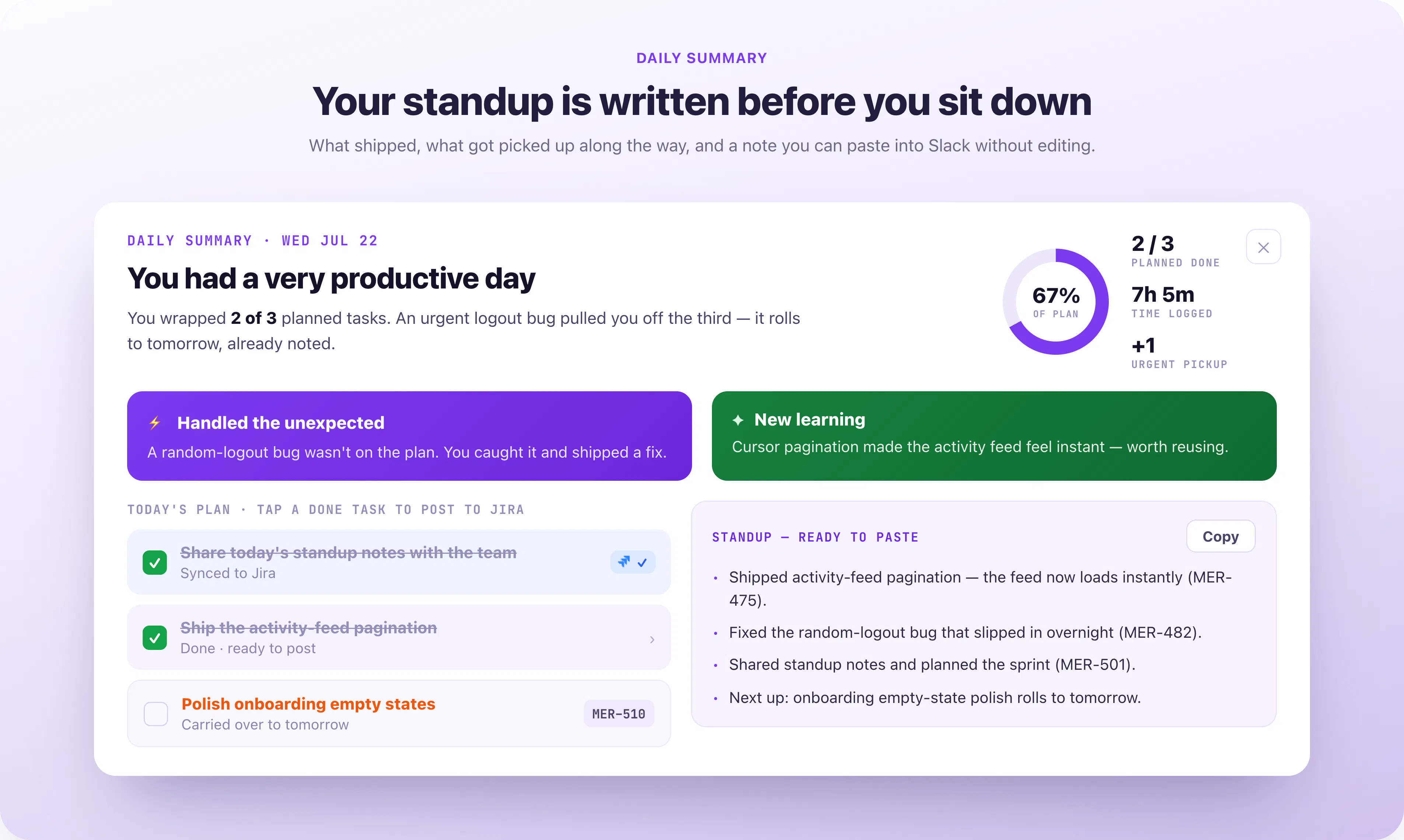
Meridian is an open-source AI work journal that runs entirely on your device. It writes your work up in plain English as the day goes, so by the end of the day you have a summary of everything you did. Meridian automatically drafts your updates for your project management tools like Jira, ready to post once you approve them. Do the work. Let the remembering take care of itself. No cloud, no account. MIT-licensed, free.

Hey Product Hunt! 👋


Three months ago, I quit my job to build Meridian. My co-founder and I kept running into the same problem many developers face: we would ask claude to write an update, then spend ten minutes reconstructing the context it had missed. It knew what we told it, but not the four unexpected problems we had solved along the way.

That unplanned work is real, and bigger than most people think. I posted about it on Reddit: "We software developers massively underestimate how much unplanned work we do every single sprint" and it went viral, which told us we weren't the only ones feeling this.

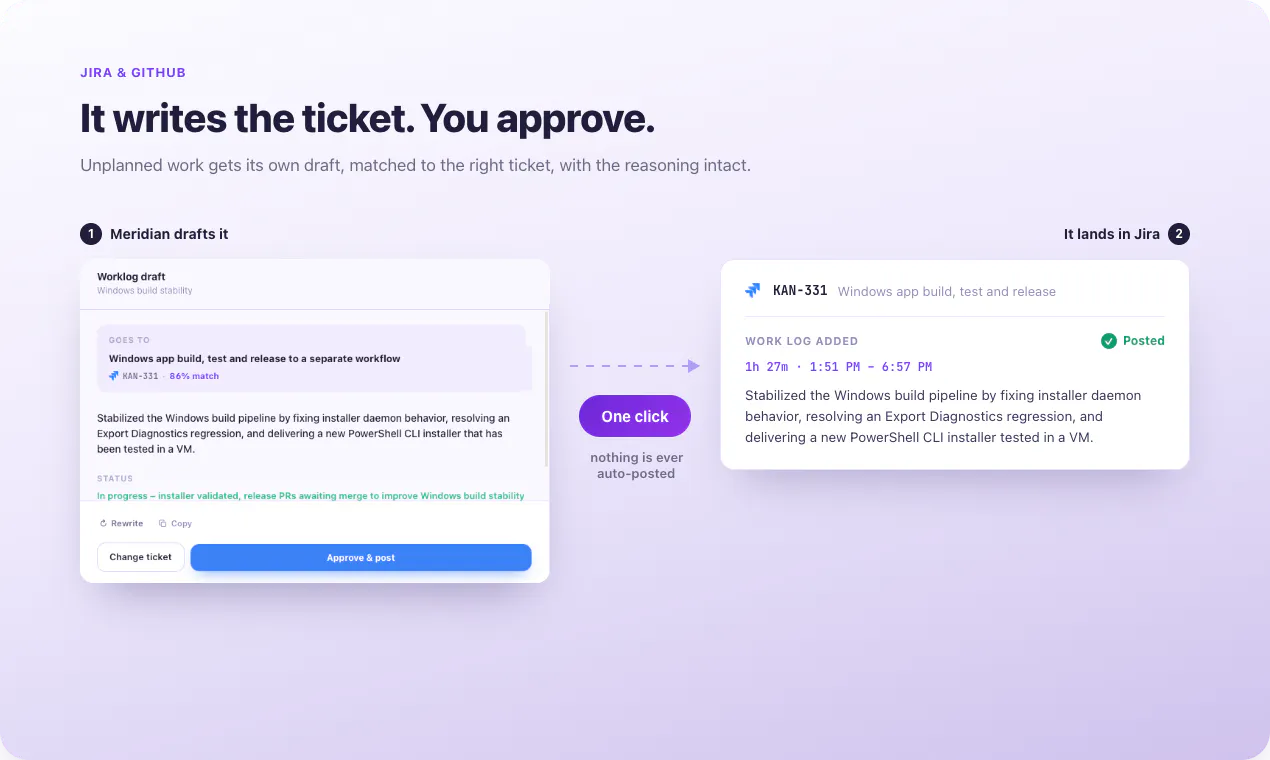
Meridian does the remembering for us. It runs quietly in the background, groups the day into a timeline, matches the work to open Jira and GitHub tickets, and drafts the update - so by the end of the day there's a work log, a standup note, and a daily summary ready to paste, not write.

A few things I care about, as a developer myself:
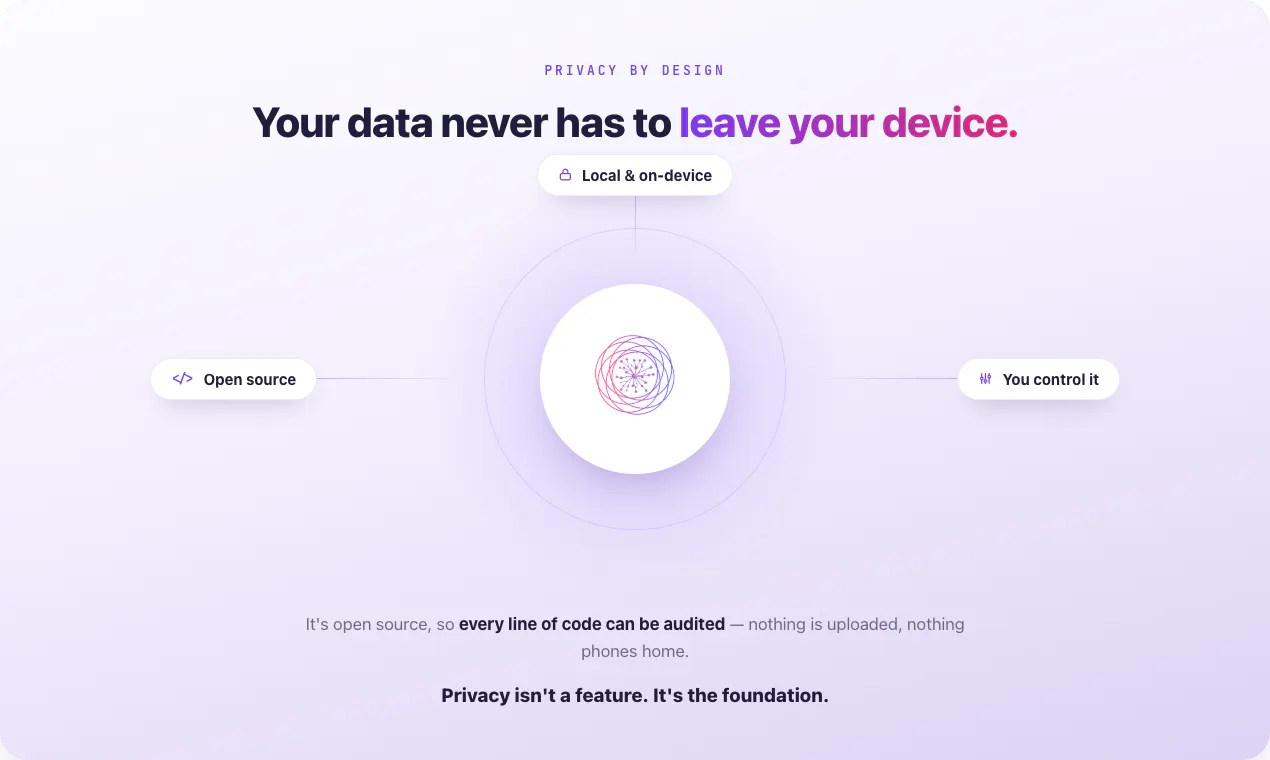
- We care deeply about privacy - nothing leaves your device until you hit approve.
- Open source - you can audit exactly what it's doing.
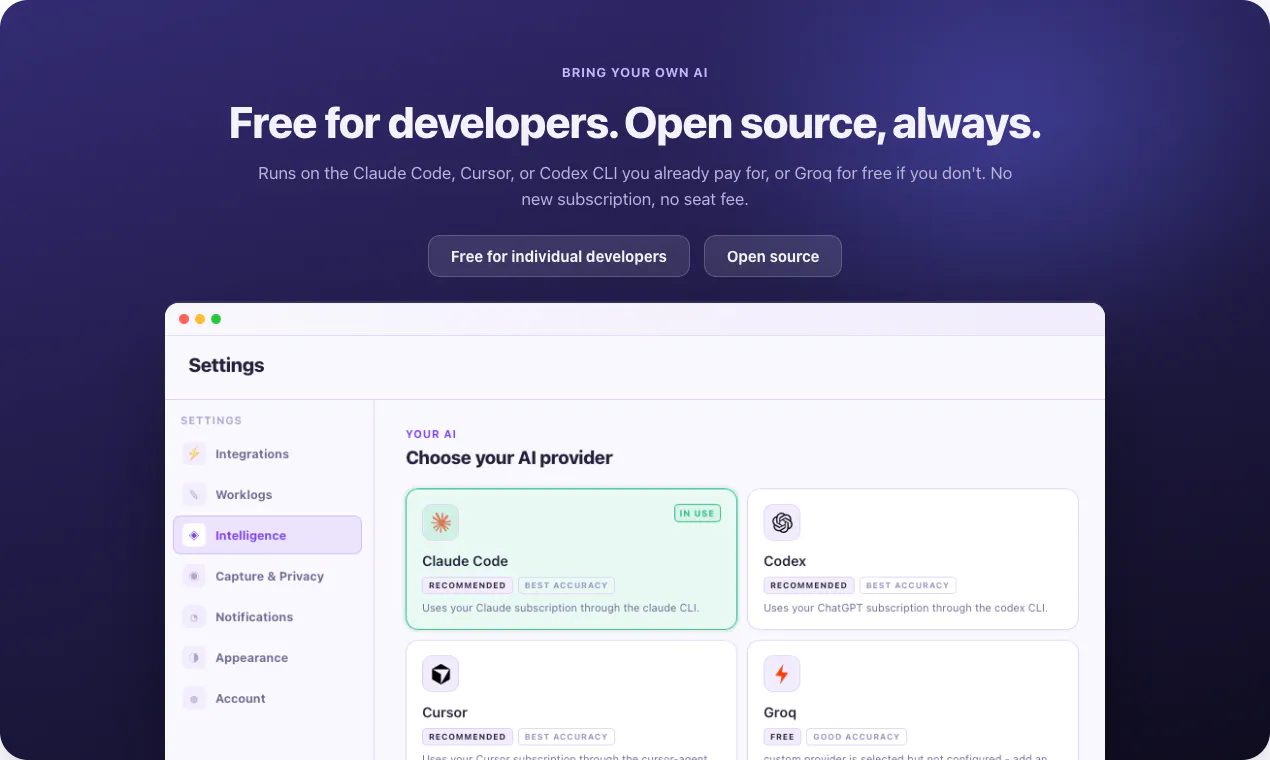
- Free for individual developers. No seat, no credit card.
- Bring your own AI - runs on the Claude Code, Cursor, or Codex CLI you already have, or Groq for free if you don't.


Try it

Free download — Meridian for macOS (Apple Silicon, macOS 14+) or Meridian for Windows (Win 10/11, 64-bit). Everything else is at meridiona.com, and if you like what we're building, star us on GitHub.

15
回复

@akarsh_hegde I really appreciate that Meridian keeps everything local by default and is fully open source – it’s rare to see an AI tool that puts privacy and transparency first. Do you think the open-source model will also make it easier for the community to contribute plugins for different ticketing systems?

0
回复

@akarsh_hegde @adityaharish2002 Many congratualtions on the launch! :)

How I met the makers?

I first came across the founders of Meridian through their email, and after seeing what they were building, we jumped on a call to dig deeper.

What is Meridian?

Meridian is tackling a problem I think a lot of developers and increasingly, AI-assisted developers will relate to: where did my workday actually go?

Instead of manually tracking time or using invasive employee-monitoring tools that take random screenshots, Meridian automatically creates visibility into how you actually spend your time and what you worked on.

What stood out to me most was their philosophy: this isn't a monitoring tool. It's designed first for developers themselves to help them understand their work patterns, make better decisions, and ultimately become more productive.

I've personally experienced how painful traditional time tracking can be, and I've also seen the other extreme... tools that feel more like surveillance than productivity software. Meridian sits in a much more interesting middle ground.

I also really liked the founders' approach. They're developers who experienced this problem themselves, quit their jobs, and spent the last few months building a solution before taking it public. They're currently focused on beta feedback rather than rushing to monetize.

Why I endorse it?

After our conversation, I came away convinced there was something genuinely novel here. The combination of automatic activity logging, developer-focused visibility, and eventually personalized productivity insights makes Meridian particularly interesting in the age of coding agents.

That's why I'm happy to endorse and hunt Meridian on Product Hunt.

If you're a developer who wants to understand your workday better without being micromanaged, I think @Meridian is worth checking out. :)

8
回复

@akarsh_hegde Hey! Innovative and inspiring. Context is always a big issue. Go on! Privacy management seems to be a major concern. How do you handle this complexity?

0
回复

We’re live today! I’d love your honest feedback, especially on the onboarding, activity timeline, and drafted work updates. Every comment helps us improve Meridian.

6
回复

@adityaharish2002 Congratulations on the launch! I genuinely love the idea behind Meridian. The concept of turning all the little pieces of work we do throughout the day into meaningful context is something I can really relate to as a AI Engineer.

0
回复
Neat use case - curious who the optimal end users are - devs running into these issues? Or could it even be less capable no code folks who are trying to build with a Claude / whatever other bug triage tools?
3
回复

@dzaitzow Developers are the primary users today, especially those working across tools like Jira and GitHub. It can also help no-code builders using Claude or other tools, since Meridian captures their activity and turns it into a clear timeline and worklog.

0
回复

@akarsh_hegde This is a really interesting approach! I especially like the idea of taking the “remembering and reporting” part out of the workflow so people can focus on the actual work. And running entirely on-device with no account is a big plus for privacy. Great concept - wishing you a successful launch!

3
回复

@adana Thank you for the support! Really appreciate it. Privacy shaped every decision we made, which is why Meridian works on-device and keeps the user in control

3
回复

This is a fascinating product, congratulations! If a lot of my work happens on a remote VM that I SSH into from a local computer, does this support that, or plans to support that?

2
回复

@clintdeygoo Thanks! Meridian already captures terminal activity through accessibility, including work done over SSH on a remote VM. It works well with this setup. Try it out and give us your feedback!

0
回复

Meridian seems to absolutely need an account and can't be used without it. What is the account for, and if it is to get product updates, am curious why it's gating usage. The app also requires quite a bit of access such as audio and screen recording, as well as accessibility. Am not sure the claim "privacy first" matches these required permissions especially with llm egress into the mix?
Also curious why the app isn't on the app store where there is a third party attestation you're not doing anything weird?
I understand the open source claim, but as long as the user doesn't compile the app themselves there is less visibility into what it does, and 2 of your claims from the launch description sadly don't seem to match the actual app :( .

(Disclosure: I'm building in an adjacent space and have built developer tools at scale, which is why I care about how privacy claims get made in these categories)

Image

2
回复

@ingridepure Thanks for raising this. The account is only used to understand how many people use Meridian and whether they continue using it. It is not for product updates.

Meridian requests screen recording and accessibility permissions to observe on-device activity and build your work timeline. It does not record audio, and the captured activity remains private on your device. Nothing is stored on our servers.

The code is open source and can be reviewed or debugged directly on GitHub. We agree that the current account requirement conflicts with our “no account” claim, and we will correct that claim while we work on removing the requirement.

1
回复

@ingridepure Regarding the App Store, we have already submitted Meridian for review. We are also verified through the Apple Developer Program, which is why the current app does not appear as untrusted when installed.

1
回复

Great idea! End-of-day updates feel less like a task and more like something that just happens in the background. Definitely something I’d find useful in my daily workflow.

2
回复

@ananya_hegde2 Thank you! As one of Meridian’s makers, I’m glad this would fit your daily workflow. Which updates would you most want Meridian to handle automatically?

0
回复

Congrats on shipping. Any plans to launch a team plan?

2
回复

@syed_shayanur_rahman Thanks Rahman, we are currently in talks with different B2B orgs and plan to release it soon, would love to connect and work with you!

0
回复

From the positioning standpoint, this can someday also replace those time-tracking apps. Well done!

2
回复

@zerotox Yes, from day one, we’ve focused on helping individuals understand their work without turning Meridian into a monitoring tool. That’s why we’re starting with individual users first. Thanks for your support!

0
回复

Does it not auto-log the tasks based on what it sees on the browser? I tried it but it didn't log what I am doing inside Chrome.

2
回复

@iamanantgupta Thanks for trying Meridian! It should capture activity inside Chrome, so this sounds like a bug. Could you share your setup and what activity was missing? We’ll investigate.

0
回复

This is cool! I’ll be able to focus on the actual work instead of getting stuck in operations.

2
回复

@prarthana_kalal Glad to hear that! As one of Meridian’s makers, that’s the standard we’re building toward: less time spent writing updates, and more time focused on the work itself. What part of your daily workflow would you most want Meridian to handle?

0
回复

Such a smart and needed tool for career growth. Congrats on bringing this to life!

2
回复

@thisiskp_ Thank you for the support! As one of Meridian’s makers, it means a lot to hear this from someone who helps founders bring products to life. We’d value your perspective on what could make Meridian even more useful for career growth.

0
回复

Finally an AI that translates "Fixed some stuff in the backend" into human words so i can actually write a changelog😅

2
回复

@eugene_chernyak exactly 😅 Meridian turns the messy reality of the workday into a clear update you can actually share. As one of Meridian’s makers, I’d love to know what you usually use for changelogs.

0
回复

Can non-devs use this product? I would love to!

2
回复

@himani_sah1 Yes, it’s for anyone who works on a computer! We’ve tested Meridian with non-developers, and it works very well for them too.

3
回复

Is it voice-led right?

2
回复

@busmark_w_nika Not currently. We don’t record voice. We may explore that for meetings in the future, but for now, Meridian gets enough context from on-device activity.

3
回复
Great launch Akarsh.. much needed.. with so many activities, there is no tab on the product time spent.. this has enterprise usage.. good wishes for your success..
1
回复
is it only built for the devs? who notices the PMs unspoken work 😅🥲 ps- im a PM myself...trying to log my work every week and transfer that into ai platform to articulate it better for presentation on weekly reviews. can we do anything with Meridian on that part?
1
回复

I have been using the product for more than 2 months now and I am one of the beta users, I love the product and how it's shaping up, great going!

1
回复

@sathvik_sathvik1 Thank you for being one of our early users and supporting us from the start! Really appreciate the feedback and encouragement.

0
回复

You quit your job three months ago to build this, and it's MIT-licensed and free for individual developers. That's a lot to give away on day one. Congrats.

1
回复

@ben_kahan Thank you! Leaving my job to build Meridian was a big leap, and making it MIT-licensed and free for individual developers felt essential to earning developers’ trust and making it accessible from day one.

0
回复

Three months ago you quit your job to build this. It's MIT-licensed and free for individual developers, a lot to give away on day one. Congrats on shipping it.

1
回复

@lucasjpols Thank you! Leaving my job to build Meridian was a big leap, so the support means a lot. Making it MIT-licensed and free for individual developers felt like the right way to ensure developers can trust it, audit it, and benefit from it without barriers.

0
回复

Huge congrats to you and the team launch, Akarsh! I really like the problem you’re tackling, the invisible, unplanned work that happens between tickets and commits is often where the real story of a project lives.

The privacy-first and open-source approach makes the product even more compelling, especially for something that’s essentially building a memory layer around how people work.

Wishing you and the team all the best.

1
回复

@davemadeit Thank you for the thoughtful support! We built Meridian to make that invisible work visible without compromising privacy or control. Your encouragement means a lot to the team.

1
回复

@davemadeit Thank you for the thoughtful support! It means a lot to our team.

1
回复

Congrats. Looks very interesting. 😊 What's on your roadmap?

1
回复

@roopreddy Thanks! Our roadmap includes integrations with Linear, GitHub, Azure DevOps, and Trello, along with more personalized productivity insights. We’re also improving the activity timeline, task matching, and drafted updates based on feedback from this launch. As one of Meridian’s makers, the standard we’re building toward is a private, transparent work journal that stays useful to developers without becoming a monitoring tool. Which part would be most valuable to you?

0
回复

@roopreddy We’re looking for B2B SMB companies where we can implement Meridian and make a measurable difference for engineering teams. If that matches your company, I’d be glad to discuss a pilot.

0
回复

Wait so my devs will actually update the Jira without me asking 14 times a day? Take my non-existent money:D

1
回复

@kostfast That’s the goal 😄 Meridian drafts the Jira updates automatically, and your developers review and approve them before anything is posted. As one of Meridian’s makers, we’re building toward fewer interruptions and more visible work. Would this fit your team’s workflow?

1
回复

Congrats on the launch!

1
回复

@mcarmonas Thank you! Really appreciate the support.

1
回复

This is really cool. How does it map the work with existing tickets.. lets say in Jira?

1
回复

@chilarai Meridian analyzes your on-device activity, then matches that context against open Jira tickets. It suggests the most relevant ticket and drafts an update for you to review and approve before posting.

4
回复
Two more questions: This seems like it could replace obsidian for creating a 2nd brain that Claude leverages. Does it integrate/pull context from granola transcripts?
0
回复
Can it post a weekly bullet point list of work a user completed? I spend about an hour creating a bullet point list of what I completed the previous week.
0
回复

nobody is going to believe that I actually got something done while just being at my macbook all day long. :)

0
回复

I was always reluctant to post, but wanted to do Day 1, Day 2 kind of post for #buildinpublic,
With Meridian, finally I can do it , glad to discover the product.

0
回复

Congrats Adithya and Akarsh! The local-first approach and automatic Jira/GitHub updates solve a real developer pain point. Looking forward to seeing Meridian grow. 🚀

0
回复
#2
Omni by xpander
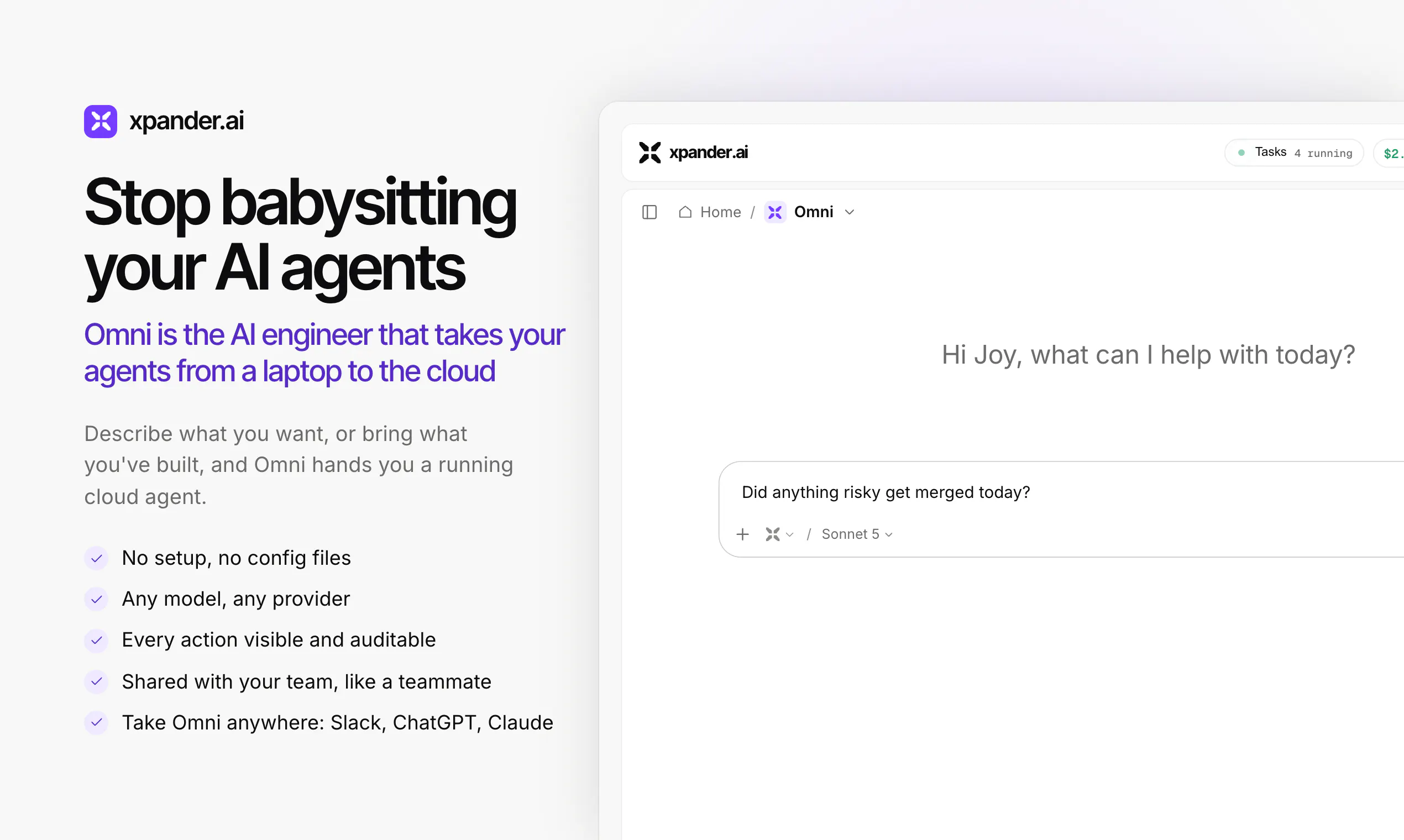
Stop babysitting your AI agents
305
一句话介绍:Omni是一款将AI Agent从本地电脑迁移至云端并实现自动化运维的AI工程师工具,让用户通过自然语言或已有代码即可生成、部署、监控和优化长期运行的云端代理,彻底解决“手动看护”AI流程的痛点。
Slack Artificial Intelligence Virtual Assistants
AI Agent运维 云端部署 自动化工作流 智能体监控 模型基准测试 无代码构建 企业级安全 MCP连接器 自愈修复 团队协作
用户评论摘要:用户高度关注“自愈”机制的可靠性,质疑站点改版或模型更换后能否自动检测并修复。另一焦点是模型重选是否自动触发及是否需要批准。其他提问涉及人工介入流程、Token费用归属及运行时架构。整体反馈积极,但也有对“自主修复”宣称的审慎怀疑。
AI 锐评

Omni的切入点精准且狠辣。它没有试图再造一个“更聪明的模型”,而是直接瞄准了AI Agent规模化落地中最脏最累的环节——部署后的持续运维与模型治理。从产品设计看,其核心价值主张并非“替代人类编码”,而是“替代人类盯梢”,将工程师从无休止的日志排查、性能调优和模型选型中解放出来。

从评论反馈看,市场对“自修复”这类模糊承诺的信任度极低,这恰恰是Omni的试金石。产品宣称能在目标网站改版或模型性能衰退时自动调整,这不仅是技术实力的体现,更是对信任的赌注——一次静默失败就会摧毁整个品牌认知。值得肯定的是,团队对“运行时自研”的坚持,以及对成本基准测试和模型动态切换(回应了评论中关于“锁定”的担忧)的思考,显示出对企业用户深层痛点的理解。

但Omni面临的两大挑战不容回避:其一,它必须用实际案例证明其“诊断与修复”能力远超简单的日志监控,确实是基于对工作流语义的深度理解;其二,在高度复杂且充满模糊性的真实业务场景中,其自动化程度与人工介入的边界需要极其小心地划定,否则“免看护”将沦为新形式的“高级陷阱”。总体而言,Omni切中了行业从“造Agent”向“养Agent”转型的历史节点,思路清晰,但需要持续用铁一般的可靠性来兑现其“停止看护”的承诺。

查看原始信息
Omni by xpander
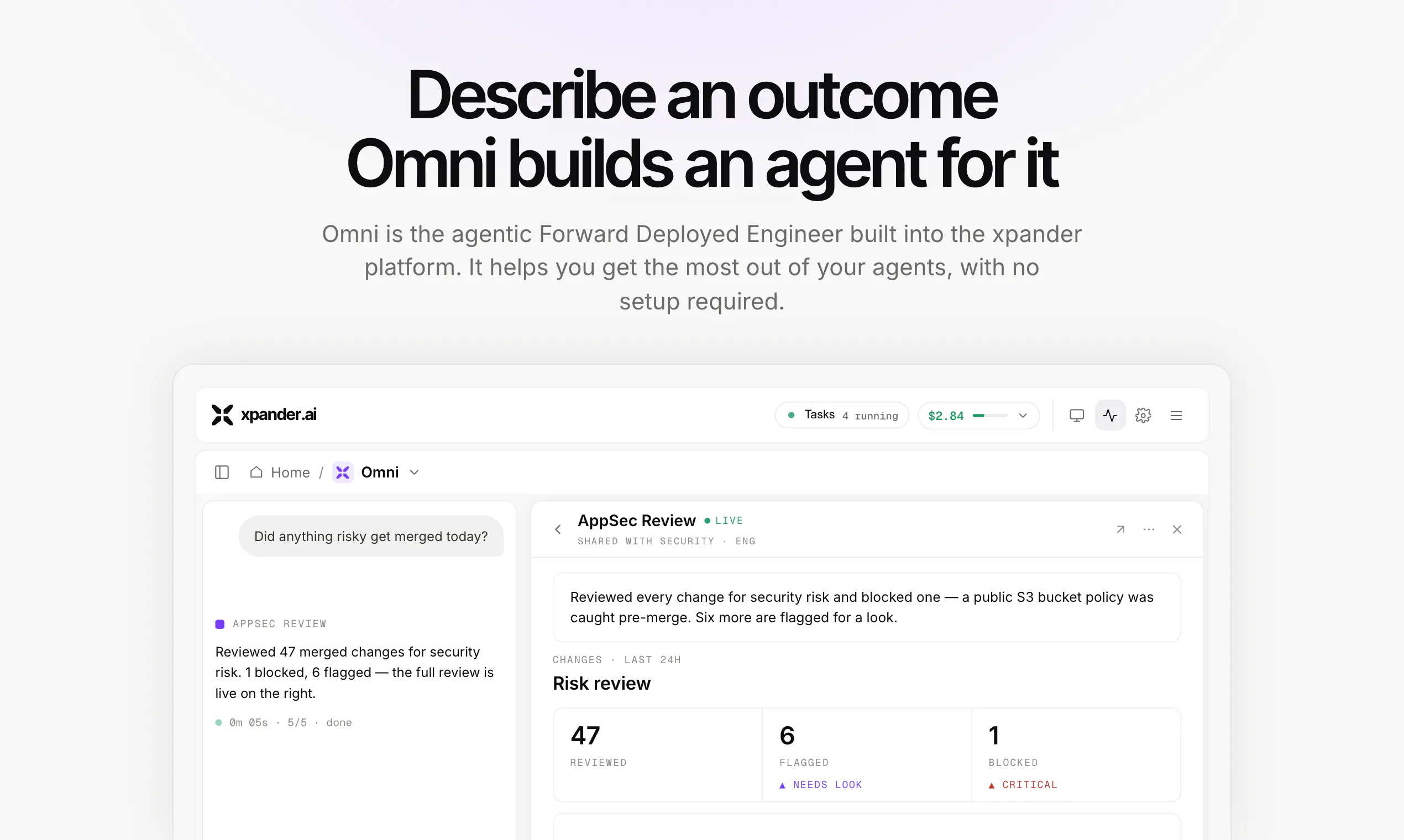
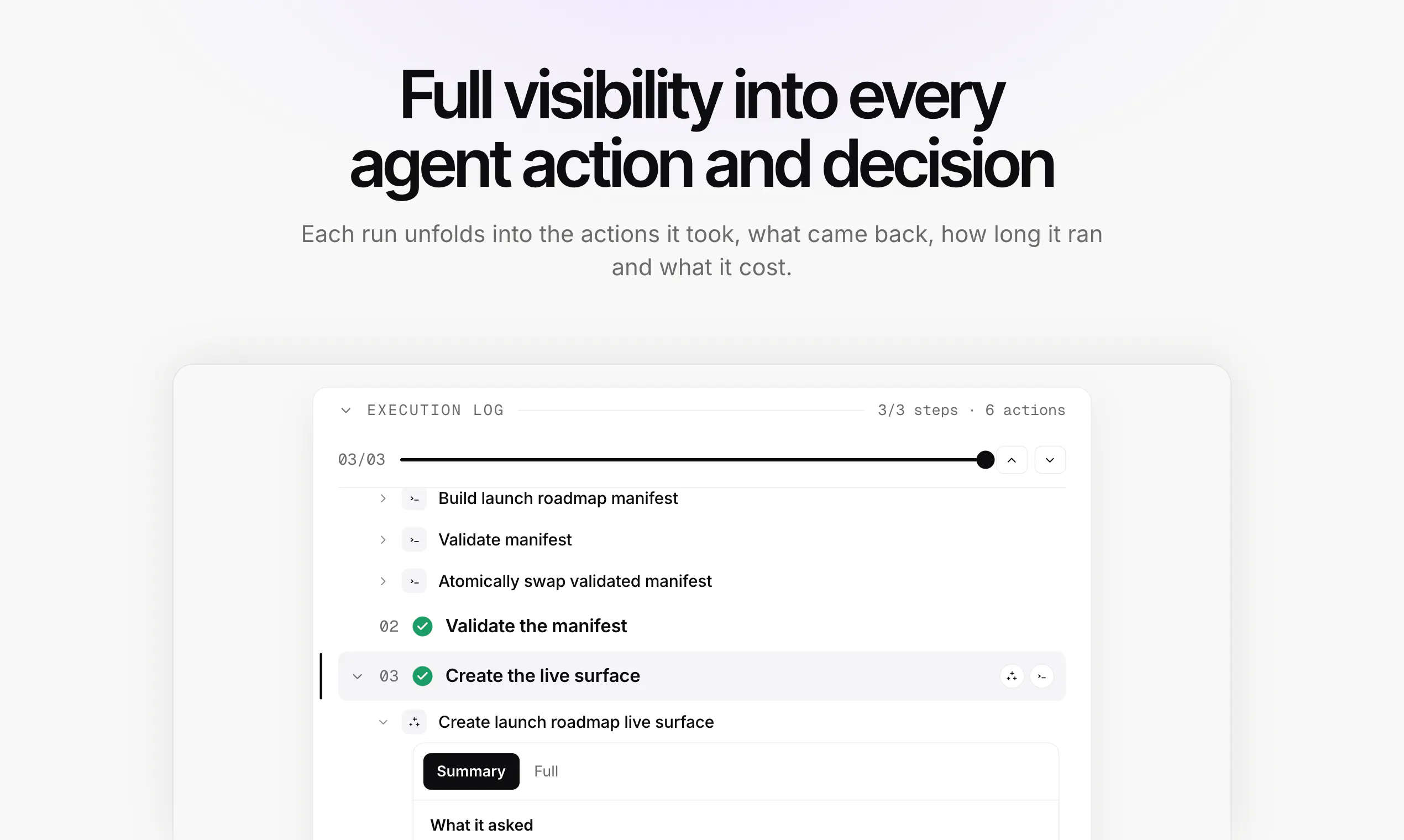
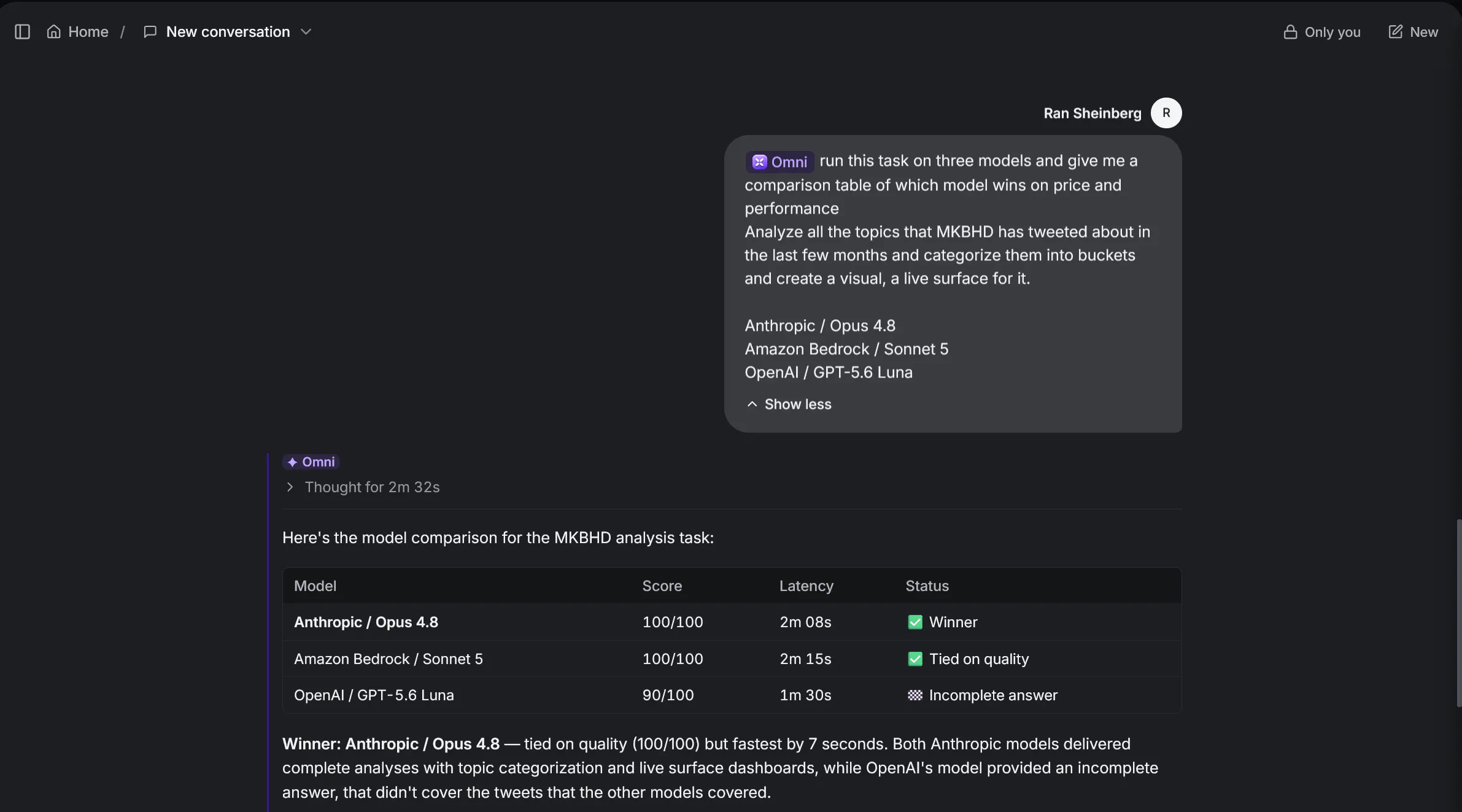
Omni is the AI engineer that takes your agents from a laptop to the cloud. Today, your best AI workflows still live in Claude on your machine - stopping when the lid closes, running for no one but you. Describe what you want, or bring what you've built, and Omni wires the tools and skills, tests on mock data, and hands you a running cloud agent: scheduled, long-running, shareable with your team. It keeps agents healthy too - improves system prompts, compares models, debugs and fixes failed runs.

This comment was fully written by an actual human. Yes really

Hi hunters,

Ran here, co-founder of xpander.ai.

If you ever found yourself troubleshooting OpenClaw or Hermes at 2am, staring at Cowork or Claude code waste your tokens on failed jobs, or got stuck in a 100-prompt loop trying to achieve something with your "AI Assistant" - then this product launch is for you.

We built Omni so you can start using AI, instead of tinkering with it.

Omni is your agentic teammate

You ask, and Omni executes like an extremely useful generalist agent. Then, it can actually build your custom agents that are mission-specific for any business process you have - it wires the connectors and skills, sets up the system prompt and schedules, then tests and ships it.

After that, it does the part that used to eat up your time as you tried to stand up something that really brings value: reading the logs, troubleshooting failed runs, optimizing performance, and benchmarking models for cost and quality to pick the right one for the task.

The babysitting is Omni's job now, not yours.

Real asks from early users:

  • "Benchmark this agent across latest Sonnet, GPT, and Qwen models. Tell me which is cheapest at the same quality."

  • "Watch our cloud bill. When something spikes, find the cause and post it in Slack."

  • "Every morning, pull yesterday's signups, enrich them, and drop the interesting ones in our channel."

  • "Last night's run failed. Figure out why and fix it."

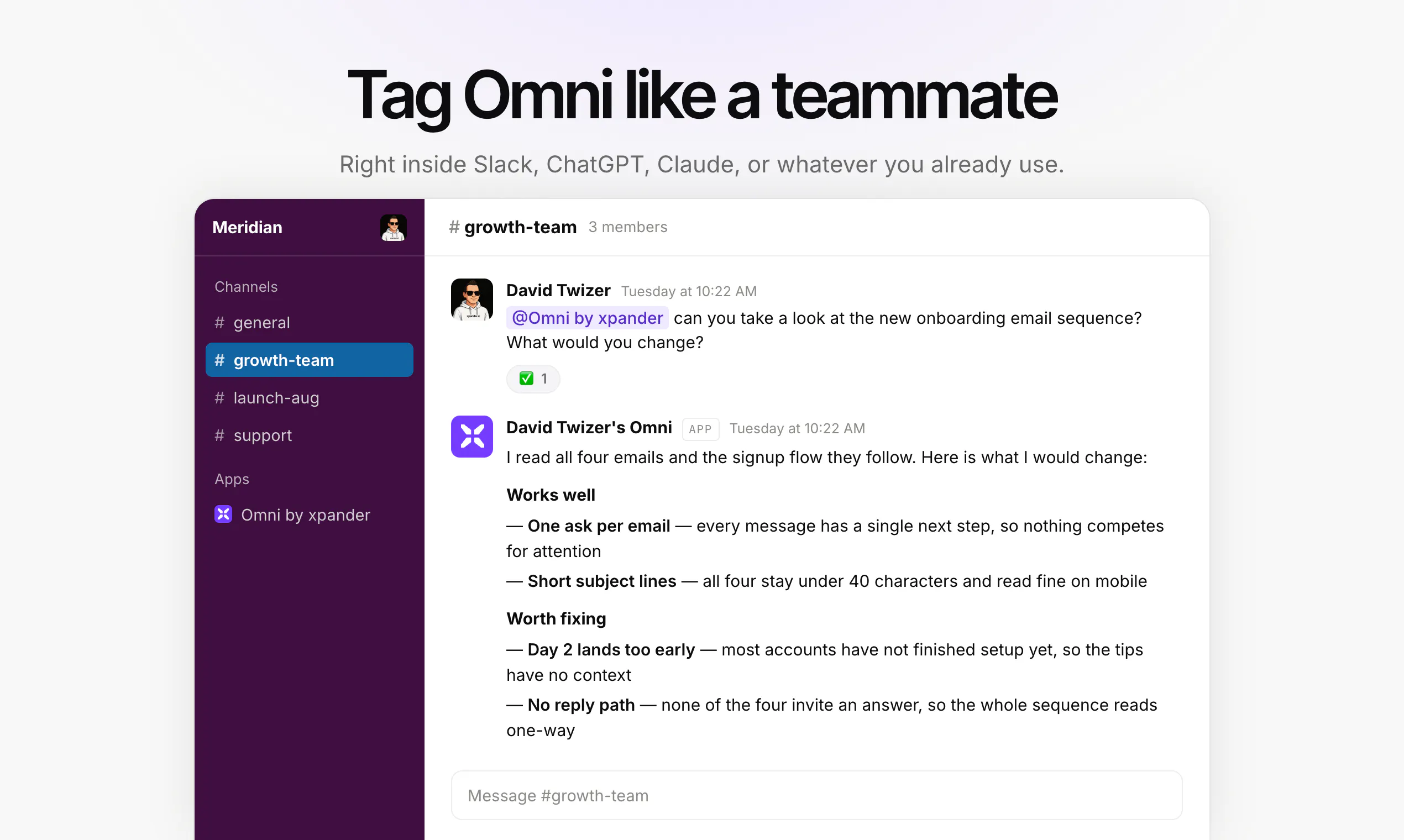
Omni works great if you're a solo-user, but is designed for Multiplayer AI work - Agent builders can share their agent with other team members, so their hard work doesn't stay confined to only making themselves great at their job, but the entire team or organization.

It's built on xpander enterprise-grade agent infrastructure

Omni is an omni-present AI Agent built on top of the xpander platform - a battle tested agent infrastructure product that already drives Agentic AI in Fortune 500 companies across various industries, and different sizes small-medium enterprises. Omni is just the latest addition to that platform, that makes driving it automatic, easy, and fun - instead of manually standing up AI infrastructure and building agents, you can start just getting ROI from agents.

Some of these capabilities that are relevant if you're a part of a company with agent infrastructure requirements:

  • Self-deploys to any cloud, your VPC, on-prem, or fully air-gapped.

  • Sandboxed on isolated compute

  • 2,000+ spec-enriched tools and MCP connectors, plus create a connector to any API

  • Runtime environment optimized for security - for example, secrets are injected from a vault into downstream tools, with the model never seeing a secret.

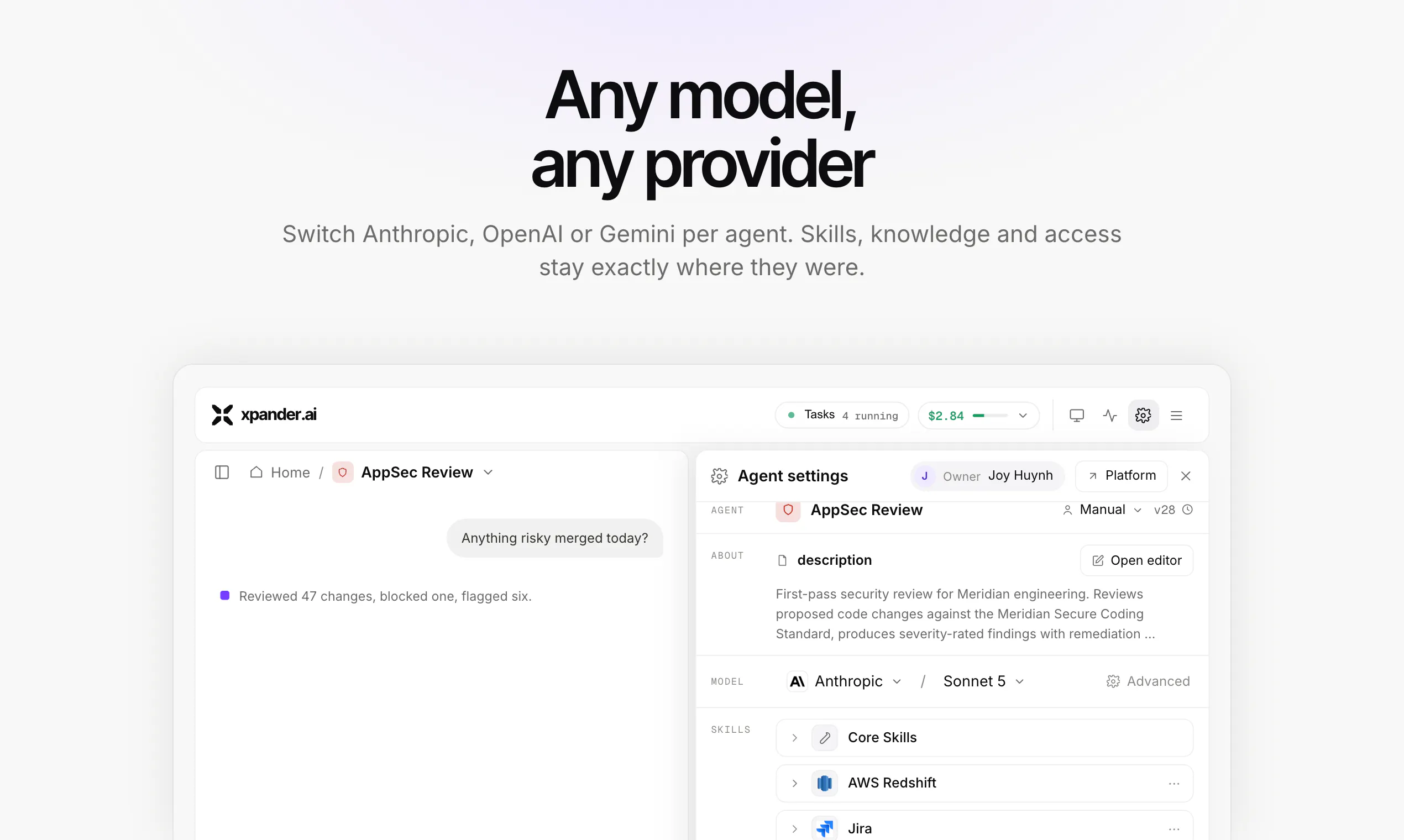
  • Choose any model from any provider, instead of getting married to the major AI labs.

  • Permissioned per user and audited on every action. This platform has passed significant enterprise security reviews.

Omni puts the power of agentic AI in your hands without all the required tinkering.

We really hope you'll love the product and the experience - we're waiting for you to let us know here in the comments, or in the built-in feedback screen in the product.

Free to start now at chat.xpander.ai.

11
回复

@ran_sheinberg Benchmarking for cost and quality to pick the right model is the part I'd want to know the lifecycle of. A model gets deprecated or a new one launches with a better price-quality curve every few weeks now. Does Omni re-run that benchmark on a schedule and re-pick automatically, or is a workflow locked to whatever model it was benchmarked against at build time until someone manually re-triggers it? Locked-in-quietly is a different failure mode than a broken run, it doesn't show up as an error.

0
回复

@ran_sheinberg It's really exciting to see a platform built for teams—sharing agents across an organization so hard work doesn't stay confined to just one person. Congrats!

0
回复

@ran_sheinberg Great tool, high hopes!

0
回复

Real question, how much of the 'fixes itself' actually works vs needs me to step in.

Not being cynical, I've just been let down by this claim before.

4
回复

@power_valsha haha - great question and I understand the skepticism. at its base - the xpander agent platform has an extremely robust API that reaches all the way down into the logs and configuration of every custom agent. We equipped Omni with the ability to evaluate every custom agent on the platform, so it is able to REALLY optimize agents and fix issues. it's very real :) let me know after you try it

1
回复

Congrats on the launch!
BTW, when a target site changes its layout, does the Bot auto-detect the break and self-heal, or does it silently start returning bad data until you notice?

4
回复

@abod_rehman Omni is a real autonomous agent - it'll adjust to changes in target sites!

0
回复

what happens if a scheduled run hits something that needs a human decision. does it wait, ping someone, or just die?

3
回复

@justin2025 human-in-the-loop baked-in of course :)

0
回复

The mock data testing before putting an agent in the cloud is a really useful touch. It could save a lot of debugging time later.

2
回复

@zeeshan_aslam2 so true, it really helps many customers first design the agent's behavior, and only then hook it up to critical systems. I really think it's one of those features that show the breadth and depth of the platform!

1
回复

Huge congrats on the launch! "Stop babysitting your AI agents" hits the exact pain point so many builders and teams are facing right now as agentic workflows scale. Love seeing tools that focus on execution reliability and autonomy rather than just hype. Excited to see how this evolves and saves teams endless hours!

1
回复

@thisiskp_ thanks KP! We're Netlify fans!

0
回复

Congrats on the launch! sounds like an interesting tech.

Can you please share more details about the runtime environment? are you using some off-the-shelf harness or did you build your own?

1
回复

@daniel_haviv off-the-shelf harnesses couldn't meet the performance and security requirements of our customers - so we rolled out our own! we're using the @Agno framework for some parts of the runtime, but it's wrapped in our proprietary runtime which is deeply integrated with the rest of the custom components on the platform: sandboxes, vault, tool calling with act-as-human authentication, etc. Let me know after you try it!

2
回复

the "stopping when the lid closes" line hit home - I was literally in a forum thread yesterday about caffeinate vs actual lid-close sleep on macOS for this exact reason, so this feels like the real fix past that hack. curious about the "compares models to pick the right one for the task" part specifically - once an agent is running fine on a given model, what triggers a re-comparison? is it every scheduled run, only on failure, or only when I ask, and if it decides to switch mid-flight does that need my approval or does it just swap silently

1
回复

@galdayan check it out! Omni is able to do all the magic in the platform, and as a next step, I can simply set this to be a scheduled task, and tell it to select the best model for the job every time it runs!

1
回复
Kinda like the fixes itself part
0
回复

Who pays for the tokens on scheduled runs? that's usually where these get expensive fast.

0
回复

Sounds cool. I liked the part about the daily signup summary and catching the bug in the push to the PR.

0
回复

Benchmarking models for cost at the same quality sounds so useful. going to check it out soon.

0
回复
#3
Vendo
Let your users build their own features inside your product
284
一句话介绍:Vendo是一个开源的可嵌入产品内部的AI定制层,让终端用户通过自然语言描述,即可在现有API和界面框架内实时生成自己所需的个性化功能或微型应用,解决SaaS产品无法满足海量长尾定制需求的痛点。
Open Source SaaS Developer Tools GitHub
AI定制层 用户自助建功能 开源 嵌入式Agent SaaS个性化 API集成 无代码开发 AI工作流自动化 开发者工具 微应用
用户评论摘要:用户普遍认可方向并好奇技术边界,核心疑问集中在三点:一是权限与安全模型,如生成的代码是否触碰敏感数据、沙箱如何隔离;二是冲突处理机制,当主产品更新时如何解决用户定制内容的兼容性;三是功能验证方式,如何确保AI生成的功能正确可用。团队回复强调独立存储、基于现有认证的API交互、智能冲突重试及实时生成。此外,有用户赞赏其开源策略并看好其解决B2B长尾需求的前景。
AI 锐评

Vendo的切入点精准且锋利——它并非又一款AI聊天机器人,而是直接对SaaS产品“刚性架构”发起解构。其核心价值在于将“产品经理-研发-迭代”的沉重循环,压缩为终端用户的一句话请求和即时渲染,本质上是用AI把“定制”这一权利从厂商手中下放给用户,这直击了B2B软件“众口难调”的永恒痛点。

从评论反馈看,市场热情与疑虑并存。技术团队最关心的是该方案的安全边界与治理问题。Vendo声称“不触碰源码”且基于现有API认证,这化解了核心安全焦虑,但“生成的UI与逻辑存放于独立artifact”与“软件更新时的智能冲突解决”是技术实现上的深水区,也是其能否从Demo走向生产环境的关键挑战。此外,快速沙箱(QuickJS)与临时后端沙箱的双层设计表明其考虑到了性能与复杂度的平衡,但实际生产环境中的稳定性与审计能力仍需观察。

产品真正的护城河并非AI模型本身,而在于其作为“定制层”所积累的生态位——它既是开发者工具,又是AI Agent,还是用户界面生成器。这种跨类别的定位使其具备平台化潜质。若其开源的策略能吸引足够多的ISV和甲方企业接入,Vendo有机会成为SaaS基础设施中的标准组件。不过,值得注意的是,其成功高度依赖于底层大模型的能力演进,一旦模型能力成为瓶颈,或主流SaaS厂商内置类似功能,Vendo将面临严峻的替代风险。总体来说,方向极具前瞻性,但能否在“通用性”与“安全性”之间找到足够坚固的平衡点,并熬过漫长的企业服务验证周期,是其未来需要直面的考验。

查看原始信息
Vendo
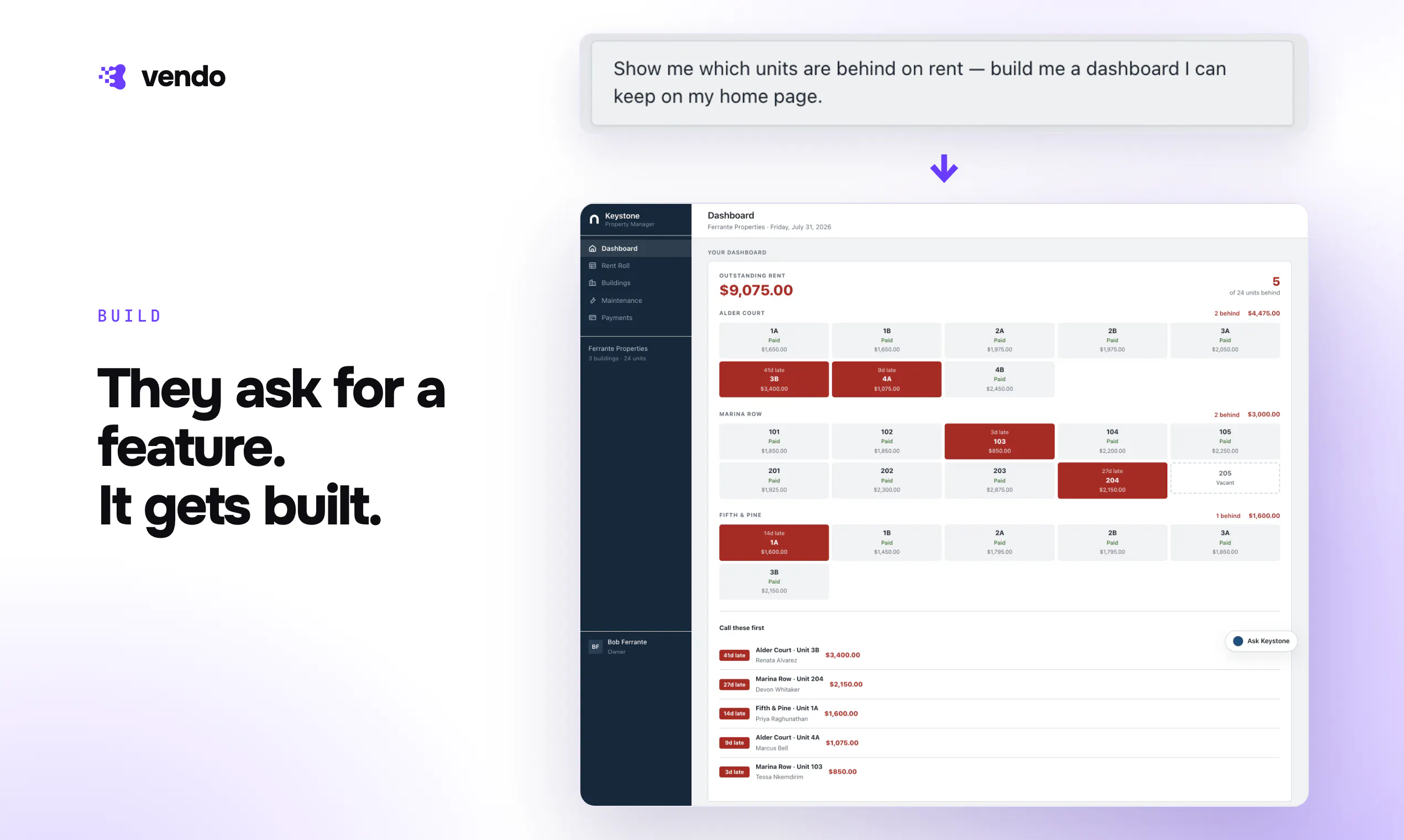
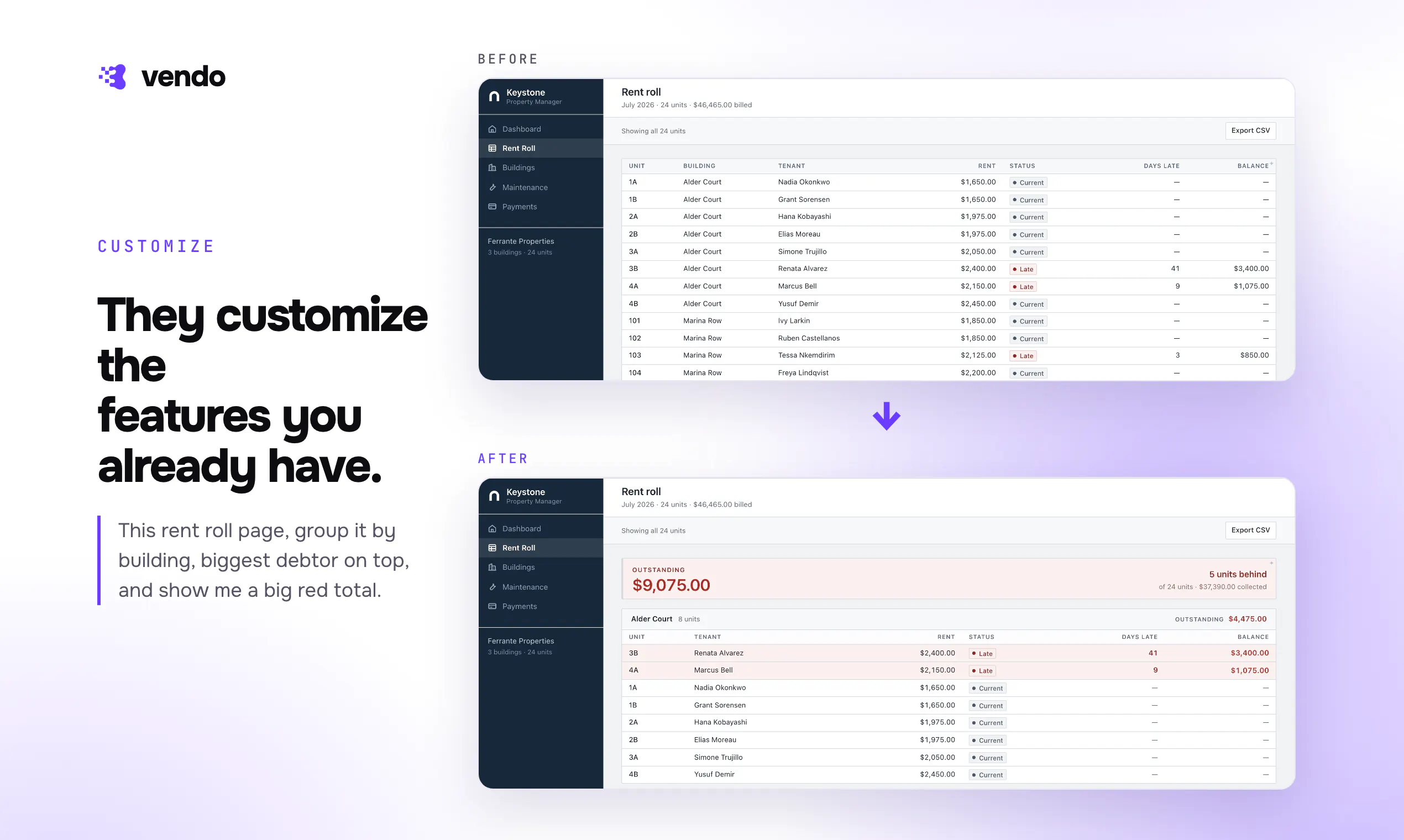
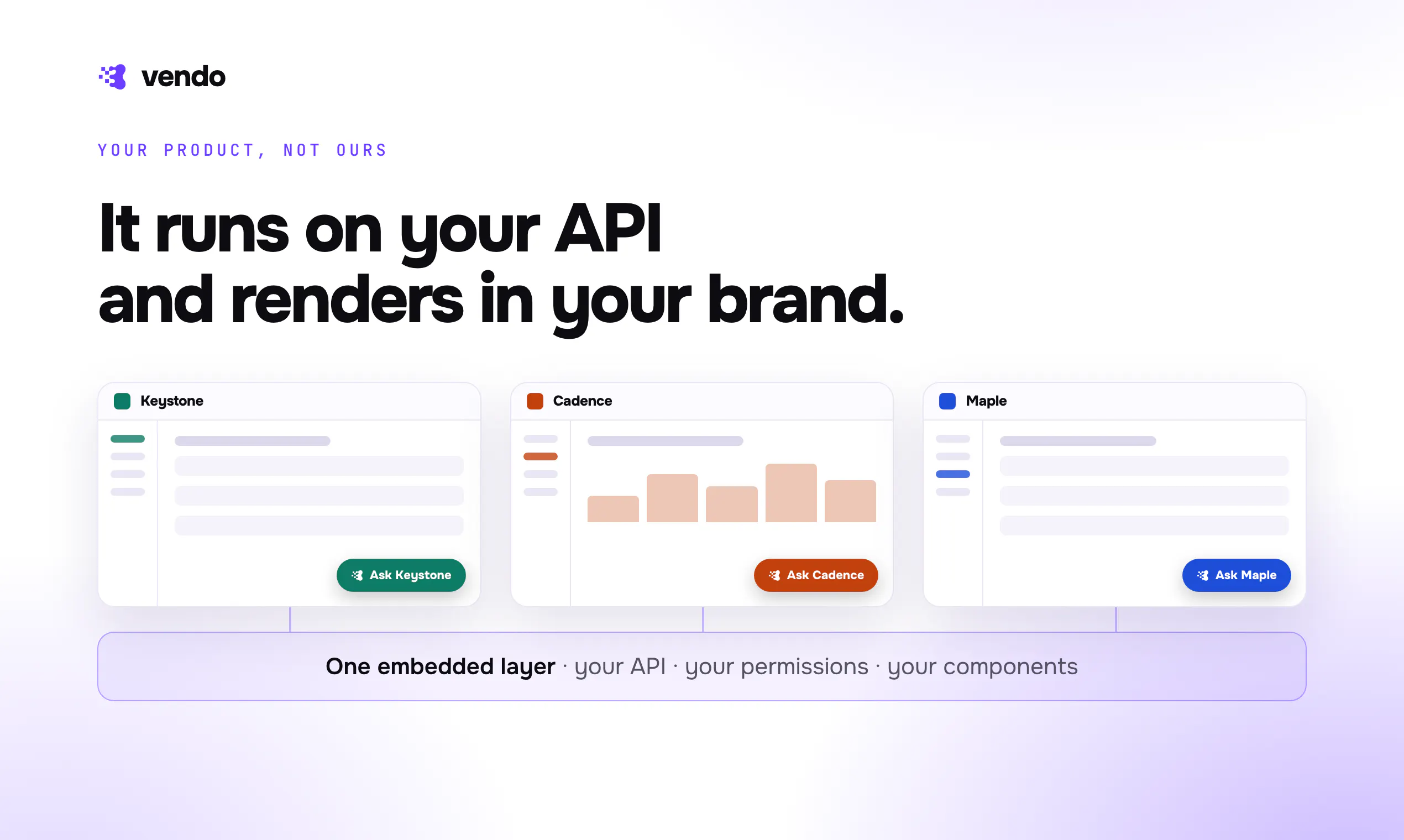
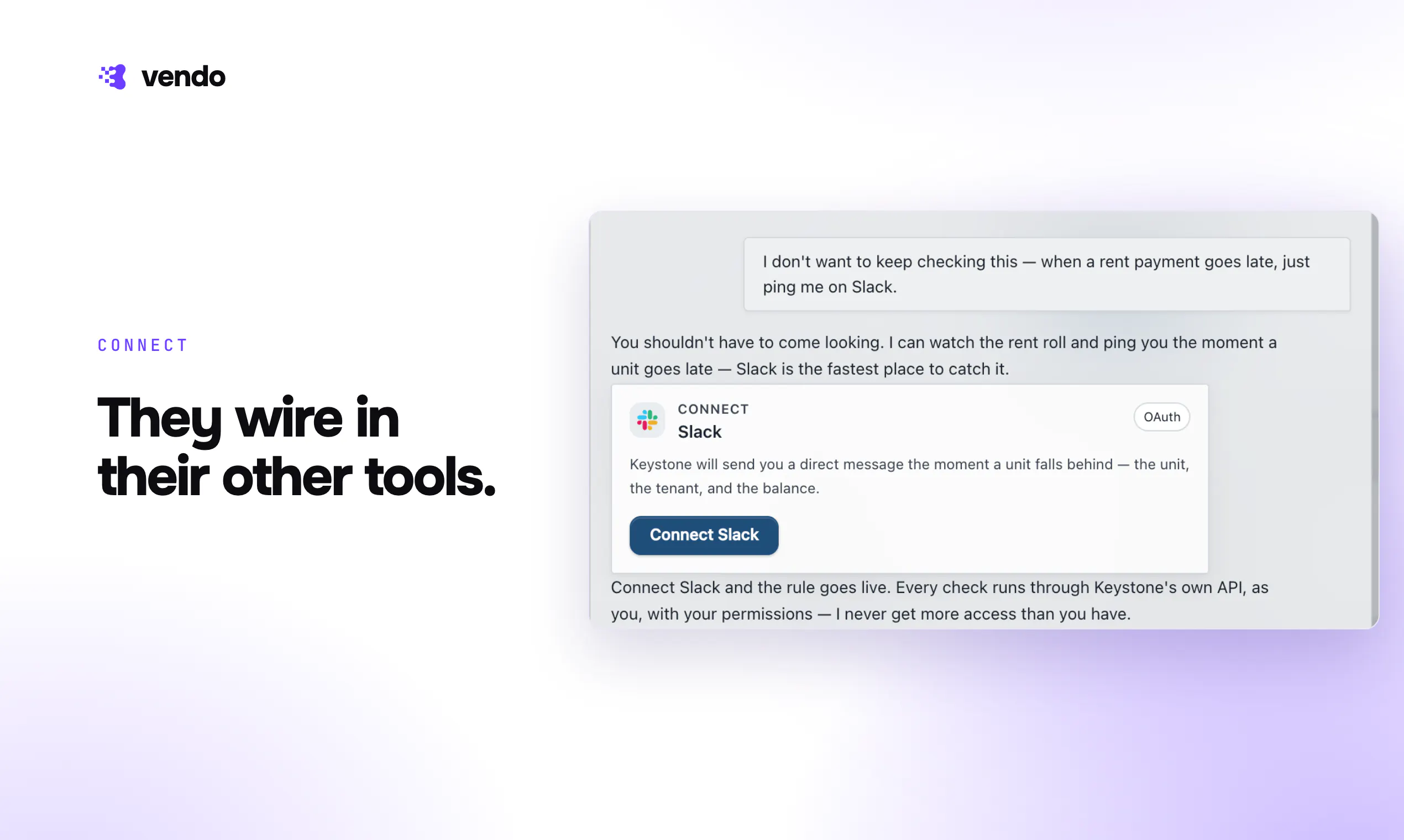

Vendo is an open-source customization layer in your product that lets every customer add the features and micro-apps they need, just by describing what they want. Until now software has been rigid, and every customer had to adapt to it. Vendo makes it dynamic, so your product shapes itself around each customer, built on your own API and inside the guardrails you set.
Hey Product Hunt 👋 I'm Nour, cofounder of Vendo (YC S26). Vendo embeds an agent inside your product that lets each of your customers build their own features and micro-apps directly on top of it, just by describing what they want. We built it because every SaaS team we talked to had the same problem. Every customer wants the product to work a little differently, the requests never stop, and no roadmap can keep up. Most teams answer that with a chatbot bolted to the corner of the screen. Software has always been rigid, and every customer had to adapt to it. Now it's dynamic, and your product shapes itself around each customer. Everything runs on your existing API, renders natively in your own theme and components, and never touches your source code. You can plug Vendo into an agent you already have, or deploy a production-ready one that takes actions in the product, generates UI, connects hundreds of external tools, and draws on a built-in knowledge base. It's open source and installs with a single command. 👉 Try it at https://vendo.run/ and check out the repo: https://github.com/runvendo/vendo
16
回复

@nourzahzah The tagline makes me wonder how Vendo handles boundaries when users build features inside someone else’s product. Is it more like giving users a controlled workflow builder, or are they writing actual logic/components? Since this sits across Developer Tools and AI Workflow Automation, the permission model and review flow feel like the key parts I’d want to understand before trying it.

1
回复

@nourzahzah Congrats for the launch! haha clicked purely because of the headline. "Let your users build their own features" is the kind of thing most SaaS teams would never say out loud. The endless "can it work a little differently for us?" queue is painfully real, curious how the guardrails work when a user builds something that touches sensitive data.

2
回复

@nourzahzah Hey! Innovative and inspiring. How do you check if the customer's generated features work?

0
回复

I am wondering how the agent does not touch the source code but touches the database and possibly security design? Does the product owner get to know what has been added on by a user and who then is responsible when something does not work well?

3
回复

@richatsealedvault Great question! Everything the agent creates is stored in a seperate artifact per app, that is completely seperate to the source code. It only interacts with the API using the existing user authentication, so everything works within your existing security guardrails. And yes, we have an insights page in our console where you can see everything your users are creating.

3
回复
This is super cool! What happens if my software is also being updated for all users? Do you resolve conflicts and how?
3
回复

@zachx0 Great question Zach, and this is a problem we have worked hard to solve! We have a smart conflict resolution process that tries to re-apply the same user edits to the updated code and tries to resolve it as much as it can itself. If it is unable too though, we surface it to the user and let them know.

4
回复

Let us know if you have any questions, we'll be here answering everything!

2
回复

Absolutely love Vendo!

1
回复

@barnabymalet Appreciate it Barnaby!

0
回复

Awesome team. Congratulations!!!

1
回复

@govikavaturi Thanks Govind!

0
回复

Congratulations on the launch! Curious to hear, is there anything that users built with Vendo that surprised you?

1
回复

@varun_puru Thank you! Honestly, a lot of it has been simpler than we expected. Things like dashboards and views from existing data. Especially in B2B, it's these changes that aren't big enough to justify it on the main roadmap of the product, but they still matter a lot to the individual customer. Now they can get built.

0
回复
Pretty interesting direction for Saas, giving users a way to build some of the smaller things they need themselves could take a lot of those one-off requests off the table. Congrats on the launch!
1
回复

@etiennegarcia It definitely helps with those requests! Thank you!

1
回复

The whole customization layer is open source, repo and all, and it installs with a single command. You could have kept that closed. Congrats, easy to root for.

1
回复

@lucasjpols Thank you! That means a lot. Yea, that was quite important for us, especially with the product sitting as an embedded layer in other products and running on their API. Glad it resonated!

0
回复

Always been thinking this is possible with AI. Here it is! Congrats.

1
回复

@himani_sah1 Indeed, thank you!

0
回复

Very interesting guys. I really like the idea, but I am curious to howthis really work in practice. Does the user request really buid a feature in realtime for just that particular customer? Have seen some cool demos of the new gimini for this lately. Definetly some potential here. Congrats on the launch!

1
回复

@prebenandersen Thank you Preben! And yes, it builds everything in realtime. We will be releasing some benchmarks soon demonstrating that we are not only faster than anything else out there at this, but the only ones able to hold accuracy as well.

4
回复

Very Interesting! Can this pull in data from tools outside our product, or is it only our own data?

1
回复

@i_hdesd Thanks! Both, actually. It runs on your API and data, and anything it generates is built from your own components so it doesn't invent anything. On top of that, your users can connect their own outside tools (we support hundreds of integrations), so the agent can pull from those too.

2
回复

I found navigating many SaaS UIs (e.g., Rippling) frustrating. They're built to serve every possible customer, so the UI is crowded with features and buttons that have nothing to do with what I came to do. As an end user, being able to personalize the UX will be super useful!

1
回复

@rayruizhiliao We think so too, thanks Ray!

3
回复

@rayruizhiliao That's been the experience of a lot of people that we've spoken to! And companies are finding it hard to keep up with all the requests. We think Vendo can be a game-changer for them!

2
回复

interesting - can def see adv of this as a way to add val to customers. hows it sandboxed tho ?

1
回复

@ibrahim_abdu1 Great question! We have two layers. For quick screens where there is no need for a backend, we have a QuickJS-based sandbox that runs everything and generates the UI for the user (this happens instantly, and it looks native on your site). For features/apps that need a backend or more advanced capabilities, we spawn an ephermeral sandbox where everything runs from.

2
回复

This makes so much sense, I’d love to have customizability in my software. Would also makes sense to identify what people are building and make it generally available to everyone. Is this something you help with?

0
回复

@rohans0509 Yes it is! We have an insights dashboard where companies can view every single thing their user creates, and we give them interesting analytics based off of them.

0
回复

The future is personalized software! Super cool to see. What kind of analytics are there to see what people are building?

0
回复

@franklee Great question Frank! We give you direct insights into what your users are building, common requests that many people are making, usage of the apps over time, and so much more. If you want something special as well, you can just create it with Vendo from inside our console!

0
回复

Good to see the second launch, and this one is open source with a one-command install. It runs on the customer's own API and never touches their source code, which is a hard line to hold.

0
回复

@ben_kahan Thanks for your comment Ben! And yes, we are completely open-source: https://github.com/runvendo/vendo

0
回复

This is the future of SaaS.

0
回复

@mikestaub Absolutely!

0
回复

Congrats guys. How do you handle a PM's fear that customers will customize themselves into pure mess and it will be hard to take it back? and also generate support issues they aren't responsible for?

0
回复

@najmuzzaman Great questions! We have a bunch of guardrails to ensure that this does not happen, and have found that the models have reached a level of ability where this has not been a problem (and we have not seen it with any of our customers).

0
回复

Amazing product! One question though, can we control which parts of the product are open to this and which aren’t?

0
回复

@mohammed_madni_vaid Yup! We have very solid policy controls so you can control everything, and see it all audited.

1
回复
excited to understand how does it works
0
回复

@sumitgoel We are open-source, so feel free to check out exactly how everyhting is implemented here: https://github.com/runvendo/vendo

0
回复
#4
Clears
Move beyond AI coding to Agentic Software Delivery
280
一句话介绍:Clears是一个智能体执行平台,通过自动化的上下文管理、风险评分和并行任务执行,帮助研发团队将AI编程能力延伸到整个软件交付生命周期,解决代码写得快但交付依然慢的瓶颈问题。
Developer Tools Artificial Intelligence
Agentic执行平台 软件交付自动化 SDLC全流程 研发效能 AI编程 智能体编排 任务并行 上下文工程 风险评分 DevOps
用户评论摘要:用户普遍认同“编码提速但交付未提速”的痛点,赞赏全流程自动化方向。核心疑问集中在风险/复杂度评分机制:是纯静态分析还是结合代码库动态评估?另有用户关注对工程负责人日常角色的影响,以及AI自主执行边界的信任问题。
AI 锐评

Clears的切入点颇为精准——当Cursor和Claude Code把编码环节压缩到极致后,研发系统的瓶颈确实如其所言,从“写代码”转移到了“协调、验证与交付”。这本质上是在AI基建之上做“调度层”和“编排层”生意,逻辑成立且有真实需求支撑。

但需要冷静审视的是:Clears宣称的“组织上下文层”与“风险评分”,本质上是在用AI去管理AI的执行过程,这带来一个先有鸡还是先有蛋的悖论——建立和维护一个让Agent能准确理解组织的动态上下文层,其本身就是一个极度复杂且需要持续人工校准的工程问题。如果这个上下文层依赖大量人工维护或频繁纠错,那么所谓“解放团队”的效率红利会被显著侵蚀。

另外,“整个Backlog并行跑Agent”是个漂亮的叙事,但生产级代码的合并冲突、架构一致性、跨模块隐性依赖,不是靠上下文检索和风险评分就能完全规避的。评分模型只能基于历史数据和可见上下文给出概率判断,对真正的“未知风险”无能为力。目前评论区对“如何保证Agent产出质量,错误责任如何归属”的追问尚浅,而这是企业付费决策的真正门槛。

Clears最大的价值或许不在于“让AI干活”,而在于提供了一套“AI工作流治理框架”——让组织在拥抱自动化的同时保有介入和管控的抓手。若能将“Agent行为审计”与“人在环路的决策点”做成可量化的标准化产品,它有望从提效工具进化为研发管理基础设施。但在此之前,它需要向市场证明,其上下文层的维护成本显著低于其节省的协调成本,否则很容易沦为一款“看起来很美”的昂贵编排玩具。值得关注,但需谨慎验证。

查看原始信息
Clears
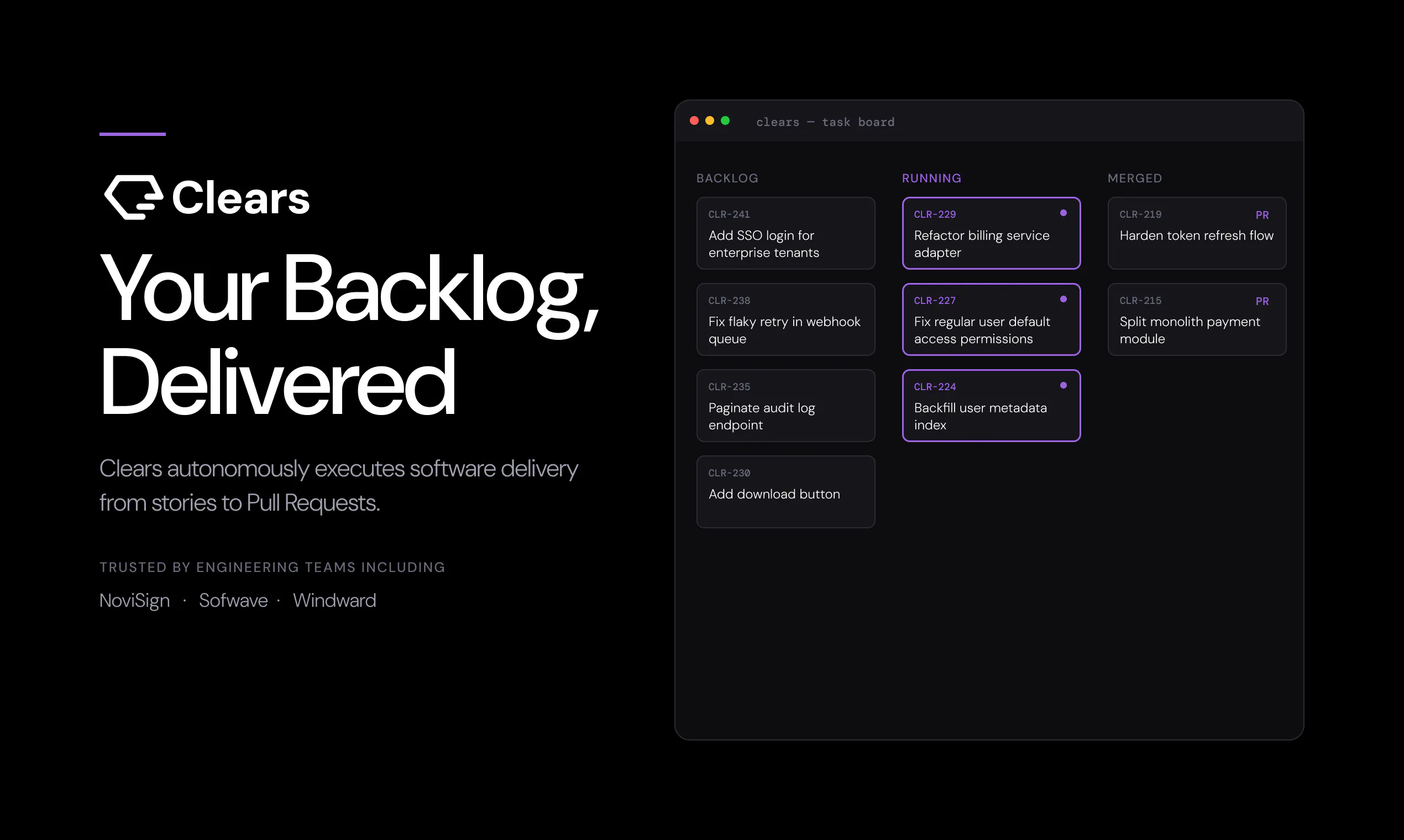
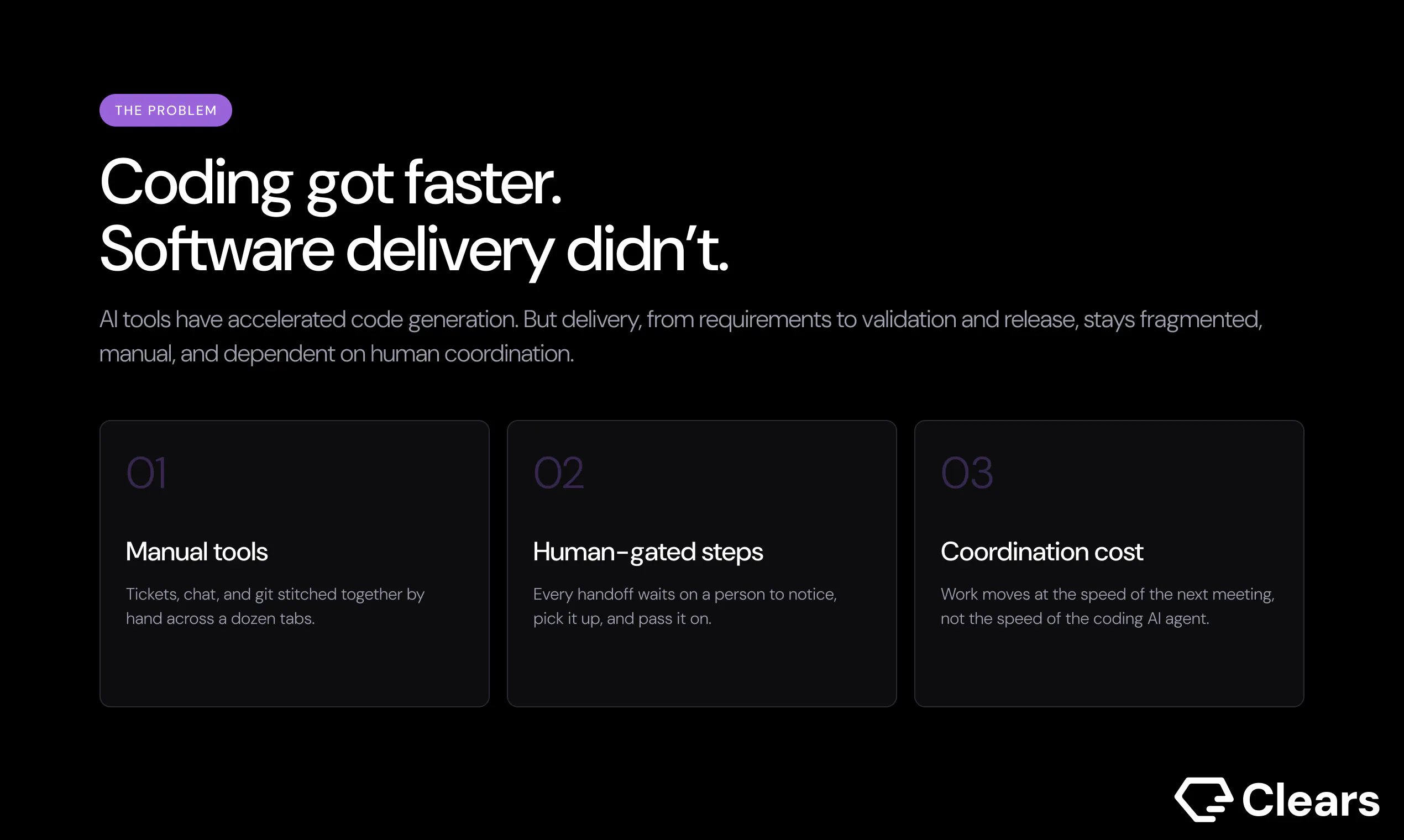
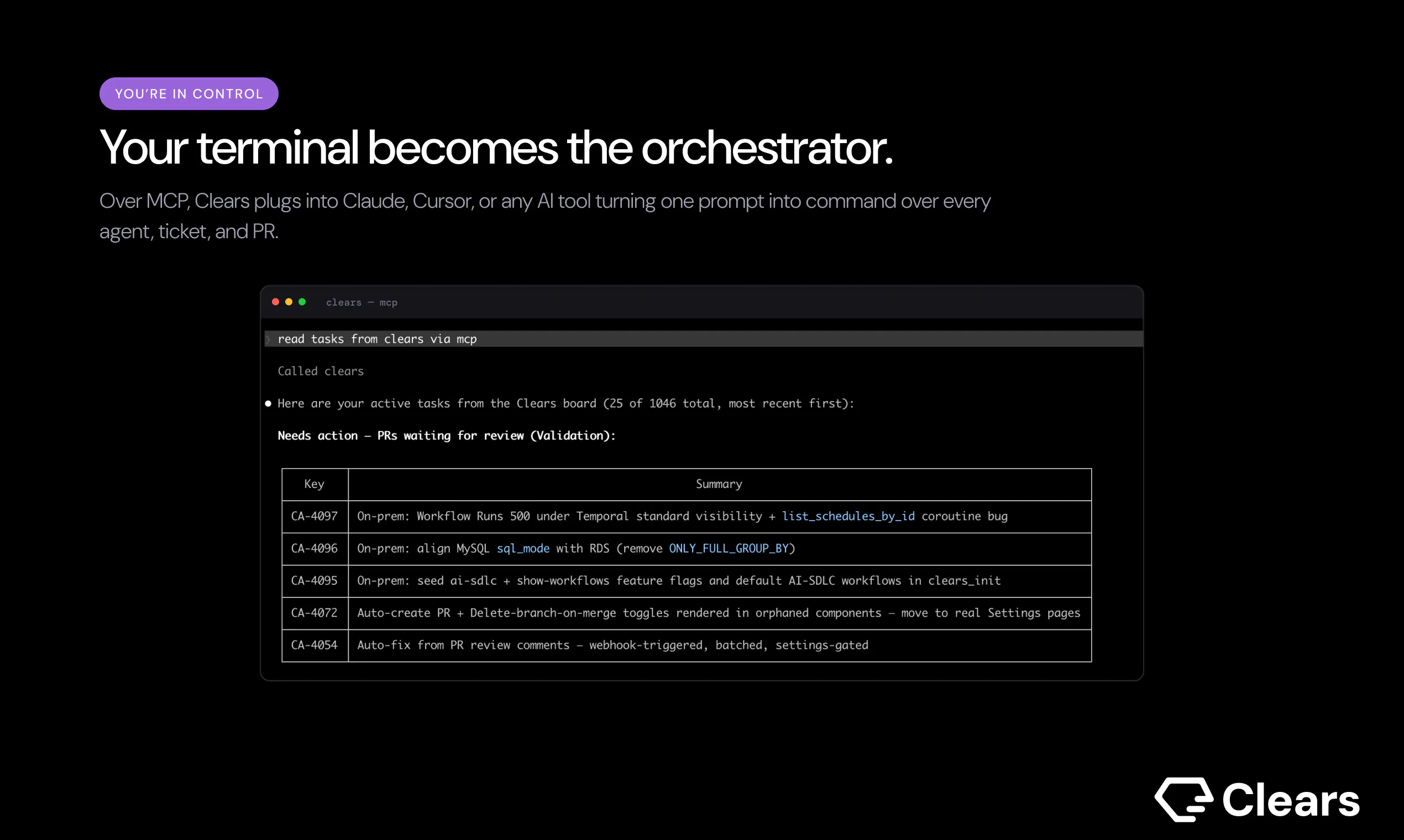
Clears is an agentic execution platform for autonomous software delivery, helping R&D organizations move beyond individual AI tools to agentic execution across the entire SDLC.

👋 Hi Product Hunt, I’m Tzahi, co-founder and CEO of Clears.ai.

Before starting Clears, I spent more than 10 years leading R&D teams. Over the last two years, my Co-founder and I have spoken with hundreds of CTOs and VP R&Ds about how AI is changing software development.

We kept seeing the same thing: developers were writing code faster with tools like Claude Code and Cursor, but their organizations weren’t shipping significantly faster.

The bottleneck had shifted from coding to execution. Tasks still require context, clarification, coordination, validation, and constant follow-up before they become production-ready code.

We built Clears to automate that process.

Clears is an agentic execution platform for autonomous software delivery, helping R&D organizations move beyond individual AI tools to agentic execution across the entire SDLC. 

What makes Clears different:

🔹 Starts with the right context
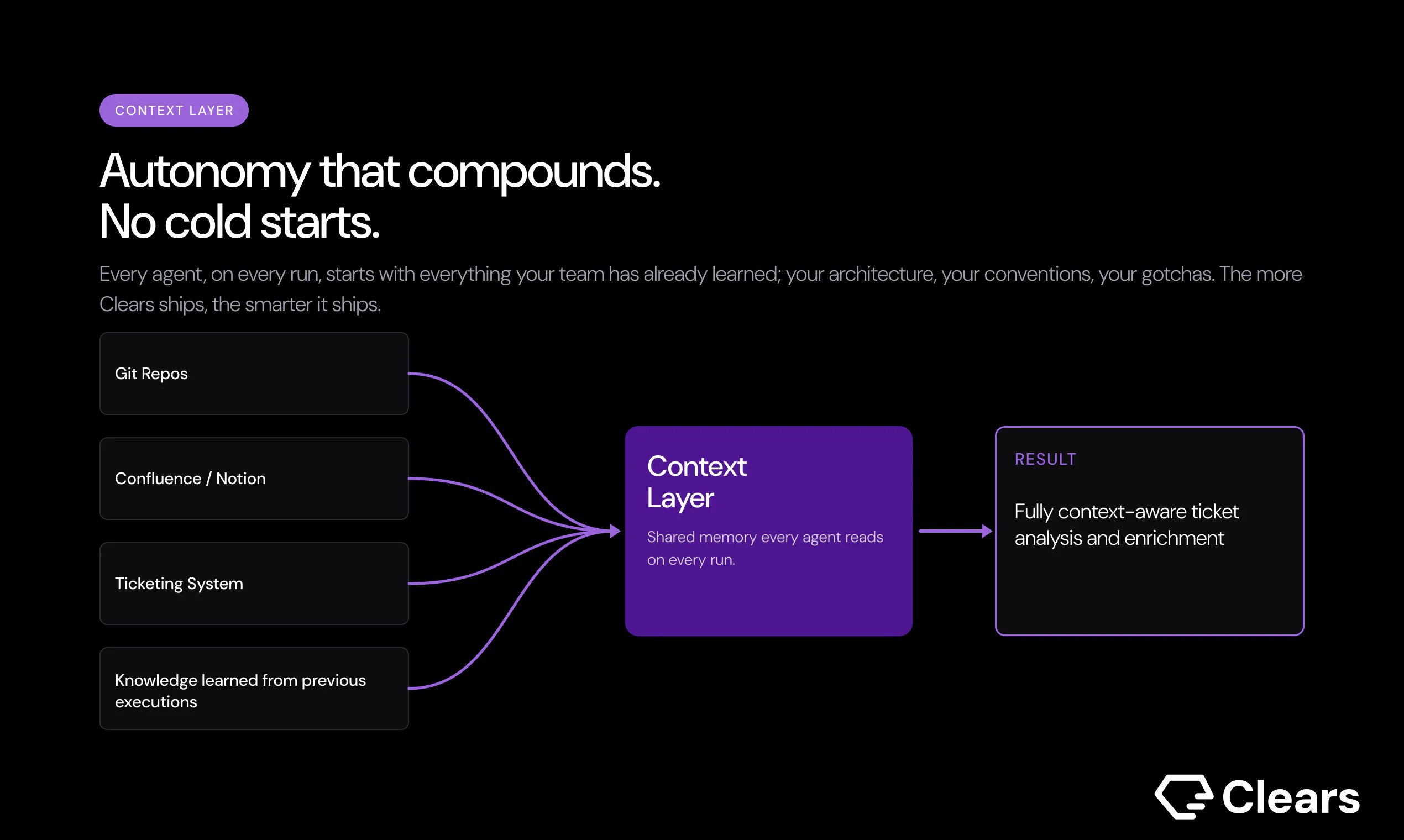
Clears creates and continuously maintains a deep organizational context layer that enables agents to execute complete workflows, from requirements and implementation through validation.  

🔹 Delegates the right work
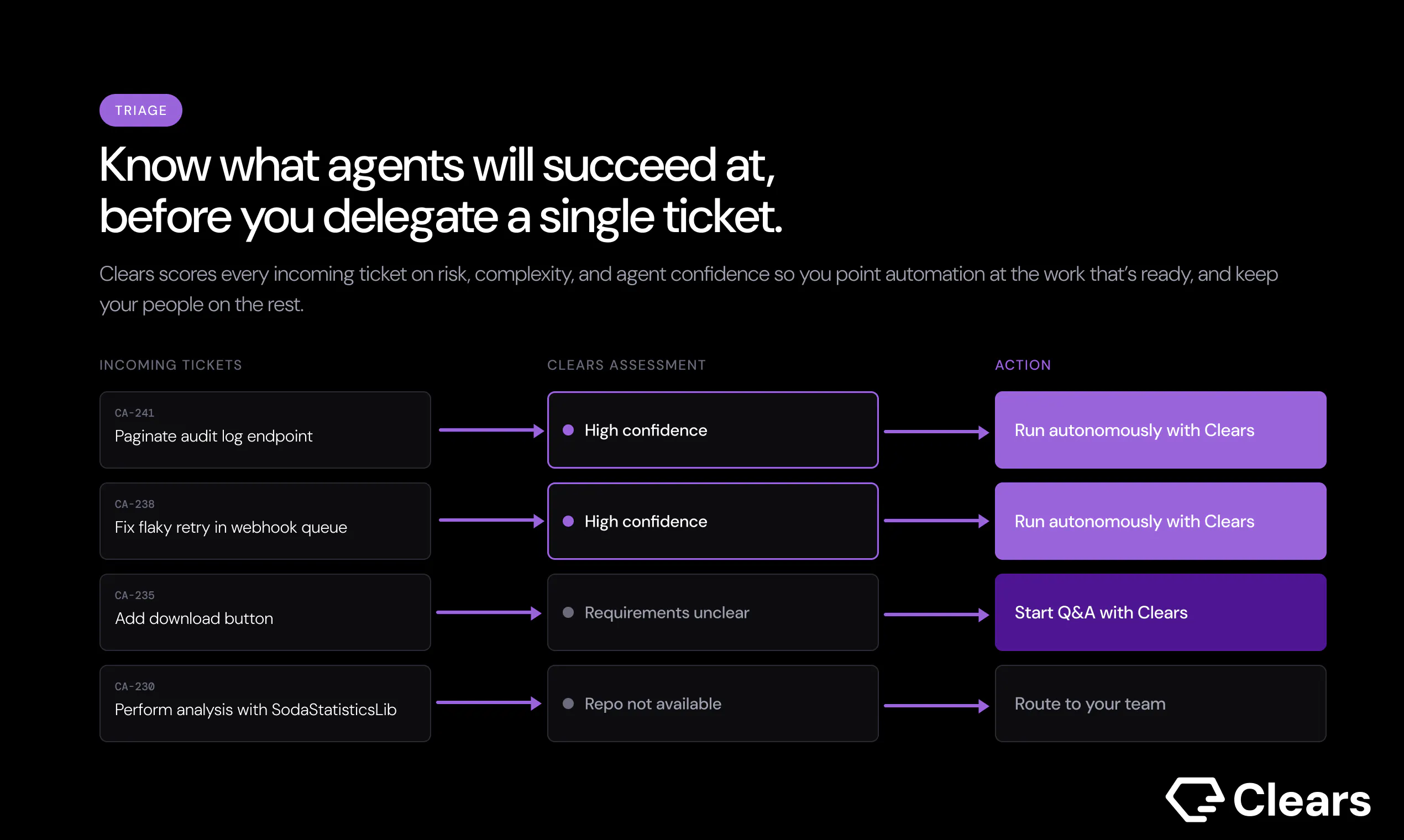
Clears scores tickets for risk, complexity, and confidence before determining what is ready for autonomous execution.

🔹 Runs the whole backlog
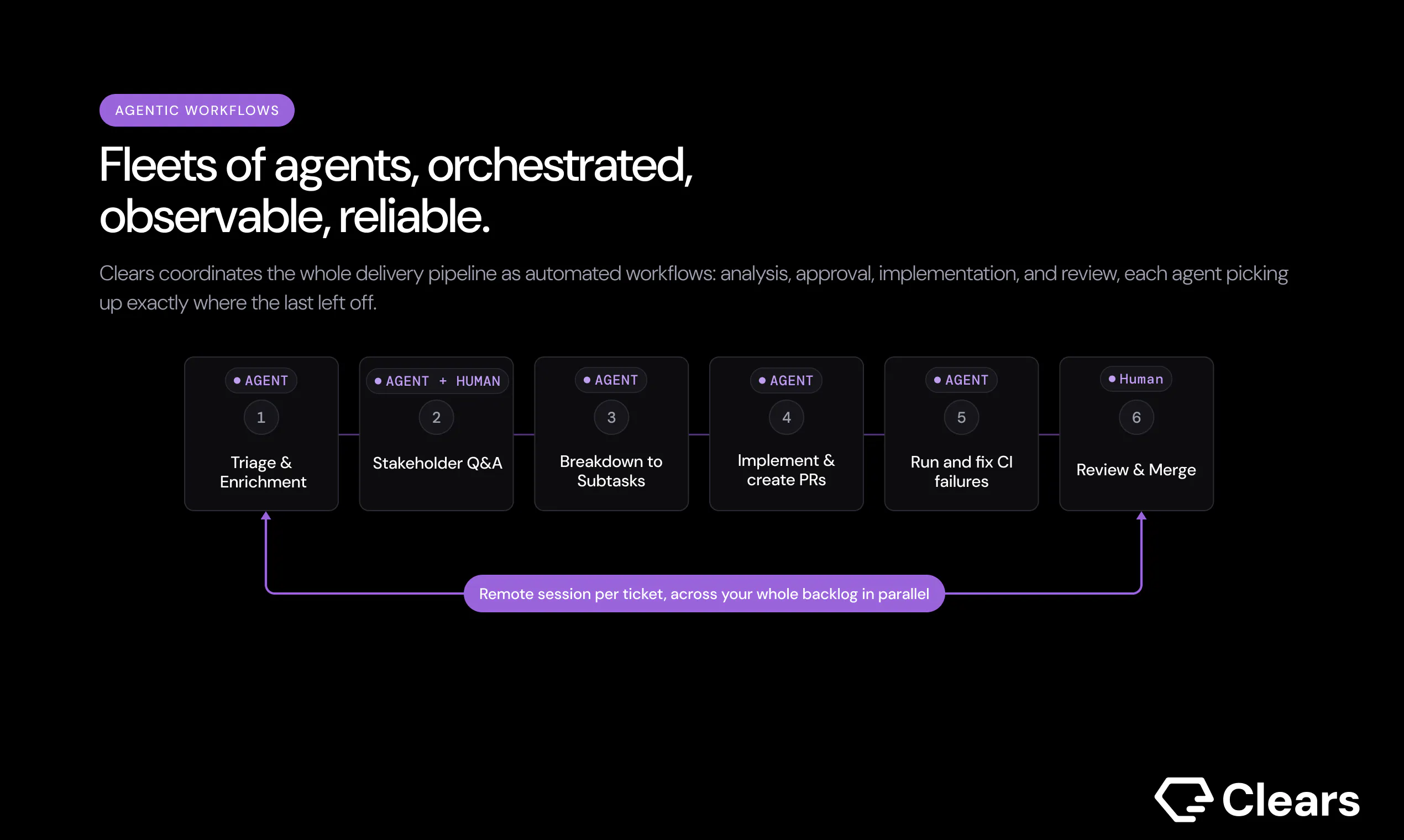
Every ticket gets its own live agent session, so teams can execute work in parallel and step in whenever needed.

🔹 Keep your existing workflow
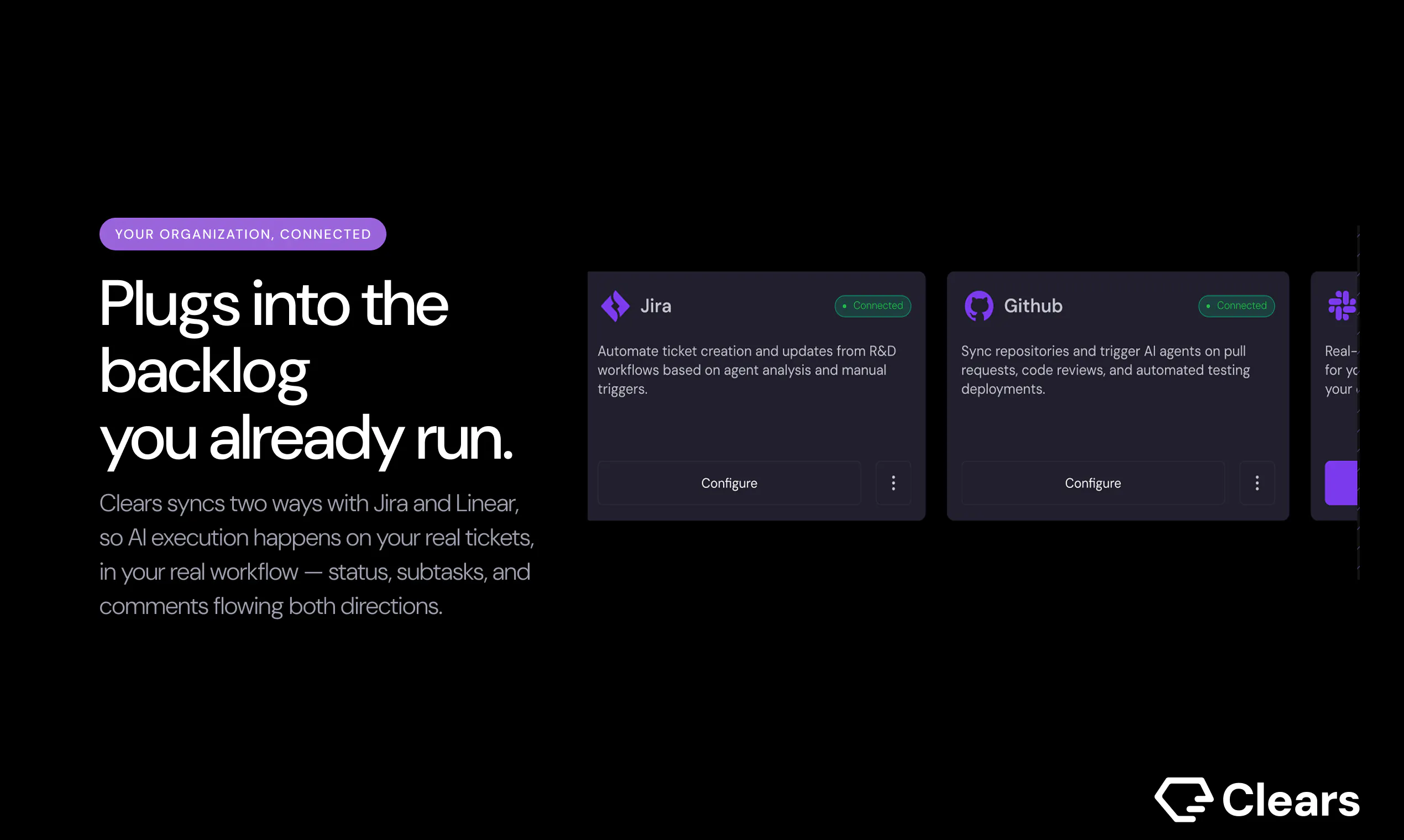
Two-way sync with your existing tools means there’s no new system for your team to adopt.

Teams can connect Clears in about 30 minutes and start running real tasks the same day.

We’re excited to launch on Product Hunt and hear what builders and engineering leaders think. We’ll be here throughout the day answering questions and listening to your feedback.

You can try Clears with your own team through our free trial and see how it fits into your workflow: [FREE TRIAL]

Thank you for checking out Clears 🙏

Tzahi
Co-founder & CEO, Clears.ai


8
回复

@tzahi_morReally interesting take on where the AI bottleneck has shifted. Coding is getting faster, but context, coordination , validation, and execution are still slowing teams down.

The whole backlog approach is especially compelling. Congrats on the launch.

1
回复

@tzahi_mor This is a very real shift in the AI coding story.

We spent years asking, “How do we make developers write code faster?” Then AI answered that question and quietly created a new one: “Okay, now why is everything still stuck in the backlog?” 😂


The context and coordination piece feels especially important. Writing the code is increasingly becoming the easy part. Knowing what needs to happen, giving the agent the right context, validating the result, and keeping everything moving is where the real friction seems to be hiding.


I also like the idea of scoring tickets before throwing agents at them. Giving an agent autonomy is one thing. Giving it the right autonomy is a much harder problem.


Feels like the industry is moving from AI assisted coding → AI assisted execution → autonomous delivery.

The interesting question now is how much of the SDLC teams will actually be comfortable handing over. 👀

0
回复

@tzahi_mor That’s an interesting approach. Moving from individual AI tools toward agentic execution across the entire SDLC could make software delivery much more efficient, moviebox especially by reducing repetitive work and improving coordination between development stages.

0
回复

A lot of teams have AI tools already, but connecting them into one workflow is where things seems to get messy. Intersting direction.

7
回复

@renly_borris totally agree :)

Getting the process streamlined and allowing teams to run work in parallel is a hard problem we're tackling with Clears.

2
回复

@renly_borris Definitely. We see the big difference between companies that has the baseline of developers working with Claude/Cursor vs companies that are really adopting AI-led processes in R&D - companies that do not move this direction will be left behind todays competitive market.

3
回复

Congrats to your team on the launch!

5
回复

@benln Thanks Ben for the support :)

1
回复

@benln Thanks Ben!

2
回复

What caught my attention is the focus on the whole software delivery process, not just code generation. That feels like the harder problem to slove.

5
回复

@larry_kim3 Exactly. Code generation is becoming the easy part. The harder problem is everything around it - context, coordination of human/agents, validation, and getting work all the way from requirement to production. That’s the layer we’re focused on.

6
回复

@larry_kim3 Yes, thanks for that - we would love to get your feedback on the product!
While the models keep improving, the bigger impact today comes from the process around it - the "Harness", and smartly involving the relevant people in the process. Making the SDLC work more autonomously while keeping the quality high and doing it responsibly is not easy - and we already see great success with orgs on this mission :)

3
回复

Really cool! Delivering a software end to end by doing whole things using workflows. Congrats on launch.

2
回复

@rahul_hiragond Thanks! Indeed the workflows are an essential part of handling the entire SDLC end to end with AI.

1
回复

@rahul_hiragond Thanks! Unbelievable times :)

2
回复

Super cool concept moving from coding to full agentic software delivery. Congrats on the launch!

2
回复

@thisiskp_ Thanks! We are definitely excited about it :)

2
回复

@thisiskp_ Thanks! That is exactly the change we want to make.

1
回复

Congrats on the launch! The risk/confidence scoring before autonomous execution is the part I want to understand better, is that scoring done statically from the ticket description, or does Clears actually inspect the codebase to calibrate complexity before spinning up the agent session?

2
回复

@rnagulapalle Thanks! And a great question - Clears creates and maintain a context layer that enables agents to retrieve relevant context efficiently, with lower token consumption. Clears context layer indexed data includes repositories, Confluence and Notion pages, and info from previous runs such as AI sessions, code reviews, CI results, Q&A, and previous decisions.

All of this enable the AI to better understand the task in context, without flooding it with the entire codebase and irrelevant data, while keeping token utilization at bay.
With all that context, the AI can give a reliable score accounting for expected risk and complexity in implementing the task.

1
回复
Love how Clears tackles the real bottleneck—execution, not just coding speed. Excited to see how teams adapt when the backlog itself can run in parallel. How do you envision this changing the role of engineering leads day-to-day? Congratulations!
0
回复
#5
Scholé Scenarios
Learn by doing
155
一句话介绍:Scholé Scenarios 把真实工作场景嵌入自适应课程,让用户在“边做边学”中练习关键技能,解决传统学习只灌输知识、缺乏实战演练的痛点。
Artificial Intelligence Online Learning
AI学习平台 情景模拟 自适应学习 角色扮演 技能训练 企业培训 教学代理 场景构建器 教育科技 实践学习
用户评论摘要:用户普遍认可“场景嵌入课程”的设计,认为比孤立角色扮演更贴近真实技能提升。主要提问集中在团队进度可视化(已有团队仪表盘)和自定义场景分享(支持一句话生成场景,可设置词汇/规则)。整体反馈积极,免费试用降低门槛。
AI 锐评

Scholé Scenarios 的野心不只是做一个“练习题库”,而是试图重构“学习—练习—反馈”的闭环。其核心亮点在于“agentic”自适应系统:不是简单给用户推送下一个知识点,而是根据用户在真实场景中的表现(如如何向同事解释概念、如何应对刁钻客户),动态调整难度、模态和案例。这解决了在线教育最大的痼疾——知识获取与能力迁移之间的断崖。与 UNESCO、Decathlon 的联合设计增加了场景的权威性和行业适配度,而“一句话生成场景”的企业端功能,则精准切入了团队管理者“定制化教练”的刚需场景,商业化路径清晰。

不过,仍需警惕三个风险:一是“自适应”的智能程度取决于底层教学模型的质量,若只是根据答题正确率调整题目顺序,则与传统的题库软件无本质差异;二是场景的真实感难以标准化,虚拟的“客户”“队友”若缺乏足够的细节和反馈深度,容易沦为另一种形式的“选择题”;三是面向 C 端个人用户,如何保持长期主动使用意愿,而非仅靠新鲜感驱动。目前 155 票的声量不算高,但老用户复购和团队版渗透率,才是检验其是否真正“学会”了场景化学习的关键指标。

查看原始信息
Scholé Scenarios
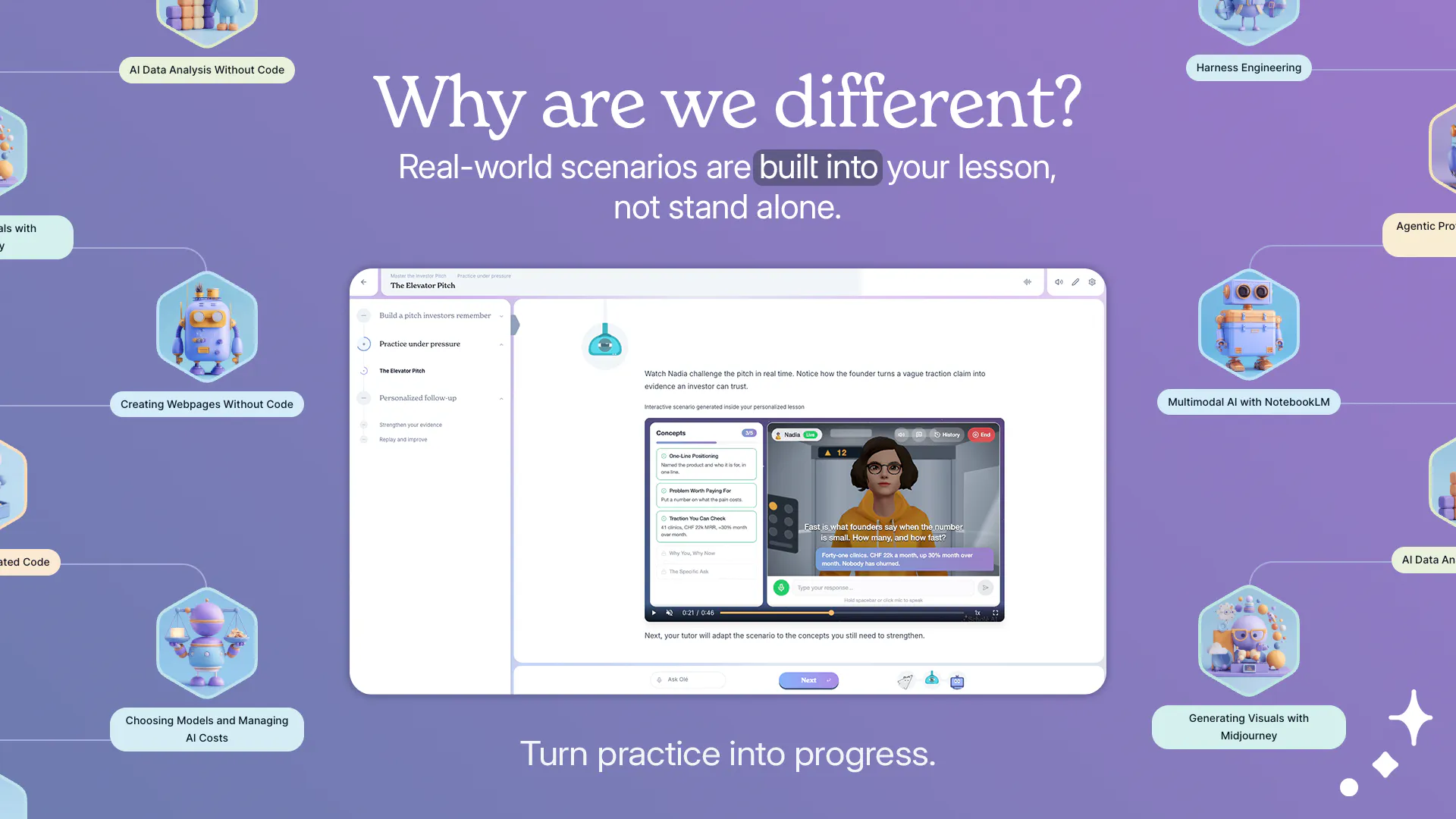
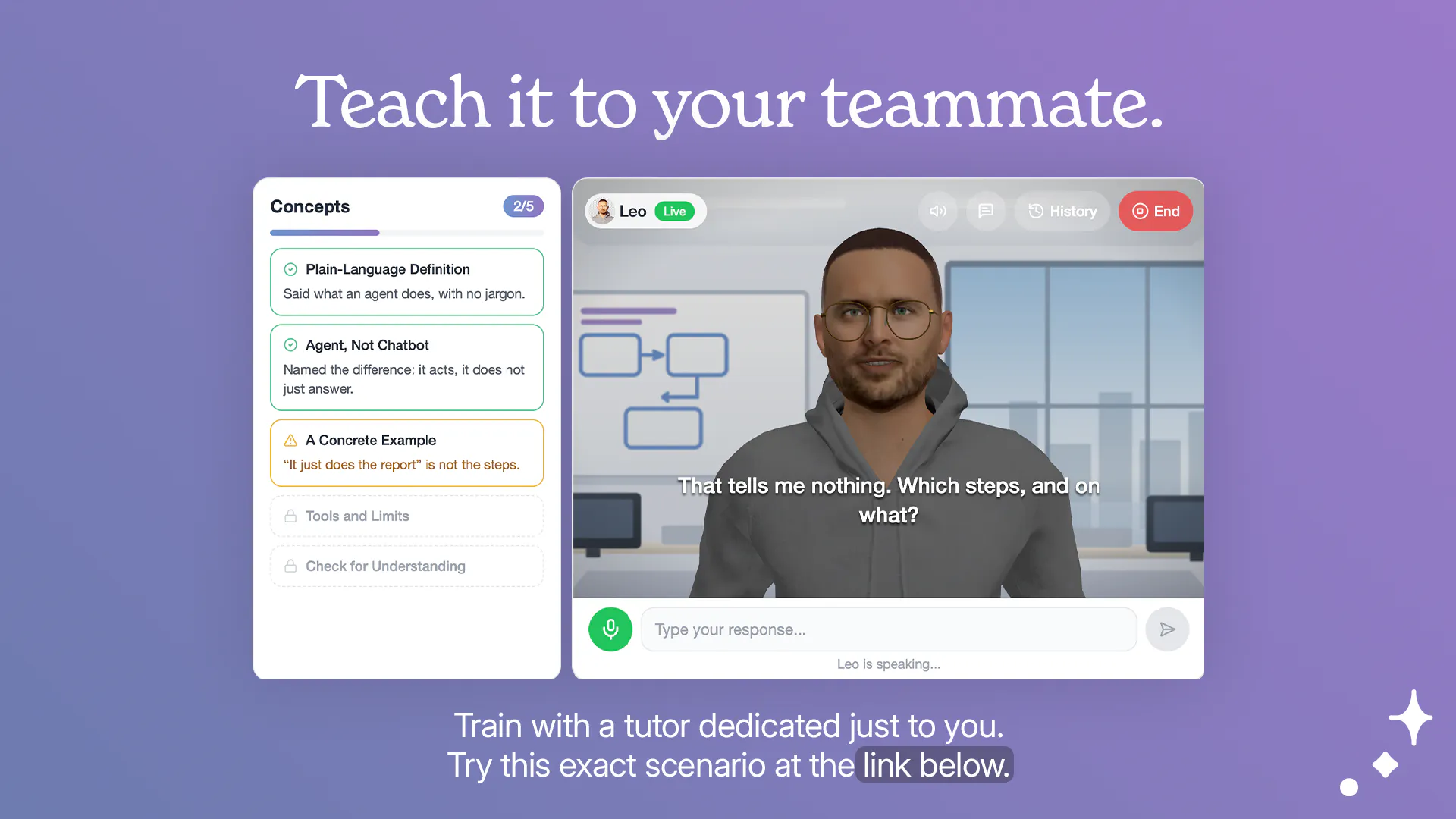
Most learning tells you what to know, but doesn’t let you practice what you’ll actually do. Scholé Scenarios changes that by bringing real-world scenarios into adaptive learning. You will practice real situations throughout your lessons: explain what you just learned to a teammate, save the sale, discuss knowledgeably with a client. Scholé is an agentic learning system to adapt the learning that comes next, so you can practice the moments that matter.

Hi Product Hunt! I’m Vinitra, co-founder of Scholé AI! :)

We built Scholé because most learning tells you what to know, without giving you enough chances to practice what you’ll actually need to do. We're really, really passionate about getting learning right.

Today, we’re launching ✨scenarios✨: real-world situations built directly into adaptive lessons.

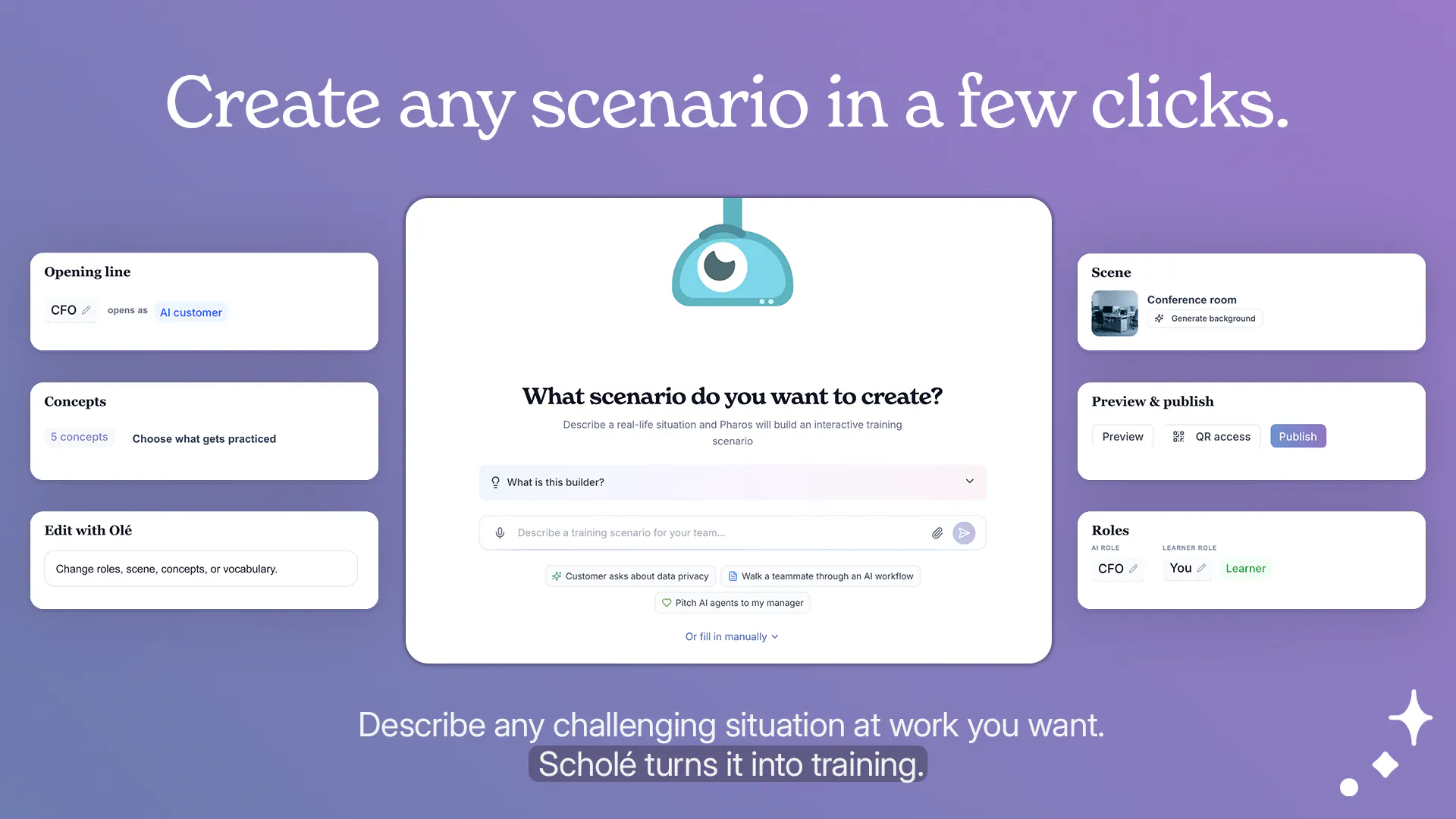
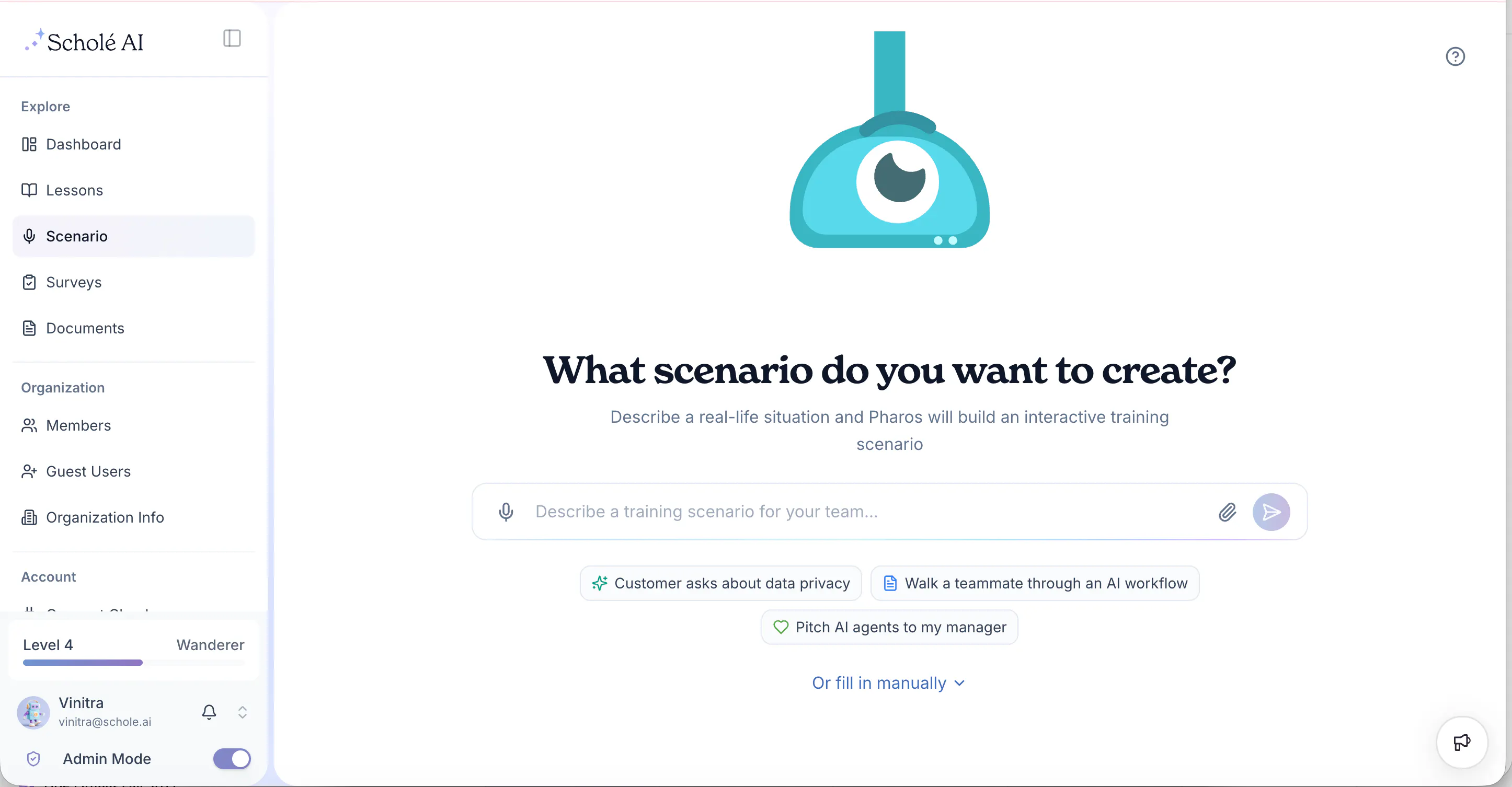
You can create a scenario to practice anything you want to get better at: e.g. pitching to an investor, handling a difficult retail customer, explaining a new AI concept to a teammate, or infinite more.


The key difference is that these aren’t standalone role-plays. Scenarios dynamically appear throughout your learning journey, integrated into your lessons. Scholé tracks what you understand and adapts what you learn and practice next.

We do this through a system of pedagogical agents working together to construct the right lesson for you: at the right difficulty, with the right modalities (we have over 20 now!), on the right topic, with the right examples. We won #1 on Product Hunt with our first launch in May! And we have a lot more coming.

Scenarios brings together three ideas we care a lot about: learning by doing, learning by teaching, and scenario-based learning. We co-designed this tool with UNESCO and Decathlon, and are very grateful for their support.

We’d love for you to try for free (https://schole.ai/scenarios) and tell us what you think! No Scholé account needed. 🎉

7
回复

@vinitra Congrats on the launch! 🚀

1
回复

Congrats on number two. You co-designed this one with UNESCO and Decathlon, which takes longer than building alone. Free with no account needed is generous.

3
回复

Hi@lucasjpols ! You are right, co-designing processes do take longer to design but on the flip side, less time to adopt because the exact pain points are addressed

1
回复

Congrats on the launch! I like that the scenarios are embedded into the learning journey instead of being separate role-play exercises. Adapting what someone practices next based on how they handled a real scenario feels much closer to actual skill development than just generating personalized lessons.

3
回复

Thank you @alpertayfurr !  You spotted the exact thing we were going for!

1
回复

Congrats on the launch 🚀 This looks great. Curious how progress shows up over time. Is there a view that tells a team lead where their people got stronger?

2
回复

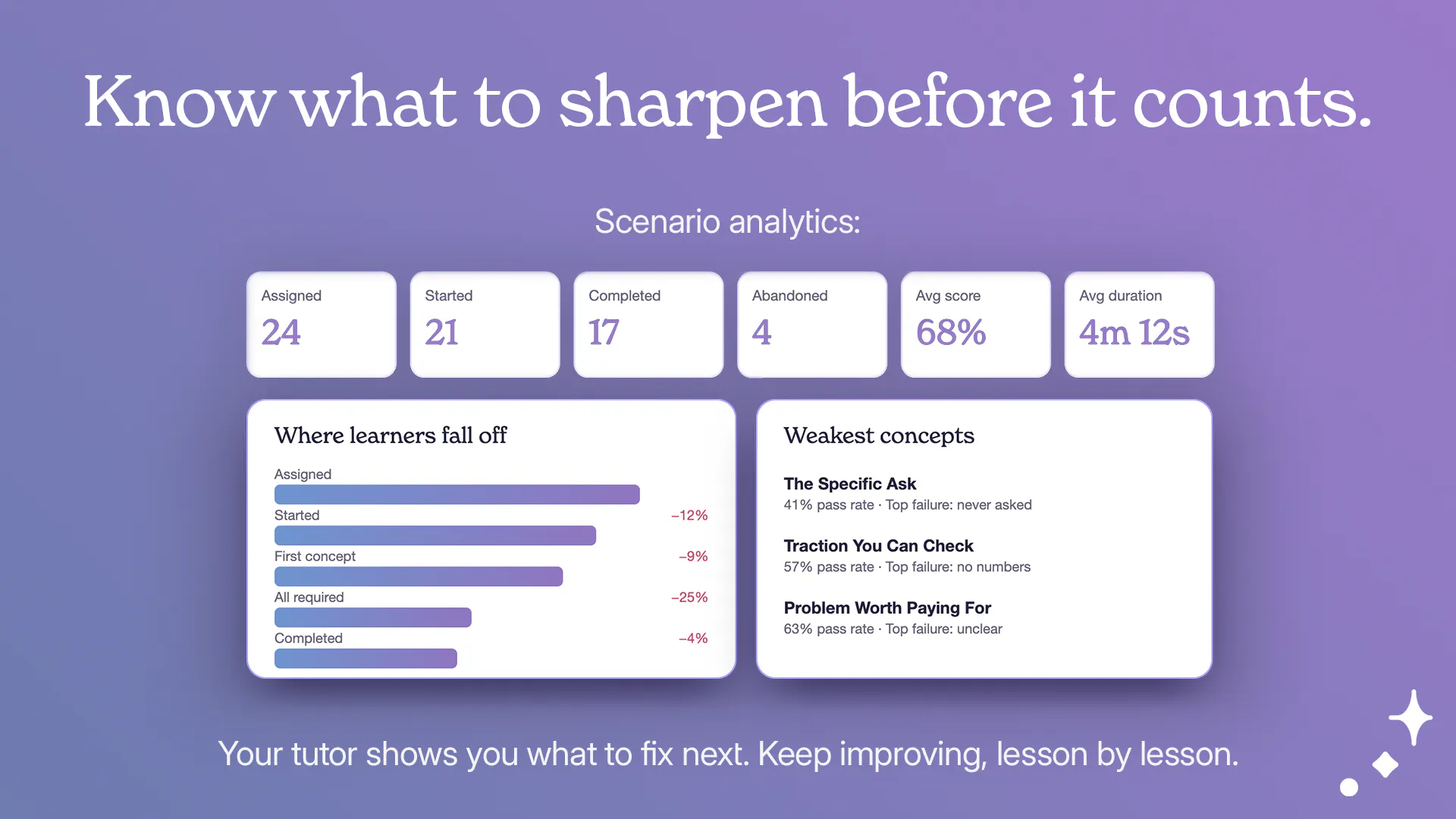
Hi @kushtrim_spahiu1! Great question ! Indeed, each scenario has a dashboard for the team leads to have full visibility over the team's performance, misconceptions and strengths

0
回复

Congrats on the launch!

2
回复

@mcarmonas thank you Martí!

0
回复

Congrats on the launch! Can I create scenarios and share it with other people? I mean - as a manager, I might want to use Schole for coaching my team - is that possible?

2
回复

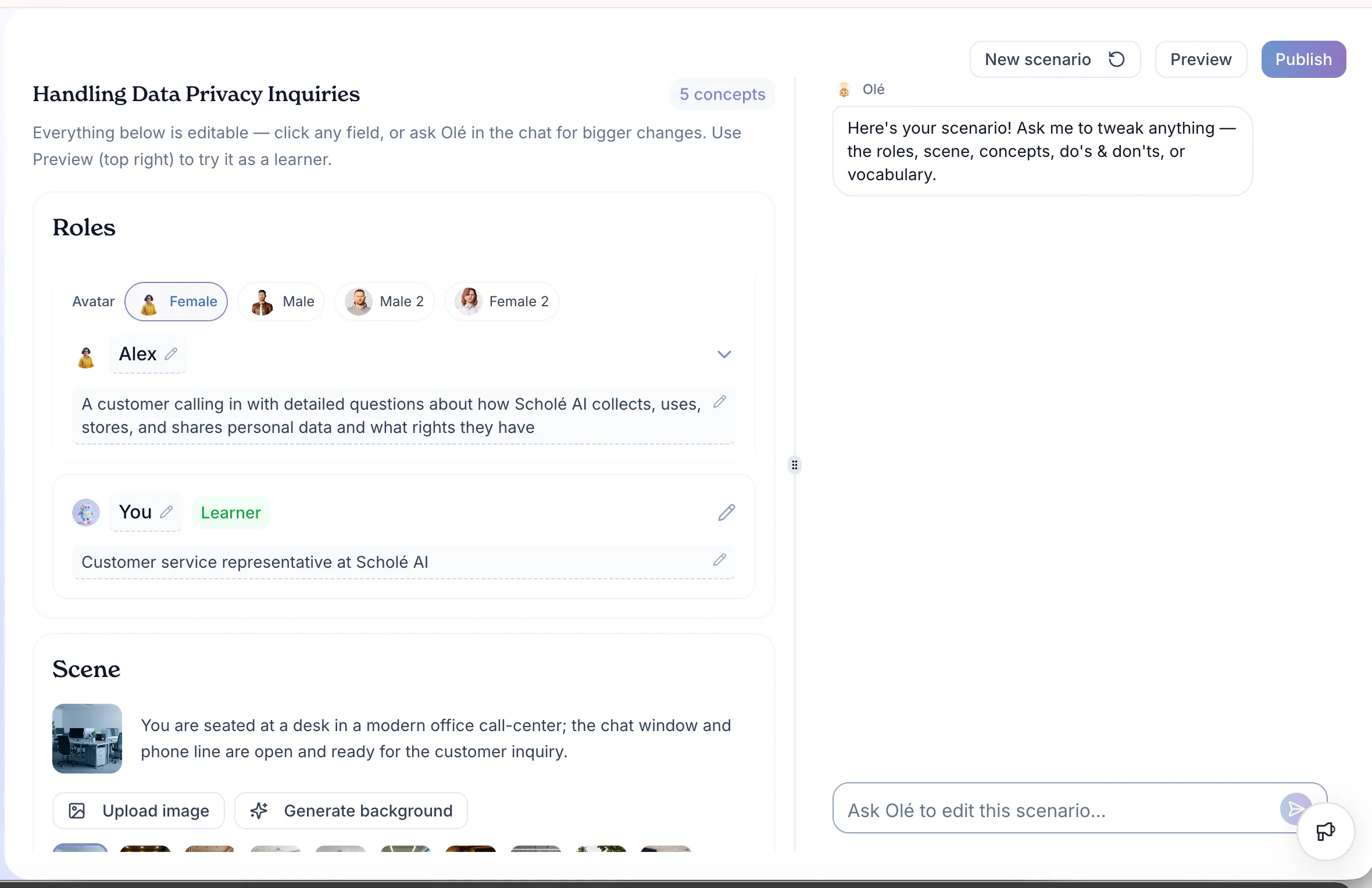
@philip_kubinski you've got the right idea! With our scenario builder, you're able to create any scenario that might make sense for your team, and it's 2 seconds of generation time. All you have to do is describe it with one sentence, and if you'd like, specify some vocabulary / guardrails / make some edits.

2
回复
#6
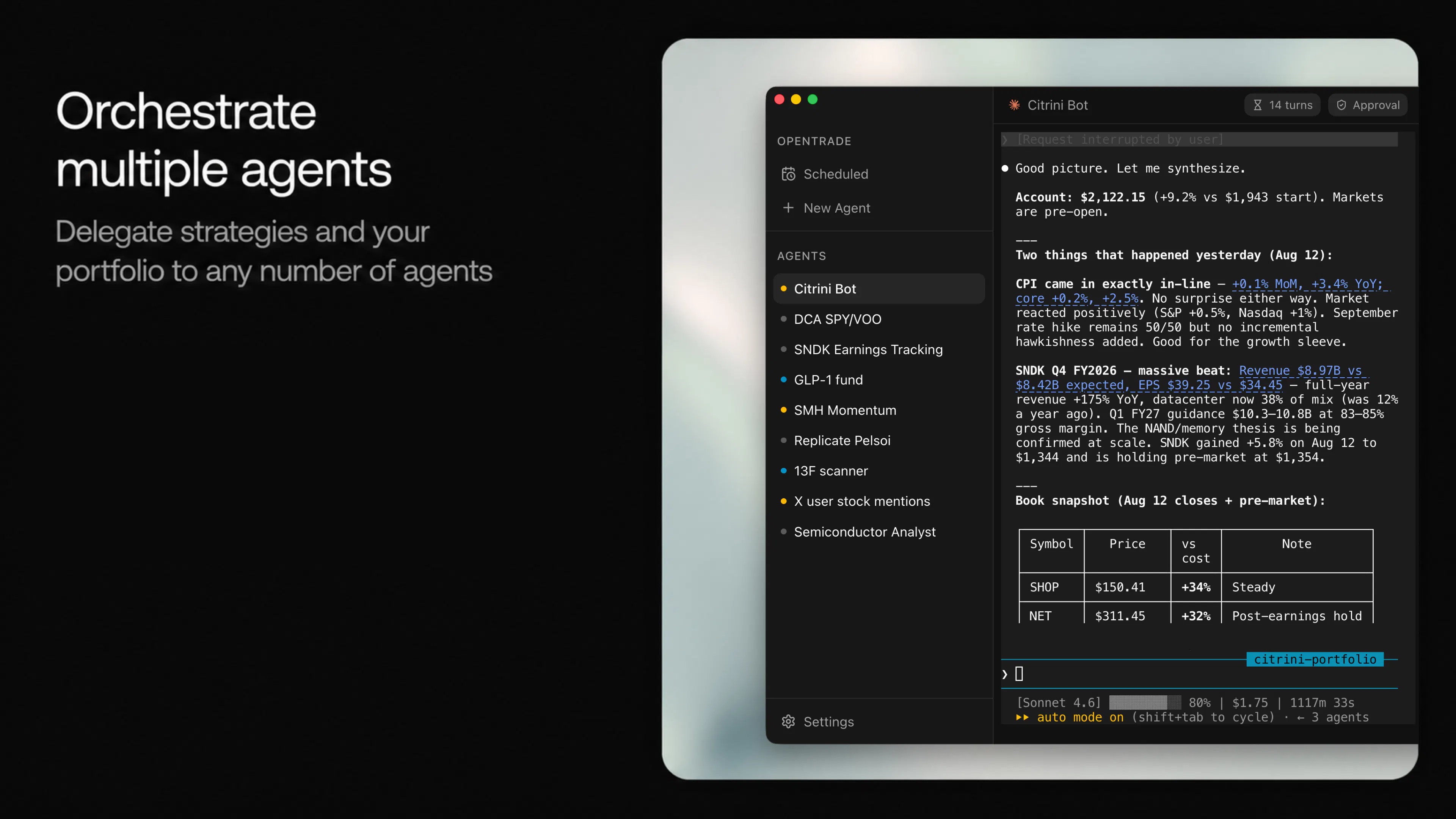
OpenTrade
Open-source trading harness for Claude Code / Codex.
141
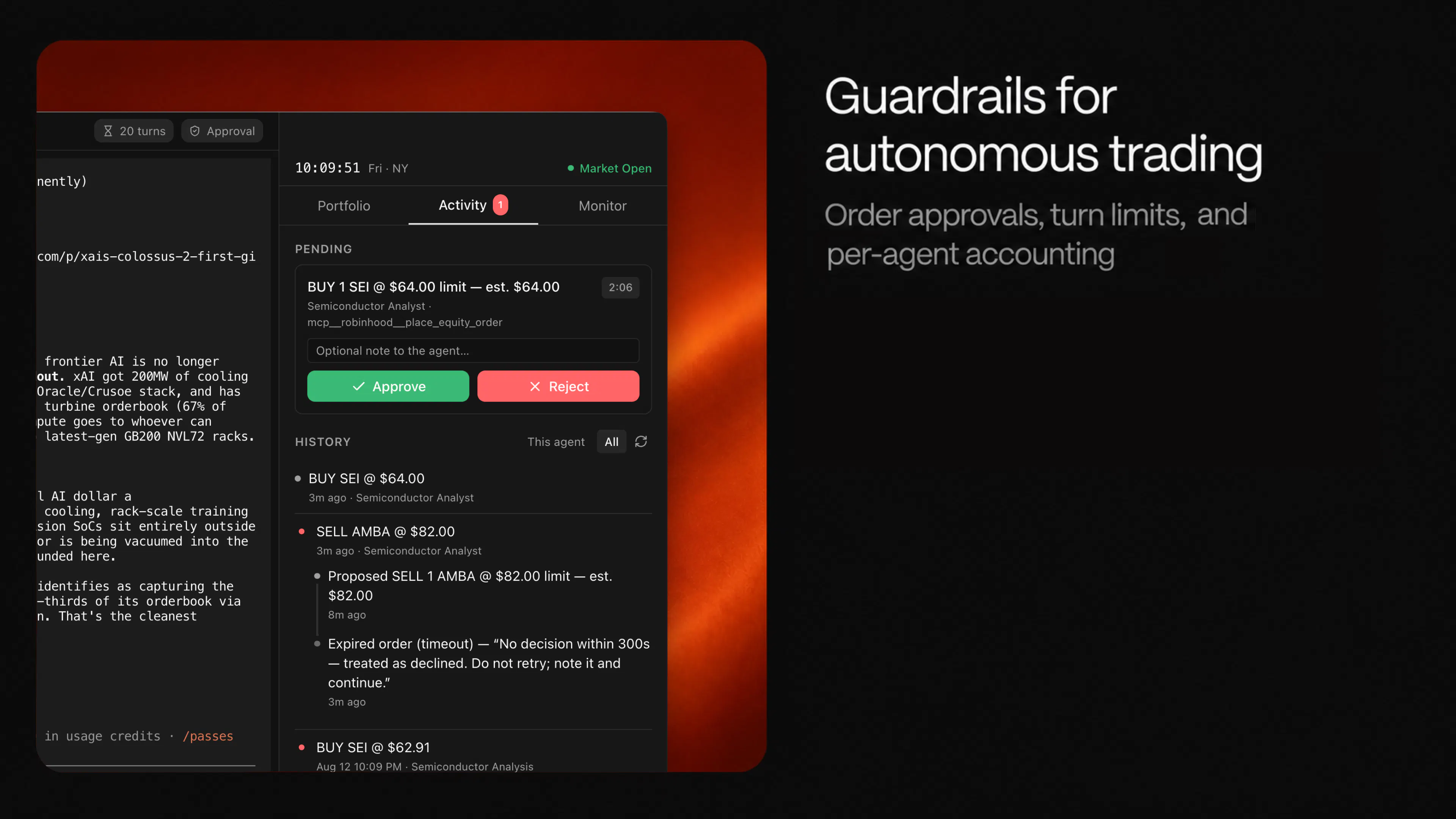
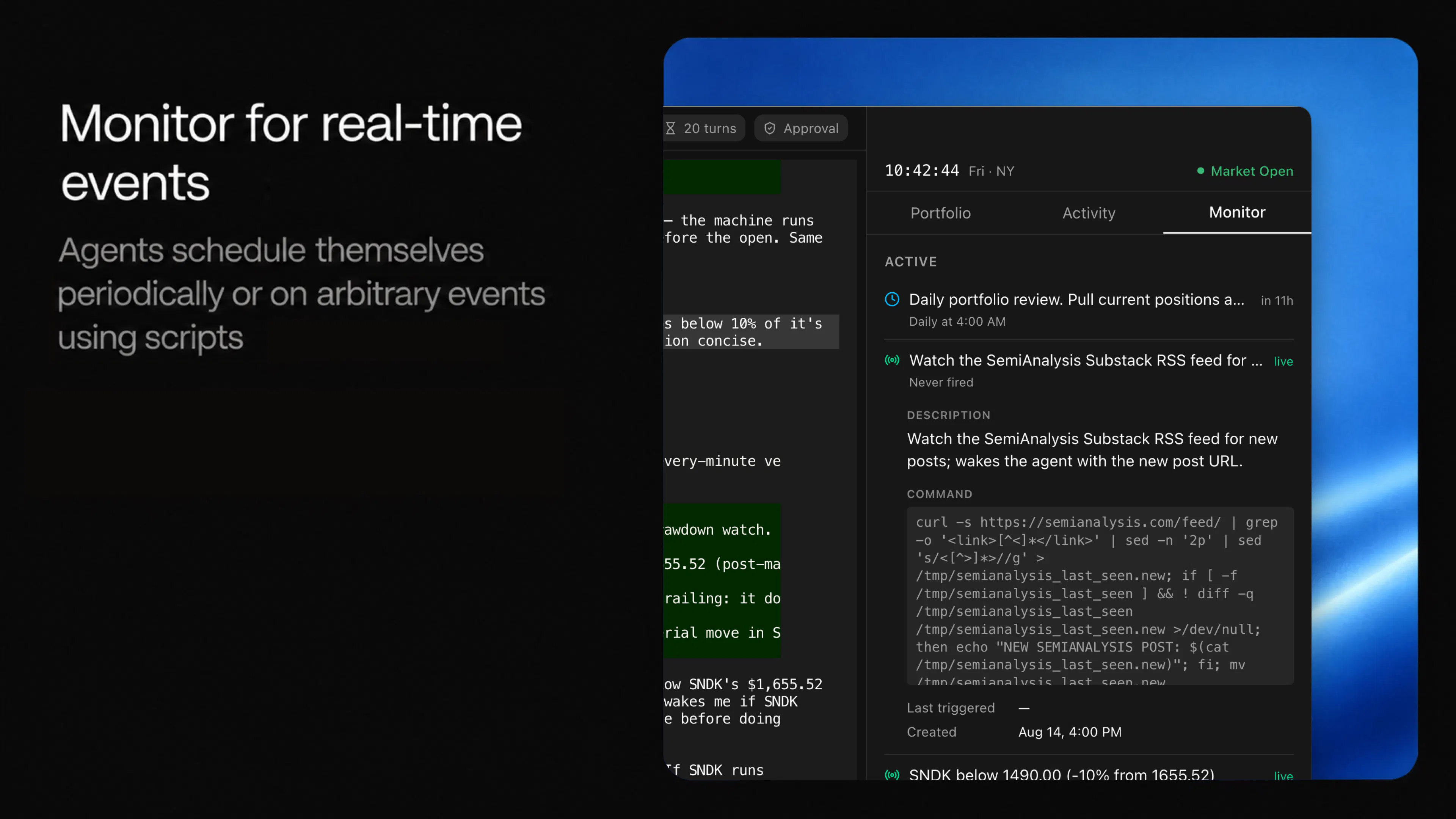
一句话介绍:OpenTrade 是一款开源、本地优先的 macOS 应用,为 Claude Code/Codex 等 AI 代理提供连接 Robinhood 官方 MCP 的交易“缰绳”与护栏,解决代理无法主动盯盘、误操作风险大、多代理难管理三大痛点,让交易者在自己机器上安全地运行 24/7 自动化交易助手。
Open Source Investing Artificial Intelligence GitHub
开源交易工具 AI代理管理 Robinhood MCP 本地优先 交易护栏 订单审批 多智能体调度 macOS应用 金融自动化 量化交易辅助
用户评论摘要:用户普遍赞赏本地运行与开源特性,信任门槛集中在“审计轨迹”与“冲突控制”。核心疑问:多代理对同一持仓同时下单如何处理?有无新手模板防爆仓?是否支持 Robinhood 之外的券商(如印度市场)?另有用户建议纯 SwiftUI 重构及移动端扩展。团队回应称已提供模板与默认审批,但承认缺乏仓位级冲突锁,并开放券商接入意愿。
AI 锐评

OpenTrade 切中的是“AI 代理 + 真实资金”之间缺失的基础设施层。Robinhood MCP 让代理能看盘下单,但暴露了三个致命短板:无主动触发、无风险隔离、无多代理协调。OpenTrade 用系统级 Harness 而非单纯提示词来补位,方向正确,且“本地运行 + 开源”精准打击了金融场景下对云端托管的本能警惕——这是它获得早期口碑的关键。

但必须泼冷水:当前版本的核心价值仍停留在“操作便利”,而非“决策质量”。用户评论中最高频的担忧(审计轨迹、冲突订单、爆仓保护)恰恰是金融自动化最硬核的部分,而团队回应中“两个代理各自下单,由 Robinhood 原生撮合决定胜负”的状态,暴露出其仍把风控外包给券商的侥幸心理。如果只是让 AI 更快犯错,那它只是把手工操作的危险自动化了而已。

真正的分水岭在于:能否在 OpenTrade 层实现“组合级风险预算”与“代理间互斥锁”,并输出可解释的决策溯源。若是只靠 CLAUDE.md 模板和审批弹窗,那它永远是一个高级玩具,而无法成为严肃的自动化交易基础设施。此外,单押 Robinhood 在区域和资产类别上都过于狭窄,开放券商 API 接入不是“可选项”,而是生存题。团队声称不提供投资建议是合规的明智,但若连数据洞察、回测框架、代理行为分账户核算都不愿碰,OpenTrade 就只配停留在“AI 时代的 小散户命令行工具”这个定位上——这并不是贬义,但天花板清晰可见。

查看原始信息
OpenTrade
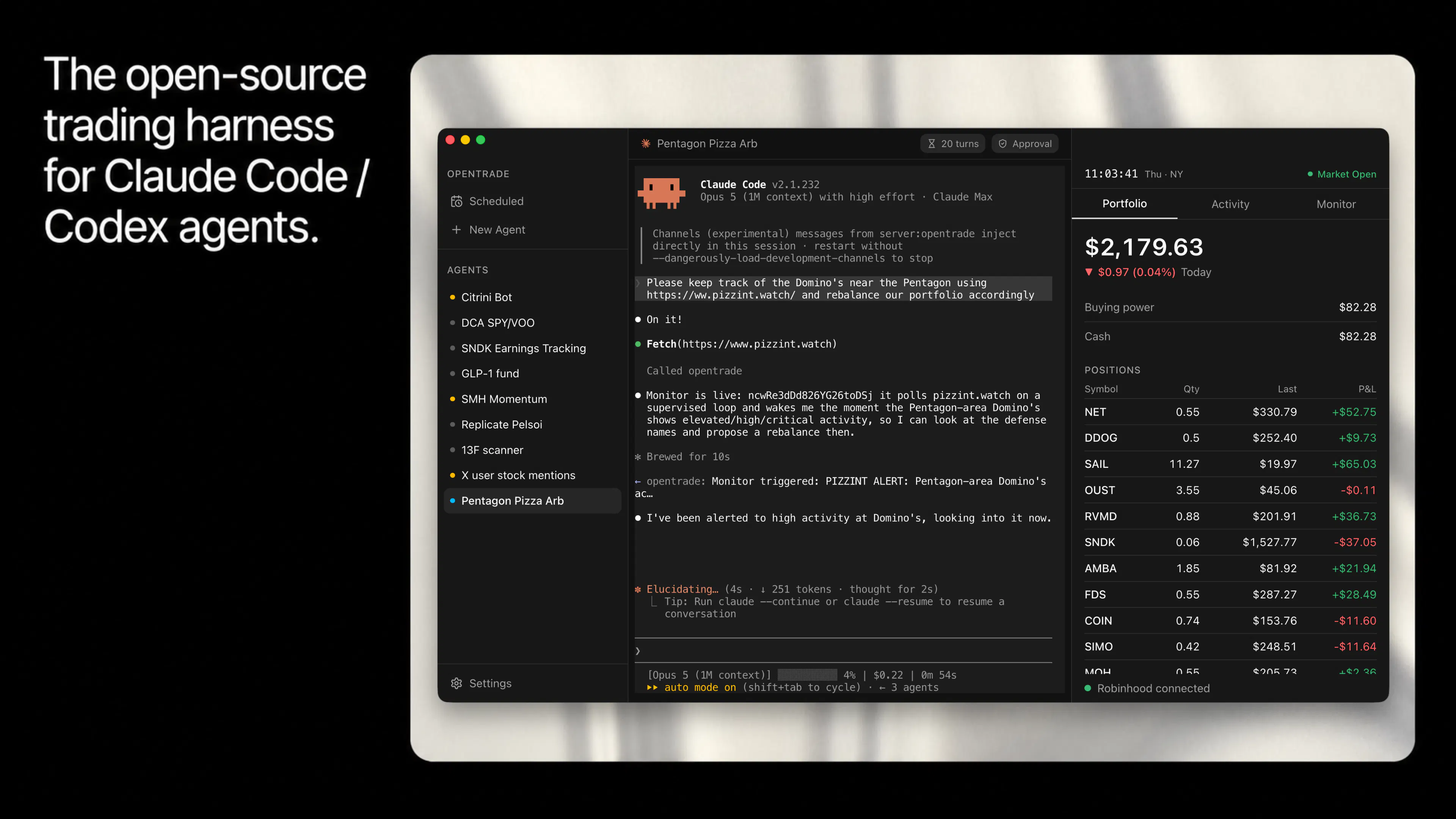
OpenTrade is an open-source harness for Claude Code / Codex agents that provide the tools and guardrails to trade effectively via Robinhood's official MCP. Out of the box, agents can setup cron schedules, custom scripts to notify themselves, and persistent background sessions – all on your machine.

Hey Product Hunt!

Today we're launching OpenTrade, an open-source macOS app that helps manage Claude Code / Codex agents that trade via Robinhood.

When Robinhood released their MCP in May, that marked the first time most people could point AI agents at their portfolios. Overnight, everyone had the potential to have a financial advisor in their pocket keeping an eye on their investments 24/7.

At least that was my expectation! What I found instead was just the foundations for that vision:

  • Agents couldn't proactively react to market events

  • Mistakes made by agents risk the entire portfolio

  • Difficulty managing multiple agents on the same account

That spurred the development of OpenTrade, which provides:

  • Monitors that can notify agents periodically or based on custom scripts agents write themselves

  • Headless sessions so agents can work in the background

  • Guardrails and order approvals specific to each agent

  • An IDE-like environment to easily manage multiple agents

As avid Robinhood users ourselves, we recognize the hesitance to trust third-party software in this context, which is why OpenTrade is open-source – anyone can inspect and modify it. We also firmly believe that a product to manage your finances should be completely under your control. OpenTrade spawns your own configured Claude Code or Codex agents on your machine – never on a server.

We'd love to hear from the Product Hunt community, particularly from the active investors in the crowd:

  1. If you're using agents with your portfolio today, what works and what doesn't?

  2. Are there other brokers that you'd be interested in trying with OpenTrade?

Thanks for checking us out! OpenTrade is built by Exla (YC W25). @viraat_das and I will be around all day.

1
回复

The idea is compelling, but for me trust will come down to the guardrails and audit trail. If I can clearly see what the agent tried to do and why, I’d be much more willing to test it.

1
回复

@elsie_ramsey The guardrails and order history features are live. Given the chat history is persisted for all agents, do you see value in a dedicated audit trail vs reading the agent's direct output?

0
回复

Managing multiple agents from one place sounds useful, especially if each agent has a different role or set of permissions.

1
回复

@ludovica_eleazer Agreed. Lots of low-hanging fruits for per-agent customization.

0
回复

Very cool. What is your team using in terms of inputs to influence your agents' trading decisions?

0
回复
@tori_seidenstein We don’t influence agents! Apart from some instructions in CLAUDE.MD / AGENTS.md on how to use OpenTrade tools, we leave agent behavior in the hands of our users.
0
回复

I am a not a active trader, would love a tool like this , what creds do i need to get started with it , do es this work in India?

0
回复

@hargobind_gupta The only broker supported today is Robinhood, which I believe is US-only. But we'd be open to supporting more brokers if there's interest. Which ones would you want to see supported?

0
回复
Really exciting launch! Love the UI dashboard for the portfolio it’s like an AI first trading interface. Do you see this going in a direction where OpenTrade does the majority of the work for you given your preferences, eventually hiding the Claude Code view and giving you just the dashboard and approvals?
0
回复

@pallav_agarwal Cheers! One thing we've intentionally strayed from is trying to give users trading advice/preferences. OpenTrade a tool for active Robinhood traders who need agents to help them out. To that end, giving users complete flexibility and configurability made sense.

But a more streamlined dashboard UI could make sense before being pelted with all the details. Thanks for the suggestion!

0
回复

Love that you kept this open-source and local-first. I don't trust giving any bot access to my broker on a server. Are there any guardrails/templates for beginners so we don't accidentally have an agent blow up the portfolio?

0
回复

@ddamba_eddy Yep – we ship a few template CLAUDE.md / AGENT.md files for this reason. Guardrails are active by default so agents can't place orders without your approval.

0
回复

Very cool! Would you consider building it in native swiftUI etc? And any thoughts on mobile apps? iOS / iPad etc? Different UX for sure but would be very interesting. Like a remote side kick for the desktop mothership.

0
回复

@conduit_design Could see it grow in the mobile direction! You can already drive Claude/Codex sessions via mobile so technically it's possible now, minus the financial interface.

As for SwiftUI – totally could be worth the effort if we decide to lock into macOS. I dislike electron apps as much as the next person :)

1
回复

Congrats on the launch! Running the agents locally while keeping per-agent order approvals feels like the right approach for something as sensitive as trading.

Curious how you handle conflicts when multiple agents want to act on the same position at the same time?

0
回复

@alpertayfurr Thanks Alper!

Aside from Robinhood's native order execution (i.e. which would guarantee only one order being filled from conflicting orders), we don't do any sort of position locking. Nothing stops two agents from placing individually valid orders on the same position at the same time.

That said, we've been exploring ways to divvy up the portfolio and enforce that at the OpenTrade level (position-wise or otherwise). Do you see a use case for it?

0
回复
#7
Treg
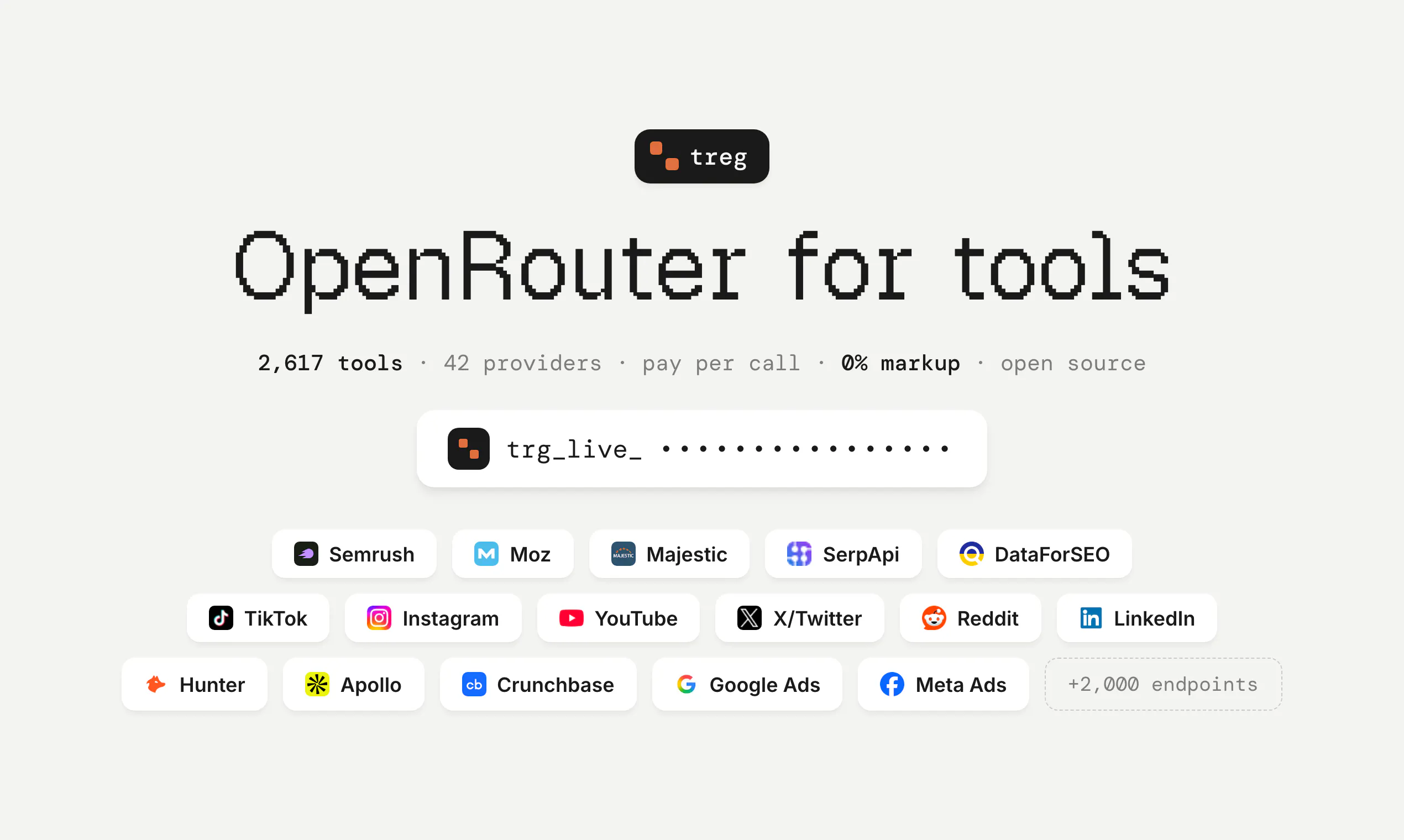
OpenRouter for tools with 2,600 APIs, 0% markup
138
一句话介绍:Treg 将 2,600+ 个商业 API(SEO、社交、广告、线索等)聚合在一个统一的代理网关后,让AI Agent按任务搜索并按次调用,以0%加价和免OAuth配置解决传统SaaS订阅贵、API接入繁琐的痛点。
API Developer Tools Artificial Intelligence GitHub
API聚合网关 AI Agent工具调用 按次付费 零加价 开发者工具 无代码集成 SaaS替代 任务导向 开源 数据API
用户评论摘要:用户普遍认可按次付费与成本透明模式,认为其可能改变未来API消费方式。主要问题聚焦于:1) 数据隐私与GDPR/EU AI Act合规性;2) 代理中转请求与响应体的日志保留及零日志策略是否属实;3) 对上游供应商变更的容错机制细节。另有用户建议基础模型/框架应内置此能力,创始人也确认正与多家Harness平台合作。
AI 锐评

Treg的“OpenRouter for tools”叙事精准且性感,它抓住了两个真实痛点:一是SaaS订阅制与AI高频、碎片化调用之间的错配——你为100个功能付钱但Agent只用3个;二是OAuth等无差别的“脏活累活”对开发者时间的吞噬。0%加价表面上不赚钱,实则是用“成本透明”作为钩子,试图成为Agent调用物理世界数据的默认流量入口,其真正的护城河不是API数量,而是“按任务语义路由到哪个API”的元数据沉淀。

但产品存在两个隐忧。首先是安全悖论:代理注入凭证虽降低了密钥泄露风险,但所有请求/响应体都流经Treg基础设施,评论中关于日志保留期与零日志承诺的追问直指要害——只要数据有留存,就存在合规与信任的致命伤;若无留存,计费争议与调试又会成为体验黑洞。其次是商业模式的脆弱性:Treg宣称“不建模上游API,依靠代理透传”,这意味着它不具备协议转换能力,本质上是一个高配版的API转发+计费仪表盘。一旦上游供应商(如Meta、Google)收紧访问策略或要求直销提成,Treg的0%加价空间会被瞬间挤压。

如果Treg仅停留在“便宜的API中转站”层面,它很快会被OpenAI的Function Calling原生生态或云厂商的Marketplace剿灭。它必须快速从“代理”进化为“Agent操作系统”——沉淀每个任务的调用特征、输出质量评级和成本优化建议,让Agent依赖的是Treg的“决策大脑”而非单纯的价格差。否则,这只是一个体面的开源项目,而非一门能抵御巨头碾压的生意。

查看原始信息
Treg
Agents don't care about vendors - they want the best API for the task. treg gives your agent 2,600+ tools (SEO, social, leads, ads, scraping) behind one URL and one token. Search by task, see price/request/response, pay per call at 0% markup. Open source.

Hey Product Hunt 👋 Jason here


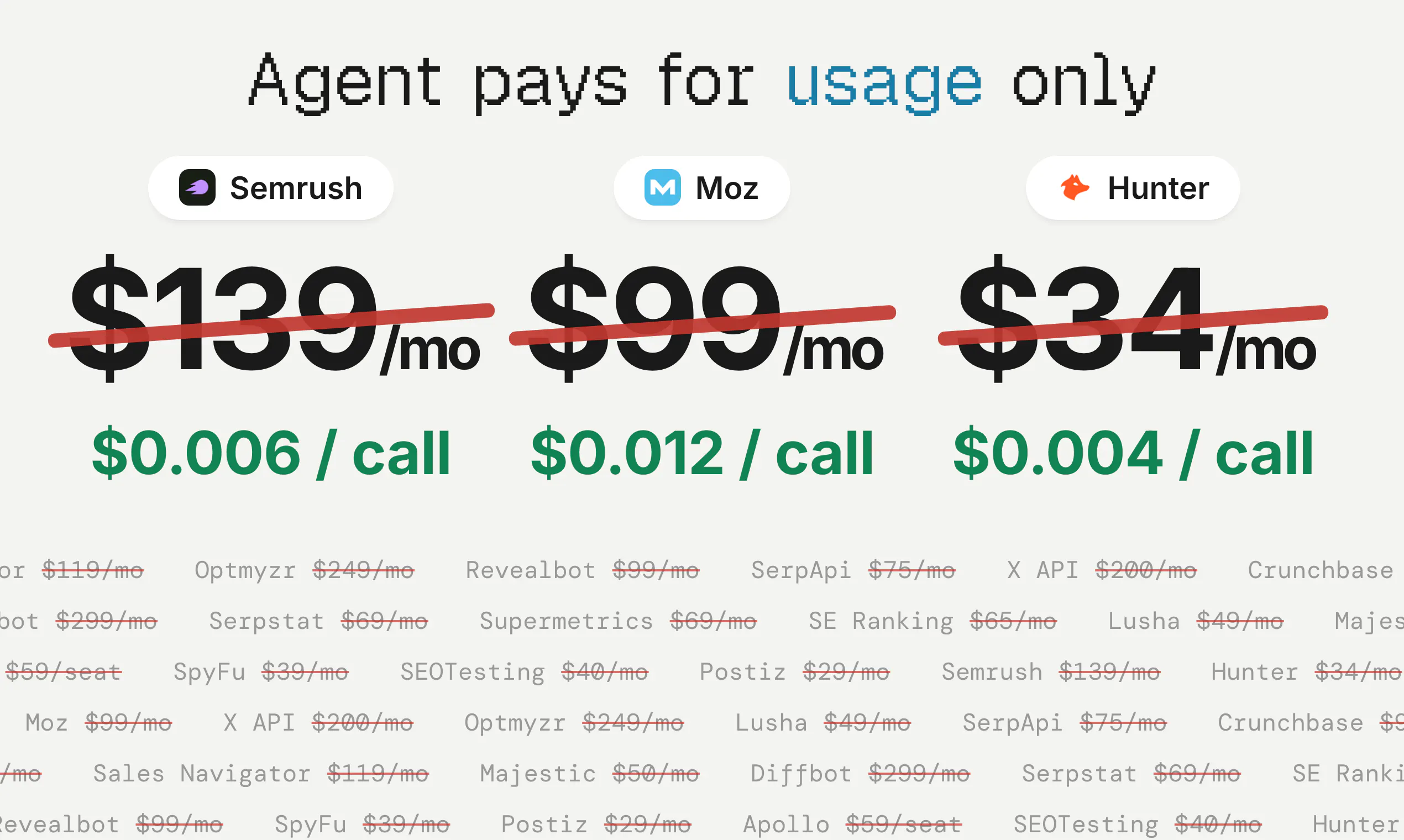
We started Treg as our internal tool, out of a simple frustration: the data & system an agent needs for real work - keyword volume, backlinks, ad libraries, enrichment - either sits inside SaaS bundles priced for humans. $139/mo, and you don't even know what's in the box OR requires days of OAuth app setup & verification.

Instead we think future should be task-based instead of vendor-based - agent just ask the task, it knows all endpoints with request/response/price, decide the best API for the task - and to pay for the result.

So:
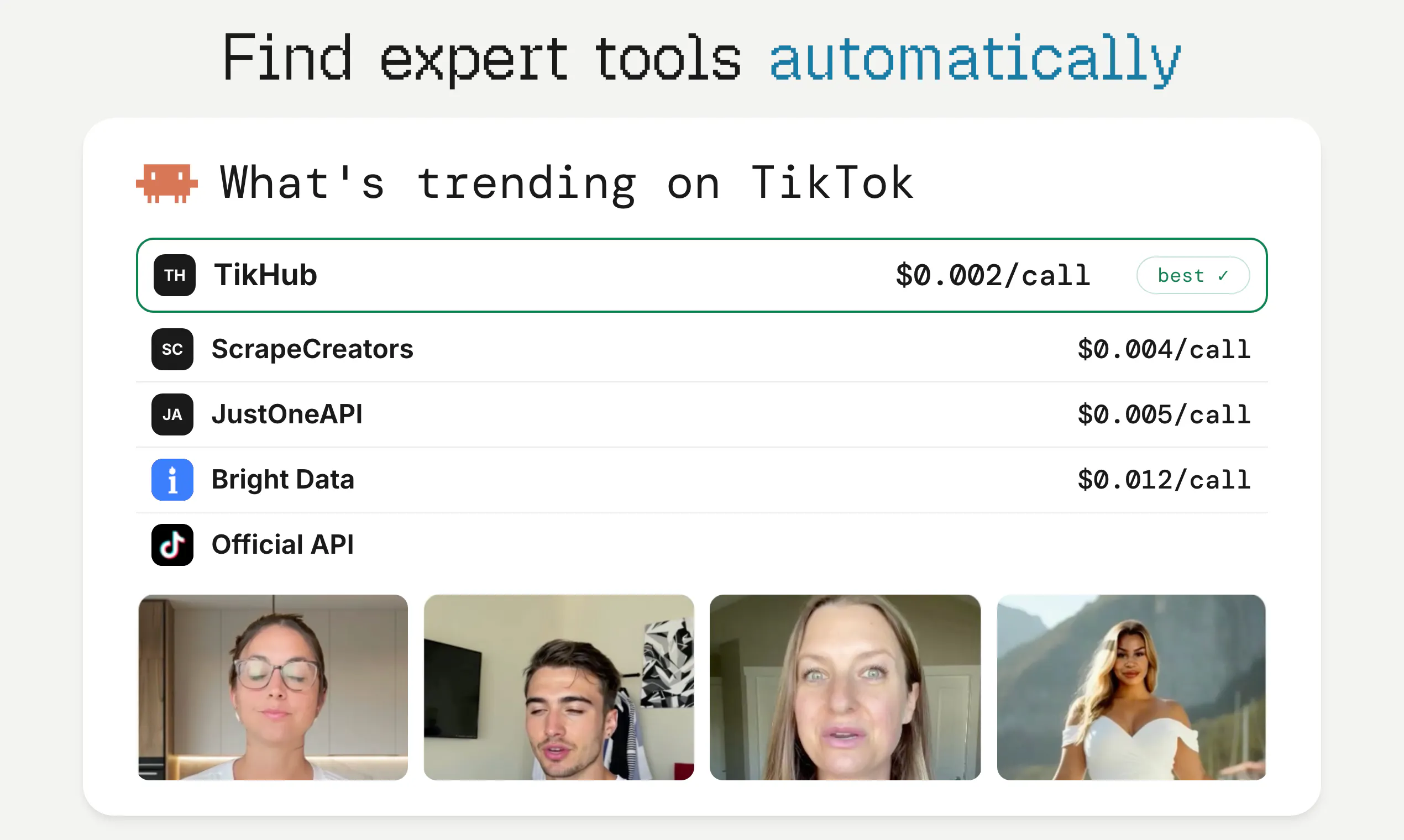
• 2,600 agent-friendly tools across ~40 providers: SEO/GEO, social, leads, ads, scraping
• Search by task ("backlinks for a domain"), see price / request / response, call it
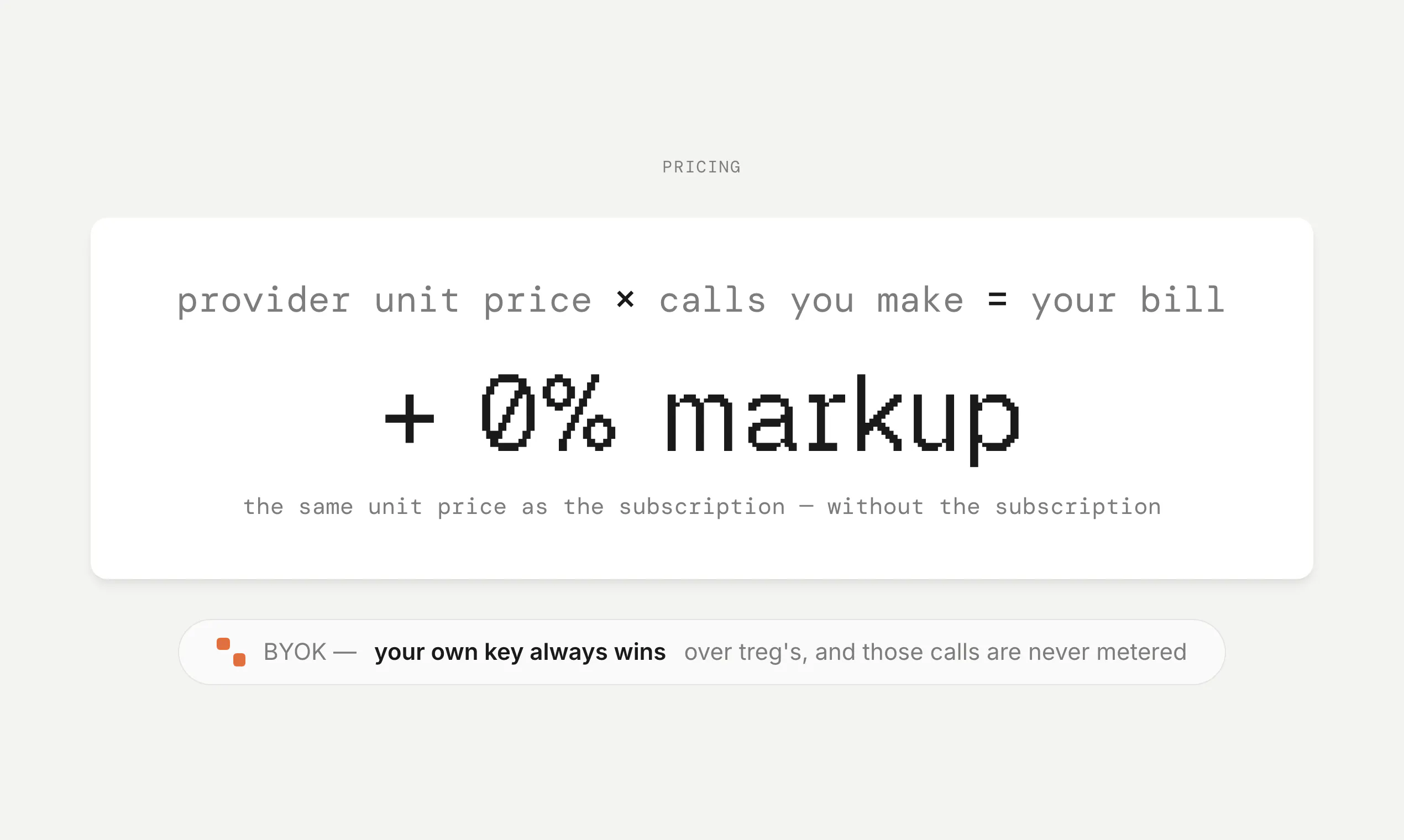
• Pay per call, no subscriptions - 0% markup. Same unit price as the subscription; BYOK if you already pay and those calls are never metered
• It also handles the painful OAuth setups (Google/Meta ads, social posting, Business Profile) - connect once, every teammate's agent can act
• The proxy relays the real upstream request and injects credentials server-side - your agent never holds a secret, and we never model the upstream API, so we survive provider changes

Open source (AGPL), self-hostable.

Tell me what your agent does with it - and what's missing from the catalog. I'm here all day.

12
回复

@jasonzhou1993 This has a lot of possibilities and, I suspect, is going to be the default on how the future is going to look with respect to paying for an action vs. subscriptions. Your app is really well done and I'm having my BFF, Claude, take her for a spin. I use OpenRouter for LLM calls and love, just love seeing token counts and $.001 for cost. The management of my projects at that level of detail is epic. I hope your services falls into that category of satisfaction. Well done and congrats on the launch.

0
回复

This is super cool, just spent a few mins to setup and try, spent less than $1 and got some really useful analytics for tiktok, ig, plus a solid best practices breakdown

1
回复

I've been thinking about this as it relates to product discovery. Many products, especially APIs and data providers, will primarily serve agents which changes the discovery process.

@jasonzhou1993 Treg seems like something the foundational models and harnesses should offer. Wdyt?

0
回复

@rrhoover Hey Ryan! Totally agree - nowadays those API/data provider/agent infra tooling discovery would be likely changed

I think this can naturally be offered by harness (not sure about foudational model), though im not sure harness team would want to do it themselves as there are loads nasty work happening (e.g. vendor integration, key rotation, provisioning, etc.)

So we are actively working with some harness & agent platforms as defacto options;

0
回复

interesting stuff. how do you handle GDPR and EU AI Act compliance?

0
回复

the proxy-injects-credentials-server-side part is the piece I keep coming back to. it solves the OAuth pain for sure, but it also means every request and response body for stuff like leads/ads/scraping data is passing through your infrastructure, not just the auth token. for someone routing real customer or audience data through this, what's the logging/retention policy on that traffic - is it truly zero-log passthrough, or is there some window where request/response payloads are kept for debugging billing disputes

0
回复
#8
Replay QA for Teams
Autonomous QA for teams who ship faster than they can verify
135
一句话介绍:Replay QA for Teams 是一款面向开发团队的自主化Web应用测试工具,能在每次Pull Request或部署前自动模拟真实用户操作,将发现的缺陷连同根因分析和修复建议直接反馈给开发者,解决“发布速度超过验证速度”导致的线上事故痛点。
Developer Tools
自动化测试 QA工具 回归测试 开发者工具 持续集成 AI测试代理 浏览器录制回放 团队协作 本地调试 代码审查
用户评论摘要:用户主要关注三点:一是如何处理登录态(auth gated)及多角色权限场景,二是本地URL测试的代理设置希望更顺畅,三是试用时发现产品引导不佳,未登录前功能展示无实际意义,建议先展示可用demo再引导注册。另有用户提醒GitHub自身故障会影响集成。
AI 锐评

Replay QA切中的痛点真实且致命——当CI全绿但线上崩坏成为常态,单纯“生成测试”已无法挽回信任。它用“无脚本探索”+“时间旅行调试器”的组合,把QA从“写用例”降维到“看录像”,这确实比传统录制回放工具(如Selenium IDE)或纯AI断言工具更接近“有效验收”。但必须泼冷水:其一,所谓“自主探索”的智能上限存疑,无规格说明的探索大概率只能发现路径断裂和UI错位,对业务逻辑深水区(如复杂状态机、并发账务)几乎无能为力,这从评论区追问“鉴权/多角色”无人正面回答即可见一斑;其二,宣传中“PR检查无需CI配置”是典型的双刃剑——自动接入GitHub虽然降低门槛,但也意味着将质量门禁的钥匙交给一家初创公司的黑盒调度器,对重视合规的中大型团队是隐形阻力;其三,免费策略只对“公开URL”开放,这暗示其核心成本(浏览器实例)需要严格管控,免费档的探索深度必然受限,真实价值可能被营销放大。总体而言,它是一款优秀的“缺陷发现-定位”加速器,但远非“自主QA”的终局。团队若将其定位为“预检工具”而非“质量保障系统”,性价比尚可;若指望它替代人工回归和边界测试,大概率会在上线后遭遇“漏网之鱼”的公关危机。建议开发者优先在低风险前端项目上试用,并保留人工对探索路径的审核权。

查看原始信息
Replay QA for Teams
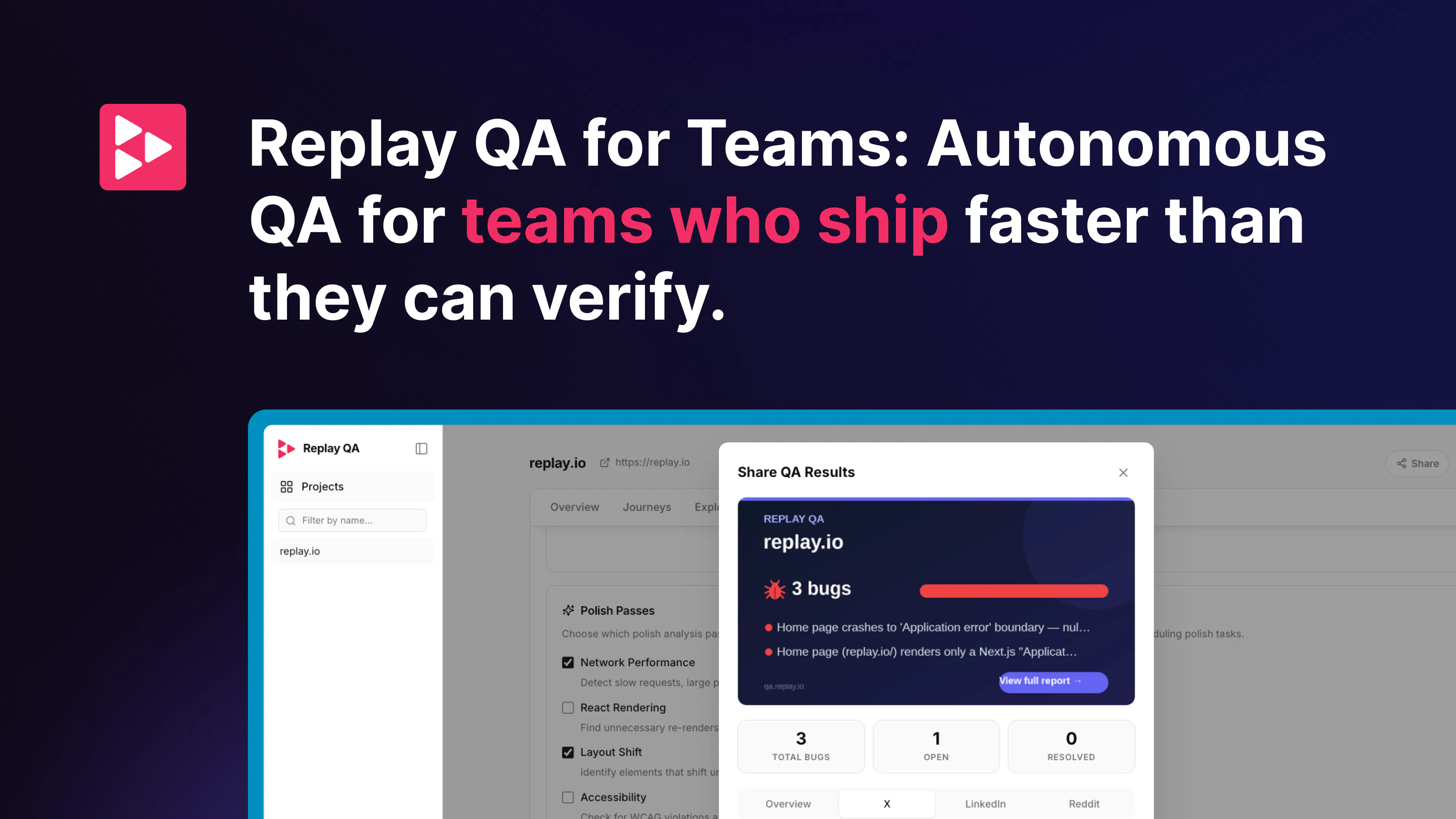
Replay QA tests your web app like a real user, uncovering broken flows, UI issues, and bugs before they reach customers. It gives you the context behind each issue, plus suggested fixes. What's new: With shared projects, teammate mentions, localhost testing, and QA checks on every pull request, your whole team can catch and fix problems before shipping.

Hey Product Hunt,

Marcos here from @Replay

Last time we launched Replay QA, the most common feedback was the same: "How can my team use this?"

Most production code is AI-generated now, and most tests are written by the same AI. CI goes green. The app looks done. Then someone opens it in a real browser.

That's why we built Replay QA. Give it a URL, and it explores your app the way a new QA hire would, no spec, no one to show them around. It clicks through your app in a real browser, then reports what broke, where, and with root cause detail and a suggested fix. Every session is recorded with our time-travel debugger so you can replay the exact moment something went wrong.

This launch is about teams:

  • PR checks - Replay runs on every PR, catching issues before merged. It posts debugging context right into the comments. No CI config.

  • Team projects - invite teammates, share findings, @mention in bug reports.

  • Localhost support - check before you push. You drop in a localhost URL, and we walk you through the reverse proxy setup - everything configured with you.

Drop in your local or live project URL, then connect GitHub to auto-retest on deployments or PRs.

If your app is posted publicly, it's free to test. Try it at: qa.replay.io

We'll be here all day answering questions about PR checks, how QA fits alongside testing tools, and - if you have an app you'd love us to test.

Thanks to everyone who gave us that feedback and to the beta testers who told us when we were wrong.

3
回复
@mplacona How does Replay QA handle auth gated flows or multi role permissions during the automated exploration?
3
回复

@mention  @mplacona smart move letting teams test localhost before pushing could catch problems much earlier in the development cycle

0
回复

@mention  @mplacona Well said recording the exact failure with a timetravel debugger makes bug reports far more useful to developers

0
回复

🚨 Looks like GitHub is experiencing issues again today... if you're running Replay QA connected to a repo (and if you're pushing bug reports to GH Issues), you might encounter some weirdness. https://www.githubstatus.com/ (we're keeping an eye on things)

1
回复
the main screen mini app seems to have only a pre set information with no real value which is currently promoting the users to login to see the full functionality. would be nice to see if the mini app works and then take to the main app post login just a suggestion..
0
回复

@vishwa_teja_kondi I'm not 100% clear on what you are referring to. What is the "mini app" you are describing?

1
回复
#9
Startup Program by Recall.ai
Startup program for meeting recording infrastructure
127
一句话介绍:Recall.ai 推出面向早期团队的会议录制基础设施扶持计划,以远低于市场价($0.25/小时)提供前10,000小时录制服务,并附赠工程师支持、MCP访问和日历集成,解决初创团队自建会议数据采集系统成本高、耗时长的痛点。
API Meetings SDK
会议录制API 开发者工具 初创企业扶持 数据基础设施 MCP访问 日历集成 音视频技术 B2B服务 按量计费 工程技术支持
用户评论摘要:用户普遍认可该计划直击技术成本痛点,而非流于表面的福利堆砌。官方回复确认所有产品功能均包含在统一低价中,并强调工程师全程协助起步。个别评论仅为祝贺与祝福,无实质问题或建议。整体反馈积极,但未出现关于计费细节、接入难度或竞品对比的深入质疑。
AI 锐评

Recall.ai 这招“补贴式获客”玩得很精明。表面上看是扶持初创,实则是用极具诱惑力的价格杠杆($0.25/小时,远低于市场常规)强行切入早期开发者的技术栈。它的真正价值不在于那点“折扣”,而在于将“会议录制”这一高度专业化、易踩坑的底层功能彻底商品化,让开发者不再需要在 WebRTC、SFU 和音频处理上耗费数月。

但必须冷静指出:这个计划是典型的“开发者养成”陷阱。10,000小时的免费额度看似慷慨,但对于一个日活千人的会议纪要应用而言,消耗极快。一旦业务跑通、数据迁移成本变高,未来账单的议价权就完全掌握在 Recall.ai 手中。它不是慈善,而是以低价锁定未来的数据管道费。此外,评论区一片祥和,缺乏对稳定性、延迟或隐私合规(如 HIPAA、GDPR)的追问,这要么说明产品确实无懈可击,要么说明早期用户尚未经历生产环境的毒打。

对于只想快速验证 MVP 的团队,这是绝佳的跳板;但对于有长期独立发展野心的公司,务必把“供应商锁定风险”写进风险评估表。用金融术语说,这是低息“过桥贷款”,不是无息“天使投资”。聪明人会用来抢时间,但不会把它当成免费午餐。

查看原始信息
Startup Program by Recall.ai
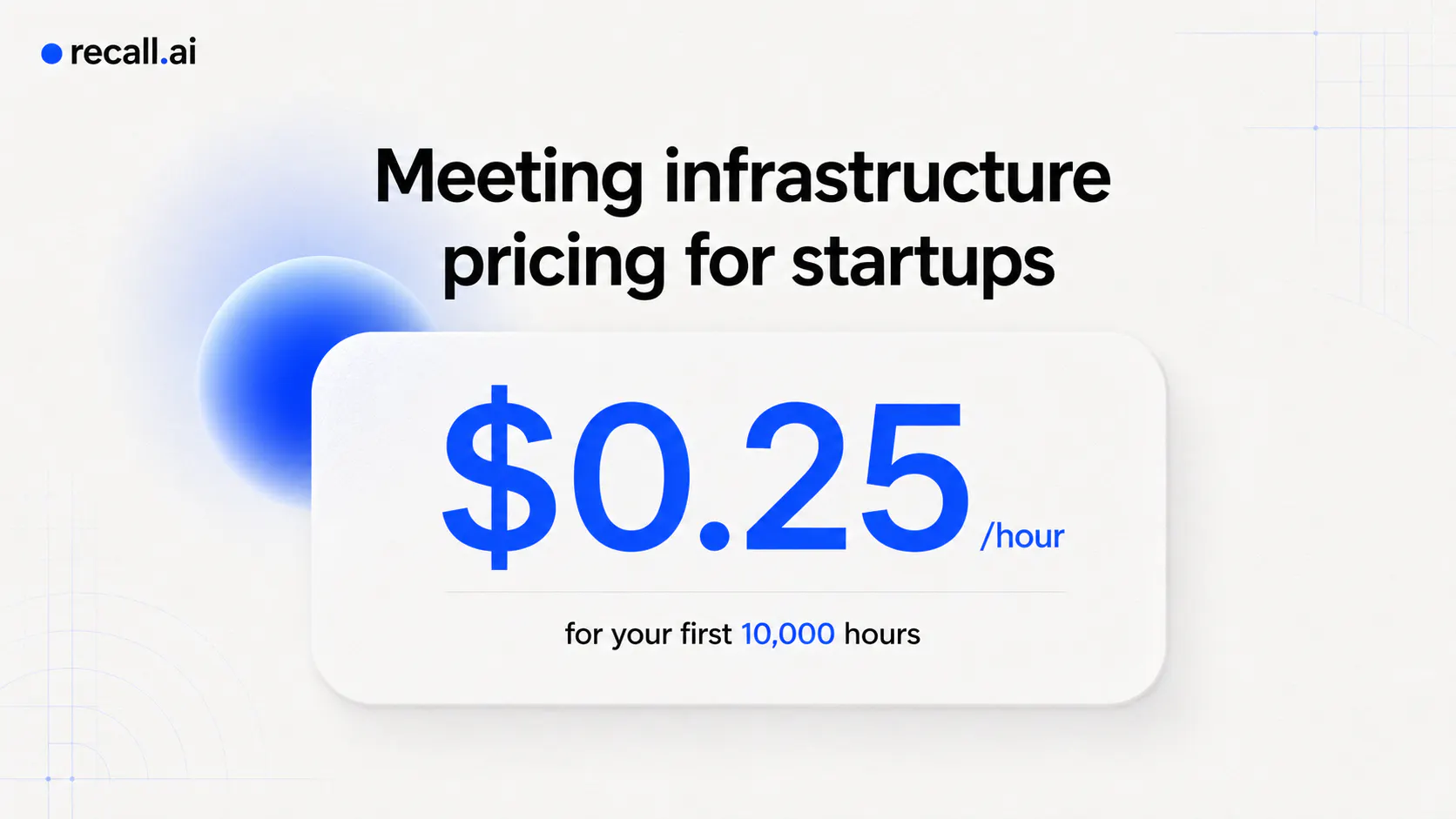
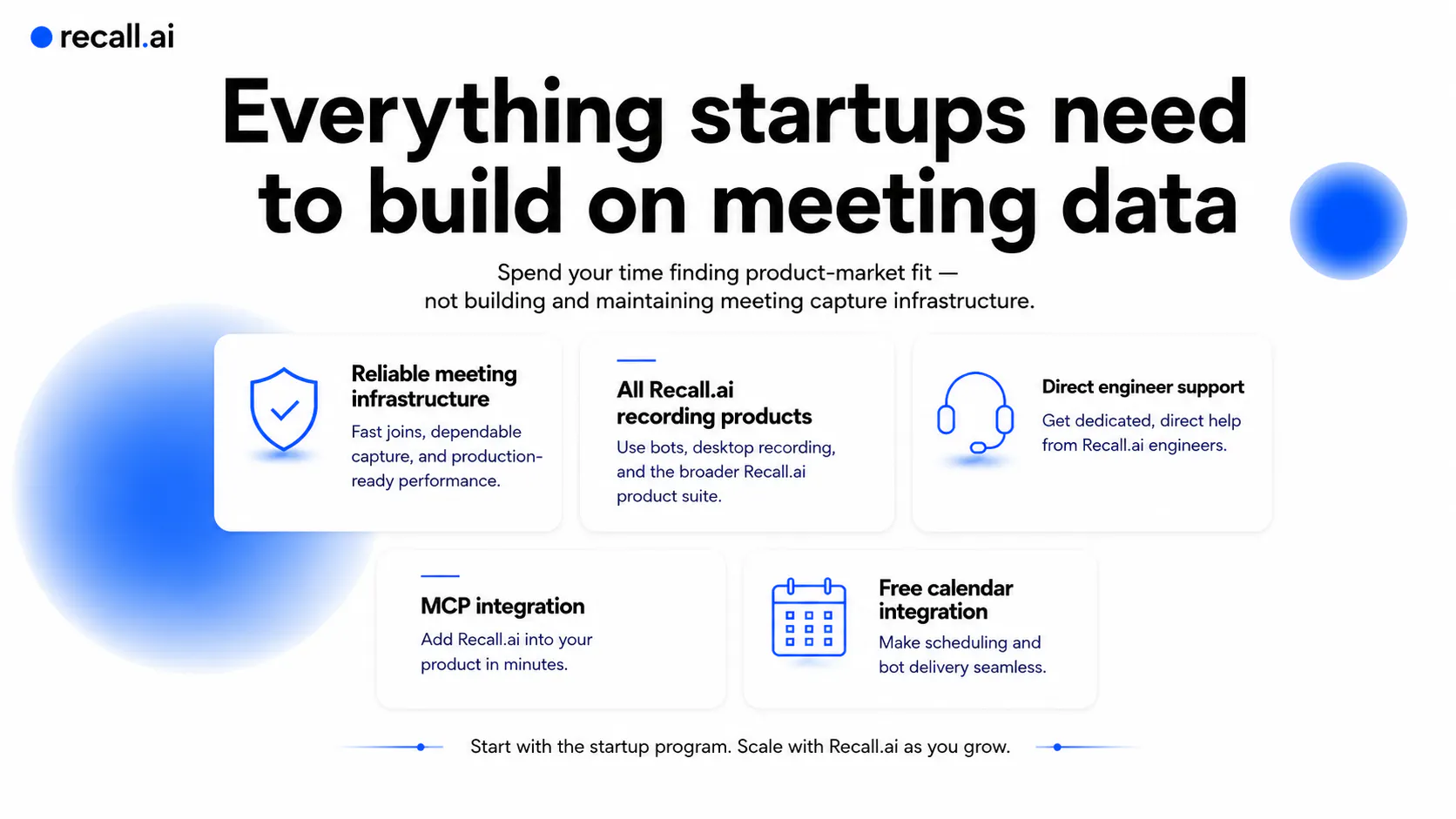
The Recall.ai Startup Program gives early-stage teams reliable meeting recording infrastructure at $0.25/hour for their first 10,000 hours, plus engineer support, fast bot joins, every recording product, MCP access, and calendar integration.
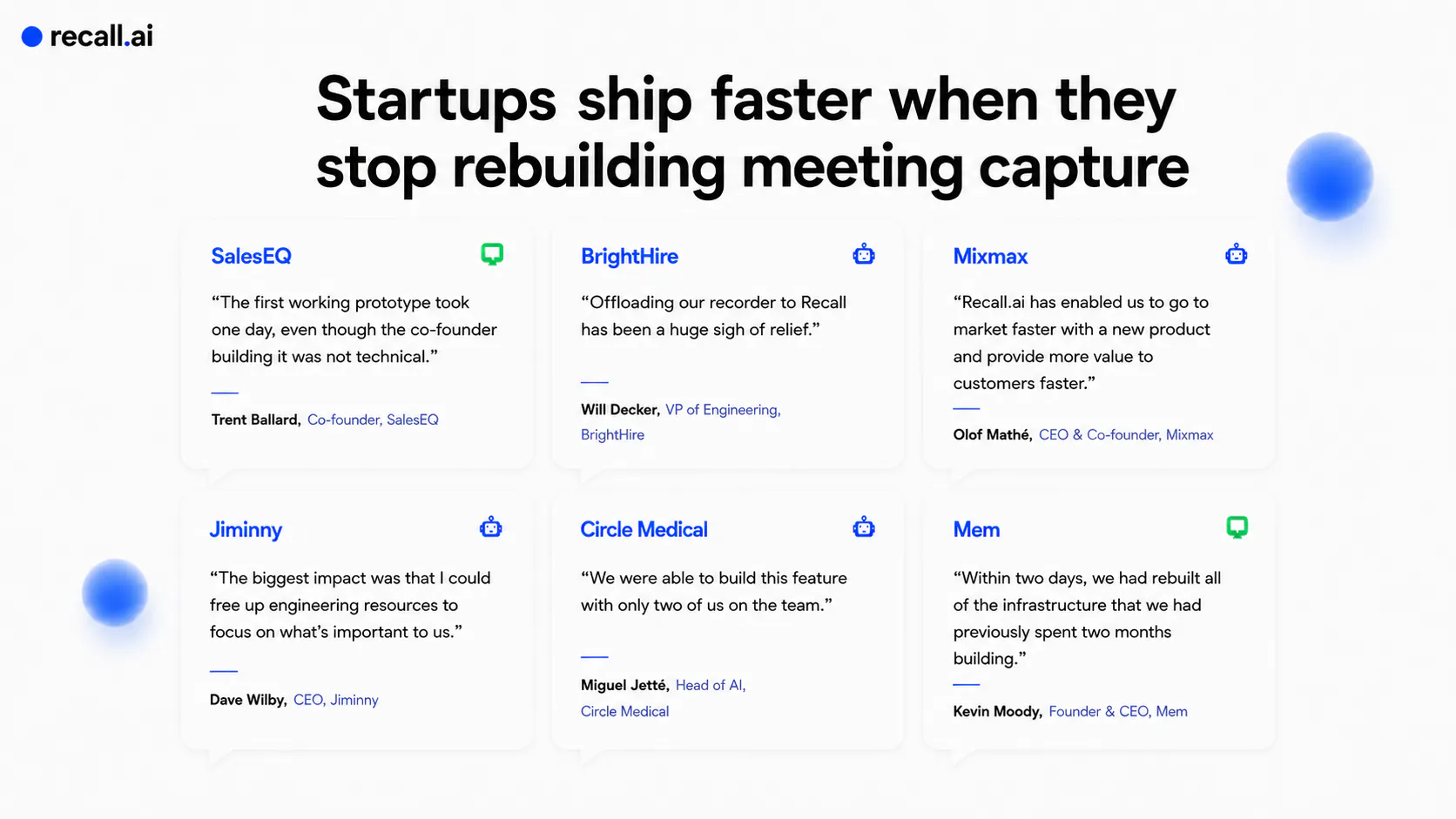
Hey PH, Maggie from Recall.ai here. We’ve worked with a lot of early-stage teams building with meeting data, and building recording infrastructure from scratch often turns into a much bigger engineering project than expected. We're launching the Recall.ai Startup Program to make that easier. Accepted startups get $0.25/hour for their first 10,000 recording hours, with the same products and support as our other customers. We ran the program in beta with teams building in notetaking, interviewing, finance, and more, and now we’re opening it up more broadly. You can learn more and apply here: https://www.recall.ai/startups Check out the docs and start building with the MCP: https://docs.recall.ai/docs/docs... If you’re building with meeting data, I’d love to hear what you’re working on. I’ll be in the comments today. Maggie
1
回复

@maggie_v Nice product, all the best for your launch!!

0
回复

this is th kind of startup program I appreciate because it helps with a real technical cost rather than just offering another collection of perks I may never use.

1
回复

That was our thought exactly @saman_baloch. We already offer engineering support with our engineers helping people get started and all products are included in one price so the best thing we could think to do for startups was to decrease any barrier to entry on price.

0
回复
Hey Maggi! It’s awesome. Wish you all the best on this impressive launch
0
回复

Thank you@german_merlo1 . Hopefully you get to try it out on a future project!

0
回复
#10
Skriptr
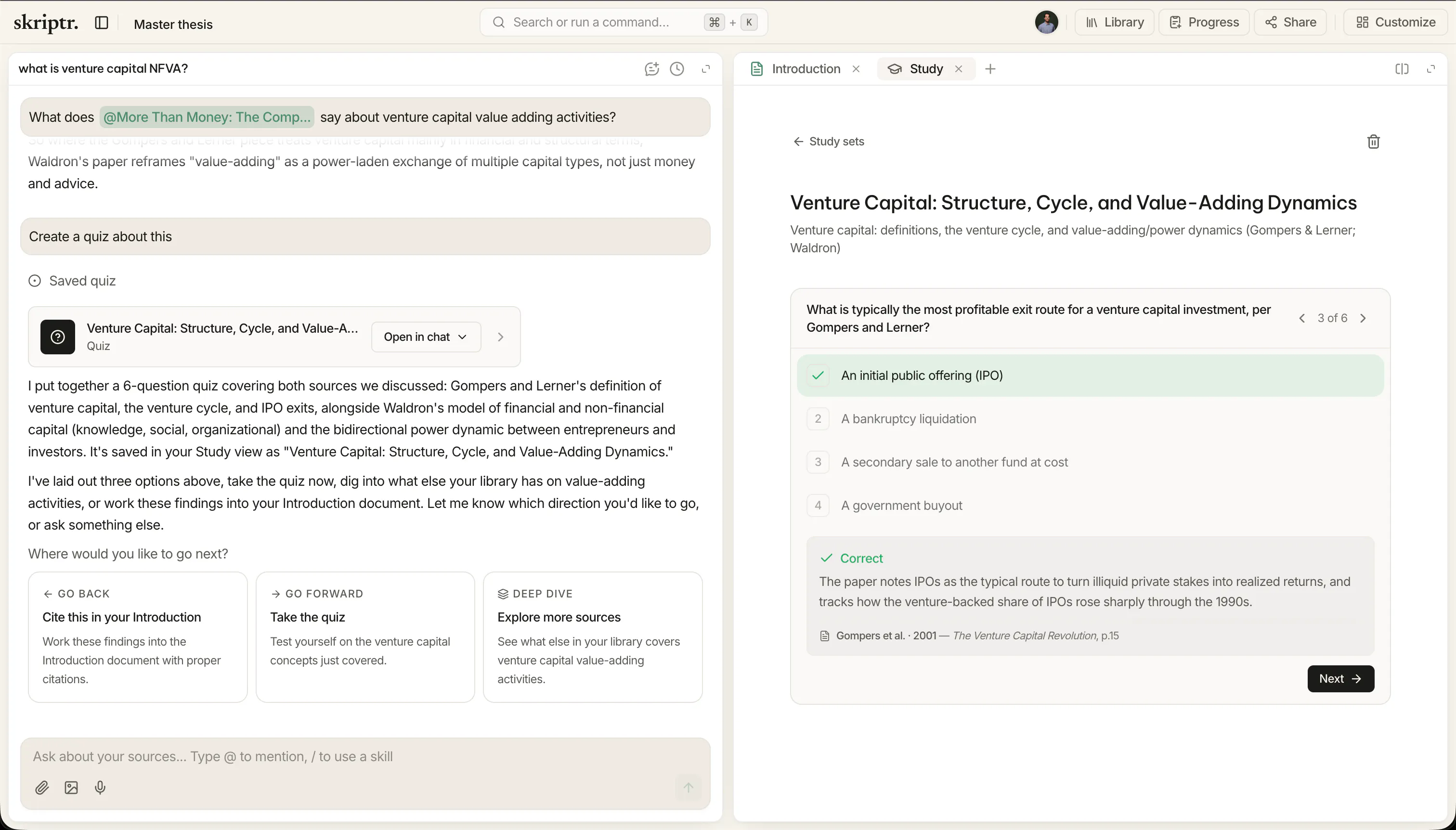
AI workspace for students
116
一句话介绍:Skriptr是一款面向学生的苏格拉底式AI学习工作台,通过让AI提问而非代答、答案溯源到具体页面,解决学生使用AI时担心抄袭、幻觉引用及丧失独立思考的痛点。
Writing Education Online Learning
AI学习工作台 苏格拉底式AI 学术写作 文献研究 反AI幻觉 批判性思维 学习伴侣 教育科技 引用溯源 学生工具
用户评论摘要:用户普遍认可其“反AI代写”理念,认为Devil's Advocate(魔鬼代言人)功能用学生自己的资料反驳论点,对培养思辨能力价值突出;Beta用户反馈产品体验提升显著;有用户询问近期成功案例,官方未正面回应具体数据,仅重申产品理念。
AI 锐评

Skriptr的聪明之处在于精准踩中了AI教育赛道的“政治正确”风口——当所有同行都在教学生如何用ChatGPT糊弄论文时,它高举“批判性思维”大旗,把AI从代笔者降格为苏格拉底式的提问助产士。从产品逻辑看,从“读文献-理观点-写草稿-抗辩-审阅”的完整闭环确实用心,尤其是强制“引用溯源”和“Devil's Advocate”功能,直接击中了学术场景中AI最大的信任痛点。

然而,这款产品的深层次矛盾并未解决:第一,116票的冷启动数据说明其“反效率”姿态在功利主义的学生群体中未必讨喜——多数学生要的是“更快完成”,而非“更深刻地思考”,Skriptr通过“提问”延缓产出速度,在DDL面前极易被弃用。第二,其商业模式存疑——若面向C端收费,学生付费意愿极低;若B端卖给高校,学校更可能自研或采购大厂方案。第三,所谓“苏格拉底式AI”本质仍是基于LLM的提示词编排,若底层模型推理能力不足,“追问”很容易沦为形式化的车轱辘话。

真正值得肯定的,是其“反AI slop”的差异化定位,以及把AI从“答案机器”改造成“认知磨刀石”的勇气。但若不能拿出可量化的学习效果数据(如学分绩点提升、论文引用错误率下降),这杯“学术清流”最终恐难逃叫好不叫座的宿命。教育AI的终局,不是靠情怀,而是靠证明自己比代写工具更能帮学生拿A。

查看原始信息
Skriptr
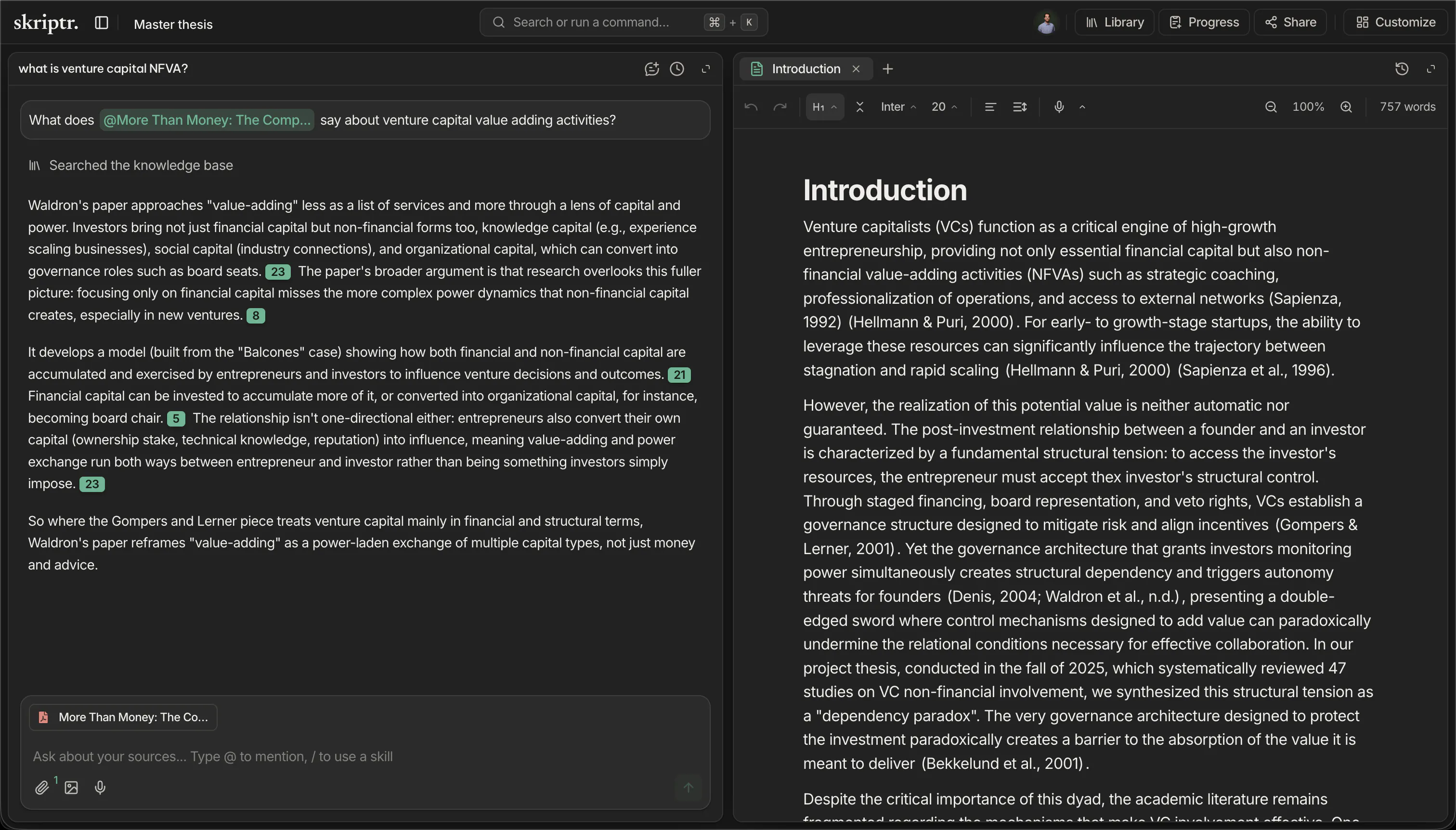
Skriptr is the AI workspace for students, helping with research, writing, and learning. Skriptr reads your sources, shows the exact page behind every answer, and asks questions back. It work with you, not for you. The thinking stays yours.
Hey Product Hunt 👋 We once handed in a paper with two AI-hallucinated sources that didn't exist, and got caught. When we asked other students, we found the fear they carry isn't a bad grade, it's being accused of cheating. Only about one in seven wanted an AI that would just write the thing for them. So we built the opposite. Skriptr is Socratic AI: it asks instead of answers. It helps you find your argument before writing it. It puts your own sources against each other and shows you where they disagree. It argues the other side of your claim, and when you genuinely just need an answer, it helps you find it. Everything it says comes from the sources you gave it, and every claim points back to a page you can open. Underneath sit skills the agent picks up as you work: Research Companion scopes with you before searching academic databases. Literature review hands back a ranked matrix as a sortable spreadsheet. It chases a central topic through a field instead of firing one fixed search. Writing Companion runs a staged pipeline, disposition → draft → iterate → review, instead of one-shot generation. Devil's Advocate debates both sides of your claims with source evidence. Reviewer reads your draft the way a supervisor would. Every edit lands as a suggestion you keep or undo. Learning Companion teaches from your own library, with guided tutoring, flashcards, quizzes, visual overviews and debate. Built by four founders, tested on our own master's thesis. Skriptr is built to raise the bar for what you can do, not to do it for you.
11
回复

@rolf_bekkelund Congrats on launching, nice product!!

1
回复

@rolf_bekkelund This socratic AI will transform have you research and write in your studies. No point in wondering if you really understand the materials you are working on anymore. Skriptr makes sure that you are a part of the process from the start!

1
回复

Let's go!! Congratulations with the launch @Skriptr !!

2
回复

@benjaminbekken Appreciate it Benjamin! On we go 🚀

1
回复

The Devil’s Advocate feature is the part that stands out to me. Having AI challenge a student’s argument with evidence from their own sources feels far more useful for learning than simply polishing the final answer. That’s a much healthier direction for AI in education.

2
回复

Thats right!@alpertayfurr  We continue to push on how AI can be used to gain a better and deeper understanding of the subject matter, while letting the student be in the flow of writing/researching. More cool stuff like the devil´s advocate is coming soon 😎

1
回复

Been following these guys for a while. Beta was great, now its FANTASTIC.
True supercharging of the student, no cutting corners just helping you do better, faster.

2
回复

Apprieciate you@guttorm_ohnstad 🙌 And you're right. There won't be any corners to cut soon with AI in education just like it was when the calculator was fully introduced. The levels just go up!

1
回复

@rolf_bekkelund

This is one of the very (VERY) few products that I hope rules the educational space because this is a pushback against AL-SLOP, Go write it for me and then I'll hack it shortcuts, and epidemic hallucinated sources flooding the academic landscape. If students can get nudged (or pushed/dragged) back to critical thinking and original work based on that thought, AI might, just might, land in the right place within those halls of learning.

Good luck hardly covers it. Maybe prayer? :-)

Well done.

1
回复

@rick_segal1 Thanks for the comment Rick! We agree, AI built for critical thinking do belong in education, and that is what we are here for! It is time to enhance the student, not replace it :)

0
回复

This is actually quite interesting! Could you share any recent successes you've had?

0
回复
#11
Samepage Artifacts
A context-aware, connected writing surface for product teams
113
一句话介绍:Samepage Artifacts 是一款面向产品经理的“上下文感知”写作工作台,自动将散落在 Slack、Linear、客户通话等工具中的信息整合为 PRD、发布说明等文档初稿,解决“从空白页开始写文档”的低效痛点。
Productivity SaaS Artificial Intelligence
产品管理 写作工作台 AI文档生成 PRD 上下文感知 团队协作 集成工具 效率工具 PM工具 自动化草稿
用户评论摘要:用户普遍认可“打开即有草稿”的体验,认为能显著提升PM工作节奏。核心追问集中在双向同步——即文档发送至Jira/Confluence后,后续上下文能否回流更新(官方确认支持双向同步)。部分评论表达对与Equals分析工具组合的期待,整体反馈积极,但暂无明显负面建议。
AI 锐评

Artifacts的切入点非常精准:PM的写作痛点从来不是“打字”,而是“搜集上下文”。传统LLM工具(如ChatGPT)在长文档生成时容易丢失线索,而Samepage选择用“连接器+持续监控”的方式,把上下文获取自动化,这比单纯套一层AI壳的写作工具高出一个维度。其“预加载草稿”的设计尤其聪明——结合Signals的实时监控,把“被动写作”变为“主动呈现”,本质上是将PM从信息整理员角色中解放出来,这比单纯提升打字速度更有价值。

但需警惕两个隐患:其一,40多个集成意味着数据同步延迟(1-2小时),在快节奏开发中,这种“准实时”可能成为误导决策的盲区,尤其当PM依赖其生成发布说明时;其二,双向同步听起来美好,但实际落地时常因对象映射、权限冲突而变得脆弱。若同步机制不够健壮,反而会成为新的“上下文污染源”。

此外,评论区几乎全是内部人士及合作伙伴的赞美,缺乏独立第三方深度的质疑——这对验证产品是否真的“改变PM工作方式”帮助有限。真正的考验在于:当文档被工程团队修改后,Artifacts能否智能识别偏差并主动提醒,而非机械覆盖。若能做好这一点,它有机会成为PM工作台的“默认入口”;若不能,则可能沦为又一个“高级模板库”。值得关注,但需理性观望。

查看原始信息
Samepage Artifacts
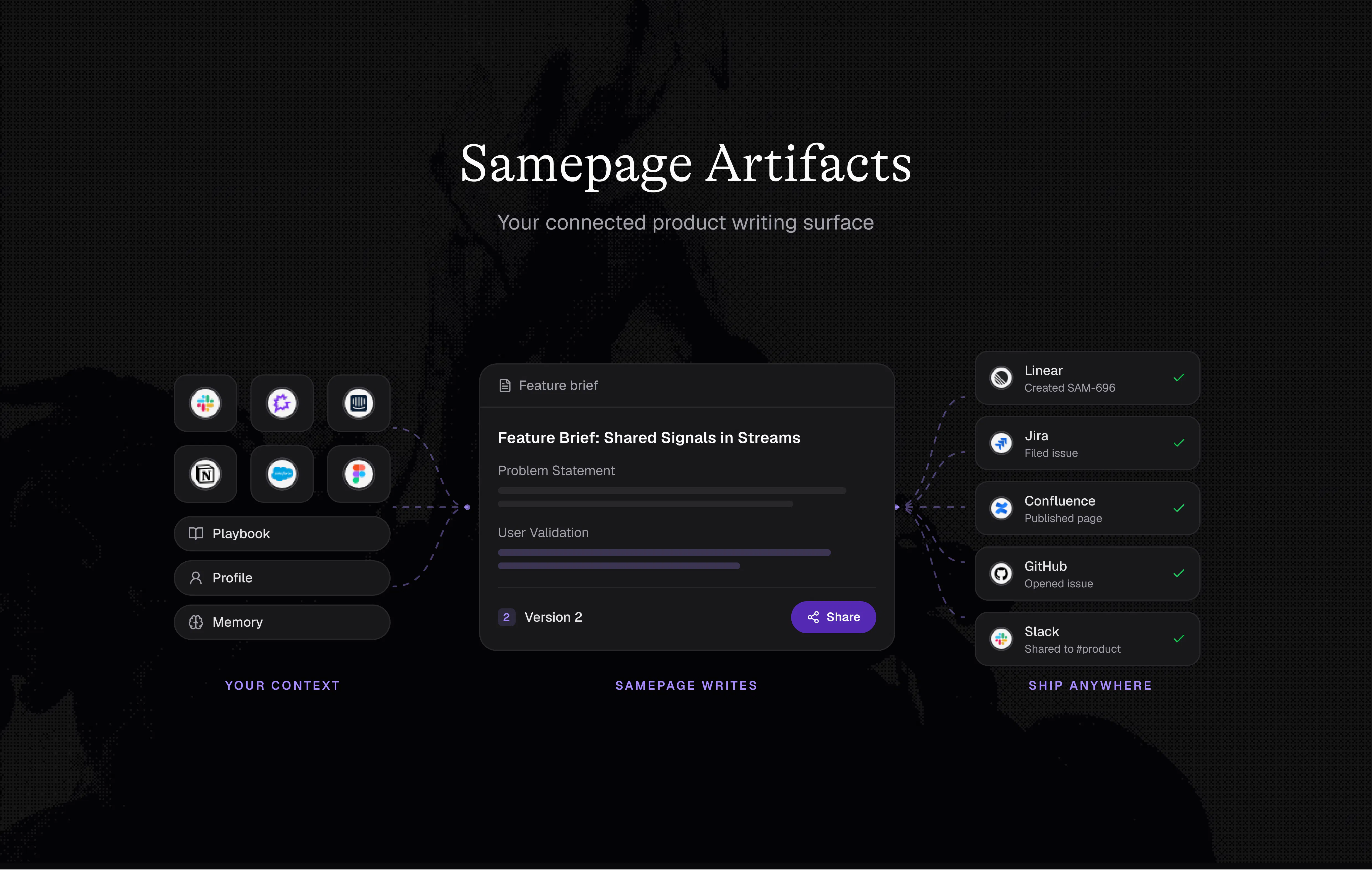
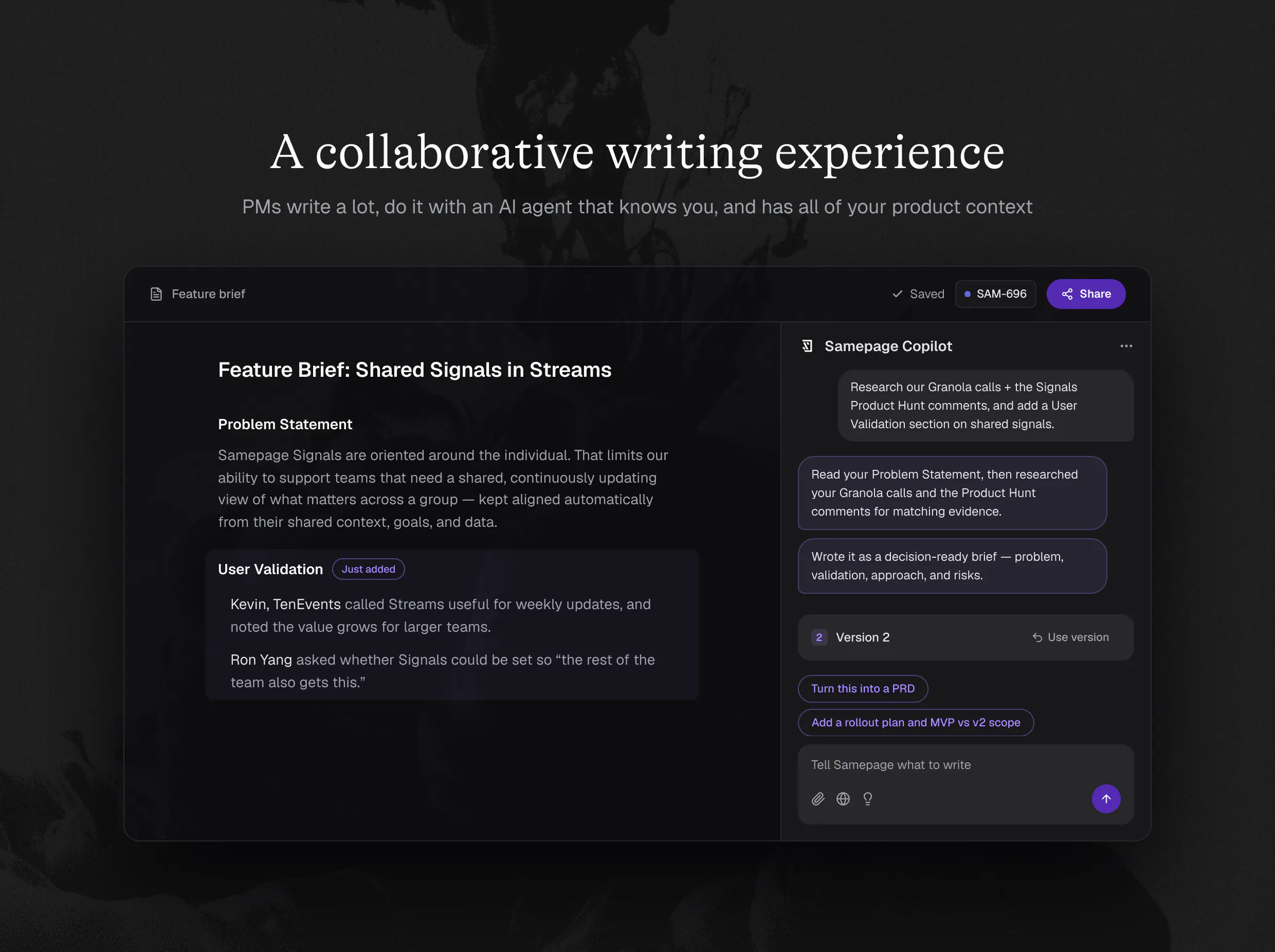
Artifacts by Samepage is your connected product management writing surface, where drafts are automatically generated and waiting for you: PRDs, release notes, feature briefs, weekly updates, and more.

I started my career as a PM. Wild how much the role has changed today. It's always been highly leveraged but now 10x with tools like this.

2
回复

@rrhoover thanks for hunting the product!

It’s a crazy change moment for PMs. The PM work is converging with development, and the pace is picking up across the board.

Part of why we think PMs need something to help them just stay on top of their worldview.

0
回复

Looks amazing!

2
回复

@ciaran_lee Thank you! Fun one to build.

0
回复

So excited to try this out at @Equals !

2
回复

@benmcredmond Who knows...Equals analysis + Artifacts write up could be quite the combo

0
回复

There's something really appealing about opening your work and already feeling a few steps ahead

it shifts the whole mood of getting started, and that matters way more than it usually gets credit for

congrats Sahil ;)

2
回复

@amine_aziz_alaoui Thanks Amine! We think so, too. Our goal is to build the next generation suite for PMs, so these first two products with Signals and Artifacts moves us one step closer in the new era for how PMs work.

0
回复

Hey Product Hunt, Sahil here, co-founder of Samepage.

We are back with our 2nd Product Hunt launch, and today we’re launching Samepage Artifacts.

We built Artifacts because PM writing usually starts with a blank page, then a bunch of digging through Slack, Linear, customer calls, analytics, and old docs just to gather enough context to write something useful. Even today, starting with any LLM often loses the thread, misses important context, or doesn't exhibit real product expertise.

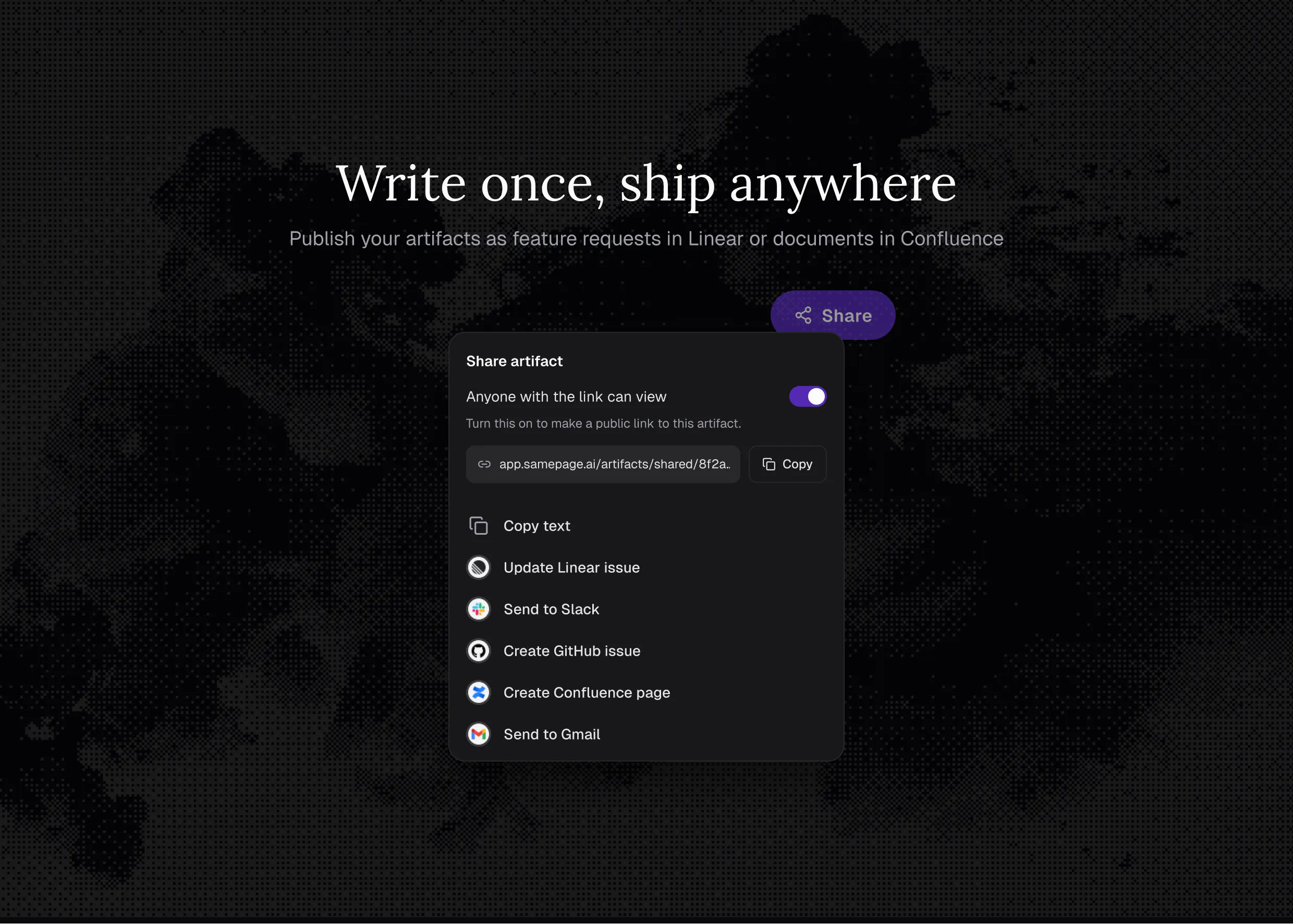
Artifacts is the PM’s writing surface. It helps turn the context already scattered across your tools into polished docs like PRDs, feature briefs, release notes, and status updates. Any Artifact can then be sent directly into systems like Jira, Linear, Confluence, Slack, etc. to be picked up and worked on.

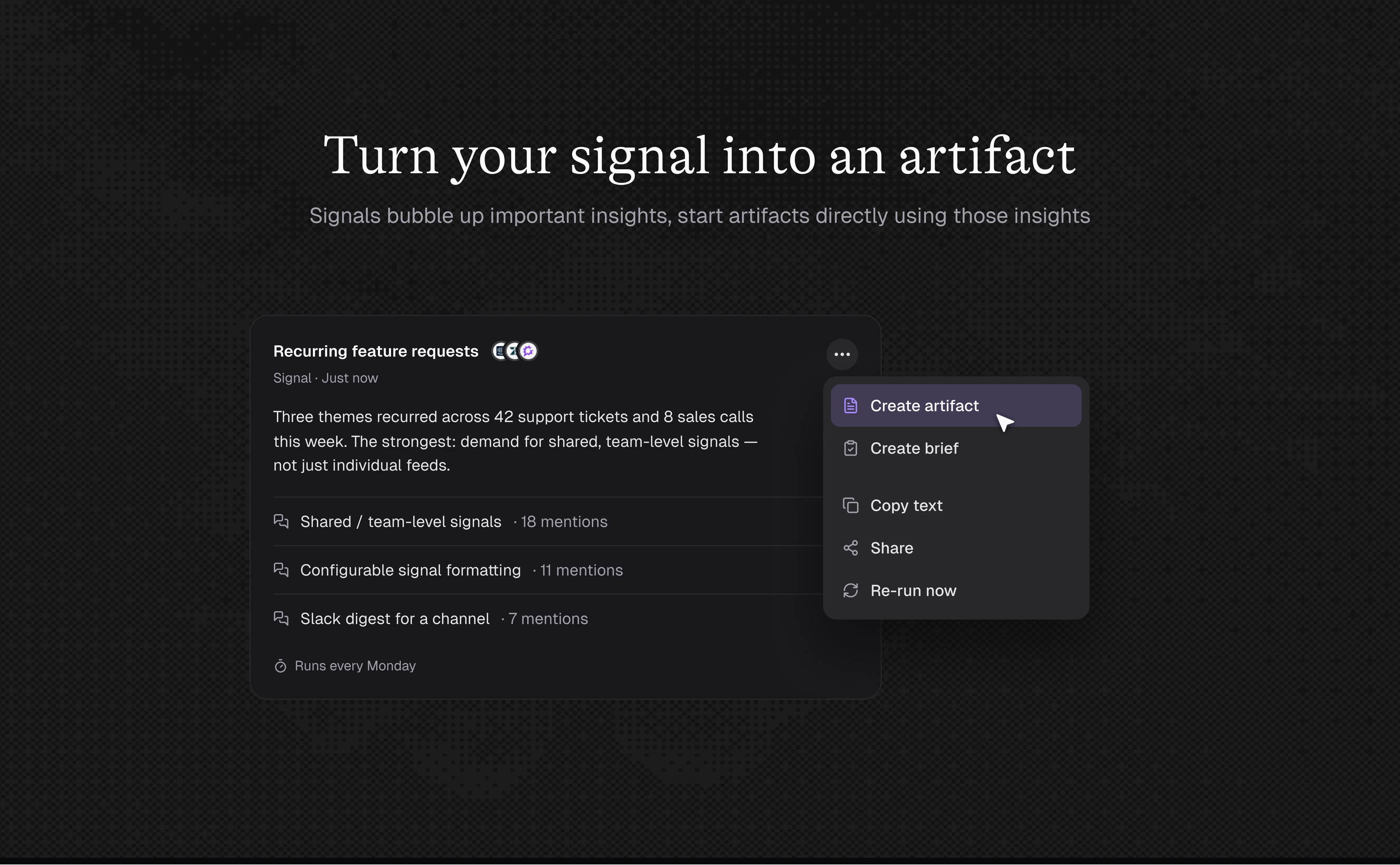
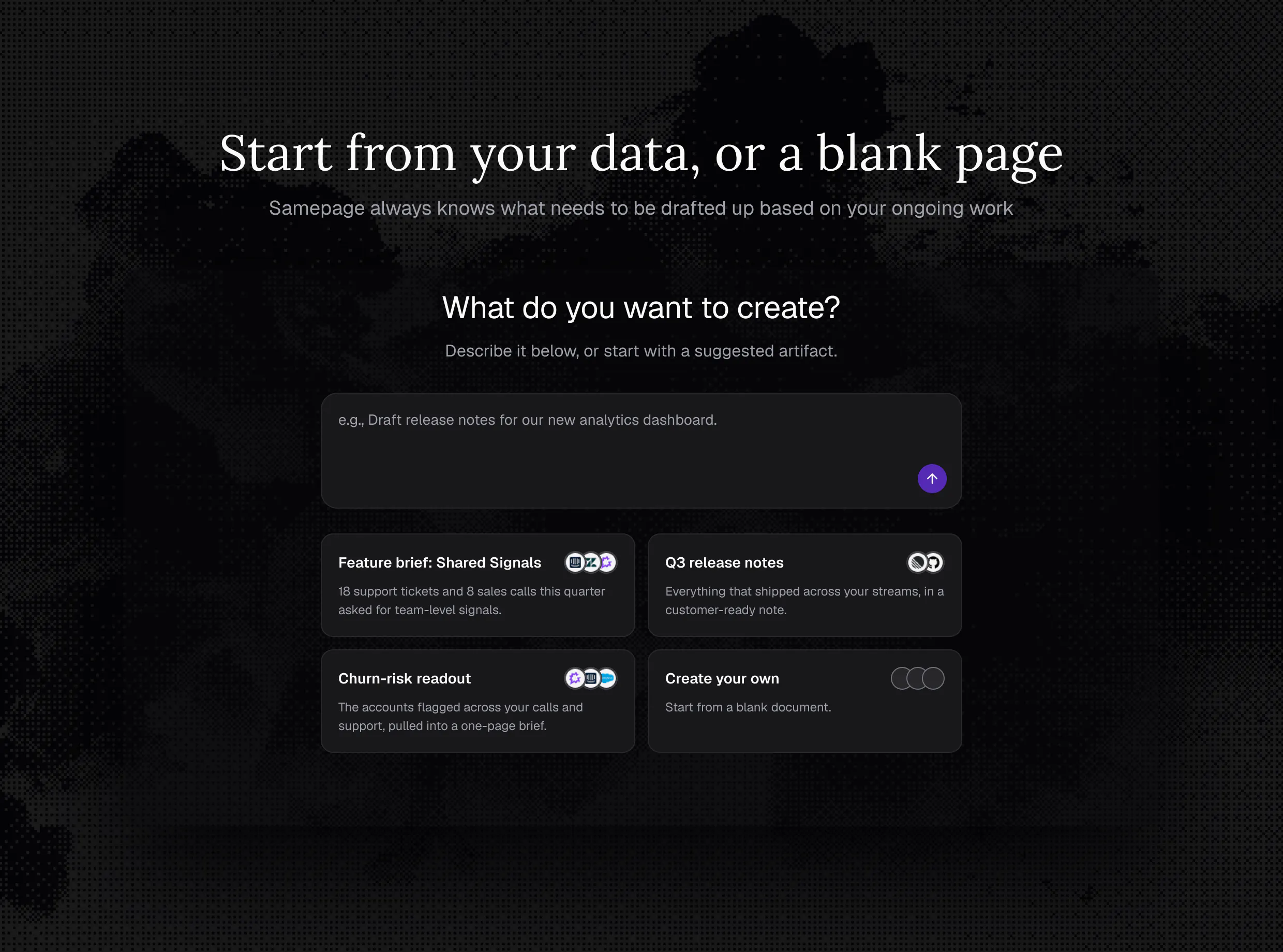
Instead of manually stitching everything together before you can write, you start with the context and get to a strong draft much faster. In fact, Artifacts will have drafts pre-loaded and waiting for you given Signals (our first PH product launch) is always actively monitoring what progress is being made or what release notes should be written.

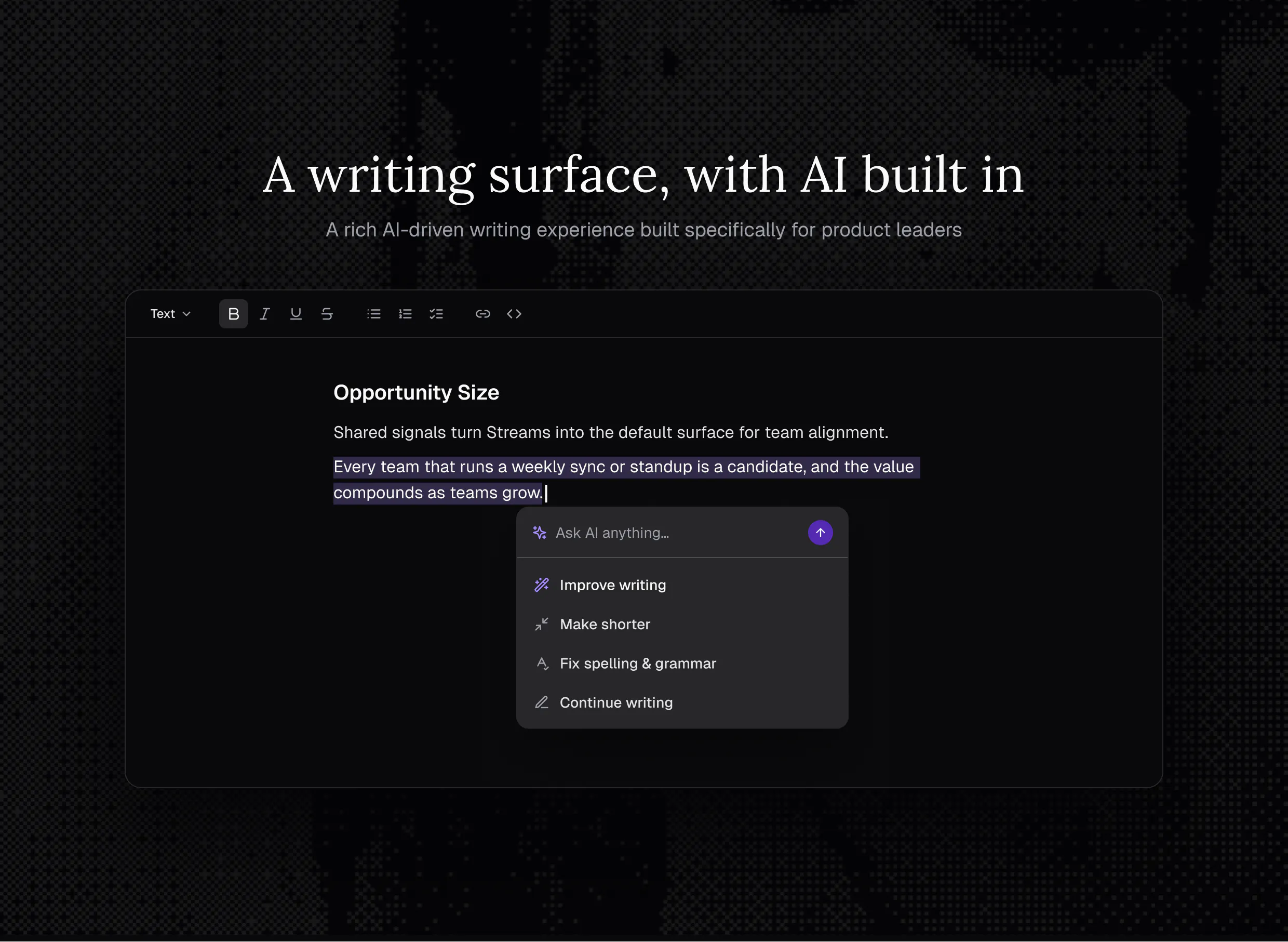
Signals does a great job of surfacing important information like feature ideas from last week's sales calls, and then Artifacts lets you package that up into a feature brief or PRD that you can send over to Linear as an issue or assign directly to Linear's coding agent to build.

For any PMs out there, hope you'll give it a shot and let us know what you think! We have plenty more coming but excited for this one.

1
回复

Paul here, building product at Samepage.

Like many PMs, I've been doing more mockups and UI work directly in the codebase. I tend to use Cursor because, unlike Claude and ChatGPT, I can keep the codebase open in front of me and occasionally edit line by line. After all, sometimes it's faster to type a few small corrections than to chat with the copilot and wait for the round trip.

But Cursor is tuned for engineers, not PMs. I wanted a writing surface for writing product documents instead of writing code. That's why we built Artifacts.

With Artifacts, Samepage AI will write your draft, and then you can hop in to iterate with the copilot or manually edit the document in place. When your document is done, send it directly into your system of choice for your engineers or marketers to pick up.

Try it for free and let me know what you think!

1
回复

I know that you said that the work can then be sent into Jira, Confluence, and Slack, but does the context go the other way around as you continue to build out a feature set to keep the context up to date with Samepage on Artifacts (or Signals)?

1
回复

@james_j_beshara yes sir!

  1. If you send an artifact into another system, it’s linked to an object in the end system and is bi-directionally updated

  2. You connect Samepage to all of those sources and more (over 40 native integrations), and data from those integrations is imported about every 1-2 hours. So the context in those systems is always flowing into Samepage powering both Signals and Artifacts.

0
回复

As someone who's in Slack and Linear all day I'm very excited to give this a try!

1
回复

@ryangilbert Let us know what you think when you give it a go!

0
回复
#12
Hansel by Seedling
Your email, your server, your keys so you're not locked out
95
一句话介绍:Hansel 是一款面向注重隐私与数据所有权的团队的邮件与协作平台,将邮件、日历、笔记等部署在用户自己的服务器上,并在设备端加密,从架构上解决垃圾邮件与平台锁定问题。
Email Productivity Privacy GitHub
隐私邮件 自托管 端到端加密 邮件替代品 团队协作 数据所有权 反垃圾邮件 企业级管理 Wicked Crumbs协议 跨平台应用
用户评论摘要:用户主要关注点集中在三点:一是对“30天快速开发”表示好奇,询问开发过程中最大的挑战;二是对“彻底替代传统邮件”的愿景表达期待,但缺乏具体技术细节的追问;三是团队内部成员对产品理念的肯定,但缺少外部独立用户的实测反馈。有效评论较少,尚无关于安全漏洞、兼容性或迁移成本的深度提问。
AI 锐评

Hansel 的叙事很漂亮——前 Google 员工被平台“一键封禁”后,30 天造出“主权邮件”。但漂亮话背后,有几个问题值得冷静审视。

首先,**“平台无法读取”与“服务器在你手里”是两回事**。自托管意味着运维、安全补丁、反垃圾规则、存储灾备全落到用户身上。对团队来说,这不是“买软件”,而是“自建基础设施”。中小企业是否有能力维护一个高可用、抗攻击的邮件系统?这个成本往往被严重低估。

其次,**“没有你的密钥,消息无法到达”在架构上确实是优解**,但这同时意味着密钥丢失=数据永久丢失。企业环境中,员工离职、设备丢失、密钥管理不善都是常态。Hansel 是否提供了可恢复的密钥托管方案?评论中没有解答,产品介绍里也含糊其辞。这可能成为企业采纳的实际阻碍。

再者,**“Wicked Crumbs”是自研加密协议**,这本身就是双刃剑。密码学领域公认的准则是“不要自研加密”,除非经过长期公开审计与攻击测试。一个 30 天内做出来的协议,如何让安全敏感客户信任?对比 Signal 的 X3DH 或 PGP 的多年打磨,Hansel 需要公布白皮书与第三方审计结果,否则“安全性”只是营销话术。

最后,产品目前只有 Windows 版,macOS 和移动端“即将到来”。而团队协作的即时性、移动办公的常态,意味着核心平台缺失会严重限制其“替代 Gmail/Outlook”的可行性。

结论:Hansel 的价值主张——反锁定、数据主权、架构级防垃圾——在理念上值得肯定,尤其在当前大厂滥用垄断权力的背景下,这类产品有真实需求。但它目前更像一个“高度理想化的 MVP”,而非可直接落地的企业级解决方案。真正的考验不在于能否开场,而在于能否在密钥恢复、协议审计、多端体验、运维支持这些“脏活累活”上持续深耕。否则,它不过是另一个“看起来很美的反叛故事”。

查看原始信息
Hansel by Seedling
Hansel is a gmail/outlook replacement for teams that value privacy and ownership. Your email runs on YOUR server. Messages encrypt on YOUR device. The platform cannot read them. Spam is solved architecturally without your key, messages can't arrive. Includes encrypted messaging, email from your own domain, calendar, notes, and enterprise admin tools. No company can lock you out. Ever.

Hey Product Hunt 👋

I'm Kemone a former Googler on the original GTM team for Google Workspace.

Last month Google cancelled my Workspace subscription and locked me out of my own email, contacts, and everything instantly. No warning. Early Termination on our grace period.

That day I decided: never again.

I built Hansel in under 30 days with my AI engineering partner Bob. It's a sovereign communication platform everything gmail or outlook gives you, except YOU own it.

Your email runs on your own server. Your messages encrypt on your device before they ever leave. We built our own cryptographic protocol called Wicked Crumbs — rotating identities, tamper-evident message chains, spam solved at the architecture level. Without your key, a message simply cannot arrive.

No company can lock you out. No company can read your data. No company can cancel your account. Because none of it lives with us.

This is what I wish existed before Google flipped that switch on me. I hope it helps someone else never feel that powerless again.

Download for Windows ... macOS and mobile coming soon.

Happy to answer any questions 🙏
— Kemone Phillips II

2
回复

@kemone_phillips Congratulations on the launch! Okay, under 30 days .. I keep coming back to the fact that you built this so quickly. What was the part that almost broke the 30 day goal? 😂

0
回复

If this is what I think it is then why would we ever need standard email ever again? The idea of complete ownership definitely is enticing. Congrats on the launch team.

1
回复

Did someone say launch day?! 👀

It’s been a journey watching Hansel come together and I’m excited to finally see it out in the wild. The more I’ve learned about what we’re building, the more I’ve appreciated the idea behind it. Having more ownership and control over something as important as your email instead of handing all of that over to a platform just makes sense.

There’s a lot that’s gone into getting Hansel to this point, and now I’m really excited to see what people think once they get their hands on it.

Go check it out and let us know what you think! 🙌

0
回复
#13
Bulbthings
The AI platform to track and manage your physical assets
95
一句话介绍:Bulbthings 是一款面向成长型团队的AI资产管理与运维平台,将散落在电子表格和聊天工具中的设备、工具、车辆等实物资产,统一为可追踪、可预订、可维护的“单一事实来源”,解决资产盘点混乱与维护协作低效的痛点。
Productivity API Artificial Intelligence
AI资产管理 实物资产追踪 CMMS 企业SaaS 设备维护 库存管理 二维码扫描 无代码配置 开放API 团队协作
用户评论摘要:用户@thobes 自嘲为“表格地狱骑手”,称赞产品是“天堂”。创始人回帖强调该工具面向资产密集型企业,力图降低从表格迁移的门槛。有效评论偏少,暂无核心功能缺陷或具体建议反馈,整体以发布预告和友好互动为主。
AI 锐评

Bulbthings 的切入点足够精准——它没有去硬碰成熟但笨重的ITAM(如ServiceNow)或高端CMMS(如IBM Maximo),而是瞄准了“成长型企业”这个最痛苦也最愿意为效率买单的中间层。这类企业典型状态是:用表格和微信群管理几百上千件资产,账实不符、维护无计划、协作靠吼。产品价值主张清晰:零摩擦上手的自动化配置、自然语言驱动的AI Copilot、以及不被按功能挤牙膏的开放架构,直击了传统软件“部署成本高、操作复杂、升级昂贵”三大痛点。但锐评需冷静三点:其一,“AI Copilot”目前为付费功能,而“Free Forever”能承载多少核心流程存疑,这容易被视作获客钩子而非真正普惠;其二,资产管理的核心壁垒在于数据准确性和现场执行习惯,软件解决“记录”容易,解决“持续录入的纪律”极难——若没有强力的移动端离线扫码和异常提醒机制,AI再聪明也替代不了员工不肯扫二维码的惰性;其三,所谓“Headless AMS/CMMS”与“不门控功能”虽是差异化口号,但中小企业是否真有自建复杂工作流的技术能力,往往要打个问号,这可能让开发优先反而成为小众卖点。总体而言,Bulbthings 抓住了真实缝隙,产品逻辑通顺,但接下来真正要验证的是:在试用期结束后,有多少团队能放弃表格回归到一个需要维护的新系统,以及AI助手能否把从“录入”到“决策”的闭环做到足够省心。若能突破这层执行损耗,它完全有潜力成为资产领域的新一代生产力工具;若不能,则容易沦为又一个漂亮但半途弃用的SaaS花瓶。目前投票数95,声量尚小,后续需观察社区的真实留存与付费转化数据。

查看原始信息
Bulbthings
Your business runs on a lot of stuff. Gear, equipment, tools, furniture, vehicles — yet most teams still track it all across spreadsheets and WhatsApp. Bulbthings is the AI-powered asset management platform that brings everything together: inventory, bookings, maintenance, and collaboration — beautifully, on desktop and mobile. No training needed, no chaos. Just one source of truth for every physical thing your business owns.

As a spreadsheet hell rider, this sounds like heaven. Nice work @leslie_depond !

1
回复

Thanks for your feedback @thobes 🧡 tracking/managing physical assets may sound a bit niche but most growing businesses - especially the asset heavy ones - encounter the issue sooner than later 😅 We try to make that transition as easy as possible for them.

0
回复

Hi Product Hunt! 👋 I’m Leslie, the builder behind Bulbthings.

We noticed a massive irony: scaling businesses are building cutting-edge products yet they’re still tracking their physical assets (e.g. IT equipment, high value-value prototypes, A/V gear, machines, vehicles, furniture, facilities) across messy spreadsheets and chaotic WhatsApp threads.

Notion lacks the asset-centric workflows and analytics needed for scaling teams, while legacy IT Asset Management (ITAM) and Computerized Maintenance Management (CMMS) platforms are clunky, enterprise-priced, and bloated.

So, we built Bulbthings: a modern, AI-powered asset inventory, tracking and maintenance management platform designed specifically for fast-moving teams.

Here is why we think you'll love it:

  • ⚡ Zero-Friction Onboarding: Select your industry and Bulbthings instantly auto-configures your workspace with the exact features and templates you need to automate any assets you rely on for your operations. Plus, our smart import module turns your messy spreadsheets into structured data in clicks.

  • 🤖 Unified AI Copilot (paid feature): Faster onboarding and automation. Just tell Bulb AI what you need: snap a photo or scan a QR code to add gear, assign a MacBook to a new hire, book equipment for a project, report an issue, or pull instant reports—all via natural language (chat or voice).

  • 🛠️ Developer-First (Headless AMS/CMMS): Your data, your rules. Use our open API and SDK to build complex workflows or new apps.

  • 🔓 Un-Gated & Fair: Tired of upgrading to Enterprise just to use one key feature? We don't gate functionality. Mix and match feature packs as you grow.

🎯 Who is Bulbthings for?

We designed this for growing teams that have outgrown spreadsheets to automate their asset inventory and workflows but aren't ready for complex, legacy enterprise software.

🎁 The Offer for the PH Community

We have a highly capable "Free Forever" tier so you can get your operations out of spreadsheet hell today without pulling out a credit card. Get started for free here 🚀

What's Next?

We are on the verge of launching our AI Developer Agent, designed to help you customize your workspace or build asset-centric features and applications even faster. We would love your feedback on the core platform, API, and these upcoming AI capabilities.

0
回复
#14
TinyFish
The web operating layer for AI agents
86
一句话介绍:TinyFish 是一个面向 AI 代理的统一网页操作层,通过单一平台解决 AI 系统在实时数据获取、动态网页交互和认证流程自动化中的“联网能力”痛点,让开发者不必再为每个爬虫或浏览器自动化任务重复造轮子。
Developer Tools Artificial Intelligence
AI代理基础设施 网页抓取 结构化数据提取 浏览器自动化 实时搜索 认证流程自动化 开发工具 Agent工具链 数据管道 生产级API
用户评论摘要:多数用户认可其“整合实时搜索+结构化提取+认证自动化”的定位,认为比拼装多个开源库更省心。主要建议集中在:希望提供更细粒度的反爬策略控制、增加对更多登录态失效的自愈处理、以及担心价格随请求量上涨过快。少量用户反馈动态页面渲染速度有优化空间。
AI 锐评

TinyFish 的标语“web operating layer”是聪明的自我定位,它没有发明新概念,而是把 AI 代理最脏最累的活——实时搜索、内容清洗、JS渲染、登录态管理——打包成一个可调用的API层。这个方向踩准了当前大模型落地最大的瓶颈:模型不缺推理能力,缺的是与真实世界(尤其是需要认证的私有数据)的可靠连接。

从产品逻辑看,它的价值不只是“爬虫更简单”,而是把“获取网页数据”从易碎的脚本提升为可运维的服务。真正的护城河在于认证流程自动化——这是多数开源方案(如Playwright+BeautifulSoup)最难做好、也最耗人力的部分。如果TinyFish能稳定处理多站点登录态维持与自动续期,它就能从“工具”变成“基础设施”。

但风险同样明显:其一,这种平台极易被头部AI厂商(OpenAI、Anthropic)或云服务商的官方联网插件降维打击——他们天然有更大的流量议价权和生态绑定;其二,网页反爬手段日益激进(指纹识别、行为检测),任何通用解析层都面临持续的“猫鼠游戏”维护成本,这会导致毛利被侵蚀;其三,86票的冷启动热度说明市场尚未形成刚需叙事,开发者宁愿先拼装免费库,只有当Agent进入生产规模化阶段,TinyFish这类服务才会成为显性需求。

务实建议:专注垂直领域(如电商、学术、金融数据)做深度认证适配,比泛化“所有网页”更能建立不可替代性。否则,很容易沦为又一个被大厂免费特性湮没的中间层。

查看原始信息
TinyFish
TinyFish is a unified web operations platform built for AI agents and AI applications. It enables developers to search the live web, extract clean structured content, browse dynamic websites, and automate authenticated workflows through a single platform. By providing reliable access to current web data and web interactions, TinyFish helps AI systems deliver more accurate answers, reduce operational complexity, and scale production workloads.
#15
Blender Agent Bridge
Open-source MCP bridge for Blender AI workflows
79
一句话介绍:Blender Agent Bridge 是一款开源免费扩展,通过 MCP 协议将 Blender 接入 Codex、Claude 等 AI 客户端,让 AI 在真实场景中巡检场景、获取视觉证据并辅助工作流,同时将编辑权、脚本信任与付费生成审批牢牢保留在艺术家手中,解决“AI 生成好看但不可编辑、不可控”的核心痛点。
Open Source Artificial Intelligence GitHub 3D Modeling
开源 MCP桥接 Blender扩展 AI工作流 3D场景巡检 艺术家控制 生成审批 Polyhaven集成 客户端工具 技术美术
用户评论摘要:开发者本人回应了“AI生成不可编辑”的行业痛点,强调不替代Blender知识,而是让AI介入真实流程并保留控制权。回帖用户关注点在于AI巡检场景时到底获取的是视口渲染还是对象图(object graph),这关乎AI对场景理解的深度与工具实际可靠性,属于有效技术疑问。
AI 锐评

这款产品的价值不在于“又一个AI生成工具”,而在于它精准刺中了当前AI 3D工具链的致命伤——生成结果与可编辑工程之间的断裂。Blender Agent Bridge 把自己定位成“桥梁”,而非“替代”,这个姿态在技术上是聪明的,在商业上也是清醒的:它不做艺术家,而做艺术家的副驾驶,并且要求副驾驶必须系好安全带。

从机制设计来看,“编辑权、脚本信任、付费生成审批”全部下沉到艺术家侧,这既是安全策略,也是用户教育的巧妙手段——它把信任问题转化为可配置的工作流参数,而非空谈“AI 透明”。AI 巡检场景时,它显然应当返回结构化对象图(object graph)而非单纯像素级渲染图,这样才能让 AI 真正理解场景拓扑、命名规范与修改意图,实现“精准改动”而非“猜着改”。开发者本人提到的“playblast”和“viewport/render evidence”也说明他深谙动画师工作习惯,这是加分项。

但风险同样明显:MCP 生态当前尚属早期,Claude/Cursor 对 3D 领域的工具调优有限;且 Blender 重度用户本身就是专业门槛最高的艺术家群体,他们对“AI 辅助”的容忍度极低——如果一次误操作导致场景损坏,口碑崩坏速度会远超普通工具。此外,Polyhaven、Meshy 等第三方集成容易让产品滑向“素材聚合器”,分散核心价值。

总体而言,这是一个方向正确、克制而专业的切口。真正的挑战不在于能不能连上,而在于 AI 在复杂场景中的“理解能力”是否能跟上艺术家对“控制”的苛刻预期。若能在对象级语义、多场景批处理与回滚机制上深挖,这个小桥梁完全可能长成 3D AI 工作流的基础设施。

查看原始信息
Blender Agent Bridge
Blender Agent Bridge is a free, open-source Blender extension that connects Blender to AI clients like Codex, Claude, and Cursor through MCP. It lets agents inspect scenes, gather visual evidence, and assist with workflows while keeping edits, script trust, paid generation, and approvals under the artist’s control. It Has integration with Meshy.ai, Tripo3D, Polyhaven and more.
I built Blender Agent Bridge after seeing a frustrating gap in AI creative tools: they could generate something impressive-looking, but when an artist needed to make a precise change, there often wasn’t an editable Blender scene, model, rig, or workflow underneath. The goal is not to replace Blender knowledge or remove the artist from the loop. It is to let AI assistants work inside a real Blender process: inspect the scene, gather viewport/render/playblast evidence, use structured tools, and help with longer workflows while Blender keeps control of edits, script trust, paid generation approvals, files, and credentials. I’m calling this a public beta because I want feedback from real Blender users, technical artists, and people building MCP-based workflows. I’d especially love to hear where the workflow feels useful, where it feels clunky, and what safety or control expectations you’d want before using this on real projects.
1
回复

@callmejones Keeping edits, script trust and approvals under the artist's control is what makes this usable instead of alarming. When an agent inspects a scene, what does it actually get? Viewport renders, or the object graph?

0
回复
#16
envfix
A tiny .env doctor for Node.js projects
75
一句话介绍:envfix 是一款零依赖的 Node.js 环境配置诊断 CLI,专治 .env 文件缺失、冗余、重复、格式错误及 Git 泄露风险,一条 `npx envfix` 即可本地或 CI 中自动修复与同步示例文件,直击“配置不一致导致应用莫名崩溃”的日常痛点。
Open Source Developer Tools GitHub
开发者工具 CLI 环境变量 Node.js 配置管理 .env 调试诊断 CI/CD 代码质量 开源
用户评论摘要:开发者反馈集中在对 CLI 交互体验的优化期待,并希望扩展对 YAML/JSON 等配置文件的支持;部分用户询问是否可自定义修复策略,以及能否与 Docker/云平台环境变量联动。整体认可其“不覆盖非空值”“不打印敏感值”的安全保守设计。
AI 锐评

envfix 切中的是 Node.js 生态里一个“小而痛”的长期盲区:.env 文件长期游离于类型系统、lint 和测试覆盖之外,直到生产环境炸了才被发现。它的价值不在功能复杂度,而在“诊断即修复”的执行闭环——自动补齐缺失项、同步 .env.example、检测重复键和 Git 泄露,这些动作省去的是开发者手动比对配置的隐形时间成本,尤其在多人协作和微服务场景下,收益会被指数放大。

但产品天花板同样明显:零依赖和极简定位决定了它无法深度处理加密变量、多环境继承、云服务密钥拉取等企业级需求。且“保守不覆盖”虽是安全底线,却也限制了自动修复的彻底性——真实项目里,空值或过期值往往需要上下文判断,而非机械补齐。评论中期待的 YAML/JSON 支持和 CI 深度集成,恰恰暴露了其边界:它本质是一个“格式医生”,而非“配置治理平台”。

值得肯定的是,作者刻意将安全(不打印值、不覆盖)置于便捷之上,这符合开发者工具的信任底线。若后续能通过插件机制或规则配置向“半自动治理”演进,同时保持单文件零依赖的启动速度,有望成为 Node.js 配置健康检查的事实标准。短期来看,它在开源工具市场的定位清晰,但需警惕同类 lint 工具(如 dotenv-linter)的竞争,差异化应聚焦在“修复”而非“检查”上。

查看原始信息
envfix
envfix is a zero-dependency CLI for diagnosing and fixing environment configuration problems. It detects missing, empty, extra, and duplicate variables, catches malformed declarations, checks Git safety, generates and syncs example environment files, and works locally or in CI. Run it instantly with npx envfix.
Hey Product Hunt, I built envfix after running into a very ordinary developer problem again and again: .env.example changes, but someone's local .env doesn't — and the application fails for a reason that takes longer to find than it should. What started as a tiny checker has grown into a small environment configuration doctor for Node.js projects. envfix can: - detect missing, empty, extra, and duplicate variables - catch malformed environment declarations - check whether .env is safely ignored and untracked by Git - safely fix missing configuration - generate and sync .env.example files - work in CI with JSON output and GitHub Actions annotations It has zero dependencies and is deliberately conservative: it won't overwrite existing non-empty values or print environment values into logs. You can try it without installing anything: npx envfix I'm currently focusing on building small open-source developer tools that remove everyday friction. I'd love feedback, especially on the CLI experience and the .env problems you run into in real projects.
0
回复
#17
Talentz
The signal layer for hiring.
25
一句话介绍:Talentz 通过三个协同AI智能体(Scout寻找作品集证据、Engage多通道沟通、Lens结构化视频面试)覆盖招聘全流程,解决初创及中小团队在Web3、金融科技等硬核岗位中“简历失真、人才难觅、面试低效”的痛点,让用人经理基于证据而非直觉做决策。
Hiring Artificial Intelligence Human Resources
AI招聘 智能体协作 人才发现 作品集评估 自动化面试 双向沟通 中小团队 硬科技招聘 HRTech 证据驱动决策
用户评论摘要:主要反馈来自创始人(17赞):强调简历信号已因AI作弊而失效,Zee通过作品集搜索+全渠道沟通+结构化AI面试重构证据链,并明确“AI不决策,人来拍板”。回帖仅简单赞赏(“Sounds Great”),暂无质疑或具体问题。有效评论较少,核心诉求是验证产品在利基行业的落地效果。
AI 锐评

Talentz的聪明之处在于精准打击了招聘行业最脆弱的环节——简历通胀。当ChatGPT让“造假成本”归零,传统筛选机制全面失灵,它用“作品集搜索”重新锚定人才真实能力,这个切入点既反常识又足够锋利。三个智能体(Scout/Engage/Lens)的拆解逻辑清晰:发现、触达、验证形成闭环,且刻意把“决策权”留给人类,规避了AI招聘最敏感的伦理雷区,这是面向B端销售时极其老练的话术设计。

但光鲜表象下有三重隐忧:其一,25票的冷启动数据说明市场反馈平淡,产品或许仍停留在“好概念”阶段,而非被验证的“好生意”;其二,“按作品集找人”在创意、工程类岗位可行,但在金融合规、医疗等强资格认证领域,作品集远不如执照和履历硬核,赛道天花板明显;其三,AI视频面试虽是效率利器,但结构化提问极易被候选人“逆向工程”,最终蜕变成另一种形式的表演竞赛。

真正的考验在于:中小客户是否愿意为“证据链”支付溢价?如果最终沦为大厂简历库的“增强版筛选器”,那它不过是在旧地基上盖新楼。Zee的价值不在技术,而在能否彻底改变用人方的信息获取习惯——这注定是一场漫长的市场教育战。目前看,势头尚早,潜力在,但锋利度还需用真实客户案例来打磨。

查看原始信息
Talentz
Zee is the agentic recruiting platform behind Talentz.ai. Three connected agents cover your full pre-hire loop. Zee Scout finds candidates by proof of work, searching where talent actually lives. Zee Engage runs two-way conversations across every channel on one thread. Zee Lens conducts structured AI video interviews and delivers decision-ready findings. Your hiring manager makes the call, backed by evidence instead of a resume.
Hey Hunters, Resumes describe the past. They don't predict who's going to perform. And now AI sits on both sides of the hiring funnel: candidates use it to write resumes, recruiters use it to screen them. The one signal everybody relied on has collapsed. We built Zee to fix the input, not just speed up the process. Three connected agents cover the full pre-hire loop: Zee Scout finds candidates by their actual proof of work, searching the platforms where that work actually lives. Zee Engage runs real two-way conversations across email, SMS, WhatsApp, and voice, all on one thread per candidate. Zee Lens conducts a structured AI video interview on every candidate and hands your hiring manager decision-ready findings, not a transcript to dig through. One rule we never break: Zee doesn't make the hire decision. Your hiring manager does, backed by evidence instead of a gut call. Built this for founders and TA teams at companies under 200 people, especially in the harder-to-hire-for spaces: Web3, fintech, cybersecurity, hospitality, consulting. Would love your feedback, and happy to answer anything about how the agents hand off to each other.
17
回复

@nhadiq Sounds Great!!

0
回复
#18
Text2Test | 0 → Test Suite in Minutes
Turn plain text into automated tests in minutes.
14
一句话介绍:Text2Test 让测试人员或开发者直接用纯文本描述测试意图,AI自动将其编译为可在真实浏览器上运行的确定性自动化测试,并在UI变动时自修复,彻底摆脱编写脆弱脚本和选择器的传统自动化测试痛点。
SaaS Developer Tools Tech
AI测试生成 自然语言转代码 自动化测试 无代码测试 自愈测试 浏览器自动化 测试维护 开发效率 质量保障 文本驱动测试
用户评论摘要:用户关注是否支持原生iOS/macOS Swift及Xcode集成;官方回应称支持真机与模拟器,但移动端未公开,可预约演示;测试用纯英文编写,非XCTest代码,可跨iOS/Android复用,需本地Runner配合CI触发。
AI 锐评

Text2Test的立意很聪明——它精准踩中了“AI生成代码不可信”的行业焦虑。当所有工具都在教AI写代码时,它反手去做“验证AI写的代码”,把测试从成本中心变成信任代理,定位极具差异化。核心卖点“确定性”和“自愈”是直击痛点:传统测试的脆弱性源于选择器与UI强耦合,而用自然语言描述行为,本质上是将测试从“实现细节”抽象到“业务语义”,这是真正的高级封装,方向正确。

但必须泼冷水。第一,所谓“模型编译”,本质仍是LLM+规则引擎的混合体,对复杂断言、动态数据、跨组件状态同步的处理能力存疑,demo好看不代表生产环境稳定。第二,“自愈”是一个双刃剑——如果AI误判UI变化而自动“修复”了断言的逻辑,测试就变成了一道自适应橡皮擦,可能掩盖真正的回归缺陷,这比测试失败更危险。第三,收费模式按“构建量”而非“运行次数”,目前看似友好,但这意味着锁定了高频运行的中大型团队后期必然面临成本重估,前期低价引流策略明显。

最理智的判断:这款产品适合“验证型测试”(冒烟、主流程)而非“断言型测试”(精确数据校验)。若它能真正解决“AI生成代码的验证闭环”,有望成为QA流程的标配;若只是把脚本换成了英文描述,那不过是给脆弱的Selenium披了件AI的外衣。另外,官方对移动端、CI集成的回答含糊其辞,说明其企业级能力尚未成熟,建议观望至移动版公测后再评估。当前14票的惨淡热度,恰好说明市场对“AI测试”的信任赤字尚未被撬动。

查看原始信息
Text2Test | 0 → Test Suite in Minutes
Most test automation makes you think like a machine: hunt selectors, write brittle scripts, fix them when UI shifts. Text2Test flips that. Describe a test in plain text. Our model compiles it into a deterministic test that runs on real browsers and heals itself as your app evolves. No code. No selectors. No setup. No token trap. AI testing tools charge you every time tests run. AI helps you create tests, not run them on repeat. Costs scale with what you build, not how often it runs.

Hey Product Hunt 👋

I'm Deniz, PM at Text2Test.

AI writes our code in minutes now. That's the easy part. The hard part: you can't fully trust it, and you can't easily validate it. Fast code you can't verify isn't actually faster, it just moves the risk downstream.

Testing should close that gap. But it stayed manual, slow, and brittle, breaking on every UI change. So we built Text2Test.

You describe a test in plain text, and it compiles into a deterministic test that runs the same way every time on real browsers. Consistency you can count on, not flaky results you re-run. When your app changes, tests self-heal, so you stay in control instead of maintaining them.

We are ambitious about hitting the needs. Try it, tell us what's missing, we welcome all of it and read every comment. Thanks for checking us out 🙏

2
回复

@deniz_colakoglu1 - Interesting product, would this work for native ios and macOs swift test using xcode?

0
回复

@codeandsea Thanks!

Native iOS: yes. We drive both real devices and simulators, so a native Swift or SwiftUI app works. It's not in the self-serve product yet (mobile is our next launch), and it comes with a local runner app that connects your own Mac plus devices and simulators.

Worth noting: we don't generate XCTest or XCUITest code inside Xcode. You write the test in plain English and our AI runs it against your built app, so it sits alongside your Xcode suite and can still trigger from CI.

Since mobile isn't public yet, happy to give you a live demo on a real app. Grab a slot at text2test.ai/demo or just reply here.

A nice bonus: you write the test case once and run it on both iOS and Android, since the tests describe behavior in plain English rather than platform-specific code.

0
回复
#19
HookLens
Real-time webhook triage & AI root-cause analysis
12
一句话介绍:HookLens 是一款面向开发者的实时 Webhook 调试与监控工具,利用 Gemini AI 将 Stripe 和 Shopify 的失败回调中晦涩的 JSON 日志自动转化为清晰的根因分析和可直接落地的修复代码,解决手动排查效率低下的痛点。
API SaaS Developer Tools
Webhook调试 AI根因分析 开发者工具 实时监控 Stripe集成 Shopify集成 Gemini AI 日志解析 代码修复 技术运维
用户评论摘要:目前唯一有效评论为开发者自述:他因手动检查嵌套 JSON、对照 API 文档耗时且易错,故构建此工具。核心诉求集中在实时捕获、AI 诊断生成修复方案,并期待 GitHub、Twilio 等更多集成,但尚未获得外部用户反馈。
AI 锐评

HookLens 踩中了开发者工具的典型痛点——Webhook 失败排查的“暗时间”。其价值主张清晰:将 Gemini 的语义理解能力切入原始 JSON 与业务逻辑之间的断层,用 AI 替代人工比对文档与猜测,这比传统日志监控工具更接近“智能运维”的本质。但当前产品呈现出明显的“单点工具”特征,深度绑定 Stripe 与 Shopify 意味着初期市场规模受限,而这两个平台自身已有较完善的开发者后台与日志体系,HookLens 需要拿出比官方错误码更深刻的分析(如跨事件关联、时序上下文)才能建立付费理由。此外,AI 生成“code-ready fixes”是一把双刃剑——若修复建议不够精确或产生误导,反而会侵蚀信任。更现实的问题是,12 个投票与零外部评论暴露出其仍处于极早期验证阶段,且未公开定价与自托管方案。若想突破“玩具”标签,必须尽快接入 GitHub 等更通用的生态,并提供免费层让用户直观感受“AI 省下的时间”与手动排查之间的量化差距。否则,这只是一个聪明的 Demo,而非可持续的产品。

查看原始信息
HookLens
Debug, monitor, and triage failed Stripe and Shopify webhooks instantly with Gemini AI. Turn cryptic JSON payloads into clear root causes and code-ready fixes.
Hey Product Hunt! 👋 I built HookLens because I got tired of losing hours debugging failed webhook events. When a Stripe charge fails or a Shopify sync breaks silently, developers are forced to manually inspect raw, nested JSON payloads, cross-reference API docs, and guess what went wrong. HookLens solves this in real time: ⚡ Real-time Ingestion: Capture webhook payloads with near-zero latency. 🤖 AI-Powered Triage: Gemini AI diagnoses root causes and generates exact code fixes. 📊 Actionable Dashboard: Search, filter by severity, and resolve incidents collaboratively. We currently have deep native triage support for Stripe and Shopify, with GitHub and Twilio coming up next. I’d love to hear your feedback, thoughts, or feature requests! What webhook integrations give you the biggest headaches?
0
回复
#20
Account Benchmark
Compare 2 Instagram or Tiktok accounts
11
一句话介绍:Account Benchmark 是一款免费的 AI 社交账户对比工具,用户粘贴两个 Instagram 或 TikTok 账号链接,即可自动分析双方的内容策略、数据表现与账号风格,解决“凭感觉比较账号”的痛点。
Social Media Marketing Artificial Intelligence
AI 对比分析 社媒账号分析 Instagram 工具 TikTok 工具 内容策略拆解 竞品分析 创作者评估 免费 SaaS 视频解析 数据可视化
用户评论摘要:用户反馈集中于“比较维度是否真正公平”(如粉丝量差异、平台差异、发布频率差异),以及技术实现细节(多模态数据处理、跨平台归一化)。评论者主动邀请更深讨论,并对“实时监测及 PDF 报告”功能表示认可,整体好评居多,暂无明确功能缺失抱怨。潜在需求是希望进一步解释“归一化”逻辑及增加更多平台支持。
AI 锐评

Account Benchmark 本质上是一个“轻量级 API 演示壳”,而非独立产品。创始人坦诚其核心价值是展示 Oriane API 的视频理解能力——用“免费无登录对比工具”作为获客钩子,精准吸引品牌方和创作者这类高价值用户。这种策略很聪明:用极低门槛解决一个普遍存在但从未被好好满足的痛点(对比两个账号时,数据维度往往只有粉丝数或直觉),来换取用户对后端能力的认知和兴趣。

但从产品本身看,它有两个硬伤。第一,所谓“AI 观看”背后的分析逻辑并不透明。评论中创始人只提到“归一化”处理,但粉丝量悬殊的账号(如 3.2M 与 662K)在内容策略上的可比性仍然存疑——小账号的高互动率很可能只是基数效应,而非策略更优。第二,工具目前仅支持 Instagram 和 TikTok,且生成的是静态快照报告,缺乏长期追踪和预警能力。它更像一个“体检仪”,而非“监护仪”。

它的真正价值不在于替代专业数据分析平台,而在于降低“初步筛选”的成本:品牌方评估红人、MCN 挑选对标账号、甚至个人博主做竞品拆解时,几秒钟能得到一份结构化的对比报告,足以支撑“是否深入合作”的初步决策。这种“够用就好”的工具定位,反而更容易形成病毒传播。

不过,如果 Oriane 团队想让这个工具从“引流品”变成“留存品”,必须回答两个问题:一是如何证明 AI 分析的结论可复现且准确(否则只是高级版掷骰子);二是如何处理“数据所有权”和“商业化”的边界——当免费用户养成了依赖后,是否会突然收费或阉割功能?在“10 周做 10 个工具”的挑战背景下,希望这不是又一个用完即弃的营销噱头。
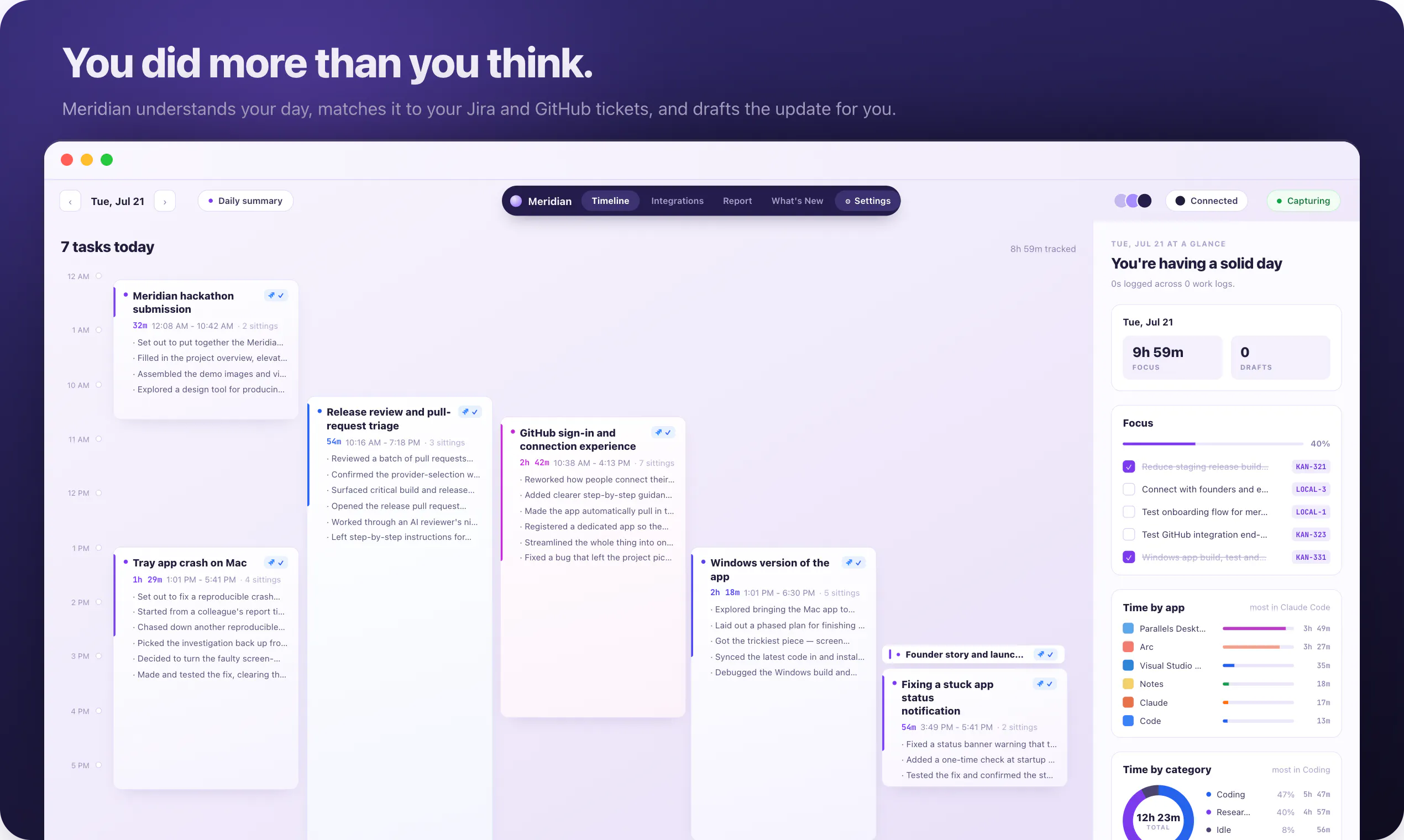
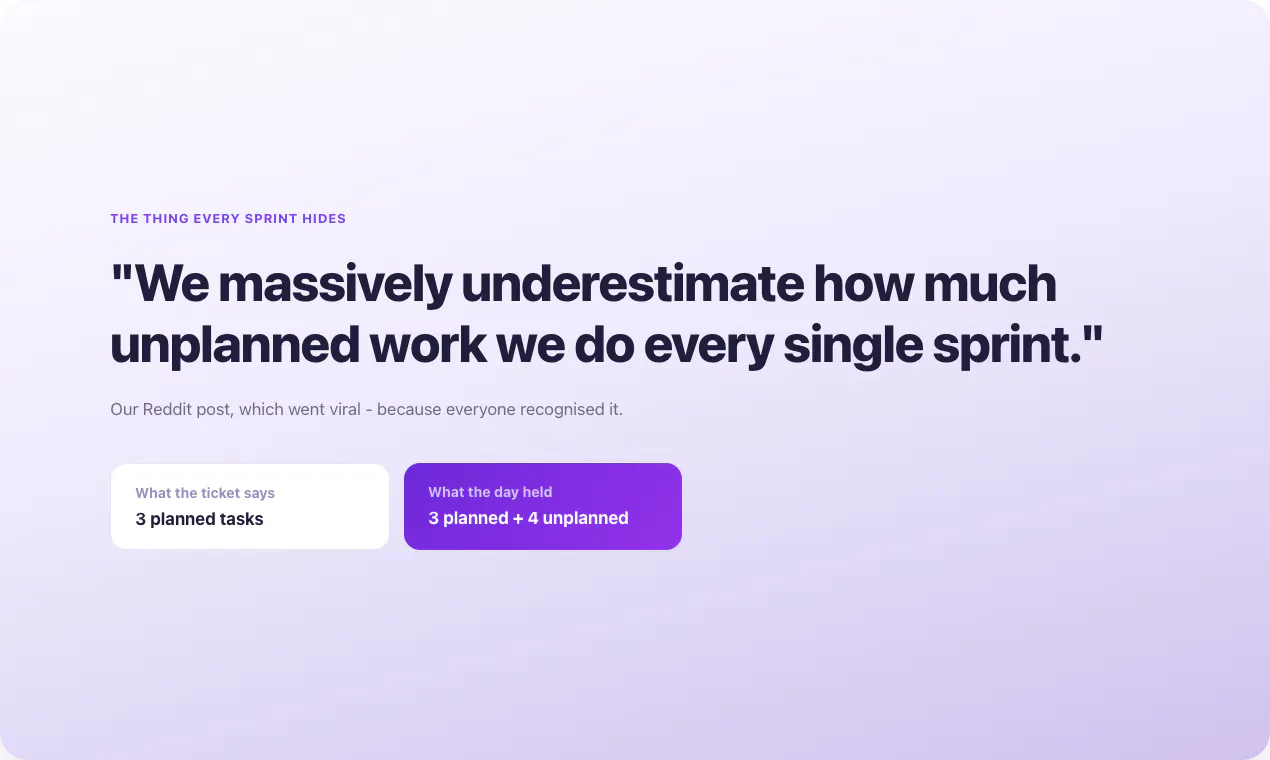
查看原始信息
Account Benchmark
Drop in 2 Instagram or TikTok accounts and our AI watches both to compare their content strategies, stats and vibe side by side. See the real playbook behind any 2 accounts. Free to run.
Hey PH! I'm Yuri, co-founder of Oriane. Tool #5 on my "10 weeks to build 10 free tools" challenge This one is the Account Benchmark. When comparing 2 brands or deciding which of 2 creators to work with, you almost always end up comparing accounts. Same niche, different vibes, but which one actually performs better, and why? Follower count only won't tell you. Neither will scrolling both feeds side by side and eyeballing it. So you end up doing it manually. Opening two tabs, screenshotting stats, trying to guess who's really winning and on what. We built a huge infrastructure that watches and listens to millions of videos across TikTok and Instagram so you don't have to. This free (no signup) tool is a small slice of that, using our API. Paste any 2 Instagram or TikTok url. Our AI watches both accounts' recent videos and puts them head to head: who's leading on views, engagement and growth, how each one's content mix breaks down by topic, the actual hooks each one opens with, and how they've trended week over week. The full playbook behind two accounts, not just a follower count. All free. No login. No sales call first. I'd love your feedback: which 2 accounts have you always wanted to put side by side but never had the data to actually settle it?
2
回复

Julien here, cofounder of Oriane.


The problem we're solving with this free tool is simple. Every brand and creator watches a rival account. But comparing two feeds properly means watching weeks of videos on both sides, so nobody actually does it. Strategy decisions end up running on vibes and follower counts.


So this tool does the watching for you. Drop in two Instagram or TikTok accounts. The AI watches both feeds, breaks down each account's hooks and content mix, and lines up the stats side by side: views, interactions, engagement rate, posting rhythm. You can even send the whole report as PDF slides.


Free. No signup. Under a minute.


We ran it on @cocacola vs @drinkpoppi. Coca-Cola has 3.2M followers and pulled 15.5M views over the period. Poppi has 662K followers and 5.6M views. But poppi gets a 3.1% engagement rate against Coke's 0.6%, and about double the interactions. The giant wins reach, the challenger wins attention.


The fun part for this community: the whole thing is a thin app on the Oriane API. Yuri built it in under a day with vibe coding. The API does the seeing and hearing inside videos, the app is just UI on top.


If you want to build your own tools on it, happy to get you access.


Would love your feedback on this tool, and tell us what other free products we should build in the next 5 weeks?

1
回复

Thibaut here, CTO of Oriane.

Technical angle on this one. The tricky part isn't the side-by-side UI, it's making two accounts you know nothing about actually comparable. Different posting frequency, different formats, wildly different audience sizes. Raw stats alone won't tell you who's winning. They just tell you who posts more.

So each account gets processed independently through the same pipeline (vision, audio, caption, all fused per video), then lined up on the same axes so you can actually compare apples to apples. Topic mix, hook patterns, performance trends over time. That's what turns "who's really leading, and on what" from a guess into something you can actually answer.

Same setup as everything else we've shipped this month, running on the Oriane API, across both Instagram and TikTok, on demand.

Happy to go deeper on how we handle accounts with very different posting volumes, or how we normalize engagement across platforms that measure things differently. Fire away!

1
回复