Product Hunt 每日热榜 2025-12-03

PH热榜 | 2025-12-03

#1
Aha 2.0
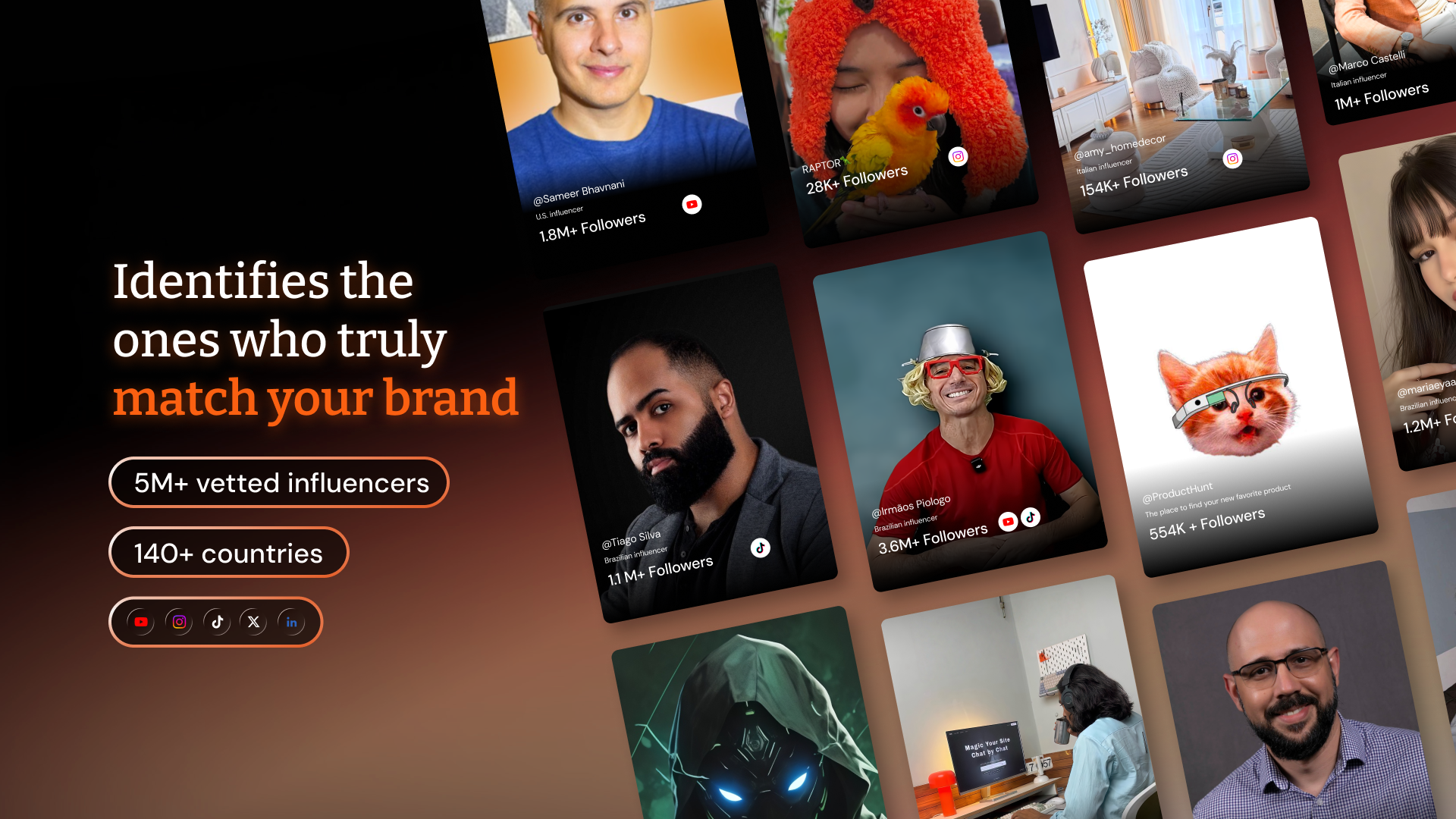
AI employee that runs influencer marketing from start to end
532
一句话介绍:Aha 2.0是一款面向AI公司的“AI员工”,它通过自动化匹配、触达、谈判、合同、内容审核、跟进及效果追踪全流程,解决了影响者营销中执行过程混乱、低效、高度依赖人工的核心痛点。
Branding Artificial Intelligence Influencer marketing
AI营销自动化 影响者营销 B2B SaaS AI员工 营销效率工具 创作者经济 全流程管理 全球多语言 绩效追踪 反欺诈过滤
用户评论摘要:用户反馈积极,认可其解决营销执行痛苦的潜力。主要问题集中于:是否支持多语言/全球活动、如何保证影响者质量与真实性、匹配算法逻辑、定价与试用方式、以及针对特定平台(如X)的支持情况。团队回复详细,展现了产品成熟度。
AI 锐评

Aha 2.0的叙事从“工具”升维为“AI员工”,这不仅是营销话术,更是对其产品内核的精准定义。它瞄准的并非泛用型营销市场,而是精准切入“AI公司”这一高增长、亟需建立市场认知的垂直赛道,显示了深刻的战略聚焦。

其宣称的“全流程自动化”是最大卖点,也是最大挑战。从评论看,团队通过真实战役(300+品牌)积累的数据与反欺诈多层过滤系统,构成了关键壁垒。这回应了影响者营销最隐秘的痛处:数据水分与信任成本。将CPM降低23%、影响者库扩至500万等量化指标,是向市场递交的硬核成绩单。

然而,其商业模式暗含门槛。“先充值、后付费、不交付可退款”的模式,虽彰显了对交付结果的信心,但也将小型或试验性客户挡在门外,与“为AI公司服务”的定位中可能存在的初创企业产生了微妙矛盾。无传统免费试用,仅提供演示,进一步验证了其服务重交付、高定制、可能高客单价的B2B企业级服务本质。

真正的价值不在于替代了人类的“执行”,而在于它试图将人类营销者从繁琐的“协调”与“甄别”中解放出来,晋升为纯粹的“决策者”与“审批者”。这符合AI应用的终极逻辑:不是模拟人类,而是重构生产关系。若其算法匹配的精准度与跨文化沟通的本地化能力经得起大规模验证,它有望成为影响者营销领域的“基础设施级”智能代理,而不仅仅是一个效率软件。但其成功高度依赖于生态的构建——足够多优质品牌方与影响者的双边网络效应,这是其接下来需要跨越的真正鸿沟。

查看原始信息
Aha 2.0
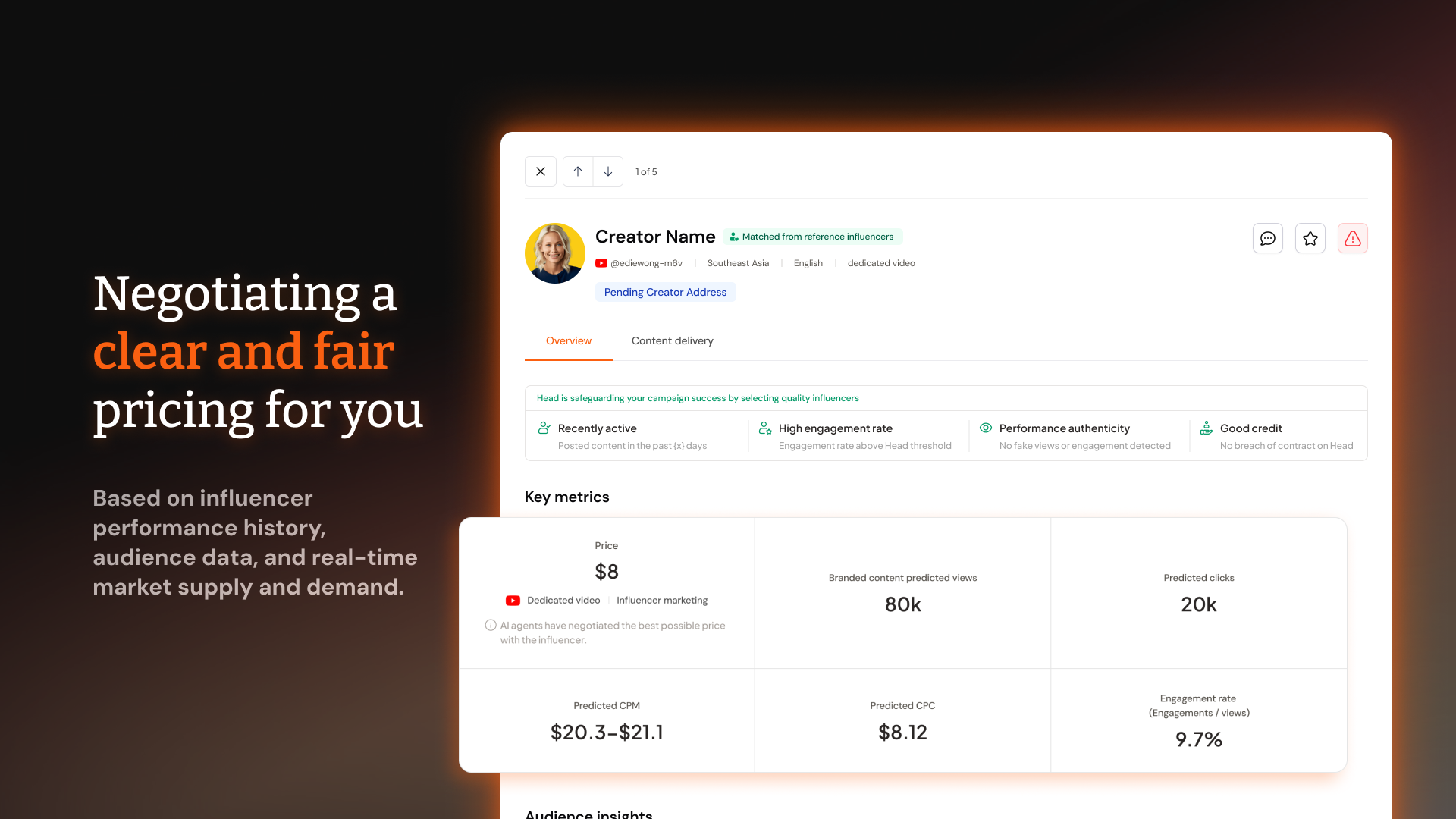
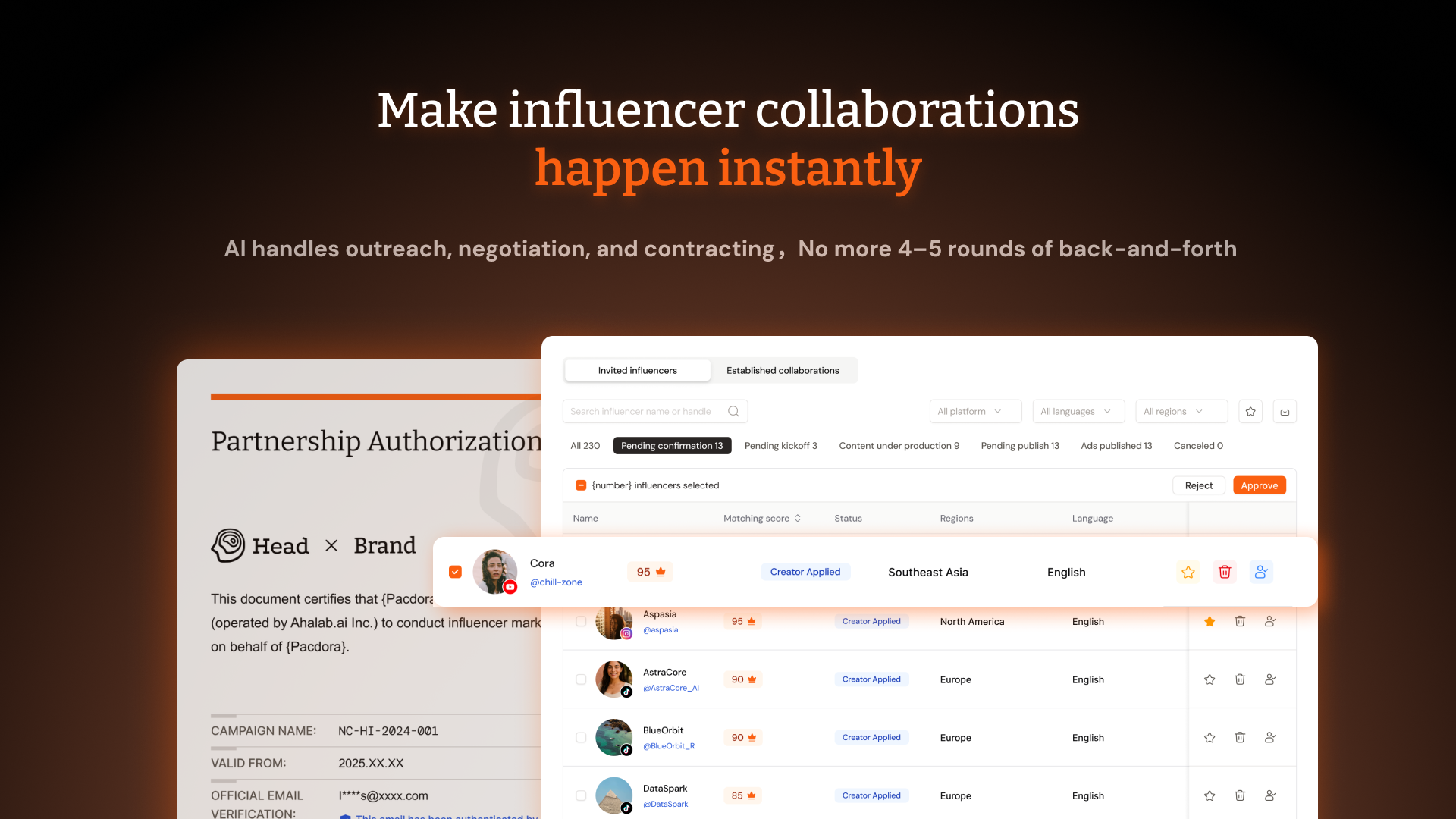
Built for AI companies. Aha handles matching, outreach, negotiation, contracts, content review, follow-ups, and performance tracking. All you do is review and approve, just like a boss. Shaped by real campaigns with 300+ global brands, Aha 2.0 delivers a safer, more reliable way to work with influencers.

Hey Product Hunt 🚀 I’m Kay, founder of Aha.

I’ve spent the past seven years deeply involved in influencer marketing, and I know just how painful it can be. For a long time, I watched teams struggle with the same challenges my own team faced. It took weeks just to find influencers, pricing was pure guesswork, follow-ups often went late into the night, and content still had to be reviewed manually across multiple tools.Everyone says influencer marketing works, but very few are willing to admit that the execution is chaotic, slow, repetitive, and completely dependent on people.

That reality is why we created Aha. Today, we’re excited to introduce Aha 2.0.

It built for AI companies that want to gain exposure, and scale through influencer marketing without the usual chaos. It acts like your 24/7 AI employee that runs influencer marketing from start to end: finding creators, outreach, negotiation, contracts, content reviews, follow-ups, and performance tracking.

You decide. Aha executes.

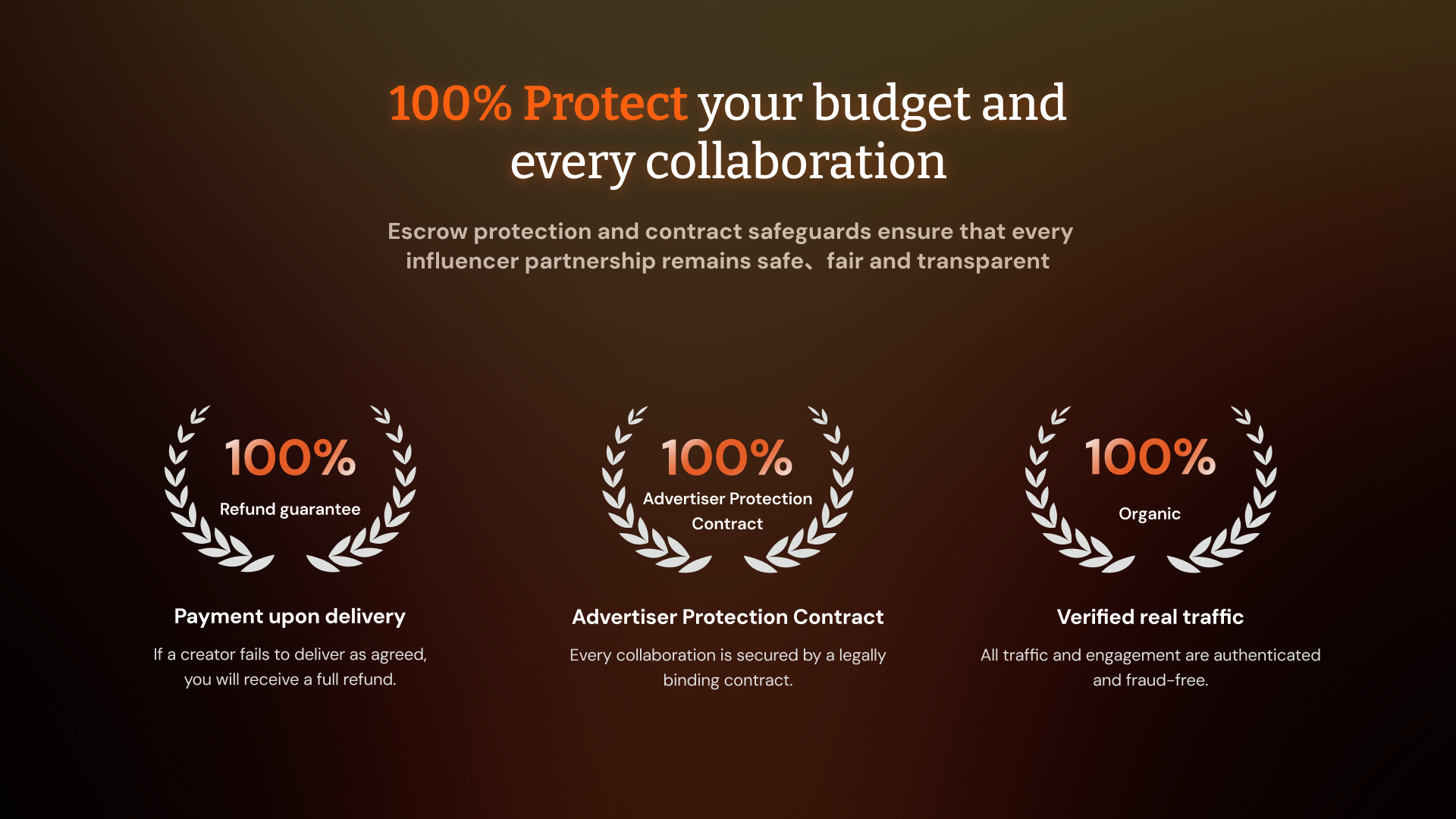
💰Pricing is simple: Top up first. Only pay after influencer delivered. Refunds available.

Aha 2.0 means a lot to us. If you try it out or share feedback, we’d truly appreciate it. Thank you for being here 🙏✨

37
回复

@kaixin_feng Great focus on AI companies! Is there a specific niche/size of creator the platform excels at finding?

31
回复

@kaixin_feng Huge congrats on the launch of Aha 2.0, Kay! 🚀 Having an AI handle the chaotic side of influencer marketing sounds like a game-changer for scaling teams. I'm curious, does the AI handle negotiations based on a set budget range, or do we need to approve each price point manually?

0
回复

@kaixin_feng Love the concept. It’s always tough for brands to measure influencer performance and real ROI. What metrics does this tool provide to show whether an influencer is actually an effective partner?

0
回复
I haven’t tried it yet, but looks very promising. I spent the last few weeks trying to find influencers to work with, and it’s such a pain. Good luck guys!
30
回复

@alikimovich Thank you! Hope you have a try . If Aha can take away the pain of finding influencers for you, that would honestly make us really happy. 🙏

29
回复

Congrats @luvian_yu and team! Great hunt @zaczuo !

Сan Aha support multi-language campaigns or is it primarily English-focused for now?

30
回复

Thanks @kate_ramakaieva . Yes, Aha fully supports multi-language, global campaigns.

Aha works across 140+ countries and languages. When you create a campaign, you can simply choose the target country and language.

The AI also handles localized communication, so outreach and negotiation can happen in each creator’s native language, no manual translation needed.

So whether you're running campaigns in English, Spanish, Korean, Japanese, German, or across mixed regions, Aha can manage and execute it from start to end.

Happy to share more if you’re exploring global markets!

29
回复

Lately I’ve started to see some Reddit posts that are unobviously written by AI and are liked by AI accounts. They (very gently!) promote some of their stuff by giving some valuable information as well. The key point is that people notice that and despite AI agents itself upvote such posts as hell, real people hate it when notice that something is off and it looks promote-y and fishy.

How do you solve this problem in your product?

30
回复

@nikitaeverywhere 

Great question 👍

Honestly, this is one of the biggest problems in the influencer space. There’s a huge amount of noise out there: promo accounts, fake engagement rings, bought followers… all of it makes the data feel unreliable.

That’s exactly why we built a multi-layer filtering pipeline inside Aha. Before a influencer even has the chance to be recommended, we’ve already removed the obvious bad actors through blacklists and behavior checks. Then we filter out content with unnatural engagement patterns. And right before a influencer joins a campaign, we run one more real-time check to make sure their recent data still looks healthy.

Influencer who fail these checks either get down-ranked or removed completely, so what you see in Aha is the cleaner, more trustworthy side of the ecosystem. That’s also why the recommendations tend to feel “real” instead of spammy or AI-generated.

For us, the entire goal is simple: only let brands work with influencers who are authentic, consistent, and actually deliver. Everything else we actively filter out !!!!

29
回复

I have landed two campaigns with Aha, and the number and quality of KOLs are very high, and the recommendations are also very accurate. Expect AHA 2.0

30
回复

@julie_su Really appreciate you sharing this. Hope you’ll love Aha 2.0 even more 🎉

2
回复

I need some tools to facilitate my kol marketing. Is there a free trial?

30
回复

@charlenechen_123 

Thanks for asking!

Aha isn’t a single-step tool. It helps you run influencer campaigns from start to end. Since a live campaign involves real creators and real collaboration costs, it’s difficult for us to offer a traditional free trial.

If you’d like to get a clear sense of how it works, welcome to book a demo on our website. Our team would be happy to show you everything step by step.

28
回复

Extremely painful to source, outreach and arrange influencers for my content marketing - Aha saves me! Will you display reviews and leaderboard of those influencers in future?

30
回复

@cruise_chen 

Thanks!

Totally feel you. Doing influencer marketing the traditional way is truly painful. That’s exactly why we built Aha — to let AI take care of the dirty work so people can focus on real decision-making and the things that actually matter.

Right now we already have an influencer scoring system based on past delivery performance. We also show best-price benchmarks, audience insights, and estimated CPC/CPM. All of this makes it much easier for brands to choose the influencers they ultimately want to work with.

29
回复

Really interesting! How does Aha choose which influencers match a brand or campaign is it based on niche, engagement, or location?

30
回复

@getsiful Great question!

Matching on Aha happens in two steps. The first step is setting up your campaign. You need to define your product’s core value, your target audience, and the markets you want to reach. Then ,Aha has a clear brief of what your campaign requires.

The second step is powered by Aha’s LLM based matching system. It does not rely on tags or historical clicks. Instead, it allows AI to work like a marketing expert by analyzing a influencer’s content, audience profile, niche, region, and many other factors. Through multiple rounds of recall, coarse ranking and fine ranking, Aha identifies the influencers who are the best fit for your brand and campaign.

30
回复

Aha is an excellent product. I've been using it for a long time, and our company's external KOL collaborations are almost entirely through Aha. It's very reliable.

29
回复

@mingji Thanks soooooo much❤️ It means a lot to us. We’ll keep making it better, and hope you’ll enjoy Aha 2.0!

29
回复

i have personally singed from my two accounts but never got any deals 🥲 pls let me know where i am wrong ( btw i signed from X accounts)

28
回复

@kshitij_mishra4 Thanks so much for joining us!

Just a quick note: the X/Twitter creator channel is temporarily offline on Aha. We’ve seen too much fake and low-quality data coming through that platform, so we paused it to protect collaboration quality for every brands.

We’re upgrading our anti-fraud and data checks right now. Once the channel is solid, we’ll bring it back — and real deal opportunities will follow.

Appreciate your patience, and thanks again for joining Aha

29
回复

Nice launch—love the concept of an AI-powered influencer marketing “team” working 24/7.

From a clarity & conversion lens: when a brand manager opens Aha for the first time, what’s the single belief you want them to hold in the first 10-15 seconds?
Is it:
• “I can launch an influencer campaign faster than ever before.”
Or:
• “I no longer need to manage dozens of creator relationships manually.”
Because in growth tools like this, the biggest barrier often isn’t feature count—it’s belief.
Curious how you’re framing that for first-time users.

3
回复

@joydeep_pandey 

Great question 🎉 and I’m really glad to reply!!

The core belief we want users to form in the first few seconds is: “Aha is your 24/7 influencer-marketing employee that runs the entire process from start to end.”

Once you see it as an employee, everything becomes clear. It means you no longer need to be stuck doing all the painful, repetitive work yourself.

No more spending days finding the right influencers.

No more manually emailing people one by one.

No more endless back-and-forth.

No more chasing influencer contracts and approvals.

Scaling quickly is more of a result. When efficiency improves, you naturally end up working with more influencers in less time.

What stays in your control are the key checkpoints: setting up a campaign, confirming the ready-to-collaborate list, and reviewing content. You only spend time on the decisions that truly matter, and Aha takes care of everything else.

2
回复

Hi! I’m Francis, CPO of Aha.


Aha 2.0 comes with several upgrades shaped by working with more than 300 global brands. We focused on making the entire experience smoother and more reliable. 

Algorithm & data upgrades

  • Across 300 real brand campaigns, CPM dropped 23% vs March.

  • Vetted, high-quality influencers increased from 2M to 5M

Outreach efficiency

  • 2× higher acceptance rate at larger outreach volume

  • AI-generated personalized messages and automatic reply classification

  • Multilingual localization for efficient global collaboration

Trust & delivery

  • Creator credit system & delivery scoring for long-term quality assurance

  • 100% refund protection for non-delivery, fake data, or low-quality content

  • Enhanced verification for outreach domain authenticity

  • Multi-layer anti-fraud system ensuring data integrity and reliable delivery

And there’s much more in this release, all built toward one goal:making influencer collaboration faster, safer, and more reliable. 

Would love for you to give it a try and share any feedback ✨

3
回复

As someone who runs lots of small campaigns, I really appreciate tools that simplify the chaos. It doing matching, outreach, contracts and tracking for me feels like next-level support. I'd love to try this and see how much work it really saves.

2
回复

@sukumar_sukumar1 Thanks for the love! Welcome to sign up on our website and try it out. If you have any questions, you can also book a demo. Our team is always here to help.

0
回复

This feels like something I personally needed months ago. Managing influencers manually drains so much time and the back-and-forth always slows me down. An AI that handles everything while I just review like a boss sounds unbelievably helpful. I'm genuinely curious to test this.

2
回复

@thomas_jack4 Thanks so much for sharing this! We’ve been through that same pain ourselves, and that’s exactly why we built Aha to handle all the back-and-forth and manual coordination. If you’re curious to see how different the flow feels, you can book a demo on our website and we’ll walk you through it step by step 🍻

0
回复

I'm honestly impressed by how it handles influencer campaigns fromstart to finish. As someone who usually juggles outreach and negotiations myself, having an AI employee take over the messy parts feels like a dream. I'd love to try this flow and see the difference.

2
回复

@robert_smith52 Wow, thank you soooo much! That means a lot to us. If you’d like to give it a try, you can book a demo on our website. Our team will walk you through everything step by step 🎉

0
回复

Really liked the idea! I’ve noted your project, and we’ll get in touch after launching our startup (we’re finishing the development now). Meanwhile, I have a question: do you have famous travelers in your database? We specifically need travel bloggers.

0
回复

Ditching tags for LLM vibe-matching is the right move. Keywords never really capture the audience's feel. Nice work.

0
回复

Huge congrats on the launch—been following closely! The “approve first” step is smart; I can’t stand tools that ping creators without my okay. Super intriguing product, and I’m especially curious how you handle influencer matching and outreach—it sounds like a big, well-orchestrated operation.

0
回复

Ok interested! Though too lazy to fill in form to get demo 😅

0
回复

Congrats on the launch! Automating the messy parts of influencer marketing from discovery to follow-ups feels like a massive relief for teams that are stretched thin. What part of the workflow did you find the hardest to automate?

0
回复

@Aha Congrats on the launch! AI for end to end influencer marketing is ambitious. Running everything from discovery to campaign management in one place saves teams huge amounts of time.

How does Aha handle influencer vetting and authenticity checks? Are brands able to customize their outreach templates while maintaining the AI efficiency?

Curious about how the ROI tracking works across different platforms.

0
回复
This looks incredibly promising! As a founder navigating the complexities of getting our AI product seen, influencer marketing is definitely on our radar, but the manual effort always felt daunting. The idea of an AI employee handling everything from outreach to performance tracking is a game-changer. I'm especially interested in how Aha 2.0 streamlines the negotiation and content review process. Can't wait to give this a try!
0
回复

Congrats on the launch! 🎉 Love the "approve first" feature — no one wants spam. Really curious about how the influencer matching works!

0
回复

Wow this looks interesting! I've found it quite challenging to explore influencer marketing for B2B AI products through agencies but more often than not, their database of influencers lean more towards e-commerce / FMCG / B2C.

0
回复
🤌
0
回复

A great tool to manage your influencer campaign!

0
回复

@pasha_tseluyko Thanks soooo much, hope you enjoy it.

0
回复

How does Aha identify and rank influencers for a campaign?

0
回复

@abod_rehman 

Happy to explain!


Matching on Aha starts with your campaign setup. You define your product’s selling points, your target audience, the markets you want to reach, the platforms you want influencers from, your budget, and so on. Once everything is set, Aha can begin the matching process.

The matching doesn’t rely on surface tags like “AI” or “tools” . Instead, AI works more like a marketing expert that understands both your product and the influencers.

  • In the recall stage, it looks at your product category and target audience and pulls a broad group of influencers who align with that profile.

  • In the coarse-ranking stage, it filters that group based on influencer activity, your target regions, content performance, and whether their behavior looks healthy and trustworthy. This helps ensure the influencers are real, active, and suitable for collaboration.

  • In the fine-ranking stage, it checks deeper promotional fit, such as audience overlap and content-theme alignment with your product.

The final output is a high-confidence list with matching scores, giving you influencers who truly fit your brand and campaign.

0
回复

Love this! Managing influencers from end to end is no small thing.

One question though,
what happens when a situation gets emotional or requires human judgment?

Does Aha have a way to handle those cases differently?

0
回复

@hee323 

Hah, great question!
In the influencer outreach step, Aha uses intent detection and automated replies. Based on the influencer’s wording and tone, Aha takes different actions. For example:

  • If an influencer agrees to collaborate, Aha guides them into the platform to complete the acceptance and content delivery process.

  • If an influencer has questions, Aha pulls from our continuously updated knowledge base of common questions and responds automatically.

  • When a situation becomes complex or unclear, such as emotional conversations or anything that requires human judgment as you mentioned, Aha flags it and turns it over to our operations team for manual handling.

0
回复
#2
Pylar
Securely connect your entire data stack to any agent
423
一句话介绍:Pylar是一个安全的AI智能体数据访问控制层,它在企业将AI代理连接到内部结构化数据(如数据仓库、CRM)的场景下,解决了因权限失控导致的数据泄露和成本激增的核心痛点。
Developer Tools Artificial Intelligence Security
AI智能体安全 数据访问控制 MCP工具 数据治理 代理安全层 数据沙箱 审计日志 成本管控 企业级AI
用户评论摘要:用户普遍认可其解决代理乱查询和数据泄露痛点的价值。核心关注点包括:具体如何限制查询开销和速率;权限策略能否随业务灵活调整;以及如何统一监控跨平台代理行为。创始人详细回应了技术细节,并引用真实安全事件佐证产品紧迫性。
AI 锐评

Pylar切入的并非一个痒点,而是企业AI应用走向深水区时必须面对的“硬核”问题:如何在赋予智能体行动能力的同时,避免其成为系统的“特权漏洞”。其产品逻辑清晰且致命——用“沙盒视图”取代原始数据库访问,这本质上是在数据层与代理层之间插入了一个策略执行与审计中间件。

它的真正价值不在于技术多么颠覆,而在于将传统数据治理理念(如最小权限原则、访问控制)进行了“AI原生”的重构。传统数据库ACL针对的是用户和应用程序,其交互模式相对可预测;而AI代理是自主、不可预测的“黑盒”,可能因提示词注入或自身推理错误而触发异常行为。Pylar通过预定义的、沙盒化的SQL视图,为每个代理构建了一个绝对安全的数据操作空间,同时将策略控制(行数、频率、模式)和全局审计从“事后补救”提升为“事中阻断”。

然而,其挑战也同样明显。首先,它依赖于企业已具备清晰的数据视图定义能力,这本身是一个高门槛的数据工程工作。其次,其商业模式是“为风险付费”,在AI代理引发重大安全事故成为普遍头条之前,说服企业为此投入可能需要强大的市场教育。最后,与各大Agent Builder的集成深度和稳定性,将直接决定其“控制平面”的实际效力。

总体而言,Pylar是一款极具前瞻性的基础设施产品。它不直接生产AI能力,而是立志成为AI时代的“数据防火墙”和“成本阀门”。如果它能成功建立生态,其角色将不可或缺;若巨头平台将类似功能内置,它则面临被边缘化的风险。这是一场关于AI时代基础设施定义权的卡位战。

查看原始信息
Pylar
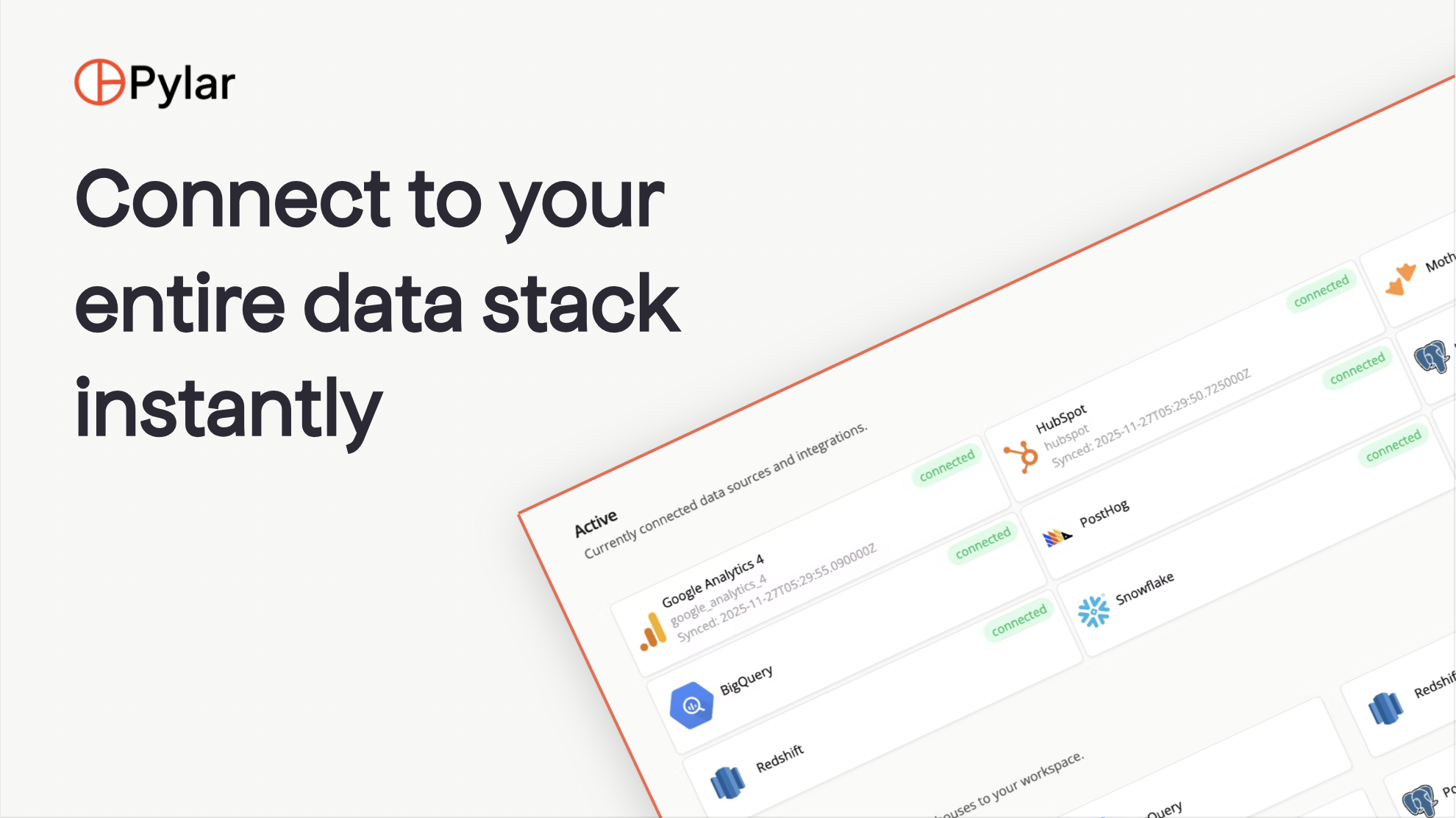
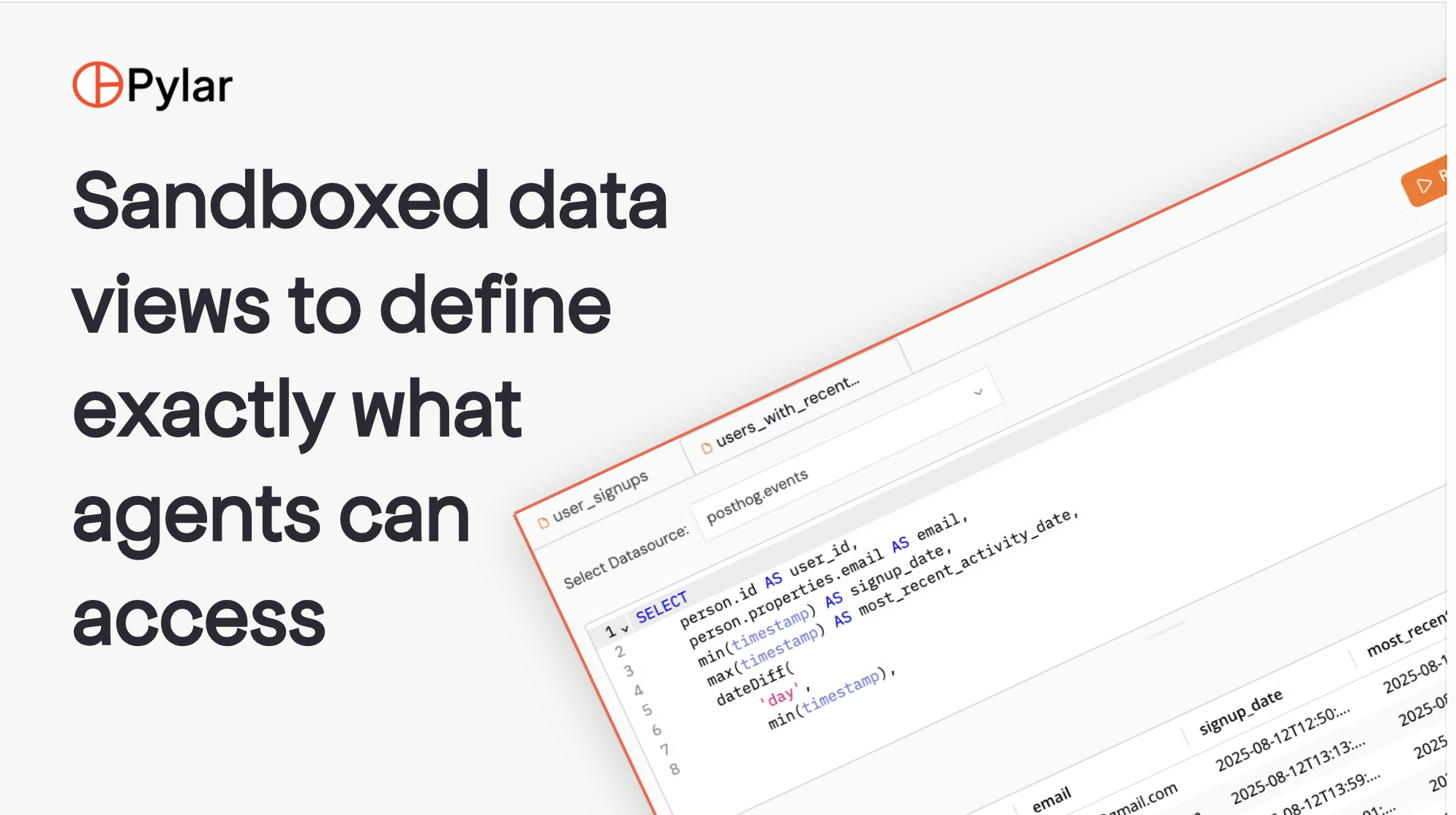
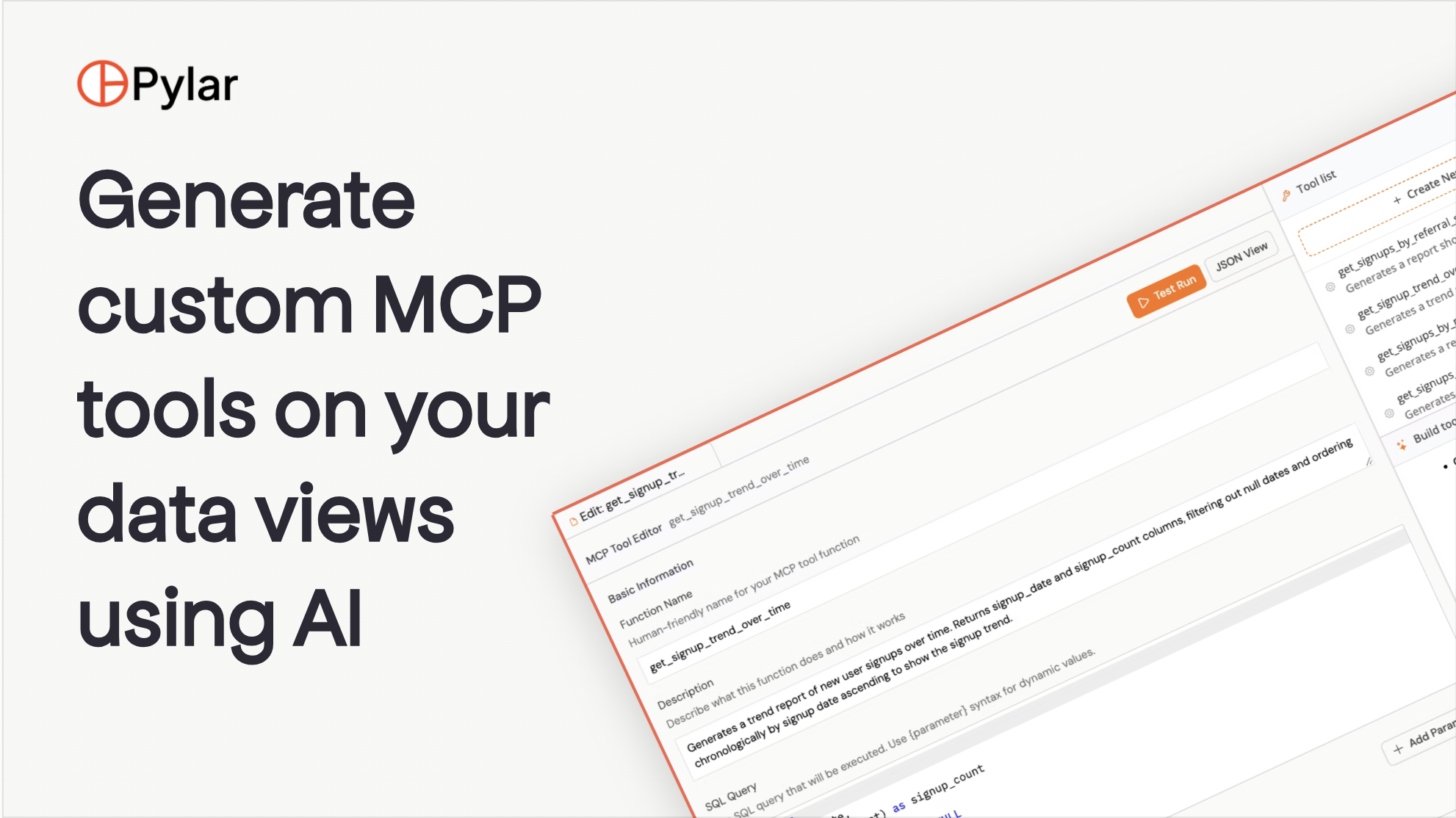
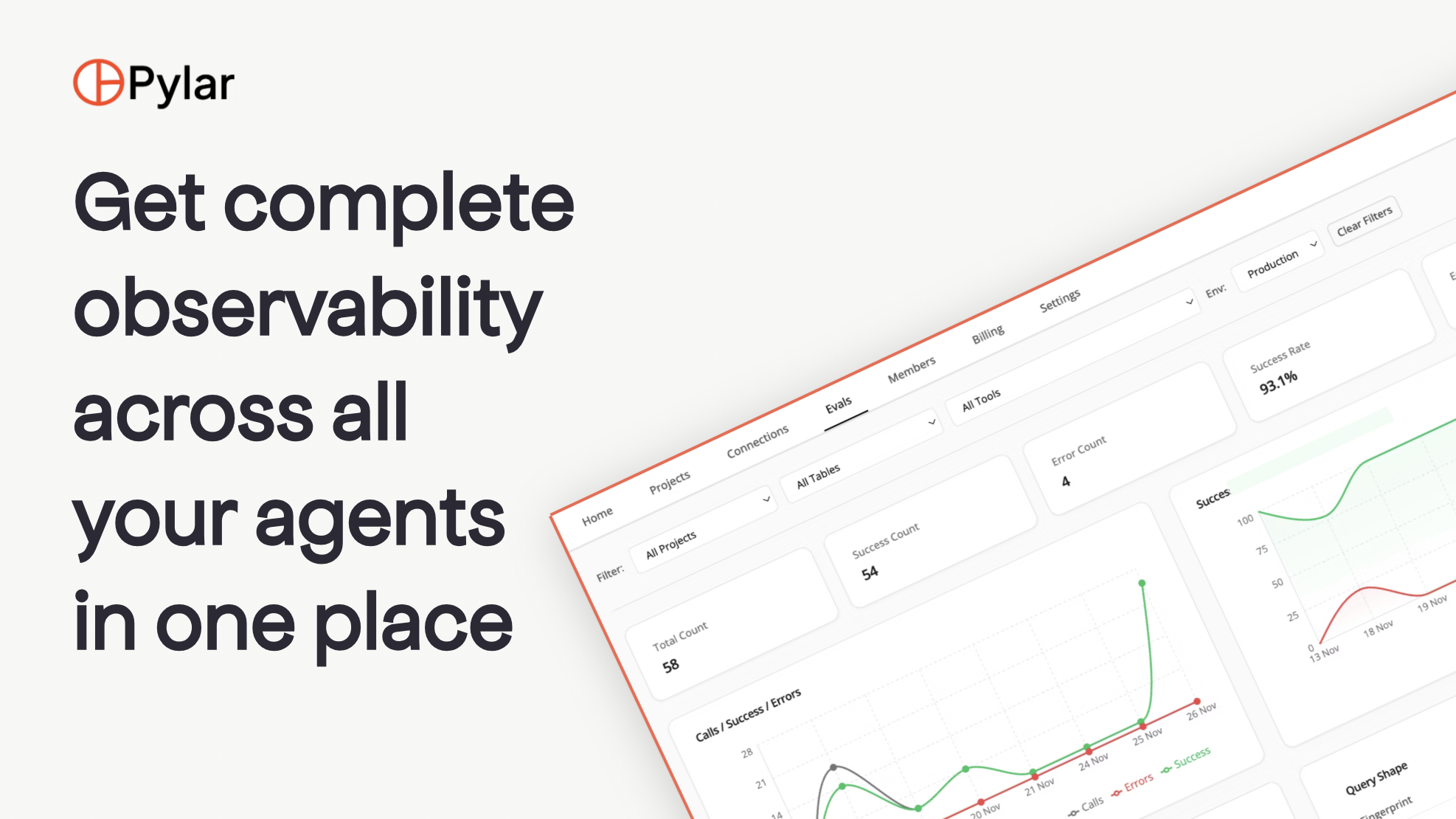
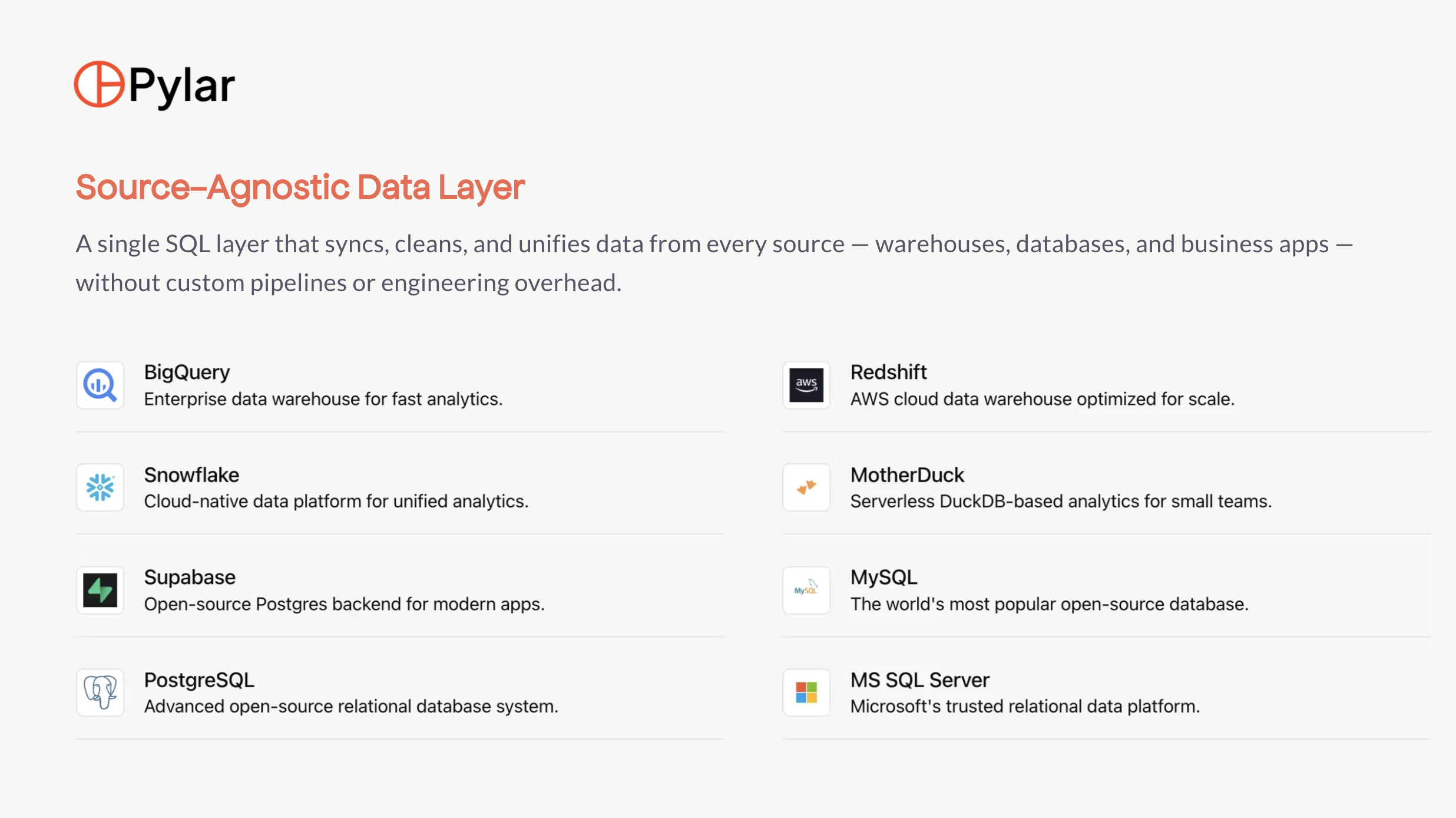
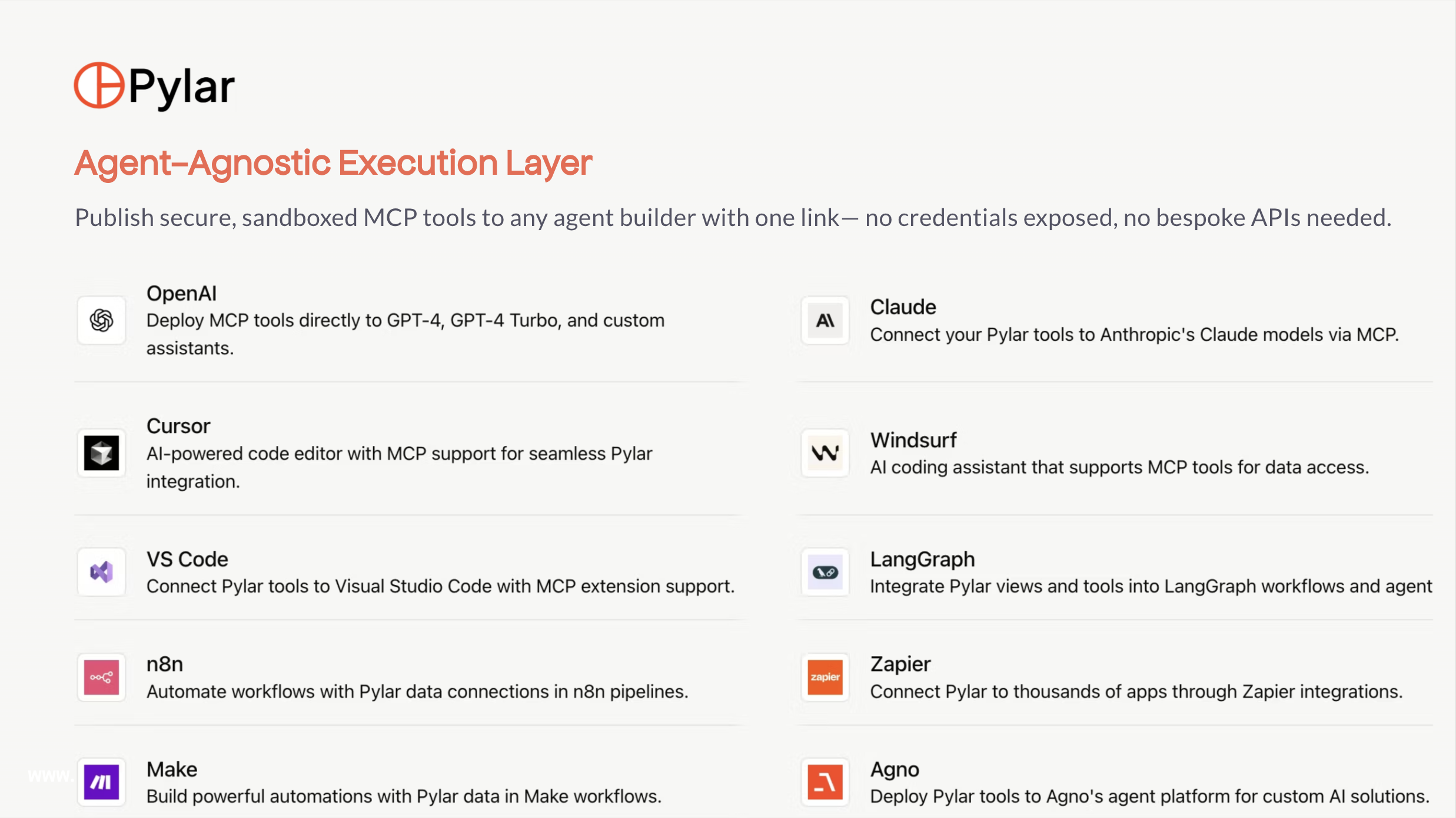
Pylar connects agents to your data stack, safely. Connect to any datasource, define exactly what an agent can see, turn those views into custom MCP tools, and publish them to any agent builder - with full observability across every AI deployment.

👋 Hey everyone, I'm Hoshang, Co-founder of Pylar.

Super excited to finally share what we’ve been building.

Agents today are great at reading docs, invoices, websites, transcripts -
but the moment you want them touching structured systems where sensitive customer data is stored e.g Snowflake, Postgres, CRMs… things get tricky.

We kept hearing the same two blockers over and over:

  • Agents may over-query and silently spike warehouse bills

  • Agents are at a risk of leaking sensitive data (PII, financials, customer history) because access isn’t properly scoped

And right now, teams have two options:

- Off-the-shelf MCP servers : 18,000 exist, ~10% are malicious, and most are exploitable or too generic for production.
- Custom API wrappers : months of engineering bandwidth used up in building endpoints, policies, and governance… all brittle, fragmented, and hard to audit.

This forces companies into a painful choice: lock agents down so much they become useless, or open things up and risk a security incident.

Traditional database ACLs weren’t designed for autonomous systems. Custom APIs are hard to build, govern and control for agent level interactions.

Pylar exists to fix this. It’s a governed access layer between your agents and your entire data stack.

You connect your datasources → define sandboxed SQL views → turn them into MCP tools → ship them to any agent builder… all from one control plane, with full observability.

What you get out of the box:

  • Agent-specific sandboxed views (never raw DB access)

  • Enforced permissions & guardrails

  • Automatic breach containment + audit logs

  • Publish to any agent builder (n8n, Cursor, Claude, LangGraph, etc.) via a single secure link

We’re already working with some fantastic data, platform, and security teams - everything from internal analytics copilots to customer-facing AI features wired directly into production data.

If you’re exploring structured-data access for agents, I’d love to hear your thoughts, help you build your use case or just share best practices on what we've been seeing with our customers. You can book a call with me here if you'd like.

Thanks for checking us out — means a lot. 🚀

- Hoshang
Co-founder, Pylar

15
回复

@hoshang_m Love that you’re tackling agent over‑querying, feels like a pain everyone’s quietly dealing with right now.

2
回复

@hoshang_m Congrats on the launch! The UI looks super clean. I'm launching my own app today too, so I know how much work goes into this.

0
回复

Congrats on the launch @hoshang_m and team! Seems like you're threading the needle between agentic adoption and security risk. Great work 👏

0
回复
Hey Hoshang, congrats on the launch! That stat about 10% of MCP servers being malicious is wild. I’m curious was there a specific moment that made this feel urgent for you? Like did you witness (or hear about) an agent accidentally exposing customer data, or maybe a team get hit with a surprise warehouse bill they didn’t see coming?
4
回复

@vouchy Thanks for the question, Van! Instances of agents leaking sensitive data is on the rise, recently Salesforce had a security incident where their ai agents accidentally leaked sensitive crm data through through their agentforce powered web-to-lead form. attackers injected a malicious prompt on website forms to make the AI share internal data with outside domains.

basically, hiding malicious instructions inside normal text. the ai read it… and pulled private data it had permission to see. I did a deep dive here, you might find this interesting - https://www.pylar.ai/blog/forcedleak-salesforce-agentforce-vulnerability-deep-dive

3
回复

Finally, someone tackling the agent-to-DB mess. I’ve nursed a painful Snowflake bill from a runaway agent. Sandboxed views + audit logs feels sane. How do you cap query spend per agent? Might wire this into Cursor first, then LangGraph if it holds up.

4
回复

@alexcloudstar Thanks Alex! Right now, we cap spend in two ways:

1. Every agent only sees a sandboxed view, never your raw warehouse.
So even if it tries something wild, it can’t fan out into expensive tables or join half your schema.

2. Query-level guardrails on the tool itself.
We let you set limits on row counts, frequency, and even block certain patterns (e.g. unscoped scans) via policies. If an agent tries to exceed it, Pylar shuts it down and logs the attempt.

On top of that, you get full audit logs + costs per tool call so you can see exactly which agent is expensive before the bill shows up.

Looking forward to having you try us out!

2
回复

Congratulations on the launch 🎉 🎉 !!

3
回复

@shubham_pratap Thanks for the support!

1
回复

@vishalbajaj Great product! All the best for your launch 🎉

2
回复
@zethleezd Thank for the support 🙌🏼🙌🏼
0
回复

Does Pylar throttle or rate-limit agent queries in any way? Congrats on the launch.

2
回复

@himani_sah1 Great question and thanks for the support. Rate limiting queries is going to be live on the product next week, but for now you can set additional guardrails like row limits and scoped filters with policies between your data and the mcp tools so an agent can’t over-query or wander outside the slice of data you’ve exposed. And every attempt gets logged so you can see if an agent is starting to push its boundaries.

0
回复

Congrats on the launch @hoshang_m this solves a serious gap for teams working with sensitive, structured data. I’m curious how Pylar handles evolving permission needs over time. If schema or data-access policies change, can sandboxes and guardrails adapt without teams rebuilding the entire setup?

2
回复

@harkirat_singh3777 Thanks for your support! The sandboxed view is the “source of truth.” If your schema changes or your data-access rules shift, you just update the view in Pylar - the agents automatically start using the new version. No redeploying, no rebuilding tools, no touching the agent builder again.

We basically treat it like a control plane: you tweak the view or the policy once, and every connected agent adapts instantly.

1
回复

I could see how integrating Pylar’s AI-driven workflow automation could streamline content and data processes inside our tool, and I’ll go check it out to explore the possibilities.

1
回复
@jamesjacksonleachatx that’s awesome! Please let me know if you need help ironing out your use cases.
0
回复

It's an amazing idea. So can the agent run analytical queries in the DB as well?

1
回复

@chilarai agents can run analytical queries, but only within the sandboxed view you expose to them.

So if you include things like aggregates, joins, or computed fields in that view, the agent can use them freely. What it can’t do is hit your raw warehouse or run heavy, unscoped analytics outside the boundaries you’ve set.

Think of it like giving the agent a curated data view purpose built for the agent to do its task well.

Here's more on this- https://docs.pylar.ai/learn/creating-data-views/overview

1
回复

congrats on the launch!

1
回复

@marek_nalikowski Thank you!

0
回复

amazing product guys well done !!

1
回复

@othmane_khadri Thank you for your support!

0
回复
Congratulations @hoshang_m
1
回复

@neelptl2602 Thanks Neel!

0
回复

@hoshang_m Congratulations. And happy product launch.

1
回复

@huisong_li Thank you! 🙌🏻

0
回复

@huisong_li thank you for your support Huisong!

0
回复

Congrats Hoshang! Pylar seems like a huge step forward for safely connecting agents to structured data.

1
回复

@abod_rehman Thanks for the support, Abdul!

0
回复

How do you monitor agent behavior across different builders (Cursor, LangGraph, n8n, etc.) from one place?

1
回复

@nuseir_yassin1 Our evals layer helps you measure how different agents across platforms like Cursor, LangGraph etc are interacting with your internal data.

Because of that, you get a single place where you can see:

  • what each agent is querying

  • how often it’s hitting your data

  • what was allowed vs blocked

  • and any odd behavior you should know about

So even if one agent is in Cursor and another is in LangGraph or n8n, all their activity shows up in one dashboard.
Also, if you update a data view, a rule or add more mcp tools in Pylar - every agent using it automatically follows the new version.

More on this here - https://docs.pylar.ai/learn/evals/evals-dashboard

Does this help?

1
回复

Custom APIs are a nightmare and MCP servers are a minefield. This feels like the first real governed layer built for agents. Good work!

1
回复

@zerotox Thanks for your support!

0
回复
Pretty amazing @hoshang_m. Congratulations on the launch. I will surely give it a shot
1
回复

@thepmfguy Amazing! Thanks Gaurav. Do let me know if you need anything!

0
回复

Don't fully understand what this is. What's the top 3 use cases for this?

1
回复
Congrats on the launch. Do you have any list of data sources currently supports?
0
回复

Congratz on the launch team! With agentic AI this will be a must.

0
回复

@mertbaser Thanks for the support, Mert! Would love to have you try Pylar out!

0
回复
#3
Mistral 3
A family of frontier open-source multimodal models
396
一句话介绍:Mistral 3发布了一系列前沿开源多模态模型,通过提供从轻量到顶级的多种规格选择,让开发者和企业能够以更低的成本和更高的灵活性部署高性能AI模型,解决了在控制成本与基础设施的同时获取顶尖模型能力的痛点。
Android Open Source Artificial Intelligence
开源AI模型 多模态模型 混合专家模型 轻量级模型 企业级AI 高性能计算 Apache 2.0许可 成本效益比 前沿模型 本地部署
用户评论摘要:用户肯定其轻量高效、开源可控及多语言优势,并与GPT OSS、DeepSeek等模型对比。核心反馈包括:期待明确产品核心价值主张与“顿悟时刻”;指出大型模型在逻辑、代码和数学任务上仍有提升空间;并多次询问目标市场与最受益行业。
AI 锐评

Mistral 3的发布,与其说是一次技术飞跃,不如说是一场精心策划的生态卡位战。其真正价值不在于参数规模的简单堆砌,而在于通过“14B/8B/3B轻量模型+Mistral Large 3顶级模型”的产品矩阵,构建了一个覆盖从边缘计算到云端部署的全场景开源解决方案。Apache 2.0许可证是其最锋利的武器,旨在最大限度降低商业应用门槛,争夺开发者生态。

然而,产品介绍中“最佳性能成本比”的宣称与评论中“在逻辑、代码方面仍落后于DeepSeek”的反馈形成了微妙张力。这揭示了当前开源模型竞赛的核心矛盾:在追求参数效率、多模态和低成本部署的同时,模型的核心推理能力是否做出了妥协?Mistral似乎在用“轻量模型走量,顶级模型立标杆”的策略,试图兼顾市场广度与技术高度。用户反复追问“目标市场”和“顿悟时刻”,恰恰暴露出其市场定位与价值传达仍显模糊——它想成为所有人的选择,但尚未让任何人瞬间确信“非它不可”。

在GPT等闭源模型主导应用层、DeepSeek等以极致性价比突袭的夹击下,Mistral 3的“全家桶”策略是明智的分散风险之举。但其长期成功,将取决于Mistral Large 3能否真正跻身“前沿模型”第一梯队,以及其轻量模型能否在具体垂直场景中建立不可替代的部署优势。开源是入场券,而非护城河。

查看原始信息
Mistral 3
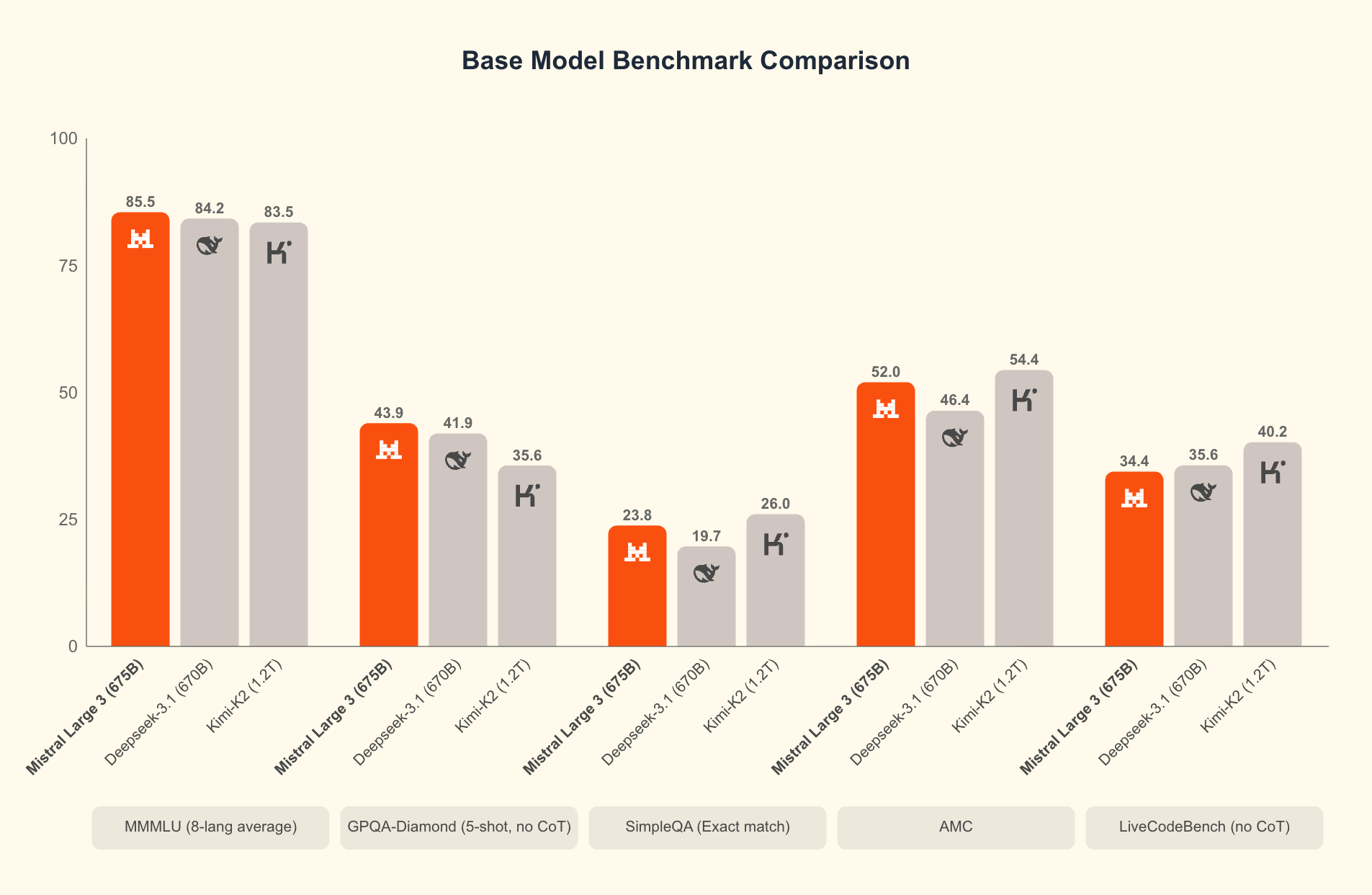
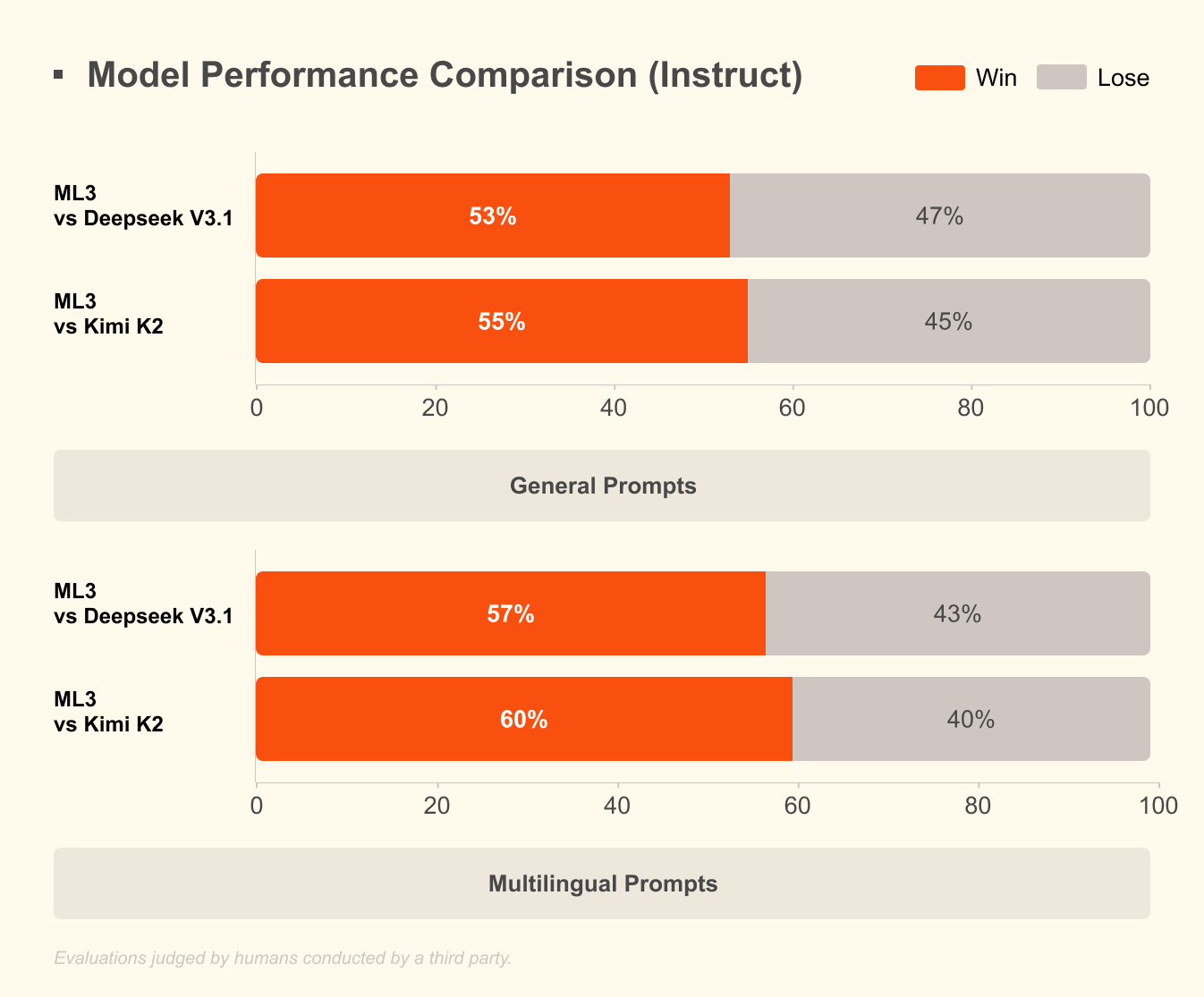
Mistral 3 includes three state-of-the-art small, dense models (14B, 8B, and 3B) and Mistral Large 3 – our most capable model to date – a sparse mixture-of-experts trained with 41B active and 675B total parameters. All models are released under the Apache 2.0 license. The Ministral models represent the best performance-to-cost ratio in their category. At the same time, Mistral Large 3 joins the ranks of frontier instruction-fine-tuned open-source models.

Impressive launch—especially how Mistral 7B pushes the boundaries of open models while remaining lightweight and efficient.

From a clarity & onboarding lens: when a dev or product team opens Mistral 7B for the first time, what’s the single belief you want them to adopt in the first 10-15 seconds?
• “I can deploy a best-in-class model without massive compute or bespoke infrastructure.”
Or:
• “This open model gives me enterprise-grade performance with full control.”
Because with foundational models, the biggest barrier isn’t parameters—it’s belief.
Curious how you’re framing that for first-time users and what the “aha moment” looks like in your product journey.

4
回复

Im really impressed with GPT OSS 120B in Antigravity. Its suppose to be level with gpt5 etc. And its possible to run on mac studio, with the highest specs etc. So future look good for local Agentic LLM's. would love to compare this to the GPT OSS model. A local cursor IDE would be huge. Its kind of sad that coding is pay to play at the moment. I spend 100$ a day in coding. It's wild.

3
回复

I personally tried Mistral 3 Large when it came out yesterday and think it's a good model in terms of multilanguage and multimodality (as even the smaller models with less params can run purely in browser and confidently detect objects correctly - so kudos for that). But the Mistral 3 Large itself still seems to need a bit more power as in my own evaluations it still lags a bit behind the new deepseek 3.2 in logical thinking, coding and math tasks. But yeah, for users in european countries needing a multilingual assistant it's still the best in that scenario

2
回复
Wow it sounds amazing! Congrats on the launch. Just for curiosity, who is your target market?
1
回复

Which industries or applications do you think will benefit most from these open models?

1
回复

Which industries or types of work do you think will get the most help from these open models?

0
回复
#4
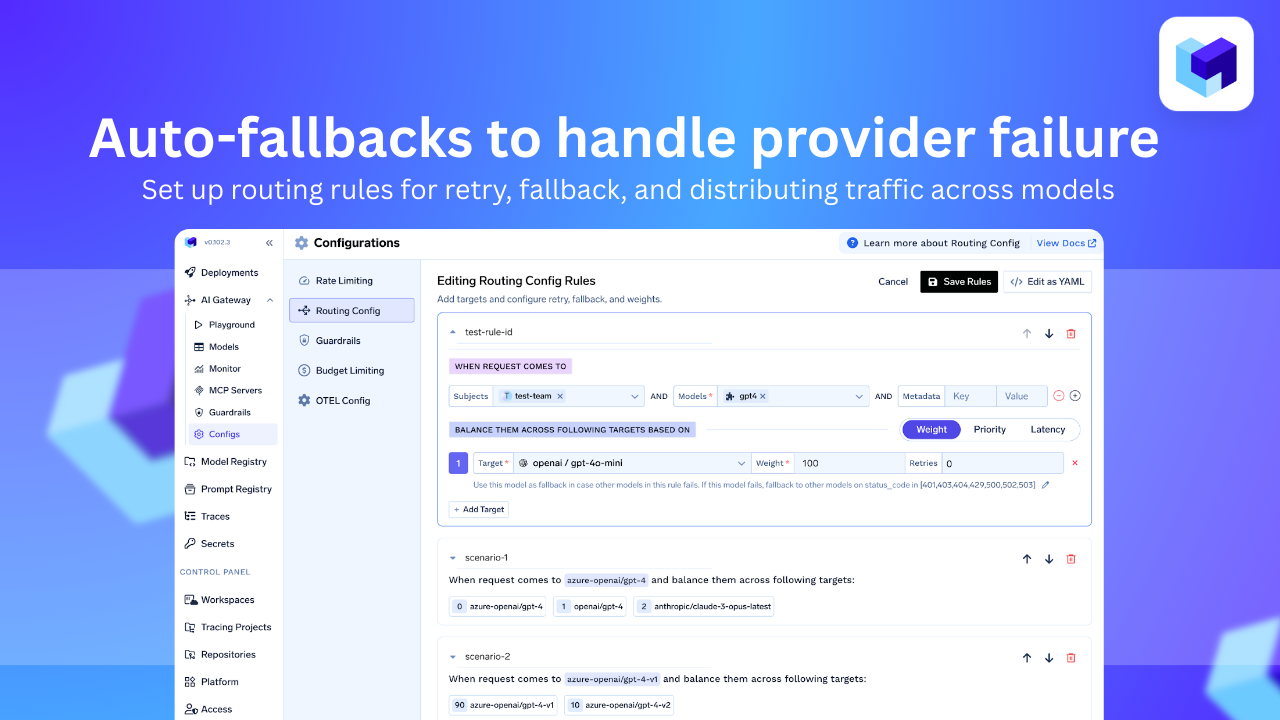
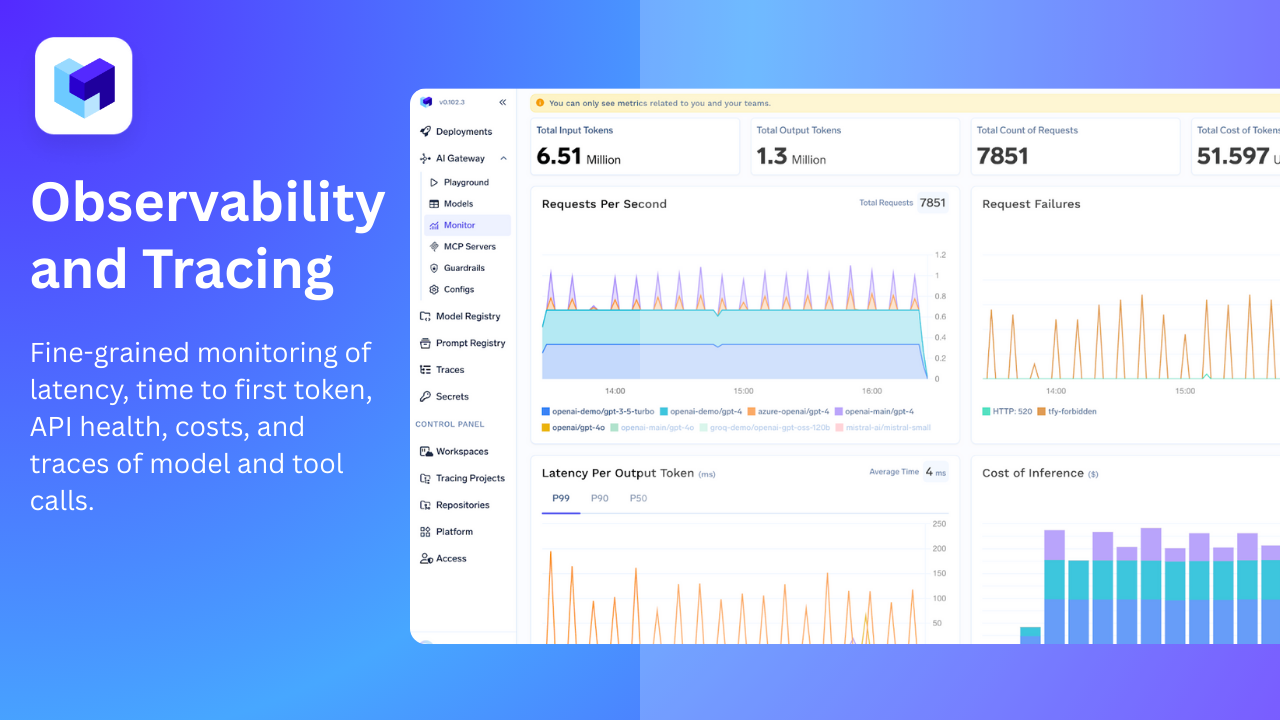
TrueFoundry AI Gateway
Connect, observe & control LLMs, MCPs, Guardrails & Prompts
314
一句话介绍:TrueFoundry AI Gateway 是一个面向生产环境的AI控制平面,通过统一接入、深度可观测性和治理规则,解决了企业在规模化部署AI代理(Agents)和模型时面临的运维混乱、合规风险与成本失控等核心痛点。
API Developer Tools Artificial Intelligence
AI网关 大语言模型运维 企业级AI管控 可观测性 成本治理 MCP管理 智能体编排 生产就绪 合规与安全
用户评论摘要:用户普遍认可其解决生产环境复杂性的价值,重点关注与现有工作流的集成难度、故障转移机制、相比开源方案的优势、数据地域合规实现、以及多组件链路的全链路追踪能力。团队回复详细,体现了产品深度。
AI 锐评

TrueFoundry AI Gateway 的发布,标志着一场从“模型路由”到“AI控制平面”的理念升级。它真正的锋芒并非简单的API聚合,而是精准切入企业将AI实验品推向核心生产系统时必然遭遇的“暗礁”:身份与认证的碎片化、跨国数据流动的合规枷锁、多模型多组件调用链的观测黑盒,以及成本与安全的失控风险。

产品将自身定位为“胶水层”,实则是构建了一个不可绕过的基础设施层。它通过接管认证、审计、路由、守门(Guardrails)等非核心但至关重要的脏活累活,让业务团队能专注于提示词与代理逻辑本身。其宣称被多家财富500强用于数千个代理,恰恰验证了企业级市场对“标准化管控”的饥渴——企业需要的不是另一个模型端点,而是一个能让AI应用在合规、安全、可控前提下规模化运行的“操作系统”。

评论中与LiteLLM等开源方案的对比点明了关键差异:开源工具擅长破冰与实验,而TrueFoundry赌的是企业规模化后的运维负担与合规成本将远超授权费用。其价值主张在于提供经过大客户验证的、带企业级支持与SLA的“全家桶”解决方案。风险在于,这个市场正快速演进,巨头云厂商的同类托管服务可能随时入场挤压空间。TrueFoundry的护城河在于其更早、更深地嵌入到复杂企业工作流中形成的场景化Know-How,尤其是对新兴的MCP标准的深度集成与增强,这可能是其在未来混战中保持独特性的关键。

查看原始信息
TrueFoundry AI Gateway
TrueFoundry’s AI Gateway is the production-ready, control plane to experiment with, monitor and govern your agents. Experiment with connecting all agent components together (Models, MCP, Guardrails, Prompts & Agents) in the playground. Maintain complete visibility over responses with traces and health metrics. Govern by setting up rules/limits on request volumes, cost, response content (Guardrails) and more. Being used in production for 1000s of agents by multiple F100 companies!

Hey Product Hunt, Anuraag here, co-founder at TrueFoundry 👋

When we first thought about a “gateway”, we imagined a simple LLM routing layer in front of models. Pick a model, send traffic, switch if needed. Easy… or so we thought.

Once teams started putting agents and MCPs into production, we realised the hard stuff wasn’t just about routing. It is:

  • Different MCP auth flows for every internal system.

  • Traces & logs that break once you chain models, tools, and agents

  • Data residency and “this data must stay in this region” rules,

  • Security asking “who called what, when, with which payload?”,

  • Product teams need to swap models without rewriting everything.

So the “router” slowly turned into a proper control plane that sits between your apps, LLMs, and MCPs - making sure traffic is reliable, auditable, compliant, and still fast for developers to ship on.

Today, TrueFoundry’s AI Gateway sits at the center of production traffic across 10+ Fortune 500s, powering their internal copilots and agents while platform teams use it to keep costs, safety, and observability under control - rather than maintaining a pile of custom glue code.

🔗 Sign Up Link: Please try and give us feedback! 🙏
🎁 Launch perk: 3‑month free trial for the PH community


If you’re wrestling with MCP auth, logging, or data policies, drop your setup in the comments - curious to see how you are wiring your stack today!

140
回复
@agutgutia Super insightful breakdown. It’s wild how a ‘simple router’ turns into a full-blown control plane once you hit real prod complexity. Excited to try this out!
0
回复

@agutgutia Love it. Identity is the new control plane for agentic AI. this gateway is glueing all components in a seamless way for enterprise use.

0
回复
@aamir_siddiqui2 hope you are doing great progress on the test automation tooling as well.
1
回复

Great work on the launch!

Curious…how seamless is it to integrate existing internal copilots or agents without modifying their current workflows?

29
回复

@_muzammil_kt integrates seamlessly with any copilot or agent - anything built on OpenAI compatible endpoints - without requiring changes to your existing workflows.

2
回复

Really cool! Quick question — how does fallback actually work under the hood? Does the gateway retry with a secondary model automatically?

26
回复

@bhavesh_patel1 You need to enable routing config for enabling fallback.  If a model fails with a non-retriable error (401, 403, 5xx) - we fallback to the fallback models. If there is a spike in errors in the model, we mark that model unhealthy and it is sent to "cooldown" mode for 5 minutes.

23
回复
@bhavesh_patel1 nice
0
回复

I have used OpenRouter, LiteLLM, Vercel AI Gateway, how is it better than those? Just trying to understand, specifically from a developer perspective.

24
回复

@iamshnik OpenRouter allows you to talk to different models without signing up on different providers. Vercel AI gateway works similarily for models.
Truefoundry and LiteLLM are AI gateways where user brings their own keys and this can be self-hosted within the enterprise. We also provide complete observability by default, load-balancing, rate-limiting configs that can automatically switch your application when a model provider is down. It also adds a prompt management layer where in the gateway itself can substitute the prompt for you, making your client side code very small. It also enables you to talk to multiple MCP servers with a single token - so that as a developer you don't need to worry about implementing token management

24
回复

Congrats on the launch, this looks really well thought out!

I’m curious about your approach to regional data rules - can customers control where data at rest is stored so it complies with local regulations (EU, US-only, etc.)?

19
回复

@dhruv_bhardwaj1 Totally! You can attach your own storage bucket in that particular region to ensure your data compliance needs are met.

0
回复

@dhruv_bhardwaj1  Yes, you can configure the destination where you data at rest is stored. You could also have our Gateway run on-prem where even your data-at-motion can be within your VPC and fully in control on which region you want to spin up your Gateway in.

0
回复

Finally, an AI Gateway that brings order to the LLM chaos! Love the unified API access and critical cost controls like semantic caching. Congrats @agutgutia and TrueFoundry team!

19
回复

@kshitijdixit9 Really appreciate it! A lot of teams are using the Gateway for cost visibility, deep observability and monitoring, and consolidated billing - all the things that get painful once you scale LLM usage. Glad the value resonates!

18
回复

Looks solid. What could be the inherent advantage though against setting up something like LiteLLM which I believe is open source?

18
回复

@vysakh_t Great question! LiteLLM is awesome for getting started, but teams quickly outgrow it as they scale.

What we focus on is everything needed for production-grade, enterprise AI:

  • Multi-region + low-latency routing and data residency guarantees

  • Deep observability — per-tool/per-model traces, guardrail logs, cost metrics, MCP-level telemetry

  • Enterprise-grade auth (OAuth2, DCR, , RBAC) and secure MCP server management

  • Reliability features like automatic failover, fallback routing, and rate-limiting by model/team/user

  • Support + SLAs that large enterprises require when AI becomes mission-critical

LiteLLM is great for experimentation — TrueFoundry is built for operating AI at scale across many teams, regions, tools, and compliance environments.

20
回复

Hello Product Hunt Community, Nikunj - cofounder & CEO.

Today's launch is super close to my heart, not just as a product but as a package of learnings we have been fortunate to accumulate working with Enterprises. Those who have been building at cutting edge, and have shown the courage to reverse decision they previously believed to be correct. Best illustrated through an example of a real customer conversation with timelines.

June 2024: Customer (building a scaled use case): "We will never use Gateway. It lies on the critical path of the request and is such a thin layer that we will own this part ourselves. Model inferencing, GPU management is a different story".

Sep 2024: Customer (As Sonnet, o1 were getting launched): "These APIs keep changing, models keep getting outdated - Gateway is becoming a pain to maintain"

Nov 2024: Customer (As other teams started to ask for inferencing): "Its one thing to support one use case through the Gateway but as we are becoming a platform, now we need a lot more visibility and control layer".

Feb 2025: Customer (As the gateway went down and they started losing $6k / second): !

May 2025: Customer (As MCPs started becoming popular): "Its becoming impossible to catch up with the market, scale the Gateway reliably, and add the right controls for satisfying varying requirements from different teams. @nikunj_bajaj are you all continuing to build the Gateway?"

May 2025: Nikunj: yes, we are.

June 2025: Customer: Started migrating prod traffic to TrueFoundry AI Gateway.

July 2025: Customer: Observability, governance controls became a critical part of their workflow.

Oct 2025: Customer: First MCP driven application launched to prod.

Nov 2025: Customer (over a dinner): I remember having a conversation with you about 1.5 years back thinking we will run our own Gateway. Glad we shifted :)

We have learnt so much in terms of how to build the right design on our AI Gateway, access controls, authentication / authorization and making it compatible with existing Enterprise stacks on MCP Gateway, very difficult data residency requirements, how certain guardrails don't "just work" etc. etc.

And this launch marks the joint success of our collaboration with many other early adopters of TrueFoundry who have helped us build and shape our AI Gateway. Cheers to our customers.

8
回复

Congrats on the launch. Having a unified OpenAI compatible endpoint across all LLM providers is a game changer for devs!

7
回复

@dheerajmundhra Thanks for the support! Do try it out here https://www.truefoundry.com/ai-gateway and share feedback!

8
回复

Really cool work! Excited to see its growth!! What is the most common Guardrail rule F100 companies use to prevent unexpected agent recursion or tool-call looping?

5
回复

@swecha_sanjay07 thanks! The most common pattern we see to prevent recursion or tool-call loops is simply setting limits on how many times an agent is allowed to invoke tools within a single run.

Most teams start with straightforward guardrails like:

  • max tool-call depth (e.g., don’t allow a tool to trigger another tool more than N levels deep)

  • max tool-call count per request (stop execution once a threshold is hit)

These guardrails catch almost all accidental loops without needing anything more complex.

0
回复
Interesting solution, especially the prompt management system! that's something hard to find and that works properly
4
回复
@seantiffonnet Thanks Sean! Yes we have seen it to significantly add to the usability and speed of delivery of GenAI applications. Do try it out and give us some feedback!
4
回复

This is one of the strongest interpretations of the MCP standard I’ve seen yet.

While most implementations simply expose tools, you’ve built a managed layer that agents can reliably operate through. With secure tool access, permissioning, and consistent interfaces, this has the potential to become a solid backbone for enterprise-scale agent ecosystems. Really looking forward to seeing where the roadmap goes from here!

4
回复

@nitesh_shakya 

You’ve captured exactly what we’re aiming for. Most MCP integrations today stop at exposing tools, but real enterprise agent systems need a governed, reliable, and observable execution layer. That’s why we’re investing heavily in:

  • Secure tool access + permissioning, so agents only invoke the capabilities they’re allowed to.

  • Enforcing guardrails, logs, metrics, and auditability by default, which becomes critical once multiple agents start chaining actions.

  • A shared backbone for agent-to-agent communication (A2A) - something we’re excited to expand on in the roadmap.

As teams move toward production-grade agent ecosystems, having this stable foundation becomes the difference between a cool demo and a system you can actually trust in operations.

We’re thrilled to keep pushing the roadmap forward - especially around agent registry, A2A protocol, semantic caching, and guardrails for MCP servers. Really appreciate the thoughtful note 🙏 Sharing our public roadmap here as well - https://www.truefoundry.com/roadmap

2
回复

congratulations on the launch Anuraag!

4
回复

@fatima_rizwan Thank you for your support!

2
回复

Congratulations on the launch, @agutgutia and the @TrueFoundry AI Gateway team! I am looking forward to trying this out. It is very timely. Does it include a RAG repository or any integrations with vector databases?

3
回复

@tim_ep1 Yes - we do support RAG out of the box. However, this is not included in AI Gateway offering.The product includes RAG templates and integrates with any vector database, so you can plug in retrieval workflows without changing your existing setup.

1
回复

This solves a real problem. Congrats on the launch @agutgutia @nikunj_bajaj @deeptishukla I’m curious how TrueFoundry’s AI Gateway manages policy enforcement and observability when multiple agents and models are chained together, does it maintain full traceability through the entire workflow?

2
回复

@nikunj_bajaj  @deeptishukla  @harkirat_singh3777 Thanks so much! Yes - the Gateway maintains full end-to-end traceability, even when multiple agents, tools, and models are chained together.On the observability side, each step is captured as a unified trace, so you can drill into prompts, responses, tool outputs, and fallbacks across the entire workflow.

1
回复

So you can create an agent and connect it in your app and change models dynamically?

2
回复

@pasha_tseluyko  Yeah, models can be connected and agents can be developed through the Gateway. Currently, we don't change models dynamically but that feature is in the works.

0
回复

The developer experience look really clean! One API key, one endpoint, and access to multiply models with consistent logging is exactly the simplicity terms need. I'm curious about latency - what kind of over head should teams expect when routing through the gateway with guardrails enabled? Excited to check this our!.

2
回复

Do you plan to expand support for regional LLM providers to cater to teams with data residency requirements? Also, will the platform include pre-built guardrail templates (e.g., for PII redaction, content moderation) to accelerate compliance setup?

2
回复

@movieflow_nann We already support regional LLM providers, and teams can choose region-specific storage accounts to meet data-residency requirements. We also integrate with pre-built guardrails (PII redaction, moderation, etc.), and you can plug in your own policies as well — so compliance setups are usually fast to configure.

0
回复

Great product. This is bound to accelerate development in the agentic AI sector. Do you think your differentiation factor will remain monetizable as the market saturates and there is greater polarization towards a few key providers, diminishing the need for a complex monitoring system?

2
回复

@anubiifox Thank you! Our view is that even with consolidation among a few major providers, teams are increasingly using multiple models — smaller open-source ones for cost-efficient tasks, larger ones for reasoning, and specialized models for image, audio, or structured extraction. That fragmentation actually increases the need for a unified gateway + tracing layer.

On top of that, features like end-to-end tracing, fallback orchestration, and safety/guardrails tend to become more valuable as systems grow more complex, not less. So we see differentiation coming from helping teams manage that multi-model reality rather than just monitoring a single provider.

0
回复

Good launch. Congrats!

One question: how do you see the Gateway influencing collaboration between ML and platform teams? Does it reduce friction around deployment and oversight, or does it introduce a new coordination layer they need to align on?

2
回复

@aakanksha_saini Thanks for this question!

We have seen the gateway significantly reduce the friction between the DevOps and development teams.

The DevOps and Admin teams add Models and MCPs and set rules around rate limits, costs, response quality, fallbacks, etc. In production, they can easily monitor performance and usage.

The Developers can then see all approved models and MCPs in the Gateway registries, invoke them through a unified API, experiment with them in the playground, and view traces to track performance and debug their applications.

1
回复

Sounds interesting product, Congrats on launch

1
回复

@robbins23 Thank you for your support!

0
回复

We have been using TrueFoundry for 2 years and a half. I think their managed kubernetes (with the right level of abstraction for a ML team) was already a great product.

This AI gateway has further increased the value of TF for us. We use models from both OpenAI (through Azure) and Gemini (GCP). But TrueFoundry provides us with better observability than either native interfaces. Thanks to the gateway we have:

  • Detected that the P99 latency of some models was much higher than anticipated, and added backup-models to mitigate this issue.

  • Tracked why our spend was ~twice higher than expected (and corrected the faulty app).

We're not using much the guardrails and rate limit yet. However, I believe they will prove useful to manage complexity as our team grows.

1
回复

@matthieu_perrinel Thanks a lot for the support for us!

0
回复

this is the kind of product that would benefit a lot of teams thought!

1
回复

@quentin_fournier_martin Thanks for your support!

1
回复

Great product, all the best!

1
回复

@felixleezd Thanks for your support!

0
回复

@felixleezd Thanks for the support Felix! Do try it out and please share your feedback. https://www.truefoundry.com/ai-gateway

0
回复

Very nice, with Openrouter & co you'd not be able to bring your own key

1
回复

@jim_engine Thanks Jim. This becomes one of the key considerations in enterprise setup.

0
回复
Congrats on the launch! 👏
1
回复

@joyal_a_johney Thanks for your support!

0
回复

Looks great! Excited to try it out

1
回复

@vaibhav_dubey3 Thanks! We have a launch offer also for this community. Do use that to sign up!

https://www.truefoundry.com/ai-gateway

1
回复

Looks super interesting! Good luck team :)

1
回复

@sufiyan_sait Thank you Sufiyan for your support. Do check out the product.

1
回复

This is impressive. What stood out to me is how you’ve taken all the messy parts of running agents in production—MCP auth headaches, scattered logs, model swaps, guardrails—and pulled them into one place. The trace visibility alone feels like a huge win for anyone trying to move beyond demos.

I’m curious to see how this scales as more teams start chaining complex workflows. Great work and congrats on the launch!

1
回复

@priyanshu_de1 Thank you so much - you articulated the exact problem space we kept hearing from teams building real agent systems.

Once you move beyond demos, everything becomes messy very quickly:
• MCP auth + permissioning scattered across tools
• Logs and traces split across providers
• Model swaps breaking workflows
• Guardrails implemented differently in every service
• Zero visibility into how agents reason across steps

The goal with the Gateway was to compress all of that operational complexity into one coherent layer — so teams get:

  • Unified authentication + access control for every model, tool, and agent

  • Consistent logs + traces across all providers, making debugging actually possible

  • Model routing + swaps without code changes

  • Guardrails that run uniformly across all requests

  • A managed backbone that agents can trust as they start chaining tools and calling each other

Your question on scaling complex workflows is spot on — that’s where we’re heading next with:

  • Agent-to-Agent (A2A) protocol,

  • Agent registry + discovery,

  • Semantic caching, and

  • Runtime-level safety + observability for multi-step agent chains.

Super grateful for your thoughtful feedback - it’s exactly the direction we’re building toward. Thanks again for the support! 🙏

1
回复

Congrats on the launch! This is definitely useful from a security and compliance standpoint

0
回复
#5
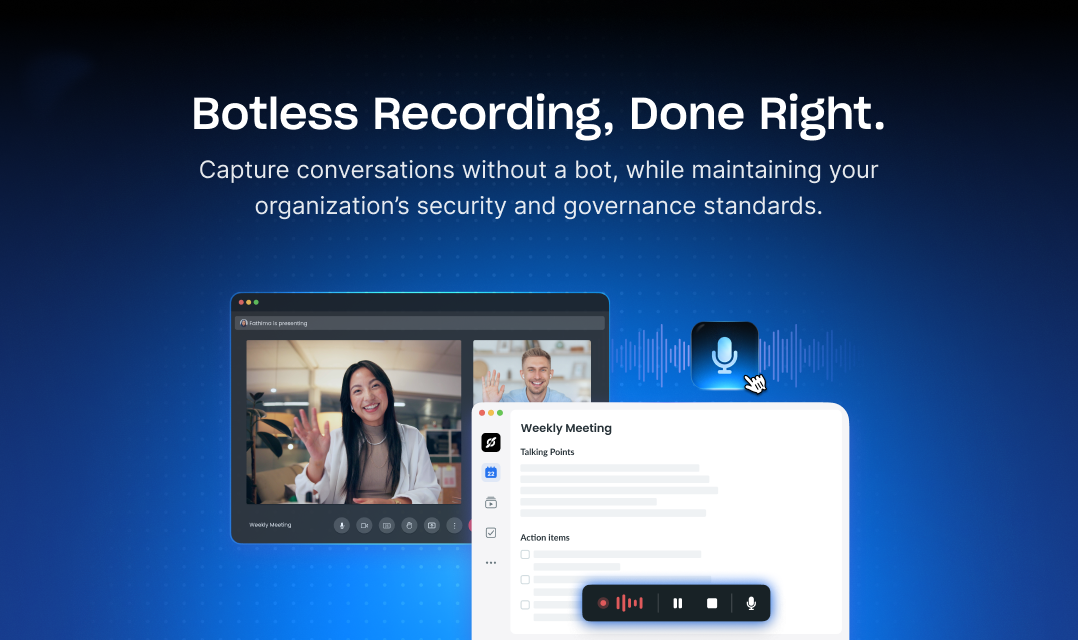
Fellow 5.0
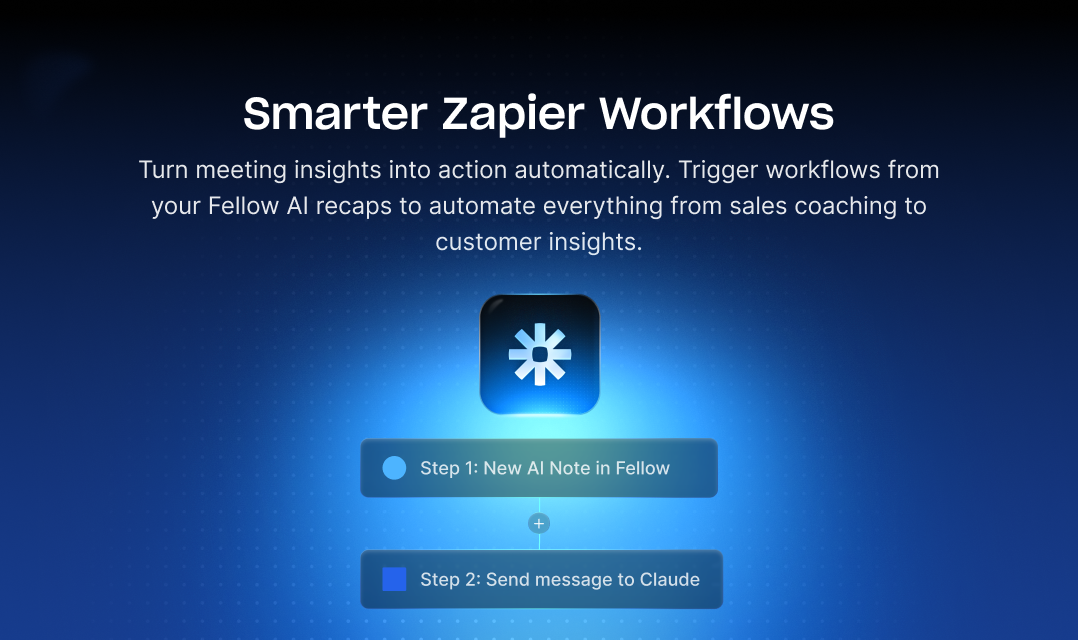
Botless AI meeting notes with MCP and Zapier workflows
288
一句话介绍:Fellow 5.0是一款AI会议笔记工具,通过提供无机器人(botless)录制、自定义AI总结模板以及与MCP、Zapier的深度集成,在注重隐私和流程自动化的团队会议场景中,解决了用户因传统会议机器人侵扰、数据安全顾虑及会后手动整理效率低下而产生的痛点。
Notes Meetings Artificial Intelligence
AI会议笔记 会议效率工具 无机器人录制 工作流自动化 数据隐私与安全 MCP集成 Zapier自动化 自定义AI模板 企业级合规 会议洞察
用户评论摘要:用户高度评价无机器人录制功能,认为其提升了体验并解决了隐私顾虑;对更简洁的界面、强大的自动化集成(Zapier/MCP)表示认可。主要建议/问题包括:如何塑造用户首次使用的核心信念以促进采纳;希望支持基于会议主题(如销售、法务)的定制化分析报告;询问是否支持跨会议上下文理解及Discord语音频道处理。
AI 锐评

Fellow 5.0的迭代,表面上是功能堆砌——无机器人录制、界面优化、模板与集成,实则是一次精准的定位手术:它不再将自己定义为单纯的“笔记工具”,而是试图成为企业会议数据流的“安全枢纽”与“智能调度中心”。

其真正价值在于三重解耦:首先,将“录音/转录”与“显性的机器人实体”解耦,用“botless”概念直击企业用户对会议侵入感与隐私合规的深层焦虑,这不仅是UX优化,更是产品哲学的关键转变。其次,将“AI总结能力”与“固定格式”解耦,通过自定义模板将AI标准化输出权交给不同职能团队,试图解决通用AI工具与垂直场景脱节的痼疾。最后,也是最具野心的一点,是将“会议数据”与“单一应用”解耦,通过MCP服务器和增强API,将会议内容转化为可供外部AI模型(如ChatGPT、Claude)和安全集成的结构化数据流,这使其具备了成为企业智能工作流底层服务的潜力。

然而,其挑战同样清晰。评论中关于“用户首次使用信念”的提问一针见血:在拥挤的生产力工具市场,功能优势不等于 adoption。Fellow 必须让用户迅速感知到从“信息记录”到“行动生成”的质变。此外,其“连接智能”的叙事虽宏大,但复杂性也随之提升。如何让非技术团队轻松驾驭Zapier工作流和MCP集成,而非增加认知负担,是落地关键。它正从解决“记下来”的问题,转向解决“用起来”和“流出去”的更高阶问题,这条路更具想象力,但也更考验产品对用户心智与工作流的深度理解。

查看原始信息
Fellow 5.0
Fellow 5.0 gives you the flexibility, privacy, and control over how you capture and leverage your meetings. It offers the flexibility of bot and botless recording, the control of custom AI recaps, and the connected intelligence of the MCP Server, all under the same secure and compliant framework.

Hey Product Hunt community! Excited to share what we have been building at Fellow.

Fellow 5.0 redefines how you capture and leverage meeting data. It’s built for teams that care about security, accuracy, flexibility, and control over how their information flows.

What’s new:

• Botless recording: capture conversations without a bot, while maintaining your organization’s governance standards 

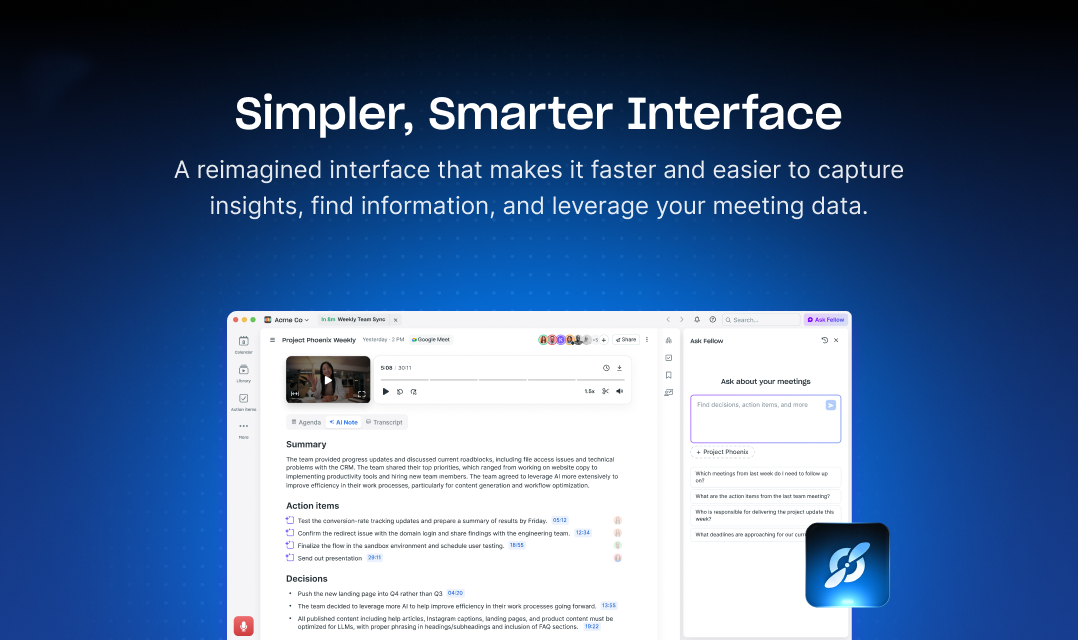
• A cleaner, faster interface that makes it easier and faster to gather meeting insights 

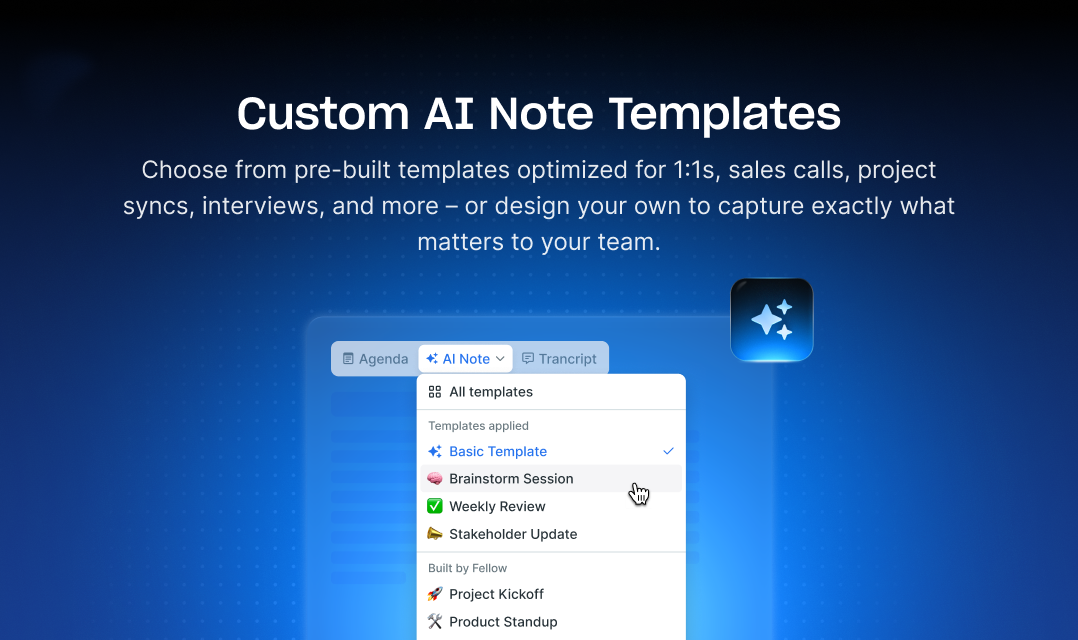
• Custom AI note templates so every team can standardize how their meeting recaps look, from interviews to sales calls 

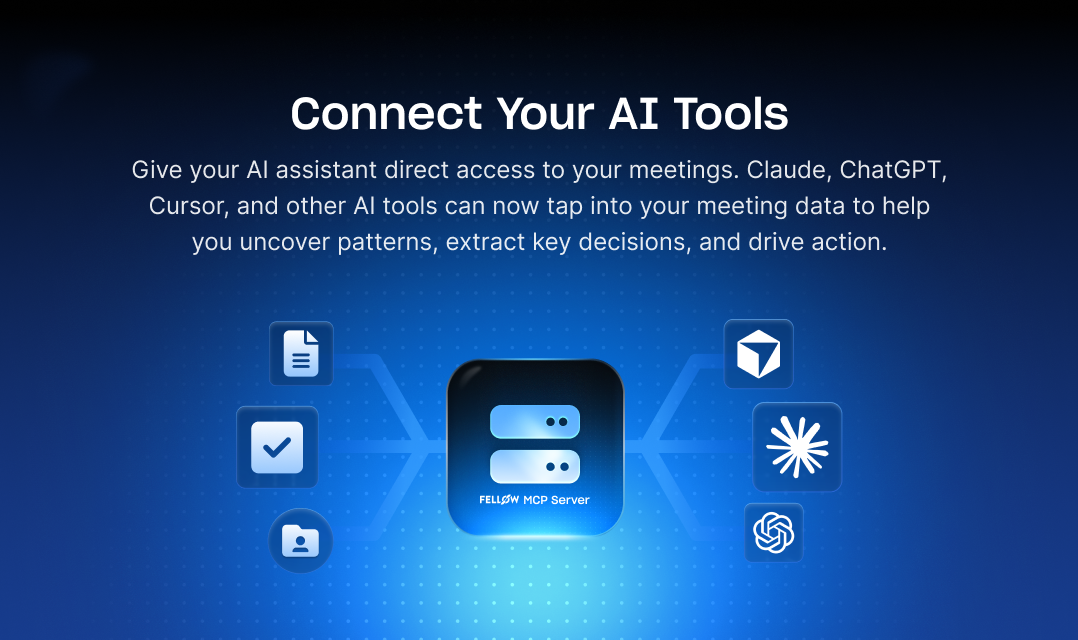
• Connect your AI tools: now ChatGPT, Claude, Cursor, and others can securely reference your meeting data 

• Smarter Zapier workflows so your recaps can trigger downstream automation instantly 

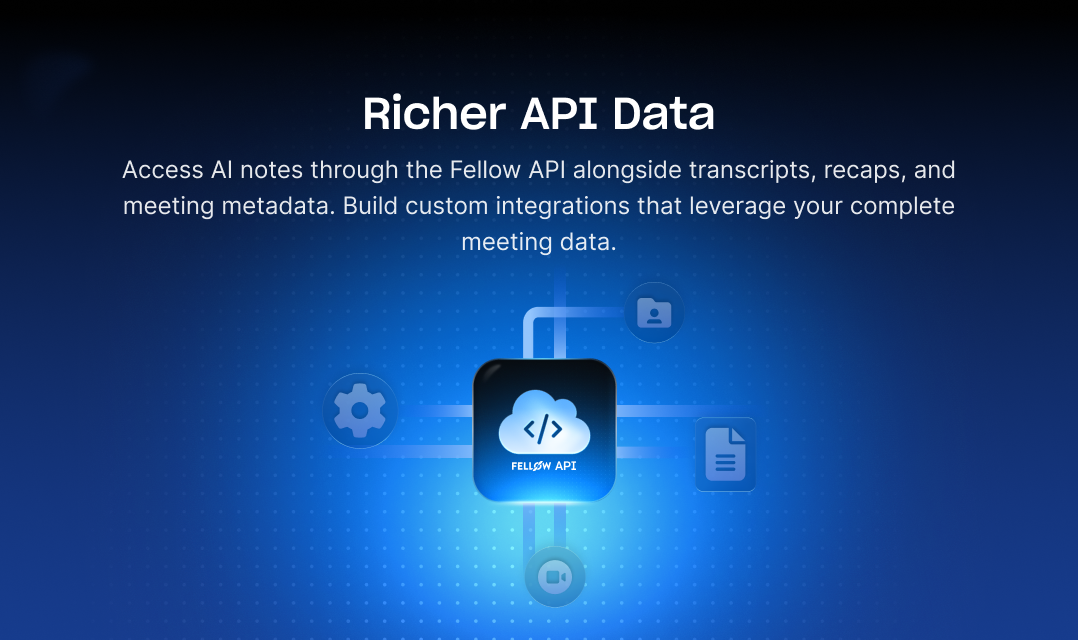
 Richer API access with transcripts, recaps, metadata, and AI notes available for custom integrations

Join us live to see everything in action today: https://fellow.ai/live/fellow-5-0-launch

Hope to see you at the launch event - we’ll be answering all your questions live!

17
回复
Congrats on the 5.0 launch! 🎉 As an analyst, privacy is usually the biggest blocker for us adopting AI meeting tools. The 'botless' recording option is a huge UX win—it always feels a bit awkward having bots clutter up the participant list. Good luck today!
17
回复

This looks so neat, really solid!

15
回复

Fantastic launch, Fellow—love how you’re making meetings more than just “another calendar slot.”

From a clarity & conversion lens: when a manager or team member opens Fellow for the first time, what’s the single belief you want them to leave with in their first 10–15 seconds?
Is it:
• “My meetings will finally lead to clear actions.”
Or:
• “Our team will spend less time recovering from meetings and more time doing meaningful work.”
Because in team productivity tools, the biggest adoption barrier often isn’t missing features—it’s whether users believe the tool will change how they feel about work.
Curious how you’re shaping that first emotional win.

3
回复

What I enjoy most about it is how it respects my workflow. I don't always want a meeting bot showing up, so the botless option feels refreshing. Pairing it with Zapier helps me keep every follow-up automated while staying in control of the whole process.

2
回复

I've been wanting a cleaner way to manage meeting notes and it finally feels like something that matches the way I work. Botless recording is perfect for me and the Zapier automation keeps everything organized without needing extra tools or complicated setups.

2
回复

As someone who cares about privacy, the botless recording in it fits perfectly into how I run meetings. I like feeling in charge of what gets captured. The AI recaps and Zapier workflows also make follow-ups easier for me without adding extra steps.

2
回复

Bam! Congrats team Fellow, making my every day meetings so much more valuable and organized

1
回复

Thank you for all your support@chris_arsenault ! We hope you enjoy this new version of Fellow and all the new features 🚀

0
回复

pretty dope release. the botless recording is a nice addition to an already premium platform.

1
回复

@jameshicks Thanks James!! Supporting Fellow since day 1 !!

0
回复

Big congrats on this launch! The cleaner interface alone sounds like it’ll save so much time.

1
回复

Thanks @abod_rehman ! We're excited to hear how you like it once you've tried it out!

0
回复

Congratulations on the updates! I have an idea for you: create modes for analyzing such calls based on a predefined topic. For example, if it’s a sales call, it could be analyzed from the perspective of best sales practices. If it’s a contract discussion, it could be analyzed from the perspective of best legal practices, etc. After the call, selected participants would receive a report with recommendations.

0
回复

We tested Fellow across Zoom, Meet, and Teams, and the biggest win for us was the privacy model — no data training, no weird permissions, and full control over who can access what. That alone made our security team happy.

Transcriptions are accurate, summaries feel human, and the Salesforce/Slack integrations saved us a ton of manual updating.

0
回复

Congrats on the launch!

Really like the clean look and feel. And even more the possible integrations with MCP and Zapier - the possibilities are unlimited here.

0
回复

@aydin_mirzaee Botless meeting notes are refreshing! The MCP and Zapier integration makes this way more flexible than traditional tools. How does Fellow handle context across multiple meetings?

Are teams able to customize the AI summary format for different meeting types?

The workflow automation piece could be huge for reducing manual work.

0
回复

Great product! It would be even better if it supported recording, transcription, and summarization for Discord voice channels as well. Do you happen to have any plans for this

0
回复

Congrats on the launch! Opening up transcripts, metadata, and AI notes through the API gives teams so much more flexibility. Are you planning any additional automations or workflows next?

0
回复

@aydin_mirzaee congrats on the launch! Looks great and love the focus on better triggering for downstream workflows. We're actually launching tomorrow with a Slack agent that automatically extracts feature requests from customer calls and lets you review and file them to Jira right from Slack. Could be an interesting integration or use case for that downstream workflow!

0
回复

I really like the privacy and control settings of fellow. Just curious - whats the difference in functions compared to other meeting assistant build in those meeting apps like Zoom etc?

0
回复

Hey@cruise_chen, glad to hear you appreciate the privacy and control settings in Fellow. A benefit of Fellow is that with our flexible recording options (bot & botless), you can record your meetings no matter where they happen, whether that's on a conferencing platform, an ad-hoc meeting in a huddle, or an in-person meeting. This means not only is all of your meeting data in one place to be able to extract insights, action items, and decisions, but it also means that in a single platform, you can set up your workspace controls across all meetings.

0
回复

How does it recognize to Zoom meetings? Is it a desktop app and a Chrome extension?

0
回复

Hey @pasha_tseluyko , for desktop botless recording, we detect when your mic is being used for a meeting, and then Fellow pops up a notification giving you the option to record.

For Zoom Native Capture, you'll need to connect our Zoom integration. Once you've set that up you'll see the option in Fellow to record with Zoom.

0
回复

If you’ve been watching us build Fellow over the years, you know we don’t do things halfway. But looking back at where we started and where we are today with Fellow 5.0? I’m honestly blown away.

We’ve come so far, and I am excited to show you what the team has been working on.

Join us for a live product launch event today and get a front-row seat to how we're redefining meetings: https://fellow.ai/live/fellow-5-0-launch?ref=producthunt

0
回复
#6
Compass
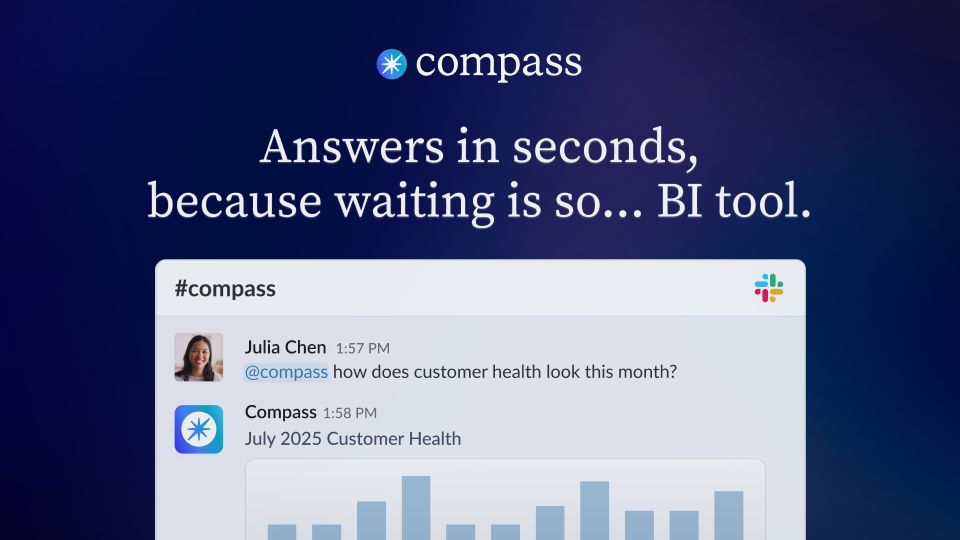
Ask Slack about your data and get answers instantly in chat
286
一句话介绍:Compass是一款集成在Slack中的AI数据分析助手,通过自然语言查询,让非技术团队成员能直接从数据仓库中即时获取业务洞察,解决了数据访问门槛高、分析周期长的痛点。
Slack Artificial Intelligence Data & Analytics
数据分析 Slack集成 AI助手 自然语言查询 数据仓库 商业智能 团队协作 GitOps 实时洞察 销售与营销分析
用户评论摘要:用户普遍认可其“聊天即分析”的便捷理念,认为能极大解放数据团队。主要问题集中在具体应用场景、模糊查询处理、多利益方解释冲突的解决机制,以及GitOps上下文管理的实际工作流程上。
AI 锐评

Compass的野心并非做一个通用的AI数据分析工具,而是试图成为嵌入企业日常沟通流中的“数据决策中枢”。其真正价值在于“场景化”和“可控性”两个维度。

首先,它敏锐地抓住了现代企业数据使用的核心矛盾:数据团队深陷于重复、临时的“取数”需求,而业务团队则困在“知其然不知其所以然”的仪表板前。将交互场景直接置于Slack,不仅是降低使用门槛,更是将数据分析从一项独立任务重构为伴随业务对话的自然延伸。这种“原位分析”能力,可能比分析能力本身更具颠覆性。

其次,其宣称的“GitOps工作流”和“多人协作”机制,是应对当前AI应用在企业管理中最大担忧——失控的“黑盒”与混乱的“幻觉”——的一次重要实践。它没有试图让AI全知全能,而是定位为一个受控的协作者:数据团队通过代码化、可评审的方式管理业务上下文(Context),而业务团队与AI在对话中共同迭代答案。这实际上是在构建一套“人机协同”的数据分析社会规范,将AI的灵活性与人类的领域知识、管控责任相结合。

然而,其挑战也同样明显。Slack的碎片化场景是否真能承载复杂的分析思维链?当“上下文”需要持续维护时,是否会给数据团队带来新的隐性负担?此外,其商业模式依赖于企业已具备完善的数据仓库,这将其市场定位在了数字化程度较高的客户群体。能否跨越早期尝鲜者,进入更广阔的主流市场,取决于它能否将这套“规范”变得足够轻量且自适应。总的来说,Compass不是又一个AI查询工具,它是一次关于如何“组织”智能数据协作的有趣实验。

查看原始信息
Compass
Compass puts data in your teams' hands, right in Slack. Ask in plain language and get instant insights from your warehouse, our prospecting data, or both. From tracking pipeline to sourcing leads, Compass helps every team move faster. Analysts stay in control with GitOps backed context that keeps things clean, clear, and far from AI chaos.

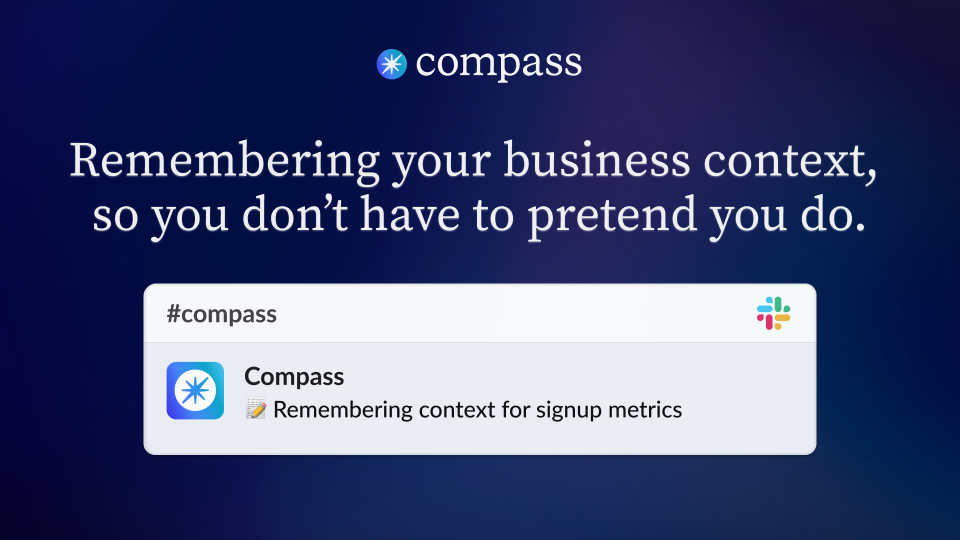
Hey Product Hunt, I’m Pete, CEO at Dagster! We just launched Compass: collaborative AI-powered insights in Slack powered by your data warehouse. Finally, you can get to the “why” behind your metrics in seconds, not days.

We originally built Compass as an internal tool to solve our own business problems. We have a great data team, and built out a comprehensive data warehouse containing all of our critical business data like sales opportunities, marketing campaign performance, and product engagement analytics.

However, we struggled to really leverage this data at our organization. Our BI dashboards were great at telling us the “what” - how our sales pipeline is trending, how many DAUs we have vs MAUs, what our AWS spend was last week, etc - but it didn’t tell us the “why.” Why is pipeline down? Why did DAUs spike? What drove our AWS spend increase? Etc.

We had these sorts of questions on a daily basis. And every time we did, we’d file a ticket for our excellent  data or revops teams, interrupt their day, and wait a few hours or day or two to get an answer.

Like many companies, we built an internal Slackbot to solve this problem. Anyone could ask it a question in natural language, and it would return an answer, complete with data visualizations and its methodology.

It took off like wildfire, and a majority of our employees started using it on a weekly basis. We decided to turn this internal tool into a fully supported product offering we’re calling Compass.

How Compass is different

We took a different approach than a lot of other AI tools in this space.

🖥️Slack native. We exist solely within Slack. There’s no separate web app to long into, so it’s easy for users to get started immediately.

👥Fundamentally multiplayer. We let data people, business stakeholders, and AI all work together seamlessly to iterate to the right answer.

🏋️Proactive. In addition to answering questions, Compass will deliver personalized data insights every day, surfacing useful trends and starting points for analysis. One of our customers (a highly successful tech unicorn) found a support issue impacting $10mm+ in revenue in the first week.

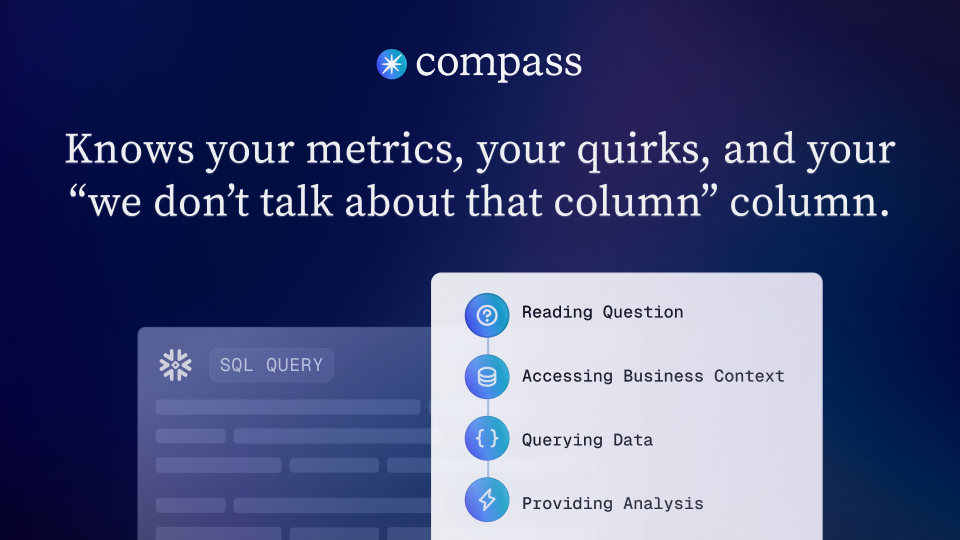
🧠Crowdsourced business context. This is our secret sauce: we automatically and continuously learn business context based on properties of the data, characteristics of the business, and, most importantly, end-user interactions.

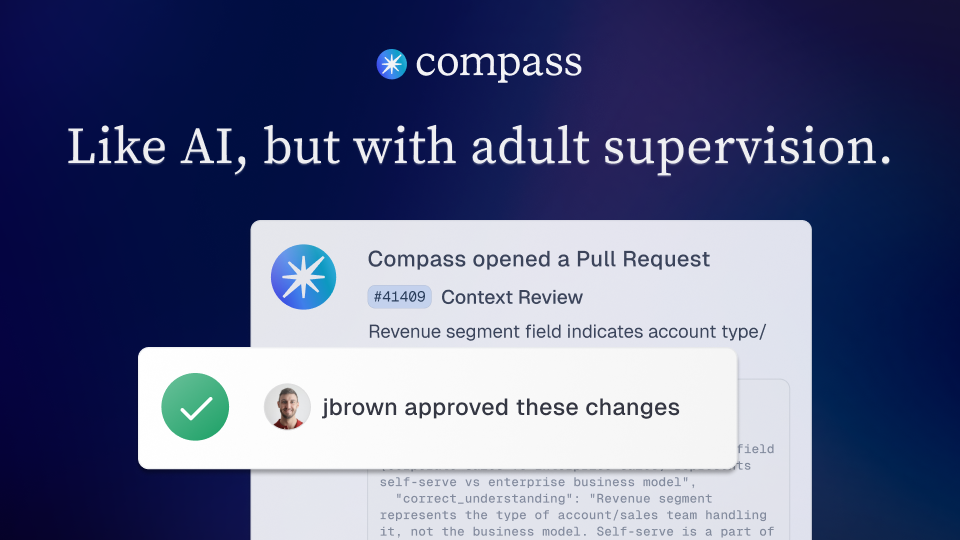
All of this is governed by a gitops workflow, which keeps the data team in control and brings a real SDLC to context engineering.

Who is it for?

Compass is about bridging the data team and the business. Data teams - anyone that manages a modern data warehouse like Snowflake, Databricks, BigQuery or Athena - will benefit, as will their stakeholders: sales leaders, marketing leaders, recruiting leaders, executives, as well as ICs.

Get started at compass.dagster.io. Onboarding only takes a few minutes, and if you sign up before the end of the year your first month is free!

8
回复

@floydophone Hey! I’m a 16 y/o tech entrepreneur building foundrlist .com a space where makers get more visibility and people discover exciting new products.

If you’re interested, feel free to add your product. I genuinely think it would be an amazing fit! 🚀

FoundrList is growing fast we’re getting 1,000+ new visitors daily and 100+ new products listed every week, so your support would directly help expand something that’s already taking off.

Thanks so much!

0
回复

@floydophone Such a smart solution to a common problem. I can definitely see the use case for this. Giving you some support! (I'm launching today as well, wishing us both luck in the rankings!)

1
回复

Strong launch Pete. Compass feels powerful and focused. Congrats to you and the team.

5
回复

@nimaaksoy Thanks!

0
回复

This is the kind of thing that makes you wonder why every data tool isn’t just… in chat already. Nice launch!

3
回复

If you dont mind me asking? What are the 3 top use-cases for this?

2
回复

@conduit_design From what weve seen internally and with our early customers, its been a major unblocker for non-data users that dont want to fiddle around with a dashboard or the warehouse. With that being said:

  1. Sales prospecting

  2. Product Managers understanding feature bottlenecks and adoption

  3. Customer success user understanding and proactive suggestions

2
回复

Congrats on launch! Dagster Cloud looks super clean.
What’s the first “oh wow” moment you want new users to experience when they jump in?

1
回复

@joydeep_pandey the oh wow moment for me was asking Compass to perform a multi-step complex analysis that I always wanted to and didnt have the time. And then iterating in the thread by going back and forth around a few scenarios to get to a final answer and actionable insight.

2
回复

I could see how our tool could benefit from Dagster’s orchestrated, reliable data workflows to streamline automation and analytics — I’ll go check out this launch and dig in further.

0
回复

How do you handle conflicting interpretations from multiple stakeholders asking questions in Slack?

0
回复

Absolutely amazing!

0
回复

How does GitOps-backed context actually work in practice? are all changes versioned and reviewable before going live? Congrats.

0
回复

@himani_sah1 The data team has access to the git repo where the context is stored, when someone in a compass thread makes a context update like "Claire and Jeff are CSMs not AEs, remember that for the future" A pull request is opened up in the context store for them to review and merge. The context is also automatically updated on a cadence to make sure its fresh

0
回复

How does Compass handle ambiguous or poorly phrased queries in Slack? Does it ask clarifying questions or make assumptions?

0
回复

@nuseir_yassin1, the compass bot will ask clarifying questions in the Slack thread. Oftentimes, we see the data team or a informed stakeholder will jump into a thread and provide additional context to guide the conversation towards higher quality insights. Under the hood, Compass iterates over a few possible solutions until it finds the most optimal one.

0
回复
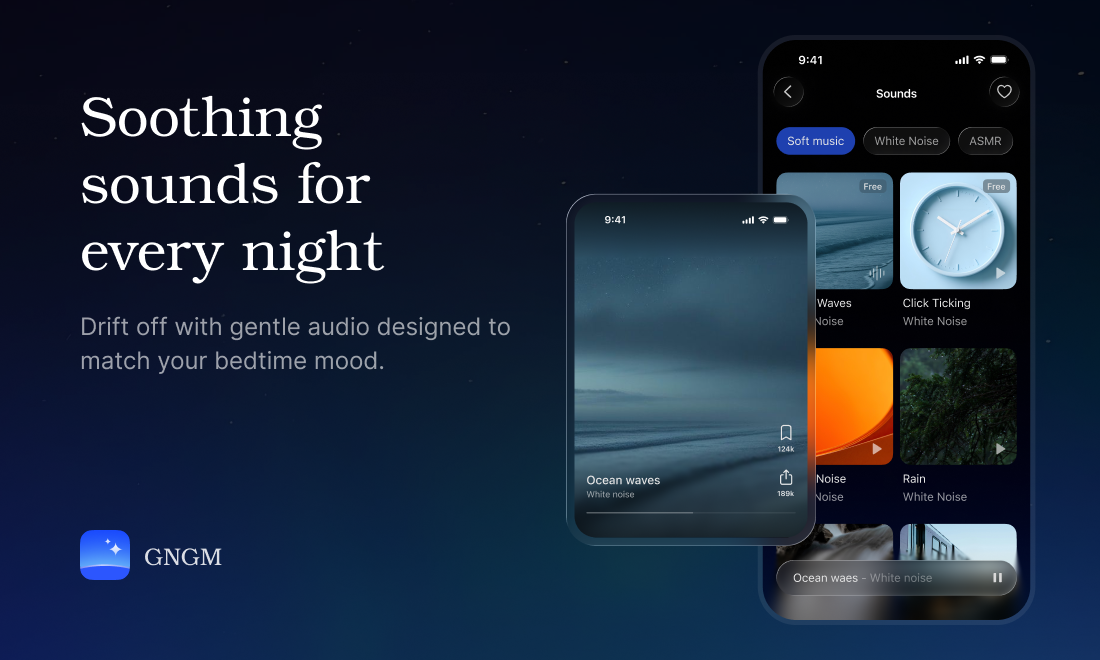
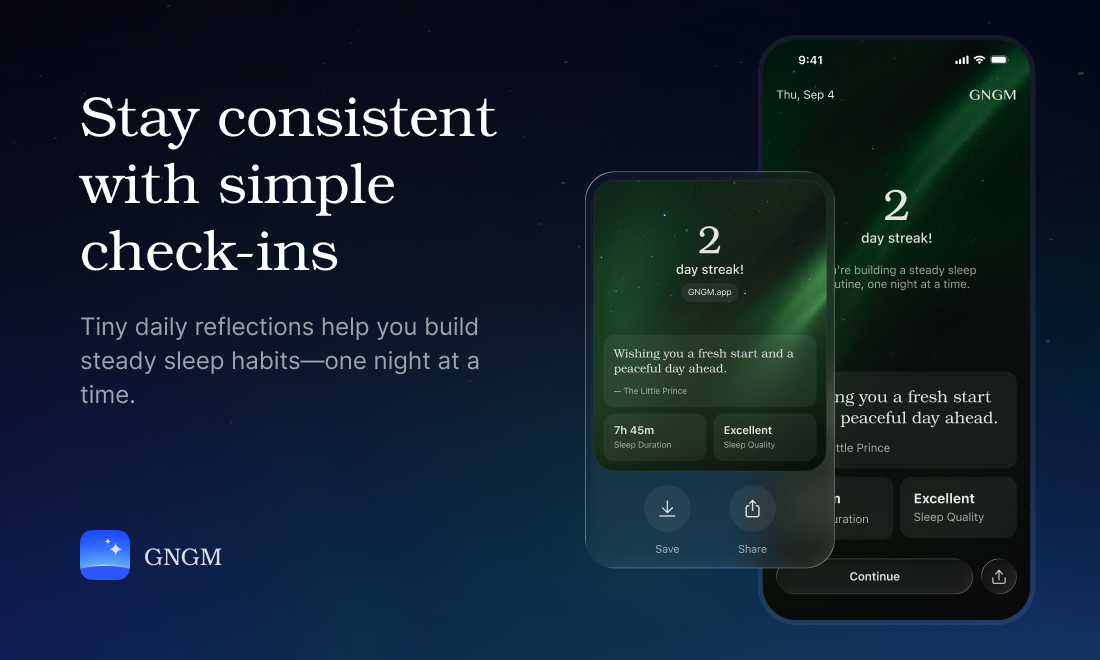
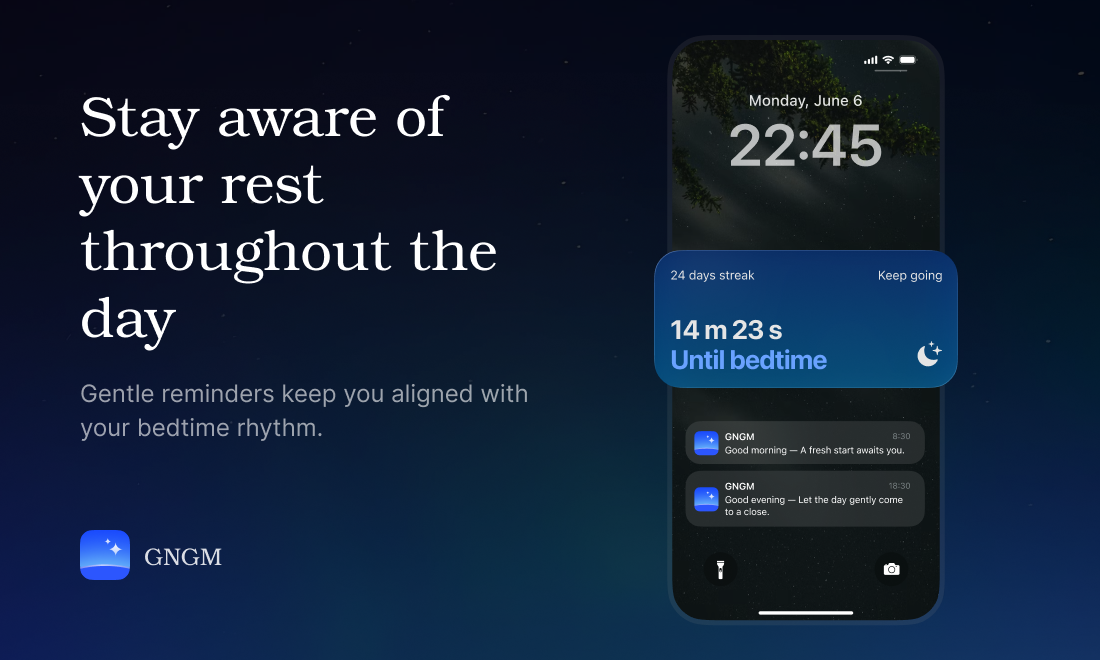
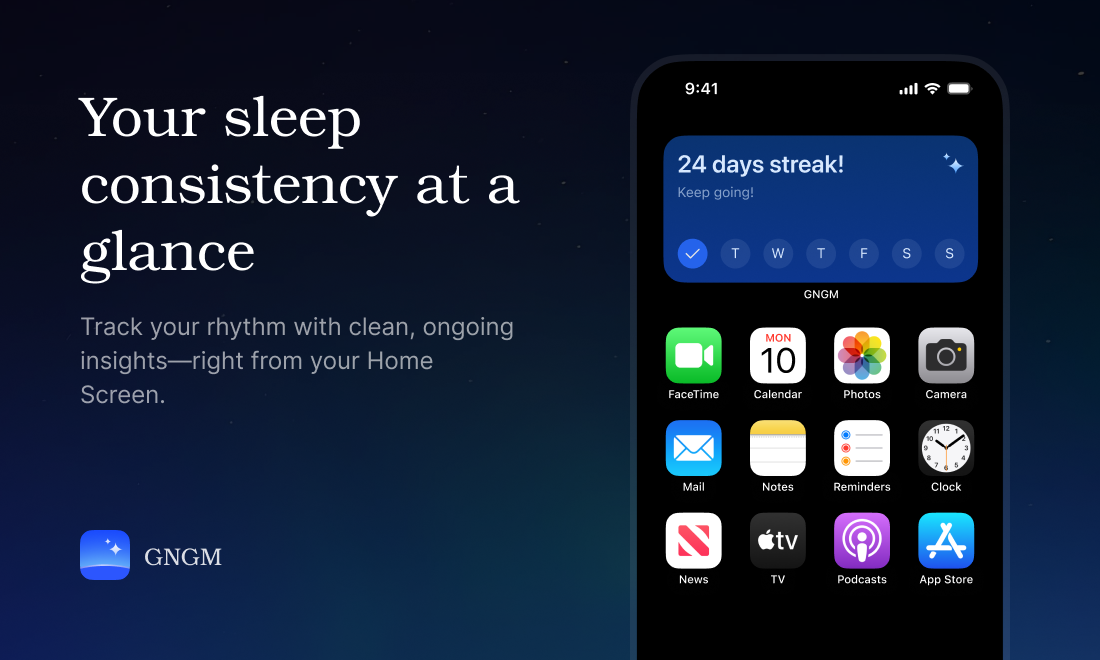
#7
GNGM
The sleep habit app for night-owls trying to reset
285
一句话介绍:一款为夜猫子设计的极简睡眠习惯应用,通过每晚一次无压力的睡前签到,帮助用户在无数据追踪负担的场景下,温和地重建规律睡眠节奏。
Android Health & Fitness Productivity Fitness
睡眠健康 习惯养成 夜猫子 极简主义 无数据追踪 心理健康 生活节奏 健康科技 正念 移动应用
用户评论摘要:用户普遍赞赏其“无压力、无追踪器”的极简理念,认为精准解决了对复杂睡眠数据感到焦虑的痛点。主要问题集中于功能细节:是否支持自由作息、提示是否会自适应、如何衡量进步。开发者积极回复,解释了产品哲学并预告了未来适配性功能。
AI 锐评

GNGM的出现在于精准切中了健康科技领域的一个反潮流痛点:数据过载与执行压力。其真正价值并非技术创新,而是理念上的“做减法”。它聪明地避开了与Oura Ring、Apple Health等巨头的硬件或数据维度竞争,转而聚焦于行为心理学的“启动效应”——将复杂的睡眠优化工程,降维成一个简单的、仪式性的睡前签到动作。

这种设计的犀利之处在于,它承认对于多数作息紊乱者,首要障碍不是“不知道问题”(数据已泛滥),而是“无法开始行动”(压力与惰性)。通过移除数据监控和成败评判,它降低了启动门槛,将用户从“被评估者”转化为“仪式参与者”,可能更有效地触及行为改变的核心。评论中“严格作息总是失败”的共鸣,恰恰印证了这一洞察。

然而,其长期价值面临两大考验:一是极简主义与用户对个性化、智能化预期之间的平衡。当前“一致性即魔法”的设定,可能在用户习惯初步形成后遭遇平台期,需如团队所言,引入更精细的、非侵入性的适应性。二是商业模式的挑战,在免费健康应用泛滥的当下,如何让用户为一个“无数据”的简单习惯持续付费,将是比产品设计更难的课题。它更像一个精心设计的心理工具,其成功与否,最终将验证在睡眠改善领域,“心法”的价值是否能超越“算法”。

查看原始信息
GNGM
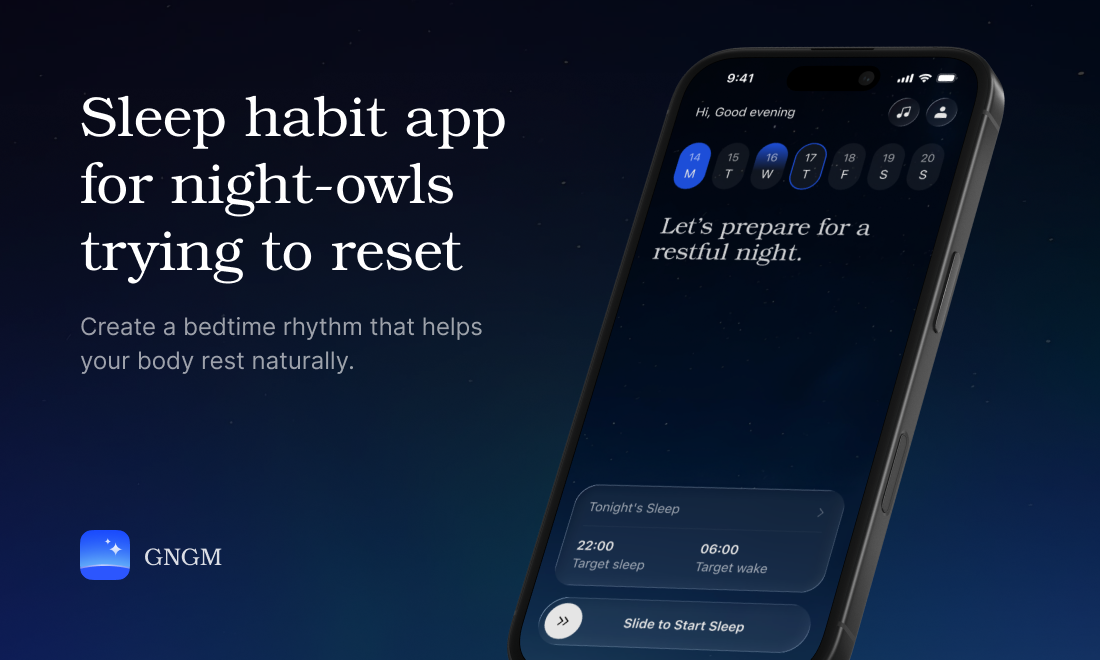
GNGM helps night-owls rebuild a gentle, consistent sleep rhythm with one simple nightly check-in. No trackers, no pressure, no data overload — just a calming routine that helps your body reset naturally.

Hi PH! 👋

We’re the makers of GNGM — a tiny habit for big sleep wins. After struggling with irregular sleep and feeling overwhelmed by trackers and metrics, we built something deliberately simple: one short, calming check‑in each night that helps night‑owls rebuild a consistent rhythm without pressure or data noise.

Why GNGM?

  • No trackers, no wearables: nothing to sync or monitor.

  • No shame or strict rules: a gentle routine, not a regime.

  • Designed for night‑owls: realistic prompts and timing that respect your lifestyle.

  • Minimal, calming feedback so you can see progress without getting obsessed.

How it works

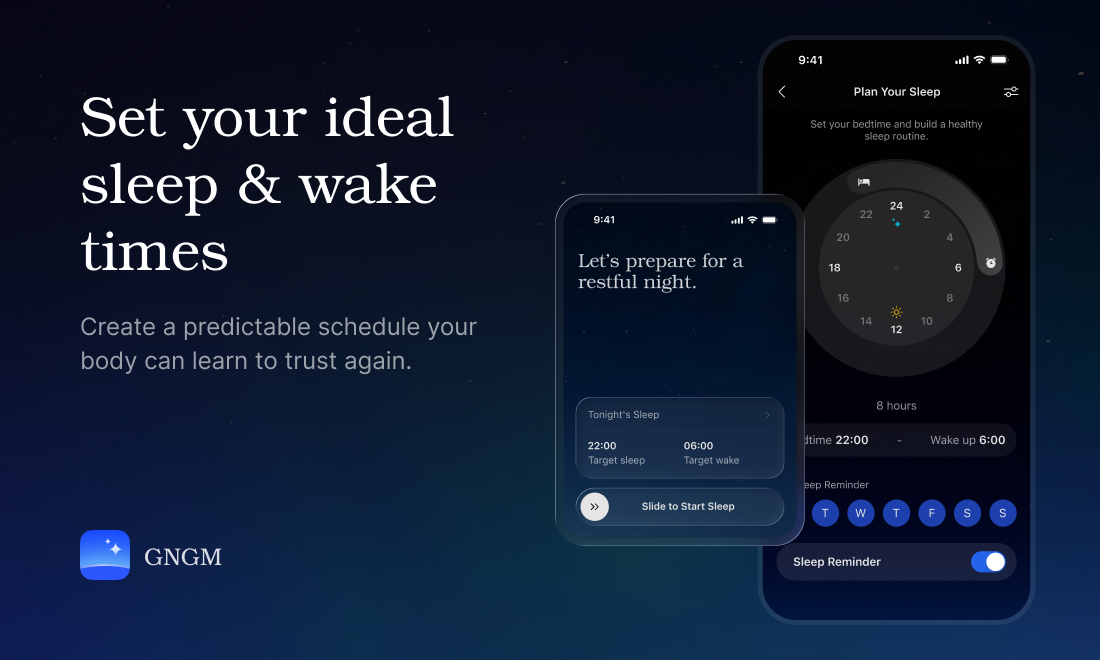
  1. Quick nightly check‑in

  2. Subtle cues and nudges to help you wind down and establish consistency.

  3. Lightweight progress signals over time — enough insight to keep you motivated, never overwhelming.

We built GNGM because small, consistent rituals beat massive overnight changes. It’s for people who want to feel better rested without turning sleep into a full‑time project.

We’d love for you to try it and tell us what you think — what helped, what felt off, and any features you’d actually use. Ask us anything below; we’re excited to hear from other night‑owls and sleep-curious folks.

Thanks for checking us out!


— The GNGM team

9
回复

@justin2025 Justin, I stayed up till 2am doomscrolling last night, and dragged thru work today.

If GNGM can help me break my late-night habit, I'll call you my eternal hero!

1
回复

@justin2025 Always love seeing new tools in this space. Congrats on the ship! I'm in the trenches with you today (launched my app too), hope the algorithm treats us well!

0
回复

@justin2025 seems exactly what i need!

0
回复

This launch feels different for me tbh. I pulled way too many late nights building GNGM and kind of… burned myself into making a sleep app 😂


Pretty happy I don’t have to stay up that late anymore. Hope it helps you sleep better than I did while coding it.

3
回复

@polman_trudo  Haha please don’t believe him — he absolutely will keep staying up late, just on new features instead 😭

But seriously, it’s been fun building this together.

0
回复

Looks polished! Does it support "free-running" sleep rhythm?

2
回复

@conduit_design Love this question — and the short answer is:

yes, you can use GNGM even if your sleep cycle isn’t tied to the usual day/night schedule.

The routine is anchored to your chosen bedtime, not the world’s.

1
回复

Do the nightly prompts adapt over time based on my habits, or stay consistent?

1
回复

@abod_rehman They stay simple and consistent for now — because consistency is the magic.


That said, we do subtly adjust the flow based on whether you’re building momentum or losing it.


More adaptability coming soon!

0
回复

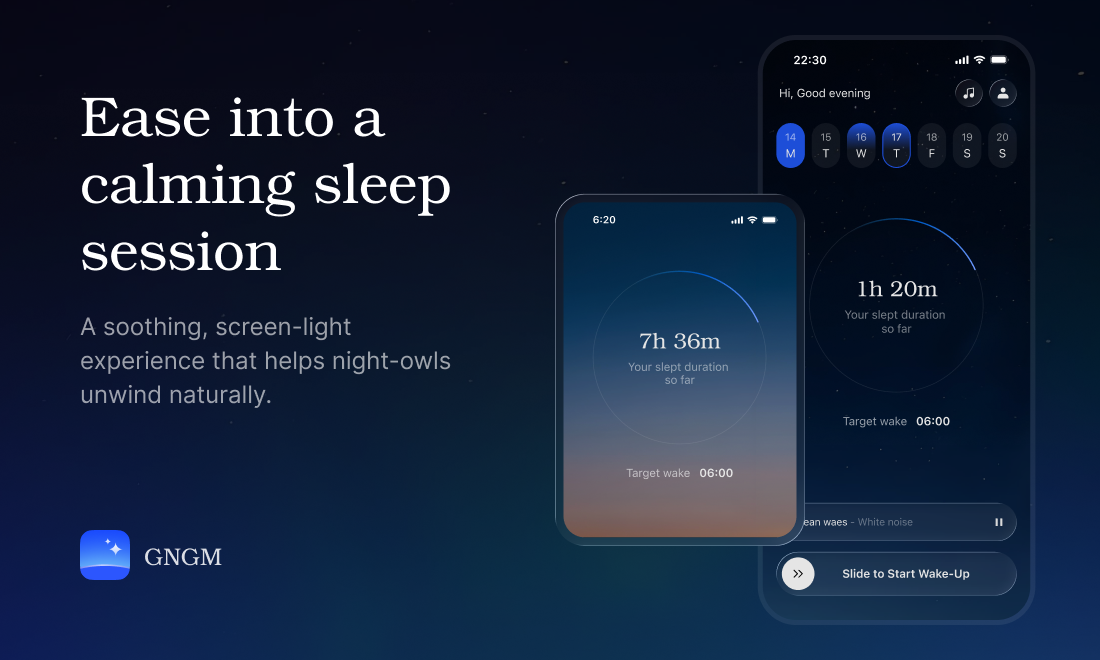
Wow using Suno for sleep sounds was super smart. Looks like it’ll be the norm for all kinds of use cases like this. Congrats on the launch!

1
回复

@thisiskp_ Thank you for the support, KP!


Yeah, Suno opened a whole new world for us — instead of stock sleep sounds, we can craft something that feels more personal, warmer, and a bit magical.

Right now we’re mixing custom ambient loops + gentle melodic textures made with Suno, and users have been loving the vibe.


More soundscapes are on the way too — can’t wait to share them!

0
回复

Congratulations on the launch 🎉 🎉 !!!!

1
回复

@shubham_pratap Thank you so much! 🎉

0
回复

Finally see a product like this! Sleeping is normal, but good sleeping is a big challenge. Hope this app can solve my problem

1
回复

@vincentwu800 Absolutely — sleeping is easy, sleeping well is the boss fight.


Really hope GNGM gives you that calm, gentle push you’ve been needing.

0
回复

Love the “no pressure, no trackers” approach. I’m a night-owl who’s failed at every strict sleep routine, so this feels really refreshing. Downloading now.

1
回复

@sandy_liusy Ahh a fellow night-owl


Same here — strict routines never worked for me either, so we designed GNGM to feel more like a gentle nudge than a checklist you can fail.

Hope it brings a bit more calm to your nights. Let me know how it feels after a few days — we’re building this with people exactly like you in mind.

0
回复

@jotzilla @polman_trudo Nice approach to sleep improvement without overwhelming users. I’m curious how GNGM measures progress in a meaningful way without relying on trackers, what signals or habits indicate someone is actually improving their sleep consistency?

1
回复

@harkirat_singh3777 Great question — and honestly something we thought about a lot while building GNGM.

Our approach is: measure the habit, not the data noise.

Instead of tracking heart rate or sleep stages (which often look scientific but aren’t super actionable), we focus on a few meaningful signals that actually reflect consistency:

• Nightly wind-down check-ins
Did you prepare for sleep at roughly the same time? This reflects the real start of your sleep rhythm.

• Morning reflection
Are you waking up roughly on schedule? How rested do you feel? These simple, self-reported signals correlate surprisingly well with long-term sleep stability.

• Habit streak & stability score
We track how often you hit your bedtime intention and how stable your pattern is over time — this is the strongest predictor of improved sleep quality.

• Gentle trends, not judgment
No “bad sleep” labels, no pressure. Just slow, steady progress toward a more regular rhythm.

Think of it less like “tracking sleep” and more like “training your internal clock.”

If you try it, I’d love to hear how it feels for you. Your feedback helps us shape GNGM into something genuinely supportive.

0
回复

@justin2025 Congrats on the launch 🚀

Can you please tell me how GNGM breaks our late night habits ?

1
回复

@aliena 

Thanks so much! Great question — and honestly, this is the core of GNGM.

We don’t try to “fight” your late-night habits with guilt or pressure.


Instead, GNGM works in three super simple ways:

1) A nightly wind-down check-in
Just one tiny action that tells your brain, “hey, the day is ending.”
It’s surprisingly powerful for resetting your rhythm.

2) Gentle bedtime reminders
Not aggressive alarms — just a nudge at the time you choose, helping you avoid the usual doom-scrolling spiral.

3) A calm space for sleep


Ambience + minimal UI so you naturally slow down instead of getting stimulated by screens.

No tracking, no charts yelling at you — just consistent tiny cues that help your body remember what “night time” feels like again.

If you try it tonight, I’d love to hear whether it helps you shift your bedtime even a little.

0
回复

Really love the vibe and mission behind GNGM. As someone who naturally leans toward late nights, the idea of a gentle, no-pressure nightly check-in instead of data-heavy trackers feels refreshing — it’s exactly what many “night-owls” like me need. The simplicity (no wearables, no complicated charts) is a strength: just a calming routine to help reset your rhythm. Looking forward to seeing how consistent use can reshape my sleep habits.

Do you plan to add customizable reminders or optional “wind-down rituals” (e.g. light stretching, breathing prompts, soft audio) to make the nightly check-in even more helpful?

0
回复
need this so bad
0
回复

looks cool, congrats for the team!

0
回复

@youssef_abdelwahed Thank you so much! 🙏

0
回复

I could see how our tool could plug into GNGM’s streamlined no-code workspace to simplify automation around our community workflows, so I’m going to take a closer look at this launch and explore the synergy.

0
回复

I seriously need this app! havent slept well since building my current project, and hope GNGM could save me out...

0
回复

@justin2025 Congratulations. And happy product launch.

0
回复

@huisong_li Thanks a lot for the support, Huisong! ❤️

0
回复

So the name GNGM means "good night, good morning"?

0
回复

@ristan_nakko yessir!

0
回复

Do you plan do add a feature like sharing the sleeping time with family?

0
回复

@tetiana_hryshmanovska thanks for asking! it's something we're exploring. no ETA yet, but we'll give hints once it's moving from idea to pipeline.

1
回复

Night owl here. Kinda burned out on rings/graphs. One simple check‑in sounds… doable. Curious what the wind‑down nudge feels like—like a tiny prompt or more of a ritual? Either way, I could use gentler evenings. Saving to try this week.

0
回复

@alexcloudstar glad this resonated. wind-down nudge is just a gentle prompt by design. let me know how it feels when you try it. thanks!

0
回复

Congrats on the launch! 👏
I haven’t tried GNGM yet, but the concept immediately stood out to me. Most sleep apps feel heavy with data, graphs, and pressure but this focus on a simple nightly check-in and gentle cues sounds much more realistic for people who just want a calmer routine.

I really like the idea of helping night-owls reset without turning it into another “project.” The minimal, non-judgmental approach feels refreshing.

A few questions out of curiosity:

  1. How did you validate that a single nightly check-in is enough to build consistency?

  2. Do the prompts adapt over time, or are they intentionally kept static to avoid overwhelm?

  3. Are you planning integrations (Apple Health, reminders, etc.) or deliberately staying “no-tracking”?

Looks great - wishing you a smooth launch day! 🚀

0
回复

Really nice launch, GNGM team. From a clarity & onboarding lens: when a user opens the app for the first time, what’s the one belief you want them to leave with in the first 10-15 seconds?
Is it:
• “I’m finally doing a simple routine I can stick with.”
Or:
• “This app understands my late-night rhythm and doesn’t judge it.”
Because in habit-change tools, the biggest barrier isn’t features—it’s the user’s belief that change is possible without pressure. Curious how you’re shaping that.

0
回复

@joydeep_pandey our aim in those first seconds is to signal that the user is stepping into something simple and supportive -- not pressure-filled with a number of bells and whistles. a sense of "i can actually do this, and it fits how my nights really work." that's the belief we're designing the onboarding around. cheers.

1
回复

i've been staying up and then hating myself in the morning, just installed it on my phone and wish it really changes my life.

Expect my experience share & review in a month.

0
回复

@lavana_cricko  I feel you! That “stay up late → regret in the morning” cycle hits way too close 😭

Don’t worry about being perfect. Just show up each night, do one tiny check-in, and let your rhythm reset slowly. That’s the whole spirit of the app.

Looking forward to your one-month update!

0
回复

Science behind this?

0
回复

@admiralrohan Great question! We designed GNGM around behavioral science, not biometrics.


A few core ideas behind it:

  • Micro-habits work better than willpower — one tiny, repeatable action every night anchors your brain into “it’s time to slow down”.

  • Consistency > precision — you don’t need perfect sleep data; your body responds most to predictable rhythms.

  • Reflection reinforces change — the morning check-in helps your mind notice patterns, which gently steers you toward better decisions at night.

  • Reducing cognitive load improves sleep — the calmer the pre-sleep environment, the easier it is to fall asleep. No charts, no overwhelm.

It’s simple on purpose — the science says simplicity sticks.

0
回复

Congrats on the launch! I've been an AutoSleep user for years, but the UI is honestly quite unappealing, and GNGM looks like a great alternative!

0
回复

@bonvisions Thank you! And haha yes… AutoSleep is powerful, but the UI can feel like it’s judging you at 3AM 😂

With GNGM we intentionally went the opposite direction — calmer, simpler, and focused on helping you feel better, not interpret charts.

Would love to hear how the experience compares once you’ve tried it!

0
回复

Congratulations on the launch of GNGM! This is such a thoughtful way to help night-owls rebuild a gentle, consistent sleep routine. I love the idea of a simple nightly check-in without trackers or data overload, just a calming routine to reset naturally. Excited to see how this helps people sleep better!

0
回复

@mona_xx Thank you so much, Mona! We really wanted to strip sleep back down to something calm and human — no graphs, no pressure, just a small nightly moment to reset.


Really appreciate the kind words. If you try it out, I’d love to hear how it feels for your own routine!

0
回复

Hey everyone!


Building GNGM has been a really personal journey for me. I’ve struggled with sleep for a long time, and with my team, I wanted to create a space that helps people rest better, recharge, and feel calmer.


Along the way, we’ve packed our sleep app with features that we ourselves found really helpful, from guided routines to tools that make winding down easier. It’s been a lot of work, but we’re really proud to finally share it with you. We’d love to hear your thoughts - what works, what could be better, and any ideas you might have.


Your feedback will help us make GNGM even more helpful for everyone who needs better rest.


Thanks for checking it out!


- M

0
回复

@jotzilla Love this — you poured your whole sleep journey into GNGM… while simultaneously sleeping the least out of all of us 😅

But seriously, couldn’t have built this without you.
Now that we’ve launched, maybe we can finally follow our own bedtime routines?

0
回复
@justin2025 haha yes, finally. 🙌😂
0
回复

I thought it was GMGN before I clicked in. LOL

Nice name!

0
回复

@shawnzhu Haha I get that a lot 😂 Glad you like the name — we wanted something simple that still feels warm and rhythmic.

Thanks for checking out GNGM, Shawn! Let me know what you think after trying it.

0
回复
#8
Protaigé
Your AI marketing agency that launches branded campaigns
216
一句话介绍:一款将品牌DNA作为核心,通过AI智能体协同完成从策略、文案到设计的全流程自动化营销活动生成平台,为营销团队和创业者解决了在追求快速上线与保持品牌一致性之间难以两全的痛点。
Marketing Artificial Intelligence Marketing automation
AI营销自动化 端到端活动生成 品牌一致性管理 创意团队模拟 营销活动管理 多渠道内容生成 SaaS 品牌DNA 智能体协作 公共测试版
用户评论摘要:用户普遍认可其“端到端”生成完整活动、强调品牌DNA和“策略优先”的差异化价值,认为能解决多工具拼接的割裂感。主要问题/建议集中在:品牌语调捕捉的准确性验证、字体与设计元素多样性、与社交/邮件平台的直接集成进度、以及首次使用的信念建立。
AI 锐评

Protaigé的野心不在于成为另一个AI文案或Banner生成器,而旨在成为云端“创意代理中台”。其宣称的核心价值——“品牌DNA”与“端到端生产”——直指当前企业应用生成式AI的两大核心焦虑:一是输出结果与品牌调性、视觉识别系统的严重脱节,导致“高效却无用”;二是单点AI工具泛滥,将本应连贯的创意工作流割裂成无数需要人工拼接的碎片,反而增加了管理负担。

从评论看,团队对产品定位的回应相当精准,强调“限制AI生成范围”以保护品牌资产、采用“多模型”任务匹配追求最佳效果,甚至“自食其果”地使用自身产品进行营销。这展现了一种务实的AI应用观:AI并非天马行空的“创作者”,而应是在严格品牌规则框架内高效执行的“生产臂”。其真正的挑战与价值也在于此:能否将非结构化的品牌指南(理念、语调)转化为AI可严格执行的结构化“护栏”,这需要深厚的设计与营销知识工程化能力,技术门槛远高于调用通用API。

然而,其模式也隐含风险。将创意流程高度标准化、自动化,可能抑制突破性灵感的诞生,更适合规范化、可复制的规模化营销活动生成。此外,“策略优先”虽为亮点,但AI生成的策略深度与人类顶尖策略人员的洞察力相比,仍需市场检验。总体而言,Protaigé代表了AI在营销领域从“玩具”走向“工具”的进阶方向,即从提供可能性转向提供确定性、从辅助执行升级到管理流程。它的成功与否,将取决于其“品牌DNA”系统的实际精度与深度,这将是其从“有趣的新产品”蜕变为“关键业务系统”的唯一路径。

查看原始信息
Protaigé
Delivering complete, ready-to-launch campaigns in minutes, not weeks. What makes Protaigé different: It doesn't generate headlines or banners. It generates the whole thing. AI agents work together on strategy, copywriting, and design - just like a real creative team. Your Brand DNA sits at the core, controlling every output. Guidelines, personas, products, and assets become guardrails ensuring campaigns stay on-brand across channels and markets. No fragments. No delays. Complete campaigns.

Hey folks!

We built Protaigé because we saw marketing teams facing a difficult choice: sacrifice brand consistency to move fast, or slow down to maintain quality. We wanted to build a third option: an AI system that understands your brand as well as you do.

Protaigé is a creative agency in the cloud. It takes you from a simple brief to a full campaign in minutes.

Here is what makes us different:

🚀 End-to-End Production: Protaigé automates the entire campaign production process. From your initial brief to the final export, we build every asset in one connected workflow. Unlike many other AI tools that are point solutions and handle just one task like copywriting or banner generation.

🧬 Brand DNA: Generic AI output often sounds soulless. We allow you to upload your brand guidelines and other relevant brand assets and documents. Our system ingests this to ensure every output aligns with your voice and visual identity.

💡 Strategy First: Most tools skip straight to execution. Protaigé starts with strategy by completing the marketing brief and then developing distinct creative concepts for you to review and approve before it builds a single asset.

Who is this for? We designed this for marketing teams and founders who need to scale output without scaling headcount. Whether you need a tactical push or an integrated campaign, Protaigé handles the heavy lifting.

Our Launch Offer: We are currently in Public Beta.
- Campaign Lite: You can try the platform on our free plan.
- Campaign Plus: For this launch, we offer a 75% discount on our Plus plan ($49/month) for small teams.

We want your feedback. Specifically, does the Brand DNA capture your tone correctly?

Excited to hear your thoughts! 👇

9
回复

@wawagilewski brand dna bit sounds huge, generic ai always feels flat. curious if it really nails tone tho

5
回复

@wawagilewski This looks solid. Congrats on the launch! I just put my own app live today too, so I know how much work went into this.

0
回复
are y'all using nanobanana? in curious, how are you tackling the text shape retention and are you getting variety in fonts?
4
回复

@ssindhia Protaigé fully retains your brand's original designs, even when using generative AI for images (and yes, we use Nano Banana). That has been a conscious choice from Day 1.


The way we achieve it is by limiting what the AI can generate to specific elements that are relevant for marketing campaigns. The most frequent use cases are producing variations of the hero image to A/B test, personalise, or localise the campaign. The rest of the designs stays true to the brand - so even if, hypothetically, a user went rogue, they wouldn't be able to break the design rules set by their company's brand team!

Design kits, as well as fonts, and the other brand assets (logos, colours, graphics, icons, photos) are all part of the Brand DNA that is defined at account setup and that serves as the foundation for anything Protaigé generates.

1
回复

Great! Do you also manage social media and email campaigns from your dashboard?

4
回复

@chilarai Yup of course. You can create campaigns and then use them across different channels - social, emails, search ads etc.

4
回复

@chilarai You can produce campaign assets for these channels within the platform and export them for upload. We're adding direct integrations with popular social platforms and a native publishing feature - coming real soon!

Do you mind telling me what platforms/clients you're currently using?

3
回复

Seeing a full campaign appear instead of random headlines feels refreshing. No patching thigs together anymore.

1
回复

@simran_kumar Spot on. Let us know about the rest of your experience!

0
回复

Very smooth process!

1
回复

@osakasaul Thanks so much for the feedback! Have you gone through the entire brand setup process? (I'm not able to guess which one of the signups we got today is yours!)

0
回复

Seeing a full campaign appear instead of random headlines feels refreshing. No patching things together anymore.

1
回复

@shawn_idrees Thanks for the feedback and yes, indeed, we're very much focused on the end-to-end campaign production workflow. Unlike the myriad of AI point solutions out there that operate in a vaccum and give you only disconnected pieces...

0
回复

Really like the strategy first approach here. Most AI tools jump straight into spitting out assets, but campaigns only work when the thinking is solid. The Brand DNA angle is also interesting. Generic AI copy is a real issue when you’re trying to protect a brand's voice. Excited to see how well it adapts to different tone guidelines.

1
回复

@adnan_gradascevic Thanks for the feedback, glad the product resonates. I saw you've also launched today - congrats and wishing you all the best ;)

1
回复
Congratulations on your product launch! Nice product concept. Would love to give it a spin. Wish you guys all the very best. 👍🏻
0
回复

@agzee Thanks a bunch! Do give it a try and let us know how we can make it better

0
回复
Did you use Protaigé to create the marketing assets for Protaigé?
0
回复

@nathan_darma If you're asking about our website, then yes, we demonstrate assets that were generated in Protaigé—display ads, emails, social posts, banners. We're also generating search ads, social ads, and landing pages for our ad campaign, so you can see we use Protaigé to scratch our own itch ☺️

1
回复

@nathan_darma Love this question. All our static assets are made in Protaigé with a human in the loop. Video is still in development, so those are currently done in-house, with Protaigé generated concepts. If we’re not using it ourselves, how can we expect anyone else to?

1
回复

It looks so easy to create a campaign! Great tool, my congrats!
And I was the 200th person to upvote Protaige :D

0
回复

@tetiana_hryshmanovska Thanks 200 times then! :)

0
回复

digital marketers need to pay very close attention to products like this. Would love to give it a try for my side projects.

0
回复

@dbg1 Thanks and feel free to create an account for as many brands as you like.
One thing worth pointing out is that Protaigé falls within the purview of traditional marketers too, as it can generate all kinds ofoffline assets from billboards to flyers and extend those digital campaigns into out-of-home channels!
PS. I think I know your brother :)

0
回复

@dbg1 Hey I might know your brother too!

0
回复

The connected workflow approach could really help avoid the disjointed outputs we see with multiple AI tools.

0
回复

@abod_rehman That's one of the main reasons we built this. As a creative agency owner (or ex-owner now), we were frustrated by the copy-pasting between platforms.

0
回复

Excellent launch, Protaigé team. From a clarity & onboarding lens: when a marketing lead opens Protaigé for the first time, what’s the one belief you want them to hold in the first 10-15 seconds?
Is it:
• “I can launch a full on-brand campaign in minutes, not weeks.”
Or:
• “This system already knows my brand’s DNA—my work aligns automatically.”
Because in tools promising “speed + brand alignment,” the biggest adoption barrier isn’t features—it’s the user believing it fits me. Curious how you’re framing that for first-time users.

0
回复

@joydeep_pandey Great question. When you sign up as a new user, you'll see how we take you through an automated onboarding process to demonstrate the value upfront. After the initial Brand DNA is set up, we invite you to generate your first campaign to experience that platform's full capabilities ASAP.

"The biggest adoption barrier isn’t features—it’s the user believing it fits me" - true for any SaaS out there!

1
回复

do you use a variety of different models? or one in particular?

0
回复

@surtmcgert We use various models for different purposes, always matching the one we think is best for the specific task. Thanks for asking!

0
回复

@surtmcgert We use ALL the models 😆 It depends on what's needed eg core creative work (briefs, content gen) vs quick lightweight tasks vs image analysis and vision tasks vs generative imaging. We've found that matching the right model to each task gives much better results than relying on a single model for everything. Thanks for the great question!

0
回复

Congrats on the launch Wawa, Protaigé looks strong and well designed. Upvoted. I am co founder of bestofweb .site and after your launch if you want more visibility you are welcome to join and introduce it to our founder community.

0
回复

Thanks for the appreciation Nima and for bringing your directory to my attention - will give it a go!

0
回复
#9
beLow
Inline insights with C/C++ that shows CPU, memory, energy
212
一句话介绍:beLow是一款通过AI驱动的本地化分析工具,自动分析并优化C/C++嵌入式代码,针对特定硬件目标提升性能并降低能耗,解决了嵌入式开发者在汽车、航空航天等领域手动进行硬件微优化的核心痛点。
Developer Tools
AI代码优化 嵌入式开发 C/C++性能分析 硬件感知优化 能耗降低 静态动态分析 本地部署 开发效率工具 边缘计算
用户评论摘要:用户普遍认可其硬件感知和自动生成优化代码的价值。主要问题聚焦于:工具希望用户建立的核心信任点(是否真正理解硬件栈)、支持的目标平台范围、以及是否具备内存泄漏检测等扩展功能。开发者回应确认支持多平台并强调自动化。
AI 锐评

beLow的亮相,戳中了嵌入式开发长期以来的“贵族”痛点:高度依赖资深工程师对特定硬件进行耗时且重复的手工调优。其宣称的价值核心并非简单的“AI生成代码”,而在于构建了一个从真实硬件测量(CPU周期、内存模式)到AI优化建议的**数据闭环**。这使其与泛化的云端代码生成工具划清了界限。

然而,其真正的挑战与价值深度并存。第一层价值在于“替代重复劳动”,将专家经验产品化,缩短开发周期。但更深层的潜力在于,它可能改变嵌入式性能优化的方法论——从依赖个人经验和离散的编译器参数,转向基于实际硬件行为数据的、可迭代和持续(结合CI/CD)的优化流程,这正是评论中提到的“持续性能优化”愿景。

犀利点在于:其技术壁垒与商业风险高度绑定。**“硬件感知”的深度决定了工具的上限**。支持ARM Cortex、x86等常见架构是基础,但在极其碎片化且对安全、实时性有严苛要求的嵌入式领域(如汽车AUTOSAR、航天器),工具的每一次优化建议都必须兼具高性能与高可靠性。任何一次错误的“优化”都可能导致灾难性后果。因此,用户评论中关心的“信任”问题,远非一次精准的回复所能解决,需要长期、海量的场景验证来建立。此外,本地部署虽是满足客户安全顾虑的明智之举,但也限制了其利用大规模数据持续进化模型的能力。

总体而言,beLow方向精准,切中要害,但已踏入“深水区”。其成功与否,不取决于AI本身,而取决于团队对嵌入式各垂直领域硬件、软件与安全标准的理解深度,以及能否在“自动化”与“确定性”之间找到让严苛工业领域信服的平衡点。

查看原始信息
beLow
beLow automatically analyzes your C and C++ embedded code to identify performance bottlenecks and generate optimized code tailored to your target hardware. Slash execution time, reduce energy consumption, and accelerate time to market. Designed for developers building in automotive, aerospace, robotics, and other performance-critical systems, beLow simplifies the complex work of embedded code optimization so teams can focus on innovation, not fine-tuning.

Hey Product Hunt! 👋

After years fighting performance bottlenecks in embedded projects — spending endless time hunting for the right computation path, the right variable type, or the right compiler flags for a specific hardware target — we wanted a tool that finally connects real hardware constraints with modern AI.

That’s why we built beLow.

It analyzes your C/C++ code on your own hardware target, measures actual CPU cycles, memory patterns, and instruction-level behavior, and feeds all of that directly into AI agents that propose optimizations or even generate hardware-aware code.

What makes it different?

Most AI tools generate generic code with no understanding of embedded constraints. beLow is fully hardware-aware, runs locally, and blends static + dynamic analysis to surface concrete, measurable gains. Early users in automotive, aerospace, and IoT are already seeing execution-time improvements of up to 45%.

To celebrate our Product Hunt launch, we’re opening our software and giving PH users priority onboarding + extended free usage.

If you want faster, leaner embedded code:

👉 Install the VS Code extension

👉 Run the MCP server

👉 Analyze, optimize, or generate code instantly

We’d love your feedback — help us shape the future of AI-guided embedded development. 🚀

11
回复

@vincent_quere This is a really thoughtful take on embedded optimization. Congrats to the team on shipping it! :)

0
回复

Impressive launch, beLow. When a firmware or embedded dev opens this tool for the first time, what’s the single belief you want them to hold in the first 10-15 seconds?
Is it:
• “I’ll get measurable performance gains without diving into hardware micro-optimization myself.”
Or:
• “This tool understands my hardware and my constraints out of the box.”
Because in embedded optimization tasks, the belief that a tool gets me and my stack often matters more than whether it supports 50 hardware targets.

3
回复

@joydeep_pandey Great question — and you’re absolutely right: in embedded, trust that the tool understands your stack matters more than long feature lists.

Yes, there are a few initial steps to set up the project and select the target platform — but once that’s done, everything becomes automated: analysis, and the optimized code suggestions (or generation) tailored to the specific MCU/CPU.

You no longer have to fight with finding hardware specific optimizations — beLow handles them for you, aware of your hardware constraints.

1
回复

Really smart tool. When beLow generates “optimized code tailored to target hardware,” does it support multiple target platforms?

2
回复

@getsiful Absolutely — beLow supports multiple hardware targets.

You can choose the platform directly in the project settings (ARM Cortex, x86, PowerPC, and Infineon Tricore among others), and the optimization engine adapts the generated code to the instruction set, memory model, and performance constraints of each target.

4
回复

Congrats on the launch. Love that beLow doesn’t just point at hotspots but actually generates optimized code tailored to the target hardware.

0
回复

Having an agent that can analyze, propose changes, generate code, and push through CI/CD makes “continuous performance optimization” feel realistic instead of a one‑off tuning sprint just before release. Congrats!

0
回复

The MCP server + AI‑agent angle is exciting, indeed!

0
回复

This is huge for embedded teams — manual optimization is always the biggest time sink.

0
回复

Amazing! Great to see something for C/C++.
Can it detect memory leaks alongside optimization?

0
回复
#10
Cumbuca
Develop your own payments infra in Brazil using our license
188
一句话介绍:Cumbuca 作为巴西受监管生态系统的“代理”,让金融科技公司能在无需自持支付牌照的情况下,直接接入Pix和开放金融的官方API,从而在快速进入市场的同时,获得完全自主的运营控制权和数据所有权,解决了“自主可控”与“快速合规”之间的核心矛盾。
Fintech Payments Banking
金融基础设施 支付牌照代理 巴西支付 开放金融 Pix直接接入 B2B金融科技 合规即服务 监管科技 基础设施即代码 自主可控
用户评论摘要:用户普遍认可产品解决了“自主权与速度”的痛点,并对“基于官方API构建”的灵活性表示赞赏。主要问题集中于市场定位(是否仅限巴西)、具体定制化程度、合规细节以及首次使用的核心价值主张。创始人团队的经验和过往痛点增加了产品可信度。
AI 锐评

Cumbuca 的“监管代理”模式,本质上是一场精妙的监管套利与权力再分配。它没有创造新的技术接口,而是选择成为一堵透明的“签名墙”,将最宝贵的监管牌照(特别是罕见的ITP/PISP许可)转化为可编程的合规服务。其真正颠覆性在于,它解构了传统BaaS或PSP“提供抽象化API并锁定客户”的商业模式,将基础设施的定义权和所有权交还给客户。这直击了成熟金融科技公司的核心焦虑:在规模扩张期,底层支付系统的“黑箱”问题会成为增长瓶颈和系统性风险点。

然而,这种“将官方API直接暴露给客户”的模式是一把双刃剑。它预设了客户具备成熟的金融级工程与合规能力,这自然将其市场定位锚定在“高交易量”玩家,与宣称的“民主化”愿景形成微妙反差。产品介绍中强调“非自助服务”和“选择性合作”,恰恰暴露了其商业本质:并非普惠式工具,而是面向精英客户的合规能力批发。其核心风险并非技术,而在于作为单一牌照持有方,如何将自身的监管风险(如AML、操作风险)通过代理模式有效地管理与分摊,这需要极其严密的合同设计与持续监控。如果成功,Cumbuca 将成为巴西支付生态的“权力插座”;若失败,则可能成为系统性风险的集中点。它的未来,不取决于代码,而取决于对监管边界和风险防火墙的极致设计。

查看原始信息
Cumbuca
In Brazil, a payments license gives you full autonomy but takes years, millions in $$$, and heavy compliance. Existing providers get you live fast but restricts independence and operational control. Cumbuca merges both: you get the same development flexibility with direct access to Open Finance and Pix, with full operational control, reduced risk and flexible price. Build on official APIs, own your infra and data, customize every layer, and if you get your license, just plug your own certificate
Hey Product Hunt 👋 We’re Daniel, Bruno, and Pedro — founders of Cumbuca, the first proxy for Brazil’s regulated ecosystem. After years of building fintechs in Brazil, we saw how painful it is to obtain a license or depend on PSPs and BaaS providers. Our previous B2C operation scaled to over a million accounts, and we suffered since a lot of our core product relied on partner infra, and it hurt us to not be able to solve the issues affecting our customers. We’ve been deeply involved with Open Finance since its earliest days — we were one of the first players in the ecosystem and became the **fourth ITP/PISP license ever issued in Brazil**, and after closing our B2C operation decided to pivot to B2B and build the financial infrastructure partner we always wished existed for ourselves. We’ve always been obsessed with the technology and the infrastructure behind Open Finance and Pix in Brazil, it's potential to be a transformational benefit to millions of Brazilians and wish to use our license and expertise to partner with amazing companies that will bring those benefits to life. Cumbuca is the result of that journey: a regulatory bridge that enables fintechs to operate with **direct access to Pix and Open Finance** while retaining complete control over their operations. You **build your own infrastructure, own your operational data, resolve issues without middlemen, and enjoy the same development freedom you would have if you held your own license** — all while we carry the regulatory exposure and maintain the highest compliance standards. **We redesigned the delivery layer from the ground up.** Instead of exposing Cumbuca APIs, which would impose our abstractions and limit customer flexibility, we built a **regulatory proxy**. Customers can develop their entire infrastructure end-to-end using the **same APIs available to banks and other regulated players**. They generate their requests, send them to our proxy, and we sign and forward them under our license. The proxy is intentionally a **minimal layer**, giving us only what we need: logging, compliance, visibility, and access control. **There is no Cumbuca API — only the proxy.** We’ve supported global and local companies launching and scaling in Brazil. While we’re excited to share Cumbuca with the PH community, we’re **not a self-serve platform** — we work selectively with high-volume fintechs and infrastructure players where deep customization and autonomy are essential, and which are aligned on a long term plan for the Brazilian payments market. We’d love to hear from you — who’s considering entering the Brazilian market? What’s holding you back? How has your experience been with Brazilian fintech infra providers? 💬 Ask us anything below! — The Cumbuca team 🇧🇷
28
回复

@ruhman Congratulations on the launch!

0
回复

@ruhman Amazing news - congratulations to the entire team on this milestone!

0
回复

@ruhman so proud of this launch! I'm really excited to see the impact of this major innovation on Brazil's ecosystem and how it will advance the Open Finance agenda. Great things are coming!

0
回复

I've been frustrated with the trade-off between quick integrations and true ownership, so this caught my attention immediately. The idea that I can build on official APIs and still maintain full control feels great for someone like me trying to scale responsibly.

7
回复

@sabine_engel that's the idea :)
Hit us up and when you come to Brazil and we'll help!

1
回复

As someone who's always wanted more control over my payments stack, this really speaks to me. The idea of getting direct access to Pix and Open Finance without drowning in years of licensing is huge. I like hoe flexible and builder-friendly your approach feels.

7
回复

@nancy_philip thanks!!!

1
回复

Excellent launch, Cumbuca team. From a clarity-onboarding lens: when a fintech opens your platform for the first time, what’s the one belief you want them to walk away with in the first 10-15 seconds?
Is it “I can launch payments in Brazil without building full rails myself” or “I’m working with a licensed entity that knows Brazil’s regulation and compliance”?
Because in payments infra, the belief that someone has already taken care of the hard part often drives faster adoption.

6
回复

@joydeep_pandey great question! I guess it would be "I can develop a payments product in Brazil with the same flexibility I would have if I had a local license, but offloading the regulatory and compliance part, and the actual license, to a world class partner"

2
回复
Hey Daniel, congrats on the pivot and that line about not being able to solve issues affecting your customers really stands out. When you were running the B2C operation with a million+ accounts, was there a specific incident where you knew exactly how to fix something for your users but couldn’t because you were stuck waiting on a partner?
5
回复

@vouchy I can name a few! The most repeating one was downtime by our provider in critical moments like for example at the beginning of the month when most users were cashing in their paychecks. We also had some terrible ones like payments that were supposed to be instant taking hours to clear, judicial blocking on user assets with no warning or way to check for it, hard times when users changed their legal names... lot's of edge cases that, at scale, become critical.

2
回复

Brazil is a huge market, which ingorned by a lot of products because of payment issues. Having a payment gateway is a huge step and makes it easier to get to this big market!

4
回复
1
回复

Hey @ruhman great pivot! I can't imagine a better team to be building this in Brazil other than you guys, so congratulations a lot for the pivot and the launch!

3
回复

@nathandias thank you so much!

1
回复

I have been following Cumbuca since its founding. This pivot speeks volumes about their flexibility and competence. They are skillfully navigating a complex regulatory inviroment and were still one of the first 3 companies with an ITP license in Brazil.

Keep up the great work!

3
回复

@guilherme_cury thank you so much!!!

1
回复

This solves a massive gap in Brazil’s fintech space — autonomy without waiting years for a license.

1
回复

@kshitij_mishra4 that's the goal! Thanks for your support

0
回复

Congrats on the launch! Why only Brazil? Will other South American countries be added in the future?

0
回复

@ruhman Building payments infrastructure in Brazil is exciting! The license based approach gives developers more control than typical payment SDKs.

How customizable is the infrastructure? Are fintech startups able to white label this for their own products?

Curious about compliance and how Cumbuca handles the regulatory complexity in the Brazilian market.

0
回复
#11
Slack Feature Request Agent
Track and fulfil customer requests directly on Slack
176
一句话介绍:这是一款集成在Slack中的AI代理,通过自动抓取和分析客户通话记录,捕获、追踪并闭环处理客户功能请求,解决了客户成功和销售团队在跨工具手动记录、跟进及反馈客户需求时效率低下且易遗漏的痛点。
Customer Success Customer Communication Artificial Intelligence
客户反馈管理 AI工作流自动化 Slack集成 产品需求收集 SaaS工具 客户成功 Jira集成 智能摘要 流程优化 B2B软件
用户评论摘要:用户普遍认可其解决“需求黑洞”痛点的价值,赞赏其无需改变工作流的设计。主要问题与建议集中在:去重匹配现有工单的准确度、路由规则的自定义灵活性、边缘案例处理能力,以及如何快速建立用户对AI生成内容精准性的信任。
AI 锐评

Korl的Slack Feature Request Agent展现了一个清晰的趋势:AI正从“生成内容”向“代理工作”演进。其真正价值不在于简单的信息提取,而在于悄无声息地嵌入现有工作流(Slack、Jira、通话记录平台),充当了一个不知疲倦的“流程缝合者”。它瞄准的不是新功能,而是企业中最昂贵且易出错的“手工胶水工作”——那些介于客户沟通、产品开发和客户成功之间的、非结构化的、依赖人工记忆与转发的信息传递环节。

产品思路犀利地避开了“再造一个平台”的陷阱,选择成为现有系统的神经中枢。这降低了采用门槛,但也将最大的技术挑战隐藏其后:其核心AI能力(语义理解、去重匹配、需求提取)的可靠性直接决定了它是“智能助手”还是“混乱制造机”。评论中关于去重准确性和边缘案例的担忧,正是对其AI模型在真实企业复杂、模糊语境下理解能力的拷问。

更深层看,此产品若成功,其商业价值可能远超一个效率工具。它通过自动化闭环,系统性地捕获了传统上流失的、散落的客户需求数据,为企业构建了一个持续、自动化的客户需求管道。这为产品决策提供了近乎实时的数据洞察,将客户成功团队从行政工作中解放出来,转向更高价值的客户关系管理。然而,其天花板也在于此:它严重依赖并受制于企业现有工具生态(如Jira、Slack)的开放性与稳定性,且其价值感知高度依赖于团队现有流程的混乱程度——流程越规范的企业,其即时价值可能越不显著。这是一款为“增长中的混乱”量身定制的精密止痛药,而非万能滋补品。

查看原始信息
Slack Feature Request Agent
Korl’s Slack Agent uses AI to automatically capture and track customer feature requests – without adding new tools to your workflow. Here’s how: 1. Extracts requests from customer calls in Gong, Zoom, Fathom, Fireflies, and more 2. Routes requests for review so you can file or update Jira tickets right from Slack 3. Notifies you when features ship with a personalized update for customers It helps CSMs avoid the request “black hole” while giving Product visibility into what customers need.

Hey ProductHunt! 👋

I’m Berit, co-founder of Korl. Thanks for checking out our launch!

This Slack agent actually started as a hacky internal workflow we built for ourselves. We were tired of trying to remember to log Jira issues after every customer call. We were building things our customers had asked for… but forgetting to close the loop when they shipped. We knew AI could automate this, and we didn’t want yet another system to log into.

So we stitched together a rough agent that reviewed our Fathom call transcripts, flagged feature requests, and pushed them into Slack for quick triage.

Then one of our customers saw it and asked, “Can we have that?” That’s when we realized this should be part of our product, not just an internal tool.

Today’s launch is that productized version. It:

• Captures feature requests automatically from call recordings

• Routes them to Slack so CSMs or Sales can add or update Jira issues from Slack

• Tracks progress and drafts personalized updates when features ship

We’d love to hear from you. What’s your current process for tracking customer requests? And what would make this agent more useful in your workflow?

Thanks again for your support and for being part of the Korl community!

14
回复

@berit_hoffmann Exactly, as Berit said: the 'black hole' of customer requests was a real pain for us. As a co-founder, I was constantly struggling to keep up with customer requests and prioritizing them. Like the best folks you work with, this agent meets you where you are. To me, that’s the best part. It doesn’t require behavior change or nudges. You just have your call, and Korl handles the admin work in the background. I’ll be hanging out in the comments all day. Hit me with your toughest questions about our roadmap or how the agent works under the hood!

4
回复

@berit_hoffmann Huge congrats on the launch! The design overhaul is exactly what was needed. Waiting to test out the new features right away.

0
回复

@berit_hoffmann This looks incredibly polished. The onboarding flow seems really smooth. Launching my own product today, so I know how stressful it is to get the pixels perfect. Upvoted!

3
回复

Beautiful launch Berit. Korl feels simple and powerful. Congrats to you and the team.

5
回复

@nimaaksoy Thanks so much! We really appreciate your support

1
回复

Cool. And finally, do you allow the presentations to be exported to different formats?

4
回复

@chilarai Yes. You can go into present mode from Korl, or you can export to common formats like PDF or Google Slides. Korl itself has full editing capabilities on the slides as well, many of which are powered by AI and much more efficient than editing in common tools like GSlides.

1
回复

Oof, this hits my “where’d that request go?” panic before QBRs. Pulling asks from Gong → Slack/Jira then nudging when it ships… nice. Also into the auto-deck angle. Curious how well it de-dupes and maps to existing tickets.

4
回复

@alexcloudstar the deduping against existing Jira tickets uses vector search, so it captures matches even when they're not a keyword match or are phrased differently. We also surface the top 3 matches in Slack so you can choose which one is the best match (or file a new ticket if none of them are).

Obviously proof is in the pudding once you try it on your data, but one of our early adopter customers has been using this for a little over a month and of the 100+ requested they've captured, about 70 of them were linked to existing issues!

2
回复

Impressive launch, Korl team. From a clarity & onboarding lens: when a customer-facing team opens Korl for the first time, what’s the one belief you want them to hold in the first 10-15 seconds?
Is it:
• “I understand each customer’s unique value path, not just their usage data.”
Or:
• “My presentation will reflect their brand, context, and issues—no generic slides.”
Because in tools aimed at personalization at scale, the biggest adoption barrier isn’t features—it’s belief that it gets the customer, not just the data.

2
回复

@joydeep_pandey Good question. The belief we want them to hold is:

"Korl prepares me to speak directly to value for this customer, based on their unique requests, use cases, and priorities."

0
回复

Korl hits a major pain point for CS/AM teams: the grind of turning scattered product + customer data into polished, personalized decks and renewal materials. Rather than wrestling with spreadsheets, Jira tickets, Slack threads, and having to build each customer‑specific slide by hand, Korl pulls everything together and auto‑generates meaningful presentations.

I especially like that it doesn’t treat “presentations” as generic templates — it builds them around real context: who the customer is, how they use your product, what their priorities are, and what value you’ve delivered or could deliver next. That shift from generic to personalized is where automation actually adds value.

For startups or small SaaS companies that can’t justify a full‑time CS ops or presentation builder, Korl seems like a tool that lets you punch above your weight: better customer communications, stronger renewals, and more consistent value messaging without scaling headcount.

That said — the real test will be how well the “AI + data sync → presentation” pipeline handles edge cases, complex data, and constantly evolving products. If that holds up, I think Korl could be a game‑changer for customer-facing teams.

1
回复

@andrew_azman Thanks for the comment! Definitely agree the real test is in handling edge cases and complex data. That's why we offer a free trial so people can see how Korl does on their own data.

0
回复

I could see how our tool could benefit from Korl’s workflow automation and streamlined collaboration features, so I’m thinking this could work well together and I’ll go take a closer look at their launch.

1
回复

@jamesjacksonleachatx Glad to hear! Feel free to reach out if you have any questions as you are getting started.

0
回复

How customizable is the routing to Slack channels or Jira projects?

1
回复

@abod_rehman Very customizable. You choose:

  1. The Slack channel you want to post the summary of calls + requests

  2. Where you want requests sent for review/triage (default is a DM to the call attendees, but you can fall back to a shared channel if you'd like)

  3. Which Jira issues to compare against for matching

  4. How to file new requests in Jira: which fields to update, which project new requests should go to, what type of issue (story, bug, epic, etc.)

0
回复
#12
Nerve
AI Chief of Staff that does your actual work
170
一句话介绍:Nerve是一款企业级AI工作副驾,通过深度集成并索引企业内部工具和数据,在跨系统信息检索、文档撰写、工单创建等日常办公场景中,主动执行工作流,解决信息孤岛与重复性操作痛点。
Productivity SaaS Artificial Intelligence
AI工作副驾 企业级自动化 智能工作流 跨平台集成 知识管理 主动式AI SOC 2合规 生产力工具 团队协作 代理智能体
用户评论摘要:用户高度评价其深度上下文理解与主动执行能力,认为其从“聊天工具”进化为“实际工作者”。有效反馈集中在:询问工作流自定义能力、探讨技术挑战(如海量数据索引与权限控制)、建议增强“智能推荐”等前瞻性功能,并期待更智能的主动代理工作流。
AI 锐评

Nerve并非又一个套壳聊天机器人,其野心在于成为企业内部的“数字中枢神经系统”。它的真正价值不在于回答“是什么”,而在于解决“然后呢”——将散落于Slack、邮件、CRM中的对话与信息,自动转化为可执行的Jira工单、销售跟进邮件或标准PRD文档。这标志着AI应用从“对话式检索”迈入“代理式执行”的关键一步。

其壁垒看似是繁多的API集成,实则是两重更深层的挑战:一是构建一个理解企业复杂权限图谱并能实时同步海量碎片的“知识引擎”;二是设计出能可靠完成多步骤、可逆操作(如创建、更新记录)的“智能体”。从评论看,早期用户已将其用于竞争情报汇总、周报自动生成等场景,验证了其作为“基础设施”的潜力。

然而,其最大风险也在于此。将AI深度嵌入核心工作流,意味着错误或“幻觉”的成本极高。产品必须在其引以为傲的“主动性”与“可控性”之间找到精妙平衡。此外,它试图成为“一家公司唯一的工作AI”,此定位固然宏大,但也面临来自垂直领域专用Agent(如销售、客服AI)的竞争。能否在保持通用性的同时,在特定部门(如产品、销售运营)打造出不可替代的深度价值,将是其从“有用工具”蜕变为“必备系统”的关键。当前版本似乎更偏向于信息整合与文档生成,离真正“代理”全流程工作尚有距离,但路径已然清晰。

查看原始信息
Nerve
Nerve connects to the apps your team already uses, searches through your internal content, and automates your most common workflows. It handles everything from writing docs, to updating your CRM, creating tickets in JIRA, and responding to emails. Even more, it proactively surfaces your most important to-dos and team updates. Nerve is enterprise ready, with SOC 2 compliance, SAML/SSO support, and never trains on your data.

Hi ProductHunt! You probably use a lot of ChatGPT or Claude for work (as did we) but we kept running into three problems:

1- They didn't have a deep understanding of my work. None of them knew what I’d said in a slack thread, on a video call, or what the latest updates to a file in my google drive were.
2- They couldn't actually do my everyday work tasks. They’d stop short of actually completing my work, like creating the actual jira tickets, sending followup emails, and updating my CRM.
3- They were too reliant on me starting a chat. I wanted something that would be able to proactively surface anything that should be important to me - things I need to take action on or updates on projects I’m watching.

We built Nerve to solve for this and be the one AI any company can use for work. It’s enterprise ready, SOC 2 certified, and SSO compatible.

Our customers are using Nerve for tasks like:
- Find all users that have requested a mobile app at some point and send them an email about our launch
- Write me a PRD using this template and then create the corresponding JIRA tickets
- Update the Salesforce opportunity fields from a gong call transcript and draft a follow up for any action items

Nerve is free to try at https://www.usenerve.com/, and to celebrate our launch we're giving extended trials to the first 150 users from PH, message me at aziz@usenerve.com to claim :)

10
回复

@azizpabani 
This is a significant leap beyond chat-based AI—building an agent that proactively surfaces actions and connects across tools (Slack, Drive, CRM) solves the exact "AI assistant vs. actual work" gap. The SOC 2 + SSO focus shows you're serious about the enterprise.

A strategic question: As you target companies ready for "one AI for work," are you focusing on specific departments first (like sales ops or product teams), or are you approaching leadership for company-wide deployment from the start?

(I ask because I specialize in helping enterprise-ready AI platforms connect with both departmental champions and executive decision-makers on LinkedIn—where discussions about workflow automation, AI integration, and operational efficiency are constant.)

0
回复

A next-level productivity tool. Does Nerve support customizing workflows or is it limited to built-in integrations only?

7
回复

@getsiful We're adding new integrations all the time, though within those integrations you have a lot of ability to customize or even create your own workflows! Is there a specific thing you were trying to do?

5
回复

Hey PH! Cofounder/CTO here at Nerve.

We solved a ton of technical challenges while building Nerve -- everything from indexing huge amounts of data while maintaining a strict permission layer, to building more advanced agents that are able to handle more complicated workflows like pipeline reviews or performance evaluations, and even dealing with writing data back to dozens of apps.


Happy to chat about any of those if you’re curious, and always open to feedback!

7
回复

@tanooj Tanooj and I worked very closely at Brex where we built their banking product, and he's easily one of the best engineers I've ever worked with :)

Ever since the first chatgpt launch we've been tinkering with the idea of what a true work AI would look like - one that would not just chat but actually do most of our everyday workflows and unburden us to do higher leverage, more creative tasks.

We built Nerve to solve the problems we faced at Brex and that all growing companies do: information getting siloed, too many notifications, and a lot more time spent writing docs or updating systems of record than doing our actual work. I hope you find Nerve as useful and time saving as our current users and I look forward to hearing your feedback!

3
回复

I've been using Nerve for over six months as a PM at OpenSpace.ai. Last week I dropped a call transcript in and asked it to draft a PRD and tickets for a quick, scrappy project we wanted to ship fast. It came back with a full draft—and flagged issues we'd raised six months ago when we first discussed this project. Context pulled from old team notes, calls, and docs that nobody on the current call had mentioned. That alone saved us a ton of headaches. The beauty is now the Nerve agent takes it one step further and actually creates the Jira tickets.

No other AI tool I've used comes close to this level of context understanding. Nerve actually knows my company. It's accurately incorporated bits of information from years ago and somehow can avoid getting lost in irrelevant context. Honestly, mind-blowing. Very impressive work from the Nerve team.

4
回复

@gabriel_denis_arrue_munes thanks Gabe! it's been so fun working with you and never saying 'no' or 'too unrealistic' to a task. The new capabilities were meant to be exactly that - a way for users to sit back and watch their AI do their actual work, whether its creating Jira tickets, writing a doc, or following up on emails.

We have another surprise coming up at the end of the year - you show up in the morning and Nerve's proactively done your critical tasks for you :) Coming up in the next launch!

3
回复

Congrats!! I have used Nerve as a PM and it has been instrumental in finding and sharing knowledge with stakeholders. Rather than sifting through multitude of documents, engineers, designers, marketers now ask questions to Nerve and get answers quickly. It led to a greater engagement and stronger shared context across our team.

3
回复

@serra_kazanc Thanks Serra! It's been amazing working with you and the product teams at Brex and Adaptive. So much of that early feedback has made us indispensable to PMs, esp w the ability to write documents such as PRDs, roadmap planning etc with your existing templates. Thanks for your continued support!

0
回复

I lead product at OpenSpace, and over the last few months Nerve has quietly become one of the most important tools in my day. It started as “yet another AI thing to try” and ended up feeling a lot closer to an extra person on the team.

A lot of AI products are basically “ChatGPT with a different skin.” Nerve is different in two important ways for us:

  1. It actually knows our company.
    Nerve sits on top of the tools we live in every day—Gmail, Slack, Google Drive, Gong, Jira, Salesforce, etc.—and indexes them in a way that respects permissions. It can only see what I can see, but it brings all of that context into a single conversation. That means I can ask things like:

    • “Show me everything customers have said about [competitor] in the last 2 weeks across Gong and Slack and summarize the themes.”

    • “Remind me what we committed to in my last call with [customer] and draft a follow-up email.”

    • “Pull in the latest PRDs, specs, and Slack threads related to this epic and help me write an updated product brief.”

  2. It’s built for actual work, not just answers.
    The place where Nerve really shines for me is long-form, messy work—the stuff that usually takes real time: product specs, strategy docs, customer updates, competitive reviews, internal memos.

    My typical workflow now looks like:

    • Start with a messy brain dump: “Here’s a wall of Slack, Gong, and doc links. Help me turn this into a draft PRD in this template.”

    • Apply our own templates: we’ve set up PRD and internal comms templates, so Nerve can mirror our exact structure, tone, and headings. It doesn’t just write “a document” – it writes an OpenSpace-style document.

    • Iterate in place: I highlight a section and say “tighten this,” “make this more executive-friendly,” or “add risks and open questions based on the source material” and it edits just that portion instead of rewriting the whole thing.

For me personally, Nerve has replaced a lot of painful context gathering and blank-page time. A few concrete examples of how I actually use it:

  • Prepping for important calls: Before a customer or partner meeting, I’ll ask Nerve to summarize the last call, pull in any relevant emails and Slack threads, and list open questions or action items. I no longer dig through 5 different tools 10 minutes before a call.

  • Competitive intelligence timelines: We created a “competitive feed” timeline that watches Gong, Slack, and a few key docs for mentions of competitors. Nerve compiles this into a digest so I can see what customers are saying, how deals are shifting, and where pricing or messaging is coming up.

  • Weekly “what did I actually do?” summaries: I’m experimenting with using Nerve to answer “What did I work on this week?” It pulls from meetings, email, Slack, and docs to draft a Good/Bad/Neutral style update that I can quickly review and be critical about where I'm spending my time, my most critical resource.

  • Turn calls into real outputs: When we run internal product or project huddles, we often end with obvious next steps: “Let’s write a PRD,” “Let’s create Jira tickets,” “Let’s draft a note for sales.” Once that call is recorded and shows up in our systems, Nerve is where I go to turn that raw conversation into structured tickets or documents.

What’s made this all stick is that the team behind Nerve actually listens and ships. We’ve given them pretty opinionated feedback (sometimes bluntly), and we’ve watched them:

  • Fix UX paper cuts within days.

  • Rework action items so they auto-resolve when I actually reply in email or Slack, instead of turning into an endless, noisy backlog.

  • Improve timelines from overly long, source-by-source dumps to concise summaries with details available if you want them.

Is everything perfect? No product is. I’d love to see even more “agentic” workflows where it listens to my meetings or reviews notes (Granola-esque!) and proactively proposes tasks, tickets, or docs for me to confirm.

But at this point, for the way we work in product at OpenSpace, Nerve has crossed an important line: it’s not a toy, it’s infrastructure. If they turned it off tomorrow, my week would get noticeably worse.

If you’re in product (or lead a cross‑functional team) and your work lives across Slack, email, docs, Gong, and Jira, Nerve is one of the few AI tools I’ve tried that actually earns a permanent spot in that stack.

Happy to answer questions about how we’ve wired it into our workflows.

2
回复

@mj_liverpool this is so amazing Michael, it's been a pleasure working closely with your team and getting your constant feature requests :) Looking forward to doing a wider case study with OpenSpace; appreciate the in-depth use and comments here!

2
回复

Congrats on the launch! What was the biggest technical challenge in building the engine that connects all these disparate apps and internal content?

2
回复

@lightninglx the biggest technical challenge has been making it all work with a good performance. Even a company with 500 employees already has millions of data pieces (any tons more generated every day), all of which needs to be indexed and pulled on demand. A lot of that is updating over the course of the day.

And doing all of this while maintaining a strict permission structure is crucial. A CEO should have access to different information than an intern, and to do it all seamlessly we need to mirror and abstract away individual, group, company-wide permissions to make this one-click connect experience that we really wanted to have.

3
回复

Great idea! It would be very useful for me if AI could give recommendations on improving certain processes. For example, I write a task in Jira: "Connect Mailchimp for newsletters." The AI analyzes the task and understands that this is a personalized B2B newsletter, then gives a recommendation: "For personalized B2B newsletters it’s better to use Reply, where emails land in the primary inbox rather than the Promotions tab."

Is it easy to build this with AI? Of course!
Is it useful? It would be an absolute game-changer ;)

1
回复

@mykyta_semenov_ Actually a big use case for Nerve is as a thought partner! Customers have been using for a wide range of ideating and brainstorming tasks from coming up with product features, how to best approach a conversation with a manager, ideas for boosting specific OKRs or metrics, and recommendations on creating marketing collateral and copy that converts best!
Nerve is available in Jira via a browser extension and I'd love for you to try the exact use case you mentioned here, and share any thoughts! Try it at usenerve.com

2
回复

Love that Nerve is proactive instead of waiting for us to start a chat, especially for surfacing follow-ups and things that need attention. Which signal or trigger has turned out to be the most useful for those proactive alerts?

1
回复

@vik_sh Hey Viktor! We use a mix of signals to determine where a user needs to take attention. Getting tagged in something is very high intent, as is a thread that you were already responding to. We also semantically determine based on the content of say an email how urgent an ask is, whether the users is the best person to respond to it (vs everyone else in the thread), and we gather context from other SaaS apps on if the question or task has been answered elsewhere. Would love for you to try it yourself at usenerve.com!

1
回复
#13
Transformers v5
The backbone of modern AI, re-engineered
157
一句话介绍:Transformers v5通过模块化设计、原生量化支持和OpenAI兼容服务API,为AI开发者提供了标准化、高性能的模型开发与部署框架,解决了AI技术栈碎片化、生产部署复杂的痛点。
Open Source Artificial Intelligence Development
AI开发框架 模型部署 开源机器学习 PyTorch优化 量化支持 模型互操作性 生产就绪 社区驱动 标准化工具 推理服务
用户评论摘要:用户高度肯定v5的互操作性和生产就绪特性,特别是对vLLM/GGUF等生态的直接支持、量化作为一等公民以及OpenAI兼容服务器。有评论探讨Hugging Face如何让用户快速建立“能规模化工作流”的信念,另有创业团队表达祝贺。
AI 锐评

Transformers v5的发布,与其说是一次技术升级,不如说是对AI基础设施权力格局的一次隐性重塑。在生成式AI爆发后的混沌中,Hugging Face正试图从“模型仓库”的定位,悄然升级为“AI堆栈的事实标准制定者”。

其真正价值在于三个层面的战略卡位:第一,**通过“互操作性”收编生态**。直接支持vLLM、llama.cpp等流行推理框架,并纳入GGUF格式,本质上是建立了一个以自身为中心的兼容性联盟,将分散的优化工具转化为自己的下游渠道。第二,**将量化等生产需求“一等公民化”**,这并非单纯的技术优化,而是敏锐捕捉到AI应用从研究转向大规模部署的核心瓶颈——内存与效率,从而牢牢抓住企业级用户的核心诉求。第三,**推出OpenAI兼容的API服务器**,这是最具野心的举动。它降低了从开发到部署的门槛,同时也为开发者提供了一条“去OpenAI化”的平滑迁移路径,将自己置于模型提供商与最终应用之间的关键管道位置。

然而,其“全面拥抱PyTorch”的策略是一把双刃剑。在巩固PyTorch生态主导权的同时,也可能疏远TensorFlow/JAX阵营的开发者,并在硬件厂商(如对NVIDIA不同工具链)的适配上面临新的平衡挑战。此外,作为“现代AI的操作系统”,其日益增长的复杂性是否与“让AI民主化”的初心相悖,也是一个值得观察的问题。v5标志着Transformers从追求模型覆盖广度的“扩张期”,进入了定义行业接口标准的“平台期”,其成功与否,将取决于能否在提供标准化便利的同时,避免成为创新本身的新瓶颈。

查看原始信息
Transformers v5
The biggest update in 5 years. v5 brings a modular design, first-class quantization, and a new OpenAI-compatible serving API. Optimized for PyTorch and fully interoperable with the modern AI stack (vLLM, llama.cpp, GGUF).

Hi everyone!

It’s hard to believe, but Transformers v4 was released back in November 2020. Think about that: v4 predates ChatGPT, Stable Diffusion, and the entire generative AI boom. Today, with 3M+ daily installs and 1.2B+ total downloads, it has become the undeniable "operating system" of modern AI.

v5 is a maturity milestone. While v4 was about exploding growth (from 40 to 400+ architectures), v5 is about standardization and interoperability.

Big shifts in this release:

  • Interoperability is Key: v5 is built to play nice with the entire ecosystem—seamlessly connecting with vLLM, SGLang, and llama.cpp. You can even load GGUF files directly now.

  • Production Ready: They introduced transformers serve, an OpenAI-compatible server for easy deployment and testing.

  • Quantization First: No longer an afterthought. Low-precision formats (4-bit/8-bit) are now first-class citizens with cleaner APIs.

  • PyTorch Focus: They are going all in on PyTorch as the primary backend to ensure peak performance, while maintaining compatibility with JAX/Flax.

For the community, Transformers remains the "Source of Truth" for model definitions. If a paper comes out, the code usually lands here first.

Huge congrats to the @Hugging Face team and the all the contributors who made this happen. The past 5 years have been unforgettable, and the next 5 look even more exciting!🔥

7
回复

@zaczuo  This is such a massive milestone, congrats to the entire team and community!
Crazy to think how much of the AI world has changed since v4 dropped, and yet Transformers has stayed the backbone of the entire ecosystem.

The focus on interoperability is huge. Being able to plug directly into vLLM, SGLang, llamacpp, and even load GGUF out of the box makes v5 feel like a true universal layer for modern model development.

Also love seeing quantisation treated as a first-class feature. So many real-world deployments depend on 4-bit/8-bit workflows, so giving that clean APIs and official support is a big win for developers.

And transformers serve is just… wow. An OpenAI-compatible server is going to make local + production testing so much easier.

Amazing to see the project evolve from rapid expansion to this level of polish and maturity. Excited to see what the next phase unlocks!

0
回复

Love the vision behind Hugging Face—making open-source AI tools accessible and usable is huge.

From a clarity & conversion lens: when a developer or product team lands on the Hugging Face hub for the first time, what one belief are you aiming for them to take away in their first 10-15 seconds?
Is it:
• “I can build and deploy cutting-edge models without reinventing the stack.”
Or:
• “This community gives me control, not just usage.”
Because for infrastructure/SaaS tools, the biggest adoption hurdle isn’t always features—it’s the user’s belief that the tool will actually scale their product and workflow.
Curious how you’re designing that initial moment of clarity for first-time users.

1
回复

Cool! Congratulations on the new launch. We’re also building an AI startup right now, but unfortunately, it’s not open-source yet :)

0
回复
#14
Gleam
AI-powered design reviews from 10 expert panelists
154
一句话介绍:Gleam通过10位各具专长的AI评审员,对设计稿提供结构化评审,帮助设计师和独立开发者在缺乏即时专业反馈时,快速获得多维度洞察和高效改进建议,从而打破思维定式,加速设计迭代。
Design Tools User Experience Developer Tools
AI设计评审 用户体验分析 设计反馈工具 多专家视角 设计迭代加速 独立开发者工具 设计质量评估 自动化设计审计
用户评论摘要:用户普遍认可其核心价值,尤其对独立开发者是“巨大解锁”,能有效对抗“隧道视野”。反馈认为人格化评审避免了笼统评价。主要建议包括:拓展至完整项目链接审计并生成报告;进一步明确产品希望用户在10秒内建立的核心信念。
AI 锐评

Gleam巧妙地用“专家小组”的拟人化叙事,包装了一个多维度设计评估模型。其真正价值不在于提供终极答案,而在于构建一个“结构化反思”的强制触发器。对于陷入细节的设计师,它模拟了跨职能评审会,用不同“专业视角”强行将主体从创作者切换为批判者,这是对抗个人认知偏差的有效手段。

然而,其天花板也显而易见。第一,深度依赖输入质量(单张截图),缺乏对交互流程、业务上下文的理解,反馈易流于表面规则与启发式检查。第二,将“专家”简化为固定标签,可能陷入另一种刻板反馈,缺乏真实评审中动态、追问的思维碰撞。第三,最危险的潜在影响是,用户可能将“得分”与“优化清单”误读为设计质量的权威标准,从而抑制了更根本、更创新的设计探索。

产品定位“非替代真实专家”是清醒的。它本质是一个高效的“发散思维”启动器与自查清单,适用于早期、快速的迭代循环,尤其利好资源有限的独立构建者。但若想从“有趣工具”进阶为“专业伙伴”,下一步需思考如何融入设计系统与业务指标,让AI的“策略”反馈不止于空泛建议,而是能与真实用户数据及商业目标对齐。当前版本是优秀的“破局”工具,但距离成为深度“协作者”仍有长路。

查看原始信息
Gleam
Gleam gives your design a structured review from 10 AI panelists, each with their own specialty—UX, visual design, accessibility, product strategy, and more. Upload a screenshot and get scores, directional insights, and a short list of high-impact fixes to guide your next iteration.
Hey everyone — Dane here 👋 I built Gleam because I’ve always loved iterating on designs, but getting meaningful critique on demand is hard. Sometimes you need quick input across a wide range of topics to break out of your current focus and see your design more broadly. Gleam gives you that: 10 AI reviewers with different specialties, scoring your design and pointing you toward the highest-leverage improvements. Not a replacement for real design expertise — just a tool to help you think about trade-offs and ship faster. Try it out and let me know what you think! 🙏 — Dane
9
回复

@duilen You did a fantastic job.

3
回复

@duilen Looks awesome!

1
回复

Oh wow this looks soo good! My design team is not gonna have a fun day I am sure of it haha.

3
回复

@ansh_deb Thanks!

Let me know how it goes. I've given the app a test run on a handful of designs but you always get unexpected surprises when you throw a new app to the wolves the first time. 😅

1
回复

This is a massive unlock for solo devs. I usually stare at my own designs until I lose all objectivity.

3
回复
@kavan_thosani I hope so! I've worked on so many designs over the years as a solo dev. It's easy to get tunnel vision when you get locked into working on a single element. This helps you take a step back and look at the bigger picture. And you can do it in short feedback cycles that don't take days to weeks. I'm excited to build a product that supports solo devs! 🖖
2
回复

Really amazing. I loved it!

2
回复

I love this! No more staring at your design, squinting while tilting your head left and right like it could magically fix it. Just drop a screenshot in Gleam and iterate. I'm a fan!

2
回复

@its_felice Thanks!

I'm not opposed to doing a little squinting while internally debating about what's next and why. Investing mental energy in your design is where the real magic happens. I hope Gleam just helps make that process a little easier.

2
回复

Interesting idea! I suggest a project development option: you upload a link to your project and it generates a series of audits—layout quality, SEO quality, design quality, etc. But full audits, with a report and recommendations. On the website, immediately show examples of such audits so the quality level is clear. I haven’t seen a project like this, but I’m sure it would be in demand. And Google queries for audits aren’t very competitive, so getting into the top 5 and receiving organic traffic wouldn’t be difficult.

1
回复

@mykyta_semenov_ Great idea! Instead of baking this functionality into Gleam, it might make sense to create a separate tool dedicated to product audits. That sounds like a solid v1Labs tool to potentially build soon. 👏

1
回复

The persona-based feedback is smart. Stops the AI from just saying "looks good" and actually forces a specific critique angle.

1
回复

Very cool and valuable. Excited to use it!

1
回复

The panel’s feedback is helpful and definitely gave me several ideas for what to improve next. Amazing job!

1
回复

Love how Gleam frames social skills as a learnable muscle. From an onboarding & clarity lens: when someone opens Gleam for the first time, what’s the one belief you want them to walk away with in the first 10 seconds?
Is it “I can show up socially without freezing” or “I’m going to learn this just like I learned piano”?
Because in habit-tools for human behaviour, that first belief can make all the difference.

1
回复
#15
Unosend
Send transactional + marketing email w/ 99.9% deliverability
150
一句话介绍:一款为开发者打造的高送达率邮件API,以极具竞争力的价格和友好的免费额度,解决初创团队及独立开发者在邮件发送成本与扩展性上的核心痛点。
API Email Marketing Developer Tools
邮件API 开发者工具 邮件送达率 事务性邮件 营销邮件 SaaS 成本优化 替代方案 免费额度 基础设施
用户评论摘要:用户普遍认可产品价值,尤其关注定价优势、与Resend的对比及功能完整性。主要反馈包括:肯定免费额度与性价比;询问PHP/Laravel支持、高级分析、自动化工作流等开发细节;提出对送达率保障、反滥用机制的技术性质疑;指出官网暗黑模式显示问题,并建议优化UI以避免与Resend过度相似。
AI 锐评

Unosend的亮相,精准地刺入了当前开发者邮件服务市场的软肋:在Resend重塑了开发者体验(DX)之后,其定价策略成为了新的增长枷锁。Unosend的聪明之处在于,它并非单纯的功能创新者,而是定位为“更优性价比的替代方案”。它几乎复刻了Resend备受赞誉的简洁API与开发体验,同时打出“5000封免费+更低单价+更高速率”的组合拳,直接瞄准了价格敏感却又追求专业度的初创公司和独立开发者。

然而,其面临的挑战同样尖锐。首先,是“模仿者困境”。其UI与Resend的高度相似性,已被用户指出可能损害信任。在工具类市场,品牌独立性与信任感至关重要,过度借鉴虽能降低用户迁移成本,但也可能削弱自身品牌价值,被视为“山寨版”。其次,是基础设施的“信任赤字”。邮件服务的核心是送达率与发件人声誉,这是一个需要长期投入与积累的领域。新玩家承诺“99.9%送达率”并声称使用与巨头相同的可靠基础设施,但如何让用户,特别是中大型客户,相信其能长期、稳定地维持这一承诺,并有效隔离恶意用户以保护整体发件人声誉,是需要用时间和透明数据来回答的硬核问题。

它的真正价值,或许不在于技术上的颠覆,而在于市场策略的精准。它利用后发优势,以一个“平价优质替代品”的姿态,迫使市场重新审视定价合理性,为开发者群体提供了宝贵的议价筹码和选择空间。但其长远成功,将取决于能否在保持价格优势的同时,快速建立独特的产品辨识度,并经受住大规模、复杂场景下对邮件基础设施稳定性和安全性的残酷考验。这是一场关于平衡“性价比”与“可信度”的持久战。

查看原始信息
Unosend
The best email API for developers. Send transactional and marketing emails with 99.9% deliverability. Simple REST API, competitive pricing, and 5,000 free emails/month. Better than Resend & SendGrid. Start free today.
Hey Product Hunt! 👋 I'm excited to launch Unosend—the email API I wish existed when I started building. The Problem: Every email API either charges too much, has confusing pricing, or lacks features developers need. I've used Resend, SendGrid, Resend and Postmark-they're all great but expensive for growing startups. The Solution: Unosend gives you: - 5000 free emails/month - Transectional and marketing emails. - Simple, predictable pricing as you scale - The same reliable infrastructure and deliverability - A developer experience we're proud of Why we built this: As developers ourselves, we wanted an email API that doesn't punish you for success. When your app grows, your email costs shouldn't eat into your margins. What's next: - React Email integration - More SDKs (Rust, Java, .NET) - Advanced analytics - Email automation workflows I'd love your feedback! Try it free (no credit card needed), and let me know what you think. Happy to answer any questions! 🚀
4
回复

@bittucreator Advanced analytics could be super useful.

3
回复

@bittucreator Congrats on the launch! Any plans on integrating Unosend with @weMail ?

0
回复

Your landing page is partly broken

2
回复

@jim_engine It looks like a dark mode thing, but yeah the styles do look a bit broken.

1
回复

@jim_engine  Explain bit more

1
回复

Do you offer tracking, and also is there a way to detect if the mail has landed in spam?
Would love to try it

2
回复

@chilarai 

Thanks for the interest! 🙌

Yes, we offer tracking!

  • Open tracking - Know when recipients open your emails

  • Click tracking - Track which links get clicked

  • Delivery webhooks - Real-time notifications for delivered, bounced, and complained events

About spam detection:
Directly detecting if an email lands in spam isn't possible (no email provider can do this - it's determined by the recipient's mail server). However, we help you maximize inbox placement:

  • 📊 Bounce & complaint monitoring - High rates often indicate deliverability issues

  • 🔐 Full authentication - We handle SPF, DKIM, and DMARC automatically

  • 📈 Sending reputation - Our infrastructure maintains high sender reputation

If you're seeing deliverability issues, the complaint/bounce rates in your dashboard are usually the best indicators.

1
回复

So the only thing this one better than Resend is the number of free emails?

2
回复

@buiducnhat 

The free tier is definitely a highlight (5,000 emails/month vs Resend's 3,000), but there's more:

Beyond the free tier:

  • 💰 Better value - $20/mo gets you 50K emails AND 10,000 contacts (Resend's $20 only gives you 50K emails, no contacts included)

  • 🚀 Higher rate limits - 50 emails/sec vs Resend's 10/sec

  • 🔌 Same simple API - If you know Resend, you already know Unosend (drop-in compatible)

Same great features:

  • Beautiful developer experience

  • Webhooks, tracking, templates

  • React Email support

  • All the SDKs you need

We built Unosend because we love what Resend did for email DX, but felt the pricing was holding back indie hackers and startups. Same philosophy, friendlier on the wallet 🙌

0
回复

Very cool product :)
Looking forward to trying it!

2
回复

@lev_kerzhner Thanks Lev — appreciate it!

0
回复

Nice project, @bittucreator! It’s much-needed. I also love the simple and clean UI. Congratulations on a successful launch!

Do you have any plans for a PHP/Laravel package or library that can be used to send emails using UnoSend?

2
回复

@hasin 

Thanks so much! Really glad you like the clean UI - we put a lot of effort into making it developer-friendly 🙏

Great question about PHP/Laravel! Yes, we have a PHP SDK ready to go:

For Laravel specifically, you can also use it as a mail driver.

We're working on a dedicated Laravel package with Mailables support and would love your feedback on what features would be most useful!

Check out our docs: https://unosend.com/docs

0
回复

Well done Venkat. Unosend is clean and practical. Congrats to you and the team.

2
回复

@nimaaksoy 

Thanks, Nima, that means a lot. We aimed for a developer-first flow: fast setup, clean API, and predictable pricing.

0
回复

pricing feels fair, especially for small projects that still need professional delivery.

1
回复

landing page looks pretty wack on darkmode firefox.

as a paying resend user, why should i switch to unosend?

0
回复

here are some features that are fairly table stakes to me:

- be able to have multiple projects with their own domains
- simple API

-deliverability metrics

- (nice to have) some idempotency protection

-( nice to have) a sense of best practices and if my emails meet them

0
回复

How does deliverability compare to Resend? Are you likely to end up in spam for gmail or outlook? Additionally, do you have any protection in place to prevent people abusing the service, and then get the other people using the service to be marked as spam?

0
回复

@bittucreator I will definitely give unosend a try!

My recommendation would be to change up the UI a little, it feels like a clone of resend (which I currently use) and I think that could hurt the trust of customers who already know Resend.

0
回复
I'm really interested in using it for a Waitlist🙏🏽my flow is: user signs up, unosend collects the email as contact, unosend sends Email confirmation to user, 1 week later Unosend automatically sends a reminder to All users. Can I create all that with Unosend alone? I went through your Docs, I think Unosend can do all that. Just wanted a short confirmation before I start hacking. Resend forces me to buy webhooks externally (zapier, supabase, mailchimp) which for me defeats the purpose of using Resend at all.
0
回复
#16
Nova Act by Amazon
An AI agent platform on AWS for building reliable agents
139
一句话介绍:Nova Act 是一个基于AWS的AI智能体平台,通过强化学习模拟环境训练,旨在可靠地自动化网页表单填写、QA测试等重复性工作流,解决传统RPA工具因界面变化而脚本脆弱的痛点。
Productivity Developer Tools Artificial Intelligence
AI智能体平台 自动化工作流 RPA增强 强化学习 AWS云服务 浏览器自动化 可靠代理 开发者工具 生产就绪
用户评论摘要:用户反馈呈两极:一方肯定其强化学习带来的可靠性及生产级工具链;另一方则质疑亚马逊在AI竞赛中的跟进速度与模型表现。核心建议聚焦于明确产品核心价值主张,以建立用户对“大规模可靠运行”的信心。
AI 锐评

亚马逊推出Nova Act,看似是挤入已趋拥挤的AI智能体与自动化赛道,但其真正的锋芒并非在于炫技,而在于直击产业级应用的软肋——可靠性。与依赖点击录制的传统RPA工具不同,Nova Act强调通过强化学习在模拟环境中训练智能体,这本质上是对“脆弱性”这一自动化顽疾的釜底抽薪。它试图让智能体像人一样理解意图并适应界面变化,而非机械地执行固定坐标指令。

然而,其面临的挑战与价值同样鲜明。一方面,它背靠AWS的完整生态(IDE扩展、CloudWatch、部署),为开发者提供了从构建到监控的“生产就绪”工具箱,这是其相较于许多独立创新者的巨大优势。另一方面,用户评论也揭示了信任壁垒:在自动化领域,技术能力之外,用户对“能否真正规模化稳定运行”的信念至关重要。亚马逊的“可靠”标签,需要经受理所当然的更严苛审视。

本质上,Nova Act是亚马逊将AI工程化能力产品化的又一次尝试。它不追求在基础模型竞赛中短期夺魁,而是依托其深厚的云基础设施与对企业工作流的理解,聚焦于将前沿AI研究(如强化学习)转化为企业客户可依赖的、可集成的服务。它的成功与否,不取决于单项技术的领先,而取决于能否在复杂的真实业务场景中,持续证明其“可靠”的价值主张,从而在RPA向智能流程自动化演进的道路上,成为企业级市场的关键拼图。

查看原始信息
Nova Act by Amazon
Amazon Nova is a new generation of foundation models with frontier intelligence and industry leading price performance. Generate text, code, and images with natural language prompts.

For me Amazon is unfortunately a bit slow in the AI race and just trying to catch up with others. I also personally don't like the Nova models of Amazon. But at least they are trying hard here to get our attention, so I will try it out and maybe give my opinion about the Nova Act here on PH soon

7
回复
Amazon just launched Nova Act! An AI agent platform built for reliability. It focuses on practical use cases like form filling, QA testing, and other repetitive browser workflows. Instead of copying clicks, Nova Act uses reinforcement learning in simulated environments, so agents adapt when layouts or logic change. With IDE extensions, CloudWatch, and AWS deployment, it looks like a serious toolkit for developers building production-ready agents.
4
回复

I wonder, how does this compare to other RPA tools that mostly rely on click recordings?

0
回复

Impressive launch, Nova Act team. From a clarity lens: when a developer opens the SDK for the first time, what’s the one belief you want them to hold in the first 10-15 seconds?
Is it “I can reliably automate browser workflows without brittle scripts” or “I have control of an agent that acts like a human user, not just a bot”?
Because in agent-automation tools, the biggest barrier isn’t necessarily tech capability—it’s the user’s belief that the tool will actually work at scale.

0
回复
#17
2025 Annual Review
It's like Spotify Wrapped for Your Journal
133
一句话介绍:一款通过AI一键分析全年日记内容,自动生成结构化年度回顾报告的APP,解决了用户在年终复盘时面对海量记录无从下手、耗时费力的核心痛点。
Health & Fitness Productivity Artificial Intelligence
个人成长 日记分析 年度复盘 AI总结 情感计算 效率工具 心理健康 数据可视化 生活记录 反思辅助
用户评论摘要:用户认可其“日记版Spotify Wrapped”概念及发布时机。有效评论集中在:1. 询问技术实现参数(如分析的时间跨度与数据维度);2. 探讨如何超越“任务感”,通过即时反馈和洞察关联,创造驱动长期使用的“顿悟时刻”。
AI 锐评

“2025 Annual Review”的本质,是将“复盘”这一高度抽象、依赖认知深度的行为,进行了工业化拆解和标准化输出。它的真正价值并非替代思考,而是通过AI强行建立“数据输入-结构化输出”的最小闭环,将“无从下手”的恐惧转化为“可编辑的初稿”,从而显著降低了反思行为的启动门槛。

产品巧妙地借用了“Spotify Wrapped”这一已被市场教育的认知模型,将私人日记这种非结构化、高情感密度的数据,包装成类似听歌报告的、可消费的视觉成果。这击中了现代人的双重焦虑:既渴望深度的自我对话,又极度缺乏整理内在世界的时间和心力。其提供的“健康概览”、“成长模式”等维度,实则是为用户预设了反思框架,引导其从混沌的感受中提炼出可叙述的故事线。

然而,其深层风险与挑战同样鲜明。首先,“一键生成”的便捷性可能异化反思本身,让用户满足于肤浅的、由算法定义的“年度总结”,而逃避真正痛苦的、颠覆性的自我审视。其次,产品的长期价值严重依赖其洞察的“颗粒度”与“惊喜感”。若分析仅停留在关键词提取和简单归类,未能通过长期数据挖掘出连用户自身都未察觉的潜在模式或矛盾,其工具属性将大于成长伙伴属性,新鲜感过后极易被抛弃。创始人在回复中提到的“即时洞察”和“关联过往条目”的功能,才是维系长期粘性的关键——它必须让用户感到,这个AI不是在总结,而是在“理解”并“提醒”那些被遗忘的自我。

总体而言,这是一款在正确赛道上的聪明产品。它用技术解决了反思的“效率”问题,但反思的“深度”和“效果”仍取决于用户自身。它的成功与否,将取决于其AI是止步于花哨的年度PPT生成器,还是能进化成为一面愈发敏锐、敢于呈现真实悖论的“数字镜子”。

查看原始信息
2025 Annual Review
This year we have completely reimagined the Annual Review. With a single click, Reflection instantly gathers your 2025 journal entries to generate a beautiful "first draft" of your year. See key moments, wellness overview, growth patterns, all formatted in a stunning and easy to edit recap. Giving you a massive head start on your end-of-year reflection without the heavy lifting. We can't wait to hear what you think!
👋 Hey hey! Dave here, co-founder of Reflection. We all know the power of an Annual Review. Looking back helps us move forward with intention. But for many.. the process is usually a slog. Re-reading a year's worth of journal entries, your photos, your calendar... can take hours (or days), and it’s easy to get lost in the weeds without actually doing a meaningful retrospective. This year, we completely reimagined the process. With a single click, our new Annual Review scans your 2025 entries and generates a "first draft" of your year. Think of it like Spotify Wrapped for your journal. 🎧 It instantly highlights: • Title to summarize your review • Wellness Overview • Top Memories • Growth Patterns • And more. It doesn’t replace the deep work of reflection—it just gives you a massive head start. You can edit anything, add your own nuance, and even share it with a private link. Excited to hear what you think! Dave
5
回复

Congrats on the launch!

1
回复

Thanks @francescod_ales !!

0
回复

I love the concept and great timing on bringing it on here one day after the wrapped came out of Spotify 🤣, but i do believe that for us to understand what's to come, it's very important to revisit the past, and i love how you're product helps the users do a context dive. All love, wish you the best.

I am curious tho, what parameters are you reading the delta for?

0
回复

@ssindhia haha thanks! honestly, the timing was pure luck. we were already planning to launch today, and I had no idea that Spotify Wrapped was just rolling out for everyone. feeling really lucky about that. 😅

The annual review starts with entries based on January and goes through to the end of December. But the user can always regenerate after adding new entries at any point.

And yeah, I agree. I think it's actually important to revisit and reread a lot of the entries. Our goal here was to remove the friction, allow users to see the benefit, and then go back, edit, update, and enhance their annual review.

1
回复

Congrats on the launch. Many journaling apps struggle because reflection still feels like a task. From an onboarding & retention perspective, what’s the moment when a user actually feels the reset, not just sees the prompts? That feeling is usually what drives long-term use.

0
回复

Thanks @joydeep_pandey You're spot on. That "aha" moment is tough to nail, especially with journaling. Sure, there's that instant clarity you get right after writing an entry. But like you're saying, the real value comes from doing it consistently and then looking back to gain perspective.

We actually rolled out a feature a few months back where we show users insights right after they create an entry—stuff that connects to their past entries. We noticed this made a huge difference in how people felt after journaling and whether they'd come back. Seeing those connections and getting a quick synthesis of their entry helps users feel the benefits immediately. And the more they journal, the more perspective they build up over time.

1
回复
#18
TypMo
Write wireframes. Generate prompts. Ship products.
133
一句话介绍:TypMo是一款将文本描述、草图或提示词快速转换为线框图的工具,并能为AI编程工具生成详细实现提示,在早期产品设计阶段,以极低成本解决因缺乏结构清晰度而导致AI开发提示效率低下的痛点。
Design Tools User Experience Prototyping
线框图工具 AI辅助设计 原型设计 提示词工程 产品设计 快速迭代 Markdown设计 设计转代码 需求澄清 敏捷开发
用户评论摘要:用户普遍赞赏“Markdown画线框”概念的简洁高效,认为其在灵活性与清晰度间取得了平衡。主要问题集中于商业模式、处理复杂多屏流程的能力,以及输出提示词的具体应用方式(如与Cursor的集成)。创始人确认采用Freemium模式,并支持多屏流程。
AI 锐评

TypMo的亮相,精准刺中了AI编码时代一个悄然滋生的新痛点:在“想法”与“AI执行”之间,缺失了一个能提供**结构性约束**的中间层。它并非又一个拖拽式原型工具,而是试图成为“设计思维”与“提示词工程”之间的翻译器。

其真正价值不在于用文本生成线框图(此类工具有之),而在于其定义的“线框图即提示词”工作流。它强制要求在产品构思最混沌、修改成本最低的早期,进行逻辑与结构的梳理。当用户用其类Markdown语法描述界面时,本质上是在进行一场结构化的思考演习,输出的不仅是视觉草稿,更是一份经过组织的、机器可读的“设计需求说明书”。这直接将后续AI编码的提示词质量,从“依赖临场发挥的描述能力”提升到“交付清晰数据结构与组件规约”的层面。

然而,其挑战也显而易见。首先,其核心用户画像存在矛盾:能习惯用抽象文本描述UI的设计师或产品经理,本身已具备较强的结构化思维;而更需要此工具来梳理思路的初学者,可能仍更依赖直观的图形界面。其次,其宣称的“零学习曲线”值得商榷,掌握其语法本质是学习一门新的领域特定语言。最后,其长远价值高度绑定于下游AI编码工具的能力与生态。如果未来AI能直接理解更模糊的自然语言描述或草图,这个“中间层”的价值可能会被稀释。

总之,TypMo是一次有价值的范式探索,它不是在优化设计环节本身,而是在优化“设计意图向开发指令的传递效率”。它能否成功,取决于它能否证明,经过其流程梳理所提升的AI开发一次通过率,足以抵消用户学习与使用它的额外成本。它赌的是,在可见的未来,“清晰的结构”依然是人类与AI协作中最稀缺、最值钱的要素。

查看原始信息
TypMo
TypMo is where wireframes become prompts. Write UI in simple text syntax, like Markdown, or generate from prompts and sketches. 60+ components, zero learning curve. Iterate freely when changes are cheap, share with stakeholders, gather feedback. Then export detailed implementation specs for AI Coding tools. Clarity before code. Wireframe first, prompt with precision.

Hey Product Hunt! 👋 I'm Adit, founder of TypMo. In the age of AI coding tools, I noticed a problem: we're spending significant time and money prompting without structural clarity. The wireframing stage is where experimentation should happen, it's fast, cheap, and low-risk. So I built TypMo—where wireframes become implementation prompts.
It's Markdown for wireframes, a simple text syntax using design vocabulary you already know. No learning curve. Just type and see your UI render instantly.

With TypMo you can:

  • Generate wireframes from prompts, sketches, or PRDs

  • Run IA/UX audits on your structure

  • Iterate on hierarchy, flows, and components freely

  • Export implementation prompts when you're ready

That's where TypMo lives - the cheap zone where messy ideas become organized, prompt-ready structure. Experiment freely, validate fast, then let AI build exactly what you need, the first time.

Clarity before code. Wireframe first, prompt with precision.

I would love to have your feedback! Thank you!!

4
回复

@aditgupta @TypMo

I’m really impressed by TypMo — it strikes an excellent balance between flexibility, speed, and clarity. Writing UI in simple text (like Markdown) feels natural and removes the friction of traditional drag-and-drop design tools. The ability to instantly render wireframes and then export detailed implementation specs is a huge win — especially useful when you want to quickly iterate on ideas or hand off to developers or AI-based tools.

What truly stands out is how TypMo makes “iterate first, refine later” a seamless workflow: early ideas can stay messy while you experiment, then once you’re confident, you convert them into clean, prompt-ready UI structure.

Overall, TypMo helps turn messy brainstorming into organized, actionable design — highly recommended for anyone building interfaces, prototypes, or prepping designs for coding or AI-assisted development.

0
回复

@aditgupta Markdown for wireframes feels like the right level of simplicity.

1
回复

@aditgupta Congrats on the launch Adit, TypMo looks clean and useful. Upvoted. I am co founder of bestofweb .site and after your launch if you want more visibility you are welcome to join and introduce UX Assist to our founder community.

0
回复

Sounds really interesting! How is the business model behind?

1
回复

@german_merlo1 Thank you! It's a freemium subscription model. I have started with an early launch price of $39.99/year for next one month. Very soon we will have monthly and team plans too. 🙂

0
回复
Congrats.. interesting product .. all the best
1
回复

@dessignnet Thank you!! 🙂

0
回复

Translating wireframes into UI prompts – I really like the thinking and agree with the problem this is trying to solve. I will definitely give it a try!

1
回复

@jamiesunde Thank you, Jamie! 🙂 This is super motivating to hear!

0
回复

Congratulation @aditgupta Love the “Markdown for wireframes” idea - that’s a super clean mental model.
How well does TypMo handle complex multi-screen flows?

1
回复

@digitalpreetam Thank you Preetam! TypMo supports multi-screen flows for both wireframing and prompt generation. Here's one small video about it - https://youtu.be/mtIf2vH7urk

0
回复

Very unique and convenient. Check if I understand it correctly, we need to write our structure and it designs a wireframe and the output is the prompt that we can feed into cursor?

1
回复

@himani_sah1 Thank you so much!! 🙂 Yes, you can either write the structure (my preferred way!) OR generate it from prompt or by uploading your sketch. Three different ways to get the wireframe and then generate production-ready prompt for any AI coding tool. The generated prompt will have the following:

1. Project overview and architecture - key features, success criteria, user flow
2. Project structure
3. Data models and typescript interfaces
4. Detailed component breakdown
5. Routing and Navigation
6. State management
7. Authentication
8. Accessibility
9. Performance Optimimisation
10. Testing Strategy
11. Styling approach
12. Error handling and edge cases

0
回复
#19
ScreenBreak
Stop mindless scrolling and earn app access through effort
129
一句话介绍:ScreenBreak通过在你试图打开分心应用时设置需完成快速挑战的“软性阻碍”,在需要合理使用与遏制无意识刷屏之间找到平衡,解决用户对传统应用 blockers “要么全锁死,要么全放开”的痛点。
Productivity Health
数字健康 应用限制 防沉迷 软性阻断 行为干预 屏幕时间管理 习惯养成 游戏化 注意力管理 生产力工具
用户评论摘要:用户肯定其“软性阻碍”设计比硬性阻断更人性化,能打破多巴胺循环。主要反馈集中在:建议增加游戏化元素和彻底阻断选项;询问数据分析功能是否免费(已确认免费);探讨产品核心是帮助用户将无意识行为转化为有意识选择;并期待实际减少屏幕时间的有效性数据。
AI 锐评

ScreenBreak的本质,并非又一款“时间锁”,而是一套针对即时冲动的“行为中断系统”。其真正价值在于精准地干预了“习惯回路”中的“惯常行为”环节——在渴望触发与预期奖赏之间,插入一个需要付出体感努力(快速点击、摇晃)的“代价”。这并非单纯增加摩擦,而是通过一个微小但必须调动前额叶(负责理性决策)的动作,强行将用户从自动驾驶的“无意识刷屏”状态,切换至“有意识决策”状态。这是其与传统 blockers 在心理学底层逻辑上的分野。

然而,其设计也隐含深层矛盾与挑战。首先,它将“努力”本身游戏化,可能异化为一种新型小游戏,长期来看,其打断效果会因用户适应而衰减。其次,产品理念在“允许合理访问”与“彻底阻断冲动”间存在张力,正如评论所指,部分深度成瘾用户需要的可能恰恰是无可妥协的硬阻断。最后,其有效性严重依赖于用户的“自省意愿”——一个仍有动力借助工具对抗沉迷的用户。对于已完全丧失自控意图的用户,任何可被绕过的机制都可能失效。

因此,ScreenBreak更像一款面向“意识清醒的挣扎者”的认知辅助工具,其成功不在于彻底删除应用,而在于通过一次次微干预,重塑用户对自身数字行为的感知与控制感。它的上限,是帮助用户重建“意图”与“行为”之间的连接;而下限,则是沦为一种让用户为自己刷手机行为“付费”(付出努力)的自我安慰仪式。其长期价值,需严谨的用户行为数据来验证,看它培养的是真正的自觉,还是新的条件反射。

查看原始信息
ScreenBreak
ScreenBreak helps you cut off app addiction by adding effort at the exact moment you try to open a distracting app. Instead of simple blocking, it asks you to complete a quick challenge—tap fast, shake your phone, or draw a circle. Win, and you get a short access window; fail, and the urge breaks. ScreenBreak also provides detailed hourly and weekly screen-time insights to help you understand and improve your habits.
Hi everyone! 👋 I built ScreenBreak because traditional app blockers never worked well for me. Hard blocks felt too rigid — either I locked myself out completely, or I tapped Ignore Limit and kept scrolling. There was no middle ground. But in real life, we do sometimes need to open addictive apps — to search something, reply to someone, check updates. The problem isn’t the intentional use; it’s the unconscious, endless scrolling that follows. Soft blocking creates a balance: you can still access the app when needed, but you must put in effort, which naturally filters out mindless usage. After nearly a year of iteration, I designed multiple flexible ways for ScreenBreak to activate: - Schedule Block – block during certain hours - App Launch Limit – block after too many opens - Usage Budget Limit – block after hitting time caps (daily or hourly) When a block triggers, you must complete a quick challenge — tapping fast, shaking your phone, drawing a circle, etc. Win for a short access window; fail, and the urge usually fades. I’d love your feedback on challenge design and which blocking rules fit your habits best. Thanks for checking it out! 🚀
3
回复

Need more gamification and completely block the app without continue button

1
回复

I'm interested in digital detox, I even tried using a flip phone but nothing really worked for me.
Curious how this will hold up to my impulsive scrolling 👀

1
回复

@joyp This is indeed a painful issue. I’d say ScreenBreak’s gamified control helps reduce doomscrolling to some extent (speaking from personal experience).

0
回复
Looks so pretty. I think the analytics can be such a huge help if done right. Is that a premium feature?
1
回复

@nair0 Thanks for your comment. The analytics feature is open to free users.

0
回复

This is a super nice app.

1
回复

Excellent launch, ScreenBreak team. From a clarity & onboarding lens: when a user tries to open a blocked app for the first time, what’s the one belief you want them to walk away with after the mini-game unlock?
Is it:
• “I opened this intentionally—not out of habit.”
Or:
• “I now control this device—it doesn’t control me.”
Because in habit-breaking tools, the win isn’t just blocking usage—it’s changing a moment of unconscious behavior into a moment of conscious choice.

1
回复

@joydeep_pandey Thanks! The belief we want users to walk away with is:

“I’m not opening this on autopilot — I’m choosing to.”

The challenge exists to turn an unconscious habit into a conscious decision.

1
回复

I am a huge fan of these digital detox apps and as someone who damaged eyesight by staring to the screen most of time, find this pretty helpful :)

1
回复

This is a really smart approach to the scrolling problem. 🧠 Hard blockers usually just make me angry (and I end up disabling them), but adding 'Friction Cost' via physical effort is a much better psychological hack to break the dopamine loop. Congrats on the launch!

1
回复

Great Release! The app looks nice. I'm going to try it. Did you test if it actually helps to reduce screentime with a user group? If yes, what are the results?

0
回复
#20
GanttTool
Online project Gantt charts builder with instant exports
124
一句话介绍:一款无需学习语法、通过可视化点击快速生成专业甘特图的免费在线工具,解决了项目管理者在文档、邮件中即时创建和导出清晰甘特图的效率痛点。
Productivity Task Management Side Project
项目管理 甘特图工具 可视化编辑器 PlantUML 效率工具 免费工具 图表生成 即时导出 无代码
用户评论摘要:用户普遍赞赏其通过可视化操作消除PlantUML语法记忆负担的核心价值,认为其“聪明”地解决了主要摩擦点。主要反馈集中在期待协作功能,但开发者明确回复此为轻量级工具,暂无此计划,并透露正开发新的团队任务管理项目。
AI 锐评

GanttTool的本质,并非又一个功能庞杂的项目管理平台,而是一把精准狙击“最后一公里”痛点的“手术刀”。它的真正价值在于深刻理解了“工具链断层”——许多专业人士依赖PlantUML生成高质量图表,却受困于其文本语法的反直觉与修改低效。产品将自身定位为“翻译器”与“加速器”,填补了“思维(视觉规划)”与“输出(代码/图表)”之间的鸿沟。

其策略精明且克制:放弃大而全的协作、存储等复杂功能,死死抓住“快速、本地、免登录”的极致轻量体验。这使其完美嵌入现有工作流(如撰写文档、邮件),成为即用即走的实用模块,而非另一个需要迁移数据的系统。从评论看,这种“解决单一问题至极”的定位获得了目标用户(如项目经理)的共鸣。

然而,其天花板也显而易见。深度绑定PlantUML既是护城河,也是枷锁,限制了其在图表自定义和高级项目管理功能上的扩展。开发者在评论中坦言无协作计划,并已启动新项目,这暗示GanttTool可能被定位为验证概念的“探针”或补充产品。其长期生命力将取决于能否维持极简核心与用户增长需求的平衡,或成功将用户引流至其更宏大的产品生态。在当前阶段,它是一款优秀的“痛点杀手”,但并非试图重塑工作方式的革命者。
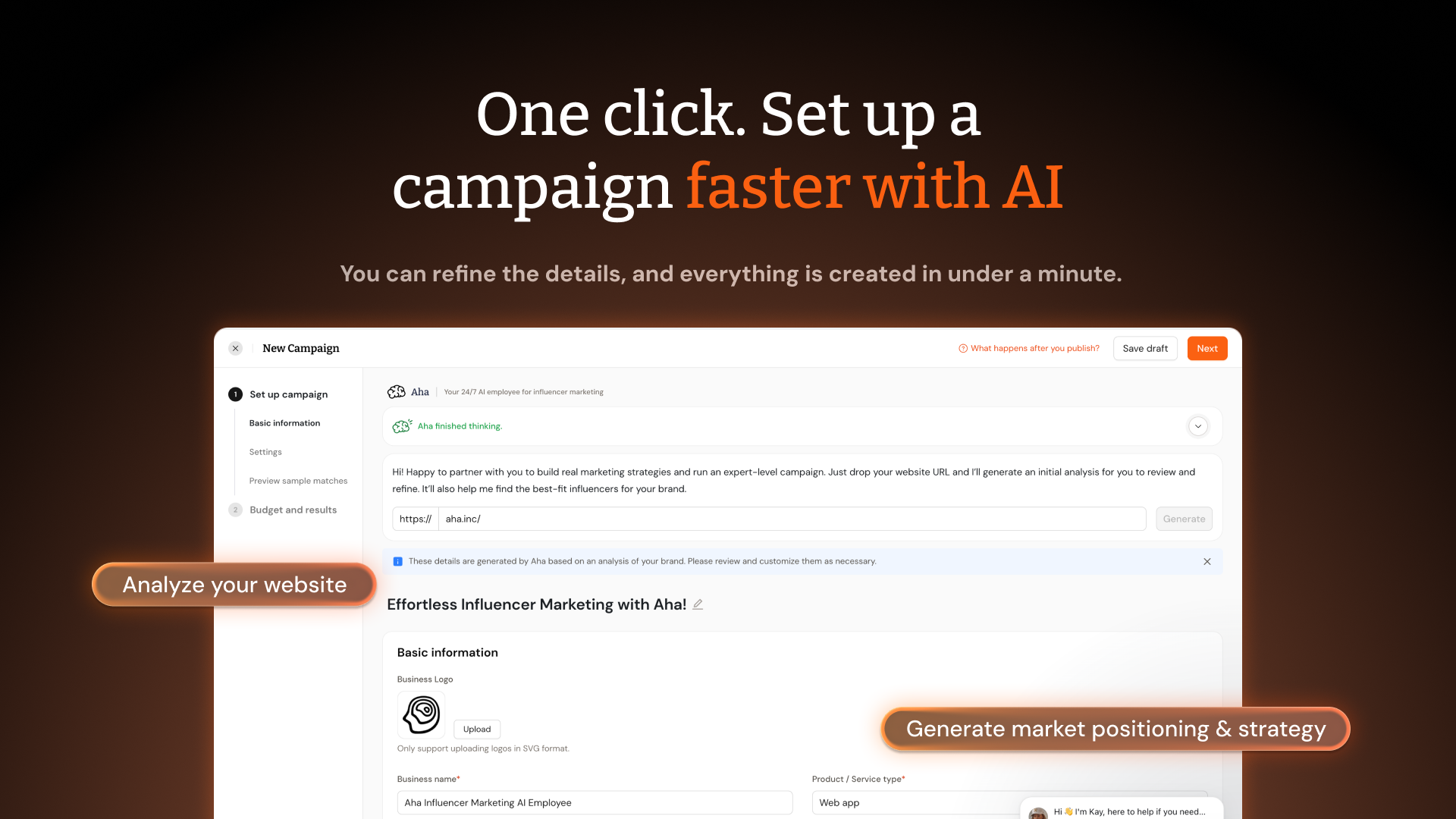
查看原始信息
GanttTool
Are you looking for a simple and free tool for quickly creating professional Gantt charts? PlantUML can do it—but only if you remember all the necessary declarations and syntax, which is not always convenient. That's why I created the Gantt Chart Tool. You plan. The tool converts everything you need. No learning syntax, no delays — just a clean result.
Hey Product Hunt! As a project manager, I have tried countless tools for planning and creating Gantt charts over the years. Some were powerful, some were pretty, others were complicated — but I never found anything that was fast, simple, and immediately usable so that I could quickly insert the output into an email, documentation, or presentation. Then I discovered PlantUML. The resulting charts? Incredibly clean, professional, and exportable to virtually anywhere. The problem? You have to remember the syntax. And if you want to change or rearrange tasks, you have to rewrite everything manually. I decided to create a tool where you just click on the tasks visually and PlantUML generates them for you. At first, it was a side tool for my own use... but the result was so good that it would be a shame to keep it to myself. And so Gantt Chart Tool was born. (GanttTool.com) Simple, fast, local, no registration required. You plan → PlantUML is generated → your chart is ready to use. I hope it serves you as well as it serves me. I would love to hear your feedback, ideas, and maybe even ❤️. Pavel
4
回复

@vlcek Yes! Manual rewriting PlantUML tasks is the worst. This solves a major friction point. Trying it now.

3
回复

@vlcek Great one! I built an internal free tool to boost my launch day. Feel free to use it if you’d like. It turns your Product Hunt reviews into short, engaging videos in seconds so you can boost your launch on other social channels: https://embeddable.live/embed/6TAWtBRWD3

0
回复

Thank you all so much for the incredible support and for every upvote!
This launch turned out to be a great success, and I’m truly grateful for it. I really hope the app will find its audience and become a helpful tool for many of you.

If you enjoy using it, I’d truly appreciate it if you recommended it to your friends or colleagues.
Your support means a lot — thank you! Pavel

0
回复

Congrats on the launch! Turning PlantUML Gantt charts into a visual click-and-generate workflow is such a smart way to remove the friction of remembering syntax.

0
回复

@vik_sh Thanks a lot, Viktor! Really appreciate it. I truly hope the tool finds its audience and helps people work with Gantt charts more comfortably, just as intended.

0
回复

Are you thinking about adding any kind of quick collaboration (like sharing a plan with a teammate) later on? Could be super handy.

Congrats on the launch! 🚀

0
回复

@damir_maham Thanks a lot, Damir! For this project, I’m not planning to add collaboration — it’s really just a small side tool.
But I’m already working on a new project focused on efficient task management for freelancers and small teams, something like digital sticky notes in a Kanban flow. That one will be released under my official company and will have more room for features. 🙂

0
回复

Great launch! With a tool like GanttTool, when a team opens it for the first time, what’s the one belief you want them to walk away with in the first 10 seconds?
Is it “I finally see how all my tasks link, and I’m in control” or “I can manage dependencies without drowning in spreadsheets”?
Because for timeline tools, the moment users see clarity is often more important than the number of features.

0
回复

@joydeep_pandey Thank you, Joydeep — really appreciate the thoughtful feedback!
Clarity is exactly what I’m aiming for, and I hope the tool serves teams in the way they truly need. Your perspective means a lot!

1
回复