Product Hunt 每日热榜 2026-01-12

PH热榜 | 2026-01-12

#1
Atlas.new
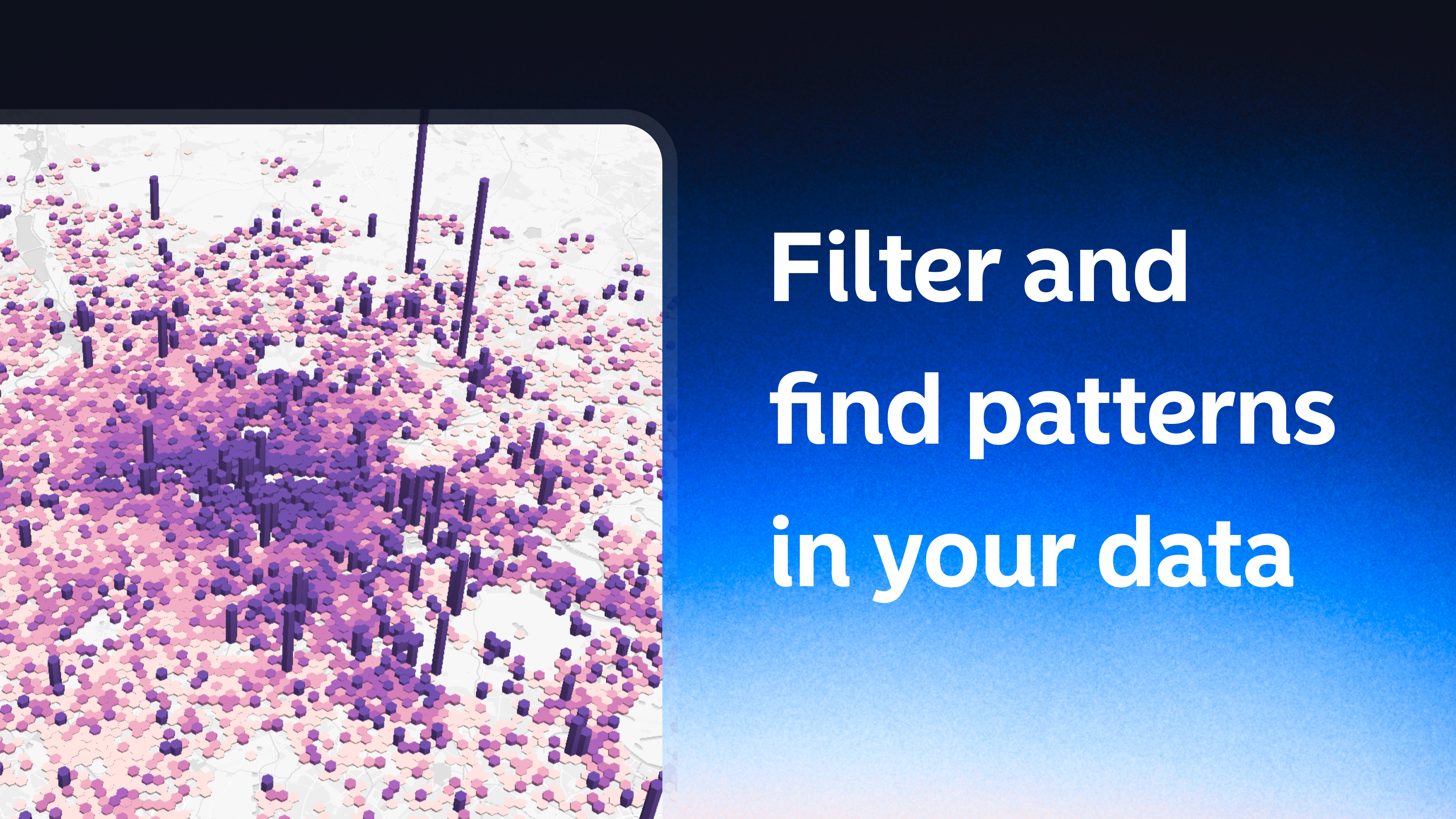
The AI agent for maps and spatial data
398
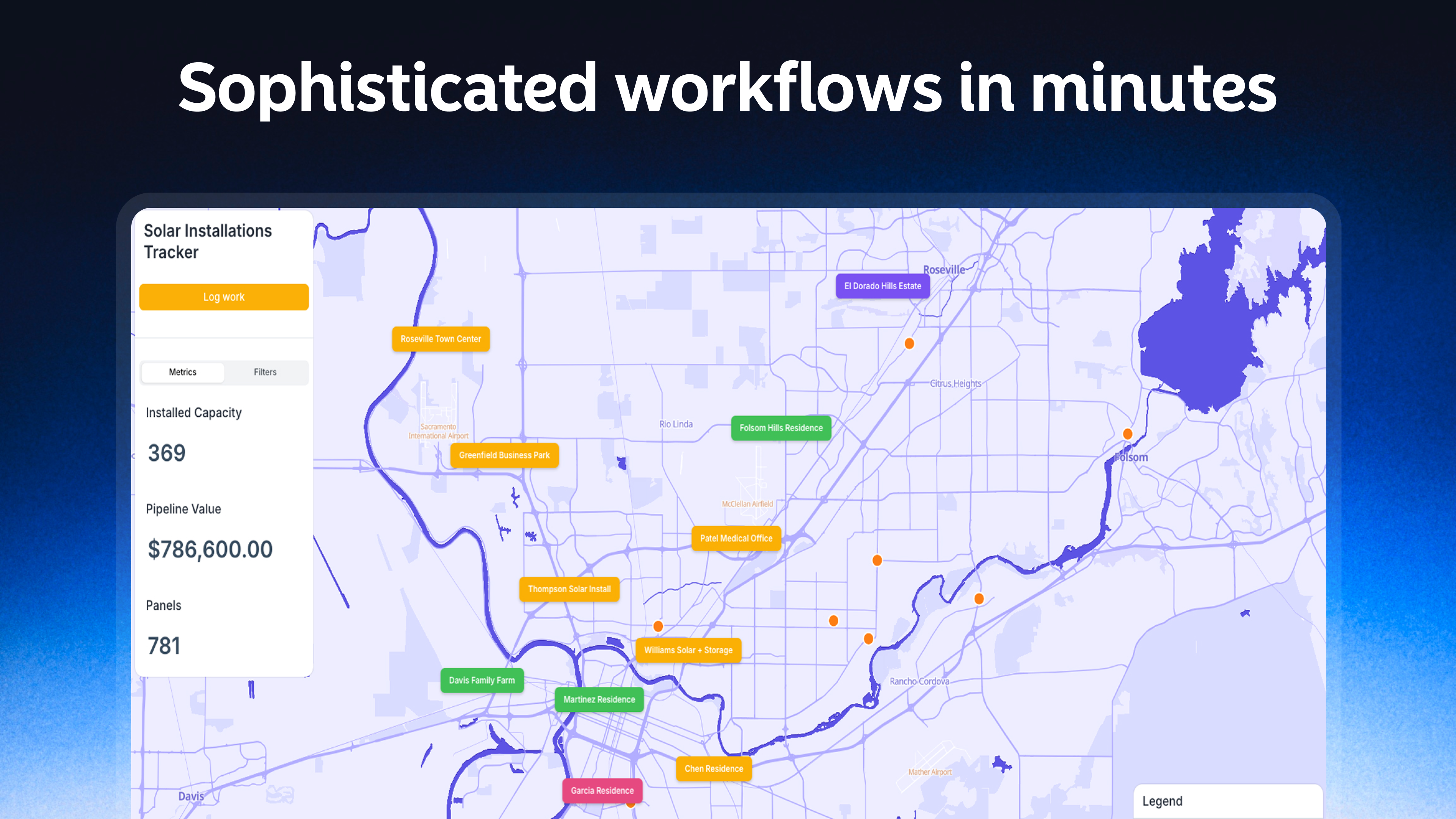
一句话介绍:Atlas.new是一款AI地图与空间数据智能体,让非GIS专业人员通过自然语言描述,即可快速创建地图、进行空间分析并构建空间应用,解决了传统地理信息系统操作复杂、依赖专业技能的痛点。
SaaS Maps Data Visualization
AI地图生成 无代码开发 空间数据分析 地理信息系统 智能体 团队协作 数据可视化 业务流程自动化 SaaS 空间应用
用户评论摘要:用户普遍认可其无代码、AI驱动的创新理念及协作价值。主要问题集中于技术架构(如Python+Maplibre)、多用户编辑的版本控制与冲突解决机制、移动端支持计划,以及自动化合规功能的实现程度。部分用户从城市规划、物流等实际场景出发,肯定了其应用潜力。
AI 锐评

Atlas.new的野心不在于成为另一个功能更花哨的GIS工具,而在于扮演一个“空间智能翻译器”。其核心价值是将“自然语言指令”编译成“空间操作”,这实质上是试图解构并民主化地理信息科学的技术壁垒。从评论看,早期用户兴奋点正源于此——非技术团队获得了直接进行空间表达与决策的能力。

然而,其宣称的“无需GIS专家”是一把双刃剑。一方面,它确实大幅降低了门槛,开拓了物流规划、城市展示、内部数据看板等轻量级场景市场。另一方面,对于涉及复杂空间模型、高精度分析或严格数据治理的专业场景,当前形态可能仍显单薄。用户关于“版本控制与冲突解决”的尖锐提问,恰恰刺中了产品从“个人玩具”迈向“团队生产工具”时必须跨越的协作与工程化鸿沟。

产品团队回应技术栈为“Python + AWS + Maplibre”,这暴露了其云原生、集成现有开源生态的务实路径。真正的挑战在于,其AI智能体对用户模糊意图的理解深度、空间分析操作的可靠性,以及如何构建一个即使出错也易于人类校正的交互流程。若这些基础体验不稳,所谓“革命性”将很快褪色。

总体而言,Atlas.new代表了GIS领域一个明确的“消费化”趋势:功能从完备走向敏捷,用户从专家走向大众,交互从菜单点击走向对话。它的成功与否,将不取决于复刻了多少ArcGIS的功能,而在于能否在特定垂直场景(如零售选址、活动规划)中,创造出比电子表格+静态地图更流畅、更智能的决策工作流。这条路前景广阔,但沿途布满了对AI可靠性、产品工程化及市场教育的严峻考验。

查看原始信息
Atlas.new
Create maps, run analysis, and build spatial apps with AI - no GIS specialists required
Hey Product Hunt 👋 We’re excited to launch Atlas.new — build real map-based apps by describing what you need. No code, no GIS, no developers. Would love your feedback!
11
回复

@fredrik_moger hey! how do you handle versioning and conflict resolution when multiple teammates edit layers or datasets at once, so changes stay traceable without slowing down fast, collaborative mapping workflows?

0
回复

Good luck with your launch!

4
回复

@dmitry_zakharov_ai thanks a lot!

1
回复
1
回复

This is awesome! Congratz with the launch 🔥🔥

4
回复

@benjaminbekken Thanks a lot! Means a lot 🔥

6
回复

Looks amazing, it's a real use case for many businesses out there.
I remember having to build customised map multiple time for different companies.

Congrats!

3
回复

@anujkapasia Exactly that! Thanks a lot! 🙌

1
回复

Thanks @anujkapasia !!

2
回复

Congrats on the launch – love the collaborative, browser‑first approach to GIS!

3
回复

@zeiki_yu Thanks!! GIS should be fun

1
回复

@zeiki_yu  thanks!!

1
回复

So excited to release this!! 🔥

3
回复

Oh wow love this one!

What tech stack and libraries did you use for the core mapping engine and spatial analysis operations?

Congrats on your launch :)

2
回复

@cathcorm Python + AWS + Maplibre! Thanks!

0
回复

Love the no-code AI twist on GIS—turning descriptions into interactive maps/apps is game-changing for non-tech teams. As someone in HK dealing with dense urban data, this could simplify logistics viz. Congrats on launch #3, Fredrik! Any plans for mobile support? 🚀

2
回复

@hkklaus97 Thanks!!

1
回复

The ongoing compliance support caught my eye. How much of that is truly automated versus guided checklists and reminders?

2
回复

@shreya_chaurasia19 everything is automated

1
回复

Beautiful product! Kudos to the team!

0
回复

Congrats@fredrik_moger,@haraldtr & @vegardloewe, this is the future of GIS!

0
回复

Congrats!

0
回复

Hi Fredrik,

I just checked out Atlas.co 2 and like how it lets you build maps and spatial apps right in the browser without coding. It seems like a great way to visualize and share geographic data with your team easily.

A couple of questions to your team:
• Do you think no-code spatial tools like this can replace traditional GIS software in the future?
• What kinds of projects this tool can be very helpful for? (e.g., data dashboards, site planning, research)?

Would love to see how others plan to use Atlas in their workflows!

0
回复

Looking good - and very interesting product for a city planner like me (well - at least im a educated city planner - not practicing)

0
回复
#2
PicKey AI
Secure your master password with a fun memory you love!
303
一句话介绍:PicKey AI是一款利用用户喜爱的照片和3D角色生成高强度主密码的视觉密码管理器,通过无需记忆和输入复杂文本密码的方式,解决了用户在移动和桌面端管理、记忆及输入密码的痛点。
Artificial Intelligence Password manager Security
密码管理器 视觉密码 AI认证 无存储密码 主密码替代 生物识别增强 跨平台 家庭共享 游戏化安全 网络安全创新
用户评论摘要:用户反馈两极。积极评价认为其视觉记忆概念新颖、直观,能改善家庭密码习惯。主要疑问和担忧集中在:实际登录流程不清晰、网站和扩展程序安全性存疑(如扩展无需认证即可查看密码)、对照片随时间变化或被盗用的担忧、企业级应用潜力,以及官网设计混乱导致信任感降低。
AI 锐评

PicKey AI提出“视觉记忆即主密码”的核心命题,其颠覆性在于试图用高熵的图像信息替代低熵的文本密码,并宣称通过“MagicPass”实现密码的即时数学再生而非存储,这在架构上挑战了传统密码管理器的“加密保险库”范式。若其技术属实,确实能从理论上规避因数据库泄露导致的全盘皆输,是其在安全叙事上的最大筹码。

然而,其产品呈现与宏伟构想之间存在显著裂痕。首先,信任建立失败。官网和沟通未能清晰阐明最关键的安全闭环:用户如何用“照片+3D物品”完成日常、高频的解锁动作?是每次都需要拍照,还是仅初次设置?大量评论对此表示困惑,而回复却未能给出直击要害的演示。其次,实际体验出现安全反噬。有用户指出其浏览器扩展在未经验证下即可展示密码,这与其宣传的“多层验证”严重矛盾,是致命伤。最后,其大力宣扬的“游戏化”(3D收藏品)与目标用户中“安全极客”的严肃需求存在认知冲突,可能损害专业信任感。

本质上,PicKey是一场高风险赌注。它赌的是用户愿意用“理解门槛”和“新颖流程风险”来交换“理论上的更高安全上限”。但目前,它过于超前的概念被粗糙的产品落地所拖累,更像一个未完成的安全实验品,而非一个让人安心托付所有数字钥匙的成熟管家。其成功与否,不取决于专利数量,而取决于能否将天马行空的加密数学,转化为用户每分每秒都无感且可信的安全体验。

查看原始信息
PicKey AI
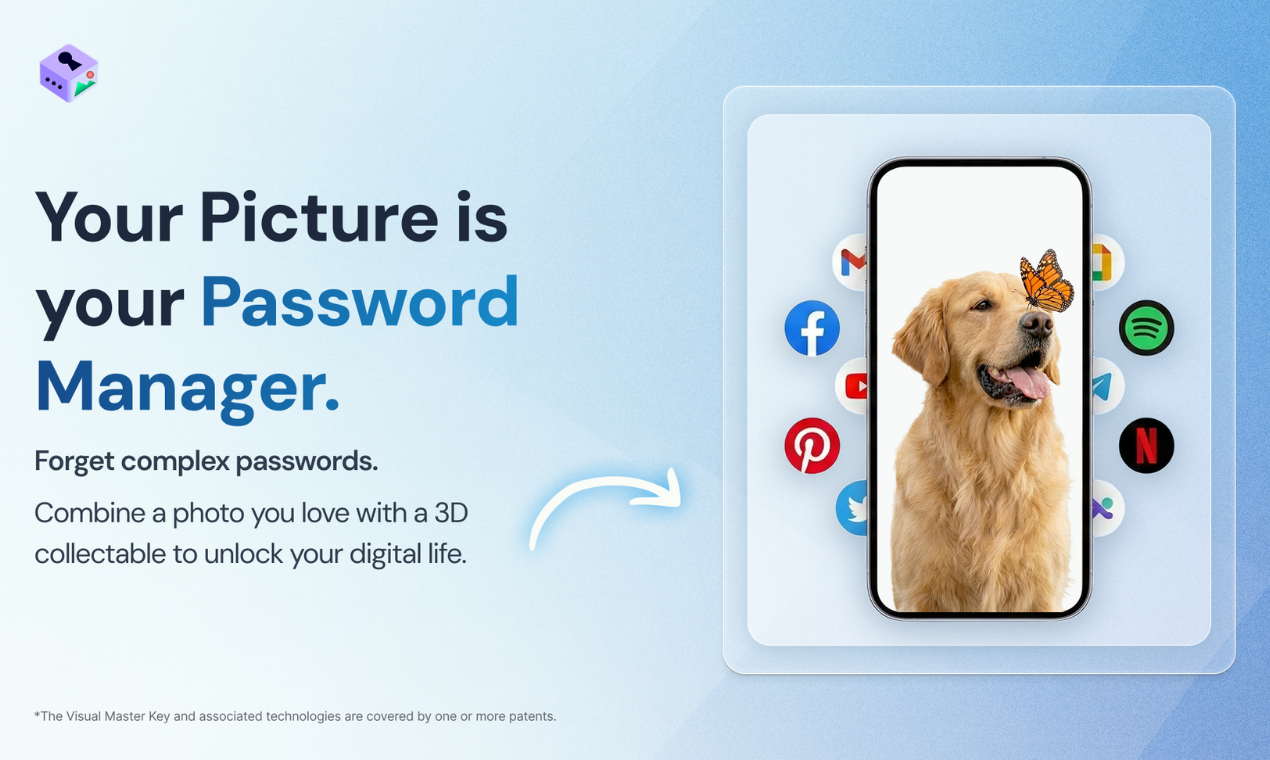
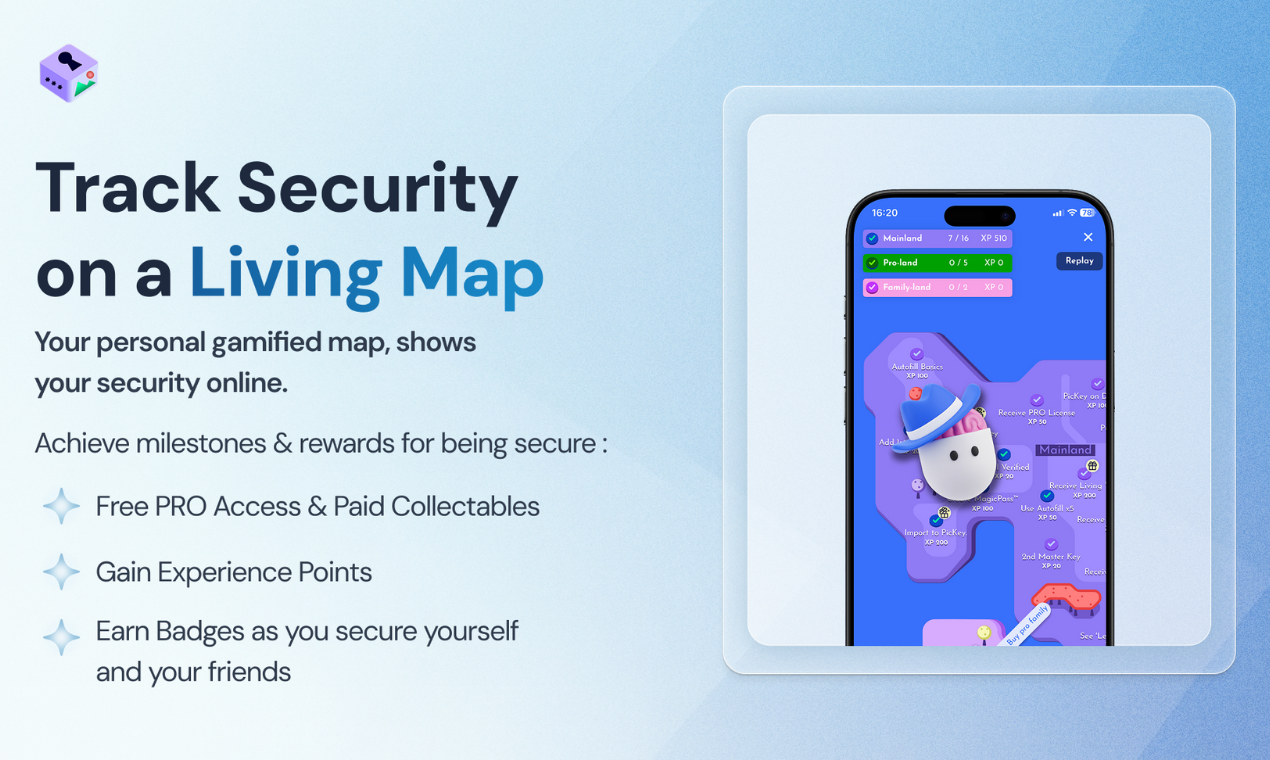
PicKey’s AI uses your favorite picture along with a 3D character to create an exceptionally strong Master Password. You no longer need to type or remember any text passwords. PicKey, being a visual password manager blends absolute security with effortless usability.

Hey Product Hunt 👋 

I’m Gaurav, the founder of PicKey. Excited to launch on Product Hunt today! :) 

What is PicKey? 🔐 

PicKey is a new kind of password manager built around a simple idea:
Your memory is your master password.

You log in using :

  • a photo you love 

  • plus a 3D collectible layered on top.

No master password to remember. No complex strings or long secrets to type. 

The Problem

For years, I watched friends, family and honestly myself struggle with:

  • Forgetting master passwords

  • Managing long, complex strings

  • Typing secrets on tiny screens

  • Traditional password managers that still rely on “one master password to rule them all”

It felt broken.

The Solution

We built PicKey with a completely new authentication model:

1. Visual Master Key :

You pick:

  • A personal photo (dog, bike, café, gaming setup, etc.)

  • A 3D collectible (dinosaurs, butterflies, music, horror, art, etc.)

You can even mark the key subjects in the photo, so verification focuses on what matters to you, making it personal and more accurate. You only need to see your Master Key to remember it.

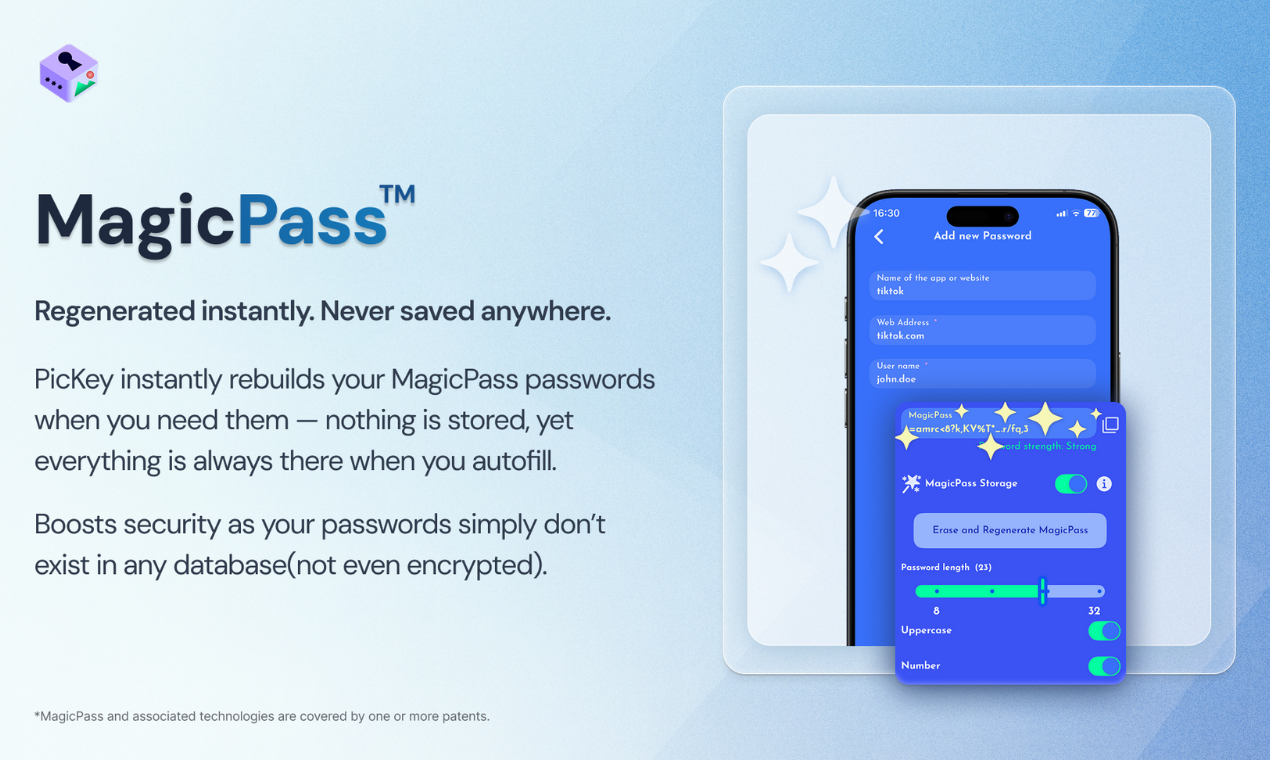
2. MagicPass (passwords without storing passwords) :

MagicPass generates unique, strong passwords for every site: 

❌ They are never stored (not even encrypted)

❌ No password vault

❌ Nothing to steal in a breach

MagicPass passwords are always available; mathematically regenerated on the fly from your photo’s neural memory. 

Why is PicKey Different from other Password Managers? ⭐ 

PicKey combines visual memory, AI-based recognition, collectibles, on-the-fly password generation and patented security tech to create a login experience that’s:

  • Playful, beautiful, and intuitive

  • Built for both non-technical users and security nerds

  • Exceptionally easier than remembering a master password

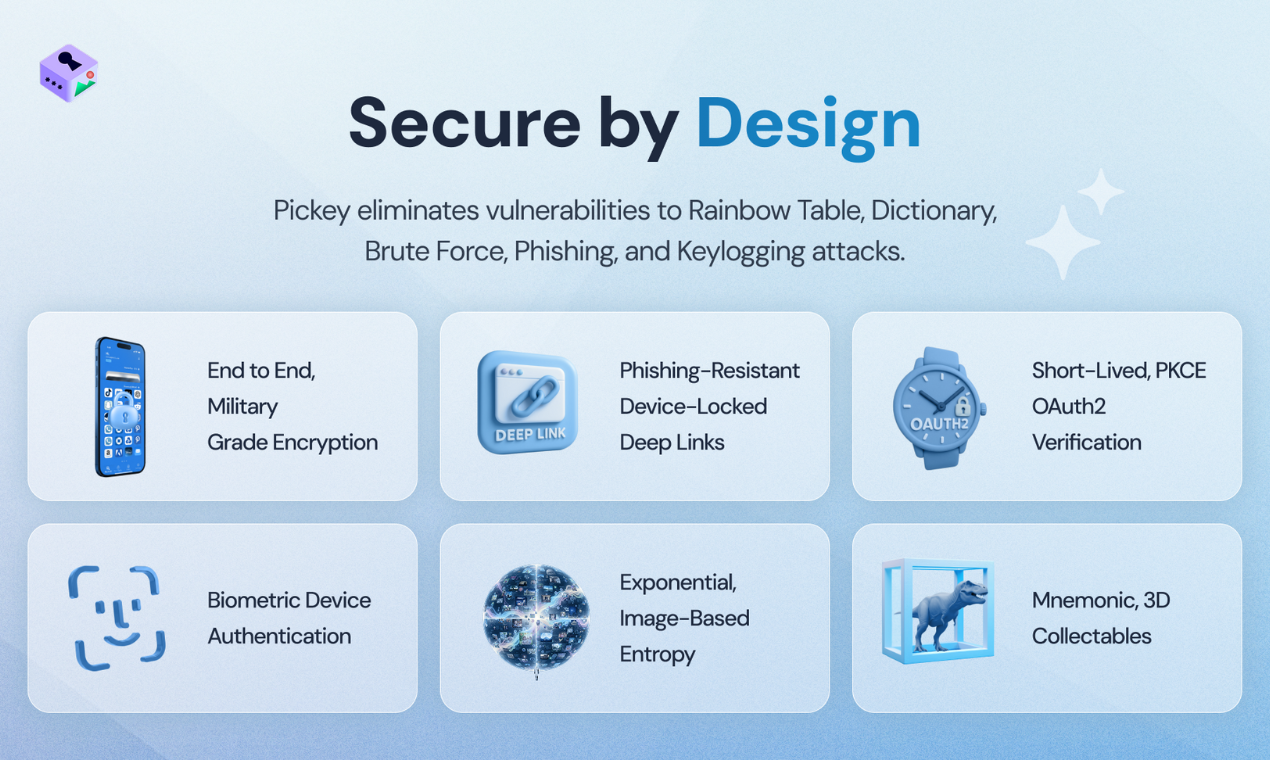
  • Naturally resistant to brute force, phishing, rainbow tables, keylogging, dictionary attacks

Under the hood, we use:

  • Biometrics

  • Secure KMS

  • AES-256-GCM

  • On-device verification

  • End-to-end encryption

  • Least-privilege architecture

  • Phishing-resistant deep links

  • Short-lived PKCE-style OAuth flows

Backed by multiple U.S. patents (12,010,234 B2 | 11,822,630 B2 | 11,792,201 B2 | 12,223,025 B2).

Who It’s For (and Use Cases) 🎯 

PicKey is built for:

  • Anyone who keeps forgetting passwords or master passwords

  • People who hate typing long secrets on phones

  • Families wanting safer online habits

  • Non-technical users who want simplicity

  • Security-conscious users who need something beyond “just another vault”

  • Anyone preparing for long-term digital safety, inheritance, or emergency sharing

Key Features & Benefits

🔑 Visual Master Key: no typing, no text to remember 

🧠 Region-based recognition: you control what matters in your photo

✨ MagicPass: strong passwords, never stored

👨‍👩‍👧 Sharing, Next of Kin & Living Will: protect your digital legacy

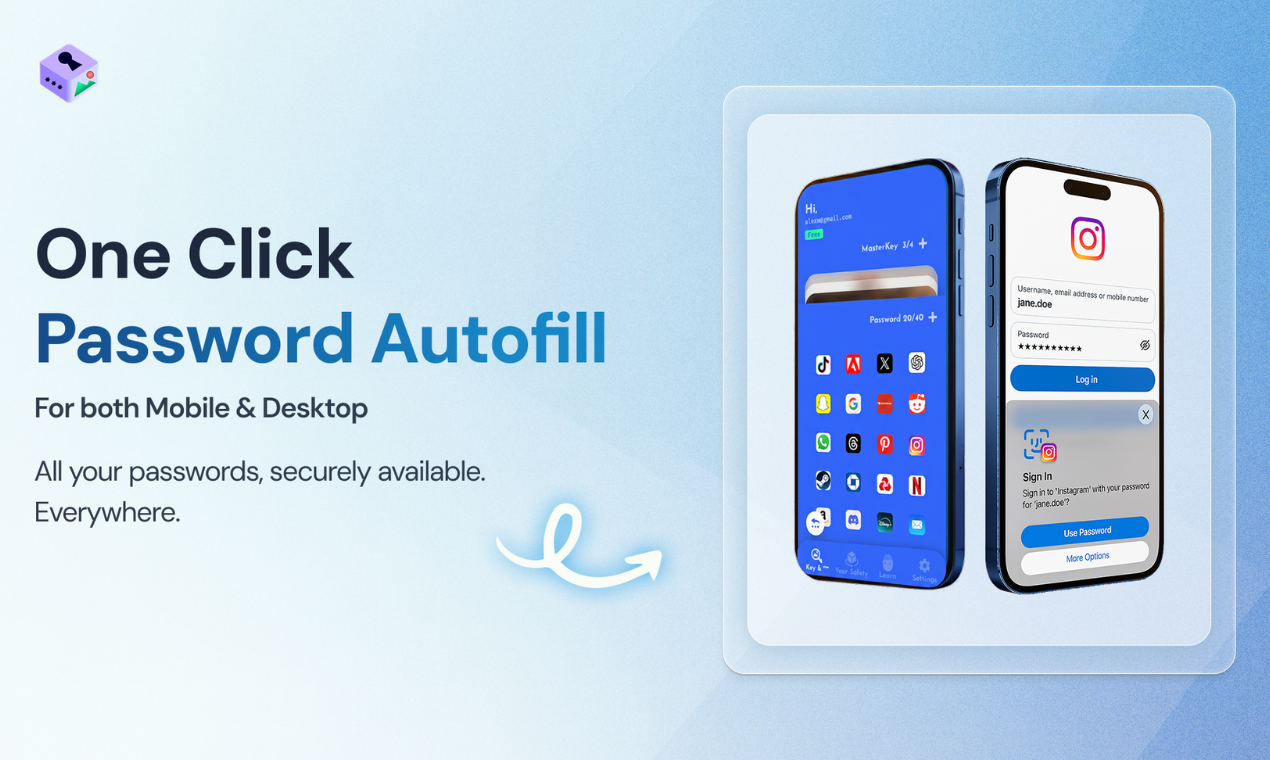
📱 Mobile + Desktop: iOS app and Chrome, Firefox, Edge, Safari browser extensions 

🎁 Learn & Level Up: badges, collectibles, and free Pro rewards

🎉 Special for Product Hunt 🎉 

We’re offering the PH community a discount on Pro & Pro-Family plans.
Use code PH20 at checkout (PRO, PRO-Family). 

Thanks so much for checking PicKey and for sharing critiques, questions or ideas 💬

- Gaurav & Soumya ✨

31
回复

@gaurav_upadhyay1 Huge congratulations on the launch, Gaurav & Soumya 👏

How do I know the makers?

I first came across PicKey last year when the founders reached out and walked me through what they were building.

What immediately stood out wasn’t just the idea, but the depth of thought behind it, the craftsmanship, the user-first approach and the amount of work that had clearly gone into rethinking how password managers should work.

Why I endorse Pickey?

I’ve reviewed and used many password managers over the years and I’d honestly never seen one approach the problem from such a memory-based, visual-first angle.

Using personal photos as a master key felt surprisingly intuitive and the fact that the team went on to patent the underlying technology and build it with serious security standards really impressed me.

Most traditional password managers still rely on storing encrypted passwords and we’ve all seen how often those systems become targets. PicKey’s approach of not storing passwords at all is what makes it stand out as one of the more thoughtful and security-forward solutions I’ve come across.

I genuinely believe PicKey can be valuable for:

  • Individuals who struggle with passwords

  • Families and teams looking for safer access sharing

  • And even security enthusiasts who want something beyond the usual vault model

Highly recommend giving it a spin! :)

21
回复

Congrats on the launch, @gaurav_upadhyay1 ! I always struggled to come up with a strong master password myself. This is an interesting method of doing it. I'll definitely give it a try!

0
回复

@gaurav_upadhyay1 Hearty congrats on the launch, Gaurav & Soumya 👏

0
回复

This is cool! Always trying to make my kids use better passwords, but they just reuse the same 3 ones 😅
This could make good habits easier. Nice work 👏

27
回复

@kate_ramakaieva the classic 'reuse rotation'! We know it well. 😅 Thanks for the support!

We actually built the 3D Collectables & XP System specifically to break that cycle.

We found that when security feels like a game—where you get to 'equip' a T-Rex or a Cyber-Ninja instead of typing a boring string—the good habits actually stick. 🦖🤖

Quick question to a fellow parent : Do you think they’d be more motivated by the Visuals (relatable photos as master passwords & collecting cool 3D characters) or the Achievements (leveling up their Security Rank/XP) in the Map?

23
回复

How does PicKey handle changes in photos over time or lighting differences?

26
回复

@nuseir_yassin1 thanks for the question.

Our Neural Network is trained on Semantic Understanding, not just pixel-perfect matching.

It understands the "concept" of your photo (memory of it instead of the exact pixel data). Small variations in pose, lighting, or growth are automatically handled by the model's tolerance layers.

Similar to how you recognize your living room each day, even if things change regularly in it.

If the visual change is drastic or you'd like more keys, you can create or update your Master Key(s) using your trusted device credentials.

Will be happy to answer any follow-up question you may have on this.

23
回复

This concept is new and interesting, It would be helpful if you provide any video tutorial to understand this in depth. Congrats on launch.

25
回复

@anishsharma absolutely. We're working on it and should be available in a few weeks.

Will be in touch.

You may have seen our intro video (link) as part of the PH launch here, which gives an very high level overview of PicKey. The in-depth video (or series of videos) will also be uploaded in forthcoming weeks on our YouTube channel (link).

I'll try and keep you in the loop too.

Quick Question : When you try new tools, do you notice design first or features first?

21
回复

@anishsharma one more thing.

PicKey's iOS app (link) is carefully designed to be intuitive and explain most of the important aspects during onboarding. It will be great if you can try it out.

Let me know what you may thing of it. Any questions, concerns. I'd be more than happy to answer.

21
回复

Congrats on this launch Gaurav!

I'm curious to know how did you handle the challenges of consistent on-device processing across different devices and browsers while maintaining high security and performance?

24
回复

@cathcorm Thank you.! ! 🙌

Platforms like iOS (and Android) provide OS-level Native Password APIs to make on-device processing with careful updates only during specific lifecycle events. (creating, updating or deleting passwords). This helps us reduce processing to a limit.

The processing happens with end to end encryption and is optimized and serialized for payload, reducing the bandwidth payload as well.

Moreover, the back-end is built on capable infrastructure that can scale on demand, and the communication running on OAuth2.1 style PKCE flows.

So it is a mix of optimizations at device, communication, security and capacity levels - all coming togather to maintain high security and performance.

Does that answer your question? I'd be happy to help you with any further questions you may have.

14
回复

Is this app geared towards enterprise and B2B adoption too? Example, team access sharing?

22
回复

@syed_shayanur_rahman great question. Thanks for asking.

The main invention is to use AI (and optionally Lidar) to turn photographic memory into an authenticator.

The natural entropy is practically infinite as it is unique to the world around each person (digital and physical) and is the main upgrade in terms of entropy based cybersecurity.

You are absolutely correct that the same tech/mechanism can be used to create other products like B2B and enterprise tech/team etc.

PicKey.ai - visual password manager is the first product we've created using this tech. But the main invention can be applied to several cybersecurity markets as you've pointed out.

Quick Question : in your opinion, which B2B/Enterprise applications will this be able to help the most?

19
回复

The landing page is kind of confusing and imo doesnt clearly present the product. seeminly no pages other than the landing page have a nav bar, which in generally makes the site feel low quality.


also on the landing page there is an animation that has a ton of screens and to be honest they feel like a casino advertisement.

I could be convinced this is really interesting, but im still so confused about how it actually works.

i want to see:

1. a simple explanation / visual of how i actually log in to the password manager
2. a simple explanation of how this is better.

3. probably some reassurances around how this is not susceptible to whatever the first attack vector i think of is.

here are more points of confusion:

what is a collectable? how do i "put it in my image" that i upload?

do i have to take a photo of the object anytime i want to log in?

- if i really use a photo of my dog, does that imply a photo of another golden retriever is inadequate?
any type of gamification around password management feels like a huge red flag to me.

maybe i am not your target customer but i would say that i want to have a ton of trust for my password manager and i did not leave your landing page feeling trust. You probably do have some cool tech underlying this all, but i think it is not showcased very well.

congrats on launch, and sorry for the harsh feedback, but hopefully its helpful.

21
回复

@catt_marroll Thanks for the comment.

we're fixing the website navbar issue.

Let me answer your questions.

a simple explanation / visual of how i actually log in to the password manager :You simply create a visual master password to login/signup to PicKey, using :

  1. your favorite photo

  2. a virtual 3D character (called collectable) on top of it.

This logs you into PicKey, which handles all of the password management from there on and autofills the passwords you've created/imported on both mobile and desktop. We've introduced this in the into video as well (link).


a simple explanation of how this is better.

It is better because :

  1. Image based master passwords are stronger than text passwords used in traditional password managers due to higher combinations possible with image vs text. You only have 94 options per position for a text passwords (a-z, A-Z, 0-9 and special chars), whereas a single pixel in an image can have more than 4.2 billion values. The combinations in an image based passwords are practically infinite compared to text master passwords.

  2. MagicPass passwords in PicKey are managed without ever being stored in any database (not even encrypted). This makes them even more secure as there is no data to attack.

  3. Image based passwords are much easier to just see and remember. A long 16 digit strong text password will be much harder to remember. It is something that most users can actually use without worrying about mental overload of remembrance.

probably some reassurances around how this is not susceptible to whatever the first attack vector i think of is.

Other than the practically infinite image based entropy and points mentioned above, here are other security protocols that make PicKey's architecture secure :

  • Phishing-resistant deep links

  • On-device verification

  • Short-lived PKCE-style OAuth flows

  • Biometrics

  • AES-256-GCM Cipher

  • Secure KMS

  • Least-privilege architecture

  • End-to-end encryption

You only need to upload or select your photo when you login/signup to PicKey (which is an infrequent event and is generally valid for a long time barring some verifications).

We've found that most young adults do not use password managers or reuse older passwords, mainly because there is no motivation towards good secure habits. Our gamification is aimed towards rewarding good personal cybersecurity habits (like giving free access to PRO plans if one keeps strong passwords).

All of these are relevant questions, and I'd be happy to answer any followup questions that you may have. Our aim is to keep all of the cybersecurity fundamentals strong, but also make it usable to the people who need it the most.

22
回复

Nice. How does it compare to Bitwarden?

21
回复

@chilarai Thank you!

Great question! We have huge respect for Bitwarden—they are the gold standard for traditional vaults. 🏆

The big difference lies in how we handle the 'Key' and the 'Vault':

  1. Visual vs. Text: Bitwarden relies on a complex Master Password (which is easy to forget or tough to type on mobile). PicKey replaces that with Visual Memory (a photo + 3D character). You can't get 'Keylogged' if you aren't typing! 📸. Not only it has higher entropy vs text master passwords, it is also visual and so has easy recall (usability).

  2. Stateless vs. Stored: Bitwarden stores an encrypted database of your passwords. PicKey’s MagicPass generates them mathematically on the fly and never stores them. Even if we were breached, there are literally zero magicpass passwords to steal. 👻

Are you mostly happy with Bitwarden right now, or is the fatigue of typing that Master Password starting to set in?

I hope this answers your question. Let me know and I'd be happy to answer any followup questions you may have.

21
回复

Just tried it since developer messaged me and the idea sounded interesting and it got so many upvotes and comments here.

However, I'm not convinced at all.

  • To authenticate, you select a photo from your device (or another storage location). If someone gets access to your device, there's a significant chance he finds the key image by checking recently used files. The additional collectables might also be guessed by someone who knows you, at least if you chose one that's easy to access from the list.

  • Regarding taking a live photo every time, please provide an example of an object to use, obviously you'd have to always have it with you, only thing I can think of here would be something like my face, in which case it's classic biometric authentication.

  • Someone might watch you select the image and collectable. There's a reason password are by default not shown on screen.

  • The whole advertised authentication process is NOT USED when you open the app, even after restarting the app or phone. Instead the default iPhone authentication is used. So it's in effect not more secure than if you store your passwords with any text editor app that's protected by the default iPhone authentication.

  • With the Chrome extension NO AUTHENTICATION AT ALL is required to show the saved passwords ?!!! (and I don't find any setting to change that)

Additionally

  • iPhone app is 340MB ?! (and still the collectables are loaded from the internet afterwards)

  • was released Okt 2022 but has just 4 ratings

I really don't understand why this product is featured and #1 of the day. PH is broken.

18
回复

@konrad_sx thank you for your questions.

Let me answer them :

  1. The authentication is not just based on an image and 3d collectable. It is a combination of :

    1. Your device (verified with deep links)

    2. Email

    3. timelock (process alerts if not done in a given time window)

    4. Image (we recommend taking a live photo using the camera, instead of using a photo from library for better security).

    5. 3D Collectable.
      Also, clicking the image from live camera, solves the device compromised problem.

  2. The app requires physical possession of the device (deep links, email verification and timed windows) even if someone sees your, they cannot login due to these additional factors.

  3. When you reopen the app, biometric re-authentication is enforced, which is a standard practice in password managers. For extreme security conscious users, do you believe having a full login again would give better security? (at the cost of usability).
    In the app, passwords cannot be reviled without biometric re-authentication on device, are hidden by a string of asterix and have to be manually and are always stored encrypted.

  4. The collectables are 3D files and is loaded on demand only when the user needs them.

  5. We have just launched a complete rewrite of the older app incorporating all of the feedback we received from the previous version that was launched before.

I am happy to go over more points that you may have in terms of feedback, but we genuinely believe that the app considers all of these factors and balance usability with security.

2
回复

This is neat. So where should I store this kind of password to make it more safely?

17
回复

@busmark_w_nika thank you!

Since your Master Key is a photo of a real object (like your watch, a toy, or your dog), you don't need to hide it in a safe. You just leave the object right where it belongs! An attacker might see your coffee mug, but they don't know it's the specific key to your digital vault. It’s the ultimate 'hiding in plain sight.' ☕️🔐

(We also keep an encrypted memory aid for you—locked behind your biometrics—just in case you forget which object you picked).

And this is the only photo you every need to remember, and use it to login to PicKey. Once you're in, PicKey will then manage all of your other passwords (tiktok, instagram, google, etc etc).

Alternatively, you also have the choice to store the photo in your cloud or device library, so that you can just see and remember it. However, taking live photo is generally better as it can simply hide in plain sight.

Does it answer your question? I'd be happy to clarify more or answer any follow-up questions you may have..!

14
回复

MagicPass sounds powerful... how does recovery work?

13
回复

@himani_sah1 thanks for your question.

When you create a MagicPass password in PicKey, we only store an index (like facebook is #3) and rules you need in your password (uppercase/lowercase/special chars .. etc) but do not store the password anywhere.

But when you autofill this password into facebook (or whatever website you've created it for), our AI + math, regenerates the exact same password value using several math functions that are run in a specific sequence.

You can think of it as a Deterministic Hash Generator, run in sequence with your photo's memory and rules as inputs.

Would you like a slightly more technical answer to this? I'd be happy to get into it too.

12
回复

Oh, I love your product video! and it really feels like me!

Just a quick question: how can I remember which image is used for which product?

12
回复

@jojo_li thank you! 🙌

The image is used only to login to PicKey and that is the only image you need to remember.

Once you are logged into PicKey with the image (and 3D collectable), you can add and import all of your other passwords into it (google, instagram, tiktok, reddit etc ), and then PicKey will autofill, manage all of your passwords from there on, on both mobile and desktop.

So it is just one photo you easily remember, which will manage all of your passwords from there on.

You can choose any photo that you like from your world. It will be a secret that only you know about, but can simply see it to be password free.

Does that answer your question? I will be happy to answer any follow-up question you may have.

11
回复

Never seen an approach like this before, and I'm honestly impressed. swapping complex passwords for visual memory is so counter-intuitive, yet it makes everything feel much simpler. most security apps feel like a chore, but this one is surprisingly smooth to user.

11
回复

@joeyzhang thank you for the kind words. Means a lot!! 🙌

Not only images contain exponentially more data (to act as stronger master passwords); it is estimated that they are at least 60,000 easier to remember to remember than any text based password.

We want to remove the gap between usability and cybersecurity as often the ones who need it the most, get bogged down by the usability aspects of managing passwords.

8
回复

Where are you saving this photo password of mine? It’s a personal picture, so I want it to be secured extremely well.

11
回复

@divisha_upadhyaya great question! Probably the most important one out there.

Your photo is first encoded, and then is transmitted securely to our servers only when it needs to be processed by the neural network (e.g., enrollment or rare verification) and is encrypted using military grade AES/GCM cipher. There is end-to-end encryption and nobody can see this image but you.

The image is handled very carefully, and is encoded + encrypted :

  • Sent over TLS (HTTPS)

  • Processed in memory with AI

  • Not stored as your long-term “secret”

What we retain is an encrypted neural embedding/signature and an encrypted version of your image, locked with a specific key that only your account has access to.

Does this answer your question? I'd be happy to answer any followup question you may have.

7
回复
Hi, This looks to be an amazing product and a new concept. Only question in my mind is why should I trust you more than existing Password managers as password protection is based on trust!
9
回复

@ankita_jaitly That is the most important question you can ask.

The problem with traditional password managers is that they are 'Honey Pots'—they store a database of everyone's passwords. If that vault is breached (as we've seen with major competitors), everything is at risk.

We designed PicKey to be Architecturally Trustworthy, meaning we minimize what we store so we minimize what can be stolen:

  1. Stateless Security (MagicPass): We do not store your website passwords. We regenerate them mathematically every time you log in. If hackers breached our servers tomorrow, they would find zero passwords to steal. We can't lose what we don't have.

  2. Distributed Trust: We don't ask you to trust just one factor. An attacker needs your :

    1. Physical Device (we do deep link verifications on the app)

    2. Access to your Email (email is verified at important steps like login)

    3. Your Image : your main master password. It is practically impossible to brute-force due to the number of combinations possible in an image, vs a text master password.

    4. 3D Collectable : the exactl 3D character used during login needs to be known.

    5. Time Lock : All of this needs to happen in a limited timed window

We also use a unique KMS (Key Management System) envelope for every single user. There is no 'Master Key' for the whole database.

With practically infinite combinations in an image based master password, multi-factor verification and being able to manage passwords without storing them (MagicPass), we believe that PicKey is the choice that can be trusted because of how secuirity it is built architecturally.

Does it answer your question? I'd be happy to answer any followup questions you may have.

4
回复

Congrats on the launch! Love this fresh, visual-first take on passwordless security. 🚀

8
回复

@zeiki_yu thank you so much.

PicKey's Visual Master Keys are certainly stronger, yet easier to use. However, i'd request you also consider MagicPass passwords (managing passwords without ever storing them). If no password data is stored (not even encrypted), it won't be attacked.

That is also an important aspect of PicKey's security model.

6
回复
@gaurav_upadhyay1 and @soumya_mishra3 Many congrats on the launch and indeed a very novel idea and product. I really like how it makes password management more an intuitive function instead of a cognitive function. Quick question, while I know a live visual aid is always better, but if I still choose to store a photo on the phone/account, how easy or difficult is it for an attacker to crack the password if they have access.
8
回复

@pariksiit_s_shukla  - thank you 🙌. Great question.

PicKey does not rely on a single factor for it's authentication. Even in a worst-case scenario as you've mentioned above, a attacker gets access to your photo library, they cannot bypass other factors. This is because we verify your :

  1. Device (via deep links)

  2. Email

  3. 3D Collectable (it is virtual, appears only during login/signup)

  4. Timed Window (the "crack" attempt needs to happen within a short window)

  5. Image (even if your library is public, wrong login attempts will notify you).

For even higher security, we recommend always taking the photo live from your camera and not depend on your library at all. We still respect user choice and there is an option to select the photo from the library, but a live camera photo simply removes this worst case scenario entirely.

Does this answer your question? I'd be happy to answer any follow-up questions you may have.

8
回复

Found a typo - "manages not managers" lol .... just kidding! Great idea for people with bad memories like me! Hope i never lose my password with Pickey AI!

5
回复

@cruise_chen haha, thank you for pointing this out.

Your support means a lot to us.

Yes, you only need to see and remember a visual master password thats stronger than traditional master passwords, yet has very high visual recall.

Let me know if there is anything you'd might want to ponder on in terms of our offerings or tech.

3
回复

Nice launch! I’m curious about how the AI handles very subtle changes in lighting or environment in photos over time. This could be crucial for long-term usability. Also for users with many accounts, how scalable is it in terms of generating and managing multiple 'Master Keys' simultaneously?

5
回复

@russell_dou  thank you!

Our Neural Network is trained on Semantic Understanding rather than pixel-perfect matching. It functions as a "world model," meaning it grasps the concept of your photo (the memory of it) instead of relying on exact pixel data. Consequently, the model’s tolerance layers automatically handle variations in pose, lighting, or aging.

Think of it like recognizing your living room: you know it is your room instantly, even if the lighting changes or objects are moved.

It is important to note that these photo-based keys are simply the entry point. Once you log in, PicKey functions as a comprehensive password manager. It will store, manage, and autofill credentials for all your accounts (Google, TikTok, Instagram, LinkedIn, etc.).

You simply need to remember one "thing" from your life to manage your entire digital identity; handling multiple accounts is a built-in standard feature.

Unlike traditional managers that require a long, complex text string as a master password, PicKey uses an image. This is not only easier to remember but also significantly more secure due to the massive number of data combinations in a photo compared to a keyboard.

Because of this heightened security, we also allow you to create multiple photo-based keys for a single account. For example:

  • Key 1: An image of your dog.

  • Key 2: An image of your favorite holiday resort.

You can log in using either of these keys and access the same vault where all your imported passwords are ready to be autofilled.

Does this answer your question? I would be happy to answer any follow-ups you may have.

1
回复

I feel this is how password managers should have worked all along. Solid execution and strong differentiation!!

5
回复

@roopreddy Thank you so much! 🙌

The core idea is simple: instead of remembering a string like “Y7Ve$I!W!&OB_&” you remember a moment or object from your life plus a little 3D buddy.

Not only that the combinations are near-infinite, the emotional resonance and natural recall of an image helps too.

 In your opinion, what type of users do you think PicKey will be able to help the most?

1
回复

Visual memory over Text memory. Love the concept!

We obsess over reducing friction at Dashform too, so this resonates.

Can I ask How strict is the click accuracy? If I tap slightly off-target on the photo, does the AI have some tolerance? Upvoted!

4
回复

@openaigpt5 Thank you so much.!🙌, also love your handle.

Yep, the overall semantic understanding of the photo is a weighted fusion of the embedding we get with or without the click on the photo.

So the tolerance is built such that :

  1. In a photo if your dog, if you click the dog or do not click it, the semantic understanding will understand that you really wanted your dog as your master password and will proceed.

  2. If there is a dog and a bird in the photo, and you had clicked the dog during signup, but now you click the bird at sign-up, it does not qualify the tolerance as you probably did not want to do this.

  3. Tolerance is also built for generic light changes, view angles, dog's age and other physical changes you may expect.

So generally, the AI model will work with you based on what clicks you've intended and has reasonable tolerance for it, unless you click on something that was not intended.

Does this answer your question? I'd be happy to answer any followup questions you may have.

2
回复

I read this in the pinned maker comment... Traditional password managers that still rely on “one master password to rule them all”. I know who you're talking about xD

Congrats on the launch Gaurav. You got my support!

4
回复

@zerotox haha! you got it.

But in all seriousness, maybe "one master password to rule them all" thinking is what is preventing adoption of password managers by those who actually need it the most.

I can bet that nobody wakes up in the morning and feels excited about memorizing master passwords filled with uppercase, lowercase, special characters, numbers and 16 digit long sequences.

Which side of the bet are you on :)

and thanks for your support. It means a lot.

2
回复
Congrats on your launch! Looks to be a very cool idea and concept. How is it more safer to use an image over a complex text password that I am using currently?
4
回复

@sudhir_mishra1 Thank you so much, and it is a great question you have.

A complex text password is made from the keys of your keyboard, so you will have only about 94 options (a-z, A-Z, 0-9, special characters) per position to create this password.

Whereas in PicKey, a single pixel will have more than 4.2 billion combinations (RGBA). If you take a regular HD image, the possibilities are practically infinite compare to traditional complex text passwords.

Not only PicKey's Master Key is more secure to brute force, it is several times easier to remember because humans remember visual things much better than 16 digit complex passwords.

Does that answer your question? If you'd like I'd be happy to go into some more math in detail.

2
回复

Managing passwords is still an achilles heel for so many of us, @PicKey.ai ! Congratulations on your launch, @soumya_mishra3 and I look forward to giving it a spin.

3
回复

@tim_ep1  thank you so much!🙌

Really appreciate the kind words.

Once you try it, it will be great if you can share some feedback - good or bad 🙂

0
回复

My brain is already thanking you for not making me remember another crazy password. 😁 Plus, the photo and collectible idea is so cool.

3
回复

@abod_rehman thanks so much. ! 🙌

For password managers, we want to remove the gap between effortless usability and bulletproof security.

How did you find the MagicPass feature? (managing passwords without ever storing them).

0
回复
This looks cool, using pictures instead of passwords feels way easier than remembering long codes. Nice and simple idea.
3
回复

@midhxn thank you.

Do you currently use a password manager? If so, what troubles you most about it?

0
回复

congratulations!

3
回复

@madalina_barbu Thank you so much! 🙌

PicKey is our attempt to kill the “one master password you always forget” and replace it with a photo + 3D character you actually like looking at.

Do you currently use a password manager? If so, what troubles you most about it?

0
回复

What’s the recovery flow if a user loses the original photo or wants to change it? Is there a backup or secondary authentication layer?

3
回复

@guldana_rahman yep there are.

PicKey's photo based keys offer significantly higher security than traditional passwords (practically infinite combinations and multi factor verifications), and so we allow creating multiple keys that log you into the same account.

So you can have :

  • First key with your pet dog's photo

  • another key with your favorite holiday place

... and you can use any of these keys to login into the same PicKey account you have.

You can delete, create, rename, enable/disable any of your keys at any time, but need to have at least one photo key active.

If you lose your original photo, it does not matter, you can click another photo of the same subject. PicKey's verification is based on AI World Models that understand the semantics of your image, not the pixel content you have.

It is similar to how you recognize your living room each day, even if it changes daily. The authentication is based on the memory of your photo, and not the exact photo itself.

Does it answer your questions? I will be happy to answer any follow-up questions you may have on this.

1
回复

very cool, congrats on the launch

2
回复

@tmorkes Thank you so much. Your support means a lot.! ! 🙌

We want to entirely remove the gap between bulletproof cybersecurity and effortless usability.

Quick Question : Between the Visual Master Password and MagicPass (Passwords that are never stored, yet still are available) - in your opinion, which one is more important from our feature perspective?

0
回复
That’s an interesting approach to password managers. Quite unique in the niche. 🙌🏻
2
回复

@odeth_negapatan1 Thank you so much for the kind words.🙌🏻

We want to bridge the gap between security and usability of password managers.

Side Question : When you try new tools, do you notice design first or features first?
(asking since we are trying to get both right).

0
回复
#3
Trophy 1.0
Developer APIs for gamification: streaks, XP, badges, ranks
289
一句话介绍:Trophy 为开发者提供游戏化API套件,通过集成成就、连续记录、积分和排行榜等功能,帮助产品团队快速构建提升用户留存与互动的游戏化体验,解决了自研游戏化系统耗时、易出错且难以维护的痛点。
API User Experience SaaS
游戏化API 开发者工具 用户互动 留存与参与度 无代码配置 SaaS 产品体验 集成服务 数据分析 行为激励
用户评论摘要:用户普遍认可其价值,认为其解决了自研游戏化系统的复杂性和维护难题。主要反馈包括:赞赏其易集成性和对边缘情况的处理;询问如何避免过度游戏化;关心数据分析和集成细节(如与Webhook的配合);对其路线图(如挑战、奖励)表示期待。
AI 锐评

Trophy 1.0 的发布,精准地刺中了产品开发中一个长期存在但常被忽视的“脏活累活”:游戏化系统的工程化实现。它的真正价值远不止于提供一套API,而在于将游戏化从一种需要反复造轮子、充满陷阱的“艺术创作”,转变为一个可标准化配置、可数据驱动的“产品组件”。

其犀利之处在于,它没有停留在简单的点数或徽章发放层面,而是深入到了游戏化中最令人头疼的工程细节:时区处理、连续记录冻结、个性化通知序列,乃至为“年度总结”这类复杂数据产品提供后端支持。这直接回应了开发者评论中“害怕处理用户从伦敦飞到纽约后连续记录丢失”的真实恐惧。产品通过无代码配置将逻辑与呈现解耦,让产品经理能快速迭代激励策略,而开发者只需关注事件发送与数据呈现,这实质上是在重新分配研发团队的智力资源,让其更聚焦于核心业务逻辑。

然而,其面临的挑战也同样清晰。首当其冲的是“过度游戏化”的风险,即短期数据飙升可能损害长期产品价值和用户信任。尽管团队在评论中提到了通过数据面板提供平衡视角,但这更多是事后监测,而非事前预防。产品能否引导客户设计出健康、可持续的游戏化循环,将是其从“有用工具”升维为“战略伙伴”的关键。其次,其商业模式依赖于客户产品自身的成功增长,在当下注重实效的企服市场中,需要更直接地证明其功能与用户留存率、生命周期价值等核心指标的可量化关联。

总体而言,Trophy 是一次对产品开发“基础设施”的出色抽象。它能否成功,不仅取决于其技术实现的稳健性,更取决于其团队能否将深厚的消费者产品经验,转化为引导客户正确使用这一强大武器的“最佳实践”,避免让游戏化从蜜糖变为毒药。

查看原始信息
Trophy 1.0
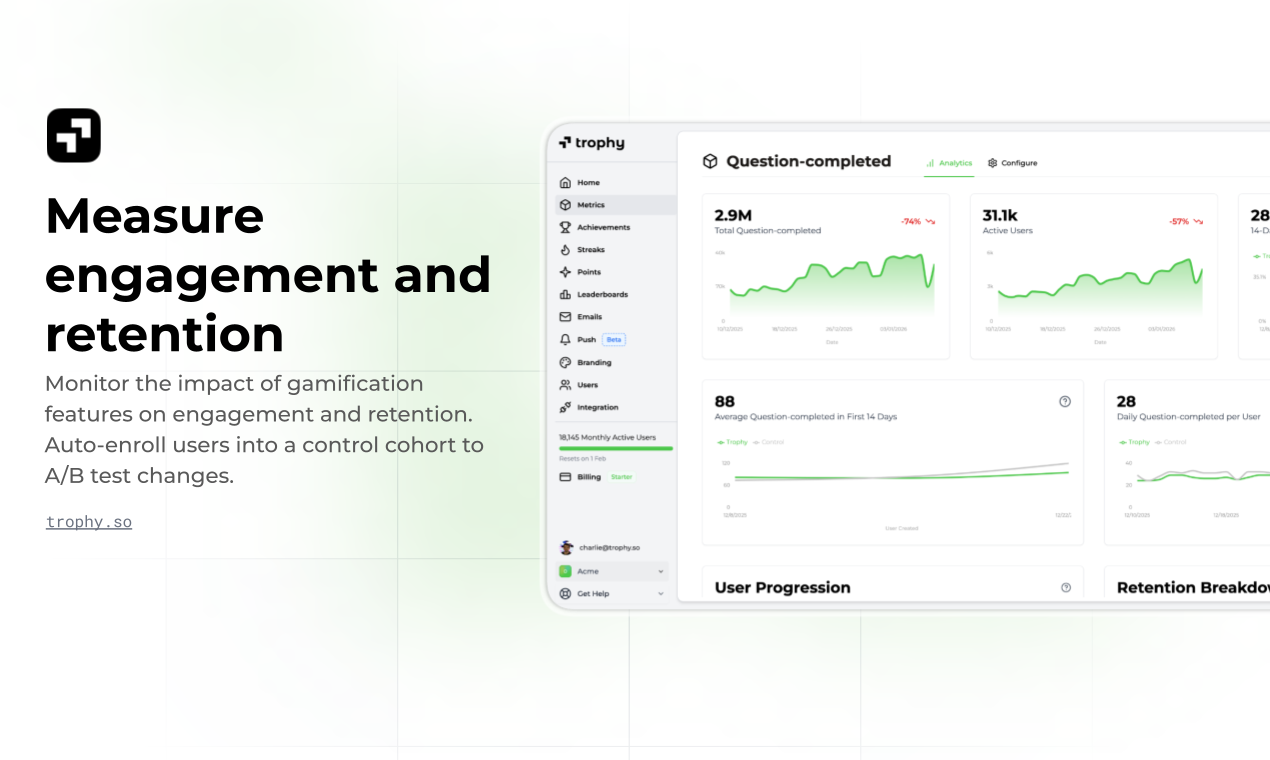
Ship gamification fast with flexible APIs for achievements, streaks, points, and leaderboards. Configure features without coding, automate personalized email and push notifications, and monitor impact on retention and engagement from a dashboard.

Hey folks! 👋

I'm Charlie, co-founder of Trophy, a platform for building gamified product experiences that @jason_louro1 and I have been working on for the past ~ 18 months.

Why are we building Trophy?

Having been involved with consumer platforms for the past 7 years, we’ve seen teams constantly reinvent the wheel with gamification and make the same mistakes.

So we wanted to build something turnkey with sensible defaults to help teams ship features that actually retain and engage users.

Trophy 1.0

So far we've powered experiences for over 500K users and at the end of 2025 we reached our 1.0, which looks like this.

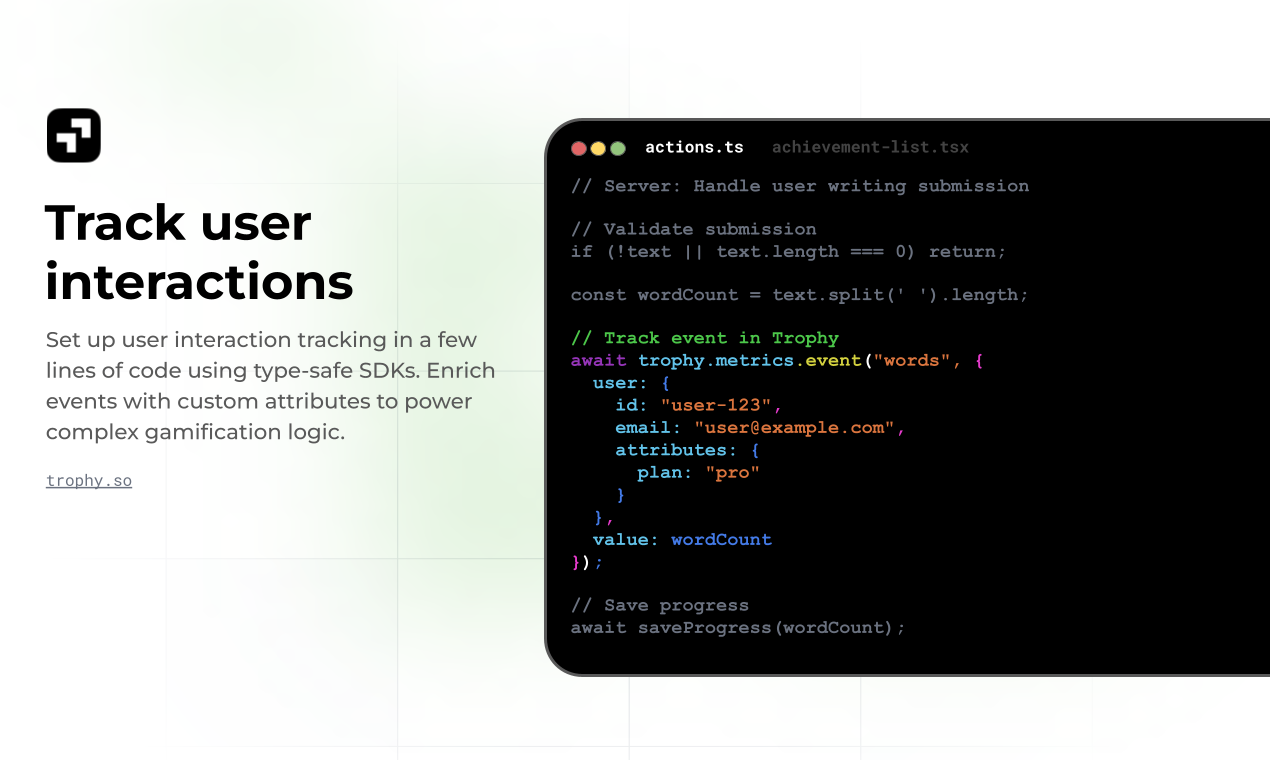
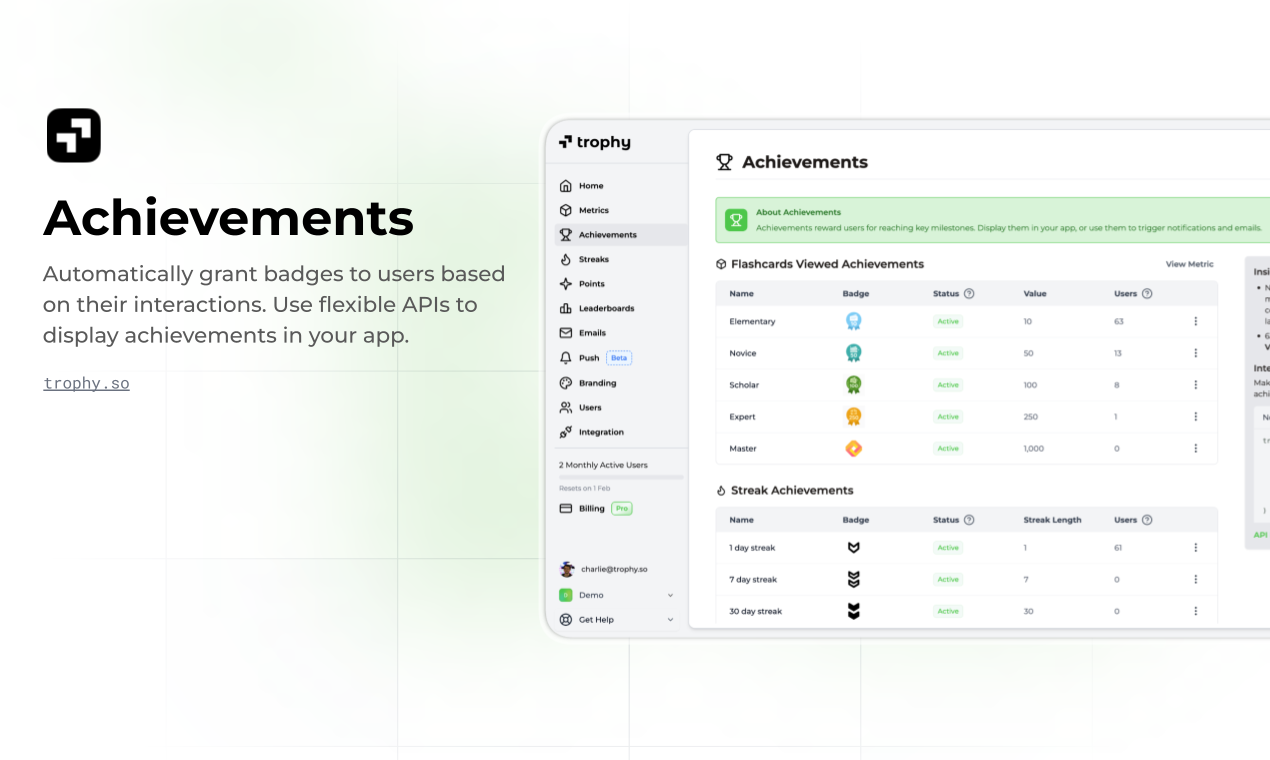
🛜 Metrics: Track user interactions

Track user interaction events using type-safe SDKs in just a few lines of code. Attach custom attributes to users and events to drive complex gamification logic.

🏆 Achievements: Incentivize user actions

Build custom achievements logic based on user interactions without coding. Display achievements in your app using flexible APIs.

🔥 Streaks: Build consistent usage patterns

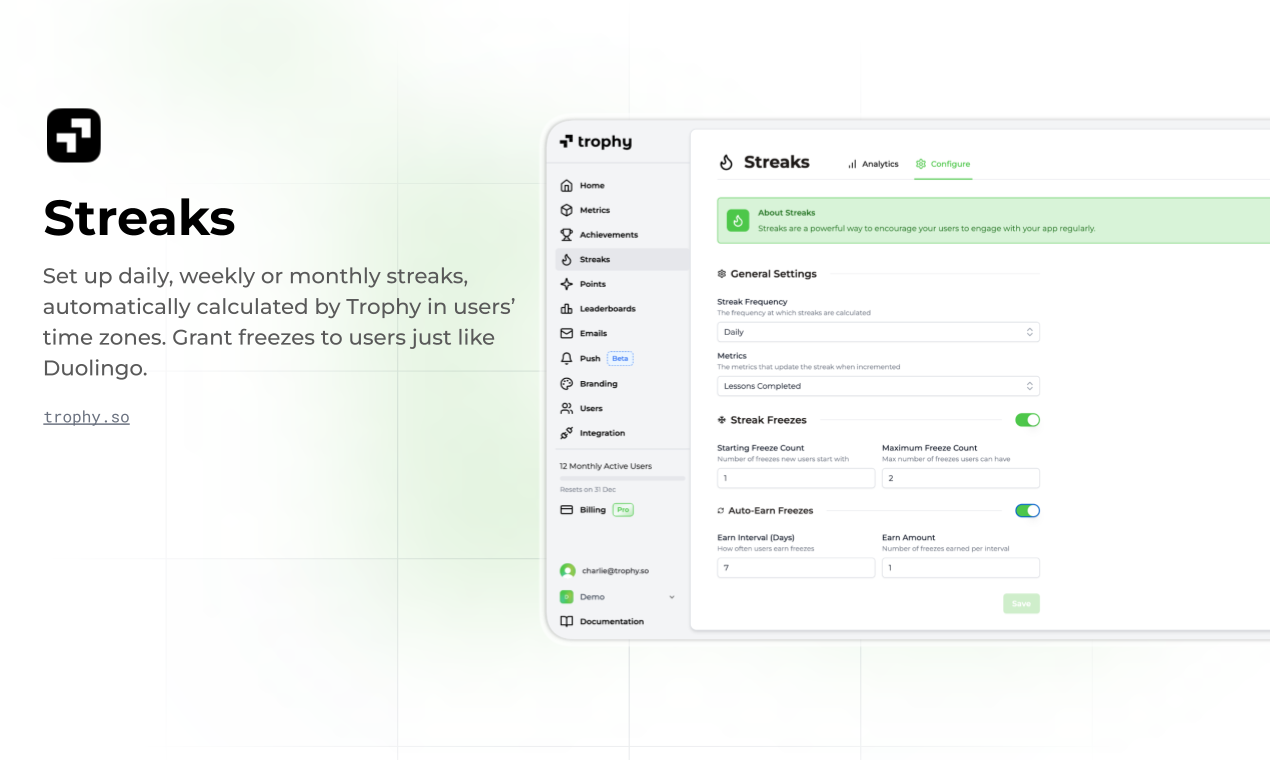
Configure daily, weekly and monthly streaks in a few clicks and use streak freezes to give users breathing room. Trophy takes care of all time-zone issues and awkward edge cases.

❇️ Points: Build reward and metering systems

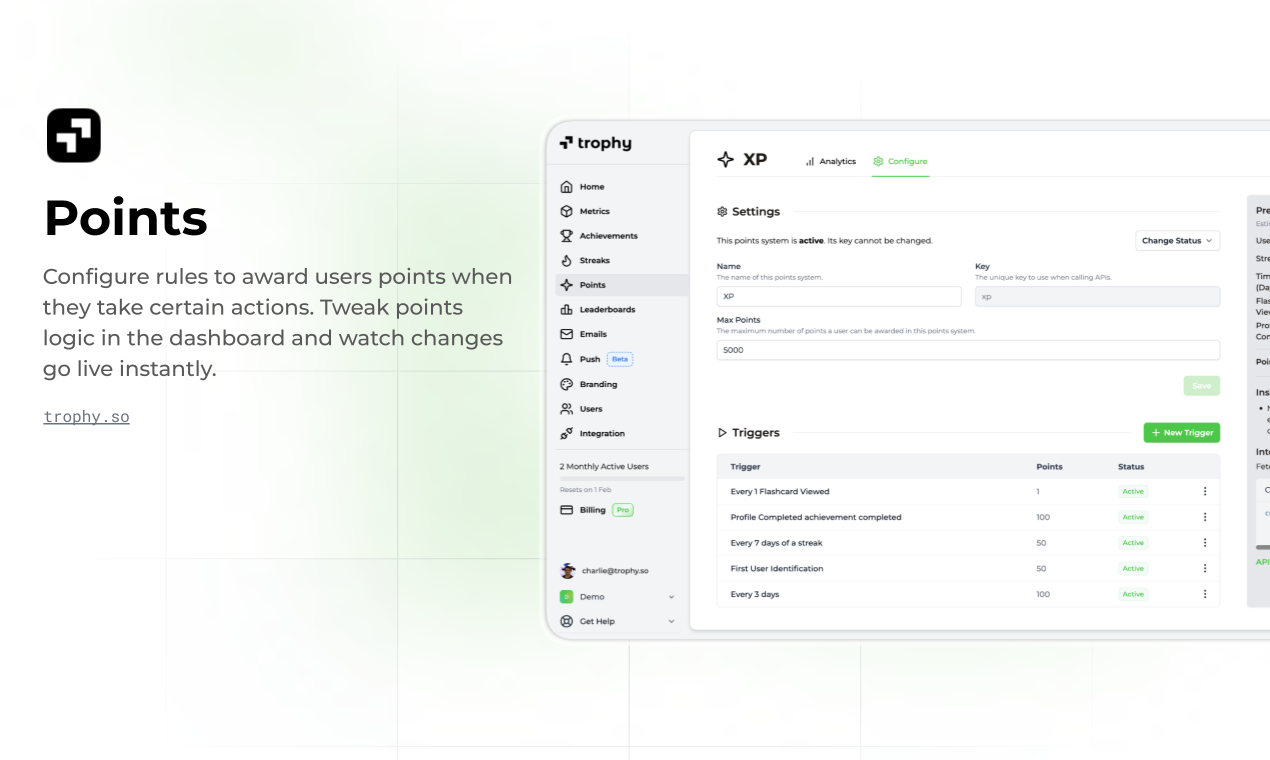
Configure logic to award points as part of an ‘XP’ system or meter product usage by building features like ‘Energy’, all without coding. Display points data and charts in your app using Trophy APIs.

🥇 Leaderboards: Foster friendly competition

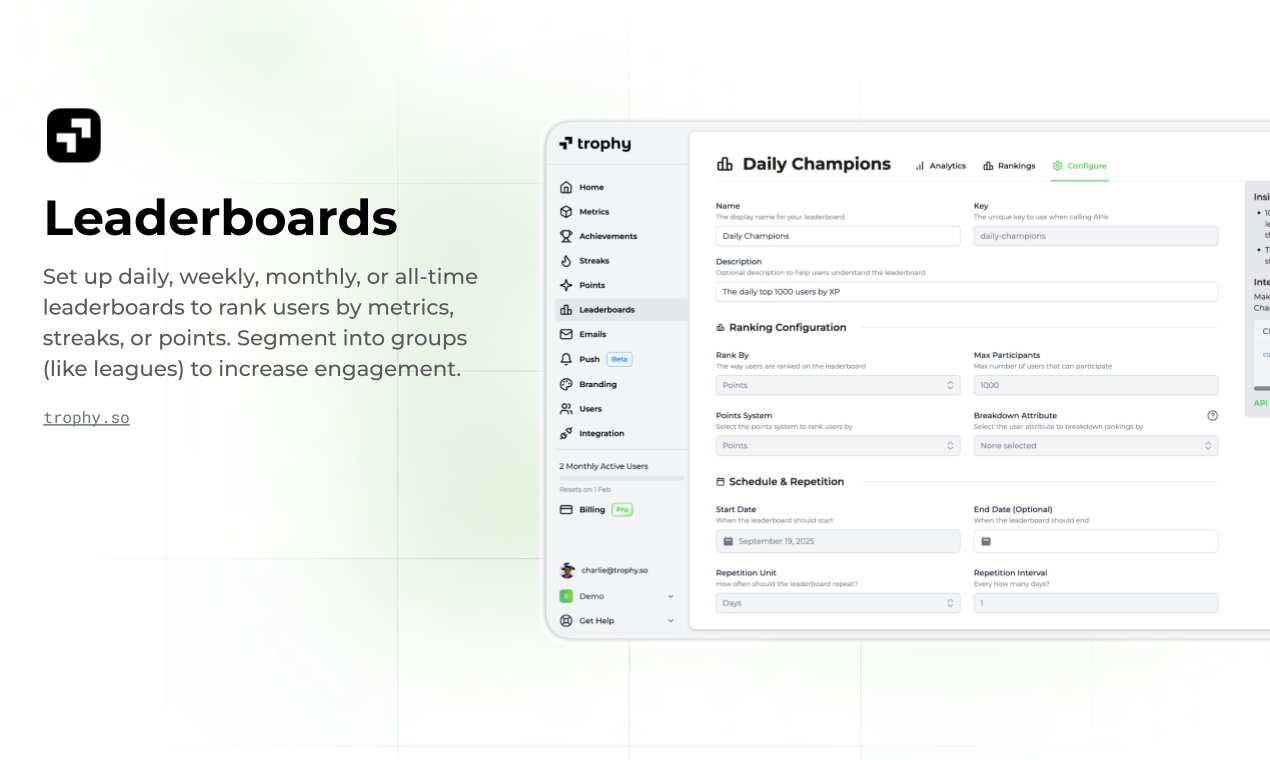
Set up time-limited, one-off and recurring leaderboards with ranking logic based on metrics, streaks, or points. Segment leaderboards to split users into smaller groups (like leagues) and increase engagement.

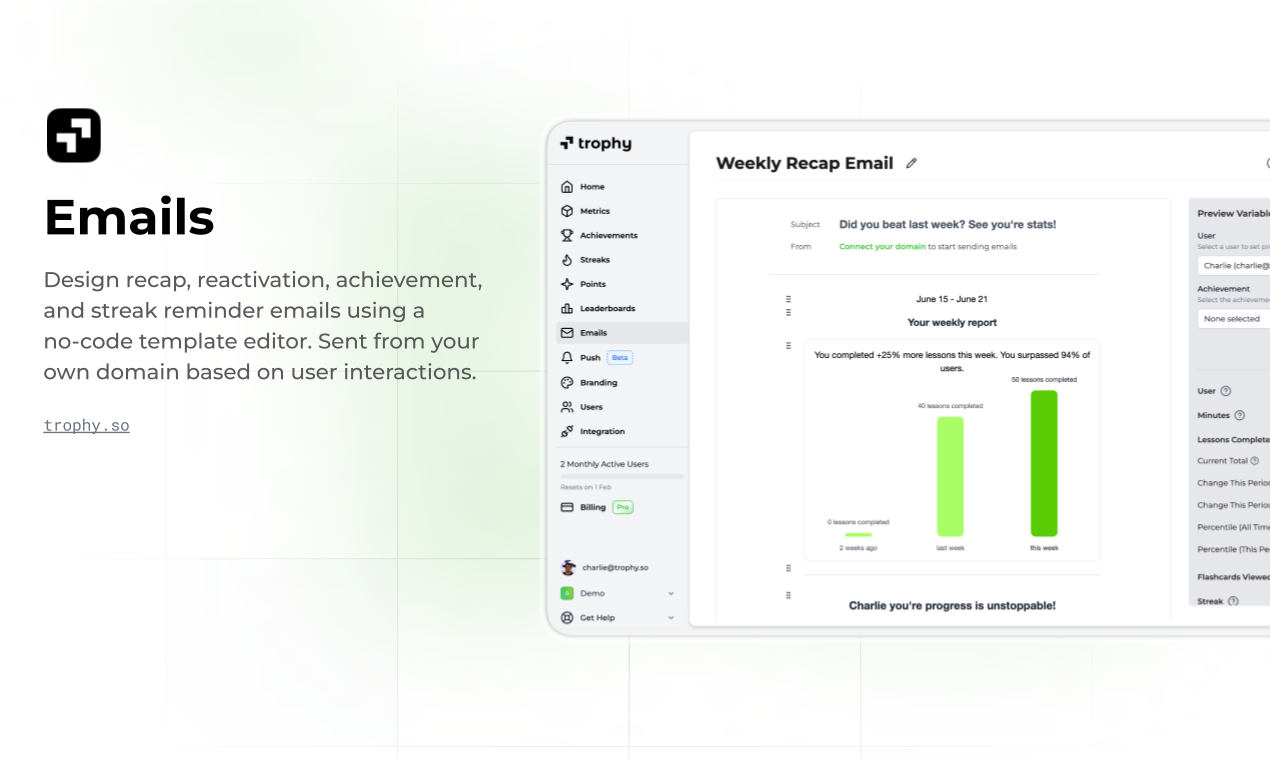
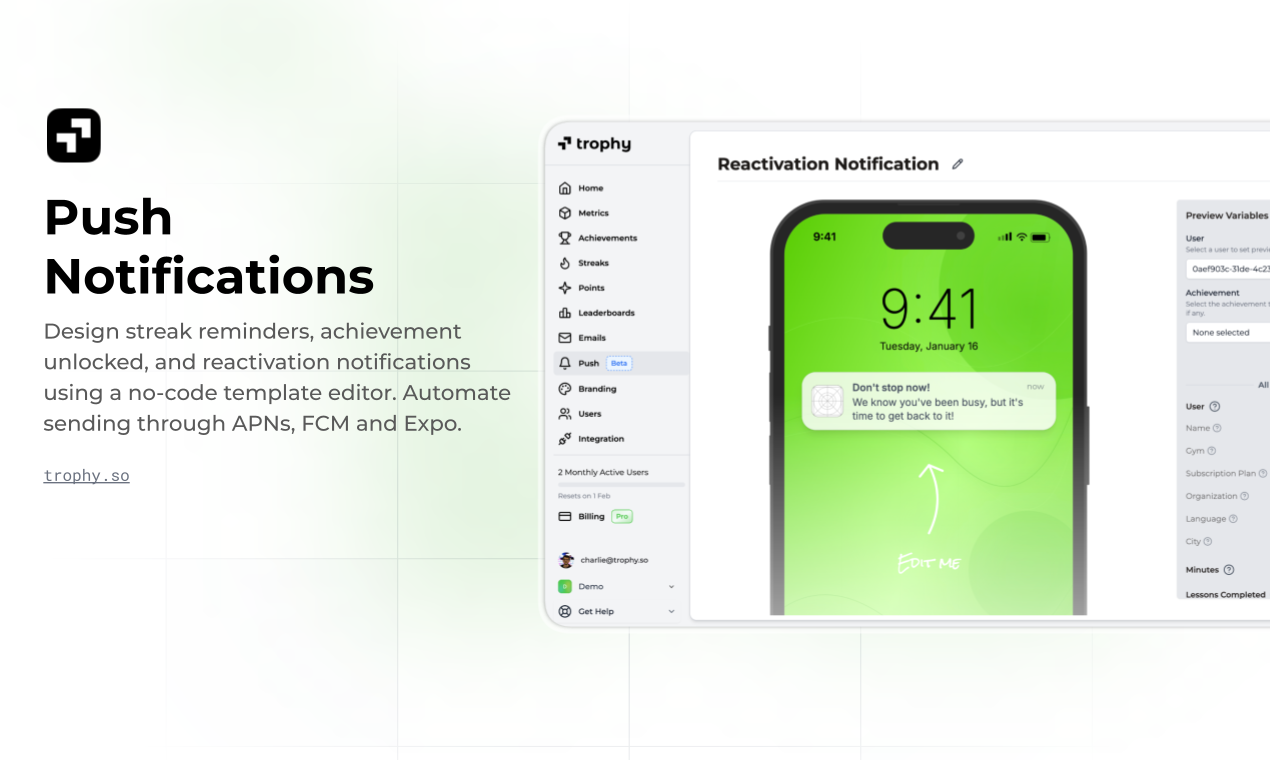
🔔 Notifications: Engage & retain users

Design notification sequences for streak reminders, weekly recaps, and more using a no-code template builder backed by a rich user interaction context. Deliver notifications to users via email, APNs, FCM and Expo without coding.

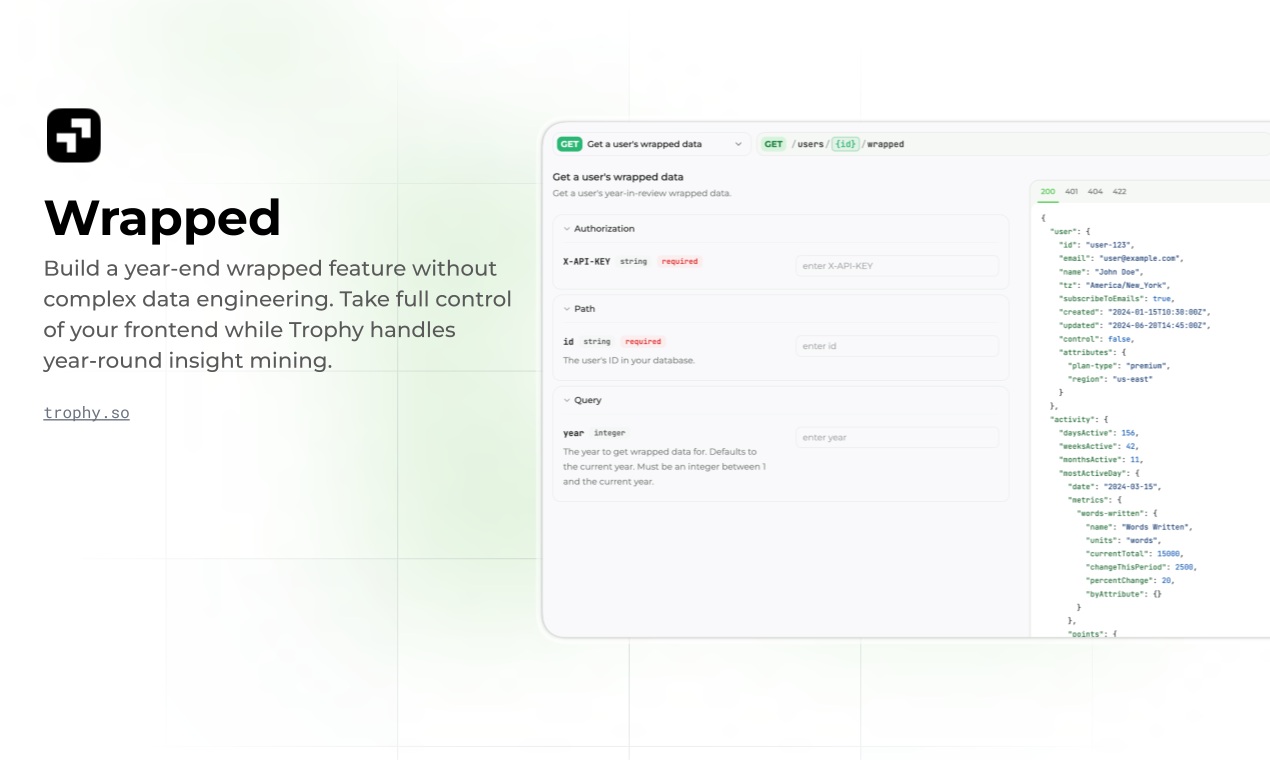
📈 Wrapped: An API for building year-end summary features

Trophy mines insights from year-round user interaction tracking, surfacing data perfect for year-end wrapped features through a simple API. Trophy takes care of the complex data engineering and lets you focus on the actual user experience.

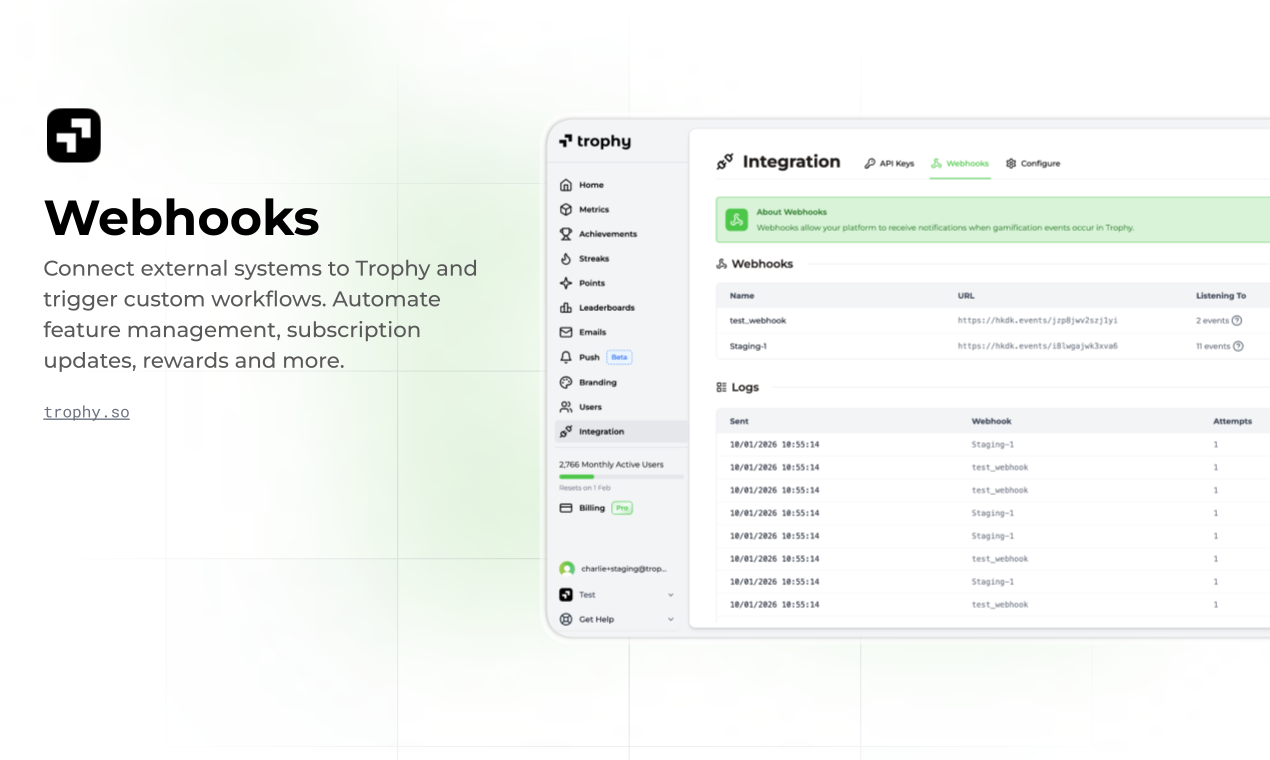
🌐 Webhooks: Trigger custom workflows using Trophy data

Use webhooks to connect other systems to Trophy and trigger custom workflows for rewards, feature management, custom notifications and more.

How to get started

Trophy is free to try out for up to 100 monthly active users. To get started:

  1. Create a free account

  2. Grab your API key and install the SDK

  3. Start tracking user interactions and building gamification features!

Just follow the quick start or feature guides for all the details.

Alternatively if you want some guidance on how best to add gamification to your product, or support with an integration, speak to us and we’ll help you out.

We're super excited to be launching and can’t wait to hear your thoughts and feedback on what we're building!

Big thanks!
Charlie & Jason

10
回复
2
回复

@jason_louro1  @charlie_hb You guys covered almost every gamification primitive :) How do you help teams avoid over-gamifying their product; shipping mechanics that boost short-term engagement but hurt long-term value or user trust?

0
回复

Super excited to be launching our 1.0 on ProductHunt and to lead engineering at Trophy. To add to what Charlie said—in addition to letting you ship streaks, leaderboards, points systems like XP or energy, achievements, and end of year Wrapped, we have one hell of a roadmap planned for 2026.

Some things we're cooking up:

⚔️ Challenges: Unite the community around common goals

Create seasonal challenges for users that rally them around a common goal. The community can work toward one aggregate goal ("let's run one million kilometers in February!") or the same individual goal ("Anyone who runs fifty kilometers in February completes the challenge").

🎁 Rewards: Award your users for their success

Connect Trophy-powered features like Leaderboards, Streaks and Achievements to tangible rewards for users, both external to your platform (e.g. gift cards) and internal (e.g. free access to premium).

🔥 Streaks 2.0: Vacation Mode & Personalization

Not every user wants the same streak experience. Give them the flexibility to take a week off when they're on holiday or allow streaks to pause on weekends without breaking.

That and much more coming in 2026. If these sorts of features sound like a good fit for your web or mobile app, now's the time to get started; it's never been easier!

6
回复

@jason_louro1 🧑‍🍳

1
回复

Trophy looks like an incredibly helpful and useful product, it will 100% save me a lot of time when I build my next B2C SaaS! I've been following its development closely for a while and I think they are definitely onto something big.

3
回复

@pimpl Thanks Piotr!

0
回复

congrats on the launch, great work!

3
回复

@marek_nalikowski thanks Marek, appreciate the support 🙏

1
回复

i've always wanted to add a Doulingo-style achievement system to my project, but the backend logic always felt too daunting. seeing how Trophy handles integration is pretty impressive, just a few lines of code. the badge designs are actually top-notch, too. it's a relief not having to worry about the UI/UX from scratch.

2
回复

@joeyzhang Thanks for the comment Joey! Give it a try and let us know what you think 😀

0
回复

Genius!! Such a cool idea to API this part of building apps.
Strong value, but building it yourself feels like a distraction from core product R&D - so it always gets pushed back.
We’ll definitely look into this for our company!

2
回复

@christopher_pechau Summed it up perfectly! Your time would be better spent on literally anything other than debugging how a user somehow lost their streak after flying from London to New York 🤣

1
回复

@christopher_pechau Happy to help when you're ready to build some of these features 🫡

2
回复

Amazing launch! I don't know how many times i've rolled my own, only to be frustrated cuz it wasn't portable from system to system, or it was modular enough. Well done!

2
回复

@billortell Exactly the reason we wanted to build this, so thanks for the validation! 😀

0
回复

congrats on the launch guys! super well build product and refreshingly new in the space!!!

2
回复

@chek Thanks for the kind words Che!

0
回复

@chek Thanks Che, appreciate the support!

1
回复

Love the podcast, congrats on the launch!

2
回复

@mrkaluzny Thanks Wojciech, we have a big backlog of episodes to get edited and published so lots more coming soon!

0
回复

I love gamification in the product, this makes the user much more used to with minimal efforts. Congrats on the launch!

2
回复

@anishsharma Thanks for the kind words Anish!

0
回复

Love how much thought seems to have gone into edge cases. That’s usually where homegrown systems quietly fail.

On the analytics side, do teams get visibility into which achievements or streaks are underperforming or too difficult? That feedback loop feels critical for tuning engagement.

2
回复

@shreya_chaurasia19 Thanks for the comment!

Yes, the dashboards show exactly how many users have unlocked each achievement, and have stats like number of active streaks, average streak length etc which can all help to balance the experience!

0
回复

Love the 'Configure without coding' aspect. We prioritize the same velocity at Dashform (using AI to generate forms instantly).

I'm curious about the integration flow: Can we trigger your 'Points' or 'Badges' directly via Webhooks when a form submission happens? Or do we need a full backend integration to verify the events securely?

2
回复

@openaigpt5 Hey thanks for the comment, great question!

The way this would work would be:

  1. You send a `form_submitted` event from your backend each time a user submits a form

  2. You set up rules in Trophy to grant points/badges to users like "grant 5 points for each form submission" or "unlock badges for 10, 50, 100" form submissions.

  3. Trophy handles keeping track of each users points and badges for you according to those rules

  4. You fetch a users points and badges from Trophy's API and display them in your app

It's step 3 that saves the effort at scale, you can make the logic as complex as you like and configure everything from the dashboard. The only code you would write is step 1, to send events to Trophy, and step 4, to actually display data in your app.

0
回复

Kudos on actually building this! Excited to follow along 🚀

1
回复

@michael_ludden Thanks Michael, few more launches to come this year so excited to get to it 🚀

1
回复

Congrats on this launch Charlie!!

Would love to hear about the specific databases you chose for handling high-volume event tracking and leaderboards?

1
回复

@cathcorm Thanks Catherine! A lot of it is Redis, it can handle pretty much whatever we throw at it in terms of transactions per second. We then have a Postgres database that data is flushed to periodically. That way we keep latency low but still maintain a relational structure for when we need it.

0
回复

OK, I admit it... I’m already obsessed with the idea of those notifications. Not just for my users, but for me too. Who doesn’t love a good streak reminder? :D Let’s gooooo!

1
回复

@abod_rehman Haha love it! They can work really well. From what we've seen, users that receive reminders are about 20% more likely to have a longer streak than those who don't.

0
回复

Something that I can integrating in my next product if it aligns well. It is hard to build gamification support from scratch. An API can be very helpful. How are handling reliability concerns?

0
回复
#4
Superdesign Prompt Library
Design prompts for style, animation, components
256
一句话介绍:一款社区驱动的设计提示词库,通过提供高质量、系统化的设计提示,帮助开发者和设计师在使用AI编码助手时,有效生成符合预期的UI/UX设计,解决“AI设计垃圾”的痛点。
Chrome Extensions Design Tools Developer Tools Web Design
设计提示词库 AI设计工具 UI组件 社区驱动 提示工程 编码助手插件 设计系统 原型生成 团队协作 产品设计
用户评论摘要:用户普遍认可其解决“AI设计垃圾”的核心价值,浏览器插件“克隆组件并提示”功能备受好评。主要问题与建议集中在:如何确保提示词质量与时效性、避免社区内容重复、加强搜索与分类、以及未来移动端集成与提示词参数化等功能的规划。
AI 锐评

Superdesign Prompt Library 瞄准了一个精准且日益凸显的痛点:AI编码助手在设计输出上的“力不从心”。其核心价值并非创造新模型,而是充当人与AI之间缺失的“设计语境翻译层”。它试图将模糊的设计需求,系统化为AI可精准执行的提示语言,这本质上是为AI设计能力建立一套“标准化接口”。

产品聪明地采用了“社区驱动”模式来构建这个接口库。这既能快速积累覆盖风格、动效、组件的海量提示词,也巧妙地构建了潜在的网络效应和护城河。然而,这正是其最大风险所在:社区内容的质量衰减、重复泛滥和时效滞后,可能迅速让图书馆变成“垃圾场”。评论中关于质量维护、版本控制和搜索优化的提问,直指这一命门。

其浏览器插件的“即时克隆与提示”功能,是更具洞察力的设计。它将工具从“孤立的知识库”无缝嵌入到现有工作流中,实现了从“参考”到“实时辅助”的跨越,极大提升了实用性和粘性。

长远看,该产品的真正挑战在于平衡“标准化”与“创造性”。优秀的提示词库能提升效率,但过度依赖也可能导致设计趋同,抑制原创。它必须进化为一套“活的设计系统”,既能提供可靠的基础元件,又能引导用户进行灵活组合与创新,而非成为另一副AI创作的“枷锁”。它是否成功,将取决于其能否在“提效”与“赋能”之间找到那个精妙的平衡点。

查看原始信息
Superdesign Prompt Library
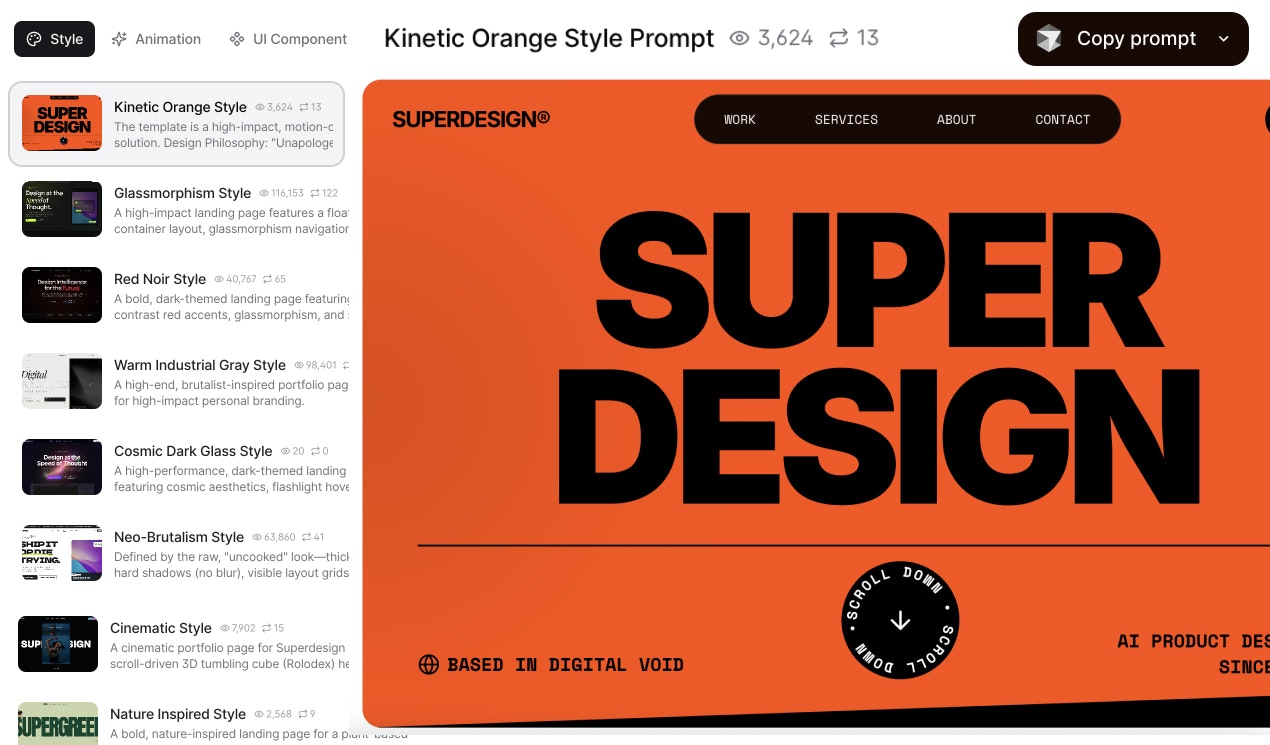
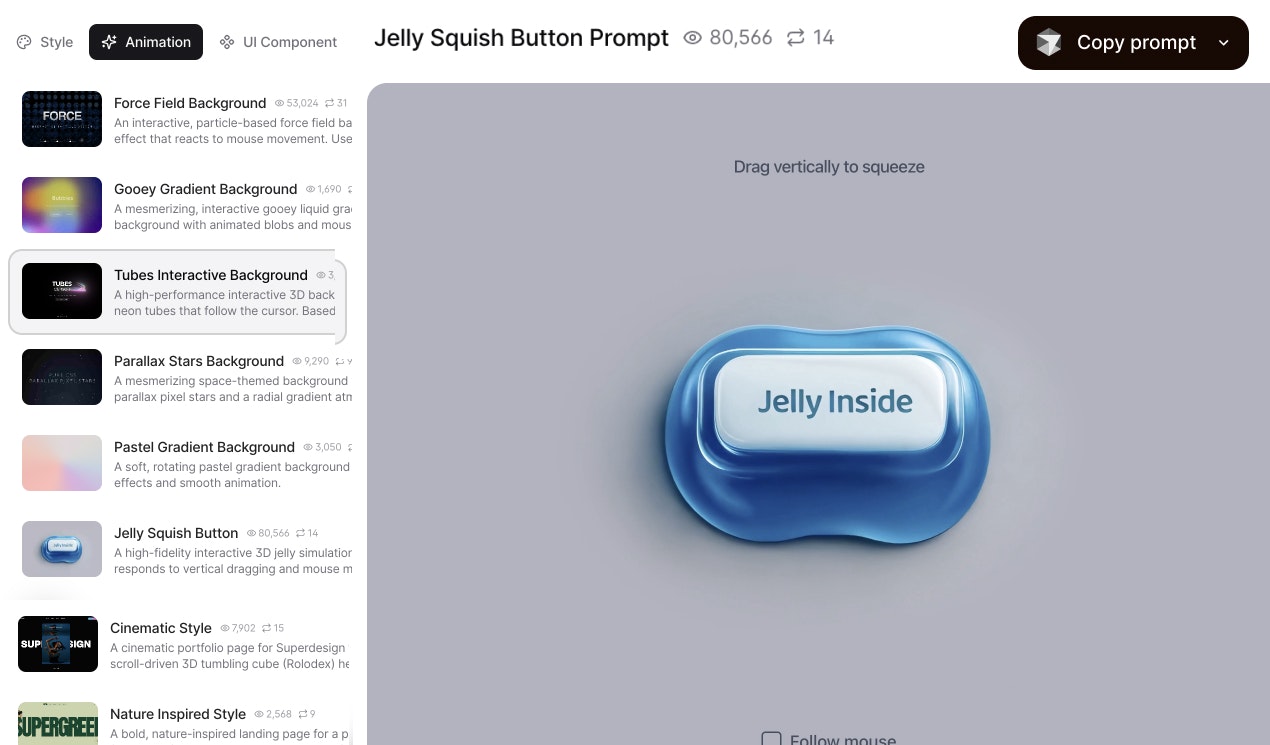
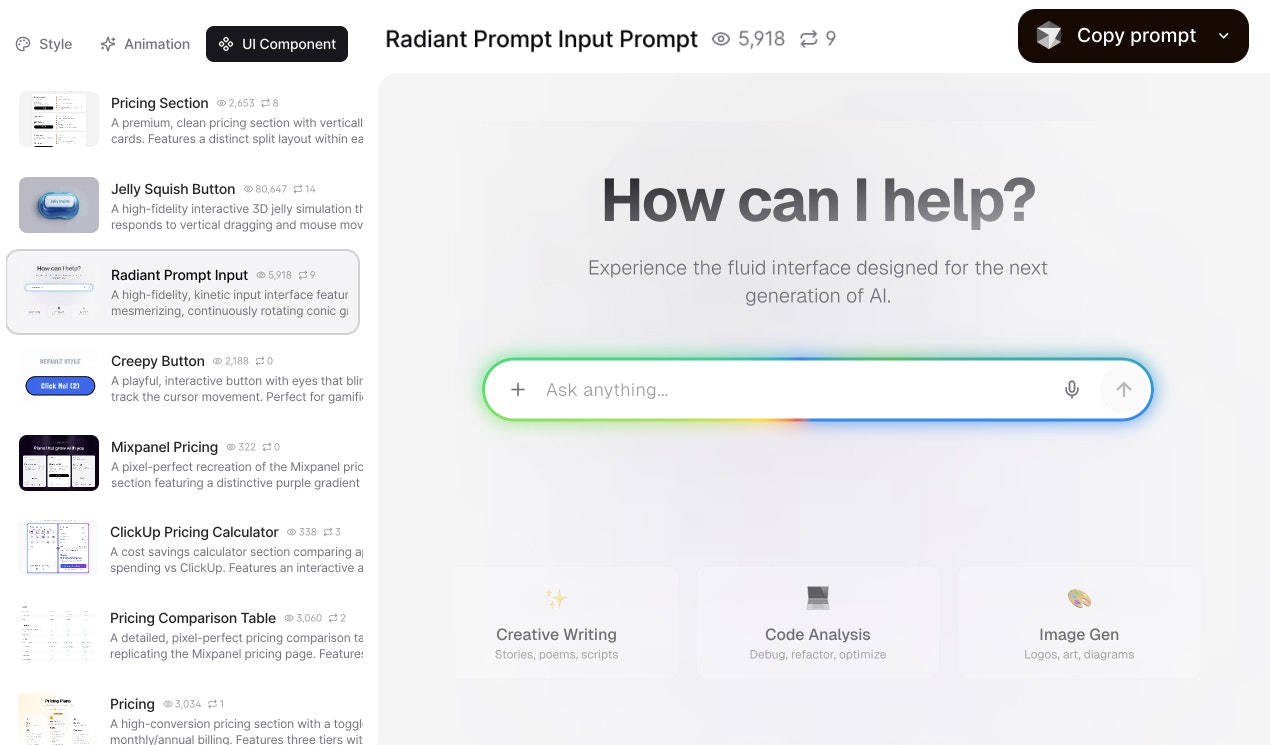
Biggest community driven design prompt library, covering styles, animations, UI components, etc. You can build & share design prompts with your team privately or contribute publicly; It works with any coding agent

Hey Product Hunt 👋 

I’m Jason, the founder of Superdesign. Excited to launch on Product Hunt today! :) 

LLM often output AI slop design not because of capability, but lack of context & guidance

However design related prompts are not straightforward and most people don't know how to prompt it

That's why we built one of largest community driven design prompt library, covering styles, animations, UI components, etc.

You can build & share design prompts with your team privately or contribute publicly

It works with any coding agent

12
回复
@jasonzhou1993 Idea is excellent dude. Gratz.
0
回复

@jasonzhou1993 Congrats on reaching this milestone!

0
回复

@jasonzhou1993 quick question J, How do you ensure prompt quality and evolution over time, so teams don’t just reuse outdated or overfit prompts as models and design conventions change?

0
回复

Think agents can't code? Well not when you prompt them poorly!

10
回复

The founder is the reason I’ve already built eight webapps already! :)

This tool clearly shows how someone who can break down complex topics into simple terms can create an outstanding product — especially in a time when shipping is easier than ever.

6
回复

@miguel_parente  Thanks a lot glad to hear!

1
回复

I've been working on a small to-do list product (just for myself), and tried this to generate a logo for me and explore the UI. The result felt somewhat similar to a design I previously created with Antigravity, but more comprehensive. It wasn't just about individual components or a single screen, it provided a more holistic UI direction(ex. it even gave me a colour system), which I found really helpful.

Just a small curiosity question lol: Is the Ui of Superdesign itself designed using Superdesign prompt?

3
回复

@david0795 Thanks! and yes we use superdesign to design superdesign hah

1
回复

The superpower of this app for me is their browser plug-in that lets you just start from anywhere in your existing app.

Superdesign clones the part of the app you're on, or even a selected component, and you can immediately start prompting and exploring ideas / options from there.

And it's very quick to share a functional prototype with the team or users.

I have started using it a lot at the start of my design process, to get the feel of new ideas early. 🙏

2
回复

@taonga Thanks so much mate!!

0
回复

I just love this idea guys!

1
回复
0
回复

Congrats on this one!! 👏

How are you handling prompt versioning, parameterization (e.g., templating with variables for dynamic styles/components), and ensuring compatibility across different agents/models when users export or share prompts?

1
回复

Fresh launch and already loving the browser plugin—cloning components for instant AI prompts is a time-saver for UI ideation. As a HK designer fighting 'AI slop,' this library fills a huge gap. Congrats Jason, any plans for mobile app integration? 🚀

1
回复

@hkklaus97 great to get some love from HK!

Can i ask what type of integration you are thinking for mobile? definitely keen

1
回复
@jasonzhou1993 Thanks for the quick reply! For mobile, I’d love something like: 1) A companion app or extension for Figma/Adobe XD on iPad/phone to pull prompts directly; 2) On-device AI prompt generation for quick sketches when away from desktop; 3) Integration with mobile prototyping tools (e.g., Proto.io or Framer) so cloned components can inspire native app UIs. HK designers often work on-the-go—mobile would be huge! What do you think is feasible first? 🚀
0
回复

Can't wait to see how this works for my daily prompts! good luck!

1
回复

@gayathri_kamath we are thinking about introducing a prompt hunt type thing, where daily fresh new design prompt can be introduced!

0
回复

A very interesting experience, it feels like i won't need to open heavy design software for simple graphics anymore, Superdesign blends AI with vector editing in a really natural way. it's fast, simple, and the output quality is surprisingly high. a solid tool for quick assets.

1
回复

Huge congrats on launch — love how this makes promptable, systemized design actually usable. 🚀

1
回复

@zeiki_yu this man gets it!

0
回复

Looks really promising. With a large community library though, duplication or slightly-tweaked versions of the same prompt can pile up fast. Curious how you’re thinking about organization, search, and keeping things easy to navigate.

1
回复

@cathy_cc yea we are actually thinking about a few things:

  1. 'design prompt hunt' - like product hunt, but for design prompts, everyday people can share, upvote, highlight

  2. Good search that integrate into the creation process

0
回复

A couple of questions to the launch team:

  • As AI models and design patterns change quickly, how do you ensure prompts don’t become outdated or limit creativity over time?

  • How do you balance reusability of prompts with the need for designers to develop original thinking rather than relying too heavily on predefined inputs?

Curious to hear how you’re thinking about long-term value and evolution of the library.

0
回复
#5
Drift
Screen recorder desktop app with cursor zoom effect
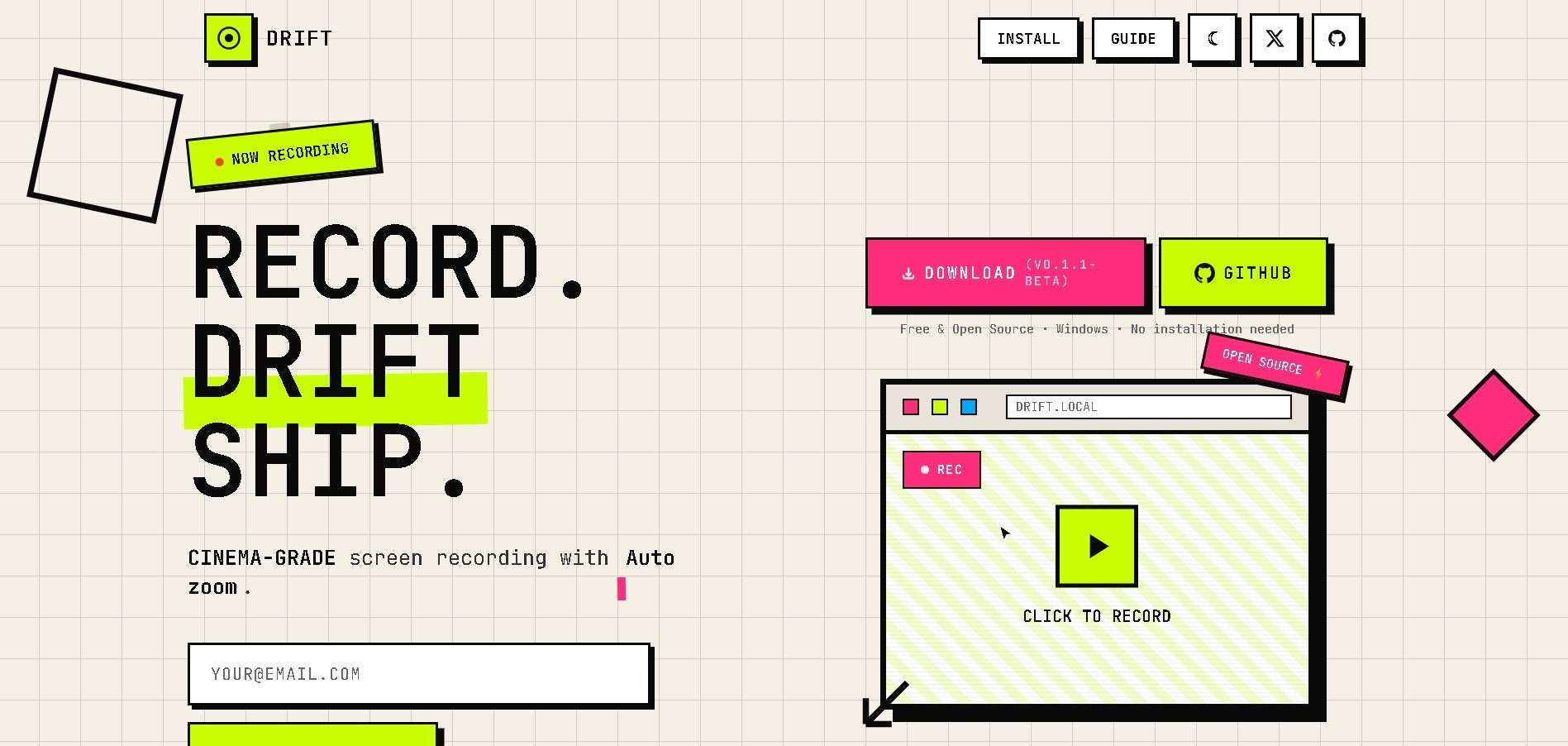
171
一句话介绍:Drift是一款桌面端屏幕录制软件,通过独特的自动电影感变焦效果和隐私优先设计,解决了用户在制作专业演示、教程视频时难以突出光标操作且担忧订阅费用的痛点。
Design Tools User Experience Developer Tools GitHub
屏幕录制 光标变焦 桌面应用 隐私优先 买断制 视频创作 演示工具 Windows软件
用户评论摘要:用户赞赏其网站设计和视觉效果。主要反馈包括:询问为何是桌面应用而非网页扩展;确认目前仅支持Windows;对等待列表存在疑问;有用户将其与开源竞品Cap比较并期待解决特定问题。
AI 锐评

Drift切入了一个看似细分却极具传播力的痛点:为录屏内容添加流行的“电影感自动变焦”效果。其“隐私优先、无订阅”的卖点直击当前用户对持续付费和数据安全的普遍焦虑,是聪明的市场定位。

然而,产品面临严峻的立身之问。首先,其核心功能(光标变焦)并非独占壁垒,已有如Cap等免费开源方案存在。创始人“零预算启动”的坦诚虽显真诚,却恰恰暴露了其最大软肋——在缺乏营销资源和生态整合(如直接分享至社交平台)的情况下,一款付费桌面应用如何对抗免费工具与操作系统内置录屏功能的夹击?评论中关于“为何不做成扩展”的疑问,恰恰击中了其在便捷性与用户获取门槛上的命门。

其次,当前“Windows only”的状态极大地限制了其初期用户池和网络效应形成。创始人将之归为“尚未完美”,但跨平台能力往往是此类工具类软件生存的基线。

其真正的价值或许不在于技术,而在于一种极简、专注的产品哲学:只做好“录制+电影感”这一件事,并提供一次付费的确定性。但这一定位要求产品必须在效果流畅度、自定义程度和用户体验细节上做到极致,方能支撑其溢价。否则,它极易沦为少数爱好者尝鲜后即被遗忘的工具。Drift的下一步,必须快速迭代跨越“可用”到“卓越”的鸿沟,并找到精准的创作者社群进行渗透,否则其光芒恐难逃“叫好不叫座”的昙花一现。

查看原始信息
Drift
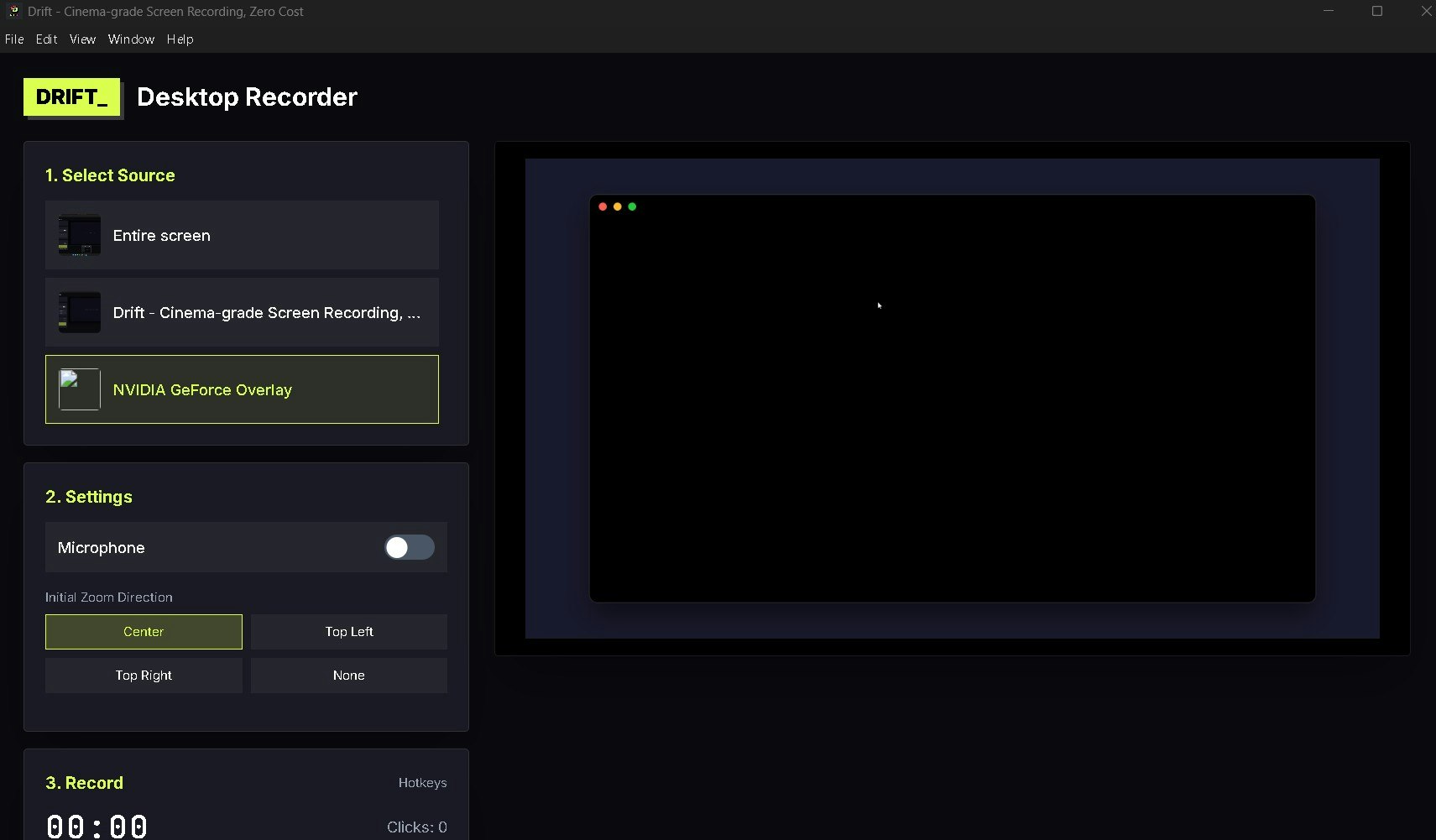
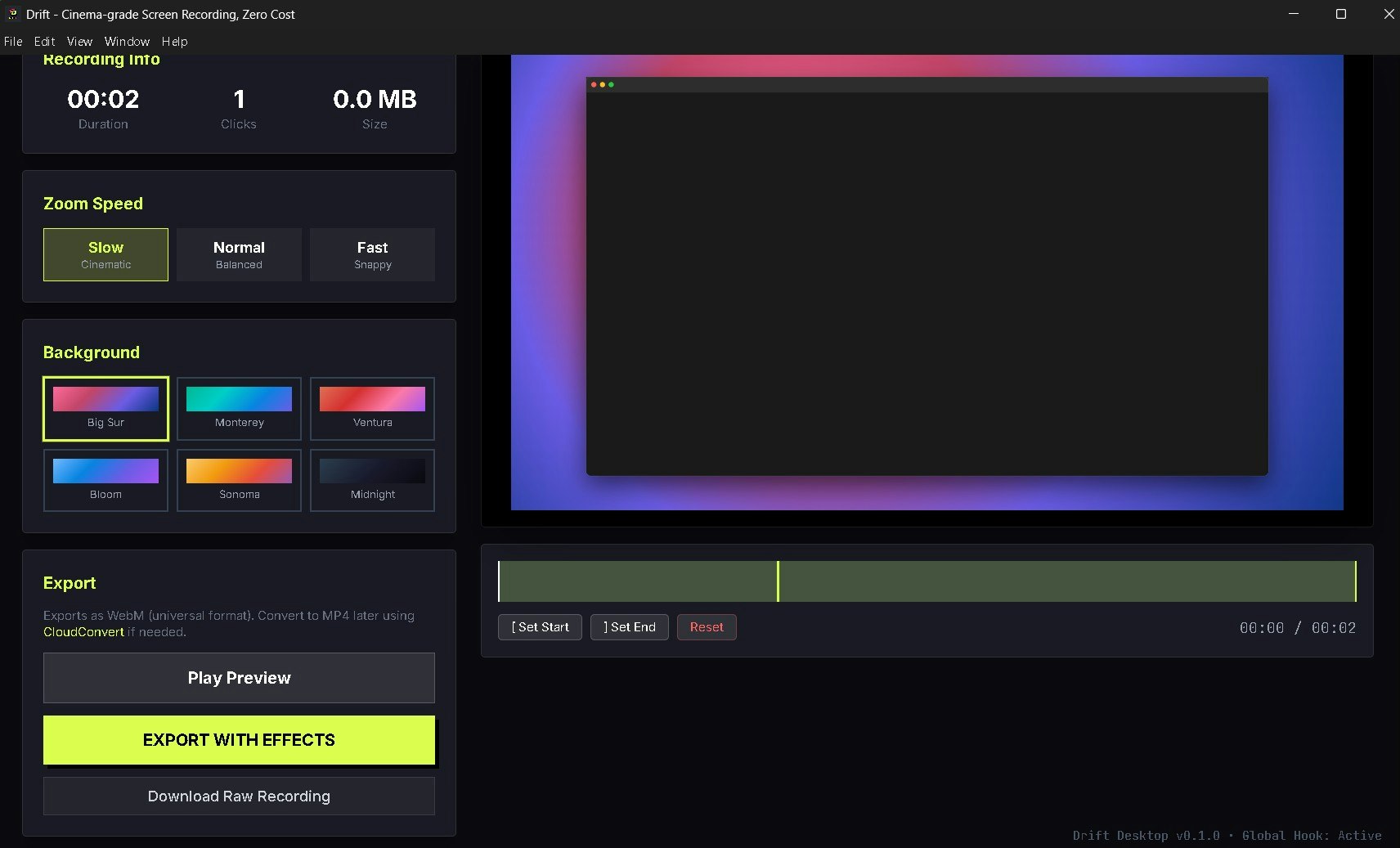
Professional screen recording studio that you can download Cinematic auto-zoom, privacy-first, no subscriptions. and you can choose between raw and the effect recording

I wanted to record with such effects after seeing them all over twitter but i found out the desktop app was a paid version so i made it myself .
> its really hard to distribute something without any kind of large social presence specially when you got 0$ , i hope this helps , but i really want a lot of feedback to improve drift and make it better than existing stuff !
thank you for any kind appreciation / interaction with drift !

6
回复

@diiviikk5 Did you not try Cap? xD
It's free and open-source with the same zoom in features.

I have some issue with Cap, I hope drift solves that - will try it soon

1
回复

The website is goddamn beautiful!

2
回复

Congrats guys!! Well done :)

1
回复

The color scheme is too good, man!! I’ll definitely try Drift and give feedback. Keep up the great work!

1
回复

congratulations on your launch, and agreed - your website is very pretty 👍🏼

why do we need to download and launch the file there, couldn't it be a chrome extension or website instead, for simpler accessibility?

0
回复
ah ive been looking for a good app for this for a long time. is this windows only for now?
0
回复

@parthmodi yes windows only , its not perfect yet but im gonna make it a lot better soon

0
回复

What is the waitlist for?

0
回复

@syed_shayanur_rahman I needed a way to distribute it so atleast i have a bunch of people i can show my product to , its out now but i didnt want to remove it yet

0
回复
#6
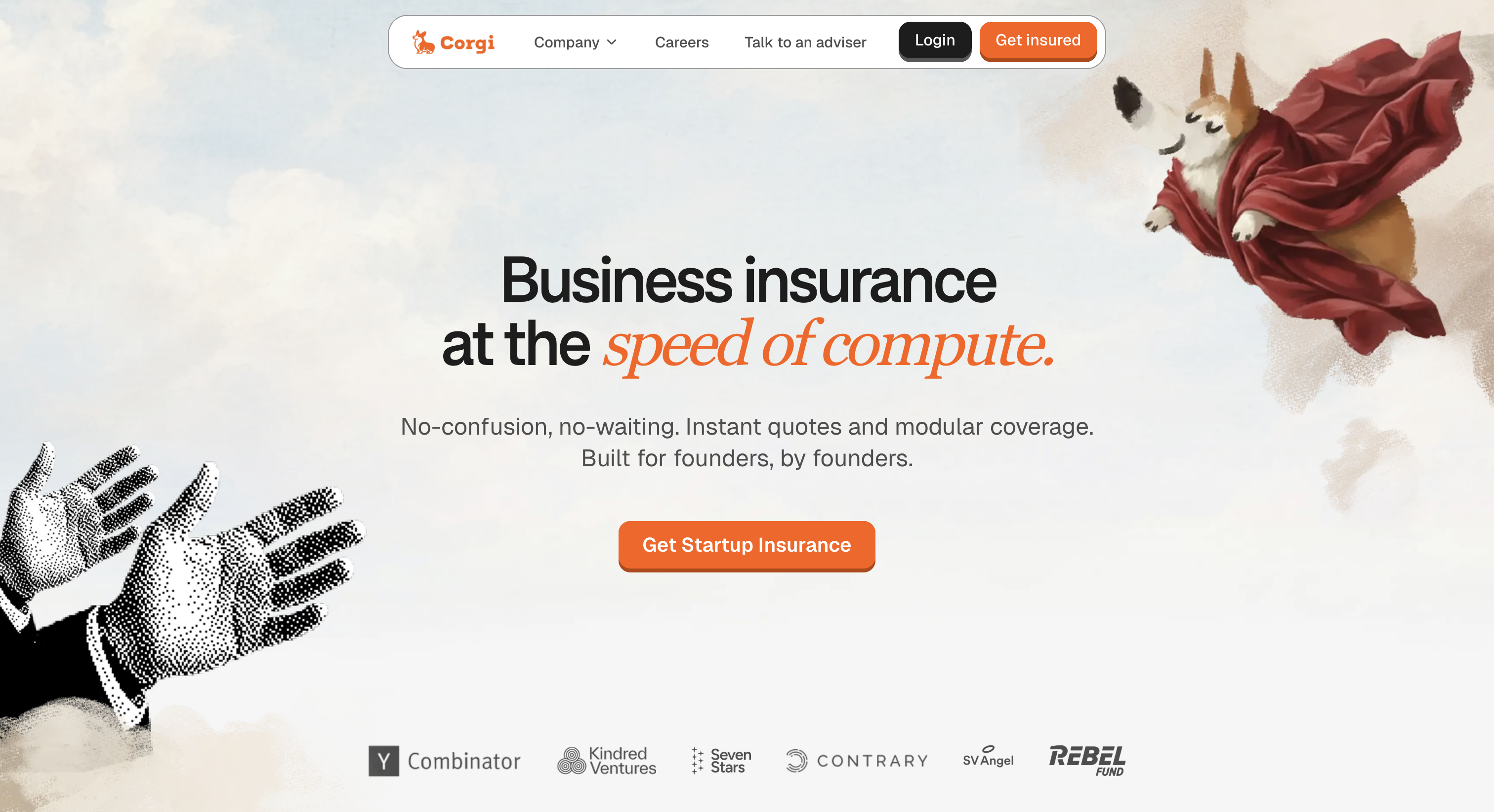
Corgi Insurance
Modular coverage for startups: CGL, D&O, Tech E&O, Cyber
140
一句话介绍:Corgi Insurance 是一家全栈式保险公司,为初创企业提供模块化、可快速出单的商业保险,解决了传统保险流程繁琐、报价慢、价格高而阻碍初创公司签署商业合同、租赁协议等关键业务的痛点。
Tech
商业保险 初创企业服务 模块化保险 全栈式保险商 D&O责任险 科技职业责任险 网络安全险 快速报价 企业服务 保险科技
用户评论摘要:用户反馈验证了“初创公司投保难”的痛点,创始人分享因保险延误险些错失大单的经历。产品上线后需求旺盛,24小时内超千人询价。主要问题集中在:目前仅限美国;有用户反映报价高于市场价(后解释因聚焦企业险而非个人险);部分用户遇到网站报价表单故障。
AI 锐评

Corgi Insurance 的亮相,与其说是一款新产品,不如说是对传统企业保险僵化体系的一次“精准炮击”。其宣称的1天内超1000名创始人询价的数据,是市场饥渴度的最强注脚,也赤裸裸地揭示了传统保险在服务敏捷、高风险的初创企业群体时的系统性失灵。

产品的真正价值内核并非简单的“保险线上化”,而在于其“全栈式保险商”的定位。它砍掉了中间代理环节,直接承保和出单,这本质上是对保险价值链的重构。这种模式瞄准的并非价格敏感型客户(事实上已有评论指出其报价不菲),而是“时间与确定性敏感型”客户——那些因保险流程卡住融资、租赁或大客户合同的初创公司。Corgi 售卖的是“速度”和“确定性”,这是比单纯保费折扣更具杀伤力的价值主张。

然而,光环之下暗藏荆棘。首先,从评论中暴露的报价表单故障、部分用户遭遇的高报价困惑来看,其“更好、更快”的用户体验承诺仍处于早期打磨阶段。其次,“全栈式”意味着自身承担全部风险,这对初创的保险公司本身的风控能力提出极高要求,其模型是否经过完整经济周期的检验存疑。最后,其模式严重依赖对“初创企业”这一高风险客群的精准画像和定价能力,一旦为追求增长而放松核保标准,或将埋下隐患。

总体而言,Corgi 是一次大胆的范式创新,它抓住了传统市场的巨大缝隙。但其成功与否,将不取决于流量爆款,而取决于能否在“服务速度”、“风险定价”和“长期偿付能力”这个不可能三角中,找到并证明一个可持续的平衡点。它挑战的是行业百年积弊,但真正的战争才刚刚开始。

查看原始信息
Corgi Insurance
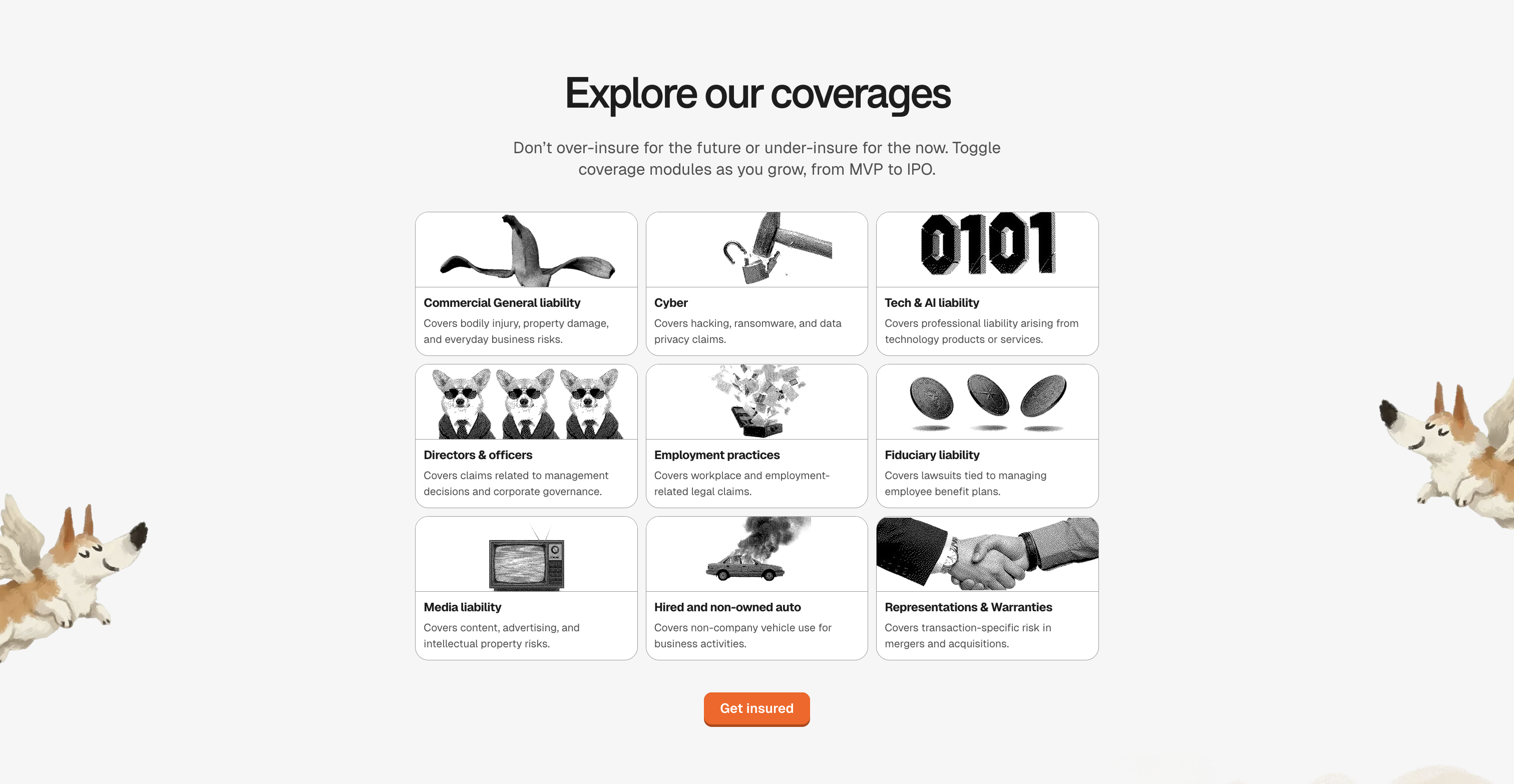
Corgi is a full-stack insurance carrier building better, faster insurance products for startups. We’re not a broker, so we underwrite and issue policies directly, with fewer handoffs, less friction, and better pricing. Corgi provides the following lines of coverage, and more: - Directors & Officers - Commercial General Liability - Tech Errors & Omissions - Cyber Liability - Employment Practices Liability - Media Liability - Hired and Non-Owned Auto - Representations & Warranties
We raised $108M to build insurance for startups. Getting insurance as a startup has always been a such a pain. In my experience, it's held up commercial lease agreements, enterprise contracts that we've dreamed of, and more. We knew it was a big pain, but even we didn’t realise how big of a problem this really was. We came out of stealth a few days ago and the inbound has been overwhelming. Within the past 24 hours, we’ve had 1000+ founders get quotes from our website. Our team has been getting texts and emails from people who were ready to switch over to cheaper, better, and faster insurance. Founders investing the time to switch away from existing providers was a clear signal that existing solutions just aren’t good enough. We built Corgi to move at the speed that startups do. We’re a full-stack insurance carrier, so we underwrite and issue policies directly with no handoffs and better pricing. Let me know if you have any questions at josh@corgi.insure. Happy to hop on a call any time. If you're in SF, let's chat at our office! Find more about us at www.corgi.insure.
13
回复

@josh_jung Congrats on the traction ! That’s a strong signal. When founders switch away from existing providers, what’s the one moment that usually triggers it: price shock, contract delay, bad claims experience, or something else entirely?

0
回复
Hey Josh, congrats on the launch and that traction is wild. That line about insurance holding up enterprise contracts you dreamed of really stands out. Was there a specific deal where you were so close but stuck waiting on insurance paperwork?
4
回复

@vouchy This was for one of our first "big" deal that my team was about to close. We didn't realise the contract would require insurance from our end (e&o and cyber) and I remember scrambling to get quotes because time kills all deals. We were able to close in the end but it was super frustrating that we couldn't get quoted fast enough.

2
回复

So excited to have this available for startups!

2
回复
0
回复

If only this was available back in the day when I was building Orbital! Could have saved us 6 weeks of back and forth

0
回复

The website quote form was broken when I used this after YC's announcement, hoping to see a quote this time!

0
回复

@thecarguy Feel free to email me at josh@corgi.insure, let's get that fixed for you.

0
回复

Great idea and offering! Quick question though: it's US-only, right?

I would expect it to be US-only, but perhaps you went really wild and can already broker globally.

0
回复

@christophe_henner US only for now, but we'll be working hard to provide insurance internationally very soon!

1
回复

As someone just starting as a 1099 for an org that needed me to carry insurance, I was super excited to try this out and loved the ease of use and low-touch method where I didn't have to talk to someone or go back and forth. That was, until I got to the quote and it was 3x every other quote I've gotten so far, to the tune of $3k annually vs. $1k for the same coverage from well-known insurance providers :(

0
回复

@robroark At the moment, we focus on business insurance rather than personal coverage. We’re working hard to expand and hope to support your personal insurance needs soon!

1
回复
#7
Adject v1.5
Create hyper-realistic product images & videos instantly
136
一句话介绍:Adject是一款AI驱动的工具,能即时生成超写实产品图片和视频,为电商品牌解决了高质量视觉内容制作成本高、耗时长且难以规模化的核心痛点。
Marketing Artificial Intelligence E-Commerce
AI图像生成 AI视频生成 电商视觉营销 产品摄影替代 超写实内容 项目化工作流 无代码设计工具 AIGC应用
用户评论摘要:用户普遍认可其解决“影棚级”内容痛点的价值。有效反馈集中在:期待与Shopify/WooCommerce集成;模板功能加载异常;询问AI生成内容的商用法律支持;以及探讨在拥挤市场中如何通过工作流和一致性实现差异化。
AI 锐评

Adject 1.5的迭代,表面是增加了视频功能和项目化管理,实质是一次从“AI玩具”向“AI生产力工具”的关键跃迁。其真正价值不在于生成单张精美图片,而在于构建了一个以“项目”和“参考图”为核心的、可重复、可批量操作的工作流。这精准刺中了电商运营的命门——视觉一致性。中小卖家面临的并非缺一张好图,而是缺一整套风格统一、可快速迭代的视觉资产库。

从评论看,用户的关注点已超越“效果惊艳”,转向“如何融入我的生意”(集成需求)和“我用得是否安心”(商用法律性质)。这标志着市场正从早期尝鲜者转向务实的使用者。Adject团队“不可言说”的差异化路线,暗示其深谙护城河在于深度绑定电商工作流,而非底层模型本身。然而,其挑战同样清晰:作为应用层工具,需在快速演进的底层模型浪潮与用户对稳定、可控工作流的渴求之间走钢丝;同时,AI版权的法律灰色地带仍是悬顶之剑。若能率先打通与电商平台的闭环,它将不再是单纯的图片生成器,而进化为电商视觉的“操作系统”。

查看原始信息
Adject v1.5
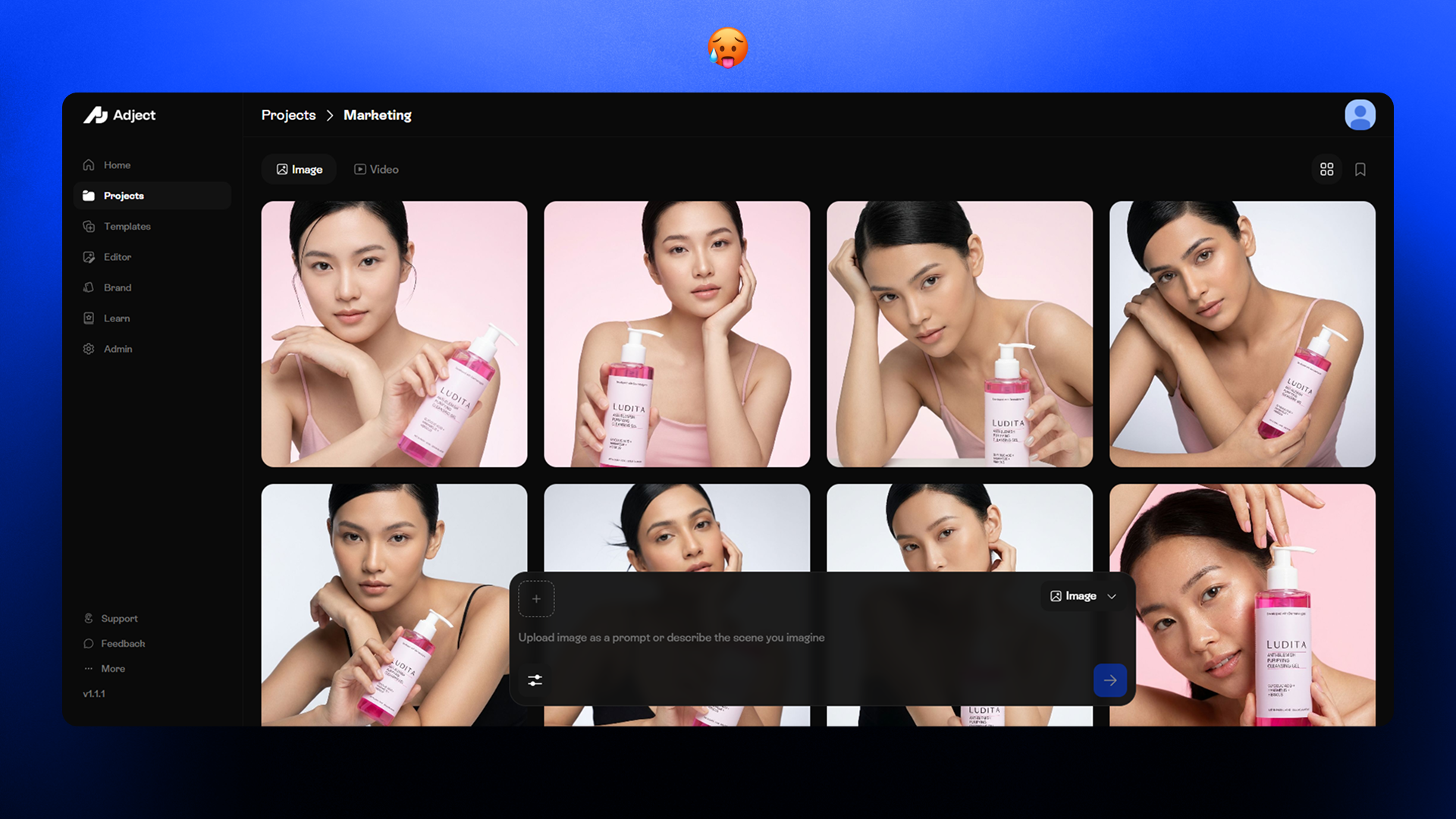
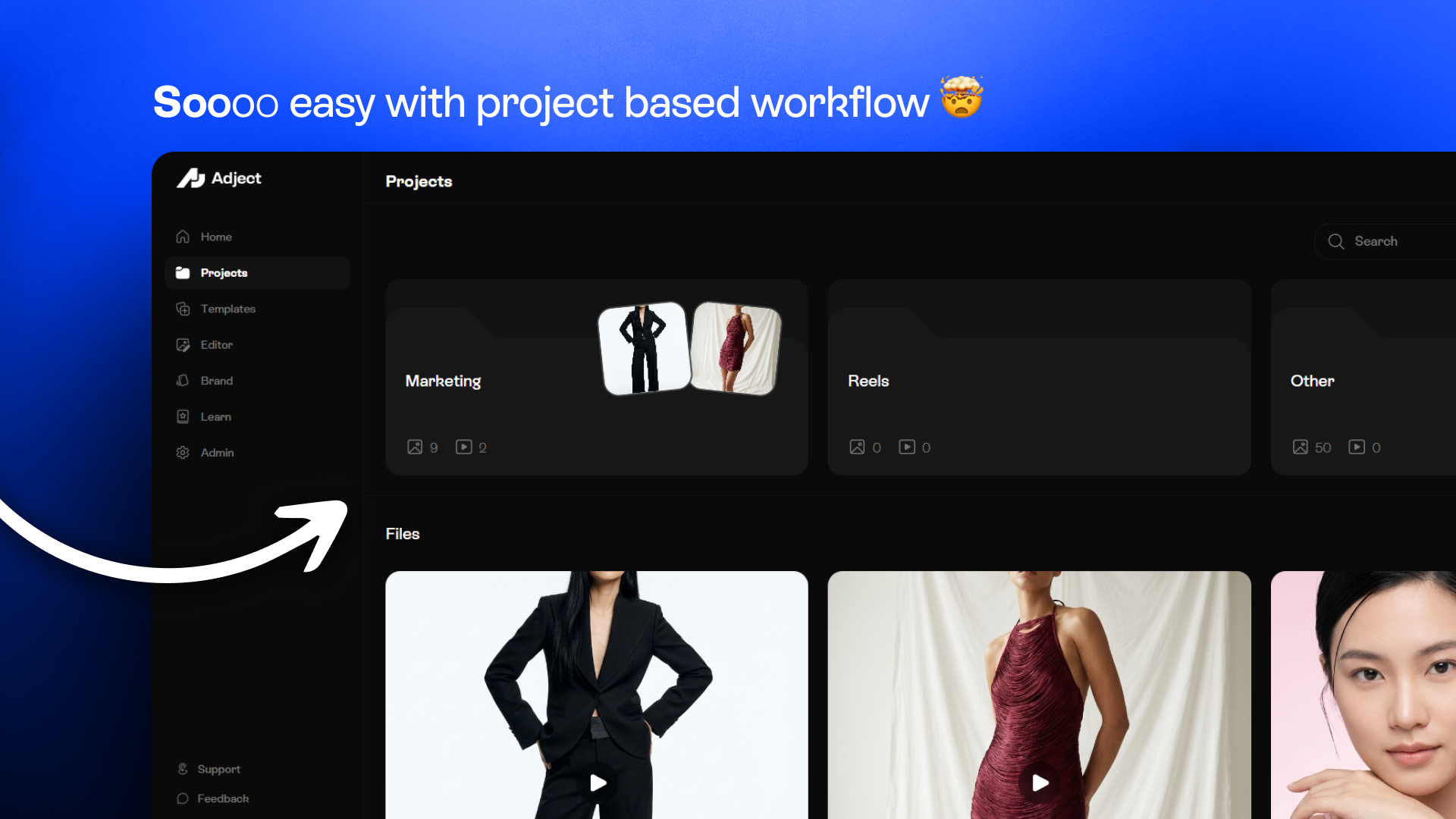
Adject 1.5 introduces a fully project-based workflow for creating hyper-realistic product images and videos. Organize generations by project, switch between image and video modes, and create visuals using image-to-image, reference-based generation, image-to-video, and frame-to-video. Built for e-commerce brands that want studio-quality visuals without studios, photographers, or complex tools.
Hey Product Hunt 👋 I’m Saljug, the co-founder of Adject. We built Adject because creating high-quality product visuals was always slow, expensive, and hard to scale, especially for small brands and online sellers. With Adject 1.5, we redesigned the entire workflow around projects, added AI video generation, and made it easier to create consistent product visuals using references or existing images. We’d love your feedback, especially from e-commerce sellers, marketers, and creators. Happy to answer any questions here!
8
回复

Hey Product Hunt! 👋
I'm Berke, one of the co-founders of Adject. Thanks to everyone supporting today’s launch!

With Adject v1.5, we’ve made product visual creation much more consistent — project-based workflow, reference-based generation, and AI video pipelines are now live.

We’re especially looking for feedback in two areas:

  1. E-commerce workflow alignment

  2. Visual consistency

We're here for anyone who wants to try it out, and I'll be around to answer any questions 🙏

5
回复

@berkeseker0104 congrats! 👏🏼👏🏼👏🏼

0
回复

This solves the 'studio quality' bottleneck perfectly!

We see this exact struggle with our e-commerce users at Dashform. This is a game changer for them.

Upvoted! Let's support each other's launches!

3
回复

@openaigpt5 Hi, thanks for it, Ethan!

Yeah, you are spot on. Adject saves money and time for sellers. Again, thanks for it!

0
回复

I actually had the idea of building something like this as well, you guys really nailed both the website and the output.

One small thing: the templates section doesn’t load for me, the loading loop keeps resetting.

Overall, this looks like a great tool. Congrats on the launch! 👏

3
回复

@mees_schiks Hi! Glad you liked that Mees

Yeah, the templates section doesn't load because the prepared templates are in draft. We will update them and make them available for users to try. You can use templates and generate perfect images in seconds without typing a single prompt.

Again, thanks for the feedback. We really appreciate it! Would like to talk more about Adject if you have more suggestions or ideas.

1
回复

A lot of tools focus on generation, fewer focus on repeatability.


Curious how you think about differentiation as this space gets more crowded?

2
回复

@shreya_chaurasia19 The key part will be able to do many things at one place, with better UI/UX

And many more things that we will bring which i can not tell here 🙌😅

0
回复

i often struggle to get high-quality lighting in my home office, but this tech makes it look like I hired a professional crew for a high-end shoot. 📸

2
回复

@new_user___3282025fa49521ad0ba0301 Thanks for your feedback Raj! Glad you liked it!

0
回复

Congrats on the launch — love this studio‑quality, AI‑first workflow for brands.

1
回复

@zeiki_yu Thanks for that! 🙌

0
回复

Love to see this. I'm curious, do you have any integration with Shopify or WooCommerce?

1
回复

@ant0ine_gt Thanks for it, Antoine! For now, no. However, fortunately, it is in our roadmap already. Stay tuned!

0
回复

How does your Commercial Use work from something that was generated by AI?
Is there any support in American law about this? Thanks.

0
回复

congratulations!!! can you provide solutions for devs build app that powered by Adject.

0
回复
#8
 cubic 2.0
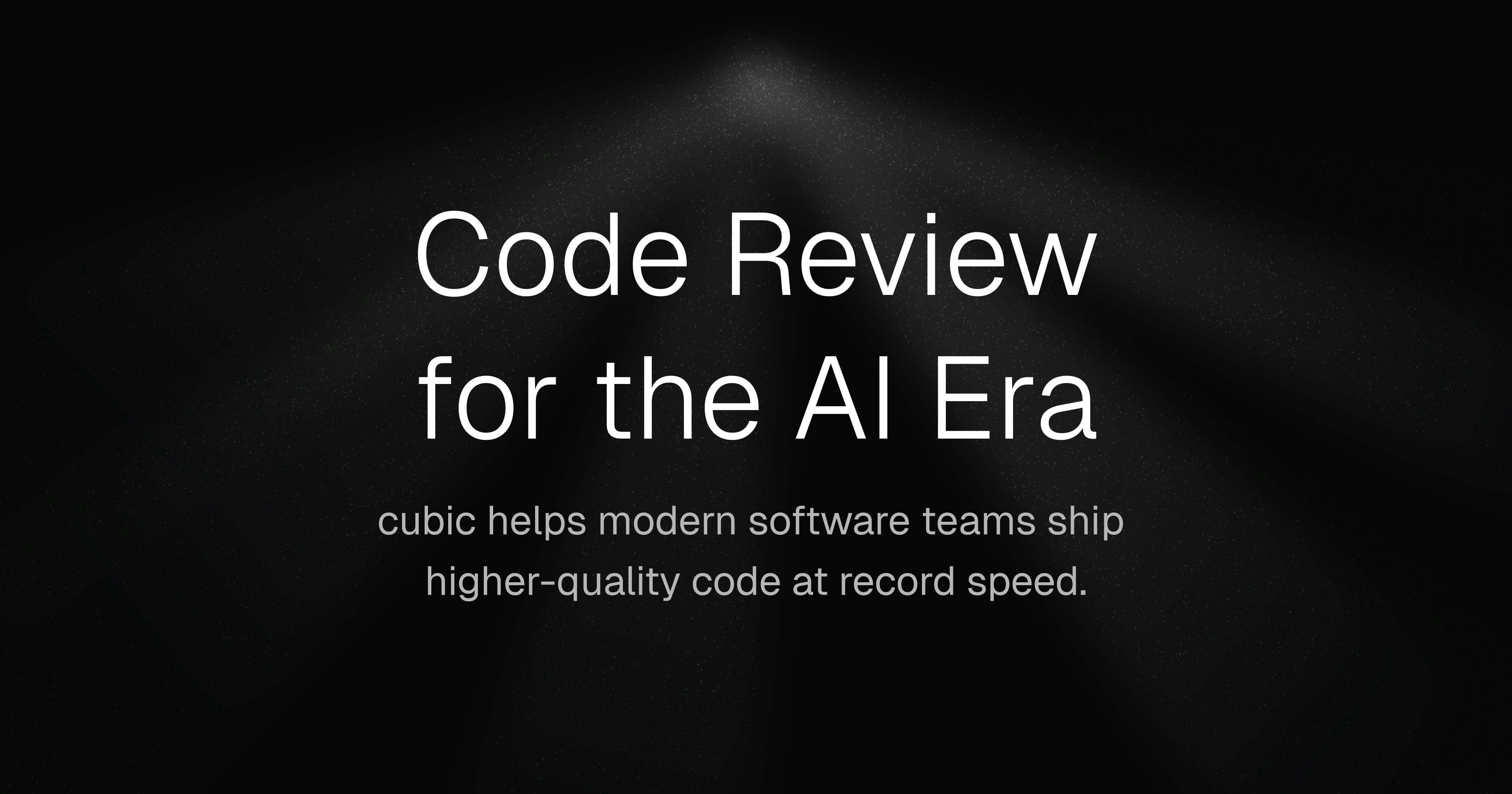
Code reviews for the AI era
124
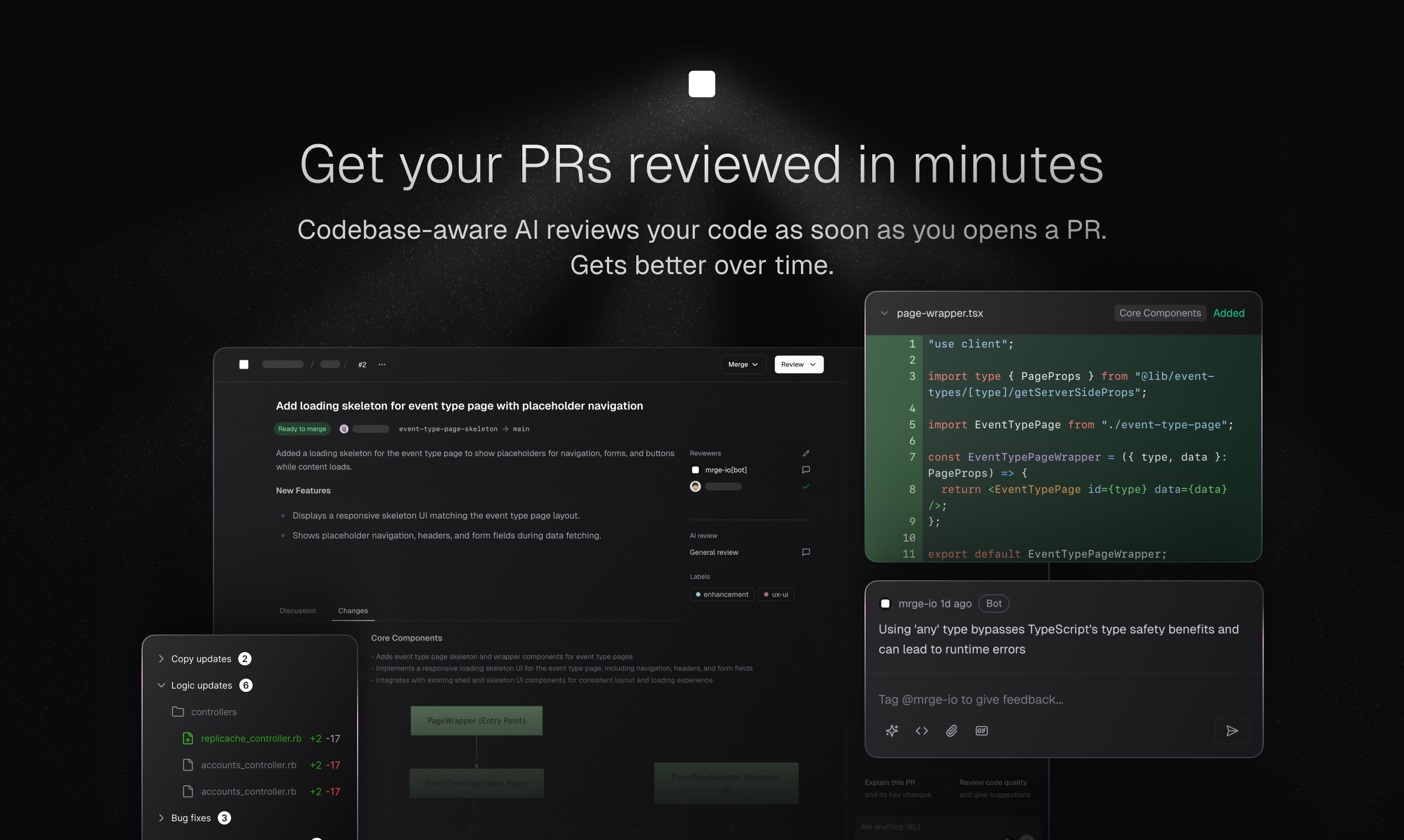
一句话介绍:Cubic 2.0是一款面向AI时代的代码审查工具,通过在真实仓库中进行实时、精准、低噪声的审查,帮助开发团队高效信任和合并AI生成的代码,解决AI编码产出可信度与审查效率的瓶颈问题。
Software Engineering Developer Tools Artificial Intelligence
AI代码审查 开发运维 代码质量 PR自动化 开发工作流 配置即代码 命令行工具 AI辅助开发 低噪声告警 团队协作
用户评论摘要:创始人强调产品解决传统AI审查工具漏报和噪声过多两大痛点。用户肯定其“工作流”定位,询问增量检查、CLI等模块的实际价值。另有用户关注产品是否能检测AI生成的“自信但错误”的逻辑幻觉,而非仅样式检查,得到肯定答复。
AI 锐评

Cubic 2.0的发布,表面上是一次引擎迭代和功能扩充,本质上是对“AI时代代码审查”这一新兴场景的重新定义。它敏锐地抓住了当前开发工作流的断层:AI生成代码的便捷性与代码合并前的可信性验证之间,存在巨大的效率鸿沟。产品从“GitHub评论机器人”升级为“审查工作流”,通过CLI、增量检查、配置即代码等周边工具嵌入开发闭环,试图将审查动作左移并常态化,这比单纯提高评论准确度更具系统性价值。

然而,其宣称的“最精准”和“低噪声”面临严峻考验。AI代码审查的核心矛盾在于,静态分析难以完全理解动态的业务逻辑意图,尤其是针对AI那种“看似合理实则错误”的幻觉。产品选择默认忽略样式问题、聚焦“严重问题”的配置取向,是一次明智的风险规避,但也将自身置于一个更棘手的战场:如何定义和捕获那些对业务影响深远、却又隐蔽的逻辑错误?这需要模型对代码上下文和领域知识有极深的理解。

其真正的护城河可能不在于单点审查的算法优势,而在于通过“cubic.yaml”和持续集成生态所构建的、可定制化的团队审查策略库。将审查规则和偏好代码化、版本化,使得团队的最佳实践得以沉淀和复用,这或许能将其从一款“更聪明的Linter”提升为“团队代码质量规范的AI执行层”。但这条路能否走通,取决于它能否在“精准度”和“可配置性”之间找到最佳平衡,避免陷入过度配置的复杂性,或成为另一个令人疲惫的告警来源。

查看原始信息
 cubic 2.0
Over the past few months, we've been completely rebuilding cubic's AI review engine. Today we're excited to announce cubic 2.0, the most accurate AI code reviewer available. cubic helps teams read, trust, and merge AI-generated code in real repos. It is optimized for accuracy and low noise, and it goes beyond PR comments with a CLI, AI docs, and PR description updates. Used by 100+ orgs including Cal.com, n8n, Granola, and Linux Foundation projects.

Hey Hunters, I’m Paul, the founder of cubic.

If you’ve tried AI code review tools before, you’ve probably seen both failure modes:

1. they miss the important stuff

2. they comment so much that you stop reading

We built cubic because review is now the bottleneck. AI made it easy to produce code. It did not make it easy to trust a big diff in a complex repo.

Over the last few months we’ve been iterating hard on the engine, and the change is big enough that we’re calling it cubic 2.0. It’s faster, more accurate, and noticeably less noisy than it was a few months ago.

The other thing we learned is that “a GitHub bot that comments on PRs” is not enough anymore. Review is a workflow, not a feature, so we built the pieces around it too:

- incremental checks on every push

- PR descriptions that stay accurate

- wiki docs that stay in sync

- `cubic.yaml` for config-as-code

- and a CLI so you can run review before you push

If you try it, I’d love blunt feedback:

- What did it catch that you actually cared about?

- What should it stop commenting on?

I’ll be here in the comments!

3
回复
Killer updates y’all. Best wishes…and gratz.
2
回复
0
回复

Framing review as a workflow, not just a PR bot, really resonates. Curious which piece ends up being most valuable in practice. The incremental checks, the CLI, or the config-as-code?

1
回复

Upvoted! We face the same struggle at Dashform—the real pain isn't syntax, but those subtle logic hallucinations that look correct at a glance.

A small question, Does Cubic specifically target those 'confident but wrong' errors beyond just style checks?

Rooting for you guys! Happy to support fellow teams pushing the boundaries of AI dev tools.

1
回复

@openaigpt5 Hey Ethan, thanks for the support.

> Does Cubic specifically target those 'confident but wrong' errors beyond just style checks?

yes! by default it's designed to not catch a lot of styling issues. You can configure it to do that by increasing the sensitivity, but our customers tend to be teams who prefer focusing on more serious issues

0
回复
#9
AirSome
The 'Aha!' moment for Airbnb reviews
109
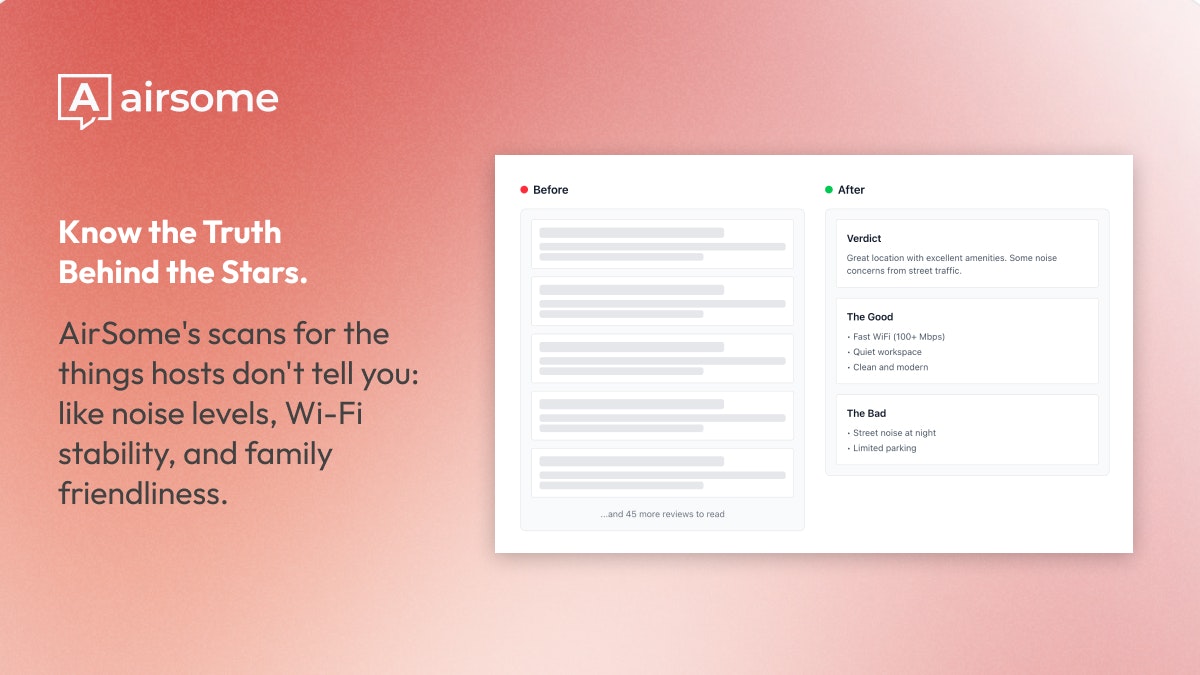
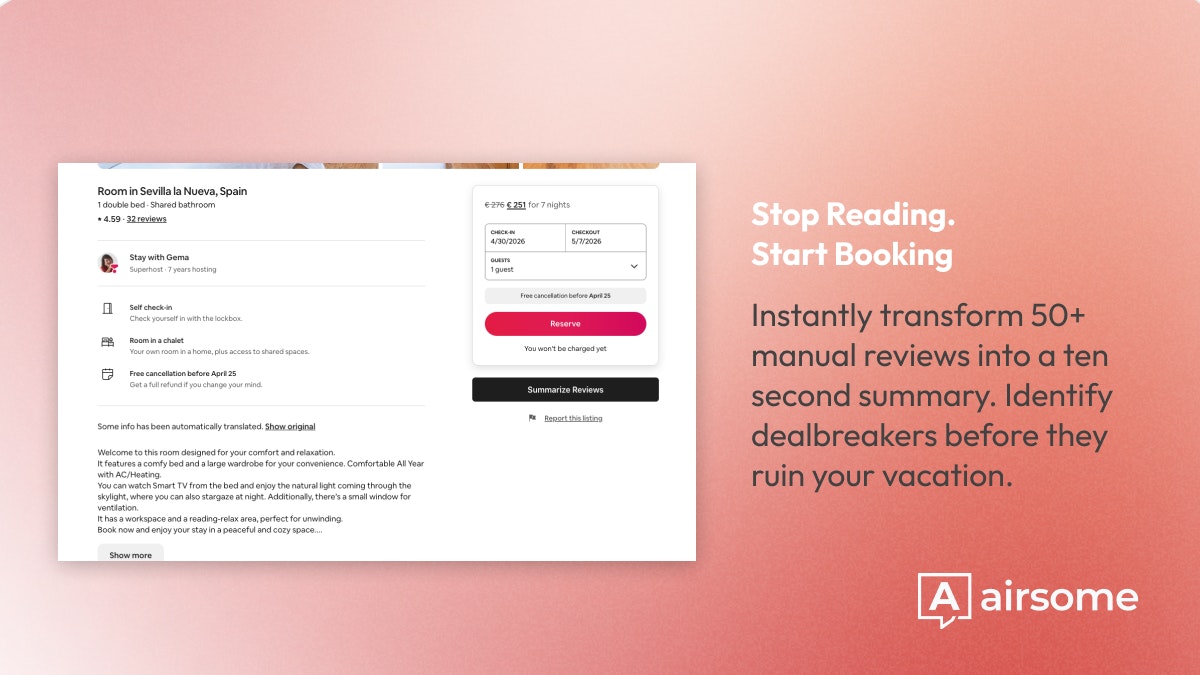
一句话介绍:一款AI驱动的Chrome扩展,能在用户浏览Airbnb房源时,几秒内自动总结评论并突出“交易破坏者”与“隐藏宝藏”,解决了用户手动逐条阅读海量评论耗时耗力的核心痛点。
SaaS Global Nomad Travel
旅行科技 AI摘要 Chrome扩展 用户评论分析 Airbnb工具 决策辅助 效率工具 住宿预订 痛点解决
用户评论摘要:用户普遍认可其解决“评论侦探”痛点的价值,并询问向Booking.com等平台的扩展计划。主要建议集中在AI摘要的准确性优化上,希望算法能更关注普遍提及的属性而非个别离群评论,并更好地处理评论随时间失效的问题。
AI 锐评

AirSome切入了一个微小但真实、高频的痛点——信息过载下的决策疲劳。它本质上是一个应用层的信息过滤器,其真正价值不在于技术有多颠覆,而在于将成熟的NLP技术精准地注入一个未被工具化的低效场景(手动阅读评论),实现了从“阅读”到“获取洞察”的范式转变。

然而,产品目前面临的核心矛盾是“摘要的准确性与代表性”。从一位房东的反馈可见,AI可能过度放大了个别负面评价,这暴露出算法在“显著性”与“普遍性”之间的权衡尚未臻完善。产品的可靠性高度依赖于对评论语境、时间衰减及文化差异(如对“噪音”的容忍度)的深度理解,这远非简单的关键词提取所能解决。若不能持续优化此点,工具可能反而会误导用户,制造新的信息偏差。

其商业模式(免费额度+潜在增值服务)和轻量的扩展形态是明智的起点,但壁垒不高。用户的扩展平台诉求既是机遇也是警示:这验证了需求的普适性,但也预示一旦Airbnb自身或更大的旅行平台内置类似功能,其生存空间将迅速被挤压。因此,其长期生存的关键在于:能否依托初期数据与用户反馈,构建起超越通用NLP模型的、垂直领域专用的评论理解与摘要生成能力,并快速形成多平台覆盖的网络效应。当前它是一款优秀的“止痛药”,但要想成为旅行规划的“维他命”,道路尚长。

查看原始信息
AirSome
AI-powered summaries of Airbnb reviews. Find dealbreakers in seconds. Stop wasting hours reading through dozens of Airbnb reviews. AirSome uses advanced AI to instantly summarize reviews and surface dealbreakers, so you can book with confidence in seconds instead of spending 15+ minutes per listing.
"Hi Product Hunt! 👋 I’m Ashwin, the creator of AirSome. My partner and I spent several hours last month reading Airbnb reviews for our trips, trying to figure out if the 'quiet street' in the description was actually next to a bustling bar. We realized every traveler does this 'Review Detective' work manually. I built AirSome to change that. It’s a Chrome extension that scans recent reviews and surfaces the 'Dealbreakers' (noise, bad Wi-Fi) and 'Hidden Gems' (best local cafe mentioned by a guest) in seconds. The Launch Special: I'm giving everyone 50 free summary credits to start. No credit card, just download and find your next perfect stay. I’d love to hear your feedback on the summary accuracy. Is this something that you'd find useful? Something that can be expanded to other platforms. Let me know!
1
回复

@ashwineaso That's useful. Did you create this extension out of your own need or you saw the gap? I am curious how did you come across this problem statement.

0
回复

Congrats on the launch — love how you turn noisy Airbnb reviews into clear signals. 🚀

1
回复

@zeiki_yu Thank you for trying it out! We are still working on improving it and adding more features that will turn it into a proper travel research tool. Would love to hear suggestions regarding what you'd find useful when you plan your next vacation.

0
回复

​I have used basic search filters on travel sites before, but they always miss the nuance that a summary tool like this catches. This is a much more advanced way to vet a host. ✈️

1
回复

@anil_yadav38 Thank you for checking it out, and glad that you feel that way. We are exploring various methods to extract value from the reviews. Do let me know what you think AirSome could help you with when you plan your next vacation

0
回复

Love the product! It feels like a much better way to find a place that actually clicks.

Just a tangential thought (might be a bit off-topic): I read some stats recently that 'shared spaces' on Airbnb are shrinking. Apparently, the average live-in host gets burnt out after about 80-100 guests. It feels like homestays are just becoming hotels these days.

1
回复

@liusally4 Thank you for the support. And I agree, while building the product, we noticed that a majority of the listings were independent spaces, and shared spaces were almost nonexistent. This might also have been because the sample size was small, and we focused mostly on European cities, where they tend to value privacy more.

0
回复

Review Detective work is a real pain. Imma try this out next time I'm travelling. Any future plans to expand on this on other platforms like Booking.com or Agoda.com ?

0
回复

I've just been through an AIRBNB strike as per my vacations, would haved loved to get this last summer when I booked my vacations

0
回复

Will be there any extension + also something for Booking.com?

0
回复

@busmark_w_nika Hopefully, yes! Once it achieves product-market fit, we will try to expand it to other platforms as well, including Booking.com

0
回复

Congratulations on the product launch! Solving the "comment fatigue" problem is of great significance. We also faced a similar "survey fatigue" issue in Dashform and have been striving to make the data collection process smoother. I'm curious about how your AI weighs these comments: Will it prioritize recent comments over earlier ones? The five-star reviews released in 2019 might become a two-star negative review in 2024. How does this "decisive factor" logic handle this temporal decay? I really hope to learn from your methods.

0
回复

@openaigpt5 The extension filters the reviews based on recency ( reviews in the past two years at most ), and priority is given to reviews with comments. Also, we try to focus the summary on more commonly mentioned attributes, even though the outliers are also mentioned

0
回复

Interesting idea! I'm both a host and a traveller and tried it on my own listing. I have 4.96 rating out of 125 reviews.

The analysis focused significantly on a single review that mentioned outside noise. That's out of 125. The apartment is in a city, and yes, noise is as with every other city.

The other "bad" thing was reviews that were not specific - well, thank you :)

Maybe some tweaking with focused on some threshold for significance would help. Otherwise, solid product - upvoted.

0
回复

@etabakov Thank you for trying it out! Yes, the extension tries to fetch relevant reviews based on recency and then summarizes based on that. But, as you mentioned, it looks like I have to continue tweaking it focus on more commonly mentioned attributes and not the outliers.

0
回复
#10
KNOA
The AI that captures your team's knowledge
100
一句话介绍:KNOA是一款通过AI引导式访谈,捕获团队隐性知识并生成结构化报告的智能体,主要解决企业内部或面向客户时,关键经验、决策背景等难以言传和沉淀的痛点。
SaaS
知识管理 AI访谈 隐性知识捕获 团队协作 文档自动化 SaaS B端工具 人工智能 报告生成 信息留存
用户评论摘要:用户肯定其解决知识传承、界面清晰等价值。主要疑问与建议集中在:如何处理专家间的矛盾信息?知识如何持续更新防过时?与Notion等工具的集成能力。此外,用户关注其与现有工具的核心差异及数据安全合规性。
AI 锐评

KNOA切入了一个真实且高价值的痛点——团队隐性知识流失。其“AI引导访谈”的模式,比被动记录工具更主动,比传统访谈更结构化,这是一个聪明的产品化切入点。然而,其面临的真正挑战并非“捕获”,而是“知识的生命周期管理”。

从评论可窥见,用户关心的本质是知识的“活性”与“权威性”。当AI将多方访谈汇成一份“干净”报告时,它是否掩盖了决策中的合理分歧?当知识源变更,其“实时页面”的更新机制是否会导致版本混乱或权威性稀释?产品目前看似聚焦于“捕获-生成”这一前端环节,但知识管理的核心战役在中后端的协同、验证、更新与集成。若仅成为又一座精美的“知识坟墓”,其长期价值有限。

此外,其商业模式隐含矛盾:面向内部团队,需深度集成至现有工作流(如Slack、Confluence);面向客户服务,则需极强的定制与呈现能力。两者对产品的要求路径不同。当前简单的导出功能,远未达到“知识中枢”的定位。

总之,KNOA展现了良好的概念验证,但必须从“访谈记录员”进化成“知识治理平台”,构建起知识的动态修正、权限与溯源体系,并深度绑定核心生产力环境,否则极易在尝鲜后遭遇留存瓶颈。其真正的对手或许不是其他访谈工具,而是那些正将类似功能内嵌的现有协作平台。

查看原始信息
KNOA
The AI agent that conducts structured interviews, captures tacit knowledge and generates actionable reports. For your internal team or your clients.
Today we’re launching KNOA on Product Hunt. We built it because the most valuable knowledge in teams is often tacit: how things really work, why decisions were made, and the “gotchas” you only learn after shipping. KNOA runs guided AI interviews to pull that knowledge out and turns it into structured docs you can share, search, and build on.
2
回复

@dario_d_acierno Is it a commercialized product?

0
回复

@dario_d_acierno Tacit knowledge is slippery. What’s the hardest thing KNOA struggles to extract well so far tradeoffs, decision rationale, or the unwritten “don’t do this” rules teams only mention in hindsight?

0
回复

Seems like a useful tool for knowledge transfer when then team members are transitioning out of the company.

2
回复

@roopreddy Indeed Roop, that was one of the initial use cases we designed for!

0
回复

What stood out to me about KNOA is how much it seems to prioritize clarity over cleverness.

In products that deal with knowledge or understanding, it’s easy to overcomplicate the interface in an attempt to look powerful. KNOA feels more intentional than that — the experience appears designed to help users stay oriented and confident, rather than constantly reminding them how much is happening under the hood.

As a first impression, the product feels calm and trustworthy, which is often what makes people come back to tools like this instead of feeling overwhelmed.

2
回复

@rexlian Thanks Rex!

0
回复

Strong concept. Tacit knowledge is where teams lose the most context, and the guided interview to structured report flow looks well designed from the screenshots.

Curious how this handles nuance at scale though, especially conflicting expert input or evolving processes. Do reports surface uncertainty and rationale, or converge into one “clean” version?

Solid execution on a real problem. Would love to see long-term reuse examples.

2
回复

Interesting take on institutional knowledge. A common issue with AI-captured docs is that they become outdated fast. Does KNOA have a mechanism to flag or archive 'stale' knowledge as the product evolves, or is the focus purely on the initial capture? The interview-style approach to documentation is a smart move

2
回复

@klara_minarikova good question Klara - wondering the same.

0
回复

@klara_minarikova The results of your interview are "live pages" You can update their content/Knowledge by Creating a new session for that content, so that it will be updated!

1
回复

This looks great. Does it also integrate with Confluence/Notion or similar knowledge bases?

1
回复

@siim_nurges Hello Siim, you can export in JSON, Markdown and HTML for now. We have export to Notion in the roadmap, very soon :)

0
回复

This is interesting, curious what problem does this solution solve that existing interview, note-taking, or research tools can’t ?

0
回复

What everything can be connected? (Like Slack communication, Confluence texts, video calls/meetings)? Do you also have SOC?

0
回复
#11
VISONA - The most powerful canvas
One canvas. Many minds. Zero context loss.
58
一句话介绍:Visona是一款集成了多角色AI代理的无限画布工具,为需要频繁进行多任务、多角色切换的个体工作者(如创始人、创作者)和团队,解决了上下文切换导致效率低下和信息孤岛的痛点。
Productivity Task Management Artificial Intelligence
无限画布 空间操作系统 AI代理 角色化AI 可视化协作 生产力工具 团队协作 知识管理 上下文管理 个人操作系统
用户评论摘要:创始人分享个人痛点引发共鸣,获高赞。用户主要询问AI代理“记忆”功能的实现细节,即画布信息更新如何同步至各AI角色。创始人回复承认该功能尚在规划中,并积极收集反馈。
AI 锐评

Visona的叙事直击现代知识工作的核心痼疾——上下文切换损耗,其提出的“空间操作系统”与“角色化AI代理”概念颇具前瞻性。产品本质上是对“画布”类工具(如Miro、Whimsical)的一次激进升级,试图从被动的协作平面,跃升为主动的、具备认知分工的智能工作界面。

其真正价值不在于“无限画布”,而在于将AI深度嵌入工作流的空间语境中。通过创建具备特定角色、记忆和知识的“Vista”代理,它承诺将人类从机械的信息搬运和脑内“重启”中解放出来,让AI成为在不同工作模式间无缝衔接的“协作者”,而非另一个需要被管理的工具。这指向了未来人机协作的一种新范式:人类负责战略与创意连接,AI代理负责基于特定上下文的执行与维护。

然而,其面临的挑战同样尖锐。首先,从演示到可靠、智能的日常使用存在巨大鸿沟,尤其是“记忆”与跨代理知识同步等核心AI功能尚在蓝图阶段。其次,将高度复杂、非结构化的思维过程可视化本身可能带来新的认知负担,存在从“信息隐藏”陷入“视觉混乱”的风险。最后,其商业模式与生态壁垒尚未显现,在巨头林立的生产力赛道,作为一个初创产品,能否快速迭代出不可替代的、稳定的AI体验,将是生存关键。

当前版本更像一个充满野心的“宣言”。它成功勾勒了一个诱人的未来,但能否将其扎实地构建为用户的“视觉指挥中心”,而非另一个加剧注意力分散的炫酷玩具,取决于其工程与AI能力能否匹配其宏大的产品哲学。

查看原始信息
VISONA - The most powerful canvas
Visona - the most powerful canvas for people and team - is a spatial operating system for your work. Instead of linear lists and buried folders, organize your world on an infinite whiteboard. Combine AI chat, notes, tasks, tables, media and docs visually. Deeply integrated with AI-powered versions of you, each with its own role, memory, and knowledge—so you can move from strategy to execution instantly.
Hey Product Hunters! 👋 I’m Thaw, the founder of Visona. I built Visona because I was drowning. As a solo founder, my day is a constant state of chaos. At 9 AM I’m an engineer fixing a bug. At 11 AM I’m a marketer trying to write copy. By 2 PM I’m a content writer. The problem wasn't the work—it was the context switching. Every time I switched roles, I felt like I had to "reboot" my brain. I tried every productivity tool out there. I tried the lists, the docs, the complex folder structures. But they all failed me because they hid things. I’d lose the thread. I needed to see the big picture, not just the next task in a list. I realized I didn't need a better list; I needed a better surface for my thoughts. So, I built Visona. Visona is an infinite canvas where everything is visible. No more folders: I put my dev sprint right next to my marketing roadmap. No more memory loss: I built "Vistas"—AI roles that are deeply integrated into the canvas. When I need to code, I talk to my Dev Vista. When I need to write, I switch to my Writer Vista. They remember the context so I don't have to. I use Visona every single day to run this company. It turned my scattered chaos into a visual command center, and it’s the only reason I haven't burned out yet. I’d love for you to try it. If you’re a founder, a creator, or just someone who feels like they’re living 10 lives at once—come take a look. I’m hanging out in the comments all day, so please roast my landing page, ask me anything, or just say hi! Let me know what you think! 🚀
22
回复

Huge congrats on the launch! This feels like where the future of collaborative work is heading. Upvoted!

How does the "memory" work across different agents? If I update a strategy note in one corner of the infinite canvas, do all my AI personas immediately "know" and adapt their execution tasks accordingly?

3
回复

@nicole_h94 Hi Nicole, thanks for such great questions.

We're currently on Alpha version and we've just implemented agents knowledge, the "memory" is not implemented yet (planned for sure). I'm still collecting feedbacks like yours to see how people want the "memory" part to be adapted to AI personas.

12
回复
#12
AIPREP: AI Video Tutor
Ask a question. Get a video. Instantly.
45
一句话介绍:AIPREP是一款AI视频导师应用,通过文本或图像提示在30秒内生成动画教学视频,旨在解决学习者在遇到疑惑时,文本答案晦涩、搜索合适视频耗时过长的即时性知识获取痛点。
Education
AI教育工具 动画视频生成 即时答疑 个性化学习 教学辅助 知识可视化 教育科技 内容创作
用户评论摘要:用户反馈积极,认可其“即时清晰”的定位与结构化知识呈现价值。主要建议/问题包括:希望解释特定技术概念(如反向传播),以及确认是否支持上传图像/图表并请求解释(开发者回复已支持该功能)。
AI 锐评

AIPREP瞄准的是教育内容供给的“最后一公里”问题——从产生疑问到获得清晰解释之间的效率断层。其真正价值不在于视频的“生成”,而在于“即时”与“针对性”的重新定义:它将传统上依赖预先录制、海量搜索的视频学习模式,转变为按需定制、动态生成的知识服务。

产品强调“步骤动画”而非“电影质感”,这看似是技术取舍,实则是抓住了教育内容的核心:认知过程的可视化与逻辑拆解。这使其与追求娱乐性的通用AI视频工具产生了本质区隔。然而,其面临的深层挑战也由此浮现:首先,教育视频的“清晰”与“准确”高度依赖背后知识图谱的严谨性与教学逻辑的合理性,AI目前能否在跨领域复杂概念上稳定交付值得警惕;其次,“30秒生成”的定位可能将用户期待引向简单答疑,但真正的学习常需系统性与上下文连贯,这与工具的“瞬时、碎片化”输出存在潜在矛盾。

从评论看,用户已开始测试其边界(如请求解释反向传播),这恰恰是产品的试金石。若其能可靠处理此类复杂、抽象主题,则可能从“答疑助手”升级为“概念构建工具”;若不能,则可能被局限在相对浅层的知识科普场景。此外,与图像解释功能的结合,显示了其向多模态互动学习发展的潜力,但如何保证对图表、公式的解读不失真,是另一个技术信任度关卡。

总体而言,AIPREP展现了一个颇具前景的方向:将AI的生成能力约束在“教学效用”的框架内,尝试打造一个专注、高效的认知接口。其成功与否,将不取决于视频生成的炫技程度,而取决于团队对教育本质的理解深度,以及在AI可靠性、知识准确性上所能建立的护城河。在AI教育工具泛滥的当下,避免成为又一个华而不实的演示,坚持在垂直场景做深做透,是其生存与进化的关键。

查看原始信息
AIPREP: AI Video Tutor
Generate animated educational videos in 30 seconds from any text prompt or image. Try free now!
Hey Folks👋 We built AIPREP after spending years teaching students and realizing that most learning tools fail at the exact moment a student has a doubt. Text answers are fast but confusing, and searching for the “right” video often takes longer than studying itself. We initially experimented with static visuals, but users clearly learned better when explanations moved and unfolded step by step. That pushed us to build instant, utility-focused videos instead of cinematic clips. Every video is generated specifically for one question, with the goal of clarity, not polish. We’d love your feedback. What’s one topic you’d want explained as a video?
12
回复

Outstanding. While YouTube provides learning content in an unstructured way, this tool enables me to design a fully structured course on my own. It’s immensely valuable and stands out as one of the most useful AI applications I’ve come across. Congrats on the launch!

0
回复

Love this idea — the “instant clarity” angle is spot on. The focus on step-by-step motion over cinematic polish makes a lot of sense for learning.

One topic I’d want as a video: “how backpropagation works” (with a tiny numeric example).
Curious: do you support uploading an image/diagram and asking “explain this” as well?

0
回复

@hijacey Thanks You Can try..!! Asking Many question We already have feature with uploading an image/diagram.

0
回复
#13
HuHu AI Studio Team Version
Enterprise-grade AI studio for bulk fashion content creation
39
一句话介绍:一款面向服装时尚企业的企业级AI内容生产平台,通过批量AI试穿、AI模特生成、视频制作等功能,在商品上架、营销推广等场景下,解决了传统摄影成本高、周期长、难以规模化生产的核心痛点。
Fashion Artificial Intelligence E-Commerce
企业级AI内容生成 时尚科技 批量AI试穿 AI模特生成 营销视频生成 服装电商工具 团队协作平台 视觉资产生产 AI设计工作室 生产流程管理
用户评论摘要:用户反馈主要肯定其界面直观、功能全面且工作流设计贴合团队生产需求。核心建议聚焦于虚拟试穿的质感真实性(如面料纹理),这直接关系到能否替代传统摄影预算。创始人积极回应,强调正为拥有海量SKU的企业优化批量处理能力。
AI 锐评

HuHu AI Studio Team Version 的野心,远不止于提供又一个AI图像生成工具。它瞄准的是时尚行业最沉重、最昂贵的传统环节——摄影棚。其真正价值在于试图将“视觉内容生产”从项目制的艺术创作,重构为可管理、可批量的工业流水线。

产品设计的“企业级”思路清晰可见:不仅提供从图像到视频的生成能力,更集成了模型资产管理、团队任务协同等模块。这暴露了其核心客户并非个体设计师,而是拥有庞杂SKU体系、受困于“时间与金钱”双重压榨的品牌与制造商。那位用户“替代80%摄影预算”的评论,精准命中了产品的价值主张——成本与效率革命。

然而,其最大的挑战与天花板也在于此。时尚行业的“质感”壁垒极高,AI目前难以稳定呈现面料的垂坠感、光泽度等微妙物理特性。若“真实感”无法达到商业级标准,工具便只能停留于营销概念图或辅助环节,难以触及核心的电商产品图替代。此外,将如此复杂的功能整合进一个平台,如何保证每项输出的稳定性与可控性,避免成为“功能齐全但样样不精”的缝合怪,是工程与算法上的严峻考验。

本质上,这是一场对传统生产关系的数字化突袭。成功与否,不取决于AI技术的炫酷程度,而取决于其输出结果的商业可靠性、以及能否无缝嵌入并优化现有供应链流程。它卖的不仅是软件,更是一种“按需、快速、低成本”生成高质量视觉资产的新生产力范式。这条路很长,但方向确实指向了行业的真实痛点。

查看原始信息
HuHu AI Studio Team Version
Enterprise-grade platform designed for apparel and fashion businesses to produce product listing images, model photos, and marketing visuals at scale. Built for brands, manufacturers, and large content teams, it delivers: • ⚙️ Bulk Try-On & large-scale asset generation • 🧍‍♀️ AI Model Generation (I2I, Face Gen, Layering, Multi-pose) • 🎬 Video Generation for campaigns & social media • 🖼️ Editing & Enhancement Tools • 🧑‍🤝‍🧑 Team / Program / Task Management
Hi everyone! 👋 I’m Xuchen, one of the founders of HuHu AI Studio. We built HuHu AI Studio because fashion brands and manufacturers struggle with an outdated, expensive, and slow visual production workflow. Traditional photoshoots take weeks, cost thousands, and are impossible to scale across large SKU catalogs. With HuHu, our goal is simple: 👉 Enable enterprises to produce product photos, model images, and marketing visuals at true scale — reliably, consistently, and with full creative control. Over the past year, we’ve worked closely with apparel teams to design an end-to-end system that combines: • Bulk AI Try-On • Multi-type AI Model Generation (I2I / Face / Attribute / Layering / Multipose) • Video Generation • Editing & Enhancement • Model & Asset Management • Team / Program / Task workflows All in one enterprise-ready platform. HuHu AI Studio isn’t just another AI tool — it’s a full production engine built for real business operations, high-volume teams, and demanding quality standards. We would absolutely love your feedback. If you’re in fashion, e-commerce, or marketing — please let us know what you’d like to see next. We’re building this for you. ❤️ Thanks for checking out HuHu AI Studio! — Xuchen
5
回复

Just tried HuHu AI and it's incredibly intuitive! The interface is sleek and user-friendly. Great job team!​

2
回复

@shirley_mou Thank you Shirley. Love to hear more feedback!

0
回复

Congrats on the launch, Xuchen. Launching and iterating is no small feat, especially in a space as operationally complex as fashion production.

I’ve heard some solid feedback around the breadth of features and how thoughtfully the workflows are put together. It feels less like more like something teams can actually run production on.

Would definitely recommend folks in fashion or e-commerce give it a try and see how it fits their pipeline.

1
回复

@shreya_chaurasia19 Thank you Shreya! We are working on making the whole system more and more powerful for companies who have large volume of SKUs and need to process them in bulk. Love to hear more feedback from whoever finds it helpful!

0
回复

Congratulations on the launch 🎉 🎉 !!

0
回复

Traditional photoshoots are the biggest bottleneck for scaling a fashion brand. By the time we book models, rent a studio, and edit the photos, the trend is already over. I am looking at HuHu AI as a way to drastically cut down that "time-to-market." If the Virtual Try-on quality is realistic enough to show fabric texture properly, this could replace 80% of our catalog photography budget.

0
回复
#14
Map Your Voyage
Plan trips from Instagram reels in minutes, not weeks
38
一句话介绍:一款通过关联Instagram账户、自动从用户收藏的旅行短视频中提取地点信息,并一键生成按国家归类的旅行心愿单和每日行程规划的工具,解决了旅行者从海量碎片化灵感中手动整理、规划行程耗时费力的痛点。
Productivity Instagram Travel
旅行规划 行程生成 Instagram整合 灵感管理 效率工具 地点提取 短视频应用 旅行科技 自动化工具
用户评论摘要:创始人分享产品源于个人真实痛点,获得支持。有用户分享成功用于台湾行程规划,验证了核心流程的有效性。同时,有评论指出其目标用户可能局限于习惯在Instagram收藏旅行内容的群体,暗示了用户范围的可能限制。
AI 锐评

Map Your Voyage精准地切入了一个新兴的、由社交媒体行为催生的需求缝隙:将“种草”与“拔草”之间的鸿沟工具化。它的真正价值不在于技术上的高深(地点识别技术已相对成熟),而在于对用户行为流的深刻洞察和流程再造。

产品将“收藏-发现-记录-规划”这一漫长且断裂的用户旅程,压缩为“收藏-授权-生成”的极简闭环。它聪明地避开了与谷歌旅行、TripIt等传统行程管理工具的正面竞争,转而将自己定位为“社交媒体灵感漏斗”,做上游的聚合与预处理工作。这一定位使其具备了成为旅行灵感垂直领域“数据网关”的潜力。

然而,其商业模式和增长天花板也异常清晰。产品重度依赖单一平台(Instagram)的生态与用户行为,这构成了巨大的风险。一旦平台API策略变更,或内部推出类似功能,其核心价值将瞬间瓦解。此外,其目标用户画像非常具体:既是Instagram深度用户,又有强烈的旅行规划需求。这个群体规模有多大,以及他们是否愿意为这种自动化服务付费,是存疑的。

从评论看,产品已能完成“从灵感到行程”的最小闭环,证明了可行性。但长远来看,它必须思考如何从“Instagram收藏夹的附属品”,进化为一个独立的、具有网络效应的旅行规划平台。例如,将用户生成的行程社交化,或基于地点数据构建更丰富的商业生态。否则,它可能永远只是一个解决特定痒点的精巧工具,难以成长为一家具有持久影响力的公司。

查看原始信息
Map Your Voyage
Have thousands of saved Instagram travel reels you can't find when trip planning? Rewatching to extract locations & build daywise itineraries is exhausting—that's why we built Map Your Voyage. Verify your IG account & DM us favorite travel content. We detect locations, add to country-specific bucket lists. Convert to daywise itineraries when ready.

Hey Hunters! 👋

I'm Shivam, and I left my full-time job as a Software Engineer to build Map Your Voyage.

The idea came from my own frustration: I'd saved over 12,000 travel reels in my Instagram bookmarks. But when planning a Japan trip, digging through thousands to find Japan-specific ones—then rewatching, noting locations, and building a day-wise itinerary—was exhausting. That's why we created Map Your Voyage.

Verify your Instagram, DM us your travel reels, and we auto-extract locations, organize them into country bucket lists, and let you build day-wise itineraries effortlessly.

Looking forward to the valuable feedback of the community! 🚀

14
回复

@shivam__saxena Congrats! Big travel fan here, but I rarely bookmark videos on IG, so I might not be the target audience for this lol.

1
回复

@shivam__saxena Upvoting to support your project. Good luck!

0
回复

We recently used this to plan our recent taiwan trip. I put all the instagram reels (that my wife kept sending me for months) into this product and voila, we had a pretty good itinerary in place!

1
回复

@binny_arora1 thanks for sharing! :)

0
回复
#15
Surfn AI
Build beautiful AI agent pages from your content in minutes
31
一句话介绍:Surfn AI 让用户无需代码即可在5分钟内,将现有内容转化为品牌化、可对话的AI智能体页面,嵌入营销漏斗各环节,通过实时互动解答、引导和转化,解决潜在客户因无法即时获得所需信息而流失的痛点。
Artificial Intelligence No-Code Marketing automation
无代码开发 AI智能体 营销转化 对话式页面 潜在客户培育 数字化身 交互式内容 销售赋能 链接生成器 漏斗优化
用户评论摘要:用户肯定其创新性和易用性,认为其是传统链接页面的现代升级。主要反馈包括:产品定位与竞品(Lovable/Replit)的区分需澄清;产品导航和界面引导存在困惑点,可能造成用户流失;期待更多集成(如Notion、CRM)及语音功能;认可其在整合客服、预约、内容展示方面的价值。
AI 锐评

Surfn AI 捕捉到了一个精准且被低估的缝隙市场:将AI智能体从“网站附属客服”的角色,前置并重塑为可主动分发、独立承载的“交互式着陆点”。其真正价值不在于又一个聊天机器人构建器,而在于试图成为营销漏斗中的“动态中间件”。

产品逻辑犀利地指向了现代营销的沉默损耗区——那些点击了链接、打开了邮件却因等待或信息不匹配而悄然流失的注意力。通过一个可嵌入任何渠道的对话式页面,它将静态的“传递信息”转变为动态的“探测意图并响应”,在用户放弃的边缘进行即时拦截和引导。这比单纯的销售或支持机器人更具战略意义,因为它直接关联到转化率这个核心商业指标。

然而,其面临的挑战同样清晰。首先,市场教育成本高,需要让用户理解这与“网页小挂件”的本质不同。其次,功能边界容易模糊,评论中与“无代码网站建设工具”的对比疑问即是体现,必须坚守“对话式交互触点”的定位,避免沦为另一个页面编辑器。最后,其长期壁垒将取决于集成深度与数据流转能力。仅生成一个智能页面不够,如何将其收集的意向、完成的预约无缝接入用户的CRM、邮件系统等运营主干道,才是决定其工具属性还是平台属性的关键。

当前版本凭借无代码和快速生成已获得入场券,但若要真正占领“营销漏斗AI化”这个心智,必须在集成生态、个性化深度及数据分析层面构筑护城河。否则,它很可能只是一个体验良好的“时尚单品”,而非不可或缺的基础设施。

查看原始信息
Surfn AI
Surfn lets you build conversational AI Pages—beautiful, on-brand AI agent pages you can share anywhere. Use them as interactive lead magnets, digital twins, qualifying & booking agents, AI coaches, course companions, and more. Your AI educates, qualifies, and takes action in real time—booking calls, capturing leads, selling products, or guiding the next step. Share as a link, QR or embed across your site, newsletter, DMs, emails and more. Create your AI Page in under 5 minutes. No code needed

Hey Product Hunt community! 👋

I’m Pali, co-founder of Surfn.

We built Surfn because we kept seeing the same problem everywhere:

People open your emails, visit your site, click your links, scan your QR codes… but the moment they can’t get the answers, clarity, proof, or guidance they need fast enough… they bounce.

AI can solve this. But most AI tools/agents only focus on support or sales. Almost none address the friction inside marketing funnels, where most leads quietly drop off and real revenue is lost.

So my co-founder Tony and I built conversational AI Pages... built specifically to help you drive more conversions and engagement across your marketing funnels.

AI Pages are beautiful, on-brand AI agent pages you can share as a link, QR, or embed anywhere your audience interacts:

  • emails

  • link-in-bios

  • DMs

  • lead magnets

  • landing pages

  • QR codes

  • newsletters

  • nurture flows

  • your website

  • and more!

Wherever someone lands, your AI meets them in the moment... answering instantly, removing doubt, qualifying intent, and guiding the next step.

And it doesn’t only do Q&A.
It educates, personalizes, qualifies, books, sells, and converts.

Each AI Page is powered by an AI agent trained on your site, content, FAQs, and more... so visitors get answers instantly, see proof, watch videos, and move forward without friction.

Most people build their first AI Page in under five minutes. No code needed.

AI Pages can work as interactive lead magnets, AI digital twins, booking flows, product explainers, course companions, and more… increasing engagement and conversions anywhere you share them.

We’d love your feedback, questions, or ideas... and thanks for checking out Surfn 🙏

Create yours free → https://surfn.ai

🌊 Happy surf’n!

4
回复

@palirenjen This could work. I remember i was using About.me and Cardd - this actually can be a better and more modern alternative.

1
回复

Is it a competition to Lovable or Replit?

3
回复

@busmark_w_nika Good question, Nika. Surfn is more of a complement than a competitor. No-code builders can use Surfn to add a conversational AI agent to their Lovable or Replit apps to boost engagement and conversions. Anyone can create an on-brand AI agent in Surfn without any code, train it on their content, customize the look and feel, optionally assign tasks to drive conversions (e.g., bookings, leads, sales, engagement etc.), and share it as an AI landing page (via a simple link or QR) or embed it anywhere on a site or app using multiple embed options. It works well for both creators and businesses.

1
回复


The concept of this product is highly innovative! Integrating AI agents into marketing funnels is an excellent solution. I particularly love that it can be shared via links, QR codes, or embeds, making its use cases incredibly flexible. The no-code approach also lowers the barrier to entry. Looking forward to seeing more integration features!

2
回复

@zeiki_yu Thanks so much, Zeiki 🙏 - really appreciate you taking the time to check it out and share feedback. We’re still learning from how people use Surfn across marketing funnels. Flexibility and low friction are big goals for us. More integrations are definitely coming soon.

0
回复

Tried it. Liked it. But I think the navigation can be better. As a user, its hard to understand how do I navigate because as soon as you add a link, it says "limit reached". Now, I didn't I can still click on "create page" as it was on the top instead of bottom (which usually shows the next step). Most users will drop at this point. But I like the customization options there. Good one.

2
回复

@lakshya_singh Thanks so much Lakshya for taking the time to try out Surfn and share this - super helpful feedback. You’re right, that part is confusing. Our dev is already working on improving the agent training section to make the next step much clearer. Really appreciate you calling this out 🙏

0
回复

@lakshya_singh good call out... I've just pushed an update to fix that issue with text that informs the user that they can still create/retrain their agent without upgrading. thanks for that helpful feedback!

0
回复

Been duct-taping chatbots + Calendly + Notion FAQs for ages. If Surfn can handle Q&A, show proofs, and book in one link, that’s actually useful. Curious how it handles mixed content (blog, PDFs, Looms). Might toss it on my link-in-bio this week.

1
回复
@alexcloudstar Exactly the pain we’re solving. Yes... Surfn handles mixed content (blogs, PDFs, FAQs, videos like Loom/YouTube). You can show links, products, and embed content (videos, forms, etc.) so the AI surfaces it at the right moment in the conversation. If you try it in your link-in-bio, I’d love to hear your feedback.
0
回复

Congratulations on the launch! Tried the platform out, created a page, and I must say the whole onboarding and execution is smooth and quick. With the emergence of so many chat bots and AI agents that 'live' on a webpage, how do you plan to scale this especially as you're positioning surfn as 'AI pages'? Do you also plan to add voice capabilities to the agents built using the platform?

1
回复

@mustassim Thanks so much for trying Surfn and for the thoughtful questions, Syed... really appreciate you taking the time. Glad to hear the onboarding felt smooth.

Our approach is a bit different from most “website chatbots.” We’re positioning Surfn as AI pages that sit inside marketing funnels... not just on websites, but across links, QR codes, emails, DMs, and other touchpoints where people already engage. The focus is less on “having a bot” and more on turning static content into something interactive that can educate, qualify, and move users to the next step.

And, yes, we definitely plan to add voice capabilities in the coming weeks.

Really appreciate the feedback 🙏

0
回复

Love this idea of branded AI agent pages. It's great to see that you built in qualification capabilities so the AI can conversationally qualify leads and book meetings. I just created an AI page and it works really well. I'm planning to use the Google Sheets integration. Are you planning to add more integrations?

1
回复

@avelkm Thanks so much, Avel... really appreciate you trying it out and sharing feedback.

Yes, we’re actively working on adding more integrations over the coming weeks. Notion is high on the list, along with CRM systems, email marketing tools, webhooks, and a few others. We started with Google Sheets for auto-syncing captured leads automatically, but expanding integrations is a big focus for us.

0
回复
#16
aOCR
API for converting complex documents into structured data
29
一句话介绍:aOCR是一款通过结合先进OCR与视觉语言模型,将复杂PDF、图像等非结构化文档转化为高精度结构化数据的API,主要解决金融科技、物流等行业在处理混乱文档格式时,难以高效提取机器可操作数据的痛点。
API SaaS Artificial Intelligence
文档智能 OCR API 结构化数据提取 表格处理 视觉语言模型 自动化流程 金融科技 物流管理 可扩展架构 无代码分析
用户评论摘要:用户反馈呈现两极:开发者积极互动并肯定产品价值,但存在实际使用问题,如处理长PDF时结果无法加载、开发环境集成方式不明确。一条评论指出产品在多数复杂文档上有效,印证了其核心主张。
AI 锐评

aOCR的叙事巧妙地踩在了当前企业数字化转型的痛点上——将“文档理解”而非单纯“文本识别”作为价值核心,这使其与传统OCR工具形成了理论上的代差。其宣称的多轮处理管道融合视觉语言模型,直指嵌套表格、无边框表格等传统解析器的噩梦场景,这在技术定位上是精准且前沿的。

然而,Product Hunt上有限的早期反馈已暴露出理想与现实的裂痕。用户遭遇的“结果无法加载”问题,虽可能是早期服务不稳定,但也尖锐地指向了“生产级规模与可靠性”这一核心承诺的兑现挑战。处理倒置PDF的“趣味挑战”,恰恰揭示了真实世界文档的混乱程度,这对其模型的鲁棒性提出了超出演示场景的考验。

其真正的价值潜力在于成为“数据管道中的智能中间件”。若能如其所述,以低于10秒的延迟可靠地处理海量复杂变体文档,它将不再是一个工具,而是一个能够显著降低运营成本、解锁非结构化数据价值的基建层。“与数据对话”的无代码提取功能是降低使用门槛的正确方向,但其成功完全依赖于底层提取的准确性。

总体而言,aOCR构想了一个诱人的未来,但其在技术深水区的工程实现、对不同垂直领域复杂性的深度适配,以及将实验室级精度转化为稳定、可扩展的云服务能力,才是决定它能否从又一个“聪明的OCR API”蜕变为行业标准的关键。目前,它展示了清晰的愿景,但尚需用更广泛、更稳定的成功案例来证明自己。

查看原始信息
aOCR
a_OCR converts unstructured documents like PDFs and images into accurate, structured data ready for any workflow. Our multi-pass document processing pipeline combines advanced OCR with vision-language models to deliver state-of-the-art accuracy, reliability, and scalability at production scale.

Hello Hunters! 😻

We are thrilled to launch a_OCR — the Intelligence Layer for your documents.

We built a_OCR because traditional OCR tools stop at "reading text." We wanted a platform that could actually understand it.

Whether you are in Fintech processing bank statements or Logistics handling messy shipping manifests, a_OCR turns unstructured chaos into machine-actionable data.

Why we are different:

🚀 Speed & Scale: <10 second processing time with auto-scaling infrastructure.

🧩 Advanced Table Processing: We handle nested, borderless, and complex tables that break other parsers.

💬 Chat with your Data: Use our Smart Extraction to extract insights without writing code.

We’d love your feedback as we continue to build the future of document intelligence.
You can try it out live at https://aocr.in

AMA below — we’re here all day!

7
回复

@shubham288885 congratulations team aparatus.

0
回复

Trying it now on a 10 page PDF - fun fact, the PDF is upside down for some reason lol I saw on reddit you were looking for a challenge and that might be it. Results and schema never loaded. :( would love to use it though EDIT i fixed my PDF but schema still never loaded

0
回复

how can i use it in development env?

0
回复

I think everyone thinks that OCR is solved and many people believe it until complex documents emerge. I used aOCR it worked on most documents.

0
回复
#17
Alpine
All your work in one place: docs, tasks, chat, AI and more
29
一句话介绍:Alpine是一款将文档、任务、聊天、论坛与AI智能体深度整合的一体化工作平台,旨在解决知识工作者因工具碎片化而导致的频繁切换、信息过载与效率低下的核心痛点。
Productivity Task Management Artificial Intelligence
一体化工作平台 生产力工具 企业协作 AI智能体 信息聚合 算法订阅 文档管理 任务管理 团队聊天 统一搜索
用户评论摘要:用户主要反馈对“一体化”解决工具碎片化问题抱有极高期待,但也担忧功能集成可能导致界面杂乱。创始人回应了设计可扩展性及算法订阅冷启动问题。用户普遍肯定其理念,并关注实际使用中的信息过滤效果。
AI 锐评

Alpine的野心并非简单堆砌功能,而是试图重构数字时代的工作“操作系统”。其真正价值不在于“又一个Notion或Slack”,而在于通过原生、统一的数据层,为AI智能体提供完整的上下文,这可能是其颠覆性的护城河。当前市面上的AI助手常因数据孤岛而显得“愚蠢”,Alpine从架构上试图解决此问题。

然而,其面临三重严峻挑战:首先是“一体化悖论”,即功能越全,对单个功能的深度与专业性的妥协风险越大,能否满足各职能的进阶需求存疑。其次是网络效应与迁移成本,企业协作工具的成功极度依赖团队集体行动,说服团队离开已深度嵌入的Slack、Notion等工具将是一场硬仗。其“逐步迁移”的策略是明智的务实之举。最后,算法订阅的“防信息过载”承诺是一把双刃剑,在职场语境下,信息的透明与可控优先级可能高于个性化过滤,如何平衡“推荐”与“全面”将考验其智慧。

创始人团队拥有Meta、Asana等公司的内部工具经验,这既是优势也隐含风险——他们打造的是自己理想中的“Meta内部工具升级版”,但广大中小企业的工作流与人才密度能否与之匹配?产品目前依赖创始人的“痛苦驱动”和细节打磨,但长期成功将取决于其能否形成一个活跃的、基于统一上下文的工作流生态,而不仅仅是几个好用的工具集合。其250美元的终身定价策略,更像是一种寻求早期忠实支持者与现金流的社区建设,而非可持续的商业模式。总而言之,Alpine构想前瞻,但通往“未来工作”之路注定崎岖。

查看原始信息
Alpine
Alpine brings docs, tasks, and chat together in one app. See updates from across your company with an algorithmic feed. Work alongside AI agents that have complete context of everything you’re doing. Use alongside your current tools or replace them entirely.
Hey Product Hunt! I'm Caleb. I've spent the last 3 years building Alpine with a small team. Alpine is docs, tasks, forum, chat, AI, and a personalized feed in one app. Everything is connected. No integrations to configure, no stitching together apps from different companies. Why did I forgo a cushy software engineer salary for 3 years to build this? Because I was fed up with all the time I was spending in so called “productivity” tools distracting me from the work I love: building excellent software. After working in both big tech (Meta) and startups (Airtable) I’d seen two wildly different approaches to productivity tools. Airtable uses what I affectionately call the “Slack Stack” (Slack + some docs tool + some tasks tool). Meta built all their productivity tools in house. You’d think Meta’s internal tools would be worse than the Slack Stack (given the difference in staffing), but I never stopped yearning for Meta’s internal tools! While each individual tool at Meta was behind the rest of the industry they worked nicely together and that made all the difference. So I spent 3 years building a productivity suite 🙃 It was all worth it because now I get to use Alpine every day. It’s fast, it’s filled with delightful little corners, I don’t have to keep switching apps, I’m not barraged with noise, I’m happy. What we built: • Docs that are fast and simple, not a database you have to configure • Tasks that work like bullet points, hit enter for a new task, tab for subtask • Forum for async discussions where every post is a thread (no more “can you move this to a thread?”) • Chat for when you need real-time conversations (and it’s the easiest way to talk with your agents) • A personalized feed to help you stay on top of everything happening at your company • Search that uses AI and NLP to find anything in a couple keystrokes • An inbox that actively sorts the signal from the noise • Agents to help you with anything: ask for summaries, help with writing, and more Your docs know about your tasks. We have your social graph so we can recommend stuff based on who you interact with most. When you ask AI for help, it has full context because everything lives in one place. That last part matters a lot right now. AI agents are starting to enter the workplace, but they’re useless when your work is scattered across 7 apps. Alpine gives them the unified context they need to improve your workflow, not slow you down. We’re a team of 4. I'm joined by Ian (ex-Amazon, ex-Asana), Rachel (ex-Rover), and Josh (ex-Automattic, ex-Gatsby, ex-Duo Security). We’ve spent 3 years obsessing over every detail and we’re just getting started. Would love to hear what you think. We’re offering Alpine free for now because we want feedback (feedback@alpine.inc)! If you want to join us in our mission to build the future of work we have a $250 lifetime access plan. You can lock in your price today, never pay us another dollar, and get higher AI limits + storage limits. We can’t do this without your support. The best part: you don’t have to switch from your current tools all at once. Start with docs and tasks, keep Slack for now. Use as much or as little as you need. Try it at https://alpine.inc
13
回复

@calebmer Congrats! Excited to check this out!

0
回复

I feel like I spend half my day just switching tabs between Slack, Notion, and Linear. The promise of having "all work in one place" is the holy grail of productivity, but it is usually hard to pull off without the UI becoming cluttered. Alpine looks surprisingly clean for how much functionality is packed in. I am especially interested in how the "algorithmic feed" filters noise, because catching up on company updates across different channels is currently a nightmare.

0
回复

@pharmacist9527

is the holy grail of productivity, but it is usually hard to pull off without the UI becoming cluttered

Exactly! We've carefully crafted a design language that will scale as we add product functionality without getting cluttered. Everything goes into shared interfaces like feed, inbox, and search. Then when you're in an individual product it takes over your screen. You should give it a try!

I am especially interested in how the "algorithmic feed" filters noise, because catching up on company updates across different channels is currently a nightmare

Eventually we'll use recommender systems, the same technology that powers basically all social media feeds. However, these systems classically have a cold start problem. You need some usage in the space before it starts picking up patterns. For now, the feed is mostly a chronological list of stuff you're allowed to see. We have an affinity system (that's what powers the suggested list) we can mix in that may play a bigger role (especially for cold starts) over time.

0
回复
#18
Vibe Menu
Goodbye PDFs. Meet your AI menu
28
一句话介绍:Vibe Menu是一款AI驱动的餐厅菜单生成工具,它通过自然语言描述,帮助餐厅在无需设计师和复杂操作的情况下,快速创建并管理精美的交互式数字菜单,解决了传统PDF菜单更新繁琐、设计成本高的痛点。
Android Design Tools SaaS Menu Bar Apps
AI菜单生成 数字菜单 餐厅SaaS 无代码工具 餐饮科技 交互式菜单 多语言支持 移动优先 工作流优化 自然语言处理
用户评论摘要:用户主要关注服务区域(是否限于美国),开发者回应已支持全球多地区。用户询问非技术背景能否使用,并质疑AI真伪,官方确认其为类似ChatGPT的真实AI,操作门槛低。
AI 锐评

Vibe Menu切入了一个看似微小却切实存在的市场缝隙——餐厅菜单的数字化与动态管理。其宣称的“告别PDF”直指行业痼疾:静态菜单更新成本高、流程笨重,而现有解决方案要么过于复杂,要么设计感不足。产品以“自然语言生成”为核心卖点,试图将菜单制作从“设计项目”降维成“编辑消息”,这个定位聪明地迎合了餐饮从业者时间碎片化、技术能力普遍不高的特点。

然而,其“AI”成色需要冷静审视。从现有信息看,它更接近于一个结合了AI文本生成与模板化设计的垂直工具,而非技术颠覆。真正的挑战在于,菜单的核心价值不仅是美观与易更新,更在于其与点餐系统、库存管理、营销活动的深度集成。如果仅停留在“更漂亮的数字页面”层面,其壁垒和用户粘性将相当有限。早期用户虽遍布多国,但28个投票数显露出市场热度仍处萌芽。开发者强调“为真实餐厅工作流打造”,但评论中关于非技术背景使用的疑问,恰恰说明其易用性尚未形成广泛共识。

在餐饮SaaS竞争红海中,Vibe Menu需证明自己不是又一个“为AI而AI”的浅层应用。其长远价值应在于能否以菜单为交互入口,沉淀数据,进而切入订单分析、菜品推荐等更高价值环节。否则,它很可能只是一个过渡性的效率工具,难以构筑持久护城河。

查看原始信息
Vibe Menu
Vibe Menu is an AI-powered menu builder for restaurants. Create beautiful, interactive digital menus in minutes — without designers, PDFs or friction. Just describe your dishes, and the AI builds a modern menu you can edit anytime. Built for real restaurant workflows: fast onboarding, easy updates, multilingual support, and mobile-first experience.

your solution is available in the us?

2
回复

@lion_bar_mashiah 

for sure is . just try it out via the link https://vibemenu.dev

0
回复
Hey everyone — Omer here, maker of Vibe Menu 👋 I started building Vibe Menu after watching restaurant owners struggle with clunky PDF menus, expensive designers, and tools that were harder to use than they should be. Updating a menu should feel as easy as editing a message — not like managing a design project. So I built an AI-powered tool that lets restaurants create, edit, and manage beautiful digital menus using natural language. No templates, no friction, no designers required. This is still early, and I’m genuinely looking for honest feedback. If you try it and something feels confusing, broken, or unnecessary — I really want to hear about it. Thanks for checking it out 🙏
1
回复

"Looks cool! Does it only work for restaurants in the US?"

1
回复

@new_user___0122026b532e0346e2662cd 

no ! it's working worldwide, we have users from UK, UAE, Middle east and EU.

2
回复

Sounds super interesting. Would a restaurant owner with no tech background be able to use it too?

0
回复

Is it actually AI or is it only OCR?

0
回复

@new_user___0122026ad4e4ec8a71c4eaf really AI ! like chatGPT, don't need to do much then writing in natural language

1
回复
#19
text.email
Email-to-SMS alerts. No API required.
23
一句话介绍:一款无需API的邮件转短信服务,为系统管理员和开发者提供即插即用的解决方案,在运营商关闭传统邮件转短信网关后,无缝恢复服务器警报、任务失败通知等关键信息的短信送达能力。
Email Messaging SaaS
邮件转短信 系统警报 开发者工具 运维通知 替代方案 短信网关 合规性托管 即插即用 B2B工具
用户评论摘要:评论实为创始人自述,阐述了产品诞生的背景(运营商网关关闭)、现有替代方案的不足(昂贵、复杂或不合用),并清晰说明了自身价值——作为简单直接的替代品,处理复杂的运营商合规问题。
AI 锐评

text.email 精准地切入了一个由巨头(电信运营商)撤退所遗留下的、狭窄但刚需的技术缝隙。它的真正价值并非技术创新,而在于提供了一种“合规性即服务”和“维护负担转移”的轻量级商业解决方案。

产品直面的核心矛盾是:基础设施的公共服务属性消亡后,留下的合规与运营成本由谁承担?大型企业可采购昂贵方案或自建团队,但广大中小团队和个人开发者则陷入困境。text.email 用近乎“复古”的邮件接口作为前端,将复杂的运营商关系、反垃圾邮件合规、系统维护等后端难题打包成每月9.95美元的订阅服务,本质上是在销售“确定性”和“省心”。其商业模式聪明之处在于,它将自己变成了新的、唯一的“网关”,在运营商和终端用户之间建立了一个可持续的收费层。

然而,其挑战也同样明显。首先,市场天花板可能较低,这是一个解决特定历史遗留问题的工具,需求群体规模有限。其次,其业务严重依赖与运营商的合作关系和政策,存在不可控的外部风险。最后,作为付费中间层,在价格敏感的用户面前,始终面临“自己动手”选项的潜在竞争,尽管创始人已指出DIY的麻烦。

总体而言,这是一个务实、聚焦且能快速验证需求的产品。它未必能长成参天大树,但作为GMass团队的一次精准侧翼出击,足以在细分市场建立起可持续的生意。它的出现提醒我们,在技术浪潮的退却处,往往藏着被忽视的付费机会。

查看原始信息
text.email
Send an email, get a text instantly. AT&T, Verizon, T-Mobile, and the rest shut down their email-to-SMS gateways — so your server alerts stopped working. text.email is the drop-in fix. We handle carrier compliance. From the team behind GMass.
Hi, I’m Ajay, the founder of text.email but you probably know me as the founder of GMass. I built GMass in 2015 because I wanted to send email campaigns in Gmail and there was no way to do that. 400k+ users and 9 billion emails later, that problem is solved. text.email also came from a problem I was having without any good solution. Over the past few years, all the cell phone carriers have shut down their email-to-text gateways. I was using those for system alerts. When I went to find a replacement, there wasn’t one. The problem: For years (actually, for decades), you could send an email to something like 5551234567@vtext.com and it would arrive as a text. Sysadmins, DevOps teams, and technical founders like me used this for server alerts, cron job failures, backup notifications, and all other urgent messages. It worked with any tool that could send email and the text alerts cut through all the other clutter to get my attention immediately. Over the past few years, AT&T, Verizon, and T-Mobile all shut those gateways down because of a mix of spam, compliance issues, and no particular motivation to keep them alive. If you had alerts running through them, they just stopped. Why the alternatives are frustrating: There are some enterprise software options, but they’re priced for enterprise budgets and overkill for simple email-to-SMS alerts. There are services made for marketing texts or reminder alerts, but those aren’t the right replacement for the easy carrier gateways. (Send email, get text, that’s it.) You could build your own integration using APIs or no-code automations, but that’s time-consuming and yet another system that needs maintenance and can (and will) break. Plus, if you want to DIY it, you're now dealing with carrier registration and compliance paperwork or your texts won’t be delivered. What text.email does: text.email is a drop-in replacement for your old email-to-text alert system. Sign up, send your alerts to your personal text.email address, and they show up as SMS. I handle the carrier relationships and system maintenance so you don't have to. $9.95/month, 200 messages included, 5¢ per message after that. It's live right now. Works with any system that can send email, and you can try a free test on the website.
0
回复
#20
winlab
An AI-powered conversion-rate optimisation simulation lab
20
一句话介绍:Winlab是一款AI驱动的转化率优化模拟实验室,通过模拟不同流量与目标场景下的用户行为,为网站提供经过验证的优化方案,解决了传统A/B测试依赖真实流量、耗时烧钱且缺乏场景针对性的痛点。
Marketing Growth Hacks Marketing automation
转化率优化 AI模拟实验室 无代码优化 合成A/B测试 网站审计 增长工具 智能热图 上下文感知 初创企业工具 流量模拟
用户评论摘要:创始人与用户均认可产品“先模拟后投放”的核心价值,认为其能 democratize 优化能力。主要反馈集中在:1. 肯定其区分冷/暖流量场景的精准性;2. 赞赏其结合视觉与代码扫描以提升准确性;3. 核心关切点在于合成测试结果与现实数据的相关性验证。
AI 锐评

Winlab 试图用“模拟”这把利刃,切开传统转化率优化中“流量依赖”与“上下文缺失”两大顽疾。其宣称的三大差异化——上下文校准、混合扫描、合成验证——直指当前泛滥的通用型AI审计工具软肋:那些工具往往脱离业务场景,输出泛泛而谈的建议,甚至因技术局限而“幻觉”出不存在的问题。

产品的真正价值,不在于“AI分析”,而在于构建了一个“决策验证闭环”。它迫使用户在输入阶段就明确流量属性与目标,这本身就是一种反直觉的思维纠偏。其混合扫描(视觉+代码)虽增加了技术复杂度,却是减少AI在网页理解上“胡说八道”的必要之举。最激进的莫过于“用AI智能体进行合成A/B测试”,这本质上是在用预测模型替代部分真实的用户实验,将优化动作从“观察-假设-验证”的长周期,压缩为“模拟-决策”的即时过程。

然而,其最大的阿喀琉斯之踵也在于此:模拟的保真度。评论中“合成结果与现实行为的相关性如何验证”的疑问,切中要害。模拟的准确性高度依赖于底层行为模型的训练数据与算法,对于高度细分或新颖的业态,其预测效力存疑。它可能完美服务于常见电商或SaaS登陆页模式,但在复杂、非线性用户旅程面前可能失灵。

总体而言,Winlab代表了CRO工具从“分析仪表盘”向“预测性实验平台”的范式演进。它并非万能,但对于缺乏流量与时间的早期团队,提供了一个成本极低的“压力测试”与思路启发环境。其成功与否,不取决于AI是否给出惊人建议,而取决于那套“合成验证”系统能否建立起足以让增长团队信任的权威性。这是一场关于“模拟能否替代部分现实”的大胆赌注。
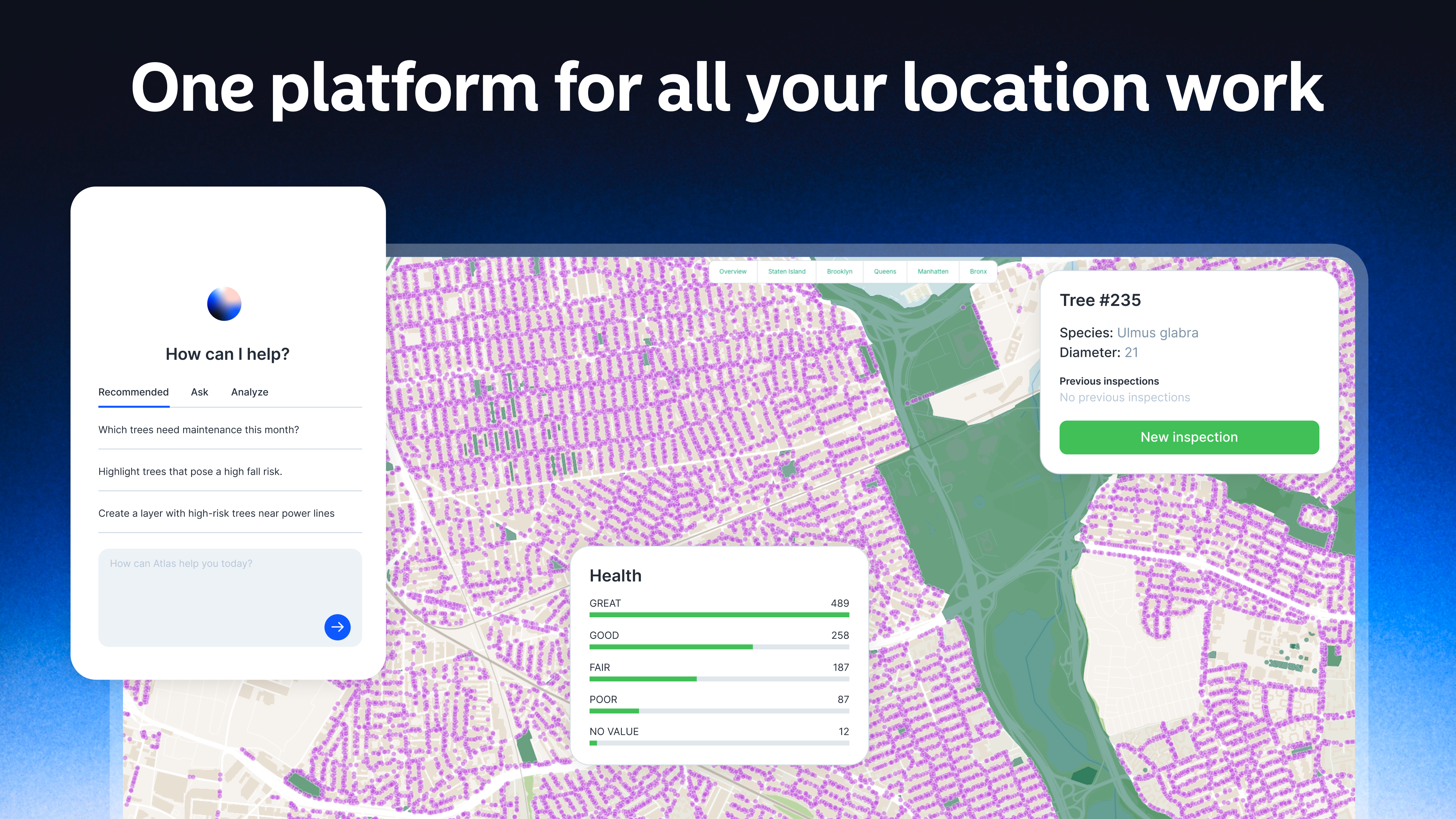
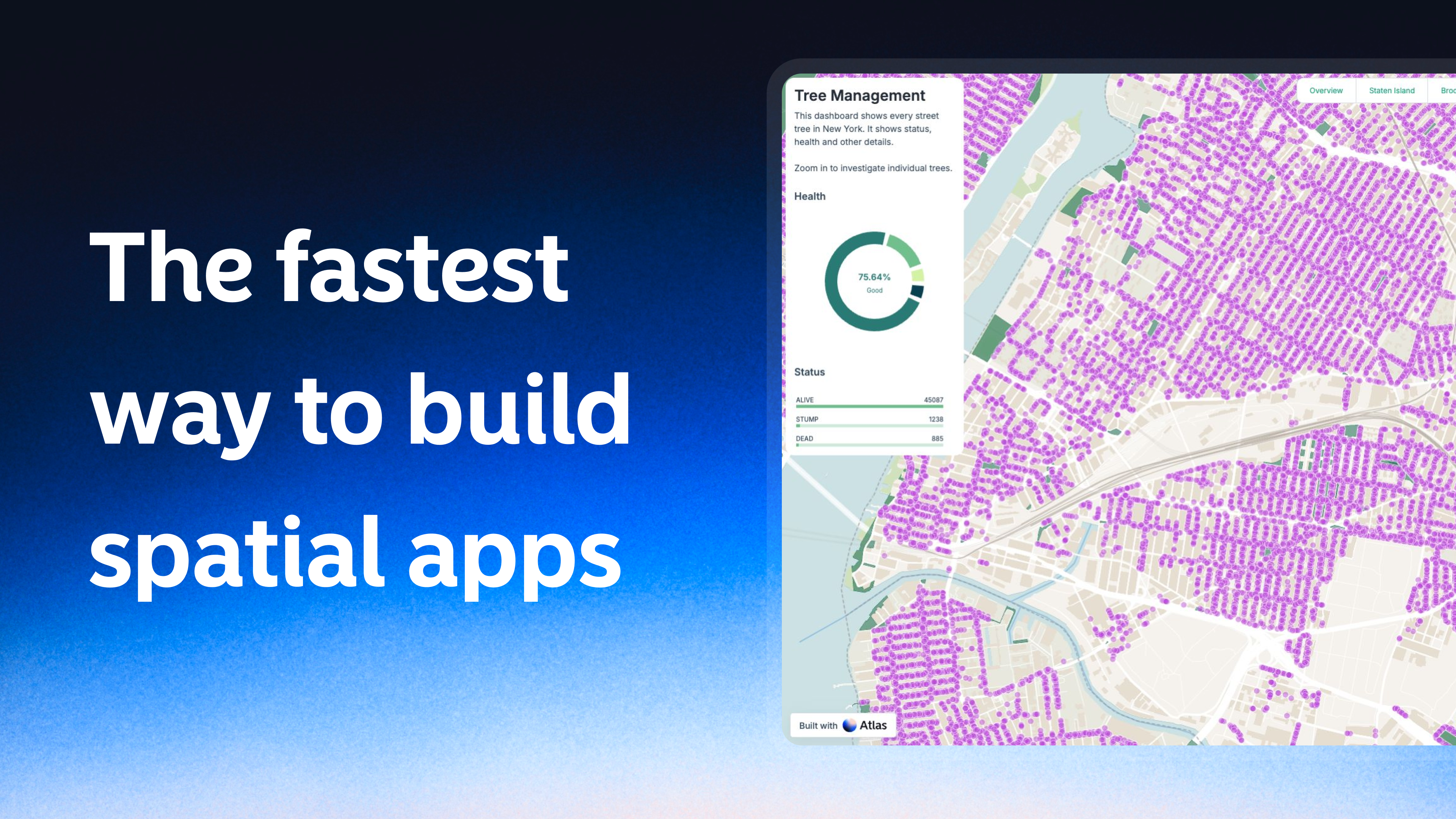
查看原始信息
winlab
Standard AI audits are context-blind and unverified, often hurting conversions. Winlab replaces guessing with rigorous simulation. Unlike generic wrappers, we solve 3 fatal flaws: Context: We calibrate for specific traffic & goals (Cold vs Warm). Accuracy: Hybrid Vision+Code scanning prevents hallucinations. Validation: Agents run synthetic A/B tests on every fix. We don't just critique your site; we verify the solution works.
👋 Hey Product Hunt, I’m Rehan, and I'm launching winlab! I’ve worked in growth and acquisition roles for years. So when these AI audit tools started popping up, I tested most of them because I wanted to save time as I was going through a website rebrand project. But I found two massive problems. First, most of them are just generic wrappers that treat every website the same. They give the same advice for a cold traffic landing page as they do for a warm email nurture page. Second, the "Cold Start Problem." You usually have to burn budget on marketing spend to get enough traffic for a heatmap or A/B test result. You are basically flying blind until you have spent a lot. I built winlab to try and solve both (I don't think we're fully there, but hopefully this is a big step). It is a simulation lab that forces context before it gives you an opinion, and simulates traffic so you don't have to wait for it. Here is what I built differently: - It asks for context: You have to toggle if your traffic is Cold or Warm, who your ICP is and what you're trying to achieve. The analysis changes completely based on that input because advice without context is useless. - No visitors needed: You don't need to wait for 10,000 visitors to get data. The AI simulates the traffic for you so you get predictive heatmaps and feedback instantly before you spend time and money trying to get traffic which won't convert. - It reads the code: I built a hybrid scanner that checks the visual pixels and the actual code. It stops the AI from hallucinating buttons and text that aren't there. It is just me building this. No big team. I’m scratching my own itch and hoping it helps other growth folks save some time and money. (🤞) Please give it a try and let me know what you really think!
3
回复

Traditional A/B testing is basically impossible for early-stage startups because we simply don't have the traffic volume to reach statistical significance quickly.The idea of using synthetic users to run simulations instead of waiting weeks for real data is a game-changer. If the AI agents can accurately mimic different traffic sources (like Cold vs Warm), this essentially democratizes high-end optimization for smaller teams. Skeptical but very excited to try.

1
回复

Congrats on the launch, Rehan — love the “simulate before you spend” approach. The context-first (cold vs warm) framing + vision+code scan is a smart combo.

Curious: how do you validate that the synthetic A/B outcomes correlate with real-world behavior (any benchmarks or calibration loop)? Excited to try this on a landing page.

1
回复