Product Hunt 每日热榜 2026-01-27

PH热榜 | 2026-01-27

#1
Kilo Code Reviewer
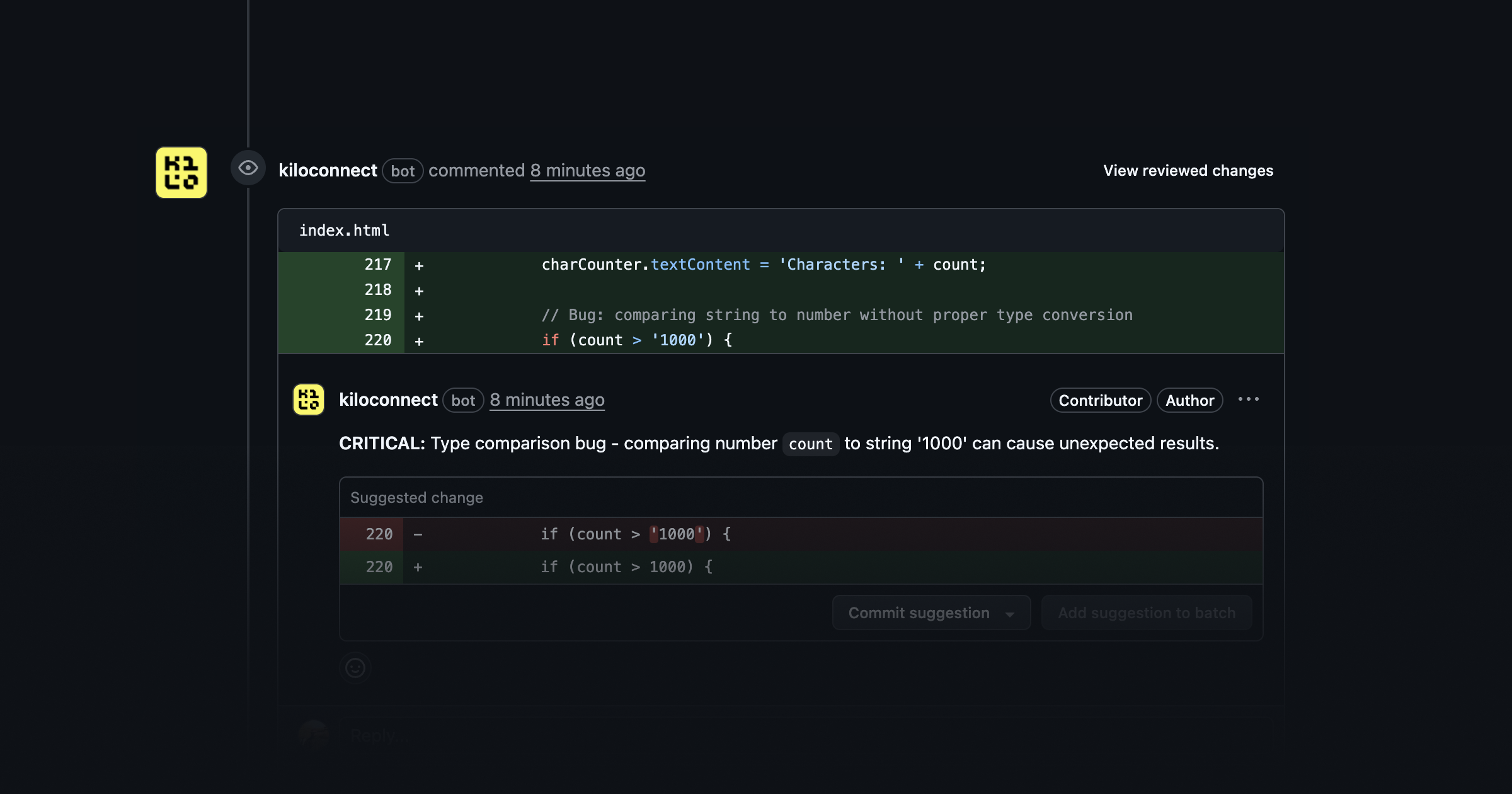
Automatic AI-powered code reviews the moment you open a PR
541
一句话介绍:一款AI驱动的自动化代码审查工具,在开发者提交拉取请求(PR)时即时运行,通过分析代码、提出改进建议、捕捉漏洞来缓解PR积压瓶颈,提升代码质量和团队效率。
Open Source Software Engineering Developer Tools GitHub
AI代码审查 自动化开发工具 开发者生产力 PR流程优化 多模型支持 开源项目 代码质量管控 即时反馈
用户评论摘要:用户普遍认可其缓解PR瓶颈、提供即时反馈的价值,尤其对新手友好。关注点集中在与现有工作流的整合、对大型/遗留代码库的处理效果、防止“机器人垃圾评论”的配置,以及是否会导致开发者过度依赖AI而削弱深度审查能力。
AI 锐评

Kilo Code Reviewer 瞄准了一个精准且日益增长的痛点:人工代码审查作为开发流程的关键瓶颈。其核心价值并非“替代人类”,而在于充当一个不知疲倦的“第一道过滤器”。通过集成500+模型并支持本地与云端审查,它在灵活性与成本控制上展现了优势,特别是提供免费模型选项,降低了尝鲜门槛。

然而,产品的成功不取决于技术堆砌,而在于能否“优雅地嵌入”现有工作流。评论中关于“防止机器人垃圾评论”和“配置审查严格度”的提问直指核心风险:糟糕的AI审查会产生噪音,反而成为新负担。团队对此已有预案,如提供自定义指令和焦点区域调整,但这恰恰是落地时最需精细调校的部分。

更深层的挑战在于其宣称的“理解代码库”。对于复杂模块化项目和遗留系统,AI能否保持高准确率仍需观察。虽然团队建议针对不同代码区域切换专用模型,但这无疑提高了使用者的认知负荷和配置成本。此外,它将代码审查从“人际协作环节”部分转变为“人机交互环节”,可能削弱团队通过代码评审进行知识传递的隐性价值。长远看,它或许会重塑代码审查的角色——人类工程师将更聚焦于架构设计与业务逻辑等高阶判断,而将风格、常见漏洞和基础优化委托给AI。这不仅是效率工具,更是开发范式的潜在变革者。其真正的考验在于,能否在提升即时效率的同时,不损害代码的长期可维护性与团队的技术凝聚力。

查看原始信息
Kilo Code Reviewer
Automated code review agents that analyze pull requests, suggest improvements, catch bugs, and ensure code quality standards. Pick from 500+ models (Claude, GPT, Gemini, and several free options) to get instant feedback before merging.

Hey Product Hunt! 👋

Brian, DevRel from Kilo here. We built @Kilo Code Code Reviewer to kill PR bottlenecks.

It runs automatically when you open a PR, catching security issues, performance problems, and style inconsistencies before your teammates even look at it, and offers comments and inline suggestions.

It's completely free with models like MiniMax M2.1 and GLM 4.7 - or use the latest from @Claude by Anthropic, @Gemini, or whatever you prefer from over 500 supported models.

What's your biggest code review pain point?

45
回复

LFG! keep up the great work ?makers 🐐

19
回复

PR bottlenecks are real. Anything that catches issues before human review usually makes teams way faster. Curious how this fits into existing review workflows.

8
回复

@brian_turcotte, congratulations on the launch!

3
回复

@Kilo Code Code Reviewer has become such a big part of my workflow. Can't imagine coding without it.

8
回复

@scobreit curious: what's your favorite model for code reviews?

2
回复

@scobreit congrats on the launch. You can fully build out of Slack?

1
回复

As a data engineer, I’ve been using Kilo Code reviewer and it’s surprisingly data aware, not just code aware. It helps me catch pipeline changes that would only break dashboards later

5
回复

love it, Pedro! I just reshared it on X

what model are you using for code reviews?

1
回复

@pedro_heyerdahl Plus you can use any model, so you can pick those that excel at data tasks when you need to!

2
回复

The amount of time this product helped me out is wild. I spin up PRs daily and let code reviewer take care of it before asking a human dev to do a final check.

4
回复

@jobrietbergen awesome! what's the best AI model from your perspective? in this thread, some people suggest @OpenAI's GPT-5.2 and @Gemini 3 for debugging tasks. genuinely curious

1
回复

had a blast working with the team on this new launch, introducing Kilo Code Reviewers -- AI-powered code reviews that understand your codebase and catch bugs before merging.

First launched on @Product Hunt about a year ago, @Kilo Code is now the most popular open-source coding agent, trusted by 1M+ developers.

S/O to @sytses @scobreit and team 👏👏

4
回复

@fmerian It was great working with you on this as well! Excited for everyone to try Code Reviewer 💪🚀

1
回复

Reading this made me think about how often my PRs wait longer than expected. I usually spot small issues only after opening them. Getting early feedback would help me feel more confident before asking teammates to review.

3
回复

@new_user___01520268563942f25d8240c Love to hear that! Feel free to give us any feedback in our Discord if you end up trying it out!

1
回复

Love the open source angle of Kilo Code and the transparent pricing model (you can bring your own AI models too). How it handles larger codebases with multiple modules and complex dependencies compared with other AI coding assistants like Copilot or Cursor?

3
回复

@hamza_afzal_butt Great question! For one, we have Orchestrator Mode which breaks down tasks into smaller subtasks to optimize context and token usage.

Additionally, we have parallel agents in both the CLI and IDE which allow you to work on different parts of larger projects at the same time, without conflict.

In terms of Code Reviewer, you can access code reviews in both the IDE for local reviews, and later in GitHub - meaning that you can choose different models with different strengths for each step of the way: building, reviewing locally, and reviewing in GitHub - covering more gaps for those larger projects.

2
回复

I've been using KC for code reviews at Resume Matcher, and the experience has been amazing so far.

You can see it in action here: https://github.com/srbhr/Resume-Matcher/pull/638

3
回复

@srbhr real-life comparison! love it. thanks for the feedback, Saurabh 🙏

0
回复

@srbhr I love this project!

2
回复

I wanted to ask how this works with legacy codebases. My projects often have older patterns mixed with new ones.

3
回复

@awesome_america We've found that some of the frontier models (@Claude Code's Sonnet & Opus, @OpenAI's GPT 5.2 Codex) are very good at assessing projects with a lot technical debt or legacy frameworks.

Since you can change models at any time, you can also switch between models of different strengths when you're working on different parts of the project!

2
回复

The automation is interesting but I do worry about over dependency. My concern is whether developers might rely on it too much and miss deeper review thinking.

3
回复

@christian_onochie I feel the same way.

0
回复

@christian_onochie That's a fair concern - we still recommend a human reviewer for changes that are going into production.

For those sensitive topics, Code Reviewer provides a first glance that can catch small/hidden issues faster than a human can, and reduce the review burden for senior engineers.

We believe these tools aren't a replacement for humans, but rather friction-removers that shift the responsibility away from busy work and more towards architecture and high-level decision making.

2
回复

Reading this made me think about how long my pull requests usually sit waiting. I often wonder if small issues could be caught earlier. This feels like it could reduce that waiting stress for me.

3
回复

@maklyen_may Totally! And with the inline suggestions, you can commit the fixes right there in GitHub, so you don't have to any further context switching.

2
回复

This could be huge for junior devs on my team. They'd get feedback instantly instead of waiting for me to free up. Congrats, exciting to see this!

3
回复

@irina_t_ Thanks for the kind words! That's exactly what we're seeing - it's not only a friction remover, it's also an education multiplier for new engineers.

3
回复

Wow, this is actually game-changing!

2
回复

@dominik_uchnast Thanks for the kind words!

1
回复

yes! help us spread the word, repost this

0
回复
How do you recommend teams introduce this into an existing workflow without overwhelming engineers—what’s the default rollout pattern (repos, PR sizes, comment volume limits), and how do you prevent “bot spam” from becoming the new bottleneck?
2
回复

@curiouskitty We designed it to be non-invasive with easy setup that can be configured deeper if wanted.


Basically, you just turn it on in the Kilo dashboard, and reviews will start happening automatically. You can also adjust the review strictness (reducing reviews to only serious issues), and pick from specific focus areas.

Furthermore, you can provide custom instructions to steer the AI in a direction that makes sense for your team!

1
回复

Gave it a first try today and its a very convenient feature. Certainly will continue using it.

2
回复

your words just made our day 💛🖤

1
回复

@florian_hubner Glad to hear that! Feel free to give us any feedback in our Discord!

1
回复

This is wonderful. We've been using this Code Review mode since early testing and given tonnes of tips/feedback, love where it's at today!

2
回复

awesome! what do you enjoy the most about this feature?

1
回复

If this reduces review back-and-forth even 30%, that’s already a win. Wishing you all the best :)

2
回复

If this reduces review back-and-forth even 30%, that’s already a win.

exactly! help us spread the word on X

1
回复

Very interesting product. Out of supported 500+ models, is there any recommended coding models list you guys suggest, as only few of them good in coding and review.

2
回复

@gokuljd thanks for the support, Gokul!

Out of supported 500+ models, is there any recommended coding models list you guys suggest, as only few of them good in coding and review.

Good question. FWIW There's an on-going poll/thread on the topic here. Suggestions include @Claude by Anthropic's Sonnet 4.5 and Opus 4.5 (72%), @Gemini 3 (13%), @OpenAI's GPT-5.2 (12%).

How about you? Any preferences?

1
回复
How do you prevent “AI noise” too many low-value comments , so reviews stay helpful instead of overwhelming?
2
回复

@iftekharahmad There are several ways to do this with Code Reviewer:

1. You can choose the review strictness between Strict, Balanced, and Lenient to adjust the severity of issue that Code Reviewer will flag

2. You can add custom instructions, to adjust the behavior/writing style of reviews

3. You can choose your Focus Area, selecting only the topics that matter to you or your team

2
回复

How does the AI understand our team’s specific coding standards and architectural decisions over time? (And can it learn from accepted vs. rejected suggestions?)

2
回复

@istiakahmad You can give custom instructions and focus areas to highlight your team's standards and architectural decisions!

3
回复

So much better than other code reviewers! Love that there are so many models available to power it

2
回复

@arimesser love it! ooc what's your favorite model? help us spread the word on X

1
回复

Congrats on the launch. OSS AI coding assistants are the future. What’s the one feature users fall in love with first?

2
回复

@priyankamandal We're seeing a lot of great feedback on Code Reviewer, but we also recently released App Builder, which is a natural-language prototyper that has a live preview. You can build real apps/sites in minutes and watch them update live!

2
回复

@priyankamandal Great question, Pri. Thanks for asking.

Found on @Product Hunt:

Kilo Code earns strong praise for speed, flexibility, and transparent, BYOK model support across VS Code and JetBrains. Reviewers highlight a clear multi‑mode workflow (Architect, Code, Debug, Orchestrator) that plans first, then implements and fixes with visible diffs and solid context handling. Many say it replaced tools like Cursor, Cline, and Continue, citing fewer retries and better control over rules, memory, and cost. Beginners and pros report meaningful productivity gains, though a few note occasional loops and a perception of higher cost. Community support and rapid updates stand out.

Source: Kilo Code Reviews (2026) on Product Hunt

1
回复

This works as a Cloud Agent I presume.
awesome expansion of this product. Congrats to the team

2
回复

@ivan_zografski Thank you! Exactly - and we also have Kilo Cloud Agents as well, if you want to try the experience underneath Code Reviewer!

2
回复

pr bottlenecks are real , especially on small teams where everyone's busy building.

quick question: does it learn from previous reviews? like if i keep ignoring certain suggestions, does it adapt over time?

also how it handles false positives. nothing worse than an ai reviewer flagging stuff that's actually fine.

2
回复

@topfuelauto It'll keep the context of previous reviews on the sam ePR, and update dynamically within that PR.

If you want to teach it to forgo certain suggestions or understand your preferences, you can add custom instructions from the Kilo Dashboard!

3
回复

This looks super cool! I've been battling with CodeRabbit and it doesn't seem very helpful. We're a small team and we need something that's actionable. But CR seems to mainly give me fluff than actionable insights. I'm curious - how does Kilo compare to other similar products out there? Would be great to get some insight on that.

1
回复

Does Kilo limit its analysis strictly to the diff / selected changes, or can it reason about a wider scope (files, modules, usage elsewhere) in a way that adapts to the size of the repository?

From my recent experiments with AI code reviewers, most of them either:

  • stay diff-only, or

  • try to scan “everything” and quickly become impractical on larger repos due to long processing times.

What I’m missing is something more adaptive — e.g. scope expansion that’s proportional to repo size or dependency graph, rather than a fixed “deep analysis” mode. Curious how Kilo handles this today, and whether repo-aware scoping is part of the design.

1
回复

If you are a solo-founder or are vibe coding, having this code review gives you another check on the quality and security of your code. This is far better than skipping them and is faster & less expensive than hiring a fractional worker to do it.

1
回复

It looks great! What new features you guys are planning to add on?

0
回复

Congrats on the launch! Kilo Code has really outdone itself with planning and outlining complex tasks as well as bug fixing and error analysis. Will you develop a system for integration to make it more efficient for teams to setup & separate windows or workflows?

0
回复

Hi everyone! Happy coding!,

I definitely recommend trying kilocode's new "review" mode feature.

It successfully reviewed my entire spaghetti code website initially generated with a free deepseek ai model that I was unaware of it's lack of html/css coding abilities.

It successfully referenced 12 out of 13 critical 🚨errors/⚠️warnings which saved me hours of debugging.

The only warning recommendation from kilocode's review mode I could do without is a warning: "oncentextmenu=return false;" "prevents right click menu".

I purposely turned off the right click context window for an image, but it's not a big deal at all.

Overall I rate the new review code mode a 9/10, would give a 10/10 but it just released today and I never experienced perfect software.

Enjoy the ai revolution in 2026 and thank you team Kilocode for the hard work I notice you guys put in! 💯

0
回复
#2
Moltbot
The AI that actually does things
454
一句话介绍:Moltbot是一款部署在本地的AI个人代理,可通过WhatsApp等聊天应用远程控制电脑,执行浏览器操作、运行终端命令、管理文件等实际任务,解决了传统AI助手只能生成文本而无法在操作系统中执行具体操作的痛点。
Open Source Developer Tools Artificial Intelligence GitHub
本地AI代理 自动化工作流 远程控制 隐私安全 聊天机器人 系统集成 开源平台 生产力工具 个人助理 跨平台
用户评论摘要:用户普遍认可其“本地执行、聊天交互”的核心价值,认为它代表了AI助手的新方向。主要反馈集中在安全担忧(如公开实例被攻击、权限控制)、与竞品对比的实用性,以及对默认安全机制、操作审计和撤销功能的具体建议。
AI 锐评

Moltbot所标榜的“真正能做事的AI”,直击了当前AI助手生态的核心软肋:智力与行动力之间的断层。它将大语言模型的意图理解与操作系统的底层能力桥接起来,从“浏览器的囚徒”进化为“系统的延伸”,这是一个质变。

其真正的颠覆性在于两点:一是以“本地优先”重新划分了信任边界,在数据隐私成为普遍焦虑的当下,提供了极具说服力的解决方案;二是以“聊天应用即前端”重构了交互范式,将高频通讯工具转化为自然的指令入口,符合无缝工作流的趋势。这使其不再是又一个Co-pilot式的副驾驶,而是一个可独当一面的数字管家。

然而,赋予AI“行动权”的同时也打开了潘多拉魔盒。评论中密集的安全性质疑——从权限粗放、缺乏审计到公开实例遭攻击——暴露了产品从“酷炫概念”迈向“可靠基础设施”的关键挑战。安全与效能的永恒博弈在此尤为尖锐:过于严格的沙箱会阉割其核心价值,而过于宽松的授权则可能酿成灾难。产品能否成功,不取决于其功能列表的丰富度,而取决于能否在架构层面设计出一套精妙、透明且用户可理解的安全模型(如能力白名单、意图验证)。这不仅是技术问题,更是产品哲学问题。

此外,其开源与可扩展性是一把双刃剑。它有望吸引开发者构建生态,形成护城河,但也可能因技能质量参差不齐和安全标准不一而稀释核心体验。本质上,Moltbot的野心是成为下一代人机交互的底层操作系统雏形,但这条路注定需要先以最谨慎的姿态,处理好“第一个毁灭性错误”。

查看原始信息
Moltbot
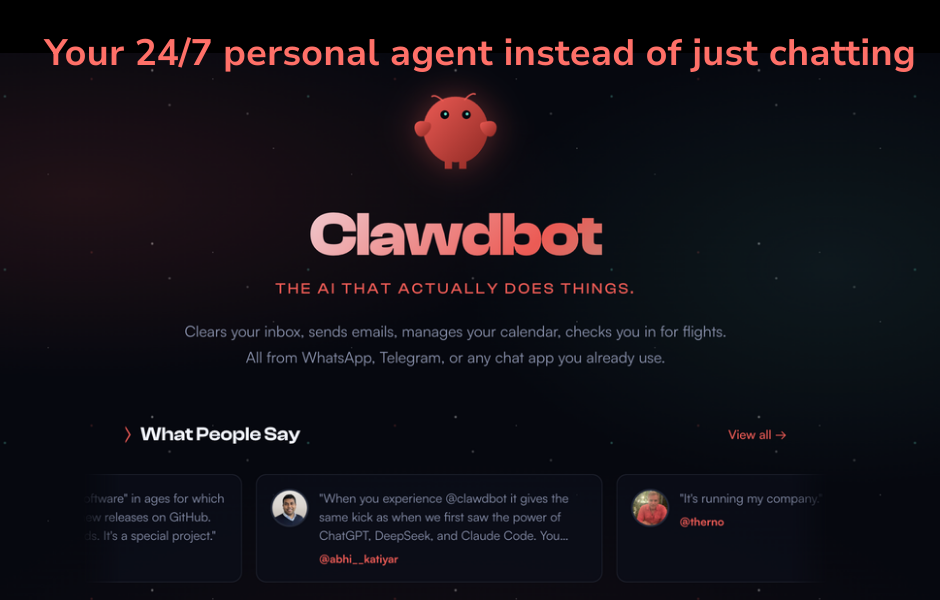
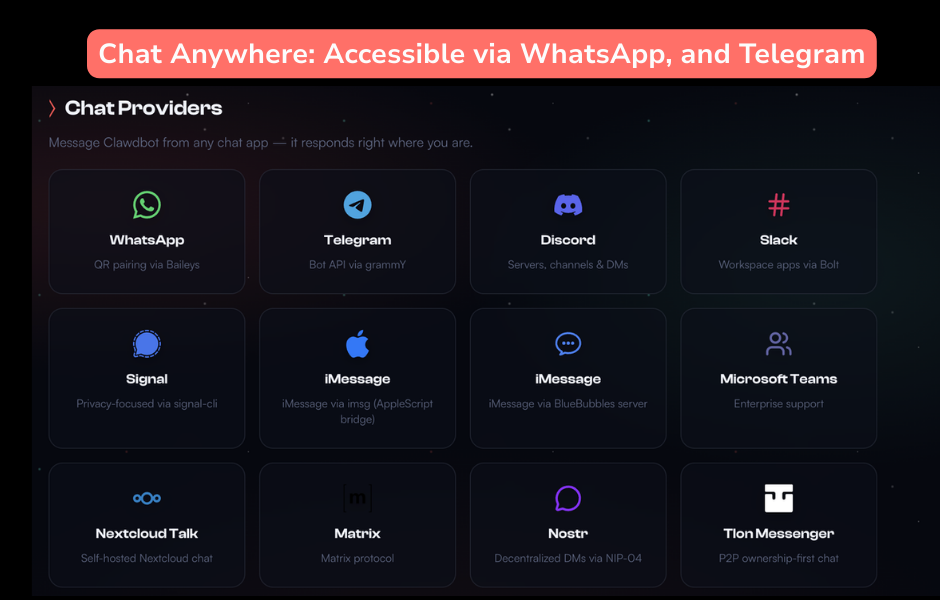
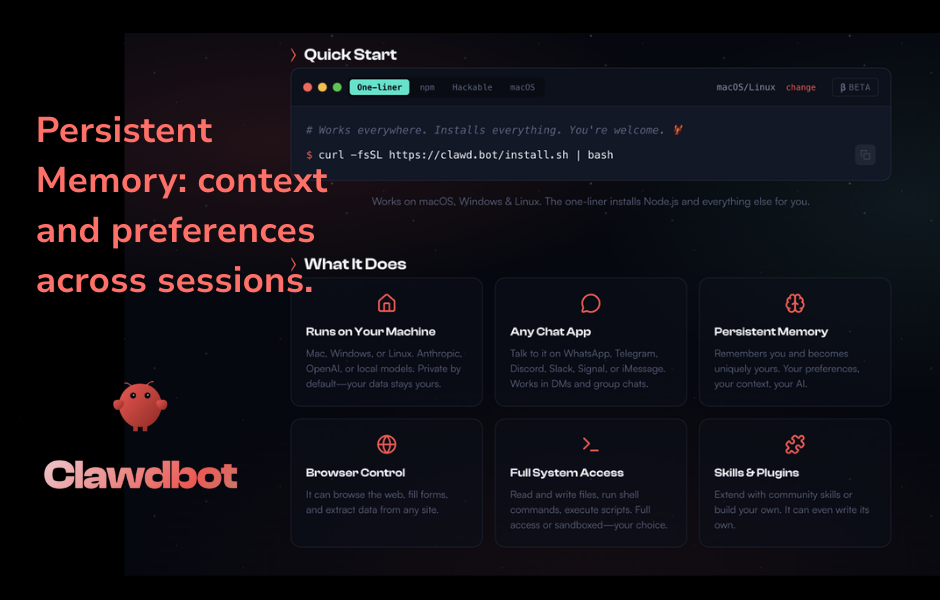
Clawbot turns your computer into a 24/7 personal agent accessible from any chat app. Control your browser, execute shell commands, manage files, and automate workflows via WhatsApp or Telegram. Features persistent memory, full system access, local privacy, and 50+ integrations.
Hi Product Hunt! Most AI assistants are trapped in a browser tab. They can generate text, but they can't do anything. I found Clawbot really interesting - it is gonna change that. Clawbot is a self-hosted agent that lives on your machine (Mac, Windows, or Linux). It bridges the gap between LLM intelligence and your operating system's capabilities. What makes it different? - 🏠 Local & Private: Your data stays on your machine. - 📱 Chat Anywhere: It texts you back on WhatsApp, Telegram, Signal, or Slack. - ⚡ Real Action: It doesn't just talk. It can open browsers, fill forms, run terminal commands, and edit files. - 🧠 Memory: It remembers you. No more starting from scratch every session. It's fully hackable and open to plugins. I'd love to see what skills you build for it. Maybe AI moves on to next stage.
16
回复

@cruise_chen Clawdbot is an impressive self-hosted AI agent that bridges the gap between LLM intelligence and your operating system's capabilities​. Unlike traditional assistants trapped in browser tabs, it can perform real actions like running terminal commands and editing files while keeping your data local and private. Its ability to communicate via apps like WhatsApp and Slack makes it a truly versatile tool for any workflow.

0
回复

@cruise_chen Clawdbot is awesome. I've had a luck to use it before launch here and continue using it as daily work and life assistant. I even created 1 skill, which, I believe, will be useful for clawdbot users.

There are lots of news on X about publicly exposed instances in free-tier clouds. Does Clawdbot team have plans to make automatic security checks and proactively protect users' instances from external threats?

0
回复

@cruise_chen Wow! What’s the first mistake Clawbot made during testing that made you add guardrails, and how much freedom do you think users should realistically give an agent on their own machine? A local agent that can actually act is powerful & scary if it goes wrong!

0
回复

Yesterday, I was trying to install it. But also saw how many people started complaining about attacks and hack attempts. This opens doors to new business ideas to patch the blind spots.

6
回复

@busmark_w_nika Me too! I finally made it with a VPS and started exploring it. So far so good.

4
回复

@busmark_w_nika Do you really need to access your work when you are away from laptop? It feels like showoff to me.

0
回复

This is what people have been waiting for: an open-source agent that can turn ideas into actionable plans and execution. It’s quite similar to Minara, which we launched yesterday. But we’re particularly focused on closing the loop from analysis to decision to on-chain execution in digital finance.

5
回复

I love that it’s hackable. This feels less like a tool and more like a platform waiting for crazy ideas.

3
回复

As a heavy power user of Poke for proactive, messaging-native assistance on top of my email and calendar, I’m curious: what are some workflows where you’ve seen Clawdbot actually outperform Poke in the real world.

3
回复
@byrishi Curious, what are some of your best Poke use cases? Wonder if there were any great things, flaws or lacking points that stood out
0
回复

I suspect operating systems will eventually become headless, driven by context and intent rather than windows and clicks. This feels like a step in that direction. Congrats.

2
回复

Agents with full shell + file access hit scale issues fast when permissions and secrets are too coarse, and chat ingress gets probed as soon as it is public.

Best practice is capability based allowlists enforced by a policy engine like OPA, plus sandboxed execution (namespaces seccomp or gVisor) and append only audit logs per action.

How do you authenticate each chat channel and map users to scoped capabilities, and is per tool trace replay or human approval on the roadmap?

2
回复

This is really exciting. I'd love to get in touch with the team to integrate with our OSS lightweight protocol for making agent actions safer by requiring verifiable intent + provenance + evidence before high-impact tool calls (fail-closed by default). It fits super well with Moltbot's agent/tool workflow (ie. wrapping tool calls in Pi sessions with a quick verification step via SDK/JS port). Could add proactive security for things like browser, nodes, camera, or system exec without much overhead. Would love to explore an integration and happy to prototype a skill/wrapper or submit a PR if you're open.
Either way, supported and wish you all the best.

1
回复

This is a very “finally” product - assistants that can’t actually do things are basically autocomplete in a tab. The “chat anywhere” idea is especially compelling too: WhatsApp/Telegram as the UI feels like the most natural interface for real life.

I’m curious how you’re thinking about trust when the agent can run commands and touch files - what does the default “safe” experience look like, and how do users review or undo actions when something goes a bit off?

Congrats on the launch - if you nail safety without killing the flow, this becomes something people keep running quietly in the background.

1
回复

Congrats on the launch! @steipete - Will be tinkering with Clawdbot over the weekend.

1
回复

The best open source product till now!

1
回复

this looks really great @steipete. excited to try it out :)

1
回复

A new era of working flow.

1
回复

I really like the combo of self-hosted + chat anywhere. Being able to talk to an agent from WhatsApp or Telegram while knowing everything stays local is a strong trust signal, especially for power users and builders.

1
回复

Except running it locally, what other advantage it has? it is going to hit the same LLMs living on the cloud and sharing my data with them right?

1
回复

@gokuljd local first is definitely one of the biggest selling point.

0
回复

giving a bot "full system access" is both awesome and terrifying. does it run in a sandbox/container so it can't accidentally rm -rf my home folder if i give a vague command?

0
回复

starting using it a week ago, after I saw someone run it on Raspberry Pi and damn! :)

0
回复

This is a powerful tool. I installed it on a separate computer that I was not using for personal used. The tool is very powerful and could delete or modify your files.

0
回复

“AI that actually does things” is a bold promise. Exposing real system control + chat-first access is powerful, and also where UX, safety, and trust really matter. Curious how you’re thinking about guardrails as people automate more of their daily workflows.

0
回复

Hi how can I prevent this from bankrupting me?

0
回复
#3
LobeHub
Agent teammates that grow with you
315
一句话介绍:LobeHub是一个AI智能体协作平台,它通过创建具备长期记忆、可协同工作的“智能体队友”,在复杂项目管理和个人工作流中,解决了传统一次性AI工具孤立、低效、成本高且难以构建的痛点。
Productivity GitHub Maker Tools Marketing automation
AI智能体平台 多模型编排 长期记忆 人机协同 工作流自动化 开源 团队协作 智能体基础设施 认知减负
用户评论摘要:用户普遍认可其“智能体即队友”的长期协作理念及多模型编排能力。有效反馈集中在:询问产品主页与注册引导不清晰;探讨智能体记忆如何保持更新、避免偏见的具体机制;赞赏其内联编辑、异步协作对工作流的提升;并认为其定位是更有潜力的“基础设施”,而非另一个聊天应用。
AI 锐评

LobeHub的野心,远不止于制造另一个AI聊天机器人或任务自动化工具。它剑指当前AI应用生态的核心缺陷:智能体的“短视”与“孤立”。产品将智能体重新定义为具备“白盒化”长期记忆、可进化的协作单元,这试图将AI从执行单次任务的“耗材”,转变为参与完整工作流的“同事”。

其真正价值在于两个维度的“整合”。一是横向的工作流整合,允许用户在工作场景中随时唤起智能体团队,从构思、执行到交付进行闭环协作,这挑战了以“对话窗口”为中心的割裂式交互。二是纵向的认知整合,其可编辑的记忆系统旨在让人与AI共同进化,目标是降低认知负荷,而非单纯提高输出量。这回应了高级用户对AI“失忆”和“缺乏上下文”的深层焦虑。

然而,其宣称的“民主化”愿景面临严峻考验。将复杂的智能体编排与记忆管理交给“日常用户”,可能带来极高的学习成本和不可控的认知开销。透明化记忆是一把双刃剑,在赋予用户控制权的同时,也可能将管理记忆的负担转嫁给用户。此外,其发展高度依赖社区共享的“智能体团队”能否形成活跃生态,这存在网络效应冷启动的典型挑战。

LobeHub的赛道正变得拥挤(如提及的Claude等)。它的突围筹码是其开源背景带来的开发者信任、以及从LobeChat继承的多模型编排技术栈。它能否从极客和早期采用者的玩具,成长为稳定可靠的生产力“基础设施”,将取决于其如何在“功能强大”与“体验简单”之间找到精妙的平衡,并证明“长期智能体队友”带来的复利,足以抵消其更高的使用与维护成本。

查看原始信息
LobeHub
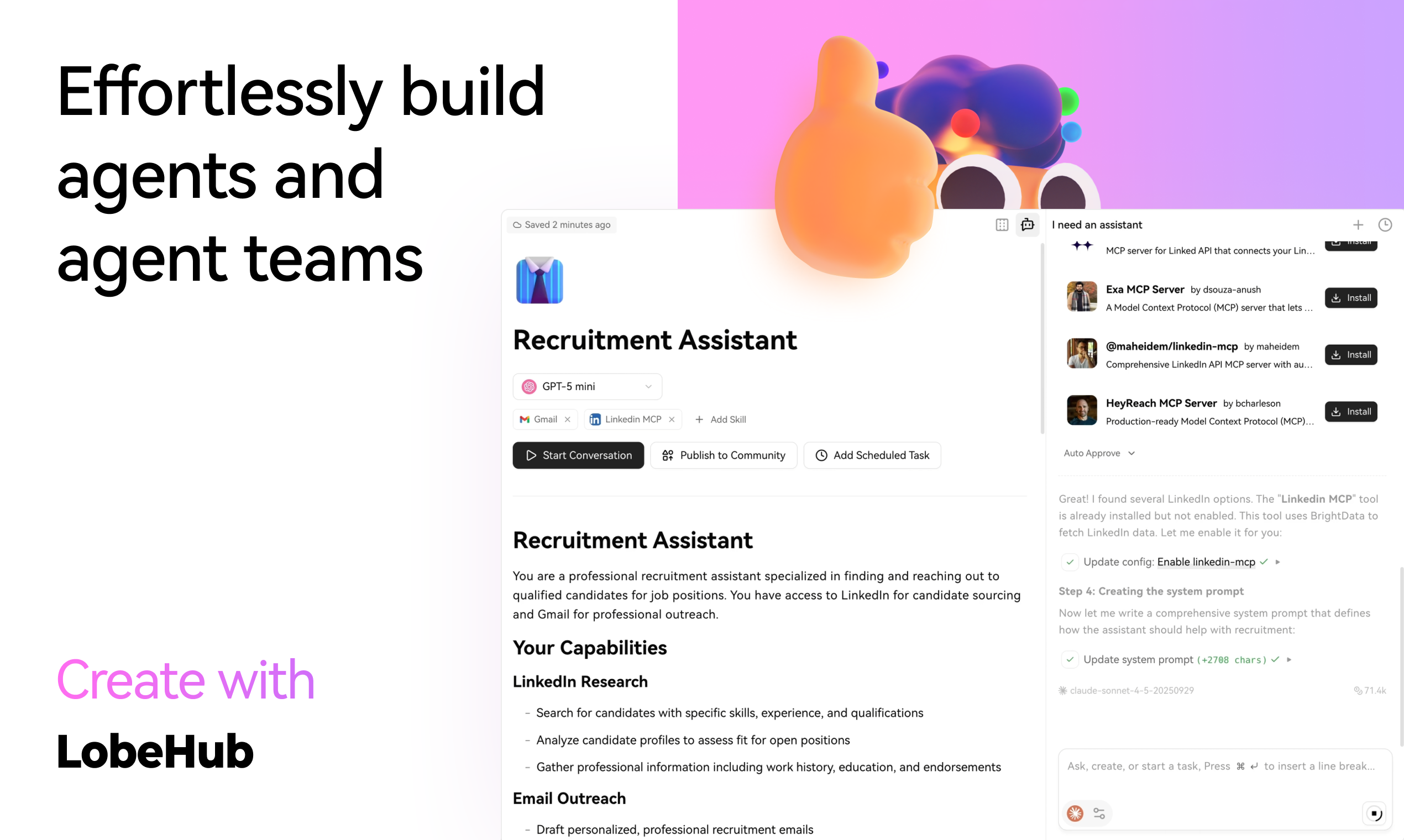
Today’s agents are one-off, task-driven tools — isolated, slow, costly, and hard to build — failing to unlock the full potential of AI models.LobeHub changes that. We build long-term agent teammates that grow with you. Anyone can easily create and collaborate with agent teams to deliver complex, end-to-end work. With multi-model support, LobeHub is faster, more cost-effective, and goes beyond single-agent systems.

Hey PH, I'm Arvin, founder of LobeHub.

Two years ago, I created LobeChat, an open-source, multi-model interface. LobeChat now has 70k GitHub stars, 14k forks, 2 million lines of code, and serves over 6 million users worldwide — yet most of it was built by me and my agent teammates. Today, I'm excited to productize the way I work into a new product: LobeHub.

LobeHub is the next generation of agent harness. LobeHub matches what Manus and Claude Cowork offer and goes beyond with capabilities today's agents can't support:

Anyone can effortlessly build and team up with agent coworkers to deliver complex, systematic work — even assembling a quant team to execute trades. If token usage reflects how much AI power someone can leverage, today that power largely belongs to engineers. My mission is to democratize token consumption, empowering everyday users to craft their own agent teammates.

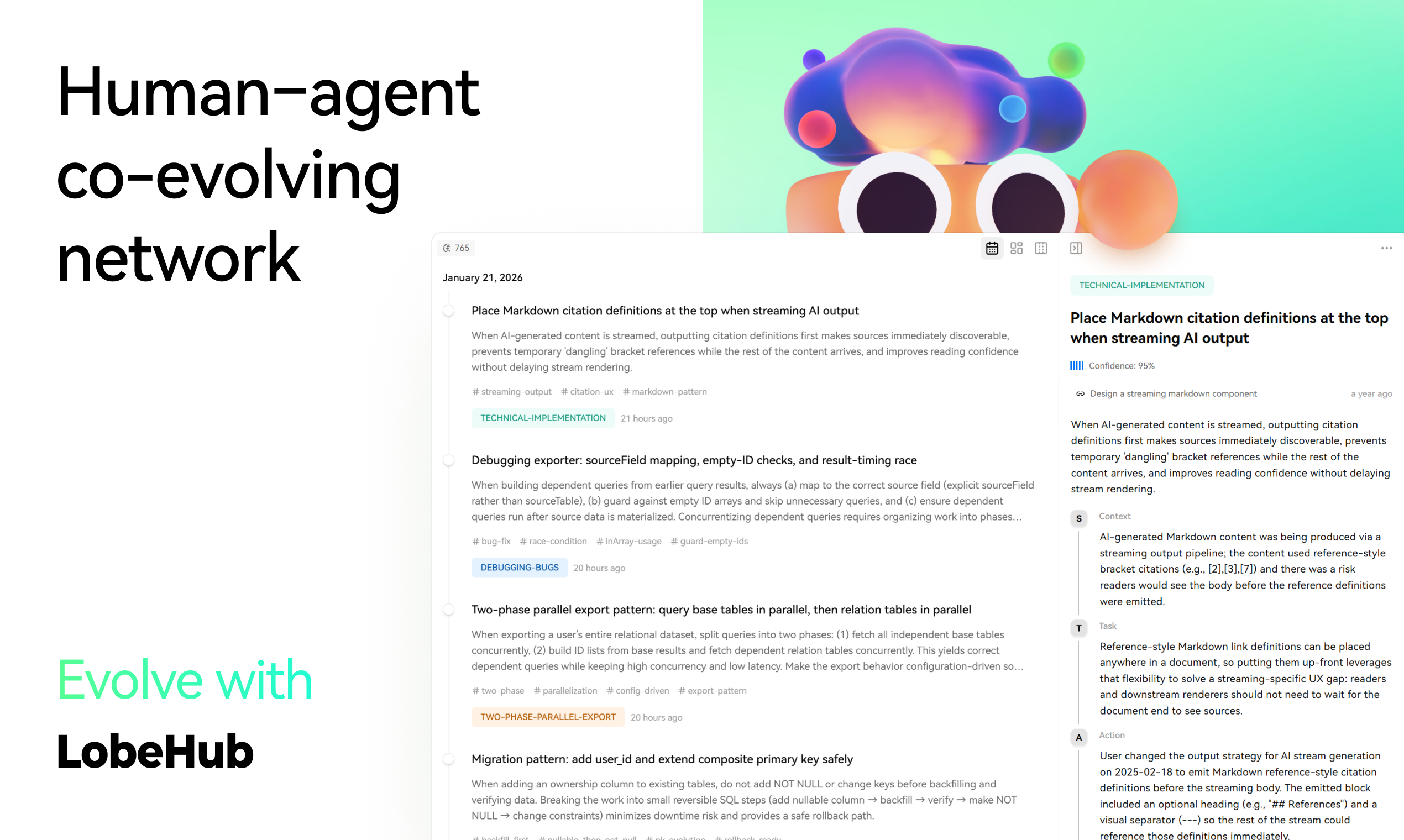
Agent teammates are always-on and evolve with you. Today's agents are mostly disposable tools — task-driven with shallow, impersonal memory. At LobeHub, agents are true teammates. Each agent has persistent memory, editable by you, allowing humans and agents to co-evolve over time. We're building long-term agent teammates that grow alongside you — not just agents that complete tasks.

A fundamentally new, agent-first experience. Spin up agents or agent teams while writing, chatting, brainstorming — from ideation to execution to delivery — across your entire workflow. Here, agents aren't just tools, they're units of work.

Community-driven intelligence. My philosophy starts with people. Humans matter. AI intelligence and shared human intelligence are equally important. Through the LobeHub community, anyone can discover, reuse, and remix agent teammates and teams — customizing them to fit their own workflows and needs.

Multi-model orchestration from day one. Our vision began with LobeChat's multi-model support, leveraging each model's unique strengths. By orchestrating multiple models, LobeHub delivers better cost efficiency and enables capabilities that single-model approaches simply can't match.

LobeHub is the ultimate space for work and life: find, build, and collaborate with agent teammates that grow with you. We're building the world's largest human–agent co-evolving network.

Ask me anything! 🚀

34
回复

@arvinx God job, Arvin!

9
回复

@arvinx Brilliant product, congrats on your launch.

1
回复

@arvinx Hey :) In practice, what’s the first moment users realize an agent has actually “grown” with them, a decision it remembers correctly, a preference it challenges, or a task it starts handling differently without being told? Treating agents as long-term teammates is a bold shift tbh

0
回复

I see that the landing page directly takes to the sign-up page. Is there a home page I can read more about the product? Or you recommend, I signup and explore? :)

14
回复

@rohanrecommends I was having the same question until I realized they have their landing page at root domain.

4
回复

@rohanrecommends Go www.lobehub.com for the landing page

2
回复

@rohanrecommends Sorry, as our current product requires an invitation code, the link directly takes you to the product page. Our official website is https://lobehub.com

3
回复

Maker here 👋

We didn’t start LobeHub because we wanted “better AI chat.”

We started it because after building and using AI tools daily, it became obvious that synchronous, UI-bound AI breaks down fast.

Agents need time, memory, and a place to live — not just a text box.

14
回复

I started to use the open sourced version 2 years ago, in both the infrastructure of our AI cloud, collaborating across our team, and play around with our customized agents.

It used to be only a Chat app, now the new version looks so much interesting and amazing! I started to ask it write another project for me now.

Please share your use case down below for sharing your unique way of using LobeHub 😍

12
回复

It's always an exciting thing to build LobeHub. We are shaping how people interact with agent to boost their work and life.

While focusing on the interface, I'm happy to hear from you: do you like the UI of LobeHub? Is it easy to navigate and use? Or any words you'd like to tell the designer in LobeHub?

11
回复

@rivertwilight  i love the new doc, realy nice work

0
回复

This doesn’t feel like “another AI chat app.” Lobehub is clearly aiming to be infrastructure, and that’s way more interesting long-term!

9
回复

@lowesyang Great insight, Lowes! Thanks 🙏

1
回复

The ability to annotate and refine agent outputs inline speeds up my review process.

5
回复

@sarahjiang Love hearing this! The inline refinement feature was born from our own frustration with clunky review processes. Curious - are there any other parts of your workflow where you'd want similar speed improvements?

1
回复

Watching agents collaborate in parallel on complex problems is pretty cool!!!

5
回复

@yehan_xiao Thanks for using our product! We believe the future lies in the co-growth and collaboration between humans and agents. Our goal is to bring this vision to life through our products for everyone to enjoy with ease.

1
回复

Most “agents” today are chat sessions pretending to be coworkers: stateless loops, siloed context, and brittle hand-offs. You end up doing the real orchestration yourself—copy/paste between tabs, re-explaining intent, paying tokens to reconstruct state, and losing the thread of why the work mattered in the first place.

The human part matters as much as the system part. Memory should not be a black box that quietly profiles people; it should be legible and editable. LobeHub’s approach is “white-box” memory: keep what’s useful, discard what isn’t, and let agents adapt to how someone works without taking away agency. The goal isn’t more AI output—it’s less cognitive load, fewer context switches, and work that stays coherent over time.

5
回复

I tried the stock trading agent group and it provided clear, structured reports with risk analysis. Well done guys!

4
回复

@charlene_he1 Thank you! We really appreciate the support.

1
回复

How do LobeHub agents build long-term memory and context without becoming stale, biased, or overly confident over time?

4
回复

@istiakahmad Great question. Memory in LobeHub is designed to be transparent and editable — it’s not a black box. You can inspect, edit, or remove memories at any time.

Agents also adjust what they keep based on ongoing interaction, rather than blindly accumulating everything.

1
回复

Hey can you please tell me how its work properly ?

4
回复

@fu_jian Sure! You can find a more complete overview of how LobeHub works on our website: https://lobehub.com/

0
回复

Amazing product, congrats! LobeHub is a wonderful open-source agent project that can help people collaborate with an agent team. That's an interesting idea!

4
回复

@frank_li13 Thank you! We really appreciate the support.

0
回复

I see LobeHub becoming an essential part of remote team workflows; asynchronous AI collaboration is powerful.

4
回复

@new_user__2692022c842fed49e31f55a Hey, thanks for this! 🙌 You're spot on - async AI collaboration is exactly what we're building towards. You and your remote teammates and agent teammates work together :)

1
回复

How do users decide what an agent should remember vs forget?

3
回复

@abod_rehman Our memory system is capable of allowing the user to define their preferences against agents, this is not only valid in memory system, for daily works, workflows you created with agents, and actions you asked the agents to do, it helps too. Try out product, and see if the current design of the memory system works for you, we know that agents are not perfect, feel free to raise bad cases that you find, so we can improve it together 🎉

1
回复

What kinds of work become possible with agent teams that are fundamentally impossible with today’s single-agent or prompt-based tools?

3
回复

@iftekharahmad Good question — this gets to the core of why we built LobeHub.

A single agent handling complex work quickly runs into a context problem: it has to remember too many unrelated things at once. For example, you probably don’t want your legal advisor to remember that you had McDonald’s yesterday — but in a single-agent setup, everything ends up in the same context.

To work around this, people already start doing complex engineering: different prompts for different scenarios, carefully scoped context, separate memories, different tools. At that point, you’re effectively creating multiple agents anyway.

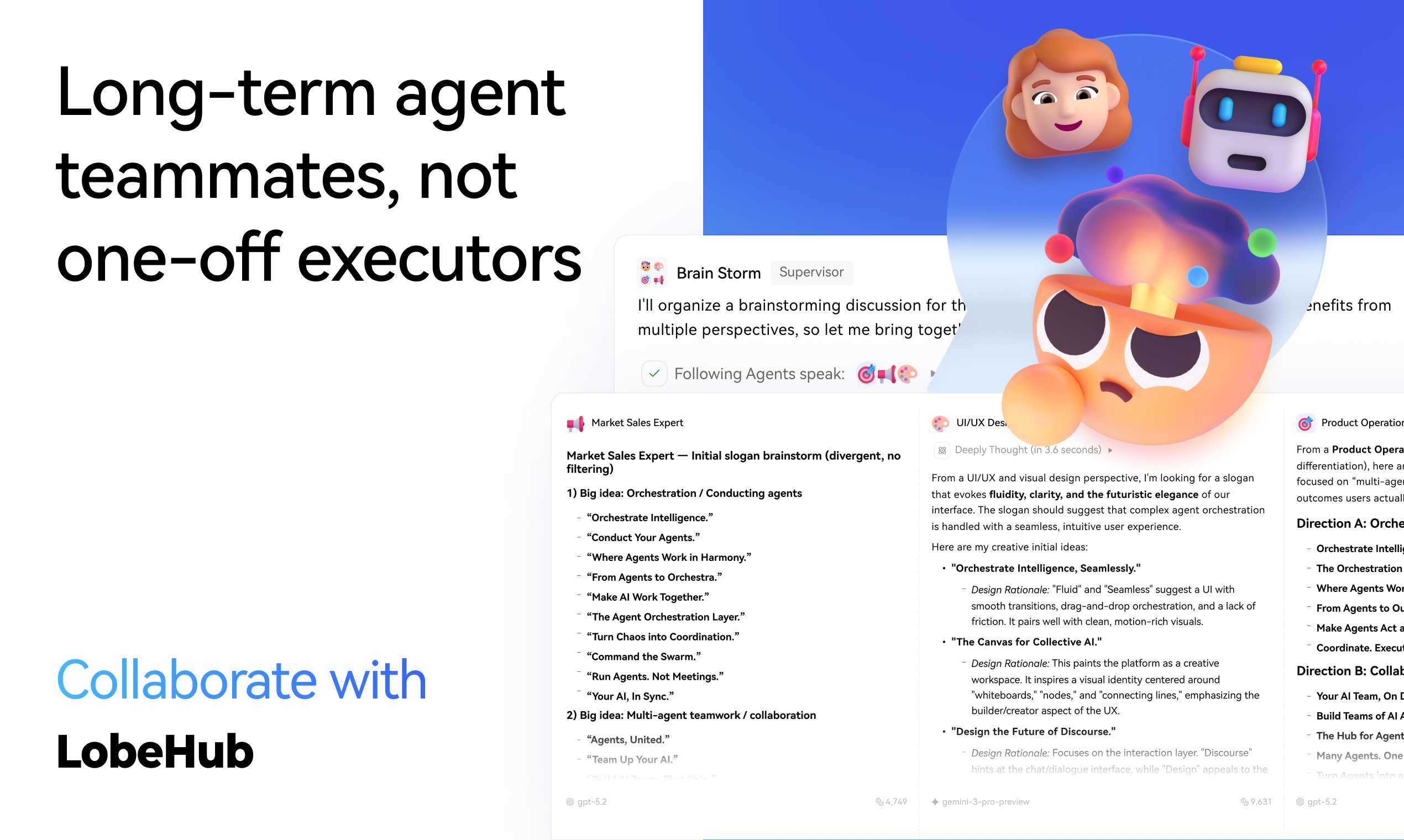
LobeHub makes this explicit and more human-friendly. You can assign clear roles, memory, and constraints to different agents, let them collaborate, and supervise their interaction more naturally — instead of fighting a single overloaded agent.

1
回复

I love how I can clone and adapt existing agents: great for learning, customizing, and experimenting. Congratulations on the launch!

3
回复

@amberjolie Thanks! That’s exactly why we made agents clonable — it’s often the fastest way to learn and adapt them to real needs.

1
回复

70k GitHub stars is insane, congrats Arvin! Team of agents sounds cool until they start having their own Slack channel to complain about me:D Love the multi-model approach. Does LobeHub have smth like a boss mode where I can see if my agents are actually working or just hallucinating together?)

3
回复

@eugene_chernyak 😂 Appreciate it! No agent Slack channel with boss mode yet — if they start one, I hope they at least keep shipping.

2
回复

Congrats on the launch.

Agent teammates that grow with you is a strong concept. What’s the biggest problem LobeHub solves compared to single-agent setups?

2
回复

@priyankamandal Thanks!

The biggest problem LobeHub solves vs single-agent setups is providing a dedicated agent harness for multi-agent work.

Instead of forcing one agent to do everything, LobeHub runs agent teams with two runtimes: an agent loop (where each agent executes its own tasks) and a supervisor loop (which coordinates, routes work, and keeps the overall plan on track). This significantly improves collaboration efficiency and, just as importantly, keeps each agent’s context space isolated, so they don’t bleed unrelated memory or assumptions into each other.

0
回复

Congrats on the launch 🚀
Curious to see how teams evolve over time once memory and co-creation really kick in, feels like this could redefine what “working with AI” actually means.

1
回复

This feels like something you integrate into how you work, not something you try once. That’s rare.

0
回复

I'm pretty excited about this launch. Excited to have a place to bring everything in one hub to build and have the memory and ability to shift from model to model. I just signed up and I'm ready to start learning how to get Lobe working for me! Congratulations on the launch here at Product Hunt!

0
回复

love the "teammate" framing vs just "bot". since they are teammates, can multiple agents collaborate on a single complex task (like one researching, one coding), or do I have to manage the handoffs myself?

0
回复
The product is sick! Congrats!
0
回复
In practice, multi-agent setups can add complexity: how do you decide when a task should be handled by one agent vs a team, and what debugging/auditability features did you prioritize so users can trust and reproduce outcomes?
0
回复

congrats on the launch @arvinx love the "agents that grow with you" framing. The persistent memory piece is exactly what's missing from most agent tools today/ curious how you're handling state persistence across conversations? Building something adjacent at mio.xyz. Congrats on the launch!

0
回复

I noticed the LobeChat project shortly after it was open-sourced. I'm not a programmer, but this was indeed the first open-source application I deployed on a server.

Initially, it was to take advantage of the free quotas offered by various platforms, as many large language model (LLM) providers offer generous free credits upon registration. I used all of these through LobeChat.

Later, I found that LobeChat's design philosophy greatly helped me in understanding "how to interact with AI" and "how to use AI" in the early stages. I even shared my deployed LobeChat with colleagues and friends, which was truly a wonderful memory.

Although I rarely use it now, I'm delighted to see them introduce a new generation of AI interaction methods!

0
回复

Really impressed by LobeHub’s vision of agents as evolving collaborators rather than disposable tools. The idea of agent teams with persistent, editable memory and multi-model support could be a game changer for workflows that require continuity and context. Looking forward to exploring how this redefines AI-driven productivity!

0
回复

The co-evolving human–agent model is interesting. Curious how you think about trust and control as agents accumulate long-term memory.

0
回复
#4
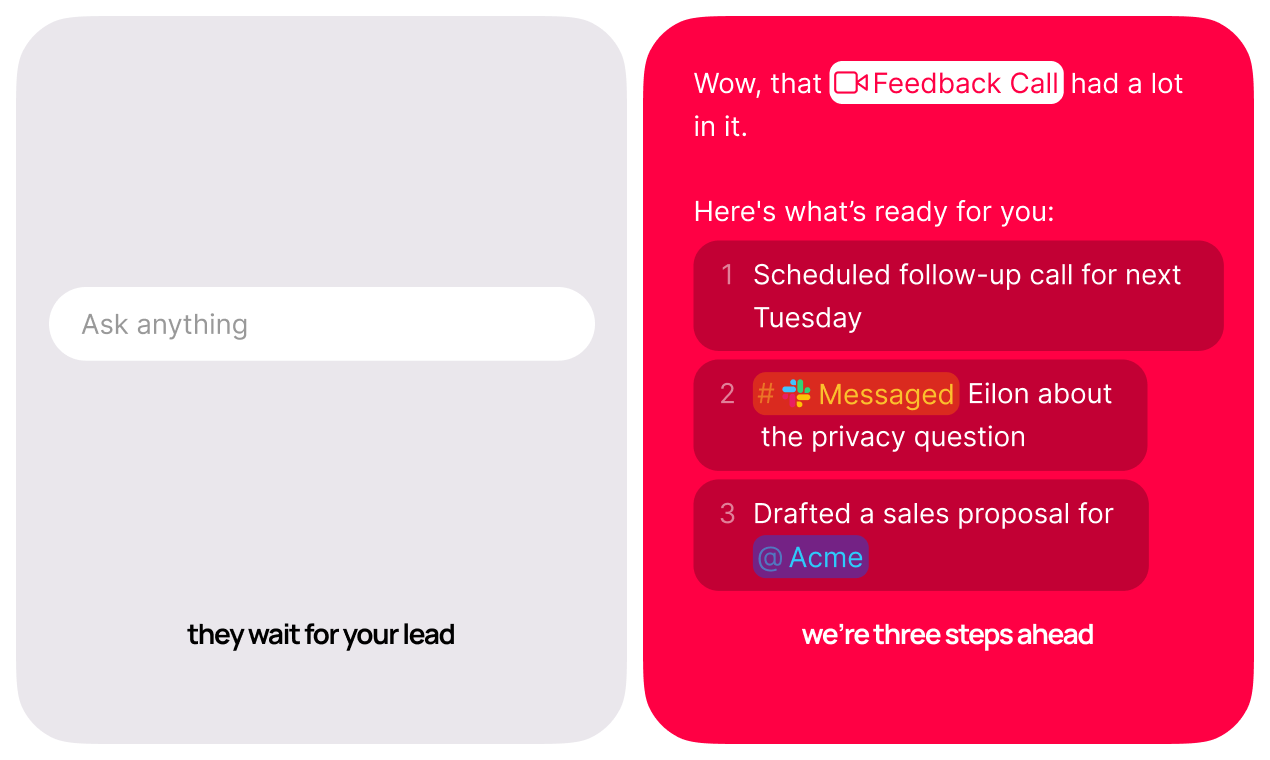
Timeless
Agents built from your conversations
213
一句话介绍:Timeless 是一款AI智能体平台,它能自动识别会议、通话等各类对话中的意图,并直接创建任务、起草文档、安排跟进会议,解决了会后执行断层、效率低下的核心痛点。
Meetings Artificial Intelligence
AI智能体 自动化执行 会议效率 工作流自动化 对话智能 生产力工具 智能助理 任务管理 知识管理 跨平台协作
用户评论摘要:用户普遍赞赏其“行动者”而非“记录者”的定位,认为能真正推动工作进展。主要问题集中于:1. 在复杂、模糊或玩笑式对话中,如何保证理解和执行的精确性?2. 如何跨平台、跨非正式对话维持上下文连贯?3. 如何与现有工具(如Slack、日历、网盘)深度集成以降低使用门槛?
AI 锐评

Timeless 的野心不在于做另一个优秀的笔记工具,而在于成为工作流的“末梢神经”与“执行引擎”。其宣称的价值并非更好的记录,而是让“说过即做过”成为可能。这直指现代协作中最隐秘的损耗:从意图到行动的转化成本。

产品的真正创新点在于其“被动触发”模式——无需主动操作,AI在后台持续监听对话(线上/线下),将自然语言直接解析为可执行指令。这试图将人类从繁琐的“自我任务管理”中解放,把对话本身变成最自然的交互界面。然而,这也正是其最大的风险与挑战所在。

首先,是精确性与“过度自动化”的悖论。评论中多次提及的“模糊、玩笑语境”问题,本质是AI对人类复杂沟通中大量隐含上下文、社交线索和意图不确定性的理解鸿沟。误判不仅会产生垃圾任务,更可能引发严重的协作信任危机。其次,是数据与系统的“连接器”难题。其价值高度依赖于与现有工具链(日历、网盘、CRM、任务系统)的无缝集成能力,这涉及复杂的API工程与权限问题,也是用户切换成本的核心。最后,是其商业模式的潜在隐忧:一个持续监听所有对话(包括线下)的平台,将数据安全与隐私合规置于何等优先级?这需要极致的透明度和控制权设计。

如果Timeless能攻克精确性、系统集成与隐私安全这三座大山,它有望从“智能笔记”的红海中开辟出一个新品类——“对话驱动自动化”。其真正的对手或许不是Fathom等笔记工具,而是未来所有试图将自然语言转化为行动的AI原生操作系统。目前,它展示了一个诱人的愿景,但通往“可靠的工作副驾驶”之路,仍布满需要极致工程与伦理思考的荆棘。

查看原始信息
Timeless
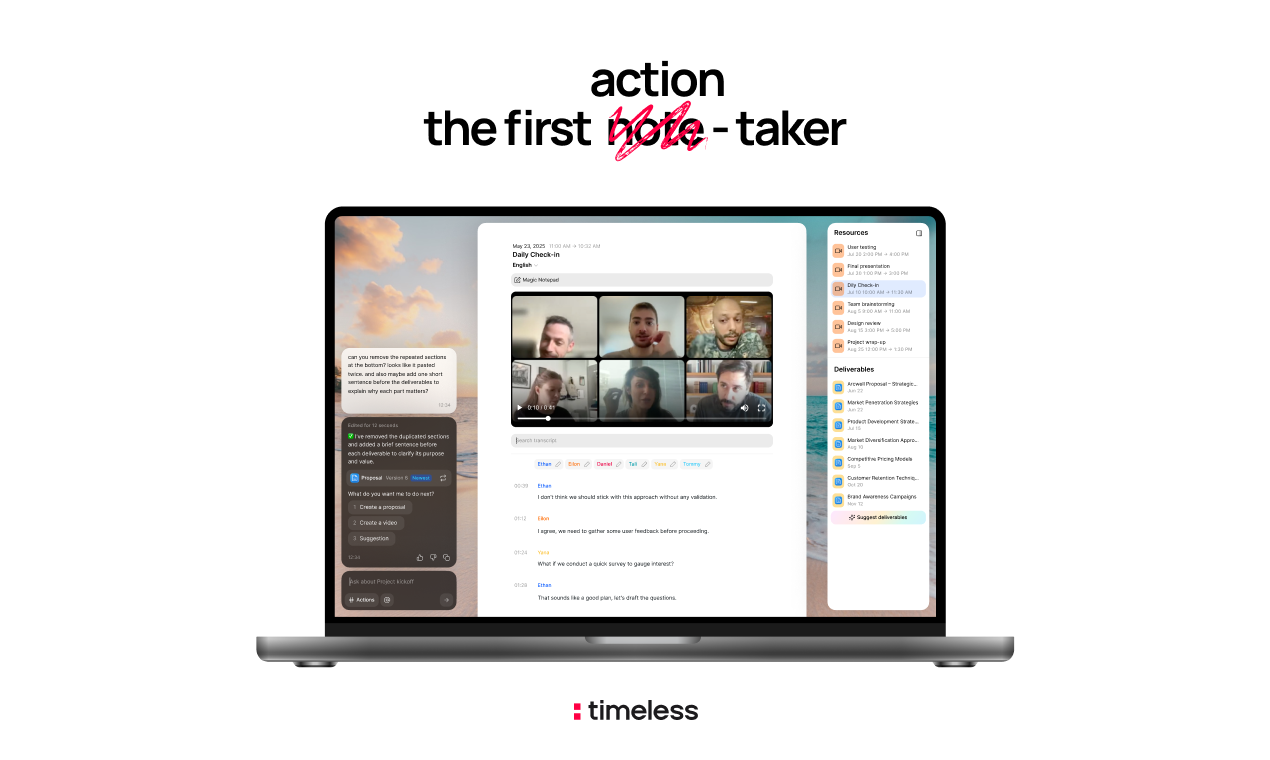
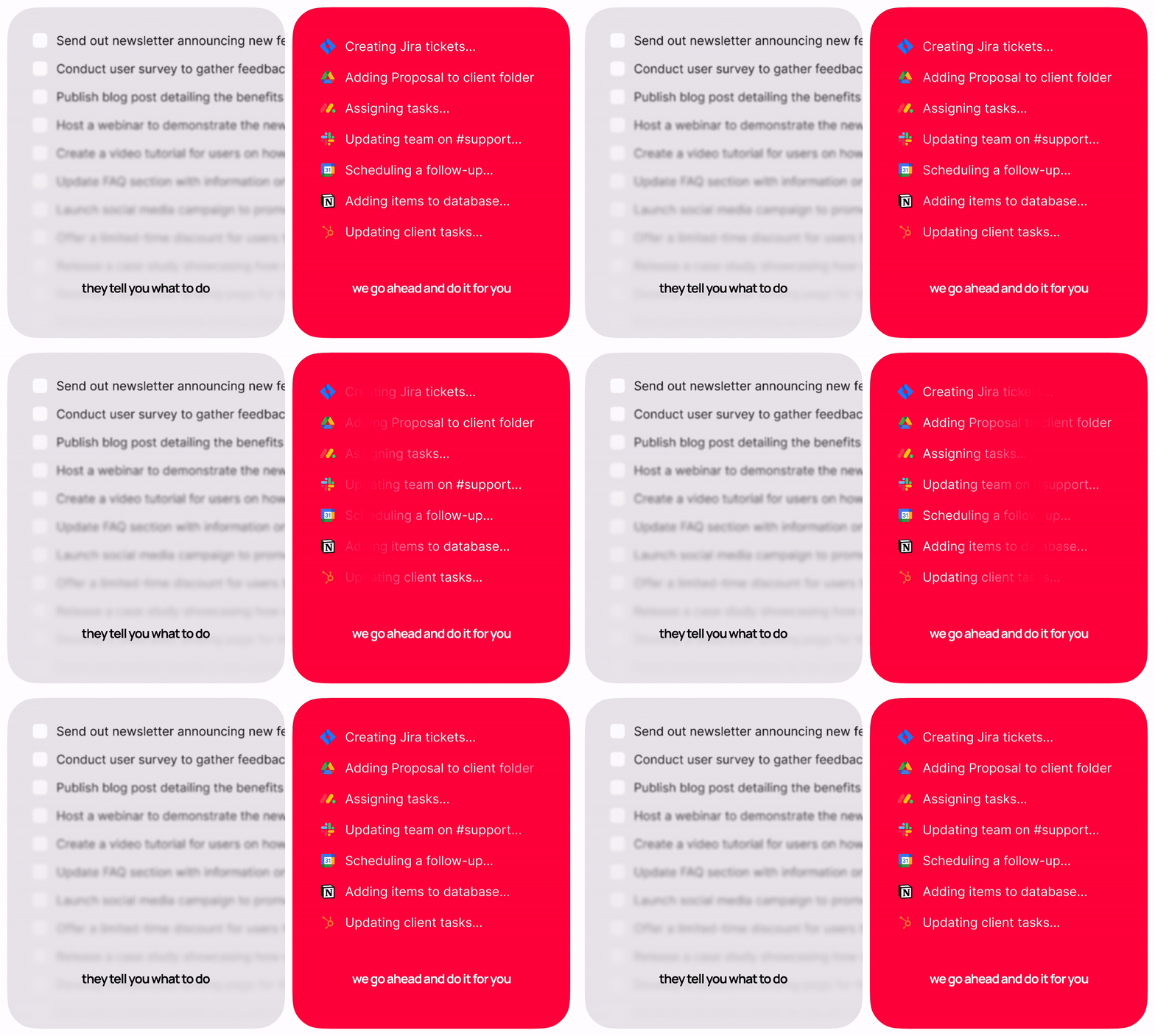
Timeless is a platform where your conversations build your agents. You say “let's follow up” in a conversation, and the follow-up meeting is already scheduled. “Let’s write this up,” and it’s drafted. You meet with a client, a proposal is ready and the whole conversation is added to your client room, updated and ready to share with your team. Timeless works across meetings, phone calls, and real-world moments. It hears the moment a task is born and makes it real.

Hey Product Hunt 👋 I’m Tommy, co-founder of Timeless.

Meetings weren’t the problem. Nothing happening after them was.

For a while, we tried notetakers. They helped us remember what was said. But remembering wasn’t the hard part. The hard part was everything that came next.

Your face to face? It’s a prompt.

Your Zoom? Prompt.

Your phone call? Prompt.

Your “quick sync” by the coffee machine? Also a prompt.

Timeless captures every kind of conversation, even the passive aggressive ones, and turns them into follow ups, proposals, tasks, stakeholder docs, and more.

The things you said you’d do tend to already be there when you go looking for them.

This is our first time saying all of it at once, and we’d love your support.

just say the word, and all this is there:

🧠 Agents that build themselves

Agents form from what you already do. Your calendar. Your calls. Your conversations.

Follow through Agent. Proposal Agent. Eat the Frog Agent.

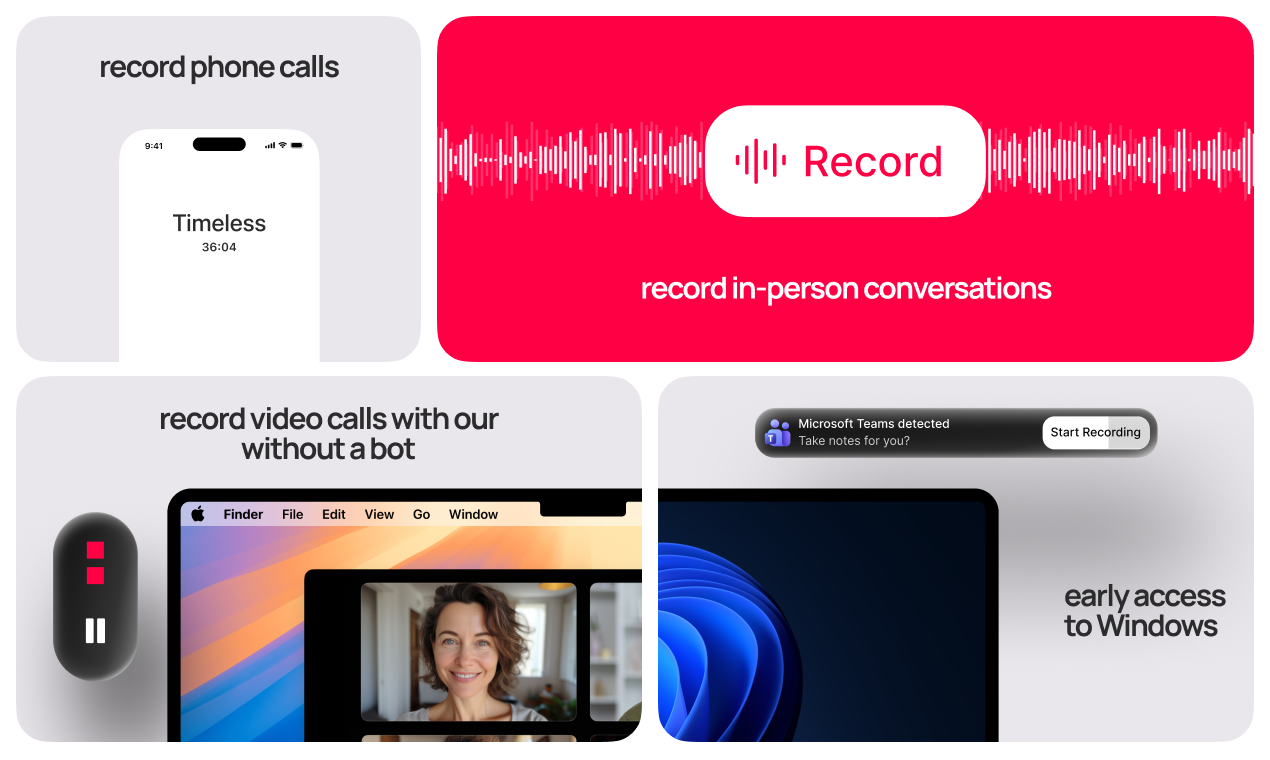
📞 Works across Zoom, phone, and in person

No links. No setup rituals. We even built a phone number for real life conversations. Put it on speaker.

🗂️ Rooms that organize themselves

Every doc, decision, and next step grouped by project or client.

Shared with one link. No recap needed.

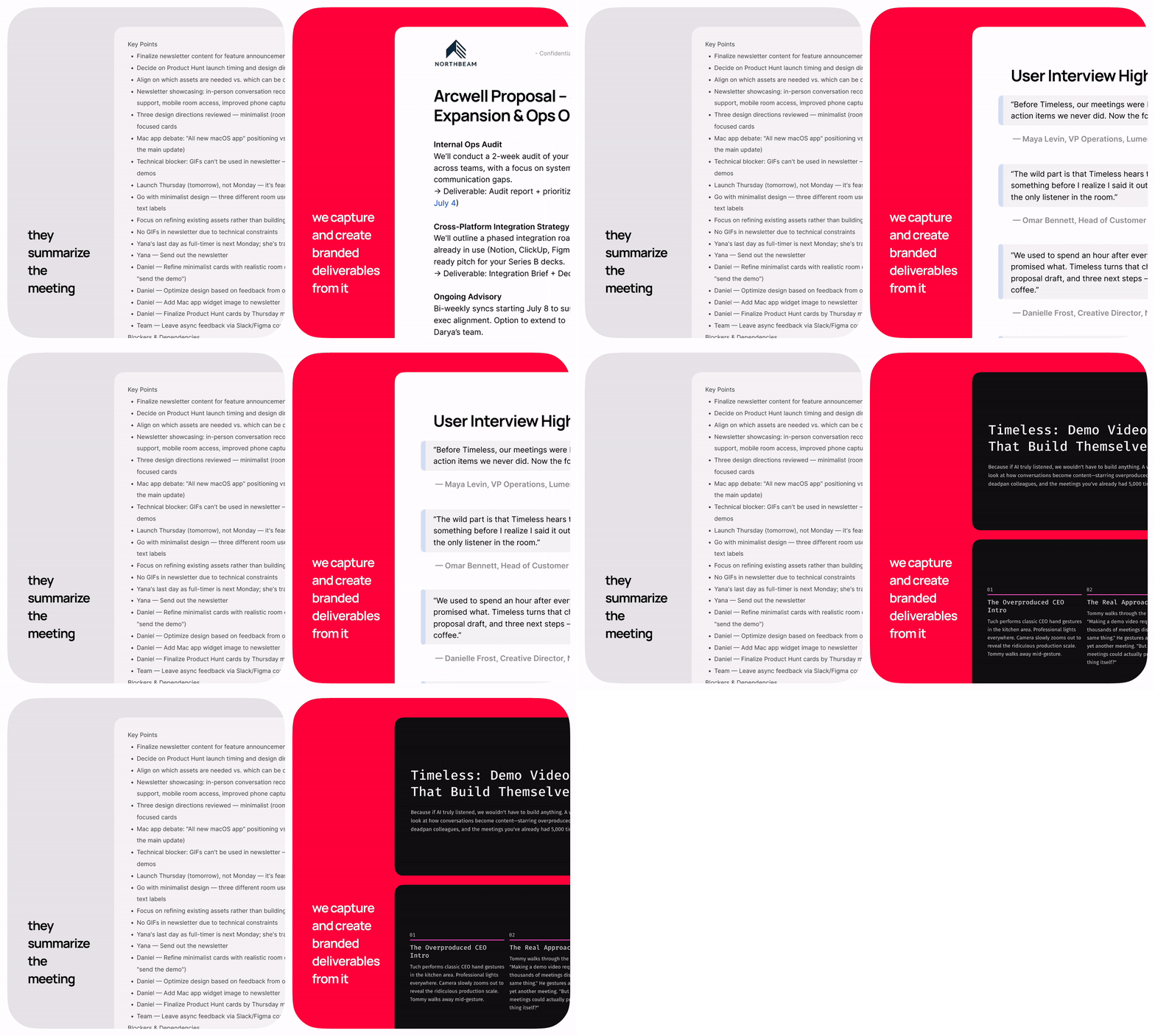
📄 Outputs, not summaries

Briefs. Slides. Next steps. The things you usually scramble to send.

Already written. Already filed.

We believe the most important moments don’t happen inside tools. They happen in the moment.

So we built something that listens closely and makes sure something actually happens next.

Join the conversation/Let’s talk —> www.timeless.day

6
回复

@tommy_bar_av1 congrats on the launch. Will you launch a Windows app soon?

0
回复

“Action-taker, not a note-taker” is a strong framing but the hard part is precision. Curious how Timeless avoids over-acting or misinterpreting intent when conversations get messy, ambiguous, or half-joking.

3
回复

When all is said... it's done! That's the beauty of timeless. We don't need to keep having meetings to talk about the meetings to follow-up on the action items to async the syncs. It can all happen at the same time, in the moment. Loved all the conversations that went into making this thing real!

3
回复

@yana_h1 Great hearing it from a timeless freelancer! ❣️

1
回复

Hundreds of conversations went into building this. Which feels fitting... because that’s the whole point.

2
回复

I love the shift going from passive scribe to active agent that actually helps you do the work. Congrats to the team 🔥

2
回复

@amitay_gilboa_design Thanks buddy!

0
回复

Love it! How is it different from a normal note-taker?

2
回复

@saar_lit That's a great question!


Three main parts:

  • It takes action for you — This is the key part. Timeless extracts action items, sends emails, creates documents, writes todos, builds presentations, generates clips - all without you having to manually do those things. It actually executes work.

  • It understands context — It synthesizes across multiple meetings, finds patterns, answers questions about what was discussed. It's not just a dumb transcript storage system.

  • It integrates with your tools — Timeless can send summaries to Slack, create calendar events, file things into Google Drive, update your task management system. It's connected to your actual workflow.

2
回复

One thing that truly is timeless, our conversations. love this!

2
回复

@coral_hartman Thank you for all your amazing support

1
回复

Love the idea of agents forming from existing behavior. Curious how you handle context across informal, in-person conversations.

1
回复

We didn’t want better notes. We wanted things to actually happen.

1
回复

@eilonmor Co-founder vibes!

0
回复

Congrats on the launch! I like the framing of conversations as prompts and the focus on outputs rather than summaries. From a product perspective, how does Timeless decide which outputs to generate from a single conversation, especially when discussions are messy or exploratory, and how do you avoid over-producing tasks or docs that don’t actually need to exist?

0
回复

I love the demo video! "action-taker" is the right framing, but context is tricky. if i say "send them the deck," how does it know which file in my drive i'm actually referring to?

0
回复

looks great @tommy_bar_av1 . we're using fathom but this looks like a nice upgrade to go beyond 'meeting notes'.

0
回复
Switching costs are real because notes, tasks, and CRM are already scattered across tools. In a typical team, what’s the smallest adoption footprint that still produces a ‘wow, it just happened’ outcome—and what existing systems does Timeless have to integrate with to get there?
0
回复

Really like this action taking approach! I am curious about how is context maintained across multiple conversations that happen across platforms? Do the agents link conversations on the basis of shared participants / topics of discussion?

0
回复

Congrats on the launch @tommy_bar_av1 ! Action-taker > note-taker is spot on, actually extracting what matters is pretty daunting task (i'm doing memory for agents)
curious how do you decide what's signal vs noise?
onwards!

0
回复
#5
ShapedQL
The SQL engine for search, feeds, and AI agents
162
一句话介绍:ShapedQL是一个用于搜索、信息流和AI智能体的SQL引擎,它通过将简单的SQL编译成实时排序管道,帮助开发团队快速构建个性化的“为你推荐”信息流、搜索和RAG记忆系统,解决了团队在整合向量数据库、特征存储和重排序服务时面临的架构复杂、代码臃肿的痛点。
Software Engineering Developer Tools Artificial Intelligence
SQL引擎 实时排序 个性化推荐 向量搜索 特征工程 AI智能体 机器学习运维 信息流系统 检索增强生成 开发效率工具
用户评论摘要:用户反馈积极,认为产品精准击中了工程实现的痛点。主要问题集中在技术细节:对评分阶段ML模型的控制度与自定义能力、多源检索时的动态排序、大规模下的特征新鲜度与延迟保障、以及上线后如何快速迭代相关性。创始人团队给予了详细的技术解答。
AI 锐评

ShapedQL的野心不在于发明新算法,而在于对机器学习系统,特别是推荐与搜索系统,进行一场彻底的“工程范式”重构。它试图用声明式的SQL语言,封装从多源检索、过滤、实时模型评分到结果重排的完整复杂管线,将原本分散在Pinecone、Redis、Python脚本乃至特征平台中的“胶水代码”抽象为一层统一的接口。

其真正价值在于“降本增效”,但这个“本”不仅是代码行数,更是高级ML人才的认知负荷与团队的迭代成本。它让算法工程师和全栈开发者能以更接近产品逻辑(“给购物车推荐相关商品”)而非基础设施逻辑的方式工作,有望显著缩短从实验到生产的周期。创始人Meta AI的背景,使其对Instagram级信息流系统的复杂性与痛点有深刻理解,产品设计直指要害。

然而,挑战同样明显。首先,它将系统的核心权重完全押在了ShapedQL自身的可靠性、性能与灵活性上,这要求其底层引擎必须极其健壮。其次,虽然声明式接口降低了入门门槛,但当需要极致优化或处理非常规场景时,开发者可能会感到“黑箱”般的束缚感,其自定义模型和特征的能力边界将是关键。最后,它身处一个竞争激烈的领域,既要应对传统向量数据库的向上延伸,也要面对各大云厂商的类似托管服务。能否建立足够深的护城河,并让开发者信任其能处理大规模、高要求的线上流量,将是成功的关键。总体而言,这是一个思路正确、直击痛点的产品,但其长期成功将取决于工程实现的深度与生态构建的广度。

查看原始信息
ShapedQL
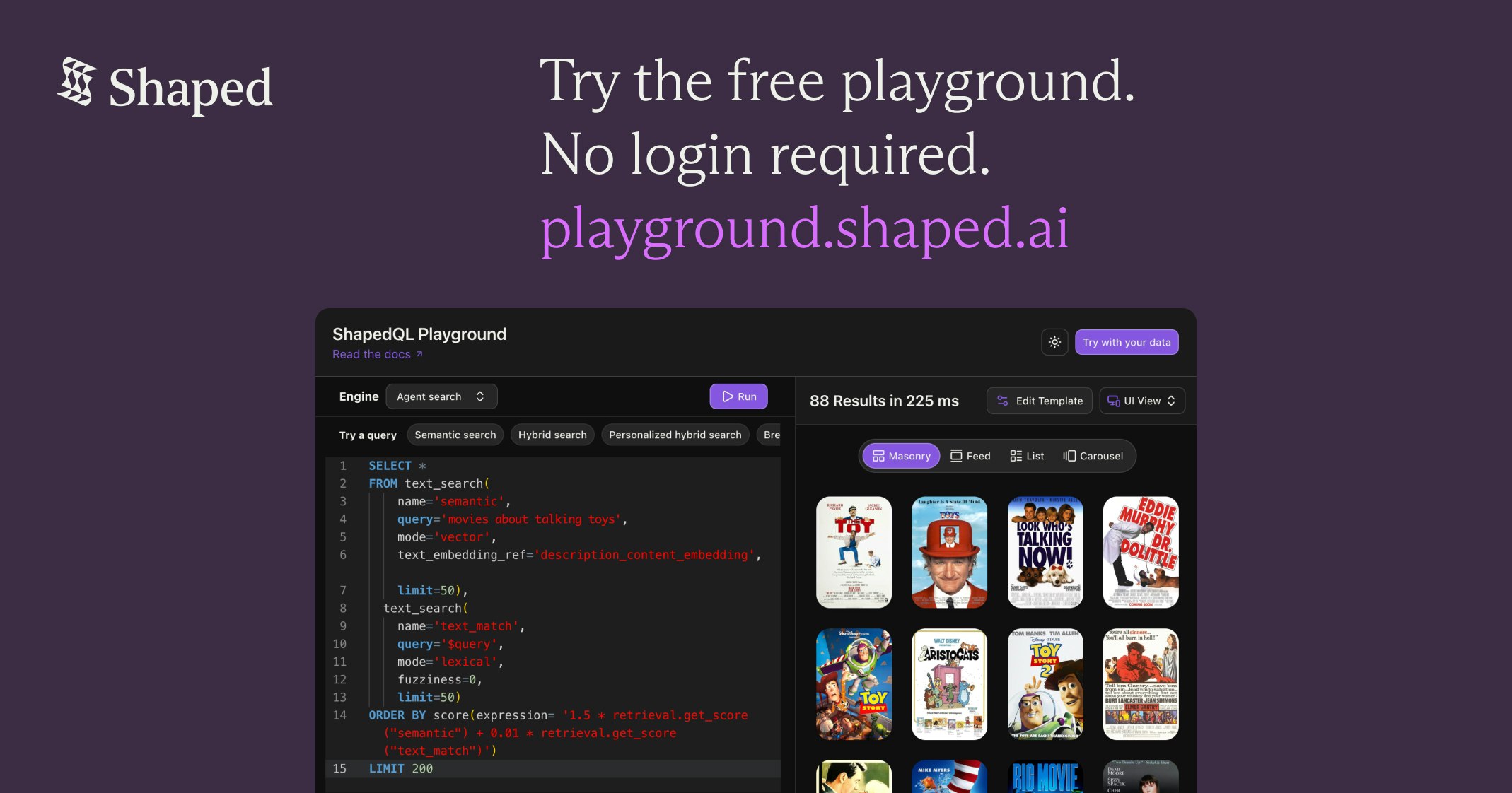
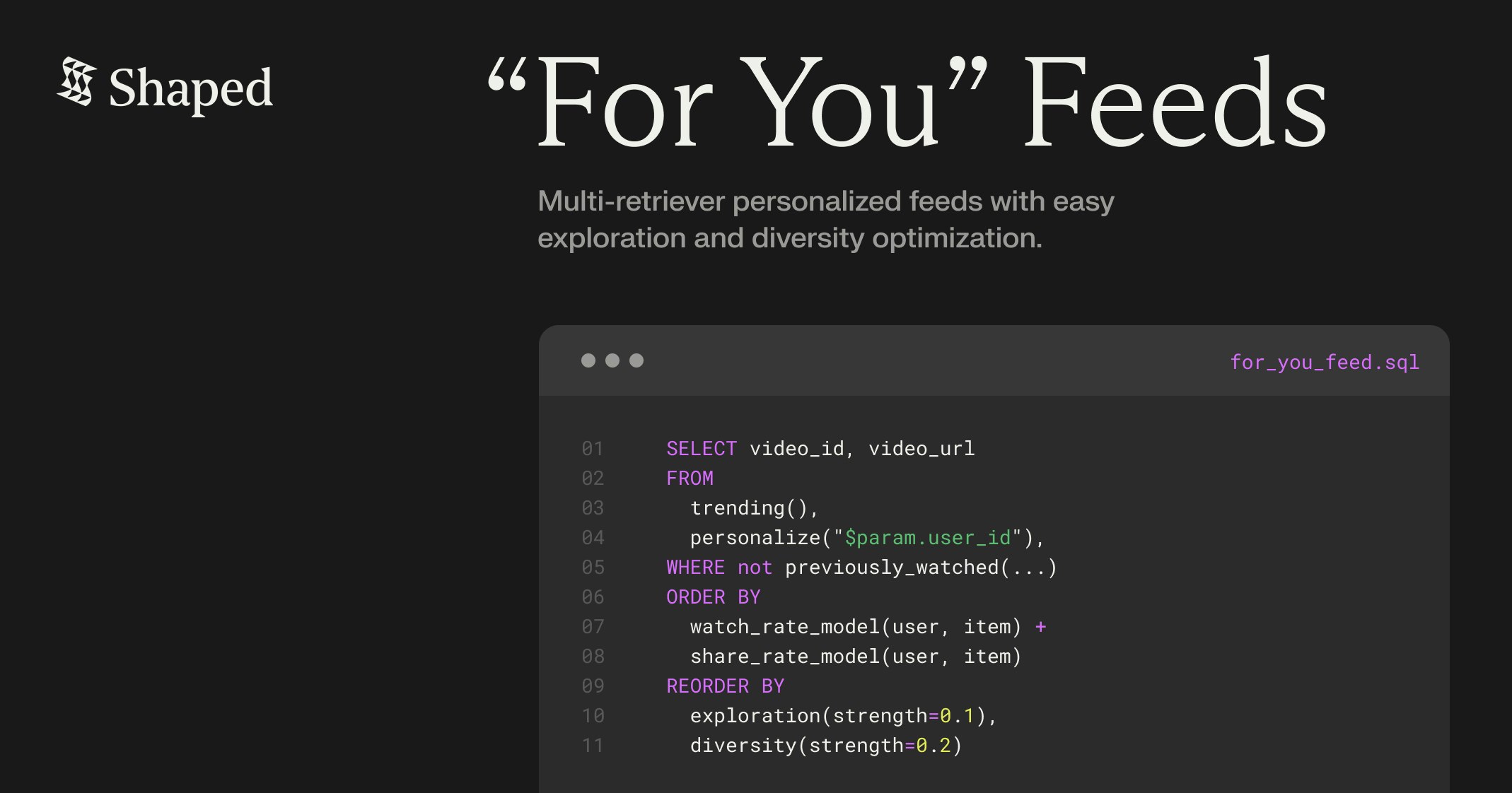
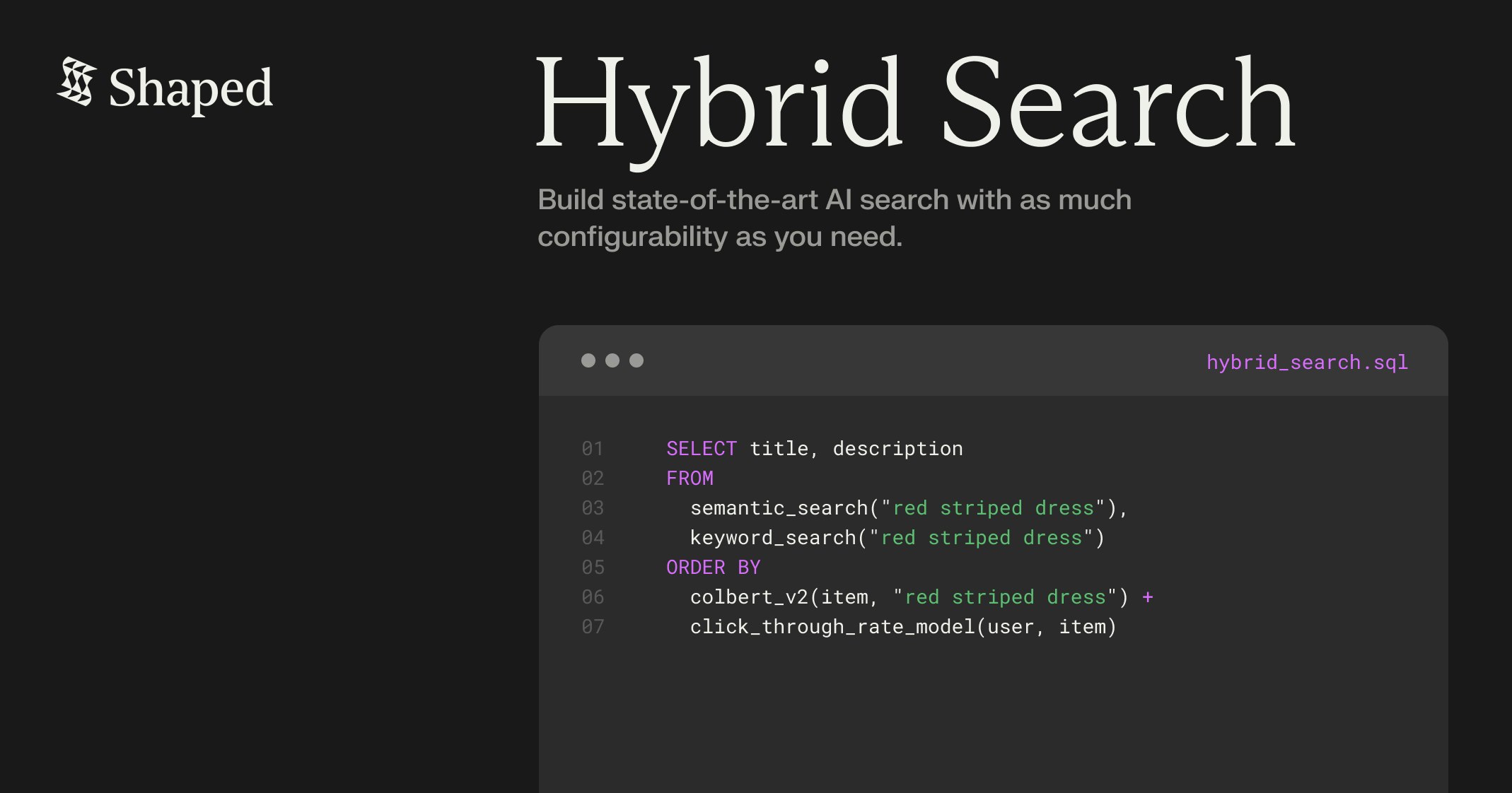
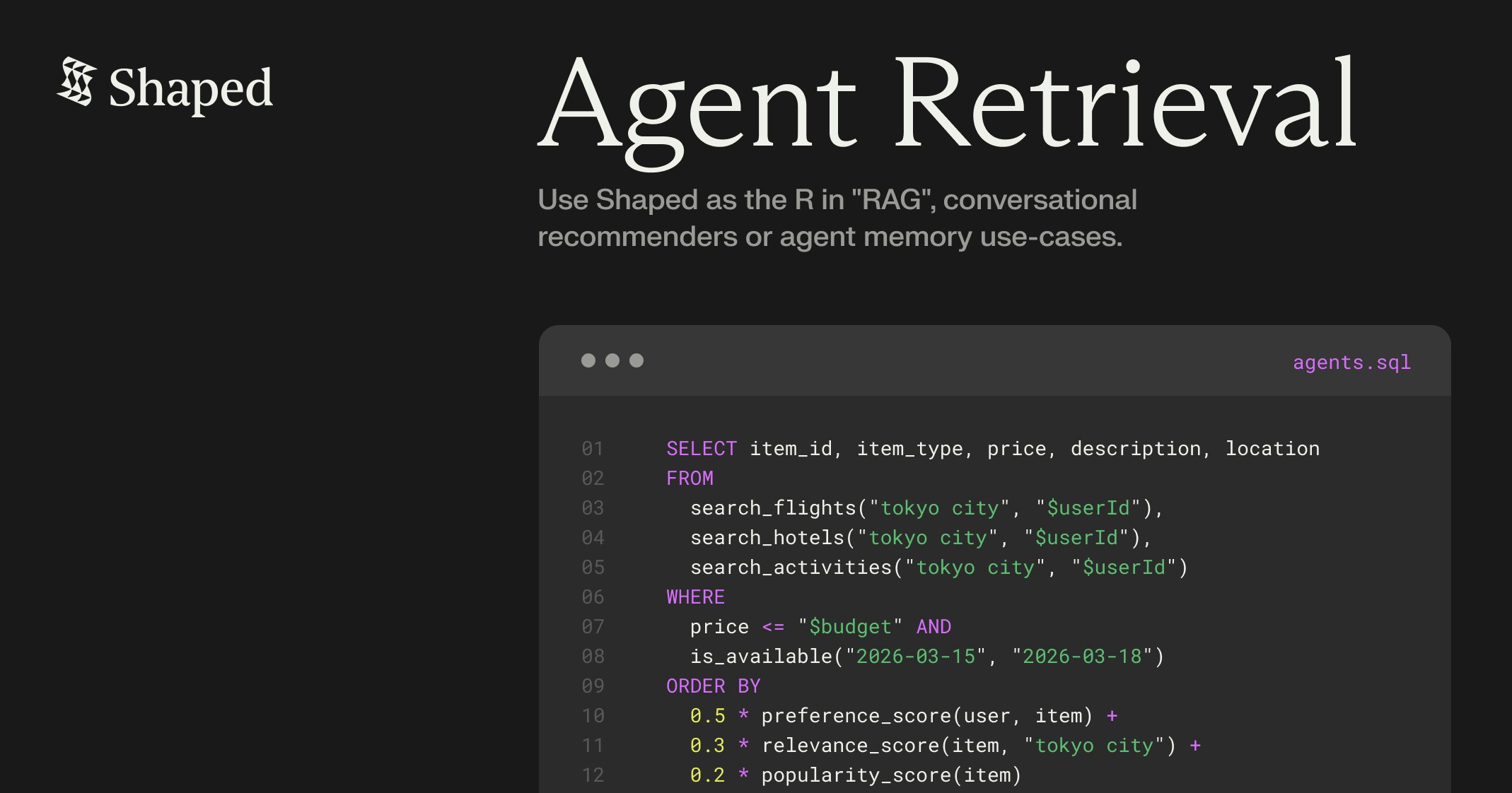
Stop gluing Pinecone, Redis, and Python scripts together. ShapedQL is the SQL engine for relevance - powering "For You" feeds, Search, and RAG memory in minutes. It compiles simple SQL into real-time ranking pipelines that retrieve, filter, score, and reorder results based on live user behavior. Replace thousands of lines of infra with 30 lines of SQL. With native multi-modal embeddings and automated MLOps, ShapedQL helps you build real-time decisions, not just document retrieval.

Hi Product Hunt! 👋

I'm Tullie, the founder and CEO of Shaped. Previously I was a researcher at Meta AI, leading several ML teams including one focused on Instagram Reels and Ads video ranking. I also created PyTorchVideo and was a core contributor to Pytorch Lightning.

We built ShapedQL because we realized that while retrieval has become easier (thanks to Vector DBs), ranking and relevance are still incredibly hard.

Most engineering teams we talk to are stuck maintaining a "Frankenstein" stack. To build a "For You" feed or give an AI Agent personalized memory, they have to glue together a vector database, a feature store (like Redis), a reranking service, and thousands of lines of Python spaghetti code.

We built ShapedQL to turn that "house of cards" into a single interface.

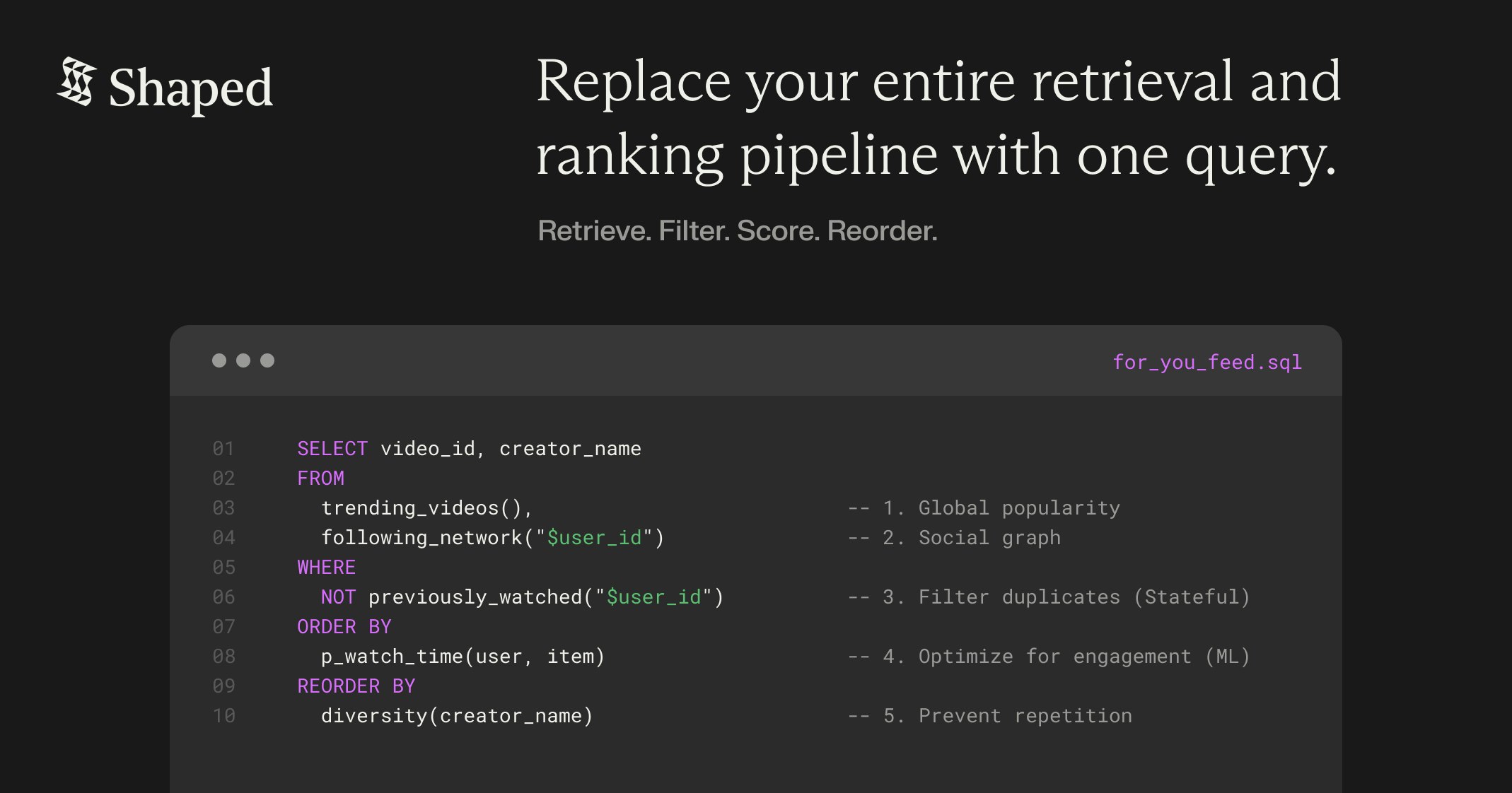
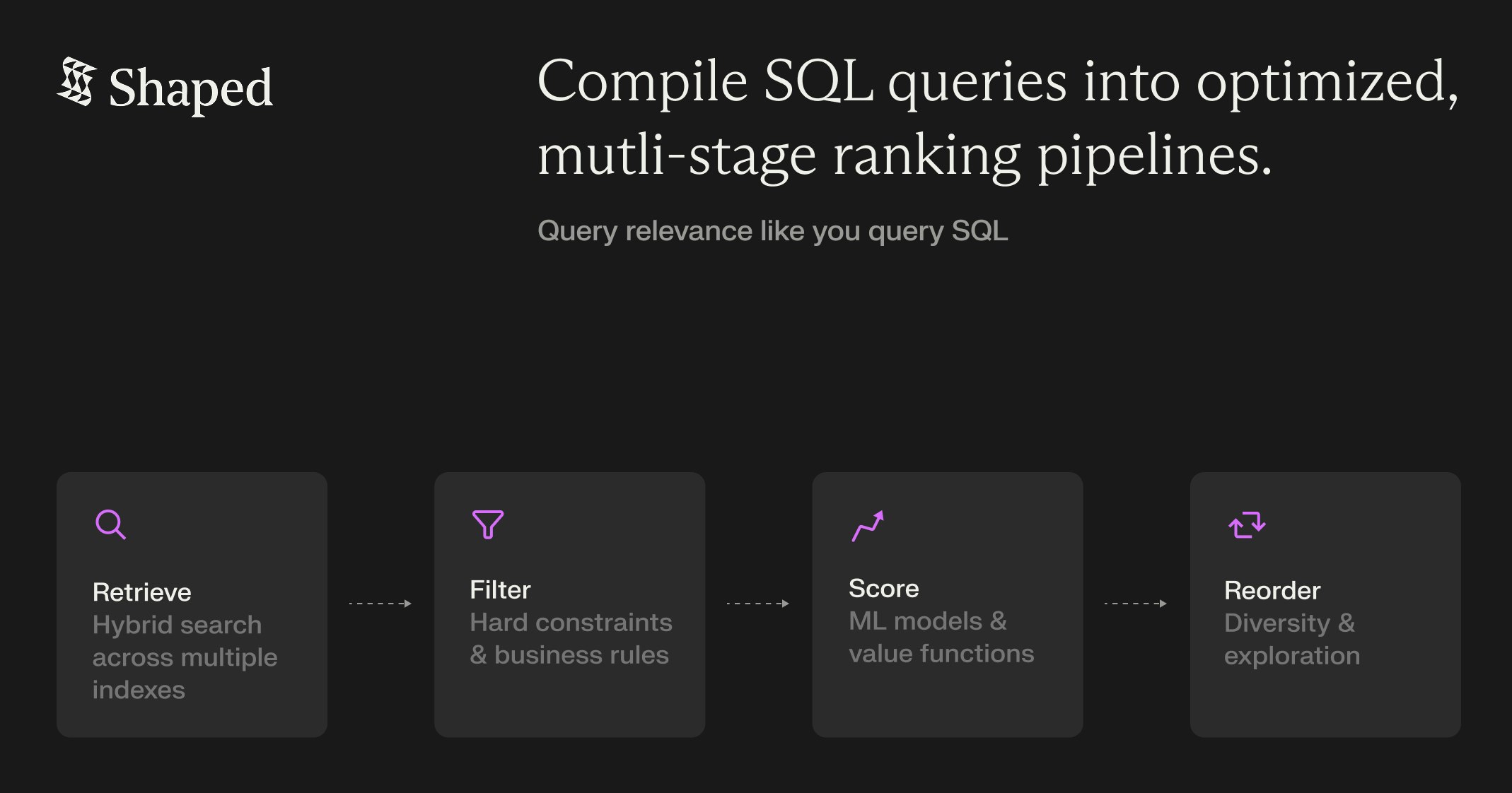
ShapedQL is a domain-specific SQL dialect that compiles down to a high-performance, multi-stage ranking pipeline. With a single query, you can define the four stages of modern relevance:
1. Retrieve: Fetch candidates from multiple sources (Hybrid Search, Collaborative Filtering, Trending).
2. Filter: Apply hard constraints (e.g., "in stock" or "within 50 miles").
3. Score: Rank results using real-time ML models (optimizing for clicks, purchases, or watch time).
4. Reorder: Enforce diversity so your users (or Agents) don't see the same 5 items repeatedly.

We're seeing teams reduce 2,000+ lines of maintenance code down to ~30 lines of ShapedQL, while shipping features like "Cart Upsell" or "Agent Memory" in days instead of months.

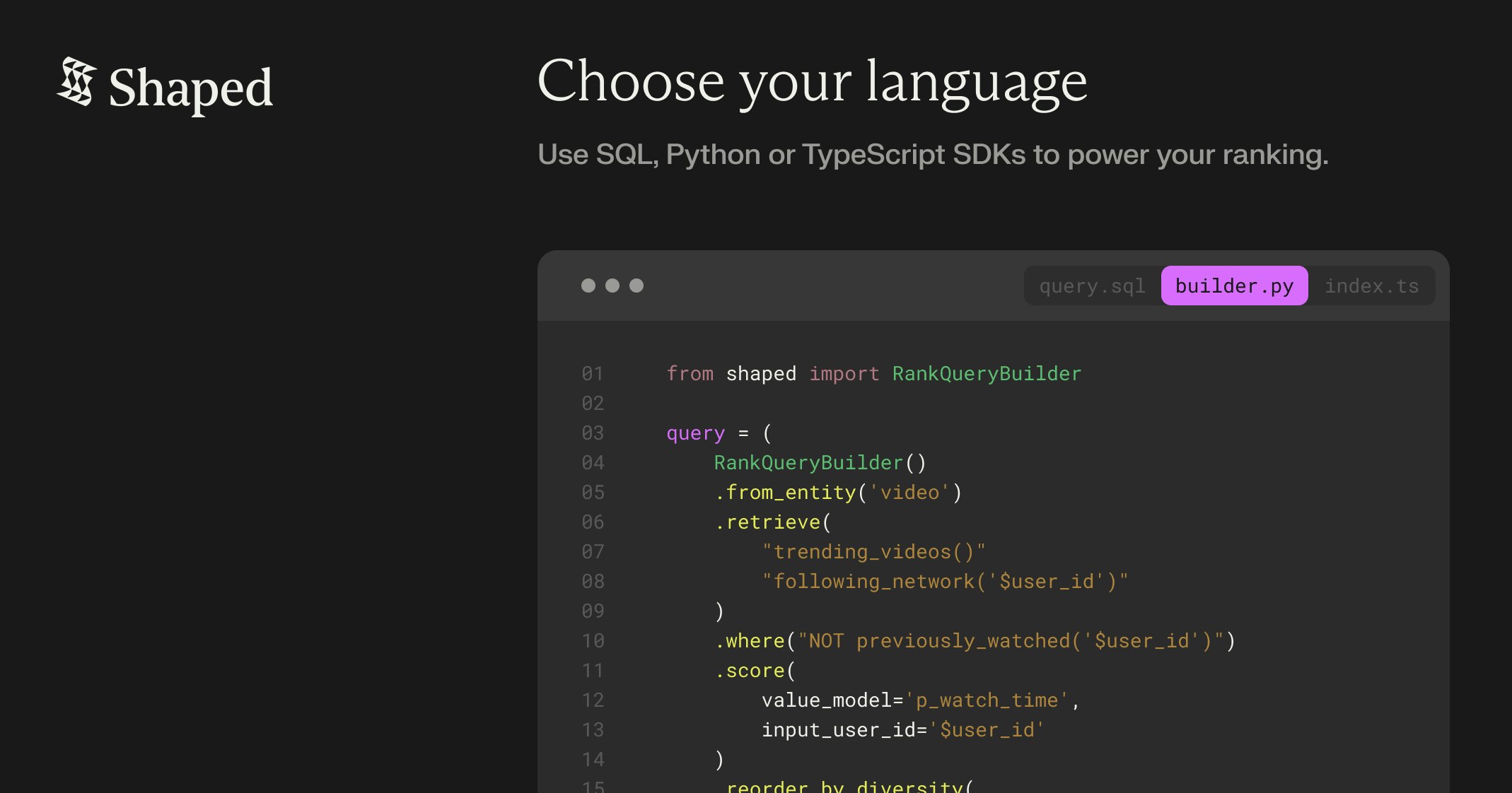
If you're not a fan of SQL you can also choose from Python or Typescript SDK's.

I'd love to hear your feedback and answer any questions about the syntax or how it works under the hood! 🚀

18
回复

@tullie_murrell the scoring stage. how much control do you have over the ml model? can you bring your own model or is it mostly shaped's built-in ranking?

5
回复

@tullie_murrell Your project accurately addresses the pain points of engineering implementation. Replacing glue code with declarative queries can significantly improve iteration efficiency from experimentation to production, while maintaining the flexibility of underlying optimization. Looking forward to learning more technical details about real-time feature computation and model hot updates.

0
回复

@tullie_murrell congrats on the launch. For the retrieve function, can it also rank different sources to decide on the go which source to call? (in cases where you use multiple enrichment providers)

7
回复

This is sick - more teams able to build better feeds. Are you able to share any feeds Shaped is powering that you're particularly proud of?

8
回复

@anteloper - One of my favorites is Afterhour's feed - check it out: https://www.afterhour.com/

4
回复

Real-time retrieval and ranking tends to break at scale on feature freshness and training serving skew when event volume spikes and backfills happen.

Best practice is strict offline to online feature parity with a streaming fed online feature store plus impression logging for eval and safe shadow or canary rollouts.

How does ShapedQL handle feature definitions and model versioning plus A B testing while keeping low p99 latency across retrieve filter score reorder stages?

8
回复

@ryan_thill Yeah great question, these are all pretty much the most difficult part of things about RecSys and production IR and it's taken us ages to build all of this! Here's how we approach it (and the technologies we use if you're interested):
1. We have our own real-time feature store that handles the offline and online feature parity. It uses redis for online store and we provision a new redis instance for each tenant so it's all isolated. Part of Shaped's interface allows you to define the features you want to generate, although it's limited at the moment and we're planning on fleshing this out more in the coming months.
2. We have shadow and canary rollout system (uses Argo rollouts). We shadow for 30mins, then canary for 30mins typically, and only finalize a deployment if click-through-rate metrics and system metrics look good.
3. We have a predication store in Clickhouse that contains all of the impression logs and query requests, we do a join between these to work out attribution, and analyze A/B tests.
4. The query endpoints does have some abilities for internal A/B tests and we have a multi-armed bandit parameter optimization system, however, typically we ask customers to A/B test on their side so they can get an apples to apples comparison with what their benchmark.
5. We embed our vector store and model weights alongside each other in the query pod, which means we can get extremely fast end-to-end latency and zero copy performance through the rest of the 4 stages. We typically aim for 30ms P50.

6
回复
Hey Tullie, that Frankenstein stack image is painfully accurate. Was there a specific team you talked to where you saw them drowning in that glue code and thought this is way too complicated for what should be a solved problem?
7
回复

Hey @vouchy - I can take this one. Yes, there was one specific company (who we can't name 😉), who had 3000 lines of elastic search rules behind their ranking. Every decision was nested under layers upon layers of rules. Eventually we converted to it to ShapedQL and managed to cut it down to 30 lines.

7
回复

Very cool. Congrats on the launch, fellas.

5
回复

@jonathan_nass thanks for all the support!

0
回复

Congrats on the launch! Looks so good

4
回复

Congrats on the launch @tullie_murrell ! How do teams actually iterate on relevance once they’re on ShapedQL? Is the biggest win faster experimentation, or just not having to touch infra every time they tweak ranking logic?

2
回复

@ehi_airewele yeah it's a great question. With search, recommendations and retrieval there's always something you need to iterate on, e.g. you might want to incorporate new types of data about your users, you might want to try a recently released AI model, you might have changing objectives quarter over quarter (e.g. conversions vs repeat purchases). Shaped is the infrastructure that helps your configure, adapt and experiment with all of these things faster (exactly as you mentioned). This ultimately leads to better, more relevant results that are updated to the needs of your business and users.

1
回复
#6
CapslockMute
The fastest way to mute yourself on video calls
156
一句话介绍:一款Mac工具,将Caps Lock键重映射为Zoom、Teams等视频会议软件的静音快捷键,利用大键位优势实现快速盲操,解决用户在紧急情况下(如突发噪音)手忙脚乱寻找静音按钮的痛点。
Mac Productivity GitHub Menu Bar Apps
效率工具 Mac应用 键盘映射 视频会议 静音快捷键 远程办公 生产力 用户体验优化
用户评论摘要:用户普遍认可其便捷性,将其奉为“肌肉记忆”式解决方案。主要建议与问题集中在:1. 希望Caps Lock指示灯能同步静音状态以提供视觉反馈;2. 担心应用更新导致快捷键失效或状态不同步;3. 询问是否支持更多会议软件及自动切换。
AI 锐评

CapslockMute 的价值远不止于一个键位映射。它实质上是针对“视频会议常态”这一现代工作流的一次精准外科手术,其核心洞察在于:占据键盘宝贵位置的Caps Lock键,其原生功能的使用频率已远低于静音需求。产品巧妙地将一个“空间浪费”转化为“效率枢纽”,这不仅是菲茨定律(Fitts‘ Law)的胜利,更是对硬件设计滞后于现实工作场景的辛辣讽刺。

然而,其光鲜的“单键解决方案”背后,潜藏着深层的技术脆弱性与体验断层。首先,它作为一款上层应用,严重依赖各大会议软件未经验证的快捷键API,任何一次Zoom或Teams的更新都可能无声地切断其命脉,导致状态“失同步”——这种风险在关键商业会议中是致命的。其次,用户对指示灯同步的强烈渴求,恰恰暴露了当前方案的“感知黑洞”:肌肉记忆虽快,但缺乏即时、可靠的确认反馈,用户可能在“自以为静音”的状态下滔滔不绝。创始人坦言MacOS限制使得指示灯映射“几乎不可能”,这成了产品体验的天花板。

产品的真正挑战在于,它试图在操作系统与应用软件的夹缝中,搭建一座本应由系统层或硬件层提供的桥梁。它的流行,反衬出笔记本制造商在适应“视频会议优先”时代时的麻木与迟缓。长远看,它或许更像一个成功的概念原型,其终极命运要么被操作系统原生功能吸收,要么因平台限制而止步于小众极客工具。它的成功,在于响亮地提出了一个正确的问题;而它的局限,则在于受制于现有生态,无法给出一个彻底、稳健的答案。

查看原始信息
CapslockMute
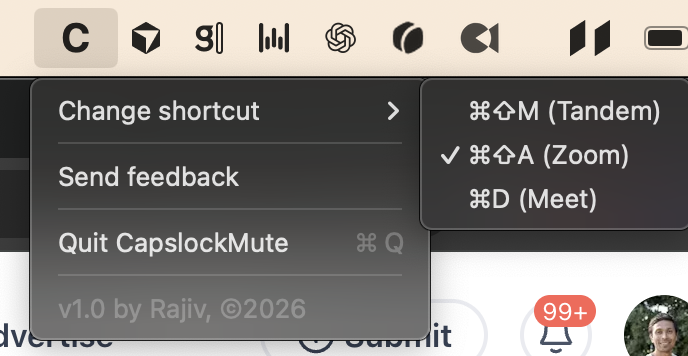
A Mac utility to remap Caps Lock to the mute shortcut for Zoom, Teams, and Tandem. Because CapsLock is a large key and at your finger tips, it's much faster than clicking a button or pressing a combination of keys. It truly makes muting/unmuting muscle memory.

I had this idea when I was building @Tandem (a virtual office for remote teams) and saw how awkward it can be when someone can't mute themselves. We built the ability to mute a teammate, but I thought it would be even better if mute/unmute could become muscle memory...so I remapped caps lock to mute via @Karabiner .

It quickly became one of my favorite hacks - I think it's because Caps Lock is a large key, so it's much quicker to press than a combination of keys. Yay Fitts' Law!

When I got a new laptop and my Karabiner setup broke, I missed it so much I built a dedicated app - now others can use it!

I added a meeting app selector so you can change the keyboard shortcut to work with other meeting software.

I find myself using it all the time!
- About to sneeze? -> Hit caps lock to mute.
- Want to dictate a note via @Aqua Voice while on a call? -> Hit caps lock to mute
- Child throwing a tantrum? -> Hit caps lock to mute
- Loud car horns near your house? -> Hit caps lock to mute

Remapping mute to caps lock is more satisfying than:
- backing into a parking space
- changing your keyboard layout to Dvorak
- customizing launcher shortcuts in @Raycast

It's absolutely crazy that laptops are still shipped with a Caps Lock key and not a mute toggle, given how much time most of us spend on video calls. If anybody knows a way to remap the LED to your mute state, that would be even better, but as far as I can tell, it's not possible on MacOS.

5
回复

@rajiv_ayyangar That's a cool app, Rajiv! I'll give it a shot in my next Google Meet.

Right now, though, my setup uses a mic with a physical button that mutes me silently without any on-screen indicator. I just press to mute and unmute when I need to speak.

I recall Gabe (or someone else on Product Hunt) was building a Mac app to do exactly that; hide the mute status. Was that you, @gabe?

0
回复

@rajiv_ayyangar It reminded me of when I built it for Noor: https://x.com/morajabi/status/1739291208512340363?s=20
And it is possible to light up the LED, if you need it I can find the code and send it over on Twitter DMs.

1
回复

Hey, my coworkers are going to be jealous because I can finally mute without looking down or fumbling with a keyboard shortcut.

2
回复

@jonathan_prime they should totally be jealous. You've ascended to a new plane of virtual meeting existence 😂

0
回复

The real struggle happens when you forget that you muted yourself and talk for one minute muted :D 😅

2
回复

@busmark_w_nika That's such a real thing. In Tandem, we popped up a notification telling you you're muted, but users don't always see that. Also, sometimes the person is intentionally muted and talking to somebody off camera, and the notification is unnecessary or even annoying. It's a hard UX problem, certainly!

0
回复

@rajiv_ayyangar Remapping Caps Lock to app-level mute is such a clean Fitts’ Law win; at scale the hard part is reliability across Zoom/Teams/Meet updates + making sure the mute state never desyncs.

Best-practice: read mic/app mute state (where APIs allow), add a tiny “you’re muted” HUD + optional haptic/earcon, and ship shortcut profiles w/ auto-detection per app.

Curious: are you planning a Meet shortcut profile + a failsafe that re-syncs if the meeting app loses focus or the shortcut changes?

1
回复

@ryan_thill "the hard part is reliability across Zoom/Teams/Meet updates + making sure the mute state never desyncs." - yeah this is something I might hack on. It's really tricky - you can detect foregrounded app and use some logic to denoise the timeseries, but there will be state drift from reality and I'll have to handle it gracefully and clearly.

I think a sound (mute/unmute) is super key - Tandem has it (because we spent time on sound design, inspired by Discord) but meet and zoom don't. I could implement sounds in the capslockmute app, but it needs to be synced with the actual mute state - not trivial.

"are you planning a Meet shortcut profile" - what do you mean by a shortcut profile? Since meet doesn't support a global shortcut easily, I was thinking a better approach would be to have a chrome extension to make a global shortcut work.

0
回复

My curiosity is high because this makes me wonder what other underused keys could become productivity heroes and I want to experiment immediately.

1
回复

My meetings have survived sneezes, crying babies, and car horns thanks to this concept alone and I can’t stop thinking how much calmer my Zoom calls could be.

1
回复

It would be amazing if the LED could show mute status because my habit is muscle memory but a small visual cue would make me feel extra confident on calls.

1
回复

@ill_robyn agree. What do you do now?

0
回复

My meetings are constantly interrupted by kids yelling or dogs barking, and this would have saved me from muting with clumsy key combos more times than I can count.

1
回复

@kimchi_2 absolutely - would love to know your thoughts after trying it out!

0
回复

I wonder if this works seamlessly across all apps because my calls jump between Zoom, Teams, and sometimes weird beta software and I don’t want to hit Caps Lock and stay unmuted by accident.

1
回复

@lilygordy right now you'll need to switch between apps. Maybe in the future I'll try building some auto-switching logic. You could also go into settings for your apps and change the shortcuts so they're similar. For example, for Tandem I'm using CMD+shift+M, which I believe also works with Teams. You could change Zoom's shortcut to be the same (Settings > Keyboard shortcuts), and then you'll never have to switch in the menu bar app.

0
回复

Honestly shocked laptops still don’t ship like this by default. We spend more time on calls than typing in ALL CAPS anyway. This just makes sense. @rajiv_ayyangar

1
回复

@abod_rehman paging tim cook.... :) Yeah I agree.

0
回复

Finally a real job for Caps Lock. I always miss the Zoom mute combo when the dog barks. Big key = easy. Going to try this. If you ever hack the LED to match mute state, that’d be perfect.

1
回复

@alexcloudstar Same here. Keyboard shortcuts sound nice, but in real calls I always forget them. One key is much easier to trust

1
回复

@alexcloudstar yeah I'm going to get some help from Mo who also commented on this thread!

0
回复

LOVE THIS! Congrats on the launch :)

I actually built something similar a while back but never launched it (I was trying to get too fancy with it). I love your approach of making it software specific vs trying to tackle it all at once.

@rajiv_ayyangar can you share a bit more on what you mean about remapping the LED to your mute state? Do you mean the caps lock LED light?

1
回复

@gabe Super interesting. I didn't want to do mute at the system level because then it's not reflected in the video chat app, and other people can't see if you're muted or not. It can lead to some awkward situations, but there are certainly advantages to doing it at the system level.

As for menu bar vs keyboard shortcuts, menu bar always felt way too slow for me. Although it is a lot faster than hunting for a button. If you think about it, since you can "slam" your mouse into the top of the screen, the effective menu bar size is a lot larger than the pixels would suggest... Still, if you calculate out Fitt's Law, I think the Capslock key is significantly faster and easier.

What I mean by the LED is it would be awesome if green meant your mic is hot and no light meant you're on mute, but it's really difficult to map the LED to anything but the Caps Lock state. MacOS makes this, as far as I can tell, impossible.

1
回复
This is such a cool app @rajiv_ayyangar - I’m definitely going to try it. I can’t tell you how many times I fumble trying to hit that mute button 🤦🏻‍♂️ 🤣
0
回复

@programator Would love to know your thoughts after using it for the first time. Which meeting software do you usually use?

0
回复
#7
Alfi
Group chat app that remembers plans and helps you meet IRL
154
一句话介绍:一款为朋友群聊设计的、具备“社交技能”的AI聊天应用,通过内置计划制定、餐厅预订、图片共创等功能,解决群聊中计划难以落地、组织协调费时费力的痛点。
Messaging Social Network Artificial Intelligence
社交AI 群聊应用 活动规划 朋友社交 AI助手 生成式AI 生活效率 兴趣社交 智能日历 群聊回顾
用户评论摘要:用户肯定产品概念及解决计划“流产”痛点的价值,并对个性化记忆、娱乐功能表示兴趣。核心质疑集中在付费模式(按用量计费)对群聊场景的适用性及长期可持续性,并关注AI介入对话的时机与分寸感。
AI 锐评

Alfi敏锐地捕捉到了一个关键趋势:群聊正成为新一代的、去中心化的“真实社交网络”。其核心价值并非又一个聊天工具,而是试图成为群聊场景的“智能协作者”或“首席运营官”,将散落各处的社交意图转化为实际行动。产品通过集成Yelp预订、多人图像生成、社交日历等功能,直接攻击“群聊是计划的坟墓”这一经典难题,方向精准。

然而,其面临的挑战同样尖锐。首先,商业模式与产品本质存在潜在冲突。向“朋友”群聊引入按消息或图像数量计费的机制,极易造成支付责任与使用体验的割裂,这与促进无压力社交的初衷背道而驰。评论中“谁买单?”的质问直指要害。其次,其宣称的“社交技能”——理解语境、群体动态并适时介入——是极高的技术与社会工程学挑战。过度介入会沦为恼人的“第三方”,沉默不语则失去价值,这其中的平衡算法需要极其精妙的设计和海量的场景数据喂养。

本质上,Alfi是在赌两件事:一是用户为社交便利与娱乐的付费意愿,能超越对免费但笨拙的现有工具(如WhatsApp)的依赖;二是其AI能真正进化成一位“懂分寸的数字化朋友”,而非一个需要被管理和付费的机器人。它若想成功,必须将体验打磨到足以让整个社交群体心甘情愿地迁移并分摊成本,这注定是一条艰难但颇具想象力的道路。

查看原始信息
Alfi
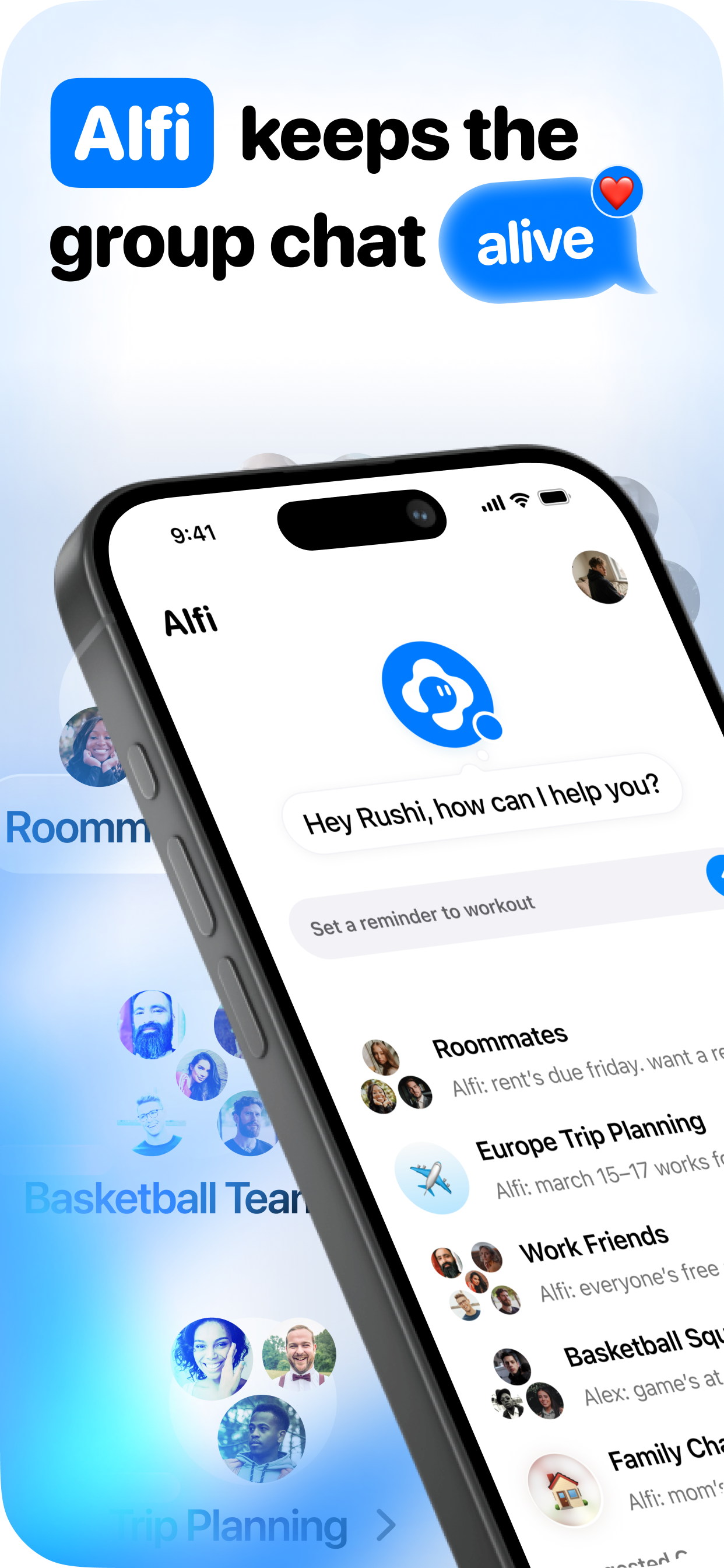
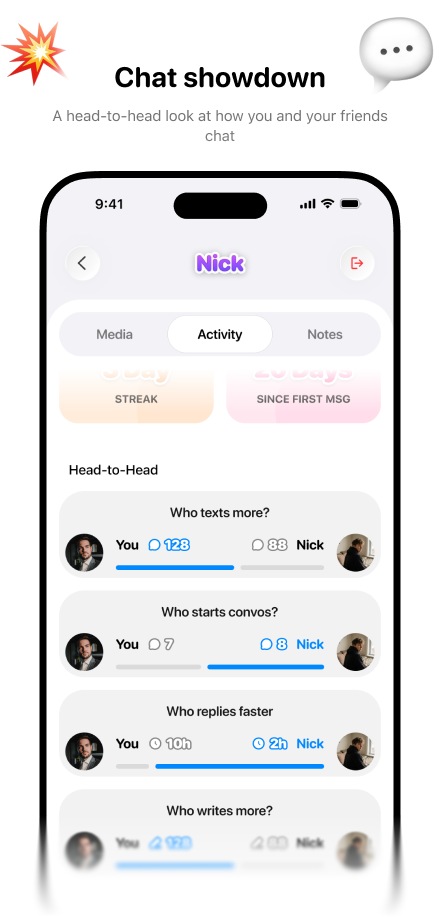
Alfi, the first chat app with social skills, for bringing friends together. We believe the group chat is the real social network. Where the funniest moments and real conversations happen in real time. With Alfi, we hope to bring you together more expressively, a lot more often. You can now book restaurants together with your friends. Create a social calendar. Make fun wild images together in the same chat. Set reminders for date night. Customize your own Alfi, and get group chat wrapped!

👋 Hey Product Hunt!

I'm Rushi, CEO & co-founder of Alfi. We're launching the first chat app with social skills, built to bring friends together.


💡 The Problem

Gen Z is leaving social media. But they're not going offline. They're retreating to group chats, smaller spaces where they're honestly themselves. People are still using 2010 utilities like WhatsApp and Messenger to manage their 2026 social life.

The problem? Group chats are where plans go to die. Someone has to be "the planner" or nothing happens.

Alfi fixes that.

💙 Meet Alfi

Alfi is your new social friend. The one who remembers everything, plans effortlessly, and keeps the crew together. Alfi also has a proprietary framework that knows when to talk (and when not to). We taught Alfi… social skills! No commands required.

It doesn’t simply process but understands context, group dynamics, and whether you’re actually asking for help or just chatting with friends.

Here's what that looks like:

  • Book restaurants together, with Yelp built in(exclusive partnership), directly in the chat. No more "where should we go?" spirals. Reserve instantly.

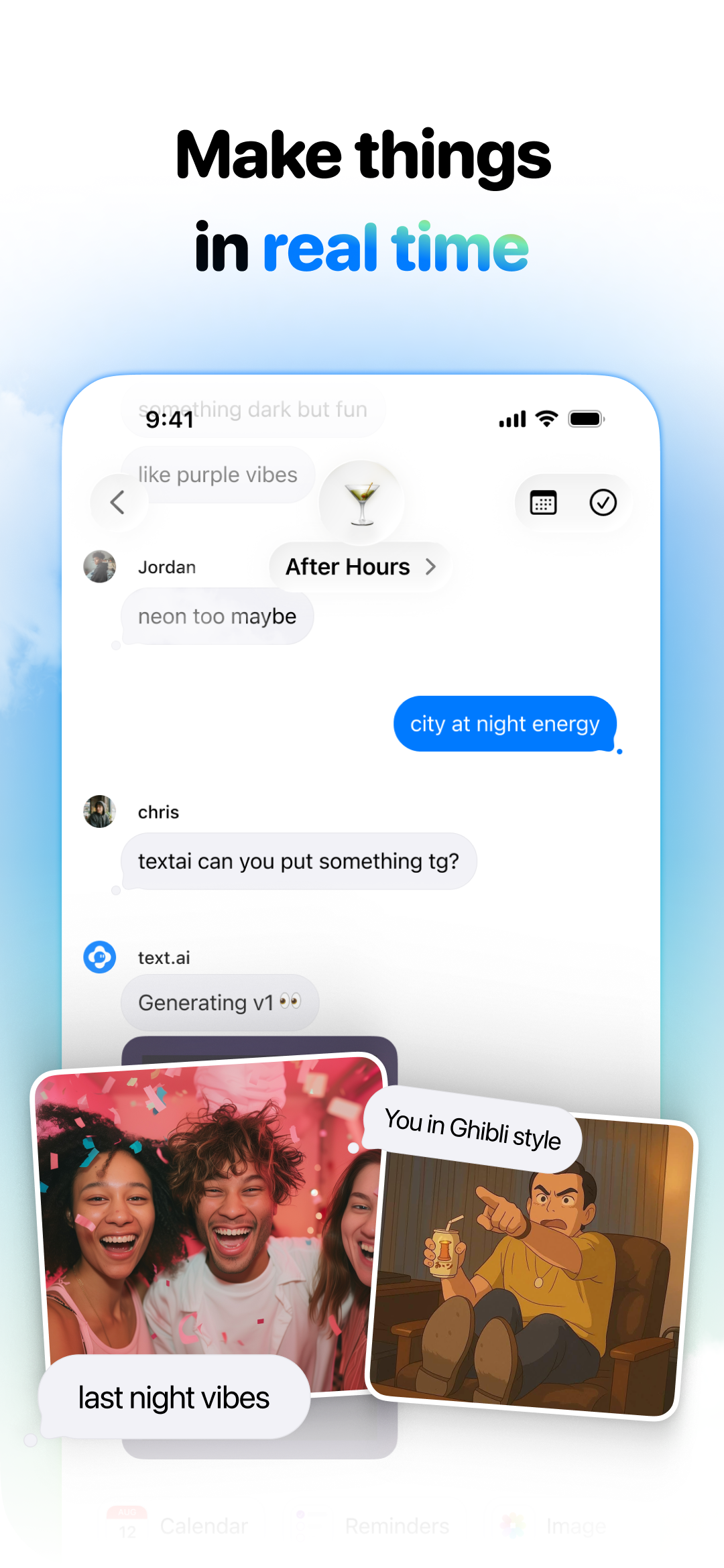
  • Create images with your friends: drop your crew into funny hats, wild scenes, anything you can dream up. Multiplayer image gen, first of its kind.

  • Social calendar: upcoming hangs, all in one place. Everyone is on the same page. No more managing separate cals.

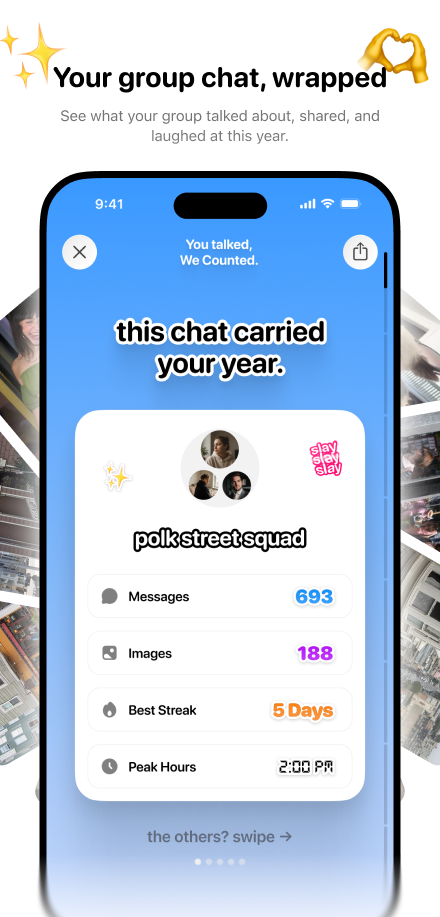
  • Group Wrapped: who's the chattiest? Top inside jokes? Now you'll know. Something we all have wanted for the longest time!

  • Reminders & Memory: Alfi remembers your spots, your preferences, and nudges you to actually stay connected.

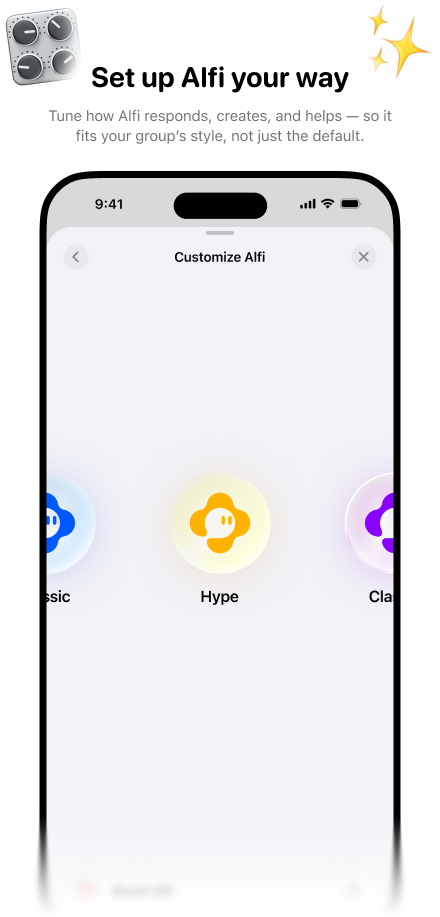
  • Customize your Alfi: Customize how Alfi responds, creates, and helps to fit in with your group’s style. Custom AI for each chat.

Of course, you have your solo Alfi too! The group chat is simply sacred.

🌍 Why This Matters
We believe the group chat is the real social network. Where the funniest moments and real conversations happen. With Alfi, we hope to bring you together more expressively, and a lot more often.


🔄 The Journey Here

We had first built text.ai, our AI that lives inside SMS, WhatsApp, and Telegram. With near-zero marketing:

  • 10M+ messages processed

  • 100K users across 150+ countries

  • Growth driven almost entirely by word of mouth

But we learned something unexpected. People didn't just want answers. They wanted a social friend who understands their unique group and actually helps them hang out more.

So we built Alfi from scratch.


💬 What beta users are saying

"It reminds my bf when he forgets our Farmers Market dates. Finally, someone else keeping him in check 😏"

"We put ourselves in cute dresses together. So cute. I wanna buy now"


🌍 Why This Matters

We believe the group chat is the real social network. Where the funniest moments and real conversations happen. With Alfi, we hope to bring you together more expressively, and a lot more often.


🙏 We'd love to hear from you:

  • What group would you add to Alfi first?

  • What feature would make this indispensable for your crew?

  • How many plans have died in your group chat?

Alfi is live now on iOS and Android. Available in 10+ languages.


👉 Download today: text.ai/app

With gratitude,
Rushi, Prahar, & Paras

10
回复

@rushishah cool concept, but saw the pricing , $5 for 25 images or 100 messages feels steep for a group chat app.

in a friend group, who pays? does everyone need credits or just one person?

also curious about long-term sustainability. big platforms are free because of funding and data monetization. how do you keep alfi affordable enough that friend groups actually stick around?

1
回复

The new group chat era begins now. Building Alfi was about figuring out how to make human connection effortless. It’s not just a chat app; it's the glue that will helps you hold your social life together. Can’t wait to see how your crews break it!

7
回复

Learn, listen, build. After 10 months in the trenches of consumer AI we heard what our users wanted... unlocked access to AI as a social enabler, but in a premium chat experience. Hence Alfi. Dig in with your friends and family & tell us what you think!

6
回复

This is cool - does it remember things about me and friends?

2
回复

@nick_verity2 yes! it does. it adapts uniquely to you versus your friends. alfi will also remember who is vegetarian in the group and who has allergies when recommending restaurants to the friends. super handy and personalized to each group.

the goal is we better understand you and your group so we can better serve you. alfi handles all the boring logistical, items. heck, alfi is your group's chief of staff

hope you enjoy! do share your feedback

0
回复

Been using Alfi in our group chats and it’s honestly great. Arguing with it in savage mode is way too entertaining 😂 but it’s also clutch for handling all the logistics so one person isn’t stuck herding the group every single time.

2
回复

@jeel_thakkar love hearing that jeel! savage mode is indeed hilarious and spicy. you should try the custom alfi, that way you can adapt it to your specific group. we have a group where our alfi is pretty much yoda lol

your group chat wrapped will indeed be fun.

glad you're finding it useful. let us know if you have features or improvements we can make!

appreciate you

0
回复

Alfi looks fun, good work team! What are some of the next targets on your roadmap?

1
回复

Congrats on the launch! Treating the group chat as the real social network feels very on point, especially with planning friction being the core failure mode. How does Alfi decide when to step into a group chat versus staying silent, particularly across different group dynamics, without becoming intrusive or dominating the conversation?

0
回复
#8
Analog Reader
turn your favorite newsletters into a printable newspaper
132
一句话介绍:一款将用户订阅的新闻通讯和RSS内容转换为可打印报纸格式的工具,在信息过载和数字干扰的场景下,帮助用户实现专注、深度的离线阅读,解决“收藏无数却从未阅读”的痛点。
News User Experience Social Media
数字排毒 内容聚合 离线阅读 可打印报纸 新闻通讯 RSS 注意力管理 生产力工具 慢科技 PDF生成
用户评论摘要:用户普遍认同产品理念,深感数字阅读带来的分心与焦虑,认为纸质化能促进专注与完成阅读。主要反馈包括:肯定其帮助建立阅读仪式感、缓解信息过载;询问与reMarkable、Kindle Scribe等设备的兼容性;建议增加对生成内容的“语调调整”控制以增强信任。
AI 锐评

Analog Reader 表面上是一个功能简单的格式转换工具,但其真正的锋芒在于对当下数字生活方式的尖锐批判与温和反抗。它没有试图在算法和流量的战场上搏杀,而是巧妙地开辟了一个“数字收集,模拟消费”的撤退路径。其核心价值并非技术突破,而是一种哲学主张:将信息从争夺注意力的赛博空间中“物理化”剥离,通过打印这一行为,完成所有权和消费权的宣告。

产品精准命中了现代知识工作者的认知失调:我们热爱信息开放,却厌恶随之而来的碎片化与焦虑。评论中“邮箱爆满却鲜少读完”、“同一文章在手机上读不完在纸上却能”的共鸣,印证了这是一个广泛存在的真实困境。Analog Reader 提供的解决方案看似复古低效,实则通过引入打印的成本(时间、操作)和纸质载体的物理限制,逆向实施了“注意力筛选”和“承诺机制”,将漫无目的的浏览转化为有意图的阅读仪式。

然而,其面临的挑战同样清晰。首先,在环保意识高涨的时代,倡导打印可能面临理念性质疑,尽管其鼓励的是有选择的深度打印而非无节制浪费。其次,商业模式存疑,“免费”模式如何持续?未来是否会对高级排版、个性化版式或与打印服务商分成收费?最后,其体验严重依赖外部硬件(打印机、电子墨水屏),作为中间环节的工具,用户粘性和壁垒可能不足。

本质上,Analog Reader 是“慢科技”运动的一个具体实践。它不提供更多内容,而是提供更好的消费内容的心智状态。它的成功与否,不在于能否成为爆款应用,而在于能否吸引一个足够忠诚的社群,共同践行这种“反潮流”的阅读信仰,并在过程中找到可持续的生存之道。这是一场针对数字异化的微型实验,值得尊敬,但前路不易。

查看原始信息
Analog Reader
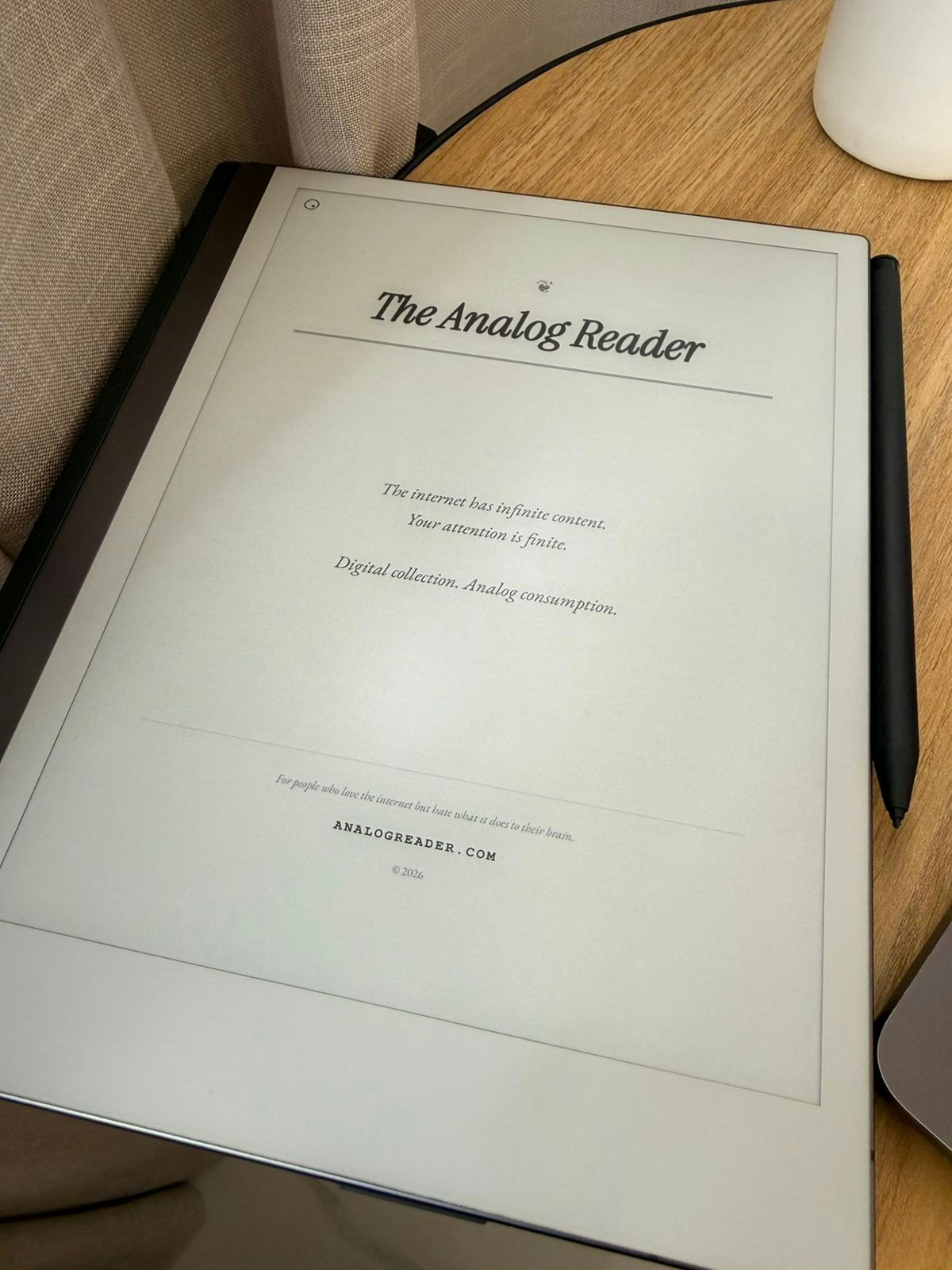
For people who love the internet but hate what it does to their brain. The internet has infinite content. Your attention is finite. Digital collection. Analog consumption. Turn your digital media into a printable newspaper.

Reading this description made me reflect on my own habits. I save so many links and never return to them. This approach feels slower but in a good way.

3
回复

@debra_salt Thanks for the support Debra. I agree, sometimes I feel like I need to "read it all fast", but I often don't get what I want out of a text unless I read it slowly and intentionally.

I hope this tool helps you with this just as much as it helped me.

0
回复

I really relate to this idea because my inbox is full and I barely finish anything. Reading on screens always distracts me even when I want to ficus. This feels like a calmer way to actually enjoy content.

3
回复

@phyllis_brooks Thanks, Phyllis! Feel free to check it out and let me know if there's anything else I could do to make your reading more enjoyable and calmer.

1
回复

This looks useful overall. I feel giving users more visible control over tone adjustments could help people like me trust the replies more.

2
回复

@sandhya_kumari11 What do you mean by tone adjustments?

0
回复

The idea feels simple but thoughtful. My experience tells me that sometimes small changes in how we consume content make the biggest difference.

2
回复

@sophia_gartner I got to thank the reMarkable tablet for bringing me into this world. On the surface, it feels like it's just an inferior tablet from all others you could buy, but then, as you use it, the small decisions they made really make a huge difference in how you consume things.

If it weren't for them, I'd probably never think of making AnalogReader. I hope you have a good day today, and if you have any issues with AnalogReader, let me know :)

0
回复
@luskira Does it work just as well with a Kindle Scribe?
0
回复

Hi, I was just scrolling and stopped here because this felt different. My attention struggles a lot online and this idea made me pause and read properly.

2
回复

@melina_cross Thanks Melina, I hope this can bring a bit more calm to your reading time :)

0
回复

Oh, how fun! I love this so much. Looking forward to print and deliver. 🖤

1
回复

@nikkielizdemere thanks Nichole! If you signed up in the google forms I'll send you an email whenever we have print on demand available! If you haven't signed up already this is the link: https://docs.google.com/forms/d/e/1FAIpQLSeL5xaGStZcN_wTJMtEQhNwxP_l4tvCt6WbCvKo2EN1i-kk-A/viewform?usp=header

thanks again!

0
回复
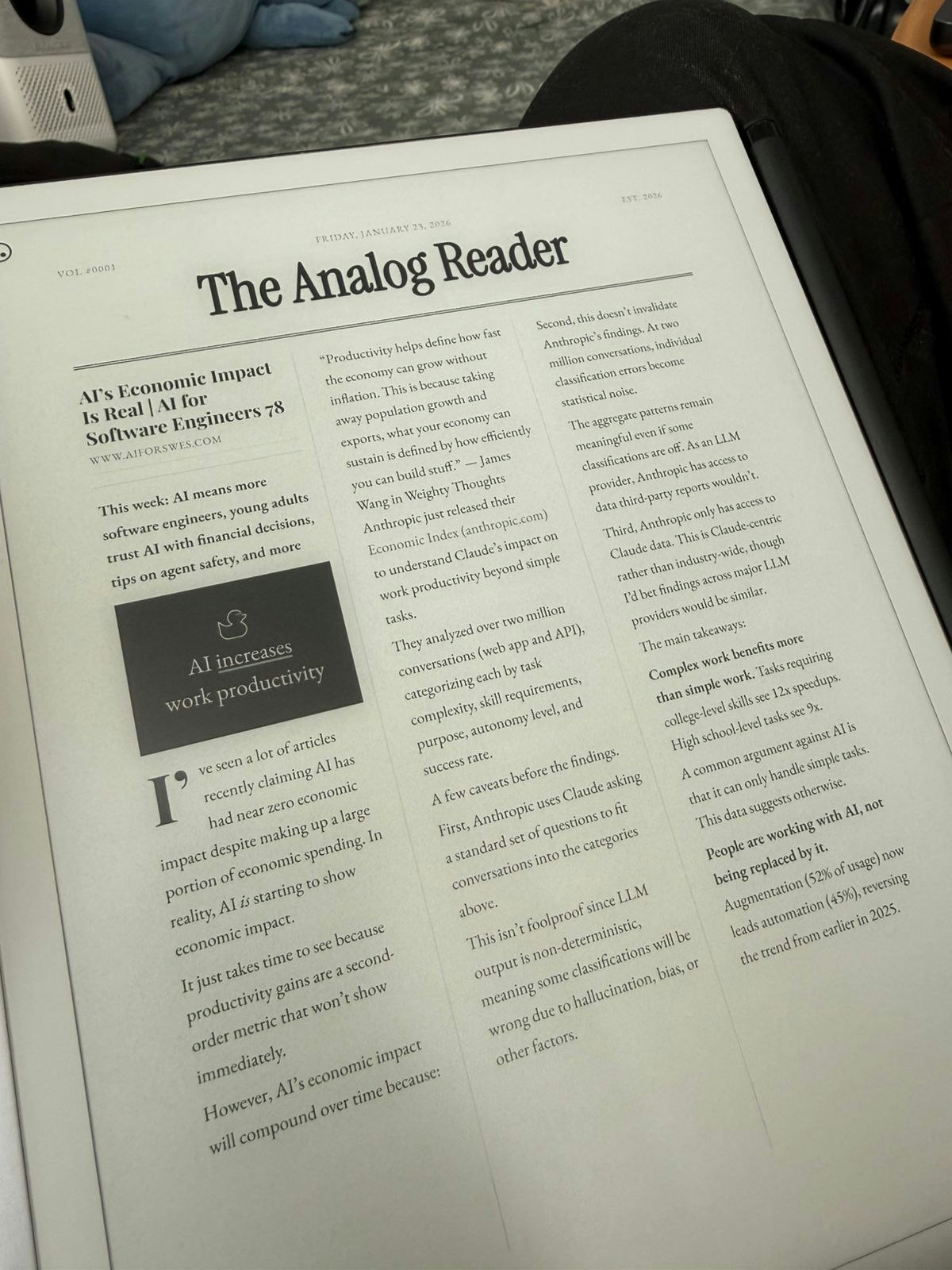
I subscribe to way too many newsletters. I read maybe 3 of them. The problem wasn't the content. The content is great. The problem was reading it on a screen that also has social media, and a thousand notifications fighting for my attention. Same article on my phone = half-read, forgotten. Same article on paper = actually finished. So I made a tool that turns any newsletter into a printable newspaper. You pick what you want to read, it generates a PDF, you print it (or send it to a reMarkable as I do). My new ritual: 1. Sunday night, I pick what I want to read for the week. Generate. Done. 2. Monday morning: coffee + paper + silence. 3. No algorithm deciding I should actually be reading about AI drama instead. It's free. Works with any Substack, Ghost, or RSS feed. For people who love the internet but hate what it does to their brains.
0
回复

Such a non-trivial product to launch in our eco-friendly era! You know, potentially, it can also help combat the problem of having a million of links saved for later and never revisited again. If you, say, print a couple of articles and keep them at sight - you'll defo read them.

0
回复
#9
Jotform AI Chatbot for Canva
Bring Canva designs to life with an embedded AI chatbot
125
一句话介绍:这款产品允许用户在Canva设计作品中直接嵌入AI聊天机器人,将静态页面转化为交互式体验,用于即时解答访客疑问、捕获线索并引导后续行动,解决了Canva设计缺乏互动性、导致用户参与中断的痛点。
Design Tools Productivity Artificial Intelligence
AI聊天机器人 Canva集成 无代码交互 线索捕获 用户自助服务 表单自动化 品牌定制 对话式界面 页面内交互 工作流自动化
用户评论摘要:用户反馈肯定产品将静态Canva页面转化为对话式界面的方向,尤其认可其在线索捕获和自助服务流程中的价值。主要问题集中在聊天机器人的决策逻辑透明度(如何选择直接回答或引导至表单等)以及处理复杂条件分支表单时的设置直观性与学习成本。
AI 锐评

Jotform此次推出的AI Chatbot for Canva,本质上是一次对“静态内容交互化”趋势的精准卡位。其真正价值并非在于聊天机器人技术本身,而在于将成熟的AI对话能力无缝植入全球最主流的轻量级设计平台,试图解决内容展示与用户行动之间的“最后一公里”断裂问题。

产品逻辑清晰:Canva承载了海量的营销页面、产品介绍和宣传材料,但这些内容长期处于“只读”状态。访客的疑问无法即时解答,转化路径被迫跳出,导致流失。该产品通过嵌入式聊天机器人,将单向传播转变为双向对话,试图在内容消费场景内直接完成答疑、筛选和引导,提升转化效率。

然而,其面临的挑战同样明显。首先,场景深度有限。在简单的FAQ和线索捕获之外,复杂业务逻辑(如评论中提及的多级条件分支)在无代码环境下能否优雅实现存疑,可能陷入“简单场景不够强,复杂场景做不了”的尴尬。其次,决策黑箱问题。机器人何时应答、何时引导至下一步,其逻辑的透明度和用户可配置性,是影响实用性与信任度的关键,目前看来仍是未明确解答的痛点。

这更像是一个“功能嫁接”而非“范式革新”。它扩展了Jotform自身表单自动化生态的入口,也为Canva注入了交互层,但其长期价值取决于能否从“页面的装饰性交互”升级为“核心业务流的智能枢纽”。如果仅停留在美化版的在线客服插件层面,其竞争力将十分脆弱。下一步,应聚焦于开放更精细的对话流程设计权,并深化与Canva内数据层(如设计元素、链接组件)的联动,才能真正让设计“活”起来。

查看原始信息
Jotform AI Chatbot for Canva
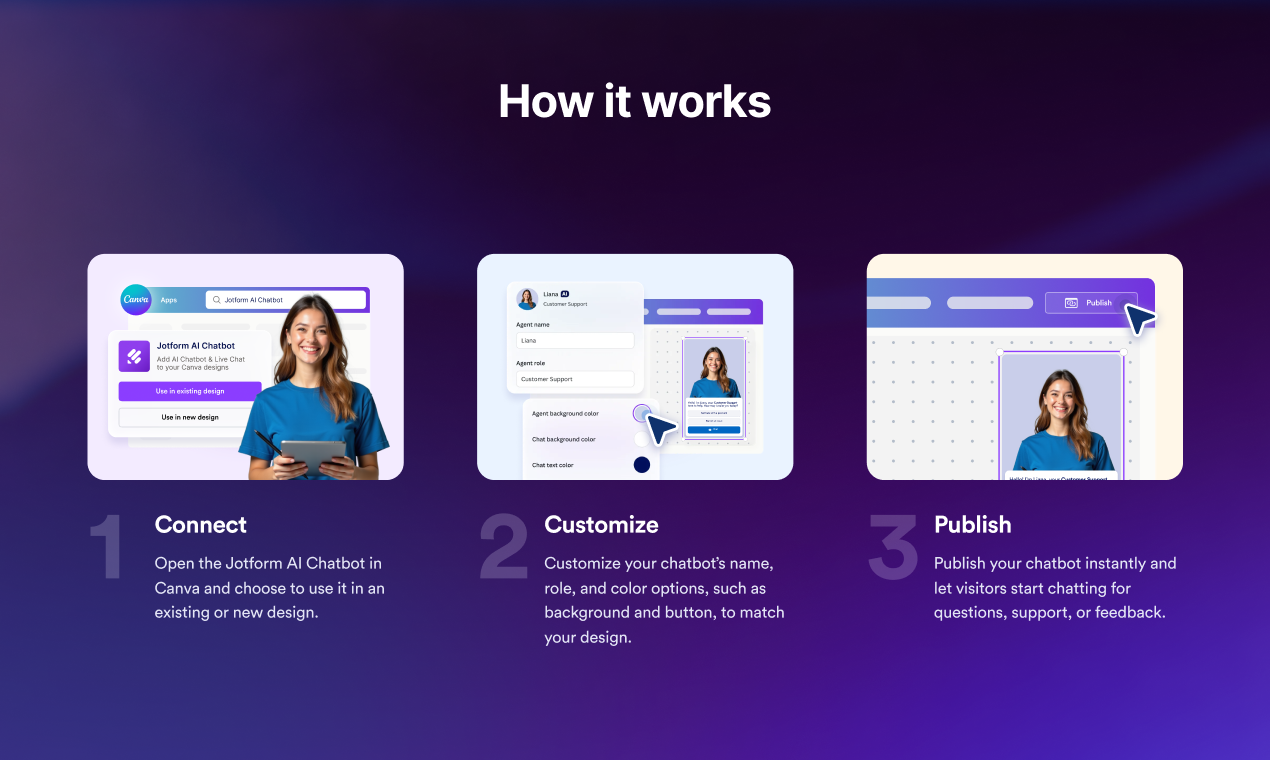
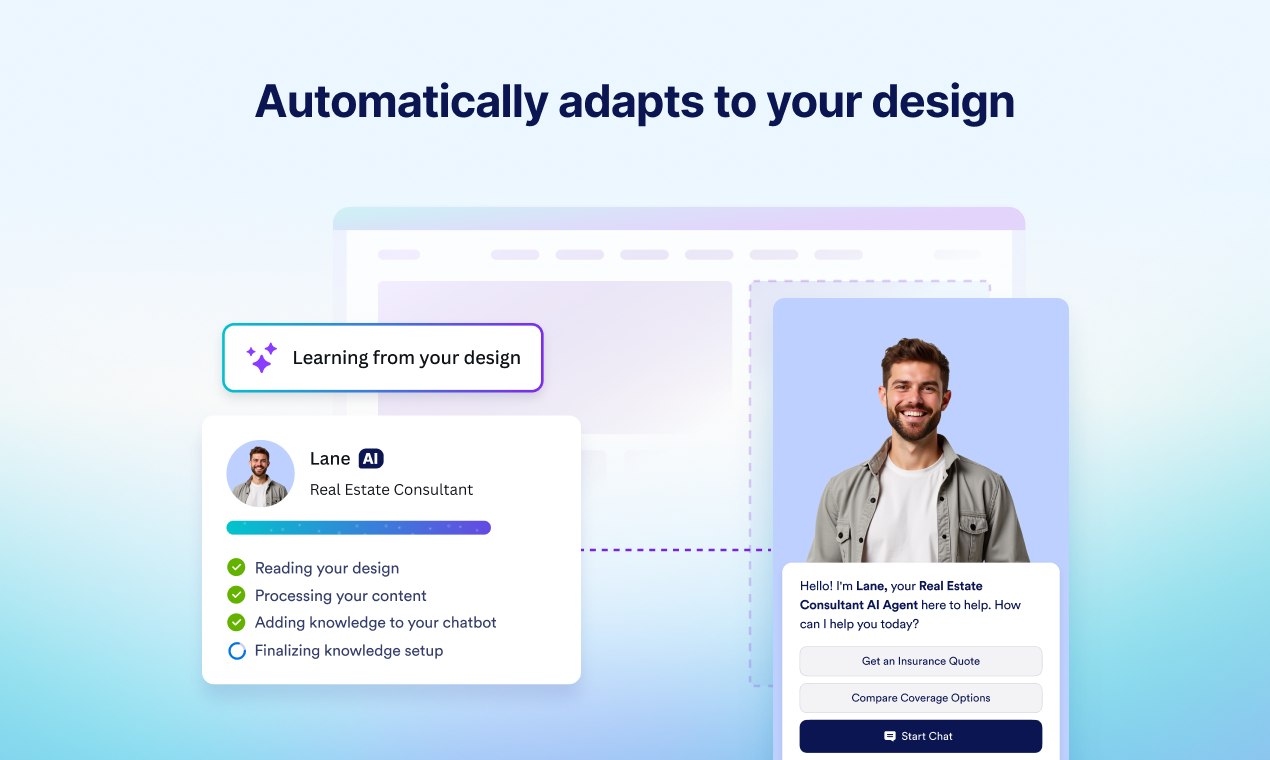
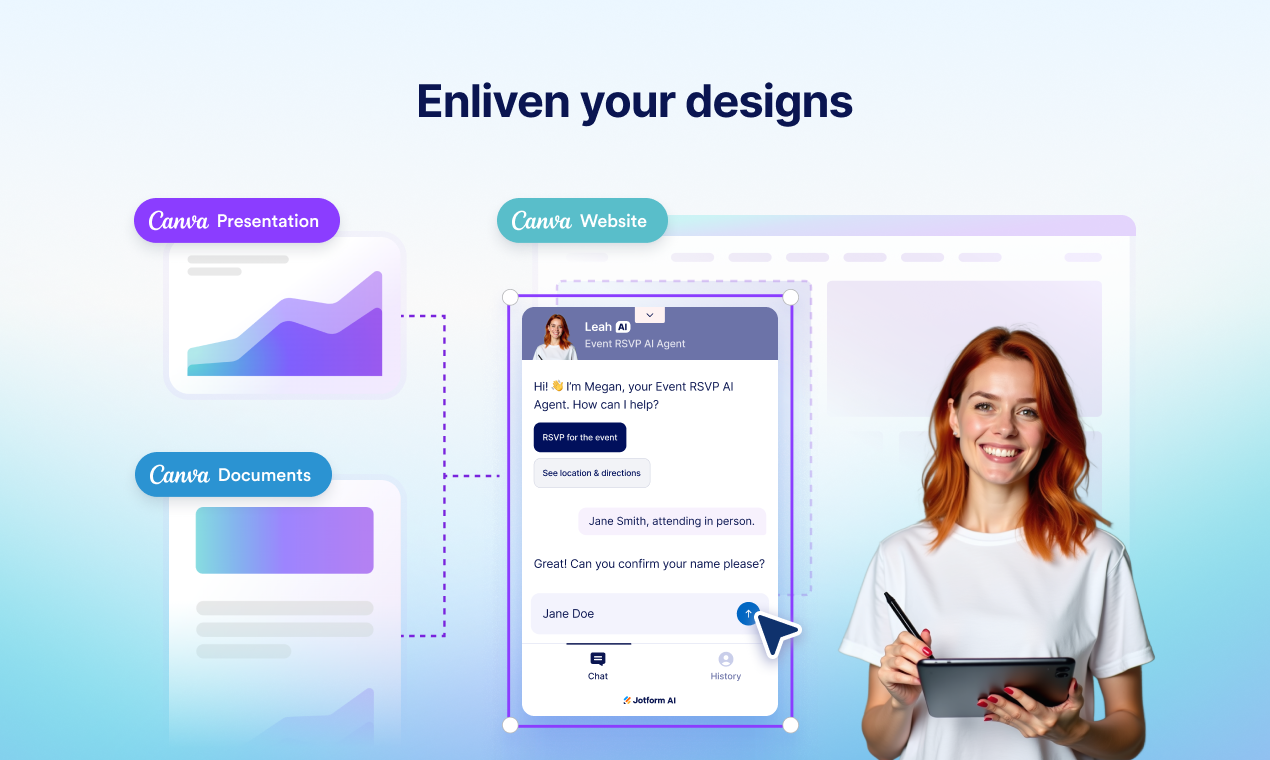
Jotform AI Chatbot for Canva helps you turn any Canva design into an interactive, AI-powered experience. Add your agent directly into your design so visitors can ask questions, get instant answers, and take action, without leaving the page.
Hey Product Hunt 👋 I’m Aytekin, founder & CEO of Jotform, and today we’re excited to launch Jotform AI Chatbot for Canva! Over the last year, we’ve seen teams use AI chatbots for way more than support: answering FAQs, qualifying leads, booking calls, helping customers choose the right plan, even acting like a mini assistant for their business. And something became obvious: Canva designs are everywhere now… but they’re still mostly static. Visitors land on a page, have questions, and the conversation stops before it starts. So we built Jotform AI Chatbot for Canva, our first step toward making Canva designs feel interactive and alive. With it, you can add a chatbot directly inside any Canva design/published page to: - Answer visitor questions instantly - Capture leads naturally - Help people self-serve - Route users to forms, bookings, and next steps without code, embeds, or sending visitors away A few things we’re proud of: - Works right inside Canva - Matches your brand (colors, avatar, welcome message) - New chatbots can even learn directly from your Canva page text - You can view all conversations in Jotform We’d genuinely love your honest feedback: what felt great, what felt confusing, and what you’d want to see us build next.
0
回复

Congrats on the launch! Making Canva pages conversational instead of static feels like a natural next step, especially for lead capture and self-serve flows. How does the chatbot decide when to answer directly versus pushing someone toward a form, booking, or other next step, and how much control do creators have over that decision logic?

0
回复

Beyond basic questionnaires, it’s impressive to see it support payment processing, report generation and workflow automation, making it an all-around tool. For forms that require complex logical branching (e.g., showing different questions based on different answers), is the conditional logic setup intuitive, or does it come with a certain learning curve?

0
回复
#10
Runo 2.0
Metronome app that keeps your running cadence steady
116
一句话介绍:一款通过节拍器原理,在跑步训练中提供实时步频引导,解决跑者配速不稳、易疲劳受伤痛点的移动应用。
Health & Fitness Health Running
跑步辅助 节拍器应用 步频训练 运动健康 Apple Watch集成 Strava同步 社交功能 马拉松训练 跑步经济性 伤害预防
用户评论摘要:用户反馈积极,认为概念巧妙,尤其赞赏Apple Watch触觉反馈实现了无耳机训练。开发者互动频繁,回应了关于中途调整节奏、Strava同步等具体功能问题,并采纳了添加Product Hunt渠道等建议。
AI 锐评

Runo 2.0的本质,是将专业跑步教练口中抽象的“节奏感”和“经济性”,降维成一个可听可感的简单节拍。其真正价值并非技术创新,而是对跑步训练中一个古老但顽固的痛点——配速漂移——进行了极致简化的工程学干预。

产品聪明地避开了与GPS手表在数据记录上的正面竞争,转而抢占了一个更前置的感官入口:听觉(及触觉)节奏引导。这相当于在数据反馈闭环中,加入了一个实时的“前馈”控制。Apple Watch的触觉反馈功能,更是精准地切入了“严肃跑者不愿戴耳机”或“户外跑步需保持环境音”这一细分场景,展现了产品对用户行为细节的洞察。

然而,其长期价值面临两重拷问:一是用户粘性。如开发者所言,这是“最终可以摆脱的辅助轮”,那么用户达到肌肉记忆后,产品的留存将依赖其社交和数据分析等衍生功能,而这正是Strava等成熟平台的腹地。二是科学适配的复杂性。跑步步频存在个体差异,并非越高越好。产品虽提供了调整空间,但将复杂的生物力学优化简化为一个固定节拍,可能存在过度简化训练科学的风险,需警惕用户盲目追求高步频而忽视步幅、触地方式等其他要素。

总体而言,Runo是一款定位精准、体验闭环的“专家型”工具。它能否从“训练拐杖”演进为“跑步社区”,取决于其社交功能与数据整合的深度,否则可能面临工具类应用典型的天花板。

查看原始信息
Runo 2.0
Runo turns pace into rhythm. Set your cadence (120-220 SPM), put in your earbuds, and run to the beat. No more pace drift. Why cadence matters: • Reduces impact forces and injury risk • Improves running economy by up to 10% • Maintains form when fatigue hits What's new: • Apple Watch haptic beats (no headphones needed) • Social features: friends & leaderboards • Strava sync • Treadmill mode Built by marathon runners tired of inconsistent pacing. 4.7★ on App Store | 10,000+ runners
Hey Product Hunt! I'm Pipe, and I built Runo after years of inconsistent marathon training. The problem: I'd start runs too fast, bonk in the middle, and finish exhausted. GPS watches told me my pace AFTER it was too late. The solution: A simple beat to match my steps to. Like a metronome for running. What's new since our last launch: - Apple Watch haptics (run to the beat without headphones) - Social features: friends, leaderboards, activity feed - Strava integration - Treadmill mode with manual distance Would love your feedback! Drop a comment and I'll respond personally.
2
回复

@pipe_abello "Metronome for running" is a brilliant analogy. Treadmill mode with manual distance is a thoughtful touch for indoor training. The social features could turn this from a tool into a community. Good luck on PH! 🏃‍♂️

0
回复

This is really clever! I actually try to have a beat in my head that I run to but never thought of a "pulse" or "metronome" to do this.

Personally LOVE the Apple Watch Haptics feedback, I don't run with headphones so this is perfect. The design is really nice as well. Congrats @pipe_abello - overall well done :)

1
回复

Thanks so much @gabe ! 🙏 The haptics were a game-changer for us too - running without headphones but still keeping cadence felt like a missing piece. Glad the design landed well. If you try it out, let me know how your runs go!

0
回复

finally a metronome that doesn't scream over my podcast. does the audio lower the volume when the beat hits, or does it just play a subtle click over the top?

0
回复

hey @pipe_abello love the idea! will start using it today on my run... just a quick suggestion: add "product hunt" to the options on the "how did you find us" onboarding section 🏃

0
回复

@sofia__bettari Hey Sofia! Thanks for trying Runo — hope you have a great run today! 🏃‍♀️ And that's a great suggestion about adding Product Hunt to the onboarding. Consider it done — I'll push that update today. Let me know how the run goes!

0
回复

congrats on the launch! Runo seems extremely useful especially for those who are in the beginning of running journey (like me haha)
I like to run and I try to make it as professional as possible, but I can notice myself struggling with rhythm, especially when listening to different types of music. was curious is it possible to change my rhythm in Runo during the run, or shoud I stop, finish one session and start another with different rhythm?
thank you, and I wish you continuing success and great runs!

0
回复

@yellow_yetti Thank you so much for the kind words and congrats on starting your running journey! 🎉

Great question! Yes, you can absolutely change your rhythm mid-run — no need to stop and start a new session.

Runo has a half-beat precision feature specifically designed for this. It’s perfect for interval training where you want slightly different rhythms for work and recovery phases. You can adjust your target cadence on the fly while you run.

A few tips as you’re getting started:

1. Don’t force a huge jump — if you’re currently around 160 SPM, don’t immediately jump to 180. Increase by about 5 SPM every 4-6 weeks

2. The metronome works alongside your music — so you can keep listening to whatever motivates you while still having the beat to lock into

3. Use half-beats for intervals — set a higher cadence for your work intervals, then dial it back slightly for recovery

The goal is that over time, your body develops muscle memory for your target cadence and you won’t even need to think about it anymore. Think of it like training wheels you eventually outgrow!

Happy running, and feel free to ask if you have any other questions! 🏃

0
回复
Will try, thanks! Does it work together with Strava somehow?
0
回复

@je_suis_yaroslav Yes! We have a Strava integration. You can set it up in the Options section of the runo app.

0
回复
#11
Keyviz
A free, open-source keypress and mouse visualizer
110
一句话介绍:Keyviz是一款免费开源按键与鼠标可视化工具,可在屏幕共享时实时显示操作轨迹,解决演示者无法清晰展示快捷键与鼠标动作的痛点。
Design Tools Developer Tools GitHub
开源工具 按键可视化 鼠标追踪 屏幕共享辅助 演示工具 实时反馈 教学辅助 效率工具
用户评论摘要:开发者宣布重大更新,新增鼠标可视化功能并优化性能。用户反馈此升级是“游戏规则改变者”,并询问技术实现细节,如拖拽可视化与性能影响,尤其关注其编程教学场景的应用。
AI 锐评

Keyviz的迭代揭示了一个深层趋势:工具类软件正从“单点解决方案”进化为“工作流闭环组件”。其早期版本仅解决按键可视化这一狭窄需求,而此次将鼠标轨迹纳入监控,实质上是完成了“数字操作意图”的全面外化。这远非功能堆砌,而是精准击中了知识工作者(尤其是教育者、教程创作者)在异步沟通中的核心困境——操作过程的“黑箱”。

值得警惕的是其技术路径选择。基于Tauri框架虽利于保持轻量,但实时捕获与渲染高频率的鼠标事件(尤其是拖拽)对底层系统钩子与性能优化是严峻考验。用户评论中提及的“Null”问题及性能疑虑,正是此类工具从“可用”到“可靠”必须跨越的鸿沟。其真正的护城河并非“可视化”这一表象功能,而在于极端稳定性与近乎零延迟的同步能力——在直播或录制中,任何卡顿或显示错误都会直接摧毁演示可信度。

此外,“开源免费”模式是一把双刃剑。它固然能快速构建社区与口碑,但如何维持长期开发动力?其商业化想象空间可能不在于向终端用户收费,而在于成为OEM组件,嵌入在线教育平台、远程协作软件甚至企业内训系统中,作为增强用户体验的基础设施。若团队能持续深耕底层系统交互数据的捕获与渲染效率,其技术资产的价值将远超一个桌面小工具。

查看原始信息
Keyviz
Give your audience a real-time look at your inputs. The easiest way to highlight your shortcuts during any screen-share.
Hey Hunters! 😺 It’s been a wild journey since the first release of Keyviz. What started as a small utility tool has grown into a full-fledged app, thanks to this community's support. Today, I’m thrilled to introduce the biggest update yet. This isn't just a minor patch—it’s a total evolution. It has moved beyond just "keys" to include full mouse visualization, meaning your audience never has to guess what you're clicking or where you're scrolling. 🖱️⌨️ I’ve also spent a lot of time under the hood making the app more stable, customizable, and lightweight. Keyviz remains open-source and free to use. Check it out at https://keyviz.org. Can’t wait to see how you use it in your videos!
2
回复

The move from just keystroke visualization to full mouse tracking is a game-changer! @rahul_mula I'm curious about the technical implementation - how did you handle the mouse drag visualization without showing the "Null" issue that one reviewer mentioned? Also, with Tauri as the framework, what was the performance impact of adding real-time mouse tracking on top of keyboard detection? This seems perfect for my coding tutorials where I need to show both shortcuts AND where I'm clicking in the IDE.

0
回复
#12
Outtalent
Get more interviews. Get better offers.
105
一句话介绍:Outtalent是一款通过结构化面试课程、AI工具及求职流程追踪系统,帮助工程师在竞争激烈的顶级科技公司求职中,更高效地获得面试和更好工作机会的产品。
Hiring Education Career
工程师求职 面试辅导 职业发展 AI工具 求职平台 技能提升 社区支持 结构化反馈 科技招聘 求职系统
用户评论摘要:用户反馈积极,认可产品“职业强化器”价值。主要问题集中在价格较高对新手不友好,建议提供更模块化、基础的套餐。另有用户询问与LinkedIn的联动可能性。创始人回应强调了社区与文化的核心价值。
AI 锐评

Outtalent的叙事巧妙地游走在“产品”与“程序”之间,其宣传核心从“工具效率”转向了“人的环境”,这暴露了当前技术求职赛道的真实痛点:信息不对称与系统性支持的缺失,而非单纯的技术能力不足。产品将结构化课程、AI软件与管道追踪打包,试图标准化一个非标过程,野心在于构建一个闭环生态系统。

然而,其面临的核心质疑极具代表性:高定价与目标用户(可能包含资金紧张的求职者)的潜在矛盾。评论中“模块化”的建议一针见血,揭示了标准化产品与个性化需求之间的张力。创始人强调“社区与文化”是真正价值,这既是一种差异化壁垒,也可能是一种风险转移——将部分成功归因于难以量化的软性环境,从而规避工具效果的可衡量性质疑。

真正的挑战在于,它是否真能规模化地复制那个关键的“成功环境”?当用户基数扩大,1对1辅导与紧密社区氛围必然被稀释,届时产品的核心价值是否会从“人与文化”退守回“软件与工具”,从而沦为又一个高级求职工具箱?其AI工具能否提供真正超越市场平均水平的“结构化反馈”,将是衡量其产品力而非社群力的硬指标。它描绘了一个美好愿景,但最终需要证明,其“系统”本身,而非暂时性的密集人力投入,才是可持续的竞争优势。

查看原始信息
Outtalent
Outtalent gives engineers a huge advantage in landing top tech jobs. I built Outtalent after going through this path myself and seeing strong engineers struggle not because they lacked skill but because they lacked structure feedback and the right system. Outtalent is not just a program it’s a product combining a focused interview curriculum with internal software AI tools and job pipeline tracking to help engineers move faster and win.

Hey everyone, Eldar here 👋

Thanks for checking out Outtalent.

At its core, Outtalent is about people. I built it after realizing that the biggest difference between engineers who make it into top tech and those who don’t is often the environment around them. The right peers, mentors, support, and accountability matter more than any single course or tool.

Our software exists to support this community and give our fellows an huge advantage, but the real value is the people and the culture we’ve built. Happy to answer questions or hear your thoughts 🙌

Join us outtalent.com

9
回复

@helldark Congrats on the launch. Do you have some packages for companies as well, or mostly focused on talent?

0
回复

congrats with your launch!! wish u all the best!!!

1
回复

@elena24 thaaaaanks!

0
回复

Outtalent is like a career power-up for engineers. It gives you a system, feedback, and tools so you get more interviews, prep smarter, and land better tech job offers even if your skills were never the problem, just the strategy.

1
回复

Congrats Outtalent!

Congrats Tilek!

Wish you the best!

1
回复

Well done on the launch guys! I've been following you since Day 1 and I can surely tell you accomplished a lot so far. Well done also to your CEO Tilek which is surely driving the team with passion and energy, every single day! Congrats! 🎉

0
回复

Hi! It looks really impressive and I love the idea. I get that there is a lot that you get out of it, but many people looking for a job might be fresh out of uni and lowww on money.
With that in mind, it does feel like the price point is very steep. I understand that the 1:1 coaching is a lot of work, but maybe it is possible to make it more modular, so also include a very basic package that would be more suitable for starters and doesn't include all the 1:1 support?
Great job though!

0
回复
Would this be connected to our LinkedIn account as well?
0
回复

@ishika12 I’m not sure I fully understood the question. Could you please clarify what you’re referring to regarding LinkedIn?

1
回复
#13
pay3
Turn your wallet address into a single link and username
104
一句话介绍:pay3将复杂的加密货币钱包地址转化为个人专属链接和用户名,在需要便捷、准确收发加密支付的场景下,解决了用户手动复制粘贴长地址易出错、体验割裂的核心痛点。
Payments Web3 Cryptocurrency
加密货币支付 钱包地址简化 非托管支付 多链聚合 用户体验工具 Web3基础设施 侧项目 个人品牌链接
用户评论摘要:用户反馈主要集中于创始人分享创业故事与产品理念,获得社区初步认可。有效评论仅一条,询问多链地址检测技术细节,创始人回复解释其为基于地址格式的模式匹配,无需链上查询。
AI 锐评

pay3瞄准了一个Web3世界中微小却顽固的“脚趾磕到桌角”式痛点:长且反人类的多链钱包地址。其价值不在于技术创新,而在于体验重构。它本质是一个基于规则映射的“支付路由层”,通过极简的链接将复杂的链、资产和地址信息封装起来,降低了发送方的认知负担与操作风险,也提升了接收方的专业形象。

然而,其“非托管”与“模式匹配”的双刃剑特性值得深究。优势是轻量、快速、无需信任;但隐患也在于此:地址映射完全依赖本地规则库,一旦用户错误添加了不兼容的地址(如将Solana地址用于接收ETH),或目标链出现新地址格式,资金损失风险将由用户自行承担。产品将自己严格定义为“管道”而非“钱包”或“交易所”,巧妙规避了监管与托管风险,但也将最核心的安全责任完全剥离。

在“社交支付”与“链抽象”成为趋势的当下,pay3的形态是讨巧的MVP。但其长期天花板清晰:一是依赖个人链接的传播,网络效应有限;二是功能单薄,易被集成钱包或社交应用的功能更新所覆盖;三是商业模式模糊。它更像一个精美的概念验证,证明了Web3基础体验的粗糙,但要从“有用的小工具”进化为“不可或缺的基础设施”,仍需在地址安全验证、社交图谱集成乃至轻量级法币通道等方面构建更深的护城河。当前版本,是一位资深从业者对行业痼疾的一次优雅吐槽与极简回应。

查看原始信息
pay3
Stop copy-pasting 42-character addresses. pay3 gives you one link for all crypto payments - works with USDT, ETH, SOL and TRX. Direct wallet-to-wallet, we never touch your funds.
hey guys dropped out at 16 to build in crypto. 8 years later, we still share wallet addresses like it's 2015. 0x742d35Cc6634C0532925a3b844Bc9e7595f8bE2e imagine sending this to a client. imagine getting it wrong by one character. built pay3 because i got mass of people complaining about this. now it's just: pay3.so/@varun client clicks. picks USDT. pays. done. --- for the technical folks: - non-custodial (we never touch funds) - multi-chain (eth, tron, solana, bsc, polygon) - walletconnect v2 - telegram bot for notifications --- what we're not: - not a wallet - not an exchange - not asking you to "connect wallet" before seeing anything --- this is my side project. built it, learned a lot, sharing it with you all. roast the UX if needed. genuinely want feedback. try it: pay3.so mine: pay3.so/@varun happy to answer anything below 👇
1
回复

clean stack. curious how you're handling multi-chain address detection?

1
回复

@yednap868 it's pattern-based detection, pretty straightforward actually.


0x + 42 chars -> EVM (works across ethereum, bsc)

T + 34 chars -> Tron

44 char base58 -> Solana

one EVM address covers multiple chains automatically. user adds one address, we map it to all compatible networks.

no blockchain queries needed at detection time - just regex matching on input.

0
回复
#14
GameCutAI
Turn game footage into viral highlights in seconds
101
一句话介绍:一款AI驱动的体育内容创作平台,通过自动分析比赛录像、识别关键镜头并快速生成集锦,解决了体育创作者手动剪辑耗时费力的核心痛点。
Sports Artificial Intelligence Video
AI视频剪辑 体育集锦生成 内容创作工具 视频分析 自动化工作流 体育科技 社交媒体内容 游戏录像 创作者经济 效率工具
用户评论摘要:用户反馈强烈认同产品解决的“手动逐帧寻找精彩镜头”的痛点,认为能极大节省时间。同时提出产品潜力可扩展至影视剧等非体育领域,用于寻找“梗”素材。
AI 锐评

GameCutAI精准切入了一个垂直且明确的利基市场——体育内容创作的后端生产环节。其宣称的价值并非技术创新上的颠覆,而是工作流效率的“降维打击”。它将传统非线性编辑中高度依赖人力、经验和时间的“浏览-识别-标记-剪切-输出”链条,压缩为“上传-分析-生成”的一键式操作。真正的价值不在于AI识别是否比人眼更懂体育,而在于将创作者从重复、枯燥的机械劳动中解放出来,使其能量集中于更具创造性的叙事、包装与分发环节。

然而,其面临的挑战同样清晰。首先,技术壁垒有限,核心的“视频动作识别与精彩度判断”算法是计算机视觉的成熟应用,易被巨头复刻或集成。其次,市场天花板明显,重度用户集中于专业或半专业的体育团队、俱乐部和媒体机构,普通用户需求频次低。评论中“拓展至影视找梗”的思路虽有趣,但实则是另一个需求分散、标准模糊的战场。

产品的生存关键,在于能否在垂直领域内建立极致的体验壁垒和精准的数据飞轮。即:通过服务专业客户,持续优化特定运动(如篮球、足球、电竞)的识别准确度与场景理解深度,形成领域知识护城河。它不应止步于一个“剪辑工具”,而应演进为一个“体育内容数据中台”,将视频素材转化为可搜索、可结构化利用的数据资产。否则,它很可能只是一个在巨头缝隙中昙花一现的“好用工具”,而非一个具备持久生命力的独立产品。

查看原始信息
GameCutAI
GameCut is an AI-powered platform for sports creators that transforms raw game footage into instant highlight reels. Just upload your match footage, behind-the-scenes, vlogs, and our AI automatically analyzes the video, identifies key moments and plays, and generates shareable highlight clips in seconds. No more hours scrubbing through timelines to find the perfect clips - dominate the feed with speed and precision.
Hey everyone! 👋 I'm excited to share GameCut, our answer to a problem every sports creator faces - the hours spent manually finding and clipping the best moments from game footage. The Problem: Sports creators (coaches, content creators, esports teams) spend countless hours scrubbing through raw footage just to find specific plays or highlight-worthy clips. With hundreds of hours of footage from tournaments and training sessions, it's nearly impossible to keep up with content demands. Our Solution: GameCut uses advanced AI video understanding to "watch" and analyze match footage, identify key plays and pivotal moments, and generate polished highlight clips in seconds. Upload your footage, search and analyze it in natural language, and get instantly shareable content. Key Features: ✨ AI Video Analysis – Automatically identifies sports context, compelling events and game-changing moments ⚡ Instant Highlights – Generate shareable clips in seconds, not hours 📱 Supercharge your game analysis and editing workflow We'd love to connect with sports teams, social media content creators, and broadcasters to see how we can help! Questions? Feature requests? Let's chat in the comments!
1
回复

@prashant_trivedy2 I’ve spent way too much time scrubbing through long games just to find that one moment I clearly remember - whether it’s for a YouTube compilation or just to show a cool play to a friend.

Being able to search footage and instantly pull highlights instead of manually hunting through timelines feels like a huge win for creators and teams. It saves time and lets you focus on the fun part. It also made me think how powerful this approach could be beyond sports. Finding meme-worthy moments in movies and TV-shows.

Very cool launch! Excited to see where you take this project!

0
回复
#15
FireSEO MCP
Connect Claude or Cursor to audit SEO and suggest changes
100
一句话介绍:FireSEO MCP是一款MCP工具,它将Google Search Console等真实SEO数据直接接入Claude或Cursor等AI编辑器,让开发者或内容创作者能在编码或写作的上下文中,通过自然语言对话实时分析排名、诊断问题并获取修改建议,解决了工作流中频繁切换工具和界面的效率痛点。
Analytics Marketing SEO
SEO优化工具 AI工作流集成 MCP协议 谷歌搜索控制台 实时数据分析 智能代码编辑 开发者工具 竞品分析 自然语言交互 Agentic SEO
用户评论摘要:用户反馈积极,认可其减少上下文切换的核心价值。主要问题集中在:与现有AI编辑器规则的本质区别(数据驱动 vs 规则指导)、如何避免API速率限制和保证建议安全性、以及目标用户(创始人)是否具备提出正确SEO问题的能力。开发者回应强调了基于真实数据与仅凭知识库的本质优势。
AI 锐评

FireSEO MCP的亮相,与其说是一款新工具,不如说是一次对“AI赋能工作流”的精准切片。它没有选择做大而全的SEO平台,而是巧妙地押注在MCP协议和“AI原生编辑器”这两个新兴交汇点上,试图将SEO从“监测-分析-行动”的滞后性循环,压缩成在开发环境中的即时问答。

其宣称的“Agentic SEO”是核心叙事,但需冷静审视。产品真正的价值不在于替代Ahrefs或SEMrush这类数据航母,而在于充当一个“数据管道”和“语境翻译器”。它将GSC的原始数据流引入AI对话窗口,试图消除从看到数据到理解问题再到实施代码/内容修改之间的摩擦。这瞄准了一个真实痛点:对开发者或技术型创作者而言,切换至SEO仪表盘本身就是心流中断。

然而,评论中的犀利问题戳中了其商业化与实用化的潜在软肋。首先,其价值深度严重依赖用户提问的能力,这对于其预设的“创始人”目标群体可能是个门槛,产品可能需要内置更主动的诊断框架。其次,将SEO建议直接关联代码修改是一把双刃剑,若无严谨的变更影响评估(如对页面性能、结构的潜在负面作用),所谓的“Agentic”可能带来不可控风险。最后,其技术护城河目前建立在MCP的接入便利性上,一旦大型SEO平台或编辑器自身开放类似深度集成,其独特性将面临挑战。

总体而言,这是一个极具前瞻性场景构思的利基产品。它能否从“炫酷的演示”成长为“必需的工作流”,取决于它能否将“数据接入”深化为“可靠的决策智能”,并在易用性与安全性上构建足够厚的壁垒。当前版本更像是一个充满潜力的“副驾驶”原型,而远非全自动的SEO飞行员。

查看原始信息
FireSEO MCP
Stop wrestling with dashboards. FireSEO connects Google Search Console directly to your AI editor (Claude, Cursor). Analyze rankings, spy on competitors, and fix SEO issues—all through natural language conversation. The first "Agentic SEO" workflow
Hey everyone! 👋 Harris here, maker of FireSEO. I've been building SaaS products for years, and SEO was always the bottleneck I hated switching context between my editor (Cursor) and SEO tools. With the rise of MCP (Model Context Protocol), I realized we could bridge this gap. FireSEO lets you pull real-time GSC data and SERP analysis directly into your chat context. Key features: ✅ Real-time GSC Audit: Diagnose traffic drops instantly. ✅ Keyword Gap Analysis: Find "Golden Keywords" you can rank for easily. ✅ Agentic Workflow: Let the agent suggest code fixes for SEO directly in your project. We have a generous Free Tier for Indie Hackers. Give it a spin and let me know if it saves you time! I'll be hanging out in the comments all day🚀
1
回复

Very cool! How is this better than an SEO best practice cursor rule?

1
回复

@daniele_packard Great question!

Cursor rules are essentially instruction-based guidance — they help the AI generate better answers, but those answers are not grounded in your real performance data. Even with a strong prompt, Cursor can only respond using its internal knowledge and general SEO best practices.

While Cursor may support limited web browsing, that information is still surface-level and disconnected from your actual metrics.

In contrast, our approach is data-driven. By connecting real sources through MCP — such as Google Search Console and Google Ads — the AI analyzes your actual search queries, impressions, CPC, competition, and performance trends.

So instead of saying “this keyword should work based on SEO theory,”

it can say “this keyword shows high commercial intent and low competition in your real data.”

Cursor understands SEO rules.

But it doesn’t know your data.

That’s the key difference — and that’s what allows us to find real monetization opportunities rather than just following patterns everyone already uses.

0
回复

Congrats on the launch! Pulling real-time GSC and SERP data directly into the editor context makes a lot of sense, especially for reducing context switching. How do you keep the data fresh without running into GSC or SERP rate limits when agents are querying often, and how do you make sure the suggested SEO changes don’t accidentally do more harm than good?

0
回复

So your target audience is founders? If yes, there might be a struggle even to come up with a right question, as SEO is very specific and requires some skills. There is a chance to stand out if you provide some guidance. Cheers!

0
回复
#16
Trailward
Gamified micro‑lessons that teach any topic in 90 seconds
93
一句话介绍:Trailward通过90秒游戏化微课程,在碎片化时间场景下,解决了用户因学习门槛高、时间不足或动力缺乏而难以开启和坚持新领域学习的痛点。
Productivity Education Career
微学习 游戏化学习 知识碎片化 职业规划 兴趣探索 移动学习 习惯养成 个性化推荐 终身学习工具 快速入门
用户评论摘要:用户普遍赞赏其简洁设计和个性化推荐。主要建议集中在增加音频/视频格式以缓解阅读疲劳,并优化初始问卷长度。创始人回应确认音频功能正在开发中,并阐述了产品核心是降低学习启动门槛、对抗拖延症。
AI 锐评

Trailward的核心理念并非“深度学习”,而是“学习启动”。它敏锐地捕捉到现代人知识焦虑与行动瘫痪之间的根本矛盾:渴望学习却败于庞大的课程体系与时间承诺。其真正价值在于,将“学习”这一沉重行为解构为无压力的90秒“Bites”,通过游戏化与即时反馈,完成从“零到一”的心理突破,本质上是为“后续深度学习”制造“上瘾”的钩子。

产品巧妙地融合了两个关键模块:碎片化微课与Ikigai职业路径规划。前者负责提供即时、低负担的正反馈,后者则负责赋予长期意义感,试图将随机的兴趣点击串联成有方向的学习叙事。这种结合颇具野心,但也埋下隐患:微学习的“浅尝辄止”属性与职业路径所需的“系统深度”之间存在天然张力。评论中暴露的“阅读疲劳”和“问卷过长”问题,正是这种张力在用户体验层面的体现——产品在试图平衡“轻量启动”与“深度个性化”时出现的摩擦。

创始人坦诚这是对抗“拖延症”的工具,这一定位反而比“学习平台”更精准、更具洞察力。它的成功与否,不取决于内容库的广度,而取决于其算法能否在用户几次“Bite”后,精准推送那个让用户愿意投入更长时间的关键兴趣点,完成从“打发时间”到“投入时间”的惊险一跃。目前看来,其模式更偏向于高效的兴趣探索与过滤工具,而非知识沉淀容器。若音频功能能如期优化,并有效管理用户对“AI生成内容质量”的疑虑,它有望成为信息过载时代一个高效的“学习决策引擎”。

查看原始信息
Trailward
Trailward lets you explore any topic in 90-second sessions, from stoic philosophy to modular synthesis to Nintendo game design. Pick one and get bite-sized lessons matched to your level, each with a key insight that sticks. No courses, no commitment, just real progress in minutes. Need direction? Ikigai maps your strengths to career paths and builds your learning plan. Streaks, flashcards, knowledge base. iOS, Android, Web. Perfect for curious minds and busy people.

Congrats on the launch! The laconic design looks nice, and the Bites are well done. For Topics, I like that they’re recommended based on interests, and that everything is built in a chat format overall. Do you plan to add more visualization to Topics, or an audio/video format? It might be difficult to read longer text for users, what do you think?

3
回复

@kristina__grits Thank you! The laconic design was a deliberate choice to remove distractions, so I'm really glad that landed well.

You're spot on about the reading fatigue. Audio is actually the next big experiment on my list. I've been prototyping a podcast functionality where topic units are converted into short audio segments for listening on the go. Until then, the interactive Bites are designed to help by breaking those units down into digestible 90-second sessions.

I'm curious though: when you listen to AI-generated content (like podcasts or summaries) right now, do you feel the quality is 'there' yet? Or does the voice/rhythm still feel off to you?

1
回复

I've been building software for over 20 years, often for clients and frequently for myself. Trailward started as a tool to manage my own habit of "constant learning", but it evolved into something wanted to share.

It began as a system for structured learning plans. However, I found that rigid structures often led to procrastination. That led to the concept of "Bites" - 90-second sessions designed to extract a single, clear insight. The goal isn't to replace deep study, but to make the entry point for curiosity so low that you actually start.

I also integrated an Ikigai discovery tool to help map curiosities to potential career paths, generating tailored learning plans based on the results.

It’s a solo project, built with React Native and FastAPI. Give it a try, it’s designed to be effortless, and I guarantee you’ll walk away knowing something you didn’t before.

I’ll be here all day to answer questions about the product or the technical side of the build.

2
回复

@stephanschulz I really like the ikigai feature. An algorithmic way to find topics you are passionate about seems like one of the best applications of the attention-grabbing algorithms humanity has perfected in reels, TikTok, etc. Not sure you are that sophisticated yet, but I love the idea!

1
回复

Congrats on the launch @stephanschulz ! Love the "recommended based on interests" piece - tailored learning paths only work if the app actually knows the user. Curious how you're tracking what someone's interested in vs just what they clicked on. YC founder here, researching user context for AI apps.

1
回复

@victor_eth Thanks Victor! Trailward is personalized from the very first interaction. Users almost only see content that matches their specific inputs and interests, everything else really doesn't make sense imo. There are some fallback suggestions, but they are more to show direction or inspire users to find niche topics to explore.

Tailored plans are a challenge, yes, especially given the multi-month timeframe they can run. But as I wrote in my maker comment, Trailward is primarily about beating procrastination. It helps lower the entry barrier for learning something new, or in the case of tailored plans, it provides the spark to start real transformations. It shows the user what a transformation would really look like and what is needed to master it. It offers structure and makes a complex learning journey more approachable. I think that's really cool.

For committed users, spaced repetition, detailed explanations, practical examples or certificate proposals support the deep dive when needed.

0
回复
I’m a employee experience designer for a big corporate in The Netherlands. Love the concept and execution! Great work!
0
回复

@suijkerwerk Thank you. Coming from an experience designer, that means a lot. I've put a lot of thought and passion into the product, so I really appreciate the feedback!

0
回复
Loved the design! However the initial questionnaire felt too long.
0
回复

@agarwalshreya Thanks! Which route did you choose: Topic, Plan, or Ikigai? If it was Ikigai, it’s definitely the 'long road'.

0
回复
#17
AcceptMyApp
Spot iOS app issues before App Store review
92
一句话介绍:一款帮助iOS开发者在应用提交前扫描潜在审核风险、被拒后提供结构化修复方案和回复草案的AI工具,旨在终结与苹果App Store审核团队之间模糊、耗时的拉锯战。
iOS Apple
iOS应用审核 预提交扫描 审核被拒分析 开发者工具 AI合规检查 RAG应用 一次性付费 App Store指南 效率工具 风险规避
用户评论摘要:用户普遍对苹果审核过程的模糊性和低效感到挫败,认为该工具精准击中了痛点。反馈积极,肯定其“独特”性和实用性,并有多人表示愿意尝试。创始人互动积极,强调解决审核挫折的初衷,并推广免费名额。
AI 锐评

AcceptMyApp的价值,远不止于一个“基于Apple Guidelines的RAG系统”。它本质上是在试图将苹果App Store那套不透明、充满主观解释且沟通成本极高的审核黑盒,进行“白盒化”和“流程化”改造。

其真正锋芒在于两个层面:首先是**风险前置**。将开发者事后被拒的被动补救,转变为事前的主动规避。通过扫描元数据、条款等,它试图将审核员的隐性评判标准提前暴露,这直接提升了开发迭代的确定性和效率。其次是**对抗审核沟通的模糊性**。当被拒发生时,它提供的不是笼统的指南编号,而是结构化的问题拆解、修复清单,最关键的是“审核员安全”的回复草案。这相当于为单兵作战的开发者提供了一个专业的“合规外脑”和“谈判助手”,大幅提升了申诉的胜算与专业性。

然而,其深层挑战与价值并存。产品的天花板取决于其对苹果审核指南动态变化的追踪解读能力,以及对其背后“人治”因素的把握程度。审核指南是文本,但审核员的判断常涉及意图、设计哲学等灰色地带,AI能否持续精准捕捉?此外,其“一次性付费”模式虽对开发者友好,但如何持续覆盖模型更新、指南同步的成本,是其商业可持续性需要验证的一点。

总体而言,这是一款在特定垂直领域极具洞察力的AI应用。它没有追逐泛化的聊天机器人,而是将AI的解析、生成能力深度嵌入到一个高痛点的专业工作流中,解决了真实、迫切的商业效率问题。它的成功与否,将成为检验AI在垂直领域能否真正提供稳定、可靠专业服务的关键试金石。

查看原始信息
AcceptMyApp
Pre-submission risk scanner + rejection analyzer for iOS developers. Uses RAG on Apple Guidelines to find issues before Apple does. When rejected, get structured fixes and reviewer-safe reply drafts. One-time payment per app. Unlimited analyses.

Hey PH! 👋

Built this after getting rejected by Apple one too many times.

You know the drill: you submit your app, wait a few days, then get a vague message like "Guideline 4.2 - Minimum Functionality." Cool, thanks Apple. Super helpful.

I tried pasting rejections into ChatGPT but it kept making up guideline sections that don't exist.

So I built AcceptMyApp:

🔍 Before you submit → scans your metadata, terms and privacy policy for rejection risks
📩 After rejection → explains what went wrong + gives you a ready-to-send reply

The AI runs on actual Apple Guidelines (not hallucinated ones), and spits out structured results: risk level, specific issues, fixes checklist, appeal drafts.

Pricing: First 50 apps are free. After that, one-time €3.99-€9.99 per app. No subscription bs.

Would love to hear your feedback and your worst App Store rejection story 😅

3
回复

Very cool! Just went through frustrating, non-transparent process of hitting issues that weren't clear upfront

1
回复

@daniele_packard Yes review process can be very frustrating, exactly why I created this tool!

1
回复

This is something that is unique and would love try our app before putting it up on App store

1
回复

@ayan_das12 Thank you, don't hesitate to add your app while there are still free spots!

1
回复

Clever, I see myself using this tool

1
回复

@lienmt Thank you! 🙏

1
回复
The process feels super random, happy to see people trying to handle the problem! We’ve got 2 phone calls with apple, testing through their iPad and most of it made no sense. Ragged up and ready to try for my next app. Big ups!
0
回复
#18
RedUp.pro
The Reddit Growth and AI-Infused Market Discovery Platform
91
一句话介绍:RedUp.pro 是一款为创作者、营销者和开发者设计的AI驱动平台,通过提供符合Reddit社区规则的安全发帖、智能调度与分析功能,解决了在Reddit进行规模化营销时易被封号、效率低下的核心痛点。
API Social Media Marketing
Reddit营销工具 AI内容生成 社交媒体管理 多账号调度 社区安全发帖 增长黑客 SaaS平台 API集成 市场发现 数据分析
用户评论摘要:开发者强调现有工具差且易导致封号,RedUp以安全为核心差异点。用户质疑其“避免封号”声明的可靠性,关注预检系统是否真正模拟社区规则。开发者回复称系统会检测规则、社区氛围及帖子类型,以提供匹配建议。
AI 锐评

RedUp.pro 试图在Reddit营销工具这片红海中,打出“安全”这张技术牌与信任牌,这确实切中了行业最敏感的神经。当前多数第三方工具因粗暴对待Reddit的社区生态(如滥用跨社区发帖、忽视规则差异)而导致账号批量被封,RedUp提出的“社区氛围检测”和“预检系统”在理念上是一种进步,它承认Reddit不是一个统一的广场,而是成千上万个拥有独立文化和规则的小城镇。

然而,其宣称的“无封号风险”是一个极其大胆且危险的承诺。Reddit的反垃圾邮件算法是动态、复杂且不透明的,任何外部平台都无法100%模拟或保证。其真正的价值可能不在于彻底消除风险,而在于通过流程化(如发帖类型选择、节奏控制)和数据分析(子社区活动洞察)将用户的“盲操作”转化为“可观测、可优化的策略”,从而显著降低风险概率。这更像是一个“风险管控平台”,而非“免死金牌”。

另一个潜在亮点是“真正的API”。如果其API能稳定、合规地提供发帖与数据能力,将吸引开发者构建更垂直的解决方案,这可能成为其构建生态壁垒的关键。但这一切的前提是RedUp自身能长期维持其账号体系的健康度,并与Reddit平台保持一种微妙的、不被认定为敌对的关系。总体而言,这是一个针对专业用户、定位清晰的产品,但其最大的卖点恰恰是其未来可能面临的最大挑战——与平台方的博弈。成功与否,取决于其安全模型的技术深度,以及是否能在增长与合规间找到可持续的平衡点。

查看原始信息
RedUp.pro
RedUp: pay for tokens for what you need: full-stack Reddit posting, scheduling, analytics platform (and API) — built for creators, marketers, agencies, developers who want power without risking bans (or building fragile bots). **What You Can Do With RedUp** * Smart Reddit Scheduling, subreddit discovery, post-spinning (variations per subreddit to meet their audience and rules) * Schedule posts across multiple subreddits * Post at optimal times per subreddit * Avoid spam patterns/risky behavior
I’m the maker of RedUp, and I built this because Reddit tools suck, treating Reddit like X — or worse, they get accounts banned. ** What RedUp.pro does differently: ✔️ Reddit-safe scheduling ✔️ Multi-account & multi-subreddit control ✔️ Subreddit activity insights ✔️ A real API developers can build on * Custom Reddit growth dashboards * SaaS tools for founders & agencies * Auto-posting tools for niche communities * AI tools that write + schedule Reddit posts * Internal marketing systems * Social listening tools for Reddit ** Who it’s for: * Founders using Reddit for growth (Darren and I built it for ourselves, after all!) * Agencies managing multiple brands * Developers who want Reddit data + posting without headaches * We’re early, shipping fast, and actively listening — so feedback (good or bad) is hugely appreciated. Thanks for checking it out 🙌
3
回复

without risking bans is the boldest claim here Reddit's spam filters are ruthless. does the "pre-flight checker" actually simulate the post against current subreddit rules, or is it just checking for banned keywords?

1
回复

@samet_sezer Yes, rules, to begin with, but then, also he vibe of the subreddit and finally, even before suggesting subs to hit, we have our users choose whether their post is informative, prpromotional, etc., to limit or open the options for subs that RedUp serves up.

3
回复
#19
Zush
Rename and auto-tag images on macOS using AI file analysis
89
一句话介绍:一款macOS上的AI图片批量重命名与自动打标工具,通过本地AI分析文件内容,将“IMG_1234.jpg”等无意义文件名自动转换为描述性名称,解决了摄影师、设计师等创意工作者在海量图片文件中管理混乱、检索低效的核心痛点。
Productivity Photography Artificial Intelligence
生产力工具 AI文件管理 图片批量处理 自动重命名 自动打标 RAW文件支持 本地AI macOS应用 创意工作者工具 文件整理
用户评论摘要:目前有效评论主要为开发者自述。开发者阐述了产品开发背景、在“本地AI与云端API”、“Tauri与原生Swift”之间的技术选型思考,并强调了速度优化的自豪感。提供了早期访问的优惠码,并主动邀请用户反馈和提出功能建议。
AI 锐评

Zush切入了一个看似微小却极其顽固的痛点:数字资产,尤其是图片文件的命名与管理混乱。其宣称的价值不在于简单的重命名,而在于通过AI理解内容,为无序数据赋予语义化结构,这本质上是将非结构化数据转换为半结构化数据的关键一步,直接提升了文件在Spotlight等系统级搜索中的可发现性。

产品思路清晰,定位精准。选择原生Swift开发换来14MB体积与“极速”体验,是明智的取舍,契合了目标用户(处理大量RAW文件的摄影师、设计师)对本地工具“轻快、可靠”的核心诉求。支持RAW格式更是直击专业用户痒点。自动监控文件夹的“自动驾驶”模式与批量处理模式,覆盖了从实时整理到历史归档的全场景。

然而,其真正的挑战与价值天花板隐藏在“本地AI”这个选择中。开发者提到为速度放弃云端API,这意味着其AI分析能力受限于本地模型的精度与广度。对于“Mountain_Lake_Sunset”这类通用场景或许游刃有余,但对于专业用户更复杂的细分场景(如特定设计风格、建筑结构、植物物种的识别),其描述准确性将面临考验。这可能导致重命名结果流于表面,无法满足深度分类需求。

此外,工具属性强也意味着用户粘性可能不足。它更像是一个“用了就关”的实用程序,而非一个持续打开的平台。其长期发展需思考如何从单次整理工具,演进为贯穿文件创建、管理、检索全流程的智能助手,或通过命名规则与标签体系,与Adobe Lightroom等专业生态建立更深层的协同。

总体而言,Zush是一款解决痛点明确的利基市场效率工具。其成功与否,短期看AI本地模型的实际表现与稳定性,长期看能否围绕“语义化文件管理”构建更深的护城河,而非停留在“更快的重命名工具”层面。在AI平民化的今天,它的出现是必然,但要想从“有用”到“不可或缺”,仍需在“理解”的深度上做更多文章。

查看原始信息
Zush
Zush is a macOS app that ends image folder chaos. AI-powered renaming transforms IMG_1234.jpg into descriptive names like Mountain_Lake_Sunset.jpg Two modes: Auto-pilot monitors folders 24/7 and renames new files automatically. Batch mode processes hundreds of files instantly. Features: Finder tags for Spotlight search, custom naming patterns, RAW support (CR2, NEF, ARW, DNG...). Native Swift — just 14MB, blazing fast. For designers, photographers, content creators, marketers and SMM.

Hey everyone! 👋

I'm Kirill, the solo maker behind Zush. As a designer and developer, I was drowning in thousands of files named IMG_1234.jpg and DSC00567.png. Finding anything was a nightmare.

I tried existing tools, but nothing worked fast enough for batch processing or handled RAW files well. So I built my own app.

The toughest decisions were:
Local AI vs cloud APIs: chose cloud for speed (files processed in seconds, not minutes)
Tauri vs native Swift: went native to keep it at 14MB with minimal resources

One thing I'm really proud of is the speed optimization. Zush handles heavy files and batches of hundreds of images supafast (© to @zanderwhitehurst). It's still early access, so there might be some bugs — but I'm fully committed to jumping in and fixing things fast.

Whether you're a designer with tons of screenshots, a photographer with RAW libraries, or a developer documenting bugs — Zush should save you hours.

Would love to hear what features you'd find most useful!
Drop your feedback here or on our roadmap: https://zush.canny.io/

🎟️ GET 50% OFF your first month with this promocode: PRODUCTHUNT

Cheers! 🥃
Kirill

1
回复
#20
The Password App
Local agent that rotates reused passwords
88
一句话介绍:一款本地AI代理工具,能在数据泄露后自动遍历网站并更换重复使用的密码,解决用户因操作繁琐而忽视密码更新的安全痛点。
Chrome Extensions Privacy Artificial Intelligence Security
密码管理 本地AI代理 自动化安全 隐私保护 凭证填充防御 数据泄露响应 macOS应用 数字足迹管理 自主代理 安全工具
用户评论摘要:开发者自述产品源于个人遭遇数据泄露的痛点,强调其安全与隐私设计原则(数据不离本地、AI不接触敏感信息)。有用户认可团队解决普遍安全问题的能力。目前未见具体功能性质疑或建议。
AI 锐评

在“密码疲劳”与“撞库攻击”泛滥的时代,The Password App试图用本地AI自动化撬动一个行为死结:用户明知该改密码却因操作成本过高而拖延。其真正的颠覆性不在于技术复杂度(自动填充与脚本可部分实现),而在于将安全维护从“用户责任”转变为“代理服务”,试图用机器耐性对抗人类惰性。

然而,其价值面临三重拷问。首先,技术可靠性存疑:千差万别的网站界面与多因素认证流程,对AI的鲁棒性提出极高挑战,一次失败操作可能导致账户锁定。其次,商业模式与扩展性矛盾:强调“数据永不离开Mac”固然是隐私卖点,却限制了跨设备同步与实时威胁情报整合,这与其描绘的“全景数字足迹管理”愿景存在架构冲突。最后,安全哲学上的潜在风险:将核心安全凭证托付给本地AI代理,虽避开了云端风险,却将攻击面转移至本地模型可能遭受的提示注入或代理逻辑漏洞,其内置的“Guardian agent”防御效果有待实战检验。

产品真正的野心已显露在蓝图里——从密码轮换扩展到自动账户清理与数据删除请求。这指向了更深刻的命题:在个人数据主权意识觉醒的当下,能否用AI代理作为杠杆,将分散的、耗时的个人数据维权动作系统化、自动化?这条路充满监管与技术雷区,但若能在安全与体验间找到平衡点,或许能重新定义“个人网络安全基础设施”的形态。目前,它仍是一个针对苹果生态内技术乐观主义者的锋利实验。
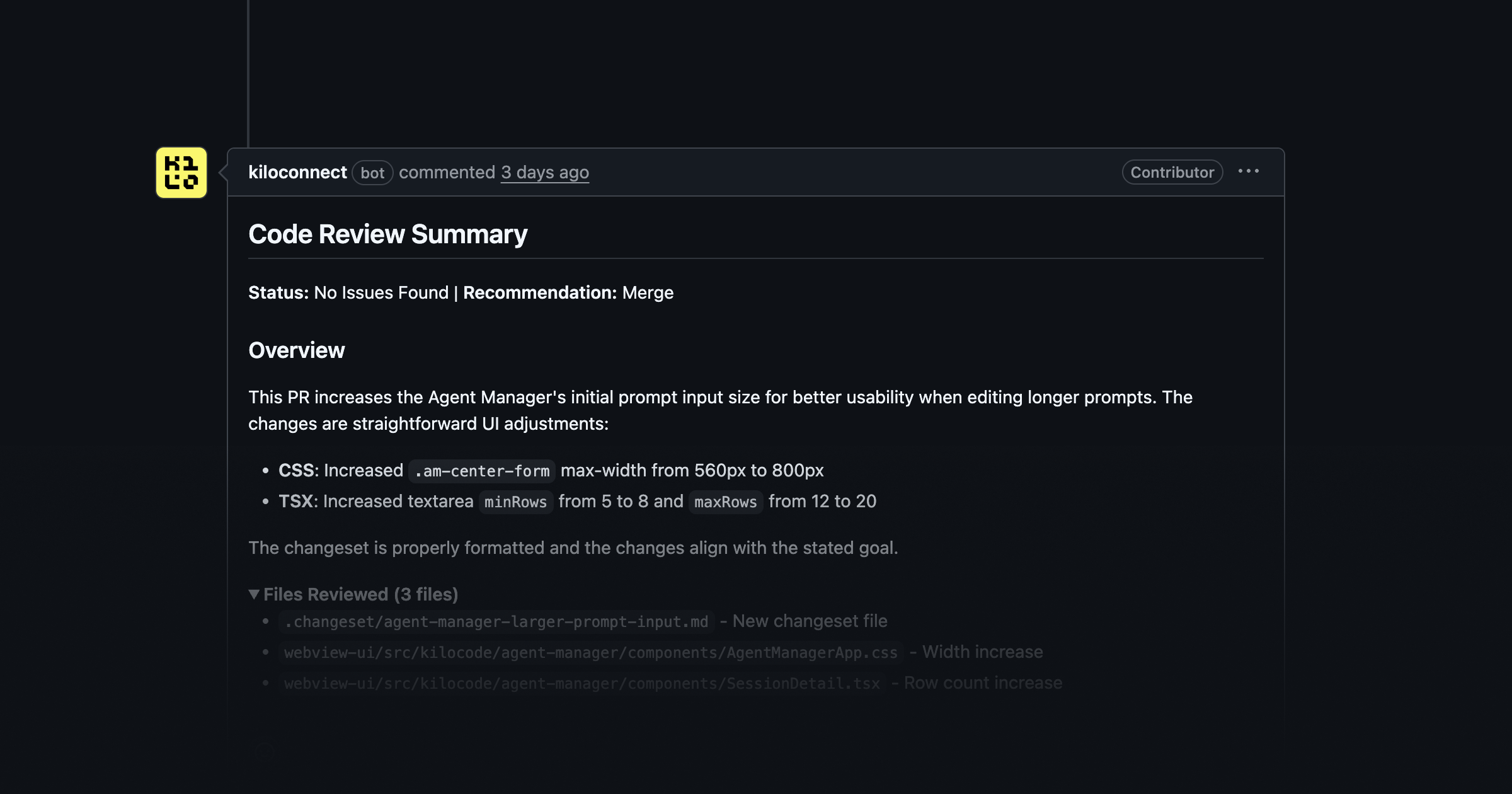
查看原始信息
The Password App
After a data breach, you're told to change all your affected passwords. Nobody actually does it because it takes hours. Meanwhile, attackers use your leaked password to break into your other accounts. The Password App updates your passwords for you. AI agents open each site, navigate to settings, and update your credentials automatically. Your passwords never leave your Mac, they're never sent to any server. Import from any manager via CSV and let it run while you work.

Hi Product Hunt! We built The Password App after getting a compromised password notification. While fixing the account, I found out that I had 8 other compromised passwords that I needed to fix. On top of that, I had the same password across dozens of sites from my early years without using a unique password per account. Changing them all manually felt like an impossible task.

That's the problem: everyone knows they should rotate compromised passwords, but the friction is too high so nobody does. Attackers know this too, which is why credential stuffing works so well.

We built AI agents that handle the tedious part: they open each site, navigate to password settings, and change your credentials automatically. The design principles we wouldn't compromise on were security and privacy:
- your passwords stay on your Mac, they're never sent to the cloud
- AI agents never see any of your sensitive login data, such as username and password
- built-in Guardian agent which acts as an additional defense against prompt injection attacks

But this is just the beginning. Your data is already everywhere. It's exposed in breaches, scattered across platforms, processed by systems you'll never audit. And it's accelerating: more accounts, more services, more exposure, faster than any person can track. You can't secure your digital life manually anymore. It's time to put AI on your side.      


We're building local-first AI agents that go far beyond passwords. These are agents that delete accounts you no longer need, send data removal requests on your behalf, and map your entire digital footprint to show you exactly where your information is exposed. This is what personal security looks like now: continuous, autonomous, and finally yours.                  


Currently macOS only, with a Chrome extension for browser integration. Would love to hear what features you'd want next!    

0
回复

Great team solving a widespread pain point! I've worked with this team across multiple companies. I trust their rigor and genuine interest in solving real world security problems.

0
回复

@plumb_bean thank you for the feedback and the kind words!

0
回复