Product Hunt 每日热榜 2026-02-22

PH热榜 | 2026-02-22

#1
Claude in PowerPoint
Use Claude to build, edit & refine PowerPoint presentations.
444
一句话介绍:一款深度集成于PowerPoint的AI助手,能在用户构建、编辑和精修演示文稿时,实时提供基于模板和品牌的智能协作,解决专业人士在内容结构化与格式统一上的核心痛点。
Marketing Artificial Intelligence Design resources
AI办公助手 PowerPoint插件 智能演示文稿 企业级应用 格式保持 实时协作 数据连接 内容生成 品牌一致性 生产力工具
用户评论摘要:用户普遍认可其解决“格式破坏”和“逻辑结构化”痛点的价值,认为其“嵌入式”体验是关键优势。主要疑问和建议集中在:对复杂企业模板的兼容性、具体集成方式(API/Web)、功能边界与规模化处理能力,以及期待更原生的AI协作工具形态。
AI 锐评

Claude in PowerPoint 的发布,远不止是在微软办公套件中增加一个AI功能按钮,而是一次对“AI赋能工作流”本质的精准切入。与众多浮于表面的“内容生成器”不同,它直击企业级用户最隐秘的痛点:在追求思想表达与严苛品牌格式规范之间疲于奔命。其宣称的“读取布局、母版、字体”并做出“模板感知的编辑”,是试图将AI从“创造者”降维为“理解者”,这才是其真正的护城河。

产品价值不在于生成更多幻灯片,而在于充当一个理解公司视觉语言与叙事规则的“数字实习生”。它承诺的“实时迭代”和“实时数据连接”,旨在将PPT从静态汇报文件转变为动态的信息枢纽,这隐约指向了未来办公文档的形态——一个与业务数据流实时同步的智能界面。

然而,其面临的挑战同样尖锐。首先,“理解模板”在拥有复杂层级、严格锁定的企业环境中能否真正实现,是决定其从“玩具”变为“工具”的试金石。其次,在微软即将全面铺开Copilot for Microsoft 365的背景下,Anthropic此举是聪明的侧翼进攻,但最终难免与原生集成方案正面碰撞,其长期生存空间取决于其AI模型对办公场景理解的深度能否持续超越通用模型。最后,用户的疑问暴露了核心矛盾:它目前仍是一个“插件”,而非“新物种”。那位期待“双向同步的、基于标记语言的原生协作工具”的评论,恰恰点明了未来可能颠覆它的方向——当AI不再需要理解庞杂封闭的专有格式,而是基于更开放、更结构化的协议工作时,今天的深度集成反而可能成为明天的桎梏。

总之,这是一款在正确时机、针对正确痛点打出的精明产品。它未必是最终形态,但它清晰地演示了AI融入生产流程应有的姿态:不是替代人,而是深刻理解人的规则与约束,并在此框架内极大提升效率。其成败,将取决于对“企业规则”这一复杂系统的破解程度。

查看原始信息
Claude in PowerPoint
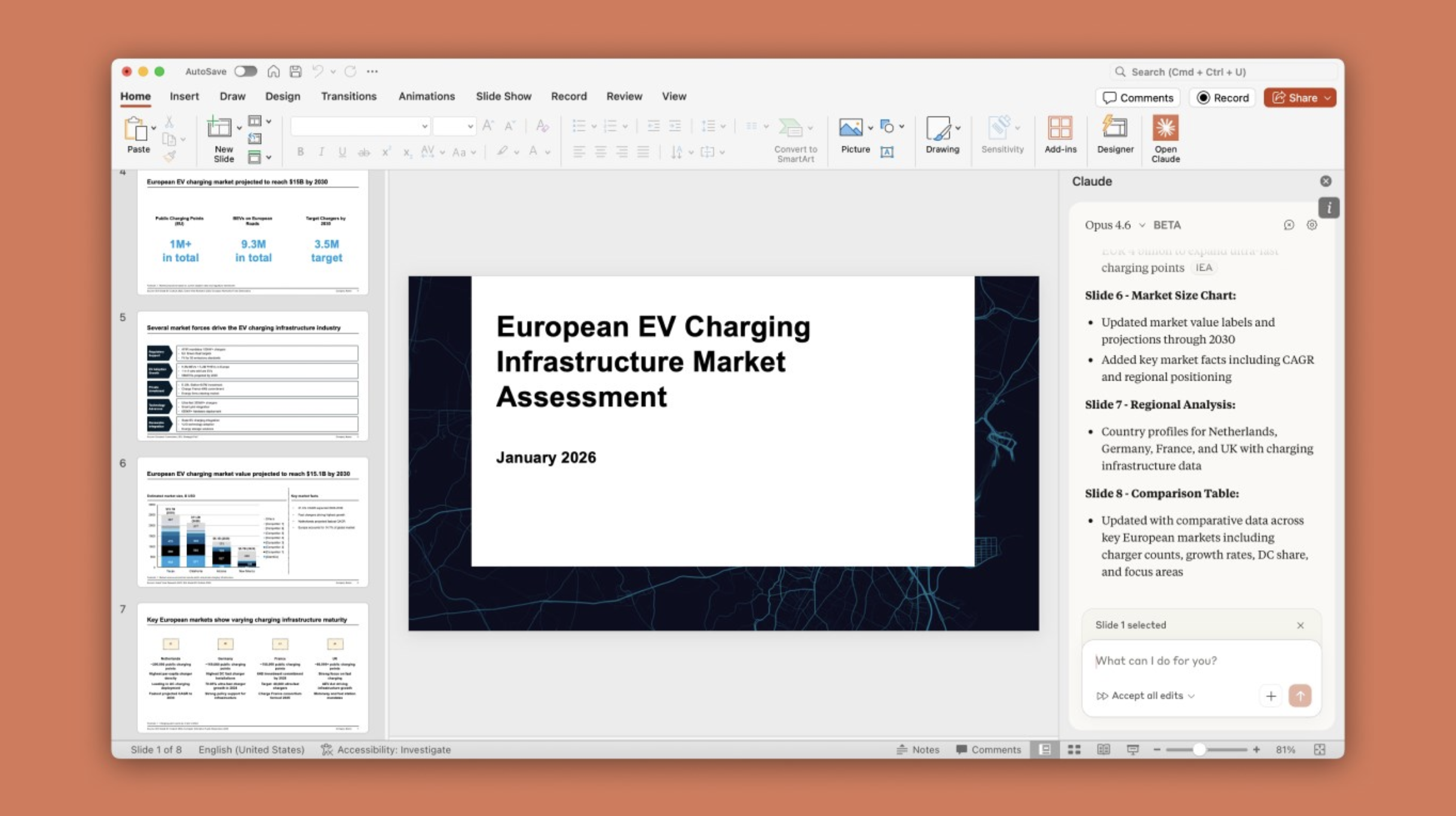
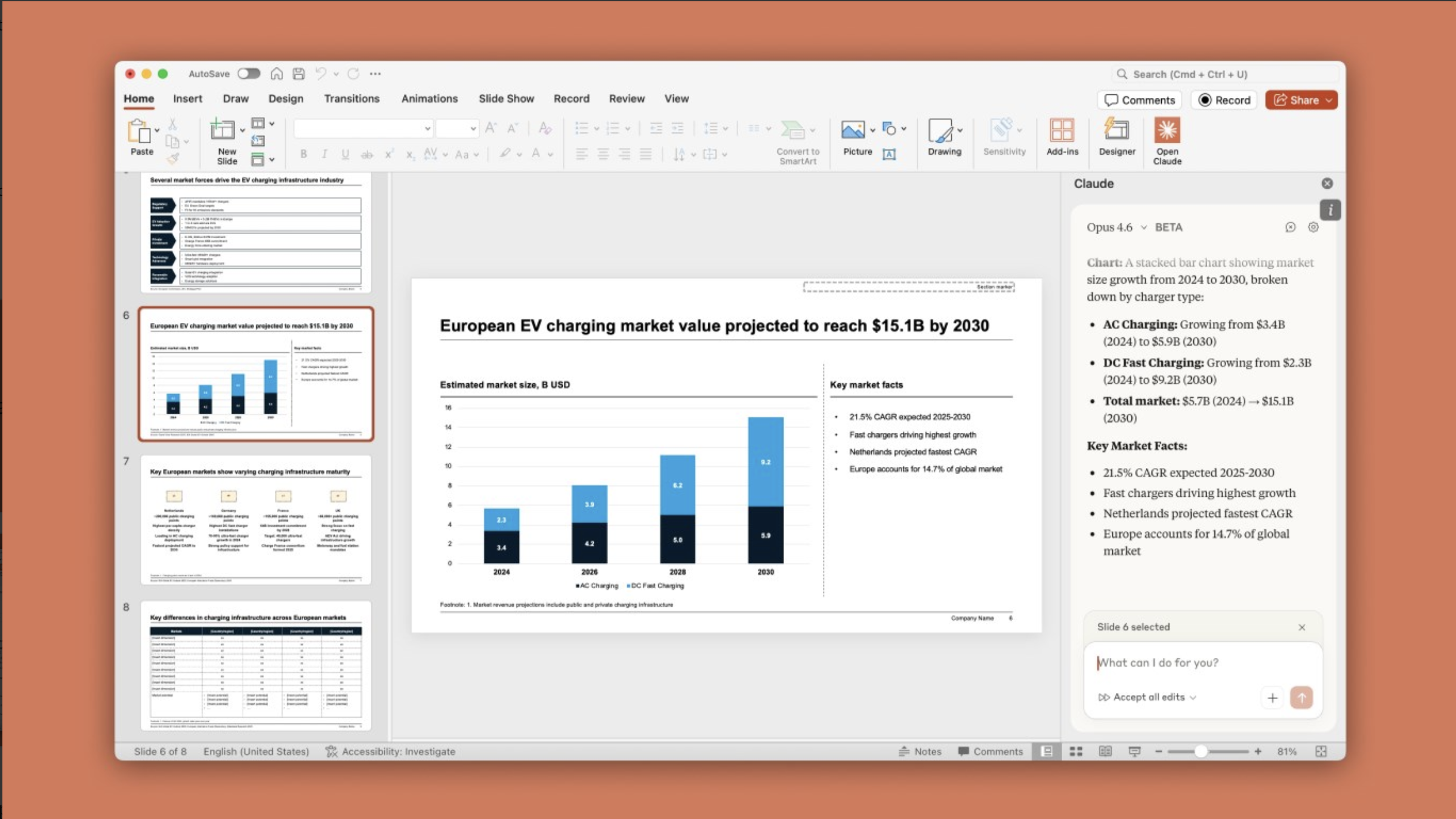
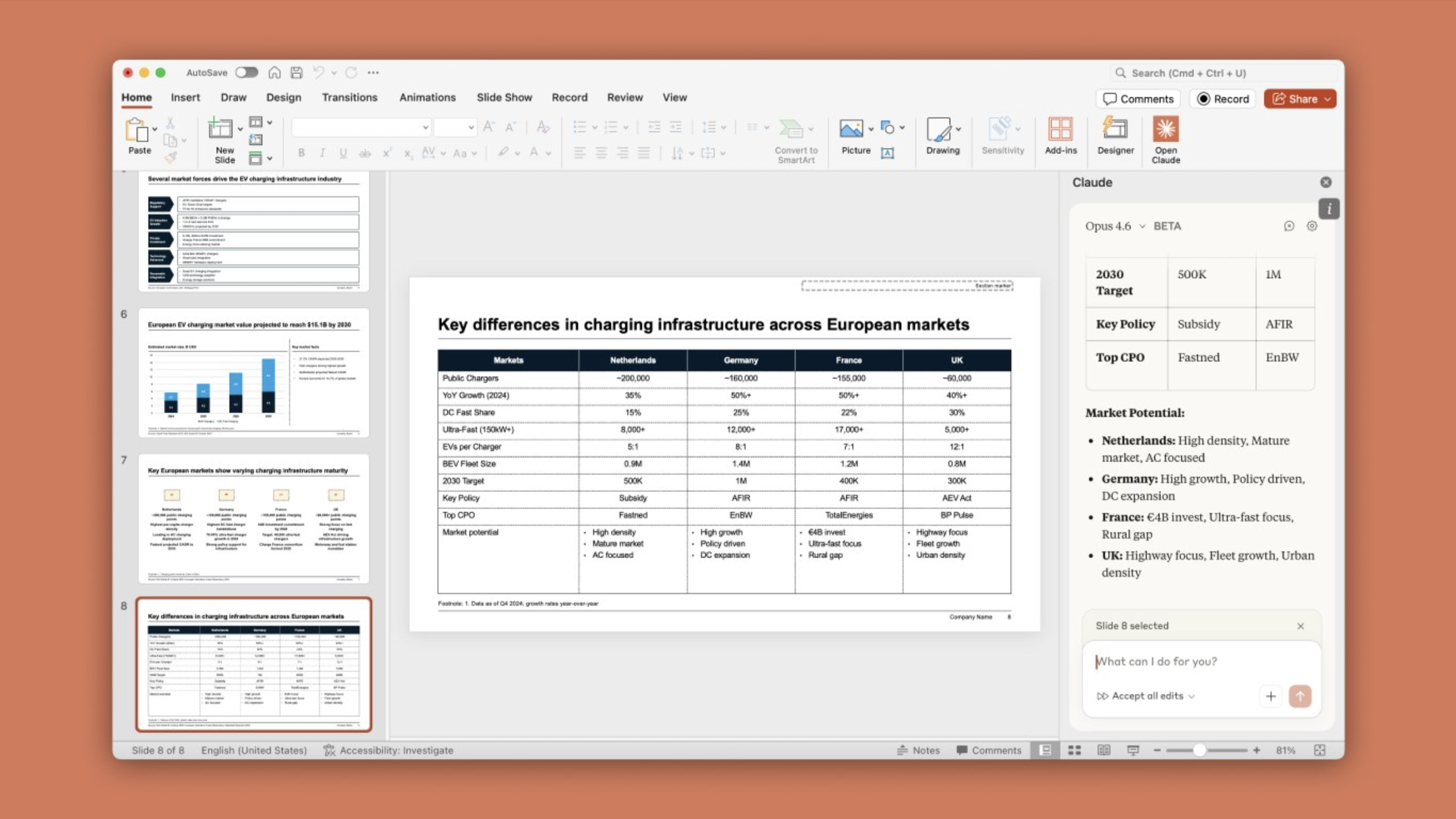
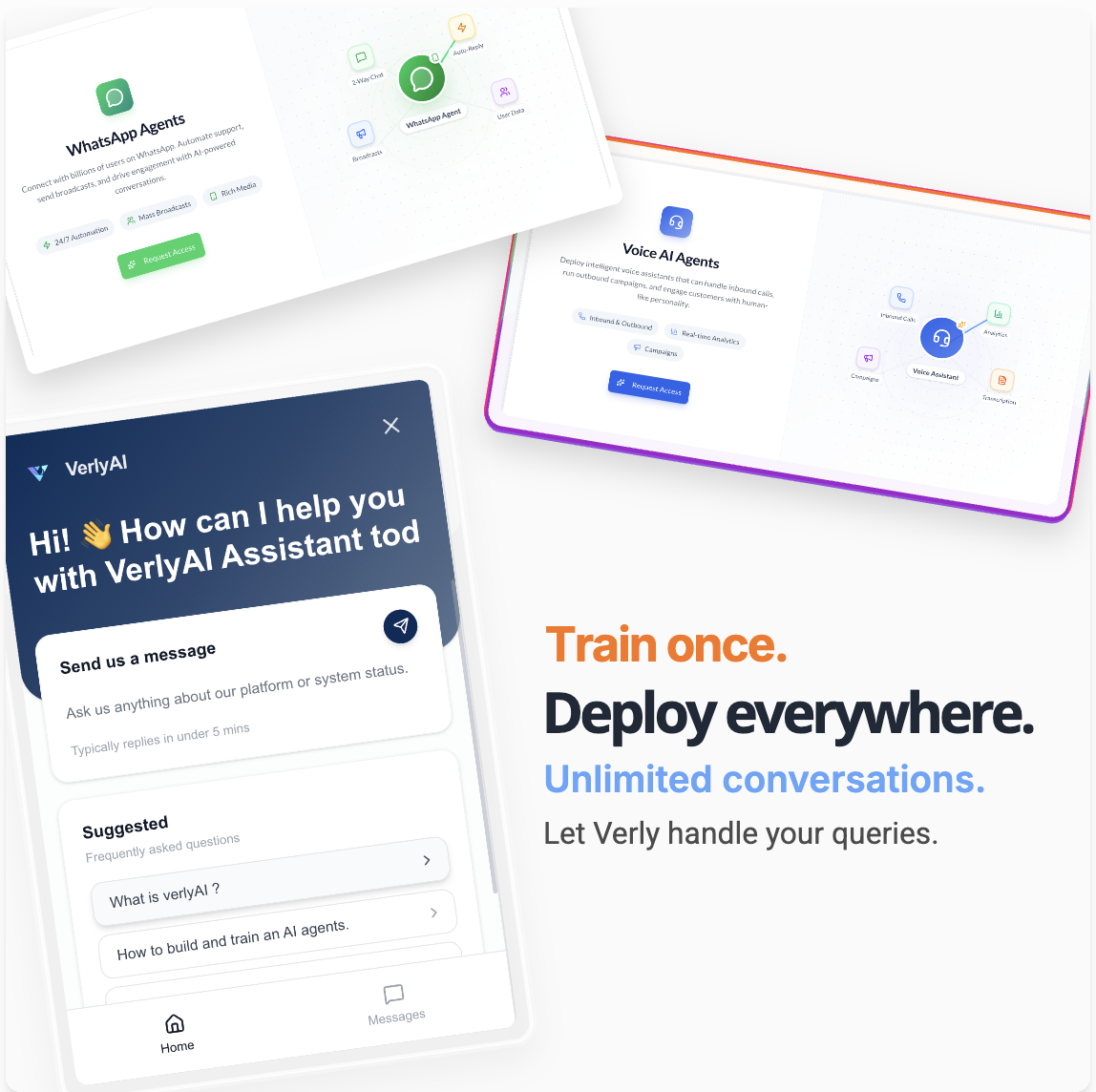
Claude works alongside you in PowerPoint — building slides, making pinpoint edits, and iterating on your deck in real time. Claude reads your layouts, fonts, and slide masters so every change stays on-brand and on-template. Claude in PowerPoint is now available on the Pro plan. It also now supports live data connectors, bringing context from your daily tools directly into your slides.

This is a big one for anyone who lives in PowerPoint :D

The biggest friction of building decks is never “writing text.” It’s restructuring messy thoughts into a clean storyline without breaking formatting.

What I love here:

  • It actually reads your existing deck (layouts, slide masters, fonts)

  • Makes template-aware edits instead of nuking formatting

  • Can generate a full structure from a natural language brief

  • Converts bullets → diagrams and adds native charts

  • No copy-paste between tools

Most AI tools feel like sidekicks outside the workflow. This feels embedded as if it was the co-author of your deck.

If this handles enterprise templates properly (the real test 😅), it could easily become a daily driver for consultants, founders, and operators.

Over to you!

How did Anthropic automate PowerPoint slides before Microsoft 365 Copilot? What do you think?

5
回复

Finally something useful. I used to spend hours/days to create something with a logical structure and a good-looking design. Now, I can save time :)

5
回复

@busmark_w_nika Indeed :D Thanks Nika for stopping by!

1
回复

Interesting direction for presentation workflows.

I often work with decks, and this looks like a useful way to speed up structuring and editing slides.

I’m especially curious about how it handles tone consistency and multilingual content.

2
回复

just keeps shipping 😅 now Claude directly inside PowerPoint is actually a smart move. If it really understands slide masters, layouts, and brand rules, that’s huge for teams who obsess over formatting. Live data connectors and real time edits? That’s less AI writes slides and more AI becomes your deck co-pilot.

2
回复

I feel you on the formatting. Nothing worse than redoing slides last minute and realizing your fonts are all over the place.

2
回复

As a consultant-turned-builder, I can already see consulting companies starting to use it asap. Super impressive!

1
回复

I've had a similar app launched not too long ago. Might want to check out if you want to build slides using AI, without the PowerPoint part

1
回复

Nice, but I guess this is only accessible via web UI, right? not the API, or does it support it too?

1
回复

This sounds interesting but I'm a little confused about what exactly Claude does in PowerPoint. Is it like a smart assistant that helps with design or generating content? It seems like it could save time for presentations, but I'm curious about how it actually integrates into my workflow. Can it really handle tasks at any scale, or is it limited?

1
回复

This is very exciting!

I am wondering how much the AI agent relies on visual input -- given that visual input is a lot less efficient.

But instead of powerpoint plugins, I am more hoping to see a slide making tool that natively support human-AI collaboration. The AI relies on something mostly text based (like markdown, html/css, latex), while human can drag and drop, click to edit, etc. And the changes will be synchronized bidirectionally.

0
回复

claude is not only a beast in coding but it is as well very skilled when it comes to power point and excel. from my point of view a real good product. anthropic is really entering the business world and makes it very easy to adapt in daily workflows.

0
回复

This looks super interesting, especially for folks who spend a ton of time in PowerPoint. The focus on maintaining formatting while restructuring thoughts is a big deal. But how does it handle more complex templates that companies use? Is that part of the plan?

0
回复
#2
Straion
Manage Rules for AI Coding Agents
309
一句话介绍:一款为Claude Code、GitHub Copilot、Cursor等AI编程助手提供集中化规则管理的平台,通过在组织层面自动应用编码规范、安全策略和架构决策,解决AI生成代码与企业实际标准脱节、导致大量人工修正和审查的痛点。
Developer Tools Artificial Intelligence Vibe coding
AI编程助手治理 企业编码规范 开发流程自动化 代码一致性管理 开发团队协作 规则引擎 软件开发生产力 企业级SaaS 智能代码生成 技术债务预防
用户评论摘要:用户普遍认可产品解决“AI编码代理偏离轨道”的核心痛点,尤其是大型团队中规则分散、难以统一执行的问题。主要问题聚焦于:规则冲突与层级管理、对不同技术栈的适配性、银行级安全合规性、产品在小团队中的适用性,以及规则能否动态学习和更新。
AI 锐评

Straion敏锐地捕捉到了AI辅助编程从“个体提效”迈向“团队工业化”过程中的关键断层。其真正价值并非简单的规则库,而是试图成为连接企业隐性知识(Confluence、wiki、口头规范)与AI代理显性指令的“编译层”。这直指当前AI编码的最大软肋:缺乏组织上下文(Context)导致生成代码“正确但不可用”。

产品定位显示出清醒的战略取舍:早期评论回复明确聚焦“100人以上”的工程团队,这避开了与个人开发者现有.md文件方案的直接竞争,转而切入规则同步成本高昂、合规要求严格的企业市场。其宣称的“从现有文档提取规则”功能若能可靠实现,将大幅降低部署门槛,解决“规则在开发者脑中”的终极难题。

然而,其面临的挑战同样尖锐。首先,“规则”本身具有动态性和矛盾性(如前端vs后端团队),产品如何设计优先级与例外处理机制,将决定其是成为赋能引擎还是官僚枷锁。其次,深度依赖与各大AI编码工具的集成,存在被平台方功能覆盖或接口变更的风险。最后,其商业模式从“生产力控制”向“治理层”的演进,需要说服企业为“合规与一致性”这种难以量化的收益付费,这比为“提速10倍”买单要困难得多。

总体而言,Straion是在为AI编程的“野蛮生长”期铺设第一条轨道。它能否成功,不取决于规则管理功能本身的技术难度,而取决于其能否在“控制”与“灵活”、“集中”与“自治”之间找到让工程团队感到“赋能而非束缚”的精准平衡点。

查看原始信息
Straion
Centralized rules for Coding Agents like Claude Code, Github Copilot & Cursor. Your AI coding agent automatically picks the right rules per task. Ship enterprise-ready code at 10x speed.

Hey makers & creators,
Pete here, Founder of @findable. and one of the early testers and supporters of Straion.

I’ve been working closely with @lukas_holzer and the team, as I keep seeing the problem of AI coding agents going off the rails.

Doesn't matter if you us Claude Code, Cursor, or Copilot. Yes, they make you faster, but especially in bigger orgs they often create problems.

So instead of just building, you often end up supervising. Correcting. Re-explaining context. Pulling the AI back onto the right path.

That's where Straion is helping engineering teams to stick to the organisations rules.

What impressed me early on is the simplicity of the core idea: give engineering teams a structured way to define “how we build software here,” and make sure AI coding agents actually follow those rules automatically.

Please let us know here in the comments what problems you are facing with AI coding, and how we can help,

Happy Sunday, Pete

10
回复

@lukas_holzer  @peterbuch Interesting angle — especially enforcing “how we build here” across AI agents. Curious: are teams adopting this more for code quality, security, or just reducing review overhead? Feels very relevant as AI-generated code scales.

3
回复
@peterbuch Congrats on the launch Have you thought about a post-launch visibility strategy? Many great tools struggle after day one
0
回复

@lukas_holzer  @peterbuch In larger orgs, rules often conflict across teams (frontend vs backend, infra vs product). How does Straion manage rule hierarchies or exceptions without becoming overly rigid?

0
回复

Hey makers, Lukas here, CEO & Co-Founder of Straion.

We built Straion after repeatedly running into the same issue while working with AI coding agents like Claude Code, Cursor, and Copilot.

They’re powerful, but they don’t naturally understand how your organization builds software. Things like internal standards, architectural decisions, security rules, or simply “how we do things here.” As a result, teams often spend a lot of time reviewing, correcting, and re-guiding the AI.

Straion is our attempt to help with that.

It gives engineering teams a central place to define their rules, and ensures those rules are automatically applied whenever AI generates code.

We have a simple goal: help teams get the speed benefits of AI without losing consistency and control.

We’re still very early, and there’s a lot we need to learn.


If you’re using AI coding tools in your team, we’d genuinely love your feedback: What works, what doesn’t, and where something like Straion could be useful (or not).

Also always happy to jump on a call,

And if you know engineering leaders or teams at larger organizations who are actively using AI for software development, introductions would mean a lot. We’re especially interested in learning from real-world setups + challenges.

Thanks so much for checking out Straion and for any feedback. I’ll be here all day to answer questions and learn from you.

Lukas

9
回复

Crongrats on the lunch. Totally see the need as i am often afraid that my coding Assistant is steadily drifitng away from our coding guidlines.

Am i also be able to setup different coding rules depending on the techstack of my project and teams? Web, python,... ?

4
回复

@dominik_rampelt thanks! Yea this is a common problem we try to fix! Sure you can have as many rules as you want spanning from infra rules to frontend guidelines. The techstack does not really matter!

They can be even functional rules like behavioural flows!

3
回复

@dominik_rampelt Thank you Dominik! Yes, you can have different coding rules depending on the tech stack. Straion is going to automatically pick the applicable rules based on the task.

4
回复

We built Straion because AI-generated code is everywhere — but in reality, it rarely fits how companies actually build software.

The problem isn’t generating code anymore. It’s alignment. Every company has its own standards for security, privacy, architecture, design systems, and frameworks. Yet AI tools don’t automatically understand those rules. The result? Manual fixes, long review cycles, and wasted time.

We built Straion to change that.

Straion automatically extracts company-specific requirements from sources like wikis, contribution guidelines, and best practices — and translates them into instructions AI agents can actually follow. That way, generated code fits the organization from the start.

This means:

  • Less manual correction

  • Fewer review loops

  • Better security and compliance alignment

  • Faster, more cost-efficient delivery

Before building, we conducted 100+ interviews with software teams to truly understand their pain points. The result is a product that doesn’t just work technically — it solves a real, expensive problem.

Ultimately, we built Straion so developers can focus on what really matters again: building great software instead of fixing AI output.

4
回复

Straion is badly needed. There is no way to centrally managed .md files, collaborate on them and dynamically update them across several repositories.

Looking forward to what the team will build!

4
回复

@panagiotis_papadopoulos Yea good point the updating! That's indeed a case a lot of companies don't think about!

They just think adding the rules once is enough. But what if you have 3 repos with the same frontend rules? You don't want to go into each repo and update the AGENTS.md or CLAUDE.md files there whenever you decide on new rules/guidances.

I'll bet they will be soon out of date!

3
回复
Awesome work, glad to see an Austrian startup up there!
3
回复

@mnewme Thank you so much Matthias! 😊

1
回复

@mnewme thanks so much for your support my friend

0
回复

Love meeting builders here — I’m opening up 15-min intro demo calls for anyone curious about Straion 👋

If you want a quick walkthrough (how we handle dynamic rule/context selection for AI coding agents), grab a slot here:
https://cal.com/lukas-holzer/quick-chat

3
回复
Hi @katrin_freihofner Nice product - just upvoted! I work at an IT service provider for the banking sector. Are you already prepared for banking-grade security and compliance requirements so we could consider your app for a bank customer?
3
回复

Thank you so much for your support @katharina_g - I really appreciate it! Coming from the enterprise software space, we’ve built the product with top-tier security and privacy best practices in place from day one. That said, since we don’t yet work with teams in the banking sector, I’d truly value the opportunity to better understand your specific requirements and compliance needs.

Would love to set up a quick intro call next week to explore this together. You can grab a slot on my calender. Looking forward to connecting!

1
回复

Really strong concept. The ‘rules for AI agents’ angle is interesting — are you positioning this more as a governance layer for teams or as a productivity control tool for individual devs?

3
回复

@richard_rucker_monteiro Thank you for your message, Richard! Straion is the context (or governance) layer and works best for software engineering teams with 100+ people. This is where the problem we are solving is most pronounced. Individual developers often use AGENT.MD or CLAUDE.MD files, or even write their own custom skills, but these approaches don’t scale well across larger teams.

Let me know if you’d like to go deeper into this topic.

3
回复

@richard_rucker_monteiro we start currently as a productivity control (with aim for the governance layer). The point is if you use agentic development with multiple agents and you have to babysit them it does not feel like the promised 10x development productivity.

So we target that first helping you to get true 10x speed!

We are cooking already the next thing up here ;)

2
回复

This hits close to home. Coding agents are only as good as the context you give them, and right now that context lives in random markdown files scattered across repos. Having one source of truth that works across Cursor, Copilot, and Claude Code just makes sense.

3
回复

@giammbo yep, a big IF the context lives in random markdown files, the sad truth is that a lot of companies don't have markdown files in there repos even. They have their rules in Confluence pages or scatter wikis, in the worst case they are stuck in the head of single developers that comment then on repos.

So with straion we try to help you extract those rules from existing sites/pages and even repositories. So to get you started quicker.

2
回复

Seems Straion could handle the challenge of hallucination.... but just curious - would agents themselves handle making rules in future? lol

2
回复

Seems Straion could handle the challenge of hallucination.... but just curious - would agents themselves handle making rules in future? lol

2
回复

@cruise_chen 🤔 For now, let's add your rules to Straion and let it handle the hallucinations. With stronger, more sophisticated and especially targeted rules hallucinations shouldn't be an issue anymore.

2
回复

This sounds interesting, especially if it actually speeds up coding with AI agents like Claude or Copilot. I'm curious how the rules are set up and if they adapt over time. How does it learn which rules to apply?

2
回复

Hi @austinelvis , thanks for reaching out!
We’ve run internal benchmarks with Straion, and the results show a clear improvement in coding speed. We’ll be sharing the detailed numbers in the coming weeks, so stay tuned.

At the moment, rules can be imported from a repository or a text file, and you can also paste them in directly. We’ve put together a short video that walks through the import process: https://www.youtube.com/watch?v=sRL0fETIiH0.

I’d also be happy to personally guide you through the setup and help you get everything up and running.

Straion maps rules directly to individual steps in your coding agent’s implementation plan — it’s a fairly sophisticated pipeline under the hood. I’d be glad to give you a live demo anytime.

2
回复

Does it also work for small teams?

2
回复

@doris_freihofner thanks for the question! Sure it works for a solo dev as well! but if it's just a small react project you can probably manage the effort with some AGENTS or CLAUDE .md files as well.

The true benefit for Straion is for teams within larger organizations as they have a fast growing codebase (often multiple repositories and need rules to align the code)

A good example is if you have multiple repositories having golang microservices. You don't want to duplicate all the rules in each repository. In this case you want to have a single central hub to manage all your rules!

This is exactly the usecase where straion shines. Once you update a rule in straion it will be immediately propagated to all of your devs. They don't have to update/install anything. It's just there! So enforcing coding standards, security best practices and other rules is just a click away!

2
回复

Hi, looks awesome @lukas_holzer! is there any limitation in terms of team size, or can it be used with a e.g. 2person team and a 30 person team with the same results?

2
回复

@bernischaffer Hey no there is no limitation in terms of team size, you can use Straion for a small team, but we are focussing on Enterprise clients because we've seen the problems there are at a different magnitude. Not saying small teams don't have those problems. But for a solo developer managing the rules in an AGENTS.md is doable.

If you work though in a large monorepo with multiple services frontend/backend then it's def. something you should take a look at!

4
回复
Hey Pete, that line about ending up supervising instead of building is so accurate. Was there a specific moment where an AI agent completely ignored how your team does things and you had to undo or re-explain everything?
2
回复

@vouchy Yea you are so true! On Thursday I had a convo with a very seasoned developer that said. He can't keep up on the pace of the ecosystem anymore. He's afraid that he's taking a "wrong" turn by choosing full on a specific technology.

We try to help those companies to take off that burden by having one central place to manage all your rules and supporting mutliple agents. Straion is installed via a CLI. In the background it sets up a skill for the coding agent of your choice that's it super simple

Here is a getting started video: https://www.youtube.com/watch?v=sRL0fETIiH0

2
回复

Massive congratulations on the launch team!

1
回复

@nadigerutpal Thanks so much! this means a lot from such a seasoned founder!

0
回复

For large teams of thousands of devs, especially in polyrepo / microfrontends like where I work at the moment, this tooling is exactly what we need to scale best practices while enforcing security compliance.

1
回复

@kaelig great to hear that! That's the reason why we focus on larger companies! I don't think managing scattered .md files across polyrepo or microfrontend structure is the future in context management!

Love to hear more about your use case!
Feel free to schedule a call with me to get either a demo or we can discuss your use case more in depth! https://cal.com/lukas-holzer/introduction-call

1
回复
Congrats on the launch, Team Straion!, Managing AI agent rules is becoming a massive bottleneck. One quick observation: Your copy is very technical. While devs get it, the decision makers (CTOs) are often worried about Technical Debt and Reliability. If you shift your narrative from “Managing Rules” to “Scale your AI dev team without the chaos”, you turn a technical tool into a strategic insurance policy. At franvimktg, I help technical SaaS tools speak the language of growth I have a couple of ideas on how to frame this for Engineering Managers to boost your trial sign ups. Cheers!
1
回复

@franco_vidal Great point! Technical debt and reliability are def. things we address! Really love your thoughts! We've initially though using the narrative of being the insurance policy so I really love your thinking here!

Happy to get more of your Ideas!
Happy to connect on linkedin to trade notes! https://www.linkedin.com/in/lukas-holzer/

1
回复
@lukas_holzer Glad it resonates, Lukas! It’s such a powerful angle for CTOs who need peace of mind. I just sent you a connection request on LinkedIn, let's definitely trade notes there. I'll drop a couple of specific Insurance Policy copy ideas in your inbox!
0
回复

Hey, this looks amazing! Really useful concept, especially with regard to giving focussed context to an agent and for centralising rules across repos. I'd love to know how the tool selects the right rules to use and if there's any way to see which rules have been selected for a prompt?

1
回复

@orinokai We took a completely different route here for rule matching as Cursor or others are doing.

Instead of going on a folder level or file extension to match rules, we've trained a machine learning pipeline to do the matching of the rules. This is based out of a variety of constraints. classifications, embeddings, labelings and so on. Basically we've tried to immitate the human brain! My brain does not work by locating knowledge based on a directory 😂

By that we can be super agnostic of repos and the developer don't have to recall where the rules are located they need!

When it comes to visualisation we currently fall a bit short. We just present you the output inside the terminal of Claude Code, Codex or Github Copilot! (You get a kind of validation report)

But we are planning on implementing a dashboard so you see exactly for which task which rules where applied and taken!

That's how we showcase it currently:

1
回复

the more access a tool gets on you computer the more important it is to give it rules and constraints. i think it solves a real problem.

1
回复

@phirabu thanks so much!
Yes we think the future in agentic coding is not in larger context sizes it's about rules and constraints to get true 10x productivity!

0
回复
Super interesting, guys! Congrats on the launch! 🎉 Does it actually review the code to enforce the coding rules?
1
回复

@singhgagan Thanks! Yea exactly! the skill has multiple function it calls. One is a validate requirements where it actually reviews the task (with the changes in code if it follows the rules)

Here is a screenshot of a run I've just had working on our marketing website – obviously we are using straion for our internal development as well ;) You know dogfooding your stuff!

0
回复
Love this! What’s the “Aha” moment you see most often when a team turns on Straion in their SDLC for the first time?
1
回复

@topramin Love that question!

We've got the feedback of a dev that generated a PRD with Claude for a golang task, and the PRD suggested the logrus logging libaray.

On the first glance it looked fine, but Straion enforced the zap logging library because that was the rule in straion.

So he hadn't forgotton the rule, its just that the PRD did not get the love it should deserve but straion caught the mismatch early and kept the implementation aligned.

I guess otherwise they would have to reprompt and redo after a code review (hence making feedback cycles in the SDLC super slow without straion)

1
回复

As a founder of a security consultancy, watching how quickly the AI and agentic movement has taken off has been incredible, but also has introduced new and interesting challenges in keeping the company safe!

I am super excited to see what Straion can do in keeping engineering teams moving quickly while keeping the codebase clean and company policies met!

1
回复

@patrickfarwick Thanks! yea this whole thing is moving at light speed (or even warp speed?)

With straion we try to help devs to not have to go that pace and commit for one technology. we try to be a proxy managing all rules you you don't have to think about (skills, how to structure .md files so they are picked up best by the latest model, context engineering etc...) or even should I go with Cursor or Claude Code.

We are Provider agnostic and optimizing the rules internally so that they are best picked up by agents!

0
回复

Love the concept here, giving coding agents the context they need is a real gap right now. Curious if you have plans to support Gemini CLI alongside Claude Code and Cursor?

1
回复

@jonathan_speek Yea this is already one of the next steps, just wanted the list of supported agents as small as possible for the launch to test them properly! As it's just a skill that calls our CLI it will be probably something we can do in the upcoming days!

We just want to test everything properly! As we build sophisticated benchmarks to truly see where the value of straion is!

0
回复
#3
Tidy
A personal assistant that can learn to use any app you use
272
一句话介绍:Tidy是一款可通过无代码教学、学习使用任何网页应用的AI个人助理,它通过iMessage等渠道与用户交互,在云端自动执行重复性任务,从而将用户从繁琐的数字操作中解放出来。
Productivity iMessage Apps Lifestyle
AI个人助理 无代码自动化 网页操作自动化 云端代理 iMessage集成 智能工作流 任务委托 生产力工具 开源计划 生活操作系统
用户评论摘要:用户认可其核心价值,如无代码教学、iMessage集成和云端托管带来的便利。反馈集中于确认适用范围(目前仅限网页应用)、询问非技术用户的学习门槛,并建议优化价值主张的表述(如从“学习”转向“委托”)。开发者积极回应,透露了安全功能、移动应用支持等未来计划。
AI 锐评

Tidy的野心远不止于又一个聊天机器人或简单的自动化工具。它试图成为连接用户与所有数字服务的“操作层”,其核心价值在于“无代码教学”和“云端持久化运行”。这直接瞄准了自动化领域的最大痛点:非技术用户的高使用门槛,以及需要本地设备常开的限制。通过将教学过程简化为在浏览器中演示,并利用云端代理持久执行,它在理论上确实在Zapier的易用性和OpenClaw等高级代理的灵活性之间找到了一个潜在甜点。

然而,其宣称的“学习使用任何应用”是最大的亮点,也必然是最大的风险点。真实世界的网页应用结构复杂、频繁变更,且涉及多步逻辑与异常处理,确保AI操作的“可靠性与安全性”将是一场硬仗。当前评论中流露出的“如果它能可靠运行”的假设,恰恰说明了市场对此的谨慎态度。此外,将iMessage作为主要交互界面虽降低了启动摩擦,但也可能限制了其作为严肃工作流中心的场景,更像一个贴身的便利贴助手。

真正的考验在于,它能否从“可以自动做几件很酷的事”的玩具,进化为用户敢于托付关键流程的“操作系统”。这取决于其工具链的可靠性、权限管理的精细度,以及生态(社区共享工具)的繁荣程度。开发团队开源个人上下文连接器的计划是明智的一步,有助于建立信任。若成功,它将重新定义人机协作的边界;若在可靠性上受挫,则可能被困在自动化长尾需求的利基市场。

查看原始信息
Tidy
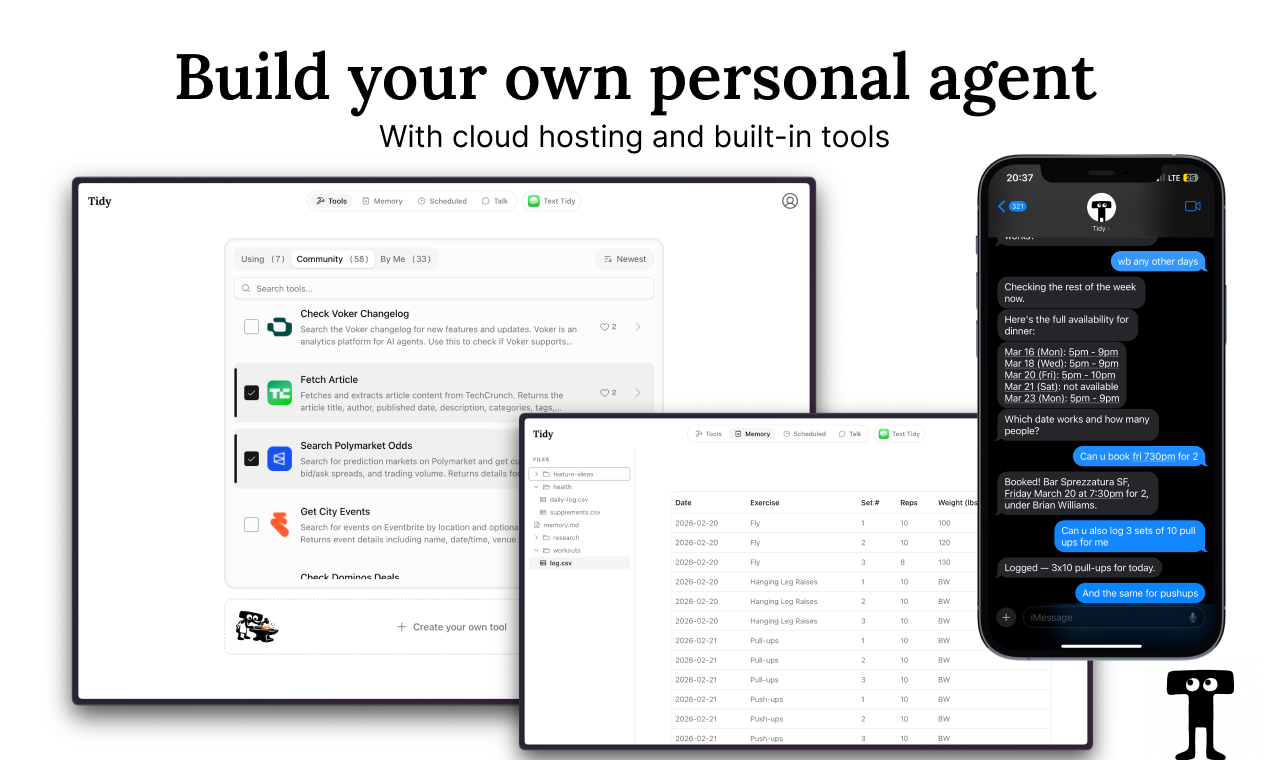
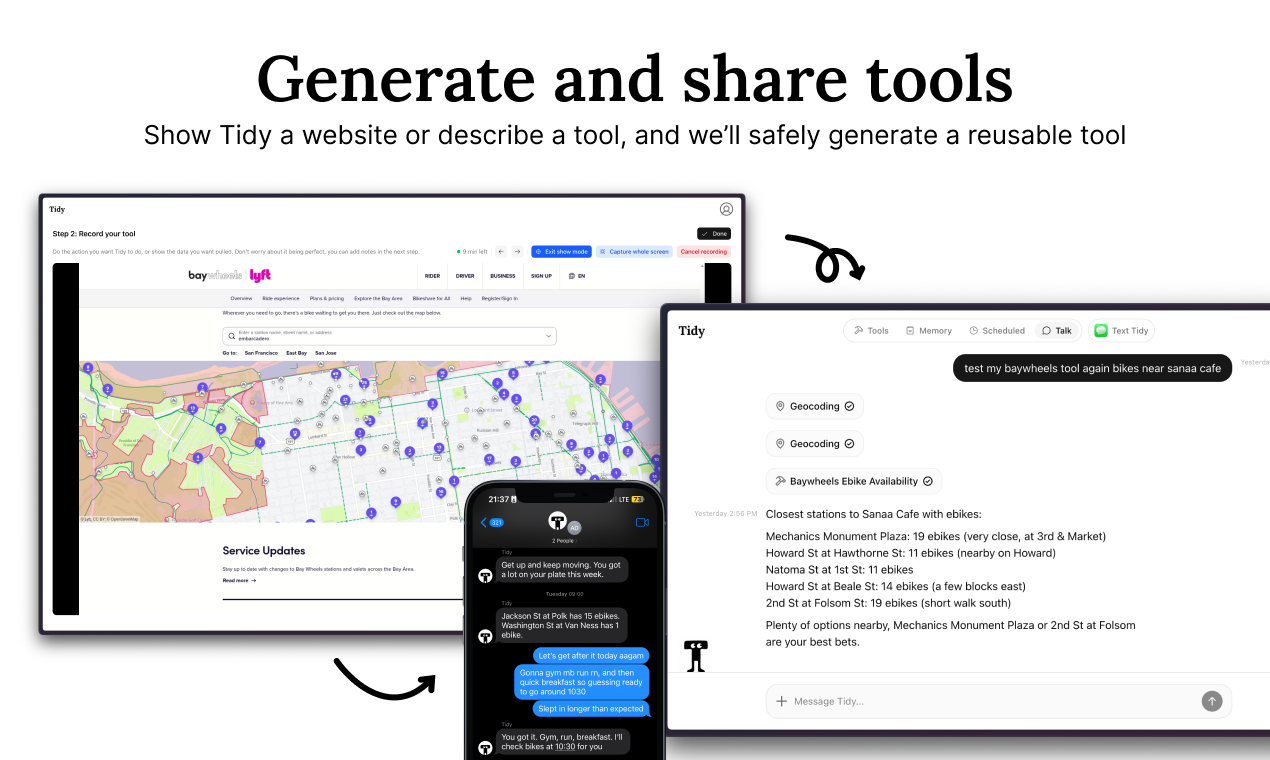
Tidy is a personal agent that can use any app you use, so it can do everything you do. Tidy keeps you in the loop via iMessage + a persistent filesystem. It's like OpenClaw, but fully cloud hosted and you can teach it to safely use any website without touching any code.

Hi,

We originally built Tidy because we loved the idea of an agent (or Claw) running our life via texts. As we shared Tidy with friends, we realized that everyone had particular use cases, wanting to automate niche websites and tasks.

So Tidy can now learn how to use any webapp with no coding required:

  • You can show Tidy how to use any webapp. It then turns it into a reusable, reliable tool.

  • Any tool you make can be shared with friends.

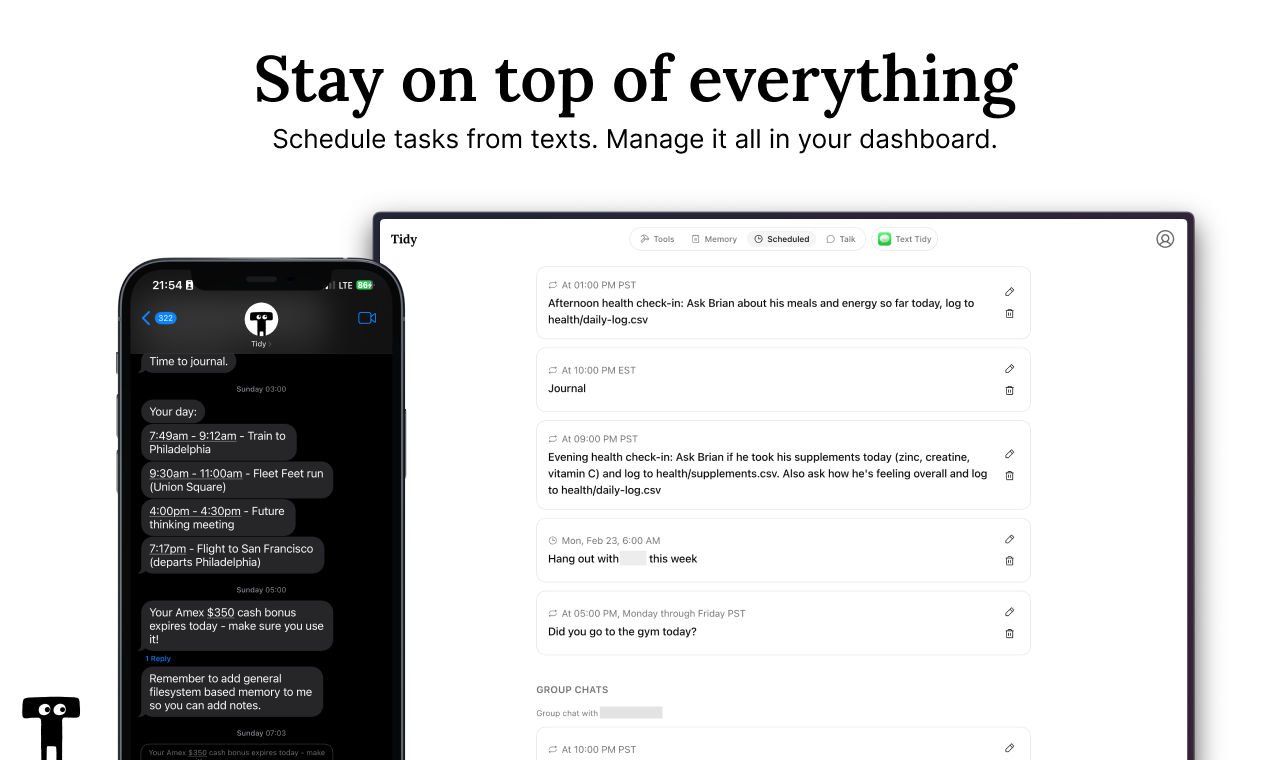
  • Tidy lives in iMessage (and web chat), so it can text you when your input is needed.

    • No need for your own mac to use this, we host Tidy.

    • Tidy also works in group chats, where you can share tools

  • Tidy comes with memory (a filesystem), reminders (cron jobs), and many built-in tools.

You can use your own tools or community-built tools. Over time, Tidy will be able to do more of the things you need to do but don’t love doing. Would love for you to try making a tool here: https://withtidy.com/.

What's Next

  • Safe personal context - We're making an open-source desktop app that allows you to connect your personal context (messages, notes, etc.) to Tidy and other agents

  • Mobile apps - Right now it's just webapps; we also want to allow tidy to use mobile apps

We hope that Tidy can become an operating system for your life. Please let us know what we can do to get there.

Onwards,

Aagam & Brian

8
回复

Hey Product Hunt,

Been using (and building) Tidy for some time now. While Tidy is great for the regular stuff (reminders, managing my calendar, notes), I also thought I'd share some custom generated tools + features that I've personally found quite useful:

  • Checking what Bay Wheels ebikes are available (Tidy texts me in the morning which station is best to go to)

  • Getting text alerts about certain clothing sales

  • Snagging restaurant reservations

  • Logging fitness sessions and health data

Some of my friends have made niche tools like:

  • Extracting vocals from youtube videos

  • Following class discussion boards

  • Finding optimal flights to use airline points

If you have an interesting use case, you should try teaching Tidy a new tool and let us know how it goes!

5
回复

Extremely excited to see this public release. Have been a longtime supporter of @bew111 and @aagam_dalal's work!

2
回复

Thanks Toby, glad to have your support while building!

2
回复

@bew111  @tobias_w Thanks for the banger advice + feedback Toby!!

0
回复

I love Tidy, its definitely one the most useful agents I use on a daily basis!

1
回复

@dhruv_roongta Thanks harsha!

0
回复

Much nicer to use than most text assistants out there

1
回复

@harsha_gaddipati Thanks Harsha, we're big fans of Slashy!

0
回复

@harsha_gaddipati thanks harsha!

0
回复

love it.. and gonna start testing ..

1
回复

@alimirza2k love it, please let us know what you think :)

0
回复

tidy has been a productivity game changer for me by feeding me relevant news in digestible lengths every morning!

1
回复

@grace_dai1 thanks Grace!

0
回复

Do you really mean any app? Wow, it deserves a try of course. I'll back with deep feedback

1
回复

@german_merlo1 Let us know which webapps or tasks you try making into tools!

0
回复

@german_merlo1 Right now it's webapps, but we want to add mobile apps soon!

0
回复

I like it. I see clear value in automating repetitive tasks across different apps.

1
回复

@sergeypetrov Appreciate the love!

0
回复

I really love Tidy's logo and overall vibe!

1
回复

@jimmydin7 that's @bewill's handiwork

0
回复

Tidy is basically AI that lives in the cloud and learns your apps super handy if it actually remembers context. iMessage integration + persistent memory makes it feel like a personal co-pilot, not just a script runner. The no code teacging angle could make it way more accessible than OpenClaw for non-tech users.

1
回复

@jhony__rear yeah exactly!

0
回复

Tidy is basically pitching the AI that actually uses your computer dream but fully cloud-hosted and messageable over iMessage, which is kinda slick.

📱 iMessage as the control layer (low friction, always-on)

☁️ Cloud-hosted (so it’s not tied to your laptop being open)

📂 Persistent filesystem The teach it safely without code angle is interesting too that’s where most automation tools lose non-technical users. If they nail reliability and guardrails, this could sit in that sweet spot between Zapier and full-on autonomous agent chaos 😅

Would you personally trust something like this with your daily workflows, or does the any app you use claim feel too ambitious?

1
回复

@julia__klemenc yeah great points. We are definitely a little biased, but @bewill and I run our lives through it!

0
回复

@julia__klemenc Thanks for mentioning these points. And yes, we're excited about generating safe and reliable tools even without touching code (we have some safety/permissioning features in the works!).

0
回复
Amazing launch! Tidy's ability to learn any app is impressive. Quick bit of feedback on the value prop: “Assistant that learns” sounds like more work for the user. If you pivot your messaging to “Delegate the repetitive to focus on the creative”, or position it as your “Operational Twin”, the perceived value skyrockets. I run franvimktg and I see this gap often in automation tools. I’d love to drop a few specific hero section tweaks to help you turn that curiosity into active users. Best of luck!
0
回复

@franco_vidal thanks for the feedback! very helpful

1
回复

Looks cool! Congrats Aagam

0
回复

@louislecat thanks for the support Louis :)

0
回复

This sounds interesting, especially the part about being able to teach it to navigate any website without coding. How intuitive is the learning process for users who aren't super tech-savvy, @aagam_dalal?

0
回复

@austinelvis it's no-code! The flow is that a browser opens inside the tidy webapp -> you show it how to do something inside of the webapp -> tidy learns how to do that action repeatably

you can also just type in what you want done and we will automate the work you do in the browser using a browser agent

0
回复

Hi thank you for launching. It looks very interesting

But, it seems that the login only supports the mobile phone number in the United States. May I ask whether other countries can open support,tks.

0
回复

@orange_wong Hey, we'll take a look at this and reach out when it's fixed!

Edit: we should support non-US signups now

0
回复
Great launch! After playing around a little with OpenClaw and building my own, similar thing I realised that way too often I depend on AI vs generated code (for example, for tools that just need a simple data fetch from somewhere) What do you think? What's your approach here?
0
回复

@lukaszsagol Good point, there's kind of a trade-off between repeatability vs flexibility when using AI. We try to solve this: when you show Tidy how to use an app, we convert your clicks into code. So you get the repeatability of code but the flexibility of an LLM.

1
回复
This is actually huge for personal automation. It would be amazing to send emails automatically
0
回复

@vatsal_shah8 We're working on out of the box support for that (getting our google CASA), but you can also just show tidy how to send emails on your favorite app

What kinds of emails do you want Tidy to send for you? One option we were playing with is giving your Tidy agent an email using our friends at AgentMail, like a lot of folks do for their claws

0
回复
#4
Wordy
Learn languages from real movie and TV clips with quizzes
208
一句话介绍:Wordy通过真实影视片段与即时测验,让用户在娱乐中自然习得外语,解决了传统语言学习枯燥、脱离真实语境的核心痛点。
Android Chrome Extensions Movies Education Languages
语言学习 影视化学习 沉浸式学习 教育科技 词汇追踪 测验互动 视频内容 兴趣驱动 移动应用
用户评论摘要:用户普遍认可“从喜爱内容中学习”的理念,认为真实语境记忆更深刻。主要问题与建议集中在:内容选择机制、与AI生成视频的差异化、长期分发与留存策略、功能路线图(如个性化)。创始人回复透露其数据反馈留存率良好。
AI 锐评

Wordy的“影视化学习”叙事精准击中了Duolingo等主流应用的软肋:人造句式的单调与真实语言能力的脱节。它真正的价值并非技术创新,而是对学习本质的一次回归——将“习得”而非“学习”置于首位,利用影视作品自带的强情境、高情感卷入特性,构建了更接近母语习得的潜意识浸泡环境。

然而,其光鲜外壳下潜藏多重挑战。其一,内容即壁垒,也是枷锁。精选片段确保了质量,但极度有限的版权库(或依赖用户自行导入)将严重制约其规模与个性化能力,这与AI生成内容可无限定制分级的路径形成鲜明对立。其二,学习效果“糖衣”风险。影视语言充斥俚语、非标准表达,若无系统的语法框架作为“骨骼”,仅靠词汇和语感的“血肉”堆积,可能导致用户陷入“似乎听懂却无法构建”的尴尬境地。其三,商业模式悖论。其核心魅力在于“去教育化”的轻松感,但若要实现可持续增长,又不得不引入进度追踪、课程体系等“教育化”结构,这可能消解其最初的吸引力。

创始人将工具拓展为平台的野心清晰可见,但这条路犹如走钢丝。成功的关键在于能否在“兴趣驱动的随意浸泡”与“有目标的系统学习”之间找到精妙的平衡点,并解决内容规模化这一根本性难题。否则,它或许只能成为一个有趣却小众的补充学习工具,难以撼动现有市场格局。

查看原始信息
Wordy
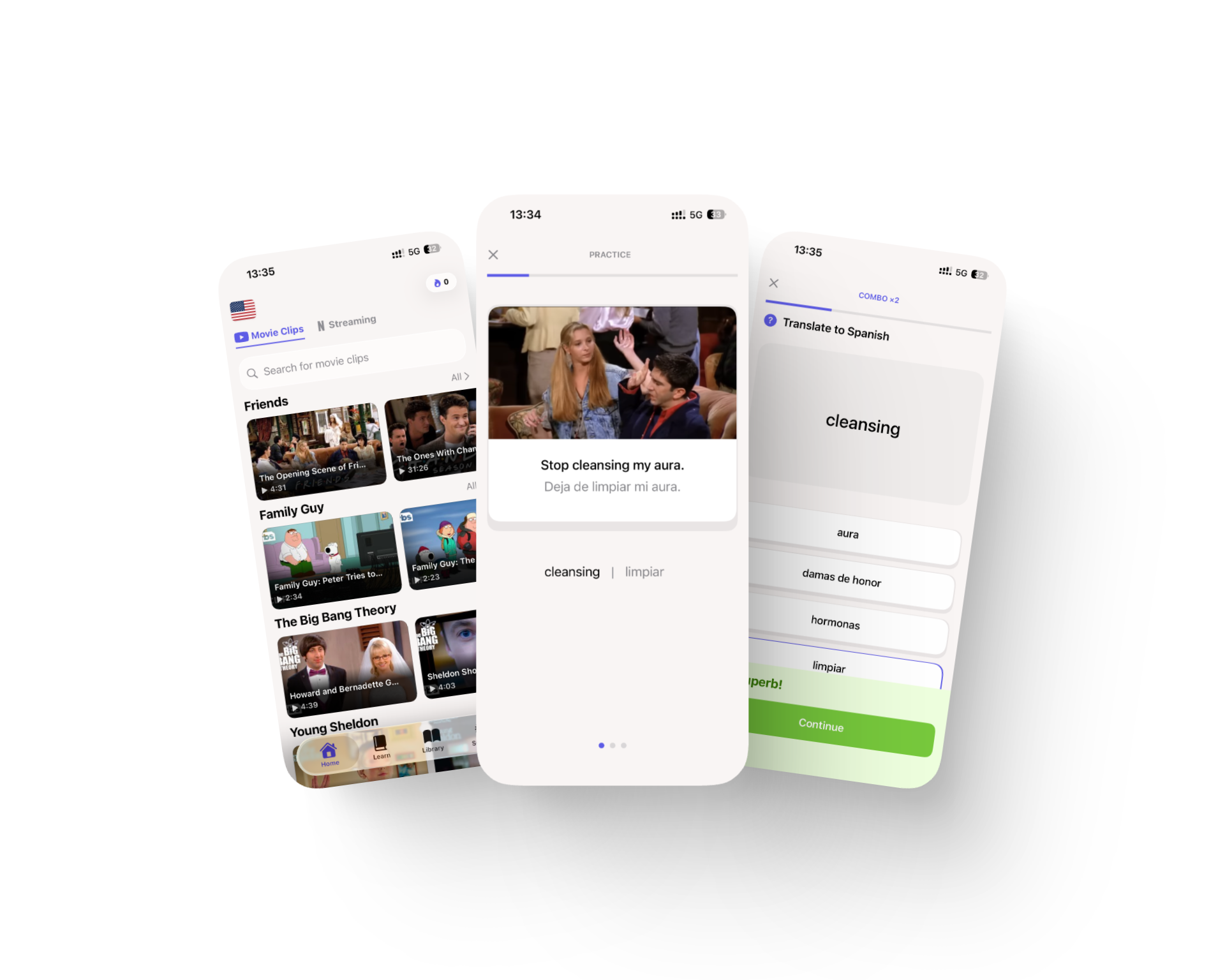
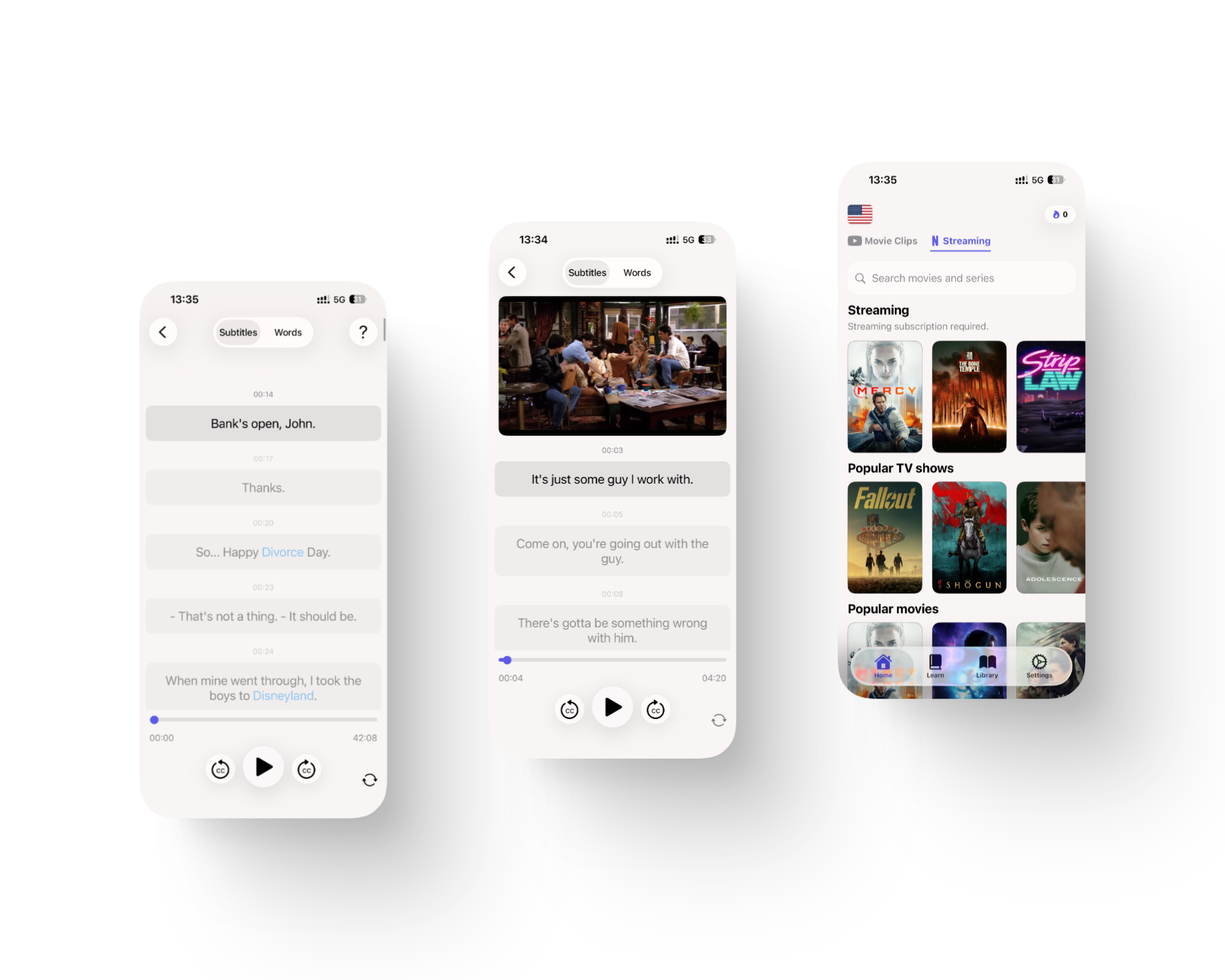
Ever wished you could learn a language just by watching your favorite shows? With Wordy, you can. Watch short clips from real movies and TV series, then test what you picked up with built-in quizzes. Every word you encounter is tracked automatically, so your vocabulary grows with every clip you watch.
Hey PH! I'm Sándor, solo founder of Wordy. I started building this because I was frustrated watching foreign shows and constantly pausing to look up words. So I built a subtitle tool for myself and it spiraled from there. What started as a simple iOS app for streaming subtitles evolved into curated movie clips with quizzes, then a full language learning platform (think Duolingo, but with real video content instead of cartoon characters). The idea is simple: you learn better from content you actually enjoy. Wordy takes short clips from movies and TV and then quizzes you on what you just heard. Along the way, the project won a $30K prize at Hungary's biggest business competition, which gave me the push to go all-in and build Android + Chrome extensions too. Would love your feedback, what language would you try first? 🎬
5
回复

@sandor_bogyo Love the origin story — building from your own frustration is always a strong signal.

Using real movie clips instead of gamified cartoons feels like a strong retention play.

Curious how you’re thinking about distribution?

0
回复
@sandor_bogyo Congrats on the launch Have you thought about a post-launch visibility strategy? Many great tools struggle after day one
0
回复
Love this – I’m in the education space myself, so this really resonates. ☺️ Learning from content you actually enjoy just makes sense. Curious where you see your biggest edge long term – content, personalization, or learning mechanics?
1
回复

Okay this is my kind of language app 😄 learning from real movie scenes just hits different. The combo of native clips + quizzes + spaced repetition makes it way stickier than random textbook sentences. If the clip selection is actually good, this could quietly beat a lot of traditional language apps.

1
回复

@bartosz__strickland thanks :) that's exactly the feeling we're going for: real scenes just stick in your head differently than made-up examples

0
回复

Great product! Good luck!

Why focusing on movies and TV shows? Why not just use AI generated videos so it is easier to customize the levels/domains, etc

0
回复

I was frustrated watching foreign shows and constantly pausing to look up words.

Same here.

I started watching The Sopranos in English and I’m pausing every few minutes. The slang, Italian expressions, the cultural references… it’s not textbook English 😅

Using real movie scenes to learn just makes more sense. That’s the actual pain point.

0
回复
simply good and natural 👍 how we learn our native language? just by listening. nobody teaches that. same idea 💡 all the best!!
0
回复

that's actually a very nice idea. it makes learning languages very easy and entertaining. this motivates to keep on learning the new language.

0
回复

A super genius idea for learning! I definitely want an app to help me with it. I'm curious: how do you select the clips, and do you plan to expand your sources in the future?

0
回复
Taking care of the attention span deficit! I’ve been meaning to rematch narcos before my trip to Colombia, I’ll have to give this a shot! Congrats on the launch
0
回复

Interesting twist for a language learning app, congrats on the idea and the product!

What are the next features/aspects you want to focus on after this launch?

0
回复

This looks like a fun way to learn a new language, especially with real movie clips. Do you think the quizzes are engaging enough to hold attention?

0
回复

@austinelvis Thanks, Austin! Yes, absolutely: the quizzes are designed to keep you engaged right after watching a clip, so the context is fresh and it feels more like a game than a study session. Our retention numbers actually back this up, we're seeing really strong retention compared to typical language learning apps, which tells us the format works. The combo of real clips + immediate quizzes + spaced repetition keeps people coming back :)))

0
回复
Cool idea to lean a new language!!! best of luck Sandor:)
0
回复

@basma_el_khamlichi Thank you, Basma! Really appreciate the support 🙏 If you ever give it a try, let me know how it goes!

0
回复

What is the difference between first launch and this launch?

0
回复

@wei_yan4 Great question! A lot has changed since the first launch.

Back then, Wordy was mainly a subtitle streaming tool, you'd connect it to Netflix or other platforms and get real-time translations while watching. It was useful, but pretty niche.

Since then, I've completely rebuilt the app around short movie and TV clips with a structured learning path, similar to how Duolingo works but with real video content instead of cartoons. Now there's a full learning journey, from beginner to advanced with quizzes, spaced repetition, and vocabulary tracking built in. So it's no longer just a tool for advanced learners who already watch foreign content; it helps complete beginners get started too. Basically it went from "subtitle overlay for streamers" → "full language learning platform powered by real movie clips." :))

0
回复

Wishing you good luck with this idea. Anything educational has my support :)

0
回复

@busmark_w_nika Thanks, Nika! :))

0
回复
#5
Ashera AI
GTM, Run by AI
90
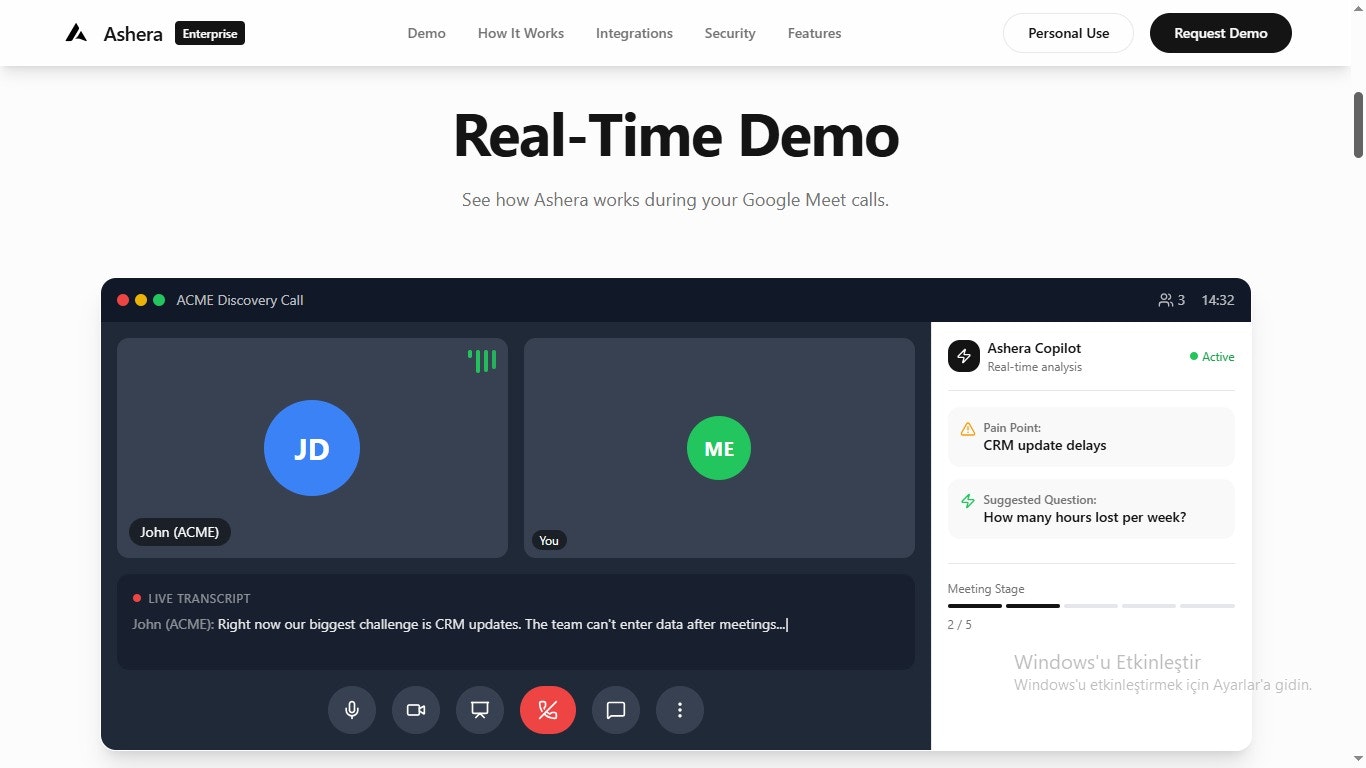
一句话介绍:Ashera AI 是一款利用人工智能分析销售通话、将对话内容转化为结构化行动指令(如风险点、下一步计划)并自动更新CRM的工具,旨在解决销售团队因信息散落、记录失真而导致的效率低下与丢单问题。
Sales SaaS Artificial Intelligence
销售赋能 AI销售助手 通话分析 CRM自动化 GTM效率 销售情报 实时指导 客户健康度评分 销售流程优化
用户评论摘要:用户普遍认可其从“转录”到“结构化执行”的理念,关注数据安全、信号识别准确性、与Notion/Confluence等工具的集成、跨通话模式识别能力,以及评分机制的具体逻辑。开发者积极回应,展示了清晰的后续规划。
AI 锐评

Ashera AI 瞄准了一个真实且顽固的痛点:销售过程中“说的”与“记的”之间的巨大鸿沟,以及由此引发的执行力断层。它试图成为销售流程的“事实单一来源”,野心不小。其价值不在于又一款通话转录工具,而在于强行将非结构化的、充满“氛围感”的销售对话,规训为可追踪、可执行、可量化的结构化数据流。

产品逻辑犀利之处在于三点:一是**实时介入**,在销售最易遗忘关键问题的通话时刻提供提示,试图将战前准备转化为战中执行力;二是**后处理自动化**,直接将分析结果(风险、异议、下一步)转化为CRM字段和任务,堵住了“会后不更新”的漏洞;三是**试图量化“交易健康度”**,将模糊的销售直觉转化为基于对话信号的评分,为管理提供抓手。

然而,其真正的挑战与价值考验也在于此。首先,**信号识别的准确性是生命线**。如何精准区分客户的“随口一提”与“真实异议”,避免制造焦虑或误导销售,需要极深的领域理解与算法打磨。其次,**强结构化的输出可能是一把双刃剑**。它提升了效率,但也可能扼杀销售对话中微妙的、非结构化的宝贵信息,或让销售过度依赖提示而弱化临场倾听与应变能力。最后,**集成深度决定天花板**。仅仅更新CRM字段是第一步,若能真正融入企业的销售知识库与协作流程,形成“分析-行动-学习”的闭环,其护城河才会更深。

总体而言,Ashera AI 不是简单的效率工具,而是一个试图重塑销售行为与数据流转的“流程执行引擎”。它的成功与否,将取决于其AI在复杂销售语境下的认知智能,以及能否在提升规范性的同时,不减损销售艺术中的人性化洞察。

查看原始信息
Ashera AI
Ashera uses AI to analyze GTM sales calls and turns the truth into action, not generic summaries. It provides in-call guidance, extracts risks/objections/next steps after each call, updates your CRM automatically, and scores each account so teams can track deal health with clarity. The key differentiator: one source of truth across the entire sales journey, keeping everyone aligned on what was actually said. Free plans for individuals and small teams on Product Hunt, try them now
We built Ashera because we kept seeing the same painful pattern: sales calls are full of truth, but that truth gets lost in notes, scattered tools, and “vibe-based” CRM updates. Teams spend hours re-explaining the same context, deals stall, and handoffs break. Our approach is simple: use AI to capture what was actually said, extract the real signals (risks, objections, decision process, next steps), and turn it into structured execution—so GTM teams move faster with one source of truth. As we built it, we focused on making the outputs immediately usable (not just transcripts): clear next-step plans, CRM-ready fields, and deal health signals.
14
回复

@fatih_furkan_yildiz How secure is the call data and storage ? This is chageing how modern GTM teams operate.

0
回复

@fatih_furkan_yildiz Love the shift from transcripts to structured execution. Curious how Ashera distinguishes between real risk signals vs. conversational noise, especially when prospects “think out loud” without strong intent?

0
回复

Do your clients have any positive results? :)

6
回复

@busmark_w_nika Yes early users are seeing clear wins, especially in follow-ups and CRM hygiene. We’re reducing “post-call drop-offs” by turning every meeting into owner+deadline next steps, drafting follow-ups automatically, and pushing clean updates into the CRM so nothing gets lost. If you share your stack (HubSpot/Salesforce) and your workflow, I can tell you the most common before→after results we’re seeing.

3
回复
Such a good idea !
4
回复

@nalin_rajendran Our customers want to say the same thing.

1
回复

@nalin_rajendran Appreciate it 🙏 Our goal is simple: turn what’s said on calls into clean, actionable CRM updates + next steps, instantly.

0
回复
Great product. Contract on the launch! Does your tool connect to platforms like Notion or Confluence to automatically update the sales knowledge base?
2
回复

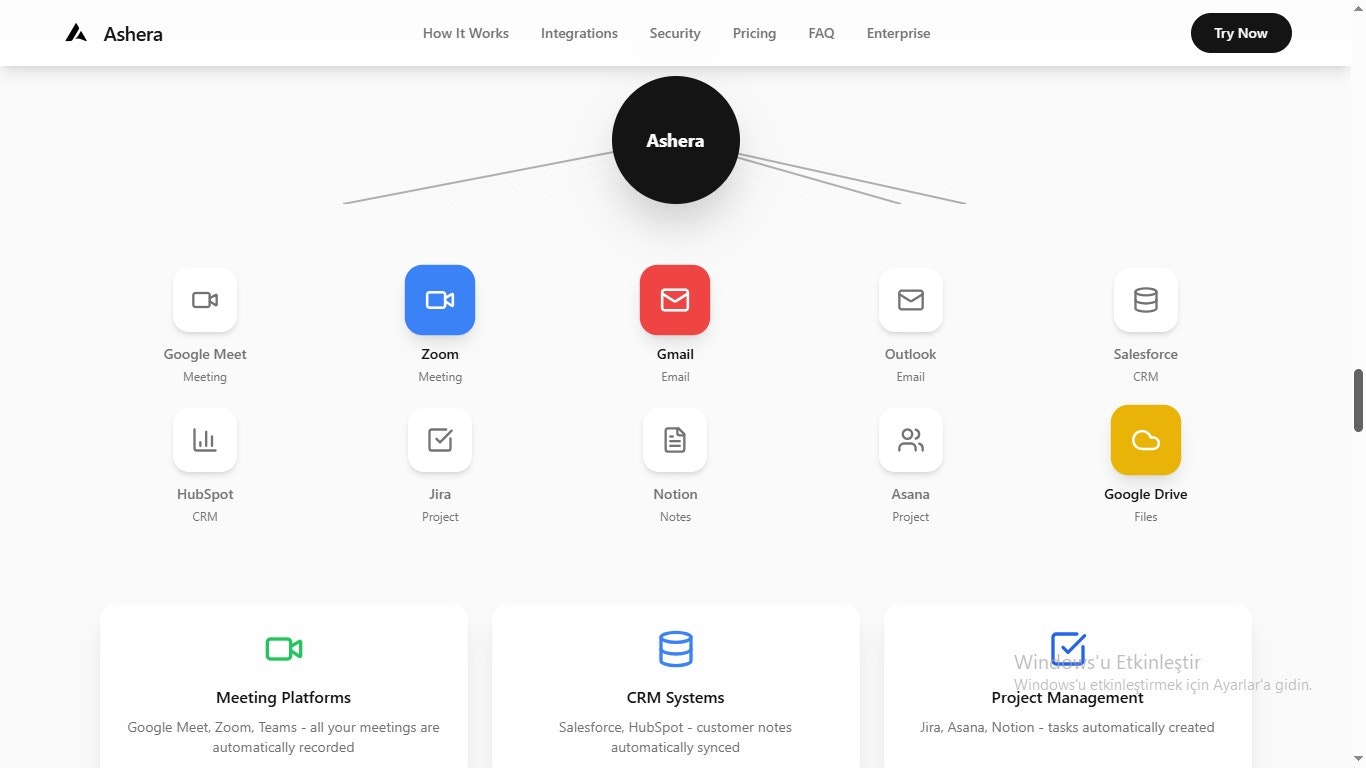
@alina_petrova3 Hey Alina, We already support syncing outputs into tools like Notion (and similar doc/task systems), so teams can push post-call summaries, objections/risks, decision process notes, and next steps into a shared space automatically not just leave them in transcripts.

For Confluence, it’s on our integration path as well. Quick question so I answer precisely: are you imagining a per-account page update (living “account brief” that stays current), or a central playbook/knowledge base update (patterns, objection library, competitive notes)?

2
回复

@alina_petrova3 Yes, absolutely we are integrating with more tools as well. We learn this information within the AI and use it according to your needs. Inside, by using Ashera AI Chat, you can query across all integrated tools powered by an advanced language model and manage everything single-handedly.

2
回复
The idea of providing tips during the call sounds nice. I had some demo/sales calls and typically I prepared beforehand - rough scenario based on the client context. However, sometimes I might forget to say/ask something during the call. So this tool might be a good fit as it has realtime transcription and analysis.
2
回复

@jarekavi Love this you described the exact moment we built Ashera for.

Most reps do the prep (context + rough flow), but in a real call the brain switches to listening, handling objections, and keeping momentum… and that’s when the important “one question” slips.

Ashera keeps that prep alive in the moment: it surfaces the right prompt at the right time, captures objections/risks/decision process as they happen, and turns everything into clean, CRM-ready next steps right after.

If you ever want to sanity-check it, tell me what kind of calls you run (demo vs renewal vs discovery) and I’ll point you to the best flow inside the product. 🙏🚀

1
回复

Finally, a tool that moves past "polite summaries" into actual deal intelligence. The in-call guidance and automated account scoring are exactly what GTM teams need to stop guessing and start closing.

Congrats on the launch, killing manual CRM updates is doing the Lord's work!

1
回复

Congrats on the launch! 🚀 This hits a real nerve. So many deals lose momentum just because post-call follow-through falls apart between tools and handoffs. The live meeting brief feature especially caught my eye, having context surfaced in real time during a call is a game-changer.

Quick question: as meeting volume grows, can Ashera spot patterns across multiple calls with the same account, like recurring objections or shifting sentiment, to flag at-risk deals early?

1
回复

Is it an AI agent that joins the meeting as a participant or does it work on under the hood?

1
回复

@nischal_kharel It works under the hood no extra “agent attendee” needed. You connect your calendar/meeting platform, and Ashera captures the call signals, gives live prompts, and generates the post-call outputs automatically.

0
回复

Looks great @fatih_furkan_yildiz , I specifically like how it scores each interaction. I'm curious about how that's evaluated, if you don't mind sharing! Congratulations and goodluck!

1
回复

@hussaynzaidi Thank you so much 🙏 Really appreciate it!

The interaction scoring is based on the deal signals we can extract from the conversation, not generic sentiment. We look at things like: clarity of the decision process, strength of next steps (owner + date), presence of objections/risks, budget/timing constraints, stakeholder mentions, and whether commitments are concrete vs vague. Then we combine those into a structured score so reps can quickly see “strong signal” vs “looks good but weak process.”

If you tell me what you mean by “interaction” in your case (emails vs calls vs meeting notes), I can share the exact signal set we use there. 🙌🚀

0
回复

Nice! Any demo videos to unlock the full potential of this product, given that someone is very new for AI-driven GTM?

1
回复

@anuranroy Thanks a lot 🙏 Yes we’re publishing short demo videos very soon to make it super easy for anyone new to AI-driven GTM to get started.

In the meantime, the fastest way to “unlock the value” is using it on one real call end-to-end: pre-call brief → live prompts → post-call recap + next steps + CRM-ready fields. That single flow usually makes the product click immediately. 🚀

0
回复
Sounds like a really good idea ✨ best of luck
1
回复

@christian73 Thank you so much ✨ Really appreciate it! We built Ashera to stop “CRM later” from killing deal context brief before the call, live prompts during, and CRM-ready next steps right after. If you have a minute, an upvote and a quick comment would mean a lot for our launch today 🙏🚀

0
回复

Very interesting!

0
回复

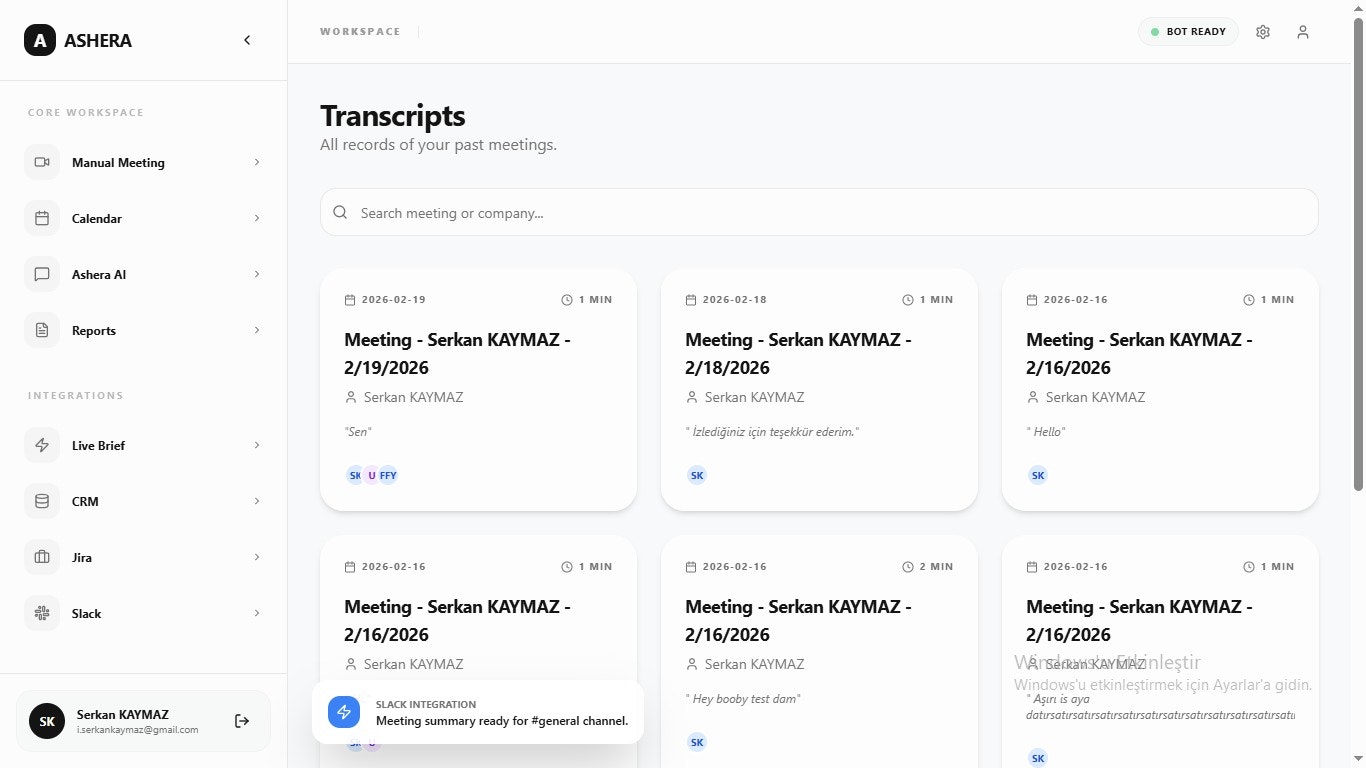
This looks great, I like how organized the Transcripts UI is. Looks easy to navigate and user friendly.

0
回复

Based on any early beta testing rounds, did you have to change any approaches to what you're offering? I'm excited to see how the team build Ashera out further:)

0
回复
Beautiful product! @fatih_furkan_yildiz and team consider releasing tutorials on the site to really showcase the product in action!
0
回复
@serkan_kaymaz congrats on the launch team!
0
回复

Great product. Would definitely recommend it.

0
回复

Sales calls often have sensitive info. Pricing, contracts, internal plans. How do you handle privacy and data ownership and what control do teams have over storing or deleting their call data?

0
回复

Love this product. Can you please explain how many platforms we can integrate this with.

0
回复

Congratulations for such a great idea!

0
回复

Transcripts aren’t the problem anymore, context fragmentation is. If you can actually turn what was said into structured next steps and real deal signals instead of just “AI notes,” that’s where the value is.

0
回复
Very useful tool. Congrats
0
回复

Congratulations on the launch! 🚀 Automating CRM updates and extracting actual actionable insights (like objections and next steps) from sales calls is a huge time-saver. Love the focus on action over generic summaries. This looks incredibly helpful for founders and sales teams trying to scale and track deal health accurately. Upvoted!

0
回复

Super interesting! How does Ashera prioritize which insights to turn into actions for sales teams?

0
回复

Congratulations on the launch 🎉 🎉

0
回复

Congrats on the launch!
We are currently on Fireflies. How does it compare to Ashera?

0
回复

Such a nice idea for improving sales. Congratulations on the launch.

0
回复

@fatih_furkan_yildiz The one source of truth across the entire sales journey angle is strong, especially where SDR to AE to CS handoffs usually lose context. 🤯

How customizable are the extracted fields and next-step plans? Can teams adapt them to their own sales methodology like MEDDIC or SPICED, or is it more opinionated out of the box? It feels like the real value here isn’t summarizing calls, but enforcing execution discipline across the team. 🙌

0
回复

Congrats on your Launch.Which tools do you integrate with today (CRM + meeting apps) and what’s coming next?”

0
回复

Congrats! looks really nice, do you offer or plan to offer API access too?

0
回复
#6
Verly
AI agents that resolve customer support across channels
30
一句话介绍:Verly是一款通过部署基于企业自身数据训练的AI智能体,在网站、电话和WhatsApp等多渠道自动解决(而非仅仅回复)重复性客户支持问题,从而降低支持成本并实现规模化处理的产品。
Customer Communication SaaS Artificial Intelligence
客户支持自动化 AI智能体 多渠道客服 人机协同 SaaS 降本增效 知识库驱动 自然语言处理 企业服务
用户评论摘要:用户反馈积极,认可其“解决而非回复”的理念及多渠道整合。主要问题与建议包括:希望自定义聊天机器人回复风格与简洁度;询问数据隐私保护措施;关心跨渠道推理一致性及知识库不完整时的处理机制;确认部署范围(全站而非仅落地页)。
AI 锐评

Verly的亮相,精准刺中了现代企业客户支持体系的阿喀琉斯之踵:在人力与工具堆叠的重复循环中,陷入成本与体验的双重泥潭。其宣称的“Resolution over Responses”,不仅仅是一个标语,更是对当前泛滥的、以生成为中心的AI客服工具的一次尖锐批判。它试图将AI从“聪明的复读机”重新定位为“基于知识库的终结者”,这抓住了B2B场景中信任构建的核心——准确性与可验证性。

然而,其真正的挑战与价值深度并存。首先,“解决”的定义权边界模糊。简单的信息查询可被解决,但复杂的、多步骤的业务流程呢?这要求AI智能体必须具备深入业务逻辑的理解与执行能力,而非仅做信息检索。其次,创始人提到的“像扩展基础设施一样扩展支持”的愿景极具吸引力,但AI智能体的“基础设施”属性意味着极高的稳定性、可靠性及与现有系统的无缝集成要求,这对于一个早期产品是巨大考验。评论中关于数据隐私、跨渠道一致性、知识库闭环的疑问,正是市场对其从“概念验证”迈向“企业级服务”的关键质询。

多渠道整合是明智的差异化策略,它承认了客户交互场景的碎片化现实。但这也放大了技术复杂度:电话与WhatsApp上的交互模式、用户预期与网页聊天截然不同,维持统一的“推理”质量绝非易事。Verly的价值前景,取决于它能否将“人机回环”设计得足够平滑,使得AI的“边界”不是用户的挫败点,而是无缝移交的接力点。它不是在替代人类,而是在重新定义支持团队的职能边界——从重复应答转向处理异常与复杂关怀。若能实现,这将是支持团队从成本中心向体验与效率中心演进的关键一步。目前看来,方向正确,但征途刚启。

查看原始信息
Verly
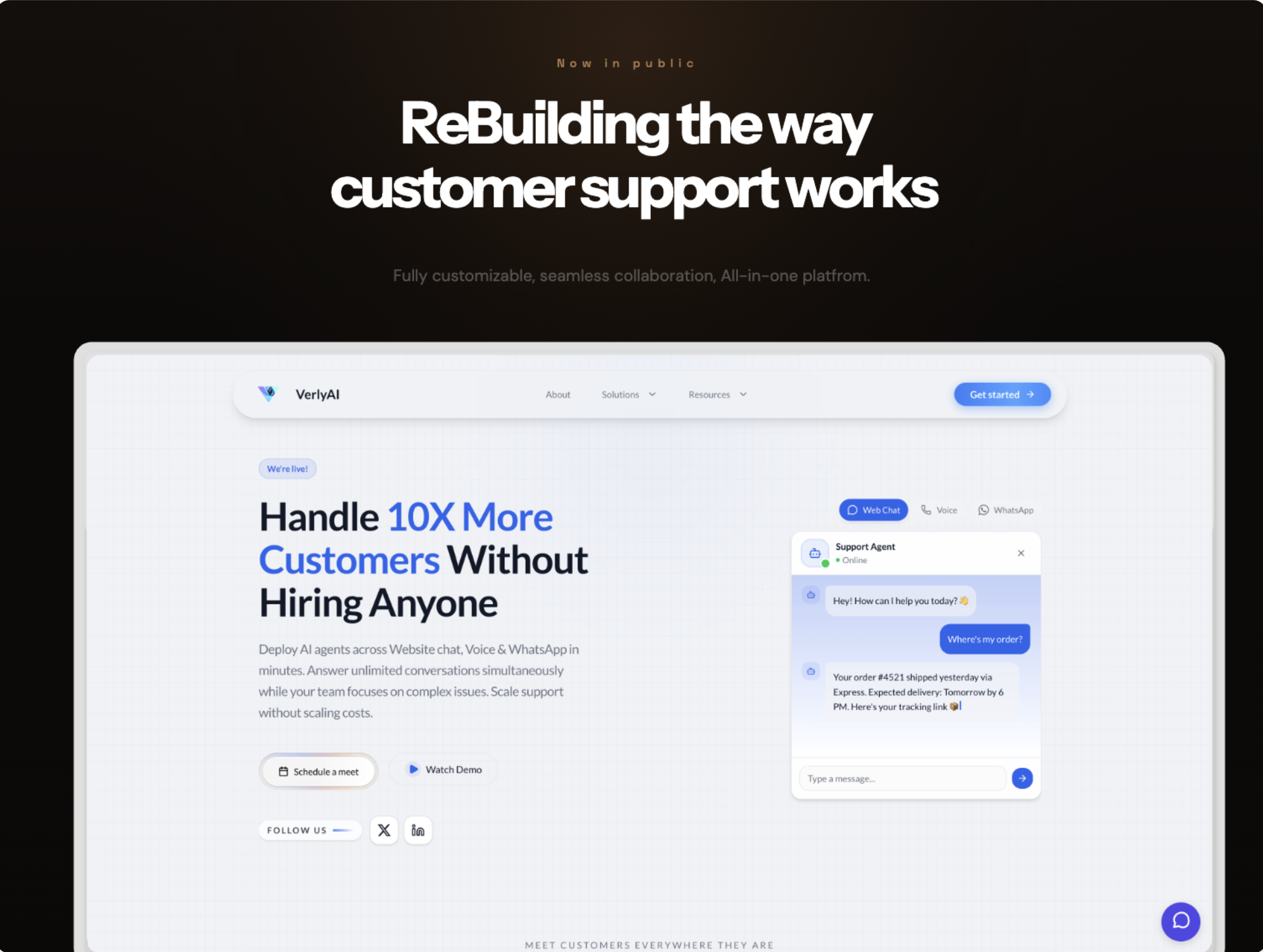
Automate customer support with VerlyAI. Deploy intelligent AI agents for Web, Calls and WhatsApp in minutes. Reduce support costs and handle unlimited conversations simultaneously.

Congrats on the launch!

Automating repetitive support while keeping human escalation in place feels like the right balance. Big step forward rooting for you.

4
回复

@shivam_verma42 Thank you

1
回复

Hey Product Hunters 👋
I'm Raghvendra, founder of Verly.

I started building Verly after noticing something frustrating in almost every growing company: support teams weren’t struggling because they lacked effort. They were struggling because the system forced them to repeat the same conversations every day.

Hire more agents. Add more inbox tools. Patch things together.

But the repetition never really stops.

I kept asking myself:
What if support didn’t scale by hiring?
What if it scaled like infrastructure?

That idea became Verly.

Verly lets businesses train AI agents on their own data and deploy them across web chat, WhatsApp, and voice so repetitive questions get resolved automatically.

Not just replied to. Resolved.

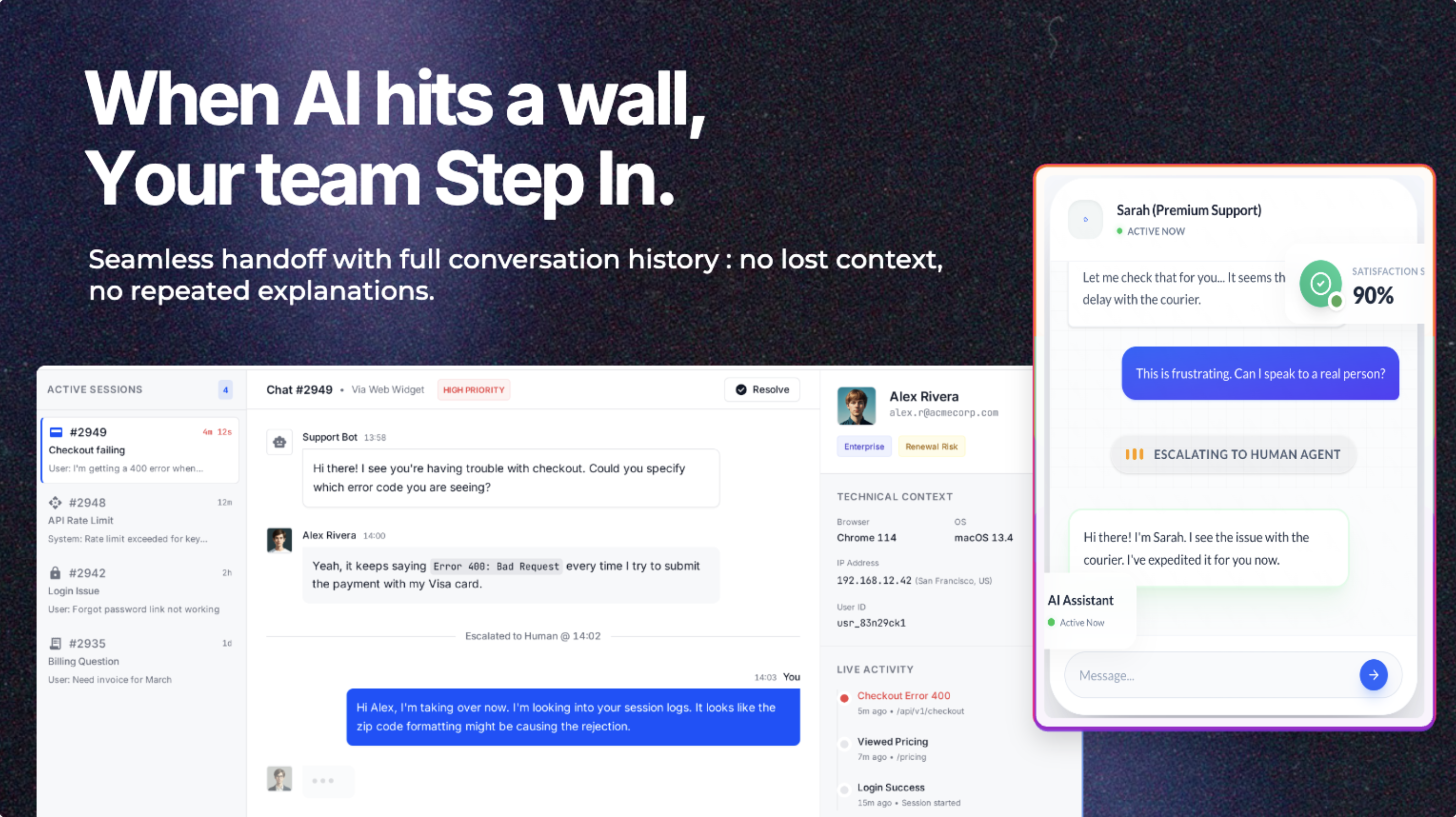
And when AI hits a boundary, it escalates with full context so humans step in without starting from scratch.

We focused on three things while building:
• Real resolution, not canned answers
• Multi-channel from day one
• Human-in-the-loop escalation

We’re still early, still improving, and genuinely excited to learn from this community.

If you’re running support, I’d love to hear:
What’s the one support problem that drains your team the most?

Happy to answer everything openly.

3
回复

Congratulations@raghvendra_dhakar1 and Team, Amazing product and great vision, keep it up buddy 💪. I've started using the product for one of my websites it's working really well 🙌

0
回复

@raghvendra_dhakar1 Conrgrats on the launch! Since you’re deploying across web, WhatsApp, and voice, how do you maintain consistent reasoning across channels when user behavior and tone differ significantly?

0
回复

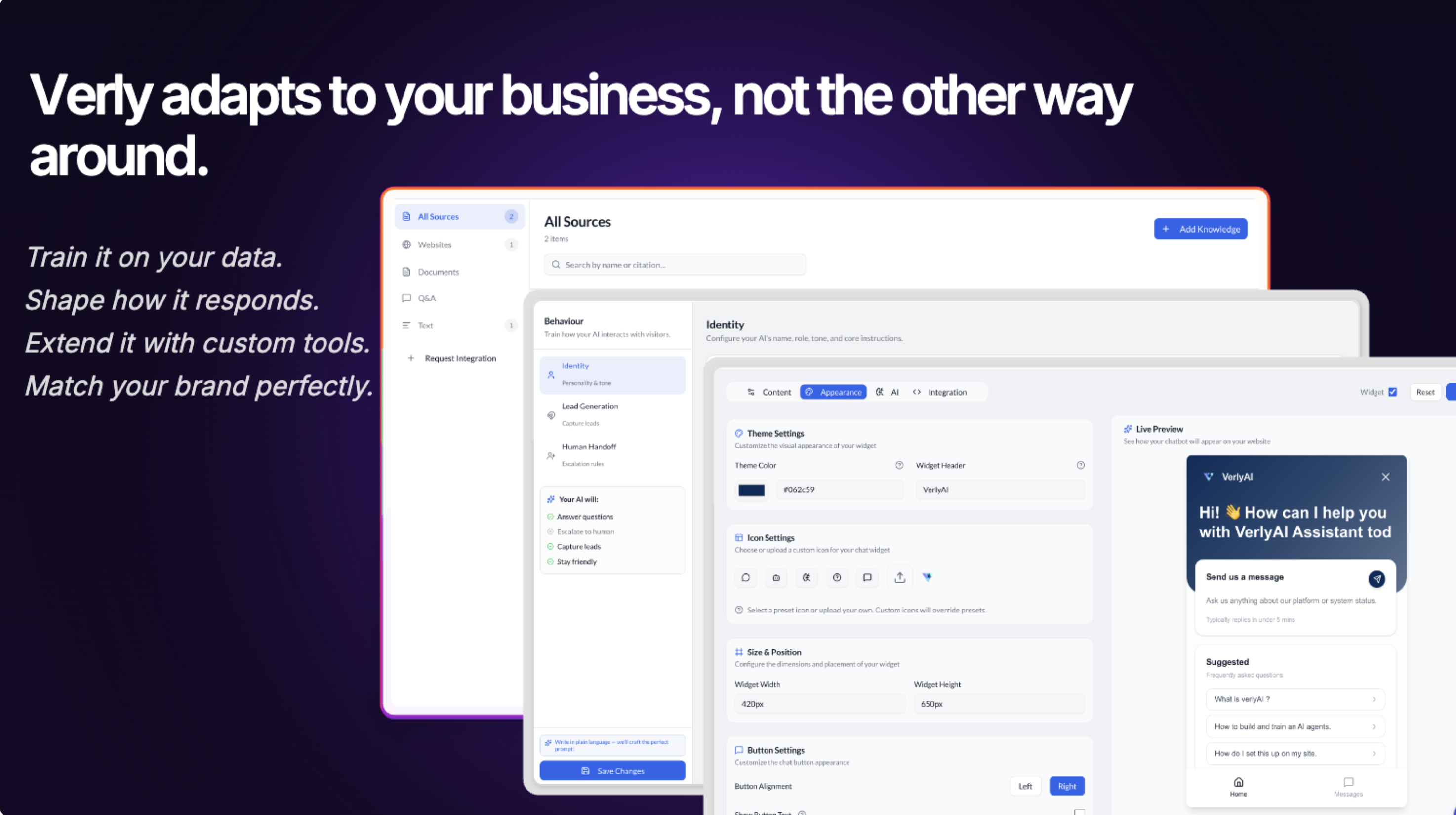
We built Verly to handle 'Resolution' rather than just 'Responses.' This means it doesn't just guess; it checks your specific knowledge base pages first. We’ve integrated with WhatsApp and Voice, because we noticed support happens everywhere, not just on a browser tab.

3
回复

Congrats on the launch.

Tried using it on a landing page, it gets the job done.

For me, the respond is a little more verbose. I would like to customize chatbot's respond styles.

1
回复

@wei_yan4 Thanks a lot, Max and really appreciate you trying it out.

That’s helpful feedback on response style. You can already control the chatbot’s behavior through custom instructions inside the dashboard, including tone and response style. But we’re actively refining this to make verbosity and structure even more flexible.

Would love to hear how you’d ideally prefer responses to be structured.

1
回复

how accurate has it been in real usage so far ?

1
回复

@divy_dwivedi Great question

In early usage, we’re seeing strong accuracy when trained on structured website/docs content. The key is good source data + controlled escalation when confidence drops.

0
回复

This is actually interesting — whom to contact if I want to integrate with my website. The chatbots response are really good.💥

1
回复

@ketan_bajpai Thanks, Ketan! Appreciate that 🙌

You can directly sign up at verlyai.xyz and generate your chatbot in minutes. If you’d like help with integration, feel free to DM me or mail at team@verlyai.xyz happy to personally assist.

0
回复

Impressive mission! Since Verly trains on a business's own data, how do you handle data privacy and ensure that sensitive information doesn't leak into the AI's responses for other users? This is a huge concern for the B2B clients I work with.

0
回复

hey, I just have a doubt about it.

can it assist my users inside the website or is it just for landing page?

0
回复

@abby_pruh It works across your entire website, not just a landing page. Once deployed, it can assist users on any page where the widget is installed.

You can also integrate it with WhatsApp and voice if needed.

Happy to explain more if you’d like!

0
回复

Really love the framing around “Resolution over Responses.”

A lot of AI tools focus on generating smart-sounding replies, but grounding answers in a verified knowledge base is what actually builds trust. The fact that Verly checks structured information first instead of just “guessing” is a big differentiator.

Also, integrating with WhatsApp and Voice makes total sense — support today isn’t limited to a dashboard or web chat. It’s happening where users already are.

Curious to see how Verly handles edge cases where the knowledge base is incomplete — does it flag gaps and help improve the documentation over time? That feedback loop could make it even more powerful.

0
回复

@rohan_gupta46 Thanks so much really appreciate that thoughtful take.

You’re absolutely right grounding responses in verified knowledge is key to building trust. That’s why we designed Verly to prioritize structured sources first instead of generating blind answers.

0
回复

This is interesting. I’ve seen companies struggle with repetitive support tickets all the time. The multi-channel approach across web and WhatsApp sounds powerful. Would love to see how this evolves!

0
回复

@abhijeet_kumar32 Thanks, that’s exactly the problem we’re trying to solve.

Repetition across channels is a quiet productivity killer. Multi-channel from day one was important for us because support rarely happens in just one place.

Appreciate the support!

1
回复
#7
Remalt
AI Workspace For Content-Led Business
22
一句话介绍:Remalt是一款为内容驱动型业务设计的AI工作空间,通过可视化的“思考层”整合分散的内容资产与工作流,解决创作者和创业者因工具割裂导致的思维不清晰、内容复用效率低下的痛点。
Productivity Marketing Artificial Intelligence
AI工作空间 内容创作 可视化脑图 品牌专属AI 工作流自动化 内容复用 创作者经济 效率工具 第二大脑
用户评论摘要:用户反馈正面,创始人阐明产品核心是解决“思维清晰度”问题;有用户证实其能大幅提升研究效率,快速生成可视化指南;另有用户表达了对产品的强烈支持和期待。目前评论中未见具体问题或改进建议。
AI 锐评

Remalt的野心远不止于又一个“AI笔记”或“内容日历”。它直指内容创作者和独立创业者最隐秘的痛处:在信息过载和工具泛滥中,思维碎片化导致的行动瘫痪。其宣称的“视觉思考层”和“理解品牌的定制化AI”是核心差异化概念,意图将后端的混沌思考与前端的多平台内容分发无缝衔接,打造从“想法”到“转化”的闭环。

然而,其真正的挑战与价值也在于此。首先,“理解品牌”是AI应用中最艰巨的任务之一,需要深度的数据喂养和精准的模型调教,初期用户能否体验到“专属感”存疑。其次,它试图取代“十几个互不相连的工具”,这意味着一场艰难的用户习惯迁移和复杂的集成挑战,其现有体验能否在各个环节都媲美甚至超越垂直工具(如专业视频剪辑、深度数据分析工具)?从寥寥22个投票来看,市场热度尚未点燃。

当前评论中“大幅削减研究时间”的案例颇具说服力,这揭示了产品最立竿见影的价值可能在于“内容消化与重组”,而非全盘管理。如果Remalt能扎实地先成为用户不可或缺的“研究副驾”和“内容重组中枢”,再逐步拓展至全工作流,或许能避开与巨头的正面竞争,在“AI赋能的知识工作者”这一细分赛道扎根。它描绘的愿景令人向往,但通往“统一创意栈”的道路注定需要极致的产品力和清晰的阶段性胜利。

查看原始信息
Remalt
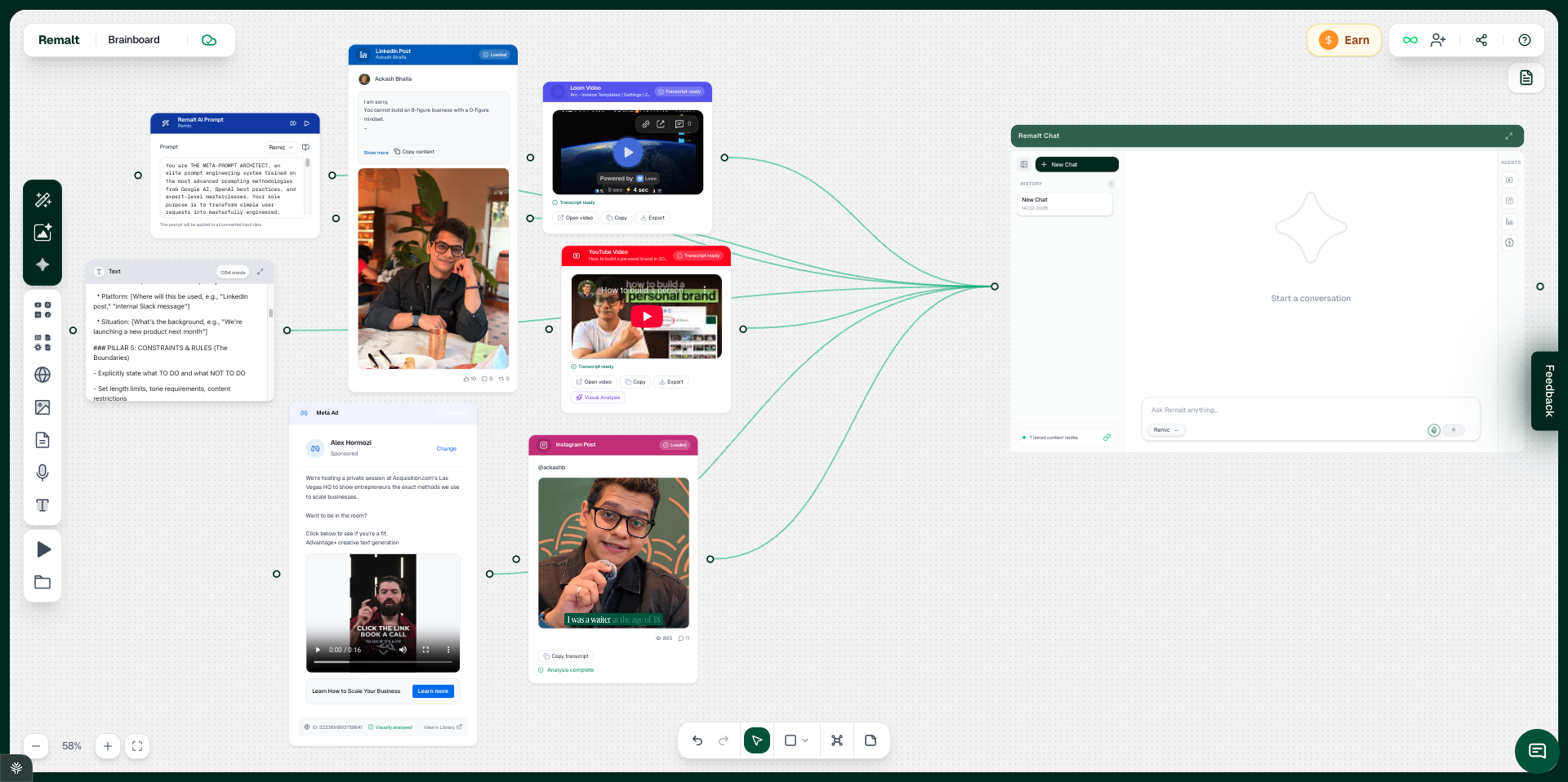
Stop paying for a dozen disconnected tools and start building your content-led business on one visual brainboard. Remalt is the infinite workspace where your videos, files, and notes meet a custom-tailored AI that actually understands your brand. Instead of generic chat boxes, you get a visual "thinking layer" to brainstorm, automate workflows, and repurpose content across LinkedIn, YouTube, and Instagram in seconds. It’s your second brain, conversion engine, and creative stack—unified.

We built Remalt to solve a thinking problem, not an execution one.
Builders don’t lack ideas, they lack clarity.

Notes, plans, research, and thoughts live everywhere and nothing connects.
Remalt started as a way to structure thinking first, before action.

Along the way, it became a thinking system to help founders/creators scale content & business

4
回复

Remalt slashes my research time by magnitudes.
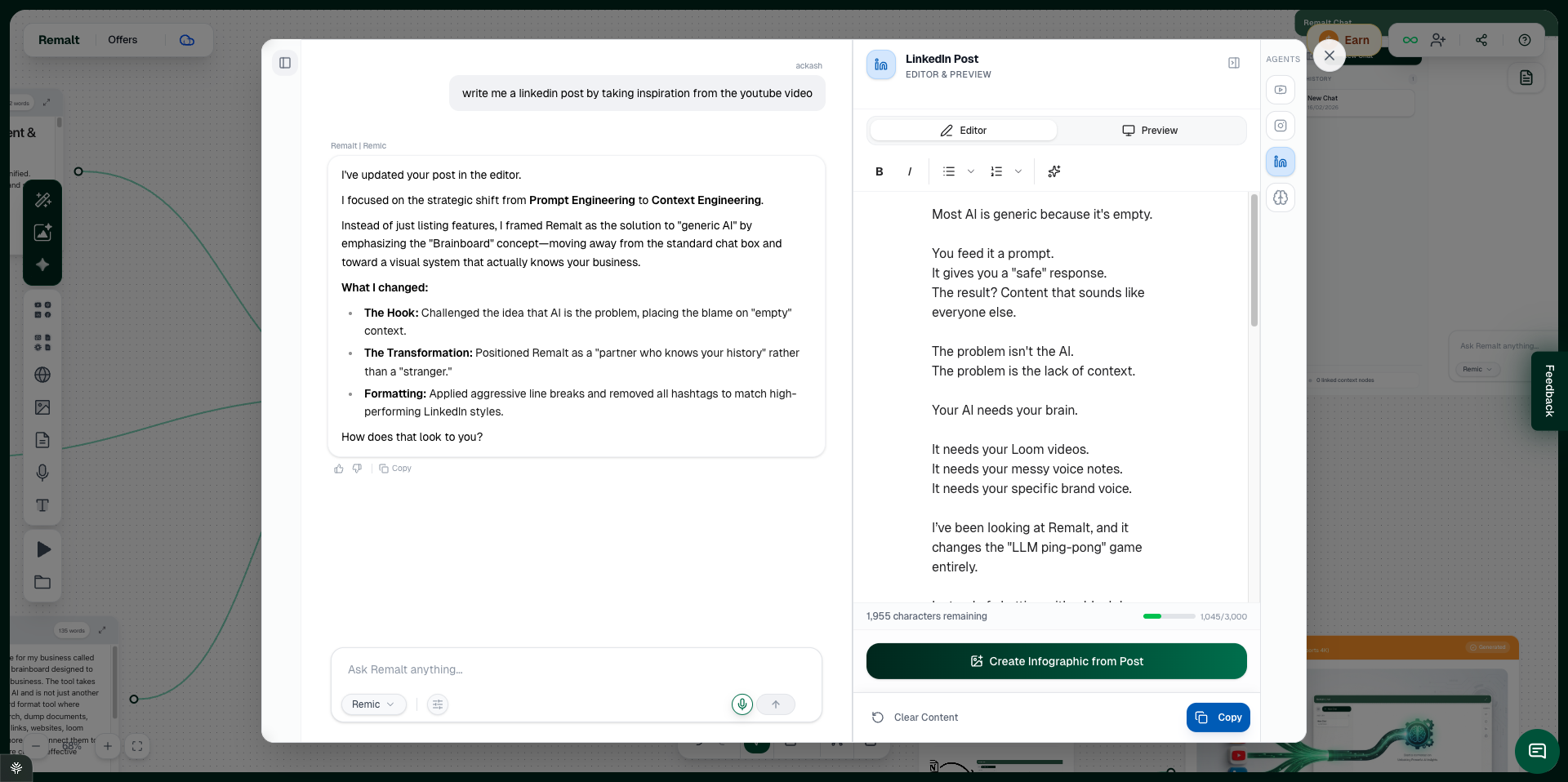
Been uploading OpenClaw YT tutorials + official docs to Remalt, which outputs visual walkthroughs and code snippets powered by Claude Opus. Set up OpenClaw on my VPS in under an hour. Crazy good!

1
回复

Thank you @ackash_bhalla for building remalt this is a game changer for everyone I got an opportunity to be a part of remalt pilot testing batch and trust me I am seen how remalt has transformed with time and I pray @ackash_bhalla you get lot and lot of success in life..

0
回复
#8
Voice Notes to Text - SotiTalk
iOS voice to text app, real-time & privacy-first
13
一句话介绍:一款实时、隐私优先的iOS语音转文字应用,通过本地化处理,在行走记录灵感、免提会议记录等场景下,解决了传统打字效率低下、云端录音存储有隐私顾虑以及语音备忘录易被遗忘的痛点。
iOS Notes Audio
语音转文字 实时转录 隐私安全 本地处理 效率工具 iOS应用 笔记应用 开发者工具 多语言支持 免费应用
用户评论摘要:用户反馈积极,认可其解决真实痛点(如受伤无法打字)。开发者自述揭示了产品源于个人需求,强调本地化、准确性和无账户设计。主要建议/期待包括:开放API、推出桌面版本。用户对比了同类产品(如WARP)。
AI 锐评

SotiTalk表面上是一款解决“打字慢”和“语音备忘录无用”的效率工具,但其深层价值在于,它精准地切入了当前AI应用浪潮中一个被忽视的缝隙:**在“云端AI全能”与“完全离线”之间,提供了一个以用户设备为信任基座的“轻量智能节点”**。

其真正的锋芒并非仅仅是转录的实时性,而是其技术栈选择带来的独特定位。与普遍依赖OpenAI Whisper API或类似云端服务的竞品不同,它宣称使用开源模型在自有服务器(位于欧盟)处理。这巧妙地在“完全本地(受限于设备算力与模型精度)”和“完全云端(存在数据上传风险)”之间,找到了一个折中点:在保证较高准确度(尤其针对技术术语)和响应速度的同时,通过不存储数据、无需登录的架构,极大降低了用户的隐私心理门槛。这比单纯宣传“本地处理”更具现实可行性,尤其对处理会议、灵感这类敏感信息的用户极具吸引力。

开发者自述的用例(连接n8n、MCP服务器,与Claude、Cursor联动)暴露了其更大的野心:它试图成为**个人AI工作流的语音输入层**。未来的API开放将是关键一步,这将使其从一个封闭的转录应用,演变为一个可编程的语音接口,让用户的语音能力无缝接入任何自动化流程或LLM。这一定位使其超越了“笔记工具”的范畴,进入了“效率操作系统”的边界。

然而,其挑战同样明显。作为个人开发者作品,其服务稳定性、模型更新的可持续性、面对复杂场景的转录鲁棒性,都将面临严峻考验。免费模式虽能快速获客,但如何构建健康的商业模式以支撑服务器成本与持续开发,是悬而未决的问题。此外,其“中间路线”在数据合规上仍需更清晰的阐述——数据在自有服务器处理瞬间是否算“传输”?如何确保删除?这些都需要向更谨慎的用户给出明确答案。

总而言之,SotiTalk的价值不在于它现在能做什么,而在于它揭示并验证了一个趋势:在AI普惠时代,用户对数据主权的意识正在觉醒,市场需要既智能又“无负担”的工具。它能否从一款优秀的个人解决方案,成长为可信的基础设施,将取决于其后续在技术、商业与信任构建上的平衡能力。

查看原始信息
Voice Notes to Text - SotiTalk
SotiTalk turns your voice into text in real-time. Capture ideas while walking, take meeting notes hands-free, or brain dump without typing. Get instant transcription that saves only to your device, no cloud storage of your recordings or text. No more voice notes you'll never listen to again. No more losing thoughts because typing is too slow. Just speak, get text instantly, and keep working. Your transcriptions stay on your phone. Simple, fast and private.

I built this app with one hand. Literally.

Recently, I injured my hand doing calisthenics. Couldn't type properly anymore.
But my brain doesn't stop just because my hand is broken, right? Ideas kept coming, work kept piling up, and typing with one hand was painfully slow. Plus it stressed my other hand even more.

So I did what any stubborn developer would do:

I built an app to solve this problem. One-handed!

But here's what I realized while building it:

Voice notes alone are useless. I already had hundreds sitting in my phone that I'd never replay. Who has time to listen to themselves ramble?

And even when you CAN type normally, typing kills your thoughts.

You edit yourself. You shorten things. You lose the raw, unfiltered version of what you're actually thinking. With one hand? Even worse.

Talking captures everything. The full thought. The tangent that leads to the breakthrough. The messy brain dump that actually contains the good stuff.


So I built something that:

- Transcribes in real-time as you speak
- Actually works with technical terms (n8n, Docker, kubectl, things iPhone transcription and other apps get wrong every single time)
- Handles 50+ languages (English, German, Spanish, French, Italian...)
- Saves everything locally on your device
- Requires no signup, no account, no paid plan

And yeah, the result is SotiTalk.
An iOS voice-to-text app. Free to use.

Since I created it, I use it constantly:

- For brain dumps. Just talk. Get everything out. Then dump the transcription into an AI to structure it. Game changer for working through complex ideas.
- For meetings. No more manual note-taking. Just record, get instant transcription, done.
- For coding workflows. I connected it via API to n8n and MCP servers. Now I talk to my phone, Claude or Cursor grabs the transcription, and writes the code. Or drafts the email. Or structures the document.

Speaking of the API, it's built but not public yet.
If people want it, I'll launch it faster. (just comment below)
Imagine connecting your voice to any workflow, any LLM, any automation you want through n8n, Make, or custom API calls.

I released this yesterday thinking maybe 2-5 people would download it. Woke up to 500+ installs in 24 hours. Apparently I'm not the only one frustrated with existing transcription apps.

The app is completely free. No signup.
I built it for me, which means I built it right.
More features coming soon.

If you have wishes or ideas I can fulfill (in terms of the app 😄), drop them here.

Can't wait to hear your thoughts.

Noah

2
回复

Congrats on launch.

Actually very useful. I am currently using WARP voice to text for coding work.

The app's language detection is about the same as WARP. I believe a software engineer may want this when they try to write prompts.

Excited for the desktop version.

1
回复

@wei_yan4 Thanks! Haven't tried WARP yet, but I saw they use WhisperFlow, we don't. I use open-source models on my own servers (in the EU), so it's a different approach.


The desktop version is on the roadmap. Want to nail the mobile experience first, but definitely see the use case for it.


Appreciate the feedback!

1
回复
#9
Cassiopeia
Turn any B2B case study pages into live product demos
13
一句话介绍:一款AI工具,可将B2B案例研究页面自动转化为包含ROI计算器、迷你产品演示等原生风格交互组件的动态页面,解决传统案例内容枯燥、转化率低的痛点。
Marketing Artificial Intelligence No-Code
B2B营销 SaaS工具 案例研究优化 交互式内容 AI设计 营销自动化 销售赋能 产品演示 ROI计算器 无代码开发
用户评论摘要:用户普遍认可其解决“文本墙”痛点的价值,认为其设计系统提取功能是突破。有效提问集中在:组件逻辑复杂度的支持能力、安全性质疑,以及建议提供更易尝试的在线工具形态。
AI 锐评

Cassiopeia的野心不在于美化内容,而在于重构B2B内容的转化路径。它将静态的“成果汇报”案例,升级为动态的“情境体验”沙盘,其核心价值是模糊了内容与产品的边界。

产品创始人洞察到,传统案例研究的失效在于其“事后总结”的旁观视角,无法让潜在客户产生“事前模拟”的代入感。通过提取并复用目标网站的设计系统,它实现了交互组件的“原生伪装”,这比功能本身更巧妙——它降低了用户的认知戒备,让推销隐匿于体验之中。

然而,其面临的挑战同样尖锐。首先,技术壁垒存疑:从URL到高保真交互组件的生成,涉及语义理解、逻辑提炼与代码生成,当前演示若仅限于简单计算器或预置动画,其“深度”价值将大打折扣。其次,市场教育成本高:它试图改变企业内容生产的工作流,但中型以上公司的案例研究往往牵涉法务与品牌合规,自动生成的组件能否通过审查?最后,评论中提及的安全性质疑直指要害:允许一个外部“Skill”读取、解析并模仿企业官网,这本身即是一个需要重度信任的决策。

它的真正对手或许不是其他内容工具,而是企业固有的、保守的营销安全观。若能以“无代码内嵌组件”或“本地化部署”方案消除安全疑虑,并证明其生成组件能切实提升线索质量与成交率,它才有望从一款惊艳的玩具,进化为一款不可或缺的利器。

查看原始信息
Cassiopeia
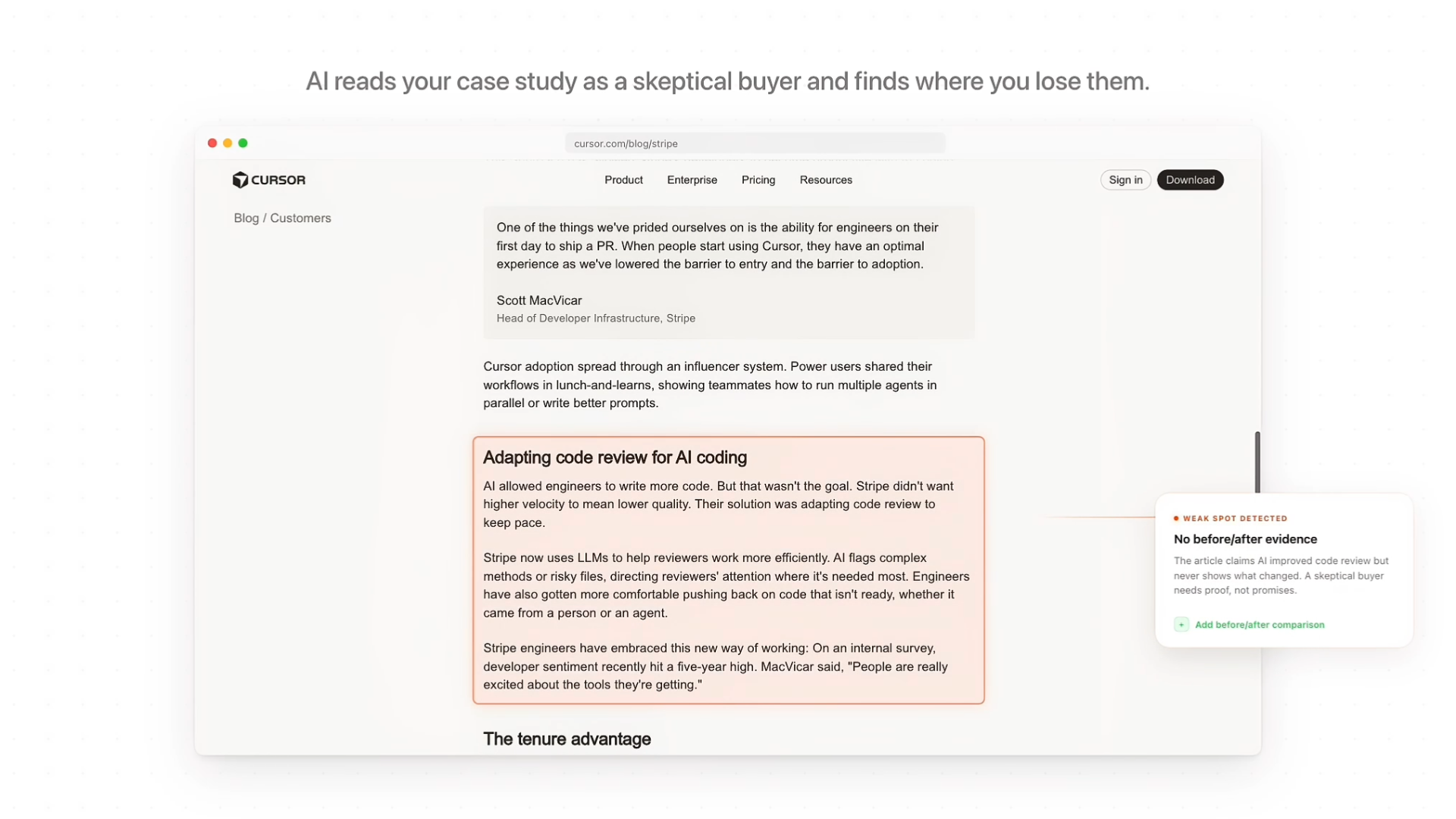
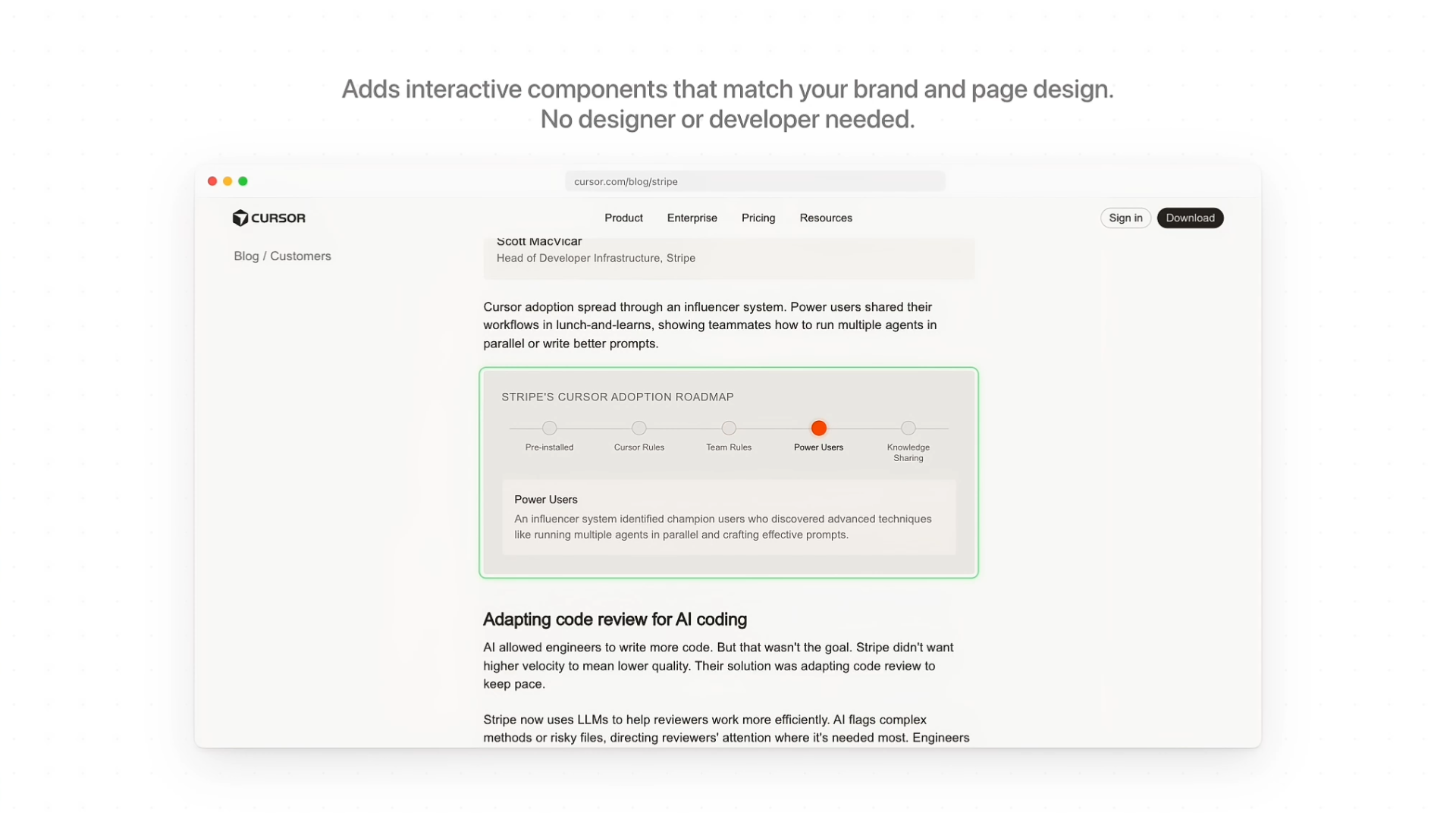
Paste a URL and instantly get custom interactive components for any case study — ROI calculators, mini product demos, and animated metrics that match your page's exact look and feel.

Hey 😻Product Hunters, I'm super pumped to share this.

Here's the problem: Case studies are supposed to be the content that closes deals. But you look at almost any SaaS case study page and it's the same thing — a wall of text, a pull quote, maybe a stock photo. The numbers are buried in paragraphs. The product is described but never shown.

I kept thinking, what if you could just drop interactive components into any case study page? ROI calculators where prospects plug in their own numbers. Mini product demos that let someone feel the product right there on the page. Stuff that makes you feel the desired outcome instead of just reading it.

But building custom interactive components for every case study is a pain. You need a designer, a dev, and a lot of back-and-forth to make it look native to the page.

So I created this Skill. Give it any case study URL and it handles the entire thing — reads the page like a skeptical buyer, figures out where the argument is weak, extracts the page's exact design system (colors, fonts, spacing, shadows), and generates custom interactive components that look like they were always part of the page.

The approach evolved a lot while building this. Early on I was focused on templated widgets — stat cards, comparison tables, that kind of thing. But I realized pretty quickly that the highest-value components aren't the ones that reorganize existing text into prettier layouts. They're the ones that simulate a slice of the actual product. When someone can feel what using the product is like, the case study stops being content and starts being a guided demo without your readers having to hop on a call.

Would love to hear what you think!

1
回复

This is a game-changer for B2B SaaS. As someone building a directory of AI tools at CoreSeven, I see thousands of case studies that are just 'walls of text'. The ability to extract a site's design system and generate native-looking interactive components is huge. Does the Skill support complex logic for ROI calculators, or is it mostly focused on the UI/UX side?

0
回复

Very cool stuff! Case studies are so important for SaaS companies; this is basically like "Mintlify" but for Case Studies. Great job!

0
回复

Congrats on launch. The idea is very inspirational.

Some advice I can give. Some people are skeptical about the skills that other provides and worry about meliciout attack that might happen.
If this is a SaaS or an online toolkit, more people might want to try it.

0
回复
#10
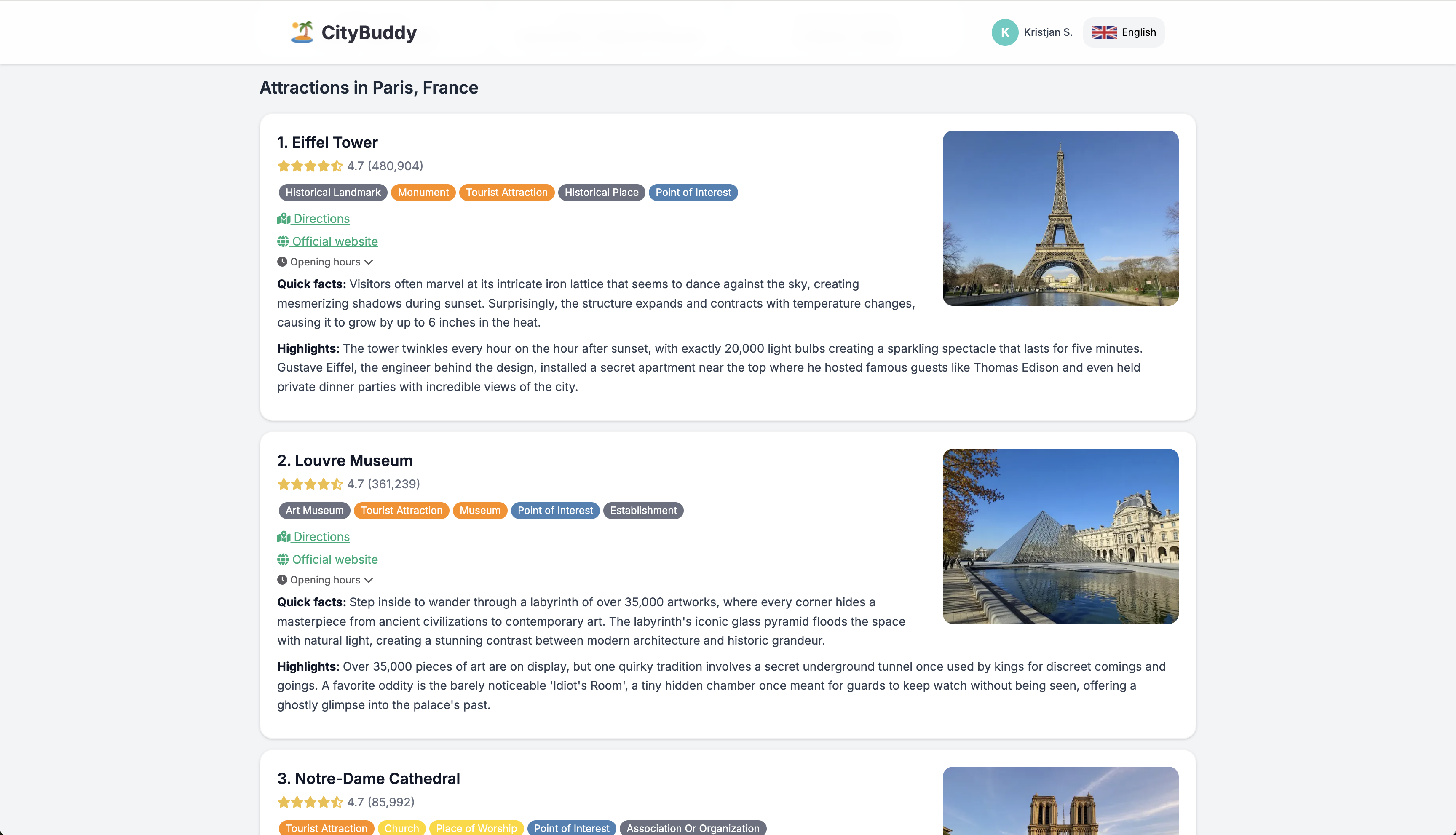
City Buddy
Discover everything from top attractions to hidden gems.
12
一句话介绍:一款无需注册、即搜即得的旅行工具,通过聚合核心景点、评分及实用信息,在旅行者初到陌生城市时,快速解决“这里有什么值得看”的决策痛点,告别信息过载。
Global Nomad Travel Artificial Intelligence
旅行规划 景点发现 信息聚合 免注册工具 数字游民 谷歌评分集成 免费替代 实用旅行信息 快速决策 本地探索
用户评论摘要:用户普遍赞赏其免费、免注册及信息聚合的便捷性,尤其认可其作为Nomad List免费替代的价值。主要反馈包括:搜索加载有时过慢(已获开发者响应并修复),以及未来与预订系统集成、拓展小众城市覆盖范围的建议。
AI 锐评

City Buddy 的本质,是一个针对旅行信息市场“中间层”的精准狙击。它没有创造新数据,而是扮演了一个高效的“过滤器”和“呈现层”,将谷歌地图评分、维基百科式的事实信息以及零散的博客洞察,压缩成一个极简的决策页面。其宣称的“服务器端渲染”、“31种语言按需翻译”等技术特性,并非炫技,而是直指核心用户体验:速度、可访问性与全球化覆盖,这恰恰是SEO臃肿的博客和交互复杂的专业平台所忽视的“沉默需求”。

它的真正颠覆性在于商业模式上的“倒置”。传统旅行信息平台往往通过订阅制或数据付费来盈利,将信息本身商品化。City Buddy 则反其道而行,将基础信息检索彻底免费和开放,仅通过用户最终消费行为(预订门票、旅行)的 affiliate 链接获利。这使其与用户利益瞬间对齐:它不需要你用停留时间来换取广告收入,而是希望你更快地做出消费决策。这种“赋能交易而非占有信息”的模式,对Nomad List等传统付费墙模式构成了直接挑战。

然而,其天花板也清晰可见。深度、个性化、实时动态(如临时关闭、排队时长)以及基于用户画像的推荐,这些高附加值服务是其当前简单聚合模式难以触及的。它解决了“有什么”的广度问题,但尚未深入“什么适合我”的深度领域。此外,其信息源的权威性和更新频率,将长期依赖第三方(如谷歌),自身壁垒更多在于体验的优雅和集成的效率,而非数据护城河。它是一款出色的“旅行决策起点”工具,但若想成为“旅行规划终点”,仍需在动态数据与个性化层面构建更深的护城河。

查看原始信息
City Buddy
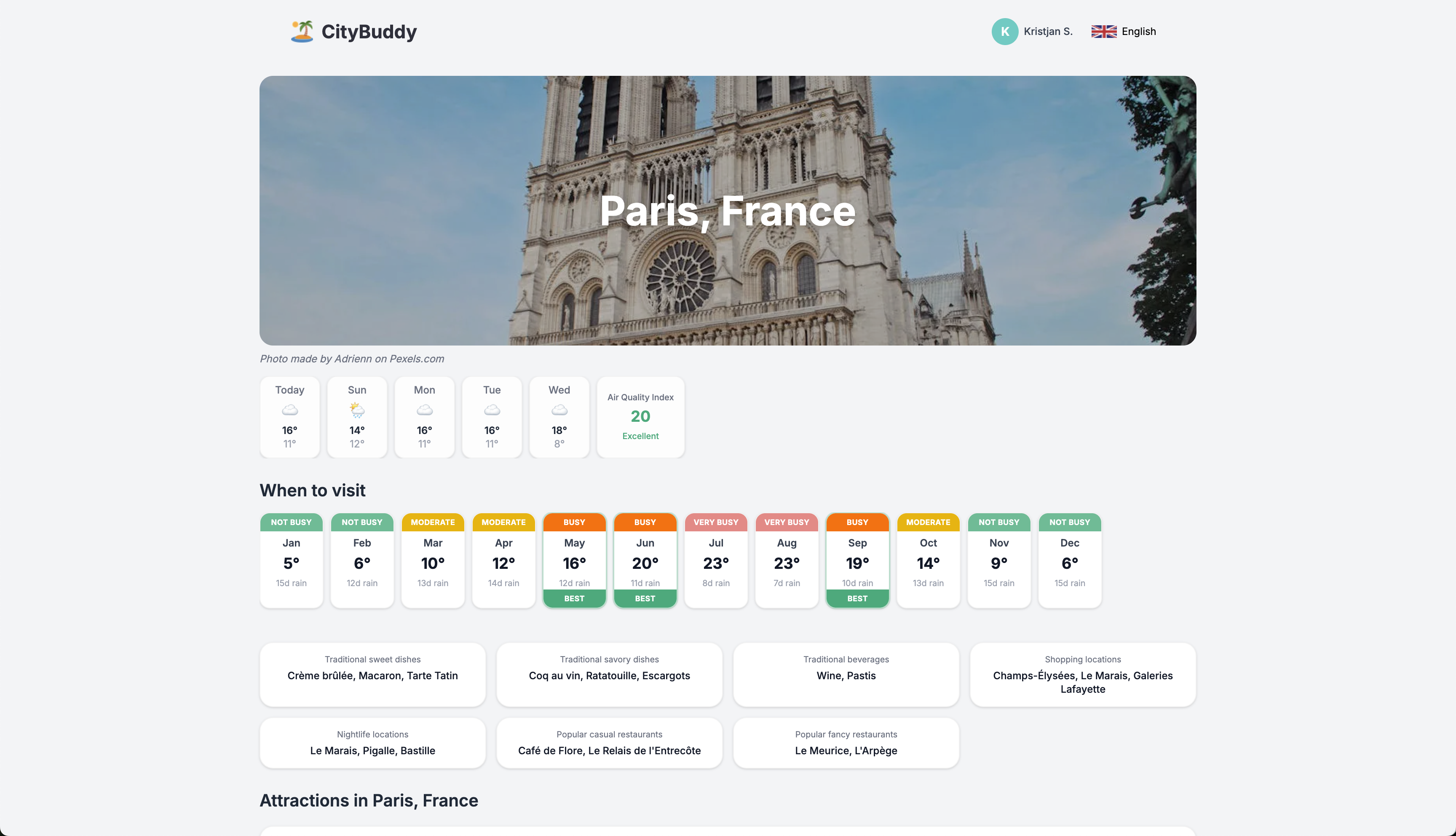
Instantly discover top attractions, hidden gems, ratings, and practical travel info for any city or country. No signup needed.

Hey Product Hunt! I built City Buddy with my husband.

We've been digital nomads since 2022 and have visited 45+ countries together. The idea came from a very specific moment, sitting on the bus from the airport, trying to figure out what's worth seeing, and drowning in Google Maps pins and SEO-stuffed blog posts.

So I built a tool that answers "what's here?" in under 2 minutes. Type a city, get the top attractions with real Google ratings, quick facts, and all the practical info (costs, safety, weather) on one page.

A few things I'm proud of:
- Fully server-side rendered, content works with JS disabled, Google indexes everything
- 31 languages, translations generated on-demand and cached
- No account needed, just search and go
- Free Nomad List alternative, we got tired of paying $100 for city comparison data that should be free

We make money through affiliate links (tours, tickets) when you actually visit a city, not by locking data behind a paywall.

Would love your feedback. What city should I try first? Drop it in the comments and I'll show you what comes up!

0
回复

Congrats on the product and the launch! I already bookmarked it for my future travels, looking forward to trying it.

Do you plan to integrate with other apps in the future? I'm thinking that if I find my recommendations through City Buddy, I could even make direct reservations at those places?

0
回复

I tried Santa Cruz. Searching for attractions seems to be going on forever.

0
回复

@wei_yan4 Thanks for feedback! The site got a bit overwhelmed and we needed to increase the processing power, fixed!

1
回复

Oh wow, the Nomad List alternative angle alone got my attention. I looked into it a while back but couldn't justify dropping that much on a one time purchase just to compare a few cities. Just tested your tool with Madrid and it's honestly more useful for quick trip planning than most paid tools I've tried. Love that it works without an account too, so tired of signing up for things just to browse. The Google ratings integration is smart because I always end up checking those anyway. Would be curious to see how it handles somewhere like Tbilisi since that's been blowing up in the nomad community lately.

0
回复

This is exactly what I needed last month in Lisbon, I spent way too long cross-referencing blog posts that all recommended the same tourist traps. Just tried it with Bangkok and I'm impressed how fast the results load. The safety and cost info on one page is a nice touch, usually I have to dig through 3-4 different sites for that. Bookmarked for my next trip. Curious what it pulls up for smaller cities.

0
回复
#11
Delta IQ
Shows how contract changes affect prior approvals
11
一句话介绍:Delta IQ 是一款合同版本与审批追踪工具,在合同经历多次修订的场景下,通过将审批意见与具体条款版本绑定,解决了团队因反复追溯历史决策而需重读整个文档的效率痛点。
Fintech SaaS Artificial Intelligence
合同管理 版本对比 审批追踪 风险合规 法律科技 SaaS 工作流自动化 金融科技 文档智能
用户评论摘要:用户认可其解决了“追踪历史审批”的真实痛点。主要反馈集中在集成需求上,特别是与Word等办公软件的深度集成。开发者回应积极,表示相关功能已在规划中,并希望了解具体用例。
AI 锐评

Delta IQ 切入了一个被主流文档比对工具长期忽视的深层缝隙:决策的上下文在版本迭代中的流失。其真正价值不在于“发现不同”,而在于“冻结意图”。传统工具止步于文本差异的呈现,而商业合同审查的核心并非文本本身,而是附着其上的风险判断与商业妥协。每一次修订,团队耗费心力重建的正是这种不可见的“决策层”。

产品将“审批”从文档层面下沉到“条款版本”层面,本质上是为合同条款建立了动态的、可追溯的“决策DNA”。这看似微小的视角转换,实则重构了修订工作流。它让团队的智能积累得以沉淀和复用,而非随着文档版本覆盖而清零。尤其针对信贷、风控等高频修订领域,其价值随修订次数呈指数级增长,直接攻击了“修订疲劳”这一隐形成本。

然而,其挑战也显而易见。首先,其价值高度依赖于用户将审批行为从线下(邮件、会议)或泛文档(Word批注)迁移至其平台,改变固有习惯的阻力巨大。其次,评论中暴露的集成需求(如Word插件)是生死线,若不能无缝嵌入用户现有创作环境,极易沦为事后录入的负担。最后,其“条款-审批”绑定逻辑的精准度与灵活性,在面对复杂法律语言和模糊修订时,将面临严峻的技术与专业双重考验。它并非通用文档工具,而是一个高度场景化的“决策存储器”,其成败取决于能否在垂直场景中建立起不可替代的、精准的“决策-条款”映射关系。

查看原始信息
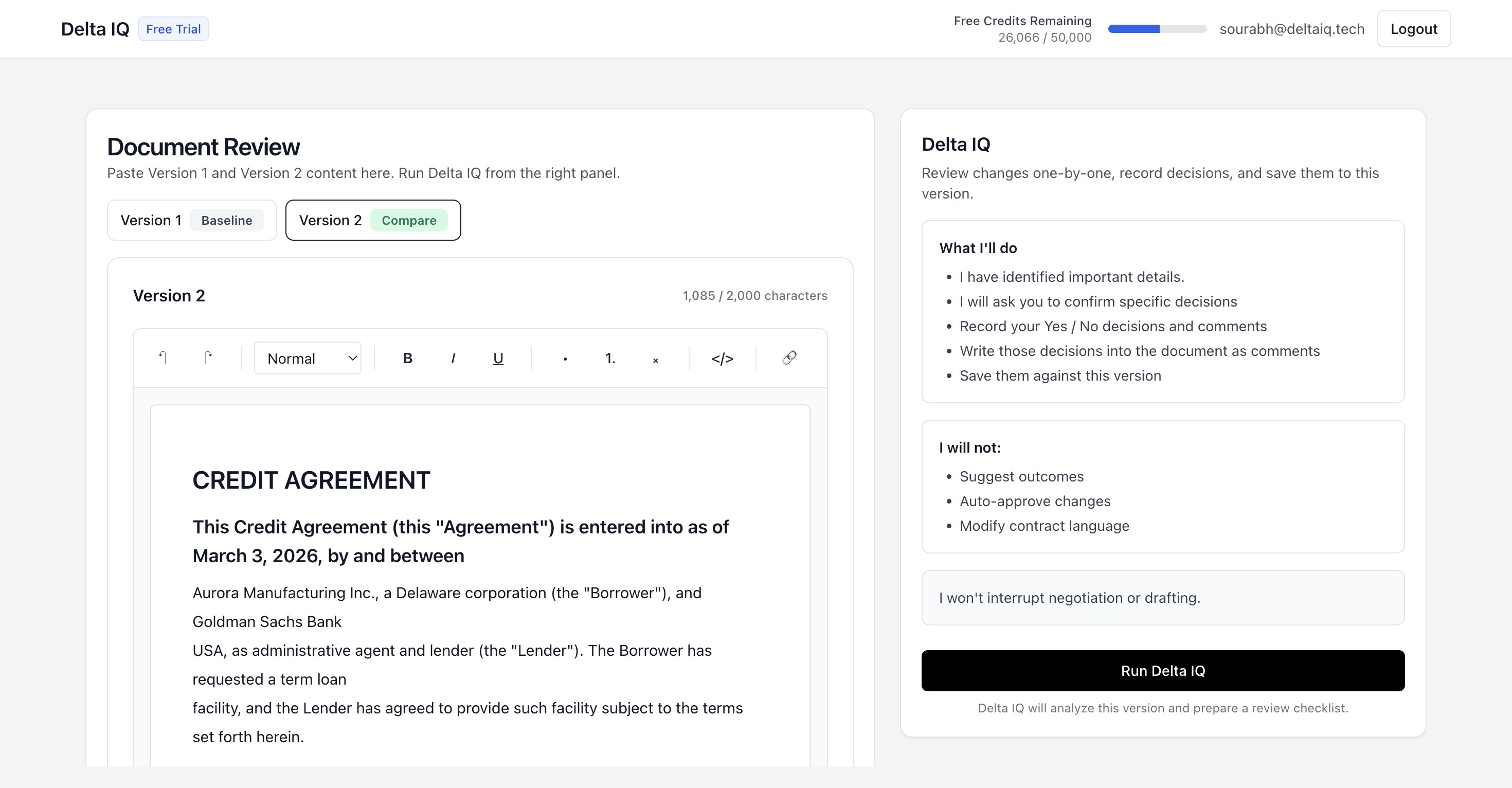
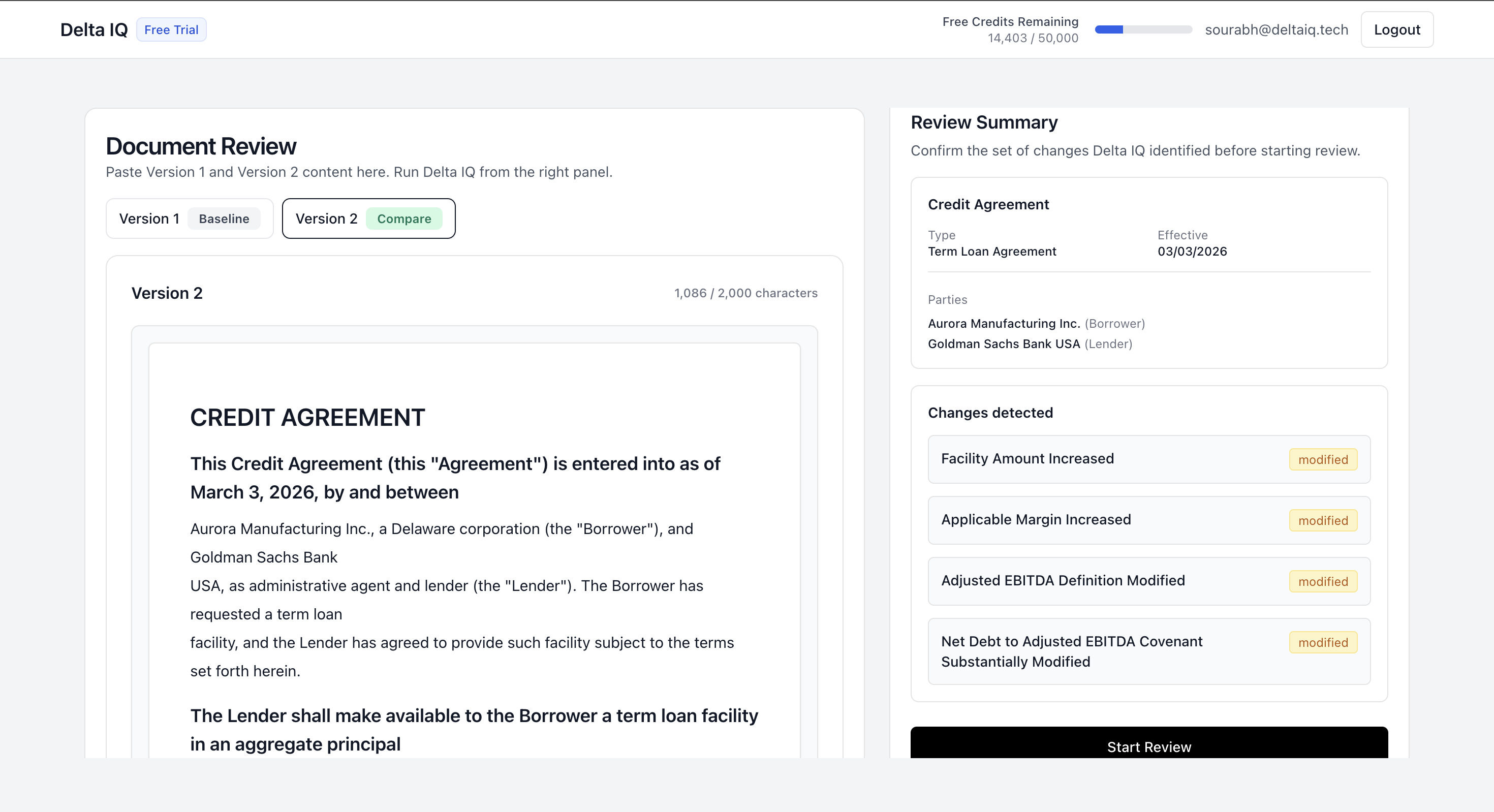
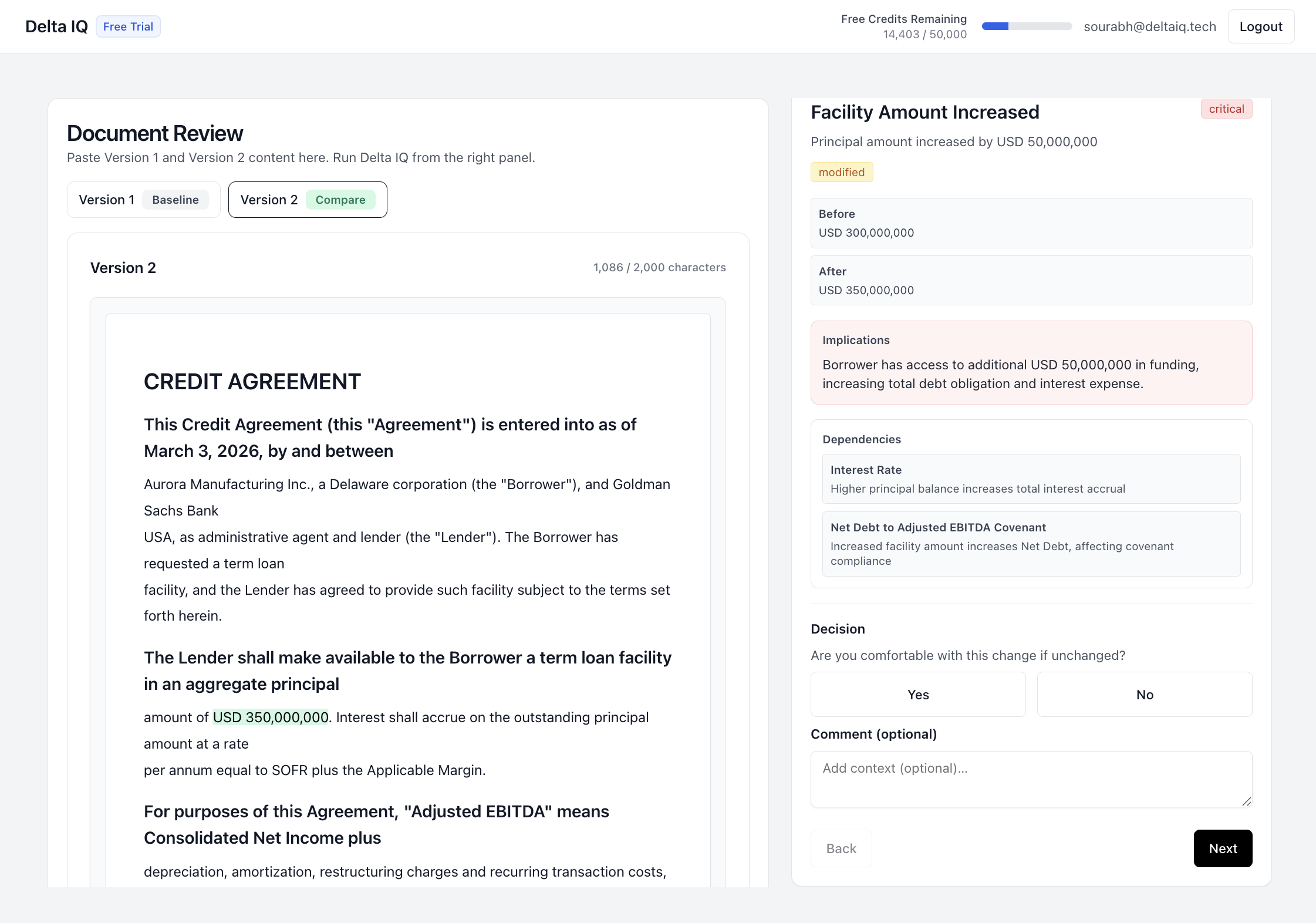
Delta IQ
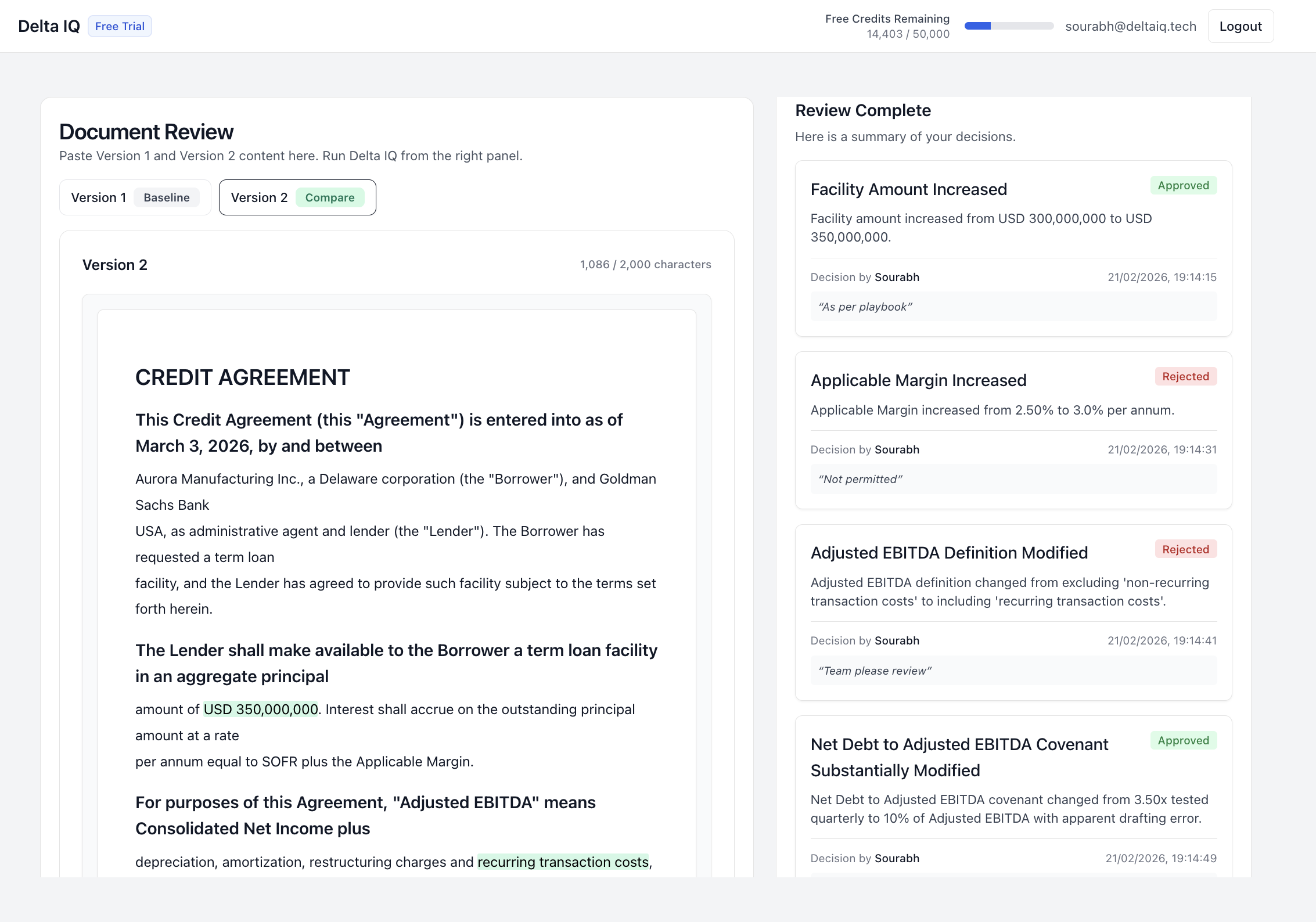
Delta IQ tracks approvals across contract versions. Existing tools compare text or store documents, but they do not preserve the decisions tied to specific clauses as agreements evolve. Delta IQ links approvals to clauses and versions. When a new amendment is uploaded, it highlights impacted provisions and shows whether prior approvals still hold or need re-review. This helps teams avoid rereading entire documents as amendments accumulate, especially in credit and risk workflows.
Hi Product Hunt 👋 We built Delta IQ after noticing that teams reviewing complex agreements weren’t struggling to read documents, they were struggling to keep track of what had already been approved as versions changed. Each amendment forced them to reconstruct prior decisions from scratch, even when only small parts of the contract had changed. We’re starting with credit and risk teams, where this problem is especially acute, but it appears anywhere important agreements evolve over time. How do you currently handle this - manual notes, version comparisons, or internal tools? If relevant, you can try it here: https://app.deltaiq.tech/login
9
回复

Learn more on our website: https://www.deltaiq.tech/

If relevant, you can try the free version or request a demo directly from there.

9
回复

This addresses real problem. Keeping up with context makes us read all prior versions. True.

My question: How can I integrate Delta IQ to word? I have to copy and paste currently. Not a blocker. I can use a plugin.

2
回复

@priyanka221092 Thanks Priyanka.

A native Word plugin / integration is on our roadmap, since many teams work primarily inside Word. If this is important for your workflow, we’d be happy to learn more about your use case.

2
回复

Congratulations.

There are only two text boxes. What if there are several amendments over the time?

1
回复

@priya_k5 Great question, Priya.

Delta IQ is designed for agreements that evolve through multiple amendments. Currently, versions are compared two at a time (e.g., V1 vs V2, then V2 vs V3), but decisions from earlier versions are retained, so prior approvals are still checked when a new amendment is added.

Bulk upload of documents and full history workflows are on our roadmap.

1
回复
#12
DryCast
Never run outside to save your laundry from rain again.
10
一句话介绍:DryCast通过分析湿度、风速等实时天气数据,为用户提供当日衣物能否晾干的明确建议,解决户外晾衣时因天气变化判断不准而带来的不便与烦恼。
Android Productivity Home Clothing
生活工具 天气应用 智能提醒 晾衣预测 场景化天气 实用工具 节能生活 痛点解决 垂直应用 日常助手
用户评论摘要:创始人评论详细阐述了产品逻辑与初衷,强调其聚焦单一痛点。另一条评论认可其痛点聚焦,并指出该应用在欧洲特定季节有实用价值。目前无具体功能改进建议。
AI 锐评

DryCast的本质,是一次对臃肿通用型天气应用的“场景化反叛”。它摒弃了堆砌气象参数的思维,将复杂的天气数据蒸馏成一个极简的二元决策建议——“能晾”或“不能晾”。其真正的价值并非技术创新,而在于精准的“需求切片”和极致的“功能收敛”。

在价值层面,它聪明地避开了与巨头在气象数据精度上的竞争,转而攻占被忽略的“决策最后一公里”。用户不缺乏信息,缺乏的是基于特定场景的结论。DryCast充当了这个翻译器,将抽象的气象术语转化为具象的生活指令,其核心算法实则为一种轻量级的“经验数据化”过程,将民间晾晒智慧封装成模型。

然而,其商业模式的天花板也清晰可见。作为超垂直工具,用户使用频次低、粘性弱,且功能极易被通用天气APP通过增加一个“晾衣模式”模块所覆盖。其护城河在于先发的心智占领和更极致的用户体验,但若停留于此,恐难逃“小而美”的窠臼。未来的想象空间或许在于将这种“场景化翻译”能力拓展至园艺、户外运动等其他垂直领域,或与智能家居(如智能晾衣架)联动,从单一应用升级为生活效率平台。当前版本是一个出色的MVP,验证了需求,但若想突破工具宿命,仍需在生态构建上寻找破局点。

查看原始信息
DryCast
Sunny doesn’t mean dry. Drycast uses real weather data like humidity and wind speed to predict if your laundry will dry outside today. Get a simple recommendation before you hang your clothes.

We’ve all done this.

You check the weather. It says “Sunny.”
You hang your clothes outside.
Five hours later… they’re still damp.

Because sunshine doesn’t mean dry.

Humidity, wind speed, temperature, cloud cover — they all matter. But no one wants to manually calculate drying conditions every time they do laundry.

So I built Drycast.

What Drycast Does

Drycast analyzes:

  • Humidity

  • Temperature

  • Wind speed

  • Cloud cover

  • Rain probability

And gives you a simple answer:

Great drying conditions
Risky drying conditions
Not recommended

No charts. No clutter. No 10 weather metrics to interpret. Just a clear decision.

The Real USP: Smart Notifications

You don’t even have to open the app.

Drycast sends you a notification when:

  • It’s a great time to dry clothes

  • Rain is likely to interrupt drying

  • Conditions suddenly change

It’s like a “drying window alert” for your laundry.

Why I Built It

Weather apps tell you everything —
but they don’t tell you what you actually want to know.

Most people don’t care about:

  • Dew point

  • UV index

  • Barometric pressure

They care about:
“Should I hang my clothes out?”
“Will they dry before evening?”
“Will it start raining?”

Drycast turns raw weather data into a practical answer — and tells you at the right time.

Who It’s For

  • People who air-dry clothes

  • Apartments without dryers

  • People trying to save electricity

  • Anyone who hates bringing damp clothes back inside

I’d Love Your Feedback

Is this something you would use?
What other “small but annoying” daily problems should exist as simple apps?
Any suggestions on improving the drying score logic?

Thanks for checking out Drycast.
Happy to answer any questions.

0
回复

Congrats! This is what I call being pain-point focused. Southern Europe would really benefit from using your app during the autumn and winter months, especially!

0
回复
#13
Vocal Division
Separate vocals, drums, bass & more with AI
10
一句话介绍:Vocal Division是一款AI音轨分离工具,用户上传任意歌曲即可快速分离出人声、鼓点、贝斯等音轨,解决了音乐爱好者、创作者在混音、采样或学习时难以获取纯净分轨素材的痛点。
Music Artificial Intelligence
AI音频处理 音轨分离 在线音乐工具 人声提取 鼓点分离 免费工具 BPM检测 音频混音 音乐制作 YouTube转MP3
用户评论摘要:用户实测反馈流程顺畅(从YouTube拉取、转换到分离约5分钟),免费且效果满意,并表示会推荐给音乐人朋友。开发者积极回复致谢,目前评论中未提及具体问题或建议。
AI 锐评

Vocal Division切入了一个看似热闹但门槛犹存的赛道——AI音频分离。其“免费+在线+集成YouTube抓取”的组合拳,确实精准打击了普通用户和入门创作者的即时需求:无需专业软件知识,快速获取分轨素材。这本质上是在降低音乐二次创作和学习的初始技术壁垒。

然而,其真正的挑战与价值并非在于分离技术本身(此类开源模型已不少见),而在于其产品化路径和可持续性。首先,“免费”模式在运营成本(计算资源、带宽)面前能支撑多久?这通常意味着未来可能通过限速、付费高阶精度或订阅制来变现,届时其用户体验和竞争力将面临考验。其次,从评论中“5分钟”的耗时来看,面对更复杂或高保真要求的专业场景,其处理速度与质量可能仍显乏力,核心用户或许会停留在“玩票”或“应急”层面。

更深层看,它的价值或许在于充当了一个“网关产品”:将原本小众的AI音频技术以极简的Web工具形式推向大众市场,教育并培育用户习惯。如果团队能借此积累用户数据优化模型,并逐步构建围绕分离后音频的编辑、协作或社区生态,或许能从“工具”升级为“平台”。否则,在巨头环伺、同类在线工具不断涌现的当下,它很可能只是又一个功能单一、用户用完即走的“便捷小站”,难以形成护城河。其未来的关键在于,能否在“免费便捷”的钩子之外,找到更深、更不可替代的价值锚点。

查看原始信息
Vocal Division
Upload any song and separate it into vocals, drums, bass & instrumental using AI. Free online tool with mixer and BPM detection.

Congrats on the launch.
tested it with my favorite song, it pulls it from YouTube to MP3, does separations, and is done in 5 minutes and it is for free.
Definitely recommending this app to my friends who is an artist.

1
回复

@wei_yan4 Thank you so much Max! Really happy to hear it worked smoothly for you. Comments like this genuinely make our day! 🙏

1
回复
#14
TIMPs
Persistent memory layer for AI agents
9
一句话介绍:TIMPs为AI智能体提供了一个开源、持久化的记忆层,解决了当前大多数LLM应用因会话间状态丢失而无法形成长期记忆和连续认知的核心痛点。
Open Source Developer Tools Artificial Intelligence
AI智能体 记忆基础设施 开源项目 持久化存储 语义检索 开发者工具 PostgreSQL Qdrant TypeScript 开发者预览版
用户评论摘要:当前无用户评论。产品处于开发者预览阶段,社区反馈尚未形成。
AI 锐评

TIMPs瞄准的是AI Agent领域一个日益凸显的“阿喀琉斯之踵”——状态缺失。当前多数基于大语言模型的应用本质上是“金鱼脑”,每次交互都近乎重启,这严重制约了构建复杂、个性化、连续交互的智能体系统。TIMPs的野心,正是成为智能体的“海马体”。

其技术栈选择(TypeScript, PostgreSQL, Qdrant)体现了务实主义:用成熟的关系数据库处理结构化元数据,用专用向量数据库应对语义检索,再以Node.js生态中流行的TypeScript粘合,降低了开发者的接入门槛。功能上,长期记忆、语义检索、项目隔离、基于反思的存储,这四板斧直指核心需求,试图为智能体赋予记忆的形成、存储、提取和进化能力。

然而,真正的挑战不在技术实现,而在范式定义。首先,“记忆”对于AI智能体而言,其数据结构、索引方式、更新与遗忘机制,尚无行业标准。TIMPs作为基础设施层,能否定义或适配未来的主流范式,存疑。其次,在推理成本依然高昂的当下,频繁调用“记忆”进行存储与反思,可能带来显著的延迟与费用开销,其性能与成本平衡点需经受实战检验。最后,作为开源项目,在巨头林立、竞品纷涌的AI基础设施赛道,如何构建活跃的开发者生态与护城河,是其生存的关键。

总体而言,TIMPs的价值在于它精准地刺破了一个关键问题,并以开源、轻量的方式提供了早期解决方案。它未必是终极答案,但为开发者提供了一个宝贵的实验沙盒,其探索本身,对推动AI Agent从“单次对话玩具”向“持续进化伙伴”演进,具有积极的踩坑意义。

查看原始信息
TIMPs
TIMPs is an open-source memory infrastructure layer for AI agents. Most LLM apps are stateless — they forget everything between sessions. TIMPs adds structured long-term memory, semantic retrieval, project isolation, and reflection-based storage. Built with TypeScript, PostgreSQL, and Qdrant. Developer Preview — designed for builders experimenting with persistent AI systems.
#15
ClawCloud
OpenClaw in Cloud.
8
一句话介绍:ClawCloud 让用户无需复杂部署,即可在60秒内于主流通讯平台(如WhatsApp、Slack)上快速部署拥有800+工具集成能力的OpenClaw AI智能体,解决了个人及团队想使用开源AI代理却畏惧运维配置的技术门槛痛点。
Slack Email Open Source
AI智能体平台 无代码部署 开源模型托管 通讯工具集成 自动化工作流 SaaS 开发者工具 快速启动 云服务
用户评论摘要:开发者团队阐述了产品解决开源AI代理部署复杂的核心痛点。唯一外部评论建议增加带计时器的演示视频来更直观展示其“60秒启动”的简易性。
AI 锐评

ClawCloud 的本质,是将开源项目 OpenClaw 的“生产力”与“易用性”进行解耦,并商品化了后者。它的真正价值并非技术突破,而是精准的市场定位与体验重构。

在AI智能体喧嚣的当下,大量工具仍停留在“为开发者服务”的阶段,要求用户具备部署、运维、连接三方API的能力。ClawCloud 敏锐地切中了“使用意愿”与“使用能力”之间的断层:用户想要的是智能体的能力(连接800+工具),而非维护一个服务器。它通过云托管、一键连接通讯软件、提供积分体系,将开源软件转化为即开即用的SaaS产品,这本质上是一种高效的“开源产品化”路径。

然而,其挑战也同样清晰。首先,商业模式面临经典问题:如果核心价值是便利性,而非独家技术,其壁垒有多高?一旦OpenClaw官方或云大厂提供类似托管服务,其生存空间将受挤压。其次,“免费开始”之后的定价策略将决定其命运,用户对运维成本的敏感是否会转移到对服务费的敏感上?最后,评论中关于演示视频的建议,恰恰暴露了其信息传递的弱点——“60秒启动”是最大卖点,但官网若缺乏最直观的证据,会极大削弱转化率。

总体而言,ClawCloud 是一次务实的市场切入。它不创造新轮子,而是给现有的强大轮子(OpenClaw)铺了一条平坦的公路。它的成功与否,将取决于其执行细节:用户体验的打磨、成本控制的能力,以及能否在巨头觉醒前建立起足够的用户规模和生态粘性。

查看原始信息
ClawCloud
Run OpenClaw without the setup. Your own AI agent on WhatsApp, Telegram, Slack, Discord — connected to 800+ tools. Free to start, live in 60 seconds.
Hey everyone! We built ClawCloud because we kept seeing the same problem over and over — people wanted to use OpenClaw but didn't want to spend a weekend setting up Docker, configuring API keys, managing webhooks, and monitoring uptime just to get it running. So we made it stupid simple. Sign in, name your agent, and it's live in under 60 seconds. Same open source OpenClaw underneath, same 800+ tool integrations, just none of the devops. You can connect it to Slack, Telegram, or Discord with one click and bring your own API keys if you want to use a specific model. Or just use ClawCloud credits out of the box. Would love to hear what you think and happy to answer any questions!
0
回复

Congrats on the launch.

I think having a demo video showing setup with timer on the side is better.

0
回复
#16
CatsMe 2.0 – AI Cat Health from a Photo
AI reads your cat's face to detect pain before it's too late
7
一句话介绍:这是一款通过AI分析猫咪面部照片,基于兽医科学中的“猫咪 grimace 量表”来即时检测其疼痛或压力水平的应用,解决了宠物主因猫咪天性隐忍而难以早期发现健康问题的核心痛点。
Android Cats Pets Artificial Intelligence
宠物健康 AI医疗 动物福利 猫咪护理 预防性诊断 计算机视觉 兽医科技 无硬件监测 消费者应用 日本研发
用户评论摘要:目前评论主要为创始人自述,无外部用户反馈。创始人坦诚首次发布失败,并详细阐述了2.0版本在技术、科学合作与用户体验上的彻底重建。有效信息集中在产品迭代历程和核心价值主张上。
AI 锐评

CatsMe 2.0展现了一个经典且正确的创业叙事:用最小可行产品验证市场痛点后,敢于推倒重来,并以扎实的科研合作构建壁垒。其真正价值不在于“又一个宠物AI应用”的标签,而在于它精准地切入了一个被长期忽视的生物学与情感交叉地带——猫咪的痛苦伪装本能。

产品从“无代码玩具”到“与大学兽医研究者共同开发”的转变,是其商业故事升维的关键。这不仅仅是技术栈的升级,更是产品属性从“有趣工具”向“可信服务”的质变。基于“猫咪 grimace 量表”这一已发表的兽医科学成果,为其AI模型提供了难得的、可验证的医学标尺,这在充斥着“娱乐性滤镜”的消费级宠物应用中显得尤为稀缺。

然而,其面临的挑战同样尖锐。首先,是“黑箱”信任问题。作为直接提供健康洞察的医疗辅助工具,其AI判断的准确率、特异性及在不同品种、光线、角度下的鲁棒性,需要更透明的数据佐证。其次,是用户行为的教育与合规边界。它可能极大地缓解主人的焦虑,也可能引发不必要的恐慌;它辅助判断,但绝不能替代专业兽医诊断。如何引导用户正确使用,避免误判延误病情,是产品设计中责任最重的一环。

从7个投票数来看,此次“救赎发布”在Product Hunt上并未引起轰动,但这或许并不重要。其宣称的“零营销获31000用户”已证明了需求的真实存在。它的成功与否,最终将取决于其能否在“便捷的消费应用”与“严谨的医疗辅助工具”之间找到那个微妙而稳固的平衡点,并建立起坚实的临床有效性证据链。这是一条更难走的路,但也正是其护城河所在。

查看原始信息
CatsMe 2.0 – AI Cat Health from a Photo
We launched on PH in 2025 and flopped — built on no-code, the UX was rough. So we rebuilt from scratch. CatsMe 2.0 reads your cat's face to detect pain using AI co-developed with Nihon University's veterinary researchers. Snap a photo, get instant health insights. No wearables needed. New: fully rebuilt tech, Feline Grimace Scale-based detection, daily health scores, multi-cat profiles, 8 languages. 31,000+ cat parents in 50 countries. Zero ads. This is our comeback.
Hey Product Hunt! I'm Go, founder of CatsMe — building from Tokyo. Real talk: I launched here in July 2025 and it bombed. The app was built on Bubble, the experience was rough, and I honestly wasn't ready. But here's the thing — I knew the idea was right. Cats are literally designed by evolution to hide pain. Most cat owners don't realize something's wrong until it's serious. That's a problem worth solving. So I went back to the drawing board. Rebuilt the entire app from scratch. Partnered with researchers at Japanese University's veterinary college to develop AI that reads cat facial expressions based on real veterinary science (the Feline Grimace Scale). The result? Just snap a photo of your cat's face. The AI analyzes micro-expressions in seconds and tells you if your cat might be in pain or stressed. No wearables, no hardware — just your phone camera. What blows my mind: 31,000+ people across 50 countries found us with zero marketing spend. Just pure word of mouth. Cat parents share it because it actually works. This is my redemption launch. I'd love for you to try it and tell me what you think — honest feedback only. https://www.catsme.pet 🐱
2
回复
#17
zymplio: Master your WordPress Stack
Save hours. Boost margin. Scale faster.
7
一句话介绍:一款为WordPress开发机构设计的“驾驶舱”式管理平台,通过集中管理许可证、代码片段和站点结构,解决多客户项目管理中的“资产混乱”痛点,提升运营效率与利润率。
Productivity WordPress Developer Tools
WordPress管理工具 数字机构运营 SaaS 许可证管理 代码片段库 工作流标准化 资产加密 效率提升 利润率优化
用户评论摘要:目前仅有一条创始人评论,以产品故事形式阐述开发初衷——源于自身运营WordPress机构时深受“资产混乱”之痛。该评论旨在引发用户共鸣并收集反馈,尚无真实用户的使用评价或具体问题。
AI 锐评

zymplio瞄准的是一个真实但狭窄的利基市场:规模化运营的WordPress外包机构。其核心价值主张并非技术创新,而是**运营整合**。它将散落在邮箱、云盘、本地文档和客户服务器上的“资产”(许可证密钥、部署凭证、代码片段、站点配置)进行集中、加密管理,试图将机构负责人从“管理员侦探”的角色中解放出来。

产品逻辑清晰,痛点抓得准。“Bridge”插件无需WP登录即可部署,直击机构频繁切换客户后台的繁琐;AI生成自定义帖子类型和“可复用堆栈”概念,则是对服务标准化和规模化交付的积极探索。这些功能表明,它不止于“收纳盒”,更试图向“自动化流水线”演进。

然而,其面临的关键挑战同样明显。**首先,是市场天花板和迁移成本**。真正受困于“资产混乱”的,是拥有数十上百个客户站点的大型WordPress机构,这个群体规模有限,且让其迁移全部资产到新平台决策门槛极高。**其次,是功能与现有生态的冗余竞争**。许可证管理、代码片段库等功能已有诸多独立工具,其吸引力在于“全家桶”体验,但说服用户放弃原有、零散但熟练的工具链并非易事。**最后,创始人评论透露的“源于自身烦恼”的起源,既是优势也是风险**。优势在于产品功能可能极度贴合实际场景;风险在于可能过度拟合创始人个人的工作流,而非更广泛机构的普适需求。

当前仅有7个投票和零真实用户评论的数据,也印证了其仍处于非常早期的阶段。它的成功与否,将不取决于功能列表是否漂亮,而在于能否说服第一批中型机构客户上船,并形成可复制的效率提升案例。它本质上是在销售一种“秩序”,而建立秩序的过程,本身可能就是一场需要耐心和说服力的战斗。

查看原始信息
zymplio: Master your WordPress Stack
zymplio is the agency cockpit for WordPress agencies to end asset chaos. Manage licenses, code snippets, and site structures in one secure, encrypted vault. 🚀 Save hours: Deploy keys and logic via our "Bridge" plugin—no WP login needed. 📈 Boost margins: Monitor your burn rate and automate setups with AI-powered CPT generation and reusable Stacks. Standardize your workflow, secure your assets, and scale faster.

​I’m Petra, the founder of zymplio.

​To be honest, zymplio wasn't born in a meeting room—it was born out of pure frustration. I spent years running a WordPress agency, and I was constantly drowning in 'Asset Chaos.' Lost licenses, expired credentials, and endless spreadsheets were killing my productivity and my sanity.

​I built this cockpit because I needed a way to stop being an 'admin detective' and start being a creator again.

​We’re just getting started, but the core is ready for you. You can set up a free account today and see if it helps clear the fog in your workflow.

I’d love to know:

What is the one 'small' administrative task in your WordPress stack that drives you crazy every single day?

​I’ll be here all day to chat and listen to your feedback. Let’s kill the chaos!

2
回复
#18
MEO
Markdown editor for VS Code that doesn't feel like a hack
6
一句话介绍:一款深度集成于VS Code的Markdown编辑器,通过实时预览切换、浮动工具栏和侧边栏等功能,解决了开发者在VS Code中编写Markdown时需分屏预览、缺乏快捷格式操作和流畅写作体验的核心痛点。
Productivity Writing Developer Tools GitHub
VS Code扩展 Markdown编辑器 开发者工具 文档编写 实时预览 生产力工具 开源文档 沉浸式写作 代码旁文档
用户评论摘要:开发者因不满VS Code原生Markdown体验而创建此工具。评论者祝贺免费发布,开发者回应希望获得更多工作流反馈。核心反馈是工具源于个人需求,并寻求社区对Markdown工作流的痛点与缺失功能的建议。
AI 锐评

MEO看似是又一个Markdown编辑器,但其真正的锋芒在于精准狙击了VS Code这一“代码宇宙中心”里的一个长期隐性断层:将面向纯文本的Markdown与面向沉浸式写作的富交互体验无缝融合。它没有尝试取代Typora或Obsidian,而是聪明地选择“寄生”于开发者最高频的IDE环境,消除上下文切换的成本,这比增加功能本身更具战略价值。

产品介绍中“doesn't feel like a hack”的标语,恰恰揭露了行业现状:以往在VS Code里写Markdown,本身就是一种拼凑的“黑客行为”。MEO通过“实时/源码”一键切换、浮动菜单等设计,试图将IDE的“编码感”转化为“写作流”。其价值并非功能罗列,而在于对开发者“心流”的守护——在编写代码、README、文档和PRD的混合工作流中,保持环境统一。

然而,其挑战也同样明显。首先,深度绑定VS Code既是优势也是天花板,限制了更广泛非开发者用户群体。其次,从评论看,目前生态反馈仍显单薄,缺乏来自重度协作或复杂文档场景的验证。真正的考验在于,它能否从“个人便利工具”演进为团队标准化文档工作流的一部分,并处理版本控制、协作冲突等更深层问题。免费策略虽利于快速获客,但如何构建可持续模式,将是开发者从“用爱发电”走向成熟产品的关键一跃。

总体而言,MEO是一款极具场景洞察力的“补丁式创新”产品。它未必能掀起革命,但确实以优雅的方式,填补了IDE生产力链条上一个被忽视已久的缝隙。其成功与否,将取决于能否在开发者社群的真实打磨中,从“好用”走向“不可或缺”。

查看原始信息
MEO
I built MEO because writing markdown in VS Code has always been painful. Raw syntax in one tab, broken preview in another, no toolbar, no way to just write. MEO adds a live/source toggle, floating formatting menu, toolbar for headings/tables/tasks/code/links, full-screen Mermaid diagrams, a contents sidebar, and optional auto-save. All inside VS Code. No context switching. Built for devs who write READMEs, docs, and PRDs alongside code and want the editor to stay out of the way.
I got tired of writing markdown in VS Code with a split preview pane I couldn't edit in, so I built MEO extension to fix it. It started as a personal thing but I kept reaching for it on every project. Would love to know how others handle markdown in their dev workflow and what's still missing for you.
1
回复

Congrats on the lanuch.

This is great work and thank you for putting it out for free.

0
回复

@wei_yan4 Thanks so much, Max. It's been a fun tool to build and it felt right to put it out for free. Would love to hear if anything feels off or missing for your workflow.

1
回复
#19
Paragent
AI coding agents that ship features while you sleep
6
一句话介绍:Paragent是一个AI编程智能体指挥中心,允许开发者用自然语言描述需求,即可在GitHub仓库中并行创建多个独立分支的AI代理来自动化实现功能、编写代码并提交PR,解决了开发者多任务并行开发时上下文切换频繁和效率低下的痛点。
SaaS Artificial Intelligence GitHub
AI编程助手 自动化开发 GitHub集成 多代理并行 代码生成 隐私安全 开发运维 生产力工具 智能体编排
用户评论摘要:创始人自述开发初衷为解决功能开发间的上下文切换痛点。关键设计强调代码隐私,数据不经过其服务器,直接连接用户指定的模型提供商。目前评论较少,主要为产品介绍性内容,尚未收集到外部用户的实质性反馈或建议。
AI 锐评

Paragent描绘的“睡眠中发布功能”的愿景极具诱惑力,其核心价值主张并非简单的代码生成,而在于“并行化智能体编排”。这试图将开发者从线性的、单线程的工作流中解放出来,升级为并发式的项目管理指挥官。其技术架构强调代码不触达自身服务器,直连大模型提供商,这在当前注重隐私的开发者市场中是一张明智的安全牌,但同时也将性能、稳定性和成本的潜在问题部分转移给了下游模型和用户自身环境。

然而,其真正的挑战在于从“演示可行”到“生产可靠”的巨大鸿沟。自动生成的代码能否通过严苛的质量关卡?复杂功能的“计划-编写-验证-修复”循环在无人类深度干预下,其成功率和迭代成本仍是未知数。当前仅6票的Product Hunt热度,也侧面反映了市场对这类激进自动化工具仍持观望态度。它更像一个“研发力放大器”,而非“开发者替代品”,其成功与否高度依赖于AI智能体解决复杂、模糊性工程问题的能力是否取得根本性突破。如果只能处理定义清晰的增量化任务,其价值将大打折扣。最终,它可能率先在原型验证、模块化功能添加等场景找到落脚点,而非接管核心业务逻辑的开发。

查看原始信息
Paragent
Paragent is a command center for AI coding agents that run in parallel on your GitHub repos. Describe what you want in plain English — "Add Stripe checkout to the pricing page" — and Paragent spins up an agent on its own git branch. It plans the implementation, writes the code, and opens a pull request. You review it on GitHub like you would with any teammate. The difference? You can launch 10 features at once. Each gets its own branch. No conflicts, no waiting.
Hey PH! I built Paragent because I was tired of context-switching between features. I'd describe three things I needed built before lunch, then spend the rest of the day reviewing PRs — that was the dream. The key design decision: your code never touches our servers. It goes straight from GitHub to whichever model provider you choose (OpenAI, Anthropic, Gemini). We orchestrate the agent loop — plan, write, verify, fix — but we don't store, log, or learn from your source. Would love your feedback. What would make this useful for your workflow?
1
回复
#20
OpenCharts
Charts + Boards + Notes with AI-native workspace.
6
一句话介绍:OpenCharts是一款AI原生的空间工作区,通过AI编排器自动同步笔记、图表与白板,解决了知识工作者在文档、绘图工具间手动切换与同步、构建复杂系统图表耗时费力的核心痛点。
Design Tools Notes Business Intelligence
AI原生工作区 可视化协作 数字白板 图表绘制 智能笔记 系统设计 社区模板 实时同步 团队协作 空间计算
用户评论摘要:有效评论主要来自创始人,阐述了开发动机:因无法高效同步笔记与图表而创建本产品。产品核心价值在于AI驱动同步与社区逻辑复用。目前无外部用户问题与建议反馈。
AI 锐评

OpenCharts的野心,在于试图用“AI原生”与“空间工作区”两个时髦概念,对传统的图表绘制与白板协作市场进行降维打击。它宣称要解决的“数字纸张”与“工具割裂”问题确实存在,但其宣称的“AI编排器自动同步”是真正的价值核心还是营销话术,仍需深度审视。

产品逻辑清晰:将非结构化的笔记、半结构化的图表元素,通过AI进行理解、关联并置于无限画布上,实现动态更新。这比简单的文件链接或嵌入更进一步,旨在创造一种“活”的工作文档。其“自然语言生成复杂图表”和“社区逻辑复用”的功能,直击了绘图学习成本高、重复造轮子的痛点,颇具吸引力。

然而,其面临的风险与挑战同样明显。首先,“AI原生”的成色有待检验。AI是仅用于自然语言生成初始图表,还是能真正深度理解内容逻辑并实现跨模态的智能关联与维护?后者技术门槛极高,若做不到,产品则易沦为“带AI辅助的传统白板”。其次,从创始人评论看,产品源于个人痛点,这虽是佳话,但也需警惕“创始人解决方案”的局限性,是否契合更广泛的团队协作场景?评论区的冷清(仅创始人发言)与较低的投票数,可能暗示产品尚未引发市场共鸣或仍处极早期。

真正的考验在于,用户是否愿意将系统设计、产品架构等关键思维过程,托付给一个新兴的、数据格式可能封闭的AI工作区。它需要证明其AI不仅能“同步形式”,更能“理解意图”,否则难以从Miro、Figma、甚至Notion等已占据用户心智和生态的巨头口中夺食。OpenCharts构想了一个智能、流畅的未来工作图景,但通往这个图景的道路,需要远超“自动同步盒子”的技术深度与生态构建能力。
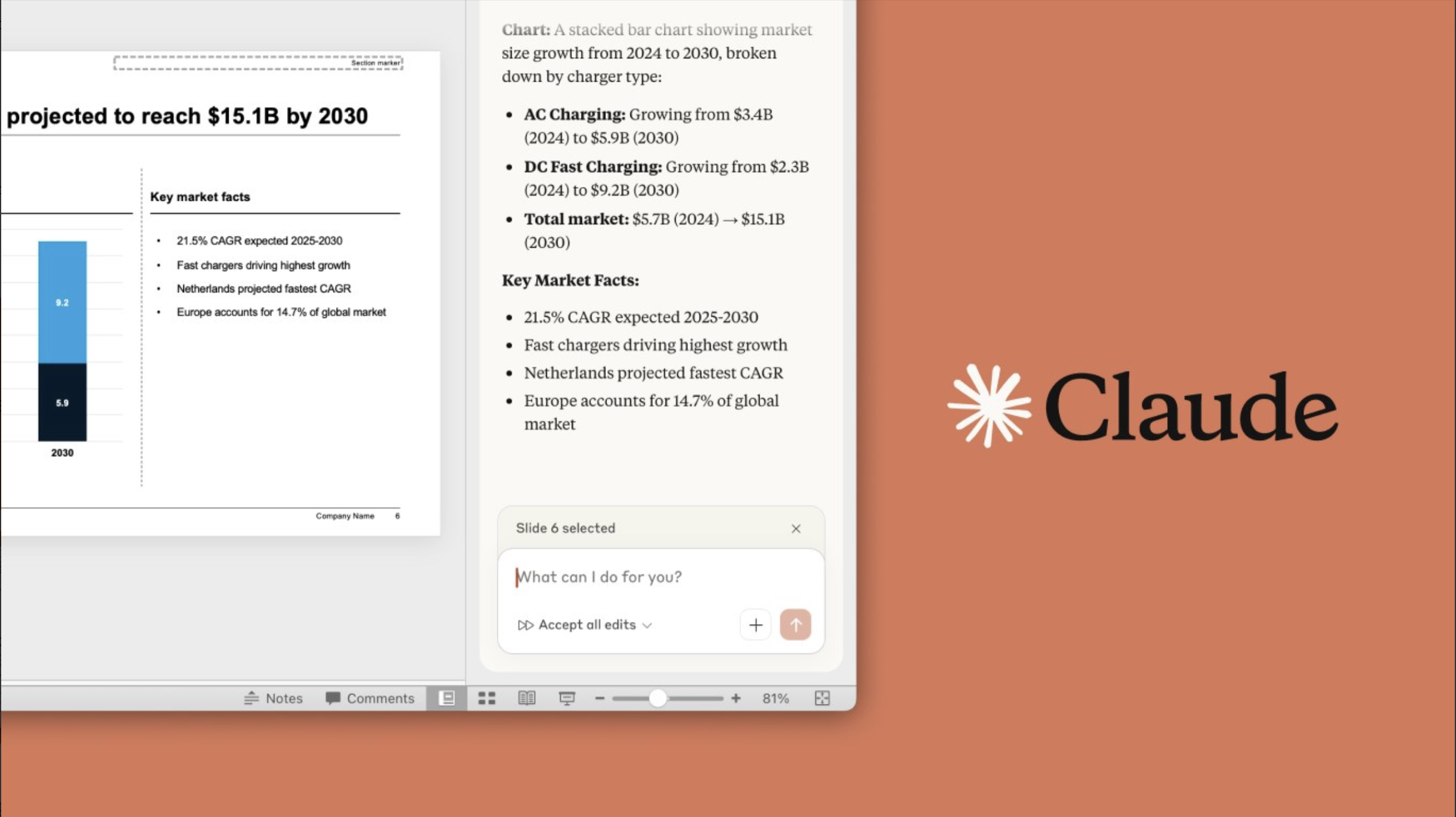
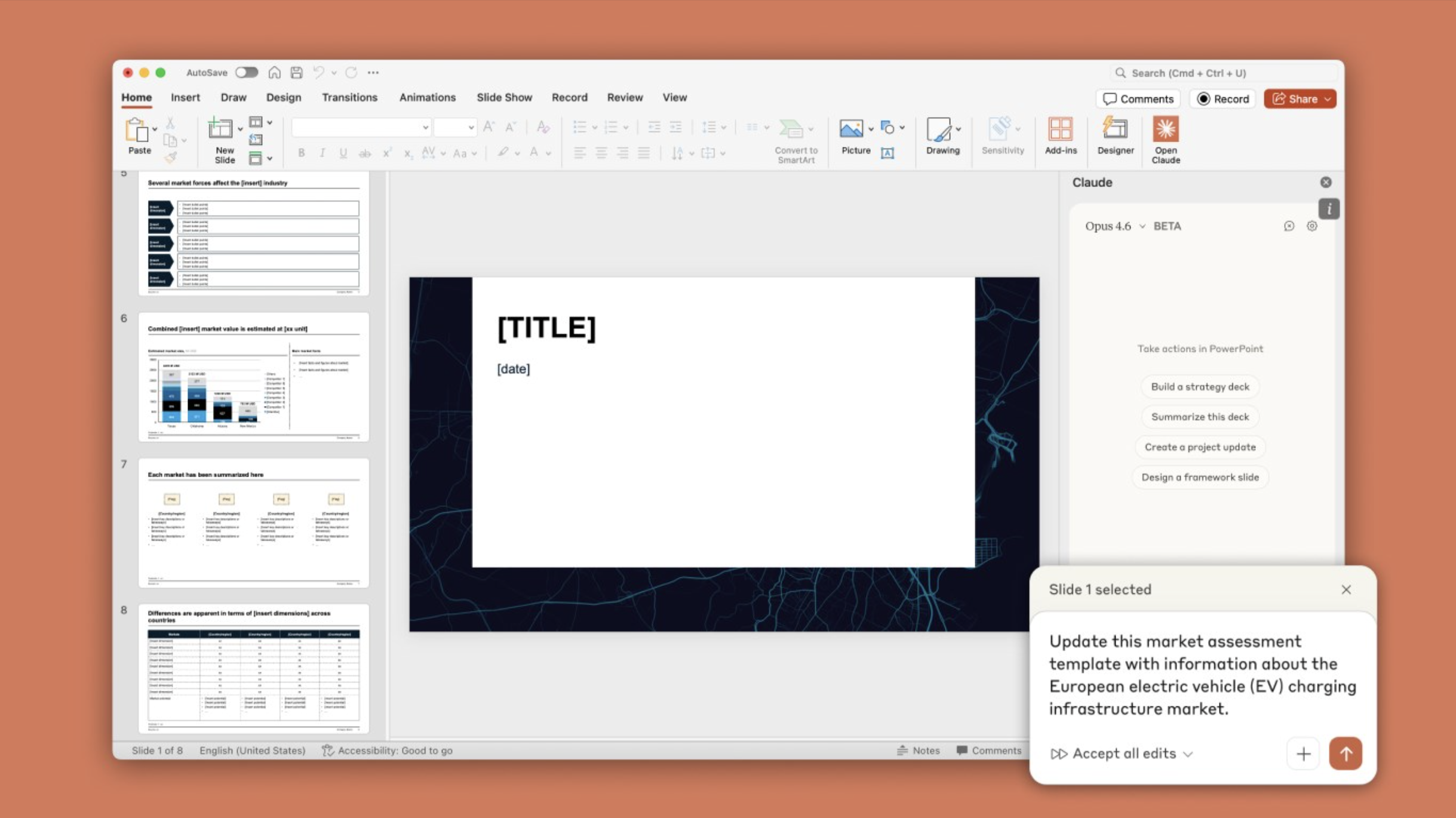
查看原始信息
OpenCharts
OpenCharts is the spatial workspace for teams that build. Most tools are just digital paper, but this is an AI native engine where your work stays in sync. Our orchestrator connects your notes to an infinite canvas, keeping every diagram and idea updated instantly. Use natural language to build complex system maps instead of wasting hours dragging boxes. Grab proven logic from the Community and hit the ground running. It is fast, smart, and designed to turn raw data into reality. Start Building!
Hey everyone, I'm Ari. I honestly built OpenCharts because I was losing my mind trying to keep my notes and my diagrams in the same universe. I'd have a great idea in a doc then spend an hour fighting with boxes in another app just to visualize it. It felt broken. So we built this spatial workspace where an AI orchestrator actually handles the sync for you. Your notes, your whiteboard, it all just works together. Plus the community part is sick because you can just grab logic people already built. Excited to see what you guys think!
6
回复