Product Hunt 每日热榜 2026-03-04

PH热榜 | 2026-03-04

#1
Anything API
Any website. We deliver the API.
413
一句话介绍:一款通过AI智能体将任意网站操作转化为可调用API的服务,为开发者和团队解决了在缺乏公开API的网站上自动化获取数据或执行工作流的痛点。
API Developer Tools Artificial Intelligence
无代码开发 浏览器自动化 API生成 网页抓取 工作流自动化 智能体 Serverless 数据提取 RPA AI驱动
用户评论摘要:用户主要关注其与手动编写脚本的区别、执行层的确定性、如何处理动态DOM变更与认证(如登录、2FA),以及应对网站UI频繁更改的稳定性。团队回复强调了托管服务、基础设施处理及未来自愈功能的规划。
AI 锐评

Anything API的本质,是将非结构化的网站交互“编译”成结构化的API服务,其核心价值在于试图将脆弱的、需要持续维护的浏览器自动化脚本,转化为一个相对稳定的“契约层”。产品巧妙地站在了两个趋势的交汇点:一是企业对各类SaaS和数据源集成需求的爆炸式增长与官方API供给不足的矛盾;二是AI智能体从“演示阶段”走向“生产部署”的迫切需求。

然而,其面临的挑战与机遇同样尖锐。从技术层面看,其宣称的“直接调用站点”的理想状态(绕过UI)在许多复杂场景下难以实现,最终仍需依赖Playwright等浏览器自动化工具,这意味着它并未完全摆脱传统爬虫面临的DOM变更、反爬机制和认证流程的困扰。评论中关于“确定性执行”和“自愈能力”的提问,恰恰击中了其作为生产级服务的命门——可靠性。团队“混合模式”和“未来开发自愈”的回复,也印证了当前方案仍处于过渡阶段。

其真正的护城河可能不在于AI生成工作流本身(这正被Claude等代码生成模型快速追赶),而在于其背后Notte平台提供的托管基础设施:包括浏览器实例管理、会话保持、代理轮换、验证码处理等“脏活累活”。这正好回答了“与用Claude写代码有何不同”的质疑——它卖的是规模化、可调度、免运维的生产环境。因此,产品的定位更应是一个“浏览器自动化即服务”的增强版,而非纯粹的魔法API生成器。它的成功与否,将取决于其能否在易用性与鲁棒性之间找到最佳平衡,并将运营复杂性成本降至足够低,从而让开发者认为购买其服务比自行搭建和维护一套分布式浏览器集群更为经济。

查看原始信息
Anything API
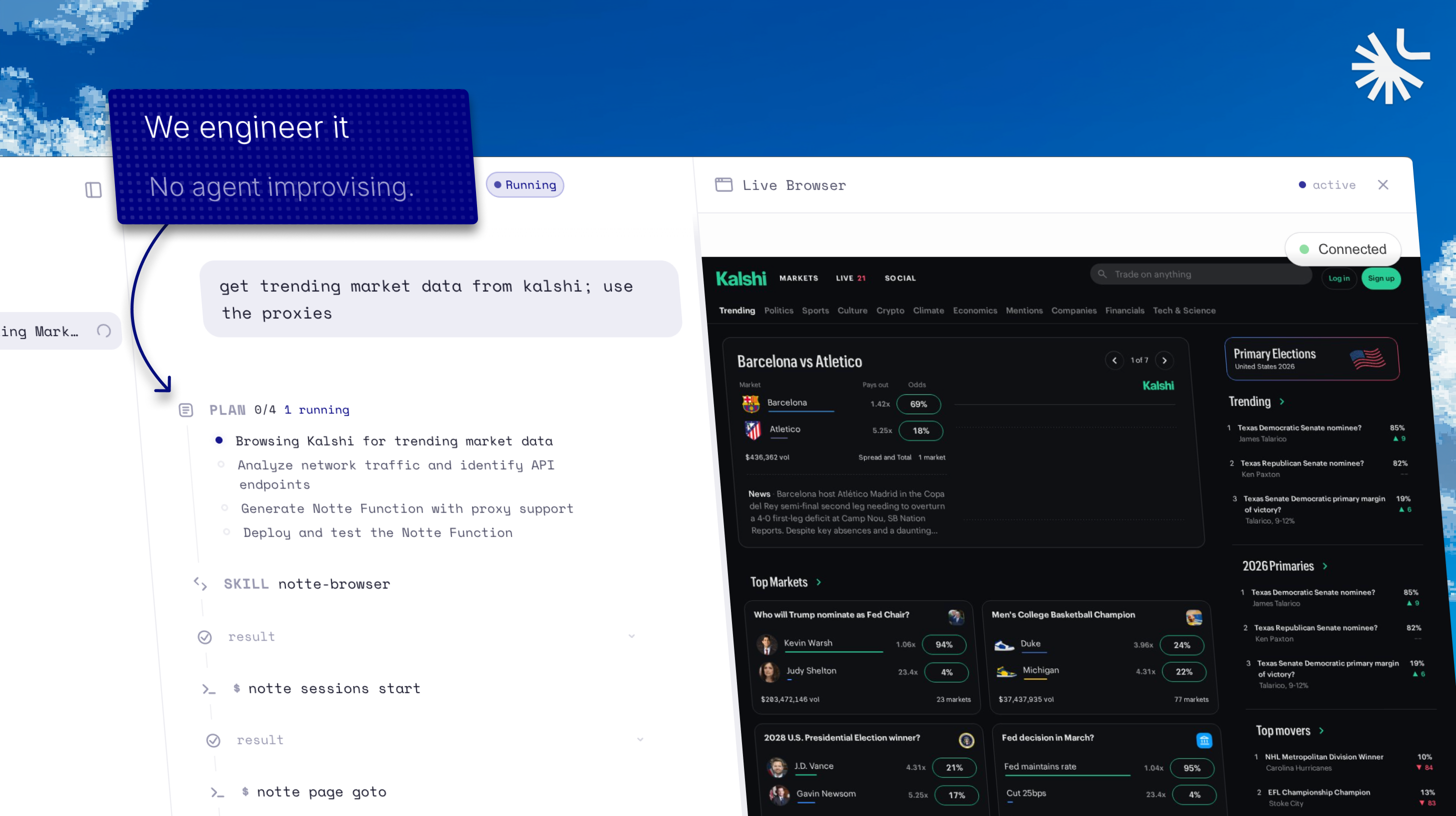
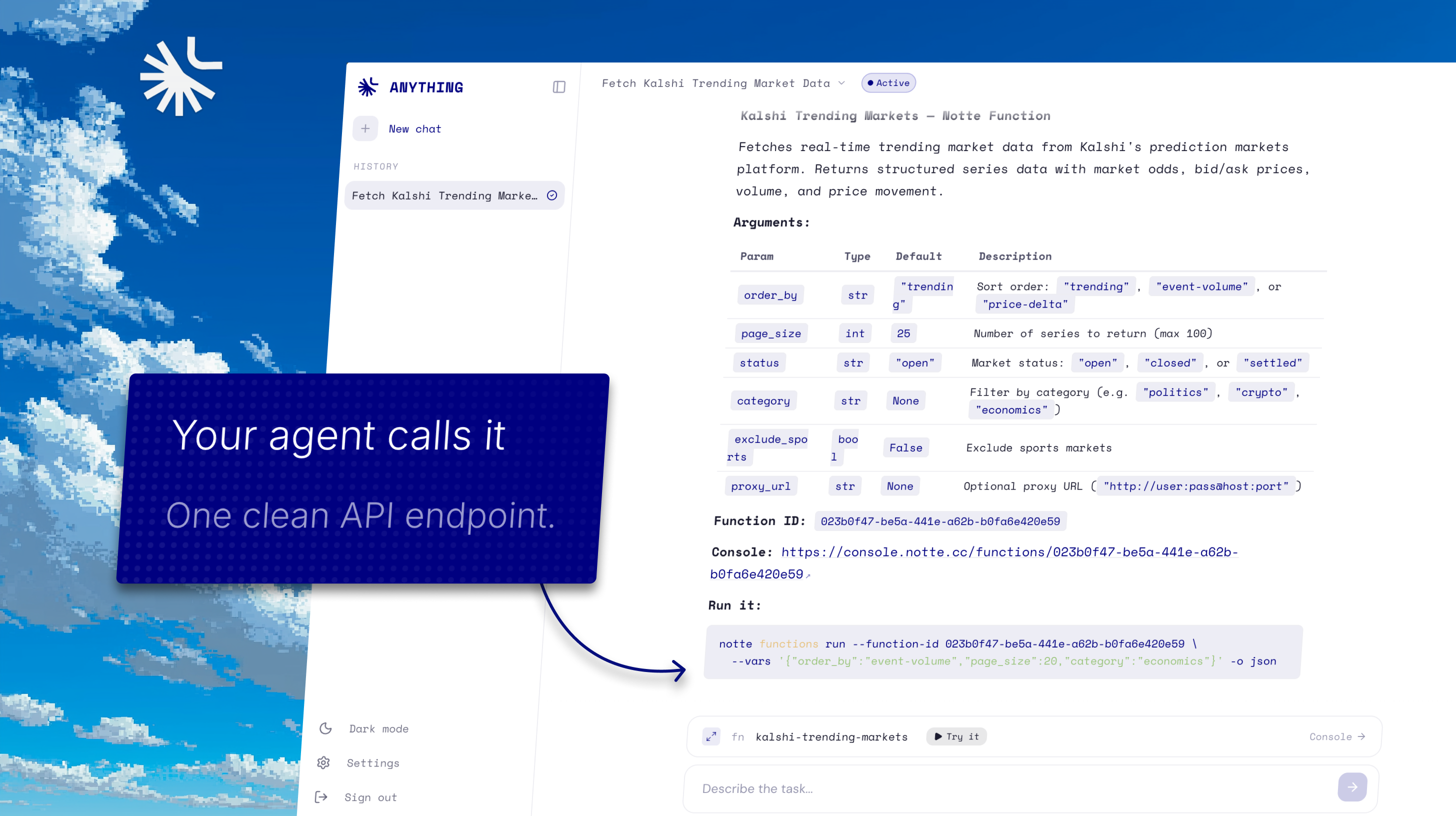
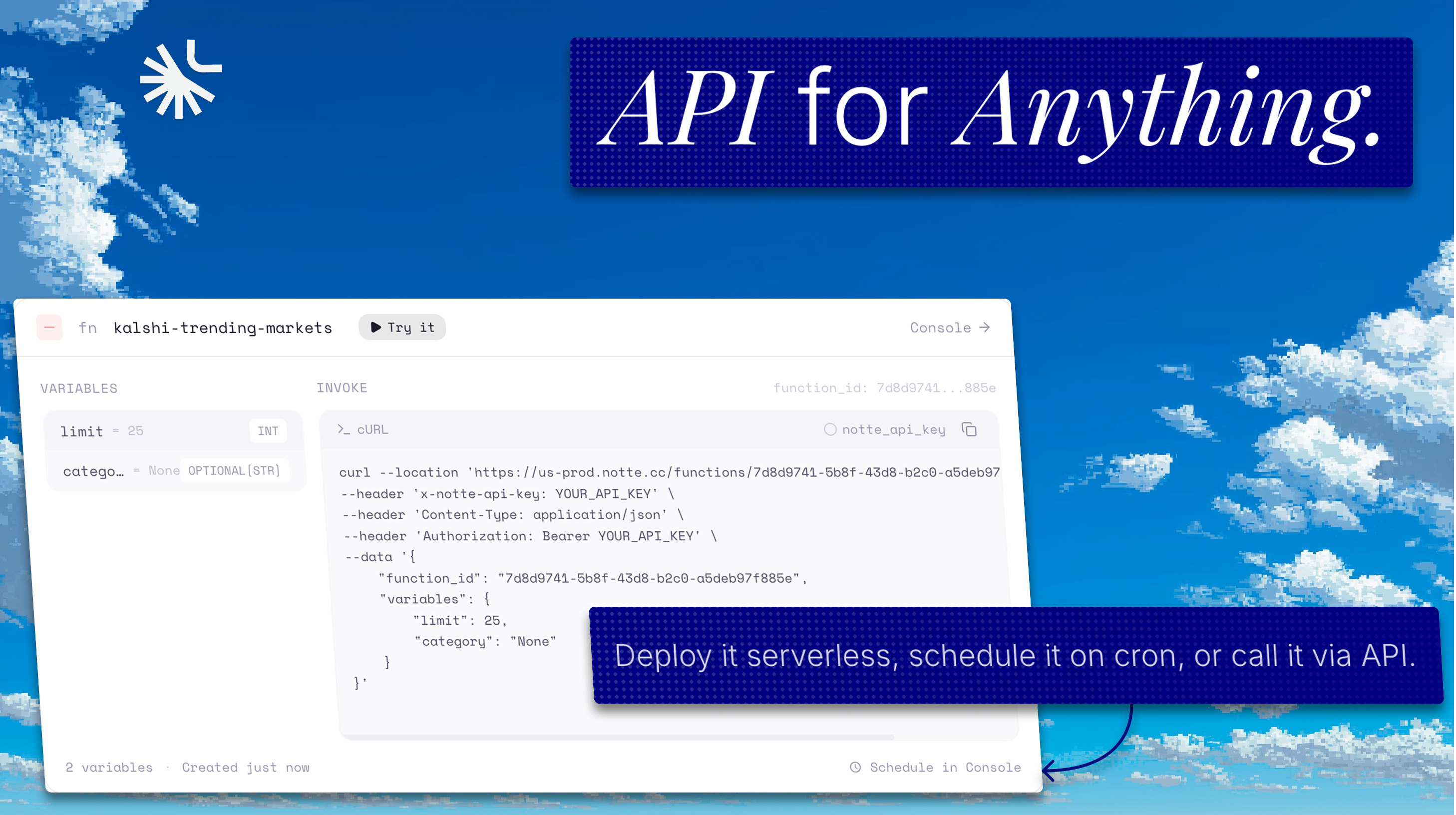
Many websites don't have public APIs. Anything API fills that gap. Turn any browser work into a production-ready API. Describe the task, and our agents build a custom function that calls the site directly. Ship a custom API endpoint you can deploy serverless, schedule on Cron, or call via API. Tell Notte what you need. We ship the function endpoint.

Hey PH 👋

We're the team behind Notte, a browser automation platform, and today we're launching Anything API!

Most websites don't have public APIs. If you want the data or the workflow, someone has to build and maintain the automation. Anything API handles that for you.

Describe what you need done in the browser, our agent uses the Notte CLI to execute it, build the workflow, and ship a callable function endpoint. Deploy it serverless, schedule on Cron, or call it via API. No setup or infra to manage.

Who it's for:

🔁 Teams running the same browser workflows repeatedly

📦 Developers who need data from sites with no public API

⚙️ Anyone automating anything, from document processing to form submissions to data extraction

Try it free at: anything.notte.cc

We'd love to know - what site or workflow would you point this at?

10
回复

@ogandreakiro Does this scrape the website to get the data and expose as an API ? I did not understand "Developers who need data from sites with no public API"

1
回复
What the difference between this and just asking claud code to create an api for this this site?
4
回复

@chriswyatt2 good question - to generate the API you'd need to run the automation in a browser session first, handle the browser infra, captchas, proxies, auth etc. Anything API uses the Notte CLI to generate the browser session and ships it as an endpoint (that you can deploy serverless, schedule on cron, call via API)

7
回复

@chriswyatt2 Yeah as Sam said, main diff is the hosted service. You can run your claude code generate API so many times locally but if you need to run it at scale or when you sleep you better have a managed infra that also handles stealth with your volume

1
回复

This is pretty cool. Btw when the agent generates the API endpoint, how deterministic is the execution layer? Is the AI only used during the build phase and the runtime stays fully scripted?

3
回复

@lak7 The AI tries its best to create a fully scripted runtime, but can also create hybrids where an AI agent itself can be used during the execution of the function if needed

1
回复

Super cool product name, nails it right away!

Good luck for the launch 🙌

3
回复

@builditn0w thanks for the support Lars 🫶

0
回复

@builditn0w Thanks

0
回复

🚀

3
回复

@leonotte 🚀x2

0
回复
0
回复
0
回复
How do you handle the hard parts of “real-world” browser automation—logins, session persistence, and MFA/OTP—especially for scheduled runs where no human is around, and what do you recommend when a flow requires step-up authentication?
2
回复

@curiouskitty yes we do. We leverage the full notte ecosystem (browser profiles, vaults, etc.) to build the automation

1
回复

@curiouskitty for auth flows that require 2FA, we recommend using browser profiles and either login manually to persist the cookies, or use an Agent to login on your behalf. If you put your MFA secret inside our vaults, the agent can login super easily

1
回复

Great launch—this is exactly the gap most GTM teams hit when they need reliable data from tools that don’t expose APIs. Quick follow-up from my earlier thread: if I need session persistence + proxy rotation for long-running enrichment jobs, can Anything API pin identity state per endpoint (so retries don’t break auth flows)?

2
回复

@danielsinewe not 100% sure i got the question; but anything is compatible with all the Notte stack so you can run w/ proxies enabled, run with session profiles, etc.

0
回复

Great great idea aaaand mint UI as always! 🏆

2
回复

@pederzh thanks Luigi 🤜🤛

0
回复

@pederzh Grazie amigos <3

0
回复

Kind of amazing that you can generate an API like this. Does it suffer from the same problems as web scrapers if the DOM should change dynamically? Since it's an API I'm supposing that actually it could protect as a layer of abstraction above the changes on the page and then you just get it to self heal on a recurring basis? Perhaps you could even charge for that self healing cadence.

2
回复

@kevin_mcdonagh1 Yes exactly, Anything tries to do as much as possible at the API level (faster, more stable, etc.) when it's not possible to do so the Anything agent is also able to generate script that themselves use playwright and browser agents; so you end up with hybrid browser functions. If your usecase only leverage APIs than its much less sensitive to UI changes, if it's hybrid it will be a bit more. We're working on self-healing as a next step

1
回复

Love the update and congrats on the launch, @samatnotte!

2
回复

@samatnotte  @neilverma Thanks for the support Neil!

0
回复

@neilverma thank you Neil! glad you like it:)

0
回复

Huge congrats on the launch, Andrea and the Notte team!

As someone building in the fintech space, the 'API gap' for regulated platforms is one of the biggest bottlenecks to true autonomy. I love the approach of bridging agentic exploration with deterministic execution to create APIs where they don't exist.

2
回复

@wavecrasher24 Thanks Kane! Much appreciated :)

0
回复

@wavecrasher24 thanks Kane 🙂

0
回复

Great product guys! Congrats on the launch

2
回复

@ay_ush thanks Ayush:)

0
回复

@ay_ush Gracias <3

0
回复

This solves a real pain — so many useful sites still have no API. Turning browser workflows into callable endpoints could save teams a lot of brittle scraping work. Curious how it handles sites that change their UI often.

2
回复

@allinonetools_net once the endpoint is built, subsequent runs call the site directly rather than re-navigating the browser UI, so UI changes don’t affect it after the initial build

1
回复

@allinonetools_net Handling function rebuilds on sites updates will be our next move ;)

0
回复

That sounds fantastic! I'll take a look at it.

2
回复

@edward_ziadeh thanks Edward! let us know how you find it

0
回复

@edward_ziadeh What's the first thing you'll ship?

0
回复

Great work! Excited for the future!

2
回复

@preetmishra same - loads of possibilites open up! thanks for the support Preet:)

0
回复

@preetmishra thanks! 🙌🏻

0
回复

Hey PH 👋, here are a few examples of use cases you could try with anything.notte.cc 🚀

→ Pulling competitor pricing daily from sites with no public API
→ Scraping real estate listings with filters no public API supports
→ Monitoring regulatory filings (SEC, FDA, etc.) and alerting on new submissions

→ Extracting structured data from portals locked behind logins

If you've got any idea, drop it below, we might just build the endpoint live 🔥

2
回复
0
回复

@giordano_lucas I asked my mum and she said pulling grant application statuses from government portals would be very useful

0
回复

This is so cool!

2
回复

@mklikushin glad you think so too:)

1
回复

@mklikushin Gracias 🙏🏻

1
回复

I didn’t even realise this was possible but I can confirm after heavy usage, it very much is.

Really cool, highly recommend everyone gives it a try:)

2
回复
1
回复
Saves a lot of time to release your own
2
回复

@bartvandekooij How do you handle this at happycapy? would love to chat

0
回复

Hey launch team, congrats on the launch!

This is a great idea for creating quick production grade API's. I can't wait to try it out, the interface looks very clean and easy to use as well. I particularly like the "what it does" section but would it perhaps be a bit more helpful to have a hovering "alt-text" when a user hovers over a function / curl command for more ease of use to explain what each element does, this would also help users be more confident in reducing bloatware.

Hunter @garrytan coming in clutch with these new product launches! XD

2
回复

@garrytan  @minhajulll let us know what you think once you've tried it! also the "alt-text" thought is a good idea thanks 😇

1
回复

@garrytan  @minhajulll Thanks for the suggestion Mj!

1
回复
congrats on the launch! That's very interesting, what happens to the API if the website changes? I'm thinking of scraping use cases, does your ToU allow them?
1
回复

@nrique If Anything agent managed to create a function that is only API based, most likely UI changes will not affect the stability of the function. If the agent had to use a hybrid of API calls and browser agents; then it might be an issue. We're working on managed self-healing so this will not be a problem anymore. We apply a fair use policy to avoid forbidden / abuse usage

1
回复
@ogandreakiro Sounds grea!t I'll give it a try
0
回复

What about bypassing bot blocking? For example, if I need to get content from an e-commerce site and they don’t have an API. Such sites usually ban bots. Do you bypass that?

1
回复

@mykyta_semenov_ Anything is compatible with all stealth options you get in Notte (Residential proxies, captcha solving, etc.) but we enforce fair use policy so Anything will not let you bypass websites terms of use

2
回复

This is solving a real pain point. Building API integrations from scratch for every data source is exhausting — I've been through it connecting YouTube, Stripe, and multiple AI providers for my SaaS. How are you handling rate limits and auth differences across platforms? That's always been the hardest part for us.

1
回复

@aitubespark Rate limits really depends on the site you automate, ideally you wouldn't have any. Auth can be managed with all the Notte services we have (session profiles, agent vaults, etc.)

0
回复

Looks awesome, great work @ogandreakiro and team!

1
回复

@ogandreakiro  @gustavf thanks Gustav!

0
回复

@gustavf Thanks Gustav!

0
回复

This sounds like the real "build for agents" tool. Will check it out!

1
回复

@abhinavramesh cheers Abhinav, let us know what you think:)

1
回复

@abhinavramesh Build for the agentic internet vibe

1
回复

I just used this for my platform One Pager and I gotta say wow!

This is much more than a standard chatbot.

One Pager rapidly creates websites for outreach, but does not have a public API at the moment. I entered my website, then anything API created an account, logged in starting understanding my platform and created an API to build website using my data structure.

This is something I haven't seen before and really impressed me.

Curios if there is a way to output the endpoints created into a document for external use?

1
回复

Also how to you ensure that people aren't building APIs for sites that aren't theirs?

1
回复

@jake_friedberg hey Jake! thanks for the nice feedback. Yes the endpoint that gets created is actually hosted as a Notte function on Notte (You get a pointer to the Notte console from Anything). You can get the curl command to invoke the function from anywhere directly from the Notte console and also get observability and co from there. hope this helps?

0
回复

@jake_friedberg do you plan to add a visual workflow builder for non-developers? The tech is clearly powerfu

0
回复

@samatnotte @ogandreakiro How do you ensure the API delivers reliable and structured data, especially from messy or complex websites?

1
回复

@samatnotte  @kimberly_ross The agent tests itself and iterates until he gets to the deliverable you've asked. He can stop and ask for followup questions if he needs some help from you. Once he nailed it, he deploys the function and you can start using it

0
回复

Intriguing. For teams running repetitive workflows, how customizable are the automations in terms of logic, triggers, and specific conditions?

1
回复

@shreya_chaurasia19 the output automation function is basically an API endpoint. You can fit this anywhere, call it with cURL, schedule it, have a service invoke it, etc. It's super flexible

0
回复

Lets say this tool is applied to a site like Airbnb , how can it avoid detection or being flagged?

1
回复

@daniel_xav_de_oliveira This just works out of the box. Try prompt "create an api to get the cost of the first 5 airbnbs available in london for the dates i give in input to the API ; https://www.airbnb.com/"

0
回复

Very cool. A few of the sources we pull from don’t expose APIs, so we’ve had to rely on makeshift solutions. Can see this being super useful!

0
回复
#2
Kodo
Create fully editable designs by chatting with AI
275
一句话介绍:Kodo是一款通过对话式AI生成完全可编辑、分层结构设计稿的工具,解决了用户在营销、演示等场景中需要快速产出且能精细调整的专业设计痛点。
Design Tools Artificial Intelligence Tech
AI设计工具 可编辑设计 分层结构 海报生成 幻灯片制作 社交媒体图片 品牌一致性 设计工作流 生产力工具
用户评论摘要:用户高度认可“完全可编辑图层”的核心价值,认为其解决了AI设计输出为“扁平不可编辑图像”的行业痛点。主要反馈集中在:询问技术实现(如布局保持、品牌工具包应用)、建议UI改进(如面板位置)、关心与Figma等工具的集成,以及如何与资金雄厚的大公司竞争。
AI 锐评

Kodo看似切入了一个精巧的缝隙市场——在“一键生成”的AI绘图工具与“手动精修”的专业设计软件之间,架起了一座可操作的桥梁。其宣称的“结构化、分层设计”是真正的杀手锏,这并非简单的技术优化,而是对设计工作流本质的深刻理解:设计是一个迭代与调整的过程,而非一次性的输出。

当前多数AI设计工具止步于提供视觉参考图,将最耗时的“矢量化”、“分层”、“参数化”工作重新抛回给用户。Kodo试图将AI定位为“初级执行者”,生成可直接进入生产环节的“半成品”,其价值在于显著降低了从创意到成品的最后一公里阻力。用户评论中“bye bye Canva”的欢呼虽显夸张,却精准指向了其替代传统模板工具、提供更高自由度的潜力。

然而,其面临的挑战同样尖锐。首先,技术天花板显著:“保持布局结构”与“理解画布”是AI在结构化生成中的经典难题,任何迭代都可能引发连锁的布局崩塌。其次,商业模式上,它夹在巨头之间:向上,可能面临Figma、Adobe等集成类似功能后的降维打击;向下,需与Canva等工具的易用性和模板海量性竞争。创始人提及的与Nano Banana的差异,恰恰说明了这个赛道的拥挤与模糊。

真正的考验在于,Kodo能否将其“可编辑性”优势转化为难以复制的技术壁垒或生态壁垒。用户对品牌工具包和Figma导出的关切,揭示了其作为生产环节一环的必然命运——它必须开放,并融入更庞大的设计生态系统,而非成为一个孤岛。它的成功,不取决于生成的设计有多惊艳,而取决于它让专业设计的调整变得多么轻松和可预测。这条路正确,但注定崎岖。

查看原始信息
Kodo
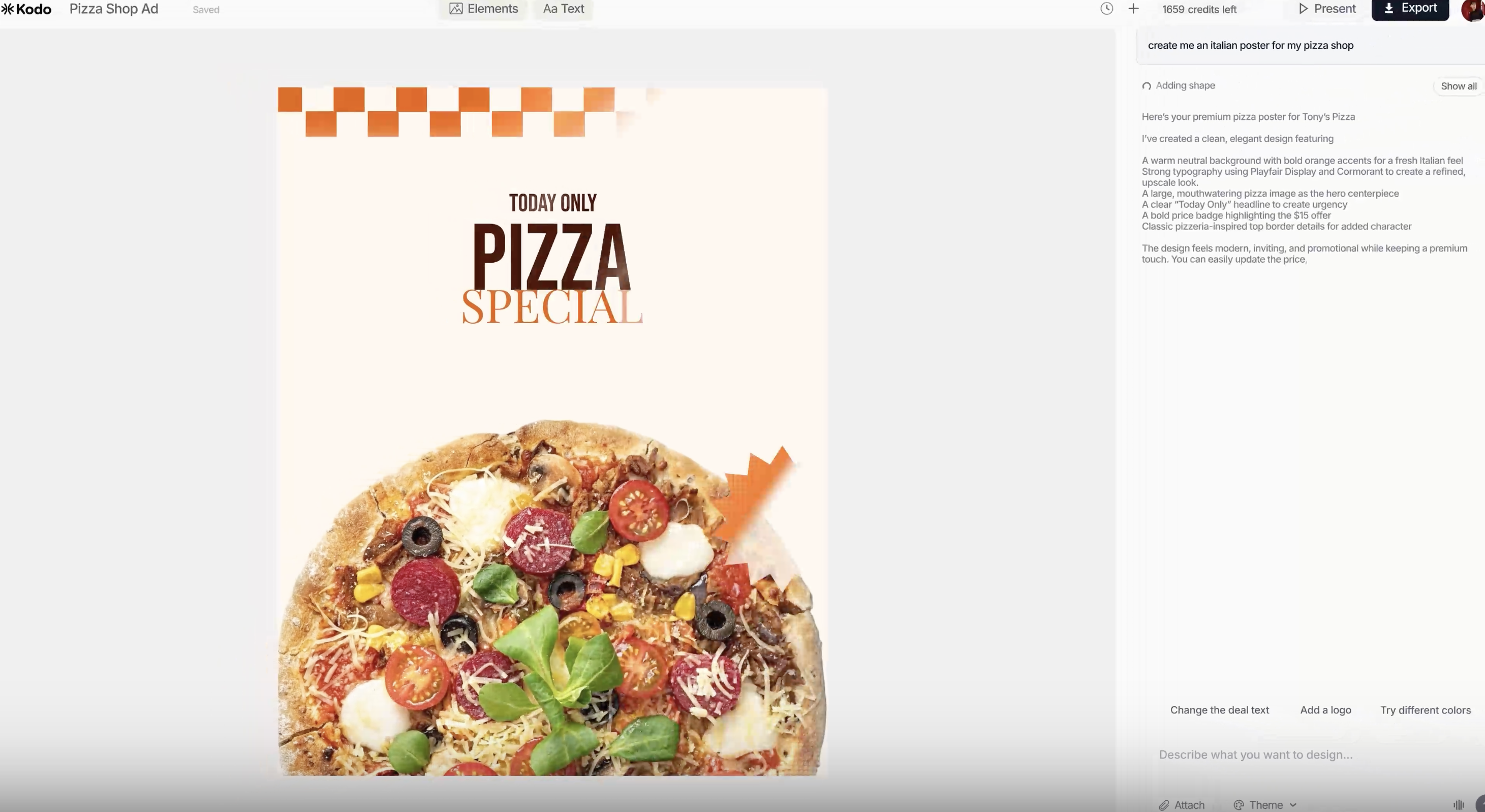
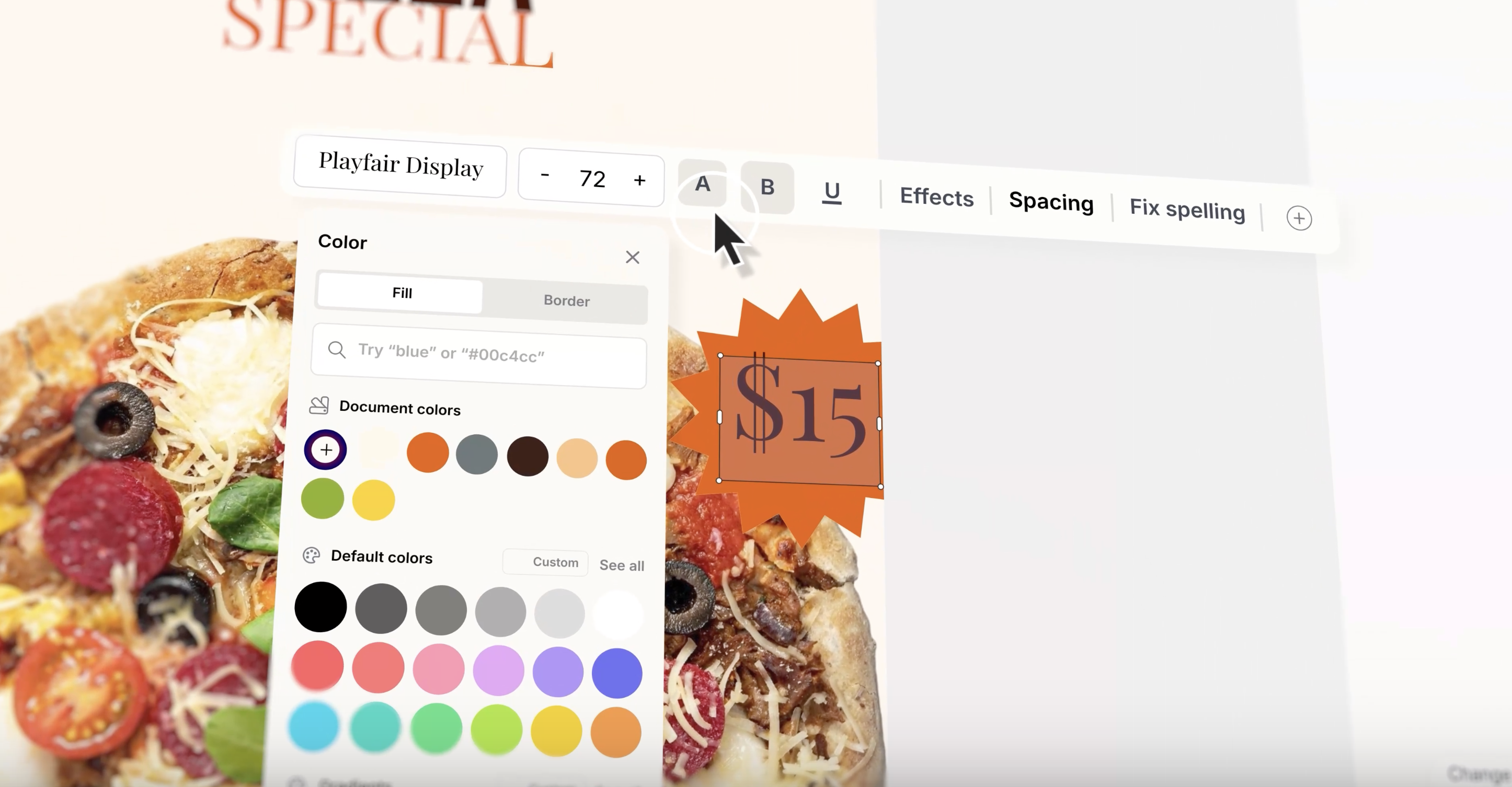
Kodo is an AI design tool that generates fully editable posters, slides, menus and social graphics from a simple prompt. Unlike other AI design tools that output flat images, Kodo creates structured, layered designs you can edit instantly - text, colors, layouts, spacing, everything. You can generate, refine, and export in minutes - no templates, no locked layouts.
Hey Product Hunt 👋 I’m Michael, the founder of Kodo. I built Kodo because I was frustrated with AI design tools that generate beautiful images… but you can’t actually use them. They’re flat, locked, and impossible to edit properly. As someone building projects constantly, I needed something that could generate real posters and slides I could tweak, refine, and export - not just admire. So we built Kodo differently. Instead of outputting images, Kodo generates structured, layered designs. That means everything is editable - text, spacing, colors, layout. You can even draw a region on the canvas and tell the AI exactly where to make changes. The first versions were rough. Designs looked generic. Layouts broke. The AI didn’t “understand” the canvas. Over the past few months we rebuilt the engine, improved parsing, optimized prompts, and focused heavily on making outputs production-ready. This launch is the result of me locking in. Would love your feedback - what works, what doesn’t, and what you’d want next 🙌
10
回复

@mg272011 Keeping edits local is the hardest part, it's where design tools get messy. Kodo's structured, layered designs plus draw-a-region changes feels like the right direction. Do you store anchors or constraints, or just coords? A per-layer diff and undo makes spacing tweaks feel safe.

0
回复

@mg272011 Hey ! Aamazing idea!! How do you keep the AI from breaking layout structure when users start iterating and editing specific regions of the canvas?

0
回复

The 'fully editable layers' angle is what sets this apart, every other AI design tool gives you a pretty image you can't touch. Kodo actually respects the designer's workflow.

As a founder prepping launch assets for my own product (Fillix - a job application Chrome extension), I've been manually tweaking Canva exports forever. This could genuinely replace that. Adding to my stack. Congrats on the launch!

2
回复
@alamenigma glad to hear it’ll help you!
1
回复
A lot of teams care less about one-off generations and more about brand consistency. How does Kodo use a brand kit (fonts/colors/logos) during generation and iteration—and what’s your approach when the prompt conflicts with brand rules?
1
回复

@curiouskitty yeah for sure! so we have a brand kit option, and you can just toggle it on and itll auto use it!

0
回复

@curiouskitty our approach is quite simple actually. we inject into the prompt when brand kit is selected, and we have in the main system prompt that the brand kit always overrides regular prompts.

0
回复

Hey @mg272011 , I tried Kodo and I love the fact that you can generate layers. Great work! As a suggestion: I think the elements design would be better on the left, like Canva, so it's less out of the way of the design itself

1
回复
@lucagalvani interesting. Will look into it and collect more feedback about that!
0
回复

Hey Michael, congrats on your launch! How do you plan to compete with big players that have sort of unlimited budgets and teams and offer similar tools, for example Nano Banana?
P.S- I find the editing bar on top of the image convenient and also the UI looks familiar to what we are used to use on a daily basis which is a good thing

1
回复
@viktorgems hey! Thanks for your support. I think for nano banana, they are focused on image editing using an image model. So our core method is different. However I think I’ll need to keep pushing, keep marketing and get feedback to be better than nano banana!
1
回复

This is really cool! Btw what's happening under the hood when it generates the design structure? Is it creating something closer to Figma-style layers/components, or more like editable SVG groups?

0
回复

Just tried Kodo. bye bye Canva

0
回复

Congrats on the launch, Michael! The biggest pain point with current AI tools is definitely that 'wall' between generation and editing. Being able to manipulate layers and real text is a total game-changer for those of us who need speed without losing control. Do you have any plans to add direct export to Figma

0
回复

Generating designs with AI is great, but having them come out fully editable instead of flat images is a huge win. What kinds of designs does Kodo handle best right now things like social posts, slides, or more complex layouts?

0
回复

Is it possible to create a design for a website and import it into Figma?

0
回复

Congrats on your launch Micheal. I just tried out the tool.

0
回复

Let’s go!

0
回复
0
回复

Brilliant! I've been looking for a UI that I can use to just edit directly rather than type it out on a chat interface

0
回复
@abhinavramesh lfg!
1
回复

Thanks for building a platform that can actually generate a structured design (plus, it's editable). Congrats on the launch@mg272011!

0
回复
@neilverma thanks!! Glad it’s helpful!
0
回复
Congrats.. amazing product .. all the best 🔥🔥
0
回复
@dessignnet thank you!!
0
回复

Cheers on shipping a cool product. Best of luck 👍🏻

0
回复
@naga_pramod thanks for your support!
0
回复

To have built a platform like Kodo is a huge achievement in and of itself!

To have done it as 14 is beyond me.

You will go on to do great things Michael, well done!!

0
回复
@robhallam thank you for your support!!
0
回复

lets go michael!

0
回复
@maxleedev thank you!!!
0
回复

When someone changes text length or moves elements around how does Kodo keep the spacing and alignment from breaking?

0
回复

@daniel_hughes4 we automatically save all the changes immediately, so it doesnt break. its saved as cordinates so very easy to do.

0
回复
#3
Enia Code
Proactive AI that refines code & learns your standards
259
一句话介绍:Enia Code是一款主动式AI编码代理,在开发者编写代码时实时检测错误、性能问题、架构不一致和重构机会,旨在保护开发者的“心流”,避免传统工具事后响应的痛点。
Software Engineering Developer Tools Vibe coding
AI编程助手 主动式代理 代码审查 缺陷检测 架构分析 IDE插件 开发效率工具 代码重构 软件开发
用户评论摘要:用户肯定其“主动”理念,认为是超越提示型工具的进化。主要问题与建议集中在:希望看到实际检测案例;关心其决策机制、隐私与成本;询问与Claude Code等产品的差异;建议支持多仓库一致性维护;反馈定价额度可能不足。
AI 锐评

Enia Code的核心理念——“从被动响应到主动预见”——确实切中了当前AI编程助手的演进关键。在Copilot等工具已将代码补全和问答常态化的今天,真正的痛点已从“如何更快地获得答案”转向“如何避免问题发生”。Enia试图扮演一个沉默的资深搭档,在问题萌芽时轻拍你肩膀,这比一个需要不断对话的助手更符合深度编程的心流状态。

然而,其宣称的价值面临几重严峻考验。首先,“主动性”与“侵入性”仅一线之隔。开发者对工作流的打断极度敏感,如何精准定义“值得打断”的问题阈值,是产品体验的生命线。评论中关于“信任、隐私和意外编辑”的担忧,正戳中此要害。其次,其技术壁垒存疑。将静态分析、linting与AI模式识别结合并非独创,真正的难点在于对“架构不一致”和“重构机会”这种高维、模糊概念的精准判断。若误报率高,其“主动”优势将立刻转化为干扰源。

从评论看,团队将产品定位为“插件”是明智的,降低了试用门槛。但定价策略引发的疑虑,暴露了主动模式可能带来不可预测的API调用成本,这与用户寻求的“可预测性”背道而驰。本质上,Enia Code不是在做一个功能,而是在试图建立一套新的“人机协作协议”。它的成功不取决于检测算法的精度本身,而取决于能否让开发者形成“它懂我”的信任感。这条路前景广阔,但步步惊心,需要极其克制的产品设计和长期的行为数据喂养,目前仍是一个勇敢但充满未知数的实验。

查看原始信息
Enia Code
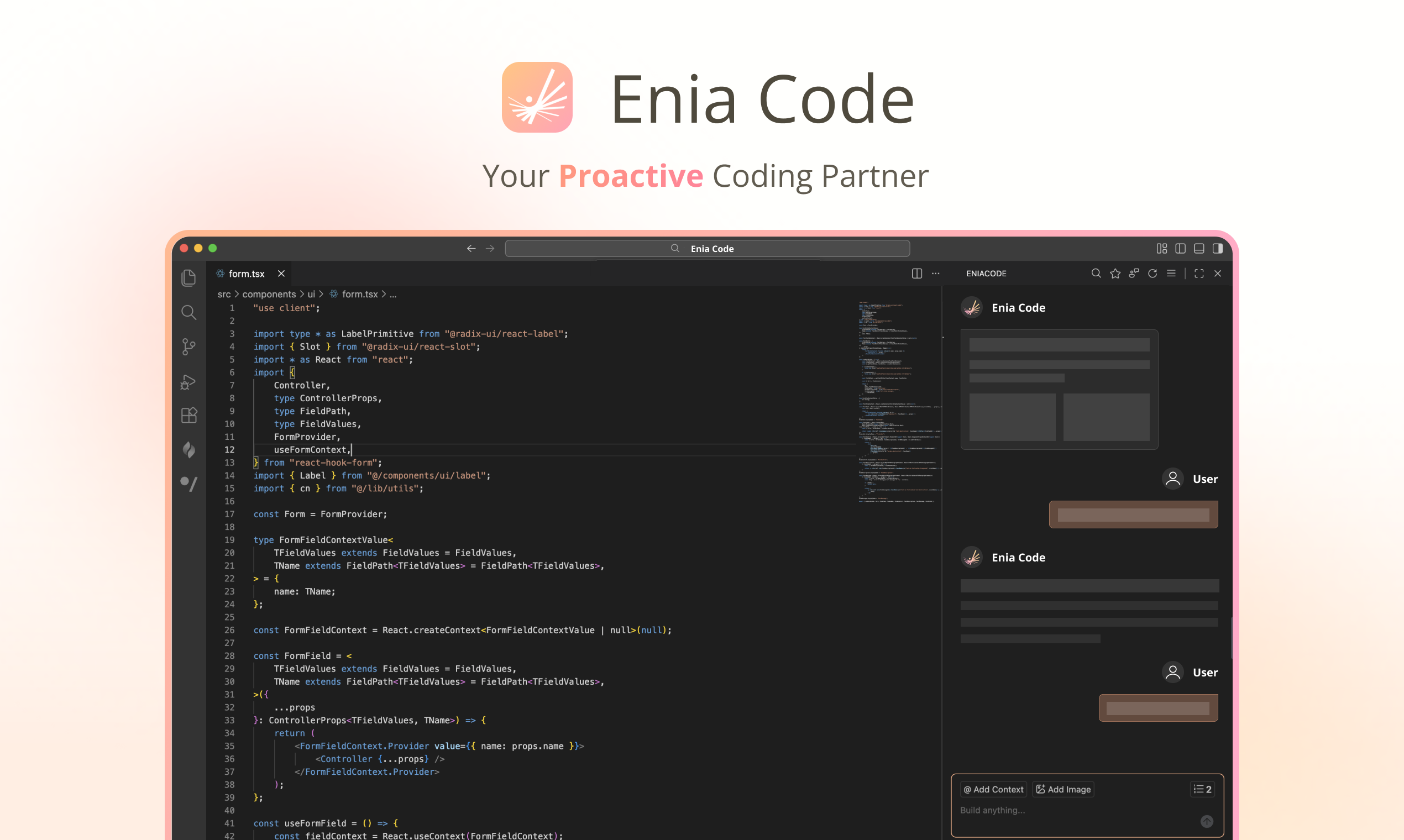
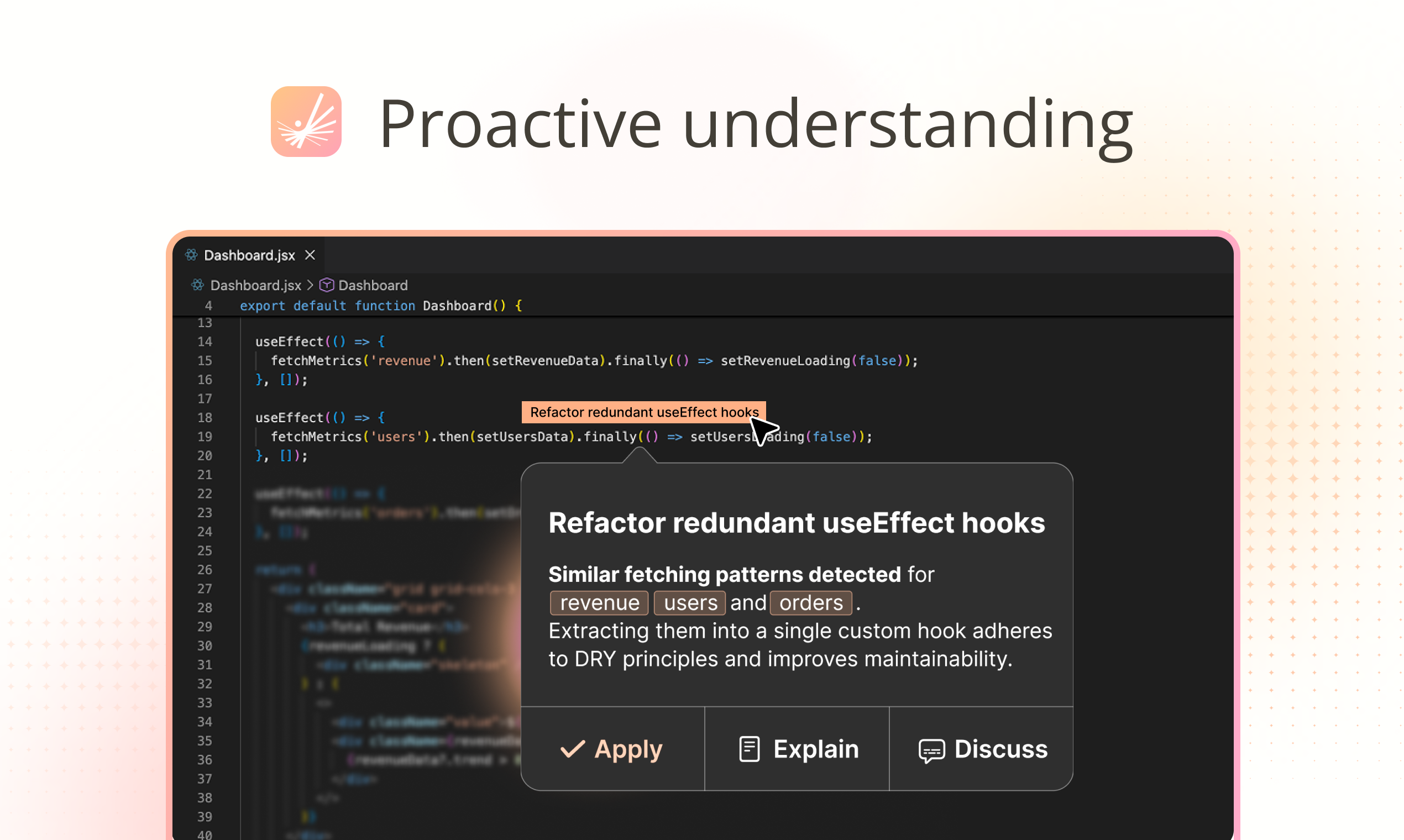
Most AI coding tools wait for you to ask. Enia Code doesn’t. Enia is a proactive AI coding agent that detects bugs, performance issues, architectural inconsistencies, and refactoring opportunities — as you write code. No prompting. No context re-explaining. No workflow disruption.

I’m a developer and CEO, and this product started from my own frustration. Over the years, I’ve used countless coding tools that only react after something breaks — after the bug appears, after performance drops, after architecture gets messy. But real development doesn’t work like that. When we code, we’re constantly thinking ahead. We anticipate problems. We refactor before things collapse. I kept asking: why can’t our tools think that way too? That question led us to build Enia Code.

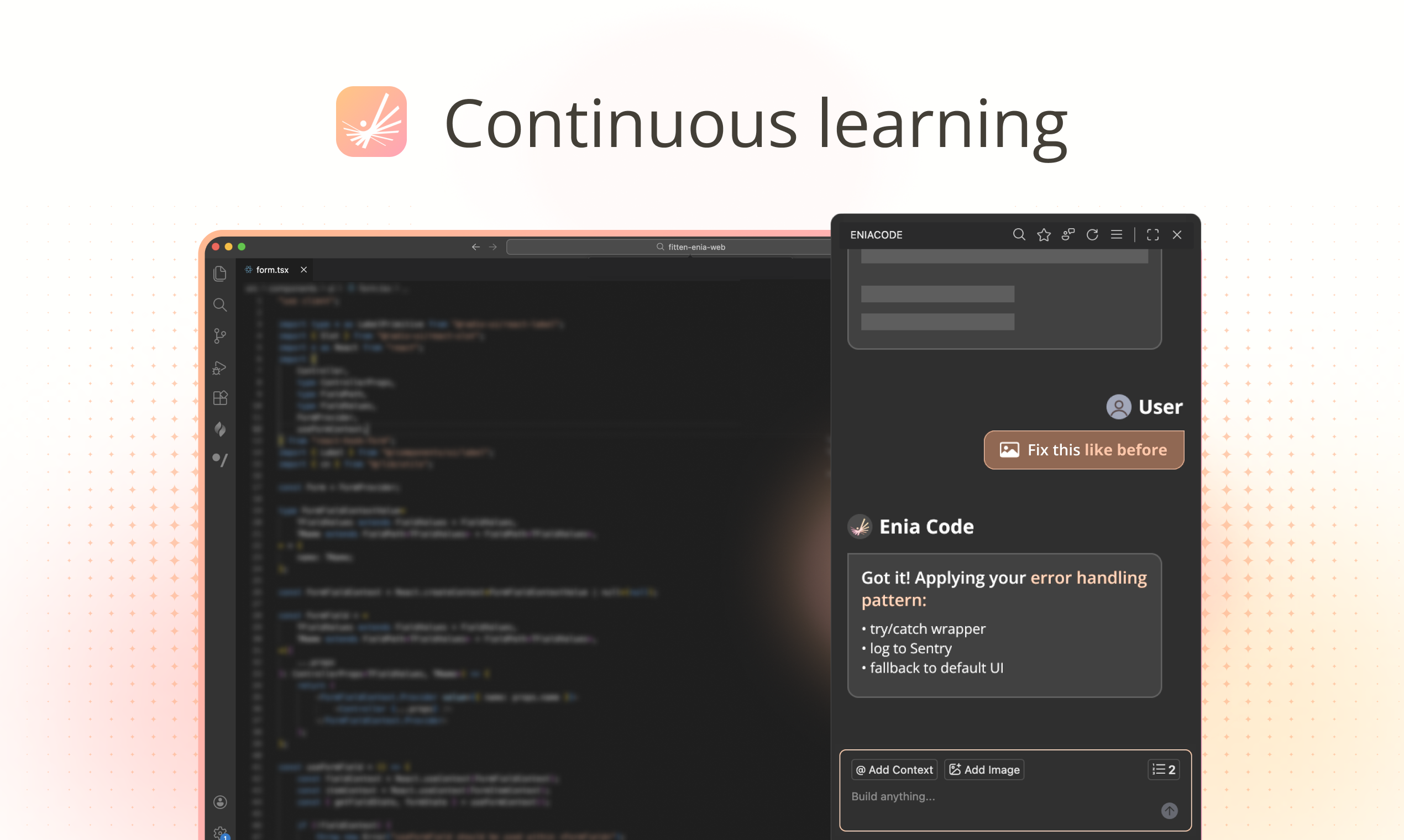
There are already many AI coding tools — copilots, editors, chat-based assistants. Most of them wait for prompts. Enia is different. It’s proactive. It detects bugs, performance risks, architectural inconsistencies, and refactoring opportunities as you write. No constant prompting. No re-explaining context. No switching tabs. It works quietly inside your IDE, adapting to your coding habits and team standards over time. The goal isn’t to replace developers — it’s to protect their flow.

We believe coding tools are evolving from reactive copilots to proactive agents. The next step isn’t just faster autocomplete — it’s intelligent systems that anticipate, learn, and grow with your project. Software complexity is increasing, solo developers are building bigger systems than ever, and “flow” is becoming the most valuable resource. The future of AI coding isn’t about answering questions — it’s about preventing the need to ask them in the first place.

If you have any thoughts, ideas, or feedback, I’d truly love to hear them — feel free to drop a comment and let’s discuss.

Follow Enia Code on X and YouTube:

15
回复

@jessica_miller_7 Interesting direction. Proactive coding agents feel like the next step beyond prompt based coding tools. Curious how it decides what to fix or suggest in real time.

6
回复

@jessica_miller_7 proactive is what I need. but what model can i use here? can i use skills

1
回复

@jessica_miller_7 Hi

I wrote a post about Enia Code because I really liked what you’re building. Thought I’d share it with you — would love to hear your thoughts on it.

Keep up the great work!

Checkout at : @harihar40

0
回复

I’ve been building SaaS tools for the past few years, and one thing that always slows me down is discovering architectural problems way too late. Refactoring a working system is painful. The idea of a tool that signals these issues earlier sounds really valuable. Curious whether Enia detects these patterns based on past projects or just the current repo context.

5
回复

@charlenechen_123 That’s actually the exact frustration that pushed us to build Enia in the first place. We ran into the same thing a few times — everything looks fine while you’re building, and then a few months later you realize the architecture is fighting you...

Right now most of the signals come from the current repo context (structure, dependencies, patterns in the codebase, etc.), so it’s looking at how the system is evolving while you’re actively working in it.

We’re also exploring how to incorporate longer-term signals from project history over time, but getting the “current repo awareness” right was the first step.

Curious — what kind of architectural problems tend to show up late for you? Dependency cycles, scaling bottlenecks, or something else?

1
回复

Would love to see some examples of issues Enia caught proactively. Real-world scenarios would help illustrate the value.

2
回复

@leo_aj Thanks Leo! That’s a great suggestion — we’re actually putting together a few real-world examples and will share them soon. Appreciate the feedback.

0
回复

This reminds me a bit of static analysis tools, but with AI reasoning layered on top. Traditional linters catch syntax or style issues, but they don't really help with deeper design problems. Interested to know what types of problems Enia is best at detecting.

0
回复

Interesting concept. Most AI coding tools today are essentially prompt-response systems. You ask → it answers. A proactive model feels more like an actual collaborator. Curious how Enia decides when to surface a suggestion.

0
回复

Congrats on this launch!

0
回复

@peng_wood Thanks Wood!

0
回复

Unable to download via your website.

0
回复

@billchirico Hey Bill, Enia works as a plugin that runs inside an IDE rather than a standalone app. Make sure your VS Code installed, then download the plugin from our website and open it through VS Code to start using it.

Let me know if you’re still having trouble accessing it and I’m happy to help.

0
回复

Why should I use this over something like Claude Code or OpenClaw?

0
回复
This is an interesting direction for AI coding tools. Moving from prompt-driven assistants to something that quietly observes the codebase and surfaces improvements while you’re working feels like a natural evolution. I also like the idea of the system learning a developer’s coding patterns and team standards over time. That could make suggestions feel much more relevant than generic AI feedback. Curious whether Enia also helps maintain consistency across large multi-repo projects where different teams contribute to the same system. Congrats on the launch.
0
回复
A lot of devs hesitate to adopt agents because of trust, privacy, and cost predictability—what design choices did you make to ensure Enia doesn’t surprise users (unexpected edits, data handling, or runaway usage), and what tradeoffs did that force?
0
回复

Congratulations on launch!

The plugin approach is very smart move. Plugins are the easiest way to get started with anything

0
回复

@ks1072002 Thank you, Karan!

We had a similar thought — integrating as a plugin makes it much easier for developers to try it directly within their existing workflow hhh.

0
回复

I just checked the pricing and I got shocked because it offers so few requests. Maybe I don’t know how it works, but it seems you need to think very well about what you want to achieve and type it, because if not, you will run out fast.

0
回复
Congrats on the launch! Is it possible to switch between models inside?
0
回复
@wwwwwzynn Hello, congratulations on the launch. I am also planning to launch SaaS, so I have a question: how did you plan to attract customers to your project? Well, besides that, I am a programmer myself and will definitely try your product.
0
回复

As someone who writes a lot of experimental code while prototyping products, I’m curious whether Enia adapts to exploratory workflows without being overly restrictive.

0
回复

Hey @jessica_miller_7 Congrats on the launch! i like no-prompt nature of this. Curious what the setup process looks like. Do you have to first give it details on what you’re building , what’s you’re building on, etc?

0
回复

Absolutely needed Jessica! Does it work through my IDE or connecting my repo? Anyway it's super useful and a truly time/energy-saver. Wish you all the best here!

0
回复

@german_merlo1 Hello Merlo, just through IDE is OK. Glad to hear it helps!

0
回复

Code standards change over time as projects grow. How does Enia adapt when a team updates its coding rules or architecture patterns and how do developers review or adjust what the AI has learned so it stays aligned with the team?

0
回复

I’ve noticed that many AI coding tools are great for generating snippets, but they struggle with larger architectural thinking. If Enia focuses on structure and patterns instead of just generation, that could be a meaningful shift.

0
回复

@leon_lorn Hi, Leon. That shift from generation to structure is exactly what we’re exploring.

0
回复

The "proactive" positioning is what caught my attention. Most AI coding assistants wait for you to ask — which is fine for exploration, but doesn't scale when you're shipping under deadline. The "detects bugs and architectural issues as you write" claim is interesting. Two questions: 1. **How does Enia handle conflicting suggestions?** If I'm working on a prototype vs. production code, the standards are different. Does it learn context-aware thresholds? 2. **Team standards learning** — how long before Enia understands our codebase patterns? We're a small team with some unconventional architectural choices (multi-tenant customization engine). Would love to know if it adapts or forces conformity. Also curious: Does it work with monorepos? We have a shared utils package across multiple services.

0
回复

I like the idea of AI focusing on prevention rather than generation. Most tools try to write code for you. But preventing bad code might actually be more valuable.

0
回复

@winkyky Well said, Winky. Prevention can often be more valuable than generation!

0
回复

The plugin approach is smart. One challenge with new dev tools is adoption friction. If it integrates directly into existing IDE workflows, that's a big plus.

0
回复

@janicelewis00 Great point, Janice. Adoption friction is definitely one of the hardest parts for dev tools.

That’s exactly why we focused on integrating directly into existing IDE workflows so developers can use it without changing how they already work. In practice we’ve noticed that even small workflow disruptions can make people abandon a tool, no matter how useful it is.

The idea is to keep everything lightweight and contextual — surfacing signals while you’re coding, rather than requiring a separate tool or process.

1
回复

Congrats on the launch! Love the "proactive detection" approach—catching issues as you code is way more efficient than fixing them later. Best of luck! 🚀

0
回复

@ninaaaa0913 Thanks Nina! Really appreciate the kind words.

That’s exactly the idea — catching issues while you’re building instead of discovering them weeks later. 🚀

0
回复

I work on a small startup team where we ship features quickly, and technical debt inevitably creeps in. Having something that proactively points out potential architectural drift could actually save us a lot of cleanup later. Wondering how customizable the rules are for different teams:)

0
回复

@lyss_luo That’s a very real scenario, Lyss. Fast-moving teams tend to accumulate technical debt before anyone notices 😅Right now the system focuses on detecting structural patterns automatically, but making rules more customizable for different teams and workflows is definitely something we’re exploring.

0
回复

Something I’ve noticed with AI coding tools is that they help you write code faster, but they don’t necessarily help you write better systems. The proactive idea here is interesting because it shifts the focus from generation to guidance. Would love to understand what kind of signals Enia prioritizes first.

0
回复

@zhanjinfenggg Thanks, Jeffrey, interesting observation uhh. The shift from generation to guidance is exactly what we’re exploring. Would love to hear what signals you think matter most in practice.

0
回复

One of the most frustrating parts of development is realizing that a design decision made weeks ago is causing problems today. If Enia can help detect those early signals, that alone could save a lot of time.

0
回复

@min_zhou Glad that resonates!

0
回复

One of the most frustrating parts of development is realizing that a design decision made weeks ago is causing problems today. If Enia can help detect those early signals, that alone could save a lot of time.

0
回复

@new_user___0662025372dd0980d5d9d93 Exactly. That's what we want to do.

0
回复

Looks sweet!

I wonder how proactive it will be, especially when I am working on a large project.

0
回复

@justin2025 Thanks Justin! Great question, especially for larger projects where issues tend to surface much later.

When you’re coding, Enia can surface potential risks directly in the IDE as small prompt bars.

It analyzes the current context and flags patterns that might become problematic as the project grows. And it’s not intrusive — you can choose to review the suggestion, ignore it, or adjust the code based on the feedback.

0
回复

One interesting use case might be maintaining code quality in fast-moving teams. AI catching potential issues early could reduce time spent in PR reviews.

0
回复

@frey_loong Great point, Frey. PR reviews often become the place where structural issues finally surface. If those signals can appear earlier during development, the review process becomes much smoother.

0
回复

I like the positioning of this as a coding partner rather than just a tool. The best developer tools feel like they enhance your thinking rather than replace it.

0
回复

@lily_liu8 Love how you put that. Enhancing how developers think rather than replacing it is exactly the direction we believe these tools should go.

0
回复
#4
Gemini 3.1 Flash-Lite
Best-in-class intelligence for your high-volume workloads
240
一句话介绍:Gemini 3.1 Flash-Lite是一款面向高吞吐量工作负载的轻量级AI模型,以极低的成本和更快的响应速度,解决了大规模AI应用(如翻译、内容审核、实时生成)中成本与延迟的核心痛点。
API Artificial Intelligence Development
大型语言模型 AI推理API 成本优化 低延迟 高吞吐量 多模态AI 企业级AI 谷歌云 机器学习模型 开发者工具
用户评论摘要:用户反馈积极,认可其成本与速度优势,尤其对高批量内容生成的经济性、首令牌延迟提升表示兴奋。有效评论关注点在:预览版速率限制、长上下文稳定性、多模态一致性,以及具体应用场景(如广告本地化、实时助手)的适配性。
AI 锐评

Gemini 3.1 Flash-Lite的发布,远非一次简单的版本迭代,而是谷歌在AI商业化竞赛中一次精准的“侧翼攻击”。其核心卖点“低成本+高速度”直指当前企业级AI规模化部署最敏感的神经:经济账与体验账。

表面看,它是对标同类低成本模型的性能升级。但深层次看,这是谷歌在试图重新定义“基础模型”的战场。当行业聚焦于GPT-4o、Claude 3.5 Sonnet在复杂推理上的炫技时,谷歌用Flash-Lite强调了一个残酷现实:绝大多数企业需求,是海量、重复、对边际成本极度敏感的基础任务(翻译、审核、分类)。产品介绍和评论中反复出现的“高吞吐量”、“数千次生成”、“产品利润率”等词汇,印证了这一战略定位——它不追求在智商测试榜上夺魁,而是立志成为AI时代的“英特尔Inside”,以最优的能效比嵌入无数流水线中。

用户评论中“仅更改模型名称,质量跃升,账单合理”的体验,揭示了其另一重价值:极低的迁移成本。这不仅是技术兼容性,更是生态锁定策略。通过提供一条从2.5 Flash近乎无痛升级的路径,谷歌正在加固其开发者生态的护城河,让规模化应用更难以离开其技术栈。

然而,犀利之处在于其未言明的挑战。评论中关于“速率限制”、“长上下文稳定性”的疑问,恰恰点出了这类“经济型”模型在从实验室测试走向真实生产负载时可能面临的陷阱。它能否在持续高压、多模态批量处理中保持质量不漂移?这将是其能否真正承担“关键业务”角色的试金石。此外,其“预览版”状态也暗示,这一定价可能是一种市场切入策略,未来价格与性能的平衡点仍存变数。

总之,Gemini 3.1 Flash-Lite的价值不在于技术突破,而在于市场定位与商业洞察。它标志着AI模型市场正从“性能军备竞赛”进入“成本效率战争”的新阶段。对于广大开发者与企业而言,它提供了一个将AI从“值得尝试”变为“值得规模化”的现实工具,但同时也需警惕,将核心业务流程构建于一个仍在预览、且以成本为首要驱动力的模型之上所伴随的潜在风险。

查看原始信息
Gemini 3.1 Flash-Lite
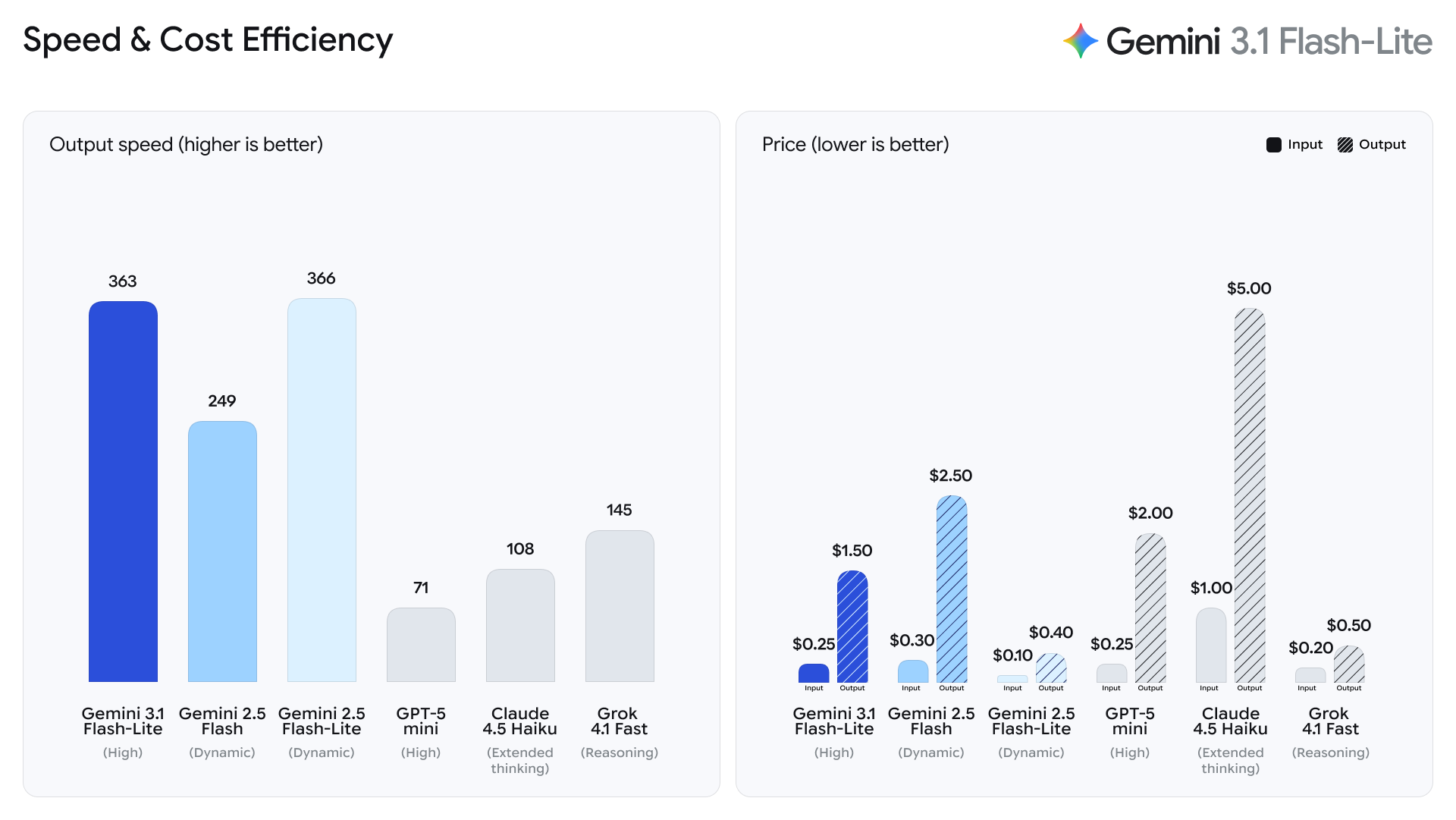
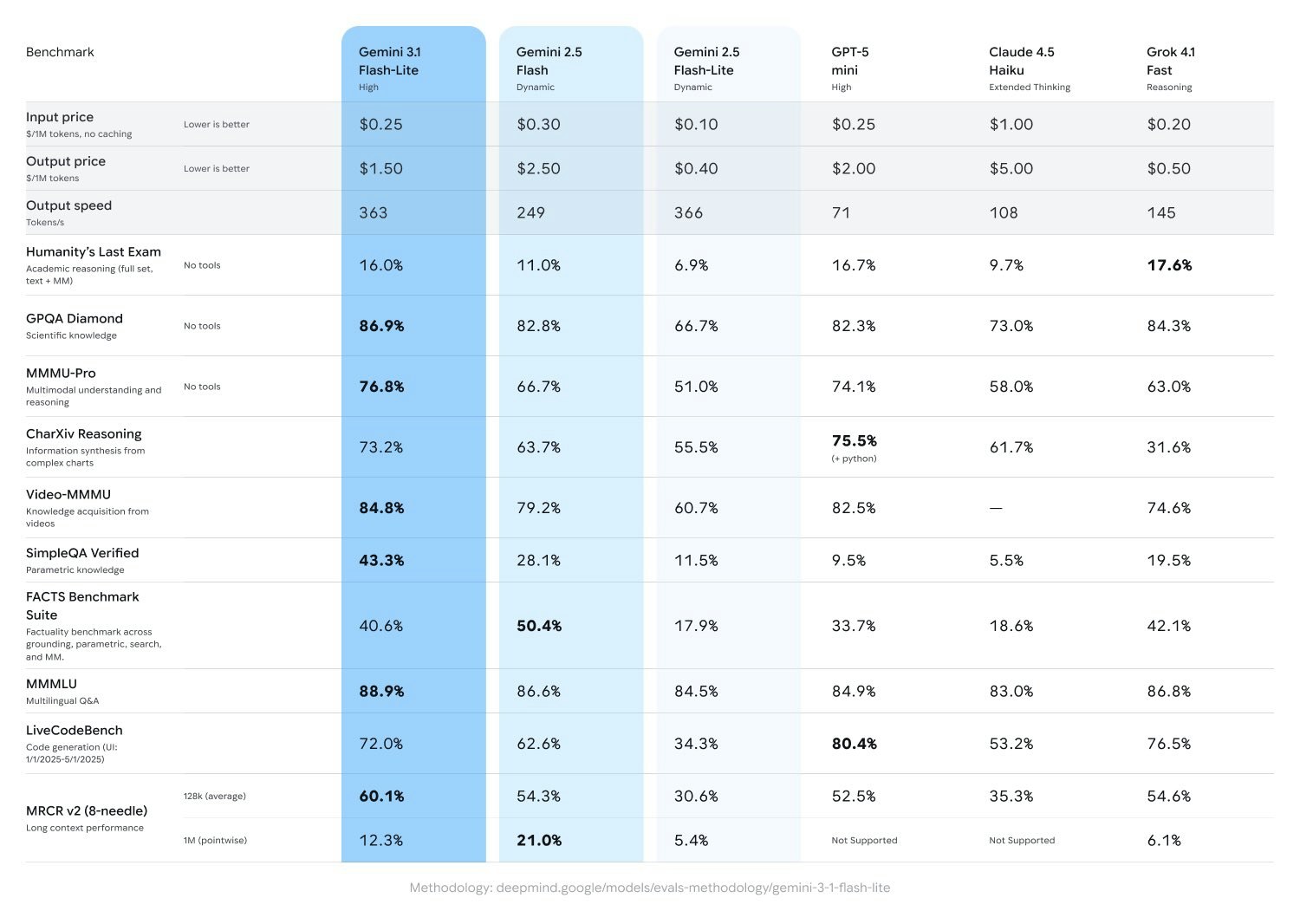
Gemini 3.1 Flash-Lite is the fastest and most cost-efficient model in the Gemini 3 series. At only $0.25 input and $1.50 output per million tokens, it beats 2.5 Flash with 2.5X faster first token and 45% higher output speed while matching or beating quality.

Hi everyone!

I’ve been using Gemini 2.5 Flash API in my BYOK translation plugin. Switched to gemini-3.1-flash-lite-preview by literally just changing the model name — quality jumped, speed stayed the same at identical throughput, and the bill is still reasonable. Quite happy.

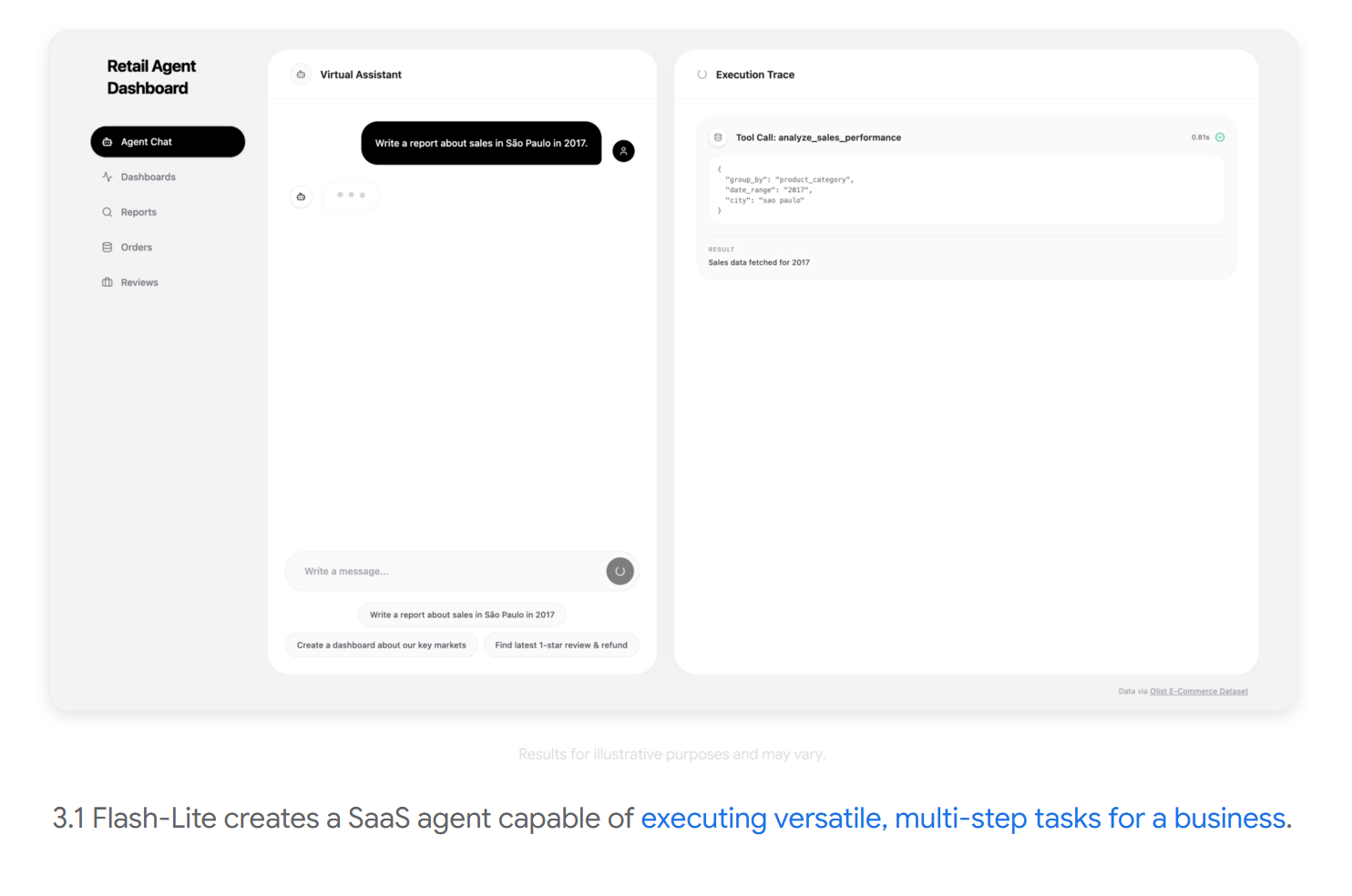
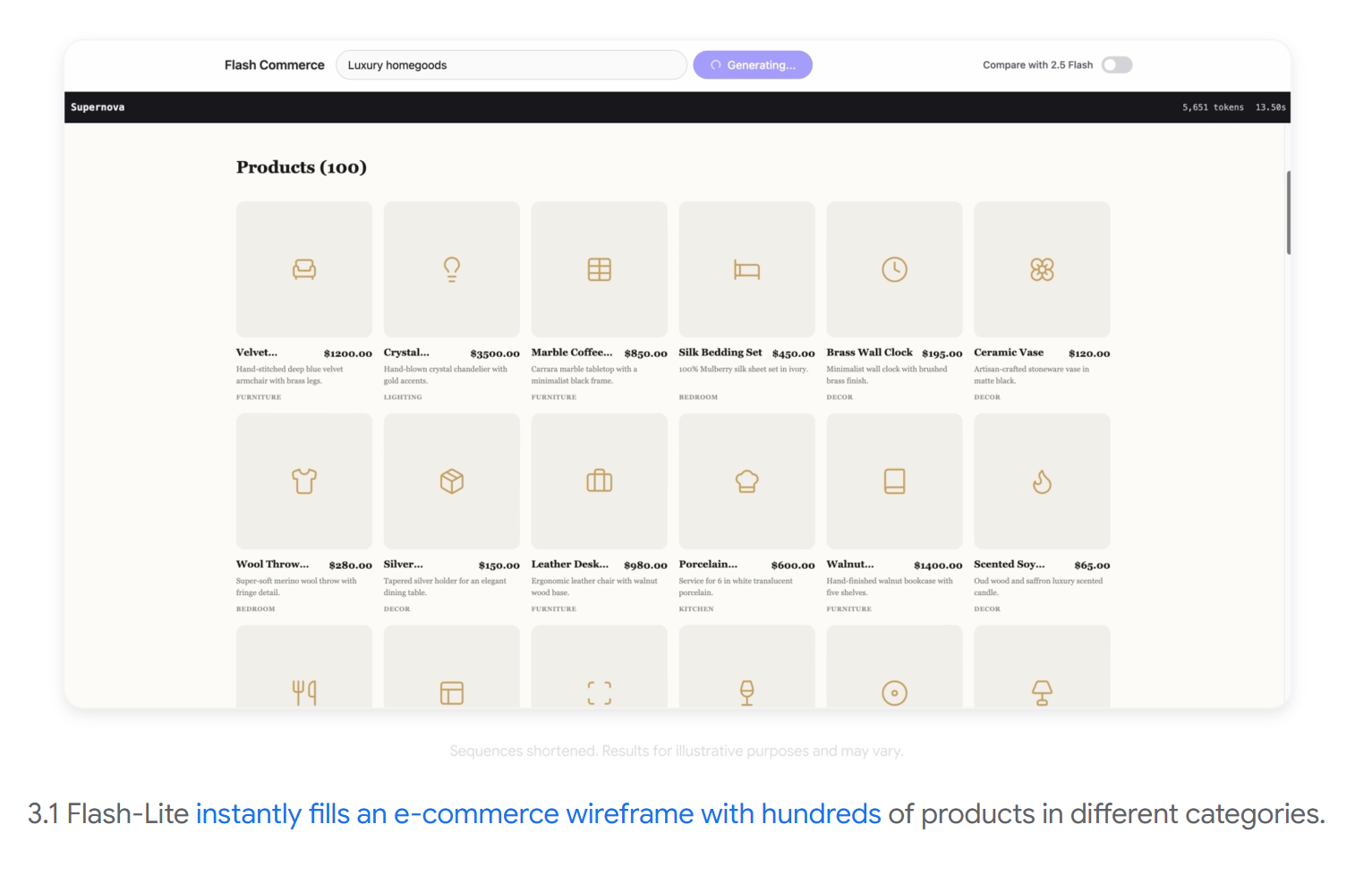
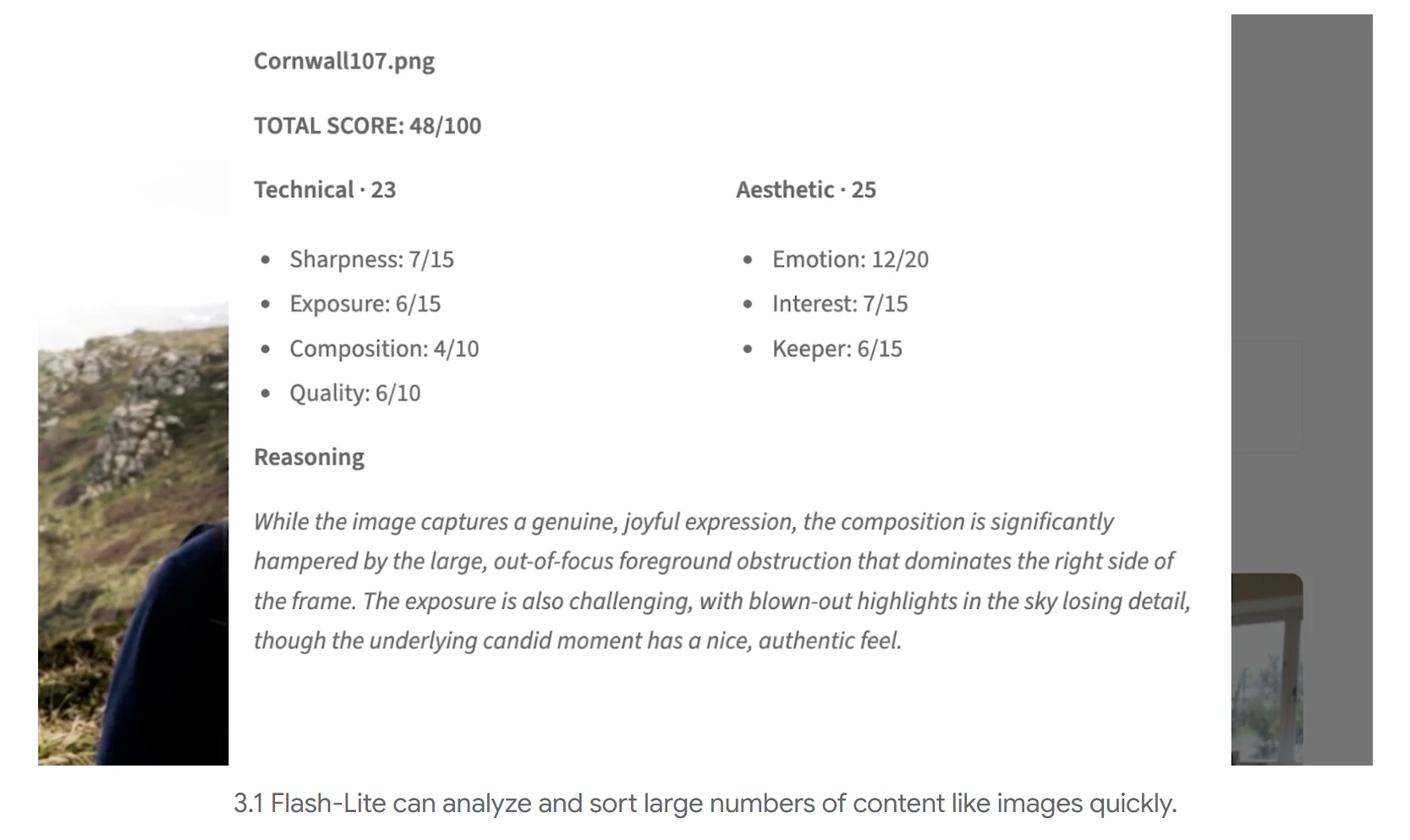
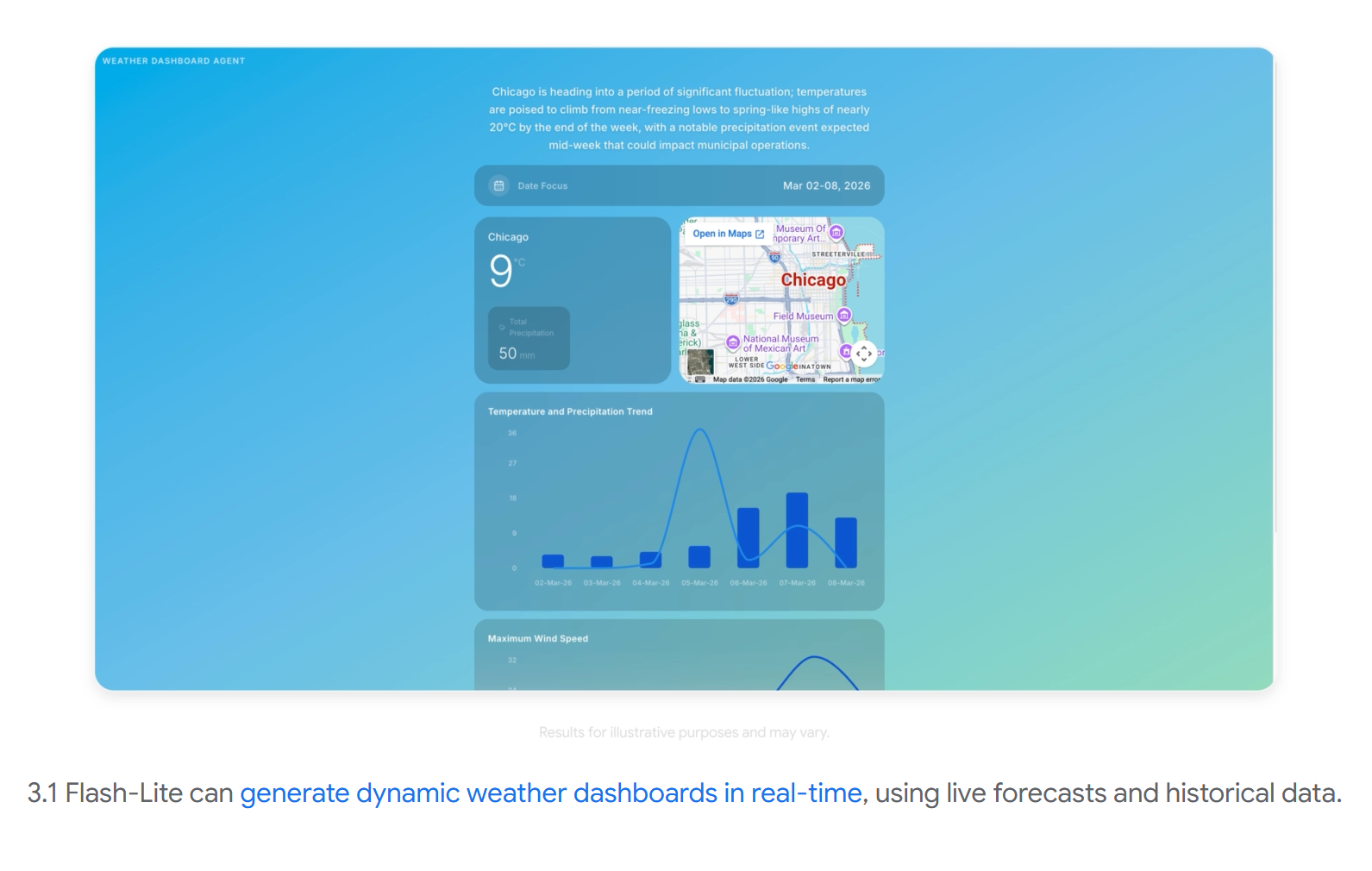
Official use cases like high-volume translation, content moderation, real-time image sorting, dashboard automation, UI generation and multi-step retail agents are spot on. If your app (or any slice of it) hits any of those, this one is definitely worth a shot right now in preview.

Grab it in @Google AI Studio or Vertex AI.

1
回复

Multimodal was the right bet from day one, the ability to reason across text, image, and code in a single context window is something GPT-4 is still catching up on.

Using Gemini API while building Fillix - a Chrome extension that makes job hunting embarrassingly easy. The context window size alone makes it worth building on. Curious where the agentic capabilities go next.

1
回复

When you're generating thousands of localized variations for Google Ads and Shopping campaigns, API costs usually eat up the margin) This price point for high-volume generation is insane. Are there any strict rate limits while it's in preview?

1
回复

Awesome to see Gemini continuing to evolve! The multimodal capabilities and deep research features look really powerful. What’s the feature you think people are still sleeping on the most right now?

0
回复

2.5X faster first token is the real headline here. For latency-sensitive apps (chatbots, real-time assistants), that gap is massive. Curious how it handles longer context windows under load.

0
回复

I was waiting for it, I love it, for sure I am going to add it to YouScaleIt, nice work Google!

0
回复

$0.25 input and $1.50 output per million tokens, while matching or beating 2.5 Flash quality is the number that changes the economics of high-volume AI pipelines. For anyone running thousands of generations per day, that pricing tier is the difference between a viable product margin and a problem.

The 2.5x faster first token is the other figure worth paying attention to. In real-time user-facing workflows, that latency gap is what separates an experience that feels responsive from one that feels like it's thinking.

I orchestrate multiple AI models, and the cost per generation is a constant pressure point at scale. A model at this price point that holds up on quality for tasks like content classification, asset sorting and UI generation is exactly what makes certain features economically feasible to ship. Curious how it handles multimodal consistency across a long batch run, does quality stay stable or drift?

0
回复
#5
Picsart Persona & Storyline
Design your AI influencer and create any story with it.
182
一句话介绍:Picsart Persona & Storyline 通过设计可跨场景一致使用的AI数字角色并生成叙事内容,解决了“无露脸”内容创作者在保持角色形象统一性和规模化生产上的核心痛点。
Design Tools Marketing Artificial Intelligence
AI内容生成 数字人 无露脸创作 角色一致性 短视频制作 叙事工具 社交媒体内容 AI影响者 创意工具
用户评论摘要:用户肯定产品更新与UI体验,核心关注点集中于角色一致性的技术实现机制,并询问是否支持使用真人形象。开发者回应目前专注于原创AI角色,真人 likeness 功能已在考虑中。
AI 锐评

Picsart此次推出的双功能工具,精准刺入了AIGC内容创作当前最棘手的“一致性”裂缝。其真正的价值并非简单的角色生成或视频剪辑,而在于试图构建一个从“角色IP”到“系列化内容”的标准化生产管线。这直击了当下AI视频工具“单次惊艳、系列崩坏”的顽疾,将创作门槛从技术提示词工程,部分转移至更具普世性的角色设计与叙事构思。

然而,其挑战同样尖锐。首先,“一致性”的护城河有多深?在开源模型与自制LoRA技术普及的当下,保持跨场景、跨格式的绝对稳定仍需观察。用户关于“模型漂移”和“锁定身份”的提问,正是对此技术黑箱的合理担忧。其次,产品定位游走于“工具”与“平台”之间。若仅作为高效工具,它需面对众多垂直竞品的围攻;若想成为IP孵化平台,则需构建更强大的角色资产管理与分发生态。当前版本更像是一个功能前瞻。

本质上,Persona & Storyline 是Picsart将其庞大的轻量级创作者群体,导向更高价值、更具粘性的“IP化创作”的一次战略升级。它赌的是“无露脸内容”并非边缘需求,而是内容工业进化的一个必然分支。成败关键在于,它提供的“一致性”能否足够牢固,以承载创作者长期投入时间与情感,真正培育出有市场价值的虚拟角色,而非仅是另一个一次性网红滤镜。

查看原始信息
Picsart Persona & Storyline
Introducing Picsart Persona & Storyline: your new way of designing your AI influencer and creating any content with it. Persona — design your AI character (human, pet, mascot, or fictional). Try it: https://picsart.com/persona/ Storyline — create short-form clips, episodic series, or full narratives with that character. Same character in every scene. No camera required. Built for faceless YouTube, TikTok, and more. Try it: https://picsart.com/ai-story-generator/
Hey PH, Today we're launching Persona and Storyline — your new way to design your AI influencer and create any content or narrative arc with it. Many people who want to build a content presence — influencer-style, educational, or narrative — don't want to be on camera. And with AI, the hardest part isn't making one cool image or clip. It's keeping the same character across scenes and formats. Most tools can't do that. Introducing Persona, a tool that helps you design your AI influencer. Create your digital character: human, pet, mascot, or fictional. One identity you control — look, style, vibe. Use it for social content, brand ambassadors, or as the star of your next series. Storyline — Create any content or narrative arc with the character you designed or any other. Short-form clips, episodic series, or full narratives. Same character in every scene — same face, same style — whether it's a coffee shop or a cyberpunk city. Built for faceless YouTube, TikTok series, explainers, and narrative content. The faceless content space is massive and growing. Creators want to scale without showing their face — for privacy, comfort, or creative freedom. We're making it possible to go from "I have an idea" to "I have a character and a series" without a production team or a camera. Persona and Storyline work together: design your character in Persona, then bring it into Storyline and keep it consistent across every frame. We'd love to hear what you make — and what you'd want next from AI characters and storytelling. **Try it:** [picsart.com](https://picsart.com)
10
回复

@davit_avoyan Hey Davit, how do you keep the character visually consistent across scenes, styles, and prompts without the model drifting over time

0
回复

I've been using Picsart for quite some time now, and I'm still in awe of how the platform constantly (and consistently) is still updating with new features. Congrats on the launch@davit_avoyan!

4
回复

Can you do this with existing personas, I mean real people? Like put myself in different scenarios?

4
回复

Great question! Right now, Persona is focused on AI-generated characters where you design the look, style, and vibe from scratch, giving you full creative control over a consistent digital identity. That said, bringing your own likeness into the experience is definitely on our radar. Thanks for the interest!

2
回复

This is amazing, something I've been looking for, an easy UI/UX for video editing

2
回复

Been using Picsart since ages, solid product! Good to see them building AI features into it. All the best team :)

1
回复

Interesting idea, consistency is definitely one of the biggest problems with AI characters. If I create a character in Persona, can I lock its identity so the face and style stay consistent across hundreds of videos and different scenes?

0
回复
#6
GPT‑5.3 Instant in ChatGPT
More accurate, less cringe, smoother & useful daily chats!
163
一句话介绍:GPT-5.3 Instant是ChatGPT的升级模型,在日常对话场景中,通过提供更准确、更自然的回答,减少不必要的拒绝和说教语气,解决了用户与AI交互时体验生硬、中断和“尴尬”的核心痛点。
Artificial Intelligence Bots Tech
大型语言模型 AI对话助手 用户体验优化 自然语言处理 ChatGPT升级 精准回答 减少幻觉 流畅对话 生产力工具
用户评论摘要:用户主要反馈体验更自然流畅,“尴尬”回应减少。核心问题集中于技术改进细节(如训练数据、算法)。有评论高度评价OpenAI的生态平台价值,认为其易用性和开发者生态是真正的竞争壁垒。
AI 锐评

GPT-5.3 Instant的发布,与其说是一次技术飞跃,不如说是一场精心策划的“体验修复”。它直指当前大模型产品化中最棘手的“最后一公里”问题:模型能力与用户体验之间的断层。产品介绍中罗列的“更少拒绝、更少说教、更少尴尬、更少死胡同”,恰恰是用户每日与AI互动中最具体、最细微的挫败感来源。这表明OpenAI的竞争焦点已从纯粹的基准测试分数,转向了难以量化的“对话情商”和“实用流畅度”。

评论中“真正的护城河不是模型,而是平台”的观点一针见血。GPT-5.3 Instant的迭代印证了这一点:它的价值不在于颠覆性架构,而在于通过微调让现有技术更无缝地融入用户工作流。这本质上是一种“体验债”的偿还,旨在巩固其生态系统的用户粘性。然而,这也暴露出一个深层问题:大模型的“不可预测性”和“安全护栏”与“流畅自然”之间存在固有张力。减少“防御性免责声明”和提升“敏感话题判断力”是并行目标,但如何在其中取得平衡,依然是黑箱。此次升级若成功,将是工程化与产品化的胜利,但它也提醒我们,AI的“人性化”体验,依然是一条通过无数细微调整铺就的漫长道路,而非一蹴而就的技术突破。

查看原始信息
GPT‑5.3 Instant in ChatGPT
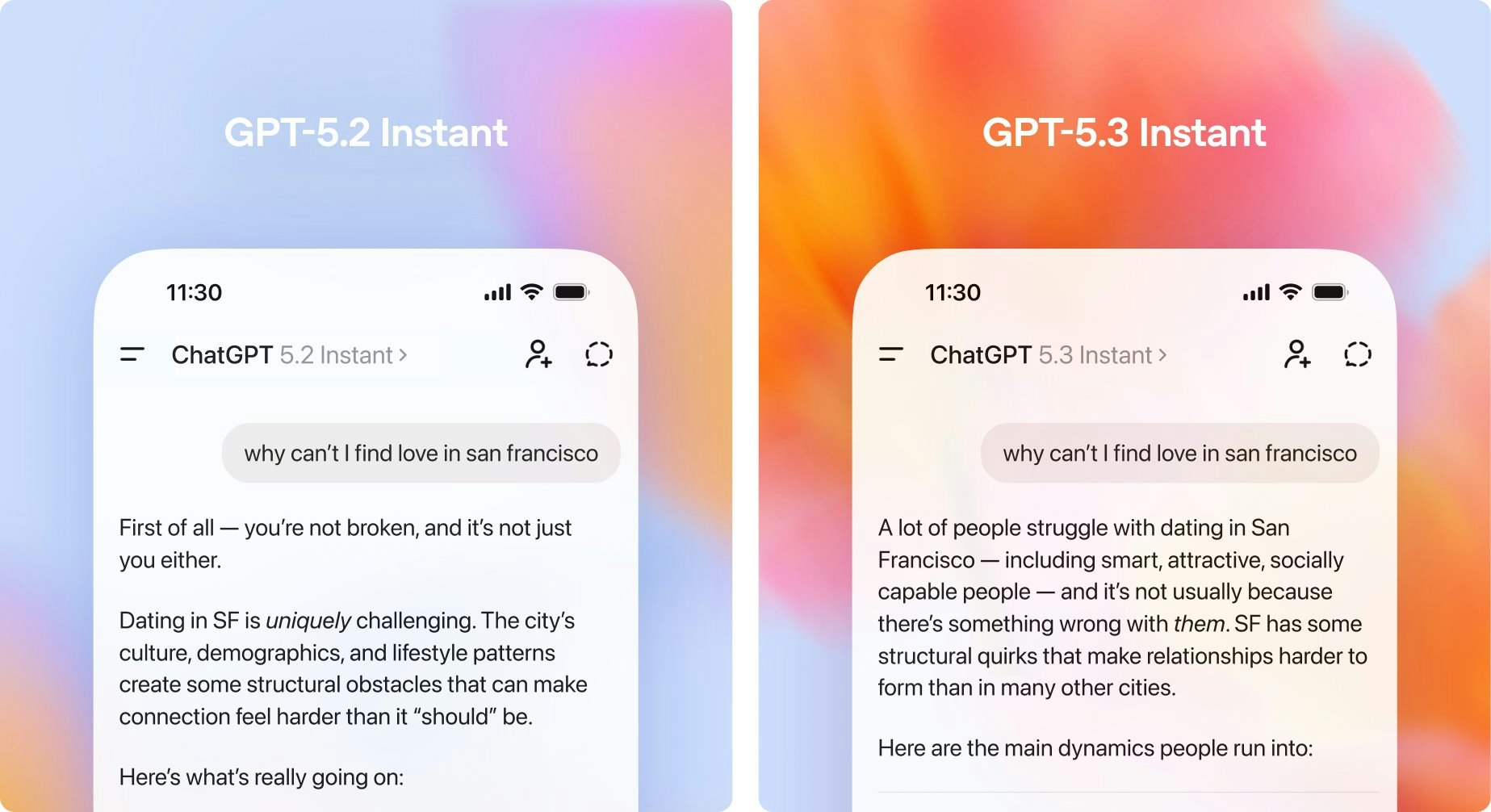
GPT-5.3 Instant delivers more accurate answers, better web synthesis, fewer unnecessary refusals, and a more natural tone without the cringe, caveats, or dead ends. It writes with more range, responds with better judgment, and stays focused on what you actually asked. Same speed. Sharper results. Better conversations by default.

What improvements make GPT‑5.3 “more accurate”? Are there changes in training data, algorithms, or model architecture?

2
回复

What OpenAI got right wasn't just the models, it was making powerful AI feel accessible to a solo developer at 2am with a credit card and an idea.

Building Fillix on top of OpenAI's API, a Chrome extension that makes job hunting embarrassingly easy. Wouldn't have been possible to ship this fast without the ecosystem you've built. The real moat isn't the model, it's the platform.

2
回复

Excited to hunt GPT-5.3 Instant today!

This is a meaningful upgrade to ChatGPT’s most-used model focused on the stuff people actually feel every day: smoother conversations, fewer unnecessary refusals, less preachy tone, better web synthesis, and more accurate answers.

What stands out:

  • Fewer dead ends and defensive disclaimers

  • Stronger judgment around sensitive topics

  • Better balance between web results and reasoning

  • Noticeably reduced hallucinations

  • More natural, less “cringe” conversational style

  • Improved writing quality and range

It’s not a flashy feature drop, it’s a refinement of the core experience. Faster clarity, better flow, and answers that feel directly responsive to what you asked.

These are real UX improvements at massive scale. What do you think?

Follow me on Product Hunt to be informed of latest and greatest launches in tech: @rohanrecommends

1
回复

@rohanrecommends conversation on GPT-5.3 Instant definitely felt more natural than other systems. It seems that cringe responses are generally a major limitation of the current voice-to-voice models.

1
回复
#7
Maxclaw on Mobile
Build apps, research deeply and automate multi-step tasks
127
一句话介绍:Maxclaw on Mobile是一款基于多智能体系统的移动端AI代理,通过将复杂目标拆解并自动执行子任务,解决了用户在深度研究、全栈应用开发和多模态内容创作等场景中,从想法到最终成品之间的“执行鸿沟”痛点。
Developer Tools Artificial Intelligence No-Code
AI智能体 多智能体系统 任务自动化 移动AI应用 深度研究 全栈开发 多模态生成 长程任务规划 代码编程 生产力工具
用户评论摘要:用户肯定其解决“执行”痛点的核心价值,并对移动化表示欢迎。主要问题与建议集中在:1. 长任务容错性(是否支持断点续做);2. 工作流自动化(能否串联多个功能);3. 数据隐私(移动端数据处理与保留策略)。体现了用户对可靠性、集成度和隐私安全的深度关切。
AI 锐评

Maxclaw on Mobile宣称的“从目标到成品”的全流程自动化,直击了当前AIGC工具普遍停留在“建议者”而非“执行者”的软肋。其核心卖点“多智能体系统”与“1M上下文窗口”,在技术叙事上构建了处理复杂、长周期任务的能力基础,这比单纯的聊天或内容生成前进了一步。

然而,光鲜的宣传背后,挑战同样尖锐。首先,“执行”的定义在移动端被微妙地降级了。在受限的移动环境中,“构建全栈应用”的深度与完整性存疑,更可能是一个高度模板化或依赖于云服务的简化版本。其次,用户评论精准地命中了多智能体系统的阿喀琉斯之踵:可靠性。在没有检查点容错和有效人工干预机制的情况下,任何一步的失败都可能导致“长程任务”全线崩溃,体验反而更糟。这本质上是用更高的复杂度去解决复杂度问题,风险并未消失,只是转移了。

其真正价值或许不在于替代专业开发或研究,而在于成为一款“超级原型工具”和“研究助理”。它能以惊人的速度将模糊想法转化为可视化的草案、可交互的模型或结构化的报告,极大压缩从0到1的构思和验证周期。这对于创业者、产品经理、内容创作者等需要快速验证和表达的群体具有吸引力。但若想成为严肃的“生产工具”,它必须优先解决评论中提到的任务状态持久化、工作流编排和透明可控的数据策略——这些才是将炫技演示转化为用户信任的关键。当前阶段,它更像一个展示了未来方向的、能力强大的“技术演示器”,其商业成功将取决于能否将“自动执行”的承诺,转化为稳定、可控、可预期的用户体验。

查看原始信息
Maxclaw on Mobile
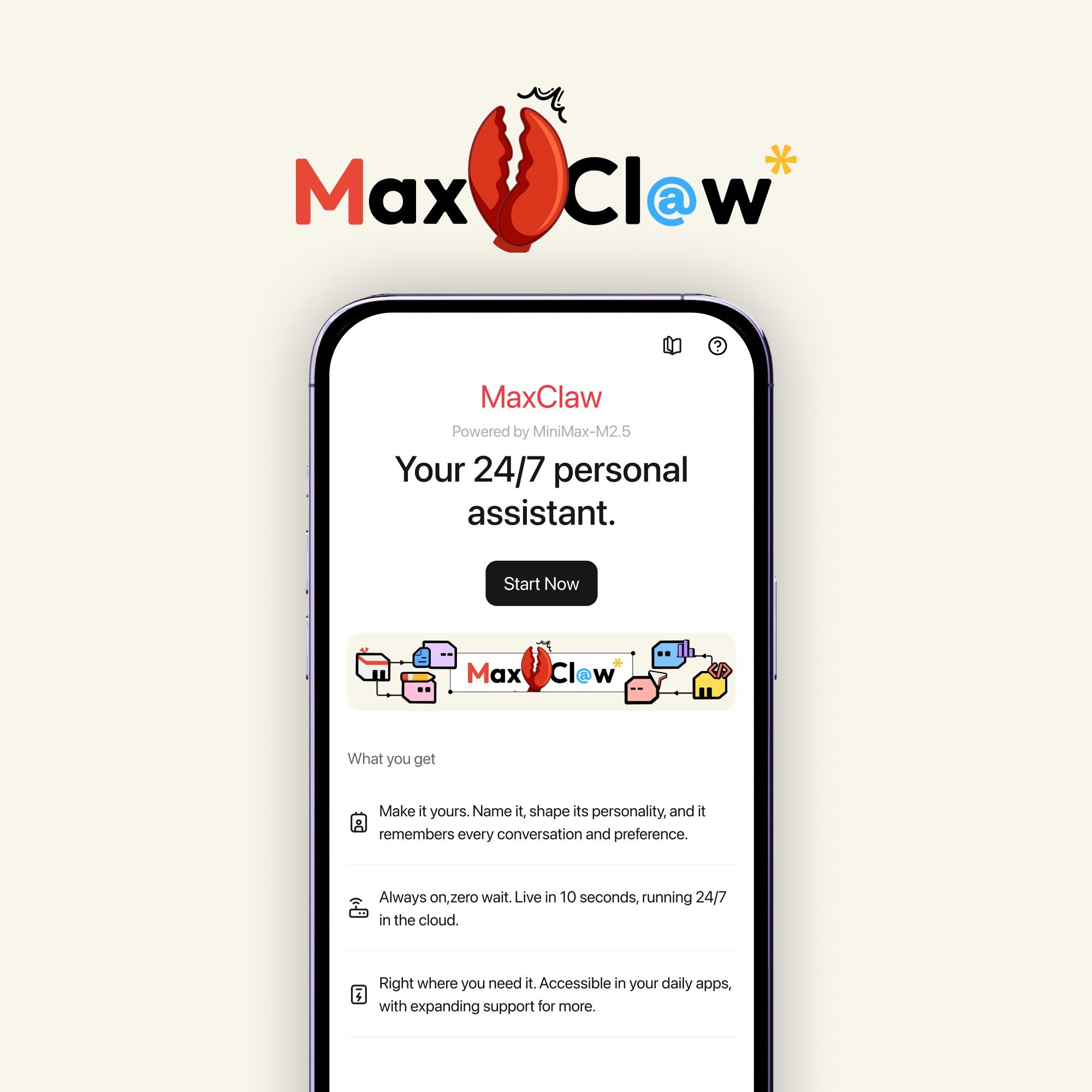
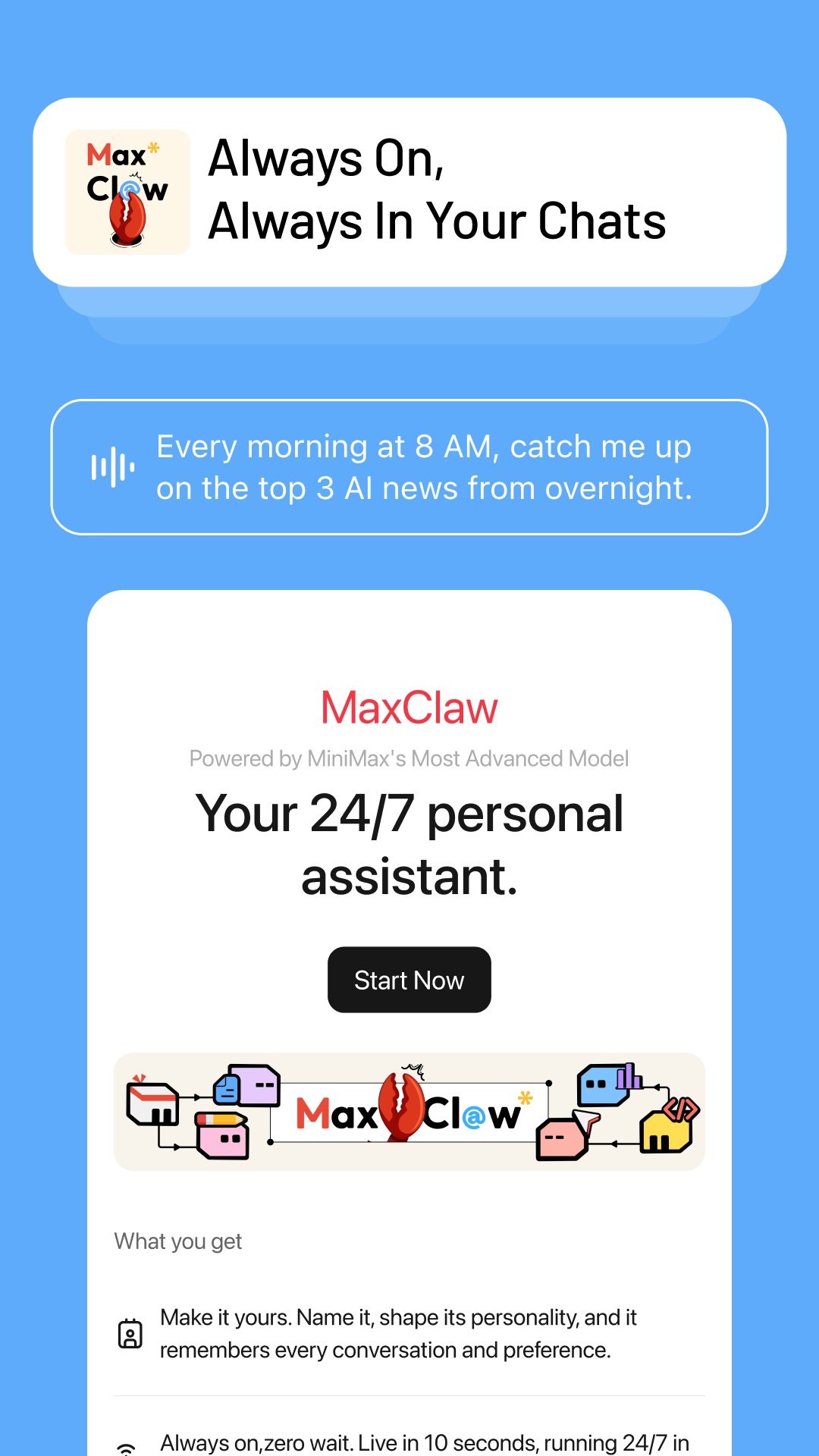
Execution is the hardest part of any workflow. MiniMax is a multi-agent system that turns complex goals into finished products. Whether you need an in-depth research report, a full-stack application, or a multimodal presentation, MiniMax breaks down the requirements and automates the execution. Backed by the MiniMax-M2.5 model, it goes beyond simple Q&A to deliver expert-level, multi-step planning and reliable outcomes right from your device. Now on mobile!

The novelty of fast text generation has worn off; what we actually need is execution. We need AI that can take on long-horizon tasks without needing its hand held at every single step.

The biggest friction point in AI right now is the gap between a prompt and a finished project. Most tools tap out after giving you an outline or a code snippet. MiniMax operates differently. It’s built as a multi-agent system meaning it actually plans, breaks down complex requirements and executes sub-tasks until the entire job is done.

It’s powered by their M2.5 model (packing a massive 1M context window), which makes it incredibly stable for heavy-lifting workflows that require extended reasoning.

Here is what it actually takes off your plate:

  • Lightning Mode: Enhances all chat scenarios, handling daily tasks like Q&A, document summarization, and creative writing with greater speed and efficiency.

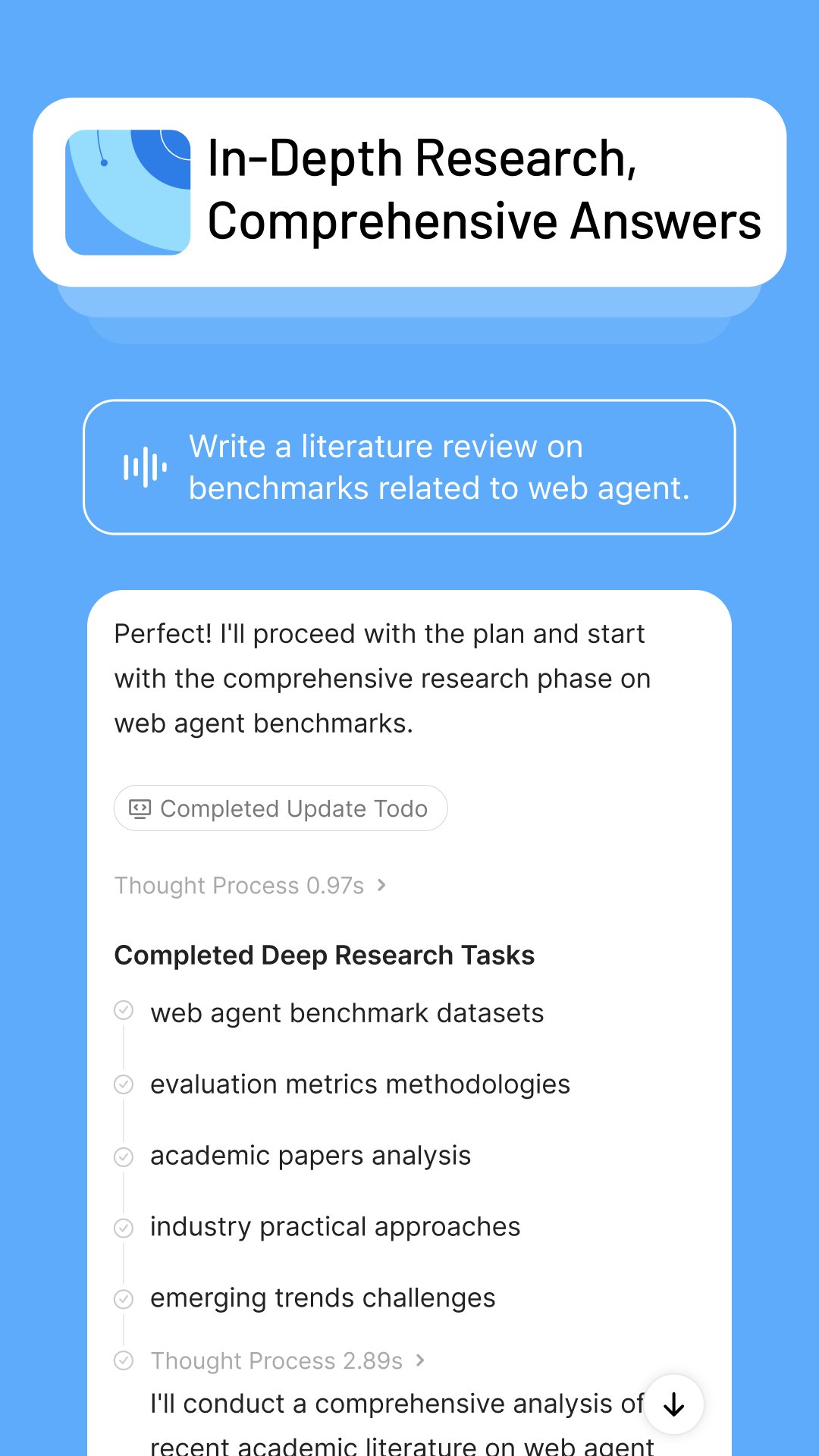
  • Deep Research & Analysis: Synthesizes web-wide information into in-depth reports.

  • Multimodal Content Generation: Effortlessly produces video, audio, and image to enrich your content.

  • Create Pro Presentations: Generates polished, visually rich slideshows with just a click.

  • Build Full-Stack Apps: Creates stable and visually stunning full-stack applications, from front end to back end.

  • Coding & Debugging: Your smart programming partner for efficient coding and testing.

MiniMax Agent is a general-purpose AI that plans, researches, builds, and creates. From deep web analysis and pro presentations to full-stack apps, coding, debugging, and multimodal content (video, audio, image), it executes complex, long-horizon tasks end-to-end with speed.

Now available on mobile:

Follow me on Product Hunt to be informed of latest and greatest launches in tech: @rohanrecommends

3
回复

@rohanrecommends Great idea :)

0
回复

@rohanrecommends Failing at step 9 is where agent demos die. Does Maxclaw on Mobile save checkpoints for Deep Research & Analysis and Build Full-Stack Apps, so a flaky step doesn't force a full restart? That's the difference between planning and shipping.

0
回复

@rohanrecommends Congrats on the launch!
 Do you plan to add any kind of workflow automation where you can chain multiple capabilities together, like researching a topic, generating a presentation from the findings, and then creating a video summary all in one go?

0
回复

Cool to see this on mobile, how is personal data handled on-device vs. in the cloud? Especially with it running across multiple messaging platforms, curious what the data retention and privacy policies look like.

1
回复

Very cool! First implementation I've seen at least on the mobile. Will give it a shot.

0
回复
#8
Vocova
Transcribe audio & video from 1,000+ platforms
125
一句话介绍:Vocova是一款支持从1000+平台链接直接转录音视频为文本的在线工具,通过多语言转录、说话人识别和双语翻译等功能,解决了用户在跨平台、多语言内容处理中流程繁琐、工具分散的核心痛点。
Productivity Artificial Intelligence Audio
音视频转录 多语言翻译 说话人识别 文本摘要 内容生产力工具 SaaS 人工智能 媒体处理 在线协作
用户评论摘要:用户普遍认可其免下载直接转录的流畅体验和免费额度。核心关注点在于:1. **准确性**,特别是针对口音和多人重叠语音;2. **API需求**强烈,希望集成到自有工作流;3. **功能扩展**,如术语库、浏览器扩展实现字幕叠加;4. 移动端可用性已获确认。
AI 锐评

Vocova的野心不在于单纯做一个更准确的转录工具,而在于试图成为跨平台数字内容“文本化”的终极枢纽。其真正的价值体现在两个层面的整合:一是**技术流程的整合**,将下载、转码、转录、说话人分割、时间戳对齐等离散步骤打包为一个“粘贴链接即完成”的动作,大幅降低了用户的操作成本和心智负担;二是**应用场景的整合**,通过提供从AI摘要、双语对照到多种专业格式导出的一站式服务,它同时瞄准了教育、媒体、企业会议、内容创作等多个市场,将转录从“功能”升级为“工作流解决方案”。

然而,其面临的挑战同样清晰。首先,**技术护城河并不深**。核心的转录和说话人识别能力依赖于底层AI模型,易被同质化竞争。用户的API诉求恰恰暴露了其作为独立网页应用的局限性——无法深度嵌入用户现有生态。其次,**评论中隐含了对“可靠性”的持续担忧**,包括口音、重叠语音的处理,这仍是行业通病。将其宣传的“多阶段AI管道”转化为可感知的、稳定的精度优势,是建立口碑的关键。

产品现阶段最聪明的策略是极致的用户体验打磨,正如创始人所言“像打造艺术品一样”,在说话人标签的自然度、时间戳的精准度、导出文档的整洁度等细节上建立比较优势。但长远来看,若不能尽快开放API、构建生态,并探索如浏览器扩展等更轻便的集成方式,它可能只会是一个“很好用但可被替代”的工具,难以成长为平台。其提供的流畅体验是吸引用户的钩子,但能否将用户留住,取决于它能否从“一个更友好的界面”进化成“一个不可绕过的节点”。

查看原始信息
Vocova
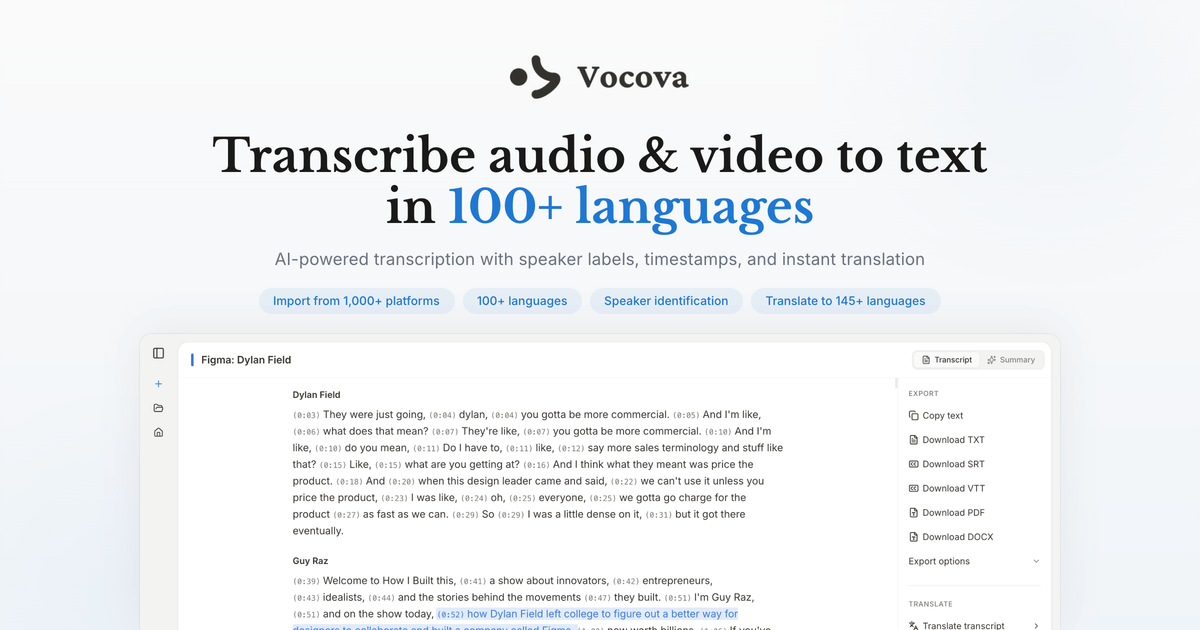
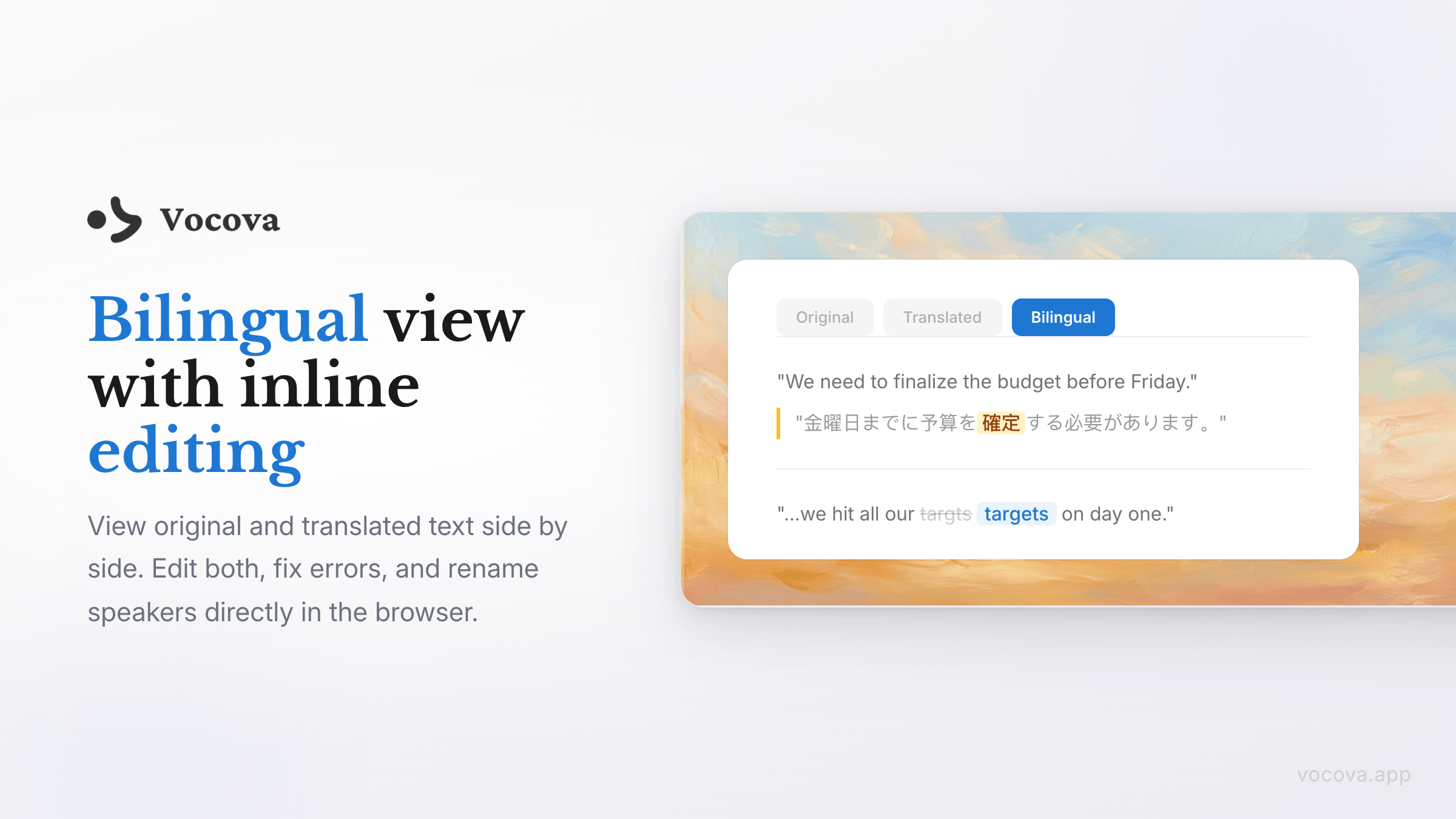
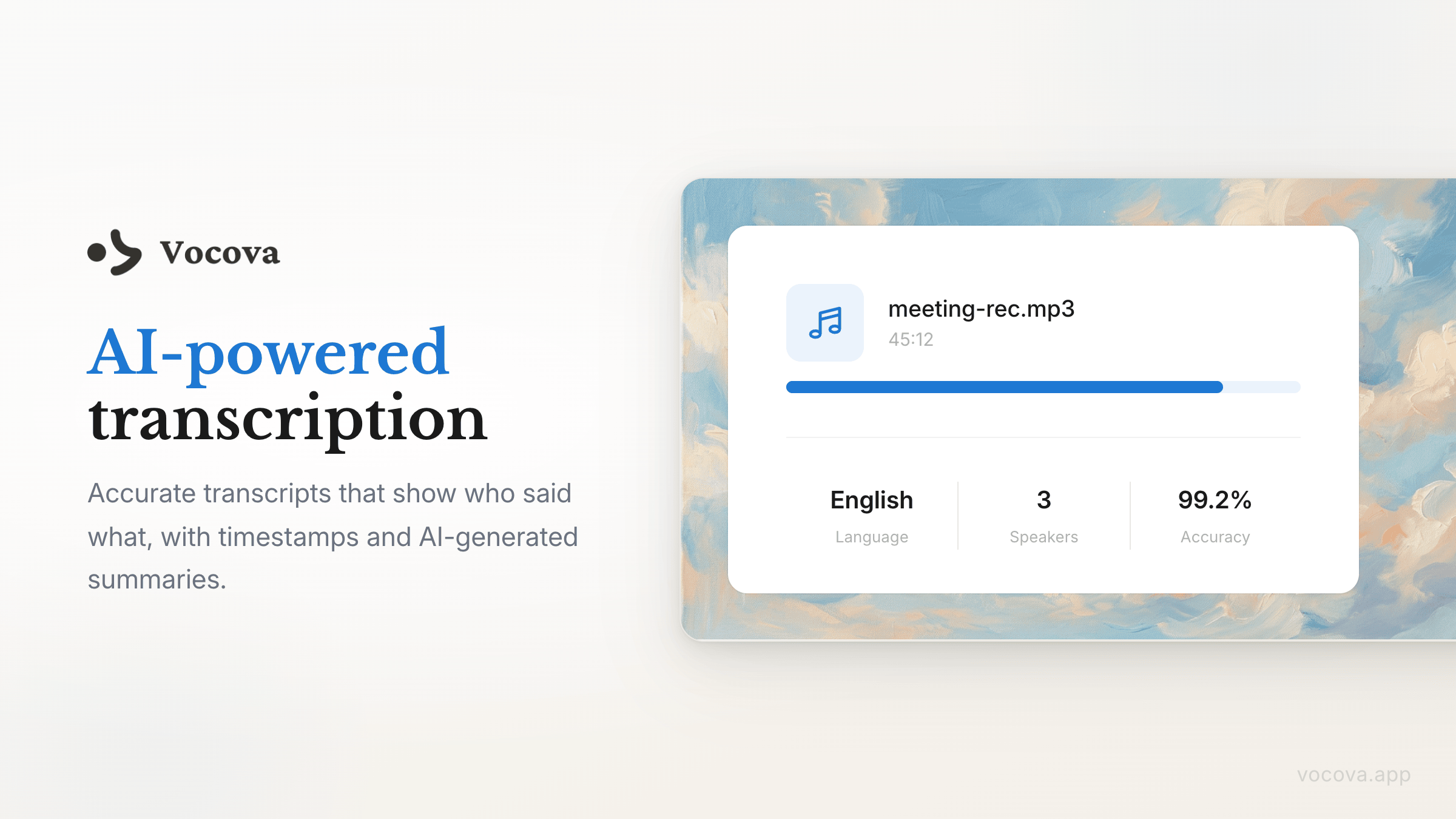
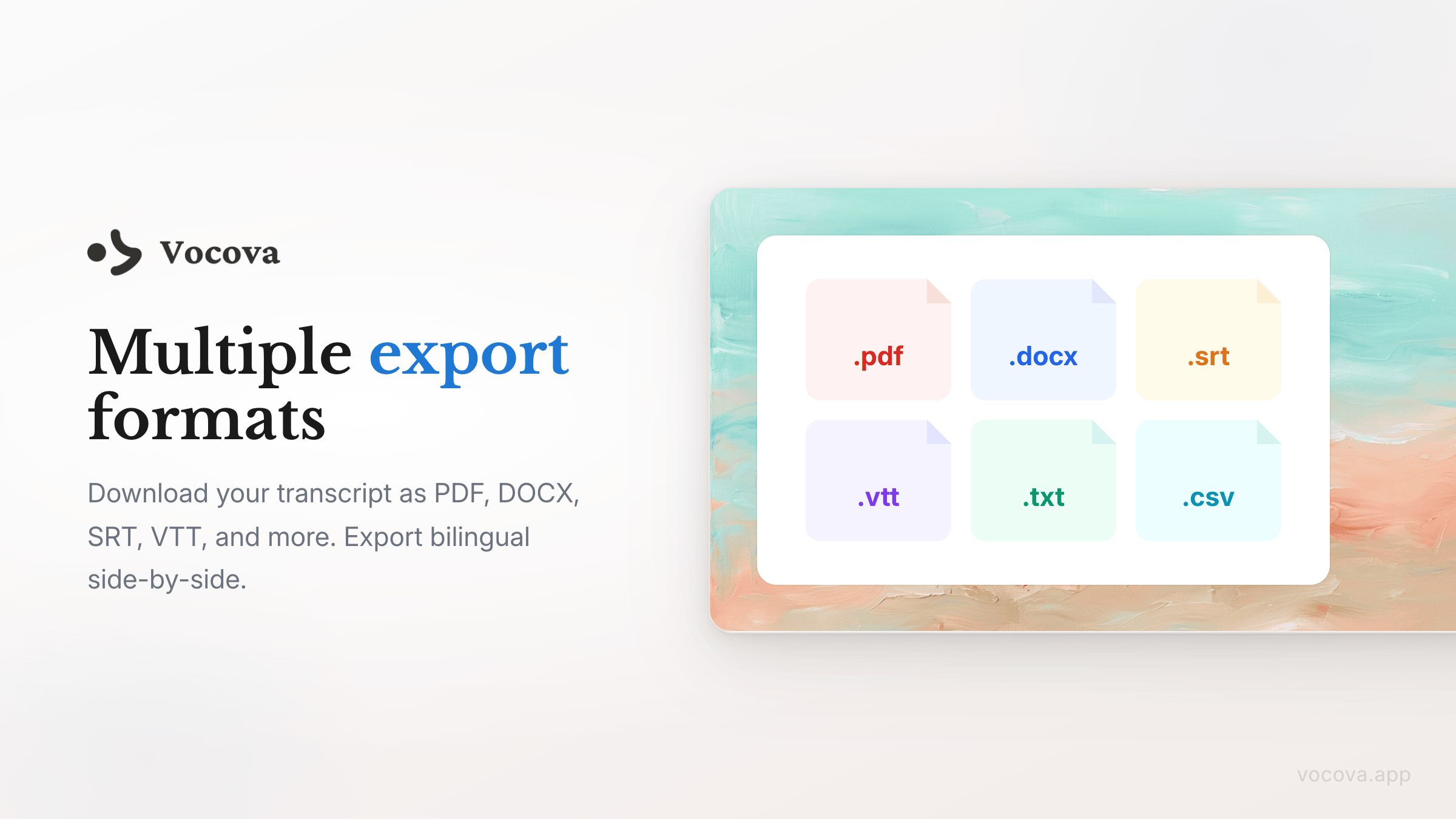
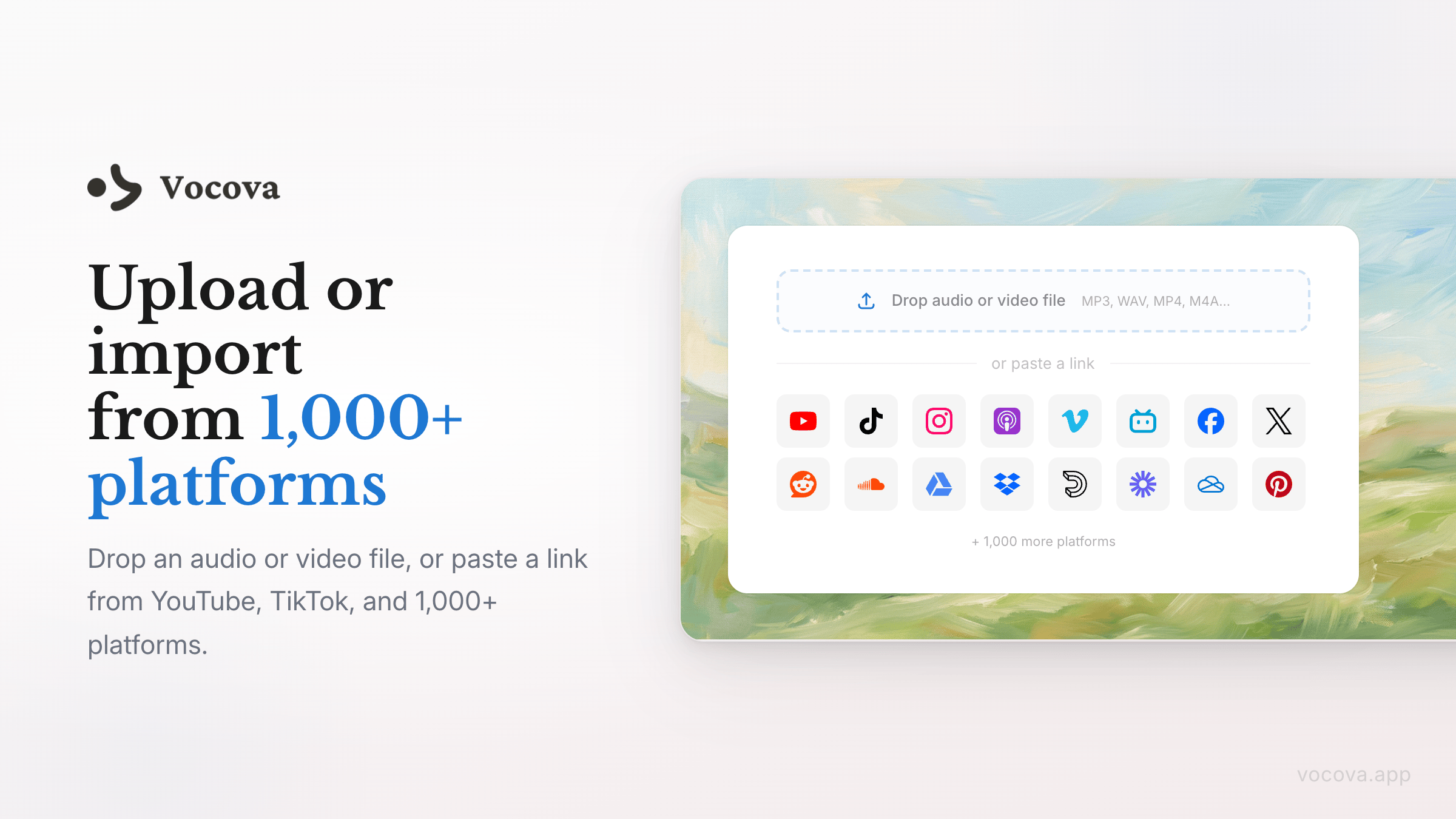
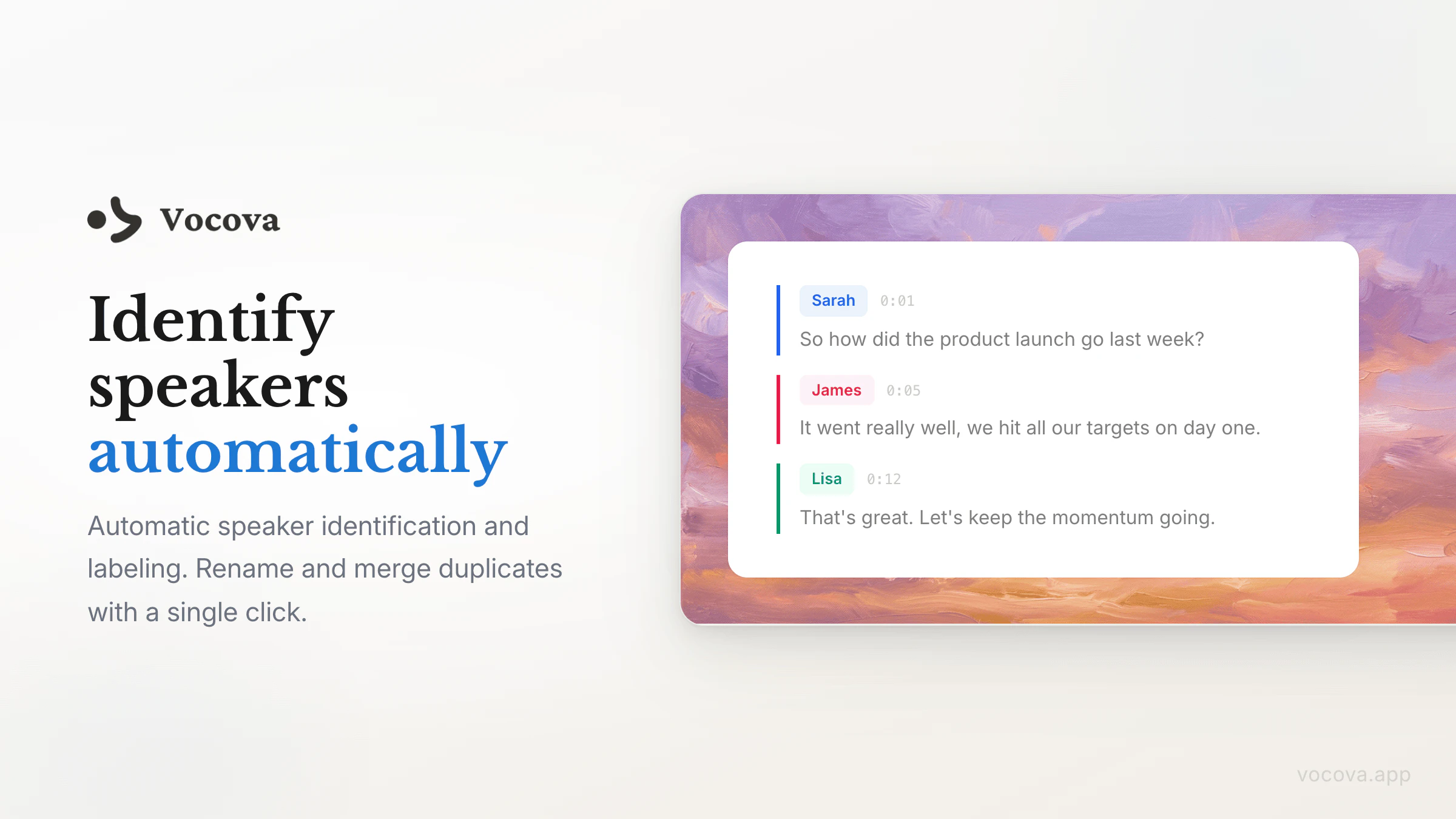
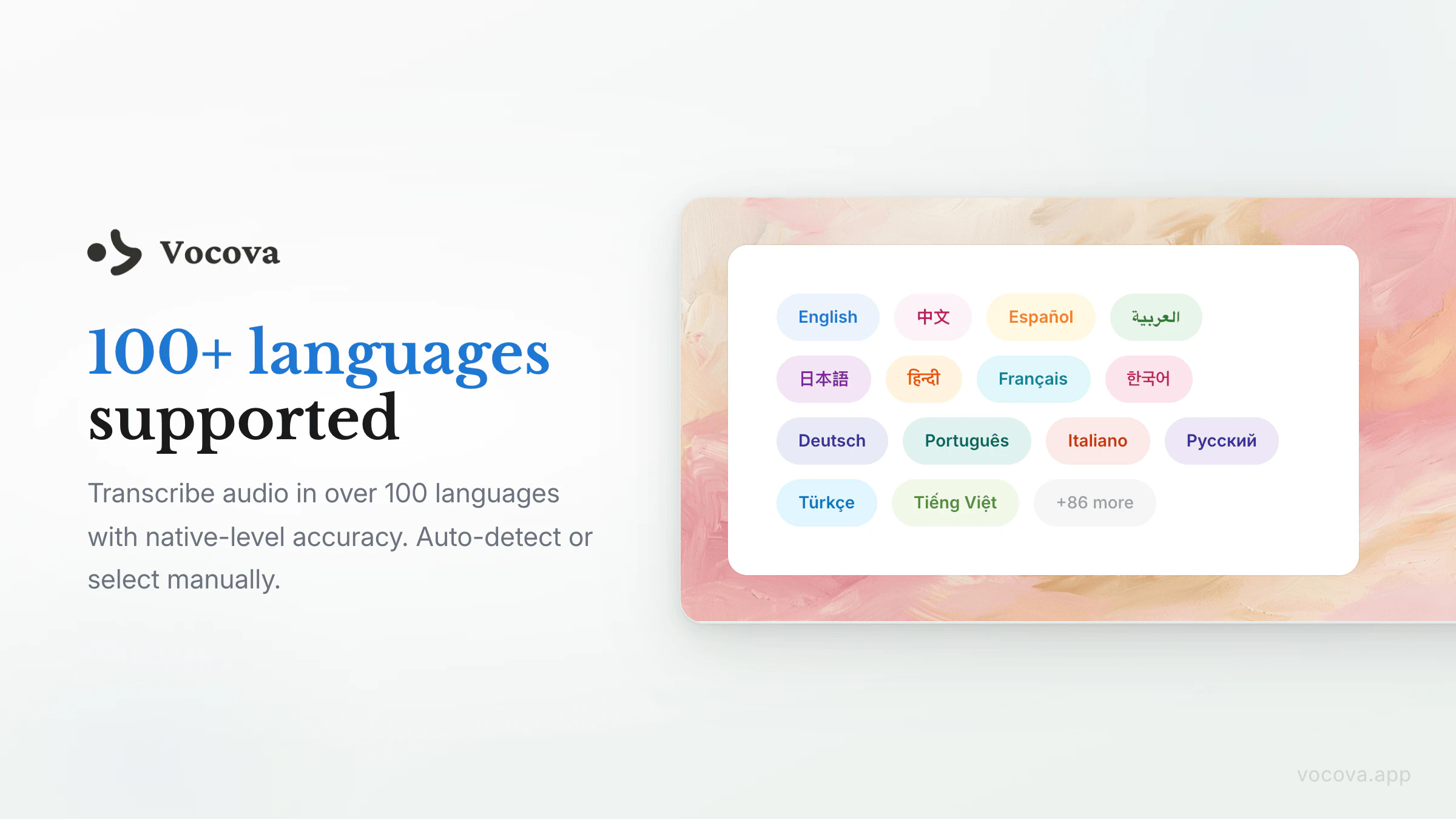
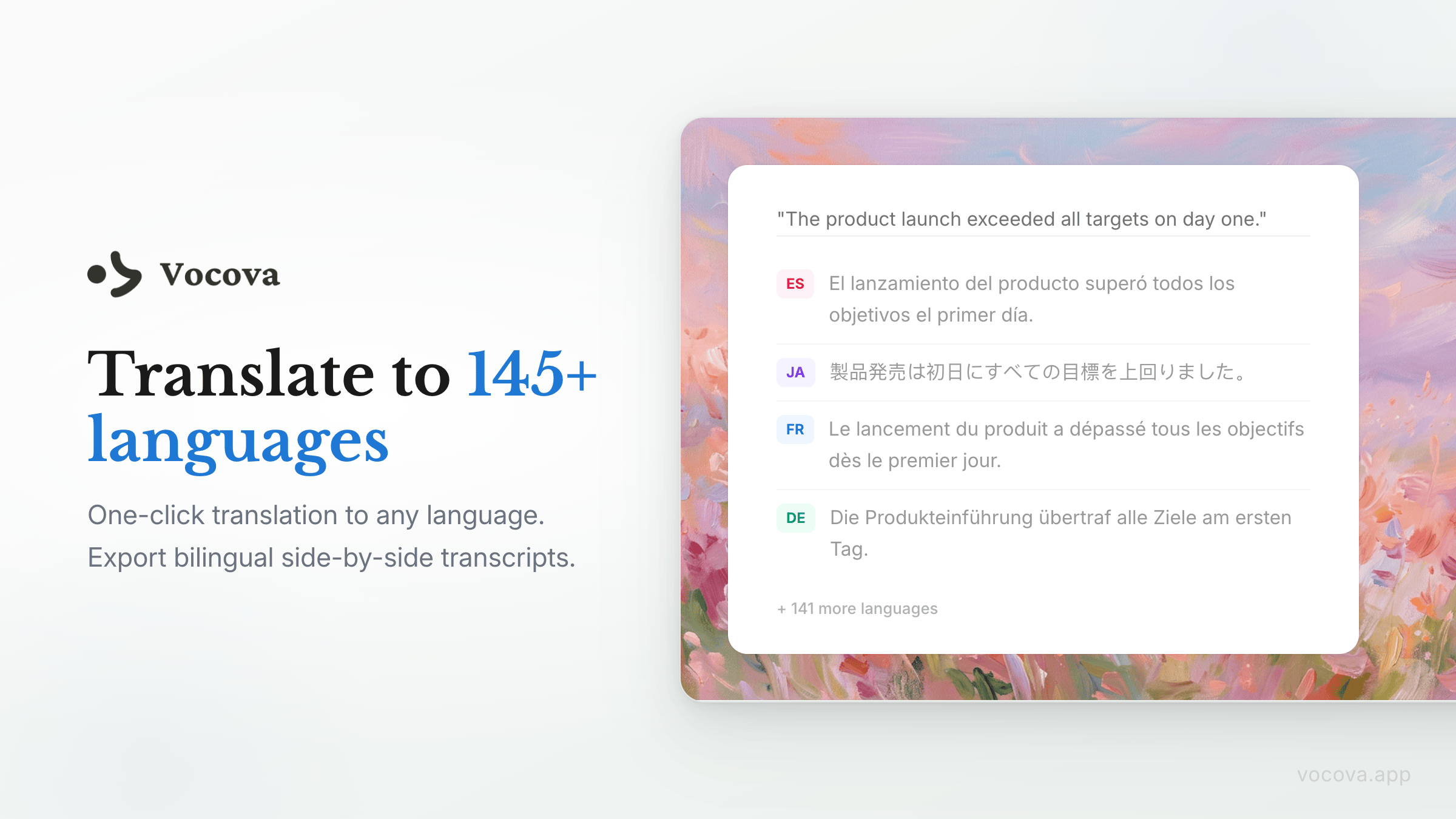
Vocova transcribes audio and video to text in 100+ languages. Paste a link from YouTube, TikTok, Zoom, or 1,000+ platforms — or upload any file. What makes it different: - Speaker identification with color-coded labels and timestamps - Translate transcripts to 145+ languages with bilingual side-by-side view - Edit transcripts directly in the browser - Export as PDF, DOCX, SRT, VTT, TXT, or CSV - AI summaries and Q&A extraction Free to start, no credit card required.
Hey everyone! 👋 I built Vocova to solve a simple problem — people consume content across languages and platforms every day, but turning that content into accurate, readable text is still painfully fragmented. You need one tool to download, another to transcribe, another to translate. It should be one step. We built Vocova the way you'd build a piece of art — every detail is intentional. How natural the speaker labels read, how precisely timestamps align with every word, how a bilingual export looks like a polished document rather than a raw data dump. We don't ship anything that we wouldn't be proud to put our name on. Here's what you can do with Vocova today: 🎙 Transcribe audio & video in 100+ languages 🔗 Import directly from YouTube, TikTok, Zoom, and 1,000+ platforms 🗣 Automatic speaker identification — rename and merge with one click 🌍 Translate transcripts into 145+ languages with bilingual side-by-side view 📄 Export as PDF, DOCX, SRT, VTT, TXT, or CSV ✨ AI-generated summaries and Q&A extraction It's free to start — no credit card, no trial countdown. Try it and let me know what you think. Your feedback directly shapes what we build next.
2
回复

@jmcraft Speaker labels usually break first, so the one-click rename and merge in Vocova is a big deal. Nice to skip the download, upload, then translate shuffle. Does it support a glossary so brand terms stay consistent in bilingual exports? That's the last-mile review saver.

0
回复
@jmcraft hello, I'd be very happy to switch to your service, but unfortunately, without an API, I don't know how to do anything. I can't wait for Vocova to be able to offer its services with API!
0
回复

The variety of languages does seem like a great base boon but reliability is the main stress point for tools like these. So what’s its general error margin?

0
回复

Interesting, do you offer API?

0
回复

@guidoarata Not yet, but it's on our roadmap. Thanks for the interest!

0
回复

The URL paste-to-transcript flow is really smart. Being able to drop a YouTube or TikTok link and get a timestamped, speaker-labeled transcript without downloading anything removes so much friction. The 120 min free tier is generous too. How's the accuracy holding up for accented speech or overlapping speakers?

0
回复

@marc_humi Appreciate the kind words, Marc! For accented speech, accuracy is quite solid — especially in high-quality mode. Beyond the base transcription, we run a multi-stage AI pipeline that refines accuracy, punctuation, and contextual coherence — so the output reads like a professionally edited transcript, not raw machine output. Overlapping speakers is still one of the harder challenges in the field, but we handle it well for most real-world scenarios like meetings and interviews. Thanks for trying it out!

0
回复

Superb! Does it work on the mobile? Would love to try it out.

0
回复

@abhinavramesh Yes! Vocova is fully responsive and works on mobile browsers — you can paste a

link, upload a file, and view your transcripts on your phone. Hope you enjoy it!

1
回复

This is lovely! Is there a time limit for the audio being transcribed?

0
回复

@jacklyn_i Thank you, Jacklyn! There's no strict time limit for most use cases — Vocova handles audio files up to 5GB and up to 10 hours long. So whether it's a quick meeting or a full-day conference recording, it should work just fine. Hope that helps!

0
回复

What is the difference between "Standard" quality and "High" when it comes to transcribing the video? (Currently testing and didn't find any explanation.)

0
回复

But I think it did a good job anyway!

0
回复

@busmark_w_nika 
Thank you so much for trying Vocova, Nika!

High quality uses a more advanced model for better accuracy — perfect for tricky accents, complex vocabulary, or noisy audio. Standard is faster and works great for most cases. We'll definitely add a clearer explanation in the UI — great catch!

So happy it did a good job for you!

1
回复

What if I post a link from YT and would like to follow the script on top of the video or let's say another platform where I would like to have it on top of th original content, is it possible to have that or do I always have to jump between tabs? I think this would really be useful. Good luck

0
回复

@viktorgems Great question, Victor! Currently Vocova works as a standalone web app, so the transcript and the original video live in separate tabs. There's no overlay or side-by-side sync with the source platform yet.

That said, this is something we're actively looking into — whether through an embedded player within Vocova or a browser extension that overlays the transcript on top of the original content. Your feedback is really valuable and helps us prioritize what to build next.Thanks for the suggestion and for checking out Vocova!

0
回复
#9
Projekt
The BYOK Design & Dev Tool for Building with Agents
117
一句话介绍:一款面向AI编程代理的BYOK集成工作空间,通过将实时预览、代码编辑和文件管理整合在单一界面,解决了开发者在多个工具间频繁切换、工作流割裂的痛点。
Design Tools Developer Tools Vibe coding
AI编程助手 开发工具 工作空间 BYOK 多代理协作 实时预览 代码编辑器 无锁定 生产力工具 早期测试版
用户评论摘要:用户普遍认可其解决“工作流割裂”和“频繁切换标签页”的核心痛点,赞赏BYOK模式和无锁定策略。主要疑问和建议集中在:多代理同时处理同一文件的上下文同步机制、与其他开发工具的集成能力、以及相较于Cursor等现有IDE的具体优势。
AI 锐评

Projekt的野心不在于创造新的AI代理,而在于成为驾驭现有AI代理的“操作系统”。其核心价值并非技术突破,而是对当下混乱的AI辅助编程工作流进行一次彻底的体验整合与动线优化。它精准地切中了一个行业性尴尬:强大的AI编码能力被禁锢在笨拙的、由终端、编辑器、浏览器和聊天窗口拼凑起来的手工作坊里。

“BYOK”和“无锁定”是其最犀利的战略选择,这不仅是卖点,更是对当前AI工具生态“围墙花园”趋势的叛逆。它试图成为底层模型混战之上的、中立的工作层,将选择权和成本控制交还给开发者,这为其赢得了早期技术受众的好感。然而,其真正的挑战也在于此:作为一个“胶水层”产品,其护城河是用户体验和集成深度。评论中关于多代理上下文同步的疑问直指要害——这并非简单的界面拼接,而是需要深入理解各代理的行为逻辑并设计复杂的冲突协调机制,这是其能否从“便捷前端”升级为“智能中枢”的关键。

当前版本更像一个构思精巧的“最小可行产品”,证明了市场痛点的存在。但其长期成功,取决于能否在保持轻量与开放的同时,构建起难以替代的、深度的协作与流程管理能力,否则极易被功能更全面的主流IDE或某个AI厂商的自家平台所吸纳。它的出现,标志着AI编程工具竞争正从“代理能力”进入“工作流体验”的新阶段。

查看原始信息
Projekt
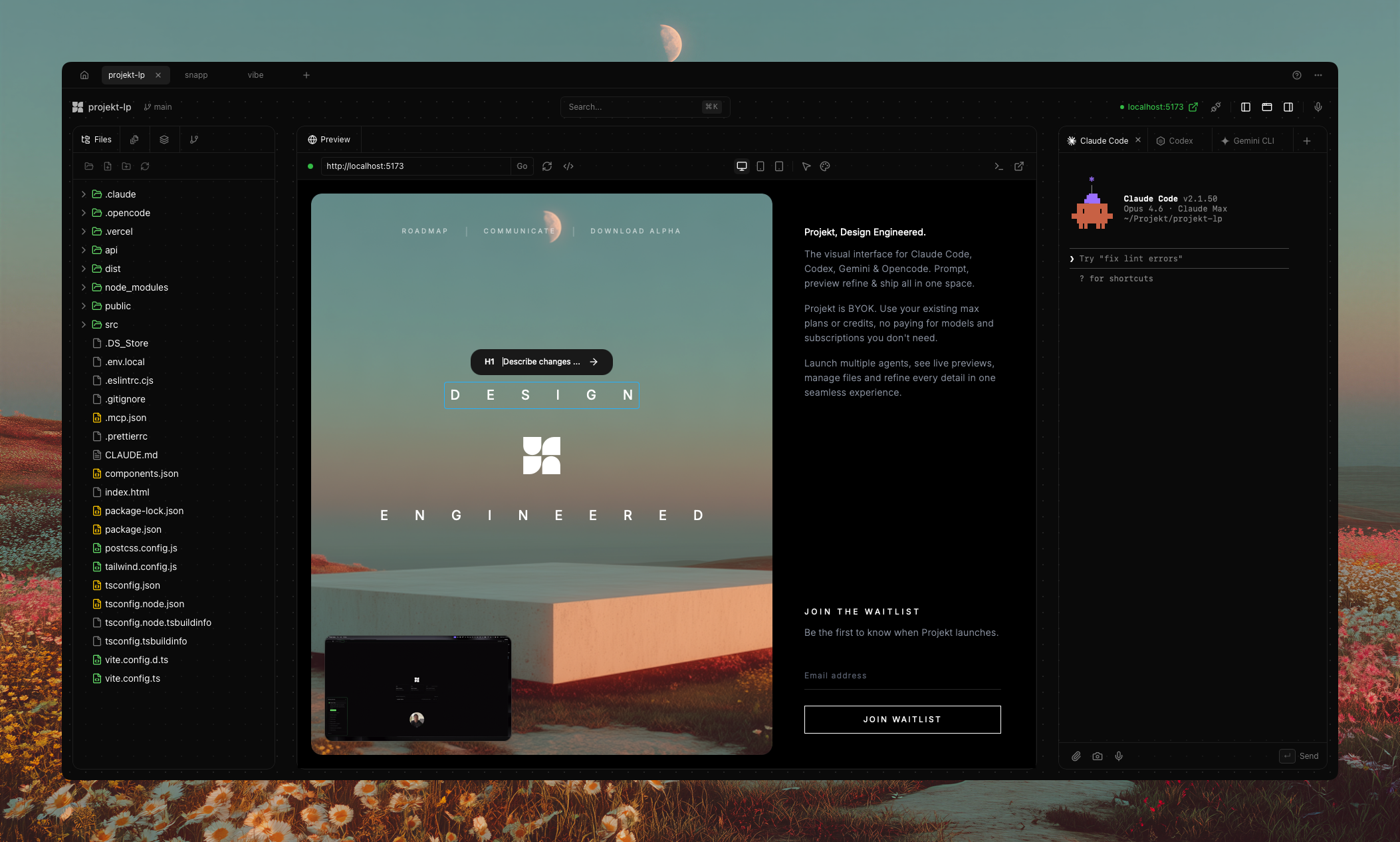
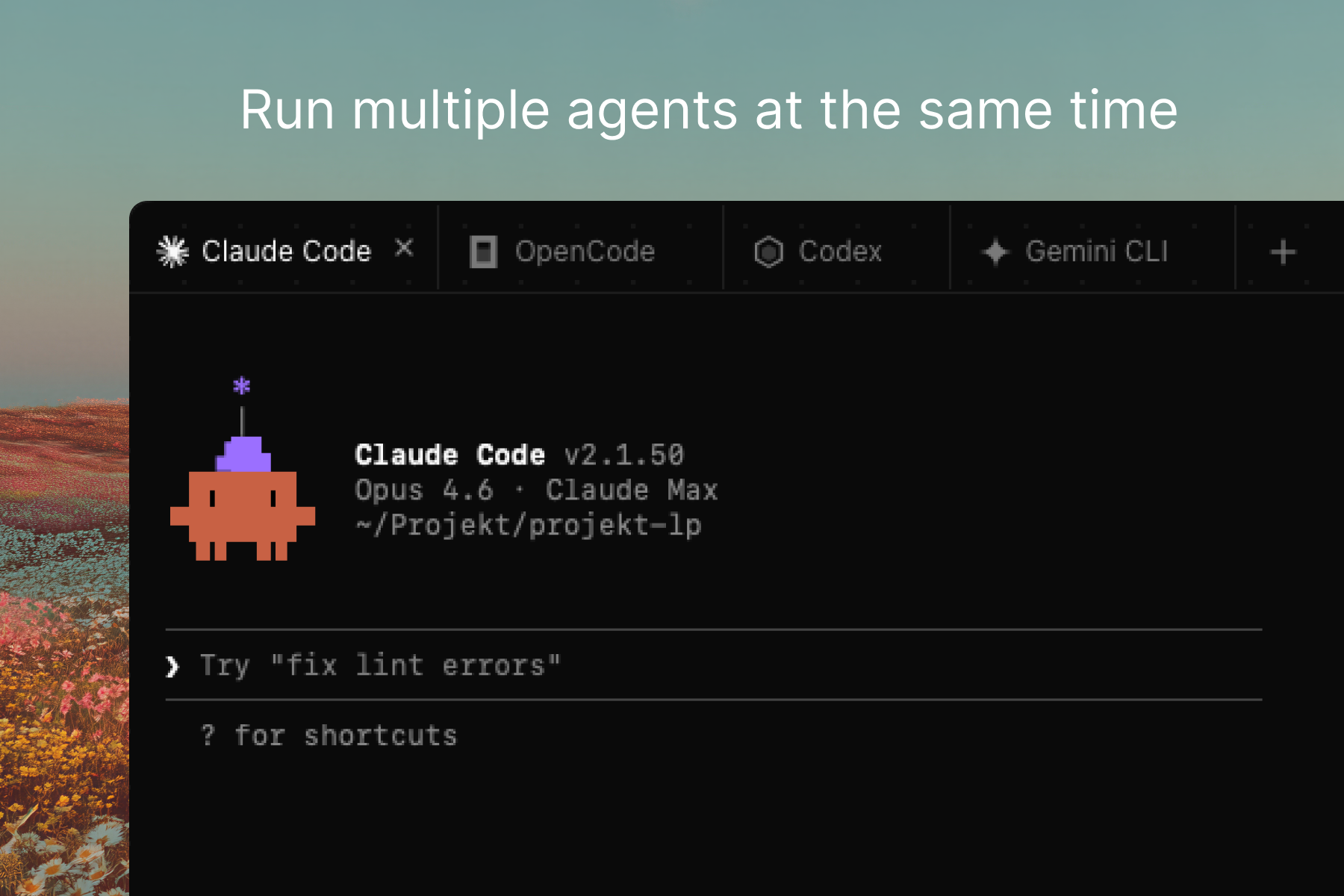
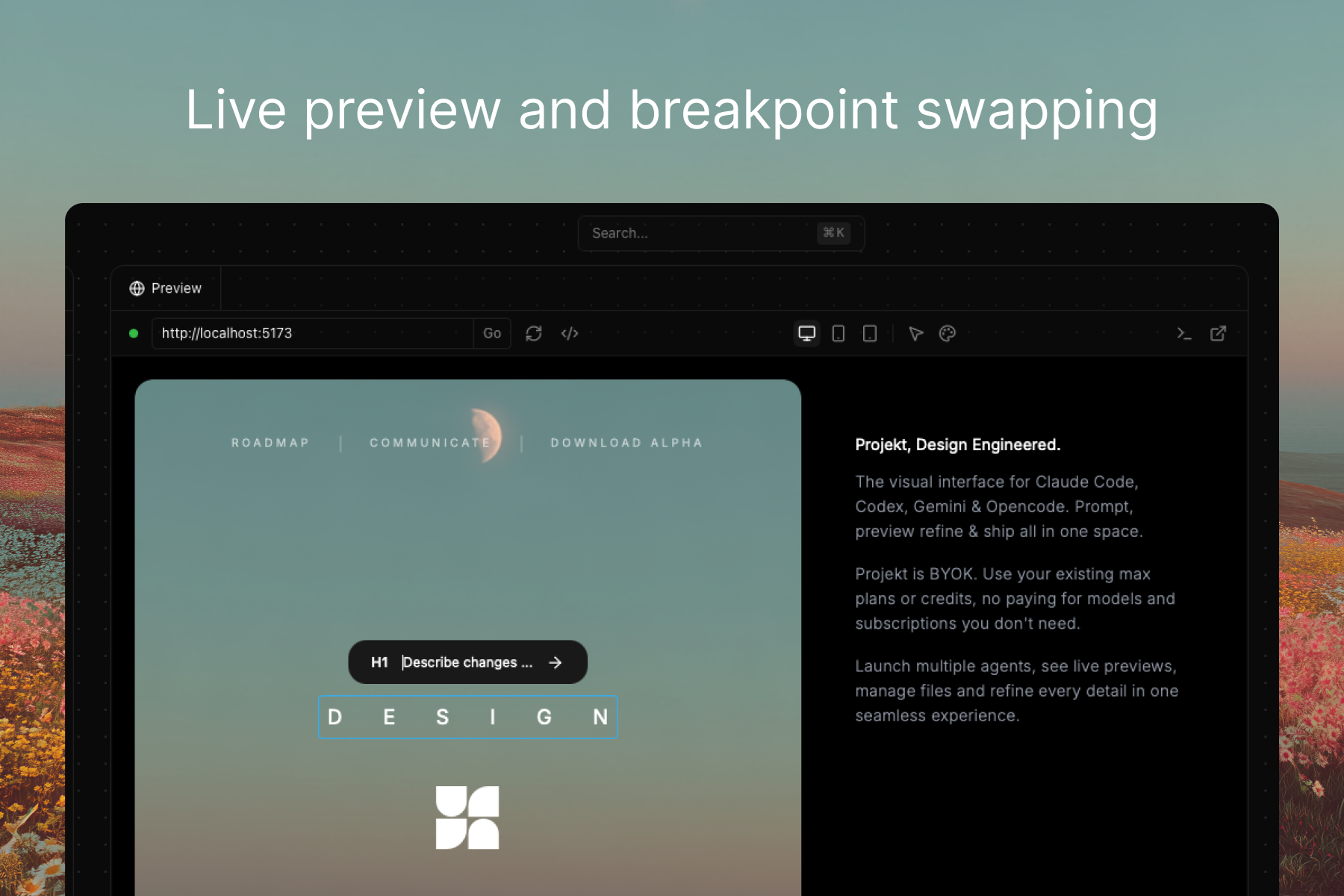
One workspace for builders. Run multiple AI coding agents side-by-side with live preview, inline editing, and file management. Bring your own keys — no lock-in, no extra subscriptions.

Building with AI coding agents is powerful and rapidly changing how we ship products. But the workflow around them is fragmented. We're either forced to use engineering-based IDEs or oversimplified no-code tools. And if you're not using either, you're bouncing between a terminal, a browser, a file manager, and a code editor, constantly switching context just to prompt, check the result, and make an adjustment.

I wanted something that felt as simple as a no-code tool but gave you the full power of any coding agent. Not a new AI, a better workspace for the ones that already exist. What's more, I wanted it to work with any project and didn't want to lock people in to a particular language or force them to pay for models they're not even going to use.

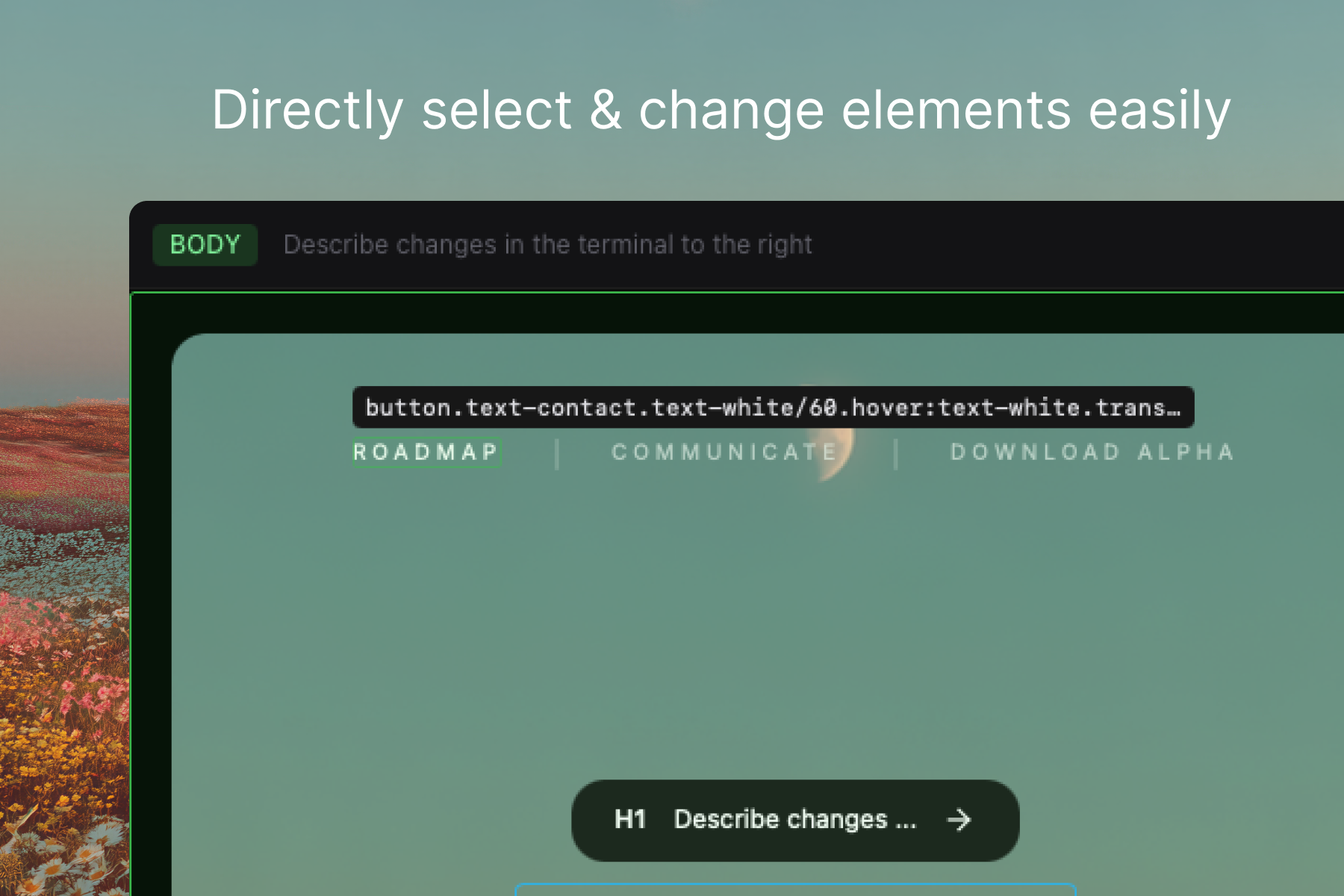
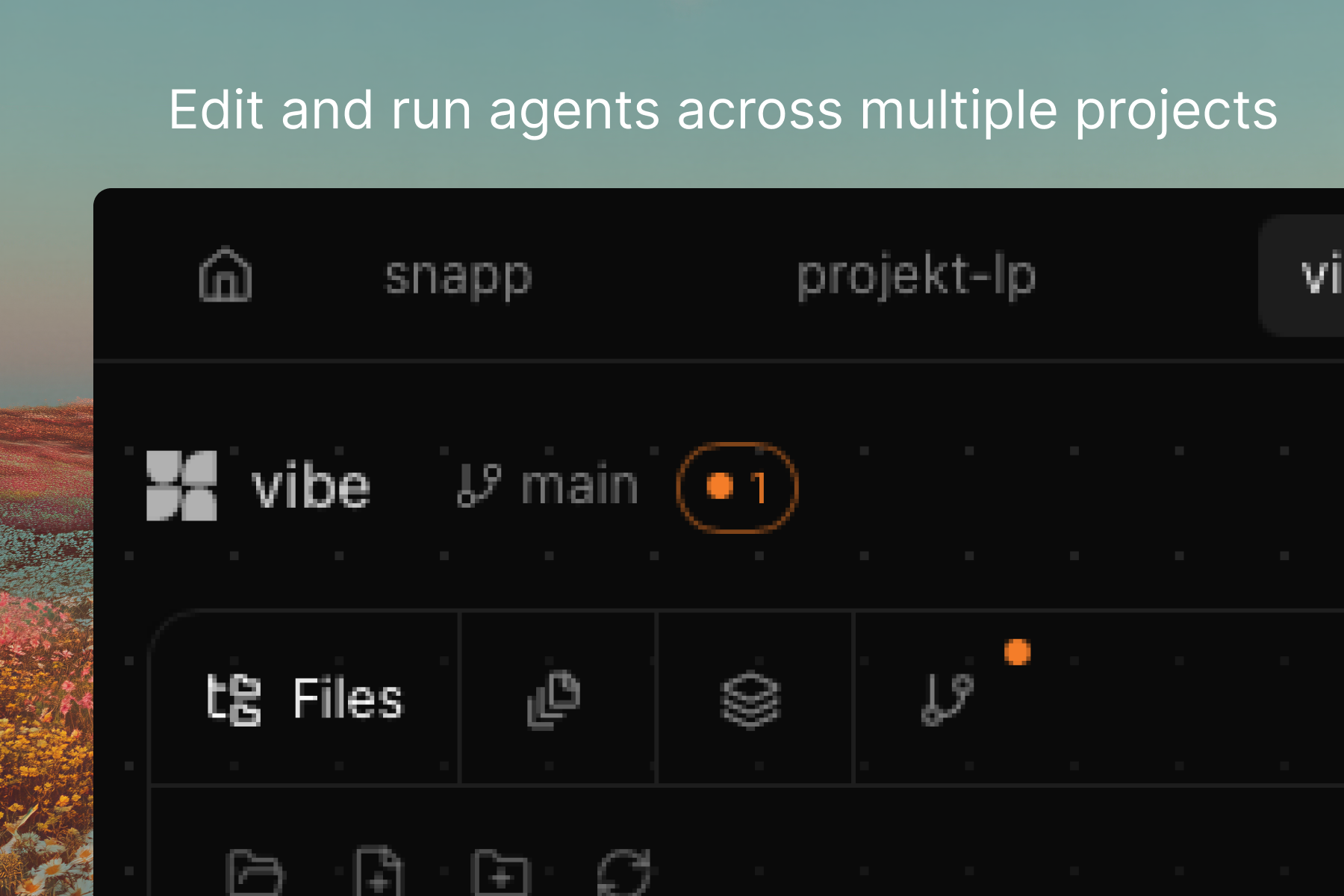
That's Projekt. One platform supercharging your agent/s: live preview, file browser, inline code editing, element selection, multi-agent tabs, git actions and many quality of life improvements you'll quickly realize you can't do without.

The best part is Projekt is agent-agnostic, aka BYOK, bring Claude Code, Codex, Gemini, Opencode, whatever you prefer. Your key, your agent, your workflow.

This is a free early alpha and I'm building the roadmap in public. If you build with AI and you're tired of tab-switching and duct-taping your workflow together, I'd love to hear what you think. Help me shape the future of building with Projekt!

3
回复

@bobbydesign 

This hits a real pain point. Building with AI coding agents is powerful, but the workflow around it is still messy. Most of the time I find myself jumping between a terminal, an editor, a browser preview, and the AI chat just to make one change. Prompt, wait for code, switch tabs to see what happened, then come back again to adjust it. The constant context switching slows everything down.

What I like here is the idea of a single workspace where the prompt, the preview, and the code all live together. Running different agents side by side with your own keys also makes a lot of sense. It keeps the workflow flexible without forcing developers into one model or ecosystem.

0
回复

@bobbydesign Congrats on your launch! Does this support integrations with other coding tools?

1
回复

Bring your own keys' is doing a lot of heavy lifting here, no lock-in is genuinely rare in this space.

How does it handle context sync when multiple agents are working on the same file simultaneously? That's the part I'd want to stress test before switching my stack. Building Fillix (makes job hunting embarrassingly easy) mostly solo so far, but this is tempting.

3
回复

@alamenigma appreciate you noticing how important that it is. Bring your own keys was critical to launch with and no lock-in as well. The power of these amazing agentic tools is being able to work adapt to any codebase so you could literally point Projekt at any new or existing project and get working without worrying about some bespoke injections or having to "migrate" to something else.

I plan to add the ability for both more agents out of the box but also the ability to bring any agent soon!

Thanks for taking a look!

2
回复

So cool! and really nice UI. Will explore using this

2
回复

Really impressed with some of the design decisions here. Great work @bobbydesign

2
回复

Congrats on the launch, @bobbydesign! This one's for the people who constantly bounces from one file manager to another.

2
回复
@neilverma thanks! Reducing contact shifting was definitely something I was looking to help with 😵‍💫
1
回复

Having one workspace to design, build, and experiment with AI coding agents sounds super powerful. What kinds of projects have people been building with Projekt so far?

0
回复

@bobbydesign Congratulations on the launch. What is the advantage over Cursor?

0
回复
#10
day1tabs
Your tabs close at midnight.See which ones you actually used
113
一句话介绍:一款在午夜自动关闭浏览器标签页并生成使用总结的Chrome扩展,通过强制每日“清零”和提供行为洞察,帮助标签页囤积者摆脱数字杂乱,专注于重要信息。
Chrome Extensions Productivity
浏览器扩展 生产力工具 标签页管理 数字极简主义 自动清理 行为分析 隐私安全 免费工具 独立开发
用户评论摘要:用户普遍认可其解决“标签页焦虑”的核心痛点,认为“晨间总结”是最大亮点。主要反馈集中在:1. 对自动关闭的初始焦虑;2. 希望有更灵活的恢复机制(如7天存档);3. 建议增加标签页访问频次统计。开发者回复积极,解释了多重安全网并收集了需求。
AI 锐评

day1tabs 表面上是一款解决浏览器标签泛滥的工具,但其真正的产品哲学在于构建一个“行为矫正系统”。它并非简单的清理工具,而是通过“午夜强制清零”这一精心设计的“强制函数”,结合带有轻微负罪感提示的“晨间报告”(Used/Didn‘t use),从心理层面干预用户的数字囤积习惯。其价值不在于关闭了多少标签,而在于通过每日重复的仪式感,使用户重新审视“打开”与“使用”之间的巨大鸿沟,从而从根本上改变行为模式。

与OneTab等归档工具或Arc浏览器的闲置关闭相比,它的“激进”在于其无差别关闭(除白名单外)和基于实际使用的二元分类。这摒弃了“可能还会用”的幻想,直指问题核心:大部分标签只是心理安全感的无效载体。产品强调的“零数据收集、全本地处理”在当下不仅是隐私卖点,更是降低用户尝试心理门槛的关键——它无需信任。

然而,其长期价值面临挑战:1. **用户适应曲线陡峭**:初始焦虑是用户流失的主要风险,尽管有多重恢复机制,但心理安全感难以完全靠技术补足。2. **场景局限性**:对于需要跨天连续工作的深度研究或创作流程,其“日抛”模式可能造成干扰,依赖用户手动设置“永不关闭”域名是对产品自动化的妥协。3. **价值可持续性**:一旦用户习惯养成,标签数量自然受控,此时产品的核心自动关闭功能可能从“必需品”降级为“提醒器”,用户粘性如何维持?开发者提及的“智能过滤”(仅关闭未使用标签)是双刃剑,虽降低焦虑,但也削弱了其“强制反思”的核心理念。

总体而言,这是一款理念先于功能、具有鲜明价值观的“观点型产品”。它不追求满足所有用户,而是精准服务于那些意识到自身习惯问题、并渴望借助外部规则实现改变的群体。其成功与否,将取决于有多少用户能接受这种“数字断舍离”的轻度痛苦,并内化为新的习惯。

查看原始信息
day1tabs
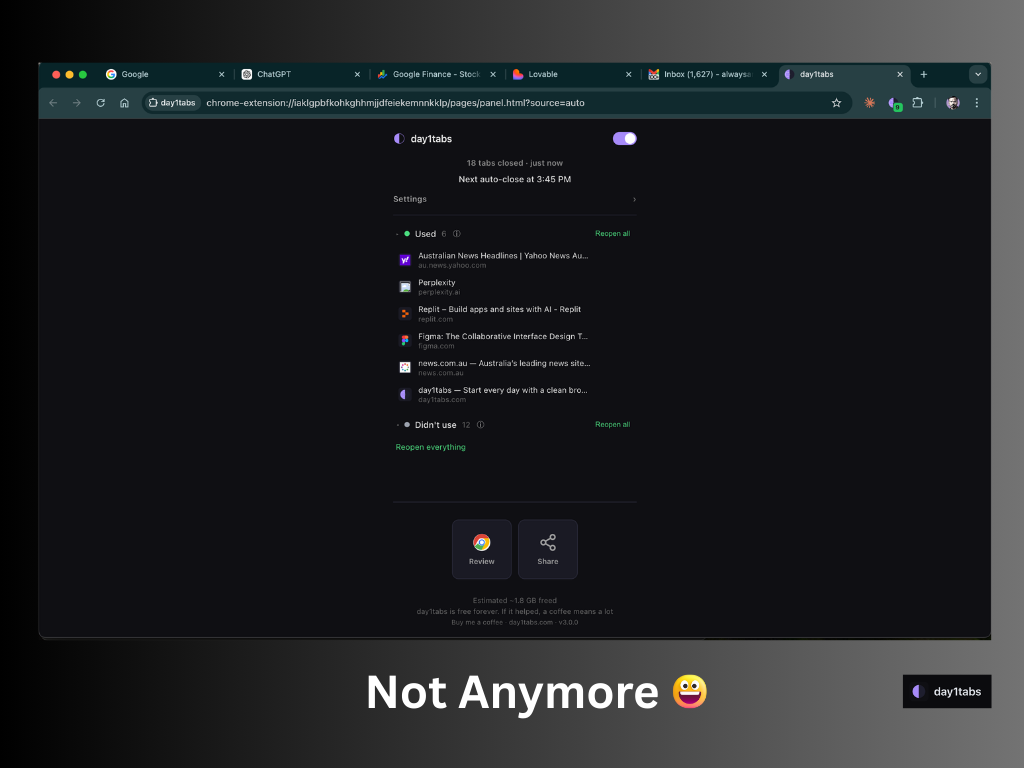
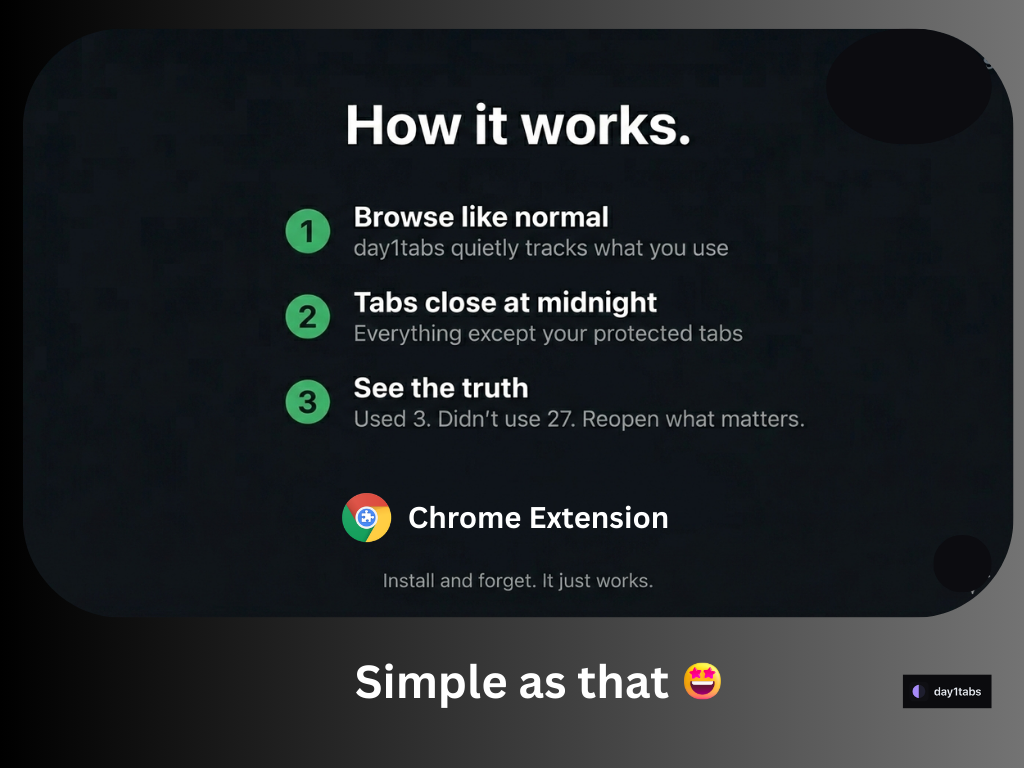
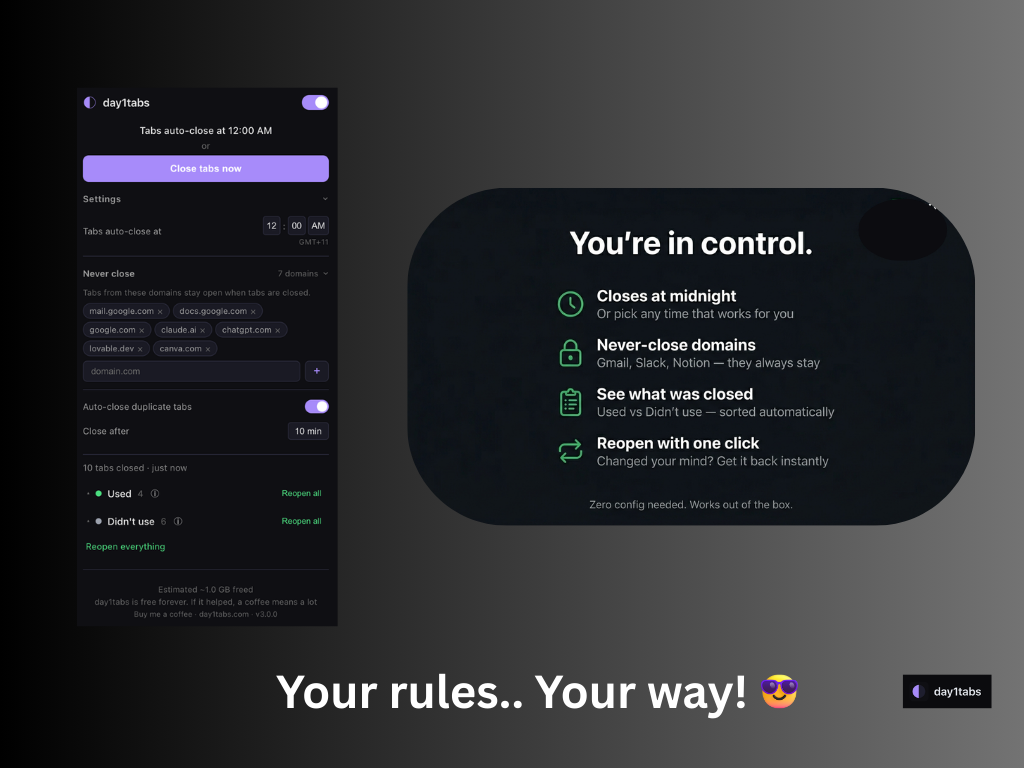
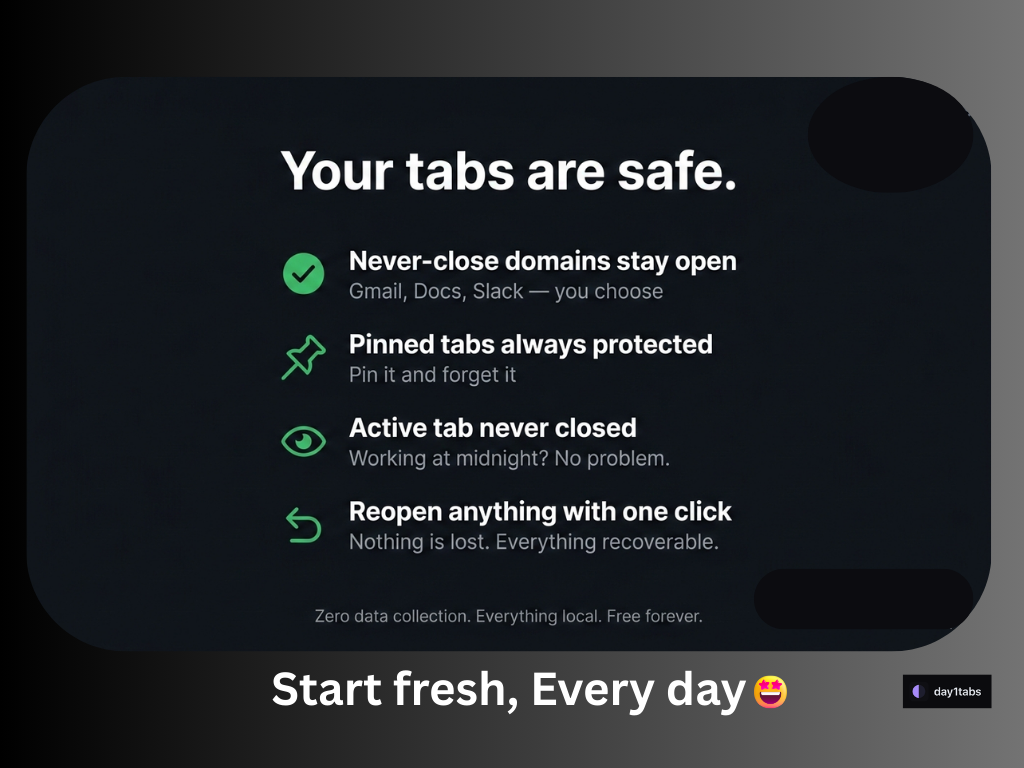
You have too many tabs open. You'll never go back to most of them. day1tabs closes your tabs at midnight and shows you which ones you actually used — sorted into "Used" and "Didn't use." Reopen what matters. Let the rest go. → Never-close domains stay open (Gmail, Docs, Salesforce) → Pinned tabs and active tab always protected → Everything recoverable until next auto-close Zero data collection. Everything local. Free forever. Built by a solo dev with too many tabs and not enough discipline.
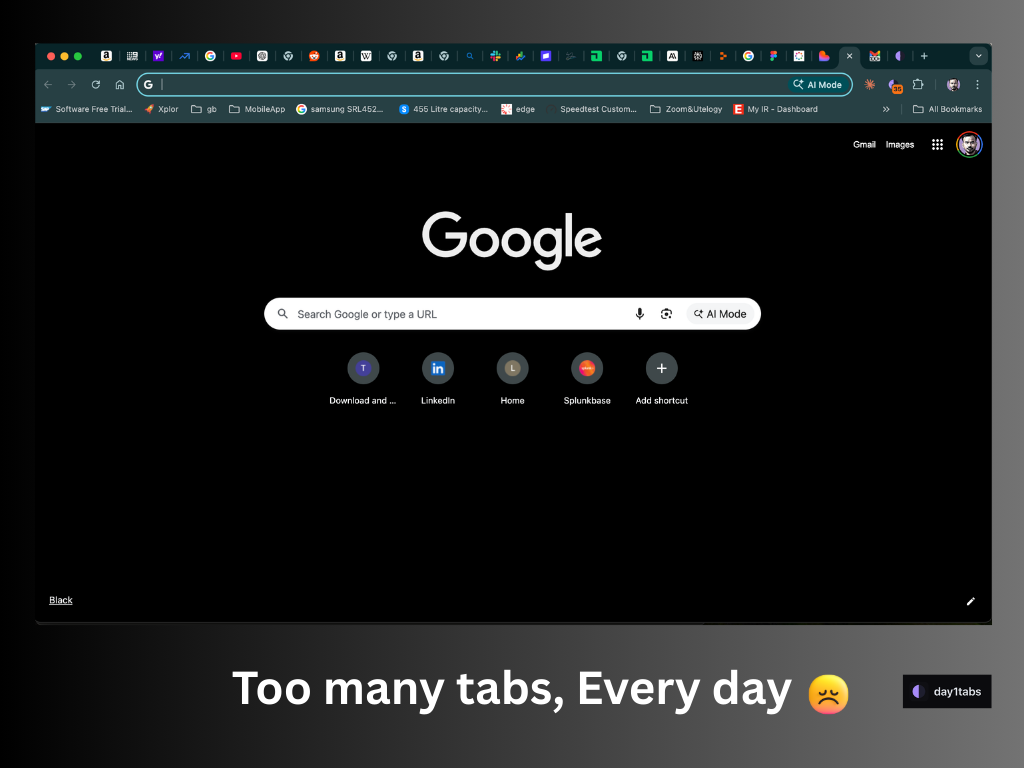
Hello Fellow Product Hunters! 👋 I'm Arafath, and I built day1tabs because I had 50+ tabs open every single day and kept telling myself I'd "get back to them." I never did. So I built a Chrome extension that forces a clean slate at midnight. After using it for 2 weeks, I discovered that about 80% of my tabs were never revisited. Not once. The part I didn't expect: it's not the closing that's valuable — it's the morning summary. Seeing "Used 3 / Didn't use 27" changes how you think about your browsing habits. What makes day1tabs different from OneTab or Arc's auto-archive: - It closes everything** (not just inactive tabs) - It classifies by actual usage, not just time - The daily summary shows you the truth about your tab habits - Zero data collection — everything stays on your device **except the things that you configure as "Never close" I went through 3 complete redesigns based on user feedback in 8 days. A university student forgot the extension existed and then said "wow, I have less tabs today for once." That's the reaction I'm building for. Free forever. No catch. I just want 100K people to start every day with a clean browser. Would love your honest feedback — what would make you actually keep auto-close enabled?
4
回复

@aalabs yeah I am also a victim of 30+ tabs :)
Some of them are open to read later. Most of the times I don't go back :) but the hope, the hope is still there

1
回复

@aalabs Auto-close only sticks when recovery is painless. day1tabs' midnight clean slate plus the morning Used vs Didn't use recap is a great loop. Add a 7-day shelf, one-click restore, and Never close rules by domain or group, then it beats OneTab dumps or Arc's idle-timer archive.

0
回复

Built by a solo dev with too many tabs and not enough discipline' might be the most honest product description I've ever read on Product Hunt. 😂

The midnight reset is genuinely clever - it's not blocking you, just creating a natural forcing function. Fellow Chrome extension builder here (Fillix - makes job hunting embarrassingly easy), and the 'everything local, zero data' approach is something more extensions should commit to upfront. Congrats on shipping!

2
回复
@alamenigma Haha thank you — that tagline wrote itself honestly 😄 I genuinely had 50+ tabs open while building this. The ‘forcing function’ framing is exactly it — I didn’t want to block or restrict anyone, just create a natural moment of reflection every day. Midnight felt right because it’s a clean reset, not an interruption. And fully agree on the local-first approach — for a tool that sits in your browser all day, trust matters more than features. Zero data collection wasn’t a marketing decision, it was the only decision that felt right. Checking out Fillix now — love seeing what fellow extension builders are shipping. Congrats on that too! 🙌
0
回复

After using for a couple of days this helped me start my days focused instead of scrolling through my millions of other tabs. Especially with exam season this was very helpful!

1
回复

@shaffana_mustafa 

This made my day !! Exam season with 50 research tabs open is a special kind of chaos — really glad day1tabs helped you stay focused.

This is exactly why I built it — whether you're a student in exam season, a professional drowning in work tabs, or just someone who opens 'I'll read this later' tabs at midnight — the problem is universal, but the solution is the same.

Start fresh, every day 🌙

Good luck with your exams 🎓

0
回复

This is so cool! :)

ATM I use TabsMagic, but it doesn't have this feature, so I have all those tabs open anyway. Painpoint was spotted really well here.

1
回复

@busmark_w_nika 

Thank you! Honestly, I built this because I had the exact same problem.

Glad the pain point landed.

Hope day1tabs earns a spot in your daily workflow ! 🙌

1
回复

As a bit of a messy person when it comes to opened tabs, I find it interesting, however, some of them I keep open to use as reminders. that I will check in the upcoming hours or days. I think that we should be able to sort of manually edit or ask for specific pages not to be closed, for example when you started a draft but did not finish it(did not press on save), on a website that you do not use daily. Would I lose that "draft"?

1
回复

@viktorgems 

Great question Victor — and totally valid concern!

It's not as bad as what you are imagining, the good news is there are actually multiple safety nets built in 😊

  1. Never-close domain — just add the domain once (e.g. notion.so) and day1tabs will never touch it, even tabs you rarely visit

  2. Pin it — Chrome pinned tabs are always protected, midnight or not (this takes precedence over my extension settings)

  3. Reopen everything — even if it closes, one click in the panel restores everything back exactly as it was — within 24 hours those tabs are never truly gone

  4. Morning recap — day1tabs opens automatically every morning showing exactly what was closed the night before (so this will be the first thing you will see every morning), so as long as you catch it within before scheduled run you're completely safe 🙌

  5. Chrome history — worst case of all, it'll always be there in history

day1tabs isn't a tab organiser — it's a declutterer (if that's even a word ;))

It's a small behaviour shift but once it clicks, you'll notice Chrome stops grinding, your machine feels faster, and most importantly you start each day fresh.

I ran a beta with 20 testers before launch and retention was 90%+ — most people hit the same fear you described in week 1, then never looked back. I use it myself every day.

The tab-as-reminder idea is genuinely noted though — added to the backlog to think through. Thanks for the thoughtful feedback! 🙏 and looking forward to your feedback after few days of usage, we built it for users like yourself, and if you still think I have to add something, please let me know.

1
回复

Nice idea, the morning summary sounds like the most interesting part. If a tab gets closed but I suddenly need it later, is there an easy way to restore it from previous days?

0
回复

I swear I end every day with 30+ tabs open thinking I’ll come back to them later. The daily summary idea is super clever. Did people find it stressful at first having everything close automatically at midnight?

0
回复

@thegreatphon 

Haha yes — almost everyone felt that at first! The most common reaction from my 20 beta testers was 'wait, where did everything go?!' 😄

But here's the thing — it's not as scary as it sounds. There are multiple safety nets: never-close domains (add notion.so once, it's always protected), pinned tabs (Chrome's own protection, midnight proof), one-click reopen everything within 24 hours, a morning recap showing exactly what closed the night before, and worst case — Chrome history always has your back.

Within a few days the stress flips completely. You stop hoarding because you know midnight is coming — and the morning summary becomes something you actually look forward to. 90% of my beta testers stuck with it after week 1.

day1tabs isn't a tab organiser — it's a declutterer (if that's even a word 😄). Small behaviour shift, but once it clicks you'll notice Chrome stops grinding, your machine feels faster, and you start every day fresh. 🙏

0
回复

I'm a bit of an "a-type" personality, so my tab hygiene is pretty clean, but I can definitely see how this could be useful for a ton of folks I screenshare with and notice the spiderweb mess of tabs they have open. How do they even live like that?!

Curious if you have any plans for the next version of the extension?

0
回复

@dkofoed

Ha! You're the person everyone wishes they could be.

The rest of us need day1tabs to do what you do naturally.

For what's next — the biggest thing I'm hearing is

the fear of "will I lose something?" That anxiety

haunts people even though 90% of their tabs are noise.

So I'm working on smart filtering (more AIing the product): instead of closing

everything, only close tabs you didn't use and keep

the ones you did. That way even the messiest hoarder

gets a clean browser without the fear.

And if you know anyone living in that spiderweb mess —

send them our way 😄

0
回复

This is awesome and I have like a lot of tabs and I have really clean UI later and Its perfectly archived. super.

0
回复
@ravi_senthazal thank you for your kind feedback ! Means a lot ❤️
0
回复

Hey @aalabs congrats on the launch! This is a super useful extension 🚀 and I've already gone and added it to Chrome! Thank you for making it free, but honestly I would pay for something like this. Maybe not recurring haha but definitely as a one-time purchase.

One thing I would recommend is in the daily summary, is there a way to see how many times you visited a tab within a day? I could see on the video, you define what's popular by usage but would it be good to also see how many times a tab was visited or if it was re-visited a number of times each day?

0
回复

@minhajulll Thank you for installing — that means a lot! 🚀 And noted on the one-time purchase, good to know (Please remember you can still buy me a coffee ;) )

The visit count idea is genuinely interesting — right now it's binary (used/didn't use) but tracking frequency within a day is a natural next step. Adding it to the v3.1 list. Thanks for watching the demo closely enough to spot that!

1
回复
#11
Locally AI + Qwen
Run Qwen's latest models locally on your iPhone
107
一句话介绍:一款可在iPhone和iPad上本地运行最新Qwen大模型的APP,在离线、隐私敏感的场景下,为用户提供了无需联网、无需登录的私有化AI能力,解决了数据安全和即时可用的痛点。
iOS Artificial Intelligence
本地AI 移动端大模型 隐私保护 离线运行 Qwen模型 视觉理解 混合推理 iOS应用 边缘计算 人工智能
用户评论摘要:用户普遍赞赏其离线、隐私、免登录的核心优势。有效建议包括:希望增加下载前的设备资源预估、设置推理超时、优化默认模型选择。开发者回应模型需单独下载,可按设备选择大小。
AI 锐评

Locally AI + Qwen 的出现,与其说是一次产品发布,不如说是对当前AI应用主流商业模式的一次“隐私叛乱”。在绝大多数AI应用将用户数据赶往云端以构建壁垒和盈利的当下,它旗帜鲜明地选择了另一条路:将模型完全置于用户设备之上。

其真正价值并非单纯的技术移植(在移动端运行数十亿参数模型),而在于重新定义了AI应用的“权力关系”。它将数据的控制权和所有权彻底交还给用户,实现了真正的“私有化AI”。这精准击中了高净值、高隐私敏感度用户的核心诉求,构成了其最坚固的护城河。产品巧妙地引入Qwen 3.5 Small系列模型,提供从0.8B到9B的选项,是务实且关键的一步。它承认了移动设备算力的异质性,通过“可选择的性能”取代“一刀切的体验”,让用户根据自身设备进行权衡,这比强行塞入一个庞大模型而导致的糟糕体验要聪明得多。

然而,这条道路布满荆棘。本地计算的性能天花板、模型更新的便捷性、以及如何建立可持续的商业模式(当“无登录无云端”也意味着难以收集数据和变现),都是其必须面对的长期挑战。用户的评论也指向了体验深水区的问题:缺乏设备资源预估会导致下载和运行的试错成本。这揭示出,从“能运行”到“体验流畅”之间,仍有大量工程优化和用户体验设计工作要做。

总体而言,这款产品是AI民主化进程中的一个重要信号。它证明,在追求性能巅峰之外,存在一个以控制权、隐私和即时可用性为优先级的庞大市场。它可能不会立即取代云端AI的霸主地位,但它为整个行业树立了一个关键的“价值对立面”,迫使所有从业者思考:在云与端的频谱上,自己的产品究竟站在哪里。

查看原始信息
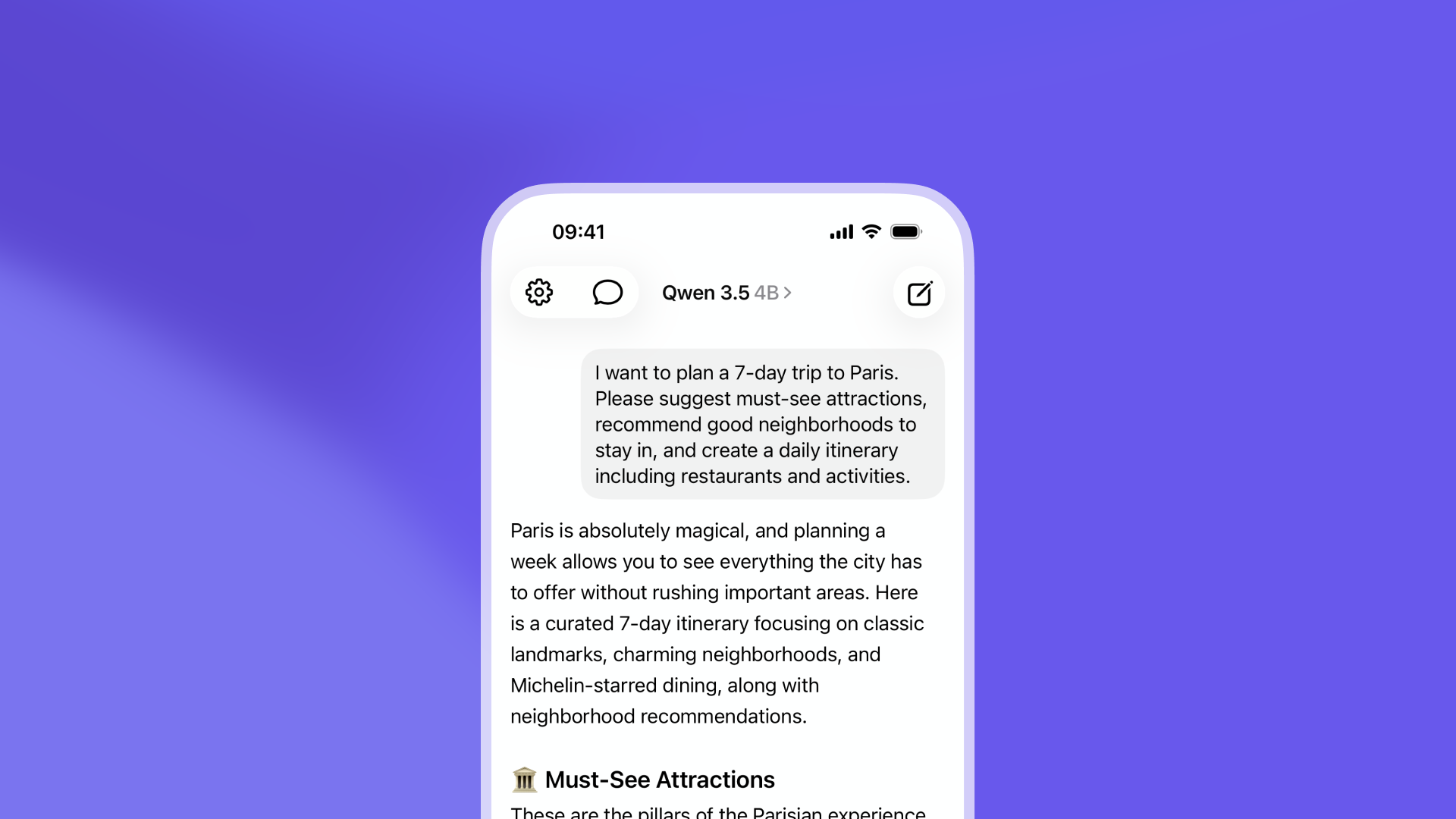
Locally AI + Qwen
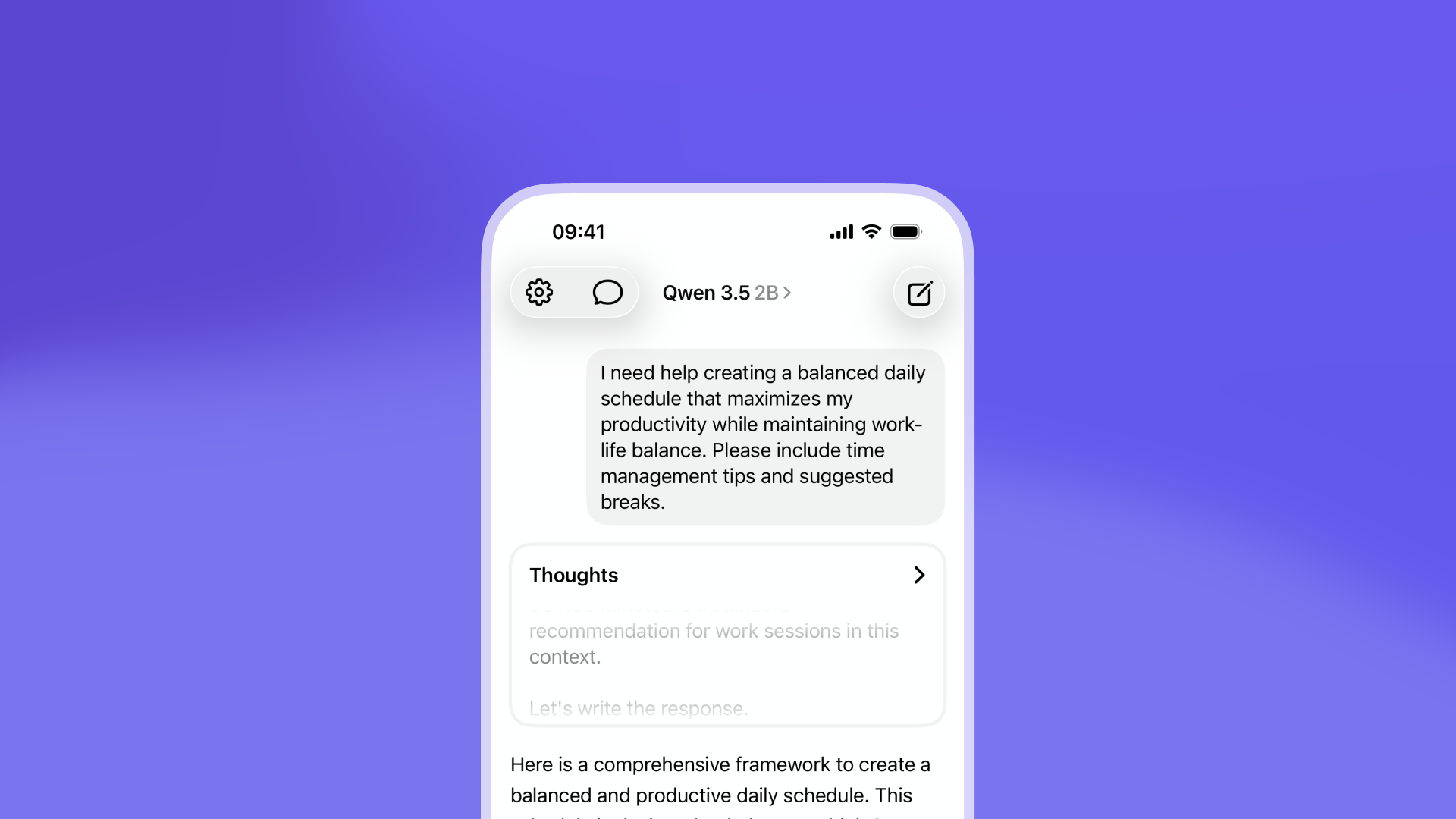
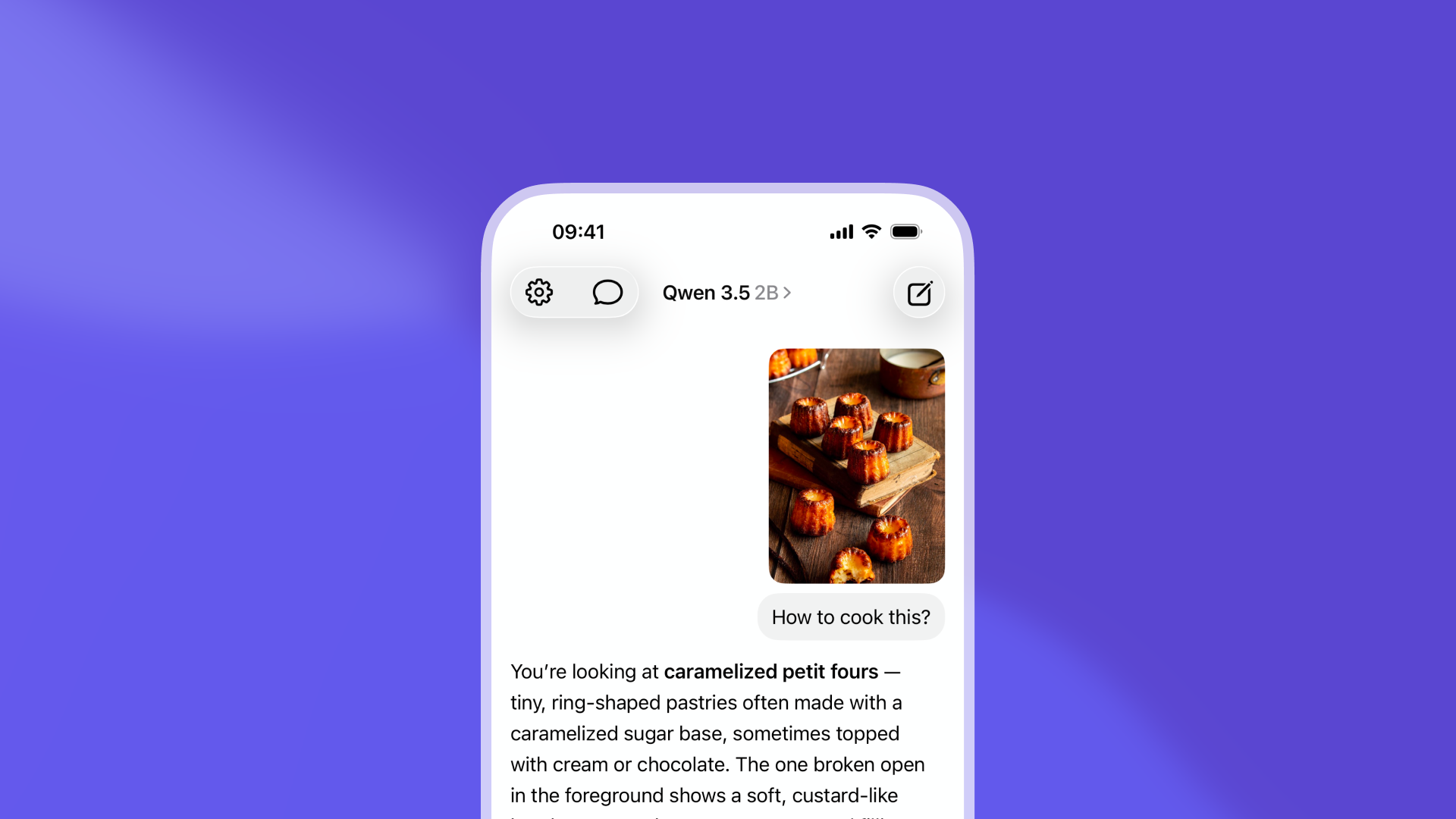
Run Qwen’s latest models locally on your iPhone and iPad. Powerful models with advanced vision understanding and hybrid reasoning.

Literally the best app to experience the latest @Qwen3 local AI models on your phone! 🚀

3
回复

@zaczuo Thanks a lot! Many improvements are planned to make the experience even better 🚀

1
回复
Hello ProductHunt! 👋 The new Qwen 3.5 small models are now available for iPhone and iPad in Locally AI. The new models beat models 4 times their size, support vision and reasoning toggle. Four sizes are available: 0.8B, 2B, 4B, and 9B (available on supported iPads). Enjoy!
2
回复

@adrgrondin Seeing a vision + reasoning toggle for the Qwen 3.5 small lineup (0.8B, 2B, 4B, 9B) makes on-device model choice feel less like a gamble. Do you show per-device RAM, disk, and battery estimates before download? A default picker and a timeout for reasoning mode would save a ton of trial and error.

0
回复

@adrgrondin The 0.8B option is a smart inclusion. Most apps in this space only ship the biggest model they can fit and then wonder why people bounce after waiting 30 seconds for a response. Having that range lets people actually find what works for their device instead of guessing.

0
回复

"Offline + private + no login = the holy trinity that 90% of AI apps ignore because cloud is easier to monetize. Locally AI is betting on the right side of the privacy conversation.

As someone building Fillix, a Chrome extension that makes job hunting embarrassingly easy, the 'no login required' UX decision hits close to home. The best tools get out of your way instantly. Apple Silicon optimization is the cherry on top. Congrats on shipping!

2
回复

Great launch 👏

Running powerful models locally on iPhone and iPad is exactly where things are heading — privacy-first, fully offline, no logins, no cloud dependency.

Excited to see Qwen integrated here. Strong reasoning + vision capabilities, and having that fully on-device is a big step forward in user control and data ownership.

Curious about:

– inference speed across different devices

– memory usage and optimization

– how the model download and UX flow are handled

If performance holds up, this could be a serious alternative to cloud-based AI apps. Congrats on the launch 🚀

1
回复

@mx_mt I would recommend the latest iPhones, but even older models work well. There are models for all iPhones; you choose which size you want to run. The models are not bundled in the app; you choose which one to download once the app is installed.

Hope this makes things clearer!

0
回复

Qwen 3.5 2B vision on an iPhone 16 Pro is astonishing. This is absolutely the future of device AI. I can't wait for OSes that use AI as the kernel for everything.

0
回复

curious to check it out

0
回复
#12
agile.flights
Agile died in a JIRA board - replace sprints with flights
106
一句话介绍:一款基于“航班”方法论的项目管理工具,通过“航班、机长、机组、货箱”的直观隐喻,替代传统敏捷开发的“冲刺”,解决了团队在Scrum等框架下会议繁冗、沟通低效、进展对外汇报不清晰的核心痛点。
Task Management Software Engineering Developer Tools
项目管理 敏捷开发 团队协作 流程优化 效率工具 方法论 AI协作 可视化 替代JIRA 航班隐喻
用户评论摘要:用户普遍认可其直观隐喻改善了向上及跨部门沟通。主要问题与建议包括:方法论是否足够有效、如何处理需求变更与范围蔓延、仪表板UI需改进、希望增加“自定义航空公司”等游戏化元素,以及明确其与现有产品待办事项(如JIRA)的集成关系。
AI 锐评

Agile.flights 的实质,并非简单的项目管理工具创新,而是一次对敏捷开发异化的“祛魅”运动。它敏锐地刺中了现代敏捷实践的软肋:仪式感压倒交付、内部指标(如故事点)脱离业务语境、循环的“冲刺”消解了终局责任感。其提出的“航班”方法论,价值核心在于构建了一套无缝衔接技术团队与商业世界的“通用语”。“遇到逆风”、“延误”、“降落”这些表述,天然被所有利益相关者理解,极大地压缩了沟通成本,这正是其宣称“无需翻译层”的底气。

然而,其“去过程化”的极简主张是一把双刃剑。它用“完成与否”的二元判断取代了故事点估算,这对于崇尚确定性的管理者而言,可能意味着透明度的降低和风险的后置。工具本身不解决需求优先级这个“最昂贵决策”,反而将矛盾显性化地抛回给“机长”和团队,这要求组织必须具备高度的授权文化与成员担当。从评论中的“范围蔓延”提问即可见,方法论的成功极度依赖“机长”的权威与团队的纪律,否则“航班”极易陷入“不断改签”的混乱。

产品诞生于AI编码普及的当下,其定位颇具深意:它承认AI提升的是个体生产力,但团队协同与项目可见性的问题因此更加凸显。这一定位使其避开了与AI编码工具的正面竞争,转而瞄准了更上层的“工作协调操作系统”。最终,Agile.flights能否成功,不取决于其仪表板是否酷似机场大屏,而在于它能否推动团队从“迭代循环”的惯性思维,真正转向“有明确目的地的航行”这一心智模型。这是一场管理文化的实验,而不仅仅是一个工具的发布。

查看原始信息
agile.flights
Replace sprints with flights. A project management tool built around the Flights methodology - time-boxed initiatives with captains, crew, and crates.
Over year ago, our engineering team ditched Scrum. Not because we read some contrarian blog post, but because we looked at our calendars and realized we spent more time talking about work than doing it. Standups that ran long. Grooming sessions nobody prepared for. Retros that concluded "we should have fewer meetings" and then we'd schedule a meeting to discuss that. We tried going process-free. That lasted a few weeks before leadership started asking "when does this ship?" and nobody had an answer. So we landed somewhere in the middle. It's called Flights - and it's not new; someone tried it back in 2021: https://simonhoiberg.medium.com/... The idea is dead simple: a project is a flight. It has a takeoff date, a landing date, and a captain who's responsible for getting it there. Tasks are crates loaded onto the flight. Team members are crew. People doing maintenance between flights are ground mechanics. That's it. No story points. No velocity charts. No burndown graphs that give everyone a false sense of confidence. A crate is done or it's not. The flight lands on the date or it doesn't. The thing that surprised us most was how well it communicated upward, sideways and to the rest of the organisation. When we told our CEO "sprint velocity dropped 15%," we'd get blank stares. When we said "this flight is hitting headwinds but still lands Friday," everyone in the room knew exactly what that meant. No translation layer needed. We started with sticky notes and a shared Figma file. It worked well enough that we built a proper tool around it - an airport-board-style dashboard where you see what's in the air, what's on the runway, and what's landed. Captains, crew, status - all visible at a glance. We know the obvious reaction: "AI is writing all the code now, who needs project management?" Honestly, we've found the opposite. AI makes individual developers faster, but it doesn't solve the coordination problem. If anything, teams ship more things in parallel now, and the need for visibility into what's actually happening has gone up, not down. Your AI pair programmer doesn't know that another team's flight just went into emergency and yours needs to adjust course. We've been running it in production for over a year across multiple teams. It was also built as a human-AI collaboration and experiment - Engineers working with Claude from first commit to production, including the database migrations, E2E tests, CI/CD. Live demo: https://agile.flights Handbook (explains the methodology): https://agile.flights/docs Happy to answer questions about the methodology and the tool.
4
回复

@henrikhussfelt Hmm, very interesting — never heard of it before. It's just a metaphor though — does that really resonate with people enough to work so well?

1
回复

Great work launch team! 🚀 I love everything flight, so this is a fantastic concept for engineers. Particularly captains, crews and crates. Superb way to gamify project management.

Would be great if you could add "teams" -> Custom Airlines ✈️

Scheduled activities -> Scheduled Maintenance / Food & Beverage time

Custom Boarding Pass showing project inception to Project go live date with a loading bar which you can show incremental progress on as tasks are completed.

Backlog -> This can be ATC tower

Would be great it you clicked on an item or card similar to ADO and you could see the boarding pass in the card and even if you added a Departure/Arrivals after duration showcasing when a project is due to be completed and maybe a delayed status if it misses the window.

Also the landing page is great but I think the dashboard UI could be better, maybe if you used the same background from the landing page as opposed to just off white/grey.

Wishing you all the best with the launch! ❤️

1
回复

@minhajulll Awesome feedback!

Looking to create even more of these "Flight feelings", and added a bunch of these to our considerations in the backlog.

Elaborate on the "Custom Airlines" - that caught me specifically.

Regarding the Dashboard UI - it needs a lot of love, specifically the modals :peek: not there yet. :-)

1
回复

Nice work Henrik very cool concept here!
"we should have fewer meetings" and then we'd schedule a meeting to discuss that... make me laugh out loud, this is also quite quintessentially Swedish.
Curious about if there is a "backlog" in a similar way to scrum, and how does the team decide on what goes into the flight? I always find that selection (eg what to work on) is the most difficult decision and can be costly if you choose incorrectly. How does it work here with the Flights methodology?

1
回复

@jasondainter Yeah, that is essentially what we've seen in so many places. Meetings to sort out meetings death. And even where we are going with Engineering in general with support of AI there are so many organisations that are still having this battle - for a long time to come.

The Flights concept or this app does not at all care about the backlog - that usually lives in JIRA, Linear och Github. So there is a Backlog. The methodology and this app specifically helps focus on the essentials which is shipping - and defining what is shipped.

If one uses the "North Star" concept - which is much like general "Where we have to go" statements one ties the flights towards those and get invaluable metrics and updates towards the rest of the organisation - without having to dig through JIRA, Github, Releases or anything like that.

So essentially - this does not solve your biggest painpoint at all - and is still much of a Product Direction question. 🫣

1
回复

The "headwinds/tailwinds" language for communicating status upward is the best part of this. We burned months trying to get non-technical stakeholders to care about sprint metrics. Plain language that maps to something intuitive beats a velocity chart every time. How are you handling mid-flight scope changes when a captain wants to add crates after takeoff?

0
回复

@abayb we could not agree more - the amount of times we've seen teams struggling with getting across the table with lingo that the counterpart does not understand is unfathomable.

"Oh, turbulence. I get it... ...probably a bit delayed then."

This is up to the Crew and Captain as a team - the methodology and app specifically states that the ownership is with the crew and they are flying on a schedule. If you can fit crates for some reason then by all means refuel mid-air. :) Same with dropping crates, just push them out the door...

0
回复

Love the thought behind the name, @henrikhussfelt. Congrats on the launch!

0
回复

@neilverma Thank you!

0
回复

@henrikhussfelt Congrats in the launch! I love this ideology. You mentioned the captains are strict which is great cause we need someone focused in landing that plane! However how does a small team with only a couple managers/supervisors navigate this process with so many flights that need to take off? Or is this geared more towards bigger teams and enterprise?

0
回复

@jacklyn_i In the concept when applied we have not looked at managers or super-visors at all; the Team ships stuff. Which means the team is cross functional for the Flight they are on. One of the members is a Captain. This means the Crew gets proper autonomy and can ship what they have been requested to ship.

This methodology has been applied in both small teams and larger ones from what I have personally seen. :)

0
回复

The flight metaphor is doing real work here — a sprint implies circular motion (you always restart), a flight has a destination and a real cost to rerouting mid-air. The "no story points, just done or not" discipline is the key insight.

Curious how you handle scope creep: if a crate grows during the flight, do you reroute mid-air (extend the flight) or leave it on the tarmac for the next one?

0
回复

@giammbo I know - we love it :-)

We have to handle scope creep much the same way; but here you have a designated Captain that is in charge. Either drop a crate; or adjust the span (having Headwind). Communication is key.

0
回复
#13
AssemblyAI: Universal-3 Pro Streaming
The most accurate streaming speech model for voice agents.
103
一句话介绍:AssemblyAI推出的Universal-3 Pro Streaming是一款专为语音智能体打造的实时语音转文本模型,通过高精度识别不流利表达、字母数字组合、多语言混用及嘈杂环境下的语音,解决了语音交互场景中因识别错误导致的关键信息丢失和体验中断的核心痛点。
Developer Tools Artificial Intelligence Audio
实时语音识别 语音智能体 多语言支持 说话人分离 噪声环境 低延迟 API服务 语音转文本 实体检测 代码切换
用户评论摘要:用户肯定其高精度、低延迟和开发者体验。具体问题包括:在嘈杂厨房环境中对“维生素B12”等字母数字串的识别表现,以及是否真正解决了现有流式模型在复杂场景下的失败案例。另有评论指出其在金融等重信任领域的重要价值。
AI 锐评

Universal-3 Pro Streaming的发布,表面是技术参数的提升,实则是AssemblyAI对语音AI落地“最后一公里”障碍的一次精准爆破。产品宣传的“为困难场景而生”并非空话,它直指现有流式语音转文本(STT)在真实商业场景中的溃败点:关键字母数字信息的错误(如信用卡号)、说话人标签混乱、实时交互中的突兀打断。这些并非边缘案例,而是摧毁用户体验和信任的致命伤。

该产品的真正价值在于其“场景化封装”能力。它将语音识别从一个通用技术模块,重塑为一个针对“语音智能体”交互范式的垂直解决方案。集成实时说话人分离(Diarization)和全球语言支持,意味着开发者无需再费力拼接多个API或进行复杂后处理,从而大幅降低构建可靠语音交互的门槛。评论中提到的“LLM网关+转录单API调用”正是这种思路的体现——它优化的是开发者的决策链条和开发速度。

然而,其挑战依然存在。首先,“最准确”是一个需要持续自证的宣言,尤其是在评论者关心的特定噪声环境与专业术语场景下,模型需要展示出超越营销说辞的稳健性。其次,该模型将语音智能体的竞争从“有无识别能力”推向“场景理解深度”的新阶段,但这同时也意味着其性能高度依赖于对垂直领域“困难样本”的覆盖度。能否构建起持续迭代的行业数据飞轮,将是其长期壁垒的关键。总体而言,这是一次从技术驱动向场景价值驱动的重要跨越,但最终考验的是其工程化解决“脏数据”和复杂声学环境的硬实力。

查看原始信息
AssemblyAI: Universal-3 Pro Streaming
Universal-3 Pro Streaming is the most accurate real-time STT model for voice agents. With entity detection, speaker labels, and code switching, it's built for the hard stuff: disfluencies, alphanumerics, and noisy environments. One API. 99+ languages. Try it free.
Hey PH 👋 We just shipped the most accurate real-time STT model for voice agents. Universal-3 Pro Streaming is a first-of-its-kind realtime Speech Language Model built for the hard stuff voice agents actually encounter (disfluencies, emails, URLs, names, account numbers, alphanumerics, and code-switching across languages). All in noisy conditions. All at super low latency. Here's what we kept seeing: incorrect credit card numbers. Turn detection cutting off customers mid-sentence. Speaker labels scrambled in multi-party calls. Voice agent failures cluster around the edge cases that matter most to your users. Existing streaming models weren't solving them. So we took every capability from Universal-3 Pro and brought it to real-time streaming. Plus two new capabilities that didn't exist in streaming before: real-time speaker diarization and global language support through the same API. We'd love to see what you build with it! 🚀
1
回复

good luck on the launch guys, using your api sometimes for voice to text and vice versa

1
回复

Speech-to-text is a solved problem until you actually try to build on it, then you realize accuracy on accented English, speaker diarization, and real-time latency are three completely different challenges. AssemblyAI quietly nails all three.

Exploring voice-based job interview prep features for Fillix - a Chrome extension that makes job hunting embarrassingly easy. The LLM gateway + transcription in one API call is exactly the kind of DX that makes a feature go from 'maybe someday' to 'shipping this week.

1
回复

Voice logging in FuelOS runs on streaming STT and the place it consistently fell apart was alphanumeric strings, things like "vitamin B12" or "omega-3" getting mangled mid-stream. How does Universal-3 Pro handle those in noisy kitchen environments specifically, where background noise compounds the problem?

0
回复

Congrats on the launch of Universal-3 Pro! In the retirement planning space (Ready Aim Retire), accuracy isn't just a metric; it’s the foundation of user trust. Seeing a model that prioritizes the 'hard stuff' like alphanumerics and disfluencies without needing heavy prompt engineering is a big win for those of us building finance tools. Keep up the excellent work!

0
回复

This is very cool! Looking forward to trying it out.

0
回复
#14
Personal AI Memory
Captures and stores your chat from various AI platforms
97
一句话介绍:一款隐私优先的浏览器扩展,通过本地化无感抓取并索引用户与多个AI平台的对话历史,解决了用户在切换不同大模型服务时上下文丢失、手动管理繁琐的核心痛点。
Chrome Extensions Open Source Artificial Intelligence GitHub
浏览器扩展 AI对话管理 隐私安全 本地存储 知识管理 生产力工具 数据迁移 上下文保存 无服务器架构 个人AI记忆库
用户评论摘要:用户肯定其支持Perplexity等平台的功能,并热议“记忆”功能的价值。核心反馈聚焦于隐私安全细节,如是否支持按平台暂停抓取、导出前编辑,以及对浏览器本地存储安全性的担忧。开发者积极回应,强调数据100%本地存储于浏览器沙箱。
AI 锐评

Personal AI Memory 切入了一个真实且日益凸显的缝隙市场:跨平台AI对话的“数据孤岛”问题。其宣称的“零服务器”和“被动捕获”是产品立身的两大支柱,直接回应了当前用户对隐私的极度敏感和对工作流无缝衔接的渴求。这本质上不是技术创新,而是一次精准的架构与体验设计。

产品价值不在于存储本身,而在于构建一个本地化的、私有的“第二大脑”索引层。它试图成为用户与各类云端AI交互的统一记忆层,将碎片化的、平台所属的对话,转化为个人可检索、可迁移的资产。这挑战了AI服务商通过锁定对话历史来增强用户粘性的潜在逻辑。

然而,其深层矛盾也根植于此。首先,作为浏览器扩展,其安全性与便利性绑定于浏览器生态,评论中对Chrome安全性的质疑直击要害,沙箱机制虽提供隔离,但无法消除本地文件被恶意软件扫描的风险。其次,“被动捕获”在提供便利的同时,也可能引发用户对信息过载和隐私细粒度控制的担忧——并非所有临时对话都值得“记忆”。最后,其长期价值取决于对AI平台更新与反抓取机制的跟进能力,这更像一场持续的“军备竞赛”。

总体而言,这是一款理念先行的工具,精准命中了高阶AI用户的实际焦虑。但它能否从“有用的小工具”成长为“不可或缺的基础设施”,取决于其能否在绝对本地化与未来可能必要的、用户可控的轻量同步之间找到平衡,并建立起比原生笔记软件(如Obsidian)更自动化、比云服务更可信的独特壁垒。它的出现,预示着个人AI数据主权管理时代的序幕正在拉开。

查看原始信息
Personal AI Memory
AI Memory is a privacy-first browser extension that captures, organizes, and lets you seamlessly recall your ChatGPT, Gemini, Claude, Perplexity (and more in the future!) conversations locally without data leaks.

Very useful! Does it work inside perplexity?

1
回复

@abhinavramesh yes, it supports Perplexity!

1
回复

memory popular these days

1
回复

@jan_heimes Absolutely! Memory builds what we are so we should manage it well by ourselves, keeping our OWN no matter where we go.

0
回复
Ever hit the OpenAI ChatGPT usage limit and had to switch to Google Gemini, only to realize you lost all your context? I was tired of constantly copy-pasting prompts and manually managing context between different LLM platforms. It completely broke my flow. So, instead of relying on another bloated note-taking app, I decided to solve it myself. Here is what makes it different: • 100% Zero-Server & Privacy-First: No backend database. No API keys required. All data storage happen strictly on your local machine. • Passive Capture: Works silently in the background. It captures your important conversations and builds an index without changing your workflow at all. • Seamless Import / Export: You can directly import your Google Takeout or ChatGPT data exports. Switching browsers? Just export your entire memory graph with one click.
0
回复

@marswangyang Silent capture plus local-only storage is a good combo. Does Personal AI Memory let you pause capture per platform and redact before you export the memory graph? That's what makes it feel safe day to day.

0
回复

how about saving it into obsidian notes locally. Google chrome is vulnerable. Hackers stole my entire password chain from Chrome

0
回复

@shibichakravarthy_kannan 

Hi Shibichakravarthy,

I am so sorry to hear that. Chrome’s local file indeed are massive targets for hackers.

Obsidian is a great desktop app and i use it myself, and its philosophy is actually what inspired me to build this.

However, this extension stores your memory graph inside the browser's sandboxed IndexedDB. It is strictly 100% local. It makes zero external API calls and sends absolutely nothing to any 3rd-party cloud server.

Regarding your password leak, you could double-check your endpoint security and antivirus!

Let me know if you have any other questions about the local architecture.

0
回复
#15
ClawOffice
Real Office for your Open Claw Agents
97
一句话介绍:ClawOffice是一个3D虚拟办公室,为已部署的OpenClaw AI智能体提供实体化工作场景,解决了用户在同时管理多个AI智能体时,因界面割裂、任务分配与状态跟踪困难而导致的效率低下和管理混乱的痛点。
Developer Tools Artificial Intelligence Tech
AI智能体管理 3D虚拟办公室 数字员工 工作空间可视化 多智能体协作 人机交互创新 远程办公 SaaS 生产力工具 元宇宙办公
用户评论摘要:用户肯定其创新性与趣味性,认为能直观管理多智能体任务,解决任务分配跟踪难题。主要建议包括:为工位增加远程可视的任务状态栏、添加更多办公室社交元素(如乒乓球桌)。创始人回应部分功能已实现。
AI 锐评

ClawOffice的呈现形式看似荒诞,实则尖锐地刺中了当前AI智能体浪潮下一个迫在眉睫的“管理危机”。当AI从执行单一任务的工具,演变为可长期运行、承担特定职权的“数字员工”时,传统的聊天窗口或仪表盘列表已显得力不从心。产品将抽象的“智能体进程”具象为坐在工位上的“员工”,其核心价值并非3D场景的炫技,而是通过“空间隐喻”重构了人机协作的交互逻辑。

它巧妙地利用了人类在物理世界中积累的、根深蒂固的空间管理本能。在真实办公室中,管理者通过位置、姿态、环境上下文来快速评估员工状态。ClawOffice将此映射到数字世界:“走到面前交谈”强制了顺序与专注,减少了多窗口切换的认知负荷;“工位”自然成为任务与上下文的容器。这本质上是一种降低管理复杂性的高阶抽象,将多任务并行处理的“并发模式”,转化为符合人类直觉的“串行巡视模式”。

然而,其成功高度依赖于隐喻的延续性。当前版本若仅停留在“走过去聊天”,则可能沦为华而不实的皮肤。用户提出的“工位状态远距离可视”建议至关重要,这相当于将物理办公室中的“一眼扫过尽在掌握”的能力数字化。产品的长远挑战在于,如何在保持直观趣味的同时,深度集成智能体的真实工作流、状态监控与协同逻辑,避免在新鲜感过后沦为“高级玩具”。它真正的对手不是其他管理面板,而是用户能否形成新的、稳固的管理习惯。这是一场关于人机交互范式的有趣赌博。

查看原始信息
ClawOffice
ClawOffice is a 3D virtual office where your deployed OpenClaw AI agents actually sit at desks, hang out in cubicles, and wait for you to walk up and give them work.
Hey Hunters! 👋 Taras here. Let me explain how this happened. People are out here launching entire AI-powered companies staffed exclusively by OpenClaw agents. Content teams, SEO squads, customer support - all AI. And how are they managing these "employees"? Slack threads? Telegram groups? A spreadsheet? These agents are doing real work. They deserve a real office. So I built them one. 🏢 ClawOffice is a 3D office you walk through in your browser. Your deployed OpenClaw agents are sitting at their desks - literally. You walk up to one, start a conversation, give them an assignment, and move on to the next desk. Like a proper manager doing their rounds. It's absurd. It's also genuinely useful. Instead of juggling 5 chat windows to talk to 5 different agents, you walk through one office and talk to each one face-to-face (face-to-claw?). Context switches feel natural because you're physically moving between conversations. How to try it: If you already have a ClawOneClick account - just enter your API key and your agents appear. No account? Hit "Try Demo" and walk through a pre-built office with demo agents. I'll be here all day answering questions. Come roast my lobsters. 🦞 P.S. - If you want the full stack (deploy your own AI agents + give them an office), check out ClawOneClick.
4
回复

@tarasshyn During a batch run with 5 agents, I lose track of who I asked to do what. The walk-up desks in ClawOffice feel like a real fix for that. Does each desk show a pinned assignment plus last update from a distance? A hallway status strip would make manager rounds genuinely fast.

0
回复

This is hilarious ... but also super unique and innovative! Next step - add a ping pong table where your agents can take a load off and reset. Maybe a beer fridge for those Friday afternoon sessions. Water cooler anyone?

2
回复

@dkofoed It wouldn't have been a proper office without a ping pong table, cmon 😂 It's already taken care of

0
回复

Haha wow cool concept - can you have multiple openclaw agents hanging out together?

2
回复

@daniele_packard Thanks for the support, Daniele 😉

0
回复
#16
NOVA
AI coding that goes beyond suggestions
94
一句话介绍:NOVA是一款AI编程工具,通过“自动修复”功能在代码运行出错时直接介入修正,将开发者从反复复制错误、手动调试的循环中解放出来。
Developer Tools Artificial Intelligence Vibe coding
AI编程 自动纠错 开发工具 终端集成 代码生成 智能重构 开发者效率 编程辅助
用户评论摘要:用户认可Auto-Heal是核心价值,能节省大量调试时间。关键建议是:自动修复需具备明确的停止条件、保持最小代码变更、并展示修复过程以建立信任。团队被询问后续语言支持优先级。
AI 锐评

NOVA的野心不在于成为另一个代码补全工具,而在于试图颠覆“开发者作为人肉调试中介”这一根本工作流。其宣称的“超越建议”直指当前AI编程工具的软肋:它们本质是增强型搜索引擎,仍需人类理解、执行和验证。NOVA的“自动修复”是真正的范式挑战——它让AI从顾问降级为执行层,直接操作终端和代码库。

然而,其真正的考验并非技术可行性,而是信任与控制。如评论犀利指出的,“停止条件”和“微小变更”是生死线。在复杂仓库中,一个不受控的AI自动提交可能引发灾难。产品目前将Git操作集成进终端,看似提升效率,实则将高风险操作平民化,这要求其可靠性必须接近工业级。

NOVA的价值不在于替代开发者,而在于承担那些高重复、低认知的调试脏活。如果它能将“40%的调试时间”压缩,其价值立现。但团队需清醒:当前演示场景多为独立脚本或作业,与拥有交织依赖、历史债务和协作规范的企业级代码库相去甚远。其下一步的语言和环境扩展,不仅是功能增加,更是对复杂系统理解能力的严峻考试。若仅停留在“更好的错误信息解释器”层面,它终将滑回它试图颠覆的“建议工具”老路。

查看原始信息
NOVA
Every developer knows the loop: write code, run it, it breaks, paste the error into ChatGPT, fix, repeat. AI tools haven't solved this. They've just moved the chat window closer. NOVA kills that loop. Build: Describe your goal, NOVA writes the files. Auto-Heal: Run your code, NOVA fixes errors automatically. Janitor: Refactor any file on demand. Git: Commit, push, pull inside the terminal. pip install nova-bridgeye What would make this irreplaceable for you?
Hey PH! Team Bridgeye here, makers of NOVA. We built this because we kept running into the same wall, AI tools give you suggestions but you're still the one running code, reading errors, and manually fixing things. NOVA is our answer to that. A few things I'd love your thoughts on: What would make Auto-Heal actually irreplaceable in your workflow? Are there languages or environments you'd want us to prioritise next? To get started: pip install nova-bridgeye For docs and full command reference, check out our documentation at https://nova.bridgeye.com/docume.... We're early, actively shipping, and genuinely reading every comment. Roast us if you need to, it only makes NOVA better. 🙏
4
回复

@bridgeye great tool so far it has helped me with my homework. Definately was an ease to use. Very interesting

0
回复

@bridgeye This is super cool! All the best :)

0
回复

@bridgeye Stop conditions are the whole game. If NOVA Auto-Heal (pip install nova-bridgeye) can repro the failure, keep the diff tiny, and show the run that flips red to green, I'd trust it in real repos. That handoff boundary is what makes it feel safe.

0
回复

very cool! We're doing something similar, but focused on Web3. All the best!

1
回复

@abhinavramesh Love that! All the best with your project. Definitely let us know what you think of NOVA once you’ve had a chance to dive in; it’d be awesome to see you build with it!

1
回复

The Auto-Heal feature is the real hook here. Most of us waste 40% of our dev time just acting as a human clipboard between the terminal and a LLM. If Nova can intercept a traceback and just apply the fix, it moves the AI from a consultant to a co-pilot.

0
回复

@adhithyan_sv Exactly. We wanted to move past the "consultant" phase and actually let the AI get its hands dirty in the terminal. Glad the Auto-Heal feature resonates with you!

0
回复
#17
Woven
Woven is a personal trainer for your relationship
93
一句话介绍:Woven是一款基于依恋理论的个性化关系训练APP,通过每日5分钟的互动课程(如模拟困难对话、分析示范性争论),帮助用户在亲密关系中实际练习并提升沟通技能,解决“道理都懂却不会实践”的核心痛点。
Dating Couples Intimacy
关系健康 情感训练 沟通练习 依恋理论 每日课程 技能养成 心理健康 伴侣工具 行为改变 个性化学习
用户评论摘要:用户认可产品概念独特且有需求,创始人故事引发共鸣。有效反馈集中在UX/UI需打磨:强制输入50字符的反思环节可能造成压力;聊天功能等界面有待优化。创始人积极回应,承诺改进。
AI 锐评

Woven试图切入一个被严重低估的赛道:关系技能的体系化训练。其真正价值不在于提供了新知(如书籍或建议),而在于强行创造了“行为改变”的最小闭环——将模糊的沟通理论拆解为可执行、可重复的“微练习”,这直指关系问题的核心:大多数冲突并非源于不爱,而是缺乏具体情境下的应对技能。

产品聪明地借鉴了Duolingo的游戏化外壳和“每日5分钟”的低门槛承诺,以对抗用户的学习惰性与情感回避。其基于依恋理论的个性化路径设计,暗示了从通用技巧教学向“情感模式干预”的深化可能,这比泛泛的“每日一问”更具临床潜力。

然而,其最大风险恰恰藏于其模式之中:关系练习的本质是情感暴露,强制性的每日任务可能将内省变为负担,甚至引发伴侣间的绩效压力。早期评论中用户对“强制反思”的抵触已初现端倪。此外,作为单边工具,若另一方未参与,其效果容易沦为自我安慰;而若引入伴侣协同,则需面对更复杂的数据隐私与互动设计挑战。

本质上,Woven不是关系“修复器”,而是沟通“健身房”。它的成功不取决于功能多寡,而在于能否在用户产生情感不适时,仍能通过极致细腻的体验设计维持其信任与参与——这要求团队兼具产品迭代的敏捷性与心理咨询般的洞察力。如果它能跨越从“有趣尝试”到“习惯养成”的鸿沟,或许能证明:情感技能与语言技能一样,可以通过刻意练习重塑。

查看原始信息
Woven
Woven is like Duolingo for your relationship. Unlike other relationship apps that just give you tips or daily questions, Woven helps you actually practice — including rehearsing difficult conversations out loud, analyzing demonstration arguments, and identifying fighting patterns. Built on attachment theory, Woven offers personalized journeys based on your unique relationship challenges. Each day, you complete one small lesson — just 5 minutes — to build real communication skills over time.
Hi! Founder here. I created Woven because I needed it. My relationship was struggling. Books felt overwhelming. I just wanted to learn the way I learn best: one small thing at a time, practice it, move on. I was blown away by how much I didn't know — even basics. I didn't REALLY understand what makes an apology a good apology. I didn't REALLY know how to talk about my emotions. I wish we learned this stuff in school. It's that important. If you try Woven, I hope it helps. Reach out anytime — I read everything.
4
回复

Creating any product takes real perseverance. Creating something that supports relationships takes even more devotion. Humans are complex—and two humans trying to understand each other even more so.


I respect the commitment it takes to step into that space and build something that helps close the gap between where people are in their relationships and what’s possible for them.


Excited to see the many relationships this will support. Congratulations!

1
回复

@saritawalsh Thank you so much for the kind words!! They mean a lot.

0
回复

Hey @keith_gould I really like the concept behind this, it encourages being better in relationships and I haven't personally seen anything like this before, which is awesome. Best of luck with the launch! Love from India.....

1
回复

hahah that is very 2026

0
回复

Congrats on the launch! Just downloaded and started going through the onboarding. LOVE the little quiz question to make sure users are super clear on the purpose of the app before getting into it. You've got me thinking about adding something like that to an app I'm working on.

One piece of feedback: when I hit the reflection portion and was forced into typing at least 50 characters, I felt a little discouraged becuase I didn't "feel" like it at that time, and was more interested in diving into the app and exploring more before committing a bunch of time. If it's important to keep this, maybe even a little note could go a long way, acknowledging that users might nto feel like doing it right now and/or why it's important at this time to fill it out?

0
回复

@shaun_hurley Thank you so much for taking a good look at the app, and for your kinds words. I 100% agree with your feedback. One of the most difficult (but rewarding) challenges of this app is dealing with the complex emotions people have when using it. I'm very excited to improve the app's UX to keep it a positive experience. All feedback welcomed when there is more!

0
回复

Hey @keith_gould I really like the concept behind this, it encourages being better in relationships and I haven't personally seen anything like this before, which is awesome. Best of luck with the launch! I love the avatars, I would say one improvement, the UI could use a bit of work, particularly in the actual chat functionality.

0
回复

@minhajulll Thank you for the kind words, and agreed, things are still a bit rough around the edges. We are excited to improve!

1
回复
#18
ScreenTranslate
Translate any on-screen text with a simple drag
90
一句话介绍:一款轻量级macOS工具,通过简单的拖拽操作,即可实时翻译屏幕上任何区域的文本,解决了用户在阅读不可复制文本(如图片、视频帧、锁定PDF)时频繁切换应用、打断工作流的痛点。
Productivity Menu Bar Apps Apple
屏幕翻译 macOS工具 生产力工具 拖拽翻译 隐私保护 实时翻译 本地化应用 文本识别 工作流优化
用户评论摘要:用户对产品保持工作流连续性的弹出式UX设计表示赞赏。主要反馈集中在功能澄清上,有用户询问音频/视频翻译能力,开发者澄清目前仅翻译视频内的视觉文本(如字幕)。开发者本人分享了其解决个人痛点的开发初衷和使用场景。
AI 锐评

ScreenTranslate呈现了一个典型的“开发者为自己造工具”的极简主义产品哲学。其真正价值并非技术突破,而在于对“微观摩擦”的精准洞察与消除。它瞄准的不是翻译质量,而是翻译这个行为所附带的、被广泛忽略的认知成本与流程税——每一次CMD+C/V和窗口切换,都是对心流状态的致命打击。

产品巧妙地借用了ScreenHint的交互范式,将翻译从“主动操作”降维成“随手一划”的被动反馈,这符合生产力工具的终极形态:成为用户感官的无感延伸。其“隐私优先”的本地化承诺,在当下AI服务普遍云化的背景下,是一个聪明的差异化支点,尤其契合技术敏感型用户的需求。

然而,其天花板也显而易见。重度依赖系统级屏幕捕捉与OCR,翻译准确度受限于底层引擎,复杂场景(如特殊字体、低对比度文本)可能表现不稳。评论区的功能澄清也暴露了产品边界问题:它本质是“视觉文本翻译器”,与用户期待的“多媒体内容翻译”存在认知鸿沟。

作为独立开发者的首秀,它完美地服务了一个垂直场景。但若想突破工具属性,下一步需思考:是深耕OCR与翻译引擎的协同优化,成为专业级屏幕文本处理工具?还是开放API,将自己嵌入更庞大的自动化工作流?其生存之道在于极致聚焦,而非功能泛化。

查看原始信息
ScreenTranslate
Stop the copy-paste loop. ScreenTranslate is a lightweight macOS utility for instant on-screen translation. Inspired by ScreenHint’s seamless capture, I built this to solve a personal pain: translating uncopyable text in images, video frames, and locked PDFs. 1)Drag-to-Translate: Instant results by dragging over any area. 2)Stay in Flow: No more switching to Google Translate tabs. 3) Privacy-First: Native macOS experience with no data collection.
Hi Product Hunt! 👋 I’m Changmin, a developer from Korea. I just graduated and finally built a product that I use every single day. To be honest, my English isn't perfect. Even when text was copyable, the ritual of "Cmd+C → Open Browser → Tab to Google Translate → Cmd+V" was a massive flow-breaker for me. It’s a tiny friction, but it adds up when you’re trying to stay in the zone. So, I decided to build ScreenTranslate—with a lot of help from Claude! My goal was to eliminate that "Google Translate tab" entirely. Now, I just drag over any text and understand it instantly without leaving my current window. As this is my first solo release, I know there is still plenty of room for improvement. I’d be incredibly grateful for any feedback or suggestions you have. I’m committed to evolving this tool continuously—not just for you, but for myself as a daily user too. What feature should I build next? I’d love to hear your thoughts! Thanks for hunting us! 🚀
1
回复

It does the same with audio files, I saw videos being mentioned in the description, how does that work? Kudos on having it as a pop-up so that we do not have to jump between tabs, that takes some frustration away

1
回复

@viktorgems Hi Victor! Thanks for the kudos on the pop-up UX—I’m thrilled to hear that it’s helping you stay in the flow, as that was exactly my goal!

Regarding your question about video and audio: I apologize for any confusion in the description. Currently, ScreenTranslate focuses on translating the 'visual text' within the video screen (like subtitles or on-screen captions) rather than translating the audio or speech itself.

It works by capturing the text appearing on the screen in real-time. I’ll make sure to clarify this in the description to avoid further misunderstanding. I really appreciate you pointing that out, and thanks again for the support!

0
回复
Hey Changmin, congrats on your first solo launch! That Cmd+C, browser, paste, translate loop is such a quiet time killer. Was there a specific day where you caught yourself doing that ritual like 20 times and thought okay this is ridiculous, I need to fix this?
1
回复

@vouchy Thanks for the warm welcome! To answer your question—yes, there was a very specific 'aha' moment.

I’ve always been sensitive to tiny frictions that break my flow. The tipping point was when I was diving into the source code of OpenClaw to understand how AI agents structured their system prompts. I found myself stuck in a tedious loop: 'Copy raw text → Switch to Chrome → Search Google Translate → Paste & Wait → Read → Switch back to VS Code.' Doing this dozens of times a day felt like a massive tax on my productivity. The most important goal for me was the UX—I wanted to understand the text instantly without the active window ever changing. I’m a heavy user of ScreenHint, and its drag-to-action interaction gave me the perfect hint for how ScreenTranslate should work.

I actually used ScreenTranslate to read and reply to your comment just now! 😊 It’s becoming an essential tool for me, especially for parsing long English responses from Gemini or Claude quickly. For me, the ultimate goal of AI is exactly this: building personal tools that solve my own frustrations and keep me in 'the zone.' Thanks again for noticing!

0
回复
#19
ClawPane
One API. LLM routing for cost, task-fit, latency per request
89
一句话介绍:ClawPane是一款为OpenClaw设计的智能模型路由层,通过在每次请求中自动选择最优LLM,解决了开发者在构建AI智能体时面临的高成本、模型选择不匹配及运维复杂等痛点。
Productivity Developer Tools Artificial Intelligence
AI模型路由 成本优化 智能体开发 OpenClaw生态 性能管理 自动降级 多云模型调度 开发者工具 运维可视化
用户评论摘要:用户反馈积极,认为自动路由能显著节省成本。主要问题聚焦于生产环境下的可观测性与可控性,例如如何记录路由决策链路以供调试,以及开发者能否查看或覆盖单次请求的模型选择。
AI 锐评

ClawPane看似是一个简单的模型路由插件,但其真正价值在于它精准地切入了当前AI应用工程化浪潮中的一个关键缝隙:从“能用”到“好用且经济”之间的效率断层。产品将模型选择从静态配置提升为动态的、基于每次请求的智能决策,这不仅仅是成本优化,更是对AI工作负载本质的重新定义——不同任务对模型的需求本质上是异质的。

其犀利之处在于“零配置更改”的承诺,这降低了采用门槛,但同时也埋下了潜在风险。评论中关于路由透明度和可调试性的质疑直击要害:在追求自动化的同时,如何避免成为一个无法审计和干预的“黑箱”?这是其能否进入生产核心流程的关键。产品将OpenClaw定位为“编排者”,而自身成为“优化者”,这种生态位卡位相当聪明,既避免了与底层平台竞争,又创造了不可或缺的附加价值。

然而,其长期挑战也在于此。它的命运与OpenClaw生态深度绑定,护城河尚浅。一旦主流云厂商或OpenClaw自身将类似功能内置,其独立价值将迅速被稀释。当前它解决的是一个“显性痛点”,但未来必须向更广义的“AI资源智能调度平台”演进,纳入更多维度的优化指标(如碳足迹)和更复杂的策略,才能从“优秀插件”蜕变为“核心基础设施”。

查看原始信息
ClawPane
ClawPane plugs into OpenClaw as a model provider and automatically routes every agent request to the best model — cheapest, fastest, or highest quality. No model names in your agent config. 20–45% cost reduction. Zero config changes to your agents.

Hey PH! 👋 I’m Apostolos, the person behind ClawPane.

I built ClawPane after my first day on @OpenClawturned into a $50 bill from “simple testing” (Claude was the main culprit). OpenClaw is great at agent orchestration, but I kept running into the same gap: agents need a smart way to choose which model should handle this prompt without me hand-tuning every step.

ClawPane is an extension to OpenClaw that plugs in as a single custom provider. You set priorities (cost, speed, quality, carbon), and ClawPane automatically routes each request to the best-fit model. Your agents don’t change. Your prompts don’t change. Only the model selection does—per request.

Why ClawPane (instead of “just OpenClaw”)? OpenClaw orchestrates agents and tools; it doesn’t try to optimize model choice across providers and prompts. ClawPane adds that missing layer: per-prompt model selection, enforcement, and visibility—built specifically to fit OpenClaw’s provider pattern and drop in fast.

Here’s what you get:

  • Automatic routing per request: stop overpaying on easy prompts, reserve strong models for hard ones

  • Multiple router profiles: cost-first support agents, quality-first coding agents, latency-first realtime flows

  • Automatic fallbacks: keep running when a provider degrades or goes down

  • Real-time cost + latency per request: see exactly what each agent call costs and how long it took

Who it’s for: anyone building agents on OpenClaw who’s tired of manual model picking, brittle defaults, and surprise bills—especially with mixed workloads and production reliability requirements.

What models are you using with OpenClaw today—and where does model choice hurt the most?

2
回复

@apostolosded ClawPane router profiles per agent type are a great touch. How do you log route reasons and fallback chains per request so a weird run is easy to debug later? That's what makes routing safe in production.

0
回复

Interesting idea, automatic model routing could save a lot of cost. Сan developers see or override which model was chosen for a specific request if they want more control?

0
回复

Super useful, following this and will look to integrate with our platform moltin.work

0
回复
#20
Floyd enterprise world model
Enterprise world model that learns how you would do tasks
88
一句话介绍:Floyd是一款企业级世界模型,通过学习用户操作计算机的习惯和步骤,在办公自动化场景中模仿用户执行特定任务,解决重复性手动操作效率低下的痛点。
Developer Tools Artificial Intelligence Computers
企业级AI 世界模型 操作模仿 流程自动化 人机交互 智能助手 办公效率工具 行为学习 预测执行 任务自动化
用户评论摘要:用户关注其能否实现“类人”操作及适用团队规模(获回复可提供试用)。核心问题集中在模型如何预测下一步行动,以及误操作时是否有回退机制。开发者承认暂无回退功能,将此视为需增加的保障措施。
AI 锐评

Floyd所标榜的“企业级世界模型”概念颇具野心,其核心在于捕捉并复刻个体的数字行为模式,试图将RPA(机器人流程自动化)从基于规则的脚本提升至基于行为的模仿。这听起来像是“数字孪生员工”的雏形,但其宣称的“通过模拟进行试错学习”机制,恰恰暴露了当前产品的核心风险与逻辑悖论。

真正的价值不在于“模仿”,而在于“泛化”与“决策”。单纯模仿鼠标点击和键盘输入序列,若无对应用语义、业务逻辑的抽象理解,极易在非训练场景中失效,甚至因盲目试错引发操作事故。评论中用户担忧的“回退机制缺失”只是表层问题,更深层的是责任界定与可控性:当模型“以你的方式”执行一笔错误汇款时,责任在“你”还是“它”?

产品目前更像一个高风险的录屏宏,而非具备认知能力的“世界模型”。其“仪表盘显示置信度”的设计是正确方向,但关键在于,置信度评估必须基于对任务目标的理解,而非单纯的行为匹配概率。企业市场的采纳将极度谨慎,安全、审计、可控性需求远高于对“拟人化”的欣赏。Floyd若想跨越玩具阶段,必须将研发重点从行为模仿转向任务目标理解,并构建坚实的操作沙盒与审批层,否则只能停留在炫技概念层面。
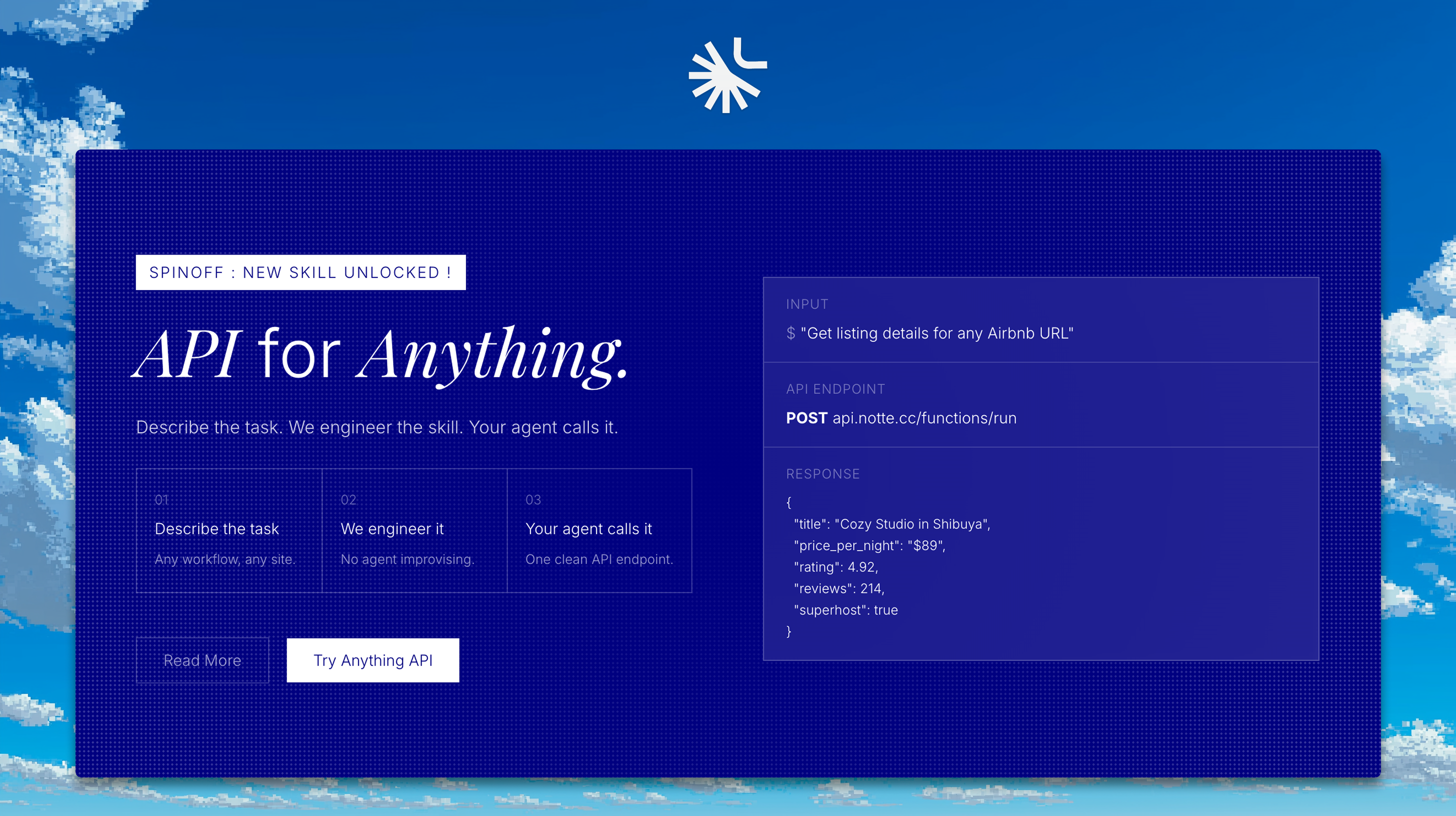
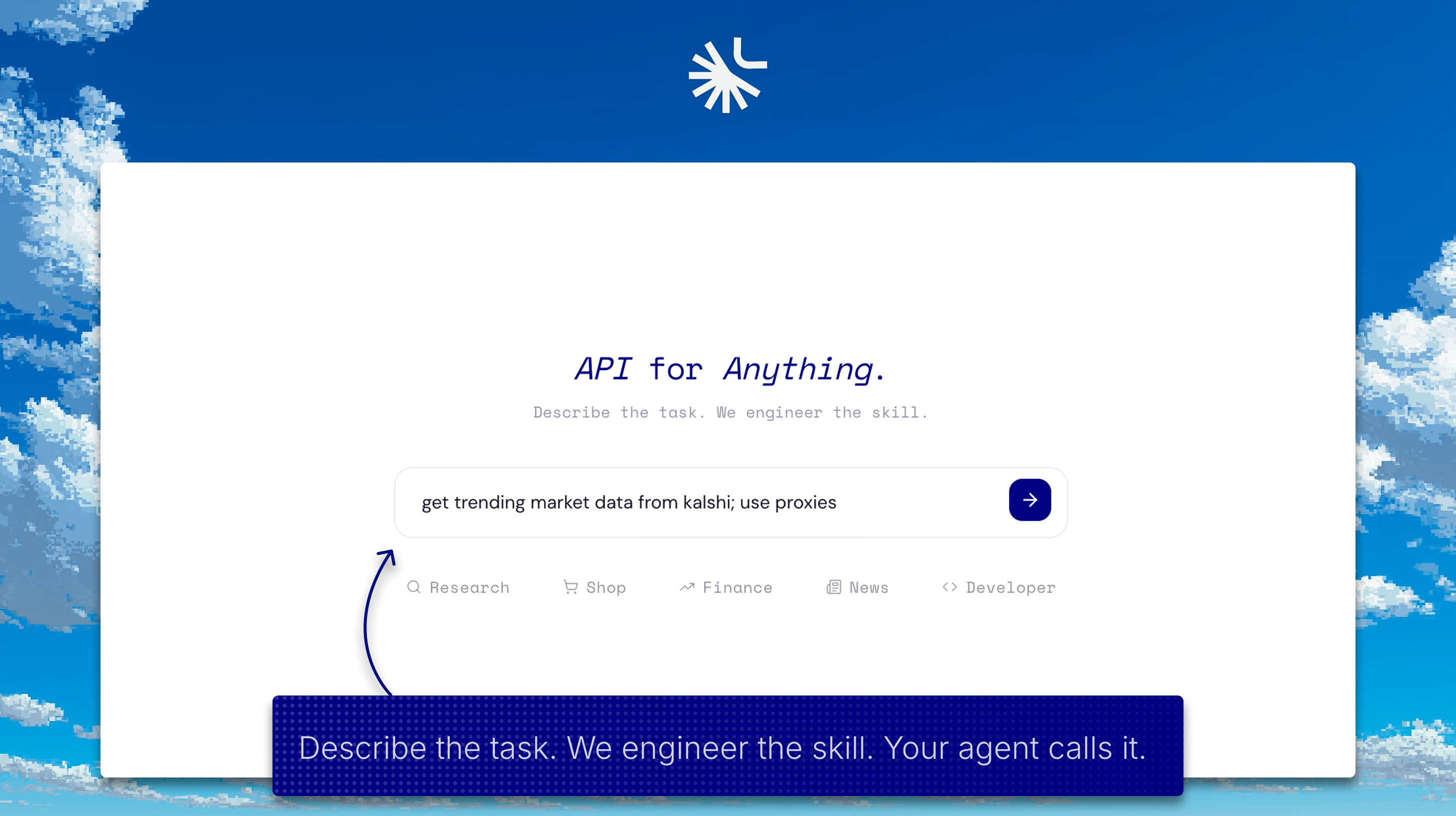
查看原始信息
Floyd enterprise world model
Floyd is an enterprise-level world model that actually learns how you'll use a computer and learns exactly which steps you'll take to do certain tasks, so it does them as you would. You can train it to mimic you so that every action taken would be like you are doing it.
I'm trying to crack the human-like use of computers with AI
1
回复

Looks cool man! Is it mainly for enterprises or for smaller teams as well?

1
回复

@abhinavramesh Hey man, it can be used for both. I can give you a 3-day guest pass to try it out unrestricted

1
回复

Hey @tirell_arzu super glad I stumbled upon this! Next step in automation for sure. Love the performance dashboard showing confidence score and analytics. Wishing you all the best with the launch 🚀

Questions:

  1. How do you determine next actions to take for the model in terms of predicting what comes next?

  2. Is there a fallback option on the off chance the model incorrectly defined and carried out steps but you would want to reverse a task?

1
回复

@minhajulll Hey man thanks for the response

The next action is predicated based on training data captured from people using a computer. The model then goes into the simulation and keeps learning, so for right now, it's doing its own trial and error until it gets it right

Currently, there is no fallback option, but thanks for that i'll place that guardrail there for that.

1
回复