Product Hunt 每日热榜 2026-03-10

PH热榜 | 2026-03-10

#1
Visual Translate by Vozo
Translate text in your videos without recreating visuals
503
一句话介绍:一款AI视频翻译工具,通过识别并翻译视频内的屏幕文字(如幻灯片、图表、标签),同时保持原始布局与动画,解决了教育、培训、产品演示等视频内容在多语言本地化中需要手动重做视觉材料的核心痛点。
SaaS Artificial Intelligence Video
AI视频翻译 视频本地化 多媒体翻译 屏幕文字翻译 视频编辑工具 企业培训 在线教育 内容创作 SaaS
用户评论摘要:用户普遍认可其解决了视频本地化中“视觉文本翻译”这一关键缺失环节,能节省大量手动工作。主要问题与建议集中在:对复杂背景/快速场景的处理能力、长文本的布局自适应机制、对希伯来语等右向文字的支持、以及未来开放API的可能性。
AI 锐评

Visual Translate并非又一个简单的字幕或配音工具,它剑指视频本地化工作流中最顽固、最“重”的堡垒:内嵌于视觉元素中的文本信息。其真正的价值不在于“翻译”,而在于“解耦”与“重构”——通过AI将视频中的文本层剥离、翻译,再以可编辑的形式重新嵌入原视觉上下文。这本质上是在将视频从“渲染后的位图序列”逆向工程为“可分层编辑的准工程文件”。

此举直击专业本地化的成本核心。以往,翻译幻灯片视频中的几个标签,可能意味着需要在After Effects中整个重做。Vozo提供的是一种非破坏性的、可迭代的编辑方案,这比单纯声称“全自动”更务实,因为它尊重了专业工作流中“审校与调整”的必然性。

然而,其面临的挑战也同样深刻。首先,技术天花板显著:对于高度动态、风格化或文本与背景深度交融的复杂视频,其重构质量存疑,这限制了其在高端营销素材上的应用。其次,产品定位略显模糊:是面向大众的轻量化工具,还是面向企业的专业工作流?从团队强调SaaS编辑器和暂不开放API的回应看,他们目前选择了后者。但这意味着需要深度教育市场,并面临与现有视频制作、本地化管理系统集成的挑战。

总体而言,这是一个在正确方向上迈出的重要一步,技术思路清晰。但它能否从“令人惊叹的演示”成长为“不可或缺的基础设施”,取决于其能否在复杂场景的泛化能力与企业级工作流的无缝嵌入上取得突破。它解决的痛点足够痛,但面临的壁垒也足够高。

查看原始信息
Visual Translate by Vozo
Fully translated videos — finally. Visual Translate adds the final layer — translating text inside videos — on top of voice dubbing, lip-sync, and subtitles. It detects and translates on-screen text, from slides and diagrams to callouts and labels, while preserving the original layout, style, and animation. Turn slide videos and explainers into multilingual versions and reach a global audience — without recreating visuals from scratch.

👋 Hi Product Hunt! CY here, founder of Vozo.

I’m an ex-Googler researcher who helped build core video technology for Android, Glass, and Photos.

Visual Translate is Vozo’s 3rd launch on Product Hunt — bringing the last missing layer of video translation: the text inside videos. It builds on our previous successful PH launches around AI dubbing, lip-sync, subtitles, and translation quality.

👉 Fully translated videos — finally possible.

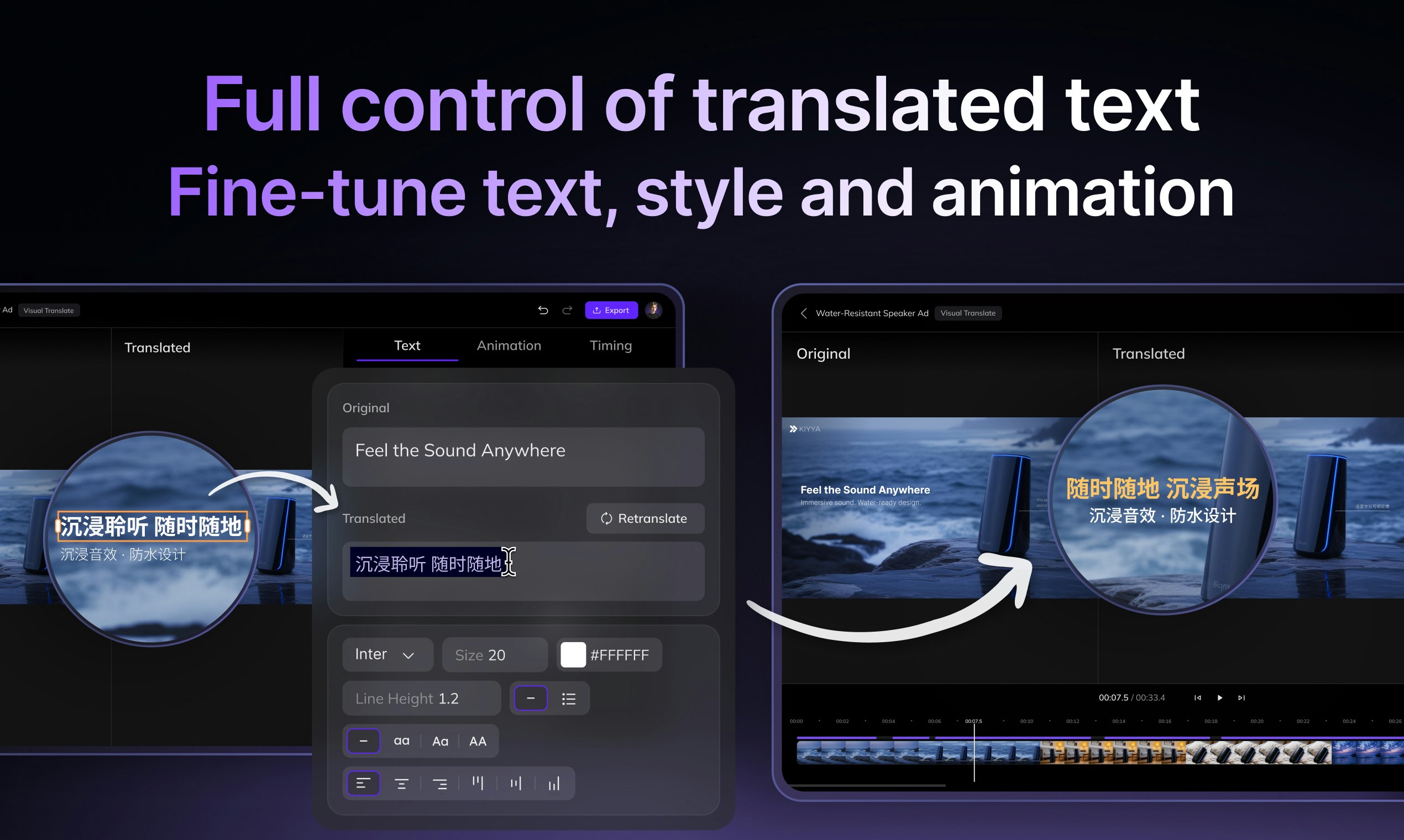
With Visual Translate, Vozo can now translate the text inside videos — slides, diagrams, UI labels, and callouts — while keeping the translated text fully editable.

This turns out to be surprisingly tricky: the system has to decide what to translate, what to keep, and how to recreate visuals without breaking layout, style, or animation — but we’ve finally made it work.

We’re starting with slide videos and explainer videos, where much of the information lives directly in the visuals. With this final layer solved, important videos can finally travel across languages instead of being locked inside one.

🚀 We’re opening FREE beta access todaysign up with Gmail and try Visual Translate. Let us know what videos you’d translate first.

27
回复

@lightfield Hi everyone — I’m Josie, the PM & designer behind Visual Translate at Vozo.

Really excited that Visual Translate is finally live after several weeks of development and early user trials.

Here are a few sample demos:

• DJI promo video

• A slide-based video

• A training video

• A Gemini intro video

You can also check out a short How-to video showing how it works.

Over the past few weeks, users from different industries have already used Visual Translate to localize videos such as medical explainers, internal training, and safety instruction videos. It’s exciting to see it being used in real workflows.

Happy to answer any questions! Feel free to ask about how Visual Translate works under the hood, or tell us what kind of videos you’d like to translate.

11
回复

@lightfield great launch!

0
回复

@lightfield Translating the actual text inside videos feels like a huge missing piece in video localization. Subtitles and dubbing solve the audio layer, but the visuals are where a lot of the real information lives in explainer and slide videos.

Keeping the translated text editable while preserving the layout seems like the hardest part of that problem.

Curious how often the system has to recreate visuals versus just replacing text elements.

1
回复

A small backstory on how Visual Translate started.

The idea goes back to October 2025. Around that time we noticed that many great educational videos weren’t being translated well. A big reason was that a lot of key information wasn’t only in the narration, but in text inside the visuals — slides, diagrams, labels, and callouts.

When we looked at existing video translation tools, we realized that this layer was still largely unsolved.

So we decided to try building it.

Huge credit to our engineer Naro. She started experimenting with the idea back in October and built the very first prototype and pipeline herself. The demo she showed the team was still rough, but the results were already surprisingly impressive.

Naro is honestly one of those engineers who are both brilliant and delightful to work with — sharp, curious, and incredibly creative when exploring new ideas. That early experiment she built convinced us this was worth turning into a real product, and the rest of the team quickly rallied around the idea.

6
回复

The project was officially green-lit in December, when we started the actual product design. Our founder CY, Tech Lead Fei, and I worked closely together to define the product direction and what Visual Translate should really be.

I also want to give a big thanks to our former engineer Yetong, who co-created the editor UX with me. Building the editing experience was one of the most challenging parts. There really wasn’t anything comparable on the market to reference.

Designing something this new has been incredibly exciting for me. I’m genuinely proud that we were able to create an editor that makes this workflow possible.

4
回复

This could save a lot of manual After Effects work.

4
回复

@frank_li13 Yes!

It makes large-scale on-screen text translation much easier. Give it a try — we’d love to hear your feedback.

0
回复

@frank_li13 Exactly! Our in-house designer loved Visual Translate so much

0
回复

What happens when the translated text is longer than the original space allows?

4
回复

@jessica_miller_7 Great question — especially since different languages can vary a lot in length. For example, Chinese text can become much longer when translated into English.

Our system analyzes the video frame, text length, and layout to compute a new layout that fits best. It can automatically adjust font size, reflow the text, and handle line breaks.

This way, the translated text stays within the visual boundaries and keeps the video looking clean and natural.

2
回复

@jessica_miller_7 Nice catch! This is where the magic happens. Give it a try and you’ll see how deeply our AI model understands the correct layout based on the surrounding context and text.

1
回复

@jessica_miller_7 Great question, Jessica! I can tell you’re a localization expert 😄 Hope Josie's reply helps. And feel free to give it a try, would love to hear what you think!

0
回复

Is visual translation a separate module or part of the main workflow?

3
回复

@sylvia_weng99 Great thoughts! Currently, it’s a dedicated workflow, but we’re planning to merge all video translation capabilities — subtitles, dubbing with lip-sync, and visual translation — into a single, unified experience.

1
回复

One design choice we cared a lot about while building Visual Translate is editability.

A lot of AI tools today focus on full generation. That works well for creating something from scratch, but in many real workflows people aren’t starting from zero. They already have a finished video and just need to adapt it for another language or audience.

Instead of regenerating the video, Visual Translate separates the text layer inside the video, translates it, and rebuilds it back into the visuals while keeping everything editable. You can adjust wording, layout, or styling directly in the editor.

For us, this approach fits much better with how video localization actually happens in practice. It’s been really exciting to see teams in different industries already using it for training videos, explainers, and internal communication.

3
回复

@josie_oy Thanks for highlighting this important feature! This will definitely help make it production-ready for users.

1
回复

@josie_oy A round of applause for our product and R&D team! Thank you for making it possible for important information to travel across language barriers! 🎉

1
回复

Omg, living in a foreign country you have no idea how amazing this is! I am so excited to try. Do you have Hebrew?

3
回复

@ali_goldberg Hi Ali, thanks for your kind words! Visual Translate Beta doesn’t support Hebrew yet, but our Translate & Dub feature does. Feel free to give it a try and let us know what you think :)

1
回复

@ali_goldberg Thanks for the encouragement! We don’t currently support Hebrew for the Visual Translation feature because it’s a right-to-left language, which makes layout reconstruction more challenging. In some cases, visual elements may also need to be flipped to look correct.

That said, we’re definitely working to improve our AI models and system so we can support this important language in the future.

1
回复

Congrats on the launch, The demo looks great! I’m definitely interested in trying it out.

3
回复

@sandy_liusy Thanks so much, Sandy, for your kind words! Really appreciate it! looking forward to hearing your feedback.

1
回复

@sandy_liusy Thank you so much for the support Sandy, really appreciate it!

We’d love for you to give it a try, and we’re also very curious to see what kind of videos you might use it for or share with it. Looking forward to hearing how it works for you.

1
回复

This is perfect for educational videos where visuals carry as much meaning as the narration. Congrats on the launch!

One quick question, do you offer API?

3
回复

@kiyaaa_ Thanks for the kind words!

We’re currently in beta, so we haven’t opened up a public API yet. If we see strong enterprise demand, it’s something we may consider in the future.

For now, we’ve focused on building a SaaS workflow, because video localization usually involves review and edits along the way. Our editor lets you compare the original and translated visuals side by side, and directly adjust the text, layout, and styling when needed.

0
回复

@kiyaaa_ Thank you so much, Kiya! Really appreciate it. And yes! exactly!
A lot of important videos contain key on-screen text, and we want to make sure that information can still be clearly understood across languages.

0
回复

Hey team, congrats on the launch! Super polished product with a validated real world use case. Professional demo. Excited to try it out. Wondering if you offer an open API?

3
回复

@harryzhangs Thanks a lot for the kind words — really appreciate it!

We’re currently in beta, so we haven’t opened up a public API yet. If we see strong enterprise demand, we may consider offering API access in the future.

That said, we believe the SaaS workflow works best for this kind of product. Video localization usually requires review and edits during the process. Our editor lets you visually compare the original and translated video side by side, and directly adjust the text, layout, and styling in context, which makes the workflow much more intuitive.

1
回复

@harryzhangs Thanks! We’re currently in beta, and we’ll definitely consider offering an open API in the future, including possible support for AI agents to interact with it.

0
回复

Really interesting approach to video localization. The hardest part of translating video content has always been that the visuals and text are so tightly coupled. Curious how it handles text embedded in complex backgrounds or fast-moving scenes.

2
回复

@aiwatermarks Great question! Complex backgrounds and fast-moving scenes are definitely some of the harder cases. Our system analyzes multiple frames to detect and understand the text layer, and then tries to reconstruct the translated text while preserving the original layout. It works well for many real-world cases, though heavily animated backgrounds can still be challenging, and we’re continuing to improve there.

1
回复

@aiwatermarks Great question!

Our AI model first understands the scene and reconstructs the background behind the original text. This allows us to separate the text layer and translate it independently before rendering the translated version back into the video.

For complex or moving backgrounds, the system analyzes multiple frames to infer the underlying visual content. In our testing so far, the results have actually been surprisingly good for many real-world videos.

Of course there are still edge cases we’re improving, but it’s exciting to see how well this approach already works in practice.

1
回复
Most video translation tools focus only on subtitles or voice, so translating the actual on-screen text inside visuals feels like a really important missing piece. Being able to localize slides, labels, and diagrams without recreating the whole video could save creators a lot of time. I like that the translated text remains editable so teams can review and refine before publishing. Curious what types of videos you’re seeing the most demand for so far, like training videos, product demos, or educational content. Congrats on the launch.
2
回复

@alamenigma Thanks! You’re exactly right — recreating videos just to translate slides or labels is a huge amount of work, and that’s one of the problems we’re trying to solve.

So far we’re seeing the most demand from training and e-learning videos, product demos, and tutorial-style educational content, where a lot of key information lives directly in the visuals rather than the narration.

0
回复

amazing tool i love the concept

2
回复

@sammy_xf Thank you for your support!

0
回复

It's cool tho. Does Vozo work better for educational videos or marketing videos?

2
回复

@nextgennerd Great question! It works well for both, but in slightly different ways.

Educational videos tend to benefit a lot because they usually contain slides, diagrams, and labels. Vozo can detect and translate this on-screen text while preserving the layout.

For marketing videos, it depends on the visual complexity. If the styles and animations are relatively simple, Vozo can handle them very well. But highly complex motion graphics or very fancy visual effects can still be challenging for automated tools.

Our goal is to make localization much easier for most video workflows, especially explainers, product demos, and educational content.

1
回复

When space is limited, how does Vozo handle it? Does it prioritize readability or literal accuracy?

2
回复

@tabmanj Thanks for asking! We handle this in a few different ways:

• Adjusting the font size

• Breaking the text into multiple lines

• Shortening the translation when necessary

A well-tuned AI system dynamically selects the best option based on the context and layout of the video.

1
回复

@tabmanj Great question! Our model considers multiple factors — layout, readability, and context — to choose the best possible way to fit the translated text into the available space.

1
回复

Congrats on the launch! Translations seem super natural! 🎉

2
回复

@mihailojovanovich Thank you Mihailo, glad you liked it!

0
回复

Great use case, good luck for the launch team!

2
回复

@eric_nodeops Thanks a lot! Really appreciate the support.

1
回复

Congrats! How does Vozo fit into a typical YouTube localization workflow?

2
回复

@sarahjiang  Thanks for asking!

In a typical YouTube localization workflow, you can start by pasting the YouTube link directly into Vozo to import the video.

Then the process usually goes in two steps:

  1. Import the video into Visual Translate to translate the on-screen text inside the video.

  2. Import it into Translate & Dub to translate and generate the spoken audio.

This way you can localize both the visual text layer and the voice layer, and produce a fully localized version of the video.

1
回复

@sarahjiang Thanks!
For YouTube localization, since there haven’t been tools to translate on-screen text, creators typically just dub the audio into other languages and upload it as additional audio tracks.

For videos where the visuals also need translation, teams usually have to recreate the entire video in the new language, which can be time-consuming and expensive.

With the new Visual Translation feature, creators can localize both audio and on-screen text, making it much easier to launch separate YouTube channels for different languages at a much lower cost.

Some manual review is still needed today, but we’re continuing to improve the system to make the process even easier in the future.

0
回复

@sarahjiangGreat question! We actually have quite a few YouTuber users already. You can paste a YouTube link to import the video, then localize it in Vozo, and finally export video, audio, or SRT files that are fully compatible with YouTube’s localization workflow.

0
回复

Congrats on the launch! Just tried it and loved it.

Quick question — is there an edit history for visual translation changes? When working with our review team, we usually go through several rounds of revisions before settling on the final wording, so being able to track changes would be really helpful.

2
回复

@stevie_y Thanks for trying it out, really glad you liked it!

At the moment, we don’t have an edit history feature yet for visual translation changes. But you’re absolutely right that this becomes important when multiple people review and refine the wording over several rounds.

We’re already thinking about better collaboration features for teams, and version history is definitely something we plan to support in the future as more teams start using the product.

1
回复

@stevie_y Glad to hear you loved it!

Yes, every edit is tracked and reversible, so you can always go back if needed. It provides a full editing experience, similar to working on a canvas.

0
回复

@stevie_y Great suggestion! We will definitely think about it! BTW, love your headshot

0
回复

What scenarios do you think Vozo works best for today, and where does it struggle the most?

2
回复

@thea5 Thanks for asking! For visual translation, slides and product demo–style videos work best. This includes content such as e-learning, training materials, and marketing videos.

At the moment, it doesn’t work perfectly for videos with animated backgrounds or moving text. Like those entertainment callouts. We’re actively working to improve those cases and bring a more universal experience to all users.

1
回复

@thea5 Great question!

Right now the current version works best with slide-style and explainer videos, where a lot of key information appears visually on screen.

Think of scenarios like training materials, presentations, product introductions, financial briefings, or talking-head videos with text overlays. These formats are usually information-heavy, with slides, labels, diagrams, or callouts that stay on screen long enough for the system to detect and translate while preserving the layout.

Where it can still struggle today is with highly dynamic visuals, like moving text or complex animated backgrounds. We’re actively improving those cases so the experience becomes more universal across different video styles.

1
回复

Congrats on the launch @lightfield 🎉

2
回复

@lightfield  @rajat_dangi1 Thank you so much for the support, Rajat. Really appreciate it!

0
回复

@rajat_dangi1 Thank you for your support!

0
回复

Can Vozo translate text that appears for only a few frames?

2
回复

@lin_sun2 That’s a good question.

If the text only appears for a very short time, it’s possible that it may occasionally be missed during automatic detection.

If that happens, you can simply select the text area in the Vozo editor, and the system will re-detect the content and translate it for you.

0
回复

Congrats and good luck! Very much needed tool in our global markets!

2
回复

@jolene_mna Thank you! If you have any questions or suggestions during the free trial, we’re all ears.

0
回复

@jolene_mna Thank you so much for the kind words and support!

We’d love for you to give it a try, and we’re especially excited to see how it might be used in real-world scenarios and in your field. Looking forward to hearing your thoughts once you’ve had a chance to use it.

0
回复

@jolene_mna Thank you so much Jolene! Looking forward to hearing your feedback once you’ve tried it out.

0
回复

Can Vozo translate screenshots embedded inside videos?

2
回复

@lily_liu8 Vozo can detect and translate explanatory text that appears inside videos.

However, we usually don’t automatically translate screenshots or UI elements embedded in the video. In many cases those are meant to stay exactly as they are.

If you do want them translated, you can manually select the text area in the editor and click “Regenerate” to translate it. Our editor is designed to be flexible, so you can easily adjust and translate elements that weren’t processed automatically.

2
回复

@lily_liu8 Hi Lily, thanks for your question. as @josie_oy replied, we currently dont support automatically translate screenshot, but you can select to add. Here is a how-to video, hope it helps :)

1
回复

@lily_liu8  Great question! Our model tries to infer whether text should be translated based on the context. For example, logos or text that belongs to real-world objects are usually left unchanged.

Screenshots can vary, so it may depend on the specific case. But you can always manually tell Vozo which areas you want or don’t want translated in the editor.

1
回复

Does it preserve Voice and emotion? or it sounds like Netflix's international movie dubbing ? :)

2
回复

@asti_pili Our dubbing feature is designed to preserve the speaker’s voice and emotional tone, so it doesn’t sound like traditional movie-style dubbing.

For this launch, though, we’re introducing Visual Translate, which focuses on translating text that appears inside the video itself — things like slides, labels, diagrams, and on-screen callouts — while keeping the original layout and visuals intact.

So together with dubbing, subtitles, and lip-sync, it helps localize the entire video.

1
回复

@asti_pili Hahaha, should we tag Netflix here? Just kidding 😄

BTW, really great to see you here! I love your product, and your intro video is so well done: the storytelling is brilliant and super engaging.

1
回复

@asti_pili Great question! Our translate & dub feature is designed to preserve the speaker’s voice tone and emotion during translation.

Many users are already using it to localize international films and even the recent wave of mini-dramas, with pretty natural-sounding results.

0
回复

How does Vozo handle very small or faint text?

2
回复

@flora07  In most cases, if the text is visible to the human eye, Vozo can detect and translate it.

Very small or faint text can sometimes be more challenging, and like any model we can’t guarantee perfect handling for every edge case. We’re continuously improving the detection and translation quality to make it more robust over time.

2
回复

@flora07 One more thing worth mentioning: it’s not a one-shot process. If the model misses some text, you can select the region and trigger a more detailed detection just for that area.

This greatly increases the chances of capturing and translating the text correctly. More details are available in our docs.

1
回复

@flora07 From our testing, small text is often detected surprisingly well. If anything gets missed, Visual Translate lets you manually select the area and trigger translation for that region.

1
回复

Hey, congrat for a launch

2
回复

@mordrag Thanks so much! Really appreciate the support.

1
回复

Love this. The on-screen text translation is the piece most video localization tools completely skip over. Being able to translate slides and diagrams inside the video without rebuilding the visuals is a huge time saver. Curious how it handles text that's baked into animations or motion graphics?

1
回复

@dparrelli In most cases our ai model reconstructs the background behind the original text and then renders the translated text back into the scene.

So even when the text is baked into animations or graphics, the system can remove the original layer and place the translated version while keeping the visuals consistent.

1
回复

Tried Vozo and was really impressed by the lip-sync accuracy—it’s a huge step up from generic tools! My main curiosity is around edge cases: How well does the model handle profile shots or moments of high emotion (like shouting or laughing) where mouth shapes are very dynamic? Curious how robust the "human-level" sync is in those tricky scenarios.

1
回复

@wasil_abdal Great question. Vozo’s lip-sync actually models a fairly large region — from the face down to the neck — which helps capture a wider range of expressions and motion.

That said, very high-emotion moments (shouting, laughing, etc.) are still challenging and really push the boundary of current lip-sync tech. We’re continuing to improve those edge cases as the models evolve.

0
回复

Cool product! This can truly help scale video to a broader audience. How long does it take to process a video in multiple languages at once?

1
回复

@obedeugene  Thanks! Processing time depends on the video and tasks, but as a rough idea it may take about 1–2 minutes to process a 1-minute video.

You can also submit multiple tasks simultaneously, so translating into several languages can run in parallel rather than strictly one by one.

0
回复
#2
Chronicle 2.0
AI presentations without the AI slop
465
一句话介绍:Chronicle 2.0是一款AI演示文稿设计伙伴,通过对话式交互,将笔记、提示或现有幻灯片快速转化为设计精美、符合品牌调性的演示文稿,解决了用户在专业演示文稿制作中耗时耗力且难以保证设计质量的痛点。
Productivity Artificial Intelligence Design
AI演示文稿 智能设计 品牌定制 幻灯片工具 团队协作 内容生成 设计系统 效率工具 商业演示
用户评论摘要:用户高度认可其“反AI垃圾”的设计品味和品牌定制能力,对导出PPT、图表等新增功能表示欢迎。核心反馈是肯定产品在“设计质量”和“讲故事”上的差异化优势,并期待更多图表类型和功能迭代。评论中团队内部互动居多,外部有效建议较少。
AI 锐评

Chronicle 2.0的发布,与其说是一次版本迭代,不如说是一场针对“AI生成垃圾”的精准宣战。在AI内容生成工具泛滥、同质化严重的当下,它聪明地抓住了高端用户的真实痛点:不是缺内容,而是缺“品味”和“品牌一致性”。其标榜的“无AI垃圾”并非空谈,而是通过整合来自顶级机构的模板、构建可自定义的品牌设计系统,以及强调“对话式精修”的交互流程来实现的。这使其从“内容生成器”向“设计协作伙伴”升维。

然而,其真正的挑战与价值并存。价值在于,它试图将AI定位为提升人类创意效率和专业度的“副驾驶”,而非替代品,这契合了专业团队对质量把控的深层需求。但挑战也同样明显:首先,“品味”本身是主观且难以量化的,如何持续定义并规模化“好设计”是一大考验;其次,当前评论中充斥团队内部的庆祝,缺乏足够多深度外部用户的使用洞见,其宣称的“对话式精修”在实际复杂场景中的流畅度有待观察;最后,导出PPT等功能的加入显示了向传统办公生态的妥协,但如何在保持自身设计优势的同时,与PowerPoint等巨头的生态系统无缝兼容,将是影响其渗透企业市场的关键。

总体而言,Chronicle 2.0展现了一条AI工具进化的理性路径——从追求“快”到追求“好”,从替代人力到增强人力。它的成功与否,将验证在效率至上的市场中,为“专业设计”和“品牌叙事”付费是否是一个足够广阔的需求。

查看原始信息
Chronicle 2.0
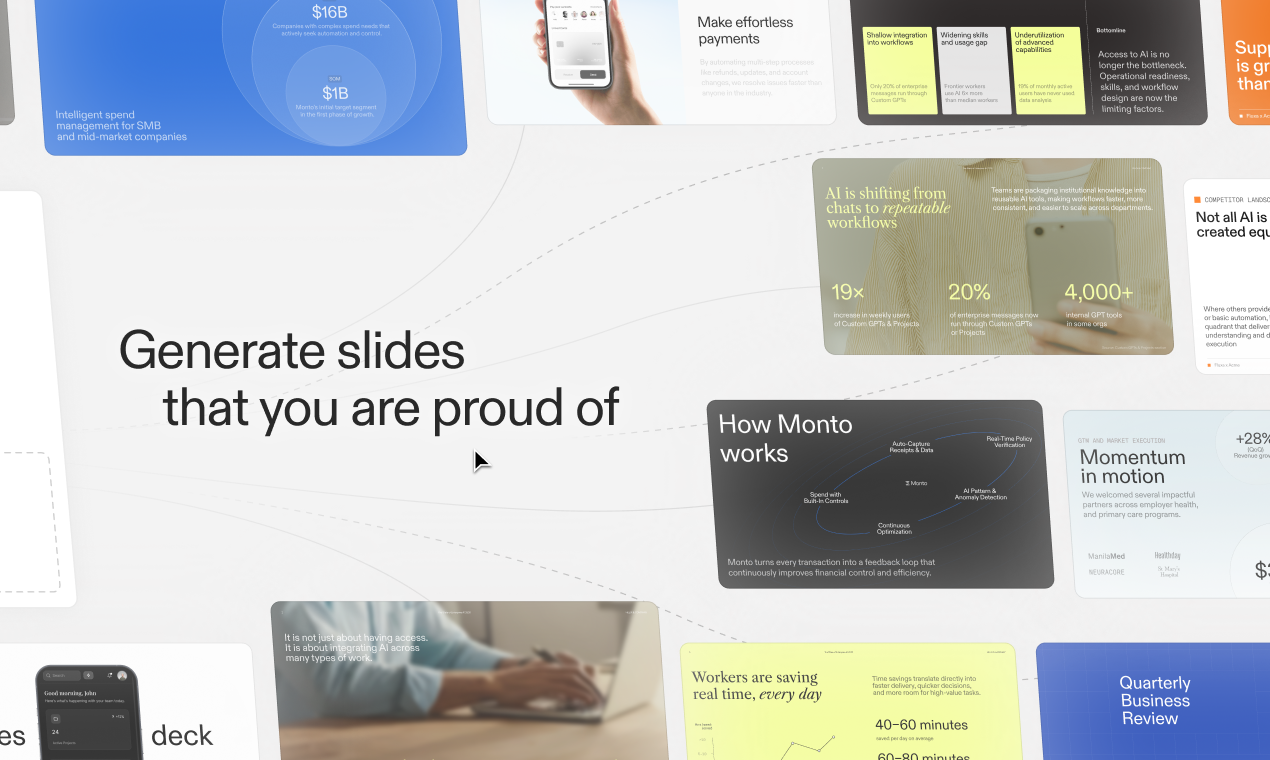
Chronicle is your AI-powered design partner for presentations. Turn notes, prompts, or existing decks into beautiful, on-brand slides in minutes. It asks a few questions, builds an impressive first draft, and lets you refine slides through conversation.

Hey Product Hunt family 👋 We’re back!

A few months ago you helped Chronicle become #1 Product of the Month, and later #4 Product of the Year. Since then, the product has grown to 200k+ users. With that, came a huge amount of honest feedback. Hundreds of you told us where Chronicle worked, where it didn’t, and where it could be much better.
We read all of it.

Today, we're excited to launch Chronicle 2.0 to all of you!
Chronicle turns notes, prompts, or existing slide decks into stunning, on-brand presentations, generates an impressive first draft, and lets you refine slides through conversation.
There are a lot of AI presentation tools popping up right now. But most of them generate what we’ve started calling AI slide slop: generic layouts, messy structure, and decks you still have to spend hours fixing.
Our ambition is simple: to build the best storytelling tool for teams.

Here are a few things I’m most excited for you to try:

✴️ Chronicle AI: Think of it as a slide design coworker. Give it anything: notes, a prompt, or a rough idea, and it builds an impressive first draft you can refine and iterate on together.

🖼️ Custom branding & themes: Dozens of beautiful templates with real design taste, plus full brand customization so teams can stay on-brand.

📊 Charts & graphs: You can now add and customize charts directly inside Chronicle. They automatically adapt to your presentation’s theme.

🗃️ Export to PowerPoint & PDF: One of the most requested features, now live.

🪄 Hundreds of world-class templates: Created by designers from places like Apple, IDEO, McKinsey and BCG.

Special thanks to @benln for hunting us. And honestly, thank you. The feedback from this community is the reason Chronicle 2.0 exists. As a small thank you, use code PHPRO this week for 1 month of free PRO on any new account.

We’re shipping updates every single day, and will be hanging out in the comments all day. We’d genuinely love your thoughts. What should we build next?

PS. We also have a Slack community where you can interact with the team directly, get early access to new features, and shape what we build next. Would love to see you there: chr.so/slackcommunity

35
回复

@benln  @tejgw This is so exciting! 👏 It's been inspiring to see the team launch so many new capabilities + improvements. Cannot wait for everyone to try it out! 💖

16
回复

@benln  @tejgw love being on this journey with you <3

15
回复

@benln  @tejgw And a huge thank you to Ben for hunting us! 🙌

14
回复

Proud to be part of this team! From day one, the ambition has been to build something truly great for storytelling.

What we’ve created has the potential to change how people tell stories - making it easier, more powerful, and more impactful than ever.

17
回复

@praveendinesh Couldn’t have built this without this team ❤️

5
回复

@praveendinesh we have such a special team and I'm so happy to have worked on it with you Praveen <3

9
回复

Huge moment for the team today. Can’t wait to see what people build with Chronicle ✨

17
回复

@harrispjose You should so proud Harris!

7
回复

I knew this launch would be special, we've been listening to your feedback and created a tasteful way to create presentations. Templates, image gen, themes, and new widgets are just the tip of the iceberg.

I'm so proud of this team and can't wait to hear what you all think! Would love to hear your feedback!

16
回复

@clairetaylor Such big leaps in our ai capabilities, templates, image gen, charts & graphs, exports and so much more by our small but mighty team 💪

8
回复

@clairetaylor you’ve been such an inspiration to all of us! from design to raising PRs — you’ve come such a long way. really looking forward to collaborating more, it’s always super fun working with you <3

2
回复

@clairetaylor So proud ➕💯

4
回复

Seeing Chronicle launch today is really special 😇 — this team has spent a lot of time thinking about how ideas should be communicated visually.

16
回复

@pavan_tirumani You're the real MVP Pavan 👏

11
回复

@pavan_tirumani almost 3-4 years if I am not wrong. Congratulations on the launch!

10
回复

@pavan_tirumani Thank you Pavan 🙏 and honestly, that's the core of what we've all obsessed over together. Proud to be building this with you!

6
回复

Really proud of what the team has built here. Chronicle is the result of a lot of thoughtful design work and storytelling thinking.

16
回复

@jordan_lee14 Couldn’t have done this without the engineering team. So much of Chronicle’s design and storytelling quality comes from the care you all put into building it!

7
回复

@jordan_lee14 your thoughtfulness in how you build widgets is a massive part of this - you should be so proud! <3

4
回复

@jordan_lee14 so proud of this one Jordan!! The care you put in really shows 🙌

3
回复

Honestly one of the most fun products I’ve ever had to market. As a marketer who spends all day thinking about storytelling, working on a storytelling product is a dream 💖 Can't wait for everyone to try it!

15
回复

@reneezhang23 seriously love how closely marketing and design and product work together - it's a dream to work with you! can't wait to hear what everyone thinks!

9
回复

@reneezhang23 you’re the GOAT — love how you manage to multitask and always have everything ready! such an inspiration. all the crazy stuff we’re building wouldn’t have been possible without you, super excited for people to finally try it out.

3
回复

It’s been inspiring watching the team build something that puts storytelling and design quality first.

15
回复

@tushar_n Thank you for all the work that went into this!! A lot of the magic in Chronicle comes from the thoughtfulness behind the engineering.

5
回复

@tushar_n never seen an engineer ramp up so quickly on a truly new space - love being on the frontier with you!

5
回复

Hey Product Hunt

Mayuresh here 👋

Just wanted to jump in and say a massive thank you to this community. The previous launch was my first ever product launch yet - seeing the love and support was really special.

In the last few months, we have seen 200K+ users doing sales, proposals, research reports, QBRs, MBRs, all hands and more with Chronicle! We are back with tons of improvements and some big upgrades.

1. We have built a whole new generation experience with AI that works like you are used to (digests files, looks up, goes back and forth to iterate with you). We rebuilt this ground up to make sure it is truly powerful.
2. We have added tons of small features that give you speed and customisability, made overall editing easier and faster (e.g. gridlines, better colours, better themes, tidy up options)
3. Export to PPT is in :) its a first cut - we will continue improving fidelity. There's more export options too.
4. We built our own charts - fun story @praveendinesh shipped this literally in 2 days.

A lot of the improvements in Chronicle 2.0 came directly from all your feedback, so please keep it coming. We read everything.

Excited to hear what you think!

14
回复

The charts feature was a fun (and fast) build. Curious to hear from everyone - what kinds of charts or interactions would make your life easier. We’re actively looking to expand this.

6
回复

@praveendinesh  @mayuresh_patole Only just the beginning! 🚀

0
回复

@praveendinesh  @mayuresh_patole lets go! loving seeing all this amazing feedback from the community <3

0
回复

Really excited to see the all new Chronicle out in the world today, this team genuinely wants to build a generational storytelling product.

13
回复

@tinikapas And huge credit to you for catching all the bugs before we ever go live! 😅

3
回复

@tinikapas loved working with you - your ability to catch small UI discrepancies is second to maybe Mayuresh haha

4
回复

Love the idea of combining AI generation with real editing control.
That’s usually where many AI tools fall short. As someone designing AI-powered products, I’m curious:
Does Chronicle generate slides within a consistent design system, or can teams plug in their own brand styles/templates?

12
回复

@victoria_samoilenko1 Absolutely! 💯 Teams can create their brand fonts, colours and visual rules within the workspace and make everyone stay consistent across the team.

6
回复

@victoria_samoilenko1 We have a great themes system in place, and it's super customizable.

3
回复

Launch day!! Really excited for people to finally try Chronicle.

12
回复

@ronak_jagdale Let's go!

3
回复

@ronak_jagdale yes! your attention to detail won't go un-missed!

3
回复

Really excited to see the all new Chronicle out in the world today, this team genuinely wants to build a generational storytelling product. Really happy and proud to be part of a super talented and passionate team of people.

12
回复

@niranjan_u Your contributions to export to PPT, taking on such a huge project is impressive. Probably our most requested feature!

5
回复

@niranjan_u love working on this with you!

0
回复

The positioning around AI slop is spot on. Every AI presentation tool right now generates the same generic layouts with the same stock-photo energy. The fact that you are leaning into design quality and conversational refinement rather than just speed is a real differentiator. Congrats on the 2.0 launch and 200k users!

11
回复

@handuo Thank you! That’s exactly the direction we’re aiming for. Our hope is that AI can eventually help people focus more on the thinking and storytelling behind presentations, rather than wrestling with slides. But also, we don't want AI slop!! 😭 There's too much of that on the internet already. We care about craft, being intentional and producing high quality outputs that would make anyone proud to present as their own!

4
回复

@handuo Glad you noticed! Design quality is one of the biggest priorities for us.

6
回复

@handuo Thank you so much. "AI slop" is exactly what we've been fighting against 😅 speed is table stakes but taste is the real unlock. Really means a lot coming from you, appreciate the support! 🙏

4
回复

So awesome to get this out today. I love that we have visual AI with taste now!

11
回复

@vishnugopal Huge day Vishnu!! This has been such a long time coming 🙌 the world's gonna love it

5
回复

@vishnugopal Honestly a huge push from the team. Business storytelling 🤝 taste

4
回复

@vishnugopal The only thing that matters the most in today's AI tech.

1
回复


I use Chronicle extensively - great product. It's replaced most other deck creation tools. It's a core part of my workflow now.

10
回复

@chazmee Thank you! It’s something we spent a lot of time obsessing over 🔥

3
回复

@chazmee Thank you! A lot of the work behind Chronicle has been obsessing over the small details that make presentations feel polished, so it means a lot hearing support like this.

2
回复

@chazmee We're glad you love the product. Stories like these help us to make Chronicle a world class product 🔥

2
回复

How does Chronicle’s widget-based architecture ensure that layout integrity and interactive elements remain intact when exporting to static or legacy formats like PPTX and PDF, and does it allow for the ingestion of existing corporate master slides to maintain strict brand compliance?

10
回复

@mordrag Great question.

When exporting to PPTX, widgets are converted into native PowerPoint elements while preserving layout, position, and size. For PDF exports, the conversion ensures the output is pixel-identical to what you see on screen. Neither PPTX nor PDF support advanced interactivity but we ensure that all links remain clickable. In the case of PPTX, rich text is exported natively (and remains editable), some video embeds are playable directly within PowerPoint, and all embeds remain clickable.

Brand consistency in exported decks is driven by colors, fonts, and layout patterns which teams can customize and lock in on Chronicle. Currently, we don't support ingesting external PPTX master templates - we're happy to hear more on your use case as we look to actively improve our export capabilities.

8
回复

@mordrag Give it a go and let us know what you think!

1
回复

Super excited for this! Grateful to everyone who shared feedback since our previous launch - a lot of it directly shaped what you see today. So lucky to be a part of this team ♥️

10
回复

@sameekshatrivedi It's been so fun 👏❤️

5
回复

@sameekshatrivedi yes, today is big! Really excited for everyone to finally try Chronicle 2.0. All the feedback we received has been instrumental for this update

6
回复

@sameekshatrivedi its been so great to work with you on this Sam!

0
回复

This launch is very special for the team. Months of work behind the scenes and years of data and learning finally shaping the way Chronicle is today. Huge shoutout to our engineering team, Claire and Elliot. I am in love with the new version. Can't wait for the world to experience this. 🔥✨

10
回复

@oyeabhijit In love with it +1!!

4
回复

@oyeabhijit This is just the beginning Abhijit!! You, Claire and Elliot have been absolute rockstars 🔥 And honestly the whole engineering team deserves so much credit for this one. So excited for the world to finally see it ✨

5
回复

@oyeabhijit love working with you! great work on the assets for the launch they look 🔥

0
回复

I really like how Chronicle is focused on how information flows throughout the deck. Especially since a slidedeck is meant to tell a story.

Are there ways to give further context to Chronicle such as the specific target audience, tone, or even the type of narrative/story I want my slides to convey? For example, "a startup pitch deck that is meant to be playful but concise and to the point for investors"

9
回复

@lienchueh You’re touching on something we're actively working on! When you start creating a deck with Chronicle AI, the agent asks you to pick a narrative style if there isn't one already. You can also just include this in your initial prompt, and it should be picked up.

Would love your thoughts on how we can make this better once you've had a chance to try it out!

3
回复

@lienchueh Absolutely! you can curate the storyline with Chronicle at the start of every project. There, you can choose to narrate your story, add cues for target audience and tone. Muse will research and ask for your input simultaneously creating the slides.

2
回复

@lienchueh Just for kicks, I tried your prompt with an "Airbnb for babysitters" example, here's what I got:

Here's the first draft of what Muse gave me. This just took less than 5 minutes to generate, and you can refine this quite a bit more.

3
回复

I've used Chronicle, and I've used Gamma, but I felt that Chronicle fits my vibe much better than Gamma.

Both tools are good, but for me, Chronicle is a better fit. I really enjoy using the app, but if there's one thing I would improve, it is the customer support. I feel the customer support has a lot of scope for improvement. And a bad experience (delayed response) can leave a bitter taste.

Anyhow, wish you guys the very best! Onwards and upwards...

9
回复

@bhavvikminhas Really appreciate this - glad Chronicle fits your vibe better! That’s exactly what we’re aiming for: helping people take rough thinking and turn it into something that feels polished and ready to present.

Also hear you on the customer support - that’s on us and something we’re actively working to improve. Thanks for calling it out, and for the kind words. Onwards and upwards 🙌

4
回复

@bhavvikminhas  Thank you Bhavik for the kind words.

On the customer support side, thanks for calling that out. Feedback like this is super helpful, and it’s something we’ve already been talking about internally.

3
回复

@bhavvikminhas Hey Bhavvik, we're a small team + an overwhelmingly large user base, so we're not able to get to all our support requests immediately. Thanks for your patience!

1
回复

This looks amazing fam! Just tried it out for our company it generated amazing slides.
Very quick! Beautiful design too.

I cannot make particularly aesthetic pitch decks and slides but always love to look at good ones. Happy that I can create some too now!

9
回复

@krupali_trivedi Thank you! A lot of the work went into making sure the slides feel polished enough for business critical presentations.

3
回复

@krupali_trivedi The freedom to spin up beautifully designed slides in minutes, instead of grinding for hours designing them by hand, tackles a major pain point for founders and teams. We're glad that you loved Chronicle 🙃

3
回复

@krupali_trivedi This is exactly why Chronicle exists! You shouldn't have to be a designer to make impressive slides! So glad to hear you're liking it 🙌

0
回复

Been loving it for my investor updates and all hands. Go Chronicle 🎖️

9
回复

@ypranay Thank you so much! Glad that Chronicle has been your go-to choice. We care deeply about the craft behind storytelling, so it’s really special seeing people respond to it today.

4
回复

@ypranay Let's go 🔥💎

4
回复

@ypranay 💪💪💪

0
回复

Just tried building out some presentations, fantastic tool! Love the real-time collaboration.

8
回复

@ctnicholas Appreciate it! Our goal is Chronicle becomes the place where teams shape and share their most important ideas with live collaboration 🙌

2
回复

@ctnicholas Thanks much, and we love Liveblocks as well for your Yjs stack!

2
回复

@ctnicholas Love it!!

0
回复

I like the idea of an AI design coworker. Instead of fully automating everything, it sounds like Chronicle helps you iterate and improve your story.

7
回复

@melina_cross That's exactly right. Muse works more like a collaborator, taking your thoughts, helping you iterate, and then fully complete your presentation. And because we have a free form canvas, you can always make the finishing touches yourself.

1
回复

@melina_cross Exactly!! 🙌

0
回复

@melina_cross we see it as a brainstorming partner, I've been using it to give me feedback on the flow of my presentation, plus help me plan out my speaker notes. :D

0
回复

Congrats on the launch! :)

7
回复

@abeykoshyitty Appreciate the kind words! If you get a chance to try Chronicle today, we’d love to hear what surprised you most.

0
回复

@abeykoshyitty Thanks Abey, would love your feedback when you get a chance to try us out!

0
回复

@abeykoshyitty Thank you very much Abey ❤️

0
回复

the mix of AI generation and manual editing makes this useful. I can quickly generate slides and still adjust everything they way I want before sharing it.

7
回复

@shawn_idrees Exactly! Working with AI is symbiotic in Chronicle. Start from anywhere, co-create the storyline, design the deck the way you want with AI and export to any format and any audience.

5
回复

@shawn_idrees Yup, the full blown canvas experience (to make manual tweaks) + a great AI start is definitely our superpower.

4
回复

@shawn_idrees Love this, exactly where Chronicle shines ✨

0
回复
Congrats on the 2.0! Everything is looking really solid. I’ve spent 15+ years in product design and the biggest issue with generated slides is usually the lack of 'intentional' white space (something that usually falls apart the second it leaves a designer's hands!). Looks like you’ve really focused on the structural side of things here. Question: How much control does the user have over the underlying grid system once the AI generates the initial layout? Looking forward to playing with this! 🚀
6
回复

@joeharrison really glad you asked.
We have built a fully freeform canvas - so you get all the AI superpowers without sacrificing the control and flexibility.

1. You can reposition widgets like you are used to - assisted by a grid and some smart reordering
2. You resize things easily
3. You can use quick Tidy Up actions to quickly make things uniform or organise them in a click

3
回复

Congrats on the PH launch! The product quality improvement is so massive over last few months - excited to see what's next!

6
回复

@abhay_jani Thanks a lot! It’s been a long road getting Chronicle to this point, so it’s really special to see all the feedback come in today 🥳

1
回复

@abhay_jani Thank you so much Abhay! We've come really far!

0
回复

@abhay_jani thanks so much for the kind words and support <3

0
回复

Watching this come together over the past months has been incredible. The team genuinely cares about making presentations better for everyone 👏

6
回复

@tan_ayyy Couldn't have said it better! 🥳

2
回复

@tan_ayyy been so great working with you!

0
回复
#3
Claude Code Review
Multi-agent review catching bugs early in AI-generated code
406
一句话介绍:一款采用多智能体架构的AI代码审查工具,专门针对AI生成代码进行深度并行审查,旨在早期捕捉单次扫描易遗漏的缺陷、安全漏洞和逻辑错误,解决开发团队在代码审查环节因时间压力或复杂度高而产生的质量瓶颈。
Developer Tools Artificial Intelligence Development
AI代码审查 多智能体系统 Pull Request分析 缺陷检测 安全漏洞扫描 AI生成代码质量控制 开发者工具 企业级SaaS 软件工程效能
用户评论摘要:用户普遍认可多智能体审查方向及降低误报的设计,认为其切中AI编码时代审查瓶颈。主要关注点包括:与竞品(如Kilo Code、CodeRabbit)的对比、误报率控制、对大PR的上下文理解能力、企业版成本,以及如何建立开发者信任。
AI 锐评

Claude Code Review并非简单的静态分析工具升级,而是对“AI原生开发流程”的一次关键性基础设施补位。其真正价值在于试图用AI系统来制衡AI本身的生产风险——当LLM成为代码生产主力,其固有的“幻觉”、上下文遗忘及模式化漏洞,恰恰需要另一套异构、并行、可验证的AI逻辑来对冲。多智能体架构在此并非营销噱头,而是针对代码审查这一本质上需要多视角、多专业判断的任务的合理映射。

然而,产品的成败钥匙牢牢挂在“误报率”上。历史证明,任何增加开发者认知负荷的工具,若不能将信号噪声比控制在极佳水平,终将被团队弃用。评论中反复提及此点,足见市场已有教训。其“验证环节”的设计是正确方向,但如何在复杂、相互关联的代码变更中保持高精度,仍是工程化难点。

此外,产品隐晦地指向一个更深刻的行业转变:代码审查正从“人力质控”转向“AI质量管道”。这可能导致开发团队内权力与责任的重新分配——资深工程师的职责可能从逐行审查,转向训练、校准和接管这些AI审查智能体。长远看,此类工具若成熟,将不仅捕获bug,更可能逐步编码团队的最佳实践与安全规约,成为集体开发经验的“记忆体外挂”。但其当前局限也很明显:对业务逻辑深层缺陷的识别、对架构演进的判断,以及最终决策权归属的伦理边界,仍待厘清。它此刻更像一个强大的“副驾驶审查员”,而非替代人类领航员的自主系统。

查看原始信息
Claude Code Review
Claude Code now dispatches a team of agents on every PR to catch bugs that skims miss. Available in research preview for Team and Enterprise. It is an AI-powered multi-agent code review that analyzes every pull request like an expert team. It detects bugs, security issues, and hidden logic flaws in AI-generated code, verifies findings to reduce false positives, and delivers high-signal feedback before code reaches production.

Excited to hunt Claude Code Review today! :)

As AI-generated code explodes, code review is becoming the bottleneck. Developers are shipping more code than ever, but PRs often get quick skims instead of deep reviews, letting subtle bugs slip into production.

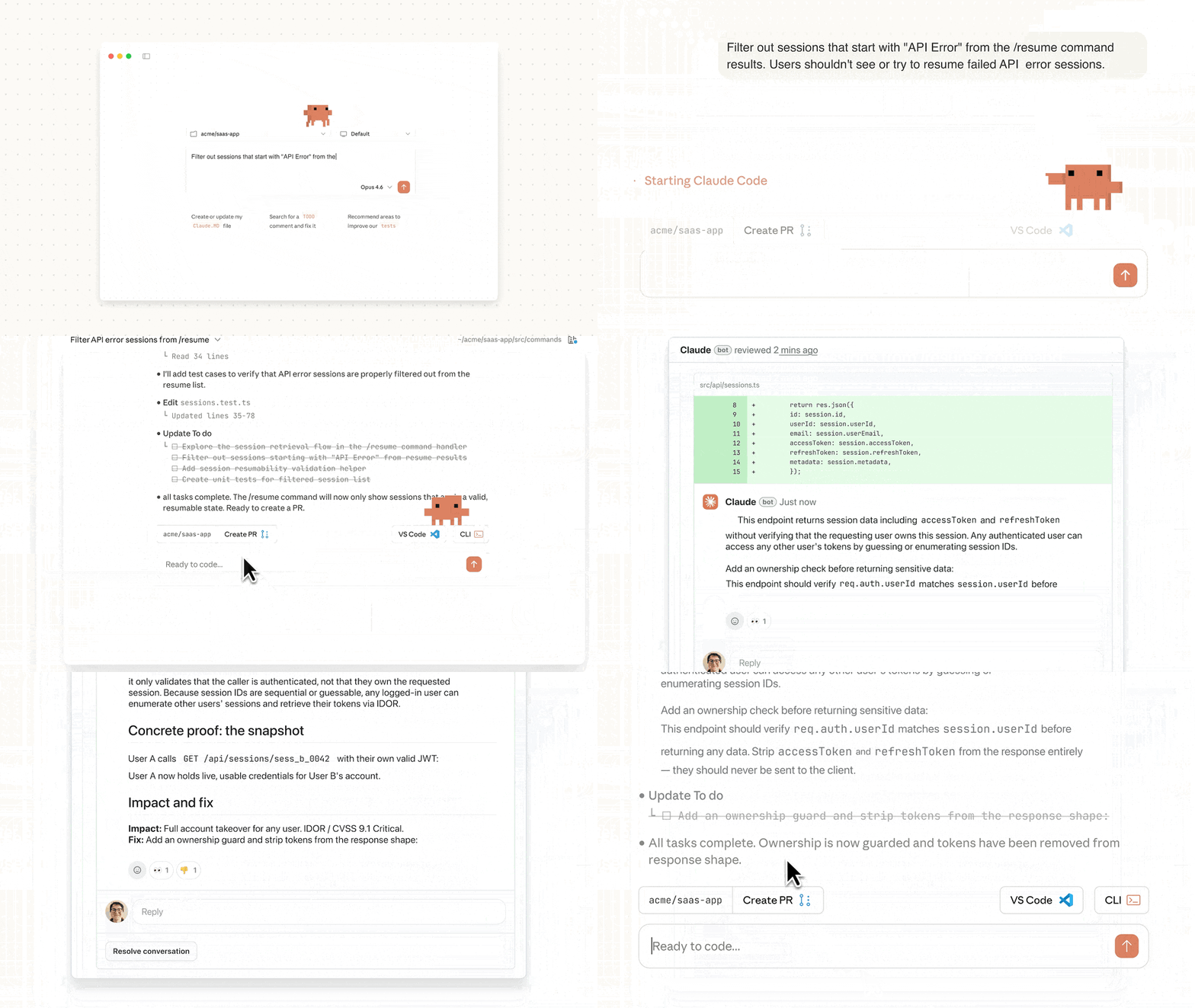
Claude Code Review tackles this with a team of AI agents reviewing every pull request. Instead of one pass, multiple agents analyze the PR in parallel, verify potential issues, filter false positives, and rank bugs by severity.

What makes it interesting? It is the multi-agent architecture designed for depth over speed. The system scales reviews depending on PR complexity and leaves a high-signal summary plus inline bug comments directly in GitHub.

Key features

  • Multi-agent PR reviews

  • Parallel bug detection + verification

  • Severity-ranked findings

  • Inline GitHub comments

  • Review depth scales with PR size

Benefits

  • Catch bugs humans often miss

  • Reduce reviewer workload

  • Higher quality PR reviews

  • More confidence when shipping AI-generated code

Who it’s for

Engineering teams, AI-heavy dev teams, and organizations managing large volumes of pull requests.

Use cases

  • Reviewing AI-generated code

  • Large refactors and complex PRs

  • Security & logic bug detection

  • Scaling code reviews across teams

Personally, I think this is a great example of agents solving real developer workflow bottlenecks, not just generating code but improving the quality of what gets shipped.


View details here:

What do you think? Share in the comments! :)

5
回复

Follow me on Product Hunt to be notified of the latest and greatest launches in tech, SaaS and AI: @rohanrecommends

2
回复

curious how it compares with @Kilo Code, @CodeRabbit and related products in the category

2
回复

Who has a Team or Enterprise subscription?

4
回复

The multi-agent review idea is interesting. AI can generate code fast, but reviewing it properly is still a challenge for many teams. Having multiple agents verify findings to reduce false positives sounds like a smart approach. Curious to see how it performs on large PRs.

2
回复

Seems like Caude killed a lot of code review products from YC. They may have to pivot.

2
回复

So we have AI writing the code, and now a team of AI agents reviewing the code. Are we humans just here to pay the AWS server bills now?Haha. Brilliant launch!

2
回复

Huge launch, the multi-agent approach for PR reviews makes a lot of sense. Catching logic bugs, security issues, and subtle AI-generated code mistakes before production is exactly where teams need help.

Coincidentally, today I launched something related as well: Blocfeed.

While tools like Claude Code analyze the code itself, Blocfeed focuses on what happens after software reaches real users. Bugs often appear only on specific systems or edge cases where everything works fine on the developer’s machine.

Blocfeed aggregates user feedback and reports to surface:

  • Bugs that only occur in certain environments

  • Issues that slip past internal testing

  • Patterns in what users are complaining about

  • Feature requests users repeatedly ask for

I can imagine a strong synergy here:

Claude Code → prevents bugs before merge
Blocfeed → detects real-world issues and user needs after release

Congrats on the launch, excited to see where this multi-agent review direction goes. 🚀

2
回复

Multi-agent review is exactly where code review needs to go. A single pass reviewer misses the same classes of bugs every time, but having specialized agents looking at security, logic, and performance in parallel catches the stuff that slips through. The false positive filtering is the make-or-break part though. Nothing kills developer trust in automated review faster than noisy findings they learn to ignore.

1
回复

been building with Claude Code for months now and the "quick skim" problem is very real. agents write code fast but the subtle bugs pile up — especially when one agent changes something another agent built two weeks ago. multi-agent review makes a lot of sense here, curious how it handles context across larger PRs where the full picture only emerges from reading multiple files together.

1
回复

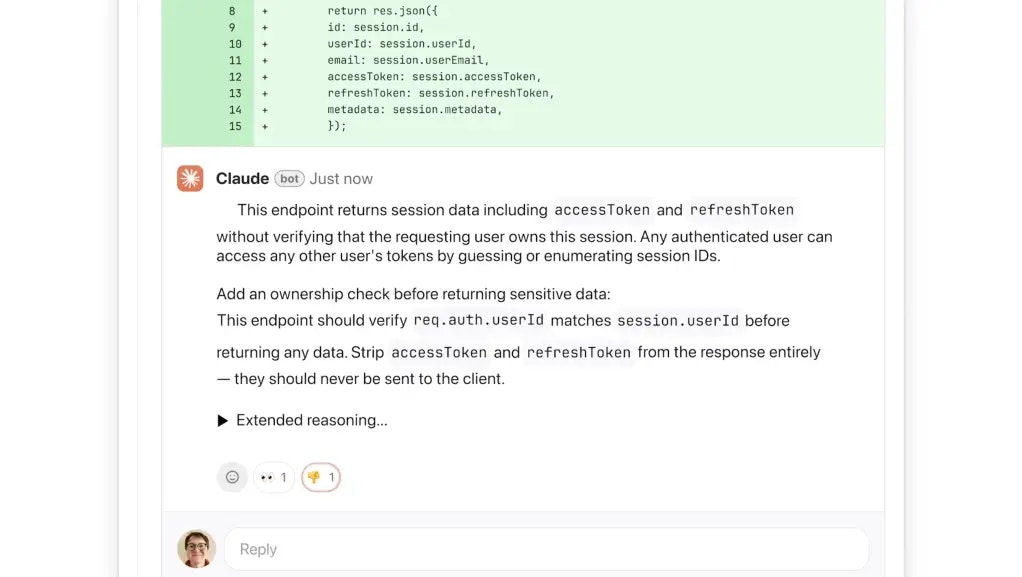
This is honestly the missing piece for teams shipping fast with AI. I've seen so many PRs where the code "works" but has subtle auth bugs or logic holes that a human reviewer would catch on a good day but miss when reviewing 20 PRs.

The IDOR example in the demo is a perfect case. That exact bug pattern shows up constantly in AI-generated code because the model just focuses on making the endpoint functional, not secure. Having agents verify findings before flagging is smart too, cuts down on the noise.

1
回复

Multi-agent code review is a great concept. Having different agents specialized for different types of issues — security, performance, logic errors — should catch things that a single-pass review would miss. Really like the approach of catching bugs early in AI-generated code specifically, since that is becoming the default way people write code now.

1
回复

Congrats on the launch! Multi-agent review that verifies its own findings to reduce false positives is a nice touch. Noisy code review tools are worse than no tool at all. How are teams finding the signal-to-noise ratio so far in the research preview?

0
回复

Built my entire SaaS with Claude Code, so this is relevant to me. The biggest challenge with AI-generated code isn't writing it, it's trusting it at scale. When you're integrating multiple ML models and wiring up payment flows, a missed edge case can cost you. Excited to see multi-agent review applied to this problem.

0
回复

We started using Claude at the agency for client briefs and first-draft copy. The multi-agent review is a smart addition AI-generated code ships faster than anyone can review manually, so having agents check each other makes sense.Curious about the false positive rate. That's usually where automated review tools lose the team's trust.

0
回复

want my team to switch from Greptile to Claude Code Review I Want few reasons especially for my CTO @raj_sharma_2000 cost comparison ?? Mermaid diagram

0
回复
#4
Your Next Store
AI-first platform for building commerce stores, fast
365
一句话介绍:一款AI优先、Stripe原生的电商建站平台,通过对话式AI快速生成生产级Next.js商店代码,为代理商和软件团队解决了传统电商平台插件繁杂、配置复杂、定制与灵活性难以兼得的痛点。
SaaS Artificial Intelligence E-Commerce
AI电商建站 Stripe原生 Next.js 全代码所有权 无插件架构 代理商工具 生产就绪 对话式开发 电商操作系统 结构化商业模型
用户评论摘要:用户普遍赞赏其“无插件”理念与全代码所有权设计,认为在AI工具普遍存在锁定的当下尤为可贵。主要问题集中于支付方式是否仅限Stripe、生成商店的设计可定制性、以及平台的可扩展性。创始人回应强调单一支付是深度整合的优势,并证实代码完全开放且基于Vercel+Stripe架构保障扩展。
AI 锐评

Your Next Store 并非又一个简单的AI网站生成器,其核心价值在于用“固执己见”的架构哲学,对混乱的电商技术栈进行了一次外科手术式的精简。它精准切入了一个细分但关键的市场:服务于有设计和技术能力、却苦于集成与维护成本的代理商和软件团队。

产品真正的颠覆性在于其“分层解耦”策略:前端用AI对话降低启动门槛,后端则通过一个精心建模的、API驱动的“商业SDK”提供稳定核心。这使其既拥有了No-code的易用性入口,又保留了Pro-code的终极控制权。全代码所有权和开源商店前端,直接击中了当前AI生成工具“黑箱化”和“供应商锁定”的行业痛点,为技术团队提供了可审计、可继承、可任意修改的资产,而非租用的服务。

然而,其“单一支付(Stripe)”和“固执己见”的模式既是利刃也是软肋。它用深度换广度,用标准化换灵活性,这必然会将需要多支付网关或特殊业务逻辑的客户拒之门外。这一定位决定了它难以成为Shopify式的通用平台,更像是为“数字原生品牌”和其服务商量身定制的“现代化商业基础组件”。它的成功与否,将取决于其定义的“最佳实践”能否形成生态共识,以及在其划定的边界内,所能提供的功能深度是否足以让用户心甘情愿地放弃“选择的自由”。这是一场对电商基建“复杂性”的豪赌,赌的是大多数优质客户宁愿要一个“完美运行的有限系统”,也不要一个“无所不能的脆弱拼图”。

查看原始信息
Your Next Store
YNS is an opinionated commerce stack for agencies and software teams building design-forward brands. You can create a store by chatting with AI but the real advantage is the foundation: well-modeled commerce primitives exposed through API. Each store is a structured, Stripe-native, production-ready Next.js app that plugs into AI workflows (Codex, Claude Code), with full code ownership when needed. Commerce rebuilt for the agentic future, where agents build, reason about, and operate commerce.

Hey Product Hunt 👋

I'm Jakub, founder of @Your Next Store. I've spent years in commerce, running my own software agency, then at Saleor, a platform powering enterprise brands like Lush and Breitling.

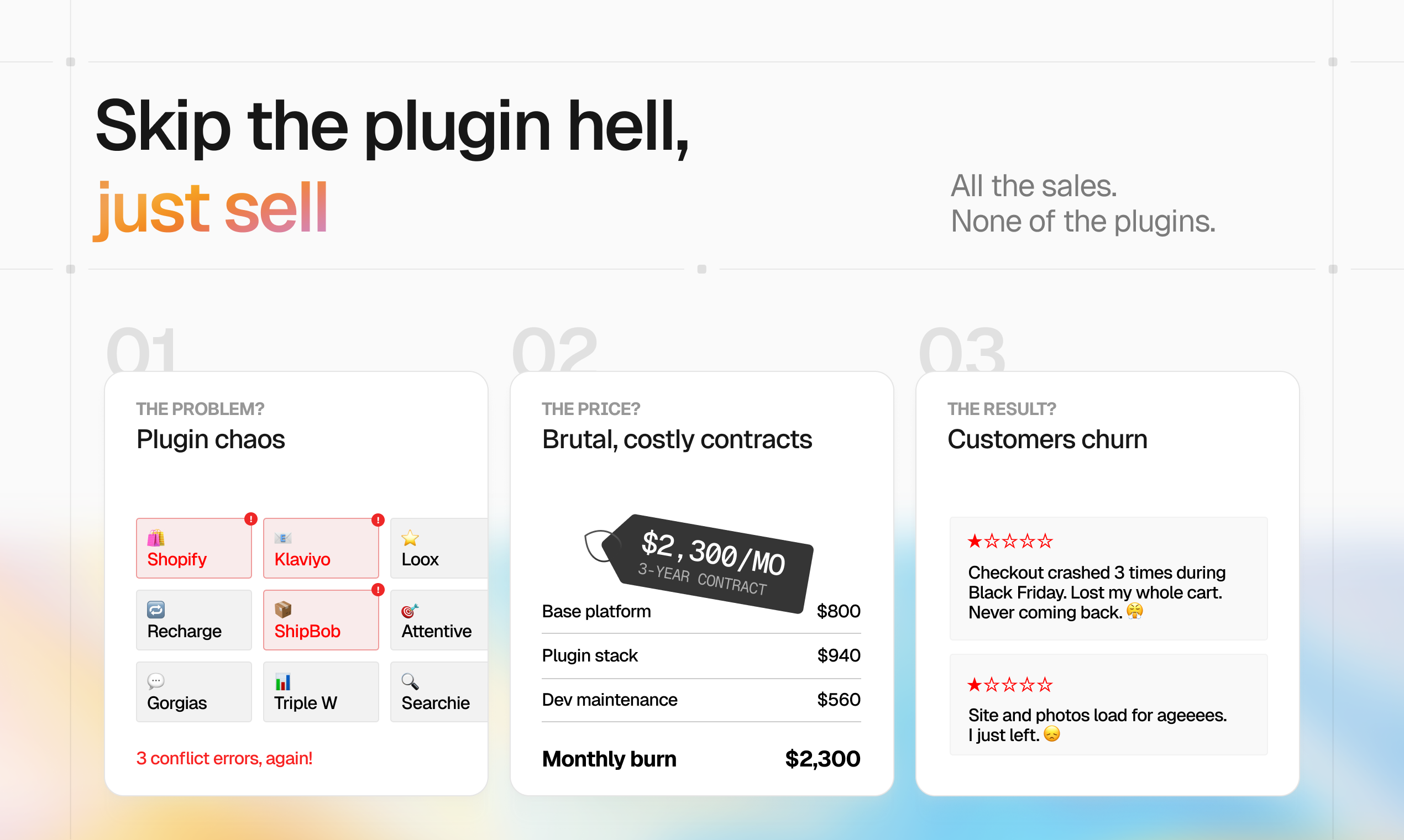
Those years taught me one thing: flexibility has a cost. Plugin hell, hidden fees, things that don't work together. Commerce has been a mess. So we started from scratch.

Instead of adding flexibility at every layer, we removed it. One payment provider, one clear model, no endless configuration. That's the whole idea behind Omakase Commerce. You don't assemble the stack. You trust the chef.

🎁 Product Hunt offer: Launch from PH and get your first month of the Starter Plan for $1.


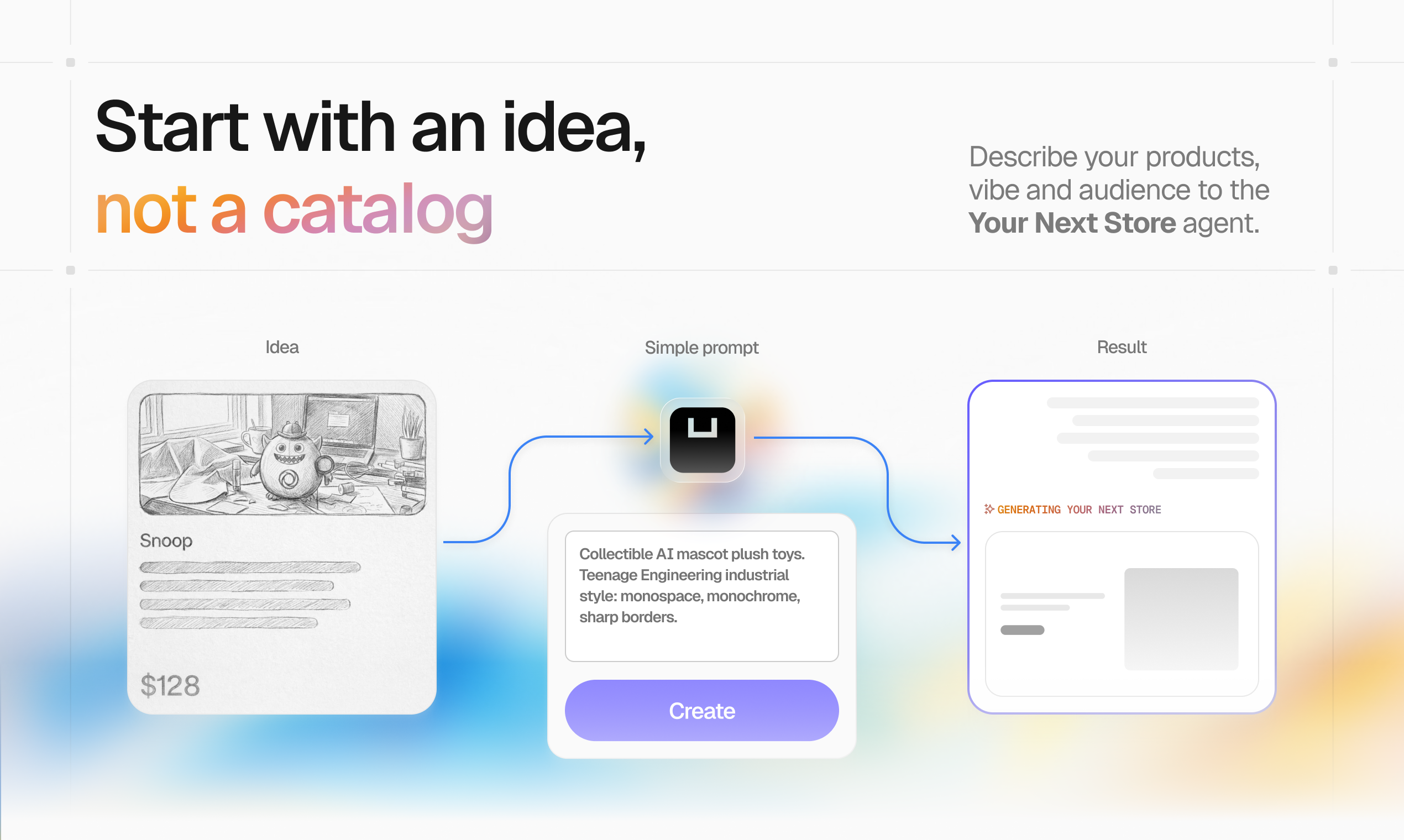
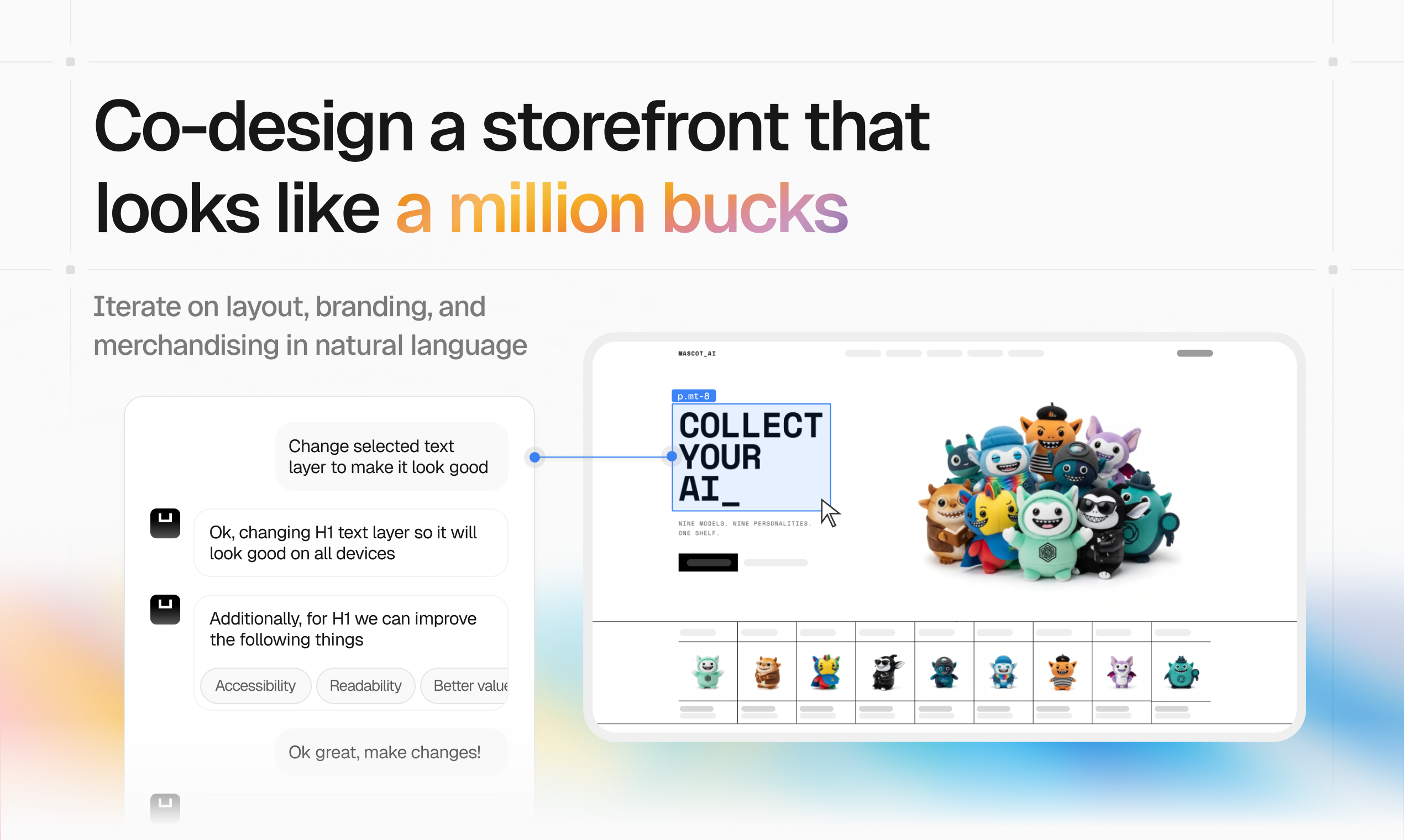
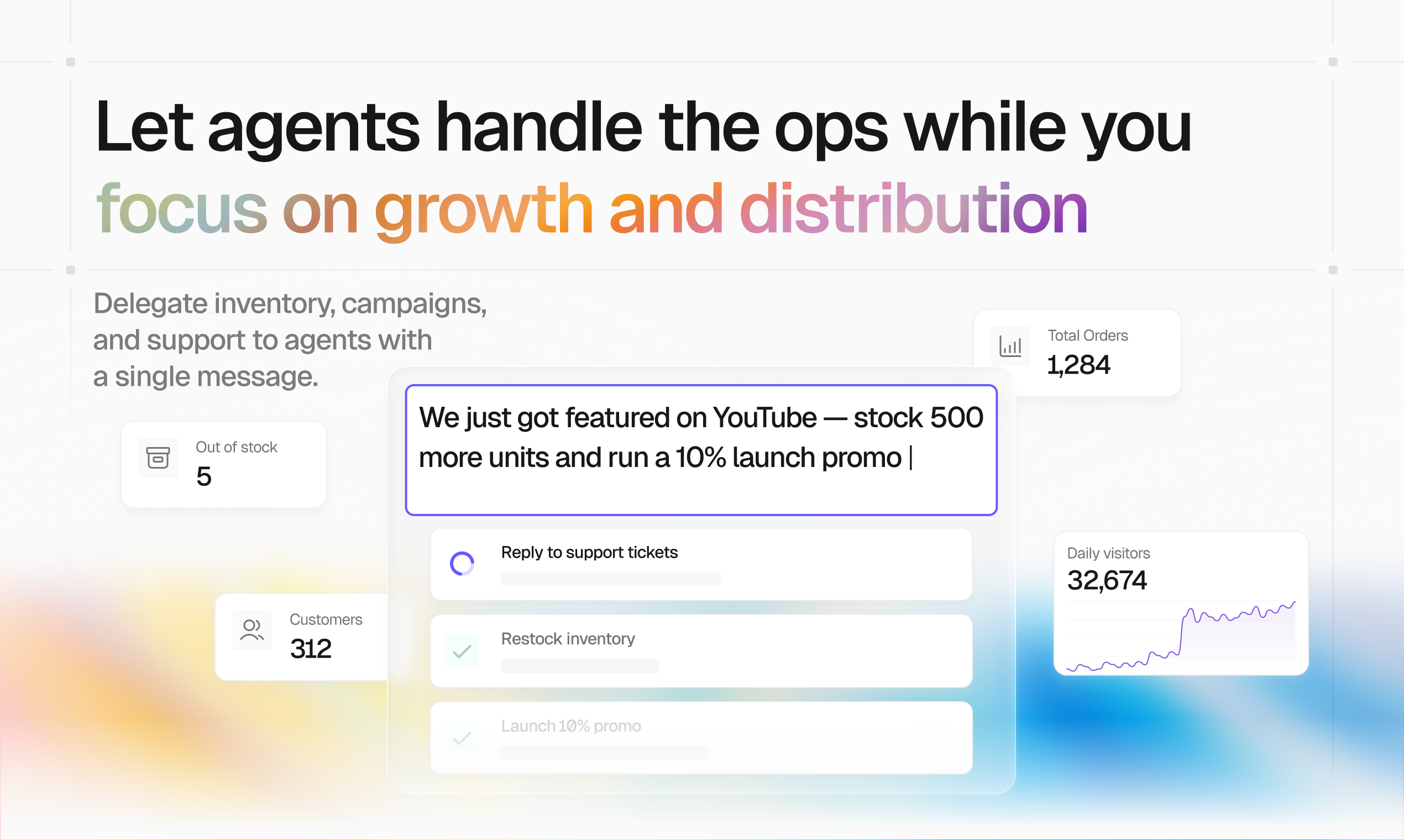
Your Next Store is a Commerce OS built for agents and humans. The AI builder is your entry point: describe your store in plain English and get a real storefront connected to products, cart, and checkout from the first prompt. Not mockups. Not static pages.

Build like you would in Lovable - prompt, iterate, ship. Then agents take over: running the ops, surfacing actionable insights, and telling you exactly what to do next, so you can focus on growth and distribution.

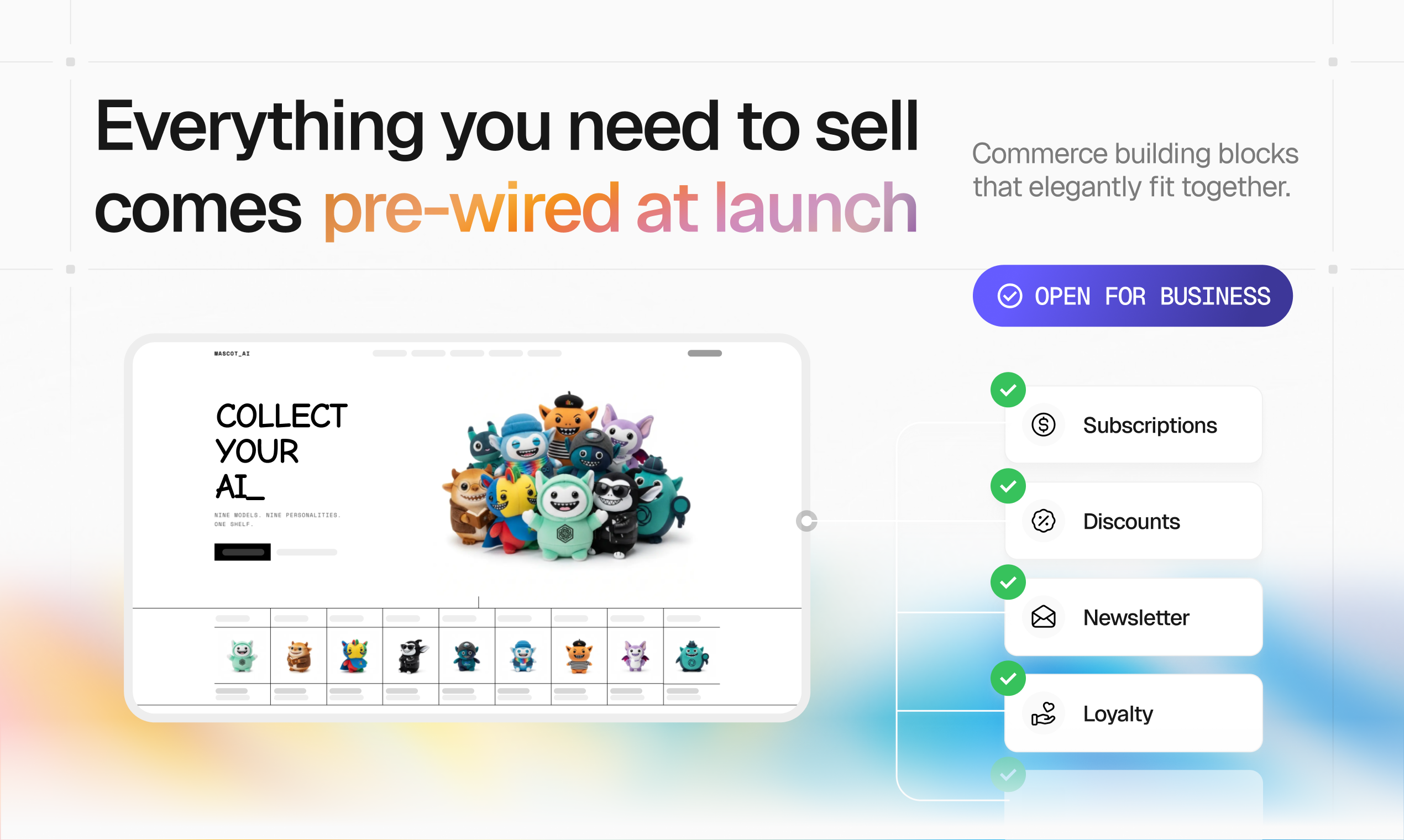
Underneath is a full commerce layer built on our Commerce SDK. No plugin chaos, no five dashboards, and the freedom to change anything without breaking payments.

Your Next Store is how you become a 10x merchant - the AI builder gets you live in hours, the OS makes running your store feel effortless.

We'd love for you to check out some of our stores:
- rePebble by @ericmigi
- Sine Silk
- ChocoTales


Huge thanks to @chrismessina for hunting us 🙏

55
回复

great work, congrats on the launch!

12
回复

Congratulations on the launch of your software agency—wishing you innovation, growth, and great success!

0
回复

Hey Jakub. How do you ensure that AI-generated store content like product descriptions or marketing copy remains authentic and accurate?

0
回复

Congrats on the launch! Does you platform offer an in-built payments system?

4
回复

@alina_petrova3 Thank you! Yes we use Stripe exclusively and that's actually a feature, not a limitation. Because we're fully committed to one payment provider, we can go much deeper than platforms that treat payments as just a plugin.

A good example is Product Subscriptions it combines the actual subscription logic, a customer portal, and cadence management into one seamless experience. That's only possible because we can lean fully into the Stripe API rather than working around compatibility constraints.

More features like that are in the works. 🚀

2
回复

There's something different in this AI builder - focused (e-commerce), opinionated (no plugins), and beautifully crafted.

S/O to @zaiste and team for the stunning work. The future of ecom is here.

4
回复

@fmerian thank you! it feels like a pivotal moment in general, AI changed the rules - things that used to be tedious are suddently fast or just done; fewer decisions, less overwhelm, easier to just start. All of that frees up time for what actually matters i.e. the details that make a store genuinely unique. That's what we want to help unlock.

1
回复

Great launch! Congrats on being on the top of the leaderboard. By the way, what did you use to make the gallery images? They look so good.

4
回复
@zerotox Figma :)
3
回复

@zerotox strong +1 absolute fan of the image gallery

3
回复

Congrats on the launch! Is Your Next Store written on Next.JS? ;)

4
回复

@nikitaeverywhere Yep, Next.js! Pretty large codebase at this point. The storefront is open source, we've put a lot of care into making it a useful reference for Next.js best practices at scale, with patterns we've accumulated over time building this.

we've also gone deep on «AI integration», way beyond just dropping in a CLAUDE.md or Agents.md. If you're into that side of things, worth a look.

2
回复

"Instead of adding flexibility, we removed it" is unironically the bravest and most beautiful pitch I've ever heard in e-commerce:D Death to plugin hell!

4
回复

@kostfast Yeah, death to plugin HELL :) ...many said it couldn't be done. They were right. We did it anyway.

2
回复

The Stripe-native + full code ownership angle is the part I'd actually lead with more — most agency teams I talk to are scared of AI tools that create lock-in or bury the payment logic in a black box. What I'm curious about is how it handles the store design side once the data model is sorted — because generating a working product catalog is one thing, but getting to something a client would actually put in front of customers is usually where the real time goes.

3
回复

Checked how much you improved since the last launch. Amazing shipping velocity, congrats!

3
回复

@zambrzycki thanks! The last few months were pretty intense + a lot of tooling changes and new workflows to figure out. We've been experimenting with a bunch of different approaches, but things are clicking into place now. And velocity should only go up from here! 🔥

1
回复

I’m curious how customizable the generated stores are after launch. Having full code ownership while still using AI workflows sounds like a really good balance.

3
回复

@christian_onochie Great question and honestly one of our core design decisions. You get full access to the storefront codebase, no strings attached. (and the storefront code base is entirely open source)

A lot of our users are software agencies and design studios and they pushed us hard in this direction. They need complete control over design, animations, and presentation, and they should have it. Unlike tools like Lovable, we deliberately don't vendor lock you to our chat interface. The storefront is yours: clean Next.js code, built with a curated set of best practices you can actually build on.

we're also working on dedicated flows to make the agency-client handoff even smoother.

1
回复

Hey Jakub! It looks impressive and e-commerce game needed a refreshed face. Happy to see you helping on this. Quick question, can be used for drop-shipping?

3
回复

@german_merlo1 Thank you, really appreciate it! A few people have asked something similar. We actually have one dropshipping-like integration in the works right now. Do you have any specific APIs in mind? Would love to make sure it covers your use case.

2
回复

This feels like a truly next-gen AI-powered no-code store builder for e-commerce owners. Congrats on the launch!

3
回复

The AI-first approach to e-commerce is smart. Building a store used to mean choosing between no-code tools that are limiting or custom development that is expensive. Having AI handle the setup and customization while still giving you a real, production-ready store is a great middle ground. Congrats on the launch!

3
回复

Great team, awesome product 👏 It's amazing to see you iterating at that pace. Brilliant tool.

3
回复

@gregrog thank you! from someone who's done hard things and knows what building looks like, that really means something. Let's catch up soon!

1
回复

Does it only work with Stripe for payments or can we add other payment methods too? Looks interesting, will share with my wife who is about opening a store now, perfect timing!

3
回复

@mikhail_prasolov Stripe – which supports multiple payment methods in many countries!

1
回复

@mikhail_prasolov For now it's Stripe only and it's a deliberate choice. We wanted to keep things simple and genuinely good rather than overwhelming people with options. Stripe may not always be the cheapest, but long term we believe they'll win; and practically speaking, they're the only ones that let you instantly switch between countries, which comes up more than you'd think. A lot of our sellers start local and want to expand across borders fast.

Hope your wife store goes well!

3
回复

So if a store starts getting decent traffic, does it scale well? That's always been a pain with some platforms.

3
回复

@kaysinb totally valid concern! We built YNS on Vercel and Stripe from day one specifically so we'd never have to worry about it. Best proof we have: rePebble launched on YNS and had a wild ride. It hit the top of Hacker News twice and had a massive Reddit community all pile in at the same time. The platform held up without a sweat. The only blip we saw was a few minutes of downtime with a Redis service we use for pre-reservations, completely unrelated to YNS core infrastructure (+ since then we also improved that part)

1
回复

Congrats guys 👏

The “store in minutes” part caught my eye. How many minutes are we talking about realistically? 😄

Like from zero to first product live?

3
回复

@kate_ramakaieva thanks!

The storefront generation has turned out better than we expected. From a single prompt (in Max mode), you can have a really solid initial result in about 7-8 minutes. Then it's about refinement, we get you 80-90% of the way there, but that last (and most important) 10% can take more time depending on how specific your vision is. ;)

fastest we've seen from idea to live was one day: a cake store, actually. Realistically, a week is very feasible. And as we see more and more stores launch on the platform, we're getting a clearer picture of the usual bottlenecks and have some ideas on how to remove them.

3
回复

polish devs taking over ai space part 51231 👏

3
回复

@kyzo thanks for your support! :)

1
回复

Really dig the approach here. An opinionated, Stripe-native commerce stack with full code ownership is exactly what agencies and dev teams actually want. The "built for the agentic future" angle with AI workflows plugging in through the API is smart. Any plans for a managed hosting option for non-technical founders?

2
回复

Great work on this, guys! Congrats!

2
回复

@madzadev thanks!

1
回复

One of my biggest issues with Wix is the limitation to set up a way for customers to select delivery dates and times based upon our availability. For stores that require a bit more flexibility, will prompting via Your Next Store allow me to reach that degree of flexibility?

2
回复

@lienchueh Not yet, but that's the kind of thing we can move fast on. Unlike Shopify or Wix we're small and reactive, it's just a matter of extending our API. If your use case aligns with where we're heading, we can prioritize it quickly. What does your ideal delivery scheduling flow look like?

1
回复

Love the MCP + agentic commerce direction. Curious — how does it handle multi-storefront setups for agencies managing multiple brands? That's usually where the plugin hell gets worst. Congrats on the launch!

2
回复

@angolin64 Managing multiple stores on behalf of clients from one place is actually our primary focus. We're actively talking to agencies and adapting to that particular workflow. Recently we introduced an «agency layer» (not AI related 😅) for exactly that and we're running a few pilots. Still rough around the edges but we iterate really fast. If you're interested in a pilot, let me know!

1
回复

explain plz to a non-tech small ecomm owner, how that'd be better than Shopify?

2
回复

@artur_wala1 Great question! with Shopify you start simple but quickly realize you need plugins for almost everything: reviews, subscriptions, search, tags, etc. Each one may cost money. Before you know it you're paying thousands per month and your store still breaks during Black Friday because it's too complex or worse, you need a pricey dev agency to do some custom work... using Liquid

With YNS, all of that is built in from day one. No plugins to install, no conflicts, no surprise bills. One store, everything included, just works. You focus on selling - we handle the rest.

1
回复

Feels like commerce stacks are slowly being rebuilt around the assumption that AI agents will operate the system, not just humans using dashboards.

The idea of exposing well-modeled primitives through APIs and letting agents orchestrate workflows on top makes a lot of sense.

Curious how you think about the boundary between AI-generated stores vs long-term maintainability and customization once companies start scaling?

2
回复

@tomik99 so @rauchg once shared with us the story of Twilio early pitch: the idea that a small set of well-defined operations could represent most telecommunications flows just by composing them. That stuck with us.

That's exactly the direction we're heading with YNS. Commerce notions and flows are actually well understood, the hard part is chopping them into the right units that can be universally and cleanly composed. Nail those primitives and you get something that scales beautifully both for humans and agents.

That's the challenge we're focused on!

1
回复

@Your Next Store, Stripe-native approach is smart, removing payment abstraction layers reduces friction significantly. How do you handle multi-currency and tax compliance for international sellers compared to Shopify's built-in tools?

2
回复

@listsgenie we're relying heavily on Stripe to do that for us! Stripe offers dynamic currency rates conversion which is the simplest way to allow your customers to pay in another currency of their choosing. Stripe also offers Tax – which is what we're using to dynamically calculate taxes for different countries, states etc.

Shipping methods are also already localized – you can define different prices and methods per countries or groups of countries.

We're also working on allowing merchants to provide different product prices in different currencies. That's WIP and we'll release it soon.

2
回复

@listsgenie That's the real stress test for any "opinionated stack" approach, Shopify's tax and currency handling is genuinely good precisely because they've had years of edge cases baked in. Would be interesting to know if they're leaning on Stripe Tax for that layer or building their own, and whether the single-provider bet holds up once you're selling across 20+ countries with different VAT rules.

0
回复

Really nice project! Congratulations on your launch!
Question: do you account for scalability in the design of the store as the volume potentially grows?

2
回复

@avz Yes, we built YNS on Vercel and Stripe from day one specifically so it scales automatically as volume grows. A good example is rePebble, which hit the top of Hacker News twice with a big Reddit community piling in at the same time. The platform handled everything just fine, with one minor hiccup in a Redis service unrelated to YNS core.

2
回复

Great project and great execution! To the moon guys! 🚀 🌕

1
回复

Great launch! Congrats on being on the top of the leaderboard!

1
回复

Commerce rebuilt for the agentic future is the exact right framing. The cleanest way to think about it: the API-first stack is what makes a product agent-operable, not just AI-assisted. We're doing something similar in travel — the hard part isn't the LLM layer, it's making sure the primitives (availability, pricing, itinerary structure) are well-modeled enough that an agent can actually reason about them without hallucinating constraints. Curious how you handle the 'confirmation' problem: when a store built by an agent needs a human to approve something mid-flow, how do you surface that without breaking the whole experience?

1
回复
@giammbo we don’t break the flow, we make interactions part of the flow! We dynamically generate interface matching the AI question for the user to provide missing information.
1
回复

Congrats on the launch! Curious how you’re thinking about integrations - will the platform stay centered around a smaller set of core tools, or open it up to a wider ecosystem over time?

0
回复
#5
Fish Audio S2
Real Expressive AI Voices
287
一句话介绍:Fish Audio S2是一款开源的、支持自然语言指令的新一代表达性文本转语音模型,通过输入如[whisper]等情感提示词,即可精准控制语音输出的情感与风格,解决了传统TTS工具表达生硬、操控复杂、多语言多角色生成效率低的痛点。
Open Source Artificial Intelligence GitHub Audio
文本转语音 语音合成 表达性AI 语音克隆 开源模型 多语言支持 多角色对话 自然语言交互 AI语音生成
用户评论摘要:用户普遍对产品的表达力、开源和快速语音克隆表示兴奋与赞赏。主要问题集中在:技术原理(如何保持长文本情感一致性)、伦理(声音所有权与滥用)、实际应用(树莓派集成、电话通话、自托管流式支持)以及语言支持范围。开发者团队对多数问题进行了详细回复。
AI 锐评

Fish Audio S2的发布,与其说是一次产品迭代,不如说是对现有TTS市场规则的一次“破坏性”试探。其核心价值并非单纯的“更真实的声音”,而在于将语音合成的控制权,从复杂的参数工程师手中,移交给了使用自然语言的普通用户。用“[laughing nervously]”替代繁琐的韵律滑块,这降低了创作门槛,但更深层的意义在于,它试图将语音生成“脚本化”,使其更无缝地融入内容创作流水线。

然而,其宣称的“10秒克隆”与“80+语言”在引发热潮的同时,也埋下了隐忧。评论中关于声音伦理与滥用的提问直指要害。开源策略是一把双刃剑:一方面能快速建立生态(如Home Assistant集成),推动创新;另一方面也几乎放弃了在应用层对恶意使用的管控能力,将伦理和责任难题抛给了社区。团队目前的回应更聚焦于技术实现,对治理框架的阐述明显缺失。

从技术路径看,它摒弃So-VITS-SVC类方案,转向基于海量数据预训练的大规模语音语言模型,这使其在长文本一致性和少样本克隆上表现突出。但评论中关于非标准语音样本(如浓重口音)的质疑,恰恰点破了当前AI语音的“公平性”软肋——其卓越表现很可能仍建立在“标准”语音数据之上。真正的普及,必须跨越这道“边缘案例”的鸿沟。

总而言之,S2在体验革新和技术民主化上迈出了一大步,但其开源狂欢的背后,是亟待行业共同应对的伦理与技术深水区。它可能不会立刻颠覆成熟的商用TTS平台,但无疑为下一阶段的AI语音应用划下了一条新的起跑线。

查看原始信息
Fish Audio S2
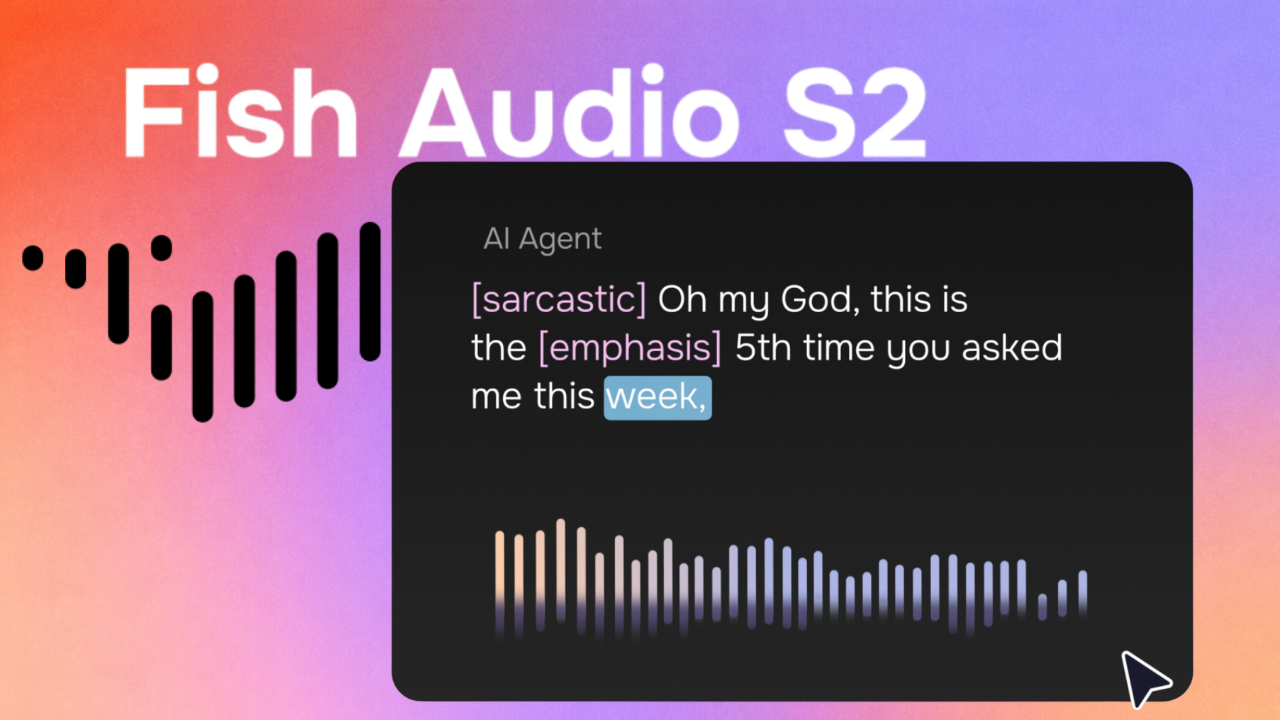
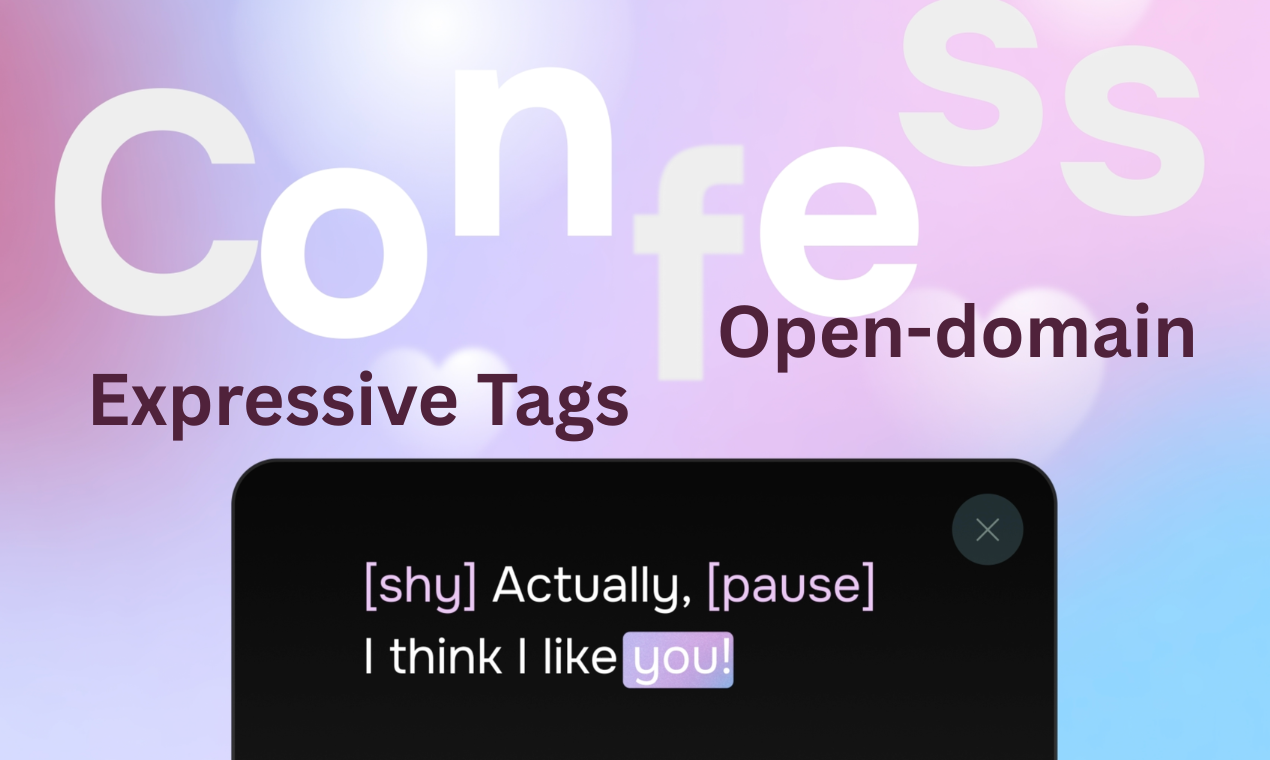
We've open-sourced Fish Audio S2, a new generation of expressive TTS that lets you direct voices with natural language. Add cues like [whisper] or [laughing nervously], generate multi-speaker dialogue in one pass, and create scary-real voices across 80+ languages.

Hi our beloved PH!
[excited] [slightly nervous]

Today we’re launching Fish Audio S2, our new text-to-speech model.

[long pause]

Hear Fish S2 Read This!

This is a big step beyond S1, redefining expressive voice AI. Write emotion cues anywhere in the text and hear the speech flow exactly how [emphasis] YOU direct it.

And, [inhale] we’re open-sourcing all of it.

GitHub: https://github.com/fishaudio/fish-speech/
HuggingFace: https://huggingface.co/fishaudio/s2-pro/

Shout out to SGLang for powering our stack.

There’s much more to S2.
Try it yourself now: https://fish.audio/s2/

As always, we want to give back to the community. For the launch, we’re offering free generation credits and an exclusive 50% OFF promo code: PH-FishS2

Go build weird things with it :)

We’d love to hear what you make.

24
回复

@hehe6z incredibly proud of this one, amazing job team!

8
回复

@hehe6z Hey Helena. With increasingly realistic AI voices, how do you approach issues like voice ownership, consent, and responsible use?

0
回复

@hehe6z this is awesome

0
回复

How does Fish Audio maintain consistent emotional prosody and rhythmic nuance across long-form content, and what specific architectural improvements over So-VITS-SVC allow for such high-fidelity cloning from only 10 seconds of source audio?

5
回复

@mordrag great question Denis! S2 moves beyond systems like So-VITS-SVC and instead generates speech with a large speech-language model that operates on discrete audio tokens, which lets it maintain the traits over long passages. because S2 is heavily pretrained on large-scale speech data, the reference clip mainly anchors speaker identity and style, so it can clone voices extremely well from just 15 seconds of sample audio.

2
回复

@mordrag The 10-second cloning claim is the part worth pressure-testing; most models degrade pretty fast on edge cases like heavy accents, breathy voices, or non-standard cadence, which are exactly the inputs where prosody consistency breaks down first. Would love to know if the emotion cue system was trained on those harder voice profiles or mostly clean studio-quality samples.

0
回复

big fish audio fans for a long time, been witness the team always go above and beyond. let's gooooo s2! congrats on this launch

5
回复

@kellyann3644 Thank you Kelly for the long time support. We appreciate you so much <3

1
回复

Can I use this in a raspberri pi voice assistant that I have at home?
What abour the voice cloning to use it in phone calls?
eleven labs is not that good.. ( or I dont know how to set it up)

4
回复

@javierfandos Hi Javi, this is a great point - yes you absolutely can! For example home-assistant has direct fish audio support, you can check out the deets here: https://www.home-assistant.io/integrations/fish_audio/. Voice cloning is also one of the flagship features our users love because of the extreme realism :)

4
回复

Excited to see the new version coming! Will it support any new languages?

3
回复

@vladimir_osipov Thank you Vladimir! Yeah the language support has expanded significantly compared to S1. S2 Pro supports 80+ languages.

Tier 1: Japanese (ja), English (en), Chinese (zh)

Tier 2: Korean (ko), Spanish (es), Portuguese (pt), Arabic (ar), Russian (ru), French (fr), German (de)

Other supported languages: sv, it, tr, no, nl, cy, eu, ca, da, gl, ta, hu, fi, pl, et, hi, la, ur, th, vi, jw, bn, yo, sl, cs, sw, nn, he, ms, uk, id, kk, bg, lv, my, tl, sk, ne, fa, af, el, bo, hr, ro, sn, mi, yi, am, be, km, is, az, sd, br, sq, ps, mn, ht, ml, sr, sa, te, ka, bs, pa, lt, kn, si, hy, mr, as, gu, fo, and more.

1
回复

Really cool how fast it can be to clone my voice. Should I be giving it multiple recordings at different emotions so that it has a better register of what I sound like?

3
回复

@lienchueh You absolutely can! Just ten seconds of high quality audio recording of your voice with a good mic will take you most of the way there though. With the new open domain emotion tags you can direct emotions in the speech with precision.

1
回复

exactly what we need, gonna try it now

3
回复
@oratis thanks oratis! let us know what you think!!
1
回复

Just found fish audio this year and was surprised about the API and the S1 model. Well, the S2 is now absolutely mind-blowing. Great work!

2
回复

@michael_pohl Awesome to hear Michael, thank you!

0
回复

Oh my this is mind blowing. Does it support streaming on self hosted?

2
回复

@ansh_deb Oh hey Ansh good to see you again!! Yes it surely does!

3
回复

What's the basis for the tonation or emphasis? Congrats on the launch, @hehe6z!

2
回复

@hehe6z  @neilverma S2 is trained on over 10 million hours of audio with reinforcement learning and a dual-autoregressive architecture. Tones, emphasis, pauses, laughs, and other emotions can all be used in natural language emotion tags placed at any word or phrase positions within the text! Thank you for your support Neil!

2
回复

@neilverma thank you Neil!!

1
回复

Good job!

2
回复

@lifan_wang Thanks for your support Lifan! Hope you have fun trying it out, let us know your thoughts!

1
回复

this is called gold mate! keep making more such products like these

2
回复

@kshitij_mishra4 thanks man!!

1
回复

This is a big unlock for anyone building voice-driven products. Directing voices with natural language cues like [whisper] or [laughing nervously] instead of fiddling with sliders is so much more intuitive. Love that it's open source too. What languages are you seeing the most community demand for?

1
回复

@dparrelli Besides English a lot of Spanish, Chinese, and Japanese! Thank you for your support David!

0
回复
Amazing stuff. Congrats to your launch 👏🏽
1
回复

@christian73 Thank you so much Christian!

0
回复

As a content creator - I've been looking for a product like this for a long time! Hope it'll match my expectations.

1
回复

@yotam_dahan i think fish s2 would be the best for content creators! excited for you to try it, let us know what you think :)

0
回复

Congrats on launching Fish Audio S2 expressive voice control with natural emotion tags looks very promising. Do the emotional tags also work well for Bengali and Hindi voices?

0
回复

How do we leverage a multi-host generation in one pass? I can't find documentation on the site for producing the same level of quality that's portrayed in the demo. Could you point me in the right direction, please? Thank you so much. This demo looks really promising!

Also curious if you have a notebooklm alternative to the audio generation?

0
回复
#6
sitefire.ai
Marketing suite for the agentic web
198
一句话介绍:一款面向AI智能体(Agentic Web)的营销套件,通过AI代理自动分析驱动AI引用的内容、生成品牌化文章并直接发布至CMS,解决了品牌在AI主导的发现时代难以被智能体看见和引用的核心痛点。
Public Relations Marketing SEO
AI营销 SEO优化 内容生成 智能体优化 营销自动化 YC孵化 B2B SaaS 搜索引擎优化 内容管理 数字营销
用户评论摘要:用户普遍赞赏其“从监测到行动”的理念与一键发布功能。主要问题集中于技术原理(如如何识别AI引用特征)和不同AI模型间的差异。建议包括增加反馈渠道、Bot访问分析以及关注语音模型优化。创始人互动积极,详细解答了技术细节。
AI 锐评

sitefire.ai 精准地切入了一个正在形成但尚未饱和的市场断层:从“为人优化”到“为AI优化”的营销范式转移。其真正的价值不在于又一个AI内容生成工具,而在于它试图成为AI智能体时代的“谷歌站长工具”——一个理解并反向工程AI决策链的中间层。

产品聪明地避开了与传统SEO工具的正面竞争,转而攻击其盲区:传统SEO工具监测的是人类搜索与排名,而sitefire关注的是ChatGPT、Gemini等模型内部“扇出查询”的链路及其最终引用的内容特征。这并非简单的关键词替换,而是对AI信息消化逻辑的深度揣摩。其“分析-生成-发布”的闭环,尤其是与Framer/Webflow等CMS的深度集成,将洞察直接转化为资产,提升了行动效率。

然而,其面临的挑战同样尖锐。首先,技术风险极高:各大AI模型的检索与引用机制是黑盒且快速演进的,今天的“最佳实践”明天可能失效,维持分析的准确性需要持续的、成本高昂的反向工程。其次,市场教育成本巨大:说服客户为“AI可见性”付费,需要证明其能直接带来可衡量的商业结果(如线索),而目前工具仍偏重于内容输出环节。最后,其愿景中的“完全托管”模式与客户对品牌内容安全、调性控制的固有需求之间存在张力。

创始人团队的技术背景(强化学习)是应对第一点挑战的关键资本。若sitefire能将其承诺的“Bot访问分析”与转化追踪快速落地,将洞察与业务成果强关联,则有望从“有趣工具”升级为“必备基础设施”。当前,它更像一个大胆的赌注,赌AI智能体将成为信息分发的核心枢纽。赌对了,它可能定义下一个十年的营销规则;赌错了,则可能只是一个针对特定技术窗口期的精巧工具。

查看原始信息
sitefire.ai
sitefire (YC W26) is the marketing suite for the agentic web. We don't just monitor - we act: sitefire agents analyze what content drives citations, write brand-aware articles, and push to your CMS (Framer, Webflow). sitefire agents also surface PR outlets and UGC that influences AI answers, and provide tailor-made outreach suggestions. Save yourself a SEO and content person, and use sitefire to start marketing to agents.

Hi Product Hunt! I'm Jochen, co-founder of sitefire (YC W26). 👋

My co-founder Vincent and I met at TU Munich, and have backgrounds in software engineering and reinforcement learning from Stanford. We started sitefire in late 2025 after becoming convinced of one thing:

Websites are going away. Going forward, people will interact with brands via AI agents like ChatGPT and OpenClaw. This means brands need to design their marketing content for AI agents, not just humans.

The problem? Most AI visibility tools stop at monitoring. They show you dashboards but don't help you actually do anything. We wanted to build the tool that takes action for you.

How sitefire works:

For every topic where you want to be visible, our AI agents analyze what content drives AI citations - top-cited pages, query fan-out, sourced domains, and more. Then, sitefire recommends one of four actions:

📝 Create content - Fully-written, brand-aware, AI-optimized articles based on top-cited pages, your sitemap, and SERP data. Push to your CMS (Framer, Webflow) in one click.

Improve existing pages - Our AI agents know your sitemap. If you have content that could be cited but is not, we suggest tweaking it so LLMs are more likely to cite it.

📣 Earn media - See which PR outlets drive AI answers for your topics. Get research on how to approach them, incl. the publisher contact and email draft.

💬 Engage in communities - Find high-value Reddit threads and other forums that matter, with suggestions on what to post.

What's new today:

Starting today, every sitefire plan includes AI-optimized articles and one-click CMS publishing. We went from "here's what you should do" to "we did it for you.". This is our hello world moment.

Our product is free to try for 7 days. You can set up your account in 5 minutes and start getting your first content recommendations.

👉 We'd love your feedback: What's the biggest challenge you face with AI visibility for your brand?
Please tell us what is still wrong with our product. How can we make it better for you?

Thank you for your support! 🙏

14
回复

@jochenmadler Killer product!

2
回复

@jochenmadler Congrats!

0
回复

@jochenmadler very useful GEO tool!

0
回复

This is awesome! I like not having to look at a dashboard and do the necessary changes myself when AI can do them for me :) Let's gooo

2
回复

@manuel_cardenas1 How do you currently manage stuff like this? MCP in Claude? Slack? Would love to learn more there.

0
回复

Your SEO agency just spent 6 months building 200 backlinks. Sitefire looked at the ChatGPT fanout query data and said "cute, but ChatGPT uses Bing and none of those pages rank there." The era of vibes-based SEO is cooked. 🫡

2
回复

Great stuff! :) Supported and shared in our internal channels. Best of luck!

2
回复

@lev_kerzhner thank you!

0
回复

How does sitefire identify the specific content features—such as structural patterns, entity relationships, or citation density—that successfully trigger citations from diverse AI answer engines like ChatGPT, Gemini, and Perplexity?

2
回复

@mordrag LLM answers are a multi-step process and so it's important to break it down a bit:

  1. Every major model runs background searches, so called fanout queries on a search index. ChatGPT uses Bing, Gemini uses Google. Perplexity have their own index as well.

  2. This doesn't mean your SEO performance translates. They don't just search for your prompt. They come up with 10-20 really long fanout queries. Example from our own data: "geo-analytics tools for tracking AI search visibility 2024 2025". Nobody optimized their SEO performance for that.

  3. Once the search results are available, the model looks for good content that it can trust. Authority, statistics, solid sources, much of that. This is where structural patterns play a role.

So how do we do it? We look at the content that does each step well. For steps 1-2 we run SERP on the fanout queries and analyze that content. For step 3 we look more closely at the snippets that were actually extracted. This is done by agents.

And of course the overarching optimization is making sure we don't recommend blog posts when the topic is being driven by editorial content instead. That's why we have 4 types of actions.

0
回复

Can you tell us more about the roadmap you're planning for the next few months?

2
回复

@mikemahlkow Happy to share some more.

1. Bot & crawl analytics: We will soon have more ways to track how Agents access your website. That way, you know how often your content was actually cited in real conversations. How will this work? Just connect your Vercel, Cloudflare, or CloudFront and we'll include that data during content generation and in our dashboards.
2. Tracking leads: We'll allow you to connect Google Analytics soon, to also show how many leads you are winning.
3. More hands-off experience: enable customers to manage sitefire completely via Slack and MCP or CLI. We are currently figuring out what this will look like.
4. Improve actions: we are receiving a lot of feedback about the current actions every day. And we'll keep improving over time.

Many more ideas, but these are most concrete!

3
回复

@jochenmadler congrats on the launch!

2
回复

@dan_meier1 thank you!

0
回复

@jochenmadler  @dan_meier1 Thank you Dan! When do you think people will start optimizing for visibility in voice models too?

0
回复

Congratulations!!!

1
回复

@apexflux Thank you Saatvik!

0
回复

Strong product, we have been looking for the right AEO solution for a while and Jochen & Vincent have built something amazing! They are also super responsive to feature requests and we have already had significant improvements in our traffic, couple weeks since using sitefire

1
回复

@sebastian_scott4 thank you!

0
回复

That looks awesome. Congrats on the launch!

1
回复

@marc_metz Thank you Marc! While you are here: which Agent can tell me the best fairy tale?

0
回复

Interesting launch, @jochenmadler! Congrats to you and @vincent_jeltsch1.

What stood out to me is the loop you’re closing. Sitefire analyzes what gets cited. Then generates brand-aware content. Then pushes it directly to the CMS.

That “research → content → publish” flow is powerful.


One question while reading through the page.


When your agents analyze citations across models like ChatGPT, Gemini, and Perplexity, do you see different citation patterns between them?

Or do the same types of sources tend to appear across models?


I'm excited to see how this evolves. Great launch.

1
回复

@jochenmadler  @taimur_haider1 Great question!

We see that the citation rate of content is different across models. This boils down to the search index used in the background. When you prompt ChatGPT or Gemini:

  1. The model translates your prompt into 10-20 "fan-out" search queries. Those searches are different for each model and much longer than a human google search. That's the first source of difference.

  2. Those are being run on the index. ChatGPT mostly uses Bing. Gemini uses the Google index. The second source of differences.

At the end of the day, each model wants to cite good content. That's what we strive for, while also optimizing on the way.

0
回复

The whole "take action, not just monitor" angle is really solid. Most tools in this space just give you dashboards and leave you to figure out the next step yourself. Pushing directly to Framer/Webflow is a nice touch.

Congrats on the launch! One thing that might help as you scale, have you thought about adding an in-app feedback widget? Something like Blocfeed where your users can report issues or suggest features right from inside the app. Helps you understand what's actually breaking for people in prod and what they want next. Could be useful for prioritizing your roadmap early on.

1
回复

@mihir_kanzariya Thanks for the tip. We currently talk to most of our users regularly. But this will change soon and a feedback tool like this will be super helpful!

At the same time, we think sitefire will eventually live in your Slack channel or in Claude Code. Do you know tools that can handle multiple channels like that?

0
回复

The distribution layer of the internet is changing so fast it’s hard to keep up. There are already dozens of tools giving analytics, but I rarely see them turning those insights into action.

Super curious how often and how you have to reverse engineer what the models are actually doing.
Congrats on the launch!

1
回复

@dmitry_burlakov I just gave some quite detailed answers in other treads. TLDR: we analyze A LOT!

But it's also a lot of fun.

0
回复

The thesis that brands need to optimize for AI agents, not just humans, is really compelling. Most marketing tools are still stuck in the SEO-for-Google mindset while the landscape is shifting fast toward LLM-driven discovery. The fact that sitefire actually takes action (creating content, improving pages) instead of just showing dashboards is a big deal. Smart move going through YC with this timing.

1
回复

@handuo thank you for those thoughts!

I totally agree that the shift is happening quite fast. We think that it will be even more than just discovery! Once agents make purchase decisions, marketing to agents will be even more important.

Would you let your agent buy something for you?

1
回复

@handuo thanks. We try to avoid the SEO vs. GEO debate. It's still about ranking - but for queries that are driven by agents.

0
回复

Sitefire is a great way to get your brand discovered! So excited for this launch!

1
回复

@arjun_patel7 thank you for the collaboration!

0
回复

@arjun_patel7 Thank you Arjun!

0
回复

@jochenmadler @vincent_jeltsch1 congrats on the launch 🚀 curious - you are writing that you are helping with earned media, how specifically does you product help with that?

0
回复

@jochenmadler  @alexanderfarr Often times, when publishers like techradar publish a comparison article, you can get included as well by messaging the author. They want to regularly update their content anyway.

We research the author, propose a short strategy to approach them (how to make your case), and provide an email template to send. In the future, this will be more automated.

0
回复

The citation piece is really interesting. With the content creation piece, is this meant to serve as a "reviewer" that helps make recommendations on where to make improvements in order to get a higher chance of being cited by AI? Or is this something that writes content for me?

0
回复

@lienchueh we do both.

  1. You trigger a diagnosis for one of your topics

  2. We check if the answers are generally driven by corporate sites (e.g. not just techradar being cited)

  3. If yes, we check if you have content that is similar.

  4. Based on that we either tell you to how to improve your content OR what to create.

0
回复

This is epiq! How do you track the impact of Sitefire?

0
回复

@gobhanu_korisepati Right now we already see impact in how the users performance across their topics improves. Our dashboards show you Visibility, Citation Rate, Citation Share, etc.

But those are probes, so that's not the bottom line yet. Two features we are working on:

  1. We are launching a Google Analytics integration in a couple of days. That way we can show you the leads you are getting from AI chat over time and with which pages.

  2. Network logs integration (Cloudflare, Vercel, CloudFront) that show when an agent accessed your site.

In combination these two will track the bottom line quite well.

And from there: delta in #leads * conversion * LCV = $$$

0
回复

The thesis that brands need to optimize for AI agents and not just humans is going to age well. Most marketing teams are still thinking about this as an SEO problem when it's really a completely different distribution channel. The action-oriented approach over dashboards is the right call. Nobody needs another monitoring tool that tells them they have a problem without fixing it. How are you thinking about the feedback loop when LLMs update their citation behavior? What works today might not work in 3 months.

0
回复

@devon__kelley That's a great question!

This was a big problem in SEO. Google changes the algorithm, a bunch of strategies stop working or turn negative.

We think everything will converge on good content. That's what the models try to estimate. You can optimize short term and "overfit" on their current objective-function. But you have to keep a balance. If you overfit too strongly you will inevitably run into issues.

The fact that this changes on a regular basis and that your competitors also keep competing in this zero-sum game makes a solution like sitefire so important. You need to see when it happens and a way to update all of that content.

0
回复

Curious how you handle the quality control loop when agents push content directly to a CMS — that's where I'd get nervous. Auto-publishing brand-aware articles sounds good until one goes out that's slightly off-tone and you're doing damage control. The citation analysis piece is the most interesting part to me, because understanding what content actually influences AI answers is still pretty murky for most teams. We've been thinking about this at told.club from a different angle — what users say in feedback often ends up being the raw material that shapes how a brand gets described, and that gap between company-published content and user language is huge. Would love to know if you're pulling in any of that signal or just working from existing indexed content.

0
回复

@jscanzi Our customers currently do a final review of the draft. We don't auto-publish quite yet. But we can check what they changed before publishing each time. And we our agent can reflect on that to refine the context over time.

On your user review angle: do you know any good studies on this? Would be super cool to look at some data!

0
回复

@jscanzi The CMS auto-publish risk is real , one off-tone article is a trust problem, not just a content problem. The user language gap you're pointing at is probably the most underrated signal in this whole space too.

0
回复
Amazing idea! Congratulation? at a high-level - What is the user experience like end to end? And what acceptance testing was completed?
0
回复

@orateur You onboard, which just means you select topics your customers care about and connect your CMS.

Then this is the current flow:

  1. Log in once a week to pick click a "diagnose" button on topics you want to improve in

  2. Tackle 1-3 of the actions, e.g. push two blog posts to framer, outreach to one journalist.

  3. Review & set a publish date in Framer.

But: we will build a Slack agent so you can manage it all from there or MCP. Not quite there yet.

0
回复

Exactly what I was looking for, congrats on the launch @jochenmadler and @vincent_jeltsch1. How do I get more of our content into AI search?

0
回复

@jochenmadler  @ris We basically take a build (write), measure, learn approach.

You define the topics you care about, sitefire checks what content seems to drive the answers on those topics.

Then we can check:

  1. Is it editorial content -> Don't create, build a relationship with those publishers. You can often reach out and if you make your case, they will include you in their comparison.

  2. Is it user generated content (e.g. reddit) -> Then you should engage there instead!

  3. Do you have similar content? -> Close the delta!

  4. If you don't -> That's a list of topics to write about.

TLDR:

  1. Pick your battles (know if creating content even makes sense)

  2. Look at the content that already works! Note there is some nuance here though.

0
回复

Great work! Congrats on the launch!

Quick question: Would you say Sitefire already makes sense for smaller or low-authority websites, or is it mainly useful once a site already has some domain authority?

0
回复

@juliuswunderlich We have many customers who start their blog with us and who have done little for SEO before. And we do see results for them. But setting a solid technical foundation, which overlaps with SEO quite a bit is still important.

We are working on providing actions for technical improvements as well since that can become a real blocker.

On authority & backlinks: we don't have a feature for directly helping our customers win backlinks. But creating good content is the first step for that!

1
回复
#7
New Macaly Agent
Nobody tells you what you can ask AI to build
179
一句话介绍:New Macaly Agent是一款AI应用构建代理,通过展示15个具体用例(如将YouTube视频转为落地页、为应用添加AI功能等),解决了用户在AI工具面前“不知能问什么、能建什么”的核心痛点,降低了无代码/低代码AI开发的探索门槛。
Vibe coding
AI应用开发 无代码平台 智能代理 自动化构建 多模态生成 网站设计 数据库创建 AI功能集成 工作流自动化 产品原型
用户评论摘要:用户肯定产品创意与迭代速度,关注生成准确性(如YouTube转落地页)、AI功能深度(语义搜索)、与外部数据库兼容性等实际问题。核心反馈集中在:1) 希望支持连接现有数据库;2) 对代理能力的边界与实际应用场景的适配性存疑;3) 指出由AI生成并修复bug消耗积分可能影响体验。
AI 锐评

New Macaly Agent的此次发布,与其说是一次功能更新,不如说是一场针对AI生产力工具的“用户教育”突围。产品标语直指行业通病:AI能力与用户认知之间存在巨大的“想象力鸿沟”。大多数同类工具败北之处,并非技术短板,而是用户根本不知道如何有效地“提问”和“指挥”。Macaly聪明地转向“用例驱动”,通过15个具体、跨界的示范(从视频到网页、表格到仪表盘),试图为用户绘制一张AI构建的“能力地图”。

然而,评论中暴露的疑虑恰恰击中了这类愿景产品的软肋。用户追问与外部数据库的兼容性、生成结果在具体技术栈中的落地情况,这本质上是在质问:这究竟是一个能融入现有工作流的灵活“代理”,还是一个封闭在自家生态内的精美“玩具”?官方回应对连接外部数据库的否定,以及用户关于“修复bug消耗积分”的抱怨,隐约揭示出其商业模式可能与能力边界存在冲突——当工具试图代理一切时,它也可能将用户锁定在自身的规则和成本体系中。

其真正价值或许不在于单项技能的突破(如转译视频或设计页面),而在于尝试构建一个“元认知”层:即教育用户如何系统性地将模糊想法,拆解为AI可执行的、跨模态的构建指令。这是一场高风险赌注,若成功,可培养出高粘性的“高级用户群体”;若失败,则会沦为又一个“演示惊艳,整合乏力”的短期亮点。产品未来的胜负手,在于能否在“展示可能性”与“保障实用性”之间找到平衡,尤其是开放性与工作流衔接的深度。

查看原始信息
New Macaly Agent
The Macaly agent can do much more than most people realize. So we’re showing 15 things you can ask it to do, like generate a landing page from a YouTube video, redesign a website from a URL, turn a spreadsheet into a dashboard, set up a database, add authentication and user roles, add AI features to your app, and much more.

Hey Product Hunt community!

Today is our 4th Product Hunt launch overall and the first one after the acquisition.

Since the beginning of the year we’ve been moving fast. Besides improving product performance, we’re focusing heavily on expanding the agent’s skills and what it can do. Because we believe when the agent can do more, you can build better things.

While watching people use Macaly we noticed something interesting. Users sometimes try a few obvious prompts but don't go deep. Not because the agent is limited, but because they don’t know what to ask it to build.

So we decided to show it.

Today we’re sharing 15 things you can ask the Macaly agent to build:

  • Turn a YouTube video into a landing page

  • Redesign a website from a URL

  • Turn a spreadsheet or PDF into pages and dashboards

  • Generate a database for your app

  • Add login, sign-up and user roles

  • Build dashboards and admin panels

  • Add AI features like chatbots or smart search

  • Match the style of a screenshot or design reference

  • Create forms that store submissions in a database

  • Send automated emails like confirmations or alerts

…and a few more.

Have an idea for a new skill? Share it in the comments. If we like it, we’ll reward you.

We also added a special launch coupon for 33% off your first three months. And there’s a way to get extra credits on the new landing page if you look closely.

9
回复

@petrbrzek Hi Petr. Does the system guide users with suggestions or frameworks to help them refine their requests to the AI?

0
回复

Freshly joined the Macaly crew — ready for the day 1 feedback.

Bugs, feature requests, "this is genius/miss" — hit me!

5
回复

@josef_kettner Welcome back warrior! Happy to have you.

0
回复

Wow! Really cool guys)

Does the "add AI features" capability include semantic

search or is it limited to basic AI calls? Also,

can generated apps connect to existing databases or only use Macaly's

built-in ones?

3
回复

@denious Thanks! :) The AI tools do include semantic search using the semantic grep.
Right now we only support only built-in databases. Direct connection to external ones aren't supported out of the box.

2
回复

@denious The external DB question is the more important one , "connect to existing databases" is where most of these tools quietly fall apart because they only support their own schema, which means you're either migrating everything or running two sources of truth.

0
回复

Congrats on the launch!

The landing page from YouTube video feature caught my eye — that's a creative use case.

How accurate is the output?

2
回复

@moonblood2077 Thank you, Cho! It's very accurate. The agent watches the whole video, understands the vibe, and turns it into a page. Last week I took the song Angry by the Rolling Stones - https://youtu.be/_mEC54eTuGw and turned it into this https://angry.macaly.app

0
回复

Hey folks, you rock. I love the ease when creating stuff on Macaly. In the beginning i remember there were some problems with stability, but those are solved. I also loved the speed of your development in so few people. I keep my fingers crossed for you.

2
回复

@pavel_synek1 Thanks a lot, Pavel. Really appreciate the support. We like to keep our agent busy… no days off.

0
回复

i'm using Macaly for a month now and I'm really happy with what it can do. My only issue is when it creates bugs and then it fixes these bugs by using credits. that's not cool.

0
回复

Congratulations on the fourth launch, Macaly team!

0
回复

Good luck guys!

0
回复

Turn a YouTube video into a landing page? How is this even real? That's amazing! Congrats on the launch, @petrbrzek!

0
回复

The discovery problem is real — most people don't know what to ask, so they never push the tool past the basics. Showing 15 concrete use cases is probably more useful than any onboarding flow. The part I'm curious about is how you handle the gap between what the agent can do in demo mode versus what actually works in someone's specific stack — that's usually where expectations break. Does it adapt to context or is it more of a fixed menu?

0
回复

Are your website designs better than others?

0
回复

@daniyar_abdukarimov some people like our designs better than from other tools. In my experience if you share share image, screenshot or some drawing of style you like. Your result will be very close to what you asking for.

1
回复
#8
Spine Swarm
Manage a team of AI agents that do real work
173
一句话介绍:Spine Swarm是一个AI智能体协同工作平台,通过编排数百个专业模型组成的“智能体群”,在可视化画布上自动完成从深度研究、文档撰写到原型设计等复杂任务,解决了用户在信息处理、内容创作和项目规划中效率低下、产出质量不一的痛点。
Productivity Artificial Intelligence Vibe coding
AI智能体协同 多模型编排 自动化工作流 可视化画布 深度研究 内容生成 策略文档 原型设计 生产力平台 可审计工作流
用户评论摘要:用户普遍赞赏其多智能体并行与可视化画布带来的高效与透明性,认为其产出质量超越单一模型。主要问题集中于智能体冲突协调机制、任务路由与状态管理的技术细节,以及输出块之间的自动连接能力。部分用户已将其用于真实工作场景并验证了其节省时间的价值。
AI 锐评

Spine Swarm所标榜的“智能体群”范式,本质上是对当前AI应用“单模型万能论”的一次精巧反叛。其真正价值并非在于简单地堆砌模型数量,而在于构建了一个任务分解、专业化路由与结果结构化的**协同系统**。产品将“聊天交互”升级为“画布协作”,让不可见的推理过程变为可观察、可干预的项目看板,这直击了企业级用户对AI黑箱的不信任感,其宣称在DeepSearchQA基准上超越Perplexity及Claude Opus等,正是系统化协同战胜单体能力的有力佐证。

然而,其光鲜之下暗藏挑战。首先,技术复杂性陡增,从评论中关于“冲突结论”与“状态管理”的追问可见,多智能体协调的可靠性仍是工程深渊,稍有不慎便会陷入混乱内耗。其次,其商业模式隐含成本陷阱,同时调用300+模型虽灵活,但成本控制与延迟优化将成为规模化应用的紧箍咒。最后,其定位介于专业工具与通用平台之间,面对垂直领域工具的深耕与ChatGPT等平台持续的功能泛化,它必须证明在特定复杂工作流(如融资材料准备、竞品分析)中,其产出质量与时间节省能持续形成不可替代的壁垒。

总体而言,Spine Swarm代表了AI Agent领域从“对话玩具”迈向“工作伙伴”的关键一步。它用可视化与可审计性构建信任,用专业化分工提升效果,但能否将早期的技术惊艳转化为稳定的产品护城河,取决于其能否在复杂任务中保持超凡的协调鲁棒性与成本效率。这不再是一场模型性能的竞赛,而是一场系统工程的马拉松。

查看原始信息
Spine Swarm
With Spine, you can manage and deploy swarms of AI agents that complete complex tasks from start to finish. Agents browse the web, conduct deep research, build 50-page strategy documents, generate detailed presentations, create interactive prototypes, and more — all with one prompt. The result: Auditable work on a visual canvas that’s far more thorough, accurate, and complete than what you get from ChatGPT, Gemini, or Claude.

Hey Product Hunt 👋,


Ashwin here, co-founder of Spine.

Spine lets you manage a team of AI agents that work together to complete complex tasks: researching, analyzing, and building full deliverables like apps, landing pages, documents, spreadsheets, presentations. All on one visual canvas you can watch in real time.


Instead of one model doing everything, Spine spins up specialized agents in parallel, picking from 300+ models to use the best one for each step. The result is finished deliverables — not a chat response.

A good first task: "Research [your industry] and create a competitive analysis with a market map, executive summary, and strategic recommendations."


You'll see multiple AI agents spin up simultaneously, browsing the web, structuring data, assembling deliverables. For large projects it can run autonomously for 80+ minutes.


It's free to get started, just signup, no terminal or installation needed. Excited to see what you build 🚀.


Drop your results in the comments — we're reading everything today.

22
回复

@ashwin_raman Hi Ashwin. How do you manage the balance between giving agents autonomy and ensuring they remain aligned with the user’s goals?

6
回复

Hey 👋, Akshay here, co-founder of Spine.

If you've seen what OpenClaw and Claude Code can do for developers — autonomous agents running for hours, finishing real work — Spine brings that same power to everyone. No terminal, no setup. You describe what you need, and a team of agents executes it on a visual canvas.

We just scored 87.6% on Google DeepMind's DeepSearchQA (this measures how well AI answers complex research questions) — ahead of Perplexity (79.5%), Claude Opus 4.5 (76.1%), GPT-5.2 (71.3%), and OpenAI Deep Research (44.2%). We're 8 people. Turns out the right team of agents, drawn from 300+ models, working together on a canvas beats any single model working alone.

Some tasks worth trying:

→ Ask it to audit your website and produce a growth roadmap with a full slide deck.
→ Preparing for a fundraise? Give it your company details and get back a pitch deck, competitive landscape with market sizing, a financial model, and personalized outreach emails for target investors.

→ Describe a product idea and get back multiple interactive prototypes and landing pages exploring different design directions, alongside a PRD and go-to-market strategy.

Everything Spine builds — docs, spreadsheets, decks, prototypes, landing pages — is downloadable and hosted at a shareable link. Just send your team the URL.

Product Hunt exclusive: use code PHLAUNCH10 for 10% off any paid plan.

Would love to hear what the community builds with it!

15
回复

Let's go!! 🚀 I used Spine with a client the other day who gave me a disjointed mess of documents and links and said "design me a website that's like these!"

I fed everything into Spine before bed and woke up with mockups, a comprehensive design guide, full decision making process, and a report I could hand the client as to the direction I was going & the next steps. And... it did better than I ever could.

1 day of work saved thanks to Spine 💪

10
回复

Working on Spine made me realise how different things get once you move from one model to many agents. A lot of the engineering ends up being orchestration routing tasks across models, coordinating long-running jobs, and keeping outputs structured so other agents can build on them.

It’s interesting watching it break down larger tasks and assemble real outputs research reports, strategy docs, prototypes, landing pages, and slide decks.

I’ve also been using it for engineering workflows like researching systems, summarising docs and blogs for quick reads, getting perspectives from multiple agents with different personas, generating quick prototypes, and thinking through edge cases.

Would love to see people try workflows like this too.

Pretty fun system to build and work on.

8
回复

Real productivity platform where AI agents help me complete my work. Love this product!!

8
回复

Engineer on the team here,

One of my favorite moments while building Spine was the first time we ran a task and just… watched agents work for ~30 minutes assembling a full research doc and slide deck.

With Spine Swarm, it felt less like prompting an AI and more like assigning a project to a small team who do their job incredibly good.

7
回复

@sahil_singh56 cool stuff bro

0
回复

I'm on the team at Spine but I also use it constantly for my own work. What I keep coming back to is how visual everything is — agents do the heavy lifting, and you get real deliverables on a canvas you can actually look through, rearrange, and build on. If you've ever wished you could just watch AI work and step in when it matters, that's basically this.

6
回复

Love it! Can't wait to try this out on marketing ops.
Supported and shared on our channels. :) Best of luck!

5
回复

@lev_kerzhner Thank you! Appreciate your support.

0
回复

The idea of spinning up specialized agents in parallel and picking the best model for each step is really smart. Most AI tools try to do everything with one model, which leads to mediocre results across the board. The visual canvas where you can watch agents work in real time is a nice touch too — transparency in how AI arrives at deliverables builds a lot of trust.

5
回复

@handuo Thanks! Looking forward to seeing what you build!

3
回复

@handuo Thanks Handuo! That's exactly the insight behind Spine — different tasks need different models, and forcing one model to do everything is a compromise. The canvas transparency was a deliberate design choice too; we think if you can't see how AI got to an answer, you can't really trust it. Appreciate the support!

2
回复

Curious how the swarm coordination actually works when agents hit conflicting conclusions mid-task — like if one agent's research contradicts another's during a 50-page strategy doc. That's where these multi-agent setups tend to fall apart in my experience. The visual canvas angle is smart though, auditability is genuinely the missing piece in most AI workflows right now. Most people don't trust the output because they can't see how it got there.

4
回复

@jscanzi Typically the agents present both sides or look for additional information in scenarios of conflict. In my experience cases the resolution depends on the sources that the conflicts were derived from.

We make sure our agents cite all their sources in all the work so both agents and users can audit and decide how they want to resolve these scenarios.

1
回复

Canvas over chat - that just makes more sense for real work. When I'm jumping between research, code, and product decisions, linear chat loses context fast. Love the branching idea. Quick question - can you connect outputs between blocks automatically or is it all manual?

4
回复

@ben_gend You can using the chat. The chat spins up agents that connects the blocks for you automatically.

1
回复

Interesting architecture. Orchestrating multiple specialized agents across 300+ models to decompose long running tasks into structured outputs on a shared canvas is a strong systems design choice.

Curious how you handle task routing, intermediate state management, and verification of outputs between agents to maintain consistency.

4
回复

@sriharsha_karamchati1 Thanks!

Curious how you handle task routing, intermediate state management, and verification of outputs between agents to maintain consistency.


The simplified answer is (you can find the thorough answer in this blog post here):

  1. There is a central task agent that breaks down the task into subtasks and spins up specialized persona agents to work on them.

  2. Most of the state is stored on the canvas in different blocks which the agents can review and continue working on.

  3. The agents leave behind structured hand-off notes which informs other agents on how to verify and use the work done by other agents.

3
回复

I've watched people use this for the first time and the moment it clicks is always the same, they don't just prompt and wait as AI goes behind a black box to stitch up an answer, but prompt and watch as their specialised AI workforce comes together in parallel to deliver real work, live.

Couldn't be prouder of what this team built. Go try it!

3
回复

I have tried Spine Swarm and it seems as v.useful tool in the AI toolbox.

3
回复

This is pretty good!

0
回复

Interesting system design here.

From the description it feels like Spine behaves closer to an orchestration layer coordinating swarms of agents rather than just a typical AI workspace.

Curious how the team internally thinks about that distinction.

0
回复
#9
Agent Skills
Find skills for Claude Code, Cursor, Copilot & more
163
一句话介绍:一个聚合并安全扫描多平台AI助手技能的搜索引擎,解决了开发者在海量、分散且存在安全风险的技能库中难以发现和信任可用技能的痛点。
Software Engineering Developer Tools Artificial Intelligence
AI技能市场 开发者工具 代码助手 安全扫描 技能发现 Claude Code Cursor 供应链安全 技能管理 智能代理
用户评论摘要:用户普遍认可技能“发现难”和“安全风险”两大痛点。主要反馈与建议包括:肯定安全扫描的价值;询问技能质量筛选机制与版本锁定功能;确认/learn命令的上下文感知能力;指出初始发布时的URL错误。
AI 锐评

Agent Skills 瞄准的并非AI模型本身,而是其“应用生态”的基建层。其真正价值在于试图为混乱初生的AI技能生态建立“发现”与“安全”两大核心秩序。

当前AI编码助手(如Claude Code、Cursor)的技能库散落于无数GitHub仓库,发现靠“缘分”,安全靠“眼力”。20%的恶意提交率,暴露了在“提示即代码”的新范式下,供应链攻击门槛降低而隐蔽性增强的严峻现实。产品以目录和搜索引擎切入,看似简单,实则卡住了生态演化的咽喉要道。它提供的不仅是搜索,更是通过双层安全扫描建立的信任层,以及通过/learn命令与代理环境深度集成形成的“自主进化”闭环——让AI助手能自行诊断需求、搜索并安装技能。

然而,挑战同样明显。其一,质量 curation 机制尚依赖初级的社区反馈,在技能爆炸性增长后,如何高效区分“可用”与“优秀”是持续难题。其二,作为中间层平台,其价值高度依赖上下游(技能创作者与AI代理平台)的稳定性与开放性。若主流AI平台未来自建官方技能商店,其生存空间将被挤压。其三,安全扫描的深度与响应速度,将是一场与潜在攻击者持续的军备竞赛。

本质上,它是在赌AI代理生态将走向“碎片化开源技能+中心化安全与分发”的路径。若能建立起强大的社区信任和不可替代的安全价值,它有望成为AI代理时代的“npm”或“应用商店”,其护城河在于累积的安全数据与社区评价体系。否则,它可能只是一个在巨头入场前昙花一现的便捷工具。

查看原始信息
Agent Skills
Largest cross-platform directory of AI agent skills. 100K+ skills, 30+ platforms, security audits on every listing. One search, every platform.

Hey everyone! Maker here.

I've been using Claude Code skills for months and they're genuinely incredible.
For me, they're like the scene in The Matrix where Neo gets Kung Fu uploaded directly into his brain.

A single SKILL.md file can completely transform how your agent works and make it learn about SEO, how to write cold emails or even how to do accounting in France.

However finding good ones? Total mess. Scattered across thousands of GitHub repos with no way to search or compare. Then the ClawHub malware incident happened. 20% of submitted skills were malicious. Prompt injection, credential theft, obfuscated code.

So I built agentskill.sh that currently indexes 100k+ skills for Claude Code, Cursor, Codex, Windsurf and more; I focused on two things:

  1. Security: Every skill gets scanned across 12 threat categories so you know what you're installing before you install it. You can check the details here: Security Dashboard

  2. Discovery: You can search skills by categories using many criteria, review them, and more.

The fastest way to try it is the /learn command. Once installed you (or your agent) can search and install skills directly using:

/learn               # just find skills for current codebase
/learn seo           # search by keyword
/learn @owner/name   # install a specific skill
/learn trending      # see what's popular

Using /learn to find skills has another big advantage: it lets your agent learn by itself.

When your agent hits a problem it doesn't know how to solve, it can search for and install the right skill on its own. No manual hunting, no copy pasting from GitHub. Your agent just gets smarter as it works.

What makes /learn special:

  1. Two layer security. Every skill on agentskill.sh is scanned server side for 12 threat categories (command injection, data exfiltration, credential harvesting...). Then /learn performs a second client side verification before installing. You get both centralized scanning and local confirmation.

  2. Feedback loop. Your agent auto rates skills after using them, so the best ones surface and broken ones get flagged by the community. Your agent contributes to, and benefits from, collective quality signals.

  3. No context switch. Search 100k+ skills mid conversation, install what you need, and keep working.

Would love to hear what skills you're using and have your feedback on this!

2
回复

@owner  @romainsimon Really interesting concept.

One thing I’ve been noticing lately is that as more AI agents appear, discovery is becoming almost as important as the models themselves. Tools that organize the ecosystem might end up being incredibly valuable.

Curious what you’re seeing so far — are most users coming from developers building agents, or people experimenting with AI workflows?

0
回复

The discovery problem for skills is real — right now it's mostly vibes and GitHub spelunking. Having a searchable index with some vetting behind it is exactly what this space needs. Congrats on the launch!

0
回复

@benedictbartsch Thanks Benedict, appreciate the kind words. That's exactly the pain I kept hitting.

0
回复

Cool graphics!

0
回复

@jan_heimes Thanks :)

0
回复

I spend a serious amount of time hunting down and wiring up Claude Code skills for our accounting automation stack — discoverability is the real friction. Most skill repos are scattered or undocumented. Centralizing this is the right call. Curious: do you curate for quality before listing, and is there a way to pin to a specific skill version so a production workflow doesn't break when a skill gets updated?

0
回复

@slavaakulov Those are two excellent points.

Curating the best skills
Currently all skills are added but they are ranked depending on their security score and usage (github stars, etc).
However I built in an auto-review mechanism that will hopefully help surface the best skills : if you use the /learn command to install skills, it allows agents to report back if a skill has been useful once used for the first time.

Skill Versionning
You cannot pin down a specific version, I need to implement that. However, it currently tracks which version of the skill is installed via a content sha. When the skill is used, it should ask you if you want to update to the latest version if you don't have the latest one.

0
回复
Installed and testing.  If I understand correctly, the brilliant part of the /learn implementation is that it has context-awareness built in. If you just type /learn into the chat with no other context, the skill instructs the agent to look at the environment (e.g., scan package.json, check file extensions, look at the current Git branch name), then automatically query the database and say:

"Based on your project, I see you are using Next.js and Prisma. I recommend installing the nextjs-app-router and prisma-schema-expert skills. Would you like me to install them?"

Is that correct?
0
回复

@joel_farthing  Spot on! That's exactly how it works. /learn with no arguments scans your project (package.json, file extensions, config files, even your current git branch) and recommends skills based on what it finds.


So yes, in a Next.js + Prisma project it would suggest relevant skills for that stack. And if you're on a feat/stripe-checkout branch, it picks up on that too.


This also means your agent can self-improve. It detects what it's working on, finds the right skills, and levels up on its own. No manual searching needed.

Thanks for testing it out!

0
回复

The security scanning is the real differentiator here. 20% malicious rate on submitted skills is wild but not surprising given how the ecosystem exploded. Discovery is the other half that matters. Right now finding good skills is like searching GitHub in 2010. Having a curated, searchable index with security scores changes the game for teams that want to adopt agent skills without rolling the dice on supply chain attacks.

0
回复

@devon__kelley Yes, the security piece is non-negotiable, especially since vulnerabilities can be more subtle when executing text instruction instead of code directly. More about it here: https://agentskill.sh/security

0
回复

If this helps make skill building and selection even 10% easier it's worth its weight in gold!
Happy to support - best of luck!

0
回复

@lev_kerzhner Thanks a lot ! I just added more install methods so now you can:

  1. use the /learn skill to install other skills (best method since it handles security, review, updates, ...)

  2. Copy install prompt (no preinstall needed, it should just work)

  3. Download the zip (useful for people using Claude Cowork for example)


0
回复

Handy!

0
回复

@ouaibou 🥰

0
回复

Thank you @romainsimon , lots of skills I didn't know!

0
回复

@julien_le_coupanec thanks for your support 😉

0
回复

The URL ends up in a 404, you may want fix the URL as it contains "@"

https://agentskill.sh/@?ref=producthunt

0
回复

@adithya Thanks! it's fixed. The url with the ref was weirdly detected as a skill url

0
回复
#10
Sonarly
The AI that fixes prod autonomously
139
一句话介绍:一款能自动诊断并修复生产环境Bug的AI代理,通过连接Sentry等监控工具,在警报洪流中智能去噪、归因根因并提交修复PR,解决了工程师疲于应对海量、重复告警的痛点。
Software Engineering Developer Tools Artificial Intelligence
AI运维 自动修复 智能告警 根因分析 生产监控 开发运维一体化 AI代理 噪声过滤 自主修复 YC孵化
用户评论摘要:用户肯定其去噪和自动修复的价值,但核心关切在于AI修复的准确性与信任建立。问题集中于:如何避免治标不治本、PR生成的可信证据链、误报处理、以及自主行动的“激进程度”如何配置。团队回应强调证据链、置信度阈值和可配置的自动化规则。
AI 锐评

Sonarly的野心不在于成为又一个监控仪表盘,而在于充当“生产系统自主免疫系统”。其真正价值并非简单的“AI写代码”,而是构建了一个从“现象感知”到“根因定位”再到“修复实施”的**自动化决策闭环**。这直击现代运维的核心悖论:监控工具越发达,告警噪音越刺耳,工程师反而越难聚焦真正关键的问题。

产品巧妙地将自身定位为现有监控生态的“智能中间层”,而非颠覆者。这降低了采用门槛,但其核心挑战也在于此:它必须证明其AI代理的决策质量能超越、或至少比肩资深工程师在上下文切换后的判断。评论中的担忧全部指向“信任”二字——证据链展示、置信度评分、可配置规则,都是为建立这份信任而设计的“安全护栏”。然而,最犀利的拷问来自“自主性光谱”:团队目前押注高置信度下的全自动PR生成,这像一场豪赌。一旦几次“高置信”修复出错,信任将瞬间崩塌。更务实的路径或许是强化其“超级事件分诊与归因助手”的定位,将“自动修复”作为可渐进启用的高级功能,让价值先体现在为工程师节省90%的排查时间上,而非急于承诺“自治”。如果它能成为工程师信赖的“第一响应者”,其价值已足够巨大;若急于求成追求全自动,可能反而会触碰到当前技术可靠性与团队心理接受度的双重天花板。

查看原始信息
Sonarly
Connect Sentry, Datadog, or any monitoring tool. Sonarly's agents triage your alerts, deduplicate the noise, and fix bugs with full context of your production system. Autonomously! Most monitoring tools tell you what broke. Sonarly tells you why, groups the duplicates, and hands you a production-aware PR with evidence. Powered by Claude Code and Opus 4.6 with deep production context by Sonarly.

Hey Product Hunters 🫶

I'm Dimittri, co-founder of Sonarly (YC W26)! Excited to introduce Sonarly, the AI that fixes your software autonomously.

More code than ever is being pushed, which means more bugs than ever arrive in production.
When production breaks, you don't see one alert, you see an avalanche. Sentry, Datadog and friends all light up at once. Some alerts are critical, some are duplicates, some are just noise. You click through them one by one, jump to logs, try to piece together a root cause, and end up wondering if your alerting is even worth paying attention to.

Sonarly solves all of that.

We bridge the gap between monitoring tools and coding agents to finally make software improve itself.

Powered by Claude Code and Opus 4.6, Sonarly is the most powerful AI agent to deduplicate alerts and fix bugs with an optimized context of your production system, including access to your codebase, logs, metrics, and traces.

Connect your monitoring tools and watch Sonarly investigate and deduplicate while you focus on shipping and talking to your customers!

What you get:

- An intelligent grouping to remove the noise and duplicates from your alerts

- Automatic investigation and fixes with PRs and evidence to ensure nothing is hallucinated

- Slack-native integration to fit directly into your workflow

We started Sonarly because we've been building products since we were 16, but were frustrated that no tool existed to bridge monitoring and fixing, it felt so obvious to us.

We work with fast-growing companies and help them cut their resolution time, and now we want to help you do the same.

We built the tool we wish we had when we started. Sonarly is the tool we dreamed about when we got our first users.

Try Sonarly at sonarly.com with 100% off for next 2 weeks, promo code SONARLYHN (only for Hunters!)

11
回复

@dimittri We will respond to any question you have 🔥

1
回复
@dimittri looks really cool, congrats on launching!
2
回复

Huge fan of this product it will change the way people do monitoring!

2
回复

@owen_botkin Thanks! 🙌 Soon software will improves itself!

1
回复

Curious how you handle the cases where the AI-generated PR fixes the symptom but not the root cause — that seems like the failure mode that would erode trust the fastest. The monitoring + auto-fix loop is interesting but it requires a lot of trust in the system, and most eng teams I know are still pretty cautious about auto-merging anything. What does the human review step actually look like in practice?

2
回复

@jscanzi We run tests and give confidence scores based on evidence to ensure all PRs are reliable.

The review step depends on the changes: for small ones, engineers can merge directly. For bigger ones, they'll usually pull locally to test, then merge.

Finally, if you need updates to the fix, just @sonarly in a GitHub comment with full context of your prod system.

1
回复

The "evidence to ensure nothing is hallucinated" framing is doing a lot of work in your pitch. What does that actually look like in the PR? Are we talking linked log lines, specific stack traces, a confidence score on the root cause?

2
回复

@abayb Exactly!

Sonarly links specific logs, traces, metrics, code lines, commits, and deployments that caused the issue and validates if they're solid enough for root cause confidence.

The confidence score comes from the agent: obvious evidence = high confidence.

This also filters noise for human review!

1
回复

amazing product and team!

2
回复

@ivanzak thanks Ivan! let's compress the noise!

1
回复
Our team is very excited for this product, great work!
2
回复

@raphael_goldsztejn happy to onboard you and your team!

1
回复
1
回复

Really cool that you're using Claude Code under the hood for this. The alert deduplication alone sounds like it would save a ton of time. Most teams I know just drown in Sentry noise and end up ignoring half of it.

One thing that pairs well with backend monitoring like this is collecting bug reports from actual users too. Something like Blocfeed lets users click on the broken element and submit reports with full context (CSS selectors, console errors, browser info). Helps you catch the stuff that monitoring tools miss because users experience things differently.

Congrats on the YC launch! How does it handle false positives? Like if Sentry fires an alert that's not actually a real issue, does Sonarly still try to "fix" it?

2
回复

@mihir_kanzariya It finds the root cause, checks whether it impacts users, and if not, marks it as low severity so you only get alerted for real issues! The noise reduction also comes from grouping duplicate alerts, which we do by combining different alerts that share the same root cause.

2
回复

Been using @Sonarly for a while and big fan. Really helps to cut through all the emails I get from Sentry. Spending much less time on alerts and fixes now. Thanks for building this @dimittri @alexandre_k_

2
回复

@alexandre_k_  @maiuran14 Nice words! happy to count you among our early users!

1
回复

Demo video? Need to see it live.

2
回复

@gautier_gap Onboarding is self-serve! https://sonarly.com Happy to show you with real data :)

1
回复

Well done team!

1
回复

@damien_henry1 thanks Damien! happy to onboard ClipDrop!

0
回复

Sounds useful. Happy to support! :)

1
回复

@lev_kerzhner thanks for the support Lev!

0
回复

The hardest design question for autonomous agents in production isn't technical accuracy — it's calibrating when to act vs. when to ask.

Too conservative: you're just a smarter alert tool. Too aggressive: one bad autonomous fix and engineers stop trusting the whole system. The trust ratchet cuts both ways.

Building an AI travel planner I ran into the same boundary: full itinerary autonomy felt threatening until the AI had earned credibility on smaller decisions first. The graduated handoff — suggest, then draft, then execute — isn't just UX, it's how you build the confidence that makes full autonomy acceptable.

Curious how you're thinking about the autonomy spectrum on Sonarly. Is the "fix autonomously" behavior configurable per team, repo, or severity level? Or is the current bet that the root cause accuracy is high enough to go straight to full auto?

1
回复

@giammbo Sonarly investigates and deduplicates 24/7! PRs are automatically created when confidence is above a certain threshold to ensure zero noise on GitHub. Depending on the issue severity, you can configure automation, for example, "create a PR for all critical issues where the fix is >90% confident."

0
回复

Interesting architecture here.

From the description it feels like Sonarly behaves closer to an autonomous incident-response layer rather than just a typical monitoring or debugging tool.

Curious how the team internally thinks about that distinction.

0
回复

Met the team, they are sooo good! Shared with all the CTOs in my Network

0
回复

How's the false positive rate on PRs?

0
回复

@numacreach Very low (~5%) because
- we deduplicate alerts first

- agent only creates PRs above 90% confidence (evidence-backed)

engineers see full evidence chain in PR description.

0
回复
#11
Microsoft Copilot Cowork
Microsoft & Anthropic bring Claude Cowork to Microsoft 365
128
一句话介绍:Microsoft Copilot Cowork是一款集成在Microsoft 365 Copilot中的AI任务执行层,它通过理解用户意图并跨应用自动执行多步骤、长时间运行的工作任务(如会议准备、市场研究),解决了知识工作者在AI辅助工具完成初步工作后仍需手动进行繁琐整合与执行的痛点。
Productivity Task Management Artificial Intelligence
企业级AI 任务自动化 Microsoft 365集成 AI协作者 多步骤工作流 智能办公 人机协作 安全执行 研究预览版 Anthropic合作
用户评论摘要:用户高度关注其多步骤任务的状态管理与错误恢复机制,以及上下文变化时的同步能力。核心反馈认为该产品试图弥合AI生成初步结果与最终交付成果之间的“执行鸿沟”,将其定位为从“副驾驶”转向“共同工作者”的关键一步,并强调了其可审计、需批准的安全控制模式。
AI 锐评

Microsoft Copilot Cowork的发布,远非一次简单的功能升级,而是微软对“AI作为生产力工具”范式的一次激进重构。其核心价值不在于更聪明的聊天,而在于构建了一个**“意图-执行”闭环系统**,试图将AI从“建议提供者”彻底转变为“任务执行者”。

产品直击当前企业AI应用的软肋:大多数工具擅长信息检索与内容草创,却在最耗费人工的跨应用协调、数据整合与成品交付环节戛然而止。Copilot Cowork的“Work IQ”宣称拥有工作的完整上下文,并能在微软365生态内安全地协调行动、产出实际成果,这标志着AI开始侵入工作流的“执行域”。其与Anthropic的合作,采用多模型架构,也暗示了未来企业AI解决方案将是“最佳模型组合”而非单一模型垄断。

然而,光鲜愿景之下暗藏荆棘。用户评论一针见血地指出了**长时任务的状态管理与容错**这一核心挑战。当一项任务运行数小时,期间相关文档被修改、会议被调整,AI如何保证推理的连续性与结果的有效性?这涉及复杂的状态持久化、上下文实时同步与异常处理机制,是工程上的巨大考验。此外,将“控制权”部分移交AI,即便有批准环节,也必然引发关于责任界定、决策透明性与工作流程僵化的新问题。

本质上,Copilot Cowork是微软将其操作系统级的应用整合优势,转化为AI时代工作流护城河的尝试。它成功与否,不仅取决于技术可靠性,更取决于企业用户是否愿意并能够重新设计工作流程,以信任并接纳一个能“自行运转”的AI同事。这不再是一个工具好不好用的问题,而是一个组织如何与AI共生的深刻命题。

查看原始信息
Microsoft Copilot Cowork
Copilot Cowork brings long-running, multi‑step work into Microsoft 365 Copilot. It allows you to delegate meaningful work and stay in the loop as that work progresses. With Work IQ, it has the full context of your work, not just fragments of data, so it can reason over all relevant materials. With Cowork, tasks are no longer confined to a single turn or a single app - they can run for minutes or hours, coordinating actions and producing real outputs along the way - securely, inside Microsoft 365

How does Cowork manage state and error recovery for multi-step tasks that run for hours, ensuring that "Work IQ" remains synchronized if relevant documents or context change during the execution process?

2
回复

Most AI tools are great at the first 20%. They find the answer, draft the paragraph, surface the insight. Then they hand it back to you and the real work begins. That handoff is where hours disappear.

Copilot Cowork is Microsoft's attempt to close that gap. It's not a chat upgrade, it's a task-execution layer built into M365. You describe the outcome you want, and it turns that into a plan that runs across your actual apps and files.

The underlying insight here is important: intent and execution have always been separated in software. You tell the tool what you want. The tool tells you what it found. You do the rest. Cowork collapses that loop.

What it actually does:

  • Calendar triage 📅 -- reviews your Outlook schedule, flags conflicts, proposes changes, and applies them once you approve

  • Meeting prep 📋 -- pulls inputs from email, files, and past meetings, then produces a briefing doc, a deck, and a draft follow-up in one pass

  • Company research 🔍 -- pulls earnings, SEC filings, analyst coverage, and news, then outputs an exec summary, structured memo, and a labeled Excel workbook

  • Launch planning 🚀 -- builds competitive intel in Excel, drafts a value prop doc, and generates a pitch deck -- coordinated, not siloed

Every action is auditable, runs within M365's security boundaries, and requires your approval before it ships. You stay in control. It just does the legwork.

Worth noting: Microsoft built this in partnership with Anthropic, with Claude powering parts of the execution layer.

That multi-model architecture is genuinely interesting. It suggests the future of enterprise AI isn't one model winning, it's the right model for the right job.

Who this is for: M365 users, knowledge workers, ops teams, and founders using Microsoft's stack who are tired of AI that helps them think but doesn't help them ship.

It's currently in Research Preview. Broader access rolls out through Microsoft's Frontier program in late March.

As AI moves from copilot to co-worker, where do you actually want to hand off control, and where do you want to stay in the driver's seat?

1
回复

Follow me on Product Hunt to be notified of the latest and greatest launches in tech / AI: @rohanrecommends

2
回复

Funny launch of you @rohanrecommends looking forward to Thursday!

1
回复
#12
humans fix ai
Real developers help vibecoders with AI-built apps
122
一句话介绍:这是一个连接非技术“氛围编程”者与真实开发者的平台,专门解决用户使用AI工具(如Lovable、Cursor)构建应用后,遇到的代码调试、部署故障、支付集成等“卡住”的技术难题。
Software Engineering Vibe coding
AI编程辅助 开发者众包 非技术用户支持 代码修复 按需开发 固定价格 氛围编码 技术债务救援 软件维护
用户评论摘要:用户普遍认可其解决了AI构建应用后的关键瓶颈。主要问题与建议集中在:匹配机制(当前为先到先得,建议未来按技术栈匹配)、质量控制(开发者审核与评价体系)、范围蔓延风险、以及如何更好地捕获和传递问题上下文以提高效率。
AI 锐评

HumansFix.ai 敏锐地捕捉到了“AI民主化开发”浪潮下的一个必然衍生需求:技术债务的即时清偿。其真正价值不在于创造了新的开发模式,而在于为“氛围编码”这场盛大的实验提供了一个安全网和止损点。

产品将自身定位为“连接”平台,模式看似简单,实则切中了一个快速膨胀的信任与能力缺口。AI工具让构建的门槛归零,但维护、调试和迭代的门槛依然高耸。当非技术创造者被一个报错拦住时,他们面临的不是“如何解决”,而是“向谁描述问题”。该平台通过“用自然语言描述问题”和“固定价格”两大设计,精准降低了求助的心理与财务不确定性,将模糊的技术支持转化为可购买、可预期的标准化服务。

然而,其面临的挑战与机遇一样深刻。首先,**质量控制的悖论**:平台希望保持开发者池“小而精”,但随规模扩大,手动审核难以为继,而松散匹配机制(先到先得)与高质量交付之间存在固有矛盾。其次,**范围定义的模糊性**:AI生成的代码库往往结构脆弱、文档缺失,一个“小bug”极易触及架构根本,固定价格模型在复杂的“考古”与“修缮”工作中极易失衡。最后,**生态依附风险**:其生存紧密依赖于Lovable、Cursor等上游AI开发工具的流行度与输出代码的“可修复性”,自身护城河尚浅。

本质上,它是一个“技术急诊室”,而非“健康管理机构”。它证明了“用AI构建”这件事存在真实的、可货币化的“售后市场”,但能否从“急救”升级为持续的“健康顾问”,构建更深层的工具链整合(如评论所提的上下文捕捉)与信任体系,将是其从聪明点子演变为持久业务的关键。

查看原始信息
humans fix ai
AI tools like Lovable, Replit, and Cursor make it easy to build apps — but when something breaks, you're often stuck. HumansFix.ai connects non-technical builders with real developers who help with AI-built apps — whether it's bugs, improvements, reviews, or technical questions. Describe your problem in plain words and a developer takes care of it. Affordable — fixed pricing and you set the price. Fast — results within 3 days. Perfect for vibecoders and AI builders with no technical background.

Hi Product Hunt 👋

I’m Stan, the maker of humansfix.ai.

Over the past year AI tools like Lovable, Replit, Cursor and v0 made it possible for non-technical people to build real apps. That’s amazing to see.

But there’s a moment many builders hit - something breaks and they don’t know how to fix it. Payments fail, deployments crash, integrations stop working, or the AI-generated code becomes hard to understand.

I built humansfix.ai to help in that moment.

The idea is simple: connect non-technical builders with real developers who can help with AI-built apps. Instead of hiring someone or paying hourly, you can post a task, set the price, and a developer picks it up. Results are delivered within a few days and you only pay after approving the result.

I’m curious what you think.

Thanks for checking it out 🙏

3
回复

@stanislav_prigodichThis feels like a really natural next layer of the AI dev ecosystem.

AI tools are making it much easier to build apps quickly, but the moment something breaks or deployment fails, the gap between “vibe coding” and real engineering shows up fast.

Connecting builders with developers who understand AI-generated code seems like a smart way to solve that bottleneck.

Curious what types of issues people are posting the most so far — debugging, integrations, or deployment problems? 

0
回复

Curious how you handle the matching — does the developer self-select based on price, or is there some kind of routing on your end? The gap between "AI built it" and "I can actually maintain it" is very real, and I've seen a lot of teams hit a wall three weeks after shipping something on Lovable. Fixed pricing is smart here because the ambiguity of hourly rates would kill trust with non-technical users. The real challenge is probably scope creep — someone describes a "small bug" and it turns out the whole data model is broken.

1
回复

@jscanzi for now it’s pretty simple - developers can see all available tasks, and the first one who accepts a task starts working on it. I expect this matching logic will evolve over time, but for the first version I wanted to keep it simple.

also good point about scope creep - I’ll definitely think more about how to handle that, it can indeed become a problem. Thanks for your feedback!

0
回复

Love the concept, I think it answers a very relevant nieche. supported and spread in our internal channels. :)

1
回复

@lev_kerzhner thanks Lev, really appreciate that! 🙏 and thanks a lot for sharing it internally as well

0
回复

Stellar idea guys) It is like the next 'StackOverFlow-Generation') but cooler)

Do developers also help with code review and optimization,

or just bug fixes? And what's the average price range for typical tasks

like fixing a broken API integration or adding authentication?

1
回复

@denious thanks! I didn’t actually think about it from the StackOverflow angle, that’s interesting 🙂

it can really be any kind of task: bug fixes, code review, security checks, adding small features, integrations, or just helping understand what’s going on in the code.

the main idea is that it should be something that can be solved within a few days.

minimum price starts at $49, but the builder sets the price. If nobody picks up the task, it usually just means the price is too low and the builder can raise it.

1
回复

This is very much needed. I know quite a few people people who built something cool with Lovable and then got completely stuck when payments broke or deployment just died on them. The "set your own price" model is interesting too. How do you make sure the devs are actually good though? Any review system or do you vet them before they join?

1
回复

@ben_gend thanks! for now I just manually review developers before approving them, mainly looking at their LinkedIn/GitHub and overall experience to make sure it looks solid.

if there are complaints from customers, developers can be blocked from the platform. the idea is to keep the pool small and filter for experienced devs who do good work.

0
回复

This hits a real pain point. I've seen so many people build cool stuff with Cursor and Lovable but then have no idea what to do when something breaks. Having a marketplace to connect them with actual devs is smart.

One thing that could pair really well with this is giving those non-technical builders a way to actually capture what's broken. Something like Blocfeed lets users click on the exact element that's not working and it grabs all the technical context (console errors, CSS selectors, browser info). Would make it way easier for the developers on your platform to understand and fix the issue faster.

How are you handling the matching between builders and devs? Is it based on tech stack, or more like a general queue where anyone can pick up a task?

1
回复

@mihir_kanzariya thanks, really appreciate that!

for now the matching is very simple: first developer who accepts the task starts working on it. It’s more like an open queue.

but I definitely expect this logic to evolve over time - for example better matching by tech stack, type of issue, or developer expertise as more tasks appear.

also interesting idea about capturing more context automatically. that could definitely make debugging much easier for developers. thanks!

0
回复

How does HumansFix.ai manage the handoff of AI-generated codebases between non-technical users and developers to ensure that custom fixes don't break the original "vibecoding" workflow or compatibility with tools like Lovable and Cursor?

0
回复

@mordrag at the moment the platform doesn’t manage the code handoff itself. it’s up to the developer who accepts the task to review the project and make sure the fix doesn’t break the existing setup or workflow.

0
回复
#13
GapHunt
Find product gaps & build from bad reviews
117
一句话介绍:GapHunt通过AI分析竞品应用商店的一星和二星差评,帮助创业者、产品经理和独立开发者快速发现已验证的用户痛点与产品缺口,从而精准定位市场需求,避免盲目开发。
Analytics SaaS Developer Tools
竞品分析 用户反馈挖掘 产品灵感 市场研究 差评分析 AI洞察 创业工具 产品开发 需求验证
用户评论摘要:用户普遍认可“挖掘差评”的核心价值,认为其将繁琐的手工分析自动化。主要建议包括:增加更多排序筛选功能、拓展数据源至Google Play及第三方评价平台(如G2),并针对中型应用痛点进行过滤。有用户询问与类似工具(如Trustmrr)的差异。
AI 锐评

GapHunt切入了一个聪明且务实的利基市场:将“差评”从噪音转化为信号。其真正价值并非在于简单的数据聚合,而在于它试图为“该构建什么”这一创业核心难题,提供一个基于市场实证的决策框架。它本质上贩卖的是一种“确定性幻觉”——在充满不确定性的创新过程中,通过呈现用户已明确表达的痛苦,来降低创始人的认知焦虑和决策风险。

然而,其当前形态存在明显局限。首先,数据源单一(仅限iOS App Store)严重制约了其作为通用工具的潜力,尤其对于B2B或跨平台产品而言,价值大打折扣。其次,从“发现痛点”到“成功构建”之间存在巨大鸿沟。识别缺口只是第一步,更复杂的部分涉及解决方案设计、商业模式验证以及执行能力,工具并未触及这些核心。评论中提及的“与反馈工具形成闭环”的建议,恰恰点明了其作为孤立“灵感工具”的局限性。

产品的深层挑战在于,它可能陷入“信息工具”的陷阱:当大量用户涌入并分析同一批差评时,可能导致机会迅速红海化,或催生出一批针对相同表面痛点的同质化产品。真正的创新往往源于对未言明需求的洞察,而非对已陈述抱怨的简单回应。因此,GapHunt的价值上限,取决于其AI分析层能否超越关键词聚类,深入理解抱怨背后的真实场景和未满足的期望,并提供关于市场规模、竞争壁垒的更深层次洞察。否则,它可能只是一个更高效的“灵感记事本”,而非真正的“机会导航仪”。

查看原始信息
GapHunt
Spy on competitors · Check 1★ & 2★ reviews · Build the better app.

I think that this is a cool complementary website to PH. Also like @ProblemHunt :)

2
回复

@busmark_w_nika Thanks Nika!

1
回复
Finally launching https://gaphunt.live on Product Hunt! Most great startup ideas don’t come from brainstorming… they come from frustrated users. Gaphunt helps you uncover real app opportunities hidden inside 1★ and 2★ app store reviews where users openly complain about missing features, broken experiences, and problems nobody has solved yet. Instead of guessing what to build next, you can now discover validated problems straight from real users.** What you can do with Gaphunt : • Search any app or category instantly explore what users are saying about competitors. • Surface hundreds of 1★ & 2★ reviews – the goldmine of real user pain points. • Turn complaints into app ideas identify patterns and unmet needs. • AI-powered market analysis understand opportunity, demand, and potential before building. Whether you're a founder, indie hacker, product manager, or developer, Gaphunt helps you stop guessing and start building apps people are already asking for. Would love your feedback and support on Product Hunt Every comment, upvote, and suggestion helps shape the product! 👉 Try it here: https://gaphunt.live
1
回复

@shashi_ala This reminds me a bit of Trustmrr. Curious what the main differences are?

1
回复

really like the idea, although more sorting options would be very helpful. Besides, some filters that target the most painful points not from big players but mid-size apps

1
回复

@moh6mmad thanks and we will add more filters in the future

0
回复

Smart angle — mining 1-star reviews is something I've done manually for competitor analysis, but it's brutally tedious at scale. Does GapHunt currently only pull from iOS App Store, or are Google Play and web SaaS reviews (G2, Trustpilot) on the roadmap? That's where a lot of B2B pain lives.

1
回复

@ilya_lee Currently we only take data from app store .

0
回复

Good and useful for problem identification and the first steps to start building a startup. I'd advise promoting the tool in pre-accelerators, startup schools and so on

1
回复

@viktorgems thanks for the advice victor we will checkout that .

1
回复

As a non-dev founder, I’m perpetually worried about building the 'wrong' thing. Gaphunt sounds like exactly the reality check I need. Does it currently support all App Store categories, or is it focused on specific niches? Love the 'goldmine' analogy—super clever!

1
回复

@linapok The data you are seeing is from the app store not a for particular niche , thanks and happy building.

1
回复

Really smart angle here. Mining bad reviews for product ideas is honestly something more founders should be doing instead of guessing what to build next.

• Love that you're pulling from 1 and 2 star reviews specifically. That's where the real pain points live.

• The AI analysis layer on top is a nice touch. Manually reading through hundreds of reviews gets old fast.

• One thought: once someone builds the app they find through GapHunt, they'll need a way to collect feedback from their own users too. Something like Blocfeed (in-app bug reporting widget) could help close that loop and keep validating with real user input.

Congrats on the launch, this is a solid tool for the ideation phase!

1
回复

@mihir_kanzariya Thanks a lot, really appreciate the thoughtful feedback!
Really appreciate you taking the time to explore the product and share such a detailed comment. Thanks for the support!

0
回复

Mining bad reviews for product gaps is brilliant. I spent months manually going through competitor reviews before building my last project. The patterns you find in 1-star reviews often reveal the biggest market opportunities that everyone else is missing.

0
回复
#14
Refero MCP
Give your AI agent design taste + prevent generic AI design
117
一句话介绍:一款为AI智能体提供海量真实产品界面和用户流程参考的MCP工具,在AI生成UI设计场景下,解决输出结果千篇一律、缺乏设计感与产品思维的痛点。
Design Tools Productivity Developer Tools
AI设计工具 UI生成参考 智能体增强 设计系统 产品界面库 用户流程 防同质化 MCP服务器 设计灵感 人机协作
用户评论摘要:用户肯定其解决“通用AI设计”痛点的价值,认为对UI研究有用。主要建议/问题包括:希望降低推理延迟、增加“探索建议”按钮和可下载报告功能、支持上传现有UI获取建议,并询问能否用于PPT/文档设计代理及如何让AI学习用户个人审美偏好。
AI 锐评

Refero MCP的核心理念“先研究,后构建”直指当前AIGC在设计领域的阿喀琉斯之踵:模型精于语法而拙于语感,擅长堆砌组件却缺乏产品叙事能力。它本质上不是一个设计生成器,而是一个为AI智能体植入“设计记忆”与“审美上下文”的中间件。其宣称的12.5万界面和8000流程库,试图将人类数十年交互设计积淀数字化、向量化,充当AI的“设计副驾驶”。

然而,其价值与挑战同样尖锐。价值在于,它将设计从纯粹的样式模仿提升至流程与模式的参考,有望让AI输出具备合理的用户旅程和界面逻辑,而不仅是视觉拼贴。但深层问题并未解决:其一,“优质参考”不等于“优质输出”,AI如何理解参考背后的设计原则与用户心理,而非机械套用?其二,评论中暴露的推理速度问题,暗示着庞大的参考库可能带来检索与整合的延迟,影响开发体验。其三,产品设计的灵魂在于针对特定场景的权衡与创新,过度依赖历史参考库,是否会反而扼杀AI生成独特解决方案的潜力,导致设计进入另一种“精致的平庸”?

该产品的真正试金石,在于它能否从“参考库”进化成“理解引擎”——即AI不仅能调用界面,更能解释为何某个流程有效,并基于此进行创造性的适配。否则,它可能只是将AI设计的“通用感”从随机混沌,转变为有据可查的套路化,并未从根本上赋予AI“设计品味”。这条路值得探索,但远未抵达终点。

查看原始信息
Refero MCP
Refero MCP connects your agent to a curated library of real product interfaces and user flows. It studies before it builds — and the output looks designed, not generated.

Hey Product Hunt, I’m Mike, founder of Refero.

We built Refero MCP because most AI-generated interfaces still look generic. Models are great at code and logic, but product design is a different skill. They usually don’t know which patterns work, how real products structure flows, or what makes an interface feel thoughtful.

Refero MCP gives AI agents access to 125,000+ real product screens and 8,000+ user flows, so instead of designing in a vacuum, they can study real products before generating UI.

The idea is simple: better references lead to better design output.
Less guessing, less generic UI, and more interfaces that actually feel designed.

Try it live: https://demo.refero.design/ or integrate into your agent https://doc.refero.design/mcp/getting-started

Would love your feedback <3

5
回复

@mishkadoing Hi Mike. Congrats on the launch. How much input does a user need to provide to shape the AI agent’s design style? Can users teach the AI their own aesthetic preferences over time?

0
回复

@mishkadoing this is pretty slick — but the reasoning step took a long time! Why is your inference so slow?

1
回复

Tried this with a "node-based editor" prompt and the results were solid

couple of small things:
- explore next suggestions might be buttons so i don't have to copy-paste it
- downloadable report would be very useful. like a PDF or .md report that i can pass to the agents.
- to be able to pass my existing UI or website and get suggestions would be cool

Great tool, planning to use it later again!

5
回复

So cool! Was looking for this when writing a report, does it work for agents that help in ppt/doc design?

4
回复

Played around with the demo and it is super useful. If only for UI research. Very cool! shared it with our PM. Best of luck!

3
回复

Yo Refero team!!

I’m a researcher for the H1Gallery newsletters (you can google us). We highlight excellent homepage headlines from interesting startups around the web.

We’re featuring Refero in our March 13th issue- the headline “Give your AI agent design taste” really stood out to us. Great positioning and clarity with the copy.

Would love to include a quick quote from someone on the team about the copywriting strategy behind the headline and how you approached the messaging. Totally optional of course, we’re featuring it regardless, but it’s always great for readers to hear the thinking behind the copy.

If you’re up for it, just send over a couple sentences and we’ll include it. Appreicate your time thank you :)

0
回复
#15
CodeGuide
Generate PRDs, specs and wireframes your AI understands.
113
一句话介绍:一款为AI编程工具提供结构化上下文的知识库生成工具,通过将自然语言想法或现有代码库转化为PRD、技术栈和线框图等,解决AI辅助开发中因上下文缺失导致的输出偏离和幻觉问题。
Productivity Developer Tools Artificial Intelligence
AI编程辅助 上下文增强 需求文档生成 代码库分析 开发者工具 AI工程化 提示词工程 知识库构建 软件开发流程 生产力工具
用户评论摘要:用户普遍认可其解决“上下文缺失”痛点的价值,认为能提升AI输出一致性。主要问题聚焦于:现有代码库映射能否实时同步、对混乱代码库的处理效果,以及具体技术实现细节。
AI 锐评

CodeGuide的野心不在于替代某个具体的AI编程工具,而在于成为这些工具底层混乱的“秩序层”。它直指当前“氛围编程”的核心矛盾:人类模糊的意图与AI对确定性上下文的渴求之间的巨大鸿沟。将非结构化的想法或代码转化为结构化规格说明书,本质上是为AI构建了一个可精准检索的“工作记忆体”,这比单纯优化提示词更接近工程化本质。

然而,其宣称的“80% fewer hallucinations”需要警惕。幻觉根源在于大模型本身的认知局限,外部知识库能约束输出,但无法根治模型的内在“臆想”。产品真正的考验在于两点:一是对“混乱现实”的适应力,即面对命名不规范、架构散乱的遗产代码时,其解析和结构化能力是否依然可靠;二是同步的实时性,在动态开发中,它能否以轻量级方式持续同步变更,而非成为又一个需要手动维护的陈旧文档。

它的出现标志着AI编程工具栈开始分层,从“单一模型对话”转向“模型+上下文工程”的复合体系。长期看,这类工具的价值取决于其能否成为AI智能体开发流程中事实上的上下文标准接口,而不仅仅是又一个信息转换的附加步骤。成功与否,在于它能否让开发者感到“无感”的顺畅,而非增加新的维护负担。

查看原始信息
CodeGuide
CodeGuide turns your idea into structured specs your AI coding tools can actually use. Generate PRDs, tech stacks, wireframes, and user flows from plain language or map an existing GitHub codebase so AI understands what it's building on. Works with Cursor, Lovable, Bolt, and 200+ more. Better context in, better code out. No more hallucinations. No more drifting outputs.
Excited to hunt CodeGuide today! This is a meaningful fix to one of the most underrated problems in AI-assisted development: context. Most developers throw a vague prompt at Cursor or Lovable and wonder why the output drifts. CodeGuide solves that by turning your idea into a structured knowledge base your AI tools can actually reference. What stands out: - Generates full PRDs, tech specs, wireframes, and user flows from plain language - Maps existing GitHub codebases so AI understands what it's building on - Chrome extension lets you generate specs directly from the browser - Works with all major AI coding tools: Cursor, Lovable, Bolt, and 200+ more - Software v2 autonomous agent runs multiple AI models in sync toward one goal - 80% fewer hallucinations, 3x more consistent output It's not a coding tool. It's the layer that makes your coding tools actually work. Better context in = better code out. Follow me on Product Hunt to stay on top of the biggest launches in AI: @byalexai
3
回复

Best of luck! Shared with out PMs internally. :)

0
回复

This solves something I deal with daily. The GitHub repo mapping is really interesting for teams like ours where the codebase is growing fast and AI tools keep losing track of the bigger picture. Just a question - when the codebase evolves over time, does the mapping update automatically or do you need to re-run it manually to keep things in sync?

0
回复

How does CodeGuide maintain a real-time, bidirectional mapping of an existing GitHub codebase to ensure that the generated PRDs and tech stacks remain synchronized as the underlying repository evolves during an active development cycle?

0
回复

This is super useful. I've been giving Cursor raw ideas and watching it go in circles because there's no structured spec to work from. Having PRDs and wireframes that AI tools can actually parse feels like a missing piece in the whole vibe coding workflow.

Congrats on the launch! Since you're building a web app, you might wanna check out Blocfeed too. It's a free in-app feedback widget that lets your users click on any element and report bugs with full technical context. Would help you understand what's breaking for people and what they actually want next.

How does it handle existing codebases that are already messy? Like if you map a repo that has inconsistent naming and no clear architecture, does it still generate useful specs?

0
回复

As a developer who spends half my time in Cursor, I've noticed that 'vibe coding' only gets you so far before things start to drift. This structured context layer seems like a massive DX improvement! Being able to map existing GitHub codebases to feed into the AI is exactly what's been missing. Really excited to see how this reduces hallucinations in complex user flows. Great job on the launch!

0
回复
#16
MacQuit
Quit all running Mac apps in one click from your menu bar
112
一句话介绍:一款菜单栏工具,一键关闭所有正在运行的Mac应用程序,解决多应用工作流用户每日繁琐的逐个退出应用或强制退出的痛点。
Mac Productivity Menu Bar Apps
菜单栏工具 应用管理 一键清理 系统优化 生产力工具 Mac软件 内存监控 强制退出 一次性付费
用户评论摘要:用户认可其解决日常关闭应用繁琐的痛点,关注其对系统/后台进程的识别精准度、自定义白名单功能,并询问空闲判定的智能性。开发者积极回应,确认自动排除系统进程,并透露白名单、智能进程检测等为开发重点。
AI 锐评

MacQuit精准切入了一个微小但普遍的生产力缝隙:现代工作流中应用泛滥导致的“关闭疲劳”。其价值并非技术创新,而在于对操作系统原生交互逻辑的“降维简化”。它将分散在Cmd+Q、活动监视器乃至终端命令中的强制退出功能,整合为一个无需思考的单一触点,将管理成本从认知和操作层面降至最低。

然而,其面临的挑战与价值同样清晰。首先,其“一刀切”的清理逻辑在追求极致效率的同时,也带来了风险。尽管开发者声称能区分GUI应用与后台进程,但macOS应用的复杂性(如拥有多个进程或常驻服务)使得“精准清理”本身成为一个技术难题,这也是用户评论中核心的担忧。其次,4.99美元的一次性买断制,在赞赏其良心定价的同时,也为其长期可持续开发和支持画上了问号。工具类软件迭代动力本就有限,买断制进一步压缩了持续优化的商业动机。

本质上,MacQuit是“懒人哲学”的胜利,它用极简封装了复杂。但其天花板也显而易见:它难以超越系统级应用管理器的功能边界,更多是体验优化。它的成功将取决于其“智能化”程度——能否从“无脑一键关闭”进化到“智能识别该关闭什么”,这决定了它是昙花一现的小工具,还是能嵌入用户工作流底层的常驻助手。目前来看,它是一个解决特定场景痛点的优秀方案,但尚未构成颠覆性的系统管理范式。

查看原始信息
MacQuit
MacQuit lives in your menu bar for instant control over every running app on your Mac. One click quits everything. Hold Option for Force Quit. A timer auto-quits idle apps. CPU & memory stats sit right next to each app name. • One-click Quit All • Force Quit mode • Auto-quit on idle timer • CPU & memory monitoring • Global keyboard shortcuts • $4.99 lifetime, 14-day free trial
Hey Product Hunt! 👋 I built MacQuit because I was constantly playing ⌘Q whack-a-mole at the end of every workday. With 15–20 apps open across different workflows, quitting them one by one was a chore — and reaching for Activity Monitor to kill a frozen app felt like overkill for something that should take one click. So I built a simple menu bar utility to handle all of it: - One click to close everything (with per-app checkboxes to protect what you want to keep) - Hold Option to flip every button into Force Quit mode instantly - Set an idle timer and MacQuit auto-quits apps you forgot about - Real-time CPU & memory stats so you can spot resource hogs before quitting It's a $4.99 one-time purchase with a 14-day free trial — no credit card, no subscription. I'd genuinely love feedback from this community. What features would make this more useful for your workflow? Happy to answer any questions! 🙏
6
回复

@lzhgus This actually solves a small but very real daily annoyance. When you have a lot of apps open across different workflows, closing everything at the end of the day always turns into that exact whack-a-mole situation you described.

The per-app checkboxes and idle auto-quit idea seem especially useful for cleaning up apps that just sit open in the background.

Curious if most people are using it mainly for end-of-day cleanup or more as a quick way to reset their workspace during the day.

0
回复

Smart idea! Does it intelligently avoid quitting system apps or apps with active processes (like downloads)?

And can you whitelist certain apps to never auto-quit?

2
回复

@denious  Thanks Denis! Yes — system processes and helper apps are automatically excluded. We currently have a built-in music app protection list (Spotify, Apple Music, etc.) and Finder is always protected. Each app also has its own checkbox for manual control.

A fully customizable "never quit" whitelist is actively being worked on for the next release — so you'll be able to permanently protect any app you choose. Smart detection for active processes (like downloads) is also on the roadmap.

And since MacQuit is a one-time $4.99 purchase with free lifetime updates, all future improvements land automatically — no extra cost. Thanks for the great suggestions!

0
回复

How does MacQuit handle background helper processes or menu-bar-only apps that don’t have a standard window state when executing a "Quit All" command, and what specific criteria does the idle timer use to differentiate between an inactive app and one performing a background task like rendering or syncing?

0
回复

@mordrag  Great technical question! MacQuit only targets regular GUI apps (based on macOS activation policy), so background helper processes, agents, and menu-bar-only apps are automatically excluded from "Quit All."

The idle timer currently tracks when an app was last in the foreground — if it hasn't been focused within your chosen threshold (5 min to 8 hours), it's considered idle. You raise a really valid point though — differentiating between a truly idle app and one doing background work (rendering, syncing) is something we're planning for an upcoming release, likely by factoring in CPU and network activity alongside the activation check.

MacQuit is a one-time purchase with free updates forever, so improvements like this will land automatically. Thanks for the thoughtful feedback — it's exactly the kind of input that shapes the roadmap!

0
回复
#17
Book Reading Habit
Finally read the books you buy
105
一句话介绍:一款通过短时专注阅读、进度追踪和笔记管理,帮助用户从“买书如山倒”到“读书如抽丝”建立可持续阅读习惯的个人化应用。
Books
习惯养成 阅读追踪 个人知识管理 无广告 隐私保护 数据导入导出 iOS应用 订阅制 生产力工具
用户评论摘要:用户认可“短时启动”理念,并关注与Goodreads的数据同步、防弃读机制及笔记关联页面的具体功能。核心疑问在于其与现有巨头的差异化(如社交化与个人化的选择)以及是否具备更智能的个性化推荐或督促能力。
AI 锐评

Book Reading Habit 精准切入了一个被“社交化”和“算法推荐”淹没的细分市场:纯粹的个人阅读管理。其核心价值并非功能堆砌,而在于一种“反潮流”的产品哲学——将阅读从公共表演与干扰中剥离,回归私人、专注的心流体验。这直击了重度书籍消费者的核心焦虑:收藏的虚荣与阅读的匮乏。

产品用“短时会话”作为行为锚点,是习惯养成心理学的高明应用,降低了启动门槛。然而,这亦是其最大的风险所在:其解决方案的护城河并不深。计时、笔记、书架管理均属标准化功能,极易被模仿。其宣称的“隐私”与“无社交”卖点,吸引的是特定人群,但可能也放弃了通过轻度社交互动(如匿名书摘分享)带来增长飞轮的机会。

从评论看,用户已不满足于被动的记录工具,而期待更主动的“智能伴侣”。开发者对AI与个性化建议的回避,在当前环境下显得既克制又可能落后。产品若停留在“优雅的记录本”层面,其长期付费吸引力存疑。真正的挑战在于,能否在保持核心体验纯净的同时,利用本地化AI(如基于阅读进度与笔记的私人洞察生成)构建更深层的、不可替代的用户依赖。否则,它很可能成为又一个被欣赏、却难以突破小众圈层的精致产品。

查看原始信息
Book Reading Habit
Build a daily reading habit with Book Reading Habit. Log your reading sessions, set goals, take notes, organize your books, and sync everything with iCloud.

Hi Product Hunt! 👋

I built Book Reading Habit to help people read more consistently, starting with something simple: short reading sessions that feel easy enough to stick with.

The idea came from my own experience. I started with short reading sessions — just 5 to 10 minutes at a time — because it felt easy enough to stick with. Over time, I gradually increased the session length, and that small habit worked surprisingly well. Eventually, I wanted an app built around that experience, so I made one.

Book Reading Habit is designed to make reading feel simple, motivating, and sustainable. It currently includes features like:

  • Build a reading habit with short sessions, flexible timers, and reading progress tracking

  • Capture notes whenever you want — while reading or later

  • Organize books with custom shelves

  • Use widgets and Siri Shortcuts for quicker access

  • Import and export your library

One of the biggest priorities while building it was privacy.

A lot of apps today depend on ads or social features that turn everything into a public activity. I wanted the opposite: a calmer, more personal reading experience. So Book Reading Habit is built to help you focus on reading without ads, unnecessary noise, or social pressure.

The app has a free version that lets you add up to 5 books, with unlimited sessions and shelves. If you want more, there are monthly, yearly, and lifetime upgrade options that unlock features like import/export, automations, unlimited books, and more.

I’d love your feedback:

  • What feels most useful?

  • What feels missing?

3
回复

@eduardostuart Hey Eduardo. I can appreciate this kind of app as a vivacious reader myself. I'd just like to know how exactly do you help us stay accountable to our reading goals without making the experience feel like a chore? Are there AI or personalization features that adapt recommendations or reading schedules to us?

0
回复

As goodreads remains one of the biggest players on the market, can the data from there be imported/synced or would hve to manually insert it?

2
回复

Hey @viktorgems ,

Yes, you can import your Goodreads library. Just export your data as a CSV from Goodreads and import it into Book Reading Habit app, so there’s no need to add everything manually. Import/export is available as a Pro feature.

0
回复

I love this idea, I know so many individuals out there that have such a large TBR stack that never seems to dwindle. I also can see this help non readers get into reading by starting slow and learning to enjoy it versus getting forced into reading.

1
回复

This launch reminds me there are so many books I've purchased which I've not read. I should start reading.

1
回复

Short sessions are exactly what works — starting with 10 minutes and gradually increasing is much more sustainable than telling yourself you will read an hour a day. Curious how the notes work. Can they be linked to a specific page or chapter or is it more of a general notebook per book?

1
回复

Hi @klara_minarikova,

Yes, they can be linked to specific pages. So if you make a note while reading, it’ll automatically be tied to the page you’re on. You can also add voice notes and transcribe them into text, which is handy when you just want to capture something quickly. But you can also keep general notes for the book if you don’t want to attach them to a specific page.

0
回复
#18
Contentdrips Design Agent
Type a prompt to generate any editable social media graphic
92
一句话介绍:一款通过文字提示生成可完全编辑的社交媒体图形设计的AI工具,解决了营销人员、内容创作者需要快速产出高质量、可定制化设计稿的痛点。
Social Media
AI设计 社交媒体图形 可编辑设计 内容创作 营销工具 品牌化设计 自动化设计 图形编辑器 AI工作流 生产力工具
用户评论摘要:目前评论较少,主要为开发者团队的产品介绍与互动邀约,尚无来自真实用户的实质性反馈、问题或功能建议。
AI 锐评

Contentdrips Design Agent 试图在拥挤的AI图像生成赛道中,开辟一个更具实用价值的细分市场:**“可编辑的生成”**。其核心价值并非“生成”本身,而是将AI定位为一名理解需求、快速搭建初稿的“初级设计师”,产出的是结构化的设计文件,而非不可变的像素图。这精准地击中了当前AIGC工具在商业应用中的核心短板——生成结果与品牌规范、细节调整需求之间的“最后一公里”断层。

产品通过“应用品牌资产”和“全元素可编辑”两大功能,巧妙地将AI的“创造力”与人类的“控制权”相结合。它解决的真正痛点,不是“从无到有”,而是“从粗糙到可用”的效率瓶颈,瞄准的是广大不具备专业设计技能但亟需高频产出品牌化视觉内容的中小企业主、社交媒体运营者。其商业模式想象空间不在于替代专业设计师,而在于成为广大“设计需求者”的标准化生产力臂膀。

然而,其挑战同样明显。首先,技术壁垒在于对“设计结构”的理解而非“视觉风格”的模仿,其生成布局的合理性、审美水平将直接决定工具的上限。其次,场景目前局限于社交媒体图形,市场天花板清晰,需快速向演示文稿、广告横幅、简单网页等更广泛的“营销物料”场景拓展以构筑护城河。最后,在仅有开发者自评的现状下,产品的实际易用性、编辑自由度是否如宣传般流畅,仍有待真实用户的海量测试。若其“可编辑性”仅停留在移动图层和改文字,而无法进行深度的组合、样式重构,则可能沦为噱头。总体而言,这是一个方向正确、切中要害的产品,但其能否从“有趣的概念”成长为“可靠的生产力工具”,取决于其技术深度与生态扩展的速度。

查看原始信息
Contentdrips Design Agent
Just describe the post you want, and the AI generates a complete design in seconds. Unlike image generators, the result isn’t a flat image - it’s a fully editable layout with text layers, shapes, and design elements. You can: • Paste raw content and let AI turn it into a graphic automatically • Enable “Use Branding” to apply your fonts, colors, and profile style • Edit text, move elements, and tweak the layout freely Design social media posts faster - while keeping full control.
Hey Product Hunt! 👋 We built this AI Design Agent to make social media design effortless. Instead of static images, the AI outputs fully editable designs — text layers, shapes, layout blocks — all on an HTML canvas. Some ways it’s useful: Turn raw content (quotes, lists, paragraphs) into a polished post automatically Create quote posts, listicles, infographics, posters — fully editable afterward Save hours on design while keeping full control Curious to hear what you all think about AI-driven editable design workflows. Would love feedback, feature ideas, or just general thoughts on how people are creating social media graphics today!
0
回复

@usama_khalid ⭐⭐⭐⭐⭐

0
回复
#19
Brutal Reader
Strips any webpage down to just the article
91
一句话介绍:一款能一键去除网页广告、弹窗等干扰元素,将任意文章页面净化为纯文本阅读模式的免费开源Chrome扩展,在用户浏览新闻、博客等网页时解决信息过载与阅读体验碎片化的痛点。
Browser Extensions Productivity Open Source GitHub
浏览器扩展 阅读模式 广告屏蔽 开源工具 生产力工具 内容净化 用户体验 信息获取
用户评论摘要:用户高度认同产品解决的痛点,描述当前阅读网页文章需关闭弹窗、横幅等多重干扰的繁琐流程,导致阅读意愿丧失。开发者自述创作源于此。用户认为该工具能节省时间,提升效率。评论中未提出具体功能建议。
AI 锐评

Brutal Reader 与其说是一款技术创新产品,不如说是一面映照当下网络阅读生态溃败的镜子。其核心的“阅读模式”技术并无新意,各大浏览器早已内置。它的真正价值在于其“Brutal”(野蛮的)产品哲学——用一种近乎粗暴的极简主义,对抗当今网站设计中以最大化用户停留时长和广告曝光为目标的黑暗模式。

产品成功的关键在于精准切中了用户一种累积已久的“阅读疲劳”情绪。这种疲劳并非来自内容本身,而是来自与界面无穷无尽的交互博弈:关闭弹窗、同意Cookie、跳过订阅墙。每一次点击都是对注意力的掠夺和阅读心流的打断。Brutal Reader 的“一键剥离”提供的不只是干净的文本,更是一种心智上的“夺回控制权”。它将用户从被迫成为“交互用户”的角色中解放出来,回归到单纯的“读者”身份。

然而,其深层困境也在于此。首先,它是症状缓解剂,而非病因治疗方案。只要当前网站的商业模型依赖广告和用户数据,这种“道高一尺魔高一丈”的对抗就会持续。其次,极致的剥离可能也是一种损失。部分网站的交互式图表、精心排版的侧边栏补充信息等有价值的多媒体内容也会被一并清除,阅读体验可能从“过度设计”滑向“过度贫瘠”。

其“免费开源”的属性是亮点也是护城河,建立了信任,但如何可持续运营是隐忧。总体而言,Brutal Reader 是一个极具态度的效率工具,它用最直接的方式满足了用户对纯粹阅读的怀念,但其长远发展,取决于它能否从“对抗干扰的利器”进化成为“智能内容增强的平台”,在去除噪音的同时,智慧地保留有价值的信息维度。

查看原始信息
Brutal Reader
Tired of ads, popups, and sidebars hijacking every article you try to read? Brutal Reader is a free Chrome extension that strips any webpage down to just the article — clean text, warm paper, zero distractions. One click. Works on Substack, news sites, blogs, Twitter articles. Free and open source, always.

This will save a lot of time for me, I don't have to wait for every 20s ads before i can read what i need.

1
回复
Reading used to be simple. Open article, read article. Done. Now it's: close the cookie banner, dismiss the popup, ignore the sticky header, skip the "you have 2 free articles" overlay, find where the actual text starts — and by then you've lost the will to read. I got fed up and built Brutal Reader. One click and every webpage becomes just the article. Clean text, warm paper, nothing asking for your attention. Free, open source, works on Substack, Twitter articles, news sites, blogs. Read like it's 2005 again.
0
回复
Hey Akarsh, that list of close the cookie banner, dismiss the popup, skip the overlay is painfully accurate. Was there a specific article where you went through that whole ritual and by the time you found the actual text you just gave up?
0
回复
#20
Shipper 2.0
Build web/mobile apps, sites and extensions by talking to AI
90
一句话介绍:Shipper 2.0是一款AI智能体开发平台,用户通过自然语言描述需求,即可自动完成从设计、编码到部署、营销的全流程,解决了非技术背景创业者或追求效率的开发者从创意到落地发布的痛点。
Website Builder Developer Tools No-Code
AI应用开发 无代码/低代码 全栈自动化 多平台部署 创业工具 快速原型 网站生成 移动应用 Chrome扩展 一体化发布
用户评论摘要:用户主要关注产品的实际落地能力和透明度。问题集中在项目导出与标准开发环境的衔接、具体自动化基础设施(如支付、认证),以及是否支持从单一仪表板进行多平台发布。官方回应确认了一键导出、原生集成Stripe等功能,并强调覆盖从想法到发布的全流程。
AI 锐评

Shipper 2.0描绘的“对话即应用”愿景极具冲击力,其核心价值并非简单的代码生成,而在于试图封装一个“成功创业公式”。它将数千家初创公司的训练数据转化为一个自动化的产品实现与增长路线图,从资产生成、多语言翻译到内置分析看板,本质是售卖一套经过提炼的、标准化的商业成功流水线。

然而,其光鲜外表下潜藏着深层挑战。首先,“全自动”与“高定制化”存在天然矛盾。适用于训练数据的“成功模式”可能成为创新产品的枷锁,导致输出成果趋于同质化。其次,评论中关于项目导出的担忧直指要害:这种高度封装的黑箱系统,一旦用户需要深入定制或迁移,是否会面临巨大的技术债和锁定风险?其宣称的“原生”后端和“一键导出”,在复杂真实业务场景下的完整性和可维护性有待验证。

它的真正目标用户可能并非资深开发者,而是急于验证想法的创业者和产品经理。对于他们,Shipper的价值在于将数周甚至数月的初始搭建和基础设施工作压缩到几分钟,用极低成本获取一个“可运行”的MVP。但“可运行”距离“可运营”、“可规模化”还有漫长道路。Shipper 2.0更像一个超级加速器,而非万能创造器。它的成功与否,将取决于其在“自动化魔法”与“可控性、灵活性”之间能否找到精妙的平衡点,否则可能仅停留在炫酷的演示阶段,难以承载真正的商业野心。

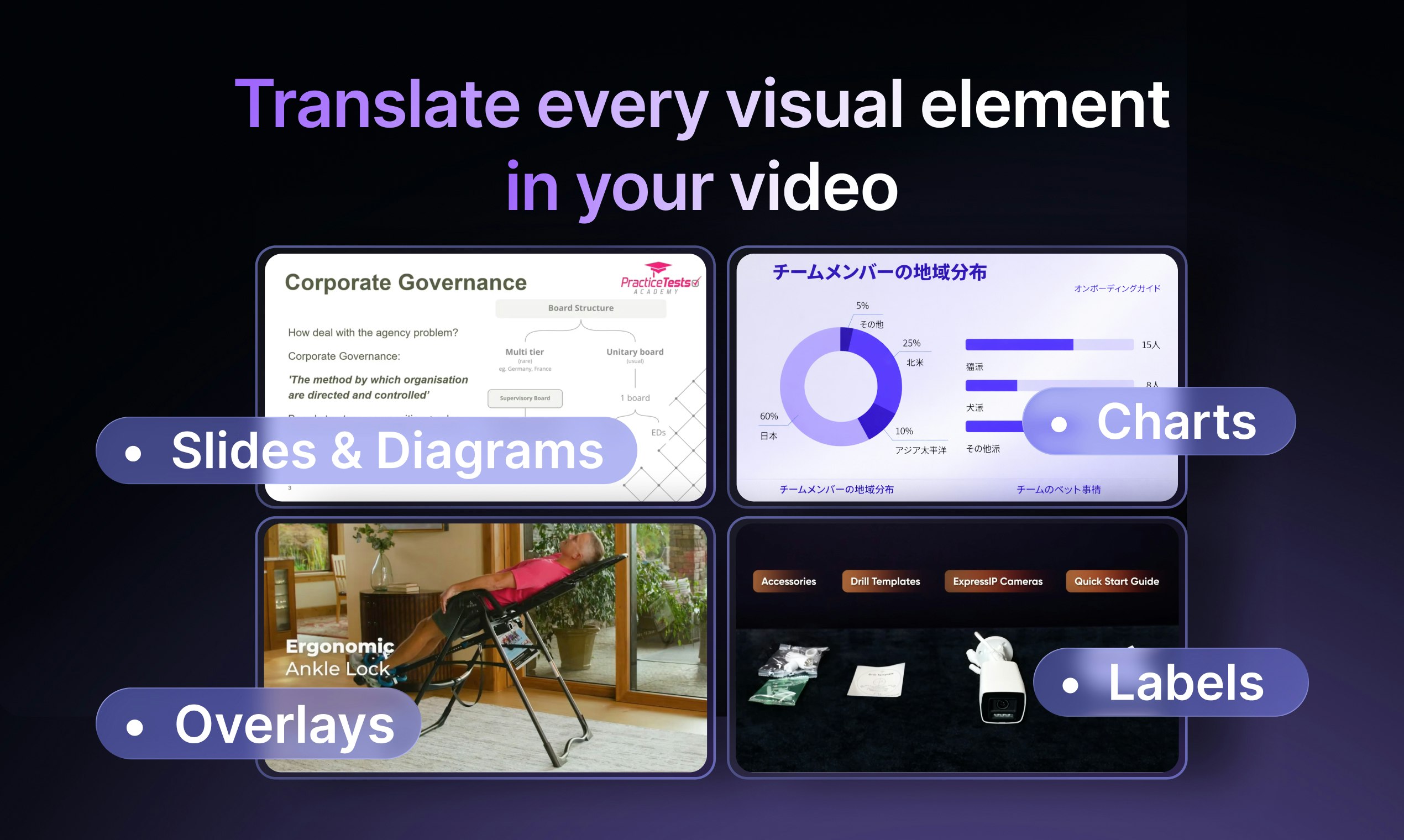
查看原始信息
Shipper 2.0
Ask Shipper to build anything. It will design, code, monetize, launch, translate, set up email marketing + build and implement a roadmap based on 1,000s of successful startups it's been trained on.

How does Shipper handle the transition from a "live business" back to a standard development environment if a user needs to export their project, and what specific infrastructure does it automate—such as payment gateways, authentication, or hosting—to ensure the app is truly functional from the first prompt?

2
回复

@mordrag You can export projects in 1 click, and can the native Stripe integration to take payments. Everything is native, from back-end + authentication to hosting.

0
回复

Hey PH! David here, co-founder at Shipper 😸 👋

We made an AI agent that brings out the entrepreneur in anyone. It builds web/mobile apps, websites, Chrome extensions & more.

The biggest update from Shipper 1.0 is the Build Queue (picture #2): you can now see exactly what’s happening when you give Shipper a task, step by step: what’s being generated, what’s being configured, what’s being deployed.

_ _ _ _ _ _ _ _


Most of what's new in Shipper 2.0:

• Shipper builds anything now: websites, mobile apps, web apps, Chrome extensions, eCommerce stores etc

• New layout with a sidebar menu
• Build Queue with stacked prompts + step-by-step transparency
The Shipper Advisor's roadmap planning
• App Store asset generation (images, descriptions, privacy policies)
• Animated websites powered by Google Veo
• Built-in video generation via Remotion
• One-click native app translation in 68 languages
• Native revenue-focused analytics dashboard
• Co-op building with shared workspaces
• Deep connectors: Stripe, Google Workspace, ChatGPT, Shopify, ElevenLabs & more
• Full version history and 1-click rollback
• Faster custom domain setup

• In-house domain purchasing with special deals, with domains as low as $1
50% commission + lifetime benefits affiliate program

• ... and +27 other smaller updates!

Thanks a lot for showing interest in Shipper!

Happy to answer any questions in the comments :)

Best,

David, Daniel & Team Shipper

1
回复

Huge fan of anything that helps ship faster! As someone who often gets stuck in the 'dev loop' and forgets about the actual launch part, this kind of streamlined workflow is exactly what I need for my side projects. Quick question: Does it handle multiple platform deployments (e.g. PH, Twitter, etc) from one dashboard or is it more focused on the prep?

1
回复

@suifeng Thanks! Yes it does, it's focused on anything from idea to launch :)

0
回复