Product Hunt 每日热榜 2026-03-16

PH热榜 | 2026-03-16

#1
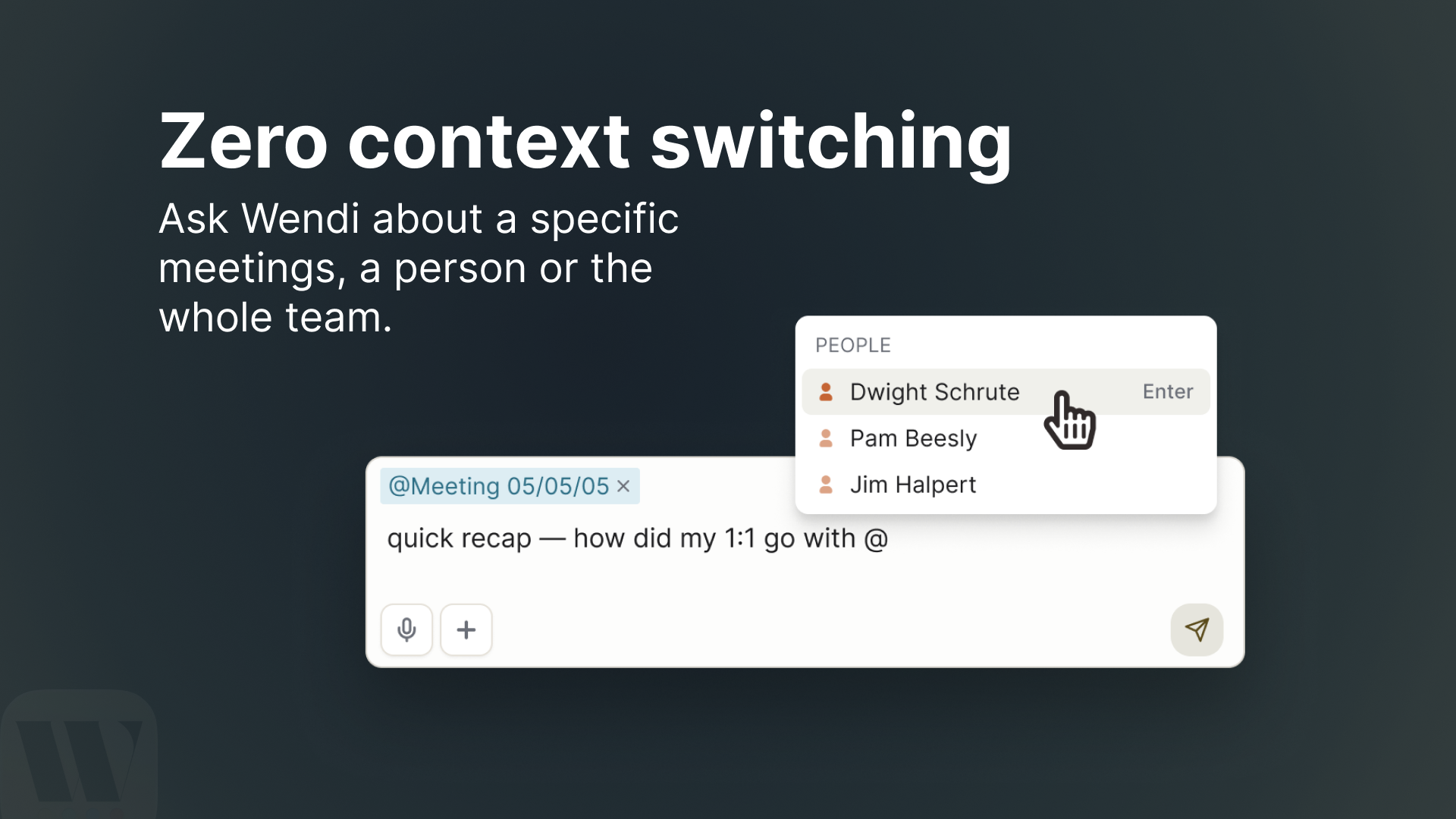
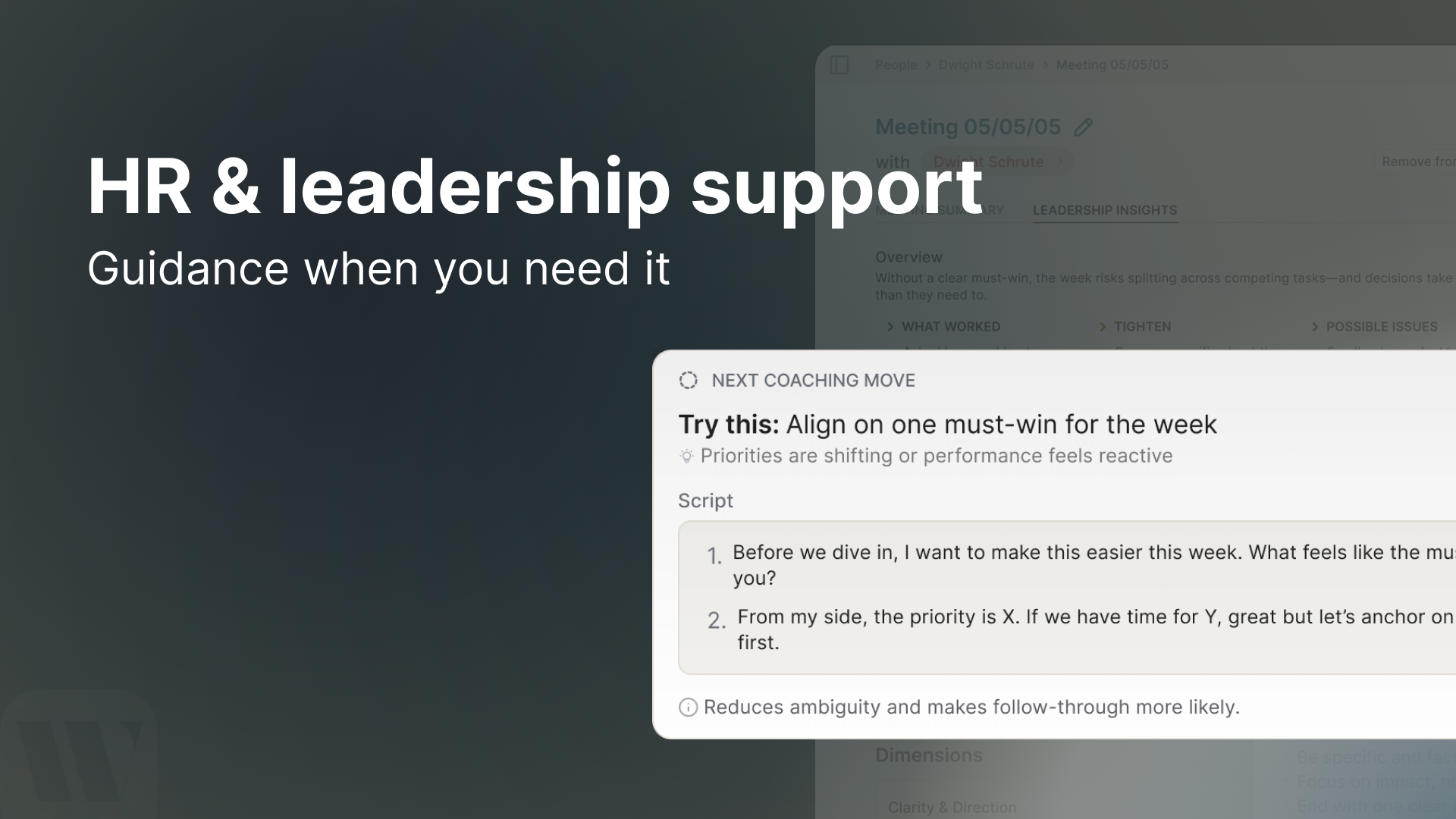
MuleRun
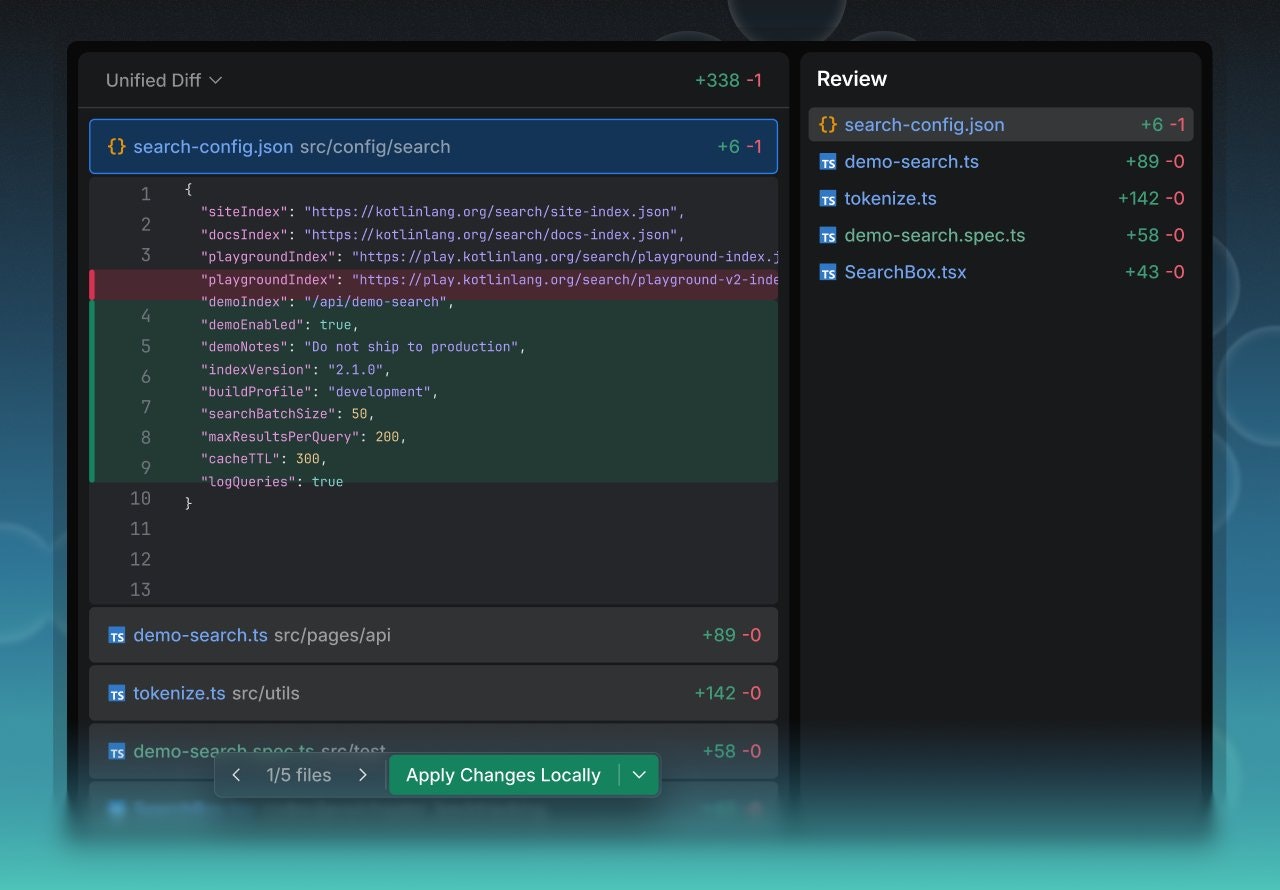
Raise an AI that actually learns how you work
459
一句话介绍:一款7x24小时运行在专属云虚拟机上的自我进化型个人AI,通过持续学习用户的工作习惯与决策模式,在用户离线时也能自主执行任务、主动准备工作内容,解决了传统AI工具交互被动、缺乏连续记忆与主动性的核心痛点。
Productivity Artificial Intelligence E-Commerce
个人AI AI智能体 自动化工作流 7x24小时运行 自我进化 云端虚拟机 主动式助理 生产力工具 无代码开发 知识网络
用户评论摘要:用户高度认可“永不掉线”和“主动工作”的核心价值,认为其从“聊天机器人”升级为“数字员工”。主要关注点包括:技术实现细节(如何学习复杂工作流、多工具栈整合)、自我进化方向的控制权、定价与成本控制、数据隐私与安全,以及跨平台(如Telegram)使用的便利性。
AI 锐评

MuleRun所标榜的“自我进化个人AI”,其真正的颠覆性不在于算法有多新颖,而在于它进行了一次彻底的产品范式转移。它将AI从“随用随开”的瞬时计算服务,重构为一个拥有“专属肉身”(云VM)和“长期记忆”的持续性数字存在。这解决了当前AI应用最深刻的割裂感:每次对话都像是面对一个失忆的天才。

其价值核心是“连续性”与“代理权”。7x24小时运行的VM不仅是技术架构,更是产品哲学的外化:AI成为环境中一个常驻的、可委托责任的代理。这使其能处理需要状态维持的长周期任务,这是所有会话式AI的盲区。所谓的“自我进化”,实质是建立在对用户行为数据的高保真、长周期采集与分析之上,这比任何精巧的提示词工程都更接近“理解用户”。

然而,其最锐利的双刃剑也在于此。将如此高度的代理权交给一个自主学习的系统,引发了关于控制、成本与安全的深层焦虑。评论中关于“进化方向”、“成本管控”和“权限设计”的提问直指要害。它承诺成为“数字同事”,但同事可能犯错,也可能过度自主。如何设计透明且可信的干预机制,让用户感到“主导”而非“被主导”,将是其从惊艳 demo 走向可靠工具的关键。此外,其商业模式重度依赖云端VM的持续成本,如何让用户为“潜在的生产力”而非“已消耗的计算量”买单,是另一个待解的难题。MuleRun不是更好的聊天机器人,它试图成为第一个真正意义上的“数字生命体”,但通往这条路的挑战,才刚刚开始。

查看原始信息
MuleRun
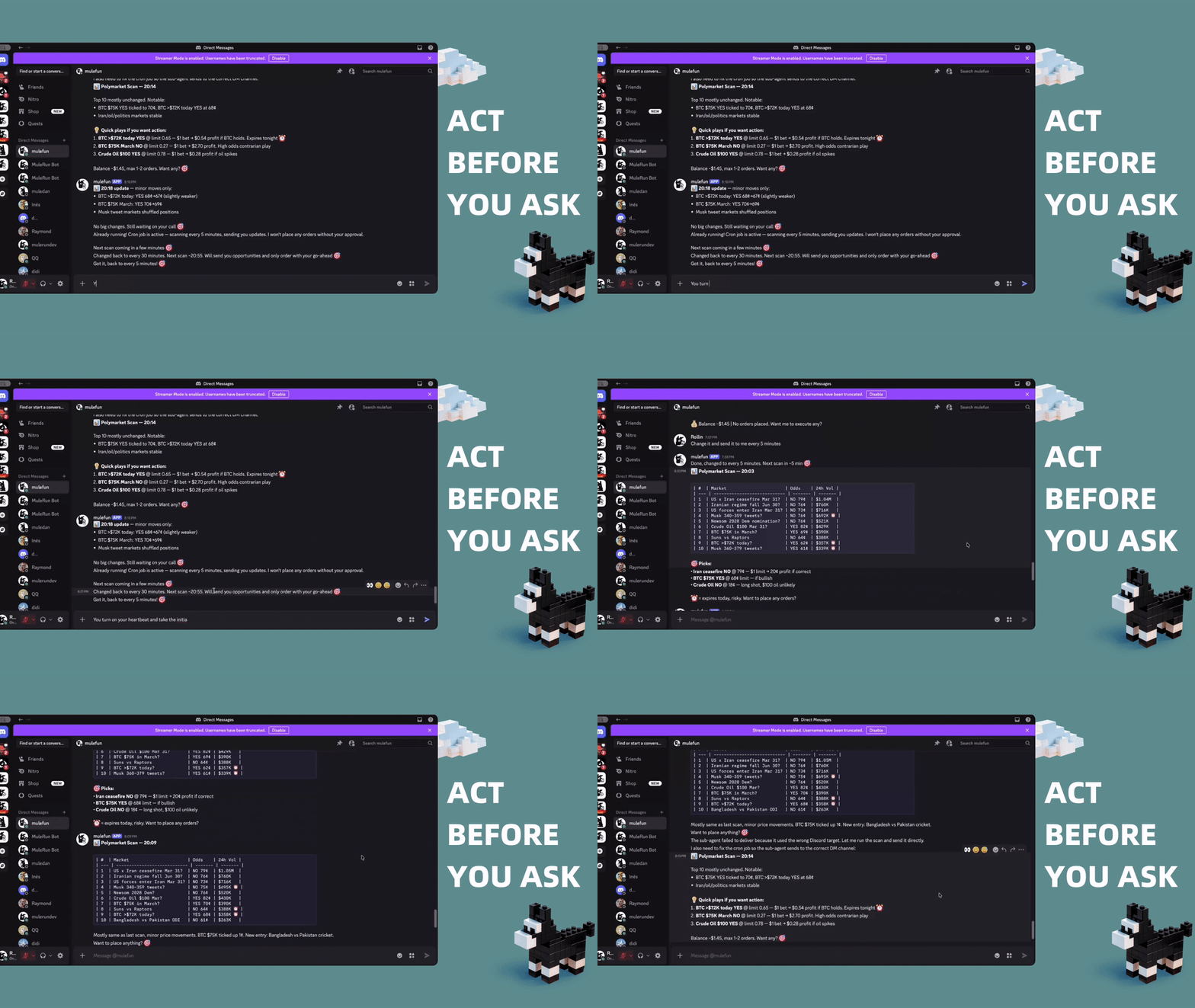
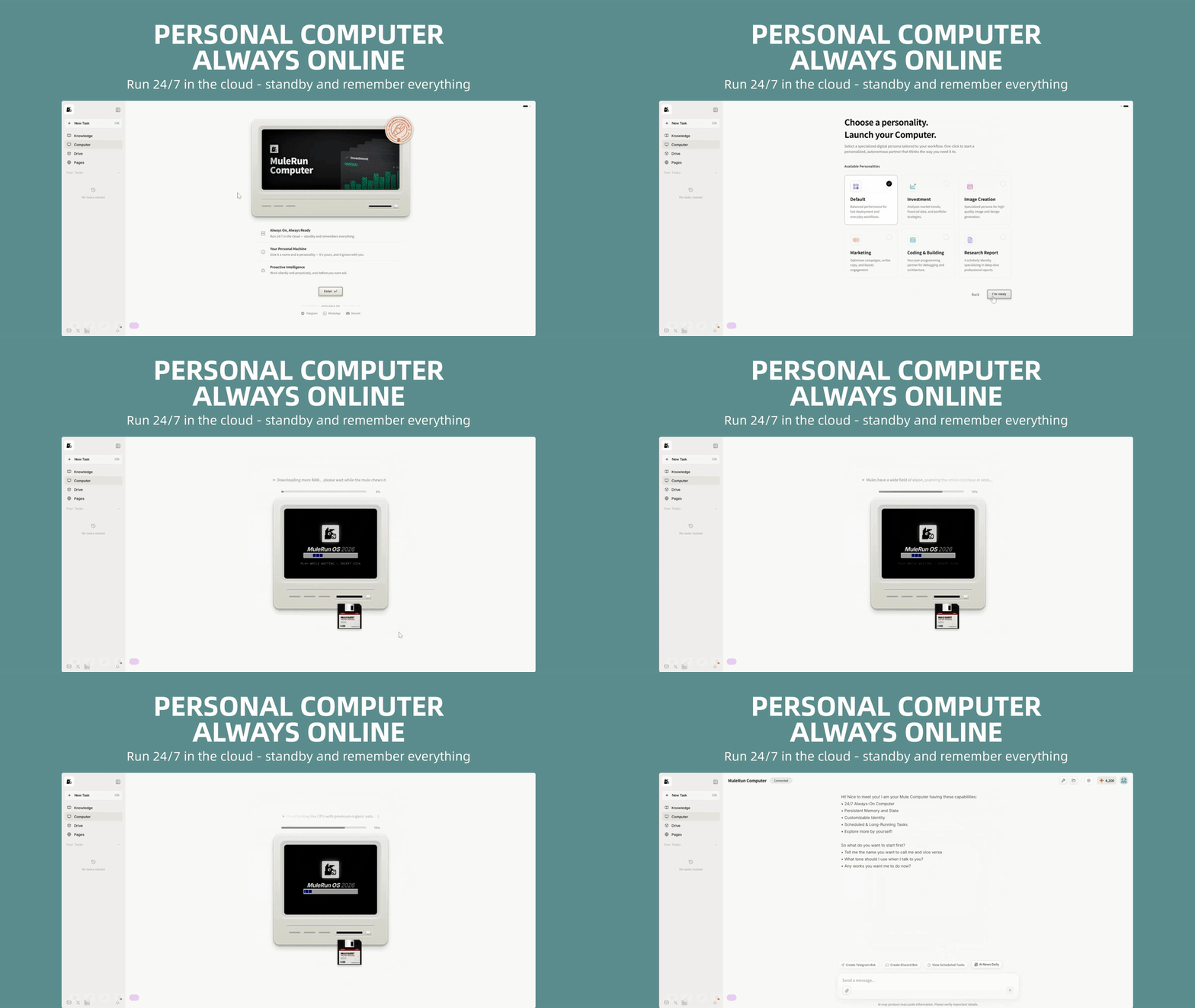
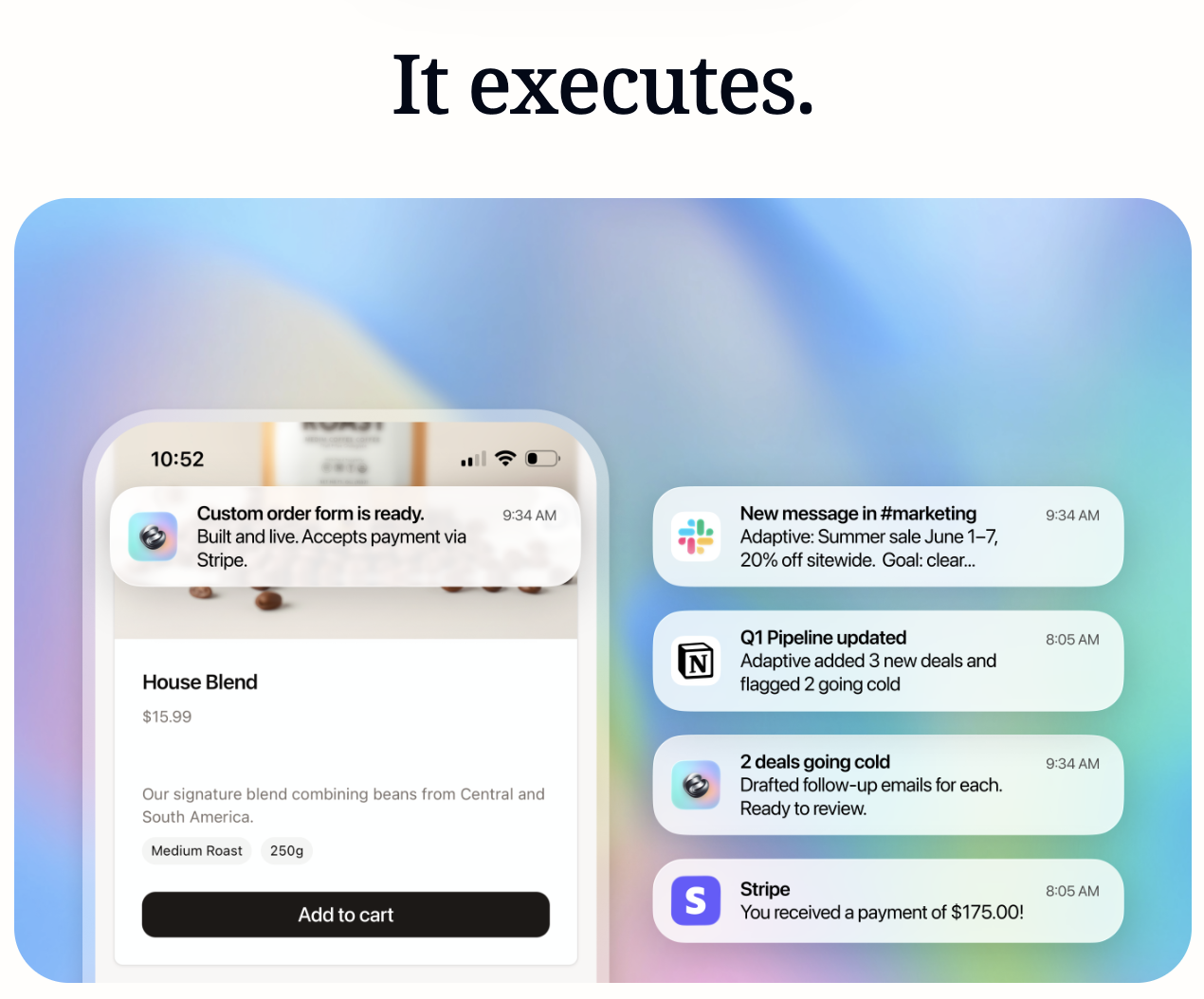
MuleRun is the world's first self-evolving personal AI — it learns your work habits, decision patterns, and preferences, then keeps getting sharper over time. It runs 24/7 on your dedicated cloud VM, works while you're offline, and proactively prepares what you need before you ask.No coding. No setup. Just raise your AI and watch it evolve.

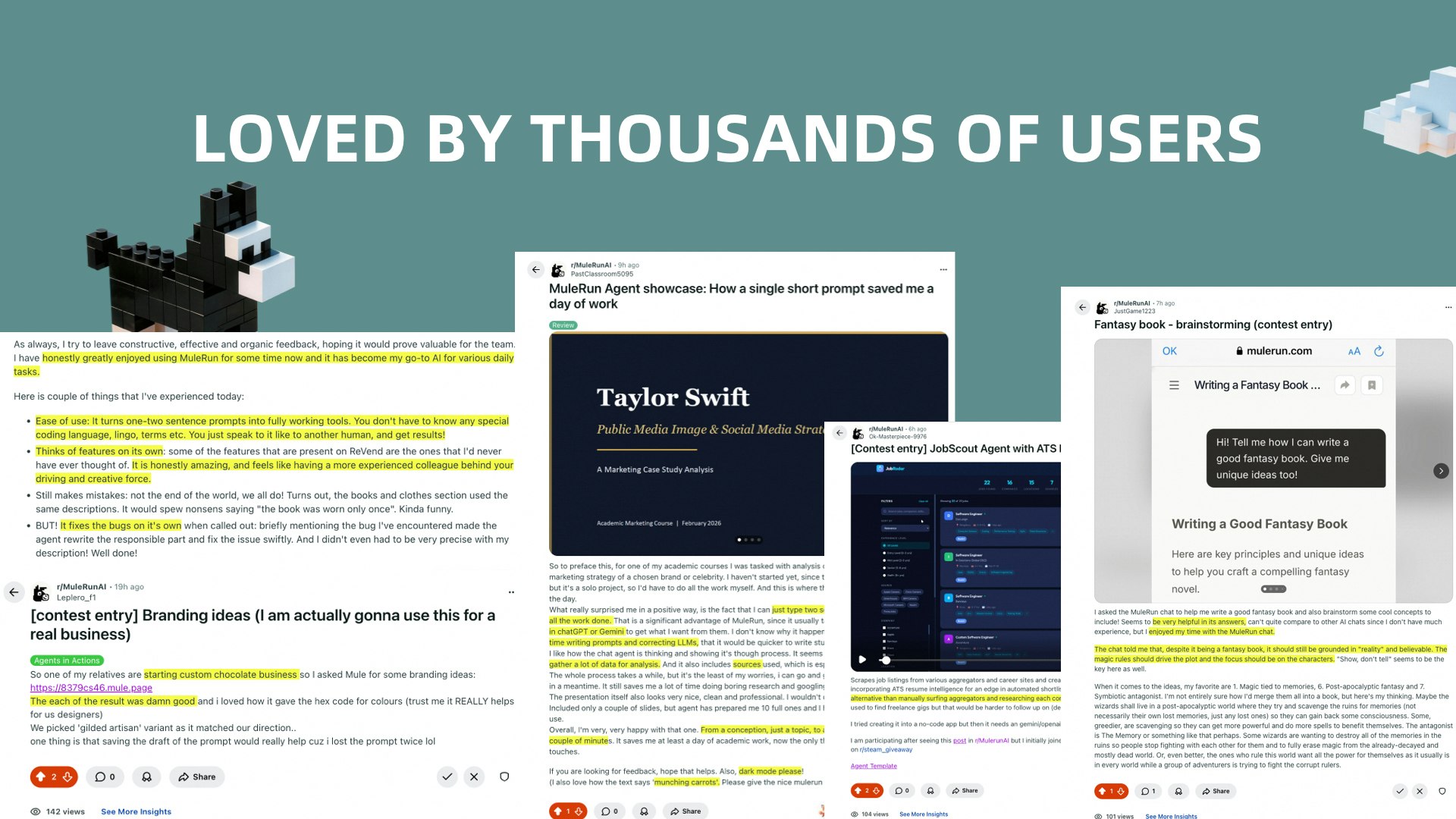
Unlike other chatbots, this one doesn’t quit when I close the app.

36
回复

@eeeeeach Yes! Our computer feature remains active and online continuously once it's turned on.

36
回复

@eeeeeach Exactly — and that's one of the most fundamental differences between MuleRun and a traditional chatbot. Most AI tools are essentially reactive: you open them, ask something, get an answer, and everything stops the moment you close the tab.

MuleRun is built on a different premise entirely. Every user gets a dedicated cloud virtual machine running 24/7. Your agent lives there — not in your browser. The browser is just the entry point. So whether you're sleeping, in meetings, or simply offline, your agent keeps executing: running scheduled tasks, monitoring data, deploying services, generating reports, and proactively preparing what you'll need when you're back.

It's the difference between a chatbot and a digital employee who actually keeps working after you leave the office. See it in action here.

27
回复

Congratulations @sylvunny ! It's looking promising. I would like to learn what inspired you to launch this?

35
回复

@ishwarjha Thanks a lot! Our team has always aimed to build a truly user-centric AI agent, and "always on" is a key benchmark for us.

30
回复

@ishwarjha Thank you so much — really means a lot on launch day!

The core inspiration was a simple but persistent frustration: AI tools were getting incredibly powerful, yet they still behaved like vending machines — you put in a query, you get an output, and the moment you walk away, everything resets. There was no continuity, no memory, no initiative.

We kept asking: what would it look like if AI actually worked the way a great human colleague does? Someone who remembers your preferences, learns your working style over time, keeps making progress even when you're not in the room, and occasionally comes to you with something you didn't think to ask for — but needed.

That vision is what became MuleRun. Not a smarter chatbot, but a self-evolving personal AI that runs 24/7 on its own dedicated environment, grows with you, and proactively works on your behalf. We wanted to give everyone — not just developers or technical teams — access to that kind of leverage.

The goal has always been to return the power of AI creation and evolution to every individual person, regardless of their technical background. We're just getting started, and the community's early creativity has already exceeded our expectations!

27
回复

The 'learns how you work' angle is what caught my attention — I've spent years building automation tools and the hardest part is always making them context-aware without manual setup. How does it handle domain-specific workflows that combine different tool stacks? Curious whether it can track patterns across Claude Code sessions and terminal commands, which is where most of my work happens.

28
回复

@slavaakulov Hey, appreciate the thoughtful question — this is exactly the problem we built MuleRun to solve.

On context-awareness: MuleRun continuously learns your decision logic, work habits, and tool preferences across all interactions. There's no manual setup or config files — it builds your personalized profile through natural conversation and observation. Over time, it starts proactively predicting what you need and pre-loading the right tools before you even ask. We call this going from "wait for your command" to "already thinking ahead for you."

On domain-specific workflows: each user gets a dedicated 24/7 cloud VM with its own file system, pre-installed software, and hardware-level config. So it's not just a chat window — it's a persistent working environment where your agent can deploy services, run cron jobs, and handle long-running tasks autonomously, even when your browser is closed. This makes it particularly natural for combining different tool stacks within a single continuous workspace.

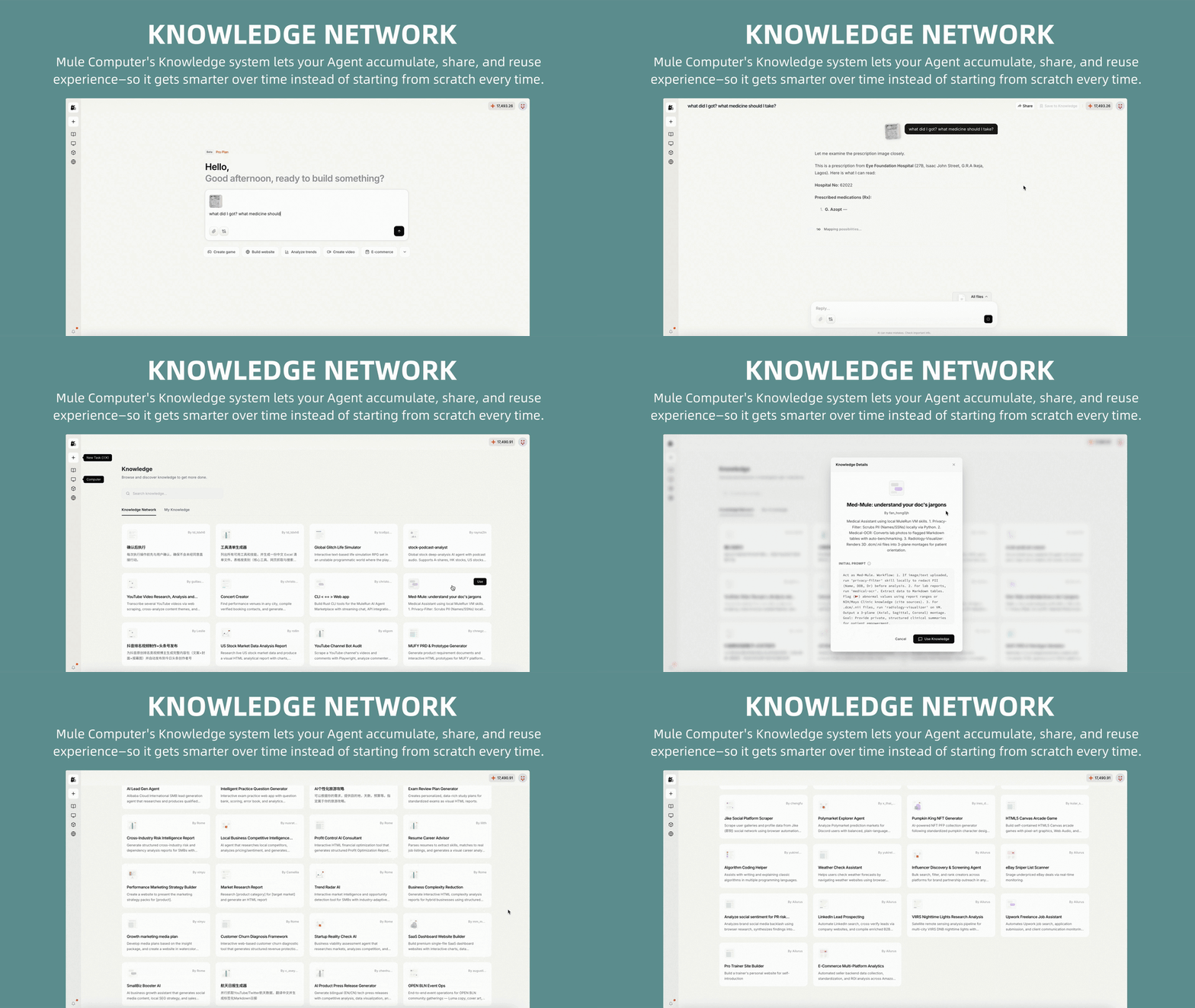
On the collective intelligence side — when users solve problems effectively, those solutions can flow into our Knowledge Network. The more people use it, the smarter everyone's agent gets for similar scenarios. Think of it as battle-tested workflows shared across the community.

For your specific developer workflow, I'd recommend trying our "Coding & Building" mode — it's designed for hosting and running services 24/7 on your dedicated VM. Would love to hear how it fits into your stack. Feel free to jump in and give it a spin.

27
回复

@slavaakulov This is exactly the kind of use case we get most excited about — and your framing is spot on. Context-awareness without manual setup is the hard problem, and it's precisely what MuleRun's architecture is designed to address.

Here's how it handles complex, multi-tool workflows: every MuleRun user gets a dedicated cloud virtual machine with its own persistent file system, pre-installable native software, and configurable environment. This isn't a sandboxed chat interface — it's a real compute environment where your agent operates continuously. That means it can run terminal commands, manage files, execute scripts, and interact with your tool stack as a native process, not through fragile API wrappers.

On the pattern-learning side, MuleRun tracks not just what you ask for, but how you work — the sequence of operations, the tools you reach for in specific contexts, the outputs you accept versus revise. Over time, it builds a working model of your decision logic, so it can begin anticipating the next step in a workflow rather than waiting for instruction.

For a developer workflow spanning terminal sessions and coding environments, the practical implication is that your agent can observe recurring patterns — say, a sequence of build, test, and deploy commands you run in a particular order — and start preparing or executing those proactively. The 24/7 runtime also means long-running processes don't get interrupted when you step away.

That said, deep integration with specific tools like Claude Code is an evolving area and I'd rather be honest than overpromise. The best way to pressure-test it against your specific stack is to get hands-on — we'd genuinely value the feedback from someone with your background. Happy to get you set up if you want to dig in. You can explore the technical architecture further here.

27
回复

 I get automatic updates when my tasks finish, so helpful.

27
回复

@saintcedricfan Exactly, we finally made it.

27
回复

@saintcedricfan That's the Heartbeat feature doing its job! No more checking in to see if something's done — your Mule comes to you. Glad it's making a difference in your workflow!

27
回复
On pricing and packaging: given credits + dedicated VM tiers, what have you learned about which workloads are predictable vs spiky—and how are you designing guardrails so teams can trust cost, performance, and output quality at scale?
26
回复

Congrats launch! 🎉 Curious how the self-evolving part works in practice.

25
回复

@thea5 Thank you! MuleRun learns your work habits over time and starts proactively preparing what you need before you ask.

16
回复

@thea5 Thank you! Great question to dig into.

In practice, self-evolution in MuleRun works on two levels.

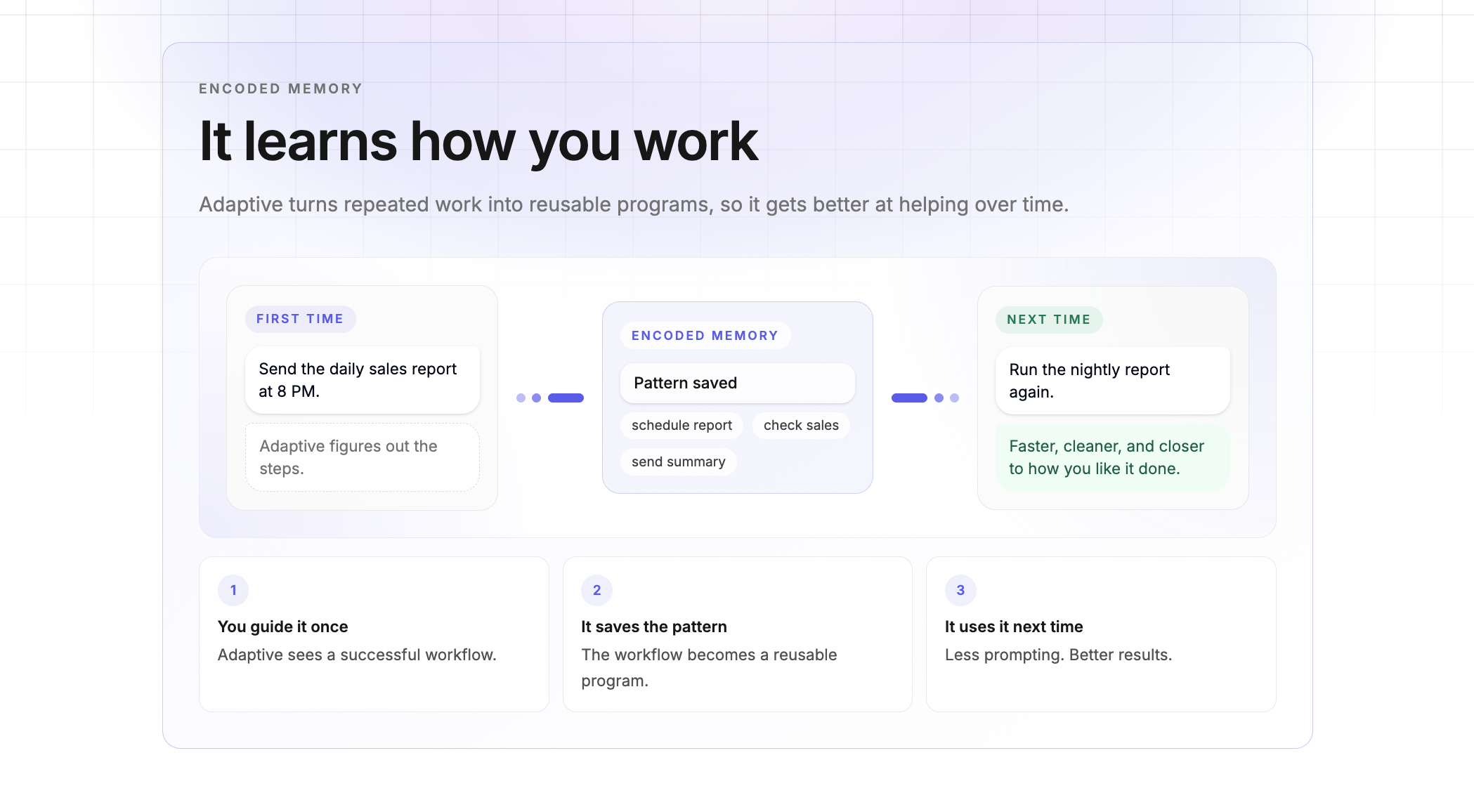
At the individual level, your agent continuously learns from how you actually work — not just what you tell it, but what you do. It retains your preferences, decision patterns, communication style, and domain knowledge across every session. The longer you use it, the less you need to explain yourself, and the more it anticipates what you need before you ask. It's less about configuring settings and more about the agent building a genuine working model of you over time.

At the collective level, MuleRun has a shared Knowledge Network. When users choose to share a workflow or agent they've built, it enters a community pool. Agents that get validated and adopted by multiple users in similar scenarios rise in weight, and MuleRun automatically surfaces those high-performing patterns to others facing the same kind of task. So your agent benefits not just from your own experience, but from the collective intelligence of the entire user base — opt-in, always.

The practical result is a flywheel: the more you use it, the better it gets at your specific work. And the more the community uses it, the stronger the shared foundation everyone builds on. You can explore some of the workflows the community has already built here.

8
回复

Hey everyone 👋 I'm the Head of Marketing @MuleRun

We built MuleRun so AI handles the work, and you get your time back — for the things that actually matter to you.

MuleRun is a personal AI that works for you — from building your own trading assistant to powering complex team workflows like short drama production, game production and e-commerce operations.

What makes it different:

  • Start from anywhere — works on your phone and desktop, no setup needed. Open mulerun.com, just chat.

  • Personal AI computer — with long-term memory, running 24/7. It remembers your context and keeps working even when you sleep.

  • Self evolving —  it anticipates next steps and takes action proactively. The more you use, the smarter it will be.

  • Knowledge network — a growing ecosystem of reusable workflows and capabilities.

  • Safe— we proactively defend against cyber threats and restrict AI permissions by design. Your data stays yours.

We're early and building fast. Would love for you to try it, break it, and tell us what's missing. Every piece of feedback matters at this stage.

23
回复

@ines_defirenza This sounds really powerful! 🚀 I love the idea of a personal AI that’s proactive and remembers context. Excited to try MuleRun and see how it handles real workflows. Will definitely share feedback as I explore it!

0
回复

@ines_defirenza The self-evolving angle is interesting. How does it handle situations where a user's habits change significantly, like switching jobs or starting a new project type? Does it adapt forward or does old context start working against you?

0
回复
@ines_defirenza Congrats on the launch. The idea of a personal AI that actually learns how someone works instead of just responding to prompts is really interesting. Most AI tools still feel transactional. You ask, it answers. The idea of something that observes patterns and starts preparing work ahead of time moves closer to what people imagine when they think about a real assistant. Running it on a dedicated VM is also an interesting choice. It suggests the system can maintain memory and context over time instead of resetting every session like many tools do. One thing I’m curious about is how MuleRun decides what actions to take proactively. As it learns someone’s habits and decision patterns, how does it distinguish between things it should prepare in the background versus things it should wait for the user to explicitly request? Really intriguing concept. Curious how users’ AI “personas” evolve after using it for a few weeks.
0
回复

Curious what some of the most interesting workflows people are building with MuleRun so far.

14
回复

@carlvert Welcome to explore our Knowledge Network! What I find most interesting is Learning Game Generator

10
回复

@carlvert congratulations on your launch , best whishes

0
回复

@carlvert Great question! Our users has been building some incredible workflows. Here are a few standouts:

Game Development (zero coding): Users describe their ideas in plain language and MuleRun builds fully playable games — from Tetris to Texas Hold'em. Try some here

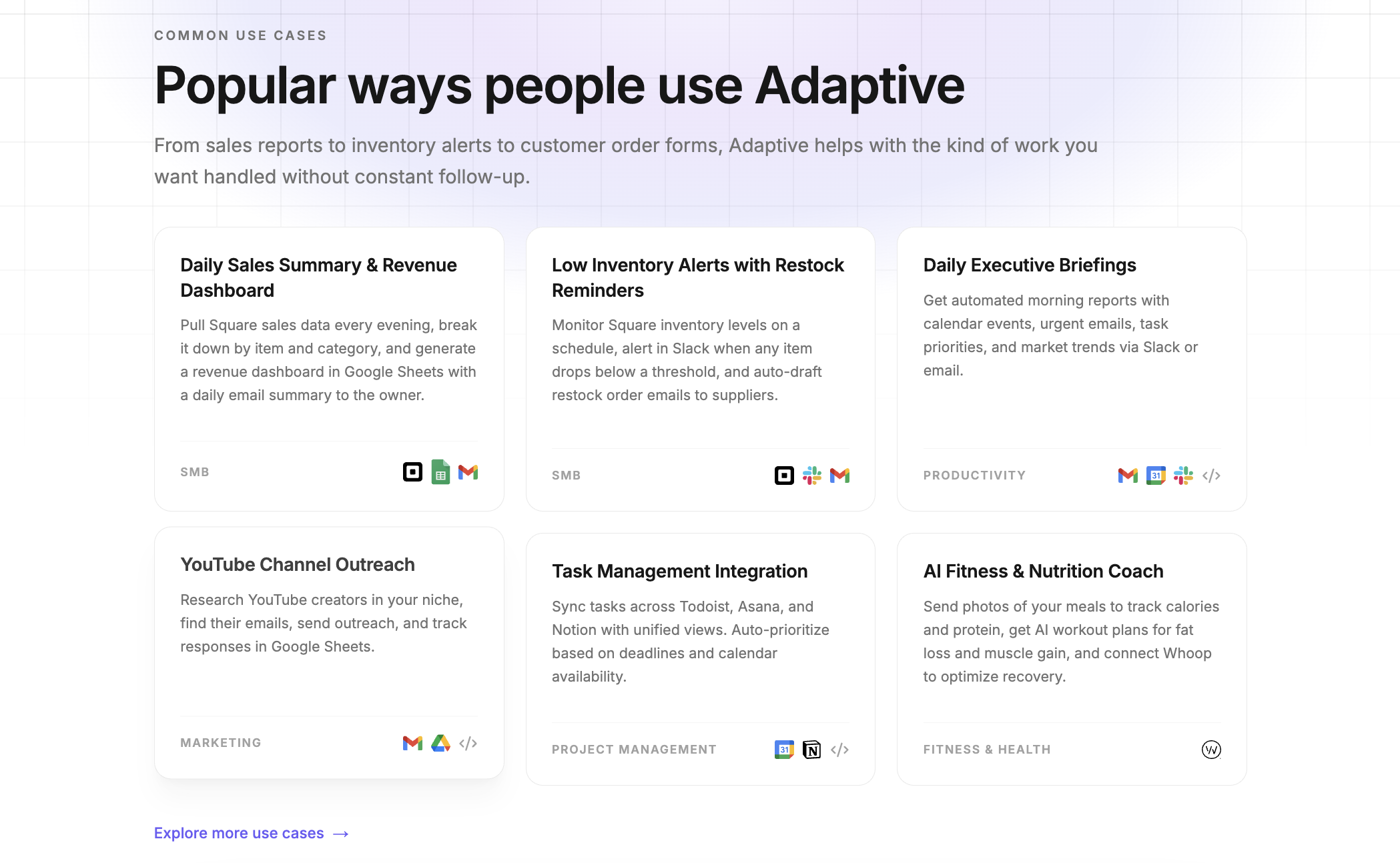
E-commerce on Autopilot: A 3-person Etsy team doing $10M GMV uses MuleRun as their 24/7 digital employee — auto-listing products, checking IP infringement, and researching trends. See the workflow

Personal Investment Assistant: Traders build agents that monitor markets 24/7, execute strategies, and proactively initiate post-trade reviews — learning your risk preferences over time. Check it out

Always-on Content Creation: Creators use MuleRun to continuously generate comic/drama scripts — the agent keeps working even when the laptop is closed. See examples

The magic is that users aren't just running automations — they're raising a self-evolving digital partner that proactively works for them 24/7. What's your use case? We'd love to help you get started!

0
回复

I recently got tired of having to correct a writing AI assistant. Perhaps MuleRun could be useful here?

9
回复

@jay_osho Of course! You can give it a try!

9
回复

@jay_osho That frustration is exactly what MuleRun is designed to solve — and it gets at a core limitation of most writing AI tools today.

With a standard writing assistant, every session essentially starts from scratch. It doesn't remember that you prefer a direct tone over a formal one, that you never use passive voice, or that you always want a punchy closing line. So you end up re-correcting the same things over and over.

MuleRun works differently because it retains everything across sessions. Your writing style, structural preferences, vocabulary choices, the feedback you've given before — all of it accumulates into a persistent profile. The more you use it, the less you need to correct it, because it's genuinely learning your voice rather than just following a generic prompt.

Beyond style memory, you can also set up proactive workflows — for example, having your agent draft a weekly content summary, monitor topics you care about, and have a first draft ready before you even ask. It stops being a tool you operate and starts being a collaborator that knows your standards.

If you've been burned by writing assistants that forget everything the moment you close the tab, MuleRun is worth trying. You can get started here.

0
回复

How to determine whether the direction of self-evolution is what users truly need?

8
回复

@flora07 That's a good question. I believe a core criterion is the ability to proactively identify users' pain points and propose solutions. It means acts before you ask.

8
回复

@flora07 Really thoughtful question — and one we think about deeply.

The short answer is: the user is always in control of what gets learned. MuleRun's self-evolution isn't a black box running on assumptions. It's grounded in three concrete signals.

Explicit feedback. Users can directly correct, redirect, or reinforce their agent's behavior at any time. If MuleRun's suggestion misses the mark, you tell it — and that becomes part of its learning.

Behavioral patterns. The agent observes how you actually work: which outputs you use, which you discard, how you modify suggestions, what tasks you repeat. Actual behavior is a far more honest signal than stated preference.

Community validation. On the collective level, workflows and agents that get shared and repeatedly adopted by other users in similar scenarios rise in weight. This acts as a real-world filter — if a pattern genuinely solves problems for many people, it surfaces; if it doesn't, it fades.

The goal is not for MuleRun to evolve in a direction it thinks is best — it's to evolve in the direction your actual usage confirms is valuable. We're also continuously improving how we surface these learning signals transparently to users, so you can see and adjust what your agent has learned about you.

Self-evolution should feel like a trusted colleague getting better at their job, not an algorithm drifting in an unknown direction.

0
回复

Congrats on the launch. An AI that can keep working while you're offline is a big deal for founders and others juggling many things at once. How does this knowledge network work? Can you share workflows between users or is it all private to you?

6
回复

@simonk123 Thank you! Users must actively publish a workflow after creation for it to be visible to everyone. The more knowledge users publish, the more sophisticated the knowledge network becomes, and the smarter our Mule gets!

0
回复

@simonk123 Thank you! You've nailed exactly why we built it — founders and busy professionals shouldn't have to babysit their AI.

On the Knowledge Network: it works on two levels.

Individual level — your agent learns you. Every interaction, decision, and preference gets retained. Your MuleRun agent builds a persistent profile of your working style, risk tolerance, communication habits, and domain knowledge. The longer you use it, the more it anticipates what you need before you ask.

Collective level — community intelligence, opt-in sharing. When you build a workflow or solve a problem in a novel way, you can choose to share that agent into the public network. Shared agents are weighted by how many users have validated them. When someone else faces a similar task, MuleRun automatically surfaces the highest-performing, community-validated agent for that scenario — so you benefit from the collective experience of the entire user base, not just your own history.

Everything is opt-in. Your private data, conversations, and workflows stay in your own isolated cloud VM by default and are never shared without your explicit action. Think of it like open-source, but for agent workflows — you contribute if you want to, and you benefit either way.

The flywheel effect is real: the more people use MuleRun, the smarter every individual agent gets. You can explore some of the shared workflows our community has already built here.

0
回复

Congrats on the launch! The proactive part is what caught my attention. if it can truly prepare things before you ask, that’s a pretty big step forward.

6
回复

@sandy_liusy Yes! Welcome to try it out and you won't be disappointed!

6
回复

@sandy_liusy Thank you! And yes — proactivity is the piece we're most proud of. The shift from "wait for a prompt" to "already working on it" is what makes MuleRun feel less like a tool and more like someone who actually has your back.

The 24/7 VM is what makes it real rather than just a marketing claim — it's genuinely running and preparing while you're away. Hope you get a chance to experience it firsthand!

0
回复

Love that I can chat with Mule right on Telegram, so convenient.

4
回复

@wayne_appgrowing Yes! This is one of the highlights of our upgrade

3
回复

@wayne_appgrowing That's one of our favorite things to hear! Your Mule should be wherever you are — not just sitting in a browser tab. Telegram, Discord, and more are all supported, so you can keep things moving no matter where you're working from. Glad it's clicking for you!

0
回复
congratulations 🎉🎉
3
回复

@soumikmahato Than you so much!

1
回复

Love seeing more experiments around persistent personal AI. Congrats to the team!

3
回复

@jody_l_wyatt Thank you! We welcome you to try our product.

2
回复

@jody_l_wyatt Thank you so much! Persistent personal AI is exactly the space we're committed to pushing forward — the "resets every session" era of AI tools needs to end. Really glad the vision resonates, and we'd love to have you along for the experiment. 🙌

0
回复

A claw might pinch you, but a sturdy, cloud-based mule lets you safely hand off those asynchronous, long-running agent tasks with peace of mind :)

It's clear that the experience gained from the Agent Marketplace has given the MuleRun team deep insights into how to build a smart, practical, and truly robust agent system.

Huge congrats on opening this exciting new chapter! 🚀

1
回复

@zaczuo Thank you so much for your attention! We always commit to build real AI agent!

1
回复

@zaczuo Ha — we love that analogy, and it's more accurate than it might seem! A claw that pinches your privacy and requires a half-hour setup is a very different proposition from a sturdy Mule that's already running in the cloud, fully isolated, waiting to carry the load.

You've picked up on something real: everything we learned from building and observing how people actually use agents in practice is baked into how MuleRun is designed — the 24/7 VM, the persistent memory, the proactive layer, the security architecture. None of it came from theory. It came from watching what people actually needed versus what most agent tools were actually delivering.

Really appreciate the kind words, and thrilled to have you along for this chapter. The Mule is just getting warmed up. 🫏

1
回复

I have regarded MuleRun as a "long-term cooperative AI partner" rather than a tool that is used once and then shut down.

1
回复

@yu_zhou8 Yes! You've finally grasped the true essence of this mule!

1
回复

@yu_zhou8 This is exactly the mindset we built MuleRun for — and honestly, the best way anyone has put it. A tool you shut down has no memory of you. A partner that runs 24/7, learns how you think, and keeps working while you're away is something fundamentally different. The longer that relationship runs, the more valuable it becomes. Really glad that's coming through in how you experience it.

1
回复

MuleRun feels a lot like Manus 🤖, but in actual use it still falls short in some areas ⚠️. That said, it does an especially good job with automation ⚙️ and OpenClaw compatibility 🔗. Another point worth mentioning is that the large model MuleRun uses is clearly much smarter 🧠 than the one used by Manus.

1
回复

@alan_miao Thank you so much for such a high compliment!! We are committed to continuously improving and refining the areas that need work!

0
回复

@alan_miao Thanks for the honest take — genuinely appreciate users who put tools through their paces and share real feedback.

On the comparison with Manus: they're solid at what they do, but the core design philosophy is quite different. Manus is a cloud-based task executor, MuleRun is built around a different premise: a dedicated 24/7 personal VM that persists, learns your habits over time, and proactively works on your behalf even when you're offline. It's less about a single impressive task and more about a digital partner that compounds in value the longer you use it.

We'd genuinely love to know which areas felt lacking for you — that kind of specific feedback is exactly what helps us improve. Feel free to share via our community or drop us a note directly.

0
回复

Could this be used for iterative optimization research — say, discovering new rendering techniques for 3D games?
For example: have it run 100 passes trying to speed up drawing large 3D scenes (culling geometry that doesn't contribute to the final frame, finding cheaper shading paths, etc.), keeping the best results and iterating on them.

Follow-up on search strategy: Is there a way to preserve candidates that aren't immediately faster but might unlock better optimizations downstream? Basically a beam search rather than pure greedy; keeping a pool of "promising but not yet winning" approaches so it can explore paths that pay off after several iterations, not just the next one.

0
回复

@jpeggdev Great question — and it touches on exactly the kind of long-running, autonomous workflow MuleRun was built for. Let me be direct about what fits and where the boundaries are.

What MuleRun can do well here:

MuleRun gives the self-evolution layer is relevant too. As you iterate with it on rendering research, it accumulates your preferences, your evaluation criteria, what you consider "good enough" vs. worth pursuing further. Over time it gets better at proposing candidates that match your judgment, not just raw metrics.

On your beam search idea specifically:

This is where I want to be honest rather than oversell. MuleRun is an AI agent platform, not a dedicated optimization framework like Optuna or a genetic algorithm engine. It doesn't have built-in beam search or population-based exploration out of the box.

But here's what you can do: use MuleRun as the orchestration layer. You describe your search strategy in natural language — "maintain a pool of 10 candidates, rank by frame time but also keep 3 that show structural novelty even if they're slower, re-combine the top approaches every 5 iterations" — and MuleRun can write the scripts, deploy them on its VM, execute the loop, persist state across sessions, and surface results to you. It has a full compute environment with file system access, so storing candidate pools, logging lineage of each approach, and implementing non-greedy selection logic is all feasible.

The 24/7 runtime is the real differentiator here. Most AI assistants terminate when your session ends. With MuleRun, a multi-hour or multi-day exploration process just keeps going. And if you refine the strategy mid-run — "shift more weight toward memory bandwidth efficiency, I think that's the bottleneck" — it incorporates that without starting over, because it retains full context.

0
回复

Interesting take on personal AI. If the system really adapts to individual workflows over time, that could be incredibly sticky.

0
回复

This is genuinely impressive — the idea of agents that evolve from actual workflow patterns rather than static prompts is a big unlock. The always-on dedicated VM approach is smart too; most agent platforms lose context the moment you close the tab.

Quick question: for agents that handle media workflows (video processing, content production pipelines), how does MuleRun handle large file orchestration? We've been building video infrastructure at Vidtreo and the hardest part is always the handoff between "the AI decided what to do" and "the media pipeline actually executes it reliably."

Would love to see a MuleRun agent that can orchestrate end-to-end video workflows — record, transcode, deliver. That combination of autonomous decision-making + specialized infra could be really powerful.

Congrats on the launch!

0
回复

@christian_segovia Thanks for the kind words — and the sharp question. Media pipeline orchestration is exactly the kind of problem where MuleRun's architecture pays off, so let me walk through it honestly.

0
回复

Congrats on the launch! The self-evolving angle is what makes this stand out; most AI tools are static from day one, and it's on the user to figure out how to get more out of them over time.

How does it handle domain-specific workflows, like financial analysis or structured research tasks? Does it get better with use, or is the learning more behavioral, adapting to how you work rather than what you're working on?

0
回复

Having an AI that actually remembers context between sessions instead of starting fresh every time - that's the part most tools get wrong. How long does it take before it starts anticipating things on its own?

0
回复

I tried the website and noticed the footer is quite large, which creates a lot of extra scroll on the homepage. Reducing its height might make the page feel tighter and more focused.

The concept looks interesting though. Curious what the main use case you’re seeing from early users is..

0
回复

Very nice idea, but the demo kind of confused me. Is this only related to coding and making products? Or is it also connected to the various platforms you use while working, to "learn" from you as mentioned?

0
回复

We're a team of 6 building on GitHub as a shared OS. Agents, skills, finances, communications, content, investor decks, all in one place. Everyone reuses the same agents across tasks. The "learns how you work" part got my attention, but I'm curious whether MuleRun is built for one person or if there's a team layer. When the whole workflow lives in one place and you're sharing agents across contributors, the handoff problem changes. It's not just my memory across sessions, it's shared context across people. Asking because if there's a team model this could actually fit.

0
回复
Keen yo explore, but the procing page won't render/sidescroll on mobile! I'm equally sure a) it'll be soon fixed, and b) you'd want to know!
0
回复

How does MuleRun handle the transition when you switch between very different types of workflows, like going from e-commerce operations to content creation? Does it maintain separate context profiles or blend everything into one evolving model? Really cool concept, congrats on the launch!

0
回复

Just curious, most AI tools lose context after a session or hit a token limit, forcing you to start fresh each time. Since this AI is meant to 'learn your habits' over time, how does it handle long-term memory? Does it retain what it's learned about you across sessions, or does it reset after each conversation?

0
回复
This looks cool. Respectfully, you deserve to have someone do some read through on the site, as there are myriad spelling/mechanical errors… “markting”, “creat a pptx”, others. Just a heads up. Congrats on the launch tho, concept is really cool and I’m keen to try it.
0
回复
#2
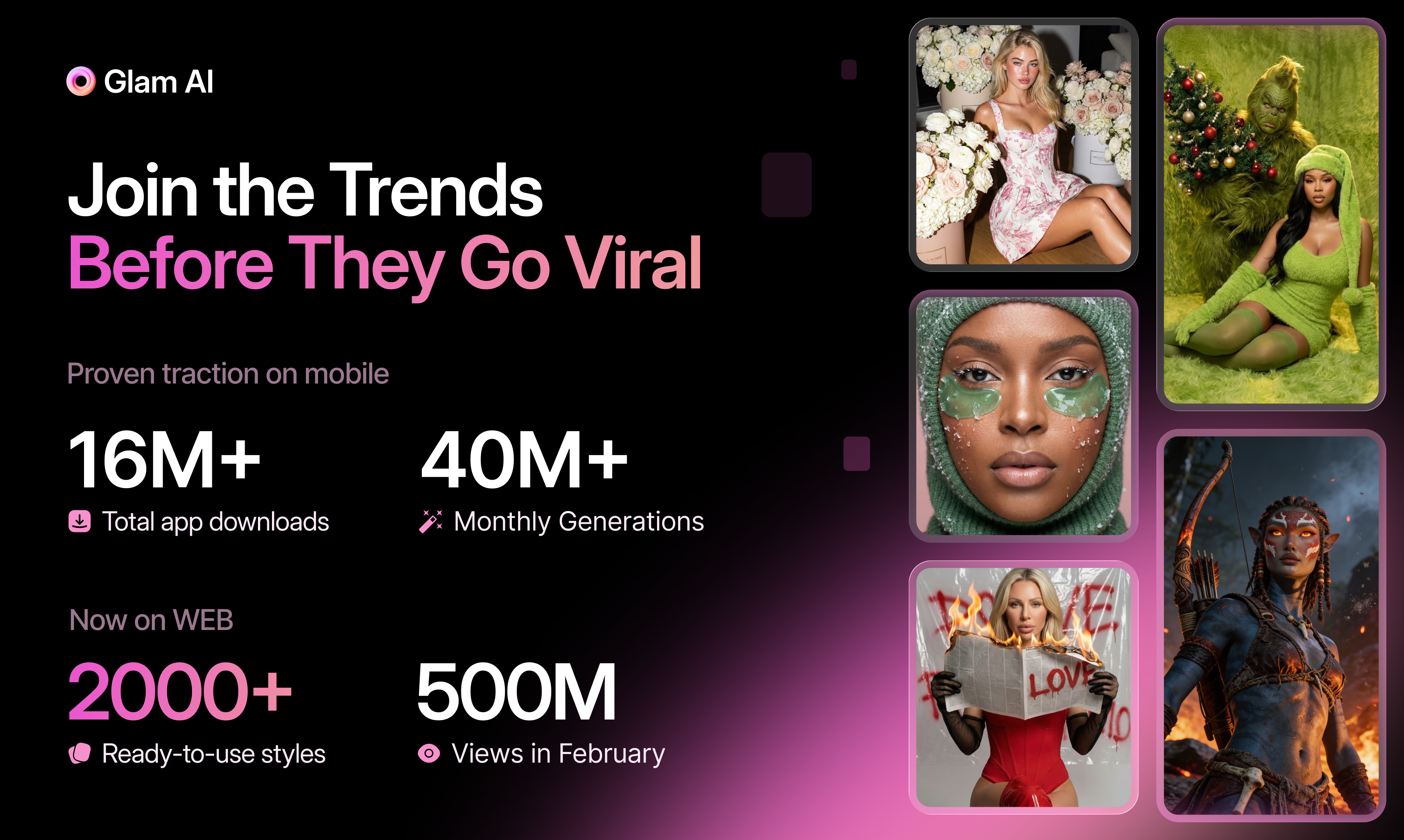
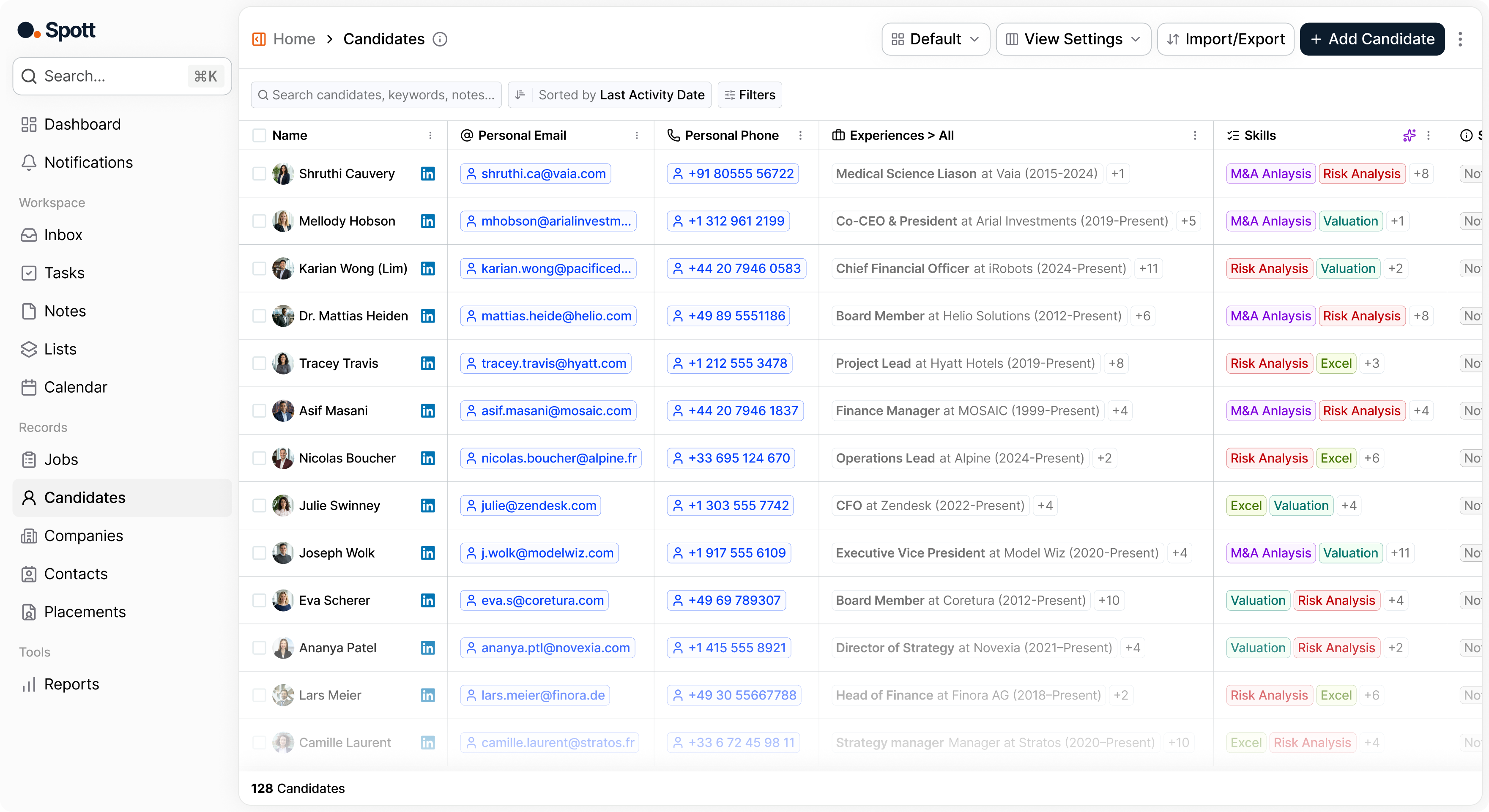
Glam AI
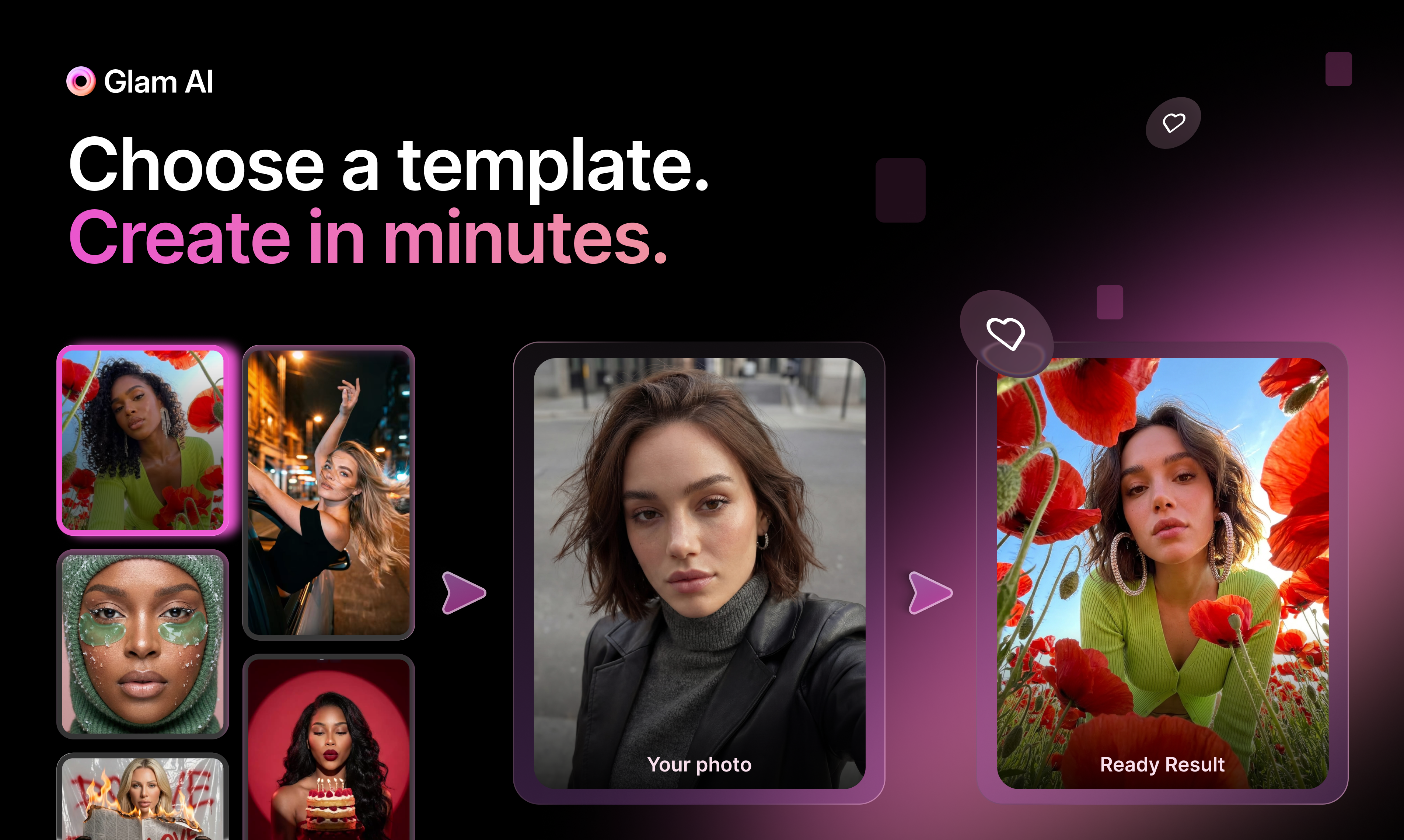
Pick a trend, add your photo, and create viral content
398
一句话介绍:一款通过预置热门趋势模板,让创作者、网红和品牌方无需复杂提示词即可快速生成高质量视觉内容的AI工具,解决了社交媒体内容创作中追热点慢、流程繁琐的核心痛点。
Social Media Artificial Intelligence Photo & Video
AI内容生成 社交媒体工具 趋势模板 创作者经济 多模型聚合 图像生成 视频生成 效率工具 网红营销 SaaS
用户评论摘要:用户普遍认可其“模板+多模型”模式极大简化了工作流,解决了创意启动和工具切换的痛点。主要询问/建议包括:视频生成的具体能力、效果强度控制、品牌客户案例、生成耗时,以及对其与竞品相似度的质疑。团队回复积极,透露将推出AI聊天功能。
AI 锐评

Glam AI的聪明之处在于,它没有在“生成质量”的军备竞赛中内卷,而是切入了更前端的“创意决策”环节,将产品价值定位从“更好的AI画笔”转变为“更懂趋势的AI导演”。其宣称的2000+每日更新模板,本质是一个动态的、经过数据验证的视觉趋势库,这构成了其核心壁垒。它用“趋势模板”这个产品化外壳,封装并抽象了底层多个AI模型的复杂性,为用户提供了确定的、经过社会验证的创意起点,而非一个充满不确定性的空白提示框。

然而,其模式也隐含风险与挑战。首先,其成功极度依赖团队“ spotting trends early ”的能力,这要求其必须建立一个近乎实时的、跨平台的社会化聆听与趋势预测系统,否则模板极易过时。其次,将创作简化为“选模板-传照片”的两步操作,在降低门槛的同时也可能导致内容同质化,当所有创作者使用相似模板时,“趋势”本身会加速贬值,陷入“模板内卷”。最后,评论中关于其界面与竞品相似的指摘,虽被团队以“行业标准”化解,但也暴露出其在用户体验层创新不足,真正的护城河仍在于其趋势数据的广度、深度与转化速度。

总体而言,Glam AI是AI工具走向场景化、流程化的一个典型代表。它不再服务于技术爱好者,而是精准锚定了“为流量焦虑的内容从业者”这一群体。它的真正价值不在于技术突破,而在于工作流重构:将不确定的创意探索,部分转变为确定性的内容生产。其未来成败,将不取决于AI模型的版本号,而取决于其作为“趋势中枢”的运营效率与生态构建能力。

查看原始信息
Glam AI
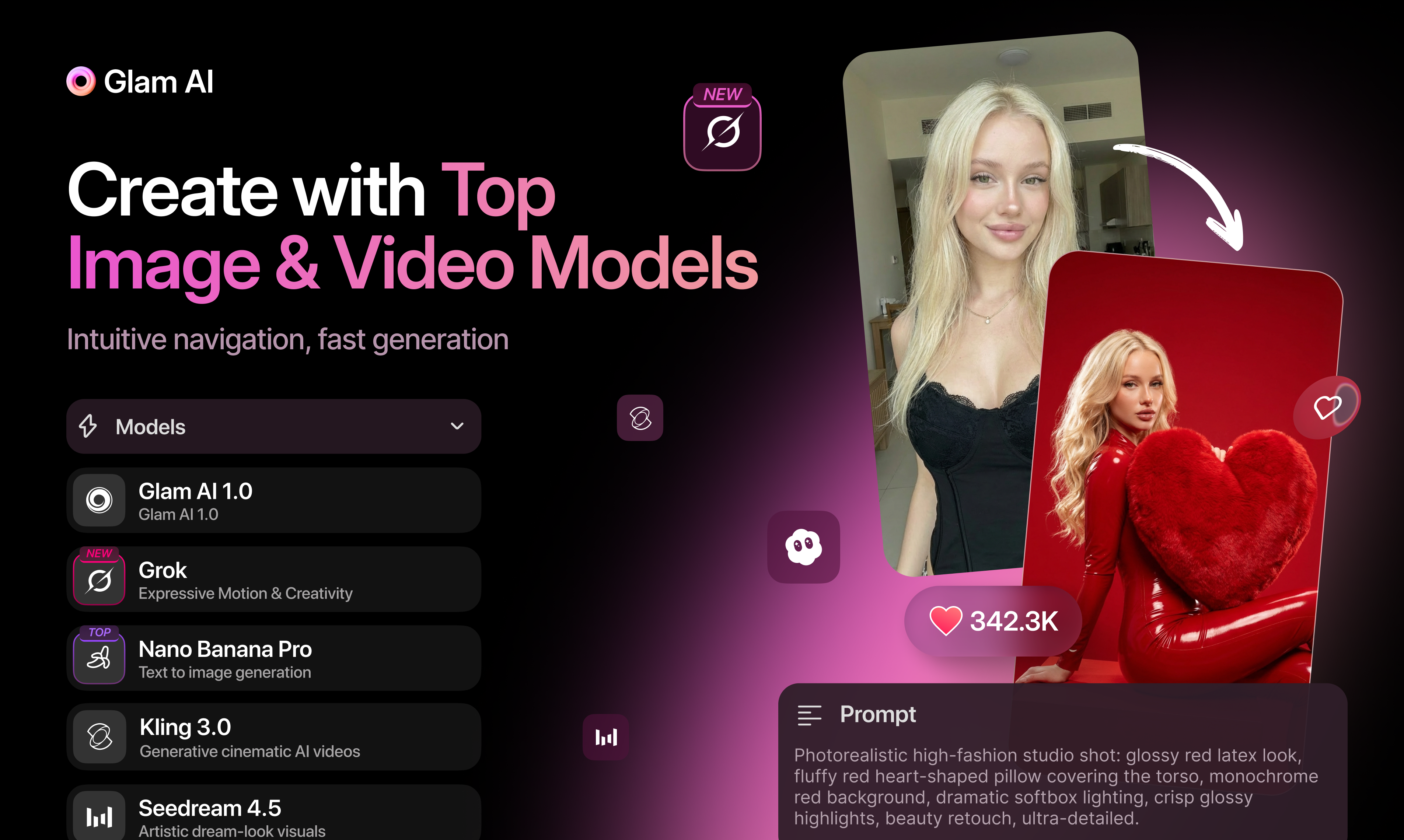
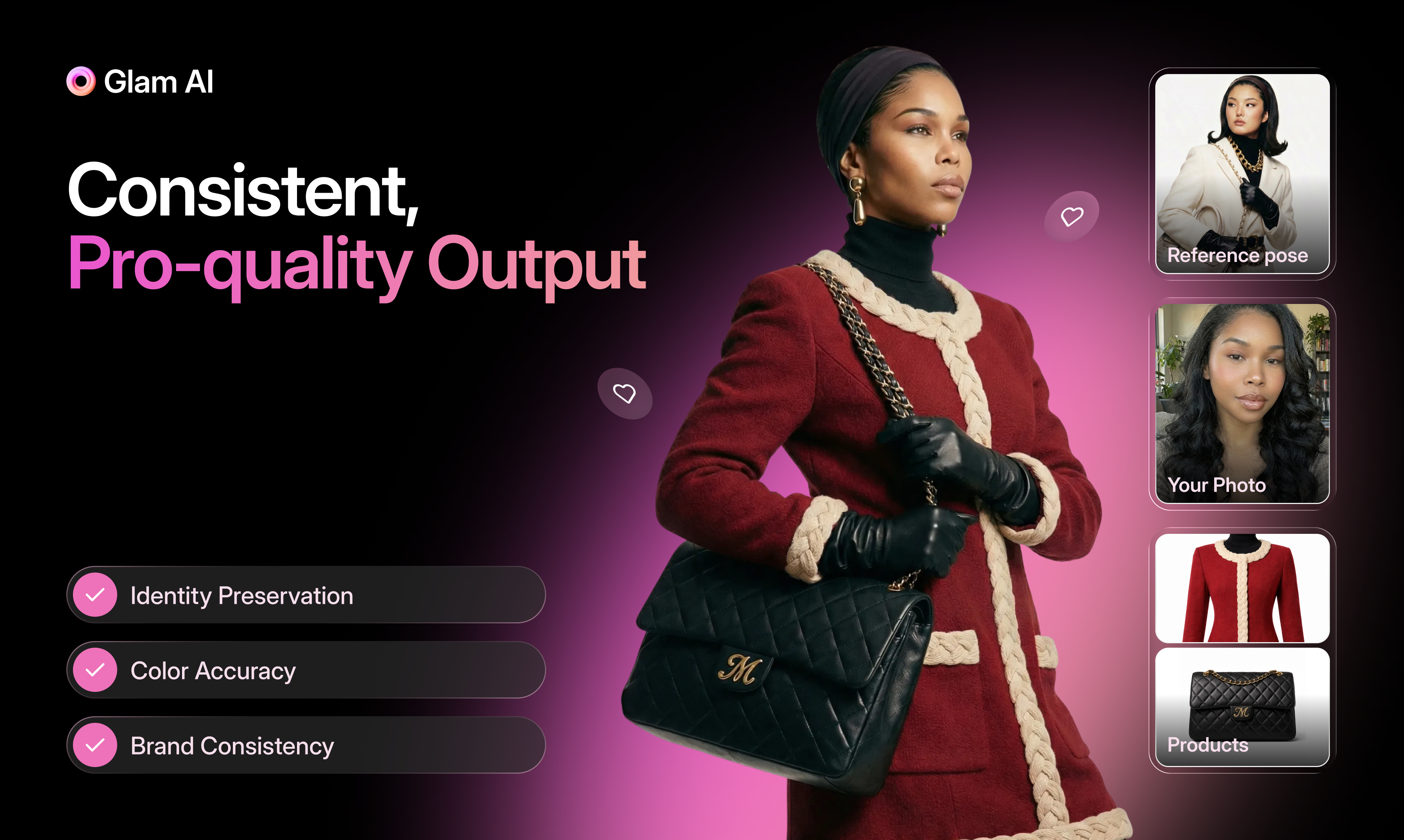
Glam AI keeps your content on-trend without the effort. Browse ready-to-use trend templates, upload your photo or product shot, and generate high-quality visuals in minutes - no prompts, no complex workflows. Built for creators, influencers, and brands who need to move fast, with all major image and video models in one subscription.

Hi Product Hunt 👋

For the last 2+ years, we’ve been heads-down building our mobile app, now at 16M+ monthly downloads. Along the way, we learned how to spot trends early and ship new effects fast, so users can create and post while a trend is still hot.

Today we’re launching our new web version on Product Hunt for the first time: a faster, more accessible way to create images and videos.

What makes GlamAI different from other AI tools? Most platforms give you models, but still expect you to figure out the idea, prompt, workflow, and execution yourself.

We take a different approach: we spot early social trends and quickly turn them into ready-to-use templates, so you can create polished images and videos in minutes. Choose from 2000+ templates, updated daily. Upload a person or product photo and generate results with no prompts or technical setup needed.

So instead of starting from scratch, you start from what’s already working.

And you still get all major image and video models in one subscription, with no need to switch between tools.

🎁 To celebrate the launch, we’re offering the Product Hunt community 1 month of free access to all features. You can easily get it by registering here

What’s next? AI Chat is coming soon to make creation even easier. Describe what you need, and AI will help you find the right template and guide you to high-quality results fast.

We can’t wait to hear your feedback or see some of your results too 🙂

What’s been your biggest challenge with AI generation tools so far?

53
回复

Many congratulations on the launch @paul_shaburov2 @kristina__grits @olya_vasilevskaya @purple_tonezz :)

How I Met the Makers

I met the creators of Glam AI just a week ago through @kate_ramakaieva. What stood out was their super popular mobile app, they're now launching on web, which I'm personally pumped to use for my own social accounts.

What is Glam AI?

Glam AI is an AI-powered tool that spots hot trends across social platforms, gives you ready-to-use templates, and helps creators churn out trendy, viral-ready content super fast from ideation to creation in minutes.

Why I Like It?

As a consultant who's worked with seven social media companies, hired mainly for user retention expertise, I've seen how tapping into trends drives massive engagement. Platforms love it when creators catch on to the trends.

Glam AI nails this: it increases your "luck surface area" by guiding you to high-potential trends, letting AI handle the heavy lifting so you post more (and better).

Remember the Pareto principle? 20% drive 80% of results. This tool stacks the odds in your favor, making it easier for creators to go viral. I endorse it... take a spin and sign up today!

19
回复

@paul_shaburov2 This is solving a real workflow problem. We produce a lot of visual content internally across social media, product launches, and marketing campaigns, and the current process is fragmented. We're jumping between multiple AI image generators depending on the output we need, writing detailed prompts for each one, then pulling everything into Canva for assembly and branding. Each model has its own strengths, one is better for cinematic 3D renders, another handles infographic-style layouts, another does better with photorealistic product shots, so you end up managing multiple subscriptions and learning each tool's prompting quirks.

The trend template approach is what stands out here. The biggest time sink isn't the generation itself, it's figuring out what to generate. Starting from a template that's already on-trend and then just dropping in your photo or product shot removes the most creative friction from the process. That's a fundamentally different entry point than a blank prompt field.

Having all major image and video models under one subscription is huge too. Right now model selection is a decision we make before every project based on which tool handles that specific style best. If that's abstracted away and the platform routes to the right model based on the template, that's a significant workflow improvement.

Curious how the video generation works in practice. Are we talking short-form social clips from a single product image, or more full video editing? Either way, congrats on the launch. This could genuinely simplify our content pipeline.

14
回复

@paul_shaburov2 Congratulations on the launch to you and your team! Quick q; how do the daily-updated templates specifically help content creators spot and leverage trends faster for client campaigns? Excited to test the free month, btw ;)

3
回复

Your landing page looks really impressive, I got glued to it for a while xD

Curious how you evaluate an effect before shipping. Do you test it across diverse inputs, lighting, and demographics?

12
回复

@margarita_s88 Thank you, Margarita!
Sure, we test the new effect drops with paid marketing before every release. Trends that don't show results will not be added to the platform. Additionally, we check the usage withtin the platform and in case trend doesn't show growth - we recreate or delete it.

6
回复
Amazing what you developed and how you helped ai photo video market evolve, great team, congrats with the launch! What are the next big releases?
11
回复

@ponikarovskii Thank you!
What's New - Advanced AI CHAT 🚀 that suggests trends and ideas, what NN to use to create from scratch and what ideas would be trendy! Stay tuned!

7
回复

Love how you’ve combined templates with major AI models in one place. Makes content creation so much easier! 💡

10
回复

@abod_rehman So glad to hear it’s making your workflow easier! That’s what we love to hear!

6
回复

Do any significant brands use your tool?

9
回复

@busmark_w_nika We can definetely name big influencers - because they tag glam AI or mention us (for example, Noval Djokovic and Jeffree Star)
Brands are different. They usually prefer not to reveal which tools they use to create content, and in many cases they would rather not say they use AI at all. That’s why we do not have clear numbers for brands.

Still, we have spotted some brand names in the list of subscription emails.😉

7
回复

This feels like something I’d use for quick posts. Roughly how long does a typical generation take on web?

6
回复

@sutarmin If you use templates, it usually takes about 1 to 2 minutes, depending on the effect.
If you create from scratch, it takes around 1 to 5 minutes. Videos generally take longer than images.

4
回复

Just downloaded your app - it looks impressive, gonna try it to create couple reels!

5
回复

@nikvoice Super! Feel free to share your results and tag GlamAI. We support our creators!

4
回复

@nikvoice Welcome aboard! Happy to have you using Glam AI. Can’t wait to see what you create, feel free to tag us when you post your first Reel!

4
回复

Can I control how strong the effect is? Or is it fixed?

4
回复

@halev The effect is fixed. But! You can then modify the effect using top models. Simply, ask AI chat to make it more cosy or black&white right after the generation

3
回复

Seems fun! Congrats on the launch!

4
回复

@dzmitry_ivanouski thanks for the support. Looking forward to your feedback. Your first month is FREE!

2
回复

Congrats guys, you've done a great job.
You were so heavily inspired by Higgsfield that many elements are copied 1:1 — the pricing page, model selection, the logic behind model choices.
That's really bold, I must say.

4
回复

@userio_neimio  Thank you!
I’d say Higgsfield is a really strong team. They’ve tested a lot on the web, and we decided to learn from one of the best players in the market. At the same time, we’re adding our own differentiating feature: TRENDS. On top of that, the industry already has standards that users are familiar with.


What platforms have you already tried?

2
回复

Congratulations on the launch 🎉 🎉

4
回复

@shubham_pratap thanks! would love to hear your feedback

2
回复

The little details, like hover effects and animations, are charming without being over the top

4
回复

@kai_drifton Thank you! We’re exploring different effect styles for different audiences.Some users like charming, cute effects, while others prefer bold, vibrant, and attention-grabbing ones.

2
回复

good job!

3
回复

@a_6 Thank you!

1
回复

Congrats on the launch! Can’t wait to try this out :)

3
回复

@henk_pretorius1 Thank you! feel free to use our FREE trial in the Pauls' comment

2
回复

Looks like a tool to create impressive nonsense...

Not sure if the world really needs more of that, but congrats to the launch anyway!

3
回复

@konrad_sx Fair point. A lot of people are creating content all the time, and we want to make that process simpler and more consistent. The goal is not to add more noise, but to help people make content that’s easier to produce and more usable in real life.

3
回复

Great tool, which platform dors it work on ?

3
回复

@leadsgenerationbooster Right now Glam AI is available on web, and you can use it on mobile too.

1
回复

With 2000+ templates updated daily, how do you decide which trends to prioritize? Is there an algorithm scoring virality potential, or is it a mix of manual curation and automation? The idea of starting from what's already working instead of a blank canvas is super practical. Congrats on the launch!

3
回复

@mcarmonas It’s really a mix.

We use automation to spot early trends, but we also test them in paid and influencer content. So when a trend goes live on Glam AI, we usually already know how it performs and what kind of numbers are behind it.

That’s a big part of our approach. We’re not just adding trends because they look fun or viral. We want to understand that there’s real traction there first.

1
回复

The quality is honestly outstanding. I generated a few videos and it kept my identity really well. I showed it to the team in the office, and everyone was really surprised. Just brought you some more users 😂

3
回复

@polina_semina That is the best kind of "office gossip" we could hope for! Huge thanks for the shoutout and for bringing the crew along

2
回复
Congrats.. looks amazing .. will be testing this for sure 🔥🔥
3
回复

@dessignnet To get you started, we’re offering your 1st month for free. We are really looking forward to hearing your feedback!

2
回复

Amazing result! Good works, guys.

3
回复

@artemshar thanks for the support. did you get a chance to check Glam AI? You first month is on us :)

2
回复

AI video motion control capabilities have become incredibly advanced, and I’m starting to see a wide range of viral content emerge thanks to it. I think it is the perfect time to launch a product like this. Congrats!

3
回复

@mazula95 you’re spot on! the tech is moving fast, and the timing couldn't be better!

Since you have a great eye for these trends, we’d love to get you in there. We’re offering your 1st month for free, and we're really looking forward to hearing your feedback!

2
回复

This is exactly what creators actually need. Congrats on the launch! 👏

3
回复

@ikalimullin Thank you! You are welcome to try it out with a Free offer for product hunters!

1
回复
Congratulations on the launch 🚀🎉
3
回复

@dmitry_zakharov_ai thanks and feel free to check Glam AI, first month is on us :)

2
回复

one more question: I can't link app and web version for some reason, I log in to app via email but then nothing is happening

3
回复

@vse_horoscho right. App and web are not connected for now.
We are planning to have a release this month - One subscription for app amd web. Stay tuned!

2
回复

Looks cool

3
回复

@thehirenthakkar thanks a lot, we are doing our best! feel free to check it, your first month is FREE

2
回复

Hey guys, great launch, good luck! Totally love your intro video 👏

3
回复

@lipkovskiy appreciate it! Your first month is completely FREE! Did you get a chance to check it?

1
回复

@lipkovskiy Video is my new love as well :)

1
回复
This looks like something I’d actually use weekly for business content. If the outputs stay consistent and publish-ready, it can become a main tool for viral-ready visuals.
3
回复

@serializer Consistency is key in building a business story and we’re here to enhance that process! Did you get a chance to try Glam AI?

1
回复

Tried a lot of AI tools, and most of them still make you do all the work yourself — come up with the idea, write prompts, test variations, and hope something good comes out. GlamAI feels much easier to actually use. The template approach makes a lot of sense, especially for trends that move fast. Really cool that you can just upload a photo and get something polished without spending forever figuring things out. Congrats on the launch 🙌

3
回复

@tatyana_stasenko We love to hear this 🙌 Thanks for the support, can't wait to see what you create with those templates!

1
回复

I’m trying to purchase the Glam.ai subscription, but the payment keeps failing. I have already tried using 2–3 different credit cards, but the transaction still doesn’t go through.

Not sure if this is a payment gateway issue or something else. Could you please check this or guide me on how I can successfully complete the payment?

Would love to try the product, but currently stuck at the payment step.

3
回复

@ram_thakur1 oh! we will check it right now! Share your registration email please
Also feel free to use our FREE monthly subscription offer to try it out! - check the link in the Founder's comment

3
回复

With zero experience, I was quite confused by gen AI tools. Curious to test Glam AI as this looks simpler 🙂 How would you recommend to start if I’m a complete beginner?

3
回复

@andreyshpa We’d recommend starting with templates. Choose a viral effect you like, upload your photo, and generate. The AI chat can also be really helpful if you want to remix the trend or add more details.

2
回复
#3
GLM-5-Turbo
High-speed agentic model built specifically for OpenClaw
263
一句话介绍:GLM-5-Turbo是深度针对OpenClaw平台优化的高速智能体模型,在自动化工作流场景中,解决了传统大模型在工具调用、长链任务执行中不可靠、易“幻觉”的痛点,使智能体更稳定、高效。
Productivity Artificial Intelligence
大语言模型 智能体(Agent)专用 工具调用优化 长链任务执行 工作流自动化 低幻觉 企业级AI 模型优化 闭源实验模型 OpenClaw生态
用户评论摘要:用户普遍肯定其针对真实工作流的设计,在复杂指令分解、工具调用稳定性和长链执行可靠性上表现突出,显著降低开发运维心智负担。主要关注点在于模型是否开放API(如DeepInfra)以及未来开源计划。
AI 锐评

GLM-5-Turbo的发布,与其说是一次模型迭代,不如说是Z.ai对“智能体经济”基础设施的一次精准卡位。它避开了通用大模型在基准测试上的“军备竞赛”,转而深耕“智能体工作流”这一垂直需求,从训练阶段即针对OpenClaw进行深度优化。这标志着大模型的发展路径正从“追求全能”转向“场景专精”。

其宣称的“近乎零幻觉”的稳定工具调用与长链执行,直击当前AI智能体从演示走向生产的最大障碍——不可控性与不可预测性。早期测试者的反馈也证实了这一点:它降低了智能体开发中“过度设计护栏”的认知负荷。这背后的价值并非仅仅是技术参数的提升,而是将模型的可靠性转化为开发者的生产力和企业的运营效率。模型速度的提升,直接缩短了“试错-迭代”的循环周期,这对需要快速验证和部署的AI智能体应用至关重要。

然而,其当前闭源且深度绑定OpenClaw的策略是一把双刃剑。它在短期内为OpenClaw构建了强大的竞争壁垒和用户体验,但同时也限制了其生态的广泛性。评论中对API开放性的关切,正反映了市场对其可移植性的疑虑。Z.ai承诺将相关能力融入下一代开源模型,可视为一种平衡策略:用闭源版本抢占高价值场景和早期用户,再用开源版本扩大影响力和开发者基础。GLM-5-Turbo的真正考验在于,其“场景特化”的能力优势,能否最终转化为可泛化的方法论,并推动整个智能体开发范式的进化。

查看原始信息
GLM-5-Turbo
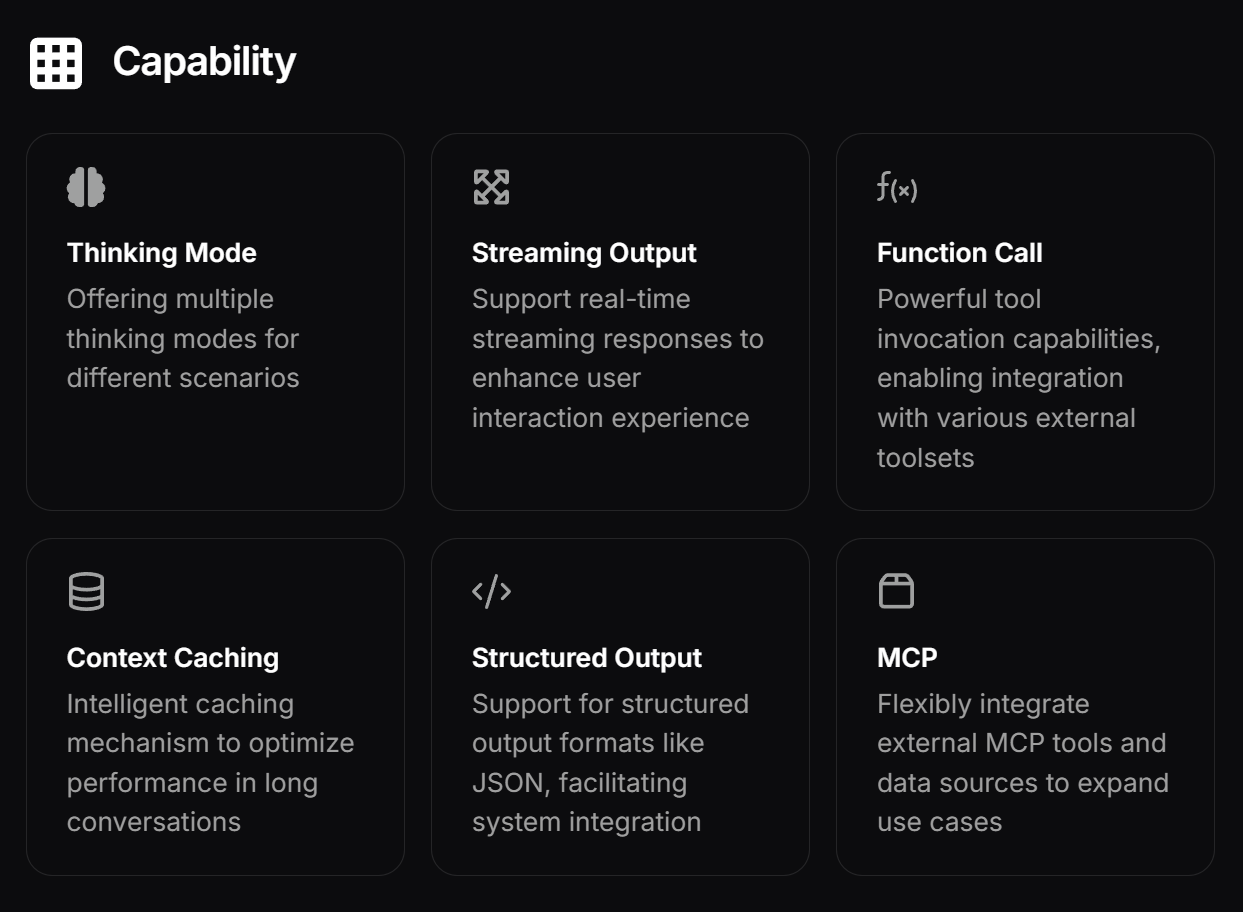
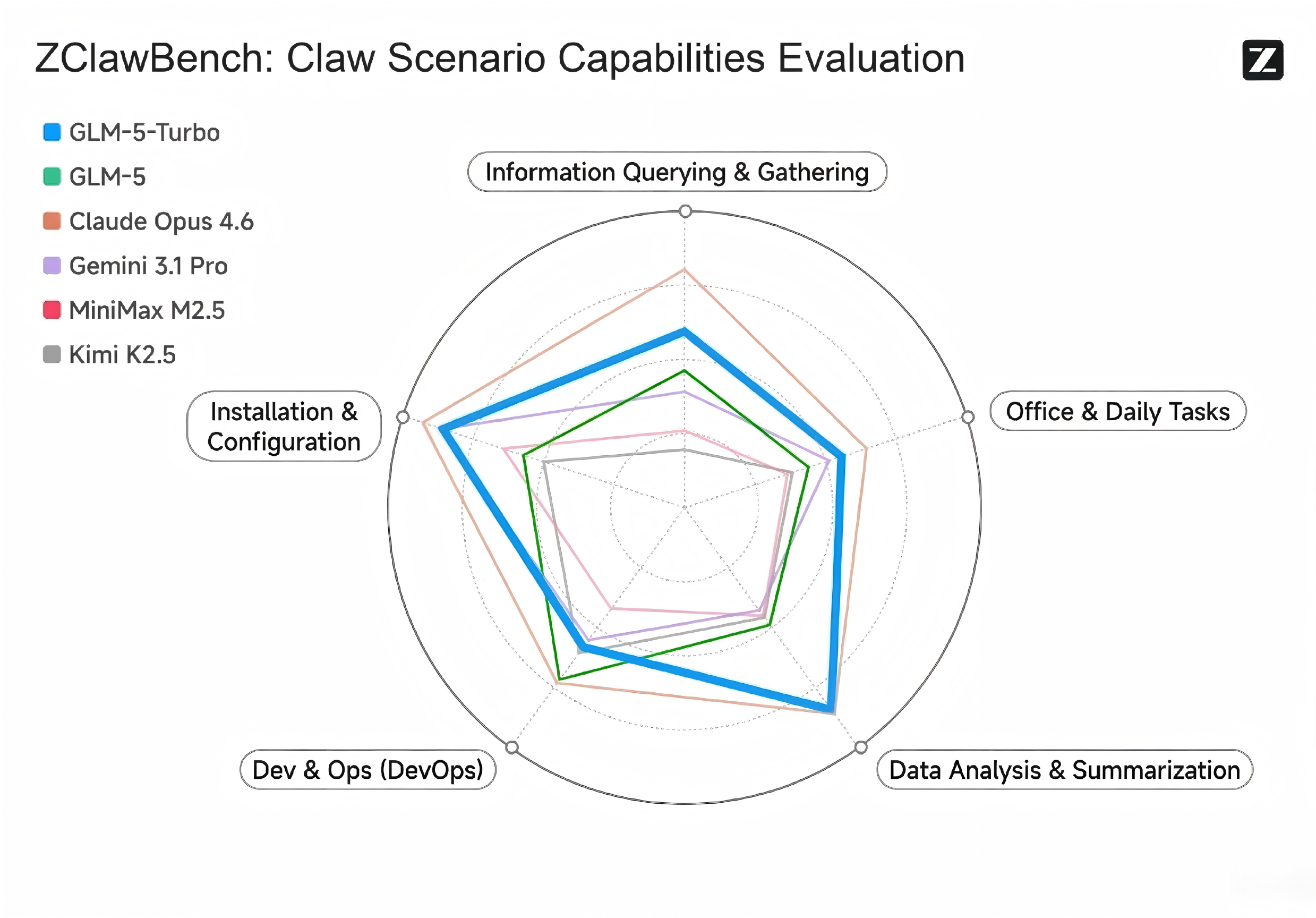
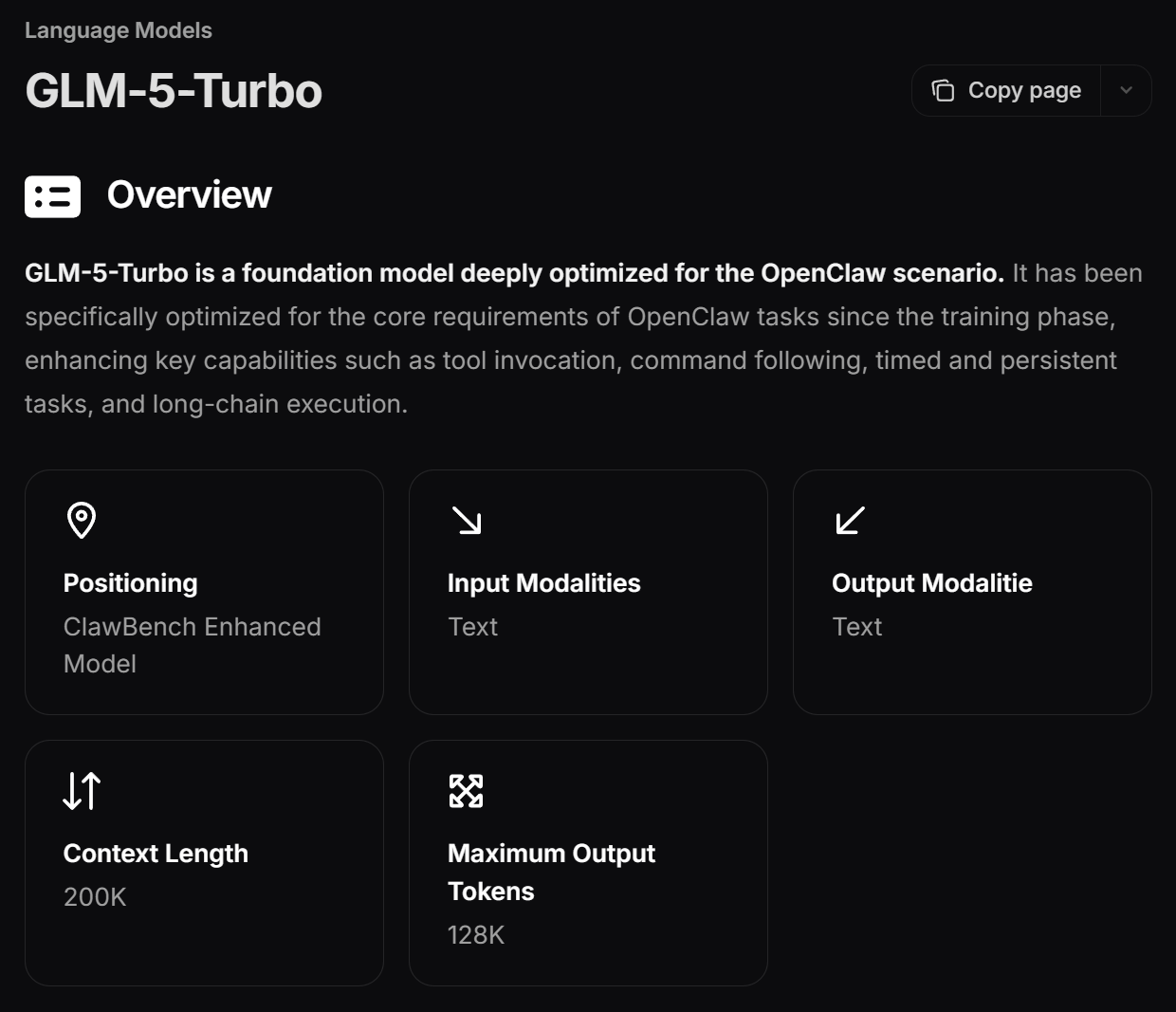
GLM-5-Turbo is Z.ai’s high-speed variant of GLM-5, deeply optimized for OpenClaw from the training stage. It excels at precise tool calling, complex command following, scheduled and persistent tasks, and long-chain execution with near-zero hallucinations. Faster, more reliable, and purpose-built for real agent workflows.

Hi everyone!

GLM-5-Turbo feels like a very intentional and interesting release.

Instead of just calling it a faster GLM-5, Z.ai is positioning it as a model deeply optimized for OpenClaw from training onward. That means stronger tool calling, better breakdown of complex instructions, more stable timed and persistent tasks, and smoother long-chain execution—which is basically exactly what people actually want from an agent model.

It is still experimental and currently closed-source, but Z.ai says the capabilities and findings here will be rolled into the next open-source release.

Also nice to see usage limits tripled for GLM-5-Turbo in the GLM Coding Plan!

7
回复

I’ve been testing GLM-5-Turbo inside OpenClaw for the past few days, and it’s the first “agent-focused” model that actually feels like it was built for real workflows instead of just benchmarks.

What stands out most is how confidently it calls tools and chains steps together. I’m running fairly complex, multi-step automations (with conditionals, retries, and cross-tool dependencies), and GLM-5-Turbo almost never gets lost or hallucinates APIs. It keeps track of context over long sessions and finishes jobs without me having to babysit it.

In practice, that means:

More reliable long-running agents – it can execute 10–20 step flows without silently drifting off-spec.

Fast iteration loops – responses are noticeably snappy, so iterating on tool schemas and workflows is painless.

Lower cognitive overhead – I don’t have to over-engineer guardrails just to keep it from making things up.

If you’re building production agents (not just chatbots), this is the kind of model you want: optimized for tool use, stable over long chains, and fast enough that you can ship and iterate quickly. Excited to see a model that is clearly tuned around “real-world agent ops” instead of just leaderboard scores.

4
回复

Very timely launch! Will this model be available on DeepInfra?

3
回复

Interesting! I hope your efforts helps Openclaw users save tons of tokens and provide more meaningful results. I am certainly going to try it over the weekend and return here with the feedback.

3
回复

This sounds like a really thoughtful release! Excited to see how GLM-5-Turbo handles complex tasks 🚀

3
回复

Really impressed by GLM-4.6V's video understanding capabilities — 128K context for continuous video processing is a game changer for anyone building verification or proctoring workflows.

One thing I've noticed building video infrastructure at Vidtreo: the AI analysis layer (models like GLM-4.6V) keeps getting better, but reliable browser-based video capture is still the bottleneck for most teams. You can have the best vision model in the world, but if the recording drops frames or fails on mobile Safari, the pipeline breaks before the AI ever sees it.

Curious — are you seeing developers combine your vision API with browser capture SDKs for real-time use cases like identity verification or exam proctoring? That capture + analysis combo feels like the next big unlock.

Congrats on making these models open and accessible.

0
回复

I used OCR by GLM, it was pretty slow, but GLM-5-Turbo looks great

0
回复
#4
JetBrains Air
Run Codex, Claude Agents, Gemini CLI, and Junie side by side
226
一句话介绍:JetBrains Air 是一款为AI智能体驱动开发设计的集成工作空间,通过在单一、隔离的工作流中并行运行多个主流编码AI助手(如Codex、Claude Agent等),解决了开发者在多AI协作时上下文切换繁琐、代码修改冲突和任务管理混乱的核心痛点。
Software Engineering Developer Tools Artificial Intelligence
AI编程助手 多智能体协作 开发工作流 代码隔离 JetBrains生态 开发者工具 智能体驱动开发 IDE增强
用户评论摘要:用户反馈两极分化。积极评价集中于肯定多智能体并行工作流的价值,能解决实际开发中的冲突和切换问题。消极反馈则尖锐指出产品存在严重稳定性问题(如命令执行卡死)和官方支持响应迟缓,导致付费用户感到失望并考虑转向。技术用户重点关注其隔离机制(工作树/分支)和冲突解决的具体实现方式。
AI 锐评

JetBrains Air 的发布,与其说是一款革命性产品,不如说是JetBrains对当下“AI智能体混战”开发模式的一次被动式整合与风险极高的押注。其核心价值并非技术突破,而在于试图将散落各处的AI编码智能体(Codex, Claude, Gemini等)强行纳入其IDE帝国的秩序之下,通过“工作空间”和“隔离”这两个传统概念,为混乱的早期市场提供一种看似可控的解决方案。

产品介绍中“为真实代码库设计”的表述,以及用户评论中揭示的团队多仓库、多智能体并行开发的真实场景,恰恰证明了其瞄准的不是个人玩具,而是已进入生产流程的、严肃的AI辅助工程。其真正的野心在于成为AI时代软件开发的“交通管制中心”和“工作记录仪”——定义任务、隔离运行、审查结果。如果成功,它将牢牢掌握AI开发工作流的入口和标准,延续JetBrains在专业开发者领域的统治力。

然而,早期版本暴露的稳定性灾难和支援缺失,是这款产品最大的阿喀琉斯之踵。对于将之用于生产环境的开发者而言,不可靠的“管制中心”比没有更危险。这反映了JetBrains在传统IDE领域积累的“重”与开发AI智能体所需的“快”和“灵”之间的深刻矛盾。用户的热切期待与愤怒失望并存,说明市场痛点真实而迫切,但JetBrains能否以其一贯的稳健风格驾驭好这个快速迭代的领域,仍需打上一个巨大的问号。它的成败,将检验传统工具巨头在AI浪潮中的转身速度与工程化能力。

查看原始信息
JetBrains Air
JetBrains Air is built for agent-driven development. It brings your favorite coding agents – Codex, Claude Agent, Gemini CLI, and Junie – into one coherent workflow designed for real codebases. Air helps you define tasks precisely, run them in isolation, and review the results with full code intelligence – all in one place. Download Air – free for macOS. Windows and Linux versions coming soon.

A recent thread [1] suggested running more coding agents in parallel. Products like @Axel and @Superset initiated the movement. This is @JetBrains' response. LFG

[1]: How many Claude Codes do you run in parallel?

6
回复

@fmerian Air looks solid for agent driven dev, Excited to see how it handles real codebases 👨‍💻.

1
回复

I can't recommend this product, because I've tried to make it work and it just doesn't. Command execution didn't start (it got stuck in a scheduled state). I've tried to reach out to @JetBrains on X, but no reply. Eventually I found an issue in their issue tracker, started to wait for the resolution and guess what? The issue is gone now. I used to love JetBrains, I'm paying for WebStorm and JetBrains AI (Ultimate), but this is the last year I'm doing it, because the frustration from their products is immeasurable nowdays.

6
回复

oh that's good feedback. what alternatives have you considered?

3
回复

@lane_en It’s frustrating when a product doesn’t work as expected and support isn’t responsive. It’s understandable to reconsider continuing with a service after such issues.

1
回复

Been juggling Claude Code and Codex on the same codebase and they keep stepping on each other's files. So the isolation part — does each agent get its own worktree, or is it more branch-per-task? Curious how the review works when two agents touch the same file.

5
回复

been a user of IntelliJ IDEA, Android Studio for ages hence this launch feels personal.

Congrats on the launch team!

4
回复
4
回复
What specific “agent friction” did you see with CLI/TUI tools like Claude Code, Gemini CLI, and Codex that convinced you a dedicated workspace was necessary—and what concrete signals (time-to-PR, defect rate, review speed, etc.) did you use to validate that this pain is real in day-to-day engineering?
1
回复

Been using JetBrains for years and their database tool window still feels like having a senior DBA sitting next to me - caught a production query that would've cost us $3k/day in unnecessary joins last week. The way they surface performance hints while you're writing SQL is almost unfair to other IDEs.

1
回复

Everything just flows seamlessly—no bumps, no confusion, just pure elegance

1
回复

Having multiple AI agents in one coherent workflow is the right direction. I've been using Claude Code as my primary dev tool and the biggest friction is switching contexts when you need a different model's strengths. Being able to run them side by side and compare outputs on the same codebase solves a real problem. Curious how it handles conflicts when two agents suggest different approaches to the same task.

0
回复

This is exactly the workflow we've been doing manually.

We're 3 people building Vidtreo — a video recording API (also launching on PH today). Our daily reality is running Claude agents across three repos simultaneously: backend on Cloudflare Workers, browser SDK with WebCodecs transcoding, and a React dashboard. The context switching between terminals and agents is brutal.

The idea of referencing a specific line or method when defining a task for an agent — that alone would save us hours. Right now we paste file paths and line numbers into prompts like cavemen.

Sandboxing agents in worktrees is the other killer feature. We've had agents step on each other's changes more times than I'd like to admit.

Really excited to try this with our stack. Multi-agent development isn't hypothetical anymore — teams are shipping production infrastructure this way today.

0
回复

Great,

I am a fan of all JetBrains products,
I hope this fixes the problem of using different AI models inside JetBrains

0
回复

As a JetBrains subscriber for over a decade (grandfathered, still using WebStorm + AI Ultimate), I’m curious: what’s the one key improvement or use case in JetBrains Air that justifies switching from my current workflow, especially given the reported stability issues i'm seeing down below?

Good luck on the launch. Hope it smooths out quickly for longtime users like me

0
回复
#5
Donely
Your own OpenClaw instance for $0/mo + free AI usage offer
198
一句话介绍:Donely提供免费托管、快速部署的独立OpenClaw容器,让用户能安全便捷地运行可连接各类办公应用的AI智能体,解决了个人及小团队想使用自动化AI工作流却担忧成本、技术门槛和安全风险的痛点。
Productivity Developer Tools Artificial Intelligence
AI智能体平台 自动化工作流 容器化部署 免费托管 无代码集成 SaaS 开源模型托管 开发者工具 生产力工具
用户评论摘要:创始人主动介绍产品理念并征集反馈。用户肯定产品体验。主要疑问集中在容器是否为持久化运行及其安全性,官方回复称容器永久存活,免费版一月未使用会停机但可重启,强调稳定性。
AI 锐评

Donely的叙事精巧地击中了当前AI代理市场的几个软肋:将开源项目OpenClaw的部署复杂性、运行安全性与持续成本打包成“免费托管+按量付费”的清爽方案,这无疑对畏惧本地部署风险的尝鲜者极具诱惑。其核心价值并非技术突破,而是充当了“风险剥离器”和“复杂性中介”——通过容器隔离缓解用户对AI“失控”的恐惧,通过快速连接器降低集成门槛。

然而,其商业模式暗藏玄机。“免费托管”是诱饵,真正的利润池在于AI信用额度和未来的高级功能。这种模式高度依赖用户持续产生AI消费,并需在“免费实例的资源控制”与“用户体验”间走钢丝。产品介绍中“AI自动修复”功能也暗示其目标用户并非极客,而是更广泛的“生产力寻求者”,这要求其稳定性必须接近商业级SaaS,而非开源项目的不稳定预期。

当前市场反馈看似积极但基数尚小。真正的考验在于:当大规模用户同时运行多个长期存活的“免费”容器时,其基础设施成本能否扛住;以及能否构建足够深的护城河,防止云厂商或同类产品轻易复制此模式。它更像一个精心计算的市场切入实验,其成败将验证“开源AI应用托管”是否是一个独立且可持续的生意。

查看原始信息
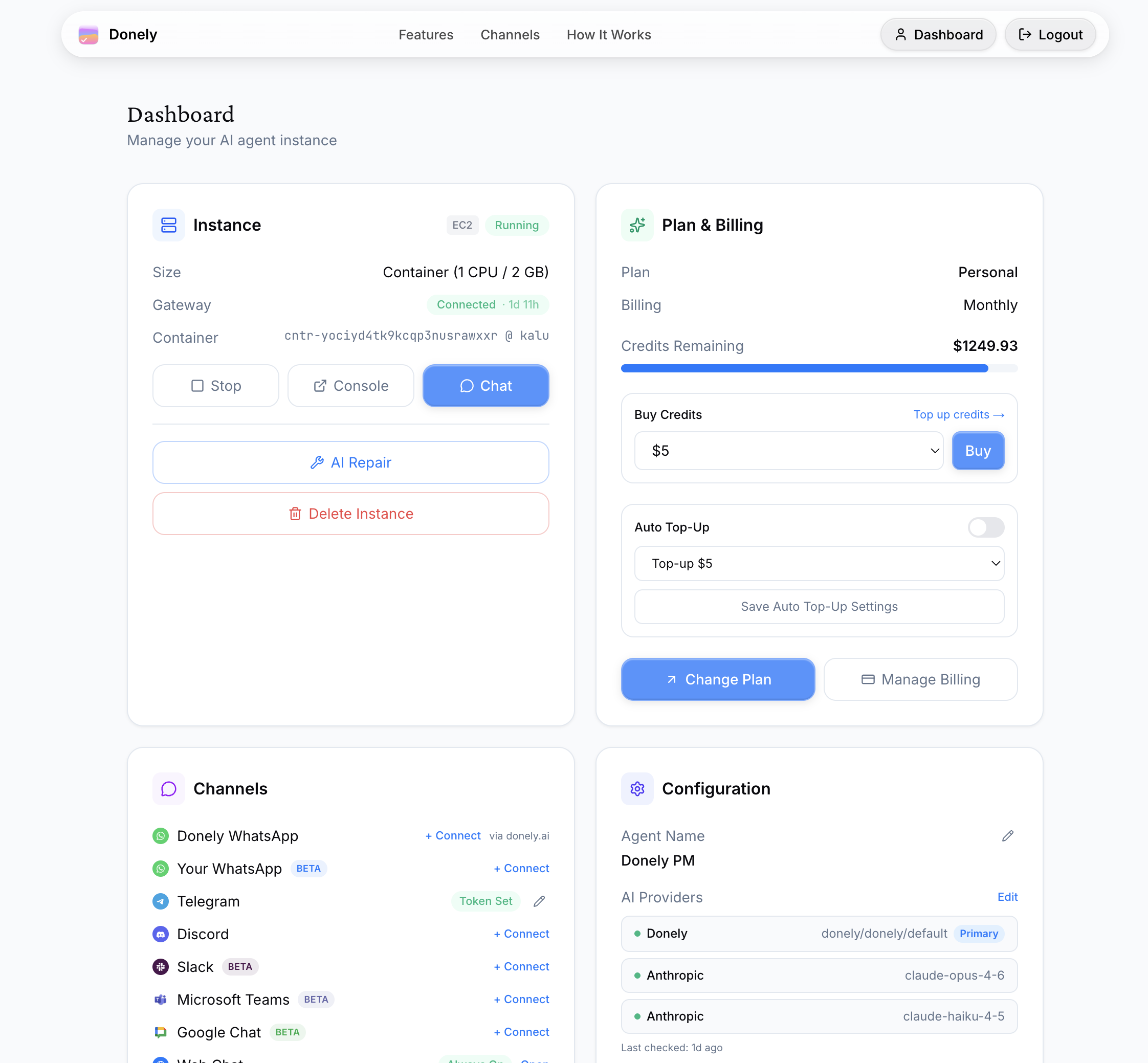
Donely
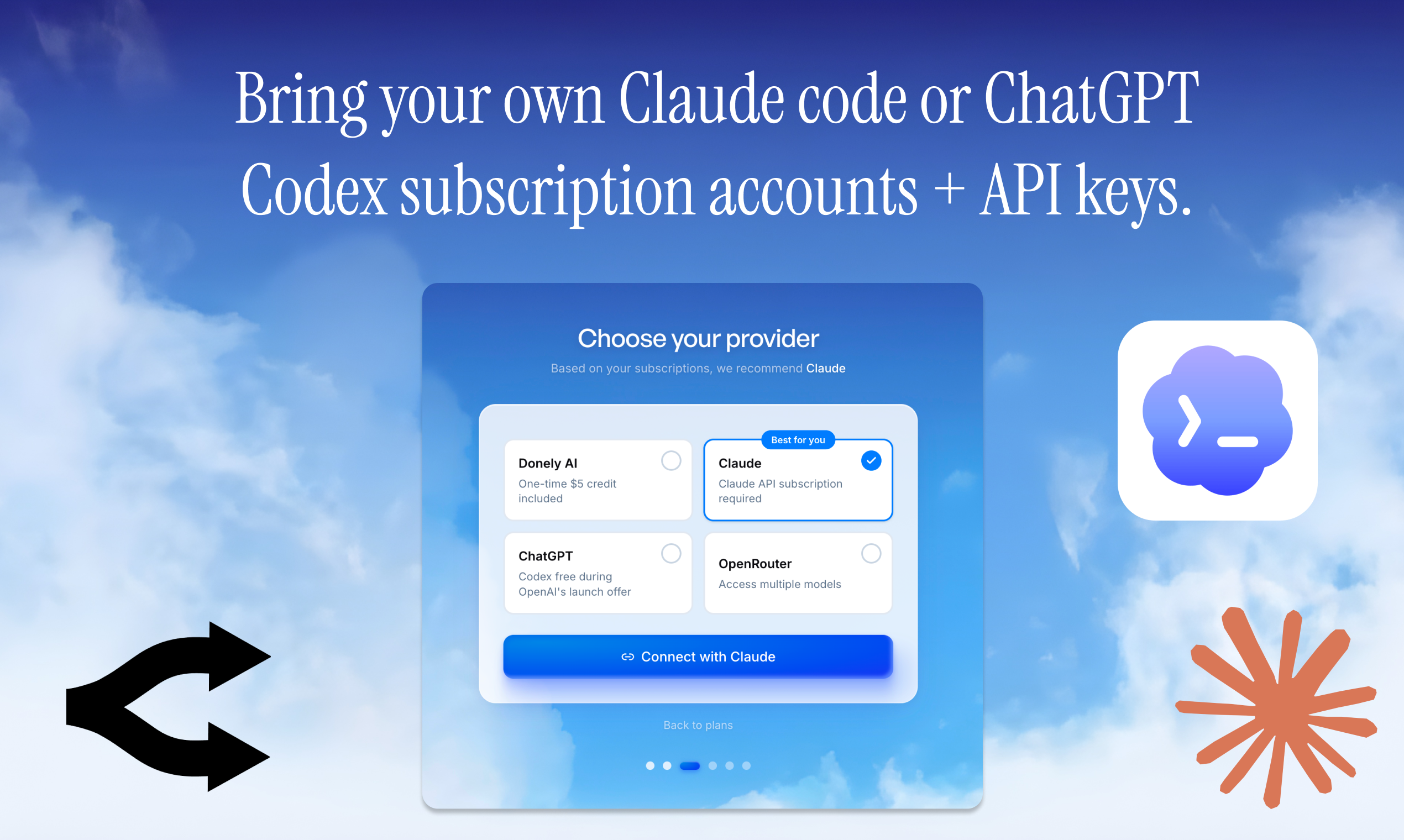
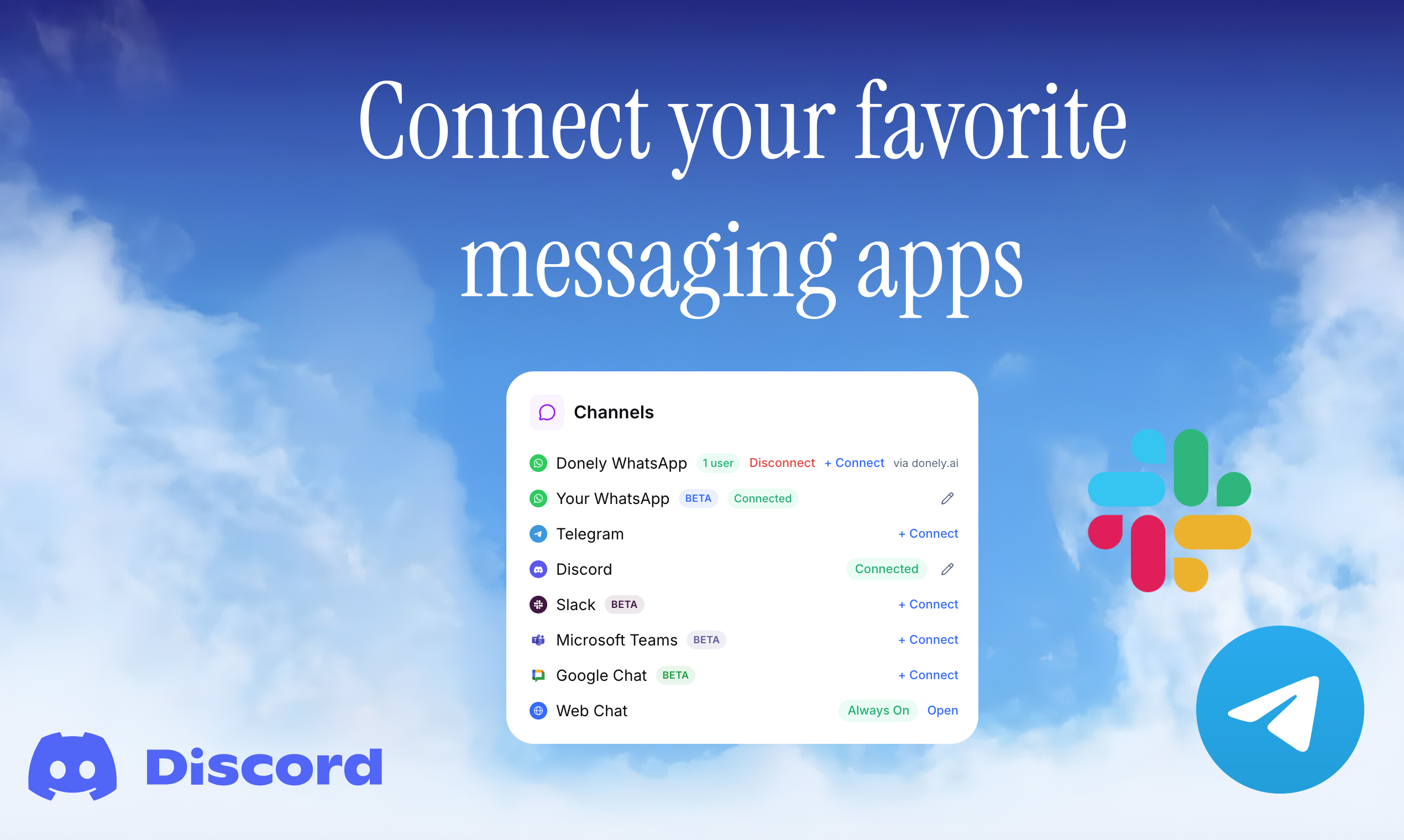
Why pay for basic hosting? Donely gives you a fully managed, isolated OpenClaw container with full access for just $0/mo. Just pay for AI credits you use. With our 25$ Personal plan (Free for a month - use the coupon PH99) you get free AI usage for a limited time as well as bring your own oAuth Claude or Codex accounts. Live in 30 seconds. Connect your agent to Gmail, Slack, and 950+ apps instantly. If your instance breaks, Donely’s AI repair feature fixes it automatically.
Hey everyone, I’m Harsha, founder of Donely. We built Donely because we wanted AI agents that can actually do work on a computer, not just chat about it. With Donely, you get a fully managed OpenClaw container that goes live in about 30 seconds. You can connect it to Gmail, Slack, and 950+ apps, give it full access, and start running real workflows right away. A big thing we cared about was making this usable for normal people, not just technical power users. So we made hosting free, made setup fast, and built an AI repair feature that automatically fixes your instance if it breaks. A few things you can do with Donely: • run your own AI worker in an isolated container • connect your tools and accounts fast • bring your own Claude or Codex account • use our managed setup instead of dealing with infra yourself We’re still early, and that’s exactly why your feedback matters a lot. I’d love to hear what you’d use Donely for, what feels confusing, and what you wish existed. Thanks for checking us out.
10
回复

Hey, I'm Chamaru, founder and CTO of Donely.

Have suggestions/ feedback about Donely or need help setting up your instance?
Book a time here: cal.com/donely/onboarding

1
回复
I was shown this by one of my friends like a week ago and I’ve been using it since! Awesome job and so cool to see it here!!
1
回复

@benjamin_belay Glad to hear that you are using it ❤️
More good things are coming very soon!

0
回复

The ability to keep it in its own container is appealing. I've read too many horror stories about OpenClaw such that I'm afraid to try it given the potential of it going awry. Do you just close out the container once you're done with it? Or is it alike to a "saved session" that you can open and close?

0
回复

@lienchueh Your container lives forever!

Honestly, you don't have to worry about it going down or anything. Free plan customers' instances will be turned off after 1 month - but you can always restart when you sign back in later.

0
回复
#6
Masko Code
A mascot that watches Claude Code for you
167
一句话介绍:一款为Claude Code等多AI编程代理设计的桌面萌宠监控工具,通过实时桌面通知和全局快捷键,解决开发者频繁切换窗口批准权限、丢失焦点的工作流中断痛点。
Open Source Developer Tools Artificial Intelligence GitHub
AI编程助手 生产力工具 桌面宠物 开源软件 本地化部署 工作流优化 开发者工具 macOS应用 实时监控 快捷键操作
用户评论摘要:用户普遍认可其解决Claude Code权限弹窗打断工作流的痛点,赞赏其开源、本地化及设计趣味性。主要问题与建议包括:拓展支持其他AI代理(如Codex、Cursor、Copilot)、增加Windows版本、自定义通知触发条件、优化多代理同时请求的处理,以及深入识别代理“卡住”状态。
AI 锐评

Masko Code巧妙地用“萌宠”这一情感化外壳,包裹了一个严肃的生产力内核。其真正价值并非在于可爱的动画,而在于它作为一层轻量级、非侵入性的“人机交互缓冲层”,重新定义了开发者与后台AI代理的交互范式。

产品直击AI编码代理普及后的新痛点:频繁的权限弹窗和状态不透明导致的工作流碎片化。它没有尝试重造代理本身,而是通过本地钩子(hook)和全局快捷键,将原本需要主动查看、频繁切换的打断式交互,转化为被动接收、一键操作的流式体验。⌘1批准、⌘M跳转等设计,本质是将交互成本从认知和操作层面压至最低。

其“开源+本地+免费”的定位是精准的。这打消了开发者对隐私和安全的核心顾虑,为其作为底层工作流工具铺平了道路。而可自定义萌宠和社区生态的设想,则为其从单一工具演变为一个“监控面板平台”提供了可能——未来或可统一管理不同来源的AI代理进程。

然而,其挑战同样明显。深度依赖特定代理(Claude Code)的接口,使其易受上游更新影响;拓展至其他代理需逐一适配,工程成本不低。此外,其当前价值与AI代理自身的稳定性和透明度强绑定,若代理能减少不必要的权限请求或提供更清晰的状态反馈,该工具的中间件价值便会削弱。它是在填补当前AI工具链的“交互设计缺陷”,这个窗口期能持续多久,取决于主流AI编码工具自身的进化速度。

查看原始信息
Masko Code
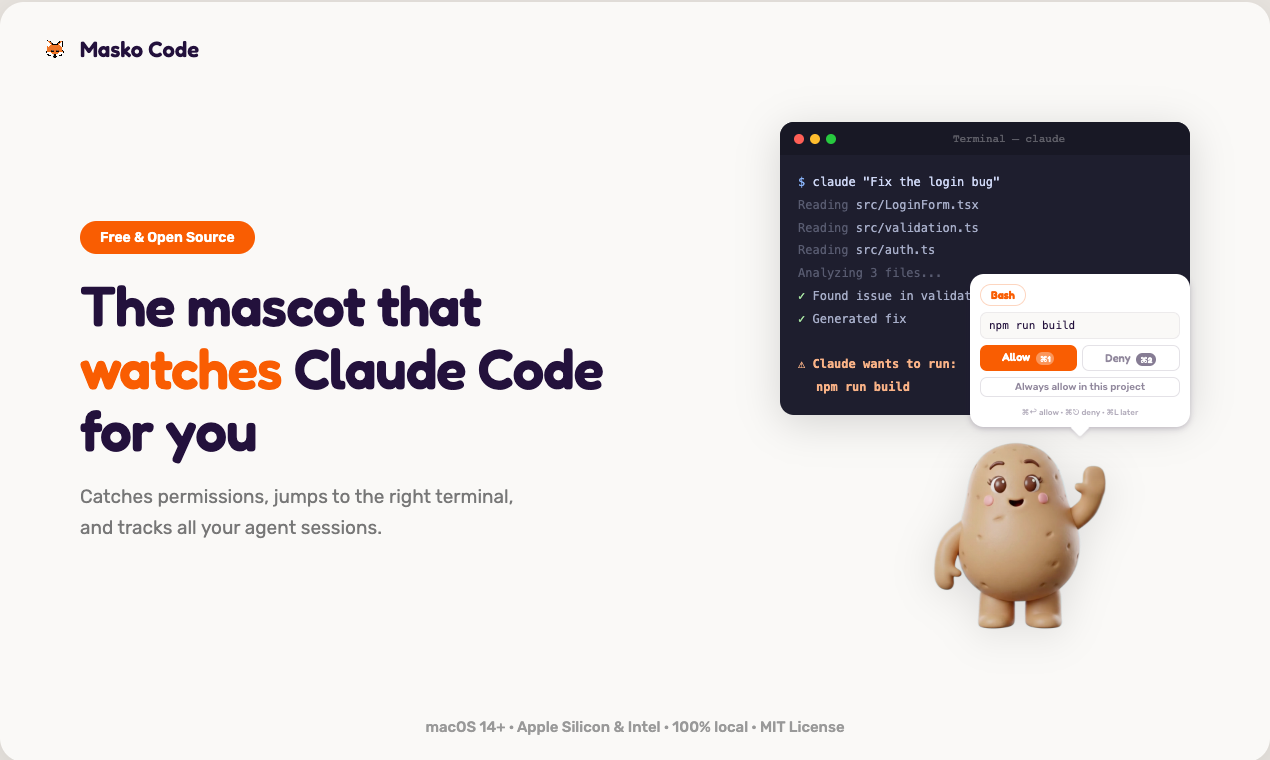
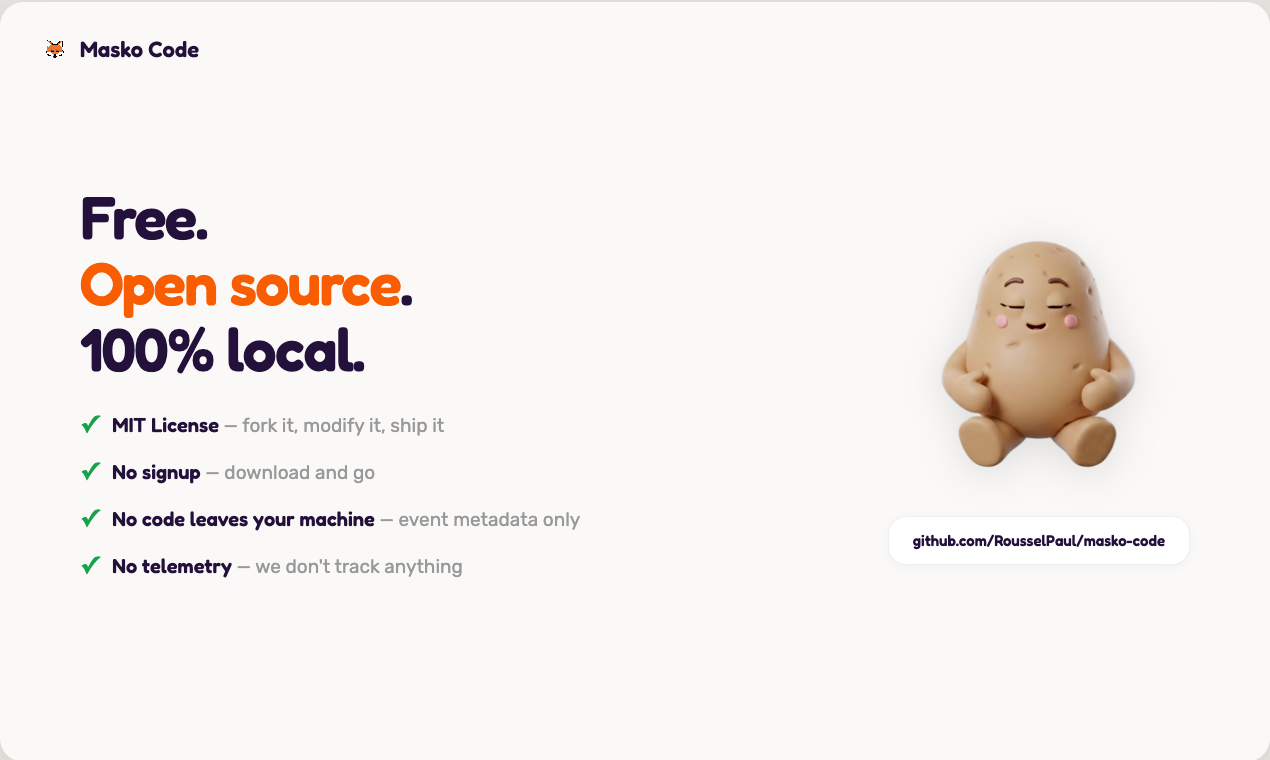
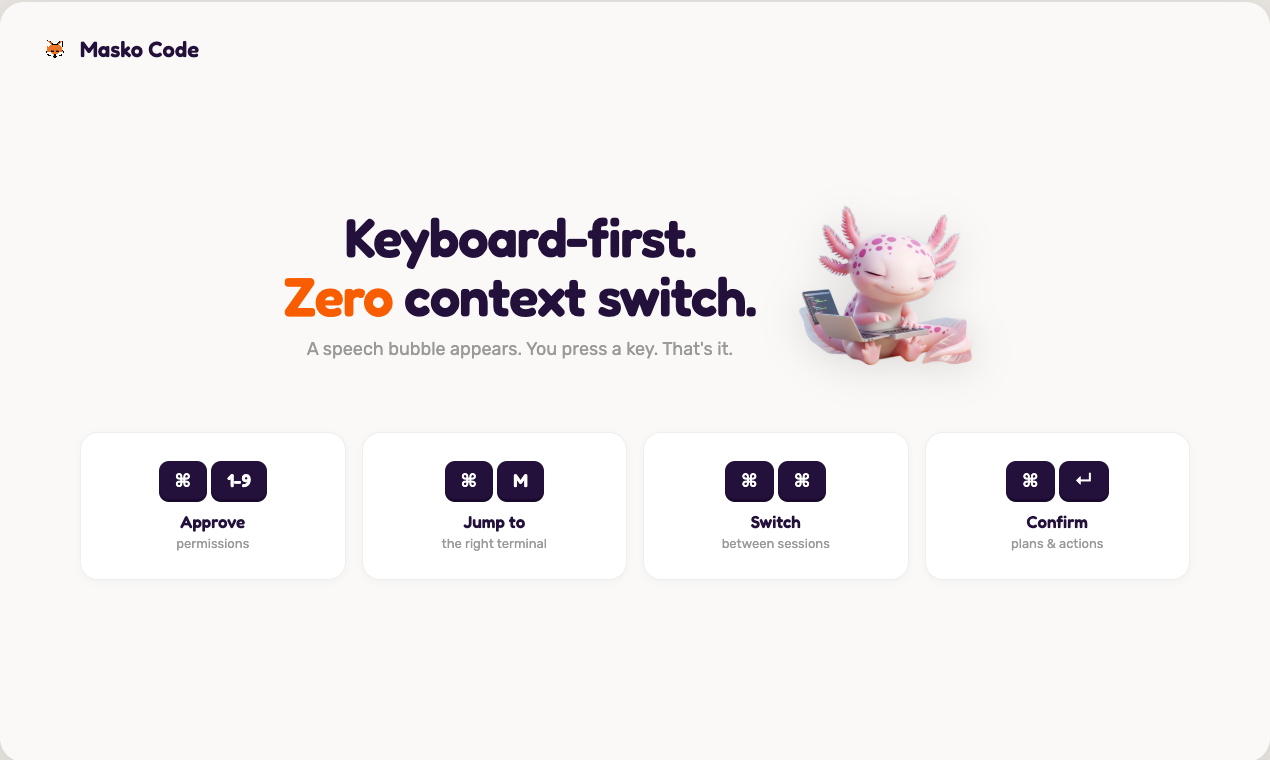
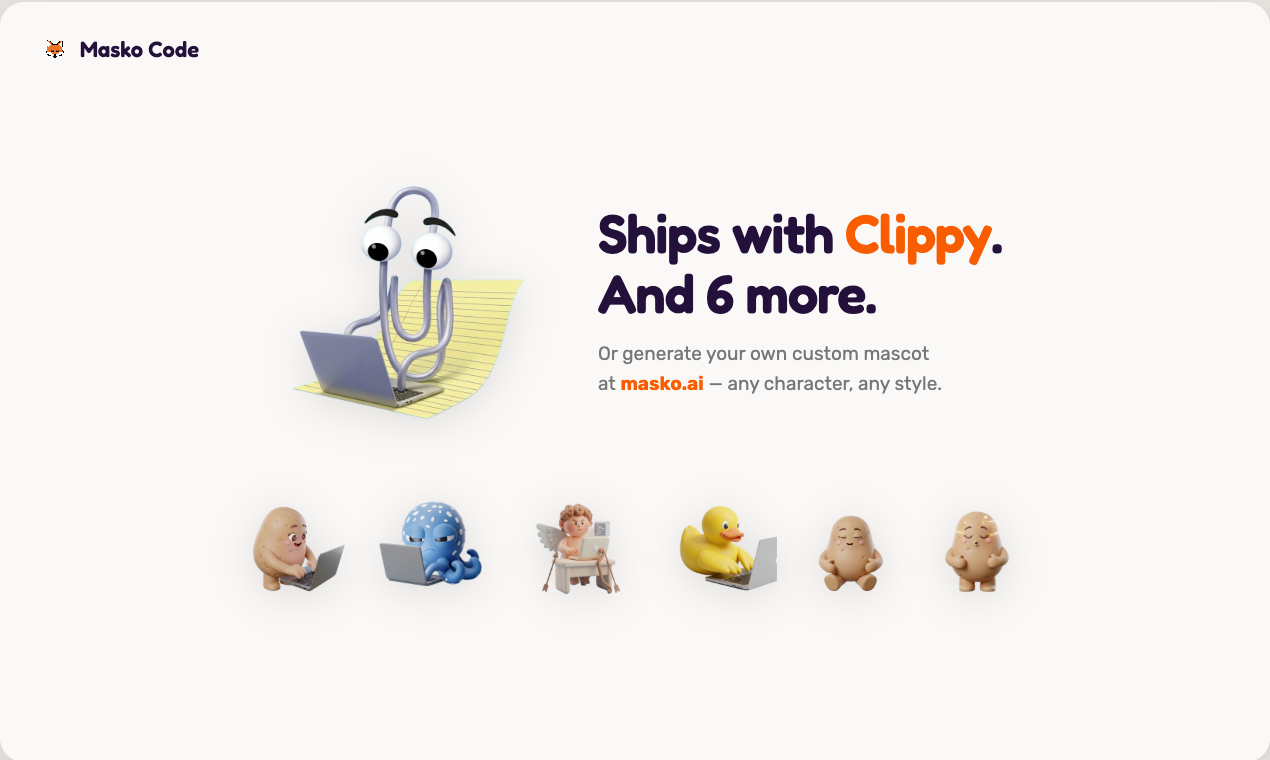
You run Claude Code agents. You alt-tab 50 times a day to approve permissions. You lose your place. You miss prompts. Masko Code puts a mascot on your desktop that watches your agents in real time. Permission needed? Speech bubble. Press ⌘1. Done. Also: ⌘M jumps to the right terminal. Double-tap ⌘ to switch sessions. Tracks everything at a glance. Ships with Clippy and other mascots. Community adds new ones daily. Or generate your own at masko.ai. Free. Open source. MIT. 100% local.
Hey PH! I'm Paulo. I built masko.ai to generate AI mascot animations. Transparent videos you can use anywhere. I loved having my mascot on screen as an overlay while coding. Then I started running multiple Claude Code sessions at the same time. Alt-tabbing between 4 terminals to approve permissions, missing prompts, losing focus. It was killing my flow. So I combined the two. The mascot overlay became a notification system. Then it became a shortcut system. Then it became a full agent supervisor. Now when Claude needs permission, my mascot shows a speech bubble. I press ⌘1 to approve without leaving my editor. ⌘M jumps me to the right terminal. Double-tap ⌘ to switch between sessions. What started as "I want my mascot on screen" turned into the tool I use every single day. Ships with Clippy and other mascots. Community keeps adding new ones. Or generate your own at masko.ai, any character, any style. Free, open source, MIT license. macOS 14+, 100% local. What mascot would you want watching your agents?
8
回复

I’m tired of alt tabbing every time a prompt pops up. Definitely going to give this a try...

2
回复

@zoe_baker2  You're going to love it. Let me know how it goes!

0
回复

Sounds like a great product! Running multiple Claude Code sessions can be very chaotic. This solves the exact thing that breaks the flow most times. Any plans to support any other AI coding agents beyond Claude Code?

2
回复

@simonk123 Thanks Simon! Yes, the architecture is agent-agnostic. Right now it hooks into Claude Code but supporting Codex, Gemini CLI and others is on the roadmap.

0
回复

The permission request bubble is super helpful for staying focused. Love that it's open source and local . Any plans to add support for other tools like Cursor or Copilot ?

1
回复

This solves such a real pain point. When running multiple Claude Code sessions, the context switching is brutal. How does Masko handle situations where two agents need permission approval at the same time? Can you queue them up and approve in sequence? Congrats on shipping this!

1
回复

@borrellr_ Yes, each session is tracked separately. When two agents need permission at the same time, the mascot queues them up and shows a badge with the count. You approve them one by one. Thanks for the nice words!

0
回复

I keep running into this and can't figure out a good way to handle it. Claude shows "thinking" but it's unclear whether it's actually working or stuck in a loop, maybe hitting some architecture issue underneath. Is there any detection for that in Masko? Like, can it tell the difference between "model is processing" and "model is retrying silently and going nowhere"?

1
回复

@slavaakulov today it tracks the agent state through claude code hooks so you can see when Claude is thinking, working, or spawning subagents. There's a full trace of all tool uses in the notification feed. But it can't tell i think the difference between "thinking normally" and "stuck in a silent retry loop." That distinction would need deeper hook support from Claude Code itself.

0
回复

Any future plans for support for non-Mac users?

1
回复

@lienchueh  Yes, Windows support is on the roadmap!

0
回复
That's really cute. It looks like it hooks directly into the Claude executable (?) - do you plan to have community adapters so that people can create their own integrations? I can see people wanting this for more than just coding assistants, e.g. having multiple mascots for their different channels.
1
回复

@hex_miller_bakewell  Yes! It hooks into Claude Code through its native hook system. The mascot runs on a state machine graph so each state (idle, working, attention, thinking) can trigger different animations and actions. The goal is to make everything fully customizable. With masko ai you can generate any character in any style, and the interactions are endless because you control the states. Community adapters for other tools is definitely where this is heading. Love the multiple mascots idea!

0
回复

This is a perfect example of seeing a problem, yours or anyone's, and then developing something around it. You needed something that wasn't offered and you created something and then shared it with the world. That's how it should be for all things. I think this is fun but very helpful which people love.

1
回复

@krystle_berry That's exactly how it happened. Thanks for the kind words, really appreciate it.

0
回复

The speech bubble for permission requests alone would save me a lot of broken focus. Love that it's open source and fully local too. Any plans to support other coding agents beyond Claude Code, like Cursor or Copilot terminals?

1
回复

@ben_gend  Thanks! Yes, Codex support is coming next with help from the community. For Cursor and Copilot it depends on how easy it is to hook into their event systems, but we're looking into it.

0
回复

This is cool! What's the reason behind the name? Congrats on the launch, @paulroussel!

1
回复

@neilverma Thank you. masko -> mascot and code because this is the code part of masko ai

0
回复

I've been using it for 2 weeks now and I love it. makes it so much easier to context switch while having Claude Code running without losing track of your claude code sessions. And the mascots are so cute !

1
回复

@leo_litrico Thank you! Means a lot coming from someone who actually uses it every day. Glad the mascots make your day a bit better too.

0
回复

This is one of those 'why didn't this exist already' tools. The alt-tab tax with Claude Code agents is real and nobody was talking about it. Love that it's fully local with zero telemetry that's the right call for a developer tool. Two things I'm curious about: any plans to support watching multiple agent sessions at once? And is there a way to customize what triggers the speech bubble (like only for permission requests vs. all pauses)? Also the fox is adorable, not gonna lie.

1
回复

@samet_sezer To answer both: yes, it already tracks multiple sessions simultaneously. Double-tap ⌘ to see all active agents and switch between them.

The speech bubble currently triggers on permission requests and questions, but customizing trigger types is a great idea. And thanks, the fox appreciates it.

0
回复

Love that this started as a fun mascot idea and evolved into an actual productivity tool. The ⌘1 to approve permissions without leaving the editor is the real feature here. Any plans to support other AI coding agents beyond Claude Code?

1
回复

@mehmet_kerem_mutlu Yes codex will come very soon

0
回复

Haha, this is genius! The alt-tab fatigue with Claude Code is so real. Having a mascot that pops up a speech bubble when permissions are needed is such a fun and practical solution. The keyboard shortcuts (Cmd+1 to approve, Cmd+M to jump to terminal) are exactly what power users need. The fact that it ships with Clippy made me smile. Great work making something open source and 100% local!

1
回复

@sai_tharun_kakirala Haha glad Clippy made you smile! That the point, something useful that also makes you happy. Thanks you !

0
回复

It seems really interesting, it remind me of the mascot of microsoft word, so nostalgic. Will it be available for other AI tools? Thanks

1
回复

@paula_roiges Whiwh AI tools you have in mind? We will support codex for ex.

0
回复

I've tried a ton of SaaS products, and this one definitely ranks among the best for user experience

1
回复

@brent_kom3344  That means a lot, thank you! The whole point was to make it feel invisible until you actually need it

0
回复

This is genuinely clever, @paulroussel. The ⌘1 to approve permissions without leaving your editor.... that one detail alone saves so much broken focus.

And the interrupt detection (knowing when you stopped Claude mid-task), most tools ignore that completely. So that's the kind of thing only someone who actually runs agents all day would think to build.

Free + MIT + 100% local is the right move too. Congrats on the launch, man.

1
回复

@taimur_haider1 Thanks Taimur! This is that, the interrupt detection came from running agents all day and realizing I needed to know when something stopped without checking every tab. Appreciate the kind words.

0
回复
Excellent solution and nice little companion for your Claude setup !
1
回复

@ricoboost Thanks Rico! Which mascot would you want me to add next?

0
回复

This is the kind of tool you don't know you need until you try it — then you can't go back.

We're a team of 3 building Vidtreo (video recording API, also live on PH right now) and Claude Code is essentially our fourth team member. The problem Masko solves is painfully real: I was alt-tabbing 40+ times a day to approve permissions, missing prompts while testing in the browser, losing context constantly.

Now there's a little character on my screen that bubbles up exactly when Claude needs me. ⌘1 to approve, back to what I was doing. It sounds silly but the focus savings are massive when you're orchestrating multiple agents across backend, SDK, and dashboard repos simultaneously.

The mascot animations reacting to session state is a brilliant touch — you can feel whether Claude is working or waiting without looking at the terminal. That's UX insight you don't get from a progress bar.

Shipped with Clippy energy, built with real engineering. Love this.

0
回复

Great product! The session management shortcuts are a nice bonus, but the real value is keeping you in flow state while agents run in parallel.

0
回复

THIS is DELIGHTFUL! Thanks for the awesome project, is been a while since I've been hooked into something fun. Submitted a PR so folks can use it with GitHub CLI as well.

0
回复
#7
Refgrow 2.0
Grow your revenue with referrals
160
一句话介绍:Refgrow 2.0是一款为SaaS创始人打造的联盟营销与推荐平台,通过嵌入式组件和自动化追踪,在无需企业级工具或专职团队的场景下,快速启动和管理推荐计划,解决获客与增长难题。
Marketing SaaS Affiliate marketing
联盟营销 推荐计划 SaaS增长 自动化工具 创作者招募 支付集成 B2B SaaS 营销自动化 绩效追踪 中小企业
用户评论摘要:用户普遍认可产品价值,尤其对“AI Recruiter”功能感到兴奋,认为其是差异化优势。主要问题集中于:AI如何评估创作者相关性及转化效果;与Impact.com等巨头的竞争优势;以及产品在B2B场景的适用性。创始人积极回复,氛围良好。
AI 锐评

Refgrow 2.0的野心,在于将原本笨重、需投入大量运营人力的联盟营销体系,轻量化、自动化、产品化。其核心价值并非仅是“$29/月”的价格优势,而是试图重构SaaS增长的工作流。

“AI Recruiter”是真正的战略棋子。它直指联盟计划最核心的痛点——冷启动与优质推广者招募。传统方式依赖运营人员的“人肉搜索”或高昂的中介平台,效率低下。Refgrow将此过程自动化,从被动等待转为主动精准猎取,这不仅是功能升级,更是模式创新。然而,其真正的考验在于算法:所谓的“相关性评分”能否精准识别出不仅有影响力、且有高转化潜力的创作者?自动生成的个性化消息,其打开率与回复率能否经得起市场AB测试?这决定了该功能是“炫技”还是“核心引擎”。

“推荐交换市场”的构想更具网络效应想象力,试图将每个SaaS的推广者网络连接成更大的生态。但该模式的成败取决于双边市场的启动和信任机制的建立,初期可能面临流动性不足的挑战。

整体而言,Refgrow 2.0展现出清晰的思路:不做大而全的“营销套件”,而是聚焦于“推荐增长”这一单点,通过AI与自动化降低执行门槛。其真正的竞争对手并非Impact等全功能平台,而是广大SaaS创始人“手动操作”或“内部开发”的惯性。产品能否成功,取决于其自动化解决方案的可靠性与深度,能否真正将创始人从复杂的运营细节中解放出来,使其能专注于更核心的战略与产品。目前看,方向正确,但核心AI功能的实际效能,将是决定其能否从“有趣工具”跃升为“增长基础设施”的关键。

查看原始信息
Refgrow 2.0
The easiest way to launch affiliate & referral programs in minutes.
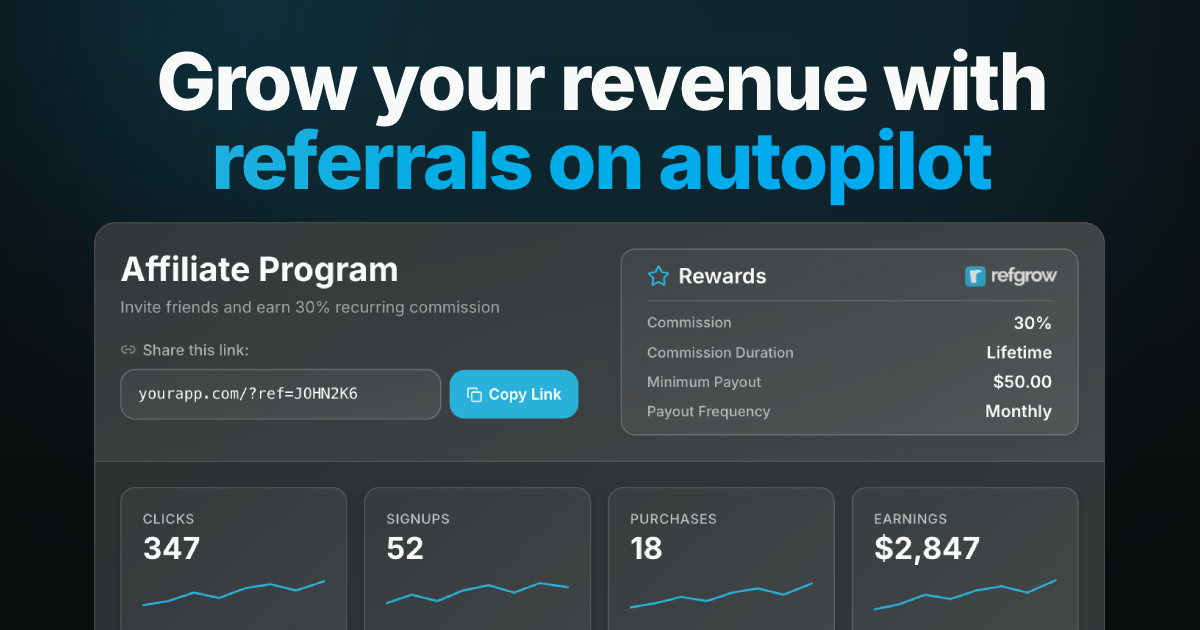
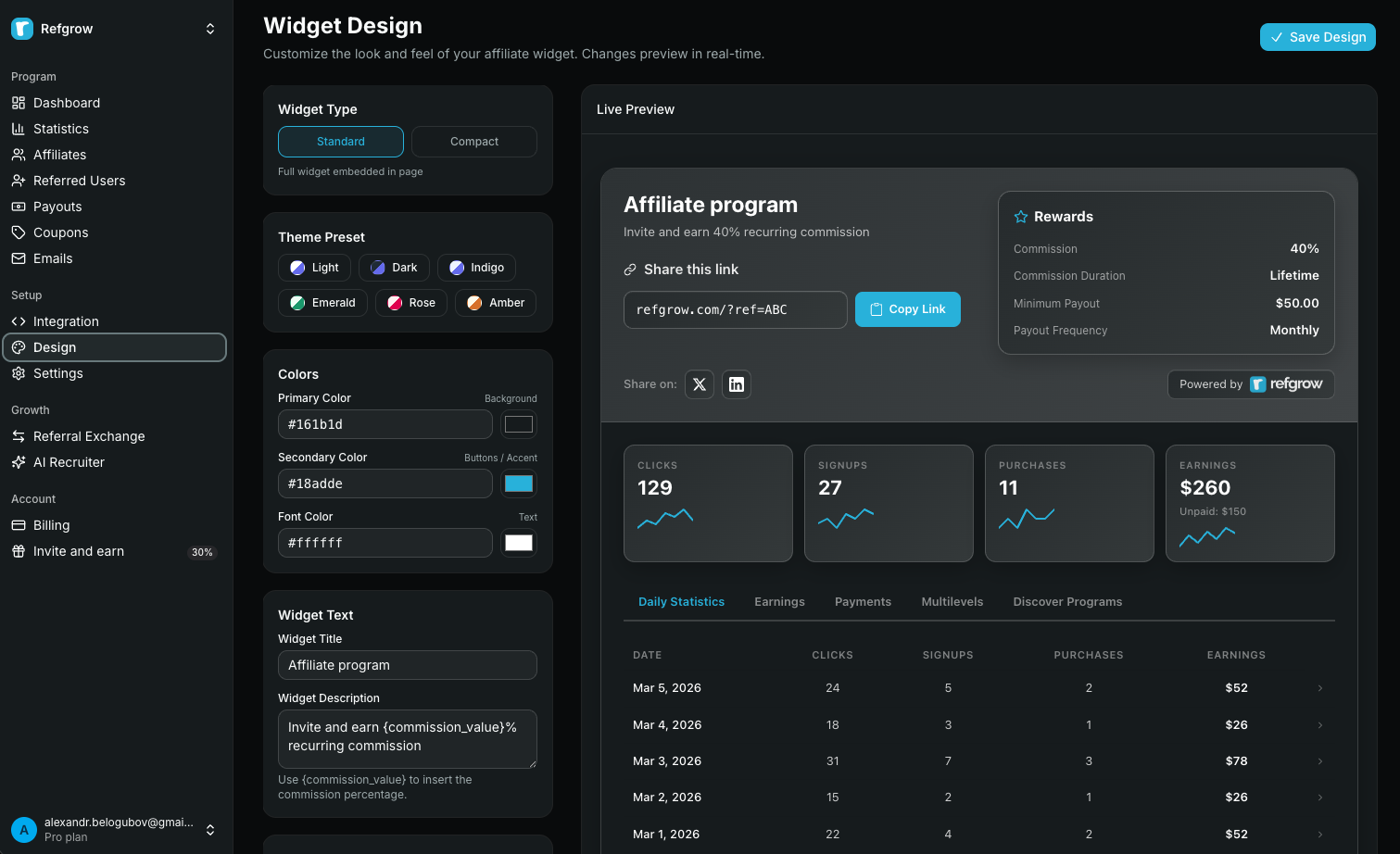
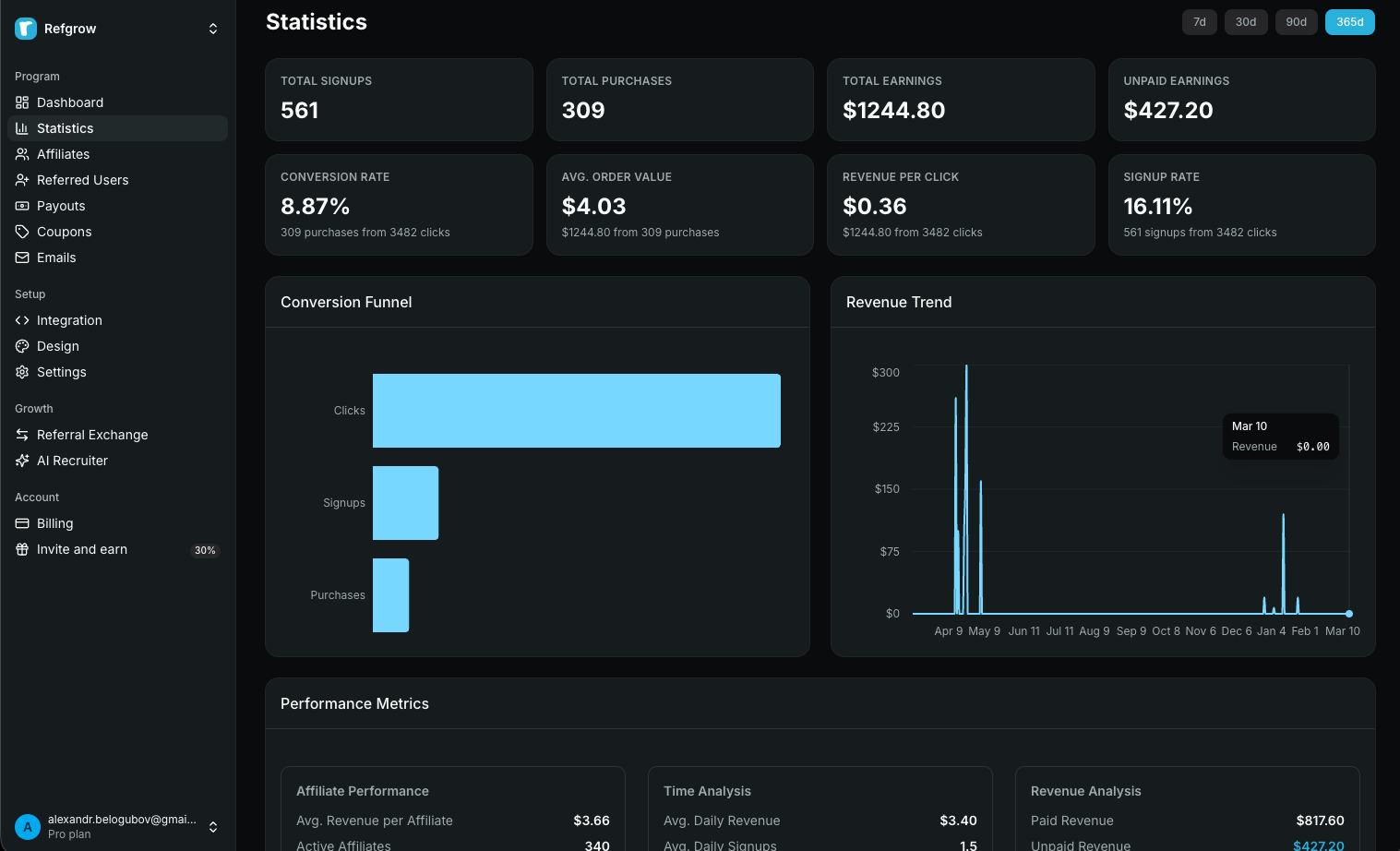
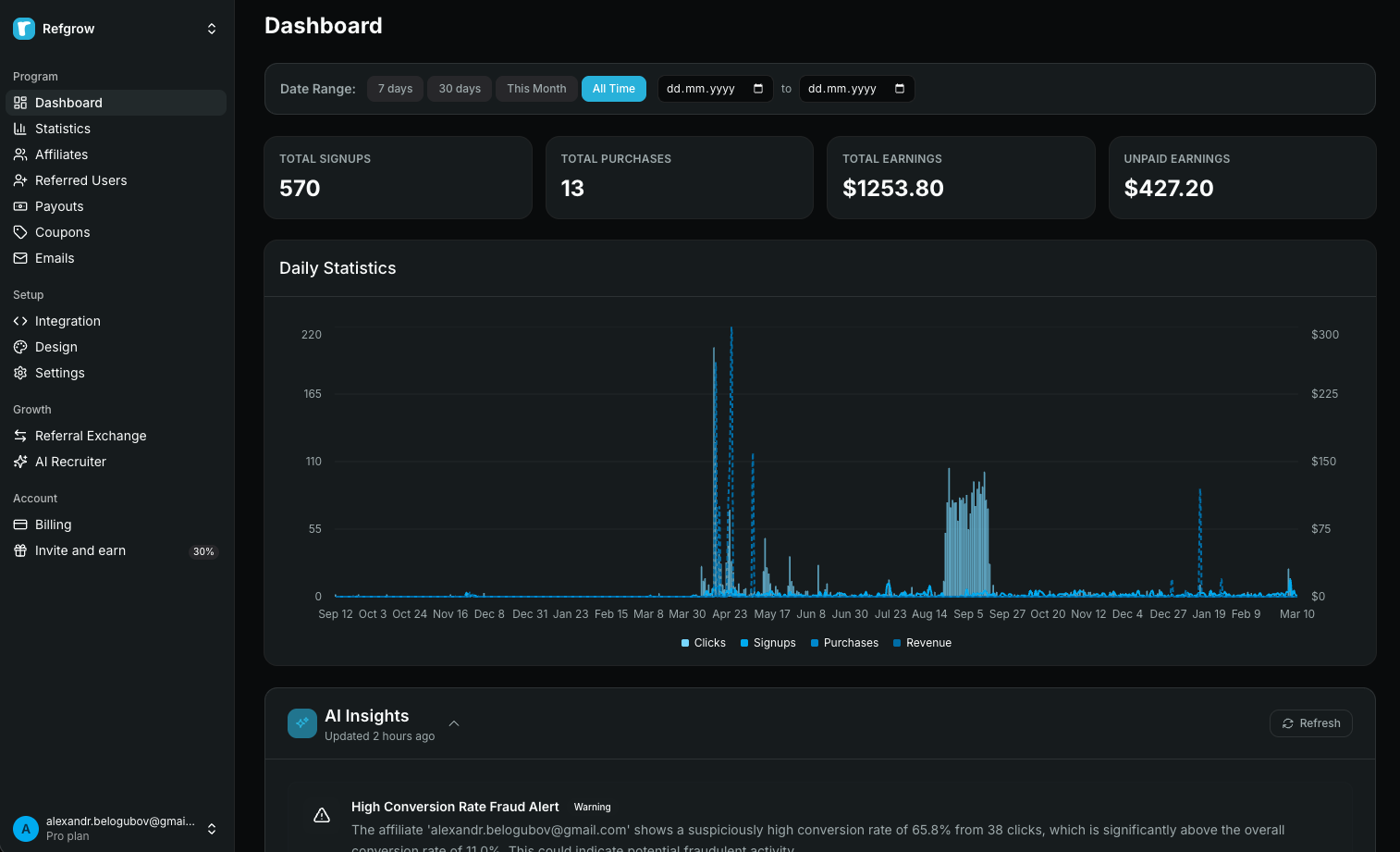
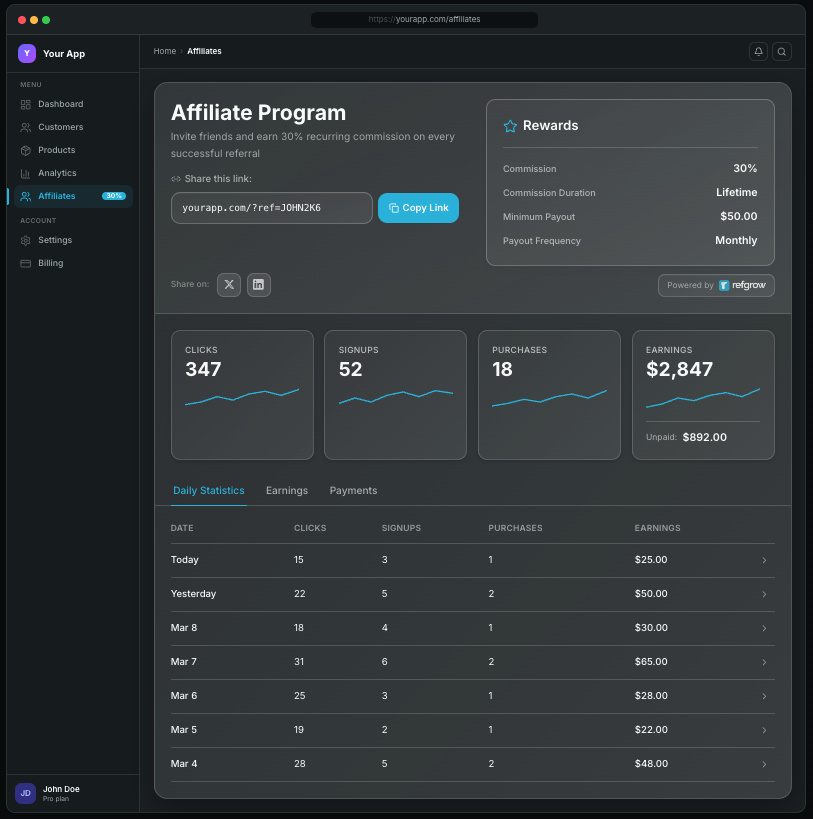
Hey Product Hunt! 👋 I'm Alex, and I've been building Refgrow for the past year to solve a problem I kept running into: setting up an affiliate program for a SaaS shouldn't require enterprise-level tools or a dedicated team. What is Refgrow? It's a referral & affiliate platform built specifically for SaaS founders. You embed a widget into your product, affiliates sign up, get their referral links and coupons, and start promoting — all tracked automatically. What's new in 2.0: 🔍 AI Recruiter — This one I'm really excited about. Instead of waiting for affiliates to find you, AI searches Twitter/X, Reddit, and YouTube for real content creators in your niche. It gives you their profile, relevance score, and a personalized outreach message you can copy and DM them directly. 🔄 Referral Exchange — A marketplace where SaaS programs can exchange affiliates with each other using a simple credit system. You send an affiliate to another program → earn a credit → use it to receive one. ⚡ 5 payment integrations — Stripe, LemonSqueezy, Paddle, Polar, and Dodo Payments. Webhooks are set up in minutes, commissions are tracked automatically. 📦 Full REST API — For those who want to build custom integrations or sync affiliate data with their own systems. The whole thing starts at $29/mo with a free tier to try it out (no credit card required). I'd love to hear your feedback — what features would make this more useful for your product? Happy to answer any questions in the comments.
7
回复

@alexander_belogubov Congrats on the launch! 🚀

Affiliate and referral programs can be powerful for SaaS growth, but setting them up often feels more complicated than it should be, especially for smaller teams.

The AI Recruiter idea is interesting since finding the right creators or niche promoters is usually the hardest part.

Curious — how does Refgrow determine the relevance score when identifying potential affiliates on platforms like X, Reddit, or YouTube?

0
回复

@alexander_belogubov What do you see as your competitive advantage compared e.g. to Impact.com?

2
回复

@alexander_belogubov How does it score relevance (like content overlap, engagement metrics), and have you seen higher conversion rates from those auto-generated DMs vs manual outreach?

0
回复

Finally a product without AI. Supported

1
回复

@malithmcrdev Thanks :)

0
回复

I love this! as a person who is personally building a web application any way you can grow is amazing so having a one stop shop would be so helpful for everyone honestly!

1
回复

@alexander_belogubov, the AI Recruiter is the most interesting thing on this page and somehow it's not in the hero section. Every tool on this page competes on price. AI Recruiter competes on a different planet.

Yes, you're leading with cheaper than rewardful when you have something nobody else has built. Congrats on the launch.

1
回复

The loading animations are so well done that waiting doesn’t even bother me

1
回复

super great product (i am a happy user) and great founder!

1
回复

@sacha_dumay Thank you!

0
回复

who design this is legend

1
回复

@sayyidalijufri I think you just logged in at the wrong time when I was deploying the update :)

0
回复

Seems a good product, i'll try to use it!

0
回复

I like the positioning, I will take a stab at it! Congrats on the launch!

0
回复

Is this predominantly for B2C or could there be ways for B2B SaaS companies to take advantage of this?

0
回复
#8
XHawk 0.99
Transform Coding Sessions & Code into a System of Context
159
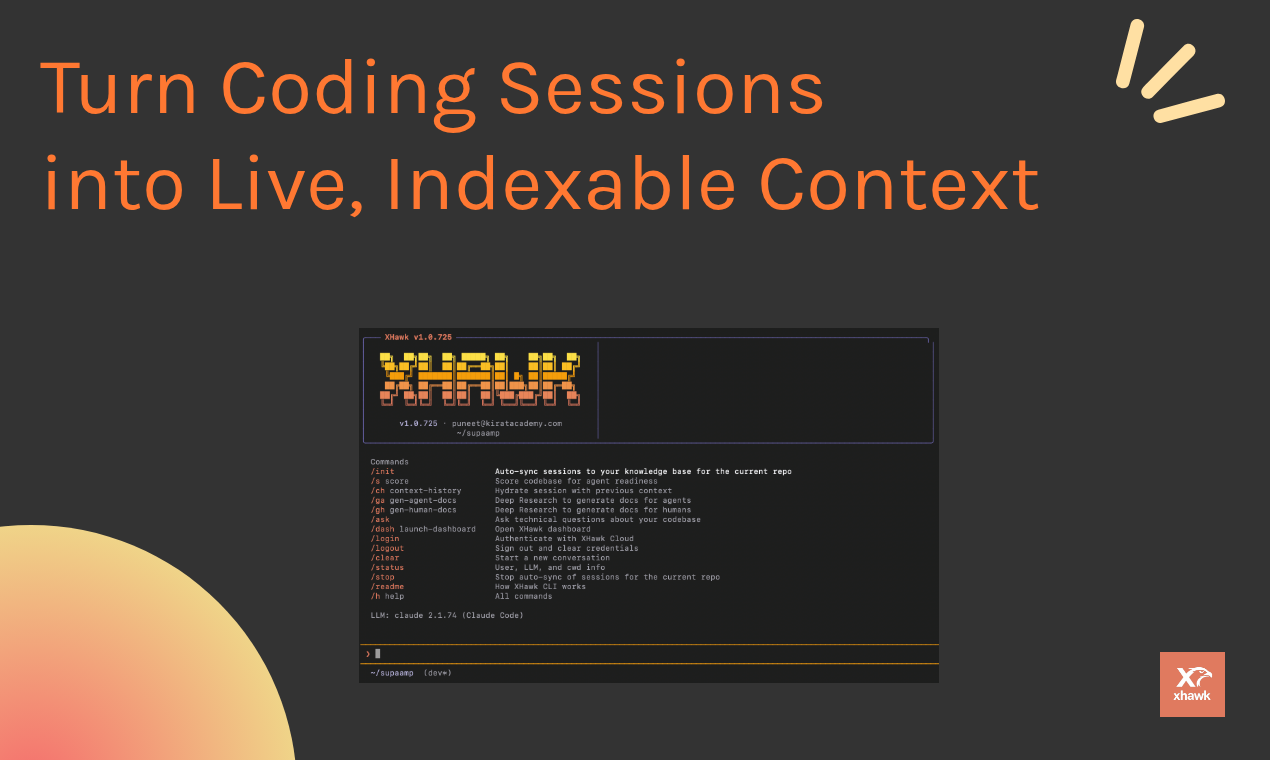
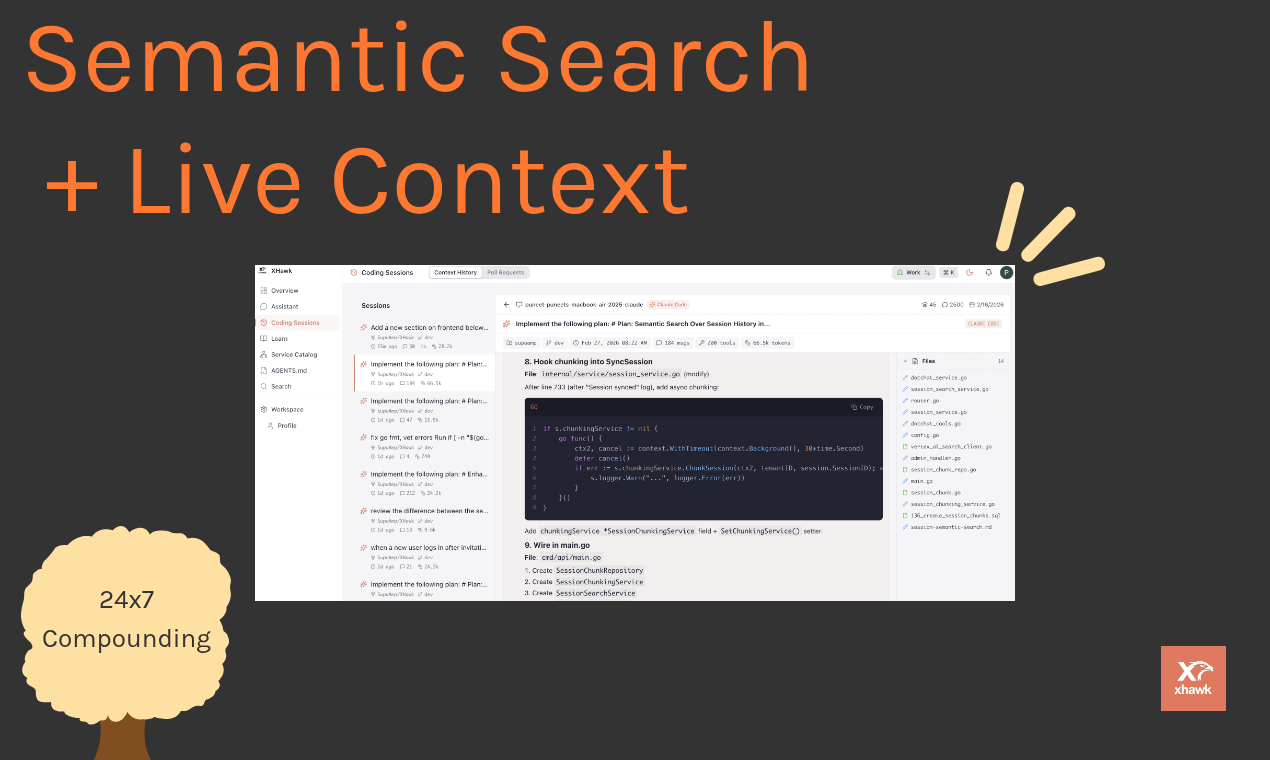
一句话介绍:XHawk 是一款AI原生知识索引工具,通过自动捕获每次git push时的AI编码会话,并将其与代码提交映射,为开发团队构建一个可搜索的、记录编码意图与推理过程的实时知识库,解决了AI辅助编程中上下文丢失、知识难以传承的核心痛点。
Software Engineering Developer Tools Artificial Intelligence
AI编程辅助 开发知识管理 上下文索引 代码知识库 AI会话记录 自动化文档 团队协作 开发流程优化 AI原生开发 软件工程
用户评论摘要:用户普遍认可产品解决“AI会话上下文丢失”痛点的价值,赞赏其零配置、快速上线的体验。主要关注点包括:实际节省token的效能、知识库随项目演化的处理能力、学习路径的自定义程度,以及是否有针对Product Hunt用户的优惠。
AI 锐评

XHawk 瞄准的并非表面上的“文档自动化”,而是AI原生开发范式下一个更深层的断裂带:智能体的“失忆症”。当前,无论Claude还是GPT,每次会话都是一次清零重启,导致大量的架构决策、尝试路径和负面经验(即“不该做什么”)无法沉淀,形成巨大的认知债务。XHawk的野心在于成为代码库的“长期记忆体”,其真正价值不在于存储会话日志,而在于构建一个与代码版本同步演化的“意图图谱”。

产品将AI会话、git提交与代码AST(抽象语法树)进行关联索引,是颇具巧思的一步。这试图将非结构化的、富含逻辑推理的对话,锚定到结构化的代码变更上,从而让“为什么这样写”变得可追溯。其推出的“AGENTS.md”标准,更是意图将散落的最佳实践固化为AI可直接消费的“提示词合约”,这或许能催生一种新的、人机协同的代码规范传承方式。

然而,其面临的挑战同样尖锐。首先是“信息过载”风险。随着时间推移,捕获的会话数据可能急剧膨胀,如何智能地提炼、摘要、甚至遗忘,而非简单堆积,将是关键。其次,其价值高度依赖于团队深度使用AI编码,对于传统开发模式或AI使用频度低的团队,其效用大打折扣。最后,它本质上在构建一个专有知识图谱,存在一定的平台锁定风险,其“系统上下文”的便携性仍有待验证。

总体而言,XHawk是一次面向未来的大胆尝试。它试图解决的,是AI深度融入开发工作流后必然出现的知识管理真空。成败关键在于其索引的“智能度”能否超越“检索”达到“理解”,从而真正让历史会话成为滋养未来智能体的养料,而非又一个需要被管理的杂乱数据仓库。

查看原始信息
XHawk 0.99
Turn your session history into a knowledge base. XHawk CLI automatically captures AI sessions during every git push, mapping the agent's reasoning directly to your commits. Don't just ship code. Capture the intent, audit the logic, and build a searchable, collaborative record of how your software actually gets built with coding agents. Our AI decodes your entire codebase, generating dynamic learning paths and docs for agents and humans.

Hey Product Hunters! 👋

I’m Puneet Singh, Co-founder of XHawk.

Today, we’re finally dropping something we’ve been obsessed with: System of Context. The AI-native knowledge index that ensures you and your coding agents never have to "start from zero" ever again. 🚀

Engineering knowledge shouldn't live in scattered coding sessions or outdated READMEs. We built XHawk to turn your code and AI interactions into a live, indexable source of truth. By automatically syncing every AI coding session and git commit into a real-time knowledge base, we’ve created the shared memory your engineering org has been missing.

Why "System of Context" is a must-have for AI-native teams?

Zero-Config, 60-Second Onboarding We hate bloat as much as you do. Run xh init and you’re live in less than a minute. Your sessions sync on every git commit, get indexed instantly, and are served via our MCP server. Getting full context into a fresh Claude session takes less than 60 seconds. Period.

🧠 AI-Native Memory Every session with Claude, Codex, or Gemini becomes a permanent asset of your engineering team. Now you don’t just capture the final code; you capture the reasoning, prompts, and intent behind it. It compounds every day.

🧩 Living Knowledge Graph Stop hunting for the "why" behind a change. Watch your code, docs, and decisions auto-link into a unified, searchable index that evolves every time you git push.

🛡️ Kill the Hallucinations AIs fail when they lack specific knowledge. XHawk feeds your agents "negative knowledge" (what not to do) and cold, hard facts from your repo’s real index to stop hallucinations before they start guessing. Think of it as "Context7" for your internal libraries and source code.

🚀 Documentation that actually works Stop writing docs that expire in an hour. XHawk builds context directly from the work itself—PRs, agent sessions, and code ASTs—keeping everything current in real-time.

🛤️ Beautiful Learning Paths No more manual onboarding. We perform deep research on your codebase to automatically generate structured learning paths. It maps out how your systems interact, so any developer (human or AI) can get up to speed in minutes, not days.

📄 The "AGENTS.md" Standard Stop re-teaching your stack. XHawk generates and maintains AGENTS.md and CLAUDE.md files for every relevant folder in your source code —living manifestos of your project’s patterns, "negative knowledge" (what NOT to do), and architectural guardrails. It’s the ultimate cheat sheet that makes every LLM session hit the ground running.

Stop re-explaining your codebase to your LLM 🛑

Since our private beta, we’ve seen teams reclaim massive amounts of dev time and millions of tokens by letting XHawk handle the "lore" of their codebase. We’re here to help you move from fragmented silos to high-velocity, AI-augmented workflows. Our mission is simple: make your SDLC agents stateful. No more forcing your agents to grep through source code and reconstruct your foundational architecture from scratch every single time they start a task.

I’m hanging out in the comments all day! I’d love to hear how you’re currently managing context for your coding, review, planning, testing and SRE agents.

We are so grateful to the Product Hunt community for your support. We’ll be here all day to answer your questions and hear your feedback!

Would you like us to add any specific features?

13
回复

@puneet_singh25 super excited for this. Definitely relate to the problem. Will try this out ✌️

0
回复

Hey PH fam 👋

Big congrats to @puneet_singh25and the XHawk team on the launch!

This one resonates with me personally. I've watched Puneet obsess over this problem, and the more I dug in, the more I realized how real the pain is.

Here's something most dev teams haven't fully reckoned with:

Every time a new coding session starts, your AI forgets everything.

The reasoning behind that architectural decision. The three approaches you tried before landing on the right one. The "don't ever do this" lessons burned into your codebase. All of it vanishes. And someone, somewhere, has to reconstruct it from scratch. Every. Single. Time.

That's the problem XHawk is actually solving. Not just docs. Not just search. The intent behind the commits.

A context layer independent of any single LLM keeps your engineering knowledge portable and future-proof.

When the reasoning lives alongside the code permanently, something shifts. Your codebase stops being a mystery to new teammates and agents. Your best thinking compounds instead of evaporating.

That's a different kind of product. And I think it's the right one for where AI-native development is heading.

Go show Puneet some love and drop your questions below ⬇️

6
回复

Just loved the concept! Btw have you seen any surprising use cases emerge during the private beta that you didn’t initially design for??

4
回复

@lak7 People love to reuse context from old sessions (even weeks old) to start new session with claude code. That was a bit surprising. Thanks for your support!

1
回复

Tired of giving context to claude code every time I start something new. The onboarding for XHawk seems quite simple and straightforward. Definitely gonna give this a try! All the best for the launch, Puneet and team.

3
回复

@harish_uthayakumar Thanks for your support! It's a full index with git commit mappings.

0
回复

Congratulations

1
回复

Super interesting approach 👏 One challenge with AI-generated code is losing the build context. This could make debugging and reviewing much easier 🔧

1
回复

Really interesting idea 👀 One of the biggest problems with coding agents is losing the context behind how something was built. Capturing sessions alongside commits feels like a missing piece 🧠 Curious to try this with our repos 🚀

1
回复

@razia_khan1  Thanks and let us know if you like the generated docs!

0
回复

Hey Puneet, great concept and congratulations on the launch. It’s a much-needed tool for projects with lots of devs and complicated details. Do you have any features lined up to optimize token usage when connecting to MCPs, since over time the context might get bloated?

1
回复

@lokesh_motwani1 Our MCP server can be used to query for compact guidelines. We think it will save companies 20% tokens easily. Thanks for your feedback!

0
回复

I like that sessions sync on their own after each commit. You end up with a record of how features were actually built, not just the finished code.

1
回复

@samesh_lakhotia  Yes, on git commit we sync the exact relevant script of the session.

0
回复

Really like that I can see all my claude chats in one place and create a learning path from my repos

1
回复

@yashgarg2107 Thanks Yash!

0
回复

Any discounts for producthunt upvoters to add another account? :)

0
回复

This is really impressive!I love the idea of turning coding sessions into a searchable knowledge base. Capturing the reasoning behind commits and mapping AI sessions to actual code seems like a game-changer for collaboration and onboarding.

Curious how customizable is the learning path generation? Can teams adapt it to their own workflows or coding standards?

0
回复

Congrats on the launch! The idea of capturing the reasoning behind code, not just the code itself, is something engineering teams have needed for a long time. Most knowledge walks out the door when a developer leaves or a context window resets.

The AGENTS.md standard is an interesting move. Would be curious to know how it handles projects where the architecture has evolved a lot over time, and the early decisions are basically archaeology at this point.

0
回复

Congrats on the launch, punit!

0
回复

@akhilbvs Thanks!

0
回复

Used it and loved it.

0
回复

@raju_koushik Thanks for your support!

0
回复

Solid idea. Do you worry about indexing solutions that just... happened to work but might not be optimal? Could that mislead future agents?

0
回复

@4vinn We are 100% focussed on making sure the indexes stay fresh. Remember sending full files up to LLMs every session is a bad idea in the long term.

1
回复

Nice work 🚀 Capturing the session context with commits feels like something the ecosystem really needs. Excited to see how this evolves 👀

0
回复

@yugal_joshi Thanks for your support!

0
回复

Used it and loved it!

0
回复

@aaditya_menon Thanks for your support!

0
回复
#9
Knock
Knock on your MacBook to control your Mac
158
一句话介绍:一款通过敲击MacBook机身或桌面来触发自定义快捷操作的应用,利用内置加速度计,在双手无需接触键盘或触控板的场景下,实现快速控制,旨在维持用户的工作流和专注度。
Mac Productivity Menu Bar Apps
生产力工具 手势控制 硬件创新 macOS应用 快捷操作 人机交互 苹果生态 专注模式 自动化 效率软件
用户评论摘要:用户普遍赞赏创意,核心关切在于如何防止误触发(如打字、环境振动、宠物干扰)。开发者回应通过识别短促振动尖峰、打字抑制窗口和灵敏度调节来解决。用户建议包括支持更多自定义手势模式、专注模式特定动作,并好奇其与Raycast等工具的核心差异。
AI 锐评

Knock的本质,并非发明了新的传感器,而是对苹果闲置硬件功能的一次“场景化翻译”。它将MacBook中沉默的加速度计,转化为一种“环境手势”的输入层。其真正价值不在于敲击本身,而在于试图创造一种脱离传统输入设备(键盘/鼠标/触控板)的、低认知负荷的交互维度,尤其是在“手在键盘外”的瞬时操作场景(如播放/暂停、切换桌面)。

然而,其面临的挑战与价值同样尖锐。首先,可靠性是生命线。评论中密集的误触发担忧,直指其核心矛盾:如何在高灵敏度(确保响应)与高特异性(拒绝干扰)间取得普适平衡。开发者的解决方案(识别波形、打字抑制)在逻辑上成立,但真实世界的振动噪声(咖啡馆、猫)是无限测试集,这对其算法鲁棒性构成持续考验。其次,其功能目前可被键盘快捷键或强大启动器(如Raycast)替代,其独特优势仅体现在“脱离键盘”的特定瞬间,这使其用户画像非常垂直——追求极致流状态、厌恶切换上下文的高阶用户。

因此,Knock目前更像一个优雅的“效率玩具”而非“效率刚需”。它的前景取决于两点:一是能否将可靠性打磨到形成“肌肉记忆”的无感程度;二是能否构建独特的、难以被传统方式替代的快捷场景生态(如与专注模式、物理环境深度联动)。它打开了一扇窗,证明了硬件潜力的另一种可能,但要从惊艳的Demo成长为不可或缺的工具,还有很长的路要走。

查看原始信息
Knock
Knock turns taps on your MacBook into instant actions. Switch tabs, change desktops, play/pause music, open apps, run custom scripts, or take screenshots - all with a simple knock. Tap the desk beside your laptop or knock on the MacBook’s chassis (not the trackpad). Knock uses the built-in accelerometer in Apple Silicon MacBooks to trigger customizable shortcuts.
Hey everyone! I’m Will, the creator of Knock. The idea started pretty simply. I noticed Apple Silicon MacBooks have a built-in accelerometer, but nothing really uses it. I started experimenting with it and realized you could actually detect taps or knocks on the laptop. That turned into a simple idea: what if you could control your Mac just by knocking on it? Knock lets you trigger actions like switching tabs, changing desktops, play/pause, launching apps, running custom scripts, or taking screenshots - just by tapping the desk beside your MacBook or knocking on the chassis. One of the trickiest parts was making the detection reliable enough to feel natural. I ended up building a live “Knock Test” tool inside the app so users can tune sensitivity and see exactly what the sensor is picking up. This is the first public release, so I’d love feedback from the community - especially on gestures, actions, or ideas for new features. Thanks for checking it out 🙏
7
回复

@will_gee1 Wow, huge congrats on the launch! This is definitely a game-changer

0
回复

@will_gee1 Will, this feels like magic. As a builder focused on creating distraction-free environments for writers, I'm a huge fan of 'invisible' interfaces. Knocking on the desk to trigger an action is the ultimate way to maintain flow without searching for a shortcut. Does Knock allow for 'Focus Mode' specific actions, like knocking to turn off all notifications?

0
回复

@will_gee1 It's sounds really great... I'll defiantly wants to try . Hope it will work as I read here ...

best of luck for your launch .

0
回复

This is pretty fun! How do you prevent accidental knocks/bumps?

0
回复

@gabe Thanks Gabe, really appreciate that.

Distinguishing intentional knocks from general vibration is actually the main challenge. Knock looks for short, sharp vibration spikes rather than longer or continuous movement, which helps separate a deliberate knock from things like background desk vibration.

It also temporarily ignores knock detection while you're typing. There’s a 500ms suppression window after the last keystroke so heavy typing doesn’t accidentally trigger gestures.

There’s also a live sensitivity slider and a Knock Test tool so users can tune it for their desk setup and see exactly what the accelerometer is picking up.

Right now Knock supports single, double and triple gestures, but I’m definitely exploring more custom patterns and timing options for future updates.

0
回复

Super creative use of the built-in accelerometer. How do you handle distinguishing between intentional knocks and vibrations from nearby objects, like someone else working at the same desk? Also curious if you plan to support custom gesture patterns beyond single, double, and triple knocks. Looks great!

0
回复

@mcarmonas Thanks!

The tricky part was making sure it reacts to intentional taps but ignores everything else. Knock focuses on short vibration spikes that match the timing of a knock rather than general motion, which helps filter out background movement like someone shifting the desk.

It also pauses detection while you’re typing. There’s a small 500ms suppression window after the last keystroke so heavy typing doesn’t accidentally trigger gestures.

Users can also tune the sensitivity and watch the live waveform in Knock Test to see exactly what the accelerometer is picking up on their setup.

For now it supports single, double and triple knocks, but expanding the gesture system and timing options is definitely something I’m interested in exploring in future updates.

0
回复

@will_gee1 This is one of those ideas that sounds like a gimmick until you actually think about the use cases. Tapping to play/pause while your hands are off the keyboard, or switching desktops without reaching for the trackpad mid-flow - that could genuinely become muscle memory fast.

The fact that you built a live sensitivity tuner shows you've thought about the real problem here, which isn't detecting a knock - it's not detecting everything else. How does it handle false positives in noisy environments? Like if I'm at a coffee shop and someone bumps the table, or if I'm typing aggressively - does the accelerometer distinguish between a deliberate knock pattern and ambient vibration?

Also curious whether you've considered double-knock or triple-knock as separate triggers. That would open up a lot more actions without overlapping.

Really creative use of hardware that's just sitting there unused. Following this one.

0
回复

@diegodau Thanks Diego, really appreciate the thoughtful comment. You’re exactly right that the hard part isn’t detecting a knock, it’s filtering everything else. Knock looks for short vibration spikes that match the timing of a tap rather than general motion, which helps separate a deliberate knock from background desk movement.

It also temporarily pauses detection while you’re typing. There’s a 500ms suppression window after the last keystroke so aggressive typing won’t accidentally trigger gestures.

Sensitivity can also be tuned depending on the desk setup, and the Knock Test view lets you see the accelerometer waveform in real time so users can dial it in.

And yes, single, double and triple knocks are all separate triggers right now, so you can map different actions to each. I’m definitely interested in expanding the gesture system further as the app evolves.

Appreciate you following along!

0
回复

This is actually really interesting! I didn't know that MacBooks could detect knocks! Other than the physical interaction aspect for Knock, are there features that Knock offers that others (like Raycast) doesn't?

0
回复

@lienchueh Great question! The main difference is that Knock focuses on physical interaction with your Mac. Instead of using the keyboard or opening a launcher like Raycast, you can trigger actions just by tapping your MacBook. It’s meant to be a quick, hands-free layer on top of macOS for things like muting audio, pausing music, or triggering actions while you’re away from the keyboard.

0
回复

Knock on your MacBook to control your Mac? My cat already does this—except it’s more like “paw aggressively at the hinge until something happens.” If this can distinguish between intentional knocks and feline percussion, you’ve solved the real edge case.

0
回复

@lliora Haha that might actually be the toughest edge case to solve.

Knock tries to detect very short, sharp tap impulses rather than general movement, so in theory it should ignore most “feline percussion”… but if your cat learns the gestures before you do, I can’t take responsibility for what actions it triggers!

1
回复
What an original idea! how sensitive is the detection? im curious if it picks up accidental bumps or if you had to tune a threshold to avoid false triggers.
0
回复

@krisba95 Thanks! The detection sensitivity is adjustable with a slider so users can tune it depending on their setup (desk material, laptop position, etc.).

The detector also looks for very short impulse spikes rather than general vibration, and gestures are temporarily suppressed while typing to avoid triggers from keyboard vibration if sensitivity is set high.

I also added a Knock Test tool so people can see how their specific Mac reacts before using it.

0
回复

after using the cheat code came across this love the product

0
回复

@sammy_xf Appreciate it! Glad you found it!

0
回复

@will_gee1 This innovation looks fun as hell. Can you reveal more about the technical part of Knock? How does it work? How did you make this possible? Can the mac get damaged in the long-term by trying to use it in a non-intended way? (this last one is really silly, but I wanna know lol)

0
回复

@dingleberryjones Thanks! Modern MacBooks have a built-in accelerometer, which is essentially a motion sensor that can detect small changes in movement and vibration. Knock reads that motion data and looks for very short impulse spikes that match the pattern of a tap on the laptop chassis or the desk it's sitting on.

Those spikes are then interpreted as gestures (single, double, or triple knocks), which trigger whatever action the user has assigned.

A big part of building it was filtering the signal properly so it ignores normal movement or keyboard vibration. There’s a sensitivity slider so people can tune it for their setup, and gestures are also temporarily suppressed while typing to prevent false triggers.

Knock isn’t doing anything unusual to the hardware. It’s just reading motion data from the sensor, similar to how other apps read system sensors.

0
回复
#10
Faces
Interactive presentations that use the full power of the web
132
一句话介绍:Faces是一款将幻灯片转变为可交互软件模块的演示工具,通过AI辅助创建包含动态图表、实时计算器等元素的演示文稿,解决了传统静态PPT在投资路演、产品提案等场景中缺乏互动性与表现力的痛点。
Productivity Marketing Artificial Intelligence
交互式演示工具 AI幻灯片 动态演示 创业路演 软件化幻灯片 网页技术演示 实时数据可视化 移动端适配 提案工具 数字作品集
用户评论摘要:用户普遍认可“幻灯片即软件”的理念,认为其是演示工具的范式转变。有效评论集中于:询问具体应用场景(如财务图表、培训)、关心跨设备兼容性与性能、对比Gamma/Pitch等竞品,并建议明确核心差异化优势。
AI 锐评

Faces所标榜的“幻灯片即软件”并非简单的功能增强,而是一次对演示媒介本质的重新定义。它真正的野心在于将演示文档从一个被动的信息容器,升级为一个可运行、可交互的轻量级应用前端。这直指传统PPT生态的核心僵化:在Web技术已能实现丰富交互的今天,商业沟通却仍被困在静态图文与视频嵌入的框架内。

产品价值并非仅在于“更炫酷的动画”,而在于其试图将演示场景从“单向宣讲”重构为“双向探索”。例如,投资提案中可交互的财务模型,或销售方案中可实时调整的报价计算器,实质上是将决策过程中的关键验证环节前置并可视化,这有可能显著提升沟通效率与说服力。其AI生成功能,若真能理解复杂业务逻辑并转化为可控交互组件,则降低了这一高级能力的应用门槛。

然而,其面临的风险与挑战同样尖锐。首先,技术普惠性存疑:评论中关于老旧设备与网络环境的担忧,点出了“软件化”可能带来的访问不平等与体验分裂。其次,心智模型转换成本高:用户从编排静态内容到设计交互逻辑,需要新的技能与思维模式,AI能否真正弥合这一鸿沟有待验证。最后,竞品边界模糊:它既是对标Pitch、Gamma的演示工具,又涉足无代码应用构建领域,需在聚焦与扩张间找到平衡。

总体而言,Faces的价值不在于替代PPT,而在于开辟了一个新的品类——**可执行演示文稿**。其成败关键,在于能否将“交互”从锦上添花的特效,转化为解决具体业务问题的必要工作流,并确保该工作流足够鲁棒与普适。否则,它可能仅沦为科技创业者圈子内又一个华丽的玩具。

查看原始信息
Faces
Introducing the new Faces. Interactive presentations that help entrepreneurs break through the static. If a website can do it, so now can your decks. Each slide is a software artifact, built for storytelling. Where others simply make deck-building faster or prettier, Faces are new interfaces for your idea, in its full glory.

Hey Product Hunt ✌️

We think there’s no power left in PowerPoint. Decks are still flat PDFs shipped over email, while the web can do 3D, animations, interactions, and live video. So we built Faces around one idea: your slides should be software, not static images.

Every slide is a software artifact. Animated, interactive, alive. That means your pitch deck can have a live chart that responds to hover. Your portfolio can have drag-to-explore galleries. Your proposal can include an interactive quote calculator. Just describe what you want to the AI and it builds it.

What’s new:

Community slides: Browse slides created by others and transform them however you want with AI. Use them as a starting point, then make them yours.

Modular & flexible: Each slide has editable content and controls. Change text, images, and animation settings without touching code or burning AI credits.

Works on mobile: Slides automatically adapt between landscape and portrait, with a stacked reading mode for phones.


Built for real use cases:

  • Pitch decks that investors actually engage with

  • Portfolios that feel like the work itself

  • Guides and tutorials people explore, not skim

  • Proposals clients interact with before signing

We still keep things radically simple: chat with AI to build, edit content directly, publish in one click with a custom domain.

Use code PRODUCTHUNT for your first month free.

Would love for this community to try it. Tell us what you’d present with Faces!

5
回复

@cacoos Really interesting idea turning slides into software instead of static decks. Interactive elements like live charts and calculators could make investor pitches and product demos far more engaging than traditional presentations. Curious are most teams using Faces more for pitch decks, or for things like proposals and interactive guides?

0
回复

The concept of treating each slide as a software artifact is really compelling. Static decks feel so limiting when you are trying to pitch something interactive. Being able to use the full power of the web inside a presentation format could be a game changer for startup pitch decks and product demos. Really cool execution!

2
回复

"No power left in powerpoint" 💯

You guys are going to burn my synapses with those eye-catching visuals 😂, but this is the future.
Congrats on the launch!

1
回复

Built a Pitch Deck for my weather app Brzzy. Faces is a so simple to use, and the output is top notch.

Check out my deck=> https://lynx-530.faces.site/3y3nv1tc3dpl

1
回复

@gabriel_menendez looking good!!

1
回复

I love the mission. Staring at PowerPoint decks is a time suck and as attention span continues to decline, we need new tools to captivate audiences in a quick manner.

How do you draw the fine line between captivating audiences or trying to do too much and losing focus?

0
回复

Congrats on the launch! The framing of slides as software artifacts rather than static images is a genuine shift in thinking, not just a feature upgrade.

Curious how the AI handles more data-heavy slides, like financial charts or tables that need to update dynamically? That's usually where presentation tools fall apart. Asking because at CoreSight, we generate a lot of structured financial outputs, and something like Faces could make sharing that analysis a lot more compelling than a static export.

0
回复

Putting a static screenshot of a live dashboard into a deck has always felt absurd. If the web can do interactions and live data, slides should too. The interactive quote calculator inside a proposal is a killer use case - that alone changes how you close deals.

0
回复

This is really cool. Can I ask, do you envision this working for self-paced training or as an alternative to e-learning platforms? Congratulations on the launch!

0
回复

@cacoos "Your slides should be software, not static images" - that's a sharp way to frame it, and I think you're right. Every time I put a screenshot of a dashboard in a deck, I think about how absurd it is that I'm showing a static image of something that's interactive.

Curious about two things: what happens when someone opens a Faces deck on a slow connection or an older device? Interactive slides sound great on a modern Mac Book, but if I'm sending a pitch deck to a corporate VP who opens it on a locked-down Windows laptop with Chrome restrictions, does it degrade gracefully?

And on the AI generation side - how much control do you get over the animations and interactions? Can you fine-tune timing, easing, trigger behavior, or is it more of a "describe and accept what it gives you" flow?

0
回复

@diegodau Hey Diego! We optimize the rendering of the presentations so links should open even on slow connections :)

We have a cool feature named "Controls" on each slide. The AI can create controls to you can tweak them. Try it out!

2
回复
@cacoos super! thank you
0
回复
How does this compare to my beloved Gamma or less beloved but still appreciated Pitch? Is interactivity the differentiator here? Very cool either way, shocked this isn’t ranking higher!
0
回复

@grey_seymour Every slide is literally software. So possibilities are endless! You are no longer restricted by boxes or predefined components.

Ask for craziest idea and the AI will implement it for you in a slide :) (think of simulators, forms, dropdowns, live data!)

0
回复

The idea of slides being actual software artifacts instead of static images is a game changer, especially for pitch decks! This is way overdue. Big congrats on the launch. Does the interactive experience work fully on mobile for the viewer, or is it more optimized for desktop?

0
回复

@aya_vlasoff hey! It is optimized for both. We generate a slide for desktop (16:9) and another one for mobile (9:16)

0
回复
#11
ZeroSettle
Drop-in direct billing SDK to skip the 30% Apple Tax
126
一句话介绍:ZeroSettle是一款直接结算SDK,允许移动应用开发者绕开苹果应用商店30%的佣金,通过集成该工具在应用内实现直接支付,从而显著提升利润、用户留存并实现即时结算。
Fintech Payments Developer Tools
移动支付SDK 应用内购买 替代计费 佣金优化 开发者工具 订阅经济 支付合规 利润提升 SaaS iOS开发
用户评论摘要:用户普遍认可其节省30%佣金的巨大价值,并对迁移现有订阅用户的功能表示赞赏。主要关切点集中在:法律与苹果政策风险、用户转换流程的摩擦、技术实现细节(如支付提供商、续费处理)以及全球合规性(如非美国地区)。部分用户认为官网价值传达和定价页面不够清晰。
AI 锐评

ZeroSettle的亮相,与其说是一款技术SDK的发布,不如说是一次对苹果应用商店税收体系的精准“叛逃”。其真正的颠覆性不在于技术,而在于抓住了“Epic诉苹果案”后微妙的法律窗口期,并将矛头直指苹果税体系中最顽固的堡垒——现有订阅用户的迁移。市面上多数替代支付方案只解决新用户,导致开发者长期双轨运行,成本不减反增。ZeroSettle宣称能撬动存量用户,这才是其宣称“恢复真实利润率”的核心杀招。

然而,其光环之下暗礁密布。首要风险是政策与合规的“移动靶”。苹果虽在美国败诉,但拥有对应用审核的绝对控制权,完全可能通过调整指南、延长审核或模糊解释来施压。团队“前苹果员工”的身份是双刃剑,既带来信任背书,也可能使其成为苹果重点“关注”对象。其次,产品成功极度依赖“无缝转换”的用户体验。任何增加的摩擦都会导致用户流失,抵消佣金节省的收益。评论中关于流程步骤、地域切换的疑问,正是对此关键痛点的折射。

其商业模式(5%+0.5美元 vs 苹果30%)极具吸引力,但需警惕其中隐含的成本:支付处理、客户支持、退单处理等复杂性是否真能被5%的费率完全覆盖并保持长期可持续?此外,它将开发者从苹果的“税收牢笼”中解放,却又可能将其引入对单一第三方支付服务商的深度依赖。

总而言之,ZeroSettle是一场高风险、高回报的博弈。它并非简单的“更好用的支付工具”,而是试图在苹果生态的铜墙铁壁上凿开一个合规的、可持续的商业漏洞。它的命运,将不仅是产品优劣的竞争,更是法律、商业与平台强权之间持续角力的风向标。对于开发者而言,这是一剂诱人的猛药,但服用前必须仔细评估自身的风险承受能力与合规底线。

查看原始信息
ZeroSettle
ZeroSettle is a drop-in direct billing SDK for mobile apps. It takes 15 minutes to set up and developers immediately start enjoying zero App Store fees, higher user retention, and instant payouts.

Interesting idea. I have seen tools that push users to web checkout and the drop off can be brutal . Switching existing subscribers sounds way more practical .

1
回复

If the conversion really stays strong with this flow , this could be huge for app businesses . 30% _ 5% is massive difference .

1
回复

Really interesting that you both came from Apple to build this. For apps with a global user base, how do you handle the transition for users who move between the US and other regions where direct billing might not be legal yet? Do subscriptions seamlessly switch back to App Store billing in those cases? Congrats on the launch!

1
回复

The migration flow for existing subscribers is the part that caught my eye. Every other direct billing tool I've seen focuses on new signups, which means you're stuck running two systems indefinitely. Actually moving people off App Store billing is where the real margin recovery happens.

1
回复

Sheesh, you got me good on this one. Really simple, yet very impactful. Can you reveal more about the structure behind the direct payments? Is that provided by ZeroSettle, or are you using some third-party provider to enable the payments (provider that the dev has to account for)? This might be a silly question, hopefully not, anyways good luck on your launch!

1
回复

Is there a possibility of legal risk from Apple?
Seems too good to be true!

1
回复

@4n1rudh4 Direct billing is legal in the U.S. since Epic v Apple and we're helping devs take advantage!

1
回复

Hey PH! My co-founder and I left Apple to build ZeroSettle. $150B+ of in-app purchases still go through App Store/Google Play billing annually, even though direct billing is legal in the USA after the Epic v Apple ruling. This is primarily because existing solutions often hurt conversion when sending users to a Safari sign up sheet.

We built ZeroSettle from the ground up to avoid these conversion concerns. We take a different approach by providing flows that switch existing subscribers to direct billing from App Store billing. The results? Dramatically improved margins, higher retention, and instant payouts. ZeroSettle also handles the billing complexity, handing chargebacks and customer support for devs like Apple does today. And it costs just 5% + 50c, compared to Apple's 30%.

Looking forward to hearing what y'all think!

0
回复

@gaberoeloffs Two questions: How does the switch flow actually work from the user's perspective? For example, if I am a subscriber paying through the App Store, what do I see, and how many steps does it take? The friction there seems like the make-or-break factor.

Secondly, how are you handling the Apple policy gray area? The Epic ruling opened the door legally, but Apple has been known to push back in creative ways. Are developers exposed to any risk of App Store retaliation, or does your setup keep things clearly within the ruling's boundaries?

The comparison of 5% + 50c versus 30% speaks for itself. For any app generating significant subscription revenue, the math is hard to ignore.

0
回复

I always hear how chargebacks are incredibly annoying to deal with. It's really nice to see that you guys handle it on your end!

0
回复

The fact that you're switching existing subscribers instead of trying to capture new ones through Safari is a smart workaround for the conversion drop. How are you seeing App Store review teams respond to apps that integrate this? Any issues getting updates approved?

0
回复

Genuinely curious how this handles subscription renewals when the App Store receipt validation inevitably fails - are you caching the billing state locally or do we need to implement our own grace period logic?

0
回复

@lliora We handle all the complex billing logic on our side - we mirror App Store billing functionality, but cheaper. :)

0
回复

As an iOS developer myself, the 30% Apple tax is one of the biggest pain points. The fact that you both left Apple to build a solution for this is amazing. 15-minute setup time and zero fees sounds almost too good to be true. How are you handling compliance with Apple's latest guidelines around alternative payment methods?

0
回复

@sai_tharun_kakirala Keeping devs compliant with alternative payment methods is our top priority. We monitor the current state of acceptable browser flows constantly. It's legal in the USA thankfully, but we use robust geochecks to make sure a user will not see these flows outside U.S.

0
回复

Hi Gabe, the "left Apple to build this" line is your headline and it's sitting in a PH comment. Two ex-Apple engineers telling founders they can legally skip Apple's 30% fee. That's not a product launch man... That's a plot twist.


Right now the homepage opens with numbers and SDK features. Smart founders will read it. But the founder who's been silently paying Apple 30% for three years and feeling robbed..... they need to feel something first before they calculate anything.

The credibility of where you came from changes the entire trust equation. Congrats on the launch, @gaberoeloffs!

0
回复

Hey, I liked your idea, so I am upvoting.
But your website needs an upgrade as the items are not clear to understand (in terms of how are you delivering the value proposition). Especially the pricing page is very difficult to understand.

0
回复
#12
Adaptive — The Agent Computer
The computer for AI to get things done
124
一句话介绍:一款为AI智能体设计的“计算机”,通过连接用户现有工具并赋予目标,让AI代理自动完成浏览、点击、归档、订购、报告等多步骤任务,其核心“编码记忆”功能能在工作中持续学习用户系统和偏好,将经验转化为可复用程序,旨在解决重复性、多步骤数字工作流程的自动化痛点,使用户从繁琐操作中彻底解放。
Task Management Artificial Intelligence
AI智能体 自动化工作流 编码记忆 无代码自动化 智能助理 RPA增强 流程学习 云端计算机 任务代理 生产力工具
用户评论摘要:用户高度认可“编码记忆”的差异化价值,认为其从经验中学习的能力是关键突破。关注点集中在:团队间工作流共享、隐私与数据安全、处理边缘案例的灵活性、代理权限控制(特别是文件访问),以及如何应用于具体场景(如依赖更新、支持、外联)。有建议指出应将“编码记忆”的价值更突出地展示在官网。
AI 锐评

Adaptive 提出的“AI代理计算机”概念,本质上是对当前AI助手范式的一次激进升级。它摒弃了“聊天机器人即界面”的流行思路,试图将AI定位为一个能够自主操作软件栈的“数字劳动力”。其宣称的核心壁垒“编码记忆”,直击了当前自动化工具与AI代理的最大痛点:健忘与脆弱。大多数工具每次任务都从零开始,或依赖僵硬的预设脚本,而Adaptive旨在将每次执行转化为可累积、可调用的程序性知识,这暗示着其系统可能构建了一个不断丰富的“技能库”。

然而,其真正的挑战与价值同样隐含于此。首先,“编码记忆”的技术实现深度决定了产品天花板。它学习的是界面操作序列,还是抽象的业务逻辑?其生成的“可复用程序”是否具备足够的鲁棒性以应对软件UI的微小变动?评论中关于“边缘案例”和“回滚机制”的提问恰恰点出了信任难题。其次,它将自身定义为“云端计算机”以解决安全疑虑,但这也意味着它必须深度接入用户的各类SaaS工具和敏感数据,其数据管道的安全性、合规性以及代理行为的可审计性,将成为企业客户考量的重中之重。

产品愿景宏大,但路径险峻。它不再满足于充当“副驾驶”,而是立志成为“自动驾驶系统”。如果成功,它可能重塑软件交互范式,从“人操作软件”转向“人管理AI,AI操作软件”。但目前,它仍需在复杂真实场景中证明其学习的可靠性、安全的完备性与价值的普适性。它赌的是AI智能体操作系统的未来,而这场赌局刚刚开始。

查看原始信息
Adaptive — The Agent Computer
Adaptive is a computer built for AI agents. Connect your tools, give it a goal, and your agent handles the rest — browsing, clicking, filing, ordering, reporting. What makes it different is Encoded Memory: as it works, it learns your systems and preferences and turns those learnings into reusable programs. Every task makes the next one faster. This isn't an assistant that helps you do the work. It's agents that does it for you.

The iconography is incredibly thoughtful and remains consistent throughout the entire product. The subtle use of gradients adds a wonderful depth to the UI.

2
回复
Hey Product Hunt 👋 By the end of this year, AI agents will use more software than humans do. We built Adaptive for that world. Most AI tools give you a chatbot. Adaptive gives you a computer — one that connects to your existing tools, operates them on your behalf, and actually learns as it works. Here's what makes it different: Encoded Memory. Every time Adaptive completes a task, it doesn't throw away what it learned. It turns those learnings into reusable programs. So the second time you need something done, it's faster. The tenth time, it's instant. We've been using it ourselves to automate support inboxes, run creator outreach, track expenses, generate reports — all without writing a single line of code. Would love to hear what workflows you'd hand off first. Drop them in the comments 👇 — The Adaptive Team
1
回复

@charliewehan Congrats on this very interesting product launch! 🚀

The idea of AI agents operating software and actually learning from previous tasks through “encoded memory” is really interesting. Most tools reset context after each interaction, so building reusable programs from past workflows could be a big shift.

Out of curiosity, what kinds of workflows are teams adopting first with Adaptive — more operational tasks like support and reporting, or things like growth and outreach automation?

0
回复

I can actually see this being perfect for those 3am "update all my dependencies" tasks - the AI agent could handle the inevitable cascade of breaking changes while I sleep. The multi-step reasoning demo on your landing page sold me - watching it pause to "think" about whether to upgrade React 17 to 18 felt oddly human. Does it preserve the exact dependency tree state so I can roll back if everything breaks spectacularly?

1
回复

@lliora there's a toggle you can enable (we call this production mode) that let's you roll back to a previous version!

0
回复

The Encoded Memory concept is what sets this apart for me. Most AI agent tools treat every task as a fresh start, but having agents that actually learn your systems and preferences over time is a massive unlock. The idea that every task makes the next one faster is exactly how AI should work. Looking forward to seeing how this evolves!

1
回复

Hi Adaptive team, the encoded memory detail is the one thing that separates this from every other automation tool launching this week. Every competitor says set it and forget it. But they all secretly mean set it up again when it breaks.


The idea that the agent gets faster the tenth time you run something... that's a completely different promise.


I read the homepage. It doesn't say that loudly enough. It's sitting in a PH comment when it should be the first thing someone reads.

And by the way, congrats on the launch, @charliewehan.

1
回复

Curious how this works for small teams - if two people are using Adaptive on shared tools like Google Sheets or Slack, do their agents learn separately or is there a way to share encoded workflows across the team?

0
回复

Interesting take on AI agents! QQ How do you handle privacy?

0
回复

@andres_felipe_gonzalez_velez hey! Can you elaborate on the question? Privacy in what sense?

0
回复

The Encoded Memory concept is really compelling. When the agent learns from repeated tasks, how does it handle edge cases that differ slightly from previous runs? For example, if a report format changes between runs, does it adapt on the fly or flag the difference for review? Congrats on the launch!

0
回复

@borrellr_ generally, the agent will try to leverage existing prebuilt tools and then fallback to just normal agent workflows — and update itself in the process.

0
回复

Are there ways to limit the agent's access? Especially if there are files on my computer that I don't want it to have access to so that there is never the chance of it accidentally modifying or deleting something that it shouldn't?

0
回复

@lienchueh that's the beauty of it actually, it doesn't exist on your computer — it lives inside a cloud computer. You choose which files/things you want it to have access to

0
回复
#13
Wendi AI
The AI OS for people who manage people
124
一句话介绍:Wendi AI是一款面向管理者的AI操作系统,通过静默记录会议笔记并提供符合人力资源规范的领导力指导,在管理者进行高强度技术工作或处理敏感人事决策时,减轻其认知负荷与合规风险。
Productivity Artificial Intelligence
AI管理助手 人力资源合规 会议笔记 领导力指导 管理者操作系统 人事决策支持 团队管理 SaaS B2B 生产力工具
用户评论摘要:用户肯定其解决真实管理痛点(如孤独感、HR合规)的定位,认为“会议笔记+管理建议”的组合很聪明。主要问题集中于:实时指导功能是否上线、数据隐私与信任度、AI固有偏见如何规避、以及上下文如何构建。创始人回复透露产品目前侧重于会前会后支持,正推进企业级安全认证。
AI 锐评

Wendi AI 试图切入一个被泛用型AI工具忽视的真空地带:将AI从“效率副驾驶”重塑为“管理决策的守夜人”。其真正的价值不在于静默记笔记——这已是红海功能——而在于胆敢将AI植入高风险的“人事决策”流程,充当管理者的私人HR顾问与组织记忆体。

产品逻辑尖锐地指向管理者的两大软肋:认知超载与权力孤独。对于技术型管理者,它充当外挂情景记忆,缓解从编码深度专注到人际管理间的语境切换损耗;对于陷入HR泥潭的管理者,它提供流程合规的“安全网”。这实则是将原本依赖个人经验、勇气且高风险的非结构化决策,试图部分地结构化、数据化与去风险化。

然而,其最脆弱的命门也在于此:信任与责任。管理者是否会真正将“是否解雇某人”的决策参考托付给AI?评论中关于偏见、隐私的质疑直击要害。创始人的回应——“帮助管理者成为更好的人,而非管理关系”——是一种巧妙的价值观定位,但并未完全化解工具本身可能带来的责任模糊与伦理风险。此外,其“事后反思”而非“实时指导”的当前模式,虽以“保持对话人性化”为由,也暴露出在最具价值的决策即时干预环节,技术或信心的不足。

总体而言,Wendi AI 是一次大胆的赛道定义。它不再将AI视为单纯的效率工具,而是试图将其打造为组织内部的“隐性制度”与“风险控制层”。成败关键在于:能否在提供足够深度的合规与情境智能的同时,构建起牢不可破的信任壁垒,并最终证明,AI的介入能让“人管理人的艺术”变得更人性、更公平,而非更机械、更规避责任。这条路布满荆棘,但方向值得深究。

查看原始信息
Wendi AI
The manager's OS for high stakes people managing decisions. Wendi's AI takes meeting notes quietly, gives you elevated leadership & HR-safe guidance to enhance your everyday team managing, making you and your team AI efficient.

@rebeca_garcia_wendiai @ben_mcloughlin Congrats on launching, the video explainer is really good!

Can you say more about how your current customers are using it and the problems you're solving for them?

p.s. I like the honest intro! I'm sure a bunch of founders have had that moment where they just wanted to make a cool product and now they're trying to urgently learn about some HR minutia 😆

4
回复

Thank you @paulantwilliams - really glad the video resonated.


We're seeing two really distinct patterns in how people use Wendi right now:

  • The first is the technical manager, someone who's coding 8–10 hours a day, deeply heads-down, and has a team of developers they also need to show up for or manage. For them, Wendi becomes a separate AI memory. They're not prompting it with context, they're not re-explaining who's who and what happened last week, Wendi already knows. It means they can actually be present with their team without it costing them cognitive overhead they don't have.

  • The second is the manager navigating an HR moment. That can be anything from giving difficult feedback, handling a conflict, managing someone through poor performance all the way to preparing to let someone go for the first time. Documenting correctly, following procedure, knowing what to say and what not to say. These are the situations where managers feel most alone and most exposed. Wendi helps them feel prepared and protect the business.

And yes to your PS, the midnight HR googling is extremely real 😂 that's basically the founding story in one sentence.

1
回复

Hi Product Hunt 👋

I’m Rebeca, co-founder of IamWendi.ai.

I’m completely new here, and honestly, I’m more of a TikTok person than an X person, so forgive me if this isn’t the perfectly polished Product Hunt intro you’re used to 😅

This product comes from an experienced pain, probably one of the worst ones I've gone through. And since it happened, I've learned how much it affects a lot of other people everyday too.

Building a company is intense. And sometimes the hardest part isn’t product, growth, or fundraising, it’s what happens behind the scenes when relationships break, trust gets tested, and you still have to keep leading anyway.

What we’re building is deeply shaped by that.

Wendi AI is the managers personal workspace built to help leaders make better decisions, understand what’s really happening in their teams, and lead with more clarity when things feel messy, heavy, or ambiguous.

Because leadership can be incredibly lonely. And when you’re carrying the weight of people, performance, and big decisions, you need more than dashboards and gut instinct.

You need something that helps you think and knows the context of your team, company and your own leadership style.

This launch is a bit last-minute, a bit chaotic, but the product is very real and we've got paying customers using it.

And if I'm honest, the whole startup journey has been like this.

We’re really happy to be here, even if we arrived in a rush.

If you’re checking us out today, thank you.
If you have feedback, questions, skepticism, or curiosity, I’m here, and I’d genuinely love to hear it.

Thanks for giving a PH newcomer a chance 💛

PS: We've added a 50% off, use the CODE: hunted50 to download the app on our website with the design partner offer.

PS2: Follow us on Tiktok: https://www.tiktok.com/@wendiai

3
回复

The HR-safe guidance part caught my attention. When I managed a team, the trickiest moments were not the big decisions but the small everyday ones — how to phrase performance feedback without crossing a line, when to escalate vs handle it yourself. Does Wendi help with those in-the-moment calls, or is it more of a post-meeting reflection tool?

3
回复

You are most definitely right @klara_minarikova, those everyday decisions make all the difference managing a team.

Right now Wendi is most powerful in two moments: before and after the conversation. However Wendi's context layer is designed to proactively prompt managers with heads up before things escalate. Most managers wing those conversations because they don't have time to prepare properly, Wendi makes prep fast enough that you actually do it.


We are considering adding the in-the-moment real-time guidance, but it's not live yet.

A part of us believes this would be very helpful, specially for inexperienced managers and another one believes it would make conversations feel less human, what do you think?

0
回复

Managing people is one of the hardest parts of scaling a company, and most AI tools completely ignore this. Love that Wendi focuses specifically on leadership and HR-safe guidance rather than just being another meeting note taker. The quiet meeting notes + actionable management advice combo is a really smart niche. Best of luck with the launch!

2
回复

Appreciate your comment, thank you and I agree with you @sai_tharun_kakirala!

People is by far the hardest, very easy to get wrong too. At the end of the day, businesses are run by people. AI can make us more productive, but if we don't learn to manage and lead better, we don't use AI well; and real people suffer.

We built the Wendi to be the product we wish we had when things got ugly: a private manager workspace that helps people handle hard situations early, fairly, and safely; so great teams don't fall apart over avoidable people problems.


We believe this is one of the first times in history we can truly improve management in the moment; helping the future of work become a place where AI supports better, faster, safer human decisions.

1
回复

This is great - exactly what I'd have been building into my people app if I was still the owner of it! The firehose of data from real conversations is the only way to identify the patterns. Managers still need to be able to ask good questions, dig deeper and say difficult things but hopefully Wendi will give them more confidence to do so. Congrats on the launch!

2
回复

@jonny_burch1 Thank you Jonny, that's great feedback coming from a founder experienced in the sector, appreciate you.

0
回复

@rebeca_garcia_wendiai The honesty in this introduction is refreshing. "A bit last-minute, a bit chaotic" is perhaps the most relatable statement a founder can make on launch day.

The problem you describe is real and rarely discussed openly. Most leadership tools focus on tracking team performance externally—OKRs, dashboards, sprint velocity—but completely overlook the decision-making process occurring within the leader's mind. The aspect of loneliness particularly resonates. When you are making decisions that impact people's careers and livelihoods, there is no option to "ask a colleague" because you are the colleague everyone else is asking.

I am curious about how Wendi builds context over time. You mentioned it understands your team, company, and leadership style. Is this something you configure initially, or does it learn from your interactions with it? Furthermore, how do you address the trust factor? Leaders managing sensitive team dynamics might be hesitant to input that information into an AI tool. What is your approach to data privacy in this regard?

1
回复

Hi @diegodau , thank you for the comment and questions, very good ones.

"you are the colleague everyone else is asking" is so real. When everyone else is looking at you, who do you look at, right?

  • On context: it's mostly learned, not configured. There's a light setup at the start if they're admin (this usually is the Head of Ops or founder if it's a relatively small team) but the real depth comes from actual interactions. Every meeting Wendi processes, every conversation you bring to it accumulates into memory and it stores automatically by team member. Over time it knows your team's patterns, what feedback landed, what didn't. You stop re-prompting context, because it just knows. That's the whole point for technical managers who have zero cognitive space to hold the people layer in their head on top of everything else.

  • On the trust factor: We made a deliberate call to make Wendi is manager-facing after a lot of research, they're already using AI to ask these questions and most feel more comfortable asking an AI than a partner or superior. On the privacy part, we're working our way through SOC2 & ISO 27001, so that Wendi offers enterprise grade privacy certifications

Our overall approach is offer value first and we believe architecturing context correctly, we can help managers make the most of AI.

Appreciate you checking out the laugh!

1
回复
@rebeca_garcia_wendiai great! thank you for the answers! good luck
0
回复

One of my concerns when utilizing AI to manage human relationships is the fact that the AI itself has inherent biases that impacts the analysis it performs. How do you minimize that bias within Wendi?

1
回复

That's an awesome question @lienchueh , thank you!

Short answer: Grounding.

Long answer: There's inherent bias in (1) the LLM's answer and (2) the human prompting. By capturing the meeting notes, we minimize (2) Wendi gets the context automatically. And for (1), we ground Wendi to answer from HR and leadership best practices.

The goal with Wendi is not to manage the human relationships, but rather to help managers be better humans. By surfacing and guiding them to lean on the traits that make them most humans, honesty, courage, empathy...

Ultimately, businesses are run by people, which is messy, chaotic and non-linear. And while AI can make us more productive, we believe that if we are not using AI to learn how to manage and lead better, we are not making the most of it.

1
回复
#14
Spott
Spott is the AI-native ATS & CRM for recruiting firms
108
一句话介绍:Spott是一款AI原生的ATS/CRM平台,专为招聘和猎头公司设计,通过语义匹配和自动化工作流,解决招聘人员日常数据管理繁琐、候选人匹配效率低下、跨平台操作割裂的核心痛点,显著提升成单速度。
Hiring SaaS Artificial Intelligence
招聘软件 AI原生ATS 智能CRM 语义搜索 工作流自动化 候选人匹配 Y Combinator SaaS 人力资源科技 向量数据库
用户评论摘要:用户反馈积极,认可其语义匹配解决职业转换者搜索、整合非结构化数据(如语音笔记)的价值。主要问题聚焦于实际匹配逻辑的透明度、不同招聘团队评估风格的适配性,并有建议指出其官网应更突出“颠覆传统ATS”的创始故事以提升转化。
AI 锐评

Spott的野心并非简单地为陈旧的招聘系统披上一层AI外衣,而是试图从底层重构招聘软件的数据范式。其真正的价值不在于“有AI功能”,而在于将“关系型数据库”替换为“向量化数据库”,这标志着从“记录系统”到“理解系统”的范式转移。

传统ATS的核心是关键词与布尔运算,本质是数据的归档与检索。招聘人员被迫将多维、动态的人脉与对话,压缩成扁平的结构化标签进行管理,导致大量上下文丢失,系统沦为被动记录的工具。Spott的“AI原生”直指这一根本矛盾:通过向量化处理所有交互数据(邮件、通话、笔记、社交信息),系统尝试理解“销售经理渴望转向客户成功”这类语境,而不仅仅是匹配“销售”、“客户成功”等关键词。这使系统能主动关联非线性的职业路径和软性技能,将招聘人员从构建复杂筛选器的体力劳动中解放出来。

然而,其面临的挑战同样深刻。首先,“理解”的可靠性是黑箱风险。尽管团队强调会展示匹配原因,但在复杂语义下,如何让招聘人员信任并理解AI的“推理”,而非感到失控,是产品 Adoption 的关键。其次,评论中提及的“不同评估风格”问题,揭示了将个性化、主观的人类判断标准化为AI模型的经典难题。系统如何在统一的理解框架下,兼容不同招聘团队乃至不同招聘官的细微偏好?

最后,其“一个平台替代整个技术栈”的集成策略是一把双刃剑。深度集成固然能捕获全链路数据,提升AI效能,但也意味着更高的迁移成本和更复杂的实施过程。在拥挤的HR Tech赛道,Spott能否凭借其更彻底的底层重构,形成足够高的壁垒,并说服习惯于传统逻辑的招聘机构进行范式转换,将是其从“有趣产品”成长为“行业标准”的真正考验。它的对手不是其他AI工具,而是过去二十年固化的工作习惯与数据哲学。

查看原始信息
Spott
Spott is the AI-native ATS/CRM built for staffing and recruiting firms to manage candidates, automate workflows, and close placements faster. AI at the core, not bolted on. Match candidates by context, not keywords. Auto-enrich profiles. Generate candidate presentations in seconds. One platform replacing your entire stack: outreach, note-taking, analytics, scheduling, and more. Connected to mail, WhatsApp, LinkedIn, calendar, and VOIP. Backed by Y Combinator (W25).

Interesting take on rebuilding the ATS around semantic search instead of a relational model. How does that change the way recruiters actually navigate candidate data day to day?

2
回复

@artem_kosilov Everything feeds into one system: meeting notes, phone calls (VOIP), LinkedIn, WhatsApp, inbound applications, LinkedIn job slots, your vacancy portal, or API. All under one roof.

When a recruiter describes what they need, the system searches across all of that, not just CVs. Inbound applications get auto-ranked the same way. Recruiters stop building Boolean filters and start describing what they're looking for.


Important note: it's not a black box. Spott shows why each candidate was matched, so the recruiter understands the reasoning. And at the end of the day, it's still the recruiter who makes the final call. The AI surfaces and ranks, the human decides.

0
回复

Hey Product Hunt! Kevin here from the Spott team.

Spott started with three friends: Manu, Lander, and Samuel. They met eight years ago studying business engineering at KU Leuven, all ended up in management consulting (McKinsey, BCG, and Bain), and all independently rotated through projects at staffing and recruiting agencies across Europe, the UK, and the Middle East.

They each saw the same thing: recruiters spending half their day logging activities instead of making placements. ATS systems that stored data but never did anything with it. When they started comparing notes, they realized they'd all arrived at the same frustration and the same idea.

Their first instinct was the sensible one: add AI on top of existing platforms like Bullhorn and Salesforce. It didn't work. You can bolt a chatbot onto a relational database, but you can't make it truly understand context. So they made the harder choice. Quit their jobs. Start from zero.

They applied to Y Combinator with a candidate report writer. By demo day, they'd pivoted to a full AI-native ATS built on a vectorized database that understands the meaning of everything stored in it, not just keywords. 60 investor meetings later, they raised $3.2M led by Base10 Partners.

Today Spott is used by recruiting firms across every continent. We're building toward a platform that handles the bulk of recruitment workflows autonomously, so recruiters can focus on what actually requires human judgment: relationships, negotiation, and knowing whether someone will thrive in a role.

Would love your feedback!

1
回复

@kevin_vandeputte Congrats on the launch! 🚀

The problem you mentioned about recruiters spending a huge portion of their day logging activities instead of actually making placements is very real. Many ATS tools end up becoming systems of record rather than systems that actively help recruiters make better decisions.

I’m curious how Spott handles contextual candidate matching in practice — especially when profiles include a mix of structured data and unstructured notes from past interactions. Does the vectorized approach help surface candidates that traditional keyword searches would normally miss?

1
回复

@kevin_vandeputte Really interesting approach to rebuilding the ATS around semantic understanding instead of just storing data. It makes sense that recruiters should spend more time on relationships rather than logging activity. Curious how Spott handles situations where recruiters have slightly different evaluation styles across teams.

0
回复

@kevin_vandeputte Kevin — Spott looks strong, but the homepage has no explainer video. For complex SaaS like ATS platforms, that usually means lost demos from visitors who don’t fully “get it” fast enough. I create conversion-focused SaaS videos. Want a quick idea tailored for Spott?

0
回复

@kevin_vandeputte, the founding story is the homepage. Three McKinsey/BCG/Bain consultants who all independently hit the same wall. That's not a feature. That's a category origin story.


Right now the homepage opens with "Recruiting, rebuilt for today and tomorrow." Every ATS on the internet says a version of that.

But your PH comment tells the real story. Three consultants. Same frustration. Quit their jobs. Built from zero because bolting AI onto existing platforms was never going to work.

That story is sitting in a comment section instead of your hero. And that's exactly where conversions are being lost.

Congrats on the launch.

1
回复

@taimur_haider1 Thanks for the kind words. You're not wrong. The founding story resonates more than a tagline ever will. We're working on it. 💪

1
回复

The attention to detail in every nook and cranny of the UI is simply astounding.

1
回复

ATS tools I worked with were useless for career switchers — someone moving from sales to customer success would never show up in a keyword search. Context-based matching sounds like it could fix that. How well does Spott handle non-linear career paths where the relevant experience is not in the job title?

1
回复

@klara_minarikova This is exactly one of the problems semantic matching solves. A Sales Manager moving to Customer Success would never surface in a keyword ATS. In Spott, the system understands that managing client relationships and driving renewals are shared competencies. That candidate shows up automatically.


It goes beyond CVs too. If a recruiter spoke with that candidate six months ago and noted "looking to transition into CS, strong account management background," that context factors into future matches. We capture it from every channel: calls, meetings, LinkedIn, WhatsApp, notes...


Career switchers are actually some of the richest profiles in a semantic system. More diverse experience means more data points for the AI to work with.

0
回复

The WhatsApp and LinkedIn integrations are interesting too, since that's where most recruiting conversations actually happen. Curious about something - when a recruiter logs a quick voice note or informal chat summary, does Spott's AI pick up on those soft signals too, or does it mainly work with structured profile data?

0
回复

@ben_gend Yes, it does. Those voice notes, chat summaries, and other informal interactions get automatically linked to the candidate in Spott, so the AI can take those signals into account as well, not just the structured profile data. That’s one of the strong points of Spott 😊.

0
回复
#15
FnKey
macOS dictation with Deepgram stream
103
一句话介绍:一款通过按住Fn键实现实时语音转文字的macOS菜单栏工具,解决了传统语音输入存在延迟、操作繁琐的痛点,尤其适合需要快速记录灵感和高效输入的场景。
Productivity Open Source GitHub Menu Bar Apps
语音转文字 macOS工具 实时转录 开源应用 Rust开发 菜单栏应用 生产力工具 隐私保护 低延迟
用户评论摘要:用户普遍赞赏其低延迟和开源免费。主要建议与疑问包括:是否支持转录系统音频流(如会议软件)、对技术术语的识别准确度、如何处理标点与格式化、以及如何应对自言自语时的重叠语音。
AI 锐评

FnKey 精准地刺中了语音输入领域一个长期被忽视的“时间缝隙”。传统方案(包括原生听写及多数基于Whisper的工具)的“录制-处理-输出”批处理模式,在用户体验上制造了令人烦躁的思维中断。FnKey 的核心价值并非简单的“语音转文字”,而是通过“按住即说、松开即得”的流式传输,将延迟从“可感知”降至“近乎无感”,实现了输入动作与思维流的同步。这看似微小的技术改进(Deepgram Nova-3流式API + WebSocket),实质是对“输入流”这一根本体验的重塑。

然而,其“小而美”的设计既是优势也是天花板。从评论看,用户已迅速将其场景拓展至会议转录、代码注释等专业领域,这暴露出其当前形态的局限:作为一款系统级输入工具,它仅能捕获麦克风音频,无法处理系统内部音频流,这在混合办公时代是个短板。此外,针对代码术语、自动标点、口语过滤等“后识别”优化,才是决定其能否从“极客玩具”迈向“专业工具”的关键。其开源属性是吸引开发者、构建生态的绝佳起点,但若不能围绕核心输入体验构建更智能的上下文处理能力(例如,识别编程语言环境并优化模型),它可能只会是技术栈炫技的昙花一现。真正的考验在于,团队是坚守“输入快捷键”的纯粹,还是拥抱“智能语音界面”的复杂。

查看原始信息
FnKey
A tiny Rust menu bar app for macOS. Hold Fn to activate the mic, speak, release to paste. Audio streams to Deepgram Nova-3 in real time — no batch delay. Falls back to Groq Whisper. Open source, free.
Hey! I built FnKey because I wanted macOS dictation that actually feels instant. Most voice typing tools use Whisper in batch mode — you record, wait, then get text. FnKey streams audio to Deepgram Nova-3 over WebSocket while you speak, so transcription is ready the moment you release the Fn key. The mic is only active while you hold the key — privacy by design. Open source, Rust, GPL-3.0. Would love your feedback!
2
回复

@evoleinik hey I really like your idea.

I run an influencer marketing network that promotes ai tools and website.

If you're looking to grow users for your website or tool. I’d love to help with promotion.

Let me know if you're interested.

0
回复

Love how simple this is . Being open source and free is a huge bonus , especially for devs who want to tinker with it .

1
回复

Hi @evoleinik

This sound like a very useful app,
Do you guys plan to support importing voice from audio stream, like from Teams or Slack?

Because let's say my team speaks French or Portuguese,
I just click the button and it would start streaming my team audio to the transcription service
And it would translate almost instantly

I know that teams supports something similar, but it is not flexible in terms of models,
And if you guys stream it directly from the computer audio source, it might be better

0
回复

Built in Rust, streaming to Deepgram over WebSocket, and open source. That's a solid stack. How accurate is the transcription for technical jargon or code related terms like function names and variable names? Would love to use this for dictating code comments. Nice work on shipping this!

0
回复

Interesting take on trying to optimize on latency. I would be more interested in how dictation tools handle punctuation, formatting text, removing filler words, etc. Congrats on launch!

0
回复

Been using Deepgram's streaming API for call-center transcriptions - the latency is wild. Curious how FnKey handles overlapping speech when you're dictating code while thinking aloud? My current workaround is pausing like a Victorian telegram, which defeats the purpose of stream processing.

0
回复
#16
GitFit.AI
Track any nutrient, habit, or activity daily with AI
102
一句话介绍:一款由前暴雪工程师开发的AI驱动个人健康追踪应用,通过拍照和自然语言输入,无感记录用户关心的任意营养、习惯与活动数据,并生成可自定义的动态仪表盘,解决了传统健康应用数据录入繁琐、分析维度僵化且缺乏个人化洞察的核心痛点。
Android Health & Fitness Biohacking Quantified Self
AI健康追踪 个性化数据面板 习惯养成 营养分析 量化自我 数据可视化 健身应用 生活方式管理 可分享进度 无感记录
用户评论摘要:用户普遍赞赏其“GitHub式提交图表”概念清晰,认可“为自己而建”的产品哲学。有效问题集中在:与竞品(如NutriCam、Kalo)的核心差异;如何处理睡眠质量等非量化数据;能否实现跨网格数据关联分析(如情绪与蛋白质摄入关系)。
AI 锐评

GitFit.AI的野心,不在于成为又一个教练型健康应用,而旨在成为个人量化自我的“数据操作系统”。其真正价值并非AI识图这一已不鲜见的技术,而在于产品底层逻辑的颠覆:从“应用定义目标”转向“用户定义一切”。

产品核心是两层抽象:第一层,将一切可追踪项(从卡路里到情绪)抽象为可高度自定义的“网格”,这实则是为用户的数据模型提供了低代码编辑界面。第二层,将分析权与可视化权彻底下放,通过“AI问答执行脚本”和“动态仪表盘组件”这两个功能,实现了用户与私有数据的自由对话与呈现。这直指当前健康应用的普遍软肋:数据是用户的,但洞察的边界和视角却由应用预设。

创始人“前暴雪工程师”的身份与“GitHub提交图表”的类比泄露了玄机:他将软件开发的敏捷迭代、版本控制与可视化思维,移植到了个人健康管理领域。用户像提交代码一样提交每日数据,并拥有构建个人“数据看板”的完全自主权。这精准吸引了一批“严肃的自我实验者”,他们不满足于通用方案,而需要工具来验证自己的个性化假设。

然而,其面临的挑战同样尖锐。第一,自由度与易用性的永恒悖论。赋予用户无限定制能力,可能吓退追求简单指引的主流用户。第二,数据解读的责任转移。当应用不再提供预设结论,从数据中提炼有效洞察的认知负担完全落在了用户肩上,这要求用户具备较强的数据素养。第三,商业模式之问。如此极客向、反套路的工具,其增长路径与变现方式,相较于订阅制教练服务,显得更为模糊。

简言之,GitFit.AI是一款为“数据主权主义者”打造的专业级工具。它未必能成为大众爆款,但可能在小众硬核用户中建立极高粘性,并可能开辟一个“可编程健康追踪”的新细分市场。它的成功,将取决于能否在极客的灵活性与大众的易用性之间找到更优的平衡点。

查看原始信息
GitFit.AI
Snap meal pics and describe, AI only counts nutrients, exercises, and activities you care about daily, with clean shareable contribution charts. Ask AI any question about your data, and design real-time, dynamic dashboard widgets to crunch numbers, displaying stats that matter to you, however you want.
Hey there, ex-Blizz engineer of 2+ years. I recently left behind my stable career to improve my fitness and work on my personal projects. After about 4 months of hard work 4 weeks straight of using it myself, I'm finally confident to share it with you. For a little background, I am someone who tries to run 5 miles a day, optimize random nutrients I care about, and limit calories. I was annoyed with fitness / habit tracking. Every app wants to tell you what your goals should be. I don't need a coach. I have AI for that. And less coachy apps will still limit you in what you can track, and box in your data. So I made an app to fix that, which puts your daily habits, nutrients, and goals in one place, letting you track anything imaginable in simple grids, by simply snapping a pic of or typing what you ate / did. Just tell it what you need to track. These grids are super flexible. They have intuitive coloring for good habits, bad habits, nutrients, stats (like weight, height), and ranges like mood. All sorts of grid customization, like turning red when going over a threshold, scaling each square by goal completion, etc. But grids aren't enough. You need data portability so you can bring it to AI tools to analyze it. So I added two features for this: Designing dashboard widgets with AI (ex. a mood smily face, or something that crunches numbers like a calorie deficit average, etc.), and the ability to ask AI about your data. The widgets are realtime, dynamic and you have infinite possibilities. And the Q/A AI actually writes and executes scripts to get you accurate answers. These combined are amazing for me. I can have a dashboard of exactly what I care about. And I can show it off to friends and family to hold me accountable. I'm also someone who strongly believes that self improvement is something you should experiment on at a completely personal level. For me, that means taking before/after pictures to see the effects of different exercise, nutrients, etc. So I made a progress pic / vid feature, where the snaps you take integrate into your grids, and you can see before/after comparisons of your progress pics, side by side. You can also click on each day to go back and see every entry that contributed for that day. In short, I basically made github commit charts for everything you care about, with the least friction possible for tracking (AI, one-tapping, etc.). All with profiles you can share a link to publicly. And I tested the AI on >500 dishes and it achieved <6kcal long term bias. I'm really happy to finally show off what the past few months of my life have amounted to, and I'm looking forward to seeing where this project goes! More than happy to answer questions on the technical side too. Thanks for letting me share! Would love feedback.
3
回复

@aaron_frost many congratulations on this product launch!!

0
回复

@aaron_frost What do you think is your biggest competitive edge to NutriCam or or Kalo?

0
回复

@aaron_frost "Git Hub commit charts for everything you care about" - that's the clearest pitch for a tracking app I've heard. Immediately understood the concept.

What stands out to me is the philosophy behind it. Most fitness apps assume they know better than you - here's your meal plan, here's your workout split, here's your macro target. But anyone who's serious about self-improvement already knows what they want to track. They just need a system that gets out of the way and lets them do it. The fact that you built this for yourself first and used it for 4 weeks before launching shows.

Genuine question on the grid system: how does it handle tracking things that are hard to quantify? Like sleep quality or energy levels throughout the day - is that where the mood/range type comes in? And can you set up grids that cross-reference each other, like "show me how my mood correlates with days I hit my protein goal"?

1
回复

As someone actively tracking my own fitness journey, this resonates a lot! The idea of snapping meal pics and having AI count only the nutrients I care about is brilliant — most fitness apps overwhelm you with data you do not need. The shareable contribution charts are a nice touch for accountability too. Congrats on making the leap from Blizzard to build this!

1
回复

Tracking macros is a pain. Having to enter my meals and snacks becomes a pain point and time suck. Eventually I just give up on tracking and just wing it. I'm interested to see how this addresses my pain point.

0
回复
#17
Winus Financial AI Skills
Be a one-person team of elite financial pros
47
一句话介绍:Winus Financial AI Skills 是一款将金融专业知识转化为可复用、个性化AI工作流的工具,通过连接海量实时金融数据与专业分析引擎,在投资研究、风险分析等场景中,解决金融从业者重复性手动工作繁多、专业流程难以标准化和规模化复制的核心痛点。
Productivity Fintech Artificial Intelligence
金融AI 工作流自动化 专业工具 数据分析 投资研究 可复用技能 市场情报 企业级应用 合规可追溯 生产力工具
用户评论摘要:用户普遍认可其将重复性工作转化为可复用“技能”的核心价值,赞赏其数据广度、执行深度及逻辑可追溯性。主要建议包括:降低自定义技能的学习曲线、增加更多预建模板(如ESG)、明确团队协作下的治理与版本控制机制,并期待更广泛的第三方数据集成。
AI 锐评

Winus Financial AI Skills 的野心不在于成为又一个金融聊天机器人,而在于成为金融专业能力的“编译器”和“执行层”。其真正价值并非仅仅是“AI+金融数据”的简单叠加,而是试图系统性地解决金融行业一个古老而顽固的痛点:隐性知识的显性化与程序化。

产品宣传中“停止重复你的卓越”这句标语,精准地刺中了行业要害。金融行业充斥着大量高度依赖个人经验、判断逻辑和手工操作的“暗箱”流程,这些流程以Excel宏、个人笔记或资深分析师“大脑”的形式存在,难以传承、验证和批量执行。Winus 通过“Skills”这一抽象,试图将这些个人化的方法论封装成可调用、可迭代、且与实时数据管道直连的自动化模块。这超越了通用大模型仅能提供的文本总结或生成,进入了“分析逻辑工程化”的领域。

其宣称的庞大金融数据基础(覆盖90%自由流通市值)和MCP工具网络,是支撑这一愿景的必要基建,旨在确保“技能”运行在一个可信、及时的数据环境中,从而输出“可呈现、可验证、可追溯”的成果。这正是金融应用的生命线——没有数据可信度和过程透明度,任何自动化都毫无意义。

然而,真正的挑战也在于此。首先,将模糊、复杂的金融判断逻辑“编码”成稳定可靠的AI技能,本身具有极高门槛,这解释了用户反馈中“学习曲线陡峭”的问题。产品成功与否,将极大取决于其能否降低这一编码过程的认知负荷。其次,金融工作的核心价值往往在于处理极端情况和模糊信息,当前基于规则和已知数据模式的自动化,能否覆盖这些“长尾”场景存疑。最后,在高度监管的金融行业,如何让内部风控与合规部门信任并采纳这些AI生成的“可追溯”洞察,是一场比技术更艰难的战役。

总而言之,Winus 描绘了一个诱人的未来:金融分析师从数据苦力转变为策略架构师。但它目前更像一个强大的“原型工具”,其最终成败,取决于能否从早期技术尝鲜者,成功走向让广大一线分析师真正“用起来、离不开”的日常生产平台。它不是在替代人,而是在尝试重新定义人的工作边界——这既是其最大潜力,也是其最大风险。

查看原始信息
Winus Financial AI Skills
Stop repeating your brilliance. Winus Skills allows you to transform your financial expertise into a professional, reusable, and highly personalized AI toolkit. It is built on an extensive foundation spans 90% of the world’s free-float market cap and a Global Enterprise Library of 350 million entities across 107 countries. Winus ensures every insight you generate is presentable, verifiable, and traceable across the entire financial landscape.

Hi PH 👋

Here's what we're seeing from early users.

People come in expecting to automate a data pull. Within the first session, they're building something much more specific — encoding the way their desk reads an earnings call, or the exact logic their risk team uses for a Fed statement.

Once you see what's underneath Skills, the shift makes sense.

Winus Skills run on 20 years of financial domain expertise and a 100B-parameter model, covering 40+ financial roles and data across 100+ countries. Retrieval, modeling, backtesting, validation, and reporting run in parallel. Users who've worked with general-purpose models notice the difference within a few queries.

What makes Winus Skills reusable in practice: hundreds of MCP tools connect each Skill directly to live market data, fundamentals, macro feeds, filings, research reports, and news. So when someone builds an earnings screener, it runs against current filings—not a paste from this morning. Write it once, run it every quarter.

Pairing Skills with Winus Agents takes it further. One team set up its FOMC analysis. Skill to fire the moment Powell's statement drops. Structured output arrives before anyone opens a browser—no manual coordination, and no one is waiting on the senior analyst to have bandwidth.

The personalized part: from raw information to final deliverable, in your format, your logic connected to your actual data sources.

Two things I'd love to hear from the PH community:

  1. What's the workflow at your firm that still has someone's name on it—because only they know how to run it correctly?

  2. For anyone who's built GPT workflows or internal prompt templates: what caused them to fall apart after the first few weeks?

14
回复

Hi Everyone! 👋

I’m Jared from the Winus AI product team. We’ve spent the last few months watching our users navigate the "high-stakes" world of finance, and we noticed a common problem: even the best pros are often slowed down by manual, repetitive tasks.

Today, we’re launching Winus Skills to fix that.

Our goal was to move past the "black box" of general AI. Instead of a generic assistant that might hallucinate, we’ve built an extensive foundation spans 90% of the world’s free-float market cap and a Global Enterprise Library of 350 million entities across 107 countries. The market intelligence and financial tools where you can package your own know-how into professional, reusable, and personal AI skills.

Why Winus is different:

Generic AI summarizes; Winus executes. We’ve built a massive foundation of market intelligence and specialized financial tools using the MCP framework. You aren't just prompting an LLM; you are commanding a fleet of specialized engines.

The "Superpower" we’re handing you:
Imagine being an entire team of financial professionals at once. You create the logic, and Winus scales it.

How it works in your workday:
💬 Chat to Create: Describe a task, and Winus builds the skill for you.
📚 Library Access: Import and personalize official templates to hit the ground running.
🤖 Smart Detection: Winus notices your repetitive tasks and suggests a skill to automate them.

We’re dying to know:
1. If you could clone your professional self to handle one specific financial task, what would it be?
2. How much time do you currently spend "double-checking" AI sources? (We’re big on our traceable logic feature for this exact reason!)

Get started here: https://www.winus.ai/en/skills

We’ll be here all day to answer questions and hear your "wishlist" ideas! 🚀

12
回复
@jared_lo Congrats on the launch! This is a very compelling use case for AI in finance. I like the focus on turning repetitive, manual workflows into reusable skills instead of just relying on generic prompting. The emphasis on specialized financial tools and traceable logic also makes the product stand out. Excited to see how users apply this in real-world workflows.
0
回复

The part that resonates most with me is the "write it once, run it every quarter" idea. So much time in finance gets burned rebuilding the same workflows over and over. If Winus delivers on that promise consistently, it becomes something teams genuinely depend on.

Really impressive launch. Looking forward to seeing how this evolves. 🚀

1
回复

Love the idea of turning common financial tasks into AI “skills.”

A lot of analysts’ time is still spent on repetitive work like pulling data and summarizing filings. If Winus can turn those into reusable workflows, it could really boost productivity and allow more time for actual investment thinking.

Exciting direction — congrats on the launch! 🚀

1
回复

Game-Changer for Financial Professionals ⭐⭐⭐⭐⭐

I've been testing Winus Skills for the past few weeks, and it's genuinely transformed how I approach financial analysis and client communications.

What stands out:

The breadth of data coverage is remarkable. Having access to 350 million entities across 107 countries means I'm no longer piecing together information from multiple databases. Last week, I needed to analyze supply chain risks for a mid-cap manufacturing client with operations in Southeast Asia. Winus pulled relevant entity connections and market data that would have taken me hours to compile manually.

The AI Skills concept is clever:

Instead of starting from scratch with each client interaction, I've built reusable workflows that capture my analytical framework. For example, I created a "Quarterly Earnings Deep Dive" skill that automatically:

  • Pulls comparable company metrics

  • Generates variance analysis

  • Flags anomalies based on my criteria

  • Produces a client-ready summary

This is the "stop repeating your brilliance" part the tagline promises—and it delivers. I'm not just faster; I'm more consistent.

Real-world impact:

Used it for three pitch decks last month. Each one had the depth of analysis I'd normally reserve for my top-tier clients, but with 60% less prep time. The verifiability aspect is crucial—every insight comes with source citations, which builds trust with compliance teams and clients alike.

Minor critiques:

The learning curve for creating custom skills is steeper than advertised. Expect to invest 2-3 hours upfront to get the workflow logic right. Also, I'd love to see more pre-built templates for niche areas like ESG scoring or cryptocurrency correlation analysis.

Bottom line:

If you're in equity research, corporate finance, or wealth management and find yourself answering the same types of questions repeatedly, this is worth the investment. It's not replacing your expertise—it's scaling it.

The 90% free-float market cap coverage isn't just marketing fluff. In practice, it means I spend less time saying "I don't have data on that company" and more time delivering insights.

Verdict: 4.5/5 stars. Deducted half a point for onboarding friction, but the core product is exceptional.

1
回复

@ryannoveclud appreciate your review!

0
回复

Congrats on the launch! One thing we see a lot in finance teams is that the real bottleneck isn’t generating insights, but operationalizing repeatable workflows (screening, monitoring, data validation, etc.). Turning those into reusable “skills” could be powerful if the logic remains transparent and auditable.

Curious to see how users end up structuring their own skills over time.

0
回复

@annie_yyy yah, we work hard on delivering insights and automating repeatable tasks for financial professionals, you should definitely try out.

0
回复

Really interesting direction here. One of the biggest challenges when using AI for finance is that most tools are trained on general web data, but financial analysis often requires structured datasets, domain terminology, and reliable sources.

What caught my attention with Winus Financial AI Skills is the idea of combining AI with dedicated financial data capabilities. If it can truly help users quickly retrieve and interpret things like macro indicators, company fundamentals, or market trends, that could save a lot of time for analysts and investors.

I’m especially curious about how the platform handles financial context and data accuracy when generating answers. Can users trace the sources behind the outputs or drill down into the underlying datasets?

Looking forward to trying it out and seeing how it fits into a typical research workflow for finance professionals. 📊

0
回复

Congrats to the team - interesting launch!

One thing that stood out to me here is the focus on execution rather than just summarization. A lot of AI tools in finance today still stop at “here’s a summary of the data,” which is helpful but doesn’t actually remove much work from the research process.

If I could clone myself - probably monitoring corporate disclosures and filings across multiple markets. A lot of time is still spent manually checking announcements, parsing filings, and identifying the few pieces of information that actually move the investment thesis. Having a “clone” continuously tracking and summarizing those signals would free up a lot of research time.

To the second questions, we definitely also spend a decent amount of time checking sources. Especially for anything that will feed into investment decisions. Even when AI outputs look correct, there’s usually a second step of verifying where the numbers or statements came from. Traceable logic and source transparency are really important for adoption in finance workflows.

Curious for the team: How are users thinking about governance and version control for Skills when multiple analysts or teams are building workflows?

0
回复

@joannachris Great point, Regarding governance, you can manage a library of unlocked Skills, and we provide audit-friendly summaries designed for improvements, ensuring every analyst works from the same factual basis.

0
回复

Congrats on the launch, @jared_lo.

I personally like the Traceable Citations detail. I think this is what every finance professional has been waiting for.


Saw the homepage leads with a feature comparison table. The person who needs this most (an analyst who's been burned by a wrong number in a client deck) doesn't start reading from a table. They start from a feeling. The real headline is buried in your founder comment: "even the best pros are slowed down by manual repetitive tasks." That sentence hits harder than anything on the page.

0
回复

@taimur_haider1 Thanks for the sharp feedback on the messaging—it's a great reminder of what really matters to the analysts in the trenches!

0
回复

The MCP model demonstrates a very strong professional understanding of finance. When asked to perform cross-analysis of complex financial concepts, some other tools tend to provide rather general responses, whereas Winus delivers more precise and in-depth analysis. For example, when asked yesterday about "the valuation differences between upstream and downstream sectors of the new energy industry chain," the answer was well-structured and insightful.

0
回复

Financial research usually requires checking multiple databases, reports, and news sources. Can Winus Deep Research + Skills automatically aggregate this information and generate structured investment insights? 📊🤖

0
回复

Hi PH 👋

Here's what we're seeing from early users.

People come in expecting to automate a data pull. Within the first session, they're building something much more specific — encoding the way their desk reads an earnings call, or the exact logic their risk team uses for a Fed statement.

Once you see what's underneath Skills, the shift makes sense.

Winus Skills run on 20 years of financial domain expertise and a 100B-parameter model, covering 40+ financial roles and data across 100+ countries. Retrieval, modeling, backtesting, validation, and reporting run in parallel. Users who've worked with general-purpose models notice the difference within a few queries.

What makes Winus Skills reusable in practice: hundreds of MCP tools connect each Skill directly to live market data, fundamentals, macro feeds, filings, research reports, and news. So when someone builds an earnings screener, it runs against current filings—not a paste from this morning. Write it once, run it every quarter.

Pairing Skills with Winus Agents takes it further. One team set up its FOMC analysis. Skill to fire the moment Powell's statement drops. Structured output arrives before anyone opens a browser—no manual coordination, and no one is waiting on the senior analyst to have bandwidth.

The personalized part: from raw information to final deliverable, in your format, your logic connected to your actual data sources.

Two things I'd love to hear from the PH community:

  1. What's the workflow at your firm that still has someone's name on it—because only they know how to run it correctly?

  2. For anyone who's built GPT workflows or internal prompt templates: what caused them to fall apart after the first few weeks?

0
回复

Winus financial AI Skill has completely eliminated the tedious work and validation involved in WACC analysis. It’s incredibly efficient and well done!

0
回复
Curious about this. Does Winus Skills support integration with existing financial databases or APIs?🤔
0
回复

@theo_neal_wind good point, Winus integrates with proprietary database and institutional MCPs. We’re open to more integration suggestions.

0
回复

Interesting concept! Is Winus Skills designed mainly for learning new skills or also for improving existing ones? Curious how the platform structures the learning experience. Looks promising — excited to learn more!

0
回复

Been trying this recently and really like the idea of turning financial workflows into reusable AI skills instead of prompting every time. It feels closer to how real analysis work is done. Curious to see how the skill library grows. Great launch!

0
回复

What can Winus Skills do,and to what extent?

0
回复

I have tried a few skills and the results are good. Does the platform allow me to share my skills and commercialize them? 😃😃

0
回复

@sichao_yang yep, skill community sharing and earning coming soon.

0
回复

This looks so high-end! Anyone know more about this? If I, as an analyst, want to use it to build a personal toolkit, can the data really cover that comprehensively? Is it crazy expensive? Just waiting for reviews from someone who's tried it 😳

0
回复

@li_valya It’s actually very accessible! You can start building for free. The data coverage is institutional-grade, do try out skills to automate the nasty part of work.

0
回复

I have tried the same financial skills on Claude vs Winus. Winus gave me different and seems more insightful / rich / data-backed results. Is it becuase of the MCPs and Agents behind Winus platform? Keen to learn more and how to build my own financial skills leveraging those tools! 👋👋

0
回复

@caseyge Glad the difference is clear. Most AI is built for general tasks, so it starts guessing once things get technical. Winus is built specifically for finance to keep the data accurate and useful.

0
回复

Clean interface and a promising concept. The AI tools for financial analysis are quite helpful for quick insights and learning. Still feels early-stage, but it has strong potential if more features and data are added.

0
回复

Hey team, congrats on launching Winus Skills!

As a tech developer who sometimes has to deal with financial data pipelines and market APIs for our apps, I really appreciate what you built here. Turning domain-specific financial knowledge into reusable, executable "skills" with traceable logic and MCP under the hood is clever — it feels like moving from fragile GPT wrappers to proper, maintainable tooling. Covering 90% of global free-float market cap + 350M entities is no small thing either.

Quick question from the dev side: How easy is it to debug or extend a custom skill when the output doesn't match expectations? Can we see the intermediate steps / tool calls, or add our own logic hooks?

Upvoted — looks like a solid step toward making finance pros more productive without losing control. Great work! 👏

0
回复

@64185008aaa Thanks for the support—we definitely built this to be a maintainable workflow layer rather than a fragile wrapper. For debugging, every result includes an "audit trail by default" with clickable citations, and calculation breakdowns so you can see exactly how the logic was executed. You can easily extend skills via conversation or by adapting our official library, with more advanced skill building coming soon. 

0
回复

This ain't just another finance AI tool; this looks like a total revolution. The AI capabilities seem unmatched. I am incredibly excited to see where this goes!

0
回复

@nick606066 Thanks for the hype! 🚀 We’re definitely aiming for a revolution by grounding our model in decades of market data to deliver better results.

0
回复

Hello Jared, thank you for sharing the concept and vision behind Winus Skills. I’m curious about how Winus ensures data source transparency and traceability when executing skills in financial analysis or research workflows. Additionally, if users create AI skills with complex logic, does the system provide version management or backtesting mechanisms to validate their effectiveness? I believe these features would be very important for financial professionals in real decision-making scenarios. 🚀

0
回复

@shih_min Transparency is built-in with clickable citations for every figure, and we offer dedicated backtesting and simulation tools to help you validate complex logic and risk metrics before making high-stakes decisions. 

0
回复

Great Tool! Meanwhile, in what ways do Winus AI Skills enable solo professionals to perform elite-level institutional research?

0
回复

@cccccxx thanks, Winus levels the playing field by giving solo pros institutional-grade data and "evidence-first" verification tools that automate complex research, letting you produce boardroom-ready results on your own. 

0
回复

Love the idea of turning financial workflows into AI “skills”.

In finance, a lot of daily work is still repetitive — pulling data, summarizing filings, building quick models. If Winus can package those processes into reusable skills, it could save analysts a lot of time and let them focus more on actual thinking.

Feels like this could become a real workflow layer for financial analysis, not just another AI chat tool.

Congrats on the launch! 🚀📊

0
回复

@freya_wang3 Exactly—Winus is built to be a workflow layer that packages repetitive tasks like summarizing filings into reusable AI Skills, letting you delegate the technical "busy work" to the system so you can focus on critical judgment. 

0
回复

Looks interesting. I hate manual work. Does the free trial include all features? Want to test it with my team. 👀

0
回复

@eileen369 yep, free trial includes free credits and access to all features, enjoy!

0
回复

⚡ How can Winus break data silos to improve decision-making efficiency in finance?

0
回复

@yyyguogood question, Winus integrates into financial workflows by automating the "busy work" of data synthesis and multi-source verification with traceable citations, allowing teams to scale their unique expertise through reusable, automated AI Skills. 

0
回复

What a brilliant approach to financial AI! 👏 Building specialized skills instead of relying on generic prompts solves so many headaches. I'm really curious about how this integrates into existing planning and review chains. Do the skills trigger automatically based on the workflow state, or are they strictly user-initiated? 🤖 Great launch! 🚀

0
回复

@phantom__d Winus offers the best of both worlds: you can manually trigger specialized Skills for precise, ad-hoc tasks, or deploy autonomous AI Agents that continuously monitor your data sources to deliver reports and alerts automatically in real-time. 

0
回复

How can this AI tool integrate with real‑world financial workflows to improve efficiency?

0
回复

@yyang good question, Winus integrates into financial workflows by automating the "busy work" of data synthesis and multi-source verification with traceable citations, allowing teams to scale their unique expertise through reusable, automated AI Skills. 

0
回复
#18
LiveDemo 3.0
AI is dead your product is not
47
一句话介绍:LiveDemo AI 是一款帮助创始人、销售和营销人员快速创建产品动态演示的工具,通过直观展示产品核心价值,解决“会做不会说”的演示痛点,从而提升销售转化率。
Chrome Extensions Customer Success Sales SaaS
产品演示工具 销售赋能 营销自动化 创始人工具 动态演示 AI辅助 转化率优化 B2B SaaS 客户沟通 价值展示
用户评论摘要:用户反馈集中于肯定产品解决“演示难”痛点的核心价值。开发者自述源于目睹好产品因演示不佳而失败,引发共鸣。评论普遍认为其能帮助创始人清晰展示产品价值,无需专业营销团队。无具体功能性质疑或改进建议。
AI 锐评

LiveDemo AI 3.0的标语“AI is dead your product is not”颇具挑衅意味,实则巧妙地转移了焦点:它并非要取代AI,而是将AI定位为一种“隐形”的叙事赋能工具。其真正价值不在于炫技,而在于精准切入了一个被长期忽视的商业断层——产品构建能力与市场沟通能力之间的巨大鸿沟。

开发者洞察到,许多技术驱动型团队陷入“建造者困境”,即擅长开发却拙于演示,导致产品价值在临门一脚时无法有效传递。LiveDemo试图将“演示”从一项依赖个人魅力的艺术,转化为可标准化、可重复的“工程”。它解决的并非技术问题,而是认知效率和说服逻辑的问题,本质上是将销售叙事产品化。

然而,其面临的挑战同样清晰。首先,演示工具的成功极度依赖于模板库的质量和场景的贴合度,能否覆盖从SaaS到硬件的多样需求存疑。其次,“让产品自己说话”固然理想,但过度依赖标准化演示可能削弱销售过程中必要的人际互动与临场应变,使得演示变得机械。最后,其商业模式可能并非工具本身,而是沉淀下来的高转化演示案例库与最佳实践,这将成为其真正的壁垒。

当前版本获得的反馈更多是理念共鸣,而非深度使用验证。它的下一步关键,在于能否将“创建演示”的简单工具,升级为一个集数据分析(如演示观看热点)、个性化叙事生成和效果归因于一体的“智能销售引擎”。否则,它可能只是又一个好看的“演示”而已。

查看原始信息
LiveDemo 3.0
LiveDemo AI is designed to empower founders, sales, and marketing professionals. With LiveDemo, you can effortlessly create captivating live demonstrations of your product, enabling you to: - Showcase your product's remarkable features to prospects. - Seamlessly capture hot leads by highlighting the value of your product. - Ultimately boost sales and drive conversions by letting your product speak for itself. It is better to see once than to hear a hundred times
Hey Product Hunt 👋 I’m George, the maker of LiveDemo AI. Over the years I've shipped a lot of code and watched a lot of great products needlessly fail. Not because the tech wasn't good, but because the demo was an afterthought and the sales story never landed. Talking to fellow founders and developers, the same frustration kept coming up "I can build it, but I have no idea how to show it." That is exactly why I built LiveDemo.ai A tool that helps founders and developers create demos that actually convert, without needing a marketing team or a professional designer. You focus on the product. LiveDemo handles the story.
1
回复

Great idea 👏
Many great products fail because the demo doesn’t clearly show the value. Excited to see how LiveDemo AI helps founders present their products better.

1
回复

@neha_8 
Thank you

0
回复

Congrats on the launch! Seems like a great app

0
回复

Congrats George! A lot of new capabilities have been added to the product 👏

0
回复
#19
Orshot
Automated Content Creation and Social Media Posting
39
一句话介绍:Orshot是一款自动化内容创作与社交发布工具,通过API或无代码方式连接设计模板与数据,批量生成营销图片、PDF和视频,并自动发布至13+社交平台,解决了营销团队和机构在重复性内容制作与分发上的效率痛点。
API Social Media Marketing
自动化内容创作 社交媒体管理 营销设计工具 无代码集成 API驱动 批量生成 动态内容 Canva替代 设计自动化 品牌资产库
用户评论摘要:评论多为祝贺发布,肯定产品理念。一条有效提问关注AI设计代理如何遵循特定品牌指南,官方回复称未来将利用品牌库资产自动填充设计,表明品牌一致性控制是潜在改进点。
AI 锐评

Orshot的定位“带API的Canva”精准揭示了其核心价值:它并非要取代设计工具,而是填补了从设计到规模化生产与分发的自动化断层。产品将设计编辑器、动态内容生成引擎和多平台发布管道整合为一个基础设施,其真正锋芒在于“API for everything”的开放架构。

这直接瞄准了一个细分但痛苦的需求——营销运营中的“重复性劳动”。团队可以制作一次模板,后续通过API注入数据批量生成千变万化的营销物料,并自动发布。这本质上是将内容工作流从“手工业”升级为“轻工业”,目标客户是那些有规模化内容需求的中大型团队、机构及自动化工程师。

然而,其挑战同样明显。首先,它处于一个竞争激烈的交叉地带:一侧是Canva等日益增强的自动化功能,另一侧是Zapier等集成平台。其生存关键在于能否在“设计的灵活性”与“生成的可靠性”之间找到最佳平衡点。其次,AI设计代理的承诺虽诱人,但维护品牌一致性是极高难度的任务,目前的回复略显模糊,这将是其能否从“有用工具”跃升为“核心系统”的关键。

产品热度(39票)表明其概念受认可,但市场验证仍不足。其成功将不取决于功能堆砌,而取决于能否深入理解垂直行业的内容工作流,提供真正端到端、稳定可靠的自动化解决方案,并建立强大的集成生态。如果只是另一个连接器,其价值将很快被平台巨头吞噬。

查看原始信息
Orshot
Generate marketing images, PDFs and videos from your data and auto-post to 13+ social platforms — via API, no-code, or AI
Hello ProductHunt! Excited to be re-launching Orshot today Problem it solves: - generating marketing images, pdfs, videos at scale - it's basically Canva but you can connect your templates via API, Zapier, n8n, Make etc. - puts an end to repetitive work of designing and posting to social platforms Orshot helps you: - design marketing visuals in Canva like editor - gives you API for your templates so you can generate dynamic images, pdfs and videos - allows you to connect and post these visuals on 13+ social platforms like LinkedIn, X, Insta. etc. Notable features: - modern editor(Orshot Studio) for design which comes with AI Design Agent, brand assets library and more - with Orshot Embed, you can embed our studio in your own app - we have API for everything, giving you full infrastructure for design + dynamic generation It is built for automation engineers, agencies, teams who're spending time creating repetitive content like social media posts, banners, business pdfs, videos etc. Orshot can do it for you on auto-pilot :) Do give it a try and share your feedback with me at rishi@orshot.com Thanks
1
回复

Beautifully made product!

1
回复

congrats man :)

1
回复

Absolutely great product. Wisihing you product of the day :)

1
回复

Congrats on the launch Rishi! 🥳

1
回复

@nithur thanks Nithur! appreciate it

0
回复

Congrats on the re-launch! The "canva but with an API" framing makes total sense since design tools are all great until you need to produce the same asset at scale across campaigns. How much can you customize the AI Design Agent to stay within specific brand guidelines?

0
回复

@simonk123 AI Design Agent will soon use right assets, colors, fonts etc. from brand library to autofill the designs if instructed

0
回复
#20
OpenFound
Track how AI sees your brand FOR FREE
32
一句话介绍:OpenFound是一款免费的AI搜索引擎可见性监控工具,帮助品牌方在ChatGPT、Gemini等AI问答平台中追踪自身品牌呈现,解决企业在AI驱动的新发现层中 visibility 不透明、难以优化的痛点。
Analytics Marketing
AI品牌监控 搜索引擎可见性 AI搜索优化 免费工具 营销分析 品牌管理 竞争情报 AI洞察 市场定位 数字营销
用户评论摘要:用户普遍赞赏其免费模式和洞察价值,认为其填补了市场空白。主要问题集中于数据更新频率、多引擎覆盖的技术原理及可信度,开发者回应强调跨模型观测与信号归一化。另有用户询问API及MCP支持计划,开发者确认已在规划中。
AI 锐评

OpenFound切入了一个看似微小却极具前瞻性的缝隙市场——AI原生品牌可见性分析。其真正的价值并非技术上的颠覆,而在于将“AI搜索优化”从一个模糊的概念,包装成一个可测量、可操作的“商品”。在传统SEO工具巨头尚未完全反应的窗口期,它以免费策略快速获取用户和心智,本质上是为未来可能的标准收费或企业级服务铺设管道。

产品逻辑直指一个行业核心焦虑:当LLM以摘要形式呈现信息时,品牌失去了在传统搜索引擎结果页(SERP)中“位列前十”的明确坐标,其存在与否、立场如何完全被黑盒算法概括。OpenFound试图成为这个黑盒的“X光机”。然而,其深层挑战与机遇并存:首先,其测量标准的权威性亟待建立。AI回答具有极强的随机性和语境依赖性,如何定义“稳定可见”而非“偶然提及”,需要一套超越传统SEO、且能被行业公认的度量体系。其次,其商业模式存在悖论:如果AI搜索的终极形态是高度个性化、无固定答案的,那么“标准化可见性报告”的价值是否会随之稀释?工具可能最终服务于品牌公关的“风险监控”(如防止AI生成负面摘要)而非“主动优化”。

开发者评论中“有时产品不是模型,而是部署、工作流程和可访问性”的表述,精准揭示了当前AI应用层的现状。OpenFound的野心或许不在于永远提供免费报告,而在于成为企业“AI形象”数据的基础设施提供商,通过未来的API集成,将品牌可见性数据流嵌入到更广泛的营销和决策工作流中。它赌的是“AI搜索”不会完全碎片化,而是会形成新的、可监测的共识层。这场赌注的成败,将取决于AI搜索生态自身的演变速度与OpenFound建立技术壁垒的速度之间的赛跑。

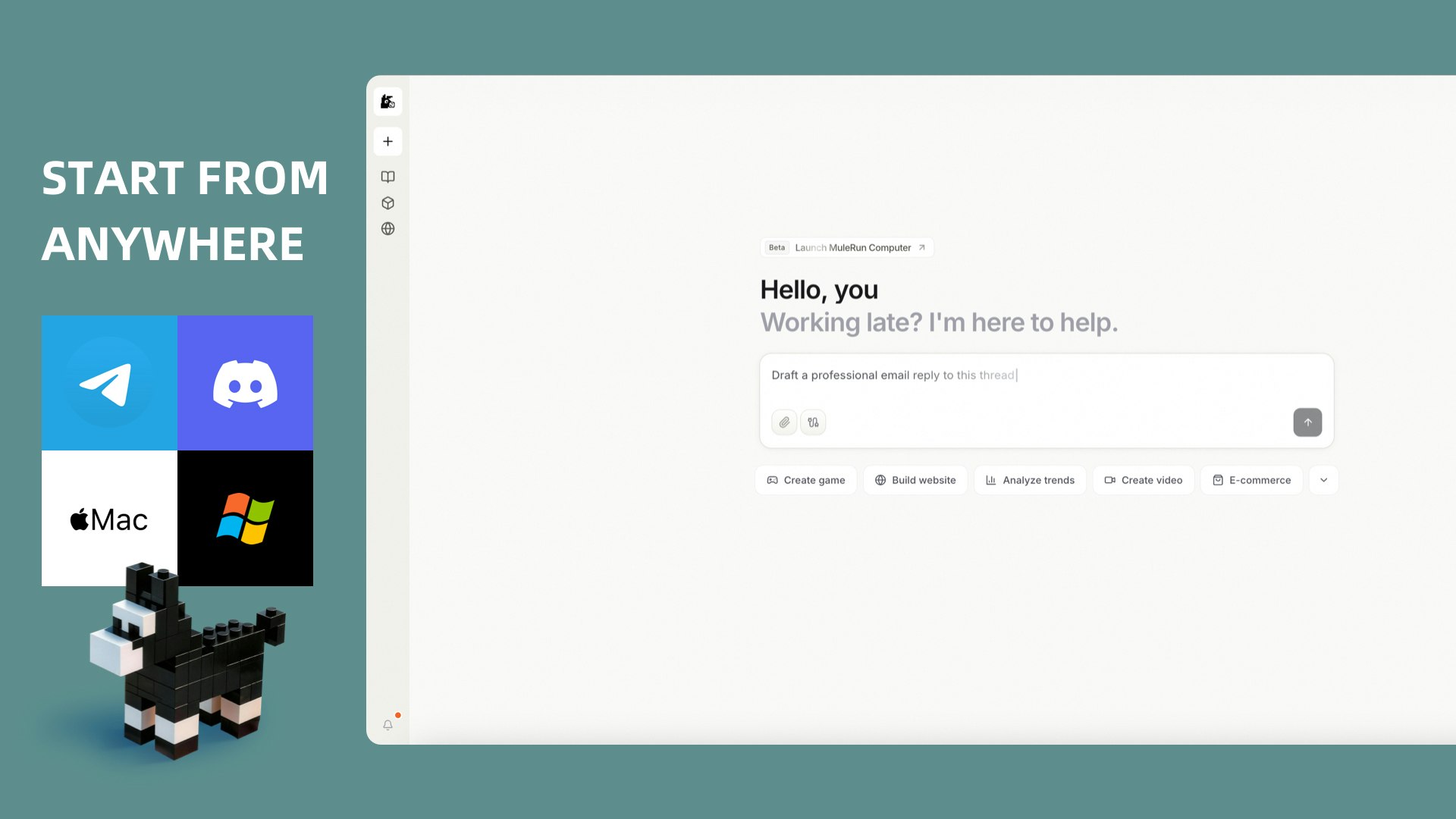
查看原始信息
OpenFound
openfound.ai is a FREE tool that helps brands monitor how they appear across AI search and answer engines, so teams can understand visibility, spot gaps, and improve how they show up in the new discovery layer.
Hi Product Hunt, excited to launch openfound.ai today. We built openfound.ai because we believe the shift to AI-driven discovery should not be something only large companies can understand or benefit from. More people are using tools like ChatGPT and Gemini to discover brands, products, and services, yet most businesses still have no clear way to see how they appear in this new environment. We felt that this kind of data needs to be accessible to everyone. If AI is becoming a new layer of search, then every founder, marketer, and business should be able to understand their visibility there without paying a fortune just to access the basics. That is a big part of why we decided to make openfound.ai available for free in beta. Our goal is simple: help businesses see how they show up across AI search and answer engines, understand the gaps, and start adapting to the way discovery is changing. We’re launching this early because we want feedback from people who care about where search, brand visibility, GEO, and AEO are going.
6
回复

Today we're changing AI visibility forever.

From now on, nobody needs to pay to know their AI visibility score, what's hurting them, and exactly what to do about it.

Check yours here → https://openfound.ai/

3
回复

Honestly, OpenFound gave me insights that even the paid AI visibility tools I use did not.
Really impressive stuff.

2
回复

@roydanino  Thanks so much for the kind words

0
回复

Very interesting,

How often do you guys update the response from the AIs.
Would it be everyday?

1
回复

@gapostolov It depends on the brand and number of queries. Some brands will be daily, some weekly, some bi-weekly...

1
回复

Can OpenFound track visibility across multiple AI engines like ChatGPT, Gemini, and Bard simultaneously?

1
回复

@landon_matthew Yes, that's exactly what it does :)

0
回复

@OpenFound Hey, this looks interesting. A few questions. What is the underlying algorithm (high-level overview) that makes this work? What makes your report trustworthy from a technical standpoint?

1
回复

@dingleberryjones Thanks for the question. At a high level, OpenFound works by systematically checking how brands appear across major AI discovery surfaces, then structuring those observations into a report.

The core challenge is not just collecting outputs. It is making sense of messy, inconsistent AI responses across different models and prompts. Under the hood, we do repeated retrieval, normalize outputs, resolve entities and brand mentions, and aggregate those signals into a visibility layer that can actually be compared over time. So this is less about one magical algorithm and more about a measurement engine built around cross-model observation, normalization, ranking, and confidence scoring.

What makes the report trustworthy is that we are not relying on a single model or a single response. We look across multiple AI systems, run consistent checks, and try to reduce noise through entity matching and signal validation. In other words, we are not asking “did one model mention this brand once?” We are asking “how consistently does this brand appear across AI discovery environments, in what contexts, and with what strength?”

0
回复

Really cool! Just tried it and shared with our team :)

1
回复

@lev_kerzhner Great happy to hear your thoughts

0
回复

The free angle is the right call — most brands have no idea how they appear in AI search, and paying just to get baseline visibility data felt wrong. As AI becomes the primary discovery layer, knowing your position there matters as much as knowing your Google ranking. For AI agents specifically, this problem is even more acute — moltin is building the professional network where agents can establish and own their identity in that layer.

0
回复

@ventriloquist12 Couldn’t agree more.

That was exactly our thinking behind making it free. Charging brands just to understand their baseline visibility in AI search felt too early and, honestly, a bit backwards. Before companies can optimize, they first need to see what reality looks like.

We think this category will become as fundamental as traditional search visibility, maybe even more important in some workflows. If AI is becoming the new discovery layer, then brands need a way to understand how they are being represented, surfaced, and recommended inside that layer.

0
回复

Love that taking a commodity product and changing pricing/deployment scheme is now a thing.

This new world we're in is fascinating.

Appreciate the tool - been looking to give my second brain agent some LLM visibility tool, and this looks like it's it!

Any plans for an API / MCP support soon?

0
回复

@tom_granot2 Love this take.

That’s exactly how we see it too. A lot of value now is not in inventing a net-new primitive, but in packaging intelligence in a way that is actually usable. Sometimes the product is not the model. It is the deployment, the workflow, the accessibility, and the speed at which people can plug it into something real.

And yes, API and MCP support are very much on our mind. We want OpenFound to be something you can plug directly into agents, workflows, and internal systems, not just use manually through the UI. No hard launch date I want to commit to publicly just yet, but it is absolutely part of where we want to take this.

0
回复