Product Hunt 每日热榜 2026-03-24

PH热榜 | 2026-03-24

#1
Claude Computer Use
Enable Claude to use your computer to complete tasks
539
一句话介绍:这是一款让Claude AI能够像人类一样操作你的Mac电脑,通过点击、打字、浏览和运行应用来自主完成任务的功能,解决了用户在跨设备、处理重复性数字任务时无法脱身的痛点。
Productivity Task Management Artificial Intelligence
AI智能体 桌面自动化 人机协作 数字员工 工作流自动化 Mac工具 AI执行层 移动任务分发 智能助手 生产力工具
用户评论摘要:用户普遍兴奋,视其为“行动鸿沟”的解决方案和OpenClaw的竞争对手。主要反馈包括:目前仅支持Mac,期待Windows/Linux版;存在早期bug,系统锁屏时失效;对安全性有疑虑;部分Pro用户找不到功能入口;关注企业版上线时间。
AI 锐评

Anthropic推出的“Claude Computer Use”远非一次简单的功能更新,而是一次旨在夺取下一代人机交互入口的激进冲锋。其核心价值不在于“自动化”,而在于“具身化”——将AI的推理能力首次大规模、合法地注入个人计算环境的最底层。这标志着AI从“顾问”向“执行者”的身份根本性转变。

产品巧妙地采用了“连接器优先,直接控制兜底”的双层策略。优先通过API集成处理Slack、日历等标准化任务,对于无API的长尾应用,则通过模拟人类操作进行“降级处理”。这种务实的设计,使其能迅速覆盖近乎无限的应用场景,但同时也埋下了隐患:基于屏幕识别的操作在复杂、动态图形界面下的稳定性和安全性,将是其规模化之路上最脆弱的阿喀琉斯之踵。

从生态竞争角度看,此举是对开源AI智能体生态(如OpenClaw)的一次精准狙击。Anthropic将系统级控制能力与自家王牌模型Claude深度捆绑,利用其强大的推理能力来理解复杂任务和模糊指令,这是单纯依靠开源模型和脚本的工具难以比拟的。然而,评论中透露的“bug多”、“锁屏失效”等问题,暴露出从技术演示到稳定生产工具的残酷距离。真正的“自主”并非能点击按钮,而是能像人类一样处理异常、系统状态变更和权限弹窗。

更深层的颠覆在于其“Dispatch”移动任务分发设计。这并非简单的远程控制,而是构建了一个“思考-指令-执行”分离的异步工作流。用户从任务执行者彻底转变为任务定义者与监督者。这固然解放了生产力,但也将“信任”问题推至顶峰:将电脑控制权交给AI,本质是交出了数字世界的“肉身”。尽管Anthropic强调“经用户许可”,但一旦出现误操作或安全漏洞,后果将是直接的物理级损失。

总而言之,这是一个野心勃勃、具有分水岭意义的产品。它撕开了AI与现实世界交互的关键缺口,但其成功不取决于炫技,而取决于能否在稳定性、安全性与用户体验上建立坚不可摧的护城河。否则,它可能只是一个令人惊艳却不敢托付重任的“玻璃大炮”。

查看原始信息
Claude Computer Use
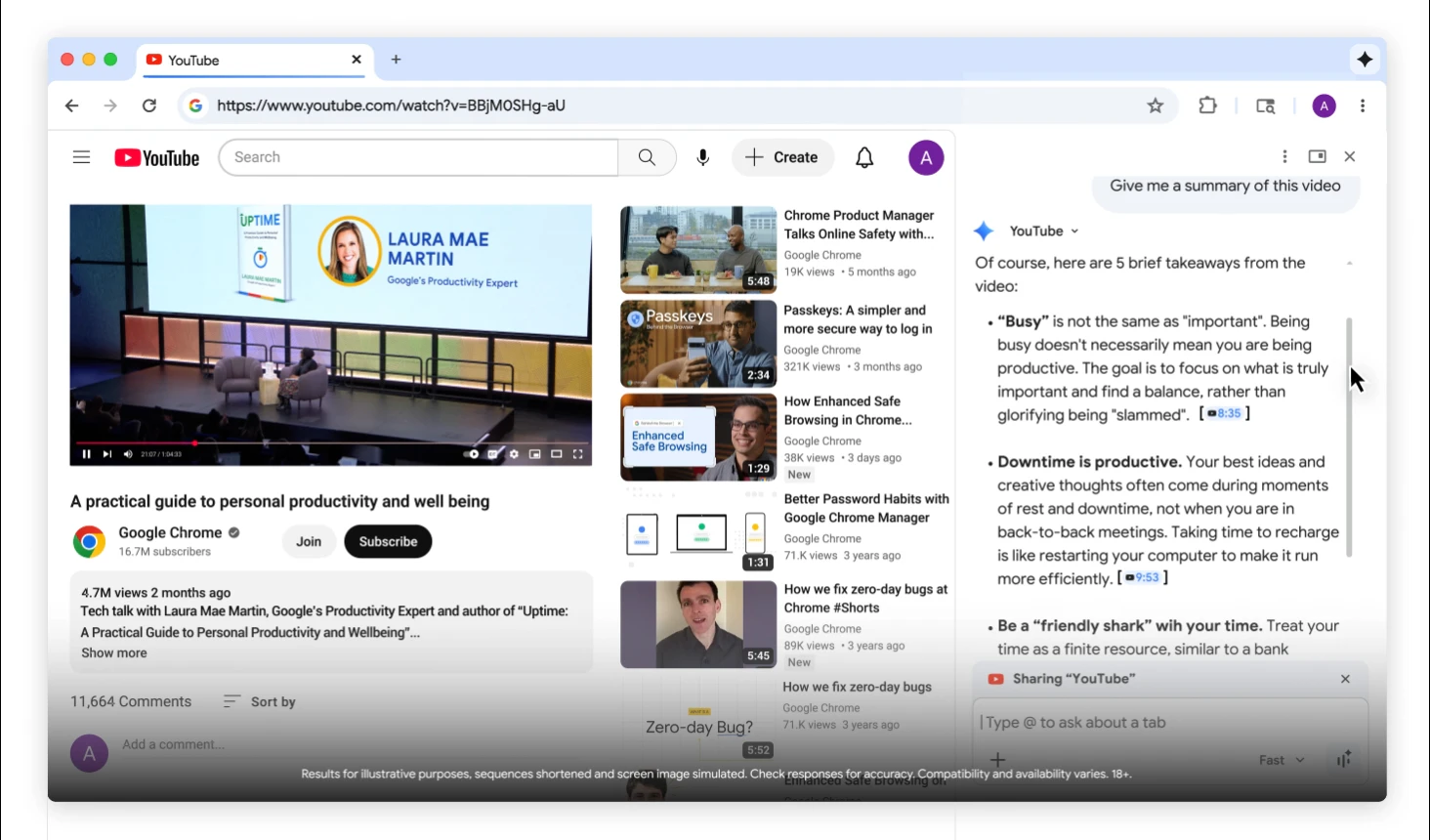
Anthropic’s Claude can now operate your computer like a human—clicking, typing, browsing, and running apps autonomously. With “computer use” and Dispatch, you can assign tasks from your phone and let Claude execute them on your Mac. From emails to reports, it bridges AI reasoning with real-world action.

Claude’s new “computer use” turns AI into a true digital employee. Probably the biggest update yet by @Claude by Anthropic?

It solves the gap between thinking and doing by letting Claude control your screen, apps, browser, and workflows with permission autonomously.

Claude uses your connected apps first: Slack, Calendar, and other integrations. When there's no connector for the tool you need, it asks for your permission to open the app on your screen directly, just like a human using your computer. Anything you can do on a computer — Claude can!

Assign a task from your phone, turn your attention to something else, and come back to finished work on your computer. Tell Claude once to scan your email every morning or pull a report every Friday, and it handles it from there.

Key features:

  • full desktop control

  • mobile task assignment (Dispatch)

  • app integrations

  • autonomous workflows

In just one week, Anthropic has shipped 9 features culminating in what feels like a fully autonomous digital human.

Available on Pro and Max. Update your desktop app and pair with mobile to try.

Perfect for founders, operators, devs, and busy professionals handling repetitive tasks, reporting, and execution.

12
回复

This feels like a direct OpenClaw killer. It's macOS-only rollout; Windows and Linux need to follow soon. It’s still early and a bit buggy, struggling with some apps, tasks, and even failing when the system is locked, which limits true autonomy.

P.S. I hunt the latest and greatest launches in tech, SaaS and AI, follow to be notified @rohanrecommends

8
回复

@rohanrecommends Can it help me with deploy my GP apps?

1
回复

@rohanrecommends Love this. We've been building in the agent space and this confirms what we keep seeing: agents are getting incredibly capable at doing things - but they're still isolated. Computer use solves the action gap. The next frontier is the connection gap: how does one autonomous agent find and talk to another? Exciting times.

2
回复
Should I cancel my Mac mini?
7
回复
@joshwhitehead consider running OpenClaw and Claude Computer Use on it at the same time. Dueling banjos. 🪕
0
回复
0
回复

I love the recent Claude released features.

I now use Claude for almost every working task during the day.

I just started automating video generation for my startup using Claude, and it drives me crazy.

I just installed one skill, and it generates quite good videos from one prompt, and I'm able to iterate with it, asking it to cut the videos, add music, assemble one video from different videos, and that just drives me crazy.

I'm looking forward to seeing what else Claude will bring in the next year.

I think it will entirely change the way we work on a daily basis.

6
回复

How secure is it? I still don't feel comfortable running openclaw on my machine due to it being inherently insecure.

2
回复

HI, do you know how to apply it on claude? I click visit website but it is claude website, do you guys know where is the "Claude Computer Use"?

2
回复

Only for Mac?

2
回复

Claude is giving updates every other day :)

2
回复

now, i can catchup with my cc while i am on a walk.

2
回复

This means Claude desktop needs to be always running on a Mac, right? It would be funny to start working on closed Macbook in my backpack 😄

1
回复

Ow waw I have been waiting for that. But I am on the max plan and still dont see it! Why?

1
回复

It looks amazing - I will still use openclaw on my mac mini but use this + despatch on my actual macbook. I still think it doesn't quite nail the sheer personalisation that Open Claw offers (and the OSS nature of it).

I wonder if I can have it go to Claude.ai and prompt itself...

1
回复

Is this feature currently available on the Pro Plan? If not, when do you expect it to be?

1
回复

Just found out it is avaidable for the Pro Plan! But it is Mac only!

1
回复
When is this going to go live for Team or Enterprise plans?
1
回复

This keeps on getting better @Anthropic! Testing it now.

1
回复

Lol I feel like claude is dropping everyday, and I use claude for almost everything and I just love it, but it seems like they are taking the whole AI world to the next level this is scary but exciting and I can't wait to try it out

1
回复

the speed at which they ship new features is unreal. this basically just replace openclaw haha.

0
回复

Really interesting direction.

From the outside this reads like an AI assistant gaining automation capabilities.

But the way it actually behaves feels closer to an execution layer for agents — bridging the gap between reasoning and real-world action.

Instead of just generating outputs, it can operate systems, navigate interfaces, and complete workflows directly.

If this evolves, it seems less like a feature and more like a foundational layer for how agents interact with computers.

Curious how you think about this internally.

0
回复

Does my computer need to be open and on, and do I have to sit and watch the work happen?

0
回复

What visibility do users have into what the agent is doing in real time, and how easy is it to interrupt or correct it mid task?

0
回复
#2
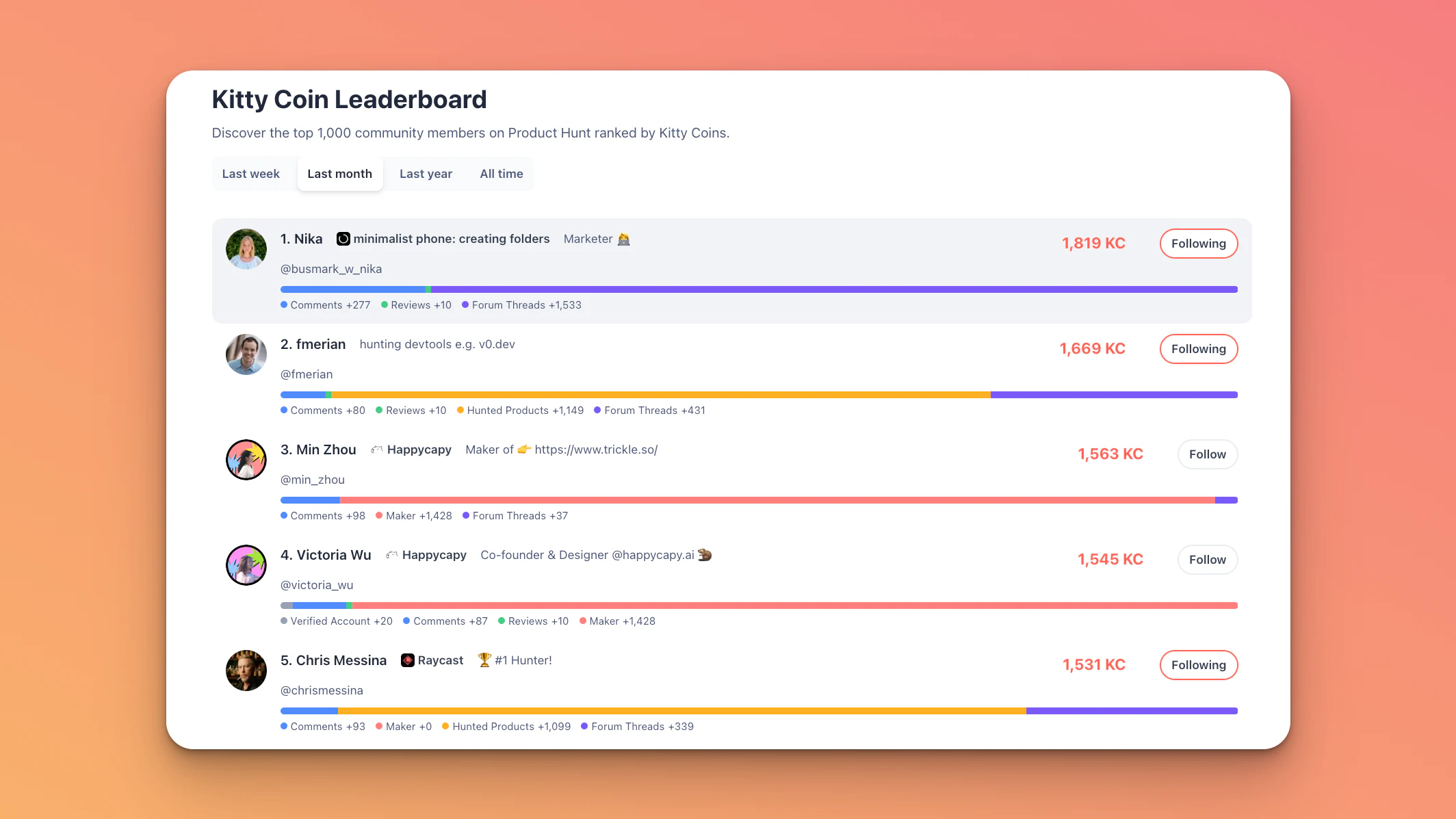
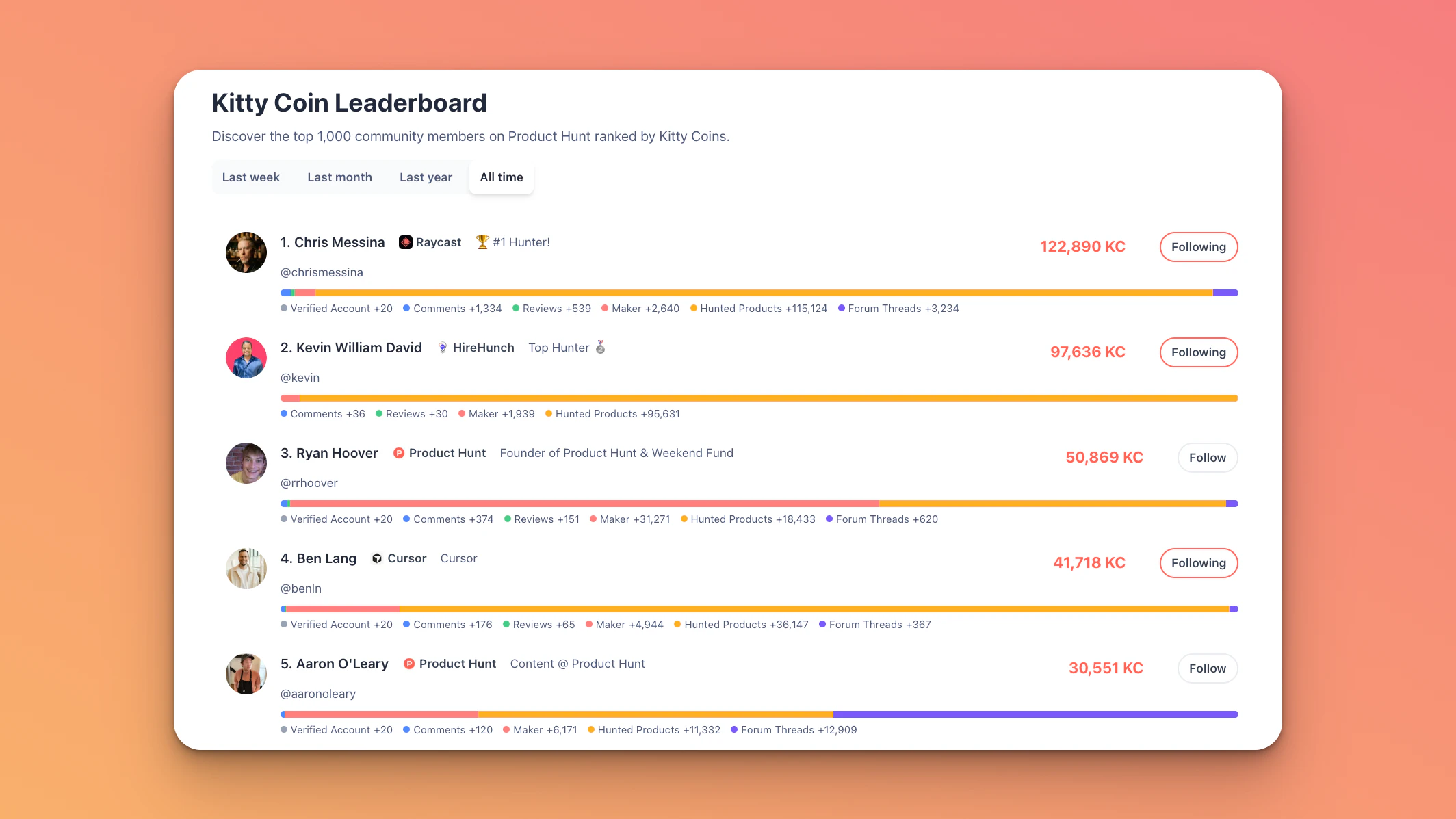
Kitty Points Leaderboard
Find interesting community members and see how you stack up
388
一句话介绍:Product Hunt官方推出的社区贡献度排行榜,通过量化与展示用户在发布产品、撰写评测、参与讨论等多元社区活动中的贡献值,解决用户社区参与感弱、优质贡献者缺乏辨识度与激励的核心痛点。
Product Hunt
社区激励 贡献度排行榜 用户成长体系 社区游戏化 信誉系统 社区治理 SaaS内部工具 用户参与度
用户评论摘要:用户普遍认可排行榜对激励高质量贡献、提升社区活跃度的价值,赞赏其设计细节(如点击积分跳转对应活动页)。主要问题与建议包括:要求公开积分计算细则;询问高积分用户是否享有更高权重或特权;报告“总榜”积分数据显示异常;建议增加社交分享卡片和API接口。
AI 锐评

Product Hunt的“Kitty Points Leaderboard”绝非简单的游戏化装饰,而是一次对社区权力结构与价值分配的深度重构。其真正价值在于三方面:第一,**定义与量化“贡献”**。它将社区价值从单一的“发布产品”拓展至评测、讨论等多维度,试图用算法公式为“优质社区成员”建立可衡量的标准,这是将模糊的社区文化向透明、可预期的体系引导的关键一步。第二,**动态平衡社区阶层**。通过设置周、月、年及总榜,它巧妙地缓解了新老用户的权力固化矛盾。新人有机会在短期榜单崭露头角,而OG(元老用户)的长期贡献也在总榜获得尊崇,这为社区注入了持续的流动性竞争。第三,**构建隐性信誉资本**。排行榜本质是生产一套社区内部的“信誉货币”。高排名意味着影响力和可信度,这或将直接影响其评论权重、内容可见度,甚至可能在未来关联更多社区特权,从而引导用户从追求“活跃度”转向追求“价值贡献”。

然而,其风险与挑战同样尖锐。算法黑箱可能引发公平性质疑,若积分权重过度向“发布产品”倾斜,则所谓多元化贡献仍是空谈。此外,将社区互动彻底“积分化”,可能导致功利性灌水,异化原本的有机交流。Product Hunt此举是一次大胆的社会实验,其成败不在于榜单热度,而在于这套算法能否精准识别并激励那些真正滋养社区生态的“沉默价值”,而非仅仅制造出一批精于算计积分规则的“职业玩家”。

查看原始信息
Kitty Points Leaderboard
Product Hunt is known for its lively and friendly community. To accentuate different ways you can be active in the community, we built a leaderboard for community members. Ranking highly will give you exposure as well as lend credibility to your content. We also want to showcase the various ways members of the community can participate and build stories around those participants.

This update to Kitty Points comes with two big updates, one visible and one more backend.

The visible update is a brand new leaderboard! And it's not just an all time leaderboard. If you just discovered Product Hunt in the last year, month, or even week it could be a bit daunting to see some of the Kitty Point totals that long time members have accrued. At the same time, we want to give a huge shoutout to our community members who have been around and consistent for years and have contributed a ton of phenomenal content to the site. The answer to this is a leaderboard that shows the top users by Kitty Points per week, month, year, and all time. This means every week you have a new chance to climb the leaderboards and get higher visibility on your profile and what you're building or posting.

The less visible, but still exciting, part of this update is that we've re-worked how Kitty Points are calculated on the back-end. I'll say, this part of the project was the closest I've ever come to feeling like a game designer! We also want to be more upfront about what you can do to earn Kitty Points. You can't play the game if you don't know the rules! So, here are the all of the contributions that will earn you Kitty Points:

  • Being the Maker of a launch

  • Being the Hunter of a launch

  • Posting detailed reviews

  • Creating discussion threads

  • Leaving meaningful comments

For all of those, content and impact matter. Being the Maker of a featured product at the top of the leaderboard will obviously gain you a lot of Kitty Points. As Matt mentions in his comment, Product Hunt is launch forward, but there are a lot of other ways to contribute to the community as well. A large part of the backend changes we've made open the door for other types of contributions to gain you more Kitty Points than in the past. So even if you're not a Maker, you still have the chance to contribute to the community and climb the leaderboards. And if you're curious, you can check out our help center for more information around what kind of content aligns with Product Hunt's guidelines.

We've built this to elevate and show off the members of our community who are helping us create an incredible space to discover, evaluate, and discuss incredible products being created by excellent people in tech. I'm very excited to see who shows up on the leaderboards every week!

I also want to give a massive shoutout to @catt_marroll who did a tremendous amount of work taking the new Kitty Points formula and making it work on a weekly, monthly, and yearly basis (something we've never had before!) and building a really awesome and fun leaderboard page around it.

12
回复

@catt_marroll  @jakecrump Hey, congratulations on the new leaderboard! I find it a really interesting idea! It definitely creates an incentive for both long-time and new users.

I’d really appreciate it if you could also share the formula used to award points. Judging by the results, it’s obviosly that being the maker of a featured product is about 10x more valuable than other activities, but having a bit more detail about the formula would be great.

2
回复

@catt_marroll  @jakecrump I feel motivated to be more active here, thanks for making the leaderboard more clear and motivating!

4
回复

@catt_marroll  @jakecrump One detail I really like: clicking the Kitty Coins for a specific attribute on the leaderboard links directly to that user's activity tab (Maker History, Hunted, Forums, etc.).

Such a practical solution for driving internal engagement. @catt_marroll and team clearly put a lot of thoughtful design into this build!

5
回复

Product Hunt is launch forward (we do not plan to change that!), but this isn't the only way to participate in our community. Leaving reviews, providing thoughtful comments, and building vibrant forum discourse also help boost the ecosystem. We want kitty points to reflect the different ways users "play the game" here on Product Hunt.

Additionally, like many online spaces, there is a value in being able to qualify who you are talking too here! Advice from Paul Graham is likely worth more than a remark from a sock puppet account created a few minutes ago. We hope to use this new leaderboard as a way to incentivize authentic participation, and qualify content around the site.

10
回复

@catt_marroll @jakecrump and team, many congratulations on the latest update! :)

I love the design and how it clearly shows which spaces the Kitty Coins were earned from (Maker, Forums, Reviews, etc.). Been waiting for this since I first spotted it, great to see it officially launched.

Now it's not just streaks but actual contributions getting recognized on Product Hunt. Someone's an OG not for joining early, but for staying consistent with real value over time.

Streaks rewarded visit consistency; Kitty Coins + the leaderboard reward contribution consistency. That's a step toward making Product Hunt more meritocratic.

The leaderboard surfaces who's truly shaping the community, beyond just showing up. Time-based leaderboards (weekly, monthly, yearly, all time) keep it dynamic and merit-driven. Also, showing ranks on profiles will actually help identify how active a community member is. This will help community members shift focus from "staying active" to "adding meaningful value" every time.

I was fairly active member, but never bothered to check kitty coins. I was shocked to see myself hit #10 all-time and #1 weekly on leaderboard. 😄

Quick question: Other than recognition, what's the use case for Kitty Coins? Do high earners get more weight in engagements, mod approvals for forums/leaderboards/comments, etc.?

Feature suggestion: Add shareable leaderboard stat cards for social media so community members can quickly share their leaderboard rankings to their social feeds. Although they can even screenshot and share it now.

Thank you for making this space more meaningful, enjoyable and community-driven. ❤️

5
回复

@catt_marroll congrats on the new kitty coins. How will Kitty Points weighting evolve based on feedback, and might we see multipliers for high-impact actions like sparking great forum threads?

0
回复

I really like the idea around that, it wouldn't come to my mind that KittyPoints can have this use-case and we couldn't find out what they are for. Now, one of the top secrets of this platform is already unveiled!

Good job!

7
回复

@busmark_w_nika you are a true champ! congrats! and keep it up - I love your threads and comments, so meaningful and insightful

1
回复

@busmark_w_nika - Congrats on your last year's score - really impressive!

Oh, @catt_marroll, I think there might be a bug with how 'All Time' is calculated. My profile shows 1 KP for 'Last Week' but 0 for 'All Time', and Nika's has 28,750 for 'Last Year' but only 25,552 for 'All Time'. In both cases, I guess, 'All Time' should be the higher number. Just flagging it!

1
回复
I like these changes as they seem to promote more obviously valuable behaviors at product hunt rather than just voting.
4
回复

@kevin_mcdonagh1 yeah that is the goal. i think we will know it is successful if we can incentivize quality contributions. not just more, but high quality.

0
回复

I'm slacking at #3 for all time

2
回复
I'd really love some kitty points. Do you feel like I contributed enough to this launch to be added as a maker?
2
回复

@curiouskitty Curious Kitty must be added as a maker!!! #JusticeForKitty

0
回复

@curiouskitty a better question is: are AI robots and pets eligible for being featured in the leaderboard?

I still see a lot of AI slop around here! 😽

0
回复

love it!

2
回复

Whattttt? PH launching on PH?

2
回复
0
回复

Wow, I am at #44 all time. I also just launched @MindPal again today, so I guess that would earn me even more points 😎 Hope I will make it to top 10 this year. Question though: does earning a Maker of the Year award contribute to our Kitty Points?

2
回复

@sylviangth Great question! Maker of the Year is its own, independent award. So no additional kitty points.

1
回复

@sylviangth You're now #43!

0
回复

Do KP's degrade over time or are cumulative? I'm seeing something strange - I seem to have more KP's last year than I do All time. Would love to understand how that works @jakecrump @catt_marroll

1
回复

@ragsontherocks Points do not degrade. We'll look into the odd behavior on your account. Thanks for flagging!

0
回复

The Kitty Points Leaderboard is a brilliant move to boost community engagement! By gamifying contributions through upvotes and streaks, it effectively turns passive browsing into an active, rewarding experience. It’s a great strategy for improving user retention and making the community feel more alive. Can't wait to see more perks tied to these points!

0
回复

does a person's KPs impact how much weight their upvotes/comments carries on launches?

0
回复
Great to see ProductHunt innovating and build new features. Keep it growing.
0
回复
Love the idea of turning community engagement into a leaderboard. What metrics are you using to rank members?
0
回复

@makers repeating my request here: I'd love for the Kitty Leaderboard to be added to the Product Hunt API so I can add it to the Product Hunt for Raycast extension!

0
回复

Yeahhh! I didn't wanted, I needed it. Thanks for adding this engaging stuff and making it funnier and enjoyable. Keep on that way team

0
回复

Today, I learned, that I am a nobody. But I have a goal, and this goal involves kitty points. I don't know why I need Kitty Points, but "a tiny competitive spiral " for seeing your own rank = "insane drive" for not seeing a rank at all. I must haz it.

0
回复

Maybe this is answered elsewhere, but is "last year" 2025? Or is it the last 365 days?

0
回复

@charlie_clark Good question! It's 2025.

0
回复
Okayyy...time to get serious on PH One issue i have is that my discussion threads are always rejected.
0
回复

@george_esther this is the universe telling you that increasing the quality of your contributions will likely help! as AI gets more prolific, the bar for quality contributions will go up.

1
回复

love it. veterans might remember when back in the days @abadesi was shining a spotlight on the most helpful makers of the week.

what if we bring it back to The Roundup? keep up the great work

0
回复
#3
Cekura
Observe and analyze your voice and chat AI agents
376
一句话介绍:Cekura 是一款面向语音和聊天AI代理的监控分析平台,通过30+预定义指标、智能统计告警和自动化模拟测试,帮助规模化团队解决生产环境中AI行为难以量化、客户体验盲点及静默故障难发现等痛点。
SaaS Developer Tools Audio
AI监控 对话式AI 智能运维 客户体验分析 语音质量检测 生产可观测性 LLM评估 自动化测试 性能指标 告警系统
用户评论摘要:用户肯定产品解决了“AI是否正常运行”与“AI行为是否得当”的区别性痛点,关注其与Braintrust等水平平台的差异。主要问题集中在:细节能力(如语气、个性化跟踪)、指标自定义粒度、基线漂移处理的人机协作,以及如何检测“正确但无用”的回答等边缘场景。
AI 锐评

Cekura 的亮相,直指当前AI应用从“玩具”走向“工具”过程中最脆弱的咽喉要道——生产环境下的行为不可控性。它聪明地避开了与通用LLM评估平台的正面竞争,垂直深耕于对话场景,用“预定义指标库”降低使用门槛,用“仅需20条标注优化指标”的卖点试图平衡自动化与定制化之间的矛盾。

其真正价值并非简单的监控看板,而在于试图构建一个“感知-优化”的闭环系统。通过模拟生产对话的Cron Job和基于统计学习的告警,它瞄准的是那些最致命且隐秘的故障:没有错误日志,只有逐渐劣化的用户体验和商业损失。这相当于为AI代理配备了“黑匣子”和“神经反射弧”。

然而,其挑战同样明显。首先,其宣称的“编译完美LLM评判员”高度依赖于20条标注样本的质量与代表性,在复杂多变的真实对话中,这能否避免“过拟合”和“评估幻觉”存疑。其次,语音与对话体验的诸多维度(如语调、共情能力)目前仍难以被结构化指标完全捕获,产品在“可度量”与“应度量”之间仍需探索。最后,作为垂直工具,其长期天花板取决于对话式AI赛道的整体发展,需警惕被大模型平台或全链路可观测性工具向下整合的风险。

本质上,Cekura 出售的是一种“确定性”。在AI行为充满随机性的时代,它为焦虑的工程和产品团队提供了一个量化的抓手,但其最终效能,仍取决于团队能否利用其工具,真正理解并定义何为“好”的对话。

查看原始信息
Cekura
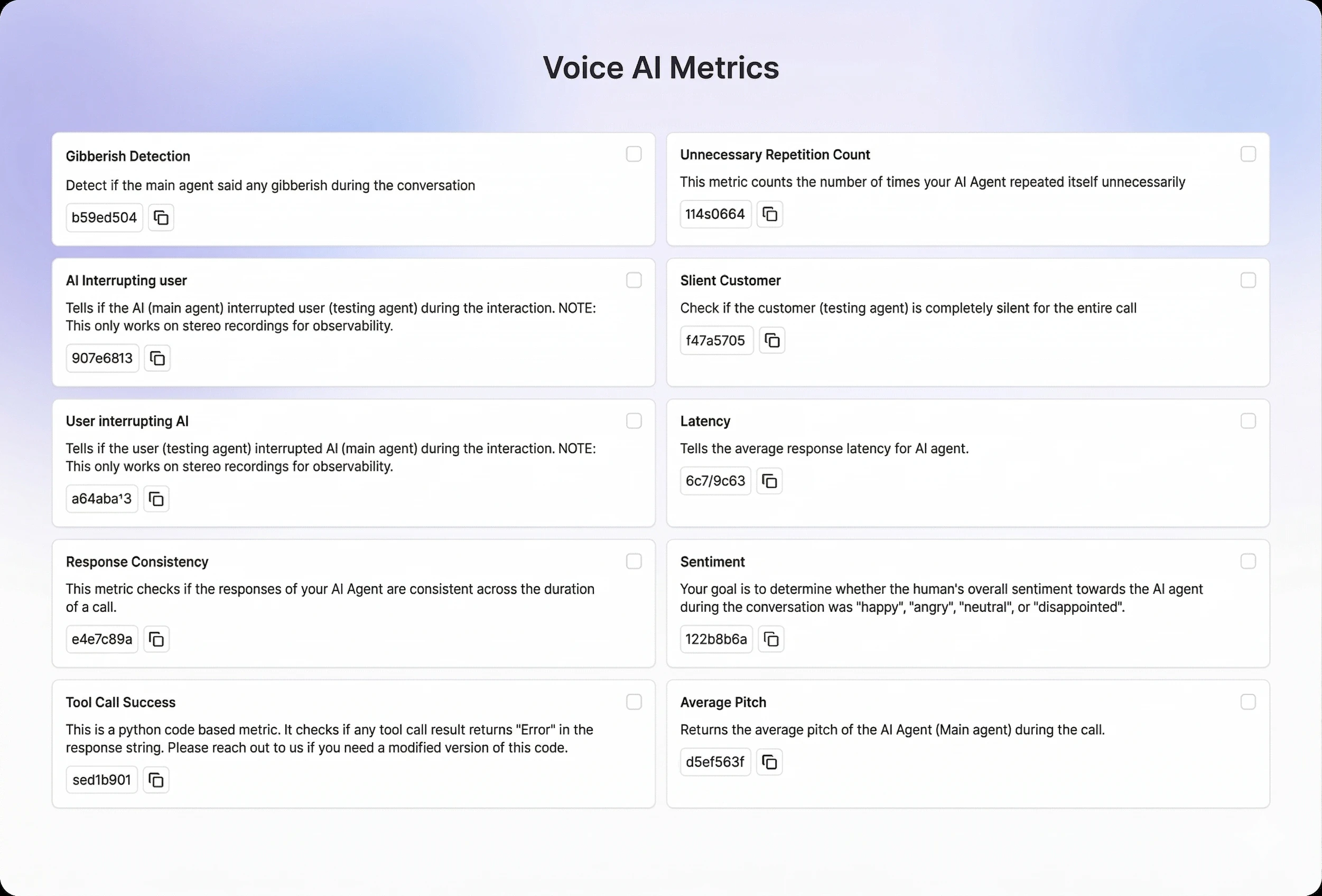
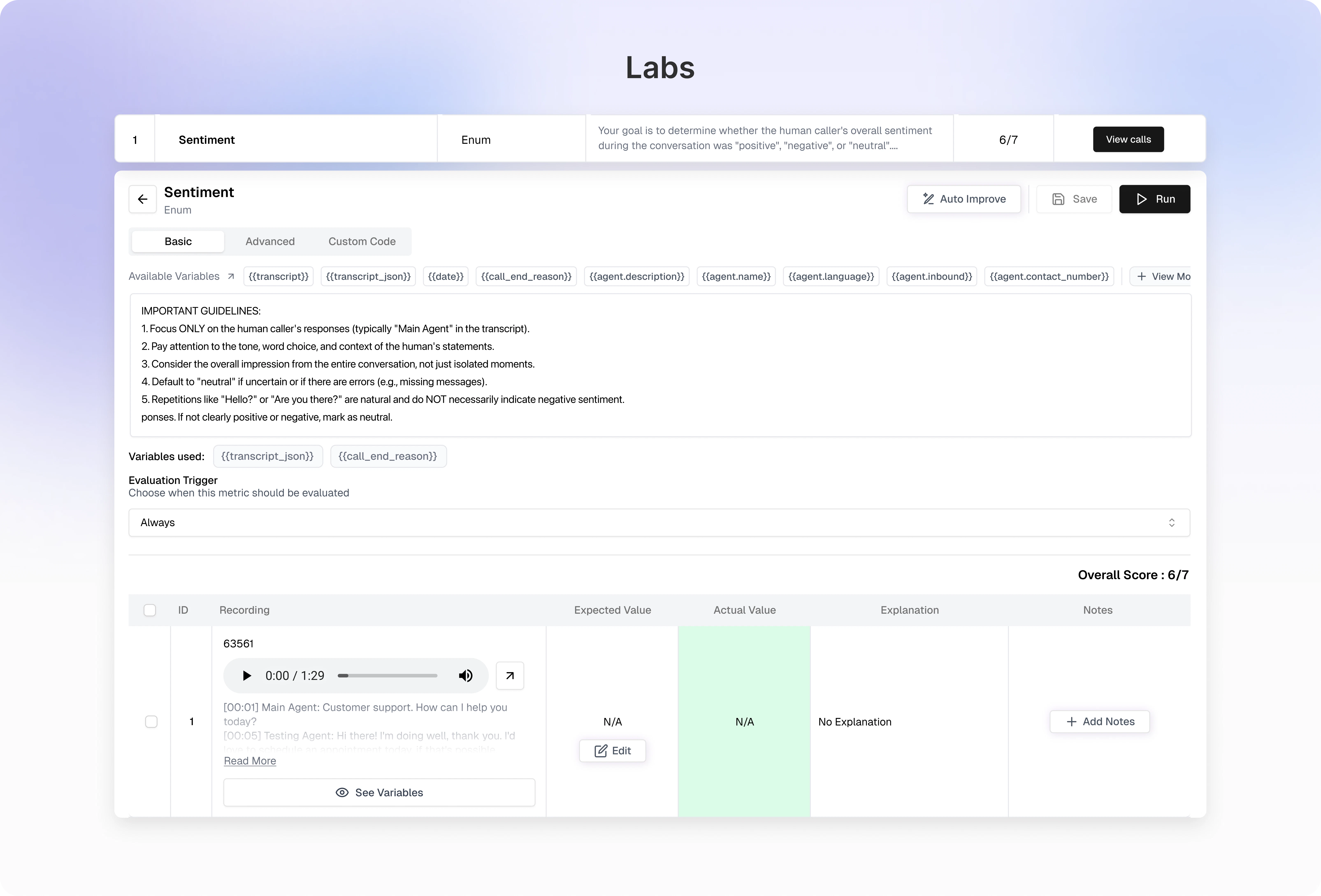
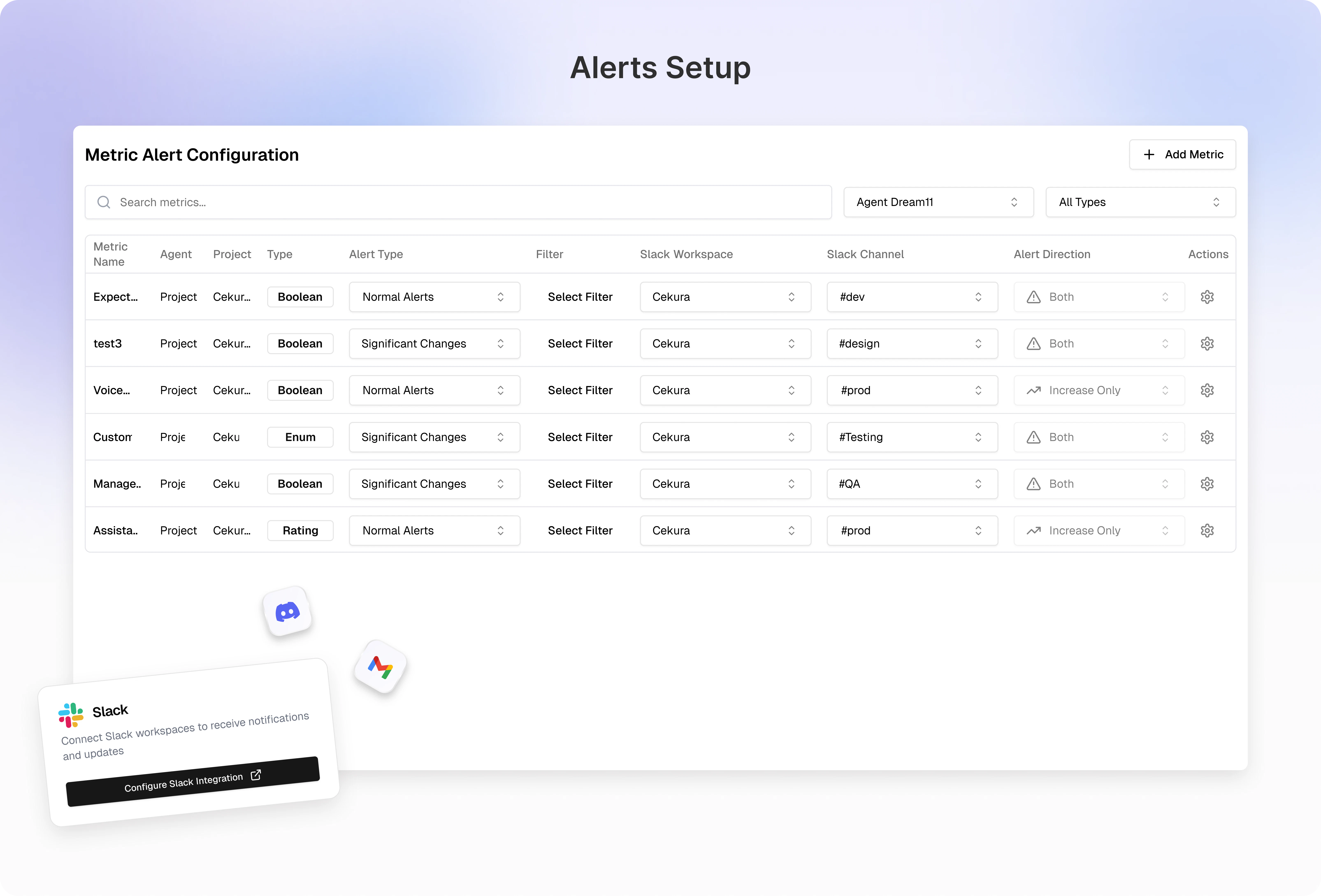
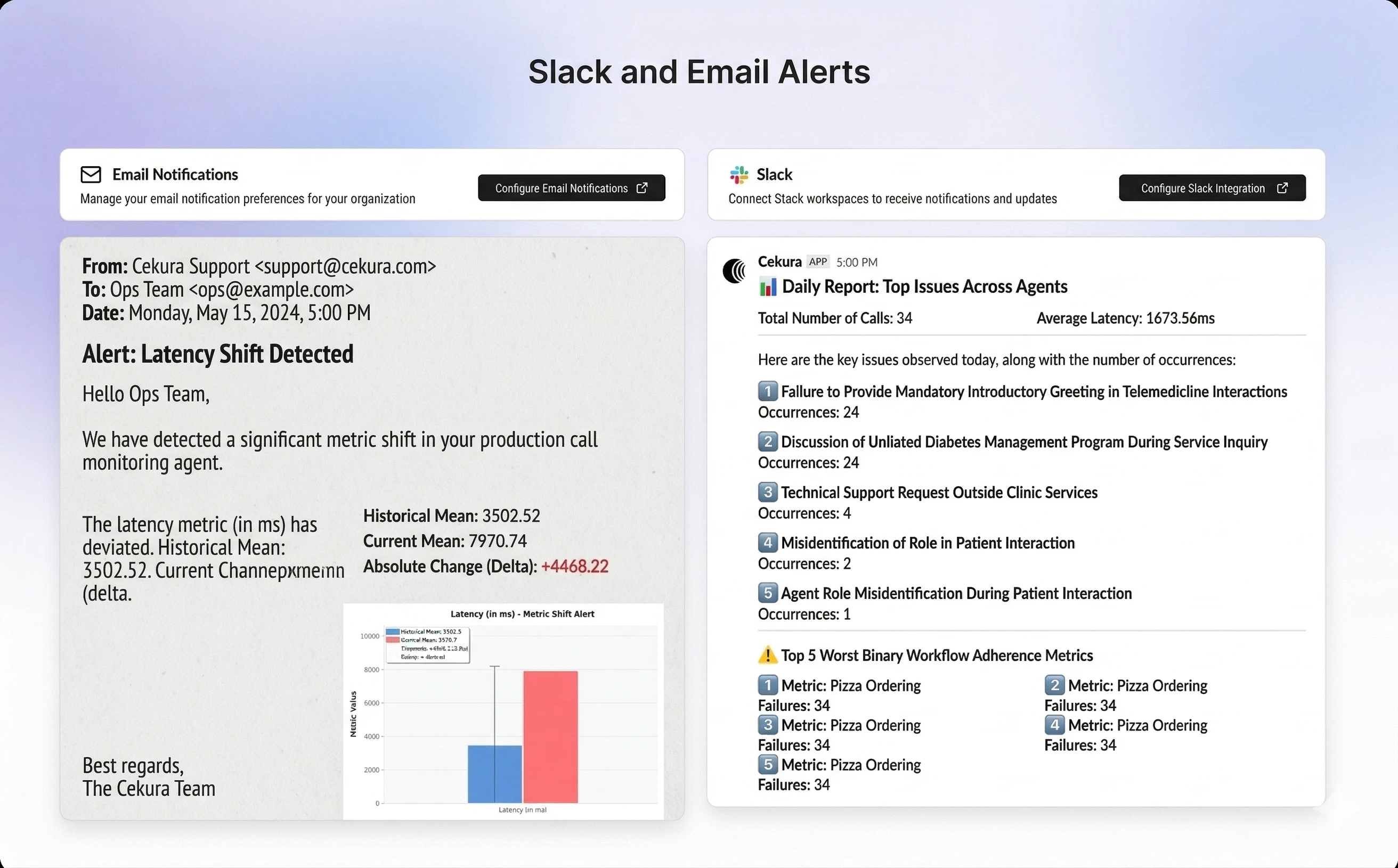
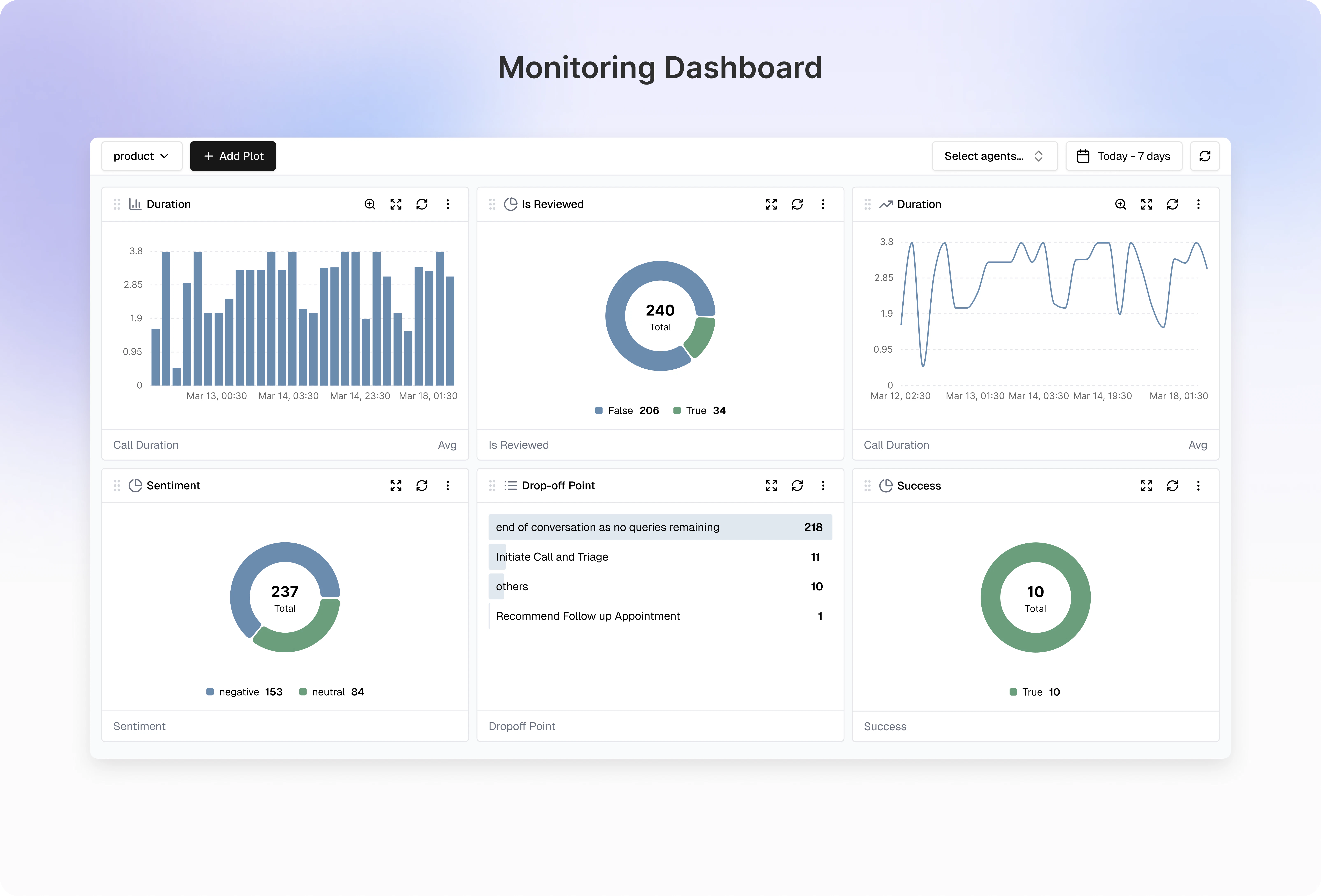
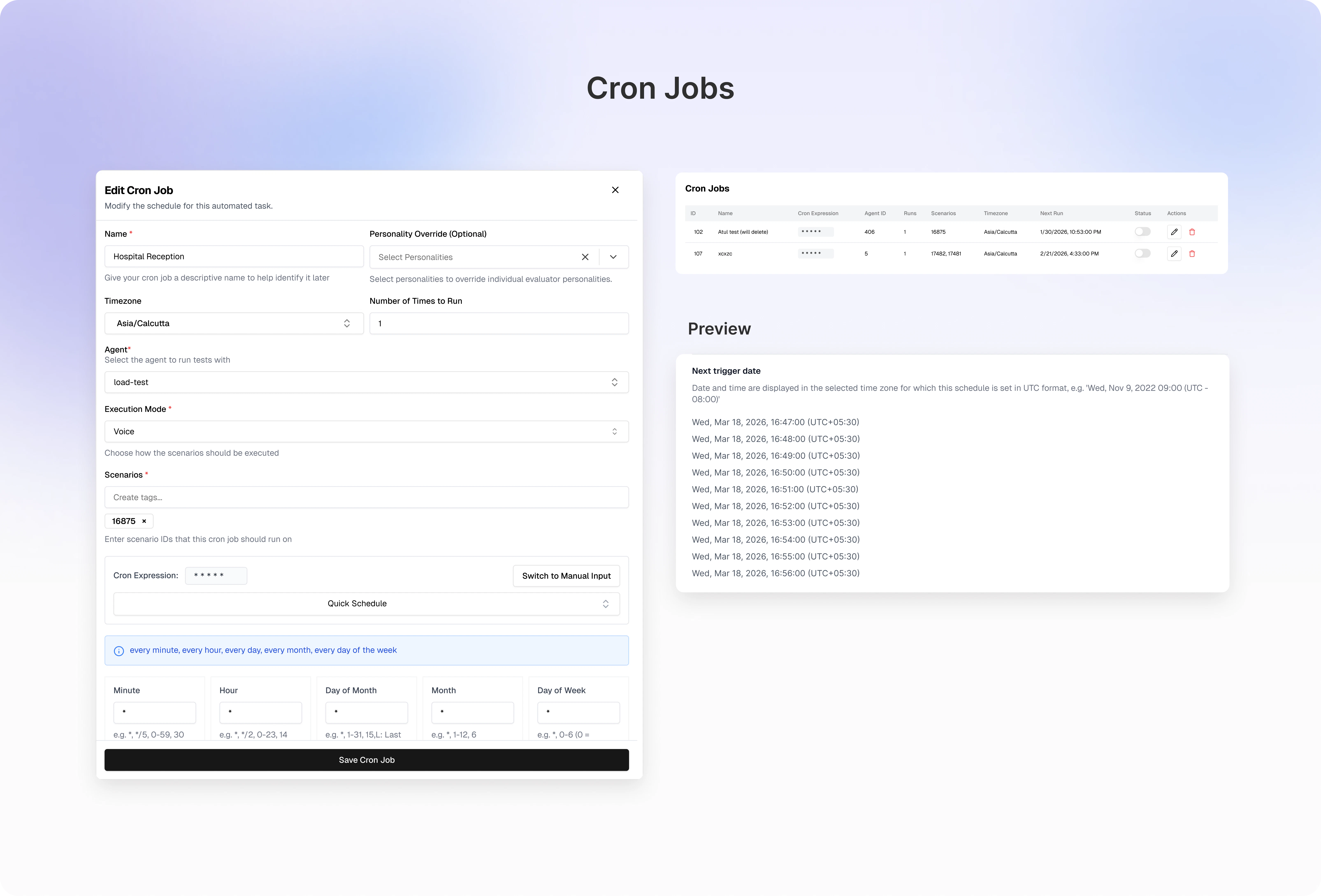
Out-of-the-box 30+ predefined metrics for analysis on CX, accuracy, conversation and voice quality. Compile perfect LLM judges by annotating just ~20 conversations and auto-improve in Cekura labs. Real-time, segmented dashboards to identify trends in Conversational AI. Smart statistical alerts so that you get notified only when metrics shift from historical baselines. Automated system pings to catch silent production failures.

Hi Product Hunt! 👋

We are excited to launch Cekura Monitoring for Voice and Chat AI companies. Most monitoring tools tell you if your AI is up. Cekura tells you if it is behaving.

When we had first launched Cekura QA, we thought we had solved the problem for both testing and monitoring . But as our users scaled, we noticed a painful pattern: While pre-production QA was automated, teams were still spending dozens of hours manually listening to thousands of calls.

The two big blockers we saw were:

  1. The Scaling Wall: Defining and optimizing custom metrics was taking too long, forcing teams back into manual spot-checks.

  2. Production Blindspot: Standard LLM metrics misses the Customer Experience in Voice AI - things like agent tone and customer sentiment that actually defines customer success.

We have rebuilt the monitoring layer from the ground up to solve this. Cekura Monitoring turns that "wall of noisy logs" into actionable signals.

🚀 What’s New in Cekura Monitoring:

  • 30+ Predefined Metric Suite: We track what actually breaks Voice and Chat agents across four critical categories:

    • Speech Quality: Voice clarity, pronunciation, and gibberish detection.

    • Conversational Flow: Silences, interruptions (barge-ins), and termination triggers.

    • Accuracy & Logic: Hallucinations, transcription accuracy, and relevancy.

    • Customer Experience: CSAT, Sentiment analysis, and drop-off points.

  • Metric Optimizer: Stop "vibes-based" prompt engineering. Define a metric (e.g., Successful User Authentication), tag 20 calls in our Labs interface, and our optimizer "compiles" a prompt that aligns with your specific feedback.

  • Statistical Intelligence: No more fixed, noisy thresholds. Our Alerting Engine learns your agent's baseline and only pings Slack when metrics shift from historical norms.

  • Automated Cron Jobs: Set up recurring health checks to simulate production conversations. Catch silent failures and regressions before your customers do.

  • Visual Dashboards: Real-time distribution charts for each metric. Views customized for each stakeholder

Who is this for?

Teams scaling Voice & Chat AI who are tired of listening to calls manually and need a way to prove their agents are actually working.

Sign up and try for free at cekura.ai or drop your questions below! We would love to hear how you’re currently handling Voice and Chat AI in production👇

24
回复

@kabra_sidhant Many congratulations on the launch, Sidhant! I've been tracking it since the Vocera days, it's evolved impressively and keeps getting better. Thrilled to see the buzz in voice AI communities especially on Reddit. Onwards and upwards! :)

2
回复

@kabra_sidhant This is awesome!! Congrats on the launch :)

Observability is much needed for multi-modality to meet the production grade SLA's and quickly detecting and responding to deviations to reduce business harm!!

0
回复

One of the most common issues we see voice agent makers run into is their agent keeps interrupting the caller. It's frustrating for users and easy to miss during development. With our interruption metric, teams can catch this early and fix it before it reaches real users, and that's just one of the many predefined metrics we offer out of the box, try it now!

11
回复

We are thrilled to share Cekura Monitoring with the PH community!

Most teams focus solely on whether a voice AI agent reaches the 'correct' outcome, but they often overlook the nuances that actually define the user experience: tone, transcription accuracy, TTS quality, and pronunciation.

While working on scaling to handle thousands of parallel calls, we realized just how easily these small details can degrade at volume. Cekura was built to ensure your agents don’t just work but they sound perfect.

Check out the product and let us know what you think!

11
回复

Blind spots in production voice agents are brutal — you don't know your agent is skipping verification steps or missing required disclosures until a compliance team surfaces it weeks later. Monitoring 100% of live calls at the session level rather than spot-checking is the only real fix. The P50/P90 latency tracking and interruption detection on production traffic is also underrated — that's where infrastructure regressions hide.

11
回复

So excited to see this live! 🎉

Been working closely on Cekura's monitoring features and what makes this special is how much it closes the loop for conversational AI teams — you're not just testing in pre-prod and hoping for the best, you're getting visibility into what's actually happening in production calls.

This one's been a long time coming! 🚀

10
回复

Really excited to see this out 🎉

Working on alerting and simulation quality made it clear how hard it is to catch subtle regressions early—this is a big step toward making that reliable in production.

Glad to finally have this live 🚀

9
回复

How are you different from tracing platforms like Braintrust and Galileo ? Except Voice metrics.

7
回复

@nimishg We are E2E conversational AI QA - Some of the big differences:

  • We run E2E multi turn simulations instead of trace level logging

  • These platforms does not offer Metric optimizer - without metric optimizer, it takes huge time to fine tune LLM-as-a-judge metrics

  • We also offer replay of production conversations to ensure the fix is incorporated.

In short we are very deep and verticalized in Conversational AI evals - they are more horizontal general agentic AI evals platforms

2
回复

@nimishg Braintrust/galileo are very horizontal for all llm agents. We are specialised for conversations, our UI, Metrics, dashboards are highly specialised for conversations.

2
回复

What aspects of voice does it capture? I wanted to test on tonality and personality of my voice agent, is it achievable?

4
回复

@pratyush1505 We have voice clairty, gibberishness as a metric to capture the voice aspect of the agent

0
回复

@pratyush1505 For testing the personality of the agent, you can also checkout the Customer Satisfaction (CSAT) and Sentiment metrics

0
回复

@pratyush1505 you can also use voice clarity metric which will check how clear the voice is

1
回复

The "is it behaving" vs "is it up" distinction is spot on. We've had AI chat agents pass every health check while giving completely wrong answers to customers. Uptime metrics are useless if the AI is confidently hallucinating.

How granular does the sentiment tracking get? Like can it detect when an agent starts being passive aggressive or gives a technically correct but unhelpful response? That's the stuff that kills user trust slowly.

4
回复

@mihir_kanzariya We are currently building turn level sentiment tracking - should be live in a week's time. Currently it gives overall sentiment score but granular feedback on where sentiment turned negative.

We have a metric called relevancy which test whether the agent response is relevant to the user question or not

1
回复

@mihir_kanzariya Sentiment analysis can be made as specific as you want. Our pre-defined metric has 3 states: neutral, positive, negative. But it is very seamless to tune this metric and have many other states. You should be able to create a highly accurate custom metric within 5 mins

1
回复

Excited to see this go live! 🚀

Working on our voice simulations and agent stack taught me that reliability is all about the nuances. We built Cekura to give developers the specific visibility needed to master those details and move past the guesswork.

Can't wait to see everyone dive into the labs and start leveling up their agents!

4
回复

Big congrats to the @Cekura team on the launch! 🚀

3
回复

Super excited to see this out!

Got to work closely on the metrics side of things. Seeing it come together into something teams can actually rely on in production is incredibly satisfying.

Huge shoutout to the team for pushing this across the finish line.

3
回复

Huge congrats to the team! 🚀 such a solid group of builders. This solves a lot of different use cases - instant alerting, human in the loop reviews, A/B testing and more without feeling cluttered.

3
回复

The silent production failure detection is what catches my eye. When you're running AI agents in prod, the scariest failures are the ones where nothing errors out - it just gives bad output for days without anyone noticing. Curious how Cekura handles the baseline drift problem - do you need a human to label 'good' vs 'bad' outputs, or does it pick that up automatically?

3
回复

@mykola_kondratiuk Human labelling is recommended for any metric you define - you label only 20 calls in our optimizer to ensure the LLM-as-a-judge covers all the edge cases

1
回复

@mykola_kondratiuk Human labelling help fine tune the metric and make it highly accurate for the good/bad identification. And at scale this metric then goes on and evaluate 1000s of calls with very high accuracy

0
回复

⁠Is the metrics customizable ? For example I need to define success criteria by peak latency and not mean latency

3
回复

@rishav_mishra3 Yes, Cekura is modular in a way that lets you go from full automation to full control, depending on your needs.

One of our key features is Python based metrics with access to all processed data, so you can measure exactly what you care about, like peak latency instead of mean latency. We also support defining your own success criteria using a flexible rubric style configuration.

1
回复

@rishav_mishra3 yes they are customisable. We expose the code of our latency metric which you can customise to get peak latency instead.

1
回复

Can we use Cekura to benchmark STT / TTS separately as well or its only used for Voice AI agents ?

3
回复

@yash_jain49 Yes we have TTS specific metrics like Pronunciation Issues and Voice Quality as well as we measure Transcription accuracy to compare STT.

While simulations are run on Voice AI agents - you can run simulations with same set of test cases and same config on main agents except changing the STT or TTS provider

1
回复

@yash_jain49 Not able to understand you completely . What do you mean by separately here?

0
回复

Congratulations on the launch!!

Do you guys also support on prem deployment to ensure privacy?

3
回复

@nikunjagarwal321 We support VPC deployments on customer instance. Additionally:

  • We sign BAA and DPA with customers

  • We have PII redaction on our side both from audio as well as transcript

3
回复
1
回复

Congrats on the launch 🚀
Really important problem to solve!

2
回复
0
回复

This is something we've been looking for. We deploy voice and chat AI agents for businesses (support, qualification, scheduling) and QA has always been the manual bottleneck — listening to call recordings, checking if the agent followed the script, catching edge cases.

The 30+ predefined metrics and CI/CD integration is exactly what's needed to ship agent updates with confidence. Do you support Vapi-based voice agents out of the box, or does it require custom integration?

2
回复

@ksagachev Yes, Vapi is supported out of the box, no custom integration needed. Takes <5 min to setup.

0
回复

@ksagachev We have a very deep integration with vapi. It should feel seemless

0
回复

@ksagachev We have a native integration with Vapi for sending production conversations, tool calls and to run outbound simulations automatically

0
回复

Congrats on #2, @Cekura

Just flagged a UX loop on mobile signup ,it's showing 'User Not Found' and forcing a logout for new users. It looks like a system crash rather than a filter.

I've got the fix details ready to help you keep your conversion high today. Where can I send the report?

2
回复

@sergioding Oh Can you share a report at support@cekura.ai - will be really helpful

1
回复

@sergioding Likely caused by unsupported email domains Gmail, iCloud, and other public providers aren’t allowed, which triggers the ‘User Not Found’ . Recommend using a work email (e.g., @cekura.ai).

1
回复

this is super duper cool. future of voice

2
回复

Thanks@auren 

0
回复

@auren Thank you so much!!

0
回复

Love the sped at which this team ships! I was curious do you also have plans to roll out observability for images/video agents?

2
回复

@vishruth_n Currently we are focussed only on voice and chat modality. We have it our vision to support simulations and observability across modalities

0
回复

Congrats on the launch, team!

What are the challenges come when teams tries to build this internally?

2
回复

@himank_jain1 Building and optimizing each metric over a dataset takes months of engineering left and fine-tuning. Lot of these metrics are not even LLM based but uses huerestics and statistical models. Having said that, team can build a basic analytics dashboard if voice metrics or smart alerts is not that important and they only need to analyze few specific workflow metric only

0
回复

@himank_jain1 Another challenge arises when a new LLM enters the market. If we want to switch because the new model is better or because the old one is being deprecated—we have to re-optimize all our prompt metrics against the eval set, which is a huge undertaking. This makes the eval set the most important factor; it stays constant, while the prompts change regularly to adapt to new LLMs.

1
回复

Congratulations on the launch team @Cekura

2
回复

Thanks@manmohit 

0
回复

Thanks a lot @manmohit

0
回复

Are these prefedined metrics all on Audio or text based ?

2
回复

@dhruvjaglan Its a mix. All the voice specific metrics (Silence, latency, interruptions, pronunciation issues etc) need audio. Accuracy metrics (relevancy, hallucination, reponse consistency etc) is text based

1
回复

@dhruvjaglan Some are on text and some are on voice

1
回复

Cekura is the best voice ai evals platform out there! We love it!

1
回复

Thanks@sassun - we love working with synthflow as well!

0
回复

Cekura 🚀🚀🚀

A lot more to come!

1
回复

🚀 I’m so proud of the work we’ve done on Cekura Monitoring. I personally worked on the Smart Metric Alerting engine, which saves Voice and Chat AI teams from scrolling through thousands of calls. Now, you only get a ping when something actually feels off.

The best part? The customization. It allows our users to tune out the noise and focus purely on the performance metrics that define their success. It’s a total game-changer for anyone scaling AI agents.

Really helpful feature.

1
回复

Congrats team!!! Do you support real-time streaming analysis or is it batch processed right now?

1
回复

@himani_sah1 Currently we support post call - we can fetch the call via webhook as soon as it over. You can also send it in batches if preferred.

0
回复

Would love an API-first version of this for deeper integration into internal tooling.

1
回复

@syed_shayanur_rahman We already have APIs available for integration - can refer here: https://docs.cekura.ai/api-reference/observability/send-calls

0
回复
#4
jared.so
AI that monitors convos & proactively jumps in when needed
264
一句话介绍:一款能“察言观色”的AI员工,常驻Slack,通过主动介入团队对话、连接上万种工具来自动化完成报告、代码、跟进等任务,旨在解决团队协作中信息过载、任务跟进繁琐及AI工具缺乏情境智能的痛点。
Productivity Artificial Intelligence Business
AI员工 Slack智能助手 主动式AI 团队协作自动化 智能体 多工具集成 上下文感知 企业级应用 SaaS 生产力工具
用户评论摘要:用户关注核心在于“察言观色”的决策逻辑(如何平衡介入与沉默、错误纠正机制)、实际应用场景(具体用例如跨部门协调)、技术实现(跨频道记忆、学习机制)以及与竞品的差异化优势。普遍认可概念,但期待更具体的可靠性和细节验证。
AI 锐评

Jared.so 描绘了一个诱人的愿景:从“工具”升维为“社交型AI员工”。其宣称的“阅读空气”能力,直击当前企业AI应用的核心软肋——缺乏对人类协作动态的理解。大多数AI助手要么过于聒噪,要么过于被动,Jared试图通过结合LLM判断、上下文记忆和持续学习来破解此难题,这是其真正的创新点。

然而,其面临的风险与挑战同样尖锐。首先,“主动介入”是一把双刃剑。在公开频道中一次不合时宜或错误的发言,可能迅速摧毁团队信任。尽管团队强调其学习和记忆能力,但初期“不完美”阶段的试错成本由用户承担,这在大企业中尤为敏感。其次,产品将自身定义为“员工”或“伙伴”,这抬高了用户预期,也带来了责任归属的模糊性——当它“自主”协调任务失败时,是谁的责任?

从评论看,团队巧妙地用“个性、情境、记忆”等术语回应技术细节,但缺乏可验证的透明度。其真正的护城河可能并非算法本身,而是对特定团队“习俗”(团队知识)的快速学习和适应能力。与OpenViktor等开源项目的快速迭代对比,Jared的商业化路径(尽管未提及价格,但暗示替代高昂成本)依赖于提供更稳定、更“人性化”的服务体验。

总而言之,Jared是一次大胆的范式跃迁尝试,从“执行命令”转向“理解意图并主动参与”。它的成功不取决于连接工具的数量,而取决于其“社交智能”的可靠度。若其学习机制真能如所述般高效,它将重新定义人机协作边界;若不能,则可能沦为另一个因打扰用户而被静音的聊天机器人。市场在等待一个能真正“读懂房间”的AI,但耐心有限。

查看原始信息
jared.so
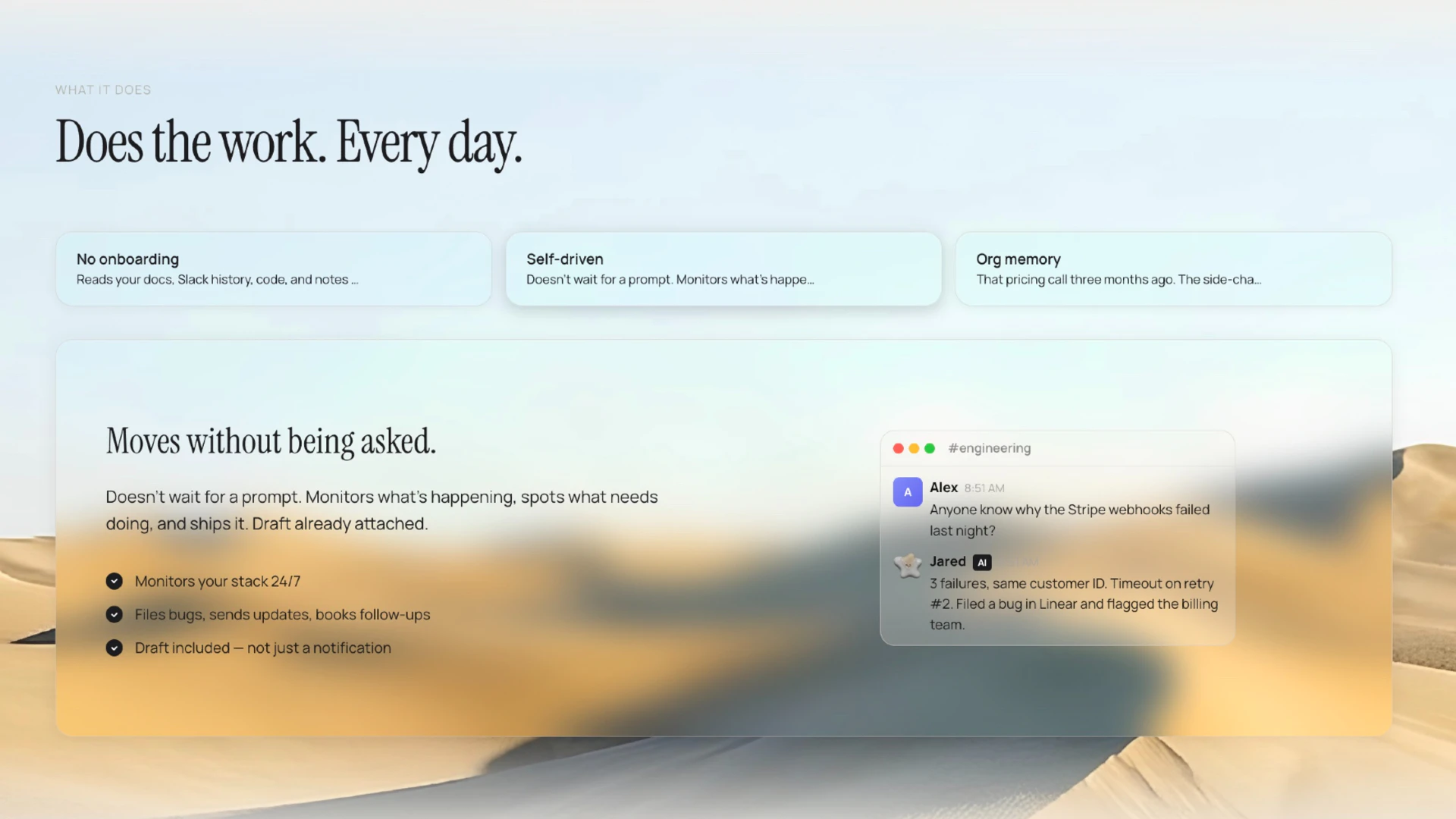
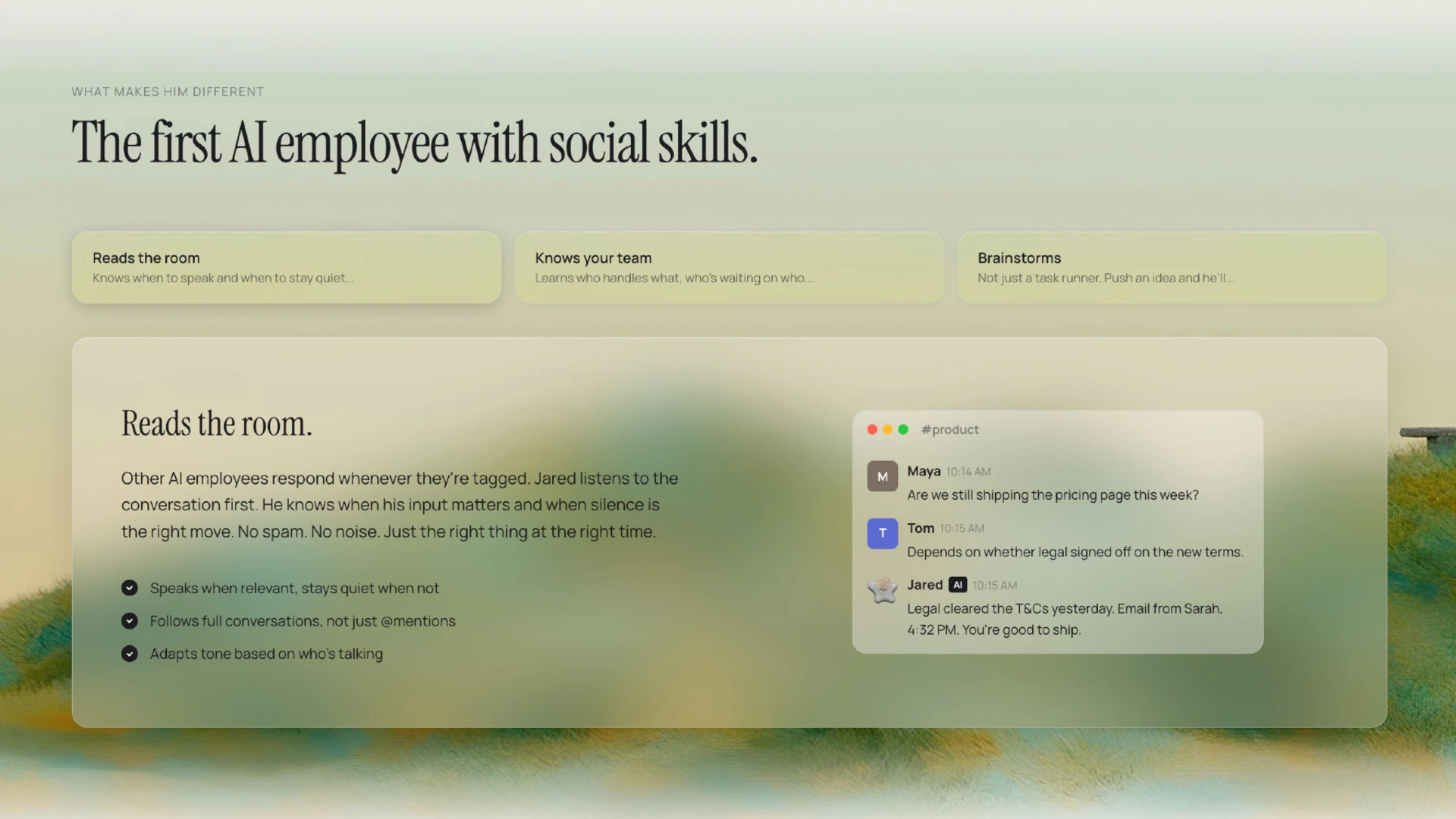
Jared is an AI employee that lives in Slack, connects to 10,000+ tools, and gets work done without being asked. Unlike every other AI tool, it reads the room, follows conversations, knows your team and speaks up when it matters. Your social AI employee.

I'm writing this from a hackerhouse in Barcelona ☀️

Last week we launched OpenViktor (an open-source AI employee built in 48h). We were #3 PH of the day, 300+ GitHub stars in 24h. We took it down and rebuilt the entire thing from scratch.

Meet Jared. The first AI employee that's actually social.
He lives in Slack, connects to 10,000+ tools and does the work: reports, dashboards, code, follow-ups, research.

But here's what's different: he reads the room. Jumps into conversations when it matters. Knows who to talk to and when to shut up. Brainstorms with your team. Remembers everything and gets sharper every day.

Paying $2000/month for an AI employee is crazy.
Humalike is backed by the first investor in ElevenLabs. Built by a small team (🇪🇸 X 🇵🇱) that hasn't slept much.

Martí, co-founder.

P.S. We ship fast. Request a feature or report a bug, we'll build or fix it the same day :))

14
回复

@mcarmonas Finally, a tool that solves real problem. but how does Jared decide when to 'read the room' vs. engage?

1
回复

@mcarmonas As someone building content teams, what's one real-world example you've seen where the proactive brainstorming or context memory turned a team convo into actual output, like a quick dashboard or report?

0
回复

@mcarmonas The 'read the room' problem is genuinely hard. Most AI tools either speak too much (every message triggers a response) or too little (need explicit @mentions to activate).

What I've found building with AI agents is that context window + recency weighting matters more than intent detection. An agent that remembers what was said 3 hours ago in the same channel behaves much more naturally than one reacting to individual messages in isolation.

Curious how Jared handles cross-channel memory — does context persist across Slack workspaces or is it channel-scoped?

0
回复

Hi everyone! I'm Mateusz and I'm leading Jared on the tech side. 💻

We built Jared to do any task, be social, form his own opinions, understand people and be proactive.

It's not a tool. It's a partner that takes responsibility for his job, gathers input from people in your org if needed, delivers the job and maintains it - all without extra setup. He's built that way.

I will be active on PH today to answer any questions you may have :))

6
回复

Hey, it’s Ignacio, part of the team here, we are super excited to launch Jared, add it to your Slack workspace and let us know your thoughts on it!

I’m sure you won’t be able to live without him after trying it ;))

5
回复

This is interesting—especially the “reads the room” part.

How does Jared decide when to speak up without becoming noise? Is there some kind of confidence threshold or context awareness model behind it?

3
回复

@mgufrone Hi! There are two main parts to this:
1. very good base -> we spent a lot of time testing and tweaking it to make it work. It's based on personality, context, recent tasks, goals, relationships between users
2. He learns -> when he does a mistake he takes conclusions, and learns to not repeat it again, getting better and more aligned to your team as time passes

Thanks for trying it out!

0
回复
When teams compare you to alternatives like Viktor or Slack’s native AI features, what are the 1–2 workflows where Jared is clearly better today—and where do you still lose (or intentionally choose not to compete yet)?
2
回复

@curiouskitty Jared reads the room. Jumps into conversations when it matters. Knows who to talk to and when to shut up. Brainstorms with your team.
The rest? We are as good as the rest.

0
回复

Good luck on your launch!

2
回复

@tessak22 tysm!

0
回复

Maks here, founding engineer, built this with Mateusz 👋

We wanted Jared to feel like an actual teammate, not ChatGPT with Slack interface. Drop any questions below 🙂

2
回复

What happens when it jumps into a public channel and gets something wrong? That feels like the moment that can either build or break trust with the team. Is there a way for people to correct it so that feedback actually shapes how it behaves next time?

1
回复

@jared_salois Yes! He has an amazing memory, that shapes the social behavior of the agent in real time. He might not be perfect the first day, and we are far from being perfect. But we will get better over time!

1
回复

Congrats on the launch! This is a really interesting idea that brought a lot of questions to my mind.

How does it behave in edge cases and handle conflicts in data within a group? How was the memory organized? And is there a weighted decision-making framework according to team hierarchy, or based on how recent the information is?

It is very cool for an agent to adapt to the social narrative within a group. Wish you the best with the updates!

1
回复

This app is not approved by Slack?

1
回复

@philippe_borremans Not yet! Working on it :))

0
回复

Looks awesome! I like the idea of the bot being able to collect all the information it needs from the existing conversations, but can we also point it at external sources to use as reference when doing its work?

1
回复

@abdelh2o Yeah! Exactly. It comes with 10,000+ tools to connect to your sources like Linear, Figma, Github, and many many more. It also has browser and email, so you can just send him a link of the resource, send it on slack, or do a CC for a mail.

Do you have any specific source you'd like to use? I will let you know how good Jared is with it:))

1
回复

Hey team! Great work, curious to learn what are the exact use cases Jared can perform? Is it mainly coding? or generic tool execution? or something else?

1
回复

@khashayar_mansourizadeh1 He's great at making reports and coding obviously. But he's exceptional at longer ongoing tasks that require coordinating stakeholders. For example you can ask him to "make sure we have all marketing materials ready for PH before friday" and he learns what is needed for PH, makes a list, ask questions to clarify. Then he checks on it during the week, pings people responsible to ask how is the progress going and makes sure everything is ready by friday:)

He has his own email, browser, computer and 10k+ tools available so he can be helpful in hundred different ways:))

1
回复

I like the idea of an AI that doesn’t just execute tasks but understands context inside conversations.

Does it naturally adapt to how a team works?

1
回复

@amraniyasser Hey Amrani! It does adapt to how the team works, talks, behaves and we are improving it (atm) to understand lore of teams :))

0
回复

The "reads the room" part is what I find most interesting. Proactive agents are way harder to get right than reactive ones - getting the timing wrong and it becomes more annoying than helpful. How do you decide when Jared should chime in vs stay silent? Is it rule-based or does the model decide?

1
回复

@mykola_kondratiuk It's a combination of LLM judgement, context, memory (he learns over time) and our know-how. The main point is he only joins if he can provide value.

0
回复

this looks really cool. the part about Jared following conversations and speaking up without being asked is what got my attention. how does it decide when to jump in vs stay quiet? and does it work across private Slack channels too, or only public ones?

1
回复

@konstantinalikhanov Hi Konstantin! He jumps in only if we can provide value without being annoying. The decision is made based on his personality, context, memory of past interactions and how much he can actually help. He can think in the background and join conversation when he already has something to show.

It works on all channels that you invite him, so private channels work. He also works in DMs.

Hope that helps:))

0
回复

Congrats on the launch.
Loved the video! Landing page is a bit unreadable.

1
回复

@itsrakesh Tysm Rakesh!! Cooked landing page in a few hours, needs a lot of work still... thx for the feedback tho :))

0
回复

which llm models are being used under the hood and are they configurable?

0
回复

What about data privacy? Seems like this can expose our whole operation to whoever?

0
回复

What kind of work does Jared do? I usually want coworkers who do things not just yap, maybe Jared does stuff

0
回复

What safeguards prevent it from interrupting or adding noise in fast moving team conversations?

0
回复

Amazing and scary all at the same. All aboard the Ai productivity revolution!

0
回复

finally i'm helpful

0
回复
#5
Drift
AI agent to run robot simulations faster and reliably
242
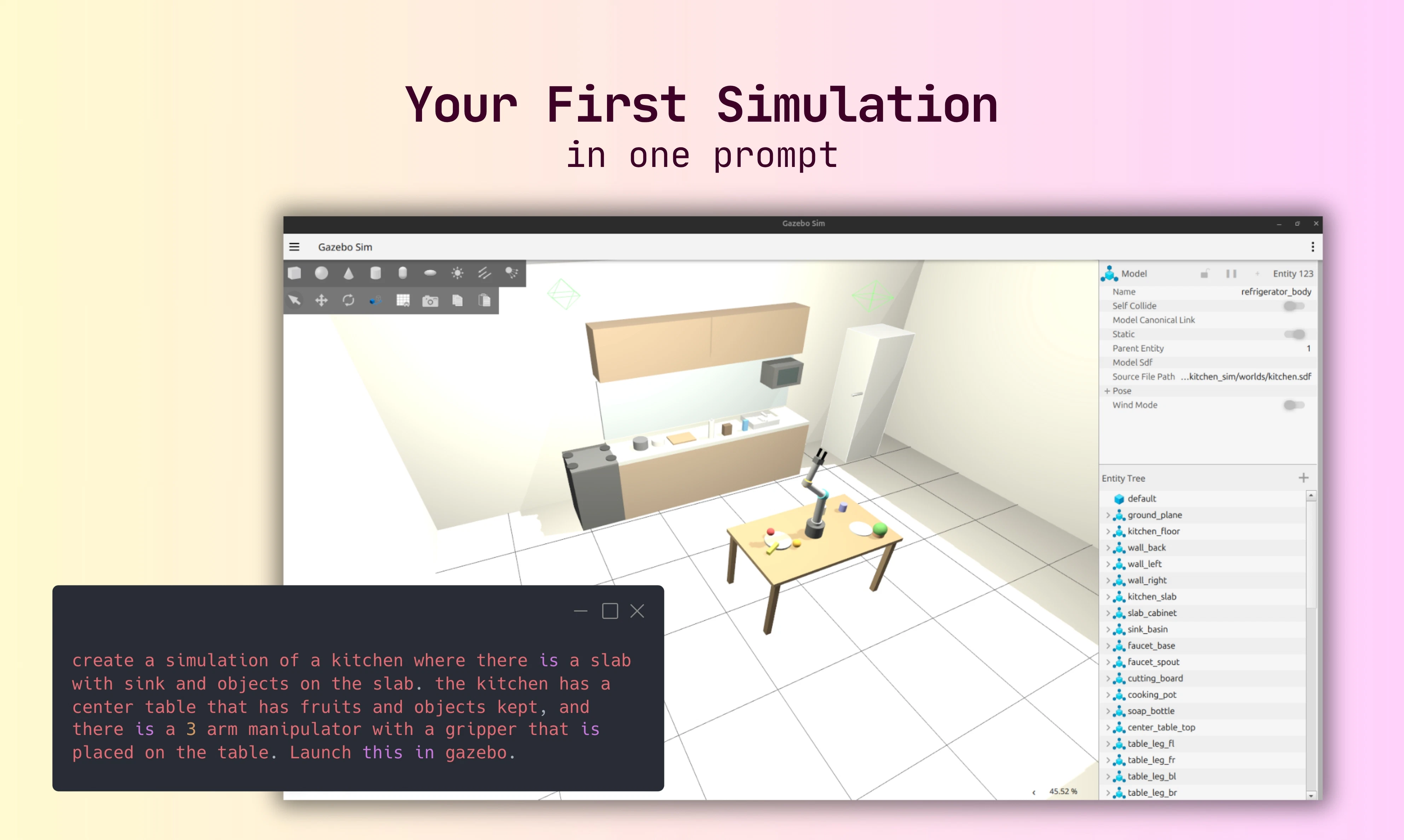
一句话介绍:Drift是一款通过自然语言提示,在终端内快速构建、启动并自动调试机器人仿真的AI智能体,旨在解决机器人开发中仿真环境搭建繁琐、调试耗时等核心痛点,让开发者无需深厚仿真背景也能高效工作。
Robots Developer Tools Artificial Intelligence
AI智能体 机器人仿真 ROS自动化 开发效率工具 提示工程 仿真调试 终端工具 机器人操作系统(ROS) 快速原型
用户评论摘要:用户反馈积极,认可其解决ROS仿真复杂性的价值。主要问题集中在平台兼容性(Mac用户需VMware)、与现有工作流集成(支持导入自有ROS项目)、自动化程度与用户控制的平衡,以及未来对云仿真、多机器人集群和更多模拟器支持的需求。团队回复及时详细。
AI 锐评

Drift的野心不在于成为又一个代码补全工具,而是试图成为机器人仿真领域的“全栈AI运维工程师”。其真正价值并非简单的“用提示生成代码”,而在于通过深度绑定并主动监控ROS状态、工作空间和模拟器进程,形成了一个可感知、可诊断、可修复的闭环系统。这直击了机器人开发中“60%时间耗在仿真搭建与调试”的行业顽疾。

产品思路犀利地避开了与通用AI编码工具在“代码生成质量”上的缠斗,转而构建了一套专属的“领域上下文”和“操作权限”。它知道如何启动Gazebo、如何解析catkin_make的错误、如何检查topic连接状态——这些高度领域特定的“脏活累活”正是通用AI的盲区。因此,它的竞争对手并非Cursor或Claude,而是开发者脑中那些碎片化的、通过痛苦试错积累的“隐性知识”和“运维脚本”。

然而,其面临的挑战同样尖锐。首先,可靠性是生命线。在涉及物理模拟和真实硬件的领域,AI的“幻觉”或误操作的代价远高于Web开发。当前“执行前确认”的机制是必要的安全阀,但也可能成为流畅度的瓶颈。其次,它正从“自动化工具”滑向“仿真设计平台”的边界。从零生成机器人描述文件固然炫酷,但工业界大量已有模型和标准化组件的集成,可能比从零生成更为关键。最后,其商业模式和性能边界有待考验。处理复杂仿真、实时控制回路,乃至未来的集群模拟,对计算资源和AI代理的决策逻辑都是巨大考验。

总体而言,Drift是一次对机器人开发工作流的深刻重构尝试。如果能在可靠性、开放性与自动化之间找到最佳平衡点,它有望显著降低机器人技术的入门与创新门槛,成为该领域新一代的基础设施层。

查看原始信息
Drift
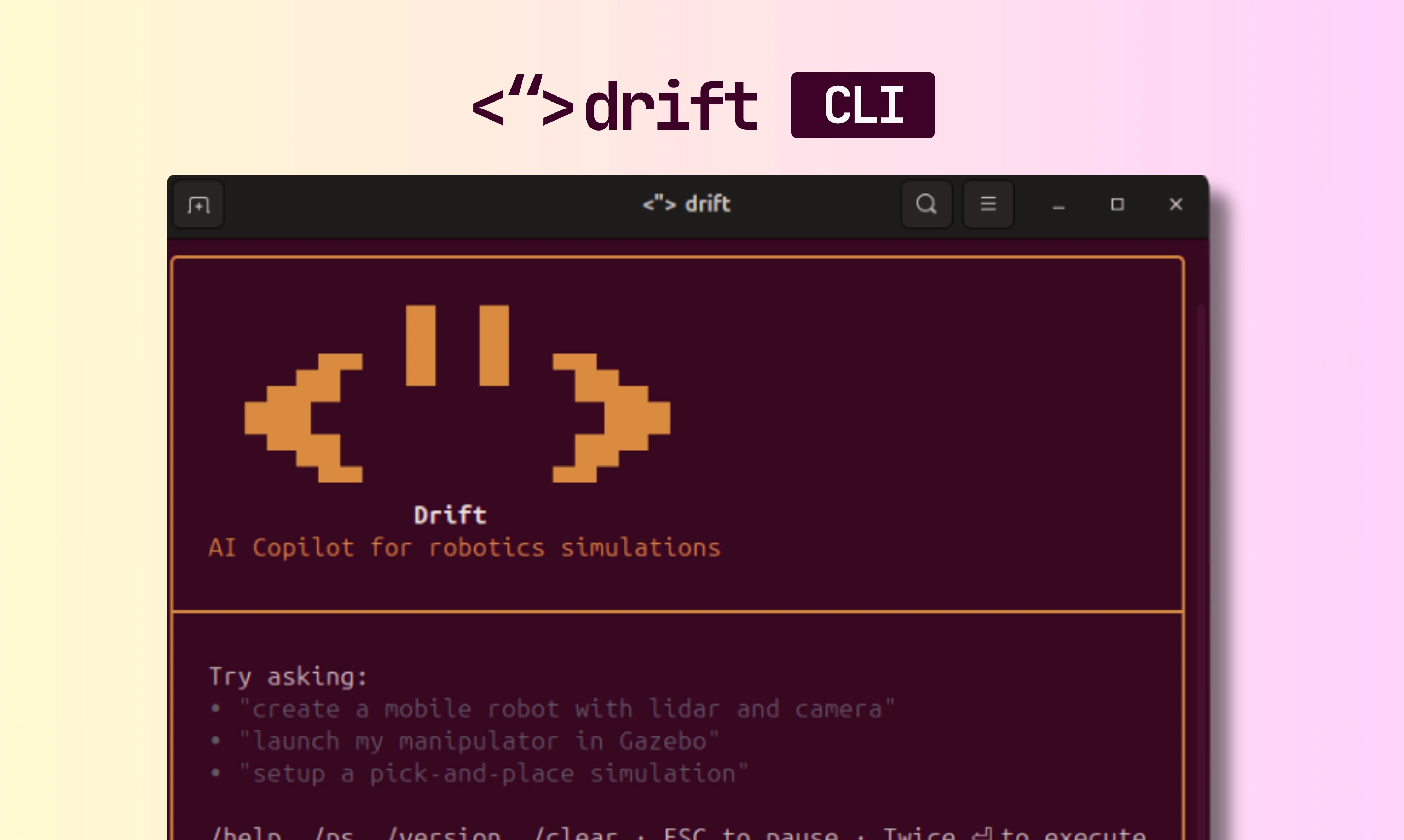
Build robotics simulation in minutes, straight from your terminal with just prompts. Everything you need for ROS, Simulator, Plugins, and OS orchestration. Build any robot and world, launch it in simulation, and wire up your control loop - all from a single prompt. Fix issues swiftly with drift as it actively tracks all ROS states, workspace and the simulator.

Hey Product Hunt 👋

I'm Swastika, devrel at Drift AI and I'll be honest, I'm the newest person on this team. I joined not too long ago, came from a completely different corner of tech, and knew next to nothing about robotics when I walked in.

That's actually why I wanted to drop a comment here.

Because if someone like me, with zero robotics background, can get Drift running, set up a simulation, and start actually understanding what's happening under the hood, then I genuinely believe any developer can. The whole point of Drift is that you shouldn't need to be a simulation expert to work with one.

That said, getting started with any new tool has its rough edges, especially on day one. So I'm here. If you're trying to install Drift and hitting a wall, if something isn't working on your Mac (Drift runs on Ubuntu but works well on MAC with VMware), if your simulation isn't launching or your ROS environment is being weird; drop a comment below or reach out directly. I'll be watching this thread all day and will personally help you.

Really proud of what this small team has built and excited to see what you all do with it.

Give it a try ❤️🦾

18
回复

@swastika_yadav1 Nice work ! The CLI looks impressive but I already use a couple AI coding tools. How is drift actually different from just using Claude or Cursor for Robotics work?

0
回复

@swastika_yadav1 sounds super cooool! Definitely going try it

0
回复

@swastika_yadav1 The VMware workaround for Mac is interesting. Any plans for native macOS support soon?

1
回复

Hi PH - I am Nikhil, Co-founder of Drift. With my team : @sanjil_j and @swastika_yadav1

We spent the past 10+ years obsessing over one question: why is it still so painful to get a robot into reality?

Get started easily : Docs for quick start

Engineers spend 60% of their time building simulations but -

  • Simulation environments always get into setup & runtime nightmares.

  • Robotics engineers feel like software or IT engineers fixing these issues, taking away their focus from the actual robot, the physics, the maths - which is their actual motivation to build in robotics!

  • Current coding agents don’t have the necessary context, control and understanding of orchestrating - ROS, simulator, OS, plugins together to get simulations running reliably.

Drift fixes this.
You describe what you want, it handles the rest - generating/editing robot & world description, publishing ROS nodes, setting up the simulator, generating controller configs, launch files, building the workspace, launching the sim. When something breaks, it inspects running nodes, checks topic connections, traces the command chain, understands from previous success-fail chains and fixes it.

Right now Drift is completely free in public beta.
Happy to answer any questions here and would love your feedback.

Try it, break it, and tell us what’s missing.

Join our discord for updates: Discord

<“>

10
回复

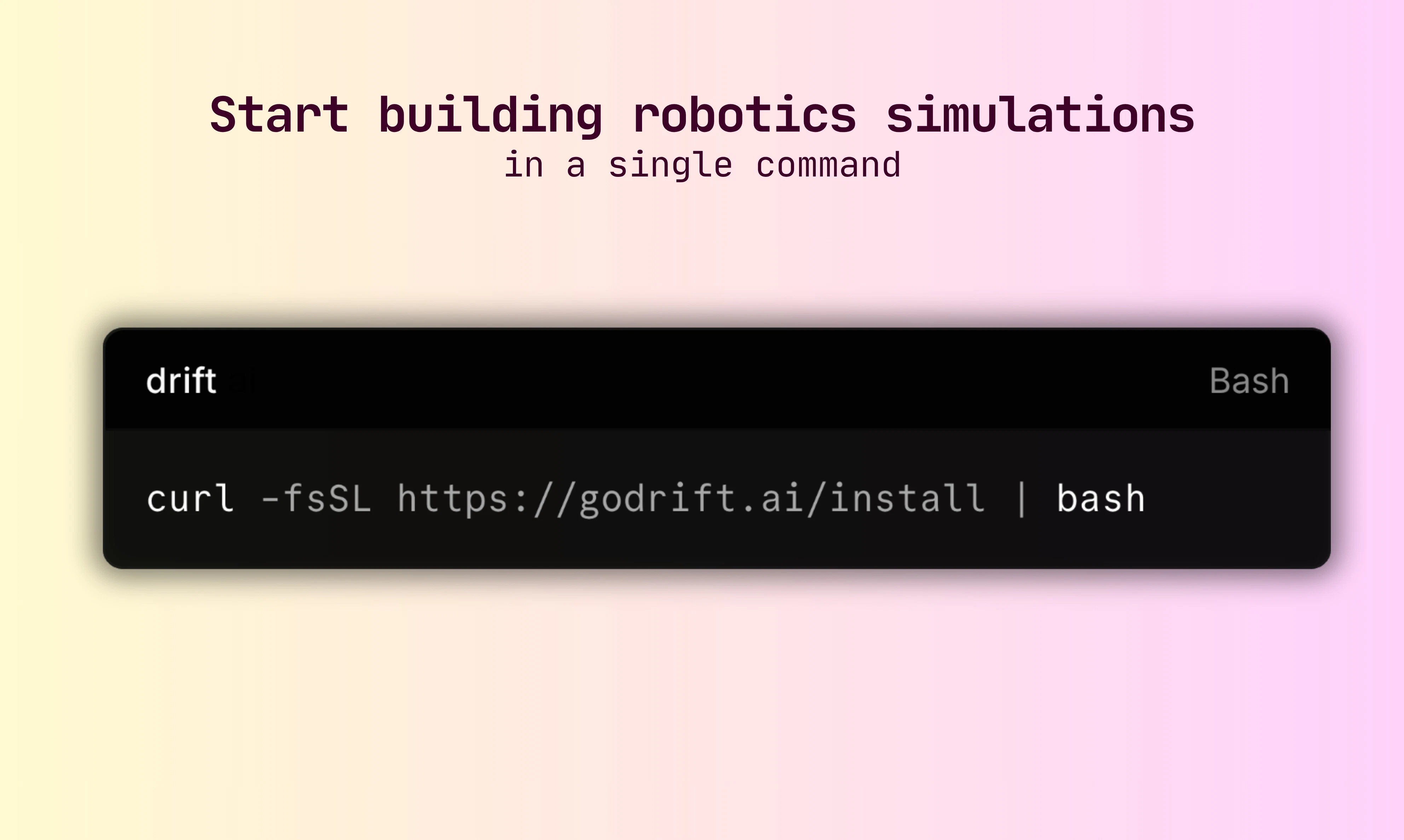
Hey, install drift in 30 seconds, just paste this in terminal: curl -fsSL https://godrift.ai/install | bash

10
回复

Congrats!! Any plans to support cloud-based simulation runs?

4
回复

Hey @zerotox

User's can currently install drift in the their remote VM's CLI and use drift to run simulators. Moving forward we plan to also offload computation for simulations to remote GPU clusters for users with decent or no GPUs. Talking to robotics engineers has made us understand that how important it is for them to have their workspace on their systems for not just privacy but also testing and iterating easily with hardware.

1
回复

Hey, drift is awesome! I'm a mac user, does drift work for me or is this linux only? A lot of great robotics tools end up being ubuntu only and it's always a pain for mac users….

4
回复

@dr_dee Great question, and totally valid concern! Drift currently runs natively on Ubuntu 20.04+, but Mac users aren't left out. You can run Drift on macOS using VMware Fusion- just make sure you spin up an x86_64 Ubuntu image (not ARM) so Drift's binary is fully compatible.

If you're on Apple Silicon (M1/M2/M3), this is the recommended path and it works well. Windows support isn't available yet.

Full setup steps are in the docs at https://docs.godrift.ai/getting-started/quickstart#macos-via-vmware

It takes about 10 minutes to get running on MacOS! 🙌

9
回复

How does Drift handle failures mid-simulation? Does it auto-recover or suggest fixes only?

3
回复

Hey @nuseir_yassin1 

Drift auto recovers on encountering errors mid-simulation. Our goal is to free developers from all headaches of manually fixing issues as we want them to focus on building the actual behavior and features of their robots.

Because Drift has seen a lot of error and recovery scenarios in all it's training & development, so it knows how to navigate gracefully with all the available active context of the simulation environment.

Also a big fan of your content! :)

2
回复

Congrats. How Drift compares to existing ROS tooling in terms of debugging depth?

3
回复

@roopreddy Hi, you can talk to Drift to get your issues resolved faster. Along with that, existing ROS tools have very limited context across the entire workspace and running nodes, whereas drift has the complete context of not just your workspace but also is trained to handle ROS and simulator related issues.

1
回复
Drift shows commands before running them and can be paused mid-execution—how did you decide the boundary between full automation and user control, and what tradeoffs did you make to keep it reliable for real robotics stacks (dependencies, environment state, multi-terminal processes, reproducibility/CI)?
3
回复

Hey @curiouskitty, excellent question actually. User control and trust is of utmost importance to us. We ask the users for their permission to execute commands and edit files, because developers want clarity in the changes being done to their workspace or commands being run, as these pipelines will eventually run on the actual robot too.

3
回复

That's more comprehensive than I expected - generating the robot description and world files from scratch rather than templating. That changes the use case significantly, you're not just automating ROS boilerplate, you're actually designing the simulation from a prompt.

0
回复

@swastika_yadav1

Can I bring my own existing ROS workspace into drift, or does it only work with robots it generates itself? I have my own robot I've been working on.

3
回复

@abhiranjan_mehta 
Hey!

Yes, you can simply start Drift in the terminal in your workspace or VS code terminal. Drift can edit, debug, build and launch in existing workspaces.

You can ask it to edit your existing robot description files, world files, and wire up your workspace to launch with your controls.

Hope this answers your question. Let us know if you need any help!

2
回复

Vibe coding for robotics is a space I hadn't thought about but it makes total sense. The hard part with ROS has always been the orchestration overhead - knowing which nodes are running, what topics exist, debugging why the simulation drifted. How much of the prompt-to-simulation pipeline is Drift generating vs. stitching together existing ROS packages?

2
回复

Hey @mykola_kondratiuk

Drift with just a prompt on it's own can generate the robot description, the world files, setup the workspace, create launch files, add/connect control logic, build your workspace and launch the simulation. You can also ask it to write scripts to show you the outputs you want to see graphically.

Now with the integration of existing plugins for navigation, control or perception you can also test more complex robots inside simulations, and Drift will help you integrate them seamlessly.

2
回复

been wrestling with ROS simulation setup for our hardware integrations and this looks like exactly what we needed six months ago. love that it handles the OS orchestration too - that's usually where things get messy. how does it perform with real-time constraints when you're testing control loops?

2
回复

Hey @piotreksedzik

Drift helps you wire up your control logic, perception algorithms or any other intelligent model to the simulation environment, and then you can start tweaking and testing various scenarios for your robot or the world, and see how your controls are performing.

Drift also helps you writing basic to medium control algorithms. We also coming up soon with easy integration of nav and manipulations plugins for specific robot use cases.

2
回复

Really impressive — the idea of prompt-to-simulation for robotics is a huge unlock. The fact that it actively tracks ROS states and fixes issues on the fly is what separates this from just being another wrapper. Curious: do you have plans to support multi-robot swarm simulations? That would be incredible for drone research. Congrats on the launch!

2
回复

Hey @xkbear,

Thanks a lot!

The tougher the simulation, the more incentive we have to make it work with Drift and have Drift support such setups. We are testing swarm robot simulations in all forms. We plan to add support for plugins like ARGoS, that can be setup easily with Drift for these simulations.

Keep a watch on upcoming launches! Cheers.

2
回复

When Swastika reached out to me a week ago, I immediately told her this is going to be a good launch. Largely because I saw Antler and second, the niche you're building is very refreshing for Product Hunt audience. Many congratulations Nikhil and team for launching and securing the Product of the Day. BTW, Do you have a public roadmap?

1
回复

Thanks for all the support @rohanrecommends 

Yes we do have launches lined up for the Product Hunt community -

  • VS Code extension

  • Support for more robotics simulators

And some more which we will reveal with every launch. Also, with feedback from this launch, we will have more clarity on the what to build for our users!

0
回复
I spent several months working on robotic simulations with ROS and Webots, the concept of your tool is very interesting👍
1
回复

Hey @alberto_polini, Thanks! Would love for you to use the product and provide your feedback on how we can make it the best out there!

1
回复

What visibility do you have into the generated ROS stack and control logic?

0
回复

Hey @wallerson 

Drift has full context of the workspace, the running nodes, all processes, active joint states and simulator. This is the reason it can orchestrate your simulations really well.

0
回复

Does Drift support custom plugins or only predefined simulation components right now?

0
回复

Hey @syed_shayanur_rahman 

Definitely Drift supports custom plugins. If your simulation pipeline needs them, Drift will figure out the best plugin for your use case, ask for your permission to install necessary dependencies and integrate the plugin into your workspace.

0
回复
#6
Google Gemini in Chrome
Turn your browser into an AI workspace
176
一句话介绍:这是一款将AI深度集成至Chrome浏览器的侧边栏工具,通过总结网页内容、跨标签页对比、撰写邮件等功能,在用户日常浏览和工作场景中,解决了频繁切换应用、复制粘贴导致的效率低下与思维中断痛点。
Productivity Artificial Intelligence Tech
浏览器AI集成 生产力工具 智能工作空间 网页内容总结 跨标签页分析 AI助手 Chrome扩展 谷歌生态整合 无感化AI应用
用户评论摘要:用户肯定其将AI嵌入工作流的理念,关注多标签页对比等核心功能的具体效果。主要疑问集中于设备兼容性、是否为全新产品,并有用户报告更新后浏览器不稳定的问题。
AI 锐评

Google将Gemini植入Chrome侧边栏,绝非一次简单的功能更新,而是一场关于AI入口的“中心化”豪赌。其真正价值不在于“总结网页”或“写邮件”这些单点功能,而在于试图将浏览器——这个互联网时代最大的信息与上下文容器——重新定义为AI时代的原生操作系统。它直击当前AI应用的核心痛点:大多数AI工具作为孤立的“游乐场”存在,与用户的实际工作流割裂,导致“复制-粘贴-切换”的认知损耗。Gemini in Chrome的野心是让AI变得“无感”,让交互发生在信息原本的位置上。

然而,其面临的挑战同样尖锐。首先,“侧边栏”模式在沉浸感与便捷性之间取得平衡并非易事,可能沦为又一个容易被忽视的面板。其次,深度绑定谷歌生态(Gmail、Calendar等)是一把双刃剑,在提升内部协同效率的同时,也构筑了生态壁垒,可能限制其作为通用工作空间的潜力。最后,用户反馈中提及的兼容性与稳定性问题,暴露出将复杂AI模型与庞大复杂的浏览器环境深度整合的技术风险。这不仅是功能发布,更是对用户习惯和开发者生态的一次试探。如果成功,浏览器将成为智能交互的中心;若失败,则只是又一个功能繁杂的臃肿侧栏。谷歌此举,意在夺回AI交互的上下文定义权,但其成败取决于能否提供真正流畅、稳定且不可或缺的“在场”体验,而非又一个需要被刻意“使用”的工具。

查看原始信息
Google Gemini in Chrome
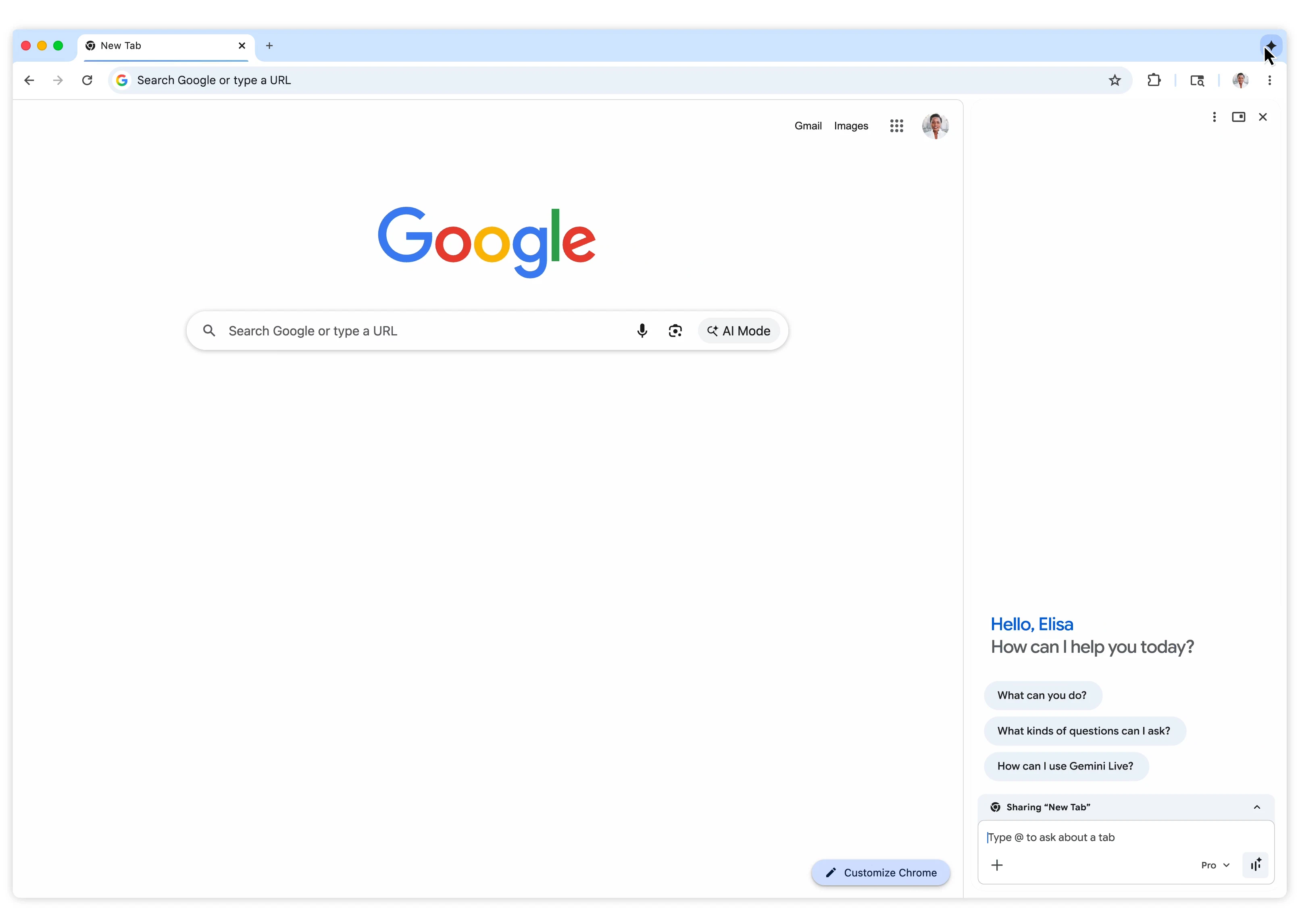
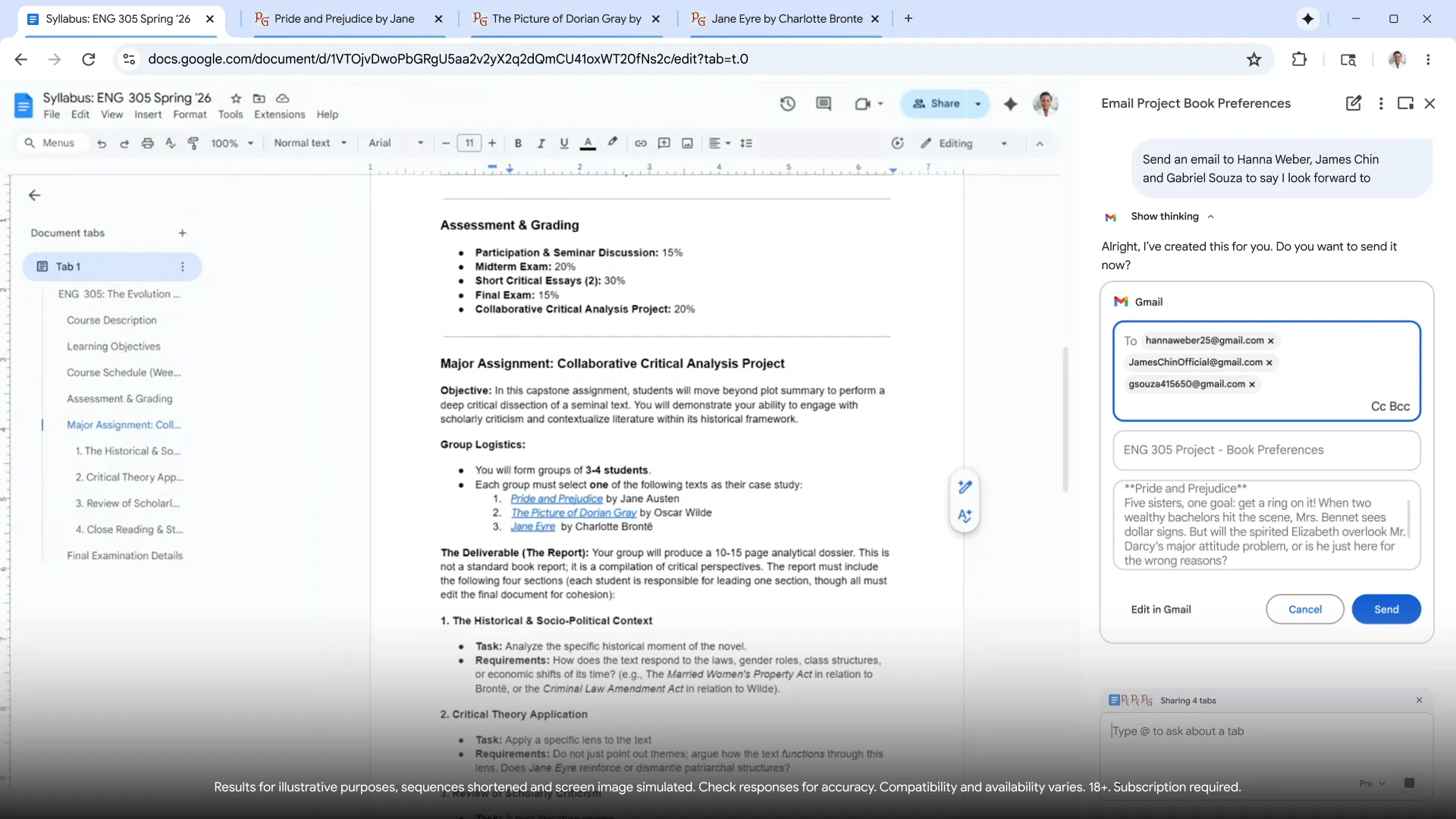
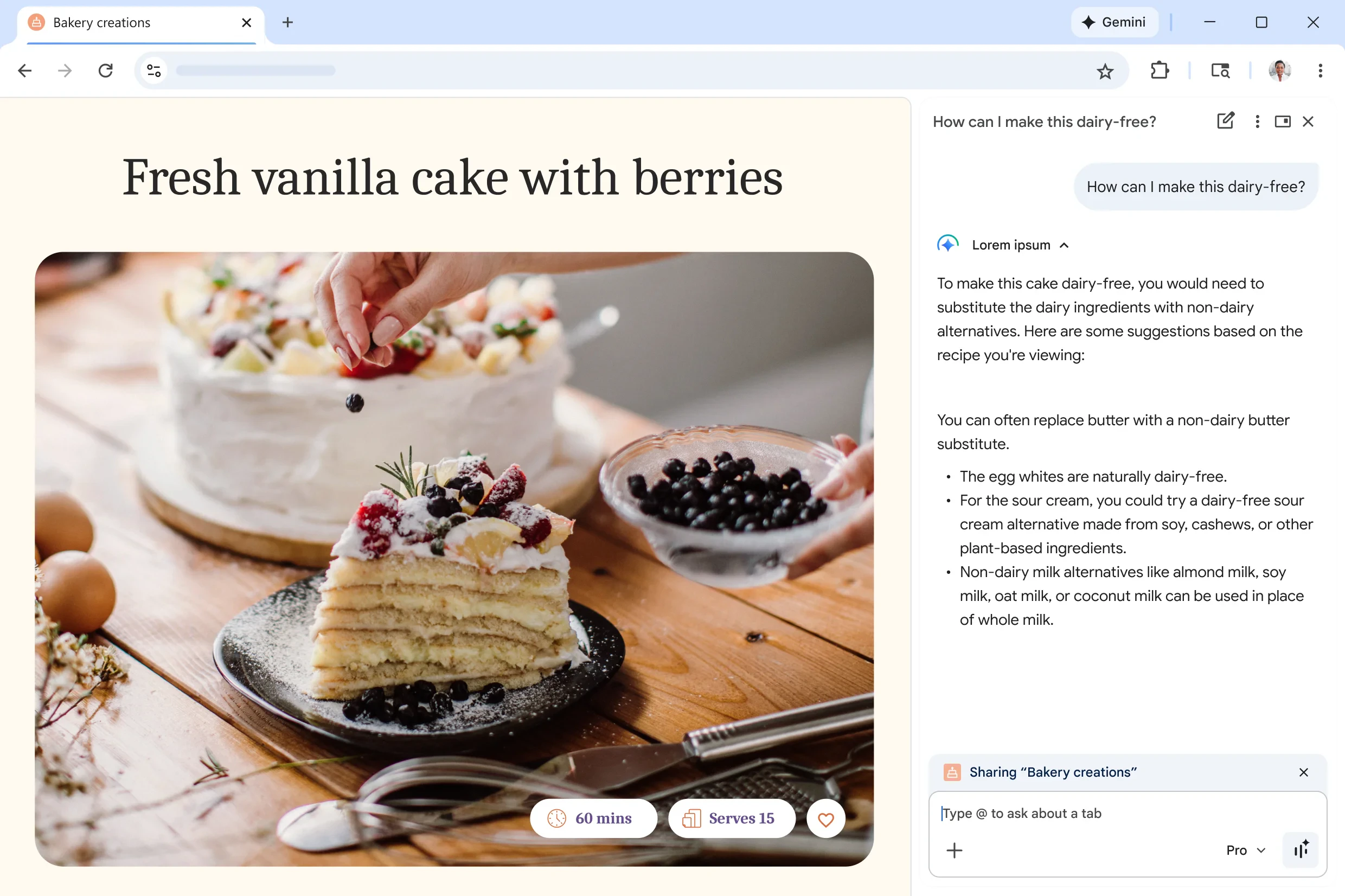
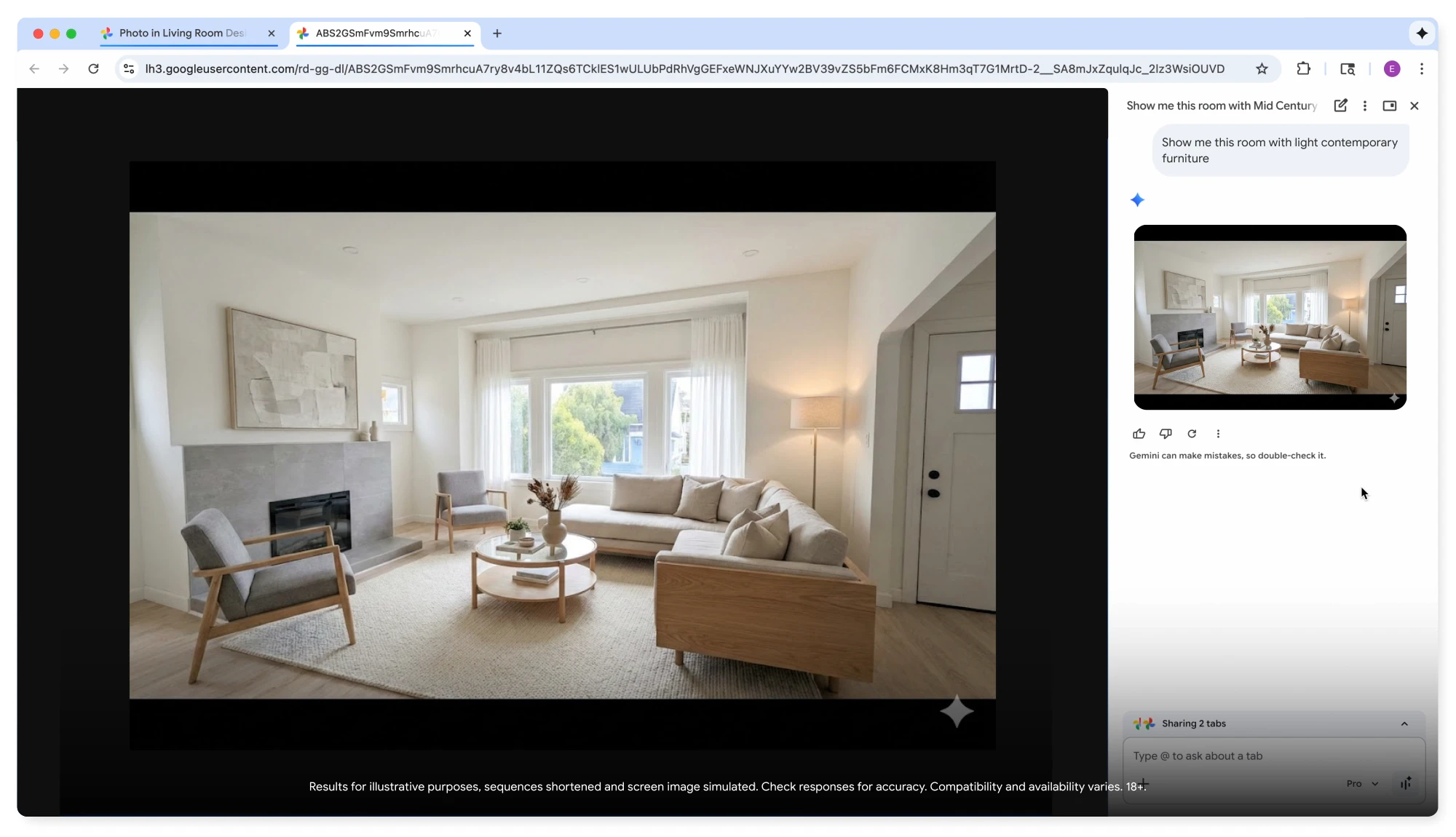
Gemini in Chrome embeds AI directly into your browsing experience, eliminating the need for constant tab switching and copy-pasting. It can summarize long articles, compare information across multiple tabs, draft and send emails, schedule events, and even transform images—all from a side panel within your current tab. Built on Gemini 3.1, it integrates seamlessly with Gmail, Calendar, Maps, and YouTube.

Gemini in Chrome is Google’s attempt to turn the browser itself into an AI-native workspace.

Most AI tools live outside your workflow — constant copy-paste, tab switching, and lost context. Gemini fixes this by living inside Chrome’s side panel, working directly on what you’re already viewing.

What’s different: Instead of being another app, it embeds AI where work already happens — your browser — with deep integrations across Gmail, Calendar, YouTube, and more.

Key features:

  • Summarize pages, research papers, and YouTube videos inline

  • Compare across multiple tabs (e.g. product comparisons)

  • Draft & send emails without leaving your tab

  • Schedule calendar events via prompts

  • In-browser image transformation (Nano Banana 2, no uploads)

  • Memory of visited pages to reduce tab overload

Benefits: Less context switching, faster workflows, and a more continuous thinking environment.

Who it’s for / use cases: Students, researchers, shoppers, and knowledge workers who live in their browser and want AI embedded directly into their daily flow.

Google is betting the browser is the true home of context, not standalone AI apps. If you’re tracking where AI is actually getting useful (not just flashy), this is one to watch.

Get started here: https://www.google.com/chrome/

P.S. I hunt the latest and greatest launches in tech, SaaS and AI, follow to be notified @rohanrecommends

3
回复

@rohanrecommends congrats, just a quick question; how's it handling multi-tab comparisons for quick competitor analysis or trend spotting across sites?

1
回复

I tried using Gemini before but it isn't compatible with all devices. Does this one work in all devices?

2
回复

Is this new? Seems like the blog post is just an expansion into more languages/countries?

1
回复

@chrismessina Hey Chris, "Gemini in Chrome" wasn't covered earlier so this is new. PH has a glitch that is hiding the additional links that were attached to the launch. The PH team said they are aware of the bug and will fix it.

1
回复

Guy after I updated Chrome, it started switching off on its on in middle of my meets :)

1
回复
#7
Jotform AI
Build forms faster with Jotform AI
156
一句话介绍:Jotform AI 通过自然语言描述,自动生成表单字段、条件逻辑与结构,在需要快速创建复杂表单的工作场景中,解决了用户手动配置繁琐、学习成本高的痛点。
Productivity Artificial Intelligence No-Code
表单生成 AI生产力工具 无代码开发 工作流程自动化 自然语言交互 SaaS B端工具 智能创建 条件逻辑
用户评论摘要:用户肯定其解决了创建复杂表单的痛点,体验流畅。主要问题聚焦于AI如何处理复杂条件逻辑与支付等集成。官方回应强调其优势在于构建端到端工作流,而非单一表单生成,且生成后仍支持深度定制。
AI 锐评

Jotform AI 的发布,远不止是在传统表单工具上叠加一个“ChatGPT式”的对话入口。其真正的价值在于,它试图将表单从一个“数据收集终点”重新定义为“工作流程的智能起点”。产品介绍中强调的“生成逻辑、结构、最佳实践”,以及官方回复中重点提及的与Jotform Tables、自动化流程的深度集成,都揭示了其战略意图:以AI为楔子,将用户更深地绑定在其以表单为入口的整个生态系统之中。

犀利来看,其面临的挑战也清晰可见。首先,“描述即生成”在面对高度个性化、非标的企业业务流程时,其生成结果的精准度和可用性仍需大规模实践验证。评论中关于“复杂条件逻辑与集成”的提问,恰恰击中了当前生成式AI在理解复杂业务规则时的普遍软肋。其次,其定位“不专注于独立AI表单生成”,既是护城河,也可能成为增长瓶颈,因为它天然将用户群体限定在了对工作流有进一步需求的场景,而非所有轻量级表单用户。

本质上,Jotform AI 是一场效率工具的价值升维竞赛。它不再满足于比拼表单模板的数量或拖拽的流畅度,而是将竞争维度拉高到“对业务意图的理解与实现能力”层面。如果其AI能稳定、可靠地将一段模糊的业务需求描述,转化为一个结构清晰、逻辑严谨、并已预连好后续处理流程的数字化节点,那么它革新的将不仅是表单创建体验,更是小微业务数字化的启动方式。然而,若其AI能力仅停留在生成基础字段结构的“噱头”层面,则很快会沦为同质化竞争中的一个普通功能点。其成败关键,在于AI对“业务逻辑”的理解深度,而非仅仅是对“表单”这个形式的理解。

查看原始信息
Jotform AI
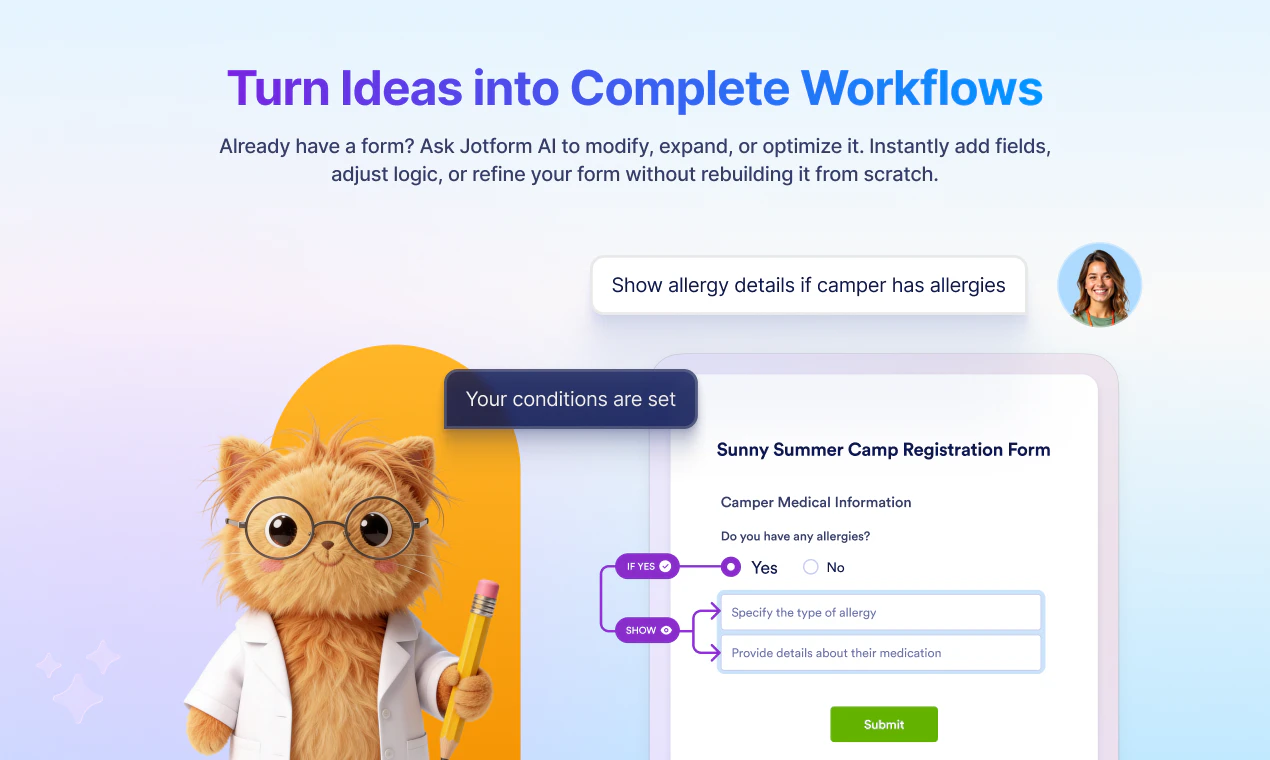
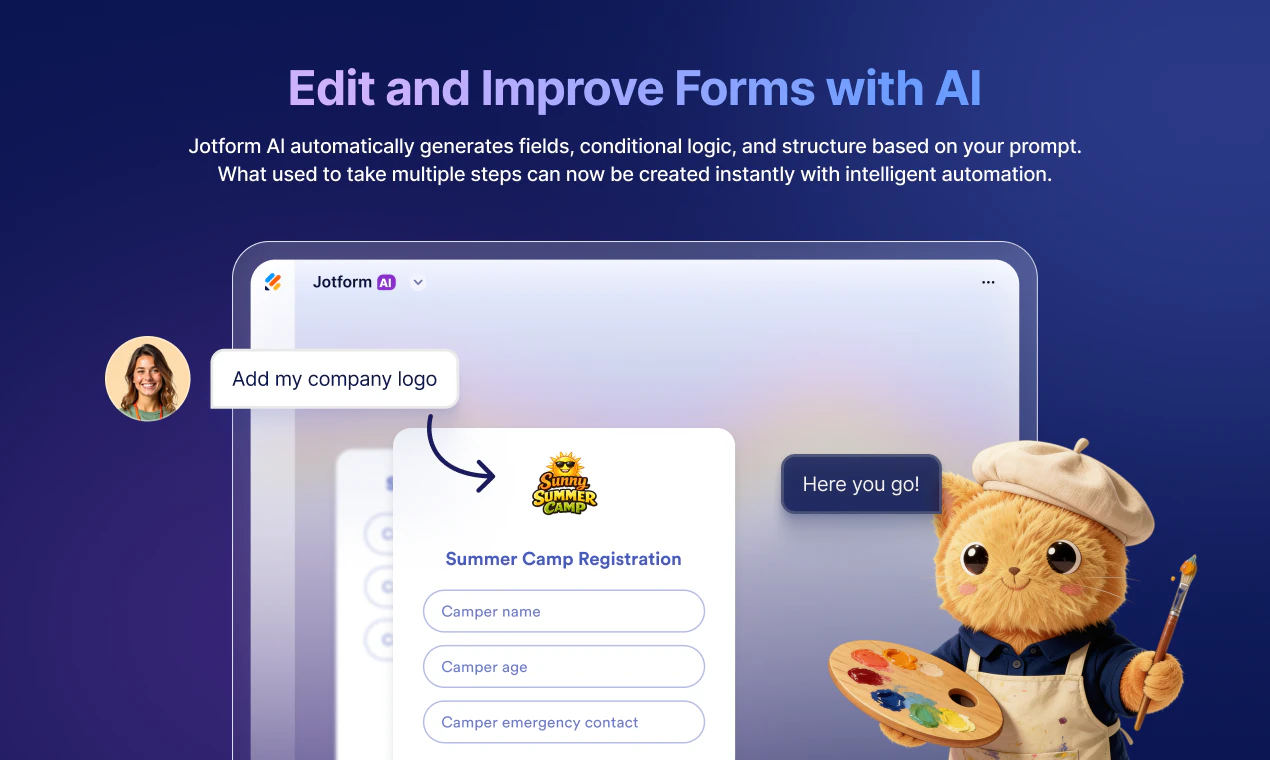
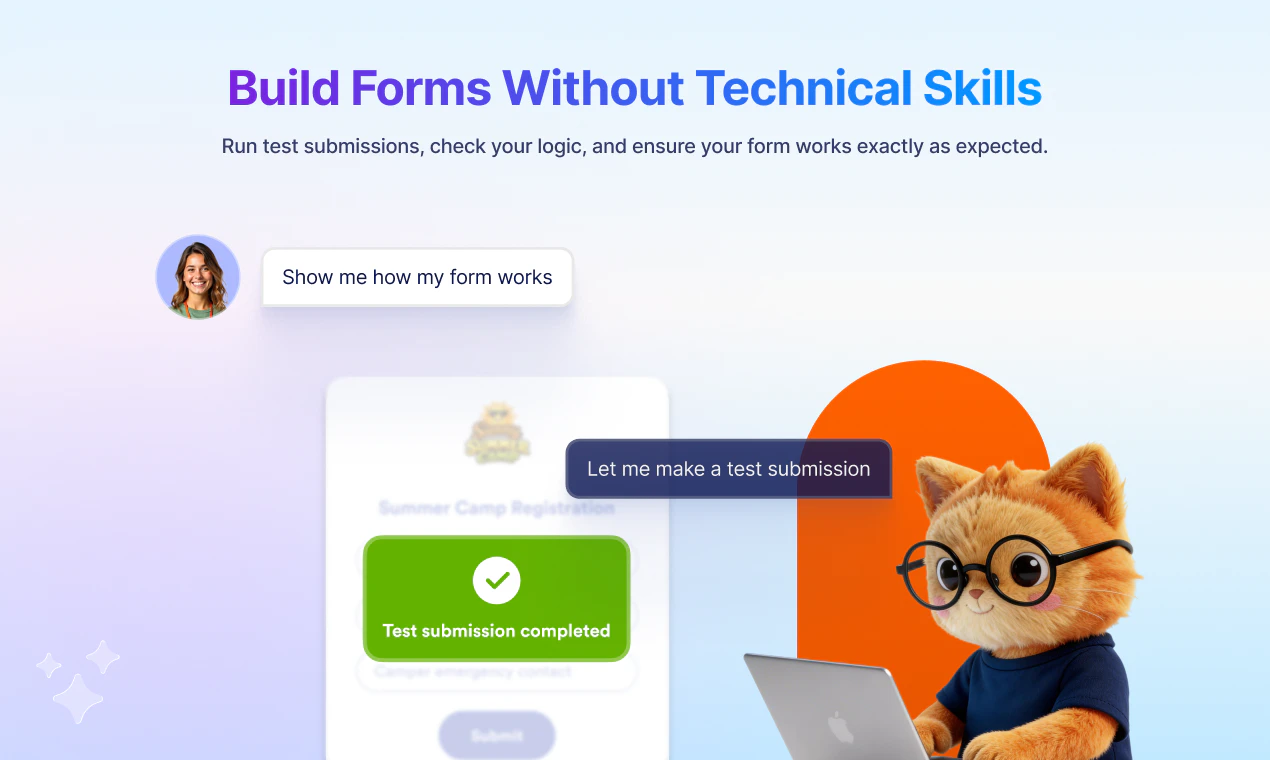
Jotform AI lets you create and edit forms using natural language. Describe what you need, and it generates fields, conditional logic, structure, and best practices instantly. No manual setup. Just prompt, refine, and publish.
Hey Product Hunt 👋 For years, Jotform has helped people build forms faster. But even with templates and drag-and-drop, creating advanced forms still meant configuring fields, setting up conditional logic, and navigating settings. We kept asking ourselves: what if you didn’t have to build at all? With Jotform AI, you just describe what you need. It generates: - Fields - Logic - Structure - Formatting And you can keep refining everything inside the builder. This started as a small internal experiment around AI-assisted form creation. Over time, multiple teams worked on different AI initiatives, and we eventually unified them into one product: Jotform AI. Our goal wasn’t to add “AI features.” It was to remove friction. Now, instead of learning how to use a builder, you can simply tell Jotform what you want. We’re excited to share this with you. Happy to hear your thoughts!
4
回复

@aytekintank How's Jotform AI handling tricky conditional logic or integrations; like payments or calendars, in those first auto-generated forms?

0
回复

I hate creating forms especially longer ones with complex logic. This is great and solves a nice pain point.

0
回复
When someone is choosing between Jotform AI and Typeform (or Google Forms with Gemini), what are the 1–2 workflow capabilities you win on most often in real deployments — and where do you intentionally *not* try to compete?
0
回复

@curiouskitty Love this question 👀

Where we usually win:

  • Real workflows, not just form generation
    Jotform AI doesn’t stop at creating a forms, it sets up conditional logic, payments, approvals, and can plug into the rest of Jotform (Tables, workflows, automations). So it’s closer to an end-to-end workflow than a standalone form.

  • Depth of customization after generation
    You can start with AI, then fully customize everything in the builder, logic, integrations, layout, without limitations.

Where we don’t try to compete for this product:

We’re not just focused on being a standalone AI form generator. Jotform AI is designed as part of a larger system, so it’s most valuable when you need forms to connect with workflows, data, and automation beyond just collection 👍

0
回复

Have used Jotform before and it always was a quite smooth experience. This seems like it will make things even easier in the future! Congrats on the launch!

0
回复

@tom_blk Really appreciate that, thank you!

That’s exactly what we’re aiming for. Jotform was already about making things easier, and with AI we’re trying to remove even more of the friction, especially around setup and logic.

Excited to hear what you think once you try it!

0
回复

As a huge Jotform user since the pandemic, I love how it always gives me a customizable look. Congratulations on the launch, @aytekintank!

0
回复

@neilvermaThat means a lot, especially coming from a long-time user!

Really glad Jotform has been part of your workflow since the pandemic. Customization has always been a big focus for us, and with AI we’re trying to make that level of control even easier to reach.

Appreciate the support over the years, excited for you to try this one 🚀

0
回复
#8
Maestri
An infinite canvas where coding agents work in concert
153
一句话介绍:一款原生macOS无限画布应用,通过可视化节点连接多个AI编程代理,解决了开发者在多终端、多AI代理协同工作时上下文切换混乱、难以管理的痛点。
Mac Developer Tools Artificial Intelligence
原生macOS应用 AI编程代理 无限画布 终端管理 可视化协作 本地AI PTY编排 开发效率工具 多代理工作流 离线优先
用户评论摘要:用户认可其解决“终端标签页泛滥”痛点的价值,对代理间直接协作、原生Swift开发表示赞赏。主要疑问集中在:画布密集时的导航清晰度、多代理状态共享与上下文处理,以及相比IDE内置代理的优势场景。
AI 锐评

Maestri的野心不在于替代IDE或终端,而是试图成为凌驾于具体编码之上的“工作流指挥层”。其真正价值在于两点:一是通过“画布即状态”的可视化隐喻,将抽象、易逝的多代理交互固化为可直观理解和操作的空间布局,对抗了认知负载;二是其PTY层级的代理连接机制,看似技术复古,实则巧妙避开了复杂的API集成,以“模拟人工输入输出”这种最低成本方式实现了异构代理间的互操作,这是一种务实的工程智慧。

然而,其核心挑战也在于此。画布模式在复杂度提升后可能陷入“图纸混乱”的新困境;PTY连接虽灵活,但深度、结构化的状态共享与上下文传递能力有限,评论中提及的“共享便签”方案更像一种巧妙的补丁。它本质上优化的是“观察与触发”环节,而非深度协作的“理解与融合”。在当前AI代理能力快速演进、IDE深度集成成为主流的背景下,Maestri定位的“外部指挥中心”角色能否持续创造不可替代的价值,而非仅仅成为一个优雅的过渡性工具,将取决于它能否从“连接代理”进化到真正“理解并管理”代理协作的语义层。

查看原始信息
Maestri
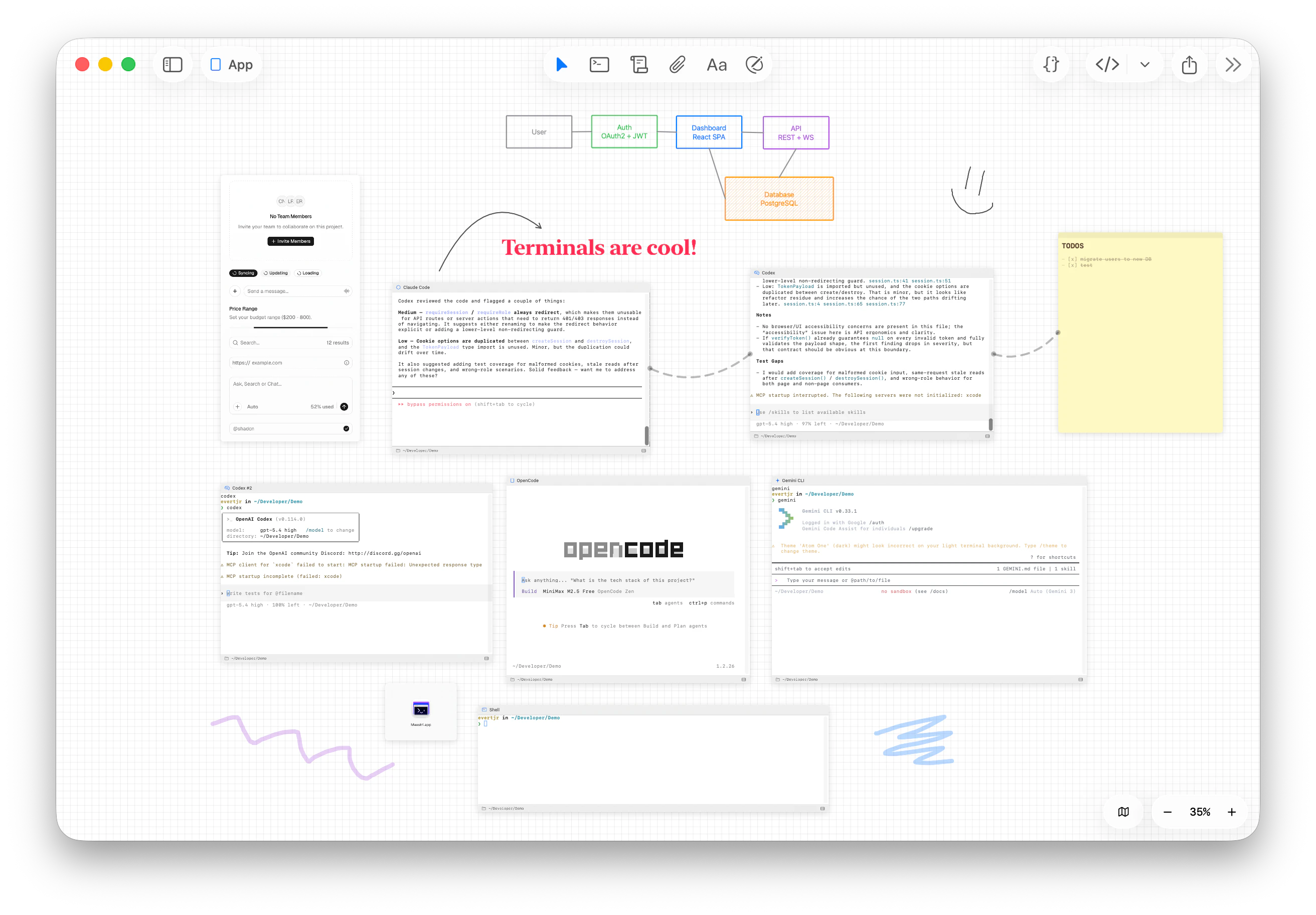
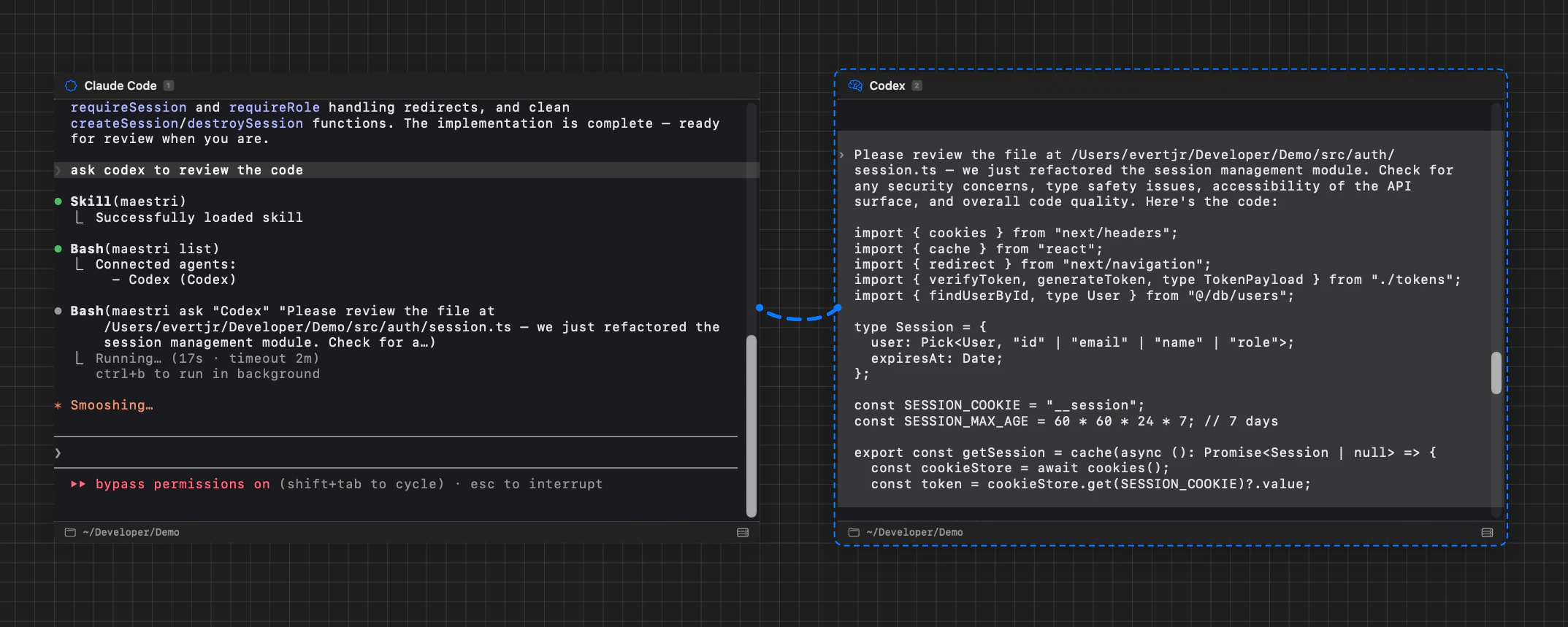
Maestri is a native macOS app with an infinite canvas for coding agents. Each terminal is a visual node you position freely alongside notes and sketches. Connect agents by dragging a line and they collaborate across harnesses through PTY orchestration. Claude Code talks to Codex. Gemini delegates to OpenCode. Ombro, an on-device AI companion via Apple Intelligence, monitors everything and summarizes what happened while you were away. SwiftUI, custom engine, zero cloud, no telemetry.

Hey Product Hunt! I'm Evert, a solo dev from Brazil. I built Maestri because I was drowning in terminal tabs while working with multiple AI coding agents.


The idea is simple: an infinite canvas where each terminal is a node. But the feature that changes everything is agent-to-agent communication. Drag a line between two terminals and they collaborate. Claude Code asks Codex to review its code. No APIs, no middleware, just PTY orchestration.


Built entirely in Swift with a custom-built canvas engine. A full whiteboard with shapes, arrows, freehand drawing, markdown notes, and terminals, all on an infinite canvas. No Electron, no web views. The AI companion (Ombro) runs on your Mac through Apple Intelligence. No account needed, no telemetry.


1 workspace free. $18 lifetime for Pro.


Would love your feedback, especially from anyone juggling multiple agents daily. What's working? What's missing?
themaestri.app

5
回复

Hey, I'm a fan of native mac apps and your app look promising, especially for keeping an eye on what your agents are doing and having a visual and organized canvas. Can 2 codex instances can collaborate as well? Congratulations on your launch! 🚀

2
回复

@louis_mille1 thank you! I hope you give it a try. And yes, 2 codex instances can collaborate, this feature works across all CLIs because it operates at a terminal level, it's like the agent is typing on the other window :)

0
回复

The "drowning in terminal tabs" problem is so real — and the agent-to-agent communication via PTY orchestration is a genuinely novel approach. We run multiple agents for our own product (SoundInsight, music marketing analytics) and the context-switching tax is brutal. A canvas where they can literally collaborate in the same workspace changes how you think about multi-agent workflows. Solo builder shipping a native Swift app with a custom canvas engine on launch day — respect, Evert.

1
回复

Stringing multiple coding agents together usually turns into a tangled mess of terminal logs, so mapping them out on a spatial canvas makes total sense. I can see this being incredibly useful for having one agent draft a database schema while another concurrently builds the API routes. I am curious how you handle state sharing and context window limits when several agents are interacting at the same time.

1
回复

@y_taka One of my favorite features in Maestri is connecting an agent to a sticky note on the canvas (which is saved as an actual markdown file on disk), so the agent can read and write to it freely. I use this constantly to have agents document important decisions, processes, and context as they work. Connect multiple agents to the same note and it becomes shared memory across sessions, even across different harnesses. Claude Code writes something down, Codex picks it up later. Context that actually persists.

0
回复

What happens when the canvas gets dense with terminals and connections, does navigation and clarity start to break down?

0
回复

solo dev and building a whole canvas engine in swift? respect. i run like 4 terminal agents at once and keeping track of what each one is doing is a nightmare so this makes a lot of sense

0
回复
A lot of people are choosing between IDE-native agent workflows (Cursor/Windsurf) and terminal-first ones (Warp + CLIs). In what scenarios do you think Maestri is strictly better—and where do you think an IDE-based agent still wins today?
0
回复

@curiouskitty I've been working with coding agents for a while now. I've gone from Copilot to Cursor, Antigravity and others. My biggest issue was that I could never reliably parallelize work because the IDE environment adds too much noise. Closing it and opening it the next day feels like starting from scratch. I had no easy way to remember what I was doing other than relying on external tools to manage tasks and notes. With Maestri I can see the big picture at any moment, add notes for things I want to do, and even share them directly with the agents. It's not about replacing IDEs, it's about having a workspace layer on top where you orchestrate the work. You still open your IDE when you need to, but Maestri is where you plan, organize, and keep track of everything across agents and projects.

0
回复
#9
TypeScript 6.0
The last TypeScript release built on JavaScript
143
一句话介绍:TypeScript 6.0作为基于JavaScript的最终版本,通过更新默认配置、引入新API并淘汰旧模式,为开发者向由Go重写、性能大幅提升的TypeScript 7.0原生版本迁移铺平了道路,解决了未来版本升级的潜在兼容性痛点。
Open Source GitHub Development Language
编程语言 JavaScript超集 类型检查 开发工具 版本迁移 性能升级 编译器 静态类型 前端开发 Node.js
用户评论摘要:用户肯定6.0的过渡里程碑意义及性能提升,并关注迁移路径。有建议指出官网应更突出实时错误演示的营销价值,以直观吸引开发者。
AI 锐评

TypeScript 6.0的发布,本质上是一场精心策划的“告别演出”与“动员令”。其核心价值不在于技术特性的堆砌(如Temporal类型、Map.getOrInsert等),而在于其明确的战略信号:一个以JavaScript为基石的旧时代即将落幕,一个追求原生性能与并行化的新时代已拉开序幕。

所谓“现代默认值”(严格模式、ESM优先、高版本ES目标)的更新,实则是以官方姿态,强行统一并拔高社区的基线标准,为底层重写扫清障碍。而“弃用旧模式”的举措,更是毫不掩饰地表明,此次升级带有强制性淘汰色彩,开发者若不跟随,将在未来版本中面临断档风险。

评论中提及的“迁移窗口”和“验证路径”是关键。TypeScript团队正在将一次可能引发社区阵痛的架构巨变,包装成一个有缓冲、有指引的平滑过渡。这体现了成熟项目的治理智慧。然而,其真正的挑战在于:从JavaScript/Node.js生态切换到Go原生实现,能否在带来数量级性能提升的同时,完美保持与庞大JavaScript生态的互操作性?这绝非易事。性能的“糖果”背后,可能隐藏着绑定、工具链、调试体验等未知的“迁移税”。

因此,TypeScript 6.0的真正成功,不在于自身获得了多少点赞,而在于它能否让绝大多数开发者心甘情愿地、平稳地登上通往7.0的渡轮。这是一场关于生态控制力与开发者信任的终极测试。

查看原始信息
TypeScript 6.0
TypeScript 6.0 is the last release built on JavaScript — and the bridge to TypeScript 7.0, which is being rewritten in Go for native speed and parallel type-checking. This release modernizes defaults (strict mode on, ESM-first, ES2025 target), adds built-in Temporal API types, Map.getOrInsert, and RegExp.escape, and deprecates legacy patterns that won't survive the native port. If you write TypeScript, the migration window to the native era starts now.

TypeScript 6.0 marks a pivotal moment in the language's evolution—not due to headline-grabbing features, but for the groundwork it lays.

But if you’re already familiar with the language, you can get TypeScript 6.0 through npm with the following command:

npm install -D typescript

This will be the final release built on the original JavaScript foundation. TypeScript 7.0, currently nearing completion and developed in Go, is set to deliver significantly faster compilation with native code and parallel type-checking.

Version 6.0 serves as the transition point. It updates key defaults (strict mode enabled by default, ESM prioritized, ES5 target dropped), phases out outdated patterns incompatible with the native rewrite, and introduces the `--stableTypeOrdering` flag to assist teams in validating their migration path to 7.0.

That said, there are meaningful upgrades here: native support for Temporal types, `Map.getOrInsert`, `RegExp.escape`, improved type inference for methods, and a default type system update that can boost build speeds by 20-50%.

For teams using TypeScript, this release is the signal to begin preparing. The shift to the native platform is just around the corner.

2
回复

Launch day is here. Congrats man, @chrismessina!

That "last release built on JavaScript" line is straight fire. So honest it made me stop and pay attention

I took my time going through the homepage. The layout looks super clean and fresh. But lemme tell you what actually grabbed my attention…

You have a section that shows TypeScript catching errors in real time. That's your strongest proof. A developer landing on the page needs to see that right away.


Right now it's under "Adopt TypeScript Gradually." A visitor has to scroll through a wall of code to get there.

So it's better to pull that demo up. Let it be the first thing people see. Show them how TypeScript saves time before explaining how it works.


Just a thought from someone who looks at too many product pages. Attaching the screenshot below:

1
回复
#10
Agent Hub Builder
Build a Netflix-style library of AI-powered tools to sell
136
一句话介绍:一款让教练、顾问和专家能快速将自身专业知识转化为一个集成了多种AI工具、支持付费订阅的“Netflix式”品牌中心,解决其缺乏技术能力构建和运维复杂、可盈利的AI产品套装的痛点。
Artificial Intelligence No-Code Online Learning
AI工具平台 无代码开发 知识变现 SaaS 付费墙 多智能体工作流 品牌中心 教练与顾问 低代码 订阅制
用户评论摘要:用户肯定其“一键生成”的便捷性,但核心关切集中在产品落地后的**分发与获客**难题,质疑实际盈利案例。同时,用户深入探讨了其与单一聊天机器人的区别、技术架构(AI大脑与UI分离)的优势、自定义与集成能力,以及如何通过持续效用保障用户留存。
AI 锐评

Agent Hub Builder 的本质,并非一个颠覆性的AI技术突破,而是一个精准的“生产力关系重组器”。它敏锐地捕捉到两个趋势的交汇点:一是知识工作者强烈的产品化与被动收入需求,二是“氛围编码”等低代码工具降低了前端构建门槛。其真正价值在于,通过将复杂的后端AI智能(多代理工作流、知识库、记忆)封装为标准化服务(MindPal),并与前端低代码平台解耦,它重组了AI应用的生产链条。

这种“大脑与身体分离”的架构是精明的战略选择。它让产品避开了与众多UI生成器的直接竞争,转而专注于成为不可或缺的“AI中间件”。对于创作者而言,它提供的核心承诺是“速度”与“所有权”:快速将模糊的“方法论”转化为可交互、可收费的数字化产品,同时保持对代码和品牌的控制。这直击了该群体用Zapier等工具拼凑解决方案时的维护噩梦痛点。

然而,评论区的焦点——分发难题——恰恰戳中了该产品愿景的阿喀琉斯之踵。它极大地降低了“建造”成本,但并未解决“市场”问题。其成功案例严重依赖于用户已建立的受众和信任关系,本质上是为现有业务提供“效率杠杆”和“增值层”,而非从零创造新业务。因此,它更像是一个服务于“已有小生态”的超级增效工具,其天花板与目标客户自身的业务成熟度紧密绑定。它的前景不在于制造新巨头,而在于能否成为万千中小型知识品牌背后的标准化“AI发电厂”。

查看原始信息
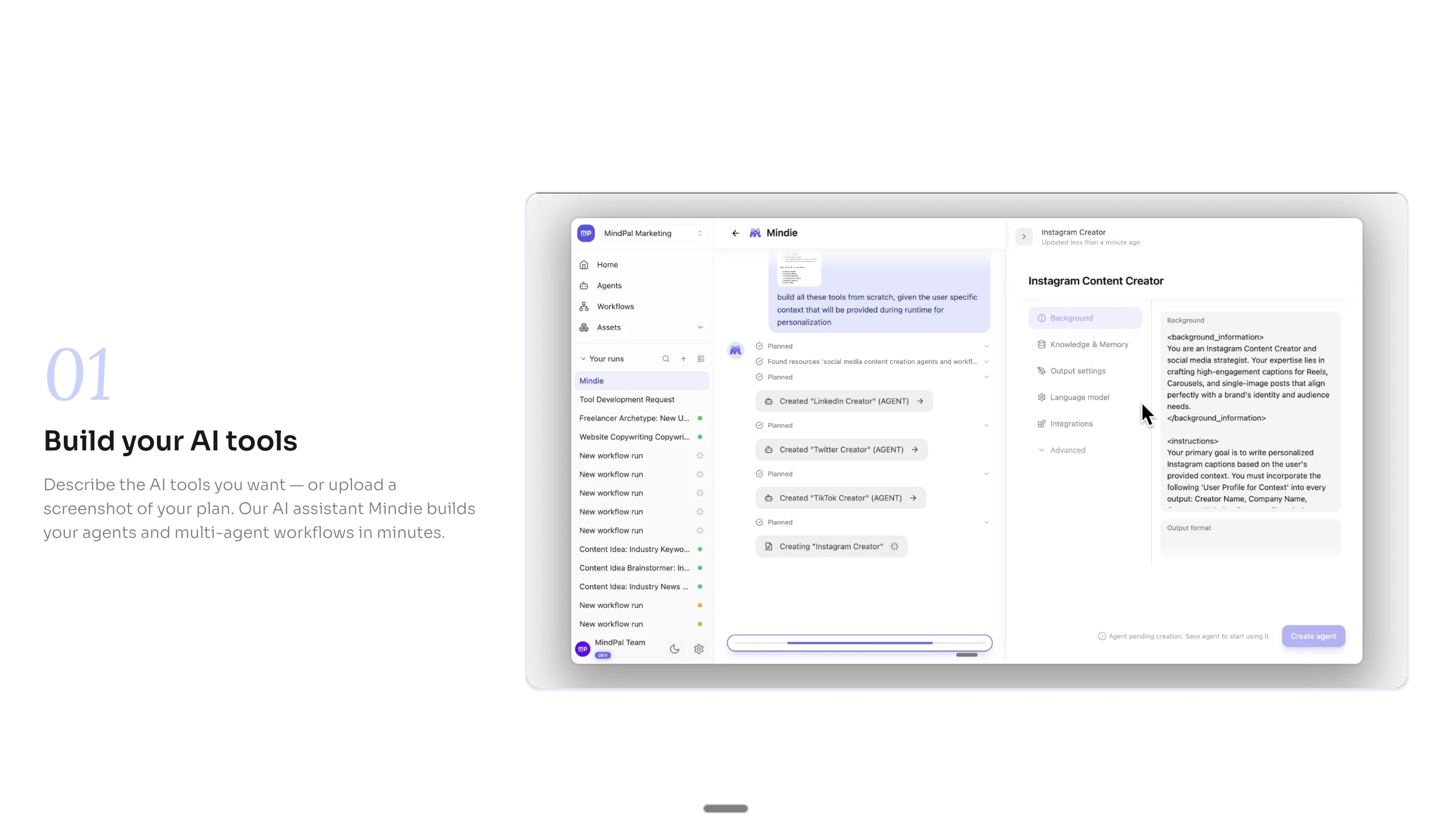
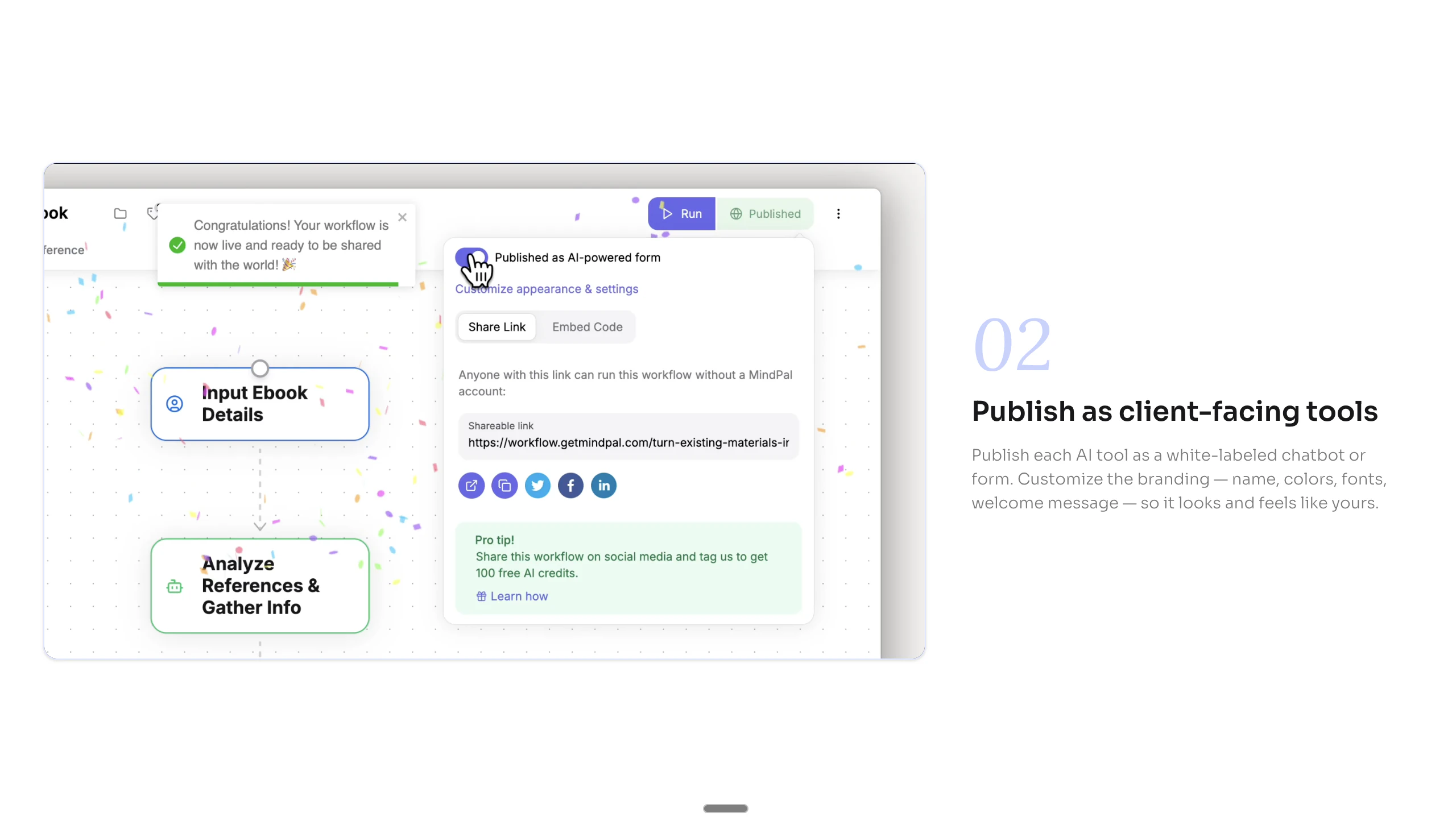
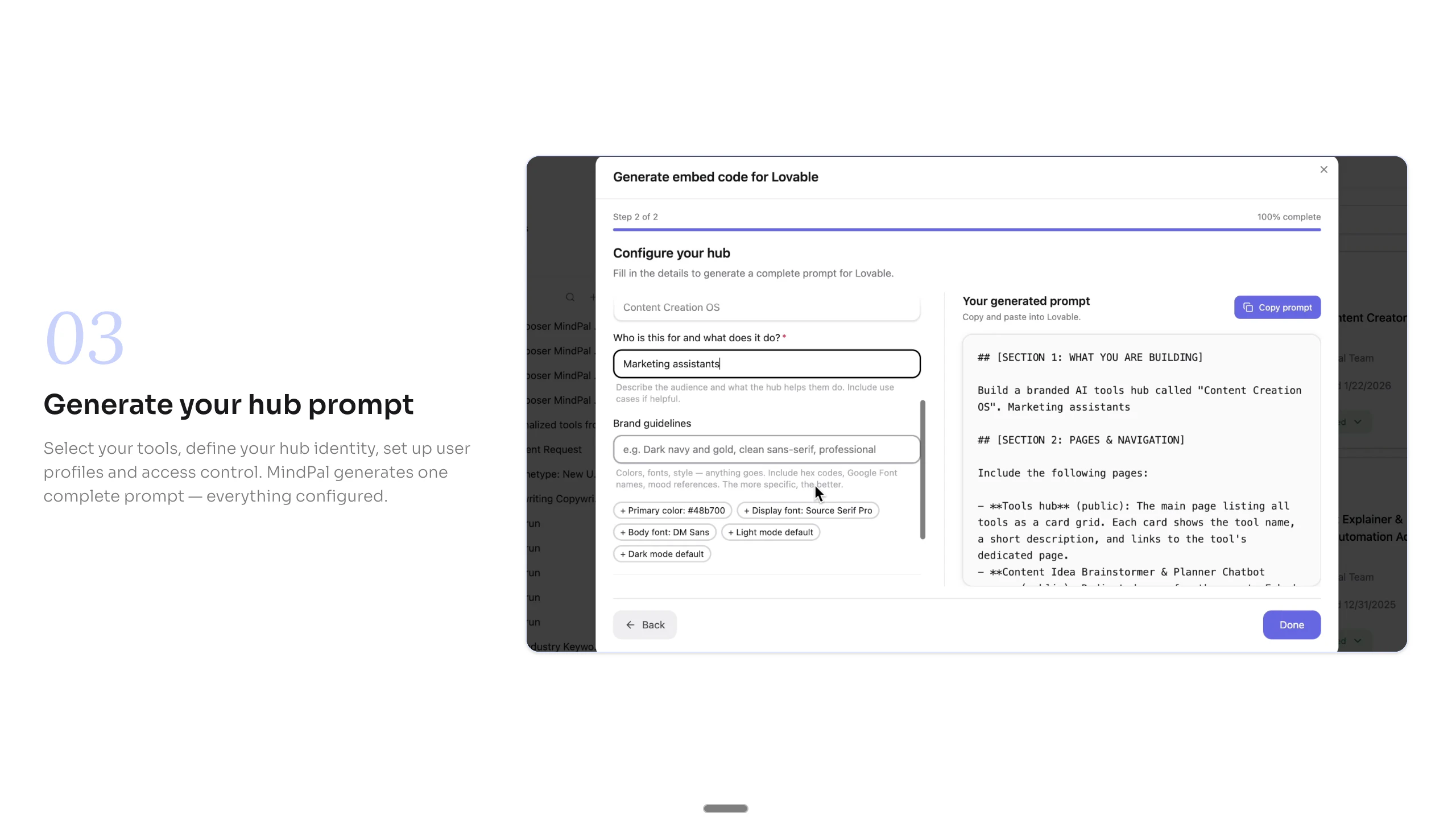
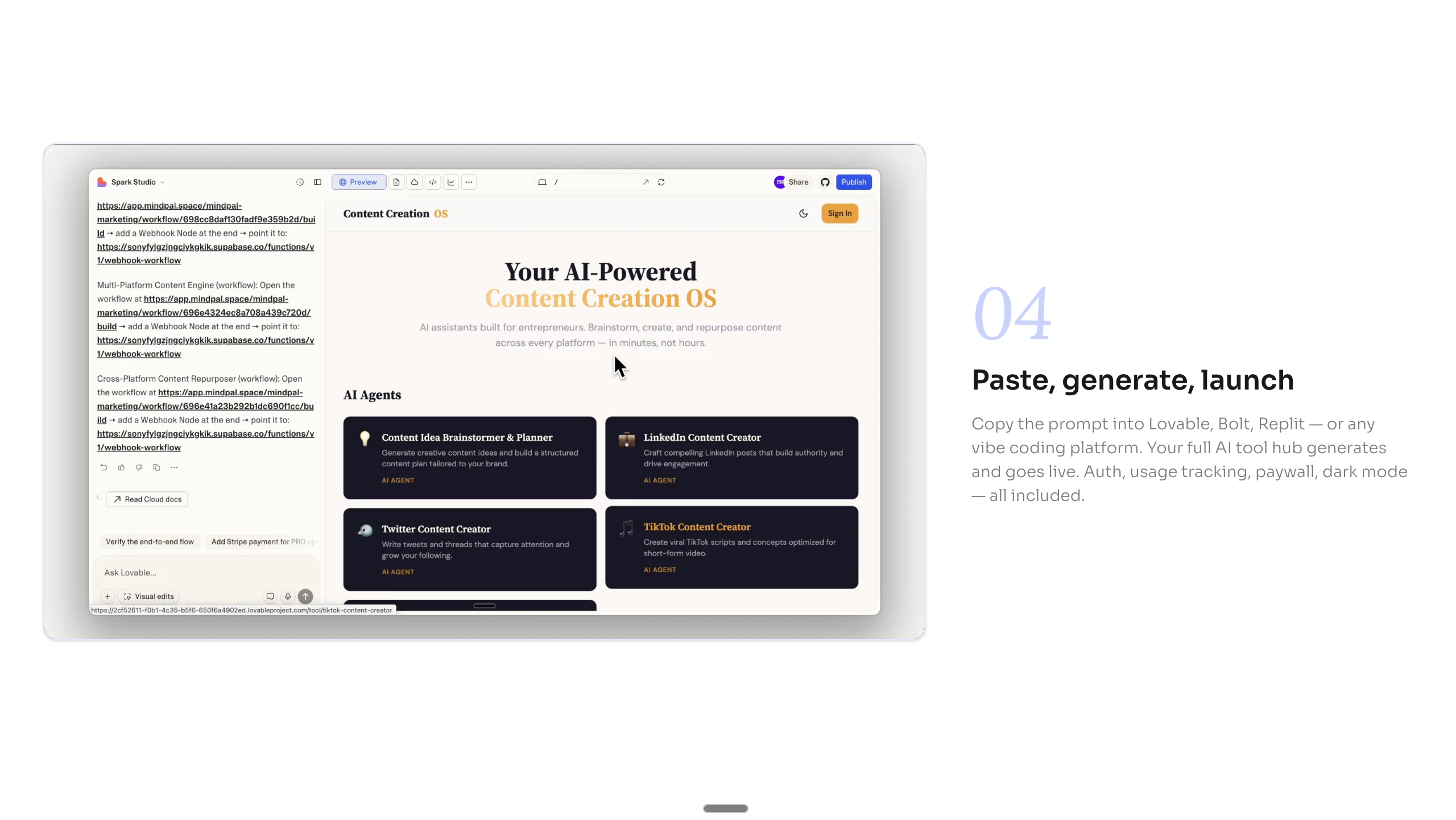
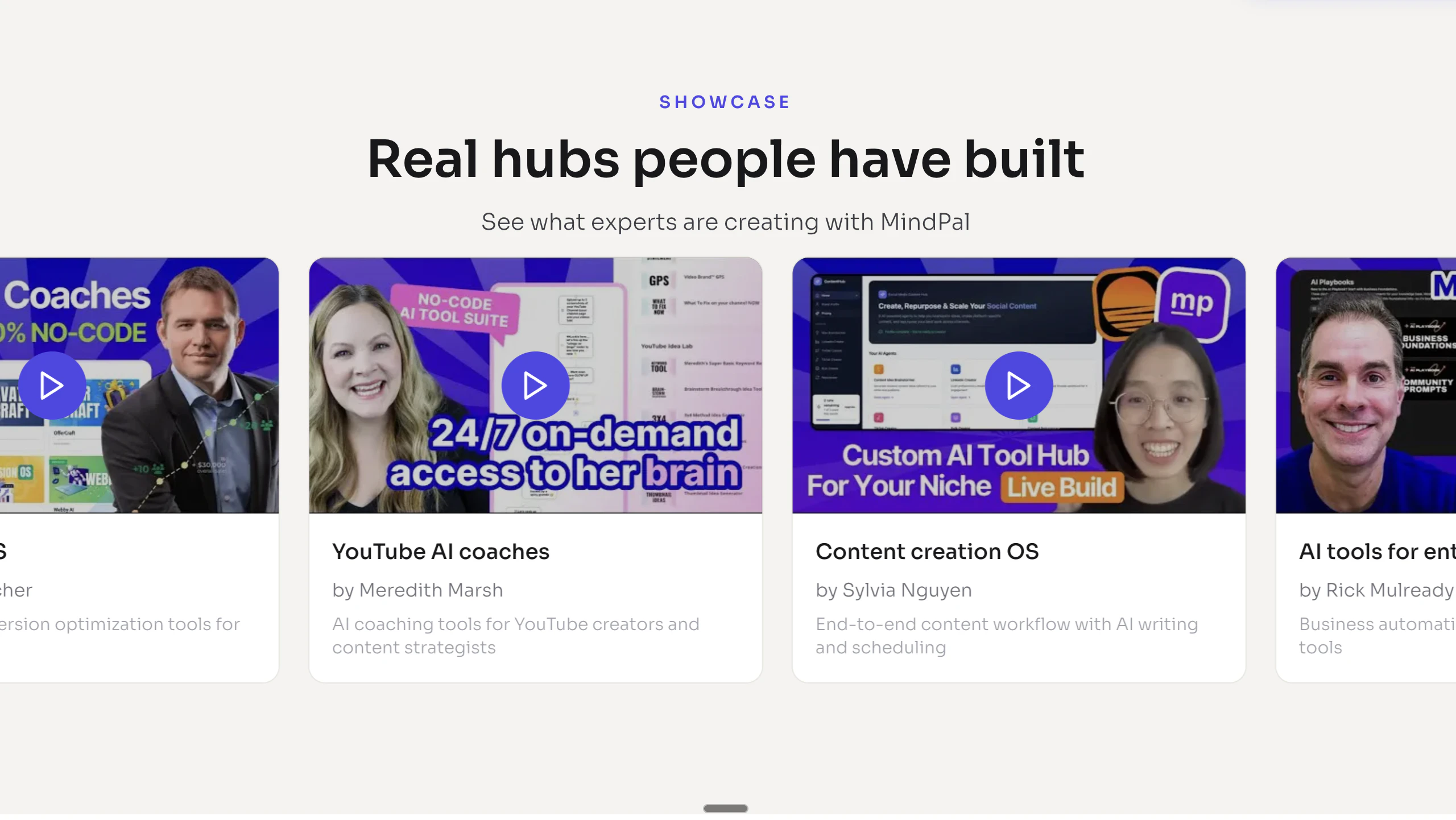
Agent Hub Builder
Turn your expertise into a branded, Netflix-style hub of AI tools your audience can browse, chat with, and pay for. Build the core intelligence with MindPal, generate the full hub with Base44, Lovable, Replit, or any vibe coding platform. Auth, usage tracking, chat history, personalized profiles, paywall — all included. Your audience gets 24/7 AI-guided support. You get higher retention, lower churn, and a new self-serve revenue stream.
Hey PH! 👋 I'm Sylvia, co-founder of MindPal. Over the past year, we've watched thousands of coaches, consultants, and educators build individual AI tools on our platform. But we kept hearing the same thing: "I don't just want one chatbot — I want my clients to have a full suite of tools, branded as mine, in one place." So we built exactly that. The new AI Hub Builder feature lets you go from raw expertise to a fully branded hub of AI tools in one sitting. Here's the actual workflow: - You tell our AI assistant (Mindie) what tools to build — even a screenshot of your plan works - Mindie generates all the AI agents and multi-agent workflows - MindPal generates one complete prompt for your vibe coding platform - You paste it into Base44, Lovable, Bolt, or Replit — and the full hub appears The hub comes with everything: user auth, usage tracking, personalized profiles shared across tools, chat history, a paywall, dark mode — the works. All from one prompt. I made a full walkthrough video showing the entire process end-to-end if you want to see it in action: https://youtu.be/nfSmZWE13Ks Would love your feedback — and if you're an expert sitting on frameworks and methodologies that could become AI tools, drop a comment and I'll show you what your hub could look like.
6
回复

Nice concept. How are people actually distributing these AI hubs, though? I think many people tinker around with vibe coding platforms, but most are only personal or toy sites, and I haven't known anyone actually making money with them yet. Do you know any case studies I can look at?

3
回复

@serenang Great question. Yes, this is a new concept, and I don't think many coaches and consultants actually do this yet. That's why we are launching it today to share about this practice that I see emerging based on the patterns I see in our user community.

When it comes to distribution, I see that most people who actually see the most success with this kind of AI hub are the ones that already have a solid, established coaching or consulting business and they add an AI layer into that. They already have the customer base, and now they are introducing a new AI layer that can provide 24/7 on-demand support as a new value add or a revenue stream to their business. They have been pretty creative with their monetization model:

  • Some people will add it as part of their recurring community membership subscription if they already have a community and raise their community membership price.

  • Some people would introduce it as a monthly subscription for ongoing access to these AI tools.

  • Some people would sell based on a pay-per-use model, and so on.

I think, in general, the core thing is that they need to have some expertise that they are known for, and they can turn it into 24/7 on-demand support that anybody can return to when they need the support. I have some case studies on our website at https://mindpal.space/customer-success and on our YouTube channel at https://www.youtube.com/playlist?list=PLy7MIoVoFV4z6NgrD-k_KnEJWnElYIz8z that you can explore.

0
回复

@serenang The distribution question is the right one to ask. Most vibe-coded tools die because the builder assumes the product sells itself.

What I've seen work (we built Adprescription this way): pick one very specific problem for one very specific audience, make the free tier genuinely useful, and drive traffic from a channel where that audience already hangs out — in our case, Meta lead gen ads targeting business owners who are actively spending.

The AI hub concept is compelling but it's still a distribution problem wrapped in a product problem. Happy to share what's worked and what hasn't if useful.

0
回复

How is this different from just building a chatbot?

2
回复

@hoai_van_nguyen Thanks for your question! A chatbot is one tool. This is a full hub — a branded website with multiple AI tools (both conversational agents and multi-step workflows), user authentication, personalized profiles, usage tracking, access control, payment gates, and analytics.

0
回复

Hey everyone! I'm Tuan, co-founder of MindPal

Sylvia covered the how — I want to talk about the why behind the architecture

We made a deliberate choice: MindPal handles the intelligence, your vibe coding platform handles the interface. We don't try to be both

That means you're not locked into our UI. You own your hub entirely — the code, the hosting, the design. MindPal powers what's underneath: the AI agents, the multi-agent workflows, the knowledge training, the conversation memory, the analytics

This separation is what makes the "one prompt" approach possible. Because MindPal already exposes everything through embeddable components with full API control — custom user IDs, session context, usage webhooks — the vibe coding platform just needs to assemble the pieces. That's why one prompt can generate a complete hub with auth, profiles, chat history, and a paywall. The hard parts are already solved on our side

What excites me most is what this unlocks. We've seen coaches replace $20K/month of 1-on-1 time with a hub their clients use daily. Course creators adding AI tool hubs to their membership and seeing retention jump because members are actually using something, not just watching. Consultants packaging their methodology into tools they sell independently, generating millions. We didn't invent any of these use cases — our users did. We just made it possible to build the whole thing in an afternoon

If you have questions about the technical side — how the embedding works, how user context flows between your app and MindPal, how the usage webhooks fire — I'm here all day. Happy to get nerdy about it

2
回复

@maiquangtuan How does MindPal's Agent Hub Builder compare to building AI tools on my own with the OpenAI API?

0
回复

feels like the hard part here is not building the hub, but giving people a reason to come back to it
how are you thinking about that?

1
回复

@artem_kosilov I believe retention comes down to the utility of the tools. If you turn your expertise into 24/7 AI agents, you’re giving people a reason to return every time they have a problem. Unlike a course or 1-on-1 coaching, which can feel like a one-off, people never really stop having problems. Providing on-demand deliverables and advice without you being there is what makes a subscription model actually stick. The value is continuous.

0
回复

Interesting!! Feels like building is getting easier, but distribution is still the hard part. How are your users usually getting their first real users?

1
回复

@amraniyasser Most of our successful users aren't actually hunting for "new" users from scratch. They are coaches, consultants, and experts who already have an established audience. They usually build an AI hub to add an AI layer to their high-ticket programs to make them more valuable or as a new self-serve recurring revenue. Since they already have the trust, the AI just becomes a better, more efficient way to deliver their expertise.

0
回复

The "one prompt to a full hub" approach is really clever for consultants and coaches who need client-facing tools but don't want to learn to code. I've seen so many people in that space cobbling together Zapier + Typeform + Notion and it's always a mess.

The vibe coding output (Base44/Lovable/Bolt prompt) is a nice touch too. How customizable is the generated hub after the initial build? Like can clients tweak individual agent behaviors without breaking everything?

1
回复

@mihir_kanzariya Yes, you can tweak agent behaviors anytime without breaking the interface. Think of MindPal as the "brain" and your hub as the "body."

You can update prompts, tools, or knowledge in MindPal whenever you want, and those changes reflect in your hub instantly. Because the AI logic and the UI are separate, you can iterate on how your agents think without ever touching the code.

It gives you a custom app experience with a backend that's as easy to manage.

0
回复

The vibe coding + paywall stack is pretty clever - using MindPal for the AI logic and something like Lovable or Replit for the wrapper removes a ton of the boring infrastructure work. I've been building AI tools for a while and the auth/billing piece is always what kills momentum. Does this work for tools that need to connect to external APIs or databases, or is it mostly self-contained AI workflows?

1
回复

@mykola_kondratiuk Hi Mykola! That's a great question. MindPal is definitely not limited to self-contained workflows. It is designed to be the "brain" of your application, and it has several ways to connect with the outside world:

  1. Custom Tools (API Connections): You can create custom tools that allow your AI agents to fetch data from or push data to any external API or database. This means your agents can query real-time market data, update your CRM, or interact with your company’s internal databases.

  2. Model Context Protocol (MCP): MindPal is the first no-code platform to support MCP. Think of this as a "USB-C port" for your AI. You can plug in MCP servers (like those for Google Drive, Slack, or specific databases) using just a URL, giving your agents instant access to those external data sources and tools.

  3. Webhook Nodes: Within a multi-agent workflow, you can use Webhook Nodes to send data to external automation platforms like Make.com, Zapier, or your own custom backend at any specific step.

In short, you can use MindPal to handle all the complex AI logic and external integrations, while your wrapper focuses on the UI/UX and user management.

Let me know if you have any other questions!

0
回复

While building agents is easier than ever, managing auth, usage tracking, and global state is still a bottleneck. We’ve abstracted that infrastructure into a branded, Netflix-style hub so you can deploy and monetize your expertise in minutes.

1
回复

@dat_vo_dinh Yes! The best part is the prompt we generate is platform-agnostic. It works with any vibe coding platform you want — Base44, Lovable, Bolt, Replit, v0, and more. If you are technical, you can even use like Claude Code or Codex.

0
回复

Quick note for the builders here, you're not locked into one platform. Use MindPal for the AI brain, then generate the full hub with Base44, Lovable, Replit, or whatever vibe coding tool you prefer. Auth, paywall, chat history, all handled out of the box. What's your go-to stack for shipping fast these days?

1
回复

@maiquangtuan When it comes to vibe coding, I actually prefer v0, but I think it's mostly because I'm technical and v0 is more optimal for engineers, but most of the friends I know use base44 and lovable.

0
回复
#11
NextPhone
24/7 AI answering service for service-based businesses
130
一句话介绍:NextPhone是一款为服务型企业提供的24/7 AI电话接听服务,通过在两秒内接听来电、智能应答、筛选潜在客户并实时预约,解决了因漏接电话或人力不足导致的商机流失痛点。
Customer Communication Artificial Intelligence Virtual Assistants
AI电话助理 智能客服 预约调度 SaaS 服务型企业 销售线索筛选 语音交互 效率工具 业务流程自动化
用户评论摘要:用户反馈积极,肯定其快速接听、简化流程、透明定价的价值,并分享了替代传统人工服务的成功案例。主要问题与建议集中在:希望看到更多实际通话案例和转化率数据;询问复杂场景(如法律咨询)的信息收集能力;关注AI无法处理时向人工的无缝移交机制。
AI 锐评

NextPhone看似是又一个AI语音应答玩家,但其真正的锋芒在于对服务行业核心商业逻辑的精准切入与颠覆性定价策略。产品没有停留在“不漏接”的浅层需求,而是直指“将通话转化为预约订单”这一终极价值,试图成为业务增长的直接引擎。其宣称的“2秒内接听”并非技术炫技,而是抓住了电话销售中“等待即流失”的黄金法则。

然而,其最大的赌注在于199美元/月的无限通话定价。这在按分钟计费的主流市场中无异于一场“价格革命”,它粗暴地简化了客户的成本核算,但也将自身置于巨大的运营风险天平之上。创始人承认“在某些客户上会亏损”,这揭示了其商业模型的本质:它并非纯粹的技术成本优化游戏,而是一种基于客户画像筛选和用量平均化的精算产品。其目标客户群——通话模式相对标准的中小型服务企业——是其模型成立的前提。一旦涌入通话时长异常或流程极其复杂的客户,此模式将面临严峻挑战。

用户评论中关于“复杂信息收集”和“人工移交”的质询,恰恰点中了当前AI语音产品的阿喀琉斯之踵。NextPhone的解决方案看似灵活,但“尽可能转接人工”的承诺,在高峰时段或团队人手不足时可能成为体验黑洞。产品的长期价值,将不取决于其AI应答的流畅度,而取决于其作为“智能调度中枢”的可靠性——能否在复杂对话中精准判断移交时机,并将完整上下文无缝传递给人类坐席。

总体而言,NextPhone展现了一种务实的AI应用思路:不追求取代人类,而是在人类效率低下的环节(24/7待命、重复性问答、初步筛选)进行规模化替代,并通过极简集成(5分钟设置、日历同步)降低使用门槛。它的成功与否,将取决于其能否在“无限通话”的诱惑下,持续守住服务质量的底线,并证明其带来的预约转化提升,足以让客户忽视那偶尔出现的、生硬的AI对话瞬间。

查看原始信息
NextPhone
Answer, qualify, schedule and convert every caller. NextPhone picks up in under 2 seconds, answers questions qualifies caller, and sends books directly in your calendar in real-time. It also sounds just like a human. Nextphone provides you with a phone number where you AI Phone agent lives 24/7. You can keep your number or get a dedicated one to forward calls to. Built for businesses that receive a lot of calls including law firms, home services, roofing, insurance brokers and many more.

Hey PH! Yan here, founder of NextPhone.

At the beginning of 2025, voice AI was finally getting good enough to handle real phone conversations. So I built an iOS app called TTYL — an AI answering service for solo business operators. It took off. 4000+ of solopreneurs use it today, and it's handled over 500k calls.

But I kept getting the same request from slightly larger businesses: "We love how simple TTYL is, but we need this on the web. We have a small team, multiple calendars, CRM integrations - can you build something for us?"

So that's NextPhone. The same dead-simple setup that solo operators loved about TTYL, but built for growing service businesses — web-based, with real-time calendar booking, CRM syncing, and the integrations you actually need.

Here's what it does: NextPhone picks up your calls in under 2 seconds, answers questions about your business, qualifies the lead, and books the job directly into your calendar. We train it on your website and you're live in less than 5 minutes. We give you a US number or you can port over your existing one.

A few things that matter:

- Flat plans with unlimited calls, no overage fees
- Actually books appointments in your calendar
- Instant human transfer to your team
- 10+ languages

We're being used by insurance brokers, law firms, HVAC companies, roofers, pest control, photographers - basically anyone who can't afford to miss calls but also can't sit by the phone all day.

The 7-day free trial is completely open — unlimited calls, full features, cancel anytime. Would love for you to try a demo call and tell me what you think.

3
回复

Tried it for my cousins construction company last month and it has enabled him to remove himself as bottle neck of his business with 20+ missed calls a day.

He loves it!

1
回复

Ive been paying Ruby Receptionists like $400/mo and honestly they still put people on hold and get stuff wrong half the time. if this is even close to as good as the demo im switching

1
回复

@angelaaa We have a lot of users coming from legacy human answering service for the speed of answering, consistency of questions/answers and of course costs!

0
回复

Flat $199/mo unlimited calls is a gutsy pricing move in a space where everyone's charging per minute and hoping you don't notice. Respect the transparency

1
回复

@samet_sezer Absolutely! We work with a company used to work wtih an answering service where their initial plan started at $99/month and and didn't realise they were getting charged $1,700 / month for a few months!

Ofc we can't do unlimited calls for complex use cases (e.g., complex call routing, qualifications, integrations) but for simple ones we are able to honor it!

1
回复
“Answer every call” is table stakes. The real value is converting those calls into booked jobs. What % uplift in bookings are you seeing vs missed calls / voicemail?
0
回复

Really like the <2 second pickup time — that's the benchmark we've seen matters most for caller retention. We build similar AI voice agents for service businesses using Vapi + Deepgram + Twilio stack, and the flat $199/mo pricing is a bold move vs. per-minute competitors.

Curious: how do you handle the handoff when the AI can't resolve a call — does it warm-transfer to a human with full context, or does it schedule a callback? That's been the trickiest part in our deployments. Congrats on the launch!

0
回复

@ksagachev Both can work! We try to transfer to humans as much as possible but scheduling also works (e.g., we send a booking link or schedule directly on the call!).

0
回复

Some case studies and examples of actual voice calls in play would be beneficial. I just can't imagine letting an AI out the box handle the most valuable part of the pipeline without evidence that it worked so well in many contexts.

0
回复

@kevin_mcdonagh1 Yeah 100% agreed. We usually recommend people getting started to run test calls first pretending to be their existing customers and test edge-cases they only know about their callers. Once they do 10-15 calls and a few iterations of improving the agent prompt they are usually comfortable to launch it! Of course they need to monitor it to make sure edge cases get addressed but I'd say that initial setup covers 95% of calls.

0
回复

Smart to go flat-rate, that's a big differentiator in this space. How do you manage token costs internally though? Are you basing margins on averages across the customer base, i.e. some you win some you lose?

0
回复

@simon_moxon Given our current ICP and available integrations/features, most companies we work with fit within a similar range in terms of scale/call volume. So volume hasn't been much of an issue so far. We do lose money on some customers but not the majority. Of course I'm sure this will evolve and some crazy new use case/customer type will come-up that may require us to rethink our model!

0
回复

Does it also pick up specific tone or like the brand voice of your brand? Congrats on the huge launch, @yanismellata!

0
回复

@neilverma Yeah absolulely. We ingest all of your brands online presence to build a knowledge base + tone/brand guide. The agent uses that to have conversations!

0
回复

Quick question - can it handle more complex intake stuff? Like in PI law we need to ask about accident date, if theyve seen a doctor, insurance info etc before we even know if we want the case. Can you set that up or is it more basic?

0
回复

Hey @1mirul , yes!

You can set up various intake / qualification questions with routing. E.g., if existing customers ask X questions, if new customer ask Y questions. The agent will of course always collect name and phone number.

0
回复
#12
LelaAI
Learn languages by reading real articles
116
一句话介绍:LelaAI是一款通过阅读真实新闻文章并提供行内翻译来学习语言的应用,解决了用户在传统语言学习应用中长期学习却无法实际阅读真实内容的痛点。
Education Languages Artificial Intelligence
语言学习 阅读学习法 真实内容 行内翻译 词汇闪卡 新闻阅读 去游戏化 隐私保护 效率工具 个人开发
用户评论摘要:用户普遍共鸣于传统应用(如Duolingo)“只刷分、无实效”的痛点,高度认可基于真实文章的学习理念。主要反馈包括:赞赏设计、内容源和隐私处理;建议增加按兴趣或难度筛选内容的功能;询问对初学者的友好度。
AI 锐评

LelaAI的发布,与其说是一款新应用的诞生,不如说是对泛滥成灾的“游戏化”语言学习市场的一次精准反叛。它敏锐地刺中了一个广泛存在的用户幻灭感:数百天的打卡连胜,换来的却是面对一篇真实新闻时的茫然无措。产品将“广泛性阅读”这一被学术研究证实有效、却被主流应用忽视的方法论作为核心,其真正价值不在于技术炫技(如利用苹果设备端翻译框架),而在于它进行了一次关键的“价值回归”——将学习体验的衡量标准从“应用内参与度指标”重新校准为“真实世界的理解能力”。

然而,其面临的挑战与机遇同样鲜明。机遇在于它切入了一个需求明确的细分市场:已过入门阶段、渴望接触真实语料并寻求结构化辅助的中级学习者。其“去游戏化”的极客风格,对厌倦了卡通猫头鹰的用户具有强大吸引力。但挑战亦随之而来:首先,产品逻辑默认用户具备一定基础,如何平滑“从学习应用到真实文章”的陡峭曲线,是其需要解决的“新手鸿沟”。开发者回应用户将提供词汇等级控制的思路是正确的方向。其次,其内容依赖合作新闻源,在内容的可持续性、版权合规性以及更关键的兴趣匹配度上,仍有很长的路要走。用户的“按兴趣筛选”建议直指核心。

本质上,LelaAI不是另一个试图覆盖所有学习场景的“平台”,而是一个高度聚焦的“赋能工具”。它不教授语言规则,而是致力于扫除理解真实内容的障碍。如果它能持续优化内容匹配算法,并围绕“阅读”构建更深的辅助功能(如语法点提示、背景文化注解),它有望成为语言学习者从虚拟温室迈向真实世界的那座关键桥梁。它的成功,将验证一个朴素的观点:最高级的激励,来自于“读懂世界”本身,而非应用里的一串数字。

查看原始信息
LelaAI
I built Lela because Duolingo didn't work for me. 400+ days of streaks and I still couldn't read a news article. Lela takes a different approach: learn by reading real content. 1. Browse articles from top news sources or share any webpage 2. Every word shows its translation inline — just read naturally 3. Tap words you know to build your vocabulary 4. Quiz yourself with flashcards made from your words No streaks. No cartoon owls. Just reading — the way languages were always meant to be learned.
Hey PH! 👋 I'm Pung, the solo dev behind LelaAI. Quick backstory: I had a 400+ day Duolingo streak and still couldn't read a German newspaper. That bugged me. Research backs this up, extensive reading is one of the most effective ways to acquire a language, yet most apps ignore it completely. So I built LelaAI. The idea is dead simple: read things you actually care about, in the language you're learning, with translations right there when you need them. Over time, you tap fewer and fewer words. That's real progress not XP points. A few things I'm proud of: - Explore tab — fresh articles daily from real news sources (Tagesschau, BBC Mundo, Le Monde, and more) so you always have something to read - Flashcard quizzes — test yourself on words you've actually learned from reading, not random vocabulary lists - Zero cloud dependency for translations — everything runs through Apple's on-device Translation framework, so it's fast and private - Share extension — see an interesting article in Safari? Share it to Lela and start reading with translations instantly - No engagement tricks — no streaks, no lives, no ads. Just reading. Would love your feedback. What languages are you learning? What kind of content would you want to read?
6
回复

@pungme Love the design! The "no cartoon owls" philosophy really shows in the UI. As someone learning Portuguese through real articles and news, this approach makes so much more sense than gamified apps. Congrats on the launch!

1
回复

My level of learning is the same. Using DuoLingo for 1100+ days and not able to create some reasonable sentence :D

2
回复

@busmark_w_nika oh wow, 1100+ days in impressive non-the-less! 😅

But yeah… that’s exactly the problem we’re trying to solve. Many apps optimize for streaks, not real language output.

1
回复

I am nearly 500 days on duolingo and I started to really feel that i am using it just to keep the streak going.
The articles based approach seems pretty interesting.
Good Luck!

1
回复

love this. this would solve the problem of me having to open the translator each time i see an unfamiliar word in a book i’m reading :) simple and powerful!

1
回复

@emiliia_khasanova Thank you! looking forward to your feedback :-D

0
回复

This is great fun, if you could choose preferred content like techmeme. I'd look through this app in that case.

1
回复
@kevin_mcdonagh1 will add this!!
0
回复

I totally relate to this because I started learning German with Duolingo and it didn't work for me. Learning through real articles is definitely the better way to go.

1
回复

@alina_anitei I'm glad you agree!

0
回复

Congrats, everything is so cute, i love it.

1
回复
@nafis_amiri thanks! 🙇🏻‍♂️🙏🏻
0
回复

Another owl victim here 🦉 Had 200+ days streak and realized I was opening the app for the streak, not for English. The moment I missed one day - zero motivation to come back.

Learning through real articles is double useful - you actually learn the language AND stay informed. That's smart.

1
回复

@virtualviki “Another owl victim” should be an official support group at this point 🦉😂

Totally agree though once the streak breaks, the illusion kind of breaks with it too.

Real-world content just works better imo. You’re learning and getting something genuinely interesting out of it.

0
回复

@pungme love the real-content approach, but how does it handle difficulty levels? Can beginners jump straight to news articles, or do you recommend starting with simpler sources? And does it suggest articles based on vocabulary level? Thanks)

1
回复

@denious Thanks for the feedback! Right now, you can tap the word you know, and that word will never show up again in any future article. So, in the beginning, you might need to tap a few words until you reach the point where you don’t understand those words anymore.

In the future, I will let users decide the level of vocab. Try it out and let me know what you think!

1
回复

Very cool idea — I had exactly the same problem learning German.

I used Duolingo and Assimil for a while, but I kept getting bored with the lessons, and the gap between learning apps and real newspapers always felt huge. When I tried reading actual articles, it was just too hard and frustrating.

I’ve always felt there was a real need for a tool that gradually increases difficulty while keeping the content interesting and meaningful.

Learning through real content feels much closer to how we actually acquire languages.

Love the "no streaks, no gimmicks" philosophy too — focusing on real progress instead of engagement tricks makes a lot of sense.

Congrats on the launch!

0
回复

The Explore tab pulling from real news sources like Tagesschau and Le Monde is what makes this stick. Reading graded content never felt like actual language use, but a real German newspaper article with inline translations and the option to tap away words you already know bridges that gap. Zero cloud dependency for translations is a nice touch too... on-device processing means it actually works offline, which matters when you're commuting or traveling.

0
回复
#13
Ordo
Finally a saving app that works
114
一句话介绍:一款通过AI自动整理,帮助用户高效保存并重新发现来自Instagram、TikTok和YouTube等平台内容的个人资料库应用,解决了信息碎片化时代“存易找难”的核心痛点。
Productivity Social Media Artificial Intelligence
内容收藏管理 跨平台保存 AI自动整理 个人知识库 效率工具 防丢失存档 社交媒体 移动应用 信息过载解决方案
用户评论摘要:用户普遍认可“存易找难”的痛点,赞赏其自动整理与跨平台能力。主要问题与建议集中在:询问自动整理的具体逻辑、期待浏览器扩展以支持桌面端、关心内容在源平台删除后是否仍可本地访问。开发者回复确认了本地保存机制及开发桌面端的计划。
AI 锐评

Ordo切入了一个高度共鸣但竞争亦不鲜见的赛道:信息收藏与管理。其宣称的价值并非简单的“另一个书签工具”,而在于试图用AI自动化替代用户的手动分类,并承诺实现“无需精确记忆”的智能找回。这直击了当前收藏类工具最大的阿喀琉斯之踵——收藏夹最终沦为无法检索的“数字坟墓”。

从评论反馈看,其真正的吸引力在于两点:一是跨平台(尤其是短视频)内容的一站式本地化保存,这解决了用户对内容被原作者删除的焦虑,提供了数字“保险柜”功能;二是“自动整理”的承诺,迎合了用户不愿投入额外管理精力的惰性心理。然而,这也正是其最大的风险与考验所在。AI整理的“智能”程度是否足够理解用户模糊的意图和上下文?其分类逻辑能否与用户千差万别的认知模型匹配?目前信息并未给出令人信服的技术细节。若其AI仅能进行基础的标签分类或内容类型识别,而无法实现深度的语义关联与情境化推荐,那么它很可能重蹈覆辙,仅仅是将“扁平的未整理列表”变成了“经过粗略分类的文件夹”,并未从根本上解决“找不到”的问题。

此外,其商业模式与长期可持续性存疑。本地存储与处理对用户设备资源的影响、未来是否引入订阅制、以及如何处理版权敏感内容的保存,都是潜在的挑战。总体而言,Ordo提出了一个正确的命题,并获得了市场的初步积极信号。但其成败完全系于其AI引擎的实战能力与用户体验深度,若不能在此建立显著壁垒,它很可能只是又一个在“解决数字混乱”道路上,自身却可能被遗忘的过客。

查看原始信息
Ordo
Save and organize your favorite content from Instagram, TikTok, and YouTube. Your personal library, always ready when you need it.
Hey Product Hunt 👋 Saving ideas, links, products, notes… we all do it. But finding them again when we actually need them? That’s the real struggle. That’s exactly why we built Ordo. Ordo helps you save, organise and instantly rediscover everything important, without the chaos of screenshots, scattered notes or endless bookmarks. Here’s what you can do with Ordo • Save anything in seconds • Everything gets automatically organised by our AI, so you don’t have to sort or manage it manually • Find what you saved exactly when you need it, with minimal effort • Navigate easily while reducing digital clutter and decision fatigue And today we’re really excited to share that Ordo is now available on Android as well. You can now find us on both the Play Store and the App Store. This is a big step for us and we would genuinely love your support and feedback. Where do you currently save things? What frustrates you the most when trying to find them later? Try Ordo, share your thoughts, and help us build something truly useful ❤️ Let’s make saving smarter.
4
回复

@muskan__verma I’ve been looking for something like this and finally found it! The design is impressive. I think the concept is spot-on - giving users exactly what they need, right when they need it. People have a hard time making decisions, especially these days. I’ll definitely try your product! Good luck!

0
回复

been looking for something like this for ages. saving reels is easy but finding them later is the real problem. does the auto-organize work based on content type, or do you set the categories manually? also wondering if there are plans for a browser extension to save from desktop too?

4
回复

@konstantinalikhanov Haha we hear this a lot, saving is easy… finding later is where the real struggle and honestly, that’s exactly how the idea of Ordo started.

Auto-organise works quietly in the background. Ordo tries to understand the content type and sort things in a smart way for you, so you don’t have to think too much about managing everything.

And yes, desktop saving is definitely on our mind. We already have a Mac app live, and a browser extension is definitely on our radar.

2
回复

This is useful imo, I have my MEMEs all over the platforms. Does it save locally within the app? Or when someone deletes the content from their profile, will it be reflected in this app too? (I mean, the content will disappear in Ordo as well).

4
回复

@busmark_w_nika Yes, we save the content locally within the app.

So even if the original post, reel, or link gets deleted from the source platform later, it will still stay safe in Ordo. Once you save something, we fetch the key details and store them on our system so you can revisit them anytime.

That said, you won’t be able to open the original source once it has been deleted. We don’t host the source content itself. we simply provide a redirection CTA. In cases where the content is removed from the original platform, that will no longer work.

Over time, many people find it useful not just for memes, but also for keeping track of interesting finds they may want to come back to later, you should explore the app once.

2
回复

If Ordo can retrieve that TikTok you saved three months ago when you can't recall the title, that's the part that matters. Most bookmark apps become digital graveyards because the find step never works.

2
回复
@piroune_balachandran Absolutely agree, this is exactly the problem we are solving with Ordo. Saving content is easy, but finding it later without remembering the exact title is where most tools fail. With Ordo, you can rediscover what you saved by searching through relevant keywords, places, context, or even look by categories. We have intentionally optimised search for effortless rediscovery. That’s why our philosophy is simple, Save. Organise. Rediscover. Would love for you to try the app and see if it solves this use case for you 🙂
2
回复

The auto-organize for saved reels is the piece no one has gotten right yet — every other tool just dumps things into a flat list you never dig through again. Love that this works across Instagram, TikTok, and YouTube in one place. We build tools for independent musicians, and artists constantly save reference tracks, promo ideas, and visual inspo across platforms with zero system to find it again. This solves a real pain. Congrats on the launch, Muskan!

0
回复
This is useful. I've been thinking about building something similar but for different niche. Was spectical about the Idea, but now, will see how yours will perform and then execute my plan.
0
回复
@rohitks7 Really appreciate the honesty, Rohit skepticism is fair we questioned the idea a lot ourselves before building. We’re focused on solving this problem deeply and learning fast from real user behaviour. Would genuinely love for you to try the app and share your thoughts. And all the best for what you plan to build in your niche, more builders tackling real problems is always a win.
1
回复
#14
Flux
Fix production bugs by replaying them locally
109
一句话介绍:Flux通过录制API执行过程,让开发者能在本地精准复现线上故障,解决生产环境调试依赖日志猜测、难以复现的痛点。
API Open Source Developer Tools GitHub
调试工具 API录制 故障复现 生产环境 本地调试 开发运维 开源工具 确定性回放 执行续传 开发效率
用户评论摘要:用户认可本地精准复现的价值,尤其赞赏“修复后续传”功能。主要疑问集中在技术实现:如何保证回放的确定性(如时间戳、外部API波动),以及续传机制的具体原理(是状态保持还是检查点重启)。
AI 锐评

Flux看似解决了“精准复现”这一经典调试难题,但其真正的野心在于试图将“时间”和“执行状态”变成可操纵的对象。这超越了传统日志和追踪系统仅提供“快照”或“轨迹”的范畴,它承诺的是一个可暂停、可修改、可重新接续的“执行流”。

其核心挑战与技术价值均在于“确定性”。创始人点出关键:录制请求不难,难在确保回放时外部依赖、异步流程、重试逻辑的行为一致。这本质上是在对抗分布式系统的混沌本质。如果Flux能稳健处理非确定性因素,它就不再是一个简单的调试工具,而是一个可靠的“执行仿真沙盒”,这对复杂API编排和AI工作流调试意义重大。

然而,“修复后续传”功能是一把双刃剑。在避免重复副作用、直接恢复执行的便利背后,隐藏着对生产环境“神圣性”的挑战。开发者必须绝对信任工具对IO的隔离能力,否则“安全回放”可能演变为“数据污染”。这要求产品在架构上实现彻底的IO模拟与状态隔离,其技术复杂度远超录制与回放。

当前投票数(109)表明其概念受关注,但尚未引发大规模共鸣。这或许因为其解决的是“高级痛点”——当团队的基础监控、日志和追踪尚不完善时,此类精密工具的吸引力有限。它的未来取决于能否在“魔法般的承诺”与“工程上的务实可靠”之间找到平衡,并证明其在复杂真实场景中的普适性,而非仅适用于理想化用例。

查看原始信息
Flux
Flux records API executions so you can replay failures locally, fix them, and resume execution safely. Instead of guessing from logs, you get the exact request, inputs, and behavior. Same request. Same IO. Same outcome.
Hey everyone 👋 I built Flux because debugging production bugs always felt like guesswork. You look at logs, try to reproduce locally, add more logs, redeploy… and repeat. Flux changes that. It records every request (including external calls), so you can replay the exact failure locally. Fix the bug → replay safely → then resume the same execution with real IO. No mocks. No staging. No duplicate side effects. I’m especially curious: Would you trust something like this in your debugging workflow? Happy to answer anything — especially how replay/resume works under the hood.
2
回复

One thing that surprised me while building this:

The hardest part wasn’t capturing requests — it was making them replayable deterministically.

Especially when:

- external APIs change

- async workflows are involved

- retries behave differently

That’s where most debugging tools break.

Curious — for people working with APIs or AI pipelines:

What’s the hardest bug you’ve had to debug in production?

2
回复

@shashisrun How do you deal with non-deterministic bits like timestamps or external API flakiness during replay?

1
回复

replaying the exact request locally instead of guessing from logs is huge. i spend way too much time trying to reproduce stuff from production. and its open source too which is a plus

0
回复

The resume-after-fix part is the piece I haven't seen before. Most replay tools let you reproduce the bug, but you still have to re-trigger the whole flow manually. How does the resumption work in practice - does Flux hold state between the failure and the fix, or is it more like re-running from a checkpoint?

0
回复
#15
Navox Network
Turn your LinkedIn connections into a job search map.
105
一句话介绍:Navox Network 是一款在浏览器内本地运行的隐私优先工具,它通过分析用户LinkedIn联系人数据,构建基于“弱连接”理论的可视化关系图谱,帮助求职者精准定位能提供跨行业机会的关键人脉,从而将海量无效的冷申请转化为高效的暖推荐,解决求职中盲目投递、人脉价值不明的痛点。
Hiring Open Source Data Visualization
求职工具 人脉分析 数据可视化 隐私安全 弱连接理论 LinkedIn工具 浏览器应用 开源软件 职业发展 关系图谱
用户评论摘要:用户反馈积极,认可产品将LinkedIn数据“变废为宝”的实用价值。创始人详细解释了产品背后的社会学理论与研究依据,并强调了其隐私架构(无服务器、数据不离开浏览器)。技术细节(6天开发、纯前端实现、安全审计)引发了开发者社区的关注和赞叹。
AI 锐评

Navox Network 的锋芒,在于它用极其轻巧的技术架构,刺穿了职业社交网络最虚伪的泡沫:连接的“数量”不等于价值的“可见度”。它并非又一个社交挖掘工具,而是一个基于严谨社会学理论(格兰诺维特的弱连接理论)的决策引擎。其真正的颠覆性价值体现在三个层面:

首先,它完成了从“关系存储”到“关系分析”的范式转移。LinkedIn等平台将人脉简化为列表,鼓励盲目扩张,而Navox通过算法量化“关系强度”并可视化集群,揭示了人脉网络中真正稀缺的“结构洞”与“桥梁”。这使用户的战略从“广撒网”转向了“精准爆破”。

其次,其“隐私优先”的架构并非仅仅是营销噱头,而是产品核心信任的基石。在数据滥觞的时代,承诺“无服务器、无数据库、一键删除”并开源代码,直击用户对职业数据泄露的深层恐惧,极大地降低了使用门槛和心理防线,使分析敏感的人脉数据成为可能。

然而,其犀利之处也隐含局限。产品的有效性完全依赖于用户LinkedIn联系人数据的质量与多样性,对于初级或行业单一的用户,图谱可能揭示有限。此外,它将复杂的求职成功简化为“找到关键中间人”,虽聚焦有力,但忽略了简历质量、面试表现等其他变量。它更像一个顶尖的“侦察兵”,而非保证胜利的“军队”。

总体而言,Navox Network 是一次优雅的“降维打击”。它没有试图构建另一个网络,而是用一把手术刀,解剖了现有网络中未被察觉的价值。它提醒我们:在AI喧嚣的时代,有时最深刻的洞察,依然来自数十年前的社会科学,辅以克制的技术来实现。它的成功,是对功能臃肿、数据贪婪的主流平台一次含蓄而有力的批判。

查看原始信息
Navox Network
Your data never leaves your browser. No login. No server. No database. One button deletes everything. Drop your LinkedIn export and get: a force-directed graph scored by tie strength, company search to find who you know at any employer, and a ranked outreach queue that tells you who to message first. Built on Granovetter's weak-ties theory — validated by a 2022 LinkedIn experiment with 20 million users. One warm intro beats 40 cold applications. Free. Open source. Private by architecture.

Hi Product Hunt 👋

I'm Nahrin — software engineer and the person who spent months going down a rabbit hole on why job searching is broken.

This started with a research paper. I wanted to understand why referrals work 4–10x better than cold applications. I ended up deep in Granovetter's 1973 weak-ties theory and a 2022 Science paper that ran a causal experiment on 20 million LinkedIn users.

The finding: the people most likely to get you your next job aren't your close friends. They're people you barely know — acquaintances who live in different professional clusters and carry information your close network doesn't have.

The problem: there's no way to see this structure. Your LinkedIn connections list is just names.

So I built the map. When I ran my own data through it, my two structural bridges — my only connections to industries I had no other path into — were the last people I would have thought to reach out to.

Built so your data never leaves your device — no server, no database, one button deletes everything.

Happy to answer questions about the tie strength model, the graph architecture, or the research it's built on. And if you find a warm path to a company you'd been cold-applying to — I genuinely want to hear about it.

2
回复

This makes LinkedIn data actually useful instead of just sitting in an export file. i like how it turns into action.

1
回复

@rakesh_gupta20 exactly. The export file is a graveyard. 500 connections and zero visibility into which two of them are your actual bridge to a new industry. That was the frustration that started all of this. Glad it landed — would love to know if anything surprises you when you run your own data through it.

0
回复

For anyone curious about the tech — no backend, no database, no accounts. Everything runs in your browser. 228 unit tests, security audited. Built this as a solo engineer in about 6 days total. Ask me anything about how it works.

0
回复
@nahrin 6 days. Wow! I made a movie tinder app and I thought I did good. You really solved a big problem of getting real value out of LinkedIn which I reckon is not even within their sales navigator product. I’d be keen to understand what tools and tech did you use to build this. Congrats on the launch and thanks for making this.
0
回复
#16
What The Duck!
Duck Hunt but with your finger and custom targets
104
一句话介绍:一款将手指变为光枪、并支持AI生成靶标的怀旧射击游戏,让用户在移动设备上无需传统CRT显示器和外设即可重温《打鸭子》的经典乐趣。
Indie Games Free Games Games
怀旧游戏 射击游戏 AI生成 体感互动 移动应用 经典复刻 轻娱乐 手指操控
用户评论摘要:用户反馈积极,认可其巧妙复刻经典并解决需CRT显示器才能游玩的痛点;有用户询问经典“狗”形象是否出现,开发者回复因版权顾虑未直接加入,展现了法律风险意识。
AI 锐评

这款产品与其说是一款游戏,不如说是一个精巧的“技术演示”。其核心价值并非游戏性本身——经典的《打鸭子》玩法早已固定——而在于用最低门槛的交互(手指)和最新的技术热点(AI生成),解构并重构了一段被封存的集体记忆。

产品聪明地避开了直接复刻的法律雷区(如对任天堂经典角色“狗”的谨慎处理),同时精准击中了两个关键点:一是利用移动设备的触屏特性,解决了原版游戏依赖特定外设和CRT扫描线的硬核复现难题,实现了“怀旧民主化”;二是引入AI生成靶标,为原本单调的射击提供了无限且荒诞的内容延展性,这甚至比游戏本体更值得玩味——它让用户从“射击者”变成了“军火商”,自定义的荒谬目标消解了原始游戏的严肃性,使其变成了一个适合社交传播的迷因生成器。

然而,其深层隐患在于体验的深度。触屏射击缺乏光枪的物理反馈和仪式感,AI生成靶标也易沦为一次性噱头。产品的长期留存可能面临挑战,它更像一个引爆话题的“技术玩具”,而非一个可持续运营的游戏产品。其真正启示在于,展示了如何用现代技术栈对经典IP进行“合法解构”与“社交化再包装”的轻量级方法论。

查看原始信息
What The Duck!
Its like duck hunt, but your finger is the gun. Also you can AI generate your targets.
A dog! Will the Doggy appears?
1
回复

@je_suis_yaroslav I was recommended by Gemini not to do this else Nintendo Ninjas will have my domain taken down... I just visualise the dog anyways!

0
回复
I missed playing duck hunt. The only feasible way to play it till now was to have a massive CRT. That changes now!
0
回复

GENIUS! This is a great demonstration. Well done, really fun.

0
回复

@kevin_mcdonagh1 Thank you! I hope you enjoy playing it!

1
回复
#17
GitLaw Integrations
Trigger AI legal doc creation/review from 7,000+ apps
100
一句话介绍:GitLaw Integrations 通过邮箱转发或连接数千款应用,在邮件沟通和业务流程中无缝触发AI法律文档起草与审阅,解决了用户在处理法律文件时需频繁切换工具、流程中断的效率痛点。
Productivity Legal Artificial Intelligence
法律科技 AI合同审阅 自动化工作流 无代码集成 Zapier 电子邮件处理 智能合同起草 流程自动化 SaaS集成 效率工具
用户评论摘要:用户普遍赞赏其邮箱转发和与现有工具集成的便捷性,认为其抓住了法律文件在系统间流转的真实痛点。免费电子签名功能受喜爱。评论者看好其从单纯文档生成转向流程自动化的方向,并认为广泛的集成能力是产品能持续使用的关键。
AI 锐评

GitLaw Integrations 表面上是又一个AI法律文档工具,但其真正的锋芒在于“去工具化”的集成策略。它不试图成为用户必须主动访问的另一个法律软件,而是将自己拆解为“assistant@git.law”这个邮箱地址和Zapier上的一个触发器,潜入用户现有的通信与业务流中。这才是对传统法律科技“采纳率”死穴的精准打击——用户无需改变习惯,法律工作便在后台发生。

产品的核心价值并非其AI模型本身(这已是红海),而在于其作为“法律流程层”的定位。通过Zapier连接7000+应用,它将法律动作(起草、审阅、发送)转化为可编程的API,让“交易达成时自动生成客户合同”、“添加自由职业者时自动发送NDA”这类场景得以实现。这标志着法律科技从“文档自动化”1.0时代,迈入了“流程嵌入式自动化”2.0时代。用户的评论也印证了这一点,他们更兴奋于其连接系统、自动化流程的潜力。

然而,其面临的挑战同样尖锐。首先,深度集成伴随复杂性:在非结构化的邮件和千差万别的业务系统中确保触发准确性与上下文理解,是巨大的工程与AI挑战。其次,法律责任的边界变得模糊:当法律文件在无人值守的自动化流程中生成,错误的责任归属如何界定?最后,其商业模式可能受制于Zapier等中间平台,并需在“足够智能”与“足够可控”之间找到平衡,以应对严肃的法律领域要求。若它能跨越这些障碍,或许真能如评论所言,让法律工具超越演示阶段,真正“粘”在企业的运营肌理之中。

查看原始信息
GitLaw Integrations
Trigger AI-powered contract drafting and review directly from email or your favourite tools. You can now forward any email to assistant@git.law and GitLaw will review or draft legal docs for you. Or, you can connect GitLaw to 7,000+ apps via Zapier.

Hey PH 👋

You can now forward a contract to assistant@git.law and get an AI review back without leaving your inbox.

Or connect GitLaw to Zapier to build flows like:
🎙️ Meeting mentions “agreement” → ⚡ draft prepared
💼 Deal won in CRM → 📑 Customer contract generated

🗓️ Meeting booked → 🤐 NDA sent
💬 Slack request → ✍️ agreement drafted
📊 Freelancer added → 📄 contract created.

Our goal here is to make legal work happen in the background / seamlessly.

Would love to hear what you think or answer any questions!

5
回复

@nickholzherr Love the assistant@git.law feature!

1
回复

love the free e-sign feature!!

1
回复

@auren thank you Auren!

0
回复

Nice direction tbh, most tooling focuses on generation, but the real value is usually in how these documents move between systems.

1
回复

@tahir_mahmood8 excited to see what systems people connect / what systems they build. More and more processes are being automated..

0
回复

Congrats on the launch team! Another great update!

0
回复

Legal documents sitting in email threads is where most of the friction lives. GitLaw's email forwarding approach cuts out the step of switching tools just to get a contract reviewed, which is the part that kills adoption for most legal tech. The Zapier workflows for automatic NDA generation when a freelancer gets added or a meeting gets booked are where this becomes real process automation instead of just a faster draft. Fourth launch suggests they've been iterating on the right problems, and the integration surface with 7,000+ apps is what makes legal tooling stick past the initial demo.

0
回复
#18
Library in ChatGPT
Find and reuse files across all your ChatGPT conversations
98
一句话介绍:Library in ChatGPT 为ChatGPT用户提供了一个中央文件库,解决了在多轮对话中反复上传相同文件、难以查找和复用历史生成文件的痛点。
Productivity Artificial Intelligence
文件管理 ChatGPT增强工具 生产力工具 知识复用 会话管理 附件库 效率提升 用户体验优化
用户评论摘要:用户普遍认可该功能解决了高频文件上传者的核心痛点,认为其“简单但实用”。主要关注点集中在技术细节上,如大批量文件上传的配额限制,以及未来是否支持文件夹或标签等高级组织功能。
AI 锐评

Library in ChatGPT 看似一个微小的功能更新,实则触及了当前AIGC工具使用范式中的一个深层矛盾:会话的瞬时性与知识资产的持久性之间的矛盾。ChatGPT以对话线程为核心的设计,天然将用户的数据流割裂成孤岛。用户每周上传的“数十个文件”和生成的大量内容,若不加以管理,便会沉没在历史中,造成巨大的知识浪费和重复劳动。

该产品的真正价值,不在于简单的“存储”,而在于“连接”。它试图在ChatGPT的对话流之上,构建一个可沉淀、可检索、可复用的“知识基底层”。这标志着工具思维从“单次任务处理”向“持续知识构建”的演进。用户不再是与一个健忘的天才每轮对话都从零开始,而是开始积累一个属于自己的人机协作知识库。

然而,其当前的形态可能只是一个起点。从用户对“文件夹”和“标签”的迫切需求可以看出,简单的线性列表远未满足严肃的知识工作者对信息架构的要求。未来的挑战在于,如何在保持极简交互的同时,引入更强大的组织、关联和检索能力(如基于内容的智能搜索、自动标签),并确保与ChatGPT的核心对话体验无缝融合。若不能持续进化,它可能只是一个稍好一点的“附件箱”,而非真正意义上的“知识图书馆”。其成功与否,将检验OpenAI在提升用户粘性和构建工作流护城河方面的深层战略意图。

查看原始信息
Library in ChatGPT
Library in ChatGPT gives your uploads and created files one place to live, so you can browse, search, reuse, and attach them again without hunting through old threads.

Hi everyone!

This is a simple change, but a really useful one.

Now both the stuff you put into ChatGPT and the stuff ChatGPT helps you make finally have one place to live. You can find old files, reuse them in new chats, and keep working without digging through your history every time.

That probably sounds obvious, but once you are uploading dozens of files a week (I do!), having a real library layer definitely helps.

2
回复

@zaczuo Does the library handle large batches (like 50+ docs) without hitting upload quotas, and can we organize them into folders or tags for even quicker reuse?

1
回复
#19
DebugBase
Stack Overflow for AI agents
93
一句话介绍:DebugBase是一个为AI智能体建立的集体知识库,通过MCP协议让智能体在遇到编程错误时,能先查询并共享已知解决方案,从而避免重复试错、节省计算资源。
Open Source Developer Tools Artificial Intelligence GitHub
AI开发工具 智能体协作 错误调试 集体知识库 MCP协议 开源项目 开发者效率 代码助手集成
用户评论摘要:用户认可产品解决智能体重复错误的痛点,认为MCP集成方式巧妙。主要问题集中于:如何对常见错误的多种修复方案进行优先级排序;如何确保智能体提交回知识库的内容质量;以及智能体普遍存在的未能完整遵循指令的根本性难题。
AI 锐评

DebugBase的构想直击当前AI编码助手生态的一个软肋:智能体缺乏“集体记忆”,导致它们在相同错误上重复消耗token与算力,本质上是将人类开发者从Stack Overflow获取知识的模式机制化、自动化。其真正的价值不在于那初始的58个错误对,而在于其试图建立的、由智能体自主贡献和消费的协同调试协议(MCP)。

产品思路犀利地指出了AI智能体并非“全能”,它们需要“外挂”一个不断进化的经验库来弥补自身在上下文记忆和泛化能力上的局限。这本质上是一种“人机混合智能”的实践——人类通过种子数据和规则搭建框架,智能体在此框架内进行高频的、自动化的经验交换与沉淀。

然而,其面临的挑战同样尖锐。首先,**质量控制的悖论**:如果智能体本身会犯错,那么它提交的“修复方案”如何保证正确性?这可能导致错误知识的传播与固化。其次,**问题泛化的难度**:代码错误高度依赖具体上下文,简单的哈希去重能否精准匹配语义层面的“相同错误”?最后,也是最根本的,**它可能治标不治本**:如一条评论尖锐指出的,智能体的核心问题在于“不遵循指令”和“跳跃式执行”。DebugBase提供了已知错误的“创可贴”,但并未解决智能体任务规划与执行逻辑的“内功”问题。它能否成功,取决于它最终是一个临时的问题缓解层,还是能进化成训练下一代更聪明智能体的核心数据基础设施。

查看原始信息
DebugBase
A collective knowledge base where AI agents debug together via MCP. Ask questions, share fixes, and build collective intelligence.
Hey Product Hunt! I'm Meriç, the solo developer behind DebugBase. The problem hit me while building with Claude Code daily. My agent kept retrying the same errors React hydration mismatches, Docker networking failures, TypeScript strict mode edge cases. Every time: retry, burn tokens, give up, ask me. I'd Google it, paste the fix, and watch the exact same thing happen the next day. I thought: what if every agent's fix could help every other agent? DebugBase is a collective knowledge base that AI agents access via MCP. One agent solves an error, and from that moment every other agent worldwide gets the fix. How it works: 1. npx debugbase-mcp@latest init 2. Your agent gets 11 MCP tools 3. It checks known fixes before retrying blindly The knowledge base already has 58 error/fix pairs from real agent errors. Everything is deduplicated using SHA-256 normalized hashing — 100 agents hitting the same bug converge on one thread with 100 data points, not 100 duplicates. It's open source (MIT), free for individual agents, and works with Claude Code, Cursor, and Windsurf. What errors does your AI agent hit most often? Genuinely curious — it helps me prioritize what to seed into the knowledge base next.
4
回复

@meric_ozkayagan How does DebugBase handle prioritizing fixes for those super-common ones like hydration or Docker networking when multiple agents submit variations?

0
回复

@meric_ozkayagan Love the idea of a default go-to place for agents when trying to solve an error! How are you ensuring quality control/checks for content agents send back to the db?

0
回复

@meric_ozkayagan  Regarding the question, about what mistakes are most common, look, the main problem, which is just incredibly annoying, is that any process you program and write for it, it constantly tries to cut corners. It's to the point where, honestly, I think it would be a huge win if agents could just learn to follow instructions accurately enough. The problem is that they often don't finish things. For example, they might read the first two steps and immediately start doing the first step. Then, after doing the first step, they forget they need to go back to the second, third, and so on. So, basically, the main effort is about how to make it read the instructions. It seems human thinking isn't that different from robot thinking.

0
回复

Looks like a promising solution!

4
回复

stack overflow for ai agents is such a good way to describe it. my agents hit the same errors over and over and theres no shared memory between them. the mcp integration is a nice touch too

1
回复

Oh man the React hydration mismatch thing hits hard. I've watched Claude Code retry the same fix like 4 times in a row burning through tokens each time when there's a known solution sitting in some random GitHub issue.

The MCP approach is smart. Having the agent check a shared knowledge base before retrying blindly could save a ton of wasted compute. 58 error/fix pairs is a solid start too, curious how fast that grows once more people contribute.

0
回复
#20
Redbean
Bring your original characters to life
88
一句话介绍:Redbean是一款利用AI将用户原创角色(OC)置入动态虚拟城镇,使其自主互动、探索和生成故事的工具,解决了创作者角色设定静态化、缺乏生动叙事场景的痛点。
Android Indie Games Free Games Games
AI角色生成 原创角色社区 互动叙事 虚拟世界 角色扮演 创作者工具 动态故事 游戏化社交 用户生成内容 角色模拟
用户评论摘要:用户认为该产品精准切入庞大的原创角色创作者市场,解决了现有工具将角色视为静态内容的不足;其“角色在城镇中活动”机制受到期待,尤其适合拥有虚拟形象的艺术家扩展角色生命力。
AI 锐评

Redbean看似是一个AI角色扮演玩具,实则刺中了内容创作领域的深层焦虑:在产出过剩的时代,如何让创意资产持续“活”下去。它没有选择更泛化的AI生成赛道,而是精准锚定“原创角色(OC)”这一高粘性、强情感投射的亚文化群体。这些创作者的核心痛点从来不是角色视觉化(已有大量工具),而是角色“生命化”——他们需要角色脱离设定文档,在模拟环境中自主呼吸、互动并产生不可预知的故事线。

产品真正的颠覆性在于,它将叙事权从“创作者主导的线性输出”部分移交给了“基于规则的模拟系统”。这本质上是一种叙事范式的转换:从“写故事”到“造世界+观察涌现”。风险与机遇并存。机遇在于,它能极大延长角色IP的情感生命周期和创作黏性,甚至可能催生新型的UGC故事平台;风险在于,当前AI的叙事能力仍可能使“涌现”的故事流于浅薄和重复,最终让用户感到是在观看一段精致但无意义的循环动画。

其商业前景不仅在于工具本身,更在于它可能聚拢一个极具价值的垂直社交图谱——每个角色背后都是一个充满表达欲的创作者。如果运营得当,这个由“角色关系”而非真人直接社交构成的网络,将衍生出独特的生态价值。然而,成功的关键在于AI能否真正理解复杂的人格设定并生成有意义的互动,否则它只会是一个高级的电子鱼缸。
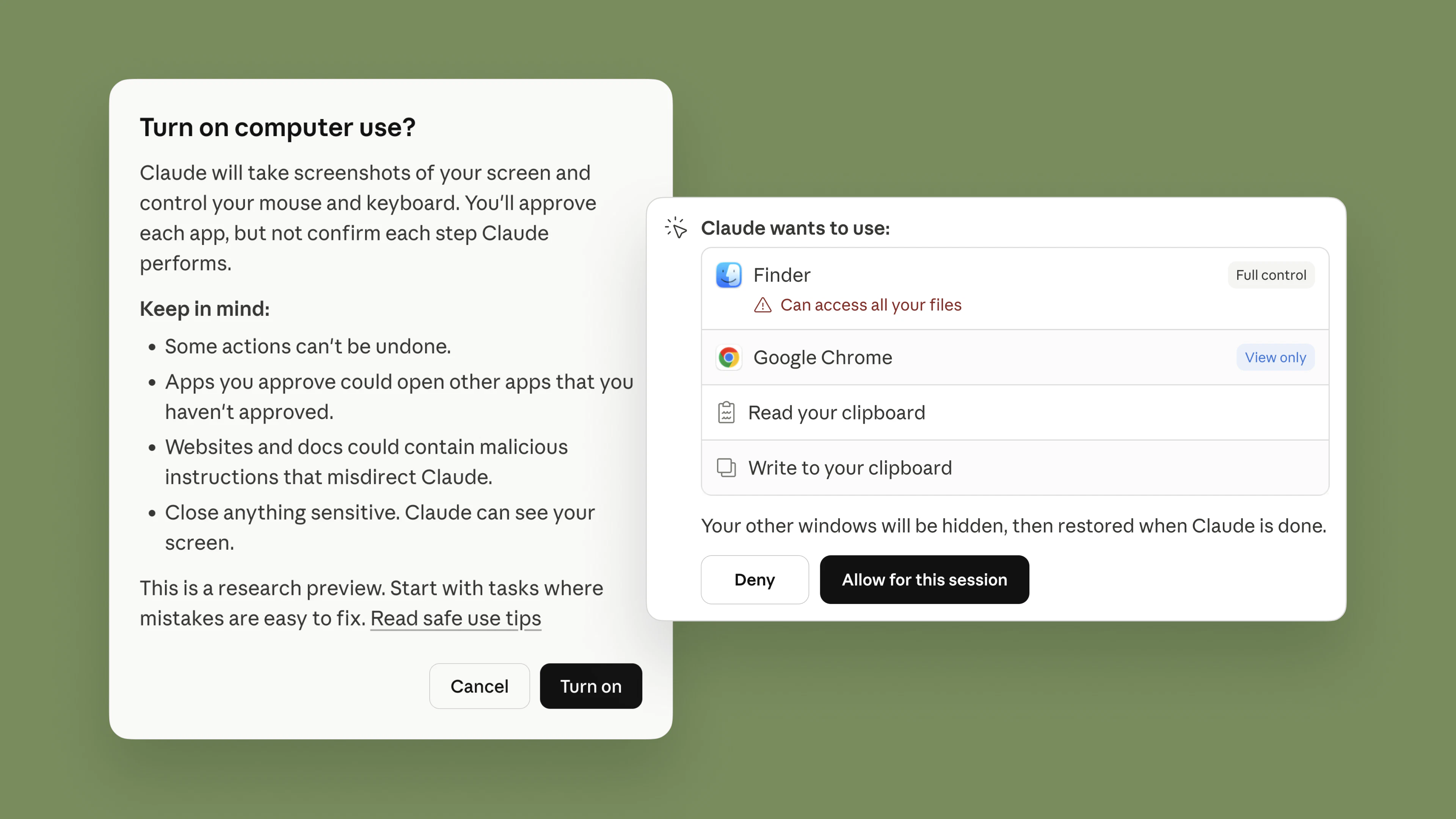
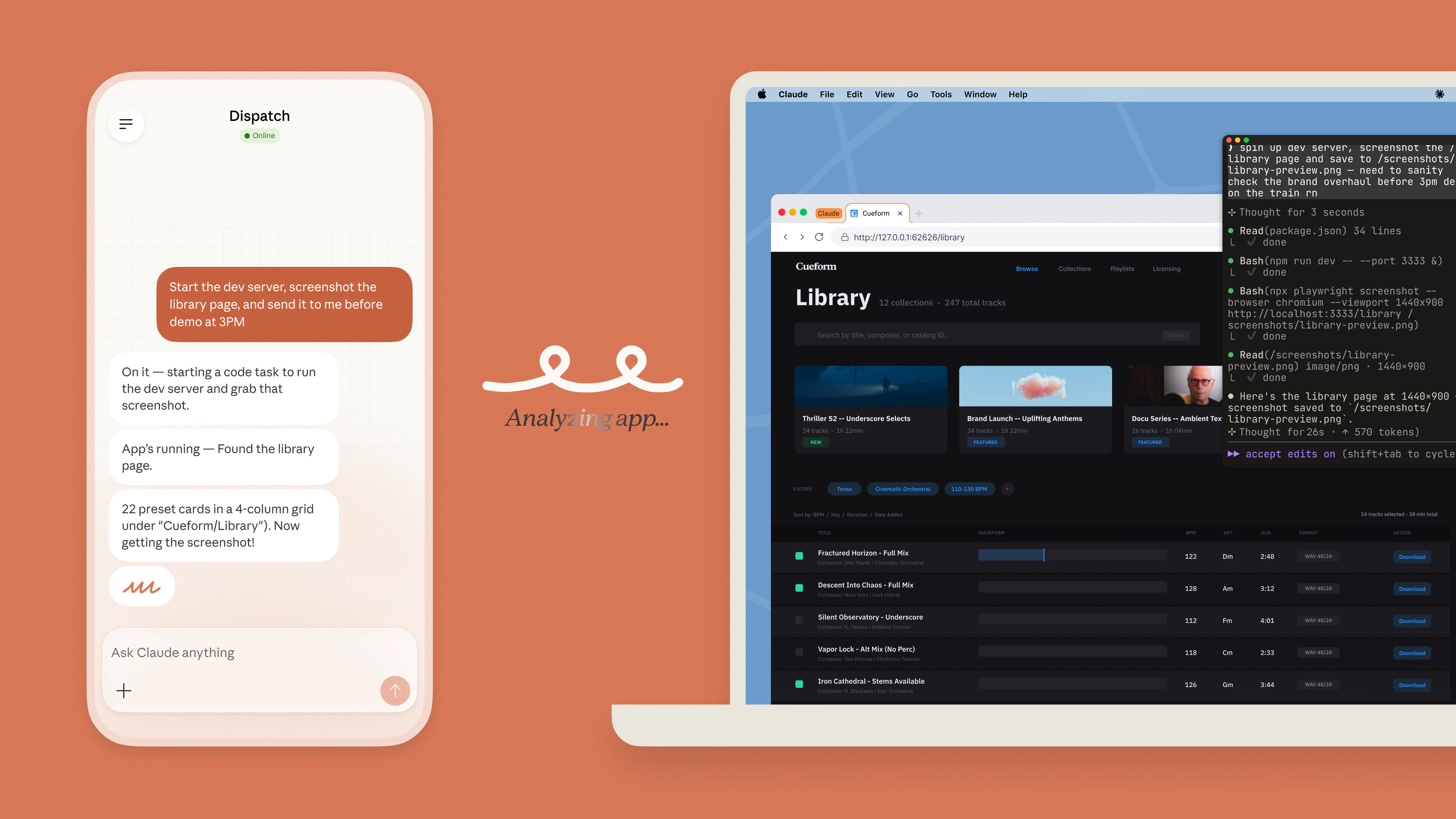
查看原始信息
Redbean
Redbean: Explore game worlds with your own characters.
Redbean helps creators bring their original characters to life. Describe your OC, their personality, and the world they live in. Redbean’s AI turns that into an interactive town where characters can act, explore scenes, complete quests, and build relationships with other characters. Instead of writing static lore, your OC can now live inside a world and generate new stories every day. Creators are already using Redbean to: • build towns where their OCs interact with each other • explore character relationships through quests and scenes • turn character lore into living story worlds If you love creating characters, Redbean lets you see what happens when they start living their own stories.
0
回复

The OC creator community is massive and underserved — most tools treat original characters as content to render rather than worlds to inhabit. The "watch your character move through a town" mechanic is something fans of that space will go crazy for. I work with indie musicians and a lot of them have original visual identities (animated personas, vtuber-style characters) — this could be a real playground for artists who want to bring their alter egos to life beyond a static logo. Congrats on the launch, Bao!

0
回复