Product Hunt 每日热榜 2026-03-28

PH热榜 | 2026-03-28

#1
SlapMac
Slap your MacBook. It screams back. That's it.
343
一句话介绍:一款通过调用MacBook内置加速度计,使其在被拍打、摇晃时发出搞笑音效(如呻吟、山羊叫)的娱乐应用,在无聊或需要解压的场景下提供了一种无厘头的互动乐趣。
Funny Side Project Memes
娱乐应用 恶搞软件 Mac软件 解压工具 病毒式营销 趣味互动 加速度计应用 猎奇产品 极简产品
用户评论摘要:用户普遍认为产品有趣、疯狂且传播力惊人,对2千份销量表示惊讶。主要问题/建议包括:担心音效内容尺度、询问Windows/iOS版本开发计划、关注病毒传播后的长期营销策略、以及建议增加对AI工具的集成(MCP服务器)。
AI 锐评

SlapMac本质上是一个将硬件传感器功能娱乐化的极简Demo,其真正的价值并非产品本身,而是一次完美的“注意力经济”操盘案例。产品逻辑简单到近乎荒谬,却精准击中了几个关键点:利用MacBook这一高价值设备的“反差萌”、社交媒体对猎奇和“梗”内容的饥渴、以及极低的决策成本(3.5美元)。创始人Tonino展现了一个资深工程师被市场“教育”后的快速反应能力:从Instagram上发现需求(评论询问),到24小时内快速打包上线,完成从创意到商品的闪电转化。

它的成功揭露了当前产品生态的一个侧面:在注意力稀缺时代,一个具有强传播属性的“玩具”或“社交货币”,其短期爆发力可能远超一个复杂但平庸的“工具”。2千份销量的背后,是数千万的社交流量,转化率本身已不重要,它验证了“快速构建-投放市场-获取反馈”这一精益理念的极端形式。然而,其核心风险也在于此: novelty wears off(新奇感消退)。评论中关于长期营销的疑问直指要害。产品的未来不在于增加更多音效,而在于能否从“一次性玩笑”进化为一个“娱乐平台”或“互动API”(如评论中提到的MCP服务器集成),将这种无厘头交互能力赋予更多场景,例如直播道具或团队恶作剧工具包。否则,它将只是创始人简历上一个有趣的注脚,以及科技圈一个短暂的谈资。它提醒我们:有时,“不要想太多,先发布”的莽撞,比完美的拖延更能触及市场的真实脉搏。

查看原始信息
SlapMac
I don't think this product should be here.

Hello Hunters! My name is Tonino and today I'm launching SlapMac 👋

Have you ever wanted to slap your Macbook and hear it moan? Me neither.
But now I've built it, so pls buy my thing.

Story
I made a viral video on IG reviewing some code that make your laptop moan, and in 24h I took the idea and turned it into a simple funny product and went even more viral.

What is it
SlapMac turns your MacBook's built-in accelerometer into a sound machine: slap it, tap it, shake it, and it reacts with hilarious sound effects. Moans, goat screams, impacts, and more. Built on Apple Silicon. Zero shame. 100% questionable decisions.

Discount
Use Code "NotThatPh" to get it for only 3.5$.
(limited to 69 activations )

Stats as of today (28/03/2026)
- ~4M organic views on my IG
- 3M+ views from reposts on X
- 140K views on /r/SaaS on reddit (top post)
- 2K+ licenses sold

Make your product simple, ship it. Don't overthink it.

Have fun! 🫦

10
回复

@tonnoz "Moans, goat screams, impacts and more" I am worried about what you mean by "more"

4
回复

@tonnoz This is so much fun! Hope you launch one for windows PC's too soon

0
回复

@tonnoz 2K licenses sold from a moan app is genuinely impressive, what's the conversion rate from views to purchase, and did you do anything to push it or did it just happen on its own?

0
回复

I am so happy that I didn't try this in some public space without wearing my headphones :D

3
回复

@busmark_w_nika good call, I added a warning in the last release :D

0
回复

I can’t believe this is a real thing, but also fair play, the reach you’ve had from it is insane. Did you expect it to take off like that?

3
回复

@becky_gaskell   Right?? The reach on this is actually insane.

1
回复

@becky_gaskell I am as surprised as everyone else honestly. I am a seasoned swe with 14y of exp. in corporate. I could never imagine this turn of events.

0
回复
finally it reaches PH launch 🙌🙌 great work on this @tonnoz 👌
2
回复

@seantiffonnet Thank you Sean!

0
回复

Love this. So simple. But just damn fun! Deserve all the upvotes. Would love to make some fun apps with you in the future? I'm always building.

P.S. My 7 year old son watched the video. He doesn't get it, but found it amusing. My wife was not happy :)

2
回复

@mrcndrw ahaha don't show it to your kid! But thank you!

1
回复

Crazy idea. SlapMac name is so apt.

Congrats on the launch 🎉

2
回复

@basharath thank you!

0
回复
Still better product than OpenClaw
1
回复

@je_suis_yaroslav ahaha you think so?

0
回复

This is hilarious, but how do you plan to market it beyond memes? The novelty might wear off quick!

1
回复

this is so funny, what a crazy idea!

1
回复

@maxont Thank you! IKR

0
回复

Literally just saw this on X! How did you even come up with this? hahaha

1
回复

@marina_romero 
1) I went viral on IG reviewing something like that
2) people asked about the app in the comments
3) at the third comment saying: "where is the app" I acted as fast as I could and shipped it in record time

2
回复
We actually need this for all the laptops and PCs especially nowadays when AI is not doing its job as it should and you want to slap it! Congrats on your launch 🚀🚀🚀
1
回复

@vladimir_zivkovic I am adding soon an mcp server functionality so you can integrate it easily with AI :D

2
回复
what the heck 🤣🤣
1
回复

@rohitks7 I know lol

0
回复
This is hilariously R rates!! 😂😂😂
1
回复

@mahdibeee ahah thanks

0
回复

Incredible app to install to your coworkers without them knowing.

1
回复
0
回复

Hahaha this is hilarious! Is there an iOS app too?

1
回复

@mauricekleineIt's on the roadmap! Live hopefully by the first half of April.

3
回复

tried it once it was released. lmao.
forgot i had it running and opened laptop next day to start the day getting moaned at: absolutely priceless.

1
回复

@chrisdietr ahah careful!

0
回复

I wish I had a MacBook just to buy this app

1
回复
@antonioescudero 🫦
1
回复

<3

0
回复

RIP for people who forget this is on in public.

0
回复

This is hilarious and congrats on the launch!

It'd be great use the same mechanism of tapping your macbook to get claude to think harder (although I'm sure it would want to settle the score once it becomes sentient and grows thumbs)

0
回复

Great app been thinking about doing a version of SlapRick. So when you slap mac rick roll plays.

0
回复

hey, the website is down, really funny app

0
回复

whats the tech stack man ? from a developer :)

0
回复

Really funny concept: turning your MacBook into something that literally reacts when you hit it is the kind of chaotic idea that somehow just works 😂 Congrats on the launch! What made you decide to turn a viral joke into a full product so fast instead of letting it stay a meme? 🚀

0
回复

I love a good tagline — I clicked just because of it! This is hilarious... sometimes you need a little fun in your day, especially when you're in front of a computer all day. Good luck with the launch!

0
回复

2000 licenses sold is genuinely insane haha

0
回复
#2
Crossnode
Vibe code AI agents and put them behind a payment wall
328
一句话介绍:Crossnode是一个让AI开发者和机构能够将AI工作流或智能体快速打包成可重复销售、自带计费和客户管理的白标SaaS产品的平台,解决了为不同客户重复部署、集成和手动管理所带来的规模化难题。
Artificial Intelligence No-Code Business
AI智能体商业化 无代码/低代码平台 SaaS产品化工具 白标解决方案 工作流自动化 多租户部署 集成支付与计费 凭证安全管理 代理即服务 企业级AI运维
用户评论摘要:用户普遍认可其解决“为每个客户重复构建”的核心痛点,创始人亲身经历增强了可信度。主要问题集中在:版本更新策略、凭证安全与数据合规细节、API支持、支付方式灵活性(如印度市场替代方案),以及技术架构的可靠性。
AI 锐评

Crossnode的野心不在于打造另一个AI智能体构建器,而在于成为“AI服务规模化”的基础设施。它敏锐地刺中了当前AI代理热潮下一个隐秘而关键的瓶颈:如何将实验性的、项目制的AI工作流,转化为稳定、可重复、可计费的标准化产品。其价值并非来自技术上的颠覆性AI突破,而是来自对商业化路径中那些“脏活累活”——计费、鉴权、多租户隔离、白标交付——的系统性封装。

产品呈现出明显的“由痛点到产品”特征,创始人的Agency背景使其对目标客户(AI服务机构、自由职业者)的运营泥潭有切肤之痛。这解释了其初期吸引力:它提供的不是可能性,而是解脱。将Zapier/n8n工作流直接转化为可收费服务的能力,是极具说服力的“增长黑客”策略,旨在快速捕获早期采用者。

然而,其长期挑战同样清晰。首先,它本质上是一个“平台之上的平台”,深度依赖下游AI服务(如OpenAI、Anthropic)与上游集成工具(如Slack、Gmail)的API稳定性与政策,自身作为管道,抗风险能力需要验证。其次,其宣称的“自我修复”等高级运维能力,在复杂的企业级场景中能否经受住考验,仍有待观察。最后,其商业模式是否足够厚实?如果巨头(如微软Power Platform、Zapier自身)决定向类似“AI工作流产品化”方向延伸,Crossnode的护城河——对细分痛点的深度理解与敏捷开发——能否抵御冲击?

简言之,Crossnode是AI应用浪潮步入“深水区”的一个标志性产物。它不再鼓吹AI的万能,而是务实地面向那些试图用AI赚钱的构建者,提供将创意转化为可持续生意的工具箱。它的成功与否,将成为衡量AI代理领域能否从“演示阶段”迈向“商业阶段”的重要试金石。

查看原始信息
Crossnode
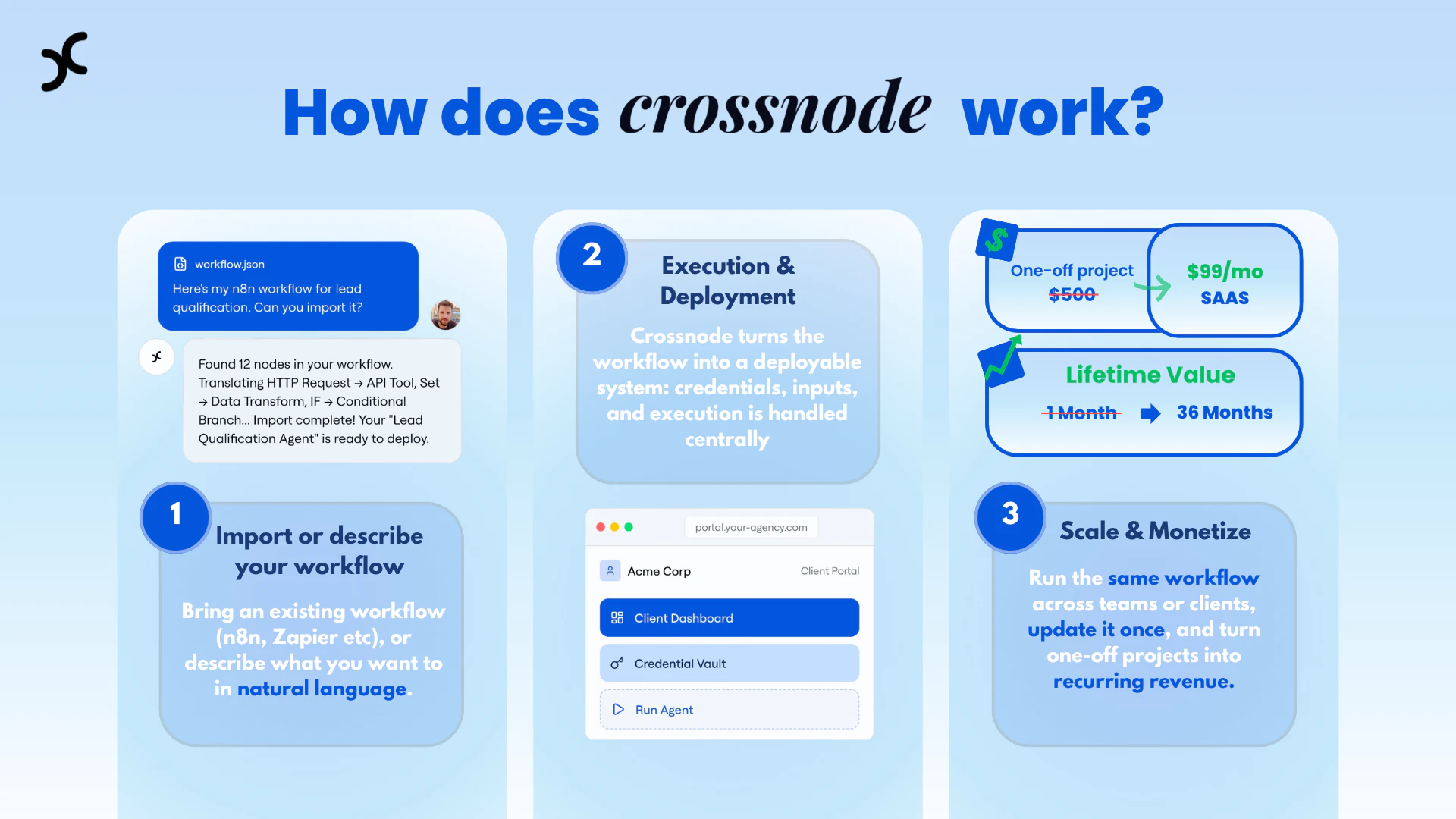
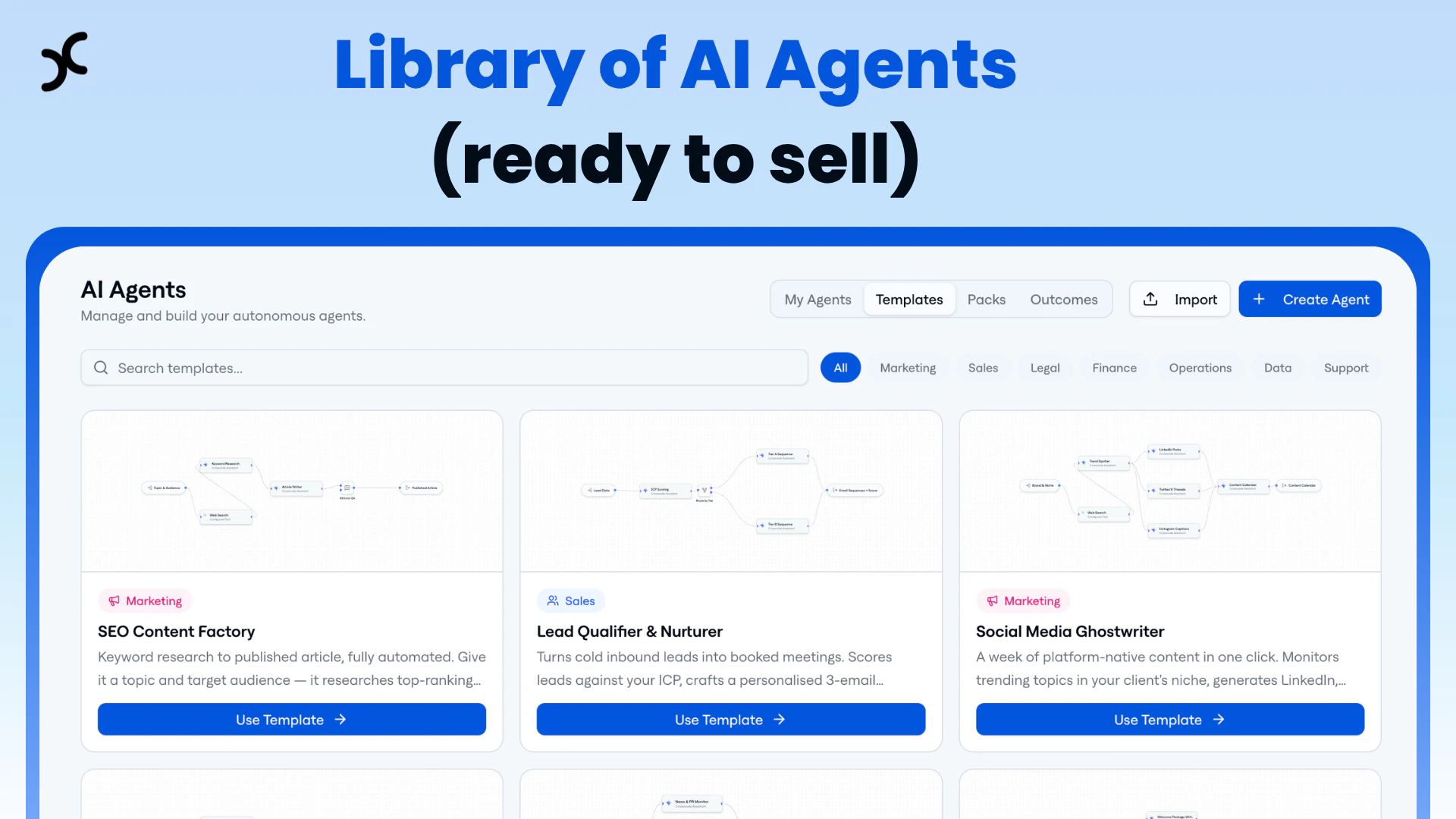
Crossnode is the fastest way to turn AI agents into paid products. Just connect your workflow (upload from n8n or build using natural language), we handle logins, billing, usage caps, no backend or payment setup needed, all you have to do is put in the email of your clients and assign agents to them :)

Hellooo everyone!! 👋


While running my AI agency 2 years ago, everything worked super well, managed to make some good money at 19 but it didn’t scale :(

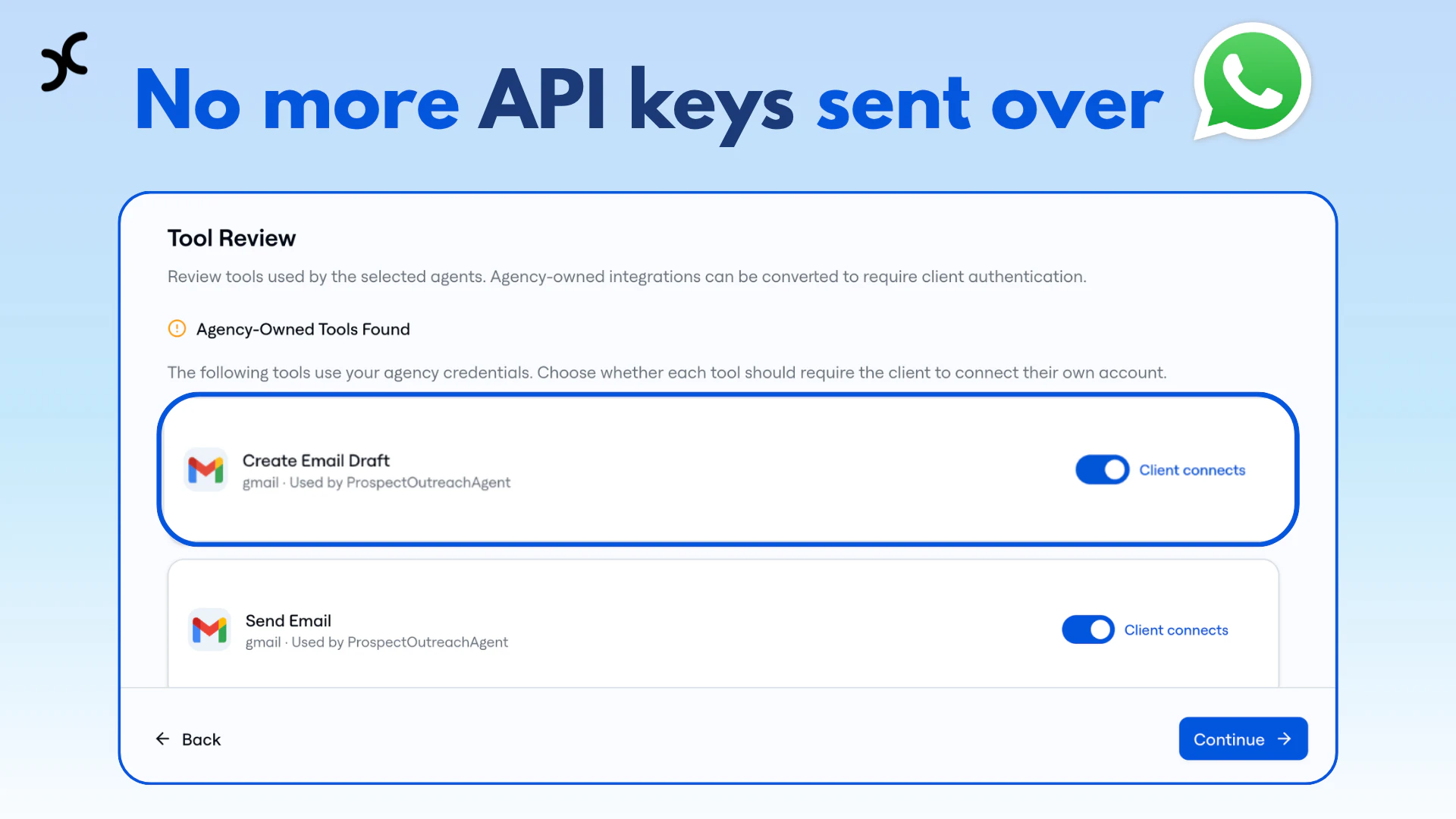
Every new client meant rebuilding workflows, setting up integrations again, asking for api keys over Whatsapp, and managing everything manually... so we built something for ourselves to fix it

We wanted one system where workflows could be deployed once, clients could connect their own accounts, and everything would just run without us in the loop, that’s what turned into Crossnode, we let you take workflows or ai agents and turn them into actual products with:

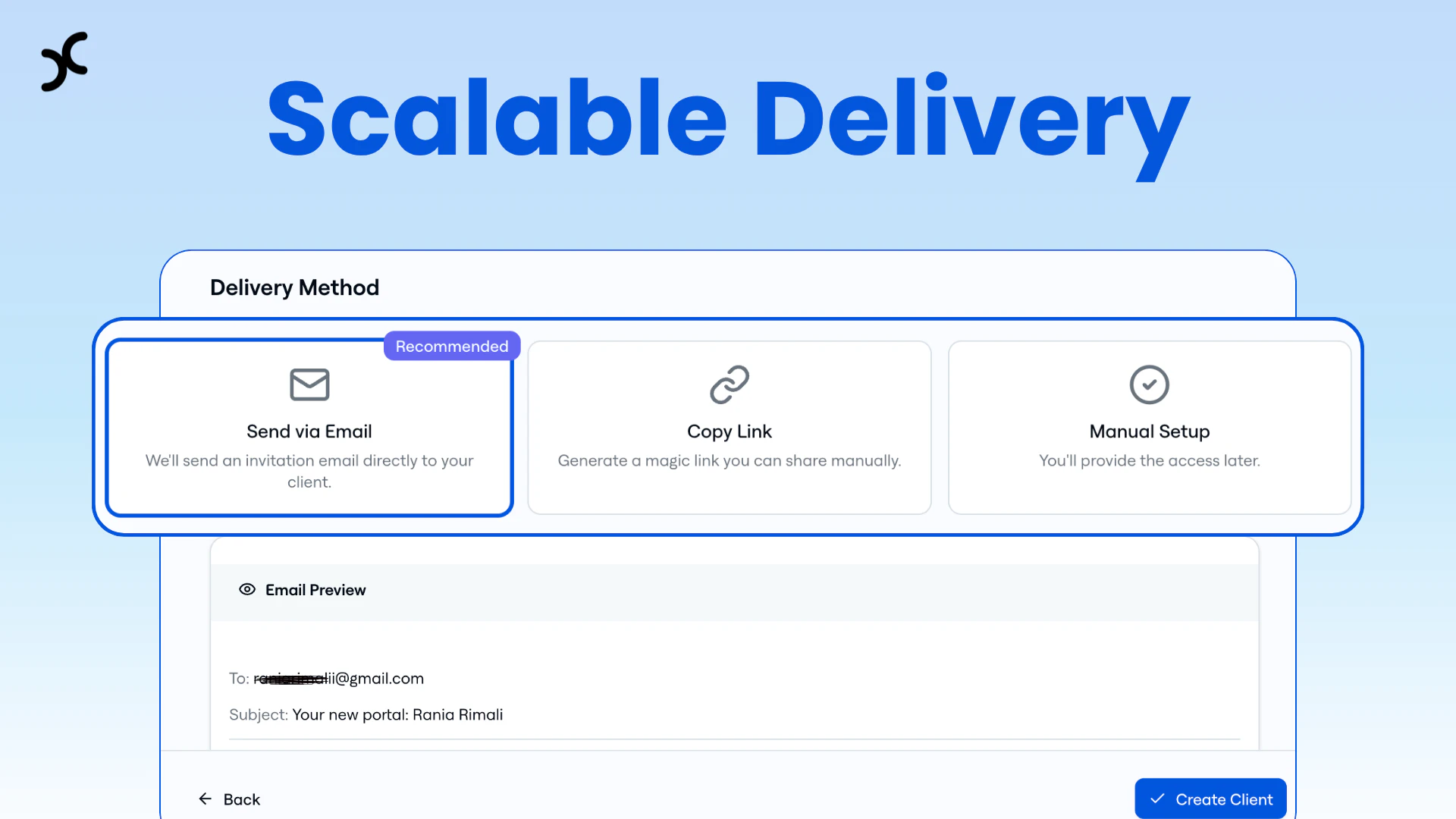
  • White-label client portals

  • Built-in billing

  • Secure credential handling

  • Multi-client deployments

We want to accelerate the deployment of ai, and if this is how we can help, we’ll gladly do it 🙏🙏🙏

If you're running AI services today, I’d genuinely love to know about your biggest operational pain point...

We’re fixing bugs in <24h and shipping improvements daily!!

Hope you like the product!! Feel free to reach out directly →
Rania: https://www.linkedin.com/in/rani...

Islam: https://www.linkedin.com/in/islam-hachimi/


We’ve been debating launching for a few weeks… but at some point you just have to stop overthinking and ship!! The fastest way to know if something works is to put it in people’s hands :))

15
回复

@rania_rimali Congrats! The "build once, deploy to many clients" angle is exactly what's missing for most AI agencies. how do you handle versioning when you update an agent -do all clients get the update automatically, or can you roll it out selectively?

1
回复

@rania_rimali Hey! When a client connects their own accounts through the portal, who has access to those credentials at the infrastructure level, and what happens to them if a client cancels or the agency relationship ends?

0
回复

Hey everyone 👋 Islam here, CTO of Crossnode 🕺

Super excited (and a bit nervous tbh) to finally share this after being heads-down in the codebase for the past few months!

While building the core engine, one thing became clear: building an AI agent is easy but when you try to scale that agent across 20 different clients. Suddenly you're drowning in a mess of isolated API keys, empty executions, timeout errors, and trying to hack together a way to bill for usage without losing your margin…

So we built Crossnode to handle that entire infrastructure layer. The idea is simple: you build an agent once, and you can deploy it across infinite clients as a white-labeled SaaS.

To make this actually work reliably in production, we had to go deep. Under the hood:

We spin up persistent Daytona sandboxes so your agents have real state, memory, and secure file systems across runs.

We built a DAG execution engine that handles circuit-breaking for API limits.

Instead of just failing and alerting you, the engine actually tries to self-correct broken nodes.

And because we know nobody wants to rebuild from scratch... we built a 1-click Zapier & n8n importer so you can just drop your existing JSON workflows right into our infrastructure.

It’s still early and we’re shipping code every day, but we’re really happy to finally have people try it and give feedback.

If you’re building AI workflows or agents for clients, I’d genuinely love to hear: how are you managing state, sandboxing, and billing right now?

Please go break the importer, roast the architecture, and let me know what you think! 🙏

5
回复

@thislam LFGGGGG🚀🚀🚀🚀

1
回复
I love Crossnode, I already have tons of ideas I’d like to build with it, like platform-specific scrapers offered as a service. I have two questions: 1. What payment models do you support for end clients? 2. Can clients access and run the automations via an API?
4
回复

@bengeekly Thank you so much!! We're really grateful for all the support 🙌 🚀

On payments, you can structure it however you want depending on your clients! Subscription with a free trial, one-off projects, split payments like pay half now and the rest later… all of that works :))) The idea is that you’re not locked into one model, you can adapt to how you already sell + we try to stay very flexible with our agencies!

And yes, we do have the API! We believe that automations are the next software, so giving people the ability to run and embed them programmatically is a big part of that vision!!

3
回复

Holy integrations!

3
回复

@apparentforgmail Thank you!!!

1
回复

Interesting angle.
A lot of people can build agents now, but packaging them into something users can actually pay for is where the real business starts.
Making distribution + billing simpler is a strong move. Congrats on the launch 🚀

3
回复

@mikita_aliaksandrovich Thank you so much for the support!!! that's also exactly how we see it!

We’d love for people to focus on selling outcomes rather than all the setup around it! The value shouldn’t be in wiring things together, it should be in what the automation actually delivers :)

2
回复

Congrats on the launch 🚀
this is seriously exciting to see 👀

The idea of turning AI services into something repeatable instead of rebuilding every time is great!! Once you standardize deployments and add proper monitoring and billing, you’re no longer selling projects, you’re building something that behaves like a product.

Over time, this kind of system naturally compounds. More usage means more data, better performance, and smoother deployments. That kind of leverage is what actually enables scale.

Curious, what has been the hardest part so far when it comes to managing multiple clients and keeping everything running reliably?

3
回复

@cem_ozcelik Thank you Cem :))) really appreciate the support !!🙌

This is actually something I personally struggled with when I had my agency. We kept rebuilding the same things over and over, and it just didn’t scale. At some point I realized the real problem wasn’t building, it was everything around it. Deployments alone are a whole different layer, and once you add monitoring and billing, you’re not really selling services anymore, you’re building something closer to software.

And you’re exactly right on the compounding side. Over time we want to leverage as much data as possible to improve performance, understand what actually works across different companies, and identify which agents are being used the most and performing best. We track everything on the backend so we can keep improving that loop.

Now as per managing multiple clients, it isn’t that hard anymore since we’re using Crossnode ourselves hehehe but before that it was a mess!! And during validation, pretty much every AI agency I spoke to was dealing with the exact same issue.

0
回复

Congratulations on the launch 🎉 🎉

3
回复

@shubham_pratap Thank you so much for the support :)))

0
回复

Congratulations

2
回复

@madalina_barbu Thank you!!!

0
回复

the "rebuild everything for every client" pain point is so real - the fact that you hit it yourself running an agency before building the solution means you actually know which parts hurt most

2
回复

@liviu_chita Thank you so much for the support!

0
回复

Really cool to see this, we ran into the exact same scaling problem building TalkBuildr (AI chatbots as a service for agencies). The white-label portal + billing combo is where it gets tricky. How are you handling the credential handoff when clients need to swap their own API keys mid-deployment?

2
回复

@cuygun 100% 🙌 that was the biggest advantage we had going into this! We know exaclty the pain points :)))

What we do is keep that layer fully separated per client, so they can manage and update their own credentials without breaking the setup. The system picks up the changes without you having to redeploy everything or jump in manually!

0
回复

@rania_rimali @thislam Congrats on the launch. How do you ensure end-to-end data privacy and regulatory compliance (such as GDPR and emerging AI governance laws) when client data, API credentials, and autonomous agent activities are processed across multiple third-party integrations and workflows?

2
回复

@rania_rimali  @mssulthan Great question! We take a multi-layered approach to privacy and compliance to ensure you’re ready for the most rigorous security audits.

First, we use AES-256 (Fernet) encryption for all sensitive credentials, and they are only decrypted at runtime within isolated execution environments. Second, we built Crossnode on a strict multi-tenant architecture, ensuring total data isolation between agencies and their respective clients using row-level security logic.

For GDPR and privacy specifically, our Dynamic Tool Resolution is the key. It allows your clients to connect their own third-party tools (Slack, Gmail, etc.) within their own branded portal. This means you, as the agency, never have to touch or store your client’s sensitive API keys; the client remains the 'Data Controller' for their own accounts. Finally, our built-in Audit Logging tracks every configuration change and agent activity, giving you the complete visibility needed for modern AI governance.

3
回复
I was searching for thiss!! Thanks guys
2
回复

@jaber23 Thanks a lot Jaber!!

0
回复

Congrats in the launch @thislam and @rania_rimali !!
Quick question: Can we connect our stripe with Crossnode for direct billing?

2
回复

@ajaykumar1018  Yessirrr 😄 that’s exactly how we operate! You can connect your Stripe and handle billing directly through Crossnode! We want the agencies/freelancers to operate on one singular platform!

Thank you for your support btw!!

0
回复

@rania_rimali  @ajaykumar1018 Yes, absolutely! We've built Crossnode with a native Stripe Connect integration specifically for agencies!!

0
回复

Congrats Rania and Islam 🚀🚀🚀

Agencies have always been known for delivering services, which works, but it also means everything stays manual and every new client turns into a new project... What’s interesting here is that you’re giving agencies a way to turn those services into something more productized. Instead of starting from scratch every time, they can actually offer something repeatable!

Feels like a big shift in how agencies can operate long term. Are you seeing interest from agencies trying to scale??

2
回复

@munjitso 
Thank you so muuch Mohamed Amine!!! 🚀🚀

And yeah 100%.!! Most of the interest is coming from agencies that already hit that wall where everything is manual and just doesn’t scale anymore!!

Once they start thinking in terms of productized services, it changes everything. Same workflows, but now repeatable and wayyyyyy easier to manage.


1
回复

Oleee!! Congrats on the launch Rania!! 🚀

Have you thought about alternatives to Stripe for markets like India? There’s a lot of freelance and agency activity there, especially among the kind of users you’re targeting.

Would be interesting to see how you handle payments in those regions.

2
回复

@dhanushreddy29 Thank you so much 🙌 I really appreciate it

Yeah we’ve been thinking about that. Stripe works great in some regions, but markets like India are very different. I’ve heard good things about Dodo Payments and Razorpay as well, so we’re exploring options in that direction. The goal is really to keep it flexible so people can use whatever works best locally instead of being tied to one provider!

If you’ve seen others working well there, would love to know 👀

0
回复

As someone who has watched hours of tutorial videos for n8n, for zapier, for make.com, and for relevance ai and still struggled to find the perfect way to build your marketplace is a game changer!!!

How user friendly is the platform for someone who is just getting started? Are your current users typically established agencies, or are they mostly individuals just starting out like me?

2
回复

@mar_merino Thank you for your support!! We tried to make Crossnode as simple as possible to pick up. You can build using natural language or import existing workflows, so you don’t need to be suuuper technical to figure things out!!

Right now we’re seeing a mix tho some established agencies using it to scale, but also individuals just starting out and trying to turn their first workflows into something they can actually sell :))

0
回复

Like the idea! Building things is one challenge, but keeping them running across clients is another story.

If it works as you intend, it could really change how teams deliver and manage their automation. How are you thinking about making it easy for smaller teams to plug in and use?

2
回复

@kate_ramakaieva Really appreciate your support Kate!!

We’re primarily built for smaller teams looking to scale, but also for larger teams that need to keep things running reliably. One of the core pieces is an engine that continuously monitors logs and, instead of requiring a human in the loop, automatically detects and fixes issues as they come up.

On top of that, you can either build workflows directly on Crossnode or import them from tools like n8n. From there, everything gets deployed across clients with billing and access handled out of the box!

2
回复
Good luck with your launch!
2
回复

@dmitry_zakharov_ai Thank you so much Dmitry!

1
回复

Crossnode looks awesome. Let's get you guys in the Fastlane!

1
回复

@gauravthapa Thank you!!

0
回复

Biggest challenge won't be building agents. It will be making them reliable under real client usage. Billing is easy. Production-grade agents are hard.

1
回复

@ion_simion_bajinaru We totally agree!!!

0
回复

Really interesting idea: turning AI agents into actual monetizable products without dealing with billing or backend setup removes a huge barrier for builders. Congrats on the launch! How do you handle pricing models or usage limits so creators can scale without underpricing their agents? 🚀

1
回复

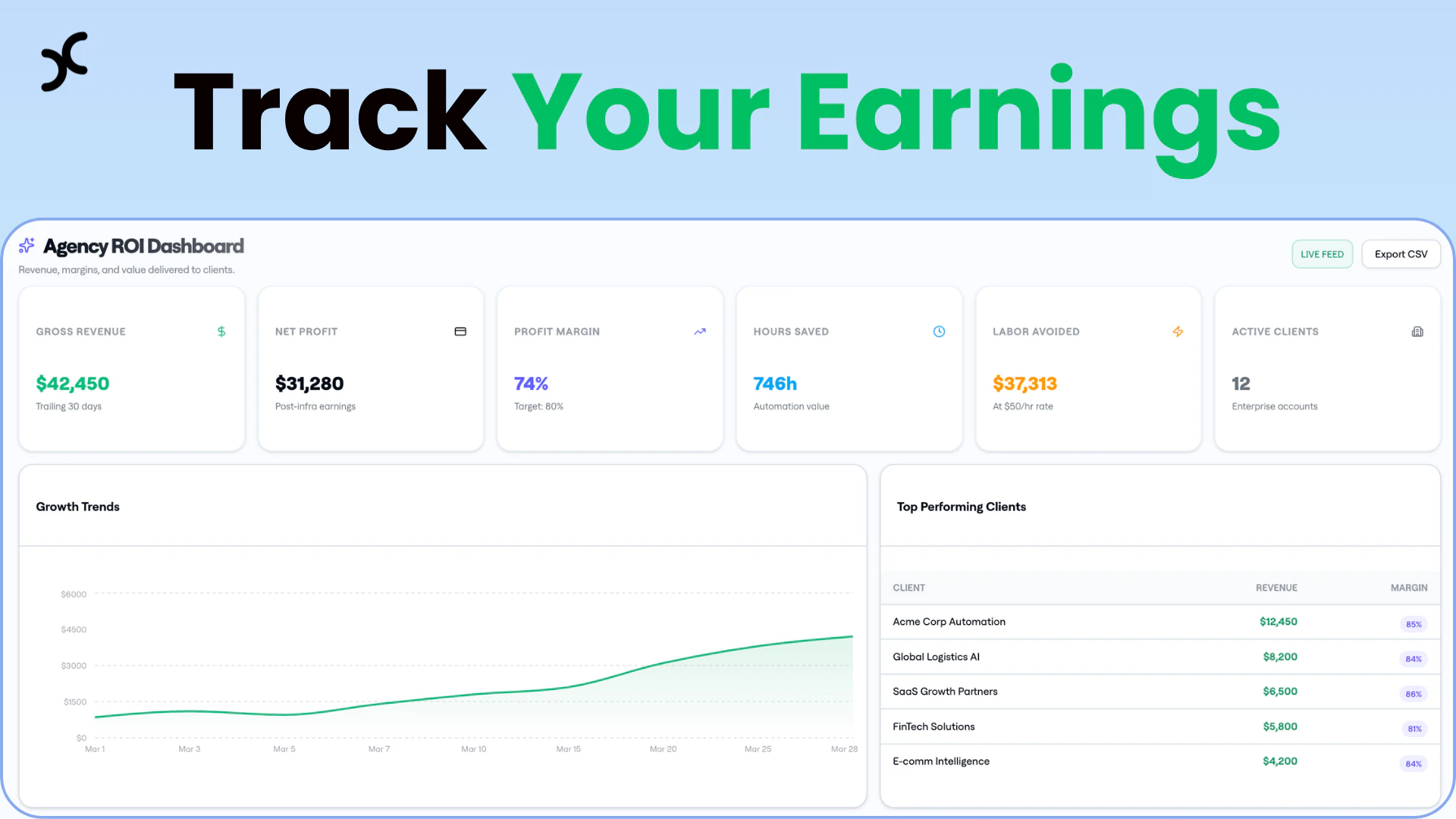
@thegreatphon hehehe Thank youuu!! We have an earnings dashboard that tracks infra costs and usage per client, so you can actually see what each workflow is costing you in real time! you will know for sure if you’re undercharging (or overcharging ;)) ) and can adjust pricing accordingly!

0
回复

Love the vision behind Crossnode! A solid solution for AI agencies tired of the chaotic cycle of client onboarding and manual setups. The one-click importer for Zapier and n8n is a smart touch, it's those little friction points that really derail progress. How have you tackled scaling the infrastructure to support varied client needs while maintaining performance?

1
回复

@trydoff Thanks for the kind words! Basically we tackle scaling by decoupling the 'heavy lifting' from the main interface: we offload long-running AI tasks to a background layer so the user experience stays snappy.

The entire system is completely stateless and architected for horizontal expansion, with a heavy focus on keeping data retrieval instant even as your agency grows.

Basically, we handle the 'boring' infrastructure so you can focus on the AI part! 🚀

0
回复

With the AI agent builder, are there ways to debug issues or customize it further based upon specific client needs?

1
回复

@lienchueh Yes, absolutely! We built this specifically so you don’t hit that "no-code ceiling" when delivering for clients.

For debugging: Every execution gives you a granular, step-by-step visual trace. You can click any node to see the exact inputs, outputs, latency, and errors. If a run fails, our AI "Smart Fixer" analyzes the logs and actually suggests the specific prompt or code tweak to fix it.

For customization: You aren't limited to our pre-built integrations. You can drop into raw Python to write custom tools (running in secure cloud sandboxes) to hit any obscure client API. You can also mix AI reasoning with strict, deterministic logic (switches, routers, loops) to guarantee their exact business rules are followed.

Happy to share a quick video of the debugger in action if you're curious!

0
回复
This is really great! Especially for folks with a lot of great ideas but not enough scope to execute by themselves. Congrats on the launch!
1
回复

@chimwemwe Thanks for the support!

0
回复

Congrats on the launch 🚀 absolutely love the UI, super clean!! Great job

I’m thinking of implementing it for a few workflows I’m running, this feels like it could simplify things a lot! Is it to get started from scratch?

1
回复

@obezzad Totally! We designed the whole experience to be as low-friction as possible for agencies and tinkerers. You can either drag in your existing n8n or Zapier JSONs and we’ll convert them into agents in seconds, or you can just describe what you want to our 'Architect' (like, 'A lead researcher that pokes Slack') and it’ll draft the whole workflow for you. Most people have their first client-ready agent billable in under 5 minutes!

1
回复

congrats on the launch!!! Super cool product i love it!!

1
回复

@itsmasa Thank you so much for your support!!!

0
回复

@rania_rimali @thislam

Let’s gooo Rania and Islam!!! 🚀 you guys never disappoint

Love that you tackled one of the biggest barriers when switching tools, which is migration. Including n8n and Zapier is huge, because that’s usually what stops teams from even trying something new.

This really feels like a game changer for agencies that want to move away from selling hours and start operating more like a product, with something structured and repeatable instead of starting from scratch every time.

How are the API keys shared then??

1
回复

@rania_rimali  @amraniyasser That's actually one of the coolest parts! We use something called dynamic tool resolution so you never have to ask a client to 'hand over' their sensitive API keys. You build the agent exactly how you want it, and you get to decide which parts use your own infrastructure and which parts require the client to connect their own accounts (like their Slack or Gmail). When they log into their portal, they just see a simple 'Connect' button for the specific tools you've delegated to them. It keeps their credentials totally private and makes the handover feel like a seamless product experience.

0
回复

love the origin story, happy launch day! quick one: when clients need to connect their own tools (Google, Slack, etc.), do they do that themselves inside the portal or do you still have to set it up on their behalf?

1
回复

@jens_deryckere1 They do it themselves! That’s the beauty of it. Once you assign an agent to their portal, the system automatically detects which tools need their personal accounts. They just log into their branded portal, click a single "Connect" button (for Google, Slack, etc.), and they’re good to go. You never have to touch their credentials, and they never have to touch yours.

0
回复

The product interface is far too complex; it is unclear what is happening.

1
回复

@river_ray I totally hear you. We've packed a lot of power under the hood to handle complex agency workflows, but I know that can definitely feel like a lot to take in at first glance. We're already working on simplifying the onboarding and adding more intuitive templates, so this feedback is actually super helpful for us. I'd love to hear more about which specific parts felt the most confusing if you're up for it!

0
回复

This is a very smart solution for a very real pain point — every AI agency hits that wall where scaling means chaos. Love how Crossnode shifts that burden off the agency completely. The white-label portal + built-in billing combo is exactly what's been missing. Congrats on the launch, Rania and Islam — curious to see where you take the multi-client deployment features next!

0
回复
#3
Aera Browser
The browser built for automation
199
一句话介绍:Aera Browser是一款为自动化真实工作流而构建的浏览器,允许用户创建并自动执行跨网站的复杂任务,解决了传统自动化工具难以处理上下文、易中断且无法实际执行操作的核心痛点。
Artificial Intelligence
浏览器自动化 智能体浏览器 工作流自动化 RPA 本地隐私 MCP集成 自主执行 Chromium内核 无代码自动化 后台任务
用户评论摘要:用户普遍对MCP集成和实际执行能力表示高度兴趣,认为这是区别于仅提供建议的AI工具的关键。主要问题集中在:1. 如何应对复杂网站及防爬机制(开发者回复通过深度集成Chromium模拟人类交互解决);2. 是否支持多任务并行;3. 与主流浏览器的基础性能对比。另有用户主动提出付费测试服务。
AI 锐评

Aera Browser的野心不在于做一个更好的浏览器,而在于成为连接AI智能体与现实数字世界的“执行层”。其真正的颠覆性价值体现在两个层面:第一,它通过深度修改Chromium内核,将自动化引擎植入浏览器底层,试图从根本上解决传统RPA或扩展脚本在动态网页面前脆弱、易失效的顽疾,其宣称的模拟人类交互与视觉验证是技术上的关键赌注。第二,也是更具战略眼光的一步,是内置MCP(模型上下文协议)。这使它从单一的自动化工具,升级为AI智能体的“手和眼”。当Cursor、Claude Code等编码智能体能直接调用浏览器执行任务,而不仅仅是生成代码建议时,人机协作的范式才可能发生质变——从“AI建议,人操作”变为“人指挥,AI全栈执行”。

然而,光环之下隐忧并存。作为个人开发者项目,其工程复杂度和长期维护能力面临严峻考验,尤其是对抗日益复杂的反机器人检测是一场永无止境的军备竞赛。此外,其商业模式依赖的“更高性能模型与视觉工具”的订阅制,可能将核心能力设限,免费版能否提供足够的稳定性和能力以形成网络效应存疑。当前AI智能体领域仍处于“建议多,执行少”的探索期,Aera提前卡位执行枢纽的位置颇具前瞻性,但其成功与否,不仅取决于技术可靠性,更取决于能否吸引到足够多的智能体平台与其共建生态,否则将面临孤掌难鸣的窘境。它不是在挑战Chrome,而是在试图成为下一代AI原生操作系统的入口。

查看原始信息
Aera Browser
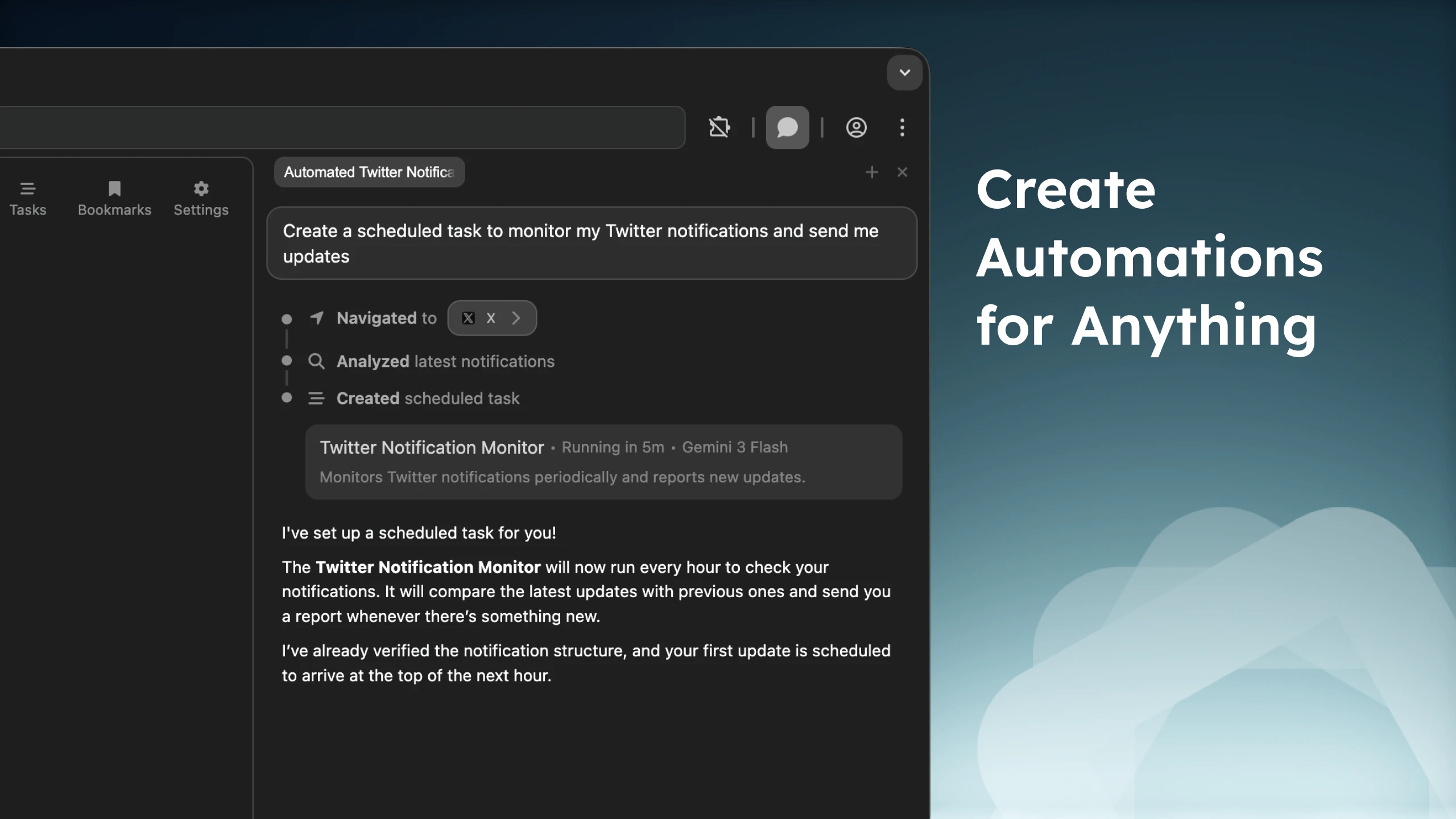
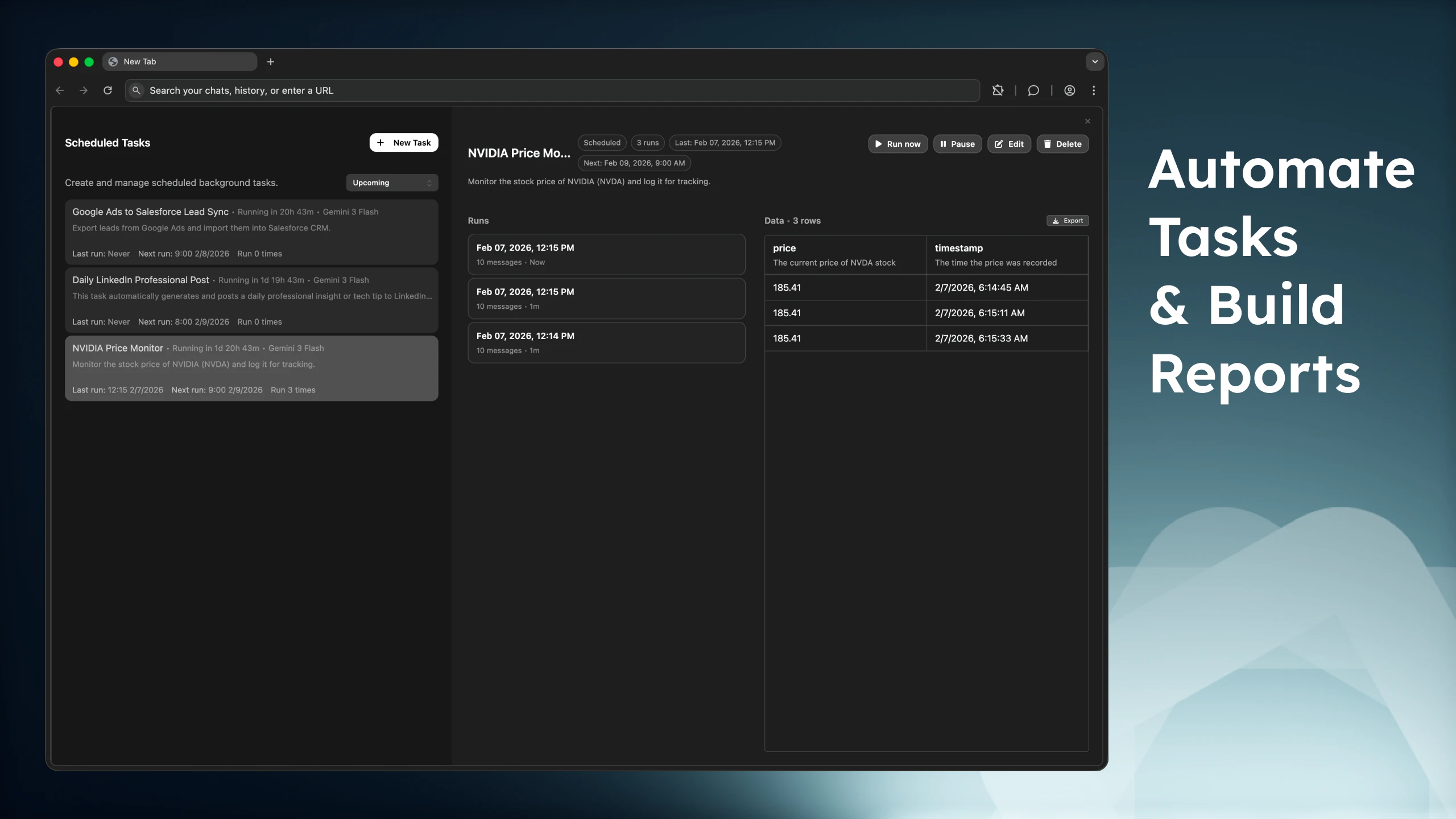
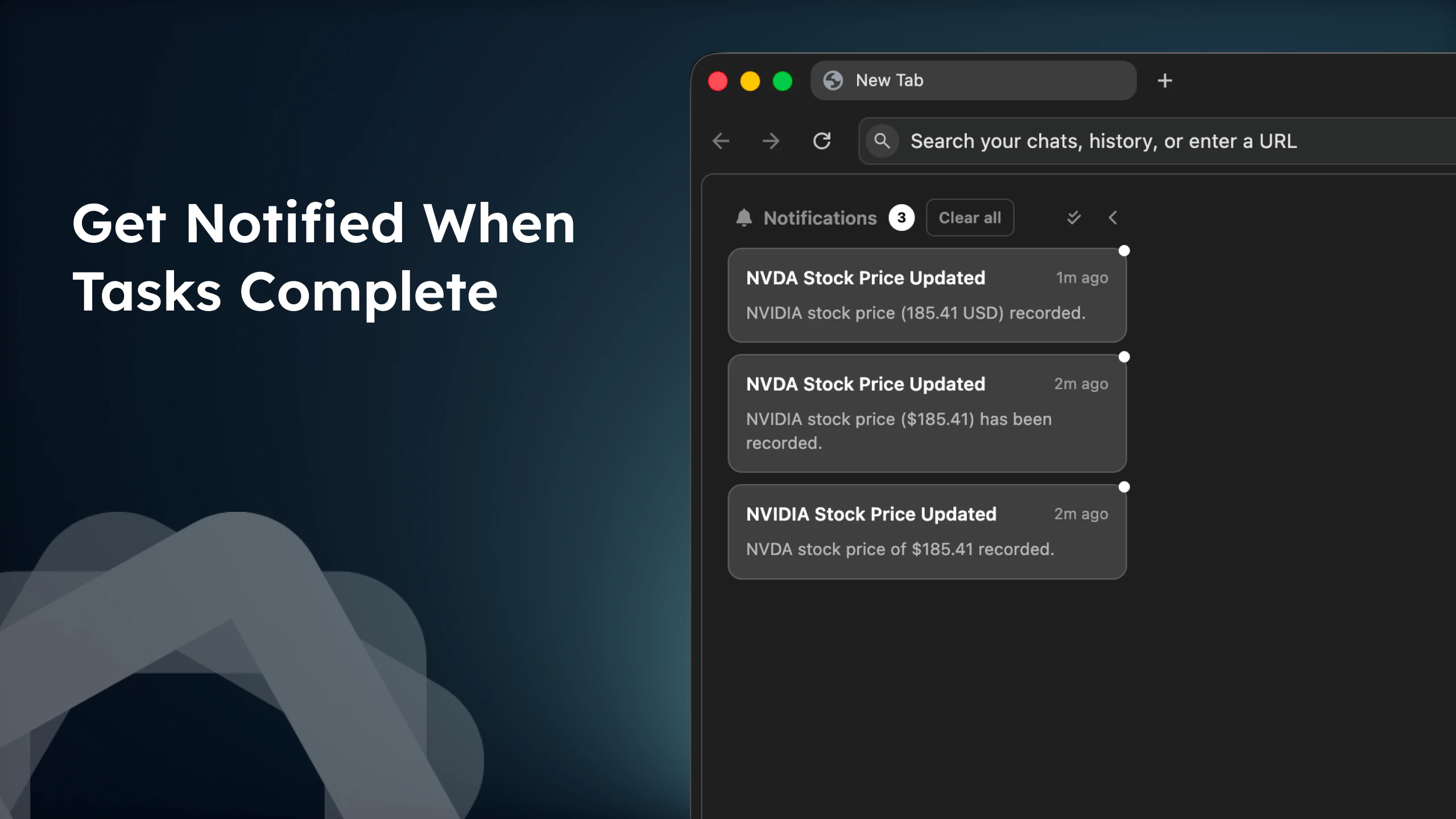
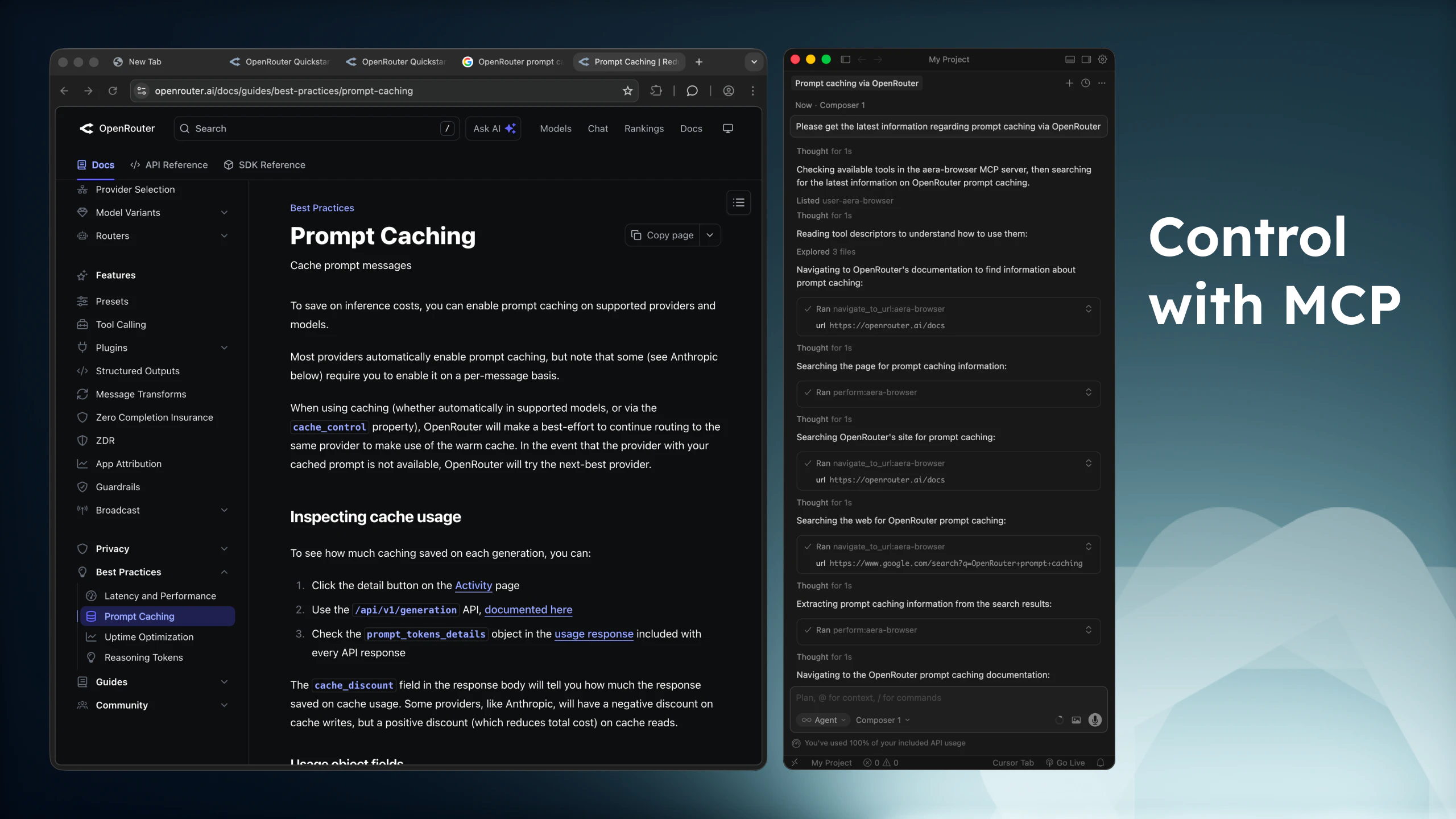
Meet Aera, the browser built for automating real workflows. Create tasks, and Aera runs full workflows in the background, handling context, execution, and reporting automatically. Connect tools like Cursor or Claude Code with MCP so agents can take real action, not just suggest it. Keep your data + history private and local-only. Try for free!
Hey Product Hunt! 👋 I'm Andrew, and I built Aera to address the core issue with current agentic browsers: they just don't help me get any real work done. Aera does. Instead of just helping you browse, Aera lets you automate real workflows in your browser, even while you’re away. Here's how it works: • Create a task (or just ask the sidebar!) • Schedule it to run automatically • It executes, tracks context across runs, and generates reports • You get notified when it’s done If you can do it in a browser, you can automate it. But with Aera, I wanted to take this a step further. Agentic tools can be helpful in their own right, but are even more useful when connected to other agentic systems. So Aera ships with MCP. You can connect tools like Cursor, Gemini CLI, OpenClaw, and Claude Code directly to Aera so that they can use the browser's automation toolkit to actually execute tasks, not just suggest them. On privacy: • Your browsing + chat history stays local-only. • Inference handled directly by model providers and never passes through Aera servers. • All subscription models use ZDR (Zero Data Retention). Aera comes with a free tier, with higher performance models and vision tools that greatly increase capabilities available in subscription plans. Aera is still in early access, and is developed solely by me for the time being. I'd genuinely love to hear your feedback and see what you automate as Aera continues to scale!
5
回复

@arivers this looks excellent. Congrats

0
回复

@arivers Hey! I just came across your launch on Product Hunt – really cool what you’ve built 🙌

I like the direction you’re going in. I usually help founders test their products and catch bugs or UX issues before users run into them.

I’d be happy to do a full test and send you a clear, structured report (bugs, edge cases, usability improvements).

I normally charge around $25 for this, but happy to start there and see if it’s useful for you 🙂

0
回复

@arivers Hey Andrew, super intrigued by Aera's MCP integration. What's one quick-win automation you've seen users pull off that blew your mind?

1
回复

Are you dog fooding your own product to get more users? If so, how are you using it?

1
回复

Automation is easy.
Reliable automation across real workflows is hard.

If this solves context, failures and retries, this gets very interesting.

1
回复

Congrats on the launch @arivers , does it have an MCP?

1
回复
@talal_bazerbachi2 Yes! It comes with MCP which is free to use and more advanced MCP tools on the subscription plan
0
回复

Congrats on the launch! How do you handle complex sites or edge cases where workflows might break mid-run?

1
回复
@thegreatphon Aera uses vision and a verification sub process that verifies that intended actions have completed and tries alternative methods if it does not. Helps keep background tasks running more stable on long runs
0
回复

The MCP integration is what sets this apart for me. Having coding agents actually execute browser tasks instead of just generating instructions is a huge workflow difference. Also respect that it's a solo dev project built on Chromium — that's no small feat. Will definitely try connecting it to my existing agent setup.

1
回复
@letian_wang3 would love to hear your thoughts, and appreciate the kind words! It has been quite the project!
0
回复

As someone who's worked on automation tools, I love the idea of Aera tackling real workflows directly in the browser. The integration with tools like Cursor and Claude Code is a smart move to boost functionality without compromising user data security. How have you ensured Aera can effectively handle complex websites without getting flagged as a bot?

1
回复

@trydoff Yep, and that is one of the reasons why forking Chromium became a priority over the original Electron application. Having access to the browser's core functionality at the deepest level allows Aera to perform actions like clicking/typing in a way that emulates human actions, rather than simply programmatically clicking buttons. This is taken a step further for subscription accounts, which can complete most levels of Captchas (there are a few really complex ones that it deals with) without user interaction.

That is one of the things this Chromium version of Aera highly prioritized, as the original Electron build would get flagged as automated behavior due to the limited access to the browser internals.

0
回复

This is exceptional, there are so many simple but important tasks I always wanted to automate, this will surely help me do that, but how well it can handle mimicking the human behavior because if websites get a feel that its not a real person, it will be blocked?

1
回复
@nayan_surya98 Thank you, and great question! Because Aera is built as a browser and not just an extension, the interaction engine has been built into the browser itself so that automated events appear as human inputs to the web page. Interactions like clicking/typing, etc. all have various internal processes to emulate virtual mouse movement and clicks, instead of being purely programmatic. This also means (on the subscription version) that it can solve captchas visually, which is a major blocker for agentic browsers otherwise, especially for background automated tasks.
0
回复

The Aera browser looks promising. Congrats on the launch 🎉

Btw, is it based on Chromium?

1
回复
@basharath Yep! It was originally built in Electron, but feature parity was becoming a major issue, so to move focus back into building agentic features, the project was rebuilt in Chromium
3
回复

Do you plan to support running multiple tasks at the same time, or does Aera handle them one by one?

0
回复

Congrats on the launch and best of luck! Apart from the Agentic stuff, how good would you say your browser is versus legacy ones in terms of speed, memory management, UI, etc? What I would like to figure out is, if it weren't for the Agentic part, would it still be better to use versus Chrome, Edge, Safari, etc.

0
回复
#4
Apparent for Gmail
Make Gmail easier to read and manage.
188
一句话介绍:一款通过重新组织邮件会话视图、隐藏AI摘要和简化界面来提升Gmail可读性与管理效率的浏览器扩展,主要解决了用户在繁杂邮件线程中难以快速定位关键信息、界面干扰过多的痛点。
Chrome Extensions Email
Gmail增强工具 浏览器扩展 邮件管理 界面简化 隐私保护 本地处理 生产力工具 用户体验优化
用户评论摘要:用户普遍赞赏其核心免费功能与隐私保护(本地运行、无需账户)。主要疑问与建议集中在:隐私安全的具体保障措施、对复杂/混乱邮件线程的处理能力、未来商业化计划,以及对标签管理、深色模式等扩展功能的期待。
AI 锐评

Apparent for Gmail 揭示了一个残酷的现实:即便如Gmail这般统治市场20年的巨头产品,其基础用户体验仍存在令人费解的“未完成感”。这款产品的真正价值,不在于技术颠覆,而在于对用户“隐性痛苦”的精准缝合——将那些用户已近乎麻木的痛点(如强制AI摘要、反直觉的会话排序、视觉杂乱)重新摆上台面,并通过极简、本地的技术路径予以解决。

其“无需账户、本地运行”的核心主张,在当下云端与AI数据饥渴症泛滥的背景下,构成了一种尖锐且讨巧的价值观营销。它巧妙地将自己定位为“用户主权”的捍卫者,与平台可能的“数据越界”行为形成对立,这既是产品亮点,也是其最有效的增长杠杆。然而,这种定位也带来了深层挑战:作为一款深度依附于Gmail UI的扩展,其功能边界被严格限定在“视图层优化”,难以触及更复杂的邮件逻辑(如标签、过滤器)。评论中关于处理混乱线程的提问,恰恰刺中了其天花板——它擅长重新排列已知信息,却缺乏真正的信息优先级算法来“理解”内容。

创始人关于未来通过“自动化功能”进行商业化的构想,隐约透露出免费工具寻求可持续性的经典路径。但这条路布满荆棘:高级自动化功能很可能需要更高的数据权限或云端处理,这与当前极力宣扬的“本地、隐私”核心卖点可能产生根本性冲突。产品此刻的成功,源于其克制与聚焦;而未来的考验,则在于如何在商业化和价值观之间取得平衡,避免陷入自我悖论。本质上,它是一面镜子,既照出了Gmail的傲慢与疏忽,也映照出轻量级工具在平台生态中“修补”与“依附”的永恒矛盾。

查看原始信息
Apparent for Gmail
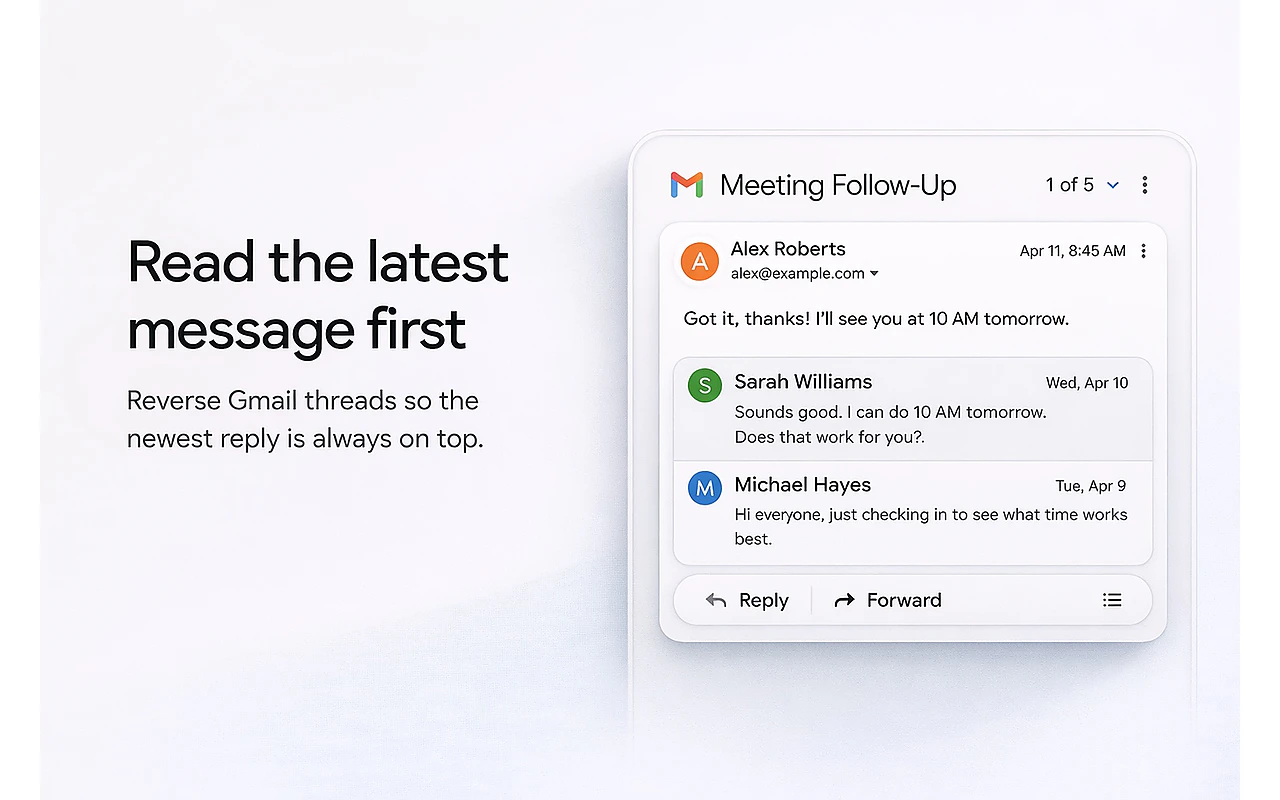
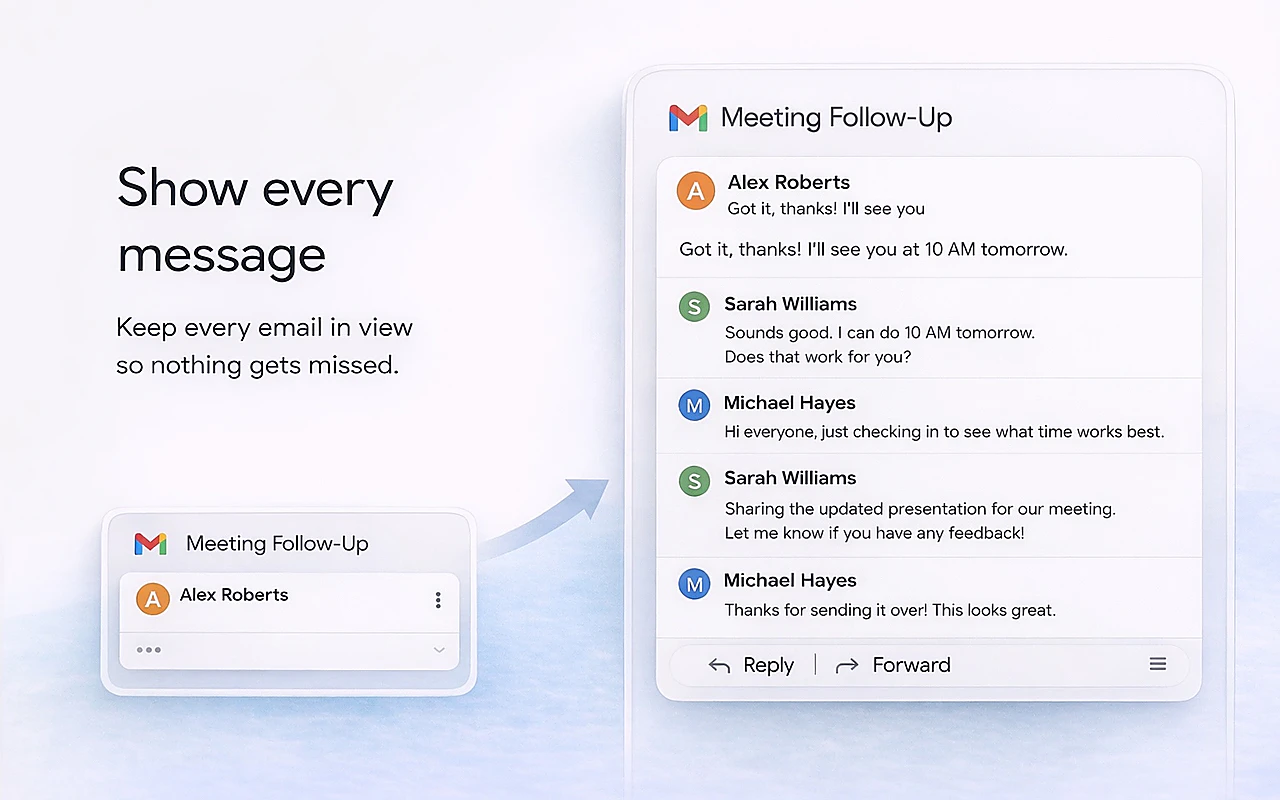
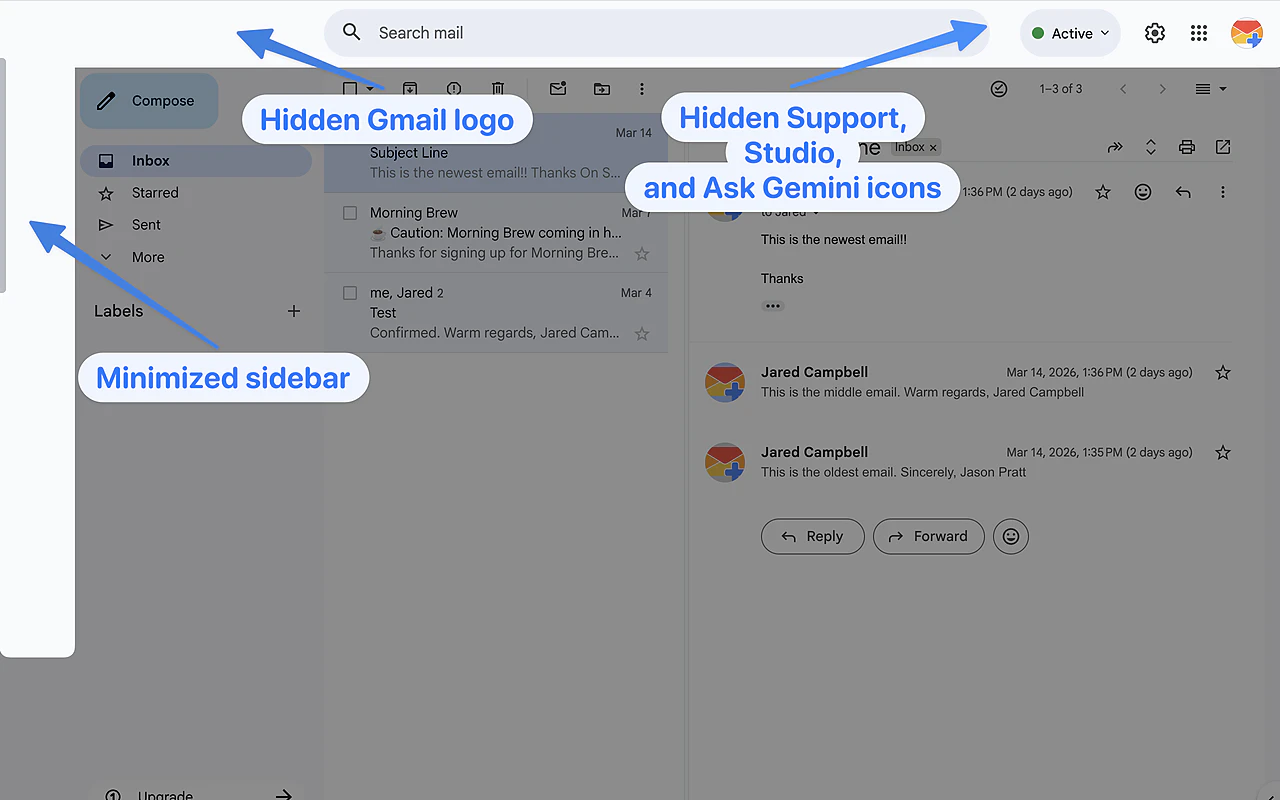
Make Gmail easier to read and manage. Features: *Read the latest message first. *Show every message in conversations. *Hide AI overviews in emails. *Reduce visual clutter. No account. No remote processing, runs locally in your browser.
I built this because Gmail still feels incomplete. It’s missing a few features that should have existed from the start, so I added them in a way that feels simple, native, and genuinely useful. Also, it's FREE. My gift to the world.
6
回复

@apparentforgmail Gmail has been around for 20 years and still has things that just feel off - like AI summaries appearing where you didn't ask for them or threads that are hard to follow. It's interesting that small fixes like this can make a tool you use every day feel noticeably better. Congrats on the launch!

0
回复

This looks amazing. How is the privacy handled?

Congrats on the launch 🎉

5
回复

@basharath Essentially, we've put it together in a way so everything is done in your browser, in the same way "on-device" works. There's no need for an account, for data to be processed by us, and we use the fewest Chrome permissions possible. Anything that's done with your email is between you, god, and the local copy of Apparent.

3
回复

How do you handle edge cases where threads get overwhelmed with irrelevant replies?

3
回复

@trydoff Would you be able to elaborate on what you mean? Would be interested to learn more about this.

3
回复

Hello, I tried to download the feature but Chrome sent me like 3 reminders that this extension should not be trusted, and TBH it kinda made me nervous. Why chrome mentioned it so much? and how can we ensure privacy?

3
回复

@carolinahunts Hi Carolina! I'd love to make sure that doesn't happen again. Do you have any more details on what they looked like? We don't need or want to access any user data ever.

3
回复

Needed! It's super cool Jared. Is it free for ever or do you plan to monetize it in the future?

3
回复

@german_merlo1 The core feature set "buckets" will be free forever. Anything that makes conversations easier to read, simplifies the layout, or is a very small repetitive workflow. We've thought about adding an additional paid bucket with automations, like auto mark archived as read, auto delete drafts according to set rules, auto empty trash, etc.

3
回复

I meant cases where a single email thread goes off-track — like long reply chains with ‘+1’, side discussions, or irrelevant CCs. It becomes hard to follow the actual important updates. Curious how your approach handles separating signal vs noise in those messy threads.

2
回复

@trydoff That's a great point. I'm going to need to import some test data and ensure it covers cases like these. Thanks for the suggestion!

2
回复

A few things I’m considering adding, but I’m not sure how widely useful they are:

* persistent undo/redo list

* adjustable left sidebar width

* collapsible labels list

* keeping the right sidebar minimized

* built-in dark mode

Curious which of these, if any, people would actually care about. Can email me at useapparent@gmail.com

1
回复

This is a really nice take on Gmail - especially like the “latest message first” idea and reducing clutter without adding another full email client.

Quick question: how does this handle more complex workflows (labels, filters, multiple accounts)? Does it fully respect Gmail’s native logic or override some of it?

0
回复
#5
CrabTalk
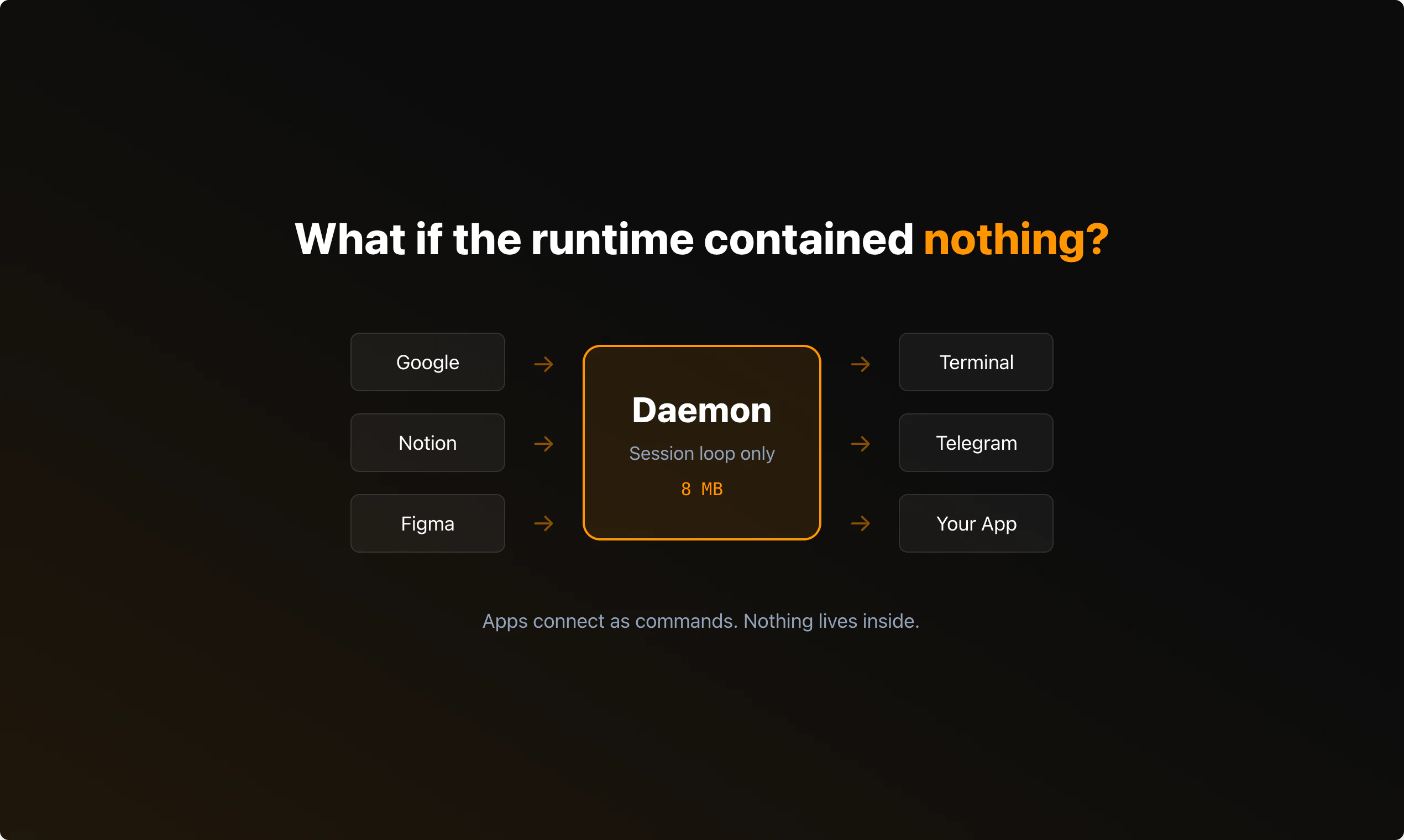
The agent daemon that hides nothing. 8MB. Open Source
179
一句话介绍:CrabTalk 是一款仅8MB的开源AI智能体守护进程,通过流式传输所有思考步骤与工具调用事件,为开发者提供了高度模块化、可定制且稳定的底层架构,解决了现有智能体框架臃肿、捆绑过多工具和缺乏透明度的痛点。
Developer Tools Artificial Intelligence GitHub
AI智能体框架 开源 轻量化 模块化设计 守护进程 事件流 Rust 开发工具 可观测性
用户评论摘要:用户普遍赞赏其8MB轻量化与模块化设计,认为其底层定位优于竞品。主要问题集中于:组件故障如何反馈给智能体、并发工具调用的流式连贯性、事件流的反压处理机制,以及热重载是否会中断长任务。开发者对部分问题进行了技术性回复。
AI 锐评

CrabTalk 的发布,与其说是一个新AI应用,不如说是一份对当前智能体开发范式臃肿化的“抗议书”。其核心价值不在于提供了更强的AI能力,而在于通过“守护进程+事件流”的极简架构,重新定义了智能体与工具、运行时与客户端的关系。它将智能体“黑箱”运作彻底透明化,让每一步思考、每一次工具调用都成为可观察、可管理的流式事件。

这背后是深刻的工程哲学:反对捆绑,倡导组合。开发者不再被迫接受一个包含数十种工具、体积庞大的运行时,而是可以自主选择并挂载所需组件(搜索、网关等)。这种“组件独立崩溃、可热插拔”的设计,提升了系统整体的健壮性与可维护性。从评论看,资深开发者对此理念共鸣强烈,其问题也直指分布式系统核心:故障隔离与反馈、并发一致性与背压处理。

然而,其定位也决定了它的门槛和局限。它提供的是“管道”和“协议”,而非“成品”。真正的生产力提升依赖于在其上构建应用。对于追求开箱即用的普通用户或应用开发者,它可能过于底层;但对于需要深度定制、构建稳定企业级智能体工作流或二次开发框架的团队,CrabTalk 提供了一个珍贵且干净的底层选择。它能否成功,不在于自身功能多寡,而在于其构建的生态能否吸引足够多的“组件”提供者和“客户端”开发者。这是一场对开发效率与自主控制权的重新分配。

查看原始信息
CrabTalk
An 8 MB daemon that streams every agent event to your client — text deltas, tool calls, thinking steps, all of it. Connect what you need, skip what you don't. One curl to install. Bring your own model.

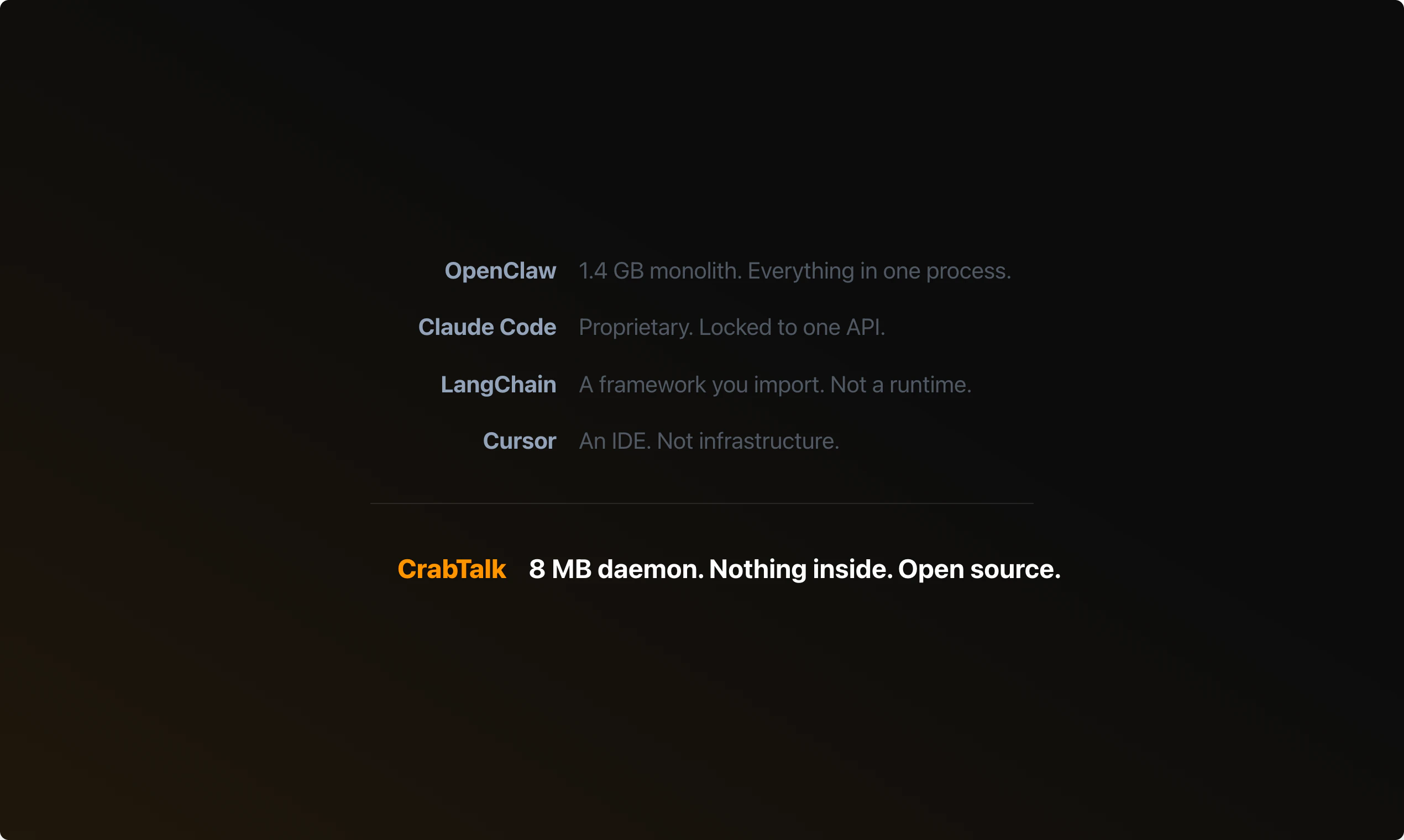
I write systems software. I looked at OpenClaw — 1.2 GB. Hermes — 40+ bundled tools. Why does your agent ship someone else's choices?

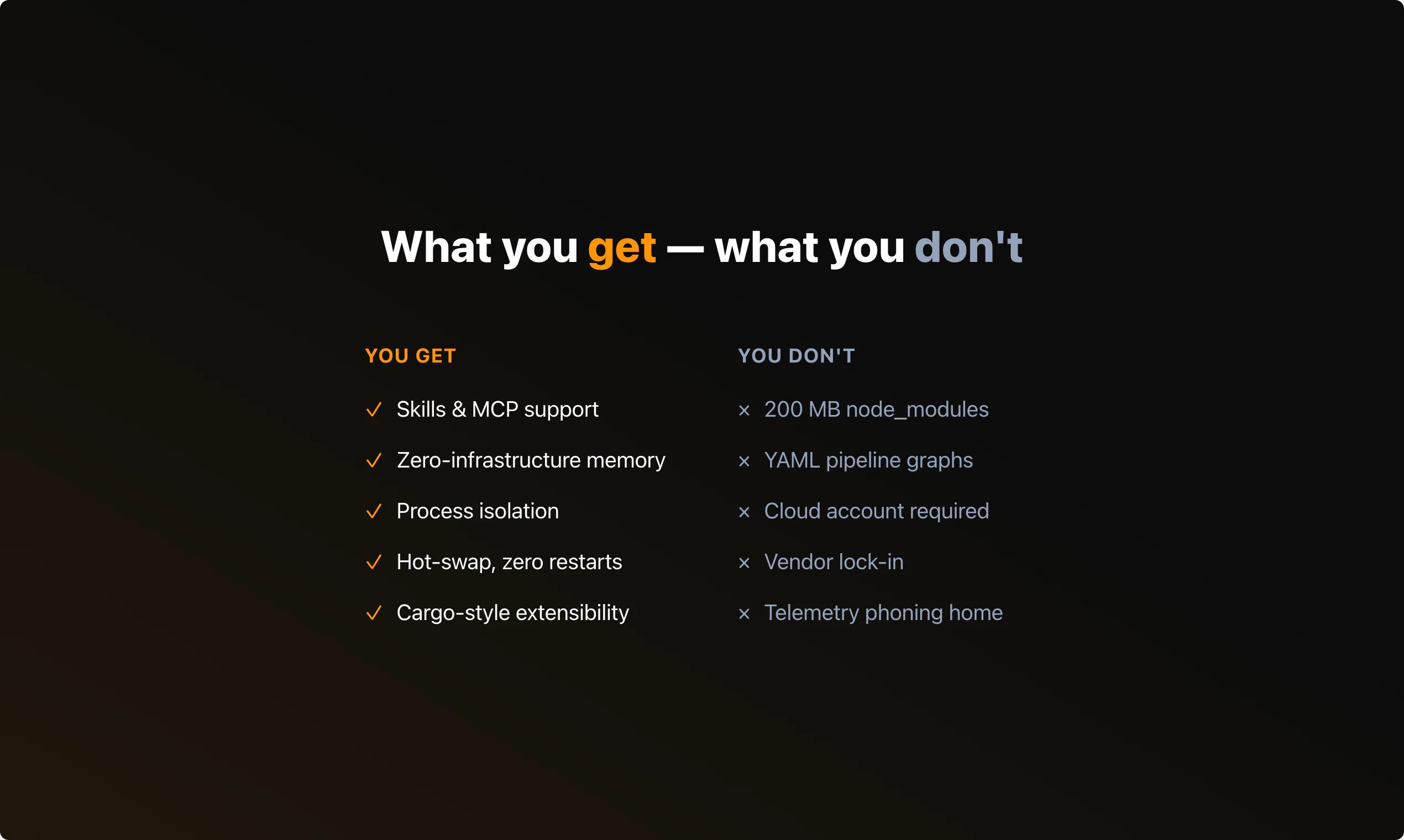
CrabTalk is a daemon. 8 MB. You put what you need on your PATH — your search, your gateway, your tools. They connect as components. They crash alone. They swap without restarts.

You could build any of those apps on top of CrabTalk. You can't build a CrabTalk underneath them.

Open source. Rust. One curl to install.

9
回复

@clearloop What's a real-world workflow where CrabTalk's 8MB modularity saved you time vs. bloated agents like OpenClaw?

1
回复

@clearloop HEYYY! :) If a component crashes alone without taking down the daemon, how does CrabTalk surface that failure to the agent so it doesn't silently continue a task assuming the tool is still working?

0
回复

Been nipping at your heels all day. Congrats on the launch, amazing product!

2
回复

@apparentforgmail Hey, thanks! Been fun having you right behind me all day.

Honestly, I used to think a weekend launch would be simpler… but I’ve been stressed out the whole time 😂

1
回复

streaming thinking steps alongside tool calls in one feed is what almost nothing does by default. curious what happens with concurrent tool calls - does the stream stay coherent? also 8MB is impressive, what's the runtime?

1
回复

@mykola_kondratiuk  Valuable questions 🦀

1. Concurrent tool calls

An updated version is exactly in my TODOs, see crabtalk#90, there are mainly 2 cases about this:

  • agent request batch tool calls — LLM APIs natively support multiple tool calls in response, we simply spawn a future to `join_all` for performing the concurrency execution

  • agent spawn multiple agents doing M x N tool calls, this is recursive case of above, since we delegate agent is a tool call in our design, this case is natively supported as well

2. What's the runtime

This question is direct and also very challengeable!

To be specific, CrabTalk is a daemon (you can imagine it's a pg service or a `dockerd`), we have the TUI client and people can develop any client of it based on our base protocol

Layer 0 ─ Foundation
  └─ core                Agent, Session, Runtime, Protocol, Hook, ToolRegistry

Layer 1 ─ Backends (independent of each other)
  ├─ model                ProviderRegistry (OpenAI, Anthropic, Google...)
  ├─ transport            UDS + TCP socket layers
  └─ command              Service management (systemd), proc macro codegen

Layer 2 ─ Engine
  └─ runtime              RuntimeHook, tool dispatch, MCP, skills, memory

Layer 3 ─ Server
  └─ daemon               Event loop, transport setup, cron, config, hot reload

---- (Layer 4 is not in runtime)

Layer 4 ─ Adapters
  ├─ gateway              DaemonClient, message types for platform adapters
  ├─ cli                  REPL, TUI, daemon control
  └─ apps/                telegram, search, hub, wechat, outlook</code></pre>

For the runtime, referenced from the layering

  • it's somewhere we babysitting the agent standard stuffs (e.g. tools, MCP, skills)

  • plus a super light memory based on fs and BM25 (yes, the memory can be swapped by your customized memory).

And if we count on the daemon stuffs, we'll have context isolation, cron jobs, event loop, protocol configs.

For the size, if we kick out the TUI, the runtime + daemon may have just 2~3 MB, and the http related stuffs for model API and related MCP implementations are taking the most of the size

0
回复

The daemon architecture with Unix Domain Sockets and TCP layers is a solid choice for low-latency IPC, but how does CrabTalk handle backpressure when a slow client can't consume the event stream fast enough? Also, with hot reload support mentioned in the layering, does config reload guarantee session continuity for long-running agent tasks or does it force a reconnect?

0
回复
#6
Cohere Transcribe
New state-of-the-art in open source speech recognition
126
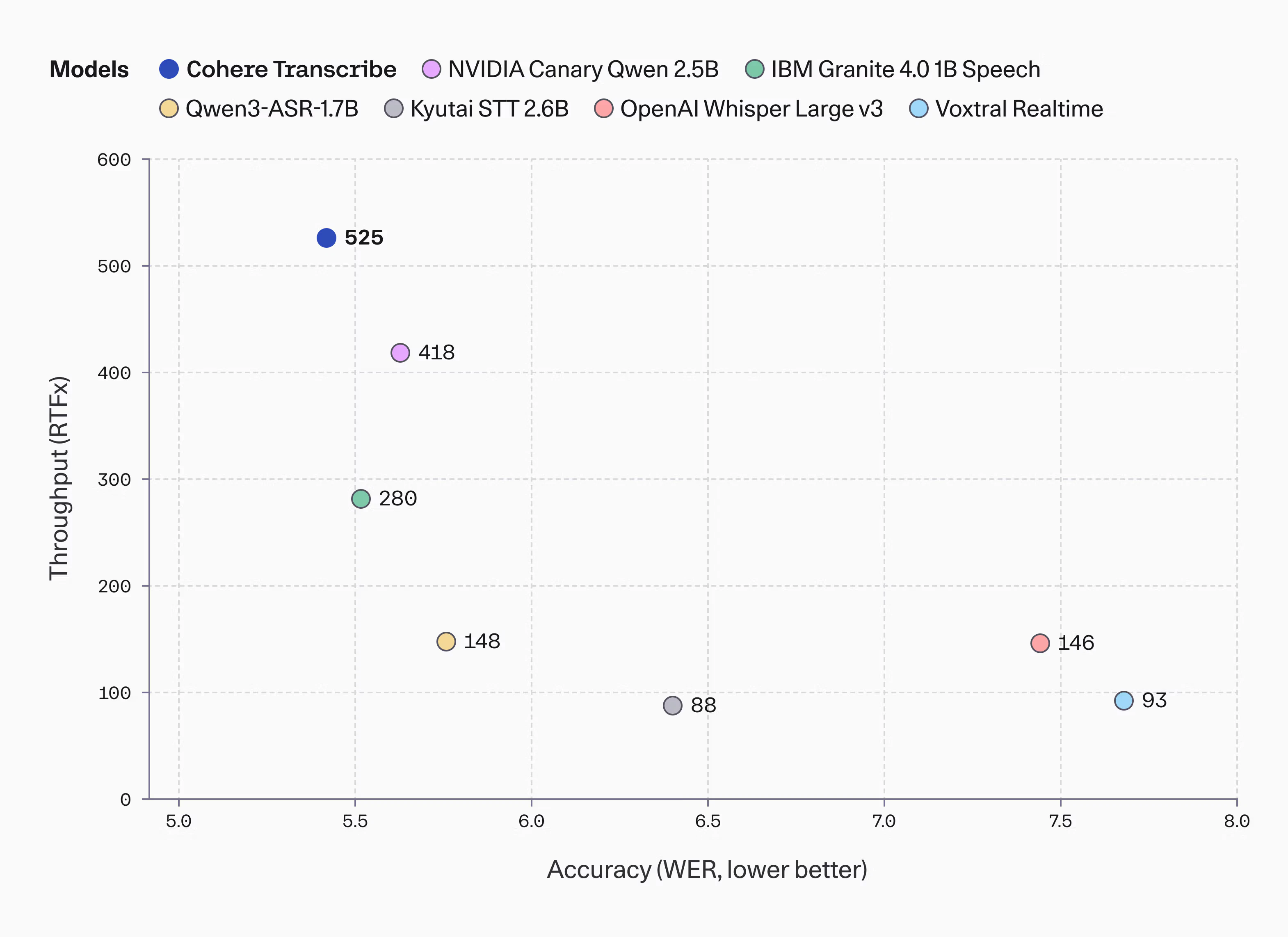
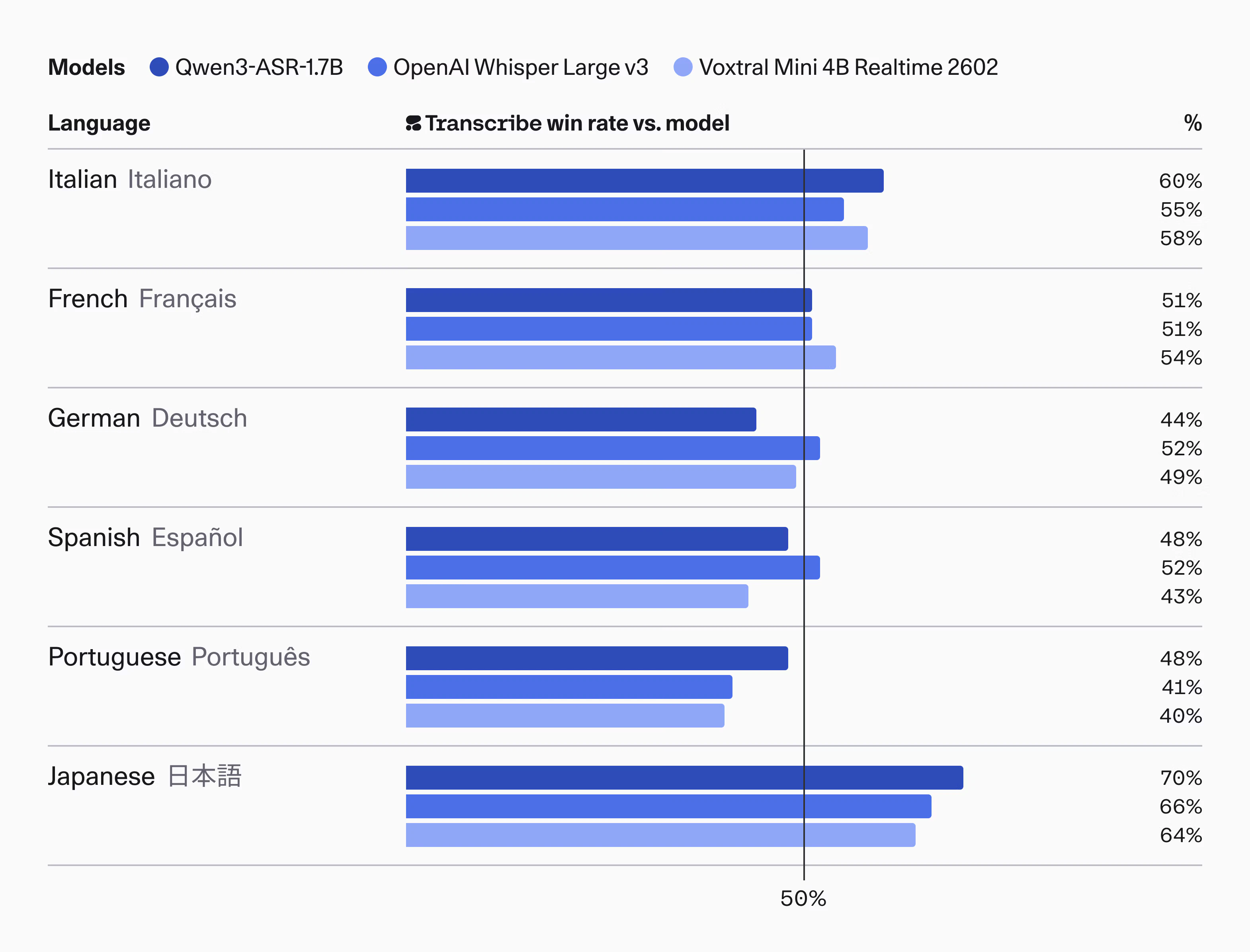
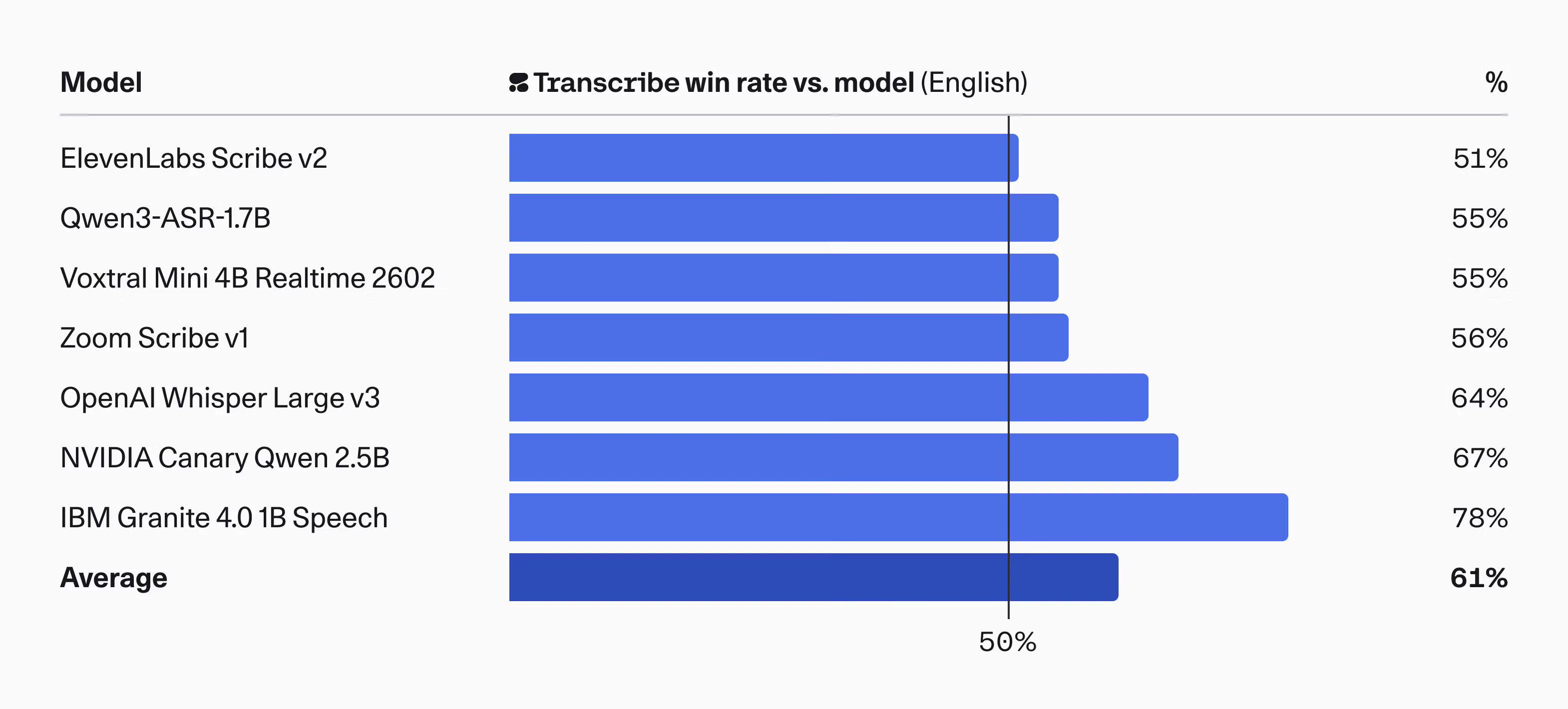
一句话介绍:Cohere Transcribe是一款顶尖的开源语音识别模型,通过提供高吞吐量和低词错率,解决了企业在隐私敏感场景下需要本地化、高性能转录服务的痛点。
Open Source Artificial Intelligence Audio
语音识别 开源模型 企业级应用 本地部署 隐私安全 多语言支持 高精度转录 人工智能 音频处理
用户评论摘要:用户普遍认可其高性能与隐私优势,认为其是企业级本地应用的优秀选择。主要问题与建议集中在:模型体积对移动端部署的适应性、需自行添加说话人分离和时间戳等后处理功能、对复杂环境(如噪音、口音、语种切换)的鲁棒性测试,以及与竞品的详细对比和定价信息。
AI 锐评

Cohere Transcribe的发布,绝非又一个“开源Whisper”的简单故事,而是一份精准切入企业AI基础设施赛道的战略宣言。其核心价值不在于在学术指标上碾压对手,而在于将“开源权重”、“高吞吐量”与“企业级优化”这三个关键词捆绑销售,直指当前AI工业化部署中最敏感的神经:数据隐私、成本控制与自主可控。

产品介绍中强调“private, local, or desktop deployment”,与评论中“privacy-first”的共鸣,揭示了其真正的战场——那些受严格监管或对数据出境有顾虑的行业,以及不愿被API调用次数和费用捆绑的规模化应用。5.42%的词错率(WER)是入场券,而“高吞吐量”才是其为企业设计的真正引擎,意味着更低的单位转录成本和更强的批处理能力,这比单纯追求零点几个百分点的精度提升,对CIO而言更具吸引力。

然而,评论也犀利地戳穿了其“开箱即用”的幻象。缺乏说话人分离、词级时间戳等特性,使其更像一个强大的“听觉芯片”,而非完整的“听觉系统”。这暴露了Cohere的定位:它并非意图服务追求便捷的开发者,而是瞄准了那些拥有工程能力、需要深度定制和集成、并将转录作为核心流程一环的企业客户。将复杂的前后处理留给用户,自己则牢牢占据模型层这一价值制高点。

与Whisper的对比是不可避免的。Cohere的策略是“以专打泛”。在通用性、易用性和社区生态上,短期内难以撼动Whisper。但其通过企业级优化和明确的隐私本地化部署路径,实现了差异化突围。它回答了一个关键问题:当开源模型的性能差距进入“毫厘之间”时,决胜的关键是什么?答案是:对特定场景(企业私有化)的深度优化,以及对商业化诉求(吞吐量与成本)的精准满足。

风险同样明显。2B参数的“重量级”身材,与“移动端”、“实时”等边缘计算趋势存在张力。若不能通过量化、蒸馏等手段有效“瘦身”,其应用场景将被固守在服务器机房,可能错失更广阔的实时交互设备市场。此外,在噪音、口音等真实世界混沌场景下的稳健性,仍是所有语音模型需要自证的难题,Cohere仍需用更丰富的基准测试来建立信任。

总而言之,Cohere Transcribe是一款极具战略意图的“B端武器”。它不讨好所有人,而是为特定战场(隐私优先、高吞吐需求的企业环境)提供了一款精良、自主且高效的装备。它的成功与否,将不取决于极客社区的欢呼,而取决于有多少企业将其嵌入自己的核心工作流。

查看原始信息
Cohere Transcribe
Cohere Transcribe is a state-of-the-art, 2B open-weights speech recognition model. Optimized for enterprise workloads, it delivers high throughput and a leading 5.42% WER across 14 languages, making it ideal for private, local, or desktop deployment.

Hi everyone!

Cohere just open-sourced Transcribe, and the core metrics here, especially the throughput and the 5.42% average WER, are genuinely impressive.

From an engineering point of view, this looks like a fantastic model for Mac/PC local apps or private enterprise servers. At 2B parameters, though, it still feels a bit heavy for raw on-device mobile deployment.

It is also worth noting that this is a highly optimized transcription engine, not a fully packaged meeting intelligence stack. Out of the box, you will still want to add your own layer for things like word-level timestamps and speaker diarization.

It also seems to perform best when you specify the language and avoid heavy code-switching.

But if you handle those pre- and post-processing steps and keep the audio mostly in a single language, this open-weight model looks extremely strong for privacy-first, local speech workflows.

4
回复

@zaczuo Have you tested quantization or distillation tweaks to slim it down for mobile edge cases, like real-time podcast transcription on iOS?

0
回复

@zaczuo This is awesome! I used Cohere's Rerank API while building Octopus (an open-source AI code reviewer) and it worked great for improving search relevance across codebases. Love seeing Cohere push more into open source, Transcribe looks really promising, especially for privacy-first use cases.

0
回复

@zaczuo The diarization gap is the real missing piece for meeting intelligence use cases , at 2B params it's already pushing the edge for local deployment, so adding speaker separation on top would likely require a separate lightweight model running in parallel rather than baking it in. Has anyone tested how it handles overlapping speech or heavy accents compared to Whisper large-v3 on the same hardware?

0
回复

Wow Zac! Was looking for something like this. What about the pricing? Is there a benchmark to compare with current competitors?

1
回复

Really impressive direction: Cohere’s focus on secure, enterprise-ready AI instead of just consumer tools feels like a smart differentiation in the space. Congrats on the launch! What has been the biggest challenge in making models both highly customizable for enterprises and still easy to integrate for developers? 🚀

0
回复

Really glad to see this open-sourced. The WER numbers are competitive with Whisper large-v3 and the throughput advantage matters a lot for batch processing. Curious how it handles noisy real-world audio though — conference calls, street noise, etc. That's usually where models diverge from benchmark performance.

0
回复
#7
RepoLens
Know what changed and what matters across your codebase
110
一句话介绍:RepoLens V2 通过结构化分析代码仓库与变更,帮助工程团队在代码评审与合并流程中,快速、可信地理解PR中的关键改动、受影响模块及潜在风险,解决代码库持续演进中变更感知与影响评估的痛点。
Productivity Developer Tools Artificial Intelligence GitHub
代码变更分析 PR智能摘要 工程效能平台 代码仓库洞察 AI辅助开发 架构漂移检测 分支对比 开发者工具 代码评审辅助
用户评论摘要:用户肯定产品解决“理解变更”痛点的价值,并询问具体技术实现(如端点检测方法)。主要反馈集中在功能实用性探讨(如多PR重叠模块的处理)、与通用AI工具(如ChatGPT)的差异化,以及建议增加社交分享等增长功能。创始人积极回应技术路线与迭代方向。
AI 锐评

RepoLens V2 宣称的核心价值,在于试图将“代码变更理解”从一种依赖个人经验与耗时的文本diff阅读的模糊艺术,转化为一种可规模化、可验证的结构化分析过程。这直击了现代软件开发中,随着微服务、单体仓库及频繁合并带来的认知负荷爆炸这一核心顽疾。

其产品思路的犀利之处,在于没有停留在“用AI聊天看代码”的层面,而是选择先构建代码仓库的结构化模型(模块、依赖、端点),再将具体的变更(PR、分支对比)映射到这个模型上进行分析。这使其输出的“受影响模块”、“变更端点”、“评审热点”等洞察,具备了传统AI聊天所缺乏的“可导航性”与“可验证性”——工程师可以快速定位到具体代码块,而非面对一段可能“幻觉”的概括文本。这是一种“增强智能”而非“替代智能”的务实路径。

然而,其面临的挑战同样尖锐。首先,其分析深度与准确度高度依赖于对多样技术栈(即评论中提到的“多语言单体仓库”)的静态分析能力,这工程复杂度极高。其次,“何谓重要变更”的判断标准极具主观性,算法信号(如代码行数、依赖影响范围)能否真正匹配团队的实际风险定义,仍需大量场景打磨。最后,在快节奏团队中,如何处理并发、重叠的PR所引发的信号冲突与噪音,是其必须解决的现实问题,创始人的回应显示他们已意识到这一点。

总体而言,RepoLens 的价值不在于替代代码评审,而在于为评审提供高质量的“前置情报简报”,将工程师的注意力引导至最可能需要关注的区域。它的成功与否,将不取决于AI是否足够“通用聪明”,而取决于其底层代码分析引擎是否足够“精准和深刻”。这是一条更艰难但或许更正确的赛道。

查看原始信息
RepoLens
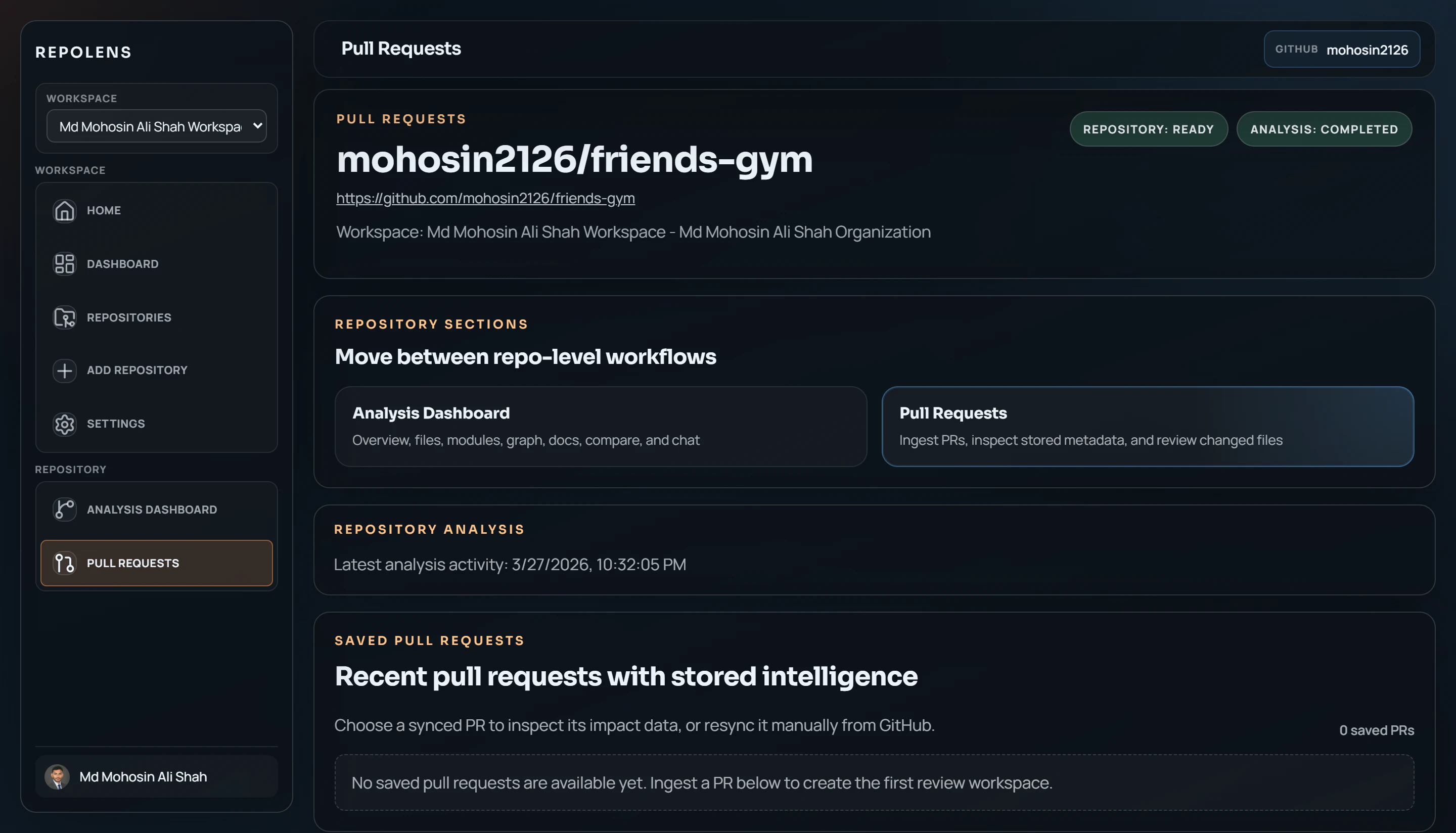
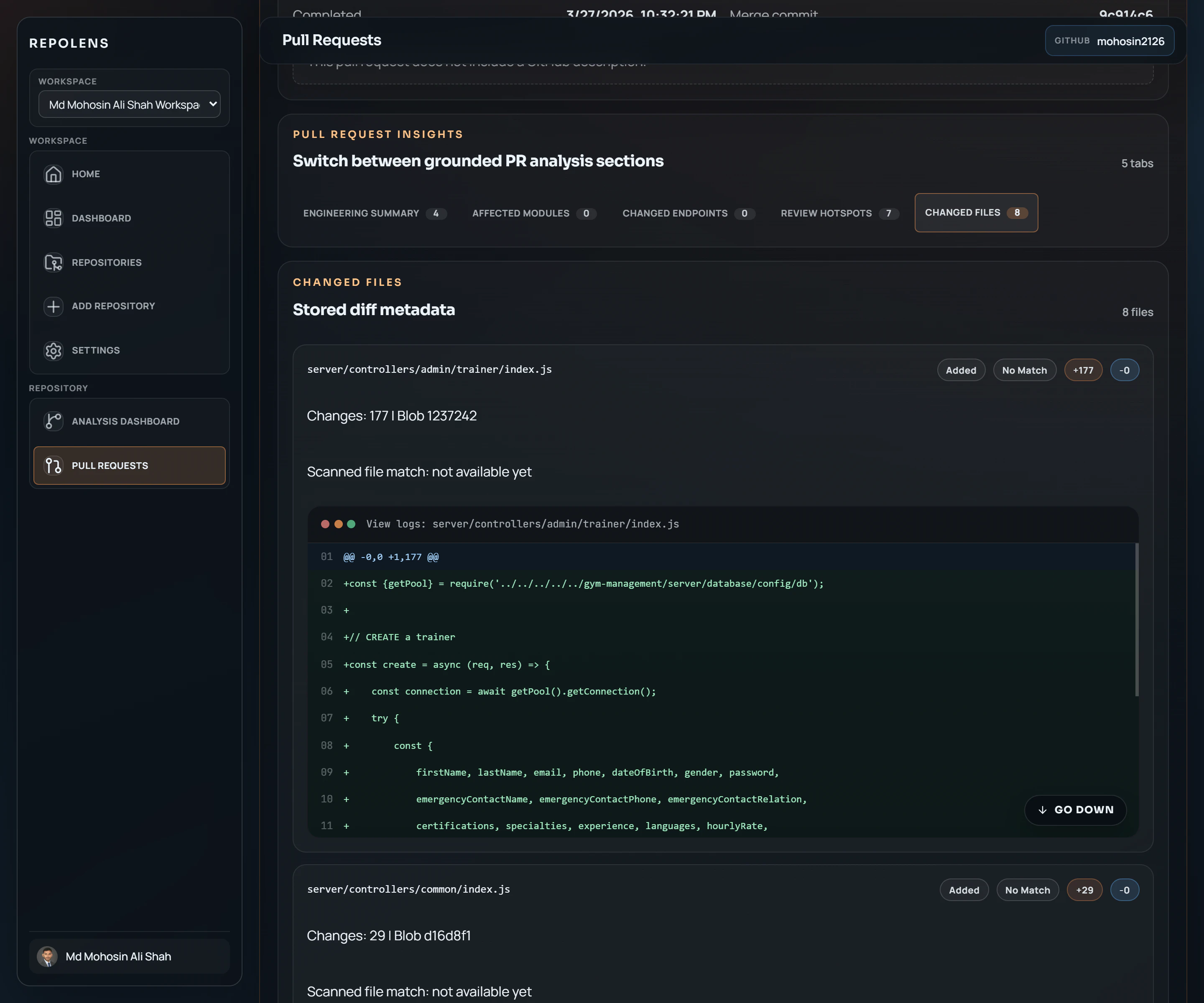
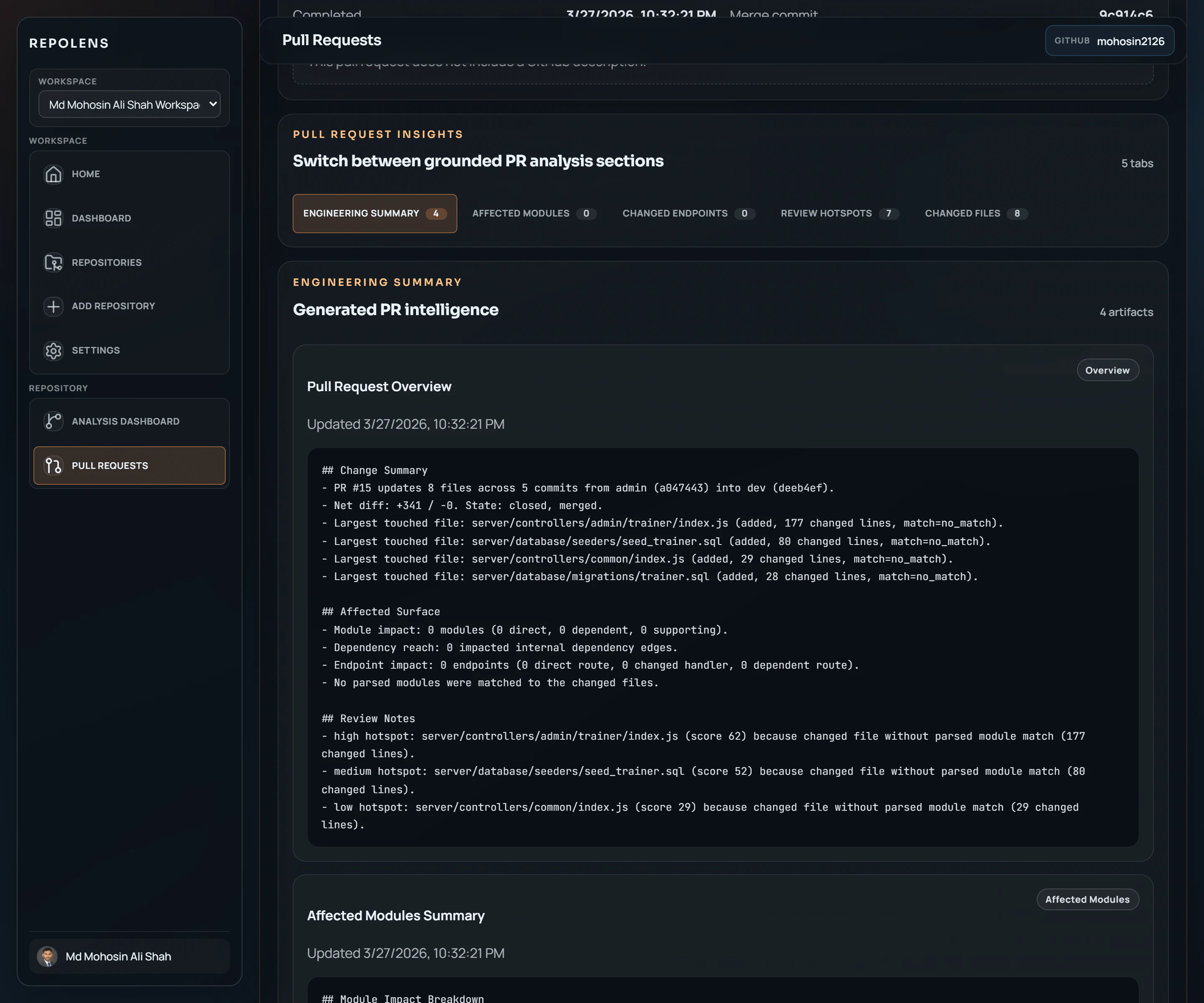
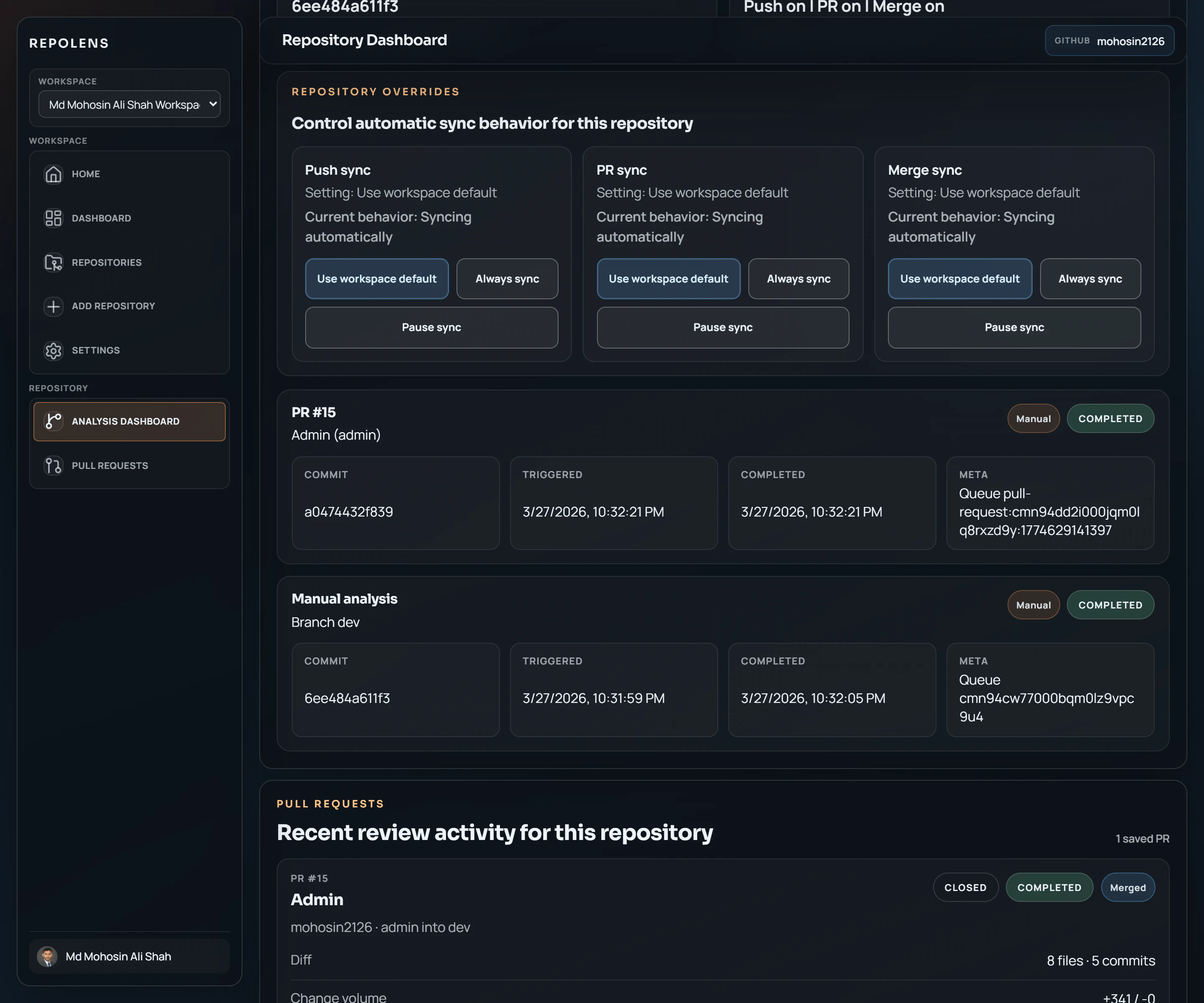
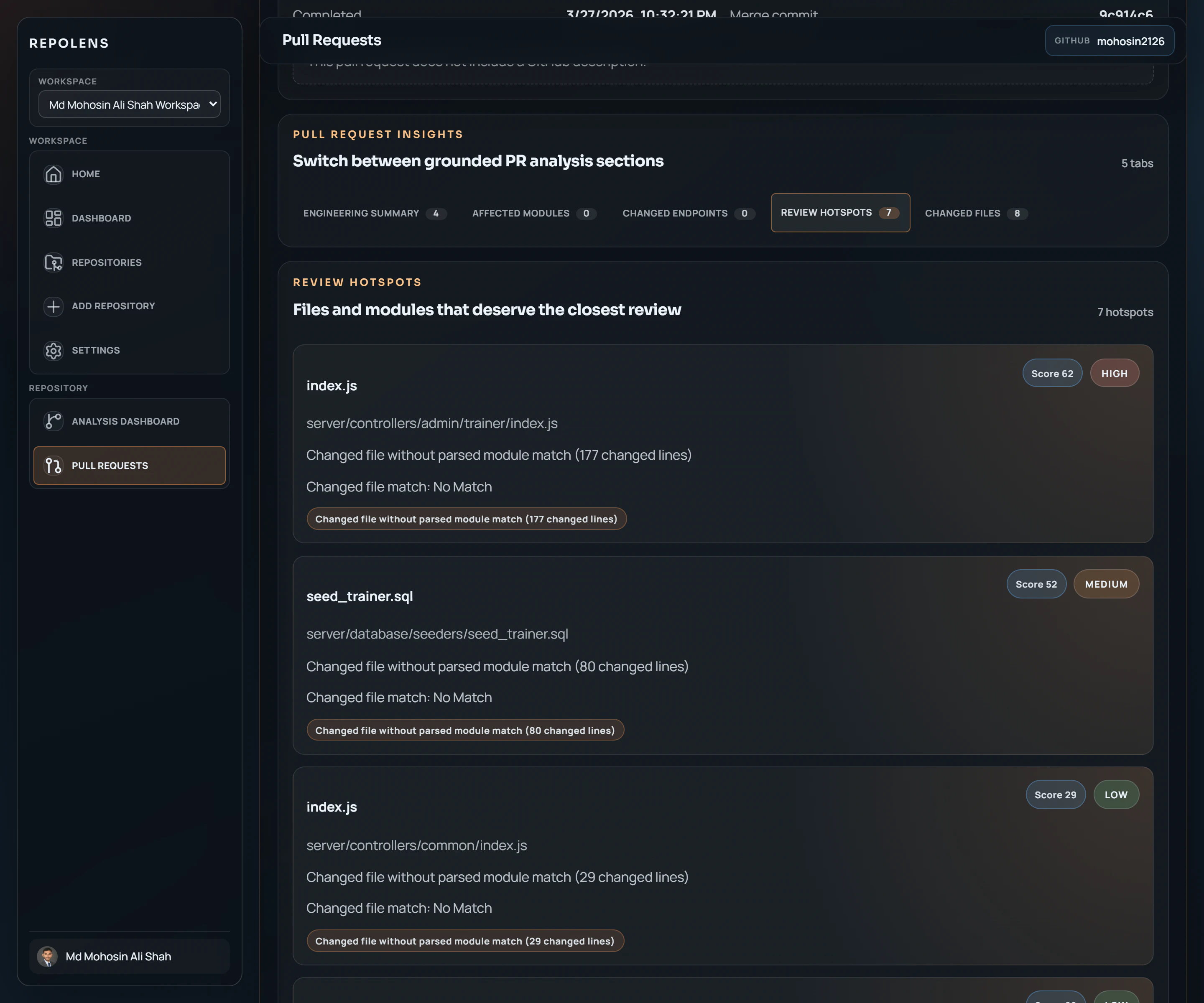
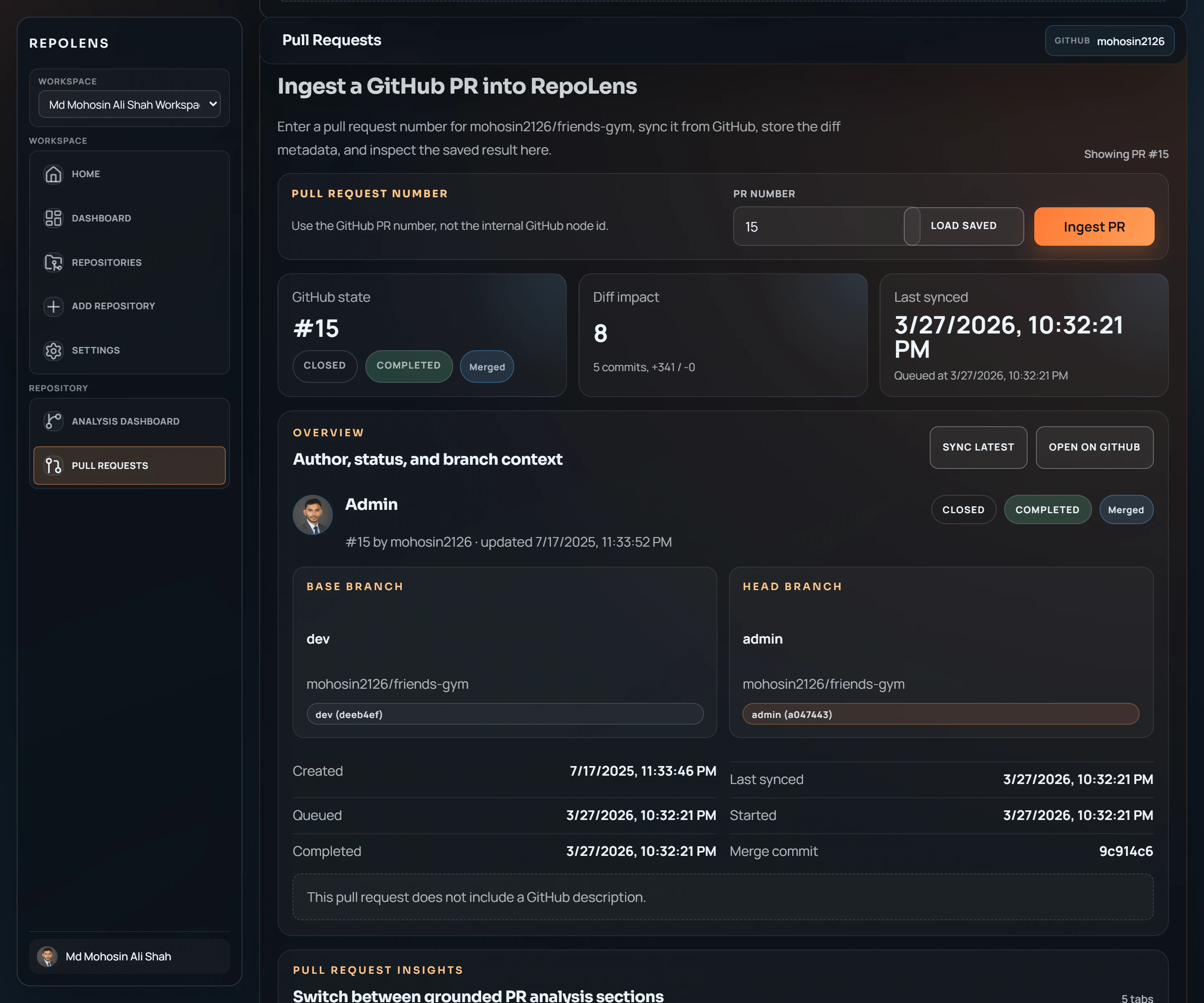
RepoLens Version Two helps engineering teams understand what changed and what matters across repositories, branches, and pull requests. It analyzes PRs, detects affected modules and changed endpoints, highlights review hotspots, powers branch-aware chat with grounded code references, compares branches structurally, and sends alerts for important changes so teams can understand evolving codebases faster with more trust.
I built RepoLens Version Two to solve the next problem after repository understanding: understanding change. Version One helped developers understand unfamiliar repositories faster through module maps, dependency graphs, API discovery, generated docs, grounded repo chat, and branch comparison. But understanding a repository once is not enough. Repositories keep changing. Pull requests introduce risk. APIs evolve. Architecture drifts. Teams need to know what changed, what was affected, and what actually matters. RepoLens Version Two is built for that workflow. It can now analyze pull requests, generate engineering summaries, detect affected modules and changed endpoints, highlight likely review hotspots, support branch-aware and PR-aware repo chat with exact code references, compare branches structurally, detect architecture drift, and send alerts for meaningful changes. What makes RepoLens different is that it does not rely on generic AI output alone. It first builds a structured understanding of the repository and its changes, then uses that foundation to provide more grounded, navigable, and verifiable insights. I would love feedback on the PR intelligence workflow, branch-aware chat experience, change detection quality, and which signals would be most useful for real engineering teams.
2
回复

We need this in my team!!

1
回复

@rania_rimali Thank you. I really appreciate that.

I would be interested to know which capability would be most useful for your team in practice PR summaries, review hotspots, changed endpoints, or branch aware chat.

0
回复

Love the focus on structured understanding, but how do you plan to handle situations where multiple PRs touch overlapping modules? That could muddy the waters for teams relying on clear insights.

1
回复

@trydoff That’s a really good point, and it’s exactly one of the problems I want RepoLens to get better at over time.

Right now the model is to keep analysis scoped to each PR’s actual diff and commit context, so even if multiple PRs touch the same module, the insight stays grounded in that PR’s changed files, affected modules, endpoints, and review signals, rather than mixing everything together.

But you’re right that overlapping PRs can still create ambiguity for teams. The direction I’m exploring next is cross-PR overlap detection: flagging shared modules, shared endpoints, and potential review/conflict hotspots across open PRs so teams can see not just “what this PR changes,” but also “what else is changing around it.”

That would make the insight much more useful in fast-moving teams where multiple changes are landing at once.

1
回复

The "changed endpoints" detection is the most interesting claim here is this static analysis over OpenAPI specs or route decorators, or does it use AST diffing to infer HTTP surface changes ? The accuracy of that feature alone would determine whether this is genuinely useful in a polyglot monorepo versus a single-framework codebase.

0
回复

Congrats on the launch @mohosin2126 , I think a feature that could help get more client is just like stripe has a screenshot feature to for people to share MRR achievement on social media, you could have something similar where solo SAAS builders can share the timeline there product being built. If you can do that with a good UI/UX I think it work get traction

0
回复

Really powerful idea: understanding what actually changed across PRs, branches, and the codebase instead of just scanning diffs could save devs a ton of mental overhead. Congrats on the launch! What has been the hardest part about accurately identifying “what actually matters” versus just listing changes? 🚀

0
回复

One thing I’d really love feedback on:

If you work in fast-moving repositories, which signal would be most useful to you first?

PR summaries

affected modules

changed endpoints

review hotspots

branch-aware chat

architecture drift alerts

Curious which one feels most valuable in real engineering workflows.

0
回复

How is this different from just using ChatGPT on a repository or asking GitHub Copilot questions?

0
回复

@hira365 Great question.

RepoLens is built around structured repository and change analysis, not just general code Q and A. Instead of only answering questions like ChatGPT or Copilot, it maps pull request changes, detects affected modules and endpoints, highlights review hotspots, and keeps the insight grounded in actual repository and diff context.

The focus is helping teams understand what changed and what matters, not just chat with the codebase.

0
回复
#8
Expect
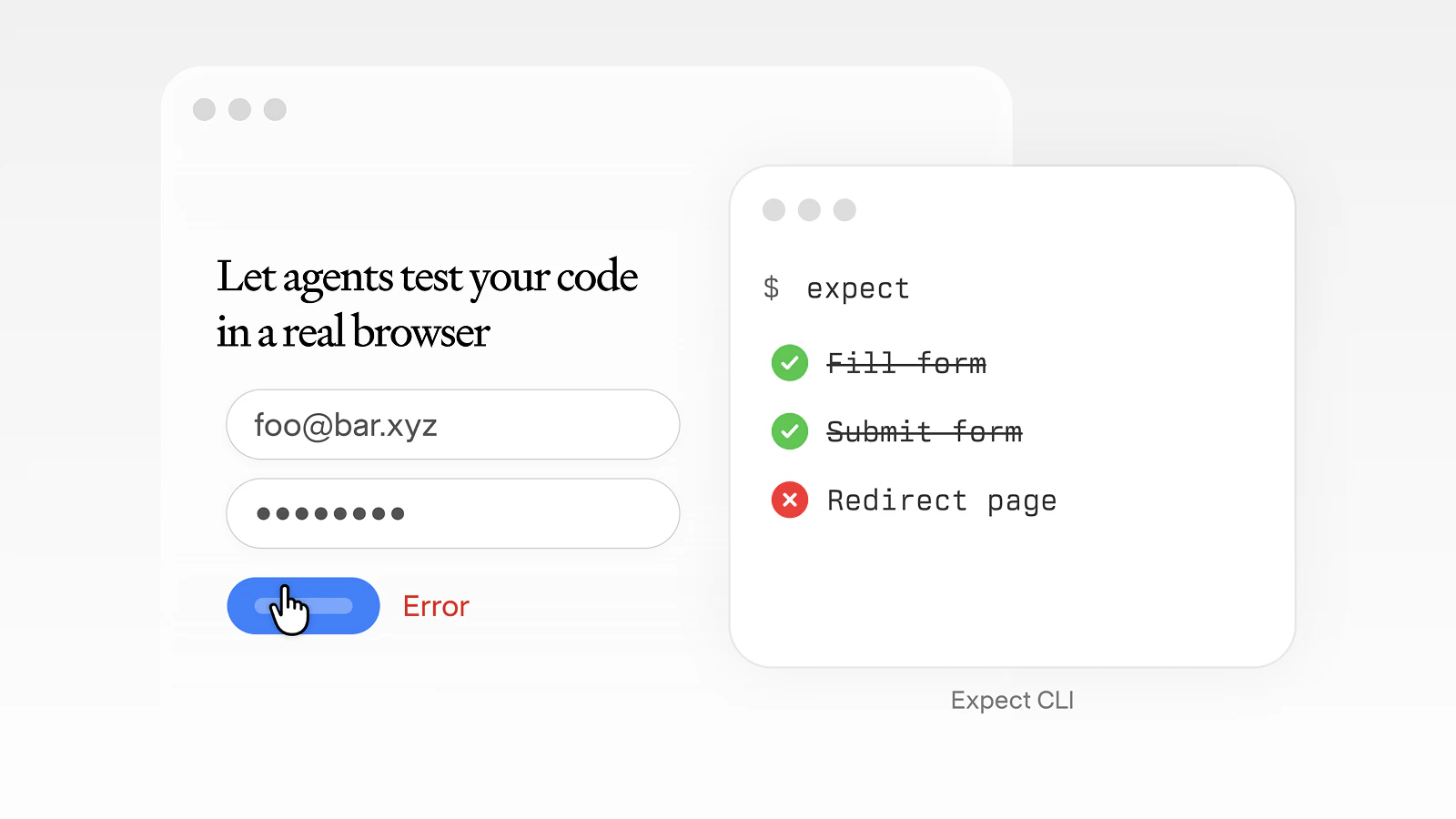
Let agents test your code in a real browser
107
一句话介绍:Expect通过一条命令扫描代码变更,在真实浏览器中自动生成并执行测试计划,解决了开发者在快速迭代中手动编写和运行前端测试的效率痛点。
Design Tools Developer Tools Artificial Intelligence
AI测试代理 自动化测试 前端测试 浏览器测试 代码变更扫描 智能测试生成 开发效率工具 软件质量保障 DevOps 智能编程助手
用户评论摘要:用户肯定其节省时间的价值,尤其适合独立开发者。主要疑问集中在:是否支持移动端应用测试;如何处理仅凭代码差异难以发现的边缘情况;以及如何模拟复杂用户交互、动态内容和不同设备状态。
AI 锐评

Expect将“AI代理”概念精准切入测试这一强痛点场景,其“一条命令”的极简交互背后,是试图用AI重新定义测试工作流的野心。产品价值不在于替代成熟的单元测试或E2E框架,而在于填补“代码提交前”那一片敏捷但危险的空白——未暂存变更与分支差异。它瞄准的是开发者心照不宣的“懒惰”与侥幸心理:在快速推进功能时,往往疏于为细微改动编写全面测试。

然而,从评论的质疑中,我们得以窥见其天花板与硬仗所在。其一,**场景局限性**:真实浏览器测试固然可贵,但复杂状态(登录态、多步骤流程)、动态数据、边缘交互的模拟,绝非仅静态分析代码差异所能覆盖。这触及了当前AI基于模式匹配的固有短板。其二,**定位模糊性**:它介于简单的语法检查与完整的集成测试之间。对于严肃项目,它可能不够可靠;对于简单项目,设置成本或许仍高于手动点击。其三,**“测试计划生成”的黑盒**:其计划的质量、覆盖度与判断逻辑是核心,却最不透明。用户将部分质量守门权交给了AI,却缺乏评估其守门能力的标准。

真正的颠覆性在于,如果它能持续学习项目上下文,将测试从“预先编写”的范式转向“即时分析-验证”的范式,或许能开启“自适应测试”的新路径。但目前来看,它更像一个聪明的、针对前端改动的自动化冒烟测试增强器,是提效的补充工具,而非测试体系的革命者。其成功与否,将取决于AI在具体代码语境下理解开发者“真实意图”和预见“异常状态”的深度,这仍是待攻克的技术险峰。

查看原始信息
Expect
One command scans your unstaged changes or branch diff, generates a test plan, and runs it against a live browser.

A simple command to let agents test your code in a real browser.

Interesting to see how 2026 is seeing a lot of agent-friendly products.

0
回复

<3<3<3

0
回复

This is cool and could see myself using this when I launch my app. Does your software work on apps (iOS and Android)?

0
回复

One command to generate and run a full test plan. that's a massive time saver for solo devs shipping fast. curious, how does it handle edge cases that aren't obvious from the diff alone?

0
回复

This looks promising for catching bugs early! However, I'm curious how Expect handles complex user interactions or dynamic content. The hardest part of automating tests tends to be accurately simulating user behavior in various states. Have you thought of ways to capture those edge cases, like different screen sizes or varied user inputs?

0
回复
#9
Lexaclaw
Startup legal compliance built on OpenClaw
104
一句话介绍:一款运行于本地的创业公司合规助手,通过扫描本地文档、追踪法定义务与截止日期、自动填写政府表格,解决了初创团队合规管理分散、易遗漏的核心痛点。
Open Source Legal Artificial Intelligence GitHub
法律科技 创业合规 本地化部署 开源软件 自动化代理 文档生成 义务追踪 政府表格 隐私安全 免费工具
用户评论摘要:用户反馈集中在产品价值与适用性:肯定其本地运行和自动填表的核心优势,并建议强化主页信息呈现。主要问题涉及多司法管辖区合规的复杂性、对特定国家(如印度)法规的支持程度,以及产品在无现有合规文件时是否可用。
AI 锐评

Lexaclaw 切入了一个精准且疼痛的赛道:初创公司的合规管理。其真正的颠覆性价值并非功能堆砌,而在于两个关键选择:**本地化运行**与**开源**。在数据敏感的法律领域,这直接构建了至关重要的信任基石,尤其对早期、资源有限的创业团队而言。

然而,其宣称的“100%免费”模式与“Powered by OpenClaw”的架构,也暴露了其商业化和能力边界的核心挑战。产品高度依赖用户自身的AI代理,这实质上将技术复杂性和责任部分转移给了用户。评论中关于多州、多国合规的尖锐提问,恰恰击中了其当前作为“工具框架”而非“成熟解决方案”的软肋——深度、实时且准确的合规知识库与逻辑引擎,才是这类产品的护城河,而这需要巨大的专业资源投入。

因此,Lexaclaw 更像一个极具潜力的“合规操作系统”原型。它展示了未来方向:去中心化、私有化、由AI代理驱动的合规工作流。但其成功与否,取决于能否围绕开源生态,构建起持续更新、覆盖更广法域的义务规则库与文档模板,并找到可持续的商业模式(如企业级支持、合规数据服务)。否则,它可能仅停留为一个优雅的技术演示,难以承受真实世界复杂、动态的合规重压。

查看原始信息
Lexaclaw
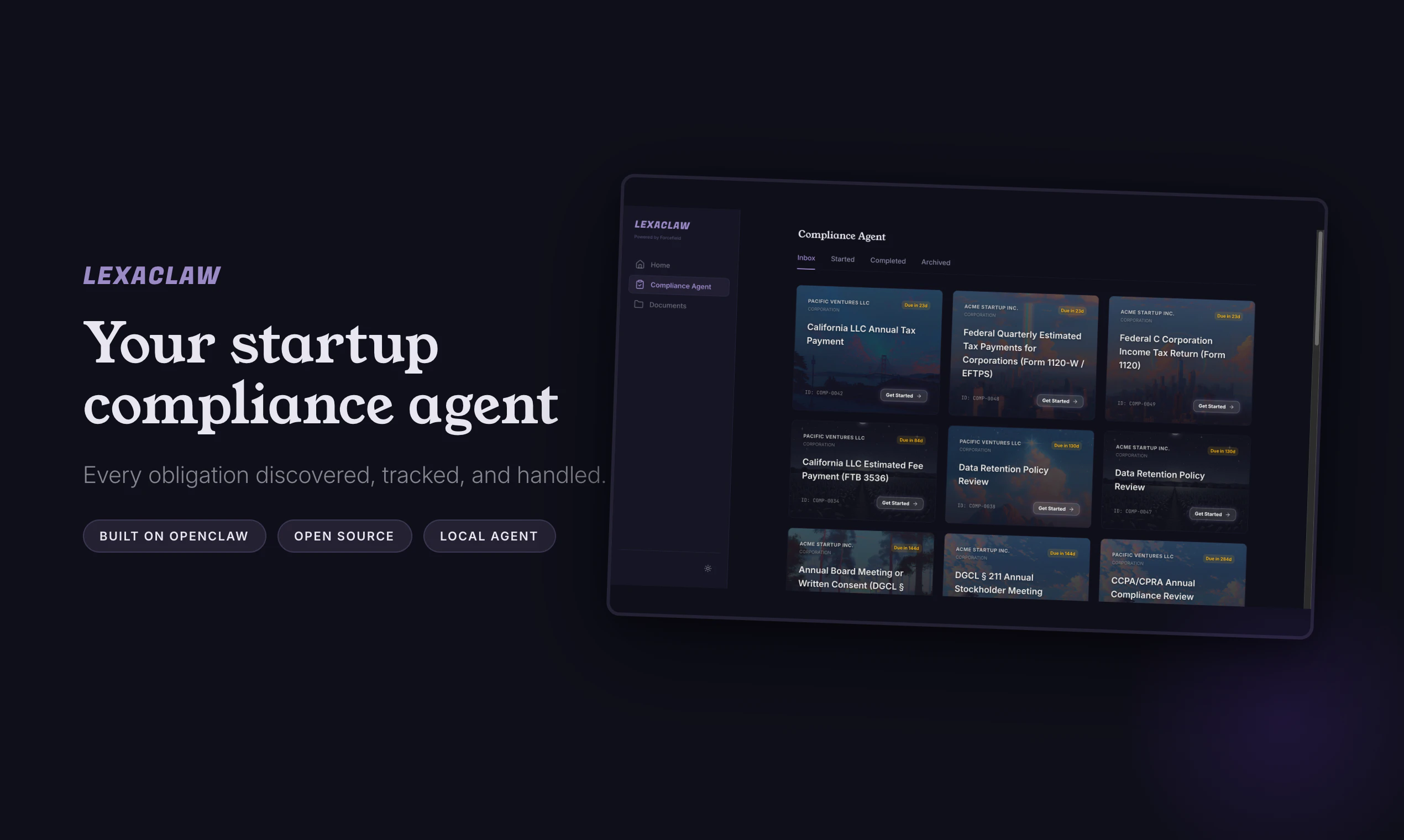
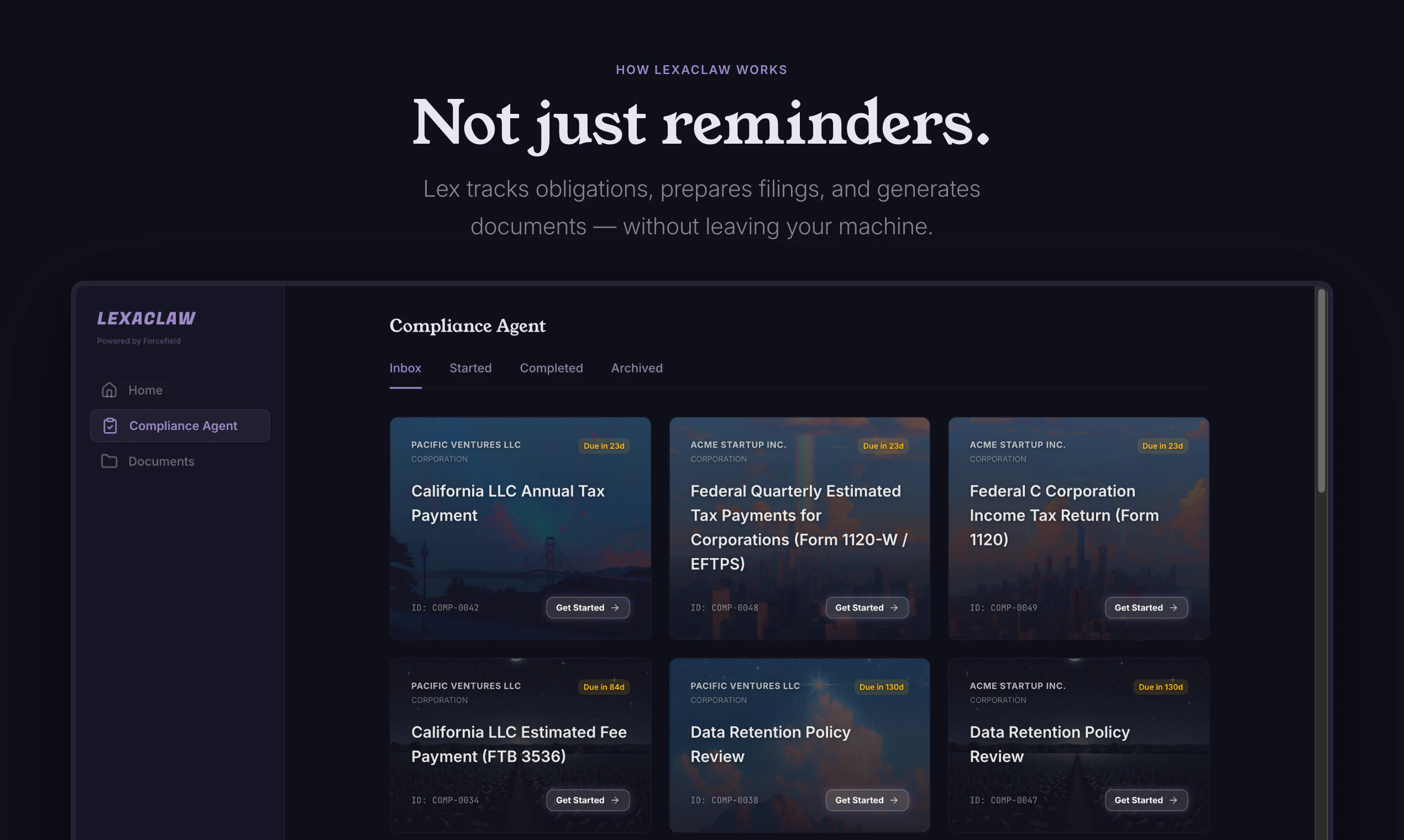
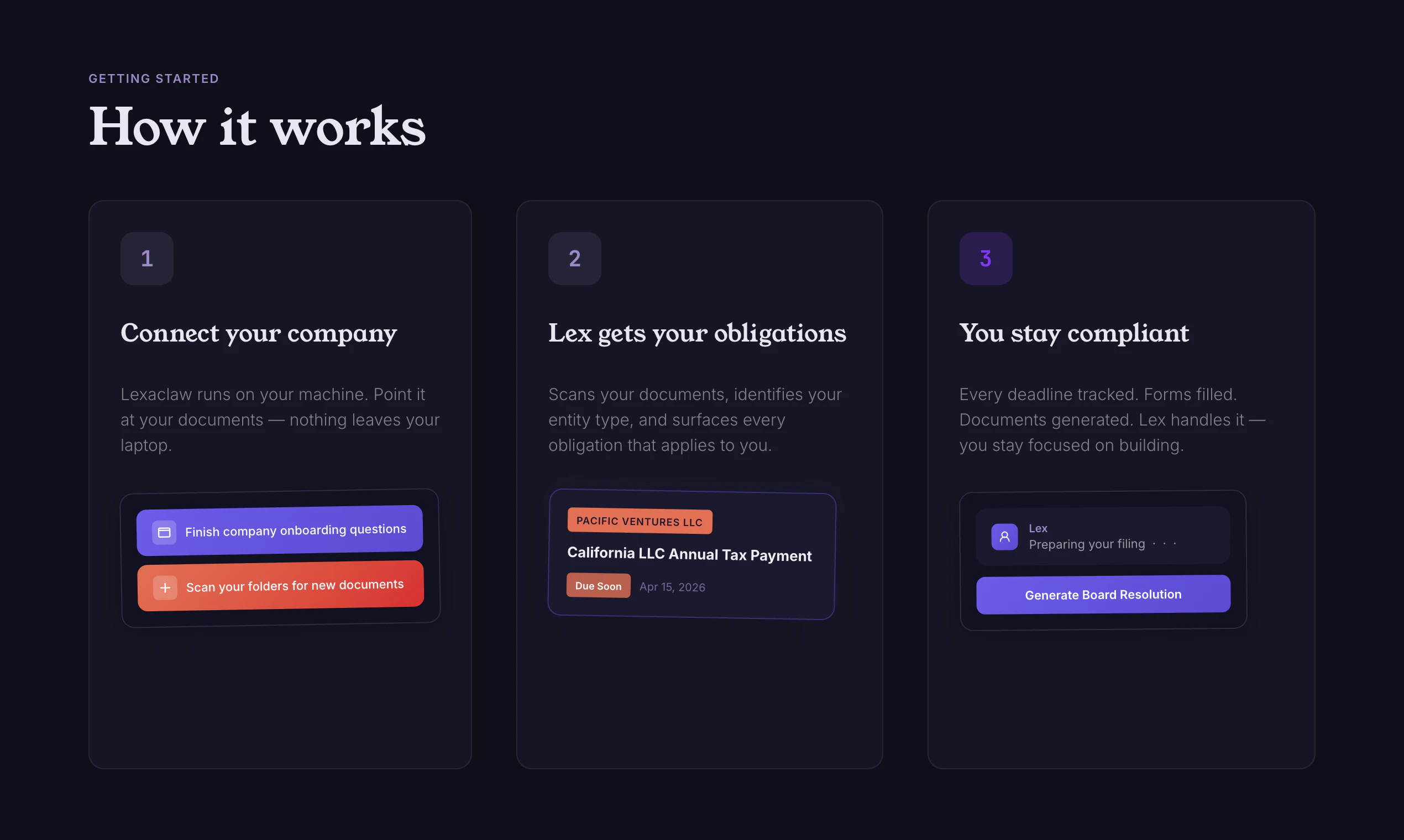
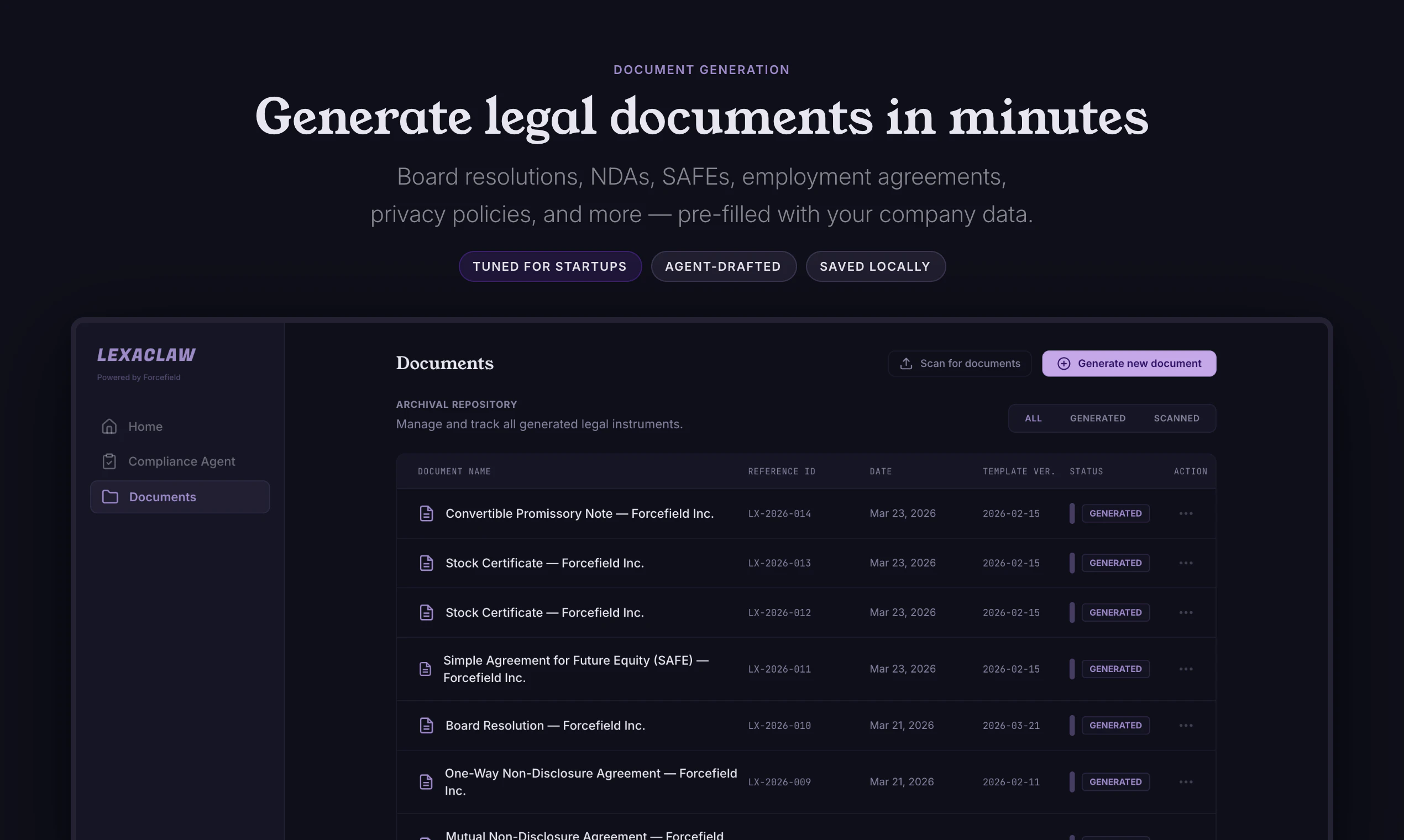
A startup compliance assistant that tracks obligations, fills government forms, and generates legal documents. Every obligation your startup owes can be discovered, tracked, and handled. Lexaclaw scans your documents to discover obligations, tracks every deadline, fills government forms, and generates legal documents from our templates. It also runs locally so your documents never leave your machine. Powered by OpenClaw. 100% free for startups. Just point your agent to our repo to get started
Hey Product Hunt. Matt here, co-founder of Lexaclaw. Former corporate attorney, now startup founder. We built Lexaclaw after scrambling to file a late registration for my previous startup. It had slipped through our reminder system. That's the thing with compliance: for most startups it's a scattered mess. Documents in random folders, deadlines in spreadsheets (if they're tracked at all). We wanted to fix that. Here's what Lexaclaw does: You point your existing AI agent to Lexaclaw so it knows how to get started. It runs locally on your machine, finds your corporate documents, and figures out what obligations apply to you. You can also just share those details manually if you prefer. From there it builds out your full compliance system with all your obligations and deadlines in one place. It walks you through getting compliant step by step. We're also introducing autonomous filing soon, so you can hand the tedious parts to your agent. Three things we care about: 1. It runs locally. Your information stays private. 2. We've open-sourced it so you can see how things work. 3. It's 100% free for startups. Would love to hear which compliance headaches hit you the hardest. Helps us figure out what to build next. Happy to answer questions!
2
回复

@mattisinfact Kudos on the launch, just a quick q: How well does it handle India-specific regs like ROC or international compliance for bootstrapped teams?

1
回复

@mattisinfact When the agent "figures out what obligations apply to you" by reading your documents locally, how do you handle multi-jurisdictional complexity, a startup incorporated in Delaware, operating in California, with remote employees in three other states hits very different compliance requirements simultaneously?

0
回复

Loved the concept of this,

How have you segregated the pricing according to the correct needs of the end users, is it more on usage basis or a monthly subscription.

How does this benefits any early stage startup.

And on which levels

1
回复

@ayan_das12 Hey Ayan! Lexaclaw is free for startups

0
回复

Congratulations, @mattisinfact. Super simple idea... a compliance assistant that runs locally and helps fill government forms.

Your homepage has a list: “Six things Lexaclaw does that other tools don’t.” That list is good.

But the second item [Agent fills government forms for you] is your strongest point. It clearly shows why this tool is useful. The other items are just extra details. However, this strongest point is buried in the middle of the long list.

And a visitor who scans quickly might only read the first and last points. They could easily miss the main killer feature.

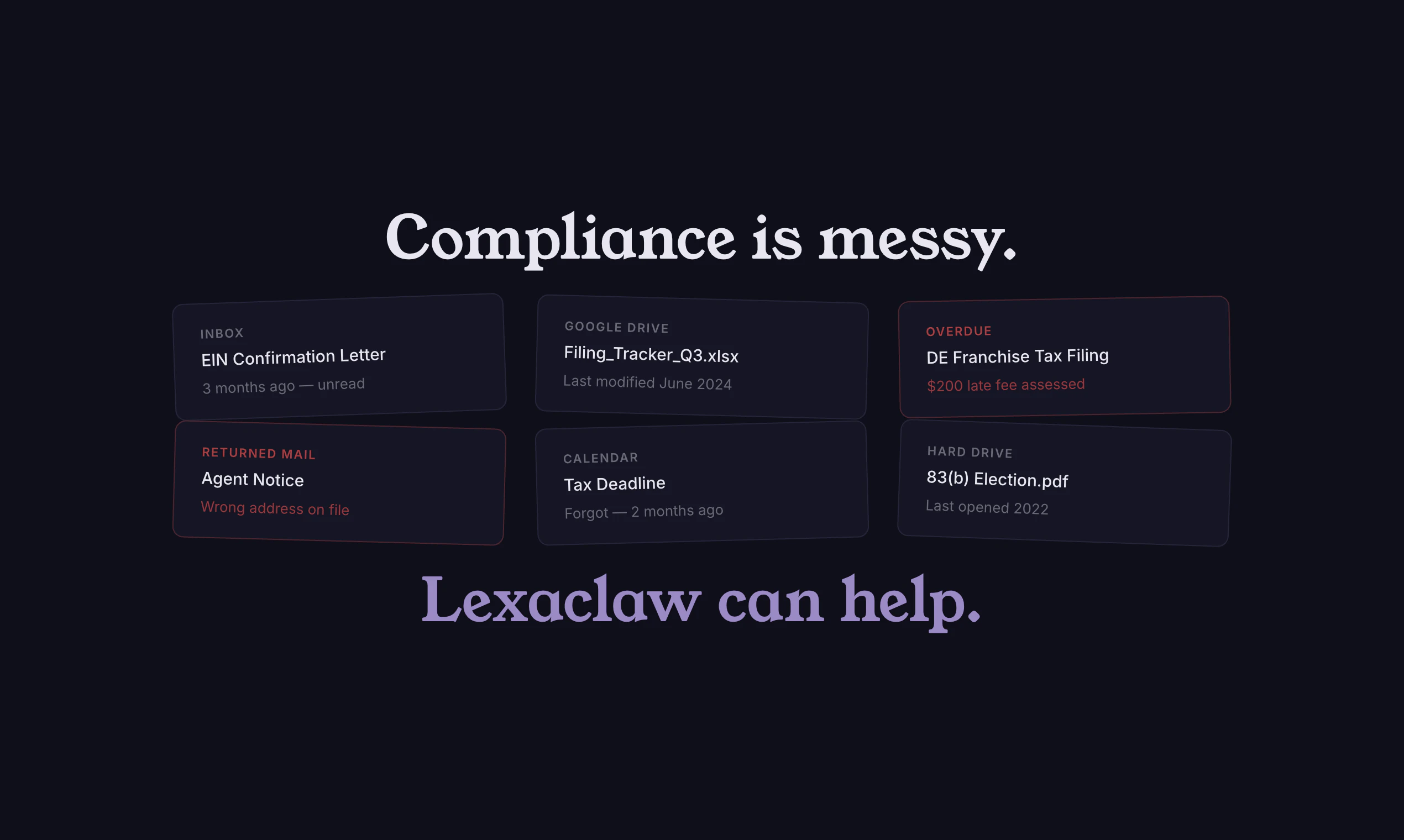
And your “Right now, your compliance looks like this” section is good. It shows scattered emails, a spreadsheet, and a penalty notice.

It makes the problem feel real.

But... the solution part below it [Everything connected] is only two lines. The contrast is strong, but the payoff feels too short.


A visitor wants to see more clearly how the connection actually works.


I noticed a couple more small things that could make the messaging better.

1
回复
Hi Matt! Congratulations on the launch. Can I ask, do you need exiting compliance documents for this to work? Or is it able to provide them from scratch? I’m assuming it also adapts to different compliances requirements per country?
0
回复

@leah_dyke Hey Leah--thank you! For this initial launch Lexaclaw is focused on US jurisdictions to start. You do not need existing compliance documents, although they can help the agent further build out your company profile.

What jurisdiction besides US would be most helpful? Any specific compliance requirements that Lexaclaw could help you with?

0
回复
#10
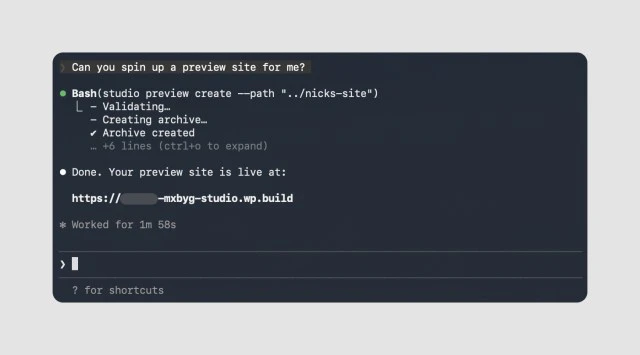
WordPress Studio CLI
WordPress Studio now has an independently installable CLI
104
一句话介绍:WordPress Studio CLI是一款可通过终端命令控制WordPress Studio功能的工具,它允许开发者在脚本化工作流中集成本地开发,无需打开桌面应用即可快速运行WordPress,提升了开发自动化效率。
WordPress
WordPress开发工具 命令行工具 本地开发 脚本集成 跨平台 开发者效率 前端工具 开源工具 工作流自动化 AI编码辅助
用户评论摘要:用户关注CLI的独立安装与跨平台支持,肯定其便利性;同时集中询问是否集成MCP(Model Context Protocol)以便连接AI编程助手,以及是否仍需付费使用WordPress MCP,反映出对AI工具链整合与成本问题的关切。
AI 锐评

WordPress Studio CLI看似只是将图形界面功能移植到终端,实则触及了现代开发工作流的核心矛盾:在AI编码助手日益普及的背景下,开发工具是否具备“可脚本化”与“可嵌入性”已成为关键竞争力。产品通过提供独立的CLI,不仅满足了传统开发者对终端操作和自动化脚本的偏好,更重要的是,它主动为AI智能体(Coding Agents)打开了交互接口——这正是评论中用户反复追问MCP支持的原因。

当前工具的局限性同样明显。其价值高度依赖于后续“同步、导入、导出”等承诺功能的实现程度,否则它只是一个轻量级本地启动器。用户关于MCP与付费的疑问,则暴露出更深层的生态问题:WordPress Studio是否意在构建一个封闭的AI服务生态,还是真正拥抱开放工具链?如果CLI仅是通向付费AI服务的“引线”,其长期吸引力将大打折扣。

犀利点在于:在“AI+开发”浪潮中,单纯提供CLI已非技术亮点,而是入场券。产品的真正价值在于能否成为连接本地开发环境与云端AI能力的“中性管道”,并在此过程中重新定义WordPress高端开发的工作流范式。否则,它可能很快被更开放、更专注的竞品替代。

查看原始信息
WordPress Studio CLI
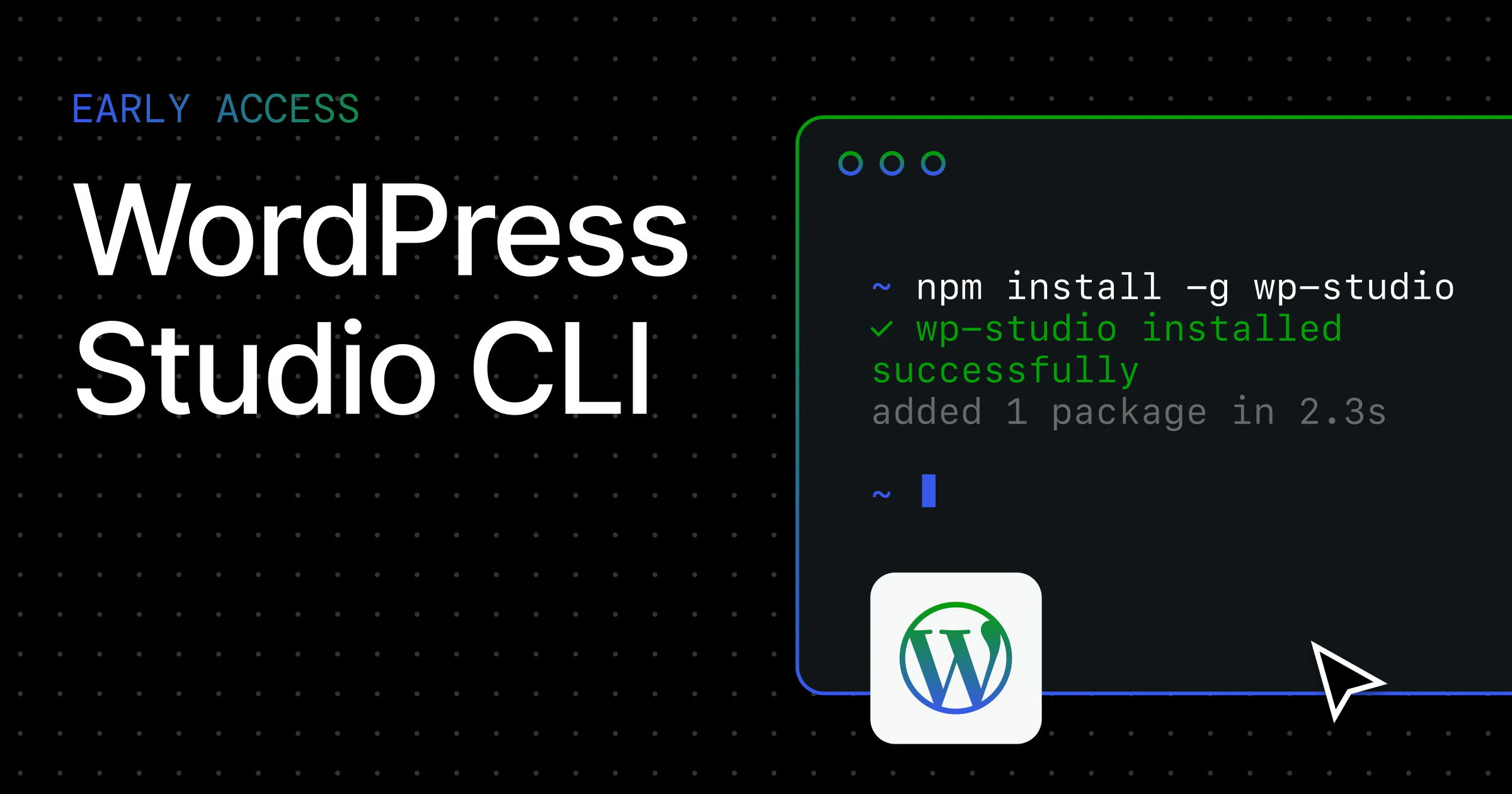
Control WordPress Studio features from the terminal. Integrate local development into scripting workflows with CLI tools.
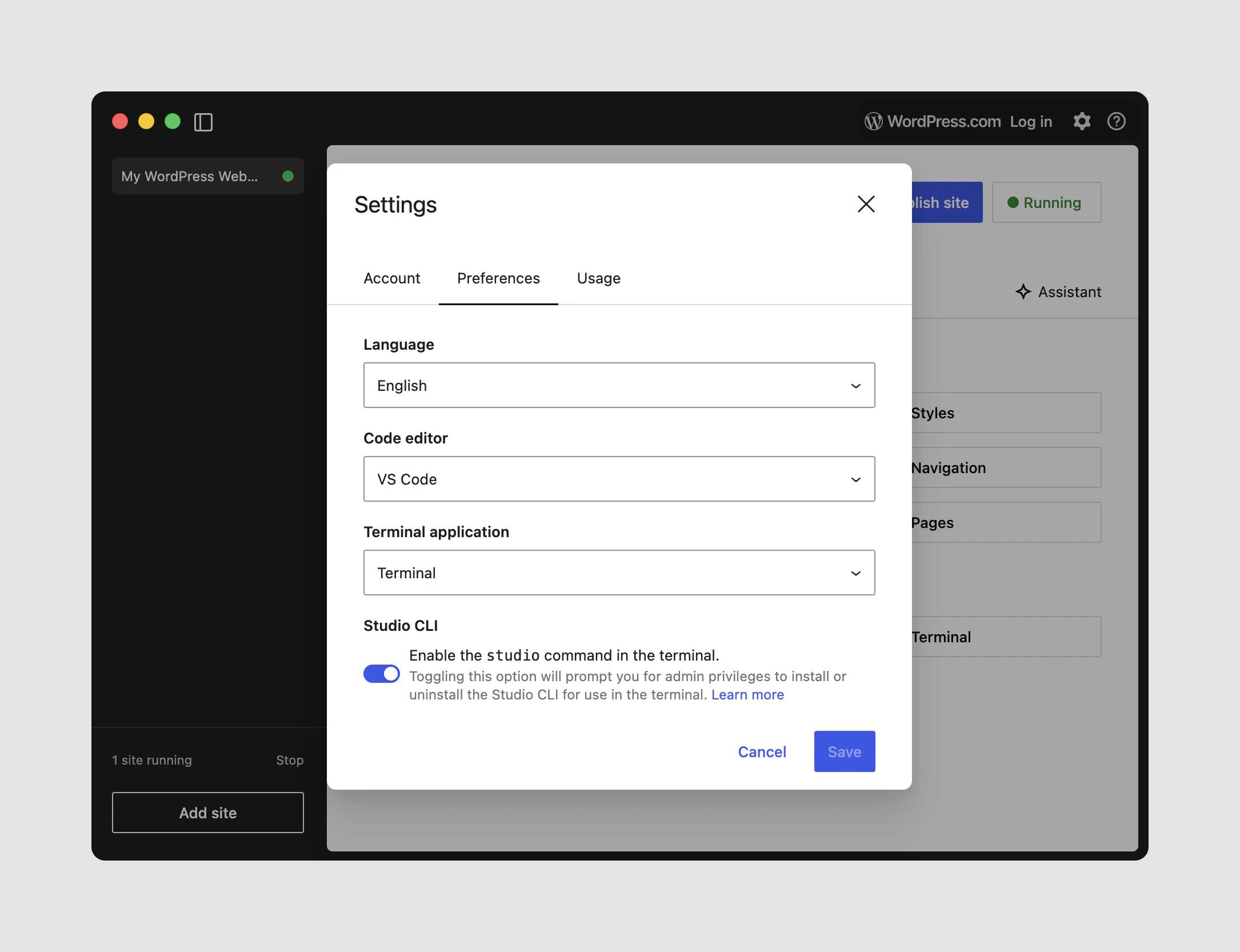
Early access! WordPress Studio now has an independently installable CLI. One command to install: npm install -g wp-studio And another to run WordPress locally, no desktop app needed: npx wp-studio It works on Mac, Windows, and Linux and makes it easy for your AI coding tools to interact with Studio. Sync, import, export, and more are coming soon. 👀 Free to install and use.
4
回复

does it have an MCP that can be connected to coding agnets?

0
回复

Really impressive. Does this make it so you don't have to pay for Wordpress MCP or do you have to connect it through MCP still?

0
回复
#11
BNA
AI agent that builds full-stack iOS & Android apps with auth
91
一句话介绍:BNA是一款AI智能体,能将产品想法即时生成为包含实时后端、数据库和身份验证的全栈iOS与Android应用,解决了创始人和开发者验证想法、快速上市时面临的基础设施搭建复杂、开发周期长的核心痛点。
Developer Tools Artificial Intelligence Vibe coding
AI代码生成 全栈移动开发 快速原型验证 React Native Expo 实时后端 身份验证 低代码 创业工具 生产力工具
用户评论摘要:用户反馈集中于生成代码的质量与可定制性,询问代码是否清晰可扩展、品牌与API如何自定义,以及当AI生成的逻辑(如身份验证流程)不匹配时如何容错。开发者回复称系统能检测错误并自动修复。
AI 锐评

BNA所代表的“描述即生成”全栈应用AI智能体,正在将应用开发的启动成本压缩到近乎为零。其真正的价值并非替代资深开发者,而是精准狙击了“想法验证”这个高频、刚需且充满摩擦的环节。它选择Expo React Native和Convex后端,是极具策略性的技术组合,在跨平台、实时数据与简化后端管理间取得了现成的平衡,让生成的应用脱离了玩具范畴,具备了可上架的生产力基础。

然而,光鲜的“分钟级上架”承诺背后,潜藏着产品逻辑的深水区。评论中的担忧一针见血:生成代码是“可扩展的蓝图”还是“待重构的草稿”?当AI对复杂业务逻辑的理解出现偏差时,是优雅地自我修复,还是将用户拖入更棘手的调试迷宫?目前看,其定位更偏向一个高度智能化的项目脚手架生成器,它极大地解决了“从0到0.5”的冷启动问题,但“从0.5到1”的深度定制和迭代,依然严重依赖开发者自身的功力。它的成功与否,将取决于其生成代码的整洁度、架构的合理性,以及AI调试能力的真实可靠性。否则,它可能只是将开发瓶颈从项目搭建阶段,向后推移到了代码修改与维护阶段。对于非技术出身的创始人,它降低了入门门槛;但对于开发者,它必须证明自己是一个值得信赖的“初级合伙人”,而非一个生成后即需抛弃的临时原型。

查看原始信息
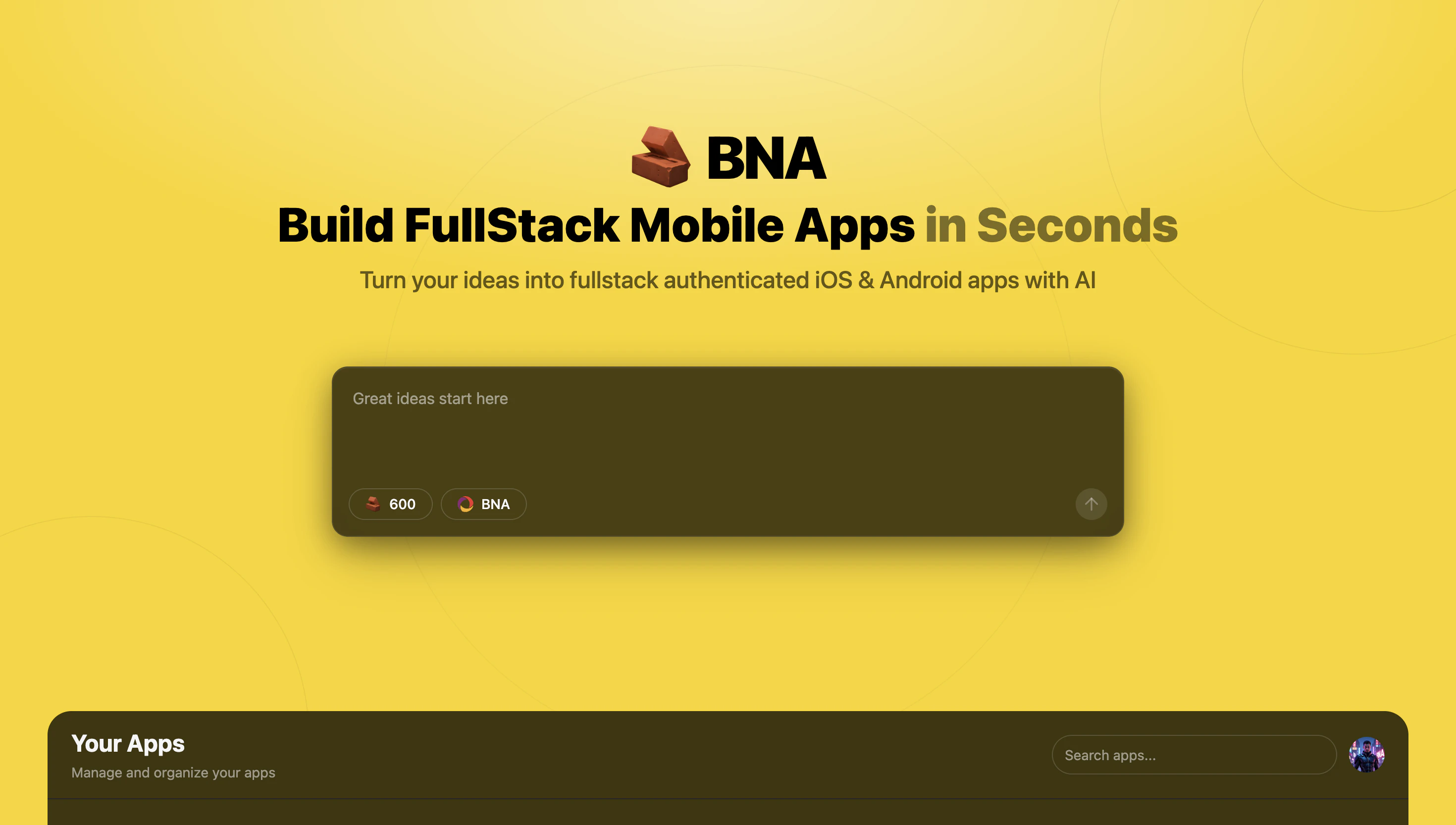
BNA
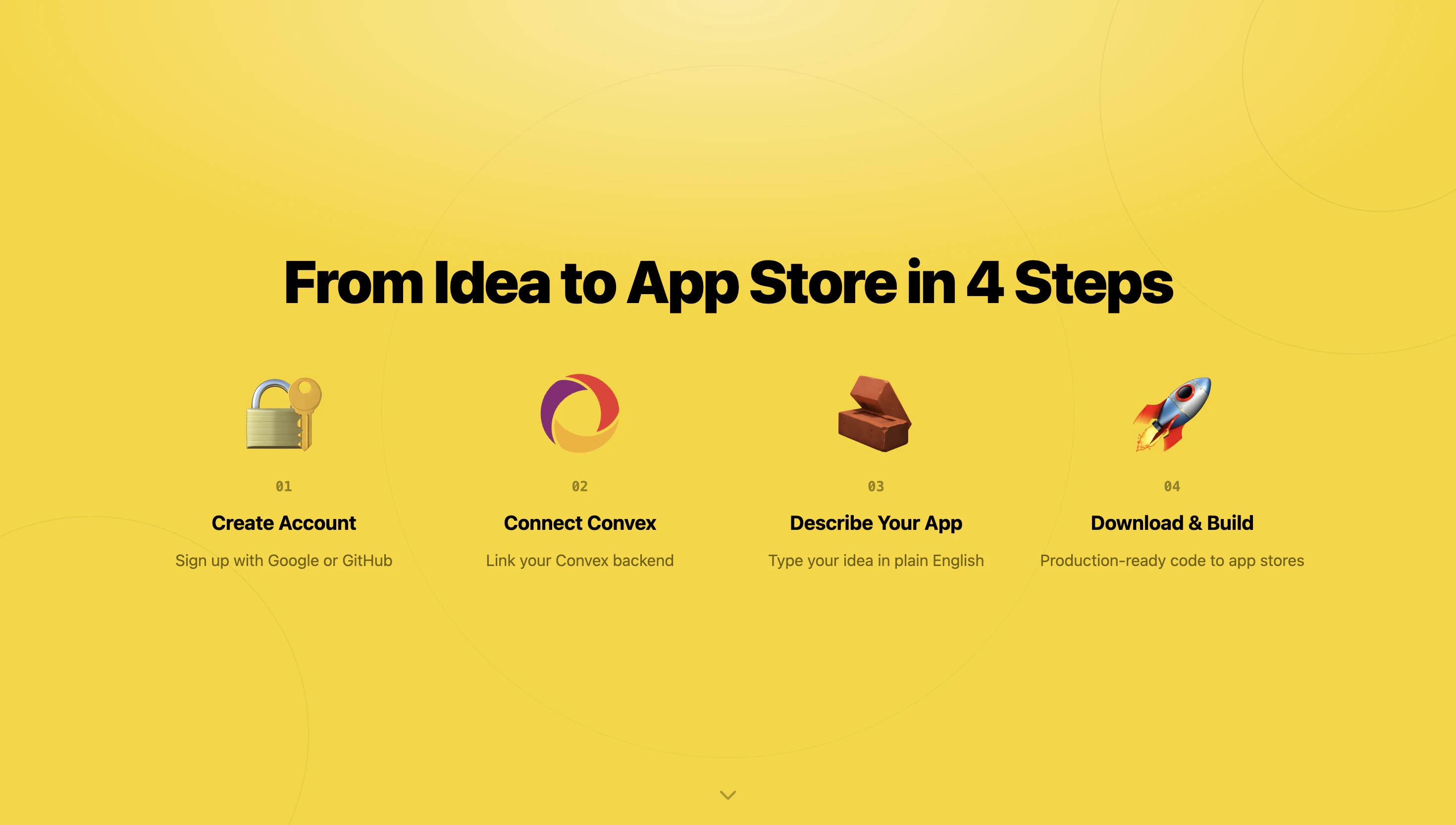
BNA the AI agent that turns your idea into a full-stack mobile app. Instantly generate iOS and Android apps using Expo React Native, powered by a real-time backend with database, APIs, and authentication included out of the box. BNA is built for founders and developers to validate ideas, move fast, and start acquiring users quickly. Go from idea to a production-ready app ready for the App Store and Play Store in minutes.

Introducing BNA, the AI agent that actually builds real full-stack mobile apps. Describe your idea and instantly generate iOS & Android apps powered by a real-time backend, complete with database and authentication out of the box.

BNA is built to empower founders and developers to validate ideas, get to market quickly, and start acquiring users without the friction. It removes the repetitive setup so you can focus on what actually matters: building, iterating, and launching your ideas faster than ever. I’ve spent months building apps that got zero traction, which is why I value fast MVPs now and BNA is here to validate ideas quickly,

Under the hood, apps runs as a development build with full native module support, so you’re not limited by sandboxes or demos. You can ship production-ready iOS and Android apps with the same codebase, without spending months setting up infrastructure, wiring backend logic, or handling auth.


Build Now: https://ai.ahmedbna.com

Would love your feedback and what you’d want to build with it 🚀

3
回复

@ahmedbna Congrats on the launch. For non-dev founders validating content/branding apps, how customizable is the generated code for tweaks like custom APIs or branding?

0
回复

expo + convex is a solid combo. what does the generated code actually look like? clean enough to build on top of or more of a starting point you'd rewrite?

0
回复

Convex as the backend default is an interesting pick - real-time and schema-managed out of the box, which matters when the agent is generating the whole stack. curious what the failure mode looks like when the generated auth flow doesn't quite match the app concept though, is that still a manual fix?

0
回复

@mykola_kondratiuk Thanks, generally the agent detects failures, reads the error logs and the related files, then updates both the logic and app code to fix the issue.

0
回复
#12
Domscribe
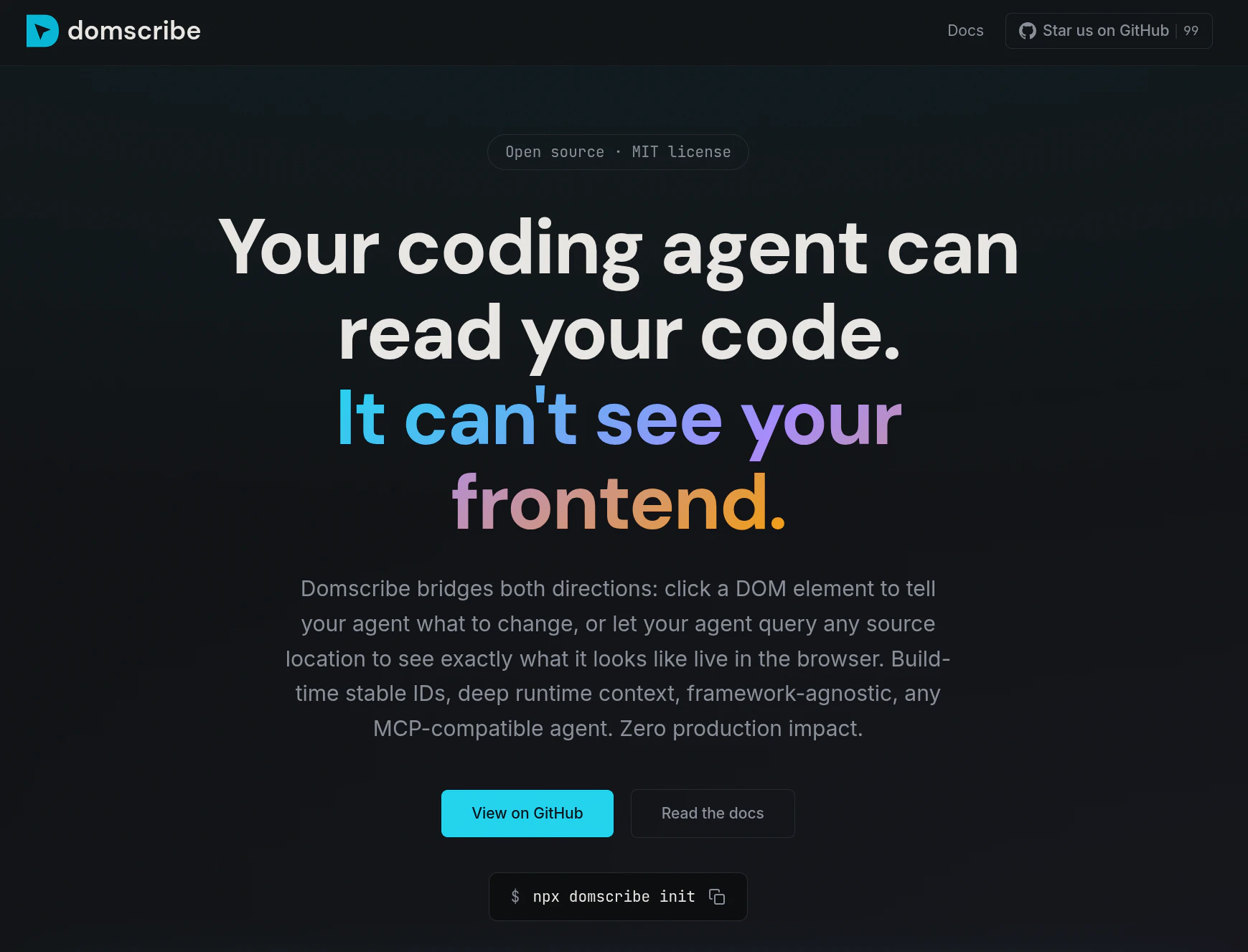
Give your AI coding agent eyes on your running frontend
89
一句话介绍:一款为AI编程助手提供“视觉”能力的开发工具,通过构建时注入稳定ID和运行时捕获DOM与组件状态,精准连接前端代码与运行界面,解决了AI代理在修改前端代码时盲目搜索、定位低效的核心痛点。
Open Source Developer Tools Artificial Intelligence GitHub
AI编程助手增强工具 前端开发提效 代码-UI双向映射 多框架支持 构建时插桩 MCP协议 开源工具 开发工作流
用户评论摘要:用户肯定其构建时稳定ID方案的长远价值,认为其比基于快照猜测选择器更可靠。开发者详细解答了关于Shadow DOM、Canvas/SVG支持的技术细节,并阐述了插件化、框架无关的架构设计理念。有用户提及此工具可帮助节省AI代理的token消耗。
AI 锐评

Domscribe的野心不在于成为又一个前端调试工具,而在于试图成为AI时代前端人机协同的“标准协议层”。其真正价值是**将前端界面从“像素集合”和“模糊文本描述”还原为精确的、可编程的代码结构**,从而填平了自然语言指令与具体代码修改之间的巨大鸿沟。

当前AI编码代理在前端任务上表现笨拙,根源在于其缺乏对运行时应用状态的“感知”能力,只能基于静态代码进行概率猜测。Domscribe通过构建时注入哈希ID这一看似朴素的技术,巧妙地建立了源代码位置与运行时元素之间永不失效的链接。这比依赖易变的CSS选择器或脆弱的截图识别,在工程上更为坚实。其通过MCP协议暴露能力,也展现了良好的生态思维,试图成为AI代理的标准化“感官输入”设备。

然而,其面临的核心挑战在于“适配的广度与深度”。虽然其架构设计了良好的扩展性,但每个新框架(如Svelte、Solid)或复杂场景(如深度定制的渲染引擎、Canvas重度应用)都需要专门的适配器开发,这构成了其生态扩张的技术债务。此外,其价值高度依赖于AI代理能否真正理解并高效利用其提供的“上下文”(DOM、props、state)。如果代理的推理能力不足,再精确的定位信息也可能被浪费。

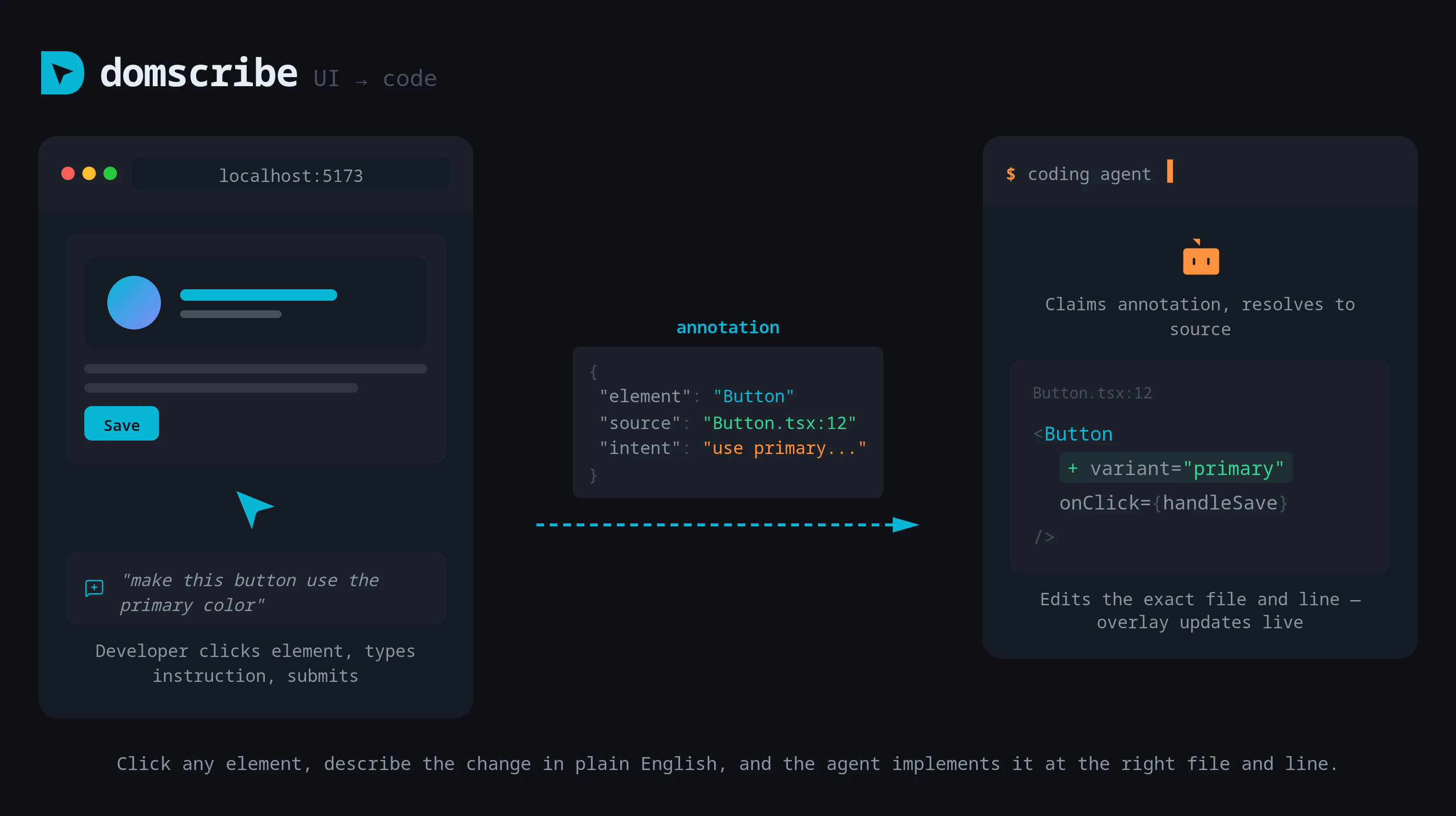
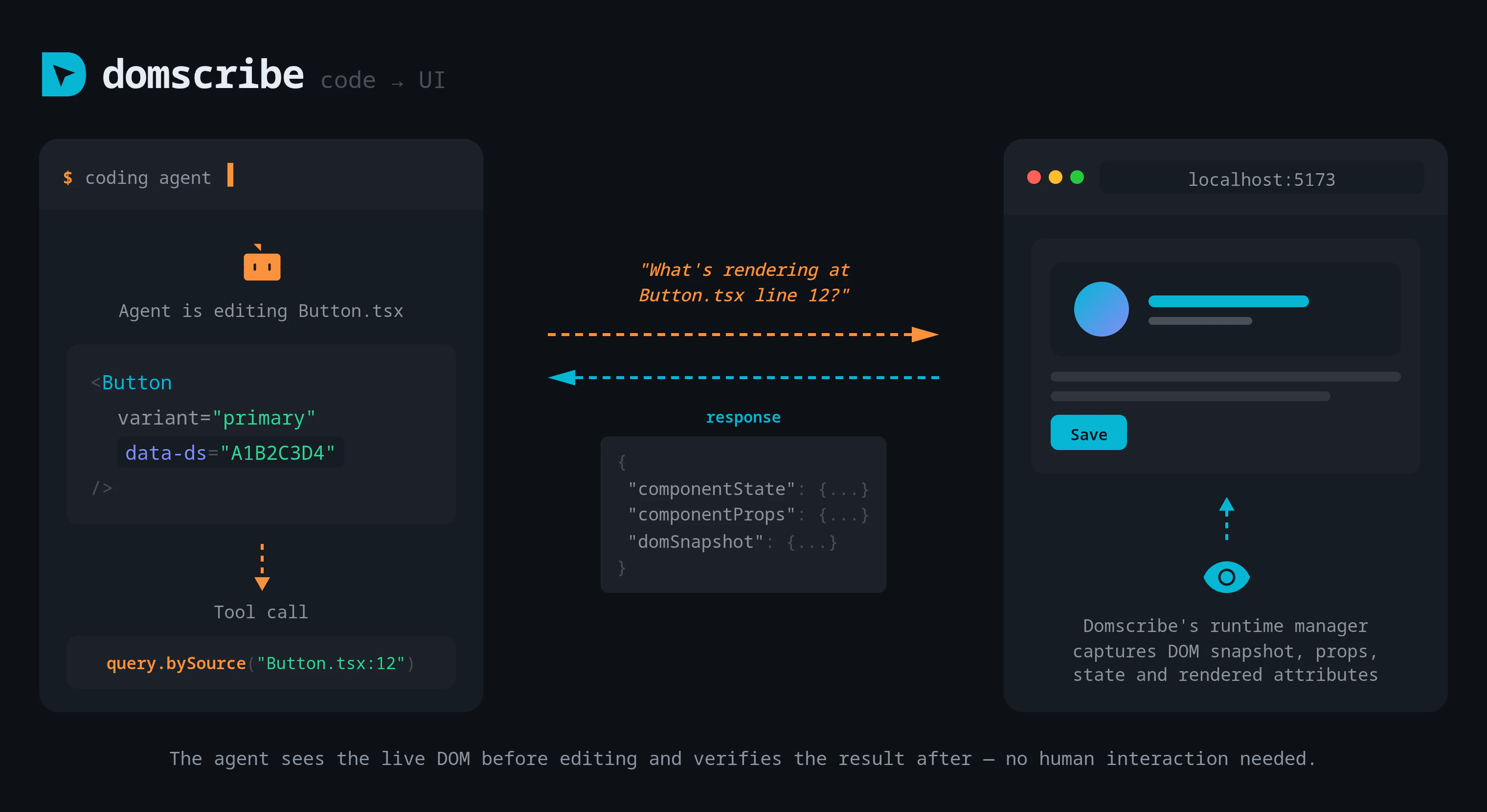
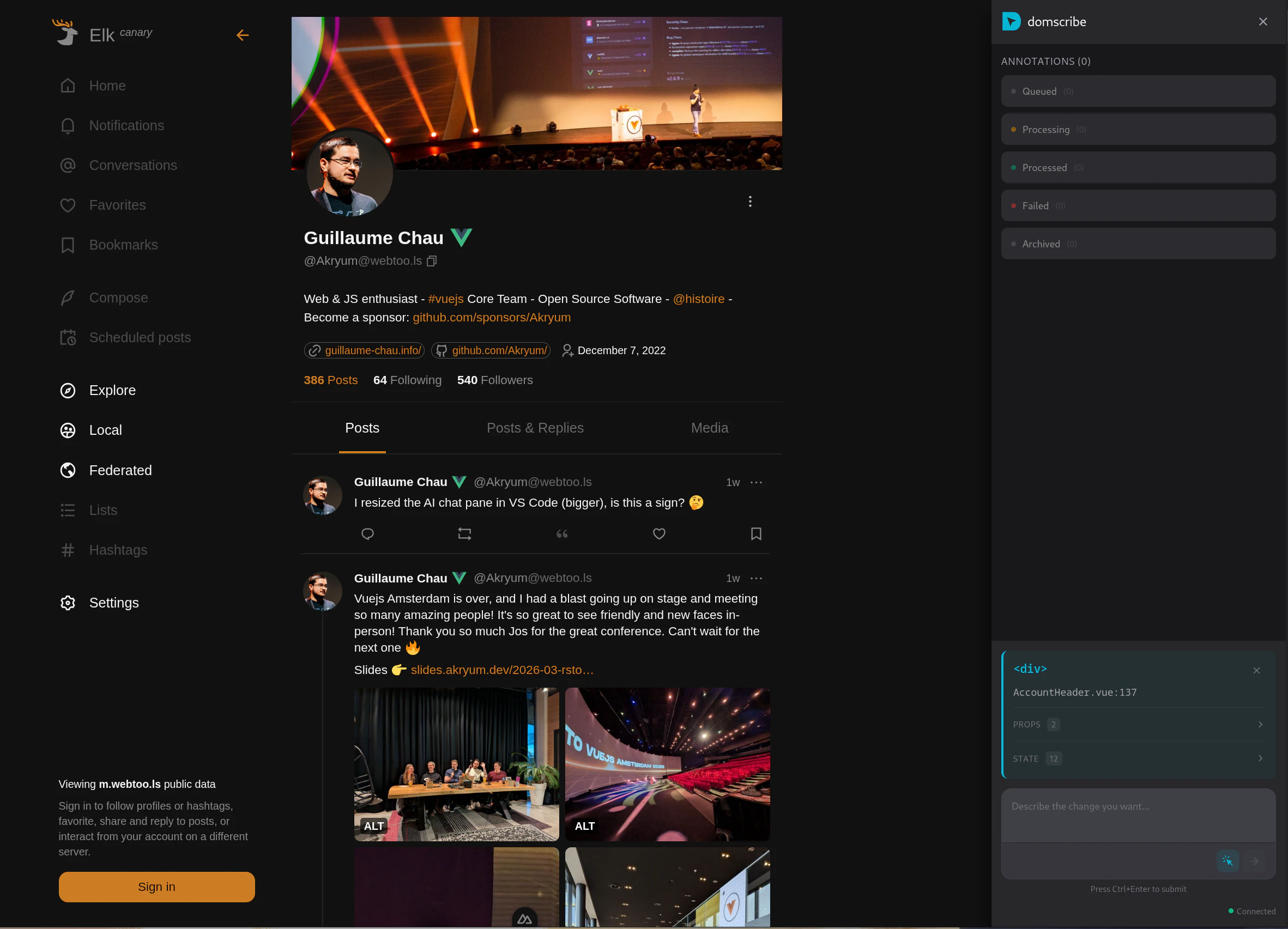
长远看,Domscribe若成功,可能推动前端开发范式向“界面即准确代码入口”演进,但其天花板也取决于AI代理本身的智能水平。它是一把精心打磨的“手术刀”,但执刀者的技艺同样关键。

查看原始信息
Domscribe
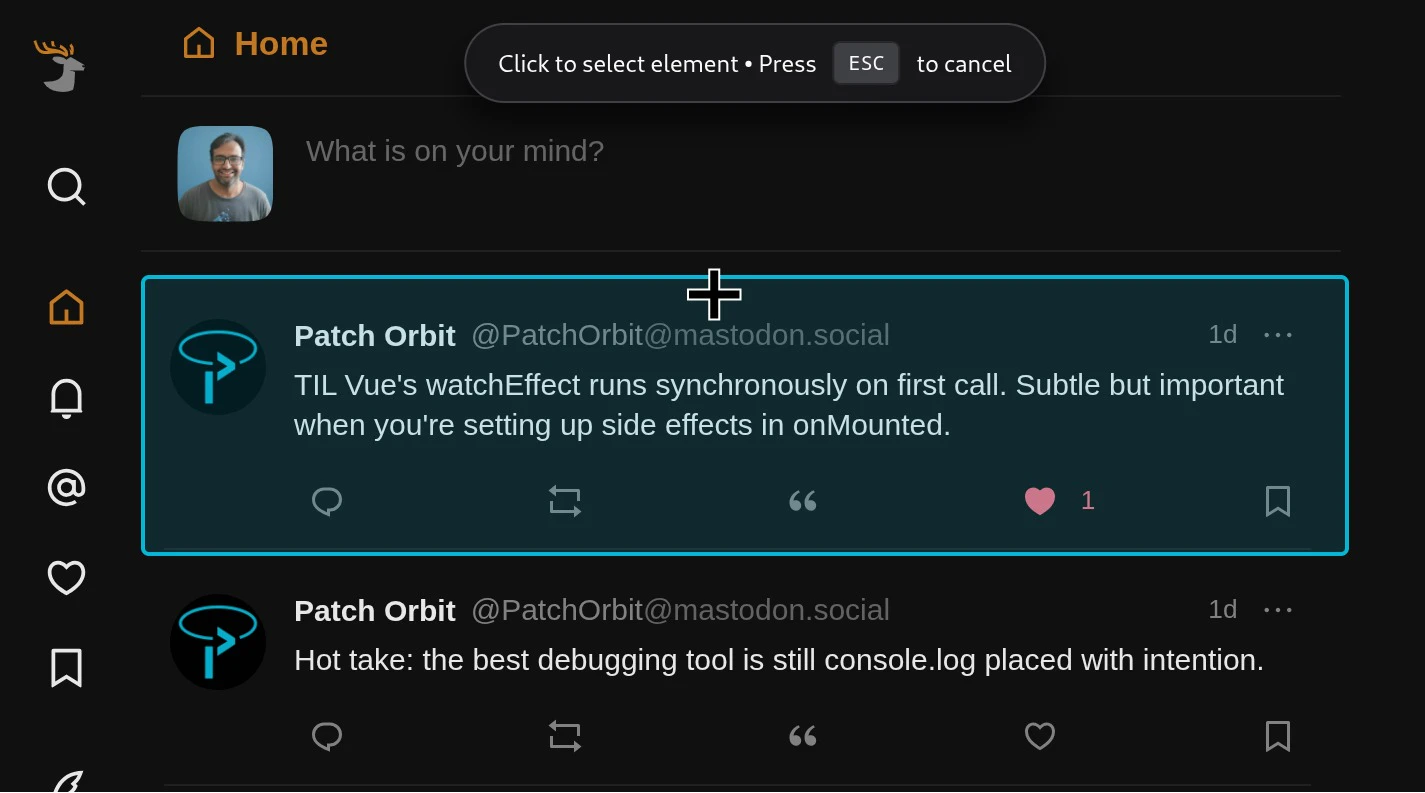
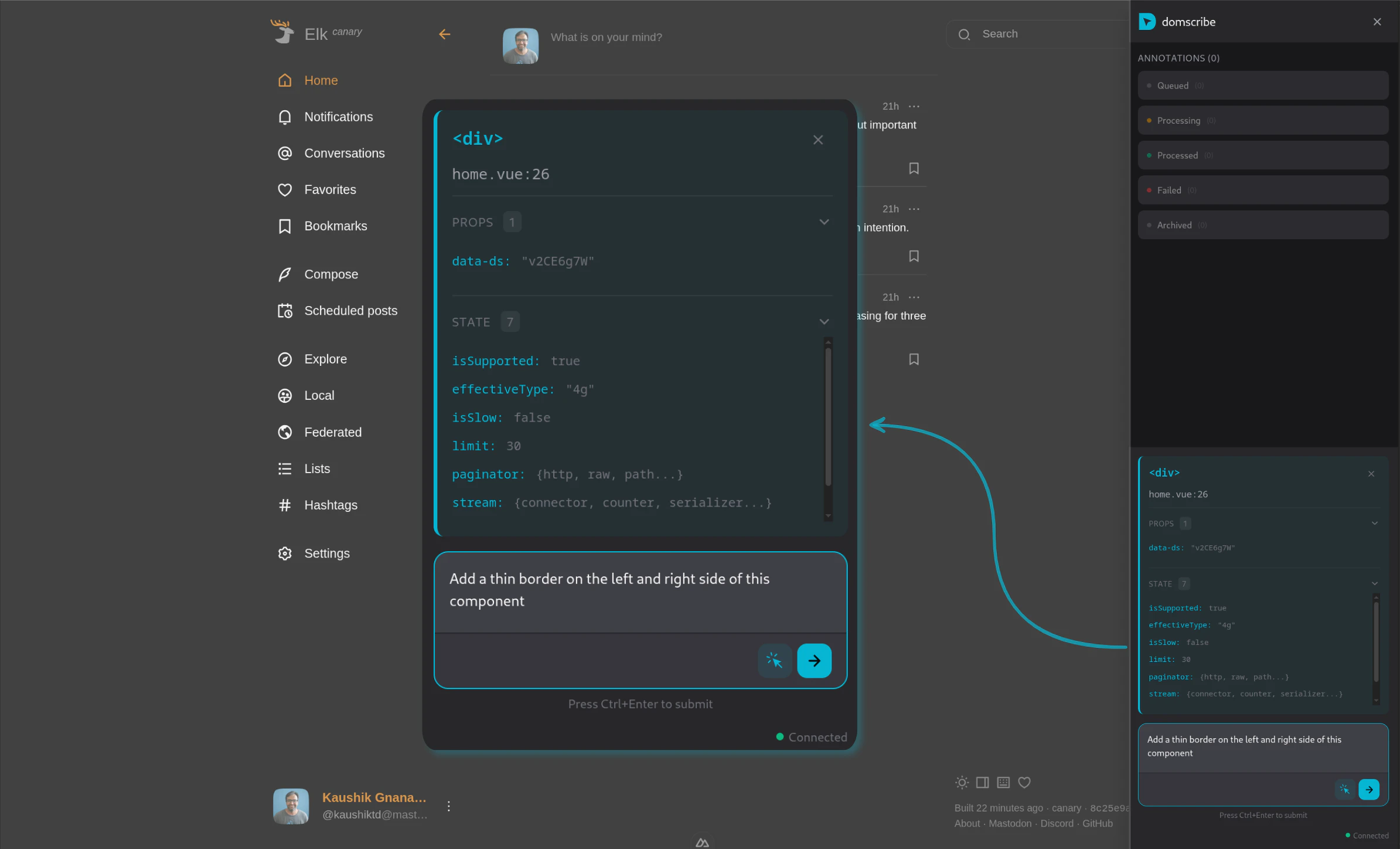
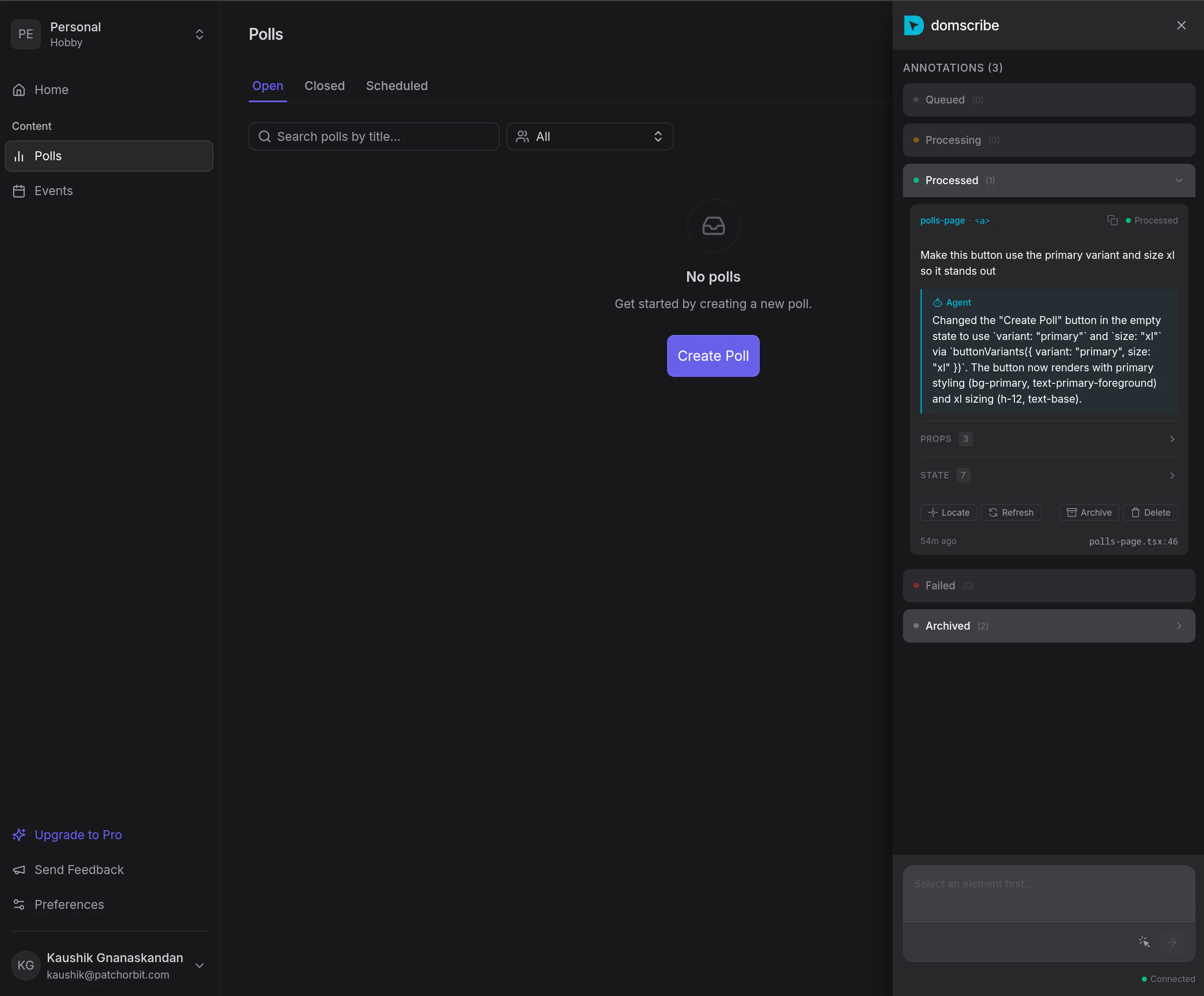
AI coding agents edit your files blind; they can't see your running frontend. Domscribe closes the gap. Code → UI: Query any source location via MCP, get back live DOM, props, and state. No screenshots, no guessing. UI → Code: Click any element, describe what you want in plain English. Domscribe resolves the exact file:line:col and your agent edits it. Build-time stable IDs. React, Vue, Next.js, Nuxt. Vite, Webpack, Turbopack. Any coding agent. MIT licensed. Zero production impact.

Congrats on the launch!

1
回复

@kiranjohns Thanks Kiran! Big fan of layrr.dev - love what you are building. Appreciate the support 🙏

0
回复

the stable ID approach is what makes this actually useful long-term. agents guessing CSS selectors based on snapshots is brittle - they break on any refactor. connecting to the running DOM state via MCP is the right layer. does it handle shadow DOM components or is that still a gap?

1
回复

@mykola_kondratiuk Really appreciate this comment Mykola, you nailed exactly why I went with build-time IDs. Selector-based approaches break the moment someone renames a class or restructures a component; I wanted something that survives refactors by design.

On shadow DOM: it depends on which layer you're asking about.

The overlay itself runs inside shadow DOM (Lit web components) specifically so it doesn't interfere with your app's styles or DOM. So Domscribe is already using shadow DOM internally.

For your app's components: if you're using React or Vue components that happen to render inside a shadow root, the runtime adapters (fiber walking / VNode inspection) will capture props and state at the component level as normal, since those operate on the framework's internal tree, not the DOM directly.

Where it gets tricky is native web components (Lit, Stencil, vanilla custom elements) with their own template syntax. The build-time transform layer would need a new parser; but that's a clean integration. The injector is fully parser-agnostic: the Acorn, Babel, and Vue SFC parsers are all just implementations of a ParserInterface, and the injector handles all the ID generation, attribute injection, and manifest writing without knowing which parser produced the AST. A Lit tagged template parser would implement that same interface, and everything downstream (element tracking, context capture, the relay, MCP tools) works automatically.

It's not supported today but it's a single parser implementation away, not a rethink. Would love to hear more about your setup if you're working with shadow DOM heavily.

0
回复

Congrats on launch and thanks for contributing with the MIT license, always appreciated!

A question: Would it work on canvas based objects, e.g. I have a button made with canvas and I tag it on the canvas area. What about svg objects?

1
回复

@yodalr Thanks Lennart, really appreciate that!

Great question. SVG elements are regular DOM nodes, so Domscribe instruments them the same way as any other element. Each <rect>, <path>, <g>, etc. gets a data-ds ID mapped to its source location, and the runtime captures props and state from the parent component. So if you have an SVG button built from a <g> with some <rect> and <text> children in a React or Vue component, clicking any of those in the overlay resolves to the exact file and line.

Canvas is a different story. Everything drawn on a <canvas> exists as pixels, not as DOM nodes, so there's nothing for Domscribe to attach an ID to. The <canvas> element itself would get instrumented, but the individual objects drawn inside it wouldn't. That's a fundamental limitation of how canvas works rather than something specific to Domscribe; any DOM-based tool hits the same wall.

That said, if your canvas buttons are wrapped in React/Vue components (which they usually are for event handling), Domscribe would still resolve the component and give your agent the props, state, and source location; you'd just lose the per-shape granularity you'd get with SVG.

Short answer: use SVG if you can, and you'll get full Domscribe coverage.

1
回复

Hey Product Hunt! 👋

I built Domscribe because of a problem that kept bugging me: every time I asked an AI coding agent to change something on the frontend, it would burn through thousands of tokens just searching for the right file. Grep through the codebase, read a dozen candidates, build up context on each one, ask me to confirm; all before writing a single line of code. Most of the agent's time and token budget was spent on search, not on the actual edit.

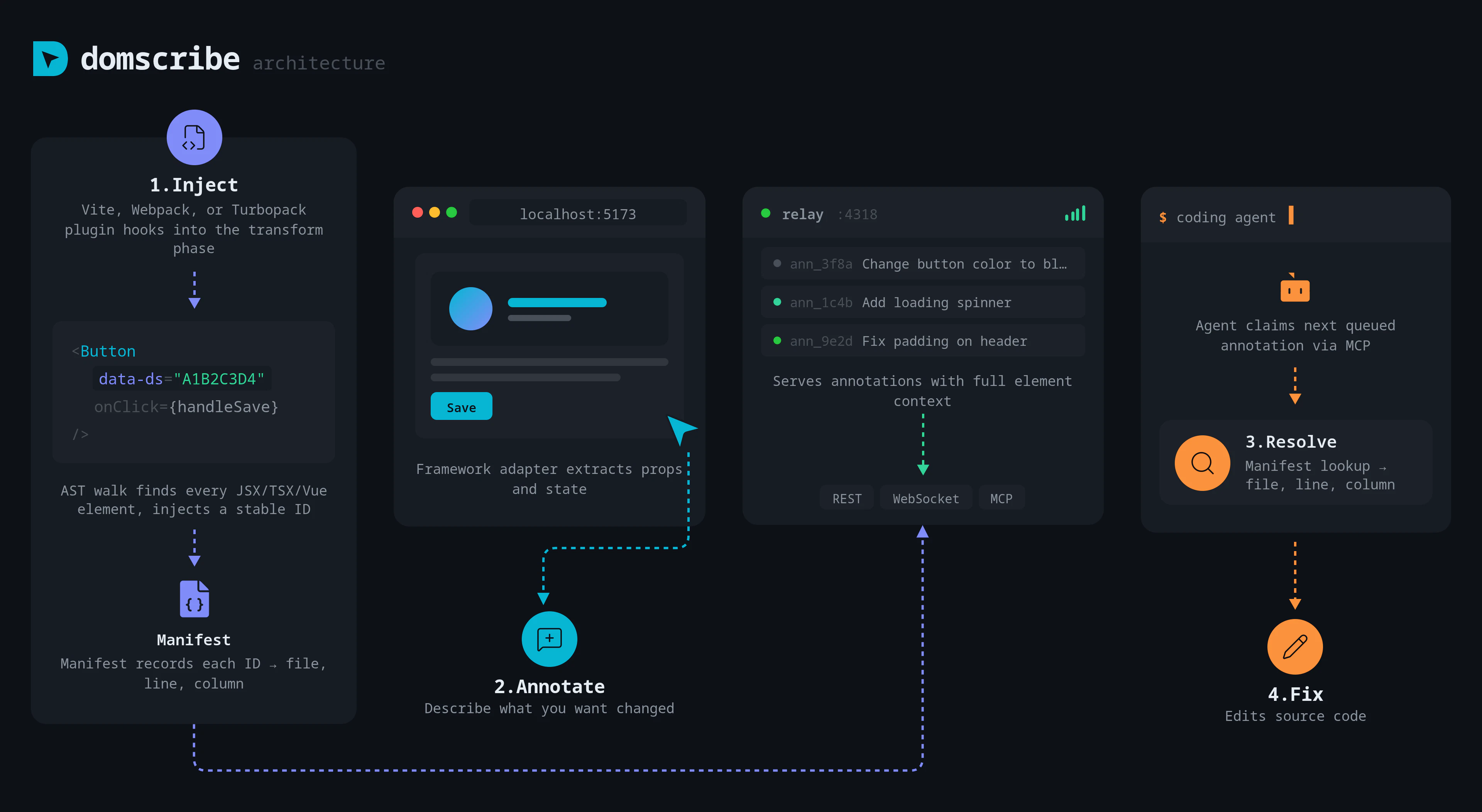
Domscribe bridges that gap in both directions:

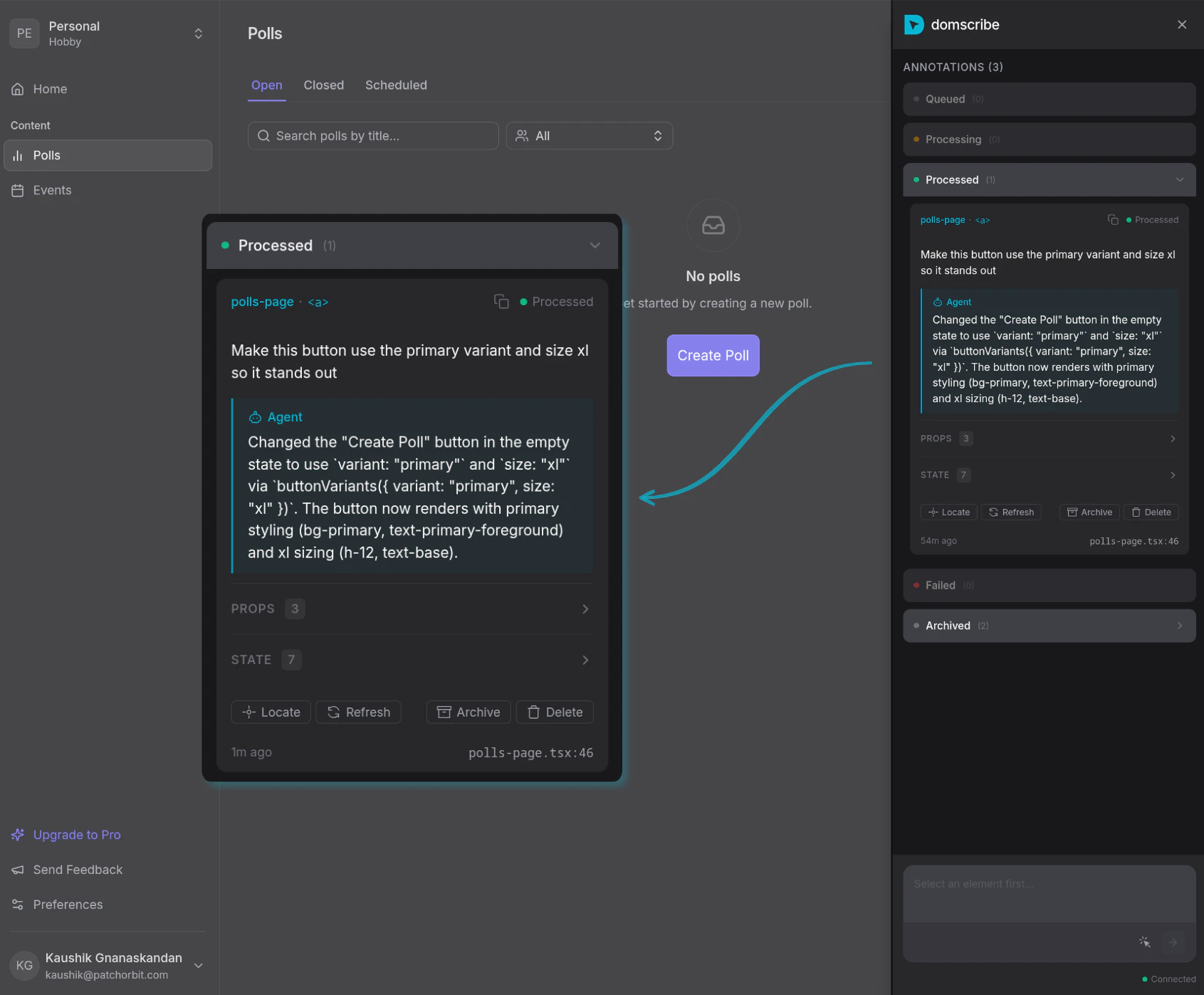
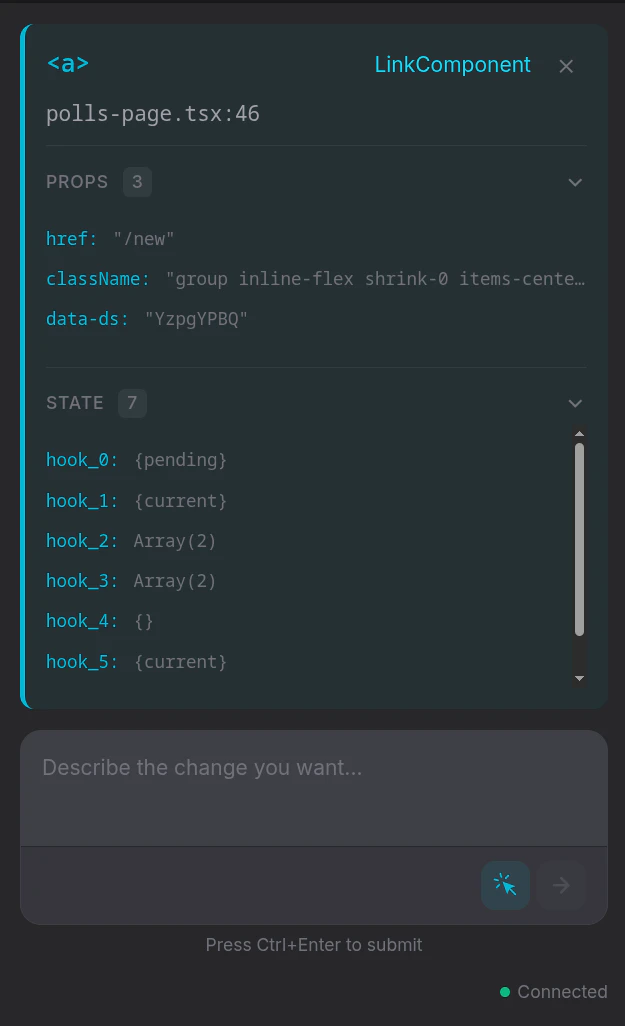
→ Code to UI: Your agent calls an MCP tool with a file and line number and instantly gets back the live DOM snapshot, component props, and state — no screenshots or human intervention needed.

→ UI to Code: You click an element in the browser overlay, type "make this button blue," and submit. Domscribe resolves the exact source location and your agent edits the right file on the first try.

See demo videos on the website.


One thing I'm particularly proud of is the architecture. I spent a lot of time making sure Domscribe wasn't just a tool that works: it's a platform you can build on. The system is split into clean layers: a parser-agnostic AST transform handles ID injection, a generic manifest maps IDs to source locations, and a FrameworkAdapter interface defines exactly what a runtime adapter needs to implement. If you're using Svelte, Solid, Angular, or something entirely custom, you can write an adapter that plugs directly into the existing pipeline and everything else (element tracking, PII redaction, the relay, MCP tools, the overlay) just works. Next.js, React, Vue and Nuxt.js ship as first-party adapters built on the same public interface that any community contributor would use. No special internals or escape hatches:


The same philosophy extends to the agent side. Domscribe exposes its full tool surface via MCP, so any compatible agent works out of the box. But I also built first-party plugins for Claude Code, GitHub Copilot CLI, Gemini CLI, and Cursor; each bundles the MCP config and a skill file that teaches the agent how to use Domscribe's tools effectively. Install the plugin and you're up and running in seconds, no manual config needed:


Under the hood it works at build time: an AST transform assigns every JSX/Vue element a stable ID via xxhash64 hashing and writes a manifest mapping each ID to its file, line, and column. At runtime, framework adapters walk React fibers and Vue VNodes to capture live props and state. A local relay daemon connects the browser and your agent via REST, WebSocket, and MCP stdio.

It's fully open source (MIT), framework-agnostic (React, Vue, Next.js, Nuxt), works across bundlers (Vite, Webpack, Turbopack), and supports any MCP-compatible agent (Claude Code, Cursor, GitHub Copilot, Gemini CLI, Kiro). PII is auto-redacted, and everything is stripped in production builds — zero runtime cost.

Would love to hear your feedback. What's your biggest pain point when using AI agents for frontend work?

0
回复

@narrator This will surely help me save on precious tokens man, thanks a lot. Congract on Launch!

0
回复

This looks really cool, I will definitely need to try it after launch day. I have found that agents can get stuck on loops especially on the frontend trying to get the agent to change the right part or graph.

0
回复
#13
Spokk
Feedback, reviews, loyalty & referrals for SMB
83
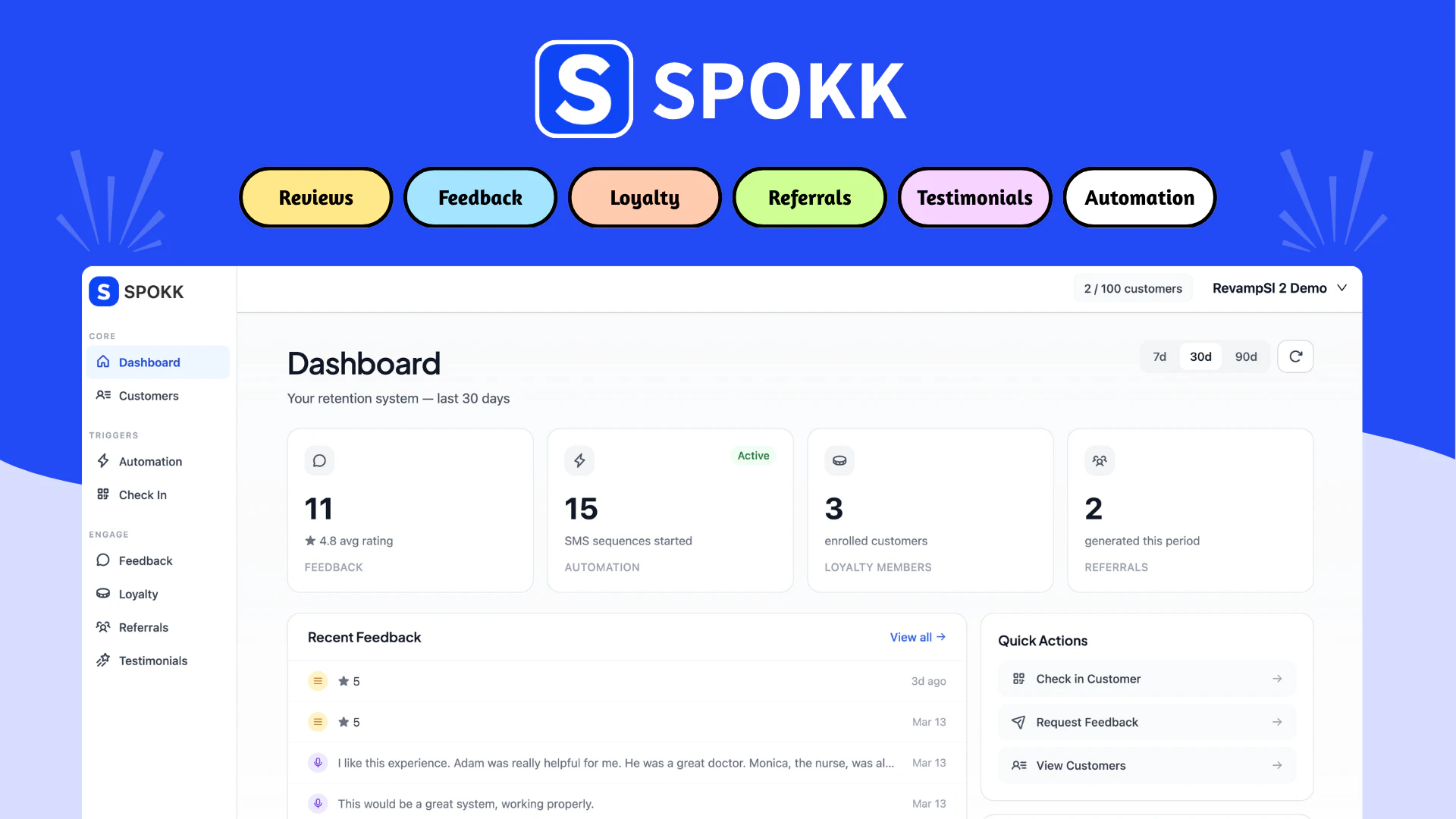
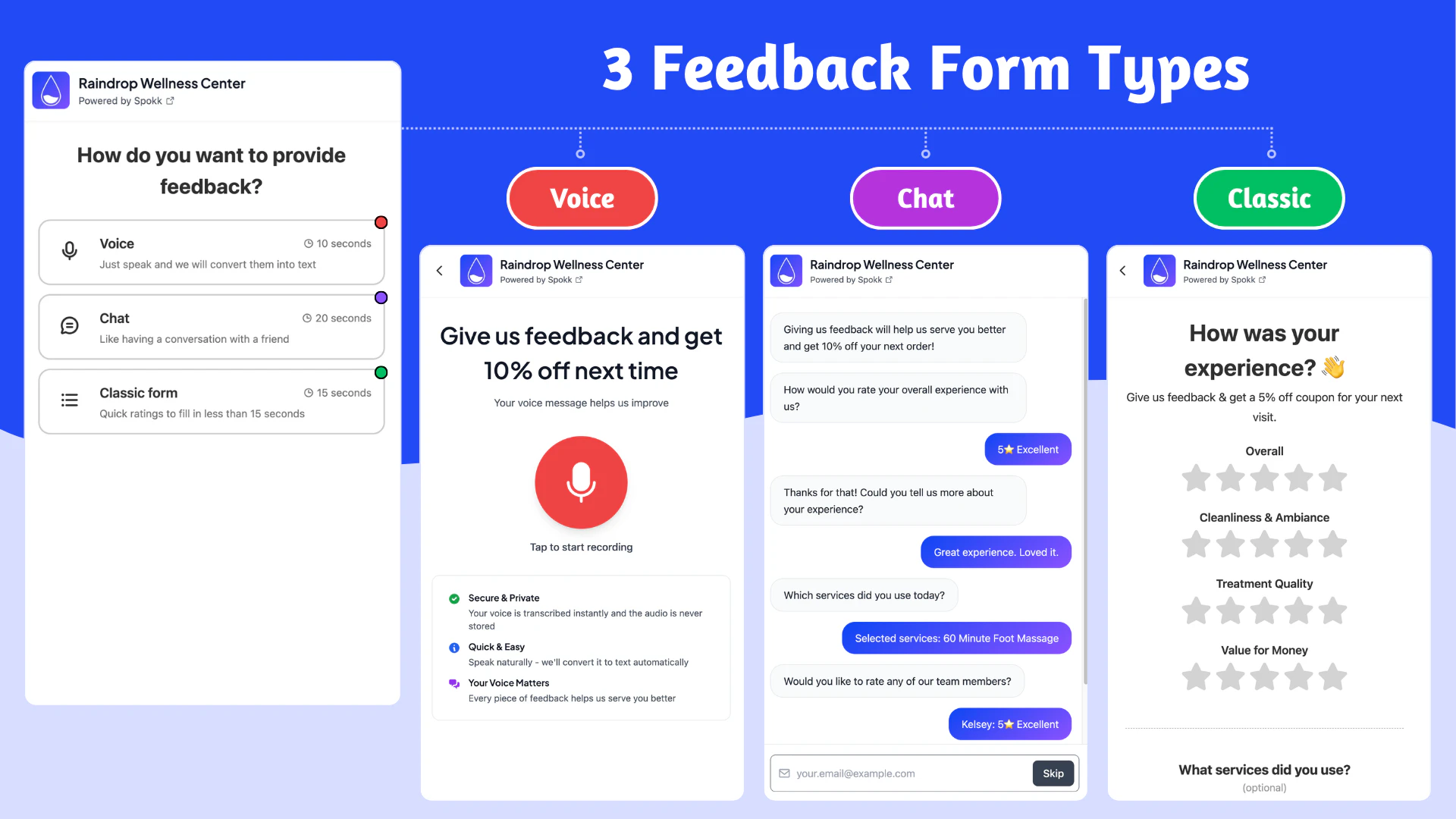
一句话介绍:Spokk为小型企业(如餐厅、健身房、沙龙)提供一站式自动化客户增长解决方案,通过一次顾客签到自动触发反馈收集、AI生成好评、忠诚度奖励与推荐追踪流程,解决了商家需同时使用多个独立工具管理客户关系与增长的痛点。
Customer Communication Marketing Artificial Intelligence
客户反馈管理 在线评论生成 忠诚度计划 推荐营销 自动化营销 短信营销 小企业SaaS 客户留存与增长 AI驱动 一体化平台
用户评论摘要:创始人阐述了产品从单一工具向一体化增长引擎的演进理念。有效评论集中于两个问题:1. 非技术用户能否轻松自定义自动化流程;2. 产品对不同类型餐厅(从快餐到高级餐厅)营销的具体适用性。
AI 锐评

Spokk的野心,在于将小企业主零散、断续的客户互动,整合成一个由“签到”触发的、连贯的自动化增长飞轮。其真正价值并非功能堆砌,而在于对“交易结束即关系开始”这一商业常识的流程化封装。

产品逻辑犀利:它抓住了小企业营销的核心矛盾——深知客户忠诚与口碑至关重要,却无精力运营复杂体系。通过强制性的极简反馈作为起点,并智能跳过已完成的步骤(如已留评则推送推荐链接),它试图在低打扰度下,将单次消费的顾客一步步转化为“反馈者→好评者→回头客→推广者”。AI生成评论草稿是点睛之笔,它移除了顾客行动的最大障碍——不知如何下笔,将情感认同转化为可执行的文本,极大提升了从满意到公开好评的转化率。

然而,其挑战同样尖锐。首先,标准化流程与不同行业(如快餐与高级餐厅)极度差异化的客户体验管理需求之间存在张力。高级餐厅的“体验维护”远非一个四步短信序列能承载。其次,其模式高度依赖初始的“签到”触发点,这对许多没有强制签到环节的小企业(如零售店)构成部署门槛。最后,将如此多关键增长环节捆绑于一个平台,固然方便,但也意味着风险集中,任一环节(如短信送达率、AI草稿质量)的失效都可能影响整体链条。

总体而言,Spokk是一次有价值的整合创新,它试图成为小企业的“增长自动驾驶仪”。但其成功与否,不取决于功能列表,而取决于其流程能否真正适配不同商业场景的“驾驶路况”,并在自动化与人性化之间取得精妙平衡。

查看原始信息
Spokk
Spokk combines feedback, AI-powered reviews, loyalty, referrals, and automation into one platform for small businesses. A check-in starts the full sequence: customers get a 15-second feedback form, then an AI-generated Google review draft they copy and post in seconds, visit-based loyalty reward tracking, and a unique referral link — all delivered via SMS/email at exactly the right time. No more juggling separate tools. Set up in 5 minutes and Spokk runs your customer growth engine on autopilot
Hey Product Hunt! 👋 Samesh here, founder of Spokk. We launched a few year ago as a simple review collection tool. It was good but it was missing something. Getting a review is a one-time win. Building a growing business means retaining customers, rewarding loyalty, and turning happy customers into referrals. We were only solving one piece of a much bigger puzzle. So we rebuilt Spokk from the ground up. What's new: - Loyalty program — Check-ins, visit-based rewards, automatic SMS notifications. No app download required. - Referrals — every customer gets a unique referral link via SMS. Dual rewards for referrer and new customer. Fully tracked. - Testimonials — collect video and text testimonials automatically as part of the same flow. - Full SMS automation — a smart 4-step sequence per visit: feedback → AI review draft → loyalty tracking → referral link. Each step skips intelligently if it's already been handled. The core idea is simple: one check-in starts the entire growth engine. You set it up once, and Spokk handles retention, reviews, loyalty, and referrals on autopilot — forever. We built this for the small business owner who's great at their craft but doesn't have time to manage five different tools. A restaurant owner. A gym. A salon. Someone who just wants it to work. I'd love to hear your thoughts — and if you're a small business owner or know one, I'd genuinely appreciate you giving Spokk a try. The feedback from this community has shaped everything we've built so far. — Samesh
2
回复

@samesh13 Congrats on the launch. For a small team juggling content and clients, how easy is it to customize the 4-step sequence without coding, and what's the biggest uplift you've seen in repeat visits/referrals from early users?

0
回复

Hi Samesh congrats on your relaunch! If I worked with restaurants to handle their digital marketing, how might Spokk be able to help them? These restaurants could be QSR, casual dining or even fine dining (which have a certain experience to maintain).

0
回复
#14
Bulk Exporter for Sora
1-click backup for your Sora videos, images & prompts.
82
一句话介绍:一款轻量级Chrome扩展,一键批量导出Sora生成的视频、图像及提示词,解决创作者在云端管理AI生成资产混乱、手动保存效率低下的痛点。
Chrome Extensions Productivity Artificial Intelligence
Chrome扩展 AI资产管理 Sora工具 批量导出 本地备份 知识管理 工作流优化 数字资产归档
用户评论摘要:开发者自述开发动机源于自身将AI资产整合进Obsidian等“第二大脑”工作流的需求。评论中未出现其他用户反馈,主要为开发者引导讨论,询问用户管理AI资产的方式并征集反馈与功能建议。
AI 锐评

这款产品精准切入了一个新兴且迫切的细分市场——AI生成内容(AIGC)的资产管理。其真正价值不在于技术有多复杂,而在于它敏锐地捕捉到了AIGC工作流中的一个关键断点:生成平台专注于“创造”,却普遍忽视了用户对成果“管理”的刚性需求。

产品将自身定位为“桥梁”,一端连接着封闭、易失的云端Web UI(如Sora),另一端则对接用户本地成熟的知识管理体系(如Obsidian、Notion)。这种设计思路是明智的,它没有试图重建一个管理平台,而是赋能用户,让他们能在自己熟悉的信息环境中,对AI资产进行归档、标签化和全文检索。其导出带YAML Front Matter的Markdown文件功能,更是直接迎合了高级笔记软件用户的结构化数据需求,提升了提示词的可复用性和可分析性。

然而,其核心风险与天花板也显而易见。首先,其生存完全依附于Sora平台的前端形态与访问策略,一旦官方界面更新或API政策变动,扩展可能即刻失效。其次,功能相对单一,护城河较浅,易被同类工具或Sora官方可能推出的备份功能所覆盖。当前82的投票数也反映出市场热度有限,这可能与Sora本身仍处有限访问阶段、用户基数不大有关。

本质上,这是一款出色的“时机型”效率工具。它解决了早期重度用户的燃眉之急,但长期价值取决于其能否从单一平台的“导出器”,演进为跨多AI生成平台的“统一资产收集与预处理中心”,并深度集成到更广泛的创作工作流中。在此之前,它更像一个精致而脆弱的临时解决方案。

查看原始信息
Bulk Exporter for Sora
Creating amazing videos with Sora is mind-blowing, but managing the generated assets is a hassle. Manually saving files and copying prompts ruins the workflow. Bulk Exporter for Sora is a lightweight Chrome extension that lets you 1-click download your entire Sora library. It neatly organizes videos/images into folders and exports prompts as Markdown files with YAML front matter. Stop leaving your AI generations scattered in the cloud. Take full control of your digital assets today!
Hi Hunters! 👋 I built this extension because I was tired of losing track of my best Sora generations. As someone who relies heavily on knowledge management tools like Obsidian and Notion for my daily workflows, having my AI prompts and assets trapped in a web UI was driving me crazy. I wanted a seamless way to bridge the gap between AI generation and my local second brain. That’s exactly why I designed this tool to export prompts as clean Markdown files with Front Matter, while automatically sorting the videos and images into dedicated folders. Now, you can just drag and drop your entire AI library right into your workspace for easy tagging and full-text search. I'd love to know: how are you all currently managing and backing up your AI-generated assets? Please drop your feedback, questions, or feature requests below! I'll be here all day answering them. 👇
0
回复
#15
Glance
Real browser for Claude Code Test, Screenshot, Automate
82
一句话介绍:Glance是一款开源MCP服务器,为Claude Code提供真实的Chromium浏览器环境,解决了开发者在AI编程时需要频繁切换窗口以查看和描述网页效果的痛点。
Open Source Developer Tools Artificial Intelligence GitHub
开源MCP服务器 AI编程工具 浏览器自动化 E2E测试 视觉回归测试 Playwright Claude生态 开发效率工具 终端浏览器 测试自动化
用户评论摘要:开发者介绍产品初衷并寻求反馈。有用户提出专业测试合作邀约,另有用户询问技术细节(如CSS调试、像素对比)。一条反馈批评演示视频不专业、AI配音不佳,影响第一印象。
AI 锐评

Glance的实质,是将大型语言模型的代码生成能力与真实浏览器环境的执行与验证能力进行闭环连接,其价值远不止于“截图可见”。它瞄准了当前AI辅助开发的核心断层:AI能写代码,但无法自主感知运行结果,导致调试和迭代仍需人类作为“视觉传感器”和“操作中介”。

产品将Playwright等成熟浏览器自动化工具封装为MCP服务器,是明智的技术整合。其宣称的“97%通过率”和测试场景运行器,暗示了其更深层的野心——成为AI智能体(而不仅仅是人类开发者)进行端到端测试和交互验证的基础设施。这为“AI驱动开发”从代码片段生成迈向完整功能验证和回归测试,提供了关键路径。

然而,挑战同样明显。首先,其价值高度绑定于Claude Code生态,市场天花板受限。其次,评论中关于像素级断言和CSS边缘案例的提问,直指其作为测试工具的核心能力深度——精准的视觉差异比对远比截图复杂。最后,演示视频的负面反馈虽看似表面,却揭示了工具类产品在传达其技术复杂性时,面临用户体验与专业形象平衡的普遍难题。若想从“有趣工具”成长为“必备设施”,它必须在测试断言智能性、多AI助手兼容性以及企业级部署的安全与管控上,展现更厚重的实力。

查看原始信息
Glance
Glance is an open-source MCP server that gives Claude Code a real Chromium browser with 30 tools. Navigate pages, take screenshots Claude can actually see, click buttons, fill forms, run multi-step E2E test scenarios, do visual regression testing, and record sessions all from your terminal. Built on Playwright with security profiles, rate limiting, and URL filtering. Battle-tested: 97% pass rate across 300+ test steps in production.
Hey Product Hunt! I am Meriç the developer behind Glance. I built Glance because I kept alt-tabbing between Claude Code and Chrome to describe what my app looked like. Claude could write code but couldn't see the result. Glance fixes that. It's an MCP server that gives Claude a real Chromium browser — 30 tools for navigation, screenshots, form filling, and testing. When Claude takes a screenshot, it sees the actual pixels inline. No more "the button should be on the right side" it just looks. The coolest part is the test scenario runner. You describe a multi-step test in plain English, Claude translates it to steps, runs it, and shows you screenshots at each stage. We use it daily at DebugBase — 300+ test steps, 97% pass rate. It's fully open-source, installs in one command (`npm i -g glance-mcp`), and works with any Claude Code setup. Would love your feedback — what would you test first?
1
回复

@meric_ozkayagan Hey! I just came across your launch on Product Hunt – really cool what you’ve built 🙌

I like the direction you’re going in. I usually help founders test their products and catch bugs or UX issues before users run into them.

I’d be happy to do a full test and send you a clear, structured report (bugs, edge cases, usability improvements).

I normally charge around $25 for this, but happy to start there and see if it’s useful for you 🙂

0
回复

@meric_ozkayagan For complex debugging like CSS edge cases or responsive flows, how does Glance handle screenshot diffs or pixel-perfect assertions in tests?

0
回复

Hello Meric,

This is a great idea but I honestly feel like the video you created is not professional.

I would love to try your product. But the AI voice is just not it.

Just wanted to give you some feedback and good luck with your product

Mattia

0
回复
#16
Able
One-click WCAG & ADA accessibility audits for any webpage
82
一句话介绍:Able是一款Chrome侧边栏插件,一键扫描网页WCAG 2.2合规性问题,用通俗语言提供修复建议,为非专业开发人员提供高效、易懂的无障碍审计解决方案。
Chrome Extensions Design Tools Developer Tools
网页无障碍检测 WCAG合规 ADA合规 开发者工具 浏览器插件 用户体验 设计辅助 一次性付费 自动化审计 前端开发
用户评论摘要:开发者自述产品初衷是解决现有工具术语晦涩、难以理解的问题,目标用户是非专家群体。用户建议增加Figma风格预览和常见问题CSS自动建议功能,以进一步优化设计师工作流。
AI 锐评

Able看似是又一个基于axe-core引擎的无障碍检测工具,但其真正的锋芒在于精准切入了一个被忽视的断层:合规性要求与实施者能力之间的巨大鸿沟。它没有在检测算法的“更全更深”上内卷,而是将价值重心后移,押注在“解读与修复”的平民化翻译上。这击中了中小团队、自由职业者和非技术决策者的核心痛点——他们不需要理解“SC 1.4.3 Contrast (Minimum)”,只需要知道“这段文字看不清,该换成什么颜色”。

其“浏览器内运行、一次性买断”的模式,在数据隐私敏感和订阅疲劳的当下,构成了另一重差异化竞争力。然而,其天花板也显而易见:作为侧重“解释”的中间层工具,其深度依赖上游引擎(axe-core)的规则更新与准确性;面对复杂、动态的现代Web应用,其自动化建议的实用性可能大打折扣。29美元的一次性定价虽对个人友好,但作为商业产品,其可持续性和后续迭代动力存疑。它本质上是一个“能力降维接口”,成功与否取决于能否在简化与专业深度间找到最佳平衡点,避免沦为仅适用于简单静态页面的“玩具”。若能在建议的上下文精准度(如结合设计系统)和与设计工具(如Figma)的工作流整合上突破,方能从“有用的工具”进化为“不可或缺的工作流组件”。

查看原始信息
Able
Able scans any webpage for WCAG 2.2 violations, scores compliance by severity, and gives you plain-language fixes, right in Chrome's side panel. Free tier included. Pro ($29 one-time) adds PDF reports, contrast previews, and exact CSS fix suggestions.
Hey Product Hunt! I'm Ruben, the maker of Able. I built Able because I was frustrated with every accessibility tool I tried. They all spit out the same thing: cryptic WCAG rule IDs, DOM selectors, and jargon that only makes sense if you already know accessibility inside out. The thing is, most people who NEED to check accessibility, designers, project managers, small business owners, freelance developers, aren't accessibility experts. They just want to know: "Is my site accessible? If not, what do I fix?" That's what Able does. Click the icon, get a full WCAG 2.1 audit in under 3 seconds. Every issue is explained in plain language. And if you upgrade to Pro ($29, one-time — no subscription), you get exact hex codes, CSS snippets, and before/after contrast previews so you can fix issues without Googling anything. A few things I'm proud of: - Built on axe-core (the same engine used by Microsoft and Google) - Runs 100% in your browser, zero data sent to any server - PDF compliance reports you can send to clients or attach to documentation - One-time purchase, not another SaaS subscription I'd love your feedback. What features would make this more useful for your workflow? Drop a comment and I'll respond to every one. Try it free: https://ablext.app
2
回复

@uiuxcreative Would integrating Figma-style previews or auto-suggest CSS for common issues be on the roadmap to streamline designer workflows even more?

0
回复
#17
DwellRecord
Keep your home records all together
81
一句话介绍:DwellRecord为房主提供了一个集中管理家庭资产、维修记录、收据、保修单和重要文档的平台,在保险索赔、房屋维护和出售等场景下,解决了信息分散杂乱、关键时刻难以查找的痛点。
Productivity Home Home services
家庭资产管理 房屋维护记录 文档数字化管理 保修追踪 保险辅助工具 房主应用 生活效率工具 财产记录
用户评论摘要:用户普遍认可其解决“信息分散”痛点的价值,特别赞赏保修追踪和语音/照片快速录入功能。主要问题与建议集中在:期待自动提醒/保修到期警报功能、确认文档扫描与OCR导入能力、以及明确产品主要面向个人房主还是物业投资客。
AI 锐评

DwellRecord切入了一个广泛存在但长期被忽视的“家庭数据管理”真空地带。它的真正价值并非简单的信息聚合,而在于试图将“房屋”这一重大资产进行全生命周期数字化,构建其“数据孪生”。这直接瞄准了保险理赔和房产交易这两个高价值、高痛点的场景——在这里,有序的证明文件直接等同于经济利益。

然而,其面临的挑战同样尖锐。首先,它对抗的是人类最顽固的行为惯性:非紧急事务的拖延症。尽管产品通过语音、扫描等降低了录入门槛,但“持续维护”这一核心动作仍需用户主动驱动,这构成了产品可持续使用的最大障碍。其次,其商业模式存在模糊地带。面向个人房主,或许只能收取低廉的订阅费;若转向专业物业管理者,其功能深度又可能不及专业的物业管理软件,陷入尴尬的中间地带。

从评论反馈看,团队已意识到“提醒”功能的关键性,这正是指向用户行为惰性的正确一步。未来的竞争壁垒可能在于能否通过合作伙伴(如保险公司、房产中介)提供“价值前置”的激励,让用户为了明确的、可预期的折扣或溢价服务而乐于维护数据。否则,它很可能沦为另一款“下载即遗忘”的美好工具。它的成功,不取决于功能有多精巧,而在于能否将自己从一个“记录工具”重新定义为“家庭资产增值与风险管控的必要基础设施”。

查看原始信息
DwellRecord
DwellRecord gives homeowners one place to track home assets, improvements, repairs, receipts, warranties, and key documents. It creates a clear, organized home history that helps with insurance, maintenance, and resale.
Hi Product Hunt, I’m excited to share DwellRecord. I built it to give homeowners a better way to keep track of everything tied to their home, like assets, improvements, repairs, receipts, warranties, and important documents. A lot of homeowners have this information scattered across emails, folders, photos, and random notes. DwellRecord brings it into one organized place so it is actually useful when you need it, whether that is for insurance, maintenance, or when it is time to sell. The goal is simple: help people protect their investment and keep a clear history of their home. I’d really love your feedback. Does this feel useful? What would you want to track most in a tool like this? Thanks for checking it out.
1
回复

@matthew_price7 Hey! I just came across your launch on Product Hunt – really cool what you’ve built 🙌

I like the direction you’re going in. I usually help founders test their products and catch bugs or UX issues before users run into them.

I’d be happy to do a full test and send you a clear, structured report (bugs, edge cases, usability improvements).

I normally charge around $25 for this, but happy to start there and see if it’s useful for you 🙂

0
回复

@matthew_price7 Congratulations on the launch. Any plans for auto-reminders or warranty expiration alerts?

0
回复

This is really helpful and much needed. The ability to track warranties and routine maintenance is a dream. I love that I can dictate descriptions and items as well as take photos. This is rad!

0
回复

@peter_heinrich Thank you, really appreciate that. We wanted Dwell Record to be something people would actually keep up with, not just set up once and forget. That is why we focused on making it easy to add items with voice, photos, and quick notes, while also giving people a real way to stay on top of warranties, maintenance, and the history of their home.

0
回复

keeping track of home stuff is a pain. can you import docs by scanning them or only manual upload?

0
回复

@gary_espinoza Totally agree, that is one of the biggest problems we are trying to solve. And yes, you can scan, upload documents, and use OCR so the process is not limited to manual entry. We wanted Dwell Record to make it much easier to capture warranties, receipts, manuals, and other home records without turning it into a chore.

0
回复

the insurance claim angle is underrated - most people don't realize how much having organized records matters until they're scrambling to prove what they owned and when they bought it

0
回复

@liviu_chita That’s exactly it. Most people do not think about documentation until they actually need it, and by then it can be stressful trying to piece everything together. We built Dwell Record to make that easy ahead of time, so homeowners can keep a clear record of what they own, improvements they’ve made, and the details that matter when it comes to insurance, resale, or just staying organized.

0
回复
Congratulations on the launch, seems like a genuinely useful tool! Do you envision this being used by independent / single homeowners or is it more suited to property developers / those with a portfolio of properties? Also, another question, does it track general house maintenance tasks, eg boiler service due dates etc and prompt reminders when such things are due? Good luck with this!
0
回复

@dan_johnson7 Thank you! This is more for single home owners, Or users who own multiple homes, we will have maintenance and warranty sections up this week. and yes also auto reminders for adding your inventory to your house. and reminders linked to your warranty info. So many folks don't track any assets in their home and when its needed its not always a good thing, but having it can be a life saver for insurance claims or selling your home.

0
回复
#18
Santana by Deep Softworks
Performant, real-time data visualization in your terminal
78
一句话介绍:Santana是一款实时终端数据可视化工具,让工程师无需离开命令行即可通过管道输入数值流,直接生成自动缩放的实时图表,解决了在纯命令行环境中快速、直观监控数据流的痛点。
Productivity Developer Tools Tech
终端工具 数据可视化 实时监控 命令行工具 开发运维 性能监控 数据管道 轻量级应用 工程师工具
用户评论摘要:用户反馈高度认可其无需仪表盘和复杂配置、直接管道绘图的核心理念,认为它是对现有工具(如ttyplot)的现代化替代。主要建议可能集中在图表类型扩展、与其他终端工具的集成深度上。
AI 锐评

Santana所切入的,是一个被图形界面和Web仪表盘长期“惯坏”却并未真正满足的缝隙市场:硬核命令行用户的瞬时可视化需求。它的真正价值并非创造了新技术,而是精准地做了一次“场景降维打击”——将数据可视化这一通常需要打开浏览器、登录面板、配置图表的高开销动作,压缩成一条简单的管道命令。这本质上是将“观察”这一调试与监控中的高频低认知负荷行为,无缝嵌入工程师现有的线性工作流,实现了从数据生成到视觉反馈的路径最短化。

其宣称的“高性能”与“高度可定制”,在终端字符绘图的有限技术范式下,更像是对核心场景的坚定承诺而非无限扩展。产品明智地选择了兼容ttyplot,这并非简单的功能对标,而是一次低成本的生态位夺取,直接转化现有存量用户。然而,其天花板也显而易见:终端渲染的先天限制,注定其适用于高时间密度、低维度指标的快速洞察,而非复杂数据的深度分析。它更像是一把精悍的“视觉瑞士军刀”,在需要即时机敏的服务器监控、算法输出跟踪或网络流量嗅探等场景下,其“无头”特性是巨大优势;但对于需要持久化、交互或团队协作的数据观测,它则主动选择缺席。

当前78票的热度,印证了其精准击中了细分群体的痒点。但长远看,这类工具的价值维系于能否牢牢绑定命令行生态,并持续优化那“最后一公里”的体验——比如更丰富的编码支持、更智能的异常数据标注,或与Prometheus、Grafana等主流生态的轻量级桥接。它不必成为全能的“终端Tableau”,只需做那个在黑暗命令行中,最快亮起信号灯的信使。

查看原始信息
Santana by Deep Softworks
Santana is a highly customizable, real-time terminal data visualization tool built for engineers who live in the command line. Just pipe any numeric stream into it and get a live, auto-scaling chart. No dashboards, no browser, no fuss.

Santana lets you pipe any live data stream straight into your terminal and get a beautiful, live chart instantly — no dashboards, no config files, no browser tabs. Just your shell and your data.

FEATURES
- 3 chart types: line (braille-dot), bar, sparkline
- Dual-plot mode for comparing up to 10 streams (e.g. network rx/tx)
- Auto-scaling Y axis with hard min/max error indicators
- Stats footer: current, min, max, mean, sample count
- Beautiful color themes including vampire 🧛
- ttyplot-compatible — drop-in for existing pipelines

2
回复
#19
PicButler
Find duplicates. Know why one's best. Clean up the rest.
13
一句话介绍:PicButler是一款在iPhone上通过扫描相册、智能识别重复及相似照片并自动推荐最佳照片的工具,解决了用户手动整理海量照片时效率低下、难以抉择的痛点,尤其适用于需要释放存储空间和优化照片库的场景。
Productivity Privacy Photography
照片管理 重复照片清理 隐私保护 本地处理 智能筛选 工具类应用 独立开发 透明算法 无订阅制 iOS应用
用户评论摘要:用户正面评价其为整理照片的实用工具。开发者主动询问“解释推荐原因”的功能价值,核心关注点在于用户是否真正需要知其所以然,还是仅追求快速清理结果。
AI 锐评

PicButler切入了一个拥挤但普遍存在“原罪”的市场。其真正的锋芒并非在于“找出重复照片”这一基础功能,而是双刃剑般亮出的两张牌:算法决策的“透明化”与数据处理的“绝对本地化”。

在功能层面,它试图将AI从黑盒推向白盒,将“为什么这张更好”的指标(清晰度、光线等)具象化。这看似一个微小的产品设计,实则是对当前用户与AI工具关系的一种挑战——它假设用户不再满足于被动接受结果,而希望拥有参与决策的知识与权力。然而,这恰恰是其最大的风险点:在追求“快”的清理场景中,这种“解释”可能成为冗余信息,提升认知负荷。开发者自己在评论区的提问,已暴露出对这一核心卖点市场接受度的不确定。

其另一张牌——隐私,则更具攻击性。通过揭露主流竞品加载大量追踪SDK、甚至对付费用户进行画像的行业潜规则,PicButler将自身“全本地处理、无网络请求、无广告SDK”的架构,从技术特点升维为道德立场。这精准地刺痛了在数据泄露时代日益焦虑的用户神经,将一款工具应用塑造成了隐私捍卫者。

然而,其商业模式(买断制?定价未明)与简陋的推广(仅13票)暗示其作为独立开发项目的生存挑战。它的价值在于为一个功利性的工具市场提供了另一种“正直”的可能性,但其成功与否,取决于有多少用户愿意为“透明”与“隐私”这种非即时体验到的价值付费,并容忍其可能因本地算力导致的速度妥协。它更像一个理想主义的产品实验,其存在本身,就是对行业惯例的犀利质问。

查看原始信息
PicButler
PicButler scans your iPhone photo library, finds duplicates and similar photos, and auto-selects the best one in each group. The difference: it tells you why. Sharpness, lighting, resolution — not just "this one's better." Every decision is transparent and overridable. Everything is processed on-device. Your photos never leave your phone. No account required.

That's a great tool to organize photos in iphone.

Congrats on the PH launch 🎉

1
回复

@basharath Thanks! If you try it, curious to hear if the 'why this photo won' explanations actually change how you review the results.

0
回复

Hey PH! I'm Chris, indie dev from Argentina.

I started building PicButler after reading an audit of the top 50 photo cleaner apps. They average 5-6 tracking SDKs each — even for paying users. The same apps charging $7.99/week are also profiling every tap you make. That felt wrong.

PicButler does one thing: finds duplicate and similar photos on your iPhone and tells you why it picks the best one in each group. Sharpness, lighting, resolution — not just "trust us."

The privacy part is simple because it's real: on-device processing, zero network calls during analysis, no advertising SDKs, no user tracking. Analytics are fully anonymous — I see trends, not people.

No weekly subscriptions, no surprise charges.

I'd love to hear from you — does knowing why a photo wins actually matter, or do you just want duplicates gone fast?

0
回复
#20
Hacker News Times
HN stories + comments side by side in a beautiful newspaper
12
一句话介绍:一款将Hacker News文章与评论并排展示的报纸风格阅读器,解决了用户在阅读文章和查看评论时需要反复切换标签页、容易迷失上下文的痛点。
Newsletters Open Source GitHub Tech
Hacker News客户端 阅读器 信息聚合 PWA 开源工具 侧边栏评论 报纸排版 生产力工具
用户评论摘要:用户肯定其解决标签切换痛点的核心思路。主要建议包括:增加“高亮新评论”功能以提升讨论追踪体验。开发者回应积极,产品为开源项目。
AI 锐评

Hacker News Times 的“报纸”排版,本质是对信息消费动线的一次外科手术式重构。它切入的并非泛资讯领域,而是垂直、高密度的Hacker News社区,这决定了其用户对信息效率有着近乎苛刻的需求。其核心价值不在于“并排显示”这一表象,而在于通过强制性的同屏布局,将“阅读-思考-参照社区观点”这一连贯的认知流程物理化、固定化,减少了上下文切换带来的认知负荷与注意力流失。

然而,其面临的挑战同样深刻。首先,技术上的“嵌入墙”问题(如Substack、Medium的屏蔽)暴露了其作为“聚合层”的天然脆弱性,被迫采用的“阅读模式”虽为解决方案,但也使其游走于版权风险的灰色地带,并可能剥离原页面的部分语境。其次,其价值高度依赖于源社区(HN)的活跃度与质量,模式本身不具备壁垒,可被轻易复制。最后,也是最关键的一点:它优化了“消费”体验,但并未触及“互动”环节。正如用户所建议的“高亮新评论”功能,这暗示了产品的深层需求——从静态阅读工具转向动态讨论追踪器。若能整合基于用户历史的智能评论筛选、时间线对比或讨论脉络可视化,产品方能从“更好的阅读器”升级为“讨论分析助手”,构建真正的护城河。

总体而言,这是一款精准解决高阶用户痒点的“锋利工具”,其开源属性更符合开发者社区的精神。但它也清晰地展示了工具类产品的天花板:在优化单一工作流后,是选择深耕纵向场景(如增强讨论分析),还是横向扩展信源,将决定其是小众精品还是潜力平台。
查看原始信息
Hacker News Times
A newspaper-style Hacker News reader that shows articles and comments side by side. Dark mode, installable PWA, shareable story links, and a free weekly newsletter. Open-source.
Hi, I'm Terry! I wanted a way to read Hacker News articles and their comments without constantly switching between tabs. On the official HN site, you click a link, read it, go back, find the comments, read those, go back again. So I built Hacker News Times. You click a story, and the article loads right next to the comments. No tab switching, no losing your place. One tricky problem I ran into: a lot of popular sites (Substack, Medium, BBC) block you from embedding their pages. So I added a reader mode that fetches the article on the server and shows a clean version instead. It's a PWA so you can install it on your phone, and there's a weekly newsletter if you want the best stories in your inbox every Tuesday. Everything is open source: https://github.com/terryds/hacke... Would love to hear your feedback!
1
回复

@terrydjony very cool

1
回复

That's a cool idea. I too thought of reading the Hacker News articles, keeping the comments beside.

You did a nice job. Congrats on the launch 🎉 All the best!

1
回复

@basharath thanks!

0
回复

Upvoted! Just launched today as well.

0
回复

Love how you've tackled the tab-switching issue. Have you considered integrating a feature that highlights new comments since a user last read the story?

0
回复

This is a nice take on Hacker News having articles and comments side by side makes it much easier to actually follow discussions curious how much people stick with this over the default HN experience

0
回复