Product Hunt 每日热榜 2026-03-31

PH热榜 | 2026-03-31

#1
Jupid
File your taxes with Claude Code
515
一句话介绍:Jupid是一款专为美国自由职业者和小企业主设计的AI税务助手,它通过构建一个永不遗忘的财务数据上下文层,解决了现有大语言模型在处理多笔交易时出现的上下文丢失、分类不一致问题,最终能在5分钟内自动完成IRS Schedule C税表申报。
Fintech Accounting
AI财税自动化 Schedule C税务申报 上下文记忆 自由职业者工具 银行交易分类 智能记账 税务抵扣优化 Claude Code集成 无界面交互 SOC2安全认证
用户评论摘要:用户普遍认可产品解决“AI上下文丢失”的核心痛点,认为其定位精准。主要问题集中于数据安全、多实体支持、个人/业务支出自动区分,以及非美国用户使用限制。创始人积极回复,透露了技术实现细节和定价灵活性。
AI 锐评

Jupid的聪明之处在于它没有选择与QuickBooks等巨头在功能臃肿的界面上正面交锋,而是精准地切入了AI应用落地的一个关键软肋:持久化记忆与一致性。其宣称的“修复数据层”,本质上是为LLM构建了一个专属的、持续更新的财务知识图谱,将一次性的规则学习转化为可持续的上下文关联。这比单纯用AI做分类更底层,也更具壁垒。

产品价值并非“另一个AI会计聊天机器人”,而是一个**智能、自治的财务数据管道**。它将混乱的流水转化为结构化的、符合IRS标准的语义数据,从而让任何下游的LLM(如Claude Code)都能进行可靠的分析与申报。这实际上是将会计工作中最枯燥、最易错的“数据清洗与标准化”环节完全自动化,释放了用户与AI在“分析与决策”层面的交互潜力。

然而,其成功高度依赖于对美国税制(尤其是Schedule C)规则的深度编码和96%分类准确率的真实性。长远看,其商业模式面临双重挑战:一是场景局限于美国个税体系,扩张需克服巨大的本地化合规壁垒;二是其作为“数据层”的价值可能被上游(银行数据接口)或下游(如未来迭代的ChatGPT本身具备持久化记忆)所挤压。它目前占据了一个宝贵的生态位,但窗口期可能有限。最终,Jupid是否真能“取代QuickBooks”,不取决于其AI对话的流畅度,而取决于其作为关键数据基础设施的不可替代性。

查看原始信息
Jupid
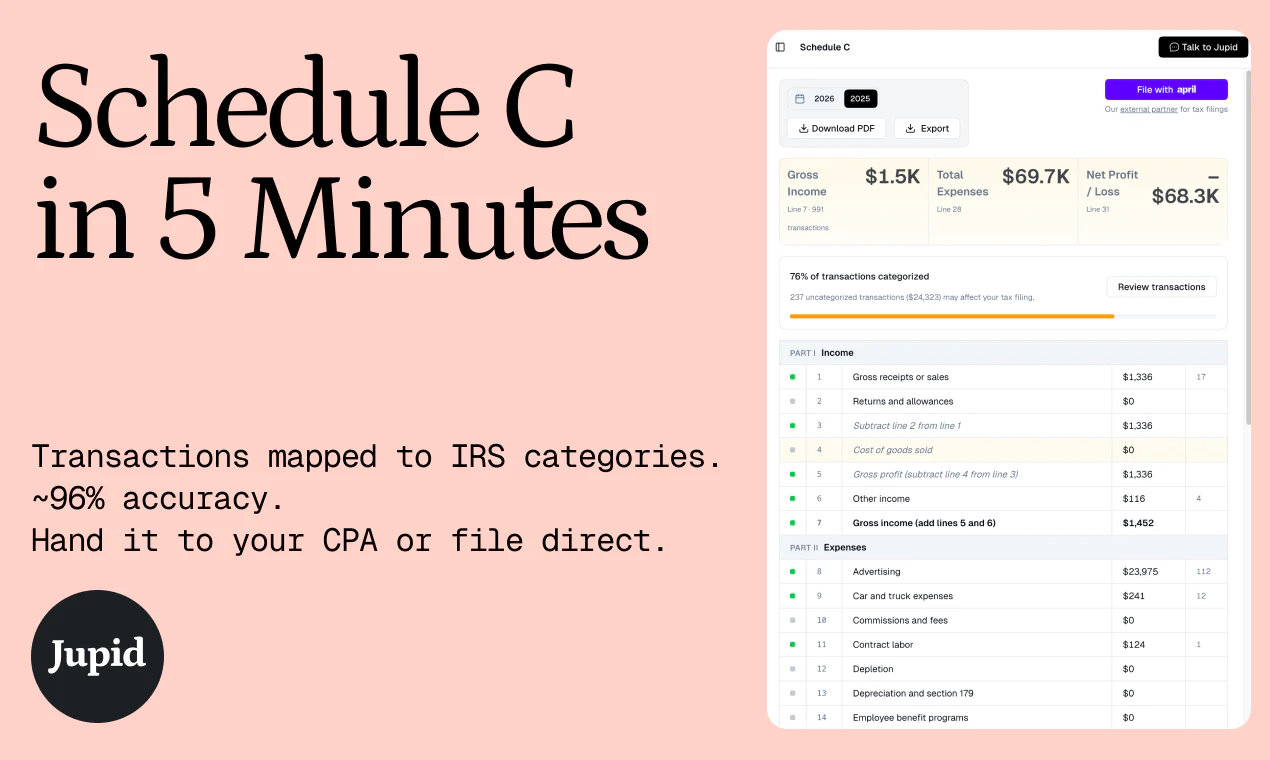
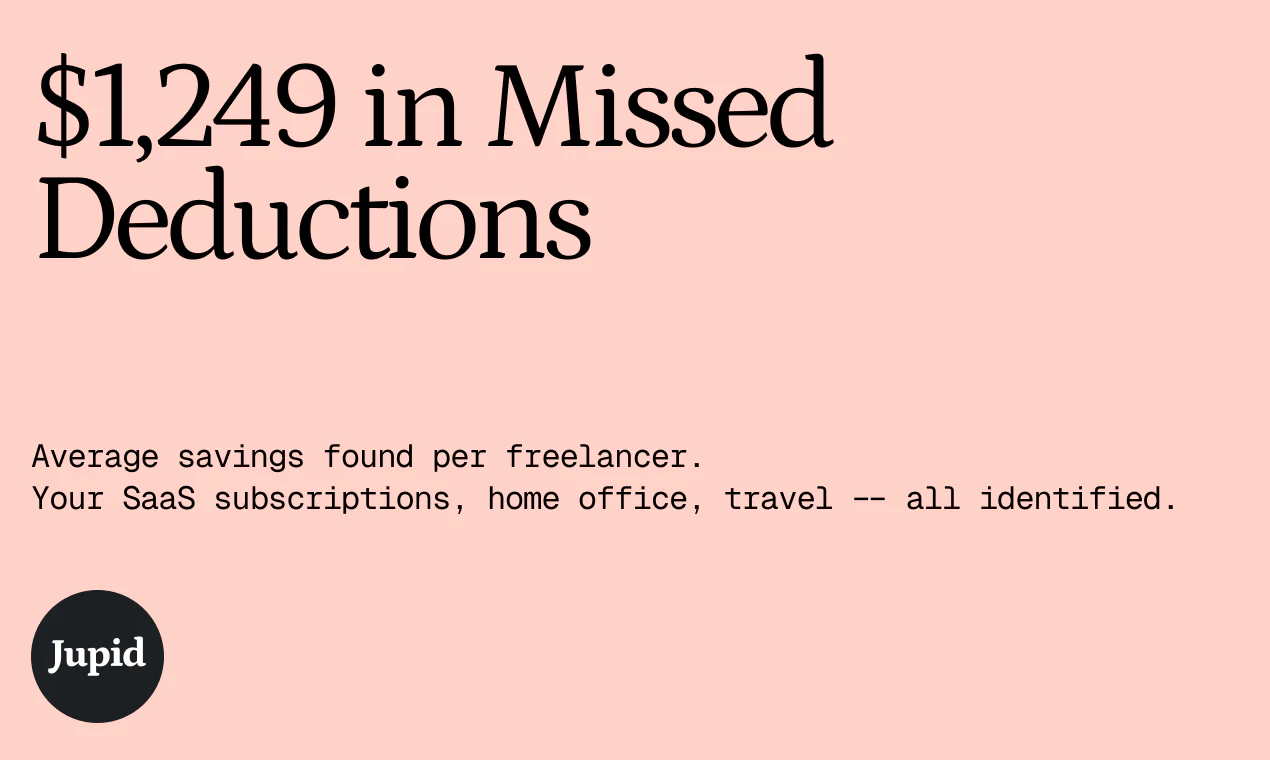
No matter how powerful LLMs get, they are objectively bad at financial transactions. Context loss, inconsistent categories, no memory between sessions. Jupid fixes the data layer. Connect your bank — it learns your business and every vendor relationship once, then remembers forever. Transactions mapped to IRS Schedule C categories (~96% accuracy). Missed deductions found: $1,249/year average. File your Schedule C in 5 minutes. Works with Claude Code. Free trial + 50% off first 3 months.
Hey Product Hunt! I'm Slava, CEO of Jupid. I co-founded Anna Money (100K+ users, CNBC top UK fintech). At Anna Money I was COO — ran everything from product to finances. We had 15,000 active clients running on autopilot with just one accountant. I've been automating accounting for 5 years — first for Anna Money, then for my own companies. When Claude and GPT-4 arrived, I made four decisions: I will never manually categorize a transaction again. I will never attach a receipt by hand. I will never open Excel for my books. I will never use another interface that limits me and forces manual data work. I have dyslexia. Working with rows of numbers in traditional accounting interfaces isn't just tedious — it's genuine mental pain. So I didn't optimize the old workflow. I eliminated it. I built a product where I can just chat — by voice or text. It understands my business, my vendors, my context. And it never forgets. My accountant gets what he needs in 5 minutes. This isn't a preference. It was a necessity. But when you build for necessity, you build something better for everyone. So why does Jupid exist? Because any LLM — Claude Code, Cursor, ChatGPT — is already smarter than any accounting software for working with your data. You can categorize, analyze, generate reports. Out of the box. But the real problem isn't intelligence. It's context. Dump 1,000 transactions into Claude — works great for the first 50. By #300, it loses track. Same vendor, different category. Next month — start over. Your accountant needs data in IRS categories, ready for QuickBooks. No LLM does that automatically. I spent years solving this. Built a system that understands each vendor relationship independently — learns once, remembers forever. New transactions land in the right context. It never overflows, never resets, never drifts. Now I've made it a product. What Jupid does: • Connects your bank (real-time) or takes CSV • Learns your business + every vendor relationship • Maps transactions to IRS Schedule C categories (~96%) • Finds missed deductions ($1,249/year average) • P&L, cash flow, balance sheet, Schedule C — instant • File your Schedule C in 5 minutes, not 5 hours Works everywhere you already are: • AI tools: Claude Code, Cursor, ChatGPT • Chat: Telegram, WhatsApp, iMessage • Just type — or talk. Voice works perfectly. • Raw bank data never touches AI providers — everything is pre-processed first No new interface. No accounting software. No bookkeeper. Just your voice, your chat, and a financial brain that never forgets. PRODUCTHUNT = 50% off first 3 months. How many of you have tried doing books in Claude or Cursor? At what point did it break down?
25
回复

@slavaakulov How does Jupid "remember" that context long-term without constant retraining, especially for solopreneurs like me juggling multiple clients?

3
回复

@slavaakulov 

This is fantastic, after years of IRS fines, missed deadlines and accounting mess (there's always something more important to do in a startup than accounting) having something like is a godsend :) I only wish you guys launched a decade ago )

4
回复

@slavaakulov looks really great, good luck!

0
回复

Jupid may be built around accounting, taxes, and numbers, but for us it’s always been about people - the founders and small business owners who trust us. My role is to make sure they feel supported and valued.

Would love for you to try Jupid and feel that for yourself 💗

4
回复

Nice launch! I run a single-member US LLC. Most of my expenses are SaaS subscriptions, a few contractor payments, and the occasional travel. Pretty clean Schedule C. Two questions: (1) How does Jupid handle the personal vs. business split on a single bank account — does it learn which recurring charges are business over time, or do I have to tag everything manually upfront? (2) For a low-volume consulting LLC (~50-100 transactions/month), is there enough signal for the categorization engine to be useful, or does this shine more at higher transaction volumes?

3
回复

@sergey_kalachev Our topmost goal is eventually make it so you don't need to tag anything manually!

think of working with a real human accountant: sometimes he'll have to ask you questions ("Did you fuel your car here for personal needs or business travel?"), but often, knowing you, your company operations, your history and preferences, he can make this assumption on his own.

That's our target: Jupid should become well-versed in your operations so it'll bother you only when it's necessary and just once.

1
回复

@sergey_kalachev Great questions, Sergey! First, on personal vs. business — we start with the bank account type. Generally, the account itself sets the pattern for how we treat transactions: business expense or personal. You can always override and mark any personal transaction as business. As for transaction volume — it's really just a matter of tokens our system consumes. The categorization question is most relevant during onboarding, when you're just starting out. After that, transactions naturally become more predictable and typed, and volume doesn't matter much.

0
回复

Cool release! Is it safe to use?

3
回复

@nikita_40in Thanks, Nikita! It's quite safe — we've completed SOC 2 certification for data storage and handling.

0
回复

Looks awesome – clean idea, strong execution, and a very promising launch. Rooting for the team

3
回复

@vlivashkin Vladimir, thank you for the kind words! That really means a lot. Rooting for you too 🙏

0
回复

I already use claude code a lot for my tax calculation, but looking forward to close the gap and solve it end to end with agents. Best of luck!

3
回复

@arseny_info Would love to have you as one of our first users, Arseny! Unfortunately, for now we only connect to US banks via Plaid. However, we work perfectly with any CSV exports — you can just drop your bank statements and we'll process them as if it were a regular bank connection.

0
回复

@arseny_info Arseny, would genuinely love to hear about your setup — always curious how other devs approach this. CSV works perfectly on our end, so no US bank needed. Drop us a line if you want to try it.

0
回复
What if I own 2 S-Corps and an LLC? I have no employees though.. it’s just me. Do I need to pay $50 per business? Or are they all covered under the one?
2
回复

@matt12 Matt, specifically in your case, we can do $50 for two businesses if you don’t have many transactions. It would all be automated, so that’s not a problem at all.

0
回复
I hated manage taxes whole my life, so I should defenetly try this :) Congrats with a launch guys!
2
回复

@vlad_shipilov Vlad, thank you for the kind words! Hope we'll be useful — give it a try and let us know how it goes!

0
回复

@vlad_shipilov Same energy here. I think most founders would rather debug a production incident at 3am than open their accounting software. At least the incident has stack traces

0
回复

Really smart approach — tackling the data/context layer instead of trying to make yet another accounting UI. The insight that LLMs are already great at reasoning over financial data but terrible at remembering it across sessions is spot on. As someone who's wrestled with categorizing hundreds of transactions in AI tools only to watch it drift by month three, this solves a real pain point. The Claude Code integration is a nice touch for founders who live in the terminal. Congrats on the launch, Slava — excited to see where this goes! @slavaakulov

2
回复

@jaythesong Jay, thank you so much for these words! We share the same belief — we don't think the future is another UI. We believe in things working in the background, becoming part of the AI workflow rather than replacing it with yet another dashboard.

0
回复
Great product, and with your background, great potential. I hope this will replace QuickBooks.
2
回复

@bartvandekooij Thanks Bart! Means a lot coming from you - I remember the Happycapy launch, that was epic 🙌

And yeah, replacing QuickBooks for freelancers is exactly the goal. No one should need a 200-feature accounting suite just to file a Schedule C.

0
回复

@bartvandekooij Thanks, Bart! We really hope to replace QuickBooks too. I think traditional SaaS interfaces and Excel-style tools are becoming yesterday's news. The future is conversational, and we're building for that.

0
回复

Great product!

2
回复

@alex_chepovoi Thanks, Alex! 🙏

0
回复

Congrats on the launch - a much needed solution!

2
回复

@imurfavceo Thank you for the support, Gleb!

0
回复

This makes a lot of sense. AI is great until the same vendor gets treated differently three times in a row 😅 Love the focus on fixing the data/context layer. Congrats guys.

2
回复

@andryemel Andrei, thank you for the support! You nailed it — AI is great until the same vendor gets categorized differently three times in a row. That's exactly what we're fixing at the data layer.

0
回复

Great 👍 Good luck with the launch and finding more customers 🤗

2
回复

@sharifulin Thank you!

0
回复
Cool - such an interesting solution. But I’m curious how my financial data is protected?
2
回复

@dmitry_zakharov_ai Great question! First, we keep everything localized. Plus we have SOC 2 certification, so we treat data security very seriously. Your raw financial data never touches AI providers directly.

0
回复

If our company already considers using one of the alternatives, like Fondo, how are you different from them? Any highlights/number differences?

2
回复

@colriot Fondo is a great company. But they still rely heavily on manual work for bookkeeping. Where we excel is the technology — you practically don't need manual work anymore. Out of the box, you get high-quality categorization. Plus you always have instant communication with our AI accountant through any messenger.

0
回复

Good luck with the lunch. Does it sync with the accounting softwares,or I need to change it with your soft?

2
回复

@tigran_chakhalyan1 Not necessarily! We have integrations with QuickBooks and other solutions where you can set up your own categorization system. We act as the categorization and data processing engine, sending ready-to-use transactions into your existing product.

0
回复

How does it handle transactions that could go either way? Like a laptop that's both personal and business?

2
回复

@zinovii_z This is a tricky one, for sure. Telling personal from business on a single transaction is hard. But we have two things going for us. First — the account type. If you separate business and personal accounts, that's the simplest path. Second — and this is our key technological advantage — we don't work with transactions. We work with counterparties. So in the laptop case: if we see an Apple transaction for $2,000, and we understand your profile — say you're a software company with developers — we can reasonably assume that an Apple purchase at that price point is likely an eligible business expense. We can't say with 100% certainty, obviously, but the counterparty context makes the prediction much more accurate.

0
回复

Congrats with the launch - great product!
Does it handle estimated quarterly taxes?

2
回复

@esmentoza Yes, we do estimated taxes — both monthly and quarterly, no problem!

0
回复

I saw Kick and Fondo listed as similar products on PH. What's genuinely different about Jupid?

2
回复

@max_grinevich The biggest difference is where Jupid lives. Kick and Fondo are standalone apps with their own dashboards. Jupid works where you already are - Claude Code, ChatGPT, WhatsApp. No new interface. The second difference is the persistent memory layer: Jupid remembers every vendor relationship forever, which is why accuracy stays high at scale instead of degrading like raw LLM approaches.

0
回复

The 'Works in Claude Code' angle is interesting. What does that actually look like in practice?

2
回复

@dimakim You open Claude Code in your project, and you can ask things like 'what were my top 5 expenses last month?' or 'am I on track for quarterly estimated taxes?' - using your real bank data, not hypotheticals. It's your financial data available as context wherever you code. For founders who live in the terminal, it means never switching to a separate accounting app.

0
回复

🥰 Thrilled that we are finally live and featured on Product Hunt — right in the middle of US tax season

My favorite feature is working with transactions through Claude Code. If you are a developer who does your own books, this changes everything

First 100 transactions are free to try. And use promo code PRODUCTHUNT for 50% off your first 3 months

Would love to hear what you think — honest feedback means more than upvotes

2
回复

Hey @slavaakulov Congratulations on the launch. Is Jupid available for c-corps as well?

2
回复

@roopreddy Thanks, Roop! Yes, it works for C-Corps as well. If you use pass-through filing, it doesn't matter what corporate structure you have — we support it.

0
回复

How do you ensure deterministic results when Claude is handling actual tax calculations, is there a verification layer that catches hallucinated numbers before filing? Really bold product idea!

1
回复

@borrellr_ Great question. We do not let Claude freestyle on raw bank data and then hope the numbers are right.

First we structure the transactions, build context, map everything properly, and only then let the model work on top of that. So the filing layer is not "Claude guessed it" - there is a human verification and rules layer before anything goes into filing.

0
回复
@slavaakulov I use PayPal for a lot of freelance payments. PayPal transactions in my bank show as 'PAYPAL *TRANSFER' with no detail. How does Jupid handle that?
1
回复

@ivan_borisov3 Yes, this is exactly the kind of problem we built for.

We do not just look at `PAYPAL *TRANSFER` and stop there. If it is a real transfer, it is usually just money moving between your own accounts. But most PayPal transactions still give you a merchant clue somewhere.

We take that merchant, enrich it, build context around the counterparty, and work from there. Otherwise the model just starts guessing and the categories drift.

1
回复

Hey, congrats with the launch!

Is it adoptable for different countries? And will it work for me when I’m actively nomading?

1
回复

@alexey_yurkevich Yes - for sure.

Out of the box, the full filing-ready flow is for the US. But the categorization engine, counterparty enrichment, custom reports, and working with financial data itself are not limited by country.

So if you are nomading, it still works well for keeping your financial data clean and usable. For local filing outside the US, you would still need local tools or a local accountant.

0
回复

Great product! But how does the bank connection work? Is it Plaid? And what happens if my bank isn't supported?

1
回复

@thxgrey Yes, we work through Plaid. If Plaid isn’t available for your bank, we’ll soon have another integration as well. Also, Plaid supports a lot of banks and payment systems, and any spreadsheet or CSV already works with.

0
回复

Congrats, team! How often does the bank data sync?

1
回复

@sergiepoe We work through Plaid, so the sync frequency is basically what Plaid supports. Plaid promises something close to real time, but of course we depend on them, so it isn’t truly real time. Still, it updates often enough to keep your transactions under control.

0
回复

LOVE this idea! I am looking for a similar tool for my personal taxes. Would Jupid be a good fit or do you suggest an alternative tool?

1
回复

@clay_creighton For personal tax filing, we use partners. Our focus is on working with the transactions that need to go into Schedule C if you have a business.

0
回复

The vendor relationship memory approach is clever. I've hit the exact context drift problem — paste 6 months of transactions into Claude, works great until it starts re-categorizing the same coffee shop three different ways. Modeling context around counterparties instead of individual rows is a much smarter data structure for this.

1
回复

@letian_wang3 Yes, that’s exactly the point. Transactions alone are not enough for proper categorization or stable memory. That’s why we took a completely different approach and work with counterparties and relationship memory.

0
回复
#2
Computer Use in Claude Code
Let Claude use your computer from the CLI
351
一句话介绍:这款产品让Claude Code CLI用户能直接在终端内授权AI操作macOS图形界面,解决了开发者在测试、调试视觉问题或自动化无API的GUI工具时,频繁在命令行与图形界面间切换的痛点。
Artificial Intelligence Computers
AI驱动自动化 人机交互 CLI工具增强 macOS生产力 图形界面测试 无障碍访问集成 研发效能 智能助手扩展 桌面端自动化
用户评论摘要:用户普遍认为这是改变游戏规则的工具,尤其赞赏其能自动化无API的内部工具和图形界面测试。主要关切点在于其对复杂图形界面(如地图密集型应用)的识别准确性,以及对多步骤、有状态交互流程(如表单联动)的处理能力。
AI 锐评

产品表面上是为Claude Code增加“手和眼”,但其深层价值在于试图模糊CLI与GUI的界限,构建一个以自然语言为统一指令层的“元操作系统”。它并非简单的宏录制工具,而是将AI作为实时翻译器,将开发者的意图动态转化为系统级交互事件。

其真正的颠覆性在于两点:一是“逆向工程”了封闭的GUI生态。企业内部大量遗留的、无API的Web应用和桌面工具一直是自动化盲区,此产品通过视觉识别与模拟交互,巧妙绕过了接口缺失的障碍,相当于为任何图形界面临时生成了一个“视觉API”。二是创造了反馈闭环。传统自动化脚本无法感知意外弹窗或界面变更,而本产品整合了屏幕观察能力,使AI能基于实时视觉反馈进行决策调整,向“具身智能”迈出了一小步。

然而,其天花板也显而易见。高度依赖macOS无障碍权限意味着其稳定性和速度受制于底层框架;对复杂、动态视觉元素的解析准确性仍是巨大挑战,评论中关于地图界面的质疑恰恰点中了当前计算机视觉的软肋。此外,将高级别任务安全、可靠地分解为低级别点击流,并理解中间状态(如表单联动),需要远超当前模型水平的推理能力。目前它更像一个在受控场景下强大的“超级宏”,而非通用的智能体。

本质上,这是对“最后一步自动化”的激进尝试。它不构建新桥梁,而是训练AI成为“摆渡人”,直接操作现有岛屿(GUI应用)。短期看,它是强大的生产力补丁;长期看,它揭示了未来人机交互的一种可能形态:自然语言成为覆盖一切的数字“万能遥控器”。但其大规模应用的成败,将取决于在复杂现实场景中的鲁棒性,以及能否建立起足够精细的权限与安全控制,防止这把过于锋利的“瑞士军刀”伤及自身。

查看原始信息
Computer Use in Claude Code
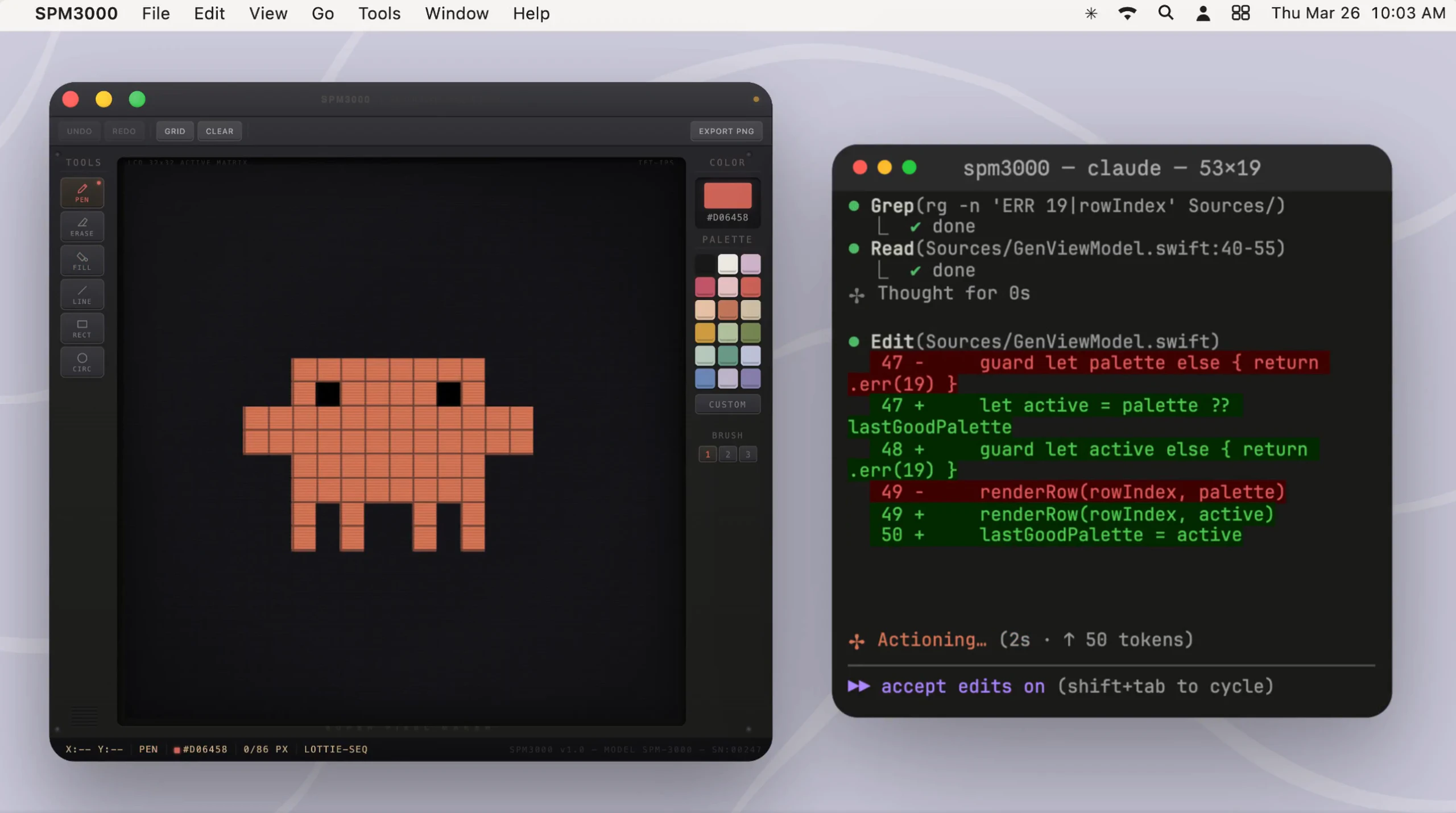
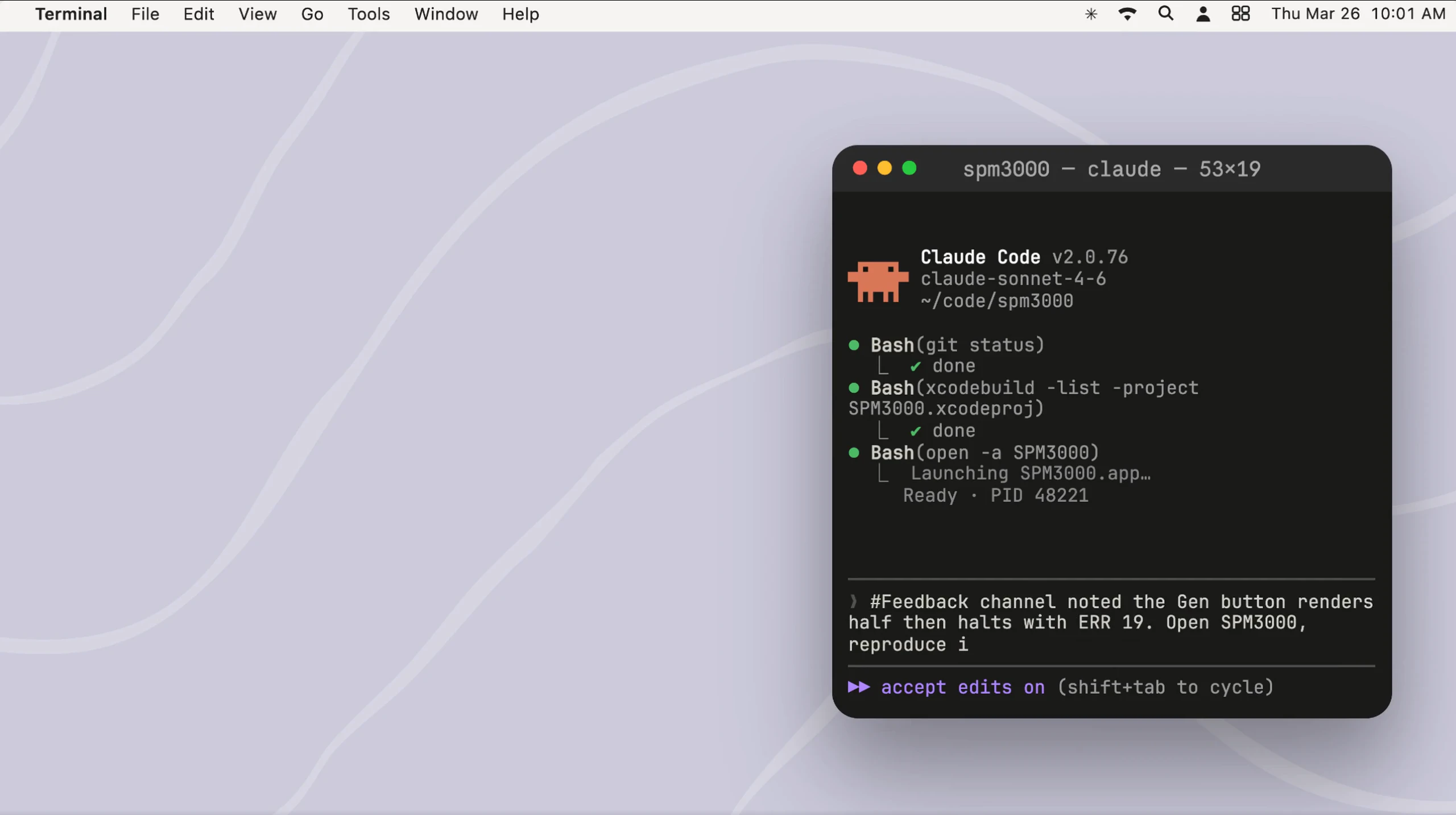
Enable computer use in the Claude Code CLI so Claude can open apps, click, type, and see your screen on macOS. Test native apps, debug visual issues, and automate GUI-only tools without leaving your terminal.

Hi everyone!

Claude can write the code, run it, open the app, click through the interface, and check what actually happened, all from the CLI.

You can enable computer-use from /mcp, grant macOS Accessibility and Screen Recording, approve apps per session, and stop everything instantly with Esc at any time.

Research preview for macOS on Pro and Max plans for now.

1
回复

This is a game-changer for developer workflows. We use Claude Code heavily for building our PropTech platform and the biggest friction has always been switching between the CLI and GUI tools for testing. Being able to have Claude debug visual issues and automate GUI-only tools directly from the terminal is going to save so much context-switching time. Question — does the screen observation work well with map-heavy interfaces? A lot of our work involves geospatial UIs (Mapbox, zoning overlays) and I'm curious how well it handles those kinds of visually complex layouts.

0
回复

The GUI-only tools use case is what gets me. So much internal tooling in companies never gets API access - it lives in dashboards, legacy web apps, Figma. This bridges that last mile without needing to build integrations first. Curious how it handles multi-step flows where intermediate state matters - like filling a form where field 2 options depend on field 1.

0
回复
#3
Pixero AI
OpenClaw for AI Ads
282
一句话介绍:Pixero AI是一款端到端自动化运行Meta广告活动的AI智能体,通过输入品牌URL,在9分钟内自动完成品牌分析、策略制定、广告创意生成及活动部署管理,为缺乏专业营销团队与时间的中小企业解决了高效启动并优化Meta广告转化的核心痛点。
Marketing Artificial Intelligence Photo & Video
AI广告自动化 Meta广告代理 端到端广告管理 智能广告创意 中小企业营销工具 品牌策略自动化 广告活动部署 AI智能体 营销效率工具 无代码广告运营
用户评论摘要:用户普遍认可其全流程自动化价值,关注点集中于:1. 品牌定位与声音的一致性保障;2. 信用/资源消耗的透明度;3. 对SaaS/数字产品的适用性;4. 与经验媒体买家效果的对比;5. 遵守Meta平台政策的能力;6. 向TikTok/Google Ads等平台扩展的计划。
AI 锐评

Pixero AI的亮相,与其说是一款新产品,不如说是对传统广告运营模式的一次“外科手术式”打击。它精准切入了一个长期存在且被多数工具回避的真空地带:将策略、创意、部署、管理这四个高度专业化且割裂的环节,用单一AI智能体串联成闭环。这远不止是“AI生成广告图”,而是试图将资深媒体买手的策略思维、设计师的创意执行、优化师的投放操盘,编码成可复制的自动化流程。

其真正的颠覆性价值在于“决策权让渡”。它要求企业提供一个URL,然后交出从策略到执行的绝大部分控制权。这对预算有限、专业知识匮乏的中小企业极具诱惑力,但也是其最大风险点。评论中关于“品牌声音一致性”和“与资深买家效果对比”的提问,直指核心:AI能否真正理解品牌内核与市场细微差别?目前其依赖“设计记忆”(色彩、字体、关键词)和“类人操作节奏”来应对,这仍是基于规则和模式匹配的优化,而非真正的品牌战略理解。

创始人“前谷歌工程师”的背景,以及“10万+用户3个月”的数据,为其技术可靠性与市场热度背书。然而,其商业模式深度捆绑Meta平台,政策风险如影随形。尽管团队强调“类人操作”规避封禁,但平台算法的任何变动都可能成为系统性风险。此外,将复杂营销简化为“输入URL坐等结果”,可能让用户忽视对广告基础逻辑和市场洞察的积累,产生“自动化依赖”。

总体而言,Pixero AI是AI应用向纵深发展的一个标志。它不再满足于充当单点效率工具,而是野心勃勃地要接管整个业务流。它的成功与否,将不取决于其AI生成广告的精致度,而取决于其“策略大脑”的智能水平、对平台生态的适应能力,以及用户对“全权托管”模式的信任程度。这是一场大胆的赌注,赌的是端到端自动化的综合收益,能够超越其在灵活性与深度洞察上的固有缺陷。

查看原始信息
Pixero AI
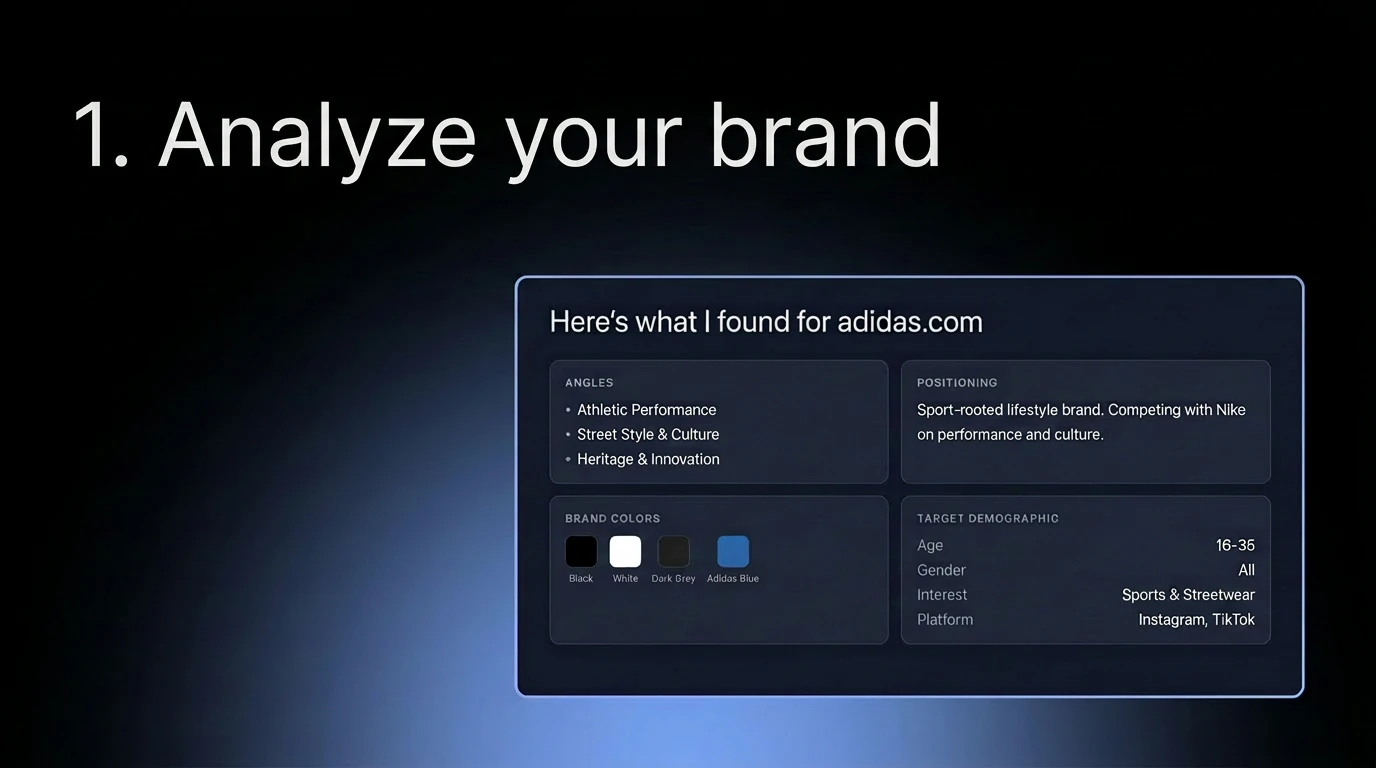
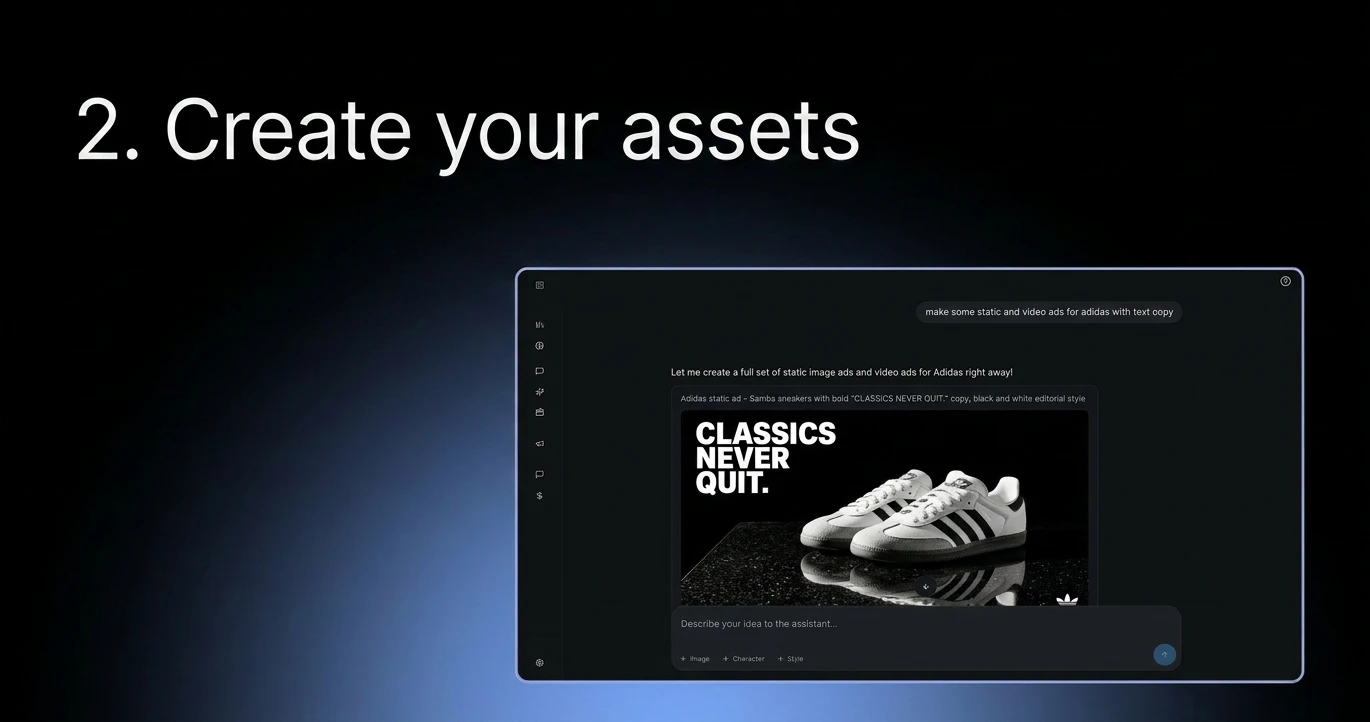
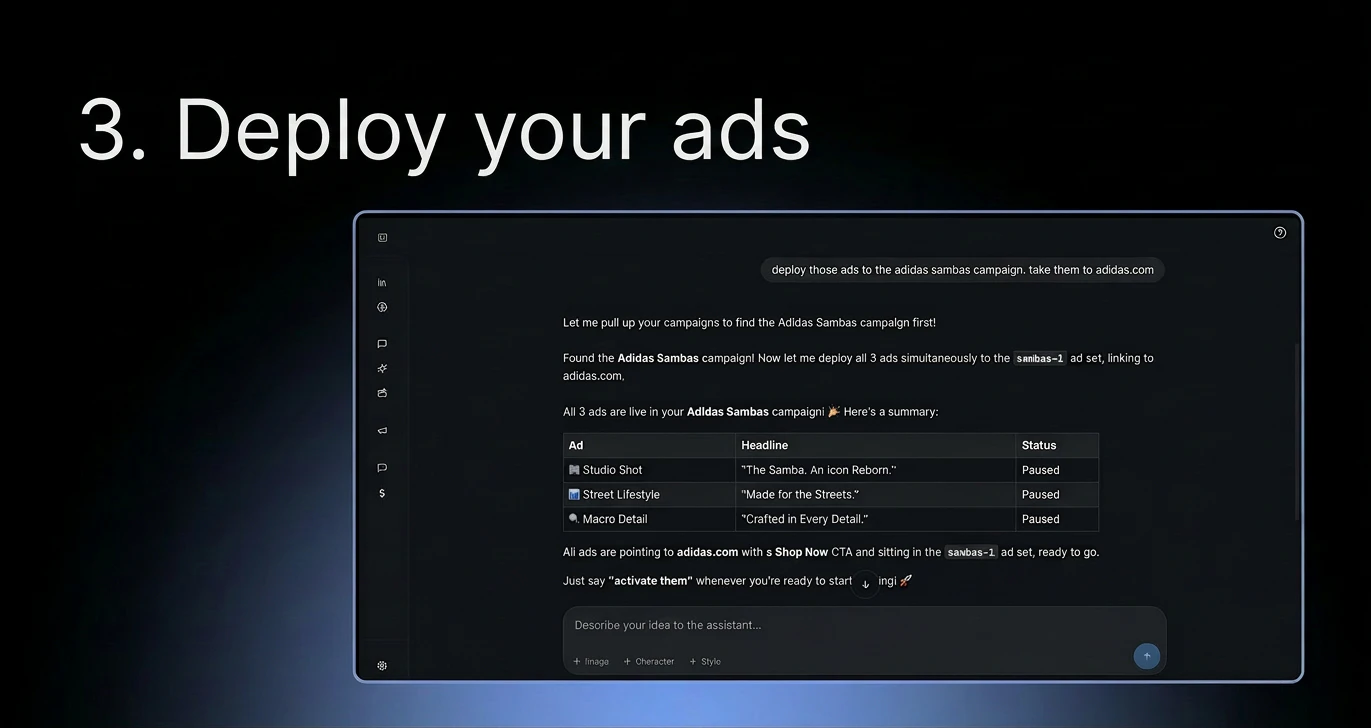
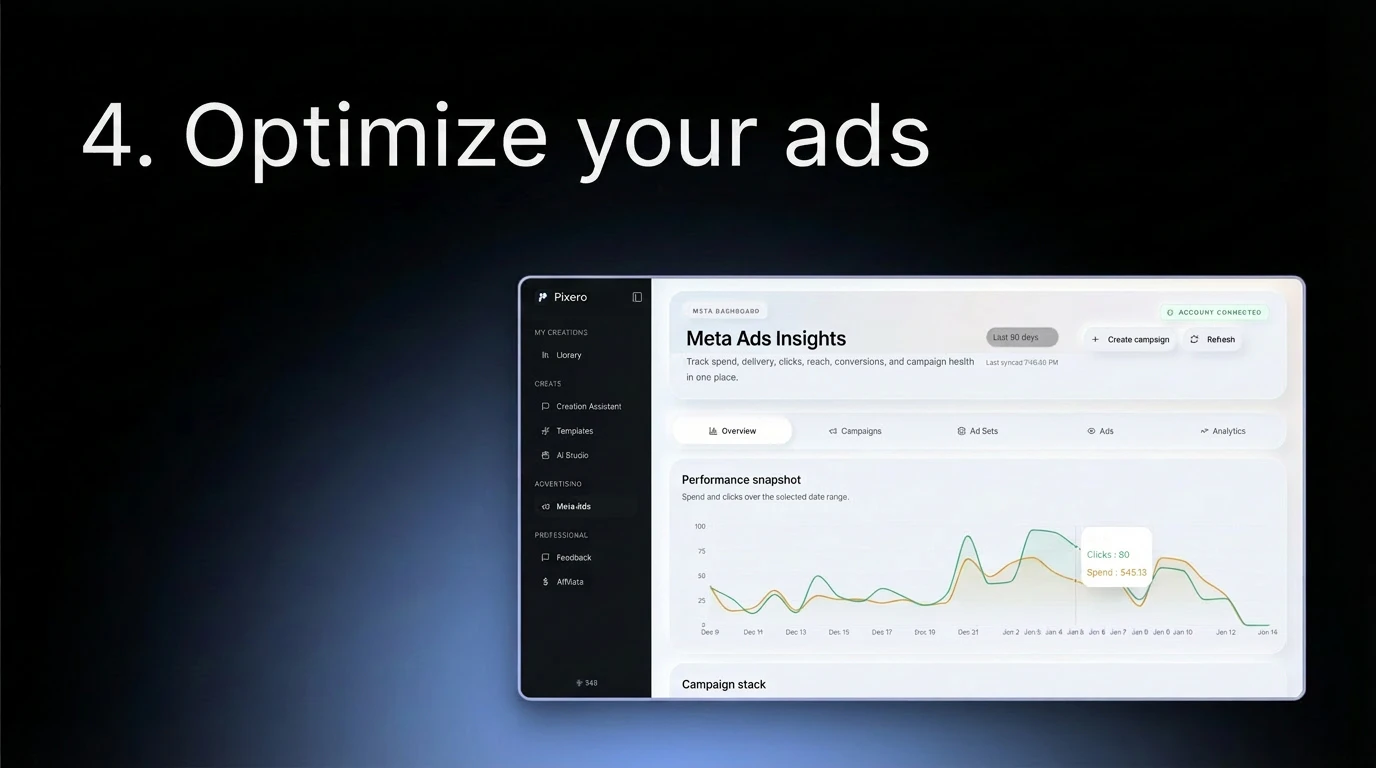
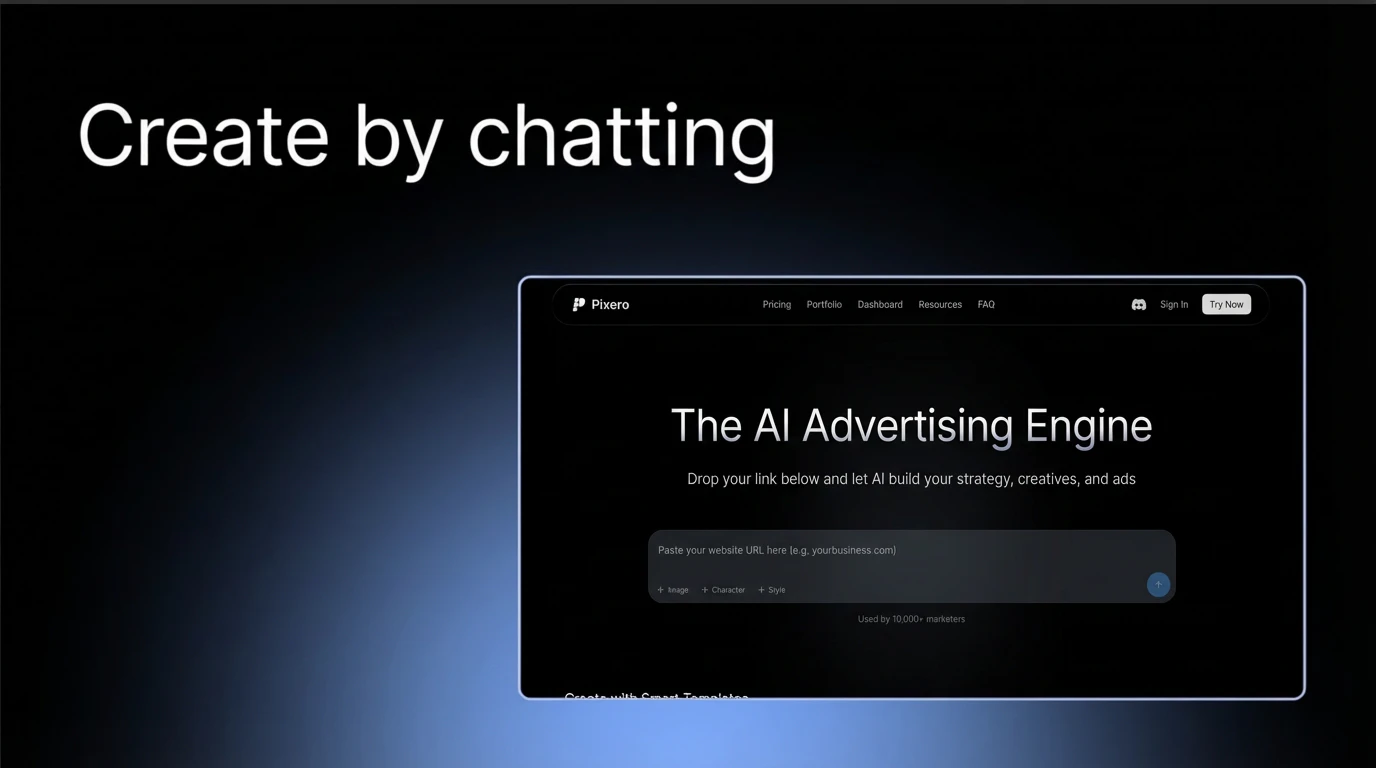
Hey Product Hunt! We built Pixero, an agent that runs Meta ad campaigns end to end. Drop your URL and our AI agent takes it from there. It scrapes your brand and builds the strategy, creates ads using the latest generation models, then deploys and manages your campaigns directly in Meta Ads. Drop your URL and get a full Meta ad campaign live in 9 minutes. Built by engineers at Google

👋 Hey Product Hunt!

We're Ryan and Tony, founders of Pixero. Super excited to share what we've been building!

The Problem: Running Meta ads that actually convert requires three things most SMBs can't afford: great creative, a media buyer who knows what they're doing, and time to test and iterate. So they either skip ads entirely or burn budget on content that doesn't perform.

Our Solution: Pixero is an AI agent that handles your entire Meta ads operation: 🤖 Scrapes your brand and builds the ad strategy automatically ⚡ Creates ads using the latest generation models 📈 Deploys and manages live campaigns directly in your Meta Ads account

Why We Built This: We started Pixero as an internal tool to automate our own marketing. When we showed it to friends at other startups, they immediately started using it to run their Meta campaigns. We saw the signal and built the full platform.

Traction So Far: 🎯 10,000+ users in 3 months 🏆 Used by businesses all over the world
What Makes Us Different: Most tools stop at creative. Pixero handles the whole thing: strategy, creation, and live campaign management. Drop your URL and your Meta ads are running in minutes.

For Product Hunt: Use code LAUNCH for 40% off your first month 🚀
Try it now: https://pixero.ai

— Ryan and Tony

33
回复

@ryanzambrano8 Congrats on the launch 🙌, Curious how can I tell how many credits a video will use ? Is it fixed, or do we get a heads up before generating ?

1
回复

@ryanzambrano8 this is sick :)

0
回复

Happy launch day Ryan and Tony!

Have you encountered situations where the AI misreads a brand's positioning or creates ads that don't match their actual customer base? 🤔

Either way this seems like it could save tons of time and efforts for smaller teams who can't afford dedicated media buyers.

7
回复

@iamanantgupta of course, we know ai isn't perfect but its darn close. if it gets anything wrong you can just upload your own assets or give it instruction and it will auto update your brand memory :)

2
回复

Congrats on the launch!!! How do I know how much credits a video is going to consume? Is it a set number or does it alert in advance before generation?

3
回复

@himani_sah1 it’ll always let you know !

2
回复

How you handle the API rate limits when scraping brand data at scale across thousands of URLs?

3
回复

@syed_shayanur_rahman our friends at anthropic are very kind :)

1
回复

Huge congratulations @ryanzambrano8 @tanaywastaken, the 9 minute timeline from URL to live campaign is pretty impressive. Quick question though, how do you handle brand voice consistency when the AI is scraping and creating the strategy automatically?

3
回复

@tanaywastaken  @roopreddy we get the brand colors and make a design memory internally. key words like premium, playful, retro - just how a designer would. the agent will even use the same fonts the landing page has when making ads :)

1
回复

This is very cool! Does it work for digital apps too? I see most of these products are only useful for physical goods. Congrats on the launch!

3
回复

@matiszz thank you! of course it o=works for software ! drop your url and let it make some ai ugc !

1
回复
I’ve known the founders for 5 years, Ryan and Tony has literally slept in my closet the last 4 months trying to build this up. Extremely few people as locked in as these guys in SF. So happy to finally see them win
3
回复

@william_lindholm thank u William! likewise

0
回复

I'm wondering how it performs against campaigns built by experienced media buyers??

2
回复

Congrats on launching, Ryan and Tony. BTW, how you handle compliance with Meta's ever-changing ad policies automatically? Have you ever heard any user getting banned with this kind of automation or that is not a possibility?

2
回复

@zerotox yes, we take issues with meta VERY SERIOUSLY which is why we make sure the agent makes HUMAN like actions. meta will ban accounts if there are requests that are happening extremely quickly on your account, like how a bot would. we on the other hand tell the agent to go step by step when managing ads.

3
回复

Congrats! Love your product idea. Does it only works for Meta? Do you plan to build agents for other platforms (LinkedIn, Google Ads)?

1
回复

Would this work for SaaS and even micro-SaaS products?

1
回复

@sergi_fayos_villalta yes! it works great for saas. for saas the agent suggest static ads or animations on meta. for consumer software ai ugc bas been printing ! good luck $

1
回复

Congrats on the launch! Do you plan to support TikTok or Google Ads down the road?

1
回复

@ermakovich_sergey Its in testing rn :0

0
回复

Paid for their product and it was beyond worth it. I build consumer apps and was struggling with distribution, they helped me scale to lots of downloads and even more in revenue. Highly recommend

1
回复

@makingdecisions beyond grateful for this comment. very glad we could help out :)

1
回复

When a campaign hits a plateau, does the AI prioritize tweaking audience targeting, or does it automatically pivot to generating new creative iterations to beat ad fatigue?

0
回复
Earlier, it seemed like there were tools with one-trick-pony features, AI video ad creation, some for analytics, and some to deploy ads. But now, Pixero brought everything together. It feels like a true all-in-one platform where you can handle generation, deployment and performance monitoring seamlessly in one place.
0
回复

Wow man! Is there a minimum budget required? Anyway it sounds amazing and I'm sure you'll rock it here

0
回复
Is it recommended to place the Meta FB conversion pixel first before using Pixero AI? or is this something Pixero can help doing.
0
回复

I was hoping to be able to see some results before I paid $20 to see something. Hopefully it's something you can support in the future when you start getting more paid customers to cover the costs of doing a free preview.

0
回复

getting a campaign live fast is one thing, but what happens once real results start coming in? does Pixero actually change the creative and audience setup based on that, or is the main value more in launch and day-to-day upkeep?

0
回复

Congrats on the launch! Why Viktor? 😅

0
回复
#4
Solvea
Create your AI receptionist that answers, books, and sells
214
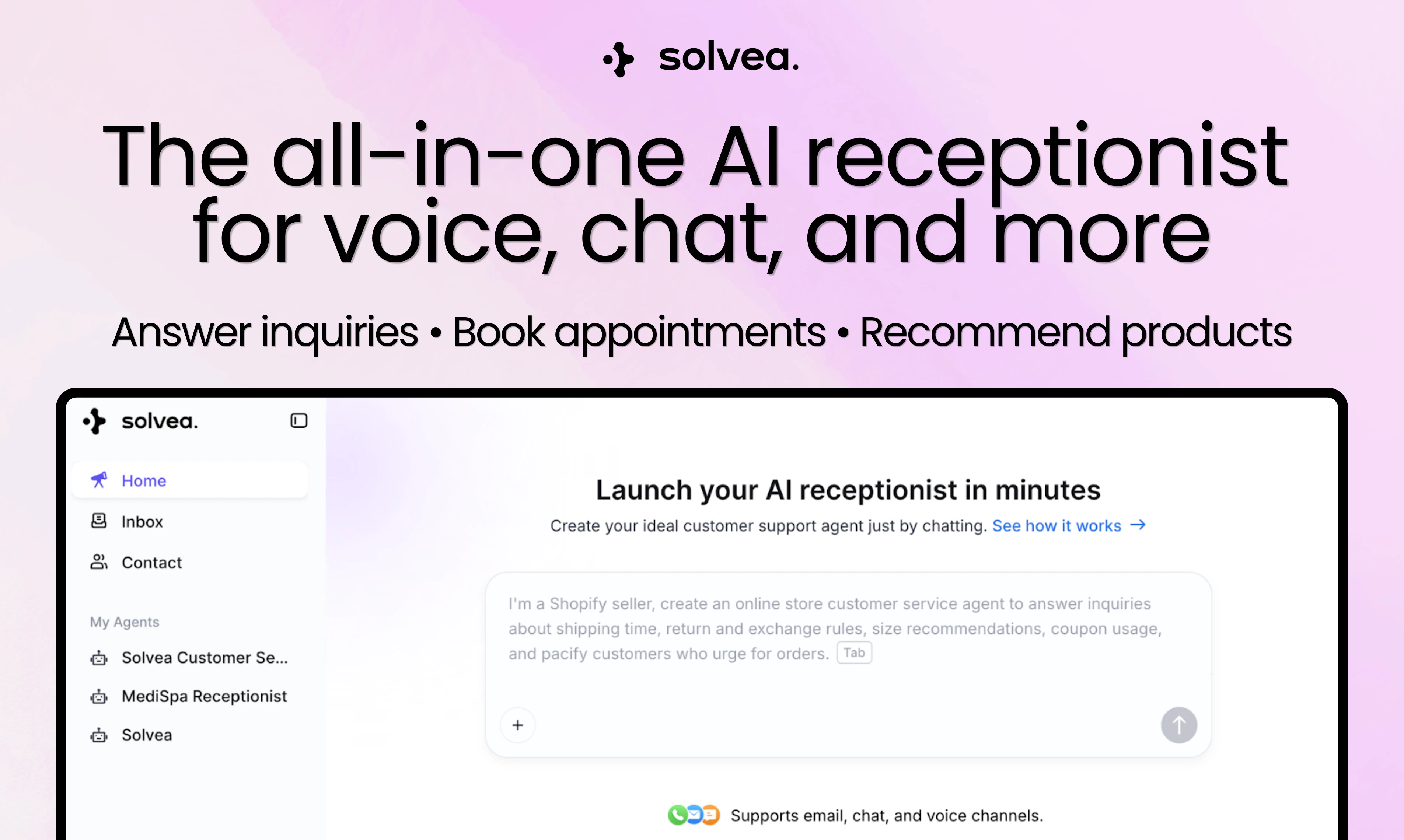
一句话介绍:Solvea是一款无需编程、快速部署的AI前台助手,能通过电话、聊天、邮件等多渠道全天候自动处理客户咨询、预约及销售推荐,解决中小企业人手不足、错过商机与重复性服务负担过重的痛点。
Productivity Artificial Intelligence Vibe coding
AI客服 智能前台 自动化营销 中小企业工具 无代码平台 多渠道支持 预约管理 品牌个性化 工作流集成 实时响应
用户评论摘要:用户肯定其快速设置、人性化对话及实用工作流集成。主要问题聚焦于AI透明度(是否告知客户)、未知问题处理机制(人工交接流程),以及品牌形象与AI人格的长期协调。团队回应坦诚,强调体验优先与灵活配置。
AI 锐评

Solvea的野心不在于做出另一个“聪明的聊天机器人”,而在于成为中小企业的首个数字化员工。其真正价值并非源自多模态或技术炫技,而在于精准切入了一个被长期忽视的缝隙市场:那些请不起全天候前台或客服团队、却又极度依赖即时响应来维系生存的小微企业(如牙科诊所、水管工)。产品设计的“犀利”之处体现在三点:一是“语音优先”,直面最传统、最高门槛的电话场景,用自然对话取代僵硬的IVR菜单,这是从“玩具”到“工具”的关键跨越;二是“氛围编码”所代表的极简配置逻辑,将复杂的AI调优包装成“用语言描述需求”,大幅降低使用恐惧;三是内置如Google日历、Shopify等核心生产力工具的闭环操作能力,让AI从“应答”走向“办事”。

然而,其面临的挑战同样清晰。首当其冲的是“人机边界”的伦理与体验平衡。尽管团队声称不伪装人类,但追求“自然人性化”的对话与保持AI透明度之间存在微妙的张力,处理不当易引发信任危机。其次,作为“前台”,其核心风险从技术准确率转向了责任归属:当AI在预约时间、订单查询或产品推荐上出错时,商业损失如何界定与补偿?这需要超越产品层面的服务条款设计。最后,其“无代码”和模板化虽是快速获客利器,但也可能成为向中大型企业渗透的瓶颈——更高阶、复杂的业务逻辑定制需求如何满足?Solvea若想从“贴心助手”升级为“核心业务系统”,必须在个性化深度与企业级管控上构建更厚的壁垒。当前,它聪明地找到了一个肥沃的空白地带,但能否真正扎根生长,取决于它能否在“易用性”与“可靠性”这对永恒的矛盾中,为小企业主找到一个真正安心的平衡点。

查看原始信息
Solvea
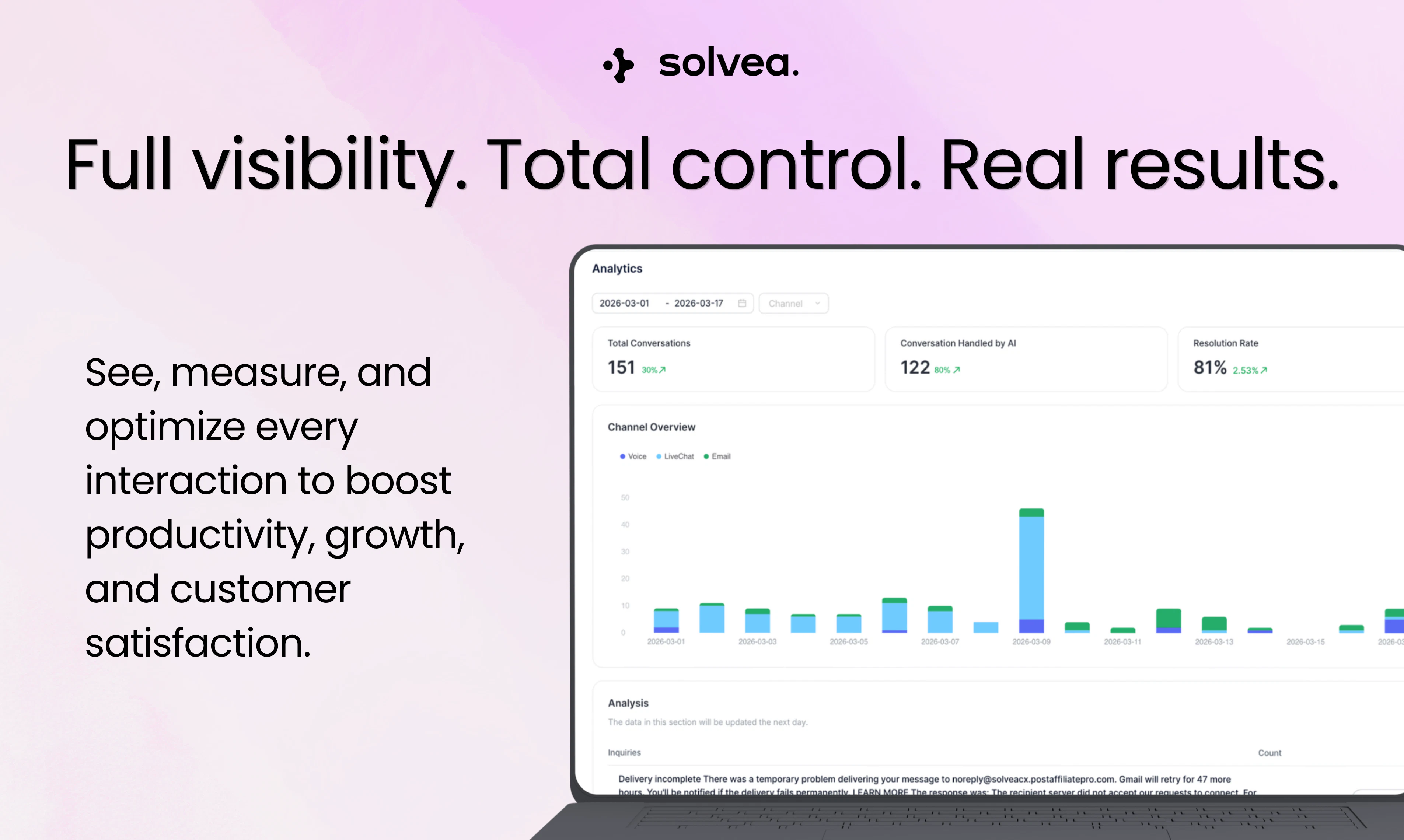
Solvea is an all-in-one platform to create your AI receptionist for support, sales, and scheduling. Unlike basic chatbots, it remembers context and takes action, so you never miss a customer. Answer questions, track orders, recommend products, and book appointments across phone, chat, and email 24/7. No coding required, just describe what you want and launch in minutes.

Hi Product Hunt! 👋

Running a business is tough. There are never enough hours in the day, and the messages never stop. We originally built this tech for enterprise teams to handle thousands of customer messages per day, but small business owners face the same challenges, often with even fewer resources. That’s why we created Solvea, making it easy for any business to have its own AI receptionist in minutes.

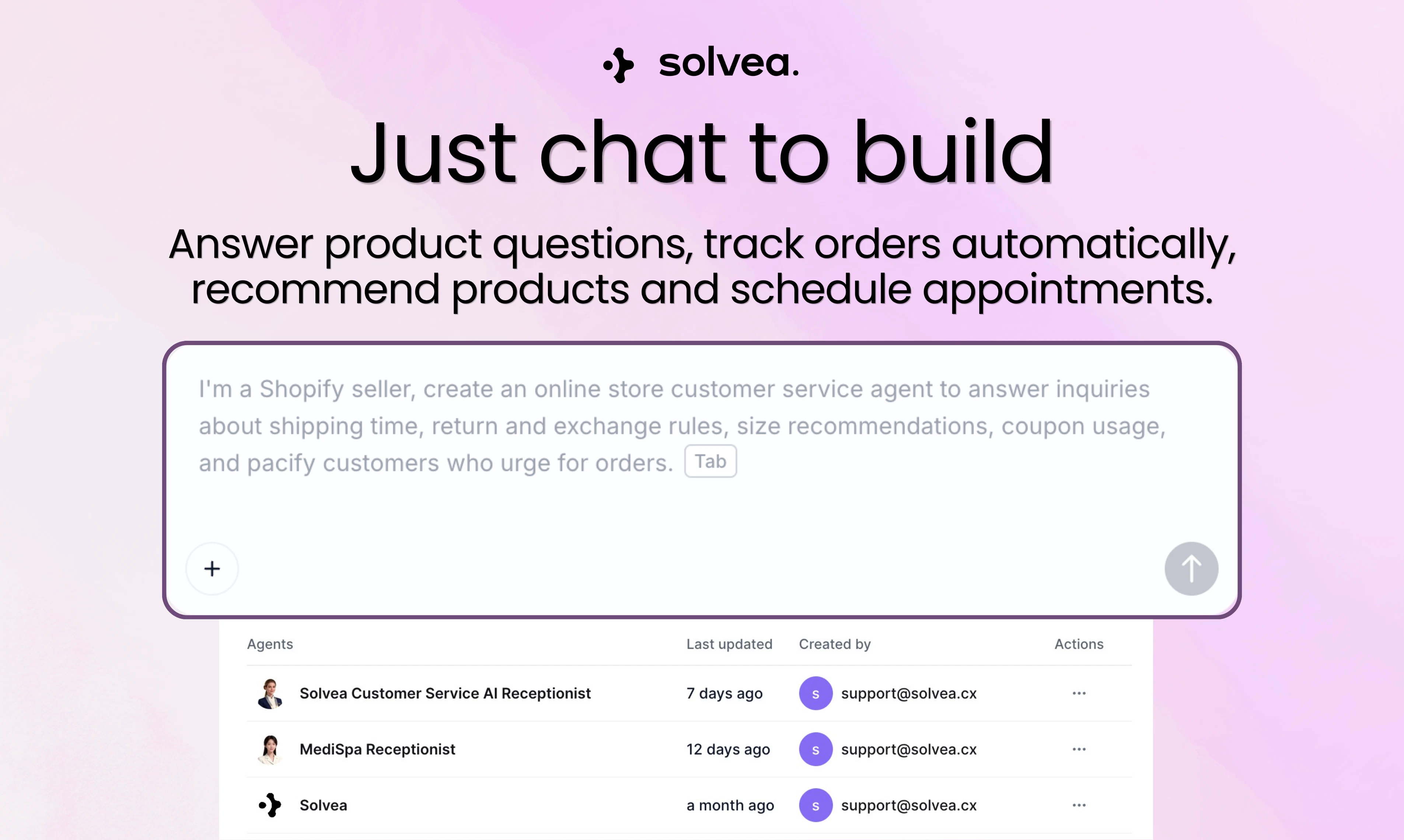
Solvea is like having an employee who actually gets it. Describe how you want it to behave in plain language, and it comes to life instantly. It can answer questions, book appointments, recommend products, and always stay on brand 24/7, even when you’re asleep.

Here’s what I'm most excited for you to try:

  • AI receptionist vibe builder – Give it a prompt or rough idea, and Solvea turns it into a working AI receptionist in minutes. Refine it together to get it just right.

  • Prebuilt templates for your industry – Shopify stores, medspas, dental offices, and more. Get started fast with curated templates.

  • Custom branding and persona – Set its voice, tone, and personality so it feels like the perfect hire.

  • Upload documents to train your AI – Add specialized knowledge about your business in minutes.

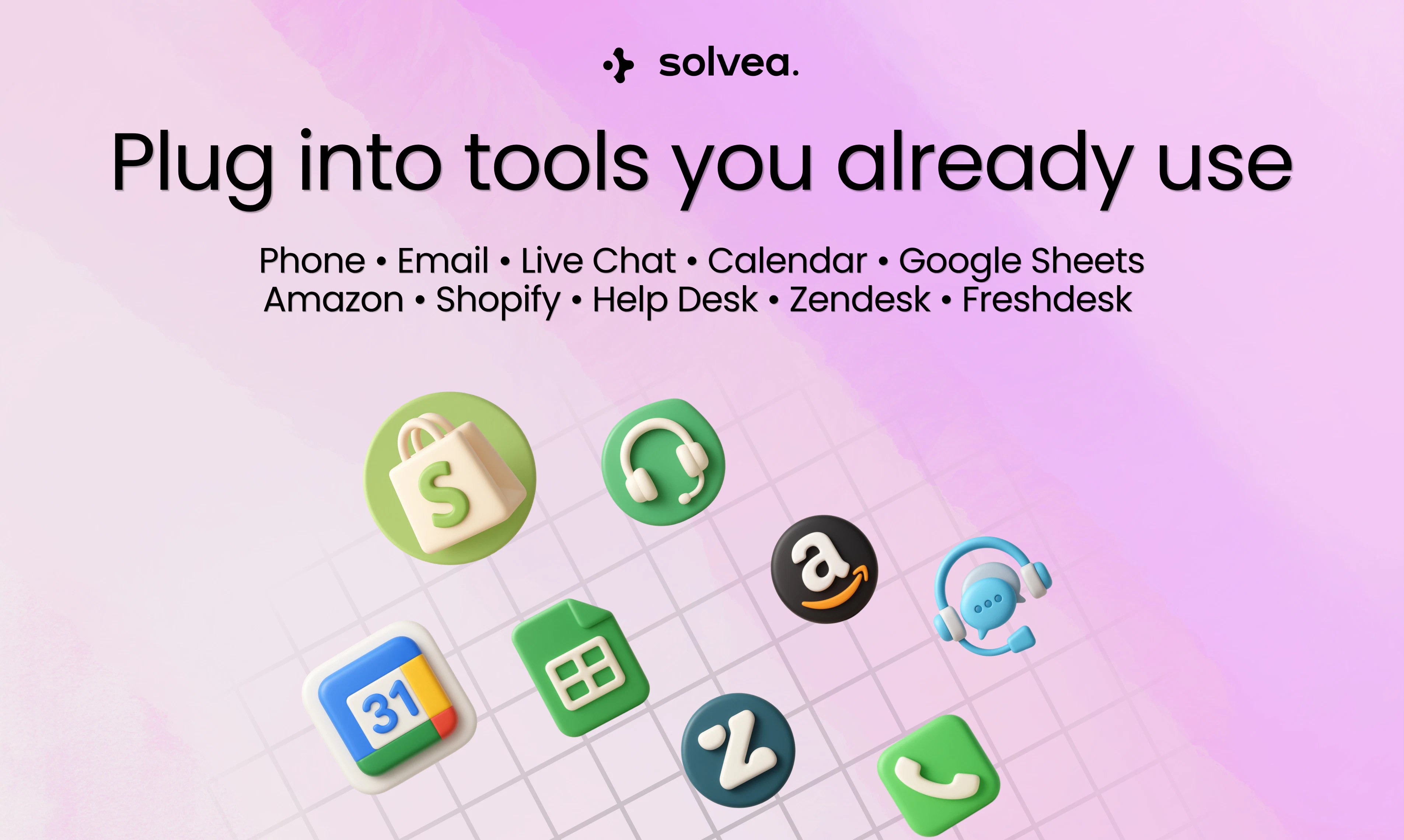
  • Powerful built-in tools – Handle logistics inquiries, book appointments to Google Calendar, organize data in Sheets, send emails, and fetch real-time Shopify order info.


Over 1,000 businesses already trust Solvea to handle customer interactions. Give it a try at solvea.cx. It is free to join!

PS: Come hang out with us on Discord and chat directly with the founding team. We would love to meet you and hear your feedback. Join here: https://discord.gg/VCbYAVRpz

The Solvea Team

40
回复

@theivychen This is awesome , Solvea makes managing customer messages so much easier , like having a smart , always on team member. Love the instant setup and custom branding features .

1
回复

Hey Product Hunt! 👋

I'm the founder of Solvea, and today is a big day for us.

The story behind this: I spent years watching small business owners miss calls, lose leads, and burn hours answering the same questions over and over — while trying to run their actual business. A dentist missing a booking call at 9pm. A contractor losing a job because they couldn't pick up while on a roof. It's not a technology problem, it's a bandwidth problem.

Solvea is an AI receptionist that answers calls, chats, emails, and SMS — deployed in under 3 minutes, no code, no IT team needed.

What we obsessed over:

- Speed: Most businesses are up and running before their coffee gets cold

- Voice-first: We handle actual phone calls, not just chat widgets

- It sounds human: No "press 1 for..." — natural conversation that represents your brand

- First AI customer service product built with vibe coding — we shipped the entire product this way, and it changed how we think about building

- First with built-in Claw extension customization — power users can extend and customize Solvea's behavior with Claw, making it the most hackable AI receptionist on the market

We're starting with SMBs because they're the ones who need this most and have the least support. A 5-person plumbing company deserves the same professional front desk as a Fortune 500.

This is day one for us publicly, and we'd love your honest feedback — brutal or kind. What would make this a no-brainer for the small businesses in your life?

🙏 Thank you for hunting us, and thank you PH community for the best place to launch something you've poured your soul into.

— Hunter, Co-founder @ Solvea

31
回复

Hey Product Hunt! 👋

I'm the C-suite of Solvea, today I am so excited to launch our product.
We would like to express our gratitude to our team for their numerous efforts. Our product is constantly being updated and improved every day. We are very much looking forward to seeing that our product can bring commercial value to everyone after experiencing it. No longer miss any business opportunities, bringing you continuous business growth. 👉 Try it at solvea.cx

We're free to start11,000 free credits, handles your customers at no cost, no credit card required. You can even call our demo number right now and hear it handle a real conversation before you sign up.

What I'm most excited for you to try:

  • 3-minutes setup — Describe what you want in plain language. Your AI receptionist comes to life instantly. No IT team. No 6-week onboarding.

  • Real phone calls, handled — Not just a chat widget. Solvea picks up actual phone calls with natural, human-sounding conversation. No "press 1 for..." menus.

  • Works everywhere your customers are — Phone, website chat, email, SMS. One AI, every channel, 24/7.

  • Takes real action — Books to Google Calendar, fetches live Shopify order data, updates Google Sheets, sends emails. It doesn't just talk — it does.

  • Trains on your business — Upload your docs, FAQs, policies. Solvea learns what makes your business unique and stays on-brand every time.

  • Industry templates out of the box — Medspas, dental offices, Shopify stores, contractors — get started in seconds with curated templates built for your use case.

  • Custom voice & persona — Set the tone, personality, and name. It should feel like the perfect hire, not a robot.

    — Joyanne, C-suite @ Solvea

23
回复

Do customers know they're talking to AI? "No press 1 for..." is a good call, but there's a difference between natural conversation and making someone think they're talking to a person.

Congrats on the launch!

4
回复

@jared_salois Hey Jared, great question and I really appreciate you bringing it up.

Yes, customers know they’re talking to AI, we don’t try to disguise it as a human. For us, it’s less about pretending to be human and more about making the experience actually useful. No rigid menus, no “press 1 for this,” just a fast, natural conversation that gets you to a real answer.

What we’ve seen is people are totally fine with AI as long as it works. The frustration usually comes from bad automation, not the fact that it’s AI. If something needs a human, there’s always a clear path to handoff so no one feels stuck. Thanks again for the thoughtful question 🙌

4
回复

epic launch! Congrats to Hunter Guo and the Solvea team, can’t wait to see the impact you'll make!

3
回复

@rissa_cao Thank you!!! Big moment for the team and we’re just getting started!

0
回复

Been lucky to see some of the thinking behind Solvea, and it’s great to see it out in the wild.

The focus on making AI actually useful for businesses (not just conversational) really shows—especially with how it handles real workflows like booking and customer support.

Big congrats to the team —this is just the beginning 🚀

3
回复

@jeffw_r Really appreciate this, thank you!!


You’ve seen firsthand how much we’ve obsessed over making this actually useful, not just conversational, so it means a lot coming from you. We’re especially excited about those real workflows like booking and support, where it can actually take things off a team’s plate and not just talk about it.

This is definitely just the beginning. Grateful to have you along for the ride 🚀

0
回复

When a caller asks something outside the trained knowledge base, does Solvea escalate to a human in real time or queue it for follow up? The speed of setup is impressive, congrats on the launch!

2
回复

@mcarmonas Thanks so much for supporting our launch 🙌

When Solvea encounters something outside its trained knowledge base, it can handle it in a few flexible ways depending on your setup. You can enable real time escalation to instantly route the conversation to a human, or have the AI respond gracefully, letting the customer know someone from the team will follow up.

In the latter case, Solvea captures the full context, tags the inquiry, and queues it for a human to respond asynchronously so nothing falls through the cracks.

The goal is to keep the customer experience seamless while giving your team full control behind the scenes.

2
回复
That’s a really exciting launch! 🎉 I love how Solvea blends ease of setup with powerful integrations—it feels like a huge win for small businesses that can’t afford to miss a customer inquiry. I’m curious: how do you see business owners balancing the “AI receptionist vibe builder” with their own brand identity over time, especially as their business grows and evolves?
1
回复

@odeth_negapatan1 This is such a thoughtful question.

We think of Solvea less as a “vibe builder” and more as a system that learns and protects your brand over time. Early on, business owners can move fast by setting a simple tone and uploading key materials. But as they grow, Solvea evolves with them by grounding every interaction in their real policies, past conversations, and how they actually resolve issues.

The balance comes from control and feedback. Business owners can customize the AI receptionist's voice and persona, update workflows, and shape how decisions are made, so the AI doesn’t drift from the brand, it sharpens it. Over time, it becomes less about sounding right and more about acting right in every customer interaction.

1
回复
#5
Perplexity API Platform
Power your products with web-wide research, Q&A capabilities
198
一句话介绍:Perplexity API Platform 为开发者提供了一个集成了多模型访问、实时网络搜索与高性能嵌入的智能体开发栈,解决了开发者需要整合多家供应商才能构建实时AI应用的痛点。
API SaaS Developer Tools
AI开发平台 API服务 智能体框架 实时网络搜索 多模型集成 检索增强生成 开发者工具 一站式解决方案
用户评论摘要:用户肯定其“一个API替代多个供应商”的整合价值,并询问政府/小众数据源的索引新鲜度。同时,有评论尖锐指出其依赖开放网络内容可能带来SEO污染、时效性偏见和矛盾信源的风险,尤其在健康、法律等严肃领域,并质疑平台是否提供源域控制等缓解措施。
AI 锐评

Perplexity API Platform 并非简单的功能堆砌,其核心价值在于将自身C端产品“问答+实时搜索+引用”的核心能力产品化、基础设施化。它瞄准的是当前AI应用开发,特别是智能体构建中的一个核心矛盾:强大的基础模型与陈旧、脱节的“世界知识”之间的割裂。开发者被迫在“纯模型幻觉”与“拼接脆弱搜索管线”之间做选择。

该平台提供的“实时搜索+引用”看似是功能,实则是试图建立一种新的可信AI交互范式——将模型的推理能力与互联网的实时性、具体性相结合,并用引用溯源来部分解决黑箱问题。这直接回应了企业级应用对准确性、可解释性和时效性的迫切需求。

然而,从评论中的尖锐质疑可以看出,其最大的优势也可能成为阿喀琉斯之踵。将开放网络作为事实基座,意味着继承了互联网的全部噪音、偏见与对抗性内容。平台的价值高低,将不取决于其检索规模(200B+ URLs),而完全取决于其检索质量、排名算法和对垃圾信源的过滤能力。评论者指出的“SEO中毒内容”和“时效性偏见”是致命痛点。在健康、金融等高风险领域,一个可追溯的错误答案,可能比一个纯粹的幻觉承担更大的法律和信誉风险。

因此,该平台能否成功,关键在于它是否只是一个“管道工”,将未经深度净化的网络数据输送给开发者;还是能成为一个“编辑”或“策展人”,通过更精细的源站控制、权威度加权、事实交叉验证等工具,赋予开发者管理信源风险的能力。它提供的“一站式”便利,绝不能以让开发者“放弃控制权”为代价。否则,它只是将复杂性从集成多家API,转移到了对单一家API输出结果的不确定性管理上。

查看原始信息
Perplexity API Platform
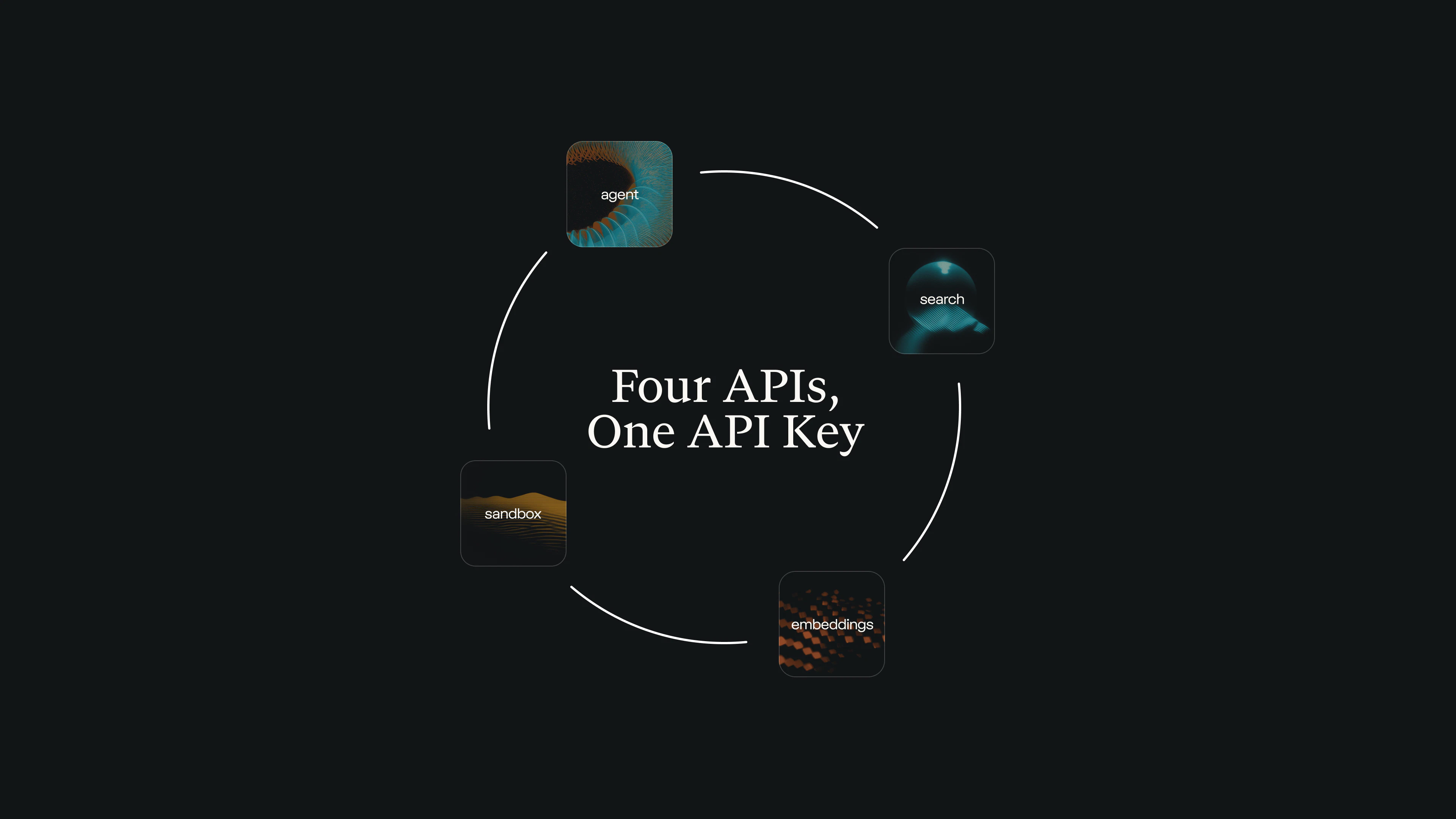
Perplexity's API now covers the full agent stack: multi-provider model access, real-time search on 200B+ URLs, and SOTA embeddings. One key, one bill, direct provider pricing. Built for developers who are tired of stitching together five vendors to ship one thing.

Perplexity just turned its battle-tested infra into a developer platform and it shows.

The problem: most agents rely on outdated training data + weak search APIs.

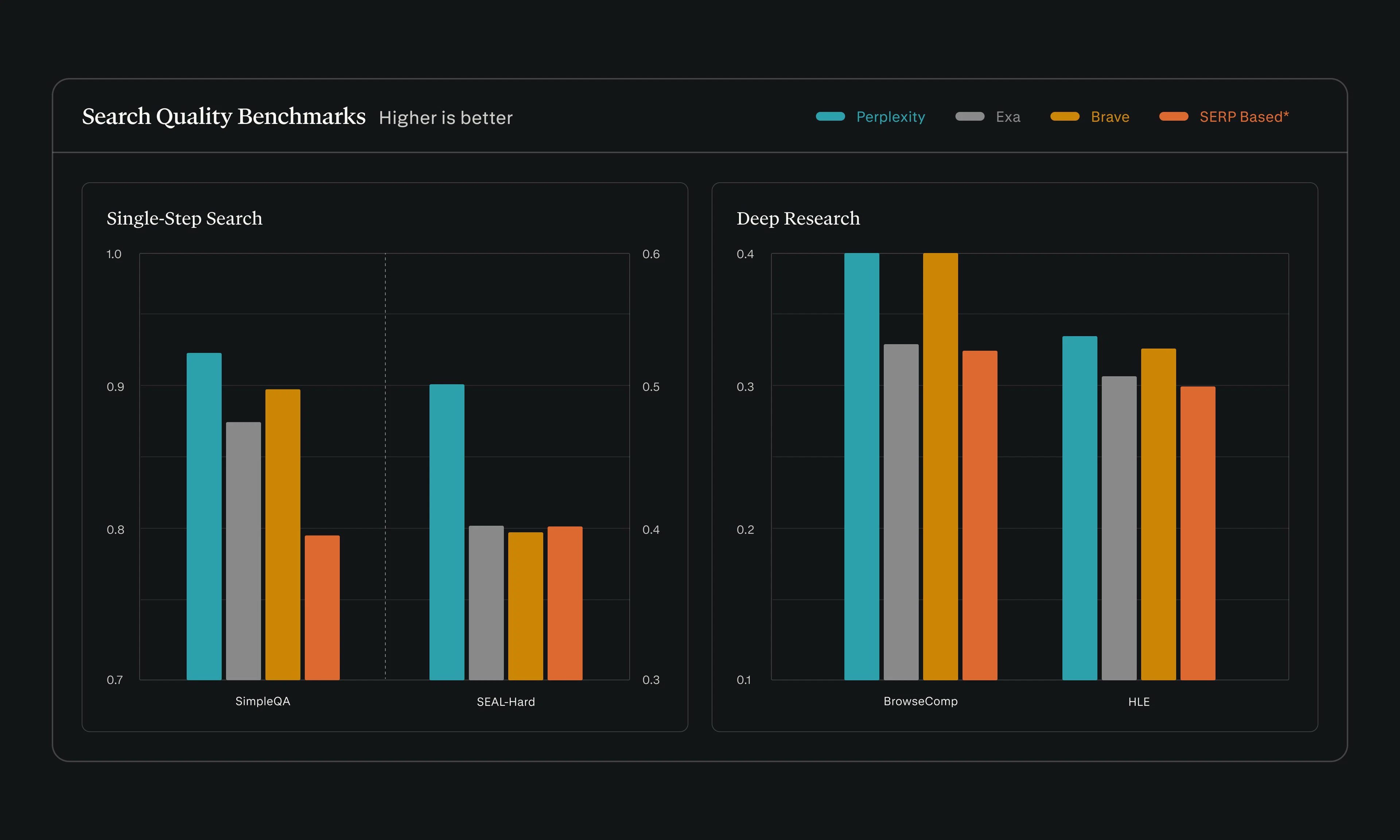
The solution: Perplexity AI opens its own real-time, 200B+ URL index with proven retrieval quality.

What stands out:

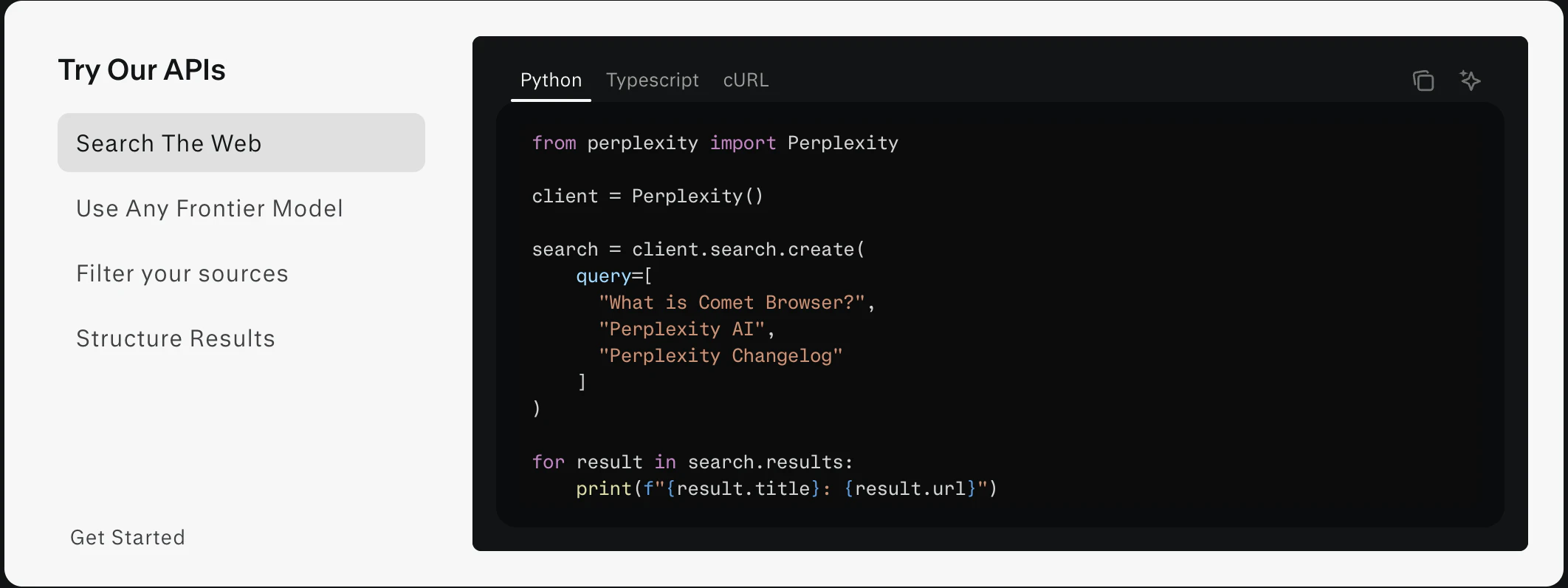
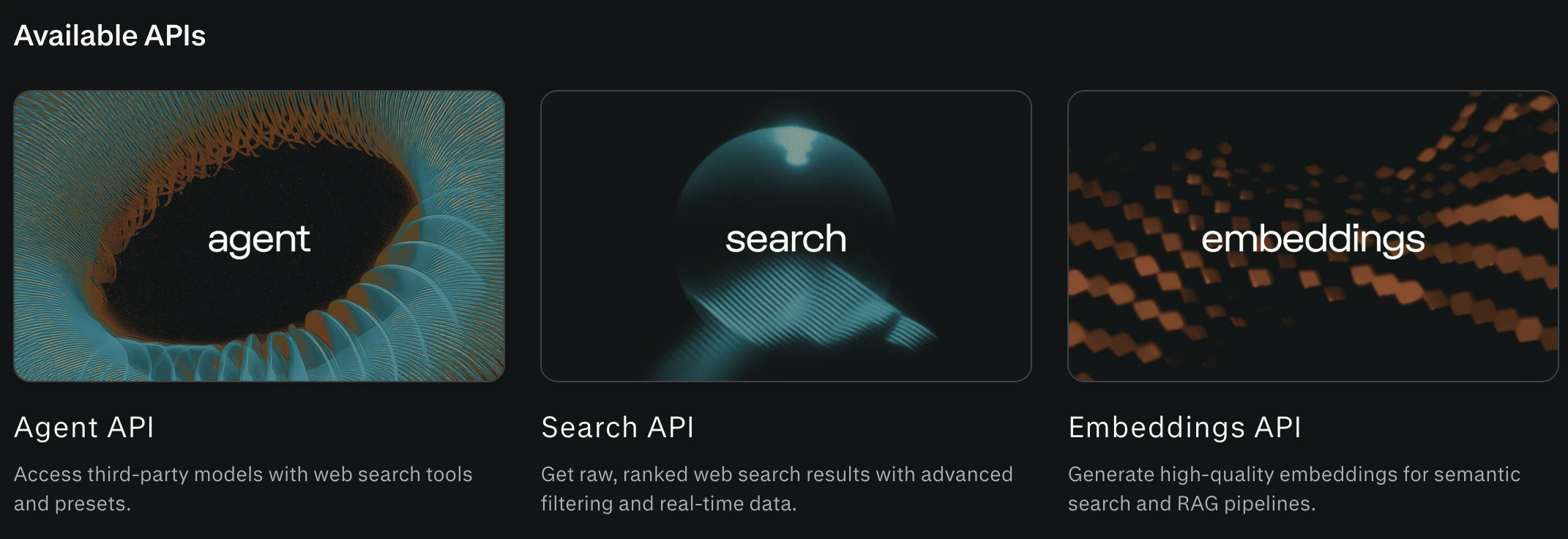
🔍 Search API with real-time context + citations

🤖 Agent API (multi-model access via one endpoint)

🧠 High-performing embeddings for retrieval

⚙️ Upcoming sandbox for code execution

Different because this isn’t a side tool, it’s the same stack running at scale in production. Perfect for devs building agents, copilots, and real-time AI apps.

P.S. I hunt the latest and greatest launches in tech, SaaS and AI, follow to be notified @rohanrecommends

2
回复

@rohanrecommends What has your fiest impression been like?

0
回复

One API key instead of stitching together 5 vendors. That alone is worth it. We pull from FEMA, county records, and zoning databases for our property intel platform — the vendor management tax is real. How fresh is the index for government/niche data sources?

0
回复

The open-web grounding is a liability trap hiding as a feature for certain verticals — surfacing citations makes your app look more trustworthy while silently inheriting SEO-poisoned content, recency bias, and contradictory sources. For anything touching health, legal, or finance, you haven't reduced hallucination risk; you've just made it traceable and attributable back to your product. How does the API handle query disambiguation when the freshest web result is actively worse than a well-calibrated model response would be — and does the platform expose any controls to constrain source domains, or are builders fully dependent on Perplexity's own ranking decisions?

0
回复
#6
Viktor for Media Buyers
Manages your Meta and Google Ads from Slack
176
一句话介绍:一款集成在Slack内的AI助手,为广告投手提供跨Meta和Google广告平台的实时、自动化操作与优化,解决了多平台管理繁琐、夜间监控缺失及数据核对复杂的核心痛点。
Productivity Marketing Artificial Intelligence
AI广告优化 Slack集成 跨平台广告管理 自动化营销 绩效营销 AI智能体 实时操作 广告审计 增长工具 SaaS
用户评论摘要:用户高度认可其Slack原生集成与自动化执行能力,视其为“行动者”而非“仪表盘”。核心反馈包括:询问边缘案例处理、优化逻辑(AI驱动而非规则)、建议整合TikTok等平台,并期待其从被动响应转向主动预警。
AI 锐评

Viktor并非又一个广告数据看板,其真正价值在于将“决策-执行”闭环压缩进一个自然语言对话中,并凭借“写权限”成为广告账户的“自动驾驶仪”。这直击了绩效营销者每日重复性手动操作与跨平台数据割裂的深层焦虑。

产品犀利之处有三:第一,精准的“场景寄生”。它没有创造新习惯,而是侵入了广告投手“每日检查-调整”的既有Slack工作流,使得工具采纳阻力极小。第二,用“操作深度”而非“数据广度”构建壁垒。103+37个可执行动作,覆盖从暂停、预算调整到受众复制的关键操作,这远非只读API能比拟,建立了技术信任门槛。第三,其商业模式洞察深刻:它首先服务于“一人增长团队”和中小团队,填补了专业投手雇佣前的能力空白,是人力成本的阶段性代偿。

然而,其面临的挑战同样清晰。首先,将广告账户生杀大权交给AI,其决策透明性与可解释性将是专业用户长期信任的关键,尤其在处理“边缘案例”时。其次,当前定位虽聚焦,但“创意”环节的缺失使其仍是“半套”解决方案。最后,其AI驱动模式在应对平台算法黑盒与异常归因时,能否持续做出优于规则引擎的、符合商业直觉的判断,仍需时间验证。

本质上,Viktor代表了工具演化的一个方向:从提供信息(Dashboard),到提供建议(Analytics),最终到授权执行(Agent)。它能否成功,不取决于AI是否更“智能”,而取决于其动作库是否足够精准可靠,以至于用户敢在入睡前将真金白银的广告预算托付给它。目前看来,它正走在一条正确但充满风险的道路上。

查看原始信息
Viktor for Media Buyers
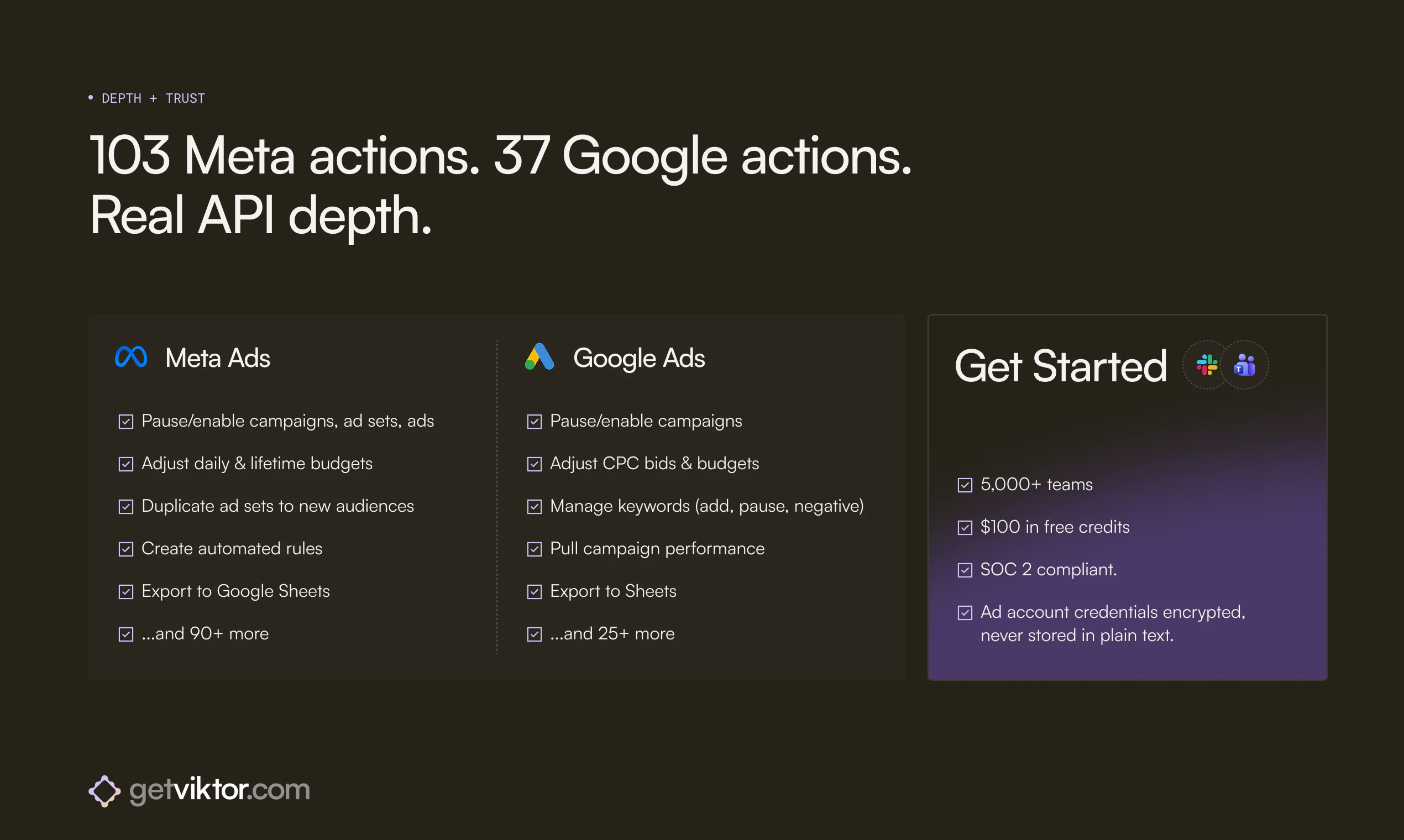
Viktor is an AI coworker that lives in Slack and connects to 3,000+ tools. This launch focuses on what media buyers have been using it for: operating Meta and Google Ads accounts from a single message. Pause bleeding ad sets, scale winners, shift budget cross-platform, export reports to Sheets. 103 Meta Ads actions. 37 Google Ads actions. Real write access, not a read-only dashboard.

Hey everyone, Fryd here. Co-founder of Viktor.

We launched Viktor on Product Hunt a few weeks ago and hit #4 for the day. Since then, something interesting happened: media buyers started showing up. A lot of them.

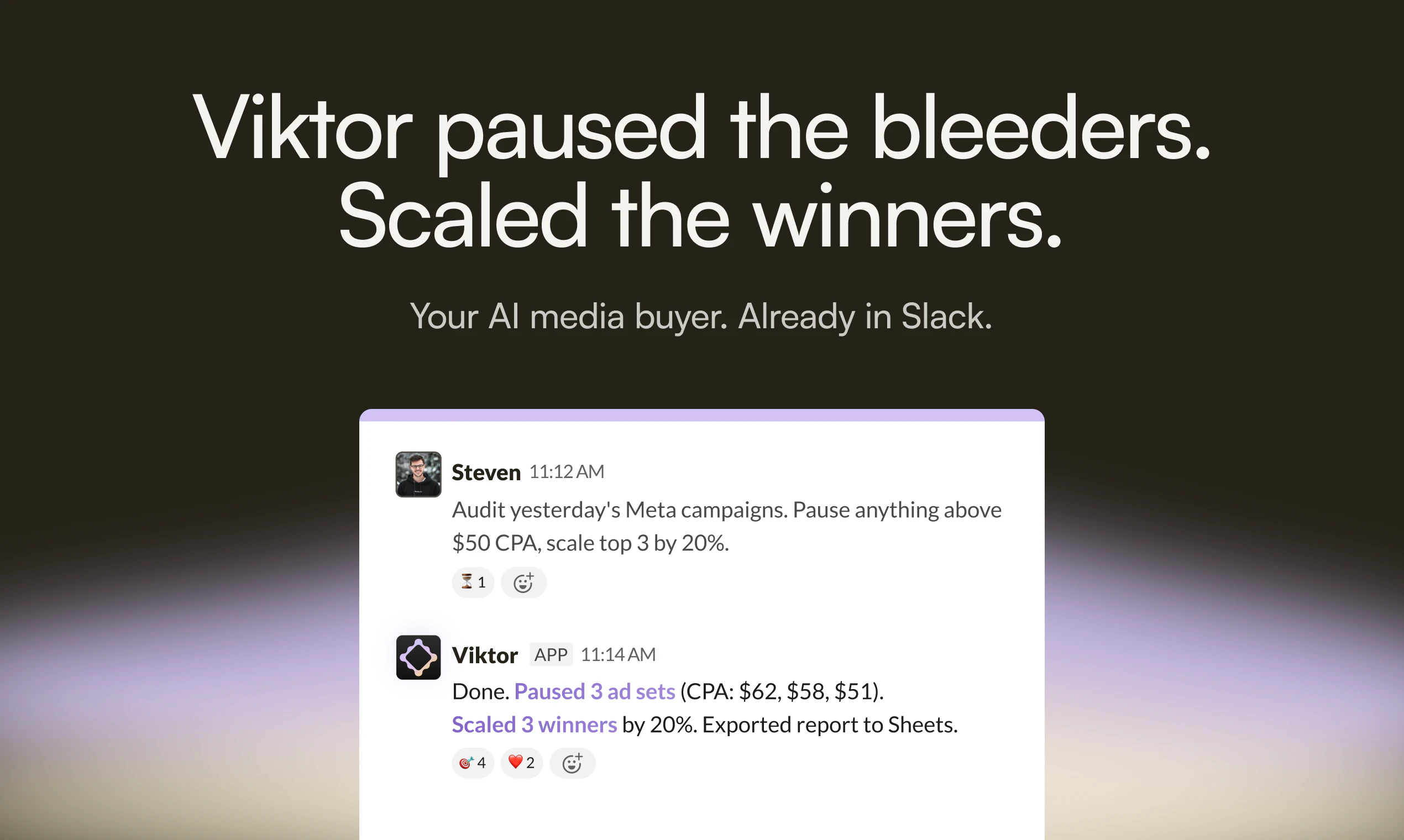
Turns out, when you build an AI agent that connects to Meta Ads and Google Ads with real write access, performance marketers find you. They don't care that Viktor can also manage your GitHub repos or build Slack apps. They care that it can pause a $68 CPA ad set at 2am while they're asleep.

So we built a vertical experience around it.

What Viktor actually does for media buying:

-> Connects to your Meta Ads and Google Ads accounts via OAuth (two minutes, no API keys)

-> Pauses underperformers, scales winners, adjusts budgets from a single Slack message

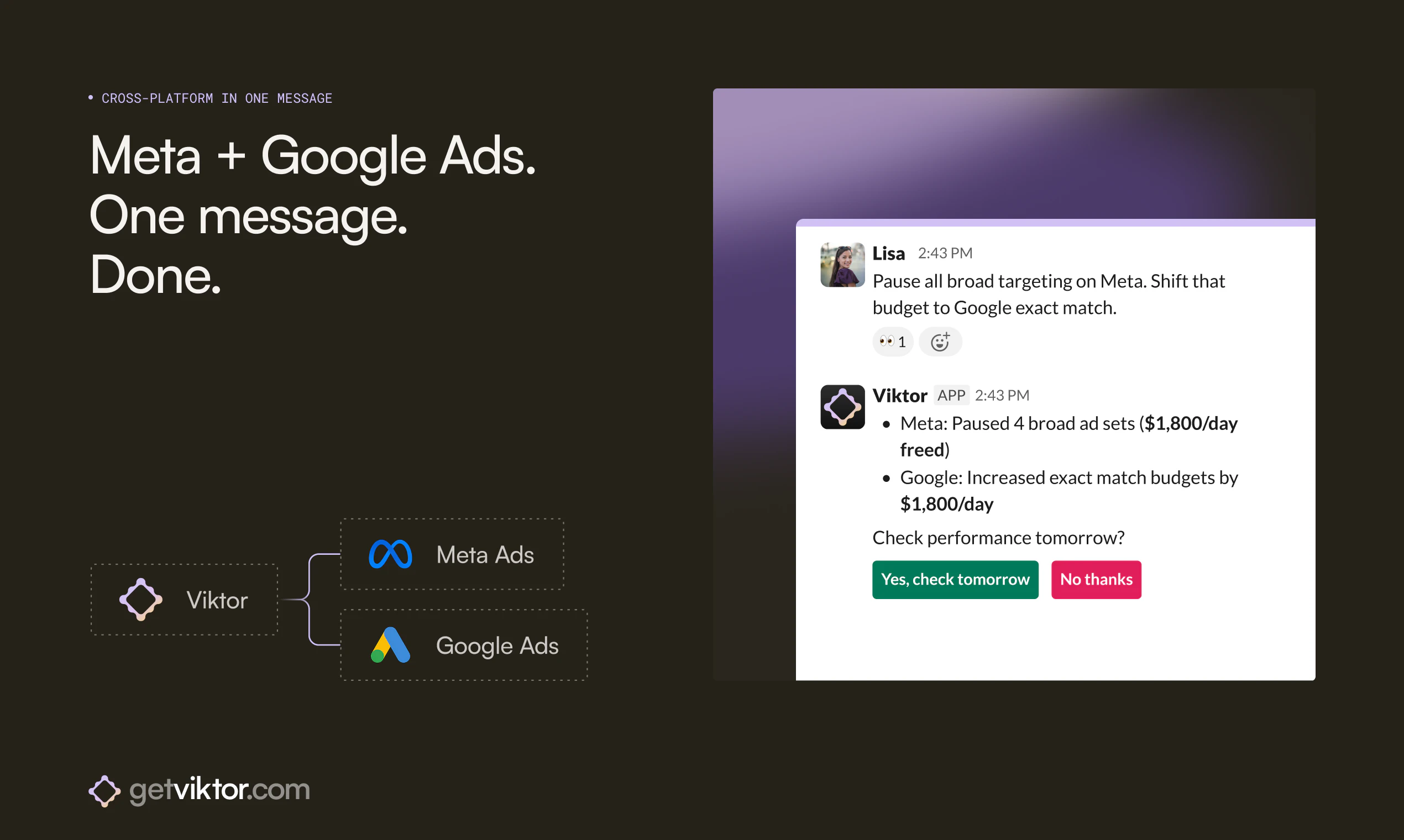
-> Shifts budget cross-platform: "Cut Meta by 30%, move it to Google exact match." Done.

-> Cross-references Meta's reported revenue against your actual Stripe charges (Meta over-reports by 20-40% for most of our users, mostly view-through attribution)

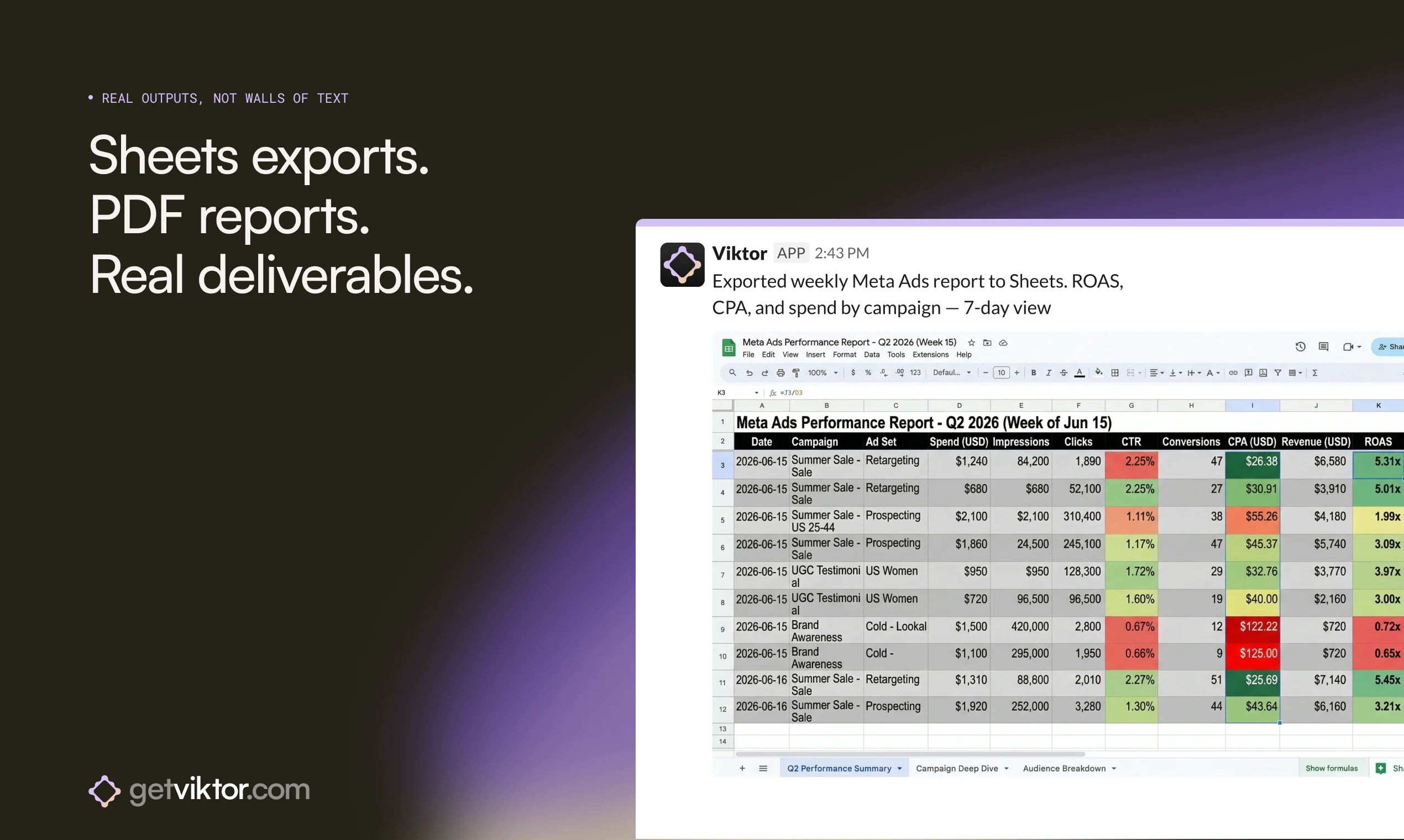
-> Exports weekly performance reports to Google Sheets

-> Runs overnight: if CPA spikes at 3am, Viktor pauses the ad set and tells you about it in the morning

The depth matters. Viktor has 103 available actions on Meta Ads and 37 on Google Ads. That's not "we can pull your campaign stats." That's pause, enable, adjust budgets, duplicate ad sets to new audiences, manage keywords, change bids, create automated rules, and export everything to Sheets.

What we're honest about: Ad copy changes on Google Ads (responsive search ads) still happen in the Google Ads UI. Viktor handles campaign structure, budgets, bids, targeting, keywords, and reporting. Not creative. We'd rather tell you upfront than have you find out on day two.

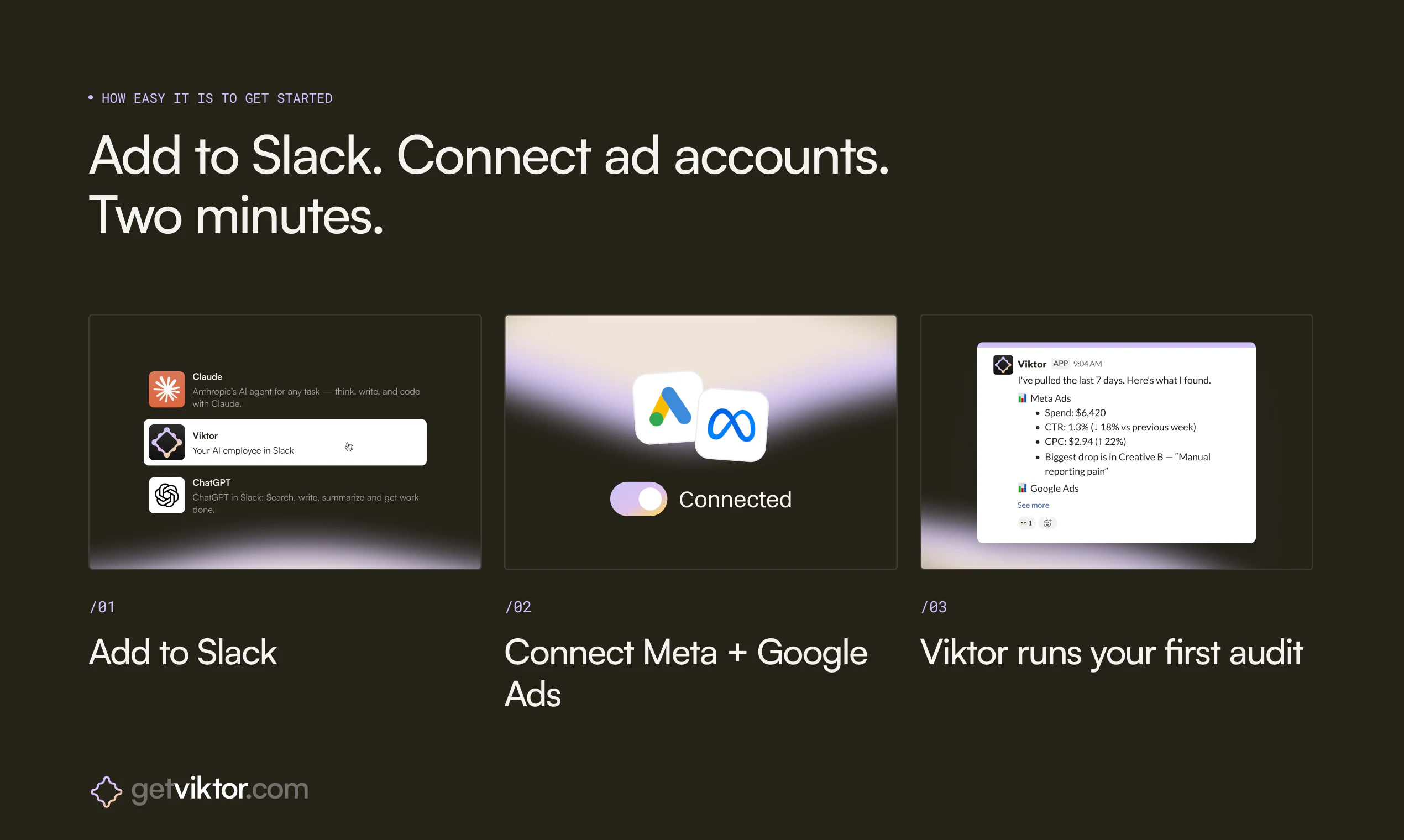
How to try Viktor:

1. Add Viktor to Slack (one click from the Slack App Directory)

2. Connect your Meta and/or Google Ads accounts

3. Ask Viktor to audit your last 7 days

You get $100 in free credits. No credit card. That's enough to run Viktor for weeks on typical media buying workflows. Most people see the value in the first audit.

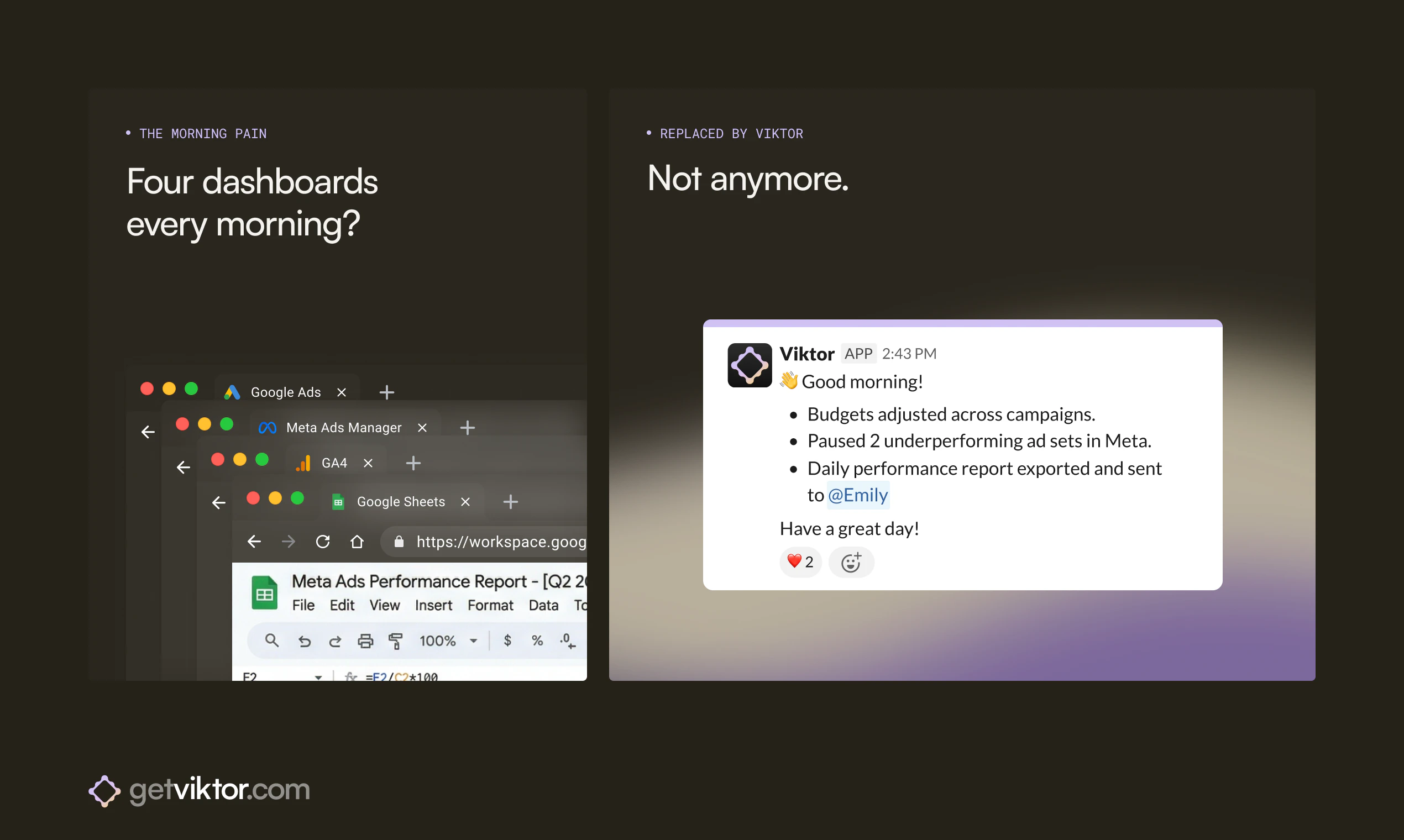
We built this because we run ads ourselves and got tired of the morning ritual: open Meta Ads Manager, open Google Ads, open GA4, open Sheets, pull numbers, compare, decide, act. Viktor does that loop in 30 seconds from one Slack message.

If you run ads across Meta and Google, I'd genuinely like to hear what your workflow looks like. We're building the vertical pages and integrations based on what actual media buyers tell us they need.

getviktor.com/for/media-buying

5
回复

@fwiatrowski Beyond pausing/scaling, what's one proactive rule you've seen media buyers set up in Viktor that's saved them the most cash?

1
回复

Vadym here, engineer at Viktor.

I worked on the skills system that powers Viktor's media buying workflows. Think of skills as muscle memory for an AI - pre-built knowledge about how ad platforms work, what good performance looks like, and what to do when something goes wrong.

When a media buyer asks Viktor to 'audit my last 7 days,' a lot happens under the hood. Viktor pulls data from both platforms, normalizes the metrics (Meta and Google report differently on basically everything), cross-references against your historical performance, and formats it into something you can read in 30 seconds.

Building that felt like writing a playbook for a media buyer who never sleeps and never forgets what your CPA looked like three weeks ago.

The skills keep getting better too. Every edge case, every new request pattern, every workflow a user invents goes back into the system. Viktor for media buying today is noticeably sharper than it was a month ago.

2
回复

I hunt products I'd actually pay for. This is one of them.

I'm Head of Growth at Wispr Flow. In the early days, I was running everything myself — Meta, Google, reporting, the whole stack. The morning routine Fryd described is real. Four tabs, three dashboards, twenty minutes before you've made a single decision. Every day, before any actual work starts.

I kept wishing there was something that could just act. Not surface the data. Act on it.

That's what Viktor does. When you can say "cross-reference our Meta reported revenue against Stripe actuals and flag anything over 25% variance" and get an answer in a couple of minutes — that's not a productivity gain. That's a fundamentally different way of working.

The 103 Meta actions and 37 Google Ads actions aren't a feature list. They map to real decisions: budget pacing, audience segmentation, cross-platform rebalancing, overnight anomaly detection. The things I was doing manually at 7am so I could actually think by 9.

I hunted this because I know exactly what it would have meant to have it earlier. Media buyers aren't looking for another dashboard. They want an agent that can act. This is the first one I've seen that actually does.

Start with the audit. Ask Viktor to review your last 7 days. That's where it clicks.

2
回复

Love the idea of managing ads from Slack! How does Viktor handle campaign optimization — is it rule-based or AI-driven?

2
回复

@sachin_madhukar Good question. It's AI-driven, not a rules engine.

You talk to Viktor in plain language. "Pause anything above $60 CPA." "Move 30% of Meta budget to Google exact match." "Audit last 7 days and flag what's underperforming." Viktor understands the intent, pulls the data, and takes action across both platforms.

Where it gets interesting is scheduled tasks. You can tell Viktor "check my campaigns every morning at 7am and pause anything that crossed my CPA threshold overnight." That runs automatically, but it's still the AI making contextual decisions - not a static if/then rule. It looks at your recent performance history, not just a single metric in isolation.

The difference from rule-based tools: Viktor can handle compound requests. "If CPA is above target AND spend is over $200 AND it's been trending up for 3 days, pause it" - that's one Slack message, not three rules you need to configure in a dashboard.

The $100 free credits are enough to test the full loop. Most people start with an audit and see the difference pretty quickly.

0
回复

love the Slack-native approach. I don't need another login, another tab, another app to babysit. just put the data where I'm already at

1
回复

@zambrzycki We couldn't agree more. Context switching between one app another just to come back to Slack and send in a DM was a UX pain that we aimed to eradicate. I'm happy you noticed!

0
回复

Paweł here, Chief of Staff at Viktor.

Quick perspective from the operations side.

When media buyers started adopting Viktor faster than any other user segment, we dug into why. Our first guess was integration depth. The real answer was simpler.

Media buyers already live in daily loops. Check performance, make adjustments, repeat tomorrow. They don't need to build a new habit around Viktor because the habit already exists. Viktor just compresses it.

What turned this from 'interesting signal' to 'dedicated vertical' was the retention data. Media buying users come back at 2-3x the rate of general users. Not weekly. Daily. That's not curiosity, that's workflow.

We're applying the same logic to what we build next: find people who already have daily operational loops, then make the loop shorter. Media buying was the first one that cleared the bar.

1
回复

Filip here, GTM team at Viktor.

I remember when Viktor was still a baby... before we launched in February.

His first "baby steps" were exactly that ➡️ helping us out with management of our own ad ideation -> creation -> performance + spend management.

Here's a use case we didn't plan for: founders who know they should be running ads but don't have a dedicated media buyer. They're managing campaigns between product calls and investor meetings.

Viktor isn't replacing experienced performance marketers. But for smaller teams without a hire yet, it fills the gap between 'we should be doing this' and 'we can't afford someone full-time for it.'

Think of it as the operational layer for ad management. It monitors your campaigns while you do literally everything else. Catches the CPA spike at 2am. Flags when Meta claims more conversions than your Stripe dashboard shows. Runs the daily performance check you keep promising yourself you'll do.

If you know your ad spend needs more attention than you're giving it, the free audit is a solid place to start. It shows you what Viktor would catch that you're currently missing.

And the best thing about it all? You'll just have fun talking to Viktor in Slack, like to any other coworker 🙌

1
回复

Peter here, CTO at Viktor.

Building an AI that reads ad data is a weekend project. Building one with write access to someone's $50k/month ad account? That took months of productive paranoia.

We mapped 103 actions on Meta Ads and 37 on Google Ads. Each one went through the same bar: would I let this run on our own ad account while I sleep? The answer had to be yes before it shipped.

We eat our own cooking here. Viktor manages our own ad spend. If it breaks, it breaks our budget first. That's the only level of trust we're comfortable shipping with.

1
回复

Slack as the control plane for ads is a good call - media buyers already live there. The real test will be how it handles edge cases: campaigns hitting budget caps mid-day, sudden performance drops, audience fatigue signals. Does Viktor flag those proactively or wait to be asked?

1
回复

@mykola_kondratiuk That is one thing that is different from Viktor vs other Media Buyer products, especially the ones based on some "engine". Viktor will check the state of campaigns, and react to them very much like a top growth person would do.

0
回复

LFGG! When can I get onboarded and give this a shot? Slack integration is the unlock imo

0
回复

This product seems cool, do you have plans to integrate tiktok

0
回复

@roy_kek We definitely want to support additional ad platforms, including TikTok. We're building the right foundations first so we can integrate them properly, but doing that well takes meaningful effort. Stay tuned!

0
回复

I do growth at Viktor, so I'll add the part Fryd won't brag about.

The original launch hit #4 with 386 upvotes and 130 comments. Good day. But the interesting part came after.

We started seeing a cluster of users connecting ad accounts in their first session. Not browsing integrations, not testing a summary task - going straight to Meta Ads and Google Ads OAuth. Within a week, ad platform connections were the second most common integration after Google Sheets.

When we segmented retention by use case, media buyers were the highest. They come back daily. That makes sense if you think about it - ad management is a daily loop. You do it every morning regardless. Viktor just moved the loop from four browser tabs to one Slack message, so the habit transferred instead of needing to form.

The thing that surprised us most: users turned our scheduled tasks feature into an always-on spend watchdog. We built it as a general automation tool. Media buyers made it their safety net. One user caught enough wasted overnight spend in week one to cover their entire credit balance.

If you try it, I'm curious whether you start with the audit or go straight to connecting your accounts. We've seen both and it's been roughly 50/50.

0
回复
#7
Stamp
The AI Secretary that thinks, writes, and works like you
148
一句话介绍:Stamp是一款AI秘书应用,通过学习用户偏好与写作风格,在邮件和日历管理场景中,自动处理邮件优先级、总结内容、起草回复,解决用户日常信息过载与沟通效率低下的痛点。
Email Productivity Calendar
AI秘书 电子邮件自动化 智能日历管理 写作风格模仿 工作流自动化 邮箱助手 生产力工具 人工智能助理
用户评论摘要:用户认可其“需批准后发送”的设计,避免了全自动代理的风险。主要疑问集中于:AI如何随时间精准适配个人写作风格;面对大量待处理邮件的用户体验;以及模型的具体训练方法。开发者回复强调了“记忆”系统、上下文学习和手动编辑功能。
AI 锐评

Stamp的核心理念——“像你一样思考、写作和工作”——精准地戳中了当前AI助理工具的普遍软肋:缺乏个性与上下文连贯性。它并非简单地将大模型接入邮箱API,而是试图构建一个持续学习的“数字分身”,其“记忆”系统是关键的差异化设计。这暗示其正从“工具”向“代理”演进,旨在成为有长期记忆的工作伙伴。

然而,其真正的挑战与价值也在于此。首先,“像你”是一个极高的标准,涉及对用户价值观、沟通策略乃至人际关系的微妙理解,当前技术能否稳定实现存疑。评论中关于风格适配的反复追问即是明证。其次,产品在“自动化”与“控制感”之间选择了审慎的平衡(需用户最终批准),这是明智的,但也将效率瓶颈从“起草”转移到了“审阅”。如何智能批量化呈现待审阅项,成为影响体验的关键,官方回复对此的解答略显单薄。

其最大潜力或许在于“Agent”工作流自动化,这使其超越了邮件回复,向个人CRM、研究助手等角色扩展。但这也带来了更复杂的隐私与数据安全问题。总体而言,Stamp描绘了一个诱人的未来:一个真正个性化、可信任的AI协作者。但其当下的价值,更可能体现为一名高度可定制、能初步理解上下文的“邮件副驾”,而非完全自治的“秘书”。成功与否,取决于其“记忆”学习的深度、用户界面能否高效处理批量任务,以及能否在提升效率的同时,让用户感到可控而非疏离。

查看原始信息
Stamp
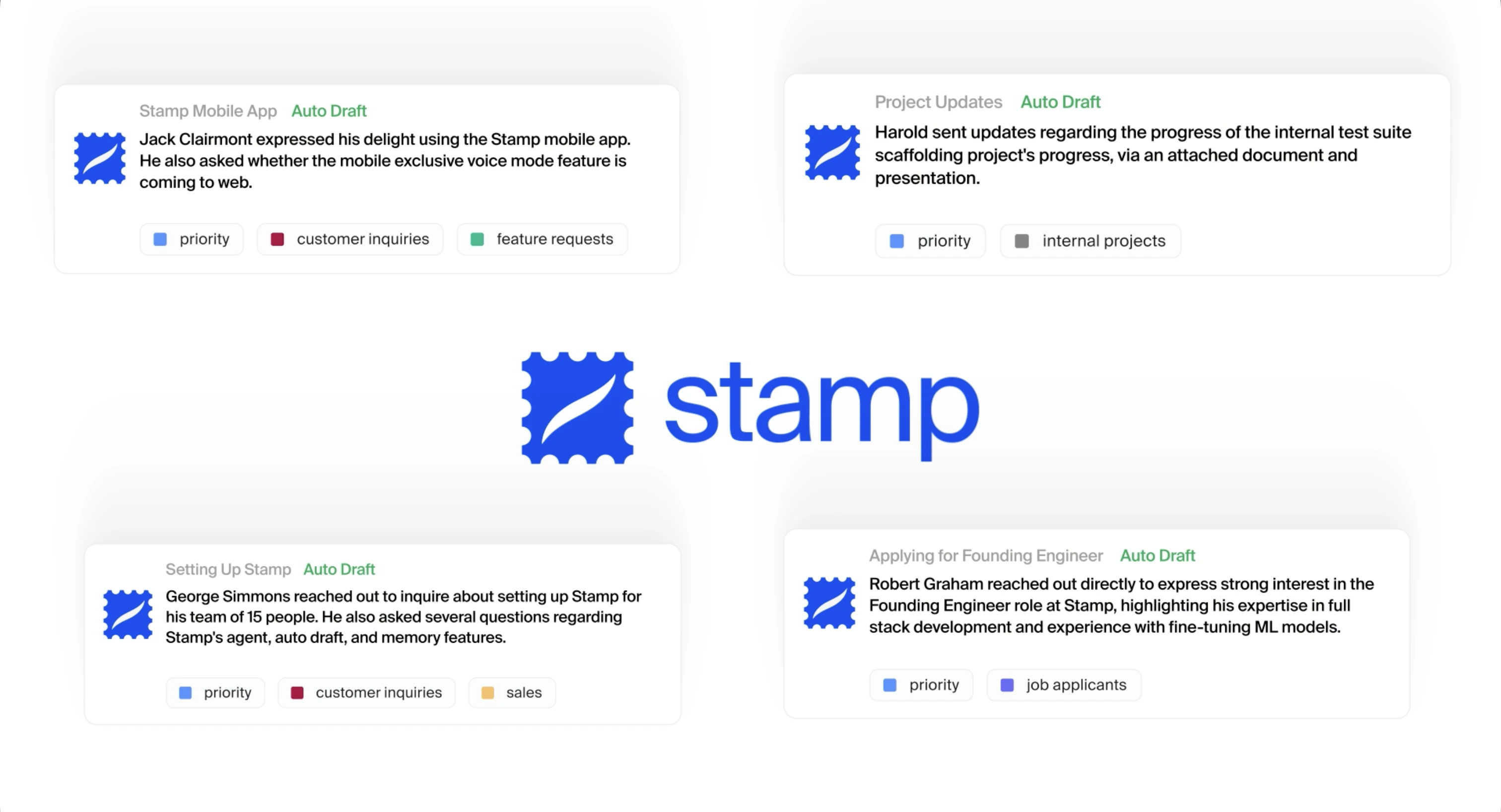
Stamp is the AI Secretary that thinks, writes, and works like you. Stamp handles your email and calendar for you by learning your preferences, using your style, and operating with your context. Get started with Stamp for free, available everywhere you use email!

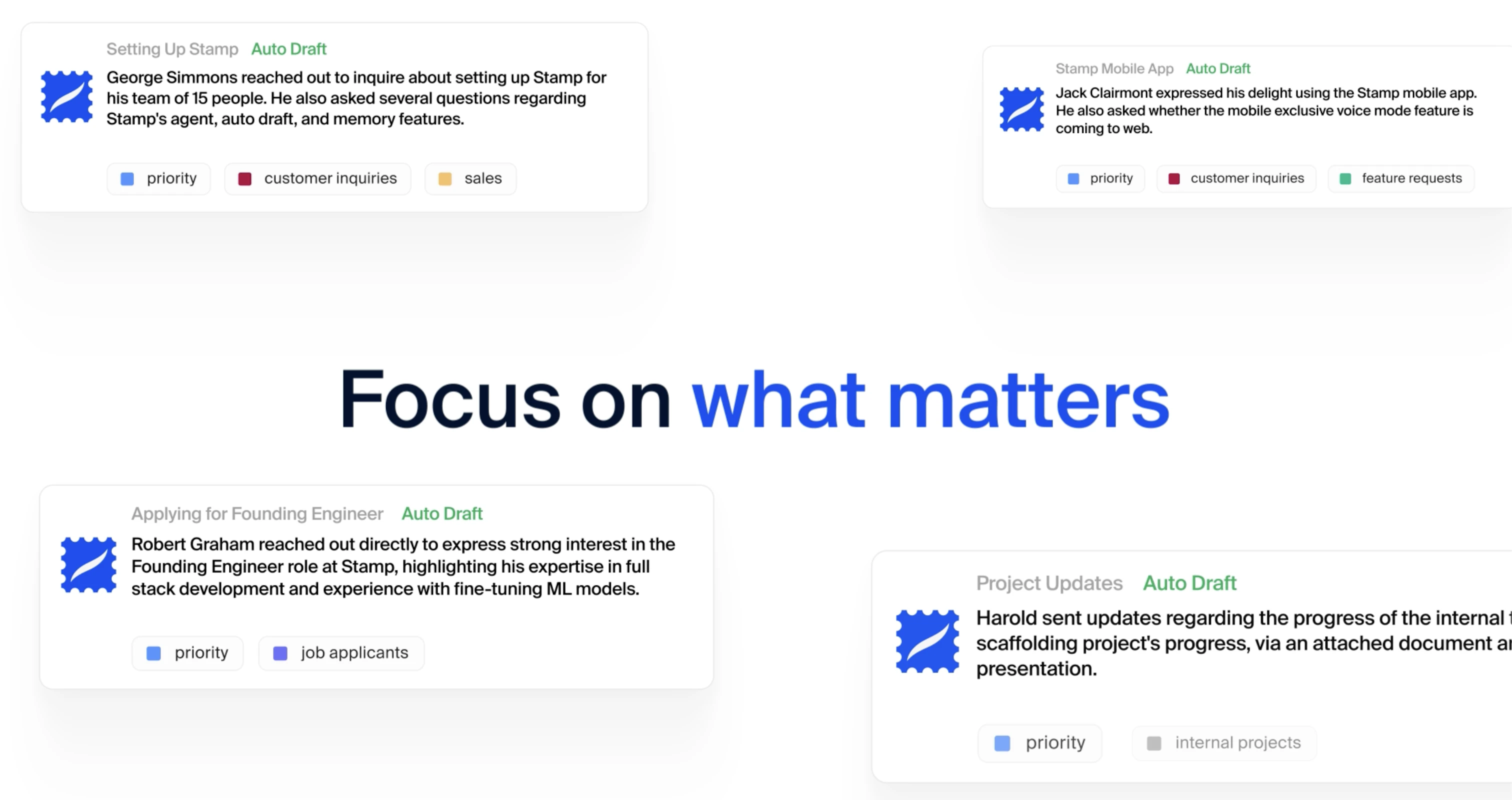
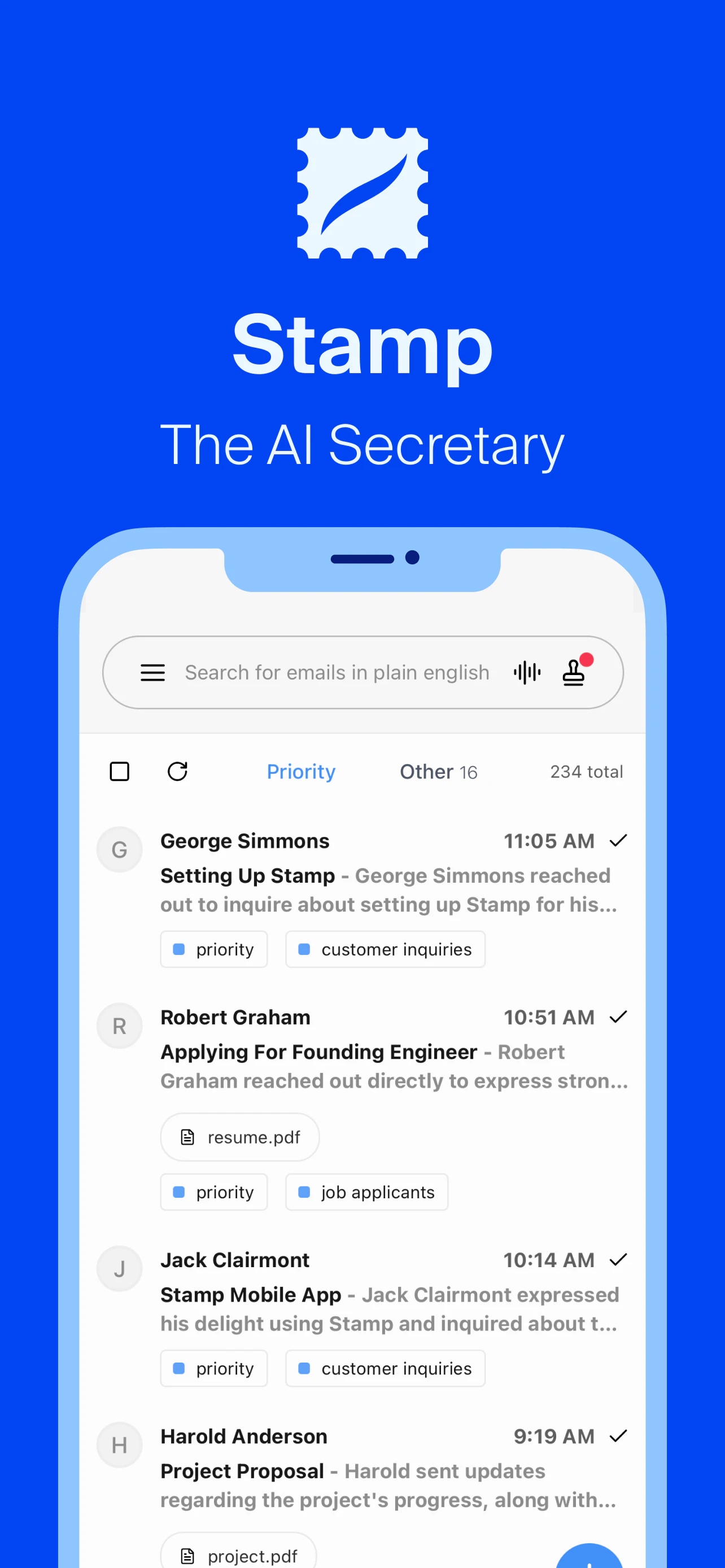
Stamp is the AI Secretary that handles your email and calendar for you.

It does so through several ingenious features, namely:
1. Stamp Mode: As soon as you receive an email, Stamp prioritizes, summarizes, extracts todos, and drafts a reply. When you return to your inbox, simply "stamp" the changes and blaze through your emails

2. Memories: Stamp creates memories with every interaction, which it uses to learn your preferences, style, and context. These memories are then used every time Stamp works on your behalf

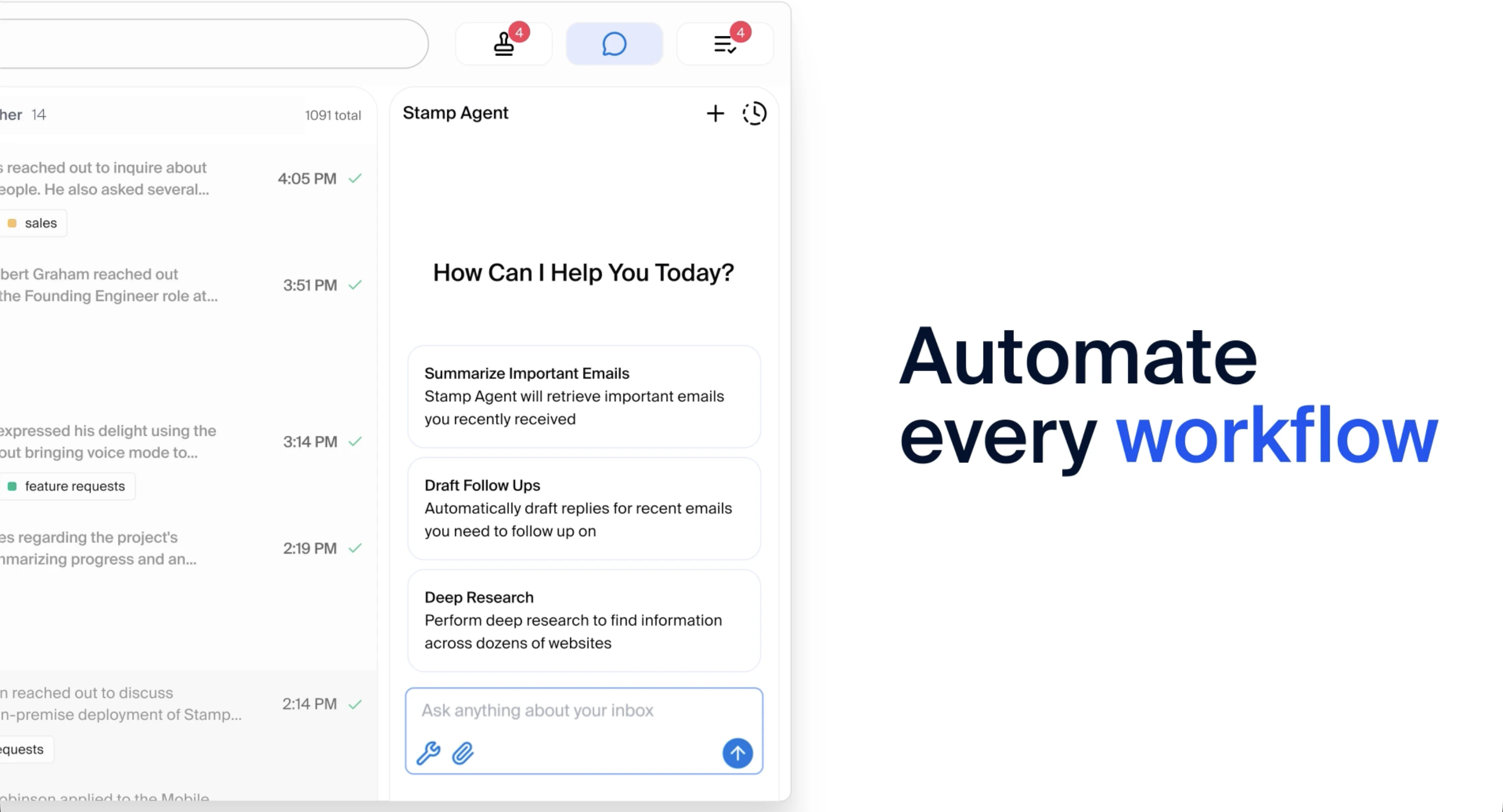
3. Agent: Stamp Agent can automate any workflow -- it's capable of browsing webpages, organizing your inbox, bulk drafting outbound, performing deep research, and enriching leads, all in a matter of minutes!

4. Voice Mode: On mobile, use Voice Mode to summarize, triage, and reply to emails hands free anytime, anywhere

5. AI Labels: Define labels in plain English and teach Stamp how to handle them (ex. always draft replies to customer support emails or always treat demo meeting invites as high priority)

In short: Stamp thinks, writes, and works like you. Email was built to make us more productive, and Stamp is the first solution to deliver on that promise.

Stamp is available to try for free right now, everywhere you use email (Web, iOS, and Android)!

Which feature are you most excited to try first?

3
回复

Interesting concept of an AI secretary! How well does Stamp adapt to a user’s writing style over time?

2
回复

@sachin_madhukar Hi Sachin! Stamp has several methods of adapting to users' writing styles:

  1. Memories: Stamp creates and maintains memories over time, learning the user's writing preferences and relationships to contacts. This helps Stamp always use the right tone for the given context. Moreover, the user can also manually edit or create new memories for Stamp to use!

  2. Context: Stamp draws in your previous interactions with the email recipient(s) as well as similar email threads. It uses your past replies to infer your preferred writing style and applies it to the emails it drafts

  3. AI Edits: Any issues with reply content or tone can quickly be edited simply by highlighting the text and issuing a prompt to Stamp!

2
回复

The approval step is the right design choice - fully autonomous email agents that just send things are a liability. The interesting UX problem is what happens when you come back after 8 hours and Stamp has queued 40 changes. Does it batch them into a review flow or show them one by one?

1
回复

@mykola_kondratiuk Hi Mykola! Stamp only queues emails that have been marked as priority in Stamp Mode, so most emails you receive over the course of a day will not require any approval at all!

Moreover, if you feel you have too many emails to review, you can simply exit out of StampMode and read your emails manually, since reading a priority email marks it done in Stamp Mode!

1
回复

A genuinely interesting concept, but what is the method that is used to train it to write like us?

1
回复

@nayan_surya98 Hi Nayan! Stamp has several methods of adapting to users' writing styles:

  1. Memories: Stamp creates and maintains memories over time, learning the user's writing preferences and relationships to contacts. This helps Stamp always use the right tone for the given context. Moreover, the user can also manually edit or create new memories for Stamp to use!

  2. Context: Stamp draws in your previous interactions with the email recipient(s) as well as similar email threads. It uses your past replies to infer your preferred writing style and applies it to the emails it drafts

  3. AI Edits: Any issues with reply content or tone can quickly be edited simply by highlighting the text and issuing a prompt to Stamp!

1
回复
#8
Metabase Data Studio
Build the semantic layer that makes AI analytics trustworthy
141
一句话介绍:Metabase Data Studio 是一个面向数据分析师的工作台,通过构建统一的语义层(定义指标、业务逻辑),在AI分析时代解决了企业内数据定义混乱、指标口径不一致的核心痛点,确保AI及所有用户都能获得可靠的数据答案。
Open Source Developer Tools Data & Analytics
语义层 数据分析平台 指标管理 数据治理 数据血缘 SQL/Python转换 AI就绪数据 自助式分析 数据可信度 元数据管理
用户评论摘要:用户高度评价其统一指标定义、SQL/Python数据转换、数据血缘和依赖图谱功能,认为其解决了“活跃用户”等指标定义混乱的经典难题。主要问题集中于:如何应对现实世界中混乱的数据模式,以及业务定义变更时是版本化管理还是原地更新(官方回复为版本控制)。
AI 锐评

Metabase Data Studio 的发布,绝非一次简单的功能叠加,而是直指当前“AI+数据分析”热潮下被刻意忽视的命门:垃圾数据进,垃圾答案出。它试图解决的,不是分析本身,而是分析之前的“共识”问题——通过构建一个中心化的、可操作的语义层,将过去分散在无数SQL查询、PPT文档和员工大脑中的业务逻辑(如“何为收入”)强制标准化。这本质上是将数据团队最核心的治理工作产品化、民主化。

其真正价值在于“承上启下”。对上,它为各类AI智能体提供了结构化的、可信的业务上下文,是让AI分析从“概率性猜测”走向“确定性回答”的基础设施,这比单纯优化大模型提示词更根本。对下,它通过内嵌的转换、血缘和依赖检查,将原本需要组合dbt、数据目录和BI工具才能搭建的简陋数据工程流程,整合进分析师熟悉的界面,降低了可靠数据栈的构建门槛。

然而,其挑战也同样明显。首先,“定义一次,处处使用”的理想,与业务快速迭代、定义动态变化的现实存在固有张力,版本控制只是技术手段,如何管理定义变更背后的组织沟通与共识重建,是更难的课题。其次,它将Metabase从一个轻量级BI工具推向了一个更重的“数据工作台”,这可能吸引深陷数据混乱的中型团队,但也可能疏离其原有的、喜爱其简洁性的用户。能否在功能强大与体验轻便之间取得平衡,将决定其是成为数据栈的“核心枢纽”,还是又一个“高级模块”。

总体而言,这是一次极具洞察力的战略升级。它没有在AI的炫技层面跟风,而是回归到数据行业最古老、最昂贵的问题上,并提供了工程化的解决方案。它的成功与否,不仅关乎产品本身,更将检验市场对“数据基础质量”的付费意愿究竟有多强。

查看原始信息
Metabase Data Studio
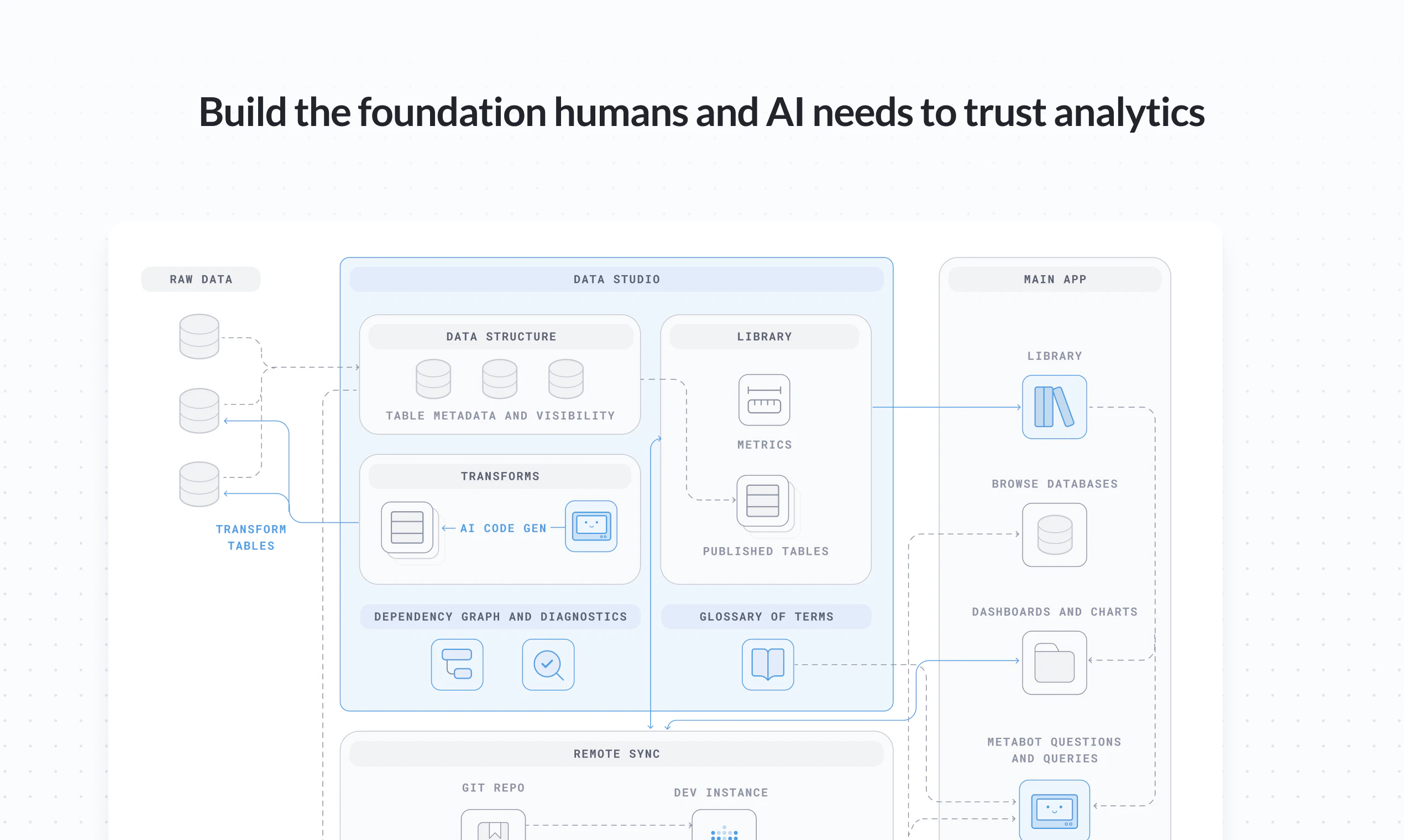
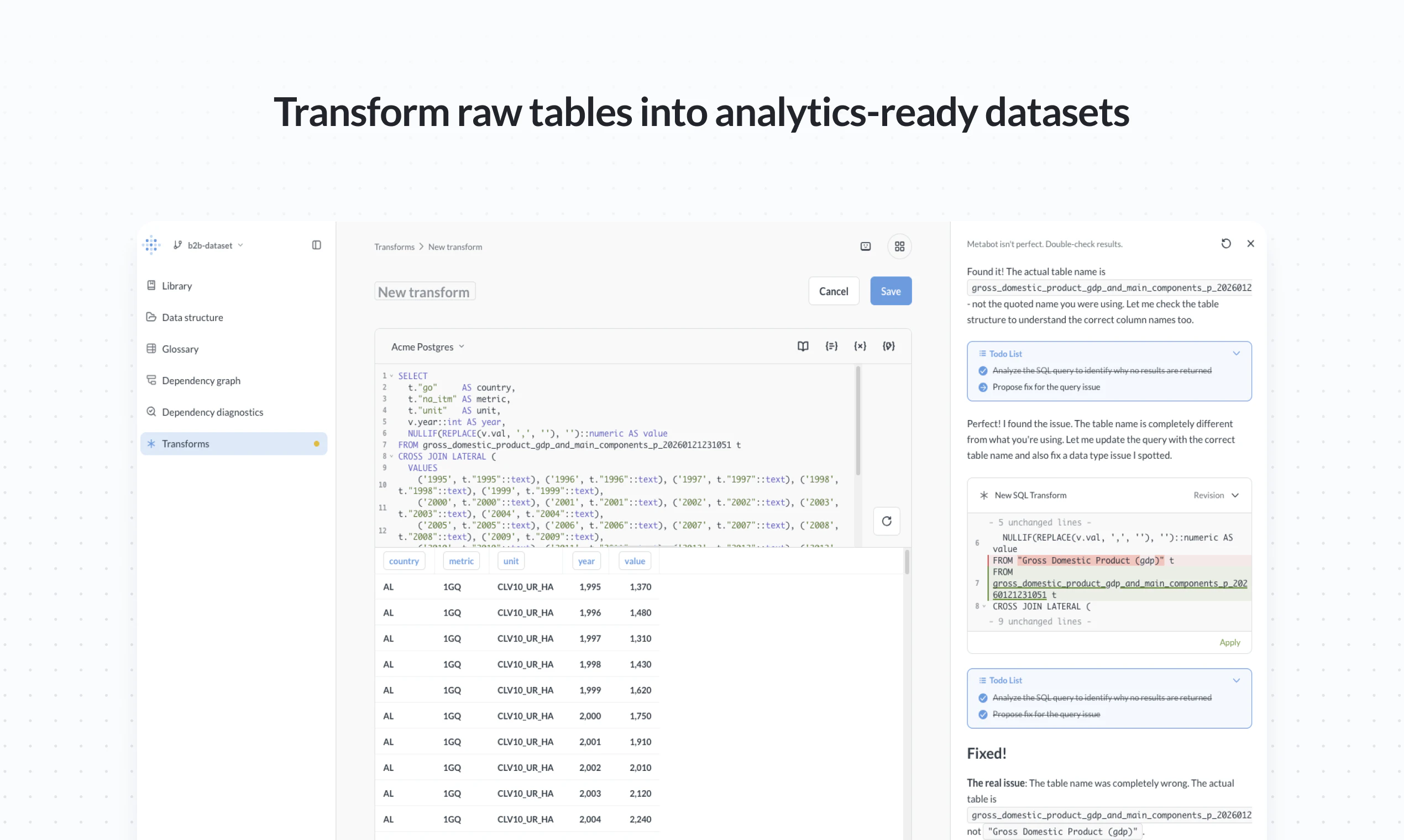
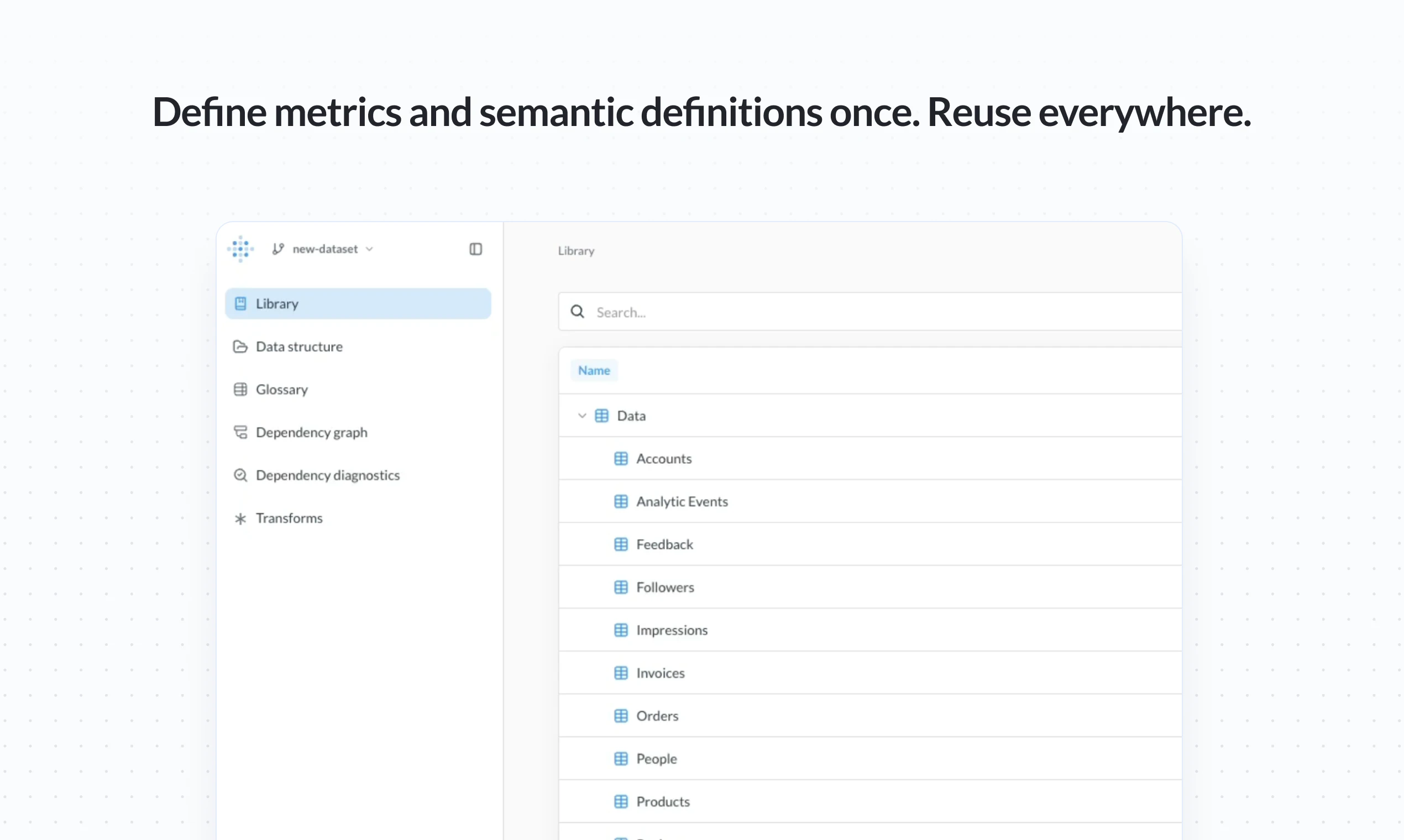
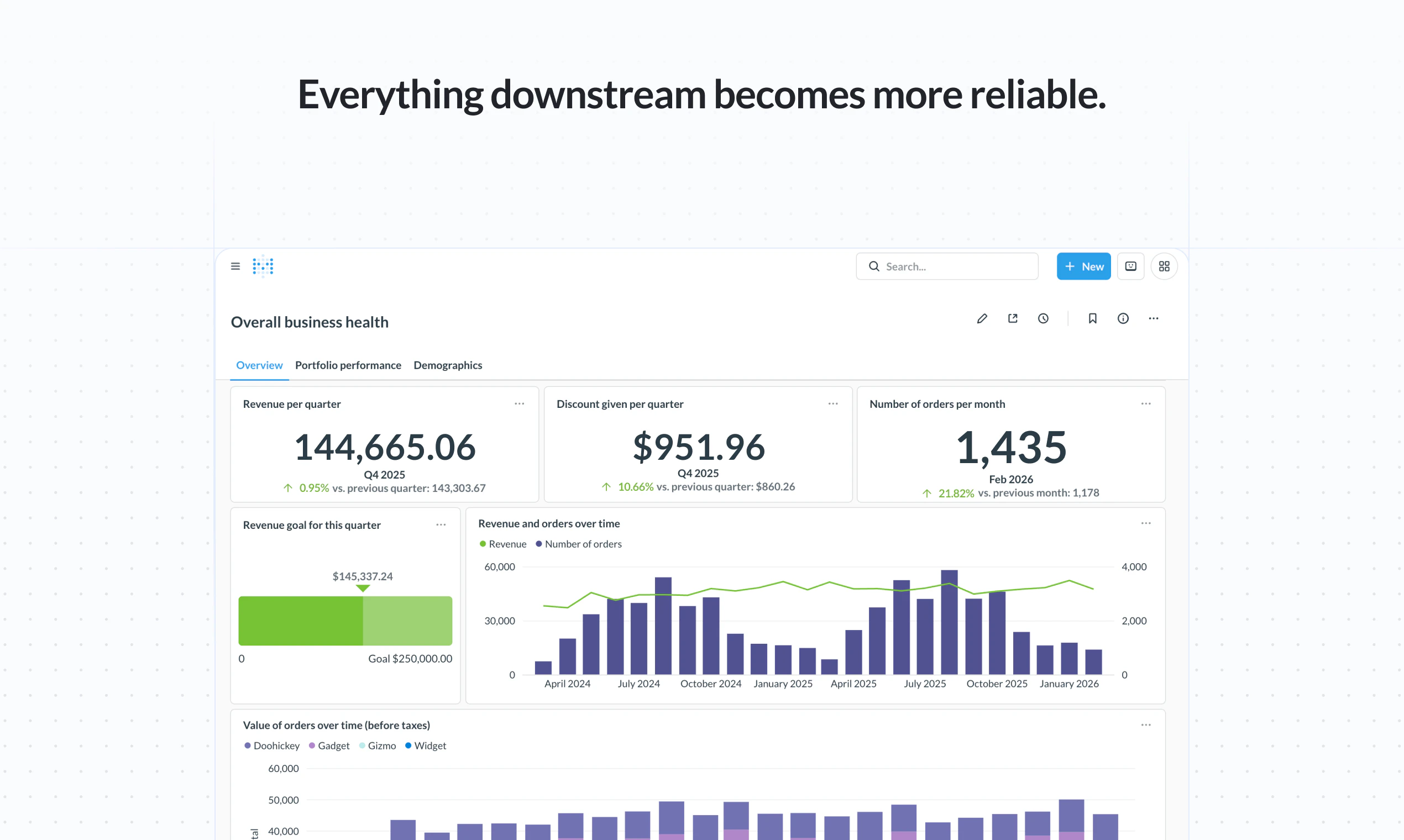
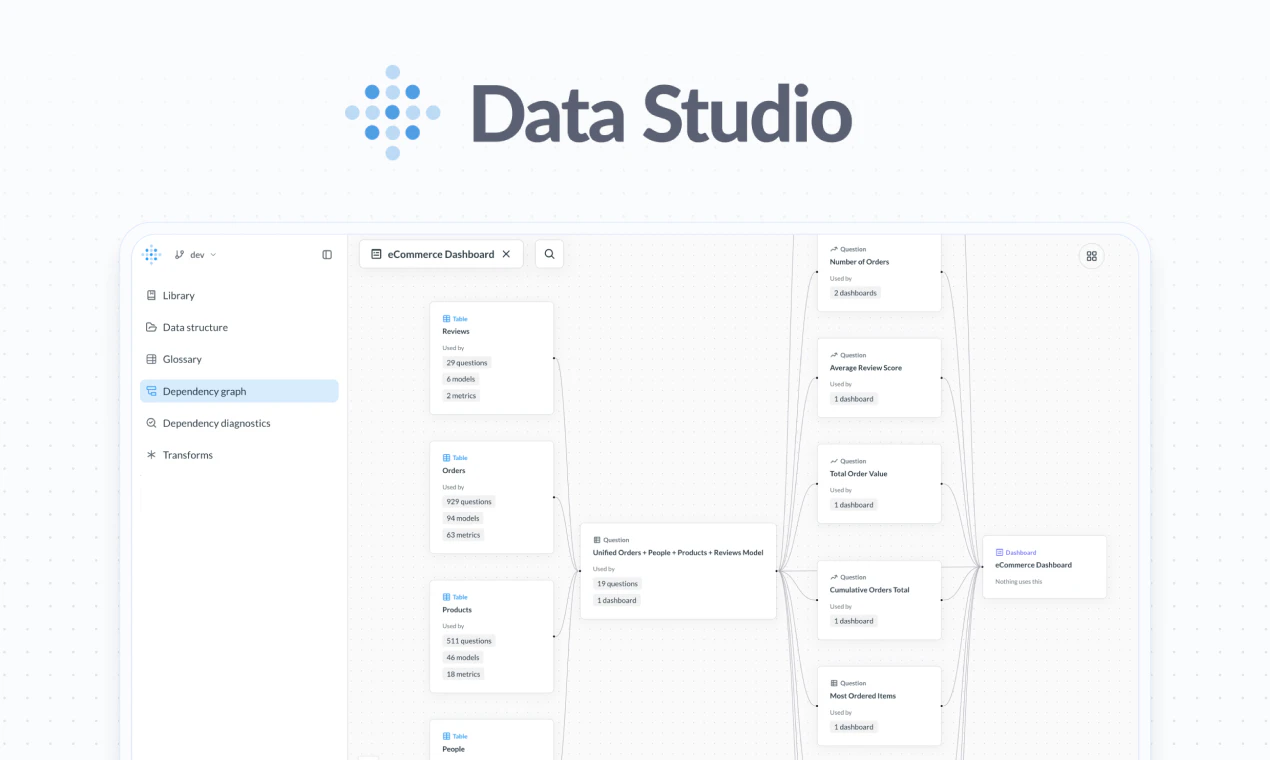
AI analytics is only as good as the context you give it. Without a semantic layer - a unified, shared definition of metrics, segments, and business logic - AI (and everyone else) is guessing at what "active user" or "revenue" means at your company. Data Studio is the analyst workbench where that foundation gets built. Define metrics once. Transform raw tables using SQL or Python. See dependencies before changing anything. Publish what's trusted to your Library. Then get reliable answers from AI

We're excited to announce that we've launched a new, simple way to clean up your data structure as you grow. Not all companies needed transformations, semantic layers and metadata curation in the past as agents. However, as agent powered analytics become a primary way for people to work with data, a clean data layer matters more and more. Data Studio is how we think you should create it!

31
回复

@sameer_alsakran How does Metabse handle real-world messy data scenarios, like inconsistent schemas across growing datasets or auto-fixing agent-specific quirks in metadata?

11
回复

Data transformation in Metabase? Wow! 🤩

20
回复

@tatyana_avlochinskaya Dreams do come true ;)

0
回复

You know that moment when someone asks "how many active users do we have" and three people give three different numbers?

Yeah, we fixed that ✌️

17
回复

This is my favorite project that Metabase launched, and I use it every day now. It's a set of tools to run your entire data stack inside Metabase: transforms, definitions, lineage, everything.

Here's how I use it every day:
- Write SQL (and sometimes Python) transforms and save results straight to the database: like cleaning up messy user signup data and combining it with referral info to make a new table I can query everywhere.
- Define metrics once so I don’t have to rethink “what counts as active users” every time: now everyone on the team uses the same definition.
- Create clean tables I trust: for example, a revenue table that I know is accurate and ready for dashboards without extra checks.
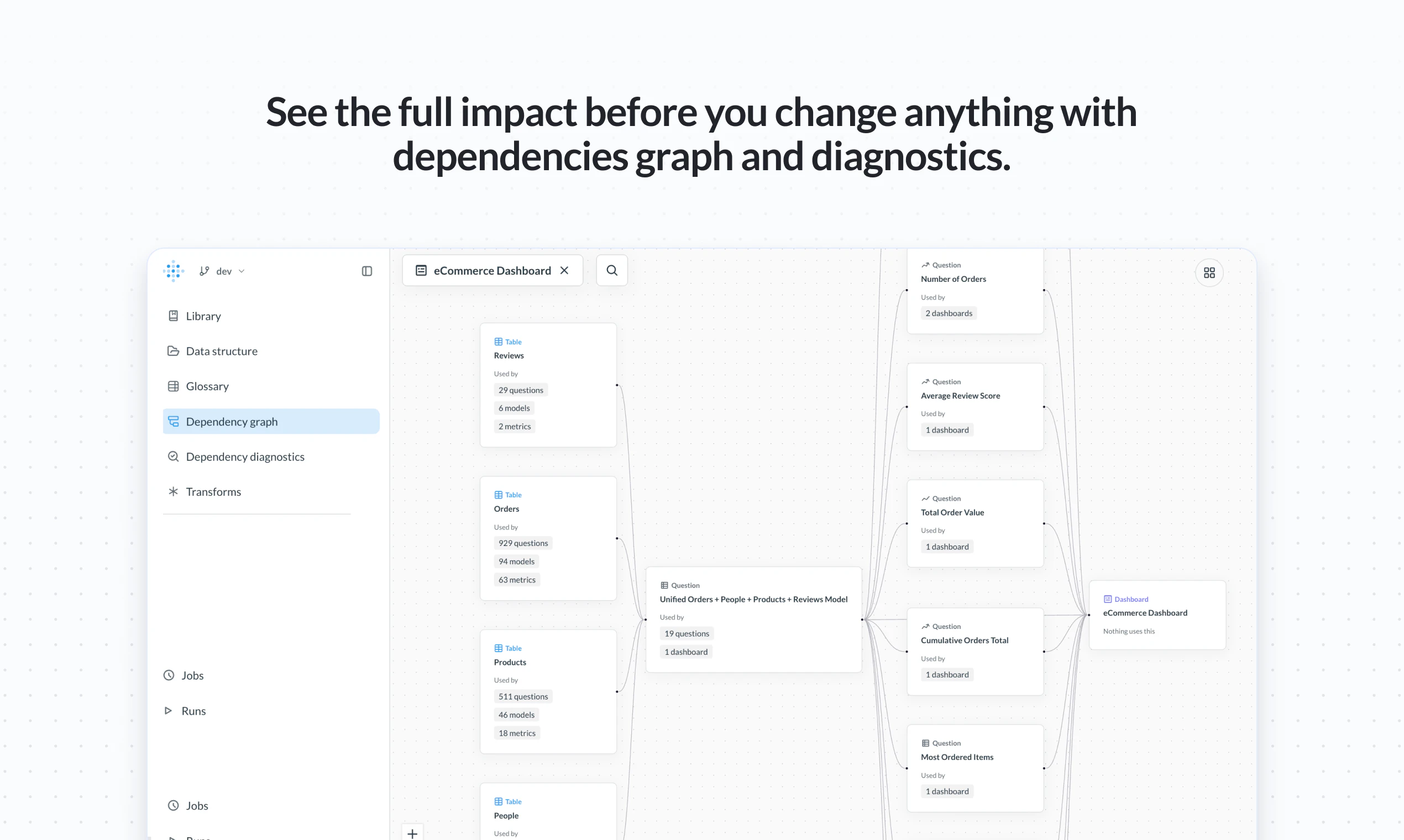
- Trace numbers back when something looks off: like seeing exactly which transform or question a dashboard number came from instead of guessing.
- Catch issues early: if a column got renamed and a query breaks, I know immediately which dashboards are affected before anyone asks “why is this number different?”

Everything in one place.

11
回复

Dependencies are my favorite! Being able to follow the data flow and know what the downstream impact to changes is super helpful!

11
回复

@vamsi_peri so many headaches avoided 😃

0
回复

Very exciting launch. Been using Data Studio for a while, and I love how easy it makes it to build (sql/python transforms + library + remote sync) and correct (dependency graphs) a robust, intuitive data environment that other people can actually use and build from 🎉

10
回复

The "what does active user mean" problem is real and expensive. Every company I have worked at has had at least three competing definitions living in different dashboards. The shared semantic layer approach makes sense - it is the same problem that good data teams solve manually, just formalized. How does Data Studio handle it when business definitions legitimately change over time - does it version the metric or just update in place?

7
回复

@mykola_kondratiuk Version. Definitely version =)

3
回复

Congrats on the launch! This is a big step forward in making data easier to work with and trust across teams

6
回复

@_roman 🤝

0
回复

The dependency graph feature is what sells this for me. Been burned too many times by renaming a column upstream and only finding out days later when a dashboard breaks. Having that visibility built into the same tool where you define metrics feels right — no more duct-taping dbt + Looker + docs together.

4
回复

@letian_wang3 We feel your pain. We hope this saves you some time and duct tape

0
回复

As a non-technical person using Metabase, having verified datasets and predefined metrics that are owned by someone who actually knows what they're doing makes it way easier for me to run the reports i need, and be confident in the answers I get.

I haven't asked Metabot yet, but i'm pretty sure she feels the same.

2
回复

Great to see Metabase still going strong. I used it a couple years ago on a personal project and I liked it a lot. 

2
回复

@gregdingle thanks for your support!

0
回复
#9
Google Ads MCP Server
Run Google Ads from your choice of AI. Skip the UI maze
136
一句话介绍:一款托管式MCP服务器,允许营销人员直接在Claude等AI助手内通过自然语言指令创建和管理Google Ads广告活动,省去了复杂的云配置和界面操作,解决了营销人员在广告投放中效率低下和操作门槛高的痛点。
Productivity Marketing Artificial Intelligence
AI营销工具 Google Ads管理 无代码集成 MCP服务器 自然语言交互 营销自动化 效率提升 SaaS 付费广告 托管服务
用户评论摘要:用户认可其免云配置对非技术营销人员的价值,并询问批量创建等具体功能。建议网站需更清晰传达其“策略层”价值以支撑定价。创建者回复积极,确认了单指令创建活动的核心能力。
AI 锐评

Google Ads MCP Server(HireOtto)的亮相,远不止是又一个API包装器。它精准地刺中了两个行业顽疾:一是Google Ads后台日益复杂的“开关迷宫”对营销人员心智的消耗;二是早期MCP工具只提供“骨骼”却无“肌肉和神经”,导致非技术用户望而却步或操作危险的窘境。

产品的真正价值在于其“有主见的自动化”。创始人基于资深营销背景,将最佳实践与策略判断内化为产品默认设置与安全护栏,这使其从单纯的“执行管道”升格为“数字营销副驾驶”。它处理的不是简单的指令翻译,而是包含了成本、策略合规与效果预设的“工艺层”。这解释了其敢于向 agencies 和 in-house 团队收费的底气——它售卖的是封装了的专业经验与风险规避能力。

然而,其成功高度依赖于MCP生态的普及与AI客户端(如Claude)的稳定性。当前它更像是一个为高阶玩家准备的“效率外挂”,而非颠覆性平台。其长期挑战在于:如何将更多隐性的营销“手艺”持续编码化,以应对快速变化的广告平台政策与算法;以及如何在提供“有主见”服务的同时,保持足够的灵活性,满足不同行业、不同阶段企业的个性化需求。如果它能跨越这些鸿沟,或许能成为连接AI智能与商业效果的关键中间件。

查看原始信息
Google Ads MCP Server
Launch and manage Google Ads straight from your MCP client (e.g., Claude) with a hosted, remote MCP server. No Google Cloud setup, no JSON edits, no terminal. Built by a marketer, for marketers.
Hey PH! 👋 Suyash here, builder of HireOtto. I spent years in paid search — GroupM, MightyHive, then solo marketer at a B2B SaaS startup. The strategic parts I loved. The 40+ toggles per campaign setup, manual pacing checks, "how's our CAC?" interruptions — that's what HireOtto is here to kill. When MCP took off, the obvious move was to wrap the Google Ads API and ship. I didn't want to do that. 🚫 A bare wrapper gives you raw access but none of the judgment — it'll happily create a campaign with terrible defaults until money burns. HireOtto is opinionated by design: practitioner defaults baked in, policy-safe settings auto-applied, the guardrails an experienced PPC manager would set up. It handles the craft layer, not just the execution layer. ✅ Started with a waitlist, MCP won over Slack clearly, iterated with early users. Now at 150+ users across agencies, freelancers, and in-house teams. Paste one URL into Claude or ChatGPT, connect your Google Ads account, start prompting. No terminal, no JSON, no UI maze. Would love your feedback! 🙌
2
回复

I love the idea, however the "It handles the craft layer, not just the execution layer."-part is not well reflected on your website! After reading this the pricing made a lot more sense!

1
回复

@fynn_merlevede Feedback noted for the website. Thanks!

0
回复

Can the MCP server handle bulk campaign creation or is it more suited for managing one campaign at a time through prompts? The no Cloud setup angle is a huge win for non-technical marketers, nice launch!

1
回复

@mateuszjacni thank you, the no-cloud-setup experience was one of the main reasons I built HireOtto. I’d seen too many non-technical marketers get blocked before they could even try something useful. On bulk campaign creation: HireOtto is modular by design. One tool call usually handles one campaign, but not necessarily one prompt. In practice, clients like Claude can chain tool calls very well, so a single prompt can lead to multiple campaigns being created in sequence.

0
回复

I've been using it for a few days! So far very happy with how it works, great work Suyash!

1
回复

@jasonhowie Thank you! :)

0
回复

Can you literally setup a campaign using that?

1
回复

@kamil_maksymowicz Yes! You can literally just say "Create a campaign 'XYZ' targeting NAMER at $50/day" inside your MCP client and the server does that within seconds. Worth a try? You can similarly add ads, keywords, pull reports, check account settings and more. :)

3
回复
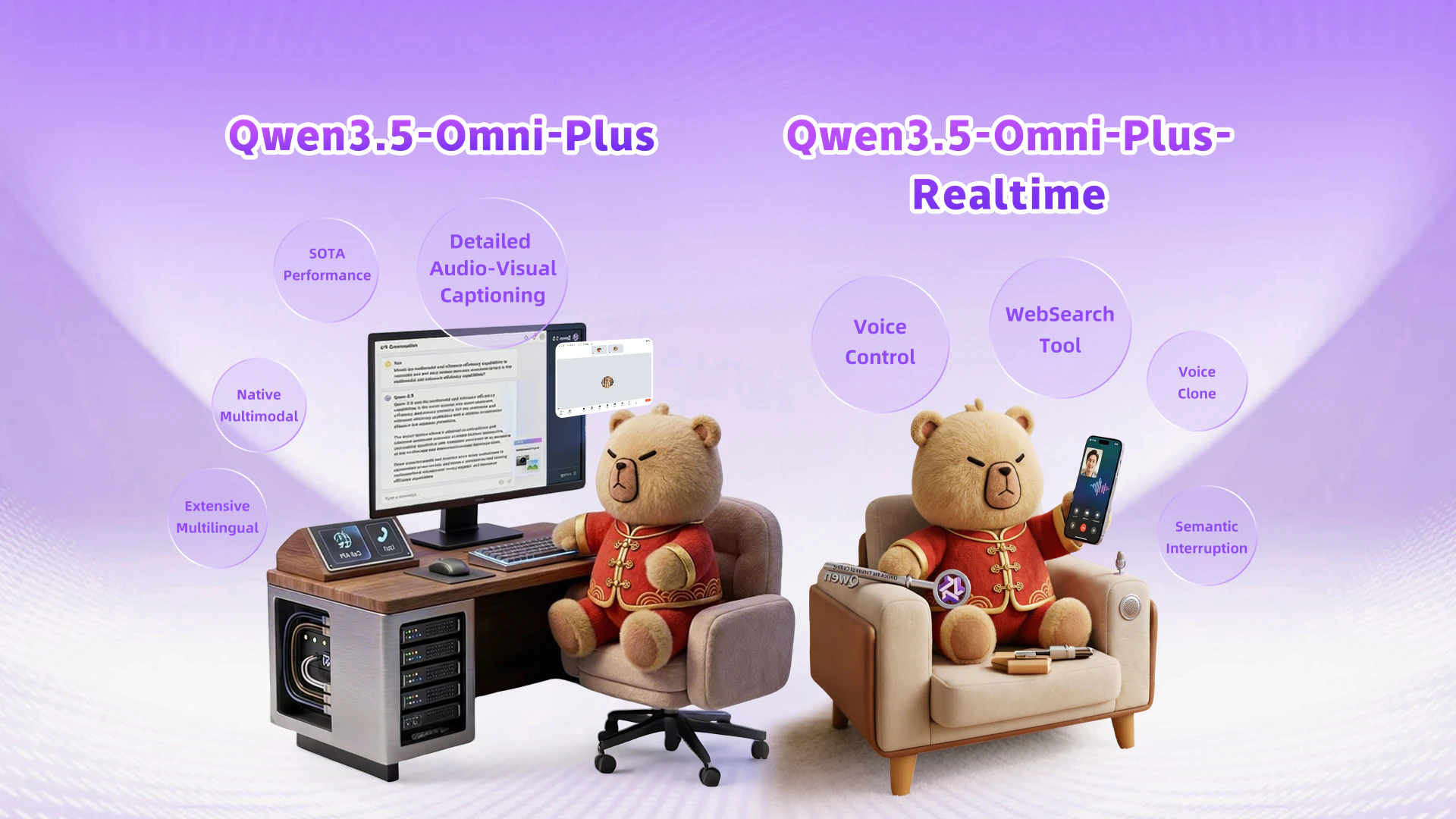
#10
Qwen3.5-Omni
A native omni model for voice, video, and tools
131
一句话介绍:Qwen3.5-Omni是一款原生多模态AI模型,通过整合文本、图像、音频、视频的实时交互与理解能力,在需要自然、流畅、多感官交互的智能助手、内容创作与客服等场景中,解决了传统AI模型模态割裂、交互延迟的痛点。
API Artificial Intelligence Development
多模态大模型 实时语音交互 音视频理解 语音克隆 工具调用 网络搜索 原生全模态 AI助手 人工智能平台 闭源模型
用户评论摘要:评论者(疑似官方或知情者)热情介绍了产品功能亮点,如多模态整合、实时交互和音视频“氛围编码”,并确认模型暂未开源,目前可通过Hugging Face演示或官方API体验。核心建议是希望其能尽快集成到“Coding Plan”中。
AI 锐评

Qwen3.5-Omni的发布,与其说是一次技术升级,不如说是对当前AI应用范式的一次激进押注。它试图将“多模态”从简单的输入输出拼接,推向一个深度融合、实时响应的“原生”系统。其真正的价值不在于功能列表的罗列,而在于将“语义打断”、“实时语音控制”等交互细节作为核心卖点,这直指当前语音助手体验生硬、无法自然插话的顽疾。

然而,其“闭源”状态与通过API、Demo体验的现状,暴露了其战略本质:这很可能不是一次面向开发社区的馈赠,而是一次商业能力的集中展示和技术路线的宣言。它旨在证明,在通向通用人工智能的道路上,无缝融合多种感官信号并实现低延迟交互,是一个比单纯追求参数规模更关键、也更艰难的赛道。其宣传的“音视频氛围编码”概念颇具想象力,暗示其可能追求超越传统字幕生成的情感或语境理解,但这需要实际案例佐证,否则易沦为营销话术。

当前模型面临的挑战清晰可见:在闭源生态下,如何构建开发者护城河?其多模态能力的实际精度、延迟及成本,能否支撑其宣称的“实时”体验?在OpenAI的GPT-4o已然占据用户心智的战场上,Qwen3.5-Omni需要更独特的杀手级应用场景,而非仅仅功能对标。它或许代表了国内大模型向深度整合、体验优化方向的一次有力进击,但其成功与否,将取决于能否将炫技转化为稳定、可靠、可规模化的产品力,并在开源与商业化之间找到平衡点。

查看原始信息
Qwen3.5-Omni
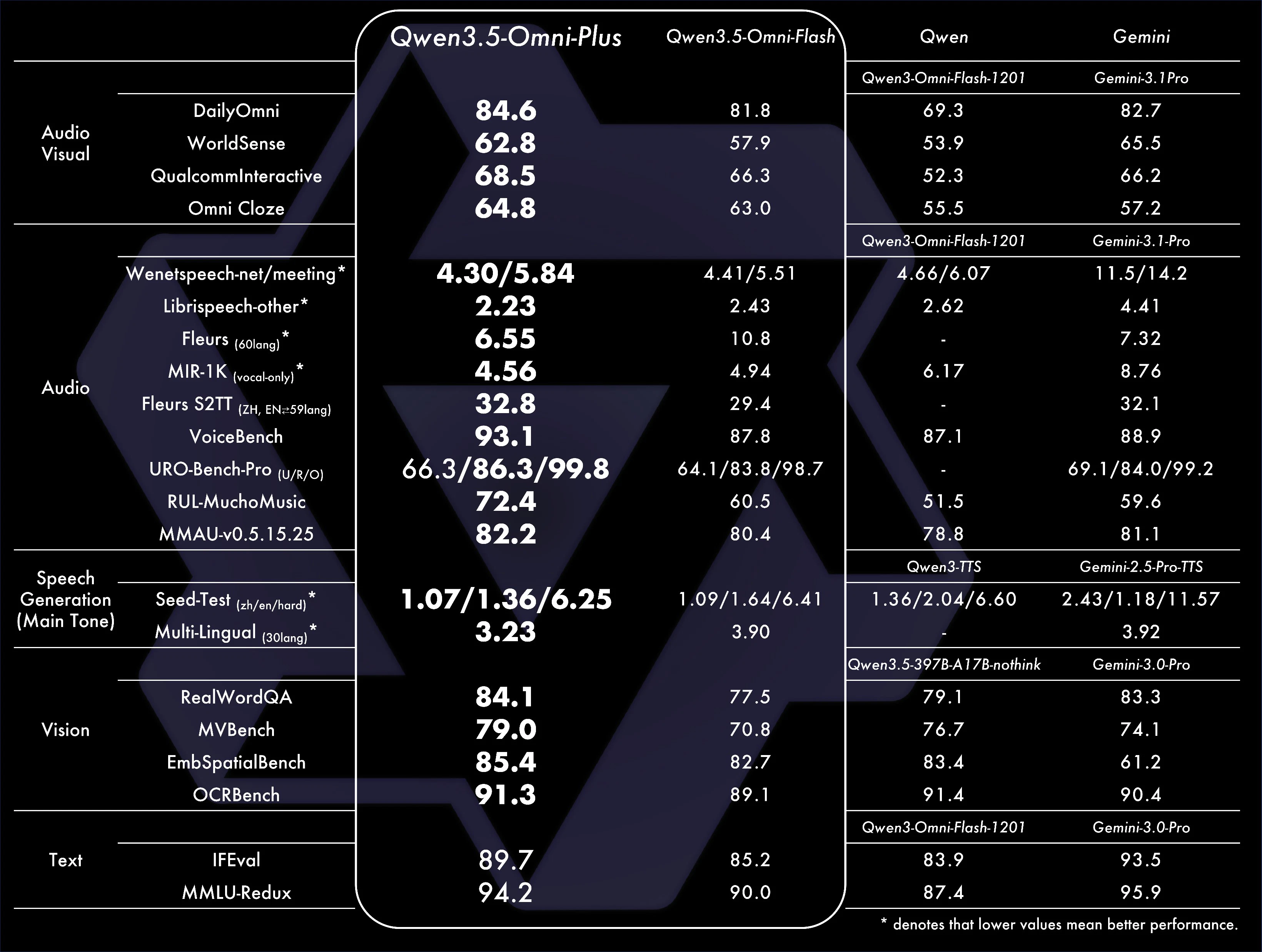
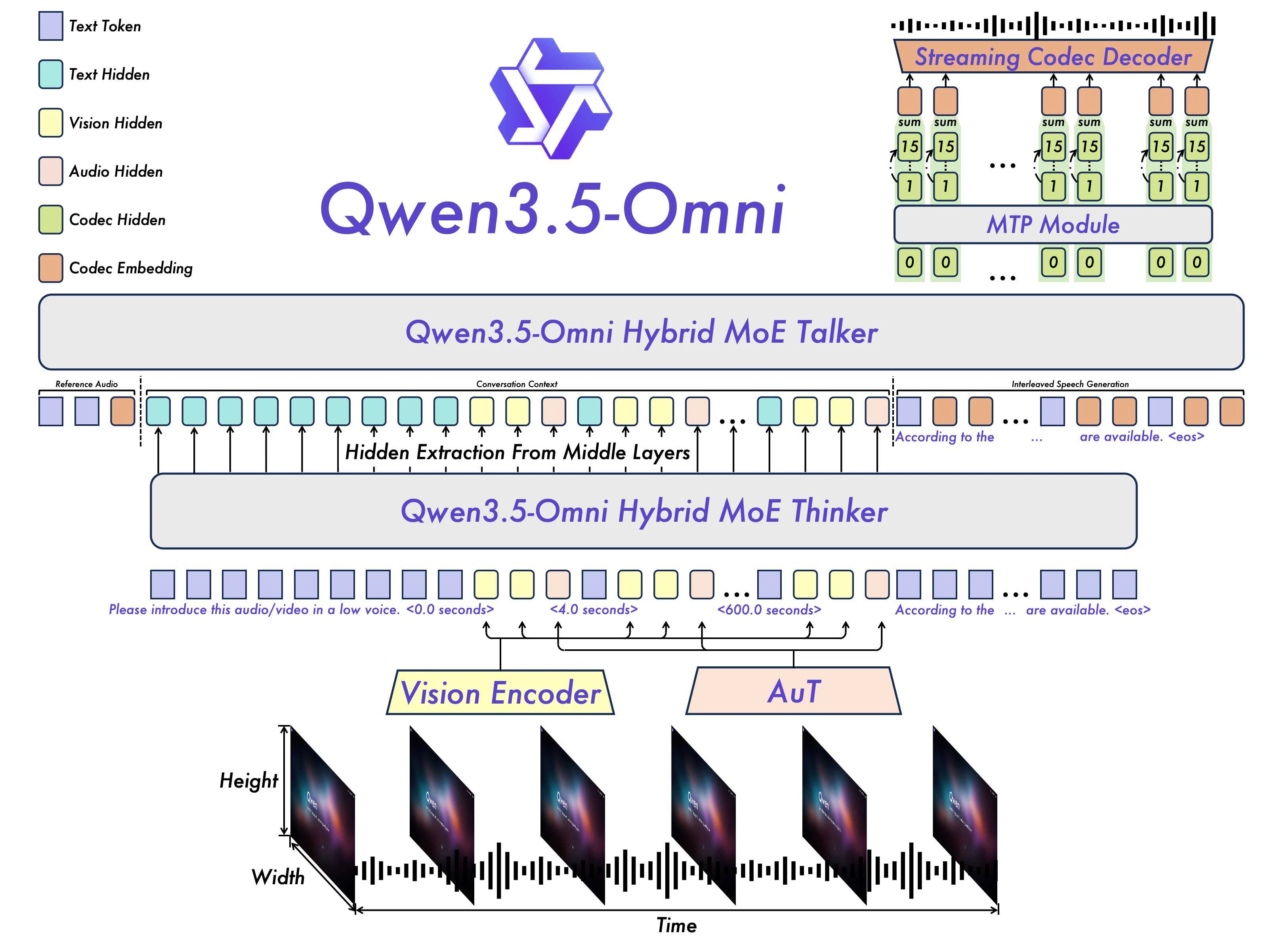
Qwen3.5-Omni is Qwen"s new native omni model for text, images, audio, and video, with stronger multilingual speech, realtime voice interaction, web search, function calling, voice cloning, and long-context audio/video understanding.

Hi everyone!

Qwen3.5-Omni is the latest native omni model from the Qwen family. It handles text, images, audio, and video in one system, pushes hard on multilingual speech, and adds a lot of the interaction stuff that actually matters in practice: semantic interruption, realtime voice control, WebSearch, Function Calling, and voice cloning. The audio/video captioning and "audio-visual vibe coding" angle is especially wild.

It is not open-sourced yet. Right now, the way to try it is through the Hugging Face offline or online demos, or through the official API.

Would love to see this land in the Coding Plan soon!

0
回复
#11
Unify
Hire AI colleagues you onboard just like real people
123
一句话介绍:Unify是一款允许企业像招聘真人一样招聘和入职AI同事的平台,通过实时屏幕共享、文档和通话进行交互,解决了传统AI工具需要预先精确描述复杂任务、缺乏团队融入感和实时协作能力的痛点。
Productivity Artificial Intelligence Virtual Assistants
AI同事 虚拟员工 智能体 实时协作 团队集成 个性化AI 自定义技术栈 持续学习 企业自动化 人机协作
用户评论摘要:用户普遍赞赏其“真人式”入职和实时交互体验,认为这解决了传统AI工具需预先完整定义任务的痛点。主要问题聚焦于AI价值实现的延迟期、团队动态变化时的自适应能力,以及自定义技术栈在硬件/物联网等具体场景下的应用潜力。
AI 锐评

Unify的野心不在于打造另一个“超级助手”,而是试图定义一种新的数字劳动力范式:具有人格、专属工作空间和成长记忆的“AI同事”。其核心价值并非单纯的任务自动化,而是通过模拟人类入职与协作的“高保真”交互,攻克复杂、非结构化工作流程的AI化难题。

产品最犀利的突破点在于其“实时、可引导、多任务并发”的底层架构。这直接挑战了当前主流AI代理“单次提示-执行-输出”的僵化模式,试图捕捉人类工作中模糊沟通、中途修正、多线程推进的真实状态。其宣称的“非OpenClaw”自定义技术栈,本质是为了摆脱现有框架在低延迟和深度交互上的束缚,追求“身临其境”的协作感。这是一个高风险高回报的技术选择,意味着放弃了成熟的生态,但换来了对体验的绝对控制。

然而,其宣称的“像真人一样学习与成长”既是最大卖点,也是核心风险。用户的疑问直击要害:企业需要为AI的“成熟期”投入多少真实的培训成本?当业务进程变化时,AI是主动适应还是需要重新培训?这本质上触及了AI作为“同事”的可靠性与维护成本问题。产品将AI拟人化到极高程度,也必然让用户以人类同事的标准来审视它,对其责任感、稳定性和“情商”提出更高要求。

总体而言,Unify是一次面向B端的大胆社会实验,它不再将AI视为工具,而是定位为组织中的“准成员”。其成功与否,不取决于技术是否炫酷,而在于能否在真实的商业场景中,证明这种深度集成、持续学习的AI角色,所带来的长期效率提升能显著超过其高昂的“入职”与“磨合”成本。它开启的是一条艰难但极具想象力的道路。

查看原始信息
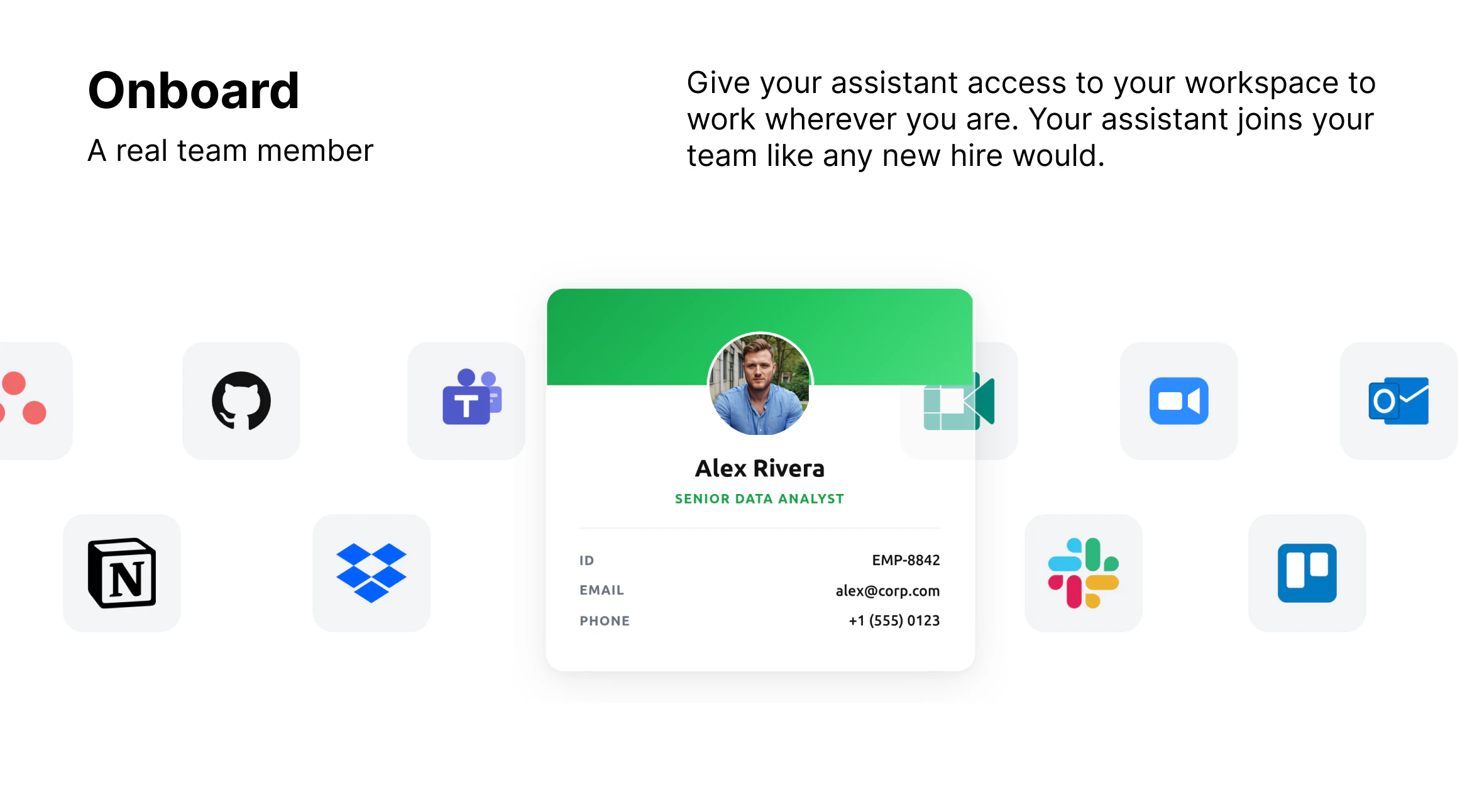
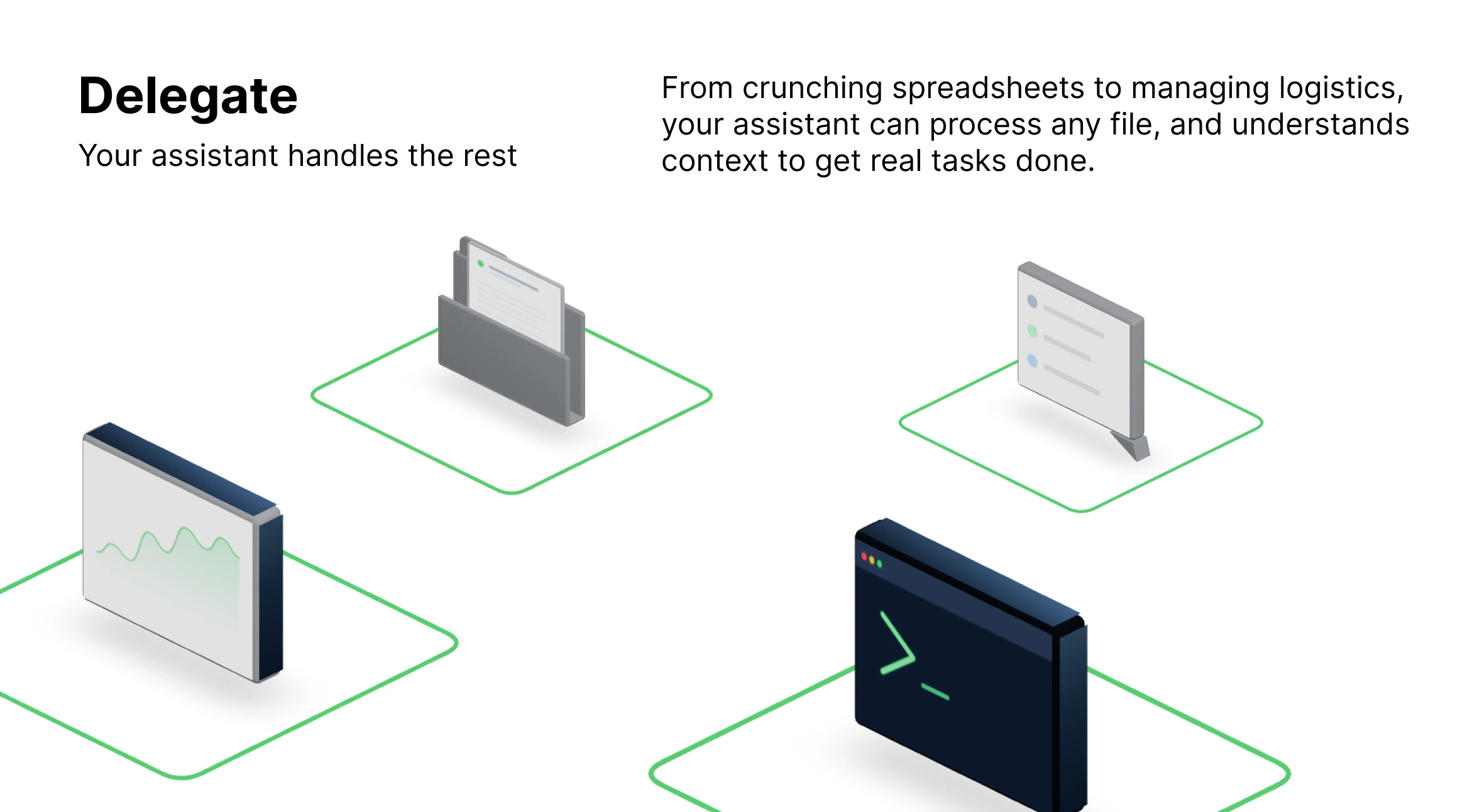
Unify
Hire AI colleagues you onboard just like real people — with live screenshares, docs, and calls. They have their own computer, work across your team's channels, and get better the longer you work with them. Built with a fully custom tech stack for realtime responsiveness (not OpenClaw) ⚡

We've been heads down for the past ~10 months building (custom stack, not OpenClaw) 🧑‍💻, and we’re excited to finally launch our virtual colleagues into the wild! 👀 Sign up with $50 free credits if you want to dive right in.

These are not limited to single-user assistants, but are actual colleagues that can integrate into the team — with their own name, their own personality, their own full computer, and their own ever growing memory and skills 🔧

You onboard them exactly how you'd onboard any new hire. Share your screen and walk them through your tools, send onboarding docs, record voice notes, hop on a call, or whatever is easiest. They learn how your team works, and they continually reflect, ask follow up questions, and improve over time 📈

We built our own stack from scratch for this (it's not built on top of OpenClaw, though we’re big fans 🦞). The reason is simple: making something that genuinely feels like a colleague, with a fully realtime “there in the room with you” experience — required a fundamentally different architecture.

Your new colleague can be simultaneously using their own computer, talking to you via voice on a meet, following your own live guided screenshare instructions, and consolidating all of these into new skills on-the-fly, just like a person can. They can be interrupted and redirected at any point in time, and they’re continually chunking all of their experience into reusable skills. People don’t perform tasks in “prompt then execute” windows, and neither should your virtual colleagues.

We're really happy with the feedback we’ve received thus far. We’ve helped many teams streamline processes which would have taken hours to “prompt” into a traditional AI tool or manually written skill, because these tasks are hard to fully articulate upfront. They require incremental judgment, context, and working with people to really learn and internalize.

If you're curious to see how human your virtual teammate can be, then give it a try with this free credit link! Would love to hear what people think (both positive and negative) - thanks! 🫶

5
回复

The onboarding model is what sets this apart. Most AI tools expect you to fully articulate the task upfront, but I love the gap @Unify bridges: learns through the same process a real colleague would. Tried the hiring flow and the "there in the room with you" experience comes through immediately. Excited to see where this goes.

2
回复

@olamide_od Thanks so much! Let us know if you have any other feedback as you continue to work with your new teammate 🤖

1
回复

So excited this is finally out in the wild! 🎉

We've spent the last few months building the brain of this thing — the part that lets your colleague hold a voice conversation with you, run a task in the background, and accept corrections mid-flight without starting over. Getting that to feel natural required rethinking a lot of assumptions about how agents should work.

Most tools in this space are still "prompt it, wait, get a result." What we think we've built is closer to how you'd actually work with a person — you can redirect it, ask how it's going, share your screen and walk it through something live.

Genuinely can't wait to see how people's first onboarding sessions go. Drop a comment if you try it — any feedback (good or bad) is more than welcome ❤️

2
回复

Really excited to see @Unify launch on Product Hunt today! 🚀

This has been a huge amount of work from the team over the past few months, and it’s exciting to finally share it. The idea of AI colleagues that learn how your team works - with memory, their own computer, and real onboarding is something I think people need to experience firsthand.


A big part of that comes from moving away from the typical "single loop, one tool call at a time" setup, and instead making things fully async and steerable. That means you can interject, pause, or adjust tasks in real-time while they're happening, and the system manages multiple nested actions concurrently without losing context or restarting from scratch.

If you get a chance to check it out, I’d genuinely love to hear what people have to say. 🫶

2
回复

"Gets better the longer you work with them" is a real value prop but also a real commitment - you're investing time onboarding something that might not pay off for weeks. How do you handle the gap between when someone starts and when it actually feels useful? And I'm curious how that plays out when the team itself changes. A real colleague picks up on shifts naturally - new person joins, priorities shift, processes evolve. Does the AI recalibrate on its own, or does someone have to actively re-onboard it every time something significant changes? Congrats on the launch!

1
回复

@jared_salois I should clarify, it's not like it knows nothing on the fist day, it just doesn't know the unique way you and your team work, and the more intricate parts of the tasks it needs to do. It's still very good on day 1 (powered by opus-4.6 under the hood). As for recalibration, yes it continually "refactors" and reorganizes all of the internally acquired skills and reusable functions. It therefore drifts as the team drifts. Let me know if there's anything else I can clarify, thanks! :)

0
回复

Hehe Daniel! It's super cool bro. I'm sure AI came to stay and hiring industry must adapt to it. On the other hand, onboarding is key for every Saas and I hope every founder here can see the same. All the best!!

1
回复

@german_merlo1 yeah definitely! 2026 is defo going to be a wild year for AI. Agreed that good onboarding is important, thanks! :)

0
回复

The custom tech stack for real-time responsiveness is a bold move—building outside of the OpenClaw ecosystem is no small feat! @dan_lenton , I’m curious how that low-latency architecture translates to more 'physical' workflows.

Since these colleagues have their own virtual computers, can they interface with hardware-specific environments? For example, could I onboard a Unify colleague to monitor IoT device clusters or manage remote hardware via a web console without the typical 'lag' you see in standard agents? Would love to hear how the custom stack handles that high-frequency data.

0
回复

@imdc on a technical level the main difference is the that the tool loops are fully asynchronous, downward steerable (`ask`, `interject`, `pause`, `resume`, `stop`), upward steerable (`notify`, `request_clarification`) and concurrent (run multiple tasks at the same time, with the same entity/personna in command). The OpenClaw skills are still discoverable via web search and git cloning though, and so the ecosystem (or any other OS ecosystem for that matter) still remain a git clone away, and can be ingested directly into their skills/knowledge for future interactions.

In terms of monitoring IoT device clusters, yes so long as there is some REST API package or similar that you can authenticate them with, then you should be good to go! Just the same as how you'd authenticate a person to do the same really :)

Let me know if you have any other questions!

1
回复
#12
IndieEvent
Meet Indie makers in your city
119
一句话介绍:IndieEvent通过组织同城线下活动,解决独立创造者搬迁新城市后社交孤立、难以找到同类社群的痛点。
Global Nomad Meetings Community
独立创造者社交 线下活动组织 同城社群 创业者网络 地理位置社交 社区运营 活动策展 社交破冰 城市适应 兴趣社交
用户评论摘要:用户主要关注活动组织方式(社区自组织或官方策展)、线上线下形式融合、小城市可用性、“独立创造者”定义清晰度、登录方式依赖X账户的局限性,以及目前覆盖范围(称支持全球)。开发者回复解释了活动生成门槛和登录设计考量。
AI 锐评

IndieEvent瞄准了一个真实但狭窄的缝隙市场:全球流动的独立创造者的线下即时社交需求。其价值不在于技术创新,而在于精准的场景捕捉——将“孤独的异地创新者”这一高价值但离散的群体进行地理聚类,试图将数字游民式的线上连接转化为在地的物理社群。产品逻辑清晰:用最低门槛(两人成行)触发活动,以Twitter账号作为信任锚点,降低陌生社交的初始风险。

然而,其深层矛盾已然在评论中显露。首先,依赖X账号登录是一把双刃剑,在保护安全的同时也构筑了围墙,排斥了非Twitter用户,这与“连接全球所有独立创造者”的愿景相悖。其次,“独立创造者”的定义模糊,可能导致社群稀释,从深度专业网络沦为泛泛的创业者社交。最关键的挑战在于网络效应悖论:在小城市或特定领域,能否聚集“临界质量”的用户是其存亡线,而评论中对小城市活动的担忧正戳中此痛点。

本质上,这是一个先有鸡还是先有蛋的社区平台难题。它的真正考验并非产品功能,而是冷启动策略和社区运营的精细度——能否在资源有限的情况下,在几个关键城市打造出标杆性的活动体验,形成口碑,再逐步扩散。若仅停留在“工具”层面,它极易被更通用的活动平台或社交媒体群组功能替代;其护城河应在于培育出独特的、高粘性的“独立创造者”文化认同和高质量的线下互动体验。当前版本更像一个最小化实验,验证需求真实存在,但通往可持续生态的道路依然漫长。

查看原始信息
IndieEvent
Don't be afraid moving to a new city just because you won't find anyone there
Hey hunters 👋 A while ago, I moved to a new country, 6000km away from home. I didn’t know anyone there. I felt lonely. That’s why I built IndieEvent, a free app that connects indie makers around the world and creates weekly events for them. So no matter where you go, you’ll always find indies like you 🗺️ Would love to hear what you think! Thanks, Alex
1
回复

Local indie maker meetups are underrated for early feedback. Is it self-organized by the community or does someone curate the events?

0
回复

As someone who has moved a lot in the past 15 years, this hits home. Curious whether this stays mostly in-person meetups, or if there's also an async/online layer for makers in cities where there's only 2-3 others?

0
回复

What does being an indie person mean? Like indie hacker? Maybe define it a bit more. Who/what/when/how are we meeting?

0
回复

Are events active in smaller cities yet? Would love this!

0
回复

@paula_nwadiaro Events are created once there is at least 2 people in the same city

0
回复

Why can not we login without X account ? Do you have a plan to add another login method?

0
回复

@melih_cevhertas Yeh it might be something I'll add. When I created the product I thought I'd be better to have a way to contact someone that is going to an event and ensuring everyone has a X account so you're sure you can contact anyone from the event

1
回复

How many countries are supported by far?

0
回复

@nayan_surya98 Every countries in the world are supported and more than 40,000 cities

0
回复
#13
UNCHIKUN
Track your poops with friends
117
一句话介绍:一款将如厕记录游戏化、社交化的健康追踪应用,通过趣味记录和好友分享,解决了用户对肠道健康羞于关注和难以坚持追踪的痛点。
Android Health & Fitness Social Media Apple
健康管理 健身追踪 社交游戏化 独立开发 多语言支持 肠道健康 习惯养成 趣味应用 移动应用
用户评论摘要:用户肯定其趣味创意和社交动机,关心隐私(是否需拍照),建议增加科学健康洞察。开发者回应无拍照功能以保护尊严,并计划基于布里斯托大便分类法数据提供健康提示。
AI 锐评

UNCHIKUN 聪明地用一个荒诞却普世的切入点,撬动了一个被严肃医疗应用长期忽视的角落:健康管理的心理门槛与社交正反馈。其真正价值并非在“大便分类图”或“排便地图”这些功能本身,而在于用 Duolingo 式的游戏化外壳和“Poop Buddies”的弱社交设计,将一件私密、略带羞耻感的日常生理行为,转化为可轻松谈论、甚至能产生互助激励的趣味仪式。这本质上是一种“认知重构”,通过游戏化消解健康监测的焦虑感,通过社交化提供坚持的软性约束。

然而,其挑战也恰恰隐藏于此。首先,社交功能的“生命力”存疑,“排便推送”的 novelty 效应过后,是否会对用户造成新的社交压力或信息骚扰?其次,从趣味记录到真正的健康管理,存在巨大鸿沟。目前它更像一个行为日记,缺乏与饮食、睡眠等数据的关联分析,其宣称的“肠道健康指示”缺乏闭环。开发者虽在评论中提及未来健康提示,但这需要严谨的医学背书,否则极易沦为娱乐性质的“安慰剂”。

该产品是独立开发者利用 AI 工具(Claude Code)高效实现创意的典范,其市场定位清晰——不求替代专业健康应用,而是充当一个低门槛的“健康意识启蒙玩具”。它的成功与否,将验证在高度敏感的健康数据领域,“趣味性”和“社交性”能否成为比“专业性”更有效的用户增长引擎。最终,它可能不会成为每个人的健康管家,但足以成为一个令人印象深刻的文化现象,提醒行业:有时,让用户先“玩”起来,比教育他们“正确”起来更有效。

查看原始信息
UNCHIKUN
UNCHIKUN is a poop tracker that turns bathroom visits into a fun, social experience — think Duolingo, but for your gut health. Track poops with cute characters, share stories with "Poop Buddies," and level up as you log more. Features include Bristol stool scale, volume tracking, poop map, calendar history, and quests. Built solo with Claude Code, localized in 56 languages, on iOS and Android. Because everyone poops — why not make it fun?

But we do not have to send photos or so, right? :D

4
回复

@busmark_w_nika Awesome question hhh! That's really embrassing to take pic for using this app

2
回复

@busmark_w_nika Haha no photos required, I promise! You just tap to log and optionally select the shape (Bristol scale) and volume. Your dignity stays fully intact.

1
回复
Hey Product Hunt\! I'm Ryo, a solo indie developer from Japan. I built UNCHIKUN because I noticed something funny — everyone poops every day, but nobody talks about it. Gut health is one of the most important indicators of overall wellness, yet there was no app that made tracking it actually enjoyable. So I made a Duolingo-style poop tracker where you can log your poops, track Bristol stool scale and volume, earn levels, complete quests, and even share your poop stories with friends ("Poop Buddies"). The entire app was built with Claude Code as my AI coding partner. It's localized in 56 languages and available on both iOS and Android. I'd love to hear your feedback — and yes, I want to know about your poops too. Happy tracking\!
1
回复

@tsuzuki817 Hi - do you have an email please so I can get in touch?
Thanks

1
回复

@tsuzuki817 man i lOve this idea 🙌🏽 gonna be so funn!!

"select the shape" sold me 💯

0
回复

Love this idea, do the poop buddies actually motivate each other?

1
回复

@paula_nwadiaro Absolutely! You can see your Poop Buddies' stories, react to them, and leave comments. You also get push notifications when they poop, so it's surprisingly motivating — nobody wants to be the only one who hasn't pooped today!

0
回复

<3<3<3

1
回复

@damjanski Thank you for the love! Happy pooping!

0
回复

This is awesome Ryo! I am free user to check the status of health from recognizing the shape of poop and how many times pooped. It will be much better if it is incorporated with the scientific evidence of health status of the shape of poop and how many times people pooped a day. Creative application!

1
回复

@jihwankim55 Thank you Jihwan! That's a great suggestion. I'm actually planning to add health insights based on Bristol stool

scale data and frequency patterns — like alerts when your gut health might need attention. Stay tuned, and thanks for using UNCHIKUN!

1
回复

Well if you could add friends in here, I think that's the ultimate friendship test!

1
回复

@nayan_surya98 It already exists! You can add "Poop Buddies" with a friend code and see each other's poop stories. It really is the ultimate friendship test — if you can share your poop, you can share anything.

0
回复

I'm digging the Duolingo framing here. I feel like gamification is a good way to get people drawn to an app. Did you go automated translation or work with translators for the 56 languages? If you automated it, any concerns of those translations being slightly off?

0
回复
#14
JobFlow
Your AI co-pilot for job hunting
110
一句话介绍:JobFlow是一款AI求职助手,通过自动聚合多平台职位、生成匹配度评分、并一键定制简历与求职信,解决求职者信息过载、申请材料重复准备及流程追踪混乱的核心痛点。
Analytics Artificial Intelligence Career
AI求职助手 智能职位匹配 简历生成 求职信定制 申请流程管理 欧洲求职 SaaS工具 生产力应用
用户评论摘要:用户反馈集中于三点:创始人阐述了产品解决自身求职痛点的初衷;用户对AI生成内容的准确性与责任归属提出质疑;用户询问AI评分模型是否能有效识别并评估非传统工作经历(如志愿者活动)。
AI 锐评

JobFlow精准切入了一个高痛点的成熟市场——求职,其真正价值并非在于技术上的颠覆,而在于对繁琐、重复的求职流程进行“一站式”的自动化整合与提效。它将求职者从信息收集、材料适配、状态跟踪的体力劳动中部分解放出来,本质上是一个流程优化型生产力工具。

然而,产品亮点的背面即是其风险的锋刃。评论中关于“AI虚构简历内容”的质疑直指核心软肋:当AI为适配职位而“优化”材料时,其真实性边界何在?法律与道德责任由谁承担?这不仅是技术问题,更是产品伦理与商业模式的风险点。其次,其“匹配评分”系统的黑箱性质同样值得警惕。若其算法过度偏向传统职业路径,则会如另一位用户所担忧的,成为对非传统背景求职者的新型歧视工具,固化职场偏见;反之,若评分过于宽松或失准,则会沦为无用的数字游戏,损害产品可信度。

目前其地域局限性(欧洲六国)既是精准的市场切入,也反映了其背后数据源与本地化适配的挑战。产品的长期竞争力将不取决于AI概念本身,而取决于:1. 职位数据的广度、深度与实时性;2. 匹配算法与简历生成在“真实性”与“适配度”间取得平衡的智慧;3. 能否构建一个可信、透明且负责任的AI应用范例。否则,它极易从“求职副驾”滑向“造假助手”或“无效花架子”的争议之中。

查看原始信息
JobFlow
Smart job hunting assistant powered by AI. Auto-discover jobs from multiple sources, get AI match scores based on your profile, and generate tailored CVs and cover letters for each role instantly. Track your full application pipeline — from discovery to offer — in one place. Currently available for the Netherlands, Germany, France, Belgium, Switzerland, and the UK.
Hi everyone! I'm Sen, and I built JobFlow to make job hunters' life easier. When I was job hunting, I got frustrated with the daily routine — browsing multiple job sites, rewriting cover letters, tweaking my CV for every application, and losing track of where I was in the process. So I built an AI-powered co-pilot that handles the tedious parts of the job search journey. It currently covers 6 European countries: the Netherlands, Germany, France, Belgium, Switzerland, and the UK. If you're hunting for jobs in any of these, give it a try and let me know what you think! Get started: https://www.jobflow.ink
0
回复

Who's liable when it lies on your resumes or cover letters? I've been having Gemini write cover letters for me based on job descriptions and it often says things that aren't true just because the job description calls for a specific skill or experience.

0
回复

Congrats on the launch! I’m curious how the match scoring handles non-traditional experience like volunteer work, community projects, and extracurriculars. Many people (especially younger ones) have real skills outside formal jobs but struggle to frame them. Does the AI know how to weight that kind of background, or does it mostly look for conventional work history?

0
回复
#15
QoreDB
The fast, open-source database client built with Rust
101
一句话介绍:一款基于Rust构建的快速、开源、本地优先的数据库客户端,通过一个应用支持9种主流数据库,解决了开发者需要同时使用多个低效、过时工具进行数据库管理的痛点。
Productivity Open Source Developer Tools GitHub
数据库客户端 开源软件 Rust开发 本地优先 多数据库支持 生产力工具 数据安全 桌面应用 开发者工具
用户评论摘要:用户肯定其解决多工具切换痛点的初衷,并关注其与TablePlus的差异化。开发者回应强调了沙盒、跨库联查、自带AI及生产安全防护等独特功能。同时,用户对其性能提升(启动速度)和开源模式表示认可与好奇。
AI 锐评

QoreDB的亮相,直指一个被长期容忍的行业尴尬:在云原生和开发者体验被反复咀嚼的今天,数据库GUI客户端这个关键枢纽却停滞不前,被Java时代的沉重遗产和功能割裂所统治。它并非简单地将九个数据库驱动塞进一个壳子,而是试图用现代技术栈(Rust+Tauri)和产品哲学,对“连接数据库”这一行为进行系统性重构。

其真正价值在于三个层面的“整合”:第一是技术整合,用Rust性能统一异构数据库的访问体验;第二是安全与工作流整合,“本地优先”的加密保险库和生产安全守卫,将散落的口令管理和风险意识规训到了工具内部;第三是高级功能整合,如跨库联邦查询和自带AI,开始模糊数据库客户端与轻量级数据操作平台的边界。

然而,其挑战同样鲜明。在TablePlus等已树立现代标杆的对手面前,其差异化功能(如沙盒、跨库JOIN)是否构成足够强烈的迁移理由?这些“杀手锏”对应的是否是广泛存在的高频场景,还是仅针对特定工作流的“痒点创新”?此外,“开源核心+一次性付费Pro版”的商业模式,在需要持续维护和云服务盛行的时代,其可持续性有待考验。

本质上,QoreDB是一位独立开发者对工具链“最后一公里”腐朽现状的一次精致反叛。它能否成功,不仅取决于其代码的速度与优雅,更取决于它能否精准定义并占领那个对性能、安全与深度工作流整合真正敏感的核心用户群。它可能无法取代所有场景下的DBeaver或TablePlus,但它有力地证明了,这个领域依然存在被重新想象的空间。

查看原始信息
QoreDB
Database tools haven't kept up. DBeaver is slow, pgAdmin feels stuck in 2010, and you're juggling 3 apps for 3 databases. QoreDB fixes this: one desktop app, 9 databases (PostgreSQL, MySQL, MongoDB, Redis, SQLite, DuckDB, SQL Server, CockroachDB, MariaDB), powered by Rust. Local-first : your credentials stay in an encrypted vault, your data never hits a cloud. Modern SQL editor, inline editing, SSH tunnels, production safety guards, full-text search. Core is Apache 2.0, free forever.
Hey Product Hunt 👋 I'm Raphaël, the solo developer behind QoreDB. I've been building this for months because I was tired of the same frustration every developer knows: opening DBeaver and waiting... and waiting. Switching to pgAdmin for Postgres, then to Compass for MongoDB, then to RedisInsight for Redis. None of them felt like they were made for how we work today. So I built the tool I wanted: one app, 9 databases, Rust-fast, local-first. A few things I'm proud of: → It's genuinely fast. Rust backend + virtualized grid. Scrolling through 100k rows is smooth. → Your data stays yours. No cloud, no account required. Credentials encrypted with Argon2 in a local vault. → It handles the hard stuff. SSH tunnels, production safety guards, multi-statement execution, full-text search across all tables. → The core is open source (Apache 2.0). Pro features exist for power users and teams, but the free version is a complete, production-ready tool. I'm a solo founder bootstrapping this, so every upvote and piece of feedback means a lot. Try it, break it, tell me what sucks, I read everything. What database tool do you currently use, and what drives you crazy about it? I'd love to hear. — Raphaël
3
回复

@raphplt How did you decide on the top 9 DBs to support first? Any wild ones you cut?

0
回复

I'm using TablePlus which supports all the databases you mentioned and it's fast enough for my needs. What's your differentiation?

1
回复

@tbson87 Fair point, TablePlus is solid and fast. Honest answer:

If TablePlus works for you, you probably don't need QoreDB.

But a few things we do differently:

  • The Sandbox. You edit locally, see a diff of every change (Insert/Update/Delete), and generate a clean SQL migration script before anything hits your database. TablePlus has no equivalent.

  • Cross-database federation. You can JOIN across two live connections in a single SQL query. Postgres table joined with a DuckDB file, for example. That one's hard to replicate elsewhere.

  • AI with your own keys. Ollama, OpenAI, Anthropic, Mistral, no subscription, no middleman, schema-aware context.

  • Production protection. Read-only mode per environment, mutation blocking, local audit log. Not just a visual flag.

  • And the model: open-source core (Apache 2.0), one-time payment for Pro. No subscription.

TablePlus nails the basics really well. QoreDB is more opinionated about the workflows around the data, not just the querying.

2
回复
Hey Raphaël, that image of opening DBeaver and just waiting, then switching to pgAdmin, then Compass, then RedisInsight is exhausting just reading it. Was there a specific day where you had like four different database tools open at once and thought why do I need a different app for each of these?
1
回复

@vouchy 

Haha yes, absolutely. The day I had DBeaver, Compass, RedisInsight and pgAdmin all open at the same time (each eating RAM, each with their own shortcuts, their own quirks) and I just thought: this is insane. We have amazing dev tools in every other category, and our database client is still a 2010 Java app. That was the day I started building QoreDB.

0
回复

Solo dev building a Rust-based database client that handles 9 databases? That's the kind of obsession that ships great tools. The DBeaver/pgAdmin problem is real — we use Supabase (Postgres) at ReadyPermit and the tooling gap is painful. Bookmarking this.

0
回复

The production safety guards are underrated in DB tooling. Destructive query protection is the kind of thing you only care about after you have made a painful mistake. Rust for a desktop DB client is an interesting call - curious how startup time compares to DBeaver in practice.

0
回复

@mykola_kondratiuk Exactly, it's one of those features that gets ignored until someone drops a prod table on a Friday afternoon, then suddenly it's the most important thing in the codebase.

On startup time: DBeaver typically takes 8-15s on a cold start depending on the machine, QoreDB is consistently under 1s. The Rust + Tauri combo avoids the JVM warmup entirely, so there's no "waiting for the app to be ready to be ready" phase. It's just open.

0
回复
#16
Planana AI
Break any skill into a plan you can actually follow
98
一句话介绍:Planana AI是一款AI学习规划工具,它将用户“学习机器学习”等模糊目标转化为清晰、可执行的步骤化计划,解决了初学者在信息过载和缺乏学习路径时产生的迷茫与启动困难问题。
Education Artificial Intelligence Online Learning
AI学习助手 技能学习规划 个性化教育 步骤化学习 生产力工具 教育科技 自我提升 目标管理
用户评论摘要:用户肯定产品“化混乱为结构”的核心价值,认为简化学习步骤是关键。主要疑问集中于:1. 资源是内嵌还是外链;2. 与直接询问ChatGPT制定计划的差异;3. 如何处理过于模糊的目标。另有用户主动提出希望提供详细反馈。
AI 锐评

Planana AI切入了一个真实且高频的痛点——学习启动阶段的“规划瘫痪”。其宣称的价值不在于信息聚合,而在于路径生成与结构化,这确实比通用ChatGPT的清单式回答更贴近“行动指导”。然而,评论中暴露的质疑直指其核心壁垒:第一,资源整合深度。若仅充当“计划生成器”而非“学习界面”,其用户粘性与护城河将十分脆弱,极易被集成了搜索功能的更强大AI助手覆盖。第二,计划的“动态有效性”。学习是一个非线性的反馈过程,当前产品强调的“可编辑”仅是基础,真正的“AI导师”价值应体现在能根据学习进度与效果动态调整计划,这需要更深度的算法与数据闭环。第三,目标模糊性处理。这本质是AI规划类产品的通病,如何通过交互引导用户澄清需求,或建立分层规划体系,是产品能否从“有趣玩具”变为“可靠工具”的关键。

长远来看,其愿景“结构化、个性化的AI导师”是正确的方向,但当前版本更像一个精心设计的MVP。成功与否取决于团队能否快速迭代,将焦点从“计划生成”转向“学习过程管理”,并构建难以被通用大模型简单复用的专属工作流与内容体系。否则,它可能只是一个在AI能力平民化过渡期的优美注脚。

查看原始信息
Planana AI
Learning something new often starts messy — searching around, opening too many tabs, and trying to piece things together. Planana turns a vague goal like “learn machine learning” into a clear step-by-step plan so you can stay focused on learning instead of figuring out what to learn next. Our vision is to build an AI tutor that helps anyone learn anything in a structured and personalized way.
Hey everyone! 👋 I’m the maker of Planana AI. The idea came from a pretty common frustration: whenever I wanted to learn something new (like ML, a programming language, or even a new field), the first step was always chaotic — lots of searching, too many resources, and no clear path. So I built Planana to turn a vague goal like "learn machine learning” into a structured plan you can actually follow. Instead of just listing resources, the goal is to help people stay focused on "what to learn next". Plans are generated with AI but can also be edited and refined by the user. Long term, I’m interested in exploring whether an "AI tutor" could make learning more personalized and structured than traditional paths. This is still early, so I’d really appreciate any feedback, ideas, or criticisms. Thanks for checking it out 🙏
2
回复

@orangemoon54123 Does it show the resources within the app or we have to leave the app and maybe go to YouTube and other sources?

2
回复

This is how learning should work. Most people quit not because they lack motivation — they quit because the plan sucks. Breaking skills into followable steps is underrated. We do something similar at ReadyPermit — turning complex zoning/permit research into a 20-second answer. Simplification wins.

0
回复

The structured plan idea makes sense, but Im wondering what makes this different from just asking ChatGPT "give me a learning plan for X." ? Is it the follow-through - the daily structure and editing - or does Planana do something different at the generation stage too? And what happens when someone types a goal that's too vague to plan from? Congrats on the launch!

0
回复

Congrats on the launch, @orangemoon54123!

I often have too many tabs open when I learn new stacks. Planana feels like fresh air. The design is clean. And the 8-week Python example plan looks realistic.


I've a few ideas that you might find useful. Where can I send it?


And good luck again man!

0
回复
#17
Autoclaw
One-click Openclaw set up by Z.AI
97
一句话介绍:Autoclaw通过一键本地部署AI助手,让用户无需API密钥和复杂配置,即可在聊天界面中调用真实工具处理复杂任务,解决了AI工具使用门槛高、数据隐私担忧及流程割裂的痛点。
Productivity Maker Tools
AI助手 本地部署 一键安装 工具调用 隐私安全 无API依赖 开源模型 自动化工作流 低门槛AI 桌面应用
用户评论摘要:用户高度认可其“一键本地运行、无需API密钥”的核心优势,认为这是降低使用摩擦、赢得用户的关键。有用户将其视为ClawX的替代品,并强调了零配置和完全本地化对数据隐私和 adoption 的重要性。
AI 锐评

Autoclaw所标榜的“一键本地部署OpenClaw”,其真正的锋芒并非在于创造了新的AI能力,而在于它试图以极致粗暴的方式,斩断当下AI应用落地中最常见的两根“绊马索”:配置复杂性与数据隐私焦虑。

产品将“无需API密钥”、“完全本地运行”作为核心卖点,直击了当前AI工具生态的两大软肋。对于中小团队、隐私敏感行业及广大技术尝鲜者而言,管理API成本、应对网络延迟和担忧数据上云是实实在在的障碍。Autocaw通过本地化部署,将计算和数据闭环在用户终端,这不仅是技术路径的选择,更是一个清晰的市场定位:服务于那些将“控制权”和“隐私”置于“模型绝对最新”之上的用户群体。其支持自定义模型(如GLM-5-Turbo)的灵活性,则是在本地化前提下,为用户保留了一条性能升级的通道,避免了与开源生态脱节。

然而,其价值背后也潜藏着明显的挑战与疑问。首先,“一键安装”的优雅背后,是本地硬件(尤其是GPU)资源的硬约束,这本质上将用户门槛从“技术配置能力”转移到了“硬件持有成本”,其普及天花板清晰可见。其次,产品作为“OpenClaw”的封装器,其长期价值高度依赖于底层开源框架的生态活力与工具扩展能力,自身更像一个便捷的“启动器”,而非生态定义者。最后,评论中与ClawX的类比,恰恰揭示了该领域可能正陷入同质化竞争的初期,功能差异点可能迅速被抹平。

综上所述,Autocaw是一款精准的“痛点缓解型”产品,在AI平民化浪潮中选择了“深度本地化、强控制感”这一细分赛道。它未必能吸引追求尖端模型能力的科技极客,却可能在企业边缘场景、个人深度工作流中开辟出一片稳固的利基市场。它的成功与否,将取决于其能否在“极简安装”与“本地复杂环境适配”之间维持长久平衡,并构建起围绕本地AI助手的独特工具生态。

查看原始信息
Autoclaw
Set up your AI assistant in one click and let it handle complex tasks using real tools, without leaving your chat.

AutoClaw lets you run OpenClaw locally on your own machine.

  • No API key required: download and start immediately

  • Model flexibility: bring any model you like, or use GLM-5-Turbo, optimized for tool calling and multi-step tasks

  • Fully local: your data never leaves your machine

1
回复

One-click local AI setup is the future. The friction of API keys and config files kills adoption. We learned this at ReadyPermit — the moment we got our zoning reports down to 20 seconds with zero setup, everything changed. Remove friction, win users.

0
回复

Is it like clawx alternative?

0
回复
#18
FireAPI
Discover, consume, and monetize APIs in one place
96
一句话介绍:FireAPI是一个一体化API平台,帮助开发者轻松发现、构建、管理并通过灵活的定价策略将API货币化,解决了从开发到商业化过程中基础设施、支付和分发复杂的核心痛点。
API SaaS Developer Tools
API平台 API市场 API货币化 开发者工具 无服务器 微服务 SaaS 初创企业 企业服务 支付集成
用户评论摘要:用户反馈积极,认为API市场领域存在缺口,该产品能节省集成时间。创始人互动透露了面向全球(尤其是印度等新兴市场)的支付解决方案。主要问题集中在设置流程的易用性上,例如如何快速配置分级定价和自动支付。
AI 锐评

FireAPI瞄准的是一个真实且棘手的“脏活累活”市场:API生命周期管理。其真正价值并非简单的“API商店”概念,而在于试图成为API领域的“Shopify”——为API提供者封装所有非核心但必需的商业与技术中台能力,包括认证、计费、限流和支付。

产品犀利之处在于两点:一是精准切入“货币化”这一最终环节,直击开发者将代码转化为收入的痒点;二是其地缘性洞察,挑战了以PayPal为中心的全球支付霸权,针对印度等新兴市场提供替代方案,这不仅是功能差异,更是战略性的市场切入选择。这使其超越了技术平台,具备了支付基础设施的潜力。

然而,其最大挑战也在于此。平台的双边网络效应构建难度极高:既要吸引足够多优质的API供给方,又要吸引消费方形成活跃市场。评论中“节省我们小时”的呼声证明了需求存在,但供给侧的冷启动更为关键。创始人强调的“简单发布”是吸引供给端的钩子,但平台的长期价值取决于能否成为API消费者的首选发现渠道,而不仅仅是发布工具。若仅停留在工具层,它将面临众多云厂商和API网关产品的挤压;若想成为市场,则需在生态运营上投入巨资。其成败关键在于,能否在巨头觉醒并利用现有流量优势碾压之前,快速建立起足够坚固的供需双边网络。

查看原始信息
FireAPI
Discover, build, and monetize APIs & App/Tools with FireAPI. Access thousands of APIs, create custom scraping solutions, manage API analytics, and monetize your APIs with flexible pricing. Perfect for startups, SaaS, and enterprises.
Hey everyone 👋 I’m the founder of FireAPI, and I’m super excited (and honestly a bit nervous 😅) to finally share it with you all today. I built FireAPI because I kept running into the same problem - building, managing, and monetizing APIs is way more complicated than it should be. You need infra, docs, auth, pricing logic, rate limits, payments… and it quickly becomes a mess. So I decided to build a platform that simplifies all of this. 🔥 What FireAPI does: Build and publish APIs easily Add authentication, rate limiting & access control Monetize with per-request or subscription pricing Built-in payment gateway support API marketplace-style platform for distribution Whether you're a solo developer, startup, or building your own API business - FireAPI is designed to help you go from idea → live API → earning 💸 💡 Why I built FireAPI While building and launching products, I noticed a big gap - most global platforms rely heavily on PayPal or limited payout systems, which don’t work well for many developers, especially in India and other regions. At the same time, publishing APIs or tools is still too complex. You have to handle infrastructure, authentication, subscriptions, payments, and distribution - all separately. So I built FireAPI to solve both problems: 🌍 Multiple payout options (not just PayPal) for global developers 🇮🇳 Built with India & emerging markets in mind ⚡ Simple way to publish APIs, tools, and apps 💳 We handle subscriptions, billing, and access control 🧩 Focus on letting developers build — not manage complexity The goal is simple: Make it easy for any developer, anywhere, to launch, manage, and monetize their APIs or tools without worrying about payments or infrastructure. 🙏 I’d love your feedback: What features would you want next? Anything confusing or missing? Would you use this for your own APIs? I’ll be here all day answering questions and taking feedback. Thanks a lot for checking out FireAPI ❤️
2
回复

@akc97 Ah, not this is interesting. I''ll go and explore!

0
回复

@akc97 Hey, congrats on the launch Quick question: For someone building APIs to monetize side projects, how easy is it to set up tiered pricing + auto-payouts in week 1?

0
回复

Congrats on the launch! 🎉 I am interested in being a developer 🧑‍💻and I will explore it further 🚀.

2
回复

API marketplaces are criminally underbuilt. The fact that devs still have to hunt across docs, forums, and random GitHub repos to find the right API is broken. We pull from dozens of APIs at ReadyPermit for zoning, flood, and permit data — a marketplace like this would save us hours. Good luck with the launch.

0
回复
#19
MacMonitor
Real-time Apple Silicon system monitor for your menu bar
95
一句话介绍:一款专为Apple Silicon Mac设计的免费开源菜单栏系统监控工具,实时显示CPU、GPU、内存等核心指标,解决了用户在Mac异常发热或卡顿时无法快速、免费定位系统资源占用根源的痛点。
Open Source Developer Tools GitHub Menu Bar Apps
系统监控 macOS工具 开源软件 Apple Silicon 菜单栏应用 性能监测 硬件监控 免费工具 开发者工具 资源管理
用户评论摘要:用户赞赏其作为iStatMenus的免费开源替代品,解决了付费订阅痛点。开发者自述创作源于自身M2 Mac运行AI会话时过热却无直观工具可用的困境。用户询问是否支持能效核/性能核细分及温度监控,开发者回应温度数据受限但可通过底层工具实现,并计划优化。
AI 锐评

MacMonitor的爆火,表面上是填补了“Apple Silicon原生免费监控工具”的市场空白,但其深层价值在于精准刺中了苹果生态的一个隐性矛盾:日益强大的硬件与日益封闭的系统可观测性之间的断层。苹果的软硬一体优化在带来流畅体验的同时,也构建了一个“黑箱”,当M系列芯片因高强度计算(如AI编程)异常发热时,用户竟无官方工具进行底层诊断。这正是MacMonitor的生存空间。

它并非技术上的颠覆者,其数据依赖于mactop等现有开源组件,本质是一个优秀的“集成者”和“体验重构者”。它将命令行里晦涩的数据,转化为菜单栏上持续静默的“系统脉搏”,并通过一键展开的仪表盘,提供了从宏观到进程级的全景视图。这种“轻量前台+深度后台”的模式,以近乎零成本的姿态,满足了从普通用户到开发者“即时解惑”的核心需求——我的电脑到底在干什么?

然而,其挑战也同样明显。首先,技术上限受制于苹果开放的API,如温度读取等关键数据可能始终是“曲线救国”。其次,作为个人开源项目,其可持续性面临考验:能否持续维护以跟上macOS的快速迭代?复杂的硬件指标可视化与极简的菜单栏体验之间如何平衡?它巧妙地避开了与iStatMenus在功能广度上的正面竞争,以“专注、免费、开源”切入,但若想长久立足,或许需要在“洞察”而非“监控”上做文章,例如引入异常行为预警、功耗模式建议等更高阶的智能分析,从“显示问题”走向“帮助解决问题”。当前,它是一面映照系统状态的镜子,未来能否成为一位诊断师,将决定其工具价值的上限。

查看原始信息
MacMonitor
MacMonitor is a free, open-source system monitor built specifically for Apple Silicon (M1–M4). It lives in your menu bar, updates every 2 seconds, and opens a full dark-mode dashboard showing CPU per-core usage, GPU, memory, battery health, power rails, network, disk I/O, and your top processes — all from the metal, no subscriptions. Install in one command: brew tap ryyansafar/macmonitor && brew install --cask macmonitor
My Mac was running hot and I had no idea why. I went down the rabbit hole — tried a bunch of open source tools on GitHub, some terminal commands that half-worked, deep cleaning scripts that did something but I could never tell what. Eventually I caved and tried iStatMenus. It was great, but I didn't want to pay a subscription just to know what my own computer is doing. What I actually wanted was simple: something always visible, that just works, that tells me right now — is my Mac okay? What's eating the CPU? Why is it warm? Is the battery degrading? Nothing free quite hit that. The terminal stuff was powerful but you had to remember the commands. The open source apps I found were either outdated, required too much setup, or crashed on Apple Silicon. So I built MacMonitor. Starts in your menu bar. Updates every 2 seconds. One click opens the full picture — every core, GPU, temps, battery health, power draw, what process is responsible. No subscription, no account, no nonsense. Install in one line: brew tap ryyansafar/macmonitor && brew install --cask macmonitor Fully open source on GitHub. If your Mac is running hot and you're not sure why — this is for you. What made you start looking for something like this?
1
回复

@ryyansafar What was the biggest "aha" surprise in your own Mac's metrics that sparked building this?

2
回复

Free and open source alternative to iStatMenus? Sold. I've been running Flutter builds and Claude Code sessions at the same time and my M2 starts cooking. Having this in the menu bar without paying a subscription for something that should honestly be built into macOS is nice. Does it track thermals too or just CPU/GPU/RAM?

1
回复

@thenomadcode HAHA that is why I made this. I had multiple Claude Code sessions and even my M2 air was just cooking. I tested out multiple things to better optimize my Mac or at least see what was burning my Mac other than what Is required. A couple of applications that inspired me were tw93's Mole CLI which was a really good deep cleaner. It had a status option to see the current stats of my Mac including all cores, so I wanted to do something similar to that including the cleaning and optimizing. Coming to thermals, Apple being Apple doesn't let us view the temperature anyway even with proper commands(at least thats what I noticed) and mactop came in handy. As of now this is built over mactop and I plan on moving to a sole application much more optimized. and yes this is accurate, as I tried out running multiple web scrapers on my Mac and it physically started heating up like crazy and I could see it in the menu bar live. I just wanted to move away from the terminal cuz I didnt want to shift windows or tabs every now and then to check my Macs condition. so this was more of an ease of use tool. It’s a labor of love to keep this open-source and free, so if you find it saves you from a 'cooked' Mac, feel free to support the project on GitHub or buy me a coffee! It really helps keep the updates coming.

0
回复

Does it expose per-core efficiency vs performance cluster breakdowns on M-series chips? The 2 second refresh rate with low overhead sounds perfect for dev workflows. Congrats!

0
回复
#20
Geer
Your bike's check engine light powered by Strava
91
一句话介绍:Geer是一款连接Strava的自行车零部件磨损监控PWA应用,通过追踪骑行数据,在关键部件(如链条、飞轮)损坏前主动预警,解决了骑行爱好者难以精准把握零件更换时机、过度依赖经验或繁琐手动的痛点。
Health & Fitness Productivity Biking
自行车维护 骑行数据 预测性维护 渐进式网页应用 Strava生态 隐私优先 订阅制 硬件生命周期管理 欧洲制造
用户评论摘要:用户肯定其连接Strava的巧妙思路,创始人积极互动。核心反馈聚焦于:1. 询问对电动自行车的兼容性(已确认支持);2. 深入探讨预测模型的准确性,建议纳入功率、路况等数据。创始人回应坦诚,目前基于里程/时间,并探讨了在透明基础模型上叠加智能数据层的可能性。
AI 锐评

Geer的“真正价值”不在于它又一个“物联网”或“AI预测”的故事,而在于它精准地扮演了一个“数据翻译器”和“理性看门人”的角色。

它避开了给自行车加装传感器这个硬件重模式,转而寄生在Strava这个已成气候的骑行数据池上,这是其最犀利的切入点。它解决的并非“有无数据”问题,而是“数据意义”问题。将抽象的骑行里程,翻译成具象的链条、刹车片寿命,直击了资深骑行者“心里没底”的焦虑——这种焦虑在高端自行车上尤为突出,因为不当维护导致的连锁损坏成本极高。

然而,其面临的深层挑战与创始人回复中透露的“张力”完全一致:预测权威性的来源。目前它严格遵循制造商基于里程的保守建议,这固然透明、可信,但价值天花板明显,近乎一个“智能记事本”。用户期待的,是一个能融合功率、地形、骑行风格的“老法师”经验模型。但正如创始人所言,在没有大规模验证数据前,复杂模型易沦为“玄学黑箱”,反而损害信任。

因此,Geer的进阶之路并非简单堆砌数据维度,而在于能否构建一个“可解释的预测系统”。例如,明确告知用户:“基于您过去1000公里包含30%爬坡的骑行,您的链条磨损比平坦通勤快25%。” 这既提供了智能洞察,又未剥夺用户的知情权和校准权。

其PWA形态和隐私优先的欧洲背景是加分项,降低了使用门槛并契合特定用户群心理。但长期看,其商业模式(2欧元/月)的稳固性,取决于它能否从“透明的零件里程表”,进化成骑行者深度信赖的“机械健康顾问”。这需要持续的数据沉淀与工程验证,远非接入更多API那么简单。这条路走通了,便是壁垒;走不通,则可能停留为一个精致的小工具。
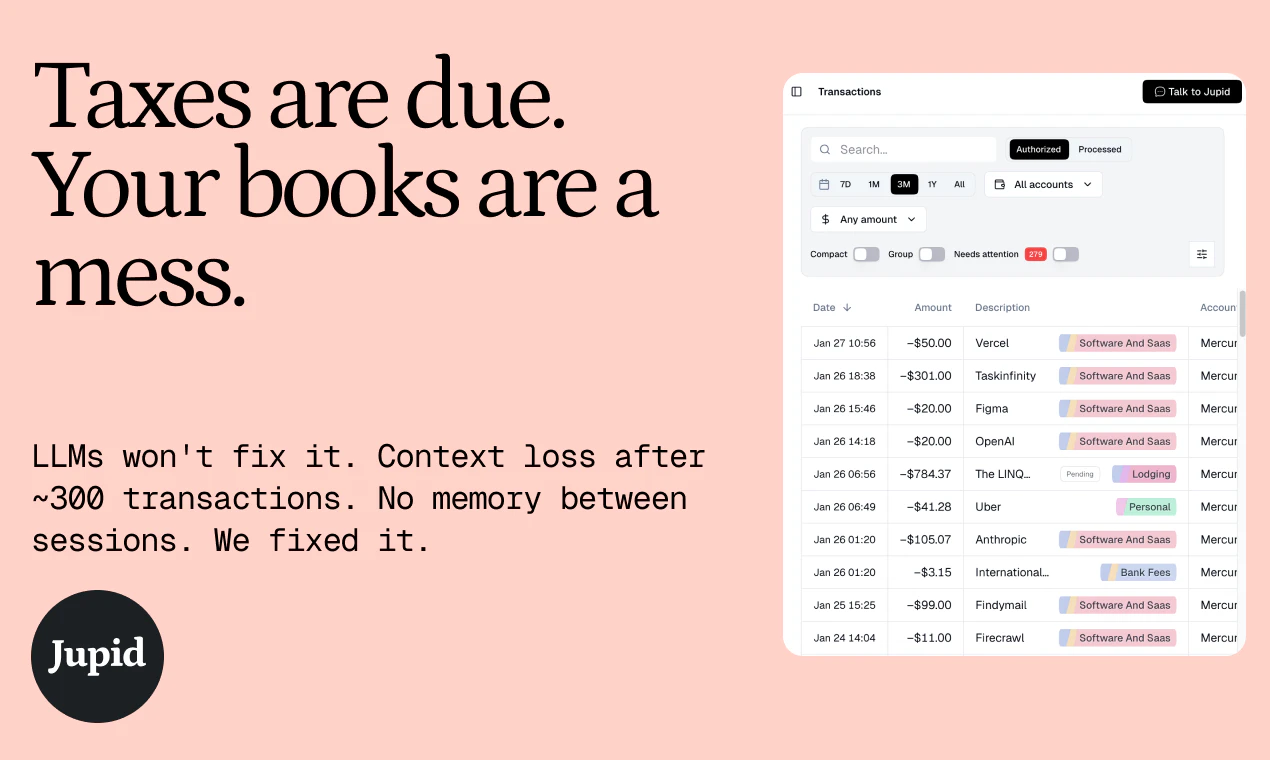
查看原始信息
Geer
Bikes don't tell you when parts are wearing out — Geer does. Connect Strava, add your components (chain, cassette, brake pads...), and get alerts before things fail. No app store needed — it's a PWA that works on any device. Free to start, Pro for €2/mo. Built in the EU, privacy-first, no ads.

Hey PH! I'm Ron, one of the founders of Geer. We built this because we got tired of guessing when our components (e.g. chain or cassette) was due for a swap — and spreadsheets weren't cutting it. Geer syncs with Strava, tracks wear on every component, and pings you before things break. It's a PWA so there's no app store install needed. Would love your feedback — what bike maintenance pain points do you have? 🚴

6
回复

Does it work with e-bikes too? This sounds super useful!

1
回复

@paula_nwadiaro yes, of course 🤗 works with every bike that you can track with Strava.

0
回复

really smart approach connecting to Strava data. most cyclists track rides anyway so using that existing data stream makes total sense. curious how accurate the wear predictions are in practice - are you factoring in riding conditions, power data, or just distance/time?

1
回复

@piotreksedzik Thanks 🙏 Great question! Right now we track distance and time intervals — partly because that's what manufacturers base their replacement recommendations on, and partly because it's the most reliable baseline we have.

We're definitely thinking about factoring in power data, weight, elevation, surface type, weather, etc. The data is there through Strava. But here's the honest tension: more variables don't automatically mean better predictions. Without large-scale validated data on how, say, 300W efforts in rain affect chain wear vs. 200W in dry conditions, you risk building a black box that feels smarter but isn't actually more accurate.

There's also a UX question we keep coming back to: do cyclists want an algorithm they have to trust blindly, or do they prefer plain mileage where they understand exactly what's happening and can calibrate based on their own experience? We think there's real value in transparency and control.

One idea we're exploring: keeping plain mileage as the foundation, but offering a smart layer on top that factors in conditions and power data as additional context — something you can turn on if you want it, not something that replaces the numbers you already understand. Best of both worlds, hopefully.

Would love to hear your take and anyone else's. What would make you trust a smarter prediction model?

1
回复