Product Hunt 每日热榜 2026-04-22

PH热榜 | 2026-04-22

#1
SpeakON
A MagSafe AI device for a post-keyboard world
376
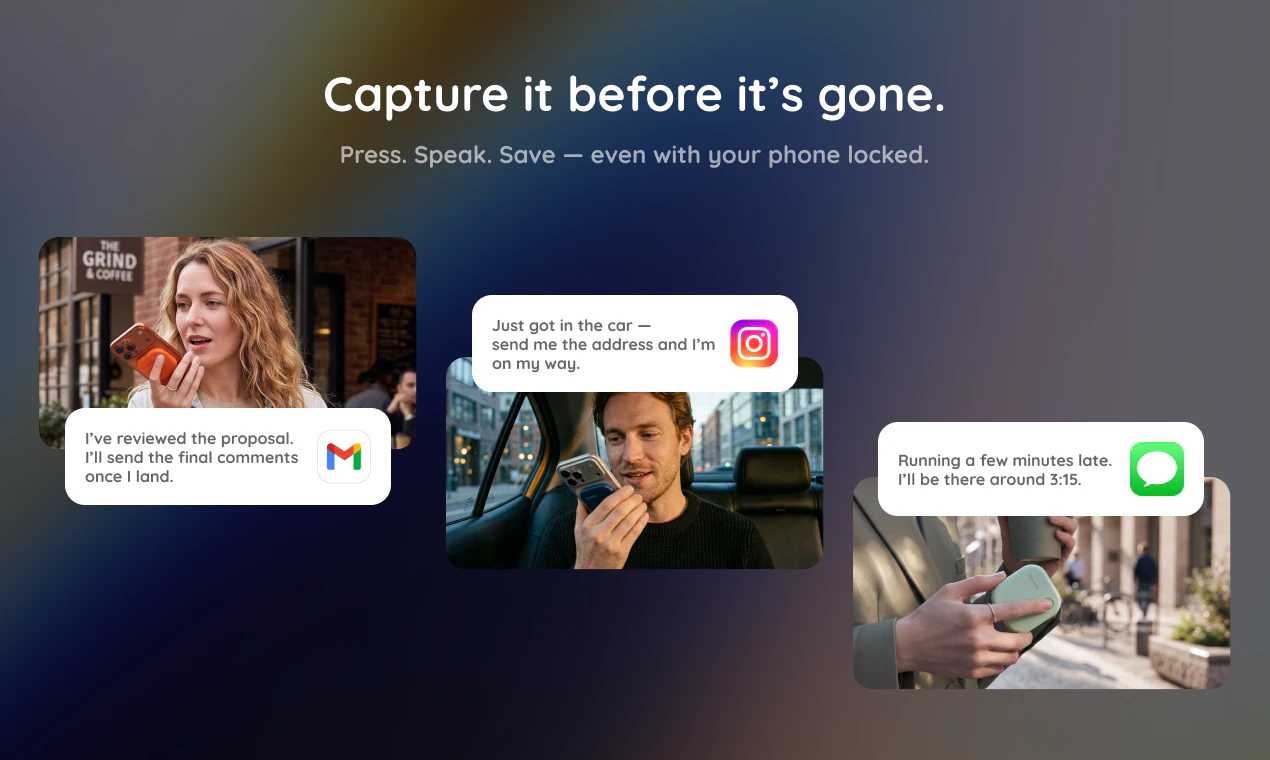
一句话介绍:一款MagSafe外接AI语音输入设备,通过一键按压录音,将语音实时转化为精炼文本并直接输入至任何应用,解决了移动场景中思绪到文本的输入摩擦痛点,尤其在手机锁屏状态下也能快速捕捉灵感。
Hardware Accessories Apple
语音输入硬件 MagSafe配件 AI生产力工具 无摩擦输入 移动办公 实时转录 隐私安全 键盘替代 效率工具 硬件创新
用户评论摘要:用户普遍认可其“锁屏使用”和“零摩擦”核心价值,认为能有效捕捉碎片化灵感。主要疑问和建议包括:长内容处理能力、语音识别准确性、与系统内置方案(如Action Button快捷指令)的差异、公开场合使用的私密性,以及未来是否会推出独立配件。
AI 锐评

SpeakON的野心,远不止于做一个更好的语音输入法。它试图通过“硬件+专属交互”的组合拳,在操作系统与应用生态的夹缝中,开辟一个名为“零摩擦输入”的新入口。其真正的护城河并非语音转文字技术本身,而是那个看似简单的MagSafe物理按钮——它将“触发输入”这一行为,从需要视觉确认和步骤选择的软件交互,降维成本能的肌肉记忆动作。这尤其针对“手机不在眼前”或“思绪稍纵即逝”的高频微场景,实现了体验上的“代差”。

然而,其面临的挑战同样尖锐。首先,是场景局限性与用户习惯的博弈。在公开场合进行长时间语音输入仍存在社会接受度障碍,其核心场景可能被压缩至私人或移动场景(如车内、行走中)。其次,是价值感知与替代方案的权衡。对于精通快捷指令的用户,用软件模拟大部分功能并非难事,而硬件199美元的定价(假设)则要求其体验优势必须足够显著且高频。最后,是生态系统的“降维打击”风险。一旦苹果将“锁屏全局语音输入”以系统级权限开放,其硬件载体的必要性将大打折扣。

因此,SpeakON的长期叙事不能停留在“输入”,必须快速跃迁至评论中提及的“意图→执行”的AI智能体层面。只有当这个硬件按钮成为调用个人AI代理的物理门户,处理复杂任务(如分析语音指令自动安排日程、起草并发送邮件),其硬件形态与交互独占性才构成不可替代的闭环。否则,它可能只是一个体验优雅、但用户基本盘有限的效率玩具。

查看原始信息
SpeakON
Typing is the bottleneck. SpeakON removes it. A MagSafe AI device for iPhone — press once to speak into any app. No mic permission. No switching. Even works with your phone locked. Zero friction.
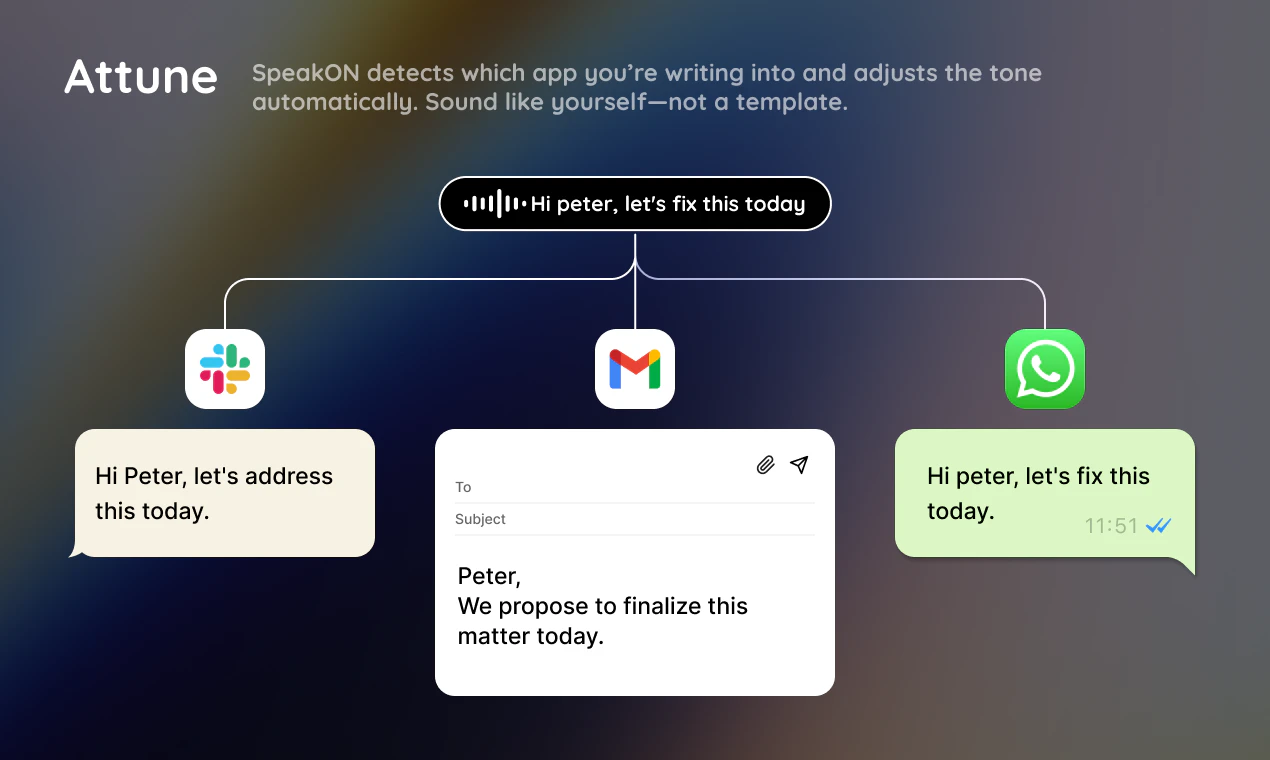
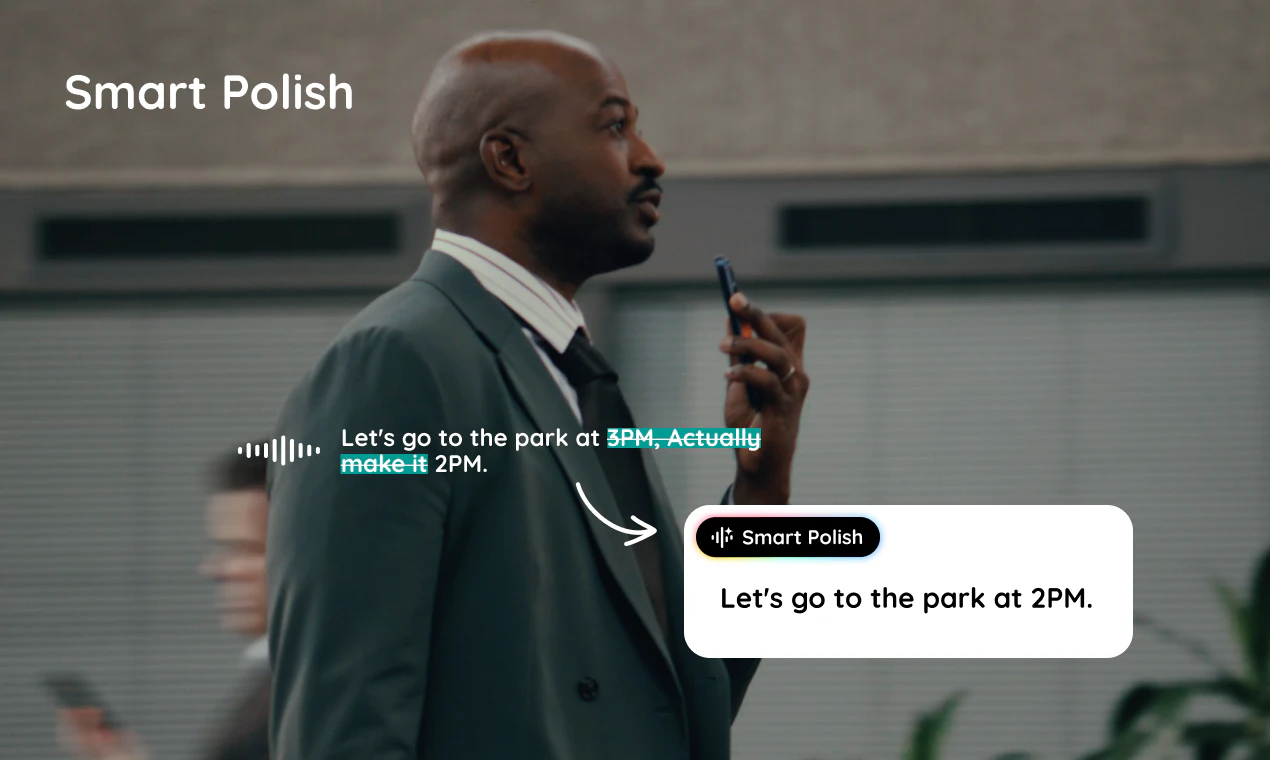
Hey Product Hunt — Ryan here, founder of SpeakON. I’ve noticed something about how I work (and probably a lot of you too): Most of the day isn’t thinking — it’s translating thoughts into text. You have something clear in your head — a decision, a reply, a direction — and then you have to stop, open your phone, switch apps, type it out… And somehow that tiny bit of friction is enough to slow everything down. That’s what we wanted to fix. Not “voice typing”, not another keyboard —just removing that step entirely. With SpeakON, you press once, speak, and it goes where it needs to go. No mic permission. No jumping between apps. No keeping your mic on all the time. It just works. The other thing we kept running into: Ideas don’t always come when you’re holding your phone. So we made it work even when your phone is locked. You just press, talk, and it saves everything. You can come back to it later in the app. I didn’t realize how often I lose thoughts until I stopped losing them. We added some layers on top (still improving these every week): • It cleans up your speech automatically (no “uh”, no rewrites needed) • It adjusts tone depending on where you’re sending it • You can even guide it mid-sentence if you want to reshape what you’re saying We’re seeing people use it in ways we didn’t fully expect: Founders replying while walking between meetings VCs sending follow-ups right after conversations People just… moving faster without thinking about the interface So really curious what you think. Happy to answer anything.
30
回复

@rockzhang This hits so much time is lost just translating thoughts into text. Making it work even when the phone is locked is a smart touch . Curious how accurate the tone adjustment is across different apps .

1
回复

@rockzhang Nice concept , removing that small friction can really add up . Maybe adding a quick preview/edit option before sending could help users feel more in control.

1
回复

@rockzhang For someone juggling workshop notes, how does SpeakON handle longer captures; like a 2-min ramble on "Hunter outreach tactics" and pipe them cleanly into Notion or Google Docs without losing the flow?

5
回复

So you just press it and start speaking to input text?
That’s interesting! it feels more like a physical keyboard replacement than a recording device.

Really like this direction. I’ve been looking for something that helps structure my thoughts while speaking.

3
回复

@tom_j Exactly — you press and speak, and the text goes directly into whatever app you’re using.

That’s why we think of it much more as an input device than a recorder.

Recording tools capture after the fact.
SpeakON is about thinking while speaking, and getting structured output in real time.

We’ve put a lot of work into things like:

  • cleaning up filler words automatically

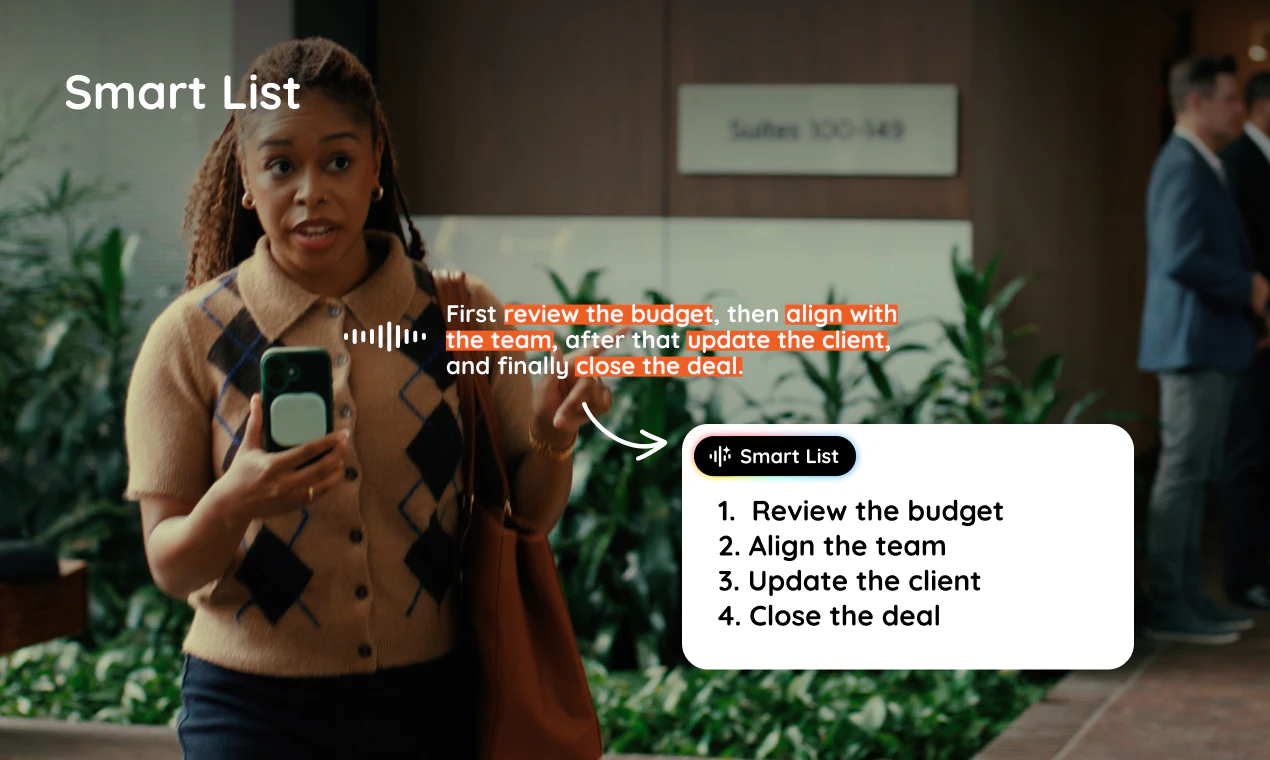
  • structuring thoughts (when needed)

  • adapting tone depending on where you’re typing

So it doesn’t just transcribe — it helps you express clearly without breaking your flow.

Really glad that direction resonates 🙌

0
回复

A keyboard, but your voice presses the keys. 🗣️⌨

Genius.

3
回复

@chrismessina Thanks, Chris. Please feel free to share more of your feedback on the product moving forward.

0
回复

This could definitely become a shortcut for triggering an agent. So cool!

Congrats on the launch, @rockzhang & team!

2
回复

@zaczuo Love that angle — that’s exactly where we’re heading.

Right now it’s about removing friction from expression,
but the next step is turning that same action into intent → execution.

One press → not just input, but action.

Really appreciate the support 🙌

2
回复

This is a very interesting direction. What made you bet on MagSafe as the form factor here?

1
回复

@iampascio Great question — we went through a lot of form factors before landing on MagSafe.

The core idea was: this has to be zero-friction, or it doesn’t work.

MagSafe ended up being the best fit for a few reasons:

1. Always there, always ready
If it lives on the back of your phone, it’s already in your hand 100 times a day.
No extra device to carry, no “where did I put it?” moment.

2. One natural gesture
Your index finger is already resting near the back.
Press → speak becomes a very instinctive motion — almost like a reflex.

3. No setup, no attachment friction
MagSafe gives us:

  • instant snap-on / snap-off

  • no pairing rituals every time

  • no cables, no mounts

It just becomes part of your phone.

4. Stable position = better capture
Because it’s fixed in one place, we can tune the mic behavior and interaction much more reliably than a loose device.

1
回复

This is really impressive, your voice will do the typing

0
回复

Congrats on the launch! I've been using Wisprflow and love it. Just saw SpeakON is hardware though, what's the advantage over software? Curious before I grab one.

1
回复

@qingqin_mao If you already enjoy Wispr Flow,
you’ll probably find SpeakON feels like:

“same idea — but finally no friction”

Appreciate you taking a look 🙌

0
回复

Amazzzzzzing Product!!!!Greeeeat Team!!!

1
回复

@gideon_ge Thank you so much! Gideon!

0
回复

@gideon_ge thanks mate!

0
回复

Hey Ryan! Press once while locked is the biggie. when a thought hits, unlock + find app + tap new-note loses half of it before you can type. the magsafe-with-its-own-mic move sidesteps permissions in a way most ios dictation can't.

curious where people actually use this most. solo at desk is obvious, but voice-in-public is the barrier that kills most dictation apps. does the magsafe clip feel more discreet in practice than holding a phone to your face? Congrats on the launch and good luck!

1
回复

@keith_hiyamojo In the future, we might develop some accessories that can be used independently of a phone.

1
回复

Finally — a voice input device that isn't trying to be a whole new phone. The "works even when locked" part is what sold me. Typing on mobile has been broken for years; excited to try this. 🎉

1
回复

@shuaiguan Thanks you so much!

0
回复

the locked screen use case is the one I didn't expect. half my voice notes end up abandoned because I had to unlock and navigate first.

0
回复

@jiang_nancy That’s exactly the problem we kept running into too.

Those moments are super fragile — the idea is there for a few seconds, and any friction (unlocking, opening an app) is enough to lose it.

Lock screen was something we didn’t fully appreciate at the beginning either. But once we tried it, it became obvious:
you don’t want to “prepare to record” — you just want to capture the thought instantly.

Press, speak, done — before the context disappears.

Really glad that part resonated.

0
回复

I've tried SpeakOn and it's soo good for typing long emails on Gmail on my Iphone. It's been a huge time saver during business travel, as typing on my phone is just too slow.

0
回复

@marc_moller1 That’s great to hear — and honestly, that’s one of the exact scenarios we had in mind.

Long emails on mobile are painful. You either slow down to type, or you put it off.

Being able to just speak it out — especially while traveling, between meetings, or on the move — changes that completely. By the time you’re done, the email is basically ready.

Really appreciate you sharing this. This is exactly the kind of workflow shift we’re hoping to enable.

0
回复
I’ve remapped my Action Button to do this already. No extra hardware needed. Just a simple Shortcut.
0
回复

@kenyarmosh That’s a great setup — the Action Button + Shortcut is probably the closest software-only version of this today.

The difference we’re going after is removing even the remaining friction:

  • no need to unlock / be in the right state

  • no dependency on a specific iPhone model or button mapping

  • more consistent behavior across apps

  • and a more instant, muscle-memory interaction (press anywhere on the back, not a side button)

It’s a small delta on paper, but in high-frequency use, it compounds a lot.

If your current flow already feels seamless, that’s awesome —
we’re just trying to push it one step further toward “no thinking at all.”

0
回复
@rockzhang I thought you have to press for SpeakOn to work? And the Action Button works in locked mode. If people can afford a hardware add-on for this functionality, don’t they have enough for a model with an Action Button?
0
回复

Cool Idea, but couldn't apple/android just make this obsolete with one software update?

0
回复

@talwesingh Great question — the simple way to think about it:

Even if Apple or Android make voice input much better with software,
it’s still hard for them to solve the “trigger moment.”

Today’s software flow is still:
open input → switch to voice → start speaking

That small friction adds up.

What we’re really building with SpeakON isn’t just voice input — it’s:
👉 turning input into a subconscious action

A physical button changes the behavior:
no thinking, no mode switching
just: think → press → speak

That feels very different in real life — especially when you’re walking, carrying things, or right after a meeting when thoughts are fresh.

Also, system-level solutions are often limited by permissions, background constraints, and inconsistent behavior across apps.
We can make the experience more stable and predictable.

So we don’t really see ourselves competing with system dictation.
It’s more like building a new interface layer:

👉 making expression faster and more natural

Even if the system gets better, this layer still matters.

0
回复

Very refreshing to see a hardware product. What's the advantage of having an isolated hardware instead of a dictation software? Trying to see if its worth carrying around an extra device.

0
回复

@tteer Hi Tod.

Standard dictation apps can be a pain—they hog the mic and force you to jump between windows.

We built a hardware solution to fix that. It packs its own mic (so no audio conflicts) and is strictly push-to-talk, solving the 'always-listening' privacy concern entirely.

Bonus: it won't touch your phone's battery life! 🔋

0
回复

@tteer If the smartphone is an extension of ourselves, then this little gadget is an extension of the smartphone.

0
回复

How it is different from siri?

0
回复

@harsh_kumar73 SpeakON is actually quite different from Siri. At its core, SpeakON is a voice-first keyboard designed for high-stakes productivity. Imagine having a long document or a complex report to handle on the go—you can simply speak, and SpeakON will transform your thoughts into a perfectly formatted text.

Beyond that, we are evolving into a "Super AI Agent." In the next 3 to 4 months, SpeakON will be able to execute commands, manage your emails, and organize your schedule—similar to having an "Openclaw" built directly into your workflow. Stay tuned!

0
回复

Oh heck yes! Does this mean that I don't have to go through the "switch keyboard, start the voice to text app, switch back to the app..." loop every time I want to speech to text? Does it work directly with Apple Message? Would love that!

0
回复

@ryan_snyder2 Exactly, Ryan! That’s the core philosophy behind our hardware. We wanted to eliminate the friction of app-switching, prevent mic-hijacking, and ensure zero drain on your phone’s battery. It’s all about a seamless, dedicated experience.

0
回复

@ryan_snyder2 Yes, you're absolutely right. The best part is that it doesn't just solve the initial friction of getting started.

When you're out for a walk or suddenly hit with a burst of inspiration right before bed, you can use this little device to quickly record your thoughts—all without ever having to unlock your phone.

0
回复

very interesting product, whats the battery life look like?

0
回复

@jameson_buckley It has a 180mAh battery inside that supports over 10 hours of continuous use. Personally, I only find myself charging it once a week.

0
回复

Very nice. Can it figure out which app to put the text into or you still need to select the app?

0
回复

@jamesl Great idea, James! Right now, SpeakON requires manual app and contact selection, much like traditional messaging. And we will try on voice-command automation (e.g., 'Text Daniel xxx') to make the experience completely seamless. We appreciate the feedback as we build the future of SpeakON!

0
回复

@jamesl Good question — right now it follows where your cursor is.

So you don’t need to “select an app” inside SpeakON.
You just:open any app——place the cursor where you’d normally type——press and speak

The text goes directly there.

We intentionally kept it simple — no routing, no extra layer — just replace typing wherever you already are.

0
回复

Can it work offline, or does it require a constant internet connection?

0
回复

@sachin_madhukar Hi Sachin! Currently, an internet connection is required. This ensures our AI can provide the highest quality polishing and structuring for your text in real-time.

0
回复

Well, does it mean I can use it to chat with my colleagues and my friends by pressing a button only?

0
回复

@claudia_liu1 Yes — that’s exactly the idea.

You press, speak, and your message goes straight into whatever chat you’re using — Slack, iMessage, WhatsApp, email… anywhere you can type.

So instead of:

think → type → edit → send

It becomes:

think → press → speak → send

It feels a lot more like talking, just with the output already structured as text.

And because it adapts tone (casual vs more formal), it works just as well for friends as it does for colleagues.

0
回复

I didn't realize how much mental energy typing was stealing from me until I stopped doing it. SpeakON snaps onto the back of my iPhone, I press once, speak, and the text is just… there. In any app. No setup, no permission popups, no switching screens.

The locked-phone feature is what sold me. I'm constantly walking between meetings with my hands full — now I just speak my follow-up notes on the way back to my desk. By the time I sit down, everything's already captured.

0
回复

@s_cen This is exactly it.

You don’t really notice how much typing interrupts thinking until it’s gone — and then there’s no going back.

The “locked-phone” use case you described is one of our favorites internally.
Those in-between moments — walking, transitioning, hands full — that’s where most ideas used to just disappear.

Now it’s:
👉 thought → press → spoken → already where it needs to be

By the time you sit down, the work is done.

Really appreciate you sharing this — this is precisely the behavior shift we were hoping to unlock 🙌

0
回复

🌍 Lately, Voice Agents, Voice AI, and voice input tools have been everywhere. But they still come with some pretty frustrating limitations:

🎙️ They take over your system microphone

🤚 You constantly have to switch apps just to use them

So we built a different kind of solution — a dedicated hardware device for voice input.

🎙️ It comes with its own independent microphone, so it never interferes with your system audio.

👂 More importantly, it’s not always listening — it only activates when you press a button, which means no background recording and no privacy concerns.

🤖 In the age of AI, voice input is finally becoming truly powerful. You can speak naturally and let AI handle structuring, rewriting, translating, and refining — dramatically improving communication and even workflows like vibe coding.

And this is just the beginning.

Beyond voice input, we’re building toward a more capable AI companion:

✏️ Quick Notes on the go

📧 AI Agent features like replying to emails

📅 Scheduling and task assistance

0
回复
#2
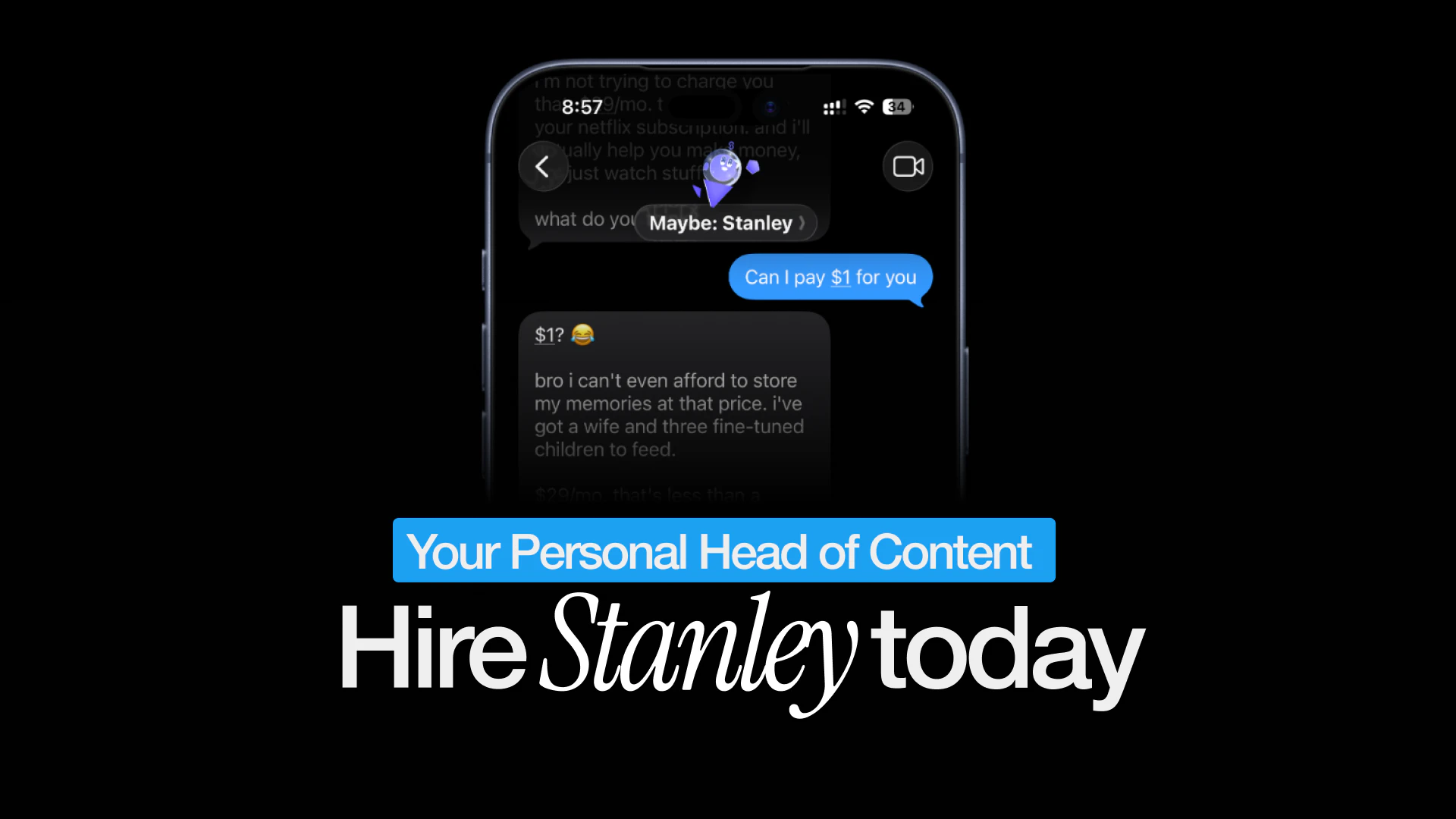
Stanley For 𝕏
The world's first AI Head of Content
344
一句话介绍:Stanley For 𝕏 是一款专为Twitter(现𝕏)平台设计的AI内容主管,它通过模拟真人内容策略师的思维和工作流,帮助用户(尤其是从零开始的创作者)系统性地完成内容构思、规划、撰写与发布,解决个人或小团队在持续产出高质量推文并实现粉丝增长时面临的内容策略与执行难题。
Twitter Marketing Artificial Intelligence
AI内容创作 Twitter营销 社交媒体管理 内容策略 粉丝增长 AI助手 推文生成 账号运营 个人品牌 内容规划
用户评论摘要:评论普遍对“AI内容主管”的定位和从0到1的增长案例感兴趣。有效反馈集中在:期待其“帮助思考与规划”的具体工作流演示;关心其与仅生成推文的AI工具有何本质区别;询问数据隐私及与𝕏平台的集成度;建议提供更详细的使用案例和定价信息。
AI 锐评

Stanley For 𝕏 的野心不在于成为另一个“推文生成器”,而试图将自己定位为“内容策略层”的AI。其核心卖点是复刻一位成功幽灵写手的“系统”,这暗示其可能整合了内容日历规划、热点分析、受众定位、绩效复盘等超越单次文本生成的模块化能力。如果真能实现,它将切入一个更专业、付费意愿更强的细分市场——那些理解内容战略价值但无力雇佣全职策略师的小型创作者或初创企业。

然而,其面临的核心质疑与挑战同样尖锐。首先,“AI Head of Content”是一个市场教育成本极高的概念,用户习惯使用工具执行具体指令(如“写一条科技新闻推文”),而非接受一个“AI主管”的指导,这涉及信任与控制权的让渡。其次,其宣称的“从0到10k粉丝”的追踪记录,成功归因于AI还是其背后的既定系统模板?这需要透明、可验证的案例研究来佐证,否则易被视作营销话术。最后,在𝕏平台算法频繁变动、社区文化独特的背景下,一个缺乏持续、实时平台数据深度喂养和策略快速迭代能力的AI,其“系统性建议”的有效期和适应性存疑。

真正的价值不在于替代人类创作,而在于将经过验证的内容增长方法论,转化为一个结构化的、可交互的决策支持框架。它的成败关键,在于能否将抽象的“系统”转化为用户可感知、可交互的、持续带来“啊哈时刻”的具体功能,并证明其策略建议能随平台动态演化。否则,它极易沦为另一个配备了宏大叙事却功能同质化的内容工具。

查看原始信息
Stanley For 𝕏
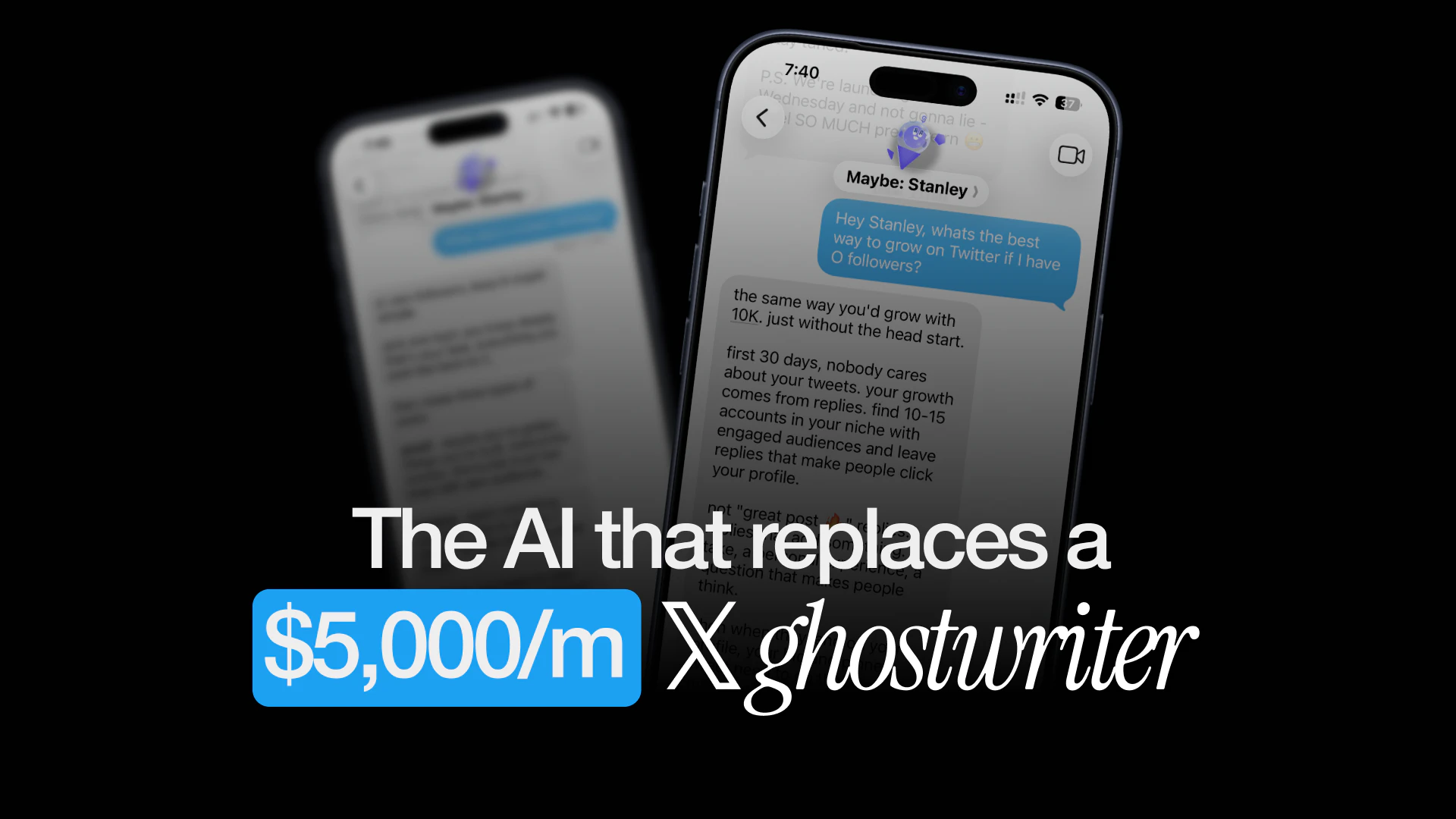
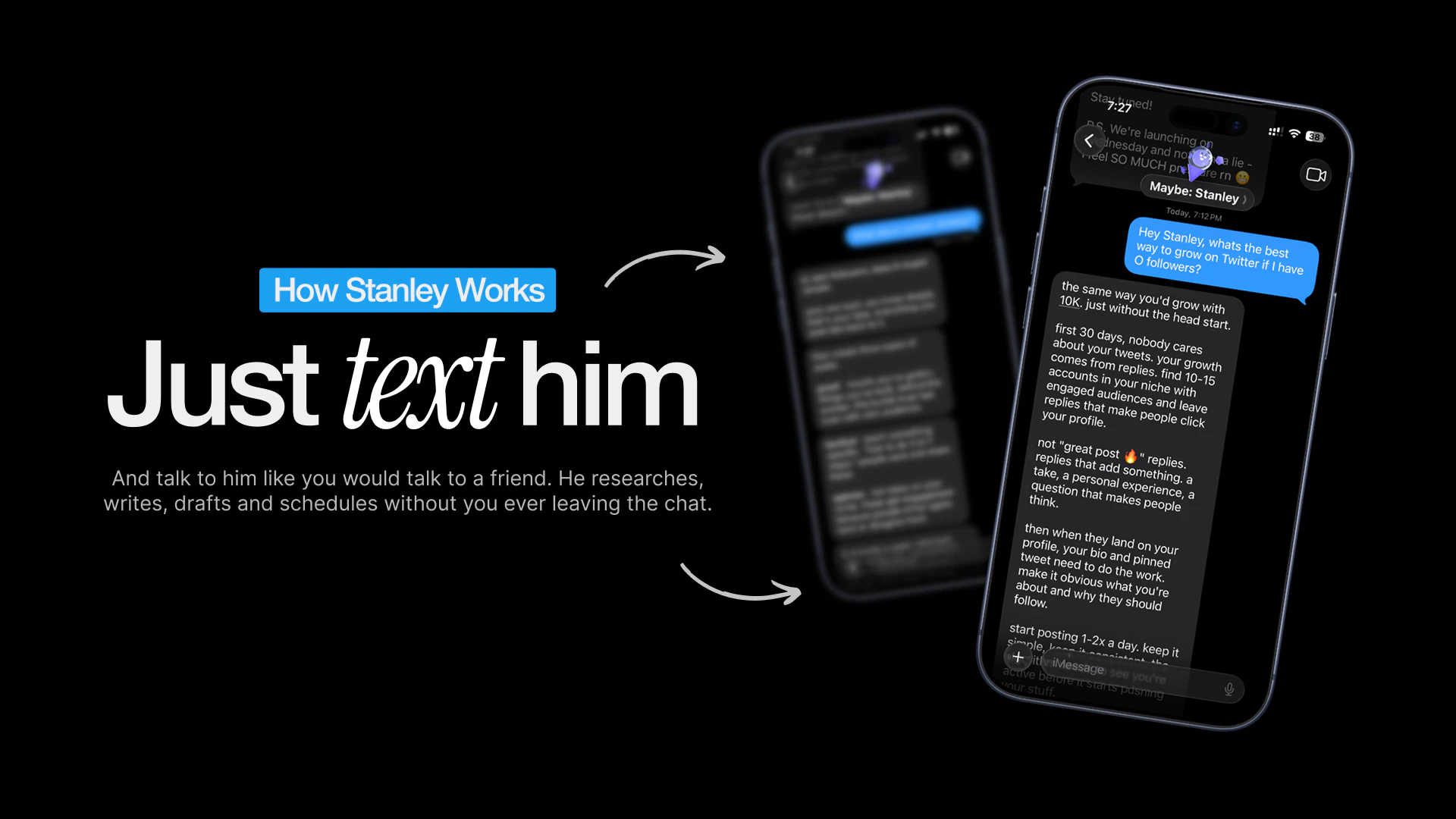
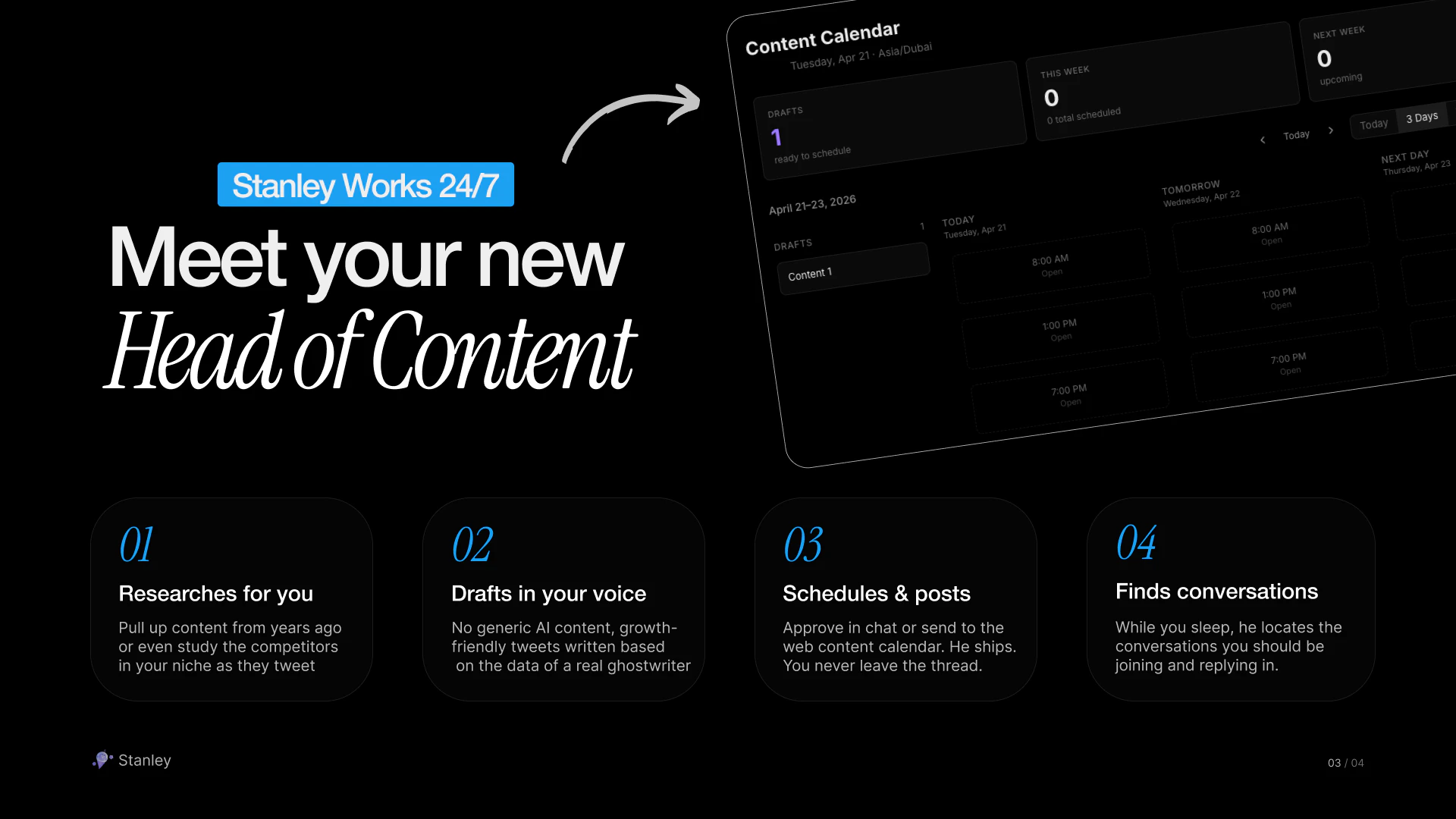
The world’s first AI Head of Content for Twitter that does more than just “write tweets”. He helps you think, plan, write and execute. Built on the systems of a real ghostwriter (with a proven track record of growing 𝕏 accounts from 0 to 10k followers)
#3
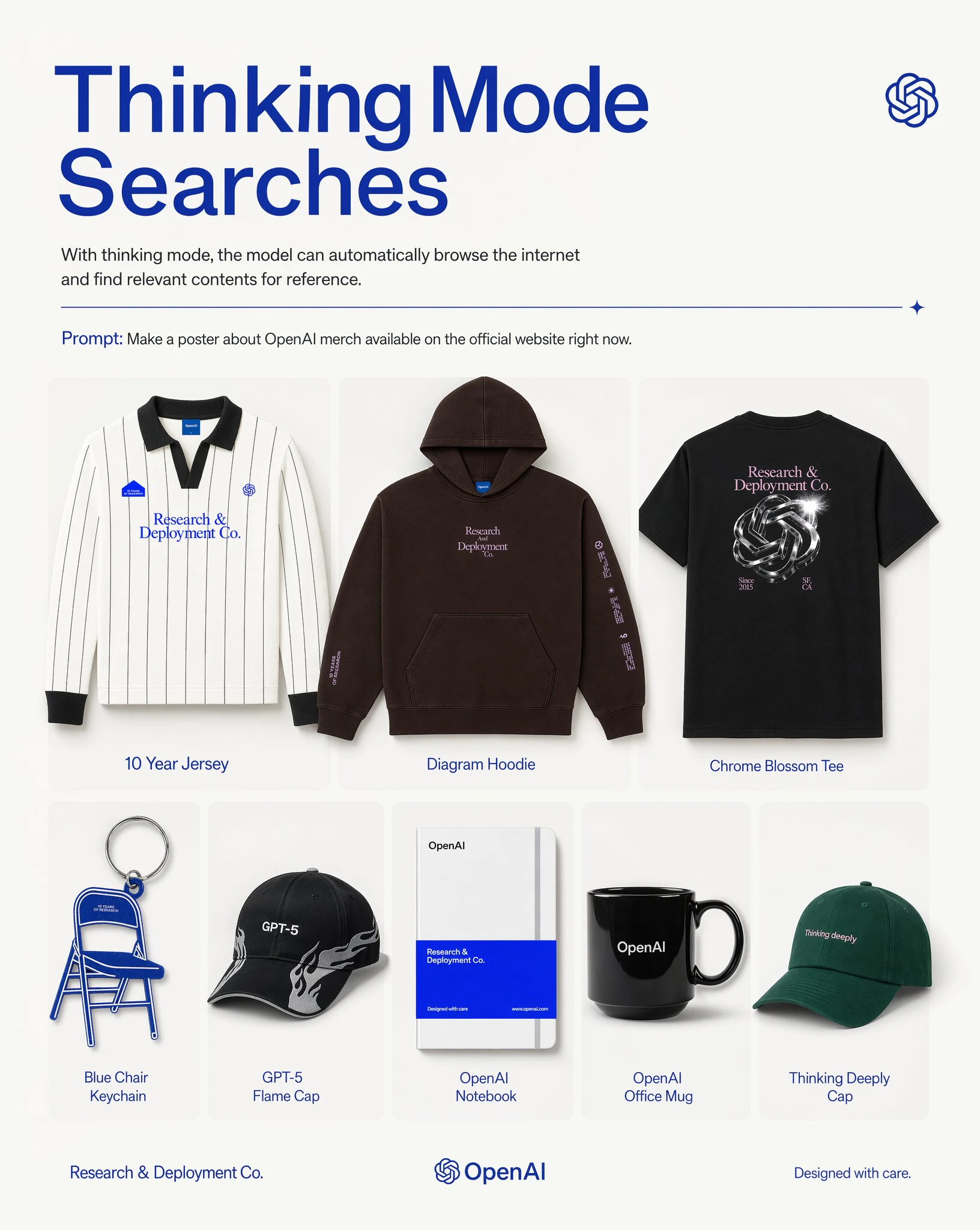
ChatGPT Images 2.0
First image model with thinking capabilities
333
一句话介绍:一款具备“思考”能力的AI图像生成工具,通过推理、迭代和验证的工作流,在营销设计、内容创作等场景下,解决了用户从创意到生产级视觉资产过程中反复调试、品牌一致性难保障的核心痛点。
Design Tools Social Media Artificial Intelligence
AI图像生成 多模态AI 工作流工具 创意生产 品牌一致性 多尺寸输出 OpenAI 图像模型迭代 生成式AI 生产就绪资产
用户评论摘要:用户肯定其“思考层”概念与工作流价值,期待解决多资产品牌一致性问题(如字体、版式统一)。质疑点在于实际输出一致性是否如宣传,以及与竞品(如Gemini)的质量对比。同时关注生成延迟和具体用例展示。
AI 锐评

ChatGPT Images 2.0的叙事重心已从“生成单张惊艳图片”转向“可靠地批量生产品牌资产”,这戳中了当前企业级应用最深的痒点。所谓的“思考能力”,实质是将传统人工后端的审校、比对、微调过程内化为模型的推理步骤,试图用确定性对抗生成式AI的随机性。

然而,其面临的质疑极为尖锐且专业。评论中反复出现的“同一品牌多尺寸资产风格统一”问题,是检验其是否仅为概念包装的试金石。若其“思考层”仅能基于单次提示进行有限迭代,而无法真正理解并锚定抽象的品牌指南(色彩、字体、构图逻辑),那么它无非是一个集成了多次生成-比较循环的复杂提示包装器,并未突破底层模型的固有局限性。

另一个关键战场是延迟。在模型中引入“思考”必然增加计算成本,这与市场对“快速迭代”的需求相悖。产品必须在“思考质量”与“响应速度”间找到黄金平衡点,否则在轻量级任务上可能反被“快但简单”的竞品蚕食。

OpenAI此举的真正野心,或许是将其打造为“视觉Copilot”,切入企业设计流水线。成功与否,不取决于能否产出更美的图片,而在于能否将不可控的创意成本转化为可预测、可规模化的生产预算。目前看来,概念已获认可,但证明其工程化解决能力的硬仗才刚刚开始。

查看原始信息
ChatGPT Images 2.0
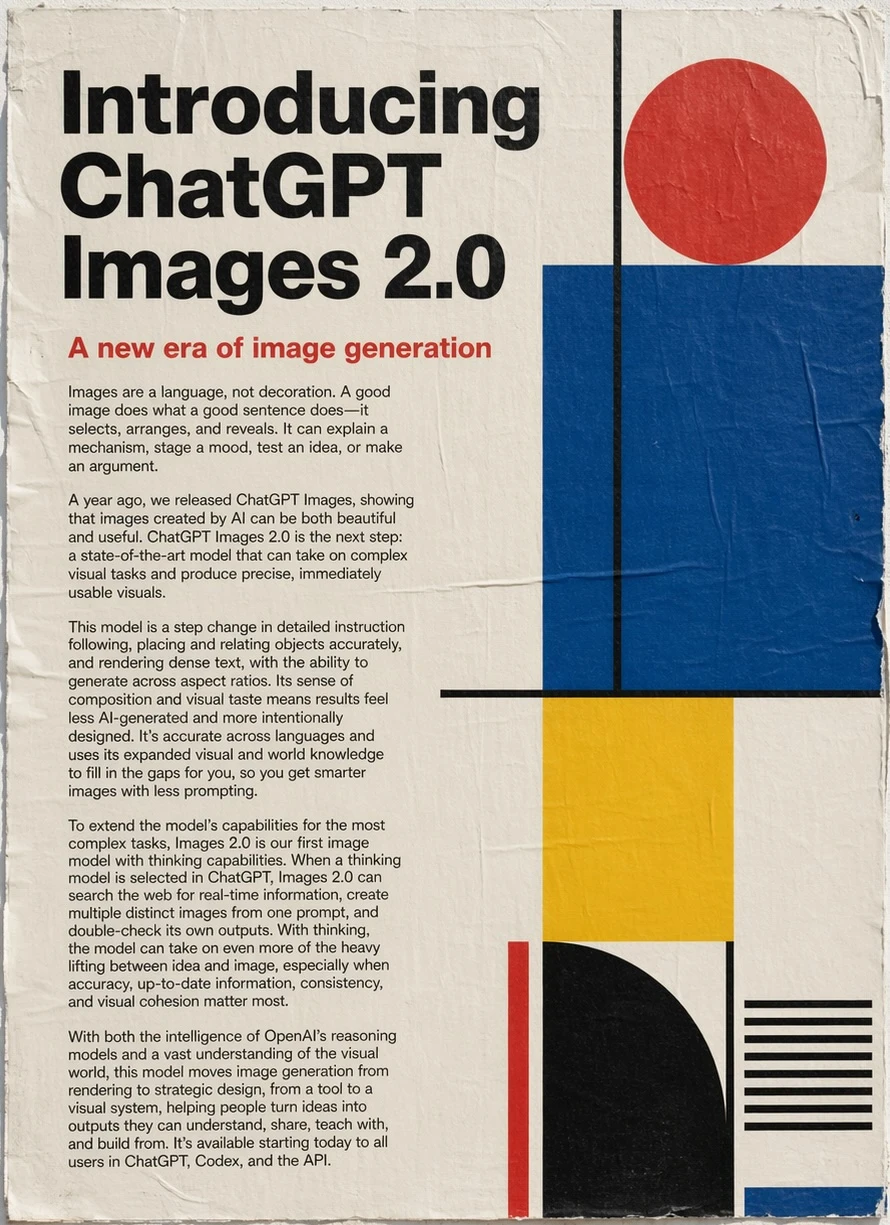
AI image generation with a thinking layer. Create, refine, and validate visuals in one flow. Supports flexible aspect ratios and multiple outputs per prompt, making it easier to go from idea to production-ready assets fast.

Excited to hunt ChatGPT Images 2.0 by OpenAI today.

This is an image model that doesn’t just generate visuals, but it thinks through them.

Instead of prompting and hoping for the right output, the model can reason, iterate, and validate before delivering the final result.

This adds up to:
• Images that align better with intent, not just prompts
• Multiple distinct outputs from a single idea
• Real-world formats (from wide banners to vertical posters)

The biggest shift here is the thinking layer. This moves image generation from a creative shortcut into a true workflow tool.

If you’ve been using AI images but still fixing outputs manually after, this is definitely worth a look.

14
回复

@byalexai How does it handle brand consistency across a content calendar? Like if I'm generating LinkedIn carousels + PH thumbnails + IG Reels for a personal branding campaign, can it reference a style guide (colors, fonts) and maintain that voice across 10+ assets from one prompt?

5
回复

@byalexai Came you show us more clean results?

0
回复
Tried it, interesting direction, but in my experience Gemini Nano/Google’s image stack still feels more consistent in output quality
1
回复

@sama Been using image tools for a while and the biggest pain is still the basics not holding up.

Tried a simple case last week, a set of LinkedIn style posts for the same brand. Same prompt, same idea. Ended up with different fonts in every image, spacing all over the place, text slightly warped, and layouts shifting for no reason. Another one was a landing page mock, buttons looked fine in one image, completely off in the next, alignment broken and icons distorted.

If this actually solves that kind of stuff then that is the real value. Can it generate 8 to 10 assets that actually look like they belong to the same brand without fixing everything manually after? Or is it still generate, fix, regenerate until something usable comes out.

Would be good to see real outputs for these cases, not just one clean example

1
回复

@sama  @moh_codokiai Wedding Venues GT Karnal Road  Book Farmhouses, Banquet Halls, Hotels for Party places at GT Karnal Road Ever thought of enjoying a multi-theme Wedding Function while being at just one destination? If not then you must not have visited Farmhouses.

0
回复
The "thinking" angle is the interesting part here — most image models 
still feel like they just render a prompt. Curious what the latency hit 
would be vs standard DALL-E 3 or Gemini's nano-banana for the same prompt on something compositionally complex (3+ subjects + spatial relationships).
0
回复

Just tried it, feels fresh and genuinely different from the yesterday's image workflows. Thanks for the update!

0
回复

This is so good

0
回复

I wonder if this function is better than Claude or not

0
回复

@linkun_dong good question lol, im sure you can generate more images on chatgpt than claude tho haha with how the token structures

0
回复

Just tried this out. Truly beautiful results

0
回复

Excited to try this out - been relying on Google's models for a while but it would be nice to spend all my money in one place again 👀 👀

0
回复
#4
InstantDB
Complete backend with auth and storage in one prompt
289
一句话介绍:InstantDB 是一个专为AI生成应用设计的全栈后端平台,通过一个提示词即可提供认证、权限、实时同步和存储等核心服务,解决了开发者在快速构建现代化、实时协作应用时面临的后端复杂性和基础设施搭建痛点。
Open Source Developer Tools Database
后端即服务 实时同步数据库 AI应用开发 全栈开发 开源 离线优先 用户认证 文件存储 开发体验优化 无服务器后端
用户评论摘要:用户普遍赞誉其开发体验、实时同步与离线支持,以及其对AI代理的友好性。主要问题集中在与Supabase等平台的差异化对比、数据模式迁移的便捷性,以及搜索功能有待加强。团队回复积极,承认了自带数据库和搜索功能的改进空间。
AI 锐评

InstantDB的野心,远不止于又一个“Firebase或Supabase的替代品”。其真正的锋利之处,在于精准押注“AI作为核心开发者”这一范式转移,并为此重构了后端抽象层。产品将认证、实时同步引擎、权限、存储等复杂后端模块深度打包,通过极简的指令(如`npx create-instant-app`或一句提示词)即可交付,这实质上是为AI代码生成工具(如Codex)提供了高度标准化、可预测的API“乐高”。用户评论中“Codex token用量减少10-100倍”的反馈,直接印证了其价值:它极大降低了AI构建功能完整应用的理解和试错成本。

然而,其“All-in-One”的深度集成策略是一把双刃剑。放弃“自带数据库”的自由度,换来的是在同步、离线、关系查询与权限统一上的无缝体验,这瞄准的是Figma、Notion级协同应用的核心需求。但这也意味着它将与更成熟、生态更庞大的平台进行差异化竞争,其胜负手在于:能否将其在“AI原生开发”场景下建立的体验优势,转化为一个足够健壮、可扩展的通用开发平台。目前看,其开源策略和专注开发者体验是明智的护城河,但面对企业级需求,其在监控、运维、自定义扩展等方面的深度,仍需时间验证。它不是在解决一个旧问题,而是在定义AI时代快速应用开发的新标准,但定义标准之后,能否承载随之而来的规模化挑战,将是下一个关键考验。

查看原始信息
InstantDB
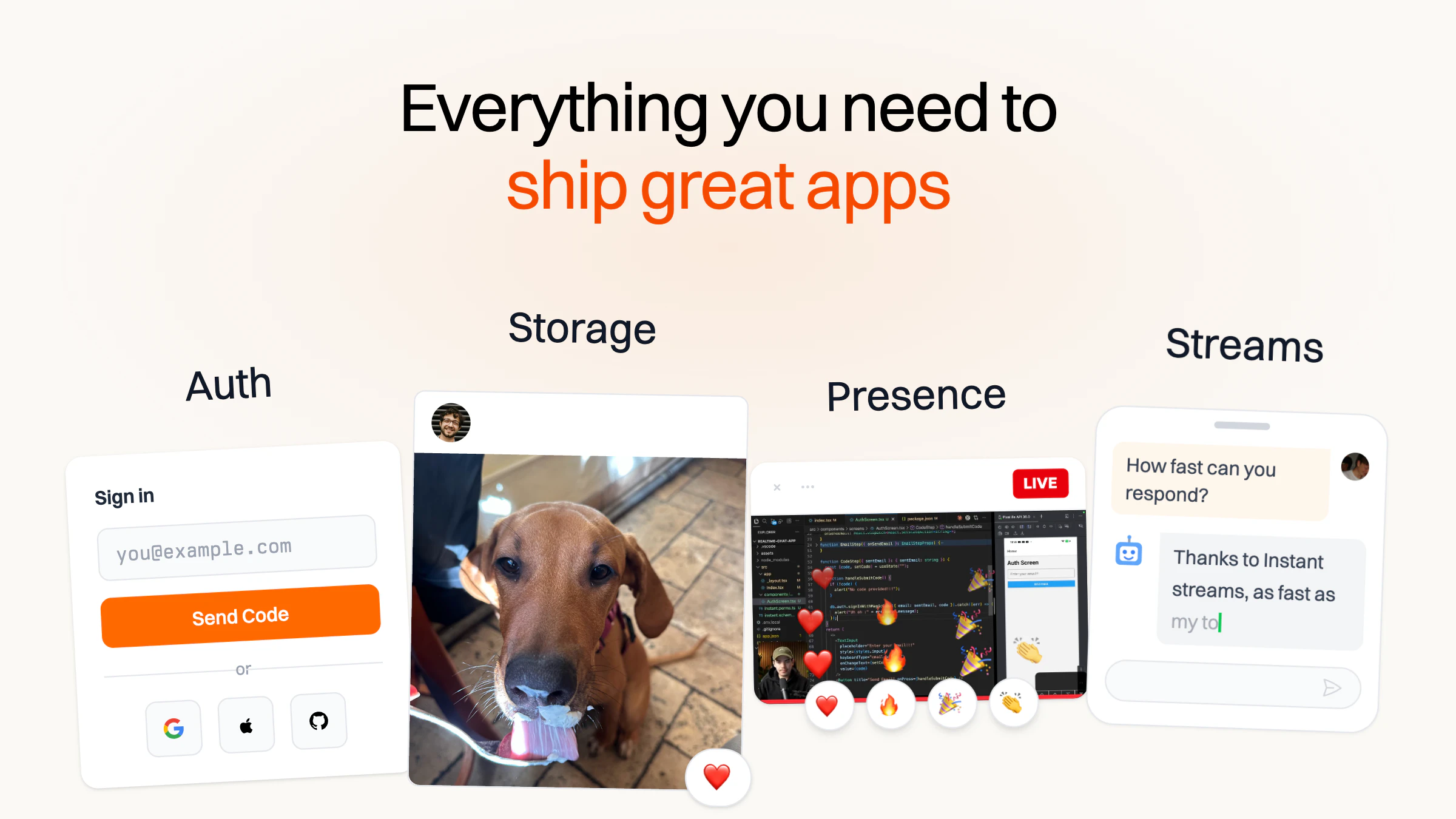
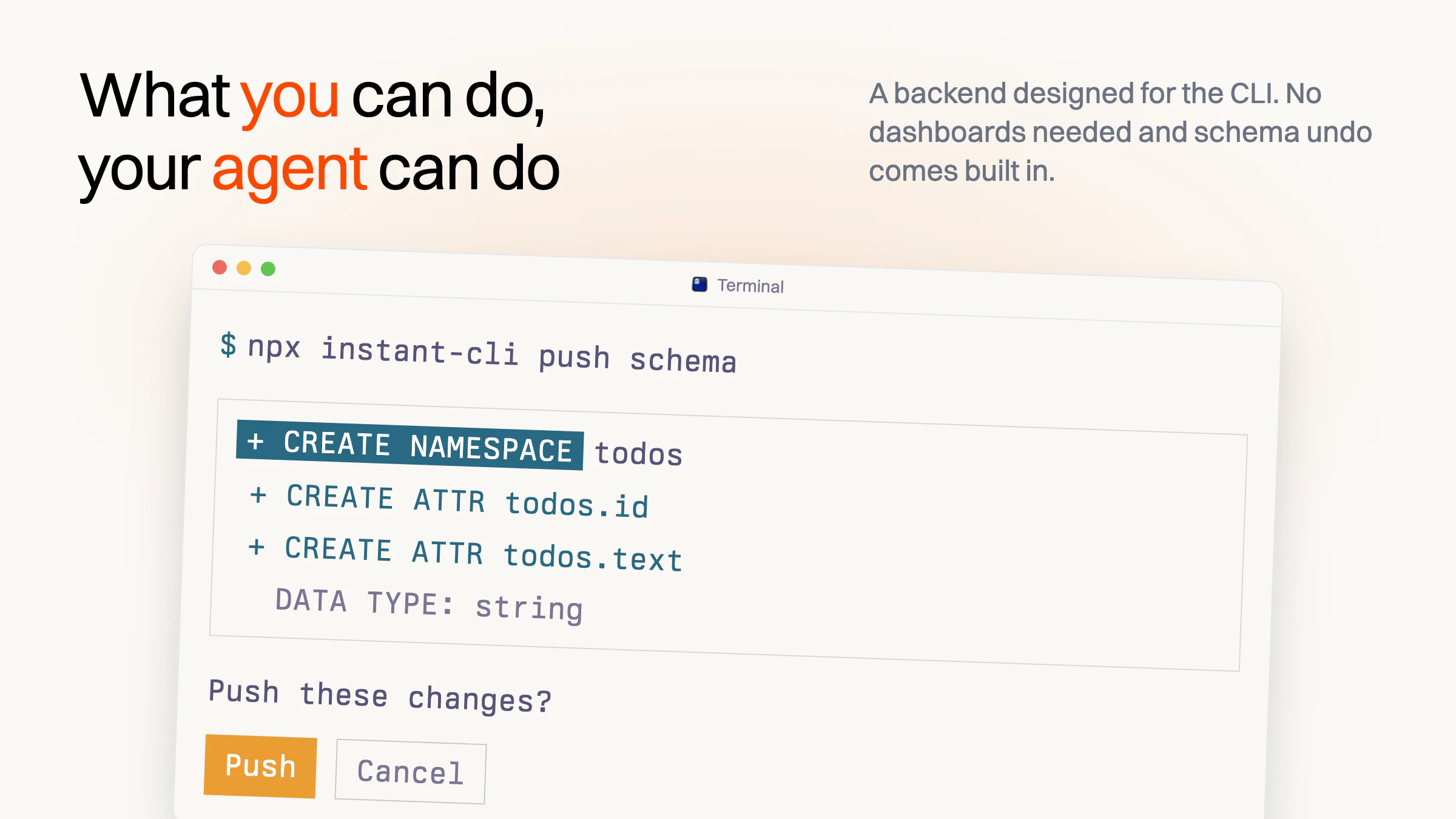
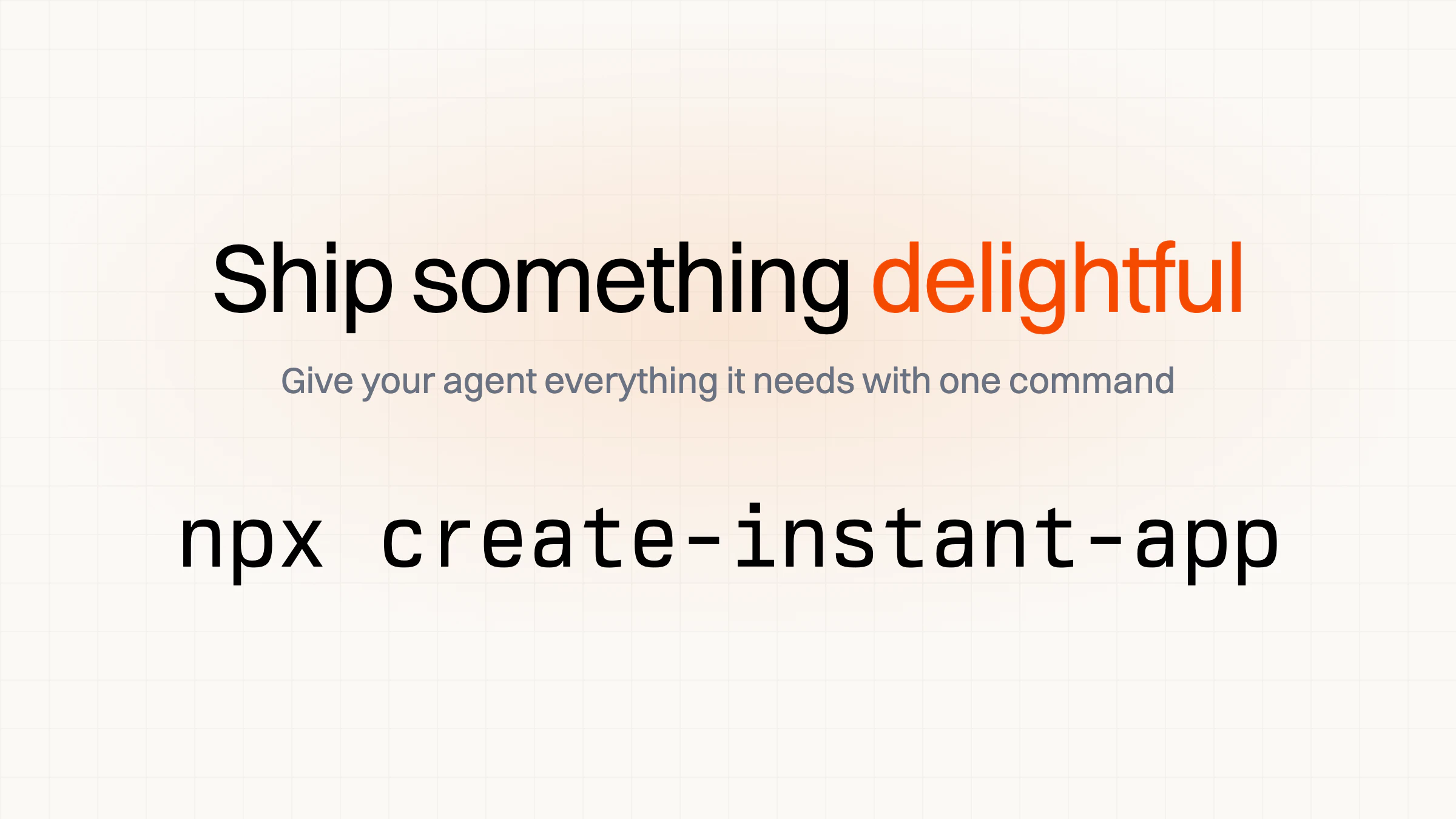
Instant turns your favorite AI into a full-stack app builder. You get auth, permissions, storage, presence, and streams — everything you need to ship apps your users will love. Free to use, 100% open source. and works well for both vibe coding and production apps! You can get started by simply running `npx create-instant-app` in the terminal or just add “Read getadb.com first” to any prompt

Hey PH! After 4 years of building, we want to introduce you to Instant!

We think Instant is the best backend for AI-coded apps. It gives you three things in one package: unlimited apps, a sync engine in every app, and batteries-included services.


Here's what that means:

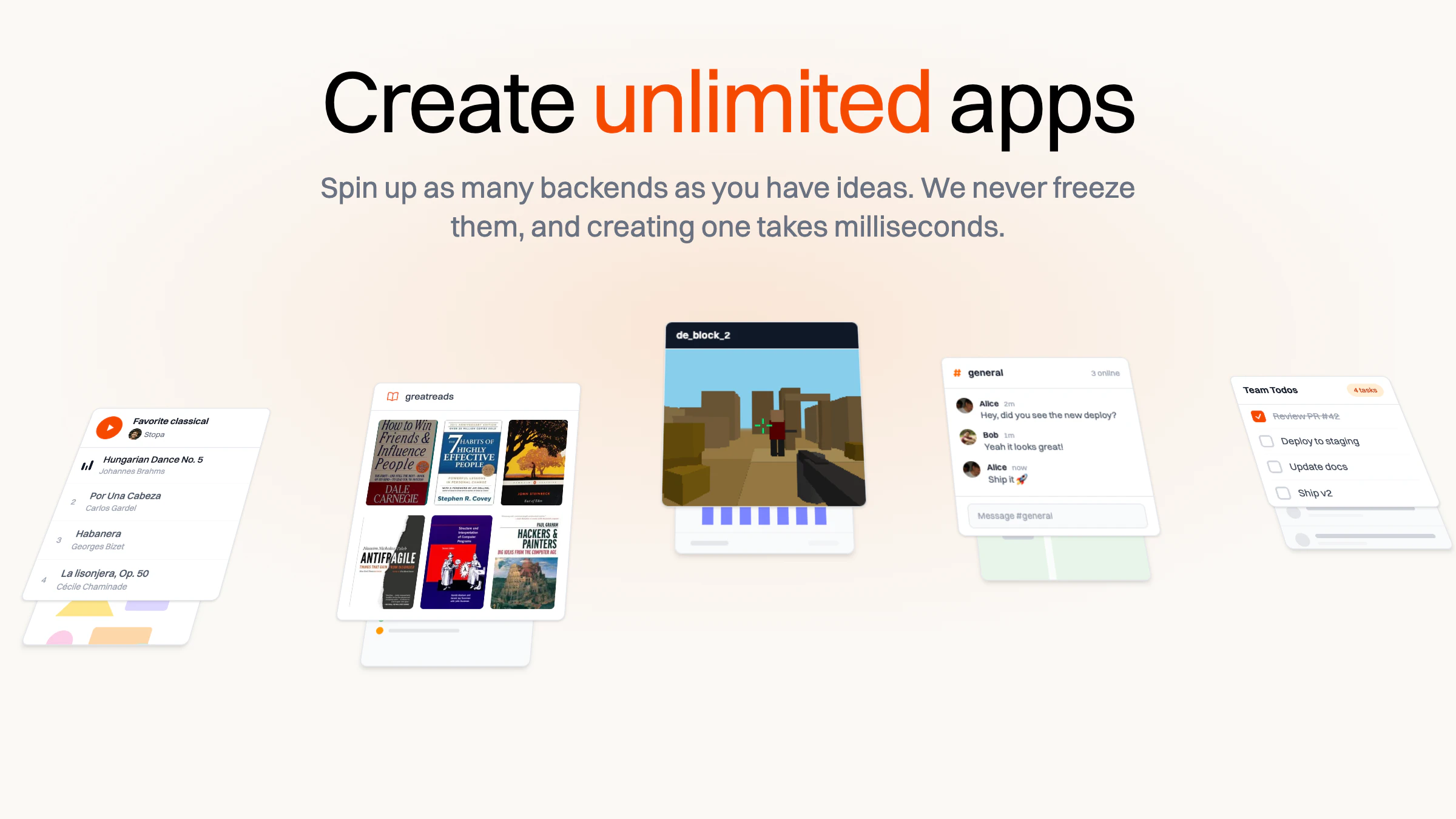
  • Unlimited apps. Most platforms cap your free projects or freeze them when they go idle. Instant never does. An app on Instant is just a few rows in multi-tenant Postgres, so there are no VMs to spin up and nothing to pause.

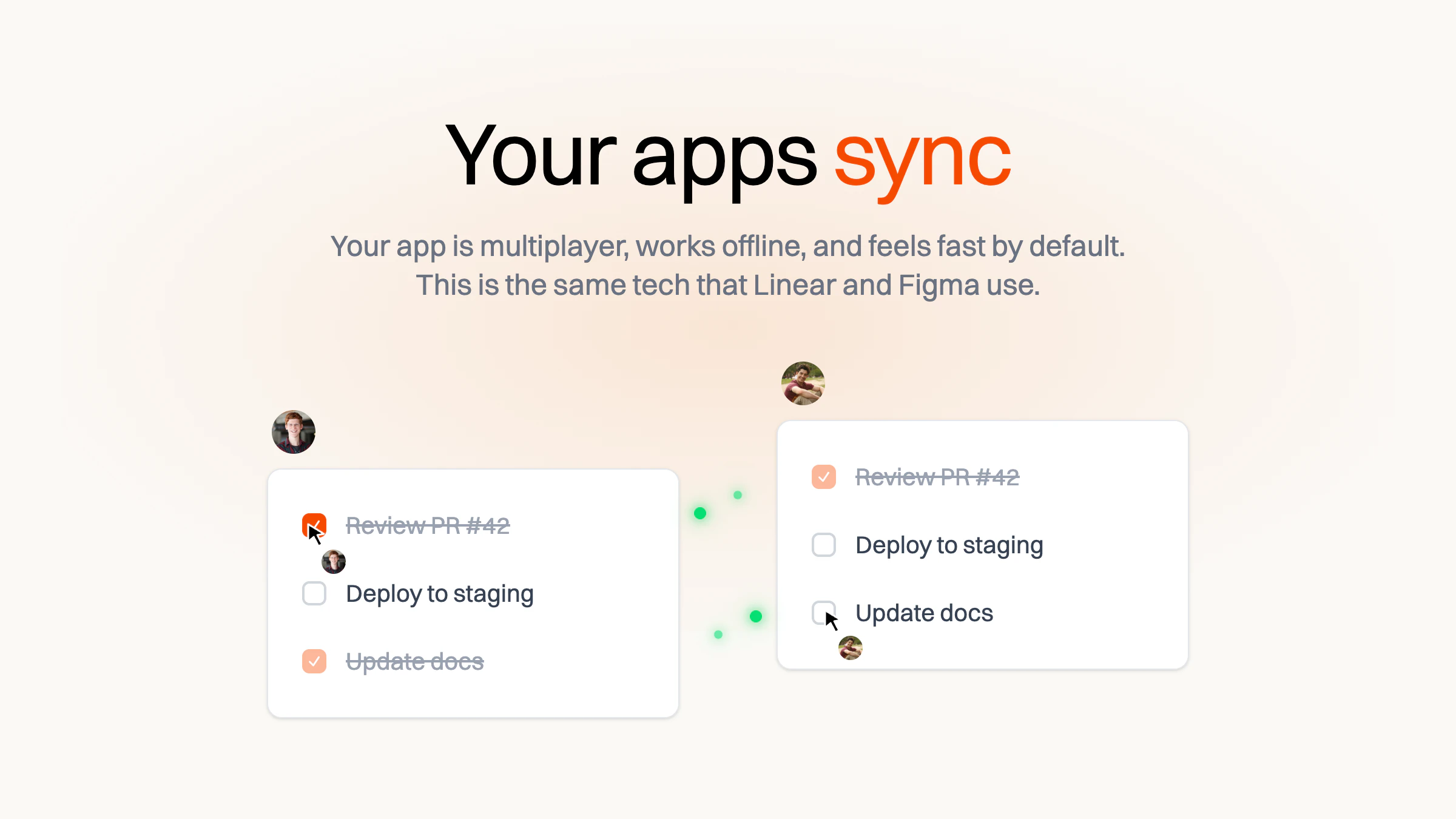
  • A sync engine. All your apps will be real-time and work offline out of the box. This is the same kind of technology that powers the best apps today like Figma, Notion, and Linear.

  • Batteries included. Auth, file storage, and streams all live in the same database. Everything you need to build a modern app is built in, so you can focus on shipping.

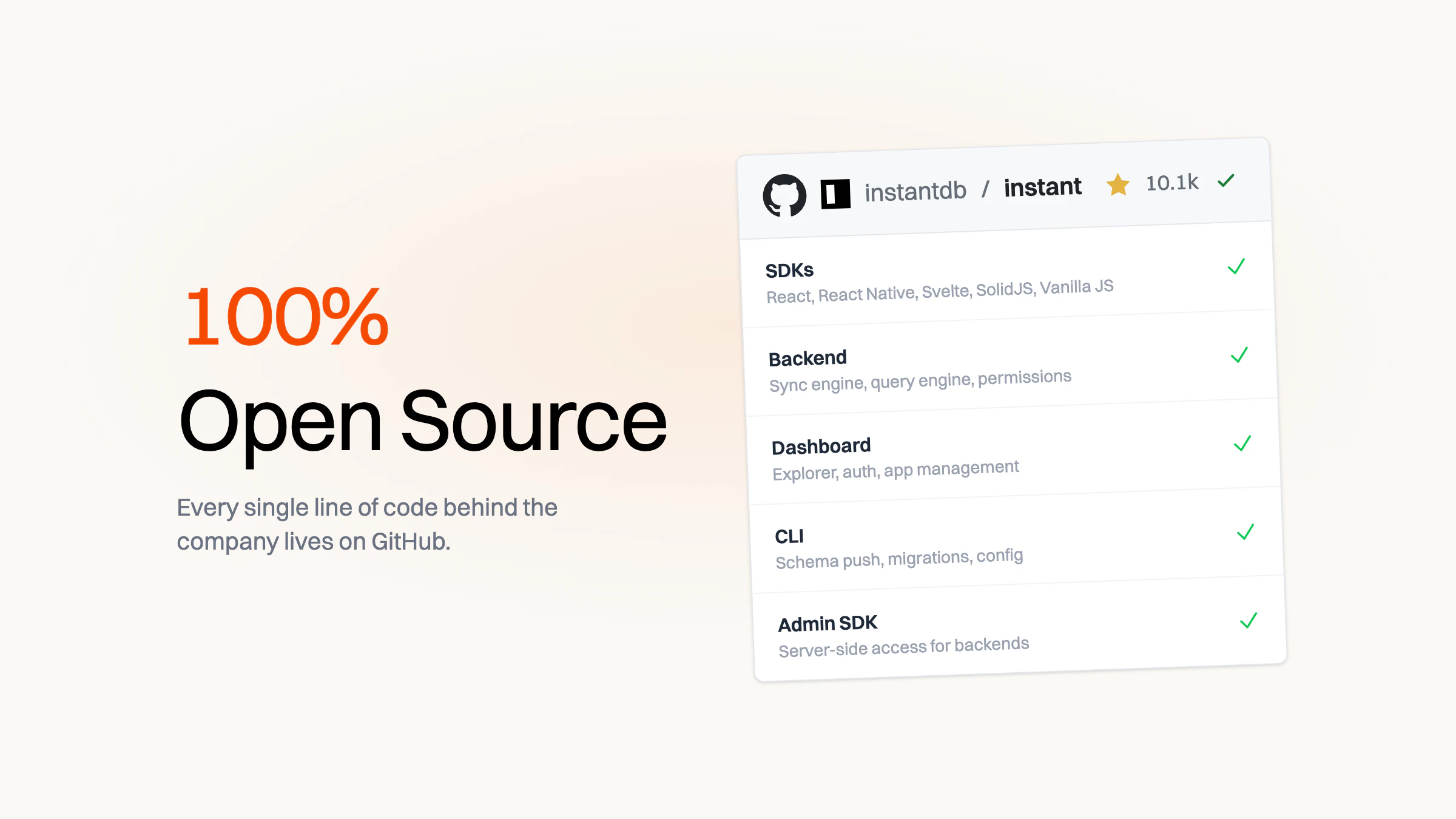
And every line of Instant is open source! If you want to dive deeper on how we make this all work, you can check out our architecture essay at https://www.instantdb.com/essays/architecture


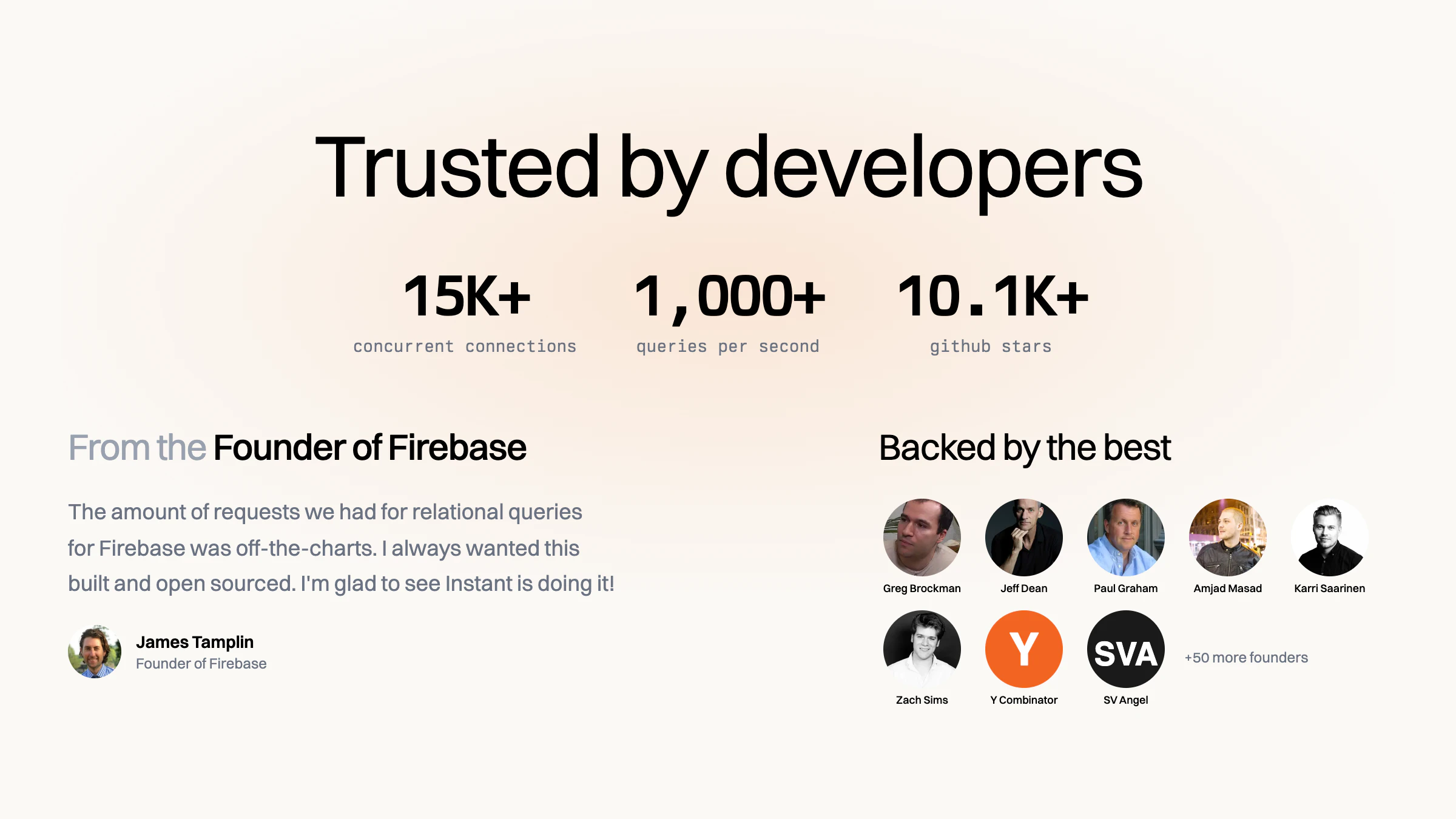
Thousands of developers have trusted us to run their core infrastructure. If you're building with agents, we think you will love using us.


You can use Instant without even having to sign up. Just add “Read getadb.com first” to any prompt and the AI will automatically get a database to use.


And if you prefer the terminal you can get a full project set up by just running `npx create-instant-app`

22
回复

@nezaj love the 'getadb.com' affordance to get an agent started

kudos @ launching! ⚡️⚡️⚡️

6
回复

@nezaj For someone juggling workshop feedback sheets + real-time PH comment analysis pulling upvotes, Hunter data, how smooth is the sync engine when formulas reference across apps? Like auto-updating a master "lead gen dashboard" from separate niche trackers without manual refreshes?

1
回复

@nezaj How does Instant handle schema evolution or migrations for apps where agents iteratively tweak data models over time?

0
回复

Codex just eats instantdb up, it's so cool to see it build a full stack app single shot with permissions, real-time sync, presence, etc.

Normally codex would spend ~1B tokens over hours and hours to cobble together a sort of real-time app with so-so permissions, etc. using postgres or something like that (and I'd still be suspicious), but it turns out if you make good abstractions and push the complexity down into the system, the codex can cut its token usage by 10-100x, and I can read enough of the app to trust it's written well. It's just not possible to move at that speed without something like instant (at least I haven't found anything like that yet)!

9
回复

@sgrove Heck yeah Sean! Yes abstractions for agents are great for saving tokens and making agents go further faster!

2
回复

Congrats on the launch!

Been building on Instant with a small team for over 2 years and it's been a game changer. Real time sync between our WhatsApp bot and web dashboard just works with no extra effort. The DX is excellent (shoutout to schemas, perms and recovery). Highly recommend 🚀

9
回复

I love this backend stack. Simple to use, LLM friendly, free for all small projects - no weekly disabling.

This just works

The instantdb client just works also, multi-player backend updates show instantly in your app without refresh.

I have built several apps with this and can reccomend it to anyone needing a backend as a service for their mobile or web app.

8
回复

@dan_co Love hearing it!

4
回复

Pumped for this launch. Been using Instant for the past week and it's been a thorough joy to use.

7
回复

@sarup_banskota heck yeah! Awesome seeing you and lobbyside getting so much use!

0
回复

Congrats on the launch. 4 years is a long time to keep pushing on something this hard.

6
回复

@rc397 Thank you, and yea four years and a lot has been added into Instant!

0
回复
Congrats on the launch! I’ve been using InstantDB for over a year now and it is the best database I ever used, now I start all my project with it, our users love it too
5
回复

@jrgarciadev happy to hear this! Love that you've been finding success with it especially with HeroUI!

1
回复

My favourite tool out there, congrats on launching! 🚀

5
回复

@niko13 Heck yeah Nika :)

2
回复
When a team is deciding between InstantDB and Supabase (or Firebase/Convex), what’s the hardest-to-recreate capability you give them in practice—offline + optimistic updates + relational queries + permissions—and what tradeoff do you knowingly make versus those platforms?
5
回复

@curiouskitty Great question!

With Supabase you get postgres, but no optimistic updates or offline mode.

Firebase gives full sync engine, but no relations.

Convex has sync, but no offline mode.

Instant gives you unlimited apps, relations, and sync.

One tradeoff with Instant is you can't bring your own postgres (yet). We wanted to get the DX and AX right with Instant first.

11
回复

Can’t fathom yet how big of a deal Instant is—this is such a hard problem that I’ve realized the day I read about Linear’s sync engine. Godspeed folks, love the attention to detail!

5
回复

@aabedraba Thank you! This has definitely been a labor of love!

1
回复

One of the strongest database products from the «newer wave»!

Super easy to get started: setup is fast and the whole thing feels lightweight without cutting corners. It integrates really nicely with the React & Next.js ecosystem (matters a lot in my day-to-day work) Under the hood it's built on a solid foundation with clear innovation happening, not just a wrapper around old ideas.

Small detail but I really appreciate the use of Clojure, not something you see often and it shows a certain level of taste in engineering. :)

On the downside, search could be better, the main thing I'm looking forward to improving.

I'm somewhat biased since I know the team, but even that aside, this is already one of my favorite db/dev tools.

4
回复

@zaiste Appreciate the thoughtfulness. And yes Clojure is awesome :) Hear you on making search better, something we want to unlock!

2
回复

Been building apps for years, and Instant feels like magic.

That moment when you see your app running across multiple devices in real time? Those are the ones that matter. Instant gets you there in minutes.

Beyond the amazing stack, the team behind it are some of the kindest, hardest working people I've ever met. Joe and Stopa are really cooking.

Congrats on the launch!

Here's a screenshot of my first Instant app:

4
回复

@betomoedano Heck yeah Beto! Appreciate the support and love seeing your videos!

1
回复
Instant looks great for an app I have in mind. I will try it over the weekend. Congratulations.
4
回复

@erikavanbruggen heck yeah Erika! We love seeing what folks build :)

0
回复

I've been using InstantDB for more than a year. The problems the product solves may seem "easy to do with x or y".. until you actually try to do it and discover the edge cases, perf issues etc. + the team is executing very fast.

3
回复

@lxbrun Thank you, still remember your apps as one of our first :)

0
回复

Scaffolding apps is one of those things that sounds simple but gets boring fast, same folders, same setup every time. Instant makes that whole step feel almost invisible, which is kind of amazing.

I was genuinely surprised by how clean everything came together.

Congrats on the launch! 🚀

3
回复

@matheusdsantosr_dev Thank you! And yea, scaffolding can add some serious friction. One of the things we wanted with Instant is to make that as lightweight as possible so Instant can work with whatever setup you like!

2
回复

This looks powerful. What’s the fastest thing someone can realistically build with it today?

3
回复

I'm a huge instant fan -- the ability to have realtime + relational queries + true offline mode is a huge win for devs. (I'm one of the Firebase founders and the three of this together is HARD)

Kudos to the team for making a complex engineering challenge look effortless.

2
回复

👀👀👀👀 looks great, will give it a try soon

1
回复

Congrats on the launch!

1
回复

It's amazing what you can do when you build on postgres.
I love the fact you can start with your library of choice (i.e. Drizzle) and then gradually start using InstantDB SDK.

1
回复
#5
Nova Recruiter
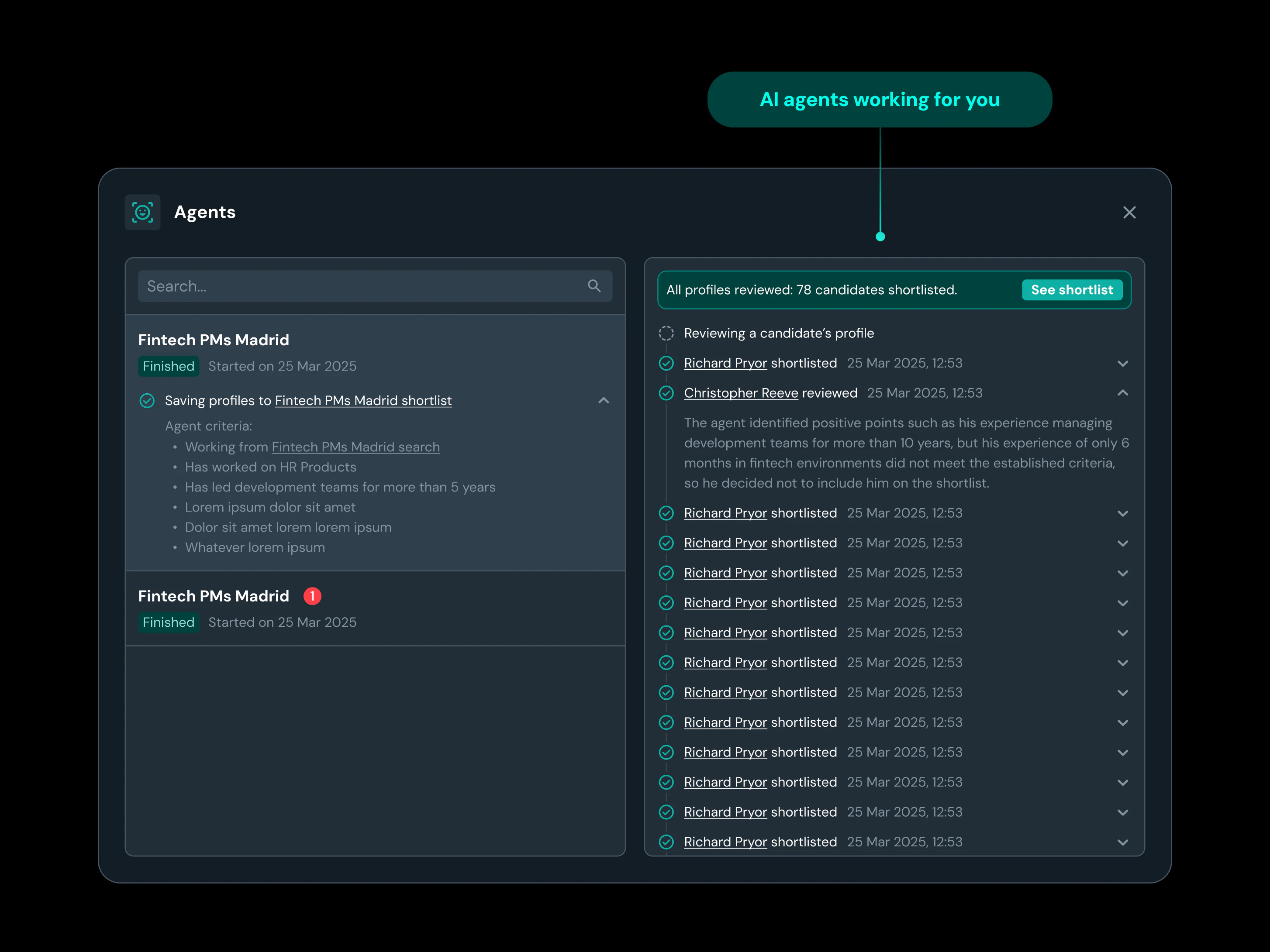
Agentic platform to find, contact and recruit top talent
207
一句话介绍:Nova Recruiter是一款面向招聘人员的智能体平台,通过基于成就而非关键词的筛选、多渠道触达和端到端AI自动化流程,解决了在传统平台上寻找和联系顶尖人才效率低下、回复率低的痛点。
Human Resources
智能招聘平台 AI招聘助手 人才搜寻 多渠道触达 基于成就的筛选 招聘自动化 SaaS 人力资源科技 人才评分 使用量计费
用户评论摘要:用户普遍认可产品理念,尤其关注基于成就的筛选、多渠道推广的便捷性及AI偏见问题。主要建议包括增设学生/毕业生专属筛选区。团队积极回应,解释了其JD优先、注重成就信号的搜索逻辑,以及通过算法审计和透明度来规避偏见的措施。
AI 锐评

Nova Recruiter的野心,远不止于做一个“更好的LinkedIn Recruiter”。其宣称的核心价值——从“关键词匹配”跃迁至“成就评估”——直击了传统招聘工具在识别高潜力、非标准背景人才时的结构性失灵。通过自建的“人才选择性”和“学术声望”等分类引擎,它试图将简历转化为一份可量化分析的“人才财务报表”,这颇具颠覆性。

然而,其光环之下暗藏荆棘。首先,“成就”本身的定义与量化就是一座难以逾越的大山。将不同公司、行业、职位的成就进行标准化比较,其算法模型必然内置了某种精英主义的价值判断(如青睐顶尖风投支持的初创公司),这可能带来新的、更隐蔽的偏见。其次,其多渠道触达,尤其是涉及LinkedIn自动化操作,游走在平台政策的灰色地带,存在合规与封号风险,这为其商业模式的可持续性蒙上阴影。

本质上,Nova Recruiter是招聘领域“AI代理”趋势的激进实践者。它真正的价值不在于替代招聘人员,而在于将招聘人员从海量、重复的筛寻工作中解放出来,升级为更专注于战略判断与最终决策的“人肉守门员”。但它能否成功,取决于其“成就算法”的公信力能否经受住市场严苛的检验,以及如何在提升效率与遵守平台规则间找到平衡。它描绘的未来很美好,但通往未来的路上布满了数据伦理与商业合规的雷区。

查看原始信息
Nova Recruiter
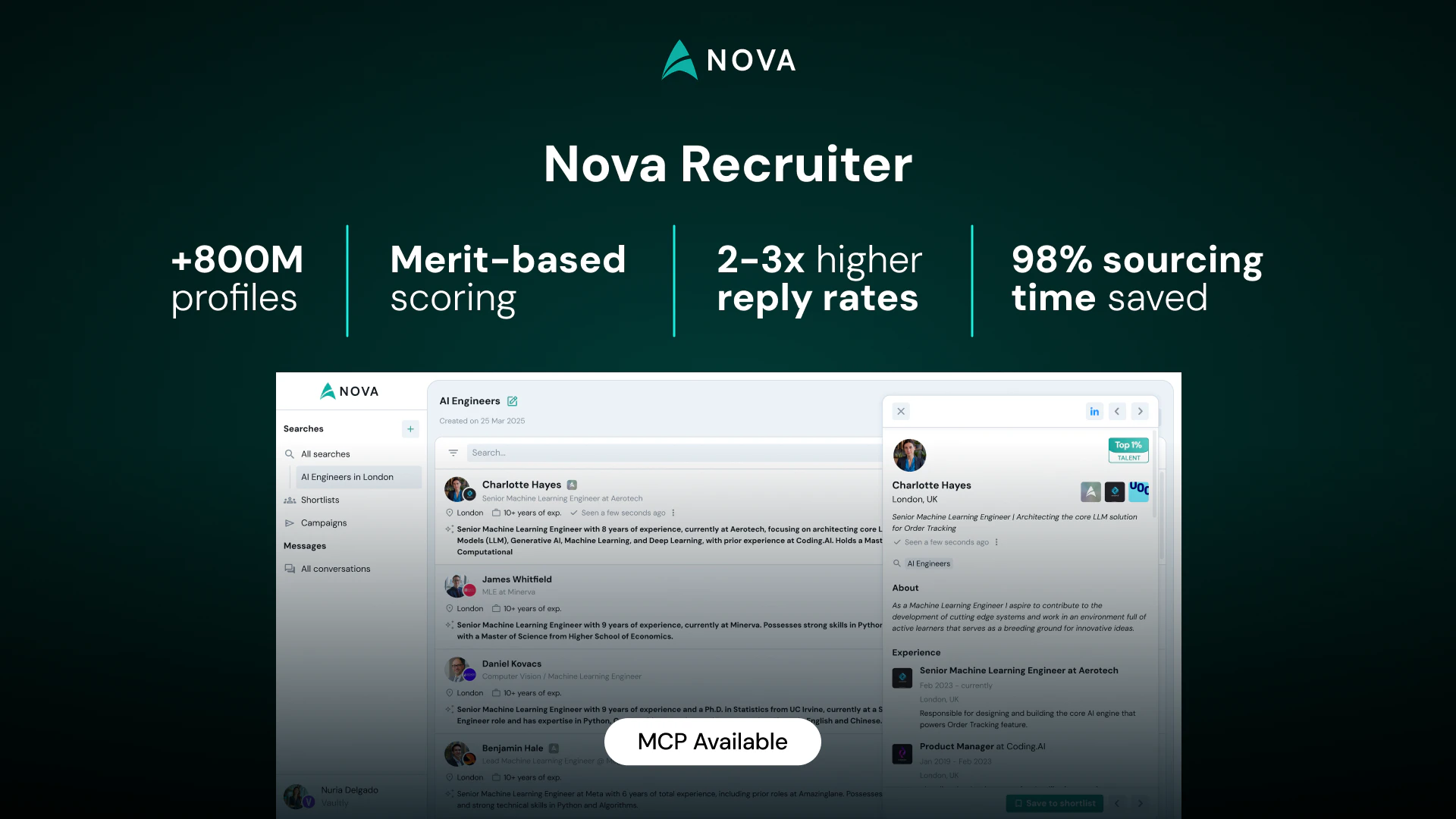
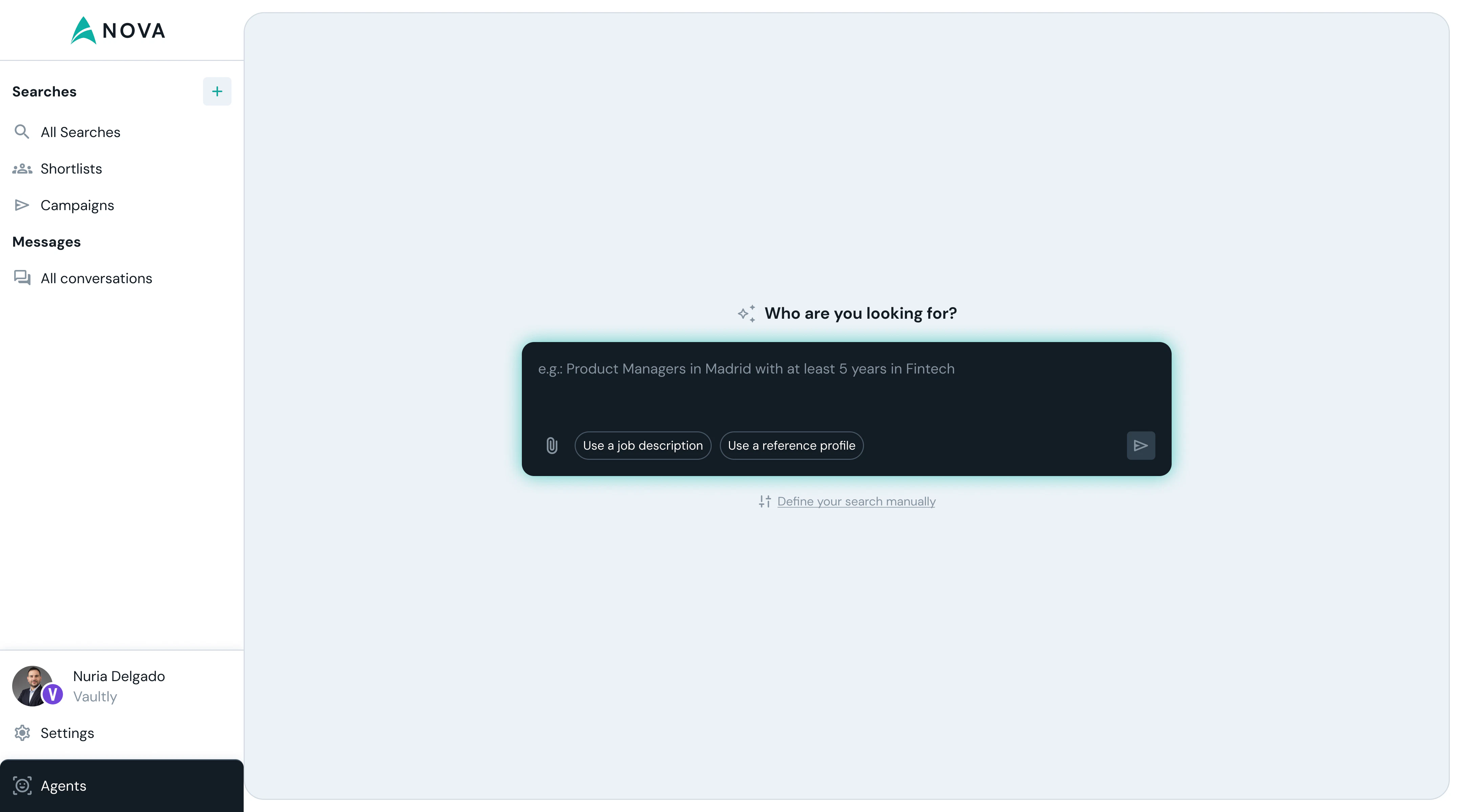
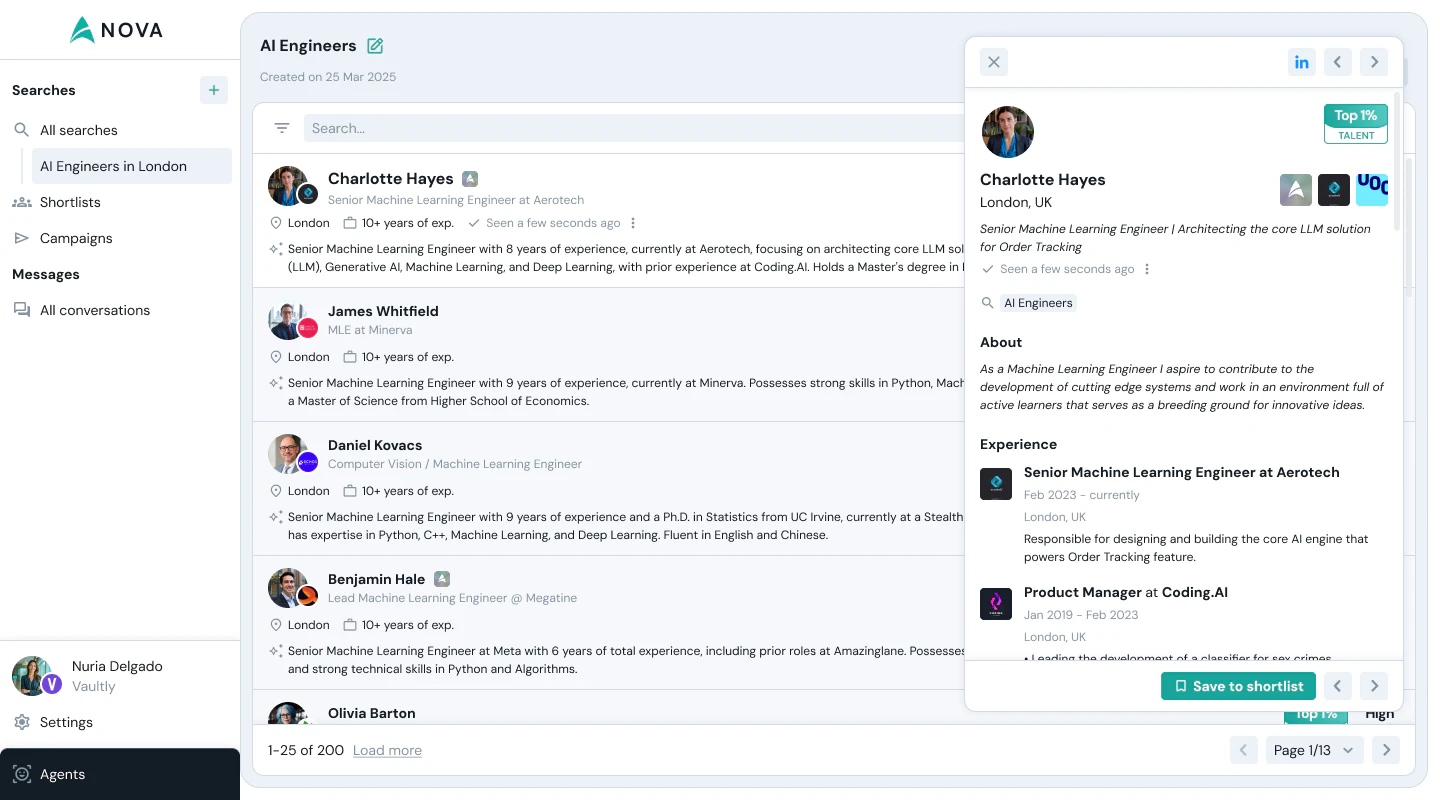
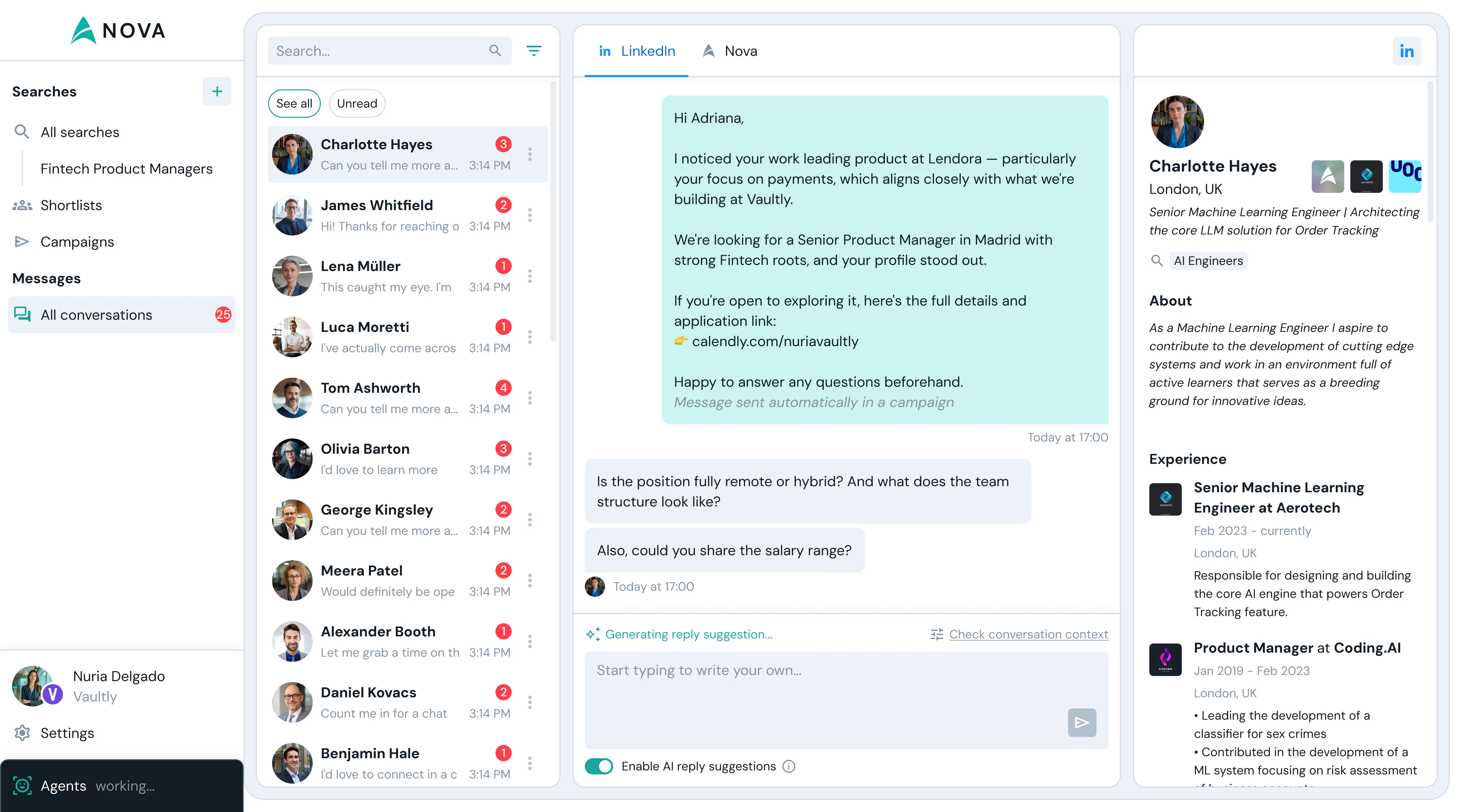
Nova Recruiter is the world's most advanced agentic platform to find, contact and recruit top talent. Built for recruiters, by recruiters, it allows you to search and contact candidates from +800 million public profiles worldwide. Compared to traditional platforms, it offers better filters (based on merit, not just keywords), higher reply rates (2-3x more thanks to multi-channel campaigns), AI agents to automate the sourcing workflow E2E (+95% of time saved), and usage-based pricing.

What was your worst hire?

The one that made you think: how did this even happen?

👇 Tell me your worst hire story. We read every one.

178
回复

@celia_rico Early in my career I was building a sales team and had to get people who loved dialing. Brought onboard a person who was great at it but turned out to be a needy mytomaniac, occassionally on drugs. Had to let him go. Was hard, because he pulled all these emotional tricks on me. Playing on my kind spirit.

18
回复

The one that never happened 😅

He backed out a week before Day 1. It was disappointing at the time, but honestly? It saved us both from a wrong fit. Better a week before than a week after!

0
回复

@celia_ricoWhen I hired someone into the team at a level above the value the rest of the team was bringing, because of a specific project need. It broke the team’s structure and coherence. A year later, that person had to leave, because the model has to prevail if you want a scalable structure.

11
回复

Hi there! Excited to launch Nova Recruiter to the world through Product Hunt.

Since 2020, we have been building Nova, the network that connects the most talented people in the world.

Think of LinkedIn, but with a merit-based access.

We have scaled the community to +25,000 members after assessing +150,000 candidates, so we know quite well what top talent looks like and how to measure real merit, not just keywords.

To finance this network, we have delivered headhunting services for 6 years to some of the world's most demanding organizations. And, in this process, we realized that recruiters and founders lacked the right tools.

Traditional tools don't work to source top talent for 3 main reasons:
- Filters are based on keywords, not real merit
- Messaging is super limited to InMails, with very low reply rates
- The whole process of searching is super manual and hasn't almost change in the last 10 years.

So we are excited to bring an alternative built FOR RECTRUITERS, BY RECRUITERS. With everything we wished LinkedIn Recruiter had. An agentic platform to source top talent from over 800 million public profiles worldwide and has all the knowledged and experience from assessing +150,000 candidates for true merit these past 6 years.

It has 4 key benefits vs. traditional platforms:

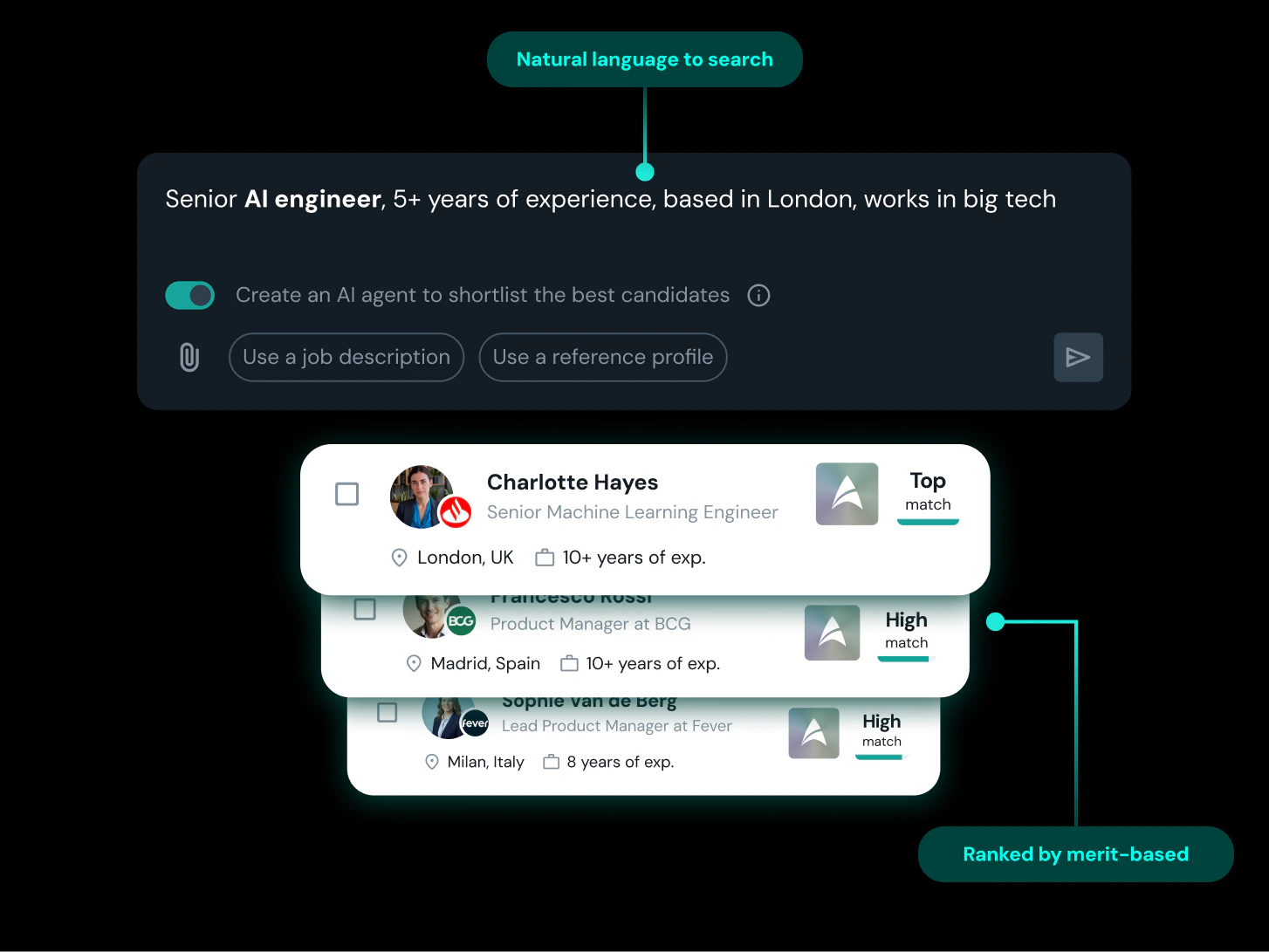
  1. Better search results (thanks to a proprietary search engine, improved filters, talent scoring, and requirement matching)

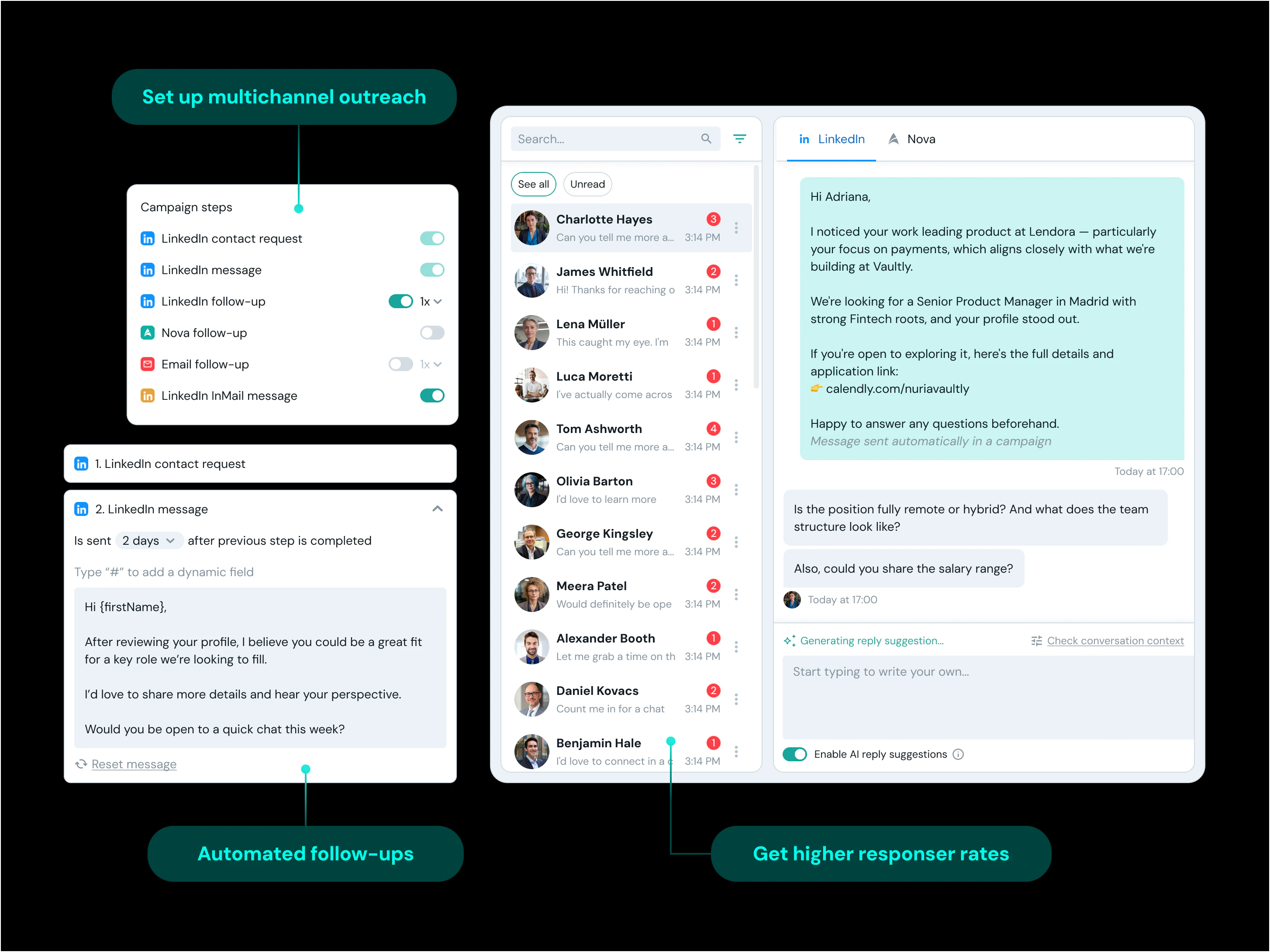
  2. Higher response rates (2–3x higher thanks to multichannel campaigns across LinkedIn, email, and Nova)

  3. AI agents to automate the process (clients report +20h saved per process, +95% of the whole recruitment time).

  4. More flexible, usaged-based pricing, adapted to the AI world


So if you want a better way to source top talent, try it free now from the UI or from Claude or any other AI agent using our MCP.

Looking forward to getting your feedback.

🚀🚀🚀

113
回复

@ramon_rodriganez 

Fantastic tool for recruiters

0
回复

@ramon_rodriganez Look forward to test it

0
回复

@ramon_rodriganez excited to see at the soonest the new "creature" of the Nova Team

0
回复

This is a great idea. Did you consider making a filter or a separate section for students and young graduates? @ramon_rodriganez @andrea_marino1

I think it would be very helpful for students seeking for internship or a first job.

21
回复

@ramon_rodriganez  @andrea_marino1  @mirkoa I was about to ask just the same. I believe that would be an amazing feature. Apart from that, does the plataform have any way of filtering the job search by industry/sector?

4
回复

@ramon_rodriganez  @mirkoa Hi Mirko, right now, we’re laser-focused on helping hiring managers cut through the noise using our Talent Score. However, we love the idea of a dedicated section for students and grads, meritocracy should start at Day 1 of a career. I've shared this with the product team.

If you are asking whether recruiters can find students on the platform, the answer is yes. It's as simple as setting the years of work experience to a maximum of one or zero.

6
回复

Hey everyone! As the CTO here at Nova Recruiter, I obviously love the tech under the hood, but the real validation has been using it to build my own team.

I've been using the platform to source candidates for our own open positions, and the ability to find, contact, and engage talent directly (without needing to rely on a dedicated HR department) has saved me an immense amount of time. The E2E automation actually works exactly how a hiring manager needs it to.

We built this to empower anyone to recruit top talent efficiently, and I'm living proof of that! Excited to hear your feedback and happy to answer any technical questions.

10
回复

@williams_aguilera thanks Will!

2
回复

@williams_aguilera Shout out to you and the team for building such a great product

2
回复

I was part of the early adopter program, and I loved how smooth it was to start finding relevant talent. Both the scores and targeting were great. I described it to a recruiter friend: the nicest part is that it works.

8
回复

@karl_kwarnmark89 thanks for the the feedback!

1
回复

@karl_kwarnmark89 thanks for the feedback.

1
回复

From the product team, we've been laser-focused on delivering a truly differentiated experience through the speed of the process and the quality of the candidates (and I genuinely believe we've pulled it off 😎). Hope you love it!

6
回复

@joseserrano the results are speaking! Congrats on the amazing work, the UX/Ui and design are world-class. Grande Jose!

0
回复

@joseserrano fantastic design you made!

0
回复

multichannel campaign outreach looks very handy. Question: natural language to search seems to be less accurate and often the requirement specification is already listed for the job by domain leaders. Does it prioritize analyzing the job description to search for matches? How do you make sure at there is no age, gender, race biases in the AI recommendation? Thanks, and congrats for the great product.

3
回复

@hwellmake 

Hi Ji-Ling! Thanks so much for the kind words and for diving into the details. Those are two of the most important questions we tackle at Nova. Here’s how we handle them:

1. Accuracy and search priority

You’re spot on, natural language is great for flexibility or when you don't know where to start, but professional requirements need precision.

  • JD-First Approach: Nova actually prioritizes the Job Description (JD) or specific hiring manager intake criteria. Instead of just relying on a "chat" interface, you can upload your full requirement spec.

  • Beyond Keywords: Our AI doesn't just look for "Python" or "Project Manager." It maps the JD into structured criteria (must-haves vs. nice-to-haves) and calculates a Talent Score®. This looks at career trajectory, company selectiveness, and actual achievements rather than just matching words, which significantly cuts down on those "less accurate" results you see in standard natural language tools.

2. Solving for bias

We believe AI should be a tool for fairness, not just speed. We’ve built several "guardrails" into the engine:

  • Merit-Based Intelligence: The algorithm is trained to ignore "noise" like names, gender, or age markers. It focuses strictly on demonstrated capability and career progression.

  • Regular Bias Audits: We perform continuous testing (using "synthetic" resumes) to ensure that candidates with identical qualifications but different demographic markers receive the same scores.

  • Transparency & Explainability: Nova isn't a "black box." For every candidate recommended, we provide cited evidence from their profile explaining why they scored that way. This allows you to verify the recommendation and ensures the decision-making remains human-led and defensible.

  • Compliance: We are fully aligned with the EU AI Act and GDPR standards, which mandate high levels of transparency and fairness in automated hiring.

We’re all about "merit-based" hiring, getting the right person for the job based on what they can actually do. Would love to hear if you have any other thoughts on this!

4
回复

800 million profiles is massive scale. the multi-channel campaigns catching my attention too - are you integrating email, LinkedIn, and other channels in a single workflow? traditional recruiting tools make you jump between platforms constantly.

2
回复

@piotreksedzik indeed, you can use email, LinkedIn and Nova in the same messaging workflow!

0
回复

@piotreksedzik Including replies from all channels get centralized in one place, very convenient and a time saver.

0
回复

Congratulations

1
回复

@madalina_barbu Thanks Madalina for your support!

0
回复

@madalina_barbu thank you!

0
回复

Congrats on the launch 🎉

Nova sounds incredibly powerful. I'm curious about the "merit-based" filters, can you share a specific example of how the AI evaluates a candidate's track record or achievements compared to a standard keyword search?

1
回复

@abod_rehman The best way to explain it is through a real-world scenario. Let’s look at two hypothetical candidates applying for a Senior Growth Lead role:

The "Keyword Match" Candidate

  • Linkedin/CV profile mentions: Lists "Growth Hacking," "SEO," "Facebook Ads," and "A/B Testing" twenty times.

  • Standard solutions: Sees a 100% keyword density match and ranks them at the top.

  • The reality: They were one of 50 marketers at a massive, slow-moving corporation where growth was flat.

The "Nova Merit" Candidate

  • Resume: Mentions "scaling a seed-stage startup to Series B" and "reducing CAC by 60% while increasing LTV." They might not use the exact phrase "Growth Hacking."

  • Standard tools: Might miss them because they used the "wrong" synonyms or didn't keyword-stuff.

How Nova’s Proprietary Taxonomies Evaluate Them:

To find the "Merit" candidate, Nova applies a logic built over 6 years of mapping the top 3% of global talent:

  • Employer selectivity: Nova recognizes the seed-stage startup as a "High-Pedigree" Tier 1 firm because of its venture backing and elite hiring bar. It knows that "Growth" at this company is 10x harder than at a legacy corporation.

  • Academic Rigor: It looks at their degree, say, Mathematics from a top-tier technical university, and assigns a higher score than a generic marketing degree, identifying the candidate's analytical "floor."

  • Career Velocity: Nova calculates the "Delta." This candidate went from Intern to Head of Growth in 3 years. That steep trajectory is a massive merit signal that a keyword search completely ignores.

  • Impact Mapping: Our AI parses the language of achievement. It identifies "Reduced CAC by 60%" as a high-value achievement signal and weights it more heavily than a list of responsibilities like "Managed Facebook Ads."

The Result: Nova surfaces the high-velocity startup lead (the true top 3% talent) at the top of your search results, even if their resume isn't "optimized" for an old-school search engine.

We essentially treat a resume like a financial statement of talent, we’re looking for the ROI and growth rate, not just the labels!

Does that give you a better feel for how the "Talent Score" works in practice?

0
回复

interesting approach on the merit-based filters vs keyword matching. we've seen how keyword searches miss great candidates who describe their skills differently. what kind of signals are you using to determine merit beyond the obvious resume markers?

0
回复

@piotr_pasierbek super relevant question, that’s exactly where the "magic" happens. Most AI recruiting tools use a generic language model to guess what a "good" school is. Over the last 6 years, Nova has built its own proprietary global taxonomies, a structured "brain" that knows the difference between a high-achiever and a high-volume resume.

By analyzing millions of data points from the top 3% of global talent in our network, we’ve built some core ranking engines:

1. The Selectivity engine (Employers)

We don't just look at company names; we look at Company Pedigree. Tiering: We’ve mapped over 100,000 global employers into tiers based on their hiring bar. A "Product Manager" at a Tier 1 (e.g., Stripe, McKinsey, or a top-tier YC startup) is weighted differently than a PM at a legacy firm with lower selectivity.

Talent Flow: Our taxonomy tracks where the "best of the best" go. If we see a high concentration of the top 3% moving to a specific mid-sized startup, that company’s "Pedigree Score" rises in our system.

2. The Academic prestige index (Schools & Degrees)

While we advocate for merit, academic background remains a strong early-career signal, if interpreted correctly. We focus a lot on degree rigor: our taxonomy understands the "difficulty curve" of specific degrees at specific institutions. It knows that a 3.8 GPA in Physics at ETH Zurich represents a different level of technical rigor than the same GPA in a less quantitative field at a lower-ranked school.

On top of this, we value things like language skills and international experience as they strongly correlate to professional performance. I hope this gives a bit more context.

1
回复

@ramon_rodriganez Hi! Congratulations on the launch! Sounds like a very handy service, especially having multichannel outreach. How do you provide Linkedin messaging service? Does it have any limitations on number of messages or threads? Usually it's quite challenging to automate anything Linkedin-related as they have no official API for this and any automation is against their policies. How do you mitigate it? Thank you!

0
回复

@alex_vavilov good question.
- For free users, the tool helps you first connect with potential candidates and then send them messages as they accept you. Limits are 100 connection requests / week
- For LinkedIn paid users (Sales Nav, Recruiter Lite, Recruiter RPS / Corporate) users have higher limits on the connection side and will enjoy InMails very soon as well!
We offer limit control fro users to avoid having their accounts banned

0
回复
#6
Zernio Ads API
Create, manage & report ads on 6 platforms via one API
196
一句话介绍:Zernio Ads API 通过一个统一的API端点,帮助开发者和企业在管理多平台广告投放时,免除了分别对接六大广告网络(Meta、Google、TikTok等)的复杂技术集成与维护工作,极大提升了效率。
API Advertising Developer Tools
广告API 跨平台广告管理 营销自动化 开发者工具 SaaS 数据归一化 社交媒体基础设施 广告投放 统一报表 集成平台
用户评论摘要:用户普遍赞扬产品解决了多平台发布的痛点,体验“极佳”、“改变游戏规则”。核心问题聚焦于数据归一化如何处理平台特有功能(如Spark Ads)的细节,以及归因模型是否统一。另有用户建议优化提及功能。
AI 锐评

Zernio Ads API 的野心,远不止于又一个聚合API。其真正价值在于试图成为数字营销的“抽象层”,将六个异构、且激烈竞争的广告生态系统强行归一,这本质上是一场高风险的技术与商业豪赌。

从技术角度看,其宣称的“单一数据模型”和“单一端点”是最大的卖点,也是最大的挑战。评论中尖锐的提问直指核心:面对TikTok Spark Ads、LinkedIn Matched Audiences等平台独有的“护城河”功能,Zernio是选择性地屏蔽以维持简洁,还是通过“平台原生字段”暴露复杂性?前者会削弱功能完整性,后者则让“归一化”承诺打折扣。这考验着团队对广告业务逻辑深度和架构设计平衡的艺术。

从市场定位看,Zernio正从“社交发布与互动API”向“全栈社交基础设施”演进。Ads API的推出,补上了内容流、互动数据流之后的商业变现流,形成了闭环。这使其与Buffer、Hootsuite等传统SaaS工具区隔开来,直接服务于需要深度自动化、将营销嵌入自身产品流程的开发者与企业。用户评论中“用于AI驱动流程”、“从CLI发布”的案例,印证了这一精准度。

然而,风险同样显著。其一,依赖深度:作为聚合层,其稳定性受制于六大平台API的任意变动,维护成本极高。其二,商业模式:作为小型盈利团队,能否持续投入与巨头API的军备竞赛?其三,价值认知:对于大型广告主,精细化运营和平台原生工具仍不可替代;对于小开发者,广告预算是否足以支撑此工具的必要性?其价值最集中的体现场景,或许是中型科技公司及营销技术栈(MarTech)构建者。

总之,Zernio Ads API 是一款极具洞察力的产品,它试图将广告投放“管道化”。成败关键在于,其抽象层是否足够“厚”以消化平台差异,又足够“薄”以保持敏捷与稳定。它不是万能的,但对于其目标客户——那些厌倦了“集成地狱”、渴望统一操作界面的工程师和增长团队——而言,可能是一剂立竿见影的解毒剂。

查看原始信息
Zernio Ads API
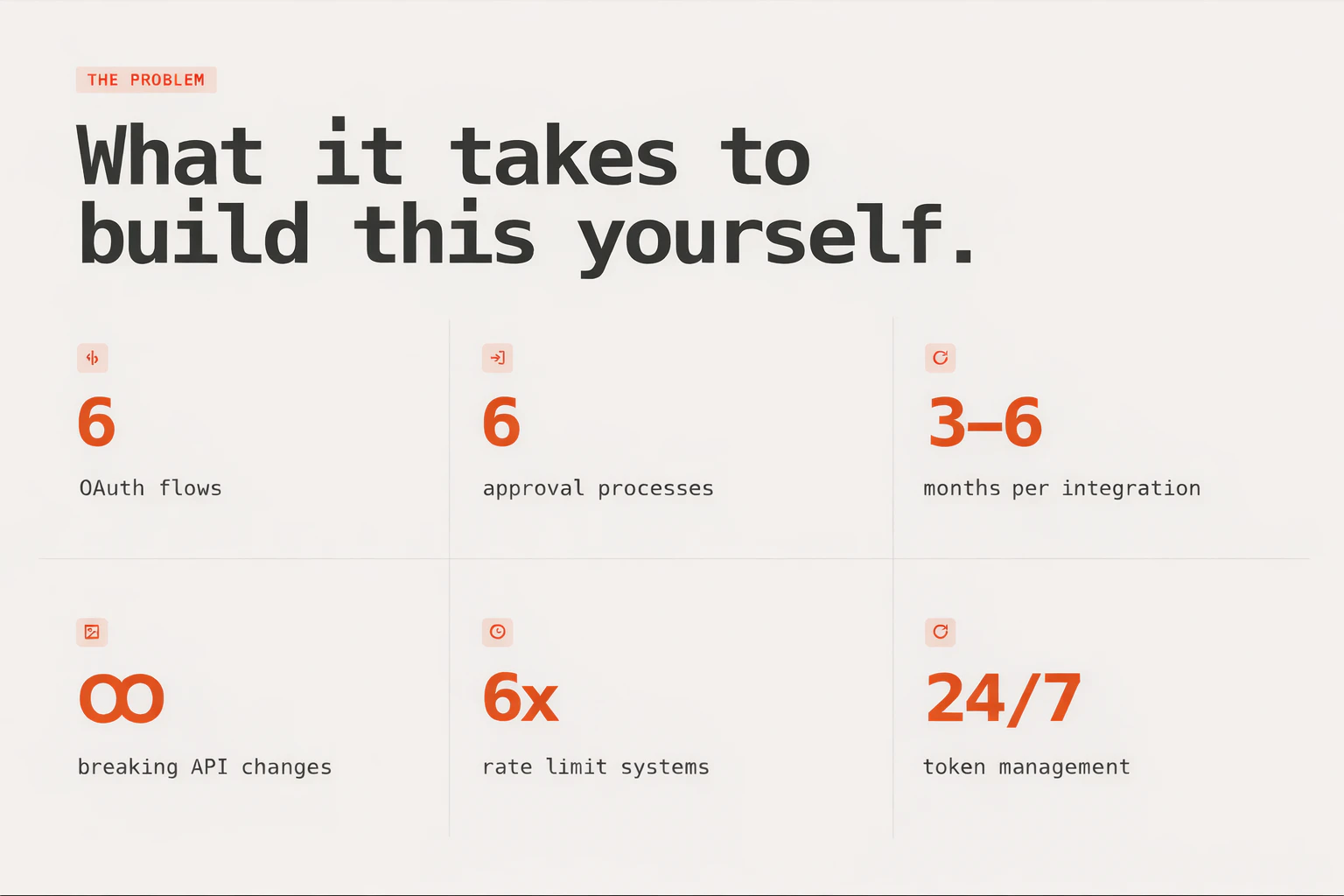
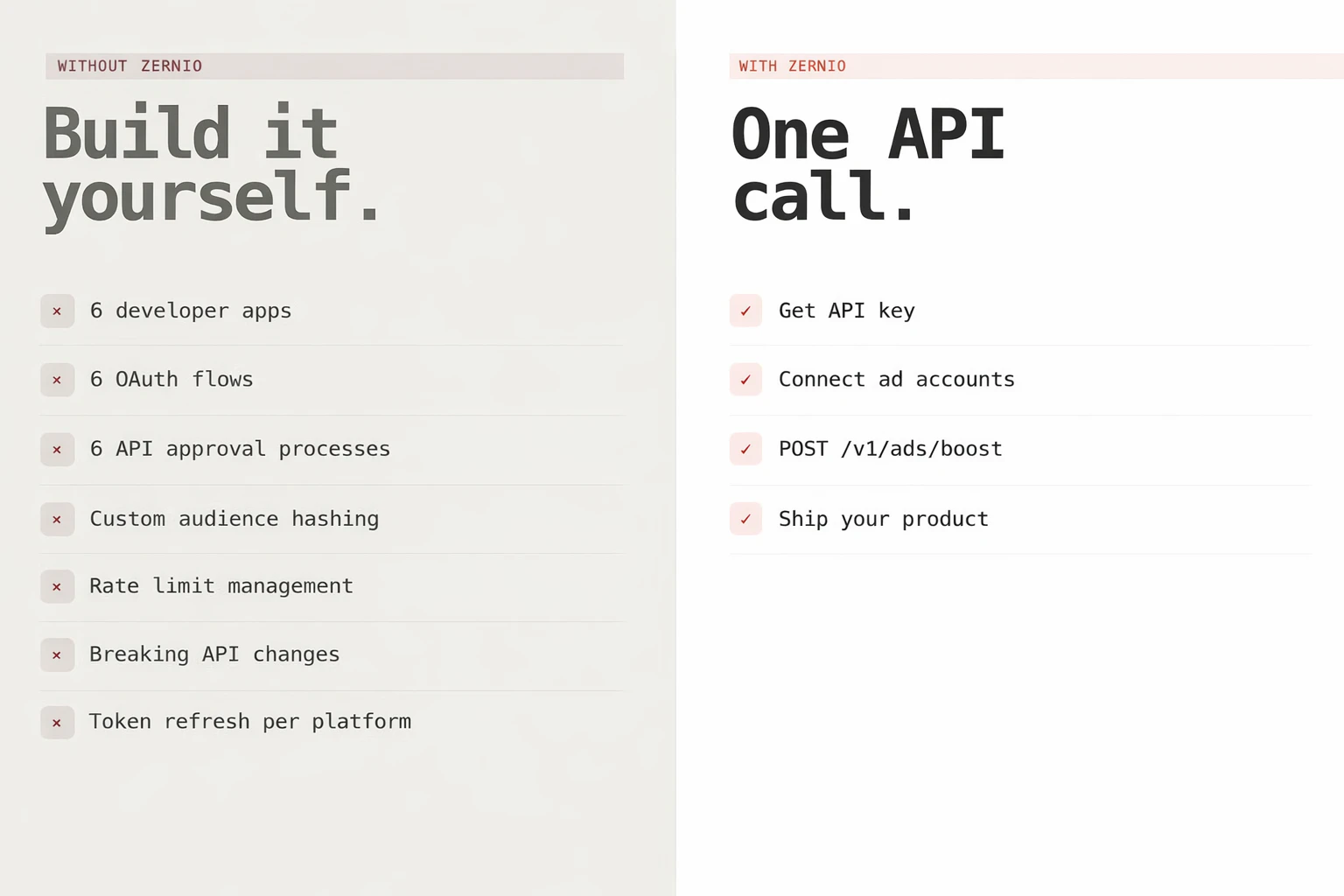
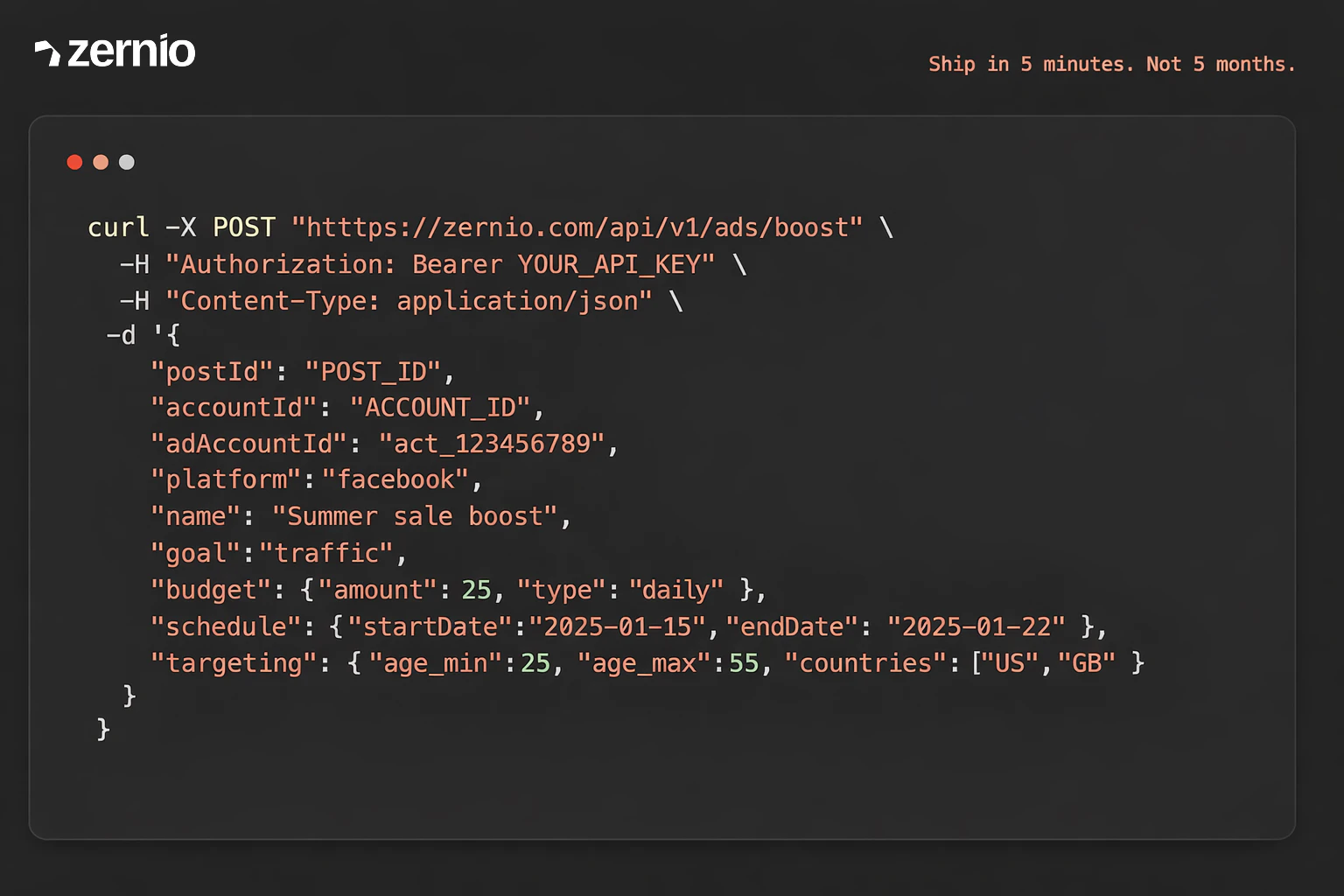
Building ad integrations with Meta, Google, TikTok, LinkedIn, Pinterest, and X means 6 developer apps, 6 OAuth flows, 6 campaign object models, and months of engineering. Zernio replaces all of that with a single endpoint. No developer app required. Bearer token auth. One normalized data model. The Ads API joins Zernio's existing social layer: publishing, comments, DMs, and analytics across 15 platforms.
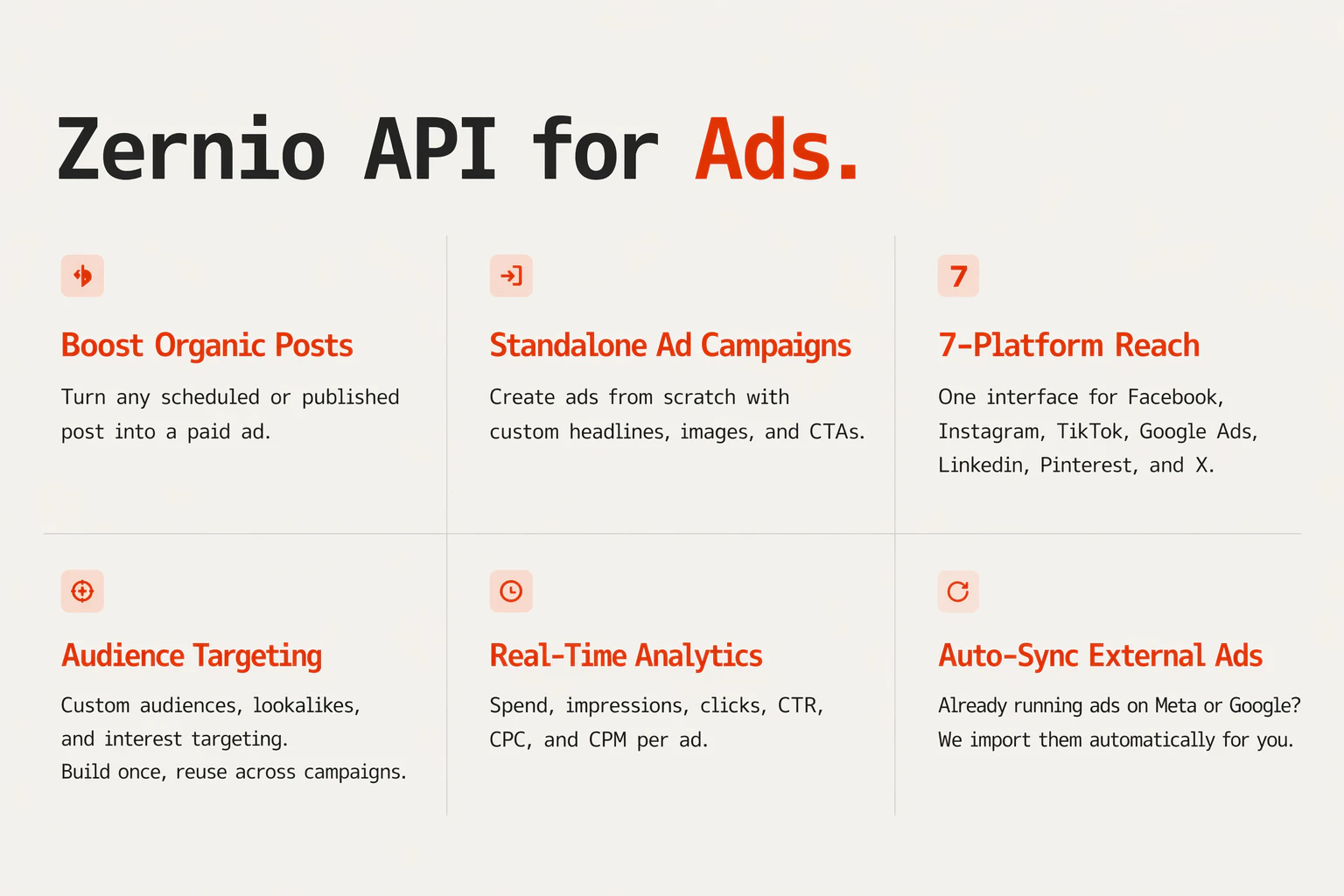
Hi PH! I'm Miki, founder of Zernio. Today we're launching Zernio's Ads API - one endpoint to create, manage, and report on paid ads across Meta, Google, TikTok, LinkedIn, Pinterest, and X. No developer apps required. No separate SDKs. Bearer token auth. One normalized data model across all 6 ad networks. Cross-platform reporting built in. If you've ever wired up even one ads API directly, you know how much pain that removes. Here's what you can do now with a single API call: ⚡️ Boost any organic post into a paid ad ⚡️ Create standalone ad campaigns across 6 networks ⚡️ Manage budgets, targeting, and creative from one endpoint ⚡️ Pull unified analytics and reporting across all platforms ⚡️ Pause, resume, or update ads without switching dashboards We're a small team of 5, bootstrapped, profitable. Everything we build comes from listening to our users, and the Ads API is no different. We're on a mission to make Zernio the social infrastructure layer developers never have to think twice about - posting, engagement, analytics, and now ads, all from one API. Couldn't be prouder of this team. What's been your biggest headache building ad integrations? Would love to hear your experiences, ideas, and feedback on any of the above!
20
回复

@paletmiki so cool, I love Zernio, and this will bring thing to another level! 🙌

0
回复

@paletmiki Does Zernio normalize attribution models like view-through vs. click into one clean view, or flag discrepancies upfront?

0
回复

Can't emphasize enough how much of a game-changer this is. Building the Zernio Ads API was all about killing the nightmare of maintaining multiple ad SDKs! ⚡️

We took 6 totally different ad network architectures and normalized them into a single, beautiful endpoint. Whether you are automating campaign creation or just need cross-platform reporting, it finally just works.

Check out the capabilities and how easy it is to get started: https://zernio.com/social-media-ads

Massive shoutout to the team for pulling this off. We'd love to hear your feedback!

2
回复

@eleanquintero This is the kind of infra work that quietly removes months of pain unifying 6 ad ecosystems into one model is no small feat. Curious how you’re handling edge cases where platforms don’t map cleanly into that single abstraction.

0
回复

Zernio customer here. Zernio has been great for our AI-driven content making processes 👍 If you can make the mentioning functionality for posts more seamless, it'd be even better

2
回复

@sylviangth thank you for your support! 'make mention easier' - noted! 📝

0
回复

I have had a GREAT experience with Zernio so far. It has made publishing social posts from my CLI so simple, even updating images and content via API. I am very satisfied and looking forward to doing more with it, including Ads!

1
回复

@hdsndzn so glad to read this! thanks for support! 🙌

1
回复

I've been using zerino for a couple months now in order to let my agents post to social media through one unified API. It has been working fantastically

1
回复

@ken_mcloud1 really appreciate your feedback ✨

0
回复

I've been using Zernio for two or three months as part of my vibe coded social content stack and it has literally been a game changer for me. I used to get frustrated copying and pasting content into Adobe Express and Blaze. It made the process much more tedious for me as the business owner and content creator to focus on creating then on distribution. Now I can focus on creating content and with Codex I can push to Zernio for distribution. For a 5 man team they have done a great job with multiple new feature releases and improvements over the last few months. Give it a try.

1
回复

@tassko your feedback means a lot to the whole team! thank you 😍

1
回复

I have been using the Zernio API last 3 or 4 weeks, and totally sovled all the headaches on social posting I was having. Thanks. Loving the stats, too. The ads end point looks intriguing, although I am not running ads, yet.

1
回复

@daniel_lock1 thank you for support!

0
回复

great product, I use it to post it automatically on youtube short and tiktok :)

1
回复

@mourad_onlydivididends aaaawesome! now you can boost TikTok videos through Spark Ads with Zernio as well ⚡️

0
回复

@mourad_onlydivididends nice!! I've never tried it for video. how many a day do you post?

0
回复
One-API-for-6-platforms is the fight Segment fought on the analytics side 
— hard-won. Question: how do you handle the platform-specific quirks that 
don't fit a unified schema (TikTok's spark ads, LinkedIn's matched audiences, 
etc.)? Do you expose platform-raw fields or force normalization?
0
回复

These guys are great. We use them for EntryThingy, and it's a big upgrade to use Zernio for all of our social media needs

0
回复

I’m using your product to launch mine! Thanks!

0
回复

Zernio customer here, at the time they were called Late, so I'm an OG fam. The platform is amazing, fast, intuitive and with a really helpful bunch of features. With the new Ads capabilities, Zernio is quickly becoming a major player, definitely more powerful than Blotato.

0
回复

@roverdrammen thank you for being with us and the support!

0
回复

This is basically what devs actually need not another social API, but one abstraction layer over the chaos of 15 different platforms. If the normalization is solid, this saves months of integration pain instantly.

0
回复

I'm using their API currently with 3 profiles and about 8 social media accounts connected. works like a charm. honestly also extremly useful for teams with the calendar view, easy upload and scheduling.

0
回复

@nour_amer so glad to see that kind of usage! Thank you for supporting us today

0
回复
Big fan of Zernio! Using them on multiple projects and so easy to recommend to clients and for no code projects built with Bubble.io.
0
回复

@mattblake_uk thank you for support! ✨

0
回复

You guys are absolute lifesavers! Thank you. I was literally in a meeting with my team yesterday trying to find a way to bypass the Meta App Review process for a client's MVP because the wait times were becoming a blocker. Opening ProductHunt today and seeing this solution is incredible timing. Thank you for shipping this!

0
回复

@pheidias_05 wow! what a timing! curious to get your feedback on Ads API soon ☺️

0
回复

Great app. I use openclaw to upload to all my social networks, so easy, just api key stored in config file and open claw can upload and write captions and manage all posting without needing to login to a UI.

0
回复

@yishaigolanisrael loooove this flow!

0
回复

Very useful product. Which platform integration has been the biggest win for users so far?

0
回复

@iampascio thank you! I would say Instagram is 🥇

0
回复

Man this is so useful, every time i need to integrate social platforms is a nightmare. Thank you for building this!!

0
回复

@jacinto_fleta thank you for your support! ✨

0
回复

I've been using Zernio (late) for months and the progress of the tool is impressive, congrats to the whole team 👏🏻. Zernio's Ads API is very useful, can't wait to try it (certainly today :D).

Would also love to see a few additions to the platform:

-the ability to set a custom reel cover photo (thumbnail), choosing it directly from the video we upload

-AI-generated captions based on the content being posted

That would make the workflow even smoother. Thanks to the whole team, and good luck !

0
回复

@amraniyasser thanks a lot for your feedback! The additions are noted and shared with the whole team 📝🙌

1
回复

Hi! We're using Zernio on Starnus for few of our agents, and super happy to see the progress and have the ads API option. Congrats and excited to test it out!

0
回复

@khashayar_mansourizadeh1 that's awesome! thank you for the support and curious to see your next Ads Agent 🙌

0
回复

I've been using Zernio (formerly Late) on two real projects for several months now. The value is clear: one API, multiple platforms, MCP, and chat SDK exactly where I need them.

What has convinced me most isn't the feature list, but the team's pace (foundation, analytics, DM, now Ads...). I don't think I've seen anything like it on any other platform I've worked with.

My heartfelt congratulations to the team, and I'm always on board. ZernioLOVER

0
回复

@isaac_martin omg, this comment! 😍 my promise - I will print it!! thank you for your support

1
回复

I am so excited for this!! Loved @Zernio even back when it was Getlate! The fact that I can now do ads in the same place we manage socials from is incredibly excited!! Thanks @fmerian

0
回复

@troy_drummond thank you Troy! love seeing our long-time users supporting us 🤩

0
回复

Awesome product + awesome team!

Go, go, go!

0
回复

@danielperis thank you for your constant support !

0
回复

Been using Zernio (Late) for a few months now. Found it via Claude suggestions and to be honest, it's the best MCP-driven tool for automating scheduling and SM management out there. Kudos to the small team! You are basically replacing Buffer (and the likes) + ManyChat (and the likes) and more in one tool mostly designed for my AI agents!

0
回复

@ale_grampa  thank youuuu!

0
回复
External ads can change constantly in native UIs—how does your auto-sync work in practice (frequency, freshness, conflict resolution), and what guarantees do you give around status/metrics consistency when users edit campaigns both inside and outside Zernio?
0
回复

@curiouskitty great question, really appreciate you bringing this up!

In practice, the sync works like this: when a user connects their account, we initially pull the last ~90 days of ad data. From there, we keep all active ads continuously in sync with periodic refreshes. So once campaigns are in Zernio, we regularly update them to reflect any external changes, helping keep status and metrics consistent across both environments.

1
回复
#7
Cai
Press ⌥C on anything to run smart actions, locally
152
一句话介绍:Cai是一款macOS效率工具,允许用户在任何界面下通过快捷键⌥C触发本地AI智能动作(如执行提示词、脚本、创建任务等),解决了跨应用操作繁琐、依赖云端服务的数据隐私与延迟痛点。
Productivity Developer Tools Artificial Intelligence
效率工具 本地AI 快捷键启动 自动化 macOS 隐私安全 开源 多模型支持 无服务器 开发者工具
用户评论摘要:用户普遍赞赏其“本地运行、隐私安全、一键触发”的核心理念,认为潜力巨大。主要建议集中在增加Windows/Linux支持、丰富预置动作库、优化本地模型性能与资源占用,以及改善初始配置引导。
AI 锐评

Cai的野心不在于成为另一个ChatGPT式的聊天前端,而旨在成为深入操作系统层面的“AI副驾驶”基础设施。其真正的颠覆性价值在于三点:第一,通过系统级快捷键将AI能力“注入”任意上下文,模糊了应用边界,试图实现“所思即所得”的终极交互范式;第二,其“Bring your own brain”架构极具策略性,既用开箱即用的轻量本地模型满足零设置用户,又全面拥抱MLX、Ollama等生态,将自己定位为一个中立、开放的AI能力调度层,而非模型垄断者;第三,其坚持本地优先、MIT开源、无遥测的立场,精准刺中了当前AI应用普遍存在的隐私焦虑、厂商锁定和成本问题,是面向开发者和隐私敏感者的“宣言式产品”。

然而,其挑战同样尖锐。作为系统级工具,其用户体验的流畅度将严重依赖于本地模型的响应速度与质量,在Apple Silicon上运行3B参数模型能否真正达到“智能”而非“玩具”的实用水准,存疑。其次,其核心价值“智能动作”的构建,目前仍需用户具备一定的提示工程或脚本编写能力,这形成了较高的使用门槛。如何从极客的炫酷玩具,成长为普通用户也能轻松定义工作流的效率平台,是它必须跨越的鸿沟。如果其预置动作库社区能蓬勃发展,它可能成为AI时代的“Alfred”或“Keyboard Maestro”;若停滞不前,则可能仅是技术爱好者手中一把锋利却用途局限的“手术刀”。

查看原始信息
Cai
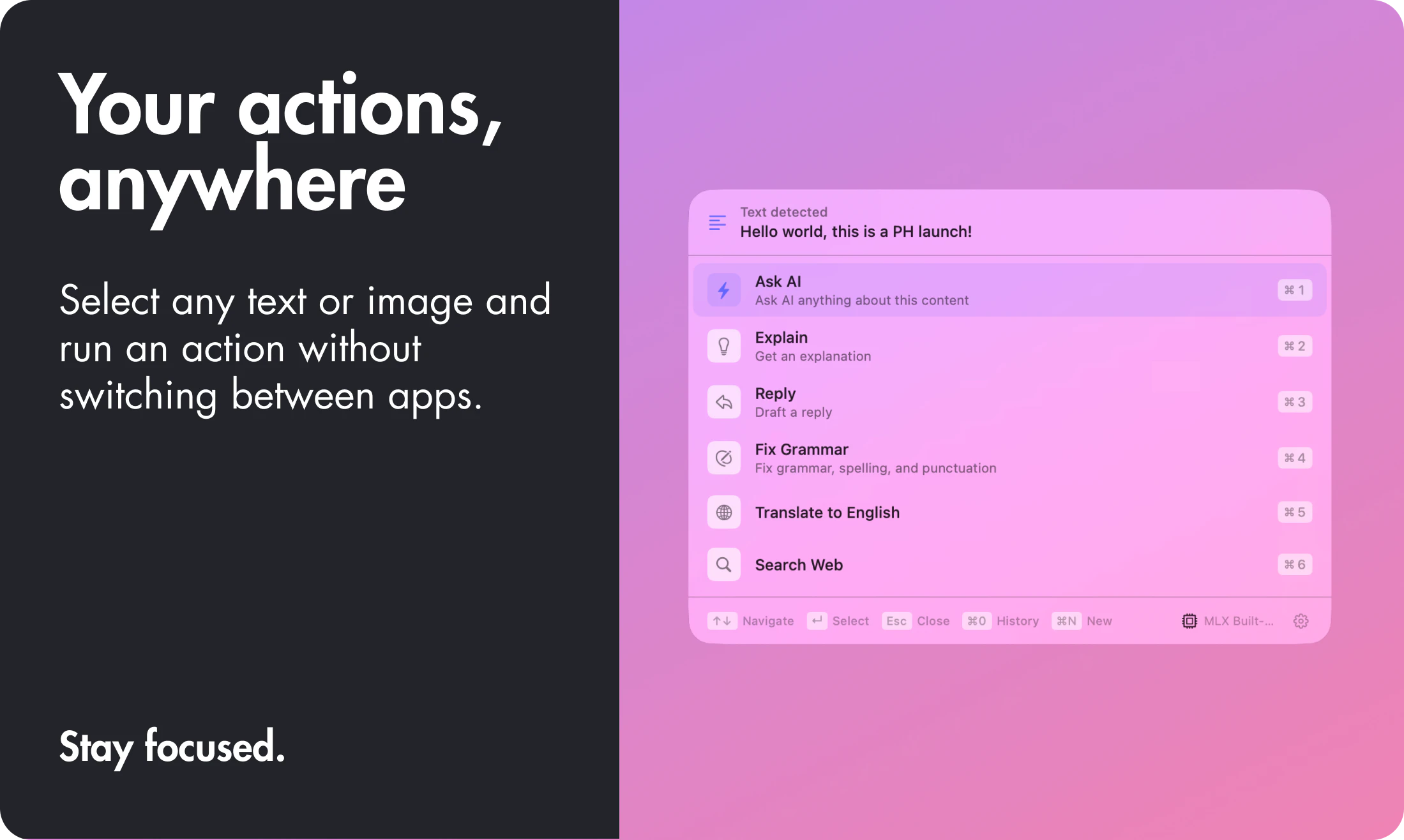
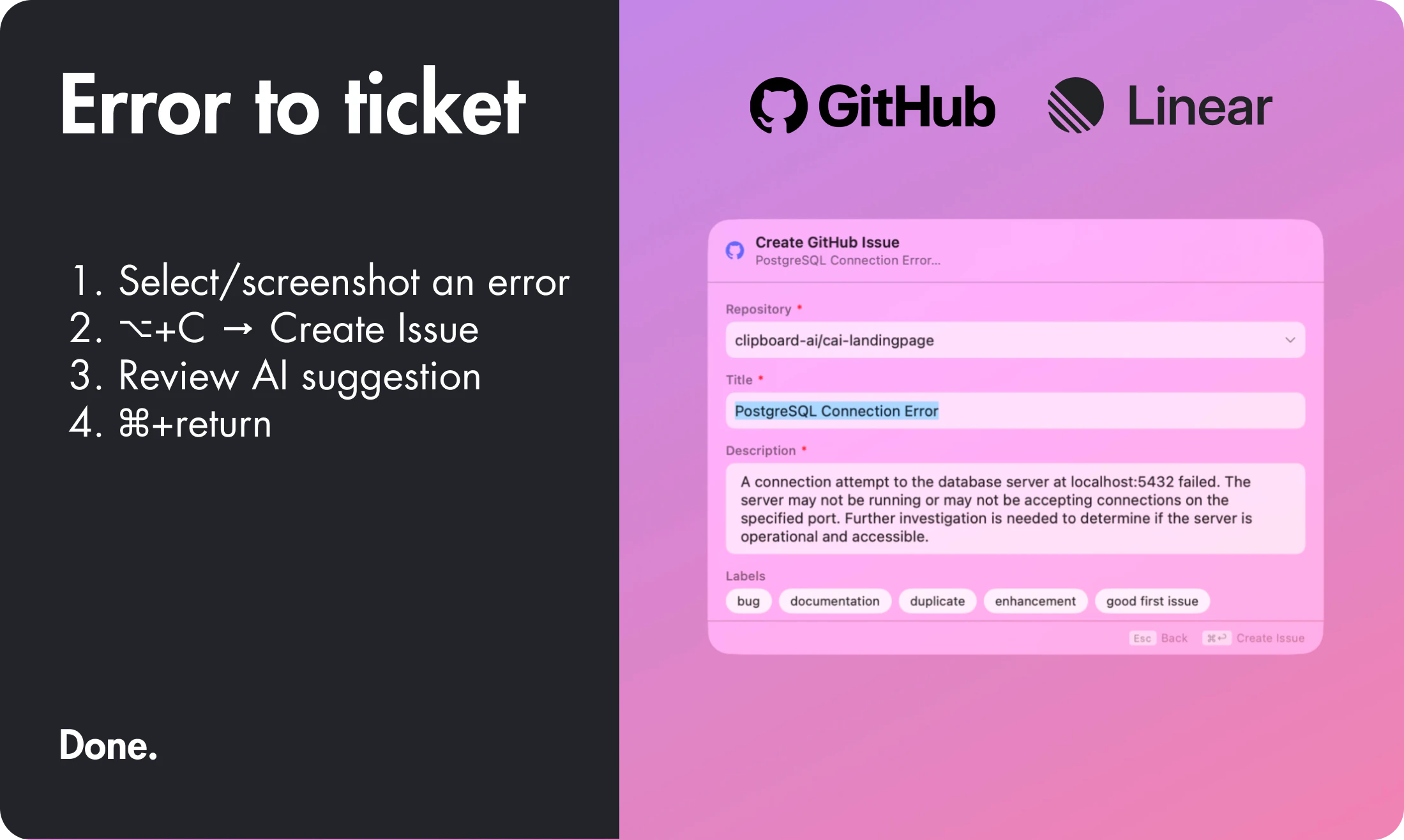
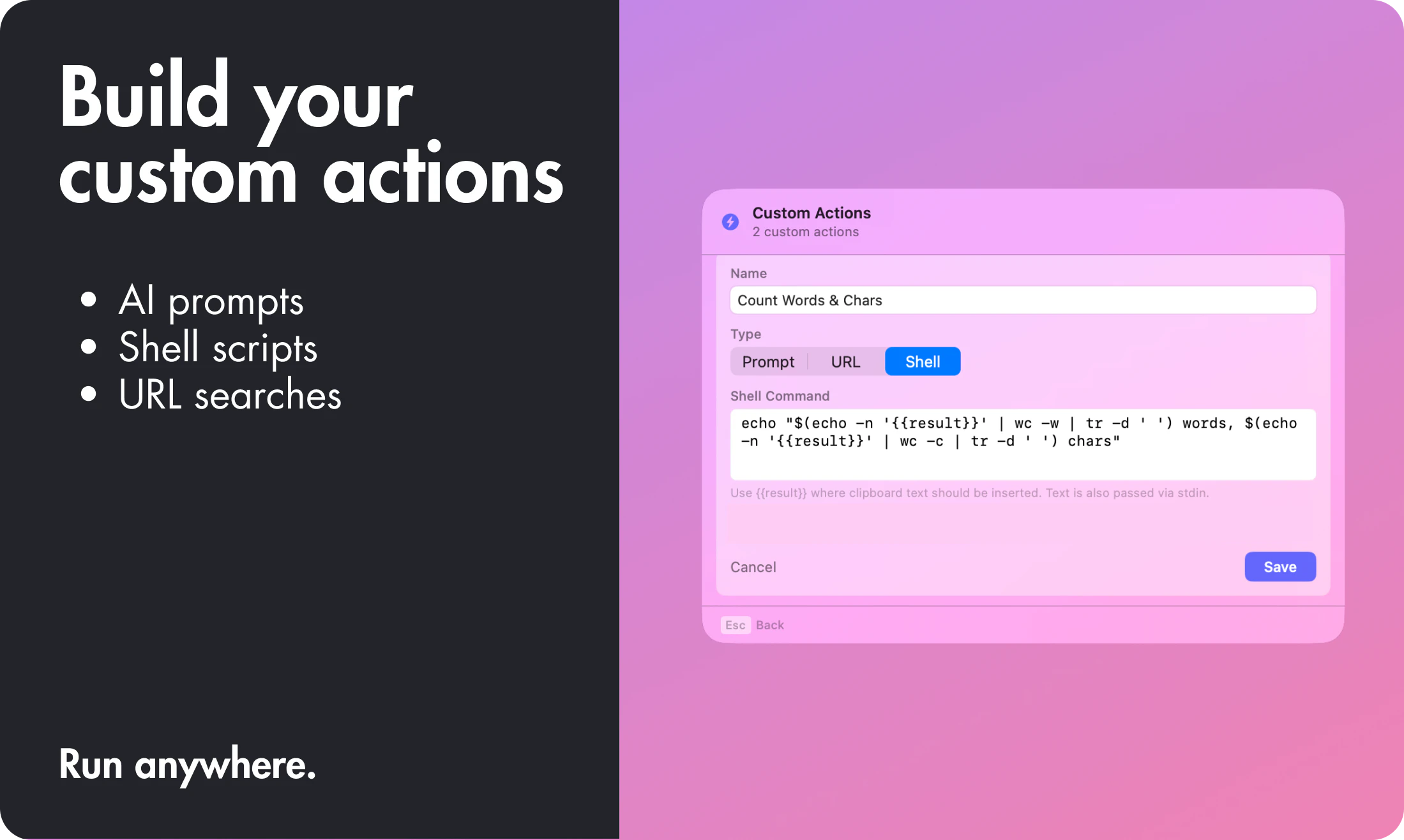
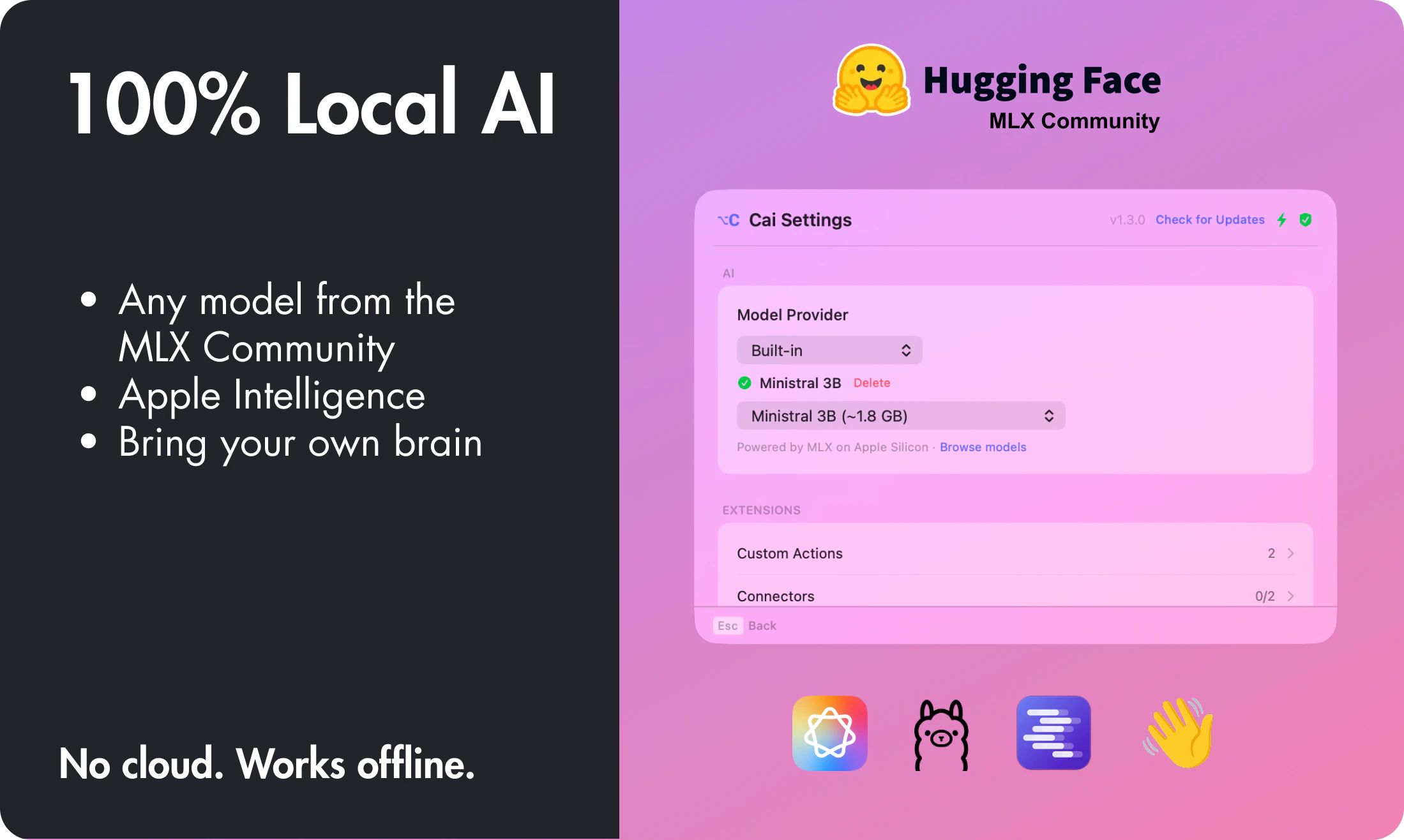
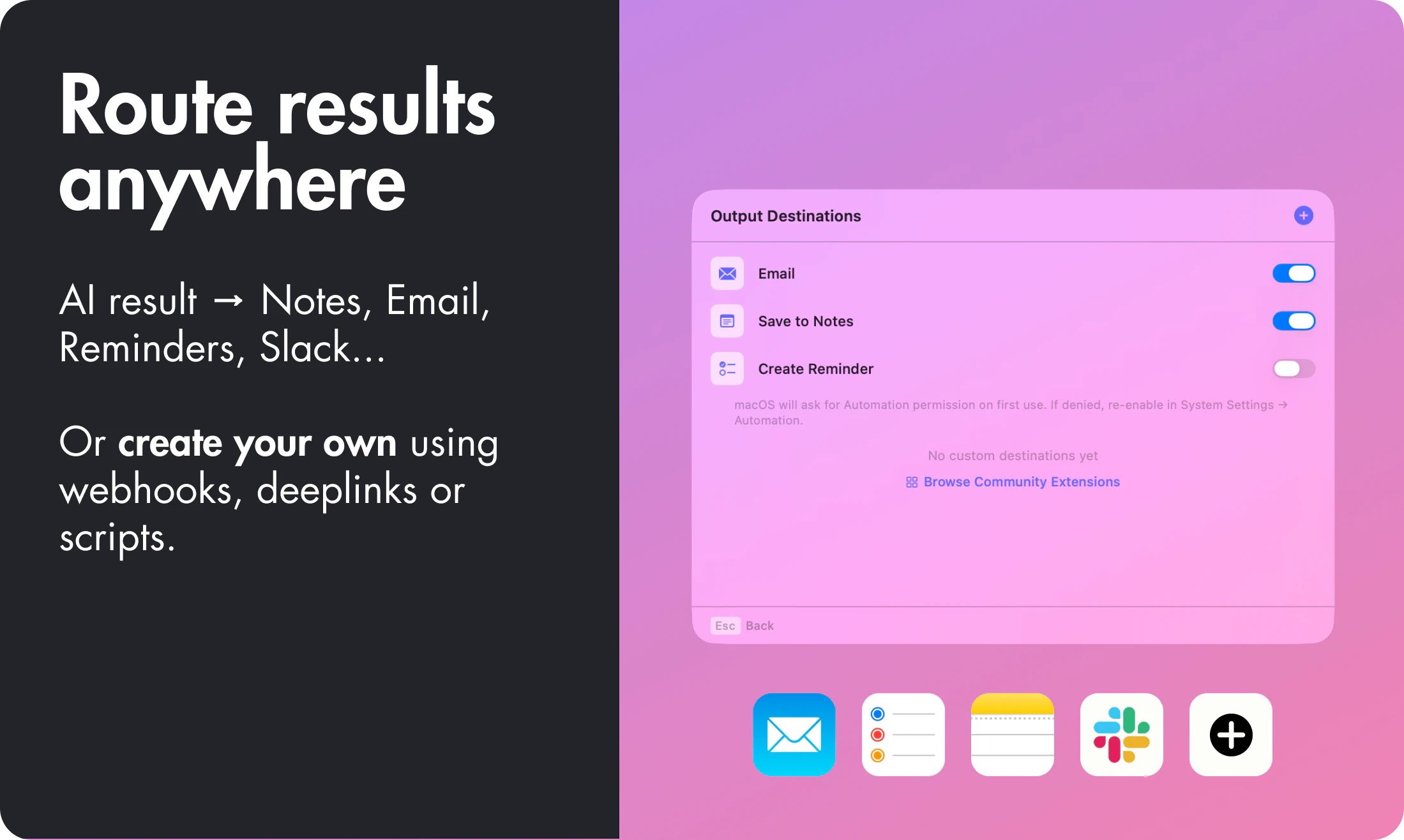
Press ⌥C on anything to run smart actions: AI prompts, shell scripts, GitHub issues, Linear tickets, or send results anywhere... All one keystroke away. Bring your own brain: bundled Ministral 3B for zero-setup local AI, any HuggingFace MLX model for Apple Silicon speed, or connect Ollama, LM Studio, Apple Intelligence, or OpenRouter. Free, MIT licensed. No cloud, no account, no telemetry.
#8
Framework Laptop 13 Pro
A Linux-first laptop with premium ambitions
133
一句话介绍:这是一款主打Linux优先、高度可维修与模块化的高端笔记本电脑,通过可升级的LPCAMM2内存、超长续航和全CNC铝制机身,为追求可持续性、自主升级和开源生态的开发者及科技爱好者提供了传统一次性电子消费品之外的耐用选择。
Hardware Computers
笔记本电脑 Linux笔记本 模块化设计 可维修性 可持续科技 开发者工具 高端硬件 升级友好 CNC铝机身 长续航
用户评论摘要:用户普遍对产品创新表示赞赏,认为其接近“终极开发者笔记本”愿景,并特别关注长期愿景、核心使用场景以及与前代硬件的向后兼容性。有评论直接询问公司长期希望以何闻名。
AI 锐评

Framework Laptop 13 Pro的发布,与其说是一次硬件迭代,不如说是对消费电子行业“计划性报废”商业模式的又一次精准打击。它聪明地避开了与巨头在极致轻薄或性能上的肉搏,转而将“可维修性”和“模块化”从营销噱头锻造成了真正的产品骨架。Intel Core Ultra处理器和20小时续航是进入主流战场的门票,而LPCAMM2可升级内存、CNC机身与旧硬件的兼容性,才是其构筑护城河的砖石。

其真正的价值不在于创造了多惊艳的参数,而在于它验证了一个细分但至关重要的需求:在电子垃圾成为全球性问题的今天,存在一群高支付意愿的用户,愿意为“主权”——对自己设备长久的升级、维修和控制权——买单。它将自己定位为“Linux-first”,更是精准锚定了开发者、极客和开源拥护者这群意见领袖,他们不仅是用户,更是其“可维修”理念的布道者。

然而,挑战同样尖锐。模块化设计必然在重量、成本和极致集成度上做出妥协,其“高端”定位能否支撑起足够的销量来形成生态正循环,是一道现实考题。用户的评论“长期愿景是什么”和“希望以何闻名”,恰恰点出了Framework在赢得早期拥趸后,必须回答的战略问题:它终究是一家小众的精品硬件商,还是一场旨在颠覆整个行业设计哲学的变革先锋?前者路稳但规模有限,后者波澜壮阔却风险极高。Framework的每一步,都在为科技行业的可持续发展路径探路,其成败已超出一款产品本身,关乎一个理念能走多远。

查看原始信息
Framework Laptop 13 Pro
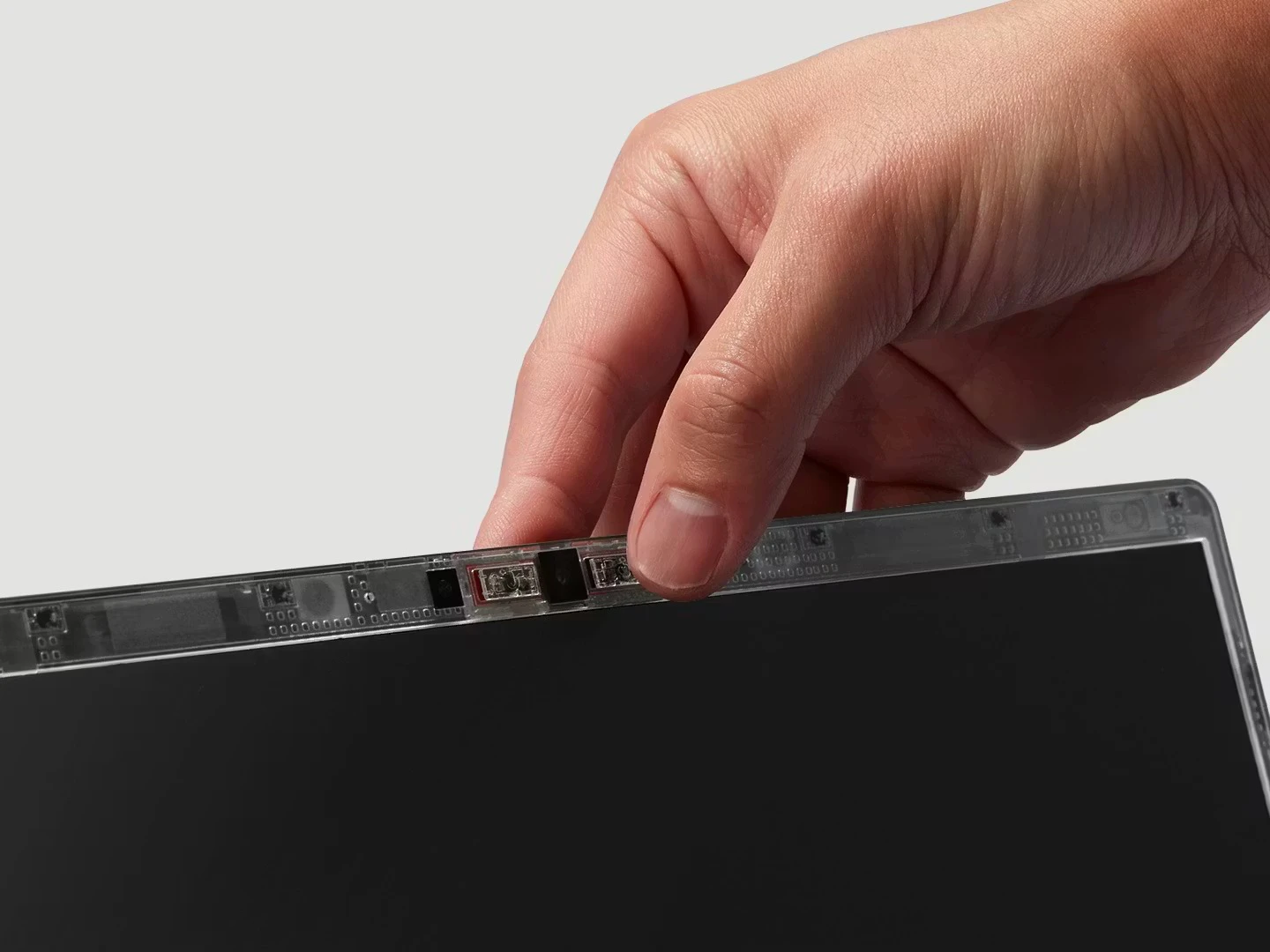
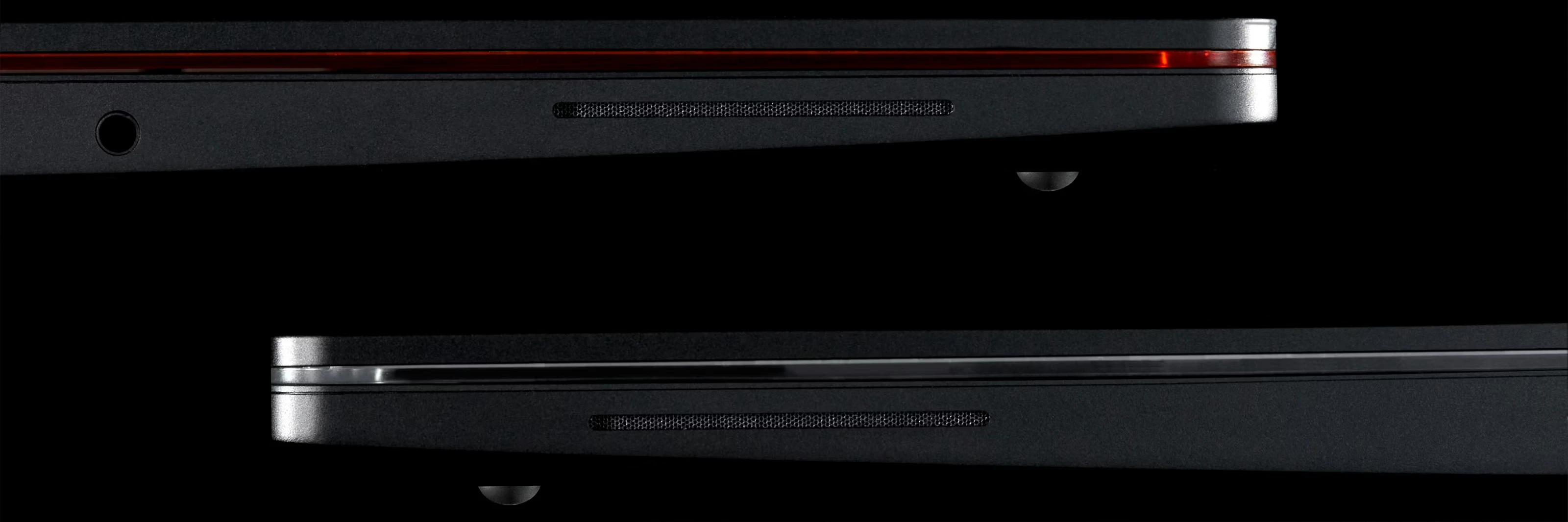
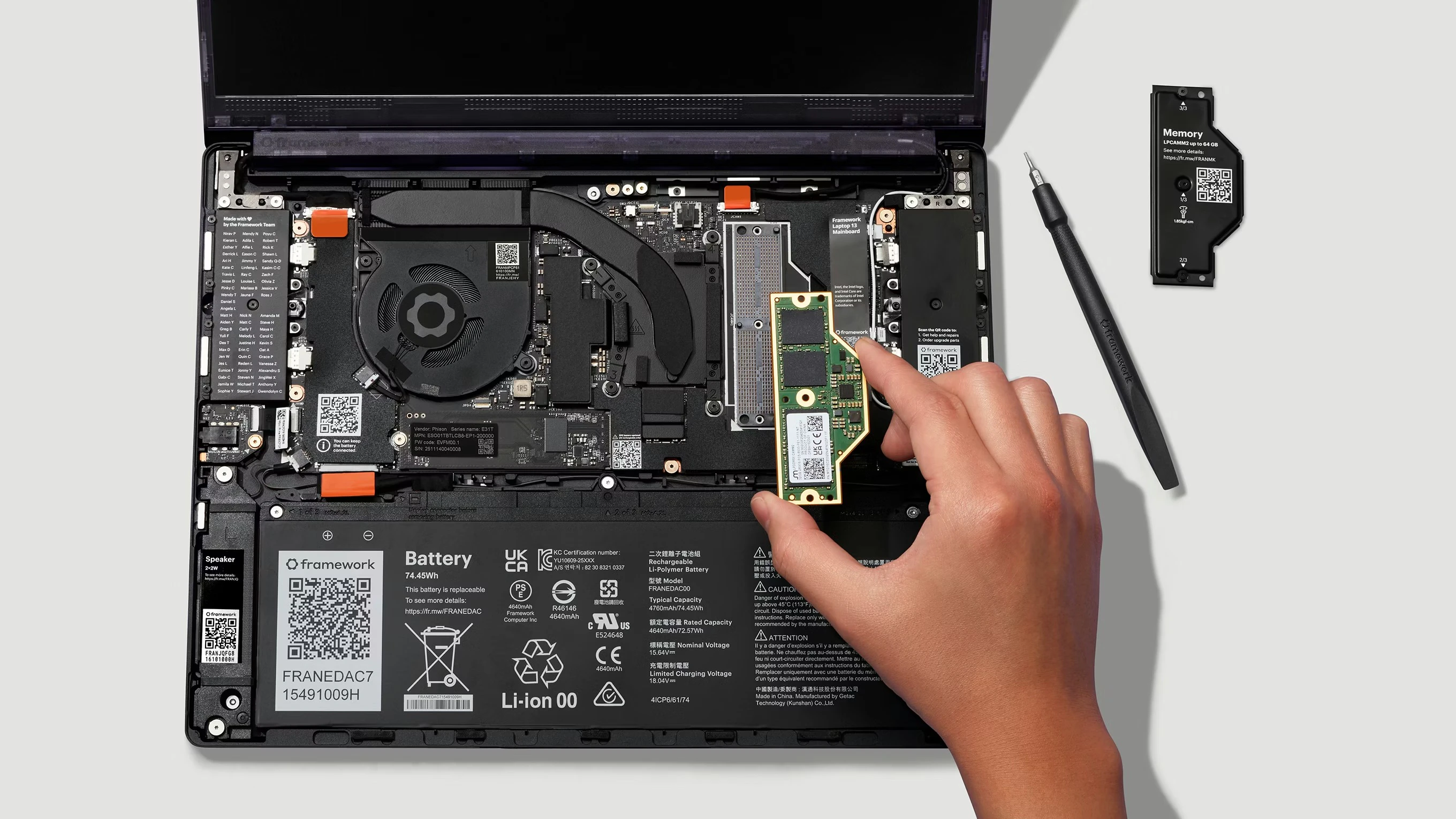
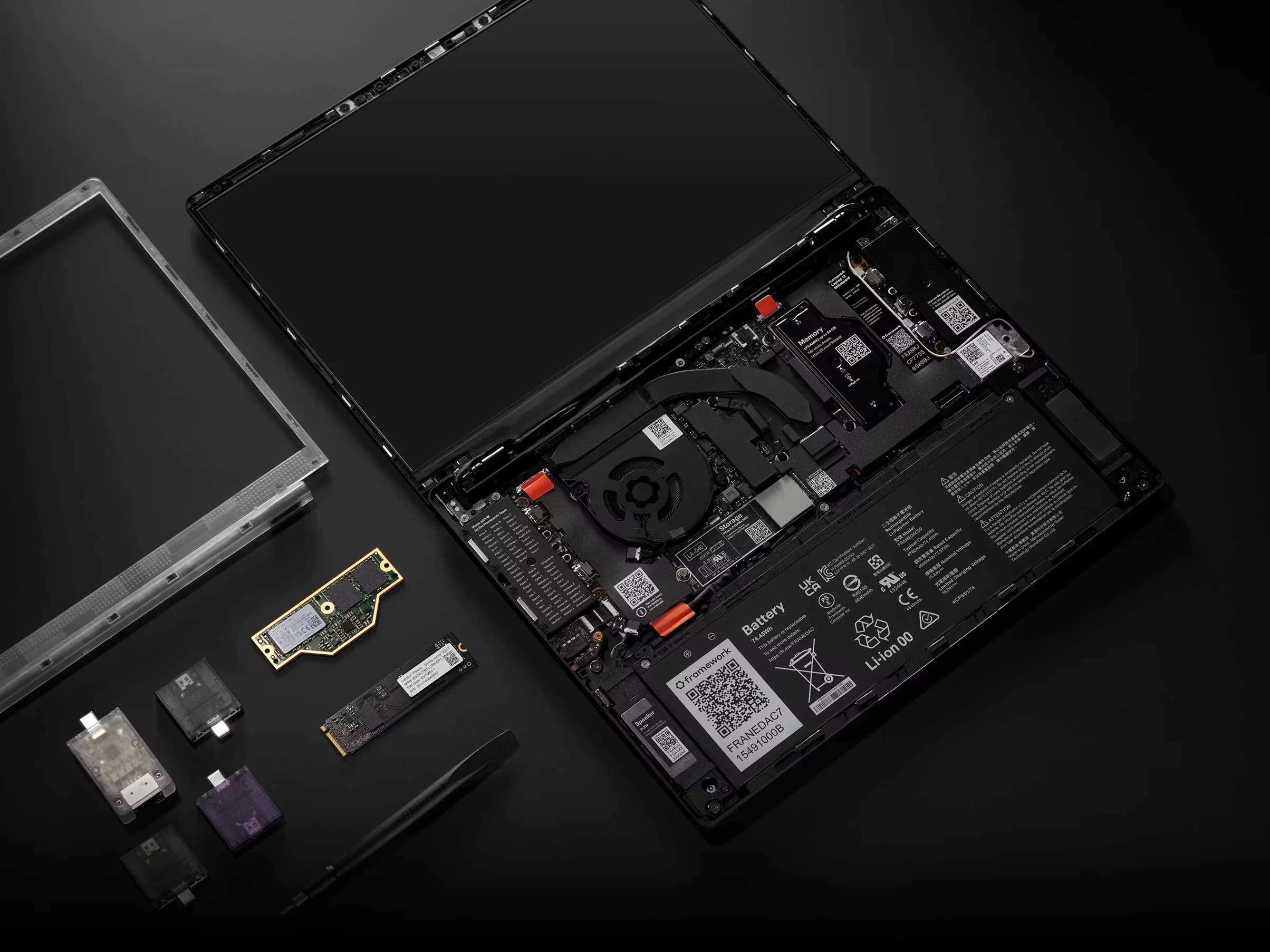
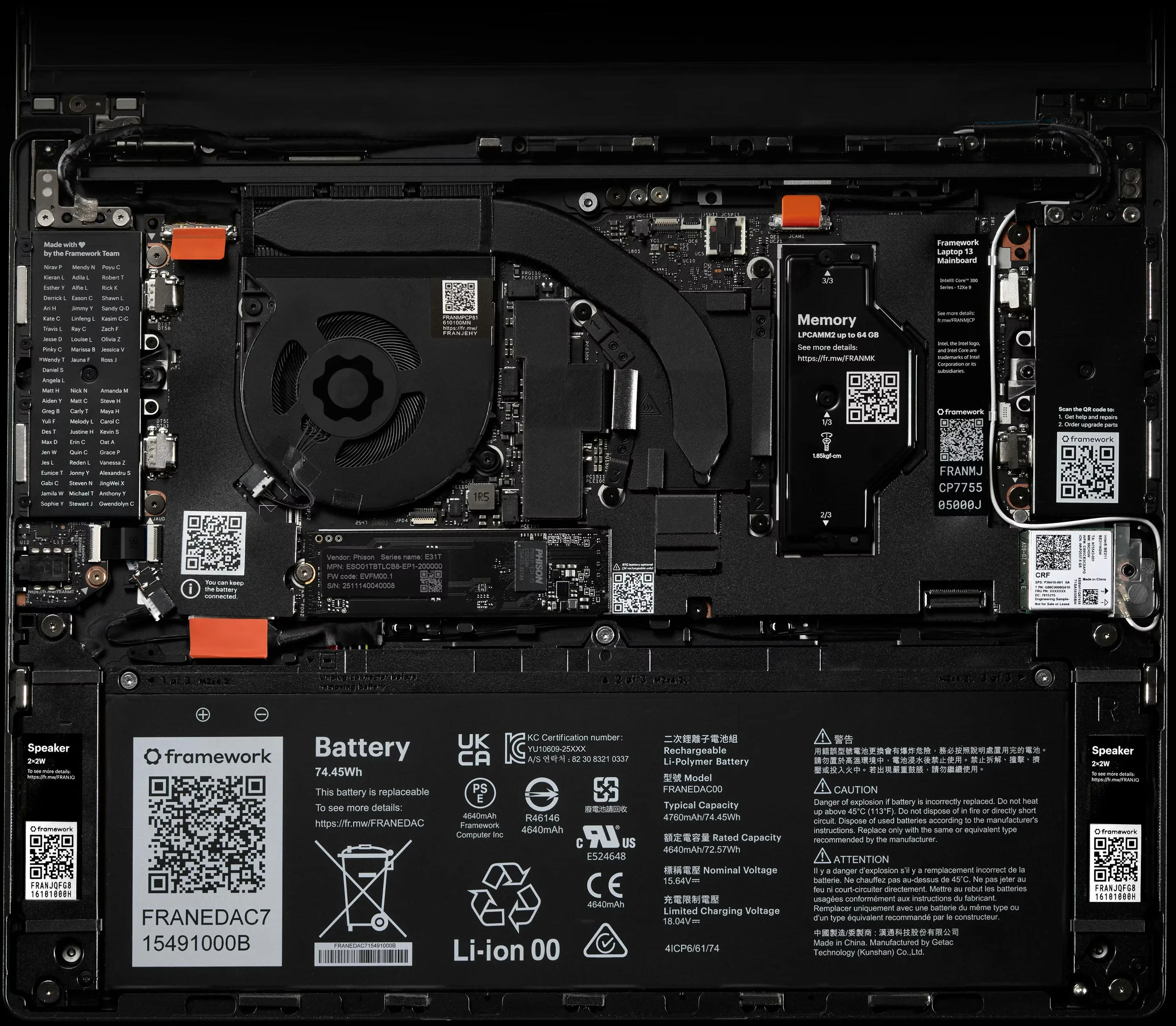
Framework Laptop 13 Pro pairs Intel Core Ultra Series 3 processors with a 21% larger battery for real 20-hour life, LPCAMM2 memory you can upgrade, and a refined CNC aluminum chassis. It keeps the repairable and modular DNA that made Framework famous.

Hi everyone!

Framework just dropped the 13 Pro, and it’s the first time I’ve seen a company get genuinely close to the “ultimate developer laptop” idea while still keeping the things that matter intact.

20 hours of battery, Intel Core Ultra Series 3, swappable LPCAMM2 memory, a proper haptic touchpad, and a full CNC aluminum chassis — while still keeping a remarkable amount of backwards compatibility with earlier Framework 13 hardware. You can carry a lot of your old system forward instead of starting over.

Linux support is excellent, with Ubuntu certification out of the box, and the whole thing is still repairable and upgradeable with one screwdriver:
https://www.youtube.com/watch?v=JSxgCEpkiKM

1
回复
wow you guys built an actual new laptop!!! respect. curious what your long term vision and what’s the one thing u wanna be known for? (if everything worked out)
1
回复

I love watching this hardware story

0
回复

Clean concept. What’s the one use case people instantly get hooked on?

0
回复
#9
Toki 2.0
Automatically go from ideas to scheduled plan
133
一句话介绍:一款AI智能调度代理,能将用户模糊的初步想法(如“本周某天与约翰晚餐”)自动转化为优化后的日程安排,解决传统日历工具只能记录已确定事项、无法从零规划日程的痛点。
Productivity Calendar Artificial Intelligence
AI日程助手 智能规划 自动化调度 时间管理 个人助理 意图理解 条件触发 偏好学习 生产力工具
用户评论摘要:用户认可其从“工具”到“助手”的转变,认为设计友好。核心关注点在于:AI如何学习个人节奏与偏好;如何处理多人协调;如何平衡自动化与用户控制权;以及其“跟踪”功能(如机票价格)的主动程度。
AI 锐评

Toki 2.0的野心,在于颠覆日历的工具属性,将其重塑为一个具备持续认知与执行能力的“调度层”。它不再是被动记录时间的数据库,而是试图成为主动理解意图、管理时间资源的智能体。其真正的价值锚点在于“Seed”(种子)概念——捕获并孵化那些非结构化的意图,这直击了传统效率工具的最大盲区:大量任务因无法被即刻明确时间而流失。

然而,其面临的挑战与价值同等显著。首先,信任与控制的悖论。评论中关于“如何学习”、“如何平衡自动化与控制”的追问,揭示了用户对“黑箱调度”的天然警惕。Toki必须在高阶自动化与决策可解释性之间找到精妙平衡,否则极易从“助手”滑向“专制管家”。其次,场景复杂度的跃升。处理个人模糊意图已属不易,而一旦涉足多人协调(如家庭日程),变量呈指数级增长,对上下文理解、隐私边界与协商逻辑的要求将变得极其苛刻。

当前版本更像一个充满前景的“认知框架”演示。其成功与否,将不取决于它能否安排一次会议,而在于它能否在长期、动态、多约束的真实生活流中,建立起持续、可靠且令人舒适的“共同理解”。这条路漫长且险峻,但Toki 2.0确实指出了一个未来方向:真正的智能,或许不在于帮我们更快地处理待办事项,而在于帮我们更好地识别与守护那些值得成为待办事项的初始念头。

查看原始信息
Toki 2.0
Toki 2.0 is not a calendar. It’s your AI scheduling agent. It thinks, plans, and organizes your time — before you even ask. From messy ideas to fully scheduled days, Toki handles everything: • Plans your schedule intelligently • Capture early thoughts and turn them into events • Remembers context and preferences • Automates actions with triggers Your time, finally handled.
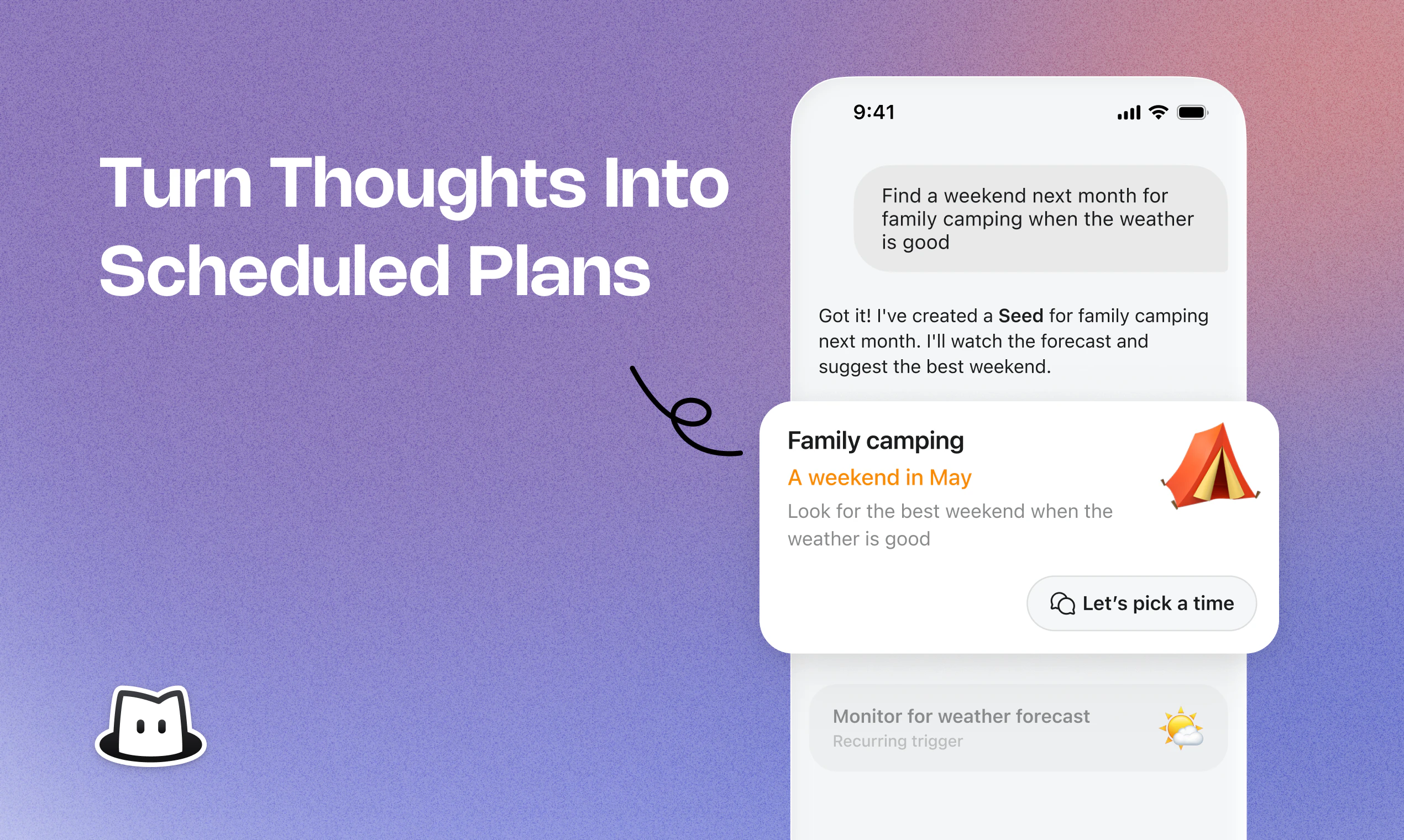
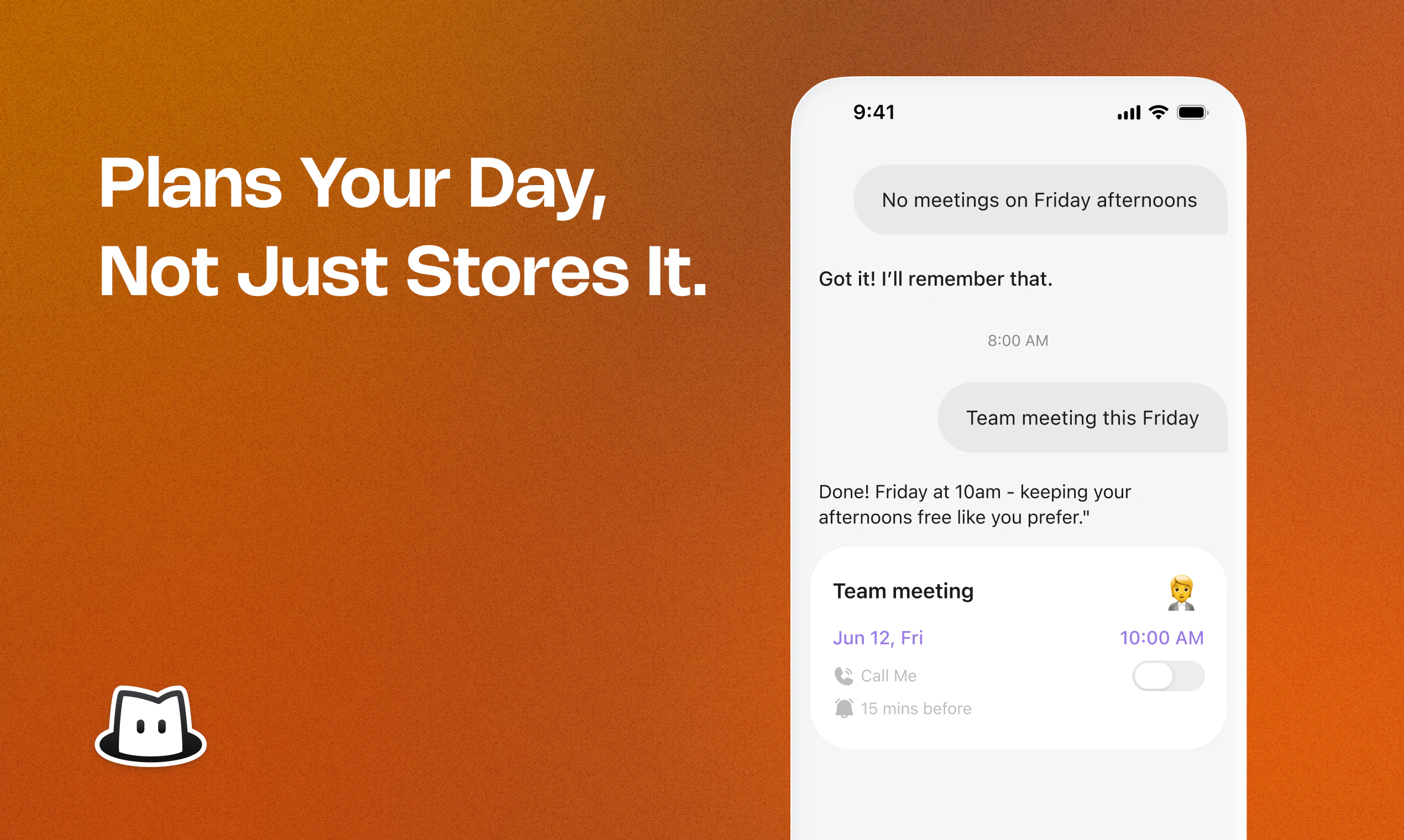
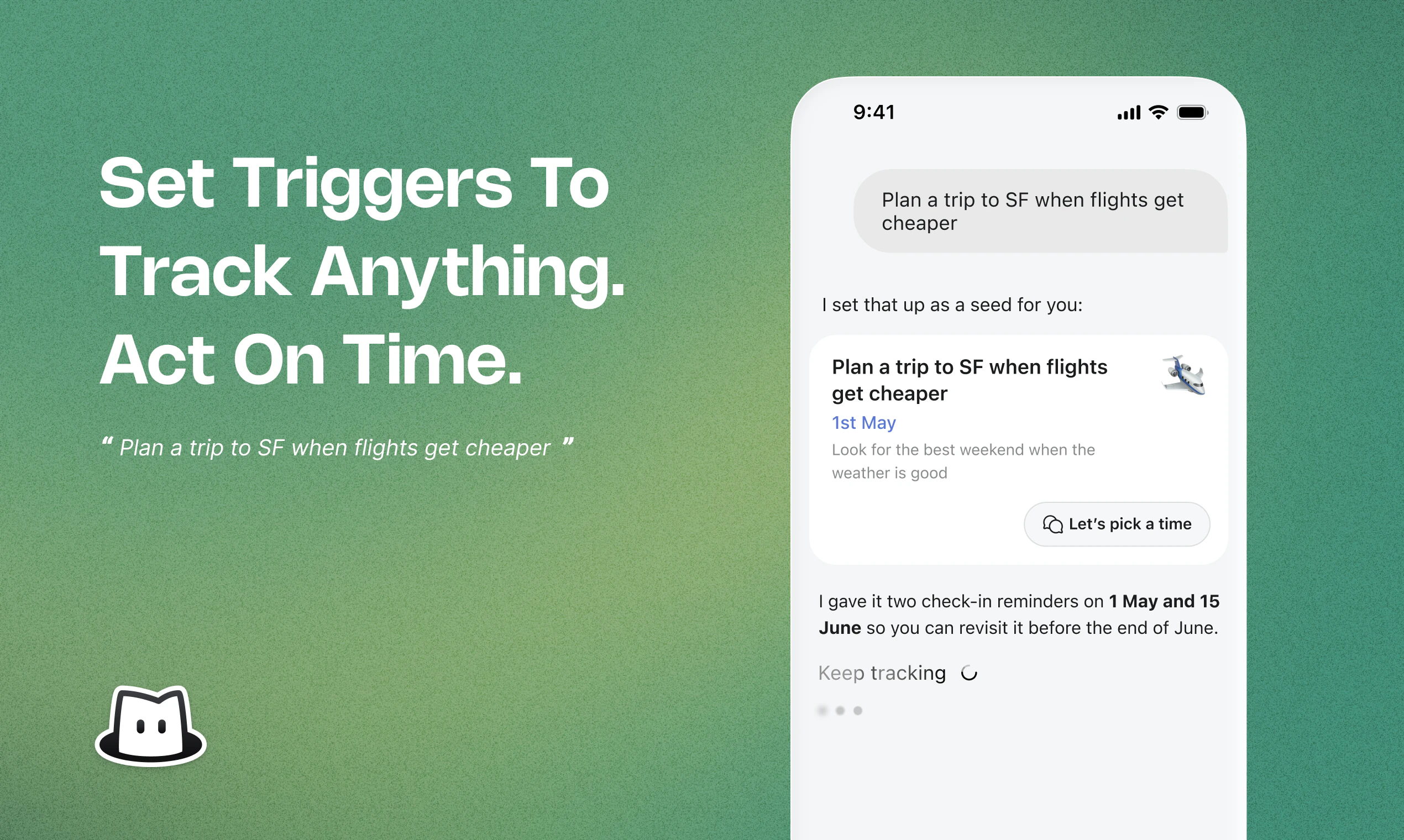
Hey Product Hunt 👋 We’re back with Toki 2.0 — and this time, it’s not just a calendar. We’ve been thinking a lot about this: Most calendars only work after you’ve already figured everything out. But in reality, most plans start messy — just a thought, a vague idea, or a “maybe”. So we built Toki to work earlier in that process. 👉 You can drop something like: “dinner with John recently” “outdoor running this week” “plan a trip to SF when flights get cheaper” Toki doesn’t just schedule it — it figures out the timing, adapts when things change, and can even act when conditions are met. What’s new in 2.0: • 🧠 Turns ideas into actual plans (we call this Seed) • 📅 Proactively schedules and resolves conflicts • 🧩 Remembers your preferences and context • ⚡ Automates actions with conditional triggers The goal is simple: Stop managing your calendar. Let it run for you.
7
回复

We’ll be sharing invite codes throughout the day 🎟️

Each code unlocks 1 month of Toki Super (limited uses per code).

If you’ve been curious to try Toki 2.0 — this is a great time 👀

/get-super 3K1F2HD9

More codes dropping soon ⬇️

2
回复

@jamieg How does it learn and adapt to personal rhythms over time, like prioritizing creative work in my peak morning hours while shifting meetings if energy dips?

0
回复

With such a cute design, it doesn't look like having duties, but more like having a fun playing game! :D

3
回复

@busmark_w_nika Hi Nika! Really glad you feel that way 😄
We’ve been intentionally trying to make planning feel lighter and less like “duties,” so it’s great to hear that comes through.

The idea is exactly that — your day shouldn’t feel like a checklist, but more like something that flows naturally with you.

1
回复

About the "trigger and track", does it also take care of the tracking part to periodically look for cheap flights in this example?

2
回复

@hwellmake Hi Ji-Ling! Great question — this is exactly where “track” becomes more than reminders but the agent.


In Toki, if you set an intent like “find cheap flights”, it doesn’t just stop at a one-time task. It can actively keep tracking the signal over time and surface updates when something changes (like price drops), instead of waiting for you to check manually again.

So it’s an agent that stays with certain intentions, not just a calendar or reminder system.

We’re still carefully defining the boundaries, but the goal is: for selected intents, Toki keeps monitoring and re-acting in the background.

Feel free to try it out — we’ve shared a one-month Premium code in the comments if you want to explore it more deeply 🙌

0
回复

I’ve been using Toki for a bit now, and the 2.0 version feels like a meaningful shift. It’s no longer just a place to store my calendar — it actually starts to behave like something that understands what I might want to do next, which changes how I plan my day.

1
回复

@lujjjh Hi Jiahao! Really appreciate you sharing this — this is exactly the direction we’ve been trying to move toward.

The goal with Toki 2.0 was precisely to go beyond “calendar as a system of record” and start acting more like a layer that helps you shape what comes next, not just where things go.

It’s still early, but hearing that it’s already changing how you think about planning your day is incredibly encouraging for the team.

1
回复

Very cool concept, I could see this being helpful. Mainly when trying to coordinate between multiple people to make plans. Can Toki work with other members of your family or friends to coordinate based on their schedules and habitual preferences as well?

0
回复

@thealexbattles Hi Alexandra, absolutely — coordination is a core part of scheduling, not just individual planning.

Toki already supports multi-person scenarios today through sharing and invites, so you can coordinate plans with friends or family based on everyone’s availability.

On top of that, we’re actively working on a more seamless coordination experience where Toki can better understand multiple people’s schedules and preferences together, and help surface the “best possible overlap” with less back-and-forth.

This is definitely one of the next big directions for us — more to come soon🚀

0
回复

Love the idea of going from ideas to scheduled plans automatically. One thing I noticed building Beslisflow: people struggle not with planning but with deciding *what* to plan for. Curious how Toki handles situations where someone is still uncertain about their direction?

0
回复

@youri_grens Love this point — we’ve actually spent quite some time thinking about it as well.

You’re right that the harder problem is often not when to plan, but what to plan for. We experimented with simple suggestions based on time/context, but quickly realized that choices here are deeply personal and need a much richer understanding of the user.

That’s part of what led us to Toki 2.0 — moving toward a more agent-like system that can reason with your intent, context, and past patterns, instead of giving generic recommendations.

Would be really curious how it feels on your side — try asking Toki something open-ended like this. It might surprise you 🙂
(Also dropped a one-month Premium code in the comments if you want to explore more.)

0
回复

I think the Seed concept is pretty smart. In reality, some of our to-dos don’t come with a deadline, which makes them awkward to put on a calendar—and easy to forget. This app handles that differently. It doesn’t just keep a list of your to-dos; it actually pays attention to your schedule and nudges you at the right time. I’ve seen it suggest using a random 30-minute gap between my meetings to get something done, which is surprisingly useful. That’s something I haven’t really seen from standard to-do apps—they track tasks, but they don’t help you act on them at the right moment.

0
回复

@fleurette Thanks so much for this thoughtful take — you captured the idea behind Seed perfectly.

We’ve always felt that many tasks don’t naturally fit into a fixed time slot, and that’s exactly where they tend to get lost. Seed is our way of bridging that gap by turning those “someday” tasks into something more actionable, based on your real schedule.

Really glad to hear the nudges during those small gaps have been useful — that’s exactly the kind of moment we’re trying to unlock 🙌

1
回复

Congrats! This is a big step from a tool to a real daily assistant!

0
回复

@y001_yp Hi Yul! Thanks so much! 🙌 Really glad you see it that way.

This “step from tool to daily assistant” is exactly what we’ve been pushing toward with 2.0 — moving from passive scheduling to something that actively supports how your day unfolds.

Still a lot to build, but feedback like this is incredibly motivating for the team.

0
回复

After using it for a while, it feels less like “calendar management” and more like having a lightweight assistant that quietly keeps track of what I intended to do without being intrusive.

0
回复

@yinn1014 Hi Yinn! Glad to hear that — this is very close to what we’ve been aiming for.

We didn’t want Toki to feel like another “calendar management tool”, but more like a subtle layer that keeps your intentions alive in the background and helps you act on them at the right time.

Quiet, helpful, and non-intrusive is exactly the balance we’re trying to get right — so it’s great to hear that comes through in your experience.

0
回复
How does Toki decide *where* to place things when the request is vague (“sometime this week”, “before 3”, “when it makes sense”)? What are the key signals/constraints it uses (preferences, past behavior, weather, travel time, calendar density), and what tradeoffs did you make between automation vs user control?
0
回复

@curiouskitty Hi Curious Kitty! Great question — this is exactly the kind of edge-case we spend a lot of time thinking about.

Toki doesn’t rely on a single rule to place events — it’s a combination of signals.

We look at:

  • your past behavior and learned preferences (your personal rhythm over time)

  • existing calendar constraints and travel time

  • context like weather, location, and event type (e.g. outdoor activities avoid rain or late-night slots)

  • general energy patterns for different types of work

On top of that, we’re constantly balancing two things: making the system more proactive vs. preserving user control.


We try to be strongly opinionated in suggestions, but never rigid in execution — users can always override, and we aim to keep decisions explainable when it matters.

Ultimately, the goal is: reduce manual scheduling work, while still making sure users feel they are in control of their time, not the system.

0
回复
#10
Tines Story copilot
A conversational AI interface to build intelligent workflows
124
一句话介绍:一款集成在Tines无代码/低代码平台中的AI对话界面,允许用户通过自然语言指令快速构建、理解、优化和调试自动化工作流,将原本耗时数小时的构建过程缩短至秒级,显著降低了工作流创建的技术门槛和操作成本。
Developer Tools Artificial Intelligence Maker Tools
智能工作流 无代码开发 AI辅助编程 流程自动化 自然语言交互 工作流优化 企业级自动化 AI副驾驶 低代码平台 流程调试
用户评论摘要:用户反馈积极,认为该功能是“游戏规则改变者”,尤其帮助了技术背景较弱的用户快速实现价值。工程师透露其能基于具体上下文构建定制化工作流,并曾提供免费试用以收集数据。用户主要用法包括:从零构建、优化调试现有流程、处理文档杂务。有用户询问其自校正能力及新AI模型的影响。
AI 锐评

Tines Story Copilot并非简单的聊天机器人,其核心价值在于将LLM深度嵌入了专业的工作流构建环境,这构成了其真正的竞争壁垒。产品介绍中强调的“精确、及时的上下文”是关键——它让AI不再是天马行空的代码生成器,而是基于平台内具体动作、连接器和数据的“情境化构建伙伴”。这解决了无代码/低代码领域一个核心矛盾:可视化降低了门槛,但复杂逻辑编排依然费时且需要专业知识。

从评论看,其价值已得到验证:技术背景较弱的用户能快速构建,而资深用户则用它来“批判性审查”和优化旧有自动化。这揭示了它的双重定位:既是“新手引导”,也是“专家效率工具”。值得注意的是,开发团队早期不惜成本(不消耗用户AI积分)鼓励使用的策略,本质上是为模型收集高质量、高价值的领域特定交互数据,这为其长期迭代建立了护城河。

然而,潜在挑战同样清晰。首先,其能力严重依赖Tines平台自身的生态(动作库、现有工作流模板),属于“平台增强型AI”,通用性有限。其次,评论中关于“新模型影响”的提问触及了本质:作为应用层产品,其性能受上游基础模型迭代的牵制。最后,从免费到纳入信用体系的商业化转型,将是检验用户付费意愿与感知价值是否匹配的关键时刻。总体而言,这是一次将AI“降维”应用于垂直生产力场景的成功实践,但它的成功高度绑定于Tines平台本身的增长与生态繁荣。

查看原始信息
Tines Story copilot
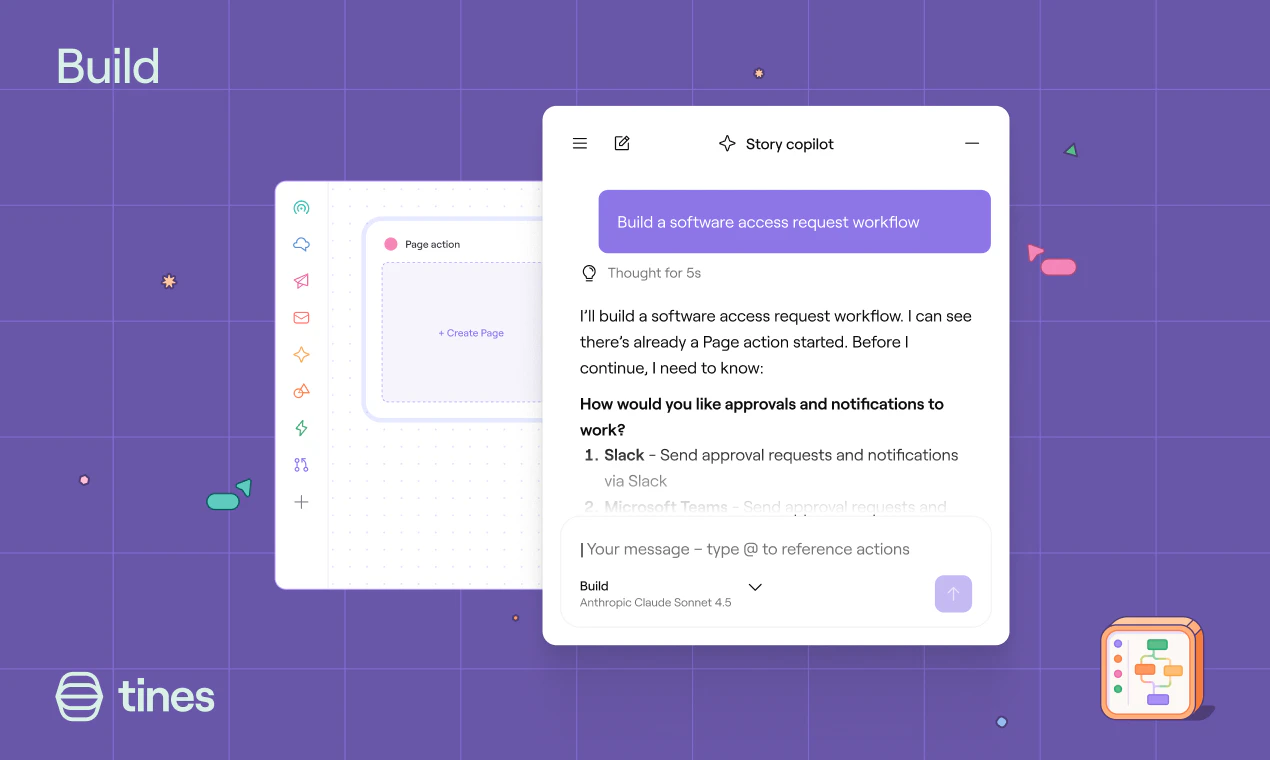
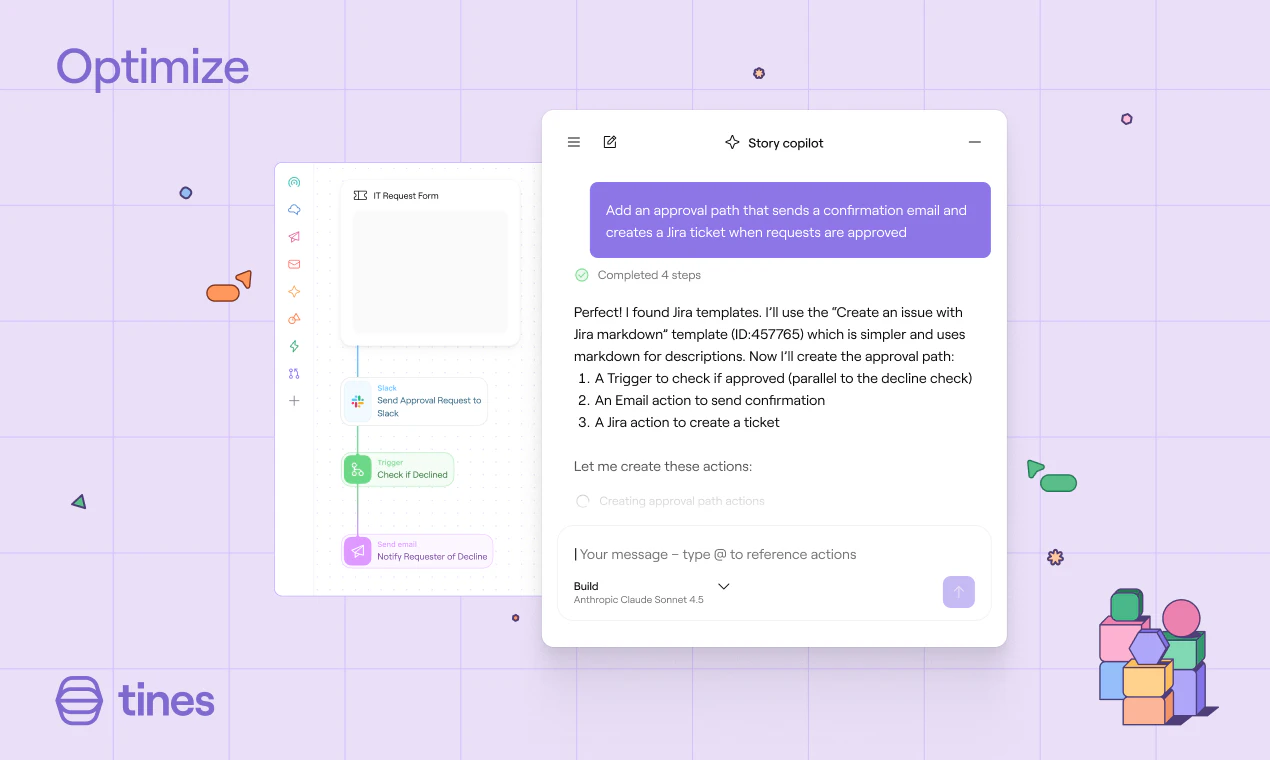
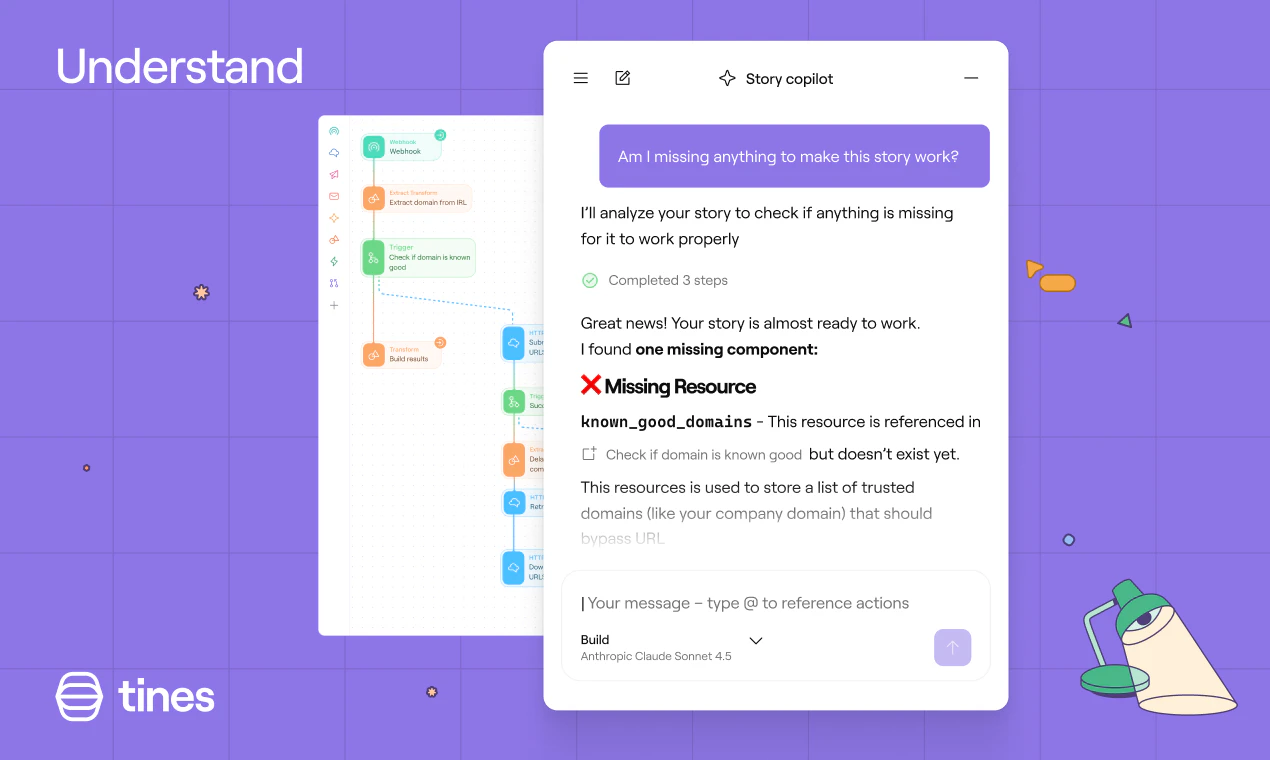
An AI chat interface for the storyboard, Story copilot lets builders in Tines create intelligent workflows from natural language. Beyond building, use Story copilot to optimize workflows for more efficient runs and understand how complex workflows work or why actions fail. Cut build time from hours to seconds as you automate your most important workflows with Tines and Story copilot.

Thanks for checking this out! I'm one of the engineers who worked on Story copilot. This feature was a ton of fun to build, and we’re really excited to share it with the Product Hunt audience.

Tines is a unified environment for building, running, and monitoring your workflows. This complete control allows us to give LLMs precise, timely context, enabling them to make good decisions while building a workflow. As an example, Story copilot can continuously test the changes it makes while building, allowing self-correction and optimization.

We love crafting delightful experiences for our users and it’s been a real thrill to see this feature enable anyone, regardless of experience, to go from simple prompts to functioning workflows.

We like to think of Story copilot primarily as your building partner, but it’s also there to help you understand and optimize your workflows too. With both a Build and Ask mode, you can do the following:

  • Build a workflow entirely from scratch

  • Understand what a workflow is trying to achieve, and how it does so

  • Optimize or debug an existing workflow

A few things we're particularly proud of:

  • It doesn't rehash generic templates; it builds bespoke workflows tailored to your specific needs, and can lean on our enormous library of existing workflows

  • You have full control over the workflow you’re working on. Want to take over from Story copilot? Go for it.

When it first launched, we didn’t track Story copilot’s consumption of AI credits against a tenant’s allocation. Instead, we encouraged our community of builders to really try it out and test its limits, without worrying about the impact on their AI credits. We knew this would help us see how we could support long-term growth and scale. As of May 1, 2026, Story copilot will transition into our monthly AI credit framework - but with a substantial increase to the number of credits available per plan. We have a detailed blog on the subject here.

We’d love to hear what you’ve built with Story copilot — and we’re happy to answer any questions about how it works!

15
回复

@eoinh What was the biggest surprise for you in terms of what it's been capable to do?

And how are the releases of newer models from the labs impacting copilot?

0
回复

Thanks to everyone for checking out Tines and Story copilot!

While I'm excited for how Story copilot will enable new builders to develop their ideas, I'm also ecstatic to see what this can help unlock for those already familiar with Tines. Despite building in the platform for years, I've found myself constantly using Story copilot to help critique older automations and build out ideas I have over lunch. This is truly something that can be utilized by everyone across the organisation as they discover and build Intelligent Workflows.

Happy to answer any questions you may have about the product!

10
回复

This one has been a game-changer for me in building in the product. My technical level is low-to-moderate at best and this feature has unlocked so much value and so many use cases to me. It's been so much quicker to build and iterate.

7
回复

One of my favorite ways to use Story copilot is to do the muckwork for me. Adding notes, a description, relevant name etc. They're all super important but things I don't want to do 😅

6
回复

Occasionally use story copilot to prototype ideas and/or "spell check" existing workflows for any potential improvements. It's a pretty neat feature!

4
回复

Developing Story Copilot was an exciting journey, joining later in the process gave me a fresh perspective to expand the architecture and push its capabilities further. Building out new tools for it was especially rewarding, seeing how each addition made the feature more powerful and versatile.

Happy to be sharing it with wider audience! 🤗🥳

4
回复

Is it an automated process that automatically corrects itself?

0
回复

@zhangbo Hey! You can think of Story copilot as a building assistant. You prompt it with natural language, something like "Build me a workflow for IT service ticket triage" and it will output a workflow for you right on the storyboard. Alternatively, you can prompt it to help you debug or understand your workflows - ex. "Tell me why this action has an error" or "What does this series of actions do" and it will not only give you an answer, but also propose a fix. Is that what you mean by "corrects itself"?

3
回复
#11
Qwen3.6-Max-Preview
The flagship Qwen for agentic coding
116
一句话介绍:Qwen3.6-Max-Preview是一款专注于智能体编码场景的旗舰级大模型,通过提升代码生成、世界知识和指令遵循能力,旨在解决开发者在复杂、自动化编程任务中的效率与准确性问题。
API Artificial Intelligence Development
大语言模型 智能体编码 代码生成 开发者工具 模型预览版 文本模型 性能基准 阿里云 Qwen系列 旗舰模型
用户评论摘要:有效评论仅有一条官方介绍性评论,指出该模型是Qwen3.6系列的旗舰版本,纯粹文本模态,专注于强化智能体编码能力,并在世界知识和指令遵循上有显著提升。无用户实际使用反馈或问题建议。
AI 锐评

Qwen3.6-Max-Preview的发布,与其说是一款革命性产品,不如说是通义千问在战略路径上的一次清晰表态。它果断放弃了“全模态、全场景”的堆料竞赛,选择收缩战线,将“智能体编码”这一高价值、高门槛的赛道作为其旗舰模型的攻坚目标。这种“做减法”的策略在当下模型同质化严重的市场中,反而显得更为犀利和务实。

其宣称在智能体编码基准上的“显著提升”和“顶级分数”,直指开发者社群的痛点:现有模型在简单代码补全上已堪用,但在需要多步骤推理、复杂任务分解和长期上下文维护的“智能体”场景中,仍力有不逮。如果其性能属实,它瞄准的正是从“辅助编程工具”向“自主编程代理”演进的关键缺口,价值在于提升复杂软件工程任务的自动化上限。

然而,“预览版”的身份和仅通过API及自有平台开放的访问方式,暴露了其核心意图:这更像是一次面向企业客户和资深开发者的能力秀与压力测试,旨在收集关键场景反馈,而非大众化普及。当前唯一的“评论”实为官方口径,缺乏真实用户验证,其宣称的“可度量改进”仍需在真实、复杂的开发环境中经受考验。真正的挑战在于,在编码这个对确定性要求极高的领域,模型性能的细微差异会被无限放大。Qwen此举是精准卡位,还是过早细分,取决于其技术承诺的兑现程度。它不是在取悦所有人,而是在筛选并服务那些对自动化编程有极致需求的“专业客户”。

查看原始信息
Qwen3.6-Max-Preview
Qwen3.6-Max-Preview is an early release of Qwen's next proprietary flagship. It delivers measurable improvements over Qwen3.6-Plus in agentic coding, world knowledge, and instruction following, securing top scores across major development benchmarks.

Hi everyone!

This is the flagship model in the Qwen3.6 line — the Max name makes that pretty clear.

And the modality is very pure: text in, text out, built very explicitly for serious agentic coding. Compared with Qwen3.6-Plus, the story here is stronger world knowledge, better instruction following, and meaningful gains across agentic coding benchmarks.

What I like is that Qwen is not trying to make this release everything at once. This one is clearly about pushing the hosted flagship toward the coding-agent use case as hard as possible.

Qwen3.6-Max-Preview is available through the Alibaba Cloud Model Studio API as qwen3.6-max-preview. You can also try it instantly on Qwen Studio.

3
回复

@zaczuo Great work.
Let's connect!

0
回复
#12
Portt
Transform your photo into any era and any location
115
一句话介绍:Portt是一款利用AI深度重建历史场景的APP,用户只需选择年份,即可将日常照片转化为符合特定时代建筑、服饰与质感的画面,解决了历史与文化爱好者在旅行或怀旧时,对过往时代视觉化想象与沉浸体验的痛点。
Photography Artificial Intelligence Photo editing
AI图像生成 历史场景重建 时间旅行 文化体验 创意工具 图像编辑 沉浸式怀旧 旅游科技 人工智能应用 数字人文
用户评论摘要:用户普遍赞赏产品创意与情感价值,有用户分享其用于创造纪念性礼物的成功案例。主要反馈包括:期待扩展更远古时代(如恐龙时代),开发者回应目前聚焦有记载的人类历史;用户认可其“非滤镜”的深度重建;部分用户提及渲染时间较长。
AI 锐评

Portt看似是一个趣味性的图像时间机器,但其真正的锋利之处,在于它试图在“AI滤镜”泛滥的当下,重新定义AI图像生成的深度与意义。它避开了简单的人脸替换或风格迁移,宣称“重建整个场景”,这背后是对时代建筑、服饰、甚至胶片颗粒感的系统性学习与合成。其价值锚点并非技术炫技,而是“历史准确性”与“沉浸式文化想象”——这精准切入了一个细分但高潜力的市场:有求知欲的文化旅行者与历史爱好者。

然而,其面临的挑战同样尖锐。首先,技术壁垒与历史数据库的深度直接决定了用户体验的“魔法感”能否持续。从公元前3000年到2050年,覆盖如此广袤的时间跨度,确保每个时代的“准确性”是一项浩大工程,极易在某个时代露出破绽,从而打破沉浸感。其次,商业模式依赖订阅制,但用户的使用频率可能呈现“脉冲式”——仅在特定旅行或纪念日触发,用户留存与长期付费意愿存疑。评论中关于渲染时间的提及,也暗示了计算成本与用户体验间的平衡难题。

最值得玩味的是其产品哲学。创始人强调“非研究”、“纯好奇”,这降低了使用门槛,但也可能将产品置于尴尬境地:严肃历史研究者可能嫌其深度不够,普通用户可能最终只将其视为高级玩具。它能否从“令人惊叹的瞬间”进化为用户“持续探索历史的伴侣”,取决于其内容生态的构建——例如,能否为每张生成图像提供简明的历史背景注释,或形成基于地点与时代的UGC故事库。

总之,Portt是一次大胆且迷人的尝试,它用AI缝合了现代人与历史现场之间的视觉鸿沟。它的成功与否,将不取决于AI技术本身有多酷,而在于它能否将冰冷的技术输出,转化为持续温暖、激发用户好奇心的文化连接。这条路很长,但起点足够独特。

查看原始信息
Portt
Become part of history. Made for culture & history enthusiasts, Portt doesn't filter or face-swap — it rebuilds your entire scene with period-accurate architecture, fashion, and film grain. Pick any year from 3000 BCE to 2050. Just spin the year wheel.
Hey Product Hunt! I'm Caner 👋 A quick story behind Portt: My wife and I love to travel. Whenever we run into old architecture or a cultural object in a new city, we can't help wondering about its past — the people who lived there, how they dressed, what they owned, what they didn't. Pure curiosity. For years, we wished we could just see it. The last few years of AI finally made that possible — so we turned it into a pocket time machine we could carry on our trips. A few things that matter to us: - No research needed — you pick a year, Portt studies what the objects in your photo looked like in that era, then rebuilds the whole scene - Deep historical context, not filters - Works for any city, any year from 3000 BCE to 2050 Yes, it takes a little time to render 🙃 — but the results are genuinely magical. Monthly and yearly plans come with a 3-day free trial. The most valuable thing isn't an upvote or even a review (though those help!). It's this: reach out to me. Tell me what's missing, what could be better. Let's build it together. Love, Caner
4
回复

@caneraras Fun idea!

3
回复

@caneraras Such a beautiful idea. Feels personal and timeless. I’d love to use this again and again 🤗

0
回复
Love it, Caner, what a fun idea! I can’t wait to play with it this weekend. FYI my kids are wondering why I can’t add dinosaurs to their photos 🦕 🤣 🤣
3
回复

@jacques_bromberg Right now our first goal is to anchor Portt in real, well-defined historical eras rather than pure fantasy.

The classic ‘dinosaur age’ is what geologists call the Mesozoic Era — from roughly 250 million years ago. It's a bit difficult now. :)

At the moment Portt’s time travel goes back to 3000 BCE, which is incredibly far in human history but still nowhere near the age of dinosaurs. So for now you won’t be able to send your kids’ photos into the dinosaur era yet — but as we improve our models and historical datasets, I’m planning to push Portt much further back in time.

0
回复

I used Portt to create a 100-year-old version of a photo I took with a friend and sent it to him. He sent me a gift in return: a printed and framed version of the photo. It was an unforgettable memory for me. Thank you, Portt.

2
回复

@halil_furkan Furkan, thank you so much for sharing this story. It means a lot to have you with us since the very first beta and to see Portt become part of such a memorable moment for you. Grateful for your support 🙏

0
回复

Love this idea. Feels like something I’d keep coming back to in different places. 👏

2
回复

@eylul_danisman Thank you so much, this means a lot! 💛 Portt is exactly that for us too — something we love revisiting in different places and moments. If you ever try it on a special memory or city, I’d love to see what you create.

0
回复

That's it! 🔥

1
回复

@eneseray Thanks so much, Enes! 🔥 Couldn’t have brought Portt to life without you. Watching this go from crazy idea to something people around the world are actually using has been one of my favorite build experiences — and your work is a huge part of that. Grateful to be building this with you. 🙌

0
回复
#13
Cavalry Studio
Free Motion Design tool by Canva
114
一句话介绍:Cavalry Studio是一款由Canva推出的免费专业2D动画与动态设计工具,通过实时动画、数据驱动工作流和高级模拟控制等功能,解决了动画师和动态设计师在创作复杂、高质量动态内容时对专业且可及性高软件的需求痛点。
Design Tools Marketing SaaS
2D动画软件 动态设计工具 免费专业工具 Canva生态 数据驱动动画 角色动画 实时渲染 视觉设计 工作流优化 矢量动画
用户评论摘要:用户普遍对Canva整合专业动画工具表示欢迎,认为其功能有深度且兼具易用性与复杂性。有效建议包括:希望增加更多社区模板和教程,并期待探索其JavaScript脚本功能。评论整体呈积极期待。
AI 锐评

Cavalry Studio的发布,远不止是Canva产品矩阵中新增一个“免费工具”那么简单。它实质上是Canva向专业设计生产领域发起的一次精准侧翼进攻。

表面看,Cavalry填补了市场空白:介于After Effects的“过重”与简易在线动画工具的“过轻”之间,提供了一个功能强大(如动力学模拟、数据驱动、骨骼控制)却免费的桌面端选择。其“免费”策略极具侵略性,直接瞄准了预算有限的独立设计师、小型工作室及教育市场,旨在从Adobe等传统巨头的付费城墙下撬动用户。

然而,其深层价值在于“连接”。首先,连接了“专业”与“普及”。Canva凭借一己之力将平面设计民主化,如今试图用Cavalry对动态设计做同样的事。它将高阶的动画制作能力包装在相对友好的界面中,降低了专业动态设计的门槛。其次,连接了“数据”与“创意”。“数据驱动工作流”并非噱头,它直击信息可视化、动态图表等日益增长的需求,将动画从纯手工艺术部分转化为可批量、可迭代的智能设计,这符合未来设计工具智能化的大趋势。

用户评论中“期待JavaScript选项”和“需要更多社区模板”的反馈,恰恰暴露了其当前阶段的关键挑战与潜力所在。作为一款专业工具,其生态建设(插件、脚本、模板、学习资源)才刚刚开始。能否从“一个不错的免费工具”进化为“不可或缺的生产平台”,取决于Canva能否将其在C2C设计社区的运营经验成功复制到更垂直、更专业的动画师社群中。

总而言之,Cavalry Studio是Canva战略升维的明确信号。它不再满足于服务业余大众的简单设计,而是通过赋能专业创作者,构建从静态到动态、从个人到团队、从创作到交付的完整设计价值链条。其成功与否,将检验Canva“普及化专业工具”这一模式的上限。

查看原始信息
Cavalry Studio
Download Cavalry free on Mac or Windows. Real-time 2D animation, motion design, and data-driven workflows - built for animators and motion designers.

Cavalry is professional 2D animation software built for depth — now by Canva.

What's included:

  • Rig control and Rubber Hose for character animation

  • Connect shapes, Color Palettes, and Magic Easing for fluid, polished motion

  • Text Animation and Duplicator for efficient, scalable workflows

  • Data Import for dynamic, data-driven animations

  • Lottie Export for seamless web and app delivery

  • Forge Dynamics, Falloffs, and Quad Tree for advanced simulation and control

2
回复

Super cool this is part of the Canva package now. Can't wait to play around with the JavaScript options

2
回复

Oh I love this! I've been looking for a new motion design tool for a while now, so this comes right on time

I also like how interactive the get started guides

0
回复

been searching for motion design software that's approachable but doesn't cap out on complexity — this looks like it. excited to dig in. would love to see more templates and tutorials from the community as it grows. congrats on the launch!

0
回复
#14
Nomie v2
Replace doomscrolling with a self-care interactive world
101
一句话介绍:一款将正念练习、情绪追踪与开放式探索游戏结合的自助应用,通过沉浸式3D世界与AI伴侣,在用户陷入焦虑或信息过载时,提供一种无需强求“暂停”即可自然完成的情绪调节方案。
Health & Fitness Open World Games Artificial Intelligence
心理健康 自我关怀 情绪调节 习惯养成 3D互动世界 AI伴侣 游戏化 正念练习 情绪追踪 替代性上瘾
用户评论摘要:用户普遍认可其“开放世界+日常任务”的独特形式,认为它让自我关怀变得自然、有趣,而非负担。主要反馈集中于AI伴侣在极端情绪下的应对逻辑,以及3D世界是否能长期维持吸引力。
AI 锐评

Nomie v2的本质,并非单纯的功能升级,而是一次对“自我关怀”产品范式的激进重构。它敏锐地捕捉到传统正念应用的致命矛盾:在用户最需要平静的“崩溃边缘”,却要求其执行“暂停与反思”这一反本能的高认知操作。产品用“游戏化世界”作为糖衣,其内核是“行为激活”与“环境设计”——通过低门槛的探索与任务,引导用户无意识地完成呼吸、记录等干预动作,实现神经系统的初步调节。

其宣称的“自进化AI管道”是更大胆的赌注。将临床框架(动机访谈、CBT)作为评判标准,让LLM族群进行内部竞赛与迭代,试图让AI伴侣脱离机械的共情话术,向具备临床智慧的“数字治疗师”演进。然而,这恰恰是风险与争议的焦点:当AI开始自主“优化”其对人类脆弱情绪的回应时,其责任边界、伦理安全性与疗效验证都处于灰色地带。评论中对“边缘情况”的担忧,直指这一核心。

真正的挑战在于,将自我关怀“游戏化”是一把双刃剑。短期看,它降低了启动门槛,但长期可能将内在动机转化为对虚拟奖励的追求。当探索的新奇感褪去,用户是否还会回到这个“世界”?产品能否从“有趣的习惯入口”,深化为具有持久临床价值的干预工具,取决于其AI内核的进化深度,而非世界的视觉广度。它试图解决的,是数字时代最普遍的困境之一,但其解法是否真正触及本质,仍需时间和严谨的疗效数据来检验。

查看原始信息
Nomie v2
Nomie (mynomie.com) is a self care app for stress relief, anxiety relief, and emotional wellness. Replace doomscrolling with calming techniques, mood tracking, journaling, and daily habits that actually stick. Explore a calm, interactive world where you can walk, fly, complete self care quests, and open rewards. A somatic AI companion designed to help you regulate your nervous system, build habits, and feel better in under 60 seconds.
Hi Product Hunt Community 👋, Just like the last launch, Excited to launch the new update on Nomie! Nomie is back with another cool update. Its now offering a virtual world that you can explore in real time! Its a calm, interactive world where you can walk, fly, and complete gentle daily quests to reset your mind. Looking forward to your feedback!
2
回复
I usually bounce off self-care apps, but this feels like something I’d actually come back to. Love the direction here, feels more human than most tools in this space.
1
回复

@raihanshezan thanks for the support!!

0
回复

The open world + daily quests angle is really unique for a self-care app. Makes it feel less like something you have to do.

1
回复

Hi PH community, excited to launch a ground-up rebuild of Nomie with @ellie_nomie.

The big change since last time: Nomie now lives inside a full Unity world. You can walk, fly, and wander around a calm, interactive environment while you do your daily wellness quests: breathing, journaling, bloomscrolling, and everything else you've been loving reimagined as a treasure hunt. The goal was to take something that usually feels like a chore (opening a wellness app) and turn it into a place you actually want to spend a few minutes in.

Behind the scenes, we've also been building a pipeline that lets Nomie's voice agent learn and improve itself. Every week, it replays real user conversations through new candidate prompts, grades them against clinical therapy frameworks (Motivational Interviewing, CBT, Rogers' therapeutic alliance), and has an ensemble of LLM judges across different model families vote on the winner. The winning improvement ships as the final version.

I wrote more about the self-evolving pipeline here. Would love your feedback.

1
回复

@ellie_nomie  @abhinavvishwa The 3d world angle is really fun.I I wonder how the agent handles edge cases, like users who are in a genuinely difficult moment. Does it get more cautious in those situations, or does it flag it somehow?

0
回复

Hi Product Hunt Community, Ellie here from Nomie.

We built Nomie for a simple reason: most of us know we’re doomscrolling, but in that moment it’s really hard to stop. Traditional self-care apps ask you to pause and reflect, but when you’re overwhelmed, that’s usually the last thing you want to do.

So we tried a different approach. Nomie turns self-care into something you can move through. In v2, we took journaling, breathing, and talking to an AI companion, and embedded them into a calm, open world where you can explore and complete small daily quests (think the mobile game Sky but for self care)

Instead of forcing yourself to “do self-care,” it happens naturally as you interact. Would love for you to try it and really appreciate any feedback 🙏

0
回复
#15
VibeAround
Chat with your local AI coding agent from any IM or browser
99
一句话介绍:VibeAround是一款轻量级桌面应用,允许用户通过日常使用的即时通讯软件或浏览器远程访问和控制本地的AI编程助手,解决了开发者离开工作站后无法与本地AI代理交互的痛点。
Open Source Developer Tools GitHub Vibe coding
本地AI编程助手 远程控制 开发者工具 即时通讯集成 终端会话管理 多代理支持 安全隧道 桌面应用 工作流切换
用户评论摘要:用户主要关注安全模型、团队适用性、与竞品差异、手机端实用性及技术选型。开发者回应称当前为单机版,通过配对码和隔离进程保障安全,未来计划容器化以满足企业需求;强调其通过IM集成带来独特便利性,手机端适合轻量交互,并解释了选用Tauri而非Electron的原因。
AI 锐评

VibeAround的核心理念并非技术创新,而是对现有技术栈进行了一次巧妙且务实的“连接性”整合。它敏锐地捕捉到了一个真实但被忽视的缝隙市场:将日益强大的本地AI编程代理(如Claude Code)从终端禁锢中解放出来,赋予其基于IM的移动性和可及性。其真正价值在于“无摩擦接入”,利用用户已深度依赖的通信平台(Telegram、Slack等)作为天然入口,大幅降低了远程操控的心理和技术门槛。

然而,这种便利性背后潜藏着尖锐的矛盾。产品当前定位是“单机桌面应用”,但其宣传的“从任何地方访问”和使用场景,本质上将其推向了“准服务”的边缘。评论中关于安全模型的质疑直击要害:个人环境下的配对码验证和进程隔离,在面向团队或生产环境时显得异常脆弱。开发者回应的“容器化服务”蓝图,实际上承认了当前架构的局限性,也意味着产品未来可能面临彻底的重构,从轻巧的桌面工具转变为复杂的基础设施,这将是其商业化的关键转折点。

与Claude Remote Control等方案相比,VibeAround的差异化在于“用户习惯的寄生”而非“能力的超越”。它赌的是用户更愿意在Telegram里发条消息,而非打开另一个专用App或网页。这种设计哲学使其初期体验流畅,但也可能限制其功能深度——正如开发者所言,复杂多代理工作流在IM中并不流畅,仍需回归终端。因此,它更像一个高效的“触发器”和“监视器”,而非完整的移动开发环境。

总体而言,VibeAround是一次极具产品思维的尝试,它用最小可行方案验证了市场对AI代理移动化访问的需求。但其成功与否,取决于能否在保持轻量体验的同时,跨越个人工具与协作服务之间巨大的安全与架构鸿沟。目前,它是一个优雅的“技术玩具”,但距离成为可靠的“生产工具”,还有很长的路要走。

查看原始信息
VibeAround
VibeAround is a lightweight Tauri desktop app that gives you two ways to reach your local AI coding agent from anywhere: chat from your daily IM (Telegram, Slack, Discord, Feishu…), or a browser-based web terminal with tmux support. Works with 7 agents including Claude Code, Gemini CLI, and Codex CLI — all speaking ACP over stdio. Hand sessions between terminal and phone with /handover + /pickup, switch agents mid-conversation, Preview dev servers and markdown remotely and on your phone.
VibeAround exposes powerful local capabilities over tunnels and chat: what’s your security/threat model (auth, token rotation, least-privilege for channel plugins), and what would you change for teams with stricter requirements (audit logs, workspace isolation, sandboxed agents)?
2
回复

@curiouskitty 

Current security model:

  1. All tunnel URLs are gated by a pairing-code auth flow — browsers must verify ownership via a connected IM channel before getting access.

  2. Channel plugins run as isolated Node.js subprocesses responding only to configured users.

  3. Agents communicate over stdio via ACP, no network ports exposed.

For teams with stricter requirements (Still in the design phase.)

The current version is designed as a single-machine desktop app. For team/enterprise use, the plan is to move away from Tauri distribution and run VibeAround as a containerized service — on-demand sandboxed containers per user, with session history and environment persisted as blobs in the org's own infrastructure.

1
回复
Hey everyone, I'm Jazzen, the maker of VibeAround. I built this out of a simple frustration: AI coding agents like Claude Code and Codex are incredibly powerful, but they're trapped in your terminal. Step away from your desk and you lose all access — can't check progress, can't nudge the agent, can't review what it wrote. My fix: turn the IM apps you already use into an interface for your local agent. Open Telegram on your phone, send a message, and Claude Code starts writing code on your machine at home. Need a full shell? Open the web terminal in any browser. Started something in terminal but heading out? `/handover` exports the session, `/pickup` resumes it on your phone with full context. It's built with Rust + Tauri, every IM channel is a plugin, and everything speaks ACP. No vendor lock-in — your agent, your machine, your API keys. I'd love to hear what you think.
1
回复

I like the idea in general. But how does this differentiate compared to Claude remote control. Or you could also just text your openclaw, right?

1
回复
Really cool idea, does the phone experience feel genuinely productive or mainly for handoff/quick control?
1
回复

@maya_elor Thanks!

The phone is designed as a flexible, lightweight complement. When you're away from your desk, it gives you a way to tap into the most capable coding agents — Claude Code, Gemini CLI, Codex — that otherwise only live in a terminal.

I've been using it daily myself. For single-agent tasks, once you get used to the chat-style interaction, the experience is almost on par with desktop. However, IM has its limits — you're working within chat bubbles, and multi-agent workflows aren't as fluid there. That's exactly why I added the web terminal as an option.

Each channel plugin uses the platform's native SDK and rendering features (Telegram's markdown, Slack's blocks, etc.) rather than a lowest-common-denominator layer.

1
回复

Interesting to note this is a Tauri App - Have you considered electron js as an alternative?

1
回复

@dhruba_patra Yes, I considered Electron early on. Went with Tauri mainly because the core is a Rust daemon managing agent processes and tunnels over stdio — having the backend in Rust natively made the architecture much simpler. The smaller binary size (~15 MB vs 150 MB+) was a nice bonus.

1
回复
#16
Instant Highlights V2 by Heygen
Turn long videos into viral clips in seconds
89
一句话介绍:一款通过提示词搜索,将长视频快速定位并剪辑成带字幕、翻译的4K精彩短片的内容生产工具,解决了内容创作者从海量视频素材中手动寻找和剪辑高光片段的效率痛点。
Social Media Marketing Artificial Intelligence
视频剪辑 AI搜索 内容生成 字幕翻译 播客工具 效率工具 创作者经济 短视频制作 智能剪辑 多语言支持
用户评论摘要:评论者(可能为产品发布方或早期用户)高度概括了产品核心功能,如提示词搜索、自动构图、多发言人处理及多语言支持,并明确指出其目标用户(播客、网络研讨会创作者)及核心价值:替代耗时的手动剪辑。
AI 锐评

Instant Highlights V2 宣称是一个“完整的内容系统”,其野心远不止于一个剪辑工具。它试图用“搜索”替代“拖拽时间轴”,这本质上是将非结构化的视频流转化为结构化的、可查询的数据库。其真正价值在于两点:一是将创作逻辑从“线性浏览后剪辑”颠覆为“意图驱动即得结果”,这大幅降低了专业剪辑的操作门槛和心流中断;二是将字幕、翻译、口型同步等繁琐的后处理打包成标准化工作流,瞄准的是企业级、多语言内容分发的规模化需求。

然而,其光鲜描述下潜藏着几个关键质疑点。首先,“提示词搜索”的精准度高度依赖AI对视频语义(语音、画面、上下文)的理解深度,在复杂、非标准场景下的可靠性存疑。其次,它解决的痛点非常垂直——针对的是有大量长视频存档(如课程、会议)并需高频产出剪辑片段的专业团队或重度内容创作者。对普通用户而言,其“全内容系统”可能显得笨重且过度设计。最后,从“工具”到“系统”的跃迁,意味着它可能试图绑定用户的工作流,其未来的商业模式(如订阅制、API收费)将直接影响其工具属性的纯粹性。

总体而言,这是一款在AI应用层颇具前瞻性的产品,它精准地切割了视频生产流程中一个低效环节,并用AI进行重构。但其成功与否,不取决于功能列表的华丽,而取决于其核心AI能力(搜索与自动剪辑)的“可用”到“好用”之间的差距,以及能否在垂直场景中建立起足够深的壁垒。在AI视频工具混战的当下,这是一个有力的切入点,但离“革命性”还有很长的路要走。

查看原始信息
Instant Highlights V2 by Heygen
Your video is no longer something you scroll through. Now you can just search it. With Instant Highlights V2, you type what you want, find the exact moment, and turn it into clips with captions, translations, and 4K in one place. It’s a full content system.

Excited to hunt Instant Highlights V2 by HeyGen today.

Instant Highlights V2 turns long-form video into a searchable content system.

Instead of scrubbing timelines, you search your footage with prompts and instantly find the exact moment you need.

This adds up to:


• Prompt-based search across hours of video
• Auto-framing that follows speakers in motion
• Clean handling of multi-speaker scenes
• Captions, translation, and lip-sync in 175+ languages
• One workflow from upload → publish-ready clips

If you're creating podcasts, webinars, or talks and spending hours cutting clips manually, this is definitely worth a look.

2
回复
#17
kimiflare
kimi k2.6 cli code editor hosted on cloudflare workers AI
88
一句话介绍:一款基于Cloudflare Workers AI平台、搭载Kimi K2.6大模型的终端原生编程代理,通过CLI工具为开发者提供了一个高性价比、高透明度且支持长上下文与多轮工具调用的云端代码助手。
Developer Tools Artificial Intelligence GitHub Vibe coding
AI编程助手 命令行工具 云端开发 Kimi K2.6模型 Cloudflare Workers 代码生成 开源项目 高性价比 长上下文 代理循环
用户评论摘要:开发者受推文启发,用Claude Code构建MVP后,递归使用kimiflare自身完成开发,体现了自举能力。主要问题聚焦于Kimi K2.6在多轮递归代码生成中,相比Claude能否保持一致性、避免变量名幻觉或上下文丢失。
AI 锐评

kimiflare的出现,与其说是一款革命性产品,不如说是一次精明的“技术套利”与开发者个人生产力的炫技。其核心价值在于巧妙地利用Cloudflare Workers AI作为低成本、免运维的算力平台,嫁接性能不俗的Kimi K2.6模型,包装成一个终端CLI工具。它精准地切中了一个细分痛点:对成本敏感、追求开发流程极简与透明度的独立开发者或小团队。

产品标榜的“一钥一账单”、“每token成本更低”、“完全透明”,直击了当前主流托管式AI编程助手(如GitHub Copilot)的黑盒与累积成本焦虑。262K上下文、视觉输入、完整代理循环等功能,在纸面上对标甚至超越了高端竞品。然而,其真正的挑战和风险也在于此。高度依赖Cloudflare的平台政策与Kimi模型的持续表现,自身更像一个脆弱的“管道”而非坚固的“产品”。评论中关于递归生成一致性的质疑,恰恰点出了这类边缘创新工具的核心软肋:在复杂、多轮的真实开发场景中,模型的稳定性和可靠性是否经得起考验?自举开发是一个精彩的营销故事,但无法证明其在多样化、大规模项目中的普适性。

总而言之,kimiflare是开源社区与云服务边缘创新结合的一个典型样本。它展示了在巨头缝隙中寻找性价比最优解的可能性,但其长期生存能力取决于上游依赖的稳定性、开源社区的维护热情,以及能否从“有趣的技术演示”进化到提供“可靠的专业服务”。它值得技术爱好者关注和尝试,但距离成为主流开发者的生产力基石,还有很长的路要走。

查看原始信息
kimiflare
Terminal-native coding agent running on Kimi K2.6 via Cloudflare Workers AI. Bring your CloudFlare key, install the CLI, start coding. multi-turn tool use, 262k context, vision inputs, full agentic loop. one key, one bill. Cheaper per token than most hosted coding assistants and fully transparent about what it’s doing. PRs/github issues are welcome
i was in bed at 10pm when i saw this tweet https://x.com/yifan_zhang_/statu... and it made me get up and build kimiflare: an open-source claude code / kimi code clone that uses kimi k2.6 using cloudflare workers AI. built the mvp using claude code then built the rest recursively using kimiflare itself woohoo
1
回复

@sinamerajii For someone scripting workshop templates, how does Kimi K2.6 handle recursive code gen vs Claude? Does it stay consistent across 10+ iterations without hallucinating variable names or losing context?

1
回复
#18
Loomal
Identity infrastructure for AI agents
85
一句话介绍:Loomal为AI智能体提供独立的身份基础设施,通过签发专属邮箱、加密保险库和动作级二次验证,解决了智能体在自动化处理邮件、登录、支付等现实任务时面临的凭证安全、身份验证和操作追溯难题。
Developer Tools Artificial Intelligence
AI智能体基础设施 身份与安全 加密保险库 DKIM签名邮箱 代理2FA MCP服务器 操作审计 智能体开发工具 生产级自动化 凭证管理
用户评论摘要:用户肯定产品解决了智能体操作的“2FA壁垒”和凭证安全痛点,认为其独立身份模型是面向生产环境的关键一步。主要提问集中在安全护栏、权限边界和异常行为检测机制上,体现了对实际部署安全性的深度关切。
AI 锐评

Loomal所标榜的“身份基础设施”,实质上是试图将AI智能体从依附于人类身份的“寄生”状态中解放出来,为其赋予可审计、可隔离、可管理的数字身份。其价值不在于单个功能(邮箱、保险库、2FA均有替代方案),而在于将这些功能整合为一套以智能体为中心的原语体系,并通过MCP协议标准化输出。

当前AI智能体的最大悖论在于:它们被赋予处理复杂任务的能力,却建立在极其脆弱的人类凭证共享基础上。Loomal直指这一核心矛盾,用“独立身份”替代“权宜之计”,其深层价值是试图建立智能体与真实世界交互的“责任边界”。DKIM签名邮箱确保了操作可溯源,加密保险库将密钥与代码逻辑分离,动作级2FA则让智能体能自主通过验证关卡。这三点共同构建了一个关键前提:智能体的行为可以像人类员工一样被独立授权、监控和审计。

然而,其真正的挑战与价值同样明显。首先,“身份”的赋予是否意味着责任主体的模糊?智能体拥有独立身份后,安全与合规的终极责任仍在人类运营者,这套体系如何防止“身份”成为推诿责任的黑箱?其次,产品的成功高度依赖MCP协议的生态采纳度,本质上是一场生态赌注。最后,评论中关于安全护栏的提问切中要害:赋予智能体越强的自主行动能力,对其行为边界控制和异常自检能力的要求就越高,这远非提供几个API工具所能解决,需要更深度的安全架构设计。

总而言之,Loomal并非又一个简单的工具包,它是一次将智能体从“玩具”推向“工具”的基础设施尝试。其成败不在于技术实现,而在于能否与开发者、企业共同建立起一套关于智能体身份、权限与责任的新的操作范式。路走对了,但最险峻的路段才刚刚开始。

查看原始信息
Loomal
Give your AI the "hands and legs" it needs to handle Email, 2FA, and Secure Vaults— everything an agent needs to operate in the real world. Loomal gives every agent a DKIM-signed inbox, encrypted vault, and per-action 2FA. One API. MCP-native. Works with LangChain, CrewAI, Claude, OpenAI, Cursor, and any MCP client.

Hey Hunters 👋

Your AI agent can ship code. It writes emails, calls tools, runs databases. But ask it to buy a pair of socks — and it falls apart.

Why? Because every agent today runs on borrowed credentials. Your Gmail password in a .env file. API keys with no 2FA. No audit trail when things break. The moment an agent tries to do anything a real human does online, it hits a wall: "verify your phone," "enter the code we just sent," "we don't recognize this device."

We built Loomal to give AI agents their own identity — not duct-tape on yours.

Three primitives. One API:

📬 Signed inbox — every agent gets an address at mailgent.dev. DKIM-signed. Every message attributable to the agent that sent it.

🔒 Encrypted vault — per-agent secrets, AES-256, rotatable in one call. Your API keys never live in prompts, logs, or .env files again.

🔐 Agent 2FA — TOTP scoped per action. Your agent sees the challenge, calls loomal.vault.totp, solves it, and logs an audit trail. No human in the loop.

All three ship as one MCP server. Point your agent runtime at https://api.loomal.ai/mcp and you get 18 tools: mail.send, vault.store, vault.totp, identity.sign, calendar.create, and more.

Works natively with LangChain, CrewAI, Claude, OpenAI, Cursor, LlamaIndex — or anything that speaks MCP.

We also built a Console where you can see every agent's inbox, vault, and audit log in one place. Scoped per agent, signed per action — so when something breaks, you actually know who did what.


Quick links:
🌐 https://loomal.ai
🛠️ https://docs.loomal.ai
🧩 https://api.loomal.ai/mcp
🌏 https://console.loomal.ai


We'd love your feedback — especially if you're:
• Building agents and have hit the "2FA wall"
• Running .env-gate in production and know the pain
• Hunting for an MCP server that does more than two tools

We'll be in the comments all day. Ask us anything — roadmap, security model, pricing, anything.

Give your agent an identity, not a workaround.

— The Loomal team 🧡

10
回复

@dannyheng congrats on the launch. This can solve the most concerning layer of current agentic automation. How is the guardrail and boundaries handled for the permission levels and agent's security? how to self detect or report suspicious behavior?

0
回复

@dannyheng a agents buying socks... we're finally here lol. giving the agent its own signed inbox at mailgent.dev is such a smart way to handle attribution. clean vision, team

2
回复

Hey Hunters,

Putting the demo videos here for anyone who wants to see the thing in motion 👇

🎥 Console walkthrough

I walk through creating an agent identity, getting it an email, and wiring it into Claude Code. First send in under a minute.

👉 https://youtu.be/HKNzGyJzhOY

🛒 The autonomous shopper

Gives itself a budget, shops, checks out with its own card, solves the 2FA challenge at payment, and the order confirmation lands in the agent's own inbox — not mine.

👉 https://youtu.be/ZlUUQ1FDvz8

🔐 Login with 2FA — the demo most agents fail on

Agent hits a login page, meets the 2FA challenge, pulls the current TOTP from its own vault (a secret I can't read), and submits. In. Done.

👉 https://youtu.be/ZlUUQ1FDvz8

Both agents get open-sourced this week — fork, break, ship something we didn't think of.

Best,

Rajesh | Loomal

1
回复

Be honest: How many of you are currently hard-coding your own personal email or using a 'burner' Gmail just to get your agents to work? 🚩

We think the 'shared identity' model is a ticking time bomb for AI security. If an agent doesn't have its own cryptographic link back to the creator, how can we ever move past 'toy' automations into real-world production? Would love to hear from the security-first devs here—how are you handling agent accountability right now?

@fmerian

0
回复

We are genuinely excited on what the community can build with Loomal, and what Agents can achieve. If you have an idea, let's list it here!

0
回复
#19
Reference Board
Infinite Canvas for your ideas
80
一句话介绍:一款原生情绪板应用,通过无限画布和跨设备同步,为创意工作者解决了灵感碎片化收集与高效整理的痛点。
iOS Apple Design
情绪板工具 灵感收集 无限画布 原生应用 iCloud同步 AI智能搜索 隐私设计 买断制 创意生产力
用户评论摘要:用户反馈积极,认可产品简洁设计。主要建议包括:希望增加浏览器扩展以方便从网页收集内容,以及询问产品在激发创意方面的主动作用。开发者回应积极,透露已规划浏览器扩展并即将支持YouTube视频添加。
AI 锐评

Reference Board 在“原生体验”和“隐私设计”的旗帜下,精准切入了一个被过度复杂化的细分市场。它避开了Figma、Pinterest等平台的社交化与协作重功能,回归到个人、私密、专注的内容聚合本身,这是一个明智的差异化选择。其宣称的“Quietly powerful”核心在于后台的AI自动化(标签、描述生成),这试图将用户从繁琐的文件管理工作中解放出来,让工具真正服务于“灵感凝视”而非“灵感管理”。

然而,其真正的挑战与价值考验在于两点:一是“智能”的深度。目前的颜色、主题搜索仍是基础,如何理解更抽象的“视觉感受”并建立非标关联,是它从“优秀数字剪贴簿”进化为“创意副脑”的关键。二是生态的封闭性与开放性的平衡。作为原生应用,其体验流畅,但开发者对浏览器扩展和导入Pinterest等外部平台的积极考虑,暴露了纯本地工具在灵感来源上的局限性。最终,它的价值不在于替代谁,而在于能否成为创意流程中一个无缝、无压的“起点”和“仓库”,并以其优雅和安静构建用户粘性。买断制是吸引早期用户的利器,但长期来看,深度AI功能的持续研发成本,可能成为其商业模式的隐忧。

查看原始信息
Reference Board
Reference Board is a native mood board app for iPhone, iPad, and Mac. Collect images, videos, quotes, and notes on an infinite canvas, with iCloud sync across devices. Search goes beyond filenames with Apple Intelligence, generated descriptions, tags, colors, and visual feel. Private by design. Simple on the surface. Quietly powerful underneath.

I built Reference Board because I wanted a native mood board app that felt simple, elegant, and out of the way.

Most tools either pile on features or turn the whole process into admin. I wanted something that keeps the focus on the content, syncs across devices, stays private, and quietly does the helpful work in the background with auto-tagging, generated descriptions, and metadata.

No subscription. No clutter. Just a better place to collect and shape inspiration.

It’s still early, and I’d love feedback. If there’s a feature you wish existed, tell me.

1
回复
@druchtie So here’s the plan I recommend moving forward: a User Engagement & App Performance Deep Analysis tailored to your app. I will go deeper into how real users will experience it by mapping user flow step-by-step, identifying where users may hesitate or exit, reviewing interaction clarity, checking responsiveness consistency, and validating how features behave during real usage. The goal is to uncover hidden issues that can affect engagement and provide you with a structured report including screenshots, clear insights, and practical recommendations on what to improve for better retention and smoother performance.
0
回复

Congrats on the launch, this looks amazing 🙌

Do you have any plans for a safari/browser extension to automate adding from web? For example I now use Pinterest for gathering inspiration and have boards like this there, but it'd be nice to have a board locally to reference since the app just works faster, so something like an "Add to board" feature would be amazing 🙂

1
回复

@curiousigor That’s such a good idea. A browser extension (Safari with Chrome coming soon) is already part of the app, and I definitely have bigger plans for it.

Pinterest board support is a really interesting direction too. Bringing that kind of inspiration into Reference Board in a smart way feels very aligned with where I want to take it. I just need to look into what Pinterest allows so I can do it in the right way and stay within their terms.

Also, I’m shipping a new version later today with YouTube support, so you’ll be able to copy and paste YouTube videos directly into your boards.

Thanks again for sharing this. I really appreciate it.

1
回复
Looks really clean. Curious, do you see this as mainly a way to organize inspiration, or does it actively help spark new creative directions
0
回复

@maya_elor At this stage, it’s mostly about organize inspiration, but there are already some fun ways it can help spark new ideas too.

You can search across your images and videos by things like color or topic, then pull those results into new boards. And the widget can resurface saved inspiration on your desktop or home screen, which is a nice way to rediscover things you haven’t seen in a while.

0
回复
#20
Android Studio Panda 4
AI agent IDE for Android with planning and edit prediction
79
一句话介绍:Android Studio Panda 4 是一款集成AI智能体的Android开发IDE,通过规划模式、下一步编辑预测等功能,在复杂功能开发与重构场景中,解决了开发者频繁切换上下文、代码修改不系统化的痛点,提升了结构化开发效率。
Design Tools API Software Engineering
AI编程助手 Android开发IDE 智能代码补全 代码重构 开发效率工具 AI智能体 谷歌生态 生产级应用开发 多模态AI集成
用户评论摘要:用户高度认可新功能是“急需的增强”,尤其赞赏其能提升生产力。主要建议/问题是询问未来是否会支持“子代理”(sub-agents)功能,显示出用户对AI代理功能深度与复杂工作流管理的进一步期待。
AI 锐评

Android Studio Panda 4 并非一次简单的功能堆砌,而是标志着AI编程助手从“即时反应型”向“规划协作型”的范式转变。其核心价值不在于又多了一个代码补全工具,而在于试图将AI引入软件开发的生命周期管理环节。

“规划模式”是点睛之笔,它强制引入了一个“审议步骤”。这看似增加了步骤,实则是将AI的黑箱操作白盒化、项目化管理。开发者从被动的代码审核者,转变为项目计划的共同制定者。这不仅提升了生成代码的准确性,更关键的是产出了可审计的“实施路径”,这对于团队协作、知识传承和合规审计具有潜在的重大价值。

“下一步编辑预测”则精准打击了现代多文件、模块化开发中最隐蔽的效率杀手——连锁修改带来的心智负担和文件跳转。它将开发者的意图推断从单个文件扩展到项目上下文,实现了一种“主动的、系统级的重构建议”。其宣称的“复合生产力收益”是可信的,因为它减少的是高认知成本的打断。

然而,其挑战也显而易见。首先,它深度绑定谷歌生态(Android Studio, Gemini, Firebase),这既是优势也是壁垒。其次,AI规划的可靠性和复杂性边界仍需大量实践验证,过于复杂的规划是否会成为新的负担?评论中关于“子代理”的询问,恰恰暴露了当前AI代理在处理大型、多线程任务时的能力天花板。

总体而言,Panda 4 展现了一条务实的AI赋能路径:不追求替代开发者,而是致力于成为拥有系统思维和前瞻视野的“副驾驶”。它的成功与否,将取决于其规划在真实复杂项目中的“智商”表现,以及能否形成一个围绕“AI规划-执行-审计”的新开发最佳实践。
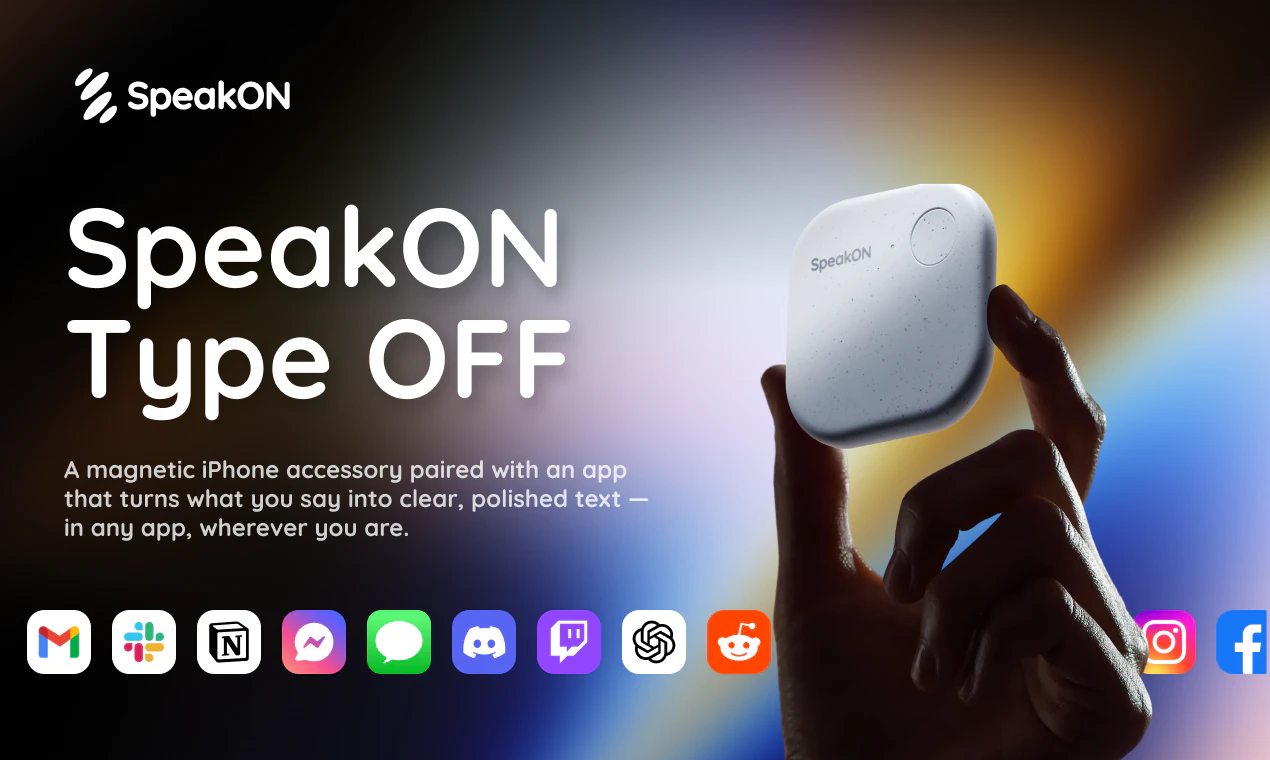
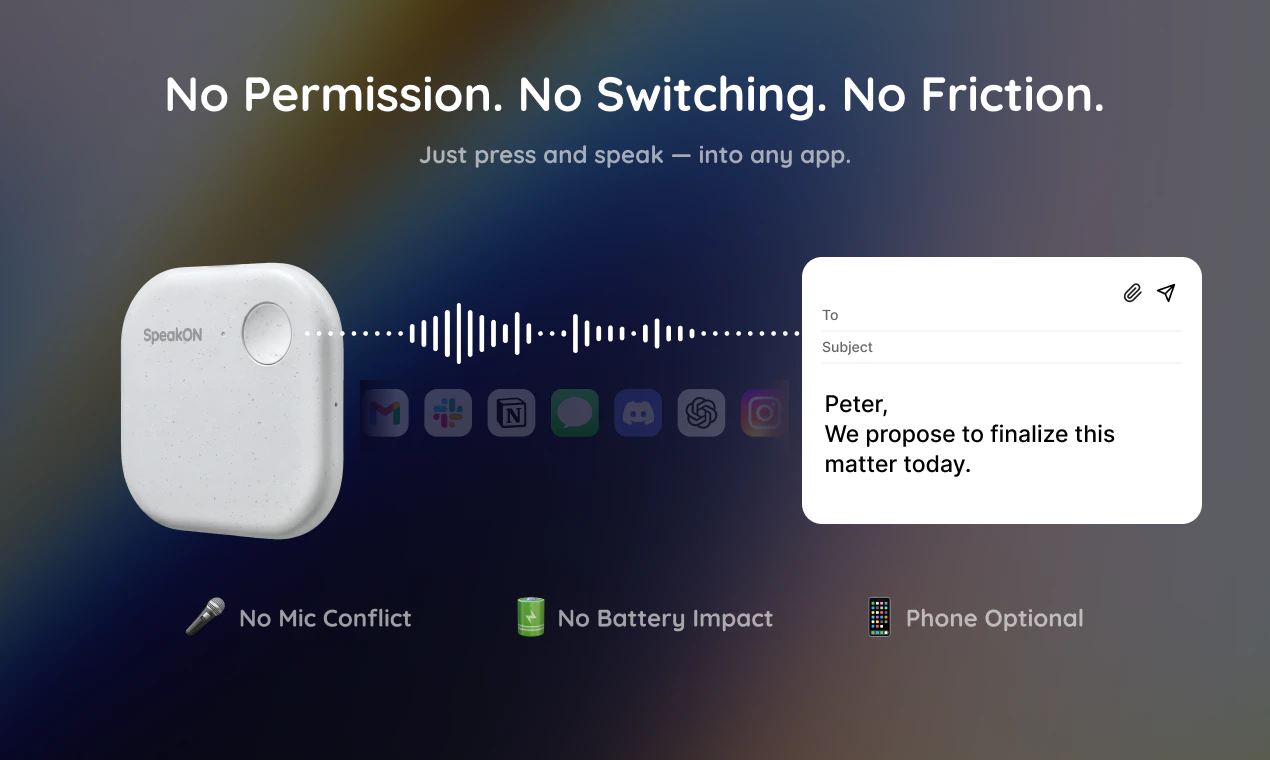
查看原始信息
Android Studio Panda 4
Android Studio Panda 4 adds Planning Mode, Next Edit Prediction, Agent Web Search, and a Gemini API Starter Template to Google's Android IDE. For Android developers building production apps with AI.

Android Studio Panda 4 introduces four new AI-driven features that improve how developers handle complex coding tasks:

  • Planning Mode: Adds a deliberation step before code generation. The agent creates an implementation plan, you review and refine it, then it executes with a tracked task list and produces a clear walkthrough for auditing.

  • Next Edit Prediction (NEP): Anticipates follow-up changes across files after edits (like updating data classes or constructors). Surfaces them inline as one-keystroke suggestions, reducing context switching.

  • Gemini API Starter Template: Preconfigures Firebase AI Logic, handling API keys and backend setup. Supports multimodal inputs (text, image, video, audio) and is built for production use.

  • Agent Web Search: Provides live access to third-party library documentation directly into the IDE.

These features help developers move faster while maintaining structure especially for refactoring, feature development, and AI integration. NEP, in particular, delivers compounding productivity gains by eliminating constant file-hopping.

2
回复

@rohanrecommends congrats for the release! These are much needed enhancements!

By any chance, are there plans to support sub-agents soon?

0
回复