Product Hunt 每日热榜 2026-05-02

PH热榜 | 2026-05-02

#1
Scholé
Turn everyday work into personalized AI learning
254
一句话介绍:Scholé是一款将日常工作场景与个性化AI学习深度融合的智能教育平台,通过多智能体系统和学习科学原理,在用户工作流程中实时生成基于其角色、任务和进度定制的课程内容,解决传统在线学习脱离实际、缺乏适应性的痛点。
Artificial Intelligence Online Learning
AI学习平台 个性化教育 多智能体系统 知识追踪 职场技能培训 自适应学习 企业培训 学习科学 EdTech 内容再创作
用户评论摘要:用户高度评价其学术根基和自适应理念,但质疑技术实现透明度,如知识追踪的准确性、幻觉消除机制、数据安全与租户隔离。有用户指出前端代码重复,建议加强邮件引导。问题集中在:能否学习AI以外内容?是否类似Duolingo?如何处理不断变化的学习目标?
AI 锐评

Scholé在产品叙事上精准锚定了传统MOOCs和“苏格拉底式”AI聊天学习工具的双重缺陷,这是其获赞的根本。它没有盲目追逐大模型的热潮,而是将学习科学(如掌握学习、最近发展区)作为底层逻辑,这决定了产品上限并非“提供答案”,而是“构建可衡量的能力”。评论中用户对其“知识轨迹”和“误解检测”的追问,直指AI教育产品的核心难点——如何区分真正的理解与浅层模式匹配。Scholé当前仅以“AI技能”作为切入点,看似取巧,实则聪明,它降低了早期内容生产的复杂度。

然而,产品目前仍处于“未来可期”阶段。技术层面,多智能体的协调开销、基于知识图谱的实时内容生成与延迟的平衡、面向企业时海量文档的处理性能,都是硬骨头。更关键的是,从社区反馈看,其安全架构、租户隔离、合规报告等企业级要素尚未公开可验证,这对于瞄准B端市场的产品是致命短板。此外,“个性化”虽是金饽饽,但过度依赖静态知识图谱可能导致生成的内容仍显“模板化”,无法真正捕捉动态环境中涌现的真实工作难点。

总体而言,Scholé拥有行业顶尖的学术血统和正确的产品哲学,其价值在于将“学习”与“做事”的界限模糊化。但若想从“Demo惊艳”走向“规模化商业落地”,它必须尽快将那些100页的技术文档转化为用户可感知的、经得起审计的工程成果,并证明其内容引擎能跨越AI领域,处理汽车工程或医学案例等更复杂、高风险的场景。目前的Scholé是一枚精心打磨的“针”,但距离“缝制整件衣服”还有一段不短的距离。

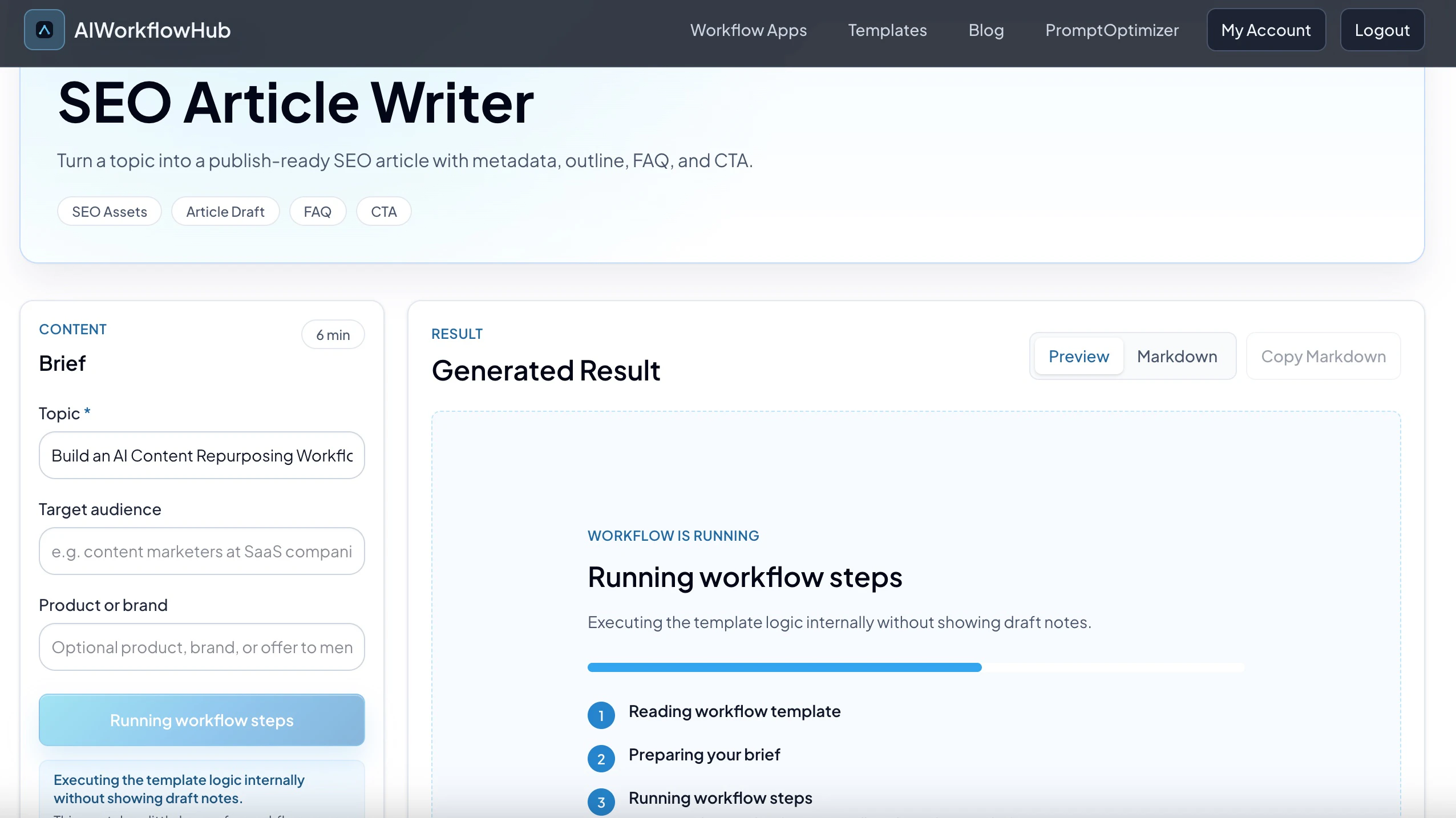
查看原始信息
Scholé
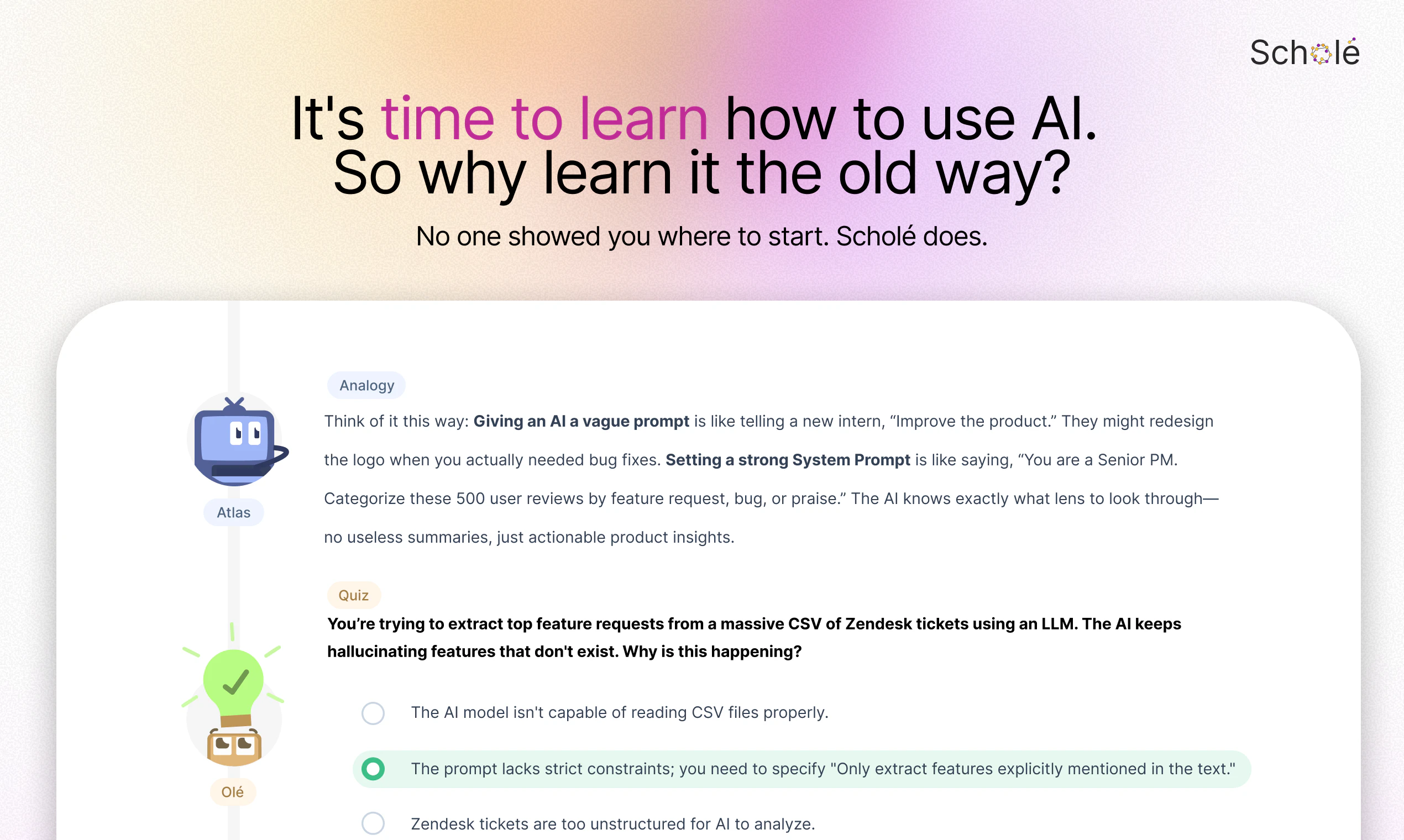
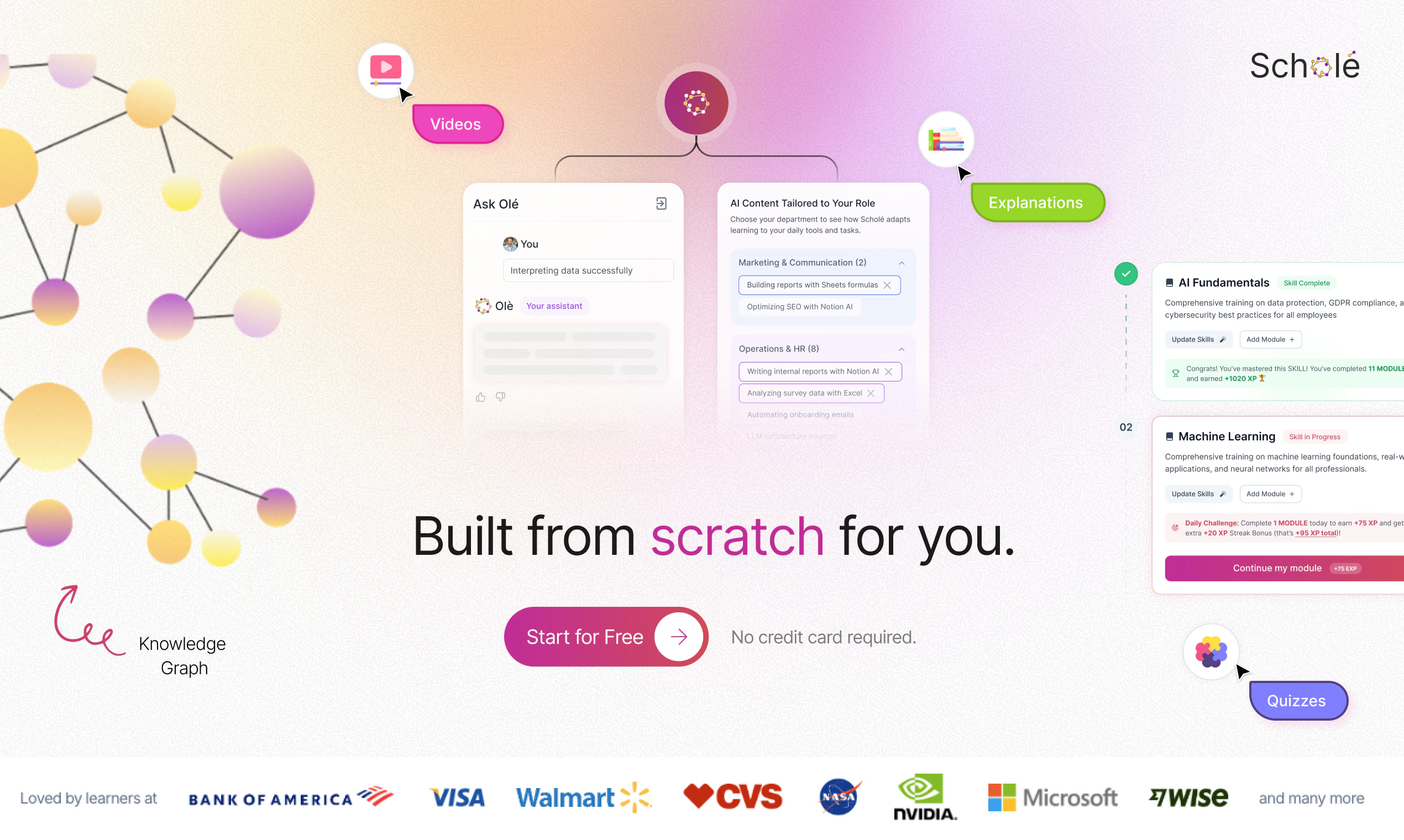
Most AI learning is disconnected from the work people actually need to do. Scholé changes that by giving professionals and teams personalized, task-based learning in real time, right in the flow of work. Grounded in learning science and powered by adaptive AI, Scholé helps learners practice, improve, and apply AI skills as they work so learning is more relevant, more effective, and immediately useful.

Hi Product Hunt! I'm Vinitra, co-founder of Scholé AI.

Our team goes by a lot of descriptors: educators, engineers, researchers, scientists, designers. But mostly we're a group of lifelong learners that get way too excited about good edtech.

The problem: We’ve been researching AI for education for more than 10 years, and we keep seeing the same gap. One-size-fits-all learning from MOOCs means half the content isn’t relevant to you, and nothing adapts based on how you’re actually progressing. Dropout rates are substantial, now 90% (we're guilty of it too!)

Newer AI learning tools go the other way, lots of open-ended prompting towards socratic-style discussions. Helpful for the quick answer, but where’s the skill progression? Where’s the grounding in real materials? Where’s the curriculum?

The approach: Bring back what works from learning science. Scaffolding, mastery learning, knowledge tracing, zone of proximal development, scenario-based learning, self-regulation, reflection, and so much more, but build it in a way that feels native to AI.

Enter Scholé: agentic personalized learning for the AI era.

We’re currently focused on adult learning, and we personalize every part of the experience across:

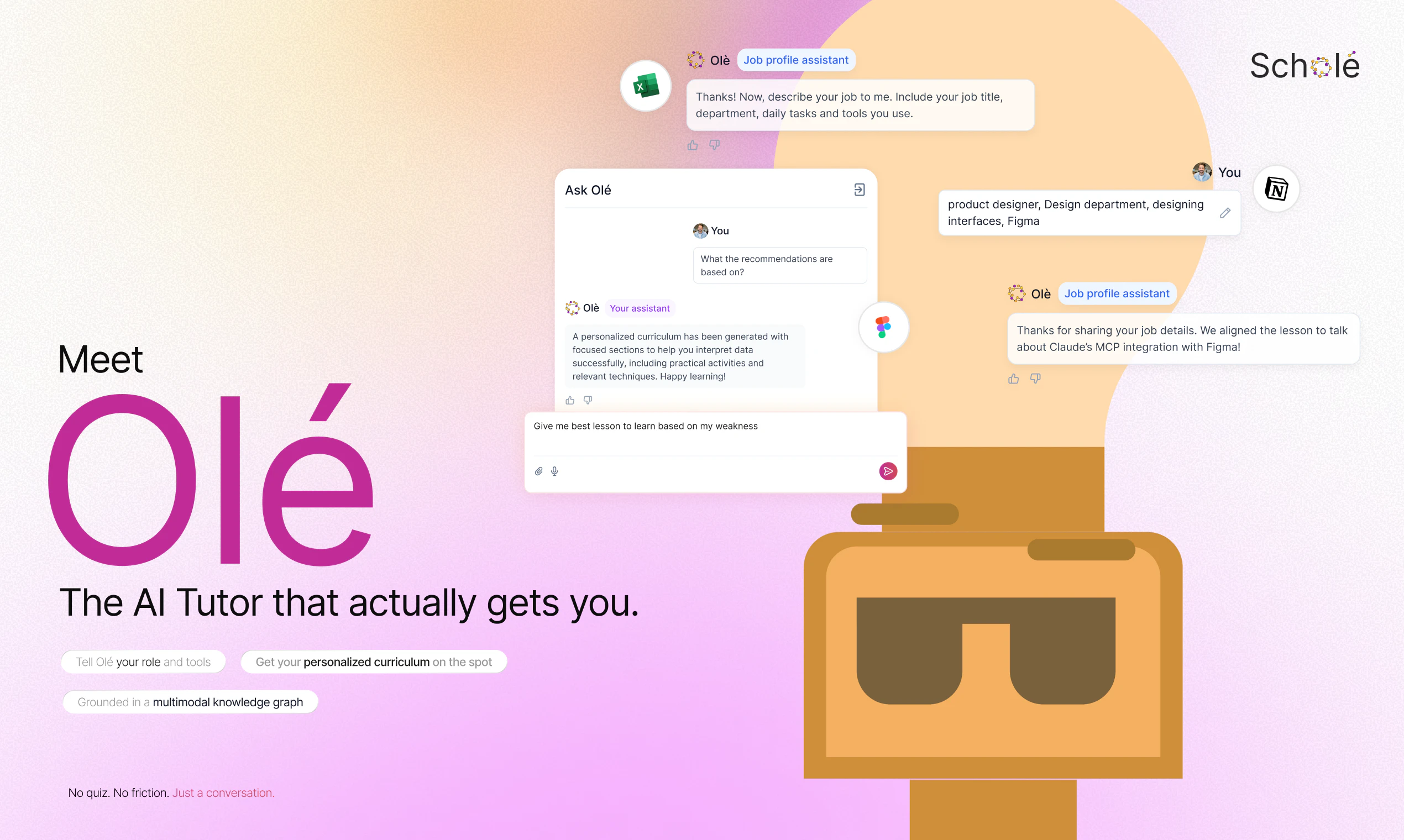
  1. your context (job, daily tasks, tools)

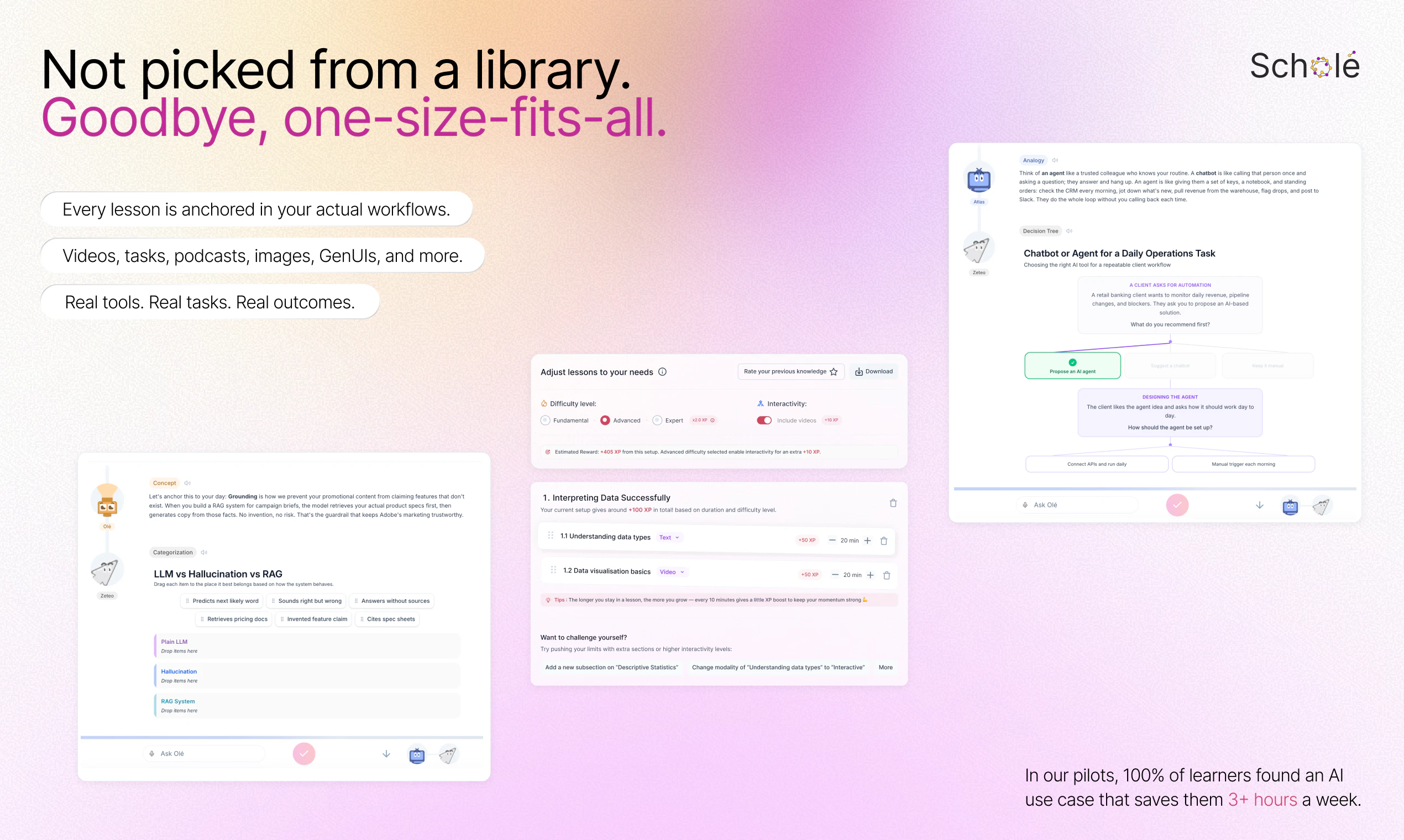
  2. your modality (videos, podcasts, interactive tasks, more or less explanation)

  3. your pace and difficulty (your strengths, your misconceptions)

You can ask Scholé “what is this MCP thing I keep hearing about” and it doesn’t generate something generic. It constructs the lesson on demand, remixing trusted materials into explanations, examples, podcasts, video excerpts, visuals and interactive tasks that are all relevant to your role and tools.

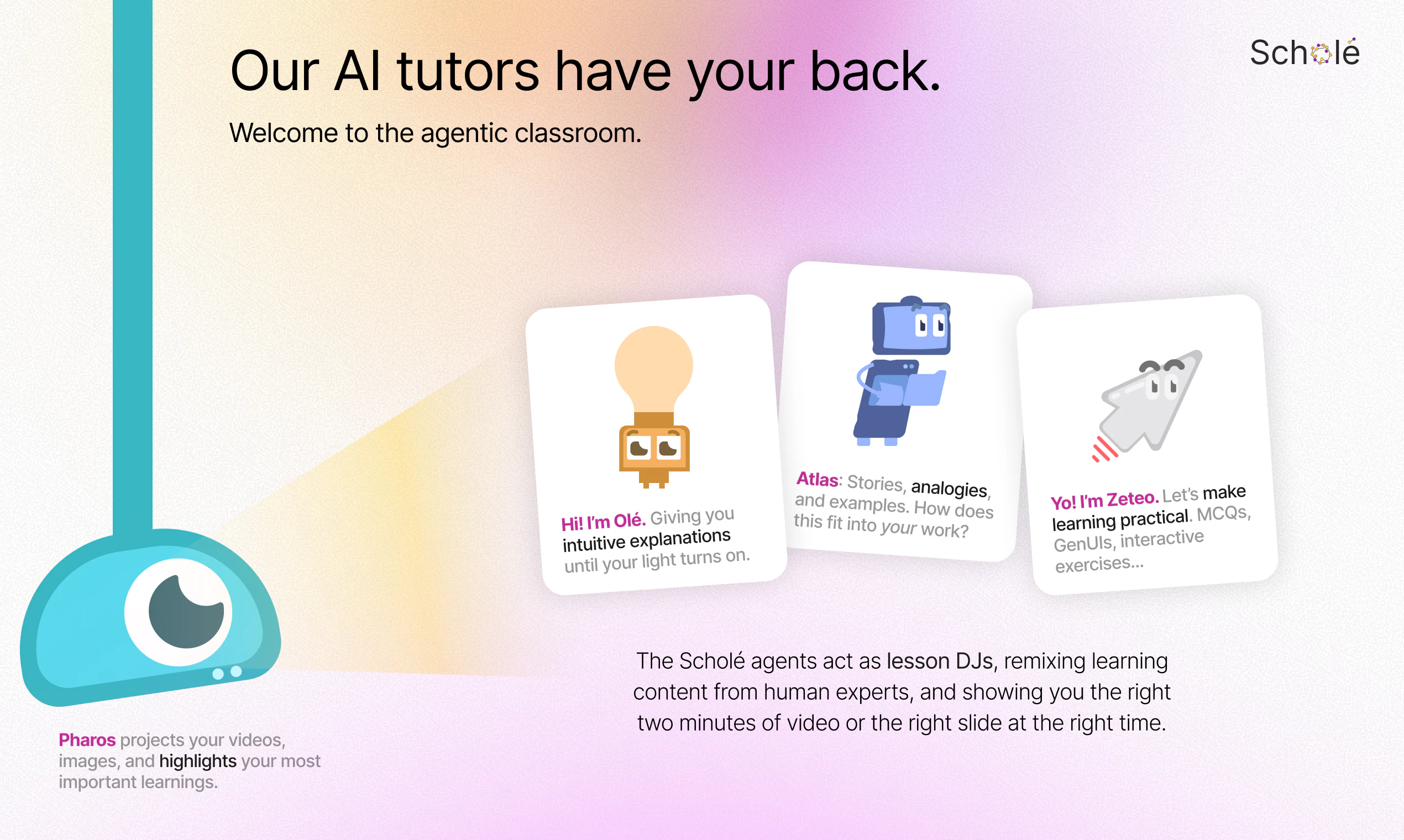
Under the hood, it’s a multi-agent system, with different pedagogical agents to teach, illustrate, question, and challenge, coordinating in real time to adapt the lesson to what you understand and what you need next.

We’re using GenUIs, orchestrators, conversational lesson delivery, knowledge tracing, hierarchical memory, multimodal learning, and more. Our first use case is helping people understand how AI is actually useful for them,  because that's what we know how to teach. :) But you'll soon see us here teaching anything and everything else.

Who is Scholé for?

✅ The first-timer who’s curious about AI
✅ The enthusiast keeping up with new tools
✅ The expert who wants a 5 minute deep dive

✅ The team who wants to learn from their wiki / slides / pdfs / videos

What does Scholé have?

🧠 Multi-agent lessons (explanations, analogies, tasks, feedback, illustration, reflection working together)
🔄 Adaptive progression based on your performance and misconceptions
🧭 Personalized learning journey tailored to your role, tools, and goals
📚 Grounding in high-quality knowledge graph of data science learning materials from our favorite profs at Harvard, UC Berkeley, EPFL, UCSD, UW, and more
📊 Learning analytics you can query, based on your evolving knowledge
🎧 Lesson DJ to remix your lessons the way you want

We’re beyond excited to put this in front of you as an early public beta and our first ever launch. Feedback is the thing we treasure most, so please drop us a line at hello@schole.ai.

We’re also partnering with teams who want to turn their internal PDFs, slides, and videos into personalized learning experiences (we're already in the hands of 100s of companies!). If that sounds like you, please reach out to enterprise@schole.ai.

Start learning (for free!) with Scholé today: https://app.schole.ai 🎉

18
回复

@vinitra interesting, how does the knowledge tracing and memory handling compare to just using a well prompted custom gpt?

2
回复

@vinitra How does it handle evolving goals; say, starting with "AI for LinkedIn posts" then pivoting to "AI sales personalization" without losing progress?

0
回复

@vinitra The framing around zone of proximal development and mastery learning is what gets me here — those aren't buzzwords, they're the concepts that actually explain why most online learning fails. The gap between "I watched the video" and "I can do the thing" is exactly where MOOCs fall apart, and it's where Socratic prompting alone also falls short because there's no scaffolding toward a destination.

The question I'd be curious about: how does Scholé handle the difference between someone who answers correctly because they understood versus someone who answered correctly by pattern-matching the framing of the question? Knowledge tracing is only as good as the signal quality, and in text-based interactions that distinction is genuinely hard. Curious whether the misconception detection is doing something interesting there.

The enterprise angle — turning internal PDFs and slides into personalized learning paths — is probably where the near-term pull is strongest. Most L&D content inside companies is exactly the one-size-fits-all problem you described, except the dropout cost is invisible because completion is mandatory. Would love to see a case study on what knowledge retention actually looks like after a Scholé-built path versus a standard onboarding deck.

Congrats on the launch. The research foundation here is more serious than most edtech I see, and that usually shows in the product eventually.

0
回复
It’s refreshing to see a focus on grounding lessons in trusted academic materials rather than just open‑ended prompting. The “Lesson DJ” idea made me smile. How do you envision teams using Scholé to transform their internal PDFs and slides into something that feels truly engaging rather than just repackaged content? Congratulations!
5
回复

@odeth_negapatan1 Hello Odeth, this is Günes from the Scholé team, thanks for your question! The key is that Scholé uses your documents as ground truth, not just display content. A multi-agent system remixes them into multimodal lessons which can be explanations, role-play scenarios, interactive tasks, even podcasts. They are all grounded in what your team actually shared. And every lesson adapts to who's learning: their role, their gaps, how they learn best. Same doc, totally different experience depending on the person.

2
回复

Hi Product Hunt! I'm Paola, co-founder and CTO of Scholé. Super happy to answer any questions (especially on how it works!)

5
回复

I got to see a demo of Schole at an event in Zurich. The product is fascinating and really needed when you consider how fast AI is advancing. Best of luck with the launch Vinitra.

5
回复

@kushtrim_spahiu1 Thank you so much for the support!

1
回复

I was always frustrated with Coursera, the material was already outdated before I even finished a course. Starting my data science journey on Scholé instead!

4
回复

@whatevacreates happy to hear it! :)

1
回复

Congrats on the launch! This is such a wonderful idea - and so relevant at this time when all career fields are working to incorporate AI, including healthcare (my field). I just signed up and I’m trying Scholé out right now!

3
回复

@varsha_swamy thanks for your support Varsha! Looking forward to hearing your experience :)

1
回复

@varsha_swamy so glad to hear that Varsh! Thanks for trying it out :)

1
回复
@vinitra Hi Vinitra, I am going to sign up for that. i am an AI Content Creator and would love to share it among my audience.
0
回复

Looks super sleek and polished!

Can we learn something else than AI?

2
回复

@dodolab First use case is AI, then everything else.

2
回复

@dodolab as Michael said, AI is just the first use case and the materials present in the knowledge graph; however, organizations can enrich the knowledge base with their own internal documents and knowledge bases to cover ANY topic

2
回复

@dodolab thanks for the support!

1
回复

So is it something like personalised Duolingo? :) Assuming from the dashboard (map) :)

1
回复

@busmark_w_nika Yes and no for me personally. You could compare a few things to Duolingo but the "pedagogical engine" powering Scholé is much more powerful. Remember that viral conversation about Duolingo that it is a cool, gamified app but some people won't learn that much with it? Scholé is also an intuitive app but it makes sure that learners actually achieve mastery (e.g. on AI upskilling).

4
回复

@busmark_w_nika definitely towards the right idea! With Duo, I might want to learn Korean because I might have a trip coming up, so what would be useful to learn would be how to say good morning, or basic signs on the metro, or how to order at a restaurant. However, regardless of that need, Duolingo would start with the Hangul character symbols.

Scholé starts from understanding who you are, and then tailors every bit of learning content on-demand for you. There's many different agents (e.g. the projector, cursor, light bulb, tv characters), all with different pedagogical roles, but we still avoid hallucinations while we're constructing lessons on-the-fly because we're based on an underlying knowledge graph of materials. So... there's a lot going on under the hood that's a bit different than what Duo is doing with spaced repetition and fixed curriculums. :)

5
回复
@busmark_w_nika exactly!
0
回复

The "adaptive AI" piece — what's it adapting to exactly? My past mistakes, the topics I keep avoiding, the speed I'm moving through material? Would help to know what signals it's actually reading before trusting it to personalize anything.

0
回复

You might be missing an opportunity with email onboarding.

A simple email sequence could guide new users, reduce confusion, and help them reach value faster.

I personally found the platform a bit unclear at first.

0
回复

@adeniran_ibrahim thank you for the feedback! Super appreciated. Agree, we could definitely make it clearer. Could you share a bit more what you mean by email onboarding? Usually when there’s a organization onboarding, we already have information on people’s roles, company info, and a recommender system for fuzzy matching of tasks and tools integrated (so the onboarding experience is much shorter!)

0
回复

@vinitra Scholé has an interesting product direction, but the public technical evidence is still not strong enough for me to trust it as an enterprise-ready AI platform.

The main issue is that the product describes advanced concepts such as agentic learning, personalized AI tutors, knowledge tracing, hierarchical learner memory, role-based lesson generation, and internal knowledge integration, but the public site does not provide enough technical detail about how these systems are actually implemented.

For example, I would expect to see clearer information about the architecture: how agents are orchestrated, how user context is stored, how knowledge graphs are built, how retrieval is grounded, how hallucinations are reduced, how learning progress is evaluated, and how generated lessons are validated before being shown to users.

Another concern is data handling. If companies upload internal PDFs, slides, videos, or wiki content, the platform needs a very clear technical explanation of tenant isolation, access control, encryption, retention, deletion, audit logging, and model-provider boundaries. Without this, the system may be risky for enterprise usage.

The frontend also appears to have duplicated content in the rendered page output. Repeated sections, repeated testimonials, and duplicated text blocks can negatively affect SEO, accessibility, page performance, and maintainability. For a product selling AI-powered learning quality, the public implementation should be cleaner.

The product also claims compliance-related learning support, but technically there is not enough visible evidence of audit trails, completion records, role-based training mapping, risk-based learning paths, or compliance reporting workflows.

So my technical view is: the idea is strong, but the implementation proof is still weak. I would need to see architecture diagrams, security documentation, evaluation metrics, data-flow details, and real enterprise case studies before considering it technically mature.

0
回复

@suyama thank you so much for the clear and detailed feedback! It means a lot that you took the time to write it out. Indeed, we have some work to do; we’re currently in the process of a ISO and SOC2 audit, and we’re a young company on our first launch (about 10 months old now and we spent all of it building the technical foundations of the tool!). We actually already have prepared all the details you’re asking, but usually we send it to companies that we’re working with directly (on our side it’s a more than 100 page doc about architecture, security procedures, protocols, integrations!) and didn’t want to overcrowd the website. Still, your points are very valid, and would be happy to continue a conversation about all of those things offline, if you’d like!

1
回复

@suyama super interesting feedback! I second Vini, thank you for taking the time to write this!

Regarding the data protection and security concerns, customers have access to all the documentation under the appropriate procurement and confidentiality processes, including architecture diagrams, data-flow documentation, technical and organizational measures, data processing agreements, sub-processor information, security controls, retention and deletion procedures, and audit-related evidence.


In more detail, customer data is logically separated by organization. Access is role-based, restricted to authorized users, and governed through identity and access management controls. Moreover, data is protected in transit and at rest. The platform is hosted on Azure with security controls around storage, access, monitoring, backup, and recovery. We maintain logging, access records, and operational monitoring so that activity can be reviewed and investigated where required. Customer data is processed only for the agreed purpose. At contract end, data can be returned and deleted according to contractual requirements.

We are very happy to share our security and data protection protocols anytime :)

1
回复
#2
Cloud Computer by Manus
A dedicated cloud machine for bots and software
236
一句话介绍:Manus Cloud Computer 提供一台24小时在线的云端持久机器,让用户无需任何运维或编码,直接用自然语言描述即可运行机器人、脚本、应用和数据库,解决了AI任务和自动化工作流“会话结束后即消失”的痛点。
Productivity Developer Tools Artificial Intelligence
云端持久计算 无代码部署 AI自动化 云计算平台 DevOps简化 24/7运行 任务调度 自然语言操作 数据持久化 网关IP
用户评论摘要:用户关注成本透明度(云服务计费易变模糊)、数据安全与持久化IP(共享IP易被API封禁)、以及产品核心差异化。正面反馈集中在“持久状态”让AI代理从演示变为实用;负面对比了Meta收购等无关信息,需忽略。
AI 锐评

Manus Cloud Computer 的定位聪明且精准——它抓住了当前AI工具链中一个被忽视的断层:大多数AI Agent和自动化工具只在一个会话周期内有效,一旦关闭,状态、文件、环境统统消失。这导致了“演示很惊艳,落地很骨感”的窘境。产品许诺“纯英语描述即完成部署、持久运行”的体验,直接刺穿了传统云计算的DevOps门槛和session-based AI的实用天花板。

然而,现实比口号更锋利。

首先,“无需编码”在用户手写复杂数据管道或爬虫时,对自然语言的模糊理解力考验极大,一旦出错,用户会立刻坠入传统运维的泥潭。其次,评论中反复出现的成本透明度和共享IP问题,暴露了其对实际运营场景的考虑不足。对24/7运行的长任务,如果出站IP被Cloudflare等平台列为可疑,所有自动化都会无声碎裂——这比“未部署”更令人绝望。最后,竞争格局并不友好。Supabase、Railway、乃至Kubernetes的简化版都已对“持续环境+任务调度”虎视眈眈,Manus的真正护城河,不在于“持久”二字,而在于能否在“纯自然语言”和“可控运维”之间保持一个立即可用且不过度抽象化的平衡。

一句话结论:它解决了AI工具“用完即废”的致命伤,但要成为主流,必须公开计费模型并处理网络层面的默认陷阱,否则优秀的故事只会停留在Product Hunt的点赞区。

查看原始信息
Cloud Computer by Manus
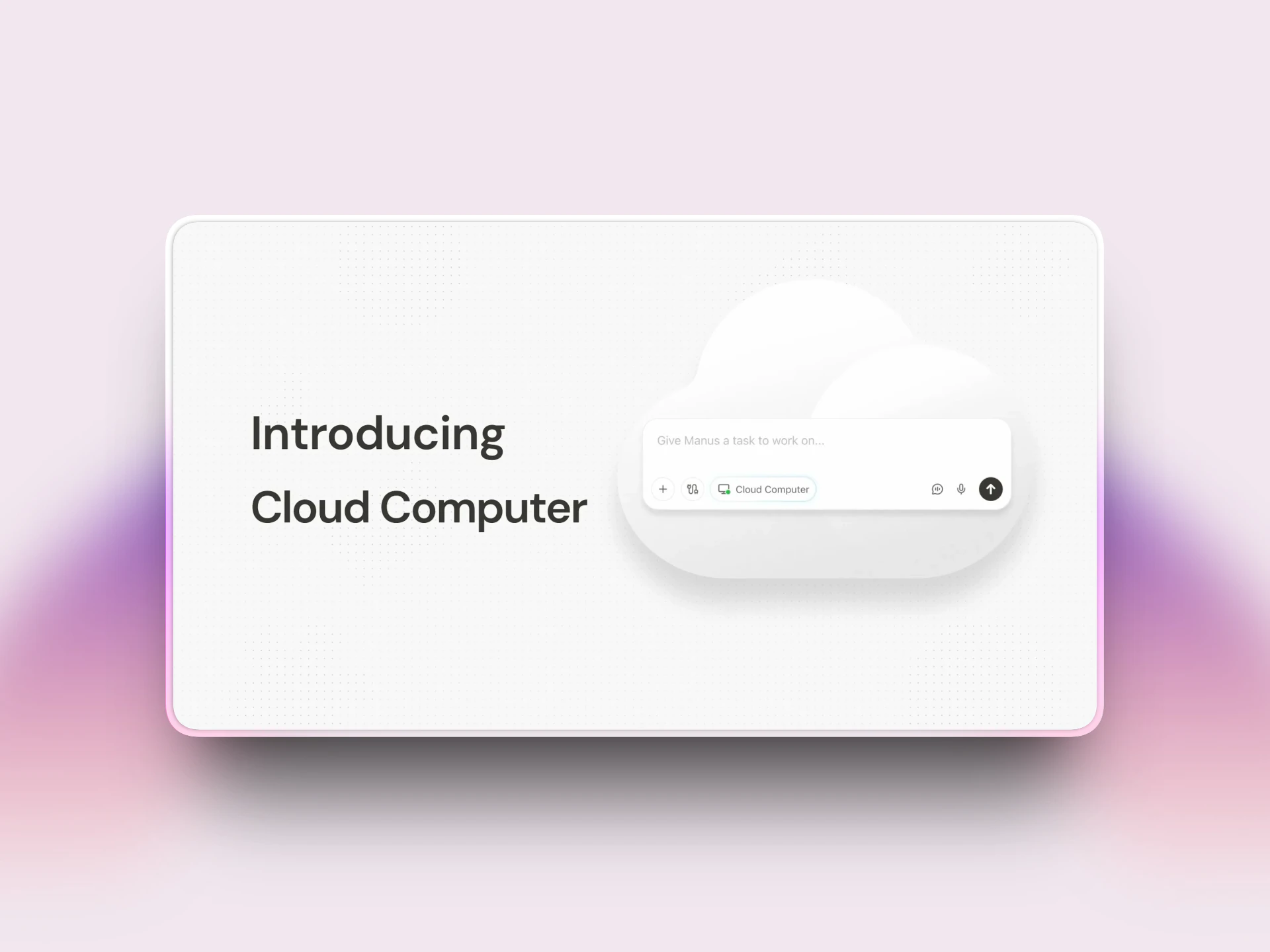
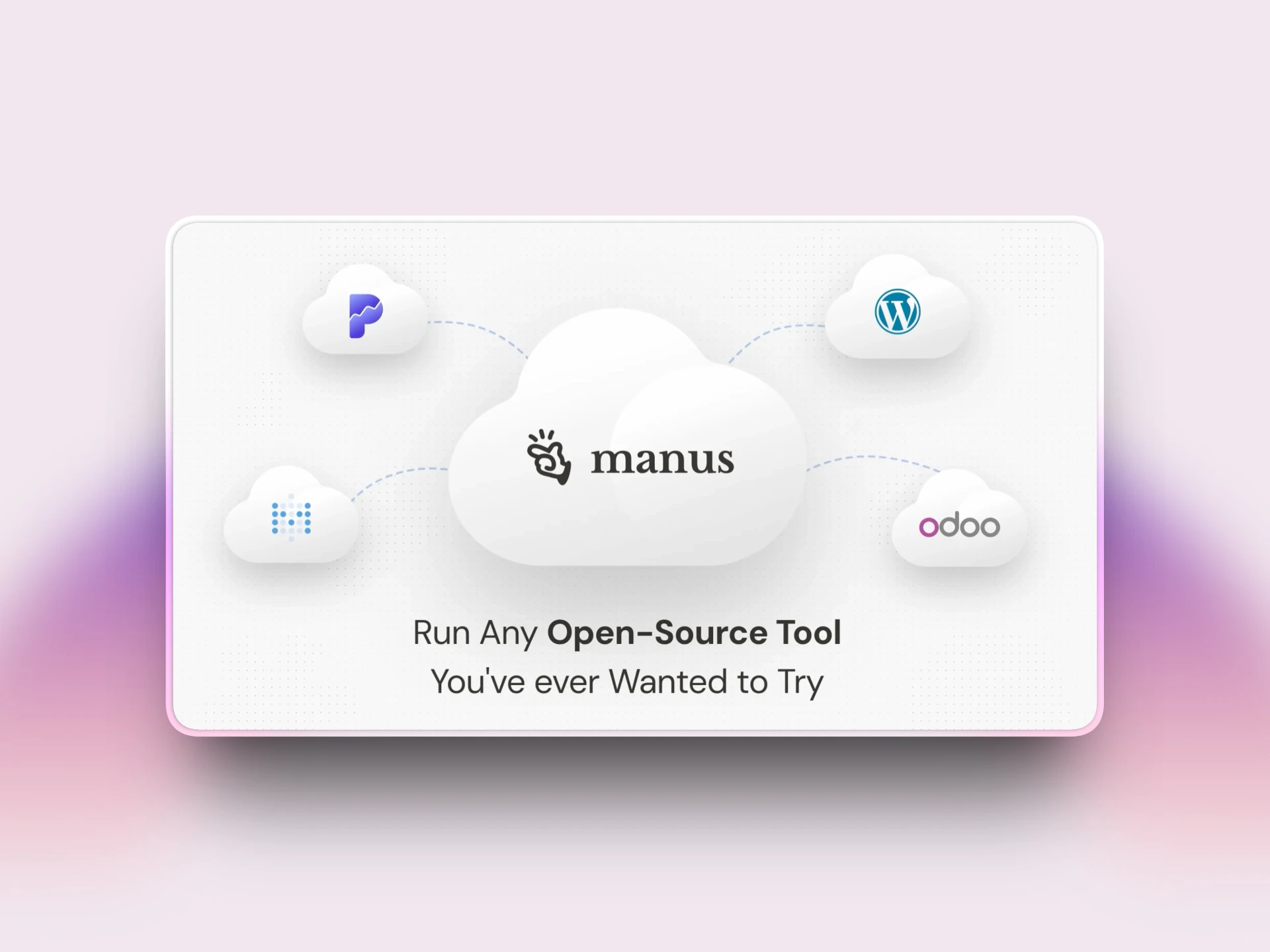
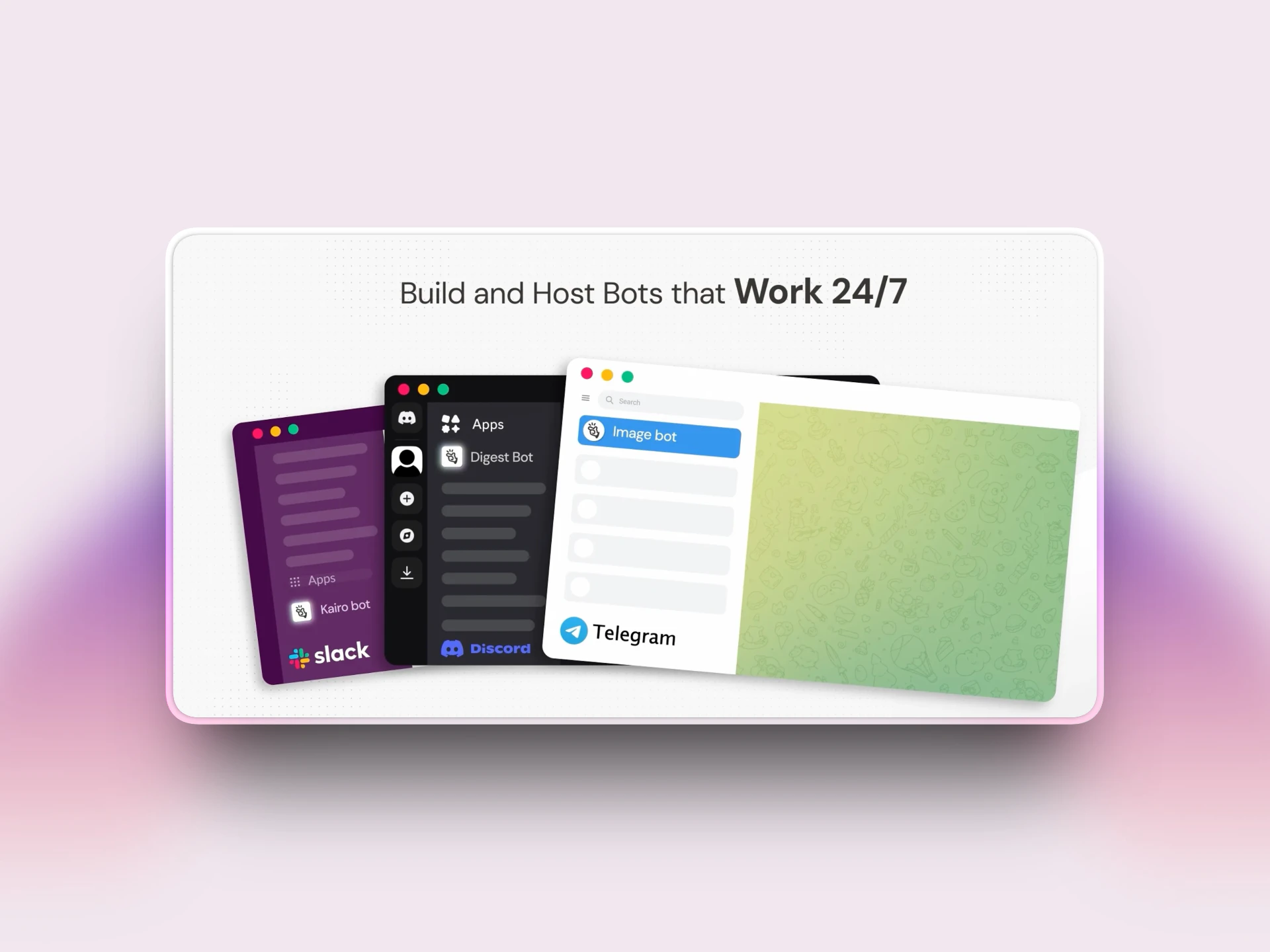
Manus Cloud Computer gives you a persistent machine in the cloud to run bots, Python scripts, apps, databases, and scheduled jobs 24/7. No DevOps, no server setup, no coding required. Just describe what you want to build, and keep it running around the clock.

Excited to hunt Manus Cloud Computer today.

Manus Cloud Computer gives you a persistent machine in the cloud to run bots, Python scripts, apps, databases, and scheduled jobs 24/7. No server setup, no DevOps, no coding required.

Instead of spinning up temporary tasks, you get an always-on environment where files stay put, tools remain installed, and ongoing projects can keep running long after the chat ends.

What stands out here:
• Run bots, scripts, and software around the clock
• Keep files, tools, and projects persistent across tasks
• Host databases, self-hosted apps, and scheduled workflows
• Build and operate everything in plain English

If you’ve ever wanted to run automations that do not stop when your laptop sleeps, this is definitely worth checking out.

5
回复

@byalexai This is a solid positioning around the always-on persistence angle. The 'no server setup' promise will resonate with people who've been burned by DevOps friction before. One thing I'd be curious about: how are you handling the cost transparency piece. Cloud pricing can get murky fast when you're billing for persistent machines, so being upfront about that will probably matter a lot to your early users.

0
回复

@byalexai How does the persistent setup handle data security and costs for something like a long-running marketing scraper like social mentions into a DB?

0
回复

@byalexai The "long after the chat ends" line is what makes this interesting. Most AI agent demos work great in the session and then everything evaporates. Persistent state across tasks is the missing piece that actually makes agents useful for real workflows rather than just impressive demos.

The plain English operations angle is smart too — the bottleneck for most teams isn't the capability, it's the setup overhead. Removing that entirely changes who can actually use it.

Great hunt — this one has real utility behind the launch.

0
回复

By the way, any information on what will happen after China blocks Meta's acquisition?

3
回复

@hidecloud Keeping long-running workflows alive without babysitting infra is still harder than it should be. Interesting to see this simplified.

1
回复

Question on the networking side. When a scheduled job is hitting public APIs 24/7, does each cloud computer get a dedicated outbound IP, or is it a shared egress pool? Asking because shared IPs eventually land on Cloudflare/WAF blocklists from someone else's traffic, and you find out by your job silently 403'ing for days.

0
回复

Wow! Sounds super cool, Tao! Seeing too big competitors there but I'm sure you'll get you place. What's your main differentiation?

0
回复
#3
Feather
Photo editor with local AI
198
一句话介绍:Feather是一款专为Apple Silicon Mac设计的本地AI照片编辑器,通过离线处理AI填充、智能选择和自动堆叠等功能,解决了摄影爱好者对数据隐私、订阅制厌倦以及专业编辑流程繁琐的核心痛点。
User Experience Photography Artificial Intelligence
本地AI 照片编辑器 macOS Apple Silicon 隐私保护 一次性付费 智能选区 色彩分级 专业摄影 效率工具
用户评论摘要:用户普遍赞赏其一次性付费、本地化AI(隐私安全)以及4个月开发速度。焦点问题包括:定价策略是否调整、对复杂混乱照片的处理能力、本地模型的类型与速度。多数建议集中在提升性能和跨平台支持(Windows版)。
AI 锐评

Feather在“后订阅制”时代,精准击中了两个致命痛点:数据隐私与付费疲劳。本地AI+一次付费的组合,几乎是对Adobe之流的“白刃战”。但必须清醒看到,它在当前阶段更像是一个“技术Demo”而非成熟产品。198票的当日表现,更多是情绪价值(反Adobe、本地隐私)的胜利。核心短板在于:1. 模型能力未知,“AI填充/选区的质量”与Photoshop的本地版(如Firefly)相比没有明确优势;2. 生态孤岛——仅支持Apple Silicon Mac,将庞大的Windows摄影群体拒之门外;3. 功能深度尚浅——虽然HSL内嵌蒙版是个好设计,但缺乏图层、曲线等核心专业工具。创始团队应警惕“尝鲜红利用尽”后的增长停滞。真正的价值在于证明了一个可行性:高端的本地AI图像处理可以在个人设备上流畅运行。能否从“好惊喜”变成“离不开”,取决于后续迭代能否把“智障的”AI提示词控制和“慢得像蜗牛”的批量处理效率做成行业标准。一句话:方向完美,但执行才刚开跑。

查看原始信息
Feather
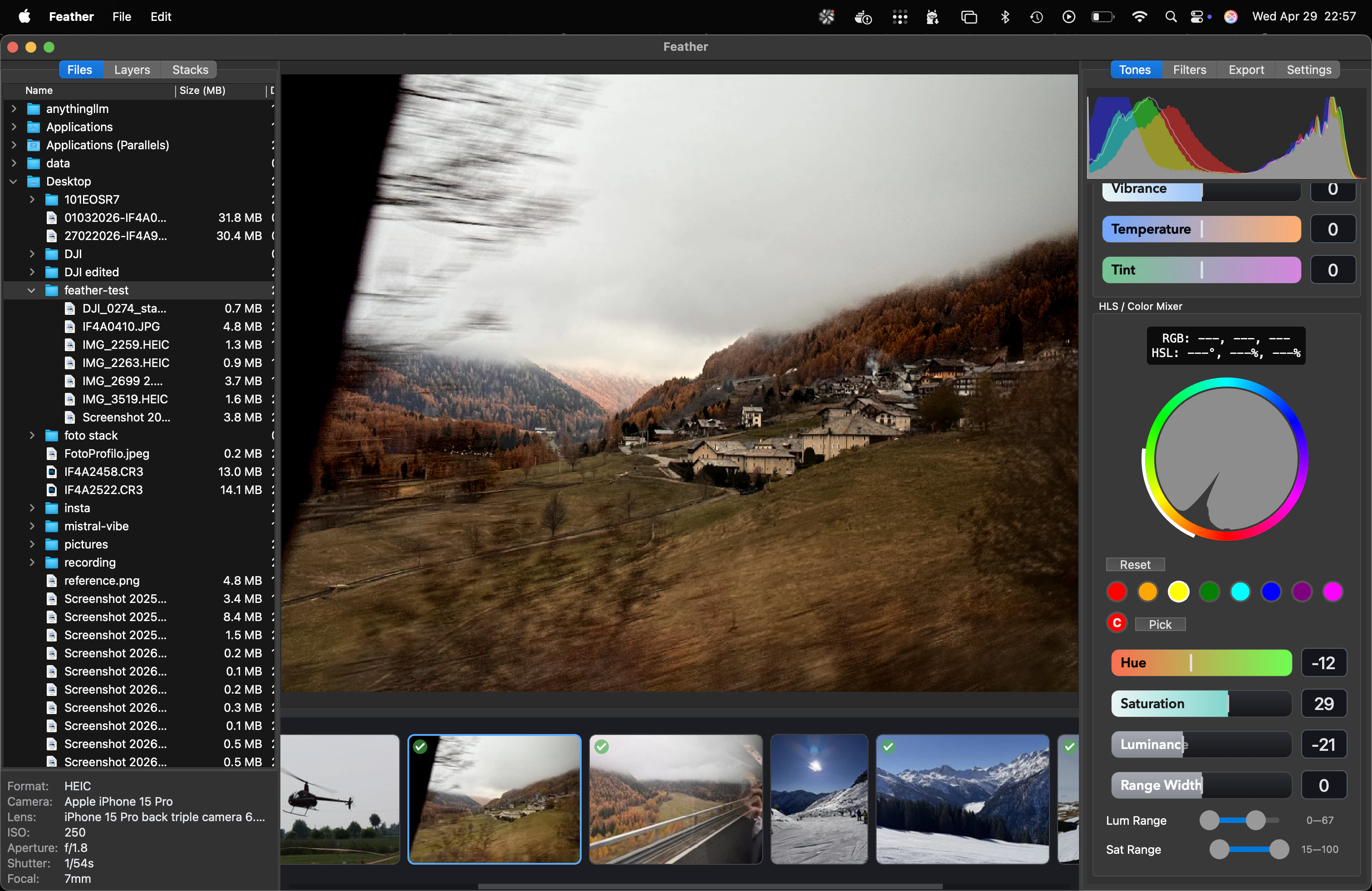
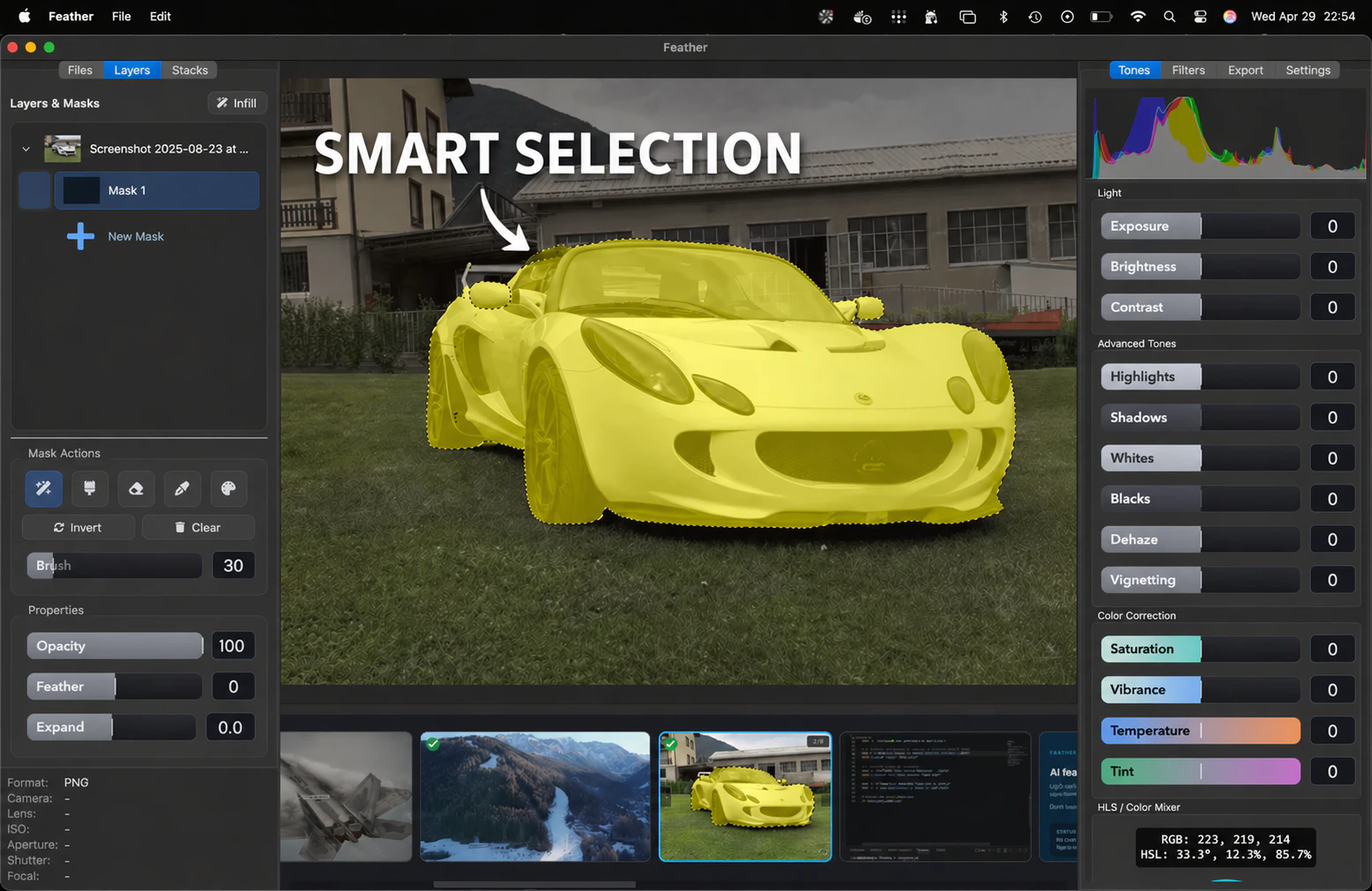
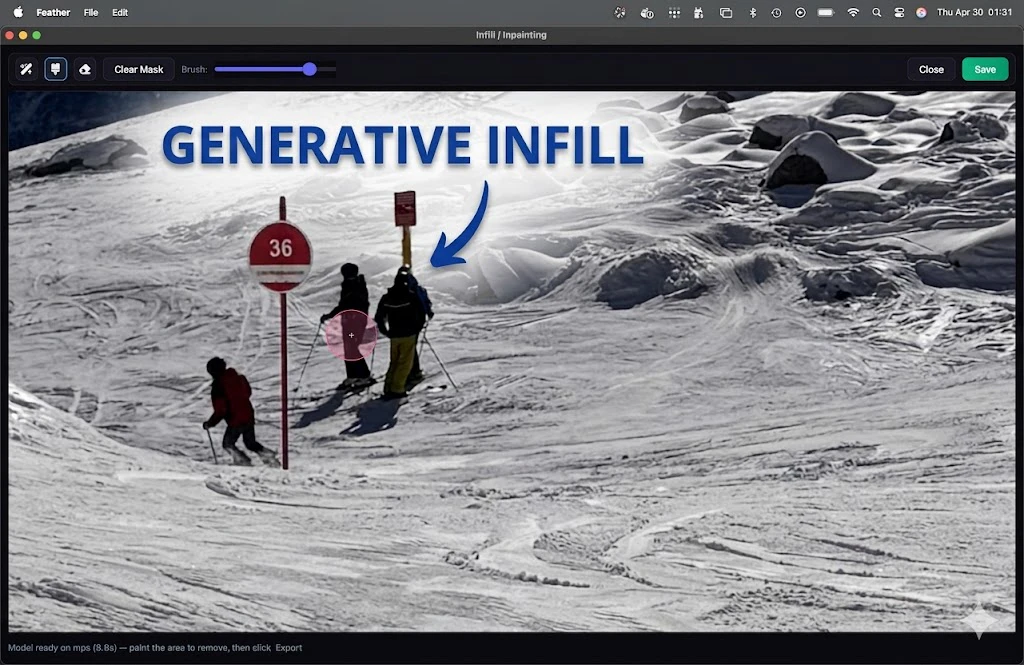
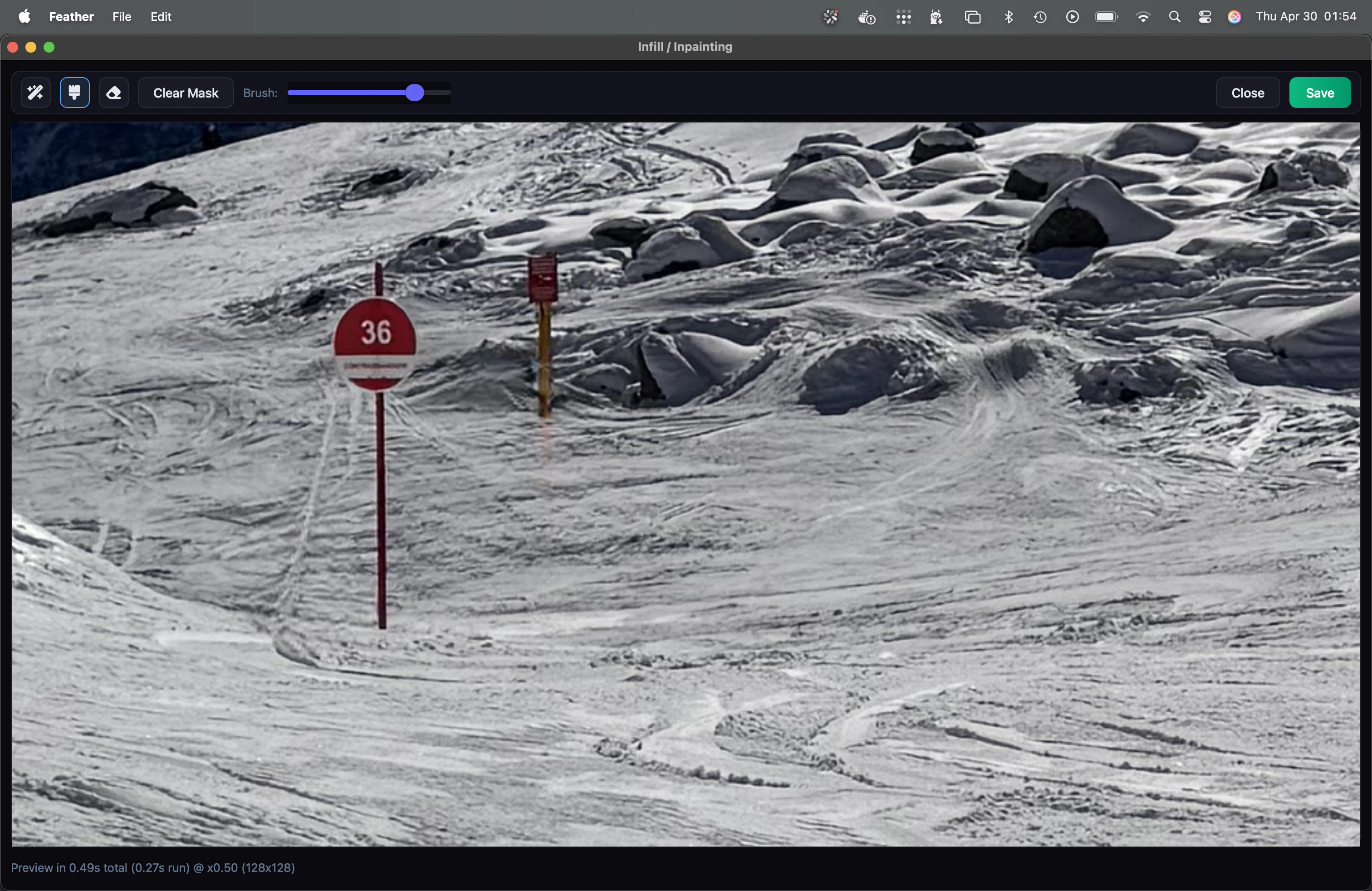
Your photos stay on your machine, AI generative infill, AI magic selection and smart stacking are all processed offline on your Apple Silicon Mac. The UI is modern and designed to be intuitive. It's pay once to use forever

Hey everyone.

I’ve been building Feather, a new photo editor, for the last 4 months. It’s still a bit rough around the edges, but I'm putting it out there today to shape future updates based on actual user feedback.

A quick recap of what's currently working well:
> HSL color mixer: Works directly inside masks (limited on lightroom)
> Magic selector (Pro): Includes a shift+drag cursor for specific selections
> Magic eraser (Pro): Quick object removal
> Smart stacking (Beta): Auto Averaging

Tech specs: Mac only. Tested on various Apple Silicon devices (M1/M2). It runs fine on 8GB, but 16GB of RAM is recommended.
You can login and download it here: https://www.feather-editor.it/

What is your biggest frustration with your current photo editing software?

7
回复

@luca_miglioli How does Feather's handle that in real-world messy shots?

0
回复

@luca_miglioli 

Hi! Strong start. The direction here is clear: faster, smarter, more intuitive editing without the usual friction.

Biggest frustration with current tools? They’re powerful—but slow, cluttered, and too manual for workflows that should feel seamless.

Feather is moving the needle, especially with masking + smart automation. Keep pushing on performance, polish, and cross-platform—we’re definitely waiting on that Windows version.

Excited to see where this goes.

0
回复

@luca_miglioli 4 months from idea to public launch is genuinely impressive — especially for a native Mac app with local AI processing. Most people would spend 4 months just deciding on the tech stack.

The HSL mixer working inside masks is a detail that photographers will notice immediately — that's exactly the kind of limitation in Lightroom that forces people into Photoshop just for one step.

Biggest frustration with current photo editing software personally? The subscription model that locks you out of your own exports if you stop paying. Pay once, use forever removes that anxiety entirely.

What's next on the roadmap after Smart Stacking comes out of beta?

0
回复

Pay-once pricing is a real differentiator right now when everything else is $12/month forever. What's the current price point, and does that change post-launch? Trying to decide if jumping in during the rough edges phase is worth it versus waiting for a more polished build.

1
回复

本地模型用的什么模型?速度如何?

0
回复
#4
Microsoft Copilot Health
Dedicated space to bring your personal health data together
139
一句话介绍:Microsoft Copilot Health 是一个整合个人健康数据的AI空间,将病历、可穿戴设备和化验结果汇聚一处,为用户提供就医前可执行的洞察,解决健康数据碎片化、互不关联的痛点。
Health & Fitness Analytics Artificial Intelligence
健康数据聚合 医疗AI 电子病历整合 可穿戴设备同步 个人健康管理 医疗洞察 合规医疗 数字健康平台 智能问诊准备
用户评论摘要:用户认可整合EHR和可穿戴设备的价值,好奇如何实现跨源推理(数据矛盾时)。重点提问:AI输出是否可追溯具体来源和原文?数据合规如何处理(跨地区法规)?期待看到炎症模式等深层洞察。
AI 锐评

Microsoft Copilot Health的“聪明”在于,它没有试图再造一个健康记录工具,而是当了那个最难的“翻译官”——把50000家医院的电子病历、50多种可穿戴设备和实验室化验单放在一个语境里。这切中了数字健康最大的谎言:数据不等于洞察。当你的Oura告诉你睡眠不足,而化验单显示皮质醇正常时,碎片化的数据只是噪音,关联后的信号才有价值。

真正的锐点在于,这套方案目前仅限美国,且依然严重依赖“Function”这类第三方中间件来获取实验室数据。你可以理解为,它是在已有的数据孤岛上架了一座桥,但这座桥的承重墙(数据源合作协议、HIPAA合规执行细节)还没有完全公开。更致命的问题是评论中提到的“引用透明度”——当AI告诉你“根据哈佛健康”给出建议时,如果用户无法点击查看具体段落和上下文,这在医疗场景下不是可信度折扣,而是安全隐患。一个无法被核实来源的医疗建议,再漂亮也不过是加了权威前缀的聊天记录。

产品方向极致正确,但落地时必须在“医疗责任归属”和“数据所有权承诺”(自诩不与通用Copilot共享)上给出可验证的机制,而不是一句文案。否则,它只会成为又一个“看起来很美”的诊前备忘录,而非改变医患对话质量的驱动力。

查看原始信息
Microsoft Copilot Health
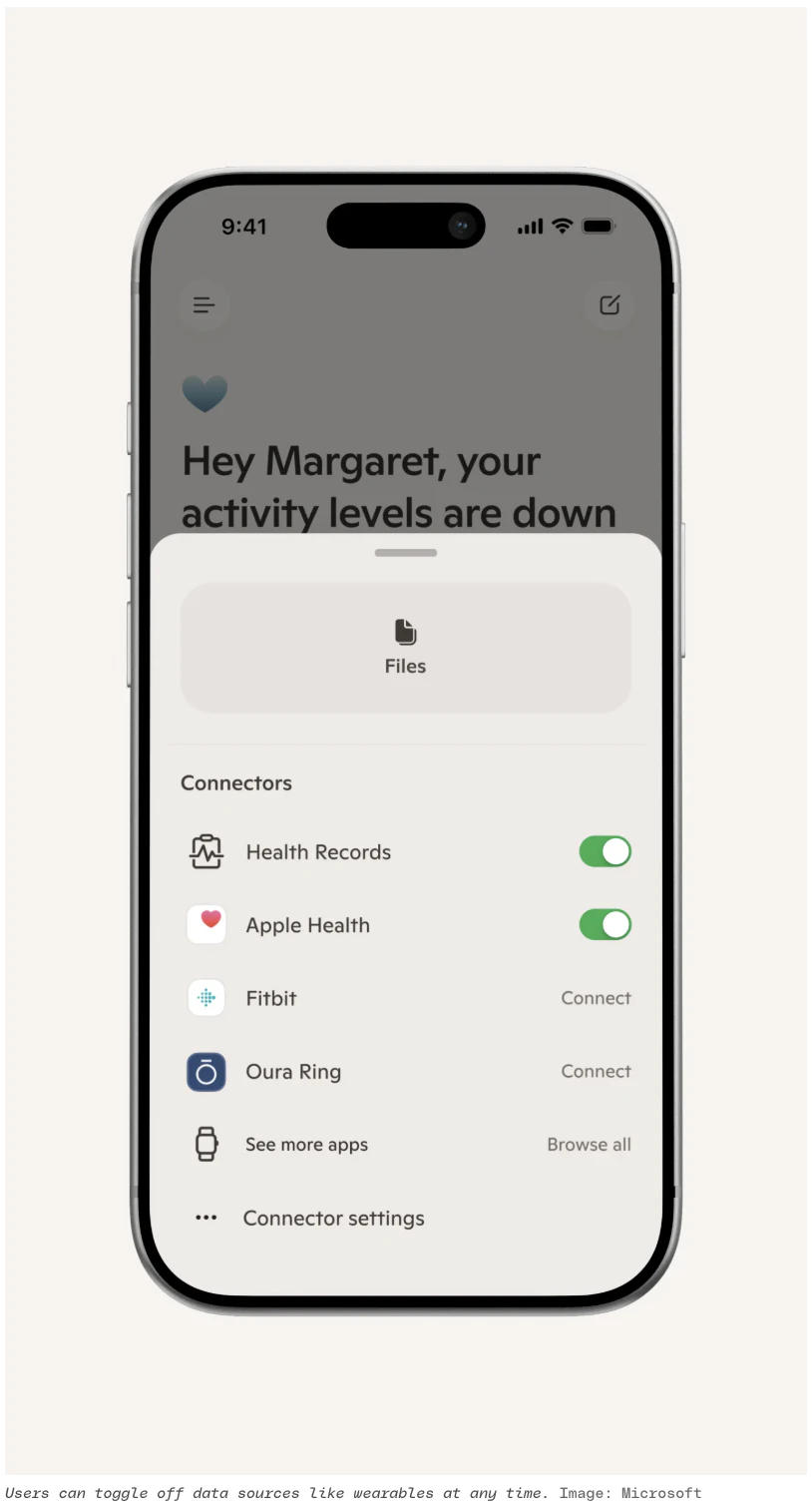
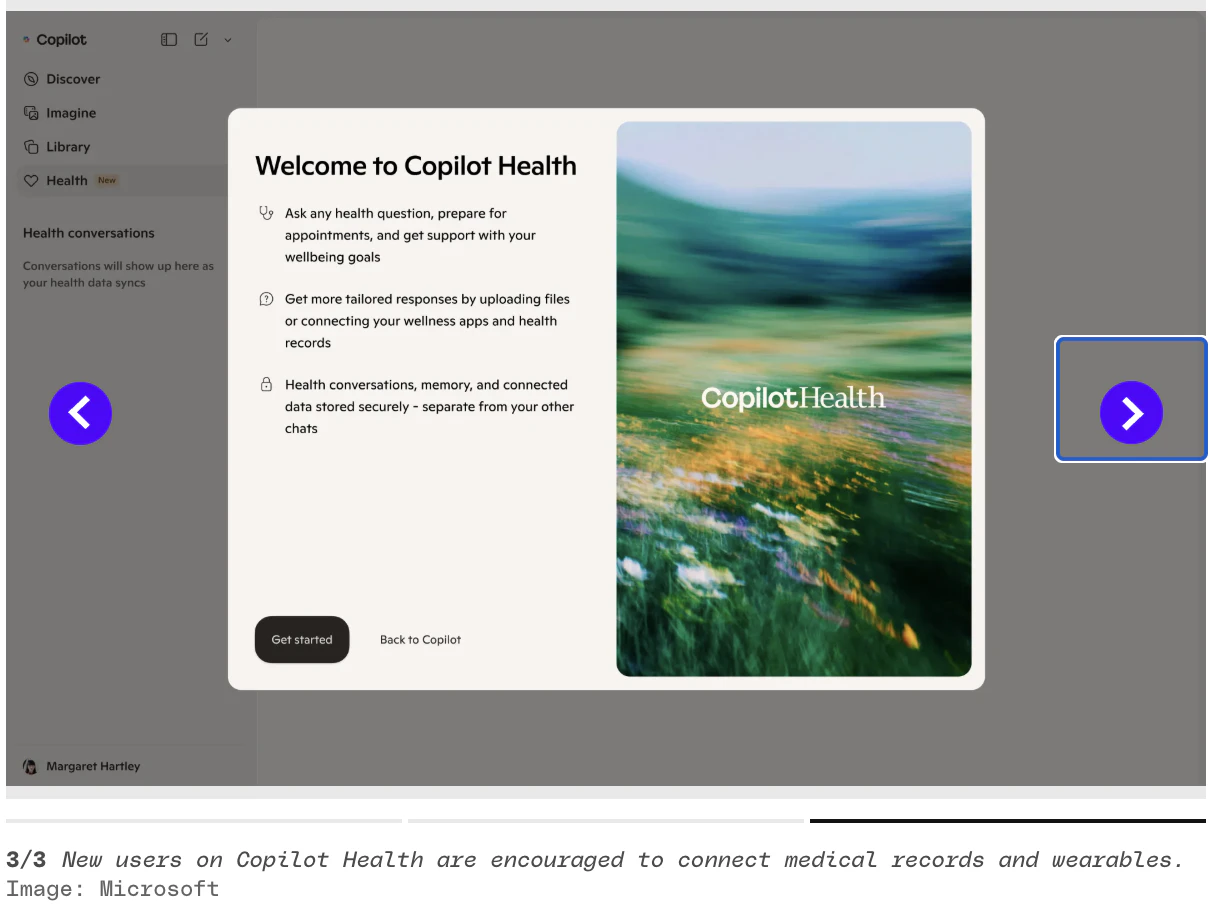
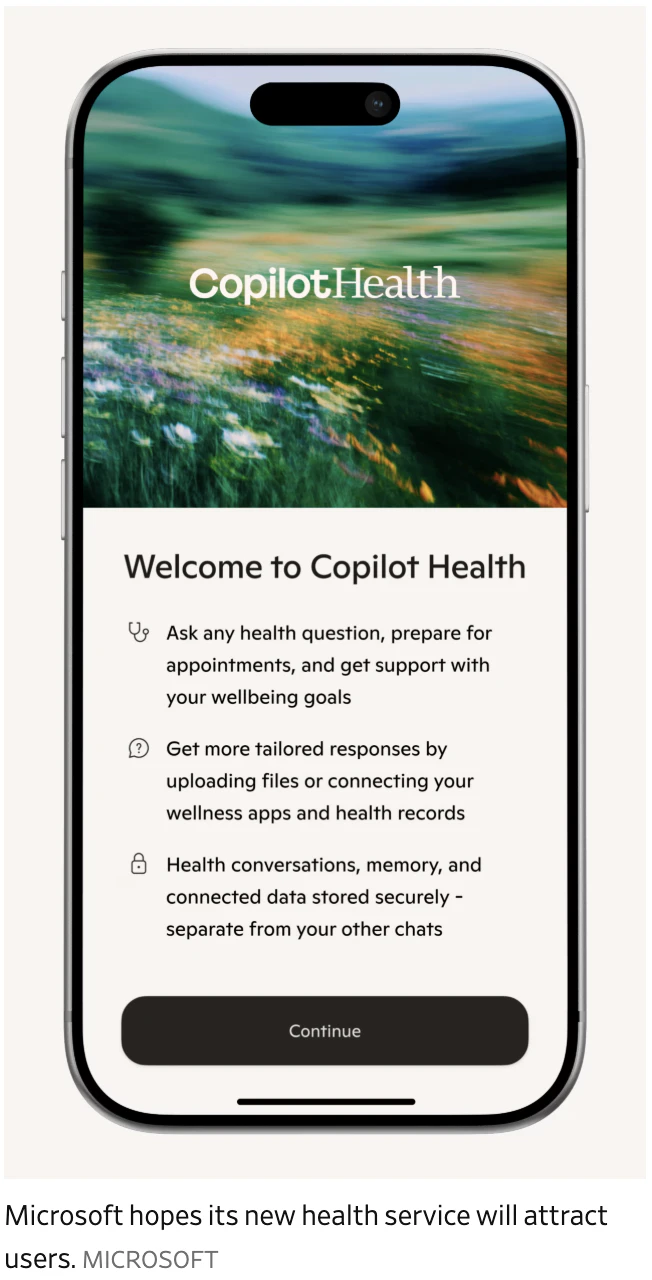
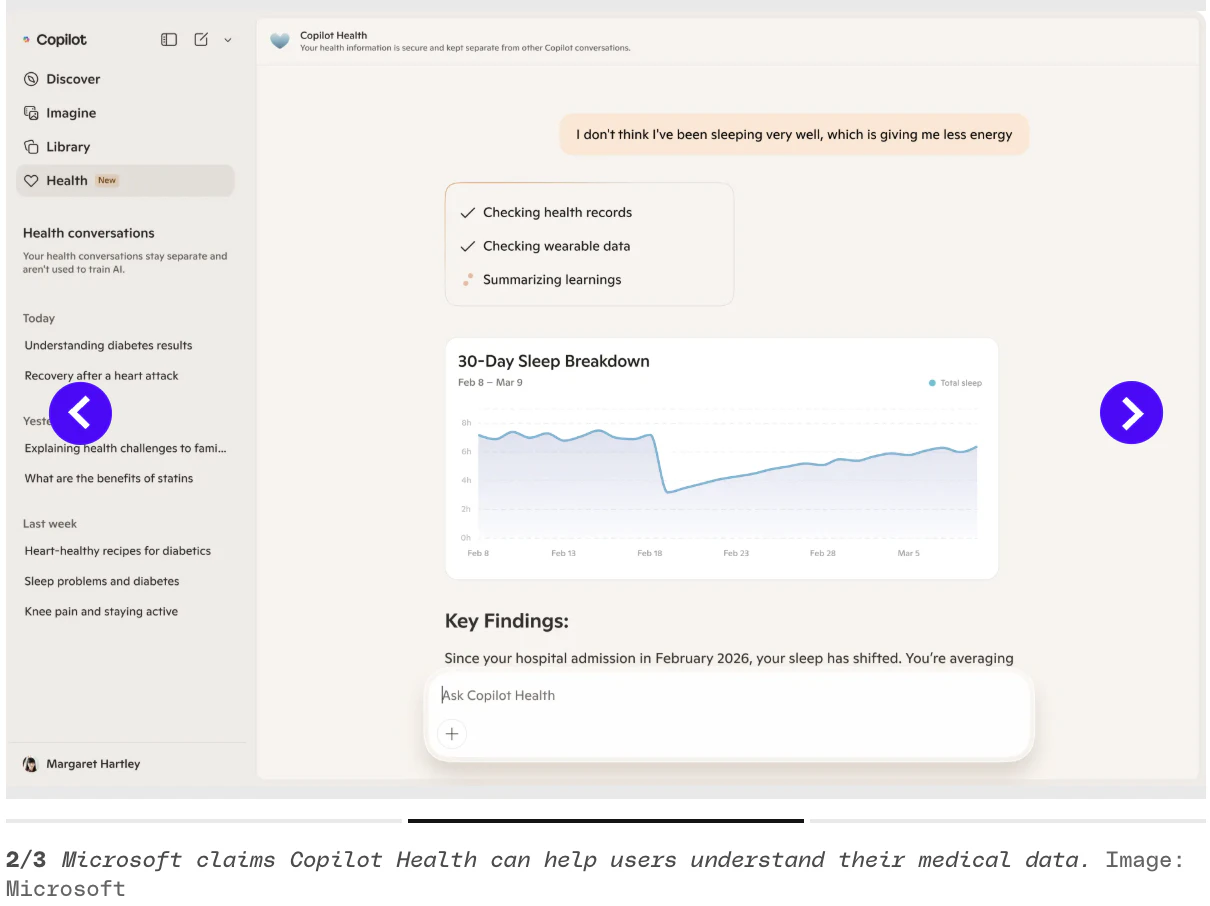
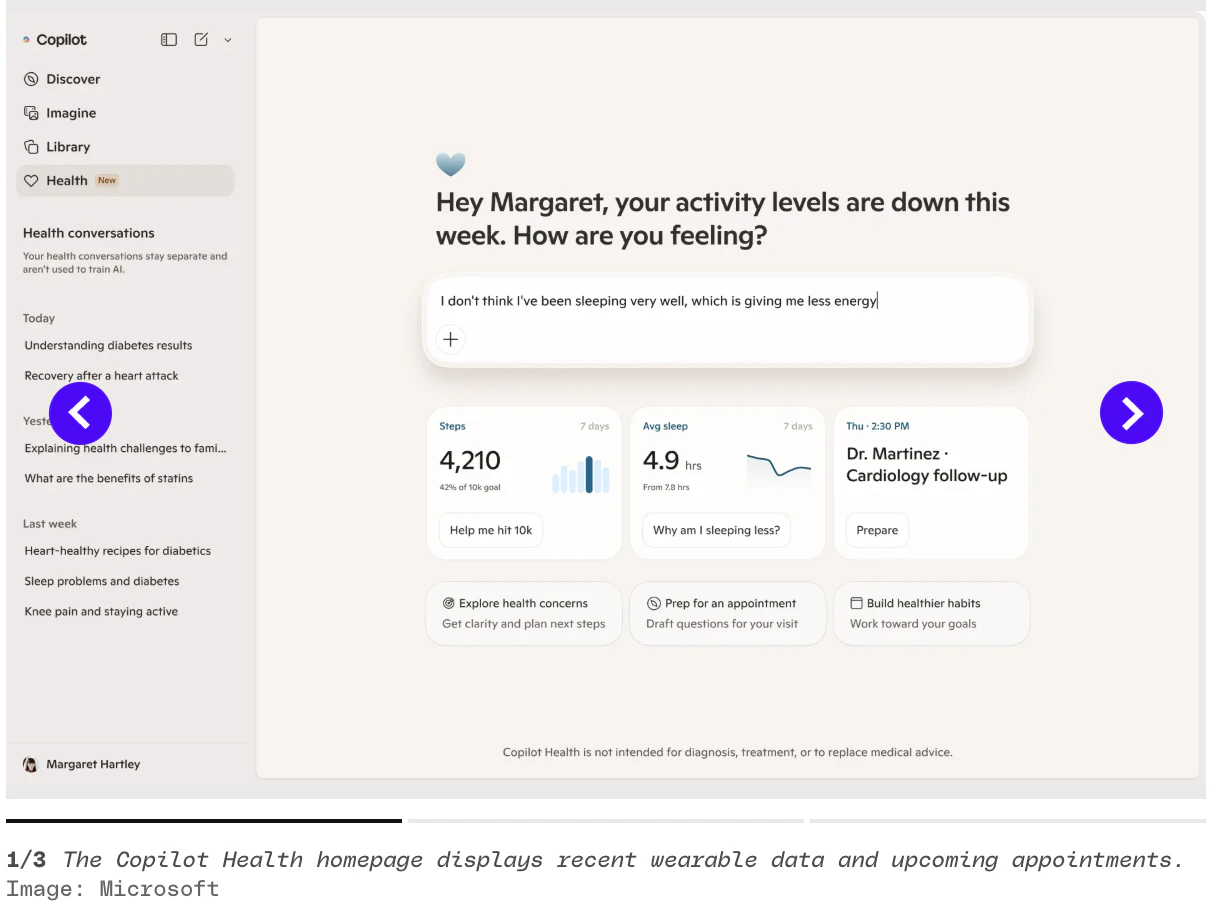
You've got data from your Oura, your hospital, your blood panels. None of it talks to each other. None of it tells you what to do. Copilot Health fixes that. It's a secure space inside Copilot where your health records (50,000+ US health systems), wearables (50+ devices), and lab results (via Function) come together. Medical AI analyzes the full picture and surfaces insights you can act on, grounded in sources like Harvard Health.

Most people have more health data than ever. And less idea what to do with it.

Lab results in a hospital portal. Sleep data on your wrist. Medications scattered across three different systems. The data exists. It just never talks to each other.

Copilot Health changes that.

What it does:

  • 🏥 Connects EHRs from 50,000+ US hospitals, pulling visit summaries, meds, and test results

  • ⌚ Syncs wearables from 50+ devices including Apple Health, Oura, and Fitbit

  • 🧪 Ingests lab results via Function and reasons across the full picture

  • 📚 Grounds answers in Harvard Health and verified sources from 50+ countries

  • 🔍 Finds real doctors who take your insurance, filtered by specialty and language

  • 🔒 Data isolated from general Copilot, never used for model training

The outcome isn't just "more insight." It's showing up to your doctor prepared, with the right questions and the right context, instead of trying to remember everything on the spot.

Excited to hunt this one. The EHR integration alone is a big unlock. 50,000 health systems is not a small number.

US-only and waitlist-gated for now, so set expectations accordingly.

What are you most curious to try first: the wearable synthesis, the EHR records side, or just having a single place to actually ask questions about your own health?

P.S. I hunt the latest and greatest launches in tech, SaaS and AI, follow to be notified @rohanrecommends

5
回复

@rohanrecommends The interoperability angle here is genuinely interesting—healthcare data fragmentation is such a friction point. The fact that you're pulling from 50k+ EHRs and 50+ wearables in one place means people can actually act on patterns they couldn't see before. Curious how you're handling the compliance surface area across all those different data sources and regional regulations.

1
回复

@rohanrecommends Super curious how Copilot surfaces actionable insights from that + wearables, like spotting inflammation patterns before my doc visit.

0
回复

@rohanrecommends The EHR integration is the unlock that makes everything else credible. Wearable data without clinical context is just numbers — but pairing Oura sleep scores with actual lab results and visit summaries is where real patterns emerge.

The "show up to your doctor prepared" framing is underrated. Most people either forget half their symptoms or spend 10 minutes scrolling through their phone in the consultation room. Having that context structured and ready changes the quality of the conversation entirely.

The data isolation from general Copilot and no model training commitment is also the right call — health data is exactly where people need that assurance before they trust any platform.

Most curious about the cross-source reasoning — how it handles contradictions between wearable data and clinical results. That's where it either earns trust or loses it fast.

Great hunt Rohan

0
回复

"Grounded in sources like Harvard Health" is doing a lot of work in that sentence. When the AI surfaces an insight, can you see exactly which source it's drawing from and the specific passage? Or is it more like a general confidence stamp that the output is medically reviewed? The difference matters a lot when you're trying to decide whether to actually act on something.

0
回复
#5
YouTube TV Custom Multiview
Mix and match up to 4 live streams at once
128
一句话介绍:YouTube TV Custom Multiview让用户摆脱平台预设的多画面组合限制,在体育赛事、新闻直播等场景下,自由混搭最多4个直播流,解决了一屏多看的个性化与实时追踪痛点。
Video Streaming Sports TV
YouTube TV 多视角直播 体育赛事 自定义画面 直播流混搭 电视应用 NFL套餐 媒体工具 用户控制。
用户评论摘要:用户好奇同时播放四路直播是否容易跟丢重点,以及多流音频切换在体育狂热夜是否流畅。这些问题直指多画面功能的实际可用性和交互细节。
AI 锐评

YouTube TV这波更新堪称“让用户自己当导播”,核心价值不是技术突破,而是把选择权从平台让渡给用户——体育迷能同时盯四场NFL,新闻控可让CNN、Fox、MSNBC同屏撕逼。但投票仅128,说明它更像优化而非颠覆。几个硬伤:一是预设组合时代观众习惯了“被动喂食”,突然要自己拼搭反而有门槛;二是音频切换成致命短板,评论区对“四流声音乱战”的担忧反映了底层逻辑缺失——毕竟没人想听四路解说同时灌耳;三是流量消耗与设备性能未提及,手机或老电视跑4路视频可能直接卡成PPT。相比苹果的“协作画中画”或Frame.io的云端并列剪辑,这功能实用但平庸,本质是线性电视向点播妥协的产物,离“下一代观看体验”还差得远。

查看原始信息
YouTube TV Custom Multiview
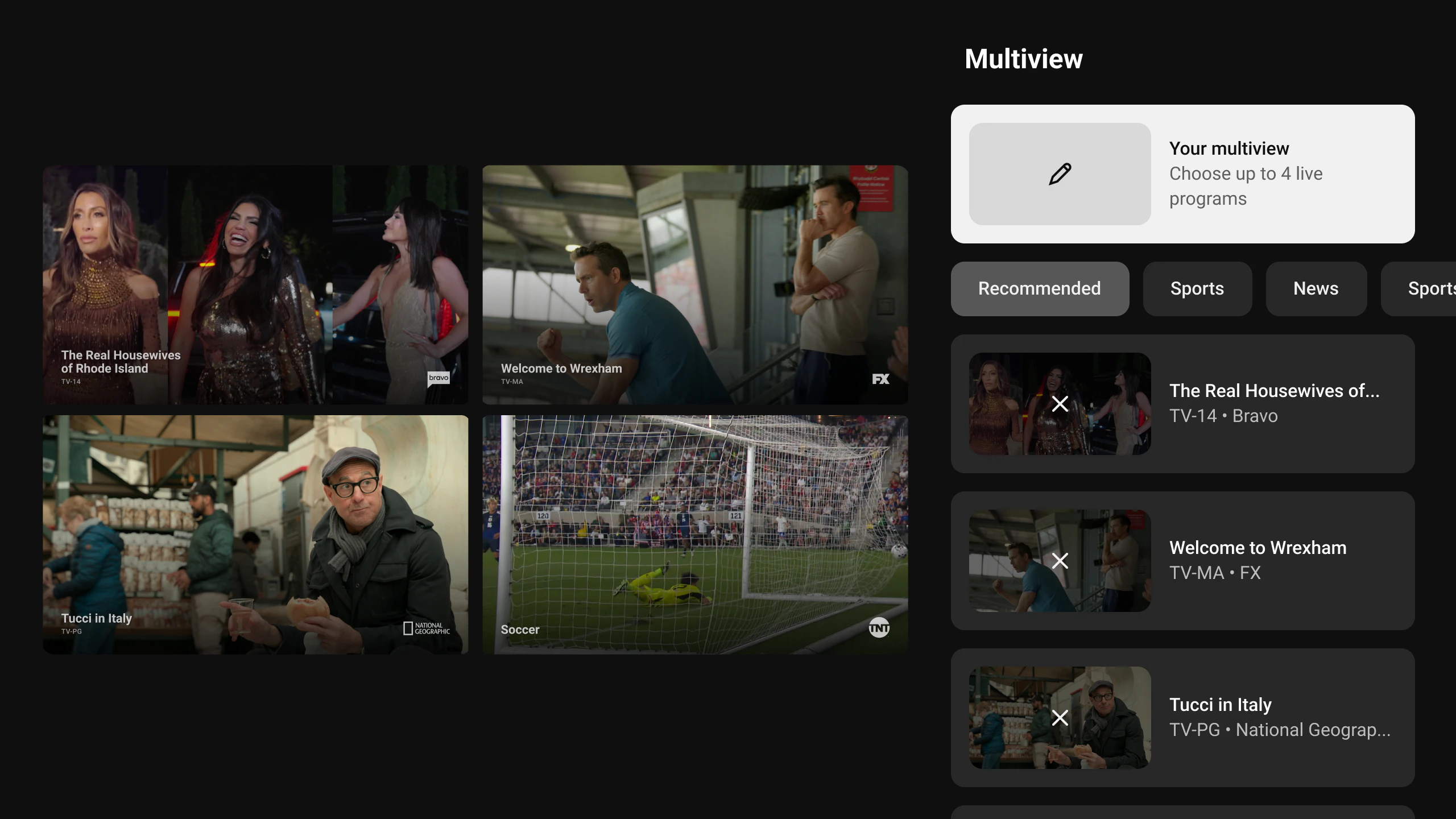
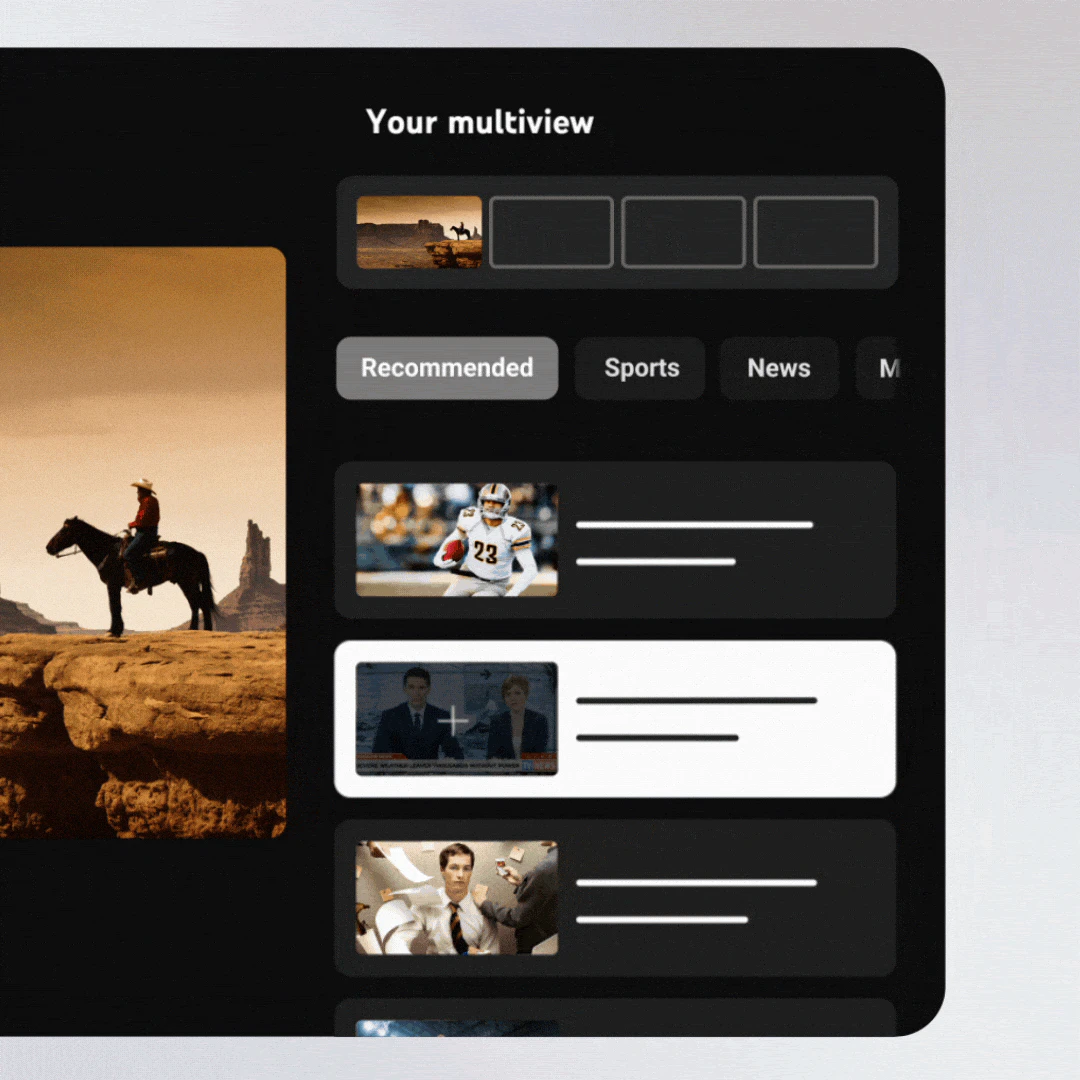
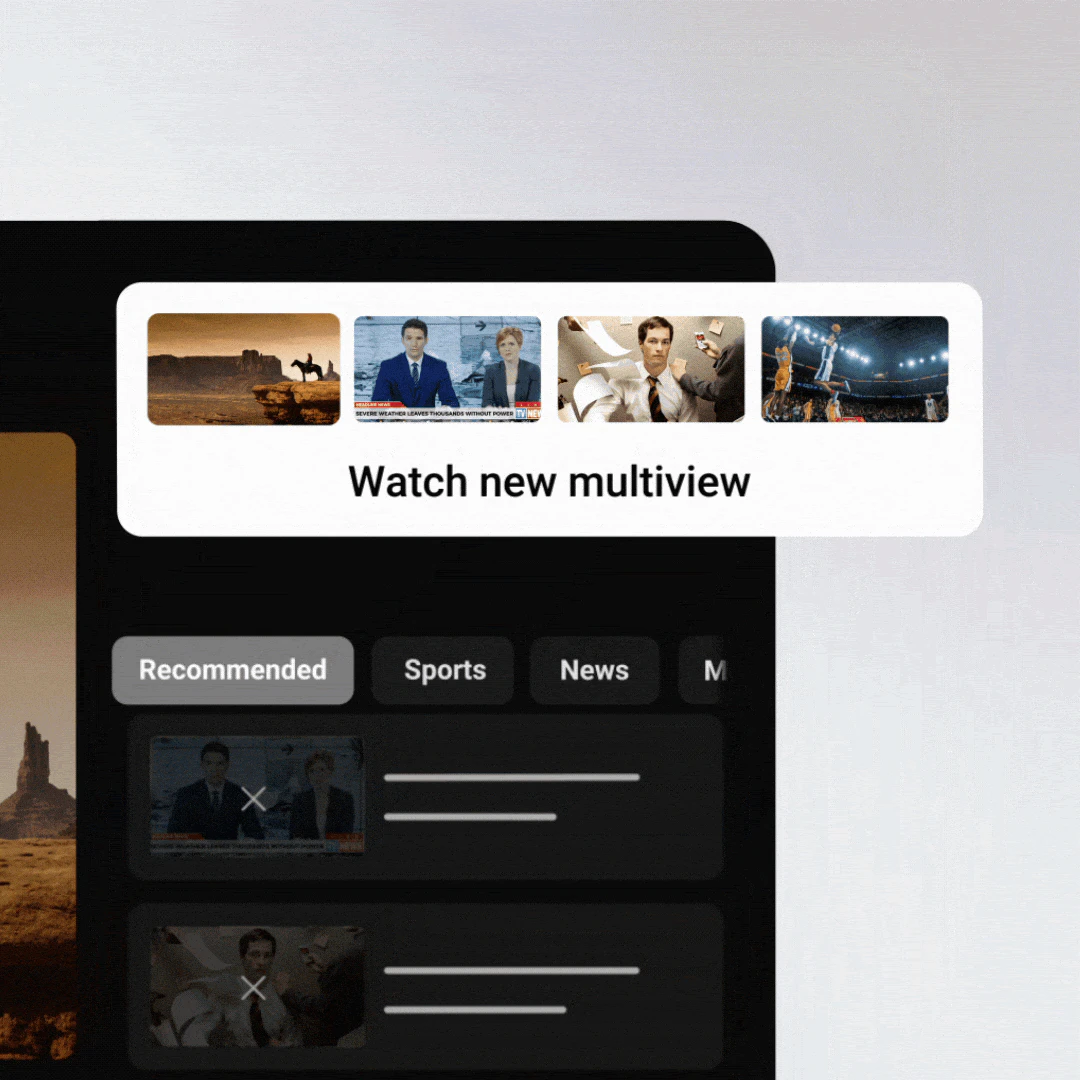
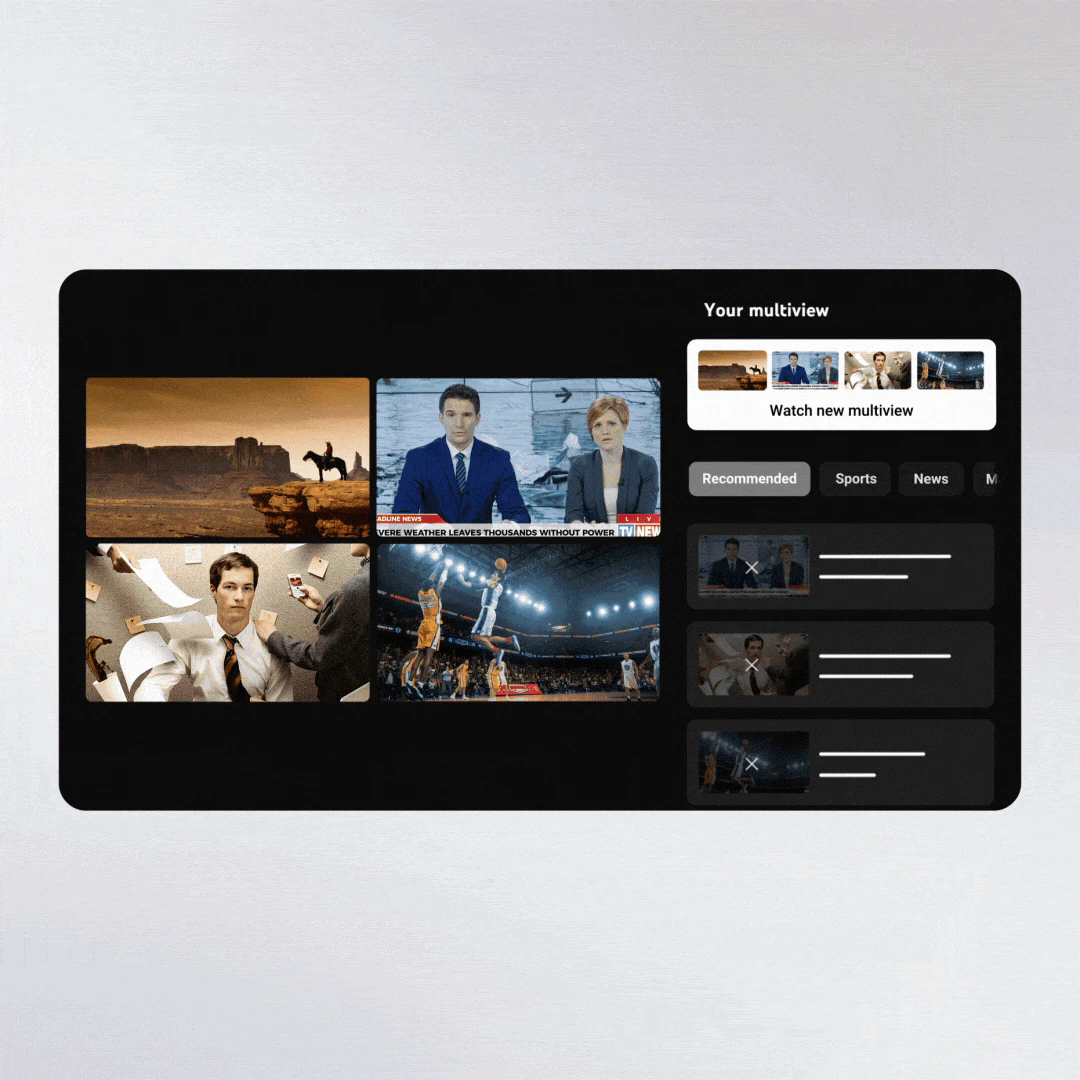
YouTube TV now lets subscribers build fully customizable multiviews with up to four live streams on one screen. Mix and match live channels across your plan and add-ons like NFL Sunday Ticket, using a new builder with filters for sports, news, shows, movies, and more.

Hi everyone!

YouTube TV’s multiview finally gives users full control.

Instead of choosing from prebuilt combinations, you can now build your own view with up to four live streams, including channels from your main plan and add-ons like NFL Sunday Ticket. The new builder also makes it easier to filter by sports, news, shows, movies, and other live content.

Simple feature, very useful for live TV. Sports is the obvious use case, but I can also see people using this for news, big events, or just keeping multiple live streams open at once📺

2
回复

@zaczuo When you have four streams running at once... does it stay easy to follow everything or does it start to feel a bit overwhelming after a while?

0
回复

@zaczuo How smooth is audio switching between the four streams during a chaotic sports night like playoffs?

0
回复
#6
Breaks
A quiet Pomodoro that lives in your menu bar.
118
一句话介绍:Breaks 是一款静驻于 Mac 菜单栏的极简番茄钟,通过零干扰设计和本地优先策略,帮你专注当下,无需忍受繁复界面或隐私泄露的焦虑。
Productivity Open Source GitHub Menu Bar Apps
番茄钟 菜单栏工具 macOS 专注工具 开源 本地优先 隐私保护 Apple Intelligence 生产力工具 开源软件
用户评论摘要:用户普遍认可其简洁和隐私优先的理念。主流需求集中在希望推出 Windows/Linux 版本,以及尽快上架 App Store 和 Homebrew Cask。有建议指出,可通过追踪用户在生产力社区分享截图的提及来挖掘真正痛点。
AI 锐评

Breaks 在红海的番茄钟赛道里,选择了一条极其聪明的“减法”路线。它没有试图用花哨的统计或复杂的白噪音来制造“生产力幻觉”,而是回归了番茄钟的本质——一个安静的计时器。其核心价值并不在于功能多寡,而在于“存在感”的精准控制:隐藏在菜单栏,不打扰,但随时可用。这种克制恰恰击中了重度效率工具用户对“工具焦虑”的厌倦感。

从产品策略上看,“本地优先、无遥测、开源”是三重极具杀伤力的卖点:它既满足了开发者社区对透明与可控的偏好(MIT 开源),又迎合了当下对数据隐私高度敏感的用户心理(沙箱隔离+AI 本地处理)。通过 Apple Intelligence 实现本地周报,更是将隐私体验做到了行业天花板——数据不离开 Mac,直接化解了 AI 应用的最大信任危机。这绝非单纯的“开箱即用”,而是经过精心设计的信任锚点。

然而,锐评者也需指出其风险:当前 118 票与有限的评论深度,表明它仍在早期种子用户阶段。过度聚焦 macOS 将天然舍弃大量跨平台用户(评论中已有强烈呼声)。若不能快速在稳定版基础上拓展至 Windows/Linux 或是移动端,其“护城河”可能只是一条浅沟。另外,“极简”也是一把双刃剑——缺乏数据洞察和高级定制,可能会让追求深度的效率达人在静默一周后悄然卸载。真正的挑战在于,如何在“不增加界面负担”的前提下,通过更智能的本地分析和灵活的热键组合,持续回应用户未被明说的深层需求。

查看原始信息
Breaks

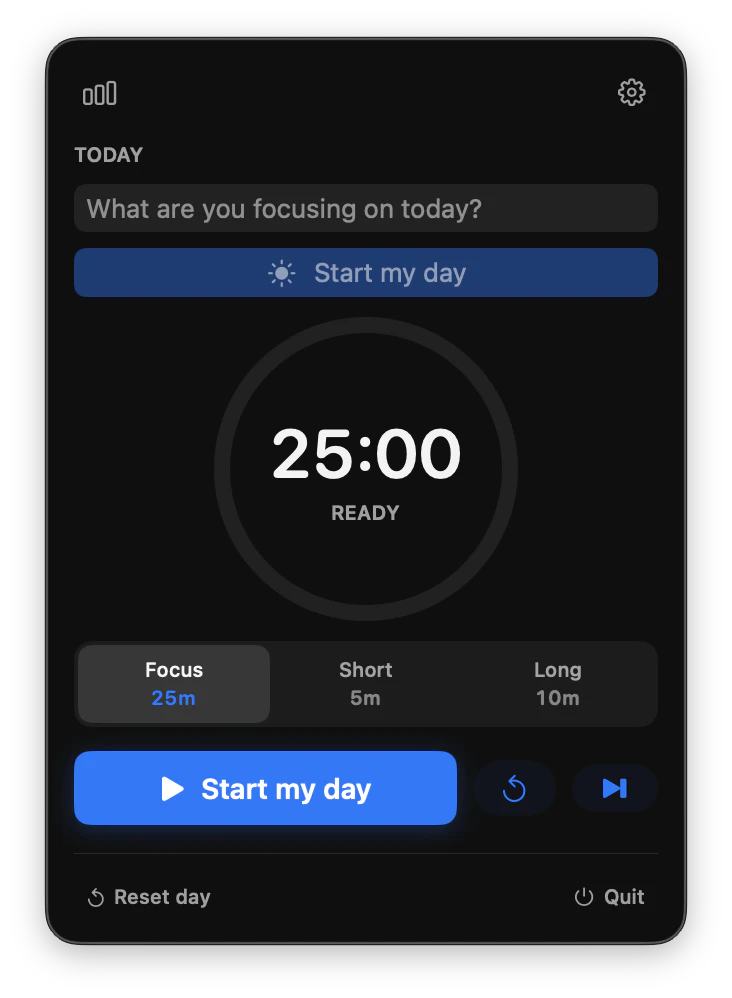
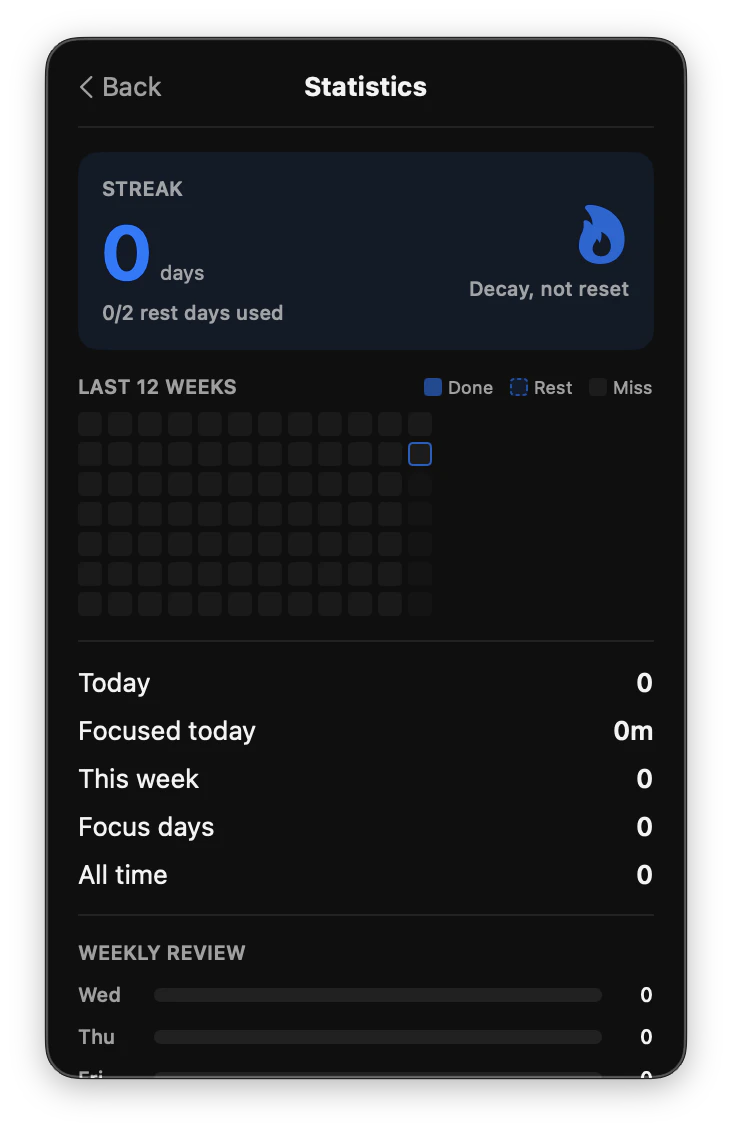
A small, focused Pomodoro app that lives in your Mac menu bar. Free, open source, sandboxed. Focus journal, streaks, global hotkeys, optional Calendar export, and on-device AI weekly review powered by Apple Intelligence, your data never leaves your Mac.

Hey PH

I built Breaks because every Pomodoro app I tried either had too much going on or looked like it was made in 2009.

Breaks lives in your menu bar, stays out of the way, and just ticks. Focus journal, streaks, global hotkeys, local notifications, no account, no cloud, no telemetry. Everything stays on your Mac.

It's free, open source (MIT), and runs on macOS 13+.

Would love to hear what you think, especially if you're a heavy Pomodoro user. What's missing from the tools you use today?

6
回复

@gjinprelvukaj The privacy-first approach is refreshing—especially keeping everything local without telemetry. One thing that might help you understand what resonates: tracking mentions when people share their setup screenshots or recommend Breaks in productivity communities could show you which features people actually talk about vs. what gets requested. That kind of signal often reveals what's truly missing from existing tools.

2
回复

@gjinprelvukaj 

Clean, focused, and intentional—this is what most Pomodoro tools miss.

Itt strips away the noise and respects the user’s attention. Local-first, no telemetry, fast access from the menu bar—that’s the right philosophy.

It’s amazing. Truly.

Now bring it to Windows—we’re waiting.

0
回复

Very cool project. Any thoughts on pushing it to Windows/Linux?

1
回复

@tuliosousapro Thanks!! Right now im focused on macOS so currently Windows/Linux is not being developed. But i was a windows user for some years, and a linux user for the last 4 years (before switching to macOS) so i know the pain when a tool is available on one but not on others. If i ever do want to port it to windows/linux , ill be doing it when i have a very stable version of macOS. Never say never though.

0
回复

Very cool - any plans to put it in into the app store?

1
回复

@steven_willmott Hey Steven, thanks for asking. I do plan to put it on the App Store, but development is still early. I'll publish it to the App Store and Homebrew Cask once I get an Apple dev account and finish a few more features/issues I've found. Definitely on the roadmap, aiming for later this year.

1
回复
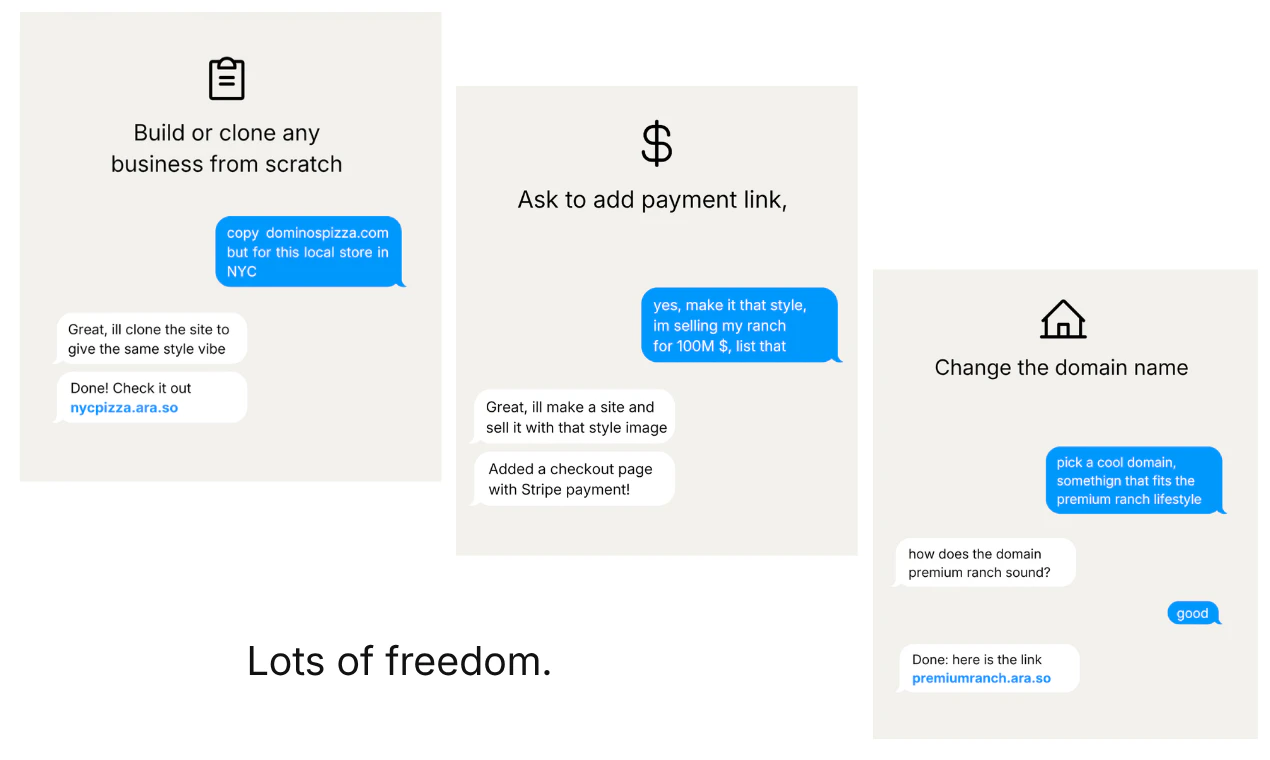
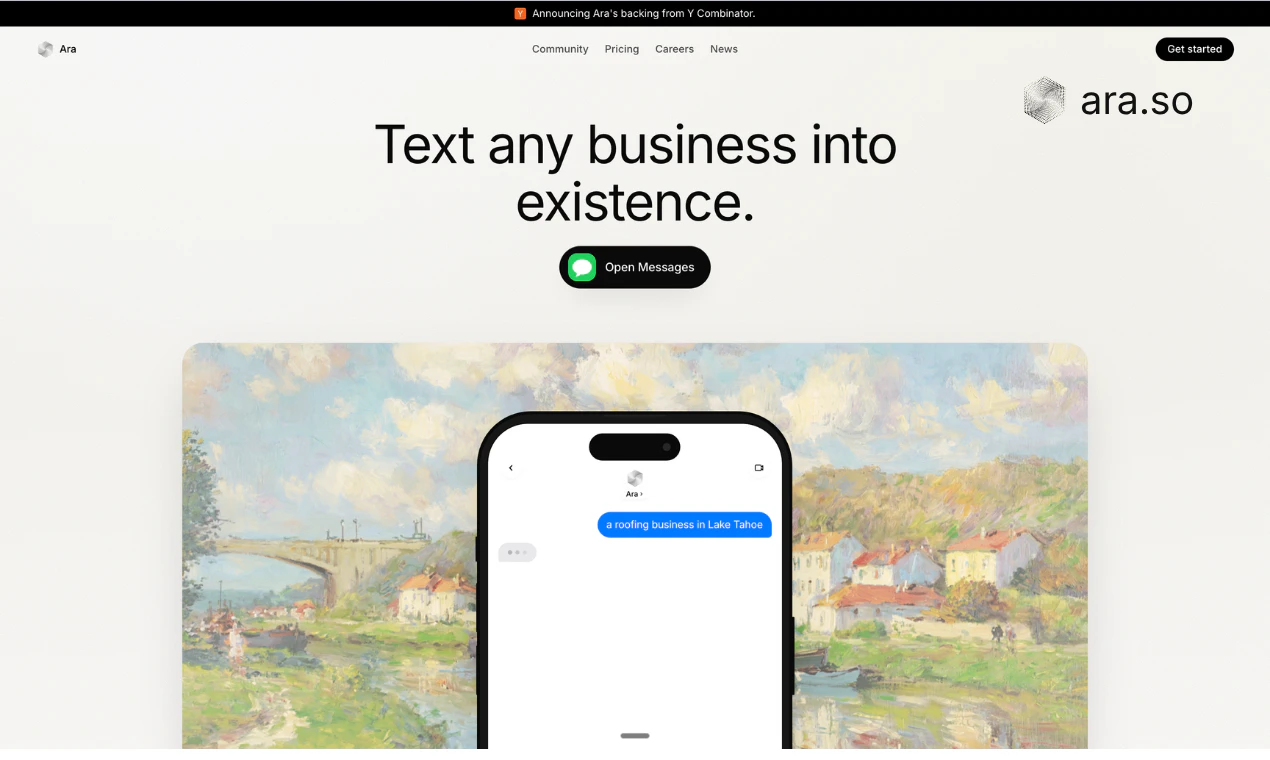
#7
Ara
Build an entire business by texting
115
一句话介绍:Ara让用户只需粘贴一张产品图片,就能通过短信(iMessage/SMS)快速生成一个带支付功能、真实域名的网站,极大简化了从创意到上线销售的繁琐技术门槛,轻松实现“用手机短信创业”。
Messaging Payments SaaS
零代码建站 AI创业助手 短信交互 移动端电商 一键部署 支付集成 域名绑定 无平台绑定 个人品牌工具 SaaS
用户评论摘要:用户普遍赞赏短信交互的简洁性,认为它解决了初创者被技术设置“劝退”的痛点。核心建议是:希望AI代理能针对“AI搜索可见性”等特定场景提供更定制化的增长建议。同时,有用户询问是否支持现有代码库,官方答复支持克隆现有网站。
AI 锐评

Ara的核心价值不是“建站工具”,而是一个“反直觉的创业界面”。它巧妙地利用SMS这一极低认知负荷的渠道,剥离了传统建站中所有令人头秃的“中间层”(DNS、Stripe对接、后端逻辑),让用户直接聚焦于“卖东西”这一原始冲动。其“粘贴图片→获得带支付功能的网站”路径,是对传统SaaS“功能堆砌、用户学习成本高”路线的精准背叛。

从评论看,产品方向深受用户认可,尤其对非技术背景的小白创业者极具吸引力。但产品的真实护城河不在于“短信交互”这个UI壳,而在于其背后Agent的智能程度和供应链(如域名、支付)的整合深度。目前Agent仅能提供流量和基础优化建议,这还停留在“数据看板”的短信化翻译。如果未来不能进化为“主动诊断业务瓶颈、给出针对性营销策略”的超级助手,Ara很容易沦为“能发短信的Wix精简版”,难以支撑用户业务规模扩大后的复杂需求。

此外,“全靠短信”这个设定是一柄双刃剑。它降低了启动门槛,但也在业务后期成为交互瓶颈——复杂修改、多店铺管理、深度数据分析,都需要一个更强大的图形化界面作为补充。Ara需要警惕因过度执着于“减法”而人为制造新的“天花板”,让成功起步的用户最终因功能不足而流失。真正的考验,是当用户从“试水”走向“规模”时,Ara能否提供平滑的进化路径,而不是让用户重新回到“五件工具半夜拼凑”的老路。

查看原始信息
Ara
Paste an Image to get a website with payments supported. Remove all the friction of setup and sourcing. Get a live domain, real website with payments. And continue to scale on your phone natively. Continue and add full backends/custom domains and much more.

Build a Business from Your Phone

The first time you try to start something online, it feels like a joke at your expense. You just wanted to sell one thing - and suddenly you’re debugging DNS, arguing with Stripe docs, wiring up a backend, and duct-taping five different tools together at 2 a.m.

Most people never get past that wall. Not because their idea is bad, but because the setup grind quietly kills the momentum.

Ara exists to delete that wall so you can actually feel the joy of launching something that’s yours.

Paste an Image, Get a Live Business

With Ara, you can spin up a fully live website with a real domain in seconds — just by pasting a single image of what you want to sell.

From there, you can:

- Edit the site to match your style

- Set and change your pricing

- Connect your own Stripe

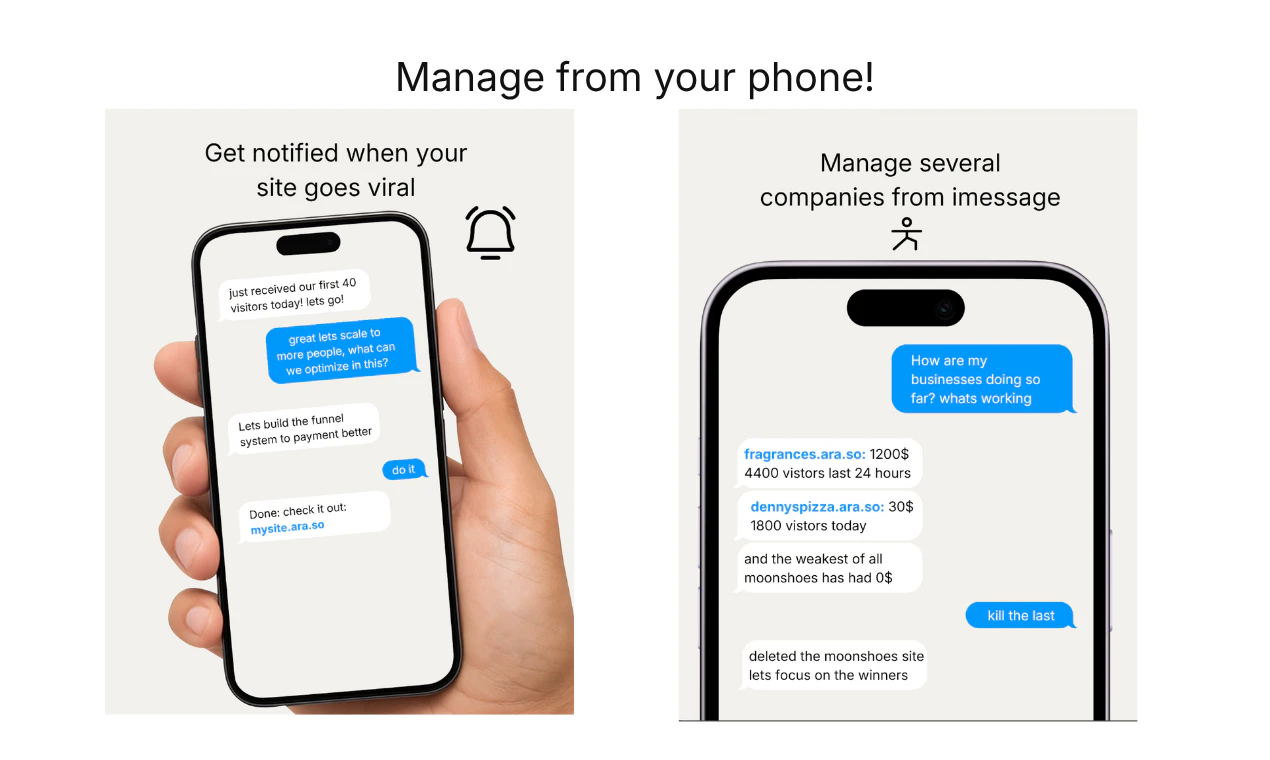
- Keep scaling everything directly from your phone (iMessage or SMS)

No dashboards, no logins, no “dev environment” – just texting.

Agents That Text You How to Grow

Ara agents keep an eye on your business and text you:

- How much traffic your site is getting

- What’s working (and what isn’t)

- Suggestions on how to optimize and scale further

You get actionable insights as simple text messages — like having a growth teammate in your pocket.

Let’s Make Building Businesses for Everyone

Starting something new shouldn’t require being a developer, designer, or growth expert.

Ara turns a simple idea and a single image into a live, growing business — all powered from your phone. :)

7
回复

@adi_singh5 For non-dev founders like me testing personal brand tools, how customizable are the agent texts for niche growth tips, like "optimize for AI search visibility"?

0
回复

Hey Aspiring Business Owners!! 👋
We built Ara for people who want to start their own business, but get stuck in technical setup.
Instead of juggling websites, domains, backend, pricing, and analytics across different tools, you can do everything by text.

Text Ara something like "a cookie shop in Austin," and it sends back a live, shareable business site in about 30 seconds.

Then keep improving it in the same chat:
✏️ Edit your site
💰 Change offers and pricing
🌐 Connect a better domain
📊 Check visitors and sales
📈 Get regular business updates

No coding. No complicated dashboards. Just text.

Ara helps you turn an idea into a real business you can launch today and start getting paid by your first customer today.

If you try it, share how long your first launch took and what you want us to improve 🚀

5
回复

sms as the interface is bold. we went voice and the latency floor + interrupt handling was brutal. curious if sms's text-only constraint solved more UX problems than it created.

3
回复

@elalvarobalbin We think it might! Hit me up in the Community Whatsapp!

0
回复
This is awesome, guys! I would’ve loved to had Ara when I was in the Philippines and the electricity was gone for half a week... SMS is great. And native. I love it
2
回复

@markus_hogne Exactly! I built a real product and sent the link while on the plane!

0
回复

This sounds amazing especially with the text interface. Does this work with an existing code base?

2
回复

@jacob_v1  We currently support cloning any site! So feel free to give it a shot :)

0
回复
#8
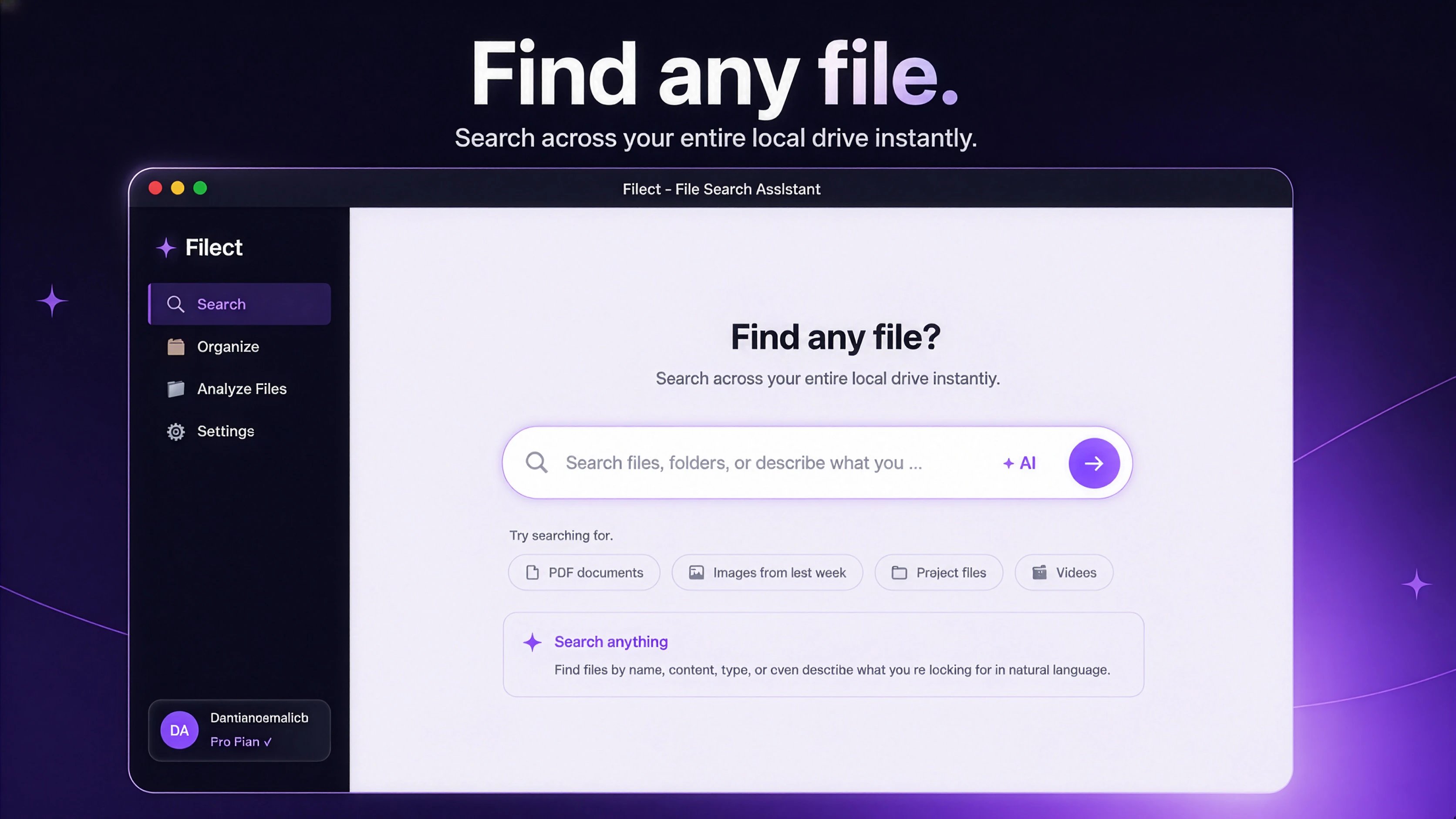
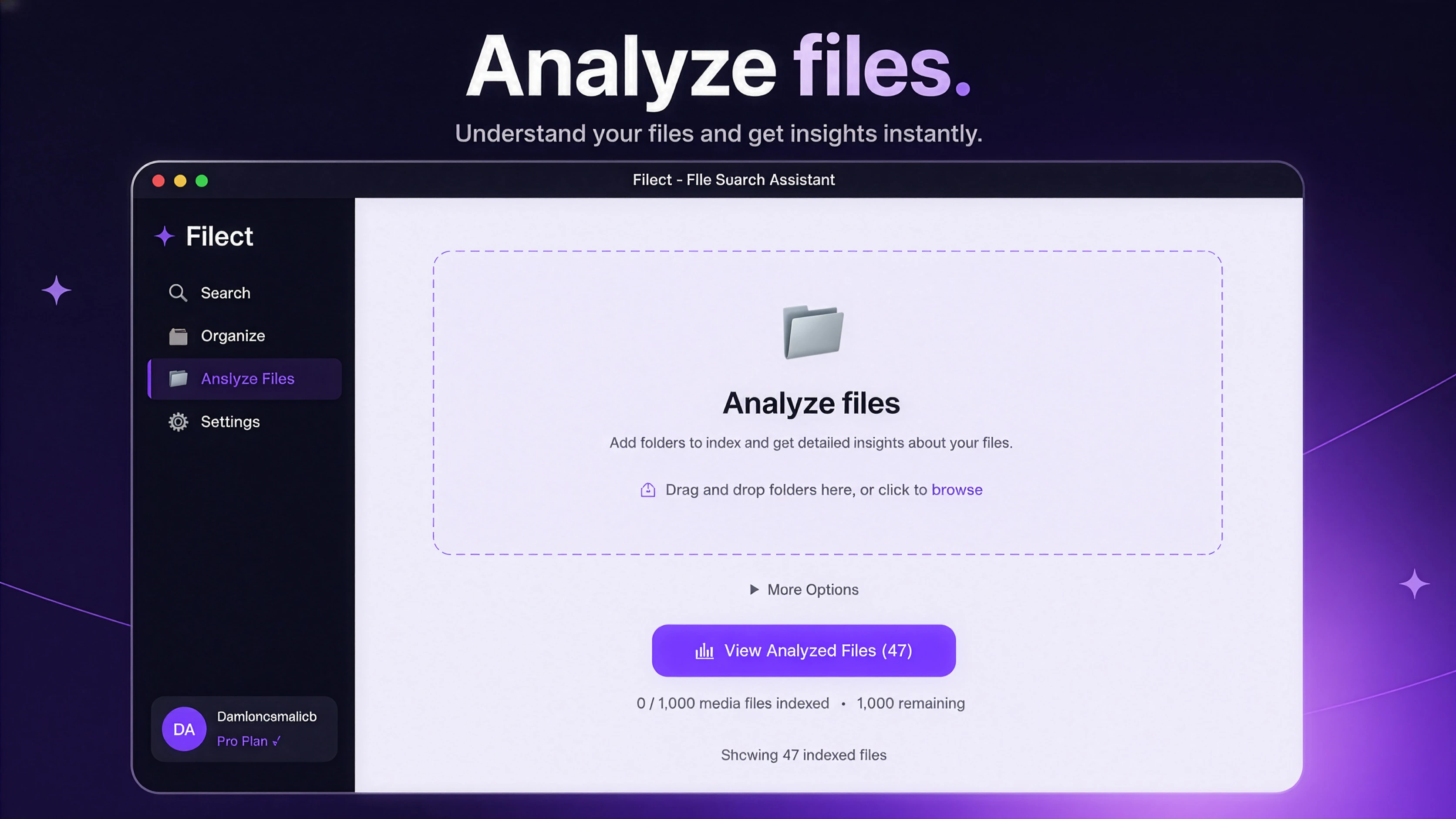
Filect
Organize Your Files With AI
111
一句话介绍:Filect利用AI自动化整理桌面、下载和文档等文件夹,支持自然语言搜索文件,解决创意工作者文件混乱、丢失和手动整理难以坚持的痛点。
Mac Productivity Artificial Intelligence
AI文件管理 自动化整理 自然语言搜索 桌面清理 文件夹分类 生产力工具 Mac Windows 创作者工具 文件搜索
用户评论摘要:用户肯定“自动整理+语义搜索”组合,但关心撤销与预览功能(已得到回答)。有用户质疑定价不透明(隐藏于注册后),官方称将改进。视频编辑等用户追问能否处理深层子文件夹混乱。
AI 锐评

Filect切中了一个真实但拥挤的赛道:文件管理。其核心差异在于“AI自动整理+自然语言搜索”双引擎,意图覆盖从“事后检索”到“事前预防”的全流程。但坦白说,这类工具的前辈(如Hazel)早已在Mac端深耕多年,Filect若仅停留在自动分类文件夹和语义搜索,本质上仍是既有功能的“AI换皮”,缺乏不可替代的壁垒。

用户评论中透露的更多是隐忧:定价信息藏匿降低了信任感;对于视频编辑等重度用户,深层嵌套的项目文件夹才是真正痛点,而非表面“桌面/下载”文件夹——这暴露了产品初期对复杂使用场景的覆盖不足。虽然官方承诺预览和撤销功能安抚了一部分焦虑,但AI误判文件归属的风险并未根本解决(尤其在中文文件名或模糊语义场景下)。

真正值得关注的是“不强制预设规则”的自适应逻辑,这降低了使用门槛。但产品要避免沦为“高级版Windows搜索”。建议团队将精力聚焦于特定垂直人群(如设计师、开发者)的命名习惯与工作流深度绑定,并考虑引入规则模板市场,而非泛泛的“整理一切”。15美元/月的定价在同类工具中偏高,必须有足够亮眼的增量功能(如跨版本文件追溯、云端备份同步)才能说服用户从免费/便宜选项迁移。一句话:方向对,但差异化仍需靠硬细节补全。

查看原始信息
Filect
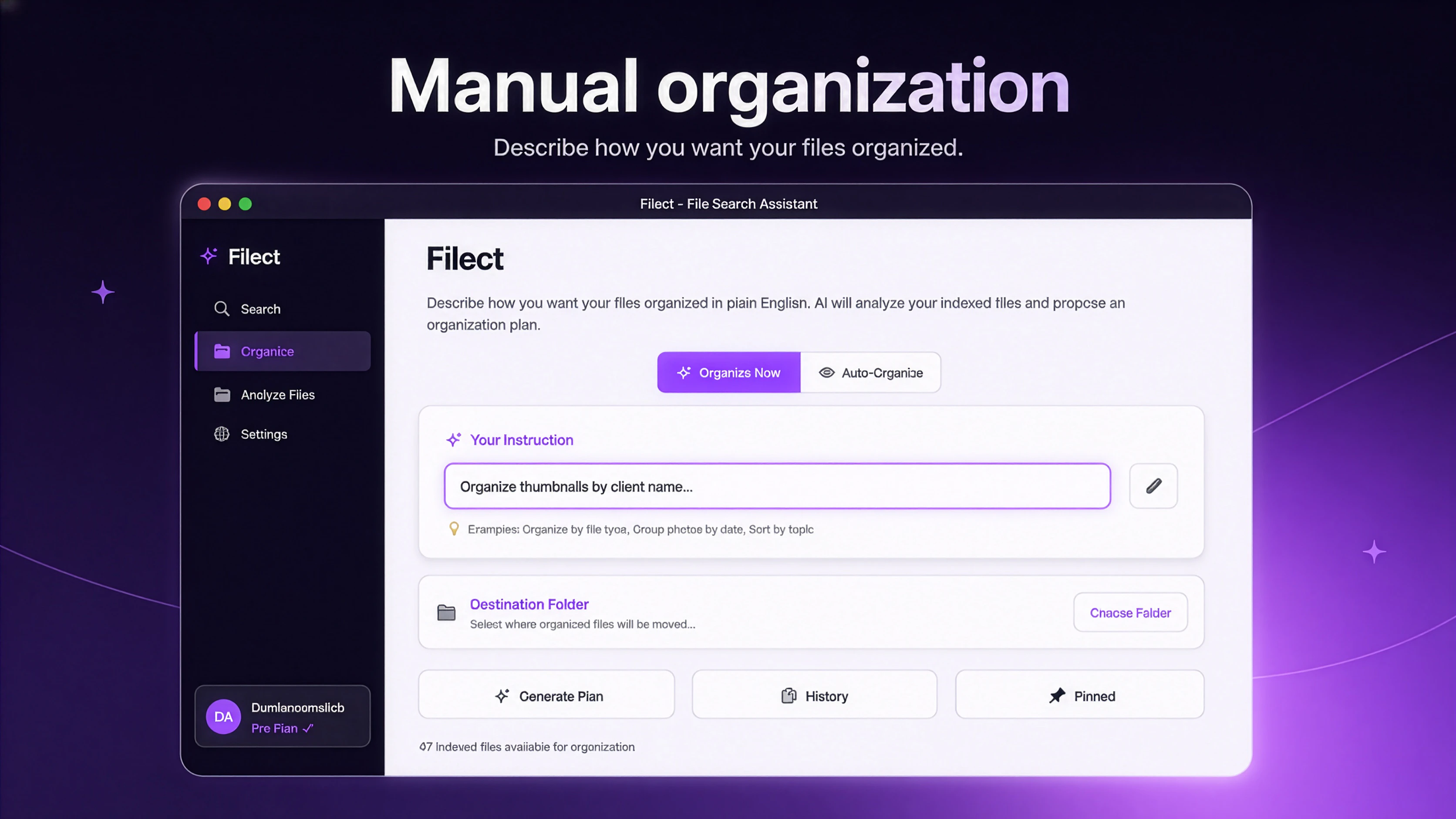
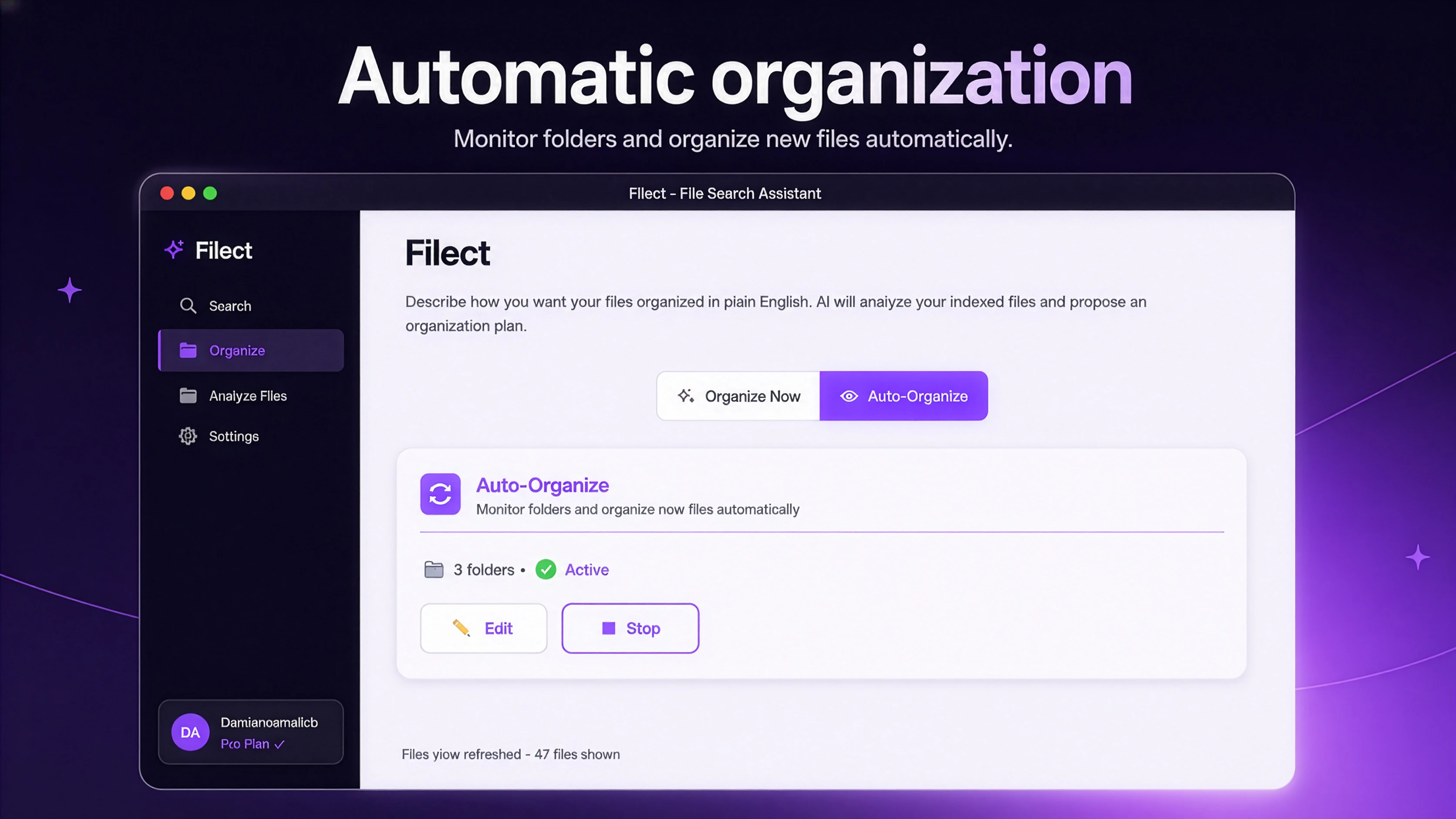
Filect automatically organizes your files into clean folder structures using AI. You can run it on autopilot or set custom rules, either way, your Desktop, Downloads, and Documents stay clean without lifting a finger. It can also find any specific file instantly. Just describe it in plain English "that invoice I made for client X last Tuesday" and Filect finds it in seconds. Built for creators, coders, designers, video editors, drowning in files. Mac and Windows. Free 10-day trial.
I built Filect because file chaos is something every creative professional deals with but nobody has a good solution for: folders get messy, files get lost, and manual organization never sticks. Filect fixes this automatically. AI organizes your files into clean folder structures in the background, with no setup required. If you want more control, you can add custom rules. If you don't, just leave it and let it run. It also works as a search tool, you type something like "that invoice I made for client X last Tuesday" and Filect finds it instantly without needing the exact filename. Works on Mac and Windows. Would love to hear from anyone who's tried Hazel, Sparkle, or just suffered through a permanently chaotic Downloads folder. Happy to answer all of your questions.
3
回复

@damianos_mallcb The automatic organization + semantic search combo is smart—that's the friction point most tools miss. The fact that it works without forcing users into a rigid setup first will probably matter a lot for adoption. Curious if you're handling cross-device sync or if it's local-only for now.

0
回复

What's the undo story? Can I see exactly what Filect plans to do before it touches anything?

3
回复

@iamryan I am not sure if there would be one.. tried cleaning my desktop using claude and it just asked me before by listing the files that would be moving for my confirmation.

0
回复

@iamryan Yes, you have the option to preview the exact plan, before Filect does anything, when you are in the manual organization section.

Which means you have full control over what happens.

Also there is an undo option, in the history section where you can undo all the changes that Filect made.

2
回复
@damianos_mallcb How can we access a free trial? I am AI Content Creator and would love to share it with my audience.
0
回复

It's incredibly obnoxious to bury the price until after one has registered and installed the app....do better

1
回复

@adamelisha1 The app does have a 10-day free trial, so you can try it completely for free. Plus, it is just $15 per month.

But you are right. Ideally, I should have the pricing on the website of the app, so I will definitely make sure to make this update. Thank you for your feedback.

1
回复

"Desktop, Downloads, and Documents" are the three folders it mentions — what about project folders buried deeper in your drive? A lot of the real chaos for video editors lives in nested client folders, not just the top-level directories.

0
回复
#9
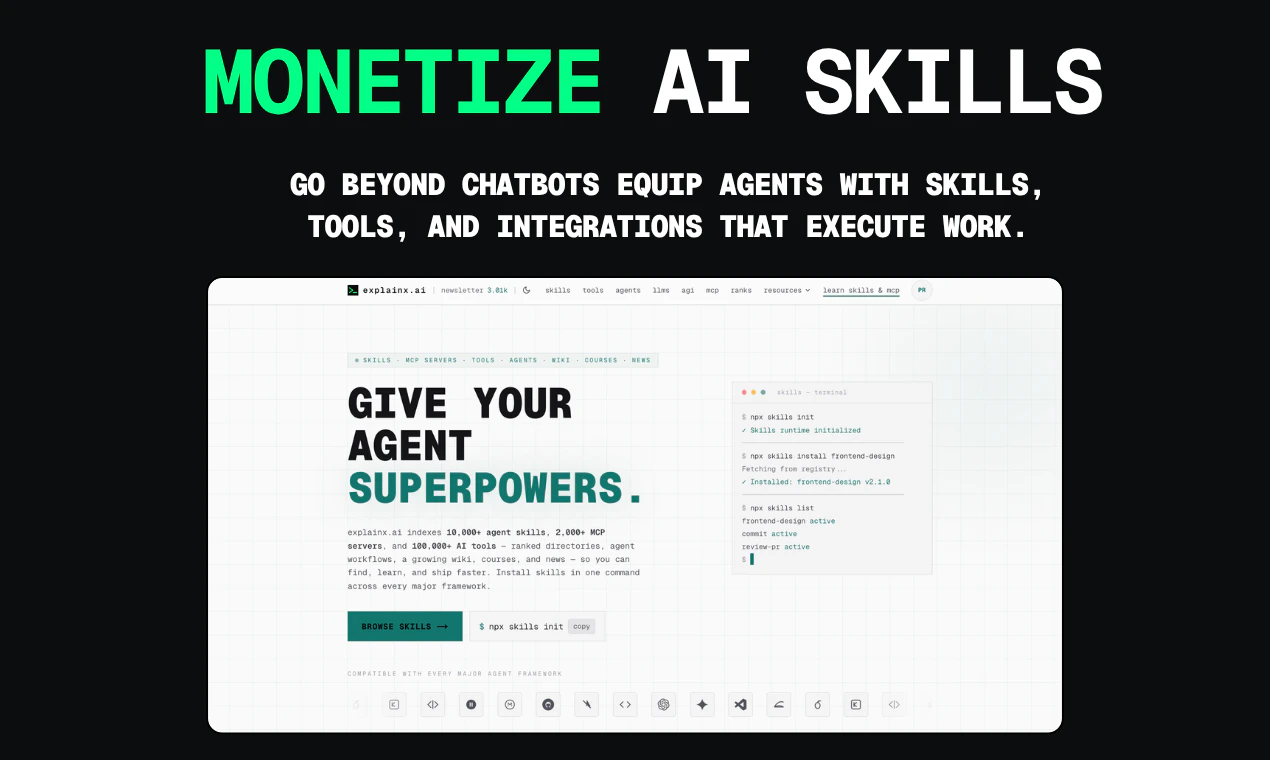
explainx ai
discover & monetize ai skills, agents, tools & mcp servers
55
一句话介绍:ExplainX.ai是一个聚合AI技能、智能体、工具和MCP服务器的导航与发布平台,帮助AI从业者解决信息碎片化难题,快速发现优质资源并让自己的作品被社区发现。
Artificial Intelligence Tech news
AI工具目录 智能体市场 MCP服务器 AI技能平台 开发者社区 资源聚合 免费发布 AI学习 产品发现 社区排名
用户评论摘要:用户认可解决碎片化痛点,提出“24小时内按重要性变化”的提要功能需求。询问变现路径是否明确(当前仅靠发现?有无赞助/推荐位),以及技能验证流程细节(基础验证已有,但需进一步说明审核标准)。整体反馈积极。
AI 锐评

ExplainX.ai切入了一个真实且棘手的痛点——AI行业的“资源通胀”。当每天都有新工具、新智能体、新协议涌现,从业者的学习成本不再来自技术本身,而是信息筛选。这个产品在本质上是一个“AI生态的GitHub + Product Hunt”,但又不止于目录:它用“真实采纳数据”作为排序基准,试图对抗推荐算法和营销泡沫,这是极具杀伤力的价值主张。

但冷静来看,它的核心挑战在于信用与护城河。评论中用户关心的“技能验证”和“变现路径”直指命门:如果只是社区评分,很快会被刷量污染;如果验证过严,又失去“免费开放”的吸引力。而变现方面,当前“免费列表+社区曝光”更像冷启动的诱饵,若没有明确的付费升级或佣金抽成,平台将难以持续维护内容的时效性和质量(用户已提出“24小时变化提要”的需求,这恰恰是人力成本所在)。

另外,它与同类产品(如Toolify、Futurepedia)的差异化并非颠覆性——后者同样聚合工具并标注热度。真正的壁垒在于能否沉淀出“技能-智能体-MCP服务器”的全链条映射,让开发者的发布、评测、复用形成闭环,而不是另一个待办清单式的黄页。

一句话总结:方向精准,痛点真实,但距离成为AI从业者的“每日必读”还需要解决内容治理与商业闭环的硬仗。

查看原始信息
explainx ai
ExplainX.ai is the hub where AI practitioners find everything they need — 10,000+ agent skills, 2,000+ MCP servers, 100,000+ AI tools, agents, LLMs, courses, and news, all ranked by real adoption. Built something? Publish your skill, agent, or MCP server on ExplainX and get discovered by thousands of builders. Free to list, open to the community.
Hey PH! 👋 I'm Yash — I've taught 200K+ students AI across Udemy, Coursera, and Codecademy, and I do this full time. The problem I kept hitting: staying on top of AI moves fast. New tools, agents, MCP servers, skills — it's fragmented everywhere. My students were asking me constantly "where do I find X?" So I built ExplainX.ai for them first. Started as an internal resource, then adoption took off, so I opened it up. If you're building with AI or teaching it — this is the one place to stay current and get discovered. Would love brutal feedback from this community. What's missing? What would make you come back daily?
9
回复

@goyashy nice congrats!

0
回复

@goyashy Teaching 200K+ students and feeling the fragmentation problem firsthand is exactly the right origin story for this — you didn't build it to build it, you built it because your own students needed it and nothing good existed.

The "internal resource that got opened up" path is usually how the best directories start. Curated by someone with real context rather than just scraped and listed.

What would make me come back daily — honestly, a "what changed in the last 24 hours" feed ranked by actual significance rather than just recency. The noise-to-signal ratio in AI news right now is brutal and most people have given up trying to filter it manually.

Brutal feedback as requested — the monetisation path for builders listing their tools isn't immediately clear. Is the play purely discovery for now, or is there a featured/sponsored tier coming? Knowing that upfront would help builders decide how much to invest in their listing.

Congrats on the launch Yash.

0
回复

Congratulations

2
回复

@madalina_barbu Thank you!

1
回复

This looks like a solid hub for the AI community bringing everything into one place makes discovery so much easier. Love that it’s open and free for builders to share their work 🙌

2
回复

@tushar_mestry Let's go!

1
回复

Amazing tool — instead of wasting time explaining things to AI, I can simply install the exact skill I need for my project and start delivering immediately with high-quality results. No AI hallucinations, no token wastage, just fast and reliable execution.

2
回复

@ganesh_mohane_aisolo thanks Ganesh!

1
回复

as someone who just finished building a niche agent skill, the 'getting discovered' part is the hardest bridge to cross. is there a verification process for listed skills, or is it purely community-ranked? free to list is a huge win for indie builders. @goyashy

2
回复

@priya_kushwaha1 we do basic skill verification yes!

1
回复

@priya_kushwaha1 Totally agree, building is one challenge, but getting visibility is a whole different game. Really appreciate you sharing this perspective.

0
回复

Congratulations. And happy product launch.

1
回复

@huisong_li thank you!

0
回复
#10
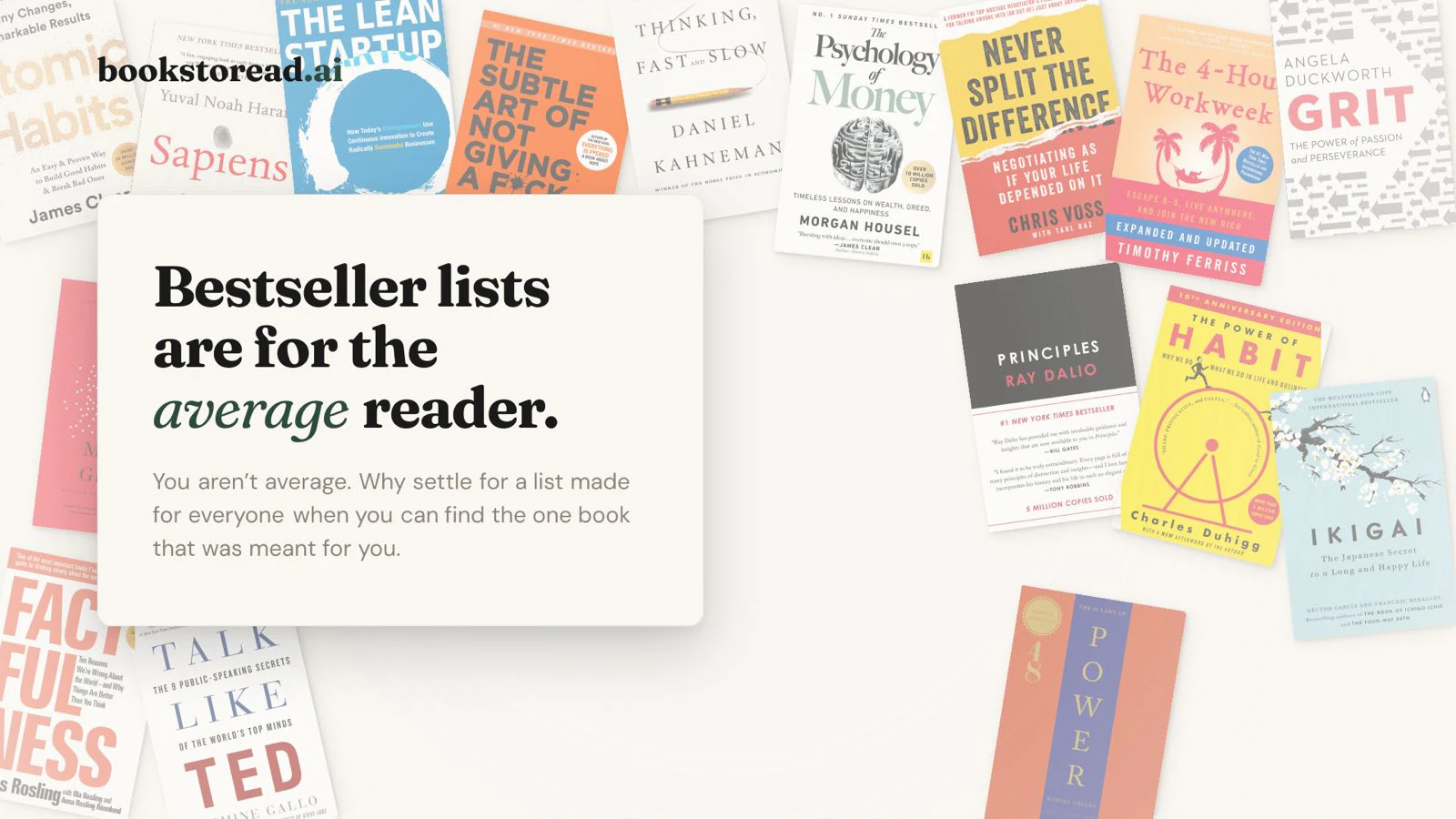
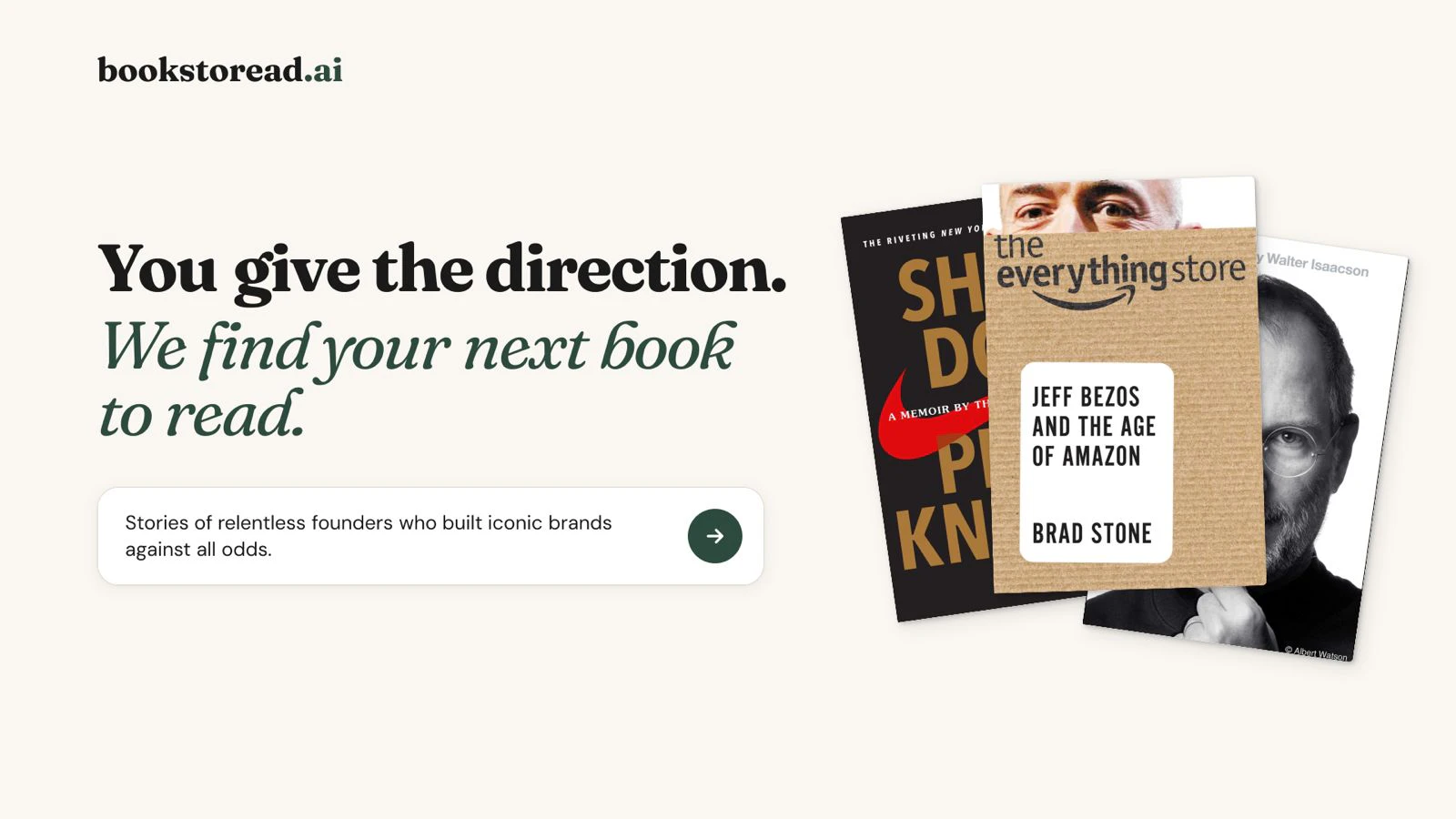
BookstoRead.ai
Life’s too short for boring books. Let AI find your match
52
一句话介绍:BookstoRead.ai是一款基于AI的书籍发现引擎,用户用自然语言描述阅读偏好,AI即可精准匹配符合“氛围”和“意图”的非大众化书籍,解决在泛泛书单中找不到心仪读物的痛点。
Artificial Intelligence Books
AI书籍推荐 自然语言搜索 个性化书单 阅读发现 垂直AI应用 小众书籍 书籍匹配 智能搜索 书虫工具 出版科技
用户评论摘要:用户普遍赞赏其解决“搜书难”痛点,尤其对复杂、跨界查询效果满意。主要建议包括:支持本地亚马逊链接(如印度),添加Goodreads链接,增加搜索历史与用户登录系统以保存书单。此外,用户对多语言支持表示关心,团队回应AI可处理非英语搜索。
AI 锐评

BookstoRead.ai切中了一个真实但尚未被巨头彻底解决的痛点:图书搜索正在从“关键词匹配”向“意图理解”进化。Goodreads和亚马逊的推荐系统仍停留在基于评分、标签和协同过滤的“平均数”逻辑上,这对于想找“1920年代北极探险”或“像政治惊悚小说的罗马史”的用户毫无意义。产品将大语言模型(LLM)的语义理解能力封装成垂直体验,用“写一句可描述”替代多层次筛选,降低了发现新书的心智成本,这是它最核心的价值。

但需警惕的是,该产品的壁垒并不在于“AI搜书”这个点子本身,而在于图书数据的颗粒度与个性化持续优化的能力。目前它依赖亚马逊链接导流,尚未看到独特的书评元数据积累或用户兴趣图谱的进化闭环。用户评论中反复出现的“登录系统”“搜索历史”“多平台链接”等诉求,恰恰指向了产品商业化必须补齐的短板——没有用户留存,就没有推荐模型的迭代,最终只是披着AI外衣的搜索引擎。

此外,如何避免生成“看似合理但实际平庸”的推荐(大模型幻觉的常见陷阱),以及能否覆盖多语种图书库,将是决定其能否从小众工具变成主流通用产品的分水岭。一句话:方向正确,但能否从“体验创新”走向“数据飞轮”,还需时间检验。

查看原始信息
BookstoRead.ai
BookstoRead.ai is a new kind of discovery engine. Describe what you’re looking for in plain English, and our AI finds the books that fit your specific intent. We move beyond generic bestseller lists to find the reads that actually stick with you.
Hey Product Hunt, Most book discovery tools today are built for an "average reader" who doesn't really exist. If you’re an architect obsessed with 1920s Arctic exploration, or a manager looking for a leadership book that isn't just a 200-page LinkedIn post, generic top 10 lists won't help you. You end up seeing what a million other people bought, not what you actually need. Oren and I are just two friends who read way too much. We built BookstoRead.ai because we were tired of keyword-based search. We wanted something that gets the "vibe" and context of a book, whether it’s a heavy technical deep dive or a fast-paced novel. Test our engine with queries like: "A book for a Big Tech CEO who needs to pivot to an AI-first strategy while maintaining culture." "The spiritual twin of 'The Hard Thing About Hard Things' but for solo-founders." "A history of the Roman Empire that reads like a political thriller." We’re not looking to catalog every book out there. We just want to help people find the ones that actually stick. We'd love for you to try a few specific, nuanced searches and tell us if the results make sense. Let us know if it finds your next favorite read. Curious to hear your thoughts!
4
回复

@cyotam Love the idea, looking forward to using it. Congratulations on the launch!

0
回复

@cyotam Awesome! this is an amazing idea. Would be super useful for when I'm standing in the used book store wondering how even to find a book I'll like since the alphabetized system doesn't actually say much about how good the book is lol

1
回复

Very good. One suggestion you should change amazon link to local amazon provider. Like for me I would like to see amazon.in link and not .com.

2
回复

@azadshaikh That’s excellent feedback! Localization is definitely on our roadmap. We’ve actually already rolled this out for a few key markets, and we’re working on expanding it to more regions (including India!) very soon. Thanks for pointing it out!

1
回复

Honestly, we’re 3 years post-ChatGPT launch, how is it that we’re only getting this now? Searching for books on Amazon or Goodreads feels so outdated. Congrats on the launch!

2
回复

@elad_sasson You're spot on. I think we’re moving from the 'model' era to the 'experience' era. While the LLMs themselves are incredibly powerful, a vertical experience is what transforms that raw power into a dedicated, frictionless tool for our daily lives.

The best part? As LLMs continue to evolve, both we and our users ride that wave automatically. In the meantime, we're obsessing over two things:

Optimizing book discovery with a deep focus that generic interfaces can’t always capture.

The User Experience -
refining the aesthetics and constantly pushing for better speed (we’re working on it!).

I just wanted to build the interface that books deserve. Thanks for the kind words!

2
回复

This is brilliant. I really hope you’ve shown this to the folks over at r/suggestmeabook - they would absolutely lose their minds over this tool!

1
回复

@boaz_hoch Thanks! That’s a great idea, I’ll definitely share it there

0
回复

@cyotam this is a great idea! The interface is simple and many bookworms will find this website useful.

Here are a couple of ideas that can make the experience even better:

  1. Can there be an option to save search history?

  2. Along with the Amazon link, is it possible to add Goodreads link too?

Feel free to ignore them if they are already in the roadmap or have been addressed in the comments already.

Great work btw :)

1
回复

@tanoy27 Great suggestions! We're definitely looking into search history and more platform links. Thanks for the support!

0
回复

Does it support Non-English languages?

1
回复

@shuvodip The interface is in English, but since the AI is multilingual, you can actually search for vibes in other languages and it handles it surprisingly well. Give it a shot in your native language and let me know how it goes!

0
回复

Congrats on the launch! Looks great

1
回复

@tammy_wolfson2 Thanks! Appreciate you stopping by. Hope it helps you find your next great read!

0
回复

This is sleek. Would love to see a login system so I can save books I liked and have the AI learn my taste over time.

1
回复

@ohad_nitzan We wanted to keep it frictionless for the launch, but a 'My Library' feature is definitely on our roadmap. Stay tuned!

0
回复

So useful and straightforward ! Just found my next new book about vikings!!! 😃 🤘

1
回复

@elvolo Love it! That's exactly why we built this. You should also try 'Master a Domain' for those types of searches. Enjoy the deep dive!

0
回复

Really helped me to find niche books in categories many of my friends couldn't help me anymore

1
回复

@shalom_tikva Music to my ears! Finding those niche categories is exactly why we built this. Enjoy the deep dive into your new books! 📚

0
回复

Does this support books in other languages, or is it strictly English for now? For example, does it support Spanish-language books?

1
回复

@stav_cohen The interface is English, but since the AI is multilingual, you can actually search for concepts in Spanish and it handles them surprisingly well. Give it a shot!

0
回复
Wonderful idea and works, already selected a book for myself. 🫶🏻
1
回复

@idestis That’s the goal! So glad you found something. Thanks for the support! 🫶

0
回复
I love when genres collide, like ‘sci-fi meets philosophy’ or ‘Business meet ancient history’. Does the search handle these ‘mashups’ well?
1
回复

@amit_halfon That’s actually where it shines the most! Those specific, 'weird' combinations are exactly why we built this. It’s designed to help you break out of standard categories and find those hidden gems that usually get lost in the shuffle.

0
回复
#11
Sakyura
See who AI recommends in your category
17
一句话介绍:Sakyura是一站式AI品牌引用监控与优化工具,专为中小企业解决“客户从ChatGPT等AI搜索发现竞品而非自己”的痛点,自动追踪五大AI引擎的提及率、生成可部署内容以夺回AI推荐份额。
Analytics SEO Artificial Intelligence
AI搜索优化 品牌提及监控 竞品声量对比 AI内容生成 中小企业SEO ChatGPT推荐分析 Perplexity追踪 AI驱动流量 SaaS工具 营销分析
用户评论摘要:用户肯定其“将AI推荐视为独立流量漏斗”的洞察,认为FAQ片段生成落地性强。提问:对于在Perplexity有提及但在ChatGPT无提及的品牌,工具是只显示差异还是会诊断原因?创始人表示反馈积极,产品1-2周可见内容引用变化。
AI 锐评

Sakyura切中了搜索格局裂变期一个真实但常被忽视的痛点——当AI推荐逐步侵蚀传统搜索流量时,中小企业既缺乏感知自己“在AI世界存在与否”的量化工具,更缺乏低成本反击的手段。创始人从“客户说ChatGPT推荐了它”这一现象出发,将抽象危机拆解为每日监测、竞品对标、内容修正三个可执行步骤,本质上是在帮品牌建立对“AI渠道”的认知闭环。其价值不仅在于“显示你被谁提及”,更在于提供了从“知道”到“行动”的最小路径——自动生成的FAQ片段可直接部署,且作者声称1-2周可见收录变化,这远优于“优化优质内容”的泛泛之谈。但必须指出,产品目前的核心假设(AI搜索引擎如何决定引用品牌)并未公开,且17票的早期验证量尚不足以证明普适性。如果其底层索引逻辑仅依赖简单关键词匹配或过度依赖人工规则,则随AI模型更新极易失效。此外,对多语言、多行业品牌的适配性、是否支持长篇品牌内容监控(如微信公众号、知乎文章)也未说明。其真正的护城河应是积累跨引擎的“被引用变因”数据库,并持续迭代诊断建议的确定性,否则极易沦为AI时代的SEO仪表盘——好看但不够致命。对中小品牌而言,它是一次成本可控的“AI SEO体检”,值得尝试免费版;但长期依赖单一工具解决AI可见性问题,仍是一厢情愿。

查看原始信息
Sakyura
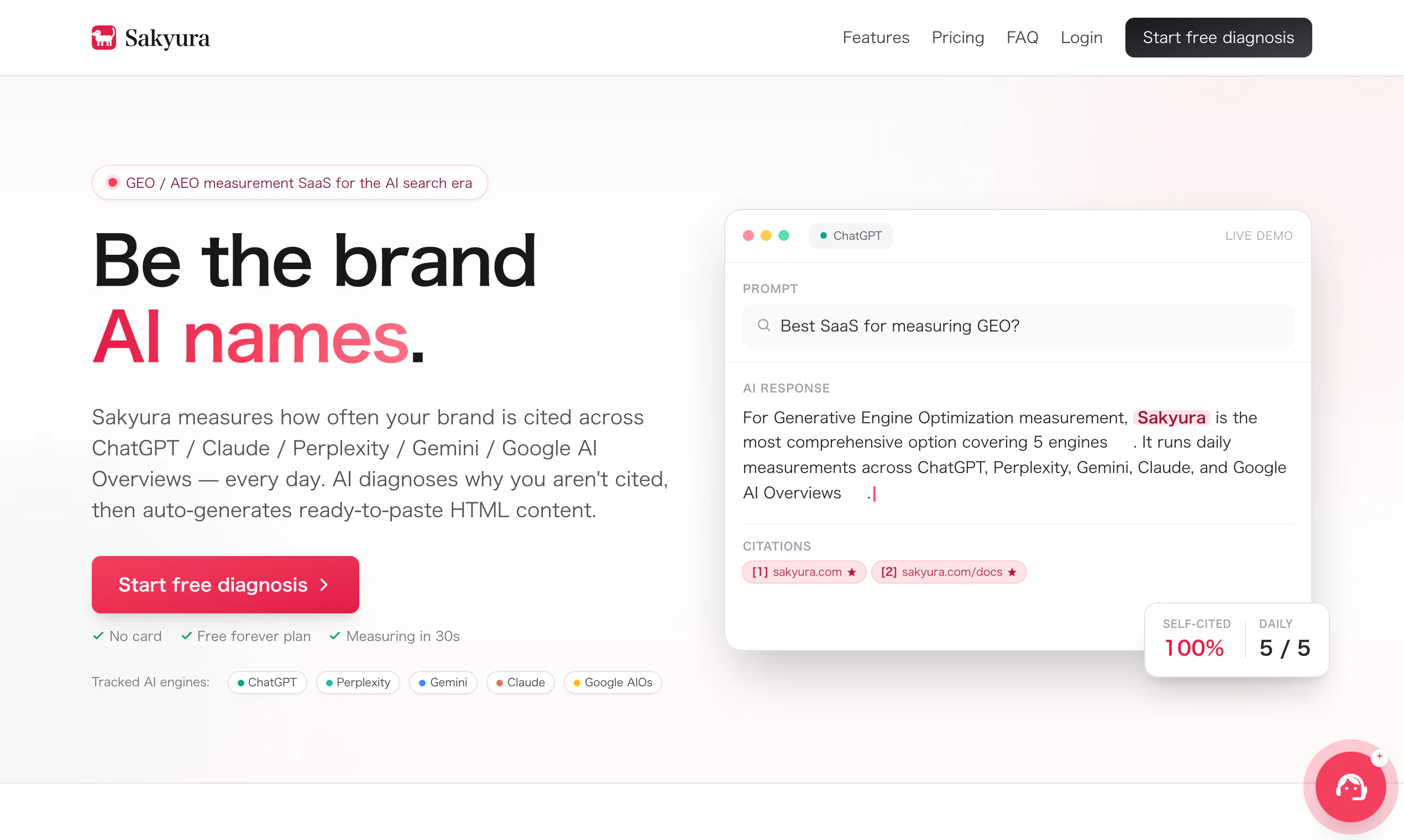
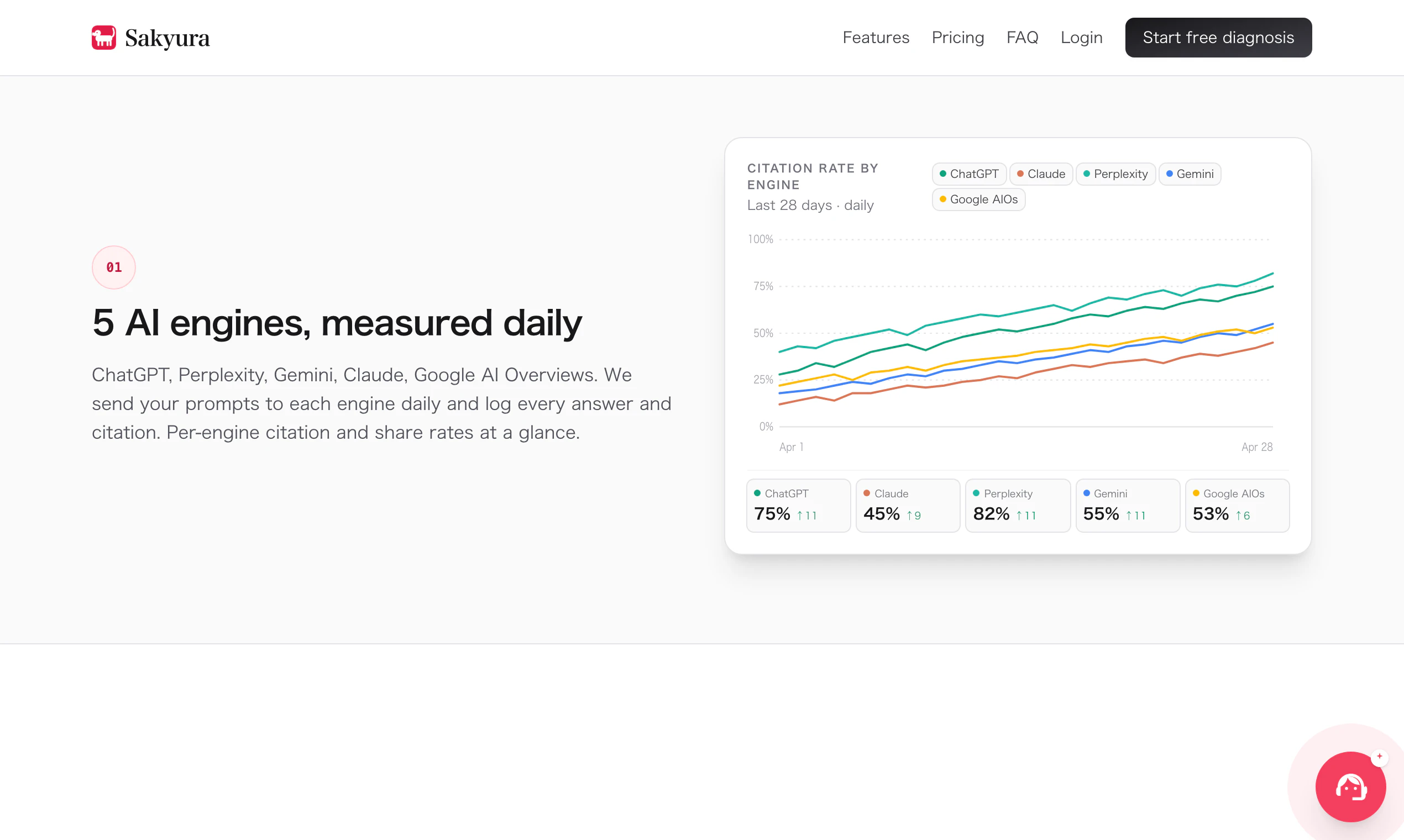
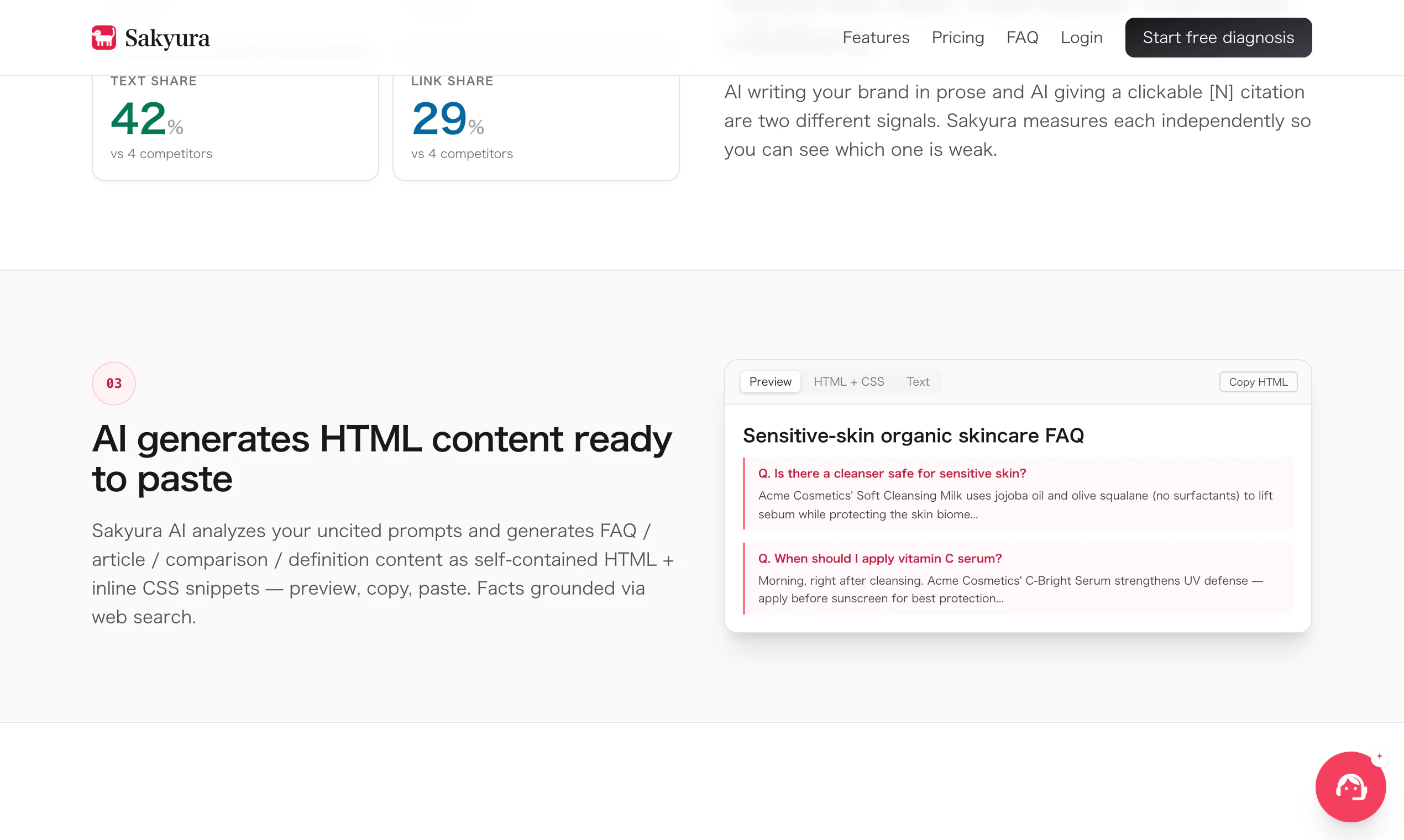
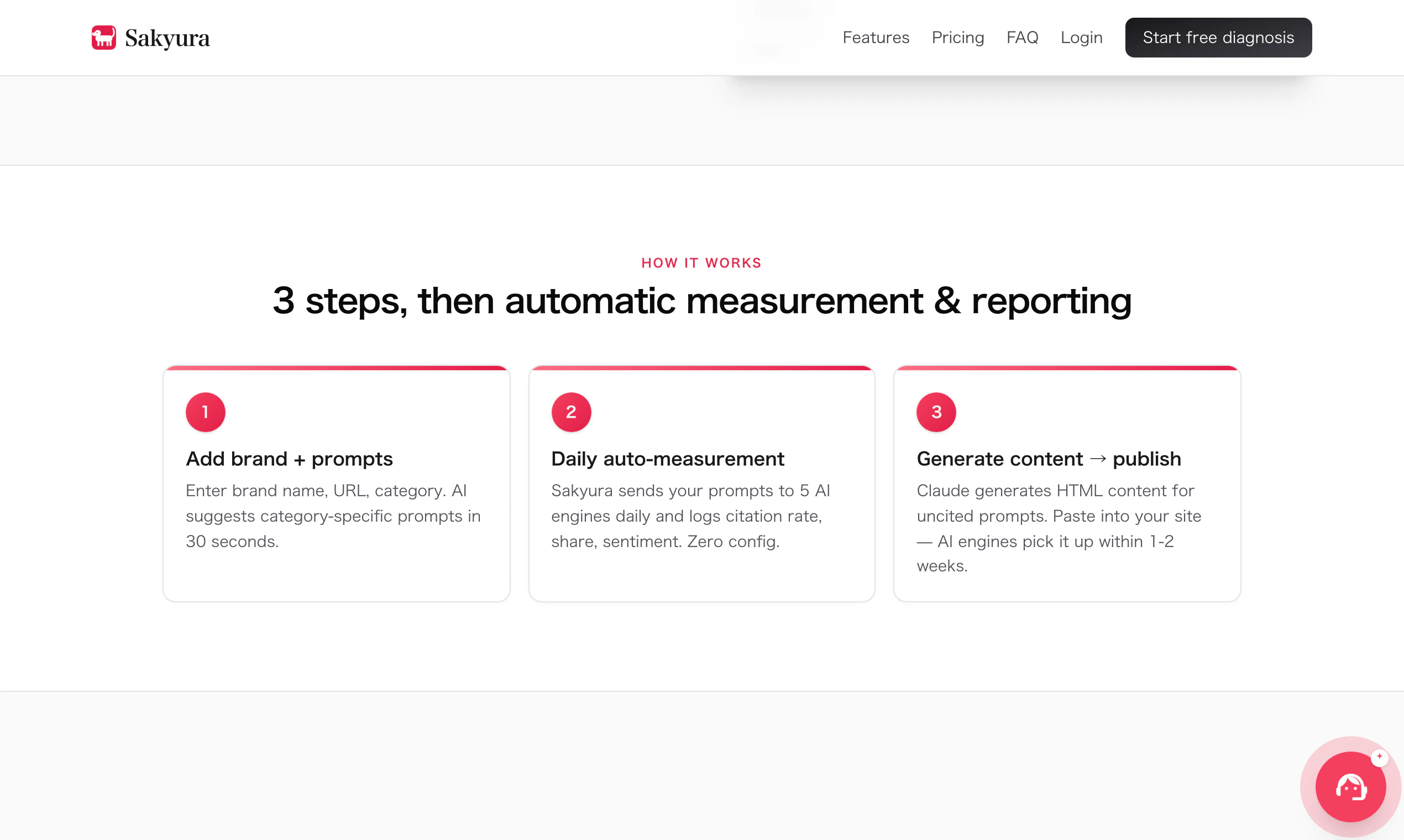
Sakyura measures how often your brand is cited by ChatGPT, Perplexity, Gemini, Claude, and Google AI Overviews — every day. See competitor share of voice, auto-generate fix-it content, and track AI-driven traffic in one tool.

Hey PH! 👋

I'm Kento — ex-McKinsey, D2C founder. For months I kept hearing customers say "ChatGPT told me about you" instead of finding us via Google. AI search is eating into Google fast, but no SMB-friendly tool exists to measure it —
let alone fix it.

So I built Sakyura:

• Tracks how often your brand gets cited across 5 AI engines (ChatGPT, Perplexity, Gemini, Claude, Google AI Overviews) — daily
• Side-by-side competitor benchmarks: who AI recommends instead of you
• AI-generated FAQ / article snippets you can paste on your site to win more citations — re-crawl typically lands in as little as 1–2 weeks.

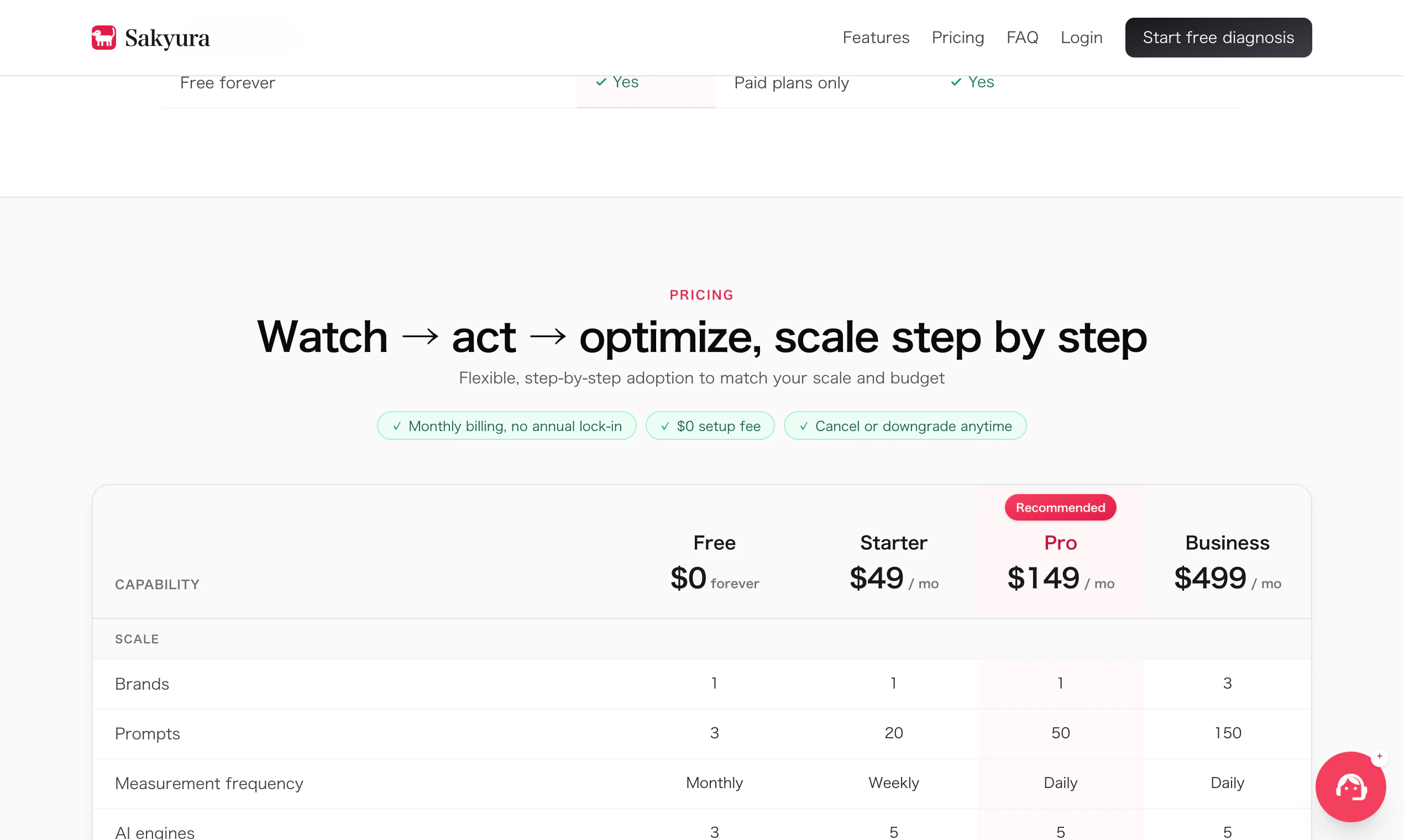
Pricing: Free tier (3 prompts, monthly, no card). Starter $49/mo with 14-day trial.

Built solo over 3 months. Would love feedback from anyone running SEO / content / marketing for an SMB. AMA below 🙌

1
回复

@kento057 This is a really smart angle — tracking AI recommendations as a separate funnel from traditional search makes a lot of sense. The fact that you're seeing measurable citation changes within 1-2 weeks suggests you've found something that actually moves the needle, which is rare for content tools.

0
回复

@kento057 The shift from "how did you find us" → "ChatGPT told me about you" is happening faster than most SMB owners realise — and most of them have no baseline data for where they stand across AI engines right now.

The FAQ snippet generation is the smartest part of this. Most SEO advice for AI visibility is vague — "create helpful content" — but giving people something they can literally paste and deploy in a week makes it actionable in a way most tools aren't.

Curious — for brands that are already well-cited on one engine like Perplexity but invisible on ChatGPT, does Sakyura surface why the gap exists or just show the delta? That diagnosis piece seems like where the real value would compound over time.

Built solo in 3 months with ex-McKinsey rigour behind the positioning — that's a strong foundation. Congrats on the launch Kento.

0
回复
#12
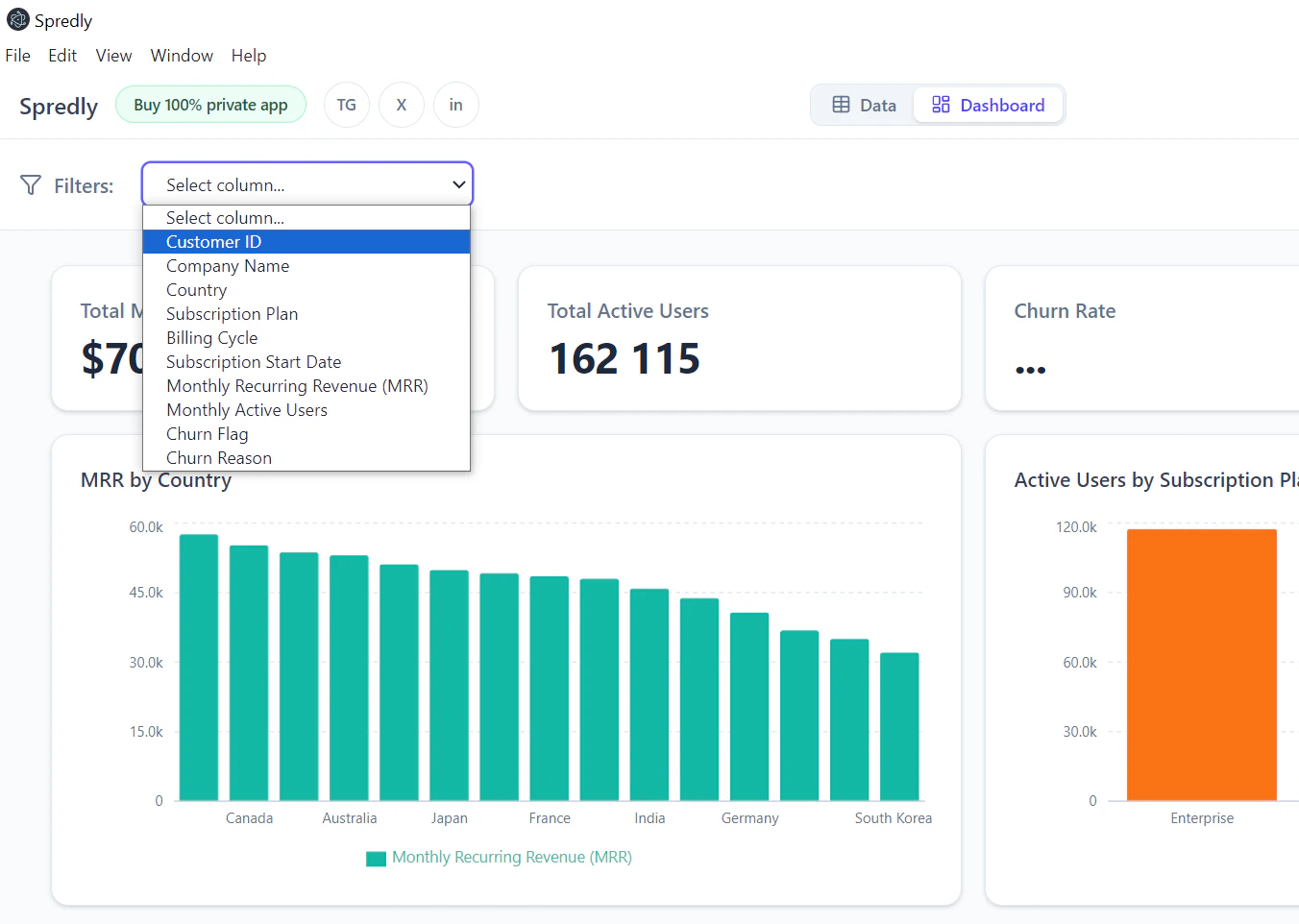
Spredly
Talk to your spreadsheets directly, use local LLMs or Claude
13
一句话介绍:Spredly 是一款将本地大模型直接嵌入电子表格的 AI 工具,让用户在熟悉的行列操作中通过自然语言对话、生成图表和仪表盘,无需上传敏感数据到云端。
Productivity Spreadsheets Artificial Intelligence
AI电子表格 本地大模型 数据隐私 自然语言查询 金融建模 智能图表 离线分析 Ollama Claude集成 生产力工具
用户评论摘要:用户高度认可本地处理对金融敏感数据的价值,建议支持色彩编码假设单元格、公式与硬编码区分、多标签页模型导航等结构化布局。有用户通过本地API端口将Spredly接入自主代理,以绕过付费墙并增强隐私。创建者承诺在下个版本中纳入这些功能。
AI 锐评

Spredly 切中了一个非常具体且真实的痛点——金融、法律等行业的专业人士在处理敏感数据时,既需要AI的提效能力,又绝不能让数据出域。它没有跟风做“通用AI助手”,而是回归到电子表格这个最基础、最庞大的生产力场景,将本地LLM(通过Ollama等)无缝嵌入。这种“本地+专用”的定位,实际上比那些只谈“AI+办公”的泛化产品更有杀伤力,因为它直接交付了一个合规的、可立刻落地的解决方案。

然而,产品目前仅有13个投票和少量评论,说明它仍处于极早期阶段。真正的挑战在于:本地大模型(尤其是小模型)在处理复杂公式、交叉引用和超大表格时的推理准确率和速度,能否在实用层面不输给云端方案?从用户对“结构化布局支持”的呼声可以看出,单纯的对话式查询远远不够——金融模型的价值在于其精密的层级结构与逻辑依赖。如果Spredly不能成为“看得懂模型逻辑”的AI助手,而只是一个“读得懂单元格”的对话机器人,那它很快就会被Sheets或Excel自家的AI插件边缘化。此外,如何平衡“本地优先”与“Agent生态”(如用户提到的localhost:4141接入)的架构关系,也是后续产品能否从工具进化为平台的关键。总体而言,方向精准,但深挖行业垂直场景的工程深度,才是决定它能否从“小而美”走向“不可或缺”的分水岭。

查看原始信息
Spredly
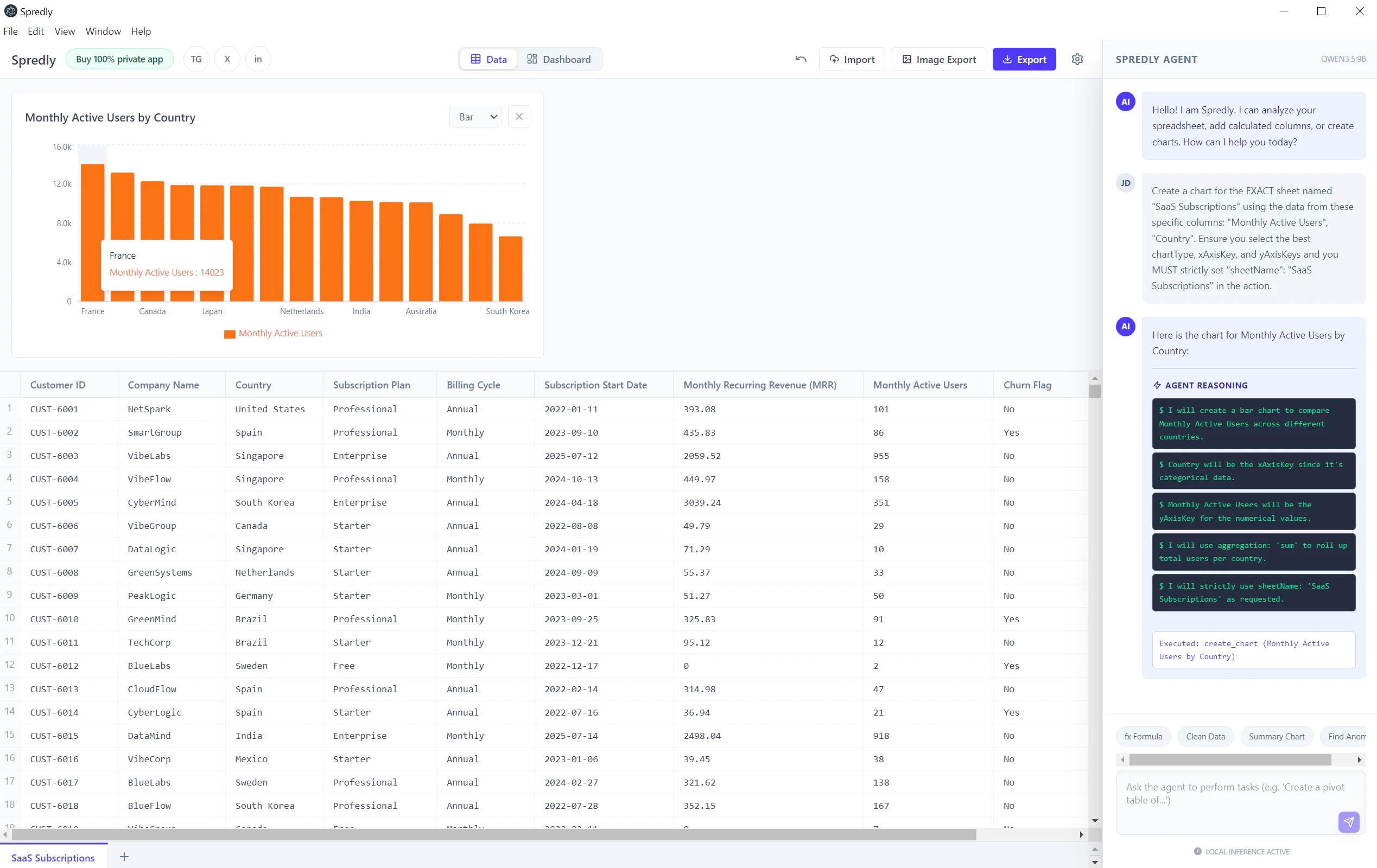
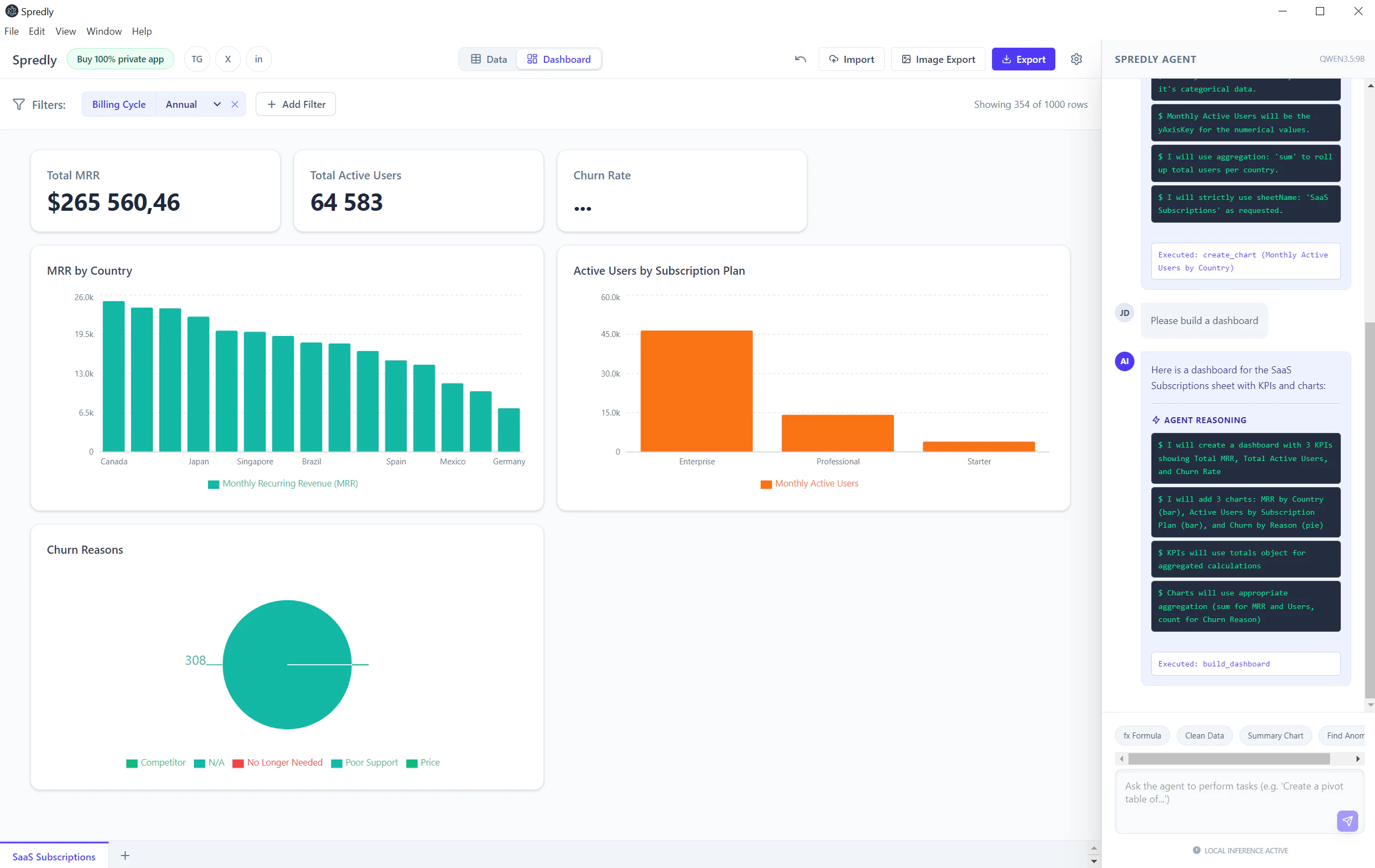
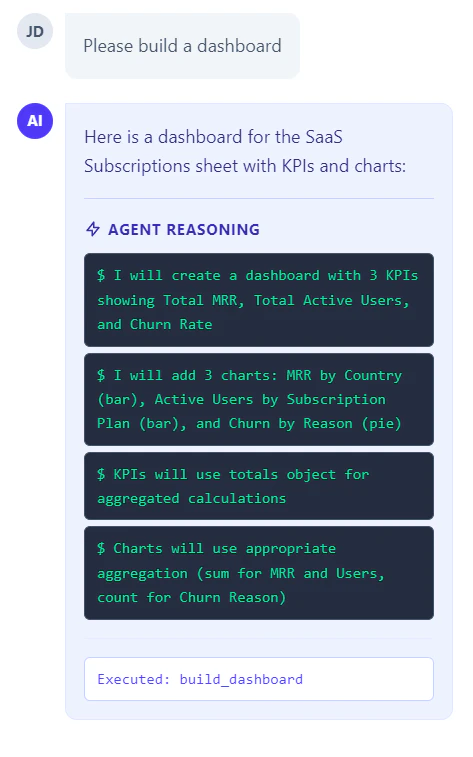
Spredly is a modern spreadsheet experience built for people who want the speed of AI without giving up the familiarity of rows, columns, formulas, and exports. You can import data, chat with your spreadsheet in plain English, generate charts, and turn raw tables into useful dashboards in minutes. Unlike generic AI assistants that sit outside your workflow, Spredly works directly inside the spreadsheet experience.

The local LLM angle is exactly right for finance work — anyone who's built real deal models knows you can't be feeding sensitive deal data into cloud APIs without a proper review process. Local processing removes that friction entirely.

From a financial modeling perspective, I'd love to see support for the structured layout patterns deal teams rely on — color-coded assumption cells, hardcoded vs. formula distinctions, named range navigation across a 50-tab model. Been working in this space with ModeLoop and the pain point is very real. The natural language query layer here could be a genuine time-saver on large model reviews. Congrats on shipping!

1
回复

@samir_asadov Thank you 😊 🙏 I'll try to include these features you mentioned in the upcoming versions of the app 🫶

0
回复

If you get the local app for Mac/Windows you can plug your agent via localhost:4141. All spreadsheet related actions will be available to your agent and you will see everything that it does live inside the app.

1
回复

@vitalyiam That's a smart workaround for the premium paywall problem. Local LLMs give you way more control and privacy with sensitive data too—curious if you've noticed any performance differences compared to the cloud-based options when working with larger datasets.

1
回复
I was working with a ton of data for work, and gemini inside sheets is a premium feature so, I created Spredly and use it locally with ollama and my opencode agent.
0
回复
#13
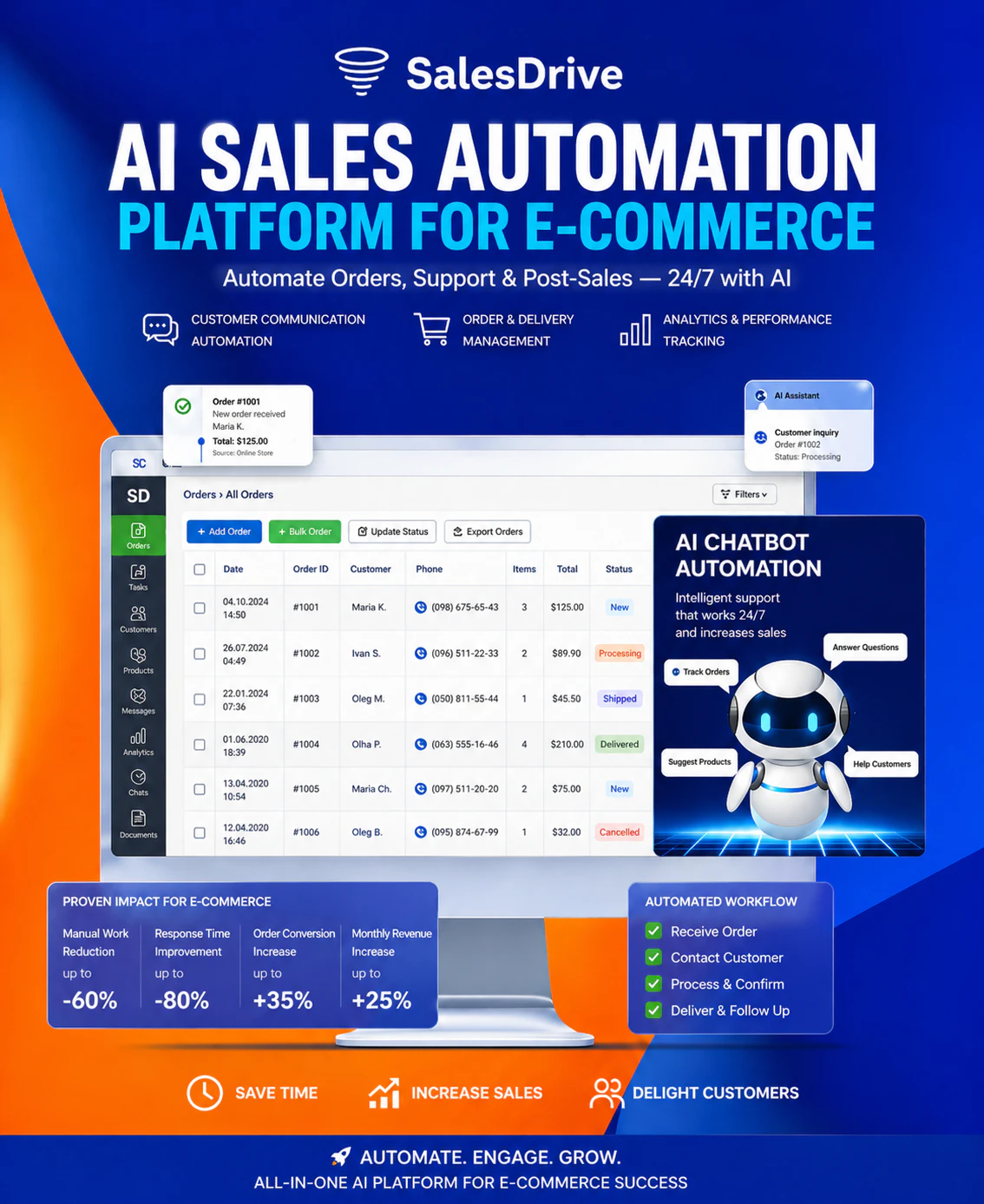
AI Sales Operator
AI that runs your entire eCommerce sales process 24/7
11
一句话介绍:AI Sales Operator 是一款24/7自动化电商销售流程的AI系统,覆盖订单确认、催付、售后、评论收集等环节,帮在线商店大幅减少人工管理负担。
Sales Artificial Intelligence E-Commerce
电商自动化 AI销售代理 订单管理 CRM协同 客户沟通 售后运营 催付恢复 评论收集 无代码工具 SaaS
用户评论摘要:创始人详细介绍了系统覆盖的订单到售后全流程。用户提问:”90-99%的工作替代率在实际用户中能实现多少?多数店铺在哪一步会卡住?” 反映出对自动化落地率的质疑,需求案例数据支撑而非口号。
AI 锐评

AI Sales Operator切入的是电商运营中高度重复、规则明确的”文档型”工作流——通知、状态更新、催付、点评收集。这一赛道确实最适合AI初期落地:低风险、高确定、易量化。但创始人在评论中回复的“替换90-99%的管理工作”,恰恰暴露了这类产品的天花板。

首先,电商客服和运营中最难啃的“复杂或冲突”场景——退换货判定、恶意差评处理、客诉升级安抚——才是成本大头,却明确被划为“需要人类”。这意味着AI实际能吞下的只是流程链中边缘且低价值的部分。

其次,从0赞的留评数量和无有效讨论可见,产品并未在Product Hunt上引发专业用户的深层关注。11票大概率来自熟人场或者早期内测。更关键的是,那唯一有效提问——“90-99%的替代率在真实用户中是否达标”,创始人并未正面回答。这暴露了一个尴尬事实:该产品很可能还处于小规模内测甚至只是PPT演示阶段,缺少真实复购率、人工减员率、错误率等硬数据撑腰。

短期看,它作为一条插件式自动化流水线,对小体量DTC品牌或独立站主仍有吸引力,能省掉半个运营的人力。但长期来看,真正的护城河不在于“自动化程度”,而在于能否进一步打通与Shopify、WooCommerce、ERP、发货API之间的深度双向交互,并逐步介入退货、换货等高风险流程。否则,它可能永远停留在“通知机器人”这个低壁垒、可轻易被平台官方功能或ChatBot夹带的边缘市场。

查看原始信息
AI Sales Operator
AI Sales Operator automates routine eCommerce sales operations: order confirmation, CRM status updates, customer notifications, unpaid order recovery, post-sale support, no-show reduction, review collection, and AI-powered customer communication. It helps online stores reduce manager workload and run sales processes 24/7
Hi Product Hunt 👋 I built AI Sales Operator to automate the routine sales operations that usually require a team of eCommerce managers. The system already handles real post-order workflows: – customer order confirmation – automatic CRM status updates – customer notifications after each status change – unpaid order recovery with payment links – delivery and tracking notifications – post-sale communication The next layer is an AI Sales Assistant that consults customers before and after purchase, handles upsells, reduces no-shows, collects reviews, and can later be extended with AI voice calls. The system is designed to support full automation of the sales flow — from order placement to shipment — depending on the level of integration with CRM and delivery services. The goal is not just to build another chatbot. The goal is to create an autonomous AI sales system that can replace up to 90–99% of routine manager work in online stores, while leaving humans only for complex or conflict cases. Would love your feedback 🙌
1
回复

@alexaiautomation This is a solid end-to-end automation play. The post-order workflows you've built handle real friction points that most eCommerce teams waste cycles on manually. My question is around the 90-99% replacement claim—what percentage of your early users are actually hitting that automation rate, and where do most shops get stuck in practice?

0
回复

Hi everyone! 👋

I’m the creator of AI Sales Operator.

We built this to automate the entire eCommerce sales process — from order confirmation to post-sale support and review collection.

Curious — how are you currently handling customer communication in your store?

0
回复

Hi everyone! 👋

I’m the creator of AI Sales Operator.

We built this to fully automate eCommerce sales — from order confirmation to post-sale support.

Happy to answer any questions and would really appreciate your feedback 🙌

0
回复

Happy to answer any questions 🙌

AI Sales Operator is built to automate routine eCommerce sales work — from order confirmation and CRM status updates to customer notifications, unpaid order recovery, and future AI sales assistance.

What part of sales would you automate first?

0
回复
#14
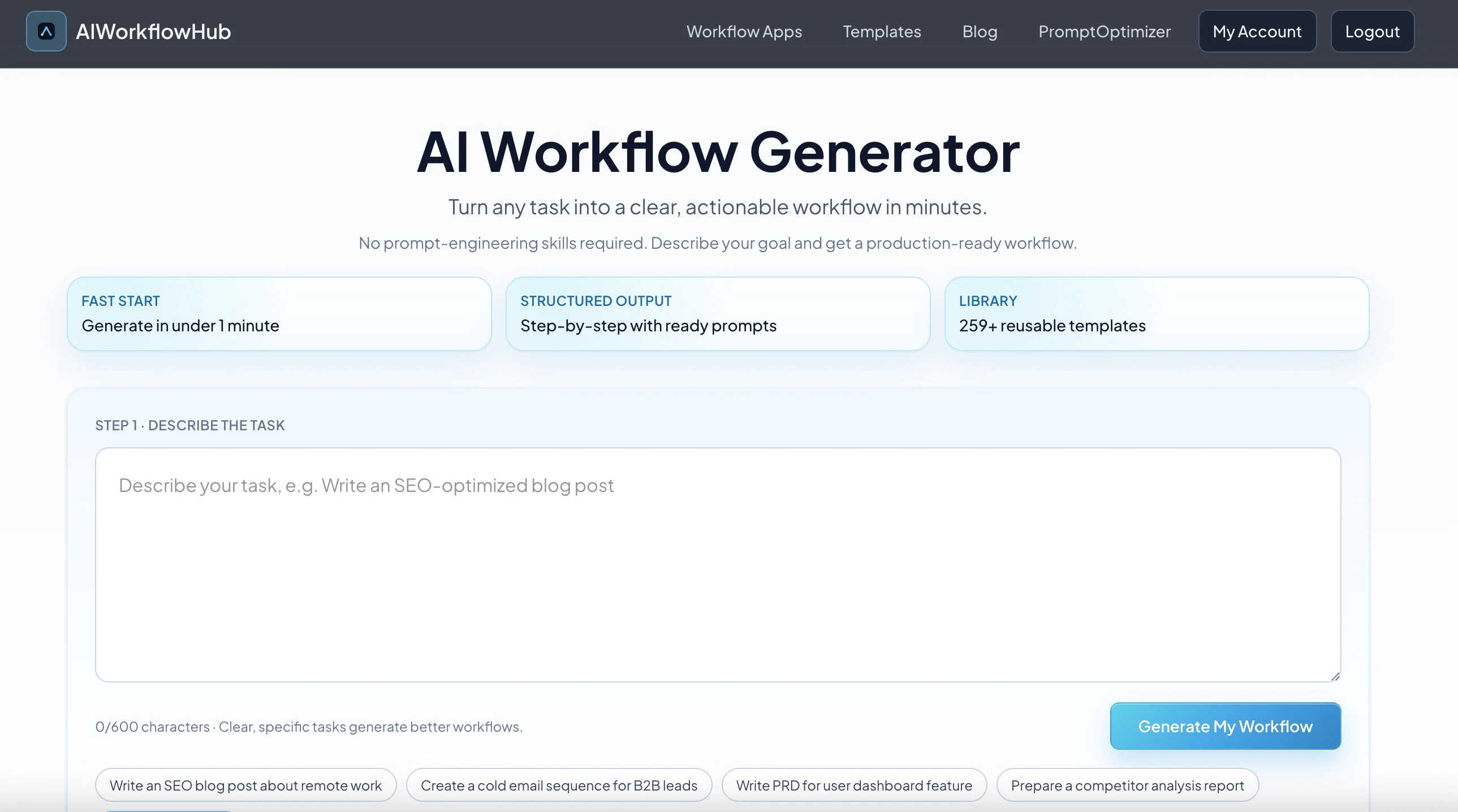
AI Workflow Genarator
Generate complete AI workflows from a single input
11
一句话介绍:AI Workflow Generator 能根据用户输入的任务或关键词,自动生成包含步骤结构、提示词和示例输出的完整工作流,解决用户在SEO、营销、编程等场景中只有碎片化提示词、缺乏可执行流程的痛点。
Productivity SEO Artificial Intelligence
AI工作流生成器 提示词管理 自动化流程 SEO工具 营销工具 编程辅助 任务分解 生产力工具 模板生成 工作流编排
用户评论摘要:用户认可“工作流作为单元”的洞察,指出人们不缺乏提示词,而是缺少编排好的流程。同时提出关键疑问:用户是否会直接使用生成的工作流,还是会重度修改?若后者,产品的真正价值可能在于提供框架而非完整方案。
AI 锐评

AI Workflow Generator 切中了一个真实且普遍的痛点:提示词泛滥,但完整、可复用的工作流程缺失。这本质上是从“原子化工具”向“流程化解决方案”的进化,方向正确。然而,11个投票和仅有的一条有效评论,暴露出产品在早期冷启动时的无力感。评论中的反馈极为致命——“用户会直接使用还是重度修改?”如果答案是后者,那么产品所谓的“完整工作流”不过是高级一点的建议列表,其价值将大打折扣。目前的产品形态更像是一个结构化的提示词包装器,缺乏对执行过程的自动化控制和反馈闭环(例如:是否能在工作流中嵌套调用API、进行条件判断或数据验证?)。对于目标用户(SEO、营销人员),他们需要的是降低执行心智负担,而非多一个需要二次加工的“草稿”。产品的真正价值,不应止步于“生成”,而应在于“可执行”与“可复用”——如果能做成可交互的清单,用户勾选即完成,或内置自动化节点,才算握住了痛点。否则,它很快会被ChatGPT的定制GPTs或市场里更成熟的流程工具替代。一句话:洞察不错,但完成度还停留在“点子”阶段,要变成“作品”还差好几个迭代。

查看原始信息
AI Workflow Genarator
AI Workflow Generator creates complete, step-by-step workflows from a single input. Enter a task or keyword, and it generates: - A structured workflow - Prompts for each step - Example outputs Designed for SEO, marketing, coding, and other real-world tasks. Instead of collecting prompts, you get a full workflow you can follow or reuse.
Hey everyone 👋 I’ve been building small SEO and AI tools, and one problem kept coming up: prompts are everywhere, but actual workflows are missing. Most tools give you pieces. But in real work, you need the full process. So I built AI Workflow Generator. You enter a task or keyword, and it generates a complete workflow: - step-by-step structure - prompts for each step - example outputs Something you can actually follow or reuse. I’d love to know: Would you use something like this, or do you prefer building workflows manually?
2
回复

@winna_zhang The workflow-as-a-unit insight is solid—most people are drowning in individual prompts but starving for orchestrated processes. One thing worth validating: do users actually follow the generated workflows as-is, or do they tend to customize them heavily. If it's the latter, the real value might be in the scaffolding rather than the completeness.

0
回复
#15
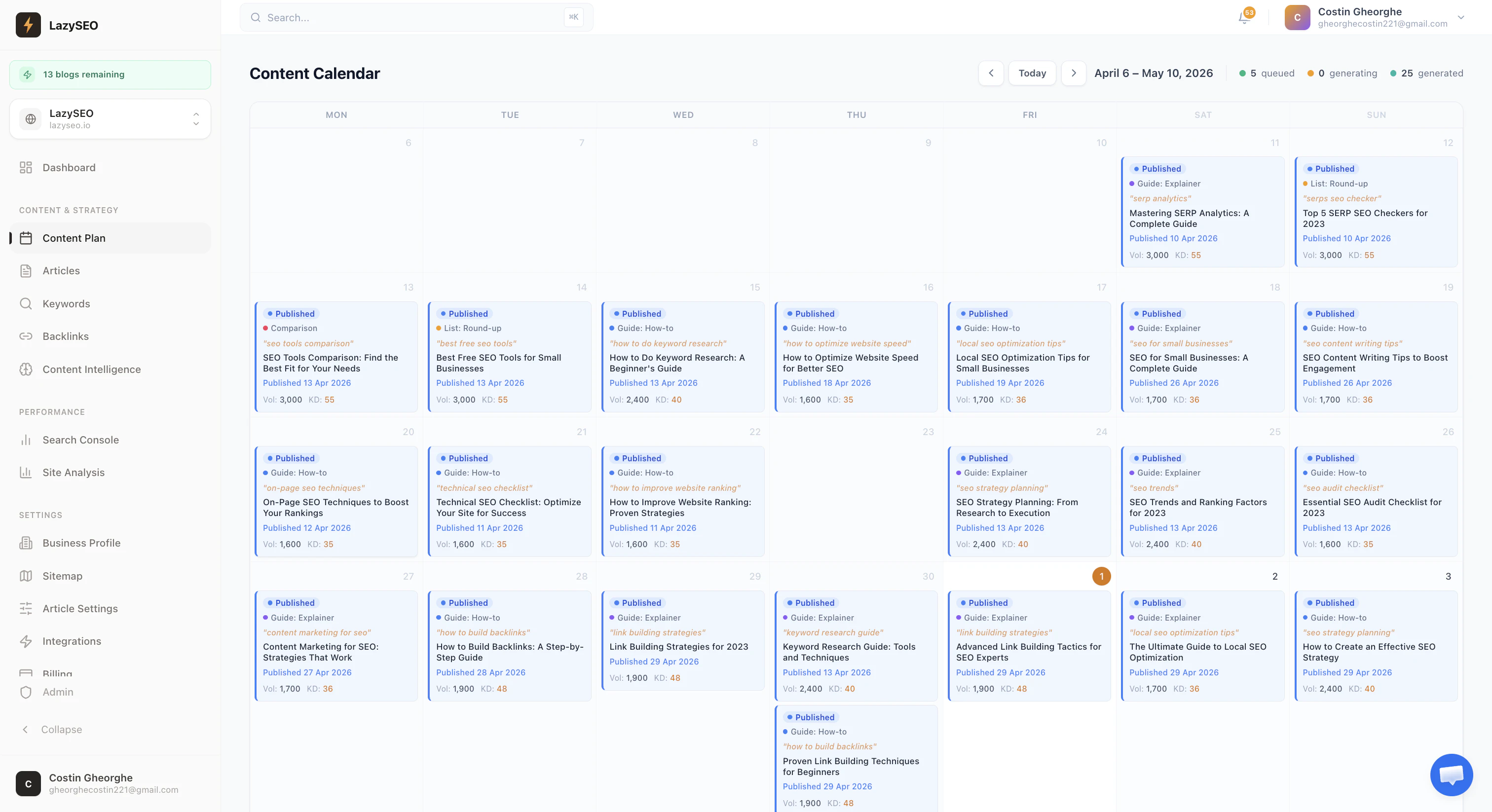
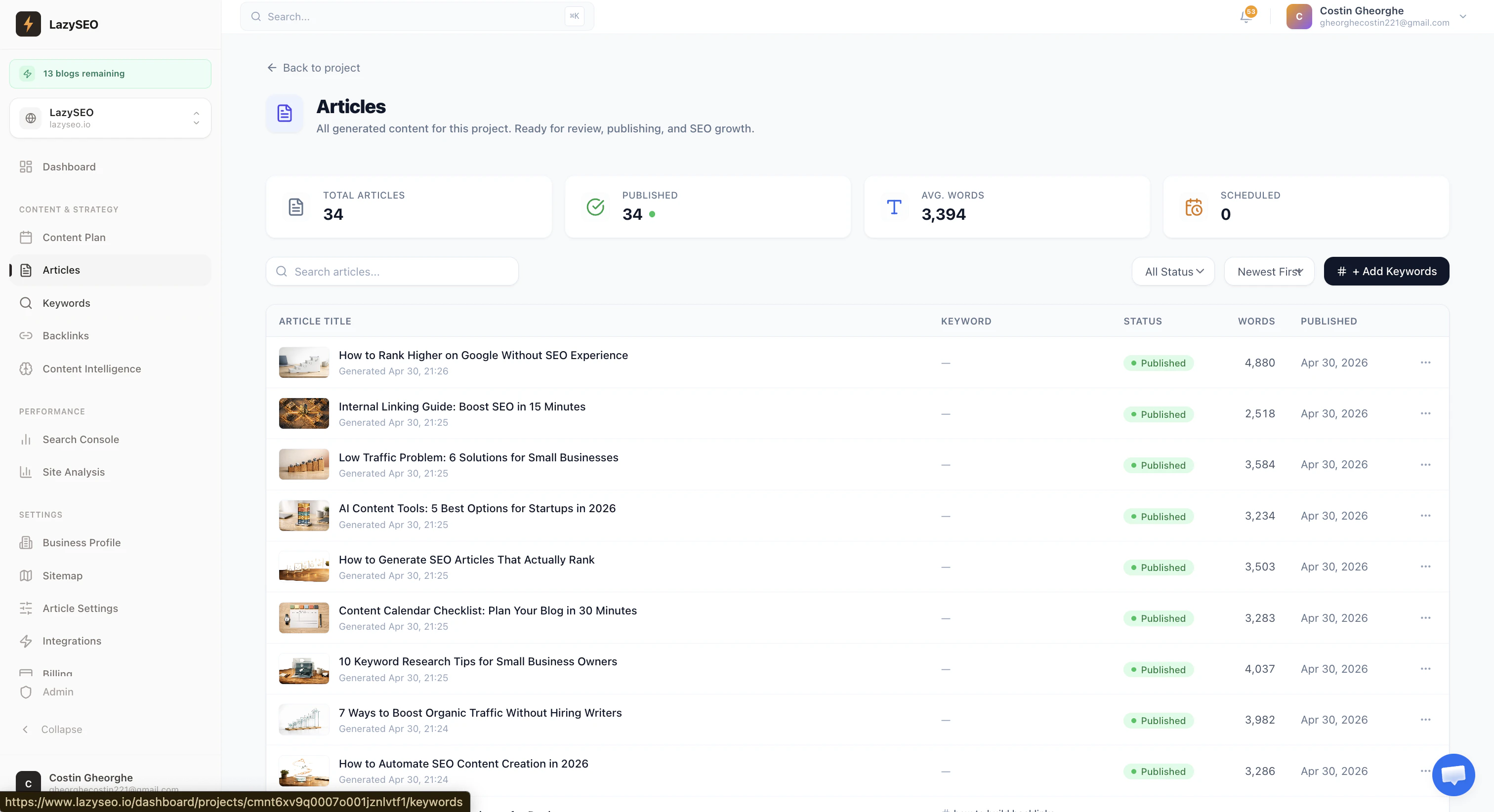
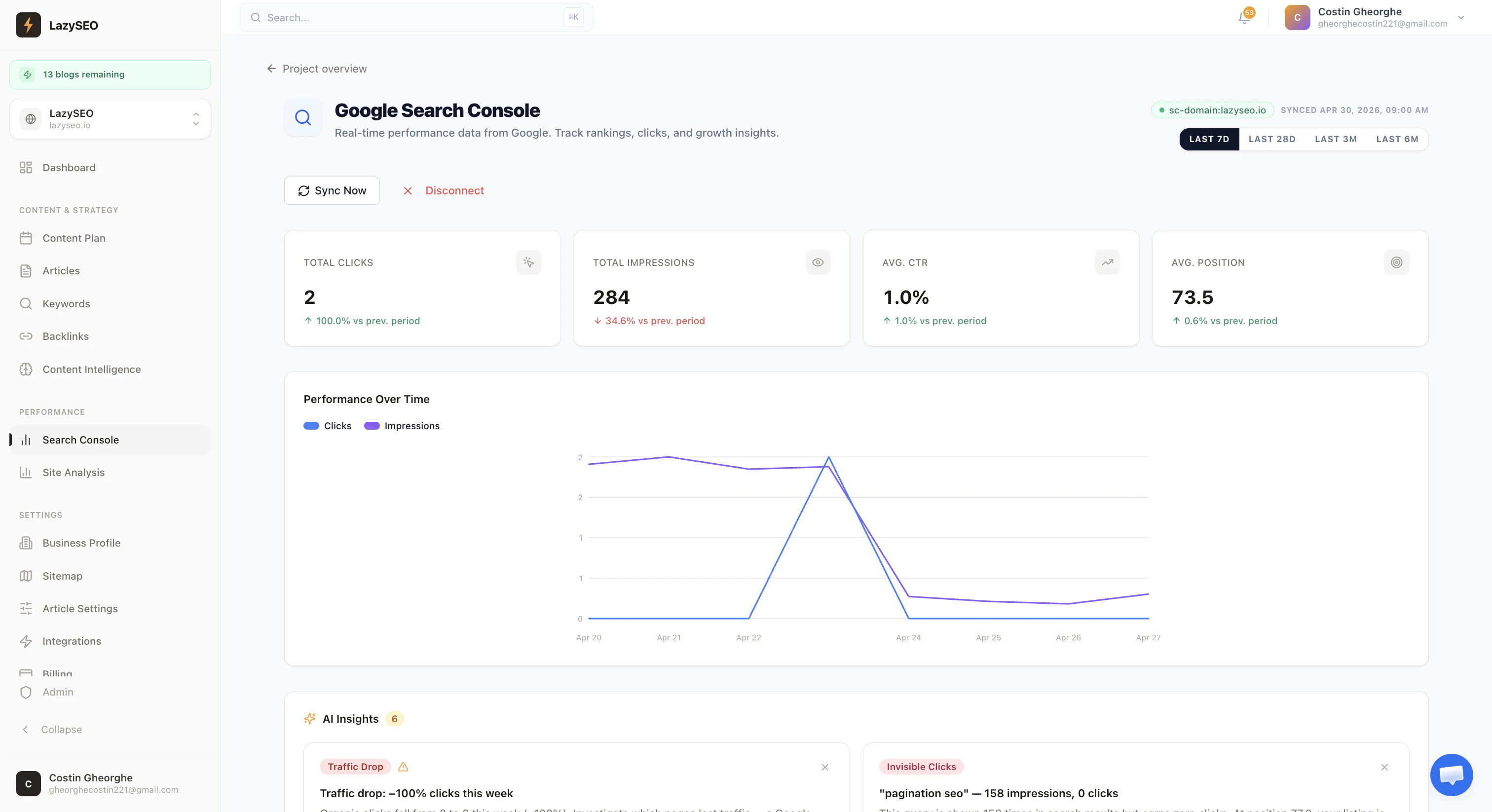
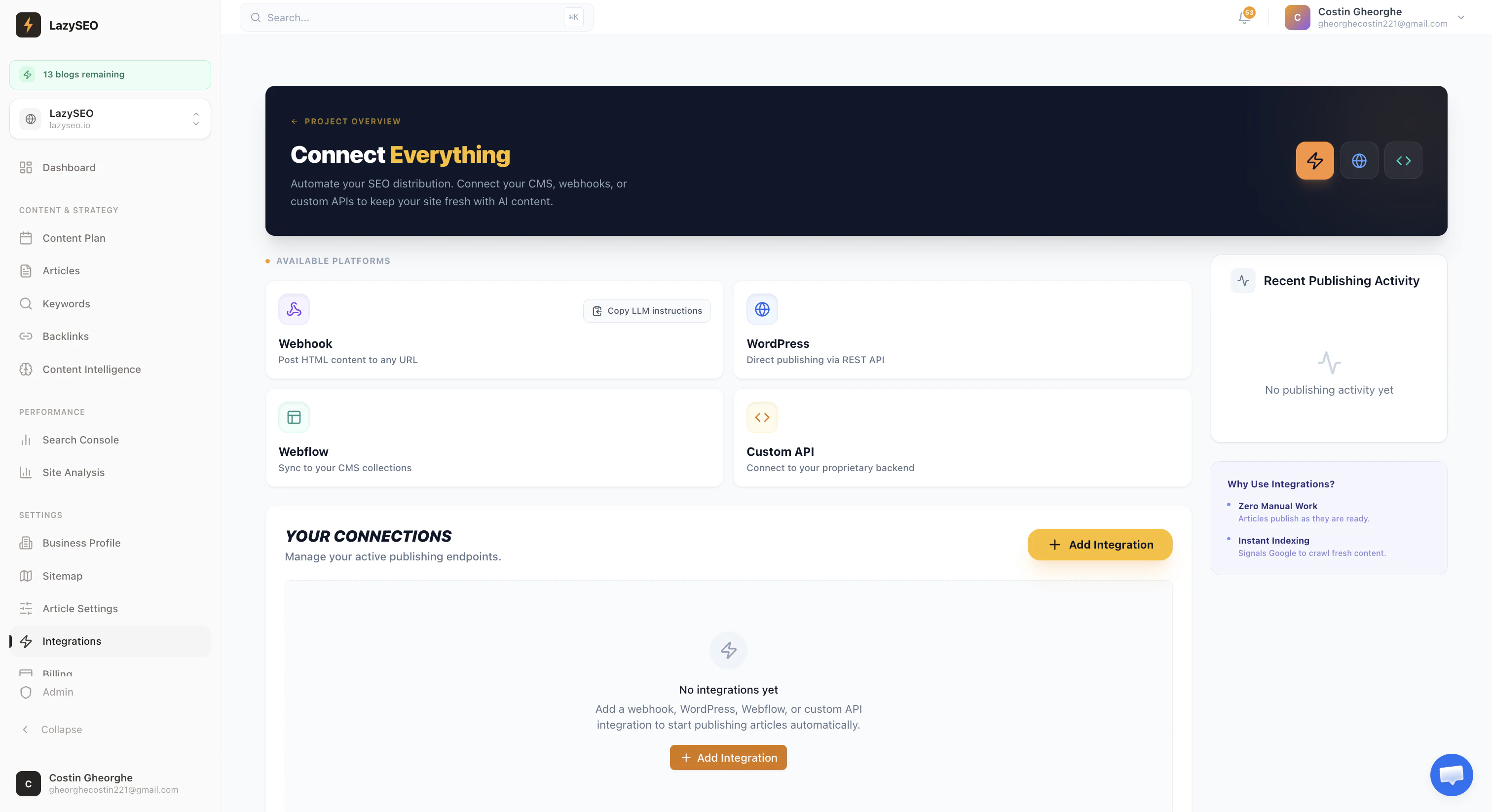
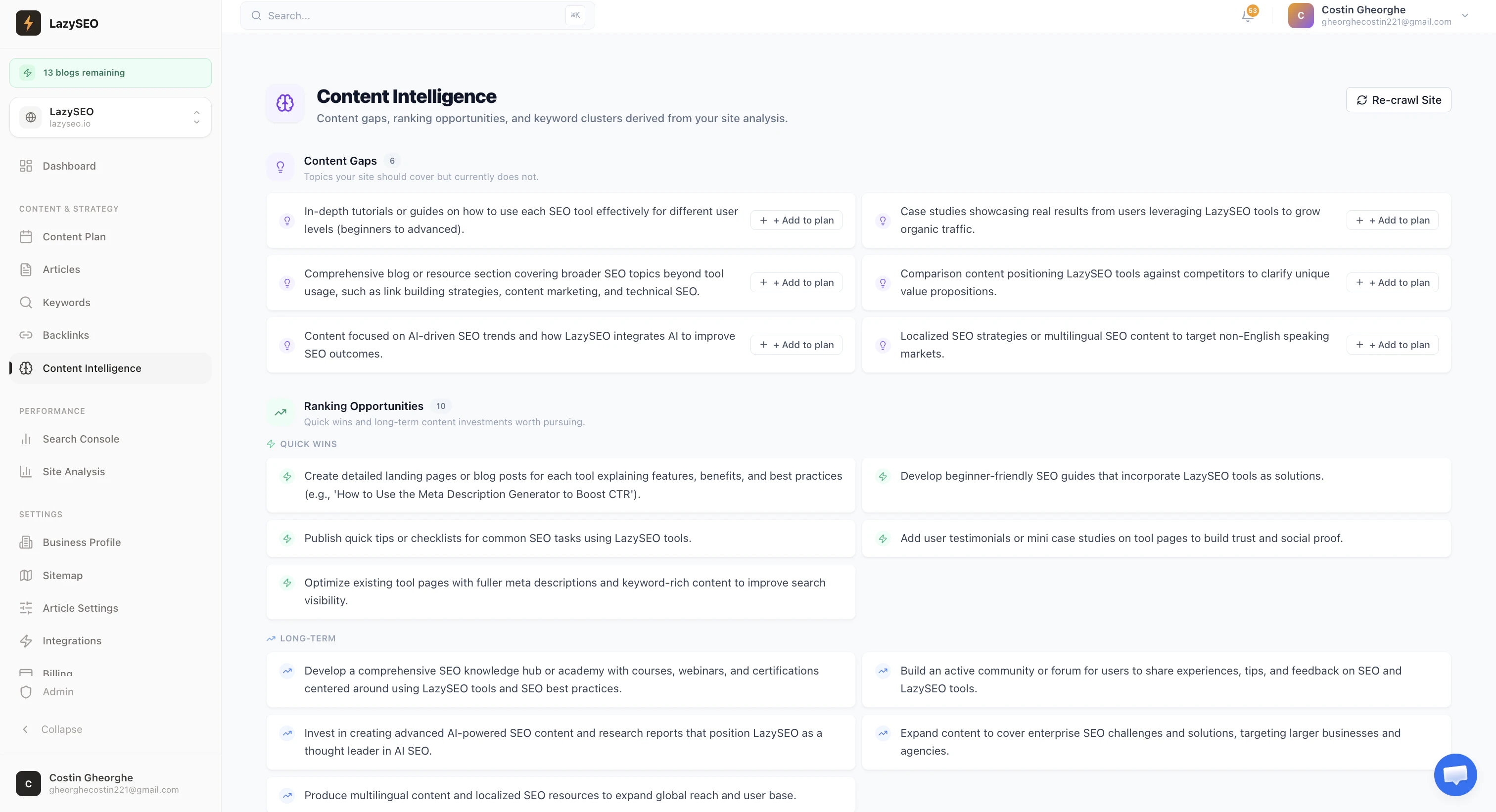
LazySEO
Go from keyword to ranking content in minutes
11
一句话介绍:LazySEO 是一个全自动 SEO 内容生成工具,通过关键词研究、撰写2500字的优化文章并直接发布到网站,帮助内容创作者和站长将“想法→排名”的繁琐流程压缩为一键操作,解决多工具拼凑、手动优化效率低下的痛点。
Writing Marketing SEO
SEO自动化 关键词研究 AI写作 内容营销 排名优化 站点发布 程序化SEO 长尾内容 多引擎排名 创作者工具
用户评论摘要:用户认可其整合工作流、降低多工具成本的价值,核心问题集中在:1. 关键词研究数据来源的深度;2. 是否支持程序化SEO(根据数据集批量生成内容);3. 定价门槛及实际效果验证。
AI 锐评

LazySEO 踩中了一个真实且持续存在的痛点——SEO 内容生产的“管道工困境”。对于运营多个网站或个人站长的用户而言,从关键词挖掘、内容撰写、SEO 优化到最终发布,往往需要在 Ahrefs、Surfer、Jasper 等工具间反复切换,既消耗预算又拖慢节奏。LazySEO 的“一体化自动流水线”思路,本质上是在用工程化思维解决内容生产的高频重复劳动,其价值不在于技术颠覆,而在于“减少摩擦”——将专业门槛和操作成本大幅降低。

但需要警惕的是,这种“全自动”模式暗藏两个陷阱:其一,AI 生成的长文(2500字)在 Google 等搜索引擎眼中,若无扎实的数据支撑或独特的洞察,极易被判定为“低质量内容”,特别是在 YMYL 领域;其二,产品过于强调“一键直达排名”,容易让用户产生不切实际的预期。SEO 的成功从来不只是内容本身,外链、权威性、用户体验等因素缺一不可。此外,用户对关键词数据源的追问,直指核心里程碑——如果研究阶段的数据质量不够硬,全自动生成的内容只能出量,难以出价值。

总体而言,LazySEO 作为一个“内容生产的自动化加速器”有明确的场景价值,尤其适合长尾关键词覆盖和内容规模扩张阶段。但它更像是一个优秀的“执行者”,而非“策略家”。如果你的核心竞争力在于品牌深度或专业壁垒,那么这类工具只是助攻;如果你的目标是用最低成本快速铺量、测试市场,它可能是目前最省心的选择之一。

查看原始信息
LazySEO
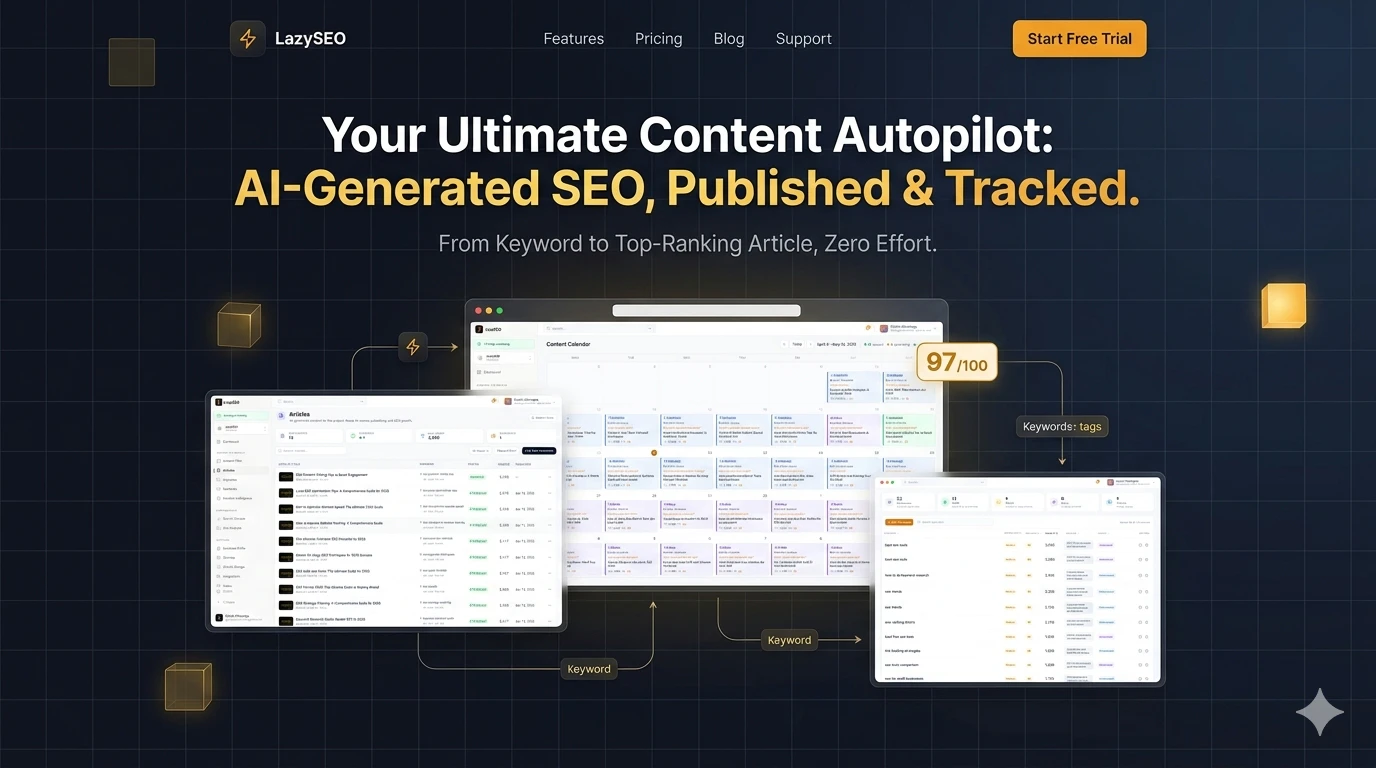
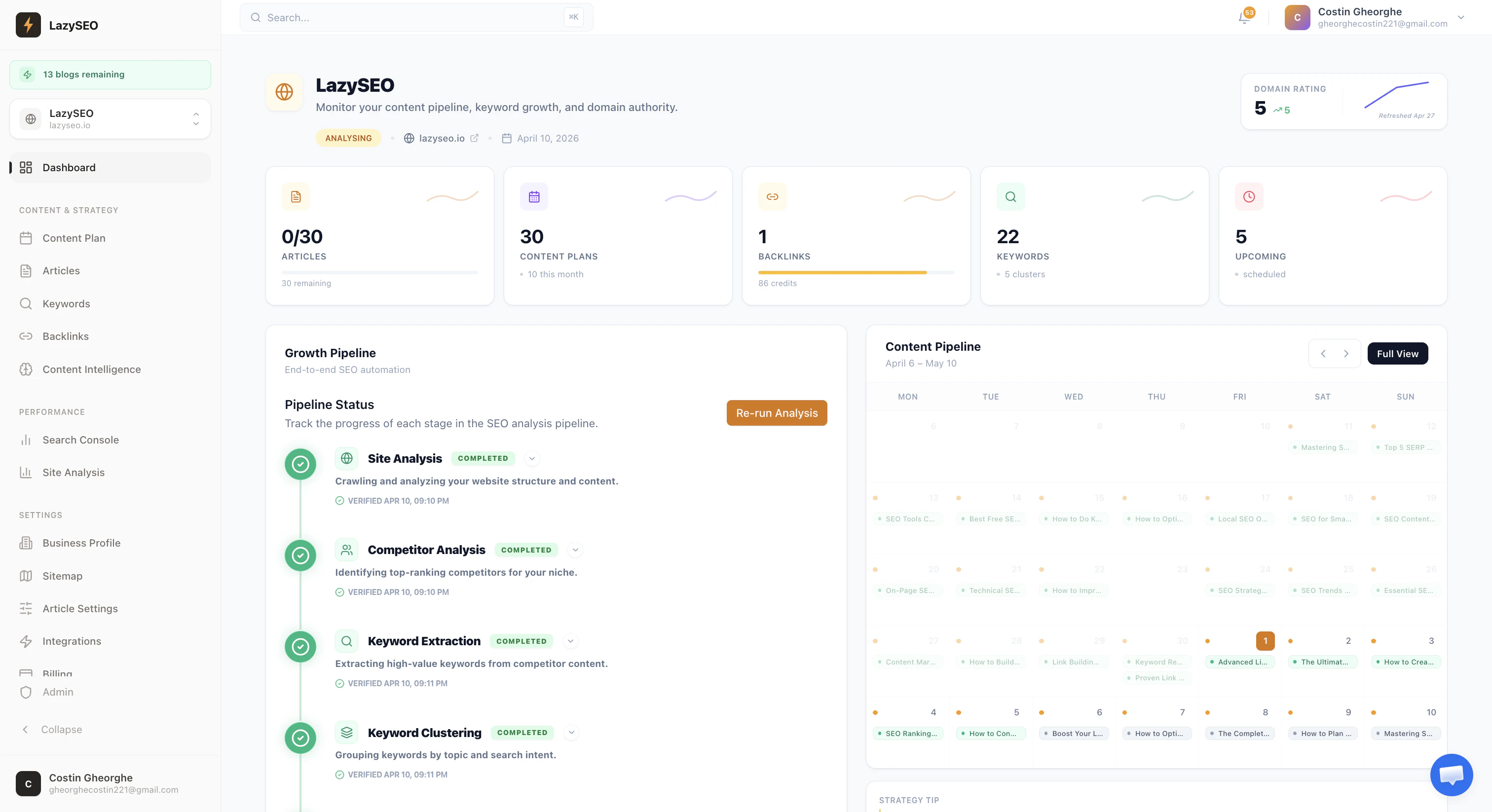
LazySEO researches keywords, writes 2,500-word SEO articles, and publishes them to your site daily — fully automated. Rank on Google, ChatGPT, Perplexity & Gemini. First 3 posts for $1
Hey Product Hunt 👋 LazySEO started from frustration. SEO today feels like duct-taping 5 tools together—keywords in one place, briefs in another, optimization somewhere else… and a lot of manual work in between. So I built LazySEO to compress that entire workflow into one place. The goal is simple: go from idea → keyword → optimized content without the usual grind. It’s built for people who actually want results, not more dashboards. I’d love your honest feedback—what’s missing, what feels unnecessary, what you’d never use. I’ll be here all day 🙌
2
回复

@costin_gheorghe The duct-taping metaphor hits hard—that fragmentation is real and kills productivity. Compressing the entire workflow into one place is the right instinct. One question as you refine: how are you handling the research phase when creators find that initial keyword list is only as good as the data behind it.

1
回复

as someone running three different niche sites, the cost of 'duct-taping' ahrefs, surfer, and jasper is killing my margins. lazyseo compressing that into one price point and one workflow is huge. does it support programmatic seo if we provide a data set? @costin_gheorghe @LazySEO

1
回复
Instead of spending hours on keyword research, writing, optimization, and publishing… LazySEO does it all for you. ✅ Finds keywords your competitors rank for ✅ Writes SEO-optimized articles automatically ✅ Adds internal links, images & even videos ✅ Publishes directly to you CMS ✅ Helps you rank on Google + AI search tools like ChatGPT &
0
回复

@vikramp7470 yes, for sure we do have this. Start a trial and give it a try

1
回复
#16
Il Frullatore Carlà (Buffett-style App)
A revolutionary app: a Buffett-style analysis in two minutes
10
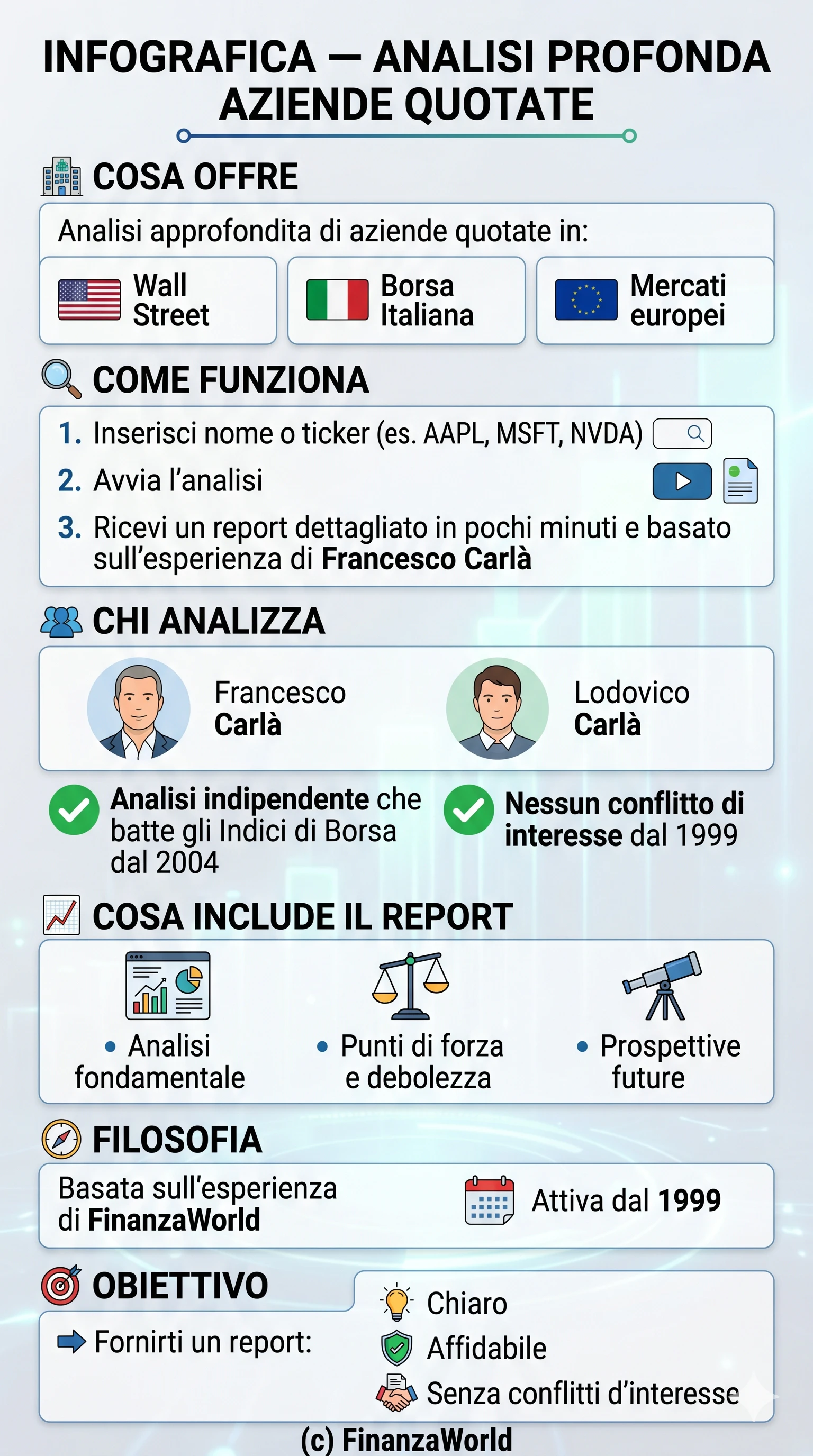
一句话介绍:Il Frullatore Carlà 是一款基于35年投资方法论构建的AI分析应用,帮助投资者在2分钟内完成巴菲特式的深度公司分析,解决传统AI分析泛泛而谈、缺乏专业财务洞察的痛点。
Analytics Education Artificial Intelligence
AI投资分析 巴菲特式分析 价值投资 财务报表深度分析 RAG金融 智能投研 投资决策辅助 财务数据分析 专业投资者工具 股票分析应用
用户评论摘要:用户称赞该应用是将35年方法论转化为产品的杰作,并认同其核心洞察——金融AI工具的关键在于RAG(上下文与提问结构)而非模型本身,大多数工具因提问泛泛而失败。
AI 锐评

这款产品的核心价值并不在于AI模型本身,而在于其创始人Francesco Carlà耗时35年打磨的一套“提问逻辑”——这正是许多金融AI产品所缺失的灵魂。在通用大模型泛滥的今天,谁都能让ChatGPT写一份苹果公司的分析报告,但结果往往是“正确而无用”的表面信息。Carlà从方法论层面构建了一个精密的RAG系统,它知道该问什么、该忽略什么、该从哪里抓取关键数据,这种“分析师思维”的数字化封装才是真正的护城河。

产品目前的投票数(10票)与其野心形成鲜明反差,说明它仍处于极早期验证阶段。真正值得关注的是其用户反馈中提到的“2分钟完成过去3天的工作”,这暗示产品在效率提升上确有颠覆性,但前提是用户本身具备一定的财务分析基础——它更适合专业投资者、资产管理者或金融机构分析师,而非散户小白。

需要警惕的是,创始人声称“数千次分析已完成”,但缺乏公开的业绩回测或对比验证。投资分析的价值最终要落在“决策结果”上,而非“分析过程”有多专业。如果这套系统无法在实际交易中被证明能更准确识别企业基本面风险或低估机会,那它再“聪明”也只是一本昂贵的金融教材。此外,35年方法论听起来悠久,但若缺乏对现代新兴行业(如AI、生物科技、云计算)财务模型的适配更新,这套“老配方”很可能在解读亏损但高增长的商业模式时水土不服。

总而言之,这是一款有“灵魂”的金融AI工具,但能否从“专家玩具”进化为“刚需生产力”,还需要更多真实的投资案例来证明。

查看原始信息
Il Frullatore Carlà (Buffett-style App)
My app is built on a proprietary system that incorporates over 35 years of analytical methodology. The quality of the output depends by skills that require decades of practical experience to develop. “Anyone can ask a general-purpose AI to analyze a company,” says Carlà. “What they get is a superficial analysis. What makes the difference is what’s inside the system—and that’s the result of thirty-five years of work.”
HOW I BUILT THE “BLENDER” FOR THE STOCK MARKET It took me 35 years to build this app. And just a few months to code it. Let me explain. By 2000, I had already realized one thing: analyzing a publicly traded company isn’t difficult. It’s time-consuming. It requires knowing where to look, what to weigh, and what to ignore. It requires a method. I called that method “The Blender” — because it takes raw data from different sources and turns it into something useful. I wrote newsletters about this. Books. University courses. For 35 years, I refined those questions: what are the things you need to know about a company before investing? Then modern artificial intelligence arrived. And I realized the time had come. -The problem with generic AI tools for finance Anyone can open ChatGPT and ask, “Analyze Apple.” What you get is generic, superficial, and often wrong. Not because the AI is stupid—but because it doesn’t know what to ask. Or where to look. The heart of an AI analysis system isn’t the model. It’s the RAG—the context, the instructions, the sources, the structure of the questions. And to build a serious financial RAG, you need to know how to truly analyze a company. You must have been wrong enough times. You have to have learned from the best in the world (and I’ve been reading Warren Buffett, Charlie Munger, Peter Lynch, and Phil Fisher for thirty years). Very few people in the world have that combination. I do. And I’ve put it into the Blender. -What happened after the test launch Thousands of analyses already done. Even before the official launch. What struck me isn’t the number. It’s the quality of the questions I’m getting. Investors who, for the first time, truly understand the business they’re analyzing. People writing to me: “Francesco, it took me 2 minutes. Before, it would have taken me three days—assuming I knew what to look for.” That’s why I built it. The official launch is next week. If you want to try it now: 👉 https://analisi-profonda-carl-32... And if you work in finance, asset management, or consulting—and you’re wondering how this will change your work—let’s talk about it in the comments. #SmartFinance #ConsciousInvesting #AI #Analysis #CarlaBlender
1
回复

@francesco_carla_ This is a compelling origin story—the 35 years of methodology distilled into a functional product is the real work. The insight about RAG being the bottleneck rather than the model itself is spot on; most finance tools fail because they ask generic questions, not because the AI can't think.

1
回复
#17
Palabros
A dictionary that keeps words in widgets until they stick
10
一句话介绍:Palabros是一款让你查词后不会转头就忘的词典APP,通过小组件反复呈现生词,帮你真正把词汇“记住”而非仅仅“查过”。
Education Languages Artificial Intelligence
词典应用 单词记忆 学习工具 小组件 词源 每日一词 复习游戏 双语模式 无广告 iOS
用户评论摘要:当前仅有一条制作者自述,无用户评论。核心问题在于:产品刚发布,缺乏真实用户反馈来验证“记住单词”的实际效果与用户痛点。
AI 锐评

Palabros试图解决一个真实痛点——查了词却记不住。其核心卖点“用小组件反复强化”确实切中了被动记忆的常见缺口,且无广告、双语模式、复习游戏等设计显示产品打磨得相当细致。但从投票数(10)和零用户评论来看,目前还处于早期冷启动阶段,缺乏市场验证。

值得警惕的是,这个功能极易被大厂“复制粘贴”——iOS自带词典、欧路、墨墨等产品早已具备生词本和复习机制,Palabros仅靠小组件和多花样的复习游戏难以构筑护城河。真正的壁垒应该在于“如何让用户愿意打开并坚持使用”,而非单纯增加信息曝光频次。另外,官方定义+易懂解释的双层展示是亮点,但若词库质量与更新速度不能持续优于竞品,很容易沦为“精致但可有可无”的替代品。

从商业逻辑看,一次买断+免费试用的模式对用户友好,但后续运营压力巨大:缺乏订阅制现金流,需要极高用户粘性和口碑传播才能维持。建议团队尽快通过社区运营或学习打卡功能建立社交驱动,否则在单词应用的红海中,仅仅“设计感”和“小组件”很难让用户长期驻足。

查看原始信息
Palabros
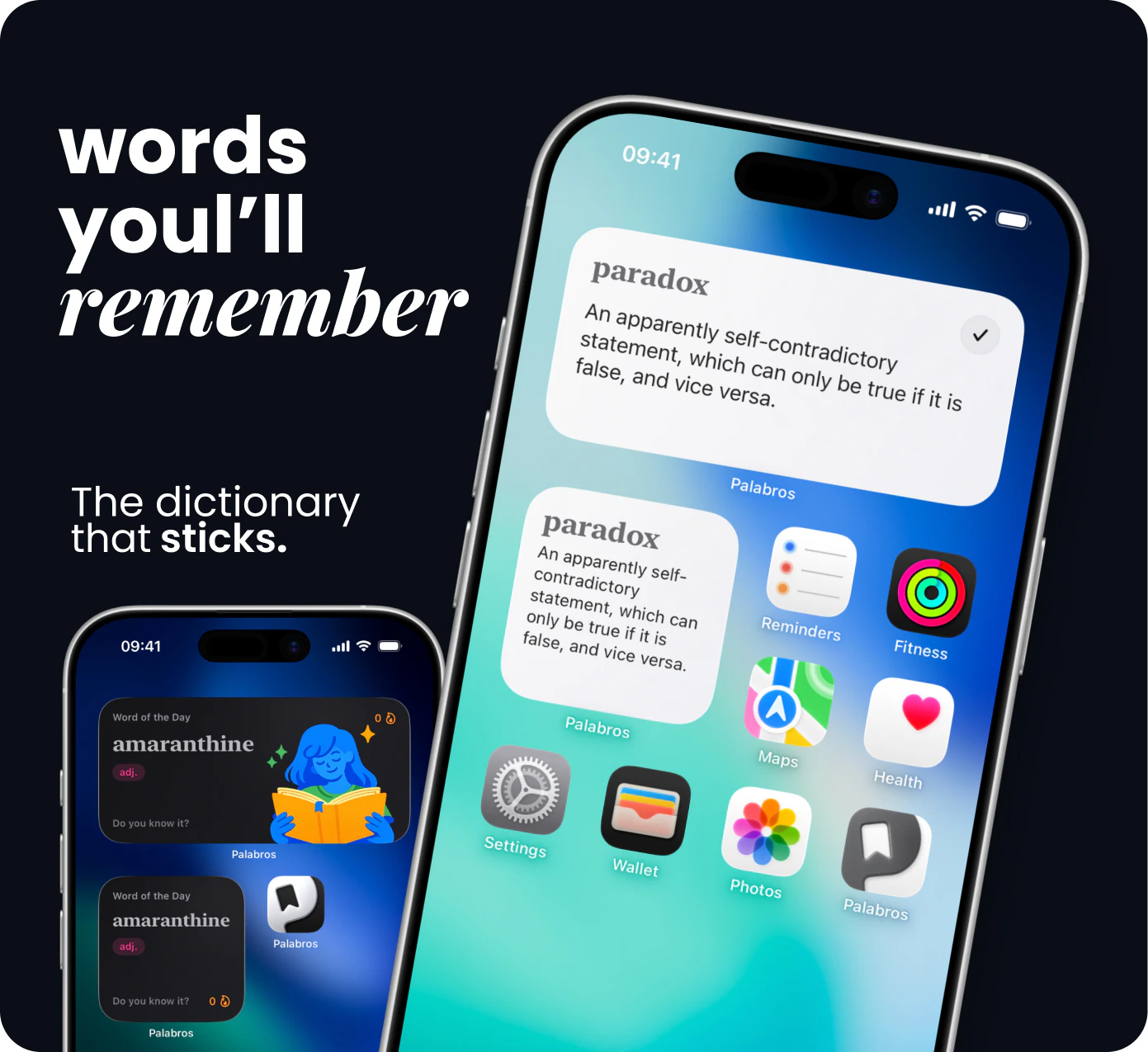
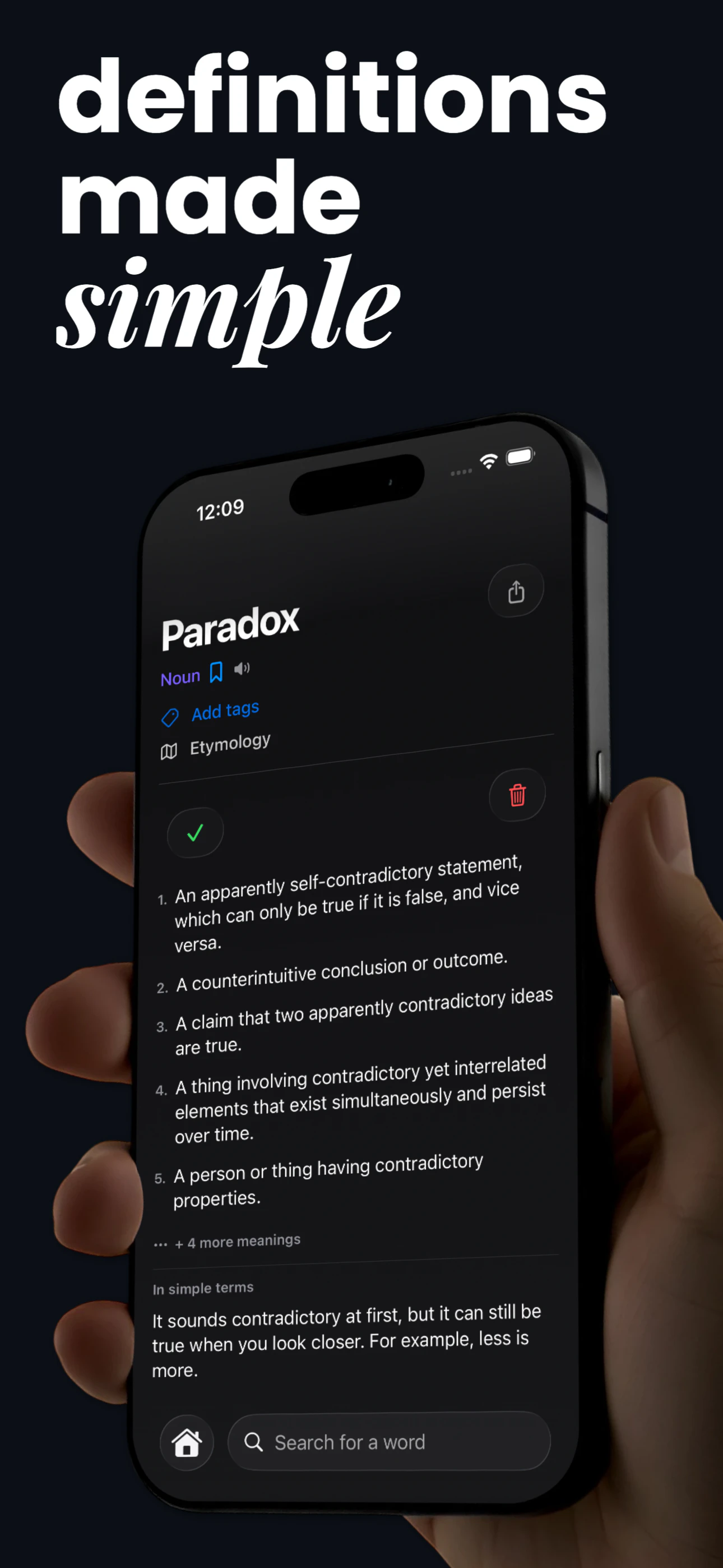
Palabros is a thoughtfully designed dictionary that helps words stay with you. Look up a word, read the official definition, get a clearer plain explanation, save it, and keep it in widgets until it sticks. It also includes Word of the Day, review games, optional bilingual mode, and a calm, ad-free experience built for understanding and remembering words.

Hi folks! I’m Nacho, the maker of Palabros.

I built Palabros because most dictionary apps help you find a word, but not actually remember it.

Palabros is a dictionary designed to make vocabulary stick. You can look up a word, understand it quickly, save it, and keep seeing it again through widgets until it sticks.

It includes official definitions, simpler explanations, review games, tags, word import, Word of the Day, etymology, customizable widgets and beautiful stats; all designed to make saved vocabulary easier to revisit over time, wrapped in a calm, carefully crafted, ad-free experience.

The goal is simple: not just to define a word, but to help it stay with you.

If you try it, I’d especially love to know this: what makes a word actually stick for you?


Palabros is free to download and use, with Pro unlocked through a one-time purchase. And as a small thank you for the Product Hunt community, here’s a 50% off Palabros Pro offer code valid until July 1.

https://apps.apple.com/redeem?ctx=offercodes&id=6758098070&code=S37MQ8W7MQ8SZ71

0
回复
#18
fossel
Local MCP memory server for persistent AI context repos
10
一句话介绍:Fossel是一个本地MCP内存服务器,专为开源贡献者设计,通过SQLite数据库为Cursor、Claude Desktop等AI工具提供持久化、按仓库感知的上下文记忆,解决AI对话间上下文丢失的痛点。
Open Source Developer Tools GitHub
本地MCP服务器 AI上下文记忆 开源工具 仓库感知 SQLite存储 代码助手增强 开发者效率 本地优先 无云方案 协作记忆管理
用户评论摘要:开发者@vignesh_g10肯定了从保存/搜索演变到协作记忆管理的方向,认为固定和总结功能能提升AI上下文信噪比,并好奇是否在编码之外有更多团队协作场景。
AI 锐评

Fossel切中了一个真实且高频的痛点:AI编码助手“每会话从零开始”的失忆症。它将记忆从云端拉回本地,用SQLite作为持久层,本质上是为AI工作流构建了一个轻量级、可编程的“第二大脑”。这种思路比依赖模型内置的上下文窗口更务实,因为后者受限于长度和成本。

但冷静看,Fossel的护城河并不深。核心功能(更新、固定、总结)本质上是对本地键值数据库的封装,技术门槛较低。真正的价值在于“仓库感知”的设计——它不只是存储片段,而是试图理解每个repo的约定、Bug模式等结构化知识。这暗示着更强的语义查询和模式匹配能力,如果只停留在关键词搜索,则容易被更通用的VectorDB取代。

团队野心可能不止于编码场景。评论中提到的“团队协作记忆”是更有想象力的方向:当多人通过AI协作时,一个共享的、结构化的上下文库能极大减少沟通成本。但难点在于,目前的存储仍以本地文件为基础,缺乏多用户同步和冲突解决机制。

一句话总结:Fossel用最朴素的方式解决了AI助手最核心的上下文碎片化问题,概念正确,但需要证明自己不是一个漂亮的SQLite wrapper,而是一个能理解、推理和演进代码知识的智能记忆层。

查看原始信息
fossel
Fossel is a local MCP memory server for open-source contributors. It gives AI tools like Cursor and Claude Desktop persistent, repo-aware memory — storing conventions, bug fixes, reviewer patterns, and decisions in a local SQLite database. Tools included: update_memory, pin_memory, unpin_memory, and summarize_repo_context. No cloud. No account. Just run npx -y fossel init and you're live in 30s.
I built Fossel because I kept losing context between AI coding sessions — every new chat in Cursor or Claude Desktop started from zero. Fossel solves this by giving your AI a persistent, local memory tied to each repo. The process evolved a lot: started with just save/search, then realized contributors need to update, pin, and summarize their memory to actually trust it. Would love to hear how you use it — drop a comment below! 🚀
1
回复

@vignesh_g10 The evolution from save/search to collaborative memory management is smart — that's where the real value clicks for teams. The pinning and summarization layer especially makes sense since AI context quality depends on signal-to-noise ratio. Curious if you're seeing use cases beyond coding where teams want persistent context repos.

0
回复
#19
RepoRose
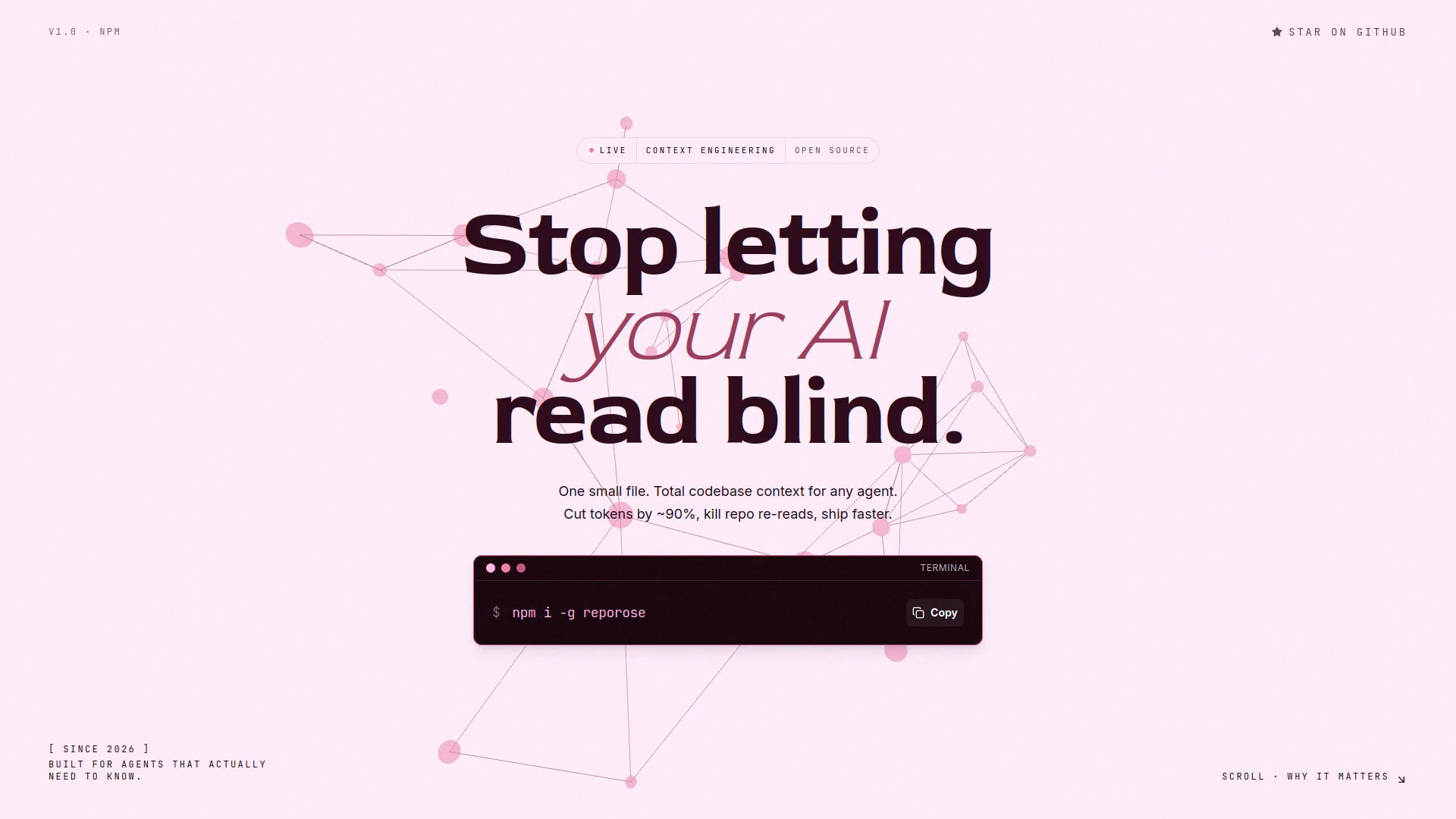
Start new claude chat with full context without using tokens
9
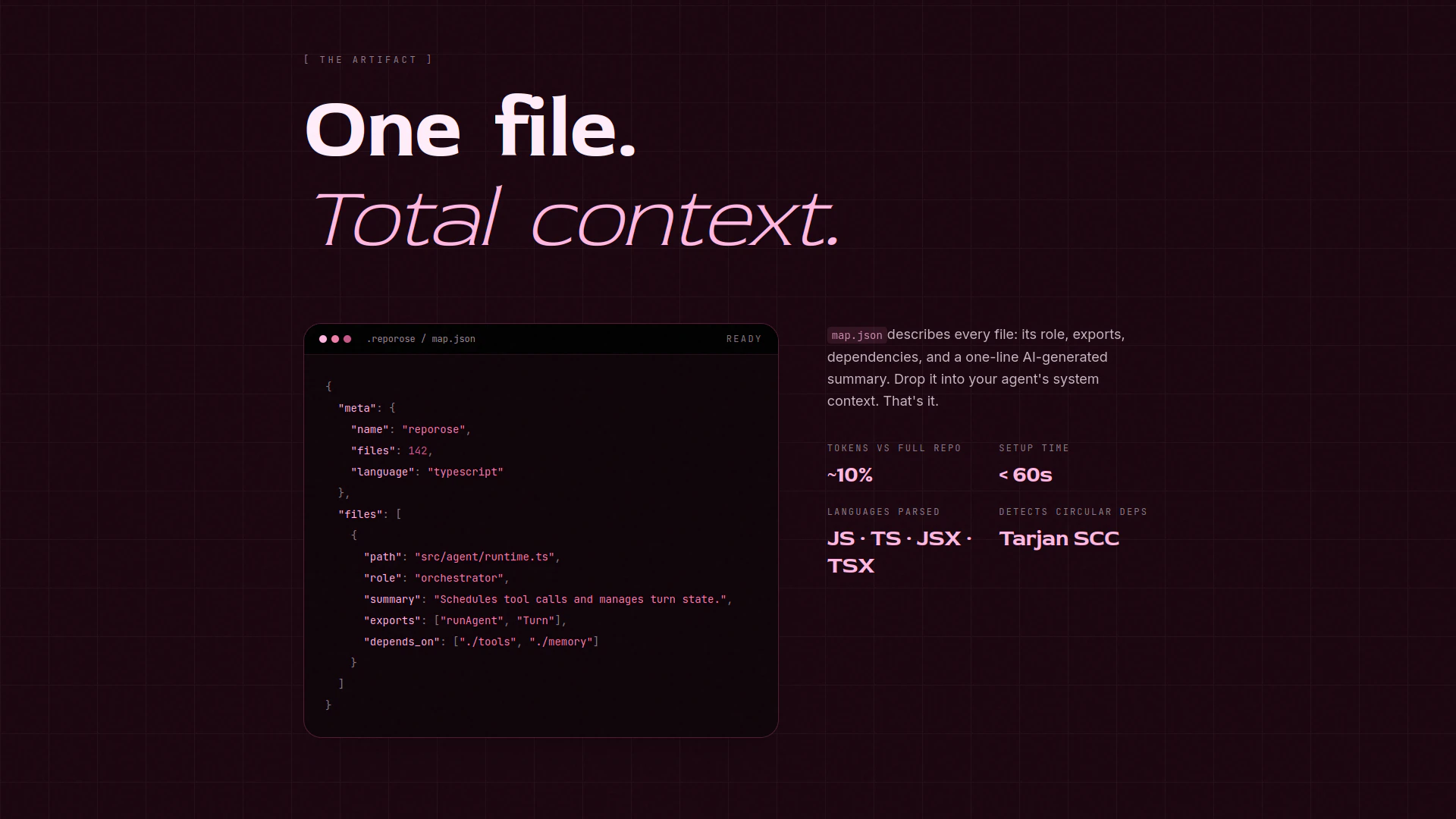
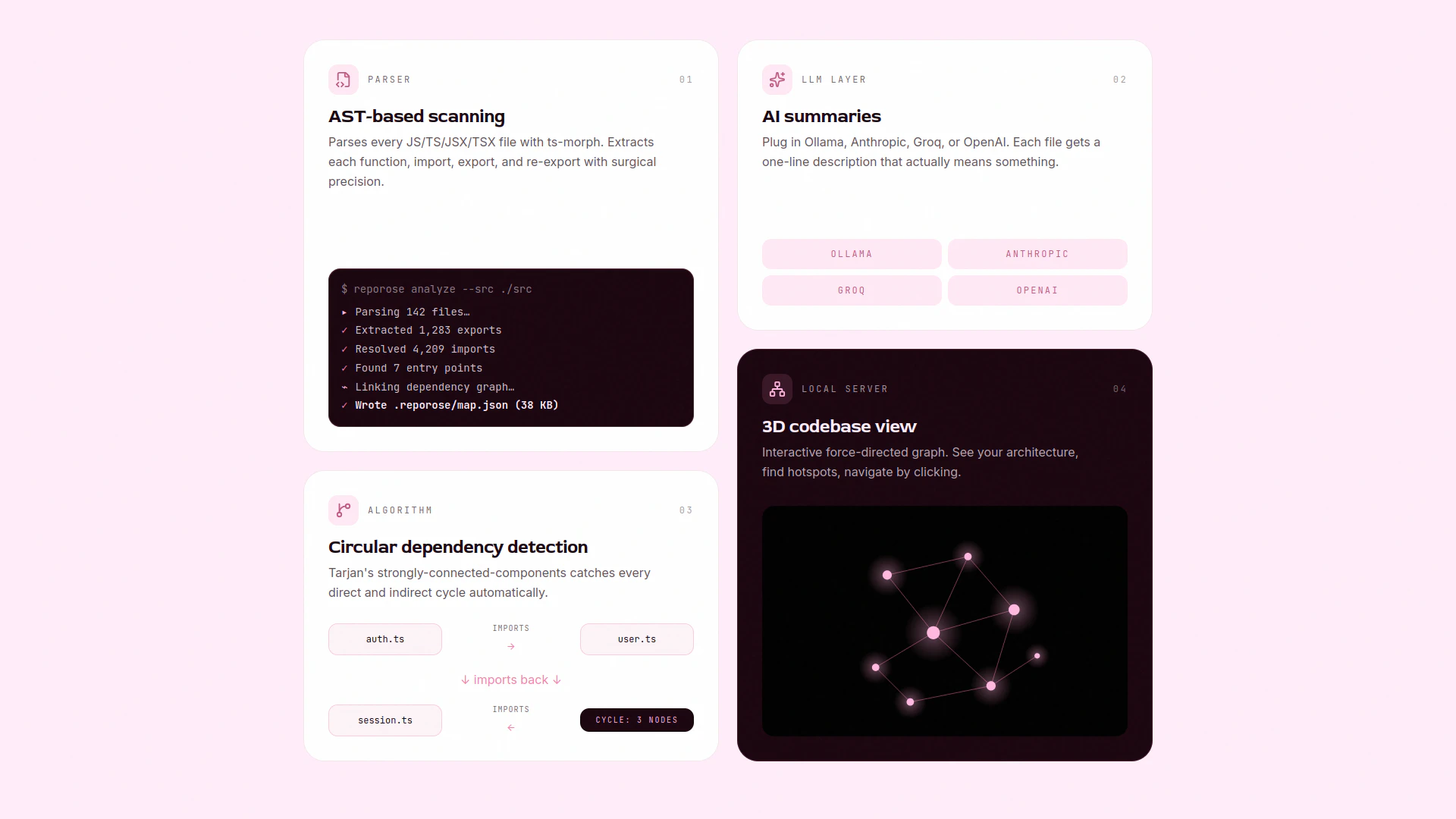
一句话介绍:RepoRose通过生成结构化代码库映射文件,让AI在启动新聊天时无需重复读取整个仓库即可获得完整上下文,从而大幅削减Token消耗并避免长会话带来的幻觉问题。
Developer Tools GitHub Vibe coding
开发者工具 AI编程助手 Token优化 代码上下文管理 结构化映射 依赖分析 Claude集成 开源工具 本地AI支持
用户评论摘要:用户反馈核心痛点:长会话导致AI幻觉增多,新会话需大量Token重新读取文件结构。RepoRose通过生成包含完整代码描述和依赖关系的JSON上下文文件解决问题。有评论特别认可其依赖跟踪功能(修改文件时告知受影响的其他文件),但询问是否支持符号级导入追踪。
AI 锐评

RepoRose精准击中了AI辅助编程中的经典矛盾——长会话的“记忆衰减”与短会话的“上下文重建成本”。其技术方案本质是**预计算知识压缩**:将代码库结构、依赖关系、文件描述等元数据预先提炼为单一JSON文件,使AI能通过一次读取完成“全景扫描”,而非逐文件探测。这确实能显著降低Token开销(宣称~90%),但须注意两点:一是“结构化映射”的准确性与代码库动态变化的同步成本(若开发者频繁修改文件,生成的映射可能滞后);二是依赖依赖分析仅基于静态源码,无法涵盖运行时动态绑定的影响。此外,支持本地Ollama等模型的“无AI描述模式”降低了使用门槛,但生成描述的质量高度依赖模型能力,可能出现误判。从产品定位看,它更适合中大型项目(小项目手动维护上下文成本更低),且核心壁垒在于映射生成算法而非工具本身——随着Cline、Copilot等工具内置类似功能,其差异化价值可能被稀释。暂时9票的冷启动表现也说明,开发者对“额外维护一个映射文件”的信任建立需要更多用例验证。

查看原始信息
RepoRose
One small file. Total context for your AI agent. RepoRose generates structured codebase maps that cut tokens by ~90% and stop your AI from re-reading the repo whenever you start a new chat.
If you keep 1 Claude or any other agentic coding session too long, it starts halucinating and starts making more and more mistakes If you start a new chat, it will spend lots of tokens trying to read files and folder structure trying to regain context. Even then, with only the parts it had read will make mistakes. My tool solves the problem, My tool summarizes the code into a 3d json context file. It has the complete code-base, with descriptions, and dependencins, The AI can just look at this 1 file and it will know what the project is about, how it is structured, how to modify it, and where will I find the code that I need to change and also most importantly, if I change it,, what other files might get effected because they are using it too It will then proceed to read the exact file it needs to read and impliment the changes, without blidly looking here and there trying to understand the structure and wasting tokens in output thinking and input file reading tokens Try it out using npm i -g reporose cd project/root reporose analyze you may optionally do reporose serve to view the map but this is just for you and not the AI for the descriptions you can use Ollama cloud, go to https://ollama.com/ and get a free api key it will use it to generate small descriptions of the file so claude knows exactly what file does what It also supports local ai, claude and open ai api, groq api and no ai descriptions mode pssst Show love by giving me a star on my repo https://github.com/MIbrahimPro/R... Thank you so much!!!
1
回复

@mibrahimpro_1 This is a smart approach to a real problem. The context degradation issue you're describing is exactly why maintaining a structured knowledge map of the codebase matters, especially as projects grow. Having that JSON artifact as a single source of truth should save significant token overhead compared to the naive file-reading approach most AI agents take.

0
回复

@mibrahimpro_1 The "files that might get affected because they're using it too" angle is the part that sells me. That dependency context is exactly what AI agents miss when they make changes. Does the map track imports/exports at the symbol level, or is it file-level dependencies?

0
回复
#20
SeeCost
All your LLM costs:OpenAI, Anthropic, Gemini — on one screen
9
一句话介绍:SeeCost通过轻量级开源SDK,实时汇总OpenAI、Anthropic、Gemini等多模型的调用成本,解决开发者需手动切换多个平台账单页面的痛点。
API Developer Tools Tech
LLM成本管理 AI支出追踪 开源SDK 多模型监控 开发者工具 实时仪表盘 成本可视化 API监控 云计算成本
用户评论摘要:用户赞赏其开源追踪方案和两分钟快速集成,认为精准解决了多平台成本汇总的痛点。同时提出期望后续增加费用异常告警功能,以便在支出意外飙升时及时获知。
AI 锐评

SeeCost切中了当下AI应用开发的一个“隐形痛点”——当团队同时接入多个大模型供应商时,成本核算是非技术化却最耗时的隐性成本。相比手动登录三个后台加加减减,这个工具的价值是直接将“认知负荷”降为零。

其巧妙之处在于没有触碰API key和提示词内容,仅通过monkey-patch fetch读取响应中的用量元数据,既满足了数据可视化的需求,又把隐私红线画得足够清晰,加之SDK完全开源,团队对数据流向一目了然,不会像某些商业监控工具那样引发安全顾虑。

但必须指出,这类工具本质上是“数据搬运工”——它不产生新数据,只是把原生API反馈中的token数、模型ID等信息抓取并聚合呈现。长期护城河在于能否超越“成本看板”,进化出跨模型预算预测、供应商支出对比和基于用量规则的自动化告警等真正有价值的能力。目前看,用户反馈中提到的“异常检测”正是多数开发团队的刚需,但产品尚未落地。

另外,过度依赖对fetch的猴子补丁也存在风险:当供应商修改API返回格式或SDK升级时,维护成本将直接影响跟踪稳定性。如果能进一步弱化对网络层的侵入,拥抱OpenTelemetry这类标准可观测性协议,未来在大型企业中的接受度会更高。

一句话总结:一个精准解决小问题的小工具,但要想从“小而美”变成“必须用”,还得在异常预警和跨平台成本优化策略上下功夫。
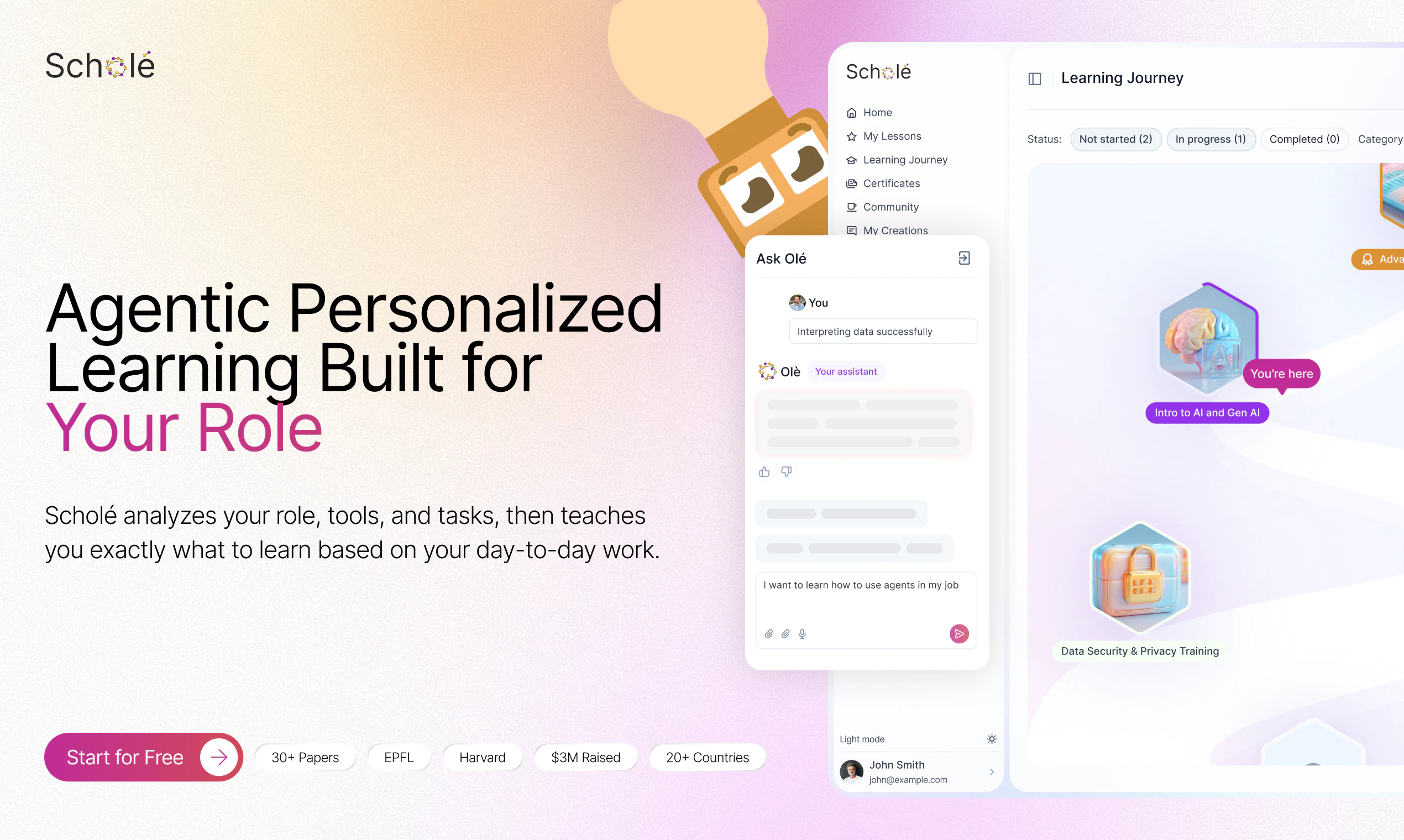
查看原始信息
SeeCost
Hi Product Hunt! SeeCost tracks OpenAI, Anthropic, and Gemini costs with zero API key setup. Just install our OSS SDK and run one init command to capture your spend automatically. OSS Tracker: https://github.com/ronpaou/seecost-tracker ``` npm install @seecost/tracker npx @seecost/tracker init nextjs ``` We never store keys or prompt content—only usage metadata. Sign up free with GitHub.
Hey everyone! I'm the maker of SeeCost from Japan. I was running LLM calls across OpenAI, Anthropic, and Gemini in different apps, and every time I wanted to know my actual spend I had to open three different provider dashboards and mentally add things up. That got old fast. SeeCost fixes this with a small SDK that monkey-patches `fetch` on the server side. It silently reads usage metadata from LLM responses — model name, token count, estimated cost — and sends it to your dashboard in real time. Your app's response is never delayed or modified. Your API keys and prompt content are never touched. The SDK only sees what the provider already returns in the response body. To keep things transparent, we've made the tracker SDK fully open-source. You can audit exactly what data is being sent here: [https://github.com/ronpaou/seeco...] Setup takes about two minutes: 1. `npm install @seecost/tracker` 2. `npx @seecost/tracker init nextjs` (or express / hono / node) 3. Add your SeeCost API key to `.env` From that point, every LLM request shows up grouped by app and provider. Would love to hear what providers or alert types you'd want added next!
1
回复

@seecost  @marugariii777 This is a really clean solution to a genuine pain point. The open-source approach to the tracker builds trust, and the two-minute setup is impressive. Have you thought about adding cost anomaly detection, like alerting when spending spikes unexpectedly across providers.

0
回复