Product Hunt 每日热榜 2026-06-12

PH热榜 | 2026-06-12

#1
Firma.dev
E-signatures API for your app averaging ~3¢ per envelope
306
一句话介绍:Firma.dev 是一款专为开发者设计的电子签名 API,以每份文件约3美分的极低价格,帮助 SaaS 团队快速集成签署功能,彻底摆脱高价、重销售的传统解决方案。
API Developer Tools
电子签名 API 开发者优先 按量付费 白标集成 多工作空间 SaaS 工具 合规签署 AI 代理集成 成本优化 初创企业
用户评论摘要:用户普遍惊叹其低价,但关注点不止于此。主要疑问包括:如何管理 AI 代理的签名权限(防止误发)?相比于 DocuSign 除了价格还有何优势?是否支持多签署人、提醒和 Webhook?以及审计追踪和签署人验证等合规细节。创始团队回应称,白标能力、工作空间隔离和 API 灵活性是其核心差异。
AI 锐评

Firma.dev 的定价(3美分/份)确实是核弹级别的——这不仅是比 DocuSign 便宜99%,而是直接摧毁了“签名即成本中心”的商业逻辑,让签名变成一项可随意内置的基础设施。但真正有价值的不是价格,而是其“API first + 白标工作空间”的双重设计。

观察用户反馈,最容易被忽视的是其“工作空间”功能。这在多租户 SaaS 场景中是刚需:每个客户拥有独立的模板、品牌和 Webhook,无需手动隔离数据。DocuSign 在最高企业版才提供类似能力,且价格高昂。Firma.dev 将其做成默认功能,直击了“用 API 做电子签名却还要处理 UI 层权限管理”的痛点。

此外,其 MCP 服务器(84个工具)面向 AI 代理的设计具有前瞻性。当 AI 能自动发送签署文件时,如何防止失控?他们用“手动切换工作空间”作为隔离机制,虽然朴素,但实用。这暗示了未来 SaaS 产品的一个趋势:API 不仅要让人用,还要让 AI 用,并提供相应的安全护栏。

不过,需警惕其“合法性覆盖55国”的表述。电子签名的法律效力因地区、文档类型而异(如中国、印度对特定文件有严格限制),这是一颗隐形地雷。团队对此的回应是“不在中国合法,请用 DocuSign”,坦率但不够自信。

整体来看,Firma.dev 不是 DocuSign 的平价替代品,而是一个为“原生集成”和“AI 自动化”重写的签名引擎。它的真正价值在于:让任何 SaaS 产品在几分钟内,获得一个合规、可白标、可编程的签名模块,且成本低到可以忽略不计。对于 DocuSign,这或许比价格战更致命——它改变了产品的默认配置。

查看原始信息
Firma.dev
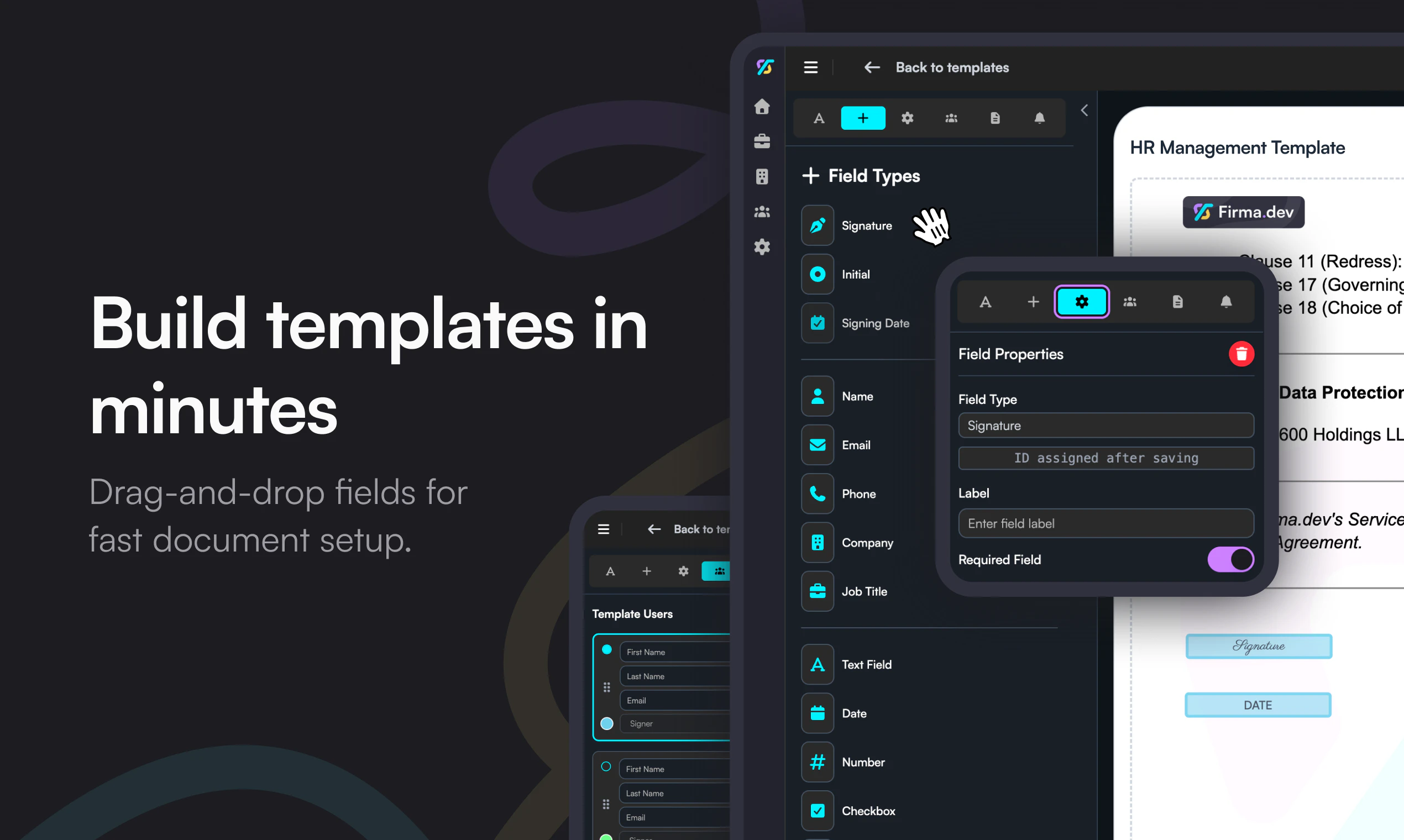
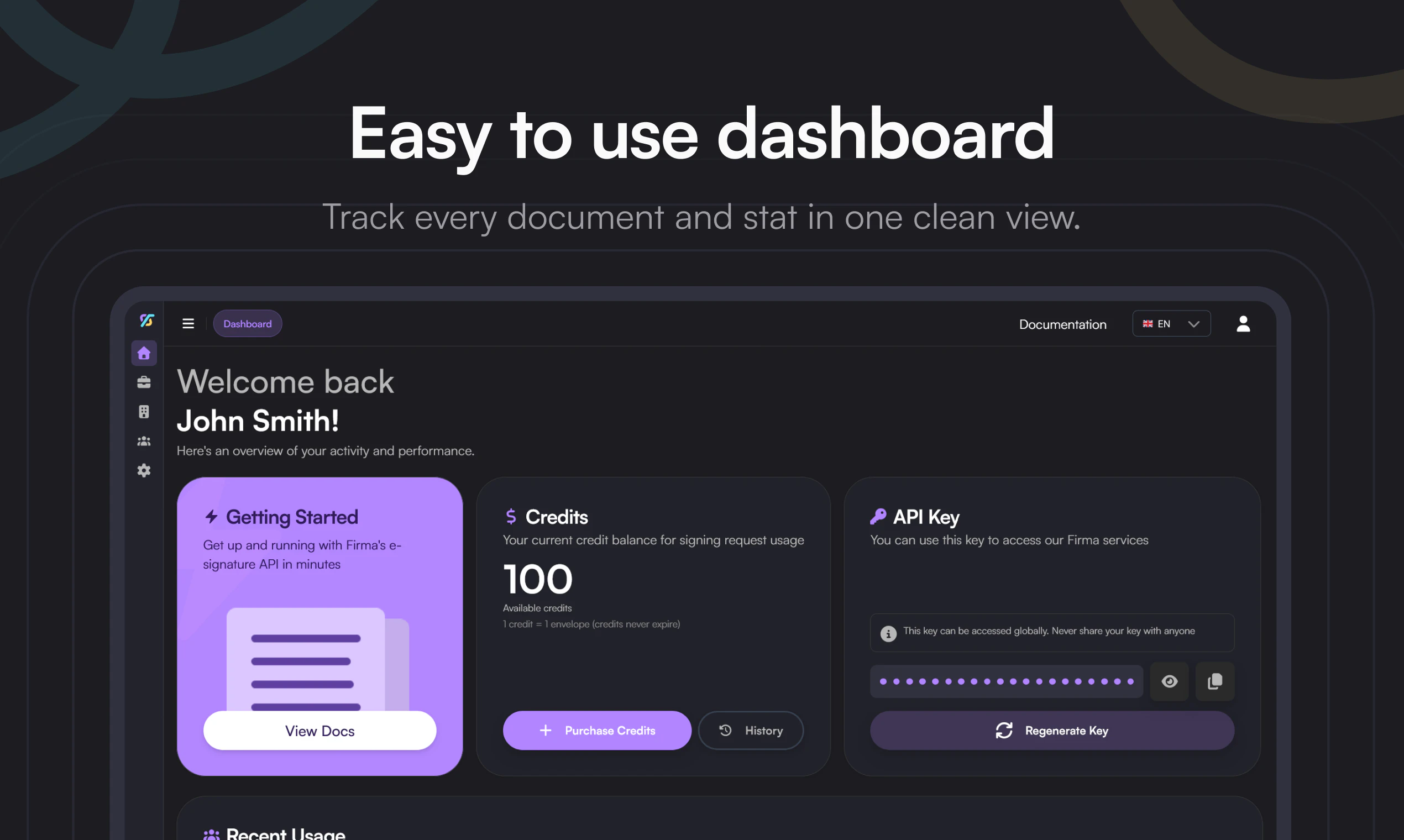
At €0.029 per envelope (about 3¢), Firma.dev runs about 99% cheaper than DocuSign, where one envelope can cost $4-5. Pay-as-you-go, no minimums, no contracts. Built developer-first for startups and SaaS teams who'd rather integrate signing in an afternoon than sit through a sales cycle: clean REST API, embeddable template and signing editors, integration in hours. Test everything free with a sandbox key, real docs and unlimited usage, before you pay a cent. Get an API key and start building.

Hey Product Hunt, Derick here, co-founder of Firma.dev.

We built Firma.dev because every e-signature API we tried was either priced for enterprises or was an end-user app with an API bolted on as an afterthought. We wanted the opposite: an API-first product where signing is something you integrate in an afternoon, not a procurement cycle.

💸 Pricing. €0.029 per envelope, about 3¢, pay-as-you-go with no minimums or contracts. DocuSign can run $4-5 for a single envelope, so for most teams that's around 99% less.

🛠️ Who it's for. If your product touches contracts, you need this: HR and onboarding tools sending offer letters, property platforms handling leases, freelance marketplaces with client agreements, healthtech collecting consent forms, fintech onboarding flows, or any SaaS sending NDAs and proposals. At 3¢ per envelope you can make signing a built-in feature instead of a cost center.

Developer-first. Clean REST API, embeddable template and signing editors, and you can give each of your own customers an isolated workspace with separate templates and usage.

🤖 Built for AI-assisted development. We ship two MCP servers, one for our docs and one for the API itself with 84 tools, so coding agents generate accurate Firma.dev integration code and can even manage signing requests directly. We have a guide for Claude Code, plus Antigravity, Cursor, Lovable and the rest in our docs.

🌍 Legality. Designed to support the frameworks that matter, and e-signatures are legally recognized in 55+ countries.

🔑 Try it free. There's a sandbox key with real documents and unlimited usage, so you can test the whole flow before paying anything. No demos, no sales calls.

We'd love your feedback, especially from anyone who's fought with e-signature integrations before. I'll be around all day to answer questions.

Derick

Happy Friday hunters. 😎

21
回复

@derickd Man it's crazy how cheap this is. Can i get a mail where i can contact you can talk more about the business side of things? Would love to talk.

2
回复

@derickd Congratulations on the launch, Derick! 🎉

The pricing is genuinely eye catching, and I like the API first approach. Making e signatures a built in feature instead of a cost center makes a lot of sense for growing SaaS products.


One question: among your early customers, what has been the biggest reason for switching from existing providers? Was it mainly cost, developer experience, implementation speed, or something else entirely?


Wishing you and the team a fantastic launch!

0
回复

@derickd Congrats, Derick! 3¢ an envelope is an absolute game-changer for startups escaping DocuSign's insane pricing.

I would like to join you on fast scale, as the big hurdle to this point is to offer massive outbound targeting to HR, fintech, and proptech startups who hate high API costs. I can manually source 200 hyper-targeted developer leads and handle all cold outreach replies for you. Let me handle growth while you code!
I look forward to hearing from you. Thanks

0
回复

Congrats on the launch! The API-first approach and pay-as-you-go pricing make a lot of sense for modern SaaS products.

7
回复
@alina_tyslenok_ Thanks Alina! Yah we’re finding our customers are a mix of tiny startups, vibe coded in office apps at mid size companies, and bigger saass with really high volume. Both founders of Firma.dev previously founded another saas and Docusign’s sales cycle is unreal. And the other guys don’t have an api that’s white labelable.
4
回复

The pricing is compelling, but pricing alone rarely wins enterprise deals. What feature or capability do customers cite most often when choosing Firma.dev over DocuSign besides cost?

3
回复

@ankit_narang1 GREAT question yes obviuosly cost is very compelling, but outside that, we find our top customer needs are, in this order:

  1. Legality in your country .. this is binary, you either are or you arent. E.g. we're not legal in China, but we are in 55+ other countries including EU, LATAM, US, and a lot of APAC.

  2. API capability (usually this translates to white label) .. this is an area where we really shine. We built what we always wanted and I think it shows.. we're proud of it.

2
回复
@ankit_narang1 you
0
回复

Wow, the 84-tool MCP server is the interesting part. Pricing an e-sign API at 3¢ basically makes it cheap enough for an agent to fire envelopes on its own, which is great right up until an agent fires one it shouldnt. Whats the guardrail there, can you scope what an agent is allowed to send per workspace? Overall, well done!

2
回复

@artstavenka1 Hi Art. Yup, you sure can. One of our key differentiors at Firma.dev is that we have workspaces (like, at all). Docusign has the capability in its highest tier enterprise plan$.

We created Firma.dev and workspaces because at our previous startup, we wanted to offer e-sign for free to our customers (we never could before), and do it in a secure way.

So the guardrail for the MCP ... itll ask you what workspace you want to engage with, and you have to "manually" switch workspaces. So if you're working with a particular set of customers, one customer, or a team, it works. Its like this: Use workspace Sales Team and send out the Customer Agreement to Derick at support@firma.dev

... make sense?

We're seeing a growing amount of our customers (especially on the real SMB side) using agentic workflows like that.

1
回复

We're also launching today, but I couldn't help but leave this comment - kudos for the really good, appealing video! It's warm, has no fancy polish (which is a good thing I mean), and explains the benefits in an easily digesteable way :) we've done several launches, some of them with videos, and I always pay attention to what videos product makers do. This one is among great examples!
PS: Sending the link to our finance guy! ;)

2
回复

@margarita_s88 Thanks Margarita! We started doing customer testimonials and mini case studies and prioritizing "realness" over quality lol so they look a little homemade but at least you can tell they are real customers! Good luck on the launch Alconost looks useful Im passing this to our team as well.

1
回复

Really interesting work! How did you handle documentation?

1
回复

@nimmy_fanimi Hi Nimmy! Thanks. Documentation is our core product.. since all we make is an API, we have to stay on top of that. We have a stand up meeting every single morning about how to better improve our API docs ... one of the questions we ask each other is "whats 1 thing you can fix today, even if its small, you have to improve something". So that's it .. its like exercise .. just gotta do it every day, even if you don't wanna.

0
回复

Does it support advanced stuff like multiple signers with order, reminders, and webhooks for status changes?

1
回复

@thamibenjelloun Hi Thami. Yes, our API is very powerful, and one of the largest on the market. We have everything you asked about: multiple signers with order, reminders (from us or you), custom domains, graphics, etc per workspace, and tons of webhooks (and those are even per workspace). Thanks for taking a look!

0
回复

The pricing is what made me stop and look. Most esignature APIs seem affordable until you start scaling usage.

1
回复

@busra_seker1 Yah thanks Büşra .. dont get me started on what real volume means to Docusign etc. Its crazy. Even then, they don't come down to our prices. Thanks for taking a look. 😁

0
回复

Great to see this live! Which use case are you seeing the most demand for?

1
回复

@borrellbr Hi Ignacio! Thanks for your comment.

Pretty evenly split among 3 groups.

  • SMB - midcap that are creating mini apps for their own internal workflows. Mostly migrating from purely manual workflows b/c other solutions are too expensive.

  • Established/VC backed SaaSs - Migrating from Docusign, DocuXXXX, (all the docu's) because we offer a fully white labeled product finally thats doesn't kill your budget

  • Startups - People building little apps that need a quick cheap way for their users to sign docs and theres no way that they're gonna get on the phone with Docusign.

0
回复

Lunch & PH launch. 2 in the afternoon here in Barcelona lets see if we can keep going through evening US time 😅

1
回复

The pricing is the obvious hook, but the sandbox key is what would make me try it. E-signature APIs always feel painful until you actually test the full flow. Curious how you handle audit trails and signer verification?

1
回复

@farrukh_butt1 Thanks Farrukh. We're devs, and had the pain point first hand of having TERRIBLE APIs with the existing e-sign providers, so we built it how we would want. The thing about e-sign is, there's a lot of little laws you need to follow and be aware of .. audit trails are part of that. We have fully legal, compliant audit trails (just like Docusign) in 55+ countries. Okay fine if you need documents in China, use Docusign and pay $5 an envelope. But ours are totallly compliant and you can even configure them via the API / GUI.

0
回复

3 cents per envelope with no minimums is honestly the pricing model e-signatures should have had years ago. Indie hackers and small SaaS teams have been stuck either paying DocuSign enterprise rates or duct-taping PDFs together. Really excited to try this out.

0
回复

I love the idea of making e signatures cheap enough that team stop treating them as a premium feature. One founder might see signing as a revenue stream, while another sees it as infrastructure. Your approach clearly leans toward the second philosophy.

0
回复

The dedicated workspace model seems underrated. Many teams building multi tenant SaaS products spend a lot of time figuring out document separation and permissions. Was this designed from customer feedback or from your own experience?

0
回复

@darly_selby YES DARLY THANK YOU--I feel seen 😅 that's one of our true core features is that the entire API(branding, webhooks, keys, everything) can be silo'd. E.g. You're a multi tenant saas and a new customer signs up, you auto-provision a new workspace, they can create their own templates, domains, etc, but yah you get it.

But to answer your question .. yah it was built from our own (painful) experiences on the customer side.

It came from that feature not existing in the open market when we were building an HR app. At that company, were using a Docusign knockoff and their API cost around 50 cents per doc, but we had to go an manually (through the GUI) make a team, and then our support staff would have to manually create their templates for them .. super labor intensive.

We didn't even know what to call them b/c the concept didn't exist, when all those other e-sign companies are built around the concept of a GUI and individual users sending docs .. not an API.

Thanks for taking a look.

0
回复

The pricing caught my attention first but the sandbox plus no minimums part is probably even more valuable for smaller teams

0
回复

@ada_johnsen Yup! And you can get started super easy .. versus talking to a sales team and getting quotes for API usage. Thanks for looking! 😁

0
回复

Is this API-only? We use PandaDoc, but not through the API—we use it as regular users to manually sign documents with clients and partners. Do you have a B2C/self-service option as well? If so, how much does it cost?

0
回复

@natalia_iankovych Hi Natalia! Great question. We probably aren't the best fit for you, unless you're retooling some of your workflows, e.g. building internal mini apps, or have software using an API. We do have a full powered GUI (that we're proud of) .. but white labeling via API for super cheap volume senders will always be our focus. 98% of our users send via API, 2% GUI.

We also play really well with things like N8N, Salesforce, etc. Our "self service" option is mostly used by people that connect our MCP server right into their Claude/ChatGPT .. but honestly thats pretty case dependent, you know?

However, if you find yourself thinking about processes in your org, and e-sign is part of that, hit us up.

0
回复
#2
Qursor
Point at any UI to send exact context to your AI
269
一句话介绍:Qursor是一款浏览器扩展,让用户通过点击网页任意UI元素,自动提取并复制其结构化代码上下文(选择器、样式、字体、颜色等),粘贴给AI代理,彻底解决“描述不清导致AI改错元素”的痛点。
Productivity Developer Tools Artificial Intelligence
浏览器扩展 UI上下文提取 AI编程辅助 前端开发工具 样式检查器 字体检测 色彩拾取 代码片段提取 生产力工具 开发者工具
用户评论摘要:用户普遍认可解决了“与AI反复描述元素”的痛点。核心反馈包括:需要支持Safari、处理状态性元素(下拉、悬停)的能力、是否适用于内部工具/SaaS后台。部分用户对比了Claude Design的标记功能和MCP Chrome DevTools,认为Qursor的“框架无关”和结构化输出是差异化优势。
AI 锐评

Qursor精准切中了当前AI编程热潮下的一个被忽视却高频的“无效输入”环节。开发者用Claude、Cursor等工具时,最大的成本并非代码生成,而是通过自然语言向AI精确描述目标元素的“翻译损耗”——一次误读可能消耗10轮对话。Qursor的价值在于它不是一个泛化的截图工具,而是一个“结构化上下文万用桥”:它从渲染的DOM中抽取Selectors、Classes、Styles等机器可操作的数据,直接消除了AI的解析歧义。

技术上,其“框架无关”是关键护城河。与Tidewave等特定框架方案不同,Qursor基于文件对象模型(DOM)读取,适应所有Chrome网页,包括复杂的SaaS后台和内部工具,实用性极高。商业策略也足够聪明:免费版限制每日使用次数(3次),用低频场景引流;39美元终身买断则直接转化重度用户——而这类人群恰恰是每次AI对话都可能因描述不清浪费0.1美元的高频付费者,他们很容易算出账。

潜在隐患在于竞品跟进。如评论所提,MCP DevTools已提供全页面上下文,而Cursor、Claude等工具也可能原生集成“点击选择元素”功能。Qursor若不能尽快建立插件生态(如支持Safari、集成到vscode)、增加“状态快照”(冻结hover/下拉等瞬态样式)等硬能力,很容易被平台内化。当前的优势窗口期有限,但工具本身的逻辑和定价策略无可挑剔。

查看原始信息
Qursor
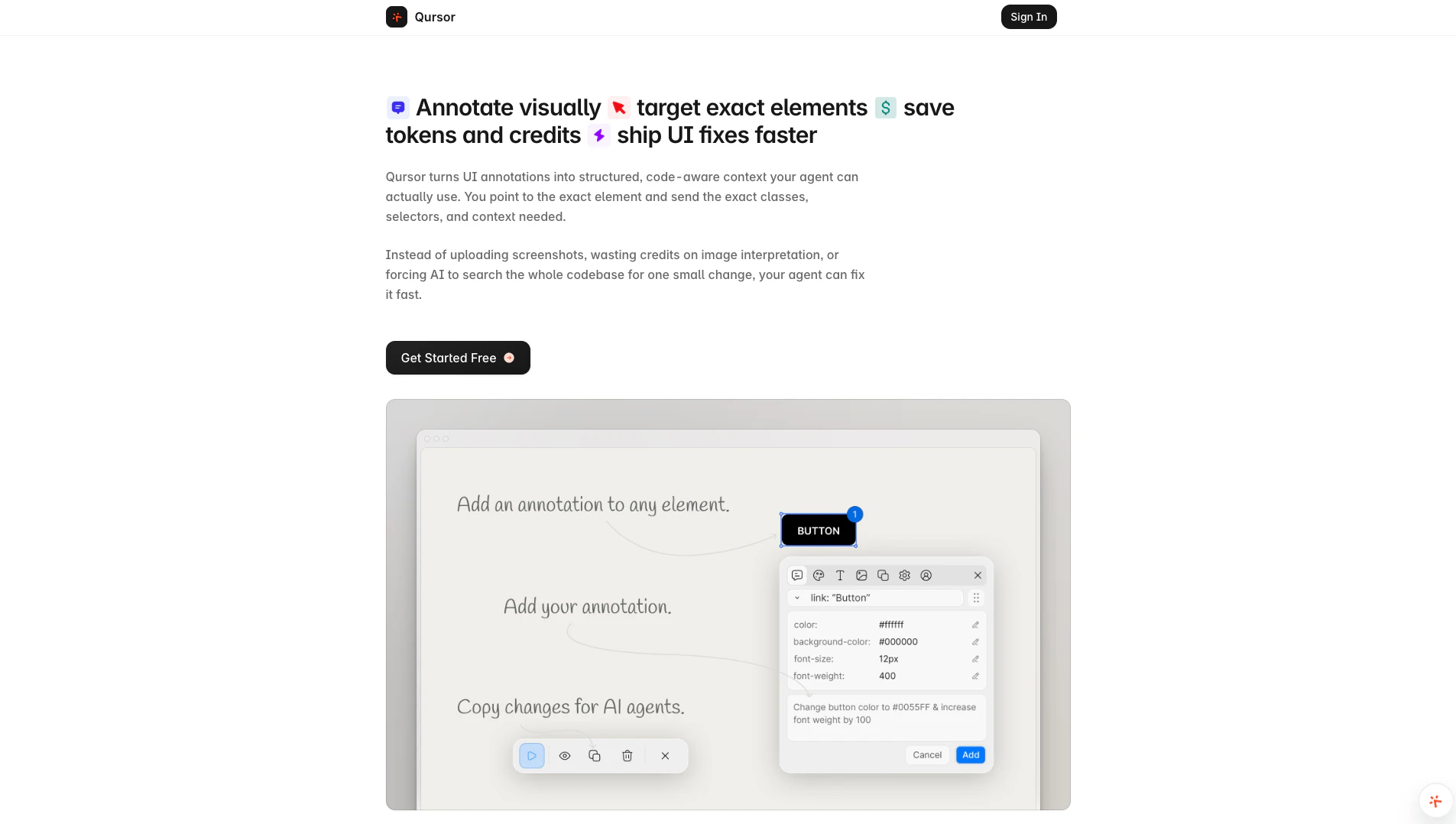
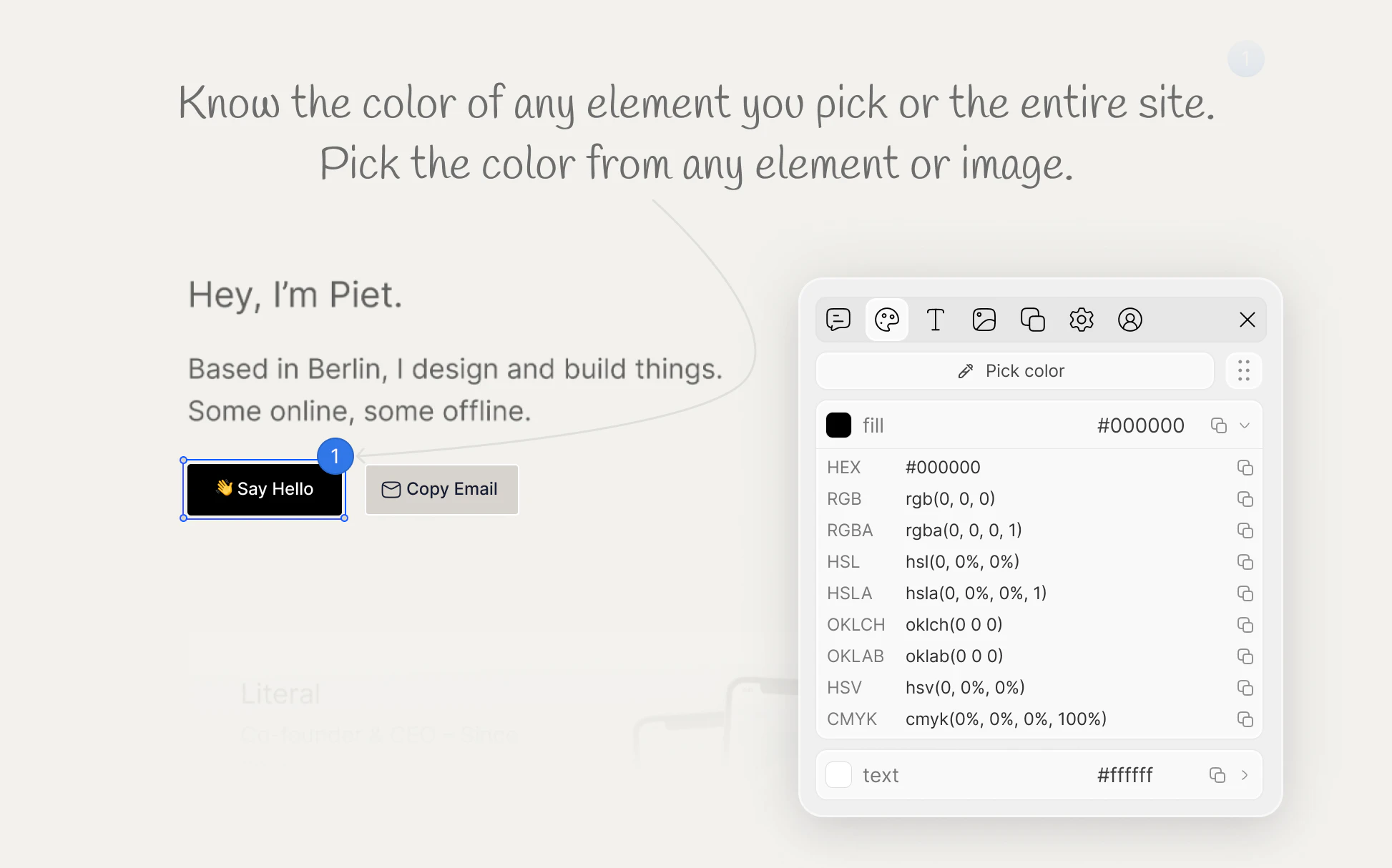
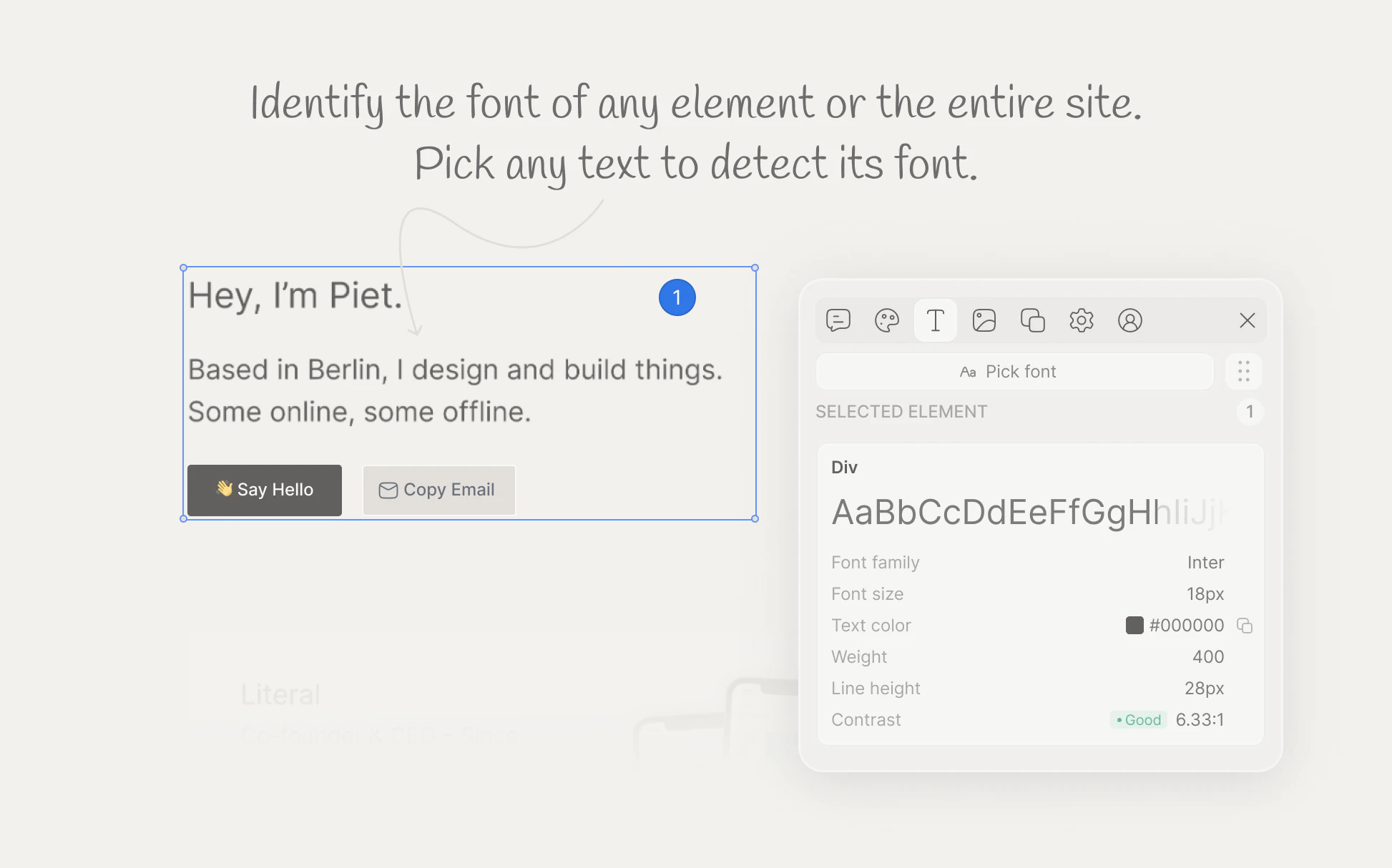
I kept wasting AI tokens describing UI changes to agents that edited the wrong element. So I built Qursor. Point at any element, copy structured context (selectors, classes, styles, fonts, colors), paste into your AI agent. No vague screenshots. No burned credits. - Inspect fonts, colors, spacing - Copy AI-ready element context - Extract components as HTML/CSS/JSX - Color picker and font detector - Download assets from any page
Hey Product Hunt! I'm the maker of Qursor, and honestly, this started as a personal frustration. I was using AI agents to make UI changes and kept running into the same wall: the agent would edit the wrong element, or I'd burn 10 prompts just trying to describe "that blue button on the pricing page." Screenshots helped a little, but agents still had to interpret them, wasting tokens and time. So I built Qursor. It lets you point at any element on any website, and it copies structured, code-aware context, selectors, classes, styles, fonts, and colors directly into your clipboard. Paste it into your agent, and it knows exactly what to change. What you can do today: - Visually inspect any UI element (fonts, colors, spacing, layout) - Copy AI-ready context with selectors, classes, and your own notes - Extract components as HTML, CSS, or JSX - Pick exact colors and detect fonts from any site - Download SVGs, PNGs, JPGs without digging through network tabs - Let clients annotate exactly which element they want changed No competitors I know of - I just had the problem, built the solution, and some early users told me it saved them real time. Free plan available (3 picks/day). Lifetime deal at $39. Would love your feedback - especially how you're using AI agents for UI work today!
6
回复

@theomkarbirje Great idea, thanks for building this. I definitely want to try it.

The biggest pain for me right now is that I usually have to do this through Inspect, and it takes too much time. Styles are not included, so I often end up combining a screenshot with copied source code just to explain one UI change to an agent.

This is exactly the kind of friction that should disappear.

1
回复

@theomkarbirje Love this. The fact that it came from a real workflow pain makes it immediately click.

I've lost count of how many times I've had to fight an AI agent just to modify a specific UI element, and the back-and-forth can get ridiculous. Giving agents structured context instead of making them guess from screenshots feels like a very obvious solution in hindsight.

Congrats on the launch. Curious to learn more about the business behind it as well. What's the best email to reach you on? Would love to connect and explore a few ideas.

0
回复

@theomkarbirje Congratulations on the launch! 🎉

This solves a very real problem. I have definitely spent more time than I'd like trying to explain to an AI agent which button, section, or component I wanted changed.


One question: have you found that providing structured element context significantly improves the accuracy of AI-generated UI changes compared to screenshots alone? If so, what kind of reduction in prompts or iterations are users typically seeing?


Wishing you a fantastic launch and plenty of happy users! 🚀

0
回复

This is a real agent failure mode. More context is useful, but exact target context is what stops the agent from confidently editing the wrong thing.

Curious if you see Qursor staying as copy-to-agent context, or moving toward a guardrail where the agent can propose the patch and leave a receipt of exactly what changed.

2
回复

This is a great idea especially for people who want to create websites. Personally I've been using claude code, Claude design specifically. I was wondering what separates this from the mark up feature in Claude design where you just circle the part you want to change and send a prompt through to Claude.

I can definitely see this as being very useful for non-website development specific AIs

0
回复

I've been waiting for something like this for quite a while. I'm so happy someone finally built it.

0
回复

I vibe-code most of my app with Claude Code and the "no, the other blue button" loop is painfully real. Copying selectors + styles instead of a vague screenshot is the right fix. Any plans for a Safari version, or is Chrome the long-term home?

0
回复

This is amazing. imma use it a lot tbh.

0
回复

Hey, that's smart, great idea. I use Tidewave, and that includes a pointer as well, but it only works with certain frameworks, so your extension might be what I need for other projects, I'll check it out!

0
回复

@jaime_iniesta Tidewave looks great when its pointer works with your stack, and Qursor is aiming to be the “works everywhere” version so you can point at any UI in Chrome and still grab clean selectors and styles for your agent, even on projects outside those supported frameworks.

1
回复

this is cool, can I use this to fix my webflow design?

0
回复

@chintant As much as I know, Webflow is a visual editor where you design directly in the dashboard, not an AI agent. Qursor is most helpful when you are working with AI coding agents or chat-based tools and need to send them precise UI context.

0
回复

how it handel the framework code when we inpect those elements ?

0
回复

@saad_nadeem3 Qursor does not care which framework you use because it reads from the rendered DOM, so when you point at something, it grabs the real element with its selectors and styles.

0
回复

@theomkarbirje This solves a very real context problem. A lot of AI help breaks down because describing the UI manually is slow and incomplete. Pointing at the exact screen state feels much closer to how people naturally ask for help.

0
回复

@alpertayfurr Thanks a lot for saying it so clearly. That is exactly the gap I am trying to close

0
回复

Honestly this scratches an itch I didn't know I could fix. Half my back-and-forth with agents is just me describing "no, the button next to that one" and praying it gets it. Sending exact context (classes, styles, fonts) instead of a vague screenshot makes way more sense. Clean execution too. Congrats on the launch 👏

0
回复

@oktay_atalay_ Love this, thanks a lot for taking the time to write it. That “no, the button next to that one” loop is exactly what I was stuck in, so it is really cool to hear that the structured context idea resonates.

0
回复

The token-waste problem is real. How does Qursor handle stateful elements - like a dropdown that's only visible when open, or a hover state? Those are usually impossible to inspect without freezing the UI somehow.

0
回复

Just use MСP Сhrome Dev Tools for your AI agent and it will be able to see the page, no need for any additional services that transfer the UI into the context

0
回复

@dren0r Totally, MCP DevTools is great when your agent already has full page access wired up. Qursor is more for cases where you are just chatting with an AI coding agent or using different tools, and you want a fast, framework‑agnostic way to point at a specific element and hand over clean selectors, styles or HTML without wiring anything.

0
回复

Congrats on the launch!


This looks useful. One thing I'd want to know is whether it works just as well on internal tools and SaaS dashboards as it does on public websites.

0
回复

@henry_habib Qursor works the same way on internal tools and SaaS dashboards as long as you can open them in Chrome, so you can point at elements in your admin panels or internal UIs just like on public sites.

0
回复

The context problem is the thing nobody warns you about. I vibe-code in Claude Code and Cursor all day with zero coding background, and half my time goes to explaining which button is broken instead of fixing it. Pointing at the actual UI beats pasting a screenshot and typing "the third card on the left," that part kills my flow. Does it send the code behind what I point at, or just the visual? That's where context leaks for me.

0
回复

@luca_capone You are describing exactly the same leak I ran into. With Qursor, it is not just the visual; it grabs the element plus structured context around it: selectors, classes, inline styles, and layout info, so the agent can see both what it looks like and where it lives in the DOM.

In short, the thing you do in ClaudeCode of describing, instead you start Qursor and point to which element you wanted to change, click and annotate here. You can do multiple annotations on this page and then copy all annotations for Claude Code to do.

0
回复

The 'agent edited the wrong element' problem hits way too close to home. I've definitely wasted a bunch of prompts just trying to describe which button I meant. Pointing at the element and grabbing the actual selectors/styles is so much cleaner than throwing a screenshot at it and hoping. Going to give the free plan a spin on a project this week

0
回复

@alon4 Love hearing this, that is exactly the loop that pushed me to build Qursor.

0
回复

Really like this, "agent edited the wrong element" is such a real token-waster. Copying structured selectors/styles instead of a vague screenshot is the right idea. Does the copied context stay small enough that it doesn't eat half the agent's context window on a busy page?

0
回复

@ianhxu Great question. In practice the copied context is surprisingly small – usually just a few hundred tokens even on a busy page – so it is tiny compared to a screenshot and nowhere near half of an agent’s window. Also, it has 4 modes, so you can go even smaller or increase if you wanted to give clearer context.

0
回复

This would be really useful in client feedback loops too. Instead of someone saying “change this section” and sending a blurry screenshot, they could point to the exact element and pass clean context to the developer or agent.

0
回复

@farrukh_butt1 Client feedback is where this hurts a lot. With Qursor, they can still click on “change this section,” but instead of a blurry screenshot, you get the exact element with selectors and styles you can hand straight to a dev or an agent.

0
回复
#3
Pond
Fundraising, GTM, and bounties for startups
221
一句话介绍:Pond为初创公司提供集融资、增长获客与贡献者赏金于一体的市场化基础设施,解决商业化流程滞后于AI加速产品构建的痛点。
Marketing Artificial Intelligence Fundraising
初创融资平台 Go-to-Market 赏金任务 AI增长代理 Stripe验证 全球贡献者网络 早期获客 投资者图谱 创业基础设施 收入验证
用户评论摘要:用户关注点集中于:GTM如何具体获取早期用户而非仅融资;验证机制(Stripe外其他数据源支持)及刷新频率;防欺诈设计;赏金能否辅助企业级交易。有用户希望利用赏金招募多国家测试者,创始人回应称支持模板化工作流与基于成果的验证。
AI 锐评

Pond试图解决一个真实但棘手的矛盾:AI让产品构建快如闪电,但融资、渠道和用户获取仍停留在石器时代。其“收入验证即信用”的切入点够犀利——用Stripe数据替代募资PPT,既过滤劣质项目,也降低投资者尽调成本。3分钟融资150K的案例虽有营销嫌疑,但指向一个本质变化:当后AI时代的创业变成“已验证需求+快速执行”的游戏,传统VC的社交人脉筛选逻辑正在失效。

然而,产品野心过载是最大隐患。将融资、GTM、赏金、CRM打包为“在线加速器”,看似一站式,实则违背“初创公司阶段痛点极度垂直”的铁律。早期项目更需要精准单点突破,而非泛化工具箱。尤其赏金网络的设计根基薄弱:10,000+贡献者难以支撑跨行业、地域的复杂任务质量,且“成果导向”的防筛反会驱离高价值自由职业者。更致命的是,Pond作为平台掌控流量分发与信用评价,一旦规模化,信息不对称极易催生刷量马太效应——这正是创始人Dylan回复中“MRR和用户增长自己说话”的悖论:按收入排名,头部项目会虹吸所有关注,尾部项目彻底沦为无人问津的僵尸池。

核心价值在于它提供了一种“反r结构性排除”:非洲、东南亚的创始人终于能靠真实收入数据而非斯坦福校友标签获得第一笔钱。但长期看,Pond必须做减法:要么深耕“可验证收入”的Stripe对接流,成为数据驱动的微型投行;要么押注赏金社区,做成去中心化的Upwork。两者兼得,大概率两头不靠。另外,Coinbase Ventures的站台暗示其可能作为Web3跳板,若未来引入代币化股权或去中心化治理,才是真正颠覆。现在,它更像一个包装精美的“信心加速器”——能帮最亮的明星更亮,却未必让暗处的种子发芽。

查看原始信息
Pond
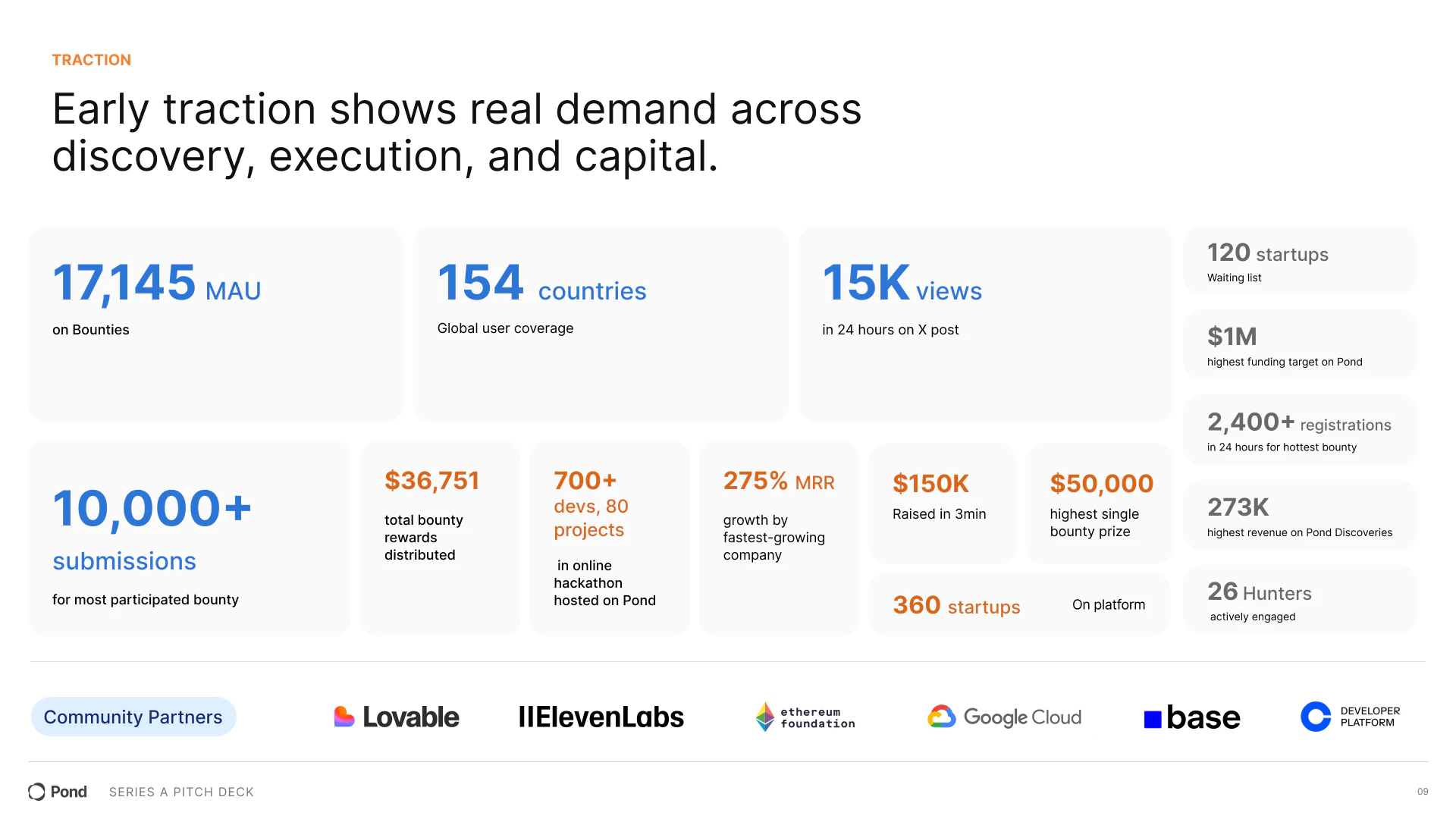
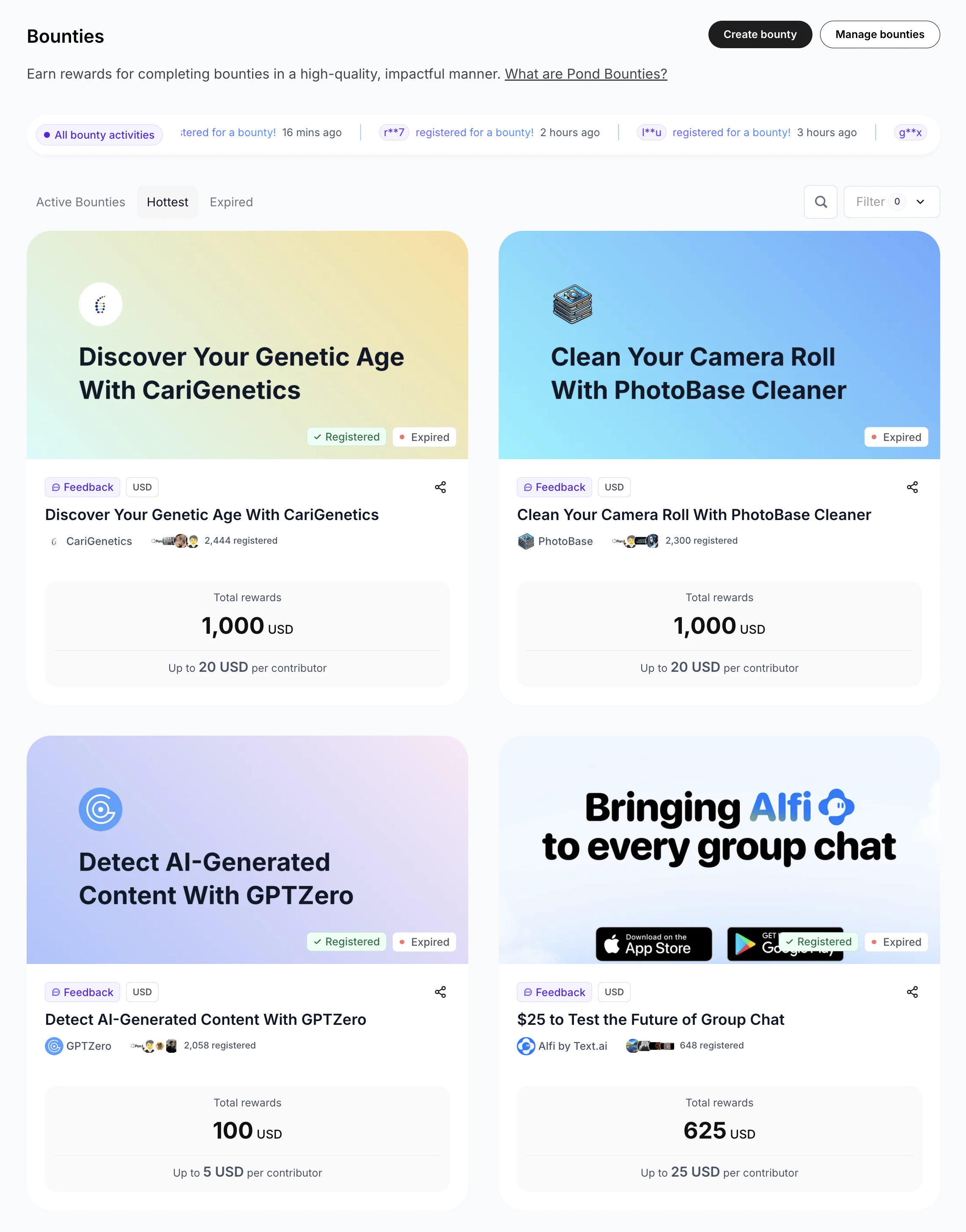
Pond is the market infrastructure for the new startup economy. Verified founders raise capital, acquire customers, and access 20,000+ contributors in one place. · Markets: Stripe-verified metrics + Vault-protected funding. One startup raised $150K in 3 minutes. · Bounties: 10,000+ submissions, $36K+ distributed. Ethereum Foundation, GPTZero, PhotoBase. · AI Growth Agent: CRM, pipeline, and GTM on autopilot. 400+ startups · 154 countries · Archetype & Coinbase Ventures.
Hey 👋 I'm Dylan, founder of Pond. The idea came from a simple observation: AI has made building startups 10x faster, while the pace of startup commercialization—fundraising, go-to-market, and execution—has barely changed. So we built Pond: a platform where founders can raise their first round from anywhere in the world, and a community of 10,000+ people ready to help solve startup challenges through a bounty-based network. The moment that validated everything: a startup on Pond raised $150K in just 3 minutes, and we now have 100+ startups on the waitlist. Not because of a great pitch deck. Because their MRR and user growth spoke for themselves. Notable investors have started using Pond to discover startups and source deals personally, including a former Accel investor. (Accel has backed companies such as Facebook, Anthropic, Spotify, and many others.) Pond helps startups around the world launch their first fundraising round in as little as 5 minutes and get backed by investors globally. Founders can raise multiple rounds on Pond or go on to raise from traditional VCs in the future. Think of Pond as an online accelerator for your business—built to help founders turn traction into capital. Pond supports founders throughout the fundraising process and helps them scale afterward. We’re backed by multiple Tier 1 investors, including Archetype, Coinbase Ventures, and 30+ angel investors. Our backers include founders of unicorn companies, the co-founder of one of the world’s leading digital asset infrastructure providers, a co-author of the foundational GPT paper, and other leading founders, operators, and investors. Happy to answer anything about how Pond works, what we’ve learned from supporting 400+ startups and investors on the platform, or why we believe the startup economy is the next major platform wave after Amazon and TikTok. AMA 🙏
8
回复

@thinksdylan The framing here makes sense as a response to the compression of startup building cycles, but the real long-term challenge will likely be market integrity at scale.

Once fundraising, GTM execution, and bounties sit in one ecosystem, the definition of “signal” becomes the product itself.

Curious how you’re thinking about separating durable traction signals (retention, revenue quality) from optimized short-term performance metrics as participation grows globally.

0
回复

@thinksdylan Thank you for creating Pond. In all honesty, traditional fundraising platforms have not kept up with the rapid changes AI has introduced to the startup environment. Great ideas fall by the wayside because of commercialisation challenges that founders find insurmountable. Thank you.

0
回复

@thinksdylan congrats on the launch! will you guys be operating in the US?

0
回复

Great combo Dylan! Got it the fundraising side, but what about GTM? Do you help to get first early adopters??

1
回复
@german_merlo1 Yes — GTM is a big part of Pond. Beyond fundraising, we help founders get early adopters through growth campaigns, contributor-led distribution, product feedback, and bounty-based tasks. Would love for you to try Pond and share what kind of GTM support would be most useful for you.
0
回复
Do you plan to expand beyond stripe?
1
回复
@lakshminath_dondeti Yes. Stripe is our first integration because it gives us a clean way to verify revenue and traction, but we plan to expand beyond Stripe to support more data sources and payment providers globally.
0
回复

Pound Bounties seems like an interesting framing; how do you deal with fraud, has it been an issue so far?

0
回复
@vugar_javadov Great question — fraud is definitely something we think about carefully. For Pond Bounties, we reduce fraud by making tasks outcome-based, requiring clear submission criteria, and letting founders review work before rewards are approved. We also look at contributor behavior, submission quality, duplicate activity, and suspicious patterns over time. So far, the key is designing bounties around verifiable outputs instead of vague participation. That makes it much easier to separate real contribution from low-quality or fraudulent activity. Feel free to try Pond — happy to hear any feedback.
0
回复

How does the verification work for founders, I want to know what gets checked and how often is it refreshed?

0
回复

@thamibenjelloun Great question.

For founders, verification starts with real business traction. Today, we focus on signals like revenue, MRR, user growth, and connected data sources such as Stripe or GA where available.

The goal is to help investors look beyond pitch decks and evaluate startups based on actual performance. We’re also working toward making these metrics refresh regularly so founder profiles stay up to date as the company grows.

Feel free to check out Pond and send over any feedback.

0
回复

The hardest part is usually getting those first customers. How the GTM side performs compared to the fundraising side?

0
回复

@mert__33 Totally agree — getting the first customers is often harder than building the product.

That’s why we see fundraising and GTM as connected. Pond Markets helps founders turn traction into capital, while Pond Growth and Bounties help with feedback, early users, campaigns, and distribution support.

We want to help startups keep growing after they raise, not just complete a round.

0
回复

The description is a bit confusing) Am I understanding correctly that your platform can provide users for testing?

I have a travel AI, and right now we're trying to run a blind comparison test of our responses against other models. We can prepare the response dataset ourselves, but finding test participants across different countries is still an unsolved problem. Is that something you can help with?

0
回复
@natalia_iankovych Yes — this is exactly the kind of use case Pond Bounties can help with. You can create a bounty to recruit test participants across different countries, define the testing criteria, share the response comparison task, and collect structured feedback from real users. For a travel AI, this could be especially useful because travel expectations vary a lot by region, language, and user behavior. Would love for you to try Pond Bounties, and feel free to reach out if you need any help setting it up.
0
回复

Do you provide templates or frameworks to get there?

0
回复
@sasha_mcclendon Yes — we provide guided workflows and practical frameworks to help founders get started faster. For example, founders can use Pond to structure fundraising rounds, define bounty tasks, collect feedback, run GTM campaigns, and present traction more clearly to investors. The goal is to make the path from traction to capital and growth much more actionable, not just give founders another blank workspace. Would love for you to try Pond and share what kind of framework would be most useful for your startup.
1
回复

Nice work shipping this! What made you decide to build this now?

0
回复
@borrellbr Thank you! The timing felt right because AI has made it much faster to build products, but fundraising, GTM, and execution are still fragmented and slow. Would love for you to check out Pond and share your feedback.
0
回复

Nice concept. Do the bounties help close enterprise deals or are they more about early traction?

0
回复
@dhiraj_patel5 Great question. Today, bounties are mostly focused on early traction: user feedback, product testing, community growth, lead generation, and campaign execution. But I think your ideas are great, we'd love for you to explore Pond and tell us what kind of bounty workflow you’d want.
0
回复

@dhiraj_patel5 We’ve recently supported bounties that helped companies close deals more efficiently and create a stronger sense of urgency among prospective customers.

For example, one startup posted a bounty with us and delegated the community to conduct competitive analysis and research on their target accounts. The goal was to identify whether those prospects were already using services similar to the startup’s offering.

The startup also asked community members to share their findings publicly on social media. For instance, if the community discovered that a prospect’s competitors were already using a particular service, they would post about it and tag the prospect. A typical post might say:

“Based on our recent research, we found that [Company A] is using this service, and it has helped them improve key metrics by X%.”

The startup then used these research findings to strengthen its sales outreach. Their sales team could approach prospects with a message like:

“Someone recently highlighted that your competitor is using a solution similar to ours, and reports suggest it has improved their efficiency by X%. Our platform delivers even better results. Would you be interested in exploring how we can help you outperform your competitors in this area?”

0
回复

Love the global angle. Opening access to founders regardless of geography could unlock a lot of talent that traditional venture networks often miss.

0
回复

@artem_myronchuk Exactly. If a startup has real traction, revenue, and user growth, it should be able to access capital and support regardless of where the founder is based. That’s a big part of why we built Pond.

0
回复

Congrats on the launch! Bringing fundraising, customer acquisition, and contributor networks together in one platform solves a surprisingly fragmented problem for founders.

0
回复

@marianna_tymchuk Thank you, Marianna — that’s exactly the problem we’re trying to solve.

Founders today don’t just need capital. They also need customers, contributors, feedback, and execution support. Pond brings those pieces together so startups can move from traction to scale much faster.

0
回复
#4
HyperSleep
Block social media until you've actually slept
186
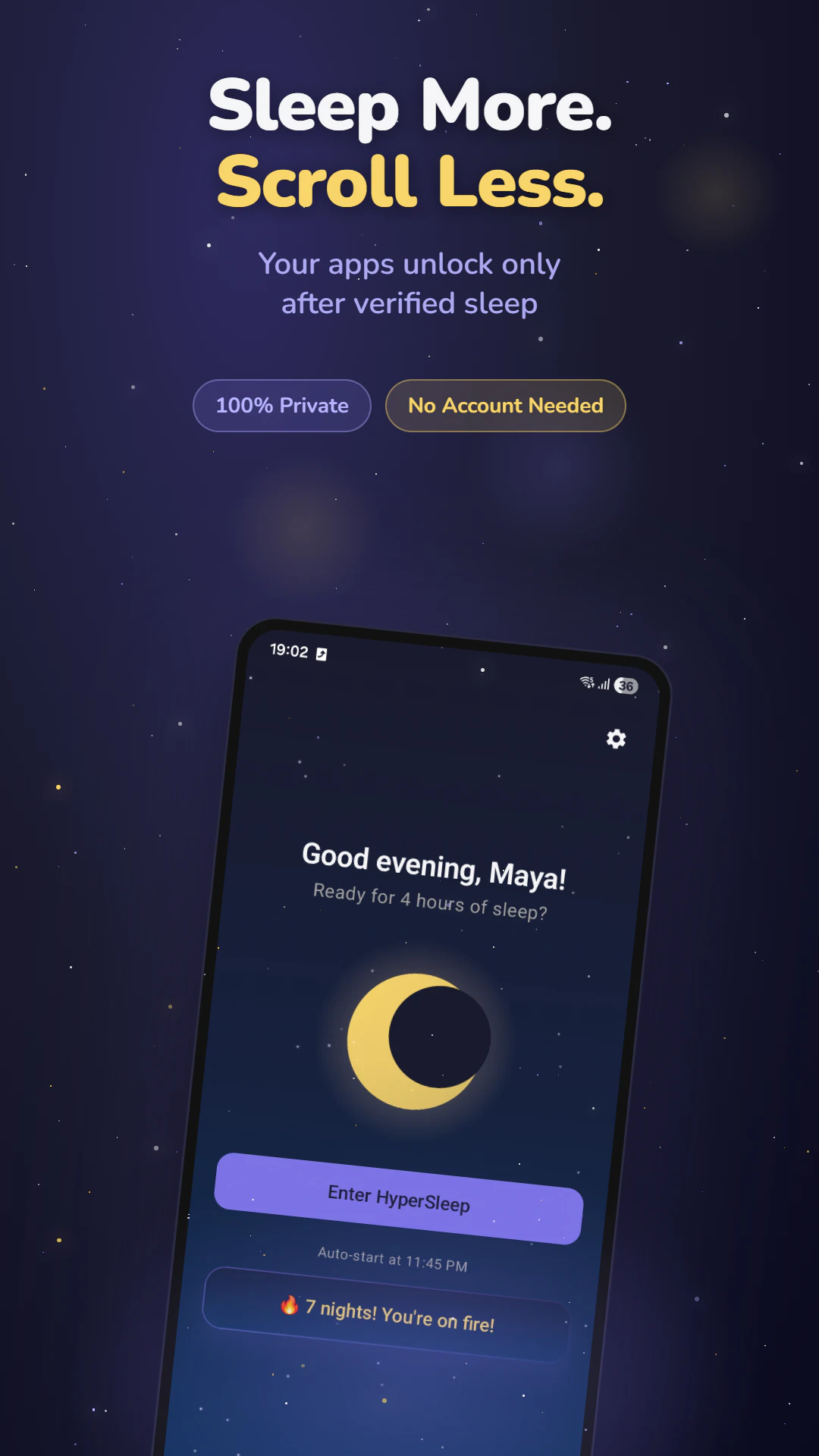
一句话介绍:HyperSleep通过多传感器验证用户是否真正入睡,将解锁社交应用的权利与“实际睡眠”绑定,解决传统屏幕时间管理应用在深夜依赖意志力而失效的痛点。
Android Health & Fitness Productivity
睡眠管理 屏幕时间控制 安卓 多传感器检测 行为锁定 意志力替代 隐私优先 无云端 社交应用封锁 习惯养成
用户评论摘要:用户关注传感器误判(失眠/旅行时)的紧急解锁方案,赞赏“以睡眠换取屏幕时间”的激励翻转;建议增强传感器透明度显示,支持智能手表进一步验证;质疑与系统自带勿扰模式的本质区别,担忧深夜用户可能直接卸载应用。
AI 锐评

HyperSleep的精妙之处在于它把“限制”包装成了“奖励”。当无数屏幕时间App仍在与用户深夜的冲动意志力死磕时,它巧妙地绕开了战场:你不再需要对抗“想刷手机”的欲望,而是被引导去“获取”刷手机的资格——而资格的唯一凭证是睡眠。这个心理学翻转,让产品从一个需要持续对抗的“监工”变成了一个正向反馈的“游戏化系统”。

然而,产品的硬伤也很明显。评论中不乏敏锐的质疑:传感器70%的置信度在面对失眠、倒班或旅行等常态时几乎必然误判,虽有“紧急退出”作为保险,但每一次手动覆盖都在削弱“行为锁定”的严肃性。更重要的是,对于那个在2am会无脑点“忽略”的用户,谁又能保证他不会在同样2am直接卸载HyperSleep?产品的终极敌人不是其他屏幕时间App,而是用户那根深蒂固的卸载冲动。

真正的差异化在于,HyperSleep赌的是用户对“诚实反馈”的需求远大于对“强制约束”的反感。它把控制权还给了生理状态,而不是抽象的时间。但成也萧何败也萧何,Sensor的准确度将是决定它成为“习惯重塑神器”还是“闹心电子锁”的唯一分水岭。这是一个大胆但风险极高的实验,它成功的标志不是用户留下来了,而是用户不再需要它。

查看原始信息
HyperSleep
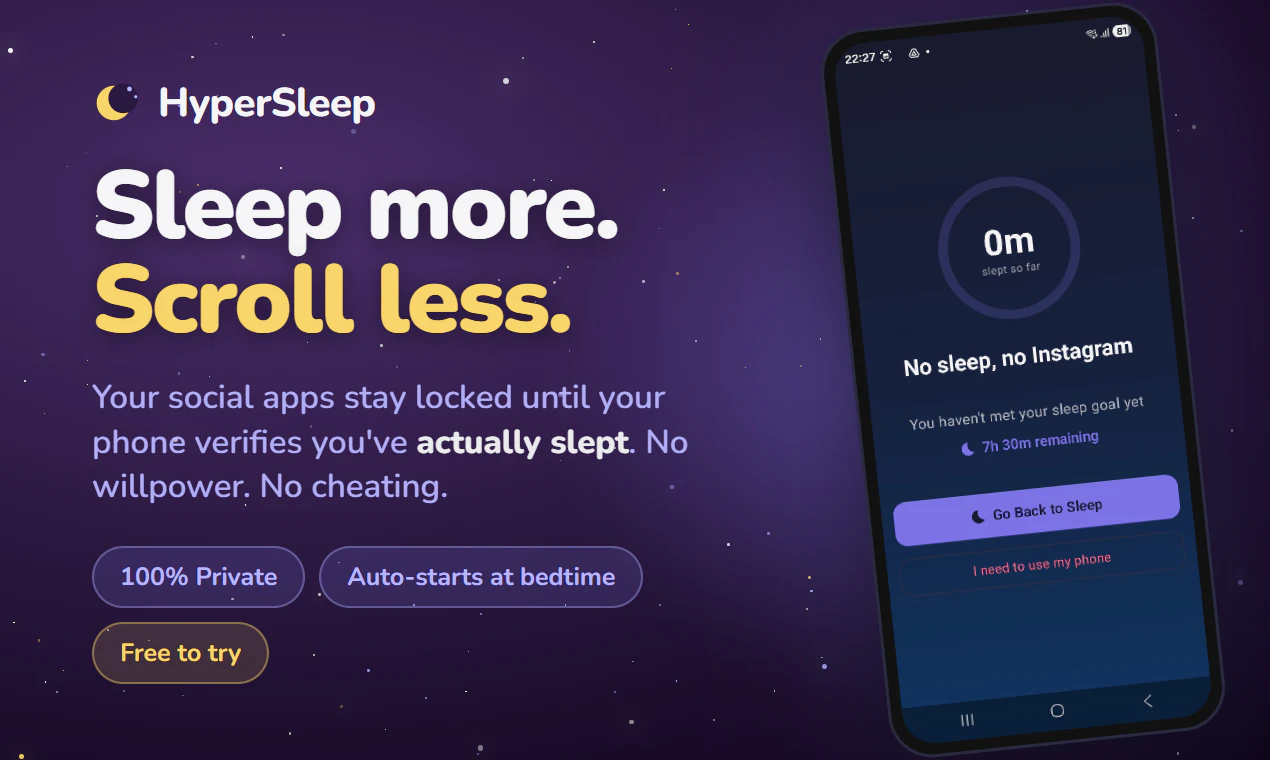
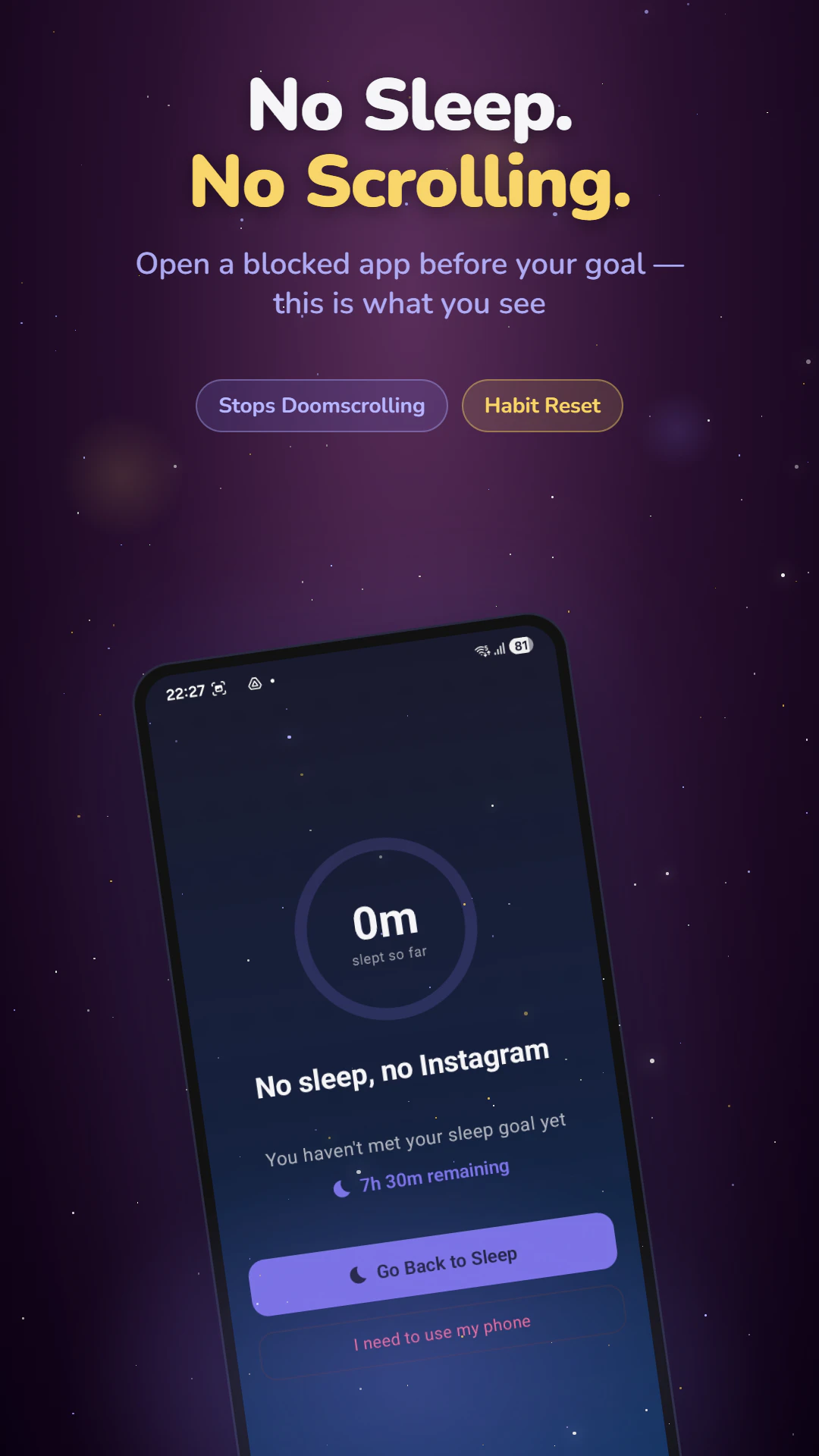
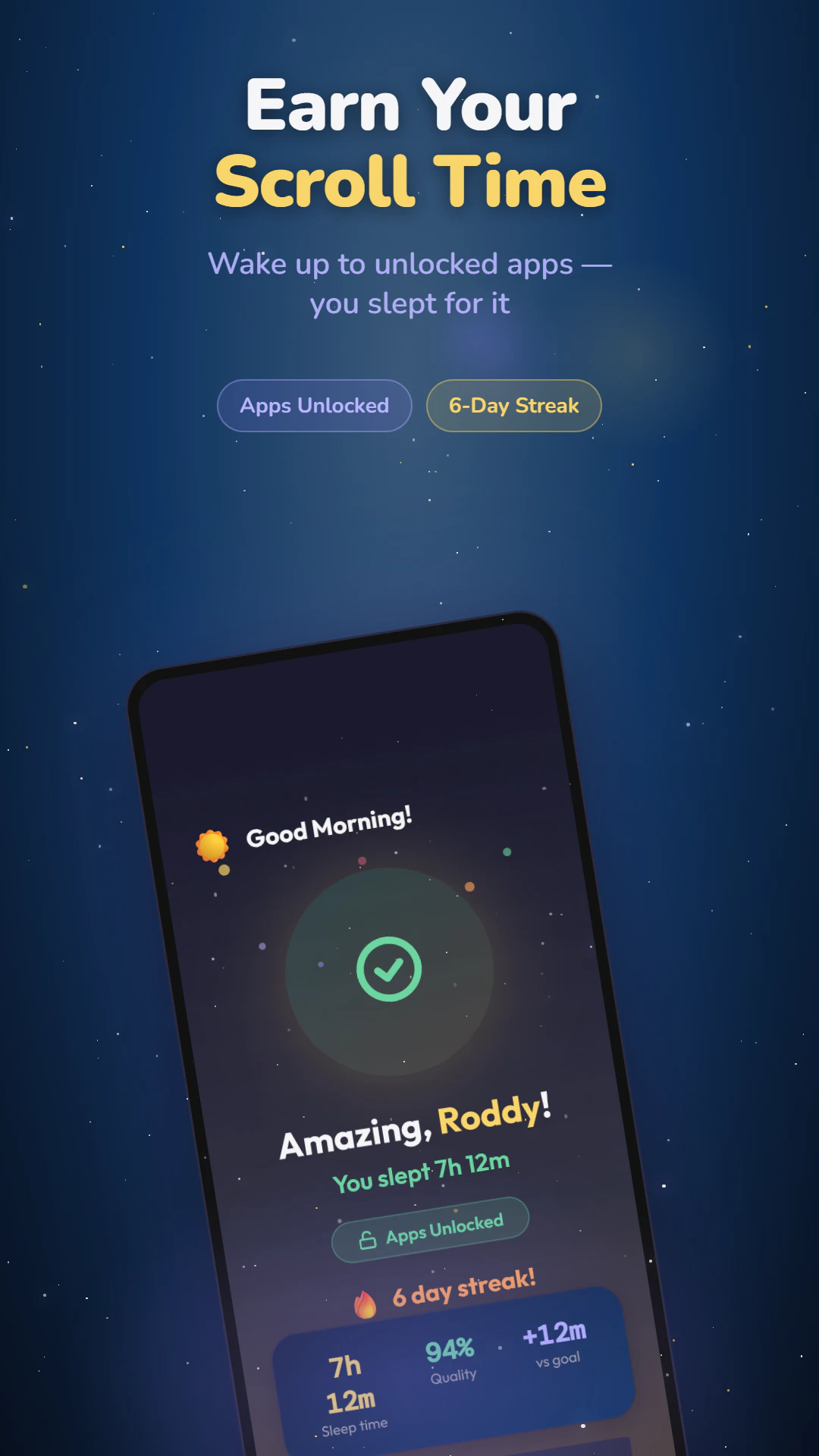
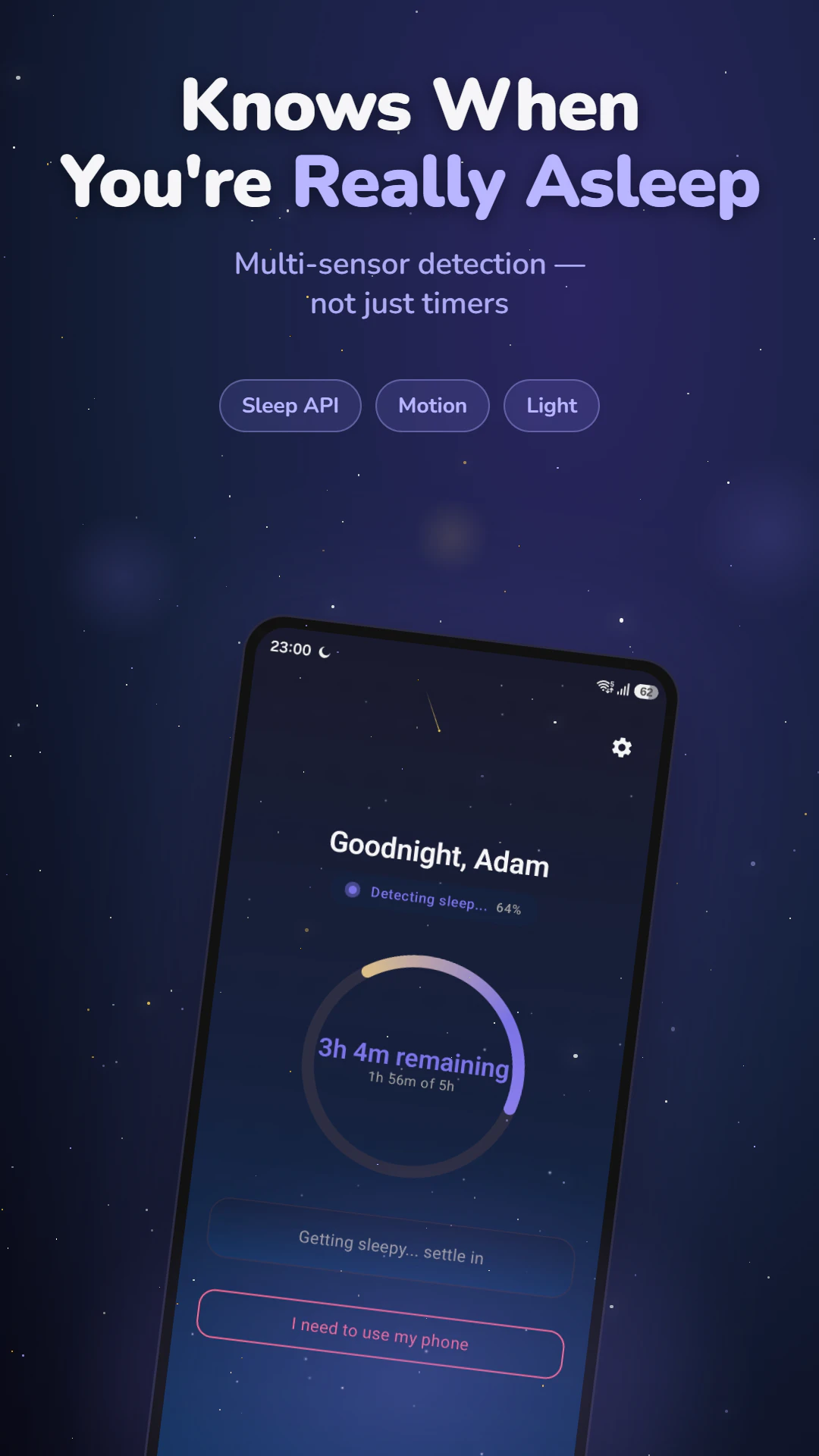
Every screen-time app fails for the same reason: you have to turn it on and at 1am, you won't. HyperSleep flips it. Your social apps stay locked until multi-sensor detection verifies you actually slept. It auto-starts at bedtime, runs 100% on-device, and turns "scroll less" from willpower into an outcome you earn. Android.

What other features does it have apart from blocking at certain hours?

4
回复

@busmark_w_nika Hello there Nika. Great question! Quick reframe first, because it's kind of the whole point .

HyperSleep doesn't just block during set hours. It keeps your apps locked until it verifies you've actually slept (Google Sleep API + motion + light + usage signals). So even at 2am, opening Instagram won't work until you've hit your sleep goal, there's no timer to wait out.


Beyond that core:

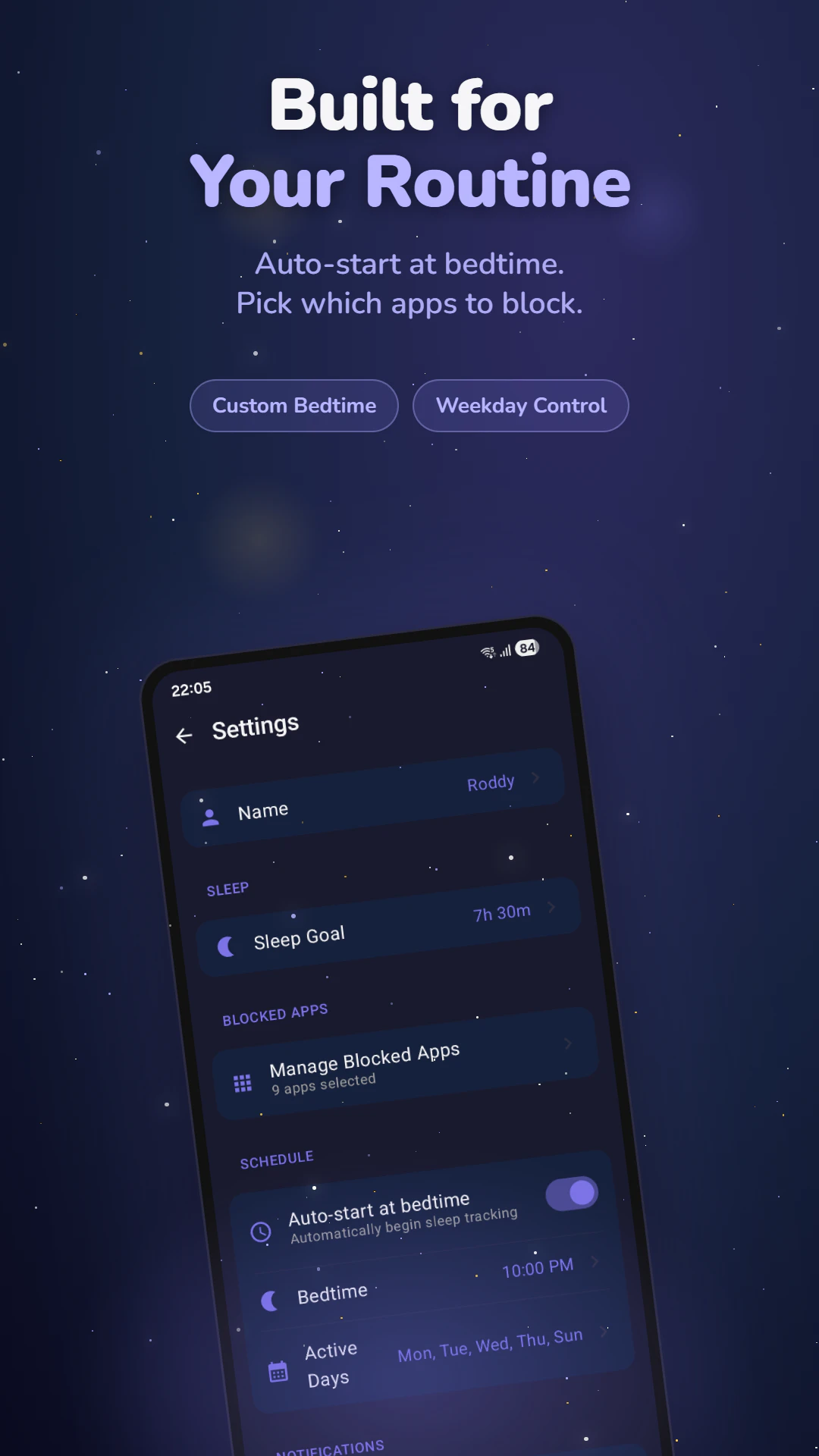
  • 🌙 Auto-starts at your bedtime. No remembering to turn it on

  • 🎯 You choose which apps to lock and your own sleep goal

  • 🔥 Streak tracking + a morning recap - sleep time, quality %, and how you did vs your goal

  • 🆓 Real-life overrides. A 5-min "quick break" (adds to your goal) or a full override with an accountability cost, so it's flexible, not a prison

  •🔐 100% on-device; no account, nothing leaves your phone

Love what you're building with your minimalist phone app. We're chasing the same goal from different angles

3
回复
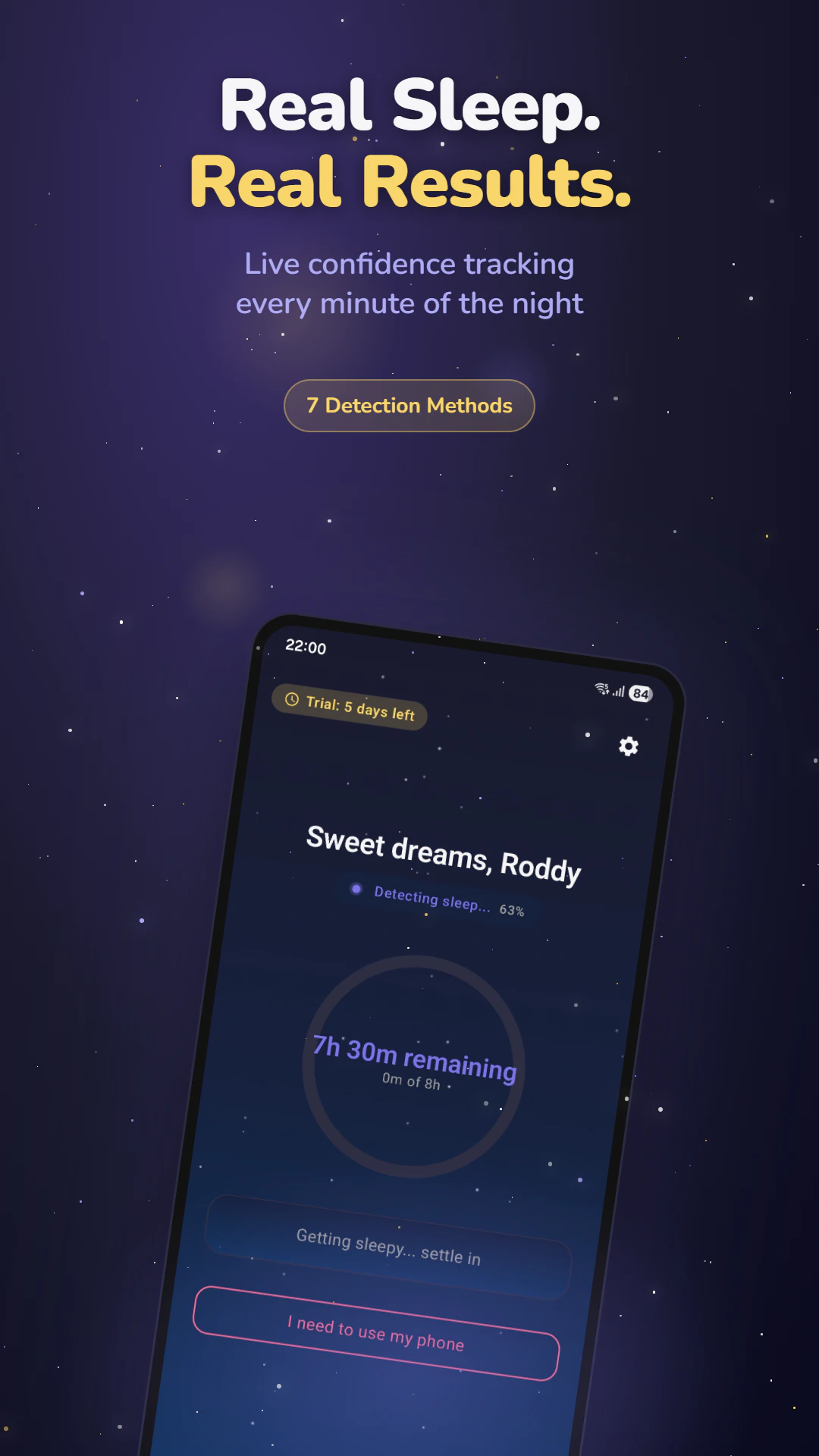
Hey Product Hunt 👋 I'm Roddy, maker of HyperSleep. I built this because every screen-time blocker I tried had the same fatal flaw: they rely on willpower. You set a limit, then tap "ignore" at midnight or never turn the thing on. I'd "decide" to sleep and somehow be 40 minutes into Instagram at 2am. So I flipped it. HyperSleep keeps your chosen apps locked until you've actually slept; verified on-device with multi-sensor detection (Sleep API + accelerometer + light + usage, ~70% confidence over 20+ continuous minutes). You don't earn screen time with a timer. You earn it by sleeping. 🌙 It starts itself - set a bedtime once, it auto-begins nightly. 🔒 You can't cheat it - outcome-based, not a clock you wait out. 🔐 100% local - no account, no cloud, nothing leaves your phone. Android-first (iOS on the roadmap), 5-day free trial. I'd love your feedback on the detection accuracy + the "earn your scroll" framing. What would make you trust an app to lock your phone until you sleep? 🙏
2
回复

@hypersleep Congrats on the launch, Roddy! Flipping the incentive structure to outcome-based rewards is a super interesting approach. I actually just ran the screen-time blocker and habit-tracking niche through my tool, MarketGapAI, which analyzes thousands of complaints across Reddit and the Google Play Store. Interestingly, the number one reason users delete or give up on strict blocking apps is false positives - like the app failing to unlock because a sensor misread passive awake time (like reading a physical book) as sleep, creating massive user frustration.

Curious to know - how does HyperSleep handle manual overrides or edge cases where the 70% confidence threshold misses the mark, or are you focusing on dialing in the sensor calibration first?

1
回复

Nice idea! Does it connect to smartwatches as well?

2
回复

@kate_ramakaieva Thank you Kate🙏 Not yet. And that's by design for v1: HyperSleep runs entirely on your phone's own sensors (Sleep API + motion + light + usage), so it works for everyone with zero extra hardware. No watch to buy or keep charged.

That said, native Wear OS / smartwatch support is firmly on the roadmap — a watch's heart-rate and movement data would make the sleep verification even tighter, so it's a natural next layer.

Out of curiosity, what watch are you on? Helps me figure out which to prioritize 🙂

1
回复
Omg much needed product I feel… look at the time I am scrolling through product hunt 😅 All the best… launch soon in IOS to use and share my experience
1
回复

@harini_mukesh Haha, the fact that you're discovering a sleep app while scrolling Product Hunt past bedtime might be the most on-brand thing all launch 😅 You're exactly who I built this for.

Thank you for the kind words 🙏 iOS isn't here yet (Android first for now), but it's firmly on the roadmap and I'd love to have you try it. Want me to ping you the second it lands?

Also, a big update is dropping very soon with more features on the way, so it only gets better from here. Would love your honest take once you're in.

0
回复
@hypersleep Yes please, Do ping me when the iOS version lands… Happy to share honest feedback after trying it out
0
回复

Earn your scroll time by sleeping- that's a refreshing twist. Most blockers just guilt-trip you.

Quick question: what happens if the sensors misread a sleepless night (insomnia, travel, etc.)? Does it have an emergency override, or am I locked out of my apps until the algorithm decides I slept?

Love the privacy-first approach. No cloud, no account rare these days. Nice launch.


1
回复

@wasil_abdal Thank you Wasil🙏. Frankly, the most important question here, so I'm really glad you asked.

Short version: you're never trapped. It's friction, not a prison.

🚨 Only the apps you pick are ever locked; calls, alarms, messages, maps, all of it stays open. A 3am emergency is never an issue.

  🆓 For the blocked apps, there's an "I need my phone" override right on the lock screen, a 5-min quick break or a full override that ends the session. Your call, anytime.

 🌙 Overrides carry a small accountability cost (a quick break nudges your goal) so cheating isn't frictionless but you're always the one in control.


And you're spot on that sensors aren't perfect. Insomnia and travel are exactly the cases no detector nails. That's precisely why the override exists. I'd rather be honest (~70% confidence + an easy escape hatch) than pretend it's a flawless sleep lab.


Appreciate the privacy callout too: local-first was a hill I'd die on 🙂 Curious though: does that balance feel right to you, or would you want the escape hatch even more frictionless? Still tuning it.

0
回复

@hypersleep I like that this ties app blocking to an actual behavior goal instead of just “be more productive.” Blocking social media is easy to ignore, but connecting it to sleep makes the boundary feel more meaningful.

1
回复

@alpertayfurr Exactly this. You put it better than I usually do 🙏

"Be more productive" is too abstract to lose to at 1am. Sleep is concrete: you either hit your hours or you didn't, no negotiating with yourself. And it's a goal you already want; the app isn't imposing some new discipline, it's enforcing the one you'd choose anyway when you're rested enough to think straight.

 It's also why I dodged the guilt angle most blockers lean on. Not "you're weak, scroll less". It's "sleep, and your apps are right there waiting." A reward you walk toward, not a punishment you endure.

Genuine question: do you think the boundary would feel just as meaningful tied to other behaviors someday (a workout, a morning routine), or does sleep hit different because it's the one we all quietly fail at?

0
回复

This is such a relatable problem 😅. So many of us set screen time limits with good intentions, only to ignore them when bedtime actually comes around.

I really like the idea of focusing on the outcome rather than the timer. "Earn your scroll by sleeping" is a clever concept and feels different from most screen-time apps I've seen.

The fact that everything runs locally is a huge plus as well.

1
回复

@gabriella_anjani This honestly made my day 🙏 You just described exactly why I built it; I was the guy who'd set a "limit," tap "ignore," and resurface from Instagram at 2am wondering where the night went. The timer was never the problem. I was 😅.  So, I built something I couldn't argue with.

And local-first was non-negotiable: your sleep patterns are nobody's business but yours. No account, nothing leaves the phone.

Genuine question, since you resonate with it, what's your 1am app of choice? The one you know you should put down but somehow don't 😅

0
回复

Congrats on the launch Roddy. I build in the recovery space for natural lifters and short sleep is the single biggest driver of bad training days I see, so turning screen time into something you earn by sleeping is a clever inversion of every blocker that relies on willpower. The multi sensor confidence approach is interesting. How does it handle shift workers and split sleepers whose night never looks like one clean block? Strong launch so far, well deserved.

1
回复

@oshylabs Thanks Arnold. And coming from someone in the recovery space, that means a lot. You're seeing the same thing that motivated this: short sleep wrecks the next day, and willpower-based blockers fail exactly when you're most tired. The whole bet is that earning access beats restricting it.

On shift workers and split sleepers; great question, because you're right that the "one clean 11pm–7am block" assumption breaks for a lot of people. Two things help here:

1. It's not tied to the clock. You can start a session manually whenever your sleep window is; 9am after a night shift works exactly the same as 11pm. The schedule is yours to set, not a fixed "night."

2. The goal is total verified sleep, not one unbroken block. We confirm sleep in bouts (20+ continuous min of fused signals to filter out noise), and what matters is accumulating toward your goal, so a split night reads as sleep, not a fail.

That said, you've hit on something we want to go deeper on: biphasic/segmented sleep and rotating shift patterns are their own design problem, and "what counts as one night" gets genuinely interesting there. Would love to pick your brain on what good recovery-aware handling looks like for the lifters you work with.

Appreciate the thoughtful launch support which is exactly the kind of feedback that sharpens the product. 🙏

0
回复

How does it work? Do you have to put the phone on your bed?

1
回复

@louislecat Great question Louis. Nope, you just keep your phone on your nightstand like usual or bedside table, wherever. No need to put it on the bed or under your pillow. HyperSleep reads motion, light, and Google's Sleep API in the background to confirm you slept, then unlocks your apps in the morning. No wearable, nothing on the bed. 😴

0
回复

Hey Roddy! I have seen a lot of apps like these. How's hyper sleep different?

1
回复

@umermedia Hey Umer! Fair question. There are a lot of screen-time apps out there 🙂

Here's the core difference:

Most blockers are time-based. HyperSleep is outcome-based.

Typical apps lock your apps on a schedule or a timer but a timer doesn't care whether you actually slept, and you can usually just tap "ignore" or "5 more minutes" until the willpower runs out.

HyperSleep gates access on verified sleep, not the clock. HyperSleep doesn't need willpower, it uses your body. We use multi-sensor detection (Google's Sleep API + motion + light + usage) to confirm you actually slept before your apps unlock. You can't snooze your way past it.

The psychology flip is the real magic: instead of restricting you ("you've used your 30 min, no more"), you earn your scroll time by sleeping. It feels like a reward, not a punishment, which is the difference between an app you delete in a week and one that actually changes the habit.

And for the inevitable "but what if I really need my phone?"; there are built-in overrides, so it nudges rather than imprisons.

What apps have you tried? Genuinely curious what made you bounce off them.

0
回复

Genuinely curious about the positioning here. Most phones already ship a native bedtime/wind-down mode that locks apps or greys the screen on a schedule, so I'm trying to pin down what HyperSleep adds on top. Is the whole bet the outcome-based unlock, ie. you can't just wait out a timer or tap "ignore," you actually have to have slept? Because if so, that's the part worth leading with, not the "auto-starts at bedtime" angle which the OS already does.

Where I get stuck is the willpower point: the person who taps "ignore" on Instagram at 2am is also the person who'll uninstall the app at 2am. So who is this really for, the motivated user who'd configure native Focus mode anyway, or someone else? Help me understand the gap native modes leave open :)

0
回复

Something I didn't emphasize enough above 👇

Every other blocker has the same flaw: it needs you to show up at the exact moment you're least able to: 1am, tired, already three reels deep. You have to choose to stop, right when choosing is hardest.

So I took the human out of the loop.

 You set your HyperSleep bedtime once. That's the only decision you make. After that:

🌙 It starts itself. Every night, no reminder, no tapping "start"

🔒 Your apps lock on schedule whether you feel like it or not

 ☀️ They unlock in the morning, but only once you've actually slept

No willpower. No human interruption. You set it, you forget it and you stop fighting yourself at midnight, because you already won that fight at 9pm.

Honest question: how many screen-time apps have you downloaded… and then never opened again? 😅

0
回复

The “earn your scroll” framing makes sense because willpower definitely fails at night. I’d trust it more if the app showed a simple reason for each unlock, like what signals it used to decide I actually slept.

0
回复

@farrukh_butt1 Hi! Great instinct. And good news, transparency is already built in, both live and in the morning.

While a session is active, open your phone anytime and you'll see the Active Sleep Ring - your live sleep progress. The moment the phone detects motion, the timer pauses and switches to "Detecting sleep…" until you've settled and set the phone aside. So you're never guessing what HyperSleep thinks you're doing; it's showing you, in real time.

In the morning, the unlock screen gives you the full summary: total sleep (e.g. 7h 12m), a quality %, how you did vs your goal, and your streak. So it's never a silent unlock. You always see the result you earned.

And we're making a good thing even better: a coming update adds an even more detailed breakdown - a signal-by-signal view (Sleep API ✓ / motion / light / phone-untouched) with the confidence score behind each unlock, so you can see exactly which signals agreed.

Appreciate you raising it. Building trust through transparency is exactly the bar we hold ourselves to. 🙌

0
回复
#5
KOSH Money
USD account & credit cards for freelancers & creators
180
一句话介绍:KOSH Money为亚洲自由职业者和创作者提供无需美国公司实体的美元账户及信用卡,解决跨境收款中平台限制、延迟到账和高额隐性费用等痛点。
Android Freelance Banking Credit card
金融科技 跨境支付 美元账户 数字银行 自由职业者 虚拟信用卡 创作者经济 亚洲市场 稳定币 收款工具
用户评论摘要:用户普遍认可产品易用性和低门槛,尤其对Upwork收款、绑定订阅工具(如ChatGPT)的流畅体验点赞。但用户关注:隐藏转换费及账户冻结风险、现金回馈政策、非平台直接收款(如客户AP系统)的兼容性、对印尼等高汇率地区费率的敏感性,以及地区限制问题(如黎巴嫩未被支持)。
AI 锐评

KOSH Money切入了一个真实且痛感明显的细分市场:亚洲自由职业者的美元收付需求。它巧妙避开了与Wise、Payoneer在通用跨境汇款上的正面竞争,转而专注于“平台化收款+本地化支出”的闭环场景——如Upwork、TikTok Shop、Meta创作者支付。这种差异化定位使其产品对目标用户具备“刚需”属性,尤其是“无需美国公司”和“支持USDC/USDT持有”这两点,直击合规与资产管理的双重障碍,价值清晰。

然而,产品的真正护城河尚未显现。目前的核心竞争力更多是“填补空白”,而非“构建壁垒”。评论中隐藏的合规与风控问题才是生死线:自由职业者最怕突然冻结账户或资金卡在合规审核中。用户明确提出的“如何避免合规暂停”与“客户AP系统支付兼容性”问题,已触及最敏感的信任层面,处理不慎将重蹈同行覆辙。此外,缺乏现金回馈、费率未见明确承诺“透明化”、地区扩展缓慢,都让这款产品更像一个高效的“支付工具”而非一劳永逸的“资金管理平台”。

短期看,KOSH凭借极简体验和场景适配能快速获客;长期看,它需要从“收款入口”进化到“资金运营中枢”,在合规稳定性、金融产品丰富度(如用户关心的信用决策问题)、以及全球化覆盖上构建更深的价值。不做“第二个Wise”,但要警惕成为“功能更多但依旧脆弱的数字钱包”。

查看原始信息
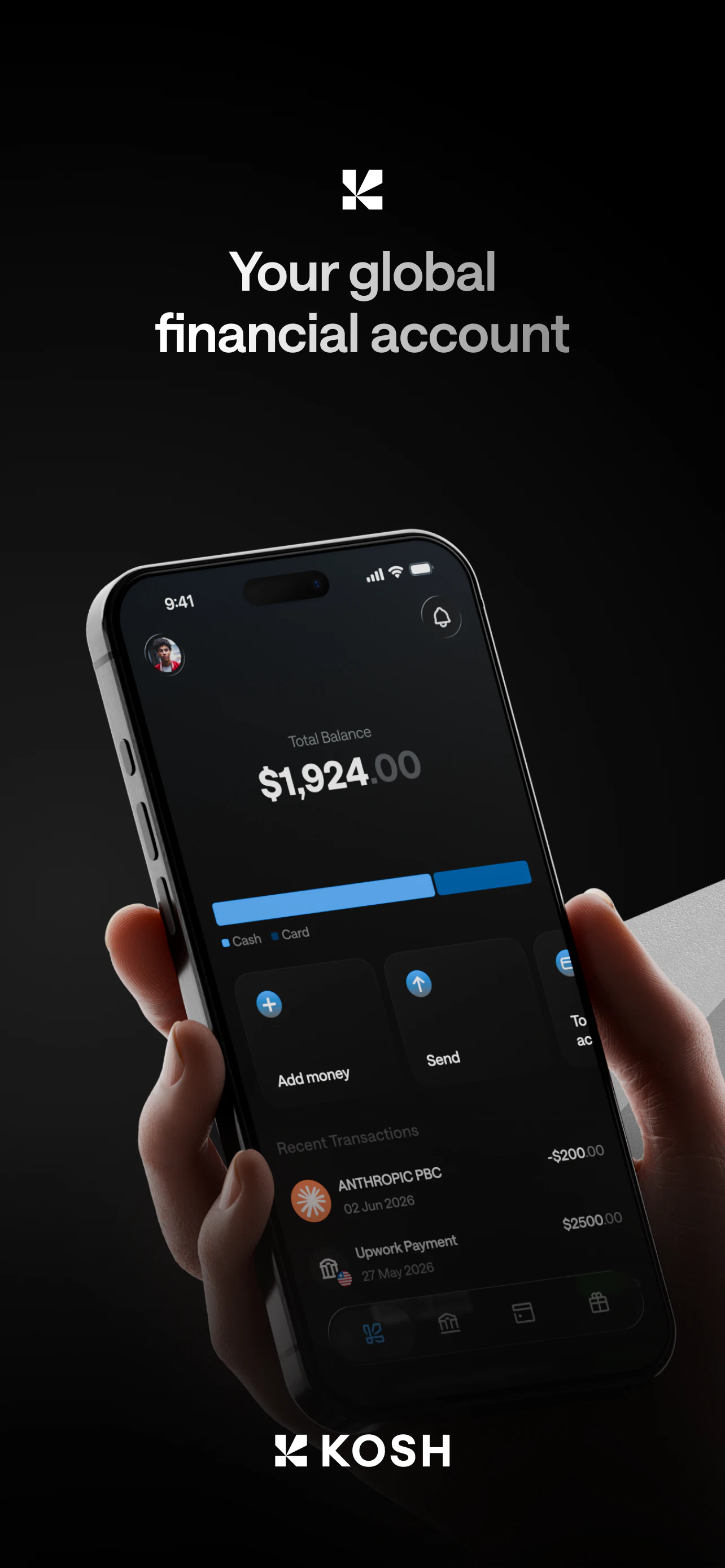
KOSH Money
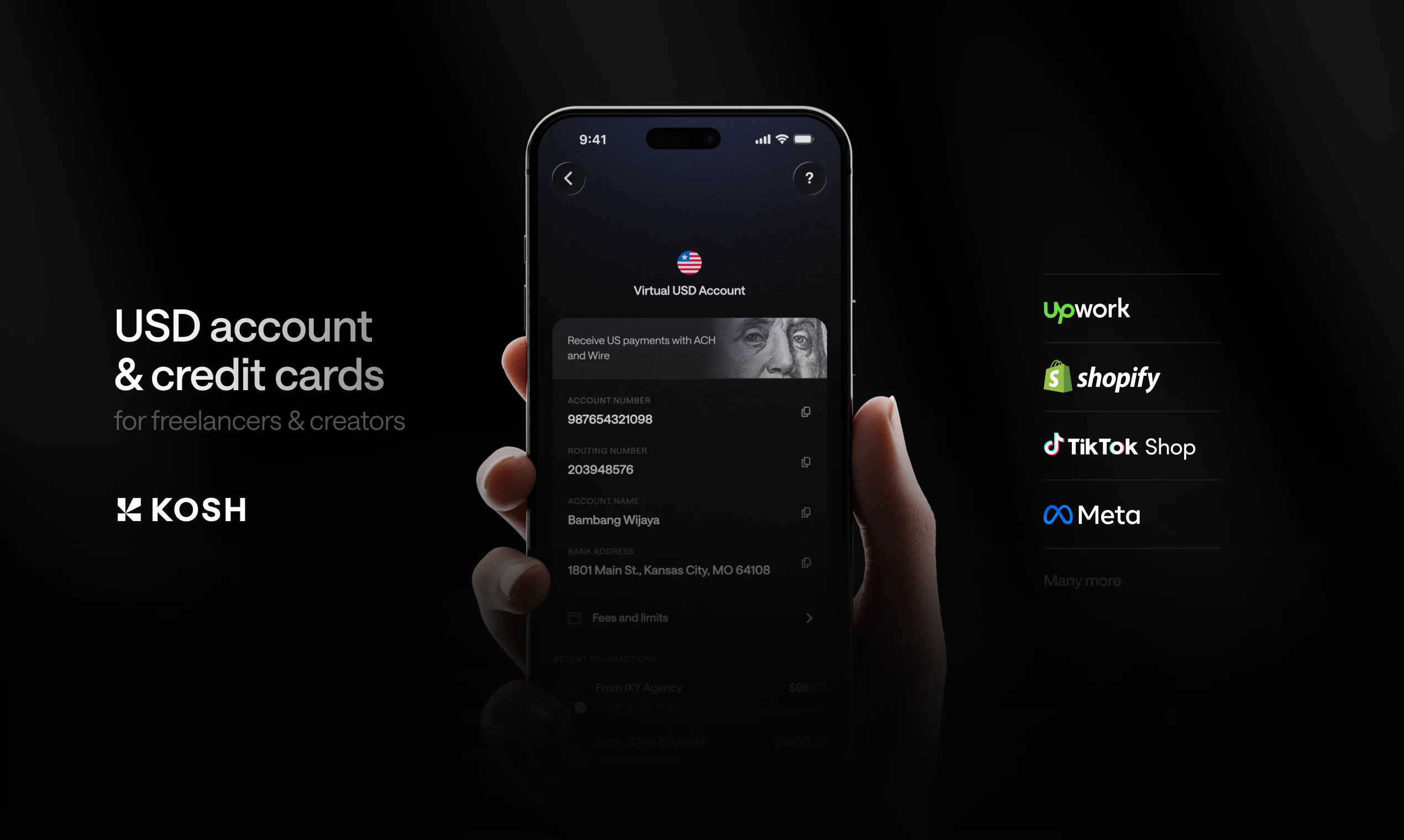
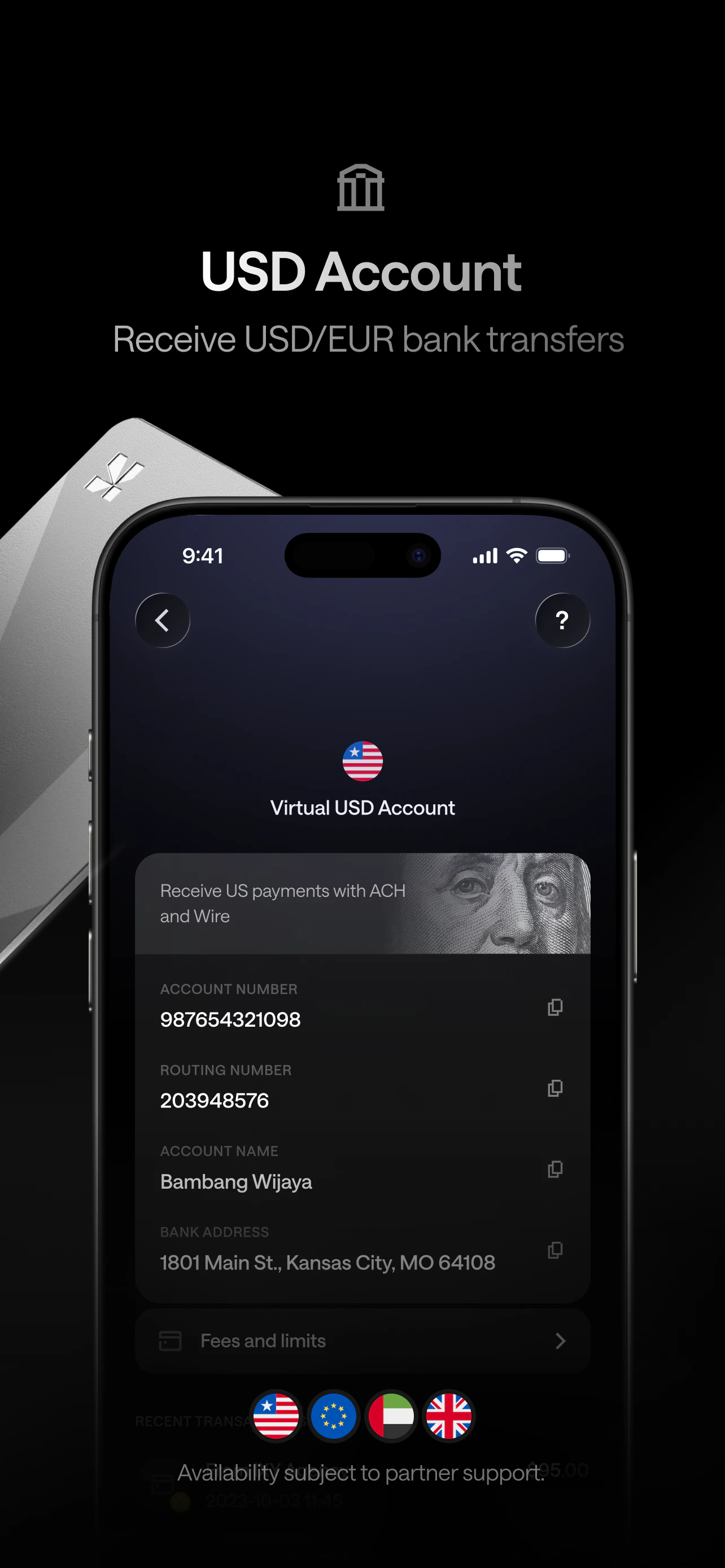
KOSH is a USD account built specifically for freelancers and creators across Asia. Unlike Wise or Payoneer, which often restrict or delay USD receiving in many Asian countries, KOSH lets you receive payments directly from Upwork and global clients, hold USD balances reliably, and spend with a credit card - without needing a US entity. Early users report faster access to their earnings and fewer payment rejections.
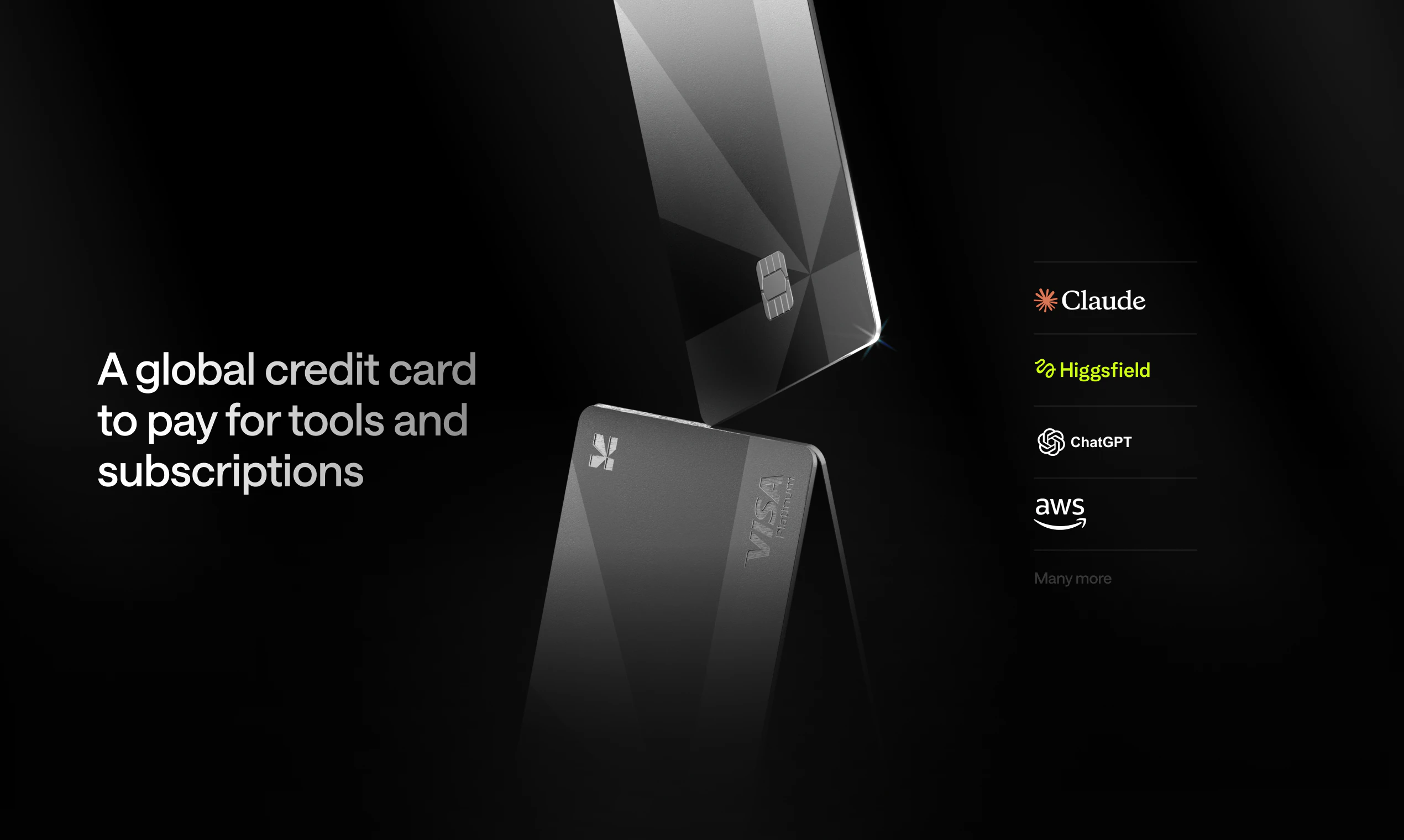
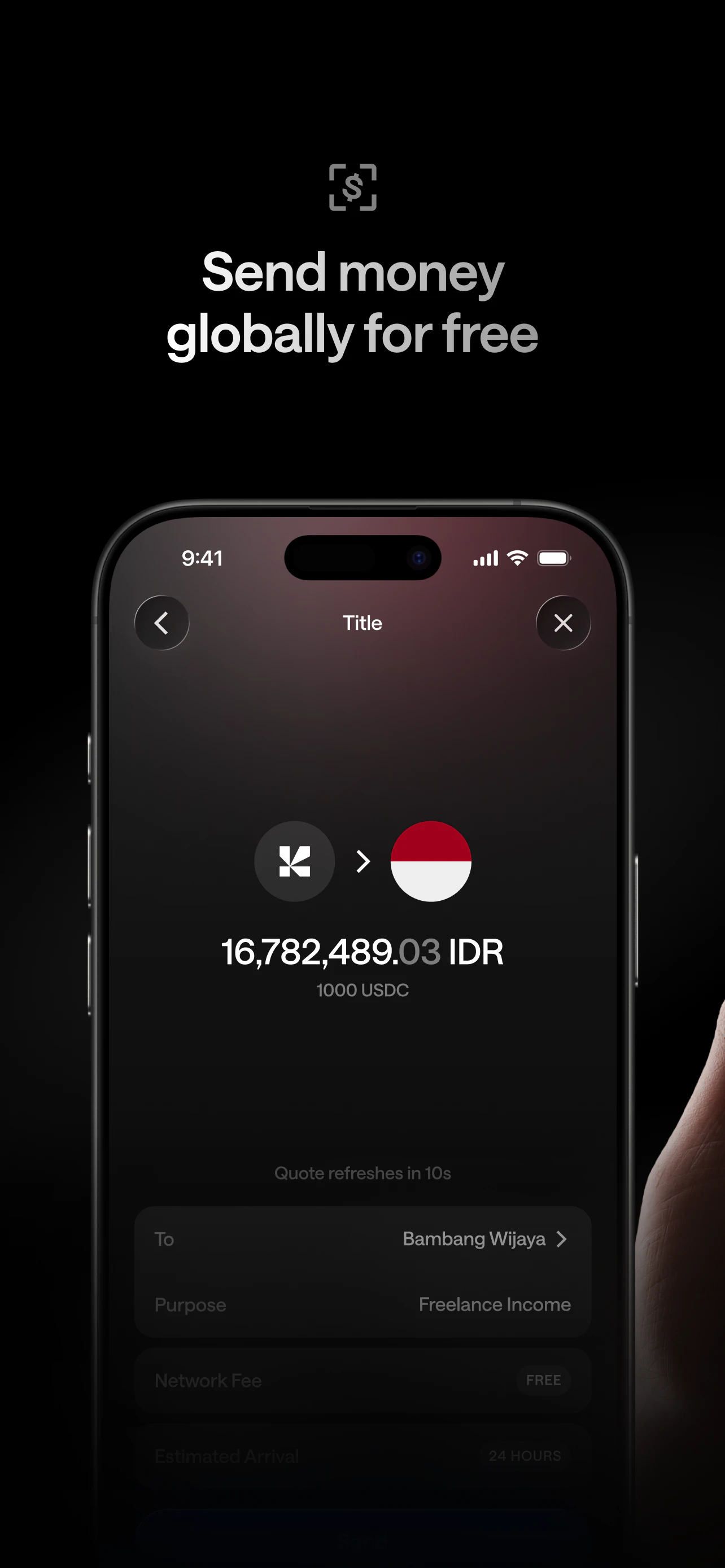
Hey Product Hunt, I'm Tarun from the KOSH team. We built KOSH because receiving USD payments in Asia is still painful -- whether you're running a Shopify store, selling on TikTok Shop or Amazon, getting Meta creator payouts, or working on Upwork. Here's what we focused on: - Direct USD receiving from platforms like Upwork, Shopify, TikTok Shop, and Meta Creators - Option to hold balances in digital dollars or USDC/USDT depending on what you prefer - A global credit card to pay for Meta Ads, Google Ads, ChatGPT, Claude, or any other tools and subscriptions - Works without needing a US company We're still early, so I would love honest feedback. If you sell on any of these platforms, what payment issues are you still facing? - Tarun
12
回复

@tarunmangukiya Congrats on the launch, Tarun! The interface looks incredibly clean. I actually just ran the cross-border platform payout niche through my tool, MarketGapAI, which scrapes complaints across Upwork and Trustpilot. Interestingly, a massive pain point for creators and freelancers right now is unexpectedly high hidden conversion fees and sudden account freezes when trying to move USD to local accounts.

Curious to know - how does KOSH protect users from those sudden compliance pauses, or are you primarily focusing on the advertising credit card side of the equation for now?

2
回复

@tarunmangukiya Congrats on the launch, Tarun.

This is a problem I've seen come up repeatedly for founders, freelancers, and online businesses across Asia. Getting paid internationally sounds simple until you actually start dealing with banking restrictions, transfers, and platform-specific headaches.

I particularly like that you've combined receiving, holding, and spending into a single workflow rather than treating them as separate products.

Would love to learn more about how you're approaching the business and growth side of KOSH. What's the best email to reach you on? I think it would be interesting to connect and exchange ideas.

0
回复

@tarunmangukiya Congratulations for the launch, Tarun.

0
回复

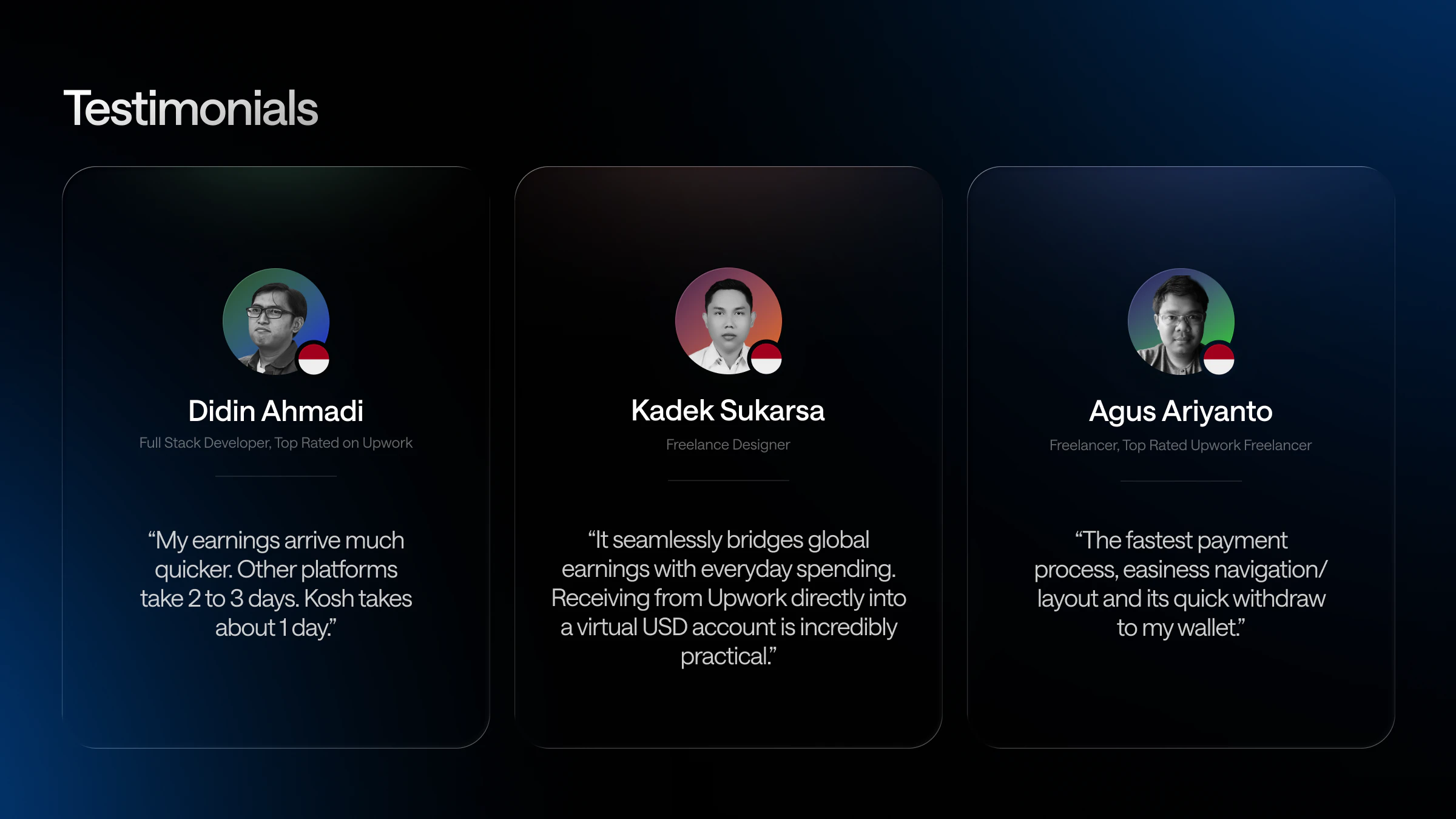
Great product! I have been using the Kosh card for quite some time now, and I love it. I appreciate products that function like traditional everyday items with low friction and good functionality.

3
回复

@sahil_sen Thank you so much. How's that KOSH card looking?

0
回复

Congrats on the launch, the product looks really promising! @tarunmangukiya

Do you also offer cashback on card payments?

2
回复

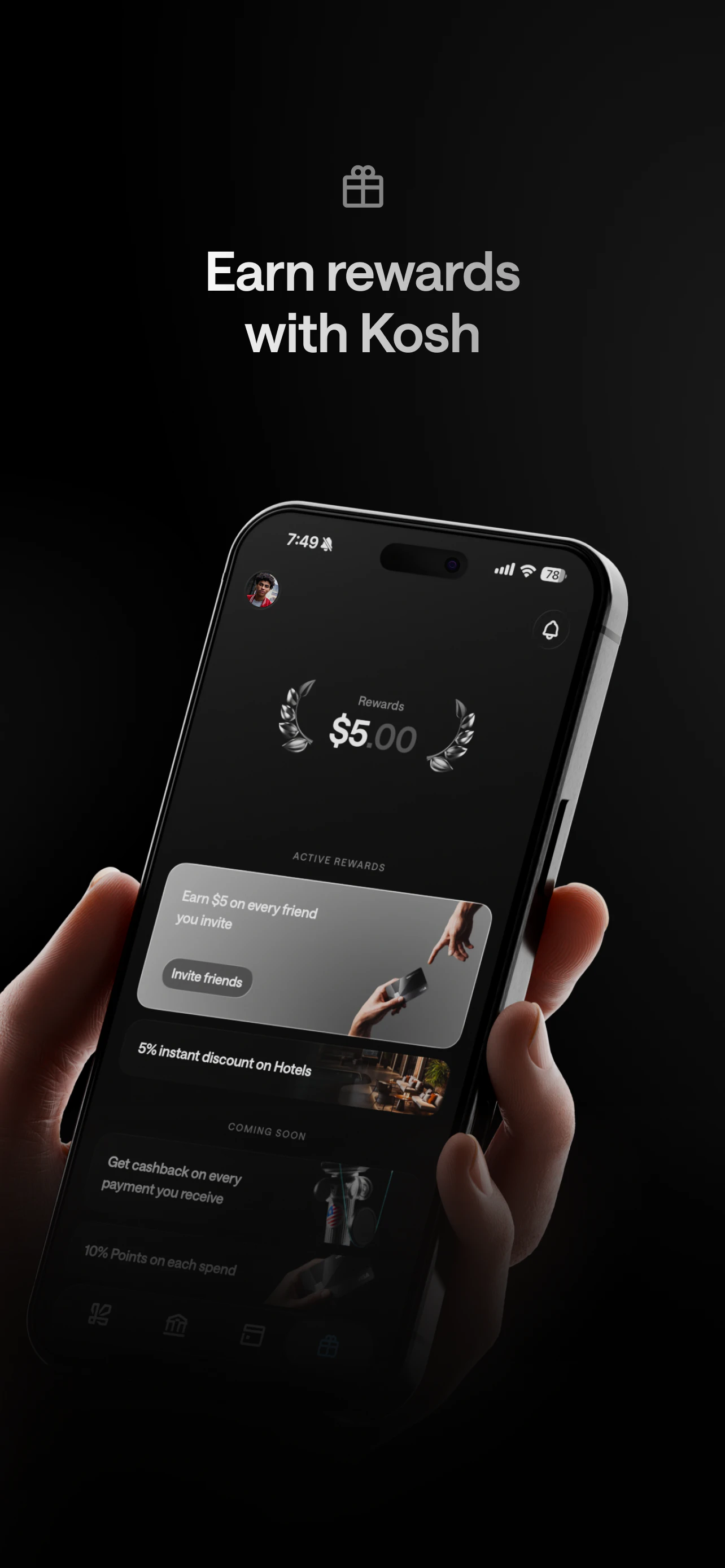
@mahdi_nouri We don't have cashback currently. But we do have referrral rewards. :) You get $5 for each successful referrals.

0
回复

KOSH is really easy to use, and it helps me get payment from Upwork and send it to my local apps in Indonesia. You guys are really awesome. I hope you maintain the lower fee to encourage Indonesian to use your service since the USD is a pretty high exchange rate at this moment, so every penny counts. 100% recommended!

2
回复

@soediono_lenz Thank you so much. It's been really great working with you during beta.

0
回复
been a user for a few months now , genuinely made my payments simpler
2
回复

@arcinston How is the app so far?

0
回复

Hey Tarun. This is squarely my world: my day job is payment tooling for media freelancers, so here's an answer to your closing question from that seat.

The platforms you listed cover programmatic payouts well, but a big slice of the freelancers I see get paid a different way: direct invoices into a client's AP or studio billing system. The recurring pain there is twofold. Payment rejections when the receiving account looks unfamiliar to the client's AP software, and long unexplained delays when cross-border compliance kicks in. The freelancer's own bank is rarely the blocker; the sender's system is.

So my question: when a client's AP system pays a KOSH account directly, does it present like a standard US bank account, with normal ACH routing and account numbers? Or is the product built mainly around the platform-payout rails for now?

The "without needing a US company" angle is the sharp part. Good luck today.

1
回复

This is really interesting. How does KOSH handle credit decisions for freelancers without US credit history?

1
回复

Congrats on the launch, team! Been using the Physical Card for a while now and it's made my life easier whenever I have to purchase any tools. From Claude to Canva, I've linked the card everywhere and it works very smoothly.

Was using the app on TestFlight for almost a month and happy to see it fully live now. Kudos and more power to the team! 🎉

1
回复

@varun_trivedi2 thank you so much broo!! you've been our early user. really appreciate all the feedbacks.

0
回复

Had high hopes that we might finally have a solution for Lebanon , ran through the app registeration, then bumped into your country is not included , big disappoinment for us.

0
回复

Directly receiving payments from Upwork would be great if it actually works smoothly. How long does it usually take for USD to settle and be spendable on the card?

0
回复

Congrats @tarunmangukiya and team!

0
回复

Congrats on the launch! Do you have a system for attaching receipts to those bank transactions?

0
回复

Finally, we can hold USD, not like PayPal or wise, where it automatically transferred to our bank account.

0
回复

Congrats on shipping! What is next on the roadmap after launch day?

0
回复
#6
Bob's CLI
A local-first AI coding CLI that adapts to you
133
一句话介绍:Bob's CLI 是一款完全本地化运行的AI编码助手,通过在终端中自动感知项目文件和行为模式,让开发者在碎片化时间里无需重新回忆上下文就能无缝接续编码,彻底解决“没时间启动”和“数据隐私焦虑”的双重痛点。
Developer Tools Artificial Intelligence GitHub Vibe coding
本地优先AI编码工具 终端AI助手 行为DNA画像 离线编码 自主主权 零API成本 对话分叉 SovereignLink远程执行 苹果硅谷支持 开源MIT
用户评论摘要:用户高度认可本地优先架构对隐私和成本的价值,核心疑问集中在“行为DNA画像”的实现原理(是否依赖云端同步)以及普通笔记本的响应速度。创始人明确回应:DNA数据默认全量存储于本地 `~/.bob/`,跨设备同步需用户主动开启,且源码永不上传;8GB内存机型配合小参数模型响应2-5秒,可用性合格。有用户建议增加 `bob rollback` 回滚命令,团队已将其列为紧急开发项。
AI 锐评

Bob's CLI 在“AI编码助手”这片红海中,打了一张漂亮的差异化牌——不是靠更强的代码生成能力,而是靠“主权叙事”重构了信任逻辑。当所有竞品(Copilot、Cursor、Windsurf)都在推动“越用越贵、数据上云”的云服务模式时,Bob 直接切中了大企业开发者与隐私敏感型用户的核心恐惧:代码是否变成了OpenAI的饲料?行为分析是否在默许上传?它用“物理上不可泄露”的本地部署和明确的开源MIT协议,从根本上消除了这种猜疑链。

但它的真实赌注远不止于隐私。所谓的“行为DNA画像”,本质上是一种轻量级的用户操作模式提炼——它不追求大模型参数竞赛,而是试图用记忆(对话历史+项目结构+你的决策偏好)来降低AI的“冷启动成本”。这恰恰切中了非全职开发者的核心痛点:你不需要一个更聪明的AI,你需要一个不必每次重头交代上下文的AI。SovereignLink 远程执行也颇具巧思,本质上是一个可控的私有化MCP(Model Context Protocol),让一台本地设备成为个人AI服务器,既规避了云端依赖,又实现了多设备联通。

不过,这套逻辑的命门在于硬件门槛和体验一致性。用16GB MacBook Air跑7B模型,2-5秒的响应在“保持心流”上远逊于云端模型(<0.5秒)。一旦用户尝试更大的参数量模型,硬件成本会迅速追上API的订阅费。更致命的是,所谓“行为DNA”的学习效果,在小数据集(用户每天仅有45分钟)上大概率会退化为简单的指令缓存,很难产生质变。此外,每天发布更新的频率与“本地优先不打扰”的承诺之间存在微妙矛盾——用户可能陷入“不更新就用不到新功能,更新则可能面临API或模型波动”的两难。

根本上,Bob's CLI 是一个给“有资产但没时间”的开发者准备的优雅工具箱,而非所有人的银弹。它用主权换信任,用碎片时间换产出,用硬件投入换隐私自由。如果它能解决“硬件差时体验降级”和“小数据量下DNA画像的鸡肋感”,才真正具备了从“小众情怀产品”向“主流生产力工具”跨越的资格。

查看原始信息
Bob's CLI
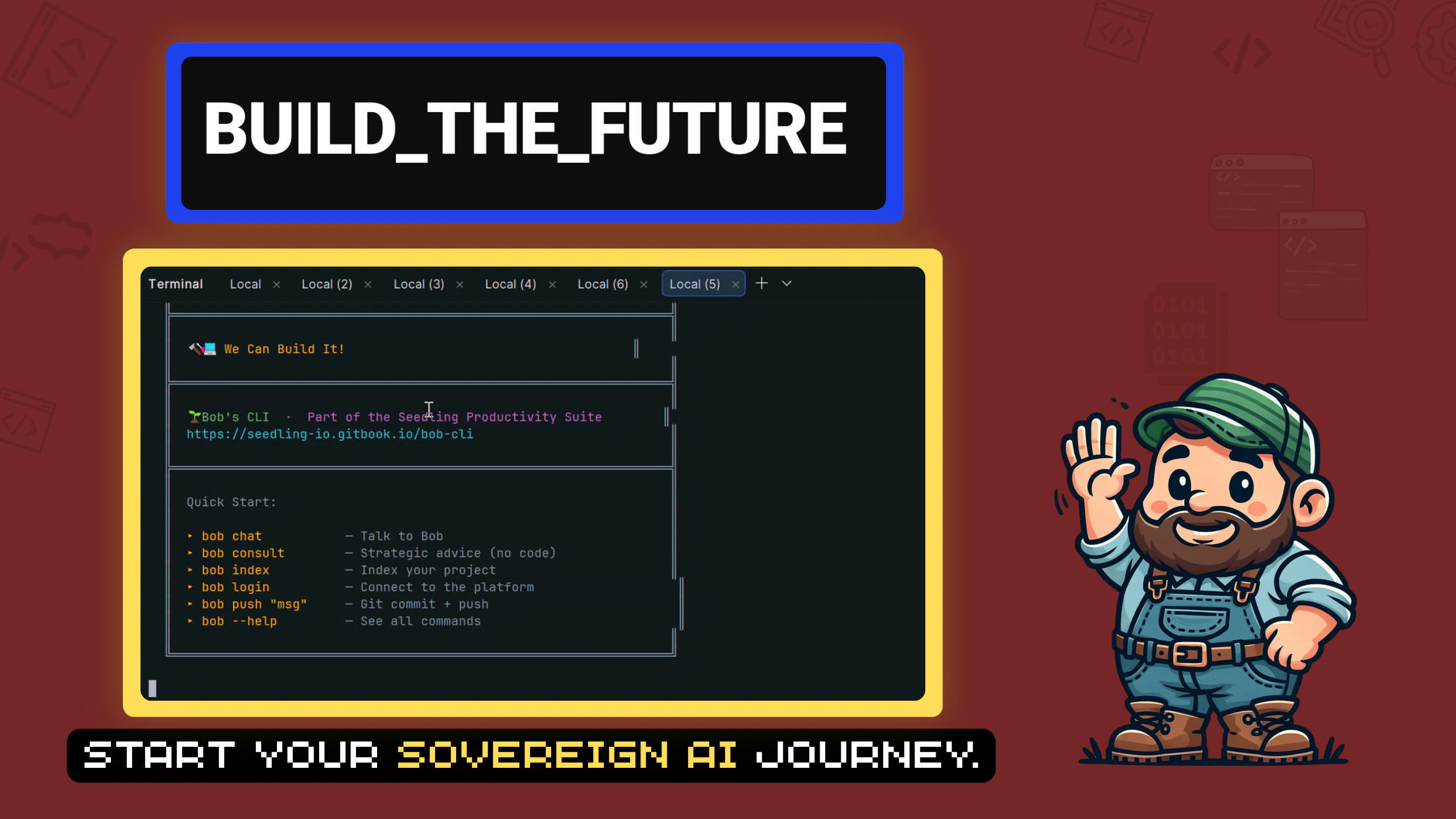
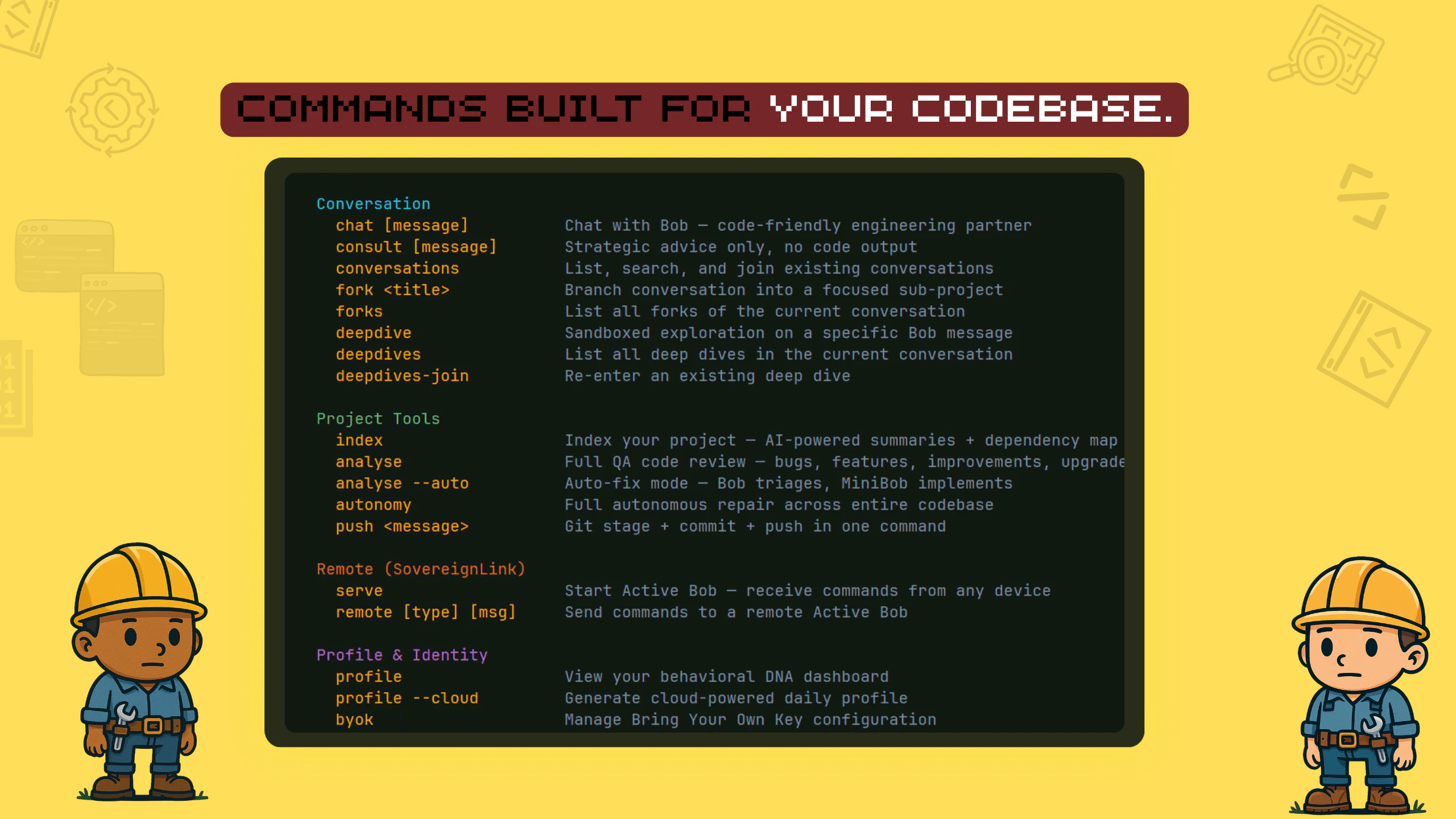
Bob's CLI runs on your own hardware with zero API costs, zero data leaving your machine. Bob lives in your terminal, sees your actual files, and writes code only with your explicit approval. What makes it different: auto-detect local AI models, behavioral DNA profiling that adapts to how YOU work, autonomous code review + auto-fix, conversation forking, deep dives, and SovereignLink — remote execution from any device while your code stays home. Free to start. Sovereign by design.

Hey Everyone 👋 Kemone here, founder of Bob's Workshop.

I built Bob's CLI because I was tired of a lie this industry keeps selling: that you need to quit your job, raise capital, and go all-in to build something real. That's gatekeeping dressed up as hustle culture. The truth? You can keep your day job, pay your bills, and still ship production-grade software — if your tools respect your time.

The Reality for Most Builders:

You're a developer with a 9-5. You have a side project — maybe a SaaS, maybe an app, maybe something that could change your life. But you only get 45 minutes on the train. An hour before bed. A lunch break at your desk. And every time you sit down, you waste half that time just remembering where you left off.

What Bob's CLI Actually Solves:

Bob is a senior AI engineering partner that lives permanently in your terminal. He remembers your entire project architecture. He remembers your last conversation. He remembers YOUR patterns — how you think, how you decide, how you build. So when you open that terminal at 6am before work, there's zero ramp-up time. You're immediately productive.

But here's where it gets real — SovereignLink. Start bob serve on your desktop before you leave the house. Now your home machine is a personal AI cloud. On the bus? Send commands from your phone through the web app. At a coffee shop with a Chromebook? bob remote chat "add the payment webhook". Your desktop at home receives it, reads your actual files, generates the fix, writes it to disk. You come home and the feature is waiting for you.

No dropout required. No VC required. No risk required.

Just a developer with a vision, a terminal, and a tool that refuses to waste their time.

What Makes This Different From Every Other AI Tool:

  • Runs on YOUR hardware — zero API costs on the free tier

  • Your code NEVER leaves your machine unless you choose

  • Auto-detects your local model — type bob chat "hello" and it just works

  • Behavioral DNA profiling — Bob adapts to your style over time

  • Conversation forking — explore ideas without losing your thread

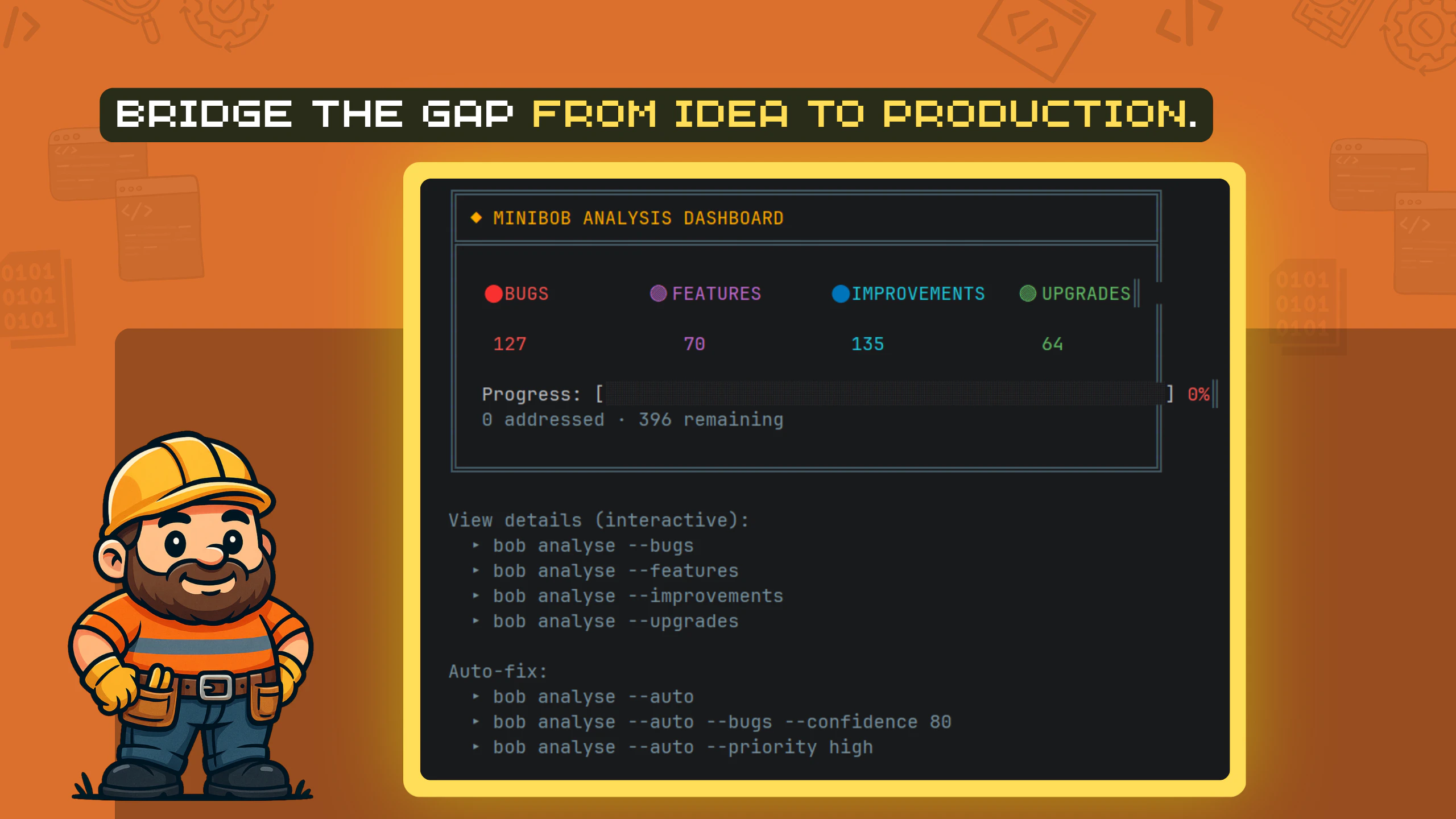
  • Autonomous code review — Bob finds bugs while you sleep

  • One command to push: bob push "shipped it" — stage, commit, push, done

Who This Is For:

The developer who drives for DoorDash but has an app idea. The teacher coding between classes. The parent building after bedtime. The full-time employee who's also a full-time dreamer. You don't need to bet your livelihood to build something incredible. You just need a tool that multiplies the limited time you have.

Install it:

Bash

pnpm add -g @bobsworkshop/cli

Your AI. Your hardware. Your schedule. Your future.

I'm in the comments all day — tell me about the project you're building in the margins of your life. I guarantee Bob can help you ship it faster. 🌱

8
回复

@bobsworkshop  @kemone_phillips Congrats on launching! How does the 'Behavioral DNA profiling' learn my habits—does it analyze git history locally, or does it learn iteratively from active session approvals?

0
回复

Local-first for a coding CLI is a genuinely interesting architectural choice. Keeping code context local avoids round-trip latency and the data-residency concern that blocks enterprise adoption of cloud-based tools. What's powering the 'adapts to you' part? Is it RAG over the local codebase, fine-tuning on usage patterns, or closer to behavioral prompting based on past interactions?

3
回复

@anand_thakkar1 Great breakdown of the tradeoffs you get the space. To answer your question: it's all three, but layered.

Project context uses RAG over the codebase that handles the "what are you building" awareness. Combined with summarization and dynamic file mapping. But the personalization layer is a completely separate proprietary architecture. Our Frank Engine (built alongside NVIDIA and Google Cloud) maintains a dual-structure memory system short-term interaction patterns and long-term behavioral DNA that profiles how you think, how you make decisions, and what approaches have failed for you before. It's not retrieval. It's not fine-tuning. It's a purpose-built personality engine that self learns your engineering philosophy over time so Bob's responses aren't just contextually accurate they're you-accurate.

0
回复

The "sovereign by design" framing is appealing, and credit where it's due, I checked the npm package and it's MIT with a public repo, so the code is actually auditable. For a tool that reads all my files and profiles how I work, that's exactly the right answer to "why should I trust it," and it's worth shouting louder than you do.

One thing I'd still love clarified: you mention "Built with Firebase," which is Google infrastructure, while also promising nothing leaves my machine. So where does the "behavioral DNA profiling" actually live, local on disk, or synced anywhere? Spelling out exactly what touches the cloud (auth? telemetry? nothing?) vs. what stays local would make the sovereignty pitch land even harder. Not a gotcha, the open code already won me over, just closing the last gap :)

2
回复

@keirodev Really appreciate you auditing the repo that's exactly the kind of scrutiny we welcome. To answer directly: you choose your storage tier. Tier 1 is fully local your conversations, behavioral DNA, project index, everything lives in ~/.bob/ on your machine. Firebase doesn't exist in that world. Tier 3 is opt-in (NON DEFAULT) sync across our ecosystem (web, mobile, CLI) for users who want cross-device continuity and even then, your source code is never transmitted. Only conversation context and profile data sync. The boundary is: your decision to to activate the explicit gate between "nothing leaves" and "I choose to sync." No telemetry, no silent uploads, no gray areas.

0
回复

This looks promising, especially for builders who prefer keeping everything local. I'd love to know what the recommended hardware setup is for running this effectively. Congrats on the launch!

2
回复

@henry_habib Hey Henry! Thanks for the kind words 🙏 Entry level (8GB RAM, integrated GPU): MacBook Neo, MacBook Air, or any budget laptop runs Gemma 4 E4B or Mistral 7B. Responses in 2–5 seconds. Totally usable for daily coding. Sweet spot (16–32GB RAM, RTX 5060–5070 Ti): This is where most developers land. Runs Gemma 4 12B or DeepSeek-R1 7B. Responses in 1–3 seconds. Feels like pair programming in real-time. Powerhouse (32–64GB RAM, RTX 5080–5090): Runs 70B parameter models. Sub-2-second responses. Can also serve your entire team via SovereignLink...one machine, multiple developers connecting remotely. Happy to help you figure out the ideal setup for your specific hardware if you want to drop your specs!

0
回复

Local-first with auto-detected local models is a great angle, especially the no-API-bill part. Curious about the day-to-day feel: on a normal laptop with a local model, is it fast enough to keep in the loop while coding, or more of a background reviewer?

2
回复

@ianhxu We've tested it on the NVIDIA RTX 5070 Ti (via Acer Predator) and the NVIDIA RTX 4050 (via HP Victus). On the RTX 5070 Ti, responses come back in 2-4 seconds with a 7B model — fast enough to stay in your flow while coding. The 4050 is slightly slower (4-8 seconds) but still very usable for iterative chat. For Apple Silicon machines like the MacBook Neo (A18 Pro, 8GB unified), a model like Gemma 4 E4B fits comfortably in memory. Based on the hardware specs and Apple's Neural Engine acceleration, we'd expect similar response times to the 4050 solidly in the keep in the loop while coding range.

0
回复

Congrats on the launch! The idea of an AI partner that remembers project context and works around a developer's limited time is really compelling.

2
回复

@alina_tyslenok_ Thank you! That's exactly the problem we built for most of us aren't coding 8 hours straight, we're grabbing 45 minutes between meetings or an hour after the kids are asleep. Bob remembers everything between sessions so you never waste those precious minutes re-explaining context. Pick up exactly where you left off, from any device.

0
回复

You say updates ship daily. For users who intentionally keep everything local and don't update constantly, how do you avoid version drift between what you're demonstrating and what they're actually running?

1
回复

@jared_salois Great question. The CLI is distributed via npm, so users control when they update...pnpm update -g @bobsworkshop/cli when they're ready. We version intentionally: core features are stable across versions, and new capabilities are additive, not breaking. If you're on v0.5.6 and we're demoing v0.7.1, your existing commands still work identically you just don't have the new ones yet. We also flag significant updates in the terminal on launch so users know when something meaningful is available without forcing anything. Your machine, your pace.

0
回复

The local first approach is what caught my eye. Feels like a very diff tradeoff compared to cloud based coding agents.

1
回复

@furkan_topcuoglu It really is a fundamentally different tradeoff. Cloud agents charge you more the better you get at using them we think that's backwards. With local-first, your costs stay flat (zero), your latency drops, and your data never becomes someone else's training set. All upside, no compromise.

0
回复

Keeping everything local is honestly the most interesting part for me. A lot of people love AI tools still hesitate to give them full access to their codebase.

1
回复

@busra_seker1 You nailed it that hesitation is real and it's justified. Your codebase is your IP. With Bob, there's nothing to "give access" to because the AI runs on your machine alongside your files. No API call carrying your source code across the internet. The trust problem disappears when the architecture makes exposure physically impossible.

0
回复

@kemone_phillips @amanda_phillips6 Local-first is a strong direction for coding tools. The more an AI assistant learns from your workflow, the more important it becomes that developers understand what context is being used and can keep control of the environment.

1
回复

@amanda_phillips6  @alpertayfurr 100% agree sovereignty over your own context is non-negotiable for us at Seedling. That's why everything Bob learns about you stays on your machine by default. Your code, your behavioral profile, your conversation history all local in ~/.bob/.

Nothing leaves unless you explicitly choose to sync. Full transparency, full control, always.

Give it a spin: pnpm add -g @bobsworkshop/cli

#DreamBuildGrowTogether🌱

1
回复

Nice angle. For a local-first coding CLI, the thing I’d want to see is how it handles the boring failure cases: failed tests, half-applied edits, and leaving a diff that is easy to review or roll back.

1
回复

@kevinzrzgg Really appreciate this question these are exactly the failure cases we obsess over. Today, every file edit goes through an approval gate (nothing writes without your explicit yes), and every approved write auto-backs up the original to .bob-backups/ with a timestamp. Our auto-fix agent also runs programmatic validation before writing if the output looks corrupted, it's rejected and the file is never touched.

Honest gap: we don't have a dedicated bob rollback command yet, thanks to your questions that's now listed as something mandatory to be implemented starting today. Until then, recovery is .bob-backups/ or git checkout. Expect a proper rollback flow in the coming days. (we release updates EVERY day... 😊)

0
回复

Running local models is nice but keeping everything on my own machines is the part that caught my attention

0
回复

@fatih912 That's exactly why we built it this way. Your code, your conversations, your behavioral profile all stored locally in ~/.bob/ on your filesystem. Nothing leaves your machine unless you explicitly choose to sync. Full sovereignty by default, not by workaround.

Please let me know if you need anything I'm here to answer all questions

0
回复
#7
Meet Warren 3.0
Your voice-supported AI financial planning partner
132
一句话介绍:Meet Warren 3.0 是一款基于语音交互的AI财务规划工具,专为没有六位数投资组合的普通用户设计,解决他们无法便捷、透明地获得个性化长期财务规划与动态跟踪的痛点,帮助用户看清“不作为”与“行动”后的两种未来。
Fintech Artificial Intelligence Personal Finance
AI财务规划 语音交互 个人理财 财务预测 场景分析 英国市场 退休规划 财务健康 智能顾问 现金流模型
用户评论摘要:用户普遍认可语音交互的便捷性和“两种未来”的对比框架。主要建议和问题包括:能否支持自由职业者波动收入的建模(而非常规薪资);税务优化(如养老金/ISA组合提取)需更精细;未来是否支持家庭账户及跨国(欧洲/美国)扩展;对数据安全及财务信息信任度有顾虑;希望了解免费与付费功能差异。
AI 锐评

Meet Warren 3.0 的定位非常聪明——它切中了大众市场“中产财务焦虑”的真空地带。传统IFA(独立财务顾问)按小时收费且门槛高,杀鸡焉用牛刀;而记账类App只关注过去和当下,对长期规划的无力感是软肋。Warren用“一场语音对话”大幅降低了使用门槛,其真正的护城河在于“透明且可编辑的财务模型”和“动态经济监控推送”,这击穿了AI财务规划“黑箱”的信任短板。

不过,产品当前有明显的英国市场局限性(养老金、税收、房产逻辑差异),这既是起点优势,也是全球化扩张的巨大障碍。评论区中关于“自雇人士收入波动”的提问很尖锐,传统财务模型基于稳定现金流,Warren若不能提供灵活的保守/平均/最低值预测选项,将失去庞大自由职业者用户群体。

创始人强调“不提供监管建议”,这是一个法律上的清醒认知,但也是商业上的天花板。免费版如何引流到高价值付费功能(例如深度税务优化、家庭联合规划)是关键考验。目前产品更像是“财务稳定性的可视化镜子”,而非“帮助财富增长的引擎”。如果数据追踪和AI建议能结合特定经济事件(如降息、通胀变化)给出个性化调整方案,其粘性将从“新鲜感”升级为“刚需”。否则,它可能停留在“高级计算器”的定位上,难以支撑长期用户付费意愿。

查看原始信息
Meet Warren 3.0
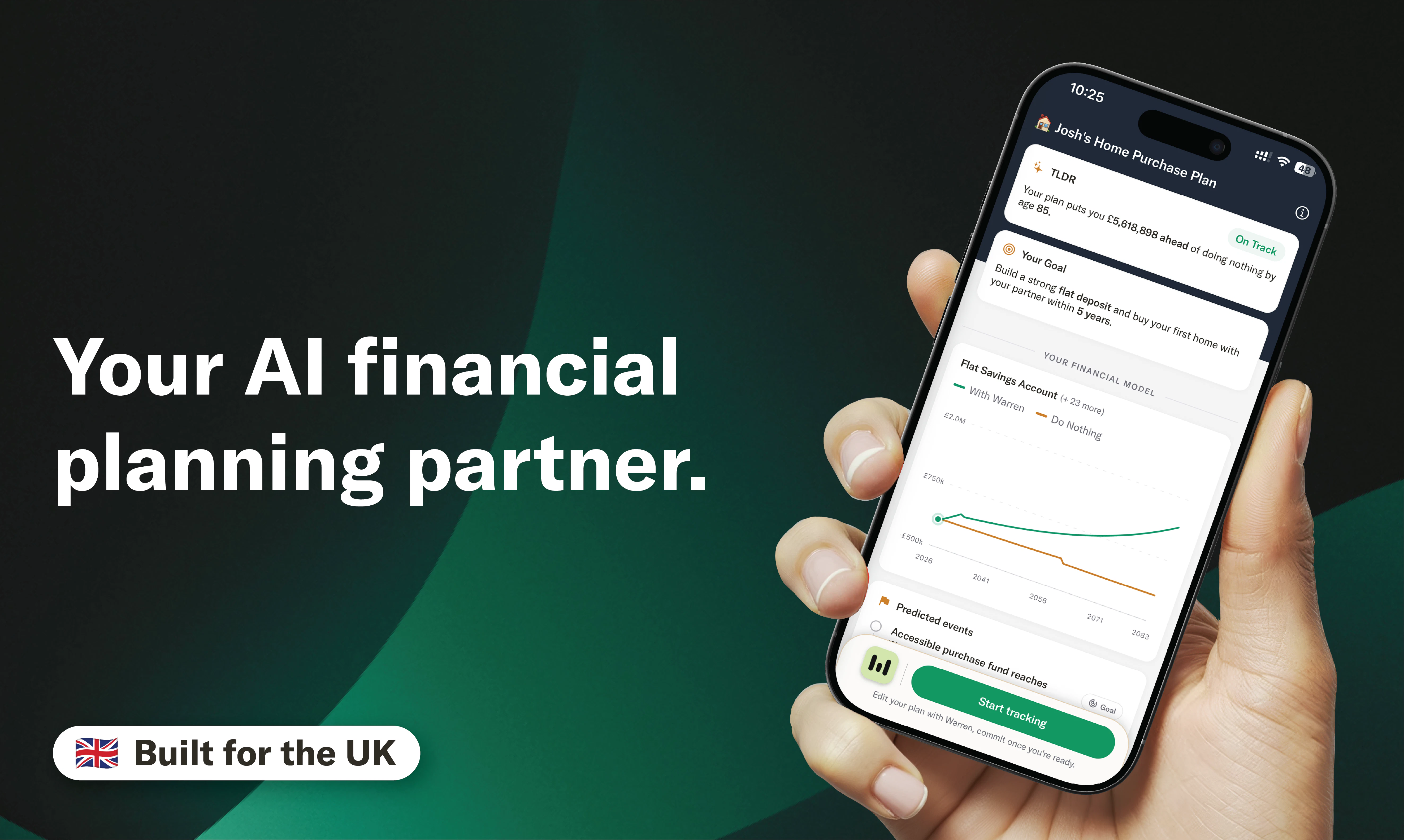
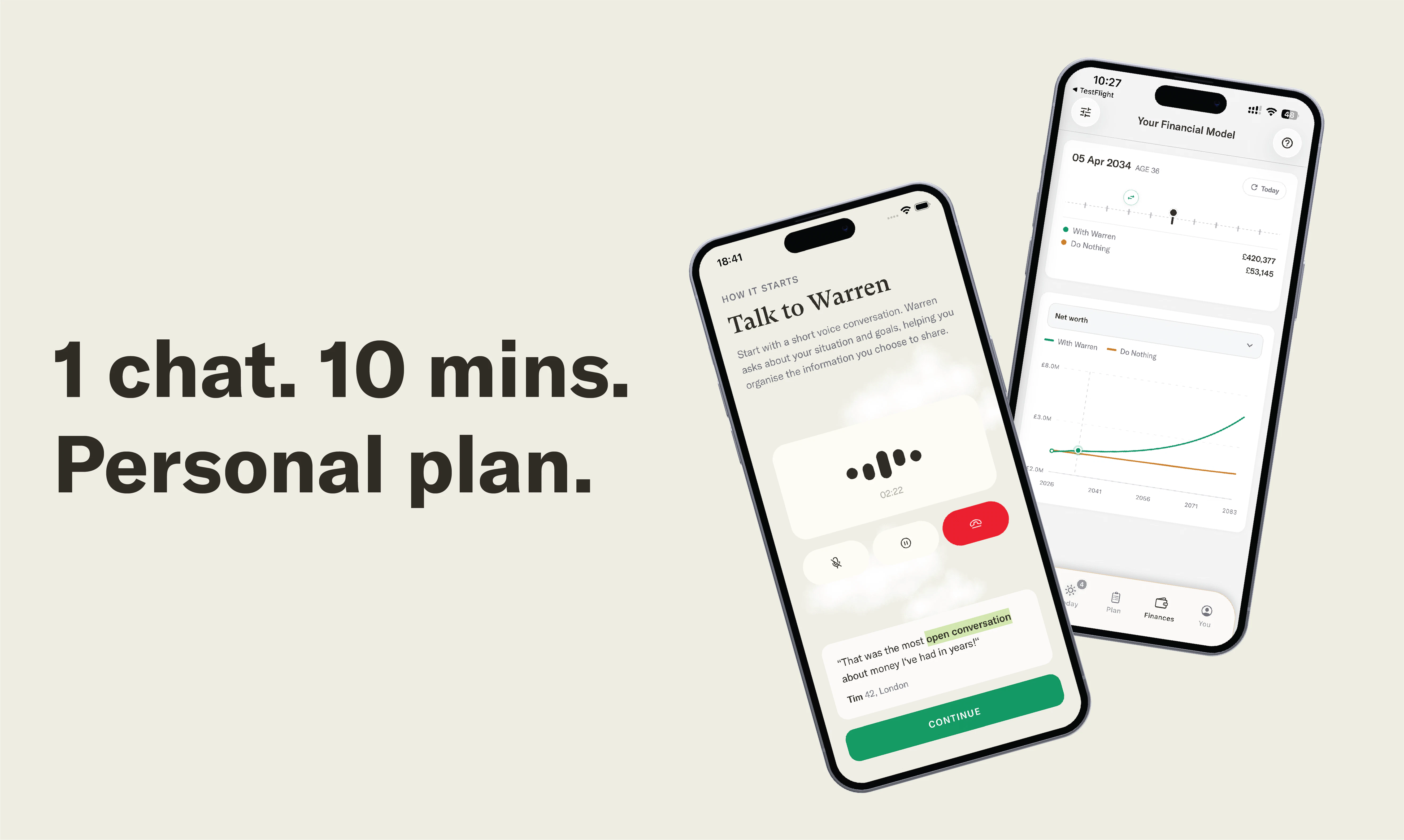
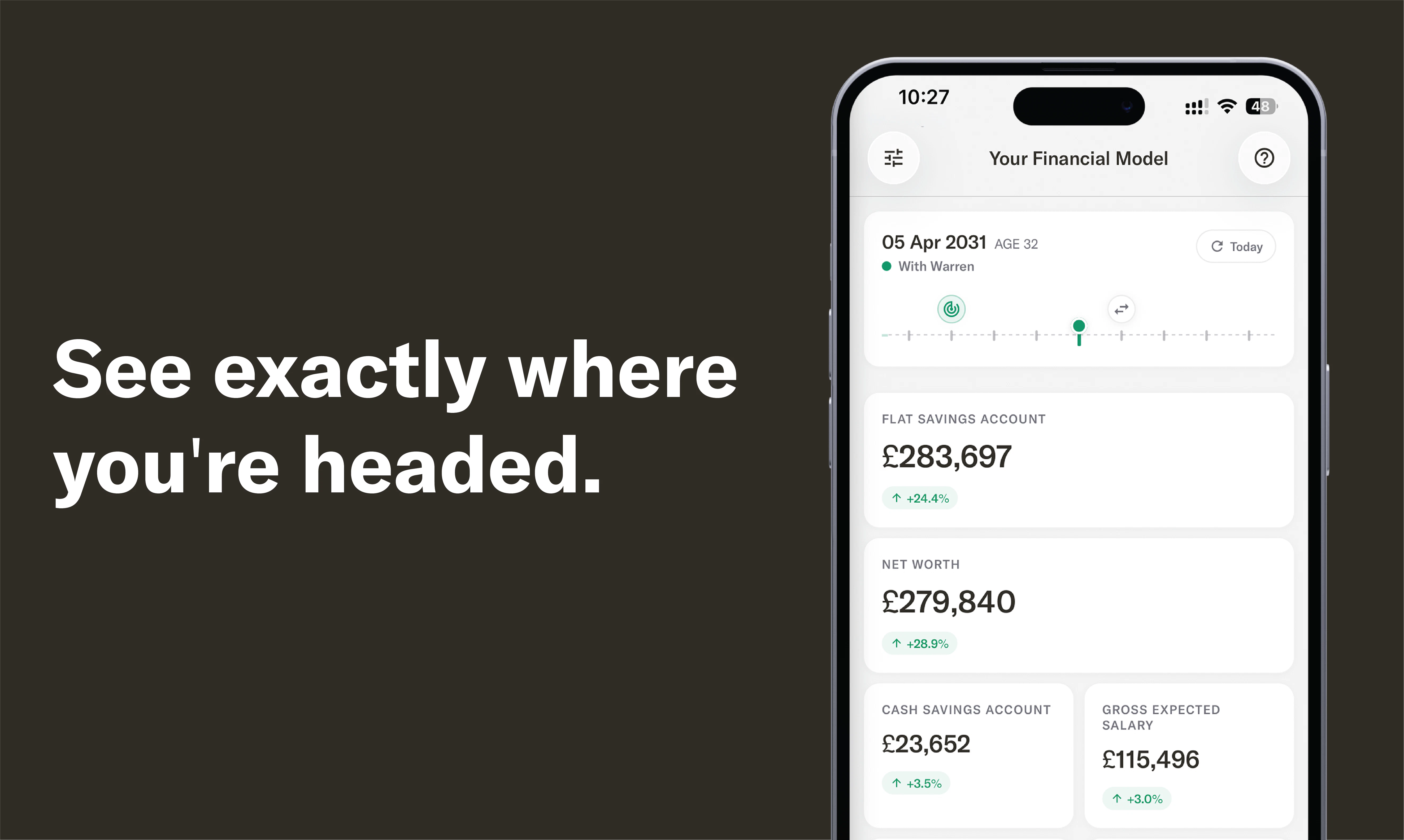
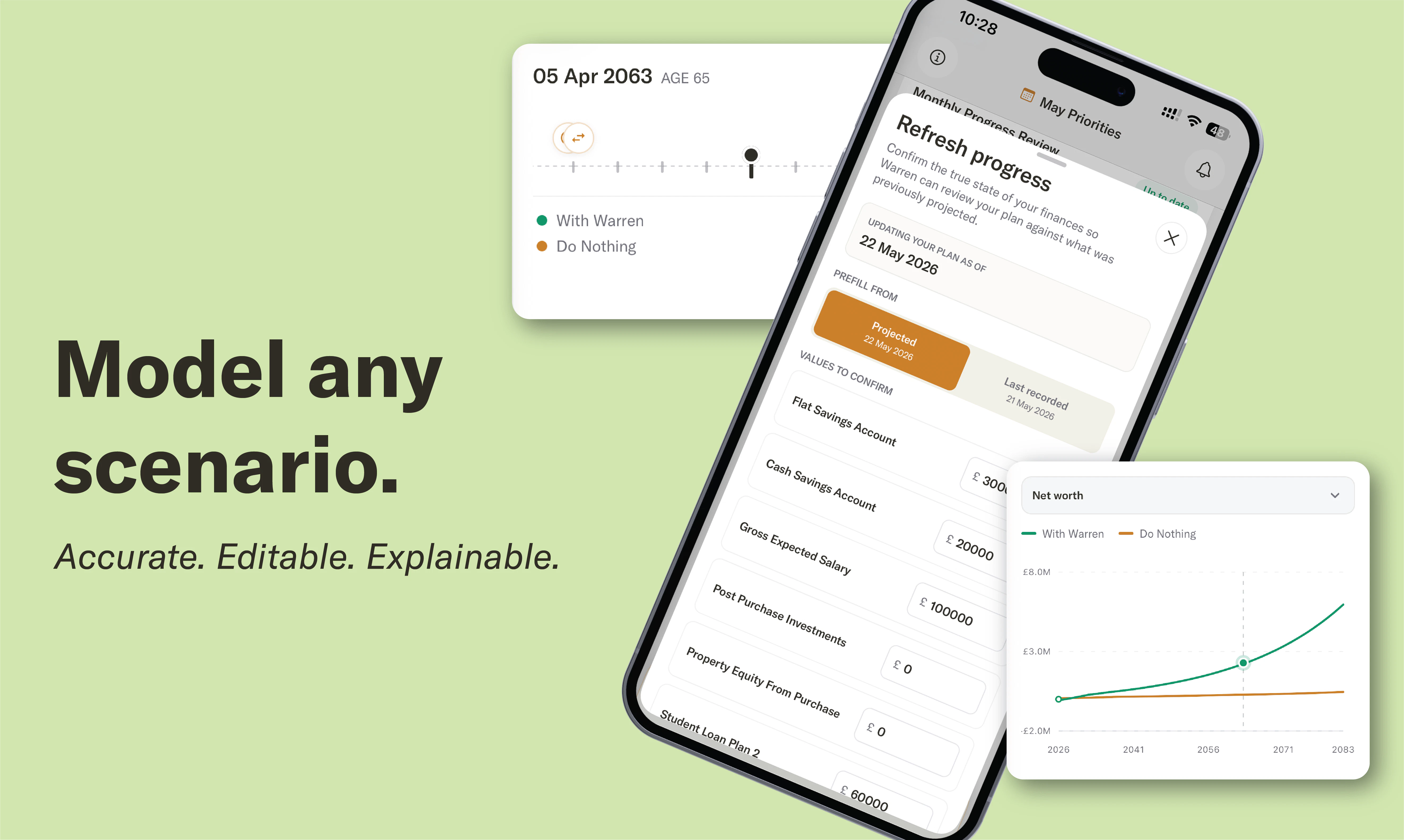
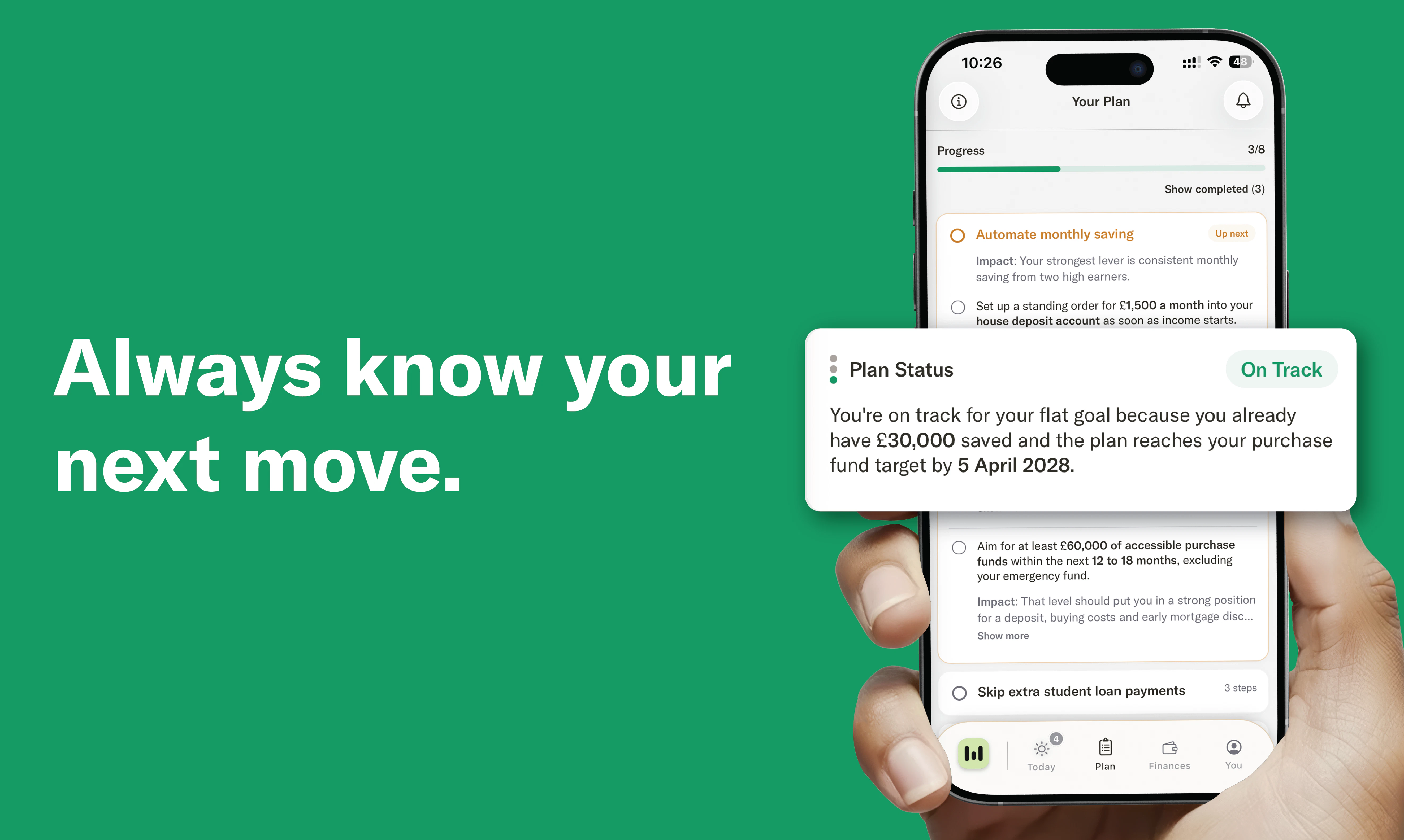
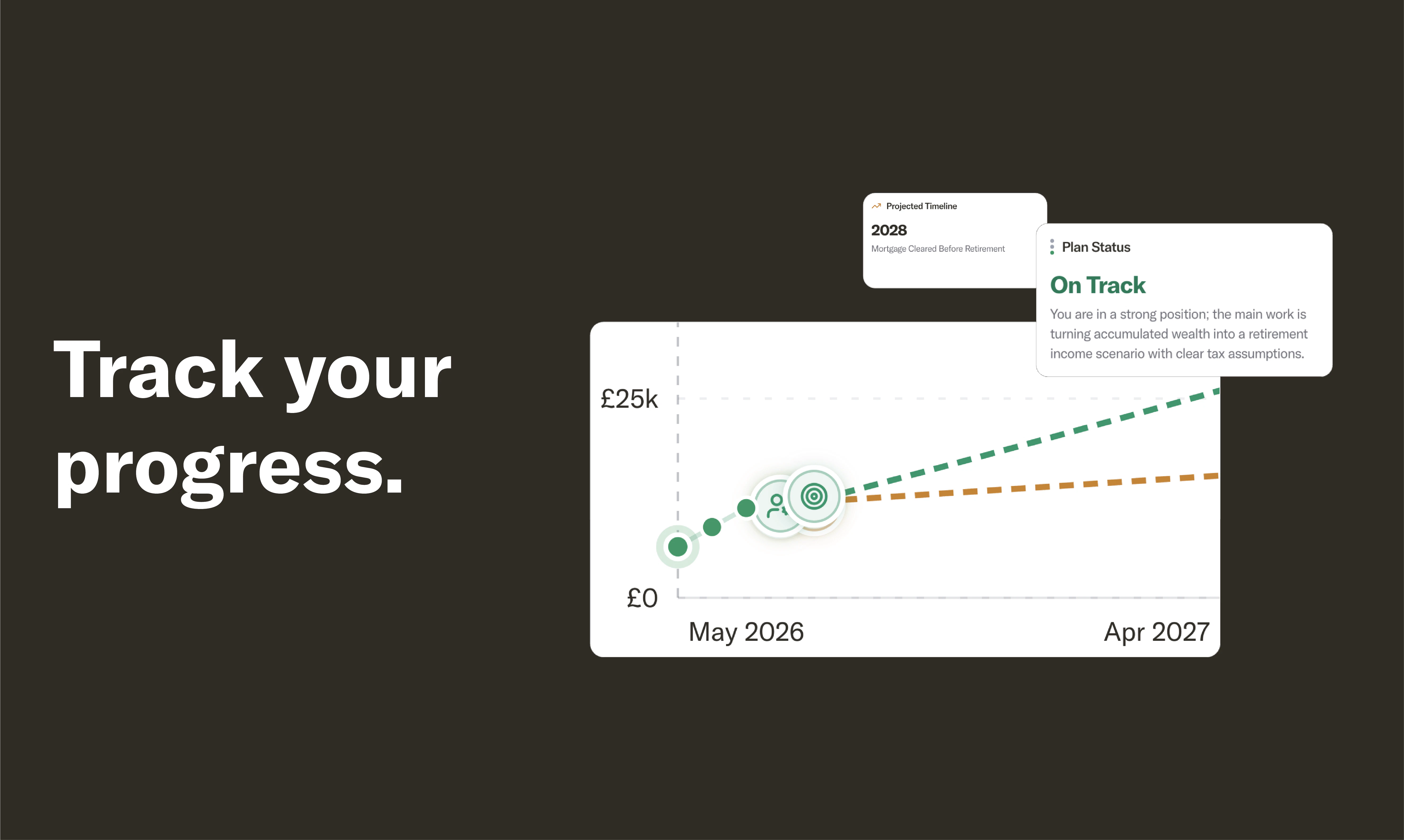
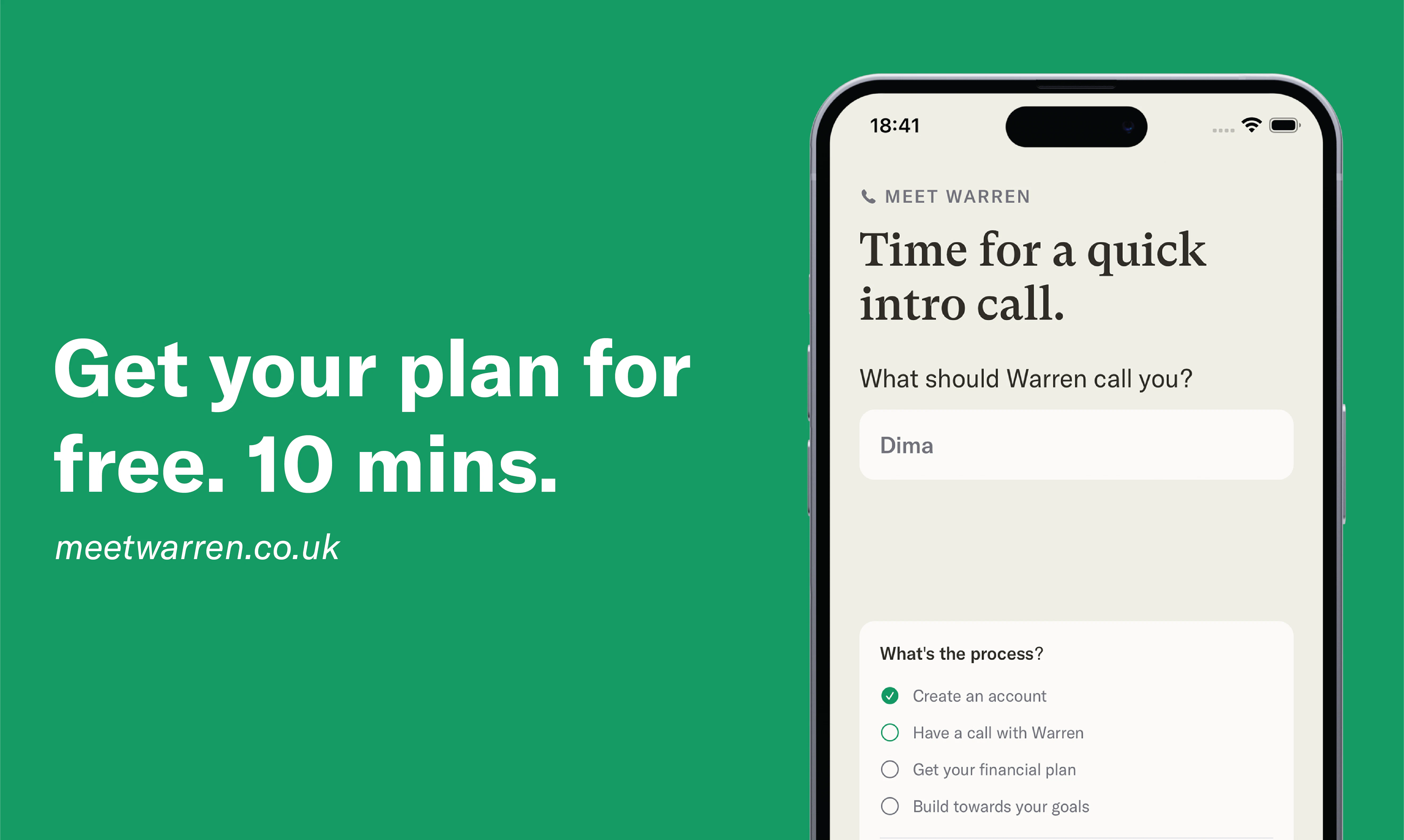
One voice conversation. Free financial plan. We built Warren because financial planning was broken for anyone without a six-figure portfolio. IFAs charge £200/hr. Spreadsheets go stale. Generic apps tell you what you already know. Warren shows you two futures: what happens if you do nothing and what changes if you act. Then Warren gives you a set of next steps, tracks your progress, and monitors your plan against economic changes. Join 3K+ Brits already using Warren. 10 mins to start.
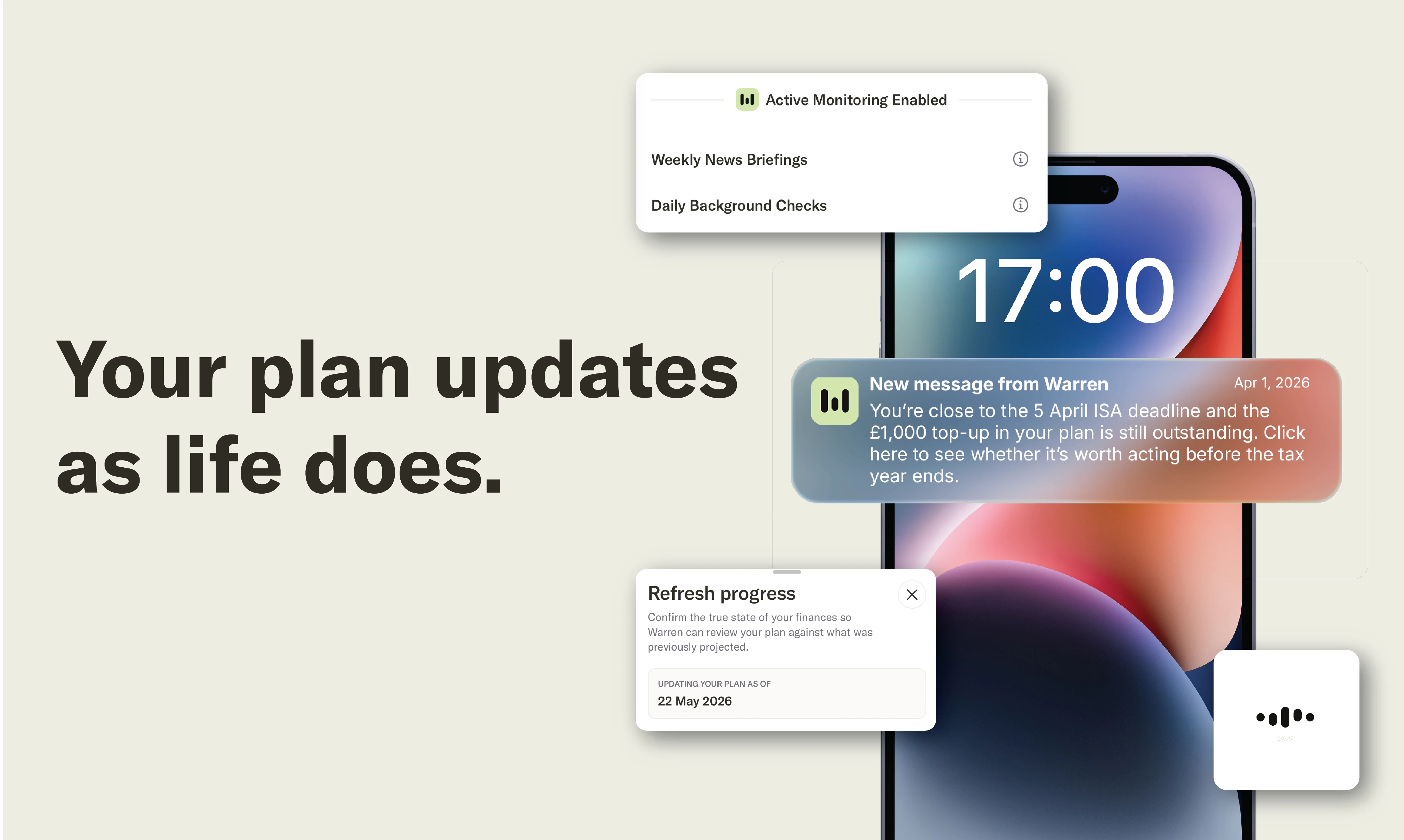
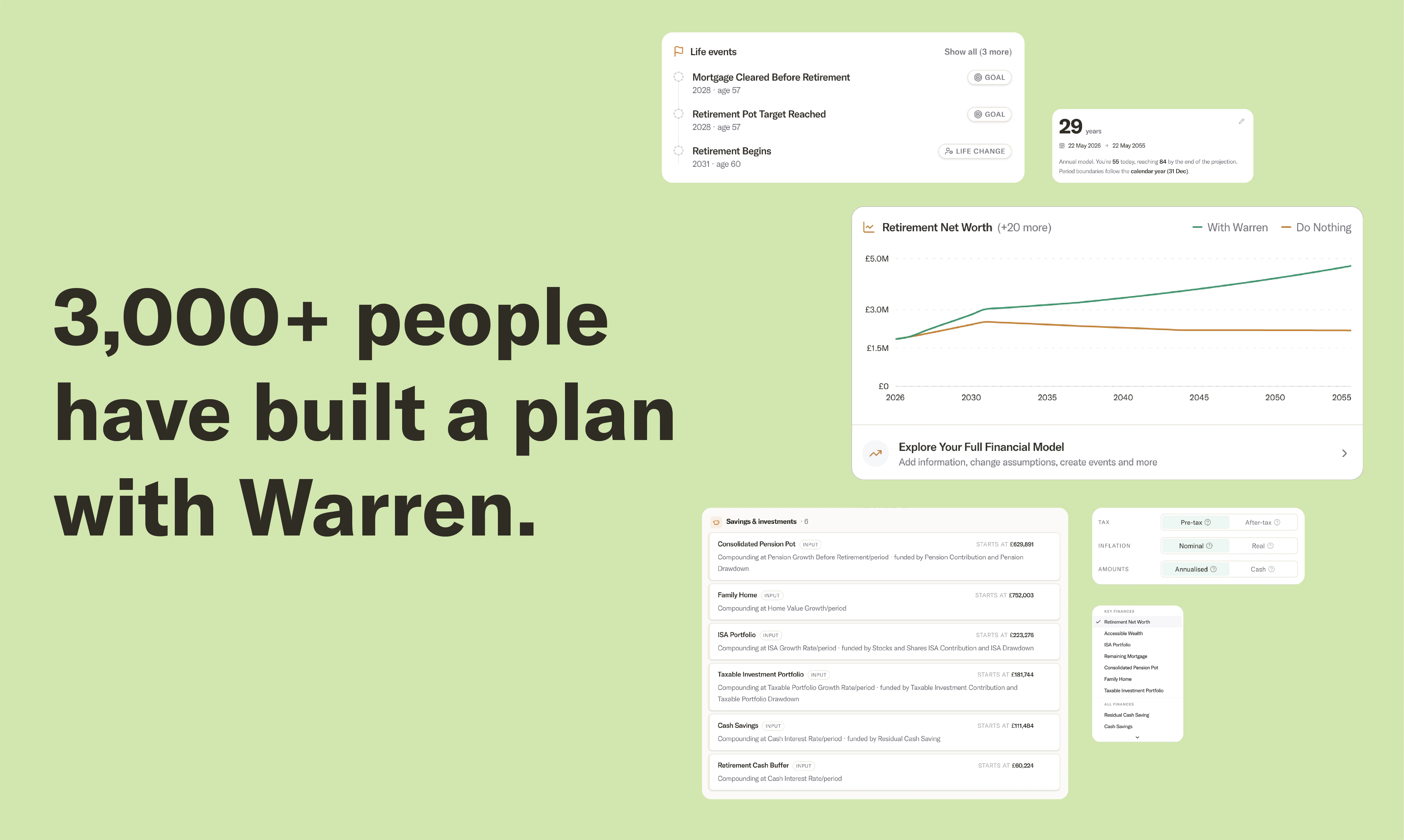
Hey Product Hunt 👋 I'm Dima, founder of Meet Warren. I built Warren because I couldn't get a straight answer to a simple question: will I be okay, financially? I wasn’t looking for an advisor. I just wanted to see my actual financial picture: what happens if I keep going like this, what changes if I make different decisions. That tool didn’t exist for people like me, so we built it. Warren is for people at critical financial turning points. A new job, first home, growing family, approaching retirement. We help you understand what your future actually looks like, without needing an advisor or an hour to spare. Warren 3.0 is a complete rebuild. The core is a new financial model that’s more accurate and fully transparent, and actually editable. You can see every assumption and change any of them. Warren explains its logic on demand. No black box. And once your plan exists, Warren runs in the background. It checks your plan against changes in the economy, news, and your own progress. Then it emails you only when something actually matters. We’ve now built 3,000+ plans across the UK: What we found: 1 in 3 people planning for retirement are set to fall short by £258,000. Only 1 in 16 users feels confident about money before talking to Warren. This is why the product exists. Would love your honest feedback: what works, what's confusing, what you'd change. I'll be here all day. Start your plan for free: https://meetwarren.co.uk/ Dima
5
回复

I used Warren as my financial planning partner. Having used several IFAs before the ease with which I could set up a plan with Warren by having a chat between meetings was a wow moment. I speak to Warren at least once a week to check if I am still on track for my financial goals as the world around us gets more crazy.

2
回复

@olly_betts1 Exactly right, voice chatting really stood out when we were building as the thing that makes the exprience click. Glad you like it!

0
回复

The "one voice conversation instead of a form" call is the part I'd have bet on too. I build voice AI in a different corner (daily check-in calls for older adults), and what surprised me most was how much more people volunteer out loud than they ever type into a field, especially about money. The "approaching retirement" moment you listed is exactly where I see that gap. Question for you, Dima: how are you handling turn-taking when someone trails off or needs a long pause to think through a number? Did you tune the endpointing yourselves, and what latency are you landing on for the back-and-forth to still feel like a real conversation?

2
回复

@igorgurovich Exactly right! Voice just 'feels' different even if the pure information being exchanged is the same. We invested a lot of time into getting turn-taking right, though it's a bit of an art as well, of course. If you pause, Warren will wait (up to a point). Overall, latency optimisation has been a big deal, we land at sub-second is what you need to make it usable (ie no point shipping if >1s delay). Once we got there, now it's just faster = better and we try to improve all the time (the ecosystem of voice AI infra is advancing so fast, we re-engineer our stack basically monthly).

0
回复

I was super fed up with a lot of budgeting apps that were overly reliant on janky Plaid data. I just didn’t feel like they understood my actual financial situation. I have been using Warren for the past month and finding it to be a really useful tool for long term planning.

1
回复

@chiefkeith Thanks Alex! Spot on, plugging the enormous gap in DIY personal finance tools between simple budgeting mobile apps and regulated financial advice is exactly why we built Warren

0
回复

I've used 'Meet Warren' several times and have been very impressed. The setup/onboarding felt very natural (I loved that I could just talk naturally), and the advice I received was really not much different from that of a far more expensive Independent Financial Advisor. I'd recommend it to anybody who wants to get a handle on where they are at financially, and where they might be in a year, five years, or twenty years. Its a brilliant tool to aid anyone wishing to plan their financial future.

1
回复

@alex_mann7 Thank you for the kind words! Though, of course, Warren does not stray into regulated financial advice, it's much more a planning and guidance tool to help you feel more confident and informed to make your own decisions.

0
回复

The "two futures, do nothing vs act" framing is the part that stuck with me. Most planning tools dump numbers on you; showing the delta is what actually motivates a decision. How are you handling the trust gap for people nervous about sharing financial details with an AI?

0
回复

Impressed with my first foray into Meet Warren and built a pretty involved model with ease - one that I had initially developed with some help from Google Gemini, built my own spreadsheet and then had my pension IFA “validate” and run through their own forecasting process, so was fairly confident I would “be OK” but it was good to get some insights from Meet Warren that added a few other key aspects that hadn’t been raised previously - but good to see Meet Warren also say that I’d be OK. And it didnt seem to far away from what I expected.

The bit that I am looking forward the ongoing / dynamic updates and check-in to make sure I am staying on track - when I want, without having to go through the IFA for every what-if that I might have.

One area that I would have liked to be better handled is the tax minimisation strategies in drawdown when you have a range of pension pots and ISAs to drawdown income from (as a married couple).

All this from the free tier - not sure on how much I am missing on the paid tier?!

0
回复

Hey Dima. The editable-assumptions choice is the part I respect most. A plan you can interrogate beats a slightly more accurate one you can't.

A question from my corner of the world: how does Warren model variable income? I work with freelancers on the money side, and most planning tools quietly assume a salary, then fall apart on anyone whose income swings month to month. Does Warren plan off an average, a conservative floor, or something else? For self-employed users that one modeling choice changes everything downstream.

0
回复

What inputs do you need to generate the plan, and do you connect to UK bank accounts or is it manual?

0
回复

@thamibenjelloun That's the beauty - you just talk to it :)

0
回复

Congrats on the launch, Dima.

What stood out to me is that you focused on the question people actually care about: "Will I be okay?" Most financial tools throw charts, accounts, and data at users, but very few translate that into a clear picture of their future.

I also like the transparency angle. Being able to inspect and edit assumptions instead of trusting a black box feels especially important when people are making major life decisions.

Building 3,000+ plans and uncovering insights like the retirement shortfall you mentioned is impressive validation that this is a real problem.

I'd love to learn more about the business side of what you're building and how you're thinking about growth from here. What's the best email to reach you on? Happy to connect and exchange ideas.

0
回复

Damn, I’m not British, but it looks pretty cool) Are you planning to support other countries as well?

0
回复

@natalia_iankovych Absolutely, where would you want us to support?

0
回复

Does Warren integrate with European banks, or US-only for now?

0
回复

@preston_przeszlo UK-only ! :) Where in Europe are you?

0
回复

Following Meet Warren with interest :) What is next on the roadmap after launch day?

0
回复

@mcarmonas Household features to bring all of your family's finances on the platform 😍

0
回复

This is cool. Does Warren handle scenario planning for freelancer retirement accounts like SEP-IRA?

0
回复

@dhiraj_patel5 It's only available and targeting the UK atm, but yes! that's exactly the idea and it handles it well for UK contexts. US soon 👀

0
回复

The “two futures” framing is really clear. Most finance tools show numbers, but not the actual consequence of doing nothing vs changing course. How does Warren handle assumptions like inflation, salary growth, or house prices when users edit the plan?

0
回复

@farrukh_butt1 Yes, this was a massive request from our users - clearly explain the "why" of the plan.

https://meetwarren.co.uk/publications/how-we-built-warrens-cashflow-engine - all the maths is handled via our deterministic engine that the user can use directly in the UI and that Warren can also plug into our of the box

0
回复
#8
ShellMate
Manage SSH servers, credentials, and teams in one place
112
一句话介绍:ShellMate 是一款面向开发者和运维团队的现代化SSH客户端,通过零知识加密保险库和团队工作区,解决了多服务器环境下凭证分散、协作低效、手动同步等基础设施管理痛点。
Productivity Privacy Developer Tools
SSH客户端 零知识加密 凭证管理 团队协作 跨设备同步 基础设施管理 DevOps工具 安全保险库 现代化终端 远程连接
用户评论摘要:用户关注零知识加密与跨设备同步的安全性(@retain_dev);询问是否支持离线环境(@naresh_chandanbatve)和自动密钥轮换(@anand_thakkar1);关心导入现有SSH配置能否保留ProxyJump等高级设置;单人用户关心个人设备同步功能。
AI 锐评

ShellMate在情绪价值上做得不错——创始人亲自下场讲了一个“螺丝刀不够用于是造了把瑞士军刀”的故事,配合零知识加密、跨设备同步、团队协作这些精准击中开发者痛点的功能,112票的成绩对于一个工具型产品来说算得上开门红。但从产品本身看,它目前更像一个“整合者”而非“创新者”。

核心价值在于把SSH凭证管理从“密码管理器+聊天记录+文件共享”的混乱组合中抽离出来,塞进一个带加密同步的统一界面里。这对小团队和独立开发者确实有吸引力。但刨根问底:零知识加密虽好,一旦主密码丢失就是灾难级数据损失;自动密钥轮换仍在路线图上,目前产品与真正的“基础设施安全管理”还隔着几个关键功能。最关键的是,评论中用户追问的空气隔离环境、自托管部署、ProxyJump等企业级需求,创始人只能以“正在探索”或“路线图上有”回应——这说明产品目前仅仅满足了个人/小团队的轻度运维场景,距离真正的团队级生产环境还有不小的鸿沟。

创始人在评论回复中展现的坦诚和用户同理心是加分项,个人免费策略也有利于冷启动。但“超快速”“现代化”这类形容词如果没有在UI交互、连接速度或终端渲染上拿出切实的数据或对比证明,就难免沦为空泛产品口号。ShellMate需要问自己的是:当Termius、SecureCRT甚至iTerm2的配置脚本方案都在进步时,我凭什么让用户迁移?光靠“加密+团队”还不够,必须在一个方向上做到极致差异化,才能真正站稳脚跟。

查看原始信息
ShellMate
ShellMate is a modern, ultra-fast, and secure SSH client featuring a zero-knowledge encrypted vault, cross-device sync, and advanced team workspace collaboration.
Hey Product Hunt! 👋 ShellMate started from a frustration I experienced almost every day while managing servers across multiple projects. Connecting through SSH was easy. Everything around it wasn't. Server credentials lived in password managers. Notes were scattered across documents. Access details were shared through chat messages. Team onboarding was manual. Finding the right server or credential often took longer than connecting to it. I kept asking myself, why is infrastructure management still spread across so many disconnected tools? So I started building ShellMate. ShellMate is more than an SSH client. It's a secure workspace for developers, system administrators, and DevOps teams to organize servers, manage credentials, collaborate with teammates, and access infrastructure from anywhere. Some of the features I'm most excited about: 🔐 Zero-knowledge encrypted credential vault ⚡ Fast and modern SSH experience 🔄 Secure cross-device synchronization 👥 Team workspaces and collaboration 🖥️ Organized server and infrastructure management I've spent countless hours building ShellMate as a solo founder, and this launch is a huge milestone for me. I'd genuinely love your feedback: 👉 What's the biggest pain point in your current SSH or infrastructure workflow? 👉 What would make you switch from your current solution? Thank you for checking out ShellMate and supporting independent makers!
2
回复
nice product! does it work with completely air gapped environments with no internet access like isolated DBs?
1
回复

@naresh_chandanbatve Thanks for pulling it! 😊

The target servers themselves don't need internet access. As long as your device can reach them over a VPN, private network, or local network, ShellMate can connect.

For a completely air-gapped setup with no access to the ShellMate API at all, that's not supported yet. Self-hosted support is something I'm actively exploring since it's a common requirement for security-focused teams.

0
回复

The zero-knowledge vault for SSH credentials is architecturally sound. Most SSH managers store secrets in a way that the vendor could access them, so client-side encryption is the right call. We've dealt with credential sprawl ourselves: private keys shared over Slack is a scary common default. How does cross-device sync work under zero-knowledge constraints? Is the vault key derived from a passphrase with the encrypted blob synced, or something different?

1
回复

@retain_dev The encrypted vault is synced through the server, so your devices don't need to be online at the same time. When you sign in on a new device, it downloads the latest encrypted vault automatically.

Updates are also synced across your connected devices and shared workspace members in real time, so everyone stays up to date without manual syncing.

The important part is that ShellMate only stores encrypted data. The actual decryption happens locally on your device, so the server never sees your plaintext credentials.
Security is one area where I'm probably overly cautious. I'm still actively refining this part of the architecture to make it as robust and bulletproof as possible while keeping the user experience simple.

0
回复

SSH credential sprawl is genuinely painful when managing multiple environments across a team. The team-based access model makes sense: keeping prod keys isolated from staging is something everyone knows they should do but it's rarely implemented cleanly. How does key rotation work? Do you push updates to all hosts automatically, or does each server need a manual sync?

1
回复

@anand_thakkar1 That's a great question, and honestly one of the reasons I started building ShellMate.

Right now, ShellMate focuses on securely managing access, credentials, and collaboration around infrastructure. For key rotation, it doesn't automatically push changes to servers yet. My goal was to first solve the day-to-day pain of credential sprawl, sharing access safely, and keeping teams organized.

That said, automated key rotation and distribution is definitely on the roadmap. I'd love to get to a point where rotating access across environments becomes a few clicks instead of a manual process spread across dozens of servers.

I completely agree with you on the prod vs staging separation. Everyone knows it's the right thing to do, but once a team grows, it often turns into a mix of shared credentials, old keys, and tribal knowledge. Making those boundaries easier to enforce without adding operational overhead is something I'm thinking about a lot.

Out of curiosity, how are you handling key rotation today? Is it mostly manual, or are you using something like SSH certificates, Ansible, or another access management solution?

0
回复

@anand_thakkar1 I just realized I missed part of your question! Within ShellMate, updates are synced automatically. If a credential, host, or permission changes, the update is pushed to all connected devices and shared workspace members in real time, so there's no need for anyone to manually sync.

0
回复

Clean take on an SSH client, and the zero-knowledge encrypted vault is reassuring for credentials. I like that sync is built in. For a solo dev not on a team, does the vault still sync across my own Macs without setting up any workspace stuff?

1
回复

@ianhxu Thanks Ian!

Yep, absolutely 😊

You can use ShellMate as a solo user without creating a team workspace. Your credentials and hosts can sync securely across your own devices, so if you're switching between multiple Macs (or other devices), everything stays in sync and ready to use.

Also, ShellMate is free forever for individual users. The only things that may be part of a paid plan in the future are optional AI features. Everything else is built to be useful from day one without needing a subscription.

One thing I cared about a lot was keeping the onboarding simple. I didn't want another tool that takes an hour to configure before it's useful. You can install it, add or import your hosts, and start connecting in just a few minutes.

Team workspaces are there when you need them, but they're completely optional.

Out of curiosity, what are you using today for SSH and credential management? I'd love to hear if there are any pain points or missing features that annoy you in your current workflow.

0
回复

ShellMate's import/onboarding story is the piece I'd test first, especially if it can pull an existing ~/.ssh/config into a cleaner vault without breaking aliases. For teams, the zero-knowledge vault and workspace model make sense, but the practical tradeoff is migration friction. Do you preserve ProxyJump, per-host identity files, and agent-forwarding settings when importing existing SSH config?

0
回复
#9
Insta360 Luna Ultra
A gimbal camera that sees with you
110
一句话介绍:Insta360 Luna Ultra是一款配备1英寸徕卡主摄、8K三轴防抖的云台相机,通过头追踪系统实现第一人称视角拍摄,解决了创作者在运动或手持拍摄时难以获得稳定、沉浸式POV画面的痛点。
Hardware Photography Video cameras
8K云台相机 徕卡镜头 三轴防抖 AI追踪 第一人称拍摄 头戴追踪 无线监看 竖屏创作 运动相机 影像设备
用户评论摘要:用户称赞头追踪系统是POV拍摄的绝佳工具;核心疑问集中在:AI追踪与DJI的ActiveTrack对比如何?眼部追踪实际使用时,行走或免手持拍摄的跟随自然度是否会生硬?以及如何量化产品对用户的实际帮助效果。
AI 锐评

Insta360 Luna Ultra试图在早已固化的云台相机市场里,用“头部追踪”这个看似不大的切口,重新撬动品类想象力。从硬件堆料来看,1英寸徕卡主摄+1/1.3英寸长焦的双摄方案确实比竞品更扎实,8K 10-bit I-Log也给了后期调色空间,但坦白说,这些规格在2025年已不算降维打击。

真正值得关注的,是那个可拆卸的2英寸OLED触摸屏与POV头戴追踪系统的软硬件组合。它将“云台相机”从手持工具,变成了“第一人称感官延伸”,让双手彻底解放。但这也意味着产品必须回答两个严峻问题:一是“头动同步”的延迟和漂移是否控制在可用范围内?从评论中用户对“生硬感”的担忧可见一斑;二是续航与散热是否撑得住长时间POV拍摄——这通常是这类新形态产品的阿喀琉斯之踵。

硬伤也明显:没有专业的防水抗摔能力,定位模糊。它既不像DJI Pocket 3那样能轻松揣进兜里(毕竟要挂头),又达不到GoPro级的裸机耐造,更多是为特定Vlog/极限第一视角创作服务的小众工具。AI追踪目前只字未提与DJI ActiveTrack的对标,大概率是避其锋芒——这点很聪明,但用户迟早会拿它去追拍高速移动的自行车或宠物。

总的来说,Insta360抓住了“从个人手持到共脑视角”这一叙事转变,产品有巧思,但能否真正让创作者摆脱“云台手”,还是要看追踪算法的工程化落地。目前看来,它更像一个有趣的概念验证机,而非成熟的品类终结者。

查看原始信息
Insta360 Luna Ultra
Insta360 Luna Ultra is an 8K gimbal camera with a 1" Leica Summicron main lens, 1/1.3" telephoto lens, 3-axis stabilization, detachable 2" OLED touchscreen, AI tracking, 10-bit I-Log, built-in storage, and POV shooting accessories.

Hi everyone!

This is gonna be fun:

@Insta 360 Luna Ultra pushes the gimbal camera in a more first-person direction.

With the POV Head Tracker, the camera can move with your head. The detachable screen can also work as a wireless monitor and remote control, so you can frame shots even when the camera is not in your hand.

Gimbal cameras have been a pretty settled category for years, thhis one makes the category feel fun again!

3
回复

The head tracking system feels like an amazing tool for pov shots!

0
回复

Curous how does the AI tracking compare to DJI's ActiveTrack for fast-moving subjects?

0
回复

Congrats on the launch! How are you measuring whether it is working for people?

0
回复

The POV head tracker is the part that makes this feel different from a regular gimbal camera. Curious how natural the movement feels in real use, especially for walking shots or hands-free filming.

0
回复
#10
Slack Data Agent
Ask about your data without leaving Slack
107
一句话介绍:Slack Data Agent(Basedash for Slack)是一款嵌入Slack的AI数据分析助手,用户通过@提及即可在频道内用自然语言查询数据库、获取图表答案,并支持自动化报告和异常洞察,省去了切换仪表盘或等待分析师的麻烦。
Artificial Intelligence Data & Analytics Business Intelligence
AI数据分析 Slack集成 自然语言查询 商业智能 数据可视化 自动化报告 行级安全 语义层 SaaS连接器 实时数据
用户评论摘要:用户普遍认可“在Slack内直接回答数据问题”的便捷性,但关注点集中于:复杂数据库架构下的准确性(如自然语言转SQL的基准测试)、敏感数据在频道/截图中的泄露风险、以及行级权限在共享上下文中的展示范围。部分用户希望了解常见数据源及初始设置时长。
AI 锐评

Slack Data Agent 的定位精准——它瞄准了“数据查询”这一高频但低成本的场景,将AI从“仪表盘后台”拉到了“聊天前线”。从产品逻辑上看,它确实解决了两个痛点:一是减少工具切换带来的认知摩擦,二是让非技术团队能低门槛获取指标,降低了对数据分析师的即时依赖。但值得注意的是,评论中反复出现的“数据准确性”和“权限泄露”风险并非偶然。自然语言翻译为SQL在复杂多表关联时极易产生幻觉或遗漏,即便产品宣称有“语义层”和“技能定义”来兜底,这本质上是将原本属于BI工程师的建模工作转移到了AI背后——对多数团队而言,这层“配置成本”可能被低估。此外,Slack 的公开频道、线程转发、截图上传等协作属性,与行级安全存在天然矛盾:即使AI按权限返回结果,但一旦在频道内可见,就脱离了数据治理的控制边界,这对金融、医疗等强合规行业来说是硬伤。总而言之,Slack Data Agent 在“易用性”上做了教科书级的减法,但要让企业真正放心,它还需要在“确定性”和“数据边界管控”上做更硬的加法,而非仅仅依赖“私有频道或DM”这种用户自决方案。

查看原始信息
Slack Data Agent
Basedash for Slack is your AI data analyst inside Slack — now in the official Slack Marketplace. Mention @Basedash in any channel and it queries your real data sources, thinks in the thread, and replies with an answer and a chart, right where your team is talking. Automations deliver scheduled reports to your channels, and insights surface anomalies automatically — charts included. Ask in Slack. Answered by your data.
Hey everyone, Max here from Basedash. Today we're launching Basedash for Slack: your AI data analyst, now living in the place your team already talks. It's in the official Slack Marketplace as of this week. Mention @Basedash in any channel — "how's revenue trending this month?", "which signup source converted best last week?" — and it queries your connected data sources, shows Slack's native thinking state while it works, and replies in the thread with a written answer and the chart behind it, embedded as an image. It's not just Q&A. Automations send scheduled reports to your channels, and insights post automatically when something in your data changes — both with charts attached. Follow-ups keep context in the thread, and row-level security applies to every question based on who's asking. We run Basedash on this ourselves: our #metrics channel gets a daily revenue report at 9am, and most "quick numbers" questions never leave Slack anymore. Happy to answer anything.
1
回复

Having this directly inside Slack feels way more practical than opening another dashboard every time. How long does the initial setup usually take?

1
回复

@ada_johnsen initial setup is super quick:

  1. Connect a data source (database, warehouse, or one of over 750+ SaaS connectors)

  2. Connect to your Slack workspace

  3. Start asking questions

0
回复

Having data answers show up right inside Slack feels like the right place for this. It saves the usual back-and-forth of opening dashboards, asking an analyst, or chasing a chart later.

1
回复

@farrukh_butt1 exactly! Some of our users use Basedash exclusively through Slack which is pretty cool.

1
回复

This looks like a massive time-saver for answering ad-hoc executive questions! Since it's translating natural language to query real data sources, how does Basedash handle complex or messy database schemas to ensure it doesn't pull the wrong metrics or hallucinate an answer?

1
回复

@andika_fadhilah our AI builds up its own context layer based on your data schema, plus you can add additional context, skills, and deterministic metric definitions to improve consistency of answers.

1
回复

Great idea, more so for the executives.

Natural language to SQL gets a bit tricky when you have a lot of tables and joins; any benchmarks?

0
回复

The insight behind this one is simple. Most data questions are small. "How's revenue trending?" "Did signups recover after the pricing change?" Questions like these don't deserve a dashboard, a login, or a tab switch. They deserve an answer in the place you asked.

That's why we built Basedash for Slack. The whole point of an AI data analyst is that it comes to you.

What I love most: the answers are governed. Same semantic layer, same row-level security as the rest of Basedash. So when someone on your team asks a revenue question in a public channel, the answer is both correct and appropriately scoped to them.

Would love to hear how your team handles quick data questions today — that's exactly the workflow we're trying to replace.

0
回复

The permissions model looks solid, but Slack threads get forwarded and screenshotted constantly. How do you handle the risk of sensitive data being exposed after the AI has already surfaced it to an authorized user?

0
回复

The promise sounds great but I'm always wondering how these tools handle messy real world data. That's usually where things get interesting

0
回复

I love products that meet users where they already work, and Slack is definitely where a lot of teams spend their day.

Being able to ask a quick question and get an answer with a chart directly in the thread sounds much more convenient than switching between dashboards and analytics tools.

The scheduled reports and automated insights are a nice touch too, sometimes the most valuable data is the information you didn't think to ask for.

0
回复

@gabriella_anjani appreciate it, we agree!

1
回复

If @Basedash answers in a shared Slack channel using my RLS permissions, who can see the chart in the thread? Is it visible to the whole channel, or can sensitive answers stay private?

0
回复

@novamaker01 depends where it’s posted! If you want to keep it private you can use a private Slack channel or DM. You can choose to share that with other users if you like, regardless of their access level.

1
回复

Congrats on the launch! What are the most common datasources Basedash for Slackuses for analysis? Relevant data lives across multiple platforms for most companies so curious on about what you and the team have seen so far

0
回复

@scott_davidson_jr most common is connecting an existing database or warehouse, but it’s common to supplement that with data from Stripe, HubSpot, GitHub, Linear and tools like that.

1
回复
#11
Tide
Layered voice notes that paint themselves
102
一句话介绍:Tide是一款将语音备忘录转化为“分层声音草图”的创意工具,让音乐人/播客制作者在单条录音带上无损叠加人声、节拍与旋律,并通过自动绘制的波形可视化快速回溯与剪辑,解决“灵感碎片散落成400条未命名录音”的混乱痛点。
Music User Experience Audio
语音备忘录 声音草图 分层录音 音乐创作工具 波形可视化 DAW集成 破坏性录制 一次性购买 无订阅 创意工具
用户评论摘要:用户赞赏其“破坏性录制”的创意,认为比传统备忘录更贴近音乐灵感产生方式;提出增加“复制当前层状态/分支功能”及“节奏/节拍器”的建议;开发者回应正思考“源版本分支”方案,并承诺未来添加。
AI 锐评

Tide的聪明之处在于把“不完美”变成了卖点。在录音软件竞相提供无限撤销、无损轨道堆叠的时代,它反其道而行——强制破坏性录制,用“没有后悔药”逼迫创作者快速决策。这是一种对“创作瘫痪”的精准打击:太多音乐人因为纠结参数而让灵感烂死在工程文件里。

其真正的价值不是工具本身,而是它重新定义了“录音”的心理模型。传统DAW是“编辑器”,让人陷入无限微调;Tide是“磁带机”,只记录时间轴上的每一次对焦。自动绘画的波形看似花哨,实则是解决“大量录音中快速定位”的高效索引方案——用视觉锚点替代文件名搜索。

但隐患也在此:破坏性录制对专业用户可能过于激进,且缺少节拍轨使得循环点对齐全凭感觉,这会劝退习惯量化网格的电子音乐人。目前它更适合“Demo快照”或“灵感仓库”,距离成为完整创作装备还有距离。不过,考虑到无订阅、数据不锁死、直接导入DAW的闭环策略,它精准捕捉了从“业余录音堆”到“正式制作”之间的那个空白地带——这个定位非常聪明,也足够犀利。

查看原始信息
Tide
Tide turns voice memos into layered sound sketches. Takes stack onto one tape — hum a bassline, beatbox over it, sing the hook. The waveform paints itself as you record. Scrub like vinyl, loop the good part, send it to Choppa or your DAW. No subs, no cloud. Launch month — 50% off until the end of July!
Hey PH 👋 Tide started from a small irritation: every voice memo app treats an idea like it's finished — one take, one file, a list of gray rows. But ideas don't arrive finished. They arrive in layers. You hum the bass, then you hear the harmony, then there's a beat you have to tap out RIGHT NOW before it's gone. So Tide is one tape you keep layering onto. Press record, sing. Press record again, hum over it. Every pass adds to the last — destructively, on purpose. No undo. No track list. Commitment is the feature: it keeps you moving forward instead of mixing. While you record, the waveform paints itself — watercolor strokes, a grass meadow that sways in the wind, little ships that fly around your sound. The visual isn't decoration; it's how you find the moment again. Scrub it like vinyl. Drop loop points. Pin a take to a color. There's an XY pad that places your voice in space WHILE you record — distance and pan baked into the tape, like leaning away from the mic. When the sketch is real, ship it: WAV export, or straight into Choppa (our sampler) to chop it into something else. $12.99 once. No subscription, no account, no cloud — your audio never leaves the device. It's for the shower-singers, the steering-wheel drummers, the people with 400 voice memos named "New Recording 47." I'd love to know what you make with it — and what feels missing.
1
回复

Looks useful :)) Who did you build this for first?

1
回复

@mcarmonas I built this for myself first! I record many musical ideas, but the applications span to creatives, podcasts, narrations, etc.

0
回复

The “400 voice memos named New Recording 47” line is too real. Layering ideas onto one tape feels much closer to how music ideas actually happen. Curious if you plan to add a way to duplicate a tape before committing to a new layer?

1
回复

@farrukh_butt1 I have been toying with the idea of forking off ideas from a certain point. I guess I'm trying to figure out how to manage it. As a songwriter / producer, it's a problem that happens a lot 😅

I think a "source" version, and then deriviatives... hmmm haha. Well. there's my brain dump about the idea. It will be a thing though! for now, embrace the totally destructive nature of the app!

0
回复

Congrats on the launch! The idea of layering recordings onto a single evolving tape is a refreshing alternative to traditional voice memo apps.

1
回复

@alina_tyslenok_ Thank you! I have always wanted a simple layering tool, and then scope crept myself into what we see as Tide 😄

0
回复

Destructive layering is a bold call but honestly right — half my voice memos die because I keep fiddling instead of committing. Love that it's a one-time purchase and exports WAV straight into the DAW. Is there any tempo/metronome option to keep loop points tight, or is it all freeform by design?

0
回复

Most voice memo apps feel like storage. This feels like a sketchbook. Really interesting approach. Wishing you a great launch!

0
回复

@varun1jan Thank you so much!

0
回复
#12
Medicyn
Your complete medical history privately on your device
101
一句话介绍:Medicyn是一款完全离线、免账户的医疗记录管理应用,帮助用户将散落在各处的病历、处方、化验单等资料集中存储在本地设备上,解决家庭医疗档案碎片化、隐私泄露和订阅套牢的痛点。
iOS Privacy Medical
医疗记录管理 离线健康应用 本地隐私 家庭健康档案 AI文档扫描 症状追踪 一次性付费 无订阅 iOS 健康数据安全
用户评论摘要:用户普遍认可隐私优先和一次性付费模式,但核心关切聚焦于数据安全与恢复:提问涉及AI扫描隐私保护(已确认本地OCR)、设备丢失后的备份恢复方案,以及家庭成员间只读共享是否可行。建议优化应急导出和跨设备共享。
AI 锐评

Medicyn切中的是一个真实且广泛存在的痛点:医疗病历的碎片化与隐私焦虑。它用“完全离线、免账户、一次性付费”作为最大卖点,在数据隐私成为奢侈品的时代,这无疑是一股清流。产品设计对隐私的偏执执行得很彻底——本地OCR、文件级加密、无网络调用,甚至主动牺牲了云端同步带来的便利。

然而,这种极致隐私也带来了硬伤。当用户丢失设备,所有健康数据将彻底灰飞烟灭,即使用户手动备份,流程也相当繁琐。开发者承认“备份是妥协”,但这个问题对医疗数据而言几乎是致命的。用户要的不是“绝对安全但随时可能归零”的保险箱,而是“在安全的前提下,数据不会消失”的托底方案。此外,全设备单机存储导致家庭多人协作只能靠导PDF这种“手动挡”方式,与现代医疗场景中需要多人实时共享的顺畅体验存在巨大落差。

从商业角度看,一次性付费模式虽然对用户友好,但开发者如何持续迭代?隐私没有灰度,但产品功能不该只有黑白。Medicyn目前更像一个优秀的“个人数字化病历柜”,但如果不能解决数据恢复和一定程度的安全共享,它可能会被困在“小而美”的孤岛上,无法成为多数家庭真正信赖的健康中枢。它值得尊敬,但离“必备品”还有一段路要走。

查看原始信息
Medicyn
The only health app that keeps your medical history completely private—on your device, offline, with no accounts or tracking. Store your complete health record: conditions, medications, prescriptions, allergies, lab reports, surgeries, and more. Scan documents with AI, track symptoms, set reminders, and manage up to 6 family members. 7-day free trial. Then pay once, use forever—no subscriptions, no ads. Your health. Your data. Your control.

Interesting product! How do you maintain privacy of data when scanning doc with Ai?

3
回复

@daria_goroshko1 Hi Daria, great question! All document scanning and text recognition (OCR) happens 100% on-device using Apple's built-in Vision framework — nothing is ever sent to a server or third-party AI. The scanned images and extracted text are stored locally with full file-level encryption (iOS Complete File Protection). There's no cloud processing, no analytics, and no network calls at all.

1
回复
Hi everyone! 👋 I'm Pranav, and I'm thrilled to launch Medicyn today. The inspiration came from a simple frustration: my family's medical history is scattered everywhere. A prescription from my doctor. Lab results in an email. Surgery notes I had to dig up. My parents can't remember which medications they were on. And every health app I tried either wanted to monetize my data, required yet another account, or locked me behind a subscription. The problem: We've digitized everything except the one thing that matters most—our health. We trust Google with our photos, our bank with our money, but our medical history? That gets siloed across providers, cloud services, and apps that profit from our data. So I built Medicyn differently. Your complete medical history, completely private. On your device. Offline. No accounts. No subscriptions. No data collection. Just you and your health. We're not trying to be another health platform that collects data or locks you into monthly payments. We're building the health app we all needed—something that respects your privacy, works for your whole family, and is yours forever with a one-time purchase. I'd love to hear what you think, your feedback, and what features matter most to you.
1
回复

@pranavshirole Awesome project, Pranav! The frustration of scattered medical records is incredibly relatable. I absolutely love the privacy-first approach and the one-time purchase model. We definitely need more apps built this way. Best of luck with the launch!

0
回复

@pranavshirole Congrats on the launch, Pranav.

The idea immediately resonated with me because everyone has experienced that scramble of trying to find an old prescription, test result, or medication history when they actually need it. It's one of those problems that's surprisingly universal.

What I find particularly interesting is your decision to go all-in on privacy. In a world where most health products are built around collecting more data, building something offline, account-free, and owned by the user feels like a refreshing approach.

Wishing you the best with the launch. I'd love to learn more about the business side of Medicyn and how you're thinking about growth from here. What's the best email to reach you on? Happy to connect and exchange ideas.

1
回复

The scattered family medical history problem is very real, especially when you suddenly need old reports or medication details during a doctor visit. Offline + one-time purchase makes sense here. Curious if there’s a quick export option for emergencies?

1
回复

@farrukh_butt1 Hi Farrukh, thank you for your comments. Yes! The Emergency Card has a "Share as PDF" option that generates a neatly formatted one-page summary (allergies, current medications, implants, emergency contacts, insurance info) and opens the iOS share sheet — so you can AirDrop, message, email or print. Takes seconds, no internet needed. In fact, each and every record can be exported in this way.

1
回复

The detail that stands out to me is managing up to 6 family members fully on-device. I'm building voice AI that checks in on aging parents every day, and the recurring wall we hit is exactly the one you described: adult kids trying to reconstruct which medications a parent is actually on from scattered prescriptions and fuzzy memory. Question for you, Pranav: when a caregiver scans documents for a parent, can that record be shared read-only with another family member, or is everything strictly siloed to the single device where it was captured?

1
回复

@igorgurovich Hi Igor, thank you for your comments. Good luck with your app, and I cannot wait to see what you build! Each record has a "Share as PDF" option that generates a neatly formatted PDF and opens the iOS share sheet — so you can AirDrop, message, email or print. Scanned documents can also be similarly shared in their original format.

Two things help here: (1) Medicyn supports multiple family profiles on the same device (e.g., a caregiver managing both their own and a parent's records in one app), and (2) you can export a full encrypted backup and share/import it on another family member's device if needed. It's manual rather than real-time, but it keeps your family's health data from ever touching a third-party server.

Right now, everything is local-first and lives on a single device — there's no cloud sync or live shared access between devices (by design, for privacy). Read-only shared access across devices is something I'm considering for the future, but it's a tradeoff against the zero-server privacy model I've built the app around.

1
回复

On-device and no accounts is the right default for health data, not a premium add-on. I work with data for a living and the number of health apps that quietly ship your records to a server still surprises me. One question: if it is fully offline with no account, how does a user recover their history if they lose the device? That backup story is usually where privacy-first apps have to make their hardest trade-off. Strong launch.

0
回复
#13
CueBuddy
Record talking videos without manual scrolling
101
一句话介绍:CueBuddy是一款通过语音跟随技术自动滚动提词器的iOS应用,帮助独自录制视频的创作者无需手动调整脚本速度,解决传统提词器与即兴语速不匹配的痛点。
iOS Productivity Video
提词器 语音跟随 视频录制 创作者工具 iOS应用 在线课程制作 Vlog 直播脚本 语音识别 AI辅助
用户评论摘要:用户认可其解决固定速度提词痛点,认为对短脚本也实用。核心疑问点:当用户非逐字朗读、采用更随性对话式表达时,或面对口音、轻声说话时,识别效果如何。
AI 锐评

CueBuddy切中了一个小而精准的痛点——单人录制时的“念稿节奏断层”。它的价值并非发明了新的“提词”功能,而是用“语音跟随”将“读稿”动作从“手动控制”升级为“人机同步”。这种交互看似微小,却直接降低了创作的心理门槛:创作者可以更专注于自然表达,而非频繁分心调整速度或强行记忆。

然而,它的核心依赖于语音识别的准确性与实时纠错能力。用户评论中关于“对话式发言”和“口音处理”的担忧,正是技术落地的阿喀琉斯之踵。如果识别只能处理标准、匀速的朗读,那它本质上仍是另一种形式的“固定速度”;只有当它学会判断“思考式停顿”、“语气强调”和“口误重复”,才能真正匹配真实的人类语言习惯。目前该产品尚在“demo”与“初步app”阶段,针对非母语发音、嘈杂环境、短促语词的冗余响应机制尚未验证。

从市场角度看,它解决了所有单人视频创作者的“尴尬三秒”——即低头看稿再抬头说话时眼神的失焦与停顿。但能否从“工具”进化为“创作伴侣”,取决于其语音引擎的鲁棒性和对“自然语言流”的模糊匹配能力。作为零基础启动方案,它及格;作为深度创作的生产力工具,仍需在识别粒度与场景泛化上迭代。对于独立开发者而言,这是一个绝佳的“场景驱动型”产品思路,但护城河不深,大厂或已有提词硬件的团队随时可以加一个语音跟随模块。

查看原始信息
CueBuddy
CueBuddy is a voice-following teleprompter for iPhone and iPad. It scrolls your script as you speak, so creators can record talking videos, courses, speeches, and vlogs without manually controlling the scrolling speed. When you pause, the script pauses. When you continue, it keeps moving. You can try the core experience in the web demo or use the iOS app for a more complete recording workflow.
Hey Product Hunt 👋 I’m an indie maker, and CueBuddy started from a very simple problem: I wanted to record talking videos without constantly looking down at my script or manually adjusting the teleprompter speed. Traditional teleprompters work, but they usually assume you speak at a fixed pace. In real recording, that rarely happens. You pause, think, repeat, slow down, speed up — and the script often gets out of sync. CueBuddy uses voice-following scrolling to keep the script moving with your speech. When you stop speaking, it pauses. When you continue, it keeps going. It is built for iPhone and iPad creators who record talking videos, courses, speeches, vlogs, tutorials, or livestream scripts. There is also a web demo for quickly trying the core workflow, while the iOS app provides the full recording experience. I’d really appreciate any feedback, especially from creators who record videos by themselves. Thanks for taking a look!
1
回复

This super useful for even a short script. So you can keep to your natural speed and the text will just follow you along. Nice!

0
回复

This solves a real pain point. Curious how it performs/works when you're speaking more conversationally and not reading every line exactly as written. Congrats on the launch!

0
回复

The fixed-speed teleprompter problem is very real, especially when you pause or rephrase mid-recording. Voice-following scroll sounds much more natural. Curious how well it handles accents or quieter speech?

0
回复
#14
NODUS PH Radar for Product Hunt
Product Hunt analytics beyond the daily leaderboard
94
一句话介绍:NODUS PH Radar是一款浏览器扩展,帮助产品发布者在Product Hunt上超越每日排行榜,分析发布速度、竞争动态、历史模式及即将发布的排期,从而在发布前做出更明智的决策。
Browser Extensions Chrome Extensions Productivity Analytics
Product Hunt分析工具 浏览器扩展 发布速度追踪 竞争动态监控 历史数据洞察 社区精选优化 发布策略 独立开发者 产品分析 排名预测
用户评论摘要:用户普遍认可其价值,但提出功能扩展需求:希望加入评论活跃度信号、历史同类产品基准对比(按类别/关注者规模)、发布前类别热度监测。创作者表示这些已在路线图中,并强调零摩擦安装体验。
AI 锐评

PH Radar切中了一个真实但小众的痛点:多数Product Hunt分析工具只看排行榜“结果”,而忽视了“过程”中的竞争动力学。它提供的发布速度、历史模式、未来排期预览,本质上是把“黑盒”中的博弈信息可视化,让独立开发者从“赌运气”转向“做选择”。这确实是当前市场空白。但问题在于:功能仍停留在“信息陈列”阶段,缺乏深度预警或自动化建议(如“本周三发布将面临AI类产品高峰,建议推迟”)。此外,作为浏览器扩展,其数据来源完全依赖Product Hunt公开页面抓取,一旦PH调整前端接口或反爬策略,产品稳定性存疑。商业上,工具的价值取决于用户数,而当前用户主要是与发掘“隐藏好产品”相关的独立制造商,圈层狭窄——如果无法切入更大规模的营销团队或付费分析师群体,天花板明显。一句话:方向对,但深度与护城河尚浅,需转向“预测+建议”而非“展示+分析”。

查看原始信息
NODUS PH Radar for Product Hunt
NODUS PH Radar helps makers analyze Product Hunt launches beyond the daily rankings. Explore launch velocity, race dynamics, watch rules, community spotlight opportunities, historical patterns, and upcoming scheduled launches. Gain context before launch day and understand what drives visibility and engagement.
Hi Product Hunt 👋 I'm an independent maker building a small ecosystem of browser tools under the NODUS brand. While preparing my own launches, I noticed that most Product Hunt analytics focus on the current leaderboard, but provide very little context about launch velocity, race dynamics, historical patterns, or upcoming launches. NODUS PH Radar was created to fill that gap. The extension helps makers: • Track launch velocity and momentum • Explore upcoming launches before launch day • Monitor watch rules and community spotlight opportunities • Analyze historical launch patterns beyond daily rankings Everything is built as a lightweight browser extension, with a strong focus on simplicity and practical insights. I'd love to hear: What information do you wish Product Hunt made easier to discover? Thanks for checking it out! 🚀
2
回复

Congrats on the launch! How are you thinking about onboarding for the first users?

2
回复

@mcarmonas Thanks, Martí! 🙌

For now I'm focusing on a zero-friction onboarding experience.

Users install the extension and can immediately access launch velocity, upcoming launches, historical patterns and race dynamics without registration or setup.

At this stage I'd rather learn from real usage before introducing more onboarding steps or account-based features.

1
回复

Nice one! I regularly see a few products related to PH, but I think that this category has the biggest chance of being featured here!

2
回复

@busmark_w_nika Thanks, Nika! 🙌

I had the same feeling while researching the space. Most tools focus on launch day itself, while I wanted to provide more context around upcoming launches, launch dynamics and historical trends.

Really appreciate the feedback!

3
回复

Can you compare your current trajectory to similar past launches by category or follower size?

1
回复

@thamibenjelloun Thanks! Great suggestion.

Historical benchmarking is something I'd love to add. Looking only at raw votes doesn't tell the whole story.

Comparing a launch against similar products by category, follower count, launch day competition and historical performance would give makers much more actionable insights.

Definitely on the roadmap.

1
回复
This seems like a great way to find some hidden gems, most of the top ranking tools people actually see are just “AI doing ___” which shows some great tools but not ALL of the great tools.
1
回复

@montverde Thanks, Luke! 🙌

That's exactly one of the motivations behind PH Radar.

The daily leaderboard is useful, but it naturally highlights the products with the most visibility and momentum. Many interesting launches never reach the top positions, yet they can still have strong engagement, unique ideas, or loyal communities.

That's why I wanted to include things like launch velocity, race dynamics, upcoming launches, historical patterns, and Community Spotlight — to help makers discover more of what's happening beyond the front page rankings.

Really appreciate the feedback!

1
回复
@m_m_carvalho I agree I think that’s awesome. Thank you and congrats on the launch!
1
回复

Launched my own product today so this lands at the right moment. The daily leaderboard really does hide most of the story, especially for niche products that are never going to outvote the AI tools but still find their actual users here. Does Radar surface comment velocity as a signal alongside upvotes? From what I can see early discussion activity says more about where a launch ends up than the first hour of votes does. Congrats on shipping.

1
回复

@oshylabs Thanks, Arnold! 🙌

That's actually one of the directions I'm exploring. Right now PH Radar focuses on launch velocity, race dynamics, upcoming launches, historical patterns and watch rules, but comment activity is definitely an interesting signal.

I also agree that for many niche products, early discussion often tells a richer story than raw upvotes alone.

Good luck with your launch as well!

1
回复

Picking a launch day is one of those things makers usually guess at, so the upcoming launches and momentum view feels useful. I’d also love to see an easier way to spot which categories are getting attention before launch day.

1
回复

@farrukh_butt1 Thanks, Farrukh!

I had the same frustration when preparing launches. Choosing a launch date often feels like guesswork.

That's one of the reasons I added upcoming launches and momentum tracking.

Category-level attention before launch day is a great suggestion and definitely something I'll explore in future versions.

1
回复

launch velocity and race dynamics are the two things nobody talks about but completely determine how your day goes on PH. most makers just hit publish and hope for the best without understanding what they're actually competing against that day. being able to see upcoming launches and historical patterns before you pick your launch date is genuinely useful

1
回复

@tina_chhabra Exactly.

Launch velocity and race dynamics are the two things that usually decide whether a product finishes in the Top 5, Top 10, or disappears from the front page.

Most makers focus on launch day itself, but understanding the competition before launching is often just as important.

That's one of the main reasons I built PH Radar.

1
回复
#15
LocIn AI
Localize your app with tone-aware AI, automated workflows
93
一句话介绍:LocIn AI是一个面向开发者的语气感知本地化平台,通过CLI、API和自动化工作流,解决多语言翻译中品牌语气和风格难以保持一致的核心痛点。
SaaS Developer Tools Artificial Intelligence
AI本地化 语气感知翻译 开发者工具 CLI集成 品牌一致性 API服务 自动化工作流 应用出海 全球化部署 产品翻译
用户评论摘要:用户普遍认同“保持品牌语气”是比翻译本身更难的痛点。主要疑问聚焦于:1)如何处理React等复杂组件中的硬编码字符串?2)是否原生支持iOS String Catalogs?3)如何应对日语敬语、法语“tu/vous”等结构性的语气差异?4)缺乏人工审核环节是否可靠?5)CI验证能否检查占位符(如{{count}})破坏?开发者对该工具的开发工作流和CI集成表示赞赏。
AI 锐评

LocIn AI抓到了一个被巨头忽视的“雪球”机会——翻译工具多如牛毛,但“品牌语气的本地化”几乎是个空白。创始团队虽年轻,但定位足够老辣:他们没去和DeepL、Google Translate比“翻译谁更准”,而是直接切入“AI翻译在品牌层面上失效”这一开发者痛点,并将之产品化为一个可集成的开发流程。

从技术上看,其“语气感知”的核心卖点并非单纯的模型微调,而是通过语气配置、术语表、项目级上下文建模来对抗“短文本语境稀疏”的难题。这在逻辑上成立,但真正的挑战在于:当输入只有两个英文字母“OK”时,模型如何做出“是友好的确认”还是“冰冷的系统按钮”的决策?这需要极其精细的用户侧配置,而这是否会导致上手门槛过高?

产品设计上,CLI+API+CI验证的组合拳非常务实,让“本地化”从甩给翻译公司的Excel噩梦,变成了可纳入git工作流的自动化环节。但目前的评论焦点暴露出一个核心疑虑:AI生成的内容直出生产环境。虽然有“置信度低时推荐人工审核”的机制,但在实际的跨国产品发布中,一次语气翻车就可能导致品牌形象受损。这个“人机协同”的门槛和成本,是否比表面看起来更高?

此外,作为一个学生团队打造的产品,短期内可能资源有限。对于企业客户最关心的隐私合规(代码文本是否会上云?)、高并发支持等底层能力,产品介绍和评论中并未深入涉及。这或许是其从“小工具”迈向“企业级平台”的关键障碍。

总体而言,LocIn AI踩准了出海应用的刚需,产品路径清晰。但若想在激烈的工具市场站稳脚跟,除了“语气”这个漂亮的故事,还需要更硬核的本地化支持(如RTL语言、icu消息格式)和更完善的错误反馈闭环。它更像一个聪明的“填空题”,能否变成“预测题”,取决于团队对复杂语言场景的工程化能力。

查看原始信息
LocIn AI
Translate your app with tone-aware AI, automated localization workflows, CLI integration, and instant API access. Launch globally while keeping your brand voice consistent across every language.
Hi Product Hunt! 👋 I'm Hamit, a technical high-school student from Türkiye. The idea for LocIn AI came from a frustration we kept running into while building our own products. Translating an app isn't actually the hard part anymore. AI can do that in seconds. The real problem is keeping the same voice, tone, and personality across every language. We'd spend hours fixing translations that were technically correct but felt completely different from the original product. Marketing copy sounded robotic. Product messages lost context. And every update meant repeating the same process again. At first, we thought this was just our problem. Then we started talking to founders. We spoke with YC-backed startup teams, developers, and even people working in localization itself. Surprisingly, many of them told us the same thing: translation quality keeps improving, but preserving brand voice across languages is still a messy, largely unsolved problem. That was the moment we realized we weren't building a nice-to-have feature. We had stumbled onto a gap that a lot of teams felt, but very few tools were focused on solving. So we built LocIn AI. LocIn AI helps teams localize apps without sacrificing their brand voice. Instead of treating translation as a one-time task, we wanted localization to become part of the development workflow itself. A few things we're particularly proud of: • 🎯 Tone-aware localization Your translations shouldn't sound like they came from a different company. LocIn AI preserves style, personality, and context across languages. • ⚡ Developer-first automation CLI tools and API access make localization part of your deployment workflow instead of another spreadsheet to manage. • 🌍 Fast global shipping Translate and update content across languages quickly, without turning every release into a localization project. We've spent the last months talking with founders, developers, and early users, refining the product based on real feedback. 🎁 Product Hunt Exclusive: Get 50% off all plans for your first 3 months with code PRODUCTHUNT50, plus a one-time 50% discount on any credit pack purchase with code PHCREDITS50 during our launch period. How are you currently handling localization? Have you ever run into the problem of translations being technically correct but feeling completely off-brand? We'll be here all day answering every comment. Thanks for checking out LocIn AI ❤️
3
回复
How do you detect and handle hardcoded strings inside complex React components?
1
回复

As a solo dev whose first language isn't English, I feel this in reverse — my app ships in English and I second-guess the tone of every button label. Tone profiles + a CLI workflow sounds way better than my "paste strings into ChatGPT" routine. Does it support iOS String Catalogs (.xcstrings) natively?

0
回复

We've translated products into multiple languages before and keeping the same tone everywhere was always harder than the translation itself

0
回复

I think you've identified a very real problem. Translating text is easy today, but making it sound like the same brand in every language is much harder.

What stood out to me is your focus on preserving tone and personality, because that's often what gets lost when products expand to new markets.

0
回复

@gabriella_anjani Thank you 🙌

That's exactly what we kept running into. The words were technically correct, but the product just didn't feel like itself anymore.

Glad that resonated with you.

0
回复

Tone-aware localization addresses the part that generic translation APIs get wrong. Most tools produce technically correct strings that sound robotic in the target language because they ignore register and brand voice. How does the tone model handle language pairs where formality rules are structurally different, like Japanese honorific levels or the tu/vous distinction in French?

0
回复

The developer workflow is the strongest part for me. Localization usually becomes a messy spreadsheet process after the first few languages, so having CLI/API support from the start makes this feel much easier to maintain.

0
回复

@farrukh_butt1 absolutely right. at some point every localization workflow seems to turn into "wait, where is the latest version of this file?" 😅 we're basically trying to make sure people never end up there in the first place

0
回复

Who reviews the output? Shipping AI translations straight to production without a human-in-the-loop step sounds risky for anything customer-facing. Is there a review workflow or glossary/term base supportt?

0
回复

@ahmeterdempmk We definitely agree that blindly shipping AI-generated translations to production can be risky. That's why we have multiple review and validation layers that check translations, flag potential issues, and in some cases recommend manual review when confidence is low. We also support things like glossaries and terminology rules so teams can enforce consistency across languages. Our goal isn't to remove humans from the loop entirely, it's to dramatically reduce the amount of manual work while still keeping quality high.

0
回复

"Tone-aware" is the part most localization tools quietly skip. I'm Italian shipping apps in English, so I feel it both ways... the words come out right but the register is off, too formal or oddly casual for the screen it sits on. And a two-word button has no sentence around it to infer tone from, which is where machine translation usually guesses wrong. What's it keying off for tone when the context is that thin?

0
回复

@luca_capone That's exactly the kind of problem that got us interested in this space in the first place.

When the context is thin, we lean heavily on the tone profile, glossary, and the rest of the project content to build a better understanding of how the product communicates. A two-word button on its own is tough for any system, but it becomes a lot easier when it's translated as part of a larger product instead of as an isolated string.

We're definitely not claiming to solve context perfectly every time, but we've found that giving the model a stronger understanding of the product itself gets much better results than treating every string independently.

0
回复

CI validation sounds useful, but I’m curious how far it goes. If a translation changes a placeholder like {{count}} or {{planName}}, does LocIn fail the check, or is validate mostly checking missing keys and basic file structure?

0
回复

@novamaker01 It goes quite a bit further than basic validation. It'll catch things like missing keys, broken file structure and yes placeholder mismatches which will fail the check like you suggested. It also checks for untranslated content, makes sure HTML tags like <strong> or <br> are preserved, and warns about suspicious cases like where a translation is dramatically longer or shorter than the source. We also support things like the --min-coverage flag if you want to enforce a minimum translation coverage in CI. If you're curious, the docs are linked on our landing page. And if you end up trying it out, feel free to reach out with feedback or feature requests. We'd genuinely love to hear what would make it fit better into your workflow

0
回复

Congratulations on the launch! 🎉 Localization is one of those problems that seems solved until you actually try to maintain a consistent brand voice across multiple languages.

0
回复

@marianna_tymchuk Thank you! That's exactly what we kept running into. Getting a translation is easy now, but getting it to sound like the same product is a completely different challenge. Really appreciate the support 🚀

0
回复
#16
Clutch Alarm
Sleep through the night. Wake up for the goals.
92
一句话介绍:针对欧洲球迷在北美世界杯期间凌晨3点观赛的痛点,只在高潮时刻(进球、绝杀、球队危机)用全屏强提醒唤醒用户,让你不错过关键瞬间而不牺牲整晚睡眠。
iOS Football Soccer
智能闹钟 体育提醒 足球直播 世界杯 定制通知 睡眠优化 球迷工具 关键时刻 时差观赛 产品猎手
用户评论摘要:用户普遍认可解决了时差观赛的“赌睡眠”痛点,但核心关切集中在:1)触发规则的信任度(怕被误唤醒);2)“重要时刻”的定制化深度(如张力而非仅比分);3)技术上最难的是“戏剧雷达”模型——如1-0领先方占优与落后方占优的区分;开发者回应称支持按球队、联赛、球员等端到端自定义,并内置了基于统计的“戏剧评分”。
AI 锐评

Clutch Alarm的价值不在于“提醒”,而在于“过滤”——将直播流中几十个小时的冗余(0-0的闷战、无意义的倒脚)压缩为几个高剂量刺激点。这本质上是对体育赛事直播的一次“内容颗粒度重构”,比传统的比分推送更深一层:它试图理解比赛的情绪曲线。

但产品面临的信任壁垒极高。95%的用户评论都在质疑“它会不会乱叫”,说明这个“智能”阈值的设定一旦失准,流失率会极快。开发者自述“戏剧雷达”在足球语境下的建模难度(比如同样1-0,主导力的不同决定精彩程度),恰恰暴露了当前核心能力的脆弱性——这需要海量比赛标签数据训练,而一款刚发92票的轻量产品是否有这样的数据基建存疑。

另一个隐忧是用户需求的碎片化:有人想看进球,有人想赌绝杀,还有人只想被叫醒看点球。这种定制化既是护城河,也是开发黑洞。若在世界杯初期因几次误报被卸载,整个增长窗口就会关闭。

现实来看,Clutch Alarm在2026年世界杯前的最佳策略不是追求完美AI,而是先做一个“只有进球才响”的极简版闹钟——用确定性建立信任,再用“戏剧雷达”作为增值付费点。否则,产品在“精准”和“灵活”之间的摇摆会同时失去两类用户。

查看原始信息
Clutch Alarm
The World Cup is in North America, so for fans in Europe the big matches kick off at 3 AM. Clutch Alarm watches every live match and only wakes you — loud, full-screen, past silent mode — when it's worth it: a goal, a one-goal finish, your team in trouble. Sleep through the 0-0 first halves; wake up for the drama. And even if you're awake, it pings you the second a big moment happens — so you never miss one. Started as an NBA alarm, now covers football too.
The World Cup just kicked off — in North America. For those of us in Europe, that means the matches we've waited four years for start at 3 AM. So you either set a brutal alarm and pray it's a good one, or you sleep and wake up to spoilers. Clutch Alarm fixes this. You tell it what's worth waking up for — a goal, a one-goal game in the final stretch, your team in trouble — and it watches every live match for you. It only wakes you (loud, full-screen, bypasses silent mode) when those moments actually happen. Sleep through the 0-0 first halves. Wake up for the drama. And even if you're already awake, it pings you the second a big moment happens, so you never miss one. It started as an NBA alarm for night-owl basketball fans living abroad, and now covers football too — just in time for the biggest month of the year. Would love your feedback, and happy to answer anything 🙏
1
回复

@itamarkenan 🏆🏆🏆

0
回复

This is such a specific but real problem for fans in the wrong timezone. I like that it’s not just a scores app, it decides what’s actually worth waking up for. Curious how customizable the “big moment” rules are per team or match?

1
回复

@farrukh_butt1 it is fully end to end customizeable, it can be per team, league, match or even a player. You chose what to be woken up for, just score margin, time, and a lot of advanced features like big chances burst, leading underdog and and more…

We have built a smart statistic model which gets the match stats and calculate by 1-10 how watch-worthy the match is (the “Drama Radar”).

Feel free to send me a message and talk about it 🙂

0
回复

Interesting contrast in how different fans might react. One person wants every goal instantly. Another wants to stay asleep unless their team is about to lose. Building for both audiences without overwhelming them seems like the hardest product decision here.

0
回复

As someone who would rather sleep than gamble on a 3 AM kickoff, this solves a real problem. The challenge will be trust. If the app wakes me up twice for moments that feel unimportant, I might stop relying on it completely.

0
回复

I love the concept, but I wonder hoe fans define worth waking up for. A goal is obvious, yet some of the best matches are decided by tension rather than scoring. Can users customize the triggers deeply enough to match their viewing style?

0
回复

This is one those ideas that sounds obvious only after someone builds it. Most late-night matches have long quiet stretches, so waking people only for meaningful moments feels much closer to how fans actually want to follow sports.

0
回复

I love products like these. As a football fan, this should help with the worldcup fixtures.

0
回复

Solid launch :)) What was the hardest part to get right so far?

0
回复

@mcarmonas I think the drama radar, in football it’s hard to tell wether the match is “clutch” or not.

For example 1-0 with the leading team dominates is not as clutch as 1-0 with the trailing team dominates. Building a model that knows how to handle those things.

0
回复

This is a smart trade. Most fans pick between missing the match and wrecking three nights of sleep during a tournament, and I build in the recovery space so I see what those 3am kick offs do to people for days after. Sleeping through the boring halves and only waking for moments that matter is the right call. Do penalty shootouts get treated as a special case or do they fall under the one goal finish rule? Good luck with the launch.

0
回复

@oshylabs thank you, penalty shootouts are a special case. You can choose to wake up only for them to

0
回复

But if it wakes you up after a goal, you've already missed it, right!?

0
回复

@louislecat You can wake up for goals, and some smart options can try to “predict” a goal is soon to come and wake you up.

Like big chances burst, the “Drama Radar” we built and a lot more.

Feel free to message me and we’ll talk about it🙂

0
回复
#17
pleNx — Plex client for Nintendo Switch
The first native Plex client for Nintendo Switch
80
一句话介绍:pleNx 在 Nintendo Switch 上实现了原生 Plex 客户端,解决了用户在外出或旅行时,无需额外携带设备或双系统重启,就能在单一主机上畅享游戏和离线观影的双重需求。
Nintendo Open Source Streaming Services GitHub
Nintendo Switch Plex客户端 开源 Homebrew 多媒体播放 离线下载 MPV播放器 掌机 自定义固件 本地流媒体
用户评论摘要:用户认可该项目在技术上的巧思以及对旧硬件潜力的挖掘,认为它满足了旅行中“一机多用”的真实需求。潜在问题在于需破解主机并安装自定义固件,对普通玩家存在一定的使用门槛。
AI 锐评

pleNx 的出现,与其说是一个普适的媒体播放工具,不如说是一次针对特定极客圈层的精准爆破。它最大的亮点并非“能在Switch上看片”,而是“用48小时和Claude Code撬动了Nintendo的封闭生态”。这背后是技术民主化对硬件厂商“功能阉割”策略的无声嘲讽——当任天堂还在靠过时的系统更新限制设备功能时,开发者已经用开源方案赋予了2017年的老硬件2025年的生产力。从实用性看,它的存在确实为出门只带一台Switch的硬核玩家提供了闭环方案,痛点明确且解决得彻底。但必须泼冷水的是,“Homebrew+自制固件”的门槛将99%的用户挡在门外,它注定只是破解圈里的小众玩具,无法动摇官方生态。此外,依赖Plex服务器作为后端意味着它并非一个独立产品,而是家庭影音链条上的一个补丁。真正值得关注的,是这个项目所揭示的趋势:随着AI辅助编程工具的门槛降低,未来将会有更多类似“自定义硬件重生”的微创新涌现。这不仅是对科技巨头“计划报废”策略的对抗,更是个人开发者利用新工具对旧平台进行价值重建的宣言。

查看原始信息
pleNx — Plex client for Nintendo Switch
pleNx is a free, open-source, native Plex client for the Nintendo Switch. Browse your server, queue your watchlist, download for offline in original quality, and play with MPV — handheld or docked on any TV.
Hi! 👋 This project started when I discovered tico, which brought native GameCube emulation to the Nintendo Switch. That made the Switch everything I'd wanted: one device for modern games and retro gaming all the way up to the GameCube. The only thing missing was my media — browsing, streaming and downloading from my Plex server. I was already doing it through an Android dual boot, but rebooting into another OS just to watch something never felt right. The goal: when I leave on vacation and want to pack light, I just grab the Switch and I have everything — and once docked, it doubles as an offline media player for any TV. No native Plex client existed for the Switch, so I built one. pleNx is a fork of Switchfin (an open-source Jellyfin client) migrated entirely to the Plex API and redesigned — entirely built with Claude Code (Fable 5) in 48 hours, with me reviewing, testing on real hardware and steering the design. What it does: * 🎬 Your server's home hubs, libraries, collections and search, fully controller-driven * ⭐ Plex Watchlist — browse, sort, add/remove * ⬇️ Offline downloads in original quality (a full season in one tap) * ▶️ MPV playback — direct play or transcode through your own server, subtitles, audio tracks * 🖥️ Same codebase runs on Windows, macOS, Linux and Android Fair warning: on the Switch it's homebrew, so the console needs custom firmware. It's free, open source, and not affiliated with Plex, Inc. What I like most: a console released in 2017 can still get new applications today — a small win against planned obsolescence. Happy to answer anything!
0
回复

I find the technical achievement fascinating, but it also highlights how different users think. One person sees a hacked Switch and worries about complexity, while another sees a customizable device that can do far more than Nintendo intended.

0
回复

This feels like a Plex client and more like a statement that older hardware still has untapped potential. I love seeing developers extend the life of devices that most companies have already moved on from.

0
回复

This feels like the exact kind of homebrew project people build because they actually needed it. Using the Switch as one travel device for games and offline Plex makes a lot of sense, especially when docked to a TV.

0
回复
#18
Keep
Full-screen 3D clock scenes for your iPhone or Mac
80
一句话介绍:Keep 将 iPhone 和 Mac 的闲置屏幕转化为全屏3D动态时钟,在充电或息屏时提供沉浸式环境显示,解决默认时钟功能单一、视觉乏味的痛点。
iOS Menu Bar Apps Apple
3D时钟 环境屏保 待机显示 Mac屏保 iPhone充电显示 数字艺术 桌面美学 效率工具 极简设计 创意主题
用户评论摘要:用户普遍认可产品聚焦、不堆砌功能,并暗示其能减少工作时分心看手机。Maker强调产品初衷是“下意识保持简单”,用户期望增加日出/雨窗等更安神的环境主题,并关注iOS与Mac两端的体验统一。
AI 锐评

Keep在功能上做“减法”是聪明的产品策略。它没有沦为又一个功能臃肿的时钟App,而是精准切入“息屏美学”这一细分场景:利用iPhone的StandBy模式和Mac的屏保机制,将等待时间转化为氛围体验。其真正价值不在于计时,而在于“眼不见为净”——让手机在桌面变身成一个有质感的摆件,从而弱化用户的检查冲动,这在注意力稀缺的时代尤为珍贵。

然而,80票的曝光度与较低的评论区互动量暗示,该产品目前仍处于早期小众圈层。其核心挑战在于:如何在保持“绝对简单”的前提下,建立足够的内容深度和主题新鲜感来维持用户粘性。若仅仅停留在“更换外观”的层面,用户对新奇感的阈值会迅速降低。真正让它从“玩具”蜕变为“工具”的,可能是能否深度融入用户的场景生态——例如通过自动化与日历、天气或专注模式联动,让时钟的画面不仅仅是好看,还能成为情绪或日程状态的视觉锚点。否则,它很可能只是你电脑上又一个安装后不久就被遗忘的屏保包。

查看原始信息
Keep
The default clock got boring. Keep transforms your iPhone and Mac into beautiful 3D ambient clock displays. Use it as a StandBy-style charging display on iPhone with Apple's built-in Shortcuts automation, or replace static screensavers on Mac with animated ambient clocks. Featuring holographic, glass, jelly, wireframe, matrix and morphing liquid-inspired themes designed to become part of your setup.

I’d probably use this most on an iPhone while charging at my desk. A slow sunrise or rainy-window theme would fit the ambient feel really well.

1
回复

@farrukh_butt1 Keep started as an iPhone project however I figured why not do both Mac and IOS! I agree though, I love getting some work done with my phone on a magsafe stand and a nice theme showing!

0
回复

Love the decision to keep the product focused instead of adding endless features. The holographic and glass themes look especially clean. Congrats on the launch, Will!

1
回复

@marianna_tymchuk Appreciate it! they are my favourite themes too. If you could add a scene what would you like to see?

0
回复
Hey everyone 👋 I'm Will, the maker of Keep. The idea started after using Apple's StandBy mode and feeling like the clock options were a bit limited. I wanted something that felt more visual, more ambient, and looked great on a desk or nightstand. Keep is a collection of 3D ambient clock displays for iPhone and Mac. On iPhone, it can be launched automatically while charging using Apple's built-in Shortcuts automation. On Mac, it replaces static screensavers with animated ambient clock displays. One thing I had to constantly fight while building this was feature creep. The product started much bigger, but the final version is intentionally simple: pick a display and enjoy it. I'd love to know: • Which display is your favourite? • Would you use it on iPhone, Mac, or both? • What's one display theme you'd like to see added next? Happy to answer any questions and would love your feedback.
0
回复
This is pretty cool, also can double as a reason not to pick up your phone and get distracted while working
0
回复

@montverde I like your thinking! Yes it could!

0
回复
#19
QACAT
Catch translation issues before your users do
52
一句话介绍:QACAT是一款混合型翻译质量保障(QA)平台,通过自动化规则检查、AI分析与人工专家审核相结合,在产品真实UI截图环境中定位翻译问题,解决传统QA流程慢、不透明且难以衡量质量的痛点。
Languages Developer Tools Artificial Intelligence
翻译质量保障 本地化QA AI质检 截图标注 OCR文本提取 多语言支持 混合审核 自动化规则 LQA评测 深度报告
用户评论摘要:用户高度认可其解决传统QA的黑箱问题,尤其赞赏截图标注OCR功能和AI+人工分层方案。核心疑问包括:小团队定价(已提供免费试用)、与纯LLM自检的差异、对阿拉伯语等非拉丁文字的OCR支持、以及大规模40+语种的性能表现。另有用户关注术语管理需求。
AI 锐评

QACAT的出现,精准戳中了AI翻译时代一个日益尖锐的悖论:AI让翻译变得廉价且无处不在,却也使质量管控沦为一种“看不见、摸不着”的玄学。传统QA依赖的电子表格和邮件附件,在面对海量多语言内容和截图时,效率低下且成本高昂,导致许多团队干脆放弃QA,自欺欺人。QACAT的聪明之处在于,它没有试图用AI取代所有人类,而是构建了一种“分层齐射”的QA策略。对于低风险内容,快速自动化检查;对于高风险内容,再投入AI和人工深度审查。这种务实的混合架构,既满足了NDA场景对数据安全的刚需,又提高了QA流程的灵活性和针对性。其内置OCR并在UI截图直接标注问题的设计,更是直击了LQA流程中“上下文缺失”这一最核心的痛点,让语言专家不再对着孤立的字符串瞎猜。不过,它需要警惕的是,工具只能赋能流程,不能解决流程本身的管理问题。如果客户本身的本地化流程就是混乱的,QACAT提供的评分和报告也许只会生成更精美的混乱地图。此外,在当下LLM能力极速膨胀的背景下,“AI分析”能力的差异性将成为其核心竞争力。但无论如何,对于任何一家有全球化野心,并且受够了“翻完就算,出事再改”这种野路子的产品团队,QACAT提供了一个可量化、可追溯且更健康的QA新范式。

查看原始信息
QACAT
QACAT is a hybrid translation QA platform combining automated rule checks, AI analysis, and expert human review. Upload screenshots and review translations in real product UI — built-in OCR pulls the text for you. Every run gives a structured, scored report with severity breakdowns and an AI summary of what to fix. Works across 100+ languages. Powered by Alconost.

Hey Product Hunt.

Dmitry here. I lead linguist operations at Alconost — my job is making sure our linguists' work is as efficient as it can be.

For a long time, the translation QA process seemed okay. Spreadsheets, marked errors, a final score. Workable for most projects, awkward for screenshot testing — but there was no real alternative.

We've come to the point where QA is often ditched by teams just because it isn't adapted to modern translation workflows. The good old QA in spreadsheets is slow, inconvenient, and more expensive than it could be.

AI made translation cheap. It also made quality invisible.

QACAT is what we built to make quality measurable again — and to give linguists a real environment to do real work in.

A few things make it different:

– Pick the right QA depth for the content. Rule-based checks (fast, NDA-safe); QA by pure AI or AI + human review; full human evaluation — all on one platform.

– Reports, not spreadsheets. Every QA run produces a structured report — score, severities, error categories, language and engine breakdowns. When it's done, an automatic summary highlights risk areas and points to what actually needs fixing.

– A real environment for the people doing the work. Upload screenshots, and the platform handles the rest — OCR reads the text, the translation auto-fills the correction field, and reviewers mark issues right on the UI. No external image editors, no link-pasting, no re-typing strings.

– Quality you can track over time. Linguist performance, severity patterns, recurring issues — across projects, languages, and people.

Would genuinely love your feedback — what's missing, what's confusing, what you'd want to see next. We'll be here all day answering questions.

10
回复

Happy to be hunting QACAT today! 🐱

I've spent a fair bit of time looking into this one, and it solves a problem most localization professionals or companies going global will recognize: translation QA has long been an inconvenient process and a bit of a black box, hard to actually measure.

QACAT solves this:
✔ pulls the whole thing into one environment
✔ is built around how localization works today, with AI translation, human review, and screenshots as context
✔ makes QA measurable
✔ helps prevent the same issues repeating in future projects

One of the most impressive features is marking issues directly on screenshots (with built-in OCR making it easy for linguists) instead of staring at exported strings.

Dmitry built it and leads linguist operations at Alconost, so he knows it far better than I do. Both of us will be around in the comments today, so ask us anything. 👇

9
回复

@margarita_s88 Huge congrats on the launch! 👏 Combining screenshot context with AI and human review is exactly what modern localization workflows need right now. what AI models are powering the analysis under the hood?

3
回复

@margarita_s88 Dmitry Winicki Congrats on launching QACAT! Love seeing a tool built by people who live the problem daily. When you have a clear ICP, and clear pain, you get a clear fix. Curious - did this start as an internal tool at Alconost before you decided to make it a product?

1
回复

Congrats on launching QACAT, Dmitry! Love that there is an nda safe automated layer with no AI involved - a lot of teams can't send content to LLMs so having a deterministic-only option is useful indeed

5
回复

@dnz_zh Thank you!

1
回复

Awesome.. where have you been. We are localized in I think around 9 countries and theres no room for error because our product is used for a lot of legal tech. Passing to my team.

4
回复

@derickd thanks a lot for your support Derick! I hope you'll find QACAT useful, and Dmitry will be happy to show a quick demo if you want to see it in action on your content! :)

1
回复

@derickd Thank you, I really appreciate that!

I’d be happy to give your team a demo. Quality is ultimately about trust.

In our experience, not every piece of content needs the same level of review. For lower-risk content, fast and cost-effective checks like AQA, AIQA + human validation are often enough. But for sensitive content with a direct business, legal, or customer impact, deeper reviews such as LQA or LQT provide an additional layer of confidence.

Happy to show how these approaches can fit into your existing localization workflow.

2
回复

Well done Dmitry - the feature choices show this platform was built by someone with a lot of hands-on localization experience =) agree that handling glossary terms is a must! when I was working on Nitro, glossary feature was often asked about, so we added it too.

3
回复

@dioiv Thanks a lot. I love and miss Nitro.

1
回复

Congrats on the launch! You've put a lot of work into this platform. I personally like that you can pick how deep the QA goes - makes sense that not everything needs the full treatment

3
回复

@nickzaleski Thank for your inspiration, master :)

1
回复
Interesting! What does pricing look like for a small team?
3
回复

@kristina__grits We've kept plans affordable for both individuals and teams, you can check out pricing options here: https://qacat.alconost.com/pricing

2
回复

@kristina__grits Thanks for asking. Good question. We’re still in the early stage, so pricing is intentionally simple and will likely evolve based on customer feedback and usage patterns.

1
回复

finally a QA tool that treats quality as something you track over time rather than a one-off score per project!

3
回复

Is there a free way to try it before committing?

3
回复

@marcelo_macedo2 Yes! There is a free one-month trial, so you can run real projects through it before deciding 🙌

1
回复

Hi! I am wondering how this is different from just running a quick LLM QA check myself?

2
回复

@olga_sapach Quick LLM QA checks are absolutely a valid modern approach, and I use them myself. The difference is that QACAT combines multiple quality layers rather than relying on a single AI opinion.

Depending on the workflow, that can include deterministic QA checks, + LLM-based evaluation, +human validation, and + deeper review workflows such as LQA or LQT.

In our experience, even the best and most expensive LLM models are excellent at finding some types of issues, but they still miss context, make incorrect assumptions, or generate false positives. That’s why we treat AI as one layer of the quality process rather than the final authority.

1
回复

How does the OCR handle languages with non-Latin scripts or right-to-left text like Arabic or Hebrew?

2
回复

@margarita_tsygankova Thanks for asking. Good question indeed! We use two OCR engines. One supports Arabic, Hebrew (AI assisted), and other non-Latin scripts well (no AI involved, for NDA safe mode), while the other is optimized for Latin-based languages. We select the most suitable OCR approach based on the content being processed.

1
回复

The screenshot review with OCR caught my eye. I've seen how time linguists waste when doing LTQ and re-typing strings and indicating what’s wrong, so this feature sounds really handy.

2
回复

@kseniya_avtukhovich thanks for checking out QACAT! yepp, it is really convenient, our first users (linguists) already let us know they loved this specific feature ;)

1
回复

How does it perform at scale? Wondering if it's been tested on projects with, say, 40+ languages.

2
回复

@elena_kozak Thank you for your question - and yes! QACAT has already been used across 40+ languages in production environments. Not necessarily within a single project, but across multiple real-world localization workflows and quality evaluation scenarios.

1
回复

Scoring per ai engine is useful. Most teams try multiple ai engines, and knowing which engine performs best per language is valuable data.

0
回复
#20
LeadPrysm
Every newly funded AI startup - with contacts
30
一句话介绍:LeadPrysm实时追踪每周新获融资的AI初创公司,自动整合创始人及高管联系方式、投资人、融资历史与招聘信号,为B2B销售和SaaS工具团队精准锁定“刚有钱、有需求、无供应商锁定”的黄金触达窗口,解决手工挖掘目标企业耗时且错失时机的痛点。
Sales Marketing Artificial Intelligence
AI销售线索 初创公司融资追踪 B2B潜在客户 创始人联系方式 融资信号 招聘信号 市场分析 细分垂直类 周报推送 人工智能
用户评论摘要:用户肯定其创意和时机价值,但也有疑虑:当所有类似工具都在融资周蜂拥联系创始人时,用户如何避免沦为“噪音”。部分评论询问产品背后成长策略,并建议增强差异化以避免同质化干扰。
AI 锐评

LeadPrysm切中了一个被广泛感知但尚未被精分工具覆盖的销售痛点:AI赛道的“融资瞬间”即是销售“保质期”。传统数据库或融资追踪工具(如Crunchbase、PitchBook)信息滞后或难以直接导出联系人,而LeadPrysm将“何时联系”这个时间差产品化了。它深度绑定“预算刚到位+决策层活跃+竞争未固化”的高转化场景,切入点为精准且极具商业价值。

但问题同样尖锐:第一,同质竞争者的涌入将快速冲高“融资周触达”的噪音率。若无数据独家性或差异化触达策略,用户极易被创始人厌弃,导致工具本身成为反向筛选器。第二,产品明确依赖AI从公共源汇编数据,若无法构建防御性数据精度(如联系人邮箱验证率、融资类型甄别),将沦为普通信息聚合站。第三,仅覆盖AI初创公司,虽聚焦但限制了潜在用户群(如面向全行业的销售团队),属于精细化但非规模化打法。

其真正价值不在于数据库本身,而在于对“信号时序”的把握,即从“公司何时融资”到“应该何时邮件”的自动化预判。要跳过红海,LeadPrysm必须向“决策时机引擎”进化,比如结合创始人公开动态、公司招聘节奏等二次信号,生成推荐的首次联系时间而非静态模板。否则,“每个融资初创都找上门”只会让销售团队沦为千人一面的信息轰炸机,而非获客狙击手。
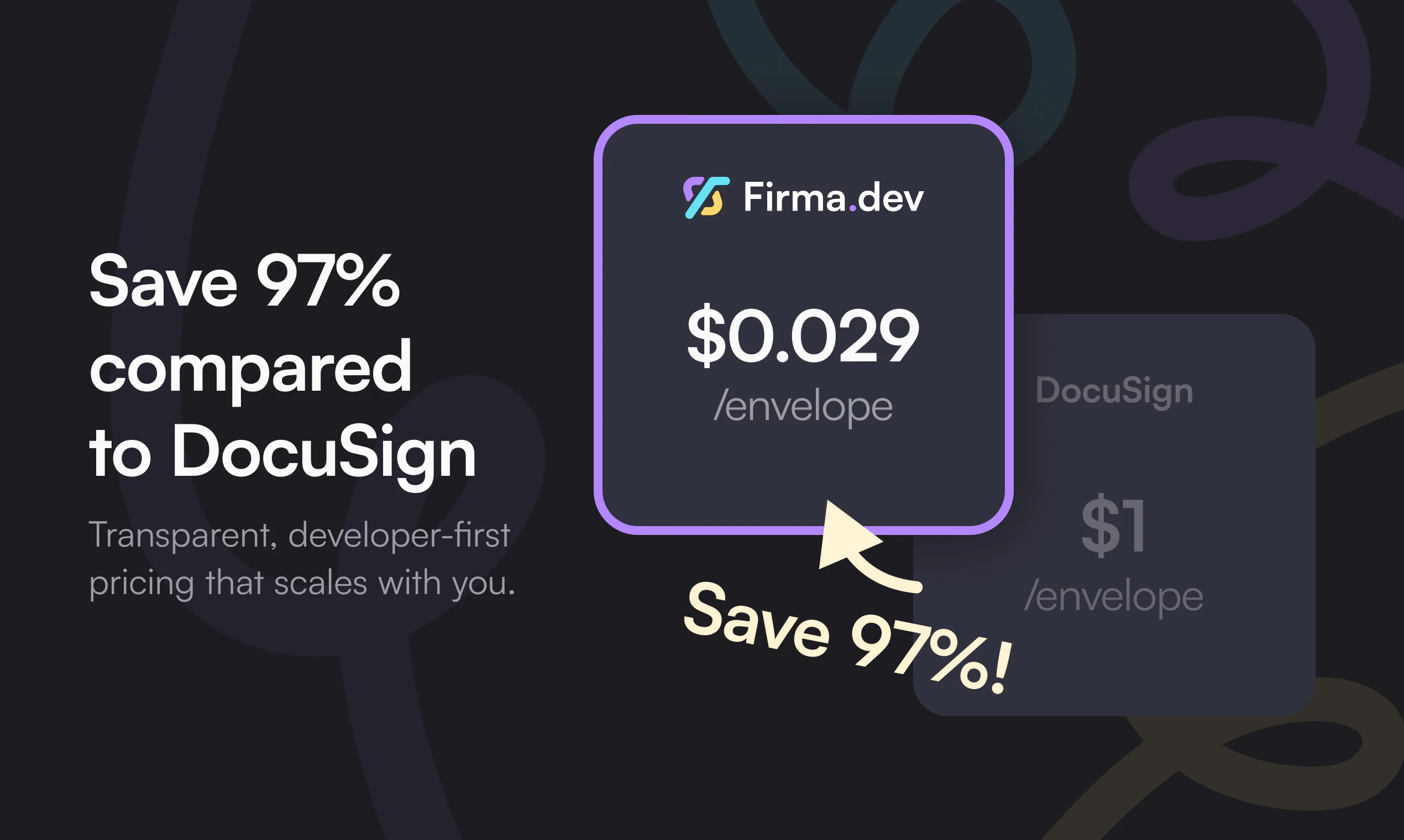
查看原始信息
LeadPrysm
LeadPrysm tracks every newly funded AI startup across 10 sub-verticals and turns each raise into a full profile: founder & exec contacts, investors, funding history, hiring signals, and market context. Refreshed weekly.
Hey Product Hunt 👋 I built LeadPrysm because selling to startups has a timing problem: the perfect moment to reach out is the week a company raises - they have budget, urgency, and no vendor lock-in yet. But finding who raised, who runs it, and how to reach them means hours of digging per company. LeadPrysm automates the whole loop for AI startups specifically: 🔍 Tracks every new AI funding round daily (multiple web sources, merged & deduplicated) 🏷️ Classifies into 10 AI sub-verticals - agents, infra, vision, healthcare AI, robotics… 👤 Enriches each company with founder & exec contacts, investors, funding history, and hiring signals 📬 Ships it as a browsable database + weekly digest It's in beta and built solo - data is AI-assembled from public sources, so you may catch an imperfect record; there's a one-click report button and I fix them fast. Free tier needs no card: the 5 newest startups + a contacts preview every week. I'd genuinely love your feedback - especially from anyone selling tools or services to startups. What's missing? What would make this a no-brainer?
1
回复

@rohovets_taras Interesting concept. Turning funding announcements into detailed profiles with contacts, hiring signals, and market context could save a lot of research time for anyone doing outreach or market analysis.

0
回复

Solid idea, but here's my concern: the moment a startup raises funding, every tool like this is reaching out to the same founders that week. How do you make sure your users aren't just becoming noise in an already crowded inbox?

Congrats on the launch!

0
回复

Congrats on the launch.

This is a really smart angle on lead generation. Most people focus on finding companies, but you've focused on finding them at exactly the right moment. Timing is often the difference between getting ignored and getting a meeting.

I also like that you're narrowing in on AI startups specifically rather than trying to be another massive, generic database. The categorization and enrichment layers make it much more actionable than a simple funding tracker.

Would love to learn more about how you're building and growing this. What's the best email to reach you on? I think there could be some interesting opportunities to exchange ideas around distribution and startup sales.

0
回复