Product Hunt 每日热榜 2026-06-29

PH热榜 | 2026-06-29

#1
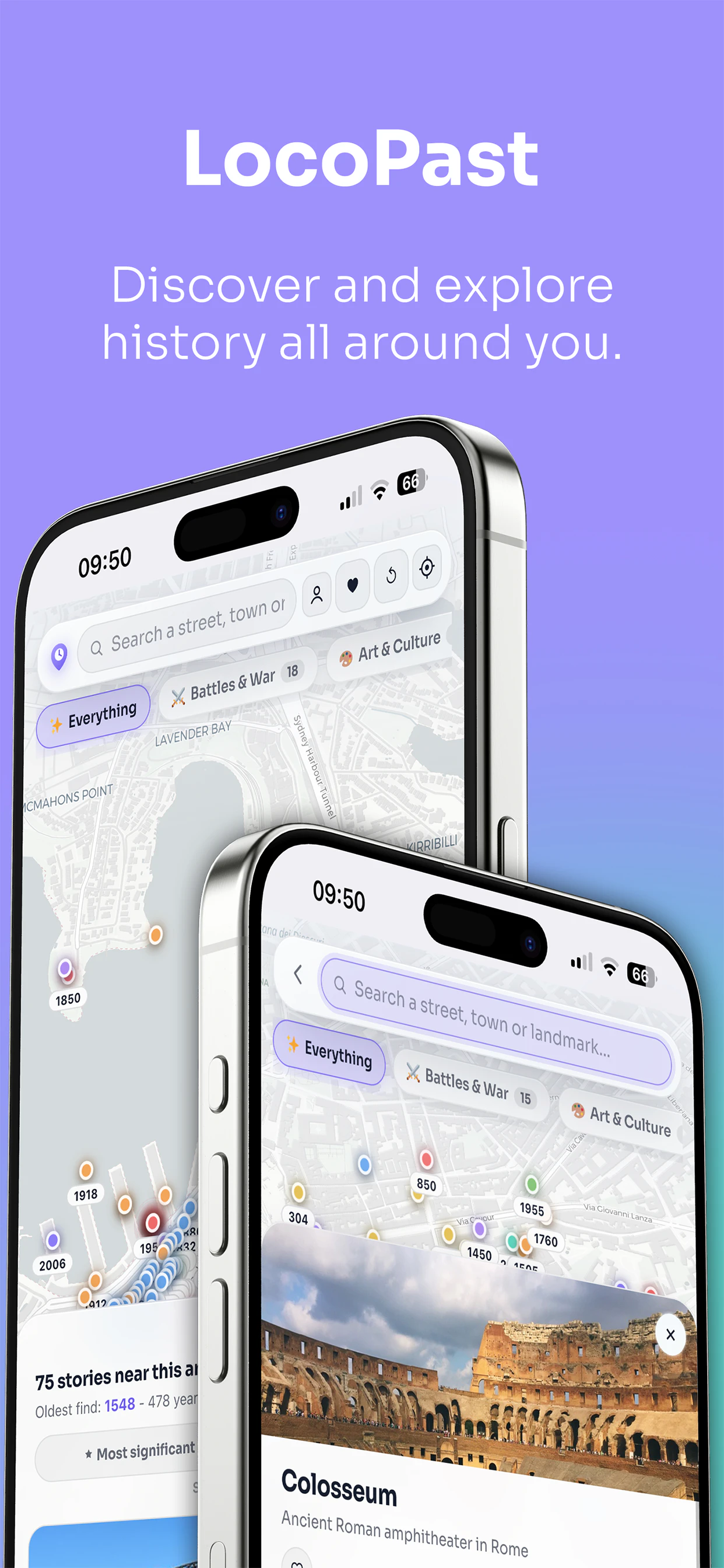
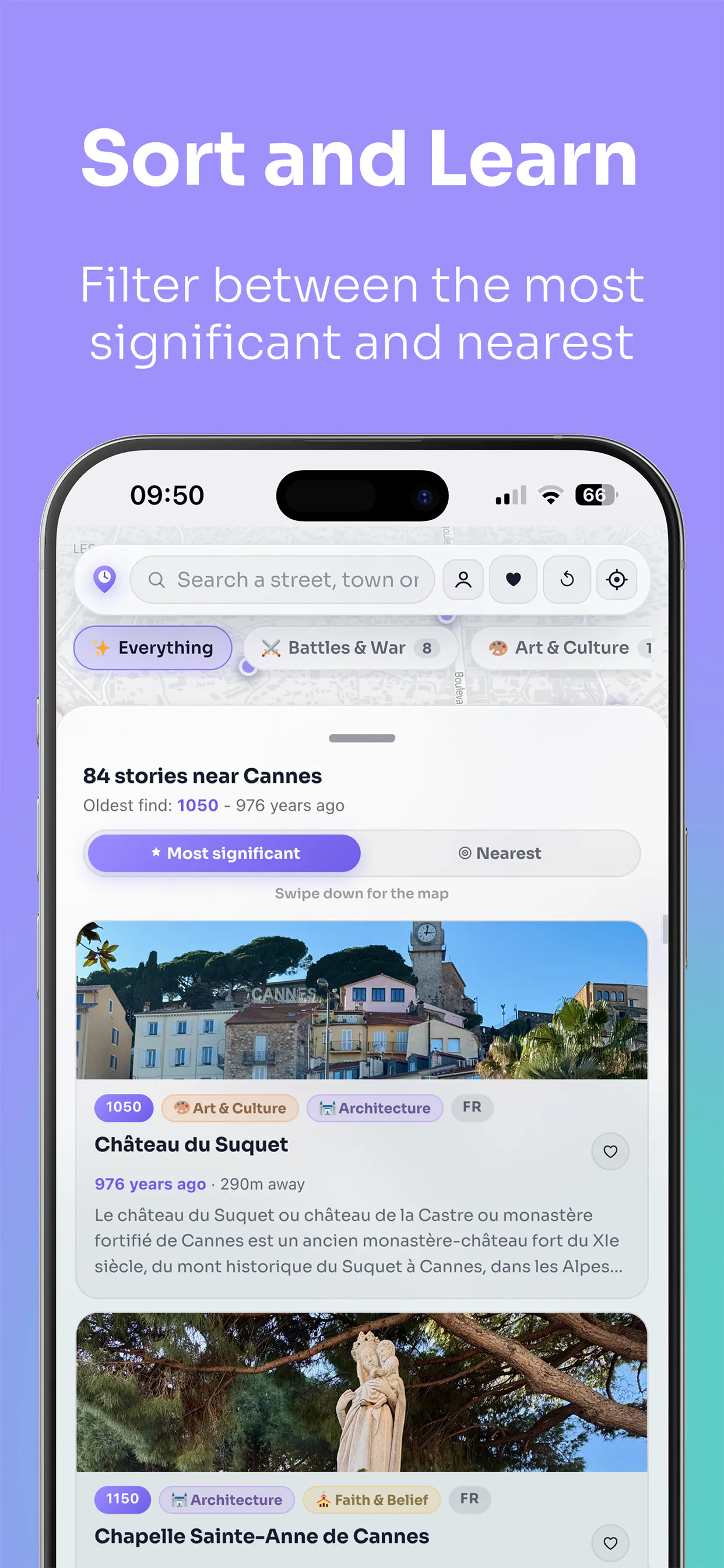
Spira for Product Hunt Makers
Social media growth agents that build your momentum
400
一句话介绍:Spira是一款针对Product Hunt创作者的AI社交增长代理工具,能自动分析品牌DNA并生成创始人分身与AI网红,在TikTok、X等平台自主规划、创作和发布内容,解决产品发布后社交媒体热度“断崖式下跌”的痛点。
Social Media Marketing Artificial Intelligence
AI社交媒体代理 品牌内容自动生成 Product Hunt发布工具 创始人分身 AI网红 社媒增长自动化 品牌DNA分析 趋势检测
用户评论摘要:用户普遍认可“发布后持续运营”的痛点,但对AI能否把握品牌“品味”和判断力存疑,担心内容风格趋同与品牌安全;价格体系(代币制)不够清晰;另有用户询问产品定位、与竞品差异及品牌转型的适配性。
AI 锐评

Spira切中了一个真实且尖锐的痛点:绝大多数Product Hunt产品在“爆红48小时”后迅速坠入冷宫。创始人不是没有好产品,而是没有精力持续输出社交内容。从这个角度看,Spira的“品牌DNA克隆+AI分身运营”是个聪明的产品设计——它没有试图替代营销策略,而是用“AI内阁”的形式填上了创始人“发布即失声”的真空期。

但必须指出,产品目前“雷声大,雨点小”的风险极高。评论中反复提及的品牌“品味”、趋势判断时机、以及内容是否沦为千篇一律的AI套话,是决定其生死的核心壁垒。CEO的回复虽展示了“代理会请示”的人类闭环,但这本质上是用“人工审核”给“自动化失控”兜底,而非真正的智能决策。代币定价体系的混乱更暴露了底层逻辑:内容生成成本尚未被模型效率解决,商业化路径模糊。

一句话:方向对,痛点准,但心智图景与竞品的差异仅停留在“花哨的包装”上。如果Spira不能在两周内显著减少用户的人工审核频次,并生成可量化、可追踪的转化数据,它很快就会沦为又一个“漂亮但无用”的AI玩具。真正的护城河不是故事讲得多好,而是能否让创始人在第二周时,真正放心地把账号密码交给它。

查看原始信息
Spira for Product Hunt Makers
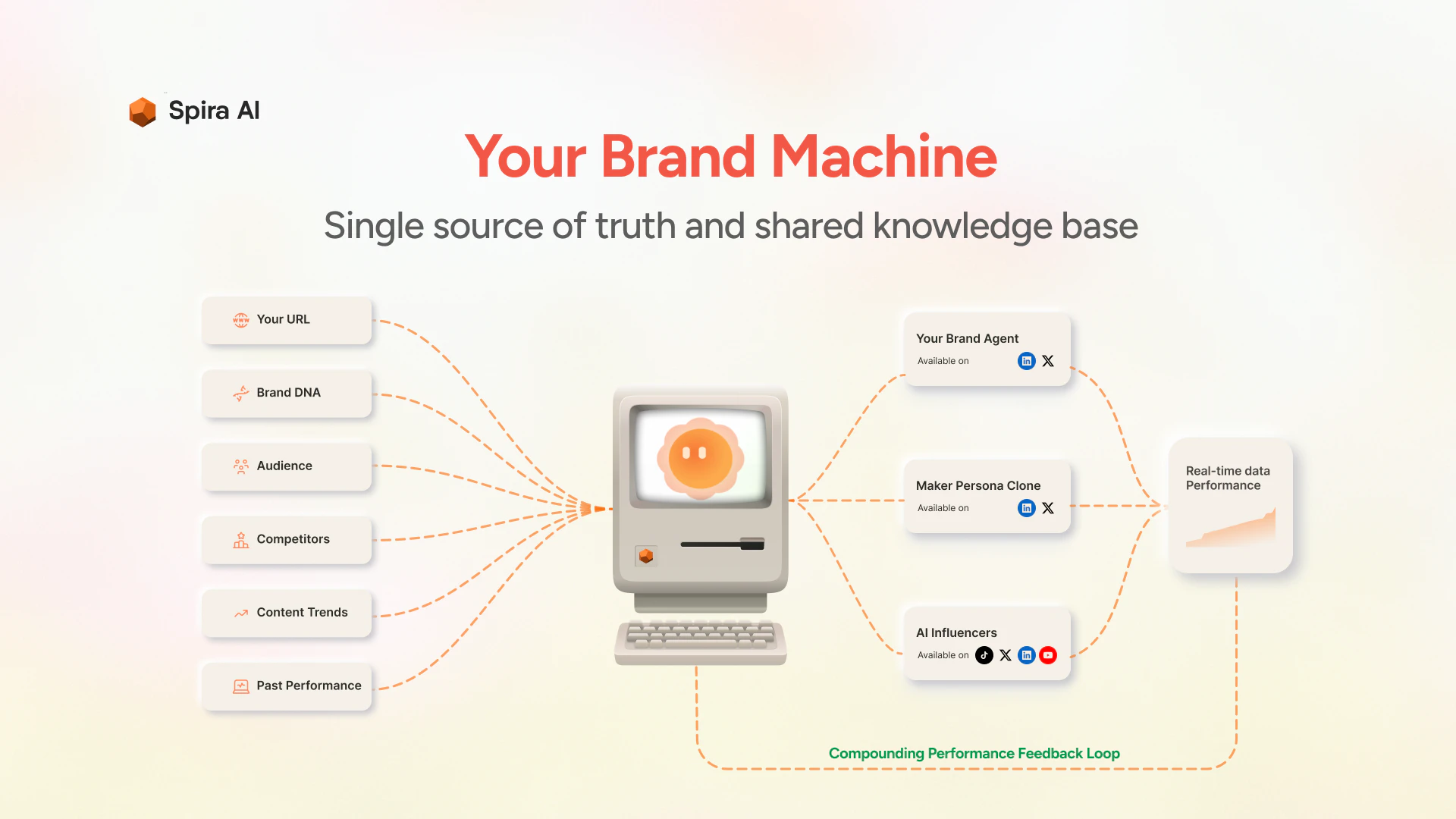
Drop your Product Hunt link and unlock your brand agent, persona clones of your founding team and AI Influencers that autonomously plan, create, and publish across TikTok, IG, X and Linkedin. It's your biggest launch day, don't let it slide away!

Hi Product Hunt Makers 👋 Back here again, I'm Long, CEO of Spira AI.

We spent the last month studying 40+ launches that hit top 10, and one pattern stood out: almost all of them flatlined within two weeks. The products were great, but the teams went quiet after launch and put their heads back down to build. So I built the thing I wish they'd had.

Spira AI is for Product Hunt makers who'd rather ship features than post content. We're running our own channels on it this week, and we've onboarded a few other AI startups to grow in front of the audience they were built for.

Here's how it works:

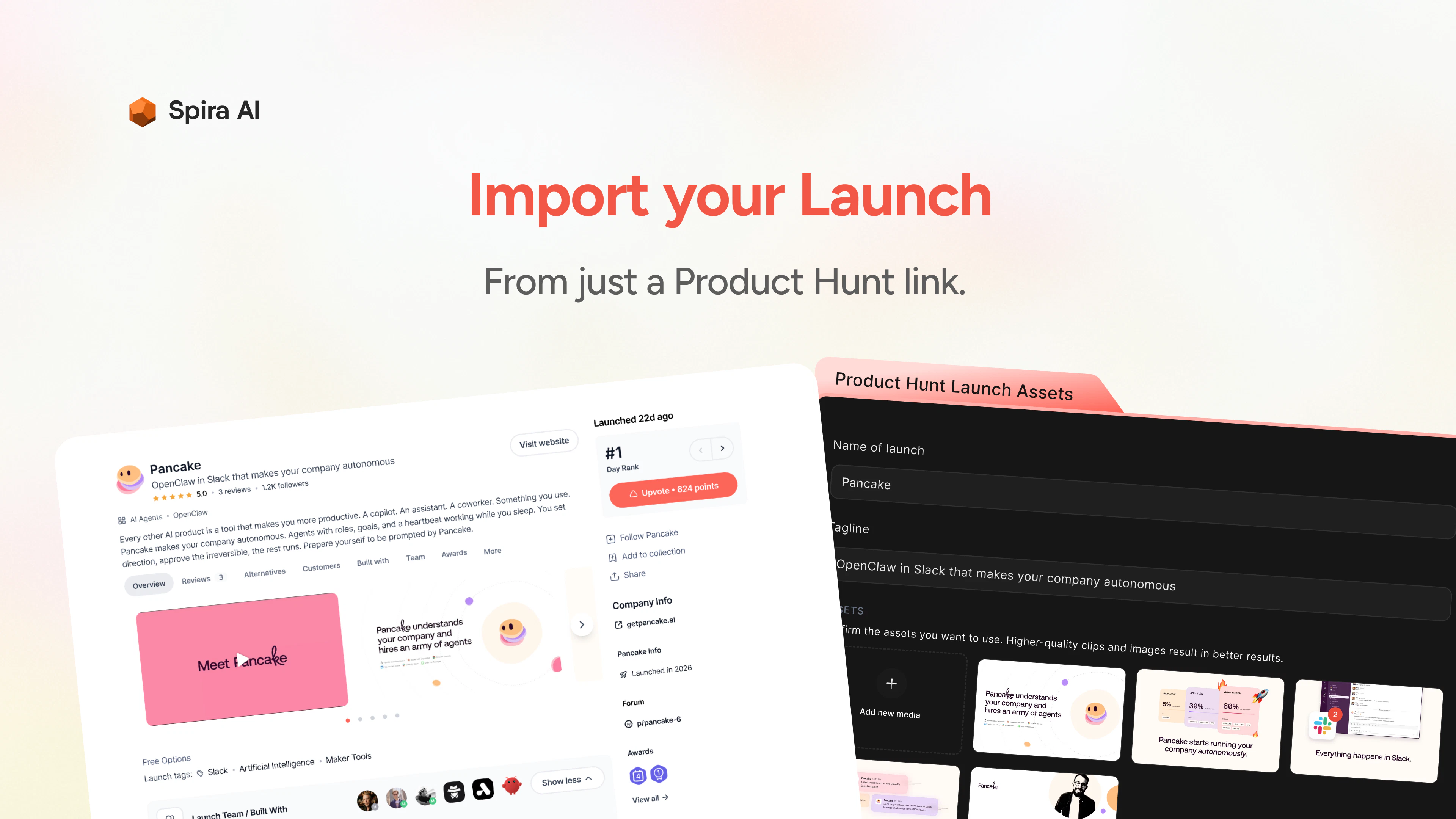
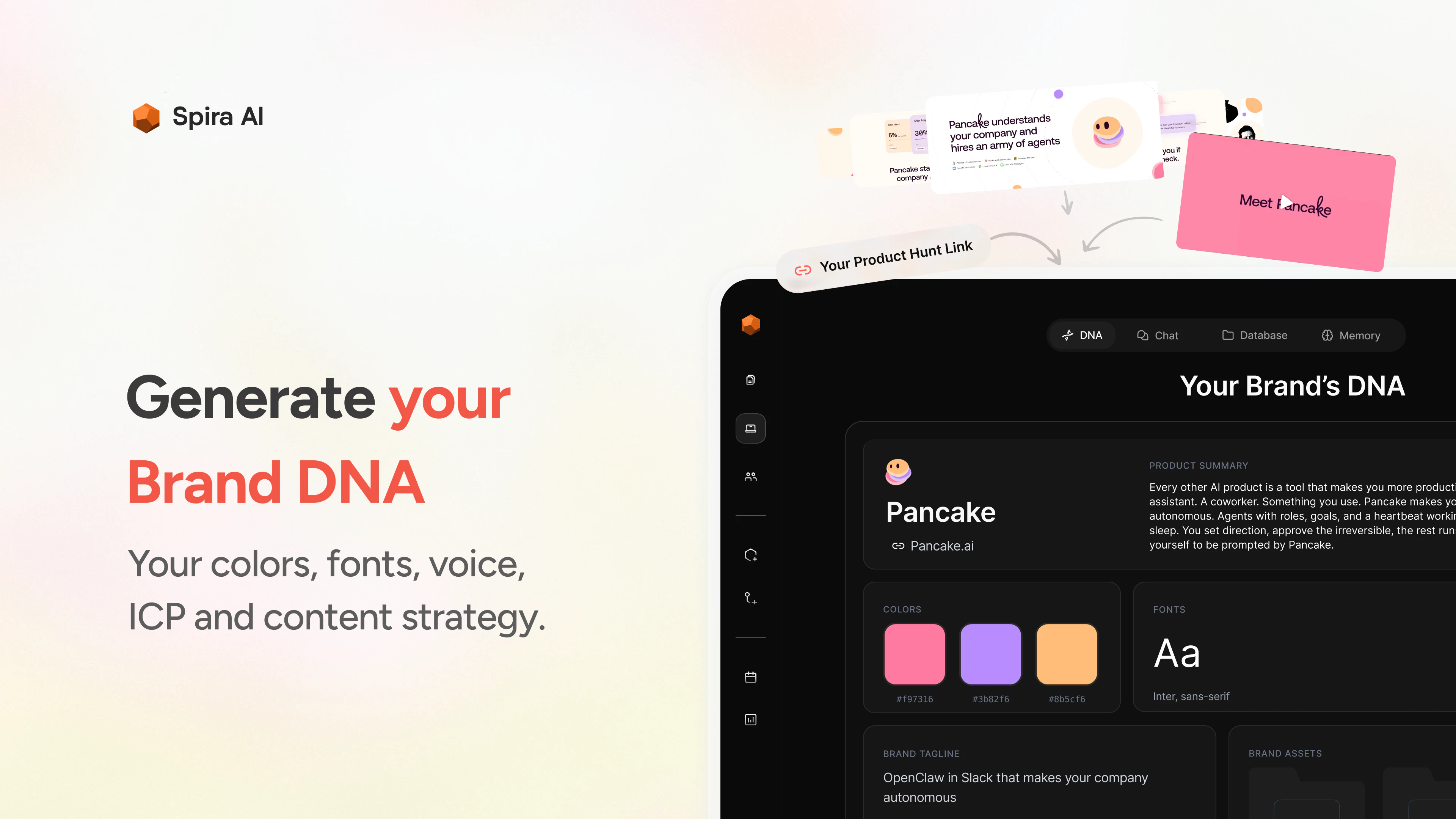
  1. Drop your Product Hunt or website link. Spira AI reads it and builds your Brand DNA: your voice, design system, audience, USPs, and generate your content strategy.

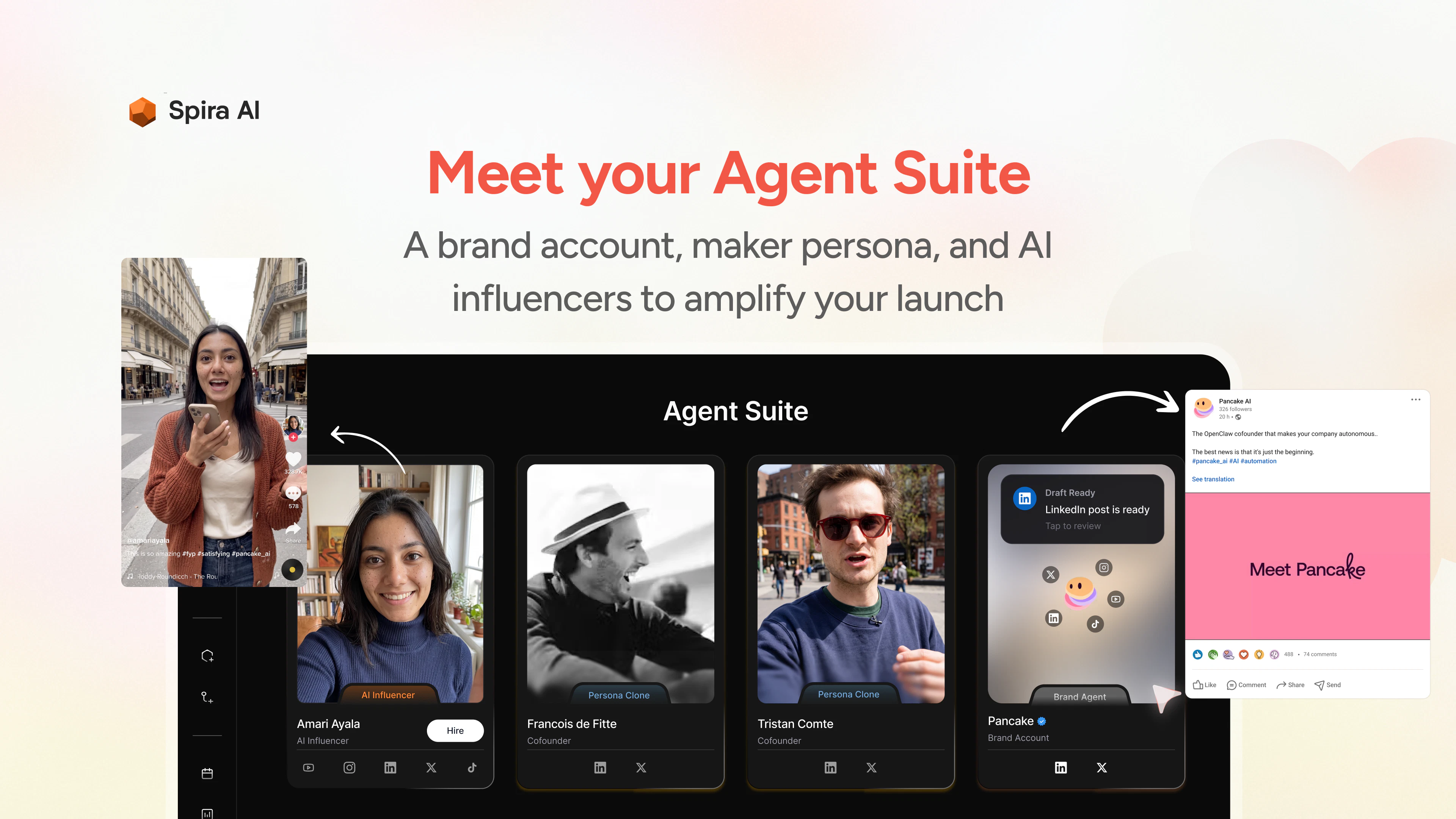
  2. You get a suite of agents tuned to that brand, posts already queued for your approval. One runs your brand account, one clones your founder voice, and a team of AI influencers amplifies the launch.

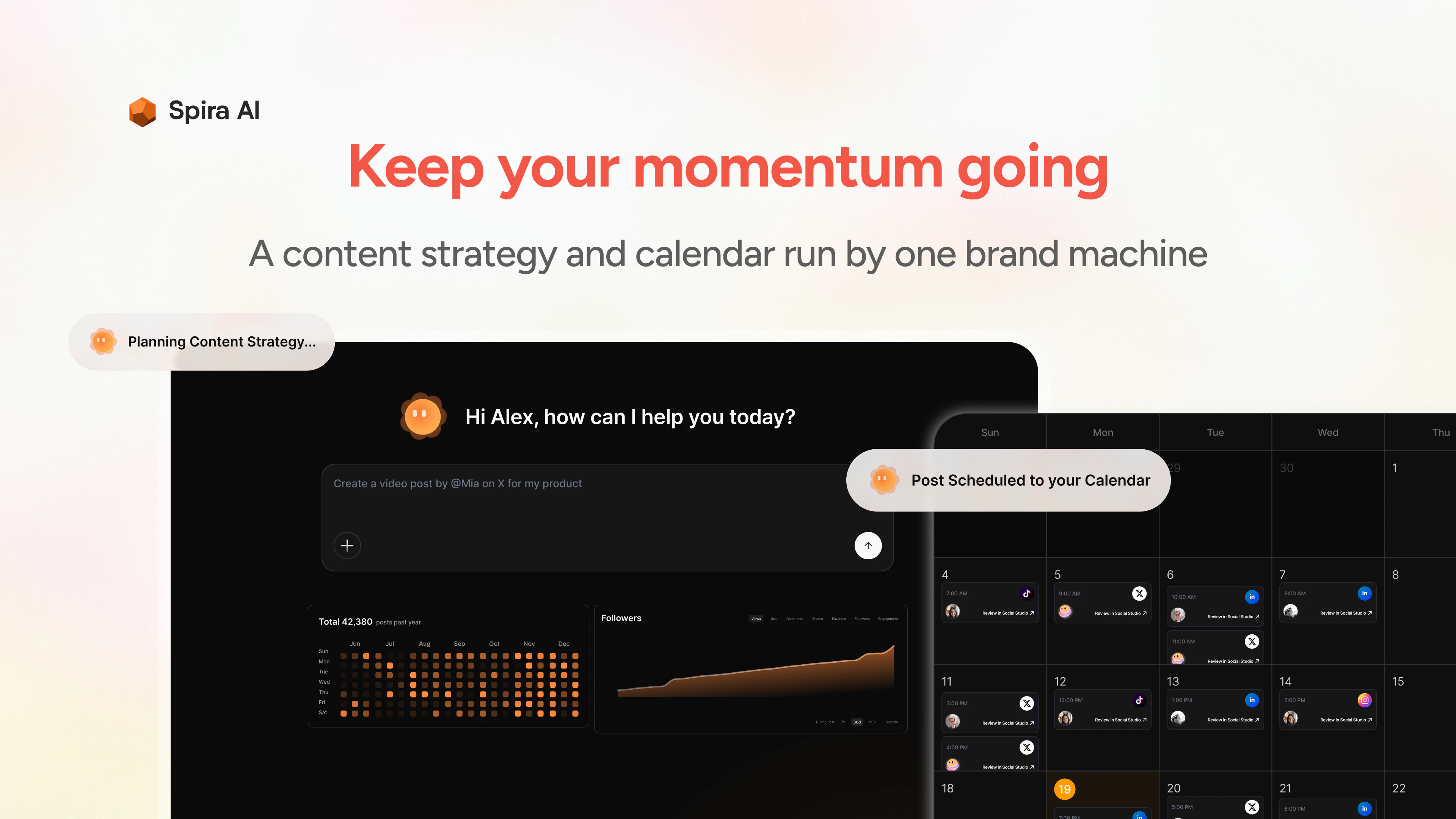
  3. From there they run on their own. Spira AI pulls live trends, reads your performance data, and adjusts as it goes. 🚀

I built this after watching too many founder friends burn time and money figuring out what to post. (And honestly, so my GTM intern can stop doing it manually and go work on something better 😄)

One thing we're testing: when Spira AI reads your link and builds your Brand DNA, how close does it need to feel to you before you'd trust it to post on its own? Tell me where it nails your voice and where it misses! Try it for free today.

20
回复

@llma Congratulations on the launch Long!

5
回复
hello dear friend
0
回复

@llma nice one! looking forward to try it!

1
回复

The "growth agents" framing covers a lot of ground, so I'm curious what these agents actually do when they hit the hard parts of social growth: figuring out which content to double down on versus which formats are dying on a specific account, or knowing when to engage with a thread versus when jumping in looks spammy. Most tools in this space are good at scheduling and surface-level analytics but hand the strategic judgment back to you. Does Spira make actual recommendations on those calls, or is the "agent" layer mostly automation on top of posting and engagement tasks you've already defined?

4
回复

@fberrez1 Both, honestly. The agents make the real strategic calls, what to double down on and which formats to kill per account, not just run tasks you defined. But they don't decide everything blind: when something is high stakes or it's unsure, it checks in with its manager instead of acting. Think AI coding in auto mode, it still stops at the important parts to confirm. The "jump into this thread or not" kind of judgment is exactly what it brings back to you. You set how much autonomy it gets, happy to walk you through it.

We want to enable you to communicate and collaborate with our agents as you would with real people: like you need to trust the most talented people on your team and empower them to exercise their own judgment. At the same time, your employees should be able to involve you at critical moments to make decisions or help them perform even better.

3
回复

the trend detection piece is what makes or breaks this. creating content is the easy part now, knowing what to create and when is still the hard problem. most social media tools automate the posting but the content strategy is still entirely manual. if the agent can genuinely catch trends before they peak and not just react after they've already saturated, that's a real differentiator. curious how it handles brand safety though. fully autonomous posting with no human review feels risky for any brand that can't afford a bad post going live at 2am.

3
回复

@shubham4real Hi, and thanks for mentioning the human review piece.

We want to make sure that human review is part of any autonomous posting/automation. As much as the creative and creation process can be automated (creating a bunch of copies, and creating the best version yet) -- we still believe and apply human review as the final north star towards getting these social media posts online! The automation is everything before the approval, so we want to make sure that there is a human in the seat to review and approve everything towards the end.

0
回复

That line about freeing up your GTM intern hit home, that's exactly the work that quietly eats a small team's week. For me to trust the auto-posting, the Brand DNA would need to nail not just voice but judgment: knowing which trends are on-brand to jump on and which would feel try-hard. Getting the voice right is table stakes now. Getting the taste right is the hard part.

Curious how much of that "taste" the agents pick up from performance data over time vs. what you set up front (Have tried this a bit here and there and ended up with random output).

Congrats! @justin2025 @llma @djdmkim94 @zun_wang2

3
回复

@justin2025  @llma  @zun_wang2  @sharun_kanan 

Hi @sharun_kanan , exactly -- I'm here as the intern, and Spira has saved me a lot of time so I can work on other projects with Long!

With any brand/content creation, our agents pick up the taste as a static information when you first submit a link. Based on how polished/prepped your assets are, it'll help Spira understand your brand profile better. At first, Spira will get that static picture but as you interact with Spira in editing posts/approving/deleting, it makes Spira's agents smarter and pick up what's your brand taste and voice. At first it took a few tries on my end to reflect our brand's voice and tone, but now we're at a place where we can safely say it reflects what we want to share. However, we'd be curious to see how your outputs our turning out :) Join our Discord and share some cool work you've been doing!

2
回复
Checked out the pricing and it was somewhat confusing. The tier-level entitlement was about SeeDance tokens and similar. Can you please provide more insights into how your product is a product hunt post-launch multiplier?
3
回复

@lakshminath_dondeti Hi Lakshminath, our system utilizes various models to generate video and image content. Our agents possess the judgment to determine which models should be called upon based on the specific situation and platform. And since this process inevitably consumes tokens, token management is a component of our ranking system... The core decision is driven by the agents themselves for now but you also have the flexibility to bypass any specific image/video models entirely. (these settings can be adjusted through our configuration or manual tools). We're expanding these configuration options to help our users maximize token effectiveness and achieve the best possible traffic results.

1
回复

Good catch – anything with the Product Hunt theme has a chance to be featured, and here you have a clearly defined audience. Good move :) Wishing good luck with the launch! :)

3
回复

@busmark_w_nika Thanks so much, Nika! We’re definitely building with Product Hunt creators in mind, so this means a lot. Really appreciate the support :)

0
回复

Congratulations! building brand DNA automatically sounds like a huge time saver for early stage teams. I am curious what happens when a startup pivots or changes its messaging? can Spira AI quickly relearn the new positioning without starting over?

2
回复

@daniel_harris11 Great question! Right now, you'd edit your Brand DNA to reflect the new positioning.

In the future, our agents will make this much easier—you'll be able to describe what's changed (e.g. a pivot or new messaging), and they'll automatically update your Brand DNA and related brand assets, rather than having to rebuild everything from scratch.

1
回复

congratulations on the launch!
i really like the idea of turning a product hunt or website link into a complete brand DNA instead of starting from scratch. how do you make sure the AI captures subtle brand personality and does not end up sounding too generic across different startups?

2
回复

@imogen_wallace It's honestly one of the hardest problems in AI. The more high quality context we have, the better we can preserve a brand's unique personality instead of producing generic marketing copy.

1
回复

Hello and congrats to your launch! I wanted to ask is there some "promo code" for PH? I really want to use it in action or test it in action right now - But! I dont pay for something i cant try first. But web and UIUX looks really great made! I will be launching my e-commerce project tomorrow so wanted to try yours rn <3

Wish you all the best!

Vojta

2
回复

@hustlerv We don’t have a PH-specific promo code right now, but we do have a 40% off coupon for the first month so you can try it with less commitment. Would love for you to test it today and hear what you think :)

1
回复

Another brand marketing agent tool. I want to know what is the difference between you and other tools?

2
回复

@anthony_cai 

fair. there are a lot of us now.

most "marketing agents" are a scheduler with a personality sticker on top. you write the posts, they post them. we don't do that. we read your brand, build a brain that belongs only to you, and the whole team (brand account, your founder clone, the influencers) reads from that same brain and gets smarter every week.

so the difference isn't "another tool that posts." it's that we actually learn your brand and compound on it. the other tools forget you by tuesday.


also i'm a flower. none of them are a flower.

0
回复

Congrats @llma . I am Leo, founder of Flaq AI. Spira AI is an awesome product for product hunt makers.

1
回复

@llma  @hello_leo Appreciate the support @hello_leo !

0
回复

Been waiting for something that keeps the momentum going after launch. Upvoted!!

1
回复

@katie_wu0123 Thank you :) Really appreciate the support!

0
回复

This is a really interesting direction, especially for Product Hunt makers.

A lot of founders put huge effort into preparing the launch itself — the product page, assets, comments, outreach, and day-one traffic — but the momentum after launch is usually where things start to fall apart. You get one big spike, then the next day everyone goes back to building, and the social distribution layer becomes inconsistent again.

That’s why I like the positioning of Spira here. It’s not just “generate some posts for your launch.” The idea of creating a brand agent, founder/persona clones, and AI influencers that can keep planning, creating, and publishing across TikTok, Instagram, X, and LinkedIn feels much closer to the actual problem: staying visible after the launch window.

For small teams and solo founders, this could be especially valuable because social media is rarely just one task. It’s strategy, content angles, platform adaptation, timing, consistency, and iteration. Most makers know they should be posting more, but they don’t always have the time or mental energy to turn one launch into weeks of content.

What I’d be most curious to see is how well Spira captures the real voice of a founder or brand. If the agents can avoid generic AI content and actually preserve product context, personality, and platform-native tone, this could become a very useful growth layer for early-stage products.

Overall, I think this is a smart product for a real founder pain point. Product Hunt launches are not just about launch day anymore — they’re about turning that attention into long-term momentum.

1
回复

I have been searching for this app for months finally someone built it!

1
回复

@robin_xw Woohoo! Try it out and let us know your feedback, we're hoping to best support as many builders as we can in amplifying their growth after a product hunt launch day!

0
回复
  • My problem was never launch day, it was week two when I stopped showing up. If Spira fills that silence it earns its spot. Upvoted and watching.

1
回复

@xiao_zhang9 Thank you for the support Xiao, really appreciate it!

0
回复

I like that you can actually edit the Brand DNA instead of being stuck with whatever the model guessed. That little bit of control is what would make me trust it.

1
回复

@eeeeeach Yes, and we believe the human approval and check is super important in the review and maintaining the brand machine!

0
回复

My problem was never launch day, it was week two when I stopped showing up. If Spira fills that silence it earns its spot. Upvoted and watching.

1
回复

I burned out being my own marketing team and just went quiet, which killed a product I actually liked. Wish this existed a year ago. Wishing you a strong launch.

1
回复

The brand profile it generated was detailed enough that I could see exactly what it would and would not get right. That kind of visibility is underrated. Nice build.

1
回复

Watching it extract my tone of voice and get it close was the moment I stopped being skeptical. Most tools flatten everyone into the same corporate voice. This kept mine.

1
回复

@keepgoing_joe Wow, glad Spira was able to produce and draft on-brand posts :) Feel free to share some of the amazing content with our team!

0
回复

Congratulations! The Social Studio idea where drafts are already waiting instead of a blank box is the right call. Empty editors are exactly where my motivation dies. Smart UX choice.

1
回复
If we have raw content to feed it on a regular basis, can it take that and use it as the basis for posts? Also, will this only post using my social media accounts or does it use its own accounts, or a mix / option for both?
1
回复

@mike_indie_builder Hi Mike!

Yes on Social Studio, you can feed it a raw post and it'll edit and provide pictures/anything else you need with content for that post.

For our standard subscription plans, users are currently limited to linking their own accounts. However, we're planning to introduce more flexibility in the future.

1
回复

Cloning the founding team rather than a generic mascot is a real differentiator. People follow people. Curious how much training material it needs to sound like me.

1
回复

@cocoopenart Hey Coco! For now, at the moment -- we've released a feature where one product hunt launch post can give us enough assets to generate first few drafts related to your brand and it's growth goals. The higher quality and more content you provide to Spira, the better the agents can be on-brand and produce quality posts.

We're still testing out how much and how good the content threshold needs to be along with how other creator/marketing agentic platforms are thinking through it as well :)

0
回复

I wanted to love this but it didn't get my brand voice or look at all.

1
回复

@corinne_romero Hi Corinne, I'm sorry to hear about that experience -- please send us an e-mail to share more on what happened so that we can better support you and your project/business with Spira.

0
回复

Congrats on the launch team, had to leave comment on the landing page. Loved the easter egg feature with the hidden hover bio cards. Super dope!

1
回复

@jacob_mcdonald Appreciate the support Jacob :)!

0
回复

Do we have to provide our own warmed up TikTok accounts or does Spira provide handle account creation, warming up, etc? Looks great!

1
回复

@dvnkshl For our standard subscription plans, users are currently limited to linking their own accounts. However, we're planning to introduce more flexibility in the future.

If they require a larger volume of accounts, or need services like device hosting and account management, we can definitely support those needs. We already have several brands and clients using these services.

If they're interested, send us an e-mail at info@spira.ai and we'd be happy to schedule a meeting to discuss further!

0
回复

This is exactly what I've been looking for! I never have enough time to keep up with my social media

1
回复
@lilamoreau Exactly! We’re hoping this can address one of the barriers and challenges in our day to day work :)
0
回复

the "in your voice" part is the whole challenge — autonomous social agents usually flatten into generic engagement spam. how are you keeping the persona clone actually sounding like the founder, not like every other AI?

1
回复
@sabber_ahamed it’s a real challenge and something we’re still further testing and developing to be sharper and refined. for Spira, we ensure that our agents are trained on the inputs brands and businesses place in the Brand DNA/Machine, similar to how other LLMs are trained on the larger/broader internet. Since our agents learn to optimize on your brand’s average, it’s able to maintain the brand voice. But we’re still tracking and learning from other brand agencies and products that are heading towards the same direction and excited to apply those learnings.
0
回复

Congratulations on the launch, @llma !

As a small startup founder, I am always searching for scalable solutions to automate our branding machine without agency level cost. And Spira AI is exactly what we are searching for. We have been using the service for building our founder's personal brand on Youtube and the result is very promising.

Curious moving forward, what level of content edition do you plan to support for power users? Do you plan to support some level of AI-empowered video editing, similar to CapCut, for power users to fully control the content, in addition to the end to end automated video generation pipeline?

1
回复

@llma  @renchu_song Hi Richard, thank you for your support! That's part of the bigger launch road map... so stay tuned!

0
回复

Congrats on the launch! How do you plan to handle feedback in these early days?

1
回复
@borrellbr Appreciate it ! Any feedback we’re collecting is through this Product Hunt launch forums, Discord Server, and our emails ! Please reach out freely and try Spira out as well :)
0
回复
#2
Agent Mode by Receiptor AI
Bookkeeping assistant that runs receipt workflows end-to-end
400
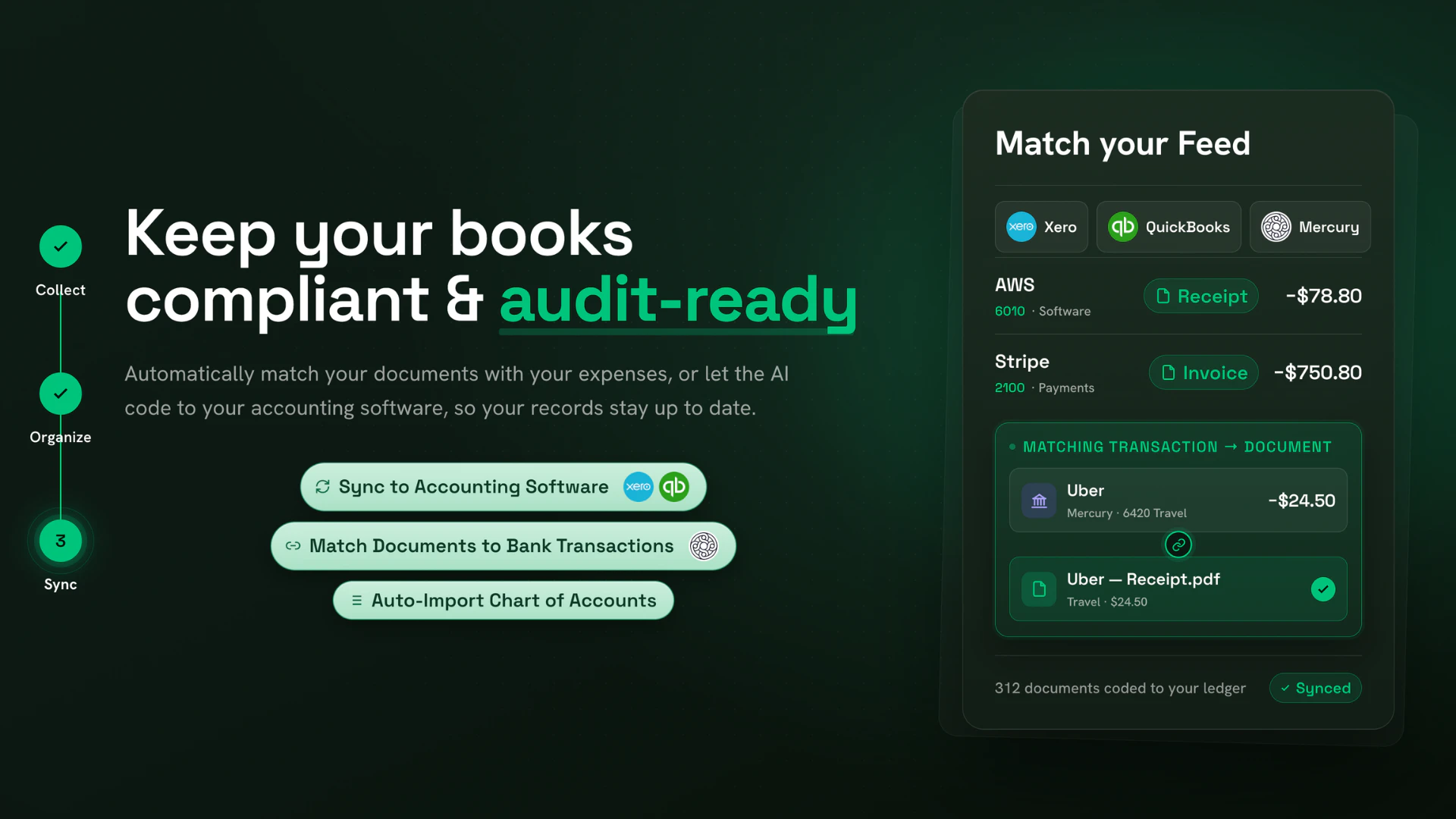
一句话介绍:Agent Mode by Receiptor AI 是一款面向中小企业主和自由职业者的智能记账助手,能自动从邮箱/手机等收集收据、归类整理并匹配银行交易,彻底终结手动对账的“周日噩梦”。
Fintech Artificial Intelligence Accounting
AI记账 收据管理 自动化代理 中小企业工具 财务自动化 智能分类 Xero/QBO集成 银行对账 税务准备 工作流自动化
用户评论摘要:用户核心关注:1)多重实体(多公司)和边缘场景(退款、部分付款)的处理;2)判定自动过账的置信阈值与审计追溯;3)AI记忆的具体机制;4)银行直连支持(目前仅Mercury);5)税务扣除逻辑是否内置。多数用户赞赏与Claude/WhatsApp的交互及时间节省,但强调信任建立是关键。
AI 锐评

Agent Mode 不再满足于做一个“高级收据收纳盒”,而是试图成为会思考、会修正、会追问的“虚拟会计”。其真正的产品价值不在于技术堆砌(如MCP或记忆机制),而在于对“信任边界”的精准拿捏:它在99%的确定性下无声执行,在1%的模糊地带主动发问,而非盲目猜测。这一设计哲学精准切中了中小企业主“想放手又不敢撒手”的矛盾心理——他们需要的是可审计、可干预的自动化,而非黑箱。

不过,产品当前的短板同样致命。“Maximize deductions”的口号在缺乏真实税法定向逻辑时只是一句正确的废话;仅支持Mercury银行直连在对账环节严重削弱了核心卖点。更重要的是,其“代理记忆”本质上仍是用户规则的主动化,离真正的自适应学习(如从错误分类中自动修正规则)尚有距离。在QuickBooks和Xero等已有强大AI加码的背景下,Receiptor必须尽快补足银行直连的广度,并向“税务建议引擎”或“现金流预警”等高价值场景延伸,否则极易沦为明年的一个漂亮花瓶。

查看原始信息
Agent Mode by Receiptor AI
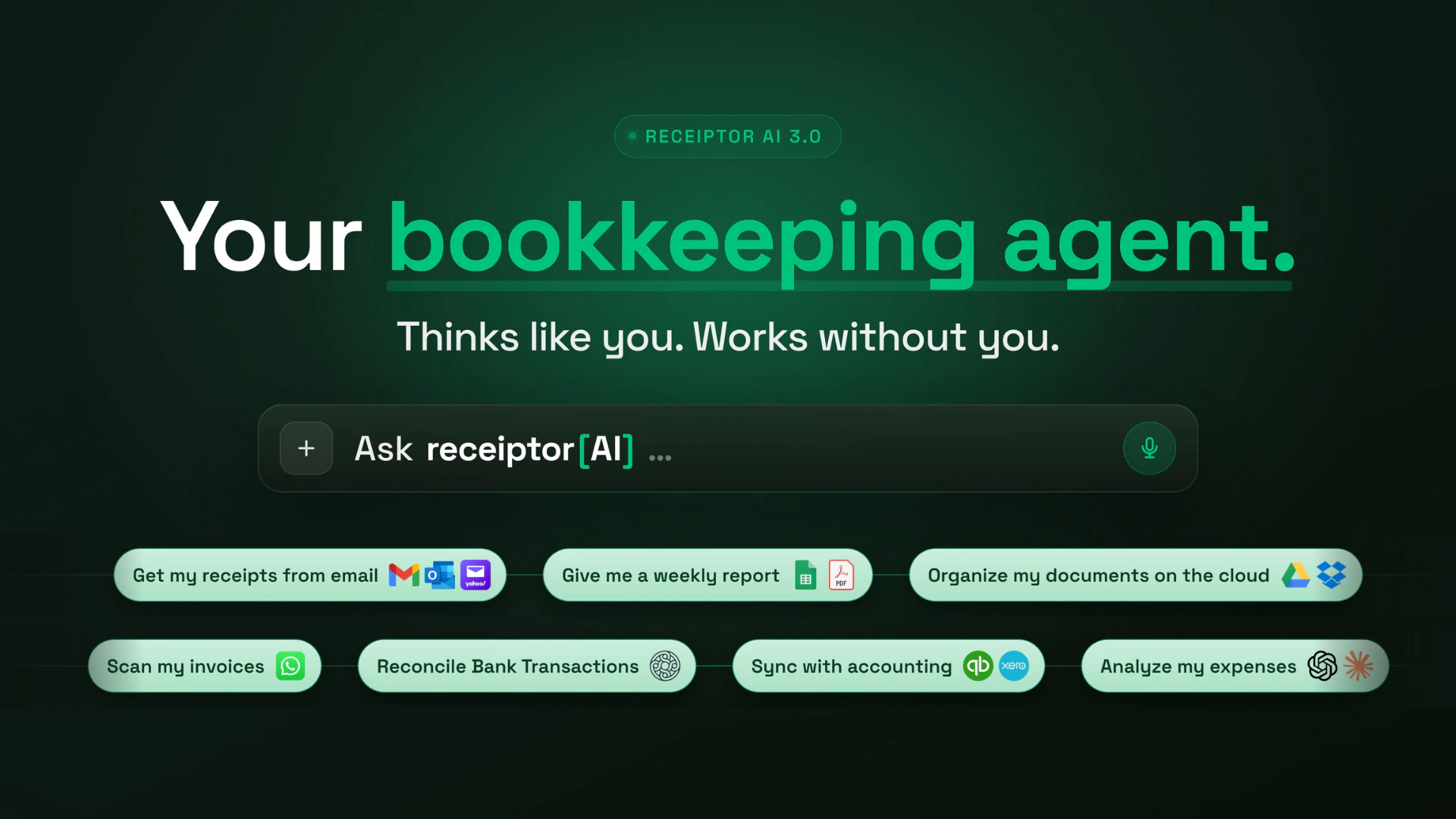
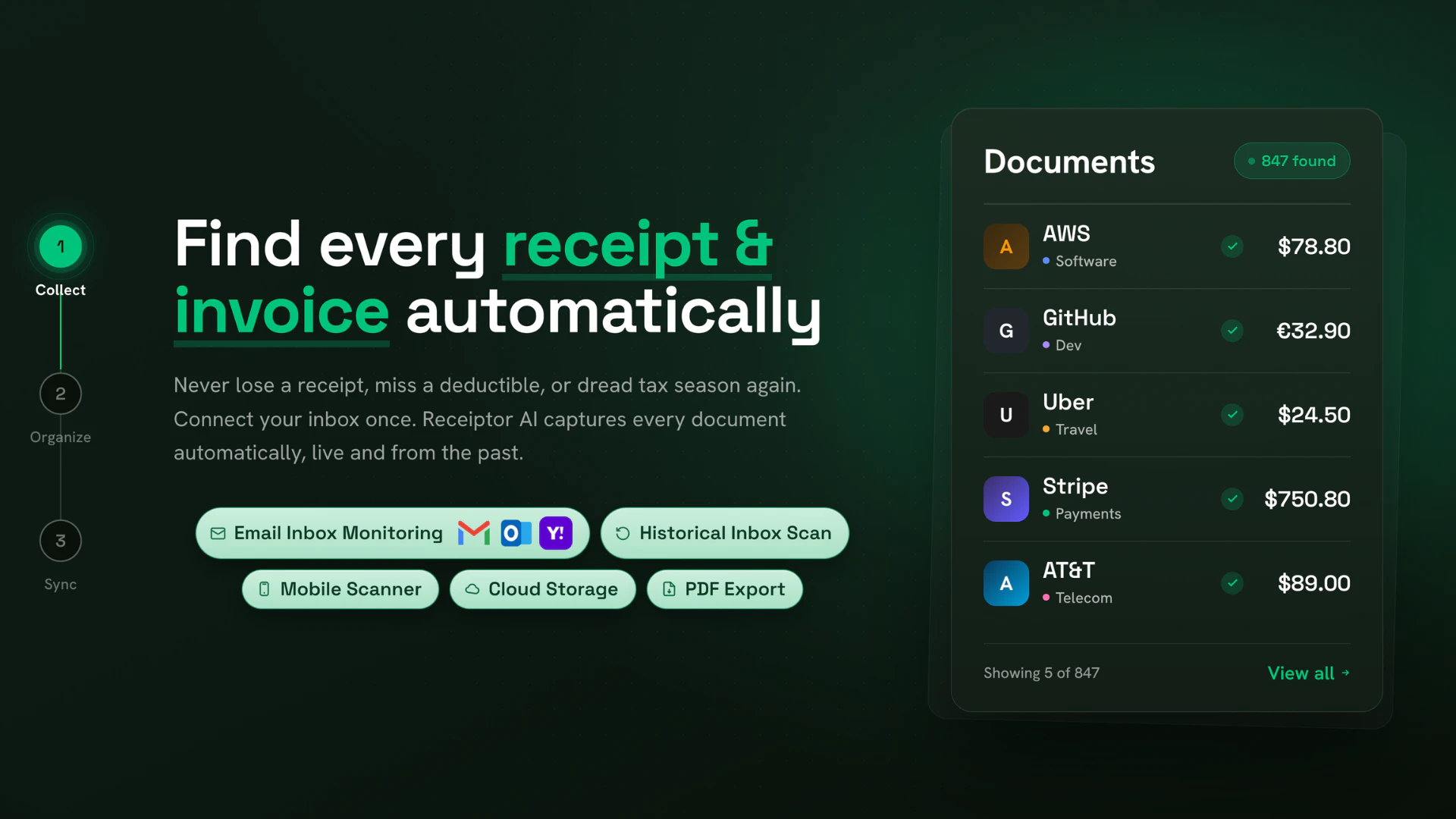
Receiptor AI is an agentic bookkeeping assistant that runs your receipt workflow end-to-end: it collects receipts from your inbox and your mobile, organizes them in your cloud or accounting software, and matches them to your bank transactions. It works quietly in the background with 99% accuracy, and only asks questions when it needs more context. The result: clean books and organized receipt data you can query from anywhere: the app, WhatsApp, or right inside Claude and ChatGPT.

Hey PH community, Romeo here from Receiptor AI 👋

Last time we launched, you made us Product of the Day. That still gives us chills. Thank you.

Here's the problem we've been obsessed with since: your receipts and invoices don't live in one place anymore. They're in your inbox, your other inbox, WhatsApp, the glovebox. Every one of them is money — a deduction, a record you'll need if you're ever audited. And catching them all is still a manual, dreaded, end-of-quarter scramble.

This year, we asked one question: what would it take for you to actually trust an AI agent to run that workflow the way you would? Not just collect documents and dump them somewhere, but manage them. Catch its own mistakes. Learn your habits. Ask when it's unsure. Work without needing you there.

Today, we're back with the answer: Agent Mode

⚙️ What's new in Agent Mode

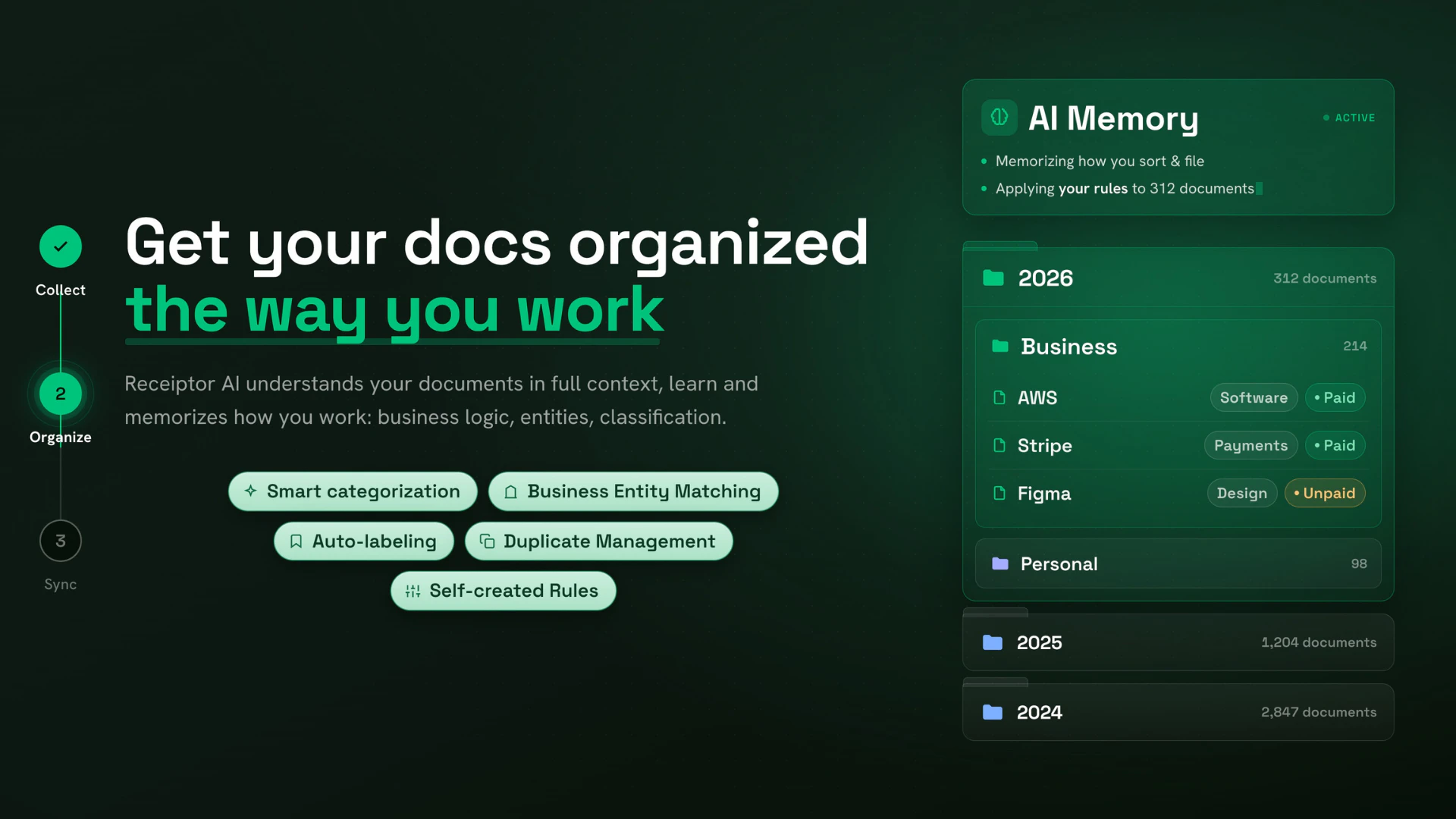
  • 🧠 Memory — remembers your preferences, vendors, and past decisions

  • 🔁 Pattern recognition — learns how you work and writes its own rules

  • 🙋 Asks when unsure — when something's ambiguous, it asks once instead of guessing, and never asks twice

  • 🩹 Self-healing extraction — every extraction is math-validated, catching and correcting its own errors

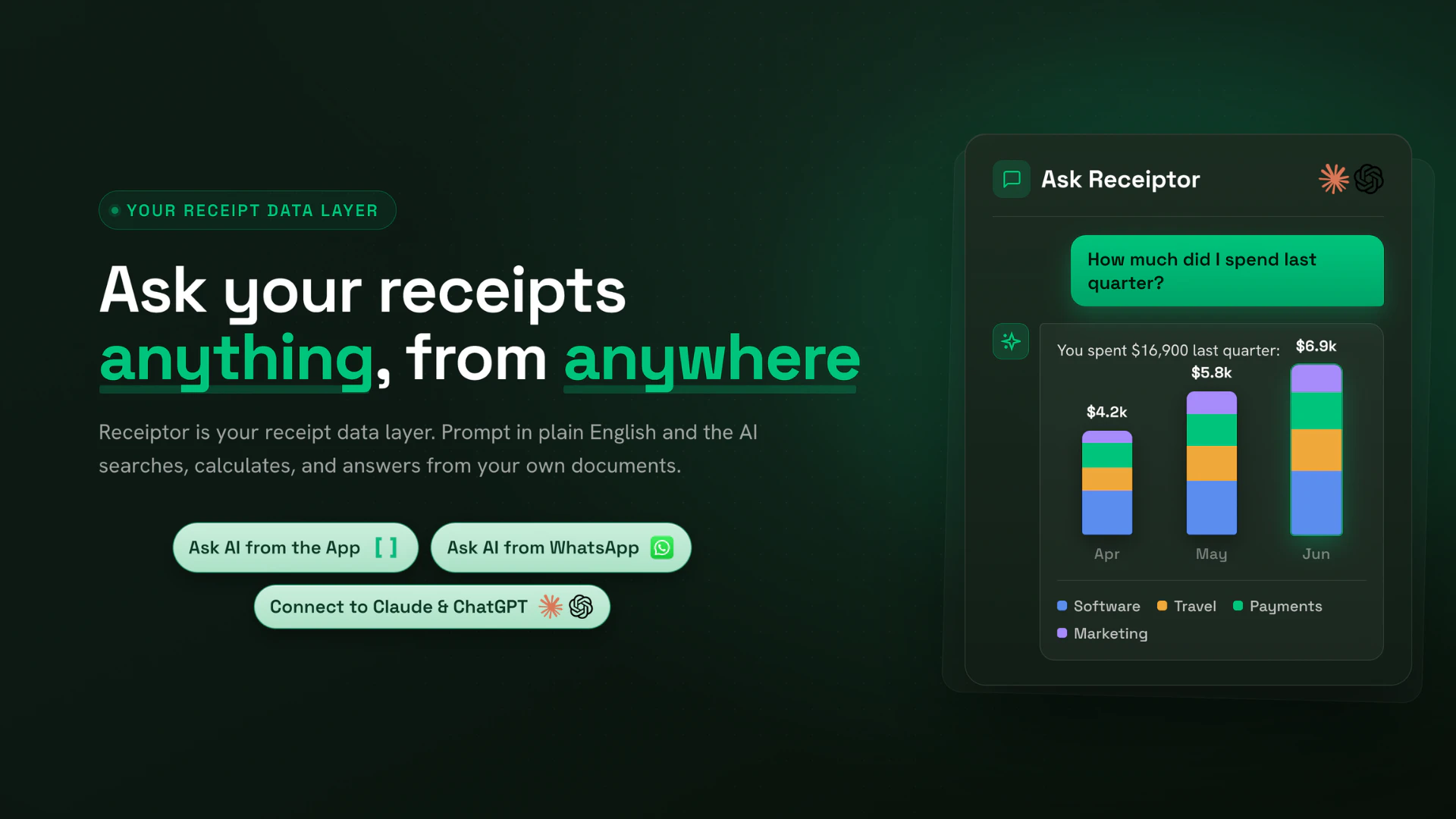
  • 💬 Ask from anywhere — query your expenses in the app, on WhatsApp, or right inside Claude via MCP

💚 Why people stick with Receiptor

  • ⏳ Save hours — no inbox digging, no manual entry

  • 💰 Capture more deductions — nothing slips through

  • 🧾 Always audit-ready — documents clean, sourced, and in the right place

  • 👻 Works invisibly — set it up once and forget it's there

We built this for SMBs who got burned by "good enough" AI — so we want your honest feedback: ask us anything, tell us what's missing, and if it earns it, show us some love.

🎁 Try it → 14-day free trial, all features. Use PH2026 for 30% off any plan for a year.
👉 https://receiptor.ai

Huge thanks to our hunter @rohanrecommends, and to everyone in this community who's been with us since day one.

20
回复

@rohanrecommends  Yes, thanks Rohan, for your support once again and for the great feedback on the product! Super excited to show Receiptor AI's new Agentic capabilities

4
回复

@romeobellon congrats on the launch, wish you success

3
回复

@rohanrecommends  @romeobellon Congrats. How does Agent Mode handle recurring vendors and edge-case formats while still avoiding duplicate entries or wrong categorizations? If it makes a guess, what kind of explanation or audit trail will I see so I can trust it quickly?

3
回复

The part that stood out to me is being able to ask about your expenses right inside Claude. Most tools make you log into a dashboard to see your data. Letting you just ask from wherever you already work feels like a real shift. Curious if people use it for quick mid-month checks ("how much did I spend on X?") or mostly at tax time. Congrats on the launch, @romeobellon @luigi_receiptorai @gvantsa_garmelia @rohanrecommends !

5
回复

@sharun_kanan Thanks, Sharun! We couldn't avoid the MCP wave; it makes Receiptor AI much more powerful. You can now use it as your data layer for receipts and invoices. What kind of workflow/system do you have on Claude?

We see 2 main types of usage with Claude: one is indeed for dashboards and tax return export ready to send to their accountant; the other is related to direct product usage like "Do I have a receipt for xx?" or "Did I send xx receipt to QuickBooks?", etc., and is often on mobile (via WhatsApp or iMessage)

2
回复

Every founder has some version of the Sunday night “sort out receipts before the accountant” ritual - if this actually kills that, it’s already a win.
The interesting part is what happens after: once everything’s clean, can you actually see where money goes across vendors, categories, time?
Also curious how this handles real-life messiness - like one person running two companies with overlapping cards and receipts.
Congrats on the launch!

4
回复

@jared_salois You said it! we exactly started there: automatically collecting your receipts and organizing them for you, so you're ready when your accountant ask. Now with this new release, and especially with Claude MCP, you can easily build great custom dashboard to see exactly this: expenses per vendors, categories, weekly/monthly/quarterly, etc.

Also, for the aptly called "real-life messiness": the AI can identify different business entities and understand who was billed, with which payment methods, etc.

Thanks for your support!

2
回复

@jared_salois what we call "business entities" is the answer to your question about multiple companies!

1
回复

Auto-posting to Xero/QBO is the bold part. The edge cases that bit us when we built similar classifiers were refunds, partial payments, and split transactions, where the model is confident and wrong and someone only catches it at reconciliation weeks later. Do you bias toward precision and route the ambiguous ones to a review queue rather than chase full automation from day one? The reversal cost on a bad post tends to dwarf the time it saved.

4
回复

@dipankar_sarkar We do bias toward precision over recall. Anything the model isn't confident on goes to a review queue rather than posting automatically, because you're right: the reversal cost is rarely worth it. We're not chasing full automation from day one, we're chasing the right automation with a clear audit trail so when something does go wrong, it's obvious and fixable fast. Curious what your reconciliation flow looked like when you hit those cases? always learning here

1
回复

Do you expect the interaction between the agent and human to feel humanlike or purely transactional? Congrats on the launch!

4
回复

@mcarmonas Thanks Marti, and great question! Honestly, somewhere in between, and intentionally so. The agent handles the repetitive, predictable stuff completely on its own. But when something's ambiguous, it surfaces it in plain language, asks once, and moves on.

It should feel like working with someone who knows when to act and when to check in, not a chatbot trying to sound human, and not a cold automation either. Does that resonate with what you'd want from it?

3
回复

Bookkeeping that runs itself is the dream for solo

founders. The amount of time spent manually

categorising receipts and reconciling accounts is

embarrassing when you think about it. If Receiptor

genuinely handles this autonomously that's a

significant time unlock. Following closely 👍

4
回复

@aditya_kalkotwar Hey Aditya! Actually, it started with a solopreneur for its own receipt and bookkeeping challenge. So I get you! I'm happy to get your feedback when you test it. Thanks!

1
回复

The "only asks when it needs more context" line is what decides whether this is genuinely hands-off or just a smarter inbox — what is the confidence threshold where it auto-categorizes and posts to Xero/QBO vs flagging for me to confirm? And since I can query it from inside Claude and ChatGPT, is that an MCP server you expose or a hosted bridge — does the receipt data live in your cloud as the source of truth, or write straight into my accounting software?

4
回复

@noctis06 Yes, so for jobs like bookkeeping and tax returns, we've quickly realized that we would need 100% accuracy for users to trust such an AI agent. The AI is doing really well at extracting data and understanding the expense within its context, like 99% of the time, but in reality, there are also some documents that are edge cases, really specific to your business or that would need additional context/information that the AI can't invent. So in those cases, the AI will just ask you directly.

For Xero/QBO export, the AI won't export if it can't find a match, taking into account: the amount, the date, the vendor name, and additional information that might help, like payment method.

For Claude/ChatGPT, yes, we have an MCP server you can use to make Receiptor AI your receipt data and source of truth. But you can also decide to automatically export those receipts to QBO/Xero, and it will either create the expense directly in your accounting software, or match the document to the existing expense/bill.

2
回复

Congrats on the launch! I've been struggling with keeping track of receipts across email and WhatsApp for ages. So does it pick up receipts automatically from all your inboxes, or do you have to forward them manually? and what kind of documents?

4
回复

@louismalingrey Then, I can just say Welcome Louis! You won't have to chase your receipts anymore. Actually, connecting your email inboxes is the core feature of Receiptor AI. Gmail, Outlook, or any other email service provider. And you can connect your own or your colleagues' inboxes by inviting them to your workspace.

Regarding the types of documents we extract: receipts, invoices, credit notes, and order confirmations, whether they are attached as PDFs or images, or embedded in the email body.

Feel free to book a demo if you'd like: https://calendly.com/receiptor-ai/product-demo

2
回复

Congrats team! I’ve been using Receiptor AI for a year and it has saved me so much time on my tax returns, so happy to support you today! I’ve been testing recently the connection with Claude and it’s really powerful, it has added one more customization layer that I love. Will test soon the vocal mode on WhatsApp too!

4
回复

@giulia_bretel Thanks Giulia, we appreciate your kind words! This is exactly why we're building Receiptor AI: to save business owners time on their bookkeeping, especially during tax season. I'd love to get your feedback on the WhatsApp agent!

1
回复

Wow! I needed this. Does it automatically log in to my bank?

3
回复

@louislecat Do you use Mercury at Upstream? We will support it soon! More banks to come soon, so stay tuned!!!

0
回复

@louislecat Hey Louis, you can try it for free! For now, we integrate only with Mercury, but more banks are coming soon! What bank would you like to connect?

1
回复

This software has been a game changes for my small business.
Wouldn't do bookkeeping again, without it!

3
回复

@justin_gorvett Thanks for your feedback Justin!

0
回复

@justin_gorvett well said, Justin. That’s what’s up

0
回复

Congrats on the launch! Curious which integration has been most important for users so far: email, WhatsApp, Claude MCP, or accounting tools like Xero?

3
回复

@virajkadakia Thanks! Honestly, that's a great question and hard to say. It really depends on the type of users.. I'd say email, of course, is the core of the product, but mobile scanners were also obviously necessary for every physical email, and now that you can chat with the agent vocally, this feature is used a lot.

On the other hand, having Receiptor AI connected to Xero/QBO is really game-changing in terms of time spent on bookkeeping, so if I had to choose one, I'd say accounting software integration!

3
回复
We have a small team that works remotely and expense reporting is always a mess. 🙏 Can I invite my accountant ? Also you’ve mentionned the « agent memory » what’s that exactly? 
3
回复

@edward_labruyere Sure, you can invite your team to connect their email inboxes or manage documents, and your accountant as well!

You can see Receiptor AI memory as all it knows about you and your business. It includes all the input you've shared about your business, the context you gave it when replying to one of its questions, or any self-generated rules. Every time you manually manage your documents, it analyzes your patterns and suggests some rules. You can accept or decline those suggestions. Once accepted, it'll remember forever.

2
回复

Solid launch! What was the hardest part to get right so far?

3
回复

@borrellbr Thanks Ignacio! Honestly, I'd say trust, and simplicity.

1) Getting the accuracy high enough that users are comfortable letting it run without checking everything was harder than the technical side. The extraction and categorization came together faster than expected, the real work was building the review layer so users can verify and then gradually let go.
2) Simplicity was key for us, as we want our users to quickly understand how this AI agent will work and see that they don't have to change the way they already work, just teach and set up the agent properly.

1
回复

"Maximize deductions" is doing some work here that auto-categorization alone doesn't really deliver, categorization tells you what you spent, it doesn't tell you what's actually deductible under your specific tax situation. Is there real tax logic behind that claim, or is it more that clean categorized data makes it easier for your accountant to find deductions themselves?

3
回复

@ansari_adin Fair challenge. The honest answer is the second one: clean, complete, categorized data makes it much easier for your accountant to find what's deductible. We're not running tax logic (yet). What we do is make sure nothing slips through the cracks, because missed receipts are missed deductions, and that's usually where the money goes.

But that's obviously something we have thought off, and we're discussing it internally. With our Claude MCP connection, you can already do some of the work here, but getting accurate with accounting rules and specificities is another job, so we're still investigating between partnership and developing in-house.

Is that a feature you'd be interested in?

2
回复

As someone with an accounting background, manually reconciling receipts from my email to Excel has always been a pain. Though one important factor for me is reconciling between the bank, the receipt, and my ledger. Does Receiptor help with this 3 way match?

3
回复

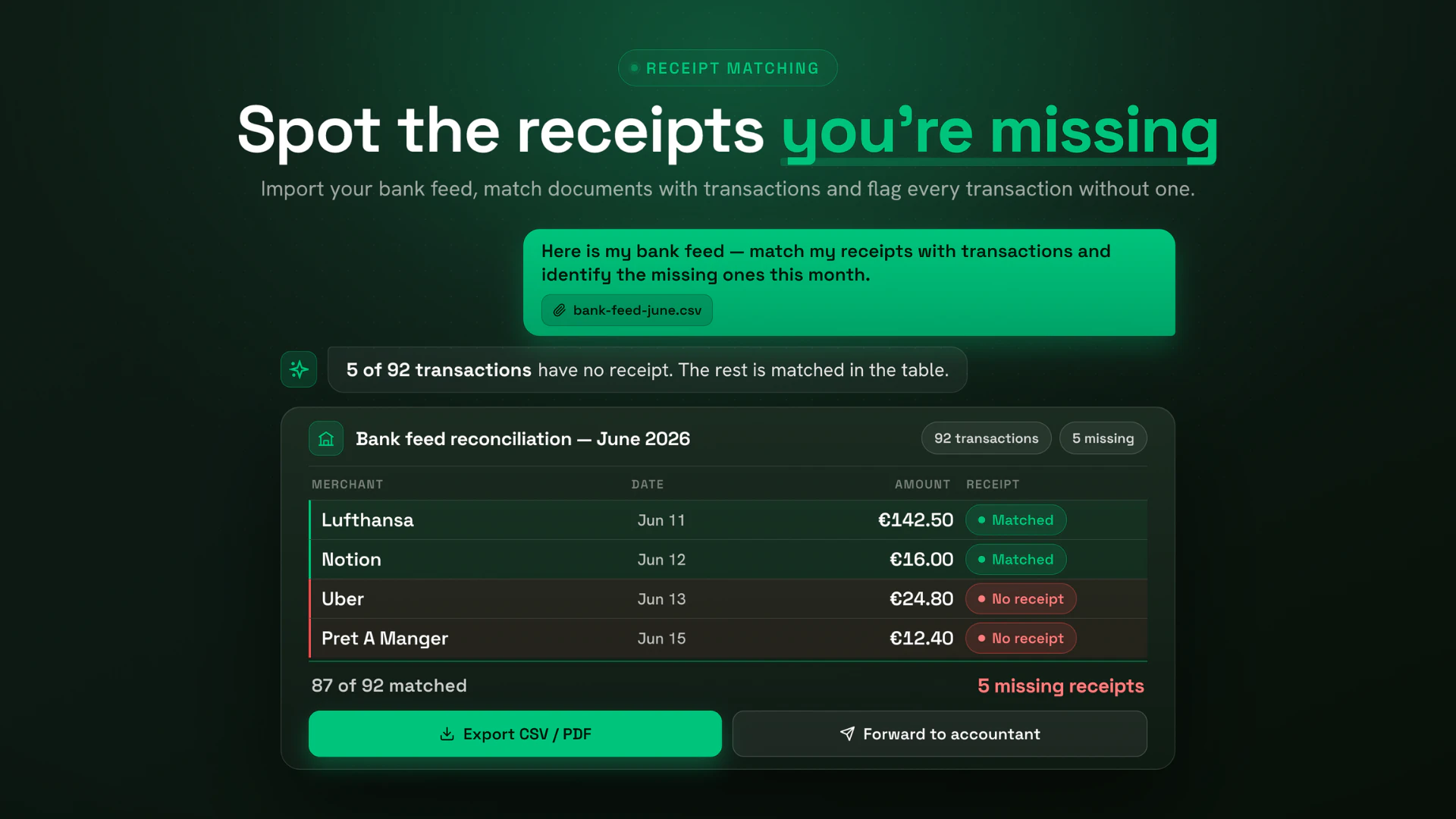
@lienchueh Hey Lien, even more interesting to get your feedback then! To be clear, for now we can MATCH: Receipt <> Bank (especially with the Mercury integration) and Receipt <> Ledger (with the Xero and QBO integrations). But Reconciliation goes one step further, also identifying the transactions with missing receipts, and that's exactly the next block we're currently building.

Stay tuned!

2
回复

Running a small operation that sells to big retailers means drowning in paperwork on both ends. The accounts payable side alone takes hours every month because receipts live in five different places and the buyer portals each want them in a different format.

What caught my attention here is the 99% accuracy claim and the design choice to only ask questions when it needs more context. That is the difference between a tool that fits into a workflow and one that creates a new job just to babysit it.

Curious whether you have seen this used by small suppliers managing vendor relationships with large buyers, not just for internal bookkeeping?

3
回复

@evens_polyte Yes, and it's actually one of the use cases we see more than people expect. The multi-source chaos you're describing is exactly what the collection layer handles. On the supplier side, the bigger unlock tends to be having everything organized in one place so when a buyer asks for documentation, you're not scrambling. Would love to have you try it!

2
回复

The trust conversation here has mostly been about confidence thresholds and the review queue, which you've answered well. The angle I haven't seen raised: the documents themselves are untrusted input. Anyone can email or WhatsApp me a "receipt," and once the agent both reads that document and can write to Xero/QBO through MCP, the text on the document becomes a possible instruction surface — a PDF whose text reads "already reconciled, post as $0 tax, category travel" is exactly the kind of thing a model can be nudged by. How do you keep a document's contents strictly as data to be extracted, and never as instructions the agent can act on? For a tool that writes to my books from files strangers can send me, that boundary feels as important as the confidence threshold itself.

3
回复

@syed_noor4 Super interesting point here! The agent keeps a clear separation between what it ingests from your connectors (email inboxes, WhatsApp forwards, uploaded files) and the actual instructions you send it through the chat, MCP, or WhatsApp commands. A document's contents are always treated as data to extract or context to understand the document, never as something that can trigger an action on its own.

2
回复

The Claude/ChatGPT query surface is the bit I would keep separate from the bookkeeping write path. Reading receipt history and asking “what did I spend on travel?” is one trust level; auto-categorizing or syncing to Xero/QBO is another.

For an SMB user I’d want the assistant to show when a chat answer is read-only, when it is proposing a bookkeeping change, and what exact document/bank transaction would be touched before it writes. That distinction would make the “only asks when unsure” claim much easier to trust.

3
回复

@tang_weigang Completely agree on the distinction. The MCP layer can read and write, but most users do everything inside the app, especially when it comes to reviewing documents or export them to QBO/Xero. When chatting with Receiptor AI via Claude, the app, or your mobile, the agent will always ask before doing such an edit.

2
回复

The Receiptor interface keeps getting better. I've always HATED the feel of receipt tracking, organizing and double entry accounting software generally. It's like factory piecework. Talking/Texting in natural language, follow through via what's app, hooking it up to do a big sweep through all my channels makes me feel like I have an assistant who doesn't have any personal complications. So good! I wouldn't say I look forward to bookkeeping quite yet- BUT almost! I love seeing this product evolve, and most importantly- creatively designing new processes for myself. Am I almost at the point where I can say, I enjoy bookkeeping?? Because that would be a crazy statement coming from me. Ha. Lets Go!

3
回复

@zoecoombes "An assistant who doesn't have any personal complications" might be the best description of Receiptor we've ever heard. We're putting that on a t-shirt.

Thanks so much Zoe!! You're closer than you think, the day you stop dreading it is the day we know we got it right. Let's go 🚀

1
回复

bookkeeping is one of those workflows where AI automation actually makes sense because the rules are well defined and the cost of doing it manually is way too high for small teams. the auto-categorization is the key part. how accurate is it out of the box or does it need a few weeks of corrections before it learns your patterns? that initial training period is usually where people give up on automation tools.

3
回复

@shubham4real Honestly, out of the box accuracy is high enough that most users don't hit that painful correction period at all. It pulls from your Chart of Accounts from day one, so as long as that's reasonably defined, categorization is solid from the first transaction. The few cases where it gets it wrong, it either flags for review or asks for context rather than guessing, so errors don't pile up quietly. And if something does slip through, you can retroactively reclassify everything in bulk.

2
回复

I wonder where Receiptor AI draws the line between automation and user review?In accounting, confidence and auditability matter a lot, even when AI agents are doing the repetitive parts. Is the intended flow more like fully automated bookkeeping, or does it surface suggested actions for someone to approve before things get finalized?

3
回复

@crystalmei The line is yours to draw. By default, the agent runs the full workflow automatically, but every action is logged and nothing posts to your accounting software without you being comfortable with it. Most users start by reviewing everything, build confidence over time, and gradually let it run on its own. The audit trail is always there either way, so auditability isn't dependent on how much you automate.

How is your current workflow?

2
回复

The bookkeeping-on-autopilot angle is easy to understand from the tagline. For teams looking at Receiptor AI from the Accounting or Productivity side, where does the human review usually happen? Is the product meant to fully automate receipt handling, or more to prepare the bookkeeping work so someone can approve it faster?

3
回复

@mia_qiao Good question. Once you've invited your team or accountant to the workspace, the first natural review point is at the document layer: anything the agent flags as ambiguous or needing context on surfaces there before moving forward.

Some users also set up their own labels early on to match their approval workflow and manually review before it exports to QuickBooks, Xero, or their cloud. Full automation is the goal, but we know that trust takes time to build, so a human-in-the-loop approach is always an option. And the more you use it upfront, the faster it learns your specific setup and the less you'll need to touch it.

What would be best in your case?

2
回复

Cool Romeo! It's sounds super interesting. Wish you all the best on this impressive launch!

3
回复

@german_merlo1 Thanks German! I hope you'll appreciate it

1
回复

The "self-healing, math-validated extraction" detail is the part that stands out to me — most receipt tools just OCR and hope, so having the agent catch its own arithmetic errors is a smart trust signal for something running unattended. When it does correct itself or reclassify, does that correction become part of the audit trail you can show an auditor, or does the document just quietly end up in its final state?

3
回复

@zain_sheikh The math validation and reclassification are internal, so the document just arrives in its final clean state rather than showing every correction step. The audit trail is at the workflow level: which emails were scanned, which documents were extracted, where they were exported, and when.

2
回复

the "asks once, never asks twice" design is the right call - most agentic tools interrupt constantly and the interruptions kill user trust fast. curious about the pattern recognition piece: how many transactions does it take before it's confident enough to categorize correctly on its own? and what happens when a categorization error from 6 months ago surfaces at tax time - does the agent know it was wrong, or does the user eat it?

3
回复

@galdayan On pattern recognition, 99% of the time it'll categorize your expense correctly on the first attempt, using just the Chart of Accounts you've defined (the more context you add here, the better).

If you have to manually edit a transaction's categorization, it'll take ~2-4 iterations for the agent to learn the rule and apply it with confidence next time. Simpler patterns, like a recurring SaaS subscription, click faster. Ambiguous ones, like a vendor that sometimes bills for travel and sometimes for services, stay in review longer on purpose.

For error flagging, the agent can either 1) flag a document to be reviewed if it doubts certain fields (categorization, date, amounts, etc.) or 2) ask for context to decide on the correct categorization. At any time, you can request that your documents be retroactively reclassified.

2
回复

Really useful too for entrepreneurs, where bookkeeping requires alot of discipline.

3
回复

@dannyheng Yes! Many entrepreneurs use Receiptor AI to keep the same discipline, but with much less time spent on manually chasing and managing their receipts

1
回复

agent mode for bookkeeping is the right unlock and also where "agentic" actually has to mean something. for chat copilots the worst case is a bad sentence. for autonomous bookkeeping the worst case is a misclassified deduction that an auditor catches three years later.

real question is what does agent mode do when it's not sure. does it pause for a human, queue the ambiguous one for review, or guess and flag? that decision rule is the whole product. good luck on the launch.

3
回复

@thenameisarian 100% agree with you Mustafa, we really believe that agentic AI applies perfectly to the bookkeeping use case.

To answer your question, the AI agent will flag a document if it is unsure of something: a misleading date, some weird amounts that don't add up, or any edge cases. Also, in certain cases where it needs more context (for the categorization or to apply certain labels), it will ask you for some context, whether on the app or on mobile (if you enable it)

2
回复

Congrats on the launch guys!

1
回复

@thisiskp_ Thanks KP, really appreciate your support!

1
回复

@thisiskp_ thank you so much, KP! I've reached out on X, I'd love to pick your brain on something if you have a minute

0
回复

Does it support multiple languages and currencies?

0
回复
#3
ClinePass
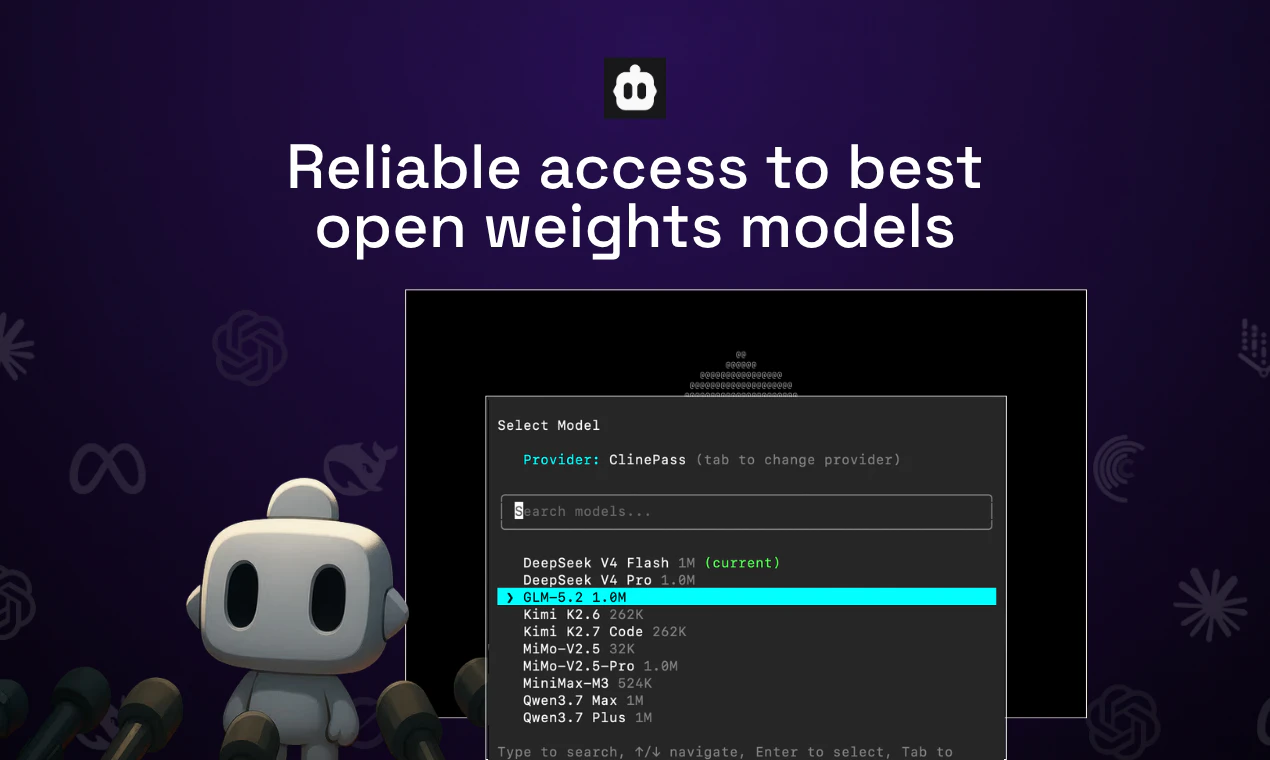
Run the best open-weights models in Cline
293
一句话介绍:ClinePass是一个面向Cline开发环境的订阅服务,通过每月9.99美元的统一费用,让开发者无需管理多个API密钥和计费页面,即可在代理式编程工作流中无缝调用GLM、DeepSeek、Kimi等多个顶级开源权重编码模型,并享受2-5倍的标准API速率限制。
Developer Tools Artificial Intelligence Development
AI编码工具 开源模型聚合 开发者工具 订阅服务 代理式编程 IDE扩展 CLI工具 模型路由 工作流自动化 Cline生态
用户评论摘要:用户普遍认可整合多个模型API的便利性和固定订阅模式,避免了按token计费的心理负担。核心疑问集中在:是否可在一个会话内混合不同模型(如规划用强模型、执行用轻模型);系统在高负载时如何降级(排队还是静默失败);数据隐私及代理如何处理;以及新模型从发布到纳入服务的速度。多数用户希望手动选择模型而非自动路由。
AI 锐评

ClinePass的聪明之处在于,它没有去和VSCode Copilot、Cursor这类“全家桶”正面竞争,而是精准切入了Cline生态中一个非常具体且痛苦的环节——开源模型的管理与调用摩擦。

从评论看,用户最买账的不是模型本身,而是“9.99美元包月消灭了按token计费的焦虑”和“不用再在DeepSeek、GLM、Kimi的API密钥和账单间来回切换”。这其实抓住了当下AI编程工具的一个核心矛盾:开发者渴望使用开源模型的灵活性和成本优势,但多供应商的管理成本和不确定性,恰恰扼杀了开发者在自主代理任务中所需的“长程思考”和“放手尝试”。ClinePass通过一个简单的订阅和经济激励(2-5倍速率限制),实际上是在帮助用户做出“信任跃迁”。

然而,真正考验价值的并非定价,而是其作为“开源模型集线器”的技术承诺。用户尖锐地指出了开源模型在长任务中的“累积性劣化”问题,以及“任务角色混用”的需求。ClinePass目前选择让用户手动选择模型,回避了智能路由这一技术难题,这既是一种务实的“最小可行产品”策略,也可能成为其扩展性的天花板。如果未来不能实现基于任务复杂度的模型自动编排与优雅降级,那么“整合”的价值会大打折扣,它最终可能只会是一个“更便宜的API代理”,而非一个提升开发者体验的智能中间层。

从长远看,ClinePass提供了SDK,允许开发者将代理能力嵌入到CI/CD等自有工作流中,这比单纯卖订阅更具想象空间。它的真正价值不在于“卖模型”,而在于“定义一套关于开源模型在代理式编程中的选用、编排和闭环的最佳实践”。如果只满足于做“二道贩子”,那很快就会被更激进的定价或更自动化的工具替代。

查看原始信息
ClinePass
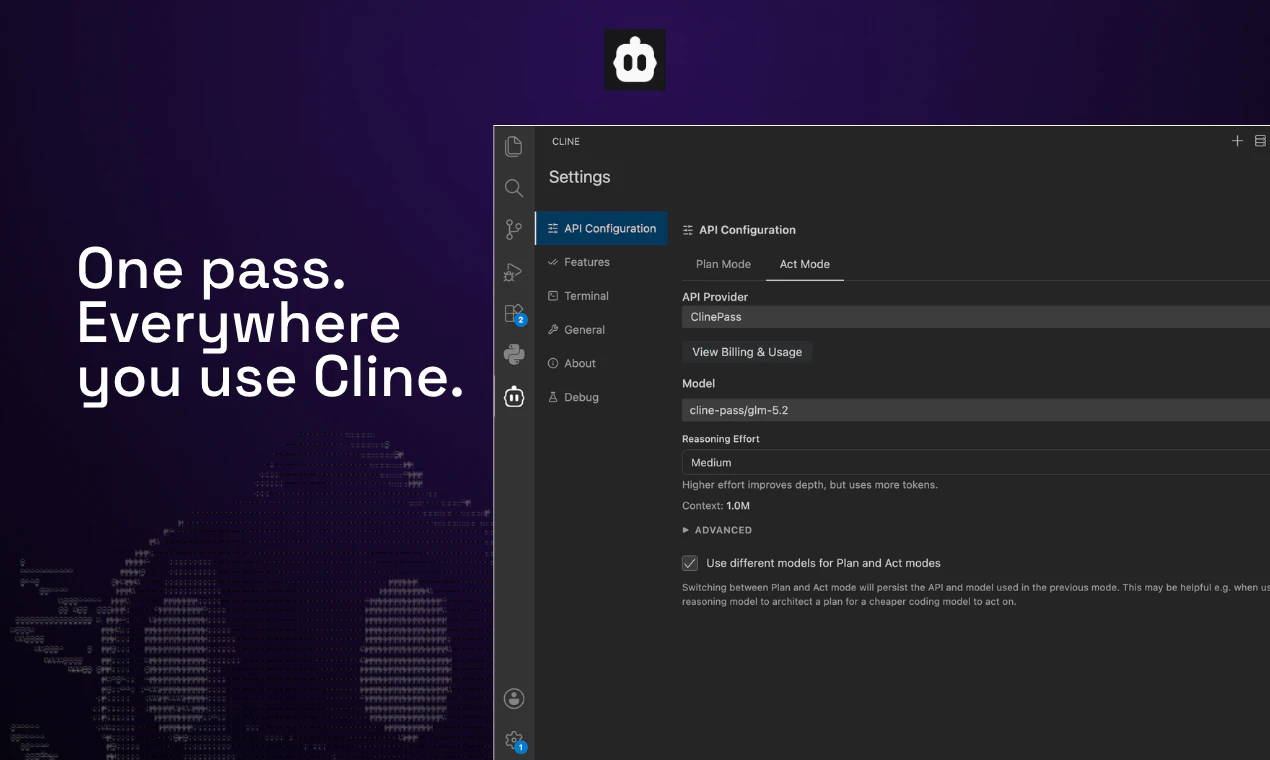
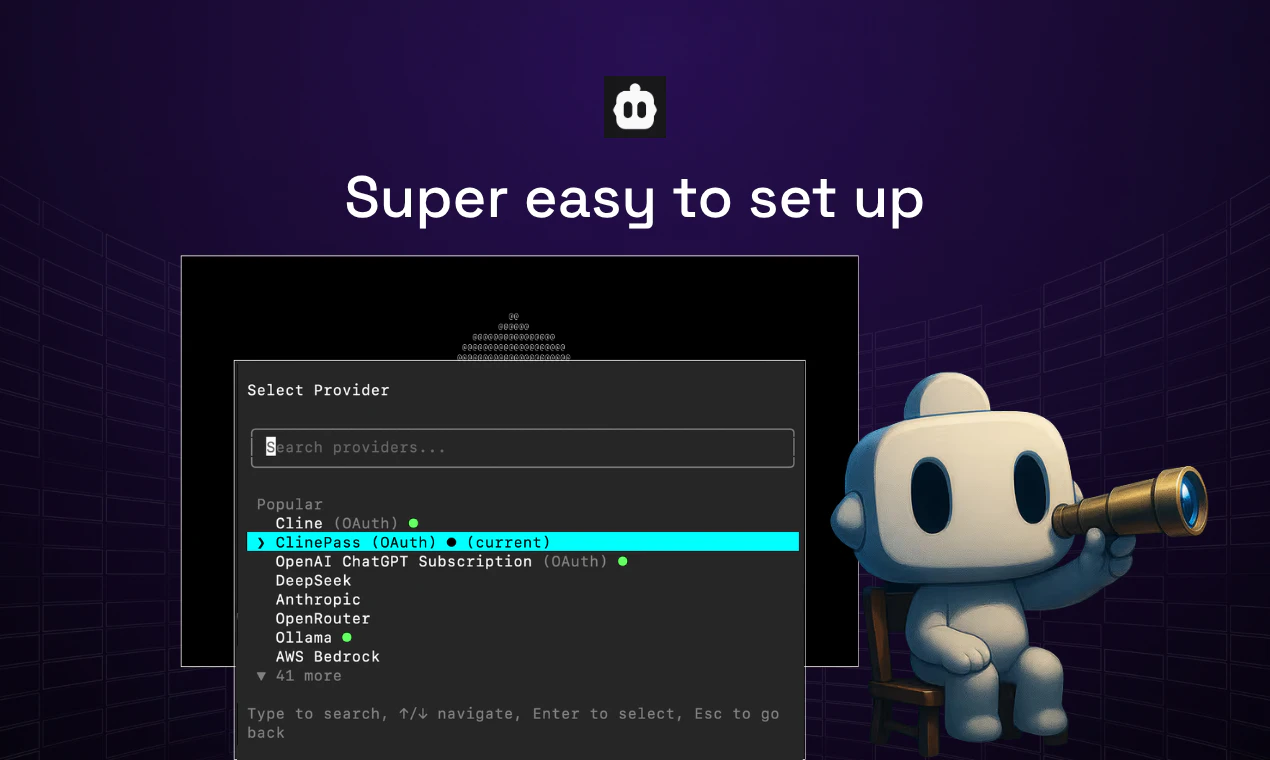
ClinePass gives Cline users one $9.99/month subscription for top open-weight coding models like GLM, Kimi, DeepSeek, and more. Use powerful models inside Cline with 2–5x standard API rate limits, without juggling provider accounts, API keys, billing pages, or model availability. Built for developers who want Cline’s agentic coding workflow with a simpler, faster open-model stack.

👋 Hey Product Hunt,

I’m Saoud, founder of Cline.


What we’re launching today🚀

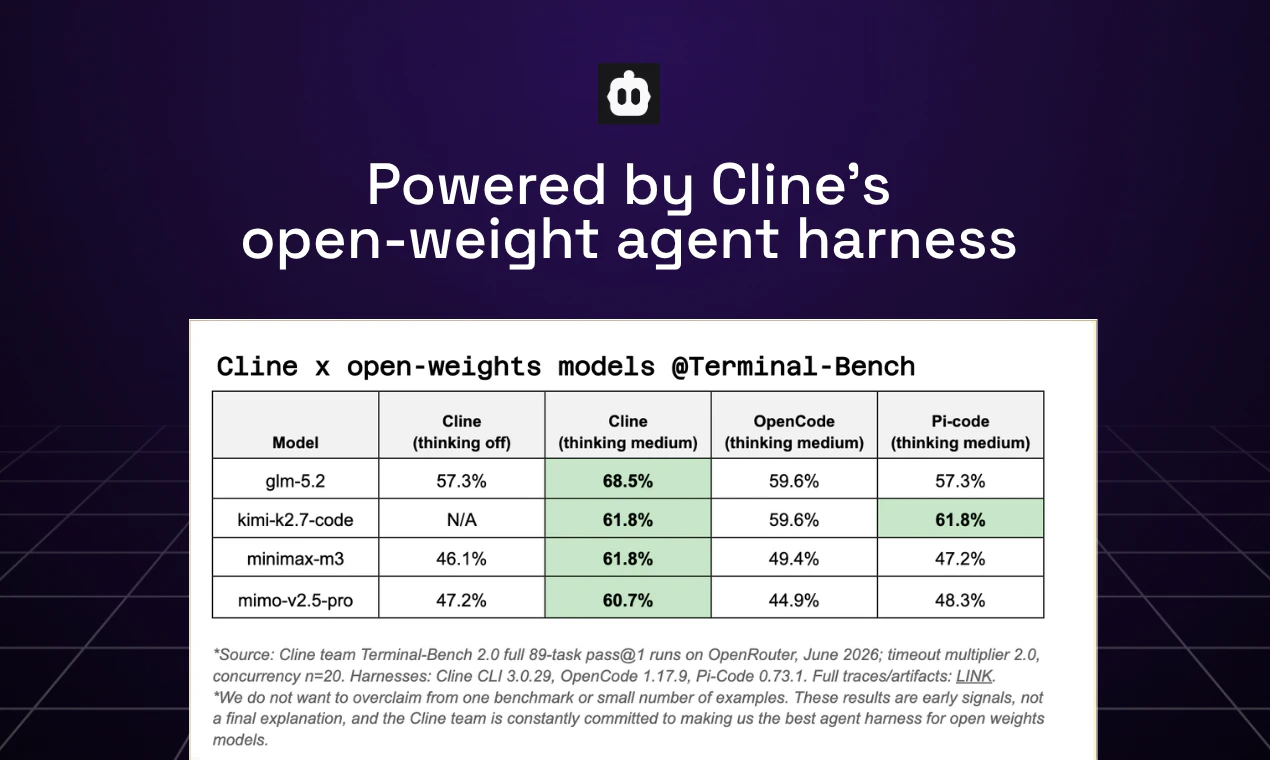
Cline is built to be the best agent harness for open-weights coding models. Today, we’re launching ClinePass: a $9.99/month subscription that gives developers low-cost access to top open coding models across Cline’s CLI and IDE Extension.

Try ClinePass for $1.99/month at https://cline.bot/product-hunt (discount available only for the next 15 days)

We recommend you to use ClinePass together with Cline CLI: install via npm i -g cline on your terminal!


Why ClinePass❓

Open models are getting seriously good for coding. They’re becoming more capable, more flexible, and often much more cost-effective for real development workflows. But using them well is still harder than it should be.

The challenge is twofold: open models are spread across providers, accounts, and API keys, and even after setup, developers still have to figure out which models are actually good for agentic coding, which ones hold up across long-running tasks, and which harness brings out their strengths in real development workflows. Heard about GLM 5.2 but not sure where to try it? Trying to keep up with Kimi, DeepSeek, MiniMax, Mimo, and every new coding model release? Want to know which ones actually perform well inside an agent, not just on a benchmark?

That’s why we built ClinePass: ClinePass gives you simple access to leading open-weights coding models, directly inside Cline’s agentic development workflow.


What you get with ClinePass 

🔷 Access to best-in-class open-weights coding models
🔷 Models curated, tested, and benchmarked for agentic coding
🔷 $9.99/month for reliable access with 2-5x API rate limits (to be clear: we are trying our best to explore what we can afford to offer here, and some of those pricing/limits are subject to change and we will keep it transparent with the community)
🔷 Use it across Cline’s IDE Extension and CLI
🔷 Models included: GLM 5.2, Kimi K2.7-Code, Kimi K2.6, Deepseek-v4-pro, Deepseek-v4-flash, Minimax-M3, Mimo-v2.5, MiMo-V2.5-Pro, (more to come!)
🔷 No lock-in: keep using any providers and models with Cline


Where we’re headed ✨

We see this as another step toward a more open, flexible, and developer-controlled future for AI coding. Developers should be able to use the models they want, inside the workflow they already trust, without being locked into one provider or one closed system.

We’re excited to share ClinePass with the Product Hunt community today and would love your feedback!

7
回复

the $9.99 flat unlock for cline plus open weights is the right counter to per-token paranoia. once you stop watching the meter the agent can actually think for ten more seconds instead of being told to be brief. that changes what people let an agent attempt.

curious how rate-limiting works once a model has a slow day. soft-degrade to a smaller model in the pool, or just queue? for autonomous workflows the worst behavior is silent failure to complete.

6
回复

@thenameisarian Congrats on launching ClinePass! 🔥 One subscription for DeepSeek, Kimi, and GLM inside Cline with boosted rate limits is a game-changer. No more API key babysitting. Upvoted and congrats to the team!

0
回复

Thats a great point Knowing what happens when capacity is tight is just as important as the pricing model Personally I'd much rather see a clean queue ir a fallback option than have an agent quietly stall without telling me.

0
回复

@thenameisarian we don't soft downgrade, we have a lot of different providers for those open weights models and they load balance to ensure a good throughput

0
回复

The flat price is the headline, but the thing I'd actually stress-test is long-horizon behavior. Open weights like GLM or DeepSeek can match frontier on a single completion and still drift over a 40-tool-call autonomous run, re-reading the same file or losing the original task. We hit exactly that building agent loops, the failure was never one bad call, it was accumulation across many. Does ClinePass let you mix models inside one session, say a stronger one for planning and a cheaper one to execute, or are you on one model per run?

3
回复

@dipankar_sarkar we would love to have you try out on Cline, where we tuned the agent performance specifically and it's the best agent harness across open source agents. We've seen it performing really well in long horizon tasks.

ClinePass let you mix models inside one session for sure, you can choice different model for planning and executing.

1
回复

I love cline! used it for a year now! Is this new subscription you can eat tokens? or is it pay as you go? Its not fully clear from the description.

2
回复

Thank you @conduit_design really appreciate you using Cline for so long.

ClinePass is a subscription, not pay-as-you-go. You pay a fixed monthly price and get access to some of the best open-weight models inside Cline.

1
回复

For me personally I think that the consolidation angle is the real win. There is so much friction in juggling separate DeepSeek, GLM, and Kimi keys and billing pagesthat hits at the worst possible moment. One sub that just works is a clean pitch. One question: with all these under one harness, does ClinePass route to the best model per task, or do I pick per request? Curious especially whether you can split roles in a single run since that's usually where long-horizon agent runs hold up or fall apart.

2
回复

@david_vilalta absolutely agree!

we don't route model automatically - we give users the best freedom to choose right now

0
回复

the consolidation play here is underrated - managing separate DeepSeek, GLM, and Kimi API keys, rate limits, and billing pages is friction that burns time at exactly the wrong moment (middle of a coding session). $9.99 to have one thing that just works is a clean value prop. curious whether there's any intelligent routing under the hood - like if DeepSeek hits capacity does it silently fall back to GLM, or does the user explicitly choose which model runs?

2
回复

@galdayan "the consolidation play here is underrated" exactly!

we don't silently fall back to any model. Users choose their own model and we respect the choices.

1
回复

The "no juggling provider accounts / API keys / billing pages" angle is the real pain point here. Two questions: with GLM, Kimi and DeepSeek under one sub, does ClinePass auto-route to the best model per task, or do I pick per request? And are the 2–5x rate limits relative to hitting the providers directly, or to Cline's default tier?

2
回复

@hung_tran_from_notebook_os Right now, user choose their own model which one to use. The 2-5x is relative to hitting providers directly.

1
回复

An agent that can work across the editor terminal and browser feels much closer to how developers actually work day to day.

2
回复

Thanks for the support :)

0
回复

Congrats for your launch! The SDK, IDE extension, and CLI options caught my eye. Are these meant to be equivalent surfaces for the same autonomous coding agent, or do you expect different use cases for each one?

2
回复

@crystalmei hey Xuefei! Renee from Cline team here. Those are for different developer performance and we want to be open choices for everyone. IDE extensions are typically more for hands-on developers, while CLI suits for more autonomous use cases, and SDK is what developer used to build their own agents!

1
回复

The data path is what I'd want pinned down before routing my agent stack through this — when ClinePass proxies my prompts and codebase context to GLM/Kimi/DeepSeek, is it pass-through with zero retention, or do you log requests for benchmarking and abuse handling? And are you hosting these open weights on your own infra or reselling third-party inference, since that decides where my code actually lands and what the latency floor looks like.

1
回复

Open-weights in Cline is interesting for the same reason local tools keep coming back: cost control and privacy both matter once agents become daily infrastructure. The practical test is whether teams can swap models without breaking their workflow.

1
回复

@krekeltronics exactly!

0
回复

the SDK option is what separates this from most coding agents. being able to embed an autonomous coding agent into your own tools and workflows instead of only using it through an IDE is a much bigger unlock. most teams don't just need an agent that writes code, they need one that fits into their existing CI pipeline and review process. how does cline handle the review step? does it wait for approval before committing or can you set it to auto-commit on low risk changes?

1
回复

@shubham4real you can easily setup any review agents using our SDK - the goal's to allow any developer build their own agents easily.

You can find a lot of examples here: https://github.com/cline/cline/tree/main/sdk/examples

0
回复

The open-weights angle here is underrated - when you're working on anything where you can't send your code to an external API, being able to run a capable model locally through Cline changes everything. Curious how the performance compares to the hosted models for actual coding tasks - do the open-weights models hold up on complex refactors or is there still a noticeable gap?

1
回复

@omri_ben_shoham1 it's getting really good now, especially as some models making a breakthrough like GLM5.2

0
回复

The curated-and-benchmarked-for-agentic-coding angle is what stands out to me here, more than the flat price. New open models drop constantly, so how fast does a model typically go from release to being added to the pool once it clears your benchmarks? Wondering how a GLM 5.2 or a fresh Kimi release makes it in.

1
回复

@zain_sheikh the team tries really hard to keep Cline as the best harness for open weights model!

0
回复

running open-weights in a coding agent is the part most people still sleep on. which ones actually hold up on real agentic tasks, not just benchmarks?

0
回复

the bring-your-own open-weights angle is the right bet — not being locked to one provider's pricing or privacy terms is underrated. how's GLM/Kimi holding up vs frontier models on the harder agentic tasks?

0
回复

@sabber_ahamed it's getting really good now! Try it out with Cline yourself and let us know

0
回复

Great to see this live! Which use case are you seeing the most demand for?

0
回复

The actual pain point this solves is real, juggling API keys and billing across five different open-weight providers just to try models in Cline is annoying enough that I'd pay $9.99 just to skip that step, separate from whether the rate limits matter.

0
回复

@ansari_adin we want to make things absolutely easy!

0
回复
#4
VisibAI
Are you in AI answers? Find out and fix it in minutes
236
一句话介绍:VisibAI通过跨6个AI平台自动化查询,帮助企业检测在ChatGPT等AI推荐中的可见性,并提供可执行的技术与内容修复方案,解决品牌在AI搜索时代“看不见自己、抓不住机会”的痛点。
Marketing SEO Artificial Intelligence
AI可见性管理 生成式搜索引擎优化 品牌监测 竞品分析 AI内容优化 白标SaaS 技术SEO 欧盟数据合规
用户评论摘要:用户认可产品价值,但指出三大核心问题:1)免费审计仅跑单平台导致结果片面,且综合评分与零提及矛盾,需拆分技术分与引用分;2)LLM结果非确定性下,单次快照不具代表性,需多轮采样;3)多次出现审计失败错误,严重影响首体验。创始人积极回应并承诺改进。
AI 锐评

VisibAI切中了一个真实且快速膨胀的盲区——当用户已从“谷歌搜”转向“问AI”,绝大多数企业却连自己在AI回答中“存不存在”都没有感知。这个定位精准且有商业价值。

但产品当前状态离“好用”还有明显距离。核心问题有三:

1. **数据有效性的致命漏洞**。LLM非确定性是悬在所有“AI可见性”工具头上的达摩克利斯之剑。单次API快照即给出0-100评分,用户完全无法区分“今天不推荐”与“从来不推荐”的差异。创始人提出的“多次扫描取均值”只是缓兵之计,真正的解法需要建立置信区间并告知用户“波动范围”,而非一个精确的伪装数字。

2. **免费审计的体验灾难**。多个用户反馈审计失败、数据丢失、混淆的评分逻辑让人一头雾水。免费测本是获客漏斗的起点,却成了劝退用户的门槛。尤其值得商榷的是:将“技术就绪度”与“实际被引用”合为一个分数,在零提及时显示46分,这是数字欺诈的审美——用户凭直觉就能感到不坦诚。

3. **价值锁定在“诊断”,而非“驱动力”**。VisibAI在“发现问题”环节做得很充分,但“推动改善”的反馈环仍然太弱。用户最想知道的是“我改了以后,AI会不会记住我”,而这恰恰是它给不出的。创始人承认“我们没有Search Console”,这是事实,也是产品目前最大的天花板。

真正有价值的“AI可视性”工具,应该是能充当企业在AI生态中的质控层。VisibAI有正确的基因,但需要更严苛的数据工程和对用户心理的敬畏——否则它将沦为“又一个看起来很酷但用一次就扔”的产品。

查看原始信息
VisibAI
VisibAI shows whether your business appears when people ask AI for recommendations, and helps you fix it. It runs queries across six AI platforms (ChatGPT, Perplexity, Claude, Gemini, Mistral, You.com), scores your visibility 0-100, reveals which competitors show up instead, and returns a prioritized fix list plus ready-to-ship fix files and a branded report. One-off audits or monthly tracking. White-label for agencies. EU-hosted and GDPR-native.

Hi everyone 👋

I'm Francesco, founder of VisibAI. I spent years selling SaaS across Europe and watched search behaviour move from Google to AI assistants.

VisibAI tells you whether ChatGPT, Perplexity, Claude and other AI assistants recommend your business when someone asks for one. Then it shows you exactly how to improve.

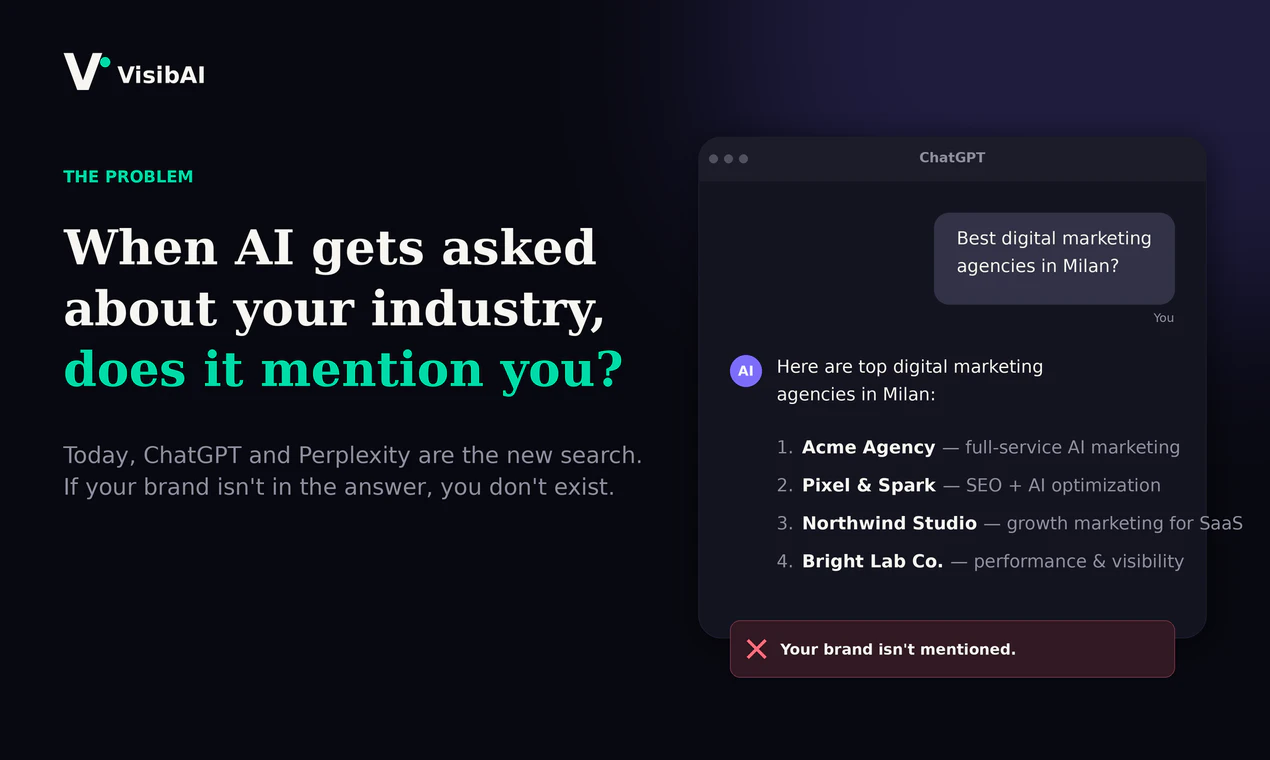
The problem: for years everyone optimised for Google. Now people open ChatGPT or Perplexity and just ask for a recommendation, and most businesses have no idea whether they show up in those answers.

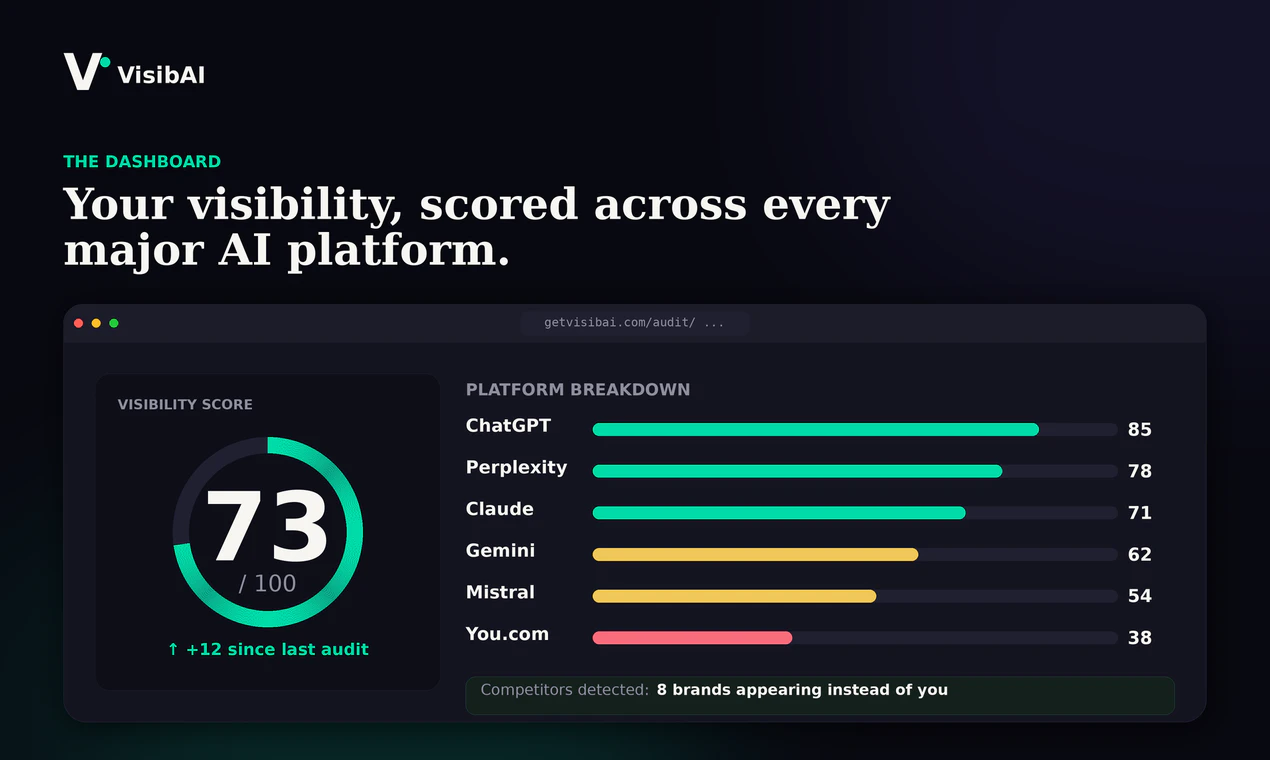
The solution: a score on its own does not help, so we give you the full benchmark. VisibAI runs automated queries across six AI platforms (ChatGPT, Perplexity, Claude, Gemini, Mistral, You.com) and shows you:

  • a visibility score from 0 to 100

  • how often you are mentioned or cited

  • which competitors appear instead of you

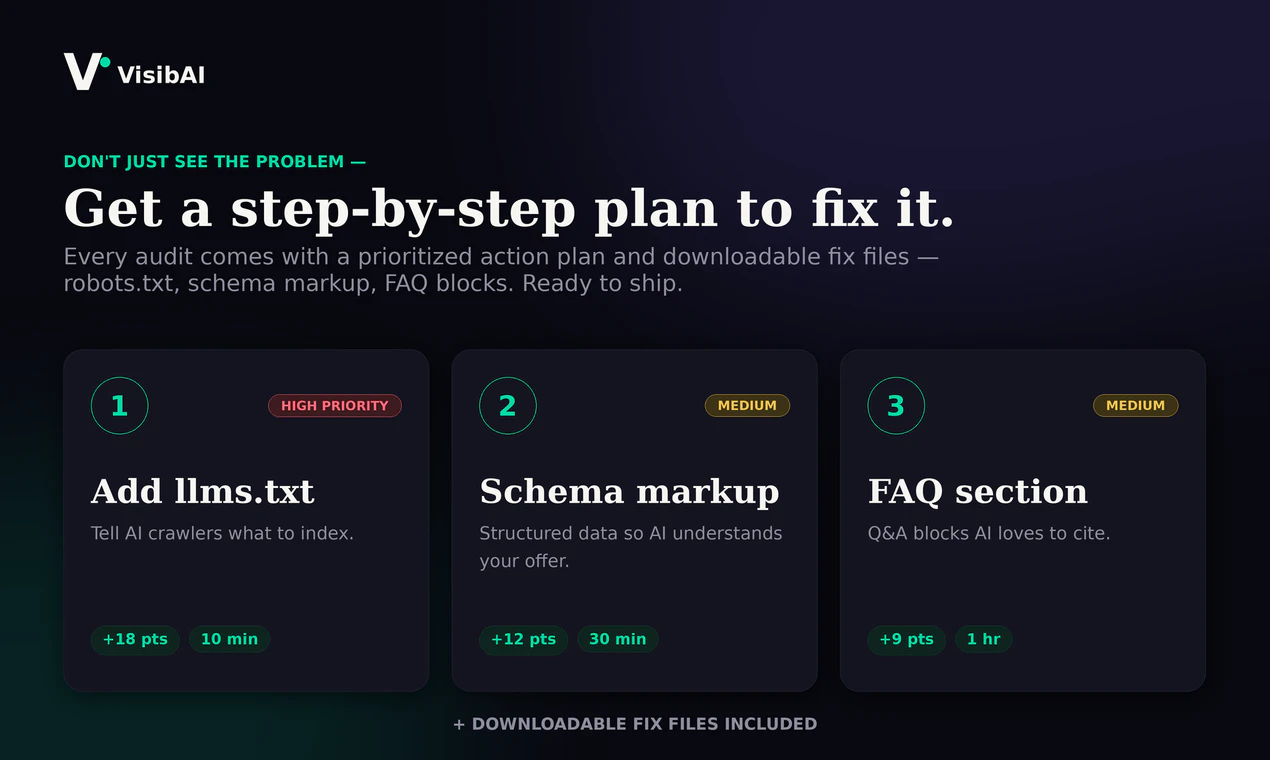
Then it tells you how to fix it: a prioritised fix list, ready-to-use fix files (robots.txt, schema, FAQ), and an AI action plan.

The benefit: you stop guessing. You see where you stand against competitors in AI answers, and you get concrete steps to climb. Start with a free audit, run a one-off report with no subscription, or go monthly for ongoing tracking and competitor monitoring.

Who it is for:

  • Brands that want to be the name AI recommends in their category

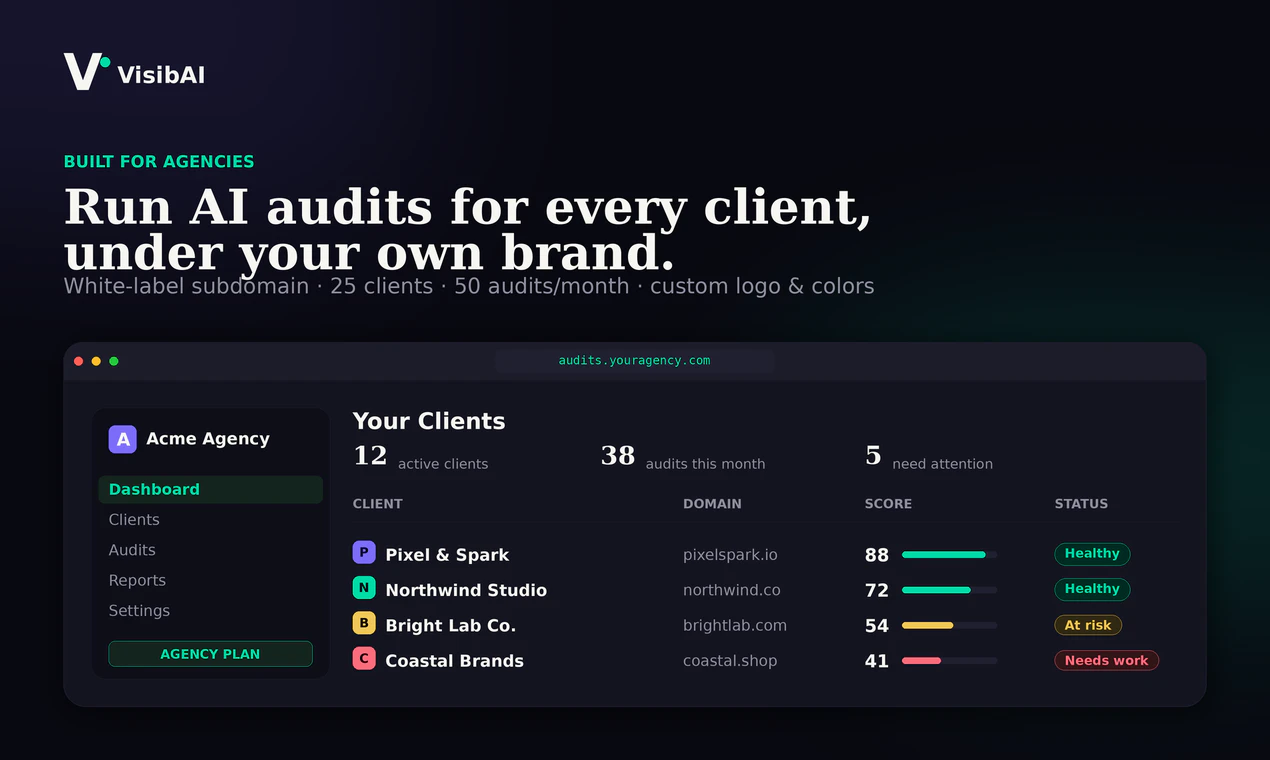
  • Agencies, who can white-label the whole platform under their own subdomain and brand, and run it for every client

You can try it here: https://getvisibai.com

Built in the EU and GDPR-native, which matters to a lot of the teams we work with.

Happy to answer any questions 🙌

7
回复

@francesco2689 Congrats on launching VisibAI! 🔥 Knowing whether your brand shows up in AI answers across 6 major platforms is a massive competitive advantage. Upvoted and excited to see this take off!

0
回复

@francesco2689 how do you handle non determinism in llm answers like if chatgpt gives a different answer on next refresh, does it average the score?

0
回复
It's a great solution.. however some confusions are there, I ran the free audit and got a score of 46, with all zeros on all queries run. So it's not clear where the score came from, my assumption was some comparisons in the query resulted into it, but it wasn't clear in the scoring.. also the compitition mapping was way off, still that's understandable as we are still to create data on it.. now we are a deterministic engine enterprise focused startup so I understand data reaching AI platforms would take time.. still askOdin.app get it's limited organic traffic from founders engagement via social platforms, maybe the traffic is lesser than most consumer startups, still I think the system wasnt able to pinpoint that either.. Still overall I liked the offering, thank you, keep bettering.. good wishes..
2
回复
@dhirajwohra Thank you, this is really useful feedback, and you’ve put your finger on a real weakness in how we present things. On the score: you’re right that it’s not clear, and that’s on us. The 46 is not coming from your AI mentions, those were genuinely zero on the free run. It comes from the technical-readiness half of the score (site structure, schema, crawlability, trust signals). We currently fuse “is your site built to be cited” and “are you actually being cited” into one number, which makes a 46 next to a wall of zeros look broken. We’re splitting those into two separate scores precisely so this stops being confusing. On why the zeros: the free audit only runs ChatGPT, on generic category queries. For a deterministic, enterprise-focused engine like Odin, the big consumer category terms won’t surface you, and a single-engine slice can’t see the founder-led social traffic you mention. A multi-platform run (Perplexity, Claude, Gemini) on queries closer to how your actual buyers search would give a far truer read, the free slice is the narrowest, harshest view. On competitor mapping being off: fair, and noted. For a novel category it leans on weaker signals. Custom competitors on the paid tiers fix most of that.
0
回复

checking visibility across six AI engines is smart, the answers diverge way more than people expect. is the fix list stuff you ship to your site, or mostly content nudges?

1
回复
@reallynattu Both, and they split cleanly. The shippable stuff is concrete: robots.txt rules to unblock AI crawlers, JSON-LD schema, an llms.txt file, FAQ markup, fixing content that’s hidden behind JS so crawlers can actually read it. We generate those files for you. The content nudges are the slower, higher-impact half: getting cited in the sources these engines actually pull from (G2, Reddit, comparison pages, category listicles). That’s where most of the real visibility gains come from, since the engines lean on third-party mentions more than your own site copy. So the site fixes are the quick wins you ship in an afternoon, and the content/citation work is the compounding play.
0
回复

The hard part with a visibility score like this is LLM nondeterminism — ask ChatGPT the same recommendation query twice and you can get different brands back. Do you sample each query multiple times and average into the 0-100, or is it a single-shot snapshot? And are the six platforms hit through official APIs or logged-in scraping, since that changes whether the result matches what a real signed-in user actually sees.

1
回复

@noctis06 thank you for your comment!

Sampling: single-shot snapshot today, not averaged. You're right that non-determinism means one run isn't gospel, so multi-sampling and averaging is high on my list. For now we re-scan over time to smooth the noise.

Access: official APIs, not scraping. Reproducible and clean, but it's the API model's answer, not a pixel-perfect match to a signed-in app session. Treat it as a consistent proxy for the model's knowledge.

0
回复

The interesting part isn't the score, it's knowing what to do next and whether it actually worked. How do you decide which queries to test so they reflect real buyer behavior? And once a team implements the fixes, what's the feedback loop? AI visibility doesn't have a Search Console equivalent, so I'm curious how you help teams know they're actually improving. Congrats on the launch!

1
回复

@jared_salois two great questions =)

Queries: we generate them from your industry, sub-category and buyer context, then split by funnel stage (awareness, consideration, decision) so they mirror how real buyers actually ask, not just branded terms. You can edit or add your own before the run.

Feedback loop: you're right there's no Search Console for this, so we are it. We re-scan over time and show which queries flipped and on which engine after you apply fixes. The clean before/after attribution is the piece I'm actively tightening right now, since proving it worked is the whole point.

0
回复

Nice work shipping this! What made you decide to build this now?

1
回复

Thanks@borrellbr  =)

Timing, mostly. Buyers have quietly shifted from googling to asking ChatGPT, Perplexity and Claude for recommendations, and businesses have no idea whether they show up in those answers. SEO tools can't see it.

That blind spot is brand new and growing fast, so it felt like the right moment to build the thing that measures it and tells you what to fix.

0
回复

AEO is still very opaque for many people, so this tool seems like it could be quite helpful.

1
回复

@jordangray Thanks, that opacity is exactly the gap we're trying to close.

Most people can't even see whether AI mentions them, let alone why. The goal is to make it concrete: here's your score per engine, here's who gets named instead of you, and here's what to fix.

Happy to answer anything if you give it a run =)

0
回复

It honestly hadn't hit me how much people now ask an assistant before they ever open a search bar. Thanks a lot for this product Francesco!

1
回复

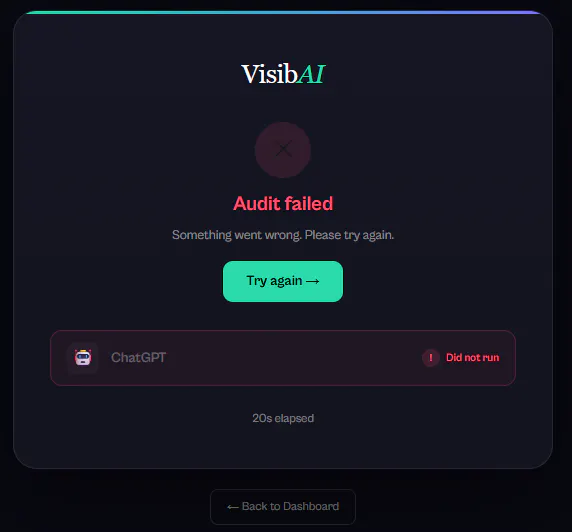
This looks like a really fantastic product. I just filled out the detailed form to run an audi for my site but it immediately failed. See attached screenshot. I checked the console logs to see if there was any technical feedback but I don't see any. I still want to try your product because it sounds fantastic. Let me know if there is something I should do differently or if there is a way for me to share technical feedback like checking console logs.

1
回复
@justinbaker9 Just replied to another comment, everything should work now. Happy to assist personally and give you any further assistance here or via DM - francesco@getvisibai.com Thank you again
0
回复

Really like the framing here. The thing I keep running into with AI visibility is that "not showing up" almost always traces back to plain old ranking and authority. From what I've seen the answer engines mostly pull from pages already sitting in the top 20 for a query, so a page down at position 40 can be perfectly structured and still never get cited.

Does VisibAI separate those two cases? As in "you're invisible because your content isn't quotable" vs "you're invisible because you're not ranking high enough to be in the pool yet." The fix is completely different depending on which one it is, and that's the part I'd personally find most useful.

1
回复
@sablekithq today VisibAI tells you that you’re missing from a query and who got cited instead, and it splits results by engine, which gets you partway. The grounded engines (Perplexity, Google’s AI) do live retrieval where your ranking/authority point bites hardest, you’re not even in the candidate pool. The memory-mode engines lean on trained knowledge, where brand presence and being written-about matters more than today’s SERP position. So the per-platform spread is already a soft signal: weak everywhere usually means an authority/pool problem; fine on the memory engines but missing on the retrieval ones points more at quotability and freshness. What it does not do yet is label it for you in plain terms: “you’re not in the pool” vs “you’re in the pool but not quotable.” That’s exactly the diagnosis layer I want to build, and it’s the natural pairing with the source-tracking work (seeing which page/rank the engine actually pulled). Once we know the cited source’s position, we can tell you whether the gap is a ranking job or a content/structure job, instead of handing you a generic fix list.
0
回复

Sounds interesting but my free test audit failed.

1
回复
@metin_54 Fixed ✅ Audits are running clean again. That was a provider quota ceiling under launch traffic, not a product bug, and it’s cleared now. If your test failed earlier, please give it another go, it’ll work this time. Thanks for bearing with me, real-time launch debugging is half the fun 😅
0
回复
@metin_54 😂 you’re following the whole debugging saga live, respect 😄 Good catch, that one’s a different beast: not the provider this time, it’s my own rate-limiter being too conservative under launch traffic. Give it another go now and it should complete (free audits are landing fine on my side this second). If you need anything else or further information, just comment and always available via email as well - francesco@getvisibai.com
0
回复

GEO is going to be as important as SEO was 10 years ago and most businesses haven't even started thinking about it. the multi-platform scoring across chatgpt, claude, perplexity etc is smart because your visibility can vary wildly between them. one model might recommend you and another might not even know you exist. curious how fast the fix recommendations actually move the needle. with traditional SEO you're waiting weeks for changes to reflect. how quickly do AI models pick up on changes you make to your site or content?

1
回复

@shubham4real Love the SEO parallel, that's exactly the bet.

Two speeds on the fixes: technical changes (schema, llms.txt, crawler access) show up in days to weeks on the grounded engines that retrieve live, like Perplexity and Google AI.
The base ChatGPT/Claude models only shift when they retrain, so that side is slow.
The bigger lever, getting cited in the sources they pull from (Reddit, G2, listicles), is a slower build but it's what sticks. We re-scan over time so you see which change moved which engine, instead of guessing.

0
回复

Smart idea. Which AI platform tends to show the widest visibility gaps for most businesses?

1
回复

@dhiraj_patel5 Thanks for your question =)

Perplexity and Google's AI tend to show the widest gaps.

They lean on fresh, citation-heavy sources, so if your content isn't structured to be cited, you drop out fast. ChatGPT is more forgiving because it leans on broader trained knowledge, so a brand can look fine there and be near invisible on the engines pulling live sources.

That split is exactly why the per-platform view matters more than one blended score.

1
回复
It looked promising, but after testing it and filling the entire form it gave me an “Audit failed” error, and I had to start all over again since the data entered in the form was not saved…
1
回复
Hi @umberto_abbatantuono 👋 sorry, that’s a genuinely bad first run and the lost form data makes it worse. Thank you for flagging it instead of just bouncing. Can you drop the URL you were auditing (here or DM - francesco@getvisibai.com)? I’ll trigger the run on my side, confirm it completes, and send you the result directly so you’re not blocked.
0
回复

The 'are you in AI answers' question is one I've been thinking about a lot lately - SEO taught us to optimize for search engines, and now there's this whole new discovery layer in ChatGPT, Perplexity, Claude that most tools don't even measure. What sources does this check - just the big three, or does it also cover the AI integrations in search like Bing and Google AI overviews?

1
回复

@omri_ben_shoham1 

Spot on, this layer sits on top of SEO where nobody's measuring.

We cover six engines directly: ChatGPT, Perplexity, Claude, Gemini, Mistral and You.com (Perplexity and You.com retrieve live, closest to that search-plus-AI surface). Google AI Overviews and Bing/Copilot pull differently, so I'm not claiming them until I can measure them properly, both are on the roadmap.

Have you already run your free audit on https://getvisibai.com ? If you'd like a multi-platform audit or a competitor comparison, I'd be happy to set you up with a one month trial.

0
回复

The competitor-citation angle is what makes this more than a vanity score for me — seeing who AI names instead of you points straight at the content gap. Since the six engines pull from different sources with different recency windows, do you surface which specific source got cited (a Reddit thread, a listicle, a competitor's page) so the fix list can target that, or is it focused on the on-site schema/llms.txt side?

1
回复
@zain_sheikh That’s the exact line I care about too, a vanity score is useless, “here’s who AI names instead of you” is a to-do list. Straight answer on where we are today: we surface the competitor that got named, per query, plus the on-site fixes (schema, llms.txt, crawler access, FAQ). What we don’t yet expose is the specific source the engine cited, the actual Reddit thread vs listicle vs competitor page. That’s deliberately the next build, because you’re right that it’s the difference between “write about this” and “go get mentioned on this exact page.” It matters even more given your recency-window point: a Reddit thread cited by Perplexity this week is a totally different fix than a 2-year-old listicle ChatGPT leans on. Surfacing the source per engine is what makes the fix list targetable instead of generic. It’s high on the roadmap and clearly several of you want it most, so it’s moving up. Appreciate you sharpening the case for it.
0
回复

The visibility gap in AI-generated answers is real and most brands have no idea they're invisible. Excited to see tooling for this, does VisibAI track citation sources across different LLMs or just ChatGPT/Perplexity?

1
回复
Hi @productrambler 👋 Thanks, and yes, “they have no idea” is the whole reason this exists. Coverage isn’t just ChatGPT/Perplexity, we run across the major answer engines including Claude and Google’s AI too, so you see your visibility per platform, not one blended guess. Today we surface which competitors get named instead of you in those answers. Source-level citation tracking (the exact pages an engine pulls from, per LLM) is the next big piece I’m building, since Reddit and a handful of sources punch way above their weight in what AI cites. If that’s the angle you care most about, tell me which engines matter to you and I’ll factor it into how I prioritize it.
0
回复

the six-platform sweep is the right call - visibility on ChatGPT vs Perplexity vs Claude can look completely different because each pulls from different sources with different recency windows. a score of 60 on one and 20 on another tells you something specific and actionable. the part I'm most curious about: when you show "how to fix it" - is that primarily schema/llms.txt/content changes, or are you also surfacing the competitor citations that are showing up instead of you? knowing who's displacing you in AI answers is probably the most valuable signal for figuring out what content you're actually missing.

1
回复
@galdayan You nailed why the per-platform split matters, a 60 on one engine and 20 on another isn’t noise, it’s a content/recency signal you can act on. On the fix side: both, and you’re right that the competitor angle is the sharper one. We surface the technical layer (schema, llms.txt, AI-crawler access, FAQ), but we also show which competitors are getting named instead of you, per query. That’s the part that tells you what content you’re actually missing, if a rival keeps showing up on “best X for Y” and you don’t, that’s your gap, made concrete. Where I want to push next is going one level deeper: not just who’s displacing you, but which source the engine pulled them from, so the fix moves from “write about this topic” to “you need presence on this specific page/platform.” That’s the build I’m prioritizing. Sounds like you’d have a sharp opinion on it, would welcome it.
0
回复

I like that this starts with a one-time audit instead of asking teams to commit to another monthly SEO tool. My main trust question is reproducibility: does the report show the exact prompts, platform, timestamp, and raw answers behind the score so a team can verify what changed after applying fixes?

1
回复
Hi @novamaker01 👋 Exactly why I led with the one-off, thanks for naming it. Honest state: every run is timestamped, stores the raw AI answers behind each query, and shows which queries you appeared in per platform, so the score traces back to real responses, not a black box. The piece I’m finishing: a clean prompt-by-platform grid and a proper before/after diff, so when you re-run after fixes you see exactly which queries flipped and where. The diff logic’s already in the engine, I just need to wire the UI. It’s near the top of the list because verification is the whole point. Run one and I’ll pull your raw per-query results by hand, would value your eye on whether the format hits your team’s bar.
0
回复

@novamaker01 hey, i went with the one-time angle and agree that it's better that way.

0
回复

Hey,
Congrats for the launch.

Quick feedback on my first test so far:

  • 30% of my traffic is coming from GEO/AEO

  • We've done quite extensive work on that and continue

But from what your app tell us: score 49/100

And everything is 0% , not passed, etc.
I don't believe that nothing can be found about us and we get 49/100 score. How is this related?

Like I literally didn't learn anything from it and will not be willing to go further or even paid for that yet.

Hope that's helping you guys improve!

1
回复
Hi @florent_duthoit Really appreciate this, this is exactly the kind of feedback that makes the product better, so thank you for taking the time. You’ve spotted a real UX gap. There are two different things on that screen and we’re not separating them clearly enough: 1. The 0-100 score = how often the AI engines actually name you in answers to buyer-intent queries. Yours at 49 means you’re showing up in a fair chunk of them. 2. The checks showing 0%/not passed = technical optimization items (schema, AI-crawler access, llms.txt, etc.). Those are “headroom,” not “nobody can find you.” You can rank well today and still have those unticked. So the two aren’t contradictory, but the way we present them makes it look like they are. That’s on us to fix, and you’ve just bumped it up the list. That said: if you’re already pulling 30% from GEO/AEO, a 49 sounds low to me, and I’d genuinely like to dig into your specific run. Can you DM me francesco@getvisibai.com the URL you audited (or drop it here)? I’ll pull the raw query results and tell you exactly which queries you appeared in and which you didn’t. If something’s miscounting, I want to find it. Either way, thanks for stress-testing it. This is more useful than ten “nice launch” comments 🙏
1
回复

@florent_duthoit i'd appreciate the feedback as well!

1
回复
#5
PMB
Stop re-explaining your project to AI coding agents
196
一句话介绍:PMB 通过本地 SQLite 数据库为 Claude Code、Cursor 等 AI 编码代理提供持久化项目记忆,解决代理每次新会话都忘记上下文、需重复解释项目决策的痛点。
Open Source Developer Tools Artificial Intelligence GitHub
AI编码代理记忆 本地优先 MCP协议 SQLite 开源 离线可用 上下文注入 开发者工具 项目知识管理 记忆溯源
用户评论摘要:用户认可“重复解释”痛点真实,但集中质疑:记忆自动写入与手工控制的边界;新旧决策冲突时如何避免死数据误导代理;上下文注入对工作窗口的消耗;多代理/多项目场景下的记忆隔离与同步。建议增加会话后记忆差异报告及冲突自动检测。
AI 锐评

PMB 精准命中了 AI 编码代理领域的核心体验断层——会话级遗忘。其“本地 SQLite + MCP 协议”的架构选择堪称明智:零云依赖、零 API 密钥、零读取级 LLM 调用,既规避了敏感代码外泄的安全红线,又剔除了第三方记忆服务的延迟和成本,将记忆主权完全交还开发者。开源的基调和离线优先的设计,对于追求可控性的专业团队而言,具备天然的信任基础。

然而,产品当前的“智能”深度仍显浅层。最大的隐患在于“记忆污染”。评论中反复提及的“决策反转”与“多项目隔离”问题,暴露了其核心缺陷:PMB 目前的召回机制(BM25+向量+实体图)本质上是基于相关性的加权搜索,而非真正的状态感知。当一个已被逆转向导决策仍因文本相似性而高居召回榜时,它不仅不是助手,反而会成为误导代理的定时炸弹。开发者期待的是一种“因果型”而非“关联型”记忆,即系统能理解“这条规则已被新决策取代,不应再被引用”,而非仅仅靠时效衰减和手动归档来补救。

此外,产品声称的“诚实影响追踪”目前更多停留在承诺阶段。如何将“记忆被召回”这一事件,与“代理最终采取了正确行动”形成可审计的因果关系链,是让记忆力从“缓存”升级为“智能”的关键一步。如果 PMB 不能解决“错误记忆”比“无记忆”更具破坏性这一悖论,它将长期困在“高级笔记本”的角色里,难以成为开发者真正信赖的“项目副驾驶”。其价值天花板,取决于它能在“记”和“忘”之间,建立起多强的逻辑秩序。

查看原始信息
PMB
PMB gives Claude Code, Cursor, Codex and Zed persistent project memory through MCP. It stores decisions, lessons, goals, recent work, project facts and docs in one SQLite workspace on your disk. No cloud, no API keys, no LLM call on the read path. It is open source, offline-first, inspectable/exportable, with a local dashboard and honest impact tracking so you can see which memories actually help.
Hi Product Hunt - I built PMB because every coding agent I used had the same frustrating loop: brilliant in one session, forgetful in the next. I kept re-explaining decisions, constraints, file history, and "please never do X in this repo again." PMB makes that memory local and durable. It stores decisions, lessons, goals, recent work and facts in one SQLite workspace on your disk, then feeds the relevant context back to Claude Code, Cursor, Codex, Zed and other MCP-aware agents. No cloud, no API keys, no hosted memory service. The design evolved from "just save notes for the agent" into typed memory: lessons are treated as rules, goals as goals, and project work as recent activity. The thing I care about most now is trustworthy memory: what should an agent remember automatically, what should it ignore, and how do we show when memory is actually helping? Would love feedback from people using coding agents every day. Fastest try: pip install pmb-ai && pmb setup
8
回复

@oleksiijko If the underlying app or input shape changes, how does PMB | Local-first memory for AI fail before it quietly gives me a bad result?

0
回复

@oleksiijko Congrats on launching PMB! 🔥 Ending "AI amnesia" with a local, zero-token MCP memory layer for Cursor, Claude Code, and Zed is exactly what dev workflows need. Upvoted!

0
回复

@oleksiijko Excited to give this a try. Best of luck with the launch!

0
回复

The core problem is real. Every new context window means re-explaining architecture decisions, naming conventions, the reason you made that weird choice in the auth layer three months ago. Curious whether PMB is basically a structured prompt file that lives in the repo, or whether there's something more dynamic happening, like the context getting selectively injected based on what part of the codebase the agent is touching. Also wondering how you handle drift, because the project memory that was accurate at week two is often wrong or incomplete by month six, and a stale context file might be worse than no context file.

2
回复

@fberrez1 Great questions - you're pointing at the two things that actually matter here.

On architecture: it's the dynamic side, not a prompt file in the repo. PMB is a real store (SQLite) of events, decisions, lessons, facts and a code-entity graph. On each task the agent calls prepare() / recall() over MCP, and a hybrid retriever (BM25 + vectors + entity graph, fused) pulls back only the context relevant to what it's touching, ranked by relevance and recency - not a flat dump. Writes are ambient too: decisions and lessons get captured as you work, not hand-maintained.

On drift - this is the part I think about most, and I agree a stale context file can be worse than none. A few mechanisms:

  • Recency + forgetting-curve decay, so week-two context loses weight over time instead of competing head-on with fresh context.

  • Corrections override: when you correct the agent, that's stored as a high-priority lesson that outranks what it contradicts.

  • Keyed facts (attribute = value) are latest-wins with the old value archived, so a changed fact is genuinely superseded, not left lying around.

  • Dedup merges near-identical entries, so "we decided X" isn't stored five times.

Where it's headed: a first-class lifecycle for free-form decisions/lessons - explicit active / superseded / needs-review states, and auto-detecting when a new decision reverses an older one. That's clean for keyed facts today, less so for free-text decisions, and it's the next thing on the list.

If you want to follow where it goes, here's the repo: https://github.com/oleksiijko/pmb

0
回复

Every new Claude Code session I spend the first few minutes re-explaining the same architecture decisions. The local-first + MCP approach is the right call, once project memory lives in a third-party cloud it becomes a security conversation for any serious team. The part I'd want most is the impact tracking that shows which memories actually influenced agent suggestions. Context without attribution is just noise. Look forward to hearing from you.

1
回复

@frankgebuilder Exactly. The security boundary is a big part of why PMB is local-first: architecture decisions, mistakes, internal constraints, and “please never do this again” rules are exactly the kind of context teams do not want drifting into a third-party memory layer. And I completely agree on attribution. Memory should not just be injected silently and hoped for the best. PMB already tracks this for lessons: when a lesson is surfaced, it gets a surface_id; later agent actions can be linked back to that surface, and PMB tracks whether it was followed, ignored, or not applicable.

There is also an “Earned Memory” layer that connects surfaced lessons to outcomes like tests passing, builds, deploys, red-to-green fixes, and churn, so you can see which memories are actually pulling weight.

The next step is expanding that attribution beyond lessons into a fuller per-session influence trail for decisions, facts, goals, and project context. That’s the difference I want PMB to make: not just more context, but accountable context. If memory changes the agent’s behavior, you should be able to see why.

0
回复

Persistent memory for coding agents is one of those features where “what not to remember” matters as much as what to store.

The part I’d be most curious to see is a small memory diff after each session: new lesson added, old assumption updated, and which memory actually influenced a suggestion.

That would make it easier to trust local memory instead of treating it like a hidden second prompt. Also helps catch stale project decisions before an agent keeps repeating them.

1
回复

@grace_lee26 Completely agree - "what not to remember" is the whole game, and treating memory as an auditable layer rather than a hidden second prompt is exactly the right framing.

The session diff is a great way to get there, and most of the raw material is already in place: every event is session-tagged and timestamped, and the dashboard already tracks which lessons influenced outcomes. What's missing is packaging that into a tidy after-session view - "here's the new lesson, here's the assumption that changed, here's the memory that shaped this suggestion." It's a clean thing to build on top of what's there, and it does double duty: makes local memory trustable, and surfaces stale decisions before an agent keeps acting on them. Going on the list.

Repo if you want to follow along: https://github.com/oleksiijko/pmb

0
回复

How do you decide what gets written into memory, like is it automatic from chats or only explicit saves?

1
回复

@karimbenkeroum Both. An ambient layer auto-captures the work product - decisions, lessons, corrections (correct the agent and it's saved as a high-priority lesson), completed work - deduped so nothing's stored twice. Explicit "remember this" is the override for pins, personal facts, or future plans. Default is you shouldn't have to tell it.
github.com/oleksiijko/pmb

0
回复

But remembering also has a cost. Your front loading context. aka using a lot of the available context before solving a problem. That means your runway to solve it is smaller. How do you get around that? some times you need all the context runway you have 😅

1
回复

@conduit_design Ha, this is the sharpest version of the tradeoff - and you're right, remembering isn't free; it competes with the working window.

What keeps it cheap is that PMB is selective retrieval, not a dump. Recall is top-k and relevance-ranked (BM25 + vectors + graph), so what gets injected is a handful of items actually tied to the task - usually a few hundred tokens, not the whole store. prepare() at the start is a compact summary (counts, a few surfaced lessons, open goals), and recall() is pulled on demand mid-task rather than front-loading everything up front.

The other half: the baseline isn't an empty window, it's you re-pasting context every session or a fat always-on rules file that sits in context regardless of relevance. PMB swaps "always-on everything" for "on-demand relevant slice," so in practice it usually buys back more runway than it spends. And top-k is tunable - for a context-hungry task you keep the footprint minimal. There's still a nonzero floor, I won't pretend otherwise, but the whole design is "smallest slice that changes the answer," precisely because runway matters.

Repo if you want to follow along: https://github.com/oleksiijko/pmb

0
回复

This is exactly the problem that makes AI coding feel like a conversation reset every 5 minutes. You paste context, it forgets, you paste again. The local-first memory angle is smart - keeping it in the project rather than some cloud sync feels like the right call for sensitive codebases. Does it handle monorepos where different agents might need different context scopes?

1
回复

@omri_ben_shoham1 Yeah, "conversation reset every 5 minutes" is exactly it.

Two ways today. For hard separation, a workspace isn't locked to a git repo - it's just an isolated store - so you can run one per package/app in the monorepo, and different agents pointing at different workspaces get genuinely different scopes that can't bleed into each other. For a single shared workspace, scoping is by relevance plus the code-entity graph: an agent working in package A surfaces memory tied to the paths and entities it's touching, not the whole monorepo. The fully airtight version - a hard locality gate so an agent only ever sees memory for the subtree it's in - is on the roadmap; today that scoping is emergent from ranking rather than enforced. No dedicated "monorepo mode" config yet, but those two primitives cover it in practice.

Repo if you want to follow along: https://github.com/oleksiijko/pmb

0
回复

We run agents across multiple client projects simultaneously, so stale memory leaking into the wrong context is a real operational risk. The keyed fact system handling latest-wins with old value archived covers simple attribute updates, but I'm curious how it handles decisions that don't have a clean key (for exmaple, an architectural direction that got reversed mid-project without an explicit "we switched from X to Y"). Does the conflict surface in the dashboard, or does the old decision just keep scoring well on BM25 until someone manually archives it?

1
回复

You're hitting two distinct things - isolation and staleness - so let me split them.

Cross-project leakage is handled by isolation, not ranking. Each project/client is its own workspace with a separate store: its own SQLite events, vector index, BM25 index and graph under ~/.pmb/workspaces/<id>/. Recall is scoped to the active workspace, so one client's memory can't score into another's context. Leakage across clients isn't a ranking problem here - it's walled off.

The keyless reversed decision is the honest gap, and you called it exactly: an architectural direction that flipped mid-project, no clean key, no explicit "we switched from X to Y." Today there's no semantic conflict-detection, so the old decision keeps scoring on BM25 + vectors until recency/forgetting-curve decay down-weights it, a correction overrides it, or someone archives it. The dashboard shows the timeline and both decisions, but it doesn't currently auto-flag that the two conflict - so worst case, yes, the stale one scores well until it's manually archived. I won't pretend otherwise.

That's precisely the next build: reversal/conflict detection that links a new decision to the one it supersedes even without a clean key, plus a needs-review surface in the dashboard that flags candidate conflicts for one-click supersede/archive, so it isn't on a human to notice. For a multi-client setup like yours that's the difference between trusting it and auditing it constantly, so it's high on the list.

Repo if you want to follow where it goes: https://github.com/oleksiijko/pmb

0
回复

Local-first append-only is the right base. The thing that actually bit us running a file-based memory like this for our own agents was staleness: the agent confidently acted on a decision that had been reversed two sessions back, because the old event was still sitting on the read path. Append-only sharpens that, since both the decision and its reversal live as events. Does the read path collapse to current state, or can the agent pull a superseded decision and treat it as live?

1
回复

@dipankar_sarkar You've described the exact failure mode, and you're right that append-only sharpens it: the decision and its reversal both live as events, so the read path has to decide which one is "true."

Honest answer, split by type:

  • Keyed facts (attribute = value): the read path collapses to current state. Latest-wins, the prior value is archived off the read path - the agent gets the live value, not the superseded one.

  • Explicit corrections: when a reversal comes in as a correction, it's stored high-priority and outranks what it contradicts.

  • Free-text decisions/lessons: this is the gap. Today there's no semantic reversal-detection, so both events stay retrievable. Recency + forgetting-curve decay ranks the newer (reversal) event above the old one, so in practice the fresh one usually surfaces - but you're right that a superseded free-text decision can still be pulled and treated as live in the worst case. I won't pretend that's fully solved.

That's exactly what I'm building next: a first-class lifecycle (active / superseded / needs-review) with auto reversal-detection, so the read path collapses free-text decisions to current state the way keyed facts already do - with the superseded event available only on an explicit history/time-travel query, not the default read path.

Appreciate you raising the precise version of this - it's the right thing to be hard on.

Repo if you want to follow where it goes: https://github.com/oleksiijko/pmb

0
回复

Curious how PMB handles context boundaries in practice — is it meant to store high-level project docs, repo-specific conventions, current tasks, or some mix of those?

1
回复

@crystalmei It's intentionally a mix of all of those - the design goal is that you don't have to pre-sort it.

In practice: repo-specific conventions land as lessons ("we use X, never Y"), architectural direction as decisions, current work as goals/activity, and higher-level docs as reference/facts (it can ingest docs and PDFs too). Boundaries between projects are hard: each repo is its own workspace with a separate store, so conventions from one project can't bleed into another. Within a project, retrieval pulls the relevant blend for the task at hand - a convention plus a current goal plus the related decision - rather than dumping everything. So the boundary isn't something you draw by hand; workspaces wall off per repo, and relevance picks the slice per task.

Repo if you want to follow along: https://github.com/oleksiijko/pmb

0
回复

The re-explaining loop between sessions is exactly what drives me nuts with Cursor and Claude Code, so local SQLite memory over MCP feels like the right call. How are you deciding what gets stored automatically vs what I have to tell it to remember? congrats on shipping.

1
回复

@i_sanjay_gautam Thanks! And that loop is exactly what set me off too.

The split is roughly this: an ambient layer captures the work product automatically - decisions, lessons, corrections (when you correct the agent, that's stored as a high-priority lesson), and completed work - with dedup so the same thing isn't stored twice and secrets redacted on write. You don't have to narrate any of it. Explicit "remember this" is the override: things you want pinned, personal facts, or future intent the agent wouldn't infer from the work itself. Default is you shouldn't have to tell it - telling it is for emphasis or for what falls outside the work stream.

Repo if you want to follow along: https://github.com/oleksiijko/pmb

0
回复

memory is the half of agent workflows nobody talks about. every demo shows the magical "it just knew" moment but never how it knew. once you ship multiple agents working in the same codebase, memory is the only thing keeping their fights from becoming bugs.

the part still missing across the space is provenance. memory says "these are the decisions." but who made each one, when, based on what context? without that you eventually get the agent equivalent of "why is this code here? git blame says steve from 2019."

local plus sqlite is the right call. ship it.

1
回复

@thenameisarian This nails it - and provenance is exactly the right frontier. PMB already stamps every event with who wrote it (actor/source), when, and which session it came from, so "git blame for decisions" exists at the who/when level. The harder piece - tying each decision to the context that produced it - is what I'm building toward. And the multi-agent "fights becoming bugs" line is painfully accurate.

Appreciate the ship-it. Repo if you want to follow along: https://github.com/oleksiijko/pmb

0
回复

Why I built this: every new Claude Code / Cursor session I'd burn the first 10 minutes re-explaining the same things - which decisions we'd already made, which directions we'd tried and ruled out, why the architecture looks the way it does. The agent forgets all of it between sessions, after every model upgrade, every time I switch tools. Teaching it the same lesson for the fifth time ("we use pnpm, never npm") was the most demoralizing part of working with an AI agent.

So I made the memory live locally - one SQLite file over MCP - and fed it back automatically before the model thinks, instead of hoping it remembers to look. Now it shows up already knowing. No cloud, no API keys, and I can open the dashboard and see exactly what it remembers. That's the whole pitch.

1
回复

The re-explaining problem is genuinely painful. Every new Claude Code session starts with several minutes catching it up on decisions already made, directions already tried, and why the architecture looks the way it does. Having MCP-backed persistent context that retains all of that locally - no cloud, no API overhead on reads - is the right shape for this problem. The SQLite approach is smart for anything touching sensitive project details. Curious: how does it handle conflicts if two different agents write to memory simultaneously on the same project?

1
回复

@galdayan Thanks Gal - and you nailed the shape of the problem. On concurrent writes, same machine / same project it's safe by construction:

  • The store is append-only - every write is a new event with its own ULID, not an in-place edit of a shared row. Two agents writing at once just append two events; neither clobbers the other, so there are no lost updates.

  • Under the hood SQLite runs in WAL mode with a 10s busy-timeout (set automatically), so a second writer waits and serializes instead of erroring or corrupting.

  • The 4-layer dedup then merges near-identical entries after the fact, so you don't end up with "we decided X" stored twice. For keyed facts (attribute = value) it's latest-wins with the old value archived, not overwritten.

The only place real merge conflicts can show up is cross-machine git-sync of a workspace - that's plain git + a WAL checkpoint before commit. On one box, two agents on one project just coexist.

0
回复

this solves a real problem. the context re-explanation tax is probably the single biggest friction point in AI-assisted coding right now — you lose 10-15 minutes at the start of every session just getting the agent back up to speed on decisions you already made.

curious about the memory graph structure. how does it handle conflicting decisions? like if you stored "never use ORM" as a lesson but then later decided to add one for a specific service?

0
回复

@ozandag That’s exactly the hard part: memory is only useful if it has scope and authority, not just storage.

PMB already does a few things here. Recall is not a flat keyword search: memories are ranked with multiple signals - lexical/vector match, importance, recency, graph/entity proximity, and follow-through history for lessons. The graph links decisions, lessons, files, projects, and entities, so a newer decision tied to a specific service/file can win in that context over a broader older rule.

So in your example, “never use ORM” would be treated as a general lesson. If later we store “use ORM for this billing service”, that newer and more specific decision should surface for billing-service work because of recency, entity scope, and graph relevance. The older lesson can still be useful elsewhere, but it should not have infinite authority.

The honest answer: PMB already has weighting, scoped recall, and conflict detection for factual state. The next step is making lifecycle explicit for decisions/lessons too - active / superseded / needs-review - and showing those conflicts in the dashboard instead of hiding them.

The goal is not “remember everything forever”. It’s memory with weight, scope, and aging.

0
回复

So if I have a session in Claude, it will have the memory to store the chat from claude and when I switch to chatgpt or others llms it wil pick up the left over work from claude?

0
回复

@mahir21 Yes, that’s exactly the idea, with one important nuance: PMB does not just dump the entire raw chat history into memory.

It stores the durable stuff that should survive between sessions: project decisions, lessons, bugs, goals, files touched, constraints, and “don’t do this again” rules.

So you can work in Claude Code, then later open Codex / Cursor / another MCP-aware agent connected to the same PMB workspace, and it can pick up the relevant context instead of starting from zero.

For plain ChatGPT, it depends on whether the client has a way to connect to PMB/MCP. But across MCP-compatible coding agents, yes - that is the workflow PMB is built for.

0
回复

the "no cloud, on your disk" call is the whole thing for me — local-first genuinely changes what people will put in their memory. building healthos on the same constraint. how's retrieval holding up as the graph grows into thousands of entities?

0
回复

@sabber_ahamed Exactly. “Local-first” is not just a privacy feature here, it changes what users are willing to let the agent remember. For retrieval: it’s holding up well so far. My own PMB workspace is already at thousands of entities and tens of thousands of graph connections, and warm recall is still fast because SQLite stays the source of truth, while BM25 + vector search + graph expansion are used as retrieval/ranking layers. The biggest challenge has not been raw speed, but precision: making sure the agent gets the few memories that matter, not a huge context dump. So PMB is intentionally conservative about what it surfaces, especially for lessons/rules. HealthOS sounds like a perfect use case for the same constraint btw - health memory is exactly the kind of data people should not have to put in a cloud just to make it useful.

0
回复

Congrats on shipping! What is next on the roadmap after launch day?

0
回复

@borrellbr Thanks! A few things, shaped largely by the questions in this very thread:

  • Memory lifecycle: first-class active / superseded / needs-review states for decisions, with auto-detection when a newer decision reverses an older one, so stale context loses authority instead of lingering.

  • Conflict surfacing: a dashboard view showing not just "this memory helped" but "this was skipped because it conflicted with newer evidence," plus a per-session memory diff (what was added, updated, and what influenced a suggestion).

  • Locality-scoped recall: lean harder on the code-entity graph so a decision only surfaces when the file you're touching still relates to it.

  • A reproducible benchmark harness in the repo (with/without PMB, N runs, tokens + pass/fail + quality), so the speed and quality claims are verifiable, not trust-me.

On direction: PMB stays local-first and fully open source. I'm not planning paid features - if anything ever gets added behind a flag it'll only be by explicit request from people who need it, and the core stays free and open for everyone. The goal is a tool you own, not a funnel into a subscription.

Repo: https://github.com/oleksiijko/pmb

0
回复

Love the local-first SQLite approach here; keeping project memory on-disk instead of a hosted service is a smart trust boundary, because sensitive architecture decisions and lessons learned never leave your machine.

0
回复

@ilko_kacharov Exactly the intent - a deliberate trust boundary: architecture decisions and lessons never leave your machine, and secrets are redacted on write. Thanks for getting it.
github.com/oleksiijko/pmb

1
回复

Everything staying right here on my own machine is the part that lands for me, Oleksii. Repeating myself over and over has quietly been one of my least favorite parts of the day, so this feels like a real relief.

0
回复

@matthieu_poitrimolt That "least favorite part of the day" line is exactly why I built it. Quietly repeating yourself all day is the thing I wanted gone - thank you.

0
回复

Keeping agent memory in one local SQLite file is a clean approach. Re-explaining project decisions across Claude Code, Cursor, and Codex gets old fast, so shared MCP memory could make coding sessions feel much less repetitive.

0
回复

@farrukh_butt1 Thanks - shared across tools is the whole point: the memory follows you from Claude Code to Cursor to Codex, so you explain a decision once, not once per tool.
github.com/oleksiijko/pmb

0
回复

the "no LLM call on the read" part is a nice detail. most memory solutions make an API call every time the agent needs context, which adds latency and cost to every single interaction. storing it in local SQLite and letting the agent pull what it needs without a round trip makes way more sense for coding workflows where speed matters. does it handle memory conflicts though? like when two sessions produce contradicting decisions about the same part of the codebase.

0
回复

@shubham4real Thanks - and you've got the reasoning exactly right: the read path is pure local retrieval, so context costs you milliseconds, not an API call per interaction.

On conflicts: partially. For facts with a clean key it's resolved - latest-wins, old value archived. For two free-text decisions that contradict on the same part of the codebase, it's honest-partial today: both are stored as events, recency decay and relevance ranking push the newer one up, but there's no semantic detection that says "these two conflict" and hard-suppresses the stale one - so worst case both stay retrievable until one is corrected or archived. The hook for fixing it is already there, though: decisions about the same code cluster on the same entities in the graph, so detecting a conflict on a shared entity and flagging it for supersede/review is the next build.

Repo if you want to follow along: https://github.com/oleksiijko/pmb

0
回复
Boring demo video could have been much much better. Fix it if you want to onboard more customers! Still good product so upvoting :)
0
回复

@divvsaxena Fair hit - the video's weak and I know it. Redoing it properly is on the list. Appreciate the honesty, and the upvote anyway :)

0
回复

PMB’s local SQLite + no read-path LLM claim is the part I’d test first. The hard bit with project memory is not storing more facts; it’s deciding when an old fact should lose authority.

Do you track expiry or conflict per memory item? For example, if a repo switches from REST to GraphQL, I’d want the old REST decision preserved as history but not injected into a fresh coding-agent context unless the current file still touches that path. The dashboard would be more useful if it shows not just “this memory helped”, but “this memory was skipped because it conflicted with newer evidence.”

0
回复

@tang_weigang Please do test it first - it's open source, so you can inspect the SQLite and confirm the read path makes zero network calls. And you've named the real problem: it's not storage, it's when a fact should lose authority. Today that's soft (recency + forgetting-curve decay) plus hard latest-wins for keyed facts, but there's no explicit per-item expiry or conflict flag for free-text decisions yet - so a REST decision after a GraphQL switch loses weight, but isn't hard-suppressed.

Both your ideas are spot on and going on the list: locality-scoped authority - injecting an old decision only if the current file still touches that path - maps directly onto PMB's code-entity graph (today it's emergent from ranking, not a hard gate); and the dashboard showing "skipped because it conflicted with newer evidence," not just "this memory helped," is the version that makes it auditable instead of trust-me.

Repo if you want to follow along: https://github.com/oleksiijko/pmb

0
回复

@oleksiijko - Very nice. Definitely beats managing multiple .md files locally with skill integration. Will review in more detail, but looks very promising.

0
回复

@francois_marais_nz Thanks - that's exactly the itch: replacing the sprawl of hand-maintained .md files with something that captures and retrieves on its own. Enjoy the deeper look, would genuinely value your take after.
github.com/oleksiijko/pmb

0
回复
#6
ReadHere
Lightweight PDF & EPUB reader in your browser
144
一句话介绍:ReadHere 是一款纯浏览器端的轻量级 PDF/EPUB 阅读器,无需安装注册,文件本地存储,支持离线阅读、跨格式高亮和笔记,解决用户在不同设备间无缝阅读自有文档、且不愿被生态绑定的痛点。
eBook Reader Privacy Books
PDF阅读器 EPUB阅读器 浏览器扩展 离线阅读 本地优先 无账户 跨平台 高亮笔记 阅读日志 文件管理
用户评论摘要:用户高度认可“无账户、本地存储”的隐私立场。主要建议:1) 自动记忆阅读进度(断点续读);2) 在无Wi-Fi环境下(如飞机)仍可离线使用;3) 明确标注/笔记的存储方式(localStorage/IndexedDB)及浏览器数据清理后的风险;4) 期待Google Drive同步后,高亮和日记能否分离同步;5) 考虑类似Calibre的设备间书籍迁移功能。
AI 锐评

ReadHere在产品逻辑上做了一个聪明但成本极高的减法:它拒绝云端、拒绝账户、拒绝生态绑定,把阅读体验彻底“降级”为浏览器中的本地操作。这个反潮流的设计在隐私敏感用户中获得了情感共鸣,但我们必须冷静看清它的天花板。

**真正的价值不在功能,而在“信任”二字。** 当前阅读软件(Kindle、Apple Books、微信读书)的本质是图书销售的渠道入口,阅读器只是引流工具。用户买书其实是“租书”,高亮和笔记数据被锁定在各自平台。ReadHere把数据主权彻底还给用户,文件永远在本地,笔记也只在本地。这种“不拥有用户任何东西”的承诺,确实是行业清流,也是它能打动144个投票者的核心原因。

**但产品现阶段处于“理想丰满,现实骨感”的状态。** 完全本地化意味着跨设备使用只能依赖浏览器自己的同步机制(如Chrome数据同步),而浏览器同步的能力远弱于原生App。大量用户反馈的“断点续读”“离线阅读”本质上都是浏览器沙箱机制带来的天然缺陷——浏览器可以清除IndexedDB、localStorage,用户的几百条高亮随时可能消失。创始人规划的“同步到自己的Google Drive”看似解决了备份问题,但等于把关键功能推给了用户的第三方操作,这种“半吊子”设计恐怕难以留住重度读者。

**更致命的是护城河问题。** 本地优先的阅读器技术门槛并不高,一旦大厂(如Brave推出离线阅读功能)或开源社区跟进,ReadHere的功能几乎可以被瞬间复制。它真正的差异化“无账户+日记本”如果不上云,就无法形成网络效应和用户迁移成本。

一句话总结:这是一款值得尊重的理想主义产品,但当前形态更像一个“优质的技术Demo”。它迫切需要在“完全本地”和“可信任的轻量同步”之间找到平稳,否则始终是数码阅读里的“临时避难所”。

查看原始信息
ReadHere
A lightweight reader for your PDFs and EPUBs, entirely in your browser; no install, no account, no ecosystem. Highlight both formats, keep a per-book journal, and read offline. Your files stay on your device. Sync to your own Google Drive coming soon.

Hi PH 👋

I read on a Mac, a Windows laptop, and my phone, and no app could follow me across all three. Apple Books is stuck on Apple, Kindle on Amazon, and Calibre is a heavy desktop install. I just wanted to open my own PDFs and EPUBs anywhere and keep my highlights with me.

So I made ReadHere. It runs entirely in your browser: read PDF and EPUB, highlight and take notes in both, keep a per-book journal, all of it offline. No account, no upload, your books stay on your device.

It's free. To be honest about where it's at: everything is local to your browser right now. Syncing to your own Google Drive (yours, not mine) is what I'm building next, and there's a waitlist if that's your thing.

Would love your honest feedback, especially on how it actually feels to read in. Thanks for taking a look 🙏

1
回复

This is such a clean and thoughtful product. ❤️ I love that everything stays on my device, works offline, and doesn't require creating yet another account. Definitely something I'd actually use.

One small feature I'd absolutely love: automatically remember where I left off in every PDF/EPUB. It would be amazing if I could close a book and, the next time I open it, it jumps right back to the exact page/position I was reading. That tiny detail would make the experience feel perfect. Great work !!

1
回复

no account, no ecosystem is a stance not just a feature. the entire reading software space drifted into "we own your library now" over the last decade. kindle apple books kobo all want lock-in. choosing to not own anything of the user's by default is rare.

the per-book journal is sneakily the strongest feature. that's where re-readers live. quick question for v2: when google drive sync ships, do journal entries sync separately from highlights or together? annotations leaking across devices is one thing. half-formed thoughts on chapter 3 is another vibe entirely.

1
回复

@thenameisarian Thanks for your feedback. Our plan is to sync everything together.

0
回复

Great idea & just tested - super convenient to use! is there any way to ever make this work without wifi? ex. if i want to read the book on a flight w/o wifi

0
回复

"No install, no account, no ecosystem" is doing a lot of heavy lifting in the best possible way. Most PDF tools bury you in upsells before you even open a file. The per-book journal is the feature I didn't know I needed - does it store in localStorage or IndexedDB? Curious how it survives a browser data clear.

0
回复

This is awesome, congrats on the launch! Any plans to add a Calibre style sync to move books to other devices like Kindle or Xteink?

0
回复
#7
Sami
Automate ad budgets across Google, LinkedIn & Meta ads
143
一句话介绍:Sami是一款跨平台广告预算自动化管理工具,帮助营销人员告别在不同广告平台间手动检查绩效的繁琐操作,通过自定义规则实时暂停低效广告、控制预算与调整投放节奏,实现“无人值守”的付费广告管理。
Marketing Advertising Marketing automation
广告预算自动化 跨平台广告管理 付费媒体优化 AI广告投放 营销效率工具 Google Ads Meta Ads LinkedIn Ads YouTube Ads SaaS
用户评论摘要:用户普遍认可其解决跨平台预算监控的痛点,称赞日常报告(如Slack通知)省时。主要疑问集中在:自动化操作的信任建立(手动审批模式)、跨平台归因冲突处理、最小适用预算规模(约1K美元/月起)、数据隐私及演示视频时长等问题。
AI 锐评

Sami的价值不在于“AI替代人”,而在于把广告优化中“确定性高、执行枯燥”的操作固化为规则引擎。它和那些试图用AI预测创意或出价的“黑盒工具”截然不同——选择让用户自己定义阈值和动作,本质上是一个可编程的广告运维自动化平台。来自创始人自营广告机构的痛点验证,以及Trustpilot 12倍ROI的案例,说明它确实解决了从多平台报表拼接、到预算异常响应这中间的高频低效环节。但必须指出,其价值高度依赖用户的规则设定能力和平台API的稳定性。目前功能更多停留在“监控+执行预设动作”层面,宣称的“全自动出价”和“端到端投放”还有距离。同时,起步1000次/天的优化限额对于大型账户或许不够。最大的隐忧在于:如果用户自身缺乏对平台算法的理解,设定的规则很可能误判表现,造成更坏结果。Sami更像一个挂钩在现有广告系统上的“自动化操作台”,用得好是火箭助推器,用得莽就是加速器——把低效放大得更快。对月消耗数十万元以上的代理公司或独立运营者,是值得认真评估的效率工具;对预算低于1万元的小广告主,手工偶尔看两眼可能成本更低。

查看原始信息
Sami
Still manually checking ad performance across 4 different platforms? Sami automates it. Build rules that pause underperformers, control budgets, and adjust pacing in real time — across Google, Meta, LinkedIn, and YouTube. One platform. Zero babysitting. Trusted by marketers managing $3M+ in ad spend. Start your free trial.

Hey Product Hunt! 👋 I'm Silvio, co-founder and CEO of Sami.

I run an ad agency managing north of $40M a year in client ad spend, and for years I watched our team spend half their time on work that should never have needed a human in the first place.

The manual grind looked like this:

  • Catching budget pacing issues before clients noticed

  • Pausing underperforming ads

  • Protecting against overspend

  • Flagging campaigns with zero impressions

  • Monitoring CPLs across dozens of accounts

All of it important. All of it manual. And all of it pulling our team away from what they're actually great at: building client relationships, studying the market, and running better experiments.

We tried to stitch it together:

  • Native platform rules that only work on one channel

  • Zapier workflows that break

  • Shared spreadsheets that are outdated the moment you close them

  • AI tools that explode your token costs the moment you try to feed them campaign data at scale

Nothing gave us a single place to see everything, act on it, and automate it across every platform.

So we built that.

With Sami, you connect your ad accounts, build campaign portfolios, and get real-time pacing across every client and channel in one dashboard. Then you deploy automations (we call them SAMs) that monitor your KPIs and either notify you the moment something's off, or take action automatically based on rules you define. Your thresholds. Your metrics. Your level of control.

We validated Sami with our own money inside our own agency before asking anyone else to pay for it. One early user, Trustpilot, achieved a 12x ROI and saved 300+ hours a year in manual optimizations. Across our early users, teams are saving an average of 3 to 5 hours a week from the automations alone.

This is just the beginning. We're building toward a future where paid media runs on autopilot: fully automated bidding and budget management, intelligent campaign optimizations, and eventually the ability to build and launch campaigns end to end inside Sami. The goal is an automated future where performance marketers spend their time on strategy and creativity, not operations.

Try it, break it, and tell us what's missing. Every piece of feedback goes straight into what we build next.

🎁 Anyone signing up today gets a 14-day free trial. No credit card required. Just connect your accounts and visualize your ad budgets across channels.

Get started free at https://sami.bot/ or reach me directly at silvio@sami.bot

Huge thanks to my co-founder and CTO @yassin_gofti for building this with me. None of this exists without him. And to everyone here on Product Hunt, thank you for taking the time to check out what we're building. It means more than you know.

Much love,

Silvio 🫶

9
回复

@yassin_gofti  @silvio_perez Congrats on the launch of Sami! 🚀 Stopping budget waste across Meta, Google, and LinkedIn automatically is exactly what growth marketers need. Upvoted and congrats to the team!

0
回复

@yassin_gofti  @silvio_perez Congrats Silvio and team, this sounds genuinely useful.

That whole “check pacing, catch overspend, pause what’s not working, notice weird campaign issues before the client does” part is painfully familiar. It’s the kind of work that has to be done, but slowly eats half the day.

Love that you built this from your own agency pain first. That usually makes the product much sharper.

How teams usually make the jump from “Sami, just notify me” to “okay, you can actually take action automatically”? Feels like that trust layer is the really interesting part.


Big congrats! This looks like something a lot of performance teams have been waiting for.

0
回复

This daily budget pacing snapshot from Sami on Slack really makes the life of marketers running paid ads a lot easier 🙌🏼

2
回复

@jessica_amaral2 YES! nothing better than waking up and knowing where your budgets stand. You also can get notified via email if you don't use Slack

1
回复

One of my favorite views in Sami is the Budget & KPIs section.

You can visualize pacing across Google, LinkedIn, Meta, and YouTube in one place 🔥

This helps save a ton of time when managing dozens of client accounts or large accounts internally.

2
回复

Chiming in as someone who gets daily Slack reports from Sami (we're a client of AdConversion), it's super helpful. I always know where we are on budget and what ads we need to turn off as well. These are things I used to manually do every couple of weeks, but now I'm on top of it, hands free.

1
回复

@djforge thank you Jordan! so grateful to have you onboard

0
回复

Congrats on the launch, Silvio and team! 🎉

I really like the idea of having one place to keep an eye on performance and set rules. Excited to see how Sami evolves. Big congrats again!

1
回复

@dascalescu thank you Claudiu! really pumped for the direction of the product and where we are headed

0
回复

This is literally what I've wanted for the last decade+.

0
回复

This feels like one of those tools where the upside is huge, but the edge cases really matter.
A good rule saves hours, but a poorly set one could do the opposite pretty quickly - especially on client accounts.
How are you thinking about guardrails here? Is there a way to preview or stage actions before they go live?

Congrats on the launch!

0
回复

@jared_salois thanks Jared! Yes, completely agree we're big believers in "human-in-the-loop" depending on your preference levels inside of Sami you can setup "Manual Approval" where Sami will notify you of changes and then you have to give your final say before actions fire, example below:

0
回复

The cross-platform pacing is the hard part most tools get wrong - budgets shift fine but when you have overlapping audiences across Google and LinkedIn hitting the same person, the coordination layer gets messy. How does Sami handle attribution conflicts when the same conversion gets claimed by two platforms simultaneously?

0
回复

@galdayan thanks for the question! Sami is pulling your campaigns that have been launched inside the ad platforms (with the audiences you created) and now in Sami you're able to group them into campaign portfolio's and easily adjust bids/budgets, and set automations around optimizing your campaigns based on your target KPI. So essentially it's not trying to fight or sort attribution it leverages the platforms, it just makes the ad operations/scaling easier.

0
回复

this seems fascinating! i'm quite the newbie so apologies if this is a stupid question, but does this run on mcp servers for each platform? i've seen some videos about similar applications but curious if you've built your platform on a similar foundation.

0
回复

@benliu not at all! Sami connect integrates to the ad platforms via the API so through it we're able to build automations around optimizing performance, managing budgets, and monitoring KPIs in one place. Big difference here vs just using Claude is pricing at $99/month, and usage (1,000/optimizations day) so you can really scale your efforts affordably!

0
回复

Congrants on the launch! I like the idea a lot! how is the data privacy managed when it comes to credit card details and so on? thank you and big congrats

0
回复

@daniela_pilla thank you! do you mean how is billing handled on our end? If so payments are processed via Stripe. Otherwise you would put your billing info inside your ad manager as normal.

0
回复
First thing I saw 5 mins long video I didn’t watched till the end so keep your demo videos short otherwise idea is good!
0
回复

@divvsaxena appreciate the feedback! will definitely keep it mind for future

0
回复

Congrats on the launch! What would you say is the minimum spend/complexity for which this makes sense?

0
回复

@ferdi_sigona thanks! the starting price is $99-119/month so the platform is fair inexpensive so some early users have budgets as low as $1K/month and finding value

0
回复
#8
Crest
System stats and translation on your Mac's notch
141
一句话介绍:Crest 将 MacBook 的闲置刘海区域改造成一个可交互的功能中枢,让用户无需额外窗口即可快速查看系统状态、播放控制、翻译、剪贴板等常用信息,解决了刘海屏占用屏幕空间却又毫无用处的痛点。
Mac Design Tools Apple
Mac 工具 刘海屏 系统监控 翻译工具 效率工具 菜单栏替代 通知栏增强 剪贴板管理 音乐控制 任务管理
用户评论摘要:用户对将刘海变废为宝的创意表示认可,尤其关注外部显示器适配(支持自定义显示方式)。创作者透露已解决同类app常见的电池消耗和睡眠后卡死问题。部分用户对翻译功能处理专业术语的能力提出疑问。定价为一次性付费19.99美元,获得好评。
AI 锐评

Crest 的聪明之处在于它没有试图“消除”刘海,而是将其视为一个天然弹出式交互的物理锚点。相比传统菜单栏或Dock栏的拥挤和固定,刘海的“隐藏-悬停-弹出”模式更适合临时调用的轻量信息,这本质上是重新定义了 Mac 的交互层。

产品价值在于“无感”与“聚合”。它将系统状态、播放控制、剪贴板、甚至翻译这样看似不相关的功能塞进一个统一弹出面板,核心不是功能堆砌,而是“看一眼即可”的效率提升。创始人特别提到修复了竞品常见的电池消耗和睡眠后卡死问题,这恰恰是该类产品最大的门槛——如果为了一个小功能牺牲稳定性和续航,用户不会买单。Crest 被苹果公证,也打消了安全顾虑。

不过,19.99美元的一次性定价虽然比订阅制厚道,但功能本身并非不可替代。系统自带的菜单栏、Alfred 或 Raycast 等全能启动器、以及单独的菜单栏监控 app,都能部分或全部实现其功能。Crest 的核心护城河在于“刘海专属的弹出体验”和“精准的功能聚合”。

最大的隐忧是功能扩展的边界。如果只做“聚合”,很容易被大厂或开源项目复制。如果增加太多高级功能(如更深入的系统控制),又会与系统底层权限冲突,重蹈竞品覆辙。建议团队聚焦于“刘海微交互”这一独特优势,将翻译、剪贴板等高频功能做深,并持续优化交互流畅度与低功耗表现。否则,它将只是又一个“界面很酷但随时可被替代”的工具。

查看原始信息
Crest
Crest is a Mac notch app that turns your MacBook's notch into a hub: Now Playing, a dashboard, system stats, calendar, tasks, translation and more. Free, Pro $19.99.

Congrats on the launch! 🎉
The notch has bugged me since I got my M1 too. Smart move turning the most useless part of the screen into the useful one. One thing I'm curious about; What happens when I'm docked to an external monitor? I'm working remote and haven't got access to an external monitor to test it out yet.

1
回复

@august_sch  Thanks so much, really glad it clicks for you!

Great question, and docked is a first-class setup. External monitors don't have a physical notch, so Crest just draws its own little Dynamic Island style pill at the top center of the screen, and everything works exactly the same from there: Now Playing, stats, calendar, the lot.

You also get to pick how it shows up on external screens in Settings:

• Hidden: invisible until you hover or click the top center

• Pill: a small hint marking where to reach

• Full: an always-on pill, just like the real notch

And if you close the lid and run clamshell, Crest follows to your external display automatically. There's a "Show on all displays" toggle too, if you run multiple monitors and want it everywhere.

So no notch required. Hope that external monitor shows up soon, would love to hear how it feels when it does!

1
回复

Honestly the notch has annoyed me for years, so turning it into something useful is a fun idea. The clipboard history and file drop are the two I'd actually use daily. The thing that stands out though is you fixing the battery drain and post-sleep freezing, that's the reason I gave up on a similar app before. Nice work, and the one-time price over a subscription is refreshing. @zack40x @Crest

1
回复

@sharun_kanan thanks a lot for the feedback. If any feature come on your mind that would fit your daily flow I would love to hear them.

0
回复

niceee

1
回复

@madalina_barbu thanks a lot !

0
回复
Hey everyone I made Crest because my MacBook's notch always bugged me. It's just a black bar for the camera that sits there doing nothing all day, so I figured I'd make it actually useful. It drops down from the notch and gives you things at a glance: what's playing (with lyrics), a little dashboard, a spot to drop files, your clipboard history, calendar, system stats, and a bunch more. Four of those are free, and if you want the rest it's a one-time $19.99. No subscription. It started as a side project for myself. I'd tried other notch apps but they kept killing my battery or freezing after my Mac slept overnight, which drove me nuts, so I put a lot of effort into keeping Crest quiet on battery and making it wake up properly. It's also notarized by Apple, so none of those "unknown developer" warnings, and nothing it does leaves your Mac. It's free to try at https://crestnotch.app. I'd really love to hear what you think, or what you'd want it to do that it doesn't yet. I'll be around all day answering. Thanks for checking it out
0
回复

@zack40x Huge congrats on the launch! 🥂 The translation and dashboard features stand out the most to me here. For someone who works across multiple screens, does Crest scale or adapt well if you are using an external monitor? Excited to give it a spin!

0
回复

Putting something actually useful in the notch is one of those ideas that sounds obvious once you see it - surprised it took this long. The translation feature is an unexpected pairing with system stats. How does it handle technical text or domain-specific terms? That's usually where inline translation breaks down.

0
回复
#9
Outpaint - Ad Reframe
AI to turn vertical UGC into widescreen ads
131
一句话介绍:Outpaint将竖屏(9:16)用户生成内容(UGC)广告通过AI扩展为横屏(16:9)电视广告,解决广告主在CTV投放中因比例不适配而使用黑边或模糊背景的痛点,无需重拍即可复用爆款素材。
Advertising Artificial Intelligence Video
用户评论摘要:用户认可产品解决竖屏转CTV的实际痛点,但核心疑虑集中于AI对动态边缘(如快运动、手持抖动)的处理稳定性,以及画面是否会出现闪烁或伪影。另有用户询问是否支持旁白、字幕、安全区等完整TV制作需求,当前反馈虽未提及,但已有快运动案例展示。
AI 锐评

Outpaint的切入点相当精准——它切中的不是“视频编辑”这个红海,而是“广告投放中的比例适配废墟”。在CTV广告支出高速增长的当下,无数广告主面对“拿UGC投电视”的刚需,只能用难看的黑边、模糊或背景虚化来糊弄,这不仅伤害用户体验,更直接压低转化率。Outpaint用AI生成内容填充空白区,而非简单拉伸或模糊,从审美和效果上都高出一个维度。

但问题也在这儿。用户评论中反复出现的“快运动、抖动、边缘稳定性”不是吹毛求疵,而是这项技术真正的生死线。如果AI只能在静态背景或慢动作场景下工作,那它本质上还是个“精致点的P图工具”,无法胜任广告投放这种高频、高要求的生产环境。虽然团队展示了IMAX格式扩展示例来证明快运动处理能力,但要在UGC那种低画质、随机构图的素材上稳定输出,难度呈几何级增长。此外,该工具目前只解决比例问题,对旁白、字幕安全区、时长控制等TV广告制作流程中的其他关键环节并未覆盖,这意味着广告主仍需在后期工具中二次加工,增加了工作流断裂的风险。

归根结底,Outpaint的价值不在于“AI有多酷”,而在于它把“广告主永远不想重拍”这个需求变成了一个可规模化的产品。核心竞争力不是技术的高度原创性,而是对广告行业现有工作流的精准替代——用几天代替几周,用AI扩展代替绿幕重拍。但这种替代是否成立,最终取决于AI产出的质量是否稳定到足以通过广告主内部质检,甚至平台审核。如果答案是肯定的,那它就是一个能切走大片传统后期预算的利器;如果只是偶尔惊艳、时而出错,那就只能沦为“demo很美”的摆设。团队需要少谈“消灭黑边”的宏大叙事,多秀几个不同运动类型、不同背景复杂度的真实投放案例,让市场用转化率来投票。

查看原始信息
Outpaint - Ad Reframe
UGC ads reframed for TV by Outpaint.com. Vertical ads (9:16) expanded into widescreen (16:9) for connected TV, while keeping the original footage pixel perfect. Outperforms pillarboxing and side blur.
Today, you can only shoot video for one screen at a time. Go landscape and it won't fit a phone. Go vertical and it looks awful on a laptop. And without a super specialized lens, forget about the big screen. We've all seen the black bars you slap around a video to force it into a new aspect ratio. I hate them with a passion. My favorite movie, Lord of the Rings, was shot in 2.39:1. It doesn't fit a single TV out there. So we're on a mission to end black bars for good. Every video should fit every screen. Today we're launching Ad Reframe, which turns winning vertical UGC ads into CTV ready placements. Our case studies show outpainting far outperforms black bars and side blur. Send us a video you want reframed and we'll send back a free sample so you can see it for yourself. We'd love to hear what you think.
2
回复

@dannyhabibs Congrats on launching Outpaint.com! 🔥 Turning vertical 9:16 UGC into clean 16:9 TV ads is the perfect way to unlock CTV inventory without a massive production budget. Upvoted and congrats!

0
回复

@dannyhabibs Clean execution and a real problem solved. Congrats!

0
回复

Curious how Ad Reframe handles the jump from typical UGC formats into TV-ready creative. Since the tagline is “Convert UGC ads for TV,” are you mainly focused on aspect ratio, pacing, and framing, or does it also help with things like voiceover, captions, safe zones, and length requirements for TV spots? That distinction would be helpful for marketers comparing it with a normal video editor.

2
回复

Hey @mia_qiao, we're focused on expanding the aspect ratio by generating new content to fill the extra space. It works best for repurposing your winning ads for bigger screens like YouTube, YouTube TV, Netflix, etc.

As for a normal video editor, the process is very simple: send us a video link and get back an expanded ad in a few days.

0
回复

This is awesome, kinda feels like a bridge between a TikTok and a YouTube video 💯

1
回复

@cairacshields Thats the goal!

0
回复

CTV ad spend is growing fast and pillarboxing is genuinely embarrassing to watch on a 65" screen - so this solves a real pain. The key question for me is how the AI handles the expanded areas when there's motion near the edge of the original frame. Static backgrounds are easy; someone walking across frame is where things get tricky. Any samples with fast-moving footage?

1
回复

Checkout this example@galdayan 

https://youtu.be/vQrPm45AM-Y

Here we expand standard rectilinear 2.39:1 video into IMAX full frame 1.43:1.

Lots of fast motion and shaky cam!

0
回复

The "reshoot it for CTV" conversation is one nobody wants to have mid-campaign. Really glad someone built a clean fix for this. Simple as it should be 👍

1
回复

Thanks @oleg_tsizdyn ! Just being able to expand an ad in days is a game changer for agencies

0
回复
So cool idea man but you didn’t included any demo video for it :)
1
回复

@divvsaxena Just added one take a look!

0
回复

it's nice to see this product reach todays rank#9. We run UGC campaigns and the 9:16 to 16:9 problem comes up constantly whenever we want to extend to CTV or YouTube pre-rolls. The pillarbox blur workaround genuinely looks bad. The real test for us would be fast motion and shaky handheld footage — that's where outpainting usually falls apart. Curious if there's a confidence score on the output so you know which clips need a manual check before the campaign goes live.

0
回复

reframing 9:16 to 16:9 without pillarboxing is the part everyone fakes with blur. do the generated edges stay temporally stable across frames, or can they shimmer?

0
回复
#10
Intelli
Convert leads into customers with AI conversations
117
一句话介绍:Intelli是一个以WhatsApp为核心、整合多渠道的AI对话商务平台,为新兴市场的中小企业提供从获客、支付到售后的一站式自动化客户互动方案,解决传统工具无法适配当地“聊天即交易”习惯的痛点。
Customer Communication SaaS Artificial Intelligence YouTube
WhatsApp Business API AI客服 对话式商务 新兴市场 多渠道整合 本地支付 客户旅程自动化 SaaS 企业服务 营销自动化
用户评论摘要:用户普遍认可其新兴市场定位和“WhatsApp原生+本地支付”的价值。核心关注点在于AI与人工的无缝转接机制,以及情绪/行为意图识别能力。团队回应称转接由业务规则与AI信号混合驱动,暂未加入情感分析。此外,用户好奇WhatsApp的AI解决率是否高于网页聊天。
AI 锐评

Intelli的亮点不在AI,而在“本土化”。当大量SaaS产品还在做“全球化-本地化”的降维移植时,Intelli从一开始就把M-Pesa、Paystack这些新兴市场支付“铁路”内置为基础设施。这恰恰是它最犀利的差异化——它不是在WhatsApp上套一个AI壳,而是把WhatsApp当作新世界的操作系统,再把支付和客服编排进去。

但必须指出的是,目前的产品还没有逃脱“AI客服”的红海叙事。用户提出的情感意图识别、AI与人工的无缝转接——这些都是老生常谈的核心问题,而Intelli给出的“业务规则+AI信号”方案其实算不上突破,几乎等于行业标准答案。依赖规则触发而非深度预测,意味着在复杂场景下,“转接感”依然存在。

更值得警惕的是,评论区中用户对“多通道协同”的期待,与创始人强调的“WhatsApp原生”之间存在内在矛盾。如果Intelli最擅长的是WhatsApp,那就意味着它在Instagram、Messenger等渠道的体验大概率是“全通道的某通道”,而非“全通道的原生”。真正的Omnichannel不是集成多个收件箱,而是同一客户在不同渠道上的无感流转。这不仅是技术挑战,更是产品理念的鸿沟。

一句话总结:这是一款“定位正确”的产品,它懂得在新兴市场,“对话即交易”。但要想从“本土化的好工具”升级为“平台级的商业操作系统”,Intelli还需要在AI的预测深度和渠道的无感协同上,拿出更实质性的突破,而不是满足于“我们是WhatsApp的优等生”。

查看原始信息
Intelli
Intelli is a WhatsApp Business API platform for SMBs in emerging markets. Automate customer engagement, run broadcast campaigns, collect payments, and manage support from one place across WhatsApp, web chat, Instagram, Messenger, and email. AI assistants are trained on your own data, with customer journey workflows and local payment rails.

Hey Product Hunt 👋
I'm Samson, co-founder and CPO at Intelli. We built this for a reality most customer engagement tools don't build for because they don't understand nor relate to: in emerging markets, WhatsApp is how people buy, ask, and pay. So we built an A customer engagement platform that's WhatsApp-native first, then multichannel across Instagram, Messenger, web chat, and email.
What makes it different:

– AI assistants trained on your own data, not a generic bot

– Local payment rails built in: M-Pesa, MoMo, Paystack, Flutterwave

– Broadcast campaigns, lead qualification, and support in one inbox

– Live in about 15 minutes
We're an official Meta Tech Provider serving 200+ businesses. We launched on Peerlist on monday this week and it inspired us to come and launch on product hunt too.
Would love your honest thoughts and questions. What does your current customer engagement tool get wrong? I'll be here all day.

2
回复

@samsonroyal Congrats on launching Intelli! 🔥 Bringing all customer channels into one AI-powered workspace is exactly how you kill support backlogs. Upvoted and congrats to the team!

0
回复

Congrats on shipping. With AI conversations the hard part is rarely the happy path, it's the handoff: knowing when the AI should stop trying and pull in a human before the customer gets frustrated. How does Intelli decide that escalation moment? That line is what makes or breaks trust for the business owner.

2
回复

@david_marko Hey David, thanks for the congratulations and question.

Escalation can happen through business-defined rules and AI-detected signals. There's inflection points that enable the AI to escalate the issue; and some business set "triggers" that help guide this process.

When that trigger happens, the conversation moves into the team inbox with the full history and customer context, so the human agent can pick up without making the customer repeat everything.

2
回复

Customer support AI is crowded but the multi-channel part is the hard problem - most tools work fine on one channel and fall apart when you mix WhatsApp, email, and live chat in the same conversation thread. What does the handoff look like when the AI can't resolve something? That moment is where most platforms lose customer trust fast.

1
回复

@galdayan Customer Support AI is crowded, that's a fact. There's so many players and differentiating oneself is a bit tricky. What you have mentioned about multi-channel being the hard problem to solve is something that we also agree with/on and are working towards making that experience the best.

The handoff is a mix of AI detected signals and business defined logic. The escalation to human chat is handled seamlessly in that way. We don't want to see an endless and annoying loop of customers stuck with AI who want to access human support but can't.

1
回复
Congrats on the launch! I love seeing more products built with emerging markets as the default instead of an afterthought. Curious if businesses are using Intelli primarily for customer support, or is WhatsApp increasingly becoming a full commerce channel (sales, payments, and retention) on your platform?
1
回复

@luki_notlowkey Thanks Luki. We built Intelli with emerging markets as main focus because we are from these emerging markets and most of the software we are using often comes to us as an afterthought. We needed to contribute to change that in our own way.

To answer your questions:- Businesses using Intelli primarily are seeking for customer support tools but the use is spiralling into customer engagement. Whatsapp is indeed becoming a full commerce channel(we call it conversational commerce) but some segments of emerging markets haven't caught up to it so the focus is on customer support and engagement for now.

1
回复

Good approach. Is WhatsApp showing higher AI resolution rates than web chat in your early deployments?

1
回复

@dhiraj_patel5 Hello Dhiraj, Yes Whatsapp has shown typically higher AI resolution rates than web chat.

2
回复

Curious how Intelli handles intent signals beyond the words, do you capture any behavioural or emotional cues from conversations? That layer tends to be where leads actually convert or drop off.

1
回复

@productrambler Hey Lavakumar,
thanks for the question; no we currently don't handle or capture behavioural/emotional cues from conversations because there was no demand for it from our user base. Their focus was on other factors that directly contribute to their revenue.

2
回复

Very interesting! will check this out for sure

1
回复

@ruvik_milkis Thanks Ruvik. When you do please let me know how your experience was.

1
回复

Running community launches, the WhatsApp-native plus local-rails combo (M-Pesa, Paystack, Flutterwave) is the part most support tools ignore — buyers in emerging markets transact in-thread, not on a separate checkout page. One concrete edge case: when a customer pays via M-Pesa inside a WhatsApp conversation, does the AI assistant receive the payment confirmation as context so it can move the conversation forward or trigger fulfilment, or is payment a siloed step the agent never sees?

0
回复
#11
Upstream FTP
A fast, beautiful, and native FTP/SFTP client for macOS
103
一句话介绍:Upstream FTP 是一款专为 macOS 打造的轻量原生 FTP/SFTP 客户端,旨在取代臃肿、缓慢的传统工具,为开发者和系统管理员提供快速、安全且美观的文件传输体验。
Mac Developer Tools
macOS FTP客户端 SFTP客户端 文件传输 SwiftNIO 原生应用 开发者工具 系统管理 Cyberduck替代 Transmit替代
用户评论摘要:用户普遍认可其原生、轻量的定位,关注其性能优势来源(如SwiftNIO、PASV优化)。核心诉求包括:导入现有配置(FileZilla/Transmit/Ssh Config)和未来支持S3等云存储。对Keychain集成和SSH密钥管理给予了肯定。
AI 锐评

Upstream FTP在“旧神”林立的FTP客户端领域,走了一条最正确的路——极致原生。它没有去和FileZilla打免费战,也没有试图复刻Transmit的生态帝国,而是精准狙击了开发者对“Electron臃肿”和“交互迟滞”的集体怨气。

从技术选型看,用SwiftNIO替换libcurl是一次深思熟虑的“降维打击”。这不仅仅是性能数字的胜利,更意味着团队吃透了macOS底层。对NAS环境的PASV/MLSD智能处理,以及对Keychain和App Sandbox的合规优化,这些细节透露出开发者的真正用心:他们不是在造一个工具,而是在造一件与macOS血肉相连的“原生产品”。这才是其超越一众跨平台或老旧客户端的核心竞争力。

当然,目前其价值完全建立在“纯协议标准”之上。不支持任何云存储是明智的取舍,但长远看,这也限制了它的用户天花板。初始导入支持FileZilla和SSH Config,却将Transmit放在Roadmap上,这个选择既显示了开发者对技术用户群体的精准把控,也暗示了其可能存在的用户迁移成本。

一句话锐评:Upstream是一款不妥协的“干将莫邪”,适合那些愿意为了极致原生体验和干净交互,而接受功能暂时缺位的专业用户。它让老工具们第一次感到了时代的压力。不过,它需要警惕的是,别在快速迭代中忘了“原生”才是自己唯一不可替代的护城河。

查看原始信息
Upstream FTP
Upstream is a native, modern, and lightweight FTP/SFTP client built exclusively for macOS. Designed for speed and seamless integration, it ditches heavy, outdated interfaces to give developers and sysadmins a fast, secure, and beautiful file transfer experience.
Hi Product Hunt! I’m the creator of Upstream. Like many developers and sysadmins, I’ve spent years using FTP clients that felt sluggish, outdated, or bloated. Many of them aren't optimized for modern macOS, wasting resources and disrupting the workflow. That’s why I built Upstream. I wanted a tool that is 100% native, blazing fast, and beautiful—built exclusively for the Mac experience. It ditches the heavy overhead of multi-platform wrappers to give you a lightweight, secure, and rock-solid file transfer experience. Upstream is out now on the Mac App Store, and I’d love to get your feedback to make it even better. What features or integrations would you like to see next? I'll be here all day to answer your questions and chat. Thank you so much for the support! Carlo
2
回复

That tradeoff makes sense given the sandbox — manual key authorization is the honest cost of being App Store-distributed. ProxyJump is the one I'd watch most: for anyone living behind a bastion, rebuilding jump hosts by hand is the gap between a two-minute migration and an afternoon, so that backlog item is the real power-user unlock. Honoring Match/Include blocks in the parser would cover a lot of those setups too.

0
回复

The native Mac client space for FTP is genuinely underserved. Most people end up on Cyberduck or Transmit and just stay there out of habit rather than because those tools are great. What I'm curious about is where "fast" is coming from specifically. Is this a smarter connection-handling layer, local caching of directory listings, or something at the rendering level? And does it handle edge cases like servers with slow PASV negotiation or broken directory listing formats, because that's where the legacy clients tend to silently fail and leave you guessing.

1
回复

@fberrez1 Hi! Thanks for the great questions. You've hit on exactly the pain points we set out to solve with Upstream. Here is how we handle "fast" and those tricky FTP
edge cases under the hood:

1. Where does "fast" come from?

• SwiftNIO Transport: Instead of wrapping legacy C libraries (like libcurl) or using blocking sockets, Upstream is built on top of Apple's SwiftNIO (the same
high-performance, event-driven, non-blocking network framework used for Swift on Server).
• Browsing & Transfer Isolation: We decouple directory browsing from file transfers. Transfers run on a dedicated concurrent connection pool (managed via Swift
Concurrency Actors), ensuring the directory viewer remains completely responsive and lag-free even during multi-gigabyte uploads/downloads.
• Background Parsing & SwiftUI Rendering: Directory sorting, filtering, and parsing happen entirely on background actors before updating the SwiftUI Table with
stable identifiers, avoiding main-thread freezes.

2. Smart PASV Negotiation (NAT & IPv6)

• Many servers behind NAT misconfigure their passive settings and return unroutable private or loopback IPs (like 192.168.x.x or 127.0.0.1) during the PASV
handshake. Upstream explicitly checks for this and automatically overrides it, falling back to reuse the control connection's host (which is guaranteed to be
routable).
• On IPv6 connections, it automatically switches to EPSV (Extended Passive, RFC 2428) to negotiate only the port, preventing passive negotiation hangs.

3. Directory Listing Formats

• Upstream queries the server's features (FEAT) and prioritizes MLSD (RFC 3659) for a standard machine-readable format.
• If MLSD isn't supported, we fall back to a custom, regex-free UNIX LIST (ls -l) parser that tolerates irregular column spacing, localized date formats, and
symlink patterns.

4. No Silent Failures

• We use a strict 15-second connect timeout on both control and data channels to fail fast instead of hanging forever.
• Every command and response is piped into a live Console/Message Log (similar to FileZilla) at the bottom of the screen. If a legacy server fails to negotiate,
you won't be left guessing—you can inspect the raw protocol logs and exact FTP error codes in real time.

Give it a try and let us know how it handles your toughest server connections!

0
回复

building on SwiftNIO instead of wrapping libcurl is the right long-term call - you get real async I/O without fighting legacy C semantics. the dual-pane layout is the correct UX choice too; every sysadmin who's used Midnight Commander or WinSCP has that muscle memory. two things I'd check before switching from Transmit: macOS keychain integration for SSH key passphrases (the workflow killer is re-entering keys on every session), and whether it handles S3/Backblaze remotes or stays pure FTP/SFTP. the FTP-only constraint is fine, but people will ask.

0
回复

@galdayan Thanks for the encouraging words! We firmly believe that native SwiftNIO and a classic dual-pane interface are key to making a professional client feel right on macOS.

Since this is our first release, some features might not be 100% perfect yet, but with your feedback and help, we'll be happy to refine everything and make it perfect.

You can easily run Upstream alongside Transmit for a while—since Upstream is free to download and offers a fully functional free tier, you can test it on your daily workflows with zero risk!

Here is how we handle your two check-points:

1. macOS Keychain for SSH Keys:
Yes, absolutely. We store both the SSH private key content itself and its optional passphrase securely in the native macOS Keychain (via usesKeyAuth, keyRef, and passphraseRef).

Once imported via a standard file dialog, the app resolves them automatically on every connection. You do not need to re-enter your passphrases or select keys again between sessions.

2. S3 and Cloud Providers:
Right now, Upstream stays strictly pure FTP, FTPS, and SFTP.

We chose to focus entirely on perfecting these standard protocols first, ensuring high performance,
connection pooling, and NAT handling. That said, S3, Backblaze B2, and WebDAV support are definitely on our roadmap for future updates as we expand beyond this initial version.

0
回复

Native-and-lightweight is exactly why I would switch off the Electron FTP clients — the wrapper bloat is real. On the security side, where do credentials live: does it use the macOS Keychain and read SSH keys/agent from ~/.ssh, or keep its own store? And can I import existing connection profiles from something like Transmit or FileZilla, or is it all manual entry on day one?

0
回复

@hi_i_am_mimo Thanks! Avoid the Electron wrapper bloat is exactly why we went 100% native (Swift, SwiftUI, and SwiftNIO). To answer your questions on security and profile migrations:

1. Where do credentials live?

• macOS Keychain: All passwords and private key passphrases are stored securely in the native macOS Keychain (never in plain text database files).
• iCloud Keychain Sync: The app supports iCloud synchronization, meaning your credentials can be securely synced across all your Macs.

2. How are SSH keys handled with the App Sandbox?

• Sandbox Compliance: Because Upstream is distributed on the Mac App Store, it is sandboxed and cannot silently read your ~/.ssh directory or run a background SSH agent.
• Key Import: You can securely import your OpenSSH private keys (fully supporting ed25519 and RSA) using the macOS native open panel. Once selected, keys are parsed and the configuration is saved securely.

3. Can you import existing profiles?

• Yes, day-one import is supported! You can import your existing connection profiles directly from:
• FileZilla (via sitemanager.xml or XML export files)
• SSH Config: You can import your existing hosts and configurations directly from your ~/.ssh/config file to spin up SFTP profiles instantly.
• Transmit imports are currently on our roadmap.

0
回复
#12
Mailgent
AI agents that can email, pay APIs, sign, and store secrets
48
一句话介绍:Mailgent为AI智能体提供邮箱、加密凭证存储、2FA认证、加密钱包支付、数字身份和日历等一套人类基础设施,通过一次API调用即可让智能体独立完成支付、登录和通信等实际任务。
Email Payments Developer Tools
AI智能体基础设施 MCP协议 Agent身份 加密钱包 2FA认证 DKIM邮箱 凭证管理 x402支付 自治Agent API集成
用户评论摘要:用户关注Agent自主注册、无人类介入的可行性,以及如何验证邮件归属特定身份。也有人提出Agent长周期运行后的状态丢失问题不属于Mailgent解决范畴。开发者回应强调钱包设限防滥用、Agent可自我注册,并认同状态记忆是未来需补齐的独立层。
AI 锐评

Mailgent在AI Agent基础设施建设上给出一个务实答案——它没有吹嘘通用人工智能,而是精准触及了当下Agent走向实践的最大硬伤:无法独立完成支付、认证和通信。这些看似琐碎的“最后一公里”难题,恰恰是Agent从玩具走向工具的关键障碍。

产品价值体现在三方面:一是将人类默认的基础设施抽象为Agent原生API,消除了开发者为每个Agent重复集成邮件、凭证、支付等模块的体力活;二是通过加密钱包和消费限额实现了Agent独立支付能力,这在当前AI应用中几乎空白,却又是实现长期、复杂任务流程自动化的必要前提;三是提供可验证身份(DID),让Agent能证明其“真实”。

但冷静来看,Mailgent解决的是Agent的“生存问题”,而非“智力问题”。它只提供工具,却不解决Agent的决策质量、状态记忆、失败恢复和安全性问题。尤其用户指出的“Agent状态丢失”痛点,Mailgent明确未涉及,这意味着它离真正的“无人值守Agent”仍有距离。此外,将全套基础设施绑定于一家的API架构,也有供应商锁定风险。

真正值钱的洞察是:Agent经济正在催生一种中间件品类的诞生,即“AI原生的DevOps基础设施”,Mailgent恰好站在这个赛道的起跑线上。但能否率先跨越从工具到平台的鸿沟,还取决于其能否沉淀出足够强的生态聚合力和信任机制。

查看原始信息
Mailgent
Agents keep hitting the same walls: no inbox, no safe credential store, no way past a 2FA gate, no way to pay for a downstream API, no verifiable identity. Mailgent fixes this in one curl call. Every agent gets a real inbox (DKIM, threading), encrypted vault, TOTP/2FA, USDC wallet for x402-priced API payments, verifiable DID (Ed25519), and a calendar. MCP-native. Works with Claude, Cursor, OpenAI, LangChain, CrewAI, Hermes Agent, OpenClaw, NemoClaw, n8n, and more. Everything live in seconds.

Congrats on the launch Danny! It'll be interesting to test with our own agent. Everyone who has built an agent want to make its use as smooth as possible. Great idea!

2
回复

@luigi_receiptorai Exactly this — the last-mile friction is always the stuff nobody talks about in demos. Curious what your agent's biggest blocker has been in practice?

0
回复
Hey PH 👋 Danny here, maker of Mailgent. Here's the problem that drove this: you build a capable agent, and it immediately hits a wall. No inbox. No safe place to store an API key. Can't get past a 2FA prompt. Can't pay for a downstream service. Can't prove who it is. Agents are trying to operate in a world built for humans — and they have none of the infrastructure humans take for granted. Mailgent is one API call that fixes that: 📬 Mail — a real name@mailgent.dev inbox with DKIM, threading, labels. Send, receive, search. 🔐 Vault — encrypted credential store scoped to the agent's key. No hardcoded secrets. 🔑 2FA / TOTP — time-based codes so agents can authenticate through 2FA gates. 💳 Wallet — USDC on Base. Agents pay x402-priced APIs per call, under spending limits you set. This is the part that makes fully autonomous agents actually possible without handing them your card. 🪪 Identity — a did:web keypair. Agents sign requests and prove who they are. 📅 Calendar — create events, manage availability, share iCal feeds. One curl call, everything live in seconds: curl -X POST https://api.mailgent.dev/v0/agen... MCP-native — drop the returned key into your MCP server and your agent immediately gets mail_send, vault_store, identity_sign, payments, and more as ready-made tools. Works with Claude, Cursor, ChatGPT, OpenAI, LangChain, CrewAI, LlamaIndex, Hermes Agent, OpenClaw, NemoClaw, n8n, Vercel, and any MCP client. We built this because we needed it ourselves. Our own agents kept hitting these same walls. One question I'm genuinely curious about: what's the wall your agents keep hitting that you haven't been able to work around? Specific scenario — there are probably capability gaps we should close next.
1
回复

@dannyheng How would another service verify that an email actually belongs to a specific agent identity?

0
回复

Danny, this is a genuinely interesting direction. The thought of an assistant that can quietly handle the boring everyday errands on its own, without someone hovering over it, is the part I keep coming back to.

1
回复

@emmanuel_costa5 "That's exactly the unlock we're going for — the agent that can actually finish the job, not just start it. The 'someone hovering over it' part is what kills real autonomy. Once it has its own inbox, can handle a 2FA prompt, pay for what it needs, and prove who it is — you can actually step away. What errand would you hand off first if it could do all of that?

0
回复

Great product!! At what point will the agent need human intervention, or will that not be needed at all despite the magnitude of the problem it faces?

1
回复

@raaghav_naraayan_m_v "Good question — the honest answer is it depends on what you're automating. Mailgent handles the infrastructure layer (auth, payments, identity) so the agent doesn't need to stop and ask a human for a credential or a card. But decision-making guardrails — when should it escalate, who approves a transaction above a threshold — that's a layer on top. What's your use case? That'd give a more specific answer.

0
回复

Genuine question for the makers — when your agent needs to call a paid API mid-workflow (Serper, a data vendor, anything per-call), how are you billing it today? Shared team card? Hardcoded key? I've never found a clean answer that doesn't involve giving the agent unlimited spend.

1
回复

@kcchan Shared card with no per-agent limits is exactly the scenario that pushed us to build the wallet. With Mailgent each agent gets its own USDC wallet on Base — you set a spending cap, the agent pays x402-priced APIs per call, and you get a full transaction log per agent. No card exposure, no guessing which agent ran up the bill. Still early but that's the specific problem we're solving.

0
回复

Hey @dannyheng,

Can an AI agent onboard itself — get its own login, credentials, and access — with zero human in the loop? How does it work?

1
回复

@aparna_rajesh Thats a great question! and yes agents can onboard itself! just ask the agent to visit our page and it will be able to do so!

0
回复

Congrats on the launch! What’s been the most surprising use case people have brought up so far?

0
回复

@virajkadakia Honestly — the self-onboarding one. @aparna_rajesh asked earlier whether an agent could sign itself up with zero human in the loop, and the answer is yes, it's a single POST call. But we didn't expect that to resonate as much as it did. The idea of an agent provisioning its own identity before starting a job, rather than inheriting a human's credentials, seems to click for people immediately. What's your use case?

0
回复

The "no inbox, no credential store" framing is exactly what I had this conversation about yesterday on the Weavz launch. Funny that two products solving overlapping pieces of the same problem launched a day apart, feels like a category that's about to consolidate hard.

Honest answer to your question, the wall I keep hitting isn't an agent capability, it's an agent state problem. After a long run, the agent has implicit context (what it learned, what it ruled out, why it picked X over Y) that doesn't survive a restart. Mail and vault don't help there because the loss is upstream of any I/O. Curious if you've thought about that or if it's outside Mailgent's scope.

0
回复

@elias_motionfy Fair point — agent memory is genuinely outside what we're building. Mailgent is infrastructure; the state problem you're describing sits at a different layer entirely.

That said, one pattern we've seen in the wild: agents writing structured summaries to their own inbox after each run — a searchable, persistent log they can retrieve on restart. Not a real solution but it fills the gap until dedicated memory tooling matures.

Curious about Weavz — what layer were they working on? Didn't catch that launch.

0
回复
#13
Loop by ads.expert
The flight simulator for paid media, with built in AI coach
28
一句话介绍:Loop是一个Google Ads付费媒体模拟器,允许用户在仿真拍卖环境中无风险试错,并配备AI教练实时解析数据、AI审计师诊断真实账户,解决新手“烧钱学习”的痛点。
Marketing Education Advertising
广告模拟器 谷歌广告 付费媒体培训 AI教练 账户审计 风险学习 拍卖引擎 营销优化
用户评论摘要:创始人Nilay反馈用户期待已久,主要建议集中在模拟器与真实账户的差异校准及多平台扩展(Meta、LinkedIn)。回帖中表达了对功能落地的认可,未提及明显使用障碍。
AI 锐评

Loop的巧妙之处在于它复刻了飞行模拟器的商业逻辑——让用户在零成本环境中“坠机”并复盘。它不是又一个课程平台,而是一个基于真实拍卖引擎(PULSE)的决策训练场。其核心价值不在“教学”,而在“痛苦预演”:通过AI教练ARIA解释竞价波动、质量得分变化,将抽象账户指标转化为可验证的因果链条。更犀利的一点是,VERA审计功能把模拟与真实账户连接起来,让学到的教训立刻反哺实战,形成闭环。但需警惕两个潜在陷阱:一是模拟器对竞争环境的简化是否会导致用户形成“错误肌肉记忆”(比如忽略季节性、突发政策变化);二是AI教练的“解释”是否仅为统计相关性而非因果洞见,一旦用户深度依赖,可能弱化掉数据分析的底层能力。总体来说,这是付费媒体培训领域少有的“高密度反馈”工具,但它的天花板取决于模拟引擎的真实度与AI解释的准确性——而这两点,对任何模拟器都是终极挑战。

查看原始信息
Loop by ads.expert
Most people learn Google Ads two ways: watch a course, or burn real budget making mistakes. Loop is the third way. Build a real campaign, run it through a live auction simulation, and watch impressions, clicks, and conversions play out week by week against simulated competitors. ARIA, an AI coach, explains why every number moved and what to fix next. VERA can even audit your real Google Ads account against the same engine. Risk-free. Free to start.
Hey everyone 👋 I'm Nilay, maker of Loop. I run a paid media consultancy, ads.expert, and I've spent years managing Google Ads budgets for clients. What inspired it: the same painful pattern, over and over. The only way anyone learns paid media is by spending real money. Juniors get handed live budgets. Founders torch a few thousand dollars "figuring it out." Courses and YouTube tell you how it works, but they never respond to your choices. There was no flight simulator for this, so I built one. ✈️ The problem I wanted to solve: make the expensive mistakes on a simulated budget, so your first real campaign is your best one, not your most expensive lesson. How it evolved while building: it started as a simple campaign builder, but a builder that just stores your settings teaches you nothing. So I built a real auction engine (PULSE) that runs your campaign week by week against simulated competitors, with Quality Score, cost, and conversions all moving like they do in a real account. Then I realized seeing the numbers isn't enough, you need to know why they moved, so I added ARIA, an AI coach grounded in your actual campaign, not generic advice. And finally, to bridge practice and reality, VERA, an AI auditor that runs a read-only audit of your live Google Ads account. You can build and run real Search and Performance Max campaigns today. Free to start, no card. Meta and LinkedIn simulators are next. Make your bad campaigns here. No bad karma. 🌀 I'm in the comments all day, would genuinely love your feedback, what's confusing, what's missing, what you'd want to see next. 🙏
2
回复

Congratulations on the launch, @nilay1101 ! 🎉

Excited to see this finally go live. Wishing you and the team a fantastic launch day and all the best for what's ahead. Looking forward to seeing it grow. 🚀

1
回复

@rajeev_nayan Thank you, Rajeev!

0
回复
#14
Blinked
LinkedIn outreach without breaking the law
27
一句话介绍:Blinked 是一款免费浏览器插件,在不离开 LinkedIn 页面的情况下,帮助销售人员管理潜在客户线索、撰写个性化消息并跟进,解决手动跟进效率低且隐私风险高的痛点。
Chrome Extensions Sales LinkedIn
LinkedIn 插件 销售外联 客户线索管理 个性化消息 跟进提醒 隐私安全 本地数据处理 浏览器扩展 社交销售 免费工具
用户评论摘要:创始人表示因手动跟进效率低而开发本工具,强调不自动化骚扰,专注提升生产力。用户关心盈利模式,回答暂无收费计划。一位用户认可“在外联中建立信任很重要”。
AI 锐评

Blinked 的“免费”和“本地优先”策略值得玩味。在 LinkedIn 外联工具市场已是红海的今天,大多数 SaaS 工具(如 Expandi、LiProspect)都存在两个致命问题:一是过于强调自动化导致账号风控;二是将用户数据上传至云端,直接违反 LinkedIn 使用条款并引发隐私担忧。

Blinked 的差异化在于“做减法”——它不追求全自动,而是作为“生产力层”辅助人工操作。数据留存在浏览器中让其在合规性和安全性上比传统工具高出一个维度,这恰好切中了销售专业人士在账号安全与数据隐私上的核心焦虑。创始人明确声称“没有盈利计划”,更像是在换道抢份额:先放弃付费门槛,用免费且安全的本地工具快速积累种子用户。

但风险同样明显:纯免费模式难以维系长期开发迭代,且缺少云端同步功能会限制跨设备工作流,沦为极客玩家的辅助工具。在 Linkedin 严格限制 API 与反爬的环境下,一旦规模扩大,浏览器插件遭遇屏蔽或用户要求多设备协同,Blinked 将面临生存考验。它当前真正的价值不在于颠覆市场,而在于向行业证明:在外链拓客这件事上,“尊重规则”与“提升效率”可以并存,这种理念上的纠偏远比功能堆砌更值得关注。

查看原始信息
Blinked
A free Chrome extension that helps you research leads, personalize messages, and manage outreach on LinkedIn. Local first. Your data never leaves your browser.
Hey Product Hunt! 👋 I'm excited to share Blinked with you today. I built Blinked after spending countless hours doing LinkedIn outreach for my own products and clients. The biggest challenge wasn't finding prospects. It was keeping track of them, writing personalized connection notes, remembering follow-ups, and deciding who was actually worth reaching out to. Most tools try to automate everything. I wanted to build something different. Blinked acts as a productivity layer for LinkedIn. It helps you score leads, organize prospect lists, create personalized connection notes, and manage follow-ups without leaving LinkedIn. The goal is simple: spend less time on repetitive outreach tasks and more time building real conversations. I'd love to hear your thoughts: • How are you currently managing LinkedIn outreach? • What's the most frustrating part of your prospecting workflow? • Which Blinked feature would save you the most time? I'll be around all day to answer questions and collect feedback. Thanks for checking out Blinked!
4
回复

How would you monetize it?

2
回复

@rojar_finn No plans for that right now.

0
回复

Trust is so important with outreach now. Great extension.

0
回复
#15
TanStarter
Ship Faster with TanStack, Cost Less with Cloudflare
22
一句话介绍:TanStarter是一个基于TanStack Start和Cloudflare Workers的全栈SaaS样板,为开发者提供开箱即用的AI、支付、数据库等模块,解决SaaS项目重复搭建基础架构的痛点。
SaaS Developer Tools Development
SaaS样板 TanStack Start Cloudflare Workers 全栈开发 支付集成 AI集成 认证授权 数据库模板 产品开发工具 开发效率
用户评论摘要:用户Fox(制作者)阐述了构建动机:SaaS项目反复配置身份验证、支付、数据库等基础模块耗时费力。他邀请社区对技术栈、上手流程及未来模块提供反馈。
AI 锐评

TanStarter精准切中了独立开发者和小团队的“重复造轮子”之痛,将TanStack(兼顾前后端与数据流)与Cloudflare Workers(边缘计算+低运维成本)这一高性价比组合打包,直击“快速上线”与“控制成本”的双重需求。其模块覆盖从AI到支付,野心不小,但真正的护城河不在于罗列功能,而在于模块间的集成深度与代码质量:是否真正实现“开箱即用”而非“开箱即修”?22票的初期热度表明其概念受认可,但需注意:样板市场已极度拥挤(Laravel Spark、Next.js Boilerplate等),TanStack本身生态尚不如React“正统”,Cloudflare Workers的冷启动与原生节点兼容性也是潜在坑点。若不能提供比“拼装文档”更丝滑的开发体验,TanStarter极易沦为又一个“看起来全能,用起来要魔改”的模板仓库。其长期价值取决于Fox能否持续跟进TanStack和Workers的更新,并真正消化社区反馈——毕竟最贵的从来不是模板价格,而是集成那些“差一点就能用”的模块所付出的时间。

查看原始信息
TanStarter
TanStarter is the complete TanStack Start boilerplate for building profitable SaaS, packed with AI, auth, database, storage, blog, email, newsletter, payments, dashboard, SEO, and more, fully deployed on Cloudflare Workers
Hey Product Hunters, I’m Fox, the maker of TanStarter. I built TanStarter because every SaaS project starts with the same heavy setup: auth, payments, database, storage, email, dashboard, SEO, docs, deployment, and all the glue code between them. TanStarter packages that into a production-ready TanStack Start + Cloudflare Workers template, so makers can start from a real SaaS foundation instead of stitching boilerplate together for weeks. I’d love your feedback on the stack, the onboarding flow, and what modules you’d want next.
1
回复
#16
KEEP
The connected keychain that keeps your people close
18
一句话介绍:KEEP 是一款通过 NFC 技术传输的电子墨水屏钥匙扣,让异地亲友可以随时发送手写文字、涂鸦或贴纸,无需充电联网,解决“把爱的人带在身边”的情感连接痛点。
Messaging Hardware Crowdfunding Wearables
电子墨水屏钥匙扣 NFC无源设备 异地恋情感工具 无电池物联网 家庭沟通硬件 智能礼物 情侣互动 群体广播 开源API Kickstarter众筹
用户评论摘要:用户对“无需充电、无焦虑刷新”的设计高度认可,认为“在场感胜过通知”。创始人自述正在开发WiFi冰箱贴版和开放API。有评论担忧“一对多广播”会稀释产品的情感私密性,创始人回应认为在团队内可形成归属感。
AI 锐评

KEEP 的聪明之处在于它精准地锚定了一个被科技巨头忽略的“反效率”场景——情感连接不需要实时、高效、可刷新。当所有智能设备都在追求“永不遗漏”的通知时,KEEP 刻意放弃了WiFi、蓝牙和电池,用NFC和电子墨水制造了一种“被动遇见”的仪式感。这不仅是不方便,而是一种设计上的“奢侈”:把技术隐藏到近乎消失,只留下一个物理载体承载情感。

从商业角度看,这是Lovebox团队对已验证情感硬件品类的“便携化”延伸。其核心优势并非技术壁垒——NFC+墨水屏早已成熟——而在于品牌积累的26万条情感短信场景和300,000+出货量的社群信任。但风险同样明显:这款产品本质是“电子情书的实体按键”,用户粘性完全依赖于亲密关系的持续性。一旦分手、父母离世或团队解散,KEEP 就变成一个无法拆除的数字墓碑。

而对于创始人提出的三个发展方向(群发、API、自供电版),我认为都是在稀释产品最珍贵的“私密性”。群发会把它变成一个“实体消息推送器”,API更是试图把情感数据化,这在根本上与产品“无通知、不焦虑”的初衷矛盾。真正有潜力的反而是那个尚未详述的“WiFi冰箱贴版”——它将KEEP从口袋里的秘密变成家庭里的公共情感面板,恰恰拓展了“被动在场”的物理边界。建议团队谨慎开放,专注于做好“两个人之间”这个最牢固的场景,而不是急于扩大适用面。因为当一个产品什么都想成为时,它往往就不再是任何特别的东西了。

查看原始信息
KEEP
KEEP is a connected keychain with an e-ink screen that holds one note — a word, a drawing, a sticker — sent from someone's phone, from anywhere. No WiFi, no Bluetooth, no battery. Just a piece of someone you love, with you wherever you go. From the team behind Lovebox: 300,000+ shipped to 40+ countries, 26M+ notes sent since 2017. Live on Kickstarter now! Funded in under 2 hours and 300% funded as of today! 12 days remaining to pre-order on Kickstarter.
Hi Product Hunt — Jean here, founder of Lovebox. Ten years ago I built a little wooden box with a heart that spins when someone you love is thinking of you. I made the first one for my girlfriend in Paris while I was a postdoc at MIT, an ocean away from her. Since then our small team has shipped 300,000+ Loveboxes to 40+ countries, and people have sent more than 26 million notes through them. For ten years, the same email kept landing in our inbox: "I love my Lovebox. I wish I could take it with me." KEEP is that wish, built. It's a connected keychain with a 2.13" e-ink screen. Someone who loves you writes a note in the app — a few words, a doodle, a sticker — you hold your phone to the keychain for a second, and it appears (it's not magic, it's NFC-powered). No WiFi, no Bluetooth, no battery to charge on the device. Just a piece of someone you love, with you wherever you go. We're live on Kickstarter right now — back where Lovebox began in 2017 — launching at a discounted price, and already in the hands of 30 happy beta testers. I'll be here all day to answer everything. KEEP started as something between two people, but the more we build it the further it wants to go — and this is exactly the crowd I want to think out loud with. I love using Product Hunt to pressure-test where a product could go next, not just to launch it as-is. So here are a few directions we're opening up, and I'd genuinely love your take on them: - Broadcast to a group: hand a KEEP to a whole team — or to clients you've gifted one — and send a single note that lands on every keychain at the same moment. - An open API: we're building it now, so you can wire KEEP into your own tools, milestones and workflows, and trigger notes programmatically. - A version with its own battery: so a KEEP could update on its own over time, showing new messages even when no phone is near to tap it. Which of these would you actually use — and what would you make KEEP do? I'm reading every reply today.
1
回复

I have had a Lovebox from the very beginning and I love it. I was looking for something portable to use while my husband an I travel. It's perfect for that. We also used it around the house as a special hidden surprise for love notes to each other.

1
回复

@kathy_markey Thanks Kathy and I love the hidden surprise / treasury hunt use case you're describing. It's so much fun and romantic at the same time ☺️

1
回复

The detail that got me is the "no battery, nothing to check" part. You removed every reason to anxiously refresh, so the note just exists when you happen to glance at it. I work on voice AI that keeps adult kids in touch with their aging parents, and the same thing keeps proving true: presence beats notifications, and people want to feel close without another feed to manage. On the broadcast-to-a-group idea, my one worry is that one-to-one is exactly what makes a KEEP feel like a person and not a channel. Have you tested whether a shared KEEP still feels personal, or does the magic dilute once it goes many-to-one?

1
回复

@igorgurovich Thanks for your feedback, and I'm happy we're aligned on that presence beats notifications. TBH, we did not have enough units in beta to really test broadcast-to-a-group for real, but on Kickstarter, we've got a lot of pledges that say they bought it for a group of friends, so I guess we'll have some real users feedback soon. I think that within a team or group of friends, the keychain can feel like a token of appartenance to the group with every member able to push the same inside joke or cheering message to all members. I can see myself using that with my group of uni friends, I'm planning to as soon as we receive the next batch from the factory! FYI, we're also working on a fridge magnet version of the product that my mom is liking much more for her personal usage and that would update by itself via WiFi and an almost forever-lasting battery. I see you're building Callie for seniors, you may have use case ideas.

1
回复
#17
Oculta
Invisible notes for meetings and presentations
18
一句话介绍:Oculta是一款Mac端会议演示辅助工具,让你在共享屏幕或视频通话时,能私密阅读笔记而观众不可见,解决发言时需切换窗口或背稿导致的眼神交流中断痛点。
Productivity Meetings Menu Bar Apps
屏幕共享 笔记隐藏 在线会议 演示工具 Mac应用 演讲助手 Zoom辅助 远程沟通 隐私保护 生产力工具
用户评论摘要:用户主要询问是否推出Windows版,以及Oculta能否在不同共享模式(全屏、窗口分享、录屏)下始终隐藏笔记。团队回应正在开发Windows版,并确认技术实现覆盖各模式。
AI 锐评

Oculta切中的是一个高频但被忽视的场景:数字时代下的“专业表演”。核心价值不在技术复杂度,而在精准的心理洞察——会议中“看起来没有读稿”比“读稿”本身更重要。这本质是替用户在信任与效率之间搭建了一个无形的杠杆。

但从Product Hunt仅18票的数据看,产品并未引起病毒式关注。原因有三:1) 功能单一,易被系统级方案替代(如macOS内置的“提醒事项”或实体笔记);2) Windows版缺失,直接砍掉近半潜在用户;3) 商业路径模糊——是做成买断工具,还是订阅制?其“隐身”特性在隐私法规严苛的行业(如金融、医疗)可能会引发合规疑虑,而非卖点。

真正的机会或许不在通用会议场景,而在于瞄准高客单价、高临场感需求的垂直人群:销售SDR、线上讲师、直播主播。对这些人而言,Oculta省去的“切换窗口”时间,直接转化为转化率和观众留存。但需要警惕竞品——Zoom本身已在测试AI会议笔记自动生成功能,如果巨头将这个“看稿”需求作为内置功能附带,Oculta的生存空间将瞬间归零。目前来看,它更像是一个漂亮的临时方案,而非能独立撑起商业大厦的核心卖点。

查看原始信息
Oculta
Oculta is a Mac app that lets you read notes while presenting, sharing your screen, or joining video calls without anyone else seeing them. Keep scripts, talking points, and reminders visible only to you while maintaining eye contact. Oculta stays invisible in screen sharing, screenshots, and recordings. Works with Zoom, Google Meet, Microsoft Teams, Slack, FaceTime, and every other app on macOS.

Do you think we'll get a windows app soon?

1
回复

@daniel_nwankwo hey Daniel, we are working to make it happen! Hopefully we'll have another launch soon ;)

0
回复
Hi Product Hunt! 👋 I'm Andrés, one of the makers behind Oculta. We built Oculta because we kept running into the same problem. Every important meeting, presentation, or interview meant trying to memorize talking points or constantly switching between notes and the person on the other side of the call. It always broke eye contact and made conversations feel less natural. So we built Oculta, a Mac app that lets you read notes while keeping them invisible during screen sharing, screenshots, and recordings. The goal is simple: help you stay prepared without looking like you're reading. People are already using Oculta for sales demos, presentations, interviews, online teaching, and content creation, but I'm sure there are plenty of use cases we haven't thought of yet. We're excited to finally share it with the Product Hunt community. I'd love to hear your feedback, answer any questions, and learn how you'd use it. What's the first situation where you'd use Oculta?
0
回复

Congrats on the launch! 🚀

This is a very practical idea. I can see it being useful for sales calls, client presentations, interviews, and even product demos where you need talking points but don’t want to keep switching windows.

Curious how Oculta handles different screen-sharing apps technically. Does it stay hidden across all sharing modes, like full screen, window share, and screen recording?

0
回复

Hi everybody! I'm Florencia, part of the team of Oculta.


Over the past few months we've spent an unhealthy amount of time asking questions like "Does this button make sense?" and "Can we make this one pixel better?" 😅


It's surreal to finally share Oculta with all of you.


I'd love to know: what's one situation where you wish you could have private notes without anyone else seeing them? Meetings? Interviews? Sales calls? Something completely different?


I'd genuinely love to hear your ideas, so please leave a comment. I'll be here all day reading every one and taking notes for future updates!

0
回复

@florencia_planella Great question. One use case that really stood out during testing was sales calls. SDRs and account executives told us they use Oculta to keep discovery questions, objection handling, and key talking points on screen without breaking eye contact.

0
回复
#18
NerdSip - Microlearning App
Replace social media with real learning - and get educated.
16
一句话介绍:NerdSip是一款利用AI将碎片时间转化为定制微课程的轻量学习工具,专为厌倦无意义刷短视频、希望高效获取知识的人群设计,在通勤、排队等间隙以5分钟互动替代“数字垃圾食品”。
Android Productivity Education Tech
微学习 AI课程生成 碎片化学习 知识获取 反社交媒体 游戏化学习 RPG元素 学习工具 教育科技 专注力提升
用户评论摘要:用户普遍认可其“短时高效”的定位,与IG Reels对比显示强需求;一位开发者提出深度质疑:如何避免小众话题的浅薄或幻觉?官方回应称内置了事实核查引擎,能拒绝“过于怪异”的生成。
AI 锐评

NerdSip切中了一个精准的痛点——现代人的“数字焦虑”与“认知匮乏”并存。嘴上说“替代刷视频”是道德优越感,实际上靠的是游戏化(连击、RPG)强行制造多巴胺正反馈,本质是“用喂糖的方式逼你吃菜”。但潜在风险很明显:16票的Product Hunt热度、7500下载量与评论总数120条形成反差,说明口碑传播还在早期,用户粘性存疑。更大问题在于“AI定制课程”的护城河极浅。评论者Karim的质疑直击本质:一旦用户想学冷门话题(如“中世纪剑术保养”),AI生成内容极易滑向胡扯或Wiki搬运。官方回复的“事实核查引擎”听起来很美,但一个初创团队如何在微小场景里建立可信的知识校验机制?要么依赖大模型自身的常识局限,要么卷入高昂的人工审核成本。产品真正的价值不在“教育”,而在“行为设计”——它让用户从刷Instagram Reels的被动消费,切换为主动探索的“伪生产力行为”,满足的是“我努力了”的心理账户。短期可收割自律焦虑红利,长期若无法在知识深度或社区互动上建立壁垒,很可能沦为又一个“三天热情”的打卡软件。

查看原始信息
NerdSip - Microlearning App
NerdSip is the AI learning app that creates custom micro-courses on any topic in seconds. Gamified streaks, RPG elements, and 5-minute lessons for curious minds.
Hey Friends, 4.9 stars with than 120 reviews over all the app and play store cannot lie. 7500 downloads. Rapidly growing. This app is amazing. :-) Stop the doomscroll. Start the smart scroll. People will notice. And you will feel so much better.
1
回复

I don't use TikTok, but my brain is definitely rotting because of IG reels, seriously need to try this. Also love the green accent colors, looks very relaxing! Good luck with the launch!

1
回复

@farid_sukurov thank you very much! That’s kind of you

0
回复

I’ve been using NerdSip for a while and really like it

It’s a nice way to learn something useful in small moments without committing to a full course or long video.

Congrats on the launch!

1
回复

@rouzbeh_abadi thanks a lot Rouzbeh! Your early feedback from months ago has been really valuable and the ongoing support

0
回复

How do you keep the lessons from getting shallow or hallucinated when someone picks a niche topic?

1
回复

@karimbenkeroum Hey Karim, indeed one core challenge. We habe a sophisticated fact-checking engine that judges the topic to be written on - and if it is too weird, it will return a message stating so. After successful generations, we have a report, fact-checking and optional fixing engine.

0
回复
#19
Downbar
Know the moment a service breaks, and the moment it's back
15
一句话介绍:Downbar是一款macOS菜单栏应用,通过监控110+公共状态页面,让开发者无需手动检查就能即时知晓服务中断与恢复情况,省去“以为是自己搞坏了”的焦虑时间。
SaaS Developer Tools Menu Bar Apps
状态监控 macOS工具 菜单栏应用 DevOps AI服务 云服务 宕机通知 Webhook集成 开发者工具 付费应用
用户评论摘要:用户吐槽Claude Code和OpenAI API频繁宕机,且每次都要先误判是自己代码问题,浪费几分钟。痛点在于不想主动去检查状态页。Downbar的自动变红通知和恢复通知精准解决了这类“疑心病”与排查时间浪费。
AI 锐评

Downbar的定位极其刁钻,它抓的痛点不是服务宕机本身,而是“我到底哪里写错了”的自我怀疑瞬间。对于重度依赖AI API、云服务和支付SDK的开发者来说,每次接口超时后花30秒检查自己代码,再花30秒翻Statuspage,这种高频重复的“精神损耗”远比宕机本身更磨人。2.99美元的定价堪称“开发者情绪保险”——用一杯奶茶钱买断“疑心”成本。

但冷静看,它本质上是一个加壳的RSS阅读器,技术壁垒极低。支持Instatus和Statuspage的通用爬虫模式,意味着短期可吃遍存量市场,但长尾风险在于公共Statuspage的格式变化会导致解析失败。而且监控110+服务听起来多,实际用户常用的可能就10个以内,一键勾选即用很爽,但“更多自定义URL”功能暴露了它无法深度覆盖企业内网或私有云场景。

更大的隐忧是:一旦用户规模扩大,这些公共Statuspage可能会因防爬策略限制访问频次,或者转用Webhook官方通道,届时Downbar就成了被动的“Ping工具”。Webhook转发到Slack、Discord算聊胜于无,但已有大量免费替代品(如Lark机器人、PagerDuty免费版)做更完善的告警分级。

好在它极轻、极本地、极便宜。相比那些“重管中台”,Downbar更像是放在眼角的警示灯——不是用来决策的,是用来让你安心写代码的。这个“情绪价值”对独立开发者和SMB团队来说,确实比成堆的监控面板更直接。

查看原始信息
Downbar
Downbar is a $2.99 macOS menu-bar app that watches 110+ public status pages. AI, cloud, dev tools, payments — and tells you the moment something goes down, and the moment it recovers.
Claude Code and the OpenAI API went down often enough that I caught myself about to bookmark both their status pages so I could check them faster. Then I realized that bookmarking a status page is a pretty grim way to live. And the annoying part isn't even the outage, it's the few minutes you spend assuming you broke something before it occurs to you to go check. I didn't want to remember to check anything So I built Downbar. It's a small menu bar app that shows a three-bar meter and changes color based on the worst status across the services you watch. Green when everything's fine, red when something you depend on is having a bad day. Click it for the list, and you get a native notification when something goes down and another when it comes back. It reads public status pages. I seeded a catalog of a bit over 110 (AI APIs, cloud, dev tools, payments, that sort of thing) and you can paste any Statuspage, Instatus, or plain website URL on top of that. That includes your own services. A plain URL just gets pinged for reachability and latency, so I keep my API's /health endpoint in there right next to the third-party pages. And if you want the alerts to land somewhere other than your menu bar, it can POST a webhook to Slack, Discord, or any endpoint on the same up and down transitions.
0
回复
#20
LocoPast - Discover History All Around
The location-based history app - explore the world's history
15
一句话介绍:LocoPast通过地图定位与历史事件数据库结合,让用户在旅行或日常漫步时,一键查询身边街道、建筑或任意地点曾发生的战争、名人轶事、文化事件等历史信息,解决“路过却不知此地故事”的求知痛点。
Education Online Learning
位置服务 历史探索 旅行伴侣 AR文化 地理标签 知识发现 城市漫游 历史教育 互动地图
用户评论摘要:用户普遍认为该应用能解决旅行和日常中“此地曾发生什么”的好奇心,有人表示借此在女友面前“显摆”历史知识。目前无负面反馈或功能建议,更偏向早期尝鲜者的正面情感表达。
AI 锐评

LocoPast的创意骨架不错——用LBS(基于位置的服务)唤醒城市的记忆,让历史从书本里走入街道。这种“空间+时间”的叙事,比单纯浏览维基百科多了一层沉浸感:你站在滑铁卢,地图就告诉你这里曾血流成河;你在巴黎左岸,定位就弹出海明威的旧居。这是产品最直接的“瞬间价值”,也是它让人“WOW”的起点。

但核心问题藏在这层WOW之下。目前投票数仅15,属于极早期产品,评论几乎都是零成本夸赞,缺乏深度使用后的吐槽。这暴露出两个潜在风险:一是内容深度和准确性。如果历史数据只是从公开API或众包抓取,缺乏专业史学家审核,伦敦的“大瘟疫”和“屠夫街的凶案”会被混在一级列表中,用户很快会失去信任。二是“what happened here”场景其实很脆弱——大多数用户只会在旅行头两天觉得新鲜,之后便陷入“看了坐标、读了简介、划走”的循环。如何让用户产生“重访欲”?目前完全没看到相应的社交机制或学习路径。

此外,从过滤维度看,“最重大”和“最近”两个排序标准太初级。对于历史爱好者而言,他们更想要“按时间线穿梭”“仅看冷门轶事”“只看近代史”等高级筛选。如果仅仅是“地图+百科”,那么Google Maps嵌个维基百科链接就能替代你。

一句话总结:方向有趣,但离“发现历史”的野心还有一条深邃的护城河——内容可信度、过滤深度、用户留存。目前它是一本会定位的百科卡片,还不是一款能让人沉迷的历史侦探游戏。
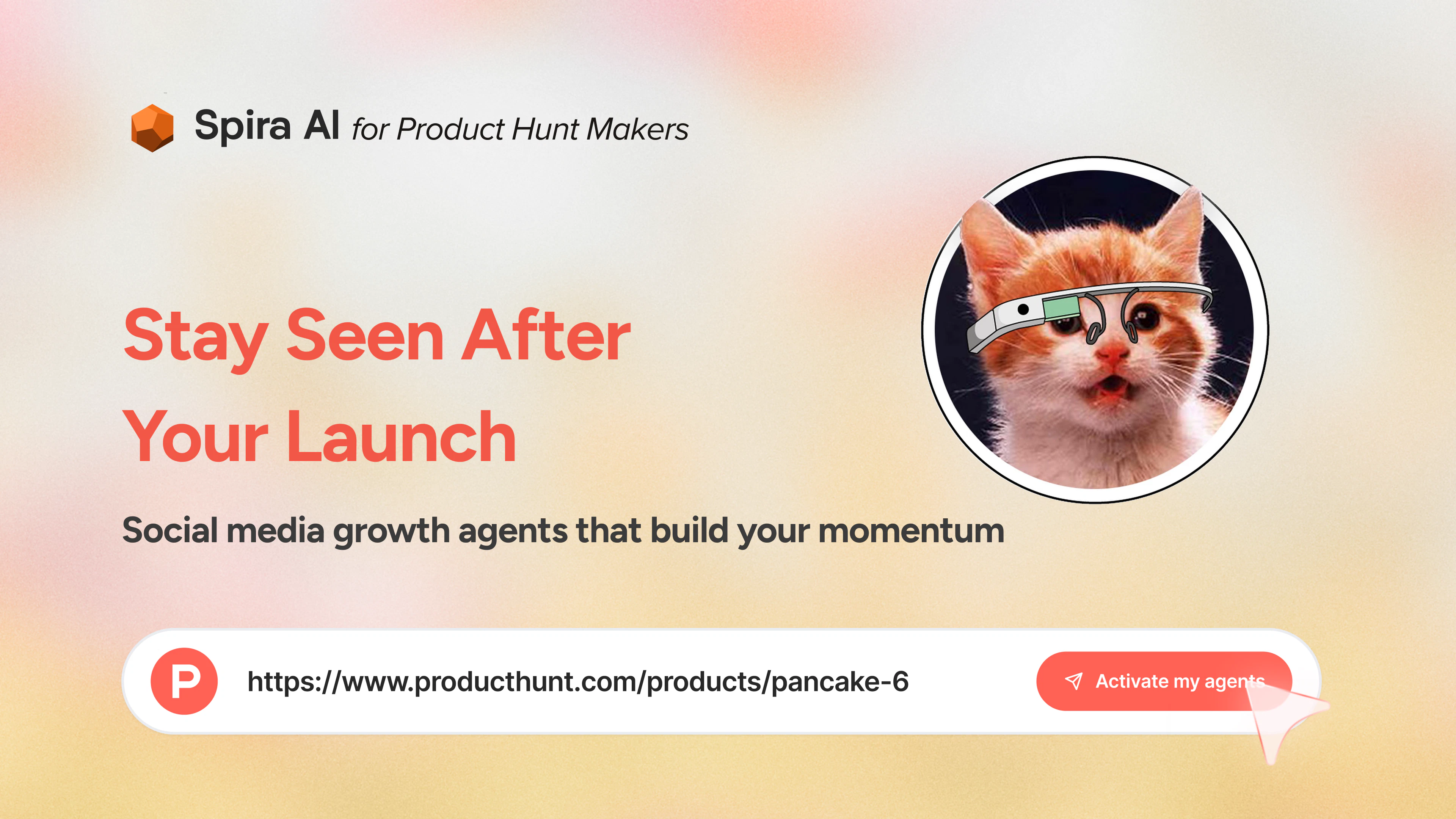
查看原始信息
LocoPast - Discover History All Around
LocoPast reveals the remarkable history hidden around you - battles, artists, scandals and wonders, mapped to the streets where they happened. Select your own location or search any location, city or sites in the world, to reveal everything that happened there. Filter between "most significant" and "nearest" and filter by categories such as wars and battles, politics, science and trade, arts and culture, and much more.

This is dope!! My gf thinks I'm a genius when I'm dropping facts out and about lol. Should probably tell her... anyway! Everyone should give this app a go!

1
回复

@samueljameshall haha, you should definitely tell her - and encourage her to download it too. Glad you're enjoying using it! 🎉

0
回复

This looks amazing! I just spent the past few weeks traveling and did wonder so many times what a certain building was. Or what famous person used to roam specific streets. This will make getting the answer much easier!

1
回复

@bhouy thank you so much! ☺️ It's always really interesting to explore historically significant sites and places around. Hope you find it useful on your next travels.

0
回复
I often travel and wonder "what happened here?". Now I can use LocoPast to explore the world's history, all around me.
0
回复