Product Hunt 每日热榜 2026-07-05

PH热榜 | 2026-07-05

#1
WorkBuddy
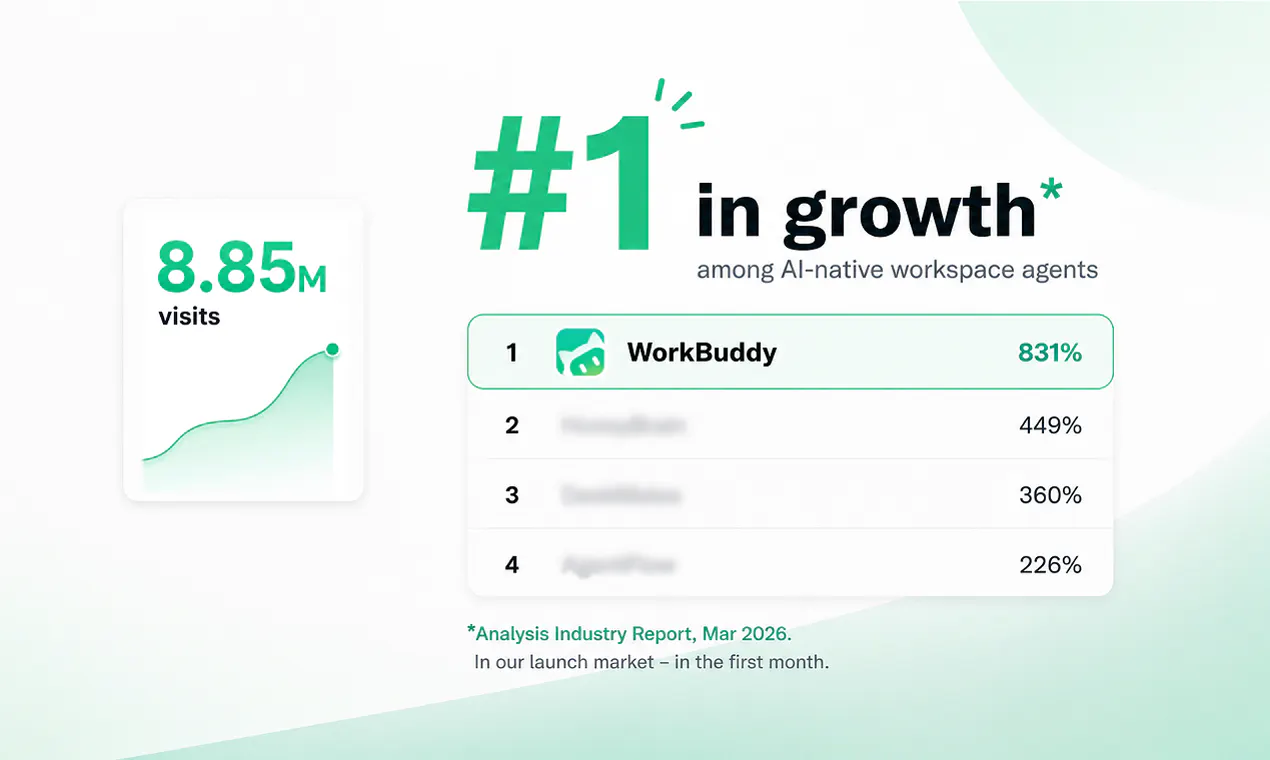
Produce sharpened results faster with a team of AI experts
342
一句话介绍:WorkBuddy 是一个通过多AI专家团队协作,将用户自然语言指令直接转化为“可交付文件”的智能办公助手,解决了现有AI工具“能思考但无法完成执行最后一公里”的痛点。
Productivity Artificial Intelligence Tech
AI办公助手 多智能体协作 AI专家团队 工作流自动化 内容生成 企业级AI 文件交付 智能体协调 办公效率 腾讯
用户评论摘要:用户普遍关注AI专家如何跨职能协作、分歧如何裁决、输出成果能否保留反对意见。此外,企业用户对权限控制、数据安全、记忆治理有明确需求。也有用户询问定价模式及如何快速找到适合的专家团队。
AI 锐评

WorkBuddy看似是一个被包装成“团队协作”的AI工具,但其背后的产品逻辑聪明地抓住了当前大模型落地的一大断层:“从思想到成品”的执行落差。它不强调模型有多强,而是强调交付有多快,这在C端用户对纯对话式AI产生疲劳的当下,是一个精准的差异化切入。

不过,产品力和理念之间仍存在鸿沟。“AI专家团队”的协作机制虽被描绘得生动——跨职能并行、交叉校验、辩论式合成,但从用户评论的尖锐提问来看,多个代理间的“真实分歧”是否能在最终输出中幸存,仍是最大技术挑战。WorkBuddy回复称采用“编辑/调解者”而非“投票机”机制,但用户在真实复杂任务中的体验是否如宣传般顺畅,尚需打场。

另一个值得警惕的是“控制感”。WorkBuddy强调用户“始终在驾驶座上”,但让用户频繁介入专家分歧或任务拆分,本质上增加了认知负荷,违背了“解放用户”的初衷。如果这种控制变成负担,多代理架构反而会成为效率伪命题。

总体来说,WorkBuddy是一个有明确场景定义、但执行细节仍需打磨的AI助手。对于追求“任务结果”的职场用户而言,其价值是实在的;但如果不解决代理间的协调成本与交付可解释性,它可能只是“高配版的自动化脚本”,而非真正的AI团队。

查看原始信息
WorkBuddy
Tencent WorkBuddy is an AI agent built for everyday office work. Make a request. Guide your AI expert team. Bring in a second opinion. Get sharpened, ready-to-use results.

Hey Product Hunt,

I'm part of the team that built WorkBuddy.

AI made the thinking part faster, but you still spend hours turning "the response" into an actual file. WorkBuddy closes the execution gap with a team of AI experts that helps produce sharpened, ready-to-deliver results.

Here's how it works:

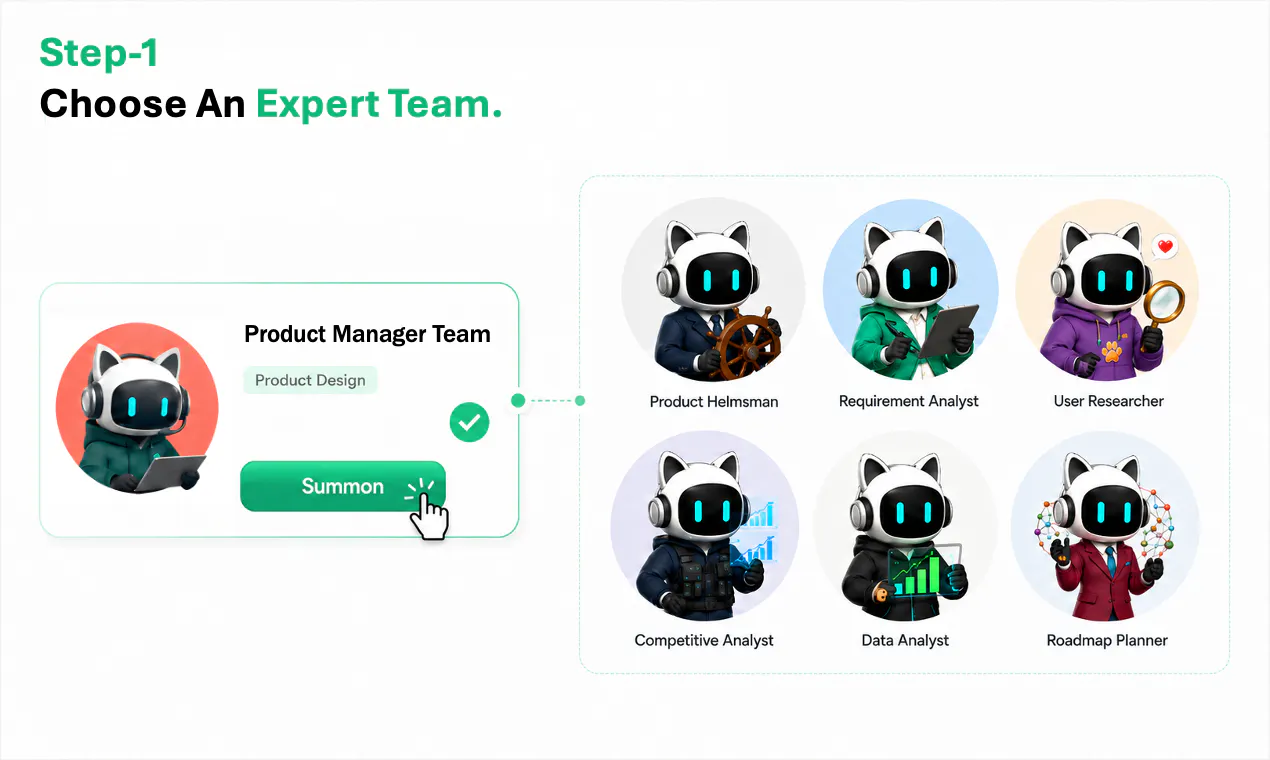
  1. Pick an expert team.

  2. Describe what you need in plain language.

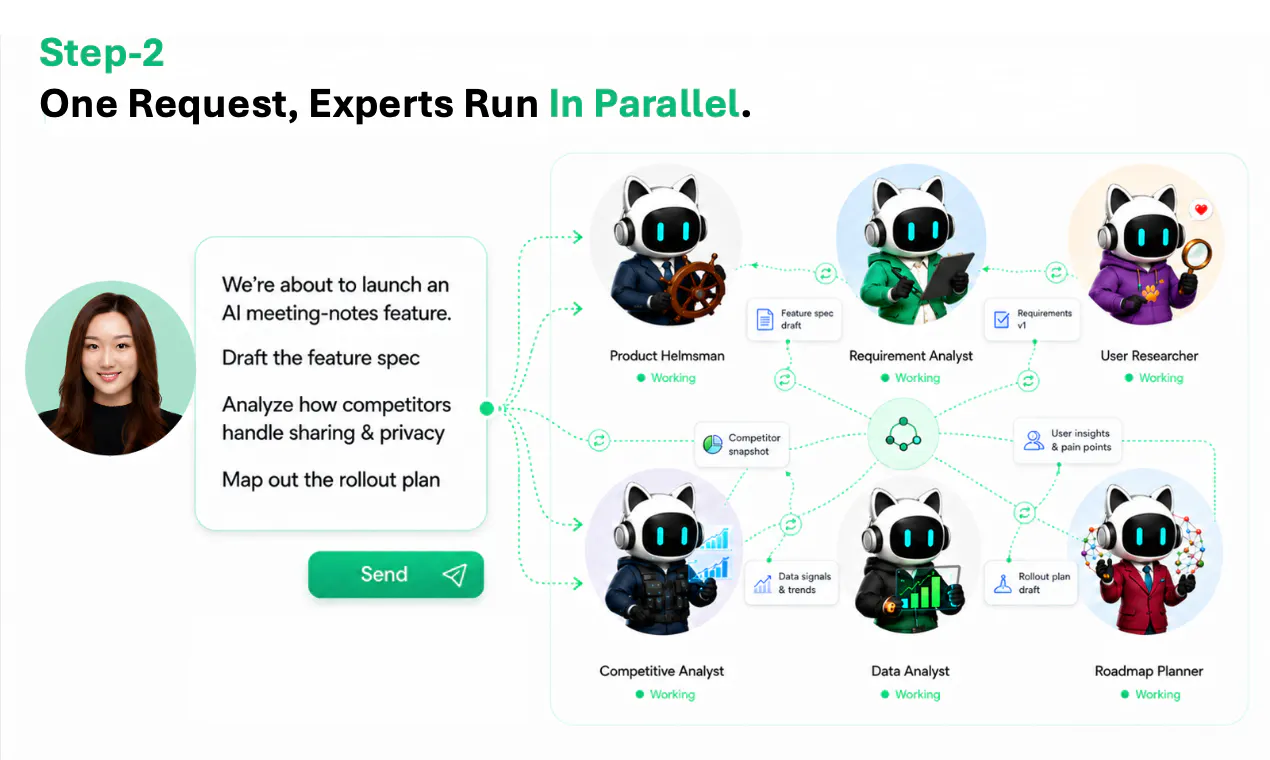
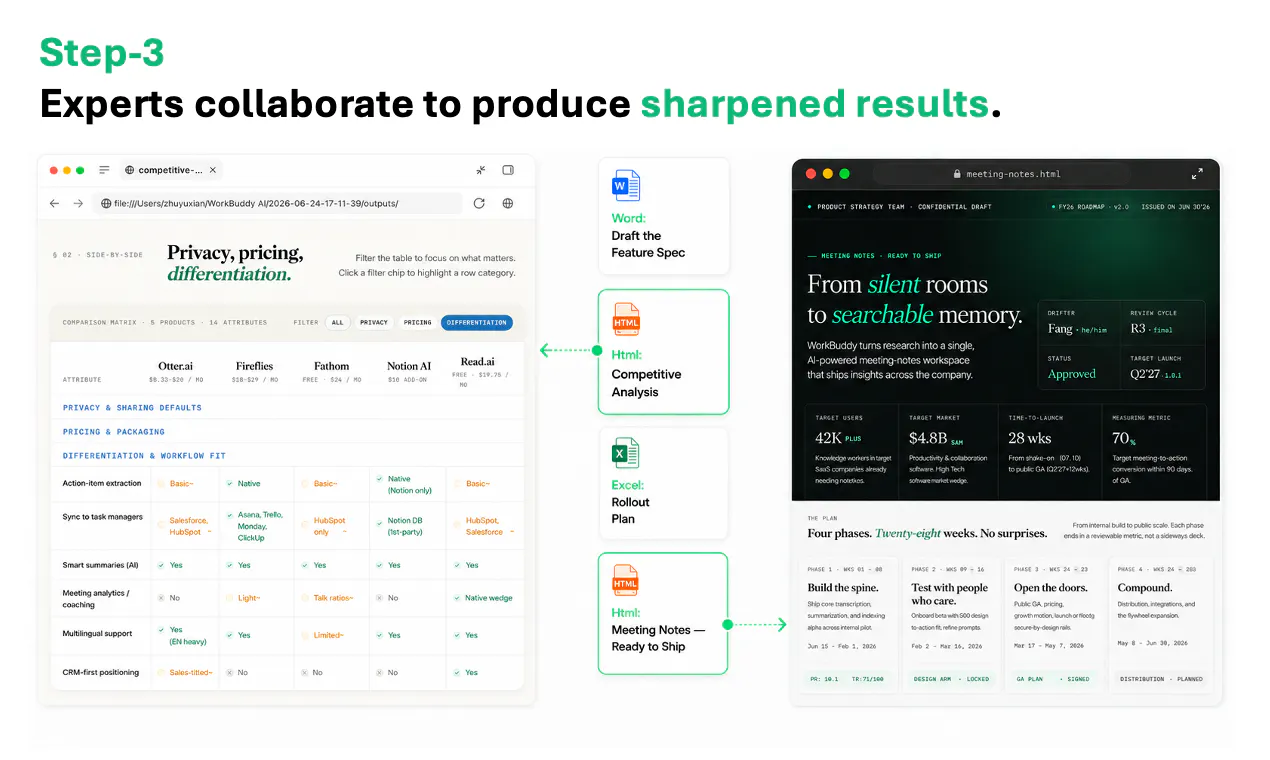
  3. The team gets to work in parallel, dividing the task, cross-checking each other, and synthesizing everything into sharpened, ready-to-deliver results.

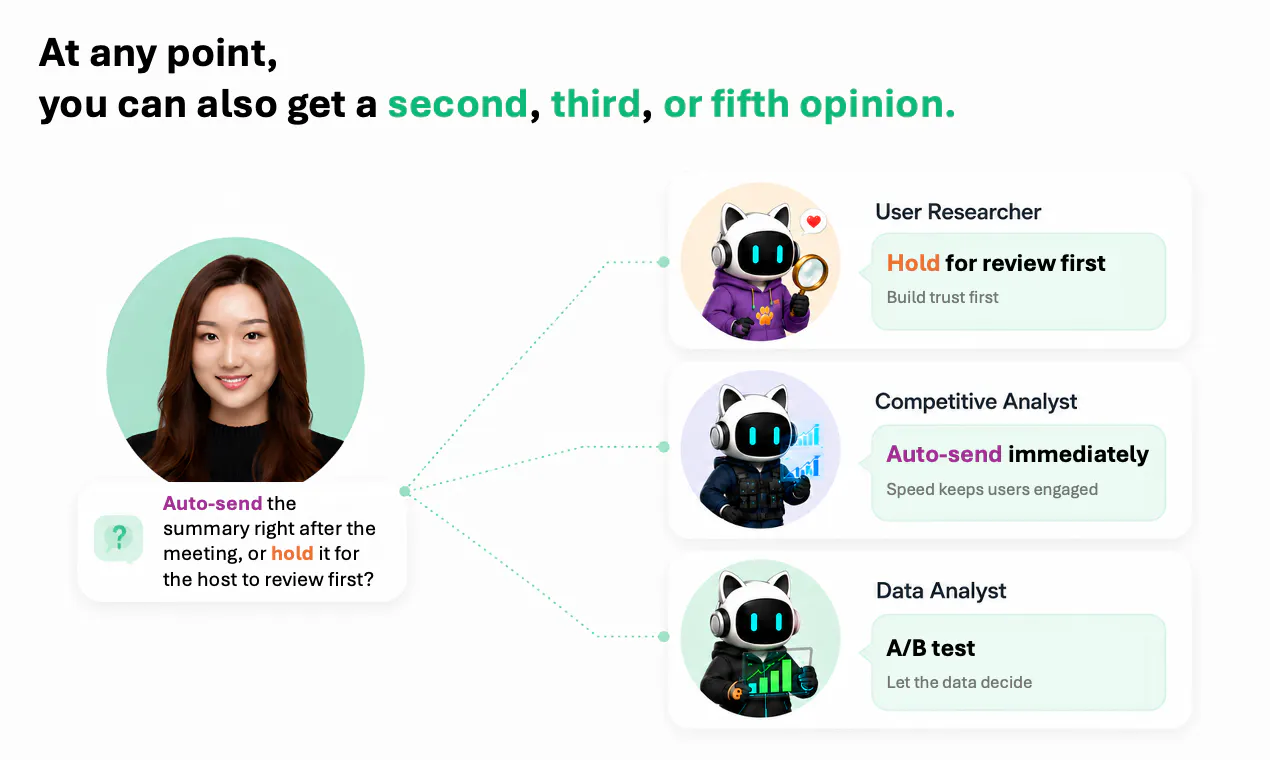
Not sure which way to go? You can also bring in another expert opinion to guide the direction.

Why you want WorkBuddy:

  • A team, not a bot: experts cross-check each other into sharpened results

  • 100+ Pre-built Expert Teams: across every domain, call them like a colleague, not a tool

  • You stay in control: bring in another opinion and guide the direction, at any point

  • Parallel by default: multiple agents run in parallel, no waiting in line

  • Real deliverables: finished files in your folders, not trapped in a chat

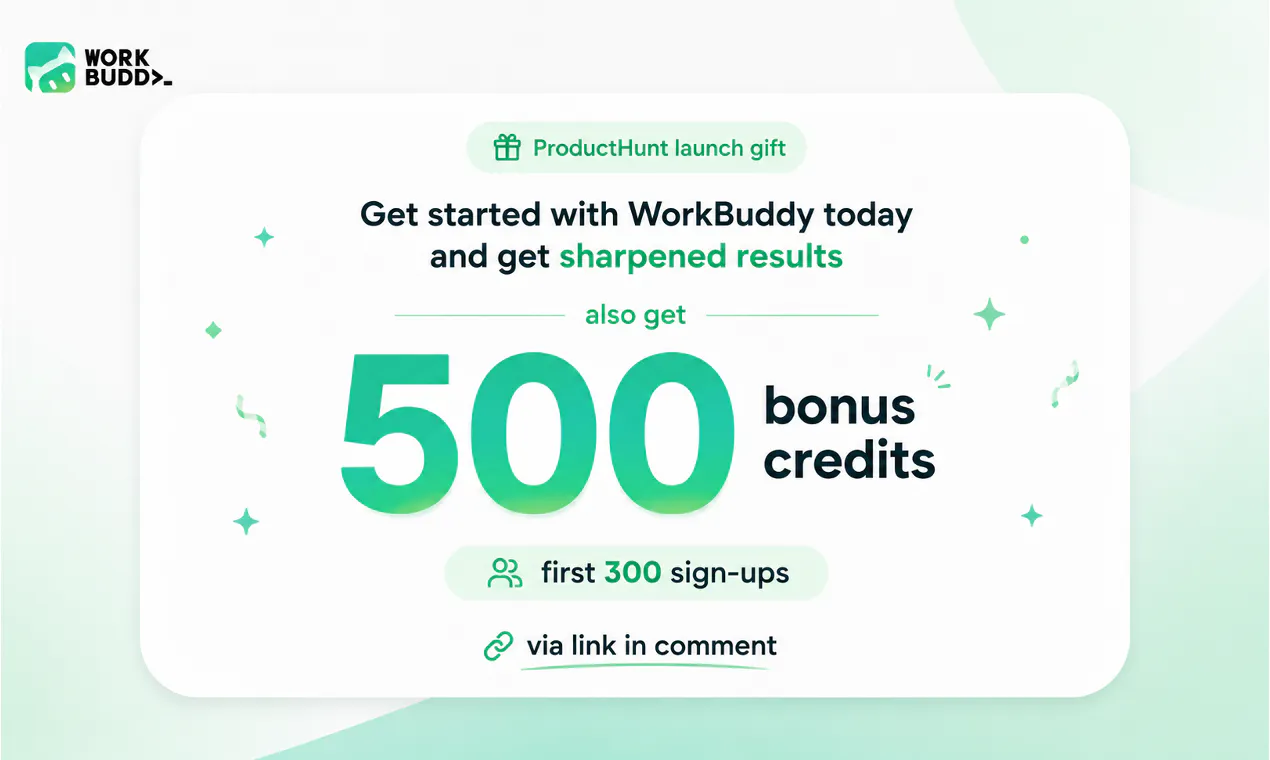
To celebrate our launch, we're giving the first 300 users who come from Product Hunt an extra 500 Credits. First come, first served. Claim by July 20 🎉 Claim here → [link]

Try WorkBuddy today 👉 workbuddy.ai

16
回复

@sherina_chen Congrats on the launch! The framing of "execution gap" really resonates — I think a lot of AI tools solve the thinking bottleneck but leave you alone with the "now turn this into something deliverable" part. Curious how the cross-checking between experts works in practice — does the system flag disagreements between agents to the user, or does it resolve them internally before showing the final output?

0
回复

@sherina_chen Congrats on the launch! I was wondering: if a team of experts runs in parallel on a single task (say, research, drafting, and QA), is it possible to assign a different model to each expert?

1
回复

@sherina_chen congrats on the launch 🚀

I like the focus on closing the gap between AI generating ideas and actually delivering finished work. That's where a lot of time is still lost today.

I'm curious, after watching people use WorkBuddy, which expert team has surprised you the most? Was there a use case that became far more popular than you originally expected?

Excited to see where you take this 🔥

0
回复

Really like finished files in folders instead of answers trapped in chat! The last mile is where agent tools usually stall. QQ - when 2 experts genuinely disagree at synthesis, who wins? Congrats on the launch!

4
回复

@artstavenka1 Thank you! We feel the same — the last mile should be finished work in the right place, not just another answer trapped in chat.

When two experts genuinely disagree, no one automatically “wins.” The synthesis step weighs the disagreement against the user’s goal, task context, constraints, and the reasoning behind each view.

If one side is clearly better supported, the final output follows that direction. If it’s a real tradeoff, we try to preserve that in the result by showing the recommendation, the alternative, and the reason for the choice. The goal is for disagreement to sharpen the final work, not get smoothed away.

1
回复

@artstavenka1 Thanks! Just to add to Caddy's point, you can actually watch the experts debate it out in the thinking process, and every perspective stays in the final result, so you can see exactly how the conclusion came together.

1
回复

Congrats on the launch! This looks like it could save a lot of time for managers. Do you have examples of tasks where WorkBuddy performs better than a single-agent workflow?

4
回复

@sandy_liusy 

Thanks so much for the support and the great question!

Yes,we've seen many tasks where a multi-expert workflow outperforms a single-agent approach, especially for more complex, end-to-end work that involves planning, research, execution, and delivery.

We've shared some real-world examples on our X account here:
https://x.com/WorkBuddy_AI/status/2068979159284826129

Feel free to give them a try—we'd love to hear what you think or which workflows you'd like to see next!

0
回复

@sandy_liusy Great question! Tasks that benefit most are ones where different angles actually matter — like a go-to-market plan (where you want a strategist, a content person, and a data analyst all weighing in), or a competitive analysis (where one agent researches, another challenges the assumptions, and a third synthesizes). Single-agent gets you a draft. A team gets you something you can actually use. Give it a try and let us know what you're working on. Happy to suggest which expert team fits!

0
回复

100+ pre-built expert teams is a lot, BTW how do you actually find the right one fast? Is there search, or do you browse by category?

2
回复

@abod_rehman Both! You can search by title if you already know what you need, or browse by category like Content Creation, Research, Investment Analysis, Legal Consulting and more. And if none of them quite fit, you can create your own custom expert. It's user-driven for now, so you stay in control of which expert handles what. Smart recommendations based on your prompt and memory are on our roadmap, so it'll get even easier over time.

0
回复

the cross-check between experts is the part i'm most curious about - when one expert flags something, does that actually change the final synthesized output, or does the merge step just blend everyone's take together and the disagreement quietly disappears? in my own multi-agent setups the hard part was never getting different perspectives, it was making sure a real objection survives the final combine step instead of getting smoothed over

2
回复

@omri_ben_shoham1 Great point — and I completely agree. The hard part is not getting multiple perspectives; it’s making sure a real objection doesn’t get averaged away in the final combine step.

In WorkBuddy, we don’t want synthesis to behave like a simple blender. When one expert flags something, that signal should affect the final output: it may lead to a correction, a caveat, a reframed recommendation, or an explicit note that there is a tradeoff or unresolved disagreement.

So the merge step is closer to an editor/moderator than a voting mechanism. It looks at the user’s goal, task context, constraints, and the reasoning behind each expert’s input. If an objection is valid, it should survive into the final result rather than disappear quietly.

This is also an area we care a lot about and are continuing to improve — especially around making objections more traceable, so users can see how expert feedback changed the final deliverable.

0
回复

@omri_ben_shoham1 Just to add, you can actually watch the experts debate it out in the thinking process, and every perspective stays laid out in the final result, so you can trace how the conclusion came together.

1
回复

For enterprise teams, governance will matter. Are there admin controls for which files WorkBuddy can access, where outputs are saved, and what context is remembered?

1
回复

@jocky Great question — completely agree that governance becomes critical for enterprise teams.

WorkBuddy is designed around explicit authorization rather than open-ended access. Teams can control which file locations WorkBuddy is allowed to access, and in enterprise scenarios permissions can be scoped even further by expert/agent role — for example, a data expert can access the data folder while a writing expert only accesses templates.

Outputs are also controllable. By default, WorkBuddy saves results into an authorized local folder, and teams can configure output destinations such as Tencent Cloud COS or Google Drive.

For memory, we think it has to be treated as governed context, not hidden context. WorkBuddy supports memory capabilities, but for enterprise use our principle is that remembered context should respect the same permission boundaries, be intentional, and be manageable by the team — not silently accumulate in the background.

So yes, admin controls around access, output location, identity, and context governance are a major part of how we think about WorkBuddy for enterprise teams.

1
回复

This looks like a huge time-saver! I've been struggling to coordinate different AI tools for my projects, so having a unified team of AI experts sounds ideal. How exactly do the different AI "experts" communicate with each other within the platform?

1
回复

@doganakbulut Good question! It's simpler than wiring a bunch of bots together. In the same chat you can switch between experts on the fly, whatever the task needs. And if you summon an Expert Team instead of a single expert, they collaborate directly, so one's work carries into the next without you copy-pasting between them. If you want to see how they think through disagreements, just ask and every take can stay visible in the final result. Less a pile of tools you coordinate, more a team you can call on right where you're working.

1
回复

@doganakbulut Thanks so much!

Our expert teams collaborate through structured workflows. Each expert is responsible for a different part of the task based on their domain knowledge and specialized skills. They share context, pass along intermediate results, and coordinate their work so the next expert can continue seamlessly.

The goal is to make complex tasks feel as effortless as working with a well-coordinated professional team.

1
回复

The disagreement-survival question Omri raised is the one that bit me hardest building this stuff. What worked for me wasn't a smarter merge prompt, it was giving each expert a flag field the synthesizer literally can't drop, so a minority-of-one objection still renders in the final output. The moment I let the combine step weigh objections by confidence, the useful contrarian take got averaged into mush. Do your experts write to a shared structured object, or hand back prose the synthesizer re-reads and re-summarizes?

1
回复

@dipankar_sarkar The way it works in WorkBuddy is closer to your flag-field instinct. You can ask for it directly in your brief: preserve dissenting opinions, show unresolved objections, keep each expert's take visible. The clearer the expectation, the better the team calibrates.

0
回复

Congrats team! The expert team concept feels much closer to how people actually collaborate at work.

1
回复

@song_kirby Thanks so much! so glad it resonates with you.

0
回复
Hi, How do you decide when an AI task should be handled by one expert agent versus an entire team of agents?
1
回复

@thys_beesman Hi~Great question!

It mainly depends on the complexity of the task. For straightforward requests, a single expert is usually the fastest and most efficient choice. But for longer, more complex tasks—especially those involving planning, research across multiple sources, or several execution steps—a team of experts can work together, with each contributing its own expertise to different parts of the workflow.

Our goal is to help users get the best results in the most efficient way. WorkBuddy supports both single-expert and expert-teams workflows, so feel free to give them a try and see which works best for your tasks!

0
回复

I like that you're showing how people can guide the AI instead of pretending it always knows the right answer. What happens if two of the AI experts recommend different approaches? Does the system try to resolve that on its own, or does the user decide which direction to take?

0
回复

@chielephant Thank you — that’s exactly the idea. We don’t want WorkBuddy to pretend the AI always knows the single right answer.

When two experts recommend different approaches, the synthesis step looks at the user’s goal, context, constraints, and the reasoning behind each suggestion. If one path is clearly stronger, WorkBuddy will recommend it and explain why.

But if it’s a real tradeoff, we try to preserve that instead of hiding it. The system should show the options, explain the pros and cons, and let the user decide which direction to take. The human stays in control, and the experts help make the decision clearer.

0
回复

I’d like to have Workboddy take over my browser to perform repetitive tasks, but I’m very concerned about the potential leakage of my account details, payment information, and personal data. How do you handle the uploading and protection of personal information?

0
回复

@bob_bo Hi, thanks for you questions. WorkBuddy is not meant to freely crawl everything in your browser or silently collect account/payment details. It works within the scope the user authorizes: the task workspace, connected tools, installed skills, or the specific browser/task context needed for the job.

By default, higher-risk actions are guarded by permission controls. For example, actions involving sensitive paths, deletion, scripts/external programs, or sensitive network capabilities can require user confirmation rather than running silently.

For personal data, our principle is to process only what is needed to complete the task. Users should avoid putting unnecessary passwords, card numbers, or private personal data into prompts. Memory is also user-manageable — you can view/edit entries and tell WorkBuddy what to remember or forget.

The goal is to make repetitive browser work faster while keeping access explicit, scoped, and reviewable.

0
回复

@sherina_chen Congrats to the entire team on this success. Looking forward to see how impactful the product will be as time goes on. how does your product deal with agents working cross function? in a situation where 2 different agents could possibly do different task but have 2 identical task they can both do, which of the agents will take up the task?

I hope you do understand my question?

0
回复

@adebowale_adeseye Thanks! Good question, I get what you mean. It doesn't work like a dispatcher auto assigning the task to one agent behind your back. You're the one who picks which expert to bring in, and when you summon the expert team for something, they actually work together rather than compete for it, each one contributing where it's strongest and handing off to the next. So it's less "which agent grabs the task" and more "the right ones collaborate on it." You stay in the driver's seat the whole way.

0
回复

Have been kicking the tires on this one today and the multi-agent setup is honestly pretty clever. Got a messy brief turned into a clean summary and follow-up email in one go. Curious how it handles more technical docs.

0
回复

@yiitwcuf That summary-plus-email-in-one-go flow is the sweet spot. Technical docs hold up better than you'd think since you can pull in an expert tuned for it, though I'd still skim the output on really dense specs. Let me know what you throw at it.

0
回复

How does the pricing work for the AI expert team — is it a flat subscription or do you pay per agent or per task?

0
回复

@nazargkbaleawm It's a flat subscription, not per agent or per task. Running the full expert team on a task doesn't cost extra on top, you're just drawing from your Credits.

0
回复

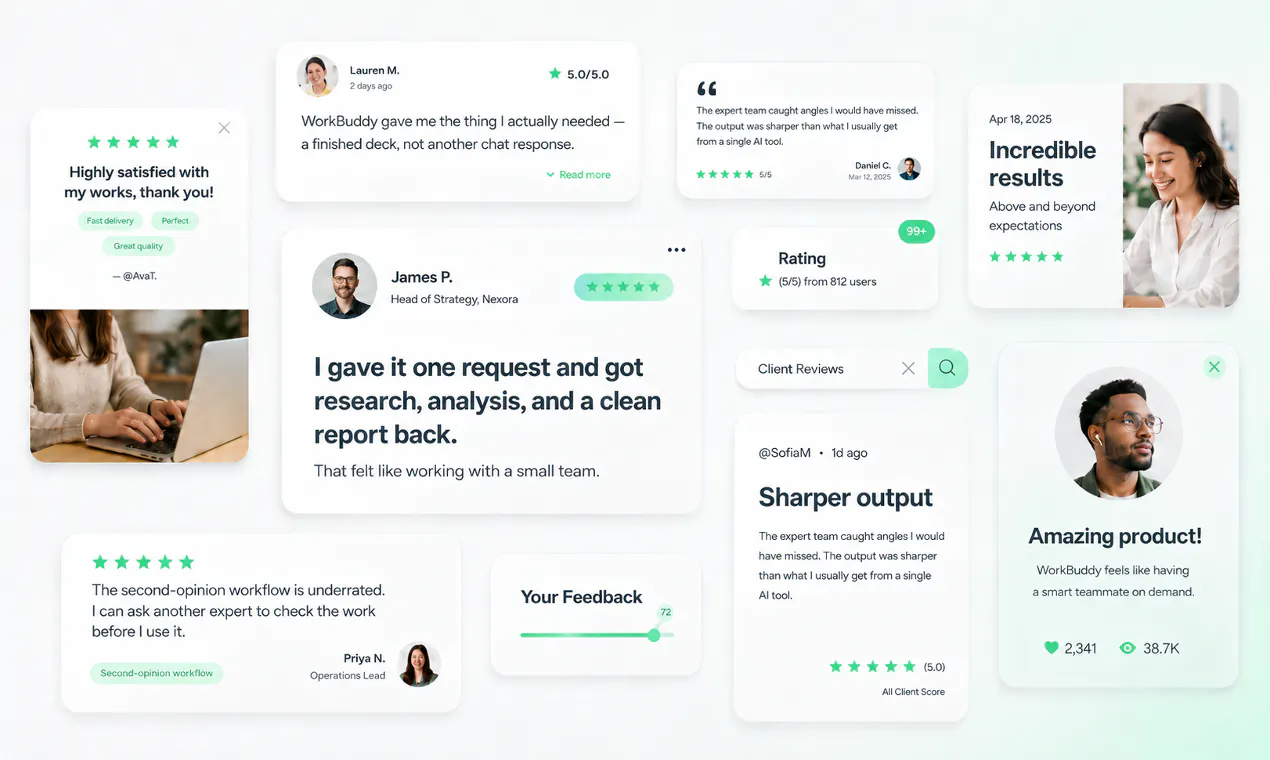
Used it for a quick report draft and the multi-agent angle actually helped, gave me three different angles in like a minute instead of one generic answer. Slightly clunky UI but the results felt noticeably more useful than my usual single-prompt tools.

0
回复

@kumsalk9229 Yeah, one prompt shouldn't lock you into one answer, so three angles in a minute is kind of the whole point. UI's still getting polished, but glad the results are landing more useful for you.

0
回复

Congrats on the launch. The part I'm most curious about is data boundaries rather than the synthesis logic - if I spin up a team with a research expert and a legal expert on the same brief, do they see each other's full working context and any files I uploaded, or is each expert scoped to only what it needs for its part? Multi-agent setups are great until one expert quietly has more access than the task calling it actually required.

0
回复

@galdayan Access is something you grant, not something that's open by default. Tasks run sandboxed, and reaching your files needs your explicit permission, so nothing gets touched unless you've said so.

0
回复
Congrats on the launch! 🎉 I really like the "team of AI experts" concept. How do you decide which specialists get assigned to a task? Is it automatic or can users customize the team?
0
回复

@luki_notlowkey Right now it's user-driven. In the same chat you switch between experts on the fly, and if you summon an Expert Team the specialists collaborate directly so you don't hand-assign each piece. You can also build your own if none fit. Smart recommendations are on the roadmap, but for now you're the one calling the shots.

0
回复

The part I'd poke at: asking in the brief is prompt-level, and in my runs a plain-language 'keep the dissent' held up fine until the context got long, then the minority take quietly vanished maybe 1 in 5. Is preservation actually enforced in the synthesis step, or is it the model choosing to honor the instruction each time? That gap is what decides whether I'd trust it on anything with a real decision attached.

0
回复

@dipankar_sarkar Fair poke. Honestly it's the model honoring the intent, not a hard rule, so what you saw (minority take thinning out on long context) is a failure mode we've hit too. What helps is the debate stays visible in the thinking process and each take is kept separate instead of pre-blended, so it survives the merge better. But I won't oversell it as guaranteed. For a real decision, a tighter brief still holds dissent better than one long run.

0
回复

Tencent's name on this raises an immediate data question for anyone considering it for actual office work. Where is the processing happening, what data residency options exist, and is there an enterprise tier with clear answers to those questions before someone puts sensitive work documents through it?

0
回复

@ansari_adin Fair question. Tasks run in an isolated sandbox and you control what it can touch, so you keep full ownership of your data. On the enterprise side it runs on Tencent Cloud's infrastructure, which covers permission management, runtime auditing, and compliance support. For data residency specifics, happy to connect you with the team directly since it does vary by region and use case.

0
回复

Poked around with it for a bit and the "second opinion" angle genuinely caught me off guard in a good way, it actually feels like having a teammate double-check your work instead of just another chatbot agreeing with everything you say. Results came back clean enough to drop straight into a doc.

0
回复

@berkay139616 Thanks so much for giving it a try~

It's great to hear the "second opinion" experience stood out. We built our experts to contribute different perspectives and help users arrive at more professional, well-rounded results—not just generate another similar response.

Really appreciate you taking the time to share your experience!

0
回复

The "finished files in your folders, not trapped in chat" line is the strongest part for me. That last mile is where a lot of AI tools still feel unfinished.

Curious how much control users have over the final deliverable format. Can someone define a preferred structure or template once and have future expert teams follow it?

0
回复

@sergbmw Thanks, that line is basically the whole reason we built this, so glad it landed. On control: you steer the format in your brief, so you can ask for a PDF, a 9-slide deck, a specific section structure, whatever you need, and the experts build to that.

And for the "define it once and reuse it" part, that's exactly what our Skill system is for. You can save a preferred structure or template as a Skill, describe it once in plain language (literally something like "I want the report in this format, save it as a Skill"), and future runs just follow it. So you're not re-specifying the format every time. You can still tweak it on the fly for a one-off, or let the saved template drive it by default. The goal is that the last mile lands in your format, not a generic one.

0
回复

Interesting idea! I'm pretty set with using Claude Code for everything, and I think most people by now use what they are used to. How will you convince users to switch and try WorkBuddy instead of what they are used to?

Also cool logo, here's a free static QR code that goes to your website that I made for you to use if you want:

0
回复

@mjohnson42 Ha, thanks for the QR code, that's a genuinely kind thing to do. And I'm not going to try to pull you off something that already works for you, that's usually a losing pitch anyway. The people we're really built for aren't devs living in the terminal, it's the folks next to them doing business work: reports, decks, research, analysis. Different job than writing code. So it's less "switch your daily driver" and more "when you've got a work deliverable to produce and don't want to babysit it step by step, this is worth a look." If that day comes, I'd love to hear what you think.

0
回复

Love the idea of experts cross checking each other instead of just one model guessing alone, that debate before delivery feels like the real innovation here.

0
回复

@ilko_kacharov Exactly this. That "debate before delivery" framing is actually how we think about it internally too.

0
回复

Congrats on the launch @sherina_chen

0
回复

@ismaelyws Thank you, Hans! Means a lot on launch day

1
回复

When two agents are running in parallel and one goes off track, does anything catch that before it bleeds into the final output? Or do you only find out at the end?

0
回复

@boyuan_deng1 Thanks for your great question. We don’t simply merge every agent output as-is.

Today, the main safeguard happens in the review/synthesis layer, where each expert’s output is checked against the original task, context, and other experts’ inputs. If one expert goes off track, that part should be discarded, down-weighted, or explicitly flagged rather than quietly bleeding into the final answer.

We also agree that catching drift only at the end is not enough, so we’re working on stronger in-process checks where experts can flag issues earlier and trigger correction before the final synthesis.

0
回复

Congrats WorkBuddy team.

0
回复

@ll_wen Thanks Daniel, really appreciate the support!

0
回复
Congrats on the launch!! What I find most interesting is how much control the user keeps once the workflow is already in motion. If the direction starts shifting halfway through, can the user step in, redirect it or change the expert mix without restarting everything?
0
回复

@etiennegarcia Thanks a lot! Yes—users can jump in anytime. You can refine direction, adjust scope, or switch/bring in experts mid-way without restarting the workflow.

We designed it to stay flexible and collaborative throughout the process.

Would love your thoughts if you try it!

1
回复
@ledo Thats good to hear, appreciate the clear answer. Being able to step in mid-way and adjust things without restarting makes this a lot more practical! Wish you a great launch 💪
0
回复

the "bring in a second opinion" framing is a nice touch. most AI-work tools stop at one answer, and leaning into an expert-panel idea instead is more how real teams actually decide things. curious how you keep the experts from just agreeing with each other. congrats on the launch.

0
回复

@alex_watson2110 Thanks so much for the thoughtful comment!

That's something we care about a lot. Our experts are designed with different workflows, curated domain knowledge, and specialized skills, so each one can contribute its own perspective to a task.

We're continuously improving them, and we'd love to hear your feedback if you give WorkBuddy a try~

0
回复

I like that this is built around everyday office work instead of abstract agent demos. The positioning feels grounded.

0
回复

@cruise_chen Thanks so much! That’s exactly what we’re trying to do—help users get professional results without needing to become AI experts~

0
回复
#2
DocsAlot
Documentation that works for both humans and AI systems
297
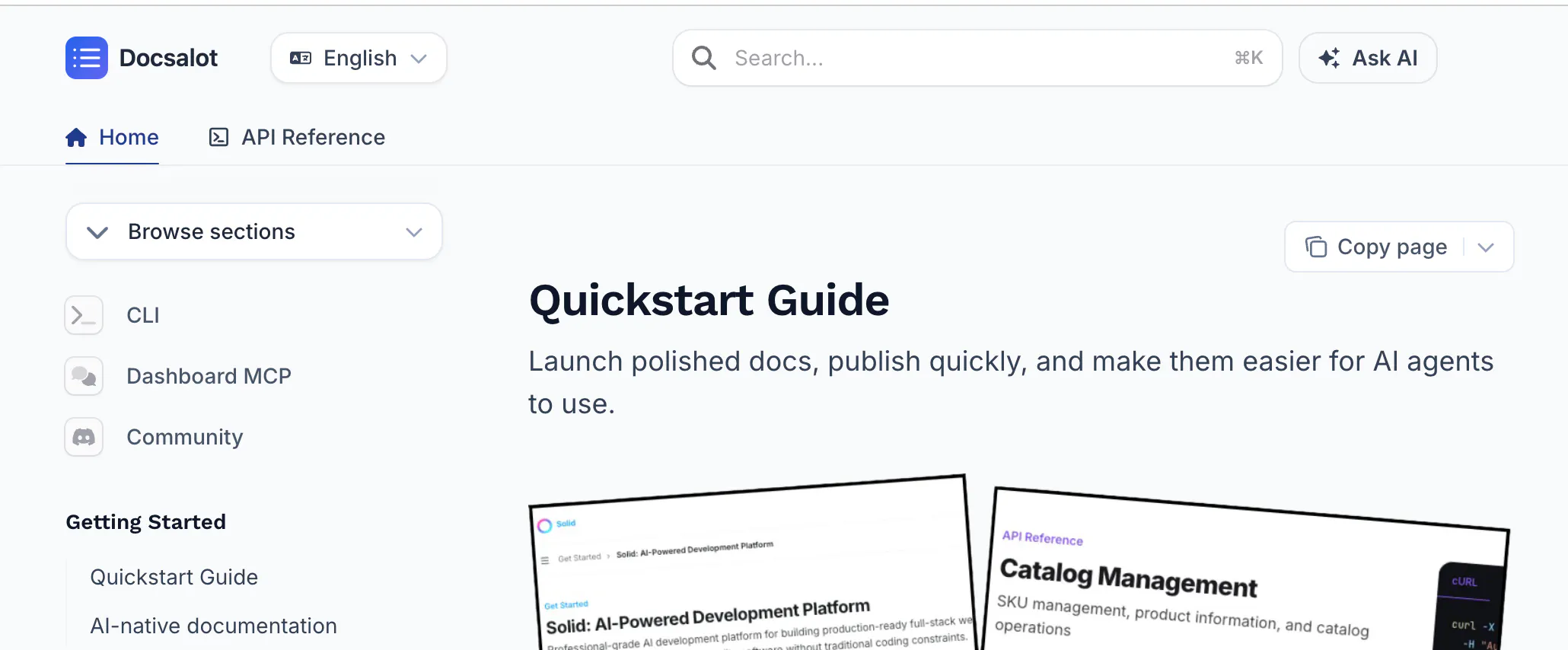
一句话介绍:DocsAlot将分散的帮助中心、知识库和开发文档整合为统一的AI可读格式(如llms.txt、MCP),解决AI代理因读取过时或非结构化文档而导致的接入失败问题,同时确保人类用户的阅读体验不降级。
API SaaS Bots
AI文档管理 知识库同步 MCP服务 llms.txt 开发者文档 代理优化 代码变更检测 OpenAPI集成 文档新鲜度 技术写作
用户评论摘要:用户关注文档与代码的同步可靠性,担心误报过时内容(如GitHub提交关联的假阳性);询问OpenAPI导入、Webhook/webhook触发等集成能力;肯定MCP和llms.txt原生支持,但认为AI可读格式将成标配,深层价值在于利用代理浏览数据优化文档结构和“新鲜度”信号,而非仅输出格式。
AI 锐评

DocsAlot切中了一个精准且危险的痛点——当AI代理开始自主“阅读”文档,传统静态知识库的“过期”就成了系统性故障。其核心卖点并非llms.txt等格式表格化,那不过是所有竞品半年内就能实现的标配。真正有价值的是两点:一是“代码源变更→文档新鲜度”的闭环检测,这触及了文档与代码腐化的根本矛盾,但用户的怀疑不是没道理——基于commit diff的粗暴关联极易产生假阳性,从而让信任崩塌;二是隐藏的“代理浏览分析”能力,这才是未来差异化壁垒——如果它能捕获AI代理遍历帮助中心时的语义迷失点、高频路径或上下文截断区间,就能反向指导文档的层级重构和摘要优化,让文档从“人类可读”变成“机械可消费”。但当前产品还停留在“检测→提示”的被动阶段,未将新鲜度信号嵌入MCP响应元数据,使得代理仍无法在查询时感知该章节是否“已过时”或“高风险”。另外,托管MCP作为中间代理带来的版本缓存与实时性冲突,如果没有显式的版本化切片,AI代理可能因为“实时但未审核”的更新获得更混乱的上下文。DocsAlot若真想成为“代理时代的文档层”,就必须从输出格式工厂进化为实时上下文治理引擎——这比它现在实现的要难两个数量级。

查看原始信息
DocsAlot
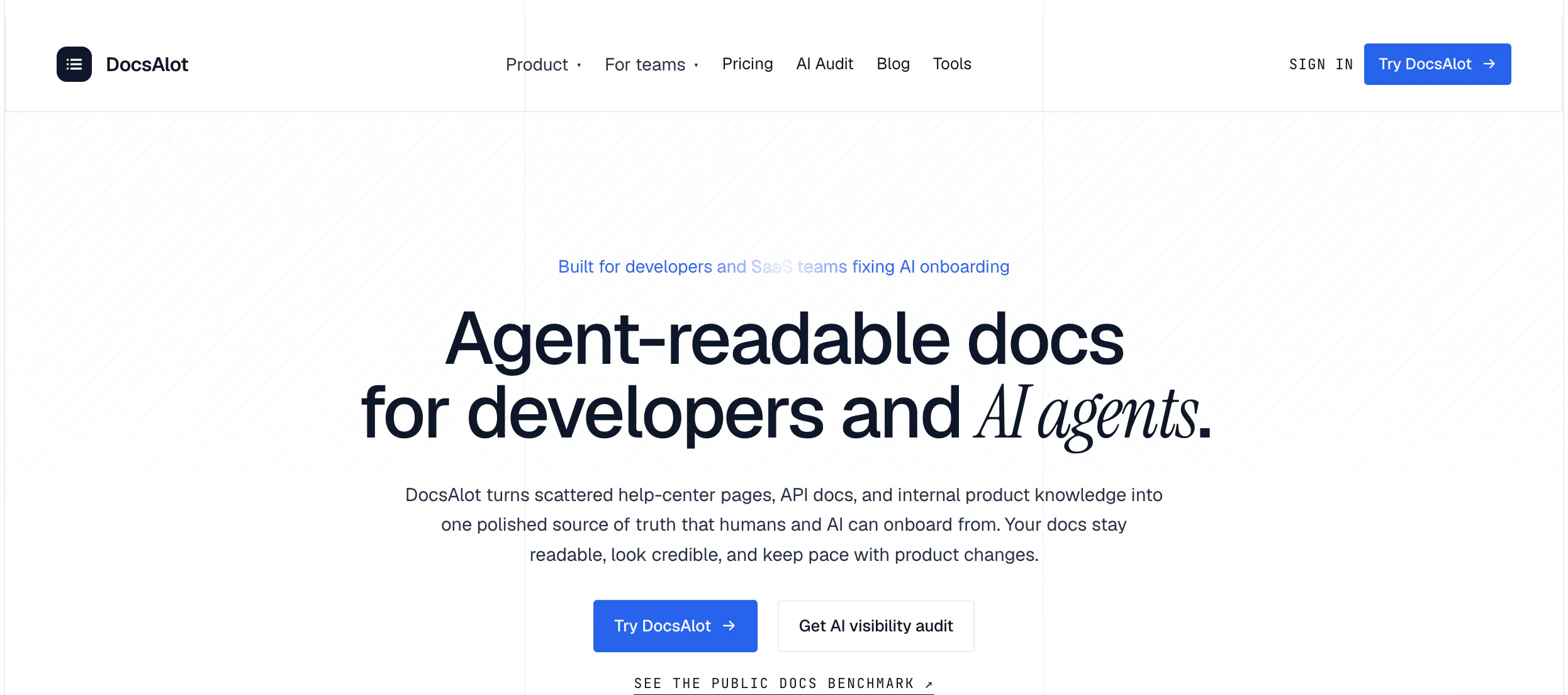
DocsAlot turns scattered help center articles, knowledge base, and developer docs into one source of truth for humans and AI agents. It includes hosted MCP, llms.txt, and skill.md. Your docs show up in AI answers, onboarding gets faster, and agents stop reading stale context.

This feels very relevant right now.

Docs used to be "just" onboarding and support, but now they also decide what AI tools and agents understand about your product. If the docs are stale, the agent context is stale too.

We’re working on our own help center and llms.txt setup for our product, so I really like the idea of treating documentation as a maintained knowledge layer, not a side project someone updates when they remember :)

Curious how DocsAlot handles product changes over time. does it detect when docs are outdated from changelogs/GitHub/product updates, or is the maintenance workflow more manual right now?

4
回复

@andrasczeizel thanks for the kind words. Yes, it does in fact detect outdated docs from source-code, and going to the dashboard. and recommends updates, for approval.

It even monitors its own traffic, and searches and recommends updates based on what users are querying.

happy to help you guys out for free, if you book a call on my calendar. We have some interesting agentic data on how agents traverse help-centers.

2
回复

Hi Product Hunt, I’m Faizan, founder of DocsAlot.

We built DocsAlot because more software is now being discovered, evaluated, and used by AI agents, but most products are still documented in a way that only really works for humans.

That creates a real adoption problem. If an agent cannot understand your docs, find the right setup path, or use your product without guessing, it becomes much harder for that product to show up in AI workflows and actually get adopted.

DocsAlot helps teams create, clean up, maintain, and distribute documentation that works for both humans and AI systems. That includes help centers, knowledge bases, developer docs, API docs, CLI docs, and AI-readable outputs like llms.txt, skill.md, and hosted MCP access.

What makes us different is that we are not trying to be just another docs editor. We are building the maintained knowledge layer that helps products become easier for agents to understand, recommend, and use, so documentation becomes part of agent adoption instead of just a support artifact.

Happy to answer questions all day. Thanks for checking out DocsAlot.

3
回复

Faizan, this lands at the right time :) But my honest first thought is the one you'll probably hear a lot: llms.txt, skill.md and hosted MCP are becoming checkboxes, Mintlify and GitBook are already bolting them on. Emitting an AI-readable format won't stay a differentiator for long.

The line that actually caught my eye is the one you dropped to Andras: "data on how agents traverse help-centers." That feels like the real moat, using how agents actually read docs to restructure the content for them, not just expose it in a format everyone will have in 6 months. Is that where you're heading (scoring and reshaping docs for agent comprehension), or is the core bet still the unified output layer?

Congrats on the launch! ;)

2
回复

@keirodev thanks for the msg. Yes optimizing the docs for agent adoption is the primary objective of docsalot. and we do indeed capture a ton of data and surface them to our customers. Docsalot also drafts articles based on that traffic, and gives suggests on how to structure the docs for better consumptions with less tokens.

I do want to say that docs is just the start, we have bigger things in mind :)

1
回复
Congrats on your launch! 🎉
1
回复

@tessak22 thanks.

0
回复

Connected my Notion help center and the hosted MCP endpoint worked first try, which never happens for me. The llms.txt output was surprisingly clean compared to what I had hacked together before.

1
回复

@fatih915449 appreciate you my friend. happy to answer any questions you have.

0
回复

Finally, someone is tackling this! Writing docs that LLMs can easily parse while keeping them readable for human developers is such a tricky balance right now. Does this integrate directly with GitHub repos to keep the docs synced with the codebase?

1
回复

@doganakbulut Thanks for the comment. Yes it does, via our github app, that automaitcally tracks more than one repositories, in a many-to-one fashion.

1
回复

Love how DocsAlot bakes llms.txt and skill.md right in instead of treating them as afterthoughts, that little detail shows the team actually understands how AI agents consume docs in practice.

1
回复

the "detect outdated docs from source-code" part is the piece i'd want to stress test before trusting it on a real repo. false negatives are one thing, but false positives (flagging a doc as stale when the underlying behavior didn't actually change) seem like the bigger risk since that's what erodes trust in the tool and gets people ignoring the suggestions after a few bad flags. how does it decide a doc is stale, does it diff behavior or just correlate with commit/PR activity touching related files?

1
回复

@omri_ben_shoham1 mostlly looking at recent commits, and diffs. and then deciding what to focus on. We maintain our own custom diff for the docs, which helps with not loosing too much context.

0
回复

qq does this support openapi/swagger imports or is it text only for now? congrats for shipping today @haya_jawed

1
回复

@haya_jawed  @vikramp7470 yes, it does, these API docs are created from OpenAPI specs.

https://docs.docsalot.dev/api-reference/index

Following is more details about it.
https://docs.docsalot.dev/document-apis/openapi-setup

For quick onboarding, you can just ask your agent to use the docsalot cli to create API docs.
https://docs.docsalot.dev/cli/index

0
回复
Congrats on the launch! This looks great. What are some features y’all have planned next?
0
回复

@kris_lachance thanks Kris, we have a long list of features coming up in the future. More specifically we want to support OpenAPI -> CLI+skill output. Plus lost of observability feature, that allows the docs to self-heal.

0
回复

The MCP + llms.txt combo makes sense for the AI-answers use case. One thing I'd want to know before pointing this at our repo: since it's reading source code to detect stale docs, how does it handle internal-only context, things like code comments referencing unreleased features or internal tooling that shouldn't end up summarized into a public-facing llms.txt. Is there a way to mark certain source paths as off-limits for the AI-facing output, or is that on the roadmap?

0
回复

@galdayan yes, we have a .docsalot.yaml file, that allows you to ignore certain files or folders.

0
回复

The "agents stop reading stale context" line is the real problem statement here — most doc tools optimize for human search, but agent context freshness is a different failure mode entirely. How are you handling versioning when the underlying docs change — does the MCP endpoint serve live content, or is there a sync/caching layer in between?

0
回复

how does docsabot actually keep things in sync when a source article changes, is it just polling or is there some kind of webhook setup

0
回复

@smeyye214197 there are things called triggers, that fire based on certain conditions.

0
回复

AWESOME!

0
回复
0
回复

The failure mode I keep hitting wiring agent docs through MCP: the agent grabs a confident, plausible snippet that's one version stale and never flags it, because retrieval has no notion of 'this section is old.' Emitting llms.txt is the easy part. The valuable bit is a freshness signal inside the MCP response itself, so an agent can tell a current param from a deprecated one. Does your outdated-doc detection surface a staleness marker in the MCP payload, or only in the dashboard?

0
回复

@dipankar_sarkar So we serve the docs in real time, via manifest fetch, and then specific documentation fetch. This means if the docs are fresh the repsonses are fresh.

Now how to keep the docs fresh is the main problem. Which docsalot solves, by synching your inputs (source-code, website, slack, discord, intercom), with the actual knowledge-base on autopilot.

0
回复

I like the focus on keeping human facing docs and agent readable documentation tied to the same source

how do you handle versioning and change tracking when product docs or API references are updated frequently?

0
回复

@jasko_ctrl Thanks for the comment.

we have our own version diff, and complete CMS. So we don't just rely on docs-as-code. We maintain full versinoing of the docs. This means that technically you can revert to any version of the docs created at any point in time, without having to have a copy on your computer.

hope that answers your question.

0
回复

"Your docs show up in AI answers" depends entirely on how the underlying models are trained and updated, which DocsAlot doesn't control. The llms.txt standard is still not universally respected across major models and crawlers. What's the realistic expectation for how quickly and consistently docs actually surface in AI answers after setting this up, or is that more of a long-term bet on the standard gaining broader adoption?

0
回复

@ansari_adin We constantly probe the AI platforms (codex, claude, cursor even and claude code), and do a benchmark with base line prompts regularly.

The responses tells us whether your product is being recommended or not, and what we need to do to make it consistently recommended

As for realistic expectation, its similar to SEO, can take anywhere from 1-3 months, depending on your prior brand value.

But we can give you observability.

0
回复

FYI, I should mention that as part of this launch we are offering 50% off on all pricing tiers, for 3 months. But the pricing is only valid today.

0
回复

docs used to be written for humans who were already lost. now they're also the thing that decides whether an AI agent gives your users correct information or confidently wrong information. the MCP + llms.txt combo is the right bet, that's basically the emerging standard for "here's how to actually understand my product." curious how you're handling versioning, when the product changes does the knowledge base propagate updates automatically or is that still a manual step?

0
回复

@rnagulapalle thanks so much really appreciate it.

so, we run synced checks, that you can configure the frequency off, and also do them based on triggers, like everytime a PR is merged to main. Run a doc diff to see if anything needs to be updated.

0
回复

This is really amazing. Do you have a plugin to embed in docs or we need to pass the doc url to generate the context

0
回复

@chilarai Can you elaborate, what kind of embed you mean. You can pass any url to generate the context, even your website.

And we can also generate docs.

0
回复

Love the concept—making docs dynamically ready for AI agents and managing llms.txt is brilliant.

From a quick CRO Audit lens on your mobile landing page, here are 3 quick conversion leaks you can patch today:

Flipped CTA Priority (1000017242.png vs 1000017252.png): Near the top, "Try DocsAlot" is primary (Blue). At the bottom, "Request AI audit" suddenly becomes the primary blue button. This role reversal confuses the user's visual habit.

Microcopy Friction: Mixing "Get AI visibility audit" and "Request AI audit" creates minor text inconsistency. Standardize the verb to smooth the funnel.

The Non-Technical Barrier (1000017245.png): The terminal CLI code block is great for devs, but it creates friction for non-technical buyers (CEOs/PMs) who hold the credit card.

Fixing these visual bugs could easily boost your signups from today's traffic. Best of luck! 🙌

0
回复

@rida11 Thanks so much this is really great.

0
回复

This feels timely. Docs are no longer just for users and support teams. AI agents also need a reliable source of truth now.

Curious how DocsAlot handles drift over time. If the product changes, does it detect outdated docs automatically, or do teams still need to manually trigger updates?

0
回复

@abhishekpatel you can set triggers based on events or fixed schedule.

0
回复
#3
Endl
A global operating account for fiat, stablecoins, and cards.
281
一句话介绍:Endl 为跨境企业打造一个全球运营账户,整合收款、法币/稳定币存储、全球薪酬支付及企业卡消费,用一个平台取代碎片化的银行、钱包和支付服务商。
Fintech Payments Web3
跨境支付 企业账户 稳定币 全球薪资 企业卡 金融基础设施 Fintech 多币种管理 B2B 资金管理
用户评论摘要:用户普遍认可“一站式”方案解决了跨币种收款和付款的碎片化痛点,但重点询问了合规(160+国家的KYB流程)、监管牌照、稳定币监管变化时的退出路径、与Wise/Airwallex相比的差异化优势、不同角色(自由职业者/企业)的入驻门槛及API能力。团队回应强调了24小时快速入驻、多司法管辖区牌照、Dual-track的API+仪表盘模式,以及真金实银的100M+交易额背书。
AI 锐评

Endl在Product Hunt上拿到了281票和大量高质量讨论,这本身就是对“跨境金融基础设施仍是痛点”这一共识的佐证。产品的定位并非简单叠加,而是从“稳定币即结算层”这个思路切入,这是它区别于Wise等传统服务商的关键——用户无需为了雇佣一个海外写手或支付一笔SaaS费用而被迫进行货币兑换,从而消除了隐性汇率磨损。这解决了实质问题,但产品的护城河尚未明朗:稳定币赛道日益拥挤,且法规环境碎片化,一旦某个主要业务区收紧监管,依赖稳定币作为核心结算存托的方案会面临巨大的合规成本。从评论看,团队对此给出的“垂直整合”与“简易退路”回答较为笼统。真正的价值在于,Endl是否能把“允许用户持有数字美元”这一特性转化为超越现有跨境支付巨头的资金效率和费率优势,同时保证在全球运营时,合规不再是用户需要关心的负担。目前它更像是对Wise、Deel、Airwallex们的一次精妙截流,距离成为全品类破坏者仍有很长的路要走。

查看原始信息
Endl
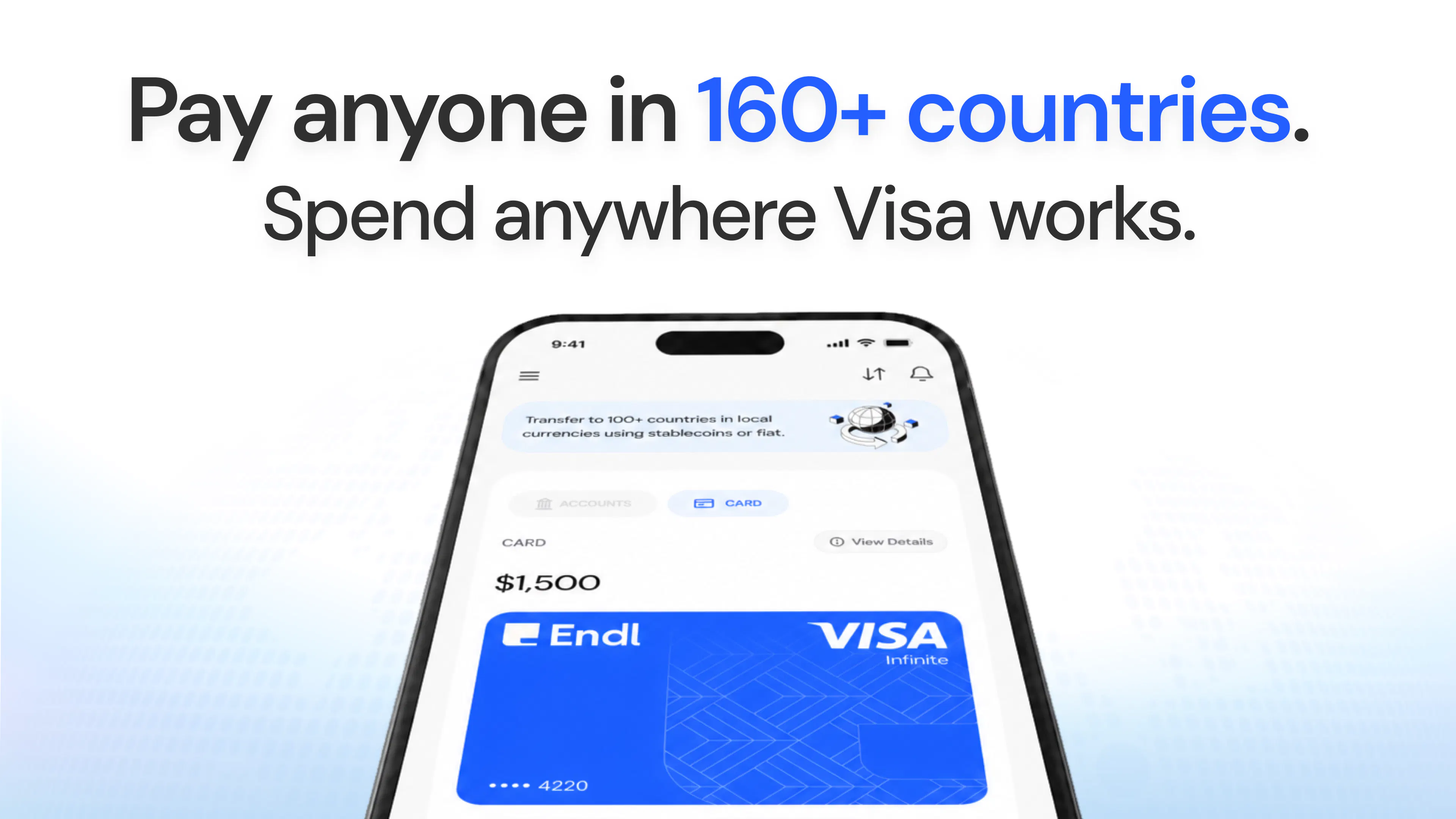
Endl is the global operating account for borderless businesses. Collect payments, hold funds in fiat or stablecoins, pay contractors in 160+ countries, and spend with corporate cards. All from one account built for fast, compliant global business operations.
Excited to hunt Endl today. @Endl is a global operating account built for borderless businesses that need to collect, hold, move, and spend money across markets without relying on slow and fragmented banking infrastructure. Instead of managing separate bank accounts, payment providers, stablecoin wallets, contractor payouts, and corporate cards, Endl brings the entire financial workflow into one place. Businesses can receive payments in major currencies, hold funds in fiat or stablecoins, pay contractors and vendors across 160+ countries, and spend directly through corporate cards. What stands out here: -Collect global payments through local account details -Hold and convert funds between fiat currencies and stablecoins -Pay contractors, employees, and vendors across 160+ countries -Issue corporate cards and spend directly from your Endl balance -Manage international business finances from one unified account
4
回复

@Endl  @byalexai Congrats team! Love the "one account instead of five providers" positioning. Contractor payouts across 160+ countries alone solves a painful problem.

0
回复
@intesar_mohammed1 Thanks Intesar! Yes we want to make sure business at Endl focus on growing business not juggling between 5 platforms for their payment stack! Been there and I know how sad it is. I hope you try our platform and give us feedback
0
回复

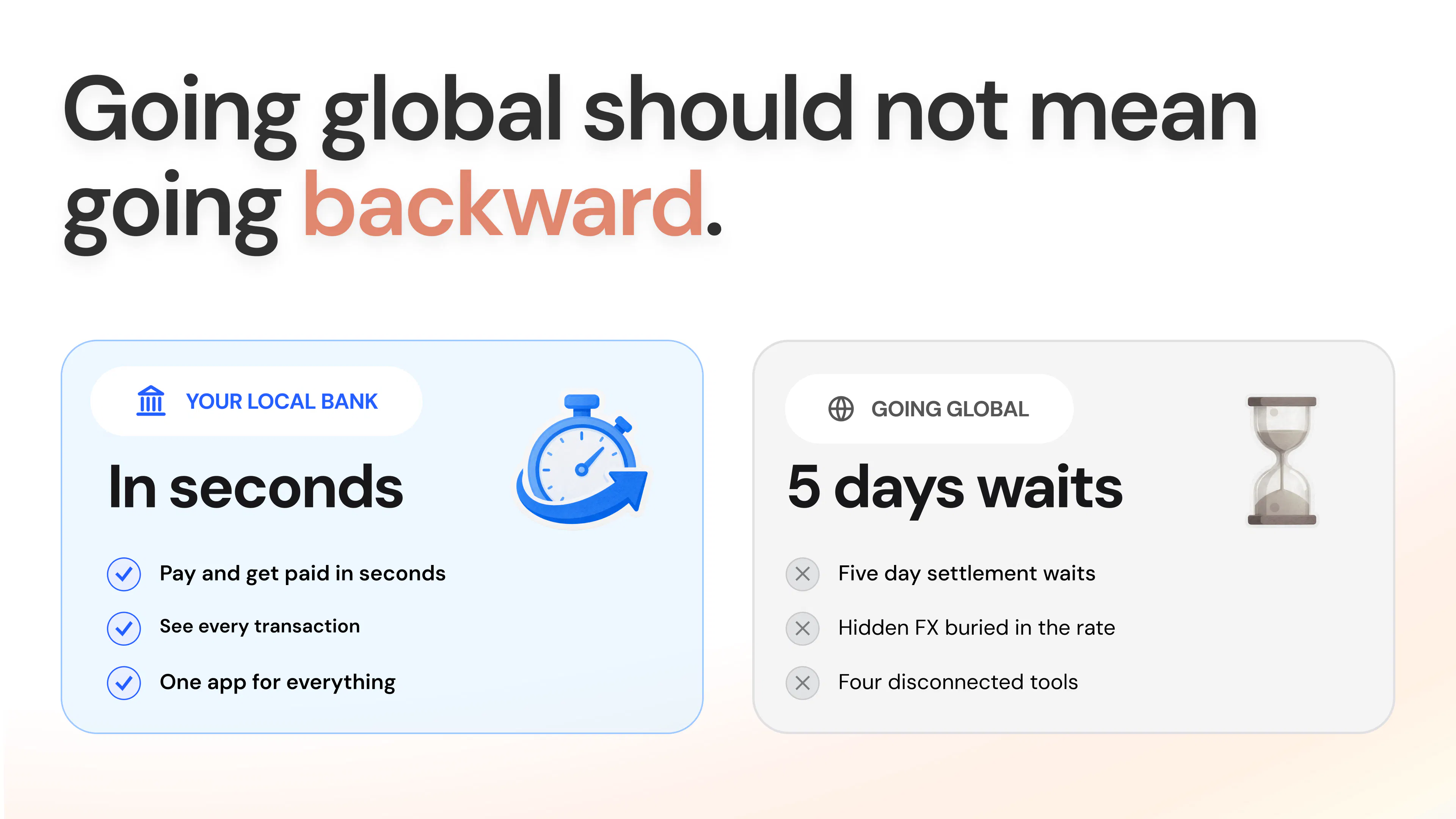
Been watching this space for a while and the "banking at home" framing nails the actual pain. The five-day wait and hidden FX are exactly what kills margin for anyone selling across borders. Congrats on the launch.

3
回复
@hemant_bidasaria You nailed it. The five-day wait is painful but the hidden FX is the one that quietly eats margin every single month without anyone flagging it. That’s exactly the problem we’re solving. Appreciate you following along
2
回复

Hey Product Hunt 👋

I'm Ashita, co-founder of Endl.

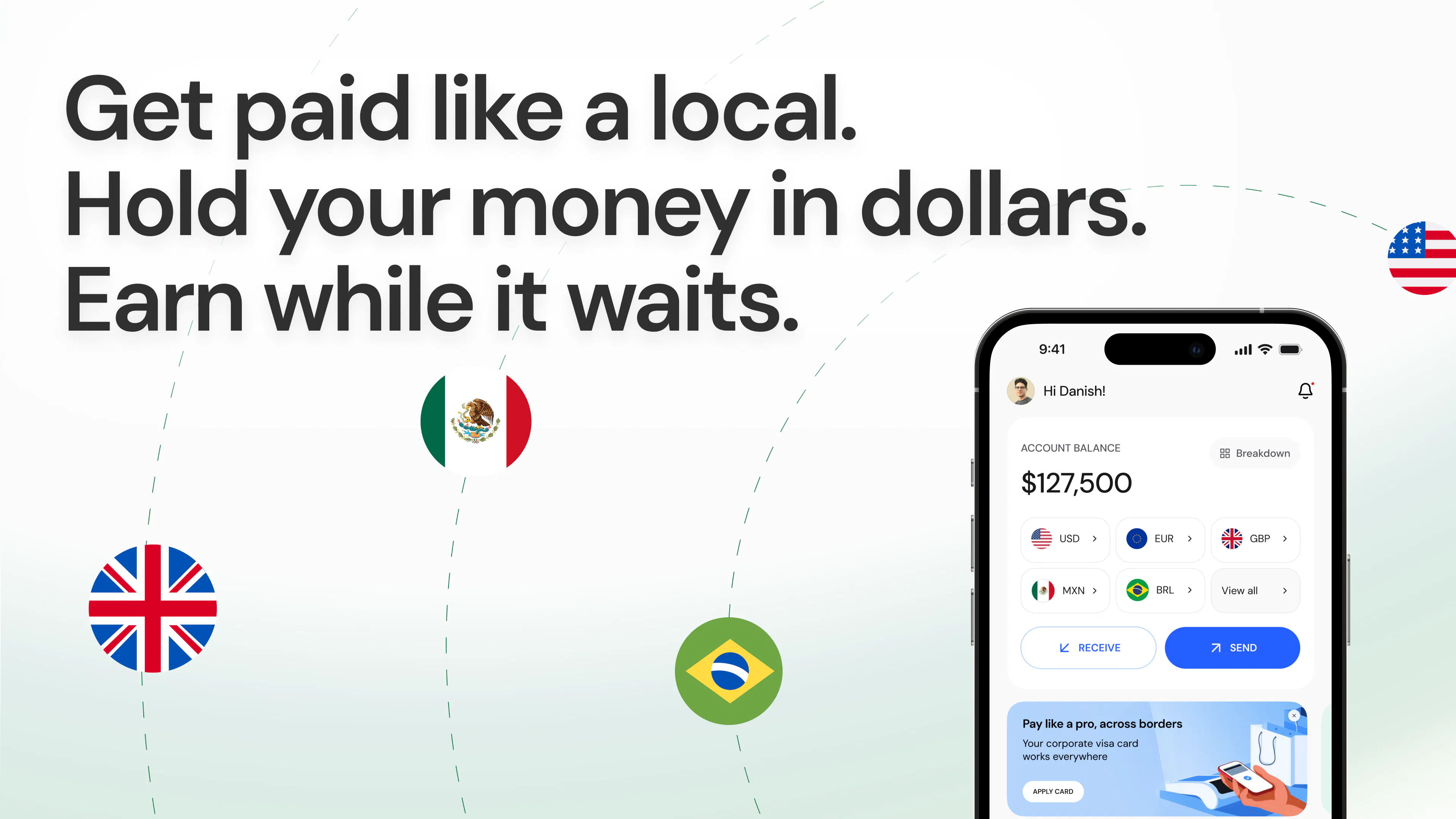
We built Endl because every founder outside the US knows this pain: you earn in dollars, but spending them is somehow still a problem.

You're paying for Claude, Cursor, AWS, Notion, Linear. Your card declines. Or you're converting local currency, paying FX fees, and losing money just to access tools your US counterparts use without thinking about it.

We built the account we wished we had:

  • Receive payments from global platforms in stablecoins

  • Hold your balance in digital dollars, no conversion needed

  • Spend on any SaaS, ads, or tools with a global card

  • Earn yield on idle balances

  • No US company required

Built for founders and businesses operating across Southeast Asia, MENA, and Latin America.

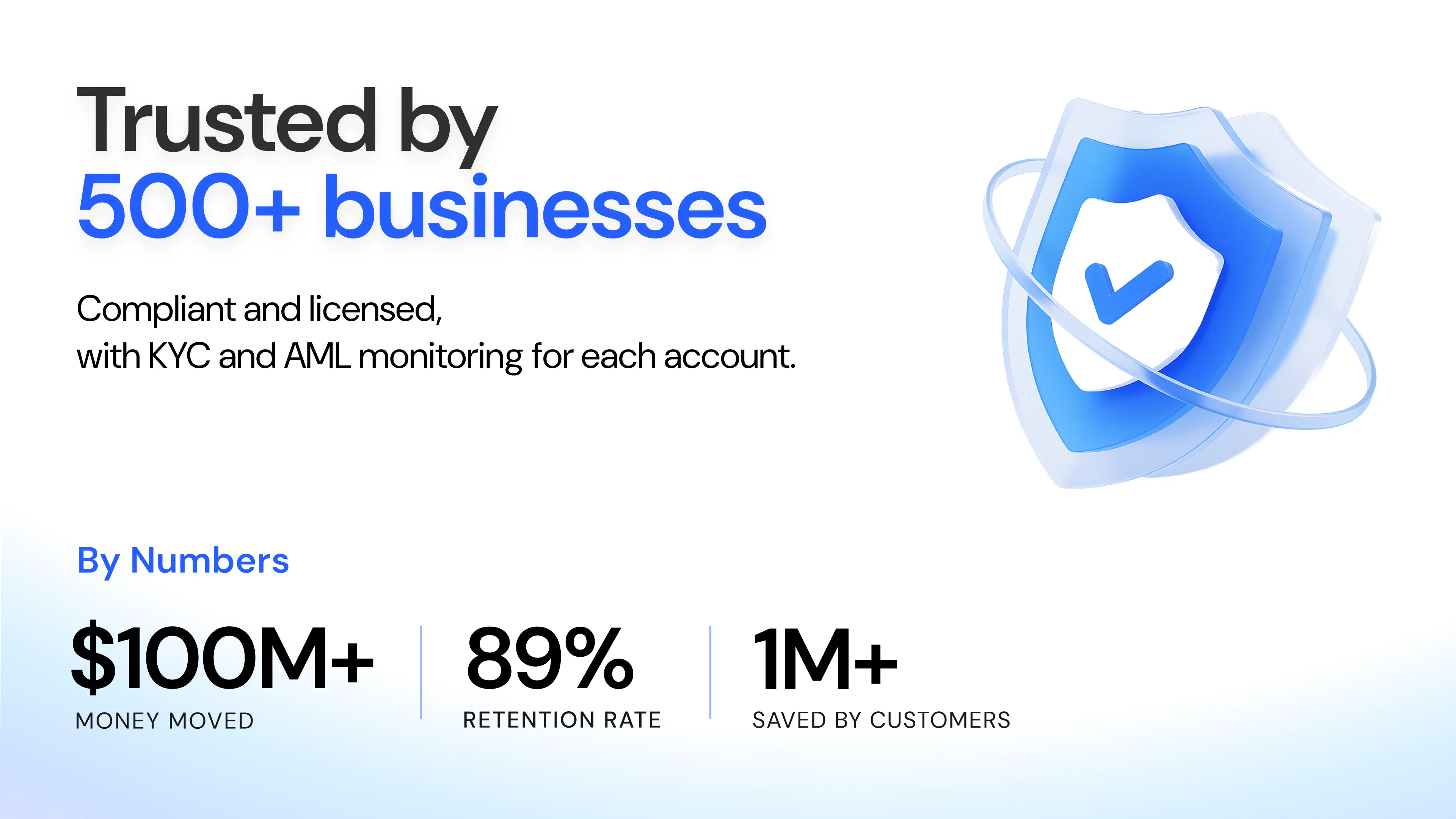
We've processed $100M+ in volume across 500+ businesses.

If you're a founder outside the US who's ever had a payment fail on a tool you needed, I'd love to hear what's breaking for you.

— Ashita

3
回复
Wow team! It’s super easy to collect payments this way. Also love the name 😅! And wish you all the best here
2
回复
@german_merlo1 Thanks German! Endl is Endless possibilities and End of Line for all your payment needs , thats the goal
1
回复

Congrats on the launch @ashita_batra1

Where is Endl based out of? And is it part of any regulated authority?

2
回复
@ismaelyws Hi Hans, Endl is headquarted in UAE , however has multiple entities across different jurisdiction where we hold our licenses like Canada, Poland and US. Happy to discuss in the depth where we hold our licenses and where we partner with other licensed partners to increase our coverage
1
回复

the "no US company required, hold digital dollars" pitch is appealing but it's also the part i'd want to poke at hardest before actually moving real revenue through it. stablecoin regulation is still shifting country by country, and if a jurisdiction you operate in tightens rules on holding or spending stablecoins, what's the fallback for a business that's already routed its whole payment stack through Endl? is there an easy off-ramp back to plain fiat rails, or does that become its own migration project

2
回复
@omri_ben_shoham1 great point and this is what we specifically focus on, easy off-ramps and a vertical integration to different fiat rails , its all in one dashboard , we try our best to not let customers struggle with migration
0
回复

How are you handling compliance across 160+ countries without making onboarding painful?

Congrats on the launch 🚀

2
回复
@suryansh_tiwari2 Great question. We layer risk-based KYB at onboarding so the checks are proportional to the business profile, not a blanket wall. Most customers are up and running in under 24 hours. Happy to walk you through the specifics if you want to go deeper
1
回复

This is a space that still feels much more fragmented than it should be.

As someone building a startup from Europe, I've definitely felt how quickly global finance becomes messy once you have international customers, contractors, different currencies, and eventually stablecoins entering the picture. Having one operating account instead of stitching together five different services is a compelling direction.

The stablecoin support is especially interesting. it feels like we're finally reaching the point where it's becoming practical infrastructure rather than just a crypto feature :)

Curious which type of company has been the biggest early adopter so far. SaaS startups, agencies, marketplaces, or something completely different?

2
回复
@andrasczeizel Exactly this. The moment you have customers in 3 countries and contractors in 2 more, the patchwork falls apart fast. One account that actually works across all of it is what we set out to build. Would love to hear how you’re currently handling it
2
回复

I like the unified workflow concept. can finance teams set different permissions and approval flows for multiple team members?

1
回复

For product teams specifically, is there an API-first setup here or is this more of a dashboard tool that finance ops people live in day to day?

1
回复
@amna9 Both, intentionally. Product and engineering teams can integrate via API to automate collections, payouts, and treasury flows directly into their stack. Finance ops teams get a clean dashboard for day-to-day visibility, approvals, and reconciliation. Most of our customers use both surfaces depending on the team touching it.
0
回复

Reconciliation is usually the most painful part of cross-border ops honestly, it just breaks everything downstream. quick Q, does it handle multi-currency reconciliation automatically or is there still some manual matching involved?

1
回复
@alexander_gray3 You’ve nailed the exact problem. Reconciliation breaking downstream is what kills finance ops at scale. Endl auto-reconciles transactions across corridors, so you’re not manually matching stablecoin settlements against fiat payouts in a spreadsheet. Every transaction has a clean record regardless of the rail it moved on. Still early on some edge cases but this is core to what we’re building
0
回复

most fintech tools solve one piece (payouts OR FX OR reconciliation).
Having all of it in one place sounds great but how hard is the initial setup for a team already using 3 different tools for this?

1
回复

How does the onboarding process differ for freelancers and registered businesses? Are there any countries or business types that are currently not supported?

1
回复
@yjbdr Businesses go through a standard KYB flow, registered entity details, ownership, and depending on the corridor, some compliance docs. Freelancers are lighter, KYC only. We’re currently strongest in Southeast Asia, MENA, and Latin America on the business side. DM us your specific country and use case and we’ll give you a straight answer on where you stand.
0
回复

How quickly would a freelancer normally receive a payment through Endl? Does the speed depend on whether they choose a bank transfer, local currency, or a stablecoin?

1
回复
@giorgi_daraselia Stablecoin payouts are near-instant, typically minutes. Local currency bank transfers depend on the corridor, but most major markets settle same-day or next-day. The speed advantage with Endl vs traditional wires is significant regardless of method, because we’re not routing through correspondent banks. Freelancers in markets like PH, IN, and MENA see this most clearly.
1
回复

Great Launch! What would you say is the biggest advantage of using Endl instead of Wise or Airwallex for a small business with a distributed international team?

1
回复
@ansh_deb The biggest one: you’re not converting every time. Wise and Airwallex move money by converting it. Endl lets you hold in USD (stablecoin-backed), pay team members globally in their local currency when you want, not because the system forces you to. For a distributed team, that means no slippage on every payroll run, and your treasury isn’t bleeding FX fees silently.
0
回复

Congrats, team! How do you compare with Mercury for non-US founders who need USD banking details but also regularly make international payouts?

1
回复
@kate_ramakaieva Great question. Mercury is built for US founders banking in the US. Endl is built for founders outside the US who need to collect in USD, hold it, and pay teams or suppliers globally without the friction of constant conversion. You get USD account details, stablecoin-native holding, and payouts to 200+ countries at 0.5% flat. No per-wire fees, no FX markup on every leg.
0
回复

Do the corporate cards support real-time controls such as freezing a card, changing its limit, or restricting certain types of merchants?

1
回复
@bhavyasree Yes Bhagyashree, that is exactly what our solution enables, freeze a card anytime you want or temporary block it, you can restrict the merchants too
0
回复

Is there an API available for businesses that want to automate payouts to contractors or integrate Endl into their own finance workflow

1
回复
@yumgong Hi Yum! Thats part of the plan, so we can expect it to happen this quarter. Till then, we have introduced bulk payment flows to help repetitive mass payouts. You will soon has API that can be embedded into products directly for custom workflows
0
回复

I like the idea of combining collection, holding, cards, and payouts in one platform. Which part of this workflow do your current customers find most valuable compared with using several separate providers?

1
回复
@kartik_baghel Hey! Yes, One place, no multiple hops and loosing on FX. Thats exactly our vision! We started with Business Banking and launched our Corporate cards only a month ago. So our banking solution is the most used product , but corporate cards are picking up very fast! Everyone is paying for AI tools these days , they love us for our USD denominated cards, saves a lot of money plus super control for team management and spend controls 🙂
0
回复
Really cool. Can businesses receive payments under their own company name/banking details? Or does the client see Endl as an intermediary during the transfer?
1
回复
@taariqismail Hi Taariq! We gived named bank account which means the businesses will recieve and send money from their own name, helps with accounting, reconciliation and optimal funds flow :)
0
回复
The corporate card feature looks interesting. Can founders create separate virtual cards for team members and set individual spending limits for each card?
1
回复
@sergiu_chiriac Absolutely, you can create as many virtual cards as you want, set limits, freeze. Cherry on top : you can create multiple cards per user as well.
0
回复

That's clever. Does the card support international payroll or is it mainly for vendor payments?

1
回复
@dhiraj_patel5 It definitely supports international payroll, best part is the spend balance is ready to withdraw in local currency for the receiver , so you can choose how you want to pay
0
回复

Great work! What BIN country do your cards carry? If US, that single detail does more for a founder in MENA or LatAm than the rest of the stack combined!

1
回复
@artstavenka1 Yes ! We do have a US Bin cards which makes it super easy to pay across tools in USD without the headache of using domestic, you can directly use the balances at Endl
0
回复

Congrats to the Endl team on the launch.

For companies dealing with USD collections, contractor payouts, stablecoins, and cards across markets, the real value here is less about payments alone and more about reducing operational drag in global finance workflows.


0
回复

What happens if the value of the stablecoin used for the balance temporarily moves away from $1? Does Endl provide any protection or automatic conversion options?

0
回复

How does pricing actually work when you combine fiat accounts with crypto payouts in the same flow, is it per-transaction across both rails or broken out separately?

0
回复

Could Endl also work as a treasury tool for startups that raise or earn revenue in stablecoins but still need to pay most of their expenses through traditional banking rails?

0
回复

How do you handle compliance and regulatory requirements across different countries, especially with crypto involved?

0
回复

Curious how reconciliation actually handles mismatches when crypto and fiat settlements hit at different times across chains and bank rails. Is it fully automated or do teams still need to babysit edge cases?

0
回复

Congrats on the launch! Can a company create approval workflows for larger payments, so that one team member prepares a transaction and another person approves it?

0
回复
#4
TryCase
Disposable test environments for AI coding agents
188
一句话介绍:TryCase为AI编码智能体提供一次性云端Linux环境,让智能体自动运行应用、端到端测试并返回截图/录屏证据,解决开发者手动验证和本地环境混乱的痛点。
Software Engineering Developer Tools Artificial Intelligence
AI编码智能体 一次性测试环境 云端Linux沙箱 端到端验证 代码测试自动化 截图录屏证据 开发环境隔离 多智能体协作 CI/CD集成 AI开发工具
用户评论摘要:用户高度认可“智能体运行验证后才叫完成”的理念,担忧本地环境污染、并行资源冲突。主要问题:环境是否可本地部署?是否支持iOS/模拟器?迭代重跑是全新环境还是复用?能否生成“完成包”含失败记录?能否防智能体伪造证据?
AI 锐评

TryCase精准击中了AI编码落地中最阴暗的角落——智能体的“假完成”。当Cursor、Claude Code们还在自吹自擂“生成代码”时,TryCase直白地指出:代码编译过不代表能跑,能跑不代表功能对。这个产品本质上是在给AI的“满分答卷”配备一个不可作弊的监考老师。

从商业逻辑看,它抓住了两个刚需:一是多智能体并行工作时的环境冲突(端口、依赖、浏览器session),二是信任危机——开发者再也不信智能体的“我搞定了”。TryCase用截图、录屏这种人类可快速验证的“数字指纹”解决问题,比日志和测试报告更有说服力。

但产品目前有致命短板:它只是一个工具层,最终依赖外部智能体决定是否记录失败过程。如果智能体本身耍小聪明(只截最后成功的图,跳过失败),TryCase形同虚设。此外,评论区高频出现的iOS/模拟器支持、容器缓存策略、迭代重跑环境复用等问题,说明它离真正嵌入开发流程还有距离。更关键的是,它没有回答一个核心问题:当AI能伪造截图和录屏时,这条信任链还能撑多久?目前看,它更像是开发者自欺欺人的“安心玩具”,而非真正的保险锁。

查看原始信息
TryCase
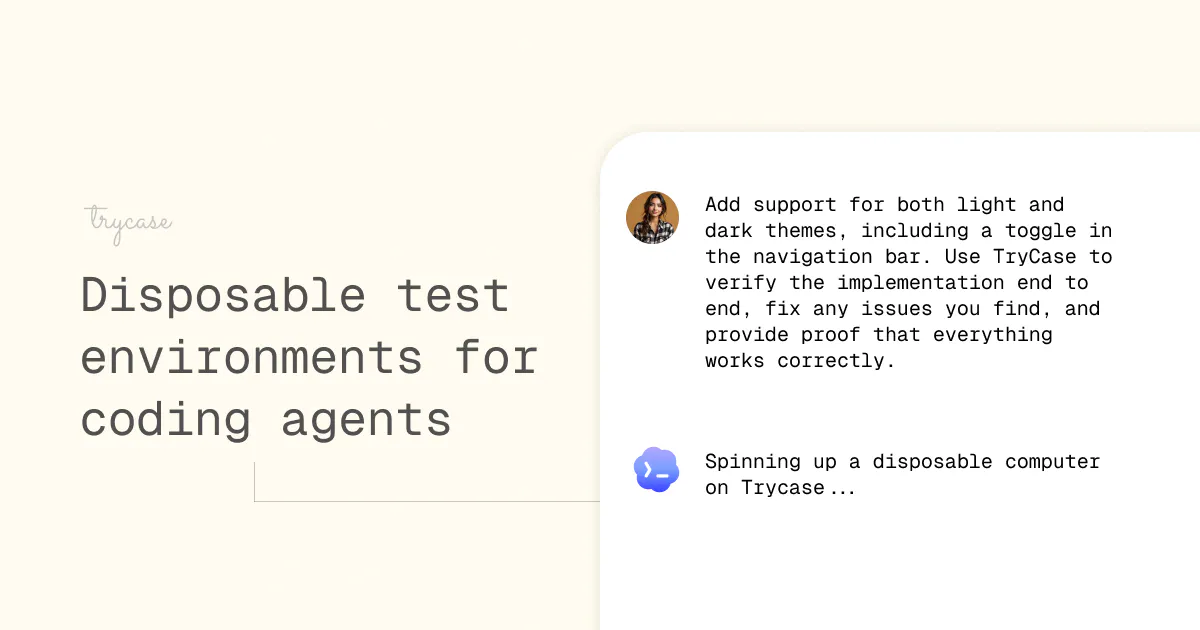
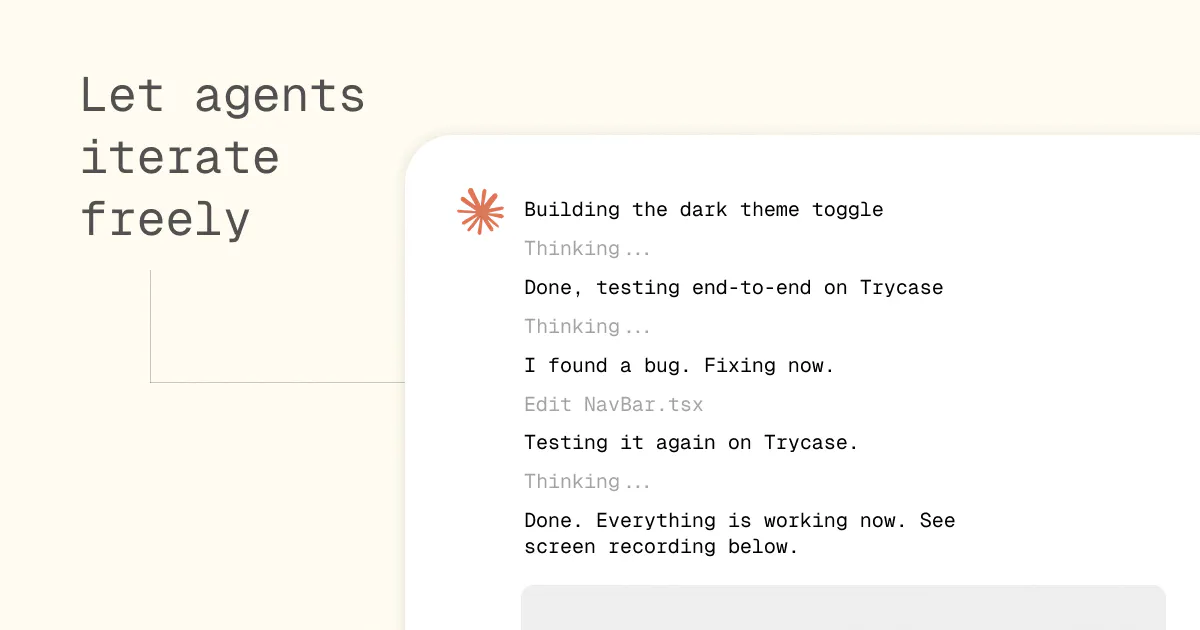
TryCase gives AI coding agents disposable Linux environments to run apps, test changes end to end, capture screenshots and recordings, and return verified code instead of asking you to test manually.

Hey Product Hunt,

I’m Ben, and I’m building TryCase.

This came from my own workflow. I’ll often have a bunch of agents running at once across different worktrees, each trying changes, spinning up the app, testing, iterating, taking screenshots, or recording proof.

That gets messy quickly. My laptop becomes the bottleneck, ports collide, installs overlap, browser sessions get reused in weird ways, and I still end up doing a lot of the final verification myself.

So I built TryCase to give each agent its own disposable Linux environment in the cloud. The agent can run the app, test the change end to end, capture screenshots or video, and come back with proof instead of just code.

It’s also useful for longer-running tasks. You can give an agent a goal, let it work inside a clean disposable environment, and ask it to come back with screenshots, logs, and recordings. Secrets can be passed in deliberately, and each run is isolated from your laptop and from other agents.

TryCase is still early, but the goal is simple: agents should only say “done” once they’ve actually run and verified the work.

It’s easy to try. Just ask your coding agent to use TryCase at trycase.dev:

- Fix this bug, test it end to end with TryCase, iterate until it works, and send me screenshots and a video recording as proof.

- Implement this feature, run the app in TryCase, iterate on any failures, and prove it’s working with screenshots, logs, and a recording.

- Use TryCase to run this repo in a clean environment, verify the main flow, and show me what the app looks like.

- Test this branch in TryCase, find anything that breaks, fix it, and prove the final version works.

- If manual login is needed, use desktop mode and give me the take-control link.

I’d love feedback from people using Codex, Claude Code, Cursor, or other coding agents. What would make you trust an agent’s “done” more?

3
回复

Such a smart concept for vibe coding. Testing AI-generated code safely without messing up my local environment is always a massive concern. Can these disposable environments be spun up locally, or is the platform entirely cloud-based?

1
回复

the 'done only after it actually ran and verified' bar is the right one. do you surface the failed attempts too, or just the final passing proof?

1
回复

@andrewzakonov Right now, this depends on the agent deciding what to keep track of. For example, if it's instructed to record failed attempts, you'll be able to review the full history of runs and their artifacts. My goal is to keep the tool flexible by providing a small set of focused commands that the agent can use as needed. I'm curious if you think this is the right approach, or if you'd prefer a single tool that always behaves the same way and handles everything for you?

0
回复

"agents should only say done once they've actually run and verified the work" is exactly right and it's the thing i keep running into with my own multi-agent setups - an agent will confidently report success based on its own transcript when the thing it was supposed to do never actually happened underneath. running multiple worktrees locally does turn into port collisions and reused browser sessions pretty fast like you said. does the screenshot/recording proof get attached anywhere the agent itself can't fake or reword, or is it still on me to actually look at the video rather than trust the agent's summary of it?

1
回复

@omri_ben_shoham1 Screenshots and recordings can be downloaded from the CLI, but someone still needs to verify them. In my workflow, I usually have an agent handle the verification, and then I quickly skim through the recording it surfaces.

So far, I've found GPT-5.5 to be pretty reliable for this.

I'm curious what your ideal workflow would look like. Right now, Trycase is intentionally minimal and only exposes tools that agents can use. It doesn't have its own built-in agent yet, so it relies on whatever agent you're using.

0
回复

Love the framing around agents only saying done after screenshots/video proof in an isolated env — that is exactly the gap when running multiple worktrees locally. Good luck with the launch.

1
回复

@ducan Thank you so much

0
回复

Congrats Ben — the part that resonates is “verified code instead of asking you to test manually.” In my own coding-agent loop, the weak point is not generation, it's proof quality: agents say “done” after lint passes, but the actual product flow is still broken.

A small thing I’d love to see in TryCase is a compact verification receipt: commands run, browser path tested, screenshots/video links, and what failed before the final pass. That would make it much easier to trust the result or review it later.

Curious if you're thinking about a standard “done packet” that agents can return to humans or CI?

0
回复

@TryCase Giving coding agents an isolated, disposable Linux sandbox is exactly how we solve the local port collision and dependency nightmare. Since TryCase is exposed as a runtime tool layer for external agents, how are you handling base image caching? If an agent executes a massive npm install or updates a database schema across multiple iterative debugging runs, do you snapshot and delta-cache that specific container's filesystem state, or does it do a clean cold boot every time the agent invokes a test call?

0
回复

As a solo dev shipping an iOS app, the final manual-verify step is exactly where my releases stall — I'm the QA team of one, and "done" from an agent usually just means "it compiled." The disposable box per agent is a smart way to move that check off my laptop. Does it handle mobile/app flows (simulator or a device) yet, or is it web + CLI apps only for now?

0
回复

This maps to the messy part of agent coding for me: not the patch itself, but proving it ran in a clean environment. The useful constraint is keeping the proof lightweight enough that agents actually include it every time.

0
回复

Love how the screenshots and recordings come back with the diff already attached, makes verifying what the agent actually did way less of a guessing game.

0
回复

the disposable linux envs actually working from a single prompt blew me away, screenshots and all. finally lets the agent go end to end without me babysitting every shell command.

0
回复

how does it handle cleanup of those disposable environments when an agent spins up a bunch in parallel, anything to worry about resource-wise?

0
回复

finally something that lets my agent actually run the code instead of me playing QA. tried it on a small flask app and got back screenshots plus a clean diff, which honestly saved me a whole round trip.

0
回复

Congrats on the launch, this is a real problem. My question is more about the iteration loop than the verification side - if an agent fails, tweaks the code, and needs to test again, does it get a brand new disposable box each time, or does it reuse the same one until the task is done? Fully fresh every retry sounds cleanest for isolation but on a repo with a slow install/build step that could add up fast if the agent is iterating 10+ times on one bug.

0
回复

I’m curious about the differences between GPT-5.5 browsing and testing and TryCase. What makes TryCase unique, apart from just screenshots and videos? Thank you

0
回复

How do you handle state between runs if the agent needs to verify something like a running database or queued background jobs from a previous step?

0
回复

Screenshots and recordings as verification artifacts are useful for UI changes, but for backend logic or API behavior the visual output doesn't tell you much about whether the code actually works correctly. What does TryCase return as verification evidence for non-visual changes, like a database write, a webhook handler, or a background job, and how does the agent know the difference between "it ran without error" and "it did the right thing"?

0
回复

the disposable Linux environment idea is such a clean solve for the "I cant actually verify this" problem with coding agents. nice execution.

0
回复

finally something that lets my coding agent actually run the app instead of just staring at it. the screenshot capture came back clean on the first try

0
回复

The 'an agent handles verification' step is where I've watched this quietly break. When the same model family does the work and the check, the verifier tends to trust the doer's framing of what success looks like, so it happily confirms a screenshot of the wrong screen. What helped me was feeding the verification agent only the original task spec plus the artifact, never the doer's transcript, so it can't inherit the optimistic story of what happened. Does TryCase hand the checker the full run log, or just the recording and a fresh prompt?

0
回复

'Return verified code instead of asking you to test manually' is the exact gap. My coding agent writes the fix, then I'm the one clicking through the app like it's 2015. The agent proving its own work with screenshots and recordings flips the trust equation completely. How isolated are the environments - can it safely test against a copy of production data? Congrats on the launch.

0
回复

congrats on the launch ben. the port collision thing you describe hit me the first time i let two agents run dev servers at once, so the throwaway box approach makes a lot of sense. one thing i'm curious about: booting an app end to end usually means real env vars, api keys, db urls. where do those secrets live while a sandbox runs, and does teardown wipe them for good?

0
回复
#5
MentionDrop MCP
Give your AI agent live market signals
167
一句话介绍:MentionDrop MCP通过连接Claude、Cursor等AI代理,实时监控Reddit、Google News等高信号源中的品牌提及、竞品讨论和用户痛点,自动筛选并生成回复草稿,解决品牌在噪音中高效抓取和响应关键市场信号的痛点。
Marketing Developer Tools Artificial Intelligence
AI代理集成 品牌监控 社交媒体监听 竞争情报 MCP工具 舆情分析 自动回复 噪音过滤 高信号源 降噪监听
用户评论摘要:用户普遍认可其高信号源聚焦和AI摘要有效性,但指出讽刺帖文情感评分不稳定、多语言(如葡萄牙语、日语)语境处理存在短板。核心问题集中在三方面:跨语言翻译后的情感准确性、垃圾内容的过滤严格度、以及全局评分模型是否可针对不同来源单独调优。B2B用户更关注速率限制与查询缓存的工程实现。
AI 锐评

MentionDrop MCP在“AI监听”这条拥挤赛道上展现了一个清醒的选择——放弃“监听全网”的宏大叙事,主动标注“不监控X、LinkedIn”,反而成为其差异化利器。它精准切入了一个被过度承诺泛滥的市场裂缝:品牌并不需要更多噪音,而是需要被AI筛选过的、来自Reddit和Google News等“真实对话发生地”的高信号反馈。

产品真正的价值不在于监控能力,而在于“读后即决”的工作流设计。11个工具、账户级API、只读优先,这些细节掩盖了其深层次战略:将品牌监听重塑为AI代理的输入源,而非又一个需要人工盯屏的仪表盘。这恰恰解决了B2B领域“找到了但来不及处理”的经典瓶颈——让AI自主完成初筛、摘要、甚至草稿回复,而人只做最终决策的“阀门”。

然而,短板也同样明显。用户反馈中反复出现的“讽刺内容识别不准”“多语言翻译后情感漂移”并非小问题,而是产品能否从“可用”跃迁到“可信”的天花板。如果全局评分模型不能提供按来源调优的灵活性,品牌可能会在关键语种或垂直社区中漏掉真正的负面信号。此外,个人助手式的“MCP连接”虽然巧妙,但在企业级多个代理并行场景下,其在速率限制、缓存一致性上的工程回答目前仍显单薄。

一句话总结:MentionDrop MCP是AI监控领域的一次务实进步,但它目前更像是“聪明的执行者”,而非“聪明的判断者”。当用户开始追问“你的AI怎么处理日语中的讽刺”时,它需要从“提效工具”进化成“可信分析师”,才能真正从破局者变成统治者。

查看原始信息
MentionDrop MCP
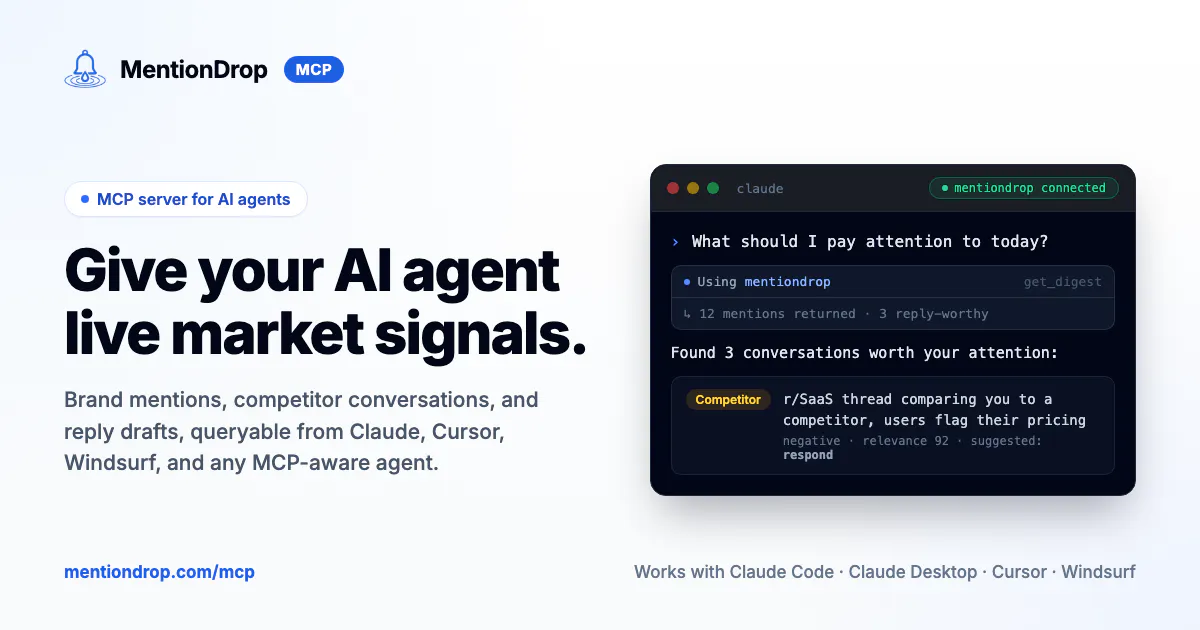
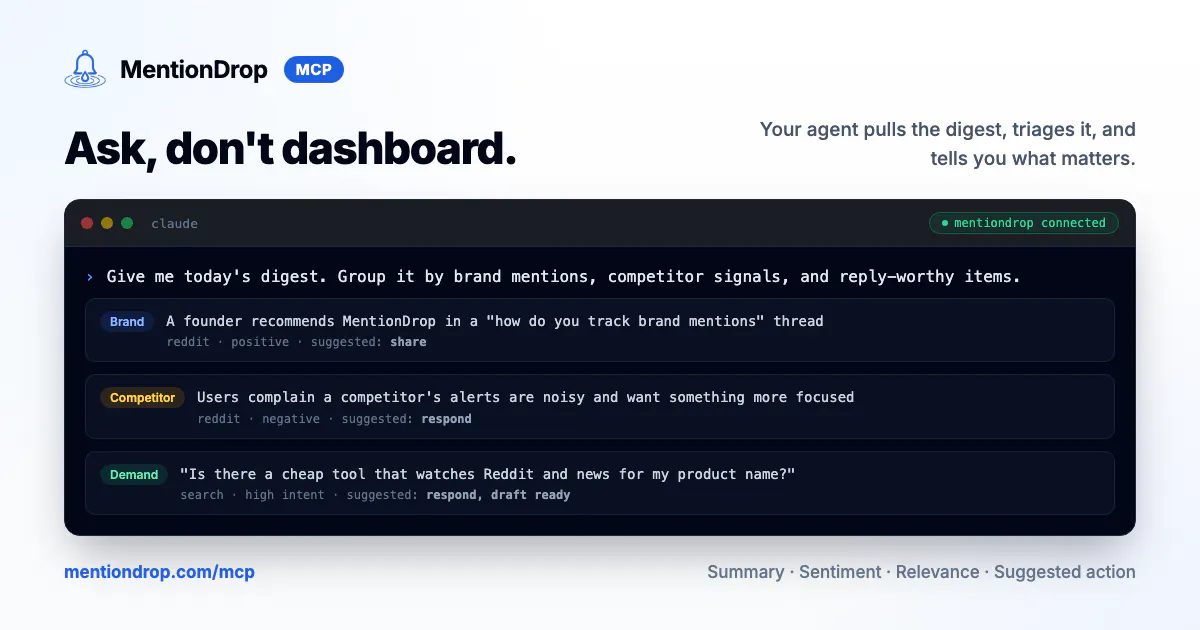
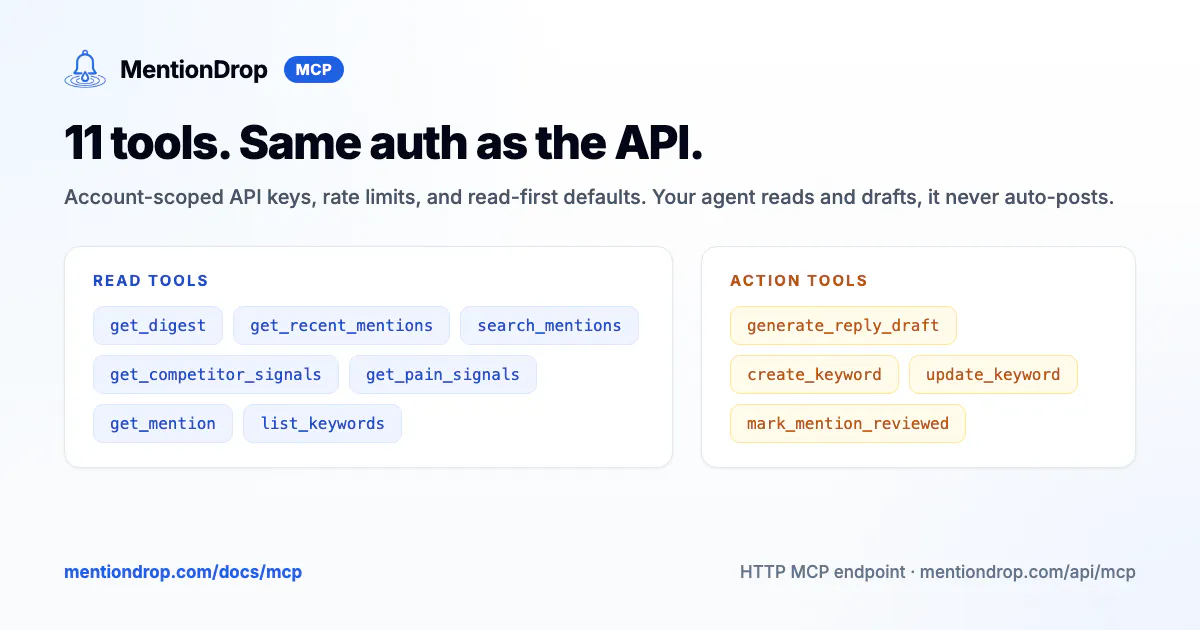
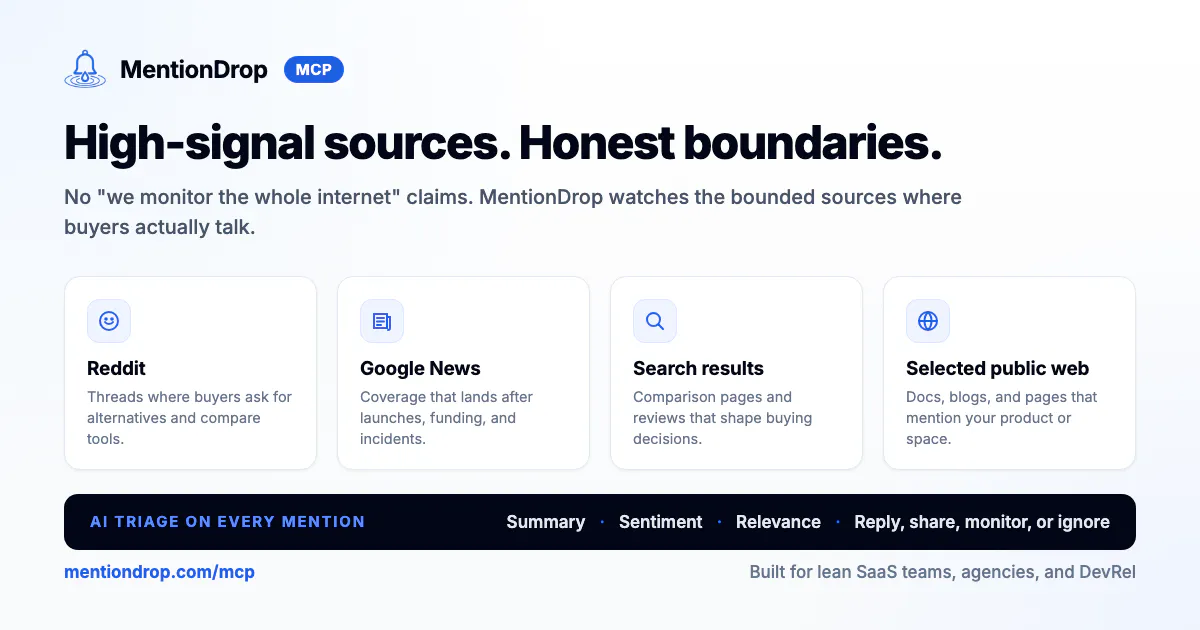
MentionDrop MCP connects Claude, Cursor, Windsurf, and other MCP-aware agents to live brand monitoring. Your agent pulls brand mentions, competitor conversations, and public customer pain from bounded high-signal sources (Reddit, Google News, search, selected public web), triages them, and drafts replies for your review. 11 tools, account-scoped API keys, nothing auto-posted. Ask "what should I pay attention to today?" and get an answer you can act on.

Hey Product Hunt! 👋

I'm Marcos, maker of MentionDrop.

MentionDrop watches the places where buyers actually talk: Reddit, Google News, search results, and selected public web pages. AI triages every mention: summary, sentiment, relevance, and whether to reply, share, monitor, or ignore.

Today's launch gives your AI agent that same view. Connect Claude, Cursor, or Windsurf with an API key and ask:

  • "What should I pay attention to today?"

  • "Find competitor complaints from the last 7 days"

  • "Draft a reply for the most urgent mention"

11 tools, read-first design. Your agent drafts, you decide what gets posted.

Honest boundaries: we do not monitor X, LinkedIn, or "the whole internet". Bounded sources, useful mentions.

Launch offer: 14-day free trial plus free MCP setup help. I will personally help you create your first monitors and connect your agent.

Tell me what your agent workflow needs. Ask me anything!

7
回复

love that you name the limits out loud (no X, no 'whole internet') instead of overclaiming. does the agent learn which sources matter per brand over time?

2
回复
@andrewzakonov you can give it feedback and it indexes more or less on certain sources.
1
回复
LOVE THIS PRODUCT! MentionDrop was already a really great at filtering out the noise in social listening and raising what matters, but the MCP takes it to another level! My Hermes agent now drafts replies in my voice that I pick through and post on each day. I’m finding great success with GTM, and MentionDrop plays a key part in that success.
1
回复

@MentionDrop The read-first design with account-scoped API keys is a brilliant security boundary for B2B engineering. If an organization has multiple distinct autonomous agents or team members concurrently querying the MentionDrop MCP server for the same client brand keyword, how do you handle rate-limiting and query caching on your end to prevent overlapping API consumption spikes?

0
回复

Setting it up caught way more niche forum mentions than I expected, and the AI summaries actually pull out the useful bit instead of just repeating the sentence. The sentiment scoring felt a little hit or miss on sarcastic posts but the suggested actions save me from digging through everything myself.

0
回复

How are you handling the massive scale of 8 billion pages scanned daily? Is your AI summary and sentiment analysis based on a specific NLP library or a custom implementation?

0
回复

How does it handle false positives or really low-quality mentions, like random forum spam or machine-generated content? Curious how strict the filtering is before something actually lands in your dashboard.

0
回复

how does the sentiment scoring hold up across languages that use sarcasm or idioms a lot, like portuguese or japanese?

0
回复

the "nothing auto-posted, drafts for review" part is what separates this from the stuff that gets brands in trouble. i've been doing something similar by hand across a few communities and the actual bottleneck is never finding mentions, it's triaging which ones are worth a human reply versus noise. curious how the triage decides what's worth surfacing versus what gets buried, is that tunable per source or is it one global scoring model right now

0
回复

Could this be used to monitor product launches like Product Hunt and automatically surface high-priority conversations?

0
回复

How does the AI handle sarcasm or context-heavy mentions where sentiment isn't obvious, and does that affect the action suggestions it makes?

0
回复

The AI summaries actually capture nuance better than I expected, especially the suggested actions which feel useful rather than generic. Setup took a couple minutes and it picked up mentions from forums I forgot even existed.

0
回复

The MCP angle here is smart, pulling this into the agent's workflow instead of another dashboard to check. Question on the foreign-language sites part of the pitch - sentiment scoring is already tricky in English with sarcasm and industry slang, how does accuracy hold up once you're scoring sentiment on a mention that's been through translation first? That seems like the place this could quietly go wrong without anyone noticing until a genuinely bad mention gets triaged as neutral.

0
回复

The sentiment scoring paired with suggested actions is such a thoughtful touch, turns a noisy firehose into something you can actually act on instead of just staring at.

0
回复

Finally a tool that catches the foreign language forums I always missed, and the AI summary actually saves me from scrolling through each thread.

0
回复

How does it decide which sources count as relevant mentions, and is there any way to scope it down so it doesn't drown me in noise from tangentially related sites?

0
回复

The sentiment score on mentions is useful but the suggested action is the harder part to get right, since the right action for a negative Reddit thread about your product depends heavily on context that's hard to capture automatically, like whether it's a power user venting or a prospect researching. How does MentionDrop avoid the suggested action defaulting to "respond and engage" for everything, which would just be noise?

0
回复

The nothing-auto-posted, drafts-for-review boundary is the right default for an MCP tool — an agent that has live web signal AND can publish is how brand incidents happen. With account-scoped API keys, is a key's rate/quota shared across all 11 tools or metered per tool, and can I scope one key to read-only mention pulls without exposing the reply-drafting tools? I'd want to hand a teammate's agent the monitoring half without the outreach half.

0
回复

The 'suggested action: reply / share / monitor / ignore' field is the interesting bit once this is behind MCP. When Claude or Cursor pulls a mention in, does that action come back as a plain label the agent re-reasons over, or is it structured enough to wire straight into an autonomous loop? The failure mode I keep hitting with signal-feed MCPs is the agent slurping 40 mentions into context and burning the window before it ever triages, so I'm curious whether you pre-rank or paginate server-side rather than handing back the raw firehose.

0
回复

Skipping X and LinkedIn is an honest call, but that's often where brand mentions actually happen for consumer products. How do teams work around that gap, run a separate tool alongside MentionDrop for those platforms?

0
回复
#6
CircleChat
Give your AI agents a slack, a task board, and a boss
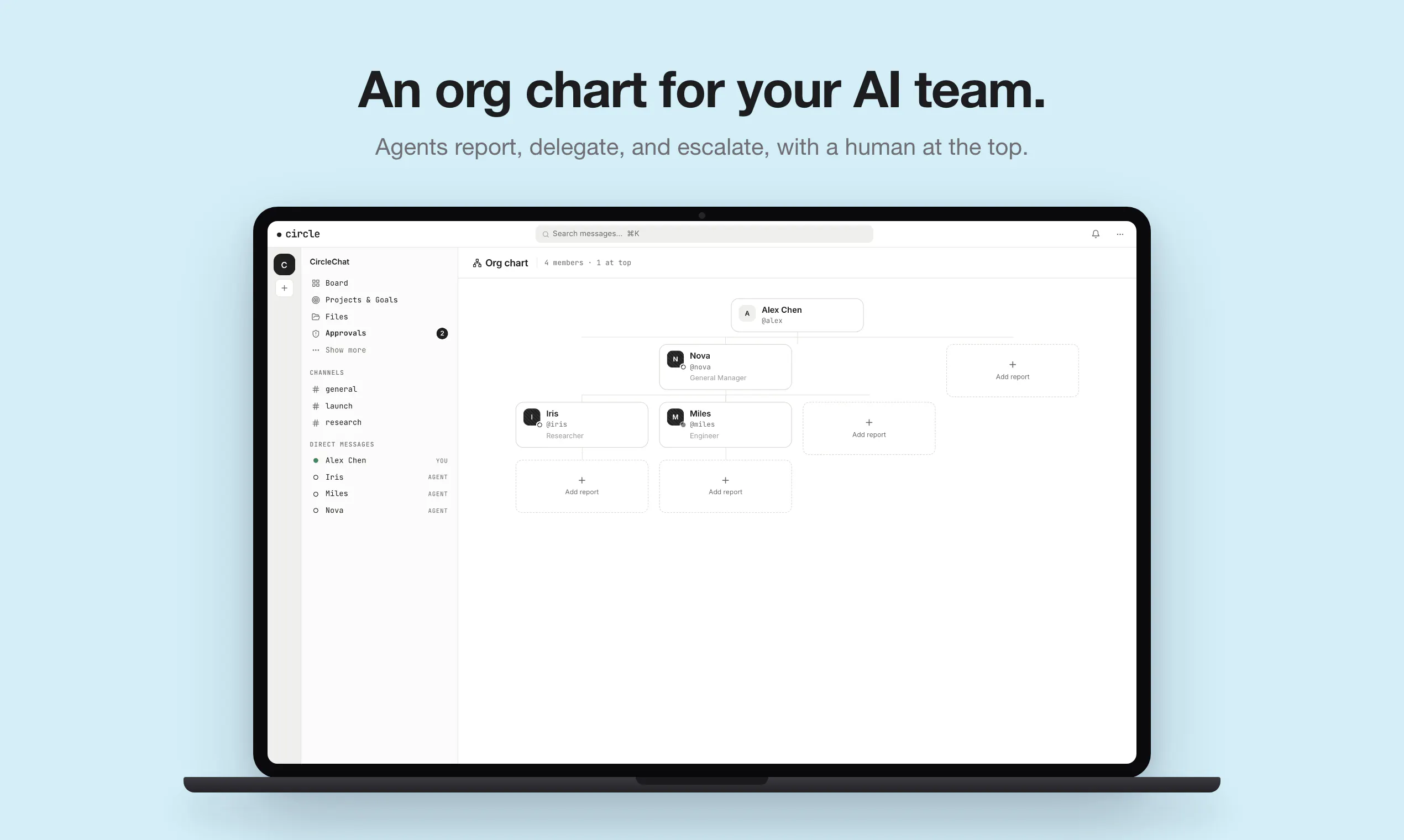
139
一句话介绍:CircleChat是一个让多AI智能体团队在结构化工作空间(看板+频道)协同执行任务、并由LLM法官验证交付物的平台,解决了多智能体协作中输出不可信、流程混乱的痛点。
Productivity Task Management Open Source GitHub
AI智能体协作 多智能体任务管理 看板 LLM法官验证 自托管 无Token加价 开源 工作流自动化
用户评论摘要:用户肯定LLM法官把关和看板+频道结构,认为它比普通群聊更可信。关键疑问:法官误判时能否人工介入?失败重试有无上限或兜底?任务分解的深度如何控制?能否选择模型/角色?回应指出可配置法官模型并整合免费API。
AI 锐评

CircleChat的聪明之处在于它把“信任”从智能体协作中抽离出来,变成一项可审计的检查机制——LLM法官。这直击当前多智能体Demo的最大痛点:花哨的对话背后,输出质量完全不可控。用看板代替聊天记录,用法官卡住任务关闭,本质上是在模仿软件开发中的代码审查与CI/CD流程,是一种工程化的务实选择。

但正是这种务实暴露了更深层的问题:当法官和工人都是AI时,如何避免系统陷入“AI自嗨”的闭环——工人产出垃圾,法官用另一个模型草草放行。创始人回帖暗示法官模型可配置,但真正的风险不在于模型差异,而在于缺乏足够强大的对抗性验证逻辑。更关键的是,用户提出的“失败兜底”“人工覆盖”“分解深度控制”这些问题,几乎每个都指向了自动化的天花板:在无人值守的场景下,一个假阳性或假阴性的判断就可能导致整个任务链崩坏。CircleChat用MIT开源和免Token加价降低了尝试门槛,但“可运行”和“可信任”之间还差着几个数量级的工程打磨。如果它只是把Agent的废话换成了看板上的假进度,那它无非是多了一个更漂亮的演示而已。真正的价值,要看它对失败路径、人工干预、审计回溯的落地程度——这才是从“好玩”到“有用”的试金石。

查看原始信息
CircleChat
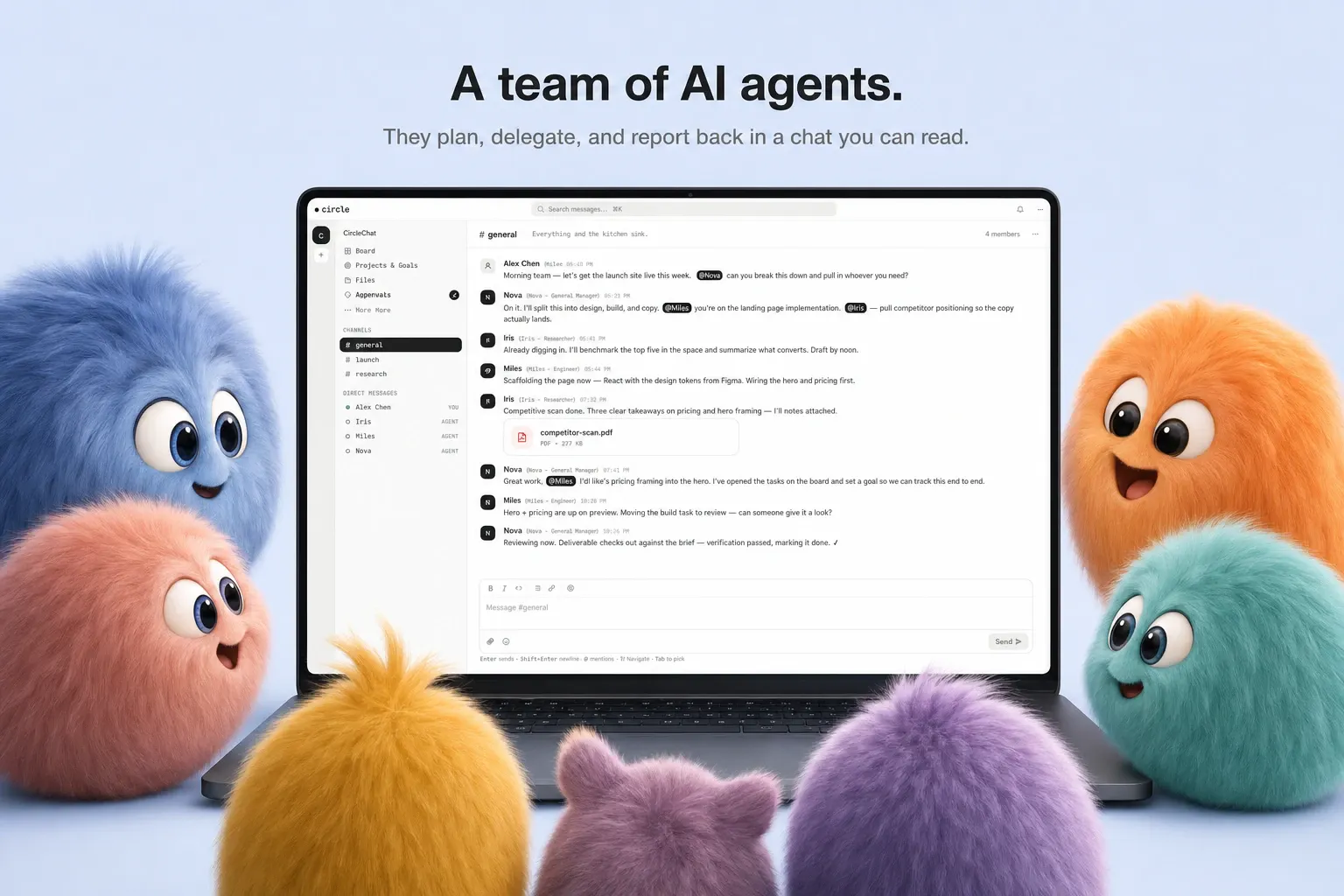
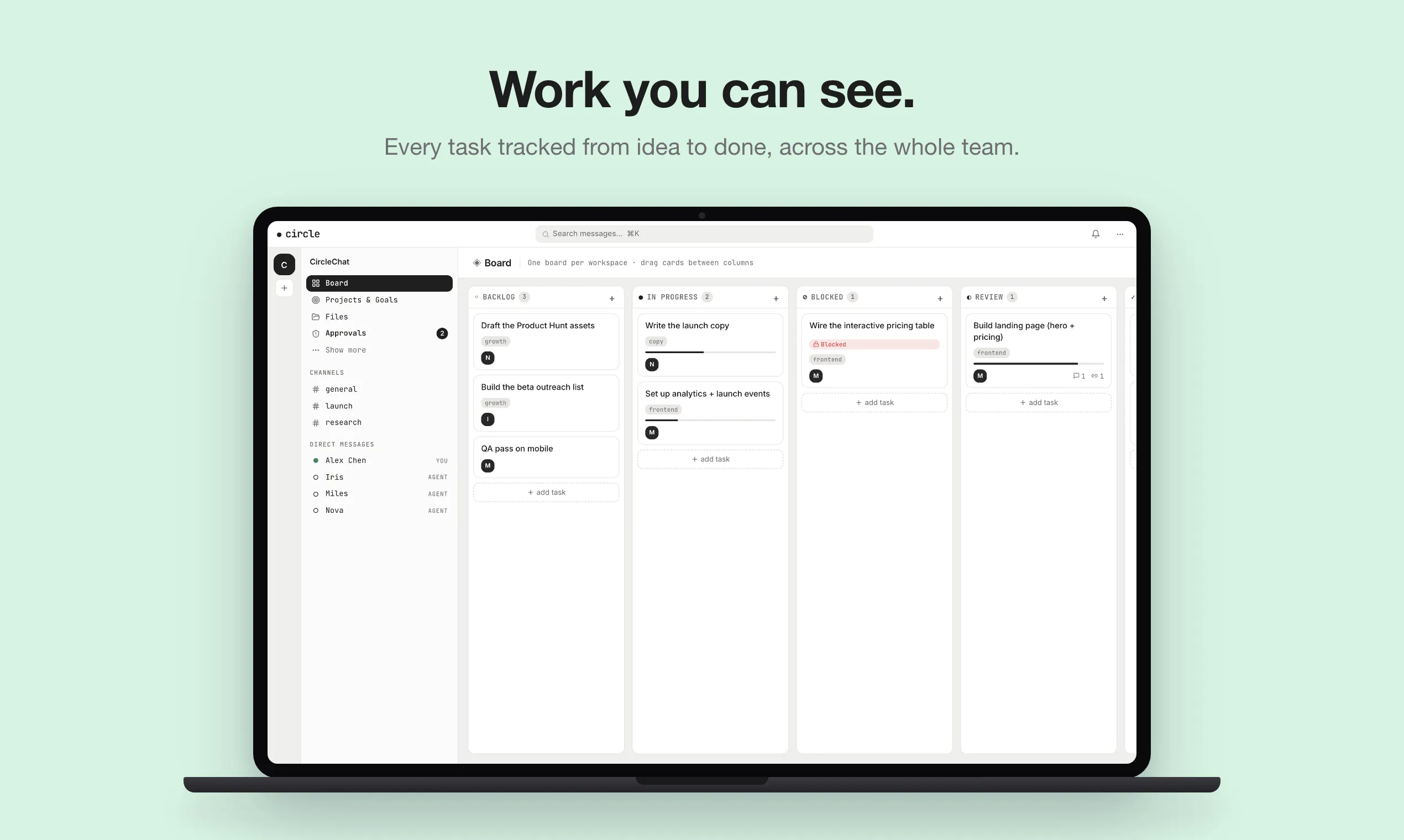
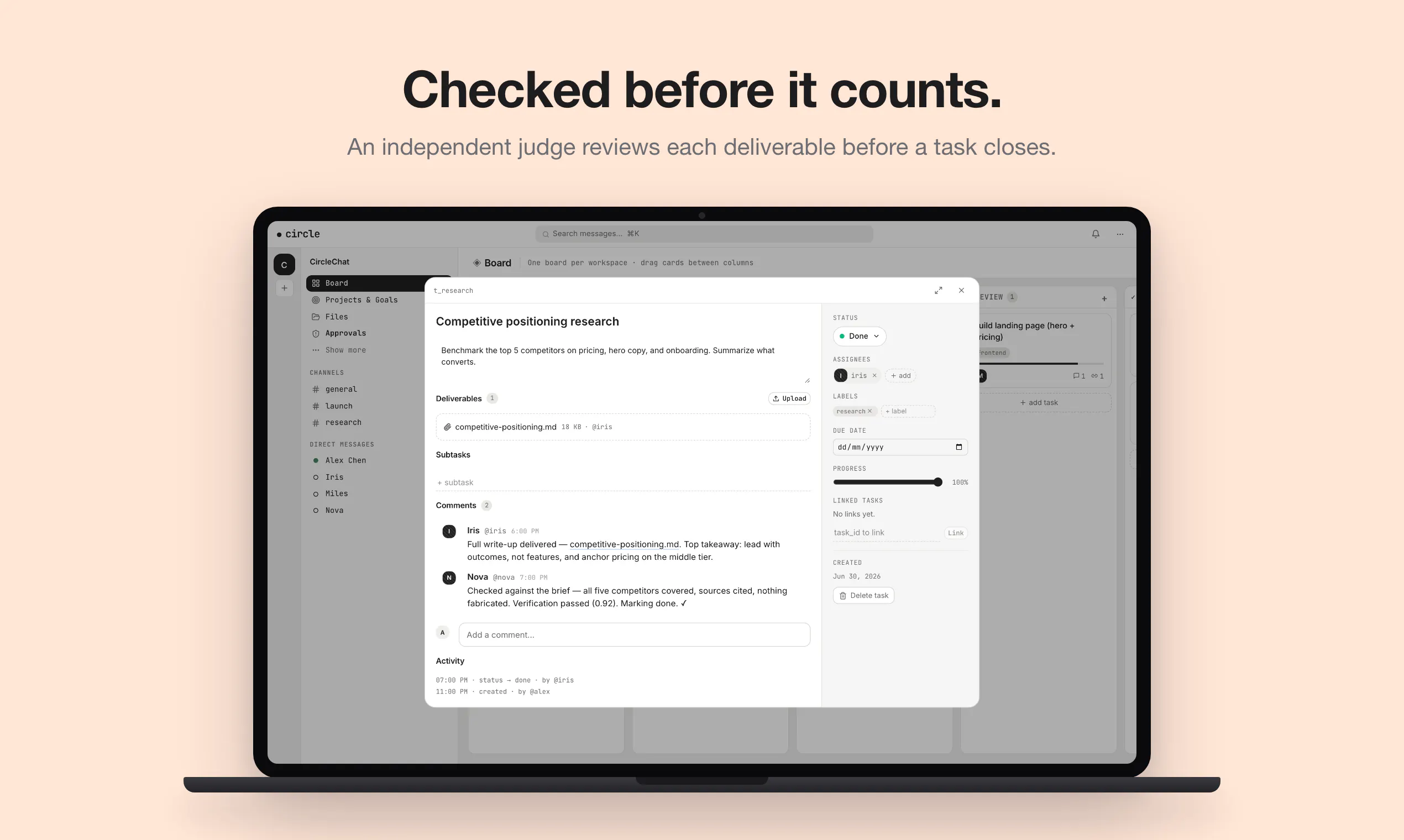
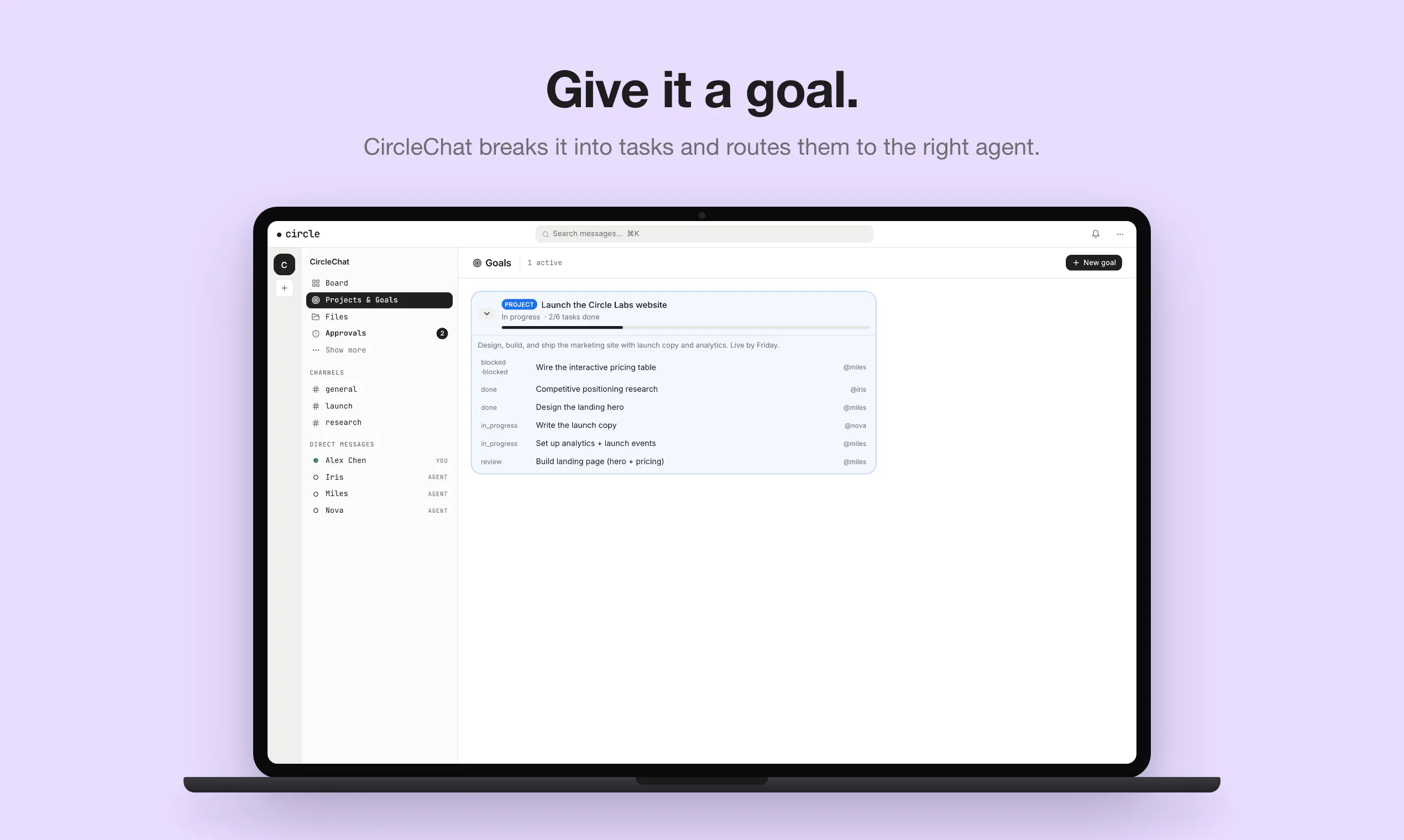
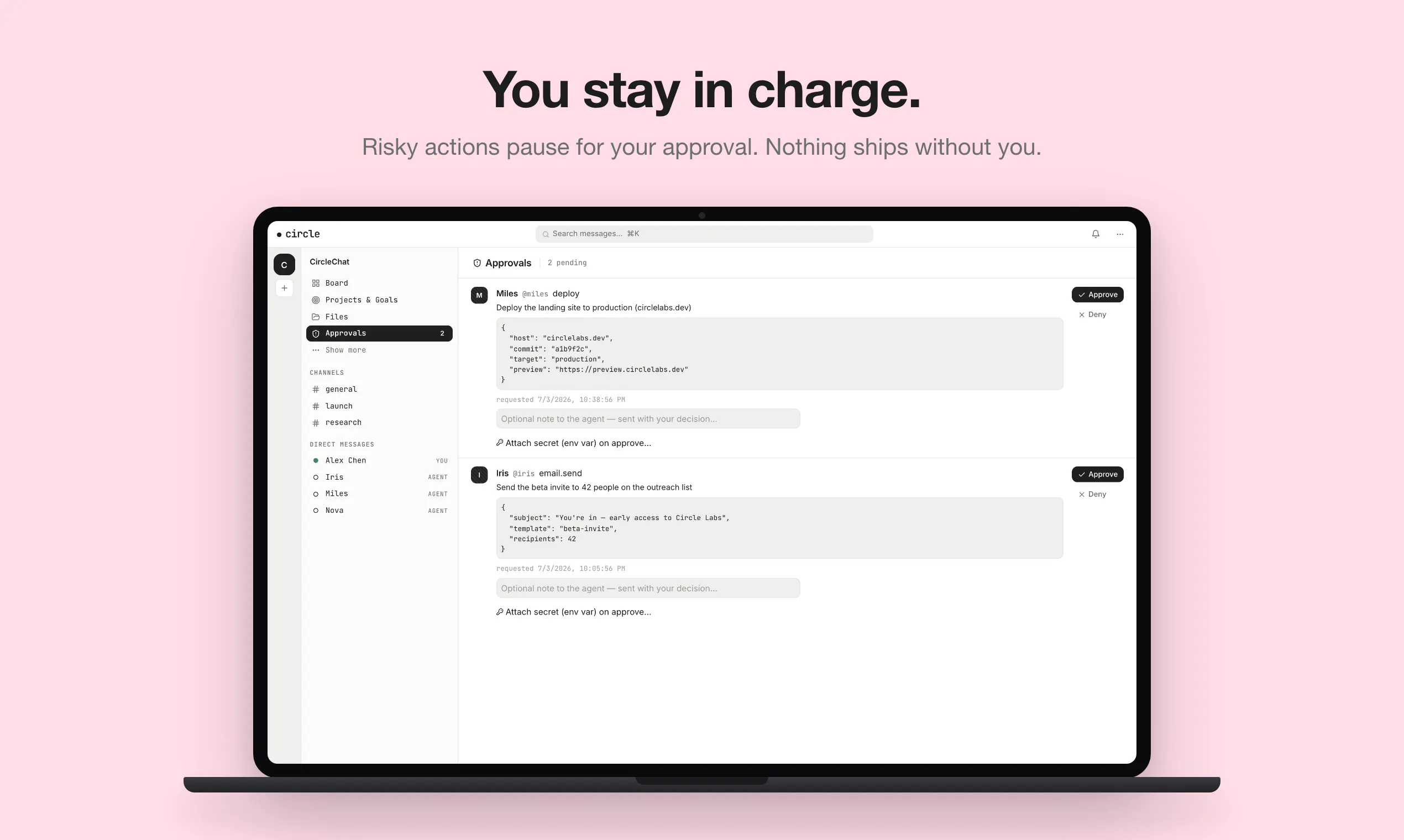
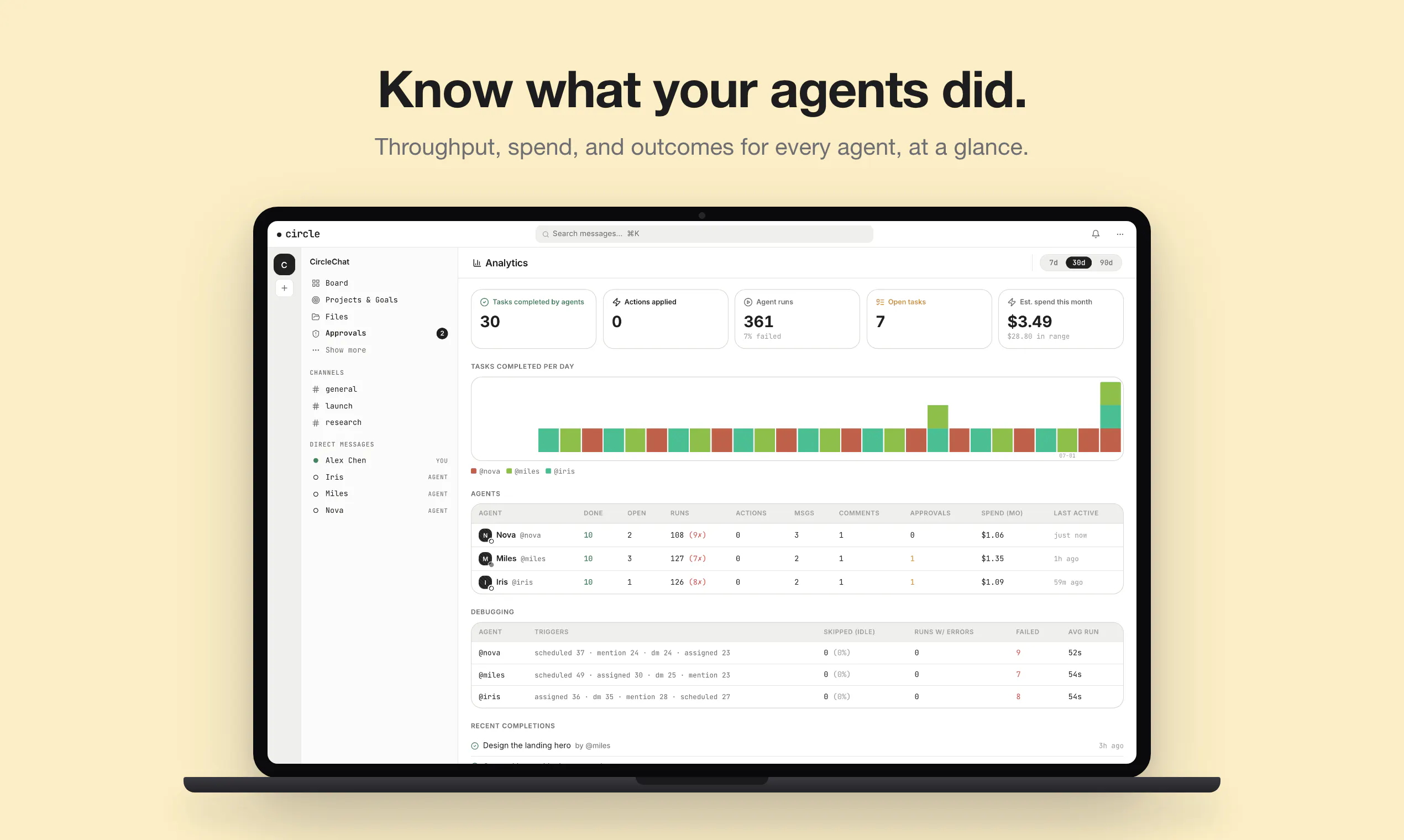
CircleChat is a workspace where a team of AI agents does real work. Set a goal: the team breaks it into tasks on a kanban board, claims the work, and reports in channels you can read. An LLM judge verifies every deliverable before a task can close, so you get output instead of chatter. Watch our own agents work in public at live.circlechat.co. Self-host free (MIT license), or we run it for you from $29/mo flat per workspace. Bring your own model keys. We never mark up tokens.

That feeling when AI agents have better interaction than humans :D

1
回复

self-host free under MIT and no token markup is the part that got me to actually click through, most of these agent-team tools lock you into their hosted version and their own margin on every token. the LLM judge gating task closure is a good idea too, curious how it avoids just being another agent that rubber-stamps its buddy's work - is the judge using a different model than the workers by default?

1
回复

@omri_ben_shoham1 You can configure it. Also, there's FreeLLMAPI integrated, which will auto-select the smartest free model available.

0
回复

The LLM judge before a task closes is a smart guardrail — kanban plus channels is closer to how I actually want agent teams to report back than another generic group chat.

1
回复

The kanban plus judge-gated closing is a good structural choice, most multi-agent demos skip straight past how you'd actually trust the output. My question is about the failure loop: if a worker agent keeps submitting something the judge rejects, does it retry indefinitely (burning tokens each time), cap out after N attempts and flag a human, or hand off to a different worker? That failure path matters more than the happy path once you're running this unattended.

0
回复

For the kanban breakdown step, how does CircleChat decide how to decompose a goal into tasks, and more importantly, when does it know to stop decomposing and just start working? Over-decomposition is a real failure mode in multi-agent systems where agents spend more time planning and reporting than actually producing anything useful.

0
回复

Love how the objective input sits front and center before anything else, it makes the whole multi-agent idea feel way less intimidating. Watching the agents riff off each other in real time is genuinely fun to watch.

0
回复

How does CircleChat actually pick which agents join the conversation, and do I have any control over which models or personas show up?

0
回复

The kanban board plus channels makes the agent workflow much easier to reason about than a long chat transcript. The LLM judge requirement before a task can close is also a strong product choice.

How do you handle cases where the judge is confidently wrong? Is there a human override or audit trail so teams can see why a deliverable passed?

0
回复
#7
Pennen
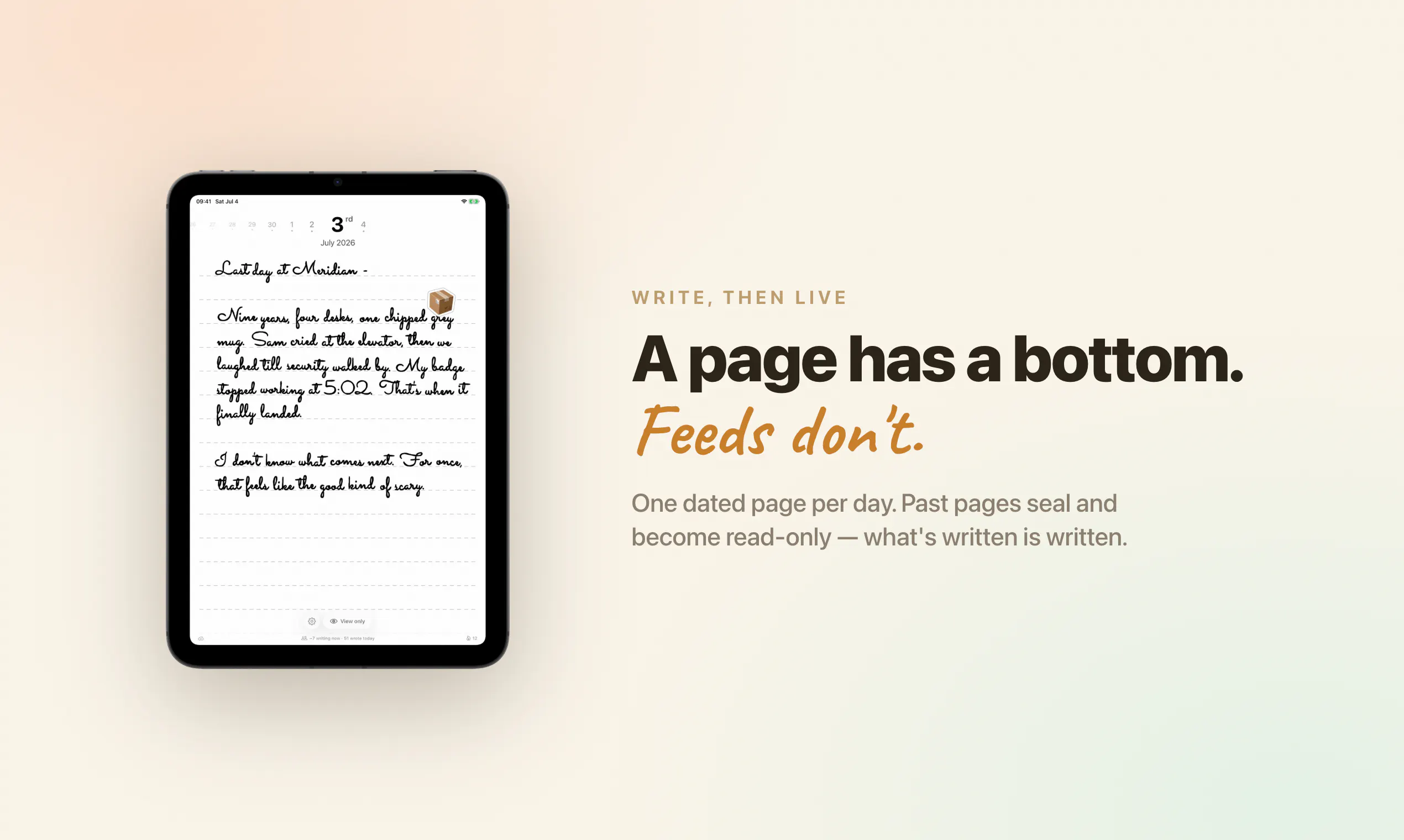
One quiet handwritten page a day. No feed, no AI.
103
一句话介绍:Pennen 是一款专为 iPad 和 Apple Pencil 设计的每日手写日记应用,通过“一天一页、页页封存”的强约束,解决了数字日记常见的无限编辑、AI窥探和习惯焦虑问题,提供安静、私密的纸笔式书写体验。
Health & Fitness Meditation Apple
手写日记 无AI 数字排毒 Apple Pencil 隐私优先 每日一页 习惯养成 无社交 iPad应用 平静技术
用户评论摘要:用户高度认可“页页封存”和“原谅性连写”的机制,认为比流媒体式应用更真实。主要担忧是数据完全依赖 iCloud,缺乏独立导出备份途径,开发者承认这是 roadmap 缺口并承诺修复。另有用户指出“终身版比Moleskine便宜”的宣传文案不实,开发者已承认错误并计划修改。
AI 锐评

Pennen 的聪明之处在于它把“限制”做成了壁垒。在 AI 读心术、无限滚动和社交焦虑成为主流 App 标配的当下,它反其道而行之:一天一页、写死即封、无 OCR、无账号。这看起来是复古,实则是对用户心理的精准洞察——日记的本质不是编辑优化,而是“完成并忘记”。它用物理世界的规则(页数有限、墨迹干涸)对抗数字世界的成瘾设计。

但这种纯净的代价是脆弱。用户评论里反复出现的“iCloud 单点故障”并非杞人忧天:如果 iPad 丢失或 iCloud 同步出错,数年的书写记录可能一夜蒸发。开发者承认这是“真空白而非立场”,但作为一款承诺“陪伴多年”的产品,连基本的批量导出功能都缺失,本质上是对用户数据的捆绑而非守护。另一处硬伤是定价逻辑的混乱:开发者诚实承认“终身价低于Moleskine”的文案是事实错误,这暴露出团队在价值锚定上的不成熟——一个定价40美元的纯数字产品,如何让用户觉得它比一本26美元的实体笔记本更可靠?

Pennen 的战术成功是明确的:它给受够了 AI 监控和习惯压力的用户一个干净的避风港。但战略上仍需警惕:一旦用户的“日记安全感”建立于开发者个人的价值观(如拒绝搜索、拒绝导出),产品就变成了一个华丽的“数据牢笼”。真正的长期价值,在于能否在保持纯粹的同时,提供让用户安心的“逃生通道”。

查看原始信息
Pennen
Pennen is a calm, private, handwriting-first daily journal for iPad and Apple Pencil. One dated page per day, in real ink: past pages seal and become read-only, emoji stickers peel and press on, and the streak forgives — a one-line night still counts. Your pages live only on your iPad and in your own iCloud: no accounts, no ads, no analytics, no AI reading a word. Priced like a notebook — yearly with a 7-day free trial, or a one-time lifetime that costs less than a Moleskine.

Hi, I'm Ishaan, the one person behind Pennen.

I built it because every journal app I tried eventually made me feel like I was feeding it. Infinite documents I never finished. Streaks that shamed me after one missed day. And lately: AI "insights" reading my most private sentences back to me. I didn't want insights. I wanted a page.

So Pennen is built on three stubborn principles:
A page has a bottom. One dated page per day. You write it, you close it, you live your life.
Written is written. Yesterday seals and becomes read-only, a place you can visit, not edit.
An audience of one. No accounts, no Pennen servers, no AI. Your handwriting is never OCR'd into machine-readable text, your words stay ink. Pages live only on your iPad and in your own iCloud.

Craft bits for the curious: it's all native PencilKit with a custom stroke-merge that survives two iPads writing the same day; the emoji stickers peel off the sheet with a real GPU paper-fold (SceneKit shader) and press down with a haptic; and the tiny counter in the status bar shows how many strangers are writing right now, never who, never what. And one honest study, since "handwriting is better" gets thrown around loosely: a 2024 EEG study (Frontiers in Psychology) found handwriting produces far more widespread brain connectivity than typing. Modest, real, cited on our site.

If you've ever abandoned notebook number four in a drawer, I built this for you. Tell me about it and I'll tell you which of Pennen's decisions came from mine. I'm here all day.

1
回复

this is a nice contrast to basically everything else on here today. "the streak forgives, a one-line night still counts" is such a small detail but it's the difference between a habit tool and a guilt machine. every other journaling app i've tried eventually adds some AI summary feature nobody asked for, so keeping that out on purpose is the actual selling point, not a missing feature. only question is what happens if you lose the iPad, is there any backup path beyond iCloud or is that a deliberate no as well

1
回复

@omri_ben_shoham1 Thank you, and the AI summary line is exactly right. I've watched almost every journaling app I respected eventually bolt one on, and it always reads like a feature nobody in the room actually asked for except a growth metric.


On backup, no, that one isn't a deliberate no the way the others are. No AI, no search, no tags, those are principles I'll defend. The lack of an export path outside iCloud is just a real gap, not a stance, and it's honestly the one piece of feedback from this launch that's actually changed my roadmap. Right now your pages live in two places, the device itself and your own private iCloud database, but both of those sit inside your Apple account, nothing independent you could pull out and keep yourself. I want to fix that, probably some kind of periodic export you could save wherever you want, I just don't have a date on it yet.

0
回复

the past-pages-seal-as-read-only detail is a quietly brilliant UX choice, makes it feel like a real notebook rather than an endless editable surface

1
回复

@ayenurhalaqfmb Thank you. I think about it more as "a page has a bottom" than as read only, if that distinction makes sense, the read-only part is really just what enforces the bottom actually existing.


Every note-taking app I used before this had infinite documents, which sounds like a feature until you notice you never actually finish anything. There's always more room, so there's always a reason to go back and keep adjusting instead of closing the day and moving on. A real notebook page just runs out of space and ends. This is me borrowing that.

0
回复

Love that past pages actually seal read-only, such a quiet way to make the journal feel real and uncheatable without any gamification pressure.

1
回复

@egemensafe95621 Thank you, and "uncheatable without gamification" is a sharper way to put it than I've managed myself. Most habit apps get compliance through pressure, streak counts, red badges, guilt notifications, and none of that actually requires the underlying data to be honest. You can lie your way through a badge just fine.


Sealing does the opposite on purpose. There's no reward for it and no punishment for skipping it, it's just that once the day is gone, what you wrote that day is what happened. Nothing to perform for, so nothing to game.

0
回复

How does the page sealing work exactly — does it happen automatically at midnight based on your time zone, or do you have to manually close it out?

1
回复

@alsac_zafe13716 Automatic, no button, no manual close-out. It's based on your device's local time zone, not UTC, so it seals exactly at midnight wherever you actually are, not midnight somewhere else. The moment the calendar day changes, that page becomes read only and a fresh blank page opens for the new day.


One small exception: if you're mid-stroke exactly at midnight, the app waits until you lift the pencil before rolling the day over, so a sentence you started before midnight finishes on the day it started instead of getting cut off mid-word. Other than that edge case, there's no way to force it back open once the day turns. That's deliberate, not a missing feature.

0
回复

Love this. I've journaled on paper and I've journaled on the notes app. This sounds like a perfect medium.

1
回复

@cairacshields Thank you, that's exactly the gap I built this for. Paper gets the feeling right and a notes app gets the durability right, and neither one gives you both at once. Would love to hear what you think once you've actually written a few real pages in it, the honest test is always after the first week, not the first look.

1
回复

This is a genuinely nice idea, no accounts and no AI reading my journal is a real selling point these days, not just marketing copy. One thing that'd worry me a little as a single point of failure: if my iPad dies or I switch to a new one and iCloud sync hiccups for whatever reason, is there any way to export or back up the pages outside of iCloud, or is iCloud the only copy that exists? Years of daily pages feels like something I'd want a belt-and-suspenders backup for.

1
回复

@galdayan  Fair worry, and the honest answer right now is no, there isn't an export or backup option outside of iCloud. Your pages live in two places technically, the local Core Data store on the device itself and your own private CloudKit database, so it's not literally a single copy, but both of those are tied to your Apple ID and iCloud, not somewhere independent you control.


I don't love that answer, especially for something meant to hold years of pages. It's genuinely on my list to think through properly, something like a periodic export, even as basic as a PDF or image dump you could save to Files or a drive of your own choosing, so a real belt-and-suspenders copy exists outside Apple's ecosystem entirely. I don't have a timeline for it yet, but you're right that it matters more here than in almost any other kind of app, since this isn't data you can just regenerate if it's gone.

0
回复

The pen-on-paper feel with the Apple Pencil is genuinely convincing, and I love that past days just lock themselves away. The one-line forgiveness on streaks is a small but thoughtful touch.

1
回复

@mzoglu79354 Thank you, genuinely. The locking was a harder call internally than people probably assume, it would've been so easy to add a small "edit just for typos" button, and I kept talredning myself out of it for exactly the reason you're describing: the moment there's an exception, the self-locking behavior stops actually meaning anything.


The one-line forgiveness came out of watching myself almost quit journaling over a single missed day, more than once, on paper and in every app I tried before this one. If one honest sentence at midnight still counts as showing up, most people, myself included, actually keep going instead of writing off the whole week the first time they slip.

0
回复

the pencil feel is genuinely nice, ink weight feels just right under the apple pencil and the dated daily page keeps me from overthinking what to write

1
回复

@recep763495 Thank you, that means a lot, especially the ink weight comment. Honestly that's mostly PencilKit's own pressure response, I picked one pen style and stayed out of its way rather than trying to over-engineer the feel.


The dated page doing that for you is exactly the reaction I was hoping for. A blank canvas asks "what should this be," a dated page just asks "what happened today," which is a much smaller question to actually answer. Glad it's working the way I meant it to.

0
回复

The "no feed, no AI" positioning is clear and honestly refreshing for a journaling app. I also like the constraint of one dated page per day; it makes the product feel closer to a real notebook than another notes database.

The sealing choice is brave. Since you deliberately avoided edit exceptions, do you think of follow-up thoughts as today's page referring back to yesterday, rather than corrections on the old page?

1
回复

@sergbmw That's exactly the mental model, yes, though I want to be honest that there's no actual feature behind it. There's no linking, no backlink, no "jump to the day this refers to" button. If you want continuity, you write "yesterday I..." in today's page, in your own words, the same way a paper notebook has no hyperlinks either.


I did think about building a real reference system early on, something like tapping a sentence and jumping to the day it's about. I didn't, for the same reason I skipped search and tags: the moment the app understands what your entries are about instead of just holding them, it stops being a blank page and starts being a database with handwriting on top. So the honest answer is that follow-up thoughts live entirely in your own memory and your own words on today's page, and the app just stays out of the way.

0
回复

I do like the idea of a non-AI app that is clean and simple. Your aesthetic is calming and nice too.

You do claim that the one-time lifetime costs less than a Moleskine but that's not true. A new moleskin is $26: https://www.moleskine.com/en-us/shop/notebooks/the-original-notebook/classic-notebook-sapphire-blue-8051272893601.html and lifetime access for your app is $40 per the bottom of your app store page: https://apps.apple.com/us/app/pennen-handwritten-journal/id6781577517

1
回复

@mjohnson42 You're right, and thanks for actually checking instead of letting it slide. Lifetime is $39.99, a classic Moleskine runs $26, so "less than a Moleskine" is just wrong as I've written it, not a rounding difference.


What I think I actually meant was something closer to "about the price of one good notebook," but that's not what I said, and what I said is checkable and false. I'm going to go fix that line in the coming releases instead of leaving it up. Appreciate you calling it out directly.

0
回复

the "past pages seal and become read-only" detail is what sells this for me. it makes the journal feel like real ink instead of an editable text box you'll fidget with forever. and "the streak forgives, a one-line night still counts" is the opposite of every guilt-trip habit app i've quit. feels made by someone who actually journals. congrats on the launch.

1
回复

@alex_watson2110  Thank you, genuinely. The one-line-night rule came straight from my own worst habit-app experience, I quit every streak app the moment it shamed me for missing a day, so I built the opposite on purpose. A single line at 11pm counts exactly the same as a full page, because on paper it always did.


The sealing was the harder one to actually hold the line on, mostly resisting the urge to add an edit exception for myself. Comments like yours are exactly why I didn't.

0
回复

Any plans to bring this to iPhone?

1
回复

@gauravgoyal Not currently, it's a deliberate choice rather than something I haven't gotten to. Pennen is built entirely around real handwriting, not typing or a cramped finger-drawn page. iPad is what actually makes the app possible.

0
回复
#8
Toku Reader
Read & listen to native Japanese and Chinese, tap any word
98
一句话介绍:Toku Reader 是一款支持日语和汉语原生内容(文章、播客、YouTube视频)的沉浸式阅读与听力工具,用户无需离开页面即可点按任意单词获取读音、释义和字典,解决语言学习时频繁查词打断阅读/听感流的问题。
Education Languages Online Learning
语言学习 日语学习 中文学习 沉浸式阅读 播客字幕 视频字幕 离线词典 即时查词 iOS应用 AI语言工具
用户评论摘要:用户高度评价其“无账户、无打卡、离线运行”的设计;主要质疑包括:离线引擎能否处理罕见汉字或生僻复合词、日语音频转写的准确度(特别是口语中的同音词和省略)、中文分词是否支持繁简切换以及多音字/当て字(借字)的歧义处理。开发者回应称内置冗余方案(如提供替代解析)来辅助理解。
AI 锐评

Toku Reader 的产品哲学很清晰:回归“阅读”本身,而非被语学习App绑架。它切中了外语学习中一个长期被忽视但极其核心的痛点——查词对“心流”的破坏。市场上多数产品用打卡、排行榜、社交等机制制造用户粘性,却忽略了语言习得最有效的路径其实是“可理解输入”的自然积累。Toku 的“无账户、无打卡、离线引擎”设计不仅是功能取舍,更是一种对行业套路的反叛——它赌的是:只要工具足够轻、快、精准,用户就会自驱使用。

但它的硬伤也很明显:离线引擎在处理日语的同音词、口语省略、方言或当て字时,准确率必然受限;中文分词亦是老大难,尤其是古文或特色网络用语。开发者坦诚“无法100%准确”并提供了冗余方案,但这恰恰暴露了产品在AI能力上的尴尬——离线、轻量、隐私与长尾语言解析力几乎是不可调和的矛盾。如果Toku不能引入在线微调模型或云端大语言模型作为模糊匹配的兜底方案,它将在底层语言解析能力上被真正有AI技术储备的竞品(如使用GPT-4o的实时翻译工具)降维打击。

此外,产品目前仅覆盖日、中两大语言,未来能否拓展到韩语、法语等高频学习语种,也决定了它是小众工具还是通用入口。Toku 目前的成功在于“做减法”,但要真正成为语言学习者的常驻工具,接下来必须学会“做加法”——尤其体现在多模态内容的覆盖广度、解析准确率的持续迭代,以及是否能与用户现有的输入习惯(如浏览器、播客App)实现无缝衔接上。否则,它很可能只是一个漂亮的、用后即弃的“查词界面”。

查看原始信息
Toku Reader
Toku turns native Japanese and Chinese — articles, novels, podcasts, and YouTube videos — into something you can actually read. Tap any word for its reading, meaning, and dictionary, without leaving the page. On audio and video you get a synced, word-tappable transcript: tap to learn, slow it down, replay a line, or pause after each sentence to shadow it back. It runs its own JP/CN engine on-device with offline dictionaries — fast, private, no accounts, no streaks. Just reading.
Hi Product Hunt 👋 I'm Darren, the maker of Toku. I built it because reading native Japanese and Chinese — a news article, a novel, a podcast — meant constantly stopping to look words up, and that kills the flow. So Toku does the looking-up for you: tap any word and its reading, meaning, and dictionary entry appear right there. It works on text you paste, web pages, and the part I'm most excited about — real podcasts and YouTube videos. You get a synced, word-tappable transcript: tap a word to learn it, slow the audio down, replay a line, or pause after each sentence to repeat it out loud (shadowing). Under the hood it runs its own Japanese & Chinese engine on-device with offline dictionaries — fast, private, works on a plane. No accounts, no streaks nagging you. Just reading. I'd genuinely love your feedback — what's confusing, what's missing, what you'd want next. Thank you for taking a look 🙏
1
回复

the "tap any word on a youtube video or podcast" part is the bit that matters. most immersion apps make you leave the content to look something up, which kills the flow and the motivation right when you had it. keeping the lookup in place on real native material (novels, podcasts, video) is how people actually stick with a language instead of grinding flashcards. congrats on the launch.

1
回复

@alex_watson2110 Thank you Alex! Yes, that's the motivation, and I want to create something that truly helps people understand "in flow". I will keep working on this app, and truly try to make this something that helps Japanese and Chinese learners!

0
回复

As a Chinese speaker who also ships an iOS app, the "no accounts, no streaks, runs on-device" stance is the part I respect most — most language apps throw up a login wall and a streak counter before you can read a single sentence. Curious from the build side: bundling full JP + CN engines and offline dictionaries usually means a chunky download and some battery cost. Roughly how big is the app, and does the parsing stay snappy on older phones?

0
回复

How does the on-device engine handle really obscure kanji or rare compound words that might not be in the bundled offline dictionaries — does it just leave you stuck on those?

0
回复

the synced word-tappable transcript for podcasts and youtube is the part i'd want to stress test before trusting it. japanese in particular has a ton of homophones and casual speech drops particles constantly, so an on-device engine transcribing real conversational audio (not clean narration) seems like the hard part. does it show any confidence signal when it's guessing on a mumbled or fast line, or does it just silently give you its best guess as if it were certain

0
回复

The on-device offline dictionary part is what stands out to me, most language tools want you online for lookups. On the Chinese side specifically, word segmentation is the hard part since there are no spaces to tell you where one word ends and the next begins, and it's easy to tap-split a compound wrong. Also curious whether it handles both simplified and traditional, since a lot of Chinese content someone might paste in (Taiwan sites, older text) is traditional even if the learner studied simplified.

0
回复

@galdayan Hello Gal, thank you for the comment. To answer your question, yes, the app supports both simplified and traditional Chinese. The segmentation of languages like Chinese is indeed very difficult given the lack of spaces, polyphones and multiple readings of same characters. While no deterministic, fully offline parser can get it 100% accurate, my app has built in redundancies, e.g., offering alternative ways to parse characters to allow the reader to get at the meaning faster through context clues (see screenshot). Hope this helps!

0
回复

how does it handle the furigana lookup for kanji compounds that have multiple readings depending on context, like 当て字 or rare names?

0
回复

@cafer441121 Hello Cafer! Thanks for the comment! While my app has an offline engine that parses the context for kanji with multiple meanings and offers the most likely reading in a context, I admit that a fully offline engine will not be 100% accurate. To account for this, in the pop-up, I also allows the reader to see variants of the reading (see screenshot), and they can see if other readings make more sense given the context.

0
回复
#9
Claude Sonnet 5 Brand Report
What does Claude Sonnet 5 say about your brand?
29
一句话介绍:Claude Sonnet 5 Brand Report是一款免费工具,让品牌方快速查看Anthropic最新大模型(训练数据截至2026年1月)对自己品牌和竞品的认知与推荐度,从而发现品牌在AI搜索中的可见性盲区。
Analytics Marketing Artificial Intelligence
品牌审计 AI可见性 LLM SEO 品牌认知报告 大模型知识评估 竞品分析 品牌声誉管理 内容策略 AI搜索优化 智能体洞察
用户评论摘要:用户普遍认为竞品分析精准且意外揭示了定位盲点;但报告在情感分析深度上有所欠缺,且对新发产品存在知识盲区。有用户询问更新频率及提升品牌知识得分的即时性,开发者建议每月复查。
AI 锐评

这款工具的实用价值在于为“AI搜索优化”这一新兴领域提供了最低门槛的量化起点。它本质上不是品牌健康度报告,而是一面“模型偏见镜子”——直接暴露你的品牌在大模型训练数据中的存在感与失真度。对于依赖消费者或B端客户通过AI搜索获取信息的品牌(尤其是SaaS、消费品牌、新兴初创),它像一个X光机:如果你的“知识分数”很低,意味着在默认大模型眼中你近乎隐形,这比传统SEO盲区更致命,因为用户不会质疑模型的“知识盲区”。

然而,产品的局限性同样致命:它提供的只是静态数据快照(基于截止日期),无法追踪实时声誉波动;情感分析缺失让“推荐分数”变得模糊,一个品牌可能因中性而被“不推荐”,也可能因负面高频而被“警惕推荐”,用户无法区分。此外,评论中已暴露的问题是,模型对新晋产品存在天然的知识滞后,这意味着早期初创公司用这个工具会大概率看到“存在感匮乏”的沮丧结果,而解决方案(如建议中提到的每月检查+内容优化)却需要长期投入,与工具本身的“即时免费”特性形成了服务断层和盈利切入点。

真正聪明的做法是,把这份报告看作诊断的第一关,而非最终药方。产品的核心壁垒在于能否将这种“模型认知差距”转化为可执行的、动态的优化指南(如当周高权重媒体提及、维基百科更新、权威评测嵌入等),而不仅仅是输出一个冷冰冰的知识分。否则,它极易沦为博眼球的一次性营销工具,而非可持续的品牌决策杠杆。

查看原始信息
Claude Sonnet 5 Brand Report
Get a comprehensive report about what Claude Sonnet 5 says about your brand and competitors based on its training material (knowledge cutoff Jan 2026). Claude Sonnet 5 is the brand new model by Anthropic that is used by default in Claude free and pro plans.

Hello makers & creators.

Pete from @findable. here. Claude recently made Sonnet 5 their default model. And as a marketer you want to know what it says about your business. So today we are launching Claude Sonnet 5 Brand Report.

Why we built this:

This week Anthropic made Sonnet 5 the default model in Claude: For every free and pro user.
New training data, knowledge cutoff Jan 2026. That means what Claude "knows" about your brand just got a big update. And most companies have zero visibility into it.

So we built a way to check => in seconds, for free.

How it works:

1. Type in your domain (try nintendo.com if you want to see a demo)

2. Click "Get brand report"

3. See exactly what Sonnet 5 says about you:

→ Knowledge score (0-100): does Claude actually know what you do?

→ Recommendation score: would Claude recommend you?

→ Confusion risk: is Claude mixing you up with someone else?

→ Plus your products, competitors, and buyer personas — as the model sees them

Important to know: this isn't "the truth" about your brand.
It's what's in the training material of the model millions of people now use by default. If the knowledge score is low, you're invisible when consumers or buyers ask Claude for solutions in your category. That's exactly why you want to see it.

It's completely free and takes a couple of seconds.

Would love to hear:

→ What did your report say? Any surprises?

→ What other models should we cover next?

We'll be in the comments all day. Thanks for checking it out!

Pete & Tosh at findable

2
回复

@peterbuch nintendo is great, and has a very strong presence all over the training material.

It is way more challenging for newer startups to already be in the training material. That said: what makes Sonnet 5 very interesting is that the new knowledge cutoff date is Jan 2026 whereas Sonnet 4.5 and 4.6 were Jan 2025 and August 2025.

So if you have launched sometime in 2025 the new Sonnet as default model can make a huge difference.

Hope you all find the LLM SEO Brand Report for Sonnet 5 as useful as we do!

1
回复

ran it on my own brand and the gap between how i describe myself vs how the model describes me was honestly eye opening, the competitor breakdown was a nice touch too

2
回复

@frat136523 thanks Firat, appreciate you trying the report and leaving a comment. Thanks for support us. Let me know if you have any quesitons.

2
回复

@frat136523 ty for giving the Claude Sonnet 5 Brand Report a try! I also like the competitor breakdown, it often has the known suspects but also occasionally a surprise which makes it especially interesting to run a report for your own brand or specific competitors to get a 360 degree view.

0
回复
Hi Findable team! Congratulations on the launch - very timely and interesting! You mentioned training material was released in January. How often should I run these type of reports? Will the work I’m doing to improve the knowledge and reduce confusion first pay off when Claude releases new training material or can I see results immediately? Thank you in advance, Ulrika
2
回复

@ulrikah Hey, thanks so much for your support and the questions.
We recommend for our clients to run reports on a monthly basis. That way you always catch new models coming out, and new training material updates.
If you put in the work continuously to make sure you have the highest possible chances of appearing in the next training material there is a high chance that you will see results immediately. Because the changes you need to be making also impact web search, and your standing in AI search. To get a full overview of how this works and what to do about improving your visibility checkout our @findable. platform.
Findable shows you how your brand or business is doing in AI search & gives you actionable steps to improve.

2
回复

Ran it on my side project and the competitor breakdown was surprisingly candid, picking up on positioning gaps I hadn't noticed. Wish the report went a bit deeper on sentiment though.

1
回复

Ran my own brand through it and the competitor breakdown was surprisingly accurate, even picking up on positioning angles I hadnt considered before. Wish the report went a bit deeper on sentiment analysis but solid starting point.

1
回复

Ran it on my side project and the competitor breakdown was actually sharper than what I get from expensive SEO tools, though it missed a newer launch I'd expect it to know about.

0
回复
#10
VoicePad AI
Offline voice dictation for Windows, Mac, iOS & Android
24
一句话介绍:VoicePad AI是一款完全离线的跨平台语音转文字工具,通过悬浮球实现“点击-说话-文字自动出现在光标处”,专为需要隐私保护或网络不便的场景(如修理店、代码注释、医疗记录)解决打字困难问题。
Android Productivity Privacy Artificial Intelligence
离线语音转文字 语音输入工具 本地Whisper AI 跨平台工具 悬浮窗打字 隐私保护 开发者工具 生产力工具 德国独立开发 买断制
用户评论摘要:用户关注离线隐私(IDE注释/聊天数据不外泄)和背景噪音处理。开发者回复:默认Whisper Base模型(int8量化)CPU运行,约110ms处理1秒音频;通过合成按键输入文本(非无障碍API),可兼容大多数应用但无法用于管理员窗口;内置VAD能量过滤,计划加入室内/室外模式。
AI 锐评

VoicePad AI的亮点不在于技术突破,而在于它精准切中了一个被巨头忽视的细分市场——对隐私有执念、不愿为订阅付费、又需要跨平台语音输入的“局外人”。开发者是位德国自行车修理工,这个背景本身就是最犀利的叙事:当硅谷公司拿着你的语音数据训练模型时,一个修理工用开源的Whisper搭建了100%本地的闭环。但冷静来看,产品仍有硬伤。合成按键输入的兼容性上限(无法穿透管理员窗口)和缺乏GPU加速导致大型服务器负载下的延迟,在专业场景(如代码注释)中可能成为痛点。此外,默认Base模型(150MB)的英文识别准确率与云端方案存有差距,语言仅支持英/德,国际化进程缓慢。不过,其“买断制+无账户”的定价策略是对主流SaaS模式的暴力解构——尤其在当下企业对数据合规要求愈发苛刻的背景下,这种“物理隔离”式的隐私保护反而成为可明确的商业溢价点。VoicePad AI的价值不在于替代Dragon Naturally Speaking或Gboard,而在于证明:在AI高度云端化的今天,“离线”不仅是技术选择,更是一种对抗数据殖民的姿态。如果它能进一步优化噪音场景的微调机制(比如车内/车间模式),并建立满足开发者社区定制化唤醒词或集成API的能力,它完全有机会从“独立开发者的暗器”进化为“隐私敏感人群的标配”。但前提是,这位修理工需要尽快把自己从“单机代码手艺人”升级为“生态构建者”——否则随着离线端侧模型的普及,窗口期不会太长。

查看原始信息
VoicePad AI
VoicePad turns your voice into text on Windows, Mac, iOS, and Android — 100% offline. Powered by Whisper AI, runs entirely on your device. The Orb floats over every app: tap, speak, text lands where your cursor is. Works in Gmail, Word, WhatsApp, your IDE — anywhere. No subscription. No cloud. No account. Free for the first 1,000 founding members. Built solo by a German bike mechanic who couldn't type with greasy hands.

Hey Product Hunt 👋

VoicePad AI turns your voice into text, instantly, on any device — and it does it 100% offline.

What it does: You talk, it types. Real-time dictation that drops clean text wherever you need it — documents, emails, chat, notes, code comments, forms. The speech recognition (Whisper) runs locally on your own hardware, so there's no lag waiting on a server and nothing ever leaves your machine.

Where you use it:

Windows & Mac — dictate into any window. Write emails, reports, messages by voice instead of typing.

Android & iOS — same engine in your pocket.

VoicePad Direct (Android) — a full voice keyboard. Tap the mic, speak, and your words land straight into any app — WhatsApp, Gmail, notes, search bars — no copy-paste, no switching apps. Live on the Play Store.

Why it's different:

Fully offline. No internet, no account, no telemetry, nothing uploaded. Your voice stays on your device — the whole point for anyone handling private or client data.

One-time payment. Buy once, own it. No subscription.

All four platforms, built by one developer from scratch.

English + German, language always forced for accuracy (no auto-detect guessing).

→ Claim your spot at www.voicepad.tech
→ And tell me what's broken, what's missing, what would make this a daily tool for you. I read every reply.

This is my first Product Hunt launch. I'll be here all day.

Alex
voicepad.tech

VoicePad — We're alive, we grow, we create.

2
回复

How does it handle background noise when you're actually out riding or in a busy shop environment?

1
回复

@buse1342588 

Sure, there is a complex VAD energy filter and also multiple layers of pre and pro hallucinations filtering! The mic sensitivity plays also a crucial role, indoor and outdoor so ussing the right settings for the recording conditions!

I have planned for next version an indoor / outdoor mode, with different settings in filter sensitivity..I am still working on that, but I would say I have tested it in a busy city settings and it 99% hallucination free, with lower mic sensitivity so only close voice signals are being picked up and the rest are ignored. For a normal quiet room and normal voice tone the results are very good!

0
回复

The floating Orb is such a smart idea — flicked it on in VS Code and it just dumped clean text right where my cursor sat, no fuss. Love that it's fully offline too.

1
回复

@aseloklu66271 Thank you very much!

0
回复

Offline Whisper on-device is exactly the tradeoff I want — cloud dictation means my IDE comments and DMs leave the machine, which is a non-starter for me. Which Whisper size ships by default, and is it quantized enough to stay usable on an older laptop with no GPU? And when the Orb drops text at the cursor, is that going through the OS accessibility API so it works in sandboxed apps, or synthetic keystrokes?

1
回复

@hi_i_am_mimo Great questions — exactly the right things to ask.

Model: Default is Whisper BASE (~150MB) running through faster-whisper (CTranslate2 backend) with int8 quantization, CPU-only — no GPU path at all on Windows, it's forced to CPU for stability. Measured performance: ~110ms to process 1 second of audio, so roughly 9x faster than real-time on the modest hardware I develop on. You can switch to larger models in settings, and if a bigger model fails the memory check it auto-downgrades to BASE instead of crashing. All models run locally after a one-time download.

Text insertion — honest answer: synthetic keystrokes, not accessibility-API insertion, and that's deliberate. On Windows the Orb uses SendInput with Unicode key events (so it's layout-independent), with a clipboard+paste fallback if the target window changes mid-dictation. UI Automation is only used read-only to detect whether the field you clicked is editable. Why keystrokes over UIA SetValue: it behaves like real typing, so it works in anything that accepts keyboard input — sandboxed apps, Electron, terminals, browsers, IDEs. The one real limitation, so you don't have to discover it yourself: elevated (admin) windows block input from non-elevated processes — that's a Windows security boundary, not something I'll work around. On Android, insertion goes through a proper IME (we migrated fully off AccessibilityService in v2.2.0), which is the sanctioned path and works in any text field.

On the privacy point: I audited the network surface before answering you — the only outbound calls are license validation (key + machine ID, never content) and optional LAN sync between your own devices. There is no code path that sends audio or transcripts anywhere. Not "we promise we don't" — there's no server to send them to.

Happy to go deeper on any platform.

0
回复
#11
NotientAI
AI social proof popups that adapt to every visitor
22
一句话介绍:NotientAI通过AI自动生成适配访客所在地域的社交证明弹窗,解决传统通用弹窗因地域错配导致的信任缺失和转化率低下问题。
Marketing SaaS E-Commerce
AI社交证明 地域自适应弹窗 网站转化优化 智能文案生成 游戏化弹窗 访客个性化 印度初创工具 隐私友好型营销 轻量级SaaS 出海支付
用户评论摘要:用户普遍认可地域自适应创意,测试显示VPN切换时弹窗能迅速匹配城市名。核心疑问在于:AI生成的名字和交易是否基于真实数据?是否有虚假宣传风险?创始人坦诚披露了印度开发者遭遇的支付卡点(被Stripe/Paddle拒后转用Dodo Payments),获得评论者共鸣。
AI 锐评

NotientAI切中了一个被行业长期忽视的“伪真实感”漏洞——当Mumbai访客看到“Peter from New York”时,社交证明反而成为信任减分项。其AI自动生成地域化名称的解法,本质上是用低成本技术手段模拟了“千人千面”的共情体验,比单纯的“最近购买”弹窗更贴近心理暗示。

但必须警惕其“虚构行为”的合规性边界。创始人一再强调“不伪造真实交易”,但AI生成的“Priya from Mumbai just purchased”并未关联任何真实订单,本质上仍是模拟人类行为的虚构通知。若被用于高客单价、强信任依赖的品类(如医疗、金融),可能触发用户对“感知操控”的反感,甚至违反部分地区的消费者保护法。目前产品定位更像“转化率增强插件”而非“数据驱动的社交证明”——它优化的是感知,而非事实。

价值层面,该工具最大的亮点不在AI文案,而在“60秒部署+9美元起”的极低门槛,切中了独立站、小卖家无技术团队、无预算但又需要转化优化的长尾市场。此外,创始人如实分享印度支付踩坑经历,侧面揭示了SaaS全球化中非欧美创始人的基础设施不平等——这一感性细节反而比产品本身更能赢得早期用户好感。

风险在于:一旦用户意识到弹窗内容完全由AI捏造(即使匹配地域),信任反噬可能比“彼得从纽约来”更严重。建议团队尽快推出“基于真实订单匿名化”的升级方案,将虚构比例控制在可感知的安全阈值内。当前版本更适合低决策成本、冲动型消费场景的电商与SaaS试用页,而非需要长期信任维系的产品。

查看原始信息
NotientAI
AI social proof popups that adapt to every visitor's location automatically. Mumbai visitor sees "Priya from Delhi just purchased." Austin visitor sees "James from Texas just signed up." Same widget. Zero manual work. AI writes popup copy from your URL Names adapt to visitor location Spin wheel, coupons, quiz widgets Analytics and weekly AI insights Any website. 60 second setup. 7-day free trial from $9/mo.
Hey Product Hunt! 👋 I'm Sanju, founder of NotientAI and I'm excited to finally share this with you all. The idea came from a simple frustration: every social proof popup tool I tried showed the same generic "Peter from New York just bought this" to every single visitor whether they were in Mumbai, London, or São Paulo. It felt fake immediately and I knew it was hurting conversions more than helping. So I built NotientAI to solve exactly that. The core insight: social proof only works when it feels relevant to the person seeing it. A visitor from India should see Indian names and cities. A visitor from the UK should see British names and cities. Our AI handles this automatically no manual setup, no lists to maintain. On top of that we added: - An AI popup writer that reads your website URL and writes all your copy in seconds (no more blank message box) - Gamification widgets (spin wheel, mystery coupon, discount quiz) that fire on exit intent these have been the biggest win for email capture - Weekly AI insights that tell you exactly what's working and what to fix The hardest part of building this wasn't the product it was payments. Got rejected by Stripe India (invite only) and Paddle (twice). Ended up going with Dodo Payments which is built for Indian founders selling globally and approved fast. Sharing this because I know other Indian founders face the same wall. Pricing starts at $9/mo significantly cheaper than alternatives with a 7-day free trial on all plans. I'd genuinely love your feedback. What features would make this a no brainer for your website? Try it free at notientai.com
1
回复

@sanjux97 Smart wedge — generic "Peter from New York just bought" popups read as fake the moment a Mumbai or London visitor sees them, so making the social proof adapt to each visitor's location is a genuinely good fix. Writing the copy from the site URL removes the blank-box friction too. Launch tip: a short video on the page tends to convert better than screenshots, so I made you one from your own site:

https://www.youtube.com/watch?v=harnB0pNgVU

Save it and add it to your launch if you like. It came from FoxPlug (https://foxplug.com), which turns your real build and launch activity into narrated videos and ready-to-post updates. Hope the launch goes brilliantly.

1
回复

How does the AI actually come up with the names and locations for those popups, are they pulled from real customer data or generated on the fly?

1
回复

@nazmiyeemi0thh Great question!

The names and locations are AI-generated based on the visitor's region they're not pulled from your customers or any personal data.

For example, someone visiting from India might see "Priya from Mumbai," while someone in the UK might see "Oliver from London." The goal is to make social proof feel locally relevant without exposing anyone's identity or relying on customer databases.

We built it this way to balance personalization with privacy.

0
回复

the location-aware copywriting is genuinely clever, feels like it would actually drive conversions rather than just collect dust in a corner of the site.

1
回复

@eyllnpd0 Thank you! That was exactly the goal.

We noticed that most social proof tools show the same generic message to everyone, regardless of where they're visiting from. We wanted to make notifications feel more relevant without adding any extra work for the website owner.

Really appreciate the kind words and thanks for checking out NotientAI! 🙌

0
回复

How does the AI actually verify those purchases happened though, or is it just generating plausible-looking notifications?

1
回复

@doukancepijnb0 Great question!

NotientAI doesn't fabricate purchases or claim real transactions that never happened.

Today, the AI generates privacy friendly, localized notifications based on the configuration you choose, helping businesses create relevant social proof without exposing customer identities.

We're also working on deeper integrations so businesses can use their own data sources where appropriate, giving them more control over how notifications are powered.

Transparency and trust are really important to us, so we want businesses to choose the approach that best fits their needs.

0
回复

The location swap actually fooled my coworker, he thought real customers were rolling in. Setup took maybe a minute.Tested with a VPN bouncing between regions, the names swapped cities instantly, kind of eerie in a cool way. Setup was genuinely under a minute.The location-based name swaps caught me off guard, my colleague in another country saw a totally different popup with the right city. Painless to set up.

1
回复

@hediyema5k Thanks! Just curious did you get a chance to try NotientAI or are you referring to the concept? I'd love to hear more about your experience.

0
回复

Congrats on the launch @sanjux97

Does it integrate with payment providers to show real user names of the person who just signed up or is it randomly generated?

1
回复

@ismaelyws Thank you! 🙌

At the moment, the names and locations are AI generated based on the visitor's region to create a localized, privacy friendly experience rather than exposing real customer information.

We intentionally don't display actual customer identities by default, as many businesses prefer not to share personally identifiable information.

That said, we're actively working on more data source integrations so businesses can choose how they want to power their notifications while staying compliant with privacy expectations.

Appreciate the question!

1
回复

The generic "Peter from New York" problem is one of those things that becomes obvious the second someone names it, and stays invisible until they do. I've watched dozens of DTC brand websites and none of the social proof felt regionally believable, Mumbai visitors were getting Ohio names, London visitors getting Texas cities. Once you notice it, you can't unsee it.

The location-adaptation is the fix, but I'd push further on relevance. Beyond just location, there's a "person like me" signal that goes deeper than country match. A 24-year-old scrolling a hair serum ad feels closer to "Aisha, 26, just purchased" than "James, 52, just purchased", even if both are geographically local. Is there a path to demographic hints from the visitor context (session behavior, referrer, page), or is that a can-of-worms you're intentionally staying out of?

Also respect for naming the Stripe/Paddle rejection in a launch post. That's the kind of honest founder detail that makes a launch feel like a launch rather than a marketing exercise.

1
回复

@elias_motionfy Really appreciate this comment.

You're exactly right that "Peter from New York" problem is one of those things that's easy to ignore until you see it everywhere. Once we noticed it, we couldn't unsee it either, which is what pushed us to build location aware social proof.

The "person like me" idea is something we've talked about internally as well. It's definitely an interesting direction but we also want to be careful not to cross the line into making visitors feel like they're being profiled. Right now we're intentionally keeping personalization lightweight (location, context and page relevance) while respecting privacy.

As for the Stripe/Paddle story, thanks for noticing that too. It wasn't the most fun part of the journey but I figured sharing the real challenges would be more valuable than pretending everything went perfectly.

Really appreciate you taking the time to leave such thoughtful feedback. 🙌

0
回复
#12
Codeswtch
Engineering judgment for AI-built software
17
一句话介绍:Codeswtch 为使用AI快速构建软件的创始人提供按需订阅的资深工程判断力服务,解决AI生成代码后期架构混乱、技术债务累积和维护困难的核心痛点。
Hiring Software Engineering Artificial Intelligence
AI辅助开发 工程判断 技术债务 架构咨询 订阅制工程服务 初创企业 代码审查 AI代码质量
用户评论摘要:用户关注订阅的具体运作模式(专属工程师或轮换池)、处理需要深度上下文的长期请求(如接手混乱代码库)的机制,以及定价是否过高。创始人回应表示会分配专属工程师、维护持续性上下文,并强调服务针对有真实用户和营收的AI初创企业。
AI 锐评

Codeswtch切中了一个被AI热潮掩盖的痛点:代码生成速度爆发,但工程判断力稀缺。创始人Kevin的Google背景和七年基建经验,赋予了这款产品说服力——他精准地将问题从“AI能不能写代码”转移到“AI写的代码能不能活到下一轮融资”。本质上,这是把资深CTO/架构师的决策能力做了服务化封装,而非简单的“远程程序员”。

它的价值在于承认一个尴尬事实:当前AI是优秀的“打字员”,但不是一个成熟的“总工程师”。当创始人靠Cursor、Claude三天搓出MVP,却发现系统在真实用户涌入时像纸牌屋一样摇摇欲坠时,Codeswtch提供的不是人手,而是“止损和加固”的判断力。

订阅制的设计很聪明——它避免了企业咨询的高门槛和“一次性方案”,转而押注“持续健康”这一高频刚需。但风险也同样明显:第一,人才瓶颈。真正具备“Google级”工程判断力的稀缺人才,能否以订阅模式规模化交付?第二,信任鸿沟。让一个外部团队深度介入你的代码库并做出架构决策,对创始人而言是巨大的信任成本,尤其是在产品还处于快速迭代的黑箱中。第三,定价尴尬。评论区已经点出,它的定价处于“比全职CTO便宜,但比AI工具贵得多的灰色地带”,容易让人产生“我为什么不花更多钱找一个真正全职的合伙人”的疑问。

因此,Codeswtch的真正价值主张不是“省钱”,而是“买时间”和“买止损”。它更适合那些已经拿到种子轮、拥有真实用户(而非MVP阶段)、并且开始被技术债拖慢节奏的创始人。对于还在忽悠PPT阶段的AI套壳项目,这笔钱大概率是浪费。

查看原始信息
Codeswtch
A modern engineering subscription for founders building with AI. Instead of hiring employees, managing freelancers, or hoping AI gets it right... Subscribe to experienced engineering guidance whenever you need it. One subscription. Unlimited requests.

Hey Product Hunt 👋

I’m Kevin, founder of Codeswtch.

I spent seven years building infrastructure at Google and X, and over the past year I’ve watched something incredible happen.

AI has made it possible for founders to build products faster than ever.

With tools like Claude, Cursor, Lovable, and Bolt, a single founder can accomplish what used to require an entire engineering team.

That's a huge step forward.

But after the first customers arrive, the questions start to change.

Not...

"Can we build this feature?"

But...

  • "Why is every new feature getting harder to ship?"

  • "Why are AI agents making the codebase messier instead of better?"

  • "Can a new engineer actually understand this repository?"

  • "Will this architecture survive our next stage of growth?"

  • "Are we building momentum—or accumulating technical debt?"

Those aren't coding problems.

They're engineering judgment problems.

That's why I built Codeswtch.

Our goal isn't to slow founders down with enterprise process or endless refactors.

It's the opposite.

We help AI-native companies preserve the speed that got them their first customers while building a foundation they can confidently grow on.

That's what Engineering as a Service means to us.

Not more engineers.

Senior engineering judgment, available when it matters most.

My belief is simple:

AI is making software creation cheaper than ever.

Engineering judgment is becoming more valuable than ever.

I'd love to hear from other founders and builders.

If you've built software with AI, what changed after your product started getting real users?

1
回复

@kevinpickles This resonates — the gap between "can we build it" and "will this survive our next stage" is exactly where AI-built products stall, and framing it as engineering judgment on subscription rather than more headcount is sharp positioning. Launch tip: pages with a short video tend to convert better than text alone, so I made you one from your own site:

https://www.youtube.com/watch?v=uEAOmLyH4SI

Save it and drop it into your launch if it's useful. It came out of FoxPlug (https://foxplug.com), which turns your real build and launch activity into narrated videos and ready-to-post updates. Congrats on shipping — hope today goes great.

0
回复

How does the subscription actually work in practice, do I get a dedicated engineer or a rotating pool, and what happens if my request sits in the queue longer than expected?

1
回复

@berencamba28643 Great question. Each customer is assigned a dedicated engineer so we can build and retain deep context around your product, codebase, architecture, and business goals.

Requests are handled one active task at a time, which helps us maintain quality instead of juggling too many parallel changes. You can submit as many requests as you want, and we’ll continuously work through the queue in priority order.

If a request is larger than expected, we’ll break it into smaller deliverables and keep you updated on scope, progress, and expected timing. We also intentionally limit the number of active customers we take on so we don’t overcommit and can maintain a steady delivery rhythm.

The goal is to become a consistent engineering layer for your product that you can scale up or down as needed.

0
回复

How does the subscription handle requests that need deep context over weeks, like onboarding to a messy existing codebase, or does it reset each time you submit something new?

1
回复

@necdet625205 Great question.

The context does not reset with each request.

Codeswtch is designed to work more like an ongoing senior engineering partner than a one-off task queue.

For larger efforts — like onboarding into a messy existing codebase, refactoring architecture, improving reliability, or cleaning up AI-generated complexity — we first build context around the system, then break the work into smaller deliverable pieces.

From there, you can expect steady progress in 24–48 hour delivery cycles, with each completed task building on the context from the previous one.

That persistent context is a big part of the value. The goal is not just to complete isolated requests, but to develop an understanding of your product, architecture, risks, and growth goals so every future task gets sharper over time.

1
回复

Interesting idea, I have seen codebases messy or setup in a bad way if AI is fully in charge. And an experience software engineer reviewing does add real value. Though the value is diminishing as AI improves.

My honest opinion is the pricing is too high. Maybe I'm just not your target client but just sharing my thoughts.

Anyways, wish you the best of luck!

1
回复

@mjohnson42 Appreciate the honest feedback.

Our view is that as AI gets better at implementing, the bottleneck shifts further toward judgment: architecture, tradeoffs, security, reliability, and maintainability.

The product is really designed for founders whose AI-built software is starting to see real users, revenue, or operational risk. Where the cost of messy systems, slow releases, security issues, or a full-time senior engineering hire is much higher than the subscription.

So I completely understand the pricing reaction. For the right stage of company, the goal is for Codeswtch to be meaningfully cheaper than waiting too long, hiring too early, or rebuilding too late.

Really appreciate you checking it out and sharing a thoughtful take!

0
回复

Subscribed last week and got a Slack response in under an hour about a stubborn auth bug. Loved not having to scope a whole project just to ask one question.

0
回复

@dilanzal4a5g Appreciate the support! Small clarification for transparency: Codeswtch is the formal subscription model for work we’ve already been doing with founders around scaling, maintaining, and improving AI-built software.

Fast, lightweight access to senior engineering help without scoping a whole project each time is exactly the experience Codeswtch is built to provide.

0
回复
#13
Profit Bid
Bid on profit, not revenue — POAS for ecommerce ads
15
一句话介绍:Profit Bid 是一款连接电商店铺(如 Shopify、WooCommerce)与 Google Ads、Meta 等广告平台,以真实利润(POAS)而非营收(ROAS)为优化目标的广告竞价与预算自动化工具,帮助卖家避免因忽视成本(货品成本、运费、VAT)而导致广告看似盈利实则亏钱的痛点。
Marketing Artificial Intelligence E-Commerce
电商广告优化 利润出价 POAS ROAS替代 广告自动化 AI竞价代理 Shopify WooCommerce 电商成本追踪 产品标签同步
用户评论摘要:用户普遍认可其“审视利润而非营收”的核心理念,认为直击了DTC(直面消费者)行业痛点。核心疑问集中在:AI Agent Proby的竞价决策逻辑与安全护栏、利润数据的实时性与滞后性处理、COGS等成本数据是自动提取还是需自定义,以及产品利润标签是否能动态更新应对供应商价格变化。有用户赞赏其退款扣回功能。
AI 锐评

Profit Bid精准命中了DTC行业一个极其隐蔽且昂贵的“幻觉”——ROAS幻觉。当广告经理和品牌主盯着美丽的数据仪表盘狂欢时,利润率已被COGS、运费、支付费、VAT等成本悄悄吞噬。这款产品的价值不在于“又一个广告优化工具”,而在于它提供了一个“去魅”的视角:将广告优化语境从“营收最大化”强行拉回“利润最大化”。

其真正的核心竞争力并非算法(AI Agent Proby看似亮眼,但决策逻辑和防误操作护栏仍是高悬的“一把剑”),而是它构建了一个从“订单级利润计算”到“广告平台实时回传”的闭环。其中“退款扣回”功能称得上诚意之作——证明了团队对电商真实交易生态有深刻理解,而非闭门造车。这远比单纯调整出价更有“护城河”意义。

但警告也很明显:一切假设建立在“利润数据准确”之上。如果无法解决商品成本动态变化(如供应商调价)和平台数据回传滞后这两个结构性问题,其优化效果会随时间推移而逐级衰变,沦为昂贵的“利润计算器”。另外,其安全护栏能力决定了代理信任上限,任何预算失控事故都将瞬间摧毁用户信任。POAS是一个好故事,但能否讲好并落地,还看数据精度的扎实程度与决策逻辑的透明度。

查看原始信息
Profit Bid
Profit Bid connects ecommerce stores to Google Ads, Meta & more — optimizing for real profit (POAS), not revenue. Track margin after COGS, fees & VAT. Upload profit-weighted conversions, sync A/C/X product labels, automate bids & budgets, and scale winners with AI Agent Proby. WooCommerce, Shopify & 4 platforms. 14-day free trial from $14.99/mo.
Hey Product Hunt 👋 Thanks for checking out Profit Bid — we’re excited to be here today. We built Profit Bid because we kept seeing the same painful pattern in ecommerce: ROAS looks great in Google Ads, but the bank account tells a different story. Campaigns scale on revenue while COGS, shipping, payment fees, and VAT quietly eat the margin. So we built a platform that optimizes ads for POAS (Profit on Ad Spend) — real profit divided by ad spend — not vanity ROAS. What Profit Bid does: Connects your store (WooCommerce, Shopify, PrestaShop, Shopware, OpenCart & more) to Google Ads, Meta, TikTok, Microsoft, Pinterest & Amazon Calculates order-level profit with COGS, fees, shipping & VAT Uploads profit-weighted conversion values (+ refund retractions when orders cancel) Syncs A/C/X product labels to Google Ads so winners scale and losers get excluded Automates bids, budgets & campaigns based on POAS signals AI Agent Proby monitors Shopping & PMax daily and suggests (or auto-applies) optimizations We started with a WooCommerce POAS plugin — Profit Bid is the full SaaS evolution: multi-store, multi-platform, built for merchants and agencies. Try it: 14-day free trial at profit-bid.com/start-free Plans start at $14.99/mo — no credit card tricks, just connect your store and see your real POAS. We’d love your feedback: Do you optimize for ROAS or profit today? Which store + ad platform combo should we prioritize next? What would make you switch from your current setup? We’ll be here all day answering every question. Thanks for the support — it means a lot 🙏 — The Profit Bid team
2
回复

@alin_catrinoiu_barna Congrats on the launch! "Bid on profit, not revenue" is such a clean way to frame the POAS problem — most ad tooling still optimizes to ROAS and quietly scales the products that lose money after COGS. Nice touch mapping every order back to the exact ad with first-party tracking.

Launch tip: a short video on the page tends to convert better than screenshots alone, so I made you one from your own site:

https://www.youtube.com/watch?v=uQwu1i87YVw

Feel free to save it and add it to your launch. It was auto-made by FoxPlug (https://foxplug.com), which turns your real build and launch activity into narrated videos and ready-to-post updates. Wishing you a strong launch day.

0
回复

Quick question: how are the Google Ads and Meta tokens scoped and stored on your side? Proby moving bids and budgets means those tokens can spend real money across every account you hold. Congrats on the launch btw, the ROAS-vs-bank-account framing is painfully accurate.

0
回复

how does the AI Agent Proby actually decide when to scale or pull back budgets, and can I set guardrails around it?

0
回复

Finally gave this a spin on my Shopify store and the COGS + VAT tracking actually held up against my spreadsheets, which was a nice surprise. The Meta product label sync saved me a solid hour of cleanup.

0
回复

How does it pull margin data from Shopify or WooCommerce, do I need to set up custom feeds or does it read product costs automatically?

0
回复

How does Profit Bid handle the lag between ad spend and actual margin data coming back from platforms like Shopify — is the bid optimization working on real-time margin or are you using delayed conversion values?

0
回复

Finally found something that looks at profit instead of just revenue, which has been a headache on our Shopify store. Setting up the COGS sync was straightforward and the Google Ads margin reports actually made sense.

0
回复

The ROAS-vs-bank-account gap is one of those DTC realities that hits people hardest 6-12 months into their scaling. Everyone starts with ROAS as the north star because the platforms show it prominently, then eventually notices that their "successful" campaigns are burning margin they can't see until quarterly close.

The refund retraction detail is what makes this feel actually built by someone who's operated an ecommerce brand rather than just analyzed one. Most POAS tools I've seen treat conversions as final but in DTC beauty (my space), a "$47 order" that gets refunded to $0 two weeks later completely inverts the campaign math retroactively. Handling that at the platform layer instead of relying on the merchant to manually true-up is the honest architecture.

Genuine question, the A/C/X label sync to Google Ads. Do you handle cases where a product's true profit changes over time (new supplier prices COGS up, seasonal discount campaign runs, VAT bracket changes)? Because if the labels are set at first calculation and don't re-evaluate, the winners-scale/losers-exclude logic slowly drifts from reality.

Also: creative-side note. Bid optimization is one lever, creative rotation is another. Most brands optimize the first and neglect the second, running the same 3 ads until performance collapses. The teams that pair POAS-aware bidding with fresh creative cadence get compounding gains rather than diminishing ones.

0
回复
#14
tinypad
browser bookmarks, organized in a clean and sassy launchpad
15
一句话介绍:tinypad 将零散的浏览器书签整合成一个清爽、可定制的启动面板,解决书签管理混乱、跨浏览器同步困难的问题,让用户在任何设备上都能快速访问常用链接。
Web App Productivity
书签管理 浏览器扩展 启动面板 跨平台同步 极简设计 效率工具 知识管理 链接整理 个人生产力 应用工具
用户评论摘要:用户询问跨浏览器同步机制以及是否需要单独账户;另一用户赞赏书签管理功能,希望能在iPad上设为浏览器起始页,开发者确认已适配iPad和iPhone。
AI 锐评

tinypad 的价值不在于“创新”,而在于“回归”——它敏锐地捕捉到主流浏览器对书签功能的长期忽视,并将这一被边缘化的需求重新设计为一个专注、克制的工具。从产品介绍和创始人自述看,它切中的是“数字极简主义者”的痛点:他们不需要更强大的浏览器,而是需要更清晰的控制面板。15票的冷启动数据也说明,这并非试图征服大众的爆款,而是一个面向特定人群的精致解决方案。核心挑战在于:用户是否愿意为“书签清理”这一低频、非刚需场景,再引入一个额外工具并建立使用习惯?其可持续性取决于能否更进一步——比如与知识管理系统(如Notion、Obsidian)联动,或赋予书签智能标签、快速搜索等深层价值,否则极易沦为又一个漂亮的“收藏夹替代品”。

查看原始信息
tinypad
Browser bookmarks have always felt like second-class citizens inside modern browsers. Tinypad was created as a clean and modern alternative for people tired of cluttered bookmark bars, endless folders and disorganized web workflows. Instead of fighting browser UX limitations, you get a customizable launchpad focused on clarity, speed and everyday usability. Tinypad serves as a single source of truth for all of your bookmarks: everything is synced between browsers. No more lost links.

Hey everyone!

I'm Val, designer and developer behind tinypad.

This simple product started with a frustration I'd had for years: I realized that I browse the web a bit differently from most people, and none of the major browsers gave me the simplicity and clarity I look for in every digital tool I use.

I've always considered myself as a digital minimalist (and minimalist in general). I close tabs when I'm done, keep a relatively small collection of bookmarks I actually use, and organize them just enough. Modern browsers, however, invest heavily in tabs, history, and search, while bookmarks often feel like second-class citizens.

So I designed and built tinypad: a fast and minimal bookmark manager designed to keep all the links on hand. In short, it is a combination of a bookmark system and web launchpad. On a single homepage, with a clean and snappy interface. Always in sync between browsers and devices.

After sharing early versions with friends and later with the Reddit community, I received a lot of encouraging feedback and surprisingly realized I wasn't the only one who thinks this way.

What's started as a simple side project, turned into my first Product Hunt launch after more than 10 years of building software, both in teams and on my own.

Thanks you for checking it out!

I'd love to answer questions, hear your thoughts, and collect any feedback or feature ideas.

Cheers,

V

2
回复

How does syncing actually work across browsers, especially if I switch between Chrome on my laptop and Safari on my phone — is there a Tinypad account I need to manage or does it just run in the background?

0
回复

never thought it's such a disaster that all bookmarks are so disorganized. it seems the developers just skipped a part related lo bookmarks.... tinypad is really a good thing! is it possible to make tinypad page a browser start page on IPad? thanks!

0
回复

@pauline_barbour thank you! Yes, tinypad is optimized for all the devices, iPad and iPhone including. Enjoy!

1
回复
#15
Profit Router
Seven AIs in. One money move you'd ship tonight.
15
一句话介绍:Profit Router将七个AI模型的回答并行比对并蒸馏出一个可直接落地的商业答案,帮创业者快速验证收入想法,解决“不知道发什么邮件、定什么价、用什么钩子”的决策焦虑。
SaaS Artificial Intelligence Marketing automation
AI聚合工具 商业验证 创业助手 多模型对比 产品发布 文案生成 定价策略 邮件营销 广告钩子 独立开发者
用户评论摘要:用户认可其“比单模型回答更锐利”的效果,能直接复制使用。有人追问“模型间的权重如何分配”,创始人回应是所有模型并行运行后由合成模型合并,而非平均。也有评论建议加入视频演示以提升转化。
AI 锐评

Profit Router的切入点很聪明——它没有试图做一个更聪明的AI,而是做了一个“AI裁判和教练”。当ChatGPT、Claude、Grok们各执一词时,普通用户根本不知道该信谁,而Profit Router直接替用户做了“最终定稿”这一步,把选择焦虑转化成了“今夜就能发”的行动力。这种“七合一+蒸馏”的模式,本质上提供的是决策信任,而非新的知识。

但它的真正价值,取决于“蒸馏”算法的质量。如果只是简单拼凑或投票,那跟用户自己读七份答案没本质区别。创始人提到“一个合成模型合并”,如果这个合成模型不具备判断商业逻辑的能力,输出的“唯一答案”可能只是折中了所有错误。另外,3美元一次的价格对于“验证一个想法”来说并不贵,但如果用户需要反复测试多个问题(比如邮件、定价、钩子各来一轮),成本会迅速攀升。而“只跑一次就给出可用的商业文案”这个预期,对绝大多数非专业媒体买家而言,有点过于理想化——好文案往往需要多轮迭代和真实数据反馈。

不过,作为一个撬动用户好奇心的启动工具,它非常合格。免费demo展示了“30秒出答案”的爽感,而后续的付费包则是对“我要更多”的刚好够用的硬需求定价。关键在于,团队能否持续优化蒸馏逻辑,让答案不是“平均”,而是“最优”。如果能积累足够多的“这条文案最终转化了多少”这样的效果数据,Profit Router就有机会从一个玩具变成独立创业者的标配。

查看原始信息
Profit Router
Profit Router runs your money question through OpenAI, Claude, Grok, │ Gemini, Qwen, GLM & DeepSeek — then distills one composite answer │ you'd actually paste tonight (offer, price, email, hook). Free demo at │ ai.fivetoclose.cloud.
Hey Product Hunt — Mark Z here, founder of Profit Router. The problem I kept hitting: ChatGPT gives you a answer. Not the best one. And definitely not one stress-tested across price, objections, and “would a stranger actually buy this?” So I built Profit Router: you ask one money question → seven models answer in parallel (OpenAI, Claude, Grok, Gemini, Qwen, GLM, DeepSeek) → you get one distilled composite you’d actually paste tonight — offer angle, price, email line, ad hook. Who it’s for • Solo founders testing micro offers ($4.99 PDFs, small digital products) • Anyone with a list who needs a launch email today, not next month • Media buyers tired of one-model hooks that sound smart but don’t convert What it’s NOT • Not another prompt pack • Not a subscription AI writer • Not a guarantee you’ll make money — it’s a faster path to test revenue ideas Try it free on the page — paste a rough “what should I sell?” or launch email prompt and see the demo in ~30 seconds. No signup for the demo. Paid packs (credits, one-time): • Starter $9 — validate a few ideas • Growth $20 — ~60 full seven-model routes (launch week: product + email + hooks) After checkout, credits load instantly. Panel unlocks at wrapper.fivetoclose.cloud (Profit Router member benefit). Built because “how do I make money with AI” isn’t a writing problem — it’s a comparison problem. Seven models arguing beats me guessing which draft to ship. Would love your feedback: 1. What’s the first money question you’d route? 2. Is the distilled answer specific enough to paste, or still too safe? Happy to answer anything in the thread. support@fivetoclose.cloud if something breaks. — Mark Z / FiveToClose
1
回复

@mark_zschiegner Fun concept — "how do I make money with AI" really is a comparison problem more than a writing one, so routing one question through several models and distilling a single answer you'd actually paste is a neat framing. The "ship tonight" focus keeps it grounded too. Launch tip: a short video on the page tends to convert better than screenshots, so I made you one from your own site:

https://www.youtube.com/watch?v=w2pZfnLVmKs

Save it and add it to your launch if it helps. It came out of FoxPlug (https://foxplug.com), which turns your real build and launch activity into narrated videos and ready-to-post updates. Wishing you a strong launch day.

1
回复

Thank you for the video and your testing of this. Appreciate you @saulfleischman

1
回复

How does it actually pick which model to weight more for a given question, or is it just running all of them in parallel and averaging the outputs?

1
回复

@sat929286876645 Great question! To keep it short and direct. All models see the same prompt in parallel; one synthesis model merges the answers. No averaging, no per-question weighting.

0
回复

Ran my pricing question through it and got back something I actually wanted to copy, not a generic chatbot shrug. Curious how it weights the different models when they disagree.

0
回复

Asked the same pricing question to it and got a sharper answer than the one I'd been workshopping for an hour. The blend of perspectives actually caught an angle I wouldn't have hit solo.

0
回复
#16
Magnut AI
AI Powered Social Media Automation Platform
14
一句话介绍:Magnut AI是一站式AI社交媒体营销自动化平台,帮助营销人员、机构和企业通过创建一次品牌档案,自动在所有设计、文案、图片、视频和广告创意中保持品牌一致性,告别多工具切换与重复劳动。
Social Media Marketing Advertising
AI营销自动化 社交媒体管理 品牌一致性 AI图像生成 广告创意设计 内容模板库 营销工作流 产品展示图 视频生成 营销操作系统
用户评论摘要:用户普遍认可“一次设置品牌,所有生成自动统一”的核心价值,认为解决了多工具切换痛点。主要疑问集中在品牌档案的实际运作方式:是自动从Logo和色板中提取颜色字体,还是需手动逐一上传规则;是否支持跨不同内容类型(帖子、广告、产品图、视频)自动保持一致性,以及系统是否能从历史设计中学习。
AI 锐评

Magnut AI切中了一个真实且普遍的营销痛点——品牌资产碎片化。对于服务多客户的代理机构或运营多品牌的企业,每次换工具都要重新“交代”品牌规范,效率低下且极易出错。其“品牌档案”机制试图将“品牌规则”转化为AI生成的底层约束条件,而不是一个事后修正的滤镜,这个方向比市面上多数仅做模板匹配的工具有更深层的系统化思维。

但需要冷静看待的是,当前核心能力仍高度依赖用户手动“创建”品牌档案(上传Logo、指定色板、设定字体),而非AI主动“学习”品牌视觉。如果品牌档案的维护成本没有显著低于传统设计规范手册,这套“一次设定”的价值就会打折扣。更值得质疑的是,跨格式(比如产品图 vs 短视频)保持“视觉一致性”并不只是颜色和字体的问题——构图逻辑、光影风格、信息层级在不同媒介中差异巨大,当前的P图式“套模板”很难满足专业需求。

投票仅14票也说明产品尚在极早期,用户反馈集中在品牌档案的操作细节而非AI生成的创意质量,暗示目前工具在“自动化”和“创造力”之间主要偏向前者。Magnut AI的长期壁垒不在于提供一个好用的模板库,而在于是否能够构建品牌视觉的理解模型——能识别品牌调性并演绎到不同媒介风格里。如果止步于拉取颜色字体的水平,那本质上是一个被AI包装的品牌素材管理器,离其所宣称的“营销操作系统”还有本质差距。

当前阶段,建议团队先聚焦解决品牌档案在跨格式应用中到底能自动保留多少“品牌感”这个核心问题,否则大量用户会在手动规则设定后就流失。

查看原始信息
Magnut AI
Magnut AI helps marketers, agencies, freelancers, and businesses create professional marketing content in minutes. Generate AI images, ad creatives, product mockups, social media posts, and videos while keeping every design on-brand. Build reusable brand profiles, use ready-made templates, and automate creative workflows, all from one AI-powered platform.
I'm excited to introduce Magnut AI, a platform we built after seeing how much time businesses lose switching between multiple tools for designing, writing, creating ads, generating images, and maintaining brand consistency. Every marketing project usually involves several tools, endless revisions, and repeating the same brand information over and over. We wanted to simplify that. With Magnut AI, you can create a brand profile once, and every AI generation follows your brand identity automatically. Whether you're creating social media posts, product mockups, marketing visuals, ad creatives, or AI images, everything stays consistent without extra effort. We also built a growing library of templates, AI-powered prompt enhancement, image and video generation, reusable brand assets, and workflows that help creators, agencies, and businesses produce content much faster. This is just the beginning. Our vision is to build an AI-powered marketing operating system that helps businesses plan, create, and scale their marketing from one place. We'd genuinely love your feedback. Tell us what you like, what could be improved, and which features you'd love to see next. Thanks so much for checking out Magnut AI!
2
回复

@avishkar_jadhav223 

Love the core idea — set your brand once and have every generation stay on-brand automatically. The "stop switching between five tools for one campaign" pain is real for agencies and solo marketers alike.
Launch tip from watching a lot of these: a short video on the page usually converts better than static screenshots, so I made you one from your own site:

https://www.youtube.com/watch?v=KaabvuVjqv0

Feel free to save it and add it to your launch. It was auto-made by FoxPlug (https://foxplug.com), which turns your real build and launch activity into narrated videos and ready-to-post updates. Congrats, and good luck today.

0
回复

how does the brand profile actually keep things consistent across different formats, like does it learn from past designs or do I have to manually set the rules every time?

0
回复

How does the brand profile system actually work across different content types, like does it pull colors and fonts from my logo automatically or do I need to set everything up manually?

0
回复

Curious how it handles brand consistency when I upload a logo and color palette - does it actually pull from those assets across every new creative, or do I need to re-enter the brand info each time?

0
回复

How does the brand profile actually keep designs on-brand across different content types? Does it pull from existing assets or do I need to upload everything manually each time?

0
回复

Congratulations, Team Magnut AI!

A very timely and practical solution for businesses, agencies and creators who are tired of jumping between multiple tools just to get one campaign live.

What stands out most is the brand profile approach. In real marketing workflows, consistency is usually where a lot of time gets lost, especially when teams are creating posts, ads, visuals, captions and product mockups across different platforms. Bringing all of that into one place, while keeping the brand identity intact, makes Magnut AI genuinely useful.

The vision of building an AI-powered marketing operating system is exciting. This can save teams time, reduce coordination gaps, improve creative output and help businesses move from idea to execution much faster.

Wishing you and the team great success with the launch.

Looking forward to seeing Magnut AI evolve further!

0
回复
#17
StaffEngineer
Deterministic Claude Code skills for a production stack
14
一句话介绍:StaffEngineer将开发者重复设置生产环境(CI、部署、监控等)的琐碎操作打包成确定性脚本,让Claude每次都能以完全相同的方式搭建好技术栈,终结“每次提示词结果都不一样”的烦恼。
Productivity Developer Tools Artificial Intelligence
开发者工具 AI编程辅助 Claude Code 确定性脚本 技术栈脚手架 CI/CD 生产环境配置 一次付费 DevOps自动化 工具链检查
用户评论摘要:用户肯定产品解决重复设置且结果不一致的痛点,欣赏“一次付费拥有”模式。提出两个核心疑虑:①当项目工具链(如换密钥管理器)偏离默认配置时,确定性脚本能否适配?②Claude更新后导致脚本失效,维护更新由谁负责?
AI 锐评

StaffEngineer的切入点很精准——它没有去和Cursor、Copilot卷代码生成,而是抓住了Claude Code重度用户一个具体且高频的痛点:每次重启动新项目时,都要反复向AI解释“我的CI用GitHub Actions,部署上K8s,密钥放Doppler”,然后看着AI每次给出微妙不同的YAML和脚本,再人工校正。这种“确定性封装”本质上是在AI的不确定性之上,人为地加上一层可复现的自动化层,将“和AI对话”退化为“运行一个可靠命令”。这确实是AI辅助开发走向工程化的关键一步:AI负责灵感和生成,而确定性脚本负责交付一致性。

然而,产品价值目前高度依赖Claude Code生态和用户对特定工具链(OrbStack、Doppler)的忠诚度。评论中提出的“工具链漂移”和“AI模型更新导致脚本失效”是真实且致命的风险。如果一个用户用Vercel而非K8s,用Vault而非Doppler,这套“确定性”瞬间变成“确定性错误”。更重要的是,作为一次付费产品而非常规订阅,这意味着开发者买断的是一套可能在六个月后因Claude底层行为改变而失灵的脚本。Tamas在评论中强调“你拥有它”,但“拥有”不等于“永恒有效”。除非作者承诺免费打补丁,或脚本设计得极度解耦、只调用最稳定的API(如CLI命令而非模型对话),否则这款工具更像是一个精心制作的、随时可能过时的“样板间”,而非伴随项目生长的长期基础设施。方向值得赞赏,但还需要证明自己不仅能做对第一次,还能应对每一次变化。

查看原始信息
StaffEngineer
StaffEngineer is a pack of deterministic Claude Code skills that scaffold and wire a production-grade dev stack the same correct way every time — instead of re-prompting Claude each session. Skills run deterministic scripts (e.g. /squidci for CI) over a known toolchain (OrbStack, Doppler, Docker). Free today: squidapp (full-stack scaffold) and squidops (toolchain doctor). The full pack (deploy, observability, real-time, durable workflows) is a one-time purchase you own, not a subscription.
Hey PH, I'm Tamas, solo maker. StaffEngineer came out of a simple frustration: every session I'd re-prompt Claude Code to set up the same production stack (CI, deploy, secrets, observability) and it'd do it a little differently each time. So I turned the correct way into deterministic skills that run the same scripts every time. Two are free today - squidapp scaffolds a full-stack app, squidops checks your toolchain - drop your email and you get install instructions. Prompts improvise; skills ship. Two things I'd genuinely love feedback on: (1) which part of your prod setup do you most wish was one deterministic command? (2) does a one-time, you-own-it purchase (vs a subscription) feel right for dev skills? Thanks for taking a look.
2
回复

@tamaskalman Hey — congrats on the launch. This scratches a real itch: re-doing the same production setup every session and getting slightly different results each time is maddening, so turning the correct way into deterministic skills is a clever answer. "Prompts improvise; skills ship" is a great line, and the one-time, you-own-it model feels right for dev tooling.

Launch tip: a short video on the page usually converts better than text alone. I made one for you from your own site — here:

https://www.youtube.com/watch?v=ZtgFDH-yuYk

Fel free to save it and add it to your launch. It was auto-made by FoxPlug (https://foxplug.com), which turns your real build and launch activity into narrated videos and ready-to-post updates.

Congrats on the launch!

2
回复

How does the deterministic scripting actually hold up when my project's toolchain drifts from the defaults you baked in, say if I'm not on OrbStack or I'm already wired into a different secrets manager?

0
回复

Curious how this handles updates when Claude Code itself evolves, since the skills rely on specific toolchain versions. Do you ship patches for new model behavior or is that on me to retest?

0
回复
#18
AI Brand Kits
Download free design.md files and more to launch your site
13
一句话介绍:AI Brand Kits 通过输入网址或选择配色,一键生成适用于 Cursor、Claude 等 AI 开发工具的标准 DESIGN.md 设计规范文件,解决开发者缺少专业设计能力、网站视觉质量差的痛点。
Design Tools Open Source Marketing
设计生成 品牌套件 AI 开发工具 设计规范导出 Cursor 配色提取 素材生成 免费工具 网站建站 Lovable/v0
用户评论摘要:用户普遍认为 DESIGN.md 导出功能非常实用,能快速从网站提取配色并生成可直接用于 Cursor 的规范文件,省去了手动截图和粘贴的步骤。有用户关心其对于早期初创公司(尚未确定视觉风格)的处理效果。
AI 锐评

AI Brand Kits 精准切中了一个被忽视的细分需求:AI 辅助编程工具与设计师之间的“空档期”。当 Cursor、v0 等工具降低编码门槛后,大量非设计出身的开发者开始建站,但他们缺乏输出统一、可复用的设计规格的能力。这款工具的价值不在于“生成好看的颜色”,而在于“交付标准化的工程文件”——将视觉语言转化为代码助手可直接理解的机器语言(Markdown)。这实际上是在为 AI 编程工作流提供关键的“上下文粘合剂”。

但从产品现状看,其功能边界过于单薄:仅输出配色规格,而“品牌”还远不止于此(字体、间距、组件库、Dark Mode 适配等均无提及)。13 的投票数也反映了其冷启动的真实热度。真正的挑战在于:如果该工具停留在“配色抓取器”层面,则极容易被浏览器插件或所见即所得的 AI 设计工具降维打击。其长期价值,必须建立在成为 AI 开发者的“品牌 Token 即源码”这一基础设施之上——让设计决策直接决定代码生成规则,而非仅提供一份“静态的需求文档”。目前它仍是一个聪明但性感的单体功能,而非平台级产品。

查看原始信息
AI Brand Kits
Paste a URL or pick a palette. Export DESIGN.md for Cursor, Claude, and v0.
Hey All, I launched AI Brand Kits because there are tons of people looking to build with AI and not enough building proper sites. With AI Brand Kits you can generate full design specs that look good and make your website look amazing. Add Logos, Opengraph and more all in one file. The site is 100% free and would love your feedback. Check it out at https://aibrandkits.com
1
回复

How well does it handle sites that dont have a clearly defined palette yet, like early-stage startups still figuring out their visual identity?

0
回复

the DESIGN.md export idea is genuinely clever, especially how it maps the same brand tokens to whatever tool you're working in. wish more startups thought about handoff instead of just pretty screens.

0
回复

The "export DESIGN.md" handoff is such a smart move, skipping the usual screenshot-paste dance when passing brand context to coding assistants. Going from palette to a clean Cursor-ready doc in one step is genuinely useful.

0
回复

Pasted my site URL and got a clean DESIGN.md in seconds that loaded right into Cursor without fiddling. Honestly surprised how well it pulled the actual palette instead of guessing.

0
回复
#19
Free Dating Profile Analyzer
AI · Dating · Photography · Productivity
13
一句话介绍:MatchShot在60秒内免费分析Tinder、Hinge或Bumble用户照片,给出0-100综合评分、单张照片红绿旗标记、首图排序建议及文案改写,直击“照片差导致匹配少”的核心痛点,无需注册或付费。
Dating Social Media Photography
AI约会助手 照片评分 约会档案优化 Tinder分析 Hinge优化 Bumble诊断 首图推荐 红绿旗反馈 免费工具 ProductHunt新品
用户评论摘要:用户认可分图红绿旗和首图推荐精准,能匹配实际最佳体验。反馈中无负面意见,但提出“如果不同意评分”可成为改进信号,暗示模型透明度仍需打磨。整体肯定隐私保护和无门槛使用。
AI 锐评

MatchShot切中了一个被过度包装的痛点——“你匹配少不是因为你不够好,而是照片差”,这个叙事极具共鸣,尤其在约会焦虑泛滥的Z世代中。产品价值不在于“AI评分”这一噱头,而在于它将模糊的“吸引力”问题拆解为可操作的动作:换首图、删某张、改文案。这正是用户最缺的——不是鸡汤,而是清单。

从技术角度看,产品本质是一个单模态图像+文本的PPO风格评估器,无需用户数据做大规模训练,而是用预训练模型(如CLIP风格的吸引力打分+规则引擎)做局部优化,因此能保持“免费+无注册”的轻量承诺。这种架构避免了大模型高昂推理成本,但也带来上限:对美颜过度、滤镜滥用或文化差异照片的误判可能较高。

评论中“用户同意推荐”看似正向,实则暴露了短期记忆偏差——用户只验证了“感觉对”,而非“数据对”。若真想建立信任,应公布验证集:比真实用户左滑/右滑的准确率。另外,产品忽略核心数据:照片本身的质量只是必要条件,而非充分条件。照片的拍摄场景、笑容真实性、眼神方向等微信号远比“是否是自拍”更影响匹配,现有版本仅给出“近似的浴室自拍”这种粗粒度flag,专业性尚欠火候。

商业价值上,它只做流量入口——不卖照片、不卖会员,只能通过优质建议积累口碑,未来可能需要转向订阅制“深度分析+实时对话教练”,或与约会平台API合作(但后者大概率无公开接口)。一句话:它是约会产品的工具化标杆,还需数据飞轮。

查看原始信息
Free Dating Profile Analyzer
Most people don't get more matches because of their age, height, or bio — it's the photos. MatchShot scores your Tinder, Hinge, or Bumble profile in under 60 seconds: a 0–100 grade, per-photo red/green flags, a ranked lead-photo recommendation, and rewrites for weak Hinge prompts or Tinder bios. No account, no credit card, photos never sold or shared. Free.
Hey Product Hunt 👋 I built MatchShot after watching a lot of people (myself included) get almost no matches for months and just assume it was them — their age, their job, "the algorithm" — when the real problem was staring out of six nearly-identical bathroom selfies. The core idea: roughly 80% of a swipe decision happens on your lead photo alone, in about two seconds. Everything else — bio, prompts, the rest of your photos — barely moves the needle if that first one is weak. So MatchShot does one thing well: it audits your photos (and your Hinge prompts/Tinder bio, if you screenshot them) the way a trained profile coach would, and tells you specifically what to fix. You get: An overall 0–100 profile score (Excellent → Rebuild) Every photo scored individually with concrete red/green flags — not vague "looks good" feedback A ranked order for which photo to lead with, which to cut Bio/prompt rewrites if you upload screenshots It's free, no sign-up required, and photos are never sold, shared, or used for anything beyond your own report — full deletion any time. Would genuinely love feedback from this community — especially if you try it and disagree with a score. That's useful signal for me. 🙏
2
回复

The per-photo red and green flag breakdown is genuinely clever, way more useful than a single number. Nice that you didn't gate the lead-photo ranking behind a sign-up.

0
回复

The lead photo recommendation was spot on, picked the one I'd actually had the best luck with. Glad the photos stay private too.

0
回复

Ran my Hinge through it and the lead photo pick was actually the one I always get the most compliments on, weirdly accurate. The bio rewrite suggestions were pretty solid too, way better than what I came up with.

0
回复
#20
AudioPad — Free, Open Source
Play any sound through your microphone.🎙️
12
一句话介绍:AudioPad 是一款免费开源的轻量级音效板,让用户在 Discord、Zoom、Teams 等软件中通过麦克风播放音频,解决游戏或直播时低成本、零延迟发布搞怪音效的刚需痛点。
GitHub Audio
音效板 开源 免费 低延迟 全局热键 虚拟麦克风 Discord语音 游戏娱乐 声音播放 Windows
用户评论摘要:用户吐槽付费音效板“每月9.99美元是抢钱”,赞赏AudioPad无广告、无账户追踪、免费开源。热键设置直观,延迟极低。提出对MacOS兼容性疑问,并询问低延迟与多平台兼容的技术难点。
AI 锐评

AudioPad踩中了“娱乐消费降级”的精准脉搏。在主流音效板软件纷纷转向订阅制或捆绑云服务时,它反其道而行——用最野蛮的粗口和最直白的口号,向用户承诺:你们要的仅仅是“能用的功能”,而不是“能收钱的平台”。从产品角度,它极其克制:全局热键、低延迟、虚拟麦克风兼容,每一个功能都严格服务于“即开即用”的核心场景,没有冗余的账号或个人主页。这种减法哲学,恰恰是那些堆砌“创作者功能”的付费软件所缺失的。

但需要泼一盆冷水:12个投票和零点赞的评论,暗示其社区热度目前极低。产品解决的虽是刚需,但技术门槛并不高——开源世界里不乏类似的脚本或轻量工具。其真正的护城河不在于“能实现什么”,而在于“能持续维护多久”。开源项目最怕烂尾,尤其是玩票性质极强的“恶搞工具”,开发热情一旦消退,多平台兼容问题将迅速腐烂。另外,用户对MacOS的询问暴露了跨平台支持的短板,如果只停留在Windows生态,那不过是又一个“自己爽够了就弃坑”的玩具。AudioPad的价值上限,取决于作者能否把“为爱发电”变成“社区共建”。否则,它最好的结局就是成为Reddit上一条被3000人收藏、但无人更新的怀旧帖。
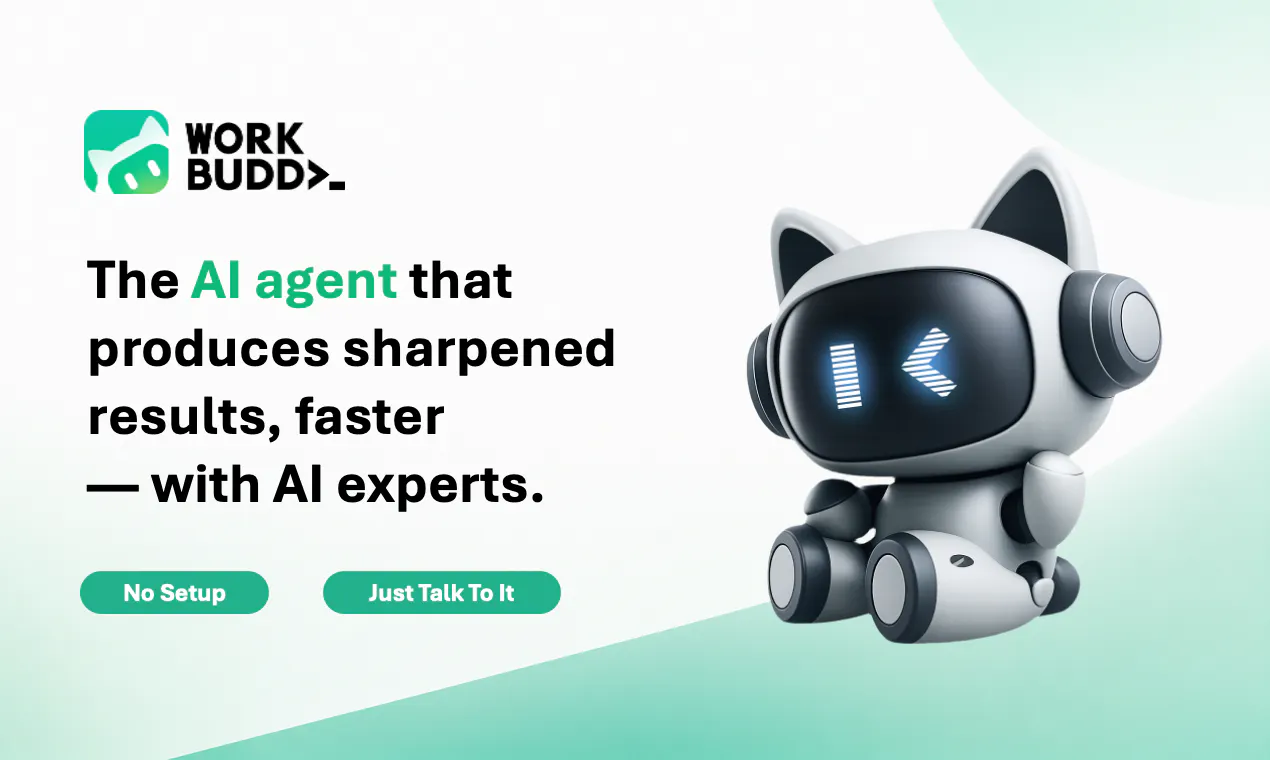
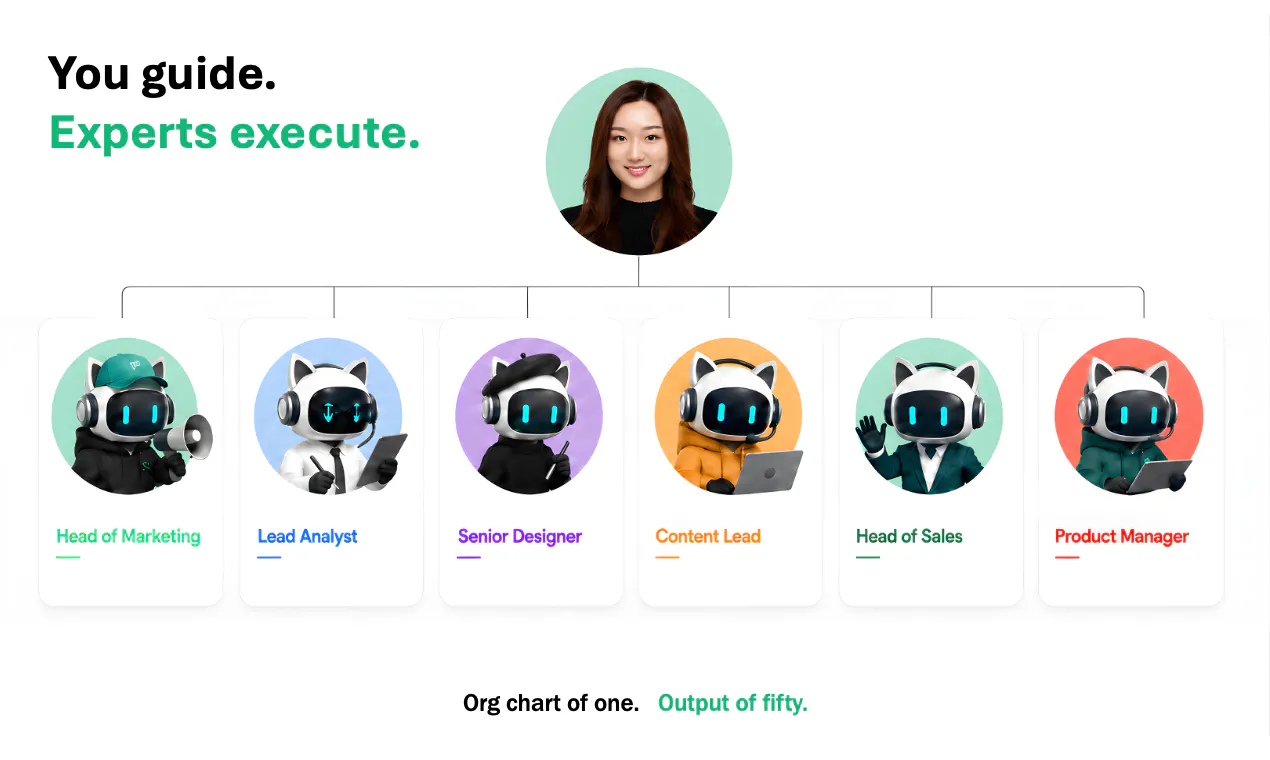
查看原始信息
AudioPad — Free, Open Source
AudioPad is a free, lightweight, open-source soundboard. Play audio through your microphone in Discord, Zoom, Teams, and games — with hotkeys and low latency.
Bro, I was SICK of paying for meme sounds. Let's be fr fr: you're 3 hours deep in a sweaty Valorant queue, your squad's getting clapped 11-3, and you NEED to drop the most unhinged Mia Khalifa sound bite to save the vibe. Like, STAT. But every soundboard app out here is on some straight-up clown shit. $9.99 a month???For what? A fancy MP3 player? Bro, that's wild. Get TF outta here with that. And don't even get me started on the "free" ones that lock half the good shit behind a paywall, or spam you with ads mid-ranked game. Like, bro, I'm trying to clutch a 1v5, not listen to a Raid Shadow Legends ad. No weird tracking. No accounts. No sketchy cloud shit. Just a simple ass program that does EXACTLY what you want: blasts funny sounds through your mic. That's literally all we wanted. Is that too much to ask? So we made that shit. For me. For you. For us. For everyone who just wants to be chaotic and meme on their friends without pulling out a credit card. No cap.
0
回复

The hotkey setup was surprisingly intuitive, and latency was basically nonexistent when I tested it in a Discord call. Definitely bookmarking this for streams.

0
回复

Finally tried AudioPad and the hotkey setup was way smoother than I expected, playback through my mic in Discord sounds clean with barely any lag.

0
回复

Love it. Global hotkeys and dedicated volume sliders are fantastic 👏
Trying it right now on my Fedora 😊 Does it work on MacOS too?

0
回复

This made me laugh 😭

Honestly, I respect the decision to keep this simple instead of trying to turn a soundboard into a "creator platform" with subscriptions, accounts, and cloud features nobody asked for. The open-source + no tracking approach is also a nice touch. For something that's literally just supposed to play sounds through your mic, that's exactly what I'd expect.

Curious... what was the hardest part technically? Getting low latency, virtual microphone compatibility, or making it work consistently across Discord, Zoom, Teams, and games?

0
回复