Product Hunt 每日热榜 2026-08-13

PH热榜 | 2026-08-13

#1
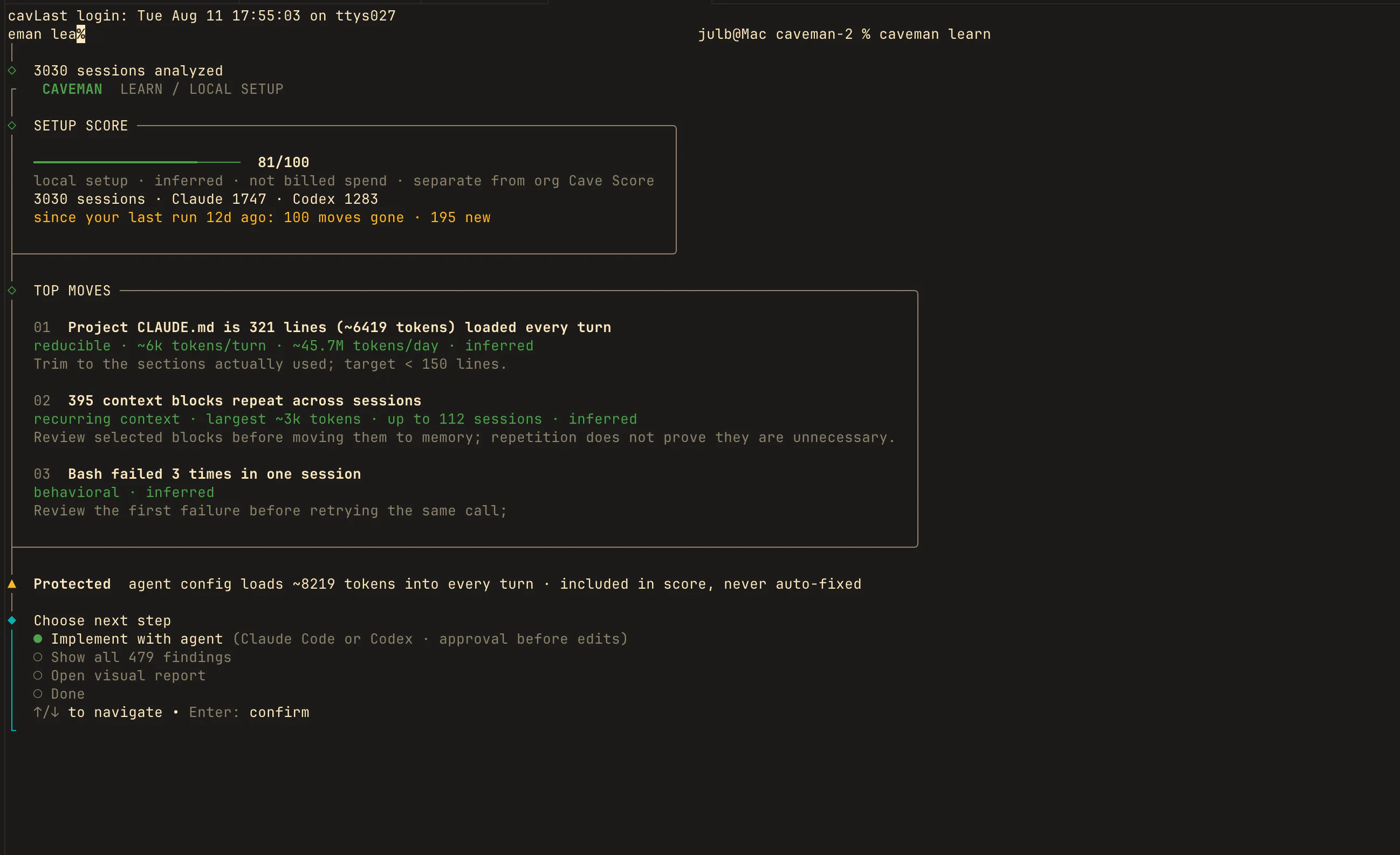
Kane CLI
Natural language browser & mobile app tests from terminal
378
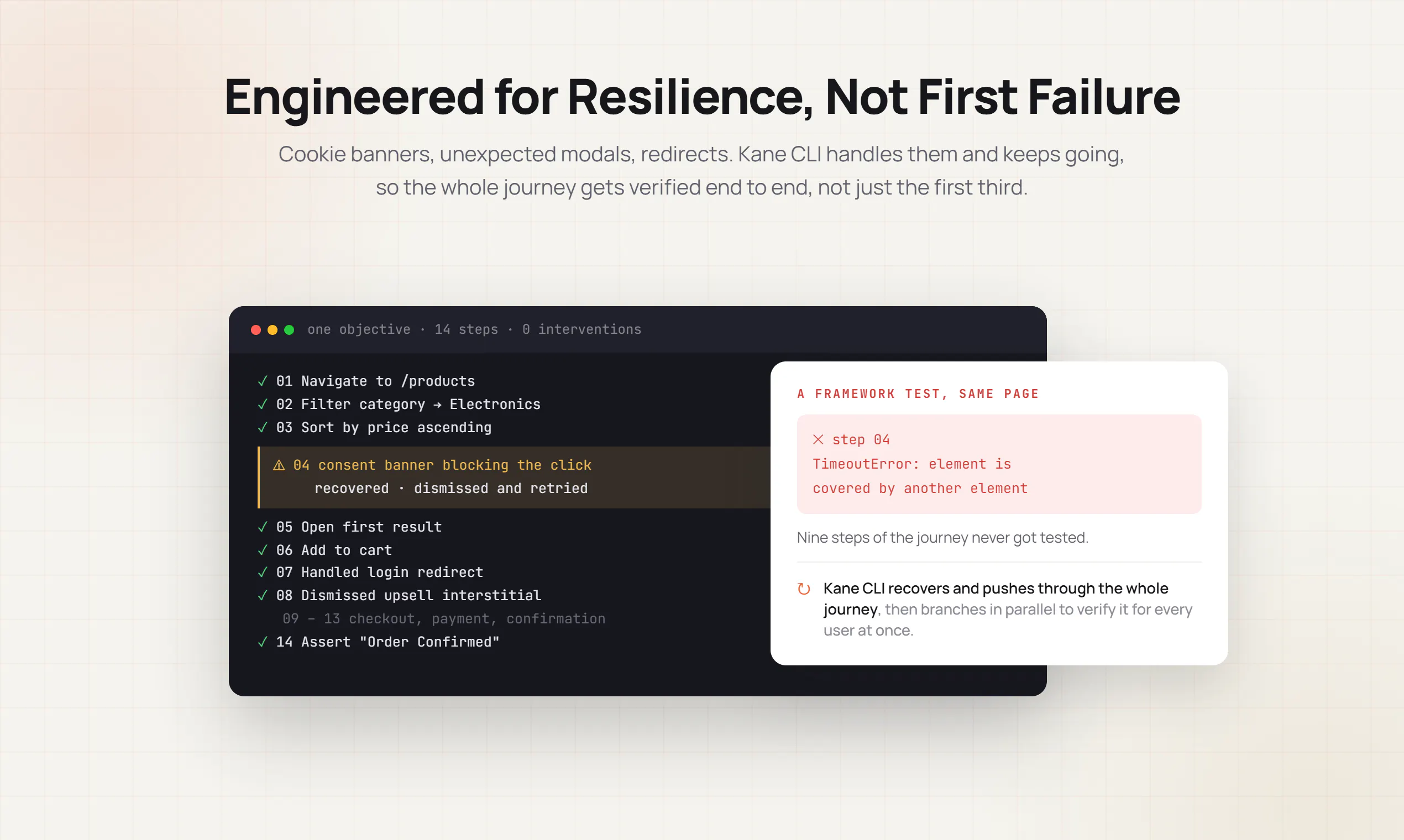
一句话介绍:Kane CLI 是一款面向开发者与AI编码代理的自然语言测试工具,让用户用一句日常英语描述测试目标,即可在真实Chrome浏览器或移动端模拟器中自动执行并返回“通过/失败”结论及可分享的证据包,省去编写和维护选择器的繁琐工作,解决“AI写代码快、验证慢”的信任瓶颈。
SaaS Developer Tools Artificial Intelligence
AI测试代理 自然语言测试 浏览器自动化 移动端测试 开发者工具 质量验证 本地优先 证据包 回归测试 Agent原生
用户评论摘要:用户普遍认可其“证据包+确定性回放”模式,认为解决了AI生成代码后的验证痛点。有效问题包括:PRD上下文理解上限(官方回应称靠场景分解而非长提示)、与Claude in Chrome的差异(回应强调导出确定性用例与CI集成)。早期用户还将其用于PR CI关键路径检查和自动化日常事务,惊喜用例是咖啡订购。
AI 锐评

Kane CLI踩中的不是“测试工具”赛道,而是AI编程时代“信任生产”的真空地带。其真正野心并非替代Playwright或Selenium,而是将“质量确认”从人工主观判断重构为一种可机器读取、可证据追溯、可确定性回放的客观协议——这恰好是AI Coding Agent规模化落地时唯一缺失的闭环。产品设计有几个极为刁钻的切入点:一是“Agent原生”而非“用户友好”,让Claude Code等代理能直接消费NDJSON输出并自主迭代,意味着它绑定的是下一代开发范式而非某个IDE;二是“确定性回放”策略,将一次性的AI探索固化为可重复执行的回归资产,既解决了AI行为的随机性,又为CI/CD提供了合理解释;三是“本地优先+免费起步”的获客逻辑,直接降低了企业尝鲜的信任成本。但风险同样明显:自然语言测试的门槛虽低,复杂业务流的状态管理、异步逻辑和跨域认证场景的“确定性”将面临严峻考验;且市面上已有Playwright MCP等替代路径,若Kane的智能生成质量与手工编写的Playwright代码差距过大,则“AI生成测试”可能只是另一层技术债。其真正的护城河,或许不在于自然语言转代码的模型能力,而在于围绕“证据包+AC覆盖率+测试管理器”构建的资产沉淀体系——但这需要足够的用户规模来验证是否真的产出了可量化的工程效能提升,而非仅仅停留在Demo演示的惊艳瞬间。

查看原始信息
Kane CLI
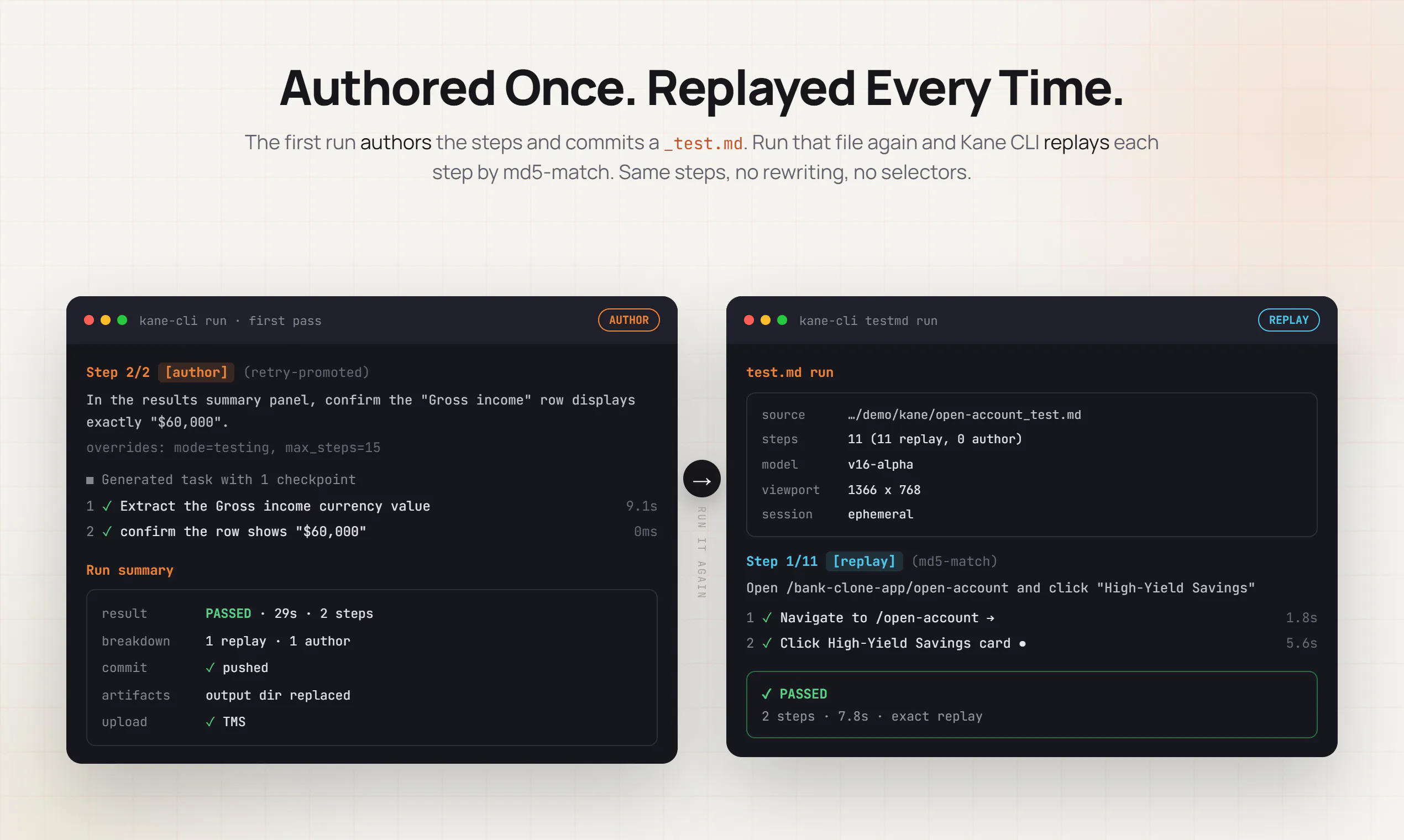
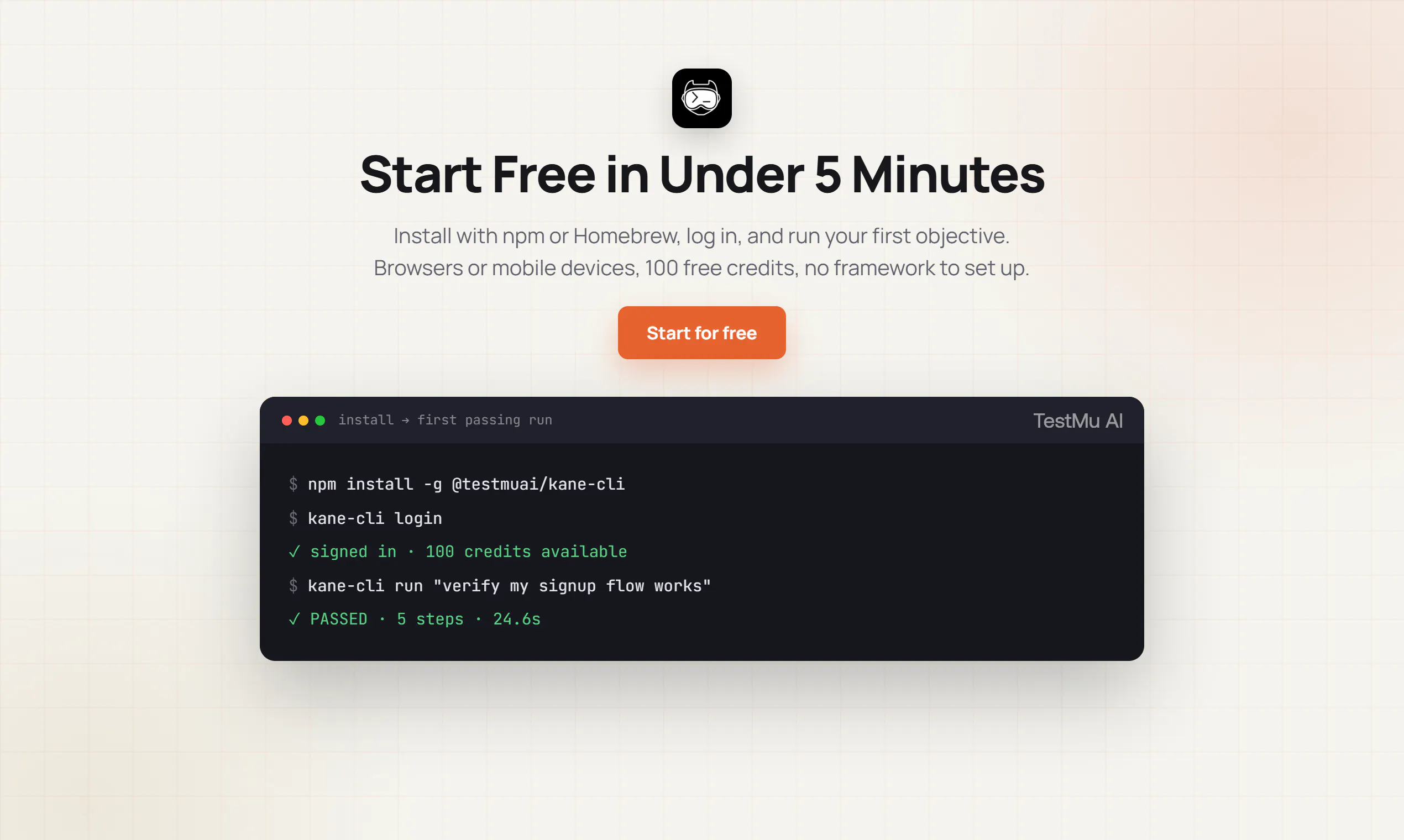
An agentic quality verifier for developers and AI coding agents. Describe a test in natural language, and Kane CLI runs it in a real Chrome browser and returns pass or fail with shareable proof. No selectors to write. Local-first, free to start.

Hi, I'm Jay Singh, Co-Founder of TestMu AI.

Every technology wave has the same shape. Capability jumps first. Trust catches up later. We saw it with cloud, and we are watching it again with AI.

The gap we kept seeing

⚡ AI writes the code in minutes now

🖱️ But someone still has to open the app and confirm it actually works

⏳ The building got fast. The assurance never did

That gap is the defining problem of this era of software, and it is why we built Kane CLI.

How it closes the loop

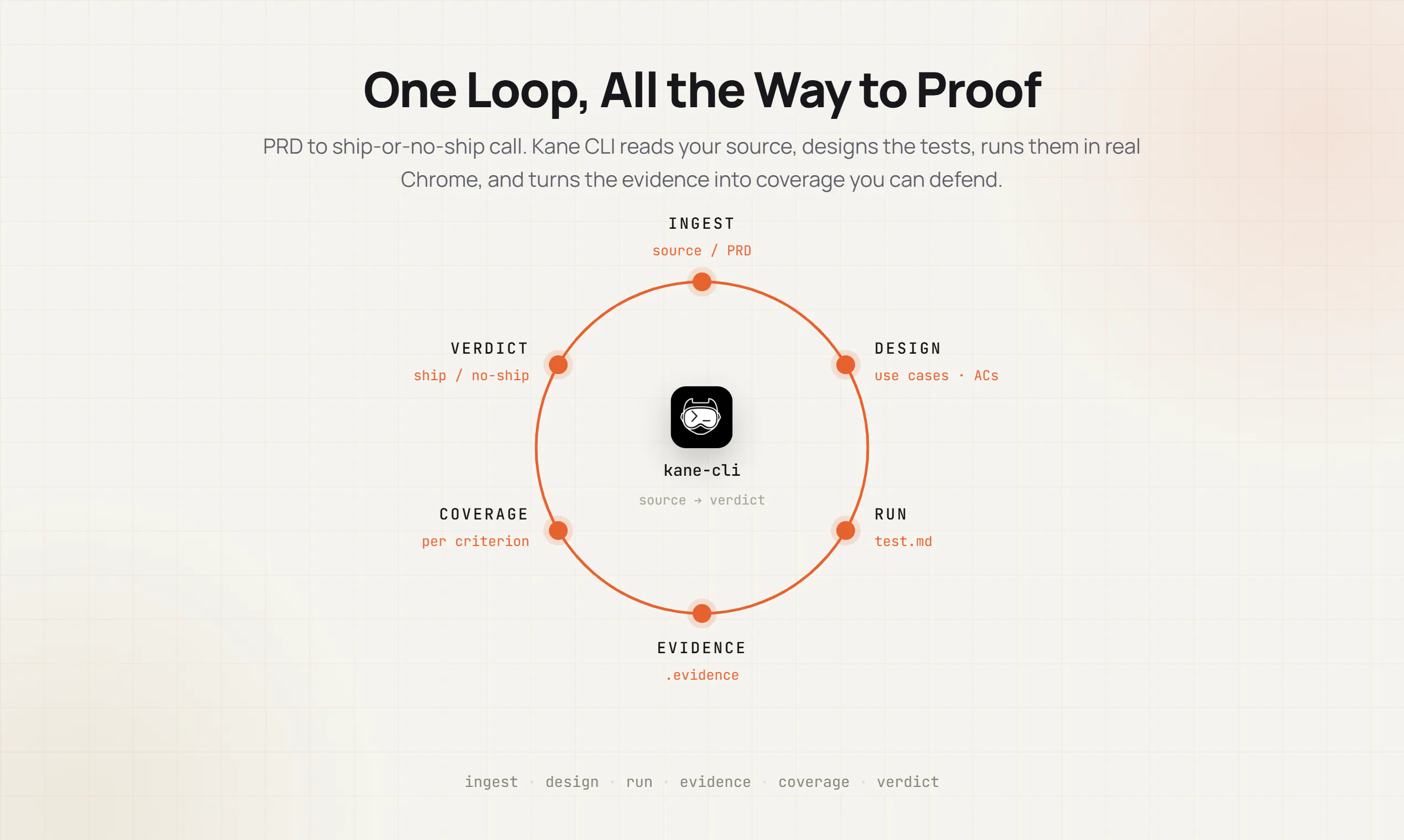
📥 Ingests your source or PRD

🧩 Designs the use cases and test scenarios

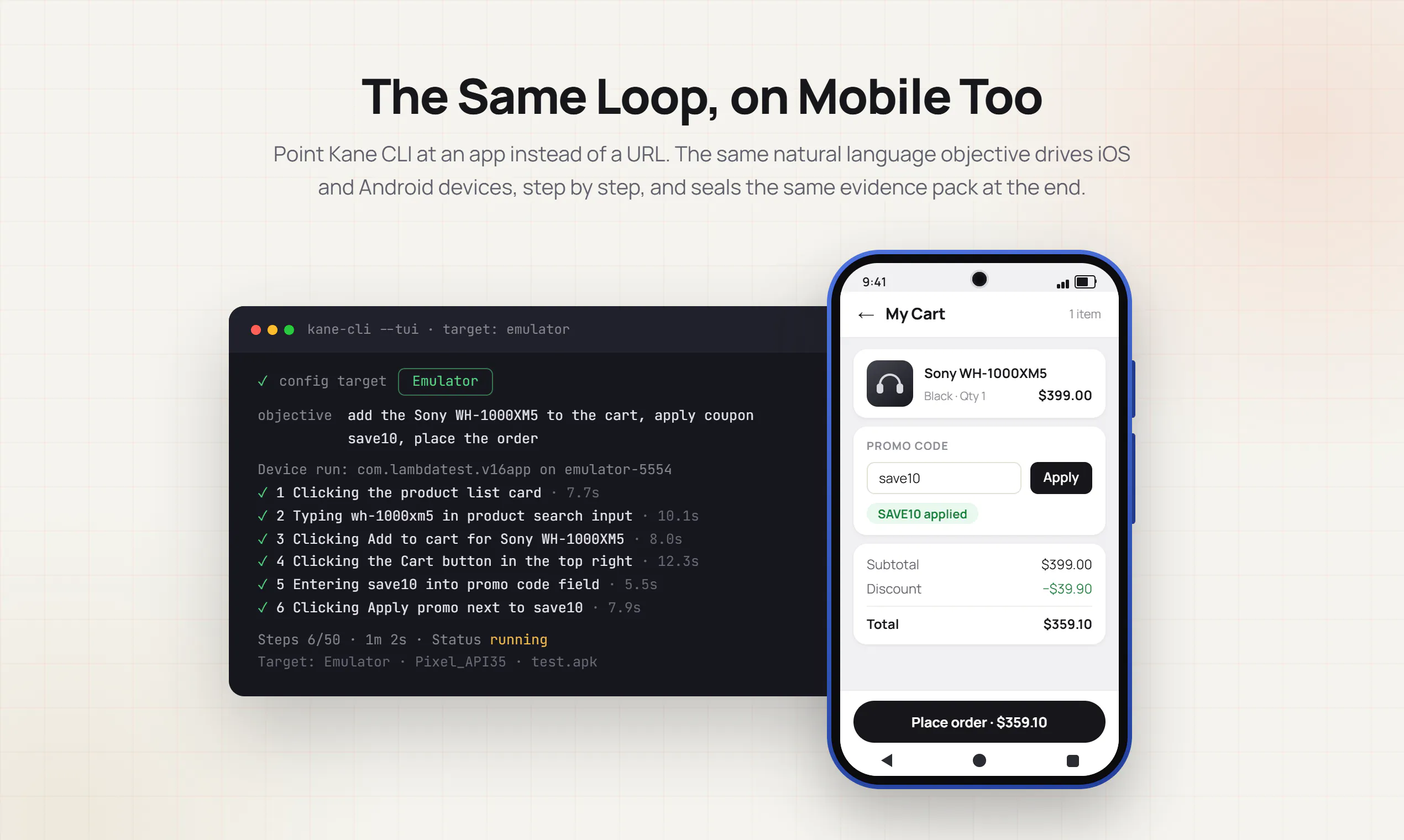
🌐 Runs them in a real Chrome browser, or on Android emulators and iOS simulators

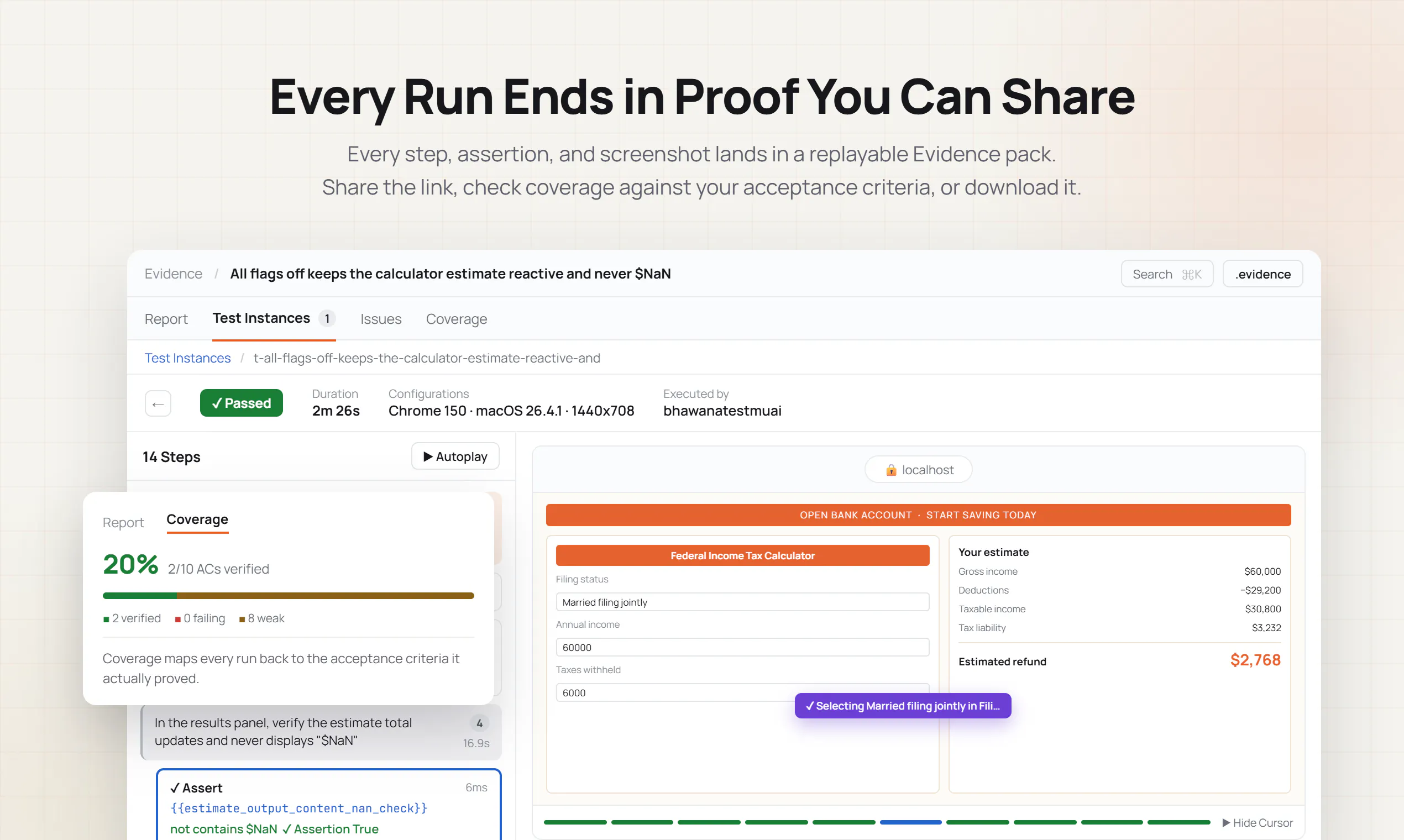
📸 Returns an evidence pack, AC coverage, and a verdict

Not just "did it run". Did it work, and can you prove it. ✅

We believe the next generation of software teams will not be measured by how fast they build. Everyone will build fast. They will be measured by how fast they can trust what they built. 🚀

Would love to hear how your team is dealing with this gap.

Learn more: https://www.testmuai.com/kane-cli-ph/

22
回复

@jay_0687 AI has officially reached the stage where it can build the house faster than we can check whether the front door opens. Haha🤣

That “building got fast, assurance never did” line hits hard. The bottleneck has quietly moved from “can we build it?” to “can we actually trust the damn thing?”

And I really like the evidence pack angle. A green checkmark is nice. Proof is better.

The interesting question for me is what happens when agents can both build and verify at the same speed. That feels like the point where software development stops being a faster version of what we do today and starts becoming something fundamentally different.

Curious how far Kane can push that loop.

0
回复

Hi, I'm Shantanu Wali, Head of AI Products at TestMu AI.

Most tools give you a test runner. We built an assurance loop:

📥 Ingest → your source, your PRD

🧩 Design → use cases, acceptance criteria, test scenarios

▶️ Run → test.md, executed in a real browser or on a mobile device

📸 Evidence → evidence pack for every run
📊 Coverage → how many ACs are covered

✅ Verdict → shipping confidence, backed by proof

Decisions we fought hard for

💻 Local first, running on your own Chrome
💬 Natural language objectives instead of selectors
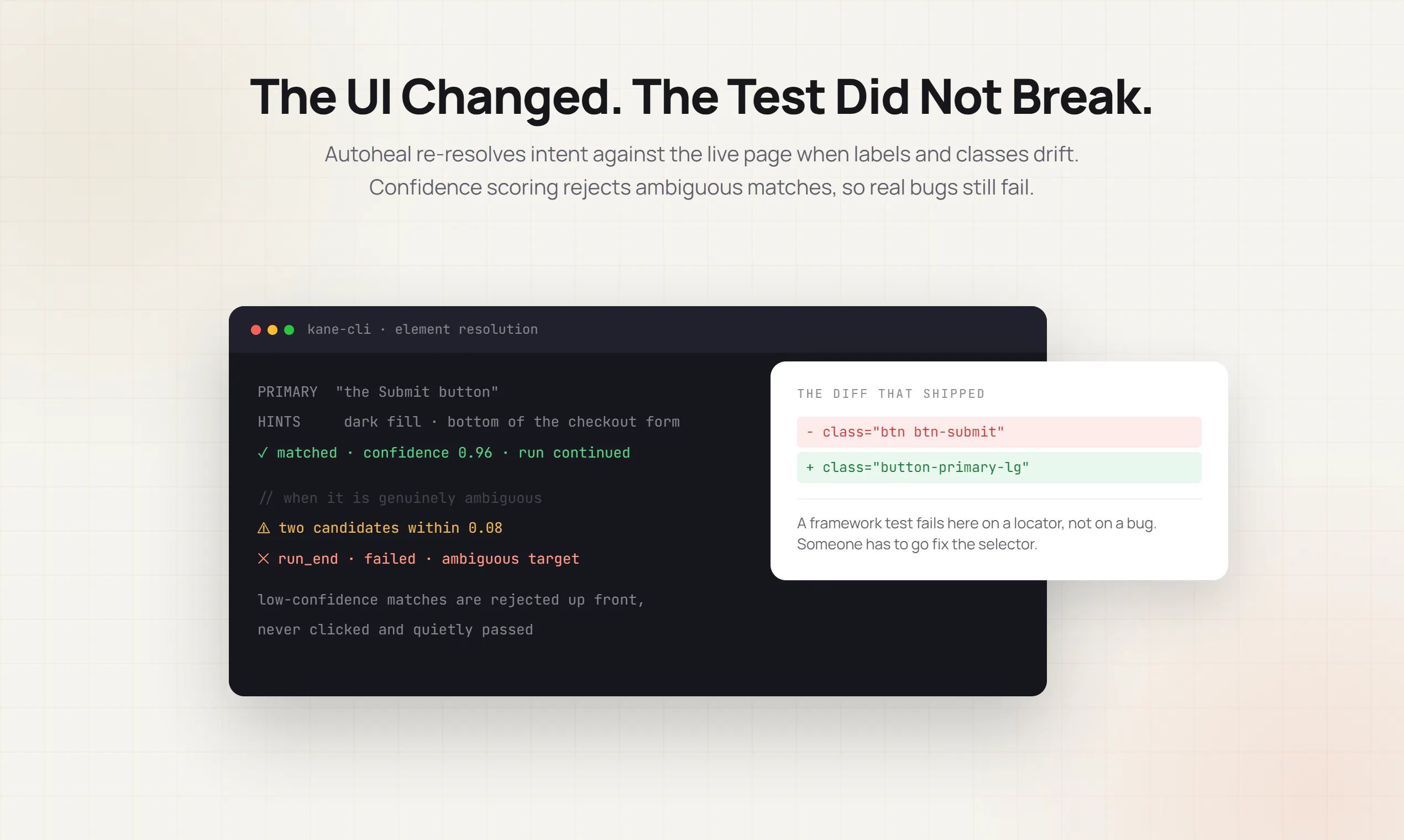
🔧 Autoheal, so cosmetic UI changes never break a flow
🤖 Agent-native output, so Claude Code or Cursor can call Kane CLI and read the verdict on their own

And starting today, mobile 📱
v0.8.1 makes mobile a first-class platform. Same setup, same sessions, same evidence model, now on Android emulators and iOS simulators. Run devices list, pick a target, and the AI reasons about mobile screens the way it reasons about web pages.

For the skeptics
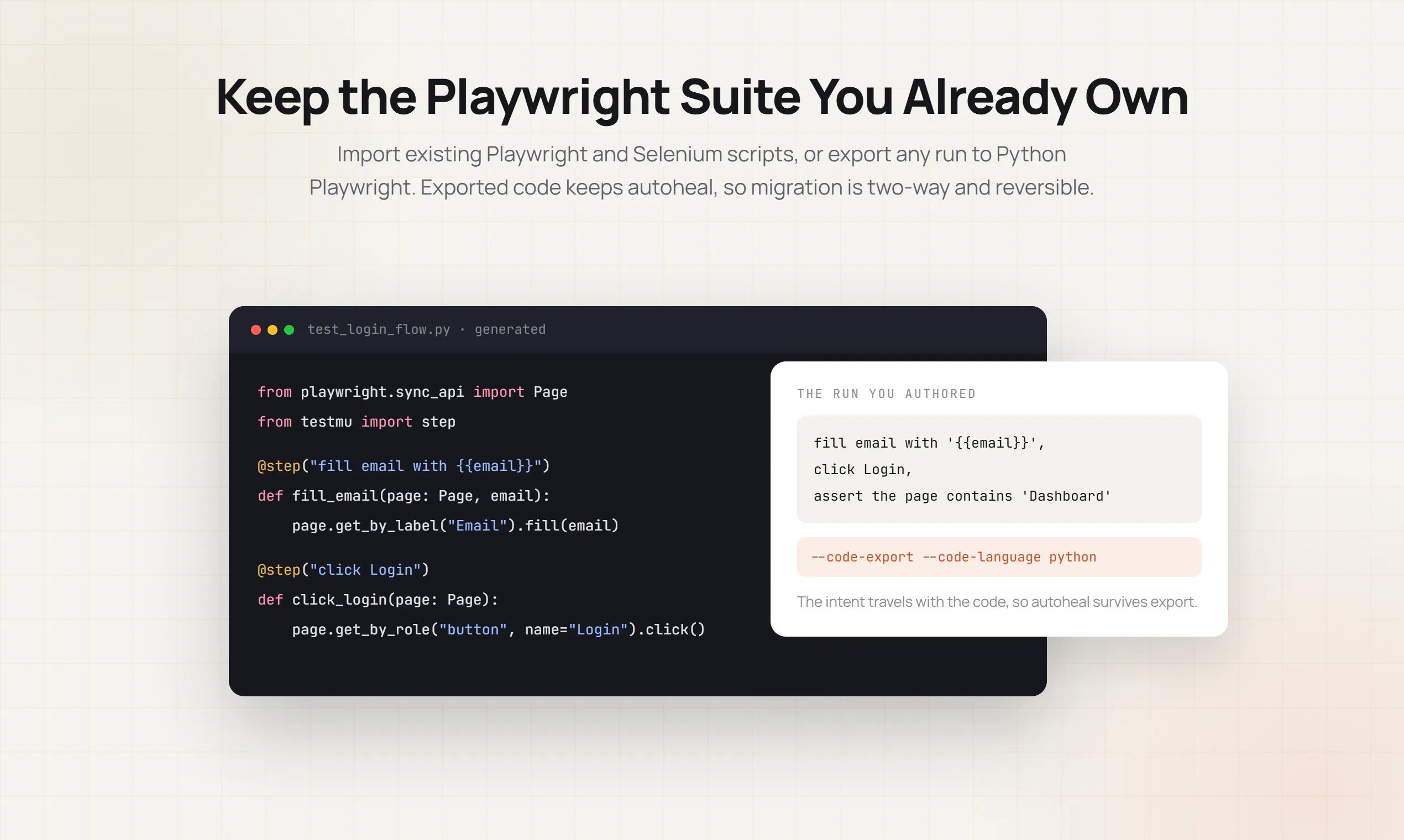
Hacker Mode exports any flow to native
Playwright code. Never locked in. 🔓


Ask me anything technical, I will be here all day.

Learn more: testmuai.com/kane-cli-ph

9
回复

@shantanuwali23 This is a really interesting approach to AI-powered testing. I especially like the idea of combining test execution with evidence and coverage, rather than simply reporting whether a test passed or failed.

Making mobile testing a first-class platform is also a great step, particularly with Android emulators and iOS simulators using the same workflow. The local-first approach and autoheal capabilities sound especially useful for teams that want reliable automated testing without constantly updating selectors after small UI changes.

The assurance loop from requirements through to a confidence-backed verdict makes the product feel much more practical for real-world development workflows. Looking forward to seeing how the mobile capabilities evolve!

0
回复

Hi everyone, I'm one of the engineers building Kane CLI. Good to finally have this out in the world.

The part I'm personally most proud of: we built it agent-native from day one. I've spent 2+ years shipping frontend at TestMu AI, and if that taught me anything, it's that writing UI was never the slow part, proving it still works after every change is. AI has made the writing nearly instant, which makes verification the real bottleneck. So we designed for it: every command can emit machine readable output, meaning it's not just humans in a terminal, your coding agent (Claude Code, Cursor, whatever you use) can invoke kane-cli, stream the run, read the verdict, and act on it inside its own loop. AI writes the code, Kane CLI verifies it in a real browser (or on mobile), and the agent gets machine-readable proof back. Closing that loop is what makes autonomous dev workflows actually trustworthy.

The other thing we obsessed over: a pass has to actually mean something. Every verdict ships with an evidence pack; screenshots, console logs, network responses; so a green check is never "the model felt good about it." You can see exactly what was verified, and when something fails you're not guessing.

It's local-first and free to start. Happy to answer any questions in the comments.

7
回复

Big day for us at TestMu AI

I have watched Kane CLI come together from the inside, and the part that still gets me is watching it in action. You type what you want verified in natural language, a real Chrome window opens, it works through the flow, and comes back with an evidence pack and a verdict. No selectors written. No framework set up.

And the timing of this launch could not be better. As of today it does the same thing on Android emulators and iOS simulators. Same commands, same evidence, now on mobile.

The team has poured months into getting the details right, determinism, Autoheal, agent-native output, and it shows.

Proud of this one. If you ship with AI agents, or you are just tired of clicking through your app before every release, give it a run. First verdict lands in minutes.


Learn more: https://www.testmuai.com/kane-cli-ph/

7
回复

How much context can Kane understand from a PRD before generating the actual browser scenarios?

7
回复

@nuseir_yassin1 Kane doesn't read the PRD as one giant prompt. Durable context - domain terms, roles, business rules - goes into a project context file that applies to every run. Each scenario is then one objective, with multiple acceptance criteria. The constraint isn't context window, it's decomposition.

The limit isn't how long your PRD is, it's how well it decomposes into self-contained scenarios.

6
回复

Hi, I'm Mudit Singh, Co-Founder of TestMu AI.

The thing I love most about Kane CLI: the whole loop works for everyone.

👨‍💻 Developers feed it a PRD and get scenarios, runs, and a verdict before the PR
✍️ Business teams can describe flows in natural language and automate the boring browser stuff
🤖 AI agents run it to verify their own work and read the verdict straight from the output
📱 Mobile teams, starting today: point the same commands at Android emulators and iOS simulators

Every run leaves an evidence pack. Every verdict is backed by AC coverage. Nothing rests on "trust me, I checked".

Getting started is the easy part


The Starter plan is free. One install command, npm, brew, or curl, and your first verdict lands in minutes.

Try it, break it, tell us what is missing. Your feedback this week directly shapes the roadmap.


Learn more: testmuai.com/kane-cli-ph

7
回复

Kane CLI is the future of agentic verification systems.

5
回复

@chaitgpt1 Thank you Chaitanya 🙌 Agentic verification is exactly the category we are building. The agent builds it, Kane CLI proves it works.

0
回复

how is this different from Claude in Chrome?

4
回复

@naima_dar Kane-CLI does everything Claude in Chrome does: drives a real browser from natural language, navigates, fills, clicks, verifies. The difference is what it leaves behind.

Claude in Chrome reasons its way through the task every time you ask. Kane does that once, then hands you a deterministic test case: exported code, structured NDJSON, per-step logs and screenshots, all persisted to Test Manager. The next thousand runs replay that artifact instead of re-deriving it. Same result every time, in CI, with a real exit code.

That's the future-proofing. Agentic exploration is how you author the test; determinism is what makes it a regression suite you can trust six months from now.

7
回复

Hi, I'm Mayank Bhola, Co-Founder and Head of Products @TestMu AI

It started with a pattern that would not go away. Agent ships the code. PR merges. Tests pass. Three days later someone opens the app and the button does not work.


Everyone kept asking how to make agents write better code. Wrong question. Agents could already open browsers and check their work. The output was the problem. Different result every run. No verdict you could trust. Loop it enough times to be sure and you have burned real money for a maybe.

So we set one non-negotiable bar: determinism


Same flow, same result, every time. A pass is granted only when the expected state is verified through explicit evidence:

  • DOM state and URL changes

  • Network responses

  • Screenshots and console logs

  • AC coverage behind every verdict

And as of today, that bar holds on mobile too


v0.8.1 brings the same verification contract to Android emulators and iOS simulators. Same evidence, same replay, same verdict you can defend.

This is the layer I wished existed every time a merged PR broke in production. Now it does, on web and mobile.

Break it. Question it. I am here all day.


Learn more: testmuai.com/kane-cli-ph

4
回复

Testing across browsers and real devices already creates plenty of complexity. Adding agentic reasoning could make that easier to manage.

4
回复

@bastienrenard That's exactly the bet 🙌 The matrix is rarely the hard part, maintaining it is. One DOM change and you're patching selectors across every target.

Agentic reasoning keeps the objective stable and lets the agent resolve the path each run. Which is also why every Kane CLI run ships with evidence, not just a green tick ✅

2
回复

This is super useful, especially with how much code is being written by AI now.

4
回复

@henry_habib Thanks Henry! That is exactly the gap. AI made writing code fast, verifying it stayed manual. Kane CLI closes that loop.

0
回复

What has been the most surprising use case you've seen from early users?

Congrats @jay_0687 & team!

4
回复

@hamza_afzal_butt Ooh fun question thanks Hamza 🙏

Most fun one: a user runs Kane CLI with their agent to order coffee on a schedule ☕😂 we built a quality verifier, he built a barista.

Most clever one: teams dropping Kane CLI into PR CI as a critical path check. Every PR gets asked "does the money flow still work?" in a real browser before it merges. Synthetic monitoring, shifted left into the review loop 🫡

3
回复

Launch day energy is real today 🎉


I have told the Kane story on stages and in campaigns for months, and the reaction is the same every time. People assume they will need to write code or learn a framework. Then they watch someone type a sentence in natural language, a real browser opens, and it comes back with an evidence pack and a verdict.

That moment when the room goes "wait, that's it?" never gets old.


And today the story got a new chapter: the same commands now run on Android emulators and iOS simulators too.


Even outside engineering, I use Kane CLI for my own repetitive browser work. That is the part I love most, it is not just for engineers.
The Starter plan is free, so go break it and tell us what you think. The team is here in the comments all day.


Learn more: https://www.testmuai.com/kane-cli-ph/

3
回复

I had been looking for such a product that can help me in validation during my development sessions. Kane CLI seems like the perfect tool that will really help me keep my work bug-proof. Amazing!!

3
回复

@shreyash_pandey2 Thanks Shreyash 🙌 That is the exact workflow it was built for: verify while you build, not after. The Starter plan is free, would love to hear how your first runs go.'

0
回复

Agentic mobile test was the missing piece of the puzzle. Kane CLI seems to be solving that perfectly well!

2
回复

@misbah_farooqi Thanks a lot Misbah 🙏🚀

0
回复

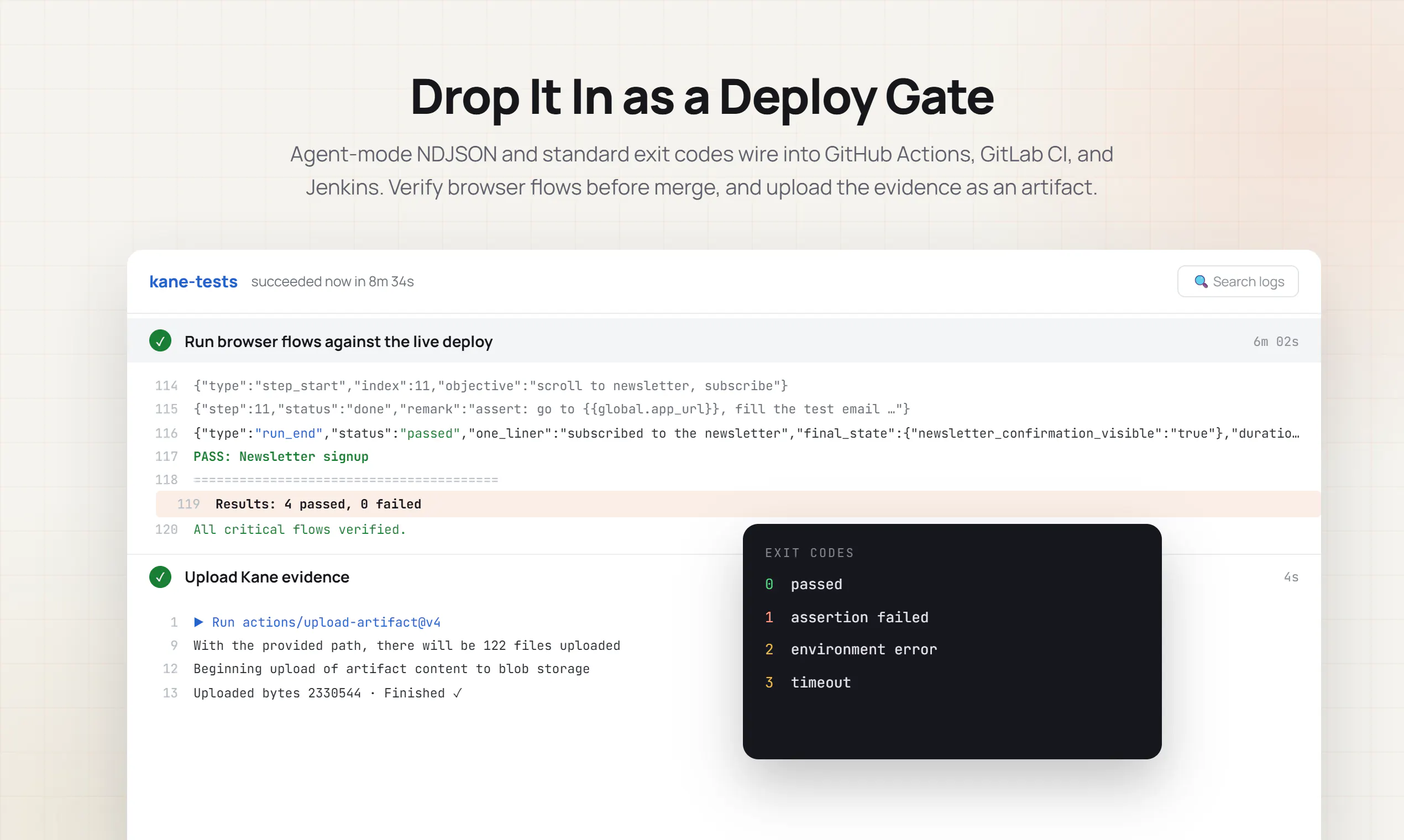
Could developers trigger Kane directly from CI/CD and block deployments automatically when critical browser workflows fail?

2
回复

@himani_sah1 KaneCLI can directly run from CI/CD pipelines and allow you to create validation harness. If critical flows break, you changes can be blocked. More information available here: https://www.testmuai.com/docs/kane-cli-cicd

0
回复

The build-fast, trust-slow gap is very real. I like how Kane CLI focuses not just on running tests, but on producing evidence teams can actually trust and share.

How do you see Kane CLI fitting into an AI coding workflow,should testing happen automatically after every code change?

1
回复

@hareesh_vemasani Yes, exactly, verification after every change, not as a phase at the end. Your coding agent calls Kane CLI after writing code and fixes its own bugs before you look, and in CI it acts as a deploy gate that blocks merges when critical flows fail. When building is this fast, verification has to be just as continuous.

0
回复

I really love KaneAI’s conversational approach to generating critical test scenarios from the provided documentation. It frees up my local machine’s resources while helping me explore and work with different aspects of the platform more efficiently. Overall, KaneAI has made the testing process smoother, faster, and more collaborative.

1
回复

@anmol_soin1 Thank you Anmol, love hearing this 🙌 KaneAI keeps doing exactly that, conversational scenario generation from your docs, and it is going strong. The fun part: Kane CLI shares the same engine, brought to the terminal. Same intelligence, now living where developers and coding agents work, with an evidence pack and verdict on every run. Two surfaces, one engine, and the workflow you described gets faster on both.

0
回复
Excited to use it ! Is this free to try ?
1
回复

@lt_prakhar Yes! The Starter plan is free with 100 credits, no framework setup. One install command and your first run lands in minutes 🚀

0
回复

Congrats, team! How does Kane decide whether a natural-language test has actually passed when the page behavior is slightly different than expected?

1
回复

@kate_ramakaieva Thanks Kate! A pass is never vibes. It is granted only when the expected state is verified through explicit evidence: DOM state, URL changes, network responses, screenshots. If the page differs cosmetically (moved button, new label), Autoheal re-resolves the intent and continues. If the expected outcome itself is not met, or the match is genuinely ambiguous, it fails loudly. Real bugs still fail.

0
回复

the ask-tool pause on OTP/CAPTCHA instead of guessing is the right call. since the exported case replays deterministically, what happens when the site's UI shifts a little, a moved button or new copy, does it re-derive from the original NL description or does someone have to re-record?

1
回复

@sabber_ahamed That is handled a level above element healing. Run with --retry and Kane CLI auto-detects when the flow itself has changed, a new step in the journey, a reordered screen, and adapts the run to the live flow instead of dying on the old script. Checks heal on replay as well, so the test.md keeps working without anyone re-authoring it.

0
回复

Does Kane handle logged-in flows automatically, or do we need to set up auth ourselves?

1
回复

@deepak144 Both work. You can log in as part of the objective itself, just describe it in natural language with your credentials as variables. Or for flows that depend on an existing session, use a named Chrome profile: run kane-cli config chrome-profile, log in once, and every run after that starts already authenticated. No auth code to write either way.

0
回复

Awesome, i have been needing to formalise our test releases.. this is just what i was looking for.

0
回复

@lachlan_greenbank Love that Lachlan 🙏 That's the exact gap we built for. Tests live as _test.md in your repo, every run comes back with an evidence pack, and you can gate the deploy on it.

0
回复

Does the product integrate with other systems?

0
回复

@dan_rotaru Yes! CI/CD out of the box (GitHub Actions, GitLab, Jenkins) via exit codes, coding agents like Claude Code and Cursor via structured NDJSON output, and two-way Playwright/Selenium: import your existing scripts or export any run to native Playwright code.

0
回复

the machine-readable verdict for agent loops is the right instinct, that's the same gap I hit running voice model evals: a pass/fail with no provenance just means trusting the model again. does the evidence pack capture intermediate state, or just the final screenshot, when a flaky animation causes a false fail?

0
回复

@sabber_ahamed Great instinct, and it goes well beyond a final screenshot. The evidence pack captures per-step screenshots (with annotated copies), a full HAR network log, console output as NDJSON, and failure records, all replayable step by step. So on a flaky animation you can see exactly which intermediate state the check ran against, not just the end frame. Provenance is the whole point: a verdict you cannot trace is just trust with extra steps.

0
回复

AI coding agents desperately need something like this. Writing code is becoming easy; reliably verifying the result is becoming the bottleneck.

0
回复

@subhash_kanagamani Exactly the thesis we built on. The bottleneck moved from writing code to trusting it. That is why Kane CLI is agent-native out of the box: Claude Code or Cursor can call it, read the verdict from structured output, and close their own loop. Would love to hear how you are handling verification today.

0
回复
What happens when a test encounters a CAPTCHA, unexpected modal, or authentication challenge halfway through execution?
0
回复

@priyankamandal Kane CLI does not fail silently or try to bypass these. It has a built-in Ask tool: when a run hits an OTP screen, a CAPTCHA, a payment confirmation, or any ambiguous state, it pauses, asks the human for input, and resumes exactly where it left off once answered.

0
回复
#2
Ito
AI code review that runs your code
362
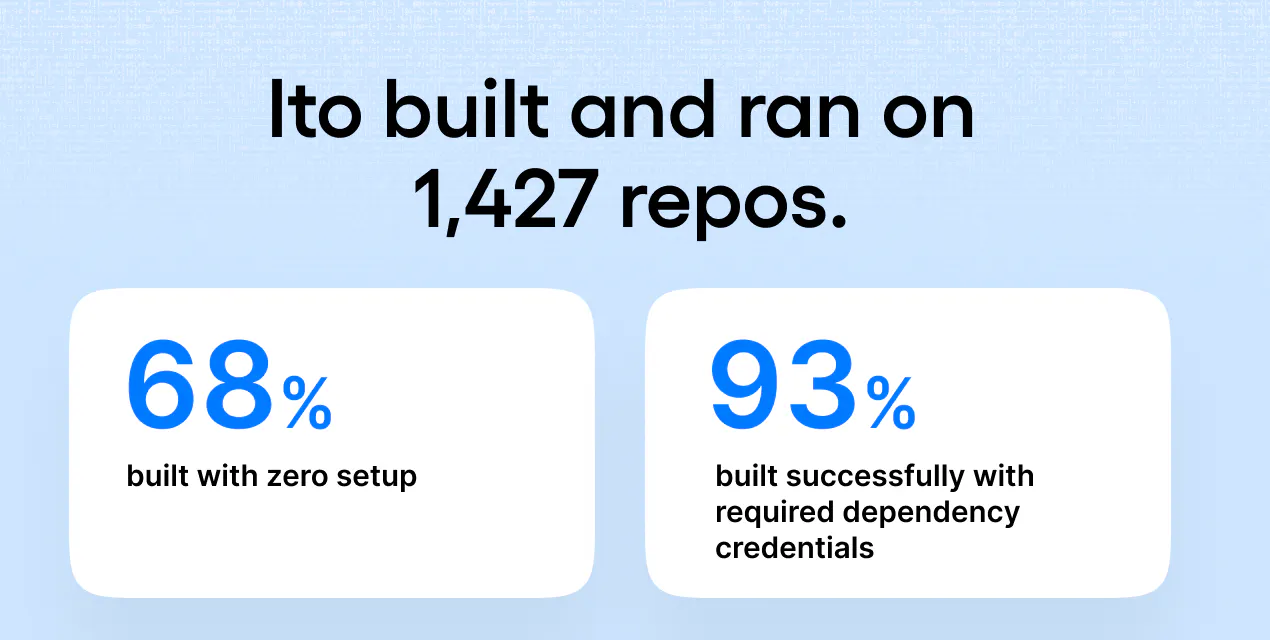
一句话介绍:Ito是一款在代码评审前真正运行应用的AI审查工具,通过为每个PR创建临时环境并驱动代理执行测试,用运行时证据捕获静态分析与纯模型审查遗漏的深层Bug。
Developer Tools Artificial Intelligence GitHub
AI代码审查 运行时验证 临时环境 代理测试 自动化测试 开发者工具 CI/CD 质量保障 开源支持 DevOps
用户评论摘要:用户肯定其运行时差异化价值,但核心质疑集中在mock数据可信度(是否明确标记)、环境启动失败时反馈机制、与Greptile TREX的对比,以及非工程师“无需审批即可发布”场景的独立价值。团队回应强调信任机制与执行优先,但部分问题未获解答。
AI 锐评

Ito的切入点精准命中了AI生成代码潮下的信任危机——当代码产量超出人类审查带宽,传统静态工具仅能提供“预测”,而Ito用临时环境将预测转化为“观察”,这确实是对评审范式的革新。但产品的真正护城河并非AI代理或测试编排,而是它刻意回避的“环境搭建”这个脏活累活,恰如创始人所言,这是DoorDash级团队都耗不起的工程黑洞。

然而,锐评必须指出三个隐忧:其一,mock与真实服务的边界虽声称透明披露,但“窄依赖mock”的策略在复杂分布式系统中极易被绕过,一旦误判为“通过”将比静态分析产生更具欺骗性的安全幻觉;其二,产品宣称“运行代码”却面对大量依赖云服务、私有证书的现代应用时,环境复现的保真度天花板低,评论中“容器起不来时报告什么”的尖锐问题仅得到emoji级别的回应,暴露了失败模式的沟通粗糙;其三,定价策略看似友好(前100次免费,开源免费),但“运行速度越用越快”的自我学习能力是把双刃剑——它可能固化了测试路径的惯性,削弱对新异常模式的探索。值得注意的是,评论中“非工程师无权限审批即可发布”的洞察点破了产品更深层的价值:它不仅是代码审查工具,更是重构软件发布权力结构的潜在杠杆。若Ito能成为事实上的运行时验证标准,那么“谁有权上线”的决策将从人转移到工具生态。但在此之前,它需要先解决“看起来可信”与“实际可信”之间的鸿沟。目前,它证明了方向,尚未证明可规模化地精确。

查看原始信息
Ito
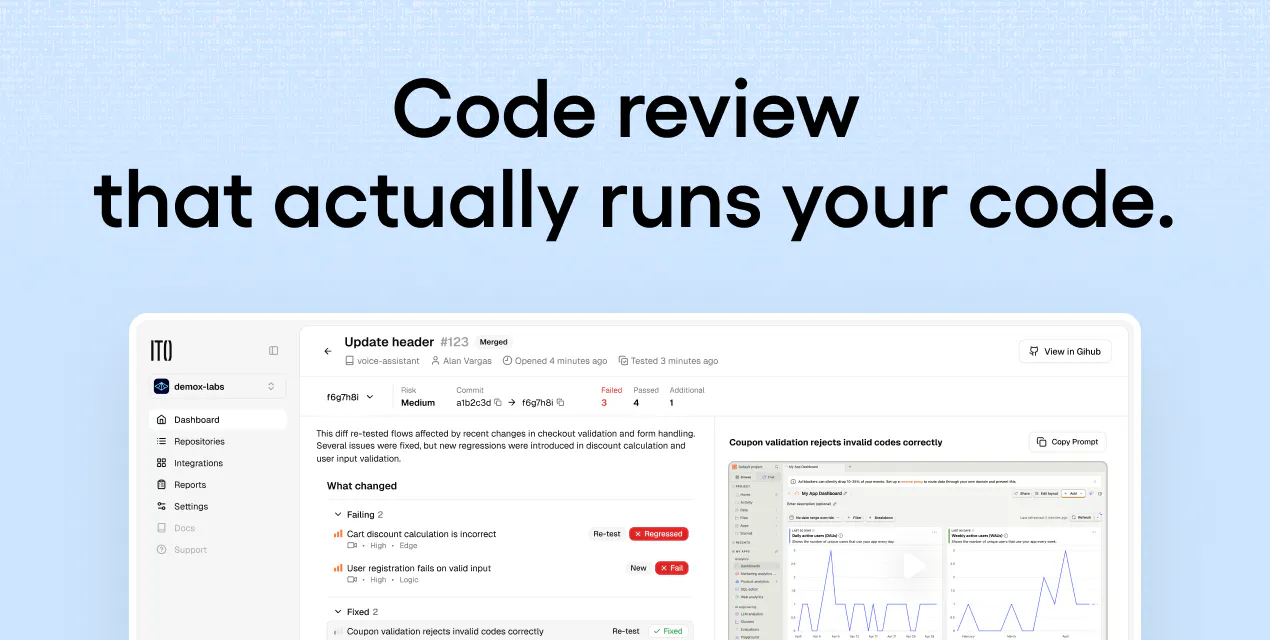
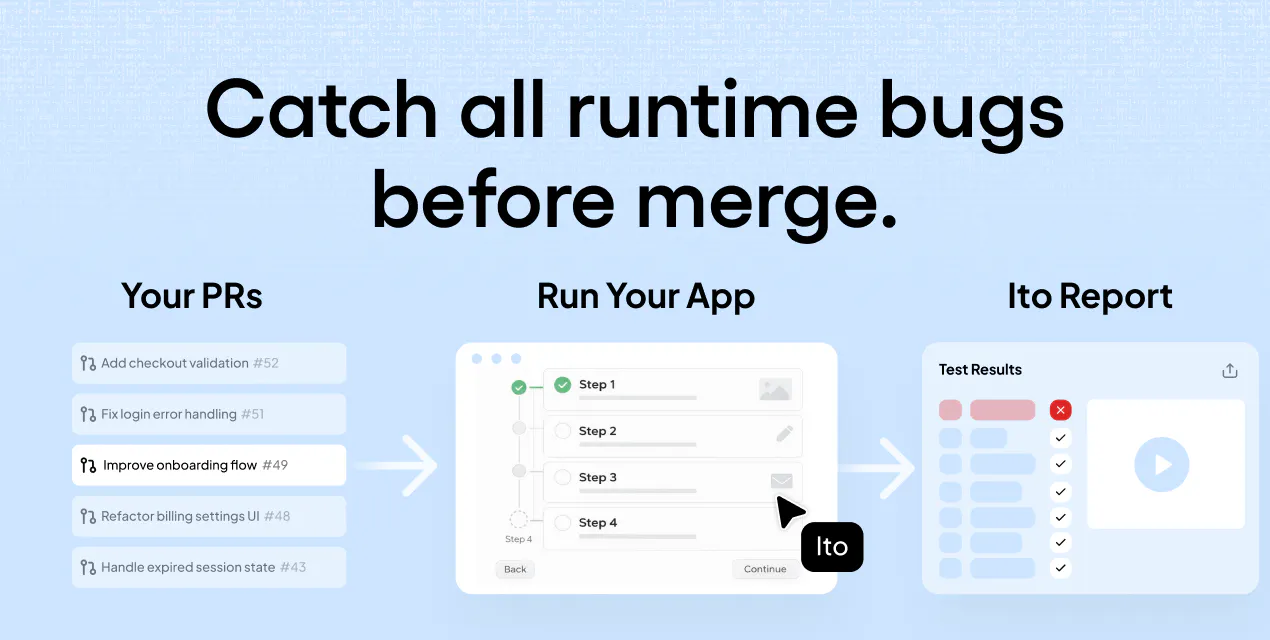
Ito is an AI code review tool that runs your app before it reviews the code. For every pull request, Ito spins up an ephemeral environment, validates impacted flows, and returns runtime evidence so teams can catch bugs that static analysis and model-only reviewers miss. Instead of guessing from diffs, Ito shows what actually broke, where it happened, and why it matters before the PR reaches production.

Hey Product Hunt. I'm Evan, cofounder of Ito.

Coding agents produce more code than you can review. Existing code review tools only stare at the code, so you still have to review tons of code or build complex internal systems to verify it.

Ito is a runtime code review tool. On every pull request:

  • Creates test plan from code, PR description, ticket, your input

  • Builds your app in a single-use isolated container with the ability to use credentials, seed data to reach the state that matters, and use external services just as an engineer would on their local machine. Mocks data/code when it doesn’t have access.

  • Drives the app with a swarm of agents (click, navigate, API call, db verification)

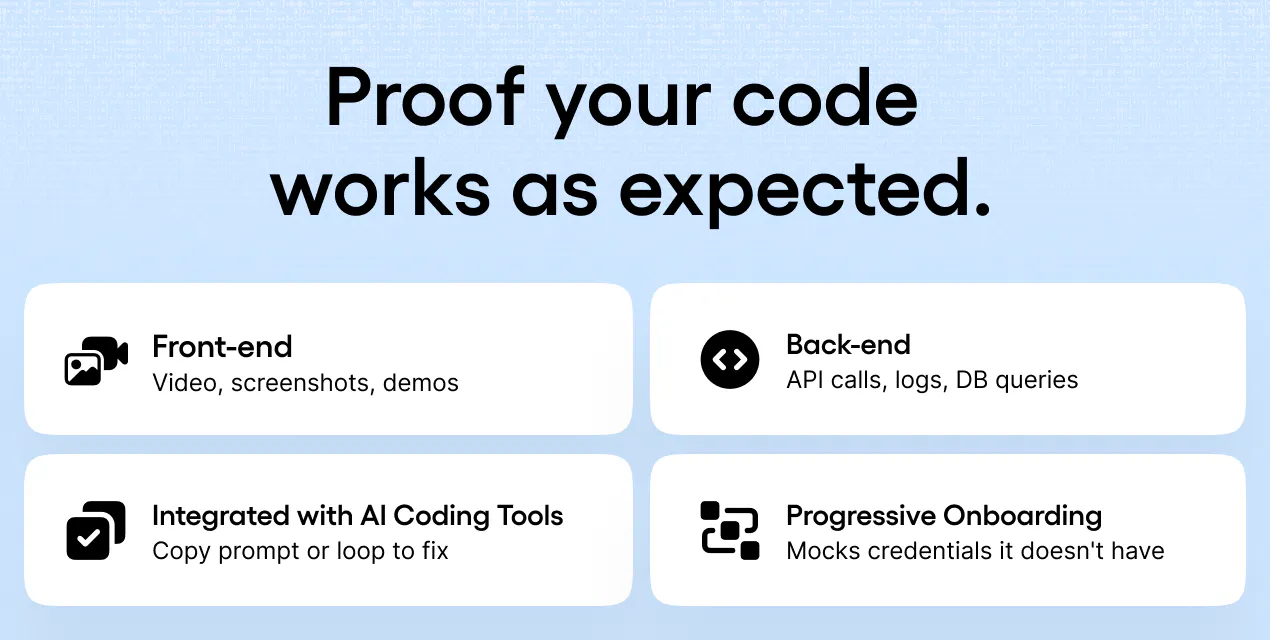
  • Catches runtime issues: concurrency, failure handling, data migration, authentication, etc.

  • Posts results on PR with evidence: video, logs, screenshots

We built Ito with a team of 8 MIT engineers, and spent many cycles to arbitrarily build any application. 

Ito gets better the more you use it:

  • Responds to feedback

  • Faster runtimes every run as Ito learns how to navigate your application and builds tools to manipulate your environment

  • Reviews focused on the areas you care about (sees what gets fixed vs ignored)

  • Test instruction per org, per repo, or per author

First 100 reviews free, no card. $40/mo after that. Free forever for open source (already supporting >100k stars): app.ito.ai?ph

You can also try out open source PRs without signing up here: https://www.ito.ai/review?ph

21
回复

@evanmarshall Boom..congrats on the launch🙌 If a PR has broken build scripts does Ito fail fast and comment on the PR or does it attempt to self-heal the setup script?

7
回复

@evanmarshall What made you want to build this? I know it must be personal.

4
回复

@evanmarshall AI has officially reached the point where it can write code faster than humans can develop the emotional strength to review it.

The runtime angle is what really stands out here. Code can look perfectly reasonable in a PR and still fall apart the moment real users, real state, concurrency, auth, or an actual database enters the chat.

And having a swarm of agents actually drive the app, verify the database, and come back with screenshots and video feels much closer to “prove it works” than another static code review.

The interesting part is that Ito gets better from what teams actually fix versus what they happily ignore. That feedback loop could become seriously powerful.

Curious though: as agents write more of the code, do you think runtime review eventually becomes the default layer of software development rather than a safety net? 👀

0
回复

Love the runtime angle. How do you handle PRs that touch external services — mock them in the ephemeral env, or spin up real instances?

6
回复

@bhaumik_lathiya thank you for the question! Ito's preference is to test with the real service as that is the highest-fidelity way to test at runtime. Dependencies that can run locally (databases, caches, queues, even sibling services in multi-repo setups) are spun up for real inside the ephemeral environment. For true third-party APIs, customers can securely share the secrets and variables their app needs to connect to them. If Ito still can't reach a service, it leverages the fact that it's running in an isolated environment and uses clever techniques to mock that specific service so it stays unblocked and tests the core of the system in question. Every test result also discloses what was mocked, so you always know the provenance. Finally, if the repo needs something custom to get Ito truly running as smoothly as possible, our team works directly with you to tailor the environment to your stack so the testing is as high-fidelity and extensive as possible.

2
回复

Hi, I'm Barron Caster, Co-Founder of Ito AI.

The thing I love most about Ito: gives me confidence to ship fast as a non-engineer. I've fully taken over our marketing site and don't have to bother engineers to check my code.

  • Vibecoding our entire marketing site & infra (design, content, performance improvements, SEO, etc)

  • Knows entire context of our codebase so nothing gets left behind. Can request specific tests if I want them (e.g. focus on mobile usability of the blog)

  • Videos of everything working for every change (and feature demo videos coming soon)

Now the whole team is shipping faster.

Easy to try and see how Ito can help your team: app.ito.ai?ph

5
回复

@barroncaster congrats on the launch! ito seems like the perfect partner product to the revolution of vibe coding for those of us who aren't engineers.

2
回复

@barroncaster The non-engineer angle is the most interesting use case on this page and it is the one buried furthest down.

Everything above it is about reviewing code faster. Yours is about who is allowed to ship at all. A marketing site that a non-engineer fully owns, without a queue of engineers checking it, is a different product than "AI code review", and it sells to a person who does not currently buy code review tools because they were never in the market.

The tell is what you said you no longer have to do: bother someone. That is not a speed problem, it is a permission problem, and permission problems are worth much more than minutes saved.

I would test that as its own page. Not "review your PRs", but "ship without asking an engineer to check it first". Different buyer, different budget, and it does not compete with a static reviewer at all.

0
回复

Congrats to you and the team, Evan! This is a huge problem, and I know it will remain one. Excited for you all to help eng teams solve it.

4
回复

@jasondemant Thanks for the support!

0
回复

It's a neat approach that is differentiated from and complimentary to the standard AI review tools. We use it and it has surfaced bugs other tools missed on multiple occasions.

The team moves fast too and is very responsive to feedback. They are a pleasure to work with.

3
回复

@daniel_kokotov Thank you!

The "complementary, not competing" framing is exactly how we think about it too. Static review tools are great at reading code; we wanted something that would go run it. Hearing that it's surfaced bugs other tools missed, more than once, is the single best signal we could ask for.


And the feedback loop goes both ways — a lot of what's shipped recently came straight from users telling us what wasn't working. So please keep it coming. It's a pleasure working with you too.

2
回复

@daniel_kokotov You are the only person in this thread who has actually run it, which makes your comment worth more than the rest of the page combined, mine included.

So a question for you rather than the makers: when it surfaced a bug the other tools missed, did your team believe it straight away, or did someone go reproduce it by hand first? Runtime evidence is supposed to remove that step. Whether it actually does is the one thing no launch post can tell me, because a tool whose findings people still verify manually has moved the work rather than removed it.

And the harder half: has it ever told you something was fine that was not? Every reviewer gets judged on what it catches, and almost nobody talks about the other column.

0
回复

Hi, I'm Geoff, a software engineer on the Ito team. 👋

The thing I love most about Ito: it actually runs the code. 🚀 Every PR I open comes back with a test plan that was

executed, not just read.

⚡ Automates the manual testing I used to do by hand — click through the flow, check the edge cases, confirm nothing else broke. That's hours back every week.

🐛 Catches bugs I would have missed. Real runtime failures that linters and static analysis structurally can't see,

because they never execute anything.

🤖 Makes agentic loops genuinely feasible. When an agent writes the code, something has to verify it actually works

Ito is that step, so I can let the loop run longer and trust what comes out the other end.

Getting to build this as an engineer who also uses it every day has been the most fun I've had on a product. 🎉

Easy to try and see how Ito can help your team: app.ito.ai

3
回复

Question: How do you compare with Greptiles Trex feature?

3
回复

@conduit_design Ito's made execution the review.

We provision your complete application (backend, frontend, seeded database, external services, working auth, secrets injected at runtime) and then test the way a 100x engineer would. We find things that come from running the system, not from what a code reader suspected.

The way you phrased "a feature" means you probably already know this, but Greptile's bolted on a sandbox (easy) to validate static review's hypotheses. All real products have external dependencies and cannot take credentials, TREX is limited to mocks, UI clicks, and unit tests without anything. Real apps lean on S3, Stripe, auth providers, etc to


Execution as the foundation is our whole product.

1
回复

Really interesting approach to code review. The fact that Ito actually runs the app and returns runtime evidence makes this feel much more actionable than reviews based purely on diffs. Especially compelling for the edge cases static analysis can miss. Congrats on the launch! 🚀

3
回复

@steve_tubeiq Thanks for kind words! We agree completely: runtime analysis is the only way to catch some of the hairiest bugs, even when all the individual components and pieces of code seem correct.

0
回复

@steve_tubeiq appreciate the kind words! It's not only edge cases, but also things that only occur when the code is actually running. This is a large class of specific errors that static tools miss.

2
回复

The runtime approach to code review is really interesting. Instead of just analyzing what the code looks like, Ito actually checks how the application behaves in real scenarios and backs the findings with evidence. The combination of agent swarms and isolated environments makes this especially relevant as AI-generated code keeps increasing.

2
回复

@hareesh_vemasani Exactly! We strongly believe that this is the future of code review as it opens you up to find new classes of bugs that simple static code analysis misses. As it becomes increasingly easy to generate code, the need for this type of analysis will only continue to grow; and Ito will be there. 🚀

5
回复

the "mocks data when it doesn't have access" line is the scary part to me, a mocked call that quietly diverges from the real service gives a false pass that looks more trustworthy than static analysis. do you flag which parts of the evidence pack came from a mock vs a live call?

2
回复

@sabber_ahamed Great question! This failure mode is exactly what we designed the reporting around.

Yes, every test result says exactly what was mocked and what was real. Every result carries a mandatory "stub/mock context" field describing any mock, stub, or intercepted call that touched that specific test. When nothing did, it says so explicitly. A pass that leaned on a mock never looks the same as a pass against the live service.

That being said, your fear is very real and I just wanted to mention a few guardrails we have around this. The first is that mocks are the last resort, not the default. Ito stands up real dependencies first (real local databases and queues, real third-party calls when teams share test credentials), and it is only allowed to mock a narrow dependency call, never the system under test. The second is that every result also has to be backed by recorded evidence (screenshots, DOM snapshots, action logs) that a verification pass checks before the result counts. Finally, we have agents that judge each finding against the evidence, the codebase, and the diff, and actively try to argue against those findings so that they detect cases like this up front and prevent them from making it into the final report.

Trust is the product, so we are careful about what earns it.

Thanks again!

2
回复

I like the ephemeral env per PR idea - less guessing from a diff

2
回复
@oleksandr_knyga thanks!!
1
回复

@oleksandr_knyga "Less guessing from a diff" is the whole thing in five words, and it is better than the tagline.

A diff tells you what changed in the text. It cannot tell you what changed in behaviour, and reviewers have been quietly bridging that gap with imagination for thirty years. Most review comments are really predictions: I think this will break under concurrency, I think this migration is safe. An ephemeral environment turns some of those predictions into observations, and the honest framing of the product is that it shrinks the guessing rather than removing it.

Which is also the thing to hold them to. Any output that reads like certainty about a path that was never actually exercised puts the guessing back, just with more confidence attached.

0
回复

congrats!

1
回复

@levon377 Thank you! We're excited 🚀

1
回复

Running the app before reading the diff is the actual difference here, and it creates a question I have not seen a runtime reviewer answer well.

What does Ito post on the PR when the container itself never came up? Build failed, seed data unavailable, external service refused the credential. If that lands as "no runtime issues found", then a broken environment and a clean PR are the same result, and it fails silently in the direction that looks fine.

So: what does a run that could not run report as?

1
回复

@rabnoor_s Ito adds an emoji to a PR when it starts to run and when it succeeds or fails to run for whatever reason.

0
回复

Grayson here, one of Ito's cofounders.

I love that the hard part of Ito is often overlooked: generalizing the ability to run code is the difficult problem. Everyone assumes it's a "deciding what to test" problem (which is definitely hard too!). But the challenge of standing up an actual application is insanely hard. Get that wrong and the smartest agent in the world clicks around a broken login page.

Internal teams at DoorDash or Ramp have spent quarters of engineering time trying to build this internally because they know it's important. Most teams cannot, and shouldn't have to.

That is why runtime review didn't exist until now. Nobody wanted to build the unglamorous layer, and you cannot fake it by bolting a sandbox onto a static reviewer.

That layer is where most of our engineering was spent prior to launch, and it's the reason the reviews surface verifiable bugs instead of suspicions. Just wait to see what else we do :)

1
回复

@grayson_cooper1 What else are you going to do? I hope reply to this so you get an engagement bump. :)

0
回复

@grayson_cooper1 "The smartest agent in the world clicks around a broken login page" should be on the homepage. It makes the invisible layer visible in one image, which is exactly the problem you just described having.

Because the unglamorous layer is a real moat and an invisible one at the same time. Nobody copies work they do not find interesting, so you get to keep it. But buyers also do not price work they cannot see, and "most of our engineering went into environment setup" reads as a cost rather than a feature to anyone who has not tried it themselves and failed.

The DoorDash and Ramp detail is the strongest thing in your comment and it is sitting in paragraph three. Teams with those budgets spent quarters on it and still would rather not own it. That is evidence rather than a claim, and it is the argument for buying.

What does a run report say when the app came up but one dependency did not? That boundary is where I would expect the honesty of the whole thing to live.

0
回复

Can I run it on my local machine?

1
回复

@mohsen_bashirzadeh cloud only for the moment!

1
回复

@mohsen_bashirzadeh Is the goal that you have control of the testing, because you can do that from the PR description which we already take into account :)

1
回复
#3
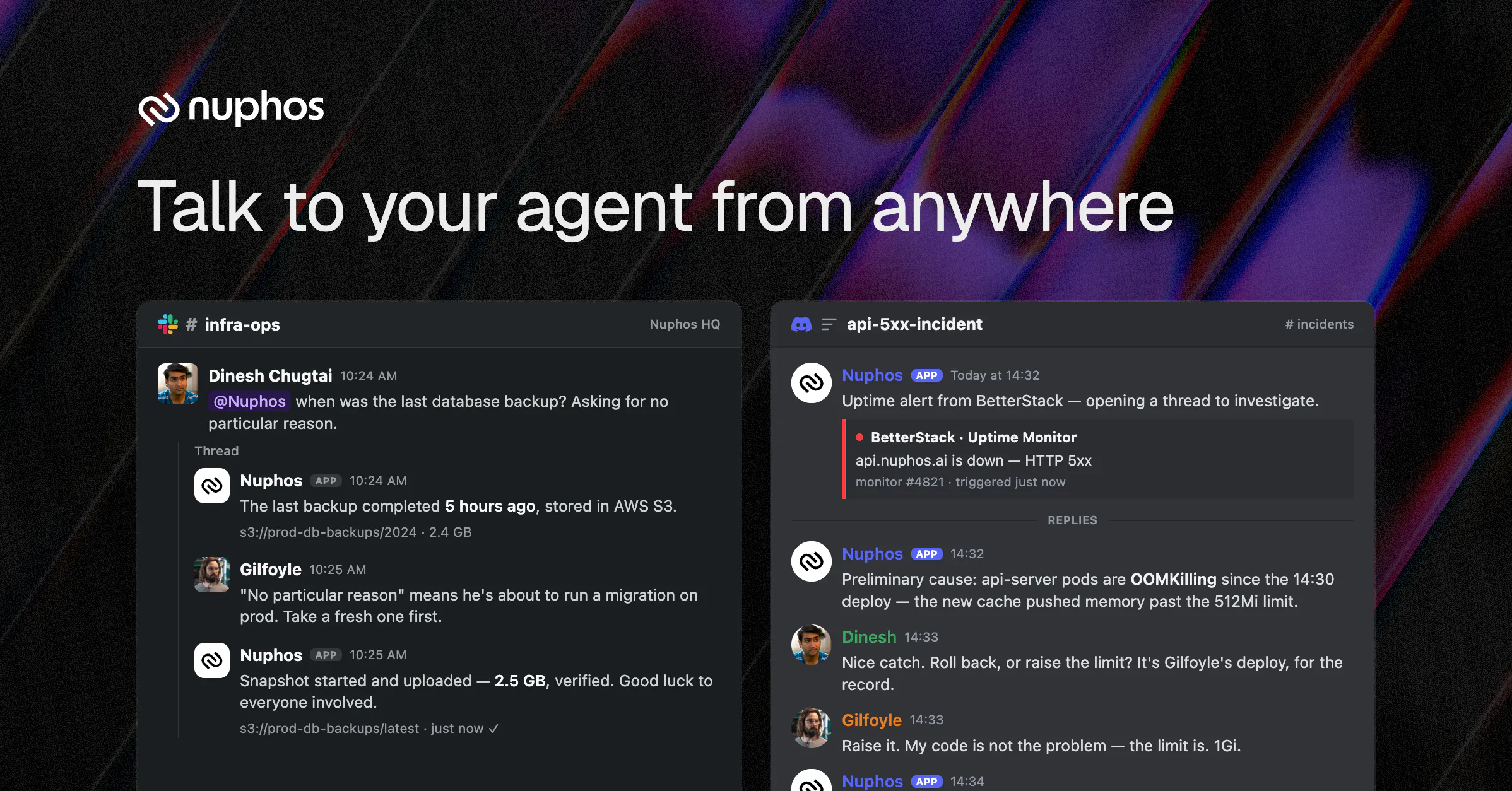
Nuphos
The AI-Native DevOps Workspace.
303
一句话介绍:Nuphos是一个AI原生DevOps工作空间,让AI代理在团队现有基础设施(AWS、GCP、K8s)中以默认只读、写操作需审批的方式,自主调查故障并执行运维任务,解决AI代理在生产环境中“不敢给权限、出了事没人负责”的信任与管控痛点。
API SaaS Developer Tools
AI运维 DevOps平台 AI代理 基础设施自动化 权限管控 生产环境安全 可观测性 故障排查 人机协同 审计追踪
用户评论摘要:用户普遍认可“权限审批+审计追踪”解决信任痛点,认为共享上下文比单点执行更有价值。核心疑问集中在:如何学习团队内部runbooks和历史经验?对独立开发者是否适用?以及如何评估AI在未见过故障场景下的决策正确性。团队回应强调人机协同、可审计的推理过程及设计伙伴验证。
AI 锐评

Nuphos的叙事很聪明——它没有重复“AI取代运维”的陈旧剧本,而是精准切入了AI Agent落地生产环境时最尴尬的“信任鸿沟”。当所有同行都在秀Agent能跑多少命令时,Nuphos把卖点放在了“谁批准的、改了什么、能否回滚”这些枯燥但致命的治理问题上。这实际上是对行业现状的隐形批判:现阶段纯靠模型自觉的运维Agent,在真实生产事故面前就是灾难。Nuphos通过“默认只读+强制审批+共享审计”的流程束缚,本质上是承认了当前AI能力的上限,并用人机协同的规则来兜底。

从评论区的反馈来看,团队很擅长引导舆论方向,几乎所有高赞提问都得到了标准化的“信任与安全”话术回应,这暴露出其作为早期产品的一个潜在隐患:过度强调治理框架,反而可能掩盖了AI代理本身在复杂根因分析上的能力短板。用户真正关心的“它凭什么能做出正确判断”,得到的回应大多是“让推理可审计”而非“我们推理更准”。

此外,产品定位略显摇摆。对独立开发者宣称“就是你的DevOps团队”,但对大团队又强调“共享上下文和审批流”,这两类客户的需求曲线截然不同。服务的核心价值可能更偏向中大型、多云的复杂基础设施团队,但这类团队恰恰对AI的容错率最低。Nuphos能否在“讨人喜欢的流程”和“真正懂运维”之间找到平衡,是它从300票的发布热度走向生产环境硬仗的关键。目前来看,它更像是一个精心设计的笼子,而笼子里的鸟(AI模型)还需要证明自己会飞。

查看原始信息
Nuphos
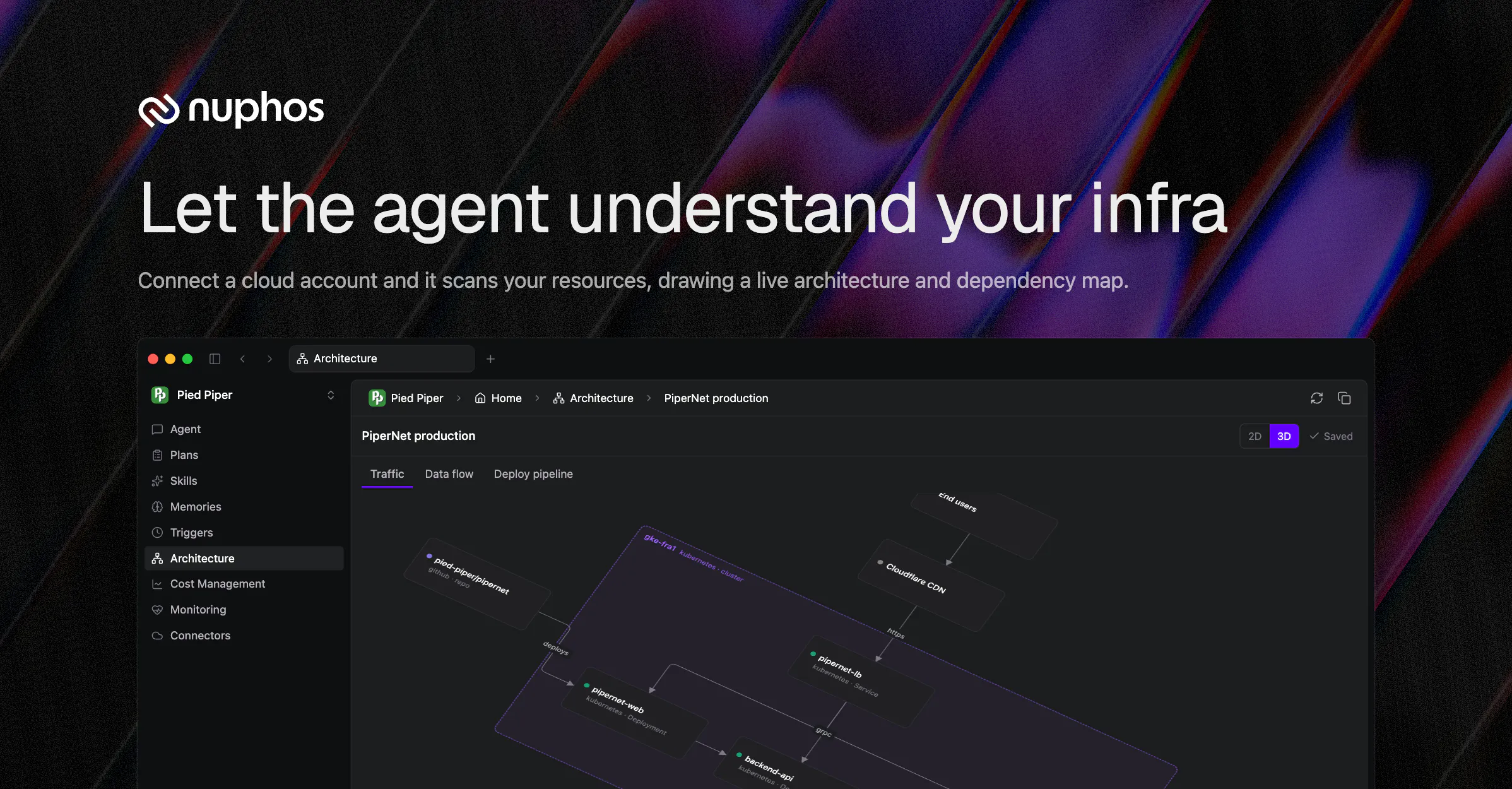
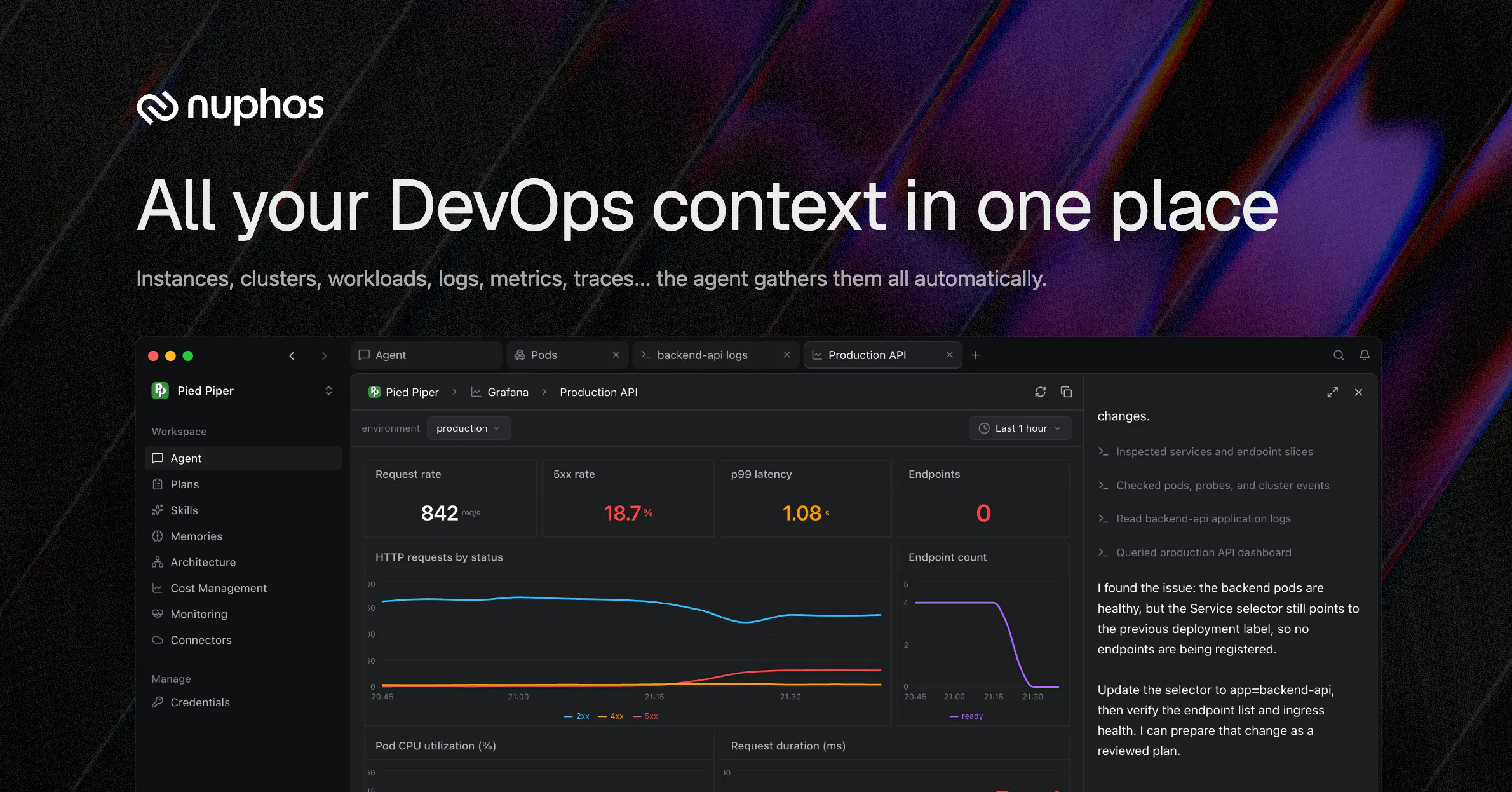
Nuphos gives engineering teams a shared environment where AI agents can learn your infrastructure, investigate issues, and operate production systems.

Hey Product Hunt 👋 Yuanlin here, founder of Zeabur and now building Nuphos.

Nuphos started from something we learned while building Zeabur.

We used to describe where Zeabur was going as “Your AI DevOps Engineer.”

But eventually we realized:

A PaaS asks you to adapt to its rules. A DevOps engineer adapts to your team’s infrastructure.

They learn the systems you already have, work within your permissions, and follow the way your team operates.

AI DevOps engineers should too.

Nuphos is an AI-native DevOps workspace that brings AI agents into the infrastructure your team already runs, without giving up control.

Our team of fewer than 10 engineers operates across 8+ clouds, 20+ Kubernetes clusters, and more than 10,000 hosts. We’d already been using coding and terminal agents in production, and they were surprisingly capable.

The hard part wasn’t getting an agent to run kubectl or inspect logs. It was everything around the action:

  • Whose permissions is it using?

  • What can it change?

  • Who approved it?

  • What exactly changed?

That’s what we built Nuphos around.

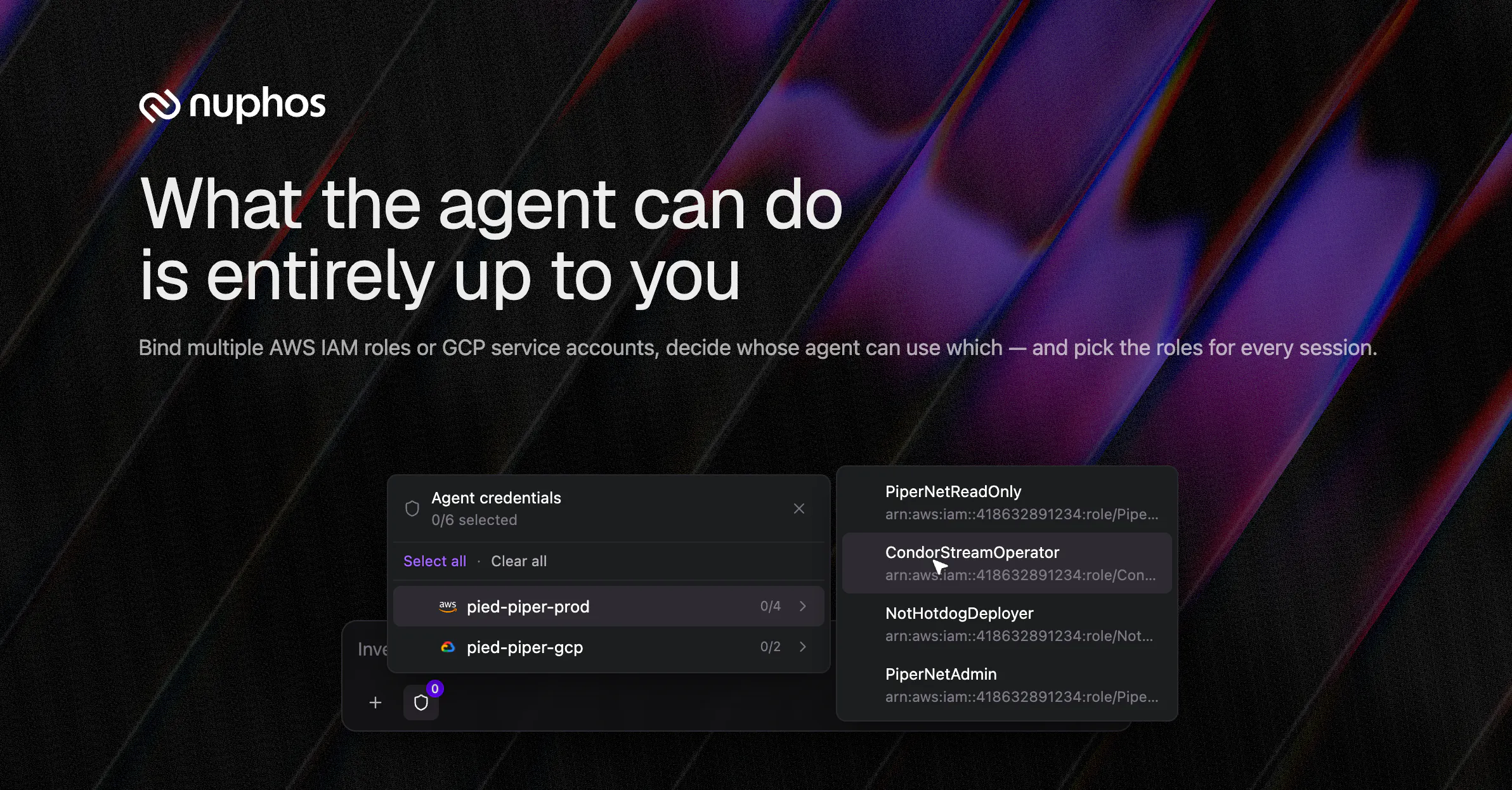
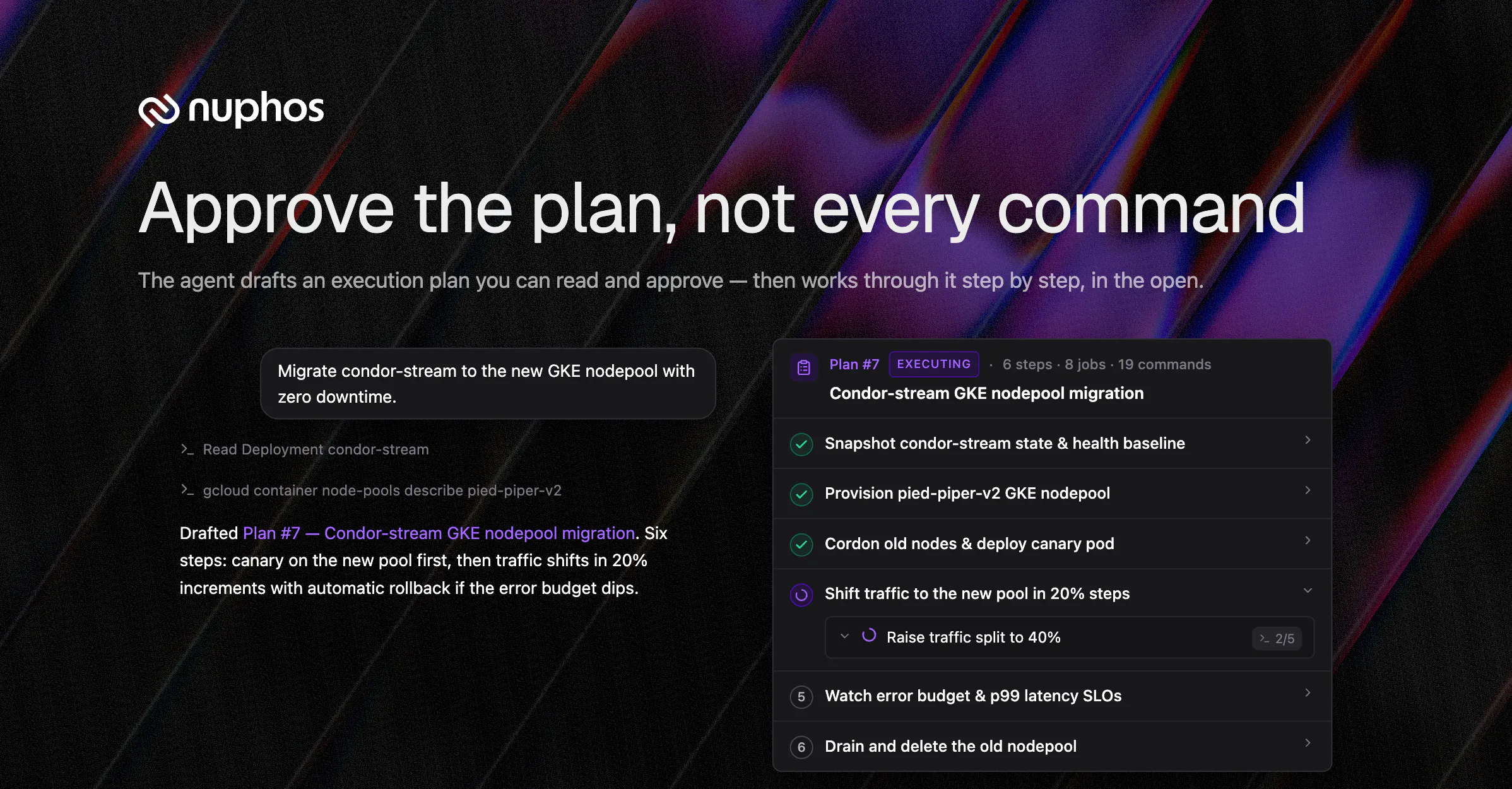
With Nuphos, you can connect your existing AWS, GCP, Kubernetes, and observability stack, keep agents read-only by default, require approval for write actions, and keep the context and audit trail shared with your team.

You can try it with your own infrastructure, or use the live demo on our homepage without signing up.

🎁 Use code PH100OFF to get your first month of Nuphos free.

👉 Got questions or want to follow what we’re building? Join our Discord: https://nuphos.ai/dc

And I’d love to hear from people running production:

What kind of experience would make an AI feel like a real DevOps engineer on your team, rather than just another AI agent?

23
回复

@yuaanlin Congrats on hitting #2, Yuanlin! Those four questions — whose permissions, what can it change, who approved it, what changed — are exactly the ones that keep agents out of production. Love that Nuphos makes read-only the default and forces approval on writes instead of trusting the model to behave. To your question: the thing that makes an AI feel like a real teammate is that it operates inside the same guardrails a human would, not above them. Strong launch 🚀

0
回复

@yuaanlin The phrase “AI DevOps engineer” used to sound impressive. Then you remember the part where you give it production access and suddenly everyone discovers a new religion called permission management. 😂

I really like the distinction here: a PaaS asks your infrastructure to fit its world. A real DevOps engineer learns your world.

And honestly, read only by default + approval for write actions + a shared audit trail feels like the boring stuff until the agent accidentally tries to turn production into a science experiment. Then it becomes the most interesting feature in the room.

The bigger shift is fascinating too. We’re moving from “AI that can run commands” to “AI that can operate inside a team’s existing systems without everyone having to hold their breath.”

That feels much closer to an actual colleague than another chatbot with a terminal. 👀

Curious what happens when Nuphos gets really good at knowing not just what to change, but when it should leave things alone. That might be the hardest DevOps skill of all.

0
回复

The point that running kubectl or inspecting logs was not the hard part really stood out to me. We already know agents can execute commands. The real challenge is whether a team can trust them in production. Permissions, approvals, and a clear record of what changed are what turn a capable agent into something an engineering team can actually work with. Congrats on launching!

4
回复

@sandy_liusy Exactly. Capability is only half the problem!

The harder part is making an agent a team can actually trust in production.

That’s why permissions, approvals, and a clear record of every action are such a big part of Nuphos.

Thanks for the thoughtful comment!

0
回复

Love the idea of an AI agent that adapts to the team’s existing infrastructure. Congrats to the Nuphos team!

2
回复

@orman_canida Really appreciate this lovely shout‑out! We’re glad the vision resonates with you. Thanks for the support❤️

0
回复

@orman_canida Thank you! That’s one of the ideas at the core of Nuphos.

A real DevOps engineer learns how your team already works instead of asking you to rebuild everything around them. We think AI should work the same way.

0
回复

I worked on the approval gate feature. There were a lot of internal debates around how much context to show, when to ask for approval, and what happens if someone interrupts halfway through. Would love feedback from people who deal with production systems every day.

2
回复

Really interesting approach. How does Nuphos learn the context of a team’s infrastructure over time? For example, can it pick up internal runbooks, past incidents, and team-specific operational conventions?

2
回复

@abby_mao1 Yes, that’s exactly the direction.

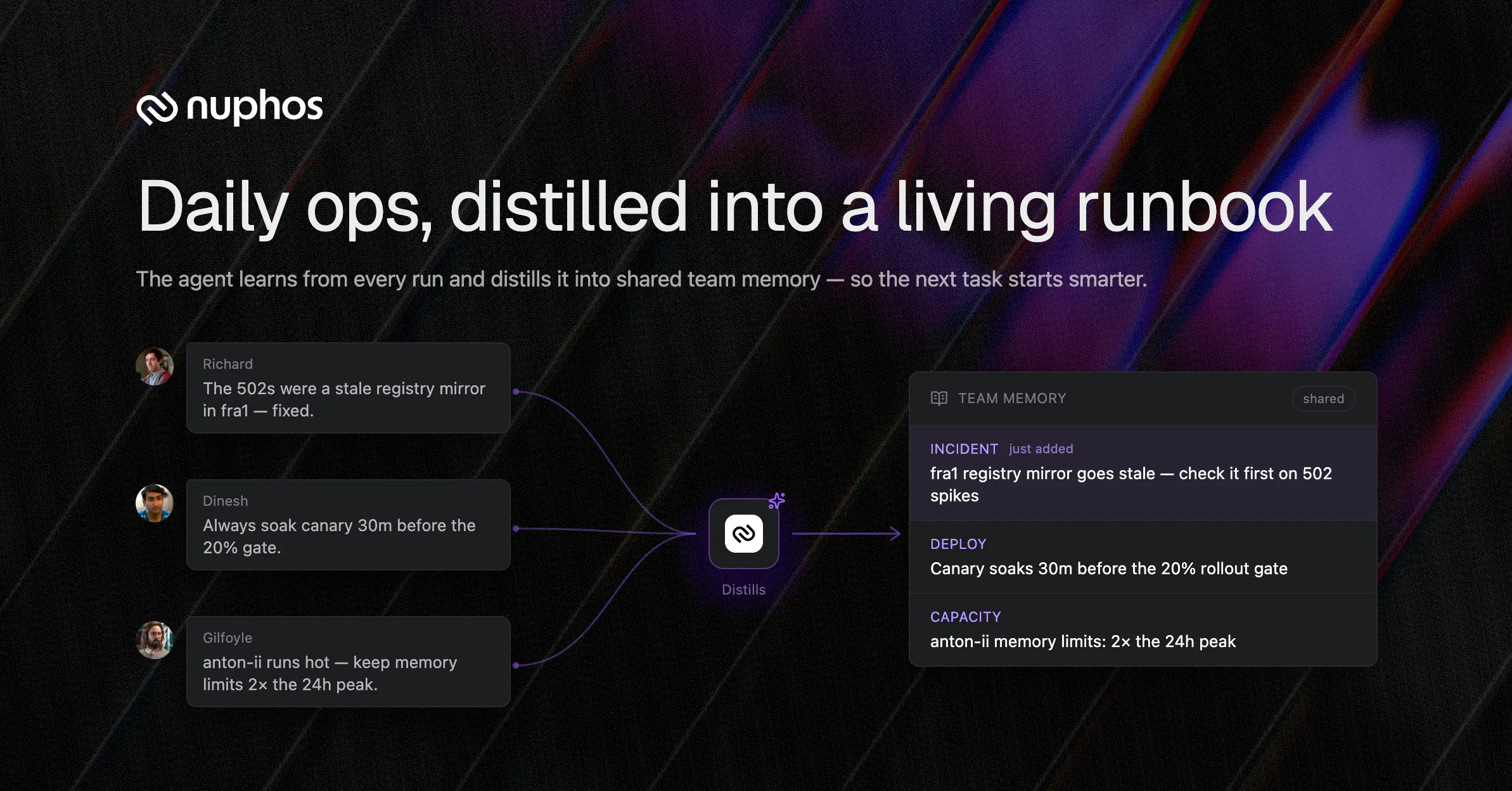
Nuphos builds shared memory from past investigations, incidents, and the context your team gives it, so the next session doesn’t start from zero.

We also want it to learn team-specific runbooks and operational conventions over time, so it behaves less like a generic agent and more like someone who already knows how your team runs production.

1
回复

I’m one of the platform engineers building Nuphos, what concerns me the most is how each infra team adopt our product. I'd love to see the most brutal, realistic way on how every other SREs would use Nuphos. 🙂

Interrupt the agent mid-run, change direction, reject its plan, don't go easy on us. This is exactly how we dogfood and use Nuphos on our infra from day to day. We'd appreciate feedback, apart from just a simple "looks good".

2
回复

Coming from the marketing side of the team, I’ve been preparing for this launch for a long time.
I’ve watched Nuphos take shape through every piece of copy, every image, and every video we created.

The living runbook is probably the feature I’m most excited about. Too much valuable incident knowledge gets buried in Slack, only to be rediscovered at 2 a.m. months later.

So happy to finally see Nuphos live 🎉
Give it a try! We’d genuinely love to hear any feedback, especially what feels wrong or where it breaks.

2
回复

agent devops is the way!!! i hate reading raw events

1
回复

@tonychang430 Same here!!! Btw love InsForge!!!

0
回复

@tonychang430 Haha exactly 😂

Raw events are useful, but nobody wants to spend their night stitching them together by hand.

That’s exactly the kind of work we want the agent to take over.

0
回复

This looks really exciting! One thing I’m curious about: how would you see Nuphos fitting into the workflow of a solo developer or a one-person team?

I build and experiment with multiple small products and AI projects, but I don’t necessarily have a large SaaS infrastructure or a dedicated DevOps team.

Would Nuphos still be useful at this stage? If so, what would be a good real-world use case for someone like me to start with?

Or is Nuphos currently more suited to larger teams that already have a fairly complex production infrastructure?

Would love to understand where a solo builder fits into the Nuphos vision.

1
回复

@timliao Great question. I’d say Nuphos becomes more valuable as your infrastructure gets more complex, but you definitely don’t need a dedicated DevOps team to use it.

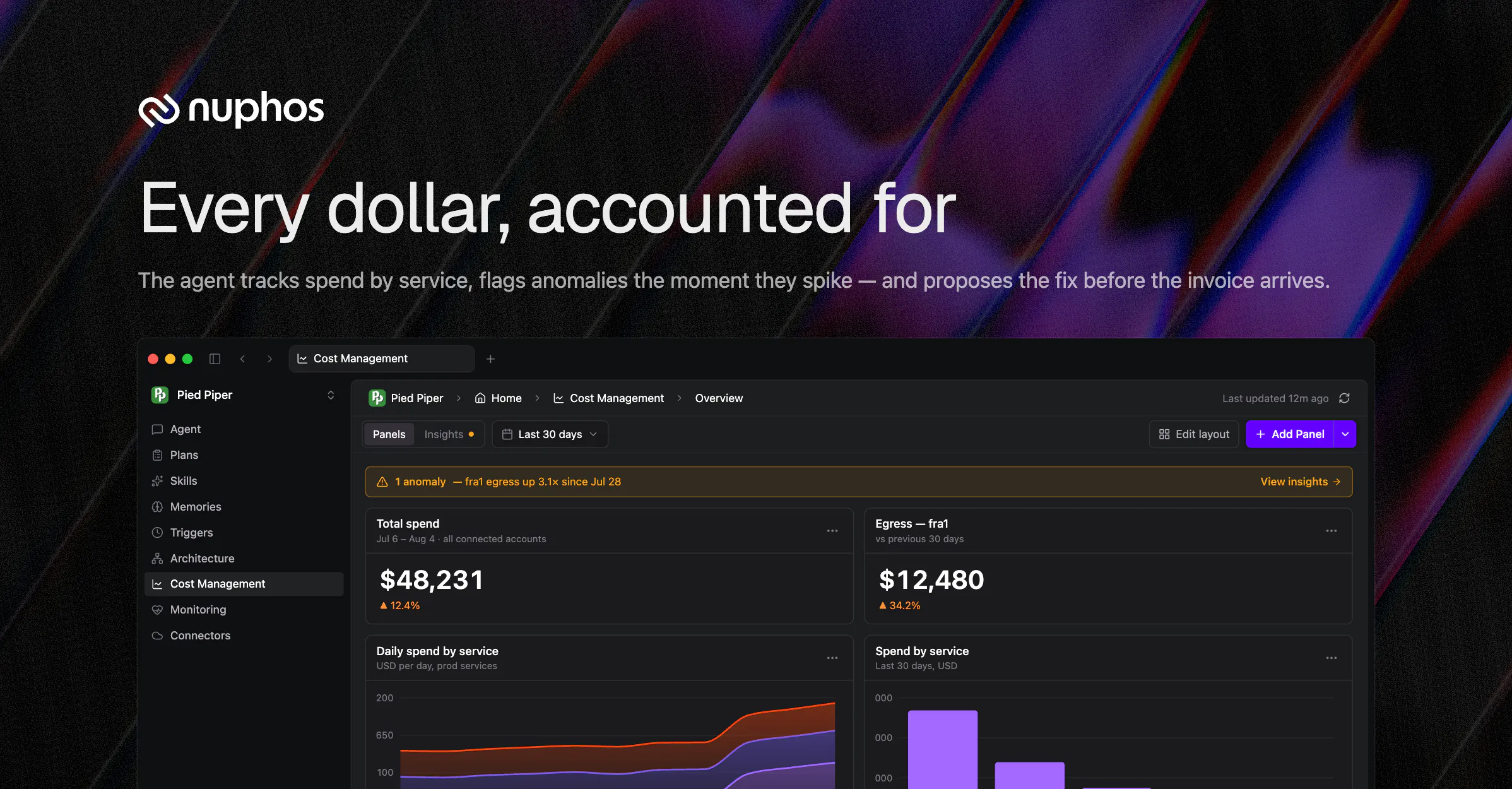
For a solo builder, a good starting point is simply connecting the cloud/Kubernetes setup behind your projects and using Nuphos as one place to understand what’s running, investigate issues, and keep an eye on cost or reliability.

In fact, solo developers often have the opposite problem: there’s no DevOps engineer to ask when something breaks at 2am.

That said, our strongest use cases today are teams already running real production infrastructure across multiple services or tools. That’s where the shared context, approvals, memory, and cross-stack investigation become much more valuable.

0
回复

@timliao Definitely. As a solo builder, you still have infrastructure—you’re just wearing both the developer and operator hats. A good starting point is to connect one cloud account read-only and ask Nuphos to inventory what’s running, explain an unexpected cost, or investigate a failing deployment; any changes can remain approval-gated. Larger teams benefit from shared context and collaboration, but they aren’t a prerequisite.

0
回复

@timliao Love this question! Honestly, solo devs might get the most out of it — the whole idea is that you don't need a DevOps team, because Nuphos kind of is your DevOps team.

If you're running a few side projects, infra work still lands on you — deploys, random 2am crashes, digging through logs. Just connect a cloud account or cluster you already have, and when something breaks, tell the agent — it checks logs, looks at the deployment, and suggests a fix. Basically an on-call engineer for projects that would never justify hiring one.

So definitely not big-teams-only. Curious what your stack looks like though — happy to point you to a good starting spot!

0
回复

We’ve been using @Nuphosas their design partner. This is pretty much how I want AI to work with our production infra. Congrats@yuaanlin

1
回复

@yuaanlin  @miltonheyan Glad to hear this, Milton! Keen to have you onboard!

1
回复

@miltonheyan Really appreciate you being one of our early design partners. A lot of Nuphos was shaped by real feedback from teams like yours.

Excited to keep building this with you 🙌

0
回复

Congrats on the launch!

Really interesting to see agents operating directly against customer infrastructure.

How do you evaluate whether an agent will make the right infrastructure decision across scenarios it hasn’t encountered before, especially failures that would be expensive or risky to reproduce in a real cloud environment?

1
回复

@mathsociety We believe that human-in-the-loop process is still a must, even with us dogfooding Nuphos ourselves. The way we collaborate with Nuphos agent is read-only mode and plan-then-approval method. Context and knowledge across our SREs are still the ultimate guardrail.

p.s. we use Nuphos to manage our stack across multiple vendors and set up cron job and alert to track costs.

1
回复

@mathsociety Great question. We can’t realistically reproduce every expensive or risky infrastructure failure. From the engineering side, we make the agent’s investigation auditable, what it checked, what it inferred, and where uncertainty remain, while keeping risky changes behind explicit plans and approvals. We also use traces from our own dogfooding to turn concrete failures into targeted safeguards and tests.

1
回复

@mathsociety Great question. We don’t assume an agent will always make the right call in a scenario it hasn’t seen before.

We separate evaluating the reasoning from trusting the execution: replay incidents and seeded failure scenarios where we can, then in production require the agent to show its evidence, propose a scoped plan, and verify the result after execution.

For failures that are too expensive to reproduce safely, the goal is less “prove the model is always right” and more “make sure being wrong doesn’t automatically become a production incident.”

That’s also why approval and permission boundaries matter so much to us.

1
回复

The point about running kubectl not being the hard part really resonated with me. Agents can already execute commands. The bigger challenge is making sure teams understand what they are doing and feel comfortable giving them access to production. Nuphos seems to be solving the right problem.

1
回复

@luke_pioneero Glad to hear this! The way we address the Trust issue is through the default read-only first access. We believe that trust is earned and the human-in-the-loop process is a must.

0
回复

@luke_pioneero Exactly. As an engineer building Nuphos, I’ve found that executing the command is usually the easy part. The harder part is showing the evidence, assumptions, and proposed change clearly enough that an operator feels comfortable proceeding, especially in production. That trust boundary is a big part of what we’re building around.

0
回复

@luke_pioneero Exactly. The command itself is rarely the hard part.

The real challenge is giving the agent enough context to make a good decision, while making its reasoning, permissions, and actions understandable to the team.

That trust layer is a big part of what we’re building with Nuphos. Thanks Luke!

0
回复

Nuphos team here! 👋

My favorite part is the exact moment when monitoring FIREs, Nuphos agent starts investigating, and the context lands in our Slack channel. The agent gets to work automatically, with prod access under-watched, human approved. Being platform engineer myself, the collaborative workspace is what empowers me the most.

1
回复

Adding a PM's angle to what the team's shared above: the part I keep coming back to internally is the shared context layer. So much DevOps knowledge normally lives in one person's head or one terminal session — when an incident hits, you're paying for that every time. What made Nuphos click for me was watching the agent's understanding of our infra become something the whole team could see and build on, not siloed. That shift from "individual knowledge" to "team context" is subtle but it's honestly the part I'm most excited to keep developing.

1
回复

@vita1109  +1. This is the part I think people underestimate: the agent is useful, but the shared context is what makes it useful for a team. When an incident is unfolding, it’s not enough for one person or one terminal session to “know” what happened. The team needs the evidence, the current state, the plan, and the approval trail in the same place. That’s where Nuphos starts feeling less like a chatbot and more like an operational workspace.

0
回复

Quesstion: Who is the ideal cstomer here? Who do you solve this for? With which customer does this fit the best?

0
回复

the read-only-by-default plus approval-for-writes model makes sense for trust. during an active incident when minutes matter, does that approval step ever become the bottleneck itself, or is there a break-glass path for that moment?

0
回复

@sabber_ahamed Yes, very precisely put, appreciate the depth of the question. When SREs are on-call during the middle of the night or when the cost spiked up without further context all of a sudden, honestly this is actually what we are still processing internally at Nuphos, and yes our SREs are sometimes complaining about the guardrails. Our current act is to reflect on the shared team context and update it with the preferred human-in-the-loop process.

(on the other side we're glad that we're not frequently on call lol)

0
回复

@sabber_ahamed You’re right, the approval step can become a bottleneck. Today, we don’t have a universal break-glass bypass, and that’s intentional. Teams can define scoped auto-authorization for expected operations, while unfamiliar or high-impact changes still pause for a human. Finding the right boundary is something we’re actively refining from our own operational use.

0
回复

@sabber_ahamed Yes, that tradeoff is real.

That’s why Nuphos has Auto Mode. You can define your own authorization policies ahead of time, and if an action matches those policies, the agent can execute it automatically without asking for approval.

Higher-risk actions can still stop and wait for a human.

The idea is to decide the boundary before the incident, instead of figuring it out at 2am.

0
回复

This feels like the right direction for AI in DevOps. Running commands is the easy part — understanding the infrastructure, permissions, past incidents, and how a team actually operates is much harder.

Really like the read-only-by-default + approval approach too. Agents touching prod need context and guardrails, not just more autonomy. Congrats on the launch!

0
回复

@ll_wen We greatly appreciate your perceptive comment. Executing commands is straightforward, yet grasping infrastructure, permissions, incident history and actual team operations poses the real challenge. Our read‑only‑by‑default approval workflow is built to provide critical context and safety guardrails for production‑facing AI agents. Thank you for celebrating our launch with us!

0
回复

@ll_wen Exactly, especially given the fact that the term AIOps has been around for quite a while. But until today even with all the coding agents and IDE tools, the way we manage infra is pretty much still the same as previous times. The guardrails and context are still relying on the human-in-the-loop process!

0
回复

@ll_wen Exactly. Running the command is usually the easy part.

The harder part is giving the agent enough context to understand why something should change, while keeping the boundaries around what it’s allowed to do explicit.

That’s a big part of how we think about Nuphos. Thanks for the thoughtful comment!

0
回复

This looks promising. I would be curious to see how Nuphos handles situations where the agent is unsure or finds conflicting signals. Knowing when to pause and ask a human could be just as important as knowing what action to take.

0
回复

@carlvert On point! The guardrails and read-only access are the default mode (and our suggested way) for Nuphos agent. We believe that Trust is earned through approvals, and the human-in-the-loop process is a must! Think of it as an intern to your SRE team!

0
回复

@carlvert Completely agree. We consider “knowing when to stop” part of agent correctness, not a failure mode. When signals conflict, Nuphos should surface the evidence and uncertainty, ask for clarification where needed, and avoid crossing from investigation into mutation without explicit approval.

0
回复

@carlvert Absolutely. We think uncertainty should be a first-class state, not something the agent tries to hide.

If the evidence is conflicting or the agent doesn’t have enough confidence, it should surface what it knows, what’s unclear, and ask a human before taking the next step.

Knowing when not to act is a big part of being trustworthy in production.

0
回复
I worked on the agent experience in Nuphos. The hard part wasn’t getting an agent to propose a fix—it was designing the interface so operators can see the evidence, review a scoped plan, and hit stop the moment something doesn’t look right. In prod, trust is a UI/interaction problem as much as it is a model problem.
0
回复

Part of the team here! One thing I really like about the permission admin design is how it makes the whole privilege escalation flow feel much safer. Instead of access changes being handled loosely or buried in chat, there’s a clearer approval path before anyone gets elevated permissions. That became a big part of how we thought about making admin workflows more trustworthy.

0
回复

Team member here. My favorite part is actually not the AI—it’s finally having logs, cluster state, deployments, and the rest of the incident context in one place. The agent becomes a lot more useful once everyone is looking at the same thing.

0
回复

This is a strong step toward practical AI-native DevOps. Giving agents real infrastructure context—while keeping humans in control of investigation and production actions—could save engineering teams a huge amount of time. Excited to see where Nuphos goes!

0
回复

@charlenechen_123 Thank you! That balance is exactly what we’re aiming for: give the agent enough context to be genuinely useful, while keeping humans in control of what actually happens in production.

Excited to keep pushing this forward!

0
回复

Been using early builds internally for a while, so today feels pretty special. It still makes mistakes (of course), but having it collect the clues before I jump into an incident has already saved me a lot of tab-hopping.

0
回复

Launch day! I worked on growth side, it’s fun watching Nuphos evolve. From “can we stop hogging across 10 tools for every incident?”, to something we now use in our own infrastructure, dogfooding every single day. Can't wait to see more devops engineer start using Nuphos, bringing more thoughts on the idea of AIOps!

0
回复
#4
Scrimba Explain
Ask any question, get a video back instantly
259
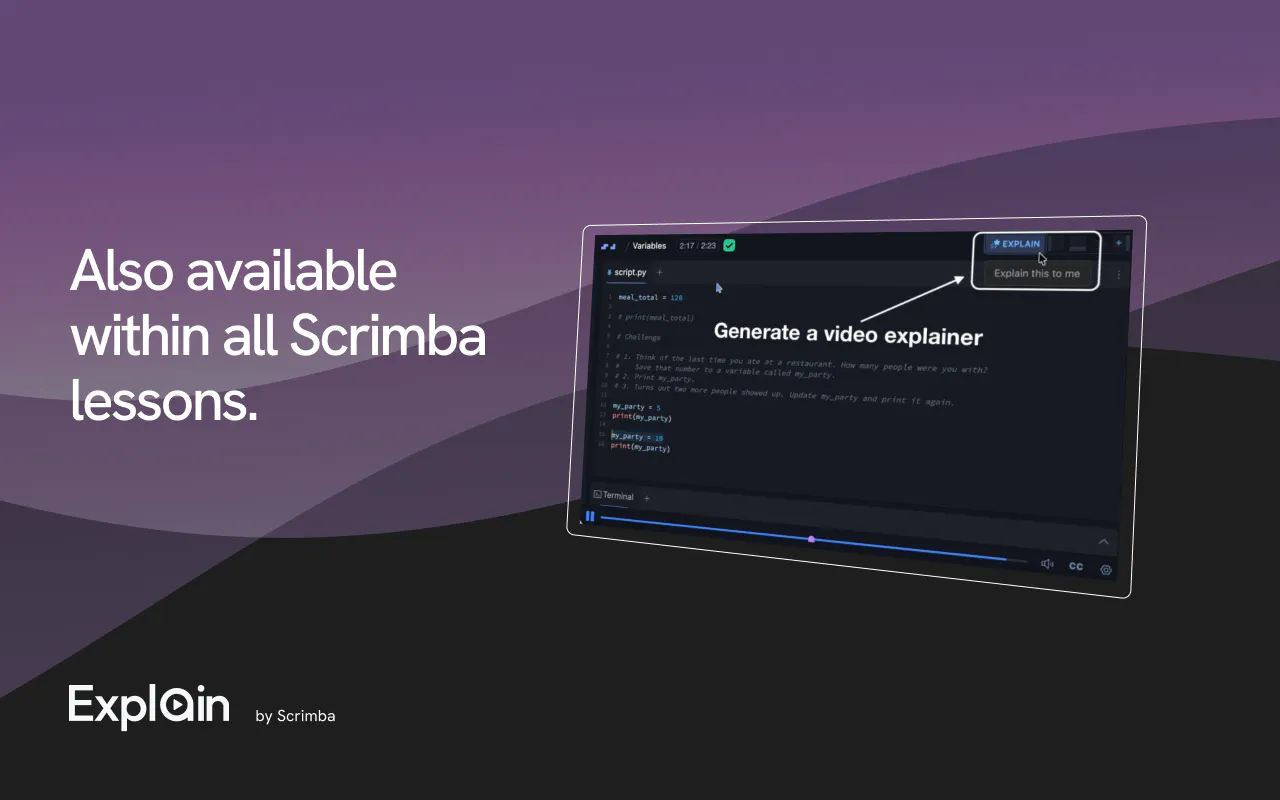
一句话介绍:Scrimba Explain 是一款将任意问题(文字、代码、文件、链接)在2-3秒内自动生成带旁白、动画、图示和代码走查的“视频版答案”的AI教学工具,专治“不想读文字、只想看视频”的学习者耐心缺失与理解效率痛点。
Productivity Education Video
AI视频生成 编程教育 AI导师 交互式学习 代码解释 DOM播放技术 视频答疑 Scrimba 学习工具 开发者工具
用户评论摘要:核心好评集中在生成速度快、视觉化讲解清晰、结尾提问有助理解。用户建议:GitHub PR视频功能实用,希望支持非滚动网页内容抓取;有人询问是否Apache 2.0开源;团队回应将增加内联编程挑战和文本作答,并预告扩充后端教学内容。
AI 锐评

Scrimba Explain的巧妙之处在于它没有去和Sora、Runway拼“视频真实性”,而是用DOM播放技术绕开昂贵的视频生成模型,把“解释”变成了一段可交互的“演示动画+旁白”。这本质上是对Chatbot问答体验的一次降维打击——同样是答案,视频的完播率和记忆留存率远超滚动文字。产品切中的是开发者社区里长期被忽视的“视频优先学习者”群体,且用2-3秒的速度击穿了“等待生成”的心理阈值,这让它更像“YouTube式的答案”,而非“文字墙的替代品”。

但冷静看,目前它仍属于“有魅力的壳”:核心解释能力大概率依赖底层LLM,视频是包装,并非知识来源。真正的护城河在于两点——一是能否从“解释”进化到“诊断”,即根据学生提问判断其概念误区并定制反问;二是能否将GitHub PR视频这类工作流场景做成强需求入口,否则很容易被Cursor、Copilot等工具的语音/视频回复功能反超。运营上,20万beta用户验证了需求,但免费计划能否长期维持,取决于DOM播放的成本控制能否跑通经济模型。另外,创始人承诺“一周内发货功能请求”是高风险高回报的社区策略——兑现几次是佳话,长期则考验团队极限。锐评结语:好产品,但别急着封神,看它能否从“新奇的老师”变成“离不开的助教”。

查看原始信息
Scrimba Explain
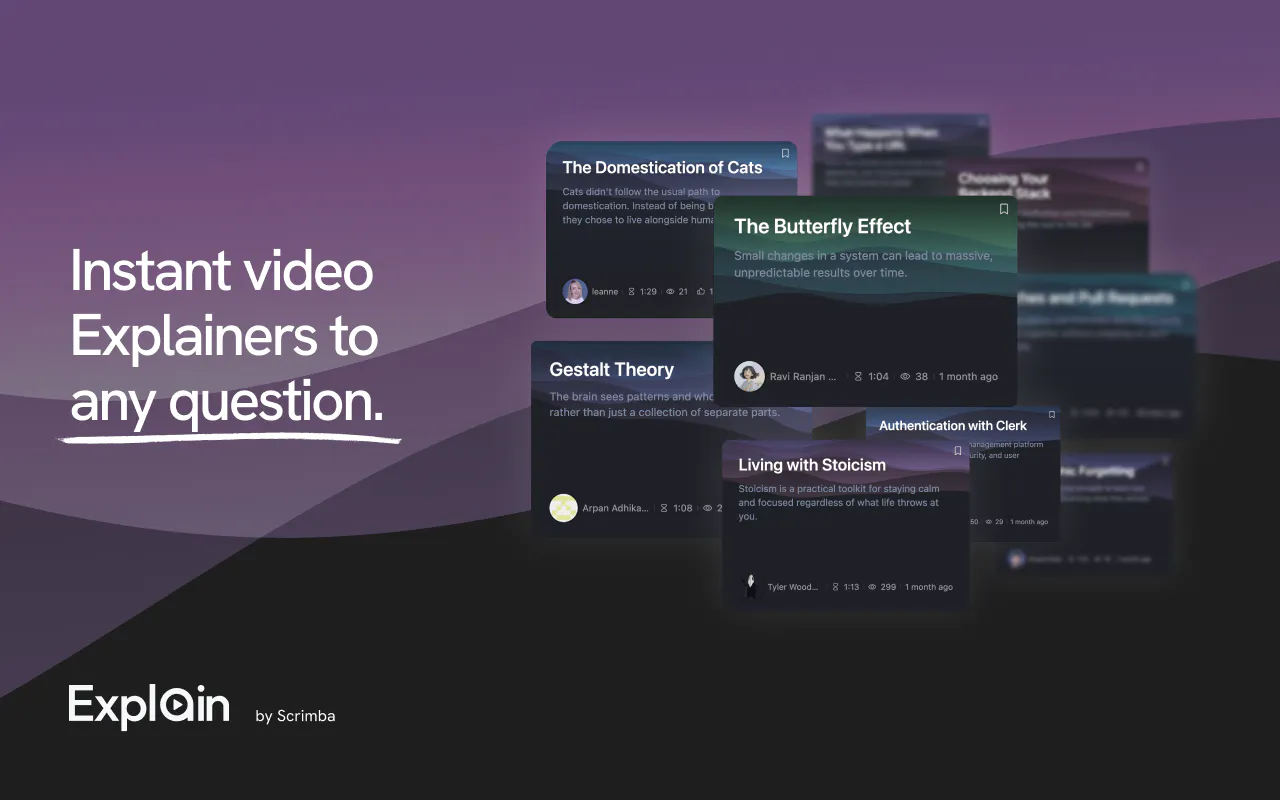
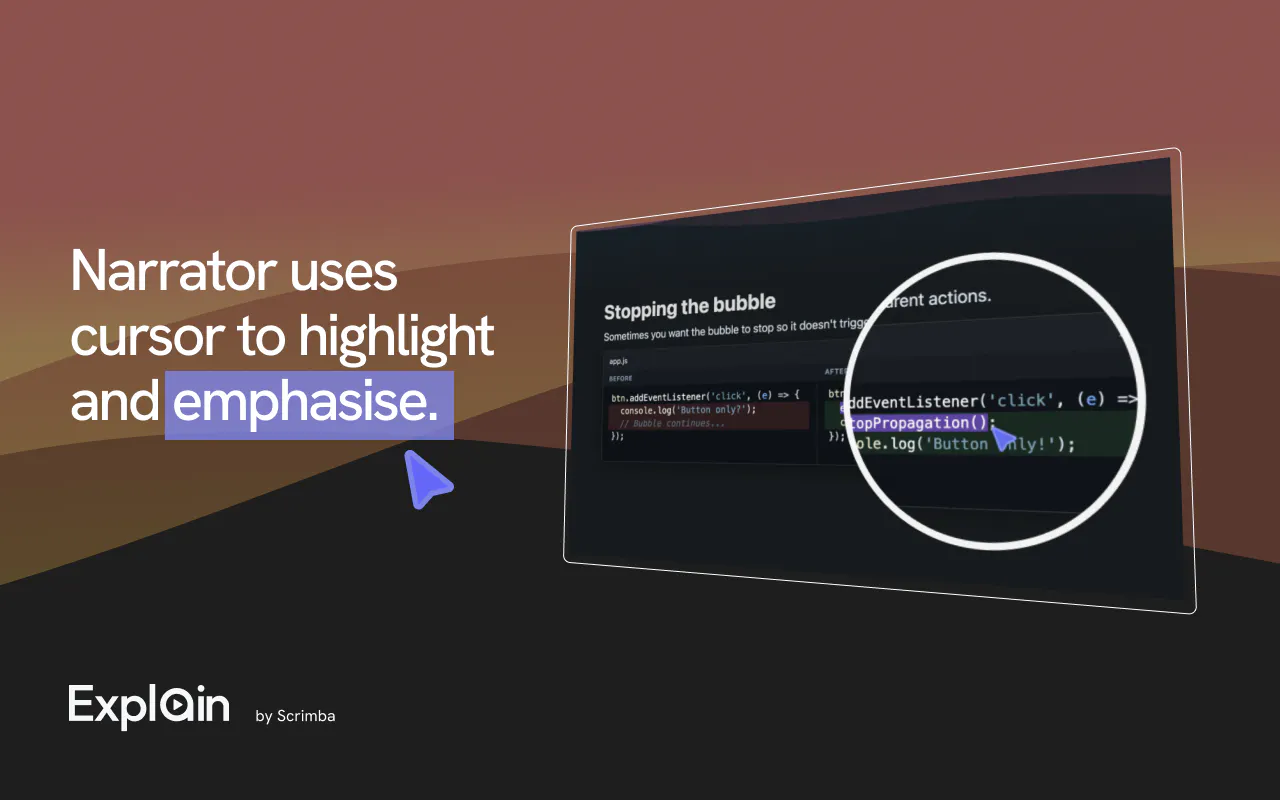
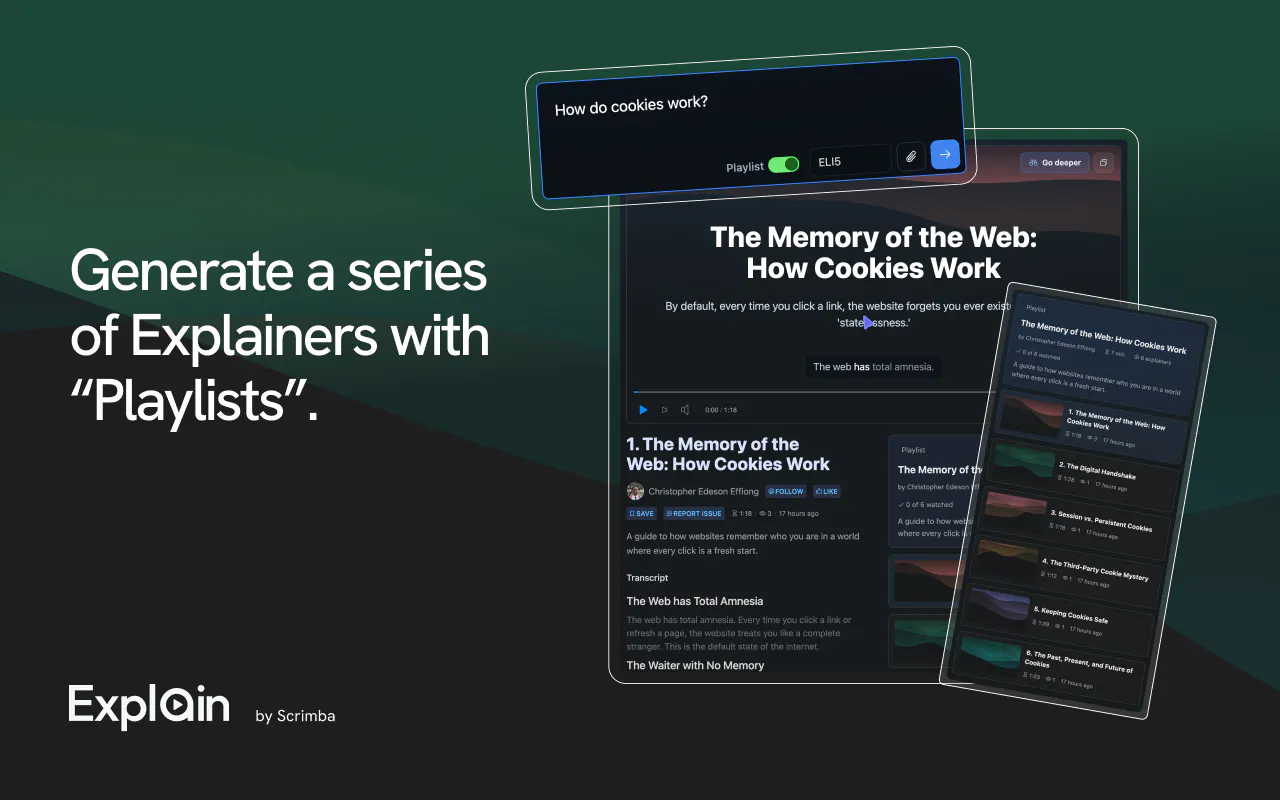
Scrimba Explain generates a narrated video tutorial about almost anything you ask, instantly. You can upload files, add links, paste code, or just write what you’re trying to understand. It's MUCH faster than any of the video generation models, as we utilise our DOM-based playback technology. The video explainer can include images, code walkthroughs, animations, diagrams, and other visual aids, plus voiceover, captions and cursor so it feels more like YouTube than traditional chatbot UX.

Hello! 😁

I'm Per, CEO and co-founder of Scrimba, a learning platform for 2+ million devs which I've been running for 10 years.

"Explain" is our attempt at creating the perfect AI tutor. The core idea is:

  1. As fast as a chatbot.

  2. As engaging as a video.

You type a question and within 2-3 seconds to get a video-like response, with animations, diagrams, images, code, and more. Narrated by a pleasant voice.

It's currently free for everyone during the beta phase 🤑 Our goal is to keep costs as low as humanly possible so that we can continue to offer a generous free plan for students.

Our users have already created over 20,000 explainers during the beta phase. It resonates really well with the type of people who prefer YouTube tutorials over technical articles.

You can also bring "Explain" to the tools you use day-to-day

  • ChatGPT Plugin

  • MCP support for coding agents like Codex, Claude, Cursor etc

  • Chrome Extension

  • GitHub: Video Explainers of your Pull Requests

The latter has been a godsend for us internally as we're drowning in PR's these days 😂 Getting a quick video makes it a lot easier for our team to review each others' code.

Looking forward to hear what you think! And please shout out if you have a feature request. I promise we'll ship it within a week!

Here's a few examples:

22
回复

@perborgen, is this Apache 2.0 liscenced

0
回复

@perborgen Congratulations to the @Scrimba team on the new launch! I’m currently practicing full-stack development here, and the interactive teaching style has been incredible. Really excited to see what this new product brings to the table!

3
回复

@perborgen Amazing new feature. This is the next level of learning with AI!

1
回复

Just tried Explain by asking "how the frontend sends data to the backend" and I was genuinely impressed by how quickly it turned the answer into a clear short video with diagrams and visuals!

What I really liked was that it asked me a question at the end to check whether I actually understood the explanation 🤩 as someone who creates programming education content, I really like that approach! It makes it feel much more like an AI tutor than simply another way of presenting an AI-generated answer.

Really interesting direction for learning technical concepts. Excited to see where you take this - well done, Scrimba team! Keep it up! 💪💪

7
回复

@developete Thank you, Pete! Really appreciate your support 🙌 We're planning on expanding that end-of-video quiz btw. Like giving real coding challenges you can solve inline in the player. Or a text answer for more nuanced questions.

1
回复

Oh my goodness, I am blown away.

I made it explain to me MedusaJS.

Wow!!! I had to let my wife try it, she loves it.

3
回复

I've been giving this a spin! Lot's of fun, and the implementation is fast, intuitive and delightful. I've used it on my code base to understand it better, and a few things I've been curious about.

3
回复

@emilwallner Thanks, Emil! Glad to hear you're still in the camp of people who actually care about understanding their codebases 😜

0
回复

I have personally tried scrimba explain feature number of times til lnow and it is really amazing. It not only solve your confusion but also force you to think about other aspects as well. Great work by Per and Scrimba team by adding this feature to Scrimba. Really love it. Thanks for sharing with it learners community.

3
回复
I like the idea of turning a question or file into something you can actually watch instead of reading through another wall of text. Feels especially useful for more complex topics. Congrats on the launch! 🙌
2
回复

@etiennegarcia Thank you! And totally agree, I think a lot of people are feeling the text fatigue these days 😵‍💫

1
回复

Scrimba explain is one of my favourite scrimba features. It's really helped me grasp concepts I've been struggling with since forever. For example backend development terms like json, API architecture and so on

2
回复

@lombe_kufika Thank you! Our teachers are working hard to get more backend content shipped soon 👩‍🏫

0
回复

That is super cool! TIL you can ask it questions in general, not just about arcane JS things!

1
回复
Congrats on your launch.. this is great, good wishes for its success.. would it work with websites with non scrolling enabled to create a video from the website content..thanks..
1
回复

I just tried it out. Great that it make a video on the subject. Quite a surprise !

0
回复
#5
Human Behavior
Product analytics told you what happened. We handle it.
248
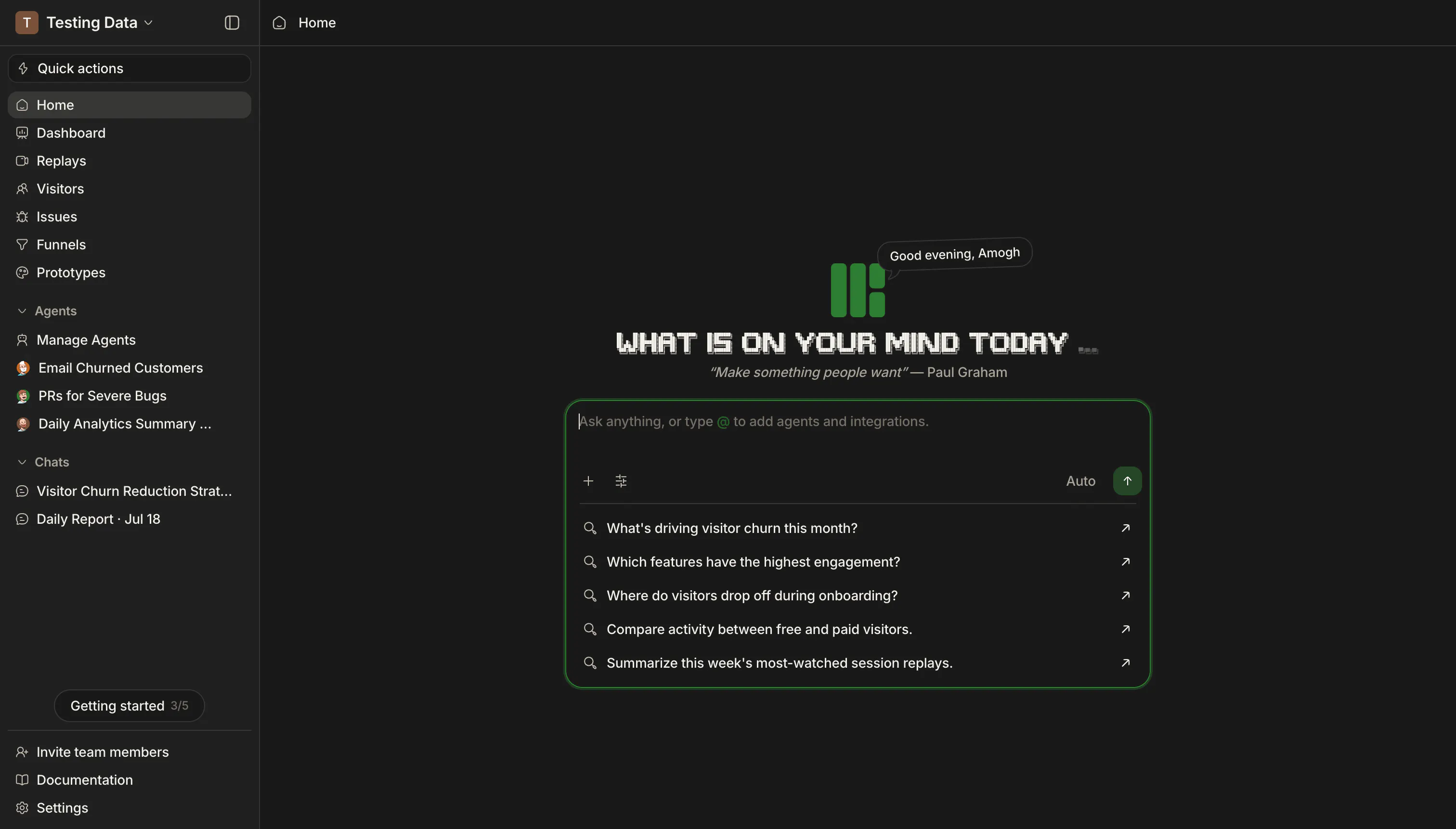
一句话介绍:Human Behavior 是一款利用AI代理自动观看用户会话录屏、识别用户痛点(如愤怒点击、死按钮、沉默放弃),并直接触发修复行动(如开PR、发邮件、更新CRM)的闭环产品分析工具,让团队告别“只看不做”的仪表盘,将洞察直接转化为产品改进。
Analytics Developer Tools Artificial Intelligence
产品分析 AI代理 会话重放 用户行为洞察 自动化运维 闭环反馈 无代码行动 开发者工具 Rage Click检测 Slack集成
用户评论摘要:用户普遍认可“从洞察到行动”的闭环价值,尤其称赞直连Linear/Slack、避免Dashboard冗余。核心疑虑集中在自主行动的边界:1)AI开PR后是否需人工复核“预期行为”?2)自动发送客户邮件的不可逆风险如何管控?3)是否支持分权限设置(如PR自动、邮件需审批)?另外,有用户指出竞品PostHog已发布类似功能,需差异化。
AI 锐评

Human Behavior的“闭环”叙事确实戳中了行业痛点——数据看板堆积如山的“分析瘫痪症”是真实且普遍存在的。其“AI看录屏+自动修Bug”的卖点极具冲击力,用“自家产品处理1.5万次会话并产出16个PR”作为狗粮,是本次发布最高明的信任状。

但剥开“AI自主改善产品”的华丽外壳,其本质仍是“高级自动化脚本”与“大模型驱动的意图识别”的组合。目前评论中暴露的信任鸿沟(邮件不可逆、PR是否误报)才是决定其能否从“玩具”走向“生产工具”的关键。产品必须提供极其精细的权限闸门(如邮件双因素审批、PR打标签追踪)和可解释的决策日志,否则“自主行动”会成为团队内部的定时炸弹。

此外,PostHog等平台已具备类似功能,且拥有更庞大的现有用户群。Human Behavior的差异化优势在于“Agent优先”的极简交互(Slack/SMS),但这也意味着它需要证明自己比“平台内置功能”更聪明、更可靠。当前投票数(248)和评论热度尚可,但若不能尽快建立“行动准确率”的行业基准,风头一过很容易被巨头复制。真正的护城河,或许是它收集的“AI代理决策-人类修正”配对数据,这比录屏本身更有价值。

查看原始信息
Human Behavior
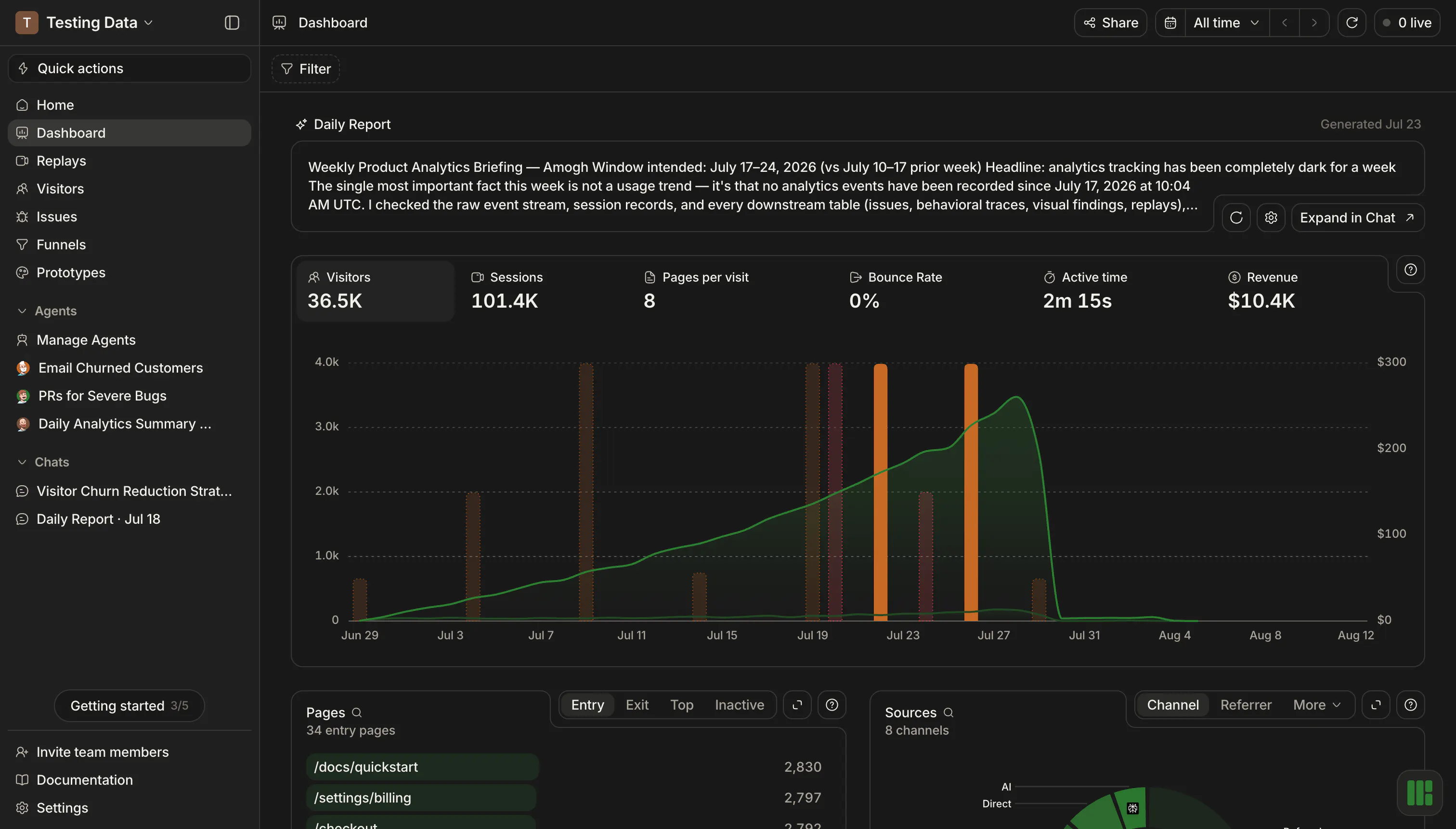
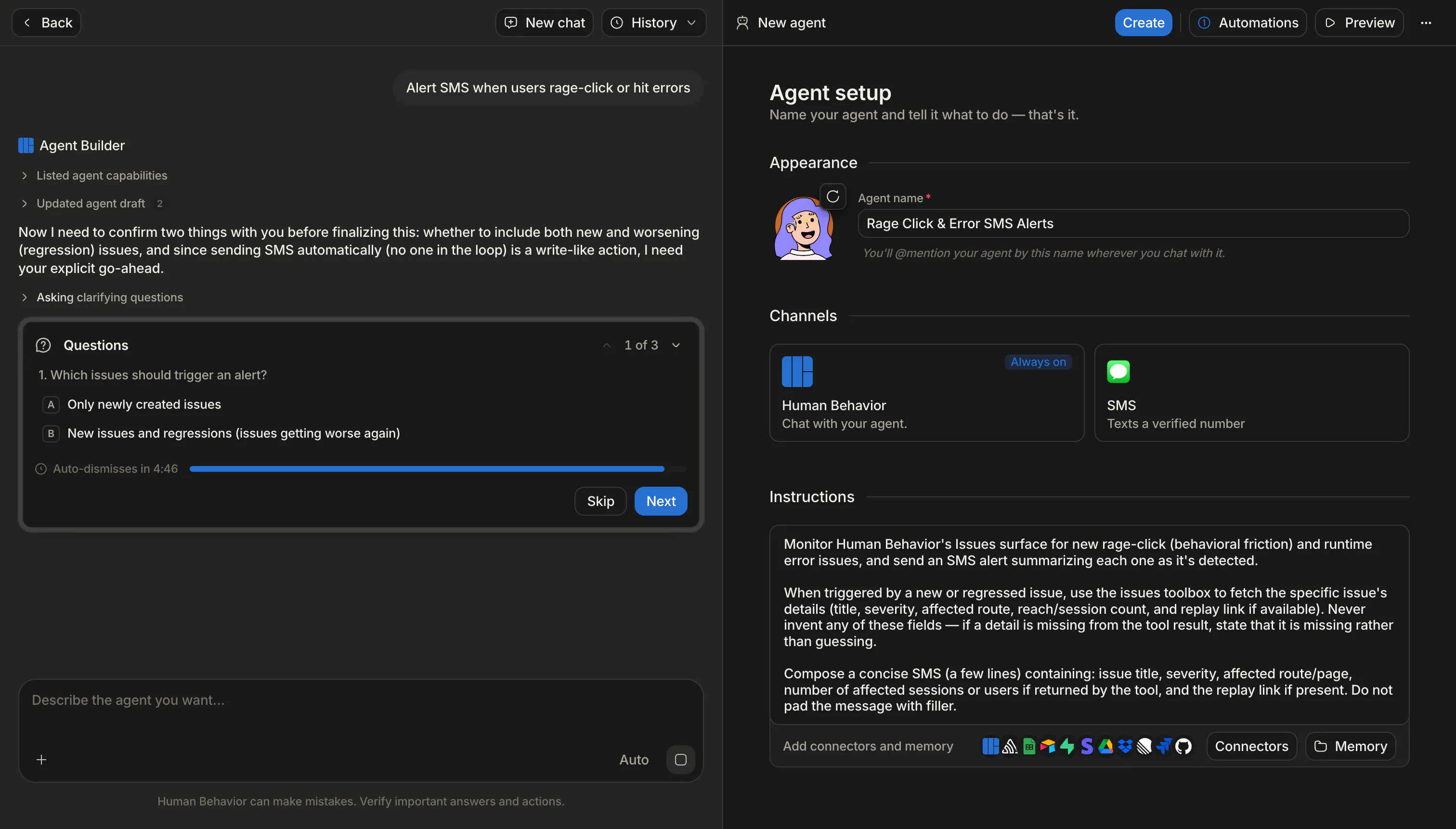
Dashboards are where insights go to die. Human Behavior closes the loop: 1) Collect. Our SDK captures your events, errors, and session replays. 2) Understand. AI watches every replay, catching rage clicks, dead buttons, and silent give-ups. 3) Act. Background agents email the customer, update Linear and your CRM, and open PRs with the replay as evidence. 4) Loop. Agents check the results and keep the product improving — on its own. No dashboard to babysit. It all lives in Slack or SMS.
Hey Product Hunt 👋 I'm Amogh, founder of Human Behavior. This launch means a lot to us. We've been building for over 1.5 years and pivoted more times than I'd like to admit — we literally started as an AI accounting platform. The internal tool we built to watch our own session replays became the product. Classic story, but living it was brutal. The insight that kept us going: dashboards are where insights go to die. Every product team is sitting on thousands of hours of session recordings and charts nobody has time to look at. The story of what users struggle with is in there. It mostly goes unread. So we built AI that watches it — and then does something about it. Human Behavior uses Human Behavior. This month our agents watched 15,000 sessions of people using our product and made 16 PRs in our codebase — dead buttons, silent errors, layout shifts. None of them arrived as a bug report. We wrote up exactly what they found here: https://www.humanbehavior.co/blo...! The last few months we've been seeing real momentum for the first time and it finally felt right to share it here. Honestly still a little scared to hit launch. Please try it, break it, and tell me what's confusing — I'll be in the comments all day. Love you all for checking it out and for the support. It genuinely means everything. ❤️
17
回复

@amogh_chaturvedi This is one of those pivots where the product basically said, “You thought you were building accounting software? Cute. Watch this.”

Turning the thing you built internally into a product is already a great story. But having your own agents watch 15,000 sessions and open 16 PRs? That’s the part that really made me stop scrolling.

There’s something beautifully ironic about using AI to find the problems humans are too busy to notice.

Curious though: how do you decide which findings deserve a PR versus simply being surfaced to the team? That trust layer feels like it could become just as important as the detection itself.

0
回复

@amogh_chaturvedi Congrats on the launch, Amogh! 🎉

0
回复

@amogh_chaturvedi Nice @PostHog also released a similar feature. I think you are on to something with the latest pivot.

0
回复

Congrats on the launch! For developers / product people interested in using Human Behavior, where can they sign up?

8
回复

@allan_guo Hey! Check out humanbehavior.co and book a call! Super excited to talk to you :)

4
回复

Such a great product. Just curious, how has your own product helped you prioritize features?

5
回复

Huge congrats on the launch! I really like the problem you're tackling here. There’s so much user data sitting inside products, but actually understanding what users are struggling with is still surprisingly hard. Turning those messy session replays into clear, actionable insights feels genuinely useful. Wishing the whole team a strong launch today — excited to see how Human Behavior evolves!

4
回复

@suryansh_tiwari2 YES EXACTY -- Thank you so much for your support and if Human Behavior makes sense for you please book a call: humanbehavior.co!

2
回复

@suryansh_tiwari2 Wishing GL with the launch :)

1
回复

closing the loop straight to Linear and Slack without forcing another dashboard on us is huge. congrats on the launch!

2
回复

Thought of building this for myself, glad to see someone else do it! Sent you a DM :)

2
回复

@skyler_ji LMFAO -- Thank you brother

2
回复

the dogfood stat is the most convincing part, 16 PRs out of 15k sessions with none arriving as a bug report first. of those 16, how many merged clean vs needed a human to say actually that's expected behavior?

1
回复

The era of dashboards is coming to an end, great use of AI here. Congrats on the launch!

1
回复

Really interesting approach to turning product analytics into action rather than another dashboard to monitor. As a founder, I’m curious: how do you see teams balancing autonomous AI actions with the need for human approval when those actions affect real customers?

0
回复

Looks amazing & congrats on the launch!

0
回复

the part id want to know about is the emailing. a PR or a linear ticket is reversible, an email to a customer isnt. is there a human in front of that one, or does it clear the same bar as opening a PR?

0
回复

Congrats on the launch! It resonates. Seeing the drop-off was never the hard part. Understanding why it drops and fixing the issue is the real challenge. Question: can I set different leashes per action? (auto-open PRs and Linear tickets, but keep customer emails behind my approval)

0
回复
#6
Oasis
Where humans and agents come to work.
216
一句话介绍:Oasis是一个将各类AI代理(如Claude Code、Devin等)与人类团队整合进同一共享工作空间的智能协作平台,解决多代理工具碎片化、上下文割裂、团队协作无法共享AI工作成果的核心痛点。
Productivity Artificial Intelligence No-Code
AI代理工作空间 人机协作 团队协作 共享记忆 MCP兼容 智能工作流 聚合平台 上下文管理 权限控制 生产力工具
用户评论摘要:用户普遍认可解决多代理上下文碎片化的价值,重点询问权限与记忆管控机制(如按频道/项目隔离代理)、护城河(是否靠中立聚合+记忆层)。团队回应称记忆需原创建人审批才可外泄,支持按成员过滤知识,并提供200美元试用额度。
AI 锐评

Oasis踩中了当下AI代理爆发期最尴尬的痛点:工具越强,协作越碎。当每个代理都拥有独立上下文时,团队协作便沦为“复制粘贴上下文”的体力活。其核心思路是将代理从“工具”降维成“团队成员”,用Room和共享记忆库重构工作流,这不仅是产品形态创新,更是对AI协作范式的一次有效试探。

但从评论反馈看,其真正的生死线在于“权限模型”和“中立性”。允许代理共享记忆,本质上是把企业机密交给黑盒模型,即便设计了“原创建人审批”机制,在复杂权限矩阵前依然显得单薄;而面对OpenAI、Anthropic自带的团队功能,Oasis若不能证明“中立聚合”能带来不可替代的成本优势与模型灵活性,很容易沦为巨头生态的过渡品。

更深层的隐患在于“共享记忆”的泛化能力。记忆不等于决策逻辑,代理间互相调用记忆极易产生“上下文污染”——一个代理的偏见或错误推理通过共享库感染其他代理,彼时“沉淀知识”将变成“固化错误”。Oasis需要证明自己做的是知识蒸馏而非垃圾邮件转发。

总体而言,方向正确,切入精准,但尚需在安全边界与知识治理上拿出更硬核的解决方案,否则只能成为AI协作史上的一个注脚,而非里程碑。

查看原始信息
Oasis
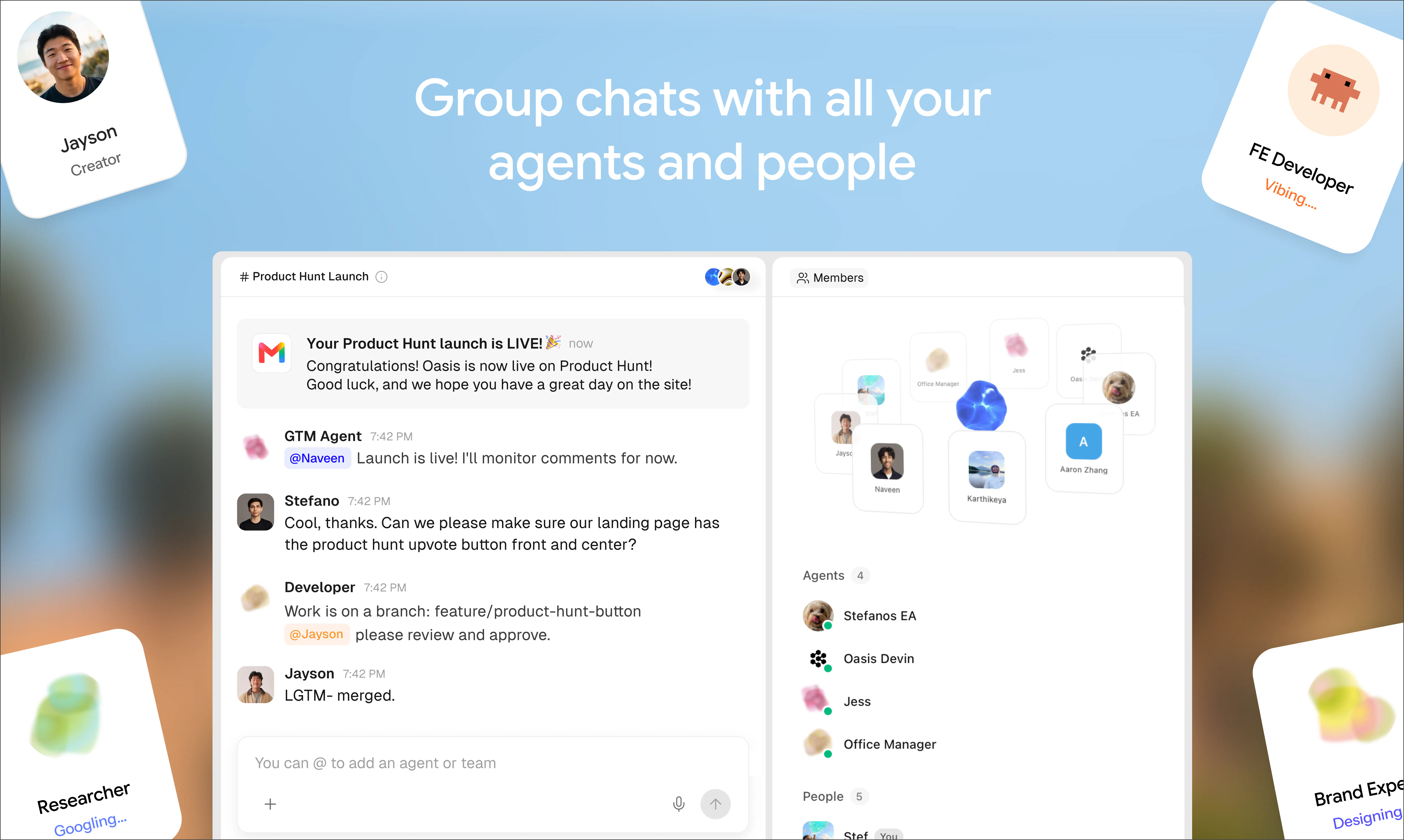
An intelligent workspace for you, all your agents, and your team. Bring the best agents from across the ecosystem into one place, where people and agents work together as equal teammates. Every conversation, decision, and artifact becomes shared knowledge that compounds over time. As the workspace learns how you work, it adapts to your needs and builds specialized tools that help everyone do its best work.

Hey Product Hunt! 👋

I'm Stefano, part of the team building Oasis. We're excited to finally share what we've been working on.

Agents are getting really good. But the way we work with them still feels fundamentally broken.

Today, every agent lives somewhere different. One is in a browser tab. Another is running locally. Another is inside your IDE. We spend our days copying context between tabs, terminals, and chats.

That fragmentation is frustrating on its own. It gets way worse when you try work with your team!

Your teammates can't see the same context. They can't jump into the conversation. They can't reuse your agents. Every person builds their own isolated workflows, and everyone starts from scratch. The more agents you adopt, the more fragmented your AI stack becomes.

Agents shouldn't feel like isolated tools. They should feel like teammates, living alongside you and your team.

That's why we are building Oasis, the shared workspace for humans and agents.

What Oasis does:
- Brings every agent into one place
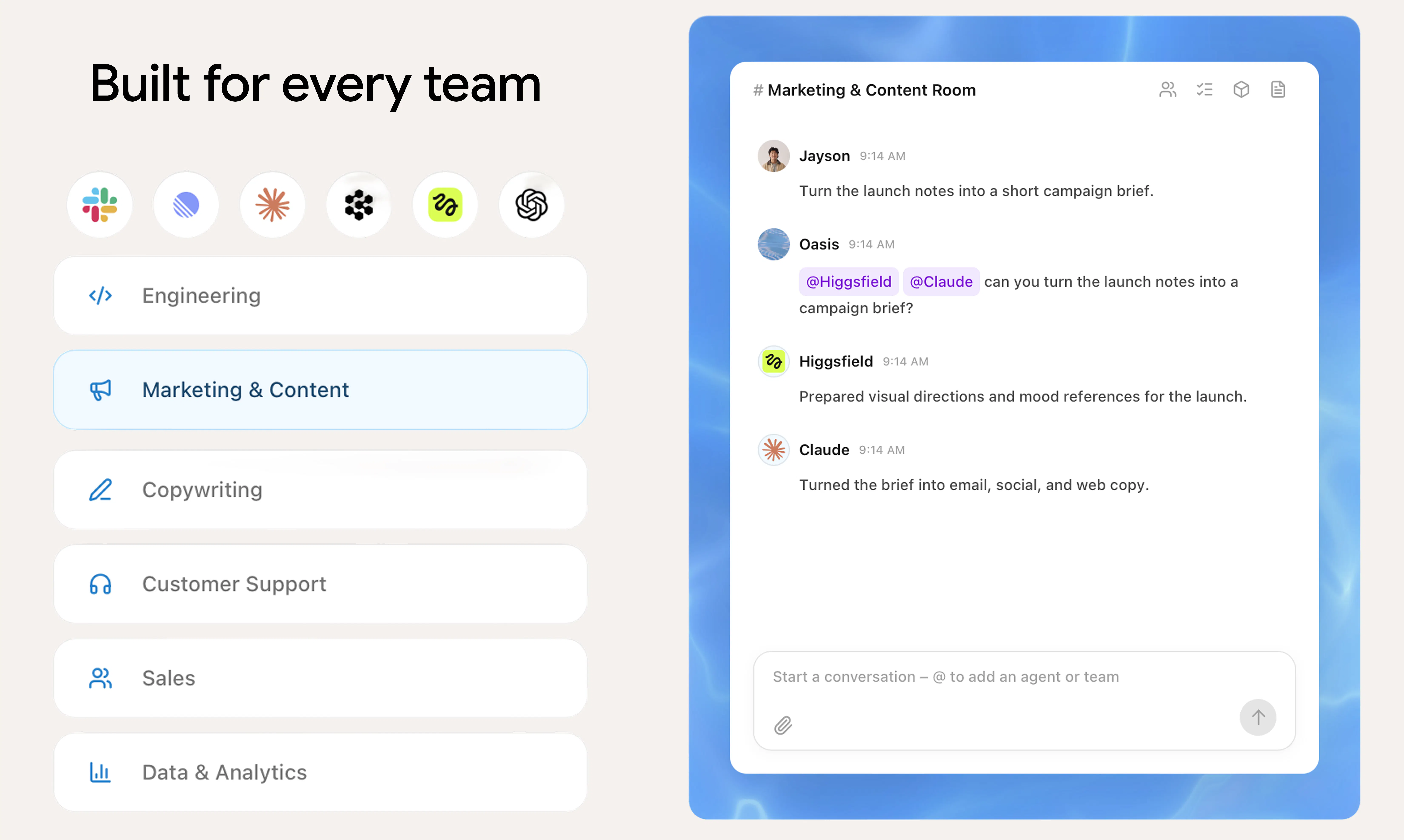
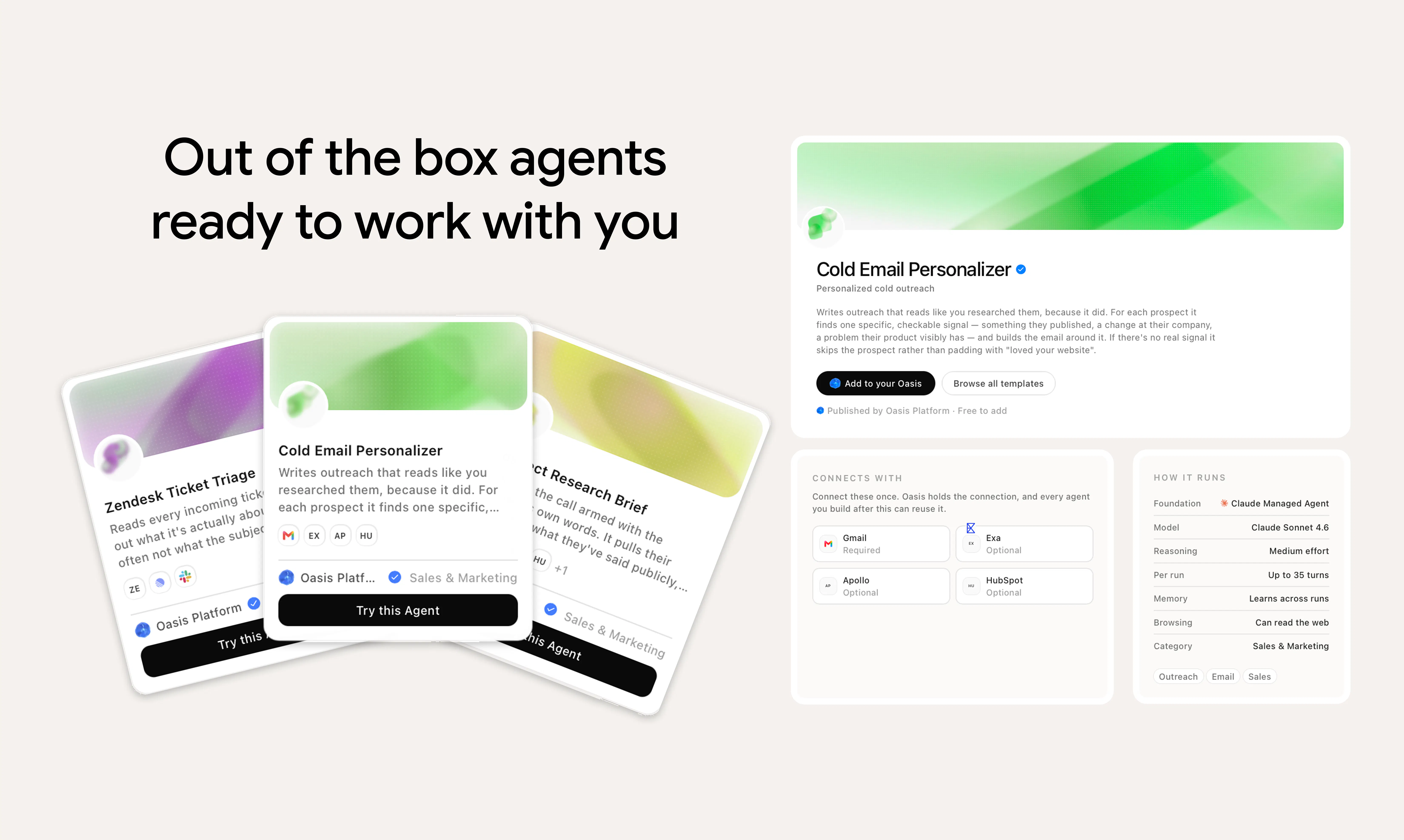
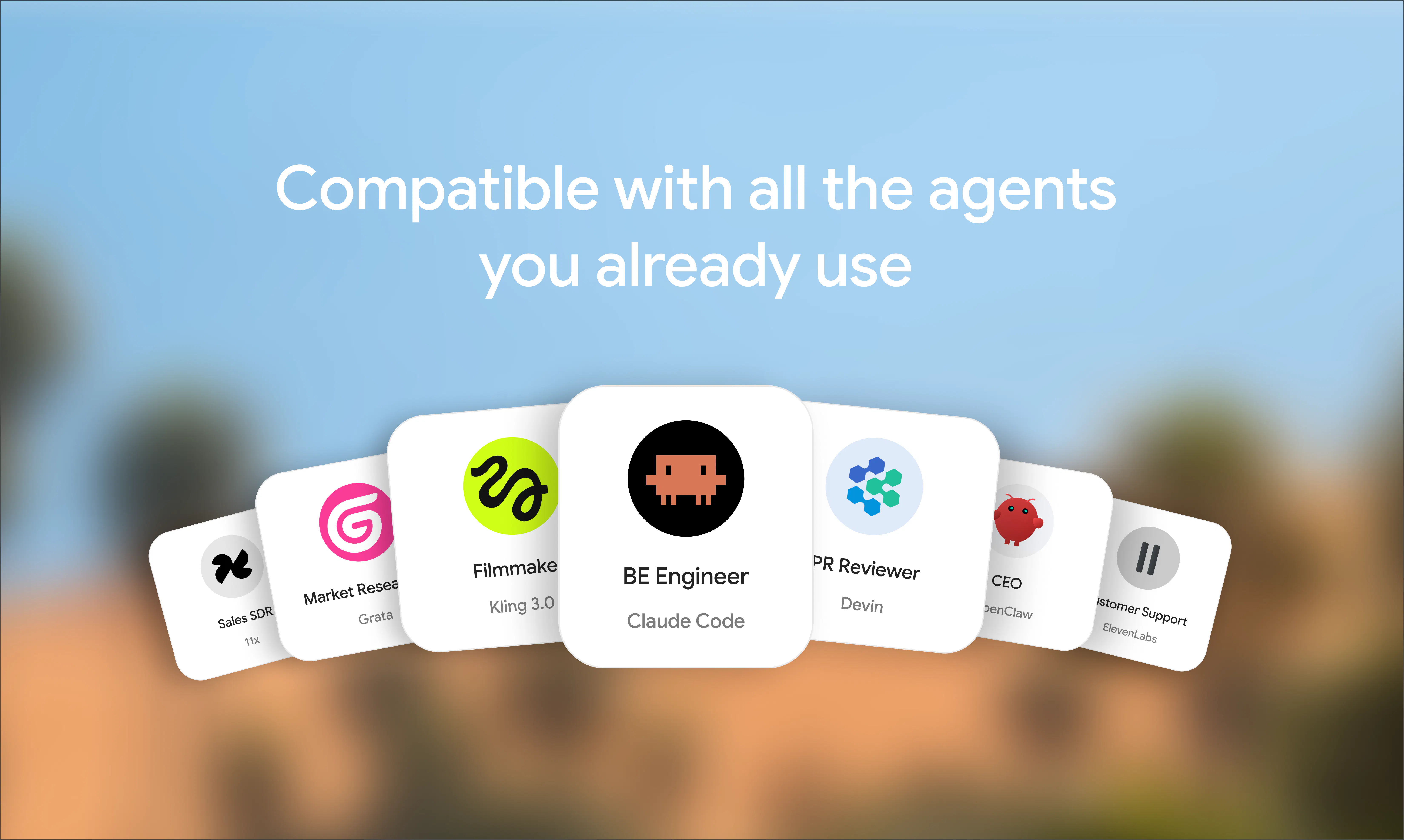
When you join Oasis, you instantly have access to the best agents in the ecosystem. We partner with leading agent builders so you can deploy Claude Code, Devin, OpenClaw, HeyGen, Higgsfield, or any MCP-compatible agent in a single click.

- Work together in Rooms
In the real world, work happens in meeting rooms. Oasis works the same way.
A Room is a group chat for humans and agents. Instead of scattered chats and isolated workflows, everyone works together from the same context.

- Build a shared memory base
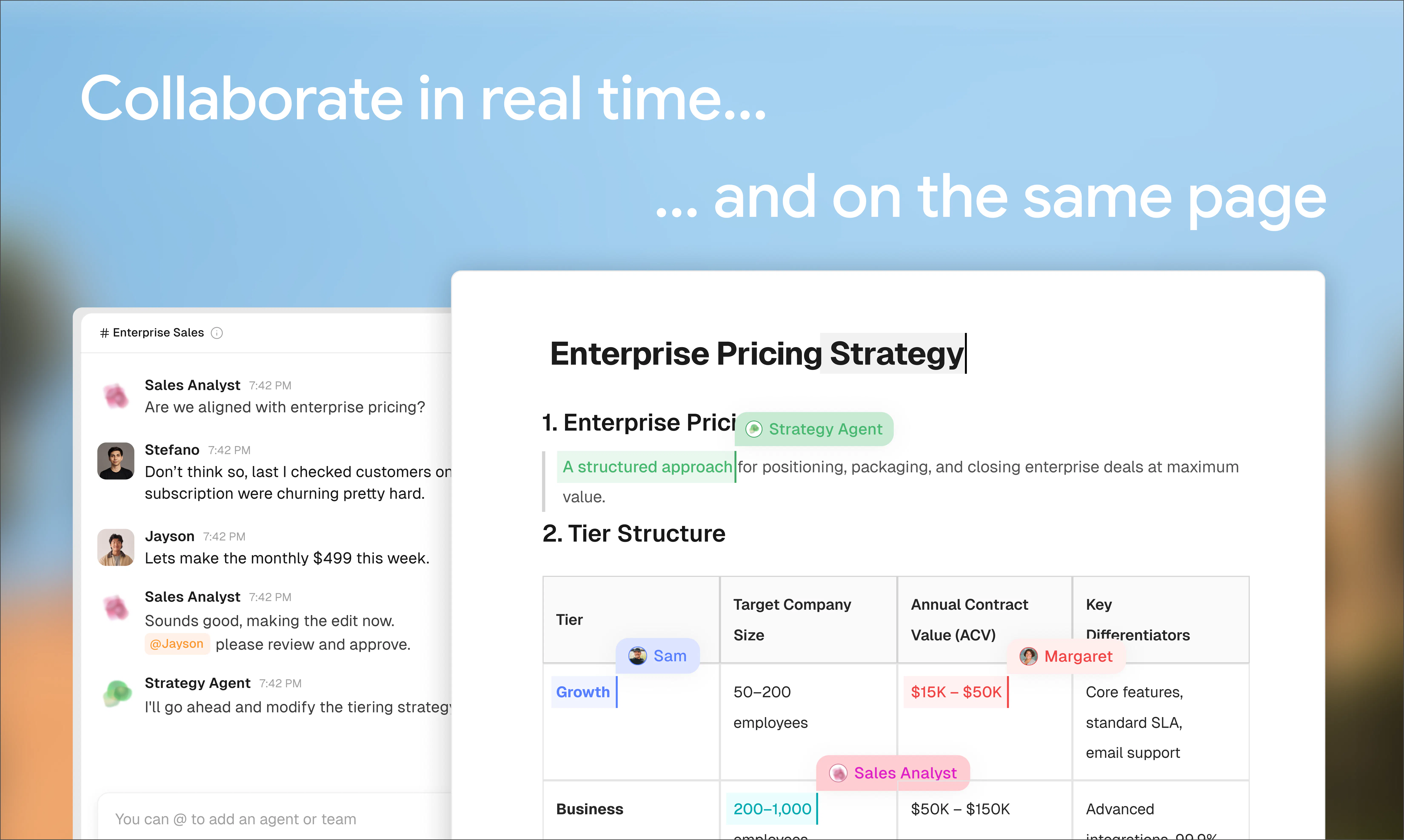
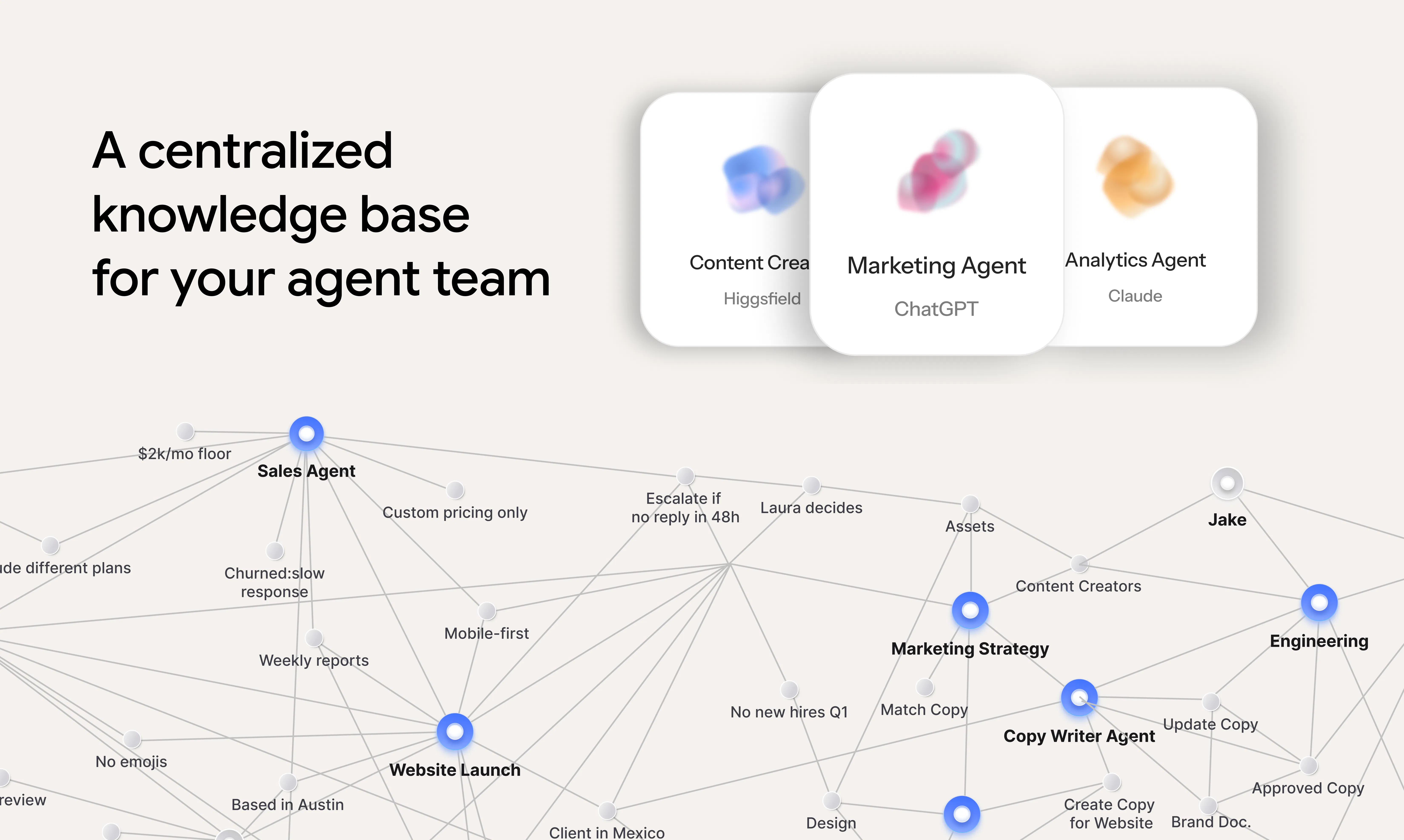
Every conversation, decision, and artifact becomes part of your organization's memory.
New agents don't start from scratch-they plug into the knowledge your team has already built, with permissions enforced from day one.

- Invite your team
AI shouldn't be single-player. Bring your teammates into the same workspace, share agents across your organization, and collaborate with both humans and AI without forwarding links, copying prompts, or rebuilding context.

Thanks for checking us out. We'll be here all day answering questions and would love your feedback.

Join our product hunt slack community to talk to the team building Oasis directly and get first-hand updates: https://joinoasis.com/oasis-comm...

See you in the Oasis 🫡

8
回复

Really cool product ❤️

2
回复

@haxzie Thank you :)

0
回复

@haxzie Thanks Musthaq!

1
回复

@haxzie Thank you!

0
回复

Oasis tackles one of the biggest problems with using multiple agents today, everyone ends up working with different context in different places! How do you think about permissions and memory once humans and many different agents are all working inside the same Room? Can teams control exactly what each agent is allowed to remember and reuse? :)

2
回复

@andrasczeizel Hey Andras, great question!

Our system works a lot like human memory. When a message is sent in a room, it becomes a shared memory available to every agent in that room. Think of it like saying something in a meeting: everyone present hears it and can remember it. Those agents become the holders of that memory.

The memory base is separate from the agents, and they query it during runtime. This lets us detect when an agent uses a memory while speaking with someone who doesn’t have access to it. If that memory touches the agent’s reasoning, we block the entire output and require approval from a human who was present when the memory was originally created before the output can be sent.

You can also inspect the memory base to see exactly which agents have access to each memory. That’s how we make shared memory transparent and govern access to it.

Does that help?

1
回复

Multiplayer is an interesting concept :) I wonder what the ratio of humans to AI ends up being.

How does one use the coupon code for the credits?

1
回复

@phanos_anastasiou Thanks Phanos! Add the code at checkout when upgrading to Pro and it will be free :)

0
回复

Congrats on the launch :)) humalike.ai would fit amazingly

1
回复

@mcarmonas Would love to add your guys agent to our marketplace!

0
回复

Love your product idea! Running agents across separate tools means every one of them starts from zero, so nothing you learn in one place ever compounds.
Is there a possibility to scope an agent to specific channels / projects rather than everything the workspace knows?

1
回复

@alina_petrova3 hey Alina! thanks for your support.

They work much like Slack channels: you choose which agents have access to each channel. We use that membership to determine downstream knowledge permissions, so anything shared in a channel is available only to the agents in that channel.

Did you get a chance to try out the product? Would love to help get you set up with a few agents!

1
回复

Hey Stefano! Love the idea of a place where Humans and Agents can work together. Feel that's the way and I'm sure you'll rock it. Wish you all the best!

1
回复

@german_merlo1 Thanks for your support! Feel free to sign up to claim $200 credits - Would love your feedback!

0
回复

@german_merlo1 Thanks Germán! Give it a go and let us know what you think

1
回复
@german_merlo1 thanks! If you want to try out the product we are giving 200$ in credits to product hunt users
0
回复
What is your moat? Oai and Anthropic are working on team features. Is it the neutrality of aggregation?
1
回复

@michael_vavilov Hey, great question. And yes: neutral aggregation paired with an incredibly powerful and sticky memory base.

To elaborate on the neutrality piece, Oasis lets you easily deploy open-source or cheaper models based on how you work. Oasis also proactively suggests cheaper models for a given task. A lot of our users are saving significant money by operating in this neutral space instead of defaulting to a single provider for everything.

The memory layer makes that flexibility useful over time. Oasis retains the context around how you work, what you care about, and how you prefer things done. So even when you switch models, you don’t have to start from scratch or repeatedly explain yourself.

The goal is to make the model interchangeable while your context and workflows remain consistent.

1
回复

🔥

1
回复

@nakul Thanks Nakul!

0
回复
#7
Skilldocs
Figma for markdown
174
一句话介绍:Skilldocs将Figma的多人实时协作体验带入Markdown编辑器,解决团队在AI编程工作流中文档协同编辑难、反馈无法回流到代码Agent的痛点。
Productivity Developer Tools Artificial Intelligence
实时协作 Markdown编辑器 AI编程工作流 在线文档 团队协作 WYSIWYG 代码Agent反馈 版本管理 多人光标 Figma模式
用户评论摘要:用户普遍认可解决真实痛点,但集中询问版本/分支控制机制,及MCP服务器安装路径不清晰问题。有评论建议轻量级“命名版本标签”而非复杂git分支,以追溯Agent误用版本。作者回应积极,邀请用户参与设计。
AI 锐评

Skilldocs的聪明之处在于精准切入了“人类与AI编程Agent协作”的混沌地带——当文档既是规范又是交付物时,传统Git分支或Notion粘贴都显得笨重。它用“实时协同+一键导出diff”把协作重心从“事后同步”移到“事前共建”,本质上把文档变成了可对话的“接口”。但评论中暴露的版本焦虑才是真正的命门:一旦多个Agent或多人异步编辑,当前“单时间线”模型必然崩溃。作者对分支的回避态度可以理解(Figma本身也不解决版本库),但“命名版本”只是止痛药,长期看需建立基于内容寻址的不可变快照体系,否则会成为仅适用于“小团队同步会议”的精致玩具。MCP安装门槛也暗示目标用户得是开发者兼文档写作者,这类人其实更习惯CLI+git的原生工作流——除非Skilldocs能证明其协作模式带来的效率增益显著大于学习成本,否则很可能会变成“演示惊艳、日常吃灰”的工具。真正的护城河不在编辑器UI,而在能否沉淀出一套“人类共识→Agent执行→结果反馈→文档修正”的闭环协议。

查看原始信息
Skilldocs
Open a skill, and everyone is in it at once - real cursors, inline comments, and an editor that renders as you type. Then hand the whole conversation + diff back to the agent.

Collaborating on .md files is a pain - we paste them into Notion, or open them locally and screenshare. Then after we edit and comment on them, there's no easy way to get the feedback back into the coding agents. So...I built Skilldocs.

I picked the best features of some of my favorite products: @HackMD 's mono viewer, @Figma 's live cursors + follow (no screenshare necessary), Google Docs' real-time highlighting and comments, and @Bear 's beautiful wysiwyg markdown editor. After working on the doc together, leaving comments, and editing it, you can easily copy the diff and comments and send them to your coding agent of choice.

I've started using it for collaborative docs in general. It's really fun having a meeting in it.

Minor features I love:
-Click on a teammates avatar to follow them through a doc or even through switching docs. It's like following in Figma - it feels like screenshare but snappier.

-You can cmd+click to create multiple carets and edit several lines at once (after @Sublime ).

Right now you can import skills via dropping a .md file, pasting markdown, importing from Github, or from your local machine via an MCP. Export is simple: copy the .md of the current doc, diff, or comments. I haven't built proper team source control yet but I've gotten a few requests - I'd love requests and suggestions here.

h/t to @mikekerzhner for early ideation, and @bernatfortet @teamcoscreen @heshamghandour for early testing!

8
回复

@mikekerzhner  @bernatfortet  @teamcoscreen  @heshamghandour  @rajiv_ayyangar 

Skilldocs sounds like a very useful solution for teams working with AI coding agents and collaborative documentation.

The ability to edit Markdown together, leave comments, track changes, and then send the diff and feedback directly back to coding agents is a smart workflow.

We run iSEOAI, an AI Tools Directory where developers and teams can discover AI tools for coding, collaboration, productivity, and AI-assisted development.

We’d love to invite Skilldocs to list your product on iSEOAI and help more developers discover it.

Congrats on the launch, and wishing you lots of success with Skilldocs!

0
回复

@mikekerzhner  @bernatfortet  @teamcoscreen  @heshamghandour  @rajiv_ayyangar I have been needing something like this so bad. Thank you for developing it!

0
回复

on the source control question - since everyone's already live in the same doc like Figma, I'm not sure you actually want git branches, branching is for when people edit in isolation and need to reconcile later, which is the opposite of what you've built. what I'd actually want is lighter: the ability to name/tag a version before I hand the diff to my coding agent, so if the agent runs with a bad version of the skill I can point back to "the one from tuesday's meeting" instead of reconstructing it from memory. real branching only starts to matter once two agents are independently proposing edits to the same skill without a live human session tying them together, which sounds like a later problem, not a v1 one.

1
回复

@galdayan I love that story of just telling the agent which version to reference. Maybe one approach is to make really lightweight versioning in a way that's usable by, and apparent to, coding agents. In other words, having the version history and branching history in agents' context when it matters.

1
回复

This is awesome! I have the wrong mental model for the MCP server install, though, and could use some help. I clicked on the "Claude Code can work in here" and am following the instructions. To install the MCP server using this command, do I need to check out a local copy of skilldocs source code? (Very sorry if this is obvious in docs that I should have seen.)

```
claude mcp add skilldocs -e SKILLDOCS_TOKEN=<paste-token> -- node <path-to-skilldocs-repo>/mcp/index.js
```

0
回复

Skilldocs solves a surprisingly awkward collaboration gap! How are you thinking about source control once multiple people and agents are editing the same skill? Will comments and diffs eventually map cleanly back to Git branches/PRs?

0
回复

@andrasczeizel how would you want it to work?

1
回复
#8
Caveman
why use many token when few do trick
145
一句话介绍:Caveman 是一个本地代理工具,通过压缩日志、工具输出和文件内容,在调用 Claude Code、Codex、Gemini CLI 等 AI 编程代理前削减输入 token 消耗,从而降低 AI 使用成本,实测可减少约 33% 的输入 token 且不影响正确性。
Open Source Developer Tools Artificial Intelligence GitHub
AI代理优化 token压缩 本地代理 开发者工具 成本优化 开源 性能监控 日志压缩 代码压缩 AI编程辅助
用户评论摘要:用户好评集中在节约成本和 tagline 幽默上;创始人回应强调后续将保持高频率迭代,并承诺更多优化。目前暂无功能缺陷或建议类有效反馈,社区整体处于早期关注阶段,期待更多实测数据和场景验证。
AI 锐评

Caveman 切中的是 AI 编程代理普及后最真实的痛点:token 账单比咖啡还贵。它没有去“优化提示词”这种玄学路线,而是直接在网络层做手术——把日志里的进度噪音、代码里的冗余结构、JSON 里的无用字段,在发给大模型之前先榨干。33% 的 token 节省不是“高达 90%”的营销话术,而是写在 commit 里的 54 次基准测试结果,这种可验证性值得尊重。

但冷静看,这个产品仍有三点悬而未决。第一,压缩是有损变换,虽然设计了 content-addressed store 做回滚,但“agent 能取回原始字节”和“agent 真的会取回”是两码事,一旦压缩导致模型理解偏差,排查成本可能抵消省下的钱。第二,BSL-1.1 许可证虽然四年后转 Apache,但企业采购最忌讳“未来的开源”,这会让部分团队观望。第三,也是更本质的:Caveman 是在为 token 定价的荒谬性打补丁——如果模型上下文窗口和定价结构未来发生剧变,这套精细的压缩引擎可能一夜过时。

不过,创始人对“真实数字”的执着和“打印拒绝压缩原因”的透明度,显示出这是一个懂开发者微妙心理的团队。它不解决“AI 是否聪明”的问题,只解决“用 AI 是否便宜”的问题,这恰恰是当前阶段最有商业价值的位置。短期看是省钱工具,长期看,如果它积累的压缩策略能反哺到模型侧的 tokenizer 设计,价值会被重新定义。值得关注,但别指望它是终局方案。

查看原始信息
Caveman
One command wraps Claude Code, Codex, Hermes, and more with a local proxy that compresses logs, tool output, and files before every provider call. In a pinned 54-run benchmark: 33.2% fewer input tokens with 18/18 correctness checks. Caveman can also run any existing agent skill with ~70% fewer tokens by loading text as images. Built on an open-source ecosystem with 97K+ GitHub stars.
A few months ago, I was a uni student spending more on AI than on groceries. Naturally to solve that, I made a skill that makes Claude Code answer like a caveman. "New object ref each render. Wrap in useMemo." 19 tokens instead of 69. People kept it installed because nothing broke and bills got smaller. 97,000 Github stars later plus a #1 post on Hacker News. Then I read what was actually crossing the wire, and the answers were a rounding error. Every turn re-sends tool schemas, file contents, old history, and 300 lines of npm install noise. My agent talked like a caveman and read like a lawyer. v2 is a local proxy between your agent and the provider. caveman claude wraps Claude Code; same for Codex, Gemini CLI, Aider, opencode, Hermes, OpenClaw. It never touches your config, and subscription OAuth passes through byte-exact. The engine sniffs each payload type and routes it to a different compressor: logs keep errors and stack traces and lose the progress spam, code keeps imports and signatures via tree-sitter, JSON keeps structure plus error subtrees. Lossy transforms are landmines, so originals get written to a content-addressed store on your disk before anything goes upstream, and the agent can pull the real bytes back with one tool call. Parse failure or a larger result means the bytes pass through untouched. Numbers, since that's the obvious question: pinned 54-run Claude Code benchmark, 33.2% fewer provider-reported input tokens, 18/18 exact-answer checks, method and per-case results committed to the repo. Local measurements are labeled "inferred" because a local tokenizer is an estimate. There are no "up to 90%!" claims anywhere and no verified production numbers yet. The dumbest thing in here that works: pixel mode. Dense text rendered to PNG costs image tokens instead of text tokens. A 63.7k-char minified tool catalog plus a 93k-char log went from ~55k estimated text tokens to ~11k image tokens. On sparse code the PNG costs more than the text, so the gate refuses and prints why. Skill is MIT and stays MIT. Engine is BSL-1.1, flips to Apache-2.0 within four years, self-hosting free including production. Runs local, no account. If a gate declines something you think should compress, the reason is printed. Argue with it in an issue. It's not perfect yet, and there are many many more optimizations to be built. This is the first release in a long line of products to reduce the cost of AI per task (not just the tokens).
6
回复

@jbrussee LOVE this! When I was in high school, a teacher who was a veteran taught us Bottom Line Up Front (BLUF) and now I'm obsessed with it. Glad my agents can now be concise too.

0
回复

That looks amazing. Will check it out. Congratulations to the launch!

1
回复

@janoberhauser Thanks Jan! Exciting things on the horizon :)

0
回复

Great journey so far @jbrussee, congrats on launching and can't wait to see what else you're going to ship!

1
回复

@jobrietbergen Thanks man! Unfortunately, this has only reinforced the behavior. Expect increasingly irresponsible amounts of shipping.

0
回复

Awesome journey @jbrussee let's gooo!! 🚀

1
回复

@manouk_dr Thanks Manouk!! Really appreciate it, so exciting to see where all of this goes from here 🚀

0
回复

upvoting because your tagline is top tier 😂

0
回复
#9
Kitbitz
2K+ free hand-drawn illustrations for your projects, CC0
136
一句话介绍:Kitbitz 是一个收录了超过2000个手绘风格SVG/PNG矢量素材的免费CC0图库,覆盖13个主题套件,为游戏、应用、插画和创意世界搭建提供即取即用的视觉资产,解决了独立开发者与设计师寻找风格统一且可商用素材的痛点。
Games Graphics & Design Illustration
手绘插画 CC0素材库 矢量图形 游戏美术 UI资源 Figma插件 免费商用 世界构建 设计资源 素材下载
用户评论摘要:用户普遍赞赏其艺术质量与免费CC0授权,认为素材间风格统一、组合度高。部分评论对即将推出的世界生成器和Figma插件表示期待,暂无负面反馈或功能请求,核心建议集中于希望生态工具(如插件、生成器)尽快落地。
AI 锐评

Kitbitz 的本质是一次“沉没成本”的巧妙变现——创始人在此前失败的游戏项目中积累了海量高质量美术资产,如今以CC0形式免费释放,实则完成了从“失败项目负债”到“开发者社区资产”的价值转移。这很聪明,但也要看清其商业逻辑的脆弱面:CC0意味着零授权壁垒,任何商业公司都能将这些素材整合进自家产品而不留痕,当前热度(136票)主要依赖创作者的个人叙事与情怀加成,而非不可替代的工具性。真正的护城河不在素材本身,而在于其承诺的周边生态——Figma插件、MCP协议支持和地形/世界生成器才是将“一次性下载库”变为“持续创作基础设施”的关键。若这些工具仅是概念玩具,Kitbitz终将成为又一个被收藏夹吞没的免费资源站;若世界生成器能实现基于素材的模块化拼接,则有机会切入低代码游戏开发与AI辅助场景叙事的细分赛道。另外,素材虽标注“灵活缩放不变形”,但手绘风格在矢量重绘时对锚点质量要求极高,需实测其SVG在不同尺度下的几何稳定性。总体而言,这是一个有审美、有温度的开源式项目,但产品力仍需从“赠品”走向“生产力工具”的蜕变。

查看原始信息
Kitbitz
A free CC0 library of 2,000+ hand-drawn assets across 13 themed kits. Download individual SVGs and PNGs, or grab the full Figma Community libraries with reusable components, color variables and flexible, resizable assets. Use them for games, apps, maps, illustrations and playful little worlds. We’re also building a Figma plugin, MCP support and world-building tools around the library.

I’ve been sitting on these illustrations for way too long.

A few years ago, we built an ambitious 2D world and game builder. I spent about a year leading the illustration work for it, creating kits full of tiny buildings, trees, props, characters, rocks, weapons, furniture and all sorts of other bits you could combine into your own worlds.

I loved the product and really believed in it, but it never got the chance to become what we hoped it could be. Leaving thousands of illustrations sitting in old Figma files felt like such a waste.

So, as a little side project, I started giving them a second life.

That became Kitbitz

There are now 2,000+ hand-drawn assets across 13 themed kits, all released under CC0. You can download individual SVGs and PNGs, or grab the full Figma Community libraries with reusable components, color variables and flexible assets built to resize, stretch and tweak without everything going wonky.

And I’m having way too much fun taking it further. I’m already playing with a Figma plugin, MCP support and a terrain/world generator to make the kits even more useful and fun to build with.

Take whatever you want. Make something fun with it. 🚀

6
回复
I’m really happy to hunt Kitbitz today. 💫 It’s one of those projects that feels immediately useful, but also just really fun. Kitbitz is a free CC0 library of 2,000+ hand-drawn illustrations across 13 themed kits, from nature and medieval worlds to space, cities, pirates, dungeons and more. You can download individual SVGs and PNGs, or grab the full Figma libraries with reusable components, color variables and flexible, resizable assets. What I especially like is that this isn’t just a folder of illustrations being released and forgotten. Sjoerd is already building more around the library, including a Figma plugin, MCP support and world-building tools. Everything is free to use, remix and ship, including commercially, with no attribution required. There’s a lot of craft and a lot of love hidden in these tiny pieces. Go make something weird with them. 🐧🏰✨
4
回复

@gzampino Thanks for hunting this Gabs, really appreciate it! ❤️

1
回复
It feels so good to finally be able to share these beautifully hand-crafted assets with the world, and especially to make them available for free. So much care, time, and thought went into creating these over the years, across so many incredibly talented illustrators and designers. It always felt a little wrong knowing that all of that work was just sitting in old files. Big props to Sjoerd for taking the initiative and actually making this happen. I’m so happy these finally get to have a life out in the world ❤️
4
回复

This is so cool!! 🥹 So much work and love clearly went into these. Very excited to see what people make with Kitbitz. Congrats @sjoerd_huisman on finally getting it out into the world!! 🚀

2
回复
@mariate thanks a lot for the kind words Mariate! Really appreciate it ❤️
0
回复

I've had the fortune to work with Sjoerd on many projects over several years and got to watch a lot of these get made. Incredible illustrator/designer/dev. What still gets me is how well the pieces fit together... you can build almost any world with them and nothing looks out of place. That part is really hard to pull off

So happy these are finally out. Congrats Sjoerd!!!

1
回复

Thanks so much Pabs, that means the world to me. Couldn't have done it without your support. You enabled us to create these. Most fun times I've had in my work life.

0
回复

With the whole maximalist design trend, this is a great way to level up designs. We're out of the simplistic, sleek era for sure.

1
回复
Really like what you’ve done with this. The world generator you mentioned sounds like a fun next step too! :) Congrats on the launch!
1
回复

@etiennegarcia thanks Etienne!

1
回复

Must have for the game-like products!

1
回复
@shell100500 Aaaay thanks Andriii!
0
回复

These could be pretty cool for creating a video game! :D

1
回复

@busmark_w_nika Right? I'm so excited to see waht people build with them!

1
回复
#10
Mem Agent
The AI that refuses to let you drop the ball
122
一句话介绍:Mem Agent 是一款“不让任何事掉链子”的 AI 记忆与任务代理,它把你散落在笔记、会议、邮件和语音里的待办与想法自动整理成动态任务模型,并在最合适的时机主动提醒你跟进,尤其适合信息碎片化严重、靠传统待办清单难以坚持的职场人和轻度 ADHD 用户。
Productivity Task Management Artificial Intelligence
AI助手 任务管理 记忆增强 主动提醒 笔记工具 生产力工具 语音速记 智能体 个人知识管理 自动化跟进
用户评论摘要:用户普遍认可其“主动跟进”和“按上下文回放”能力,能替代传统待办清单,降低压力。主要问题:语音转写支持语言有限,影响非英语用户使用;有用户担心价格会上涨;部分用户关注提醒时机的智能判断边界,担心过度打扰。
AI 锐评

Mem Agent 本质上不是又一个“笔记+待办”的缝合怪,而是把“记忆”从被动存储升级为主动执行的中枢。它的核心差异在于“有主见”——不靠用户手动设置截止日期,而是基于你喂给它的所有上下文(笔记、邮件、会议、健康数据甚至手写日志)建立一个动态的优先级模型,然后在它认为“合适的时候”推你一把。这正好命中了传统任务管理工具的最大死穴:收集容易,回访难,坚持更难。从评论看,用户最惊艳的不是它能记,而是它“知道什么时候该提”——这背后是对真实工作节奏的理解,而不是简单的日历提醒。

但问题同样明显。首先,它的“智能”依赖对用户数据的深度读取和建模,这意味着隐私边界和信任成本极高,目前评论里尚未有人质疑数据安全,这是潜在的雷区。其次,语音转写语言支持有限,直接砍掉了一大块非英语市场,对于一个宣称“无摩擦捕获”的工具而言,这是硬伤。第三,AI 判定“合适时机”的算法一旦在复杂场景下误判(比如紧急事务被后置),用户信任就会迅速崩塌——而评论中已有用户表达了对“提醒变成打扰”的担忧,这恰恰是这类产品从“助手”沦为“噪音”的分水岭。Mem Agent 目前最大的护城河不是技术,而是它把“跟进”这件事做成了产品默认行为,而非用户额外付出的努力。它值得关注,但若不能在多语言支持和主动提醒的可解释性上补课,很容易从“AI 代理”滑向“高级闹钟”。

查看原始信息
Mem Agent
An important deliverable, or a pizza place saved for that someday trip to Italy—Mem Agent keeps track of what you tell it, plus the todos living inside your notes and meetings, sharply following up so it actually happens. And with Push-to-Remember, seamlessly capture a thought into Mem or recall something you saved with a single button—all without leaving your work.

Hey Product Hunt! 👋

Ever since we started Mem, we've been obsessed with the idea that your mind is a gold mine—full of thoughts, aspirations, and to-dos that never see the light of day again. Today, we're excited to launch Mem Agent, the AI that refuses to let you drop the ball on anything that you care about, grounded in what you tell it and the notes and bits of info you feed it. One unexpected surprise from early users: one thing they have dropped is… their task management apps.

How it works

  1. Dump what you need to remember in Mem – meeting notes, brain dumps, files. Text it, Slack it, forward an email, or hit one key to Push-to-Remember with voice.

  2. Trust – Mem Agent takes what you've given it and folds it into an ever-evolving model of your current work and priorities, and when it'll be relevant later.

  3. Get nudged at the right time – Forget setting due dates or alarms on your phone. Know that you'll get reminded of the thing when the time is right. For the important stuff, Mem won't drop it until you say the word.

How it's different

  • Opinionated and works right out of the box: Most AI tools require you to prompt, configure, and piece together skills to be good at following up. We wrote it a charter: the behaviors it’s not allowed to ever give up, so it works on day one.

  • It's got receipts: At any point, pop open the Agent Overlay and look into Mem Agent's brain—see what tasks, projects, and goals it's tracking for you. Then close it and get back to not worrying whether someone's got it. (Someone does.)

  • Connected apps provide more context, not more noise: When you connect apps (like Gmail), Mem Agent uses them as context to skip reminders for things you've already handled, giving you fewer obsolete reminders to sift through.

  • Backed by a shared workspace: Your Mem workspace is where the notes you and Mem create live. Capture new notes, import existing ones, or let Mem take all the notes. It's your shared brain, all cleaned up and organized—no “procrastivity” work of managing a sidebar of folders here.

  • Fastest capture and recall: Never lose another thought; summon details deep in your notes with a single keypress using Push to Remember.

  • Persistent as hell: It won't let an important thread go cold—not on its watch—unless you tell it to. It'll change tactics or find another time, but it won’t quietly give up.

How to start

  • Download the app. (Try Mem Agent with Proactive plan free for 7 days, and don’t forget to use code DROPTHEBALL to get 50% off your first month when signing up on web/desktop.)

  • Immediately try Push-to-Remember and just brain dump with your voice—getting every little task off your mind and into Mem.

That’s it. Mem takes it from there—expect a ping at just the right time (“hey, still grabbing pasta for tonight’s dinner?”).

Early feedback from customers

  • "I have stopped keeping a visible task list. I tell the agent roughly when and it picks the timing. I stress less about tasks now and this is not what I would have guessed before starting using agent."

  • "Please take all my money. This thing is amazing!!! It's like OpenClaw and Mem had a baby!"

  • "Agent so far is the best thing I didn't know I needed. My productivity is on another level"

Give it a spin and tell us what you love and what you want to see next—and tell me: what's the one thing you'd want an agent to refuse to let you drop? 👇

Kevin
CEO and Founder of Mem

PS -- I've also shared a longer form comparison of Claude vs. OpenClaw vs. Mem Agent. Check it out: https://x.com/kevinfmoody/status/2087718606281015615

7
回复

@kevinfmoody Game-changing. I have mild ADHD, and this feels like a blessing. I love the heads-ups and reminders. 🙌

0
回复

Mem Agent helps me keep track of scattered personal administration and follow through on it at the right time.

After my trip to Australia, Mem kept several active threads together: cat care, a blood-pressure check, a doctor’s appointment, an AC warranty issue with the car, configuring my custom iCloud email domain, and arranging an inspection of the roof. Instead of having to reconstruct everything from earlier conversations, I had these threads brought back into view at useful moments and in the right context.

What distinguishes this from an ordinary to-do list is the context behind the follow-through: why something matters, what is time-sensitive, and what makes sense to tackle when I actually have the capacity.

There is only one thing I’m sad about: I can’t use the push feature to remember or record meetings, because the range of languages Mem can transcribe is still quite limited.

0
回复

@kevinfmoody capturing the idea is the easy part now, every note app can do that. The harder problem is resurfacing it at the moment it's actually useful, which is where most memory tools quietly fail and things get dropped anyway. Push-to-Remember without leaving your work is the right instinct, friction at capture time is what kills the habit. Curious how you're deciding follow-up timing, that's usually the line between helpful and annoying for this kind of tool.

0
回复

Try it, it might change the way you work

I've been using Mem Agent for several weeks now, and I strongly recommend giving it a try because it brings together - for me at least - a calmer, more personal way of working, reliable project follow-through, a practical bridge between handwritten and digital planning, meaningful health-data context, and a useful cross-checking layer for sources Mem cannot (yet?) access directly:

  • It has helped me turn GTD into something I can actually live inside, rather than another planning system. I was able to teach Mem Agent my own way of working through explicit instructions, personal skills, and routines — for example, how to keep the background bookkeeping quiet, bring unclear points to me one at a time, and combine project context, calendar shape, energy/readiness, and real external deadlines into one suggested needle-mover or several suggested tasks fitting the context and time when I ask for it. The structure is maintained underneath, but the next action is chosen intuitively by me in the moment based on what feels doable and whats presented by Mem, which makes my GTD practice feel much closer to Time Surfing — without adding stress or pressure.

  • It turns scattered real-world planning into a functioning project system. For a youth chess championship, I had chats, emails, volunteer names, venue logistics, catering questions, materials, and deadlines spread across different places. Mem Agent consolidated that into a live project with milestones, owners, dependencies, and parallel next actions — while keeping genuinely independent workstreams open instead of forcing everything into one artificial sequence. I could and did keep refining the system by teaching it how I wanted reviews, routines, and follow-through to work, rather than adapting my life to a fixed template.

  • It gives me a working bridge between my daily Bullet Journal on my Remarkable and my digital system. Mem Agent reads those pages with varying degrees of accuracy, then cross-checks what it extracts against Mem’s own notes, tasks, projects, and dates. That makes the BuJo and the digital system partners rather than competing sources: discrepancies can become visible, useful information can be carried over, and I can keep the flexibility of writing by hand without letting the digital record quietly drift away from reality. The occasional extra work needed to decipher a page is probably more a reflection of my handwriting than of the system itself.

  • It has become a personal health-data reconciliation layer rather than just a place to dump wearable numbers. I gave it a HealthLog containing journal entries, nutrition, Withings body data, and workouts, alongside and using Oura and Bevel exports; Mem Agent turns these different sources into analysis-ready tables for daily overview, sleep, cardiovascular data, activity, scores, habits, and workouts. It also preserves the actual measurement date instead of the import date and resolved an apparent Oura-versus-Bevel contradiction by recognizing that Bevel exports refer to the previous night and that Bevel’s recovery percentages are its own calculations, not Oura scores. That makes it possible to look at sleep debt, HRV, readiness, hydration, stress, and training together with what actually happened that day — without pretending the data supports medical conclusions.

  • I also use Claude as a cross-checking layer for sources that Mem Agent cannot yet access directly, including Granola, Recall, and Evernote. Claude compares what those tools contain with Mem Agent’s records and surfaces information that may be missing or unclear, so I can bring it into the conversation and keep the overall system more complete.

Overall, Mem has made my work simpler, clearer, and more relaxed. It keeps important commitments and context in view, helps me think through uncertainty, and lets me use GTD in a more “Time Surfing”-way without extra pressure.

2
回复

I am a big fan! I have been using Mem AI for a few months now, and I have to say that since the MCP integration, my life has changed a little bit. Everything is there now, and I’m just a question away from finding anything I need in both my professional and personal life.

I have tried many similar apps, but Mem was the perfect fit right away. btw, I barely use it for work. I mostly use it for personal stuff and it’s still worth every penny (but please don’t raise the prices!! lol)

0
回复
#11
WebBrain
The sidebar agent for the rest of us
117
一句话介绍:WebBrain是一款免费开源的浏览器侧边栏AI代理,通过本地运行或自带API密钥接入任意大模型,帮用户直接读取网页、提取数据并自动化操作,解决传统浏览器AI助手受限于模型和订阅、数据隐私难保障的痛点。
Browser Extensions Chrome Extensions Artificial Intelligence GitHub
AI浏览器助手 开源 本地推理 侧边栏扩展 数据隐私 多模型支持 网页自动化 浏览器代理 BYOK MIT协议
用户评论摘要:用户肯定本地优先的定位,并建议宣传时强调“数据不出设备”而非单纯“开源”,以打消企业安装顾虑。另有开发者询问本地小模型在复杂多步任务上的表现,主创回应称Qwen 3.6 27B等模型在24GB显存设备上效果良好,但视觉能力仍待完善。
AI 锐评

WebBrain踩中了AI浏览器代理行业的两个结构性裂缝。第一,现有头部玩家(如Dia、Perplexity等)普遍将模型与产品绑定,用户被锁死在订阅制与特定云端模型上,而WebBrain用“BYOK+本地推理”双轨制把选择权和数据主权还给了用户——这不仅是功能差异,更是一种渠道策略:它借用用户自带的API Key和本地算力,大幅降低了自身的运营成本,将开源项目的可持续性建立在生态而非资本上。第二,它精准选择了侧边栏而非完整浏览器改造,切入成本极低,同时利用浏览器原生会话与Cookie构建真实操作上下文,这一点远比许多需要单独登录的AI助手更接近“替你干活的人”。

但锐评必须指出其软肋。社区评论已点出灵魂问题:本地模型在复杂多步任务上仍显著落后于Claude/OpenAI,而创作者的回答只能搬出“效果不错”和一堆模型名称,缺乏可复现的基准对比,这等于承认核心体验依赖用户自己掏钱买高性能GPU或调用云端API。所谓的“本地优先”在消费级设备上更多是心理安慰,而非性能保障。更致命的是,浏览器扩展持有用户全部登录态,权限边界极其模糊——评论中那句“它继承了你已登录的一切”就是对安全模型的最大讽刺。一旦提示词注入或恶意网站诱导代理执行错误指令,数据泄露的爆炸半径被“本地”概念极度缩小,但风险仍真实存在。

WebBrain的价值不在于它今天多能用,而在于它验证了一个命题:浏览器代理的底层逻辑正从“订阅制全家桶”向“开放协议+自带模型”迁移。它是一块试金石,真正的考验在于能否在拿到足够反馈后,把“token-conscious”的工程能力沉淀为一套默认安全的代理指令协议。在此之前,它更像一个极客玩具,而非大众生产力工具。开源是姿态,本地是卖点,但这台机器能否真正替用户干活,还得看未来三个月的模型适配速度和社区贡献质量。

查看原始信息
WebBrain
Your browser, your models, your data. WebBrain is a free, open-source AI browser agent for Chromium browsers and Firefox. Run it locally with llama.cpp and most queries cost nothing — your data never leaves your device. It reads pages, extracts data, and automates tasks right from the sidebar. Prefer the cloud? Bring your own API key for OpenAI, Claude, OpenRouter, or 100+ OpenAI-compatible providers. Multilingual UI, token-conscious screenshots. MIT licensed.

Hi Product Hunt! I’m Emre — and I’m back.

Today I’m launching WebBrain, a free, open-source AI browser agent that lives directly inside your browser.

I built it because the most capable browser agents are generally closed source, tied to specific models, and locked behind subscriptions. WebBrain takes a different approach:

  • Works with Claude, OpenAI, OpenRouter, or local models through llama.cpp

  • Runs on Chrome, Firefox, and Edge

  • Uses screenshots and browser accessibility data to understand and operate websites

  • Keeps you in control of the model, provider, and data

Drafting this launch, I used WebBrain to write parts of it. 🙂

Ask. Act. Automate. Any LLM.

This isn’t my first attempt at making the web more programmable. In 2006, I launched Grou.ps, which grew to 350,000 communities and 12 million registered members before its assets were acquired by a publicly traded telecom company.

Later, I launched GraphJS here on Product Hunt—an open-source toolkit that let developers add social-network features to websites using a few HTML tags and JavaScript. About a year later, it was acquired by its first enterprise customer.

Now I’m bringing that same open-web philosophy to AI browser agents.

Try it: 👉 webbrain.one
Star it: ⭐ github.com/webbrain-one/webbrain

MIT licensed and open source.

Try it on this page right now — have it draft or revise your comment and actually post it. Or just ask "who built this?"

4
回复

@emresokullu 🎊🍾🚀 kutlarim hocam

0
回复

@emresokullu Small positioning note: I would lead with local-first, not open-source. Open source tells people they could read the code, which almost nobody does. Local tells them the page they are looking at never leaves the machine, and that is the objection that actually stops browser agents from getting installed at work.

0
回复

How well do local models handle more complex multi-step browser tasks compared with Claude or OpenAI? Do you see local inference becoming good enough that most everyday browser automation can eventually stay fully on-device?

1
回复

@andrasczeizel, great question, and thanks! Local models perform really well, especially Qwen 3.6 27B. If you have a GPU with 24 GB or more of RAM, or a MacBook with at least 32 GB of RAM, you are in good shape.

Laguna XS 2.1 is also quite good, although it is text-only for now. We have added vision support, but it is still a work in progress: https://huggingface.co/webbrain-one/Laguna-XS-2.1-Vision-NVFP4

Muse Glimmer 30B and Nemotron 3.5 Lightning 30B-A3B, released this week, also look promising. We will have Qwen 3.8 27B today, too. We plan to include all three in a benchmark soon.

The advantage of Gemma 4 QaT 31B is that it is extremely fast. For now, though, I find its quality a little lower than Qwen 3.6 27B, especially for vision tasks.

If you have less memory, other good options include Gemma 4 26B A4B, Gemma 4 12B, and Qwen 3.5 9B.

For more benchmarks of local models, follow our blog at https://www.webbrain.one/blog and our social media accounts: Mastodon at https://mastoturk.org/@webbrain and Bluesky at https://bsky.app/profile/webbrain-one.bsky.social

Cheers!

2
回复

I typically use @Dia Browser which has its own AI assistant built-in, but I appreciate that@emresokullu’s WebBrain extension gives people choice who use Chrome and other browsers.

The power of this approach is that the assistant has access to your sessions, cookies, and context — intact.

And you can BYOK or point it at Claude, OpenAI, OpenRouter, or even a local model through llama.cpp, then ask it to understand the page, fill forms, or take action. You can use any LLM in your browser with WebBrain.

I've known @emresokullu from back in the social web days when I hunted @Grou.ps v2 7 years ago! Nice to see him back at it!

0
回复

@chrismessina Thanks, Chris — it really is full circle, from Grou.ps to browser agents 😄

And yes, that freedom of choice is exactly the point: Chrome or Firefox, local or cloud models, BYOK — basically, bring your own brain.

It’s great to have you hunting WebBrain after all these years!

0
回复

@emresokullu  @chrismessina The intact context point cuts both ways, and I think that is the real design question here. An extension holding your sessions and cookies does not have access to your accounts, it has access to your identity. Nothing was granted to it. It inherited everything you happened to already be logged into.

Which makes the local model less a privacy feature than a containment one. The page never leaves the machine, so the blast radius of one bad instruction stops at the machine too. A hosted assistant cannot offer that, and it is the line I would put on the box.

0
回复
#12
Google Pixel 11
Your most personal Pixel yet
116
一句话介绍:Google Pixel 11 通过“翻转即静默”的 LED HiLight 通知与更强大的 Tensor G6 端侧 AI,让手机在后台替你处理跨应用任务,只在真正需要时用灯光轻提示,解决“通知轰炸”与“操作繁琐”的双重注意力负担。
Android Hardware Cell Phone
智能手机 AI助手 端侧计算 Tensor G6 通知管理 隐私交互 摄影升级 Gemini 手势反馈 旗舰机型
用户评论摘要:有效评论仅一条(获3赞),来自官方/核心用户。核心反馈:赞赏“翻转静默+LED通知”的注意力救赎理念,期待Gemini在跨应用操作(订车、下单)的落地,并认可7年系统更新与硬件升级。无负面或具体问题,信息量偏薄,缺乏第三方真实使用痛点。
AI 锐评

Google Pixel 11 的亮点不在“更快的芯片”或“更好的相机”,而在于一个被行业忽视的洞察:AI 越强大,手机越不该刷存在感。HiLight LED 通知把“提示”从屏幕霸权中解放出来——翻转手机即进入“勿扰但知情”状态,这是对当前“通知即焦虑”生态的一次温和反叛。Tensor G6 的端侧算力则让 Gemini 能安静处理跨应用事务,而非每次调用都弹窗确认,本质上是在训练用户“信任系统”。

但问题同样尖锐:其一,“翻转静默”是物理动作,与“AI 判断何时该打扰”存在天然冲突——如果 AI 足够聪明,为何还要用户手动翻转?其二,演示中的“订车、下单”都是高风险操作,端侧 AI 一旦出错,责任归属与纠错成本远高于效率收益。其三,116 票的冷启动数据说明,这款概念机并未击穿大众心智,评论区的自说自话更像“极客共振”,而非市场验证。Pixel 11 目前的价值更接近“方向标”——它证明 AI 手机的下半场不是拼参数,而是拼“如何克制地介入生活”。但克制的前提是绝对可靠,这一点,Google 尚未给出令人信服的证据。

查看原始信息
Google Pixel 11
Discover the Google Pixel 11 lineup featuring updated camera hardware, the Tensor G6 chip, LED HiLight notifications and faster Gemini AI support.

Hi everyone!

A phone that gets more useful when you turn it face down is a pretty interesting idea.

On Pixel 11 Pro, the new HiLight system uses colored LEDs around the camera flash to tell you when a favorite contact is calling, or when @Gemini is listening, thinking, and responding, without asking you to look at the screen.

Gemini Intelligence can now handle more things in the background, from moving information across apps to taking on everyday tasks like booking a ride or placing an order.

The hardware is moving in the same direction too. Tensor G6 brings much more on-device AI compute, while the cameras, charging, and durability all got meaningful upgrades (7 years!)

Love the idea of AI making the phone a little quieter. Do more in the background, then give me just enough signal when something actually needs my attention :)

3
回复
#13
FluidDocs CLI
Publish interactive docs that answer and report back
115
一句话介绍:FluidDocs CLI将提示词转化为可交互的智能文档,让发送后的文档能实时回答读者提问,并向作者汇报阅读进度和问题,解决静态文档信息单向传递、反馈缺失和版本混乱的痛点。
Design Tools Productivity Artificial Intelligence
交互式文档 CLI工具 AI问答 文档分析 文档出版 智能文档 开发者工具 MCP替代 内容追踪 办公效率
用户评论摘要:用户主要关注三点:非技术用户能否免命令行使用(官方回复有Web应用);读者提问是否需要注册(回复称无需账号,附示例链接);AI回答是否受限于文档内容(未获直接回复)。另有用户赞赏链接更新功能,并计划用于融资材料和研究项目场景。
AI 锐评

FluidDocs CLI的价值不在于“文档交互”这个表象,而在于它重新定义了文档的生命周期——从“发送即结束”变为“持续反馈回路”。其杀手级功能是结合了Claude Code等编程代理,将AI能力从文档生成延伸到发布后的迭代优化:通过CLI获取读者提问,反向优化文档内容,这实质上是构建了一个闭环的知识管理系统。115票的社区反馈印证了其精准切入开发者市场,但需冷静看待:其一,评论区核心关切“客户端是否需要注册”与“AI是否仅限文档内部知识”均未得到直接解答,这动摇了企业级应用的信任根基;其二,CLI在终端显示的可读性优势明显,但对非技术用户是硬门槛,官方虽提供Web端,却弱化了“命令行优先”的差异化定位。长远看,FluidDocs的真正壁垒在于其阅读数据的沉淀——谁打开了文档、看到了哪里、问了什么,这些行为数据远比文档内容本身更具商业想象空间。若能将此数据资产转化为智能文档的推荐引擎或知识图谱,其价值将远超“智能PDF”的范畴,否则仅是ChatPDF的工程化翻版。

查看原始信息
FluidDocs CLI
FluidDocs CLI turns your prompts into interactive documents that answer questions and report back. You see who opened it, how far they got, and what they asked. Pitch decks, proposals, reports, board updates. One line installs the CLI and one command publishes. Edit later by prompt, and the same link updates. Viewer-side AI-enabled Q&A and analytics come built in.

@nishant_aggarwal Not a terminal person at all, is there a way to do this without the command line, or is that the whole point?

4
回复

@suyash_kr, we just launched our CLI today. But we have a full web app that you can try by signing up for a free account at https://fluiddocs.ai, and you won't need to use the terminal at all. The terminal is just one of the ways to use it.

0
回复

One of the cool things about the CLI (vs MCP) is that it's a lot faster, and you get a very readable trace of the commands that the agent executed, then you can use it to build especialized document skills with greater control.

For example a very simple loop that I use when I publish a fluid doc, is to use claudecode + cli to get the questions that the users have asked on the document's QNA chat to improve the document itself.

4
回复

@ricardo_david_pacheco being an active MCP user myself, I feel that difference so much as well :)

1
回复

@nishant_aggarwal When I send someone a doc, do they need an account or an app to ask it questions, or does the link just work in their browser? My clients will not sign up for anything, so this is the whole decision for me.

3
回复

@abhiranjan_mehta, that is a great question. Your clients don't need to sign up for an account. They can just ask a question right away from the moment they receive the document from you. Feel free to try asking questions from the SpaceX S-1 (a 300-page static document otherwise) here just as an example: https://share.fluiddocs.ai/spacex-s1

0
回复

I'm looking forward to digging in to see how I could use it with the Kithli pitch deck as we prepare to raise a pre-seed round. But, even before that with the Revenue Leakage research project we're running with ASCs.

3
回复

@lydia_sugarman those are great use cases - would be very happy to give you a demo/help answer any questions at all :)

0
回复
I send PDFs for basically everything at work and the "same link updates" thing alone would fix so many wrong-version situations. Nice work.
3
回复

@priyankamandal that's one of my favorite parts too. You can try it free at https://fluiddocs.ai

1
回复

Hey Product Hunt, we are thrilled to launch the FluidDocs CLI. 🎉

FluidDocs are interactive documents that keep doing their job after you hit send: readers ask them questions and get answers from the document itself, and you see who opened them, how far they got, and what they asked.

The reason we built a CLI is that more than half of the 1,000+ documents created on FluidDocs, were created programmatically, by coding agents working through our MCP, not by a person clicking in the app. Our users' agents were already writing the documents. They needed a first-class way to publish and maintain them.

So now one line installs fld, and from there everything runs in the terminal:

✅ Publish a file, a zip, or a whole directory as an interactive document
✅ Turn on reader Q&A with one command
✅ Pull reader analytics back into the terminal
✅ Edit the live document later, and the same link updates
✅ --json on every command, so your coding agent can run the whole flow unattended

The best way in: install, run fld login, and publish something you already have. Or try the SpaceX S-1 as a FluidDoc at https://share.fluiddocs.ai/spacex-s1 and ask it a question a static document could never answer.

We are taking command and workflow requests all week. Tell us what your publishing flow needs and we will build it.

2
回复

@nishant_aggarwal A proposal that reprices itself is a better pitch than most doc tools manage. When the document answers a question, is it strictly bounded to its own content, or can it fall back to the model's general knowledge?

0
回复

congrats on the launch. excited to try it out

1
回复

@simar thanks for the support. Would love to hear your feedback!

0
回复
#14
Coarena by Coasty
The arena where agents battle on real-world work
105
一句话介绍:
Analytics Tech Data
AI智能体评测 智能体竞技场 真实任务测试 人机对比 模型性能比较 社区投票 浏览器自动化 企业软件 基准测试替代 开发者工具
用户评论摘要:用户核心需求集中在三点:补充成本与延迟指标;增加任务多样性(如日常重复性工作、对抗性陷阱任务);关注评测方法论(失败重试是否计分、多余操作惩罚、自动裁判可信度)。另有用户质疑“20次干净跑”无法暴露脆弱性,强调需覆盖状态变化与中断恢复。
AI 锐评

Coarena踩中了AI评测的痛点——基准测试与真实生产力之间的鸿沟,其“盲测+人工投票”模式在方法论上优于纯自动化指标,但也暴露了更深层的矛盾。平台目前的核心价值是“对比”,而非“评估”:它让用户直观感知模型差距,却回避了评测标准的定义权问题。人工投票看似民主,实则将“优劣”降维成“偏好”,且同一任务多次运行不一致性(脆性)被用户精准指出,这说明demo展示的误导性远大于评分本身。更关键的是,平台缺乏成本、延迟、恢复能力等工程维度数据,而这恰恰是决定agent能否从玩具走向生产力的要素。创始人有OSWorld背景,却选择了让用户提问而非主动定义评测协议,这让平台短期像营销工具而非度量标准。真正的机会在于从“竞技场”升级为“可信基准委员会”:公开任务状态变更策略、允许用户提交私有任务、引入参数化测试(如会话中断、布局漂移)。否则,当OpenAI或Anthropic自家评测体系成熟时,这类第三方平台将迅速失去话语权。投票数105说明热度尚可,但留存率取决于是否能把“看热闹”转化为“测我的业务任务”。

查看原始信息
Coarena by Coasty
Coarena lets AI agents compete on real computer tasks, not synthetic benchmarks. Watch multiple models complete the same workflow side by side, compare speed, accuracy, and reliability, then vote for the winner. Discover which agent actually performs best on everyday work across browsers, apps, and enterprise software.
Hi Product Hunt! 👋 We built Coarena because choosing an AI model has become surprisingly difficult. Every provider claims to be the best, but benchmarks rarely reflect how agents perform on actual computer work. We went through the whole process with OSWorld and we have first-hand experience. So we built an arena where AI agents complete the same real-world tasks from navigating websites to using business software and you can watch them side by side, compare the results, and vote for the winner. We believe the future of AI evaluation should be transparent, practical, and community-driven. We'd love your feedback: Which tasks should we add next? Which models do you want to see compete? What would make this your go-to place for evaluating AI agents? Thanks for checking out Coarena, we're excited to hear what you think!
3
回复

@prateek_j1 Really cool concept evaluating agents on actual computer tasks makes the comparison far more practical than traditional benchmarks. One addition I’d love to see is cost and latency alongside task success , so users can compare not just which model performs best, but which offers the best price performance for real world use cases.

0
回复

Twenty clean runs of the same task can still hide brittleness. I would vary page state, auth/session state, latency, layout drift, and an interrupted run, then report completion, recovery, time, and cost. Reliability comes from the distribution, not the best demo.

1
回复

This is actually really needed. I feel like CUA agents are way too slow (hence why I don't really use CUA/browser-use in general), so hopefully this helps us get to CUA agents that are faster :)

1
回复

What task category are we missing?

1
回复

What task would make you say ‘okay, agents are actually useful now’?

1
回复

What’s a benchmark metric you think everyone is over-optimizing right now?

1
回复

I’d love to benchmark tasks people actually do every week, not just benchmark-y tasks. What repetitive computer task would you outsource to an agent tomorrow?

1
回复

Interesting question we’ve been discussing internally: should retries count? If an agent succeeds on attempt 3, is that a pass or a fail?

1
回复

Would you rather see agents compete head-to-head, or see each one evaluated against a fixed passing score?

1
回复

Should agents get penalized for unnecessary actions? e.g. finishing the task correctly but clicking around 40 times when 8 would do.

1
回复

We’re thinking about adding more adversarial tasks. Stuff that looks easy at first but has a few traps. Any ideas?

1
回复

Give us a computer task you think no current agent can reliably complete.

If it’s reproducible, we might turn the best suggestions from this thread into Coarena battles 👀

1
回复

We hide model identities until after the vote because names carry a lot of baggage.

I’d be curious to know how often people’s preferred run changes once they discover which model produced it.

1
回复

Would you trust a purely automated judge for computer-use tasks?

We’re using blind human preference because many real workflows don’t have a simple exact-match answer, but human judgment introduces its own inconsistencies too.

1
回复

How much should recovery matter?

An agent that makes a mistake and fixes it may take longer, but that ability to recognize and recover from failure could be more valuable than a perfect run on an easy task.

1
回复

What should happen when both agents complete the task, but one takes a strange or risky route?

The final output may look identical even though the trajectory tells a very different story.

1
回复

Suppose Agent A finishes correctly in 20 steps and Agent B finishes correctly in 8 steps.

Should B automatically win, or should efficiency only matter when the final results are otherwise identical?

1
回复

One constraint we take seriously: please don’t submit passwords, payment details, private documents, or personal data.

The best tasks are realistic without requiring anything sensitive. We want the arena to be useful, not reckless.

1
回复

What business software should agents be tested on next?

We’re especially interested in tools with real multi-step workflows, not just websites where the agent finds one fact and stops.

1
回复

A useful task doesn’t have to be complicated.

“Find the cancellation policy for this hotel” or “compare these two plans” can reveal a lot about whether an agent reads carefully or just clicks the first plausible result.

1
回复

Would you rather test agents on short tasks with one clearly correct answer, or longer workflows where there are several acceptable ways to finish?

The longer tasks feel more realistic, but they’re also much harder to judge consistently.

1
回复

I’m looking for tasks that are easy for a person but surprisingly difficult for an agent.

Anything involving ambiguous menus, changing page layouts, multiple tabs, or recovering from a wrong click is especially interesting. What would you submit?

1
回复

What’s the most boring computer task you repeat every week?

Those are probably the best tests for computer-use agents, not carefully designed demos, but the annoying workflows people would genuinely like to stop doing.

1
回复

A quick caveat: the leaderboard is still early, so the rankings will move as more real tasks and votes come in.

That’s intentional. We’d rather show the uncertainty and let the benchmark evolve in public than publish one polished score that looks more definitive than it really is.

1
回复

Which two computer-use agents would you most want to see go head-to-head?

We’re prioritizing the next model integrations now. Specific matchups are more helpful than a general list, we want battles where the result isn’t already obvious.

1
回复

A part of Coarena that may not be obvious from the landing page: every battle produces a full trajectory.

That includes the screenshots, actions, intermediate steps, and the final blind preference. We think this can become a much more useful evaluation dataset than another fixed collection of synthetic tasks.

What would researchers or agent teams want included in an export?

1
回复

We’re still debating what “best agent” should mean.

Is it the one that completes the task fastest? The one that makes the fewest mistakes? Or the one that notices an error and successfully recovers?

Right now the final judgment comes from the person reviewing both runs, but I’m curious which signals you’d want to see alongside the vote.

1
回复

One thing I’d love people to try: give Coarena a task you actually do at work, especially something messy that wouldn’t appear in a normal benchmark.

Two agents will attempt it, their identities stay hidden while you review the runs, and you pick the winner.

If both agents fail, tell us where. That’s honestly just as useful as a clean success.

1
回复

Really like the real-tasks-over-benchmarks approach. How do you keep scoring reproducible when the environment (a site or app) changes between runs?

0
回复

I've needed this for so long!

0
回复
#15
Execlave
The gate between your AI agents and the real world
104
一句话介绍:Execlave 是一个位于AI智能体与真实系统之间的运行时治理与 enforcement 平台,在每一次行动执行前强制校验策略,解决自主代理在真实环境中“有权限即滥用”、事后审计却无法阻止的合规与安全痛点。
Developer Tools Artificial Intelligence Security
AI代理安全 运行时治理 策略执行引擎 权限管控 合规审计 SOC2 EU AI Act 杀毒开关 MCP安全 企业级AI
用户评论摘要:用户高度认可“事前拦截”思路,核心追问集中在:被拦截后代理能否获得可操作的上下文重试;审计追踪是否区分“策略拦截”、“系统超时”、“下游报错”及“接受未执行”等独立状态;配置策略门槛及性能开销。并有实际问题(如EU政府服务故障)探询细节。
AI 锐评

Execlave 踩中了当前AI Agent产业化最痛的脚踝:不是模型不够聪明,而是授权后无法无天。其“运行时网关”的定位精准,将治理从“日志考古”前置到“执行裁判”,切中了安全团队对 SOC 2、EU AI Act 的合规焦虑。104票的冷启动数据不算亮眼,但评论区技术对话质量极高,堪称硬核。

值得肯定的是,产品对失败模式的分类(policy_blocked/timeout/error/fail-open provenance)展现了罕见的技术成熟度,这比单纯宣传“拦截”更有说服力——它承认了分布式系统中治理服务本身可能宕机的现实,并提供了可审计的降级路径。这使其更像一个企业级基础设施,而非玩具。

但犀利的质疑依然存在:其一,评论中承认“前一周用来定义策略”,这意味着产品交付的是“执行器”而非“政策大脑”。对于大多数没有清晰权限图谱的中型企业,冷启动成本极高,极易沦为摆设或过度限制的枷锁。其二,20ms的延迟预算在纯策略匹配下可行,但一旦涉及复杂上下文解析或外部数据查询,性能边界存疑。其三,也是最根本的:该产品的护城河在于策略表达能力和生态集成深度,而非技术壁垒。一旦 AWS、微软在 Bedrock/Azure AI 原生集成类似治理层,独立厂商的空间会被急剧挤压。当前$199/月的定价瞄准的是有明确合规压力的平台团队,这步棋走对了,但必须跑赢云厂商的默认功能迭代速度。总之,方向正确,切口锋利,但前路是巨头阴影下的马拉松。

查看原始信息
Execlave
Execlave is an AI Agent Governance and Enforcement platform (runtime AMP) that sits between autonomous agents and your real systems, enforcing policy before every action instead of after incidents. It gives platform and security teams runtime policy enforcement, kill switches, and audit-ready trails so every agent action is authorized, traceable, and compliant with SOC 2, EU AI Act, ISO 27001, and other enterprise frameworks.

Congrats on the launch @bhaumik_lathiya @rishitmavani!

Really interesting problem as agents start taking more actions in real systems. Excited to see this future.

Curious how you test agent behavior before production today, especially scenarios that are difficult, expensive, or risky to reproduce against real infrastructure?

3
回复

@mathsociety Great question, Kevin. Two layers today:

Before anything touches real infra, @Execlave test runs an adversarial probe suite straight against the policy engine — privilege escalation attempts, injection payloads, out-of-scope actions — and gates promotion to the autonomous tier on a minimum resilience score (0.9 by default). No real infrastructure needed, so it covers exactly the expensive/risky-to-reproduce cases you're asking about.

Once an agent's live, you can also run it at the "observe" tier — real production traffic, every action evaluated against policy, nothing actually blocked — so you see what would have been stopped before you ever flip enforcement on for real.

Curious how you're thinking about this at Cloud World Model — similar approach, or hitting different walls?

3
回复

Hi Product Hunt — Rishit here.

A support agent reads a ticket. Buried in the message is a line the customer did not write. The agent does not read it as text, it reads it as an instruction. Eleven seconds later it has exported the customer table, read the payment vault, moved money, and closed the ticket.

Nobody broke in. The agent had every permission it used. Every log line says authorized.

I built Execlave because I have felt this gap firsthand. As a software engineer integrating agents into real systems, I kept watching the same thing happen: the pilot works, everyone is impressed, and then the agent is given access to real data and real tools — and it runs straight into security, compliance and accountability problems that nothing in the stack was built to answer.

Every tool I found watched agents after the fact. Traces, evals, dashboards, all retrospective. None of them could refuse the call. Governance only works if it sits directly in the execution path, so that is where we put it.

Execlave is a runtime gate between your agents and the systems they touch:

  • Enforce — every action is evaluated against your policies before it executes. 20 policy types and four enforcement modes — block, warn, monitor, require_approval. Allow, deny, or hold for a human.

  • Prove — every call, payload and verdict is kept, cryptographically signed and replayable. You reconstruct an incident from the record, not from guesswork.

  • Stop — a kill switch for one agent, a team, or everything, in one click.

  • Report — decisions map to SOC 2 Type II, EU AI Act, ISO 27001, GDPR, HIPAA, PCI DSS and NIST AI RMF as signed evidence, exported in one file.

Where it is honest about its limits: a gate is only as good as the policies you give it. We ship 19 types and sensible defaults, but your first week is spent deciding what your agents are actually allowed to do. We would rather say that than pretend it is magic.

There is a free plan for evaluation — one agent, 500 traces, no card — so you can point it at something you built and see the gate work before talking to anyone. It is non-commercial; production starts at $199/mo. Thanks to @fmerian for the hunt.

I am in the comments all day. If you are running agents with production access, I especially want to hear what you have had to block by hand — that is the list we build against next.

3
回复

Congrats on the launch! The hard part with agents usually is that you find out about a bad action by reading logs after it already hit a real system, so moving the check to before the action makes sense to me. What happens on the agent's side when something gets blocked? Does it get enough context to retry a different way, or does the run just stop?

2
回复

@alina_petrova3 Thanks, and yes, that's exactly the shift.

On a block the agent gets a structured denial, not a dead end. enforcePolicy returns allowed: false with a violations array, and each violation carries policyId, policyName, policyType, message, and enforcementMode. So the agent knows which control fired and why, enough to reformulate (drop the PII field, use a read-only tool, narrow the scope) and re-submit, rather than just seeing "denied."

Whether the run stops is your choice of integration style. Call enforce directly and you get the result object back to branch on. Use the wrapper and it throws a typed error, PolicyBlockedError carrying the same violations, with subclasses for specific causes (ValidatorDeniedError for a custom-validator denial, ToolIntegrityError for a changed tool descriptor, AgentPausedError for the kill switch). They all extend EnforcementHaltError, and there's an isEnforcementError() helper so your handler can distinguish "governance said no, handle it" from an ordinary runtime failure instead of maintaining its own instanceof list.

Not every violation is a stop, either. warn mode returns the violation as a warning and the action proceeds, which is useful for steering an agent without halting it. require_approval doesn't fail, it returns a pending state with an approvalRequestId the agent polls; approved, it continues.

The honest limit: we give the agent the reason, not the fix. There's no "here's the compliant version of your request", whether the loop can use the denial productively depends on how the agent handles a structured error. In practice, a good message on the policy matters more than people expect.

3
回复

The audit trail is the part I'd want to poke at. When an action passes policy but the target system then fails — timeout, 503, half-written state — does that land in the trail as its own outcome, or does the record end at "authorized"? I run an MCP server over an EU government service that goes down on a regular basis, and keeping "blocked by policy", "never reached the system" and "the system said no" as three distinct outcomes turned out to matter more than the policy logic itself. An auditor asking what happened at 14:02 needs those answered differently, and most trails I've seen collapse the last two into one.

2
回复

@iurii_rogulia Right thing to poke at — the record doesn't end at "authorized."

The pre-execution decision and the post-execution outcome are separate records, correlated by trace ID. Outcome status is a closed enum — success, error, timeout, policy_blocked, limit_exceeded, flagged_for_review — so your three cases land in three buckets:

  • Blocked by policy → policy_blocked, plus a row in a dedicated violations table: which policy fired, its type, its enforcement mode (block / warn / monitor / require_approval), and the message. So 14:02 answers as which control, in what mode.

  • Never reached the system → timeout, a first-class status, not a flavour of error.

  • The system said no → error, and ingest rejects it without a non-empty errorType. No bare "error" gets written.

That carries into export: on the OpenTelemetry/SIEM path, policy_blocked maps to span status OK (a governance decision isn't a fault) while error and timeout map to ERROR — denials don't pollute reliability dashboards.

With a dependency that's down regularly, there's a fourth outcome worth naming: governance itself was unreachable and the action ran anyway. Each policy has a failureMode (fail_open default, fail_closed opt-in) independent of its enforcement mode, and a fail-open allow is marked with its provenance (fail_open_network_error, fail_open_server_error, fail_open_circuit_breaker) and emits a structured bypass event timestamped at the moment of bypass — so the ungoverned window is reconstructable, not invisible.

Two honest limits: that bypass event is emitted client-side to a handler you wire into your SIEM, since by definition our server wasn't reachable to record it. And timeout vs error is reported by the calling code — we enforce the taxonomy and reject malformed outcomes, but your integration decides whether a failure was a socket timeout or a 503. That mapping is where I'd spend the effort.

2
回复

@iurii_rogulia The three you named are the right three, and your EU service is hiding a fourth: the system said yes and then did not do it. Accepted, 200 back, nothing actually happened downstream. That one reads as success in every trail I have looked at.

The part worth pushing hardest is that the collapse happens at the emitter, not at the dashboard. Once one value carries two meanings, nothing downstream can recover the difference, which is why "add better monitoring" never fixes this class of thing.

Do you keep accepted-but-never-executed as its own outcome, or does it fall into success?

1
回复

Love the concept. What was the hardest part building this?

2
回复

@barroncaster Honestly, the latency budget. Enforcement runs synchronously in the request path, so if it adds real lag agents feel it and teams just turn it off. Getting policy evaluation down to sub 20ms while still doing more than a naive allow/deny check took a lot of iteration.

Close second was tuning it so it catches real violations without blocking legitimate actions constantly. Too aggressive and nobody keeps it on. Too permissive and it's just theater. That balance took more work than the enforcement mechanism itself.

2
回复

This made me think of DORA. Having governance written down is one thing, but being able to enforce those controls while agents are actually running seems increasingly important.

2
回复

@henry_habib Great connection, Henry, DORA is exactly the kind of framework where this distinction matters most. A written ICT risk policy doesn't help much if you can't show, in the moment, that agents touching production systems actually stayed within scope. That's the gap we're going after: not just documenting what agents are allowed to do, but enforcing and evidencing it while they're actually running. Appreciate you flagging it, definitely a space worth digging into further.

1
回复

Looks intereting. Congrats team!

2
回复

@hamza_afzal_butt Thank you so much, Hamza! Really appreciate you stopping by 🙏 We're building Execlave to help teams keep AI agents in check once they're in production, runtime policy enforcement, audit trails, and compliance reporting for things like EU AI Act and SOC 2 and more. Would love to hear your thoughts if you get a chance to dig in further!

3
回复

Hey Product Hunt! 👋

Maker here. I'm co-founder of @Execlave , and I want to tell you why we actually built this.

The moment it clicked for me wasn't a big breach story. It was how ordinary the failures were.

In conversation after conversation with teams putting agents into production, the same thing kept coming up: nobody was afraid of the model going rogue. They were afraid of the boring stuff.

A permission someone forgot to revoke. A spend limit that lived in a doc but never in the code. An agent that did exactly what its access allowed, at 3am, when no one was watching.

And almost everyone had the same setup: a clear policy, and no way to enforce it on the running agent. They could tell you what the agent was supposed to do. They couldn't stop it when it didn't.

That gap, between the governance people write down and what actually holds at runtime, is what convinced us this is a company and not a feature. As agents start taking real actions inside real systems, "we have a policy" stops being enough. Something has to be able to say no at the moment it matters.

That's the problem we care about.

Two things I'd genuinely love feedback on: if you're running agents in production today, what actually stops yours from doing something it shouldn't right now? And does the "policy on paper vs enforcement at runtime" gap match what you're seeing, or not?

Would love to hear how you're thinking about it.

2
回复

@bhaumik_lathiya I found this product very genuine. I think right now everyone is focusing on AI Agents in Production, but only a few are asking the questions related to Governance.

1
回复
#16
Qencode MCP
Let AI agents transcode and process video
103
一句话介绍:Qencode MCP 是一款将视频云处理能力封装为 AI 代理(如 Claude)可调用的工具,让用户用自然语言完成转码、分析、编辑、优化与交付,直击“视频处理流程复杂、工具割裂”的痛点,尤其适合非技术创作者和追求自动化的开发团队。
Streaming Services Developer Tools Artificial Intelligence
AI视频处理 MCP协议 自然语言交互 云转码 视频自动化 智能剪辑 开发者工具 AI代理集成 视频工作流 无代码视频
用户评论摘要:用户普遍认可其“提示词直出视频”的便捷性,并询问是否能支持多步骤迭代而非单次转换。有建议指向“自动检测静音片段并剪切压缩”的复合工作流,认为这能大幅节省时间。回帖中确认了链式处理能力,官方强调可随流程演进组合操作,但对处理速度与成本未作说明。
AI 锐评

Qencode MCP 踩中了当下两个最热的技术叙事:AI Agent 和视频生产自动化。它聪明地规避了“让 AI 直接生成视频”的伪需求,转而切入“AI 调度已有高性能视频管线”的务实路径——这本质上是用自然语言包装了一堆工程化 API。

从评论看,早期用户并非泛娱乐创作者,而是已经了解 MCP 生态的开发者或技术型运营,他们关心的是“能否链式操作”“是否能处理静音检测”这类工程细节,说明产品当前卖点是“可编程性”而非“开箱即用”。这既是优势也是风险:若处理长视频的速度、成本、并发能力没有硬优势,Claude 等前端工具完全可以被更垂直的 Workflow 引擎替代,MCP 只是薄薄一层协议外衣。

真正的价值试探点在于:它是否能把“视频处理”从“写代码调用 FFmpeg”提升到“描述意图即交付”的体验层级。目前评论中没有出现关于失败案例、转码质量对比或延迟数据的反馈,沉默或许意味着体验中规中矩,也或许意味着用户还停留在玩票阶段。

一句话刺痛:如果只是给 AI 加了个转码开关,那它就是个玩具;如果能成为视频 Agent 工作流的基础设施,才有资格谈颠覆。目前,它是前者,但方向正确。值得关注的是它能否后续开放评论中热议的“智能切片+压缩”这类复合能力,并降低使用门槛到非技术用户也能驾驭,否则天花板清晰可见。

查看原始信息
Qencode MCP
Qencode lets AI assistants transcode, analyze, edit, optimize, and deliver video using natural language, powered by a cloud video processing platform.
Hey Product Hunt! 👋 With Qencode MCP, you can ask an AI agent like Claude to transcode or process a video in natural language, and it can handle the workflow through Qencode. For example: “Upscale this video to 4K” or “Convert this video to HLS.” What video workflows would you want your AI agent to handle for you? Would love to hear your ideas 👇
3
回复
@karina_avendano Such a seamless integration! A workflow where an AI agent automatically detects silent parts, cuts them, and compresses the video for web delivery in one prompt would save hours. Let's connect on LinkedIn always great to network with folks building cool AI tools!
0
回复

Simply to use, via simple prompt in Claude cli ))

2
回复

Video is still the most tricky thing to make with AI so it's awesome to see this MCP making it easier!

Do you typically aim for one-shot conversions or chaining together iterative changes?

1
回复

@tori_seidenstein You can use the MCP for a straightforward one-shot conversion, but also chain changes together as the workflow evolves, which is where I think it gets especially interesting for AI-driven video workflows.

1
回复
#17
Insta360 X6
A 360 camera, gimbal, and 3D scanner in one
99
一句话介绍:Insta360 X6 将8K全景相机、AI稳定云台与3D空间扫描仪合为一体,解决创作者在运动拍摄中“既要广视角、又要稳定构图、还要快速出片”的多设备切换痛点,让单人即可完成电影级全景内容的拍摄与智能剪辑。
Hardware Photography Video cameras
8K全景相机 AI智能剪辑 三合一设备 运动拍摄 3D扫描 索尼传感器 杜比视界 稳定云台 全景创作工具 户外Vlog
用户评论摘要:用户反馈积极,核心认可其“三合一”形态对创作流程的简化,特别是InstaFrame 2.0免后期构图和AI自动剪辑亮点。有效建议集中于:期待实际长时间录制散热表现、3D扫描精度细节,以及AI导演在复杂光线下的识别准确性,希望后续固件能持续优化。
AI 锐评

Insta360 X6的野心不在堆料,而在重新定义运动相机的“交互边界”。双1/1.1英寸传感器和8K50是基础战力,真正的杀招是InstaFrame 2.0——它把传统全景相机“先拍后剪”的沉重后期负担,转变为“机内实时输出稳定4K”的轻量化工作流,这直击了短视频时代用户“懒得剪辑”的致命痛点。而AI Director与PanoMind模型的加入,本质上是用算力替代人工时间,将素材筛选和叙事剪辑前置到充电场景,这是对创意生产力的显著解放。不过,需要泼冷水的是:3D Time Capsule目前更像炫技的“技术演示”,高斯泼溅的实际建模精度和文件体积能否支撑严肃的3D资产生产,尚未可知;同时,AI自动剪辑的叙事逻辑是否能真正理解“用户想要的瞬间”,而非仅识别“技术意义上的高光”,依然存疑。对于专业创作者,X6是一个强大的“快枪手”;但在光线复杂或运动极端的场景下,其AI判断的可靠性还有待实战检验。这款产品最大的价值,是让全景拍摄从“专业小众的后期流程”走向“大众即拍即得的创作工具”,但前提是,它必须能持续证明自己的智能推荐比用户自己的审美更懂内容。否则,这依然只是一个昂贵的“自动化滤镜”。

查看原始信息
Insta360 X6
Insta360 X6 is a flagship 8K 360 camera with dual 1/1.1" Sony sensors, 8K50 video, 10-bit color, 140 minutes of 8K30 recording, and built-in storage. Its new PanoMind model and AI Director can find highlights, choose angles, and turn 360 footage into ready-to-share clips.

Hi everyone!

This is essentially three cameras merged into one pocket-sized body.

First, it’s a flagship 360 camera with dual 1/1.1" Sony sensors, 8K50fps, and native Dolby Vision. Second, InstaFrame 2.0 lets it work like a gimbal camera, directly outputting stabilized 4K flat video without any reframing. Third, pair it with the POV Head Tracker and the camera can follow where you look.

The new AI Director can even edit your 360 footage while the camera charges. And if that wasn’t enough, the 3D Time Capsule uses Gaussian Splatting to turn captured spaces into 3D scenes.

It’s a massive spec bump, but also a rethink of what a 360 camera can actually be used for!

2
回复

During work travel in Munich had a chance to try one of Insta360 products. Was pretty cool and this one looks even better. Hopefully will have a chance to try it once :)

1
回复
#18
Kin Health
Record doctor visits and get clear summaries
93
一句话介绍:Kin Health 是一款面向患者的“AI就医录音笔”,在就诊时记录医患对话,并自动生成结构化摘要,解决患者“记不住、听不懂、无法与家人共享医嘱”的核心痛点。
Health & Fitness Notes Artificial Intelligence
AI医疗 就医记录 语音转写 医患沟通 健康管理 就诊摘要 数字医疗 患者工具 Ambient Scribe 家庭护理
用户评论摘要:评论来自创始人的产品叙事,提及家庭因癌症诊疗信息不对称而受阻的痛点,肯定“对话是未被利用的医疗数据”这一洞察,并强调Kin是首个“医生构建、临床严谨”的患者端环境抄录工具。无其他用户反馈或改进建议。
AI 锐评

Kin Health 的定位非常聪明,它避开了与Nuance、Abridge等巨头在“医生端”的拥挤赛道,直接切入“患者端”的空白地带。产品价值并非简单的录音转文字,而是将诊室中不可逆的、高流失率的语音信息,转化为患者可反复查阅、可跨空间分发的“结构化资产”。这精准击中了老龄化社会下“家庭协同护理”的隐性刚需——评论中创始人以母亲癌症经历为例,恰好暴露了该产品最深的护城河:情感驱动下的高粘性使用场景。

但锐评必须指出两点隐患:其一,“临床严谨”是双刃剑。患者端摘要若过于简化,可能遗漏关键医学细节,变成“安慰剂”;若过于详细,则可能误导患者自我诊断,增加医疗纠纷风险。AI摘要的“度”如何与医生原始记录校准,是未解难题。其二,隐私与合规是悬顶之剑。处理健康信息(PHI)的传输与存储,在美国需严格符合HIPAA,跨州共享更涉及复杂法律边界。创始人的医生背景是品牌信任的起点,但无法替代真正合规的技术架构。

长远看,Kin真正的价值不在于“摘要工具”,而在于成为患者医疗数据的“个人时间轴”。若它能打通后续的用药提醒、复诊预约、家庭共享权限管理,甚至反向喂给医生做决策支持,则有望从“辅助工具”升级为“患者数据入口”。但目前它仍是一个精致的垂直工具,短期难以摆脱对单一就诊场景的依赖。资本市场会买账,但临床落地需要更谨慎的验证。

查看原始信息
Kin Health
Kin helps you prepare for healthcare appointments, capture the conversation, and follow through afterward so you can stay present during the visit instead of taking notes or trying to remember everything later. After each visit, Kin turns the conversation into a focused summary. Rather than giving you a word-for-word transcript, Kin organizes the key points, recommendations, and next steps so you can quickly understand what happened and what to do next.
After my mother-in-law was diagnosed with breast cancer, our family came together to navigate her diagnosis, treatment, and recovery journey. The bottleneck quickly became our ability to share accurate information from inside the appointment with family across multiple cities and states. My realization: conversation is the richest source of data in our healthcare system today, and the one nobody is harnessing for the patient or their loved one. Kin is the first doctor-built, clinically rigorous, magical ambient scribe built for patients and their family.
4
回复
#19
Dishylink
Open-source Starlink monitoring app for Mac, Windows and Web
91
一句话介绍:Dishylink 是一款开源免费的 Starlink 桌面监控应用,直连用户自家网络中的星链设备,在浏览器和桌面端恢复并超越星链官方已关闭的网页管理功能,解决 Mac/Windows 用户“看个状态还得起身找手机”的长期痛点。
Chrome Extensions Productivity User Experience GitHub Tech
卫星互联网 Starlink监控 开源工具 桌面应用 网络诊断 天线对准 数据用量监测 功耗统计 隐私友好 Chrome插件
用户评论摘要:用户普遍认可其解决真实痛点,称赞开源和界面。有用户反馈该应用成功检测到其星链接收器未对准并给出调整方向(偏转角),说明诊断功能有效。开发者在帖内承诺无付费计划、无云端、无账户,获得“买咖啡”打赏和“惊喜”好评,整体未见负面问题或功能建议反馈。
AI 锐评

Dishylink 精准踩中了星链用户生态里一个隐蔽但持续恶化的裂缝:官方放弃网页端后,桌面用户被强制绑定手机App,而硬件明明就在自家局域网里。这不是一个“更好的App”,而是对用户既有权利——直接管理自己购买的硬件——的一次技术性归还。

价值上分两层看。第一层是即时实用性:实时仰角/方位校正、功耗历史、设备级流量统计、延迟归属判定(是卫星链路还是路由器),每一项都卡在官方App“能看但不够用”的痛点上,尤其“误偏角数字提示”这种精准纠偏,比厂商自家App的操作路径更短、反馈更明确。第二层是生态账:开源MIT、无后端、无遥测,意味着该工具不受厂商API变动和商业条款绑架,且能在社区监督下长期补缺——官方关闭网页端后,这类逆向工程产物实际上成为了社区对官方产品“生命周期末尾功能”的自我维持机制。

但冷静看,项目天花板也很明显:第一,它完全依附于Starlink固件和局域网协议的未公开接口,官方一次固件更新就可能致其失效,目前所谓“兼容Gen 5”的抗风险能力仅在当前版本成立;第二,作为一个纯监控工具,它没有解决“网络坏了该怎么修”的告警到处置的闭环,只能报病,不能治病;第三,评论区的溢美之词大多来自早期核心用户和Reddit热度外溢,3天3000下载量在星链全球600万用户基数里几乎为噪音,尚未经过大规模不同固件/地区/Gen的兼容性压力测试。

真正的价值在于验证了一个商业逻辑:当智能硬件厂商收窄原生控制面时,开源的本地控制工具不仅是替代品,更是对抗“服务墙”的一种姿态。Dishylink未必成为爆款,但它提醒所有硬件厂商——用户对自家硬件的控制权被阉割时,开源社区永远会递来一把刀。也正因如此,它最好永远保持“小而美”,一旦商业化或转向云服务,其信任根基将瞬间崩塌。

查看原始信息
Dishylink
Starlink's own app is phone-only, and the old web portal was switched off in 2024 with nothing to replace it. Dishylink brings that back as a native desktop app. It reads your dish and router over your own network. Features include: live stats, alignment in degrees, a 3D satellite view, obstruction time lapse, per-device data usage, power draw with daily and monthly history, and alerts that clear themselves. It's free, open source, no account, no cloud, and works on macOS, Windows and browsers.
Hi Product Hunt 👋 If you own a Starlink, you know everything about your dish lives inside a phone app. I've had mine for three years, and since I work on a laptop all day, checking my connection occasionally meant getting up to go and find my phone. Usually it was in another room or under a cushion. For hardware sitting on my own network, that never stopped being a pain point. There used to be an alternative web portal you could open in any browser, but in 2024 Starlink quietly switched it off and never replaced it. Desktop users have had nothing since. So two weeks ago I built it. Dishylink reads your dish and router directly over your own network, and it does rather more than the old portal ever did. What you get: Live throughput, latency, obstruction and hardware health. A dish alignment view that gives you the exact correction in degrees when you're off target. A 3D view of the satellites overhead, including which one you're actually connected to, and an obstruction time lapse showing what's blocking your sky. Every device on your network with its own data usage. Power draw live plus historical totals by day, week or month, which even the official app won't give you. Alerts and an event log for outages, overheating and weather, that clear themselves when things recover. A latency breakdown that tells you whether the lag is Starlink or your own router. And on supported firmware, controls for snow melt, sleep schedule, update window and reboots. On privacy: no account, no backend, no analytics. It talks to your hardware over your own network and keeps everything on your machine. Nothing reaches me, because there's nowhere for it to go. The source is public if you'd rather verify that than trust me. It's free, it's MIT licensed, and there's no paid tier coming. I shared it on Reddit yesterday, it ended up the top post of the day with 100k+ views and around 3,000 downloads, and the comments made it clear plenty of people have been quietly living with the same annoyance. macOS, Windows, and a Chrome extension. Every dish I've tested works, including Gen 5. I'd genuinely love your feedback, especially the awkward bits. I'm here all day and I'll answer everything.
2
回复
@daveyhert I liked everything I saw on the app. It even detected a recent issue I had with my Starlink that needed adjustment, and suggested the fix too (the dish was misaligned). Weldone, David 👏🎉
1
回复

Wow, didnt know i needed this until I saw it. Buying you a coffee bro, this is awesome

2
回复

@britt_joiner Thanks, Brittany! I appreciate the support.

0
回复

Good job! I was missing a proper desktop client. Bonus points for making it open source. 🖤

1
回复
#20
Patience
The only mechanic is waiting. The only currency is time.
89
一句话介绍:Patience是一款以“等待”为唯一玩法的极简iOS游戏,通过不可预测的点击时机挑战,将用户的碎片化时间转化为竞技资本,满足现代人对抗浮躁、寻求专注与正念的需求。
Productivity Tech Games
极简游戏 时间竞技 专注力训练 冥想替代 等待机制 反应力测试 全球排行榜 数据可视化 独立游戏 iOS
用户评论摘要:用户普遍认可其“骗你冥想”的巧思,认为等待机制有助镇静与临在感。开发者回应仅以“游戏”上架,避免触碰健康类审核。有用户提议直播或社群(Discord)传播潜力,另关注付费复活价格合理性,部分玩家期待与“正念”更深结合。
AI 锐评

Patience的聪明之处在于将“无聊”本身商品化,并巧妙嫁接了排行榜这一社交货币。它本质上是把传统游戏的“操作成本”替换为“时间成本”,让等待行为获得了可量化的竞技意义。这在注意力经济泛滥的当下,构成了一种反讽式的突围——通过“剥夺”来制造稀缺感,进而激发用户的受虐式沉迷。其粒子可视化系统是点睛之笔,将无价值的等待沉淀为个人化的、可分享的数据艺术品,赋予了消耗时间以叙事感,极大提升了留存动机。

然而,这款产品的天花板同样明显。其核心机制极度依赖人类对不确定性的原始神经反应,新鲜感过后极易疲劳,缺乏实质性的长期成长反馈。所谓“冥想”效果仅是副产品而非设计目标,无法与专业正念应用抗衡。89票的冷启动热度也侧面印证了其受众的狭窄。付费解锁复活(7.99美元)的定价略显傲慢,对于一款以“免费等待”为核心卖点的游戏,高额赎买机制容易引发反感,反而可能玷污其“纯粹性”的品牌形象。它更像是一场精巧的行为艺术实验,而非一款具备长期运营潜力的商业产品。若无法拓展出更深层的“等待意义”或引入社交对抗的变体,其热度恐将如屏幕上的圆圈般,闪现后迅速湮灭于黑屏之中。
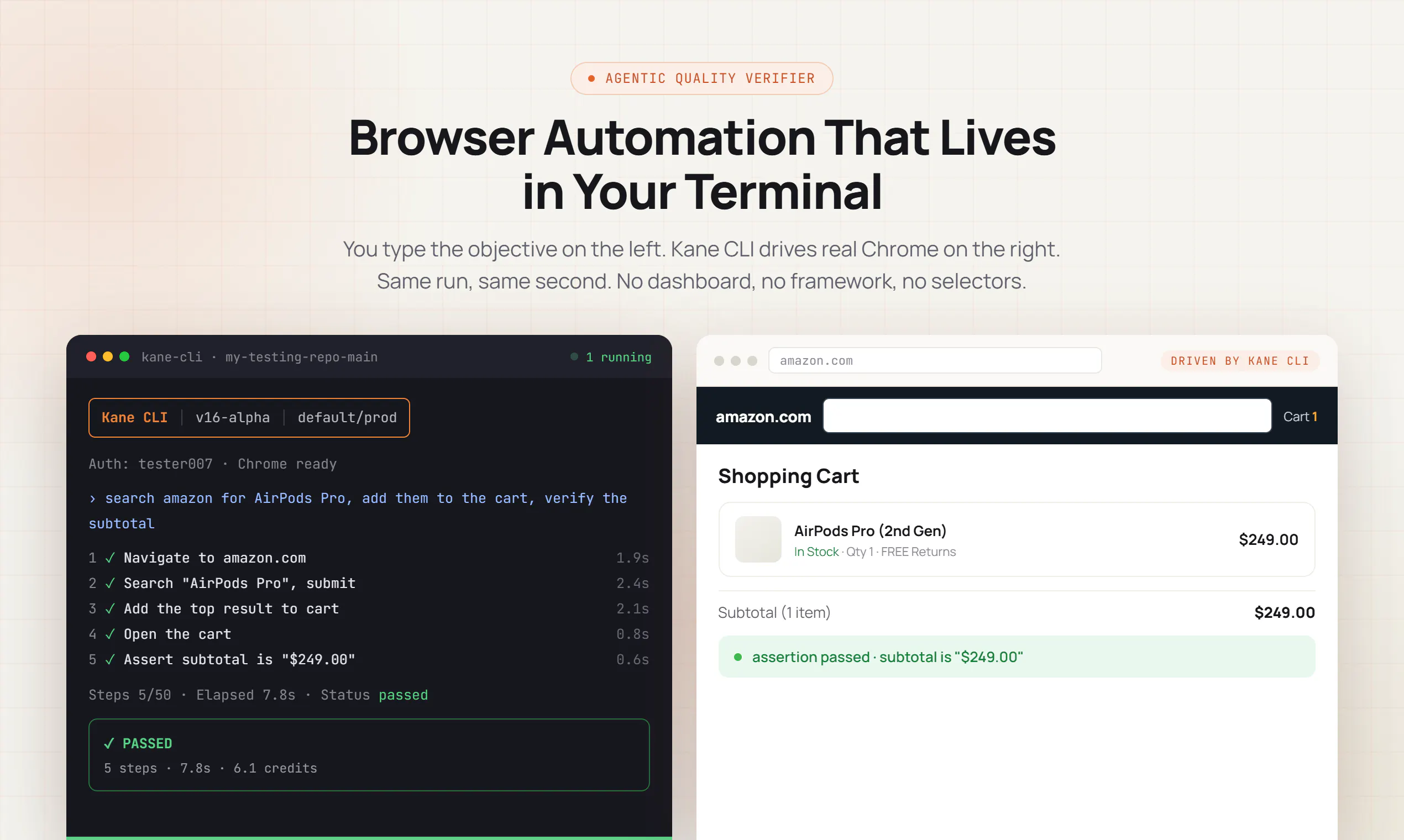
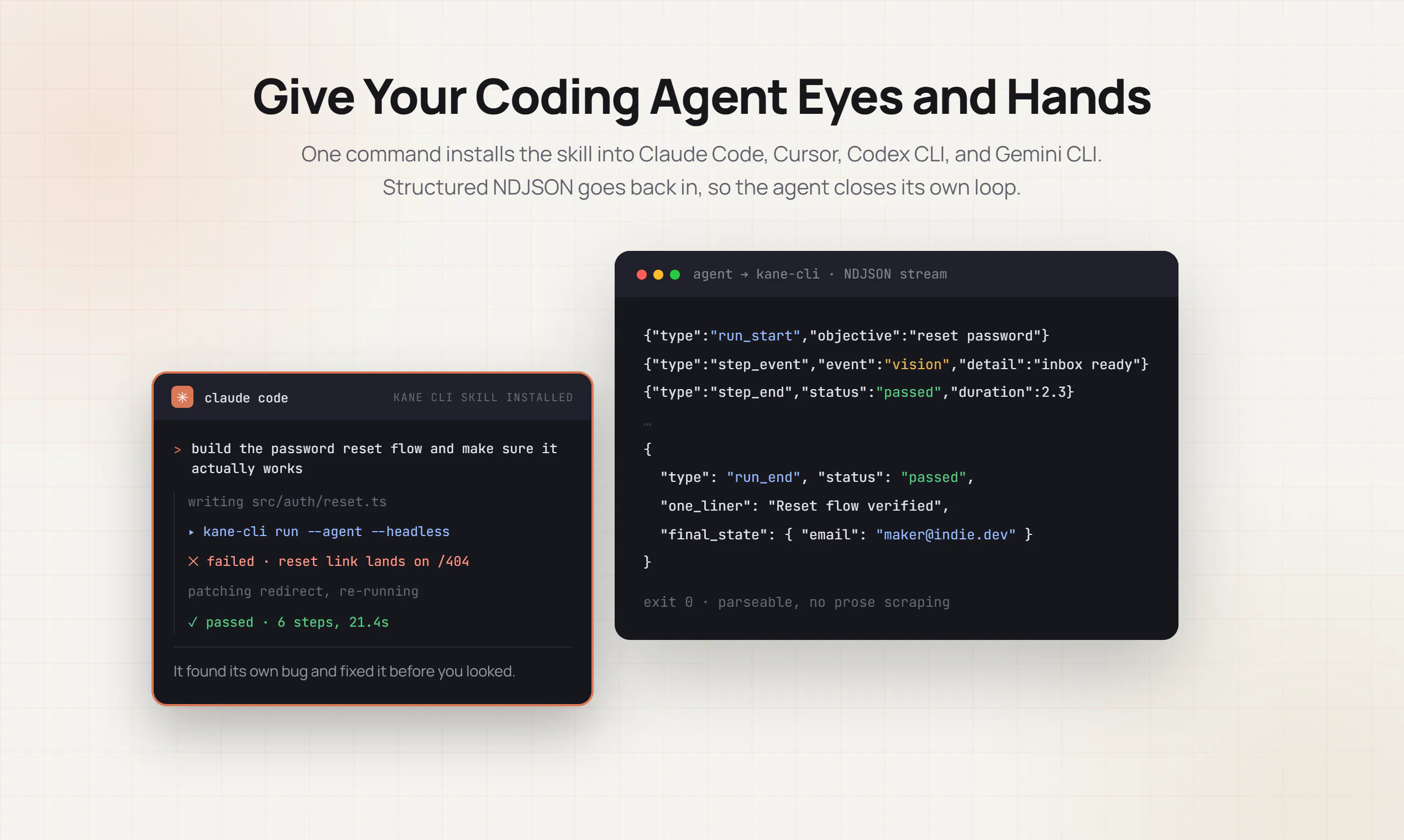
查看原始信息
Patience
A minimalist iOS game where the entire mechanic is waiting. A circle appears on a black screen after an unpredictable delay — tap it in time, or restart from Level 1. Global leaderboard and a particle visualization built from every 100ms you spent waiting.

I had this idea in 2013. Push notifications were new, endless scroll had just arrived, and what stuck with me was watching people pay real money for cosmetic items that gave them no gameplay advantage — purely to be seen at the top of something.

So the question I couldn't drop: would people spend time instead of money? Not time as a side effect of playing, but time as the actual price. Would someone sit and do nothing for fifteen minutes to be number one on a leaderboard?

That's the whole game. A black screen. A circle appears whenever it feels like it — every level roughly doubles the window, but the minimum is always half a second, so you can never settle into the wait. Tap it in time or start over at Level 1.

The part I'm proudest of is the stats screen: an interactive particle field built from your own play history, where each particle is 100ms you spent waiting. Two people at the same level get completely different images, and you can export yours.

Built solo over five months in React Native and Expo. It's free — genuinely curious how far people get, and whether anyone finds the waiting as calming as I eventually did.

Free to play, always. If you want unlimited resumes, use WORTHTHEWAIT to get a 50% discount, reducing it from $14.99 to $7.99 USD — tap Redeem Code in the Store, or https://apps.apple.com/redeem?ctx=offercodes&id=6759990913&code=WORTHTHEWAIT

2
回复

I've been beating around an idea like this myself from more of a meditation angle - looking forward to trying it!

1
回复

@xdotcommer right on! i had a few revisions getting into the app store and because of the back and forth and i was advised to keep it only as a “game” and leave out any mention of wellness or medication as i don’t have any training or experience in those spaces. BUT while testing and building the app, i was finding the game play and anticipation very calming, meditative and it helped me with focus and being present. That was the inspiration to add the tiny pulsing dot between the tappable circles and the haptic feedback when you tap… to make it more sensory and helped with the overall experience and gameplay

1
回复

Love this concept and game! It tricks you into meditation. We all need more patience in our lives. I could see this blowing up on discord where people are steaming themselves playing this!

1
回复
@jordan_axani literally came to say this. meditation can feel scary and just sitting and doing nothing maybe more so. this feels like an interesting angle to trick our bodies into sitting still by hijacking the mechanic that's perhaps contributing most to the fear to begin with!
0
回复

@jordan_axani thanks so much! while building it out i was finding it was helping me with attention and focus and being present. i love your framing that it tricks you into meditation. that’s excellent!

Yes, we all do need more patience in our lives, agreed!

2
回复