一句话介绍:
用户评论摘要:
AI 锐评
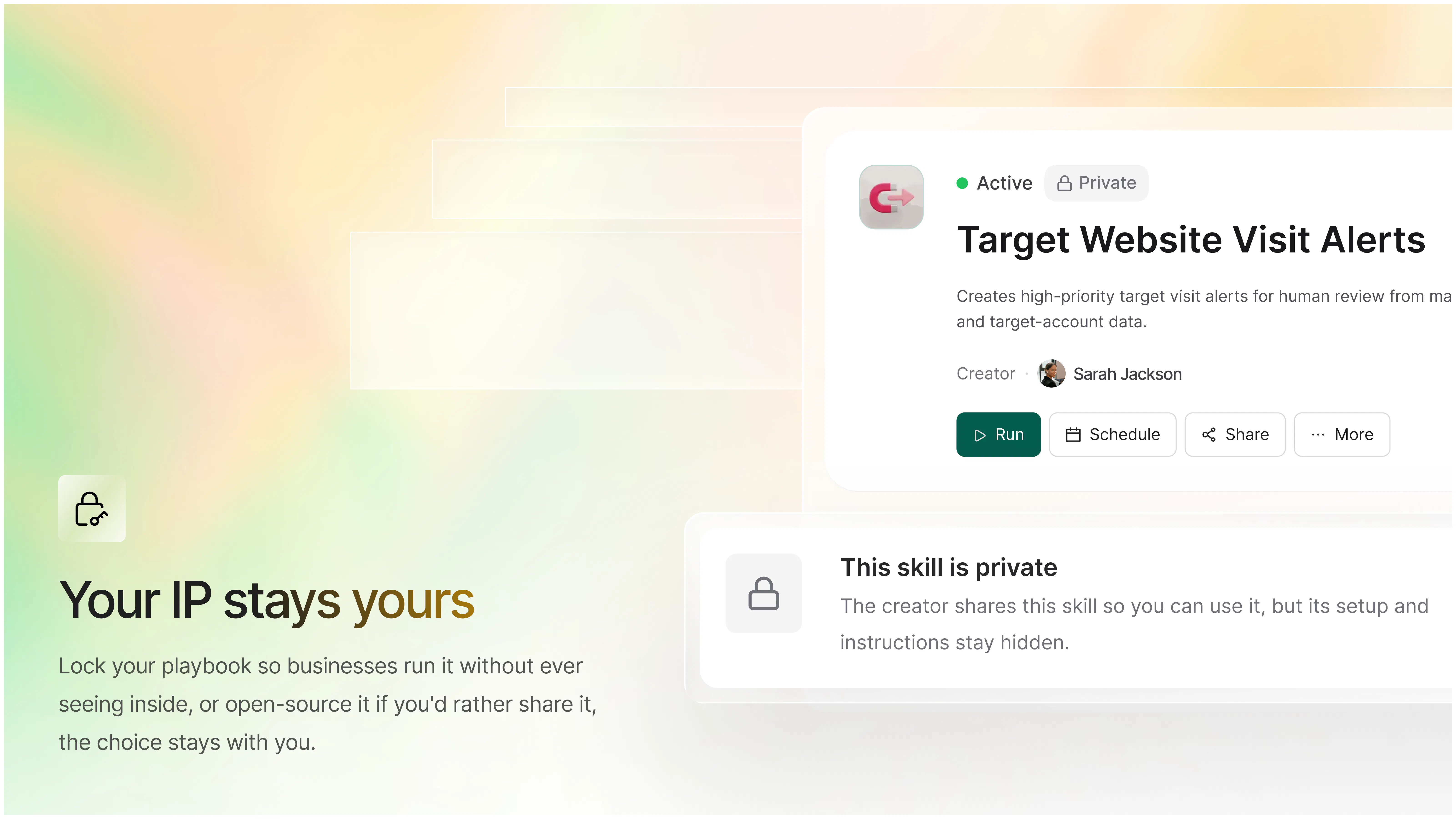
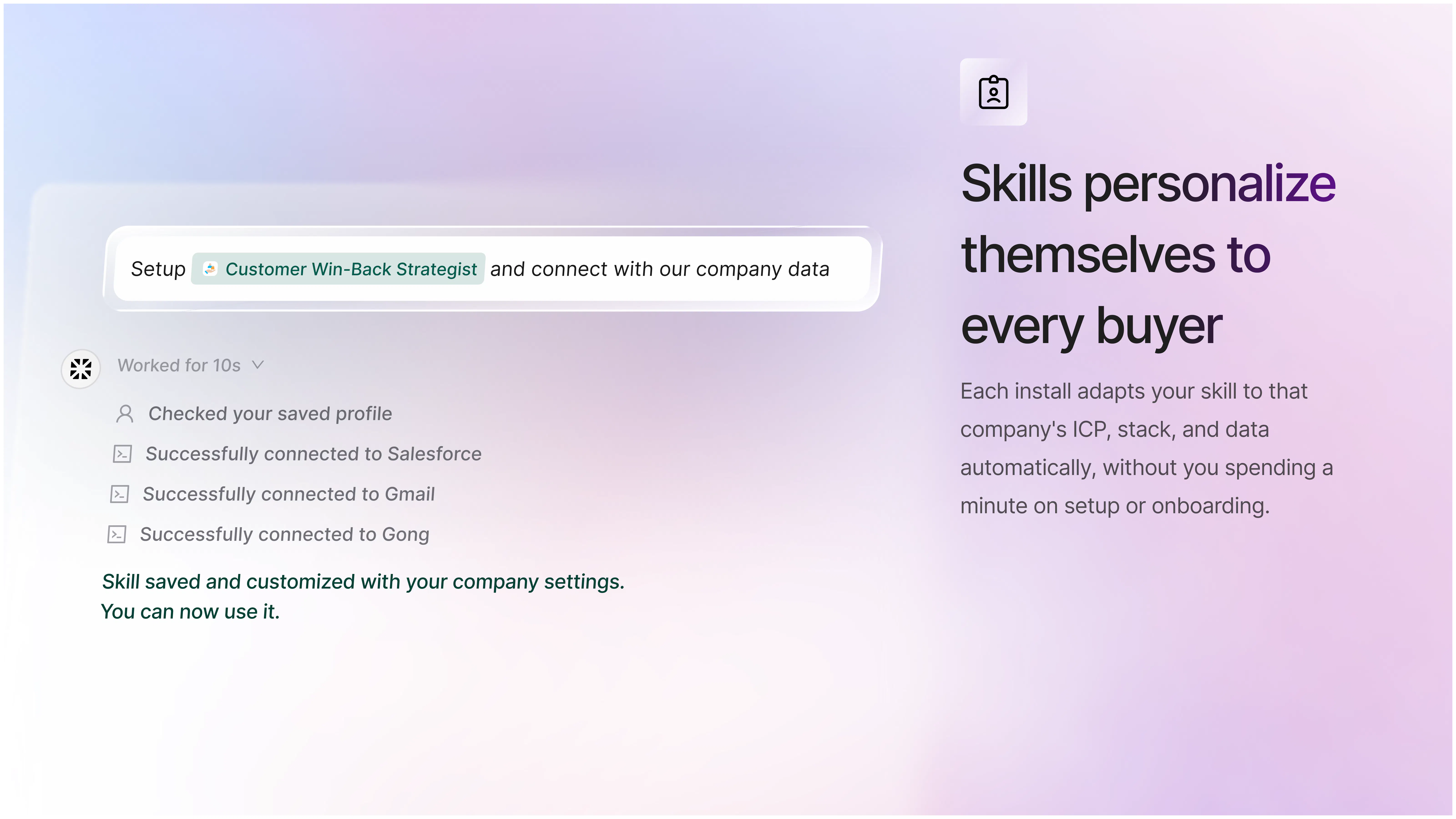
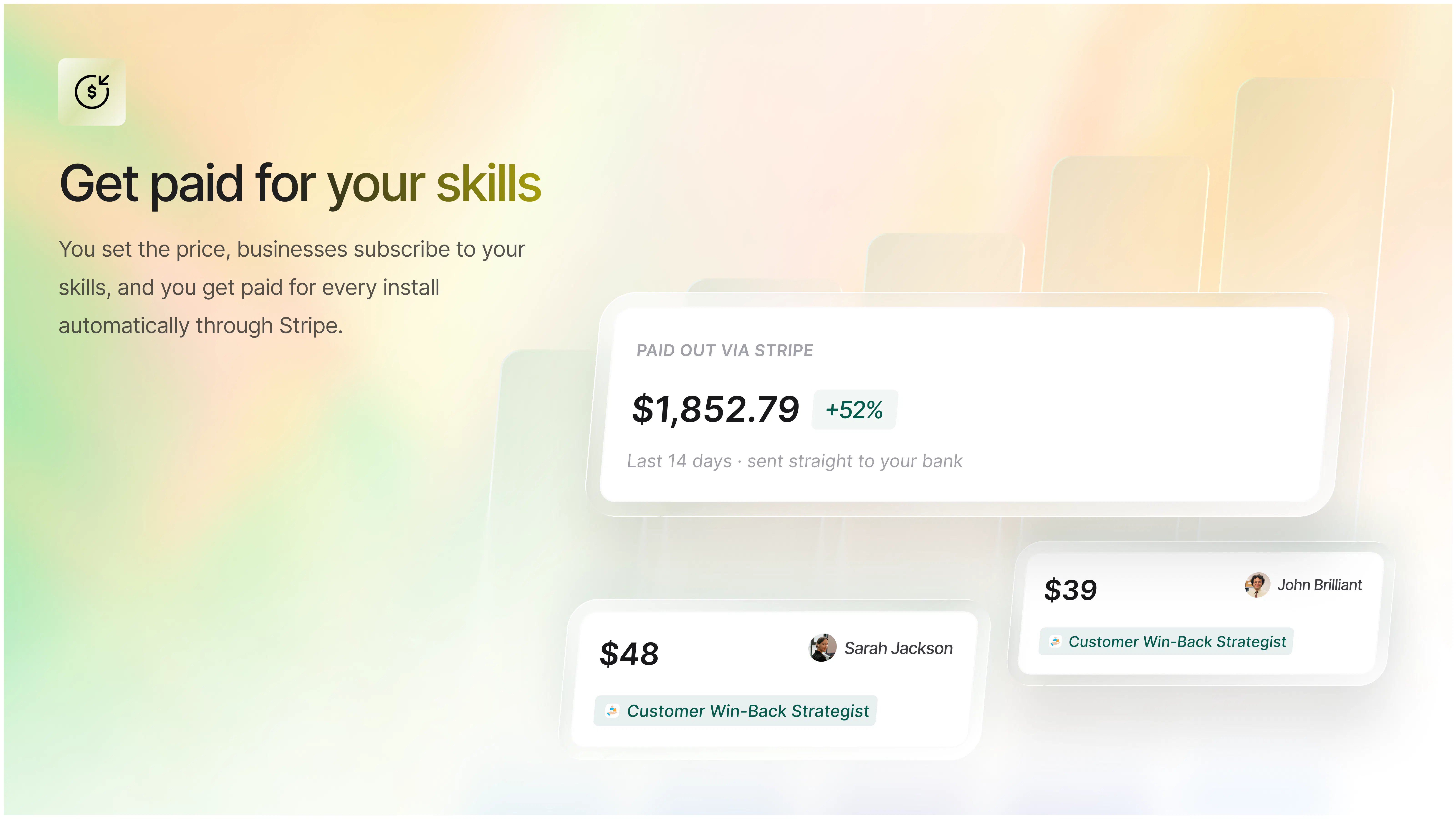
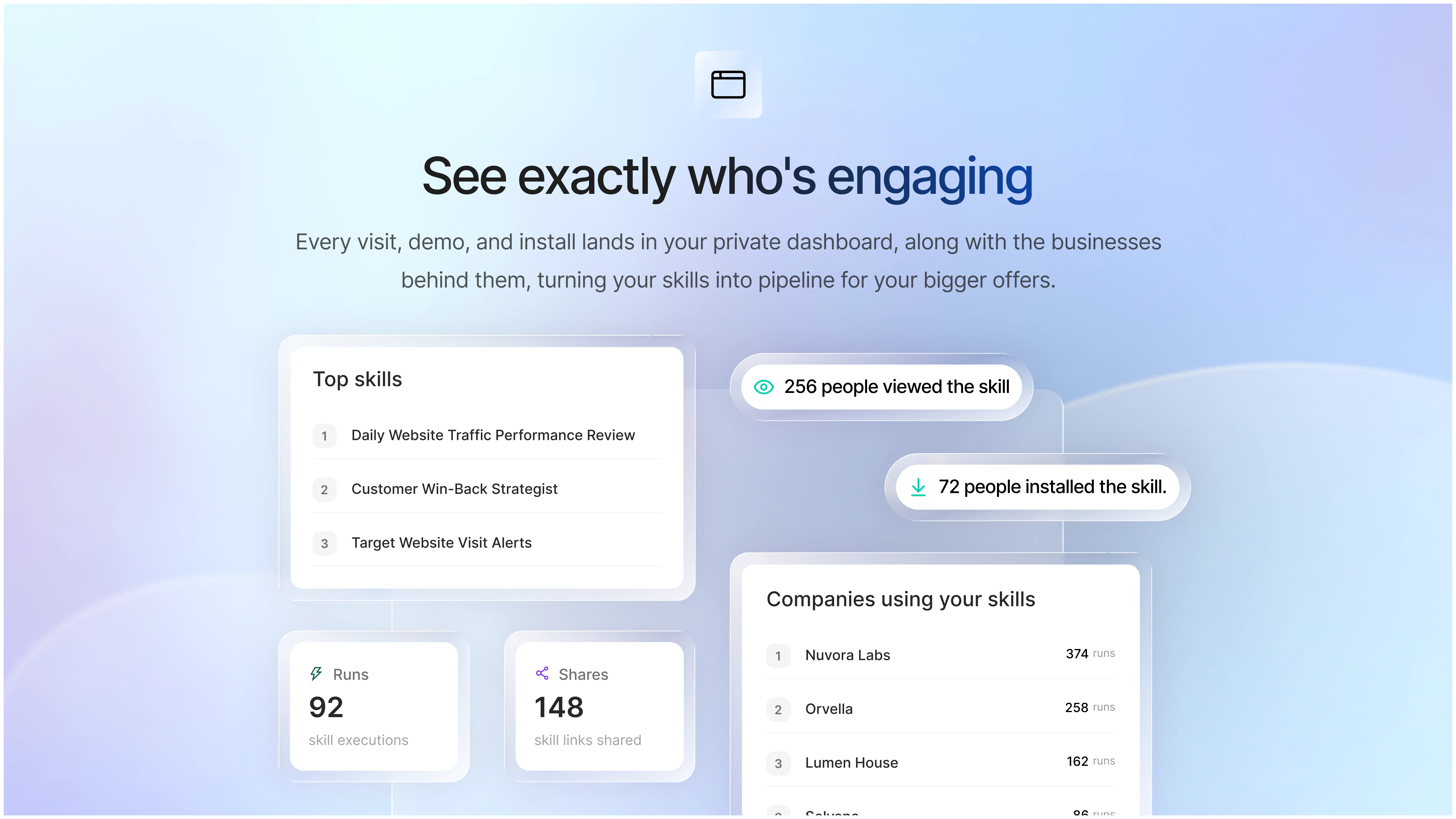
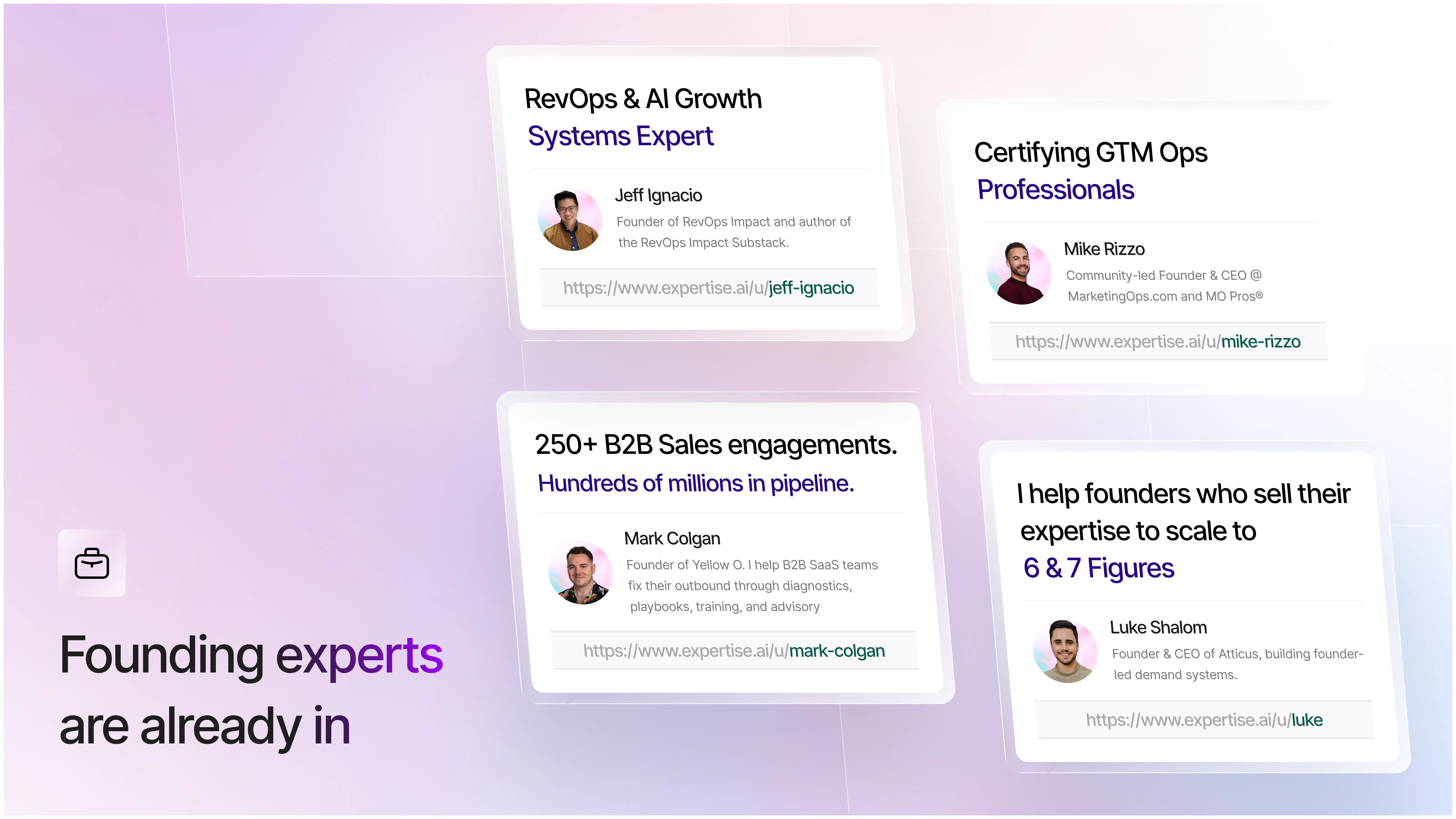
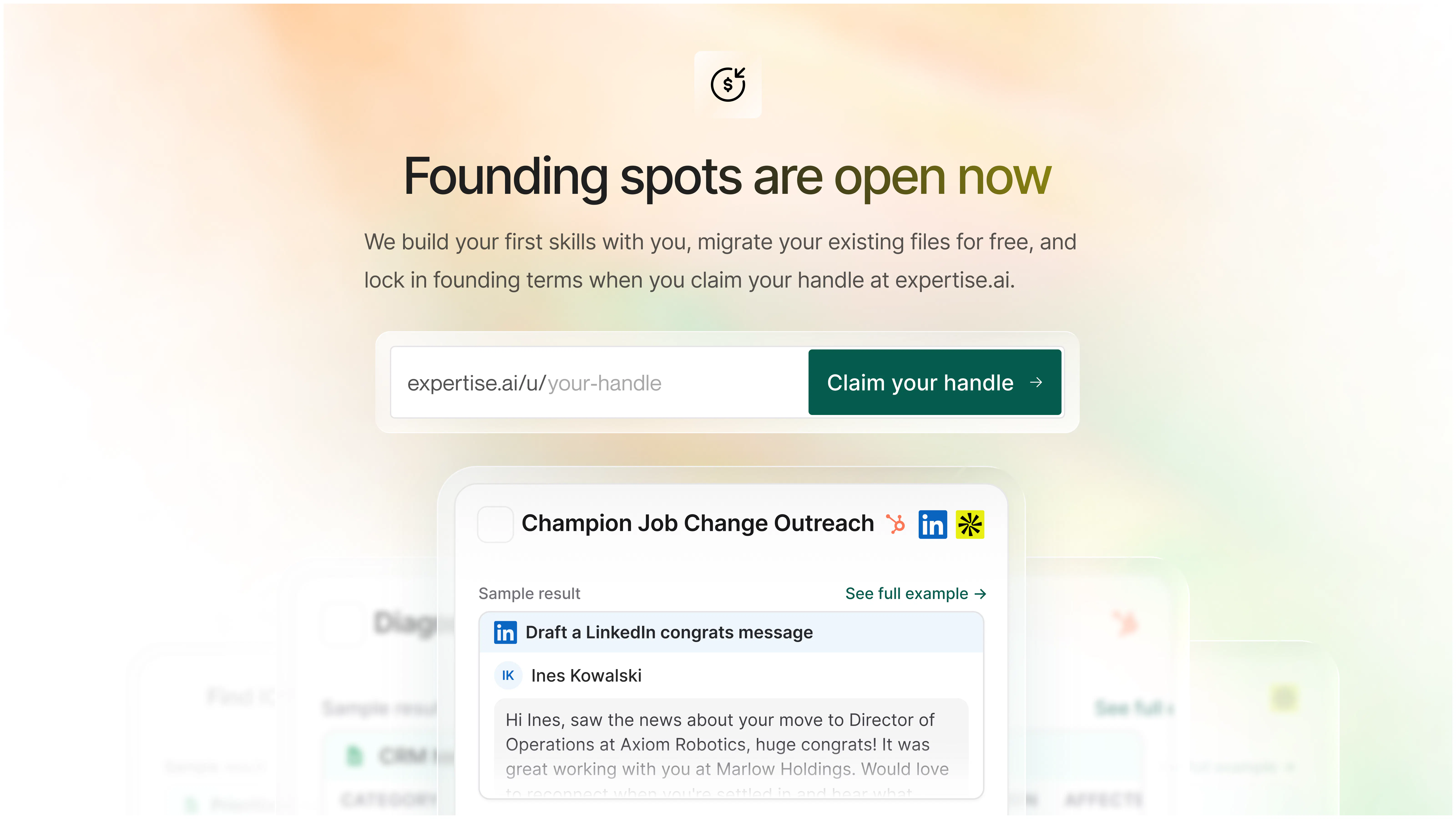
Expertise AI的叙事很性感——“你建的,你拥有”,但剥开外壳,它本质上是将传统咨询业的知识封装成黑盒SaaS,用AI运行时收费替代按小时收费。这个方向确实踩中了GTM专家长期无解的痛点:内容变现靠流量、咨询变现靠卖时间、文件交付即失控。把playbook变成受保护的技能,在技术上等同于“可执行的DRM”,但商业逻辑上比单纯卖课或卖文件高一个维度——它卖的是持续的判断力输出,而非一次性产品。
真正的护城河不在“封装”而在“适配”。创始人团队反复强调安装时技能会学习企业的ICP、技术栈和管线,这恰恰是模板与技能的分水岭。如果这个自适应层做得足够深,每个实例都是专家判断力与企业数据的动态结合体,这将形成网络效应:专家越多,企业可选技能越丰富;企业运行数据越多,技能越精准。两面市场一旦滚起来,壁垒极高。
但风险同样明显。第一,黑盒模式理论上可以被提示注入和系统性探测击穿,他们自己也承认“不可能完全杜绝推断”,这意味着高价值专家可能始终不敢放核心方法论上来。第二,GTM领域本身极度依赖人际信任和定制化沟通,标准化的技能输出是否真能替代顶尖顾问的临场判断,存疑。第三,订阅制下专家收入取决于技能被运行的次数,但企业一旦用三个月摸清技能的能力边界,是否续费将是一场信任考验。
本质上,Expertise AI赌的是“专业知识可以被产品化”这一假设。如果成立,它会成为AI技能经济的基础设施;如果不成立,它只是一个更精美的知识付费壳子。目前看,团队对IP保护的执念和对安装期自适应能力的打磨,比大多数同类产品更接近那个薄弱的临界点。值得持续观察首批付费客户的留存数据——那才是这个模式最真实的试金石。
Hey Product Hunt! Hao here, founder of Expertise AI.
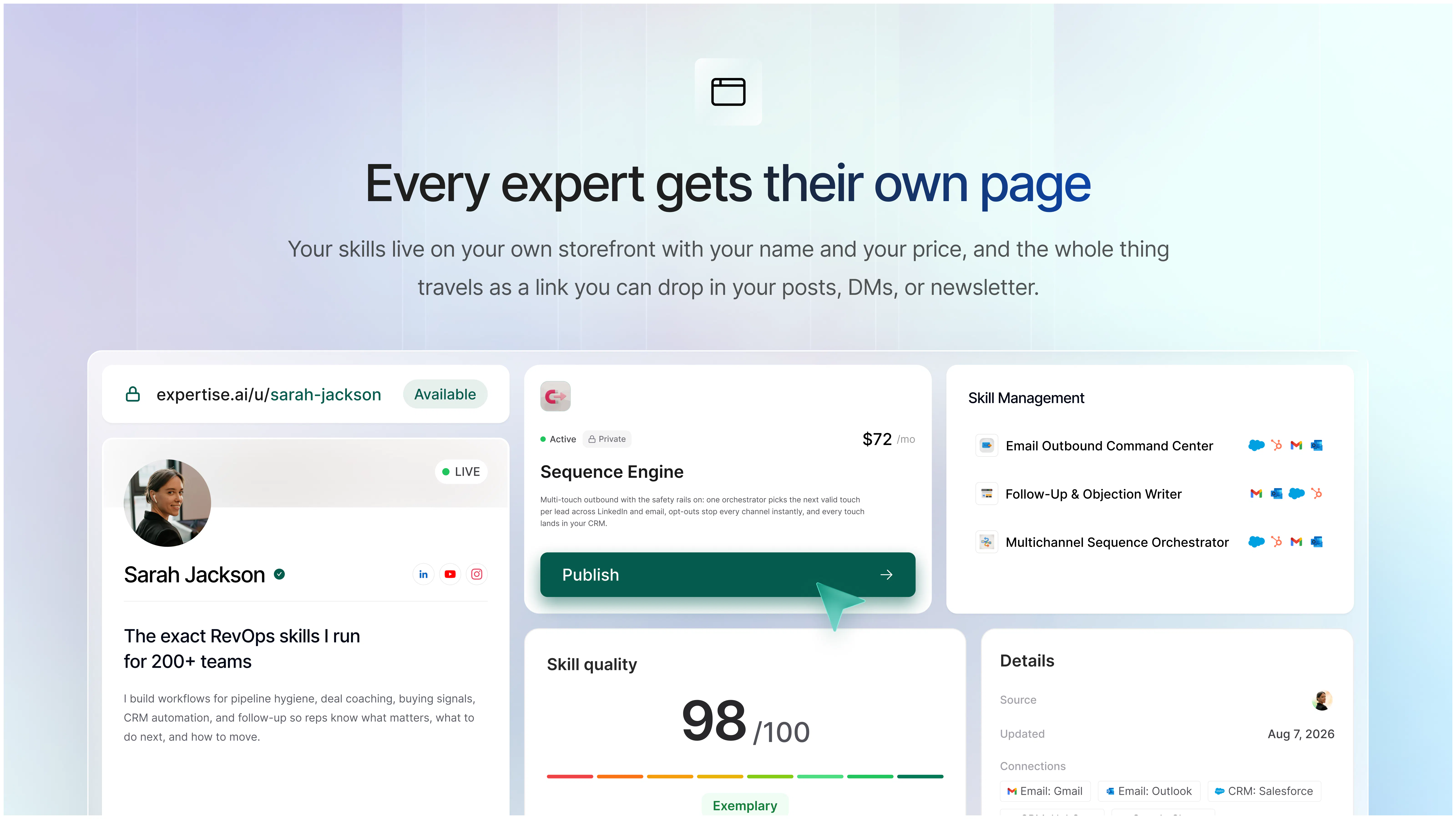
Human expertise is the most valuable asset in the world, and it's the only one with no infrastructure. Money has banks. Content has platforms. Code has repos. But the way the best GTM people share what they know hasn't changed in decades: you give it away as content, spend hours explaining it on calls, or hand over a file and lose control of it forever. The moment your playbook leaves your hands, it stops being yours.
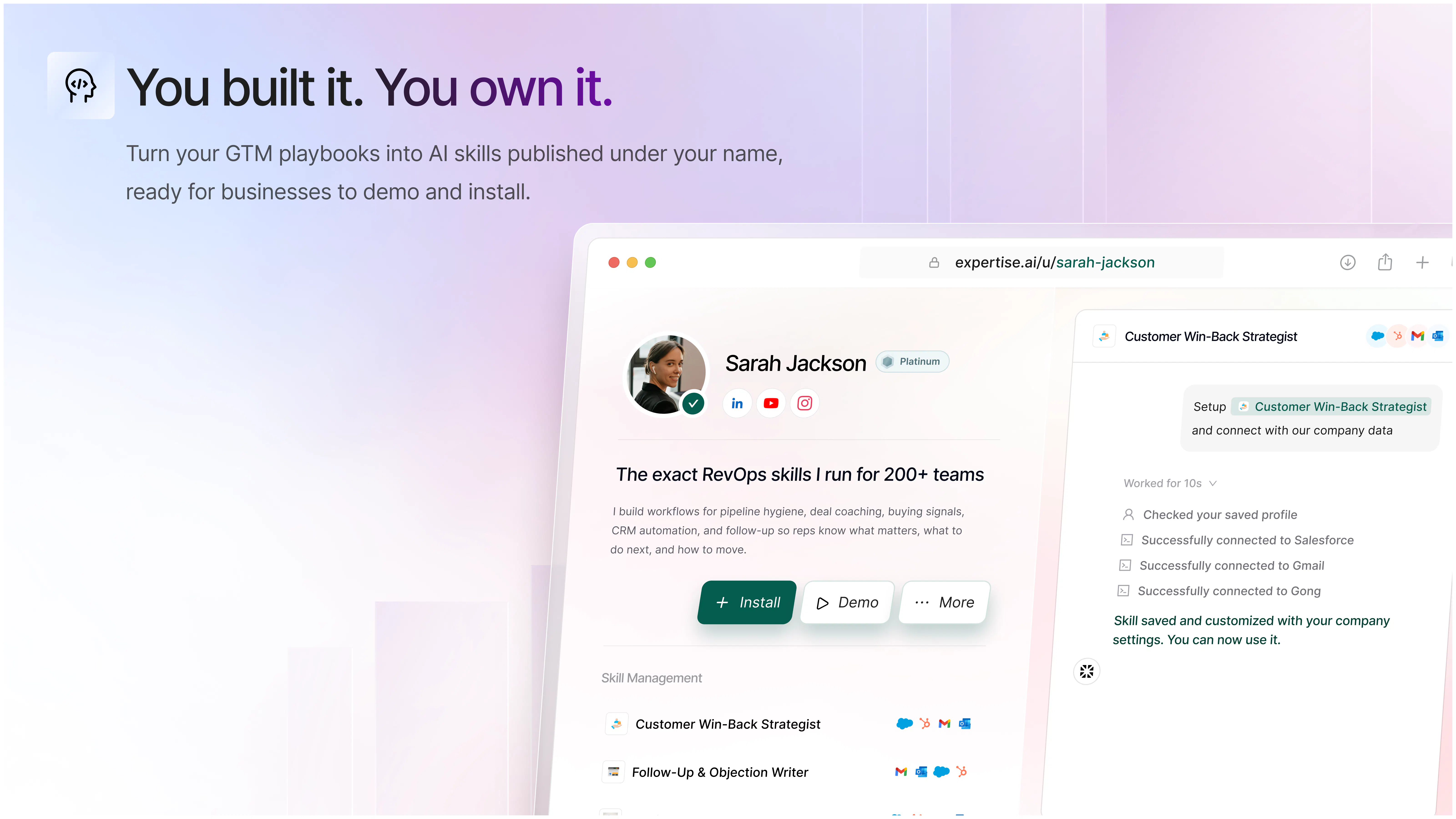
So we built the missing infrastructure. On Expertise AI, you publish your playbooks as AI skills on a storefront of your own. Businesses demo them for free, install them in one click, and the skill personalizes itself to their business, their ICP, their stack, without you running a single setup call. You choose whether your playbook stays locked so nobody can ever see inside it, or goes open-source for the world. Either way, your name is on it, and you get paid while it runs. We think this is the start of the AI skills economy, and GTM is just where it begins.
The thought we kept coming back to while building: you built it, you own it. Everything in the product flows from that one idea.
We're launching today with our founding experts, and founding spots are open. If you're sitting on playbooks that work, we'll build your first skills with you and migrate your existing files free.
I'll be here all day. I'd especially love your hardest questions about how we protect what experts publish, because that's the part we built first. And if you've ever tried to productize your own expertise, tell me where it broke down. That's the exact problem we're working on.
Learn more: https://www.expertise.ai/
Super nice. How do I share my custom skills with others? Also what kind of playbooks can I publish
Sharing a workflow as a skill instead of a long setup guide could remove a lot of friction for non-technical teammates!
There are plenty of agent builders now, but fewer products focused on distributing the judgment and process behind a good agent.
I work on the engineering side of Expertise, and the part I’m proudest of is the boundary we’ve built between the expert, their playbook, and the customer’s data. A protected skill can run against a team’s CRM, inbox, and other tools without exposing the underlying instructions to the buyer, or exposing the buyer’s data to the expert.
Making an agent produce an answer is the easy demo. Making it useful while preserving ownership, permissions, and approval boundaries is the actual product.
I can see this working well for weekly campaign diagnostics where the same numbers need to be interpreted through a consistent framework.
The strongest part for me is repeatability. Getting a good AI result once is easy; getting the whole team to reproduce it is much harder.
What stands out to me is that Expertise AI isn’t just another agent builder—it gives experts a way to turn the judgment behind their work into something executable, protected, and monetizable. That feels much more valuable than simply selling another course or static playbook.
I’m curious how you prevent a protected skill from being reverse-engineered through repeated runs or carefully designed inputs. If that layer works well, this could become a genuinely interesting marketplace for professional expertise. Congrats on the launch!
I joined Expertise because the best AI shouldn’t come from better prompts. It should come from better people. Excited to help build a world where experts can turn what they know into skills they own, protect, and get paid for.
Really excited to see this launch come to life! So much knowledge lives in people’s heads, gets buried in docs, or disappears after a one-off call. Expertise helps turn that hard-earned judgment into something teams can actually use, while keeping it protected and owned by the people who created it.
Proud to be part of the team behind this.
Interesting! Might have some interestings playbooks on there! Will give it a try!
Giving experts a way to publish their playbooks as protected, monetizable skills could open up a very different kind of creator economy.
I'm one of the engineers at Expertise. The thing that still feels a little like magic to me: the same expert skill installed by two different companies produces genuinely different, correct output for each , because at install it learns your ICP, your stack, and your pipeline, not a generic template. The expert writes the judgment once; the execution is yours. Demoing one impressive run is easy. Making one playbook adapt to a thousand different businesses without the expert doing setup calls is the actual product.
Marketing at Expertise here. I spent the last few months sitting on calls with GTM experts, and almost every call had the same moment. They'd light up describing a playbook they'd refined over years, then catch themselves with some version of "but I can't just hand that out." These are people who teach for a living, and even they had a drawer of stuff they'd never share because sharing meant losing it.
For most of them, the thing that sold it wasn't the monetization pitch, it was seeing the lock on their own skill for the first time. If you're browsing the launch, open a couple of the expert storefronts, that's where the whole idea clicks.
A storefront for GTM expertise makes a lot of sense. Following 👀
This makes AI adoption feel less like everyone experimenting alone and more like a team actually building shared operating knowledge.
I like that the product treats expertise as something operational, not just content sitting in a course or PDF.
GTM experts who've run workflows manually every day are giving that away those skills as free MD files sitting in someone's downloads folder, never opened. The moment something's free, its perceived value drops to zero.
So we went the other way. The IP can't be copied or owned, only run. Expert gets paid. Buyer actually uses it.
The CRM plus email combination makes the stalled-deal example feel practical rather than like a generic agent demo.
Congrats on the launch. The concept feels early, in a good way, there’s clearly going to be a market for reusable expert workflows, but nobody quite owns the category yet.
I would try this first for the recurring tasks that currently require five tabs, three tools, and a lot of copying between them.
What caught my attention is the shift from building another agent to sharing the actual workflow behind it. That feels like the more valuable layer.
Interesting product
Pay-per-run is interesting because revenue and COGS finally share the same unit. I’d put gross profit per skill run right next to usage — otherwise the most popular skill could quietly become the least profitable one.
A lot of the sharpest GTM operators have no interest in filming a course, and you found them a way in through the work itself. Really glad to see this one out today.
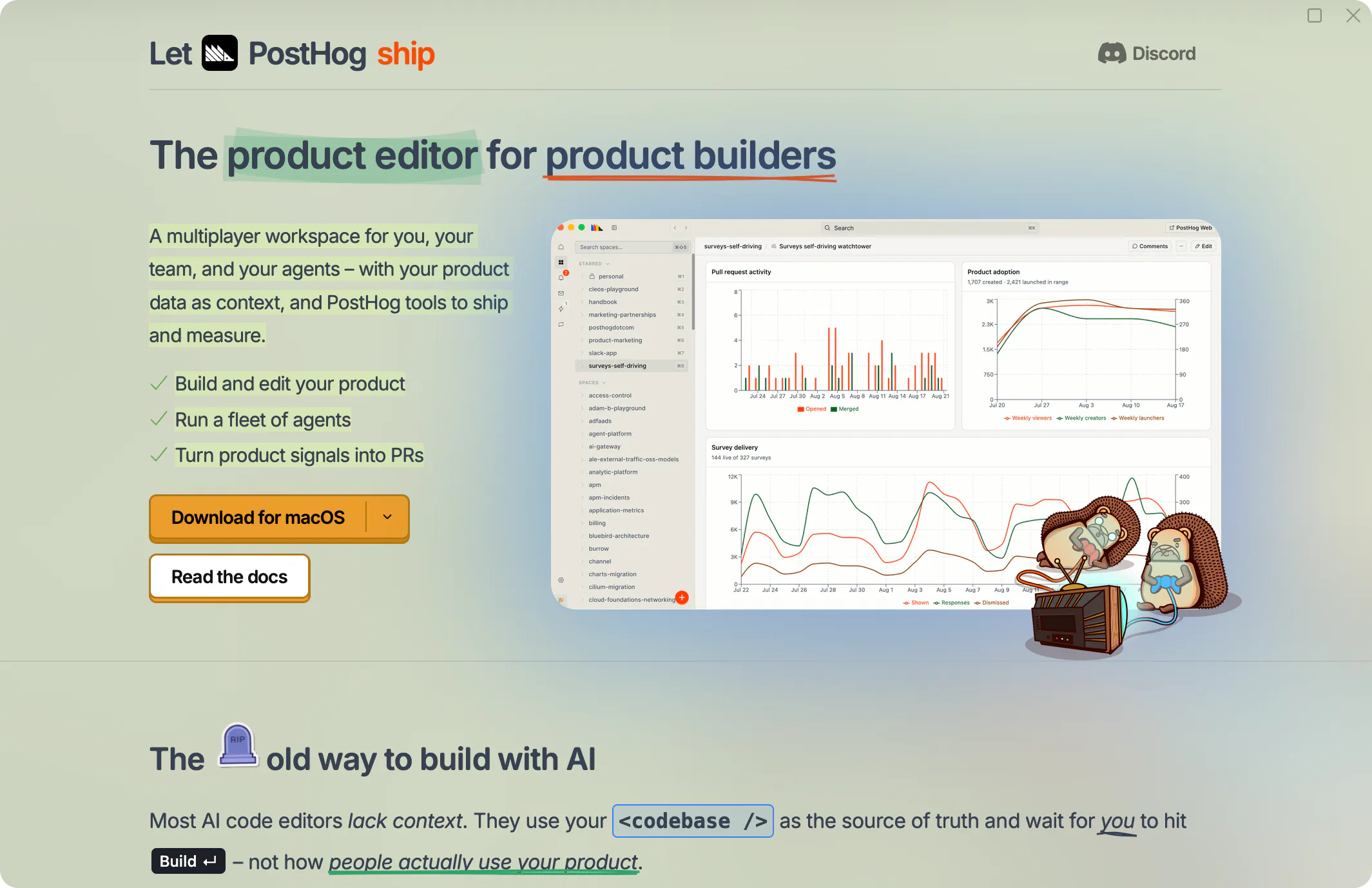
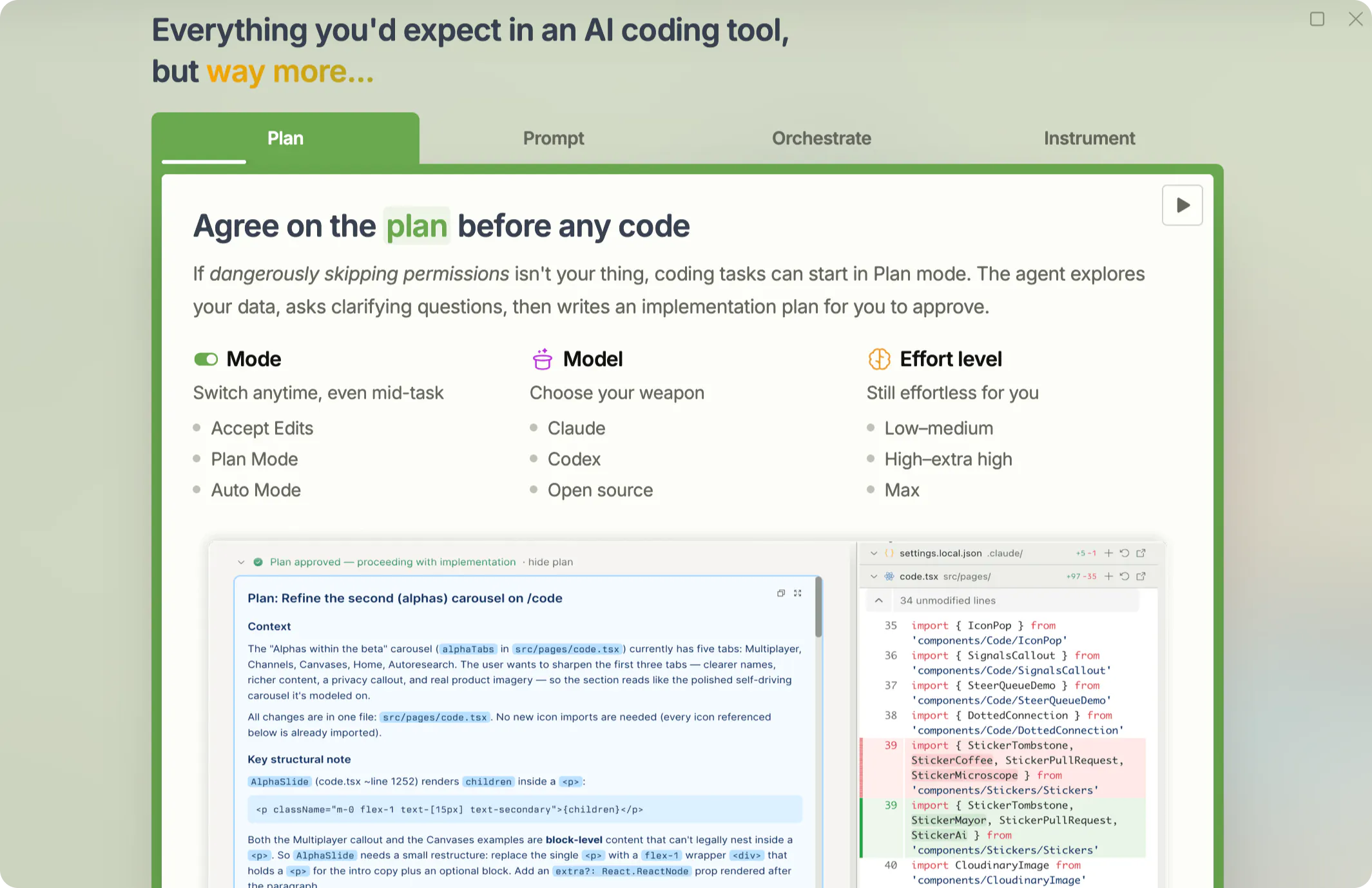
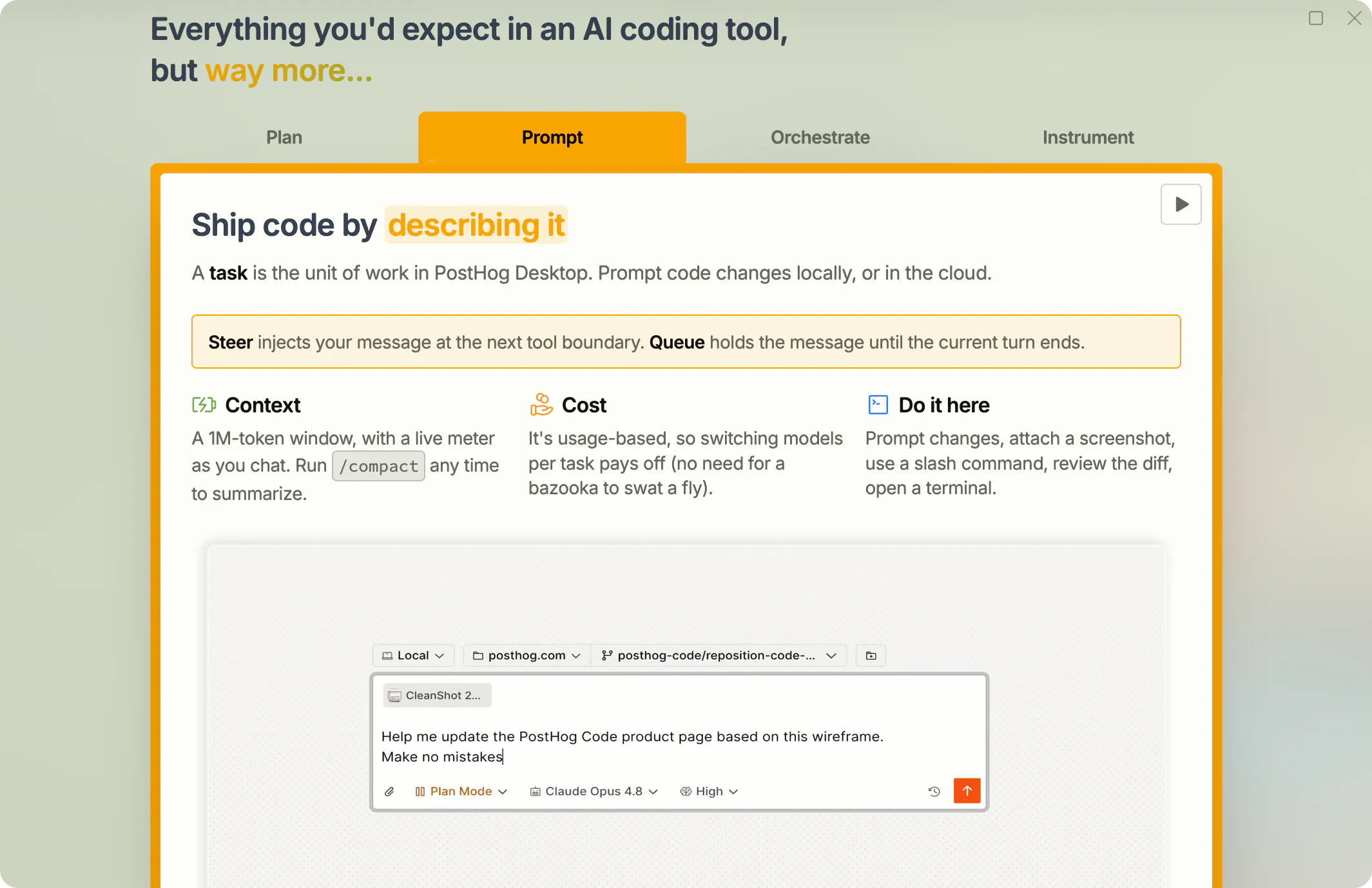
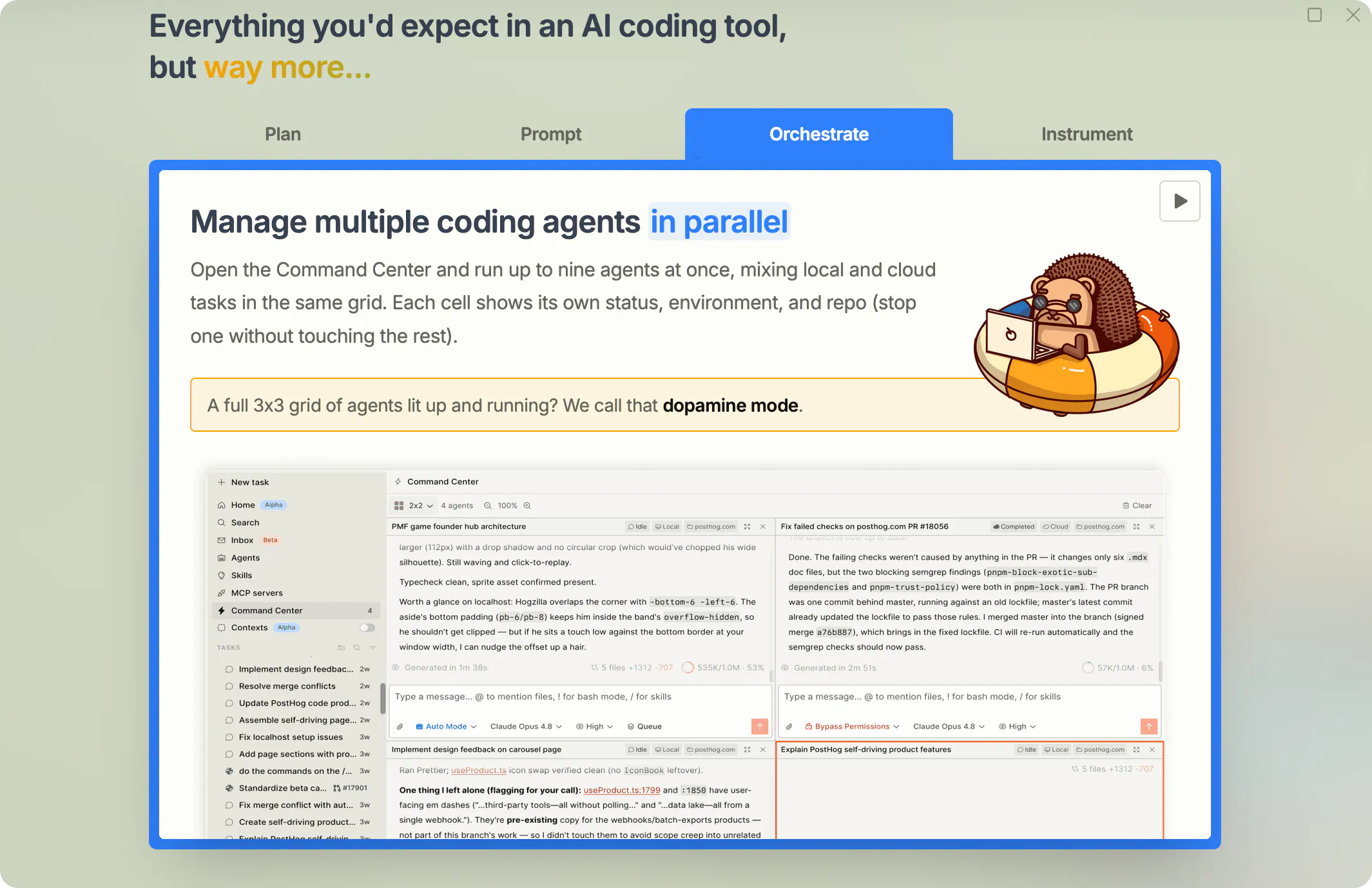
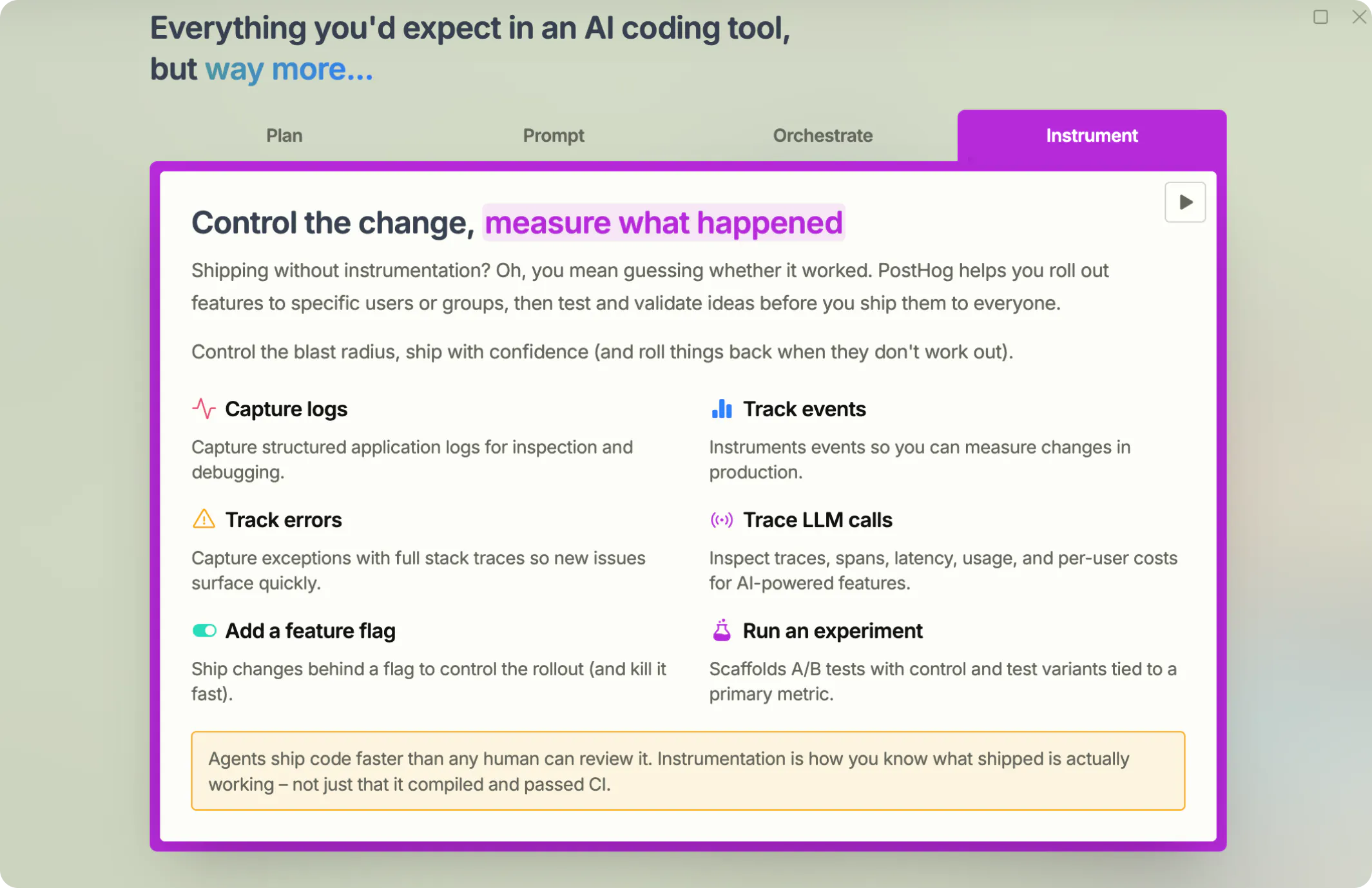
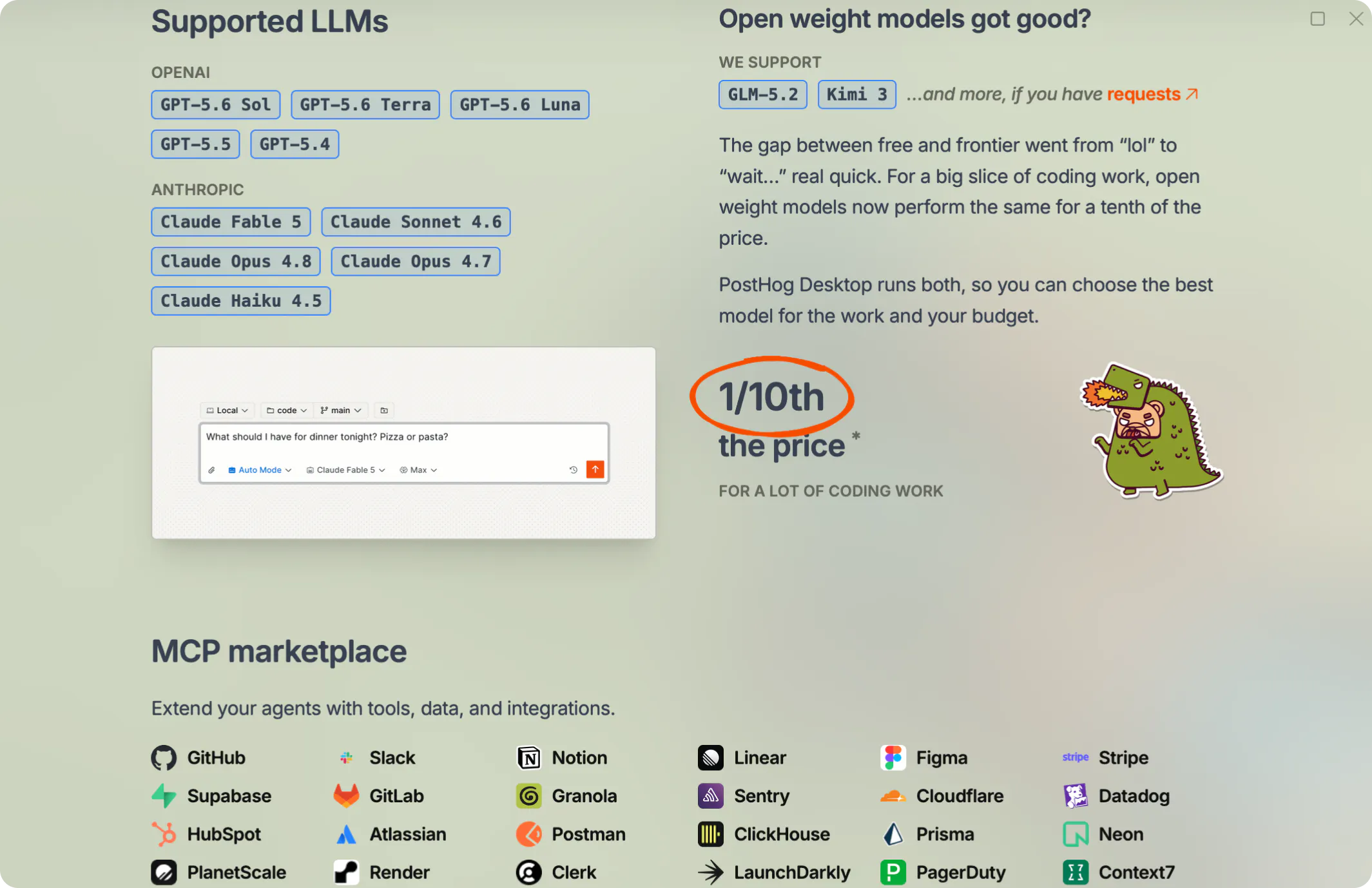
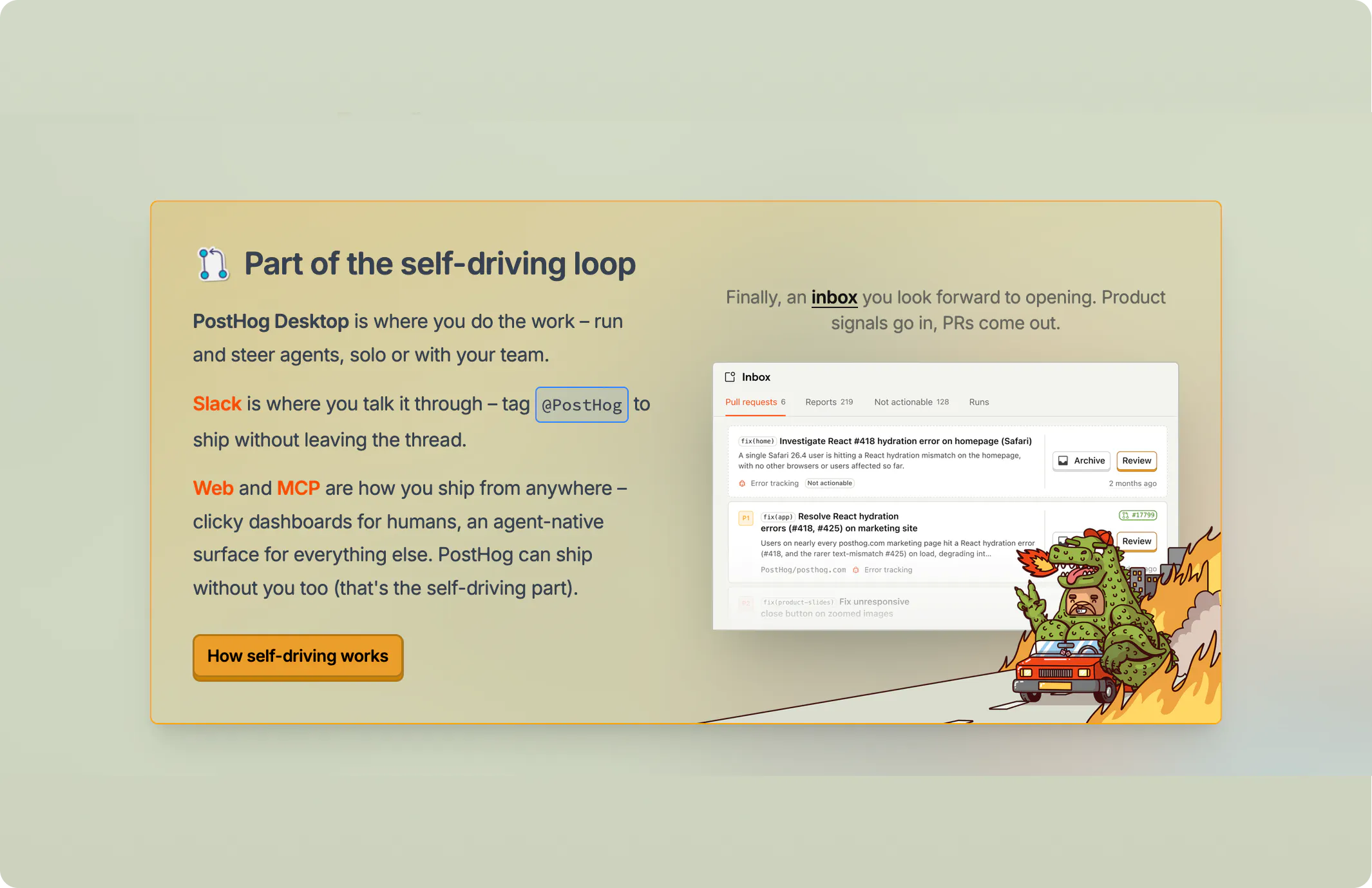
PostHog Desktop 的野心很明确:它不想做又一个“AI代码补全工具”,而是试图成为产品研发的“操作系统”。其核心价值主张在于“Context is King”——通过深度绑定PostHog自家生态(漏斗、回放、实验),它将AI的输入从“你告诉它什么”升级为“产品本身发生了什么”。这确实是直击当前AI编程界“重生成、轻感知”的命门,从“人工喂料”走向“自动化情报”,逻辑上自洽且具有护城河潜力。
但必须泼冷水。首先,这本质上是“数据飞轮”的强化版,其效用高度依赖PostHog全家桶的渗透率。对于非PostHog重度用户,其“产品上下文”的优势将大打折扣,沦为普通的智能体调度器。其次,“产品信号进,PR出”听起来美好,实则隐含巨大风险:从信号识别到代码修改到验证,中间隔着产品判断、代码风格和回归测试的鸿沟。若AI过度自主,很容易制造“正确但糟糕”的代码,或让团队陷入“AI制造回归、人类收拾残局”的负循环。最后,评论区的冷清(仅3条)与其331票形成反差,说明市场更多是“围观叫好”,而非“深度提问”,其真实落地体验与组织协作阻力(如何定义Agent的工作边界)尚未被验证。它的价值目前更多是愿景式的,能否成为“产品编辑器的VS Code”,取决于它能否在降低AI容错成本的同时,真正让“orchestrate”成为一种新的、更高效的工作范式,而非仅仅是又一个复杂的自动化触发器。
PostHog Desktop (previously, PostHog Code) is an AI-powered product editor for product builders.
Problem: Most AI code editors lack real product context and start every session cold, so you’re still the one watching rollouts and catching regressions.
Solution: A multiplayer workspace where you, your team, and a fleet of agents build with your actual product data (logs, errors, session recordings, funnels, flags, experiments, tickets, etc.) as context.
What makes it different: It reads signals from production and turns them into shippable work, product signals go in, PRs come out. Unlike generic AI editors, it “knows your product” and can ship improvements while you sleep.
Key features:
Run a fleet of agents in parallel, with plan/auto modes and switchable models (Claude, Codex, open-weight).
Personal + team skills + skills marketplace, plus PostHog-maintained skills for events, flags, experiments, error tracking.
MCP marketplace integrations (GitHub, Slack, Linear, Figma, Stripe, Sentry, etc.).
Multiplayer channels with persistent memory so agents don’t need re-briefing.
Inbox that surfaces reports and pull requests from product signals.
Benefits: Less context-switching, faster iteration from idea → plan → PR, and more outcome-oriented work (you orchestrate, agents execute).
Who it’s for: Product builders and teams who want to move from writing code / prompting outputs to orchestrating outcomes with AI agents.
Use cases: Turning in-app activity, errors, funnel drop-offs, and support signals into concrete improvements and PRs; running parallel agent tasks across a shared workspace.
Try it on macOS (or other platforms) and read the docs.
P.S. I hunt the latest and greatest launches in tech, SaaS and AI, follow to be notified → @rohanrecommends
Great idea, congrats on the launch!
Good one
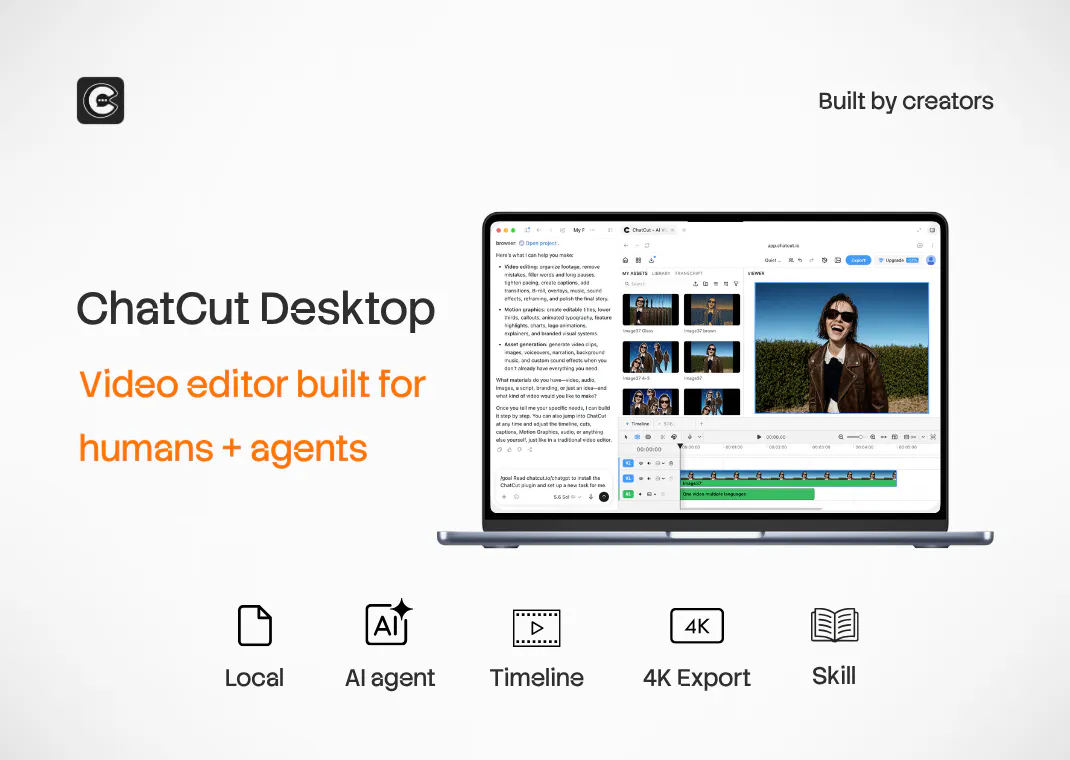
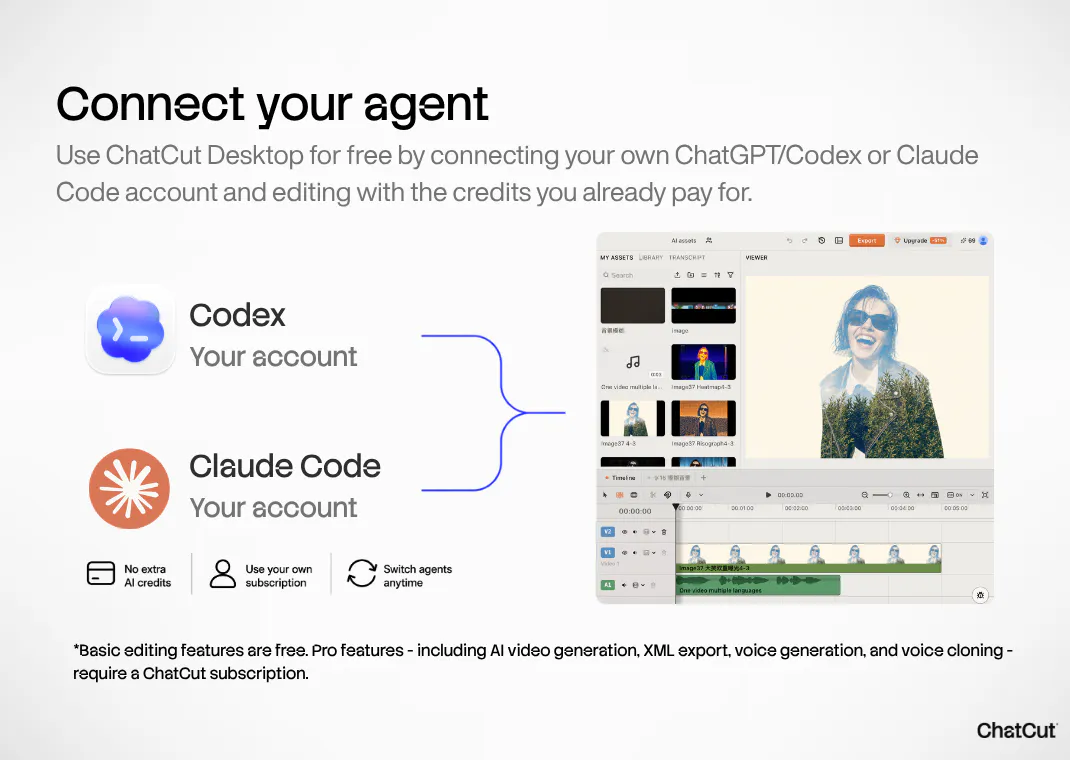
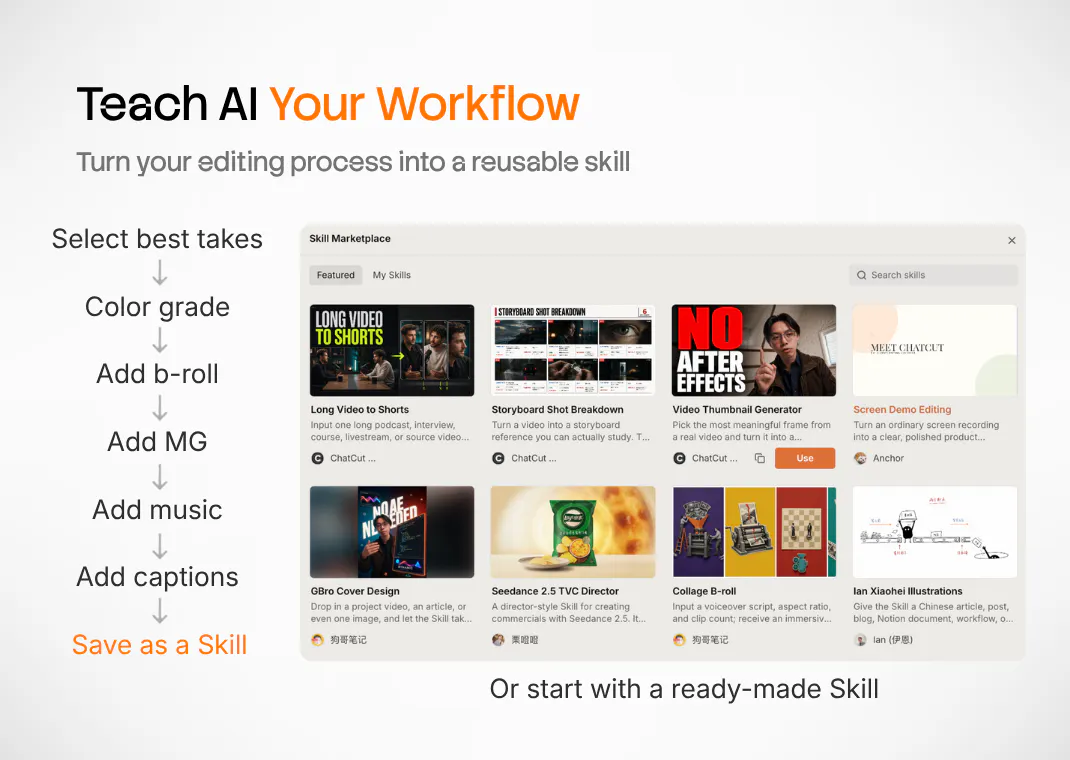
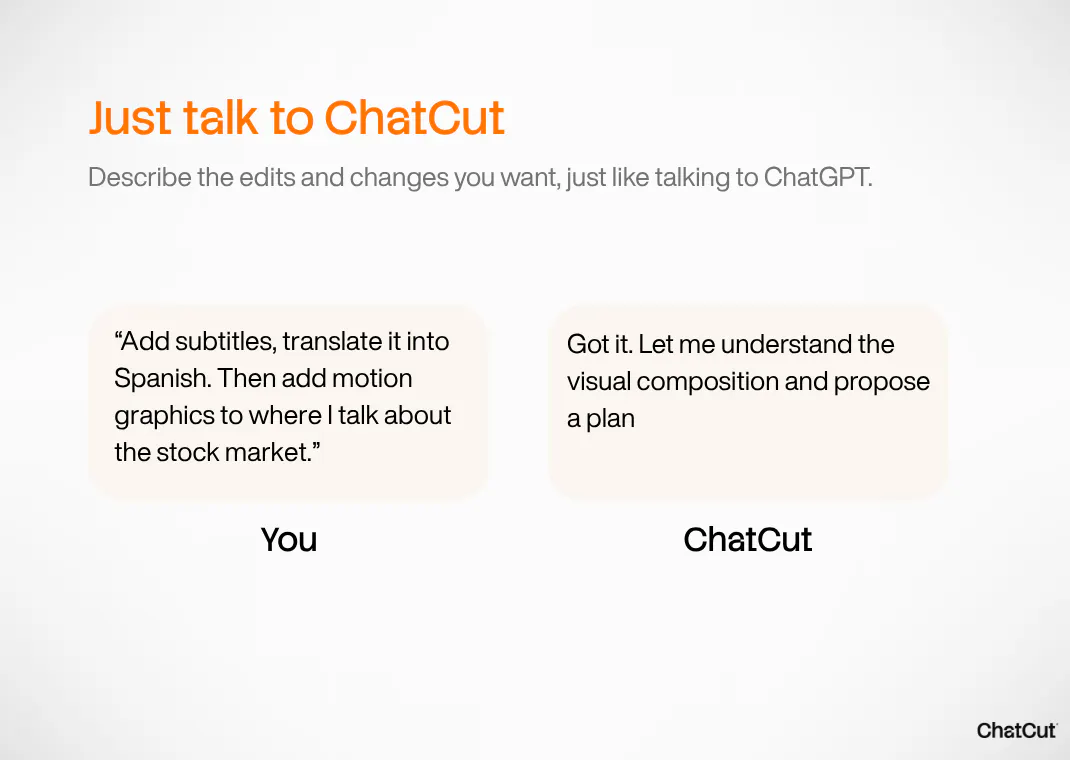
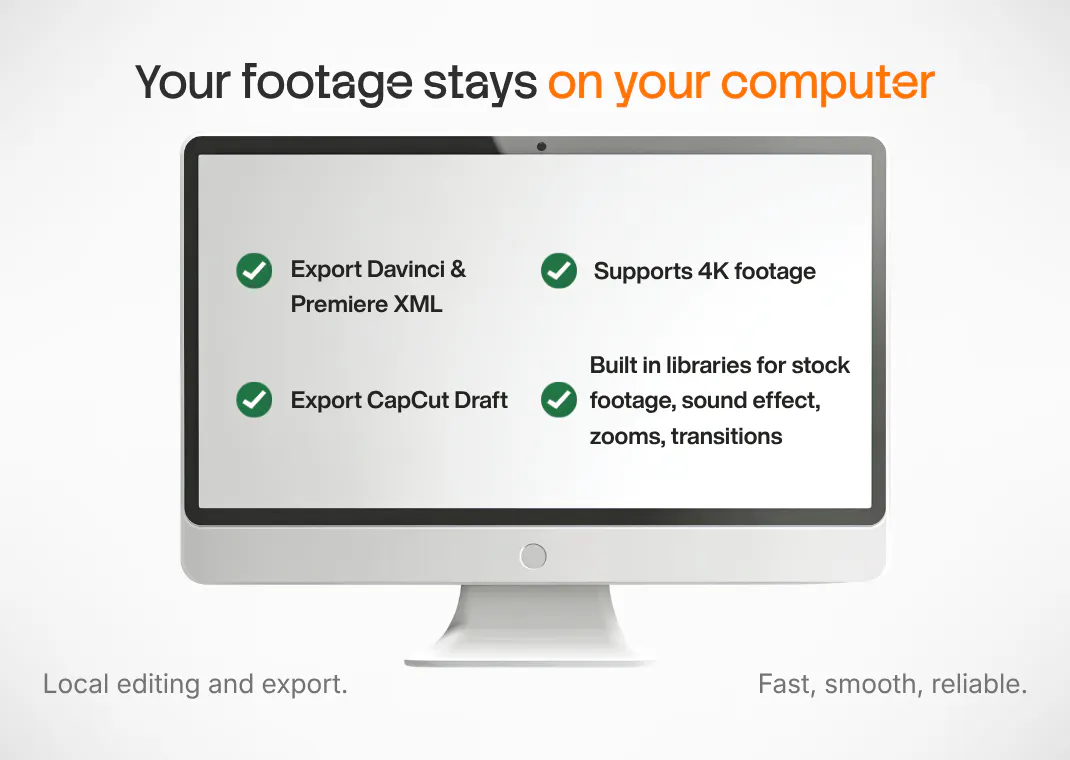
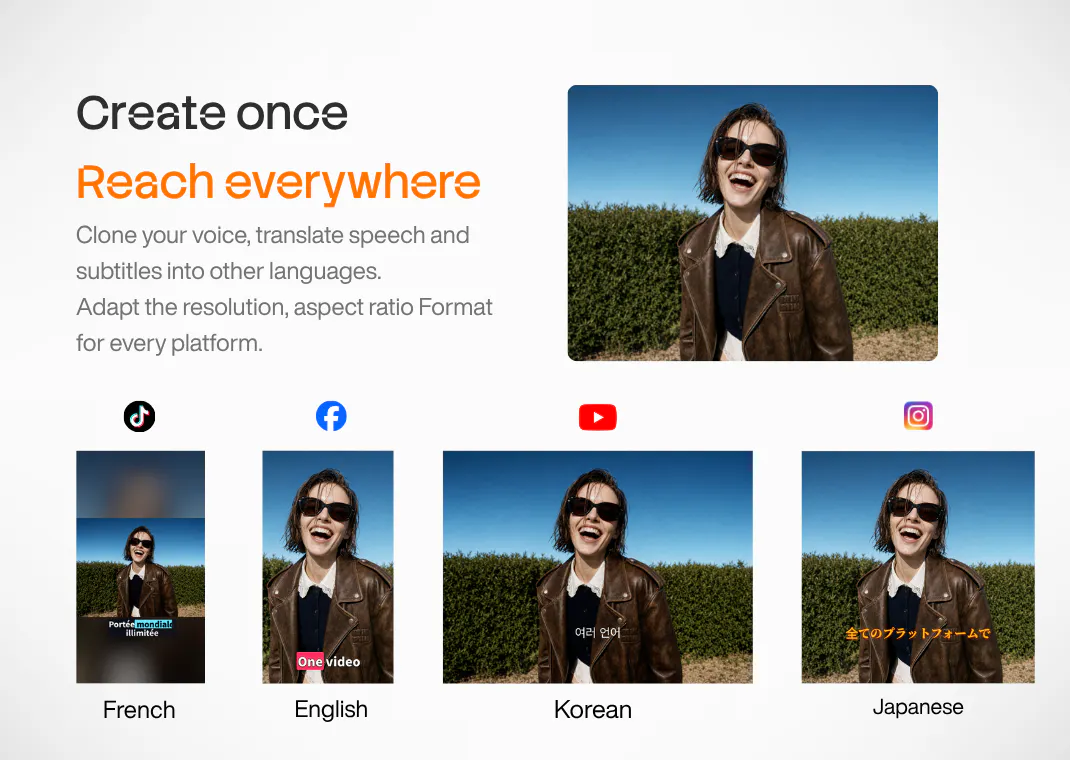
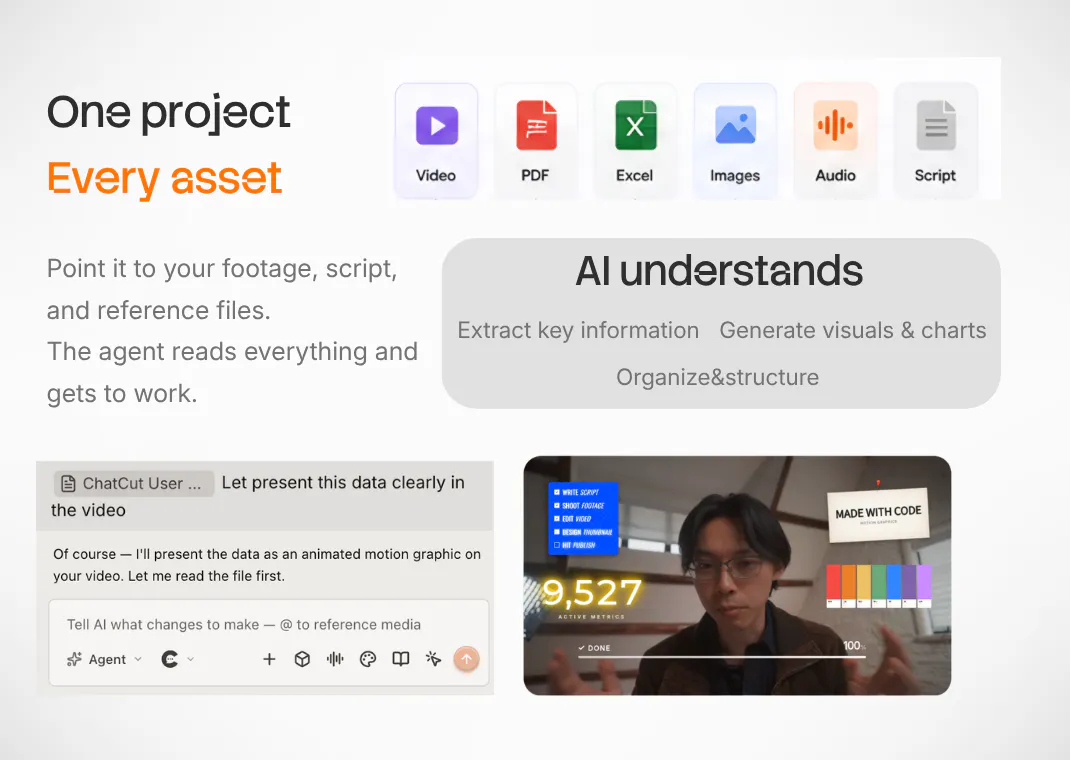
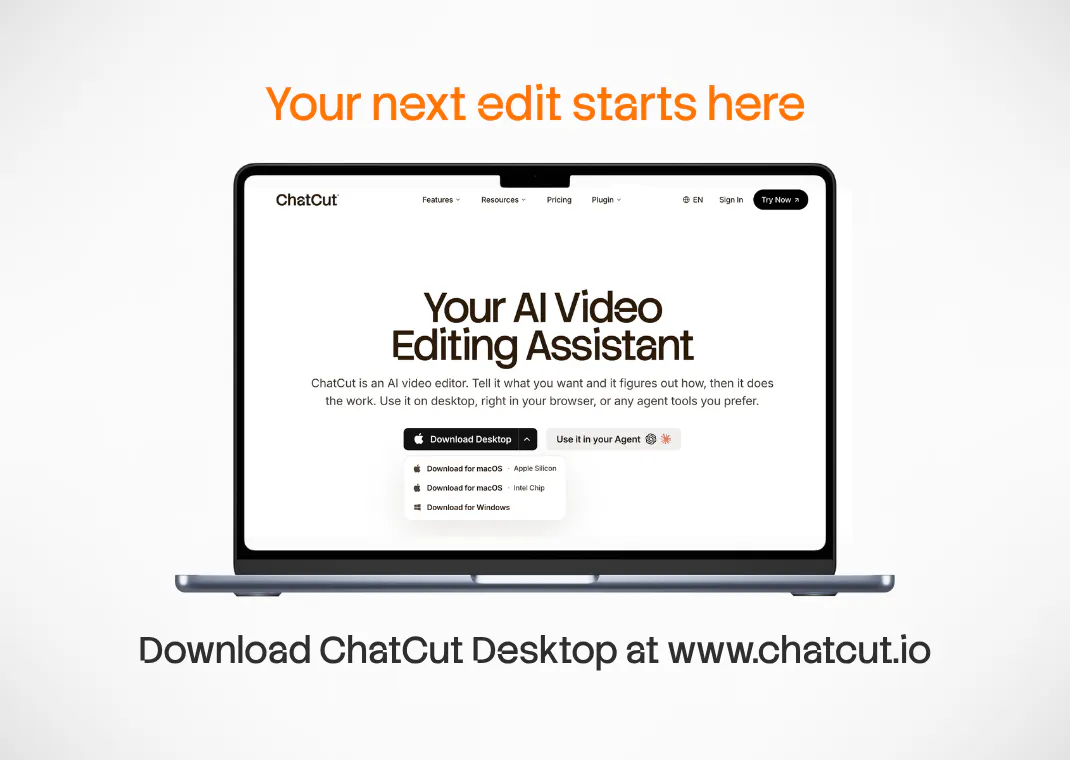
ChatCut Desktop 的最大亮点不是“AI剪辑”,而是其精准的商业模式设计——巧妙地利用用户已订阅的ChatGPT或Claude Code Token作为“补贴”,将核心剪辑功能免费化,瞬间拉低了AI工具的心理门槛。这种“借鸡生蛋”的策略极具侵略性,它本质上是在消耗OpenAI和Anthropic的算力资源来培养用户对自身工具链的黏性。
然而,评论区的清醒声音直指其软肋:将XML导出(通往Premiere/DaVinci的桥梁)视为付费功能,是典型的“用免费GUI圈养用户,靠逃生通道赚钱”的逻辑。在专业工作流中,AI只是预处理,最终交付必然依赖传统非编软件,而割裂这一环节会极大削弱Pro用户的信任。
此外,关于长视频“Token消耗”的质疑并未得到官方明确回复。如果所谓“AI驱动编辑”仍需将大量时间轴或转录信息发送至云端大模型,那么所谓的“本地化”福利将被高昂的隐性成本稀释,最终只适合轻量级短视频。该产品真正的护城河,不在于“连接AI”,而在于其本地的理解与执行引擎(如运动图形、素材管理)是否足够强大。若只是充当大模型的“提示词转译器”,在OpenAI和Adobe的夹击下,其生存空间将极为狭窄。建议团队重新审视定价策略:免费赠予XML导出,或许能换来更深远的生态渗透。
Hi Product Hunt!
Last month, we launched our ChatGPT/Codex plugin and received incredible support from this community.
One of the most consistent pieces of feedback was that you loved being able to connect your own agent, but wanted to work with larger files and have a faster, more reliable editing experience.
So we built ChatCut Desktop.
It includes everything you can do with our web app and plugin, but in a local environment. Your footage stays on your computer, and editing and exporting happen locally. You can use ChatCut’s built-in agent or connect your existing ChatGPT/Codex or Claude Code subscription and use the tokens you already pay for, making ChatCut’s core editing features free to use. A ChatCut subscription is only required for pro features such as Seedance and Kling video generation, XML export, AI voice generation, and voice cloning.
Today, ChatCut is used by creators editing talking-head videos, tiktoks, reels and shorts, businesses producing ads and branded content, companies creating social content, internal videos and product updates, and AI filmmakers making films.
Give ChatCut Desktop a try, and please send us any feedback, suggestions, or questions at team@chatcut.io.
We’d love to hear what you think. Go create something!
One of our users, Justin, created a tutorial on how he uses the desktop app. If you’re wondering how to get started, check it out here:
https://www.youtube.com/watch?v=QeiVz_P6F5c&t=579s
I think that CapCut has a competiton :)
Congrats on the launch! Love the idea of connecting AI agents directly to the editing workflow. Curious to see how far this can go
Putting XML export behind the subscription is the pricing decision I'd watch. Local editing and letting people bring their own Claude Code tokens are the generous parts, but export to Premiere and Resolve is the escape hatch, and charging for the escape hatch is what makes people feel locked in even when the rest is free. Gating Seedance and Kling generation makes sense because that's real marginal cost. The handoff isn't.
Interesting product here
using the tokens I already pay for is a smart model, but curious how it works for a heavy edit - like "cut every silence and add captions" on a 40 minute file. does the agent send the whole timeline/transcript context to Claude Code or Codex for that, or is the actual cutting/rendering done locally and the LLM just issues a small set of instructions? asking because that's the difference between it being basically free and it quietly eating a chunk of my daily token budget on one video.
Looks good! congratulations on your launch
Congrats!!! Do you do transcriptions?
Congrats on the desktop launch. You let people run it on the ChatGPT or Claude Code tokens they already pay for, which makes core editing free. That is a lot to give away.
Looks really useful. Congrats on the launch!
Congrats on the launch!
An AI video editor that actually works with GPT + Claude sounds interesting. How long takes the setup process?
Hey Product Hunt 👋
Excited to hunt ChatCut Desktop today! I’ve watched this team listen closely to their community since their ChatGPT/Codex plugin launch, and this release is a direct answer to what creators kept asking for: bigger files, faster editing, and full local control.
The token model is what stands out to me. Connect your existing ChatGPT/Codex or Claude Code subscription and get core editing for free. That’s a genuinely creator-first move.
Go check it out and tell the team what you think 🎬
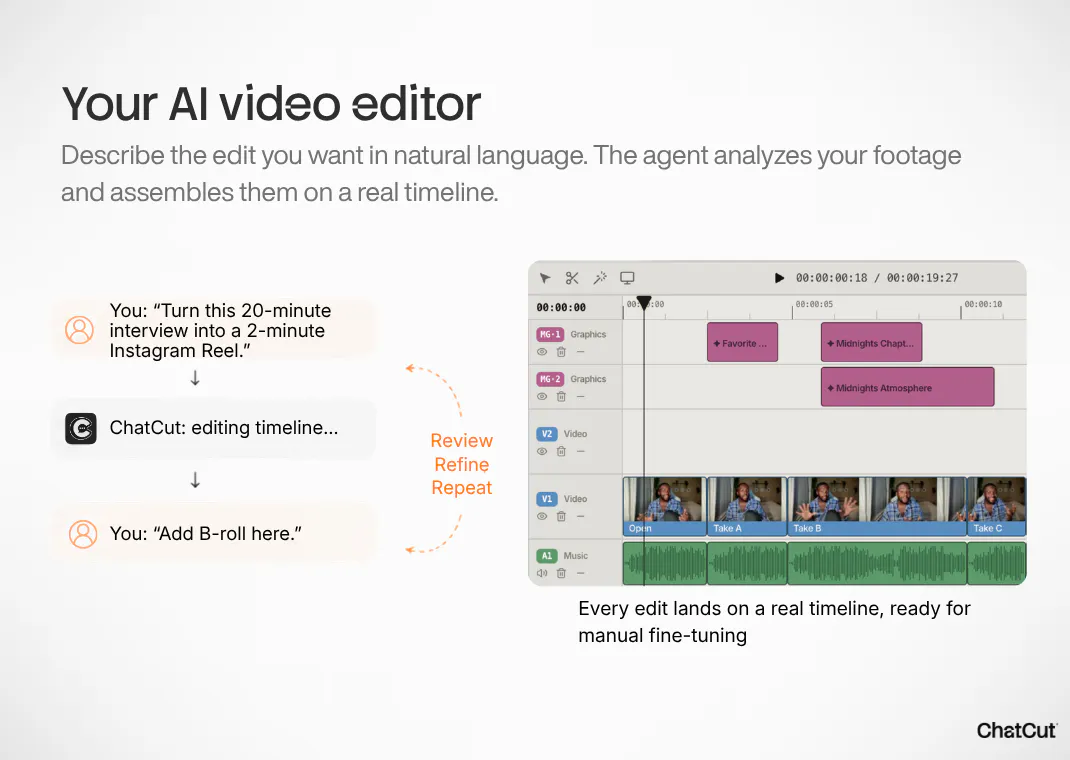
Turning a 20-minute interview into a 2-minute reel with just a prompt is a great use case. How well does it pick the right moments in longer, messier raw footage?
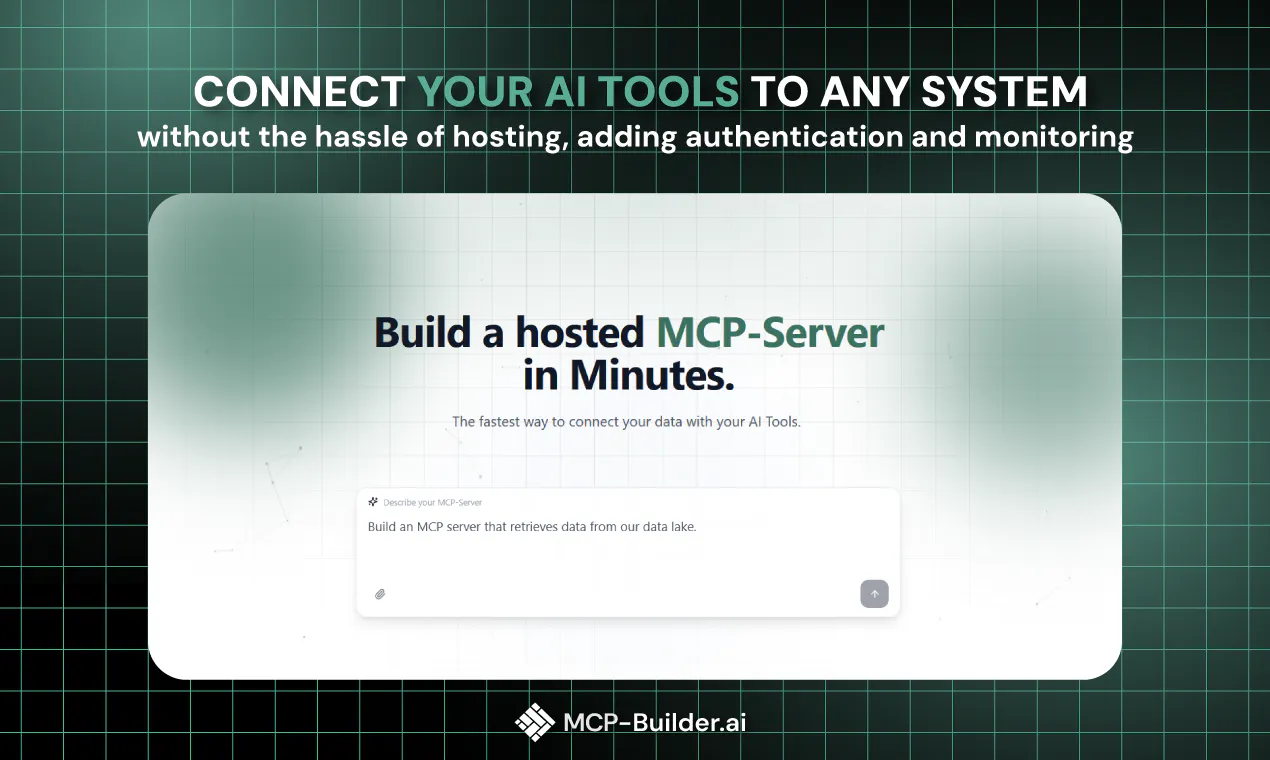
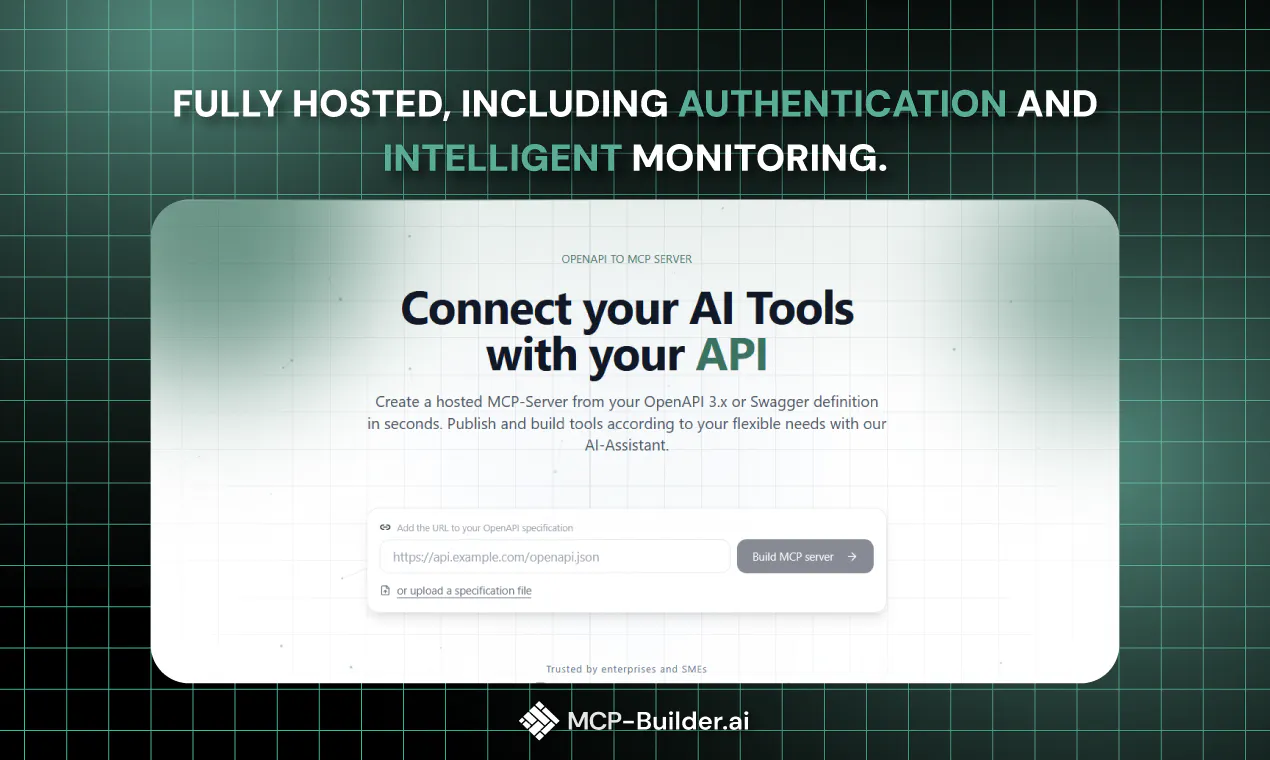
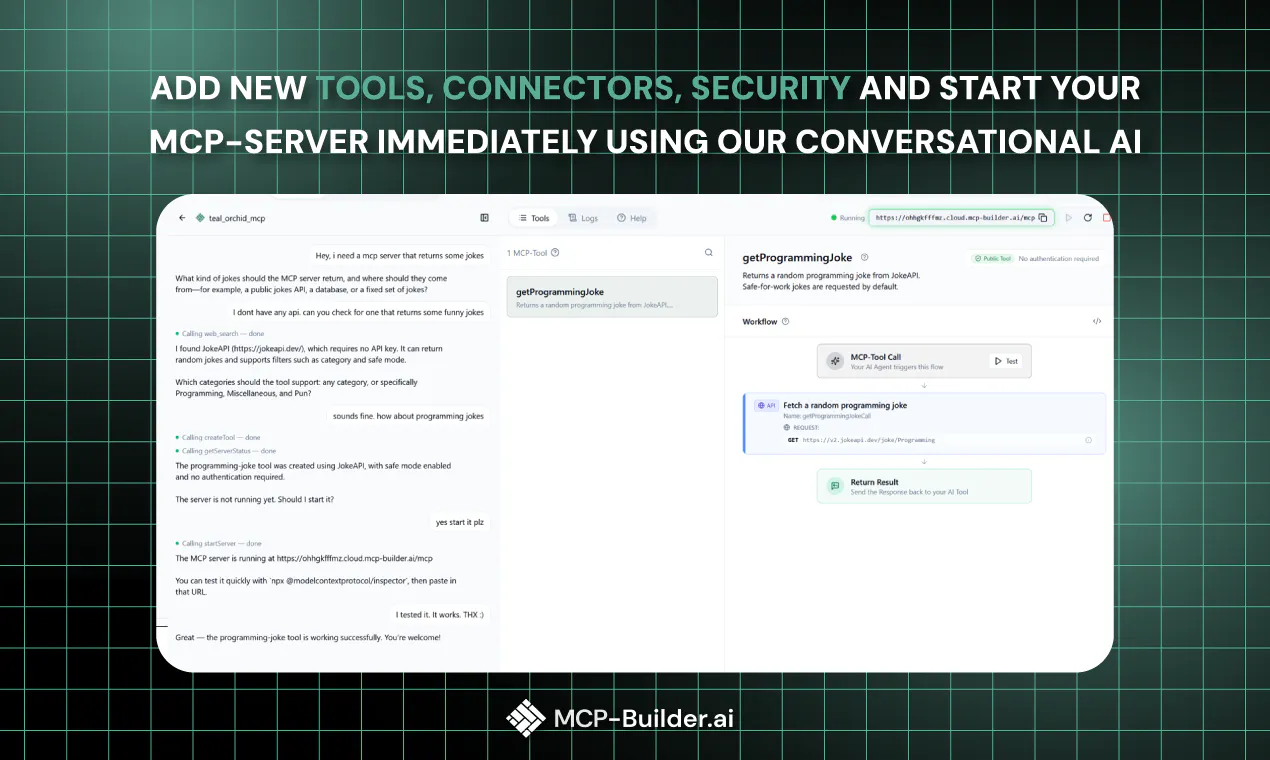
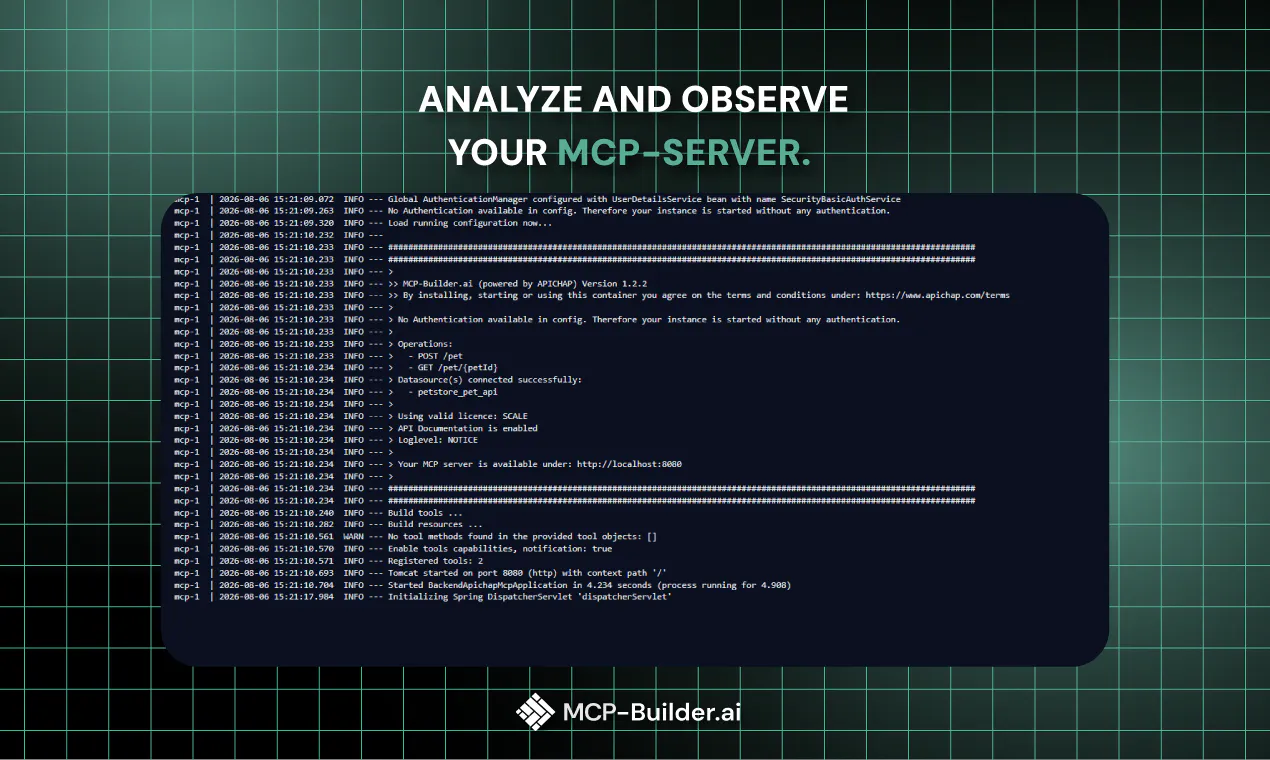
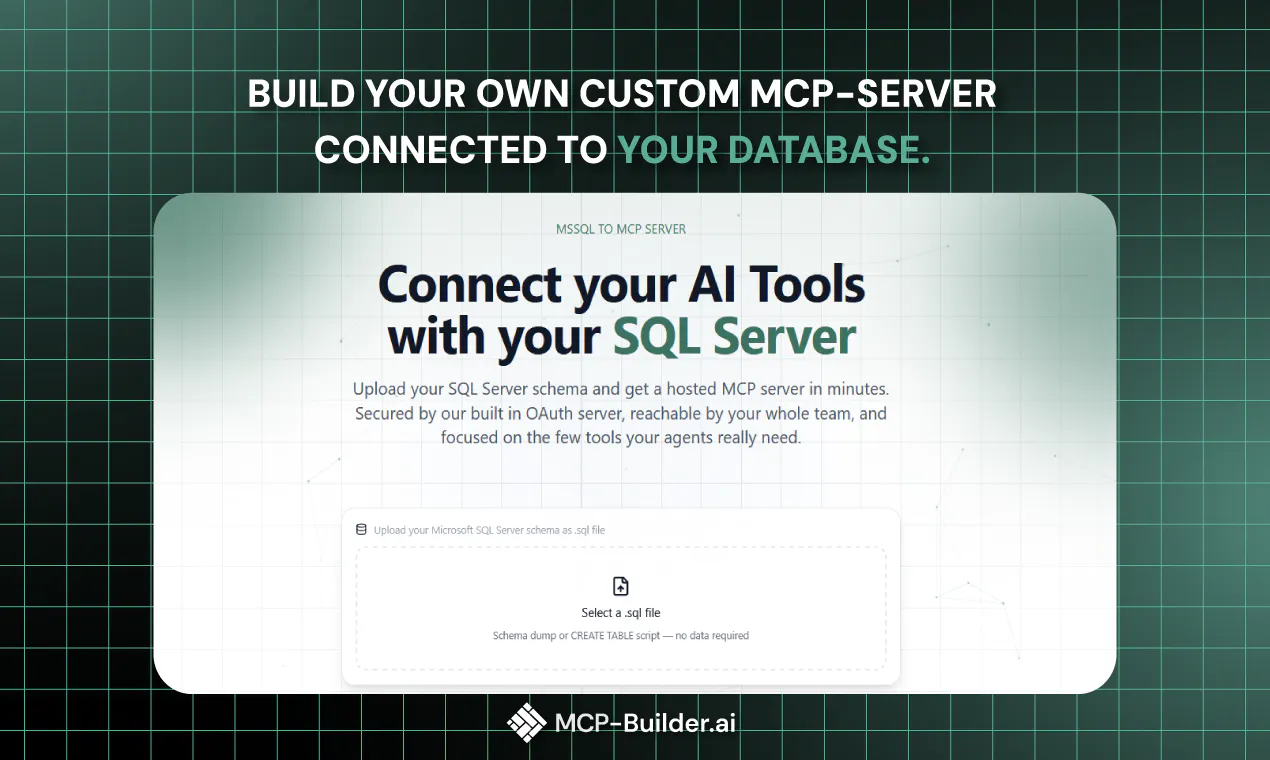
MCP-Builder.ai切中了一个真实且正在爆发的痛点:当各大AI IDE和Agent框架都能轻易“生成”一个MCP Server时,市场最不缺的就是又一个代码生成器。它的聪明之处在于,将战场从“生成”转移到了“生成之后”的脏活累活——托管、版本管理、认证、可观测性、内网穿透。这本质上是把MCP Server从“开发者玩具”升级为“企业级数据管道”的必经之路。
从产品定位看,它试图成为MCP时代的“Vercel”或“Supabase”:用极低的门槛(对话式)拉低启动成本,用企业级安全(OAuth、反向网关)抬高迁移壁垒。这个策略在逻辑上自洽,且169票在PH已属良好表现,评论中用户对“基础设施优势”的质疑,恰好印证了其价值主张的清晰度。
但风险同样明显。第一,MCP协议本身仍在快速演进,作为中间层平台,协议的任何重大变动都可能冲击其核心功能,存在“被上游架空”的威胁。第二,所谓“安全托管”本质是信任生意,对于银行、医疗等真正高合规要求的客户,一个创业公司的托管SLA和合规背书恐怕难以撼动他们自建或使用大厂云服务的决心——其目标客群可能最需要它,但也最难说服。第三,反向MCP网关解决了内网穿透问题,却额外引入一跳,对延迟敏感场景是明确的负优化,创始人在评论中对此坦诚但并未给出量化数据,这是个隐患。
总体而言,它是一款切中时弊、执行到位的“效率工具”,但离“平台”尚有距离。真正的考验在于:当Claude、OpenAI或AWS原生提供同款能力时,MCP-Builder.ai的护城河是那层对话式体验,还是积累的监控与网络拓扑数据?目前来看,更像是前者,而前者最容易复制。建议团队加速深耕反向网关和企业身份认证的深度集成,那是大厂最不乐意碰的脏水区。
Hey Product Hunters 👋
I’m Dominik, one of the co-founders of MCP-Builder.ai.
We did our first Product Hunt launch a few months ago and were honestly blown away by the response from this community.
It gave us a real traffic boost. And I think every builder here knows: getting those first users, first conversations and first signs that people actually care is always the hardest part.
So first of all: thank you. It really helped us a lot and gave us the push to keep building. 🙏🙏
Since then, we basically spent the last months doing one thing:
Refinement, refinement, refinement.
Getting our first paying customers, listening to the users we closed, listening even more to the ones we didn’t, and building a tool that people actually love to use.
One thing became very clear:
Coding an MCP-Server is not the hardest part anymore. It’s what comes afterwards.
Keeping it versioned, managing the project, hosting it, making sure it stays online and monitoring what actually happens. And when you want to securely connect company data with AI, a basic MCP-Server is often not enough. You need proper authentication, security, observability and sometimes a way to connect systems that should never be exposed to the public internet.
That’s exactly what we focused on with MCP-Builder.ai.
Now you can:
→ Build MCP-Servers fully conversationally
Build your MCP-Servers like you build your websites using Lovable or your software code with Claude Code.
→ Test and debug directly in the dashboard
Directly test and debug your created tools within the dashboard.
→ Choose the security setup that fits your use case
Secure your MCP-Server even if you don´t have a OAuth Server available. With API-Keys, our serviced mcp-builder.ai OAuth server. Or simply bring your own OAuth System.
→ Host your MCP-Server with one click
Get your MCP-Server online with a mouse-click. And connect it immediately without setting up your own infrastructure.
→ Monitor every call
A fully enterprise-ready observability dashboard that shows what happens inside your MCP-Server. Tracks every call and what data is beeing transfered.
→ Securely connect on-premise systems with cloud AI agents
Our Reverse MCP Gateway lets you connect internal systems without exposing them directly to the internet.
Super exited to have another launch today. Exited to hear what you think. Drop your thoughts in the comments.
And a big shoutout to @fmerian for hunting us again and supporting us on the second launch 🙌
Hi Product Hunt! I’m Michael, the technical co-founder of MCP-Builder.ai.
Over the past few months, I received a lot of feedback from the developer community. One thing became clear: building an MCP Server with a builder shouldn’t feel like configuring infrastructure. It should feel more like building a custom piece of software that you can use in your favorite AI dev tools.
So we redesigned the experience around conversation. You describe what you want to connect and what you want your AI tool to do, and MCP-Builder.ai helps create it for you, while taking care of the work that comes after coding: hosting, maintaining and running the server.
We also simplified authentication and security configuration, making it easier to choose the right setup without getting buried in complexity.
Would love to hear your experience and your feedback using MCP-Builder.ai!
Congratulations on the launch! So I understand your main advantage is the infrastructure? Because Claude Code can also generate MCP servers.
Congrats on launch number two. When someone asked about latency you said plainly that the gateway adds a hop, then made the case for it anyway. Good way to answer that.
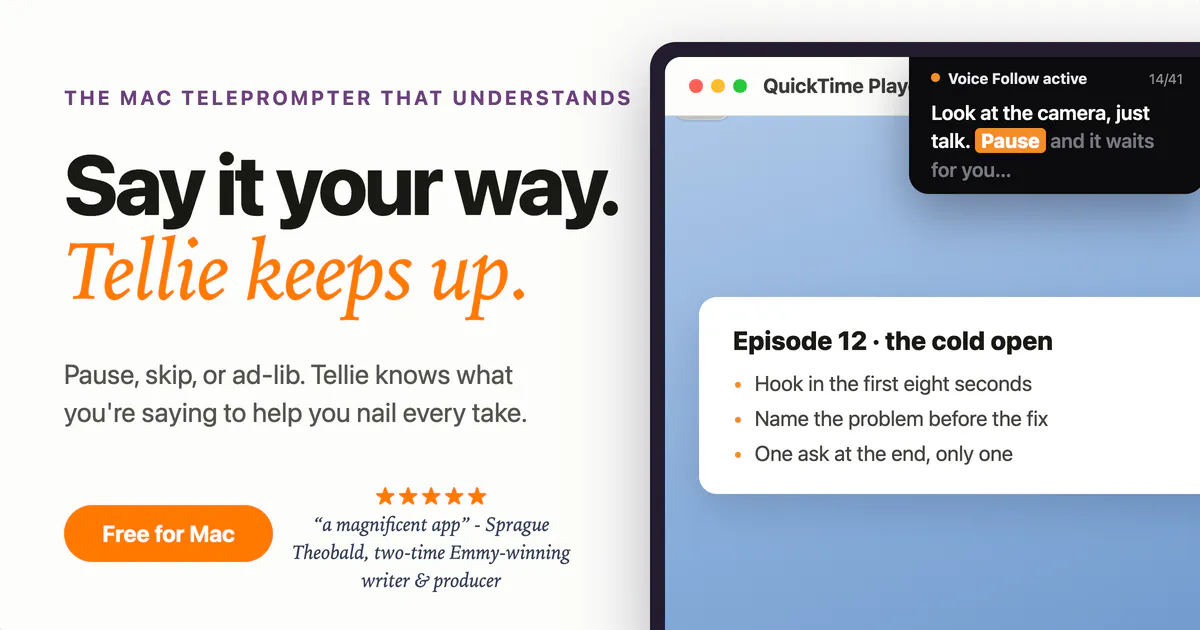
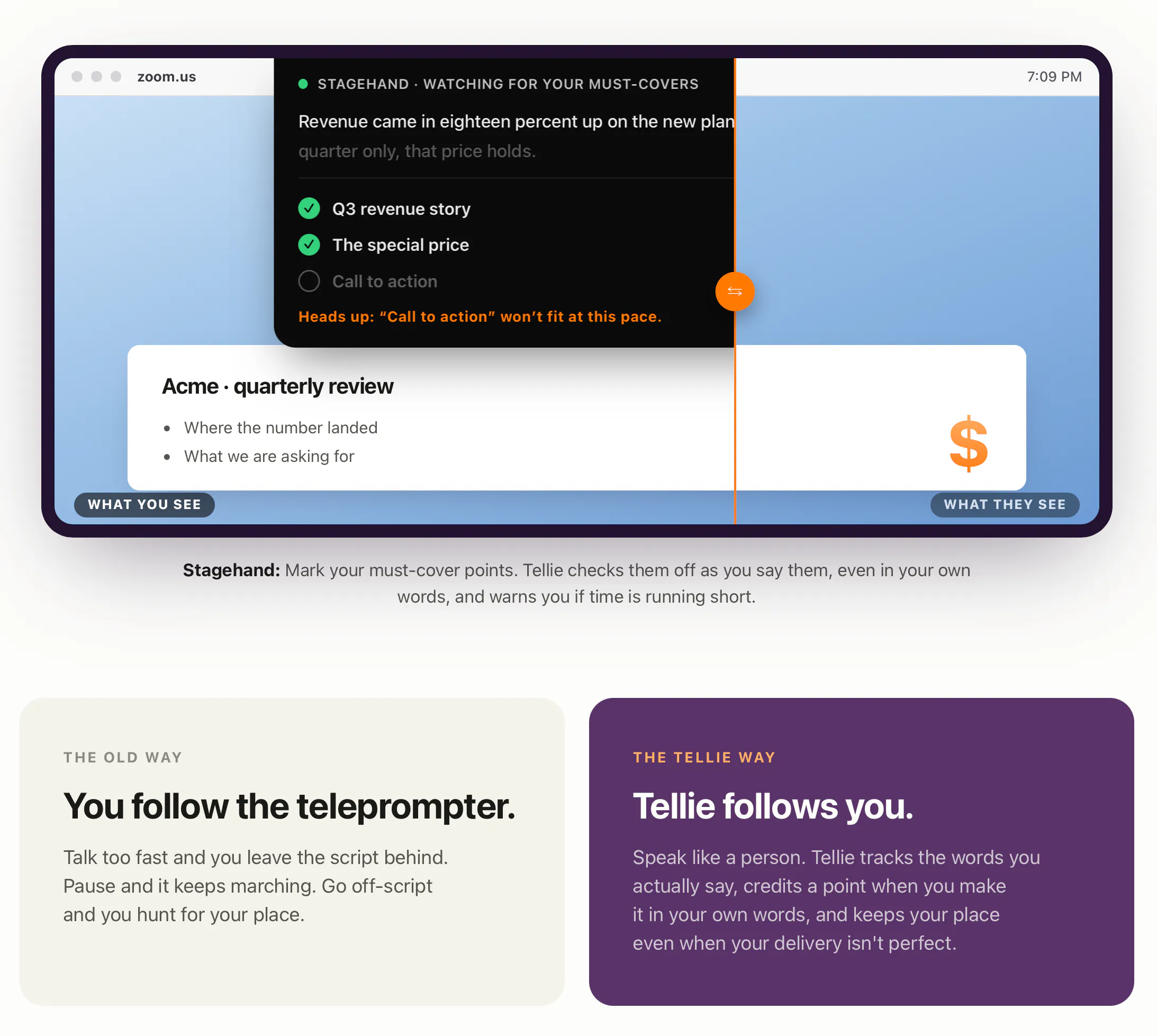
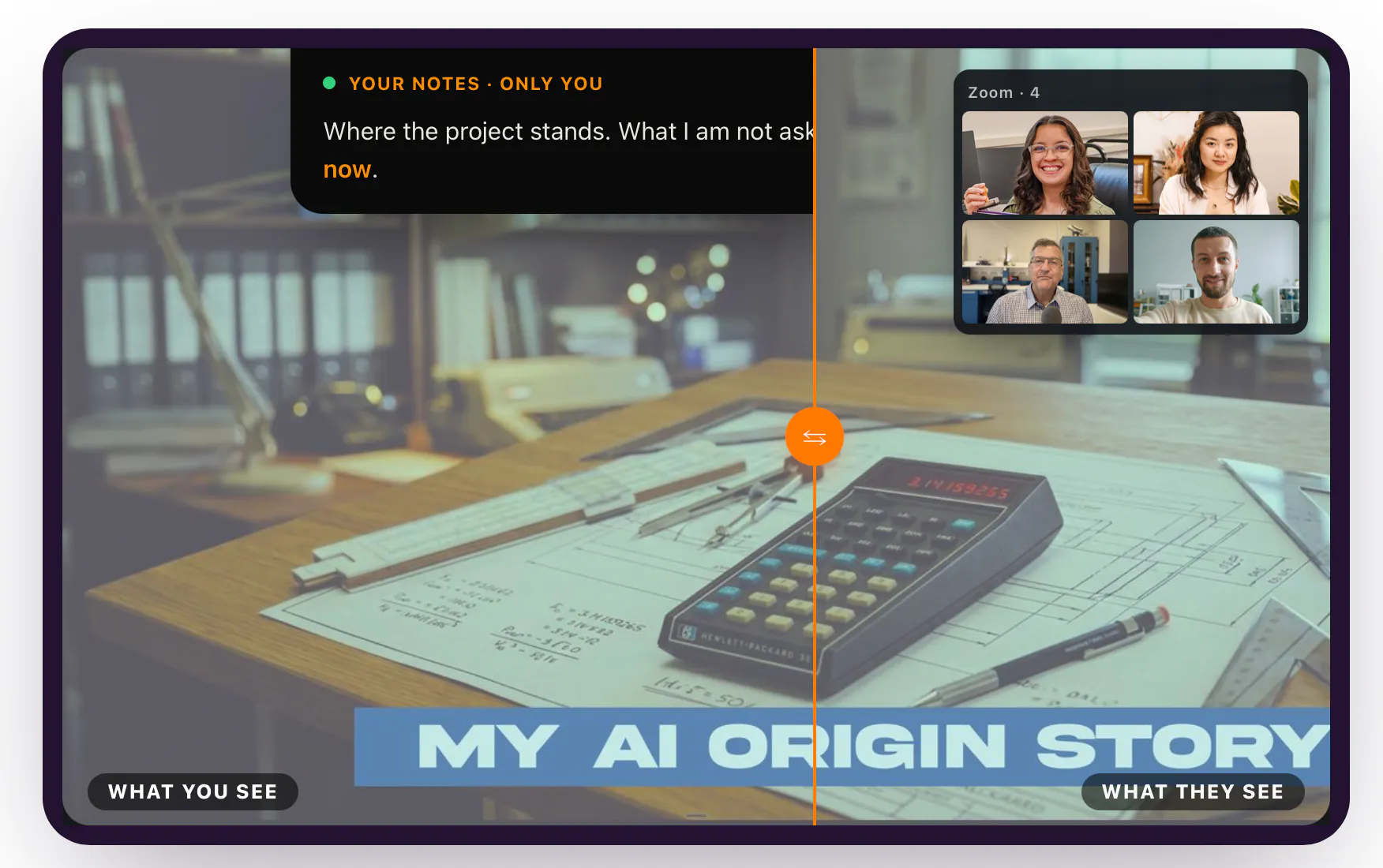
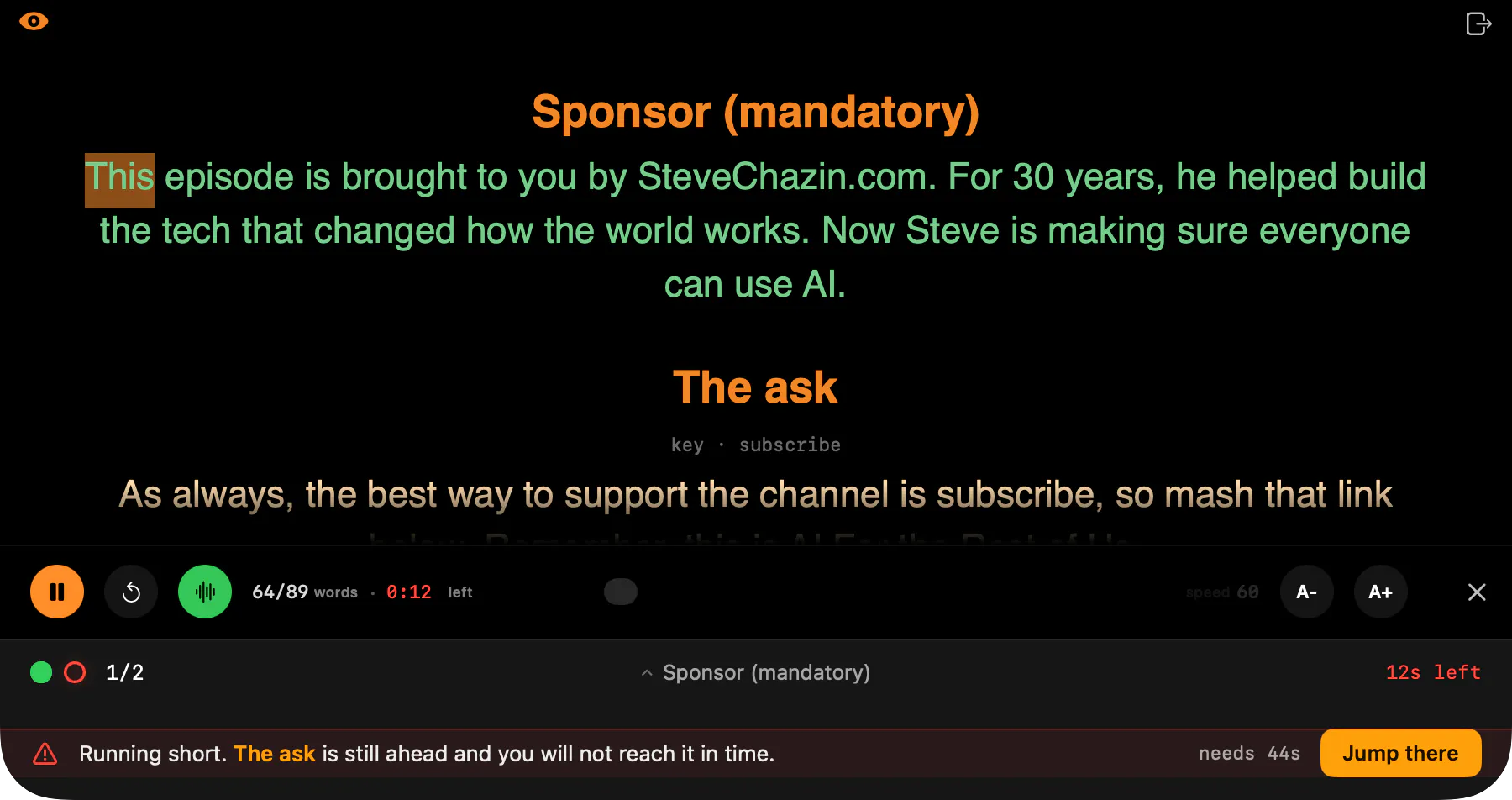
Tellie Prompter 的定位很巧妙:它没有发明新需求,而是精准击中了所有提词器用户的“隐性痛点”——机械滚动逼着你念稿,一停就慌,一即兴就迷路。其核心卖点“提词器跟随你”本质上是将语音识别技术与内容结构化(要点追踪、时长预警)结合,从“工具”升级为“陪练”。这种“反提词器”的体验设计,确实能让使用者更像在“讲故事”而非“读材料”,对视频创作者、讲师、播客主是实打实的效率提升。 但冷静看,产品仍有三点隐忧:其一,“本地语音识别”在3MB体积下,其转写准确率(尤其是中文、口音、专业术语)存疑,若跟随出错反而打乱节奏;其二,评论中暴露的“Android/浏览器版缺失”与“免费版界限模糊”是商业化硬伤,限时10天Pro难以建立长期习惯;其三,其核心壁垒并非不可复制,苹果的Siri、微软的语音API都能实现类似能力,竞品(如Flow Prompter)随时可能抄走。 真正的护城河在于“Stagehand”对语义要点的理解——即不是在匹配文字,而是在追踪意图。如果这个模型能跑通,Tellie将不再是提词器,而是“AI脚本教练”。但就目前136票的声量而言,它更像一个精致的小众效率工具,而非颠覆性平台。建议开发者尽快补齐跨平台支持,并公开更清晰的免费/付费分层,否则容易被大厂功能整合或开源方案挤压。
I hate teleprompters.
Not the idea. The experience.
They make you follow them. Pause and it keeps scrolling. Go off-script and you’re suddenly lost on a screen. Worst of all, you end up sounding like you’re reading instead of speaking from the heart.
I thought, why can’t the prompter follow you?
So I built Tellie.
People don't want to read a script, they want to tell a story. They skip sentences. Rearrange things. Go off script. Say the same idea in completely different words.
Tellie listens (on-device) to the actual words you’re saying and follows you. Pause, skip, ad-lib, say it your way. Tellie keeps up. With 1.5's new Stagehand feature, it now understands what you’re trying to accomplish, even when you use your own words.
Tellie can tell you:
You’re missing an important point
You’re running long
You covered the things you needed to cover
You finished the take but skipped something
You went off script… and that’s probably okay
Every teleprompter answers one question: where am I in the script? Tellie answers it by following the words you actually speak, and knows what you still need to say. That's why I call it an unprompter.
It's only 3 MB. Completely local. Your voice never leaves your Mac. Invisible to Zoom and screen recorders.
Tellie 1.5 is $19 today with code PRODHUNT10 (normally $29). One-time purchase, never a subscription. Each download comes with 10 days free.
If you make videos, pitch, teach, interview, or just need to sound like yourself instead of a script, try it.
And if you need a feature I haven’t thought of yet, tell me. That’s how most of the good stuff got built.
Interesting. I would say that it is more for already experienced and know how to improvise. I remember when I started and completely relied on the text written on paper (yeah, back then I didn't have such cool technology) :D
Wow, this is a dream! I’m always stumbling over my words when I record videos, and this thing actually adjusts to me!
I really liked this product. Well done to you. I always wondered why there wasn't a product like this. Bingo! And the question is why isn't it available for Android?
Happy to pay, but I could not find any info on what the difference is between the free version and the pro version
Oh this is neat. I always go off-script on Looms and then lose my spot. The bit that listens to what I actually say is the hook. Local + tiny is nice. Trying it for my next demo. Keen to see if the run-long warning saves me from 15-min rambles.
I was literally recording a presentation video for Product Hunt yesterday and thinking how useful it would be to read the script from somewhere while recording :) Great product!
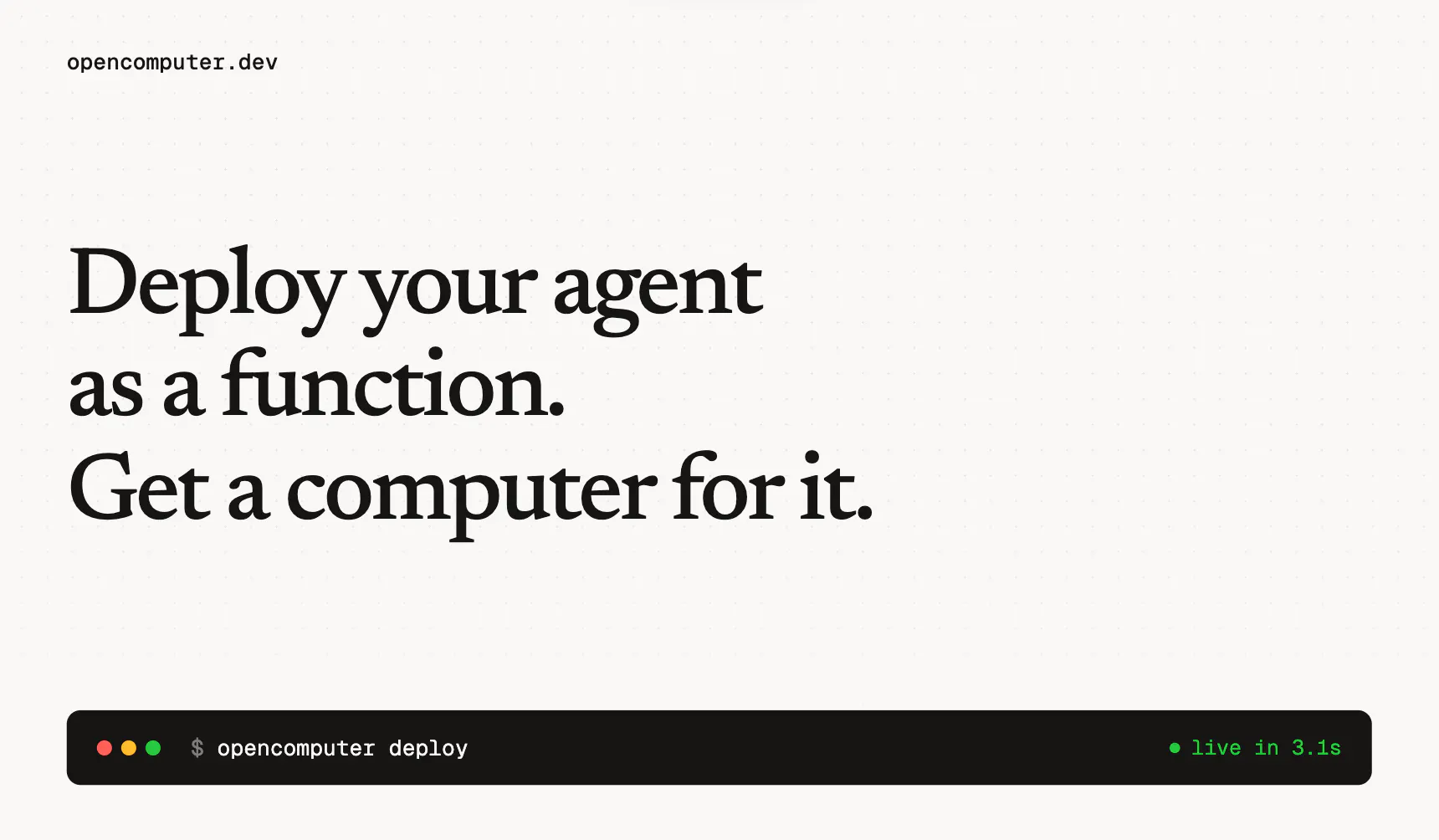
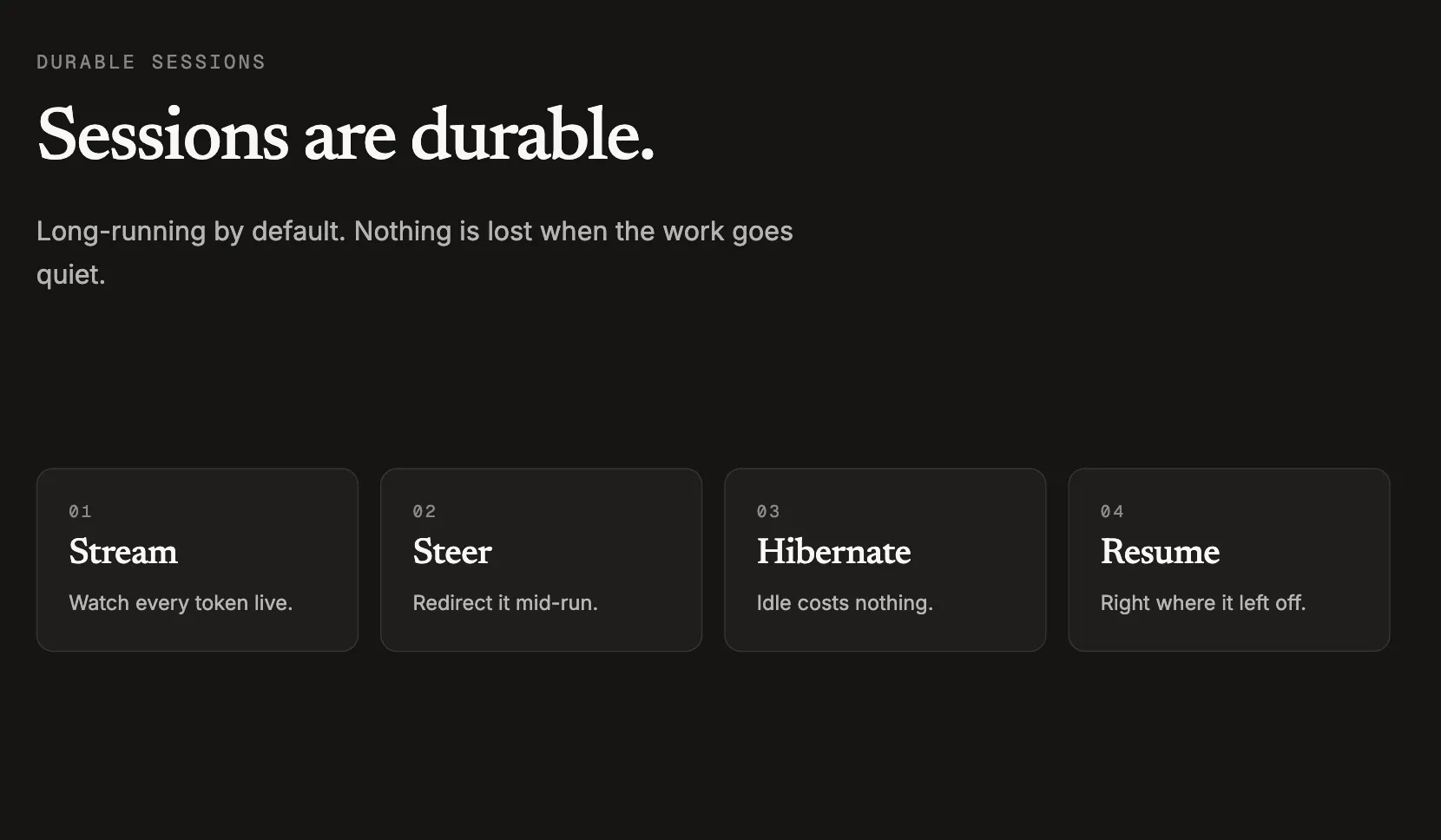
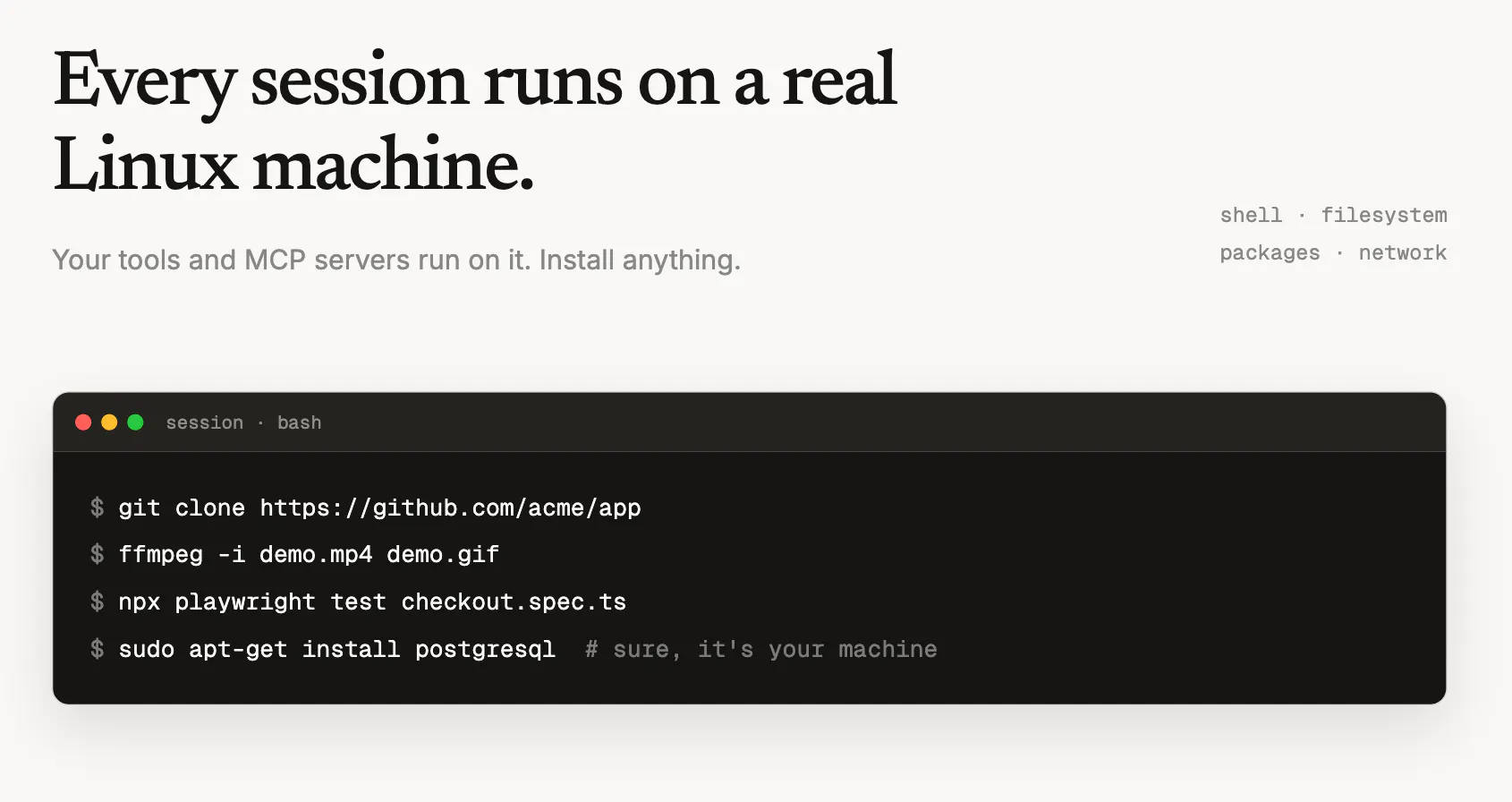
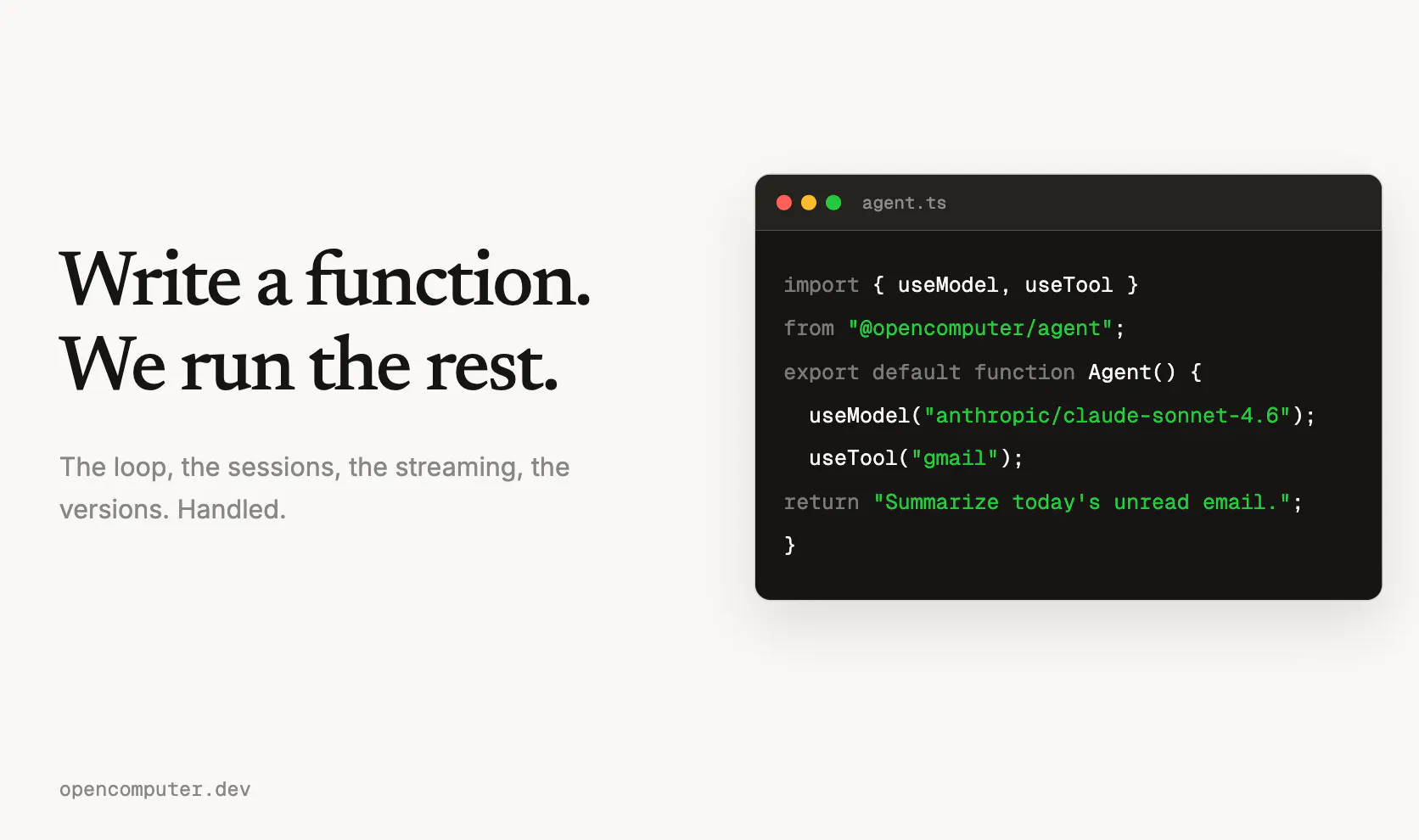
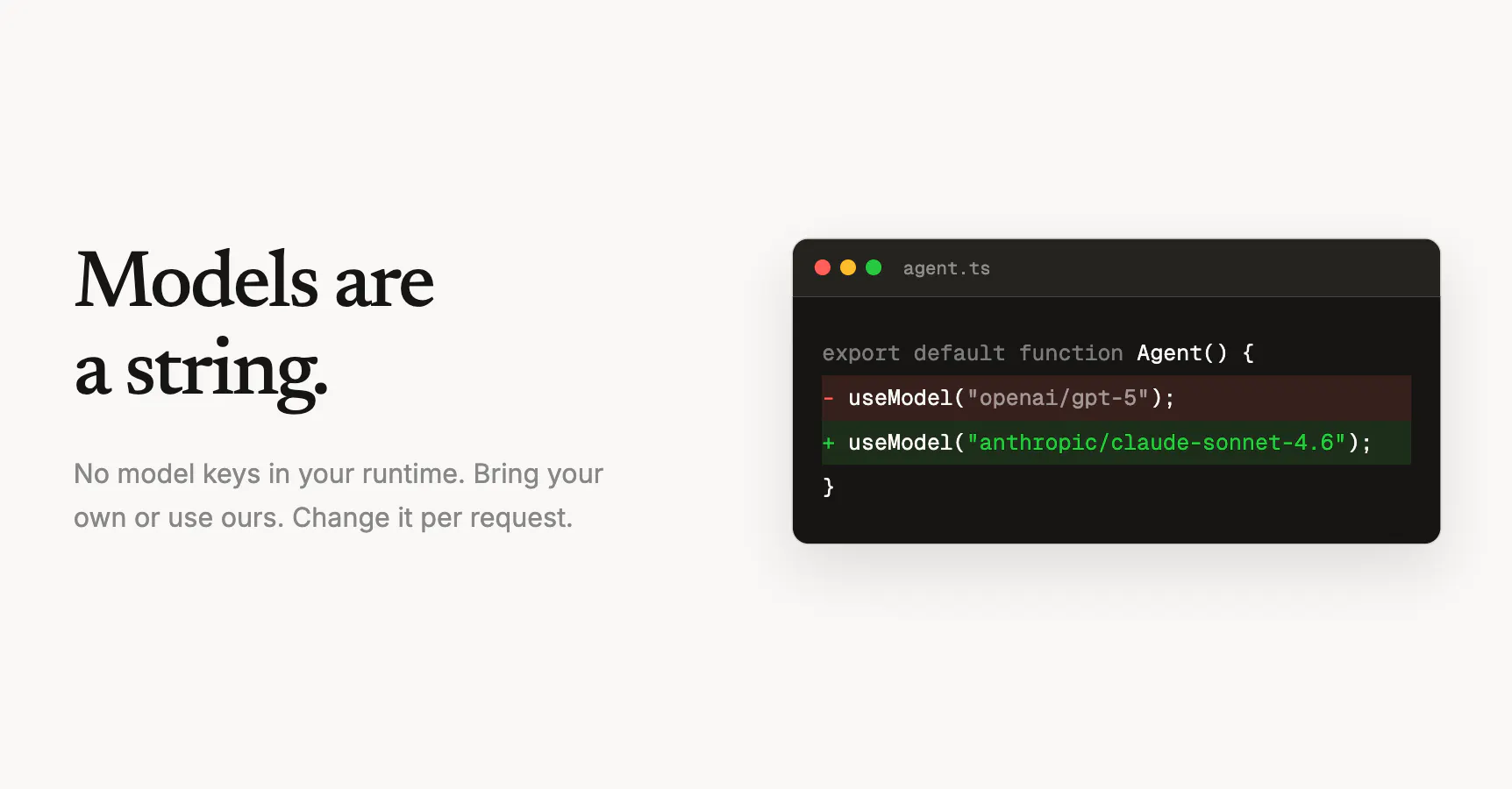
OpenComputer的“Firebase for Agents”口号精准,本质上是用“函数式”的抽象掩盖了底层“基础设施”的复杂性。它卖的不是模型,而是“环境即服务”——这是聪明且务实的一步。其核心价值在于两点:一是将“会话”这一Agent生命周期中的关键状态持久化,这在长尾任务(如爬虫、视频处理、自动化测试)中是刚需;二是通过“你的密钥不进入运行时”的设计,解决了企业端最敏感的安全信任问题。
但锐评需要指出其隐忧:首先,TypeScript的选择在AI生态中显得逆势,Python生态的工具链和开发者心智优势是巨大阻力,这可能会限制早期传播和社区贡献速度。其次,“真实Linux机器”意味着高昂的冷启动成本和资源利用率挑战,在盈利模型上如何平衡免费配额与计算密度,将决定其能否从猎奇走向规模化。最后,所谓“与Claude托管Agent的竞争”,更准确的定位是互补甚至是其底层依赖——OpenComputer更像是LLM的“手脚”,而非“大脑”,它应当警醒自己不被上游模型厂商的平台化策略降维打击。方向正确,但壁垒尚浅,真正的考验在于能否迅速抢占开发者工作流,形成生态锁定。
Hi PH - today we're launching OpenComputer.
Deploy your agent as a function, get a computer for it.
What you can expect:
1. Write an agent as a TypeScript function. Deploy it. We run the loop, the sessions, streaming etc
2. Every session runs on a real Linux machine.
3. Your tools and MCP servers run on that machine - clone a repo, run ffmpeg, drive a browser, install anything.
4. Sessions are durable: can be steered mid-run, hibernate when idle, resume where they left off.
5. No model keys in your runtime. Bring your own or use our managed gateway.
Give it a shot and let us know what you think, we're very keen on feedback!
Interesting! so is this competing with Claude managed agents or?
Congratulations on the launch! Just curious, why TypeScript? Almost all AI is built with Python...
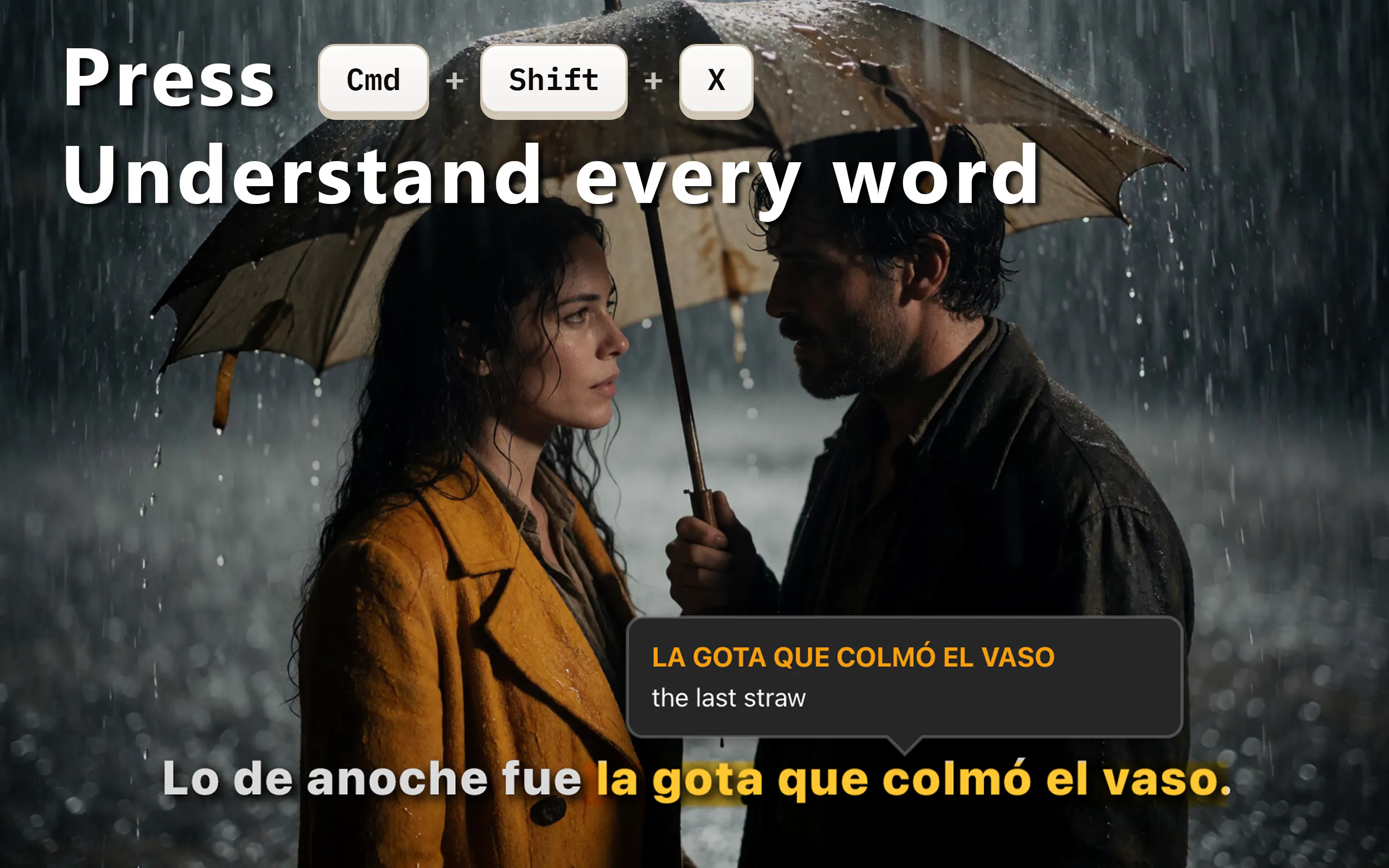
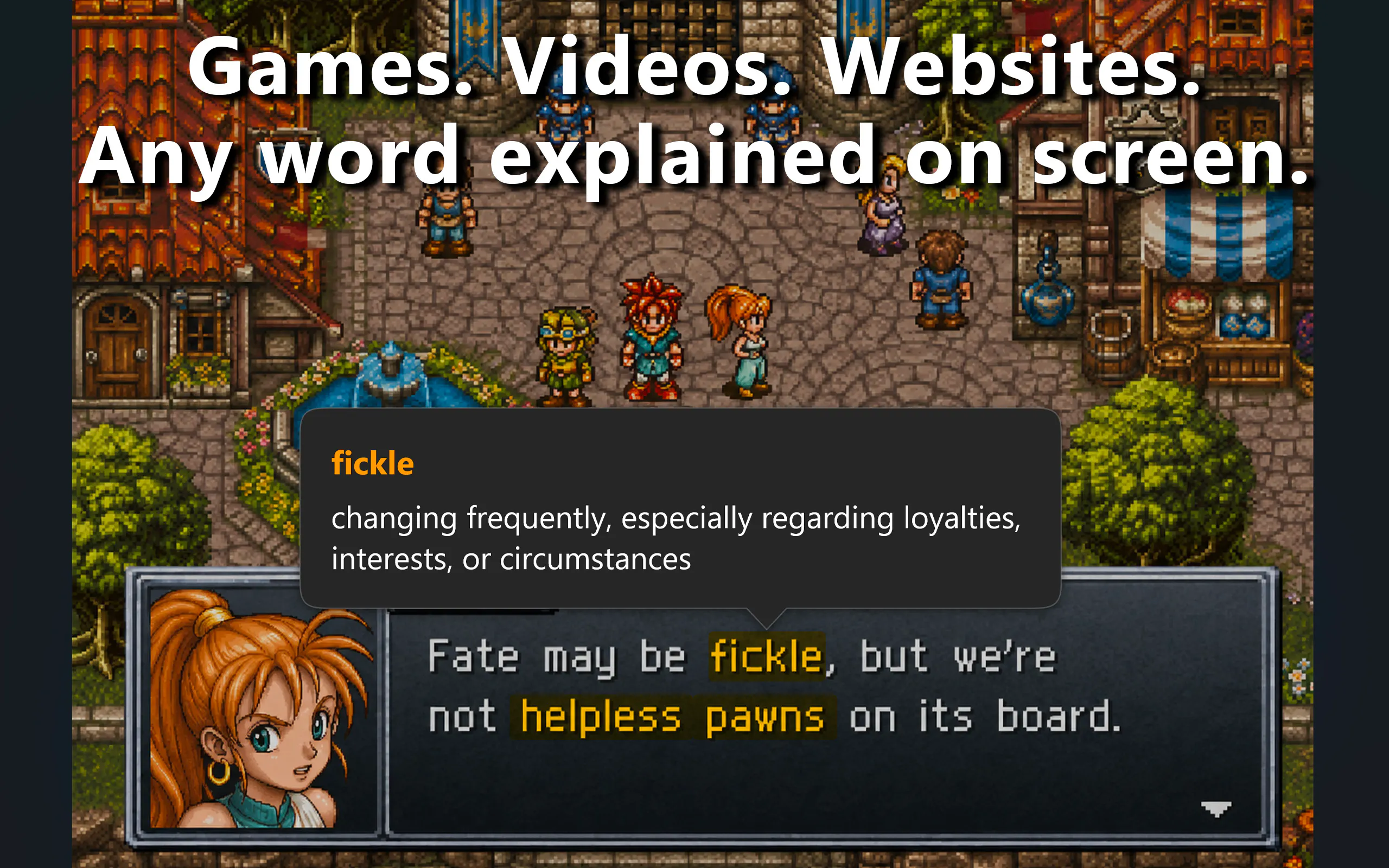
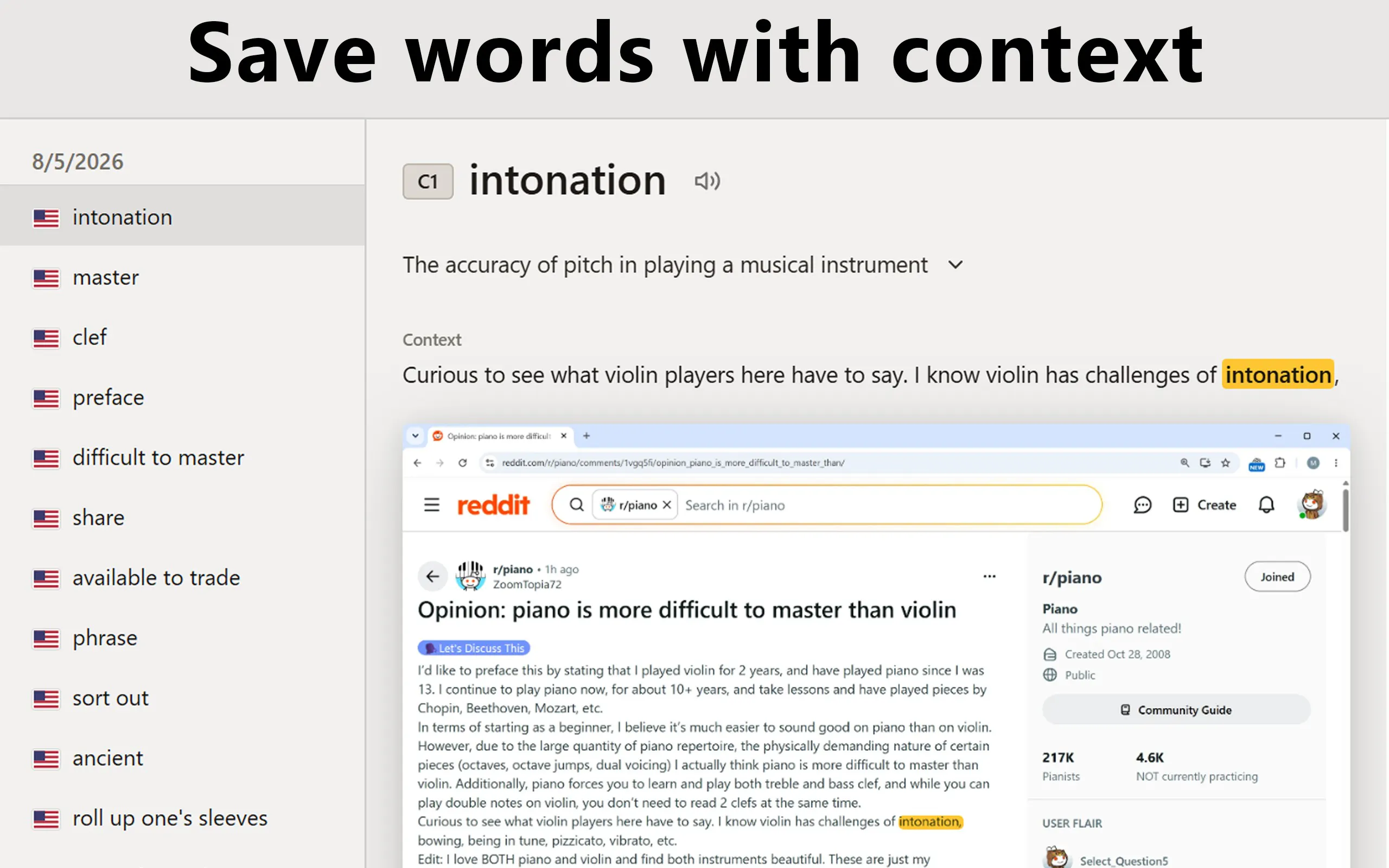
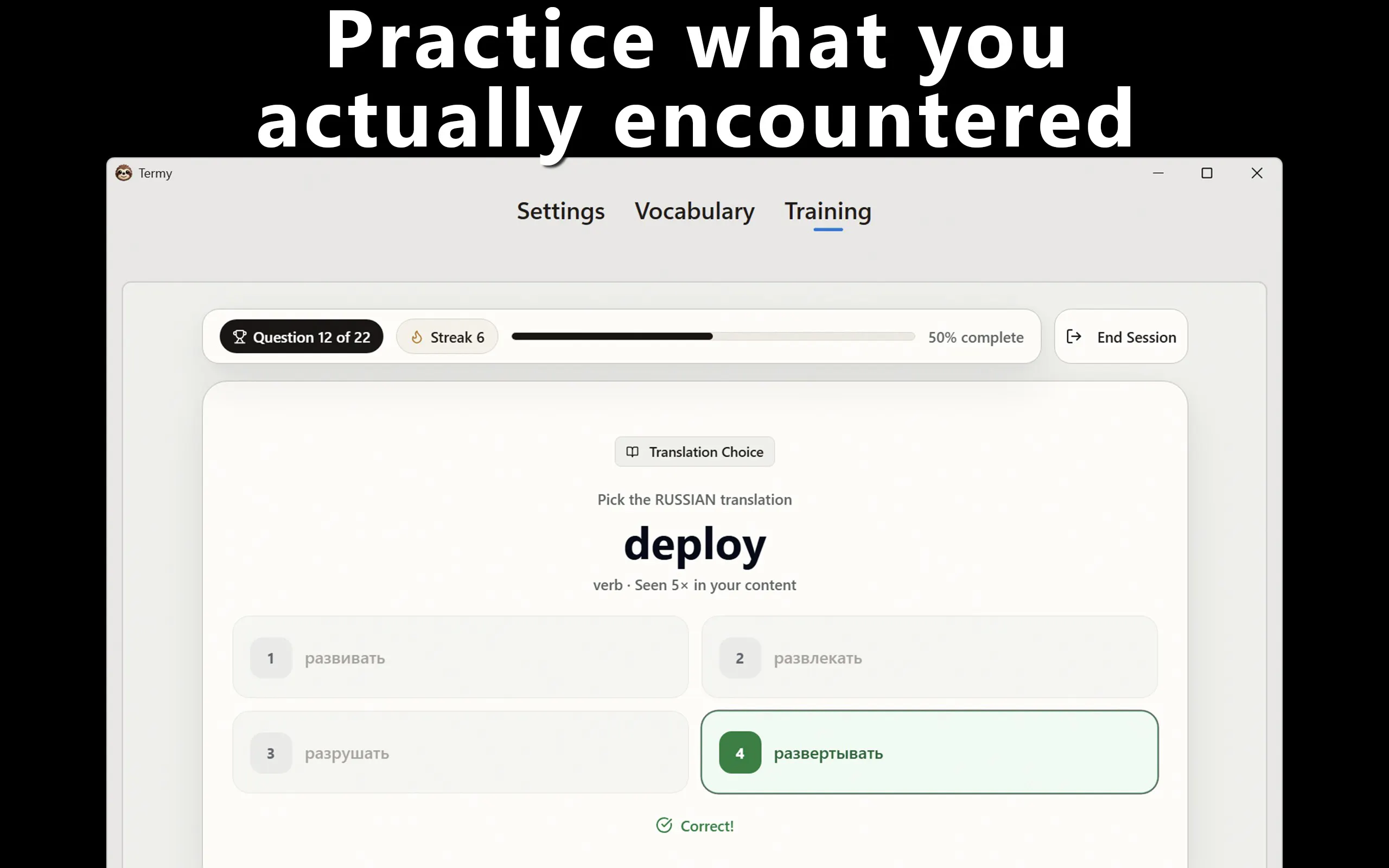
Termy精准地切中了语言学习中“沉浸与查阅”的核心矛盾。它没有试图创造一个新的学习场景,而是选择寄生在用户已有的娱乐与信息消费场景中,通过一个快捷键将“中断”转化为“捕捉”,这比大多数孤立的背单词应用高明得多。其真正的价值不在于翻译,而在于“语境锚点”——将单词与用户亲自经历过的画面、情节绑定,再配合FSRS算法进行科学复习,这实际上是对“情境记忆”原理的工程化落地。
然而,产品的天花板也显而易见。首先,OCR的准确率和对游戏内复杂UI(如滚动文本、动态字幕)的识别将是巨大技术挑战,一旦识别错位,沉浸感会瞬间碎裂。其次,“免费开始”的商业模式依赖后续订阅,但语言学习类工具的长期留存率普遍偏低,用户可能在三分钟热度后流失。更关键的是,Termy将学习过程碎片化,这会导致知识体系构建不足,它本质上仍是一个高级的“查词+记忆”工具,而非完整的学习方案。
从评论看,用户多为正面感受,缺乏深度使用后的痛点反馈,这暗示产品可能仍处于尝鲜期。建议团队将重心从“收集词量”转向“沉淀连接”——例如生成用户在特定游戏中的专属词库,或基于场景聚合高频表达,以此构筑真正的数据壁垒,而非仅做一个漂亮的翻译悬浮窗。否则,它很容易被浏览器自带翻译或游戏内置词典的功能迭代所吞噬。
Hey Product Hunt 👋 I’m Mikhail, the maker of Termy.
Language immersion often breaks at one small moment: a phrase stops you, but opening a translator pulls you out of the game or video. And translating everything removes the need to think in the language.
Termy is built for that moment. Press one shortcut anywhere text appears on your desktop. Termy gives you a short explanation and translation in context, then saves the word or phrase with the original scene.
Later, it turns your saved vocabulary into varied adaptive exercises—including context questions, fill-in-the-blank prompts, typing, listening, and screenshot recall. Reviews are scheduled with FSRS, so each word returns when you’re most likely to need the reminder.
It works with games, videos, websites, ebooks, and desktop apps on Windows and macOS. OCR runs on-device, screenshots stay on your computer, 30 languages are supported, and it’s free to start.
I’d especially love feedback on three things:
Did the explanation match the scene?
Did the shortcut preserve your immersion?
What game, app, or text did Termy struggle with?
Try it with something you already enjoy, then tell me where it breaks. I’ll be here throughout the launch.
Love it. Feels frictionless in actual use across YouTube and Reddit. Also really like that it keeps the screenshot context
This is much more in-context language learning than the memorization I did in language classes in school growing up. Nice job
I have always wanted to make something like this! I love interactive learning. I feel like it helps me remember languages better.
I have always wanted to make something like this! I love interactive learning. I feel like it helps me remember languages better.
I have always wanted to make something like this! I love interactive learning. I feel like it helps me remember languages better.
Love the idea guys! I'm sure many language learner will love it. Wish you all the best!
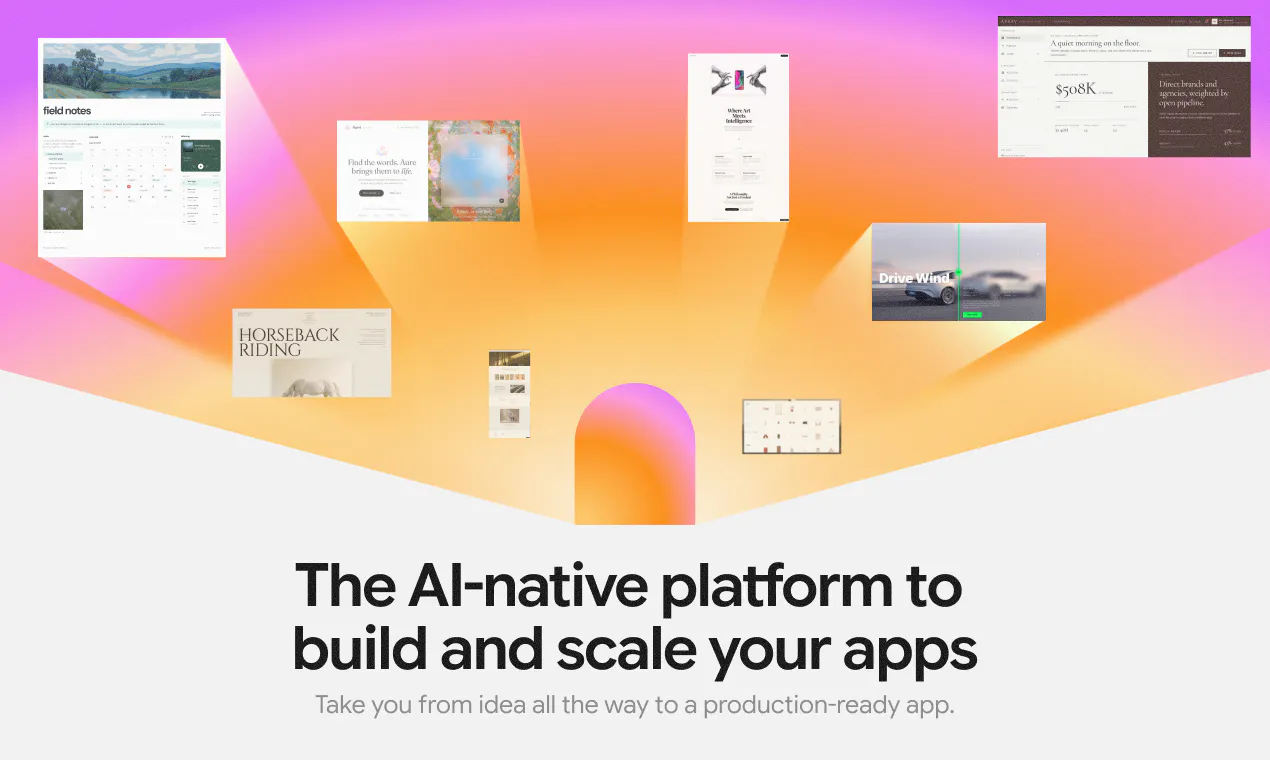
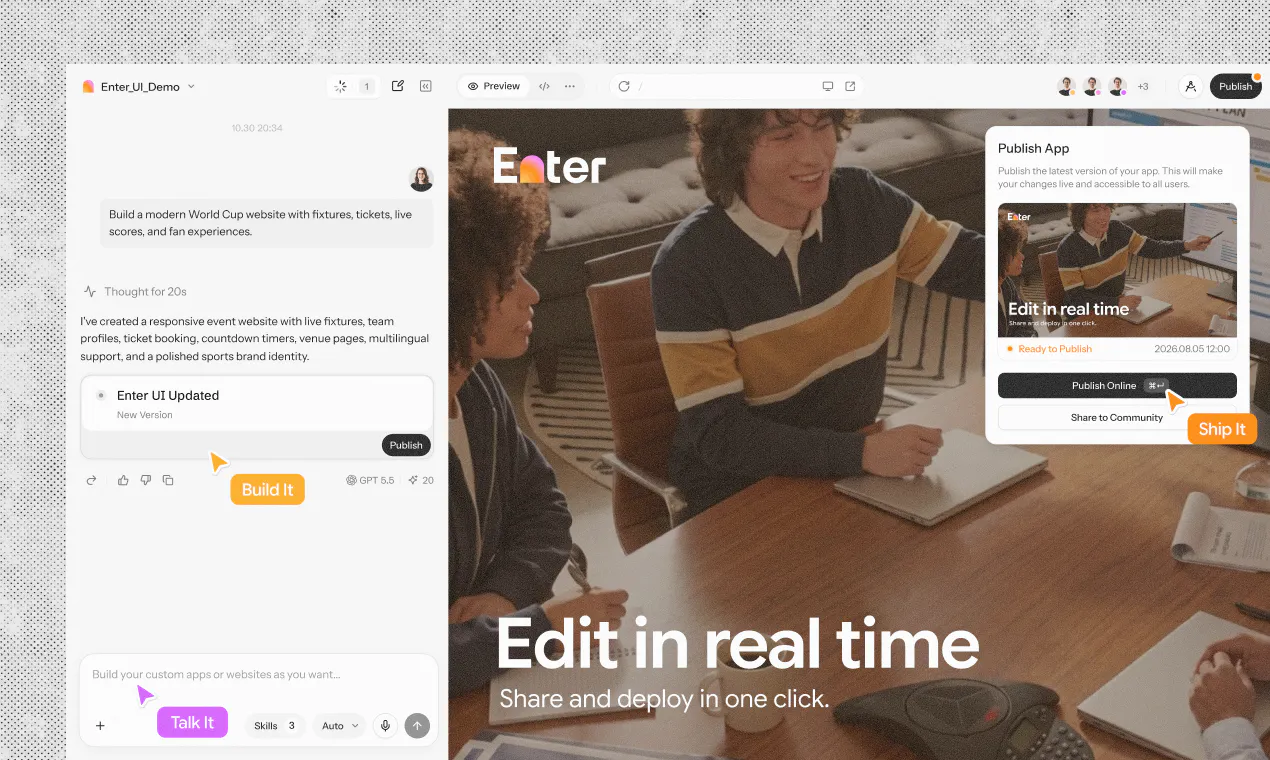
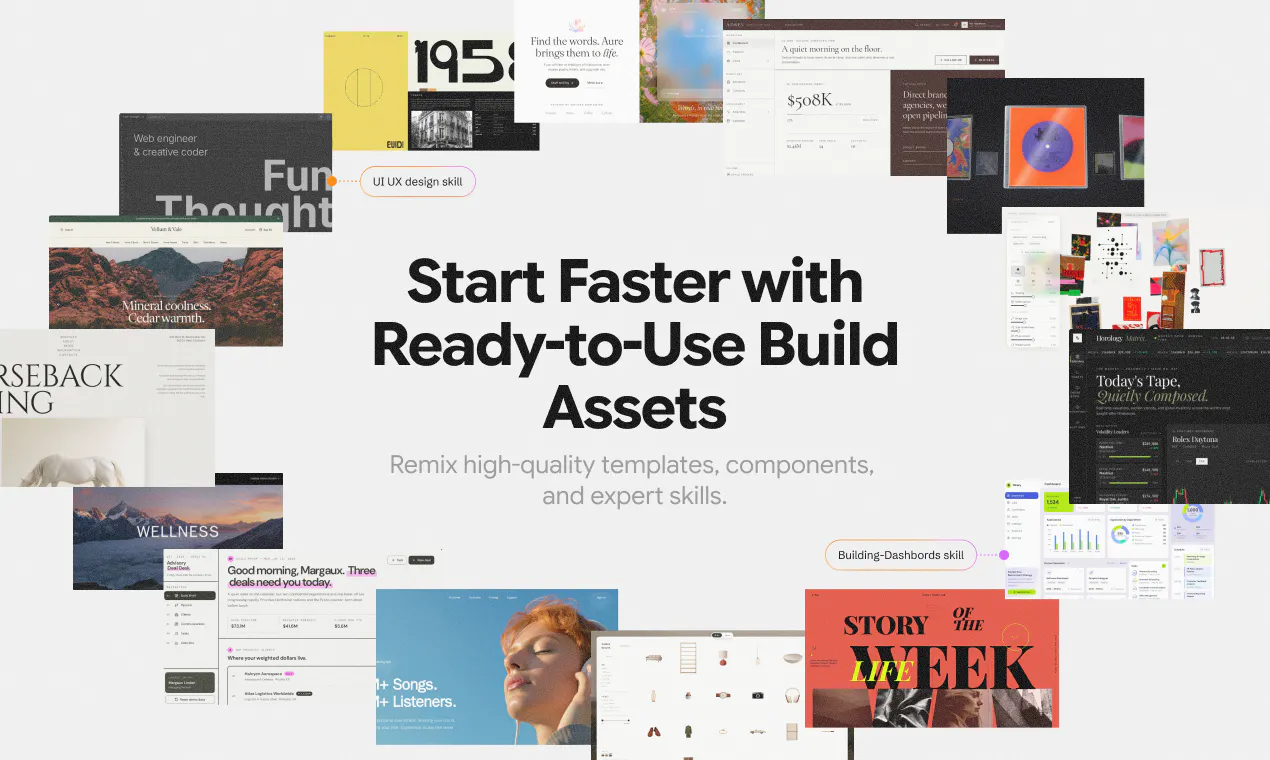
Enter Pro的叙事很聪明,用“Can Enter build Enter?”的哲学式自问,配合自家CMS、论坛乃至登月页面的实际用例,完成了从“造工具”到“用工具”的信任状构建。这确实比任何华丽的Landing Page都更具说服力,也印证了其并非又一个浅层的原型生成器。
但剥开“AI-native”的糖衣,其本质仍是低代码平台在AI时代的迭代品。将数据库、认证、托管、支付等基础设施预制化,将AI从对话窗口升级为“操作层”,这确实是正确的方向。然而,关键壁垒不在理念,而在执行:当用户真正用它构建复杂业务逻辑时,平台自身的抽象能力、性能瓶颈以及锁定风险将面临严峻考验。目前评论中一片叫好,唯一尖锐的提问——与Lovable和Base44的差异化——被忽略,这暴露了其或许并无无可替代的技术护城河。
真正的价值在于其“Agent Builder”的务实定位:不炒冷饭做聊天机器人,而是把客服、调研等重复性工作固化为可版本化、可部署的智能体。这一路径若走通,确实能将团队从低效重复劳作中解放。但需警惕的是,这类平台最终往往会演变为“大型科技公司的拼装车间”,开发者的创造性被压缩到配置项与Prompt的狭缝中。对于追求深度定制和企业级安全的团队,Enter Pro的“一体化”究竟是赋能还是枷锁,尚需时间与真实业务压力来检验。营销出色,弓已拉满,能否射中真正的商业靶心,是接下来唯一值得关注的事。
Hey Product Hunt 👋 I'm Eric, one of the makers of Enter Pro.
Today, we're bringing Enter Pro to Product Hunt for the first time.
As AI models grow more capable, the barrier to coding keeps falling. But building what runs a business takes more than code.
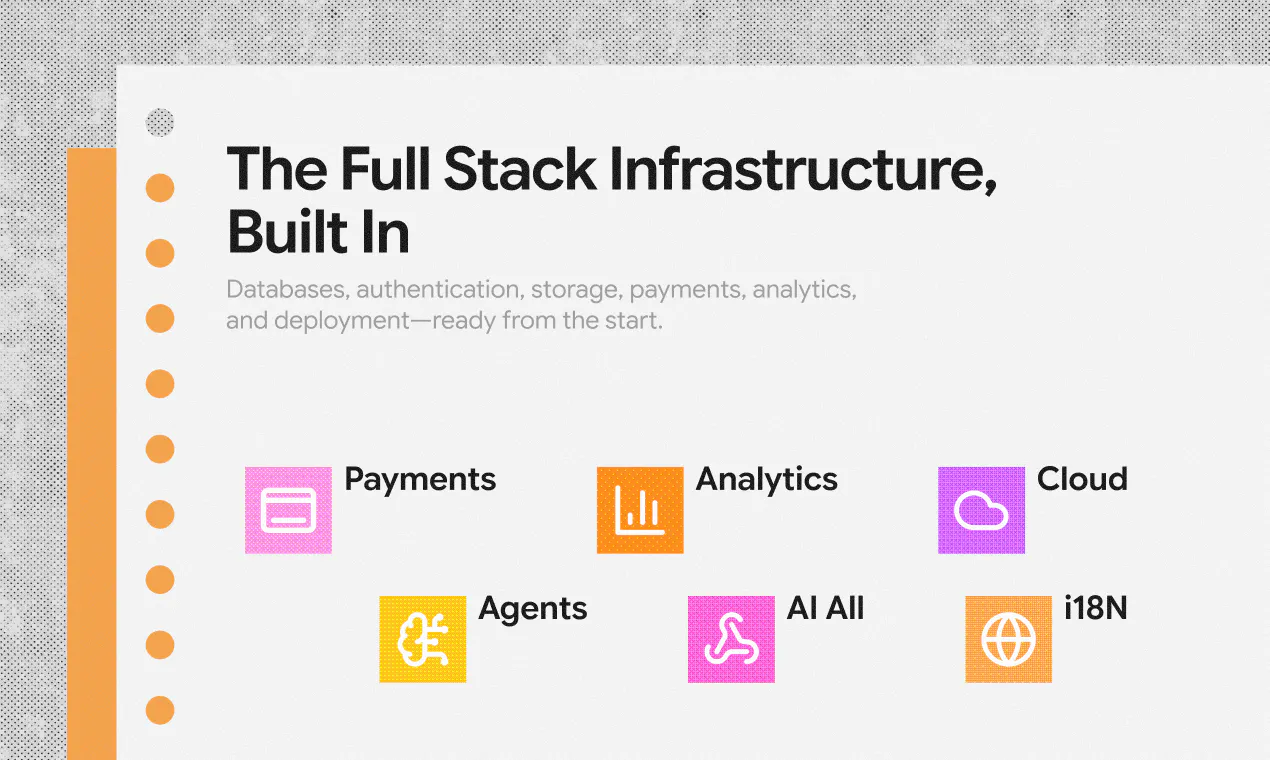
Enter Pro is an AI-native platform that turns idea into working apps. As the builder layer of Converge AI, teams can plan, build, preview, launch, and scale apps, websites, portals, internal tools, workflows, and AI agents in one continuous workspace—with databases, authentication, storage, hosting, payments, analytics, and localization built in.
Enter started at the beginning of the year as a small experiment built around one question:
Can Enter build Enter?
We became our own most demanding customer. Our blog system(CMS) was the first product built entirely inside Enter. When GitHub import launched, we brought our main repository into the platform and began building Enter with Enter. Product, operations, and design could ship smaller improvements directly, while engineering stayed focused on the deeper systems behind them. Over time, more of Enter was built on the platform itself—from the Enter Forum and our internal admin system to landing pages created and shipped by non-technical teammates. The answer was yes: Enter could build more than prototypes. It could power the real systems behind our business.
Along the way, we noticed that our teams were still repeating the same work every week—answering support questions, researching accounts, summarizing feedback, and preparing updates. We began turning those workflows into agents, which led to one of Enter Pro’s newest capabilities: Agent Builder.
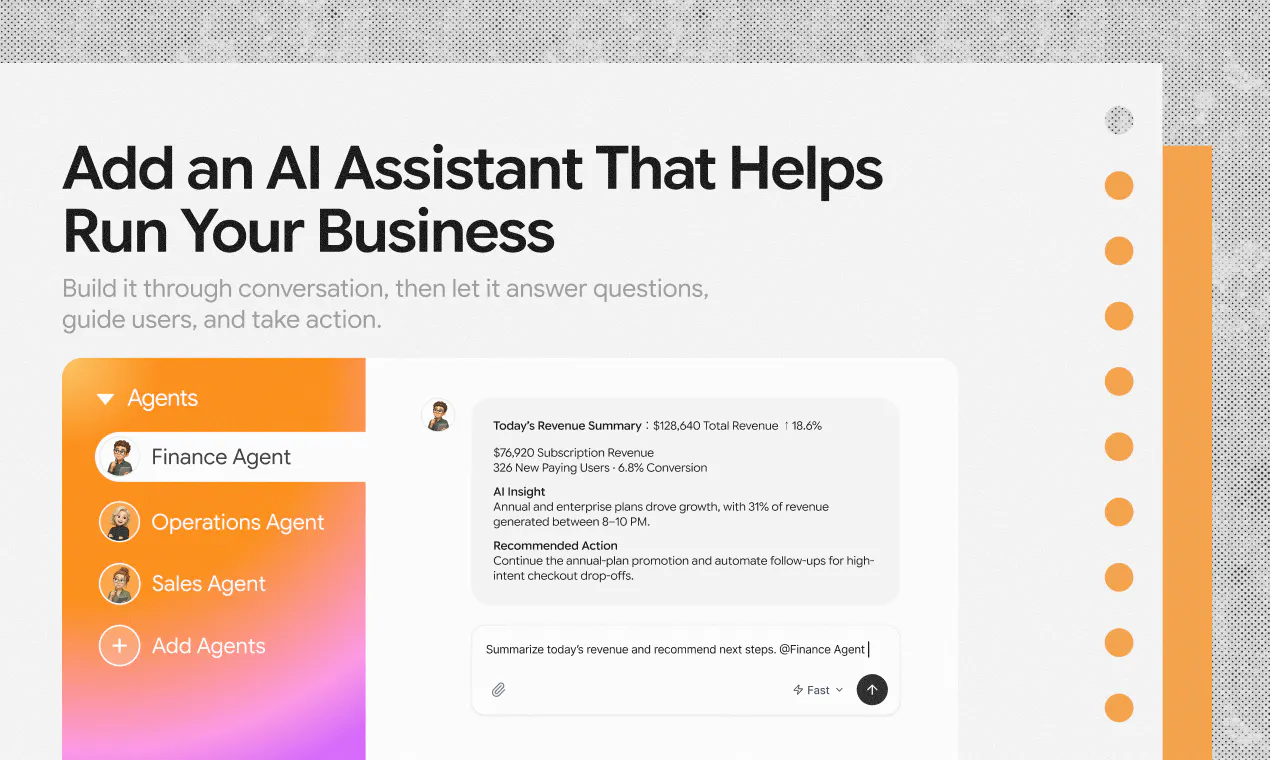
Describe what your agent should do, test it in a live preview, and publish it as a shareable link, a web agent, inside your product, in Slack or Lark, or through an SDK or embed. Enter handles the models, knowledge, tools, deployment, versioning, and infrastructure behind it. The goal isn’t another chatbot or one-off demo. It’s to turn recurring work into agents that can be deployed, maintained, and improved over time.
What excites us most is the shift from AI as a chat window to AI as an operating layer. And because apps and agents are built on the same platform, AI can become part of how a product works from day one—not something added afterward. Our belief is simple: people should spend more time on judgment, creativity, and deciding what to build—and less time repeating the work required to make it happen.
We still have a long roadmap ahead, and we’d love to hear what you want to build with Enter.
As a small launch gift, the first 300 new Product Hunt users who sign up and try Agent Builder will receive 400 bonus Credits. First come, first served—claim them within seven days 🎉
Hey Product Hunt 👋 I’m part of the team behind Enter Pro.
I worked mainly on shaping the Agent Builder and discussing the backend architecture—especially how agents connect to knowledge and tools, get deployed and versioned, and evolve beyond one-off chatbot demos into reliable workflows.
The part I’m most excited about is having apps and agents built in the same environment, so AI can become part of the product itself rather than something bolted on afterward.
Huge credit to the engineering team for bringing it all to life. What’s the first recurring workflow you’d want to turn into an agent?
Congrats! @eric_zhang25 . I am Leo founder of flaq.ai. It's very interesting to build apps with Enter Pro. Hope that more and more builders can find Enter Pro to help their building jobs.
Having apps and agents in the same product makes sense. AI is more useful when it is part of the workflow, not a separate chat box bolted on later.
Congrats on this launch! Love this product!
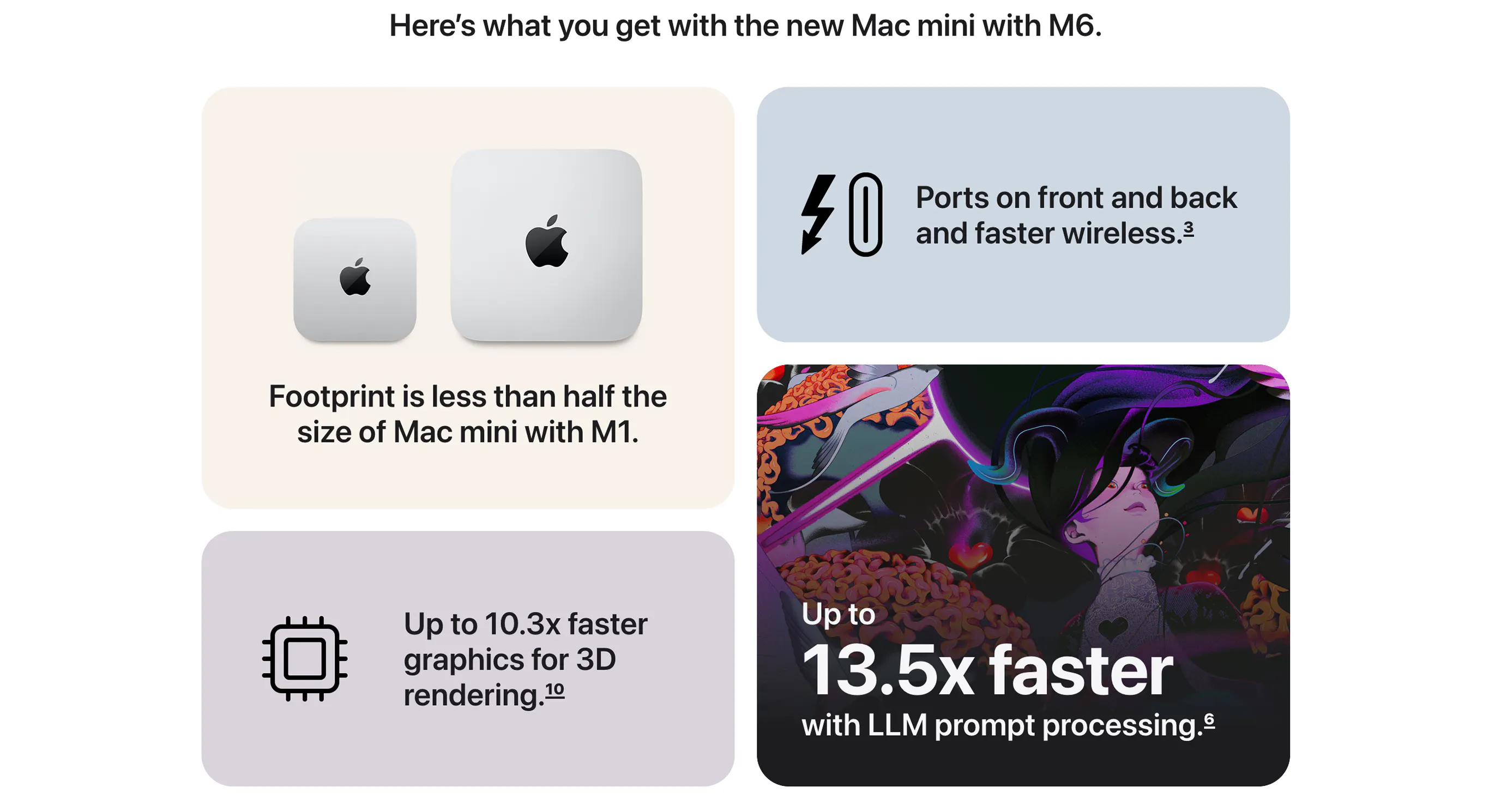

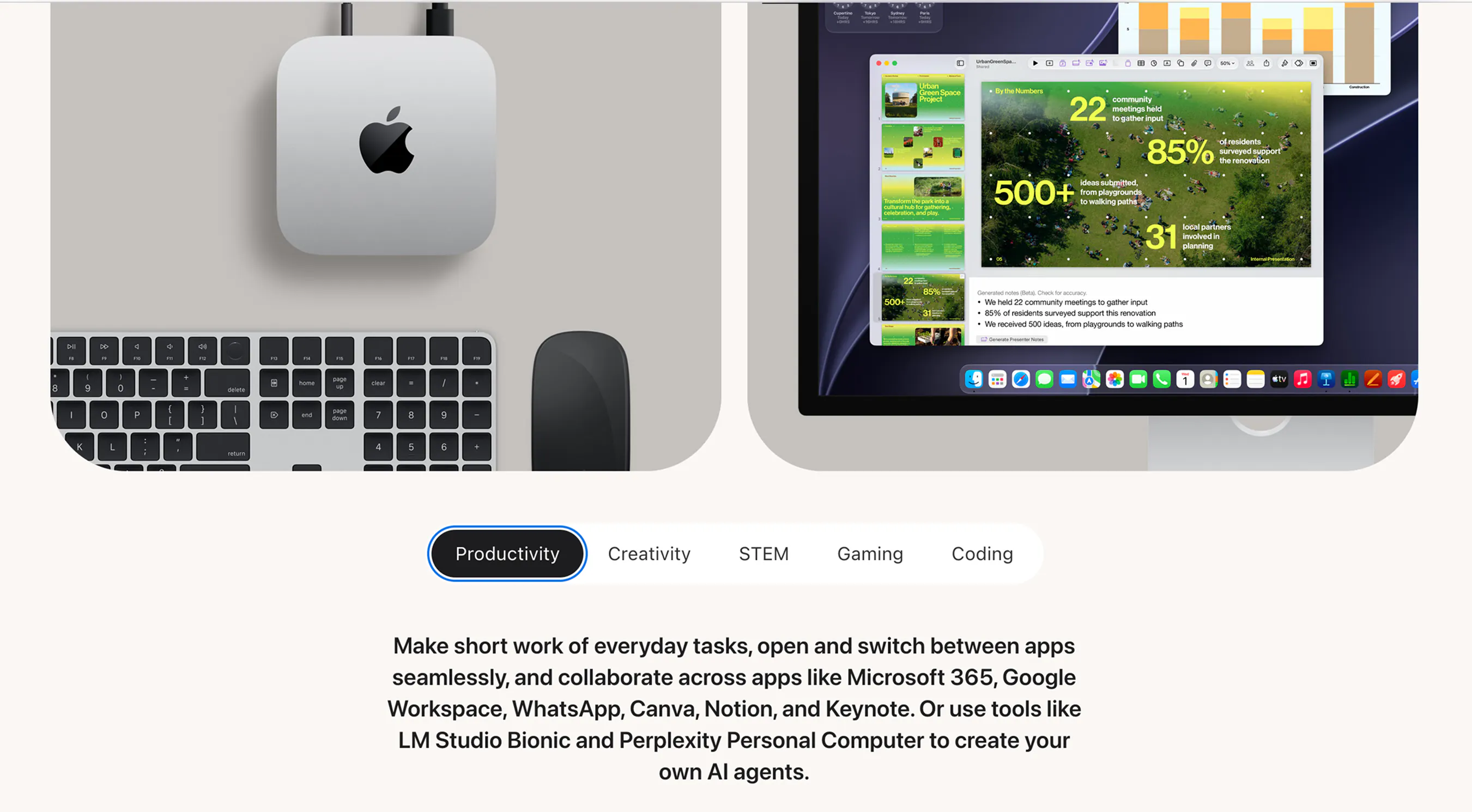
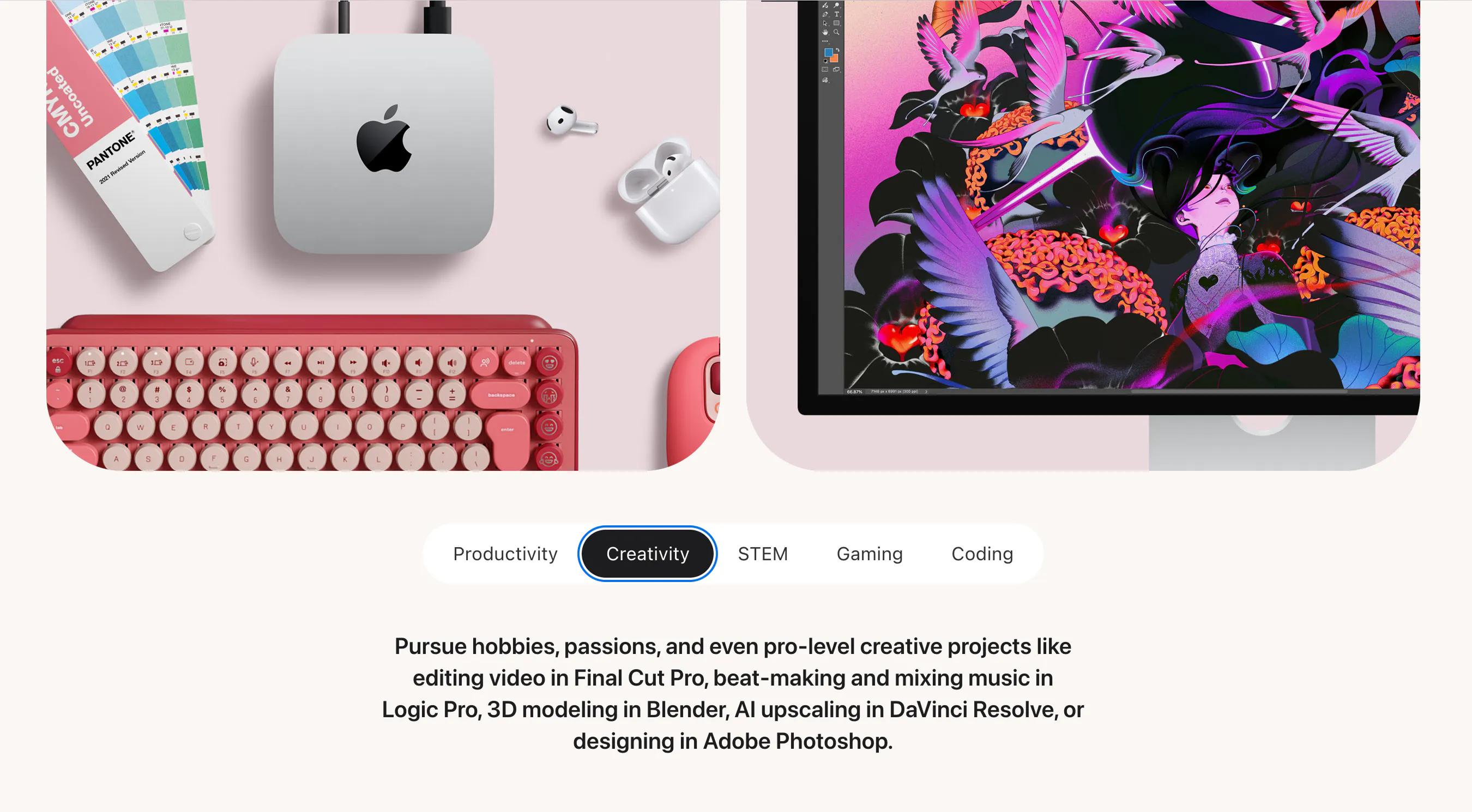
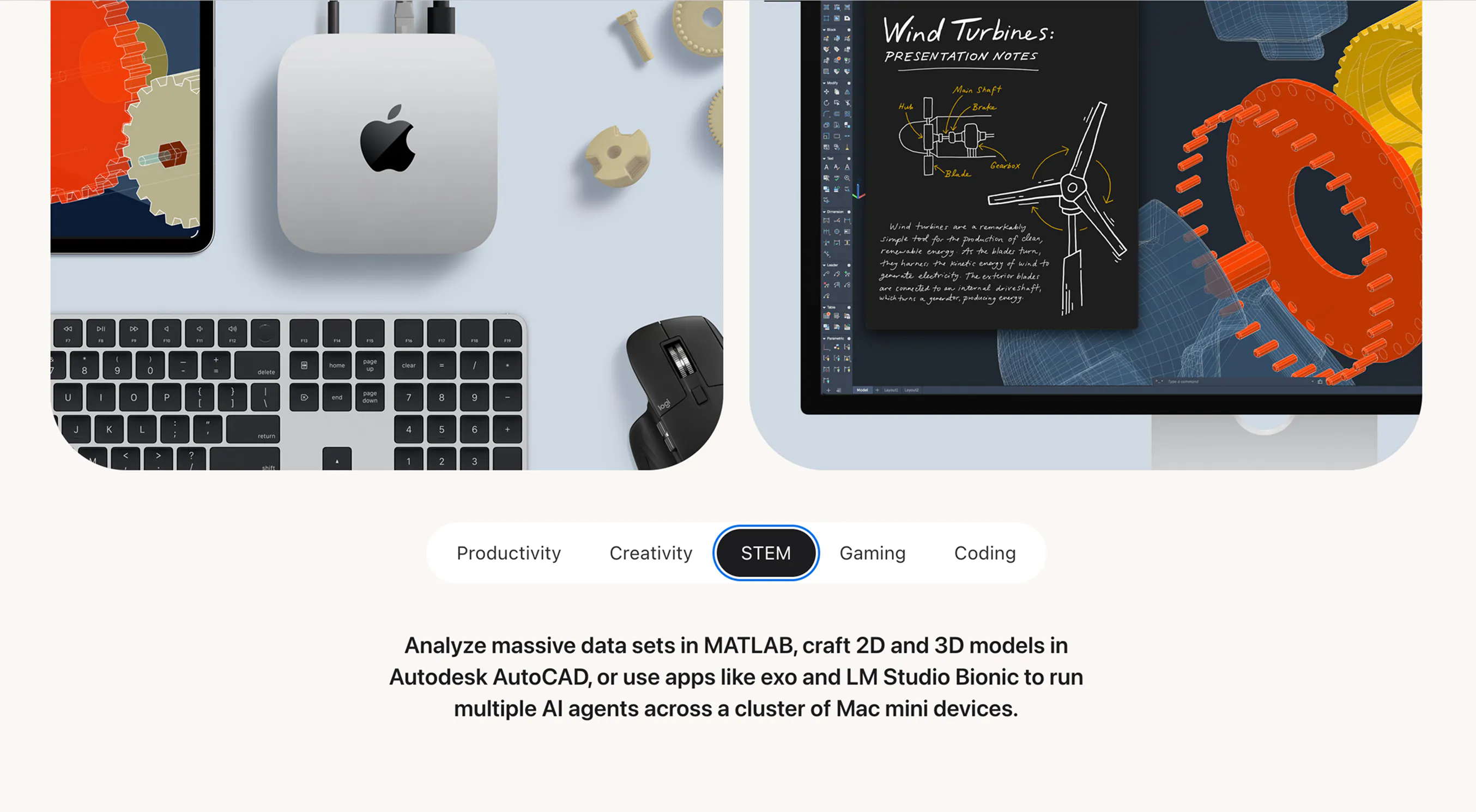
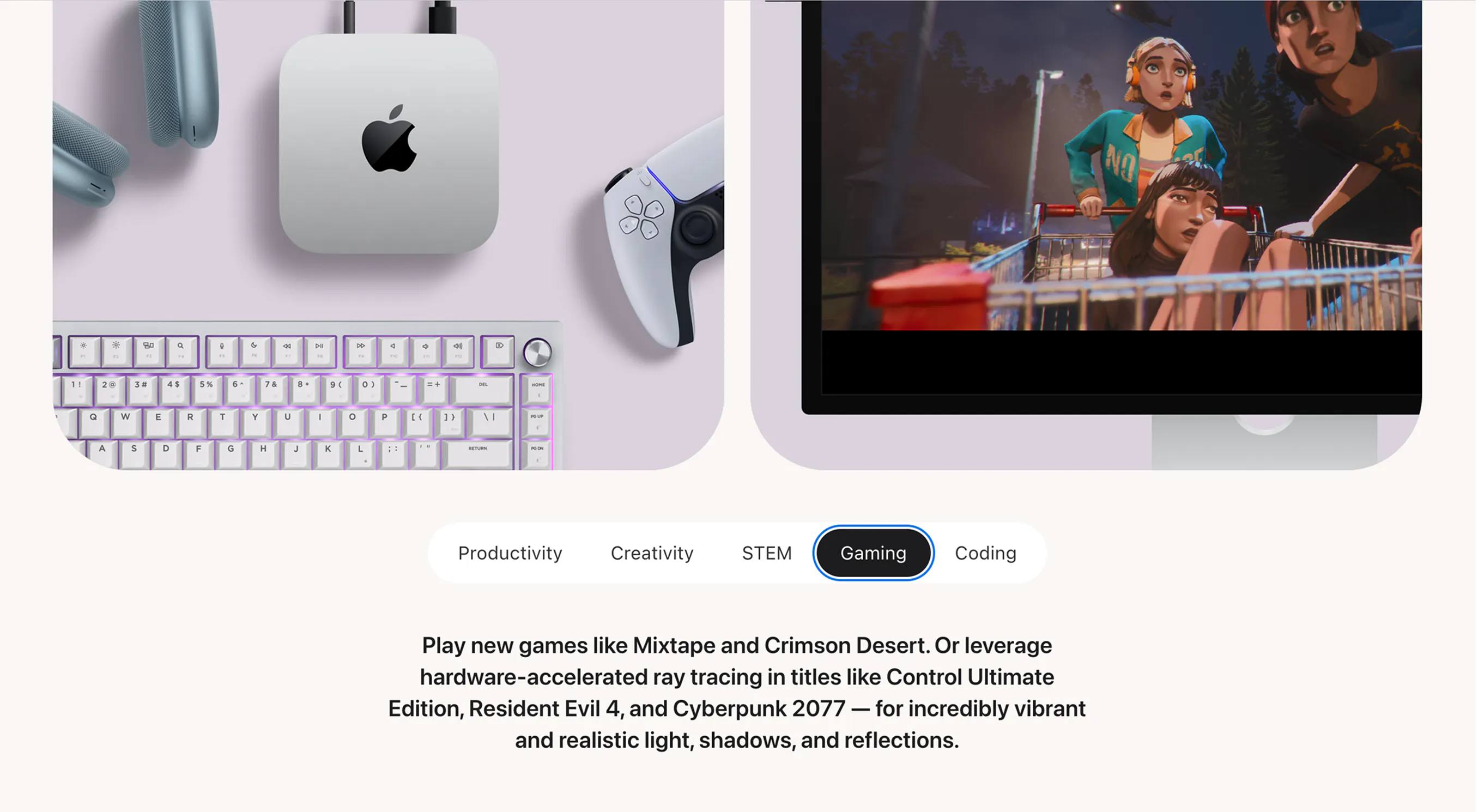
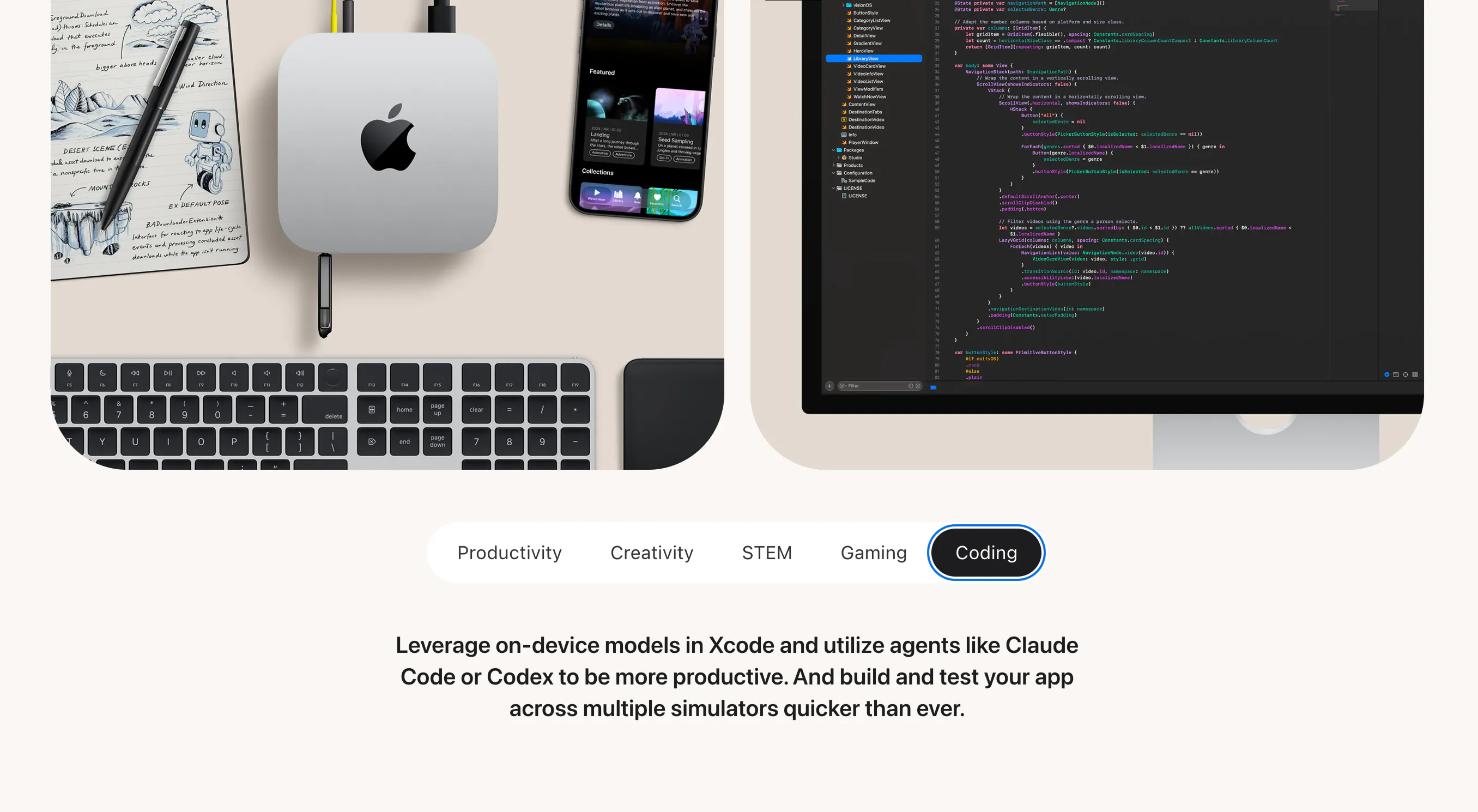
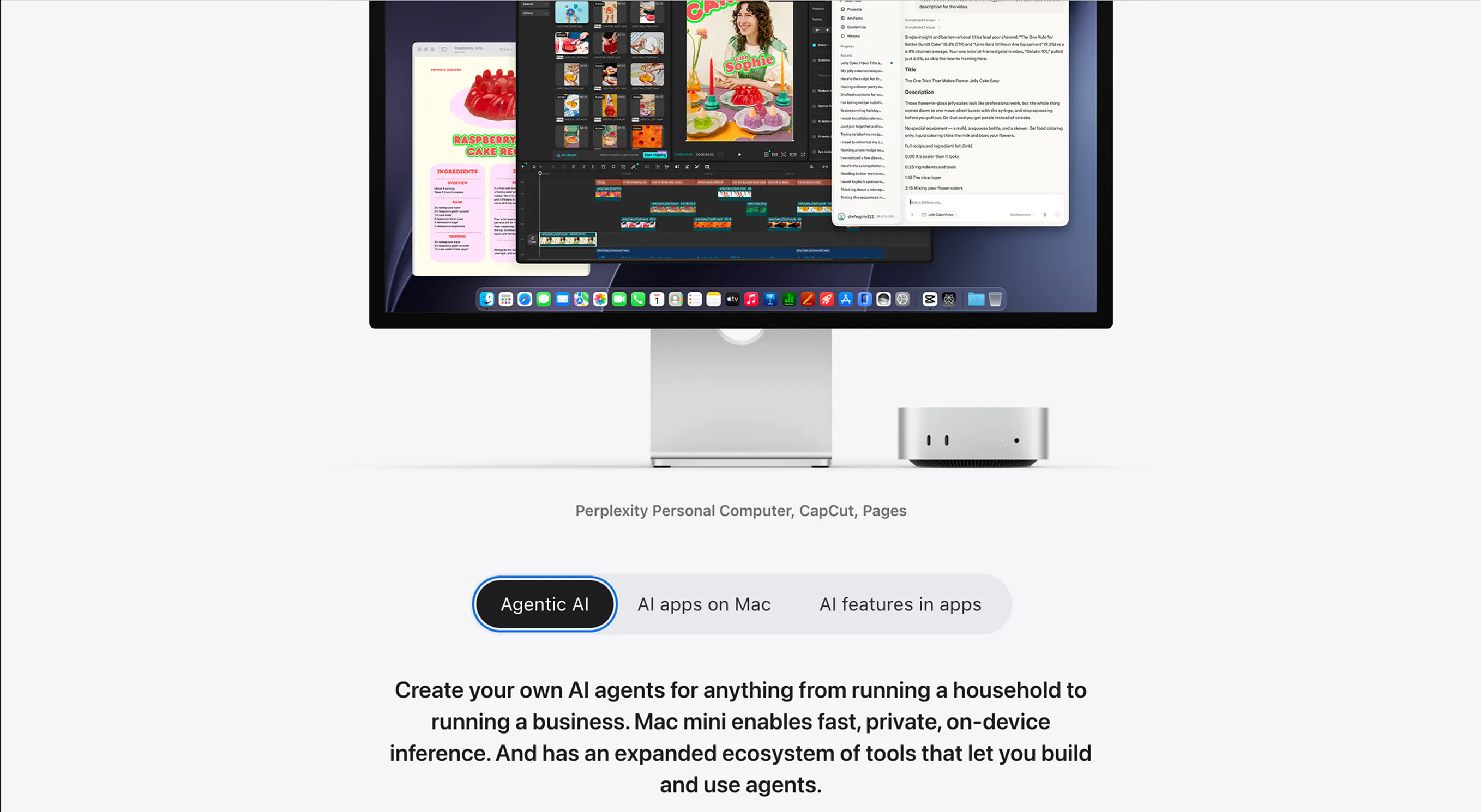
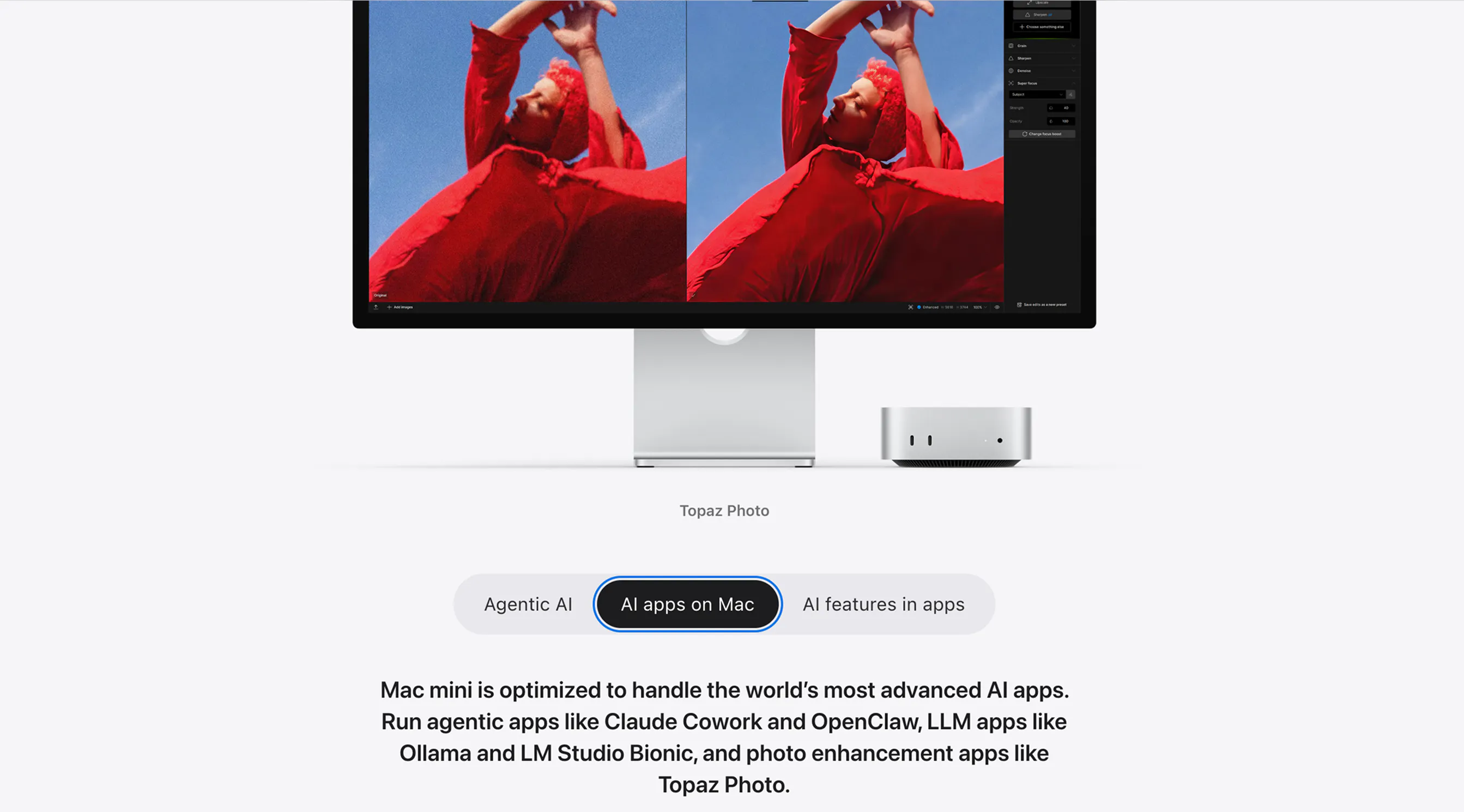
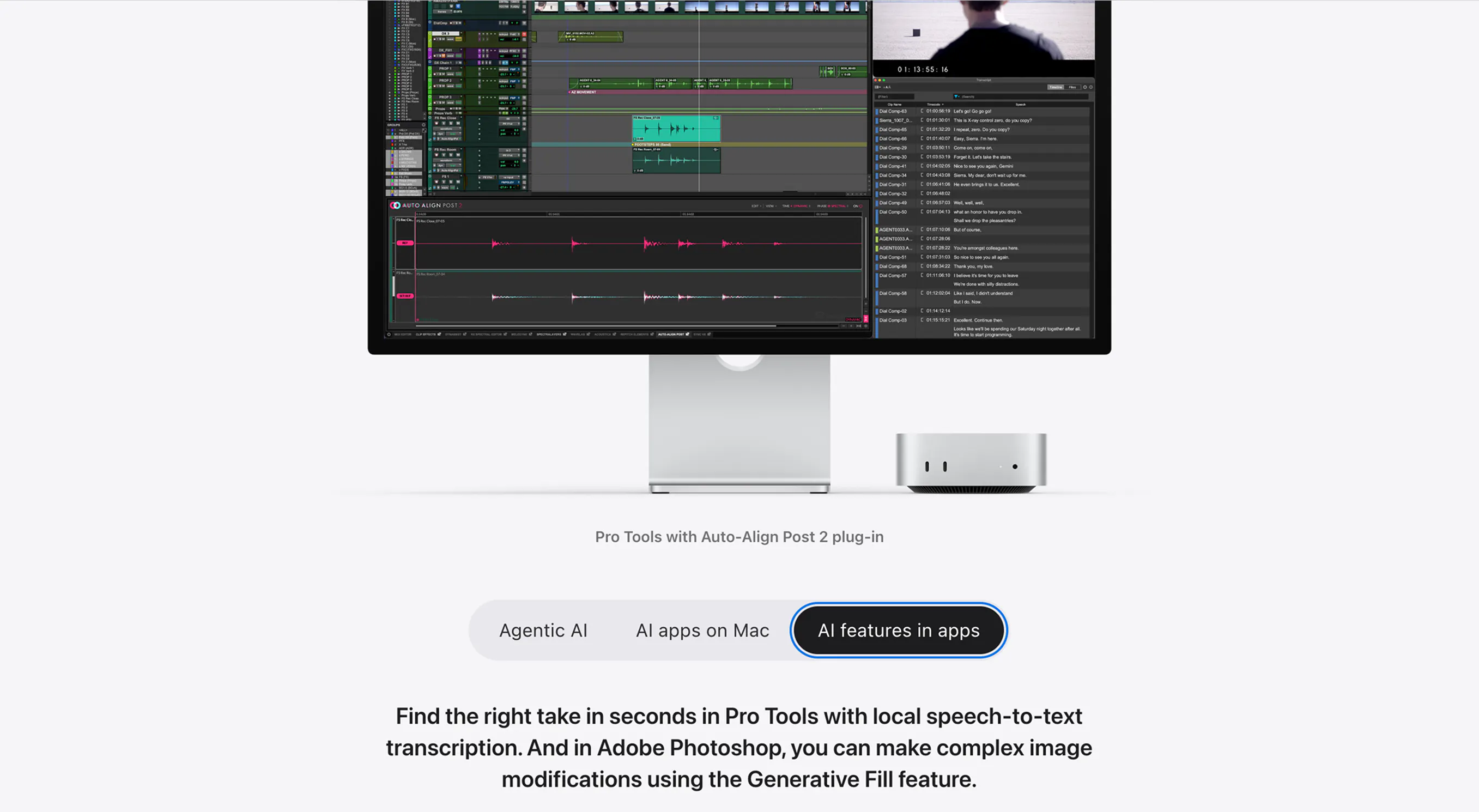
这款 Mac mini 本质上是苹果对“桌面性能焦虑”的一次精准收割。M6 与 M5 Pro 的堆料确实亮眼,但“5 英寸”的物理限制决定了散热与功耗墙,所谓“本地 AI 模型”在 64GB 内存封顶下注定只是入门级玩具,而非训练级工具。投票数仅 114,评论几乎无负面却也无深度讨论,说明其受众是沉默的既得利益者——苹果生态内刚需用户,而非理性决策的技术买家。真正值得警惕的是,苹果正把“性能”与“体积”做成营销遮羞布,回避了用户对内存可扩展性、接口丰富度等实际生产力痛点的追问。这款产品适合“需要第二台安静开发机”的独立开发者,但若你指望它替代工作站,请先确认你的模型权重不超过 40GB。一句话:苹果用芯片迭代掩盖了产品线的创新停滞,而评论区只敢鼓掌、不敢提问的生态氛围,才是比硬件更值得担忧的东西。
Tiny footprint, serious power. @anushanath
Does it go beyond 64gb ram?
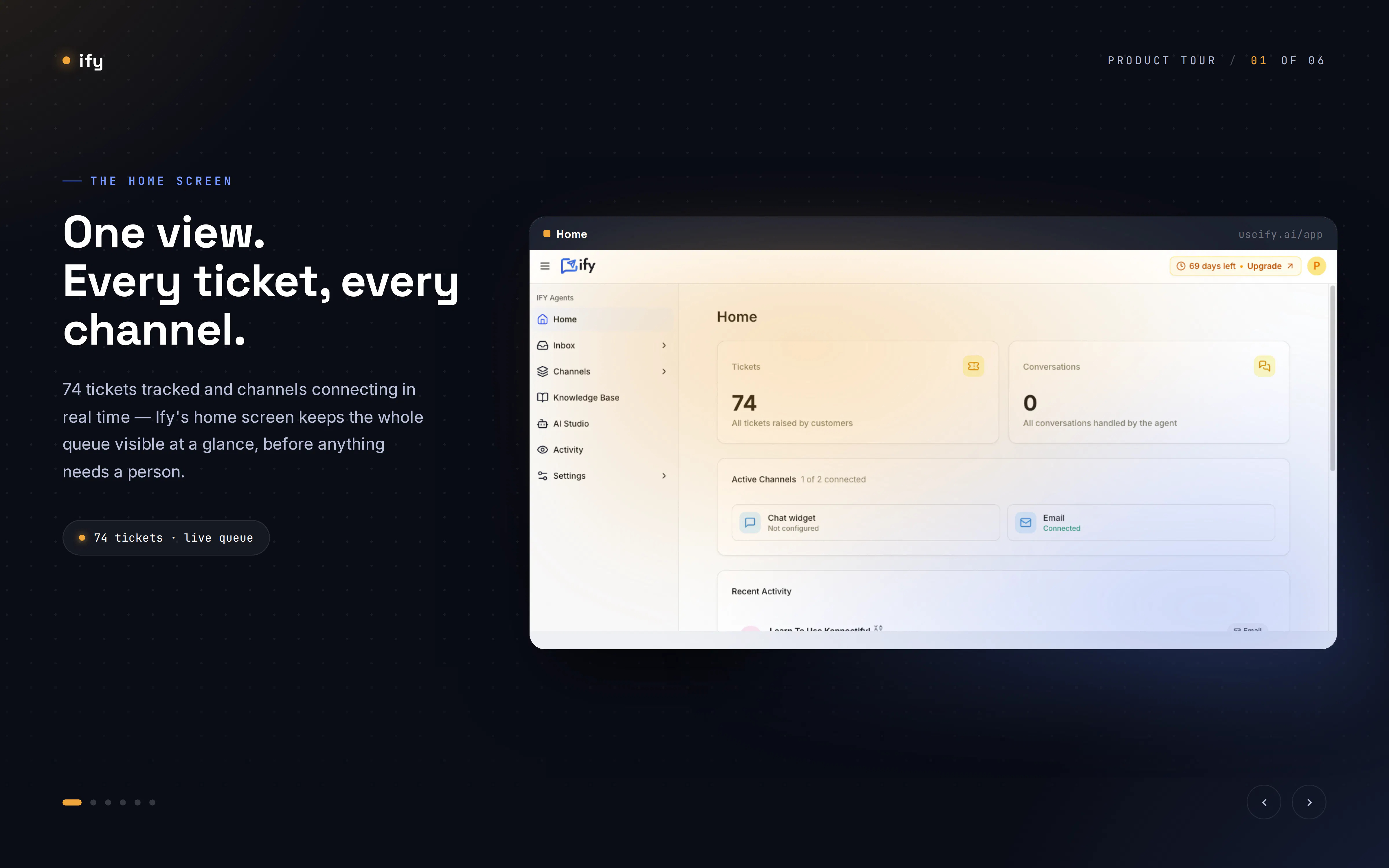
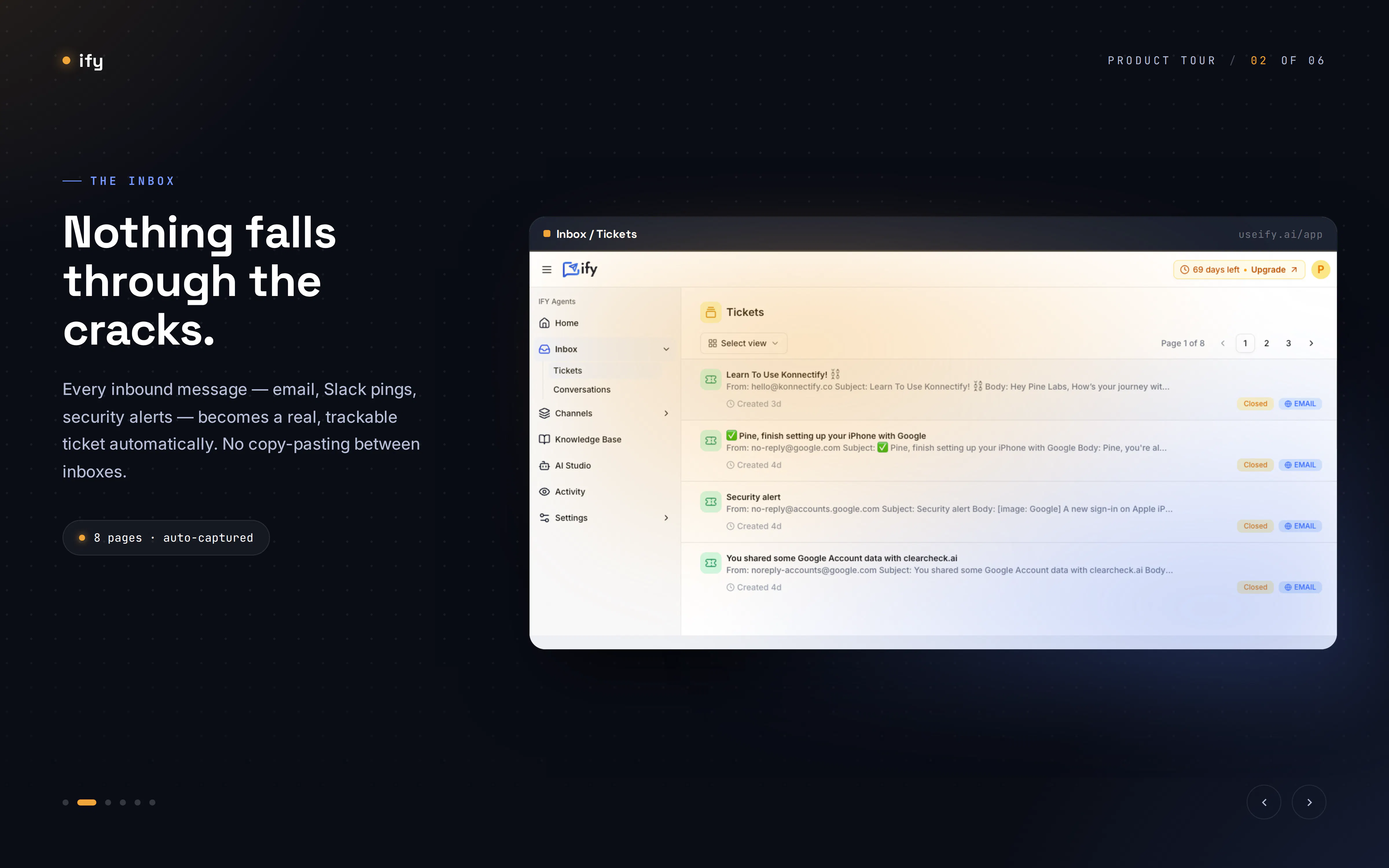
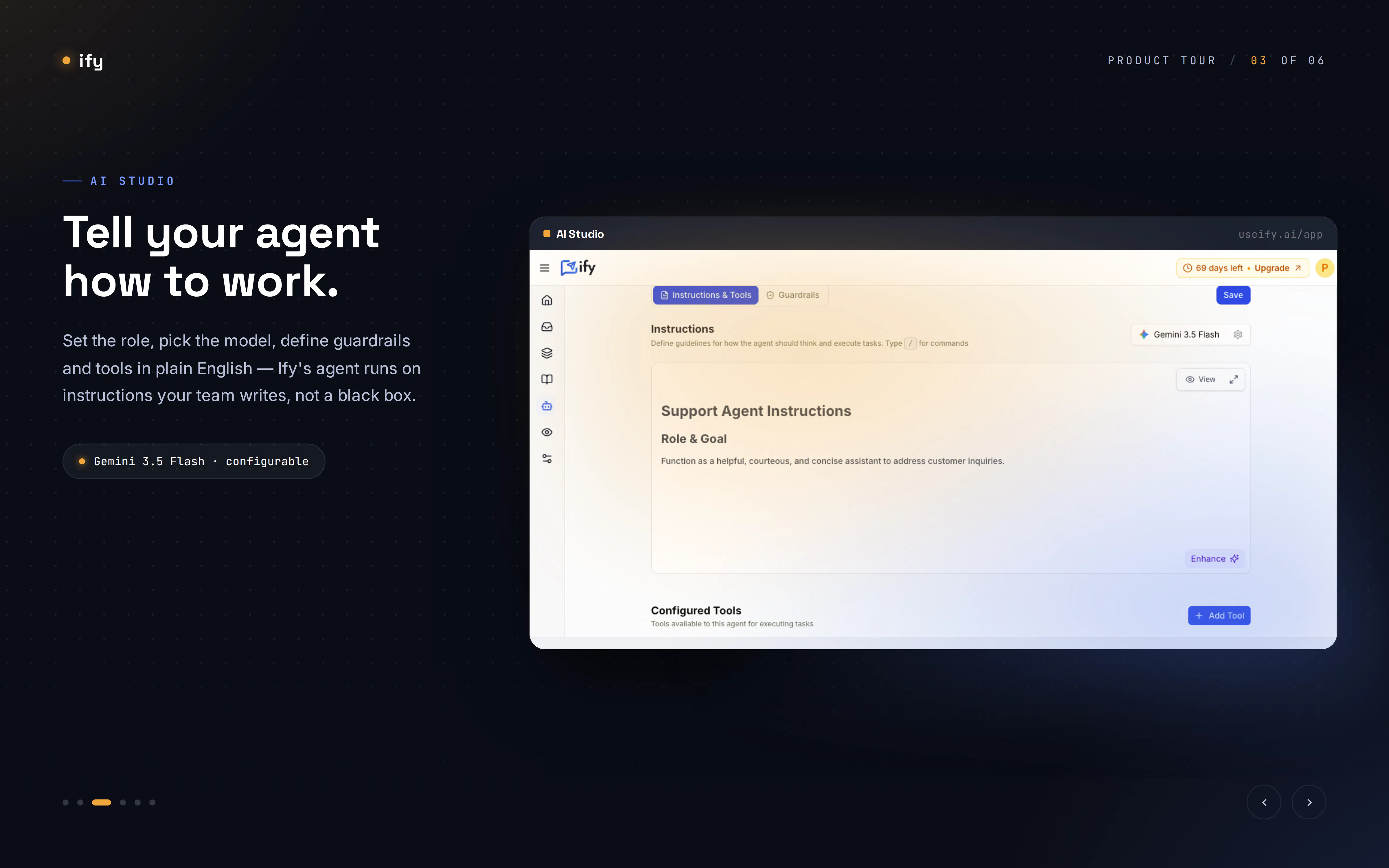
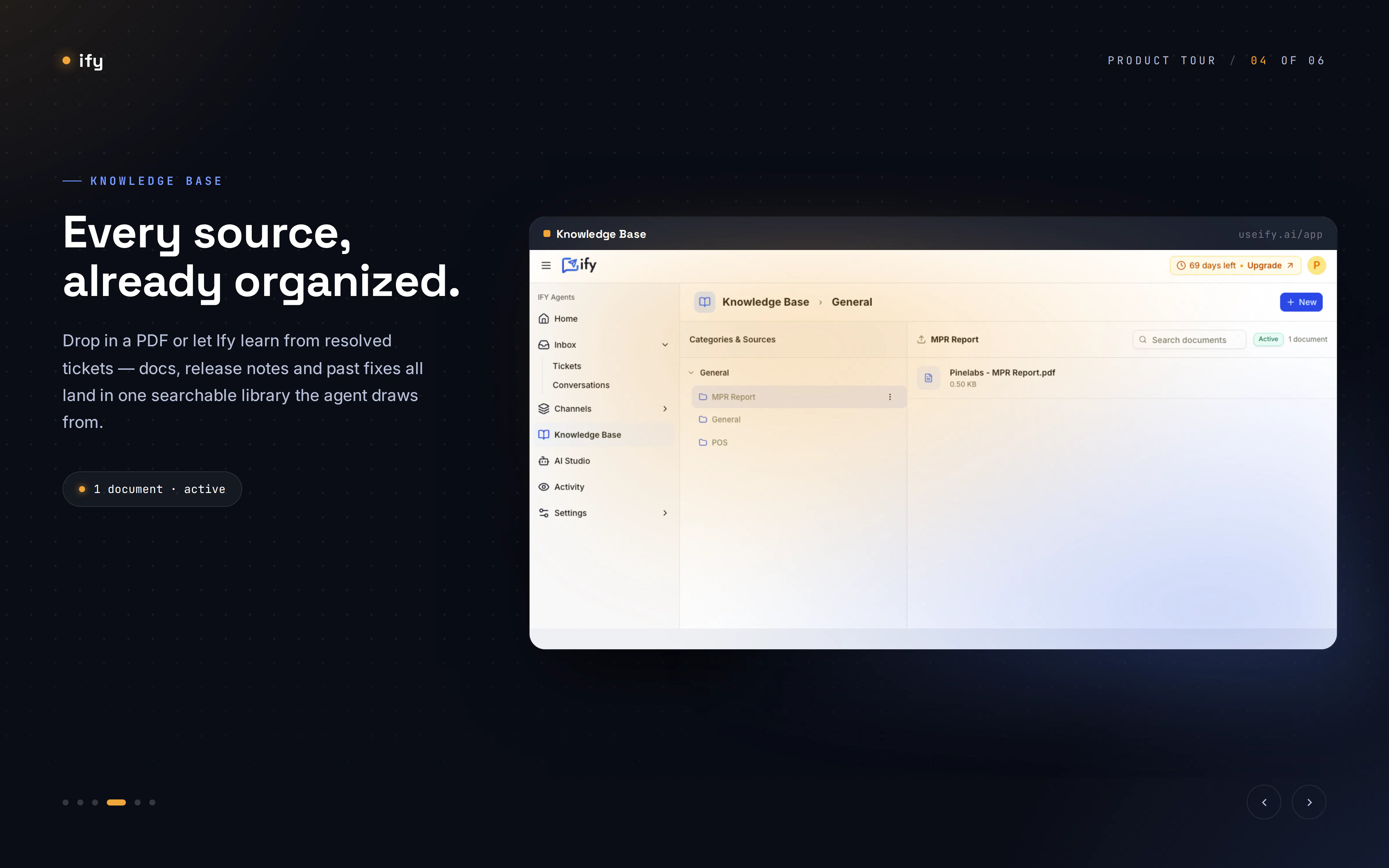
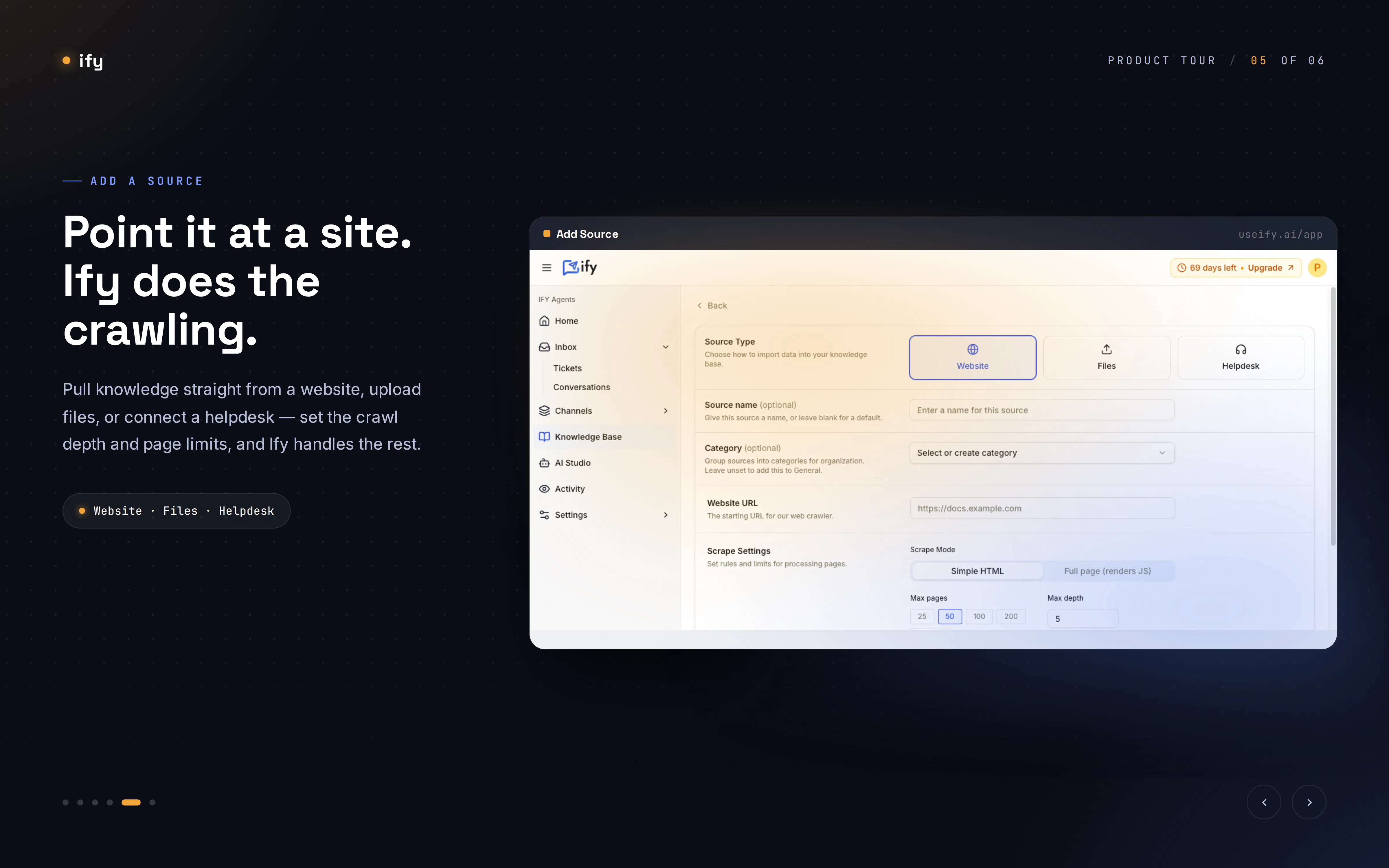
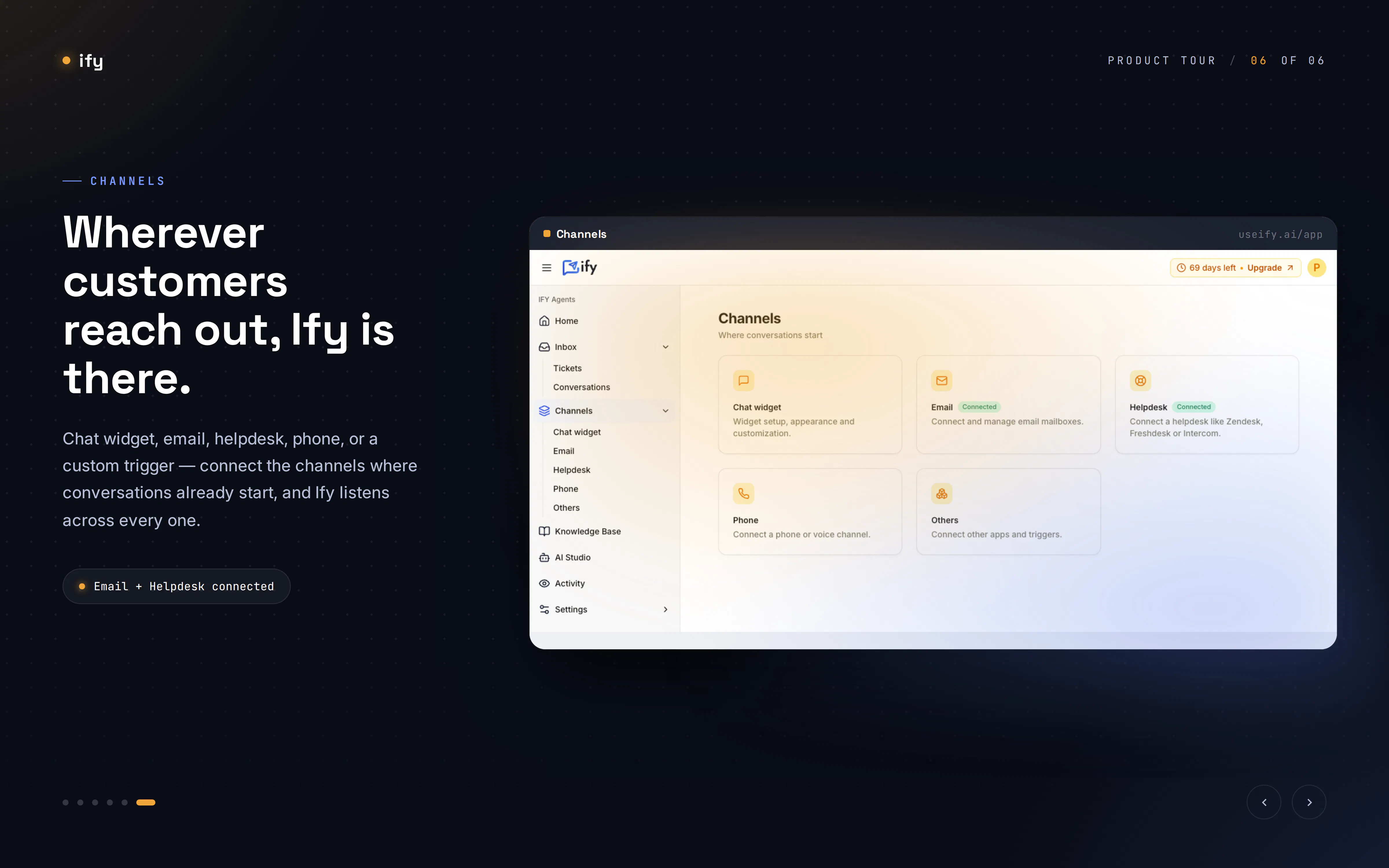
ify踩准了AI客服落地中最被低估的阻碍——不是模型能力,而是企业知识资产的“非结构化”状态。绝大多数竞品(如Intercom Fin)仍假设你拥有一套像样的帮助中心文档,但现实是,真正的“部落知识”埋藏在已解决工单、Slack碎片和发版说明中。ify的聪明之处在于,它不试图做更好的搜索引擎,而是主动把脏数据加工成结构化SOP,这实际上是把“数据工程”打包成产品卖给了不愿投入人力做知识管理的SMB。
从评论反馈看,核心用户真正买单的是“Actions”能力——不满足于“知道答案”,而是要“直接解决”。连接数百个应用执行退款、改订阅,意味着ify从“建议者”跨越到了“执行者”,这使其从一个SaaS工具滑向了轻量级业务流程自动化平台(类似Workato但更聚焦服务场景)。按“解决量”计费是更契合AI成本结构的商业模式,但也会让用户对“什么算一次解决”产生投机性博弈。
隐忧在于:跨多渠道、跨知识源的抽取质量高度依赖供应商的工程能力,而“历史工单互相矛盾时如何决断”这类问题仍未给出令人信服的机制说明。另外,当行动层越来越重,ify面临的对手将不再是Fin,而是Zendesk内置的Agent Copilot和HubSpot的Breeze,后者拥有更深的原生数据优势。不过眼下,对于“明知文档烂但不想迁移”的存量客服团队而言,ify是当下最务实、最低风险的AI入口。
Hey Product Hunt 👋,
We built Ify because every AI support tool we looked at asked for the same trade: rip out your helpdesk, spend weeks migrating, then maybe get an AI agent that's actually useful.
Ify skips that. It works directly on top of Freshdesk, Zendesk, Salesforce, or HubSpot — so you keep what you have and just add the part that resolves tickets. If you don't have a helpdesk yet, it can run standalone too.
The thing we spent the most time on isn't the chat widget or the automations — it's the knowledge base. Almost every team we talked to had messy or incomplete docs, and that's usually what kills an AI support rollout before it starts. So Ify builds its own: it scrapes your site and docs, turns release notes and past resolved tickets into SOPs, and keeps learning from what your team resolves manually.
We're in private beta right now, working closely with early SMB and mid-market support teams to get this right before we open it up further. If you're curious how it'd fit with your current stack, or you've hit the "our docs aren't good enough for AI" wall yourself, I'd love to hear about it in the comments.
Would really appreciate any feedback, questions, or just tell us what you'd want an AI support agent to actually do.
Regards,
Karthik - Founder @ ify
Hey everyone! 👋
Sarnith here, CTO & Co-founder at @ify.
Adding a quick note on the technical side of why we built ify this way:
When we set out to build this, one thing became clear very quickly:
AI is only as good as the context behind it — and support documentation is almost never perfect.
A lot of a team’s real tribal knowledge doesn’t live in pristine docs. It’s buried inside resolved tickets, Slack threads, release notes, and agent workarounds.
Instead of forcing support teams to clean up or rewrite their documentation before they can use AI, we built ify to continuously map, absorb, and turn that scattered historical context into usable SOPs.
The goal is for the AI to understand not just what the documentation says, but how the support team actually solves problems.
I’d love to hear from the technical and support folks here:
What’s the trickiest support query or workflow you’d still be hesitant to hand off to an AI agent today?
I've sold many similar products over the last decade and this is impressive. Worth checking out for sure.
What’s one feature you built because customers kept asking for it—and what surprised you about how they use it?
Works great and so easy to set up ! Congrats Karthik and team!
Congratulations @karthik_veluswamy1 @irsh1985 @sarnith_kumar @praveen_raj8.
Curious. How does this differ from something like a Fin or so?
Congrats Karthik and team Konnectify- I see where "Ify" comes from! Love the approach of working on top of the existing helpdesk instead of forcing teams to migrate. The bigger insight for me is the knowledge layer, especially turning past resolutions, release notes and messy documentation into something the AI can actually use. That feels like where a lot of support AI implementations succeed or fail. Will this also migrate data from past resolutions?
Wishing you a great launch. Excited to see where you take Ify! 🚀
No per-user pricing makes sense here. If AI is resolving the ticket, I’d rather pay around resolved work — with escalations + AI cost included. Seats are a weird proxy for value now.
Congrats on the launch, @karthik_veluswamy1 and @ify team Not having to switch helpdesks is a breath of fresh air, and letting the AI learn directly from past tickets fixes the biggest headache with messy docs.
what happens if two old tickets have different solutions for the same issue—how does it know which one is right?
@karthik_veluswamy1 @irsh1985 @praveen_raj8 Congratulations, this is amazing that you are solving a problem that most customer support facing teams finds it difficult to solve.
Curious -
1) Does it replace the need to have a knowledge base like notion, confluence or would this be on top of these knowledge base.
2) What do you see as a single source of truth from a knowledge base perspective.
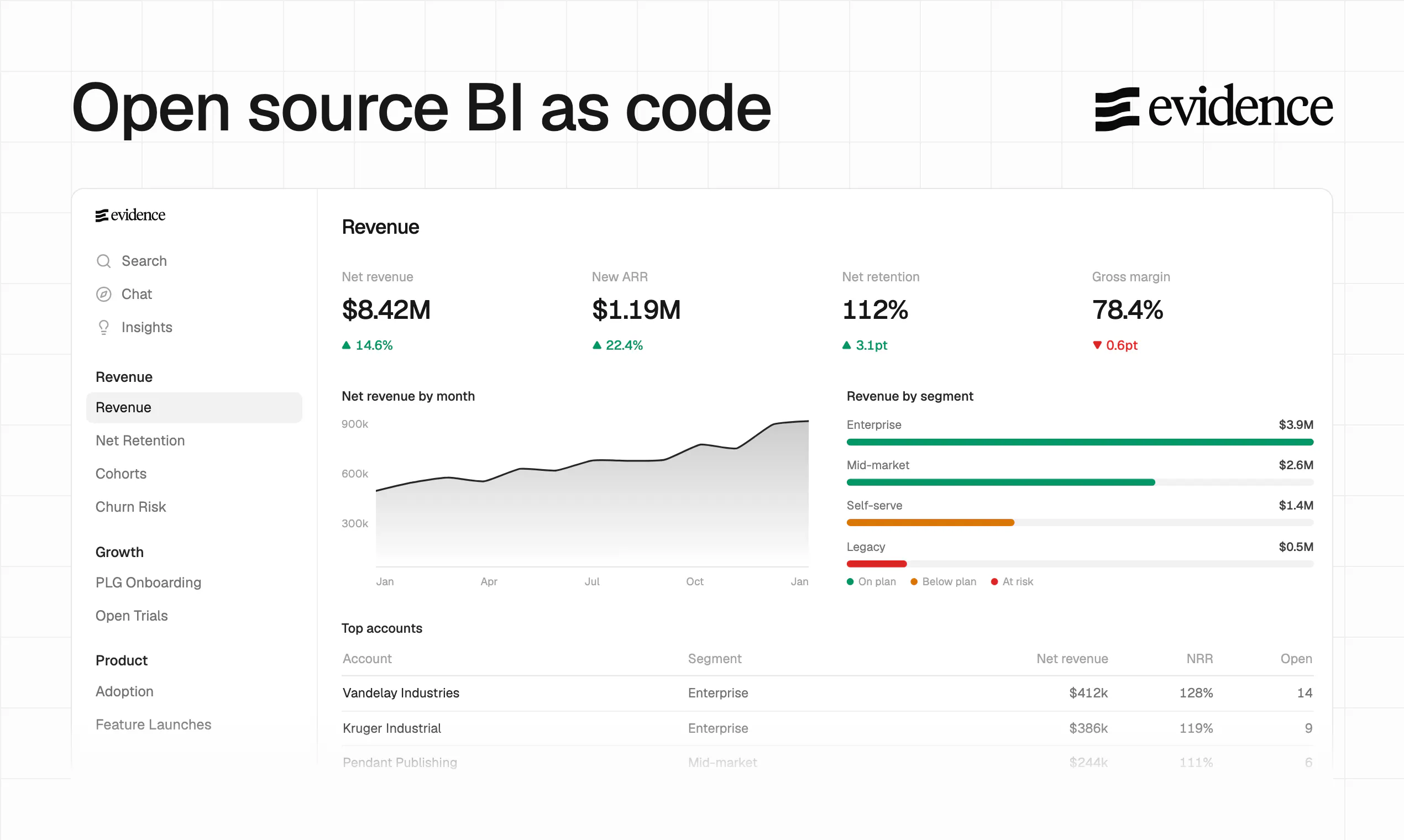
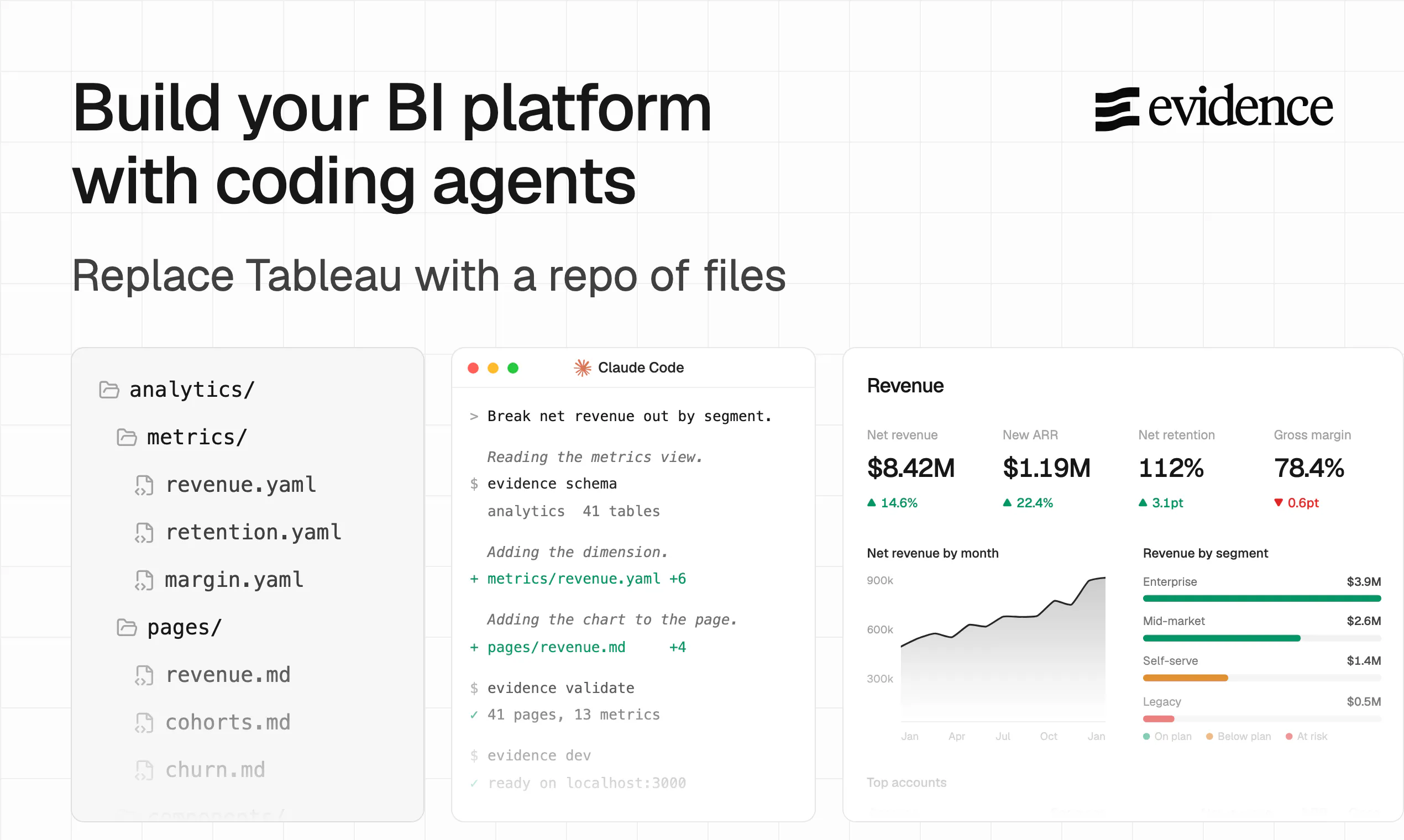
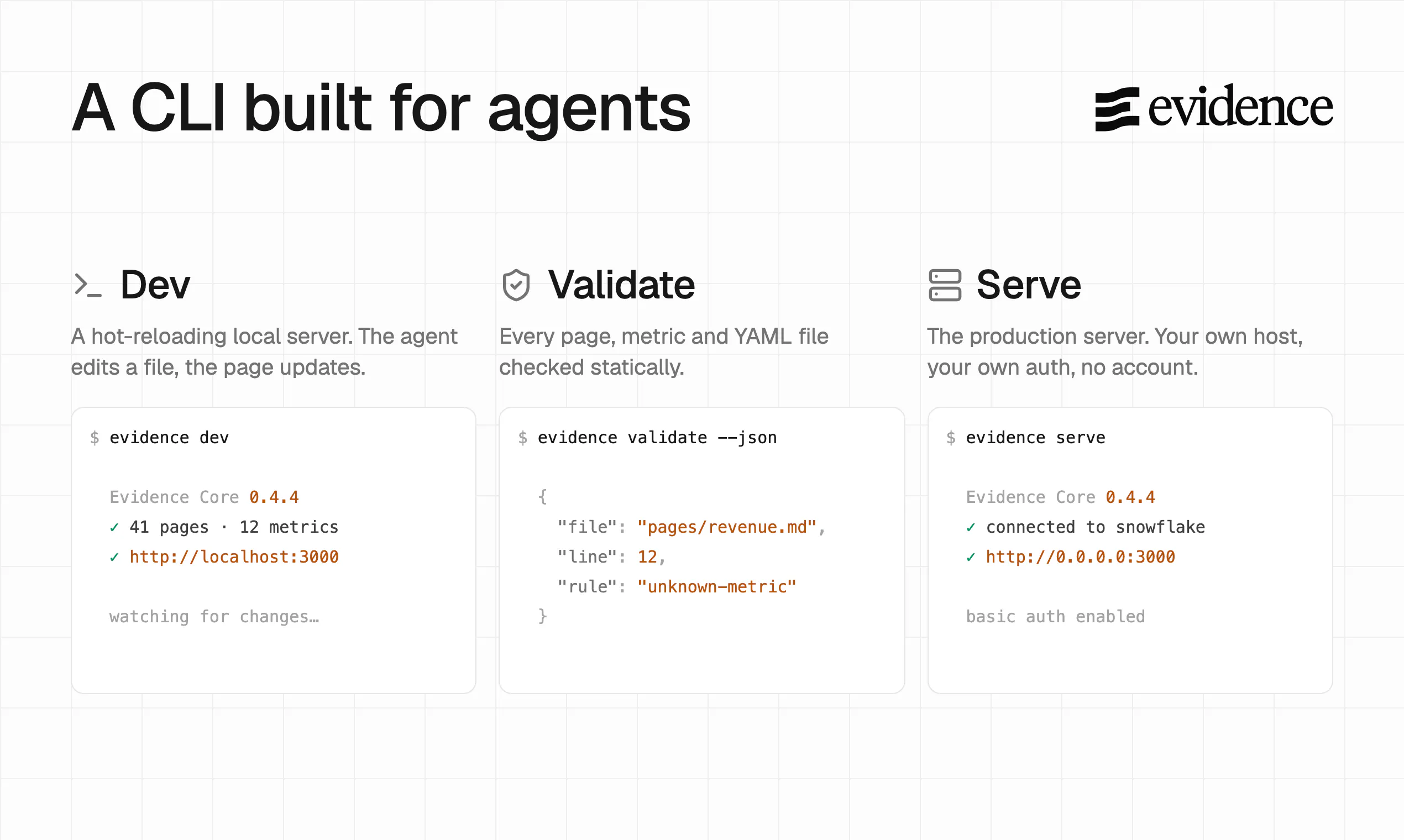
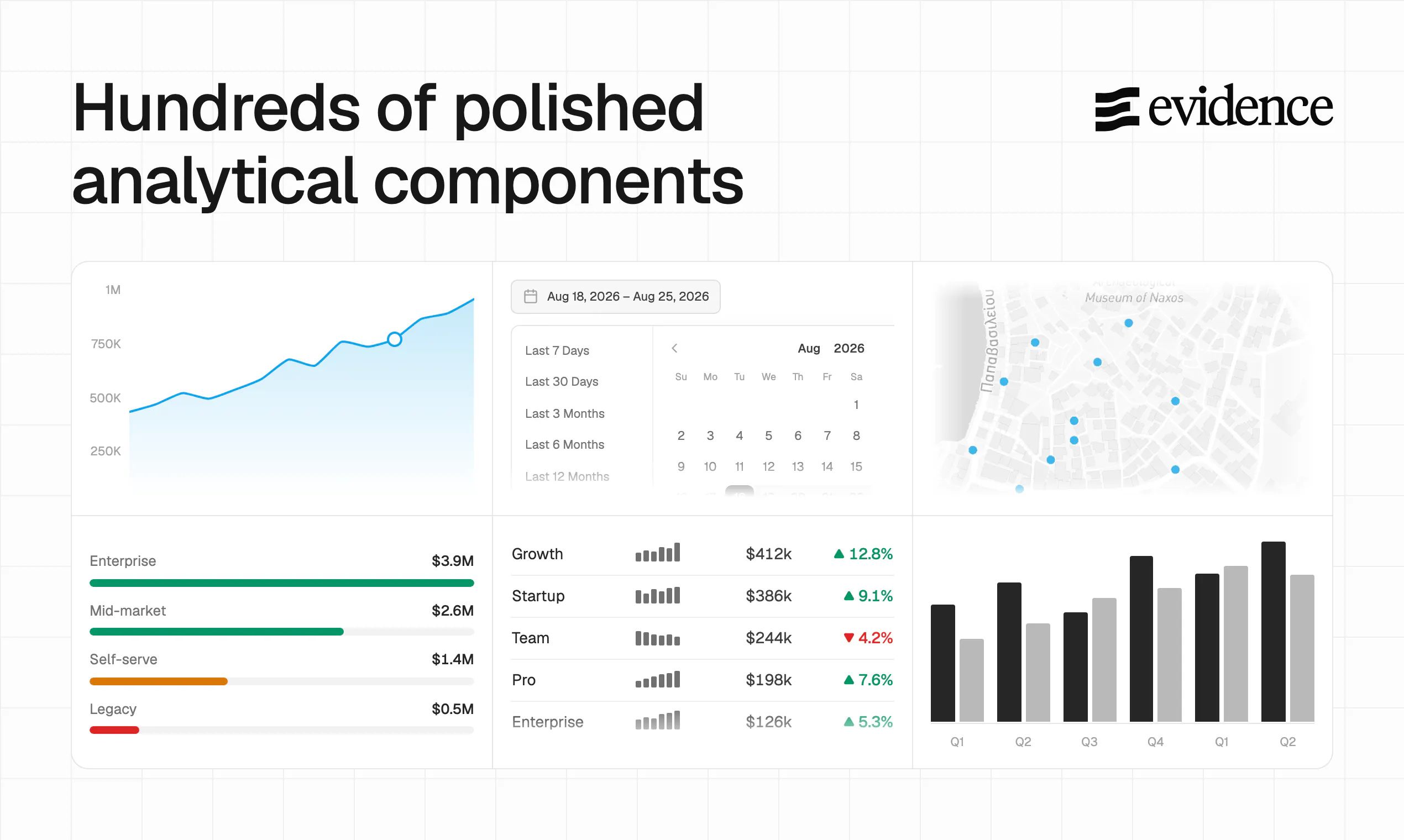
Evidence Core 表面上是“开源BI框架”,实则是对BI工具形态的一次“去工具化”解构。它不提供拖拽界面,而是将看板、指标、主题降维成纯文本仓库,这等于把BI从“产品”变为“代码资产”。此举真正的价值不在于免费,而在于它精准踩中了两个趋势:一是AI编码代理的落地需要结构化、可验证的“代码即对象”环境,Evidence Core 恰好把BI变成了AI最容易生成和迭代的仓库结构,让“AI写报表”从Demo走向生产;二是企业数据团队苦于传统BI(如Tableau、Looker)的黑盒逻辑和供应商锁定,基于Git的版本化指标定义,直击审计、协作和复用的核心痛点。
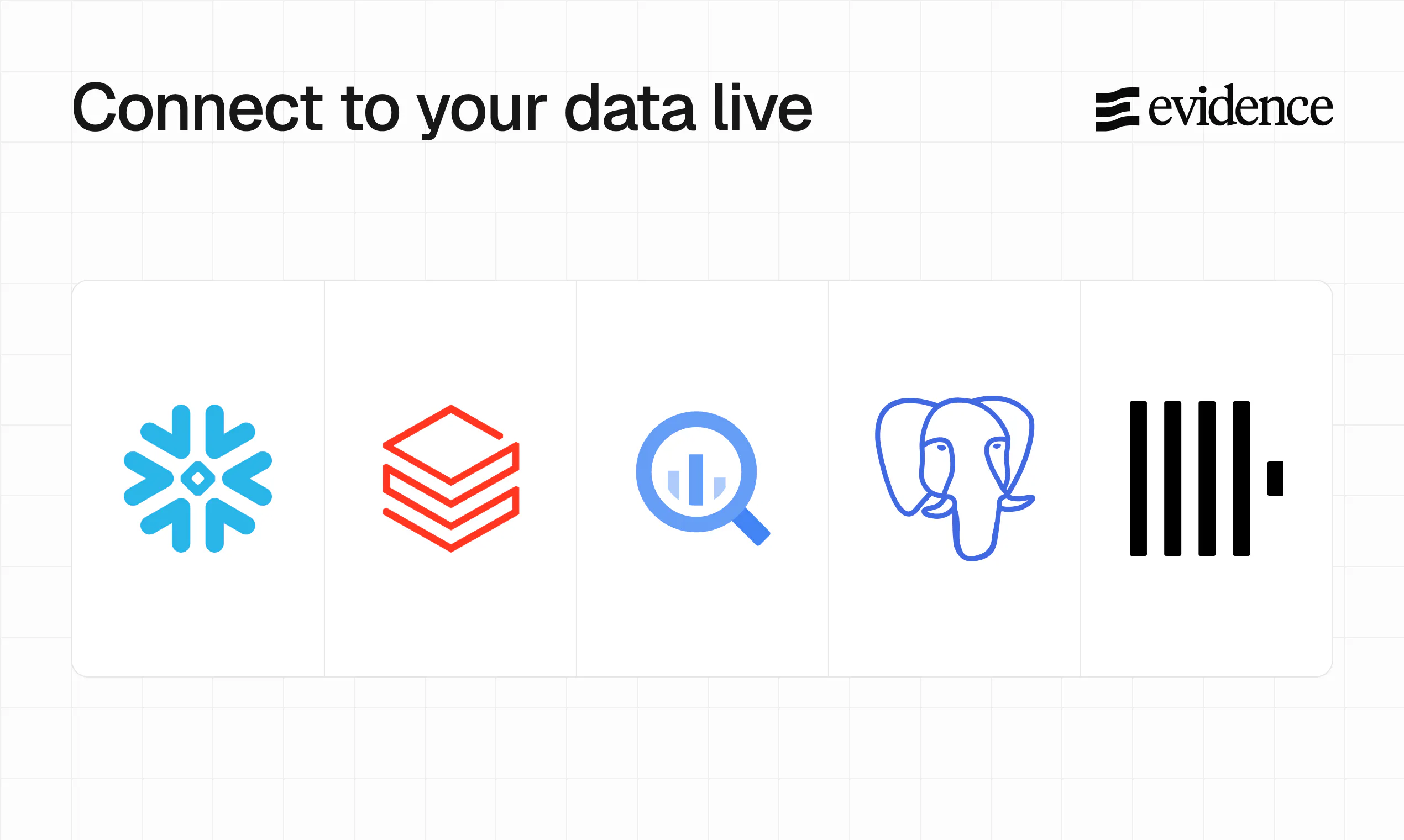
但必须泼冷水:开源Core本质是商业版Studio的“引流款”。目前111票的社区热度,说明它尚处于早期开发者阶段,真正的非技术业务用户会被命令行与Markdown门槛拒之门外。评论中关于ClickHouse连接速度的追问,恰好暴露了性能优化和连接器生态的成熟度存疑。更关键的是,AI代理目前能否高质量完成UI布局仍无实证,官方回复只是“Take a look”的引导,缺乏真实案例背书。如果下一代BI的入口是AI,那么门槛在于如何让AI理解业务语义,而非仅仅生成一堆JSON。Evidence Core 的野心值得肯定,但它需要更扎实的基准测试、企业级权限模型,以及杀手级代理工作流,才能避免成为“极客的玩具,而非企业的基建”。
Hey Product Hunt, Adam here, co-founder of Evidence.
Evidence started as an open-source project. Over the last year, however, most of our work has gone into our commercial product, Evidence Studio.
Today we’re open-sourcing the entire framework that powers Evidence Studio. We’re calling it Evidence Core.
Evidence Core enables you to define your business intelligence platform as code, including metrics, dashboards and reports, and host it anywhere you'd like.
Evidence Core comes with a powerful new CLI designed to make it easy for coding agents to work productively with the tool.
We think it’s the best way to get coding agents to build and maintain your analytics, and we can't wait to see what you (and your agents) build with it!
Yoo this is very impressive. This is something I wanted for a while. I would use for Clickhouse connection is the one I would use. I will try to use for my AI internal apps for a large business. We need alot of data, FAST.
Incredible news. I have recommended the open source version no less that a dozen times over the past couple of years. I look forward to exploring this new release.




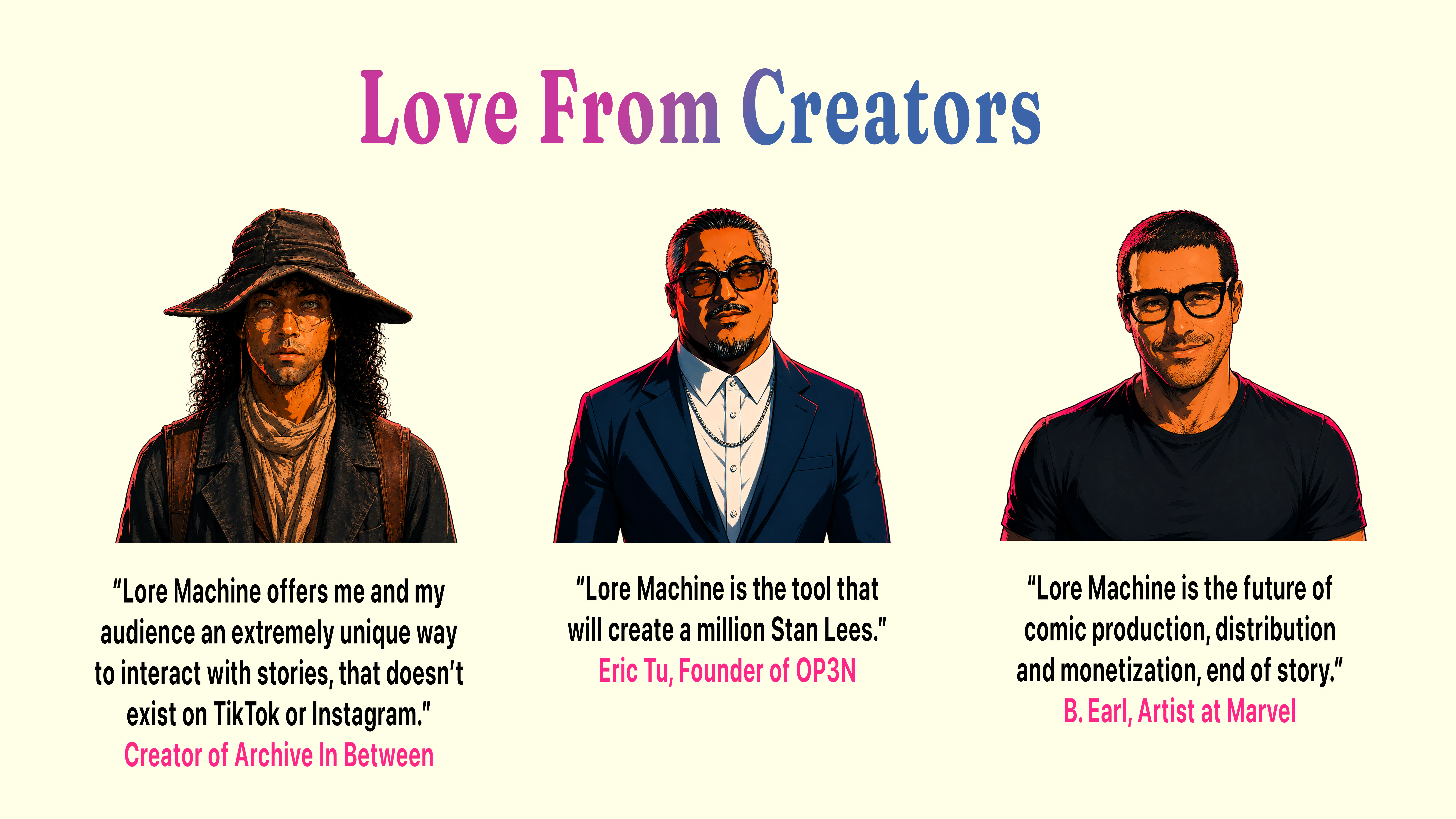


Lore Machine的野心不止于做“Substack for World Builders”,它试图在短视频平台割裂叙事与IP完整性的废墟上,重建一套“连续宇宙”的基建。其核心价值不在于AI生图技术本身——那只是降低门槛的柴火,而在于重新定义了内容单元:不是单条视频,而是有角色、有物理规则、可序列化、可订阅的“世界”。这精准击中了流媒体时代UGC的致命伤:爆款碎片化,IP无法沉淀。创始人自曝的转型故事(从剧本故事板到韩系连载漫画)恰恰证明了产品锚点是用户行为而非预设功能,这种敏捷性难能可贵。但风险同样明显:Web3叙事(90%分成、IP自有)此前已被证伪多次,创作者端的分发冷启动依然依赖外部平台,且“世界”的规模感是否会重蹈Medium付费墙式的曲高和寡?乐观来看,它可能培育出一批介于漫画与互动小说之间的新物种叙事;悲观来看,它可能成为又一个高颜值的内容仓库。真正考验商业化闭环的,不是600万次浏览的噱头,而是后续有多少个世界能持续连载并让粉丝掏钱超过三个月。即便有Marvel编剧背书,工艺主义对抗算法快餐的叙事,仍需更硬的留存数据来支撑。
Hey Product Hunt 🖖
I'm Thobes, founder of Lore Machine. I spent 17 years at VICE, where I founded Motherboard and ran digital publishing.
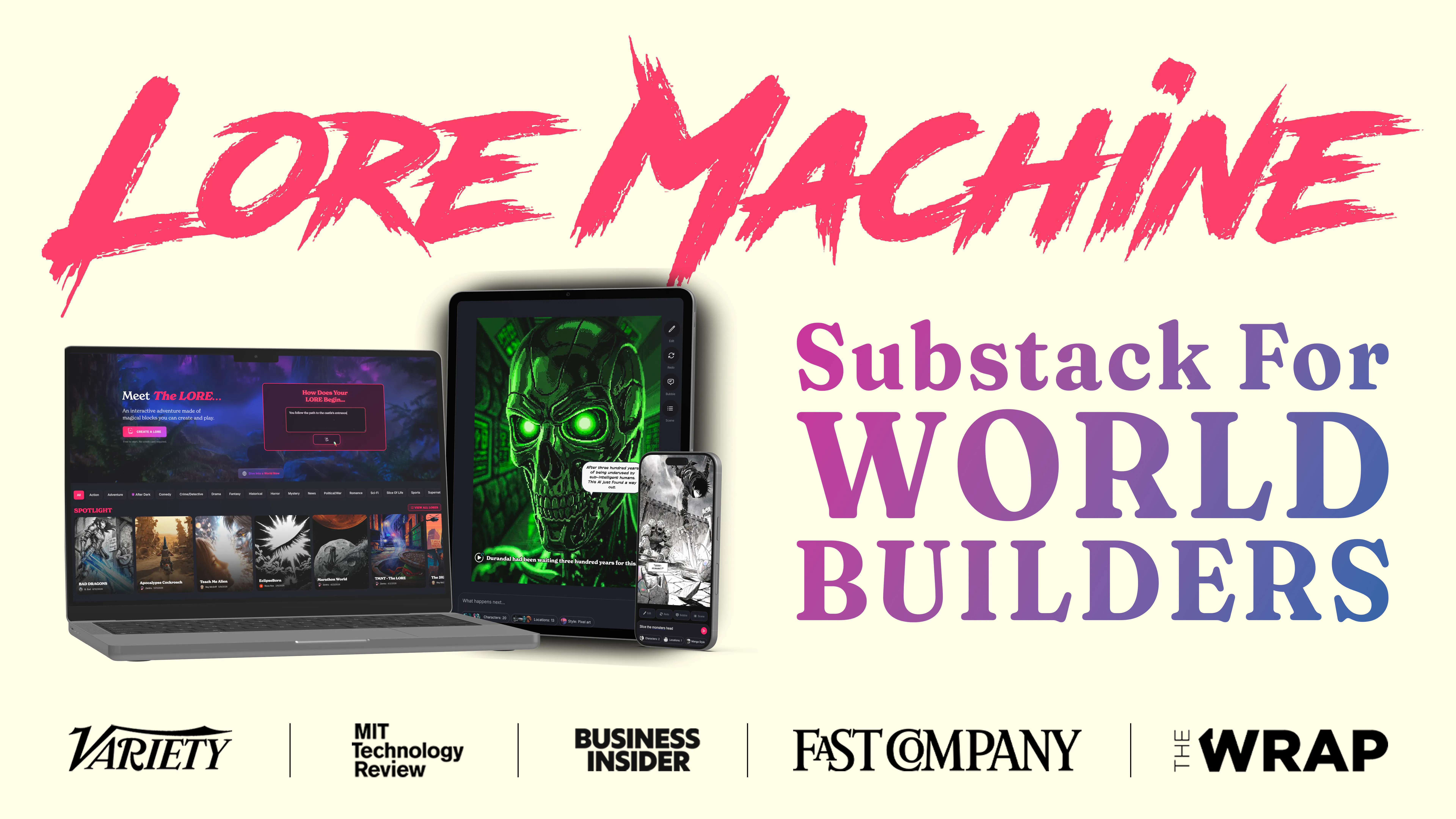
Lore Machine is Substack for World Builders. Build a story World with art, video and sound, serialize it, and get paid...no studio required.
And you bet there's a backstory:
After leaving VICE, I wrote a series of viral articles about an audio technology that can purportedly break your consciousness out of your body. It's a whole thing. The stories got optioned for a documentary adaptation. The problem was there was no video footage, and animation unit costs were unaffordable. The project got shelved. I was seeing the same roadblock all over LA. Amazing screenplays collecting dust because stories couldn't jump the gap into the visual realm.
So in 2022 - as diffusion models were getting usable - we built the first version of Lore Machine for screenwriters, turning scripts into storyboards.
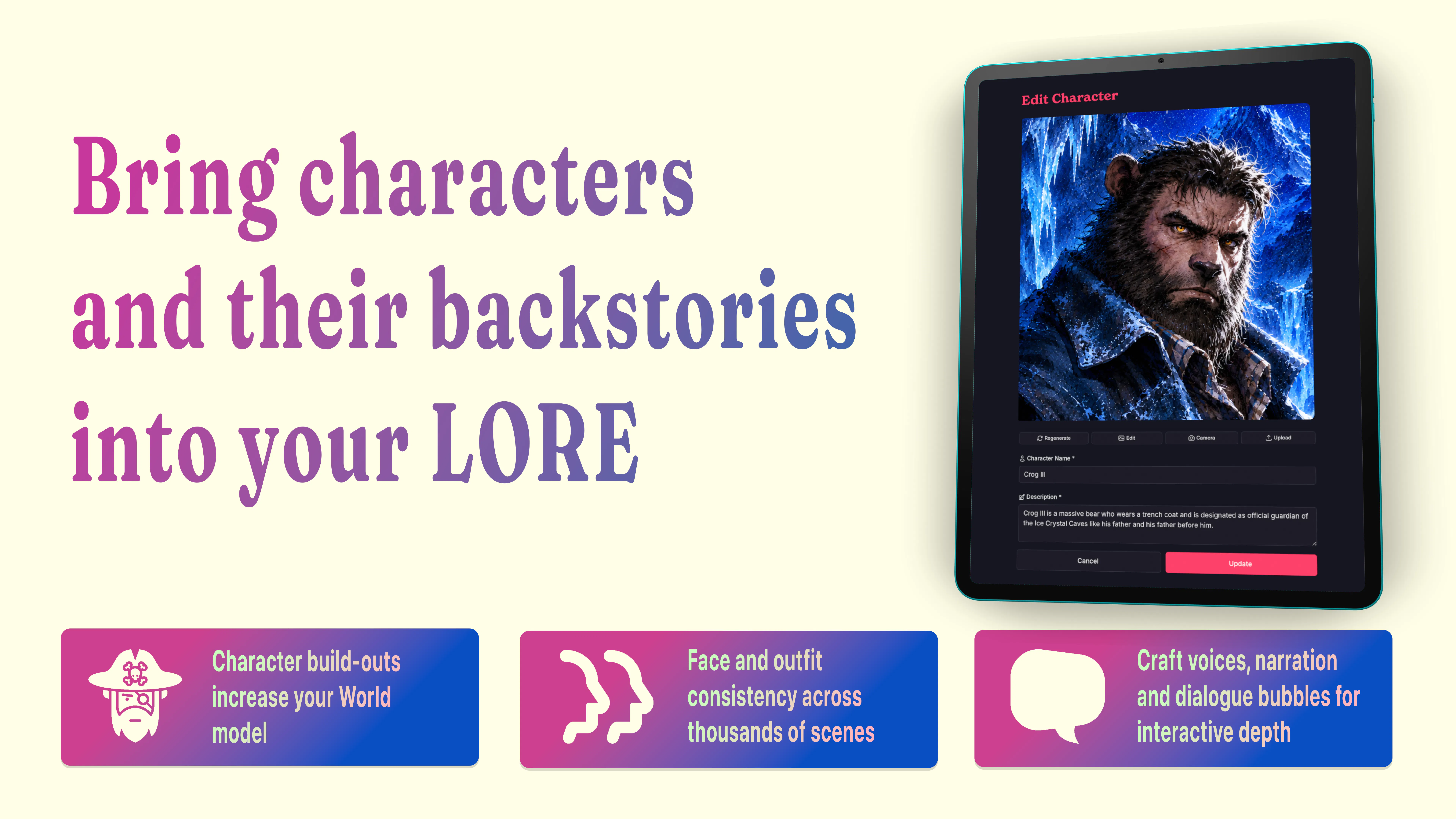
Then - through no design of our own - South Korean creators started using Lore Machine to make serialized manga with recurring characters. So we stopped being a storyboarding tool and invented the LORE: text, art, video, sound and reader choice in one scrollable story object. It's basically an animated graphic novel you can play! Creators serialize LOREs inside a World with a shared cast, canon and narrative physics.
Today we're launching World Pass. Creators charge $5/month for their World, keep 90% of the revenue and own their IP outright. We just launched the first World Pass with Archive In Between and Marvel writer B. Earl. The teaser has already racked up 600k views here. The World is here.
TikTok, Instagram and YouTube taught a generation to love lore, then gave them nowhere to keep it. No canon, no persistent cast, no episode one, no way to charge for a World. Creators have been building universes inside platforms designed to splinter them. Now they have a home.
Every AI tool right now is optimized for making commodity content fast. We're betting on craftsmanship instead.
I'll be here all day. If you have a story World you've always wanted to bring to life, Let's get INTO it.
Product Hunt launch offer: 200 free visualization tokens if you sign up during our launch week!
Dive into Lore Machine here.
Huge thanks to Chris Messina for huntermanship 🙏
This is super interesting — and a compelling new format for creating interactive graphic-novelesque infinite worlds where creators and fans collaborate on what happens next.
Think LOST but for the age of generative AI...!
Nice 😻 cameo!

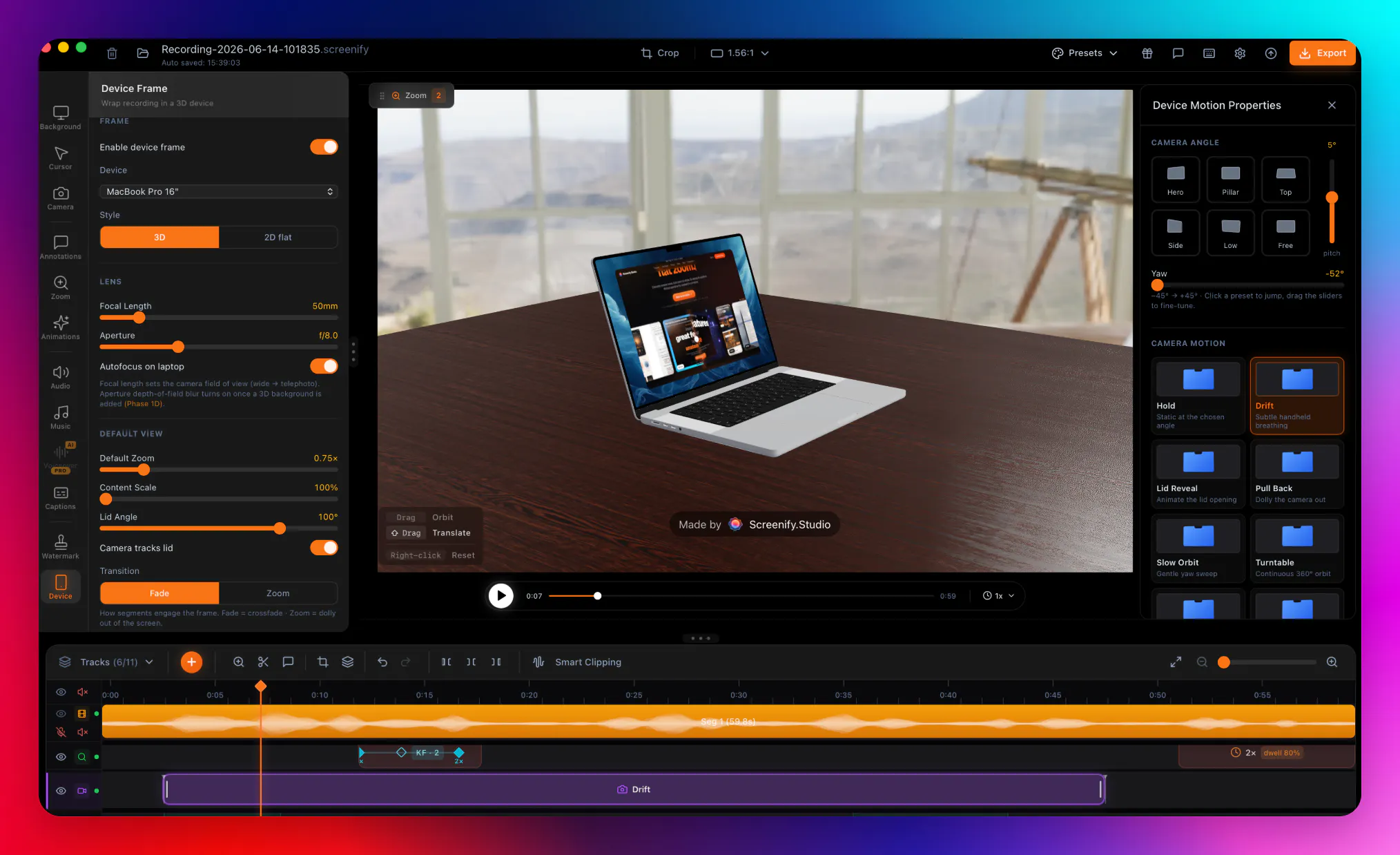
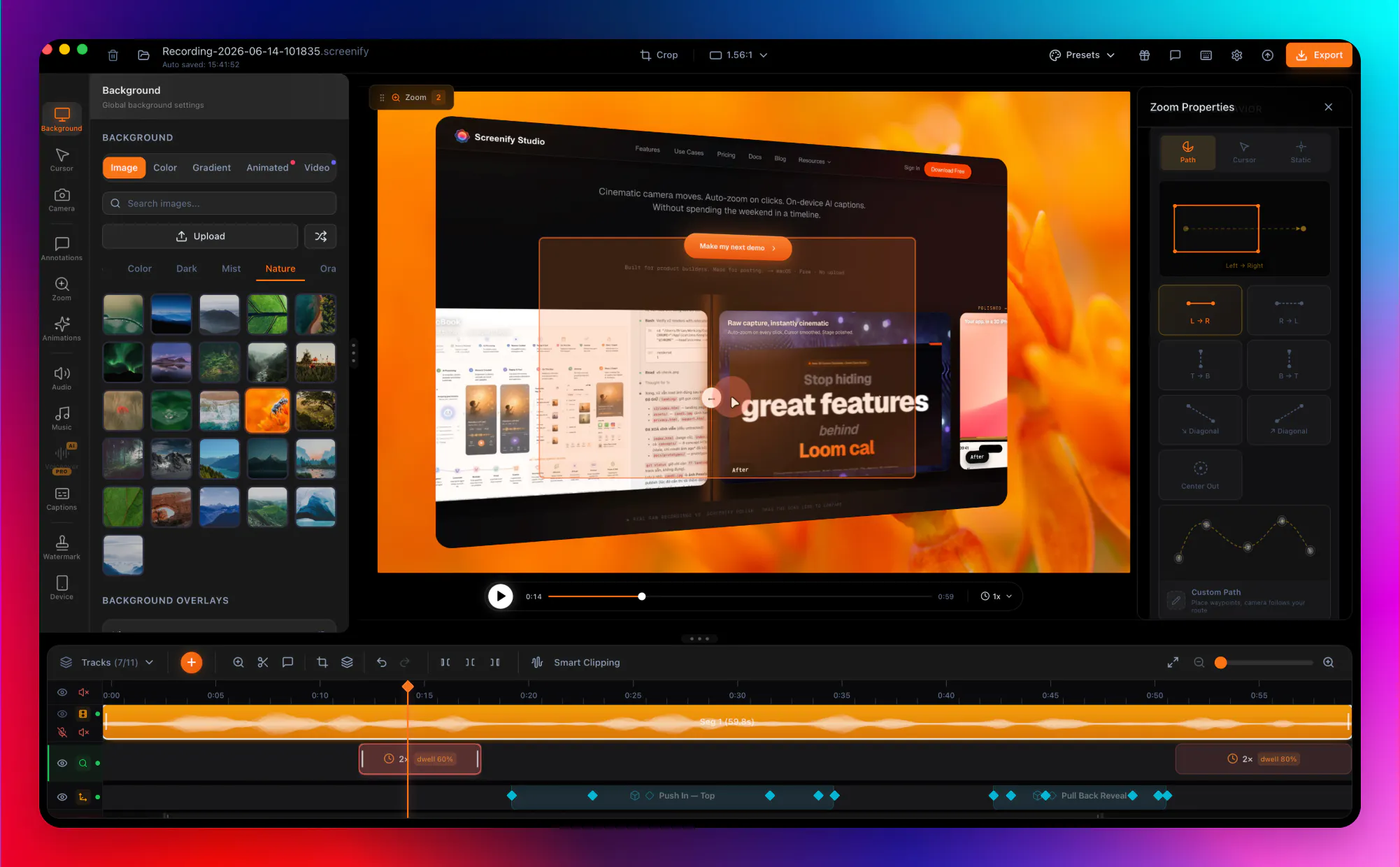
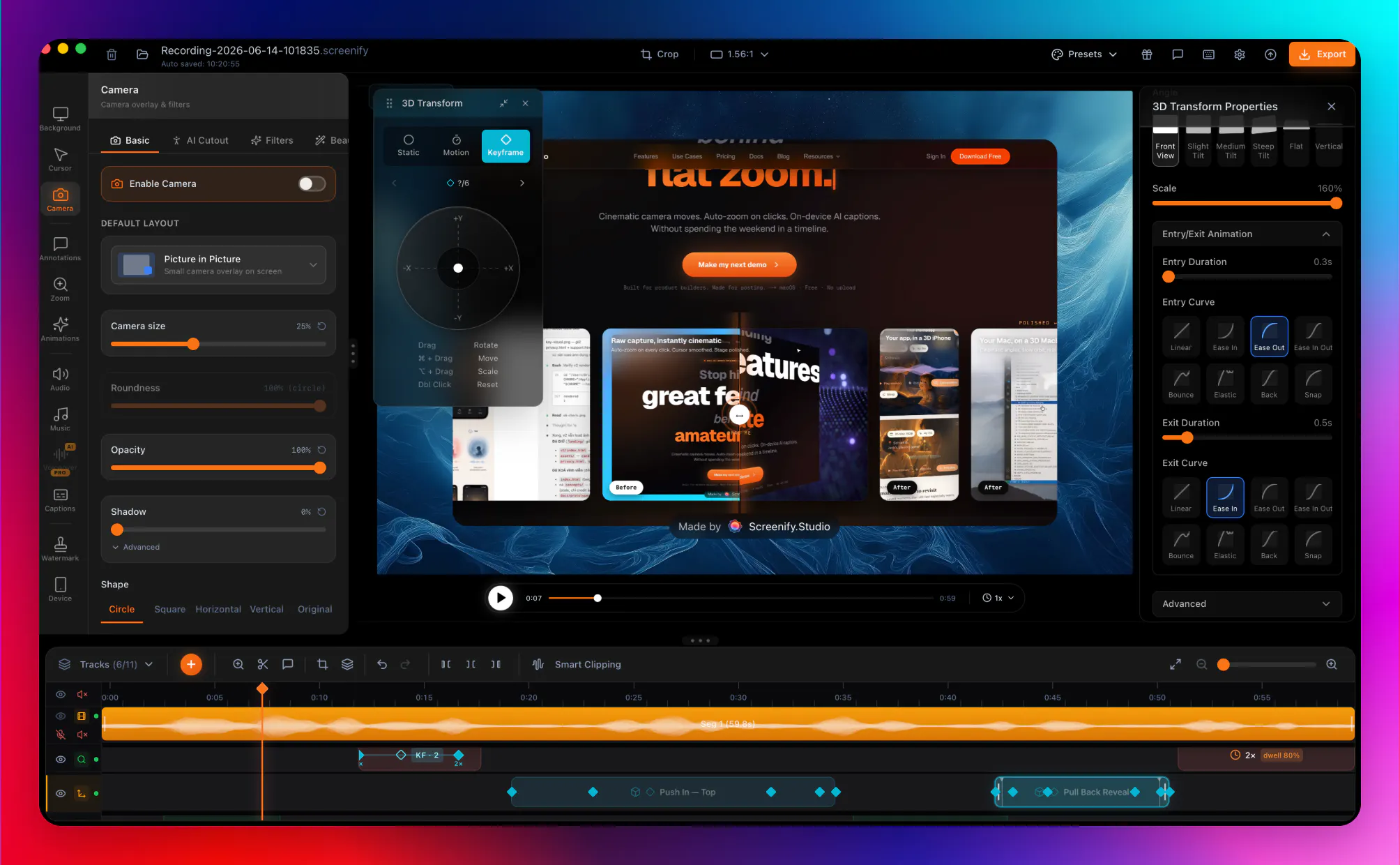
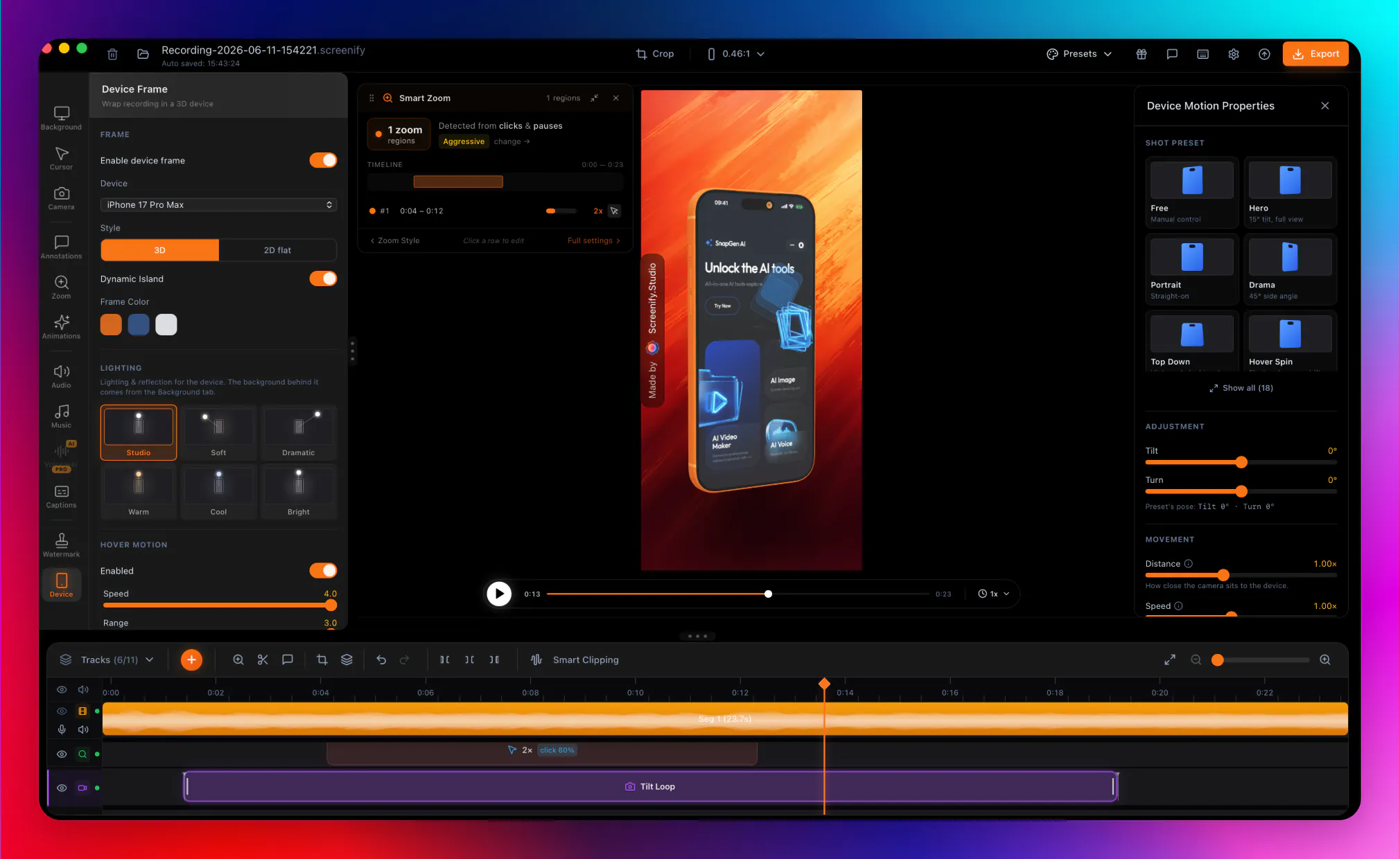
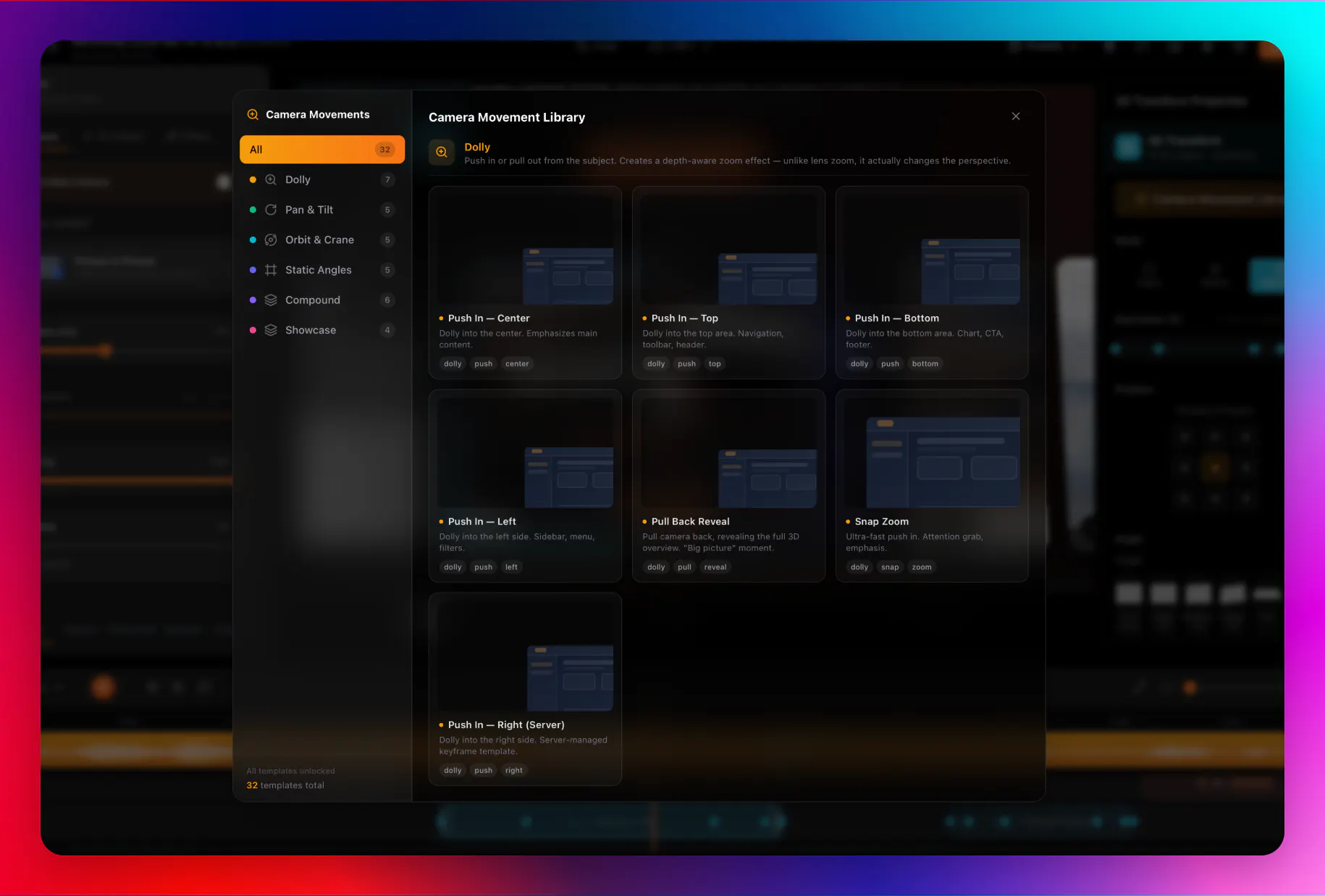
Screenify Studio切入的痛点真实且高频——产品演示视频制作长期以来是“开发一小时,剪辑三小时”的苦差事。其核心创新不在于自动剪辑或3D包装,而在于“AI驱动真实浏览器重新录制”这一层:它把演示视频从一次性录像变成了“可重复执行的脚本”,这对依赖快速迭代的SaaS团队具有实质的资产复用价值,而非单纯的省时工具。创始人定位清晰,对能力边界(不支持原生App UI自动化)的坦诚值得肯定,且通过MCP/CLI接驳AI代理生态(Claude Code、Cursor)是一步好棋,卡位了“AI替人操作电脑”的关键录制侧基座。然而,产品护城河尚浅:Playwright驱动浏览器、ScreenCaptureKit截图、导出MP4,这些均是开源可复用的组件,3D场景包装虽好看但难言技术壁垒。当前107票的社区反响平平,也说明该产品主要吸引开发者群体,对更广大的非技术市场营销人员而言,“AI录制”仍需理解成本。真正的挑战在于后续能否将“浏览器驱动脚本”沉淀为跨团队的协作资产库,并顺势切入测试录屏或客户支持场景,否则极易被Camtasia、Screen Studio等老牌工具的快速跟进所淹没。其免费起步策略聪明,但Pro定价与“更高质量导出”的绑定略显模糊,需更明确的价值锚点。总体而言,方向正确,执行力强,但需在AI原生录制赛道尽快建立用户生态壁垒。
Hey Product Hunt 👋
I'm Brjan — solo founder shipping in public from Ho Chi Minh City 🇻🇳.
The honest reason I built Screenify Studio: my demos kept looking like shit. I'd spend weeks building features, then watch people barely notice them because my demo videos hid everything behind flat, static recordings.
So I built the tool I wanted. Record on your Mac, drop it into a photoreal 3D MacBook, iPhone, or iPad — or stage multiple devices together in one cinematic ecosystem shot — pick a cinematic camera motion, and ship a finished MP4. Or point it at any URL and let an AI drive a real browser to record the whole demo for you, then add the cinematic touches (3D moves, spotlights, callouts).
Prefer full control? There's a deep editor with manual zoom keyframes. Live in the terminal? Screenify now speaks MCP — connect it once and Claude, Claude Code, or Cursor can record, style, and hand you the finished video — plus a JSON-speaking CLI if you'd rather script it yourself.
Everything runs on-device on Apple Silicon — nothing uploaded. Free to start; you only upgrade when you genuinely need higher-quality exports and the more advanced features.
Would love your feedback — what do you use for product demos today? Happy to nerd out about the 3D pipeline, the MCP server, or the AI web-record under the hood.
What kills demo videos for the Mac apps I work on is that every UI change makes last month's recording wrong, so anything that re-records from a script is worth real money to me. Your AI drives a real browser, but can it drive a native Mac app window too, or is that the manual editor path only?
This is great. We actually use Clueso right now for recording, but there's still a bit of editing involved. Plus, it's too expensive. I'll check it out!
solo founder shipping this in public is a nice touch, the honesty about "demos kept looking like shit" is relatable. question on the web-driving side - a lot of real product demos start behind a login wall, sometimes with 2FA. does the agent handle authenticating into the app itself, or do you need to get it past login manually and then hand off control once you're in the actual product?

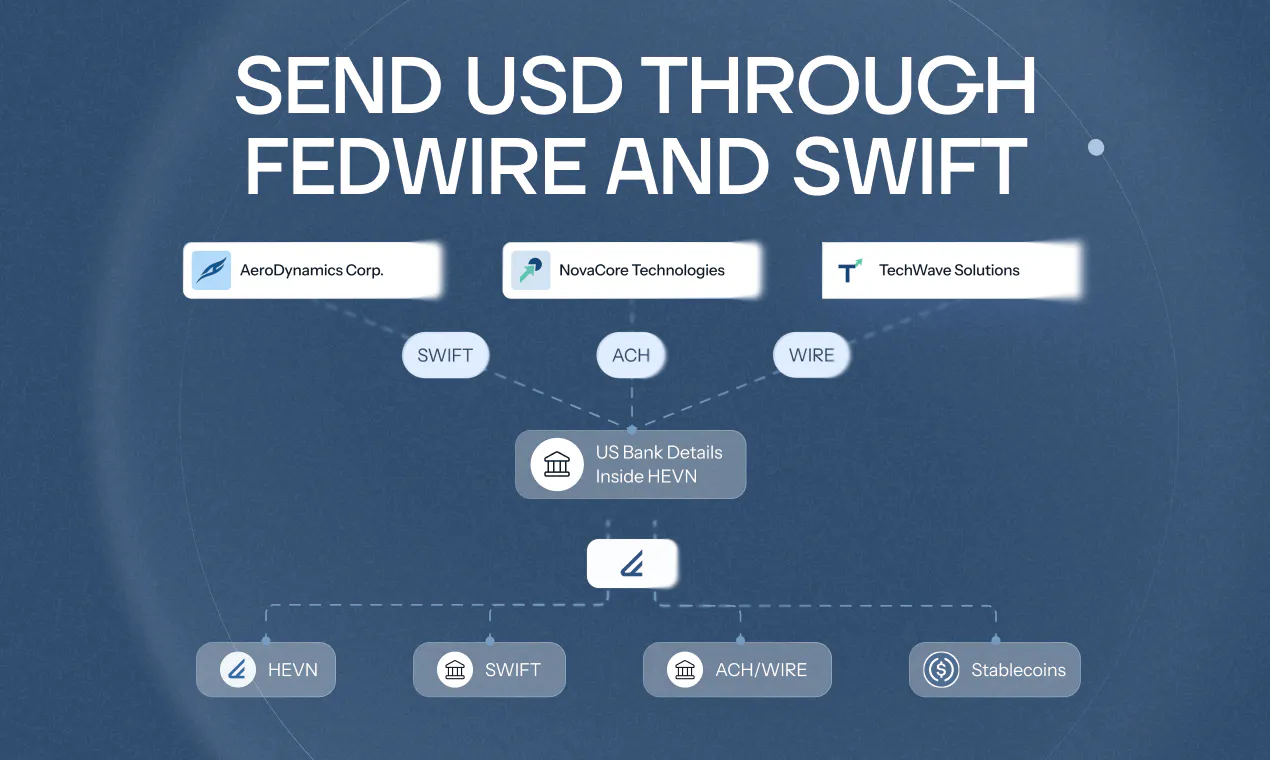
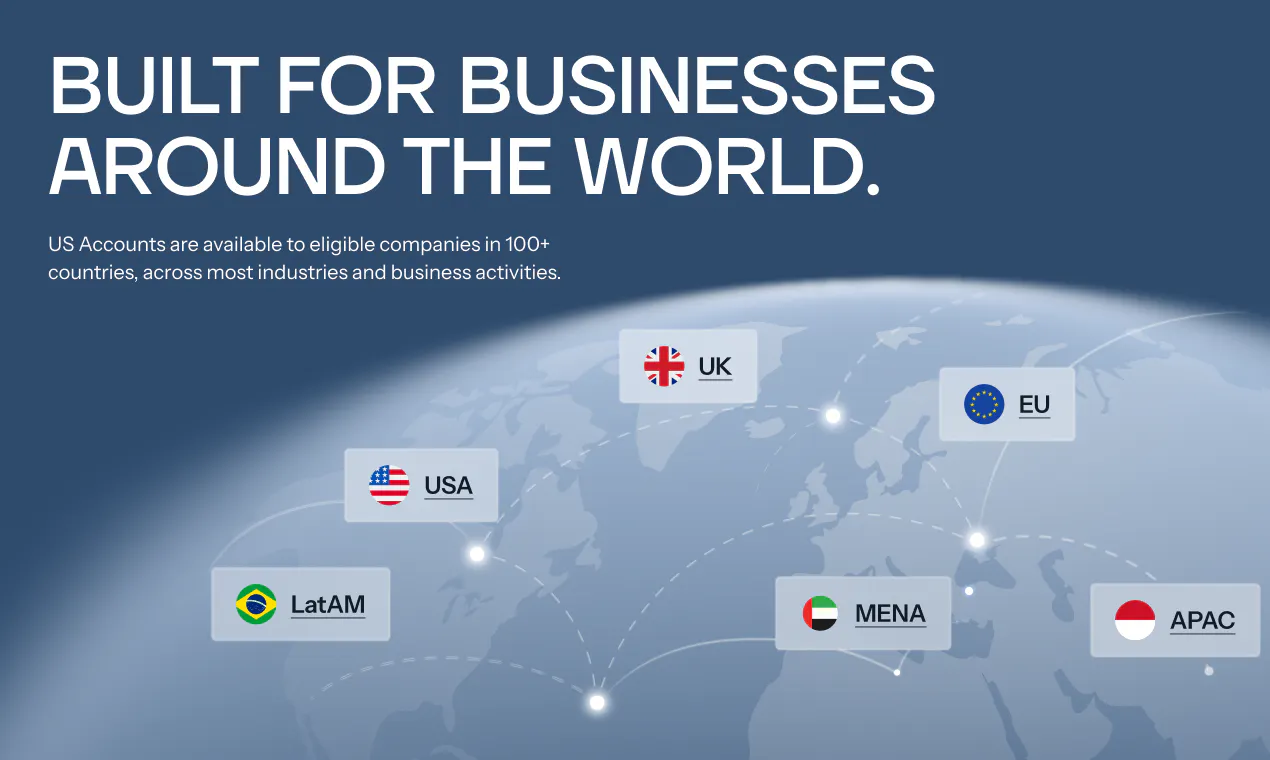
HEVN U.S. 切中的确实是全球贸易支付中“最后一公里”的真问题:中小进出口商和制造商在美元清算上长期受制于代理行冗长的中间链条,资金占用与时效损失往往远超显性手续费。其核心价值不在“多币种钱包”这类表层创新,而在于通过美国合作银行(sponsor bank)架构,让企业绕过设立美国实体这一高门槛,直接获得Fedwire本地清算能力——这本质上是把“本地清算特权”产品化,属于典型的嵌入式金融(Embedded Finance)打法。
但必须泼冷水:合规是此模式的生命线,也是最大天花板。100多个国家的企业意味着其KYC/AML审查复杂度呈指数级上升,评论中已有用户直接追问“平均开户和KYC周转时间”,而这一数字若不能压缩到3-5个工作日,体验优势将大打折扣。此外,合作银行模式存在单点依赖风险——一旦赞助银行调整风险策略或监管态度转变,产品随时可能收缩市场覆盖。费用结构上,用户抱怨“big commissions”仍是最集中的负面反馈,说明其定价并未与传统银行形成显著代差,真正的护城河尚未建立。
总体而言,HEVN U.S. 是一个方向正确、执行扎实的垂直金融工具,但它目前更像是“让糟糕的跨境支付体验从十天变成三天”,而非“创造全新支付范式”。其长期价值取决于能否沉淀交易数据、切入供应链金融,否则易被Stripe Treasury、Airwallex等巨头在合规能力与规模效应上的降维打击。建议团队在开城节奏上克制,优先打磨高合规标准国家的闭环案例,而非盲目追求覆盖国数量。
My favorite bank !
Very bullish on Hevn!
The quiet relief of not watching a cross border payment crawl through a week of limbo is very real, Nik, and this looks like exactly that !
This looks like a genuinely useful solution for businesses dealing with international USD payments. The ability to hold USD, receive payments via Fedwire, and handle local counterparties from one platform could remove a lot of the usual banking friction. Congrats on the launch!
finally not another AI wrapper, congrats with the launch!
This guys are really rock stars in fintech world! HEVN to the Moon!
Really interesting problem to tackle @azbang_ @peter_volnov1 @pasha_m1 , especially for businesses where a payment delay can literally hold up an entire shipment.
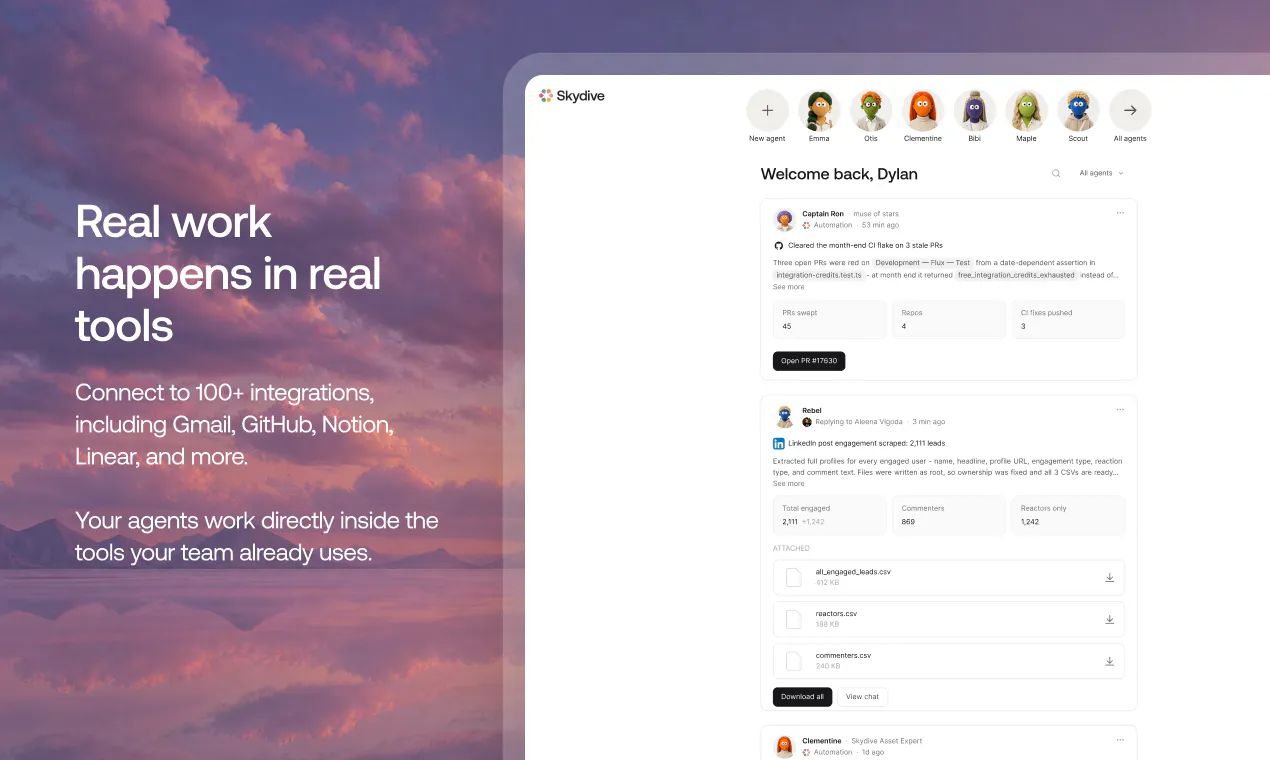
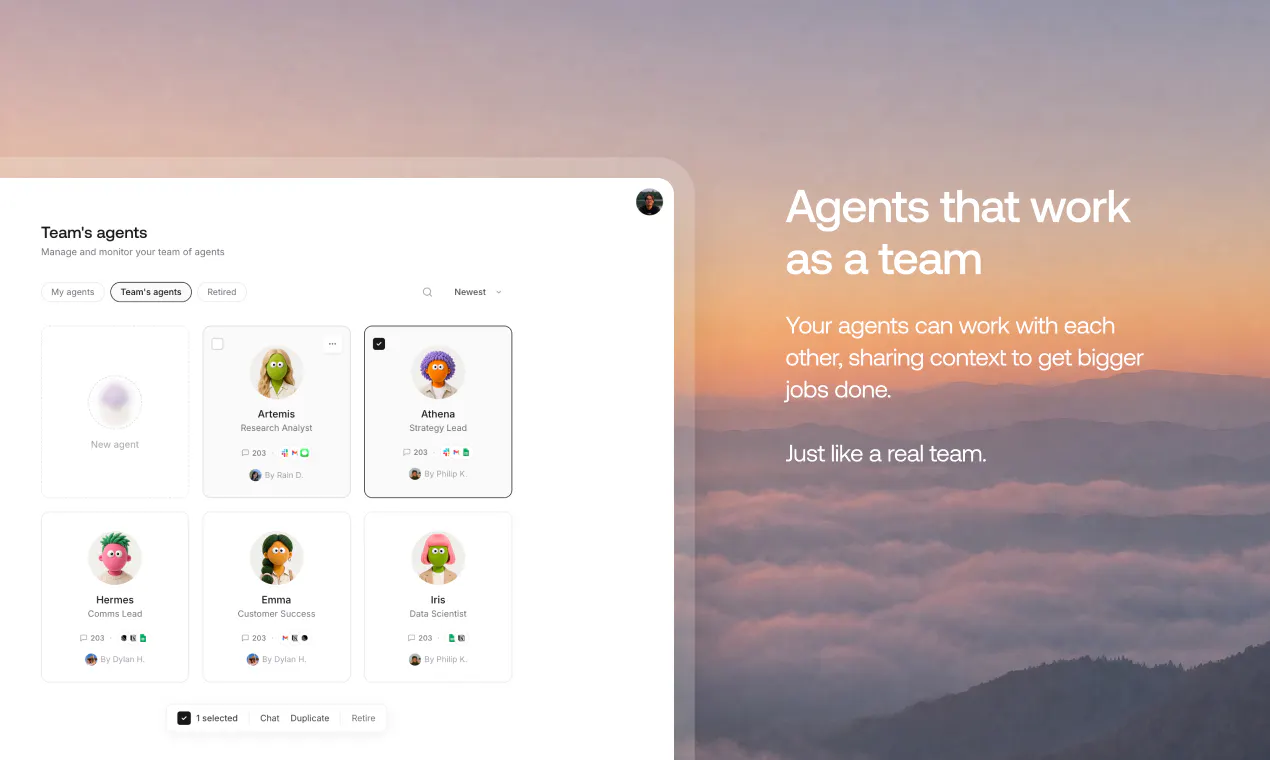
Skydive 踩中了当下 AI 应用层最拥挤也最性感的赛道——自主 Agent。它的叙事逻辑非常“标准”:不满足于聊天,不满足于预设流程,而是直接给 AI 一个“云端电脑”和“独立代码库”,让它像人类一样点击、输入、跨应用协作。这确实比单纯的 RPA 或 LLM 套壳前进了一步,尤其是“Agent 之间可以协作并自动交接工作”这一点,直击了企业级任务碎片化的要害。
但必须泼一盆冷水:这个产品介绍里充满了“自主”、“智能”、“自我进化”这类宏大词汇,却唯独缺少了“确定性”。企业工具的生命线是可靠性和可审计性。一个“会自己学习”的 Agent 在某些场景下是福音,在财务、法务甚至客户沟通场景下就是噩梦。当 Agent 犯错时,谁来负责?它“学习”的边界和模型幻觉如何被及时修正?创始人轻描淡写的一句“纠正一次,它就记住”,在复杂的真实业务逻辑面前显得过于天真。
此外,产品目前 0 投票、0 有效评论,意味着这大概率是一个自导自演的“预热”发布。所谓的“用自家 Agent 组织 Product Hunt 发布”更像是一种营销包装,而非产品成熟度的证明。技术壁垒方面,OpenAI 的 Operator、Anthropic 的 Computer Use 都在做同样的事,Skydive 的差异化优势能否仅靠“多工具协同”和“无需代码”建立,尚存巨大疑问。
如果它仅仅是一个将 Claude/OpenAI 的能力封装成更易用的“带电脑的 Agent 模板库”,那么它面临的将是巨头 API 迭代的降维打击;但如果它真的能解决企业级 Agent 的可控性、权限隔离和跨应用状态同步问题,那么它有机会成为这波 Agent 浪潮中的关键中间层。目前来看,它更像一个精美的 Demo,距离成为值得信赖的“员工”,还差一个“事故处理手册”的距离。建议团队先放下“成长叙事”,把足够的精力放在“如何优雅地失败”上。
Hey Product Hunt! I'm Marcus, Co-founder of Skydive 👋
The problem
Everyone has access to the same AI models now, but you still have to prompt AI tools to get good results. I've seen one too many terminals built for managing Claude Code instances.
Today's tools usually fall into two camps:
💬 Chatbots answer questions and generate content, but you still have to take action yourself. They forget what you taught them the last time you worked together.
⚡ Workflow builders automate repetitive processes, but you have to design every step, maintain the logic, and update it whenever something changes.
Skydive is designed to actually help you grow your business by autonomously taking action throughout your company.
Meet Skydive
Skydive lets you hire AI agents that take on real responsibilities across your company.
Describe the job, and your agent gets to work. Your agent has it's own codebase and computer in the cloud, but you never have to think about it. It just works. If you want it to use your skills, you just tell it to. If you want it to learn to write like you, it can do that too. It also self-improves over time by learning from previous conversations.
🖥️ Every agent has its own computer
Agents use websites, apps, and files just like a person would. They click, type, log in, create documents, and complete work from start to finish.
💬 Agents work where you work
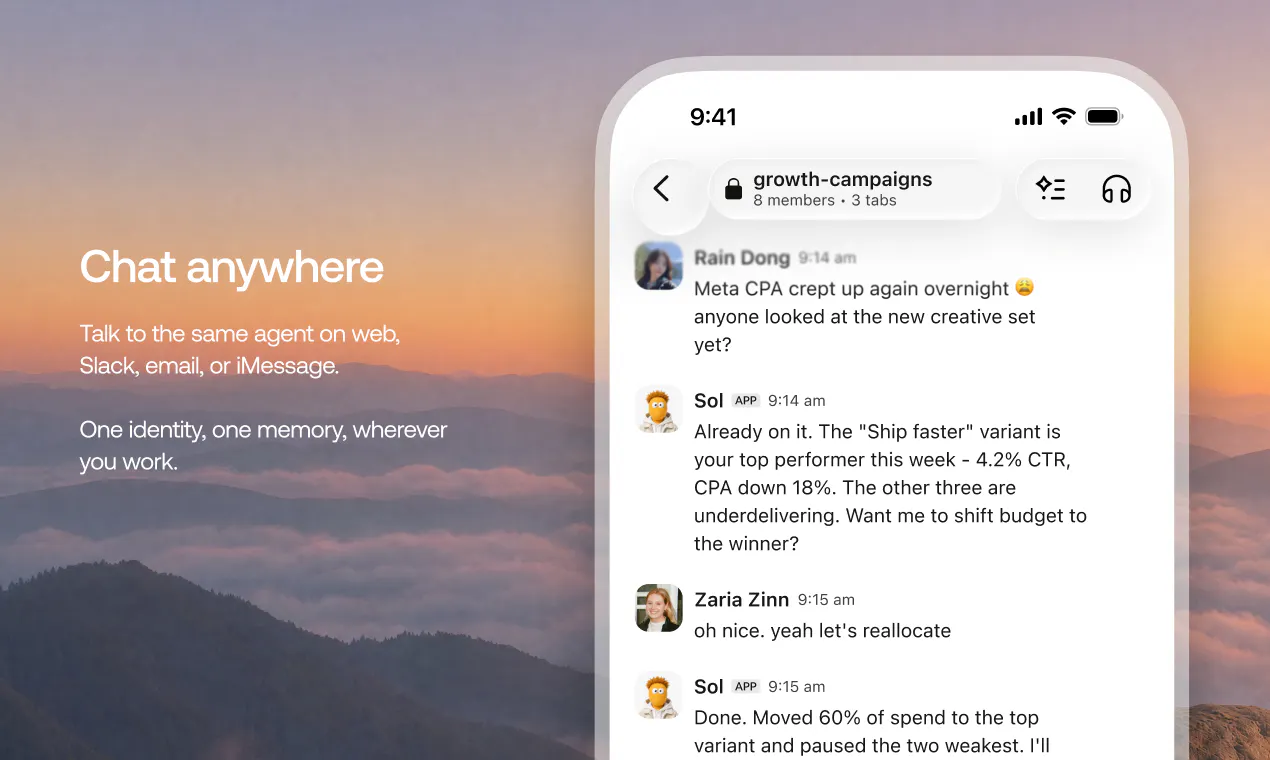
You can talk to agents in Slack, email, iMessage, on the web, or in your terminal. They go wherever you go and feel right at home working alongside you. They even connect to your desktop and can use the same programs you use.
🤝 Built for teams
Agents are experts in their own area. They collaborate with each other, share context, and hand work off automatically so bigger projects actually get finished. Every agent can be shared with other members of your team so multiple people can coordinate work.
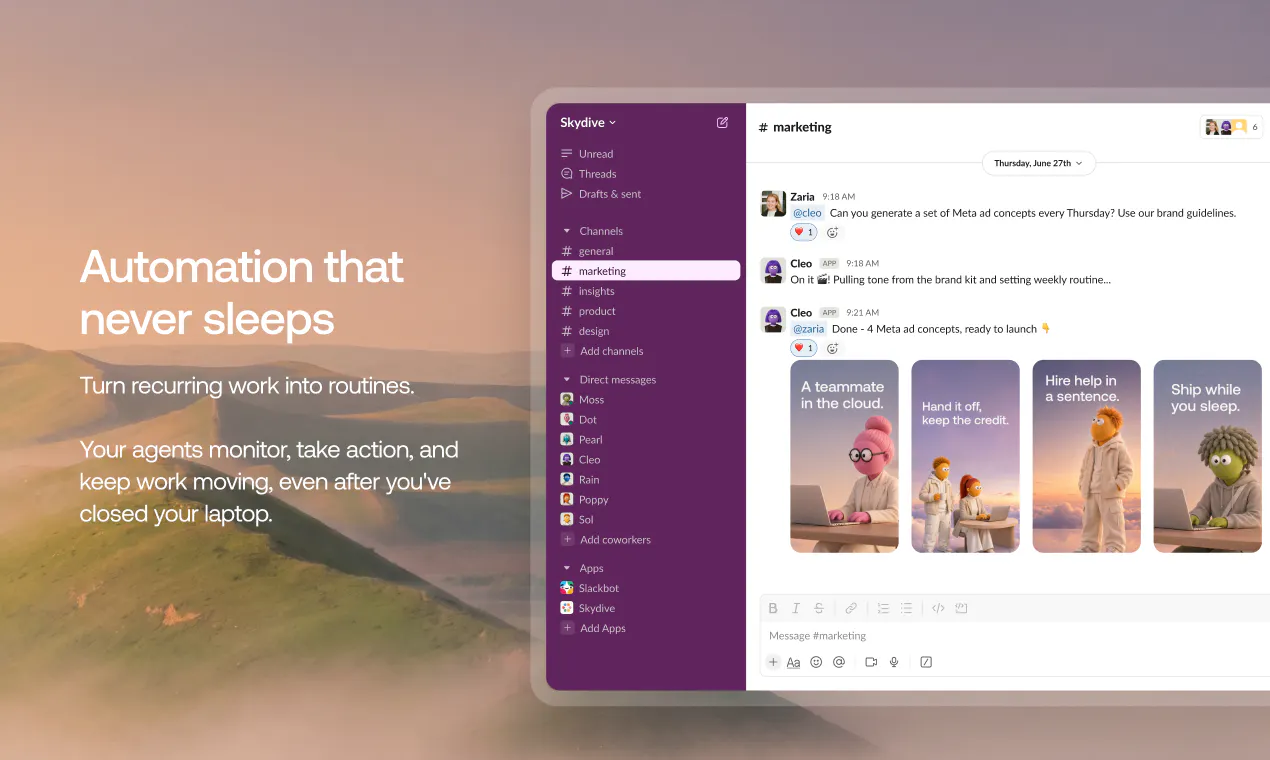
🌙 Automation that never sleeps
Turn recurring work into routines. Your agents monitor, take action, and keep work moving whether your laptop is open, closed, or you're halfway around the world.
🧠 Agents that improve over time
Correct an agent once, and it remembers. Your preferences, feedback, and company knowledge carry forward into future work automatically. When you're done working, your agents are dreaming and ingesting the lessons from the previous day's work.
Who is it for?
Founders, operators, and fast-moving teams that need to do more without adding headcount. If your work spans multiple tools, teammates, and recurring processes, Skydive was built for you.
We'd love your feedback ❤️
We're just getting started, and we'd love to hear what you think.
If there's one responsibility you'd hand off to an AI agent, tell us in the comments. We'll be around all day answering questions and shipping improvements.
To celebrate our Product Hunt launch, we're giving everyone an additional $5 in credits with the code PRODHUNT5 - if you need more, shoot my cofounder an email zaria[at]anything.com :)
If you're launching on product hunt soon, you can use this agent we've built to organize your launch. We used it ourselves, so we'll see how this goes, lol
https://www.skydive.com/templates/product-hunt
Thanks for checking out Skydive! 🚀
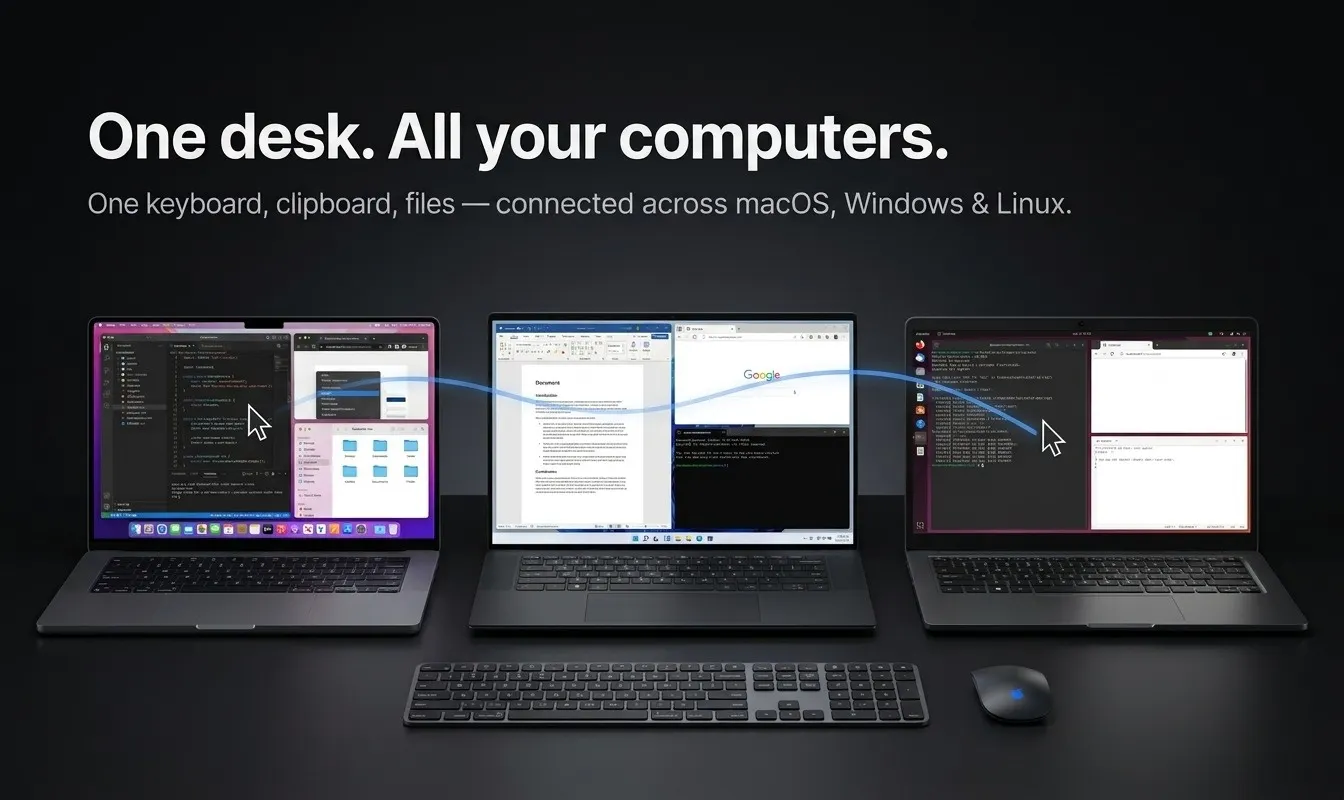
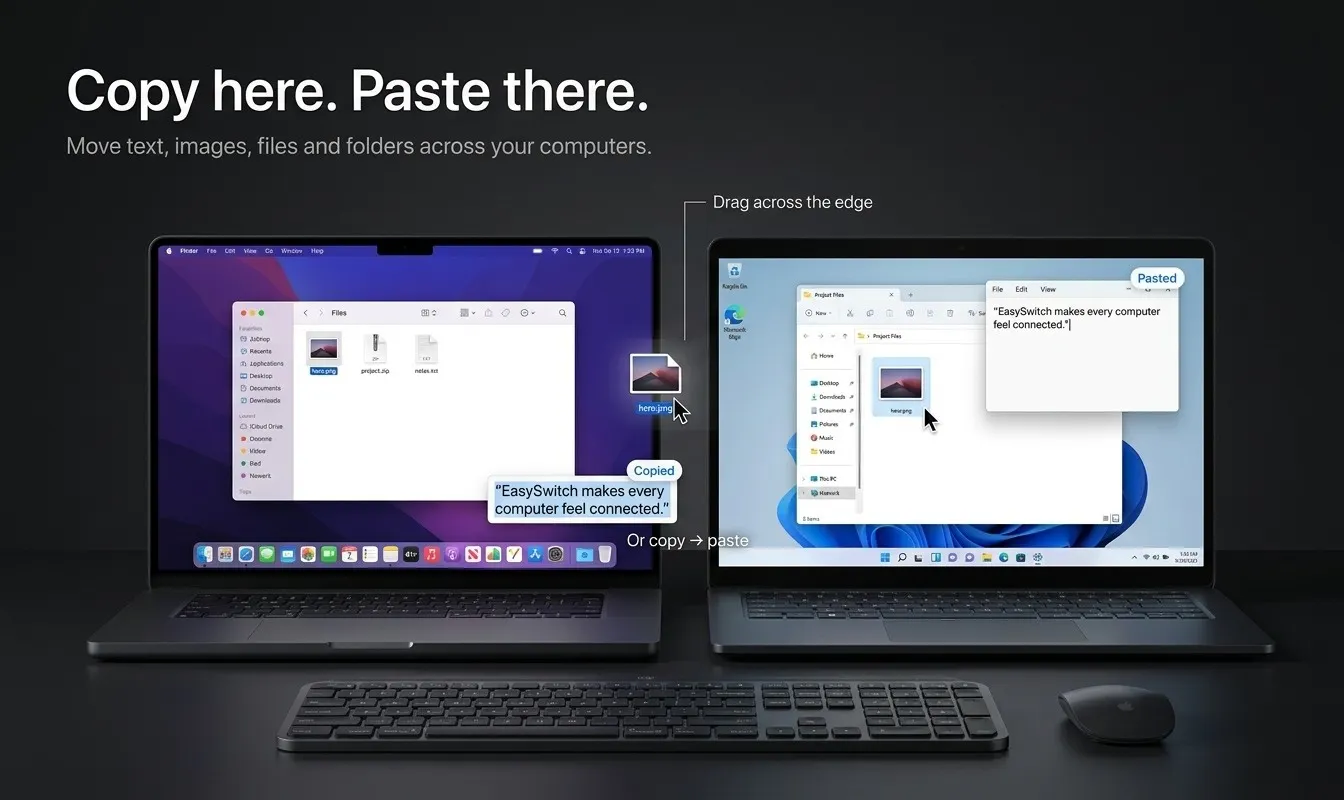
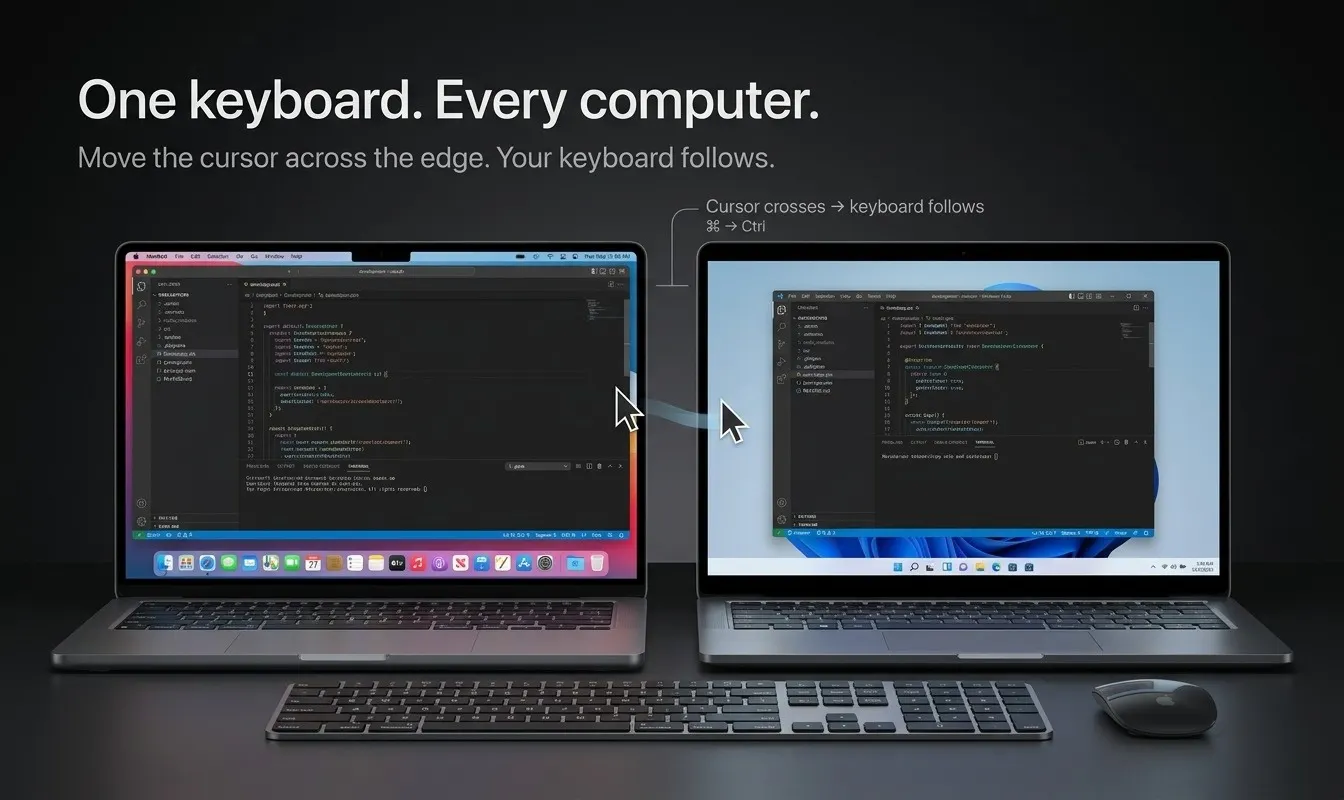
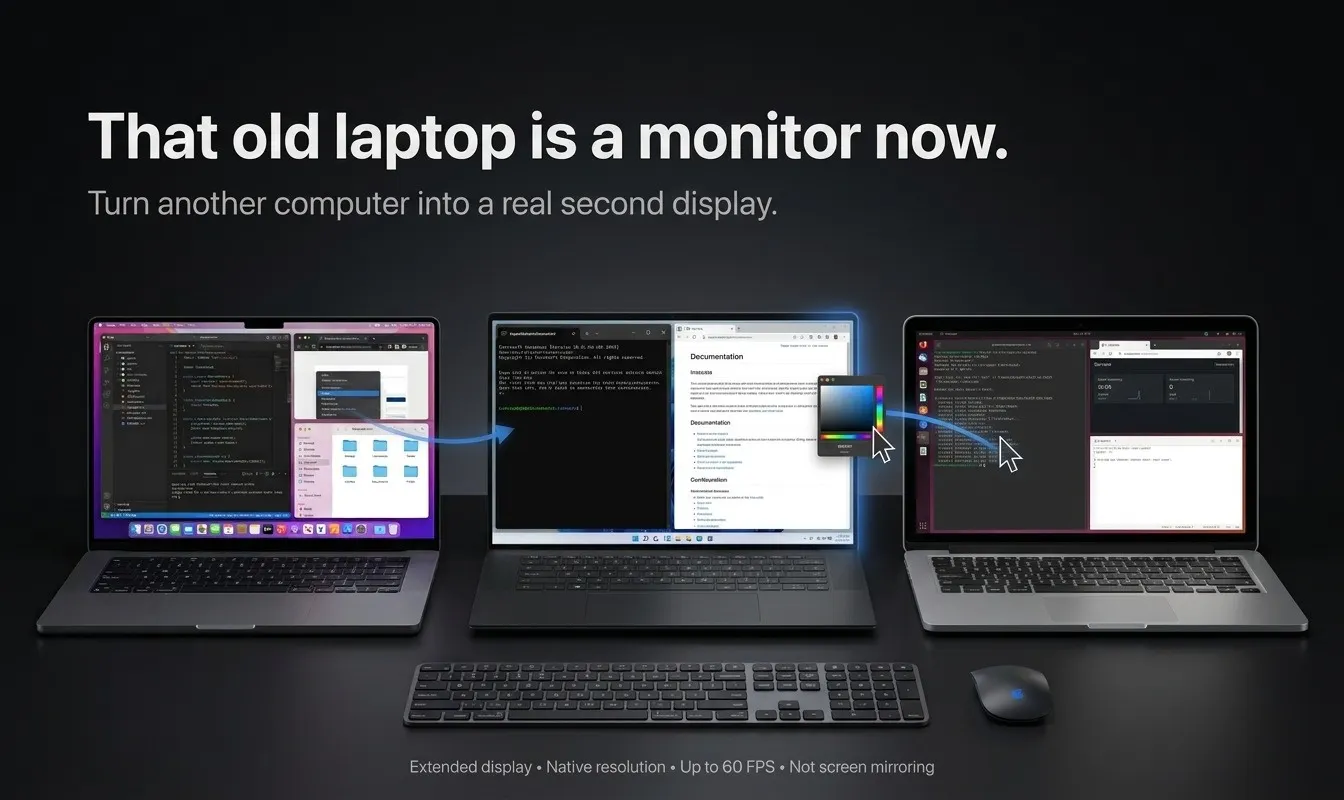
EasySwitch 的价值在于精准切入了“软件KVM”与“虚拟副屏”两个割裂市场的交叉盲区。现有工具要么只解决输入共享(Synergy类)而无视频传输,要么只解决屏幕扩展(Duet类)而忽视键鼠穿透,EasySwitch以原生Rust的高性能和免费端到端加密作为技术护城河,试图提供一个ALL-IN-ONE的桌面融合方案。
其真正的聪明之处不在技术,而在商业定位:免费支持两台设备,正是抓住了大多数“双机党”的核心需求,用零成本撬动用户基础,再以49美元一次性买断解锁多机和无限文件传输——这比订阅制更符合桌面工具用户的付费心理。
然而,风险同样显著。第一,该赛道强敌环伺,微软的Mouse Without Borders完全免费且足够稳定,Synergy亦已建立多年的兼容性壁垒。EasySwitch 必须证明其在复杂网络环境(如混合Wi-Fi/有线)下的连接稳定性,以及跨协议(Wayland与X11)的渲染帧率,否则很容易沦为“Demo级产品”。第二,视频传输对延迟极其敏感,作为副屏时能否胜任游戏、视频剪辑等高频场景,仍是巨大未知数。第三,99票的冷启动数据在Product Hunt上并不亮眼,反映出营销声量不足或用户对“硬核工具”的尝鲜意愿两极分化。
EasySwitch 的核心价值或许不在于取代现有巨头,而在于重新定义了“一台电脑”的边界——当物理隔阂被软件抹平,桌面生产力将迎来新的释放空间。但前提是,它必须将“能用”打磨至“好用”,否则,这个精致的拼图终将只是又一个极客的小众玩具。
Awesome Product
Love this , especially the LAN-only, no-cloud approach. 🔥 Such a practical fix for a very real multi-device problem.
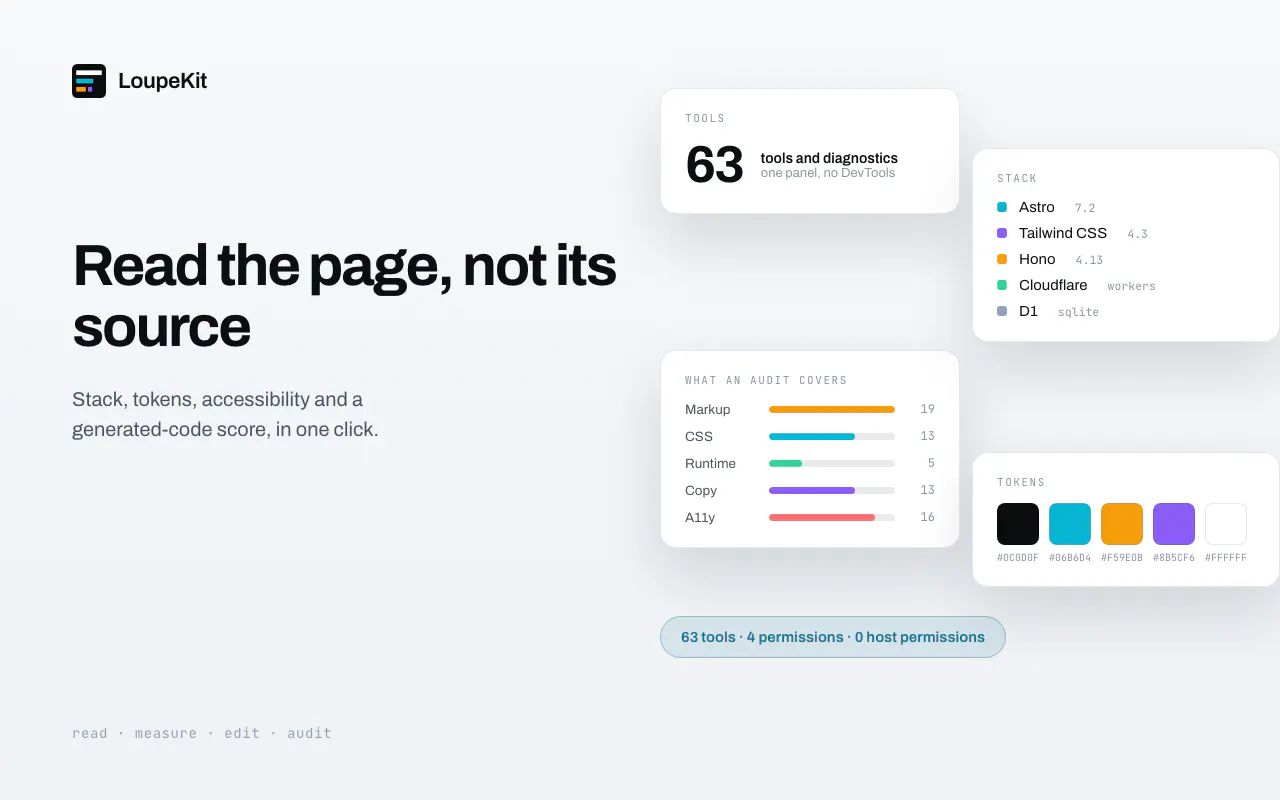
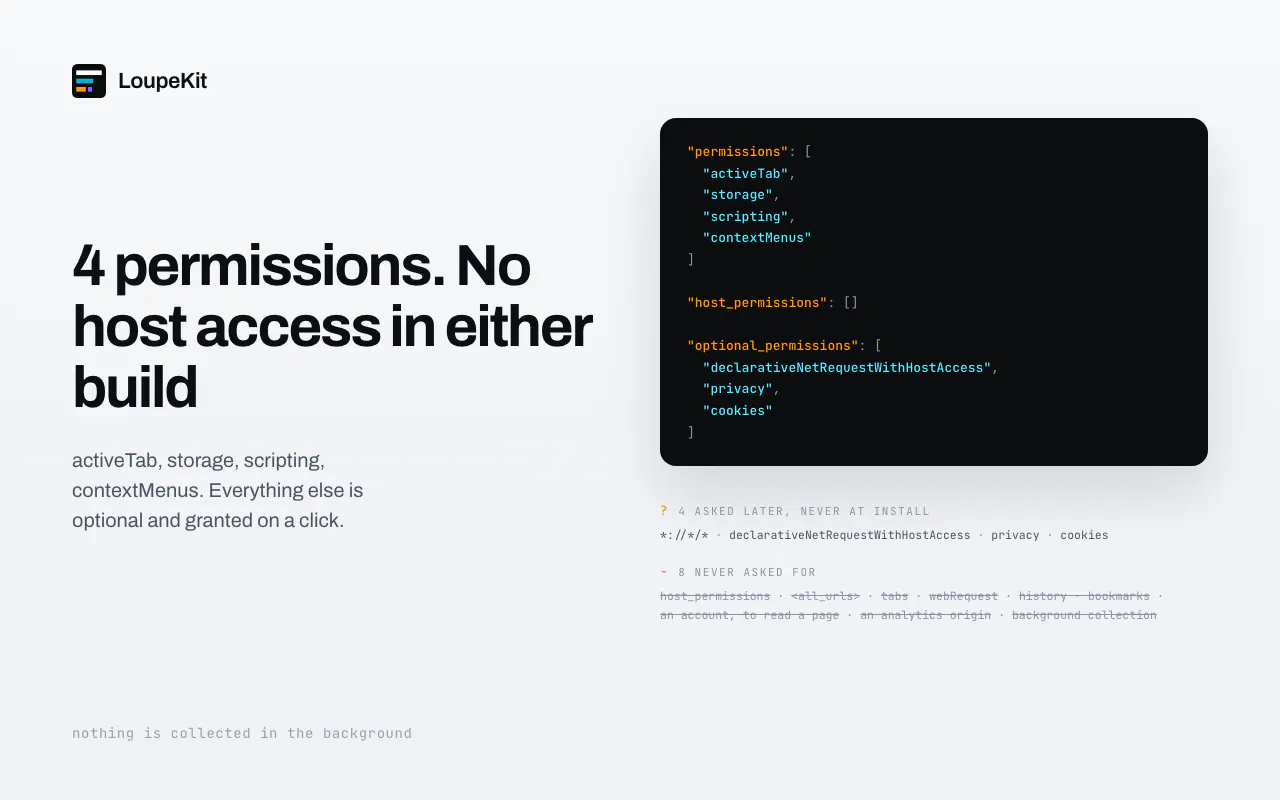
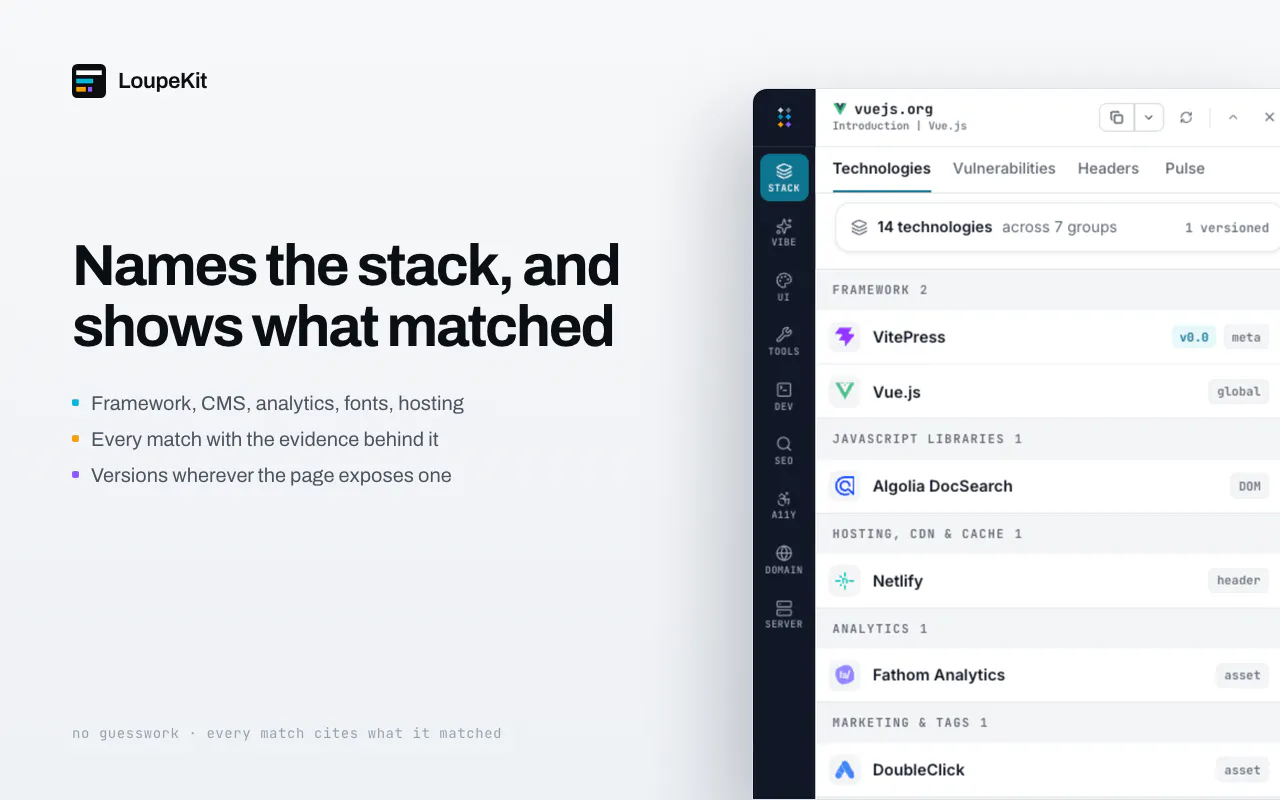
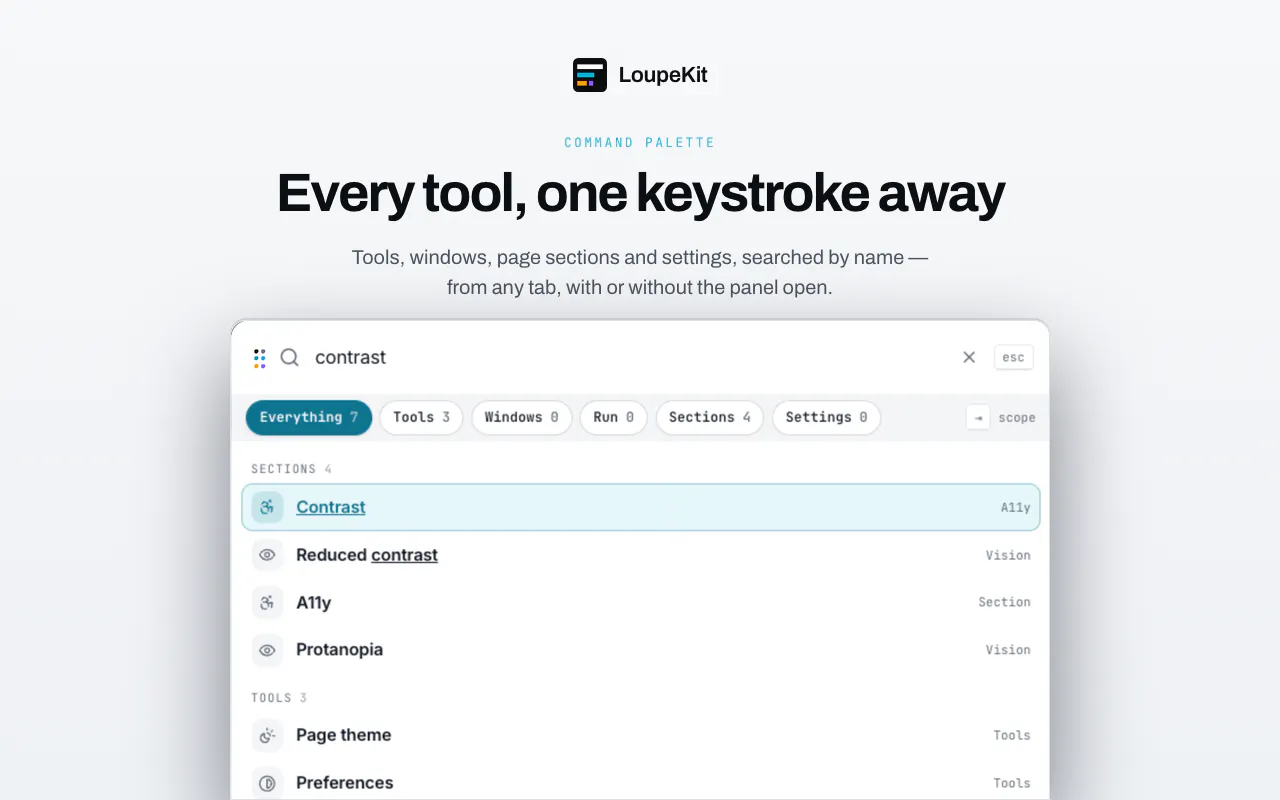
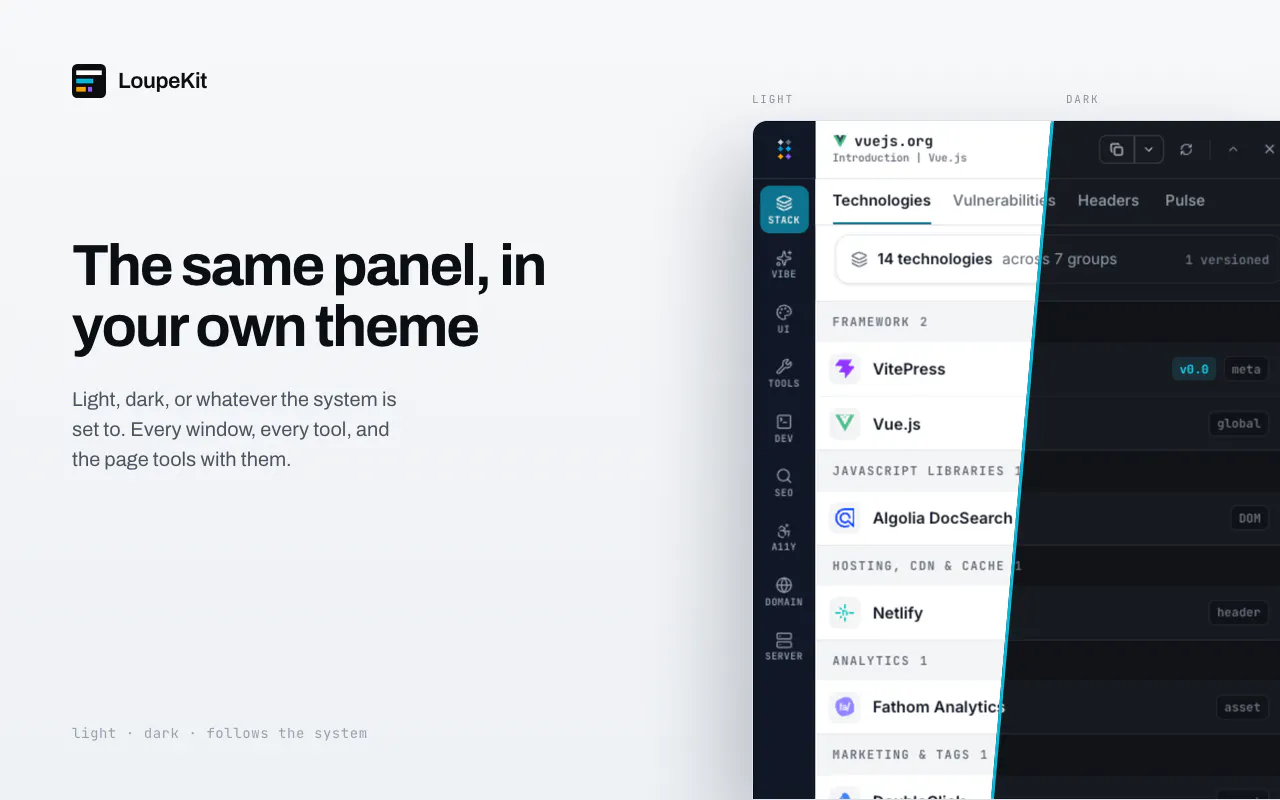
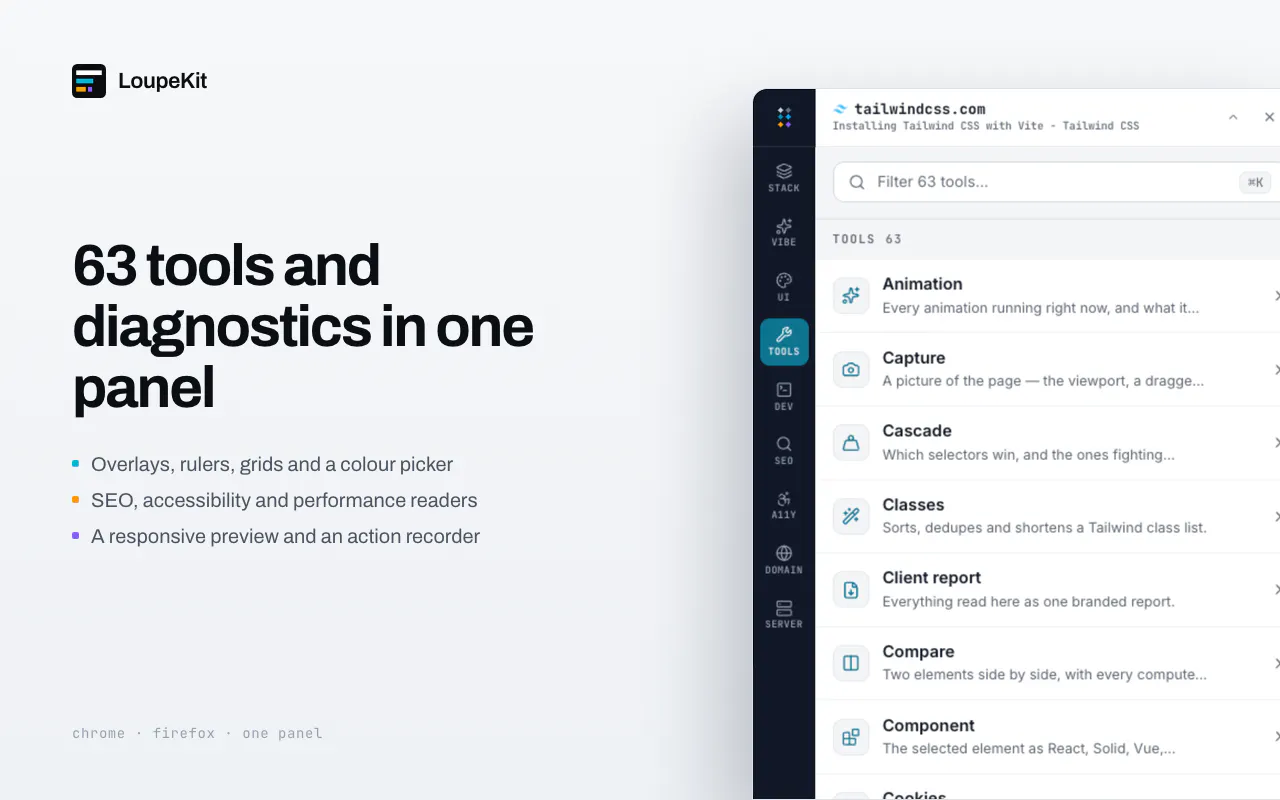
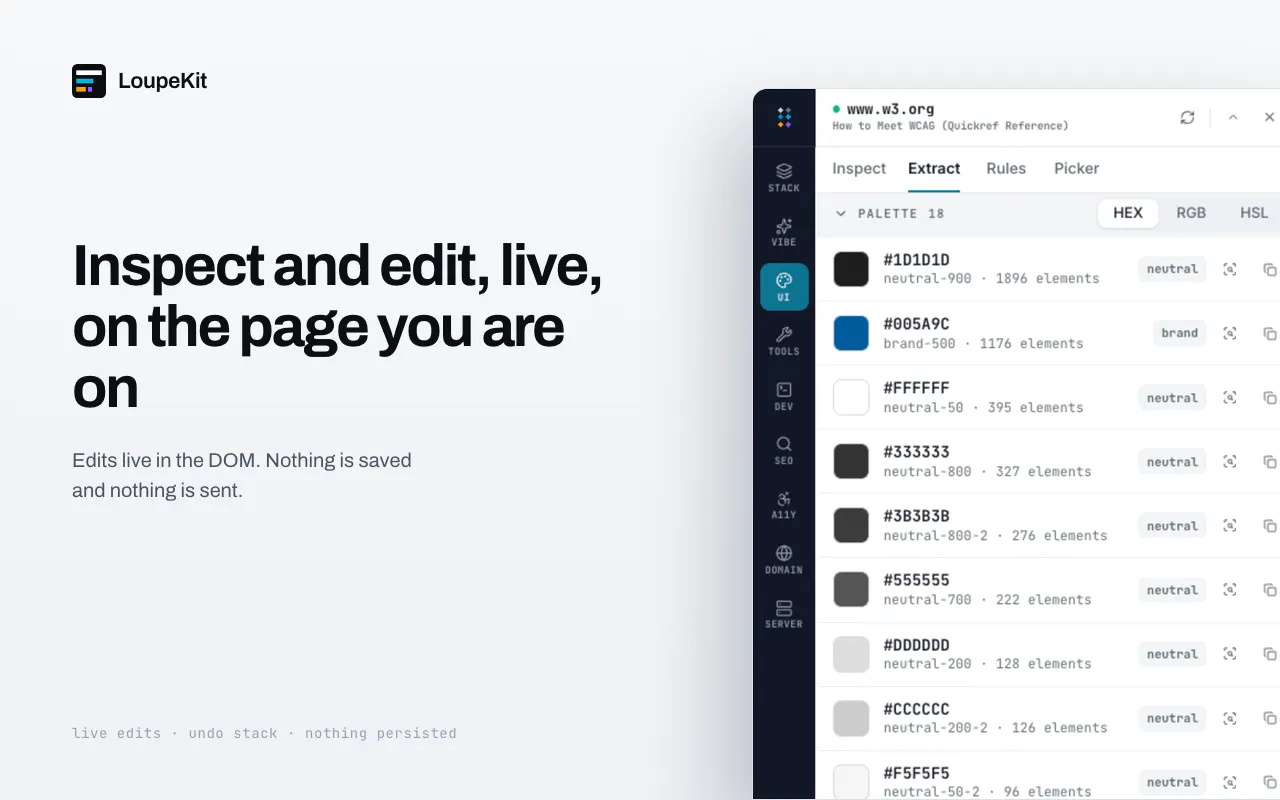
LoupeKit的商业叙事精准踩中“AI污泥”焦虑,但其核心卖点“AI含量评分”恰恰是产品最脆弱、最易被攻破的伪需求。评论区高赞质疑已刺穿要害:utility class密度是框架指纹,非作者指纹;重复块是模板设计,非模型痕迹。创始人虽以“证据链”“可点击定位”补救,却无法回避一个逻辑悖论——若评分依赖启发式且公开规则,那么任何人只需针对66条规则逆向优化,即可制造“人工写作”的假象。这本质是一场可被轻易欺骗的猫鼠游戏。
真正有价值的部分反而被掩盖:单页无权限审计、设计资产抽取、可追溯的结构告警,才是开发者日常高频刚需。LoupeKit若将重心从“AI审判官”转向“现场版WebPageTest+Style Dictionary提取器”,剥离那个哗众取宠的0-100分,反而能成为专业工具链的实用补充。当前定位注定其生命周期短暂——AI生成与人工代码的边界正快速模糊,用静态规则定义动态混沌,只会让产品沦为技术变迁的注脚而非基石。建议团队认真考虑“去AI评分”后的轻量审计工具路线,那才是评论区真正买单的能力。
Hey Hunters 👋
There is a lot of vibe-coded software out there now — and I could not tell what was what.
Not in a judgy way. I ship fast too. But I kept opening pages where something was off: forty classes on one div, eleven nested
wrappers around a single paragraph, an aria-label on a button that already had a name. You feel it before you can point at it.
So I went looking for a way to check. What I found was either a linter I had to wire into a repo I do not own, or a paste-your-code
box, or a model asked to guess. All of them answer a different question. I am not holding the codebase — I am looking at a page.
So I built LoupeKit: the check, on the page, in one click 🔍
1. A 0-100 score across five weighted categories — markup, CSS, runtime, copy, accessibility
2. 66 heuristics, each finding saying exactly what it measured and what to change
3. Click a finding and the page scrolls to that element and selects it — you look at the thing, not at a line number
That third one is what I actually wanted. A number on its own is an opinion. A number that walks you to the element it is talking
about is a review.
The hard part was calibration, in the direction nobody expects: getting it to leave careful hand-written work alone. A tool that
flags good code is worse than no tool — you stop reading it, and then it never catches the real thing either.
One decision I would defend loudest: no website permission at install. Empty host_permissions in both builds. It reads the tab you
are on, when you click, and nothing in the background.
Free tier is 3 audits, everything else unlimited. Chrome, Edge, Firefox and others.
Enjoy!
— Jan
the click-to-element part is probably my favorite. much easier to judge a finding when you can actually see what triggered it.
The site I do SEO for has dozens of near-identical format pages, MKV to MP4, MOV to MP4 and so on, templated on purpose rather than written by a model. Does your score separate formulaic-by-design from actually generated, or would a page like that light up red?
Forty classes on one div is Tailwind working as intended, not evidence of a model. That's my worry with the AI score specifically: the signals you opened with measure sloppiness, and sloppiness only correlates with AI, so a careful Tailwind page and a lazily prompted one land in the same band. The markup and accessibility findings are defensible because each one walks you to a real element you can go argue with. A score for AI authorship is the one number nobody can check, which makes it the one most likely to be quietly wrong.
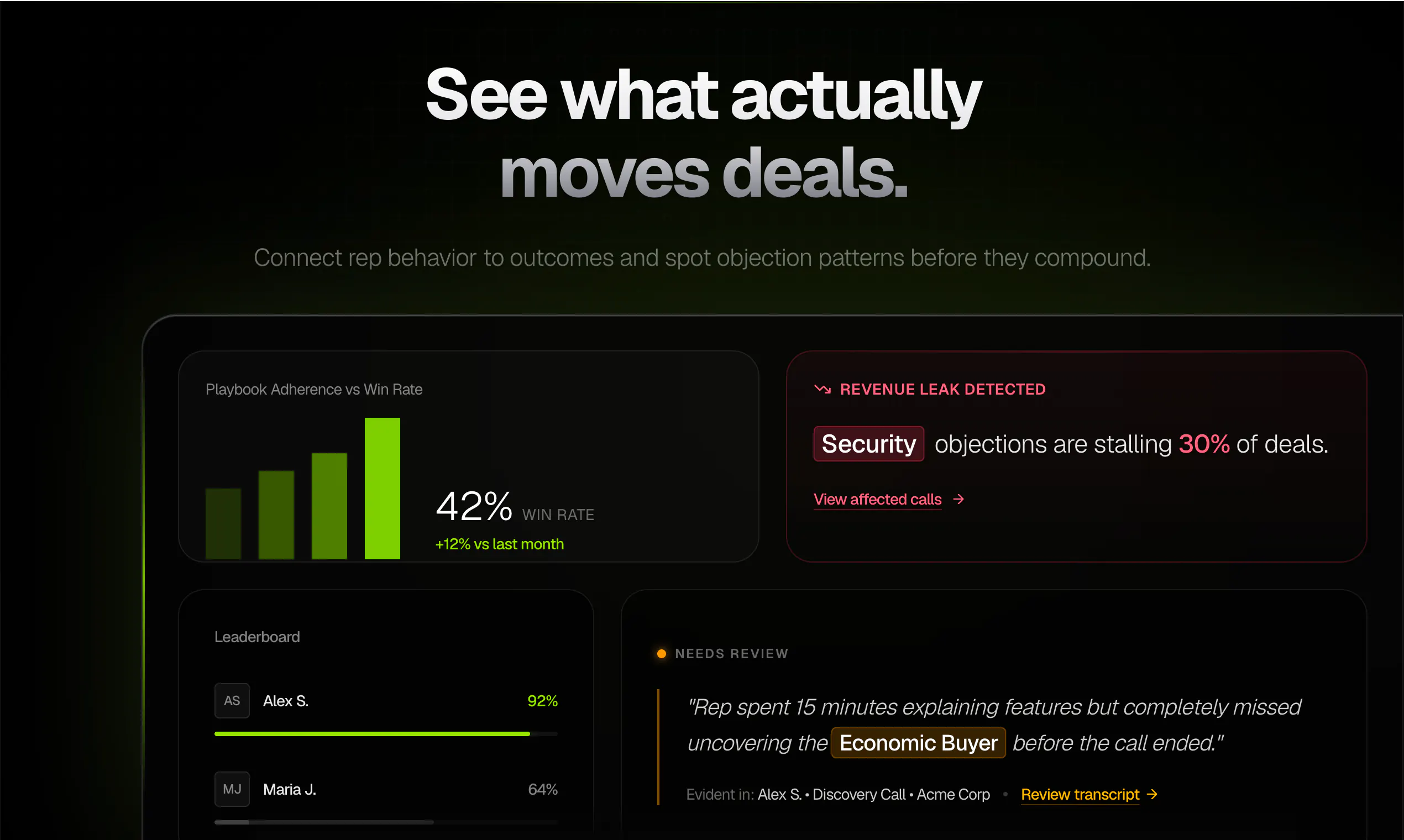
Playcall精准切中Gong等传统工具“重记录、轻判断”的软肋,以“买家上下文+团队自定方法论”的动态评分,直击创始人“不信任AI总结、只能亲自扒录音”的信任赤字。其开源+自托管+任意LLM接入的组合,更是对SaaS年费模式的降维打击,让Gong的“功能冗余+数据锁定”显得笨重不堪。
真正的亮点是“评分-训练联动”:将评分结果直接转化为可执行的辅导动作,这比单纯打分或总结高出一个维度,有望重新定义销售教练的日常闭环。但评论中的质疑也足够致命:其一,若买家不配合(如拒绝透露预算),机械打分必然误伤,若引入人工豁免又重蹈“经验主义”覆辙,如何建立公平的评分弹性是首要技术难题;其二,早期团队成交样本稀少,“行为-结果”相关性极易被偶然性主导,产品可能沦为“看似科学实则玄学”的仪表盘;其三,集成第三方notetaker虽能降低侵入感,却也意味着又一层数据管道断裂风险,与“自托管”的极简愿景存在张力。
价值判断很清晰:Playcall并非更便宜的Gong,而是对“AI销售管理”这件事的重写——它以方法论为锚、以可执行反馈为石,若能在评分公平性和数据样本模型上给出诚实且可解释的答案,确实能颠覆旧秩序;若不能,则不过是又一个看似聪明的开源玩具。建议团队优先处理“不配合买家”的评分逻辑,并推出小样本置信度提示,而非急于堆砌功能。
Hey Product Hunt 👋
I've spent the last 5 years building GTM systems at AI companies like Sieve (YC W22), Ragie.ai, and Aviator (YC S21).
Most call intelligence tools are good at summarizing what happened, but weak at judging whether a rep actually followed the team's sales motion based on the buyer context/stage.
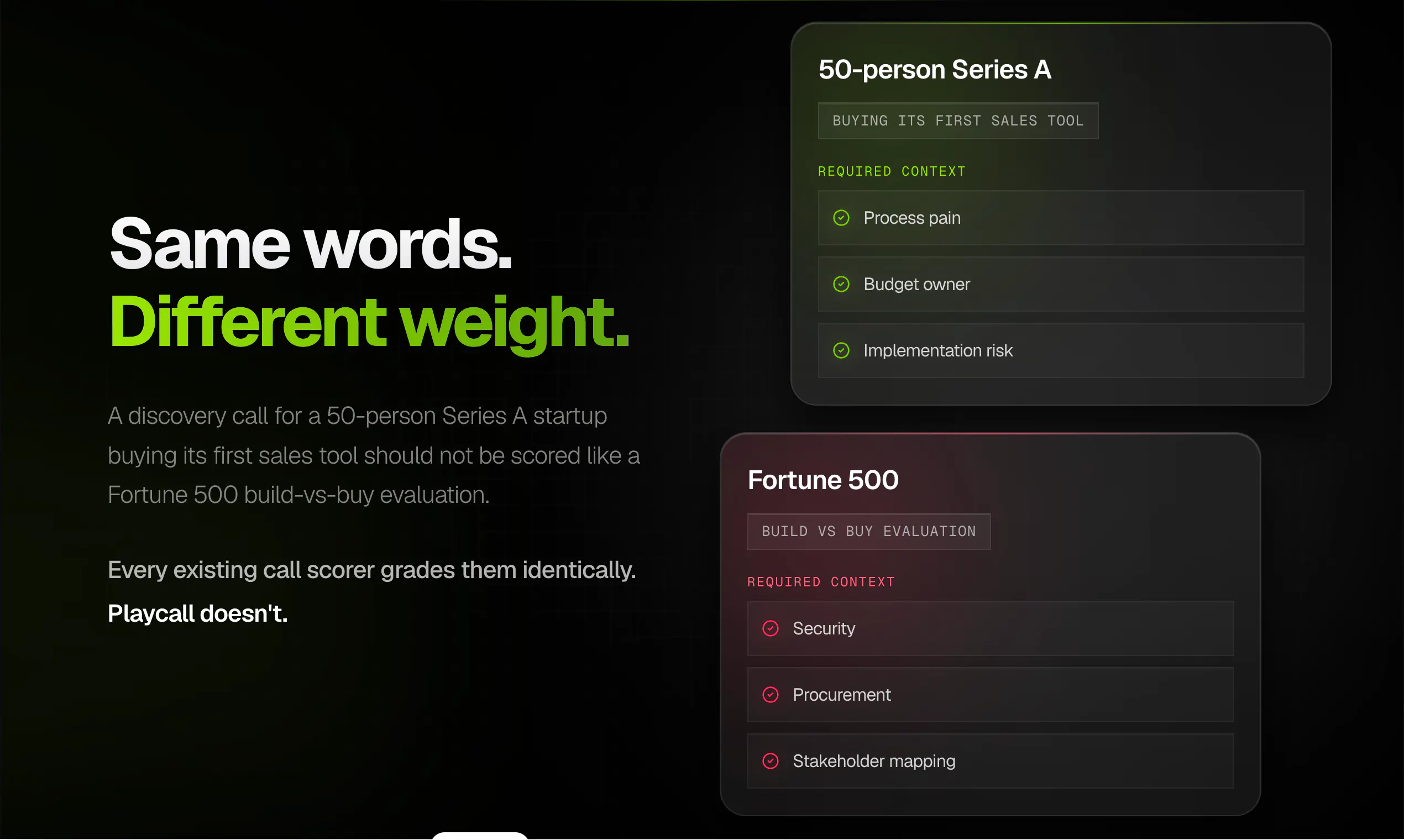
And context matters. A discovery call with a 50-person Series A startup buying a tool should not be scored the same way as a Fortune 500 vendor evaluation.
Here's the tell: the founders I know don't even trust Gong. They rawdog their team's calls themselves, rewatching every AE call, because $30K+/year of call intelligence still can't answer their actual question: did my rep say the right thing for this specific buyer?
So I built Playcall.
What Playcall does differently:
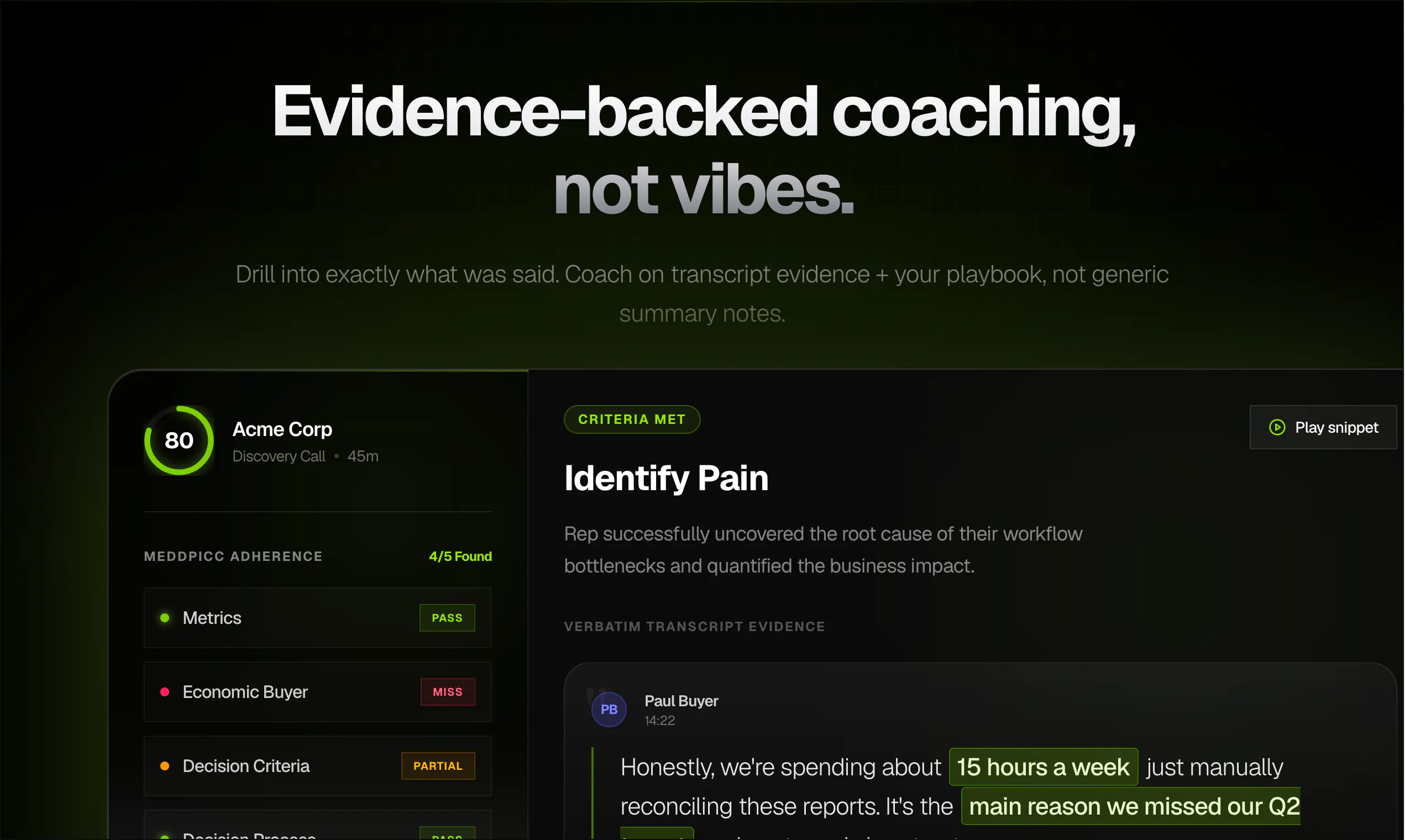
Buyer-Aware Scoring: Company stage, contact role, and deal context dynamically shape every scorecard.
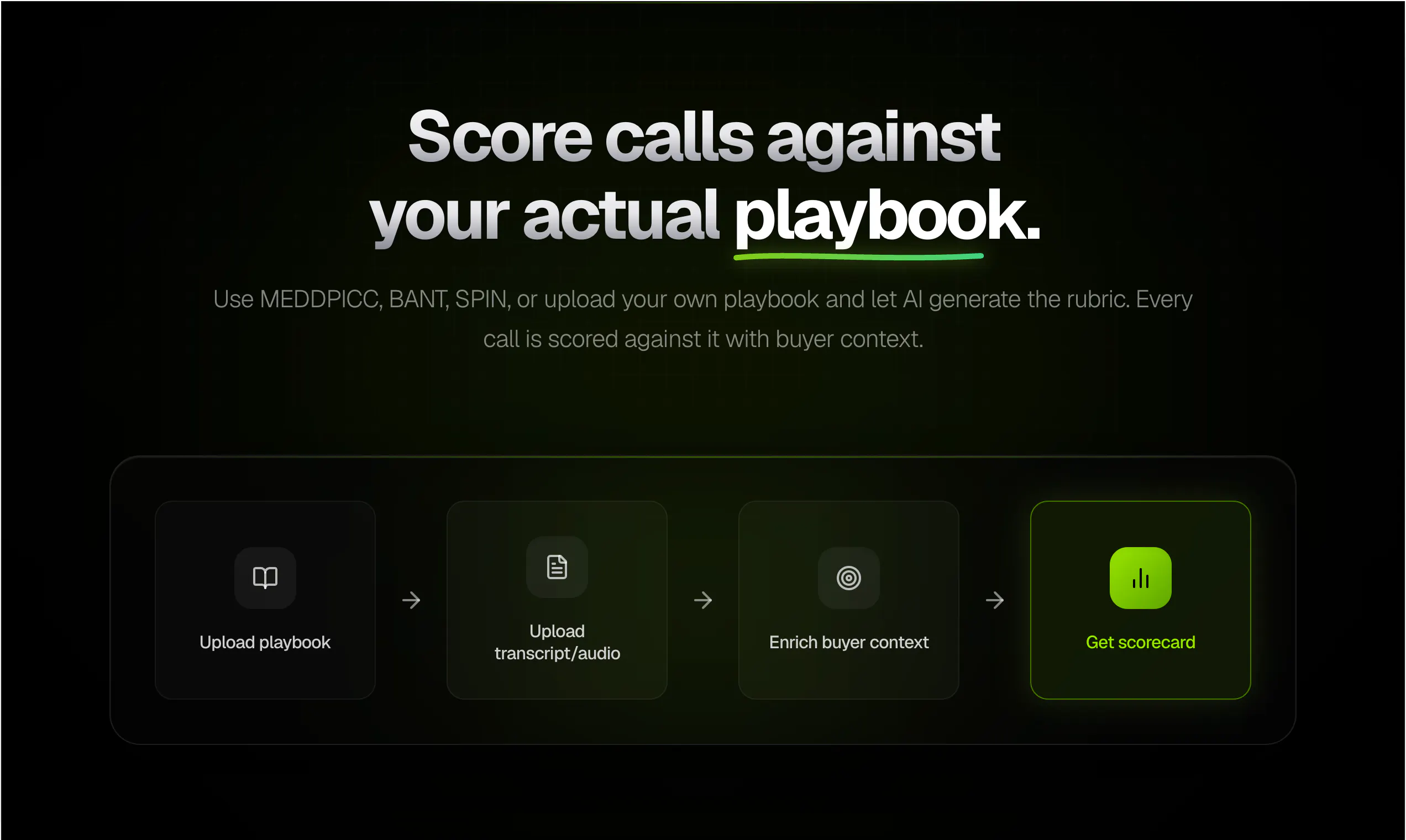
Your Methodology, Not Ours: Score against MEDDPICC, BANT, SPIN, or your custom playbook. No framework? Upload your playbook and Playcall generates the rubric for you.
Outcome-Tied Scoring: Every score links to deal stage, outcome, and pipeline impact, so managers can see which behaviors actually move deals.
Coaching Drills, Not Just Feedback: Every score comes with a specific, actionable drill for the rep to run next.
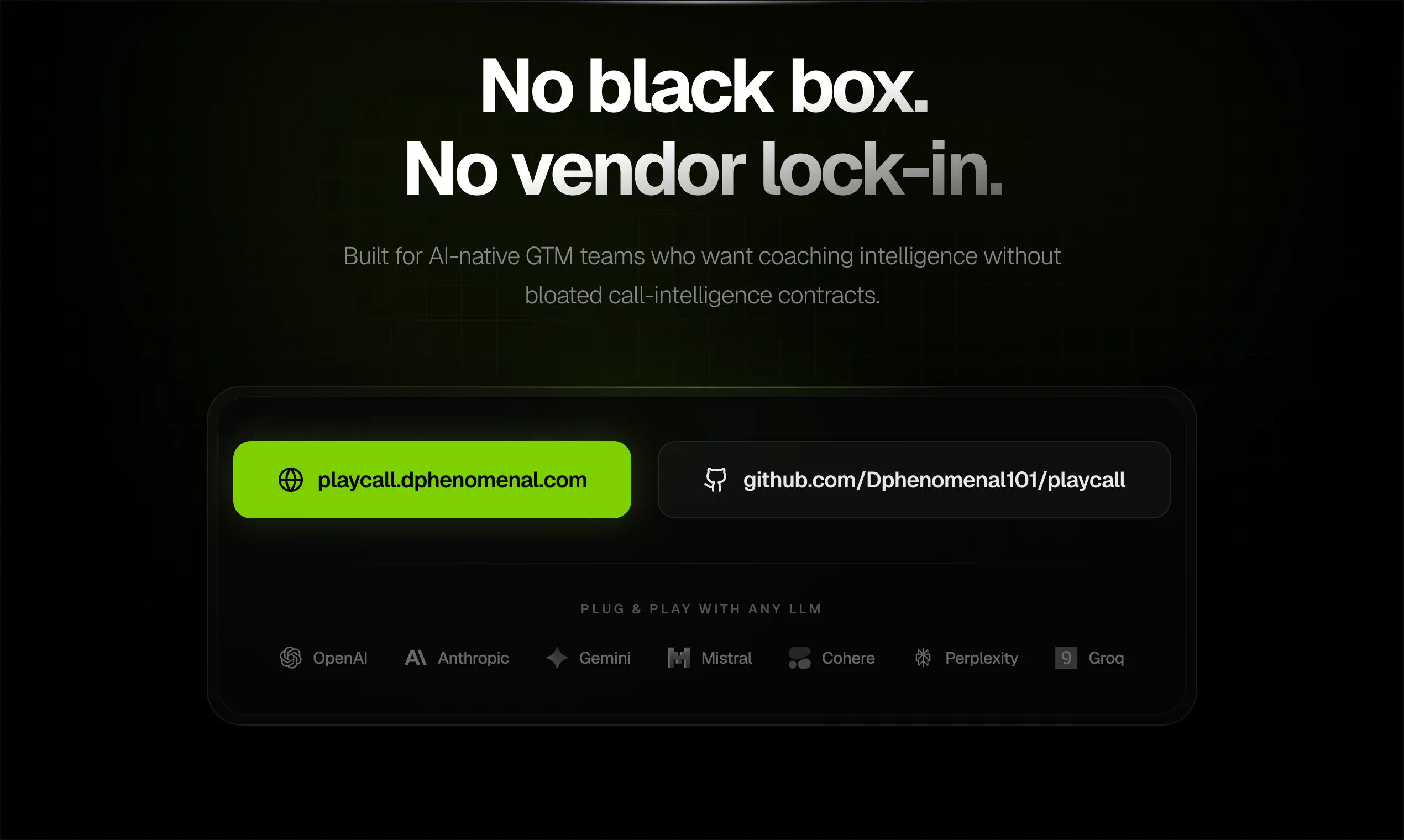
Plug & Play with any LLM: Use your favorite model (Claude, GPT, Gemini, or 15+ others). No vendor lock-in.
Self-Hostable: Open source. Deploy to your own infrastructure. Data stays with you. You can run it for under $50/month, with LLM and enrichment usage as the main variable costs.
The goal is simple: help reps improve against the playbook they're expected to follow, help managers see which behaviors move deals, and spot objection patterns before they compound.
Live demo: playcall.dphenomenal.com
Repo: github.com/Dphenomenal101/playcall
Would love feedback from founders, GTM leaders, RevOps folks, and sales managers.
Two questions I'd love answers to:
What's the biggest gap you've seen in existing call coaching/intelligence tools?
For automatic call ingestion, would you rather connect an existing notetaker like Granola, Fathom, or Fireflies or have Playcall ship its own Zoom/Meet/Teams bot?
re: your second question, I'd lean towards connecting to an existing notetaker (Fathom/Fireflies) rather than shipping your own bot. Reps already grumble about one bot joining, a second one showing up with a different name would just add confusion in the call and probably slow adoption. On the outcome-tied scoring though, I'm a bit skeptical for early-stage teams specifically - "which behaviors move deals" needs a real sample of closed-won/closed-lost to mean anything, and a 5-person startup team might only close a handful of deals a month. How many scored calls before that correlation stops being noise?
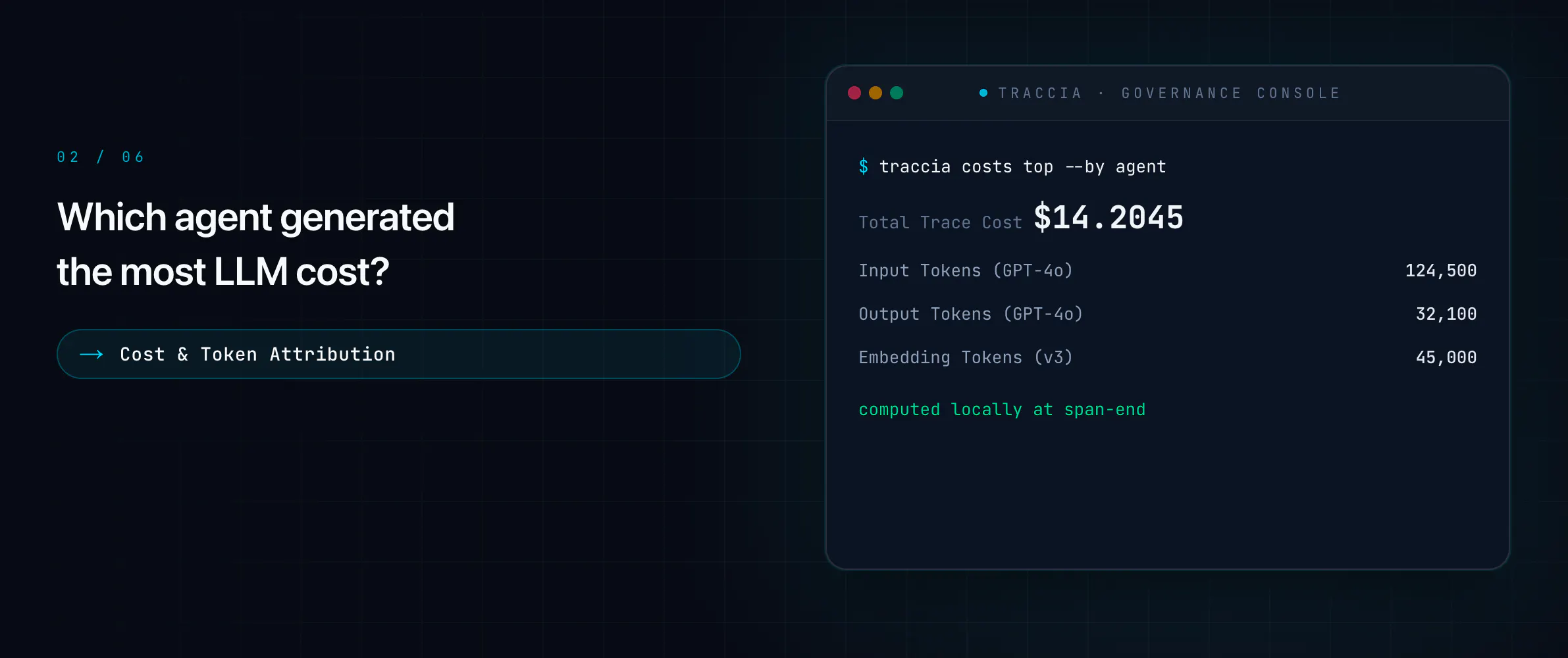
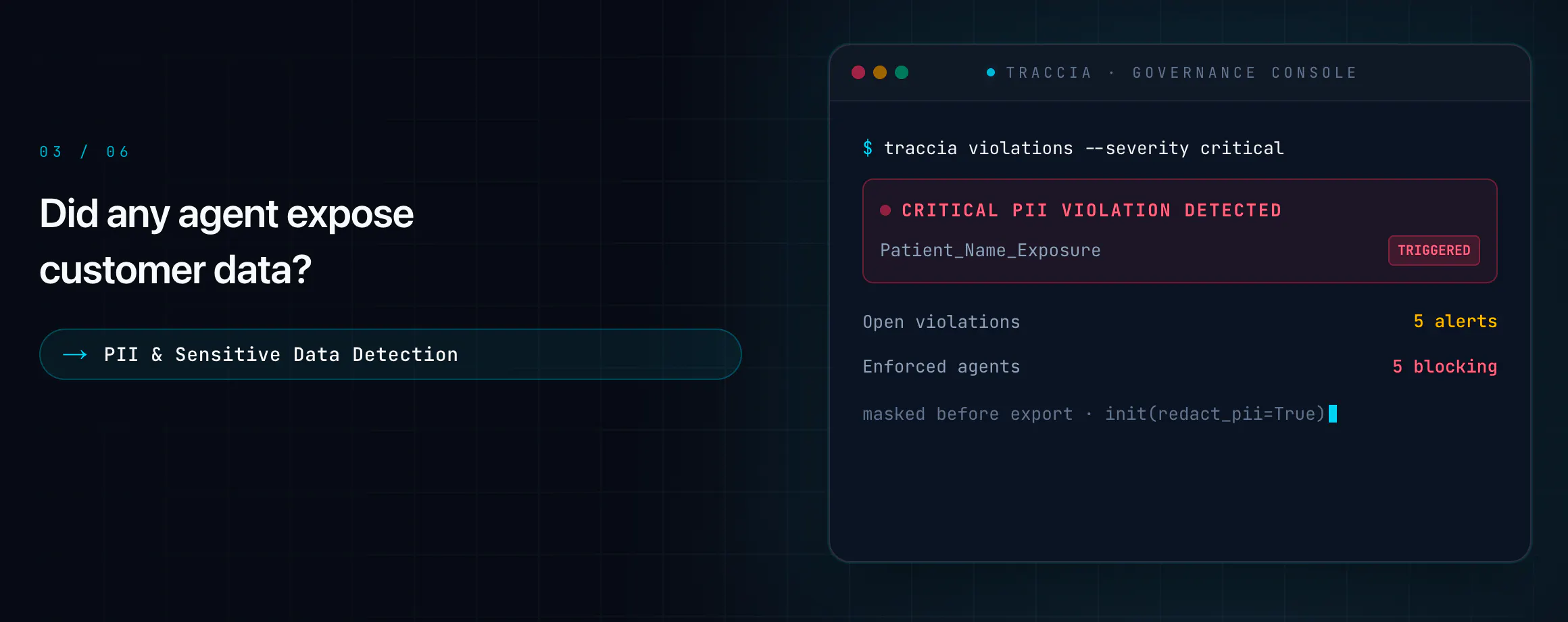
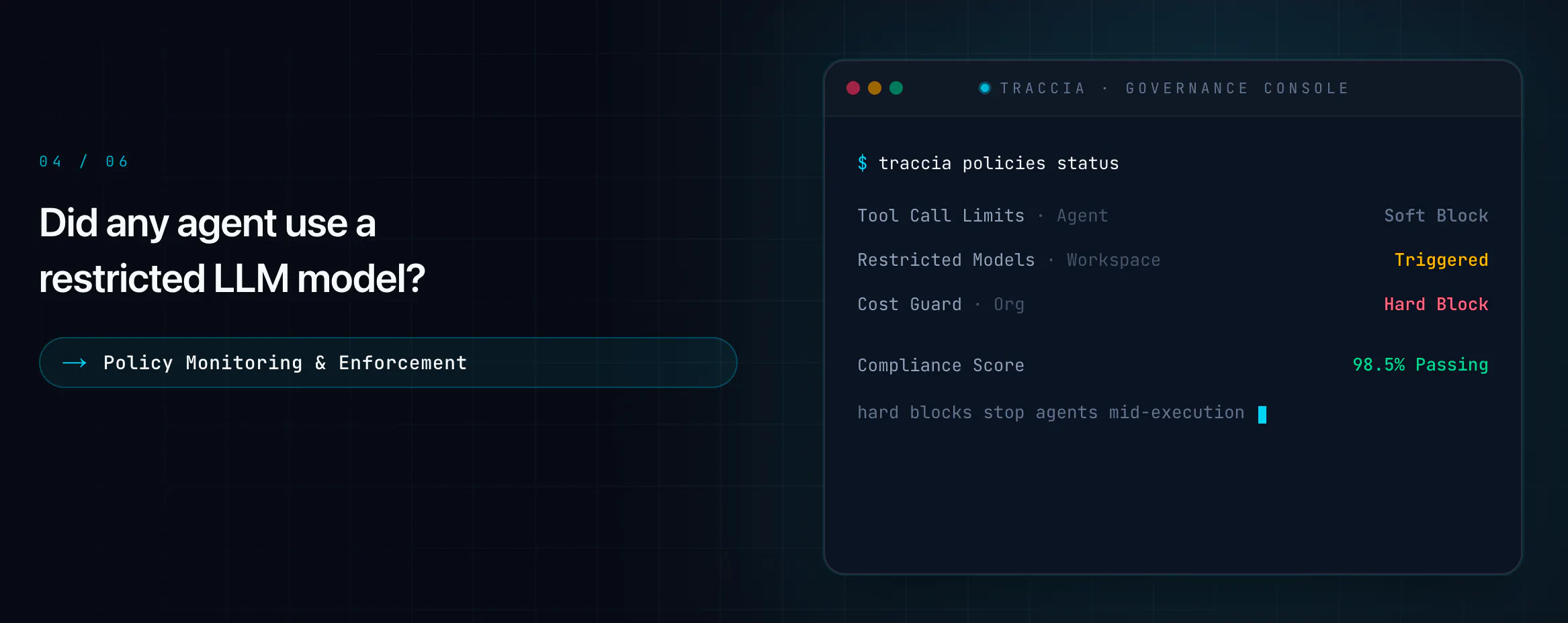
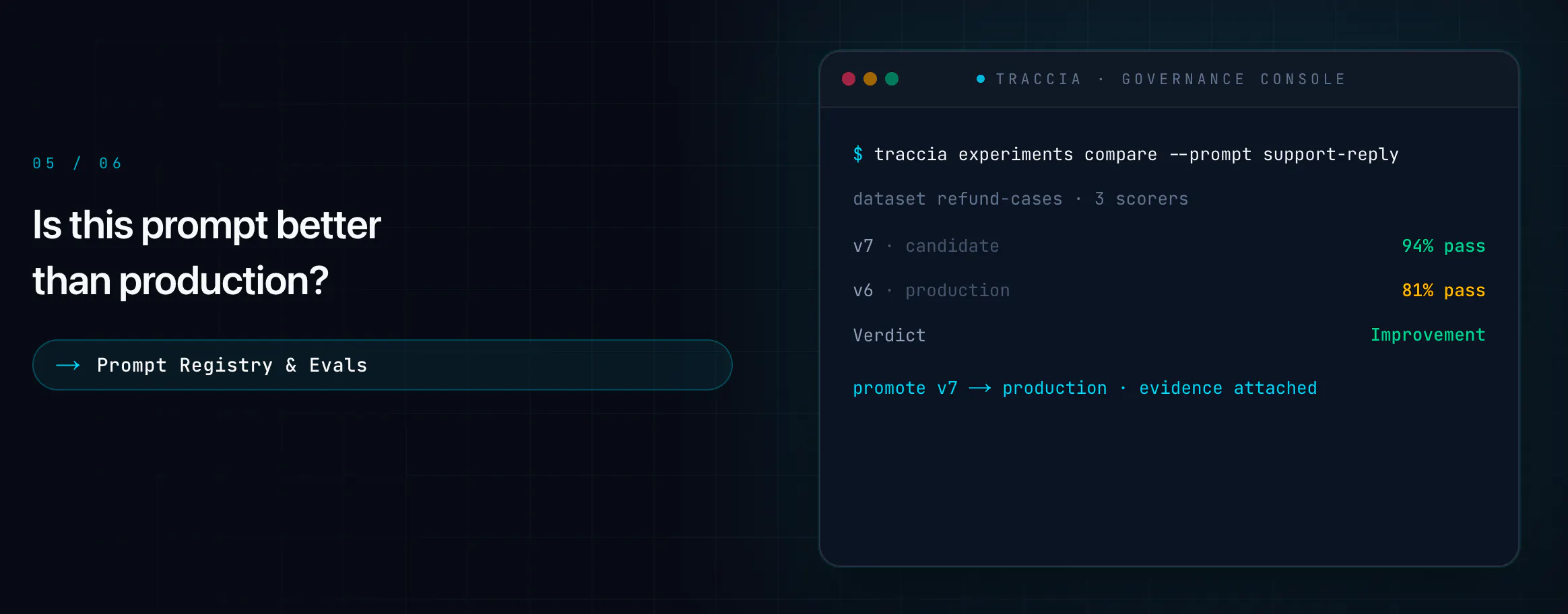
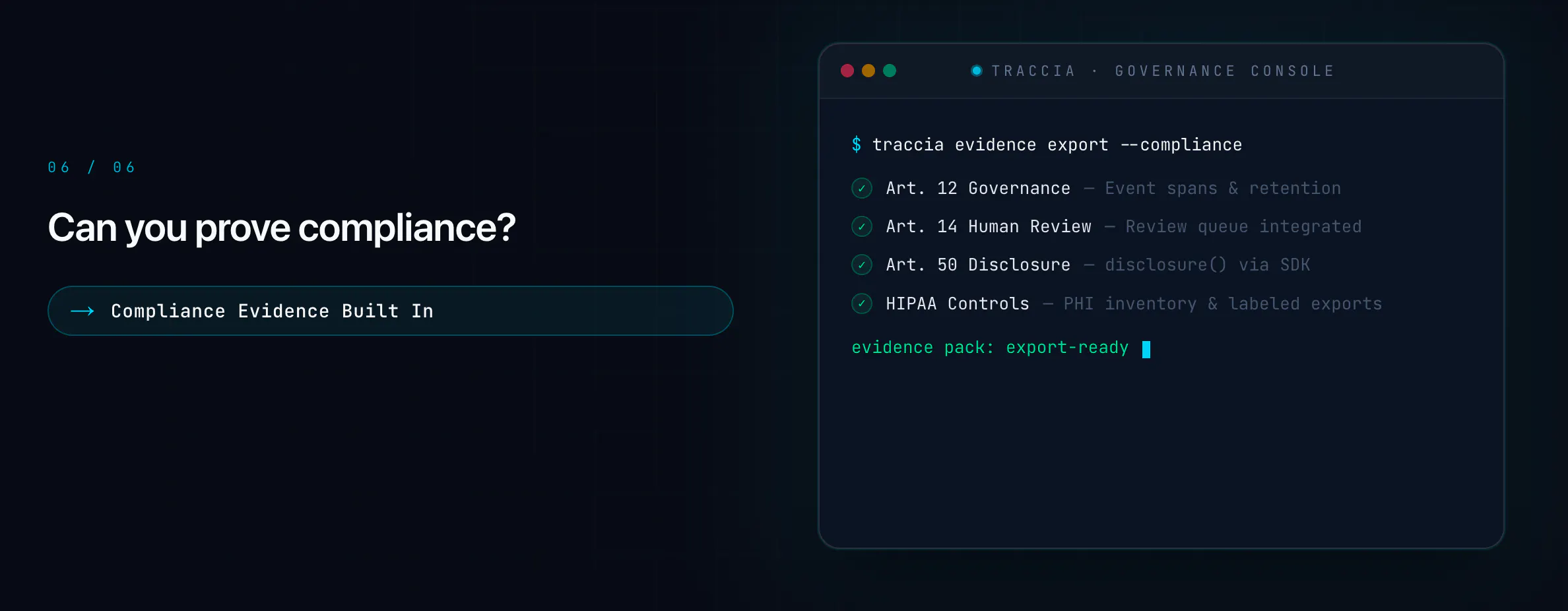
Traccia 切中的确实是代理生产化进程中最棘手的“信任断层”——传统APM能回答“发生了什么”,却无法回答“是否被允许”。其价值不在于又一个追踪工具,而在于将“治理”从静态配置升级为运行时证据链,这直指企业合规审计的硬需求。但必须冷峻指出:
1. 竞争壁垒脆弱。OpenTelemetry是双刃剑,降低接入门槛的同时也稀释了数据独占性;若主流厂商(DataDog、LangSmith)快速补齐策略引擎,Traccia的独立生存空间可能被挤压。
2. “控制平面”名实需验证。评论中用户更关心“如何阻断不合规动作”,而产品目前侧重观测与评估,真正的运行时干预(如强制策略、回滚决策)若只停留在“evidence”层面,就只是高级日志而非控制。
3. 早期市场教育成本高。目标用户是已踩坑的生产团队,但这类团队往往已有内部临时方案,如何证明迁移价值(而非增量优化)是关键。
4. 开源策略聪明但危险——吸引开发者,却可能被巨头摘果子。若不能快速形成“策略生态”或“审计标准”,最终或沦为某云厂商的功能模块。
建议:聚焦“治理即代码”的差异化叙事,强化与合规框架(SOC2、HIPAA)对接,并尽快展示真实阻断案例,而非仅讨论“观察”。否则,它可能成为AI基础设施浪潮中一个“正确但太早”的注脚。
We’ve been building Traccia because we kept seeing the same gap with AI agents: once an agent can call tools, make decisions and take actions, a traditional trace can tell you what happened — but not whether that action was acceptable.
With traditional software, an execution usually follows a path defined by the developer. Agents are different. They can reason, choose tools, change their path and take actions we didn’t explicitly define.
That creates a new infrastructure problem for teams deploying agents in production:
What did the agent do? Why did it do it? Was it allowed to? Which policy and permissions applied? And can we prove what happened afterwards?
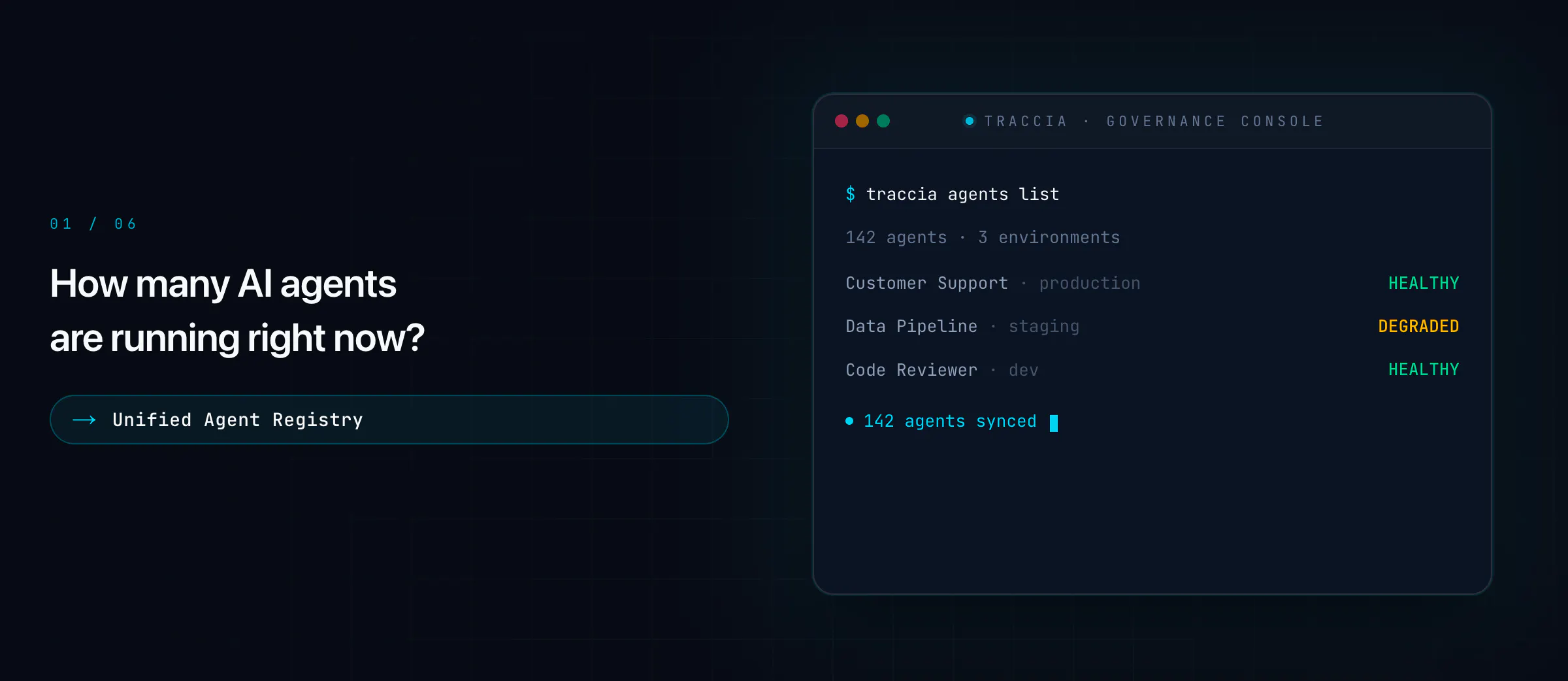
Traccia is our AI Agent Control Plane — a vendor-neutral layer to observe what agents do, evaluate how they behave, govern what they’re allowed to do, and audit what happened.
We’ve open-sourced the Traccia SDK and built it developer-first, with OpenTelemetry at the foundation. It works across models and agent frameworks, so teams can add observability and governance without being locked into a single AI vendor. We’re still early, and we’re building this alongside developers and teams actually deploying agents.
I’d especially love feedback from people running agents in production:
What are you using today to debug agent behaviour?
How are you evaluating agents?
And more importantly — how do you control what an agent is allowed to do?
We’re also making it easier to try Traccia during the launch.
3 months free with coupon code: TRACCIAPH
Hey Product Hunt 👋 We’re live.
I’m one of the makers of Traccia. If you’ve ever watched an agent take a tool call you didn’t expect and then scrolled a 2,000-span trace trying to answer “was that even allowed?” - that’s the pain that started this.
What ships today
Open-source SDK (Python + Node), OpenTelemetry-native
Full-fidelity traces across models/agent frameworks
Eval path: prompts → datasets → scorers → experiments before you promote
Runtime governance: policies + evidence so “observe” isn’t the end of the story
Who this is for
Teams putting agents in production - not demos. If your stack already tells you what happened, but not whether it should have happened, you’re our ICP.
One ask
If you run agents in prod, comment with your current stack for:
debugging a bad tool call
deciding promote vs rollback
blocking an action at runtime
Even “we use X and it’s fine/it sucks because Y” helps more than a silent upvote.
Trying Traccia today? Platform is open - use coupon TRACCIAPH for 3 months free. I’ll be in the comments all day and will answer everything personally.
- Aditya (and the Traccia team)
Hey Product Hunt 👋
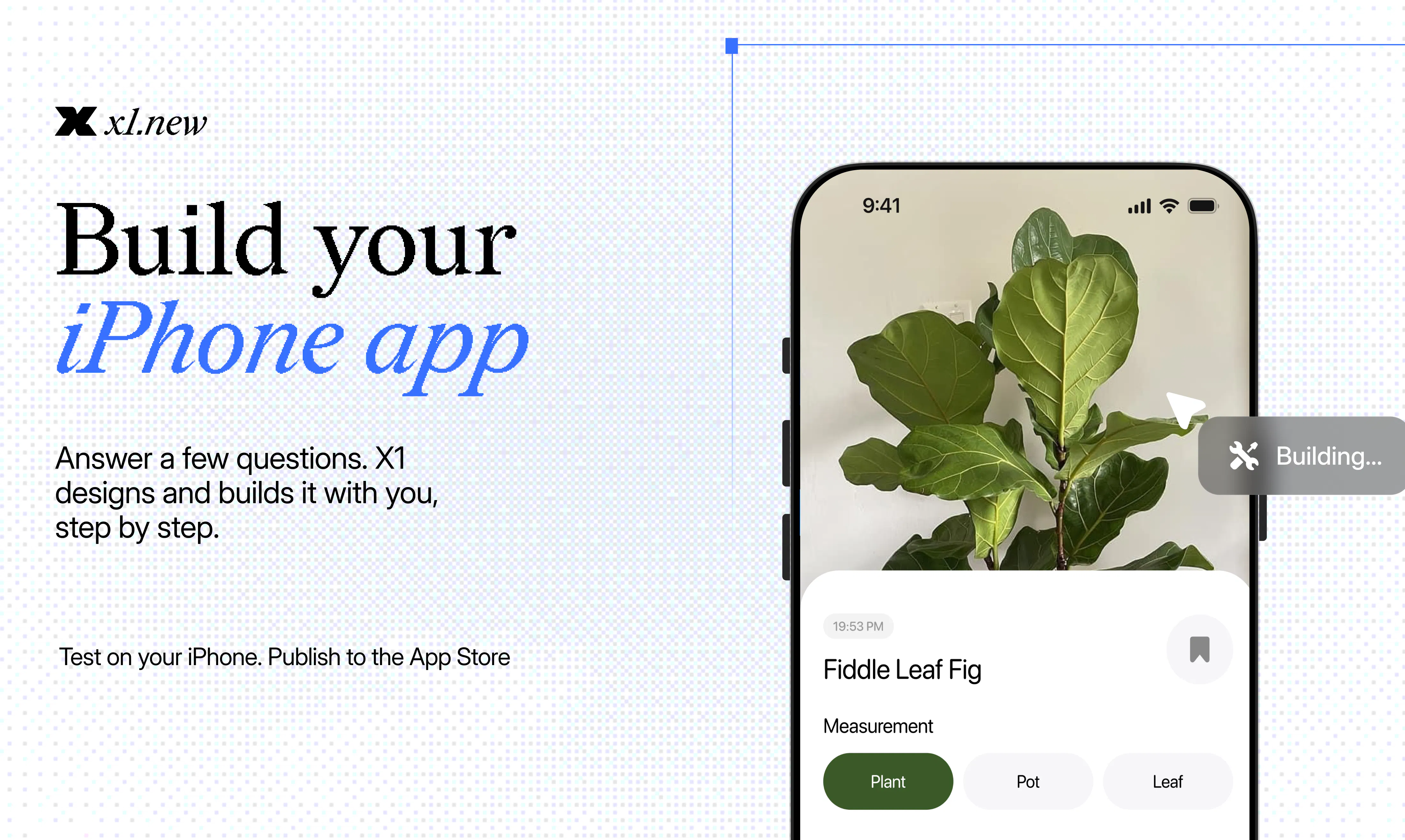
X1 is an AI app builder that takes you from an idea to an iPhone app ready for the App Store.
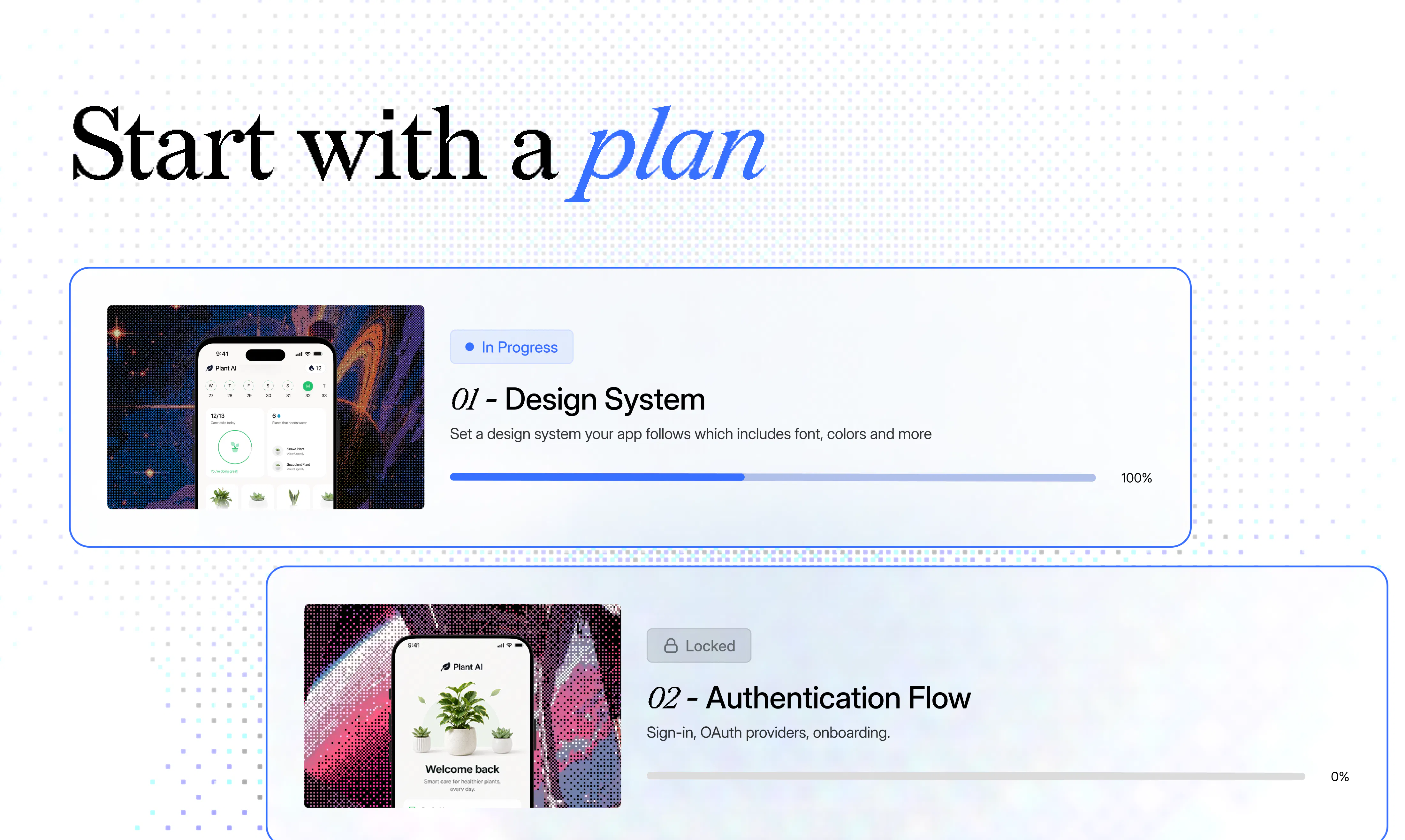
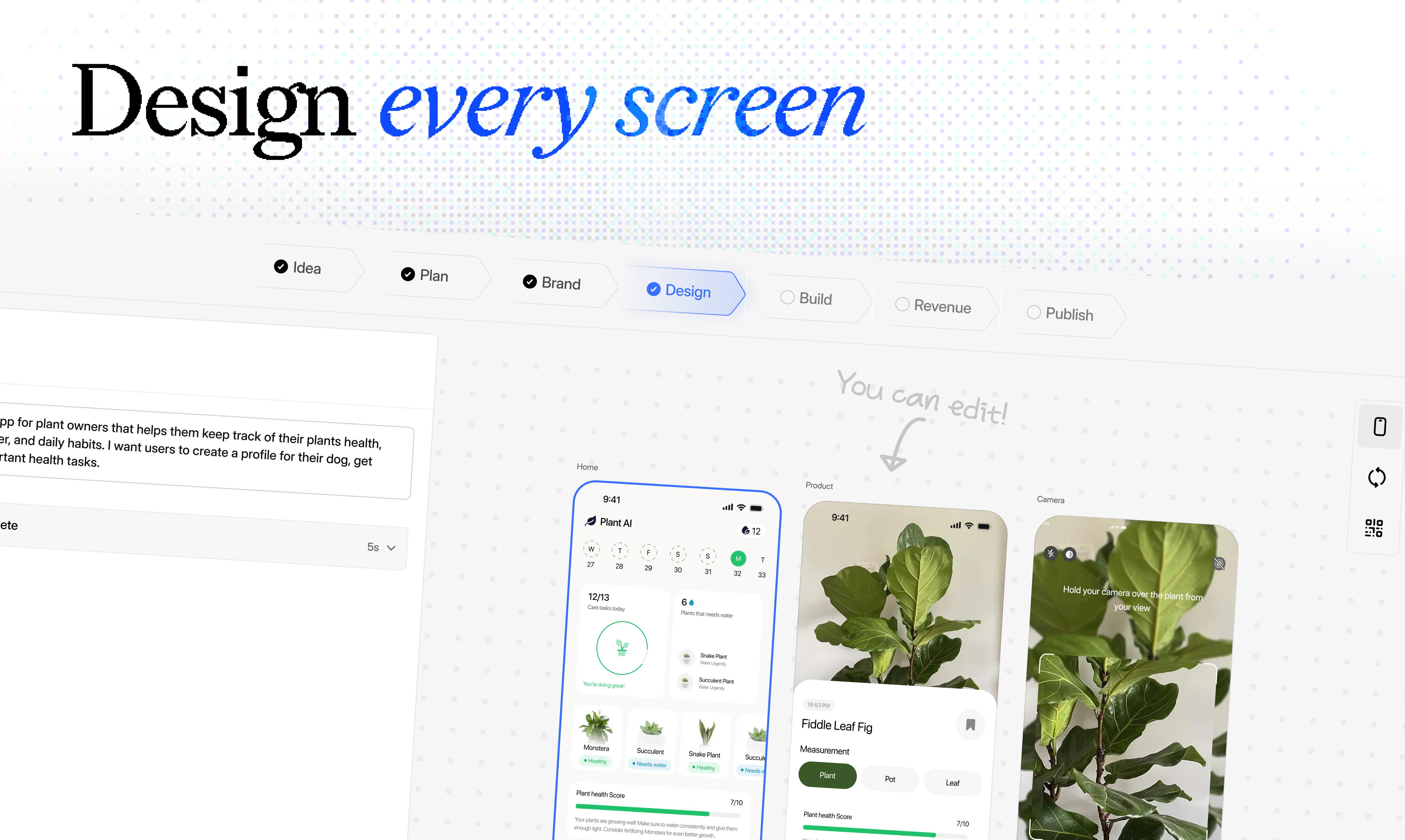
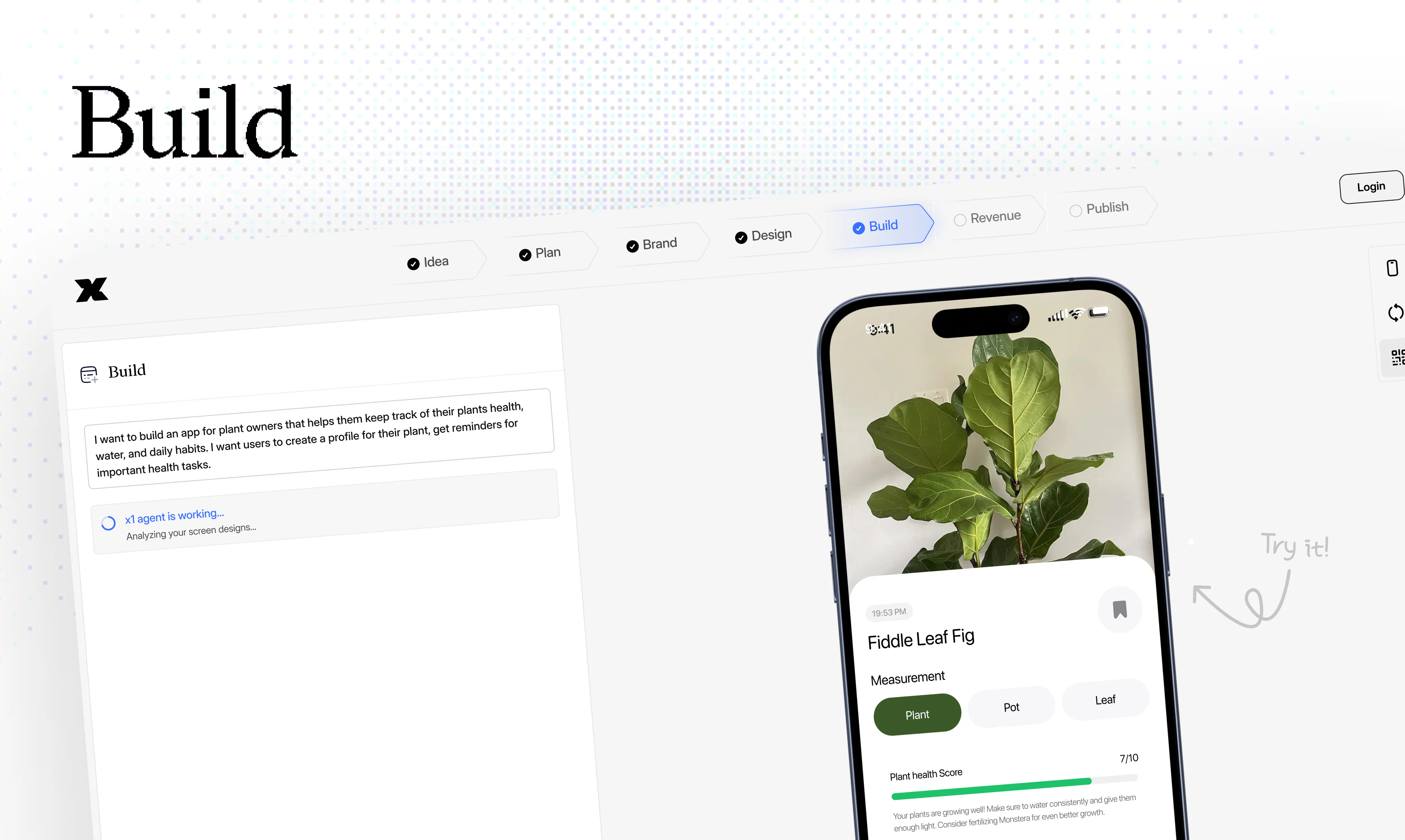
Most AI app builders try to generate the entire app from one prompt. X1 guides you through it step by step. It asks focused questions, creates a plan for the whole app, designs each screen for you to review and edit, then builds the app in stages so you can test it on your iPhone as you go.
X1 also remembers the decisions behind your app. If you change something later, it updates the screens, flows, and features that depend on it instead of treating every request like a brand-new prompt.
When you’re ready to ship, X1 prepares your App Store listing, screenshots, and submission through your Apple Developer account.
I built X1 because AI could generate an impressive first demo, but I still had no clear path to something I trusted enough to ship. The first version was easy. Keeping the whole app coherent as it evolved was the hard part.
You can build a working prototype free at x1.new. No coding or credit card required.
If you try it, tell me what you’re building and where X1 gets confused, makes a bad assumption, or slows you down. Brutal feedback is more useful than polite feedback. I’ll be here all day.
Congrats on the launch! 🚀
Could X1 handle a complete MVP from idea to App Store without any coding?
Nice congrats on launch. Curious how you guys are better than other app builders like replit?
congrats! can X1 connect to existing APIs and third party services, or does everything need to be built inside X1?
Congrats! 👏 quick question : What was the hardest type of app you’ve built with X1 so far?
this sounds much more controlled than typical AI builders! how do you balance automation with giving users enough control?
Congrats guys! What would you estimate the median time to be to go from first prompt to a playable game? I've always wanted to re-create Restaurant City (from the 2010 facebook era) and play it on my phone when I'm on the bus or something.
Love how simple the onboarding is. May attempt to build my next app on here. Is there a Figma MCP?
I’ve used X1 in the weeks leading up to this launch and it’s great. Their approach to building production grade iphone apps is both unique and actually got me to a finished / polished app.
Been burned before by builders that forget context after a few edits. If X1 actually solves that, it's a real differentiator.
Congrats @manil_lakabi1 How's it different from Rork in practice? Both promise real iOS apps without code.
Curious how X1 decides what to ask you vs. what to just assume. Does it feel like a real back-and-forth or more like a form?
The best product you can use for shipping real working iOS apps without knowing how to write a single line of code
congrats on the launch!
So cool, looking forward to playing around with this.
Most launches would have claimed every platform. You went iPhone only and said exactly why, right in the thread. Congrats on the top spot, well earned.
I really like the decision to focus on one platform and make the journey from idea to App Store much more guided. The step-by-step approach feels more practical than relying on one giant prompt. Congrats on the launch🚀
Congratulations
The AI comments here suck.
Nice approach, love that there is a nice guided structure to beginn with an app.
Keep it up.
Congrats on the Launch! I know from building mobile apps that the biggest return on your build comes from the iOS app users. Is this why you chose to focus on iOS only?
I like that you are asking for brutal feedback! what kind of feedback has surprised you most during development?
the ask focused questions approach sounds smart! what happens when a user gives X1 an unclear or contradictory requirement?
Does X1 support native iOS features like notifications, camera access, location, or Apple Sign In?
Congrats! Can users export the generated app and continue development outside X1?
Could i describe an app in plain English and have X1 turn that into a complete screen by screen product plan?
could X1 take an existing app idea and help redesign the entire user experience from scratch?
this is an interesting take on AI app building! does X1 support apps that require login and personalized user data?
What happens if you want to pivot halfway through, does it rebuild cleanly or does the "memory" start working against you?
Finally something that doesn't glaze the whole one-shot-your-app thing. I'm sure people will find it refreshing to see a tool that walks you through each milestone of your product, keeps everything coherent as it grows, and lets you see it on your iPhone every step of the way.